
iss059e103862 (6/17/2019) --- Photo documentation taken of the JEM Small Satellite Orbital Deployer #11 (J-SSOD #11) micro-satellite deployment mission. SpooQy-1 is a 3-Unit (3U) CubeSat deployed during the J-SSOD #11 mission. SpooQy-1 was developed by the National University of Singapore (NUS).

iss059e104863 (6/17/2019) --- Photo documentation taken of the JEM Small Satellite Orbital Deployer #11 (J-SSOD #11) micro-satellite deployment mission. SpooQy-1 is a 3-Unit (3U) CubeSat deployed during the J-SSOD #11 mission. SpooQy-1 was developed by the National University of Singapore (NUS).

iss059e104298 (6/17/2019) --- Photo documentation taken of the JEM Small Satellite Orbital Deployer #11 (J-SSOD #11) micro-satellite deployment mission. J-SSOD#11 deploys the Joint Global Multi Nation Birds, known as the BIRDS-3 Project, which is a constellation of three 1U CubeSats developed by Japan, Nepal and Sri Lanka . The satellites, named Uguisu, Raavana-1, and NepaliSat-1, were released into Earth orbit for technology demonstrations.

iss059e104771 (6/17/2019) --- Photo documentation taken of the JEM Small Satellite Orbital Deployer #11 (J-SSOD #11) micro-satellite deployment mission. J-SSOD#11 deploys the Joint Global Multi Nation Birds, known as the BIRDS-3 Project, which is a constellation of three 1U CubeSats developed by Japan, Nepal and Sri Lanka . The satellites, named Uguisu, Raavana-1, and NepaliSat-1, were released into Earth orbit for technology demonstrations.

This poster highlights the JPL cubesat missions. NASA CubeSat Programs provide opportunities for small satellite systems to fly as auxiliary payloads on planned missions.

The BioSentinel spacecraft enters a heliocentric orbit. BioSentinel will detect and measure the impact of space radiation on living organisms over long durations beyond low-Earth orbit (LEO). Illustration by Daniel Rutter.
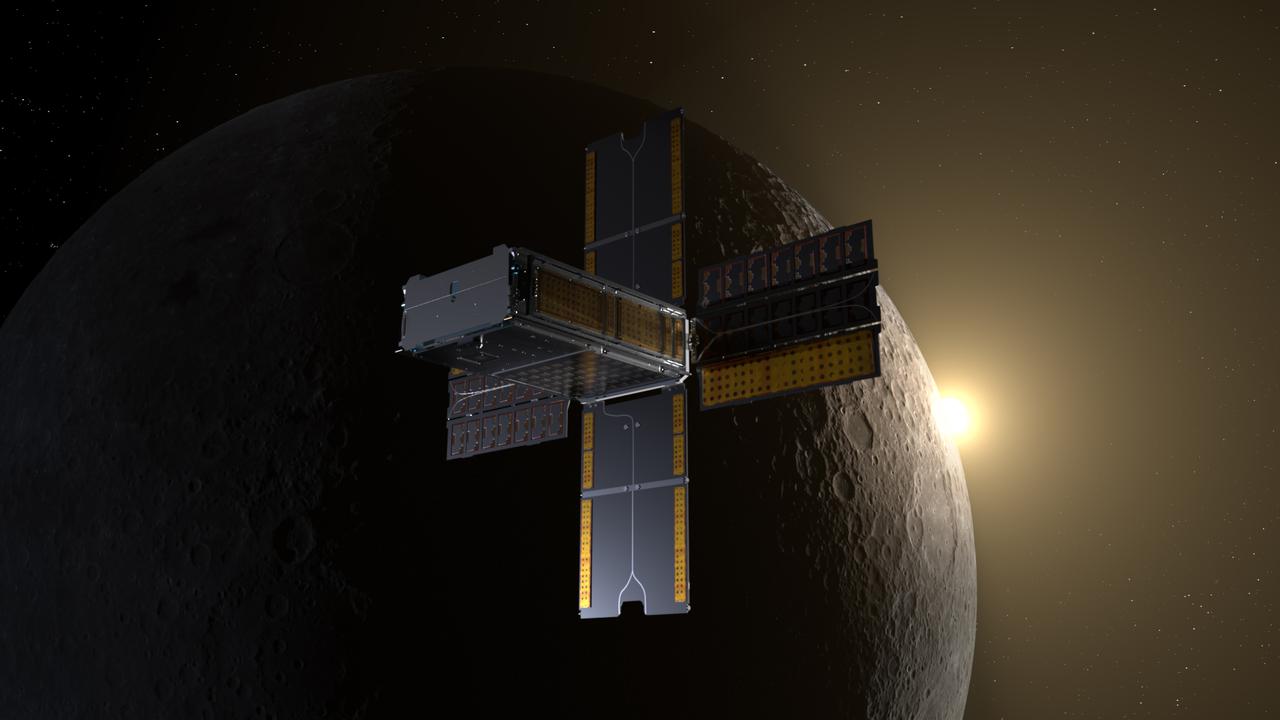
BioSentinel spacecraft enters a lunar flyby trajectory into a heliocentric orbit. BioSentinel will detect and measure the impact of space radiation on living organisms over long durations beyond low-Earth orbit (LEO). Illustration by Daniel Rutter.

BioSentinel spacecraft enters a lunar flyby trajectory into a heliocentric orbit. BioSentinel will detect and measure the impact of space radiation on living organisms over long durations beyond low-Earth orbit (LEO). Illustration by Daniel Rutter.
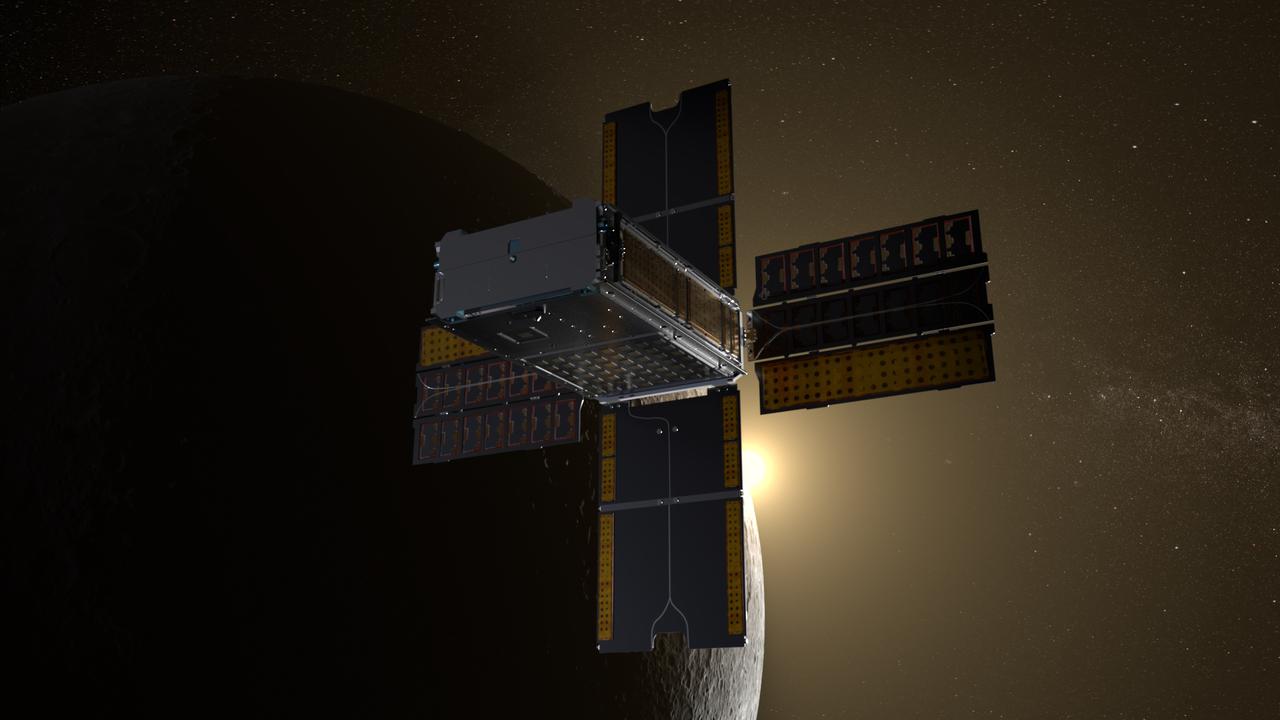
BioSentinel spacecraft enters a lunar flyby trajectory into a heliocentric orbit. BioSentinel will detect and measure the impact of space radiation on living organisms over long durations beyond low-Earth orbit (LEO). Illustration by Daniel Rutter.
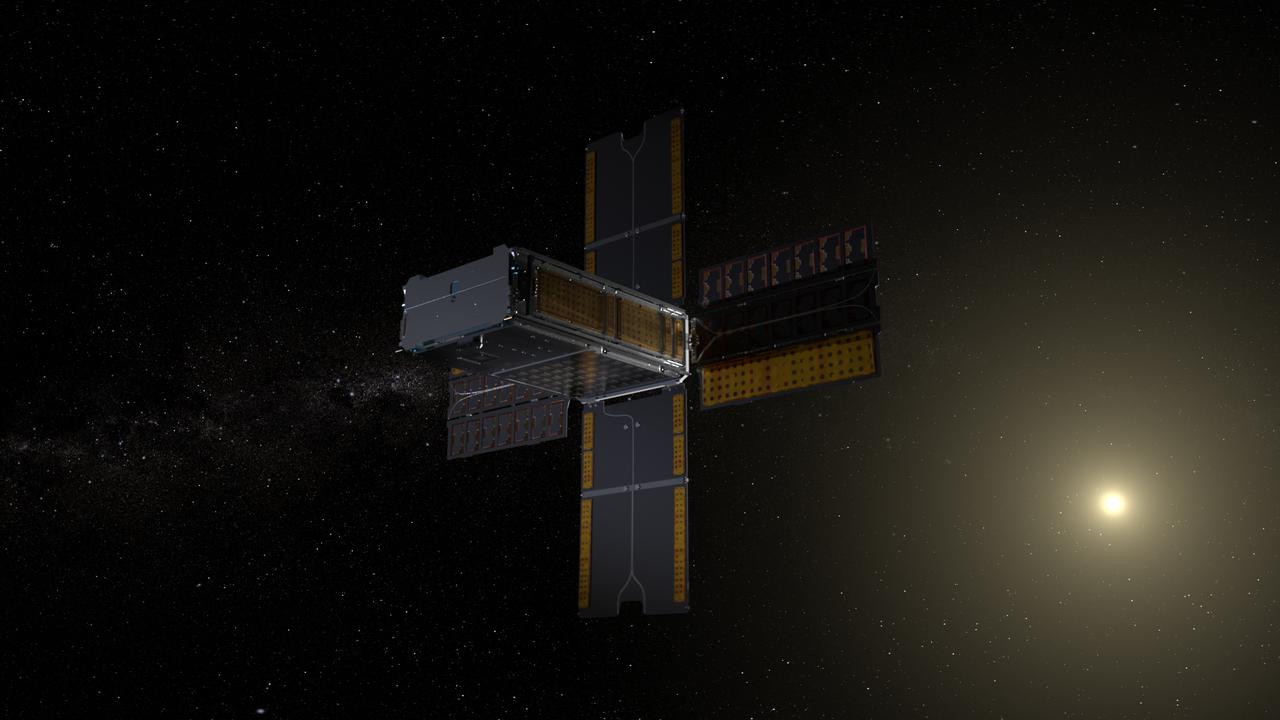
The BioSentinel spacecraft enters a heliocentric orbit. BioSentinel will detect and measure the impact of space radiation on living organisms over long durations beyond low-Earth orbit (LEO). Illustration by Daniel Rutter.
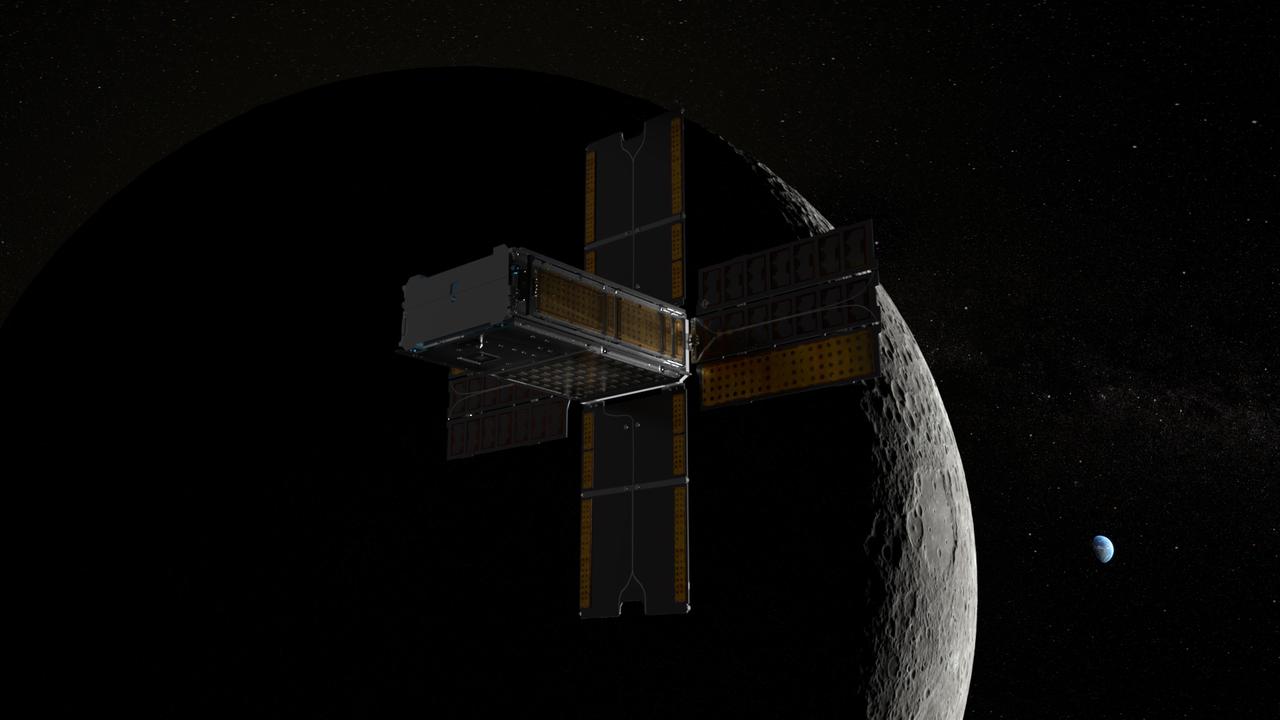
BioSentinel spacecraft leaves Earth and enters a lunar flyby trajectory into a heliocentric orbit. BioSentinel will detect and measure the impact of space radiation on living organisms over long durations beyond low-Earth orbit (LEO). Illustration by Daniel Rutter.

Two small spacecrafts satellites that make up NASA’s ESCAPADE (Escape and Plasma Acceleration and Dynamics Explorers) mission to Mars arrived at Astrotech Space Operations in Titusville, near NASA’s Kennedy Space Center in Florida on Sunday, Aug. 19, 2024. Set to launch from Blue Origin’s New Glenn rocket, the Rocket Lab spacecraft will study the solar wind and how the solar wind interacts with Mars’ magnetic environment and how this interaction drives the planet’s atmospheric escape.

Two small spacecrafts satellites that make up NASA’s ESCAPADE (Escape and Plasma Acceleration and Dynamics Explorers) mission to Mars arrived at Astrotech Space Operations in Titusville, near NASA’s Kennedy Space Center in Florida on Sunday, Aug. 19, 2024. Set to launch from Blue Origin’s New Glenn rocket, the Rocket Lab spacecraft will study the solar wind and how the solar wind interacts with Mars’ magnetic environment and how this interaction drives the planet’s atmospheric escape.

Two small spacecrafts satellites that make up NASA’s ESCAPADE (Escape and Plasma Acceleration and Dynamics Explorers) mission to Mars arrived at Astrotech Space Operations in Titusville, near NASA’s Kennedy Space Center in Florida on Sunday, Aug. 19, 2024. Set to launch from Blue Origin’s New Glenn rocket, the Rocket Lab spacecraft will study the solar wind and how the solar wind interacts with Mars’ magnetic environment and how this interaction drives the planet’s atmospheric escape.

Andres Martinez, program executive for small spacecraft in NASA’s Exploration Systems Development Mission Directorate speaks at “Small Satellites, Big Missions: Pathfinding CubeSats Exploring the Moon and Beyond,” a news conference during the 37th Space Symposium, Wednesday, April 6, 2022, in Colorado Springs, Colorado. Photo Credit: (NASA/Bill Ingalls)
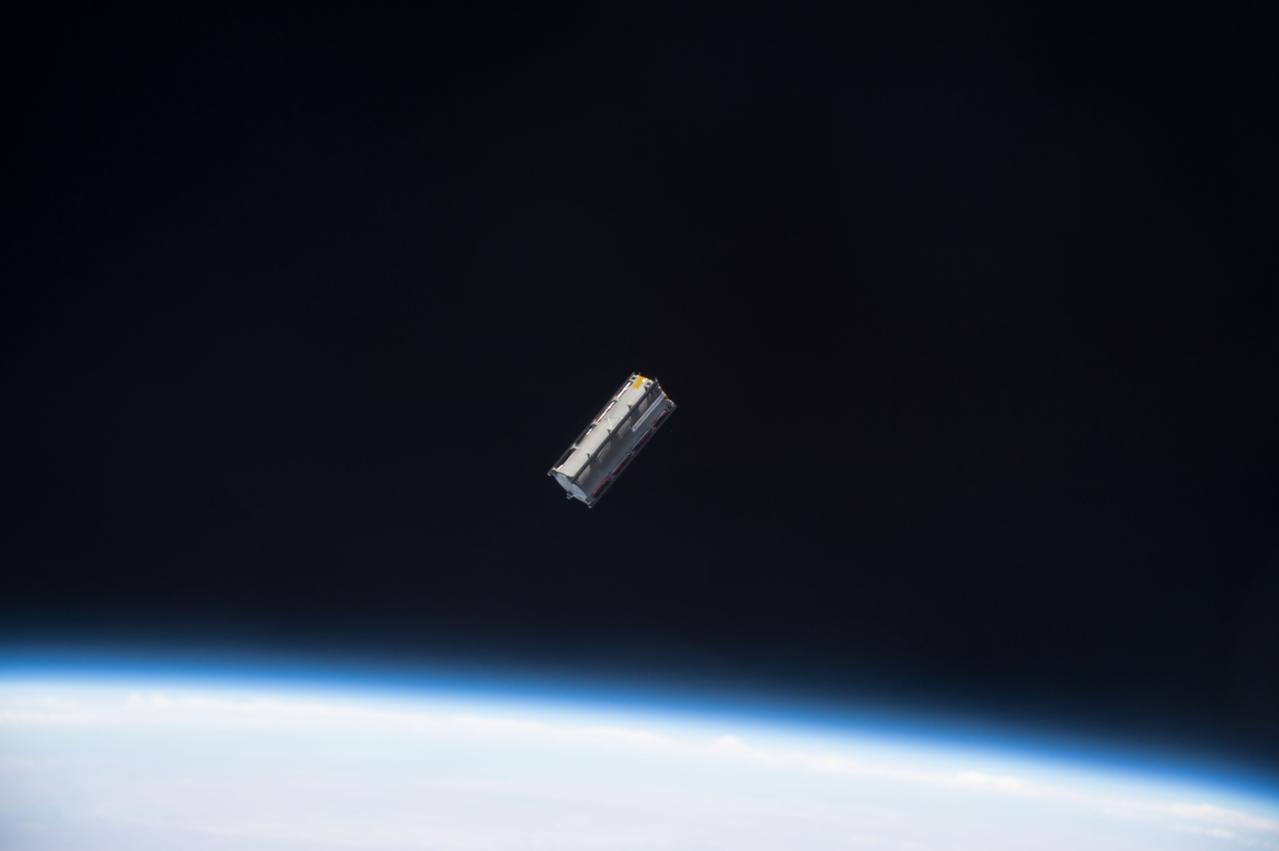
iss050e031664 (1/16/2017) --- Photo documentation of the Japanese-Small Satellite Orbital Deployer-6 (J-SSOD-6) deployment of the TuPOD Cubesat. TuPOD is a 3Unit micro-satellite that is entirely a 3D printed structure designed to launch the first Tubesats into space. The mission of TuPOD is to confirm that satellite deployment is feasible from CubeSat.

iss050e031653 (1/16/2017) --- Photo documentation of the Japanese-Small Satellite Orbital Deployer-6 (J-SSOD-6) deployment of the TuPOD Cubesat. TuPOD is a 3Unit micro-satellite that is entirely a 3D printed structure designed to launch the first Tubesats into space. The mission of TuPOD is to confirm that satellite deployment is feasible from CubeSat.
![iss056e200730 (10/3/2018) --- Photo documentation of the JEM Small Satellite Orbital Deployer (SSOD) on the Multi-Purpose Experiment Platform (MPEP) installation in preparation of the [Japanese Experiment Module]-Small Satellite Orbital Deployer 10 (J-SSOD 10) mission. J-SSOD-10 deploys the cubesats SPATIUM-I from Nanyang Technological University, Singapore, and the Kyushu Institute of Technology, Japan, RSP-00 from Ryman Sat Spaces General Incorporated Association, Japan, and STARS-Me from Shizuoka University, Japan.](https://images-assets.nasa.gov/image/iss056e200730/iss056e200730~medium.jpg)
iss056e200730 (10/3/2018) --- Photo documentation of the JEM Small Satellite Orbital Deployer (SSOD) on the Multi-Purpose Experiment Platform (MPEP) installation in preparation of the [Japanese Experiment Module]-Small Satellite Orbital Deployer 10 (J-SSOD 10) mission. J-SSOD-10 deploys the cubesats SPATIUM-I from Nanyang Technological University, Singapore, and the Kyushu Institute of Technology, Japan, RSP-00 from Ryman Sat Spaces General Incorporated Association, Japan, and STARS-Me from Shizuoka University, Japan.
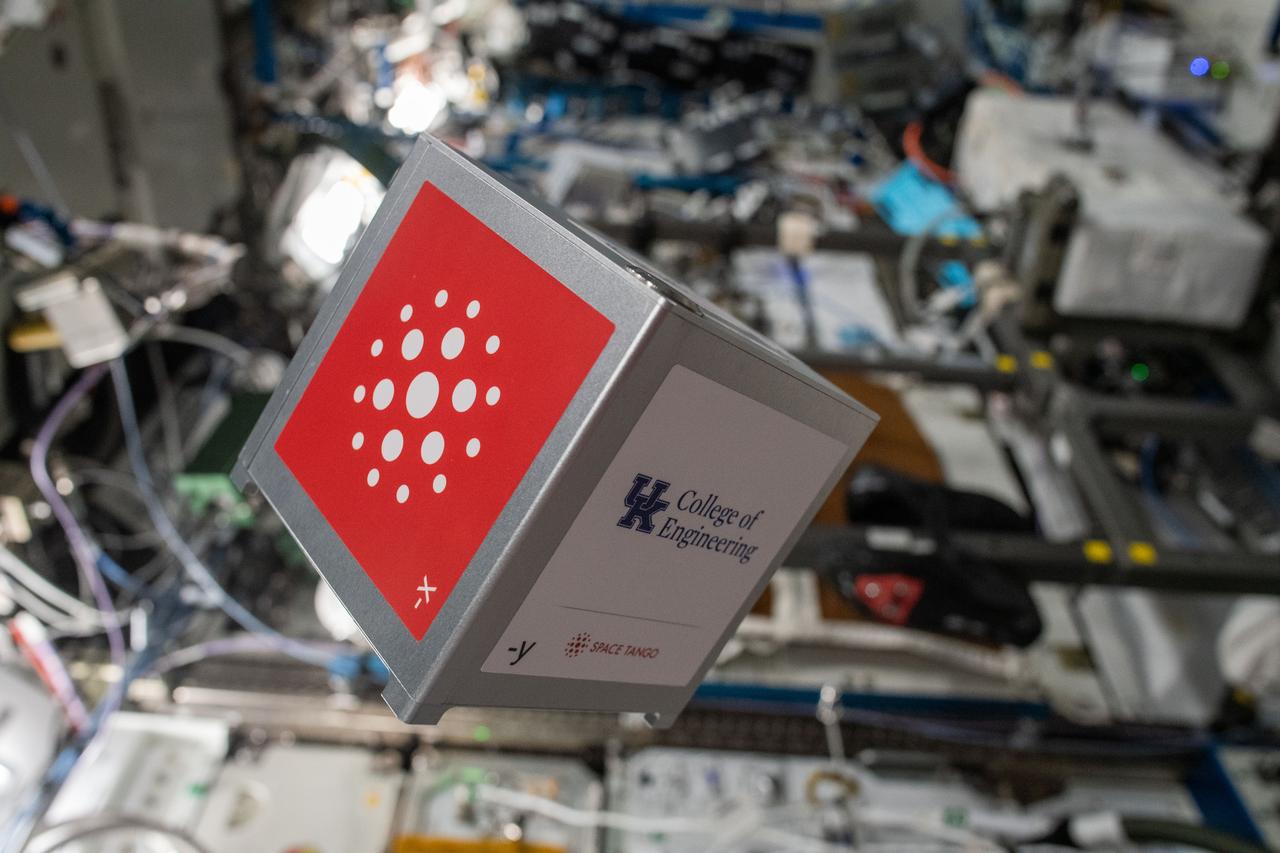
iss067e000403 (3/31/2022) --- A view of a Cube containing Space Tango - Cubelab Satellite Demonstrator, part of TangoLab Mission-25 aboard the International Space Station (ISS). Space Tango - University of Kentucky Cubelab Satellite Demonstrator (Space Tango - Cubelab Satellite Demonstrator) tests a new attitude-control technology for small satellites, which is an integral part of future space missions.
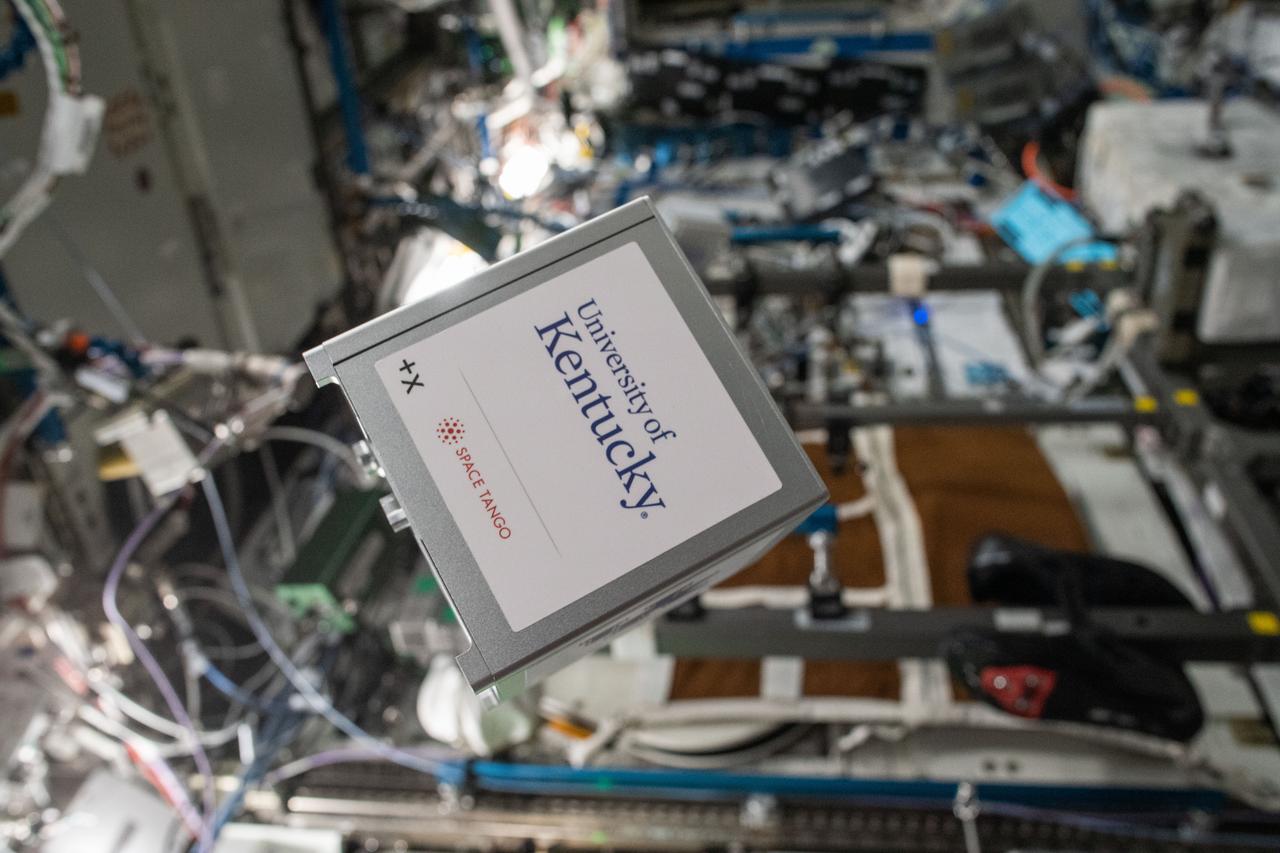
iss067e000411 (3/31/2022) --- A view of a Cube containing Space Tango - Cubelab Satellite Demonstrator, part of TangoLab Mission-25 aboard the International Space Station (ISS). Space Tango - University of Kentucky Cubelab Satellite Demonstrator (Space Tango - Cubelab Satellite Demonstrator) tests a new attitude-control technology for small satellites, which is an integral part of future space missions.
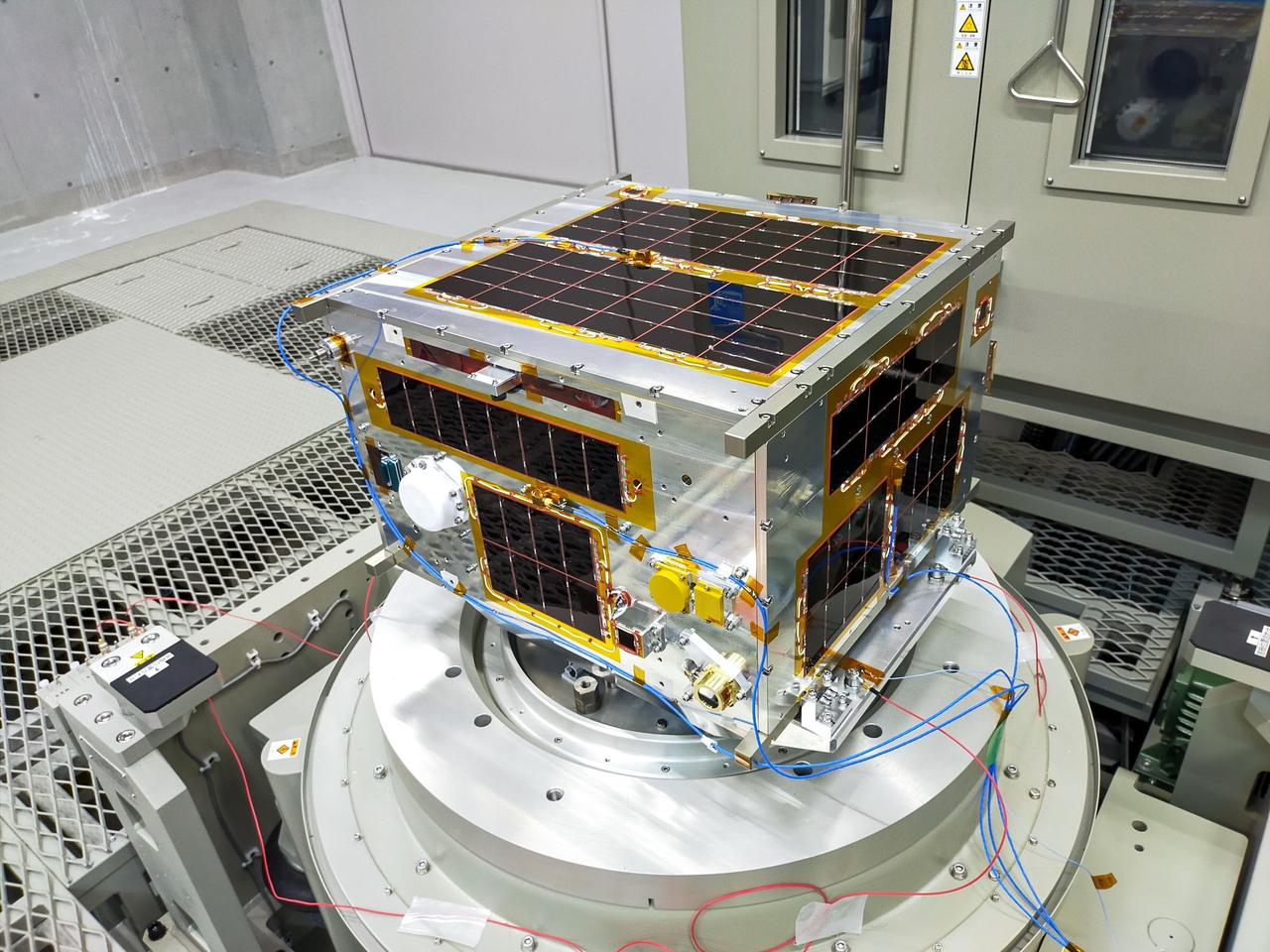
jsc2020e049614 (8/7/2020) --- A preflight view of the MMSAT-1 flight unit. MMSAT-1 is Myanmar’s first 50 kg-class MicroSat, that deploys during the JEM Small Satellite Orbital Deployer-M2 (J-SSOD-M2) micro-satellite deployment mission. The satellite mission aims to help provide information to implement more efficient and systematic agricultural practices in Myanmar and monitor natural disasters through the provision of satellite imagery. Photo courtesy of: TohokuHokkaido University
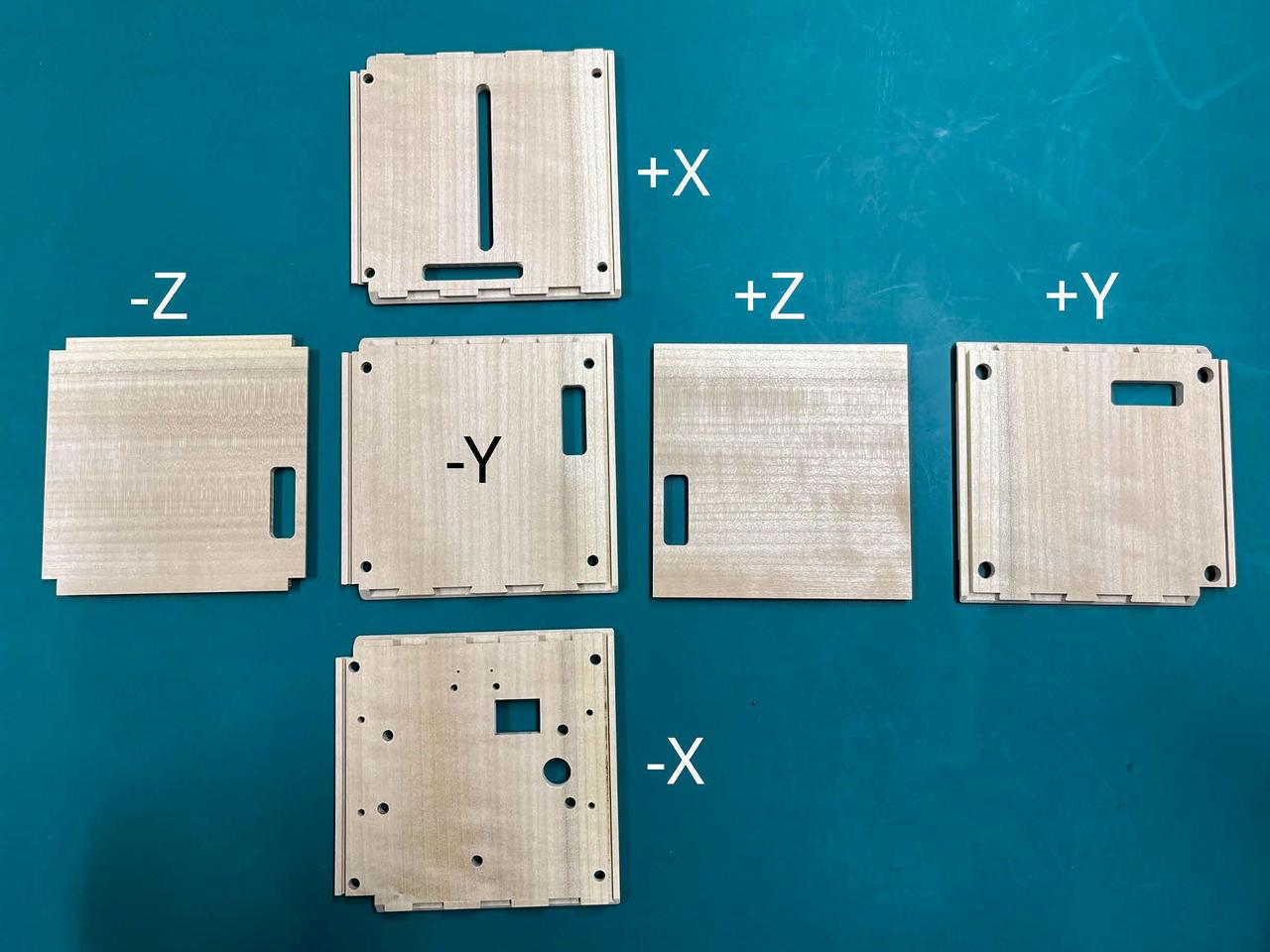
jsc2024e081747 (12/17/2024) --- Six wooden panels of the LignoSat are shown with their coordinate marks. LignoSat is the world’s first wooden satellite to demonstrate whether wood can be used in space and is deployed as part of the JEM Small Satellite Orbital Deployer-30 (J-SSOD-30) CubeSat deployment mission. Image courtesy of Kyoto University.
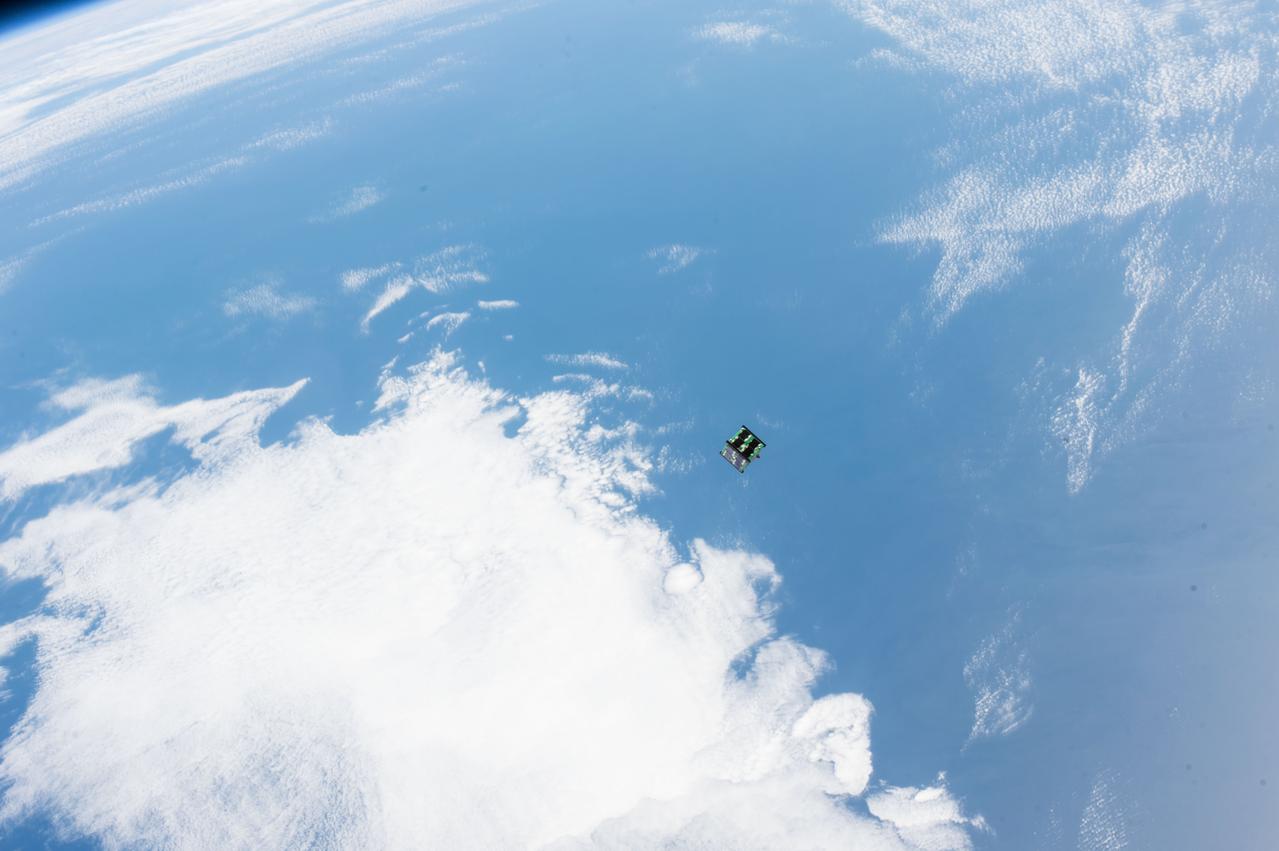
iss042e222241 (2/5/2015) --- Photographic documentation of the JEM Small Satellite Orbital Deployer-3 (J-SSOD-3) mission deploy of the CubeSat AESP-14 from Kibo. The satellite was developed by the Technological Institute of Aeronautics (ITA), with support from the Brazilian Space Agency (AEB), and the National Institute for Space Research (INPE).
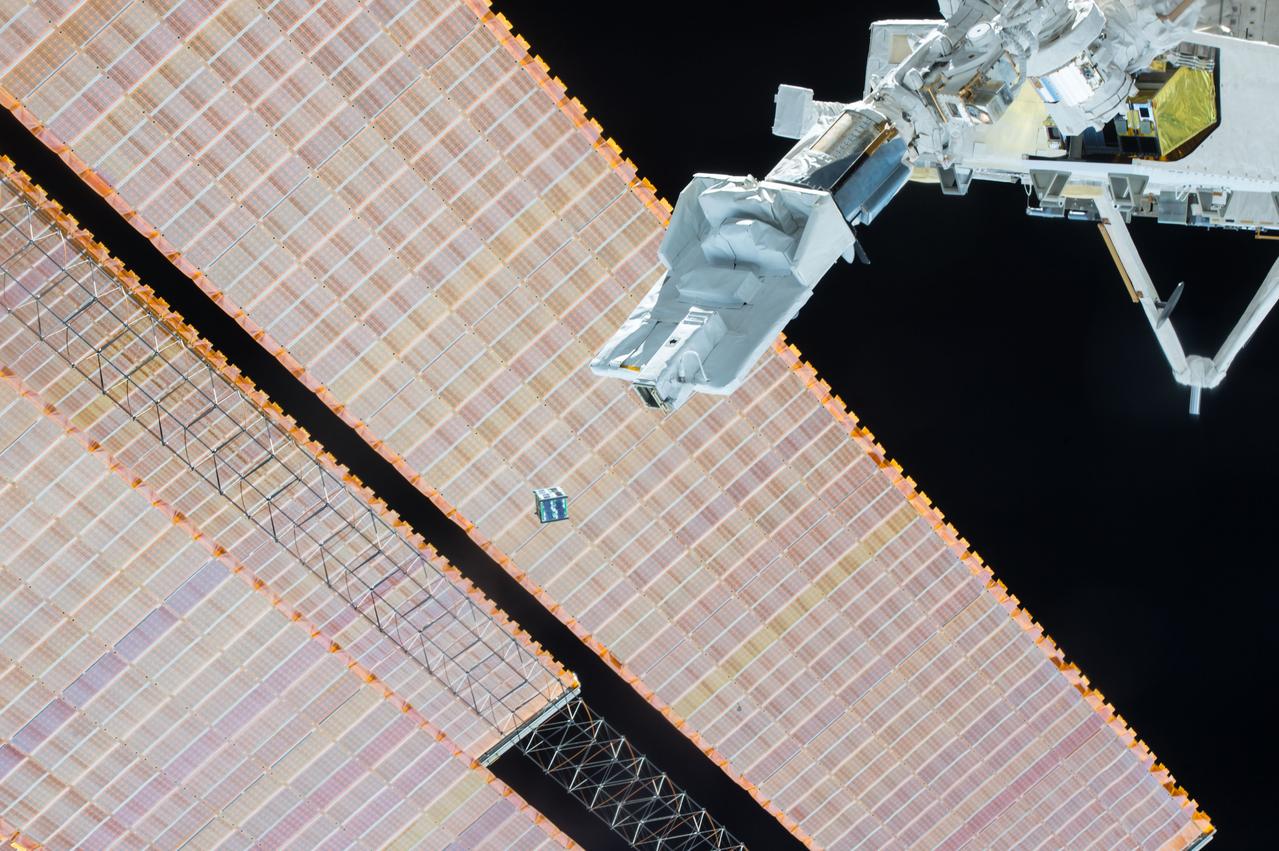
iss042e222236 (2/5/2015) --- Photographic documentation of the JEM Small Satellite Orbital Deployer-3 (J-SSOD-3) mission deploy of the CubeSat AESP-14 from Kibo. The satellite was developed by the Technological Institute of Aeronautics (ITA), with support from the Brazilian Space Agency (AEB), and the National Institute for Space Research (INPE).
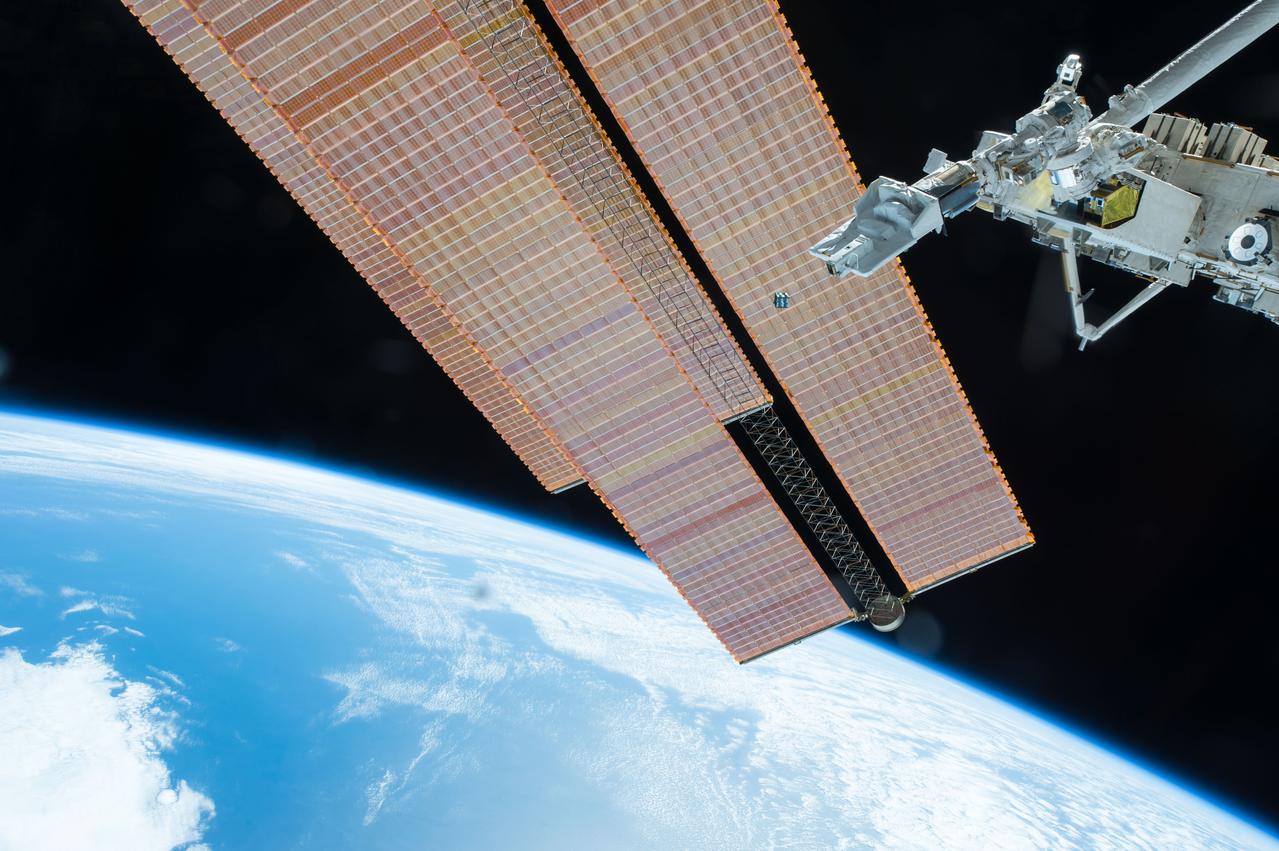
iss042e224107 (2/5/2015) --- Photographic documentation of the JEM Small Satellite Orbital Deployer-3 (J-SSOD-3) mission deploy of the CubeSat AESP-14 from Kibo. The satellite was developed by the Technological Institute of Aeronautics (ITA), with support from the Brazilian Space Agency (AEB), and the National Institute for Space Research (INPE).
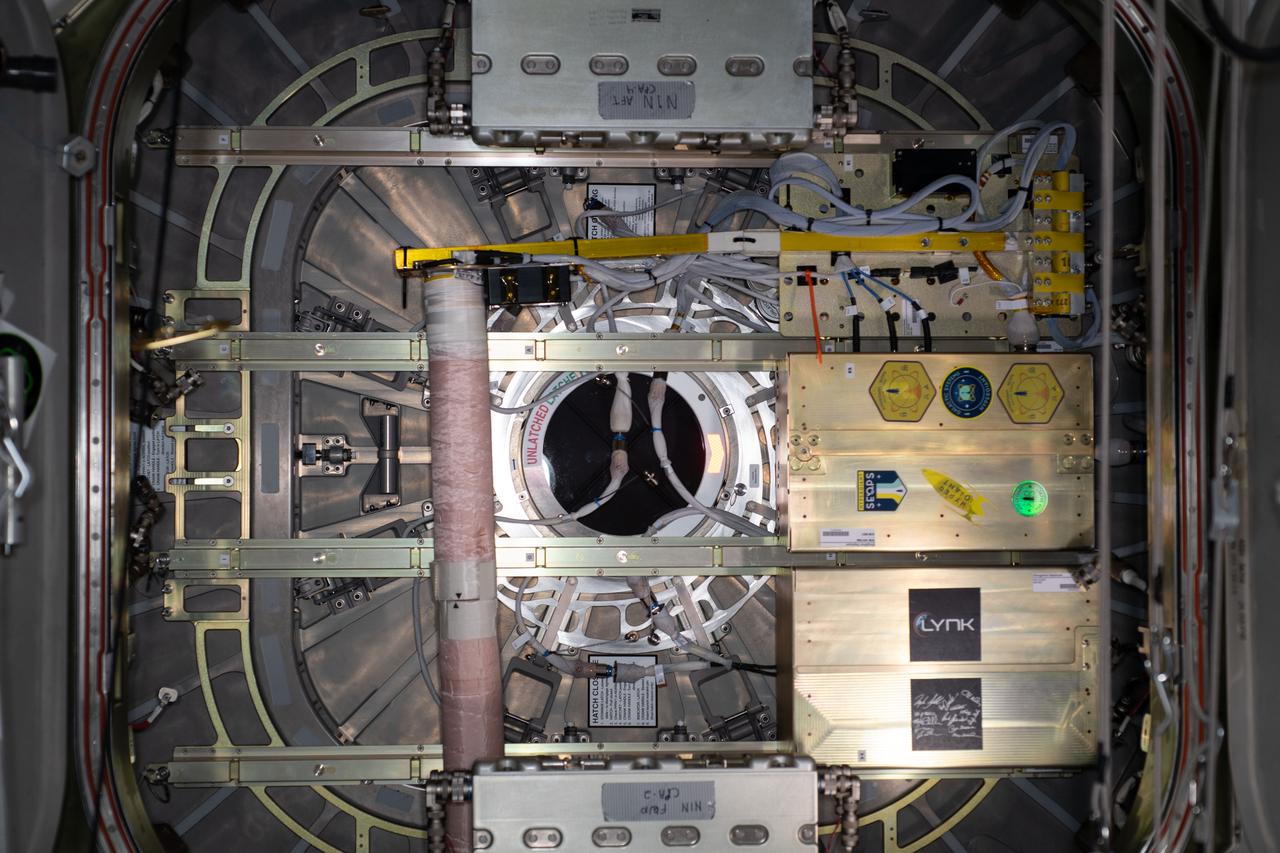
iss063e010534 (5/10/2020) --- A view from the Unity module aboard the International Space Station (ISS) of the Northrop Grumman NG-13 hatch. Attached to the hatch is the SlingShot small satellite deployer loaded with two CubeSats that will be deployed into Earth orbit after Cygnus departs the orbiting lab on May 11, 2020. The SEOPS-UbiquitiLink investigation furthers demonstrates the premise that small satellites/nano satellites can perform vital communications missions and provide valuable communications services. The SEOPS-WIDAR investigation demonstrates technologies that increase the utility of low-cost microsatellites, contributing to the increased commercialization of the International Space Station and low-Earth orbit.
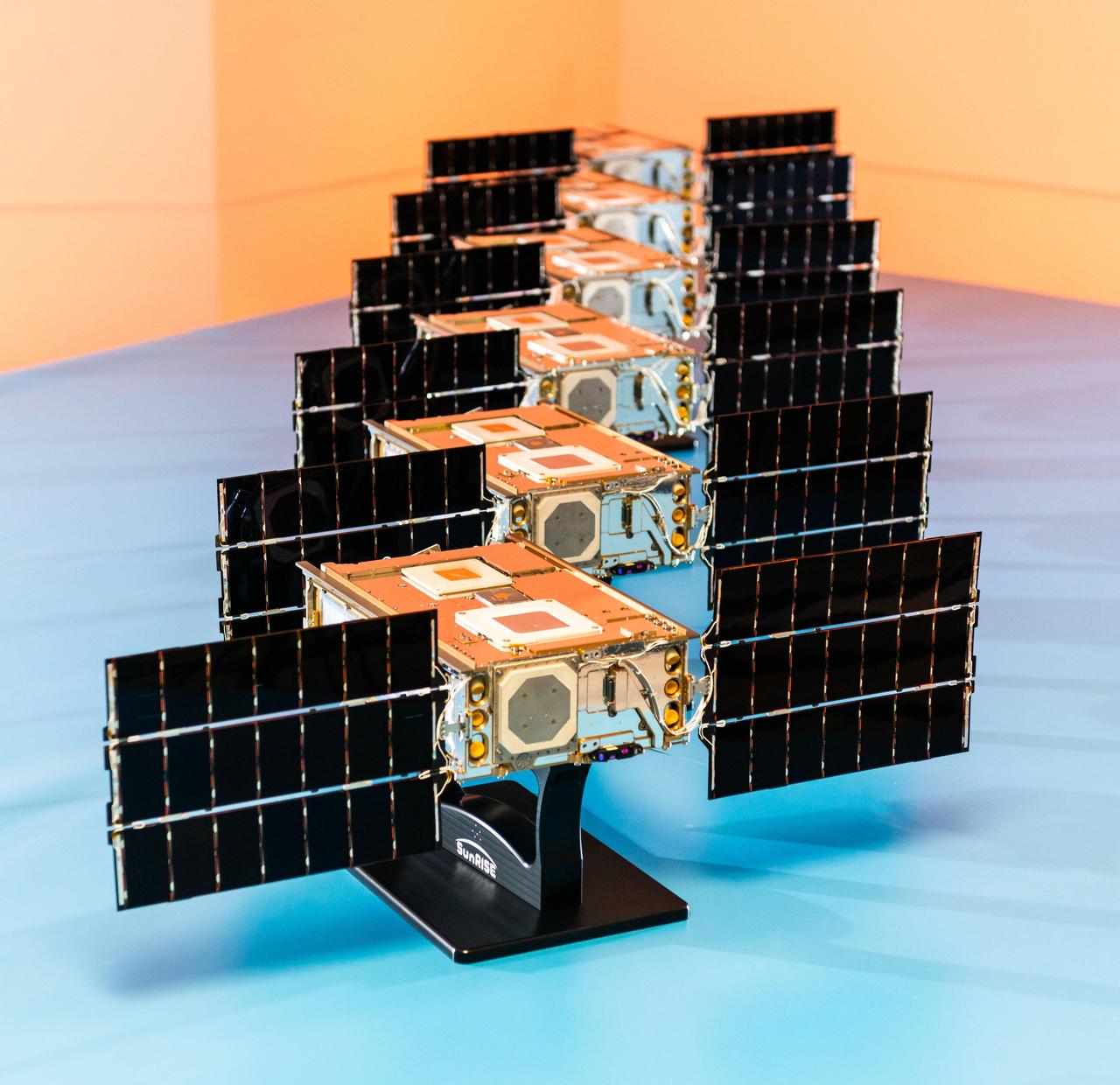
Shown here at Utah State University's Space Dynamics Laboratory in Logan, Utah, in November, 2023, the six satellites that make up NASA's Sun Radio Interferometer Space Experiment (SunRISE) mission are each only about the size of a cereal box, flanked by small solar panels. Once in space, the six SmallSats fly about 6 miles (10 kilometers) apart and each deploy four radio antennas that extend 10 feet (2.5 meters). Using a technique called interferometry, the six satellites will effectively act like one big radio receiver and detect solar radio bursts, or eruptions of radio waves in the outer atmosphere of the Sun. In the places where these radio bursts arise, scientists also see eruptions of accelerated particles, which can damage spacecraft electronics, including on communications satellites in Earth orbit, and pose a health threat to astronauts. Keeping track of solar radio bursts and pinpointing their location could help warn humans of approaching accelerated particles. https://photojournal.jpl.nasa.gov/catalog/PIA25789

At Vandenberg Air Force Base in California, a Poly Picosatellite Orbital Deployer, or P-POD, container is installed on the Joint Polar Satellite System-1, or JPSS-1, spacecraft. P-PODS are auxiliary payloads launched aboard NASA expendable launch vehicles carrying up to three small CubeSats. The small cube-shaped satellites are part of NASA’s Educational Launch of Nanosatellite, or ELaNa, missions. The small payloads are designed and built by students from high school-level classes up to college and university students. JPSS is the first in a series of four next-generation environmental satellites in a collaborative program between the NOAA and NASA. Liftoff from Vandenberg's Space Launch Compex-2 atop a United Launch Alliance Delta II rocket is scheduled for 1:47 a.m. PST (4:47 a.m. EST), on Nov. 14, 2017.
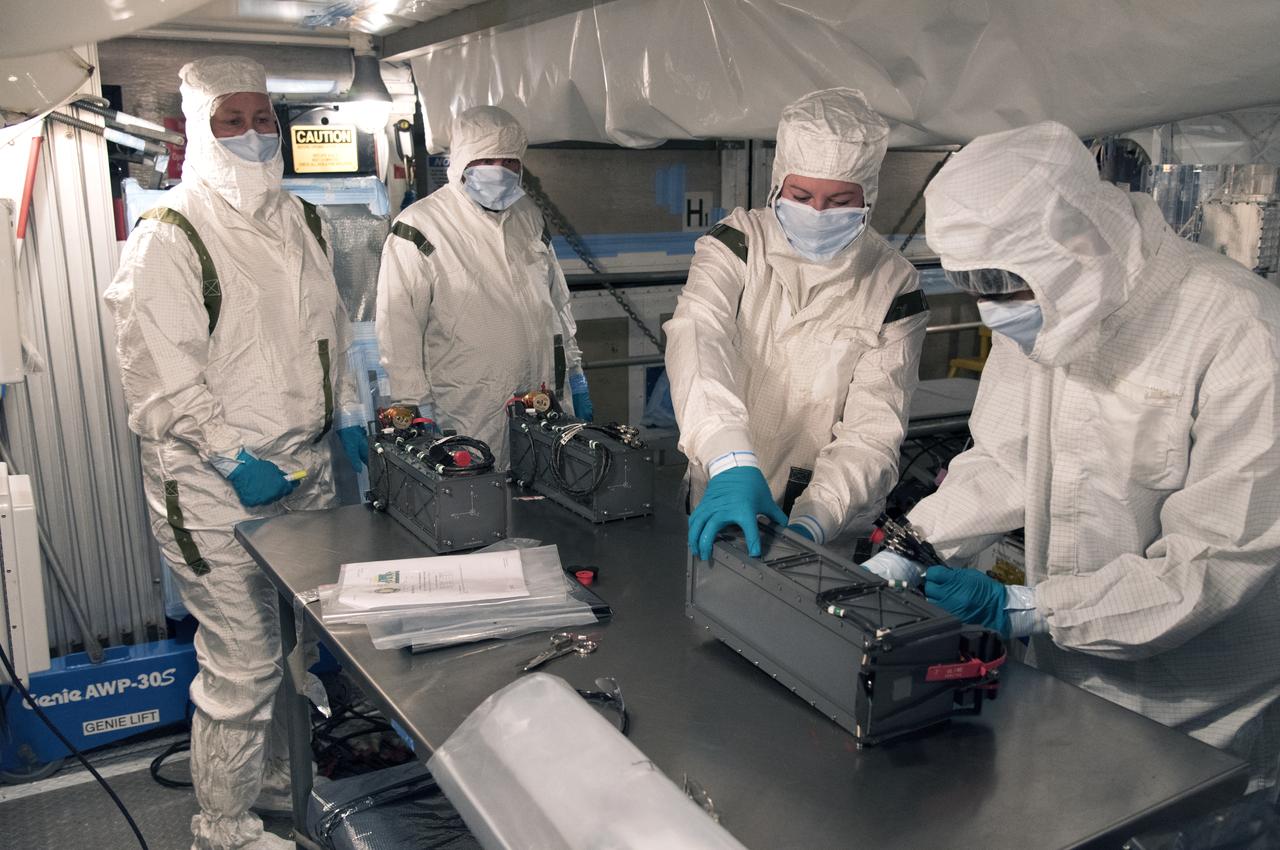
At Vandenberg Air Force Base in California, technicians and engineers prepare a Poly Picosatellite Orbital Deployer, or P-POD, container for installation on the Joint Polar Satellite System-1, or JPSS-1, spacecraft. P-PODS are auxiliary payloads launched aboard NASA expendable launch vehicles carrying up to three small CubeSats. The small cube-shaped satellites are part of NASA’s Educational Launch of Nanosatellite, or ELaNa, missions. The small payloads are designed and built by students from high school-level classes up to college and university students. JPSS is the first in a series of four next-generation environmental satellites in a collaborative program between the NOAA and NASA. Liftoff from Vandenberg's Space Launch Compex-2 atop a United Launch Alliance Delta II rocket is scheduled for 1:47 a.m. PST (4:47 a.m. EST), on Nov. 14, 2017.

At Vandenberg Air Force Base in California, technicians and engineers prepare to install a Poly Picosatellite Orbital Deployer, or P-POD, container on the Joint Polar Satellite System-1, or JPSS-1, spacecraft. P-PODS are auxiliary payloads launched aboard NASA expendable launch vehicles carrying up to three small CubeSats. The small cube-shaped satellites are part of NASA’s Educational Launch of Nanosatellite, or ELaNa, missions. The small payloads are designed and built by students from high school-level classes up to college and university students. JPSS is the first in a series of four next-generation environmental satellites in a collaborative program between the NOAA and NASA. Liftoff from Vandenberg's Space Launch Compex-2 atop a United Launch Alliance Delta II rocket is scheduled for 1:47 a.m. PST (4:47 a.m. EST), on Nov. 14, 2017.
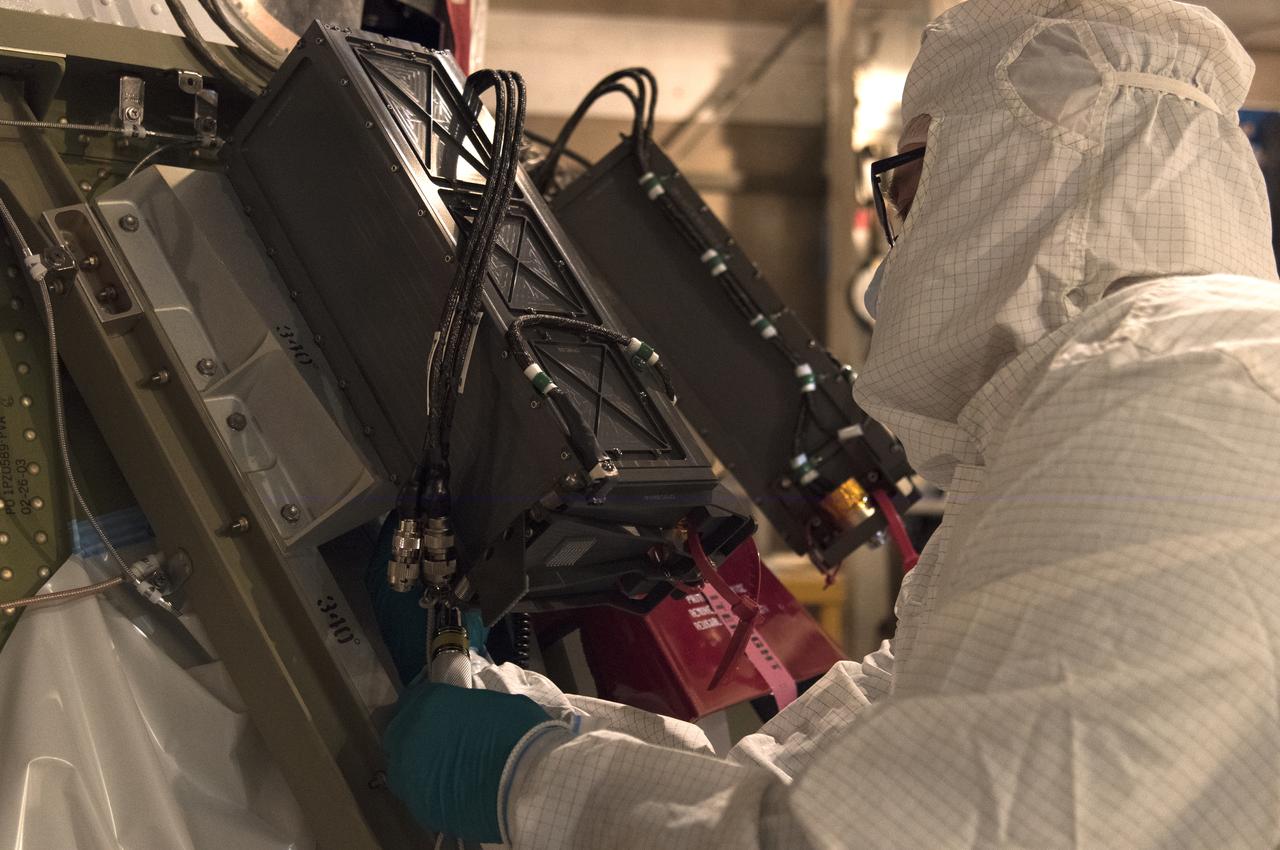
At Vandenberg Air Force Base in California, a Poly Picosatellite Orbital Deployer, or P-POD, container is installed on the Joint Polar Satellite System-1, or JPSS-1, spacecraft. P-PODS are auxiliary payloads launched aboard NASA expendable launch vehicles carrying up to three small CubeSats. The small cube-shaped satellites are part of NASA’s Educational Launch of Nanosatellite, or ELaNa, missions. The small payloads are designed and built by students from high school-level classes up to college and university students. JPSS is the first in a series of four next-generation environmental satellites in a collaborative program between the NOAA and NASA. Liftoff from Vandenberg's Space Launch Compex-2 atop a United Launch Alliance Delta II rocket is scheduled for 1:47 a.m. PST (4:47 a.m. EST), on Nov. 14, 2017.
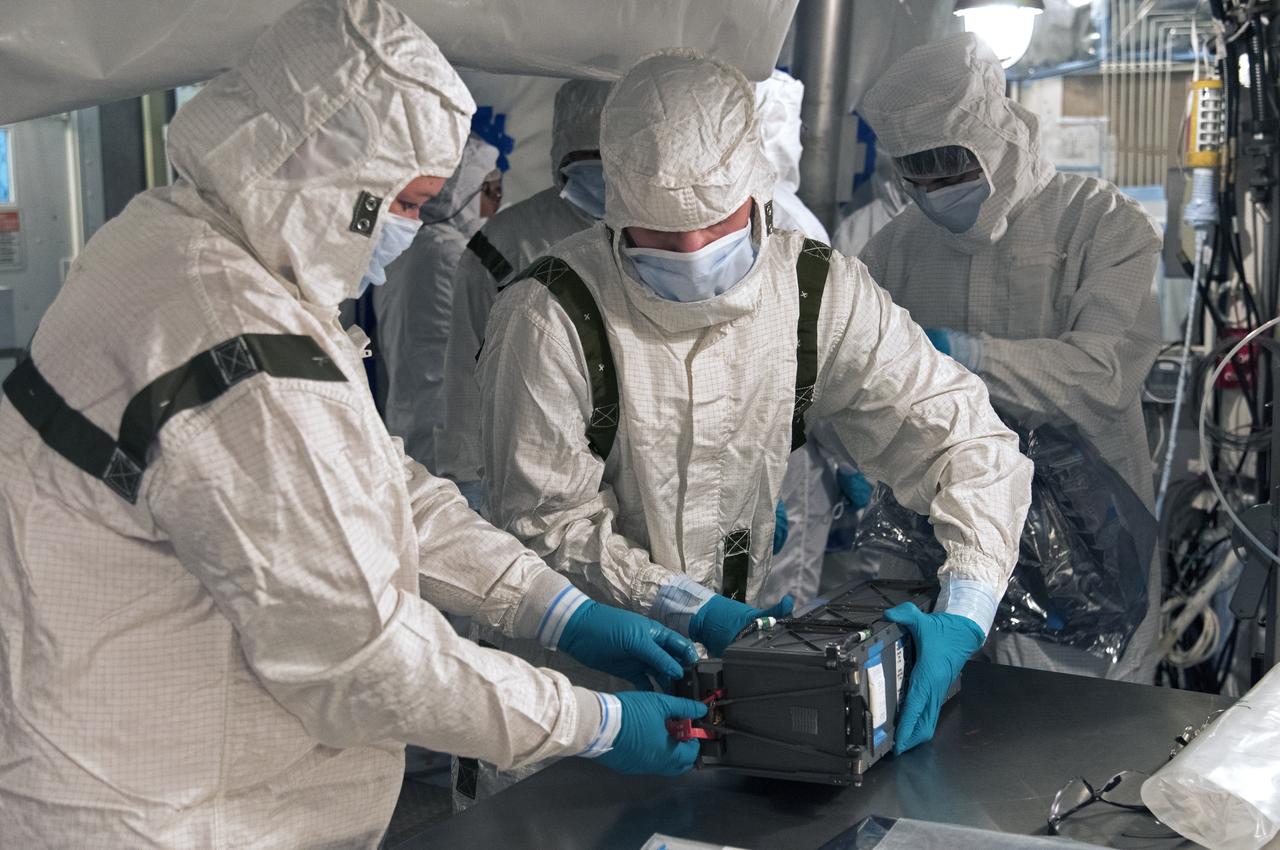
At Vandenberg Air Force Base in California, technicians and engineers prepare a Poly Picosatellite Orbital Deployer, or P-POD, container for installation on the Joint Polar Satellite System-1, or JPSS-1, spacecraft. P-PODS are auxiliary payloads launched aboard NASA expendable launch vehicles carrying up to three small CubeSats. The small cube-shaped satellites are part of NASA’s Educational Launch of Nanosatellite, or ELaNa, missions. The small payloads are designed and built by students from high school-level classes up to college and university students. JPSS is the first in a series of four next-generation environmental satellites in a collaborative program between the NOAA and NASA. Liftoff from Vandenberg's Space Launch Compex-2 atop a United Launch Alliance Delta II rocket is scheduled for 1:47 a.m. PST (4:47 a.m. EST), on Nov. 14, 2017.

At Vandenberg Air Force Base in California, a Poly Picosatellite Orbital Deployer, or P-POD, container is installed on the Joint Polar Satellite System-1, or JPSS-1, spacecraft. P-PODS are auxiliary payloads launched aboard NASA expendable launch vehicles carrying up to three small CubeSats. The small cube-shaped satellites are part of NASA’s Educational Launch of Nanosatellite, or ELaNa, missions. The small payloads are designed and built by students from high school-level classes up to college and university students. JPSS is the first in a series of four next-generation environmental satellites in a collaborative program between the NOAA and NASA. Liftoff from Vandenberg's Space Launch Compex-2 atop a United Launch Alliance Delta II rocket is scheduled for 1:47 a.m. PST (4:47 a.m. EST), on Nov. 14, 2017.
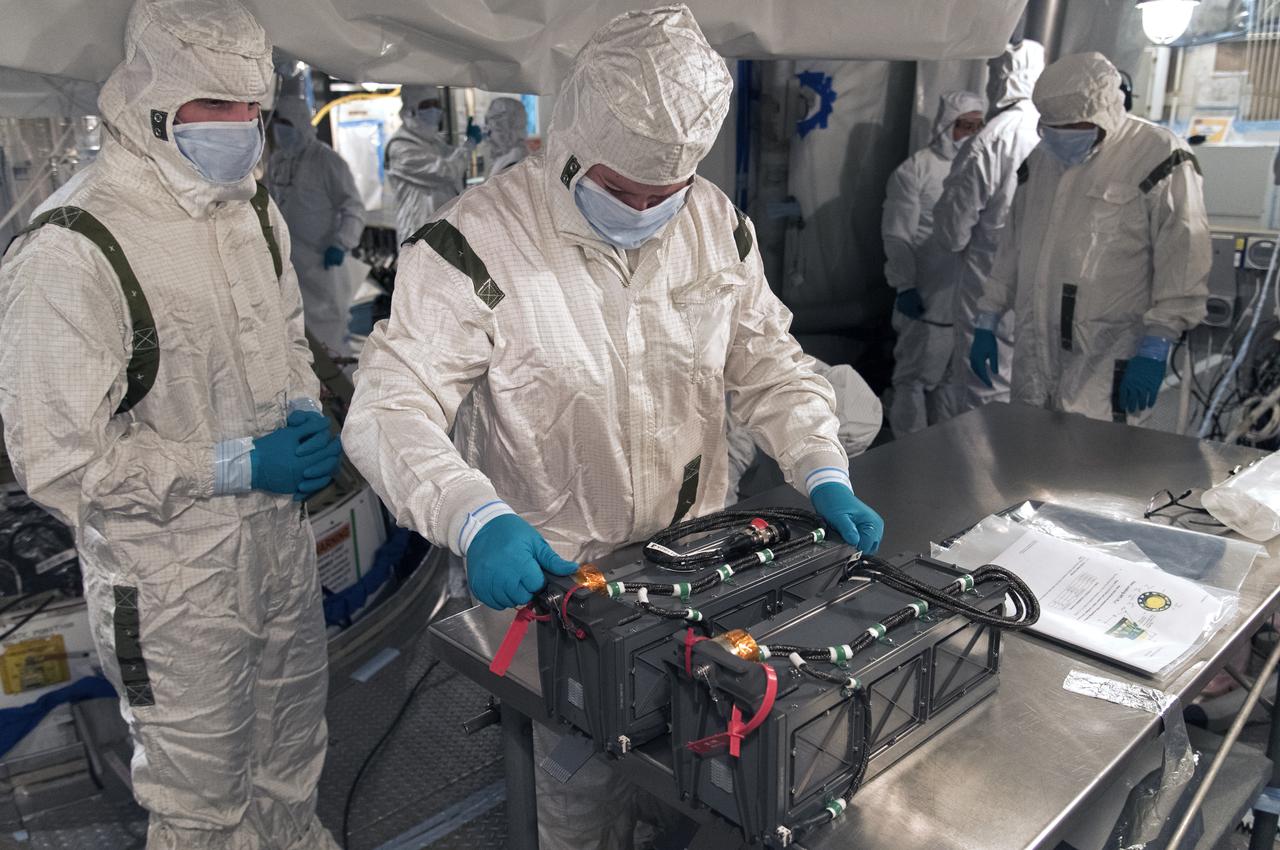
At Vandenberg Air Force Base in California, technicians and engineers prepare a Poly Picosatellite Orbital Deployer, or P-POD, container for installation on the Joint Polar Satellite System-1, or JPSS-1, spacecraft. P-PODS are auxiliary payloads launched aboard NASA expendable launch vehicles carrying up to three small CubeSats. The small cube-shaped satellites are part of NASA’s Educational Launch of Nanosatellite, or ELaNa, missions. The small payloads are designed and built by students from high school-level classes up to college and university students. JPSS is the first in a series of four next-generation environmental satellites in a collaborative program between the NOAA and NASA. Liftoff from Vandenberg's Space Launch Compex-2 atop a United Launch Alliance Delta II rocket is scheduled for 1:47 a.m. PST (4:47 a.m. EST), on Nov. 14, 2017.

Small Expendable Deployer System (SEDS) is a tethered date collecting satellite and is intended to demonstrate a versatile and economical way of delivering smaller payloads to higher orbits or downward toward Earth's atmosphere. 19th Navstar Global Positioning System Satellite mission joined with previously launched satellites used for navigational purposes and geodite studies. These satellites are used commercially as well as by the military.
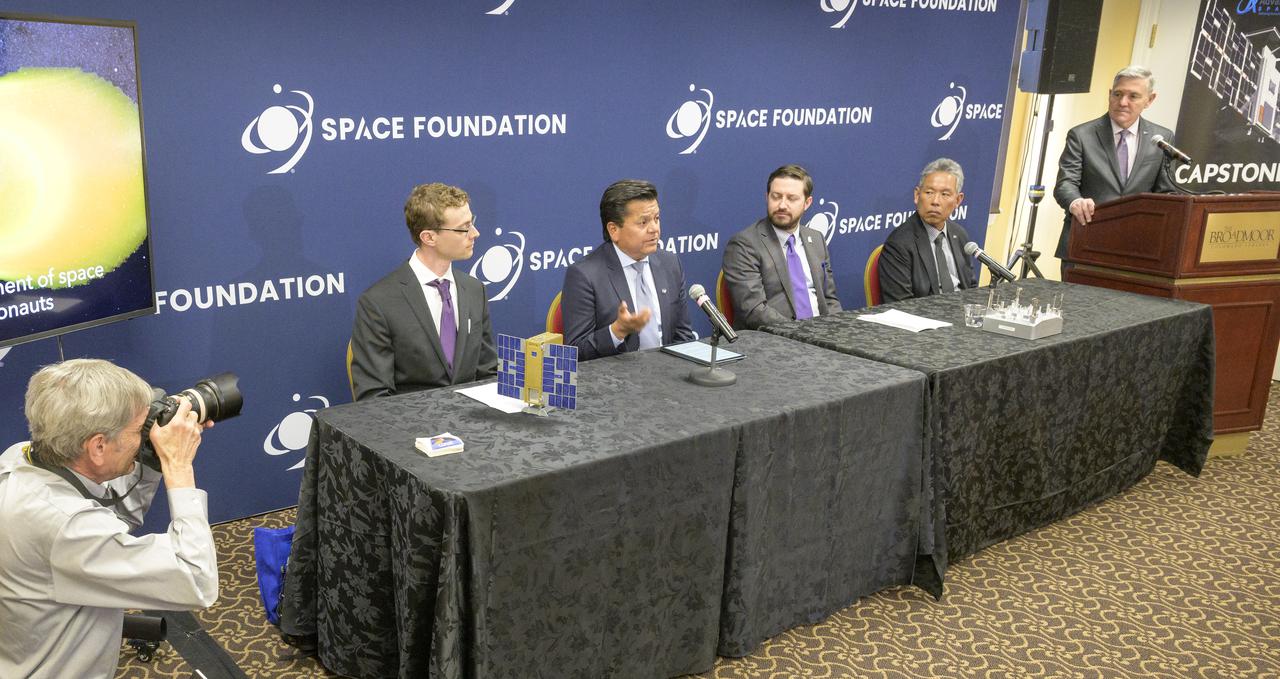
NASA Associate Administrator Bob Cabana, right, moderates a news conference, “Small Satellites, Big Missions: Pathfinding CubeSats Exploring the Moon and Beyond,” during the 37th Space Symposium, Wednesday, April 6, 2022, in Colorado Springs, Colorado. The panel included, from left: Joe Shoer, Lockheed Martin; Andres Martinez, program executive for small spacecraft in NASA’s Exploration Systems Development Mission Directorate; Bradley Cheetham (CEO) Advanced Space; and Elwood Agasid, deputy program manager for Small Spacecraft Technology at Ames Research Center and Space Technology Hall of Fame inductee. Photo Credit: (NASA/Bill Ingalls)
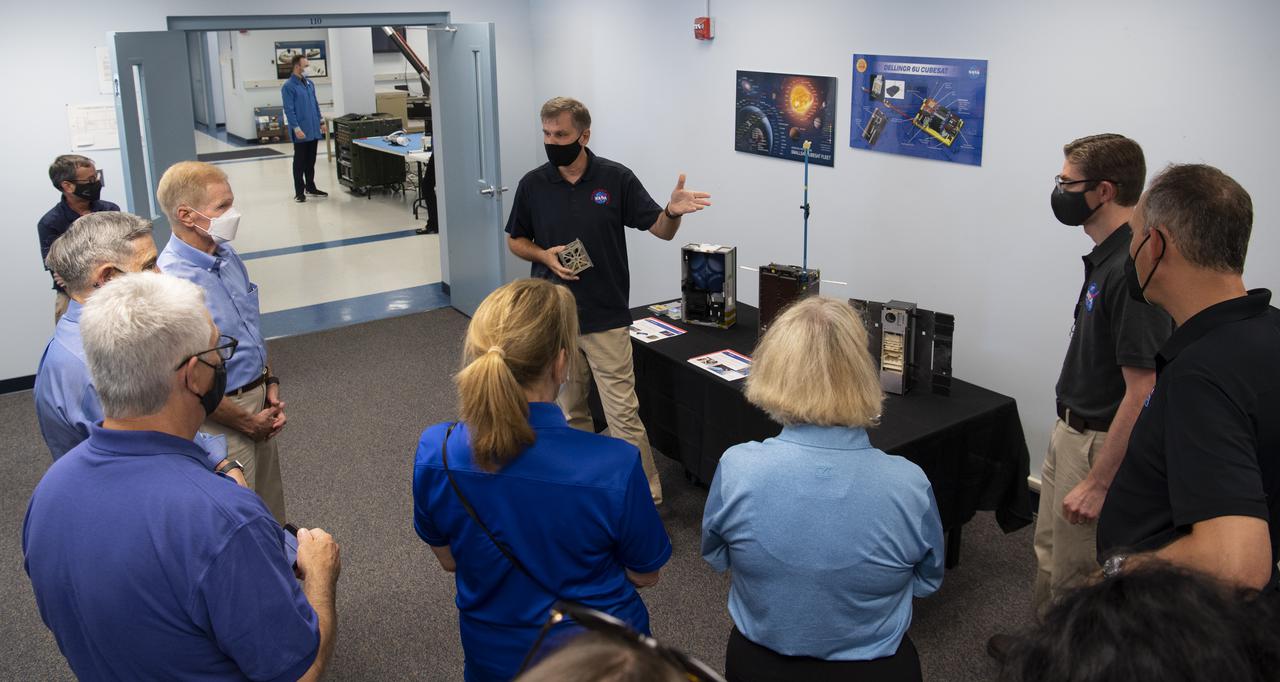
Dave Wilcox, chief of the Small Satellite Project Office at NASA's Wallops Flight Facility, center, speaks about cubesats with NASA Administrator Bill Nelson, Bob Cabana, NASA associate administrator, Dave Pierce, director of NASA's Wallops Flight Facility, NASA Deputy Administrator Pam Melroy, and Thomas Zurbuchen, associate administrator for NASA's Science Mission Directorate during tour of the Small Satellites, Balloon Research and Development Lab, Tuesday, Aug. 10, 2021, at NASA’s Wallops Flight Facility in Virginia. Photo Credit: (NASA/Joel Kowsky)
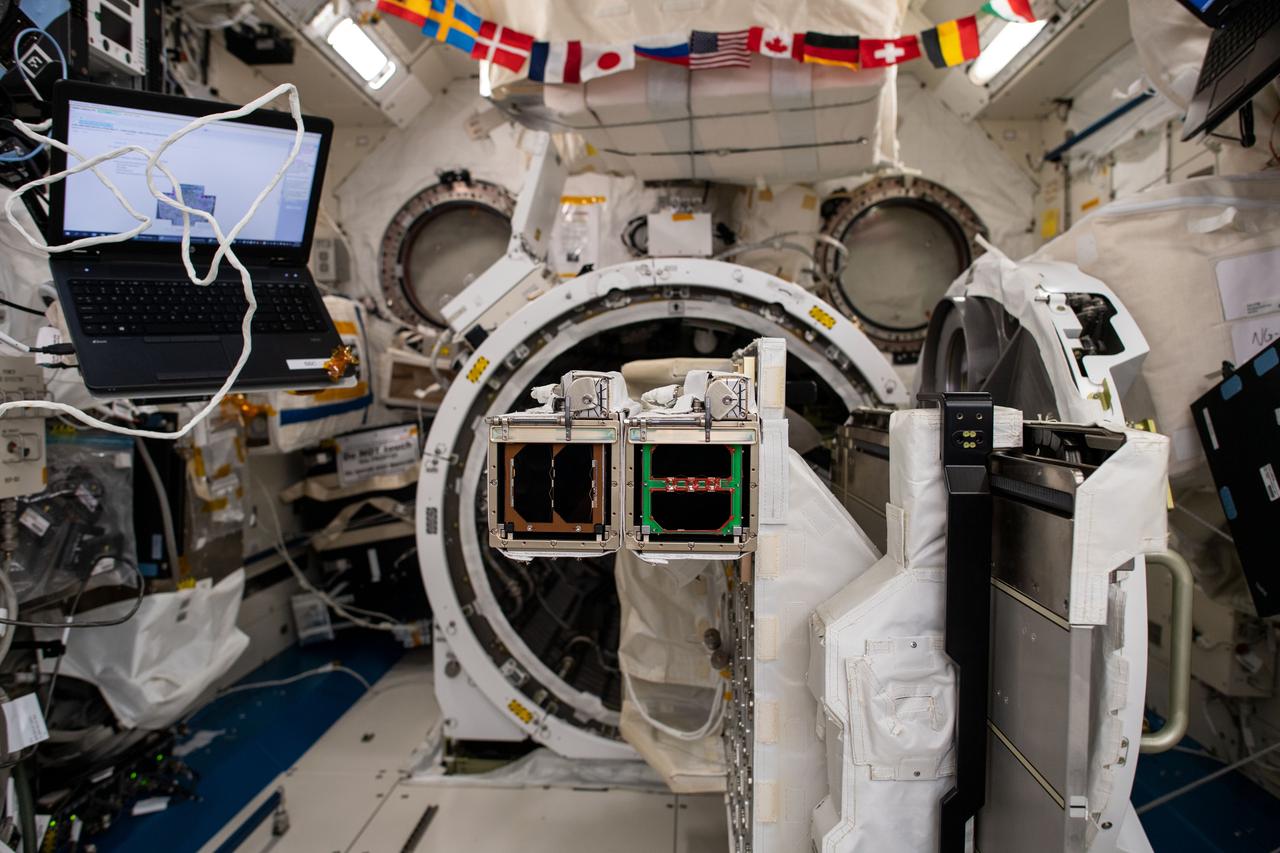
iss059e102911 (6/13/2019 --- Photo documentation taken aboard the International Space Station (ISS) of the JEM Small Satellite Orbital Deployer #11 (J-SSOD #11) micro-satellite deployment mission. J-SSOD#11 deploys the BIRDS-3 Project and Spooky-1 satellites. BIRDS-3 Project is a constellation of three 1U CubeSats developed by Japan, Nepal and Sri Lanka. SpooQy-1 is a 3-Unit (3U) CubeSat developed by the National University of Singapore (NUS).
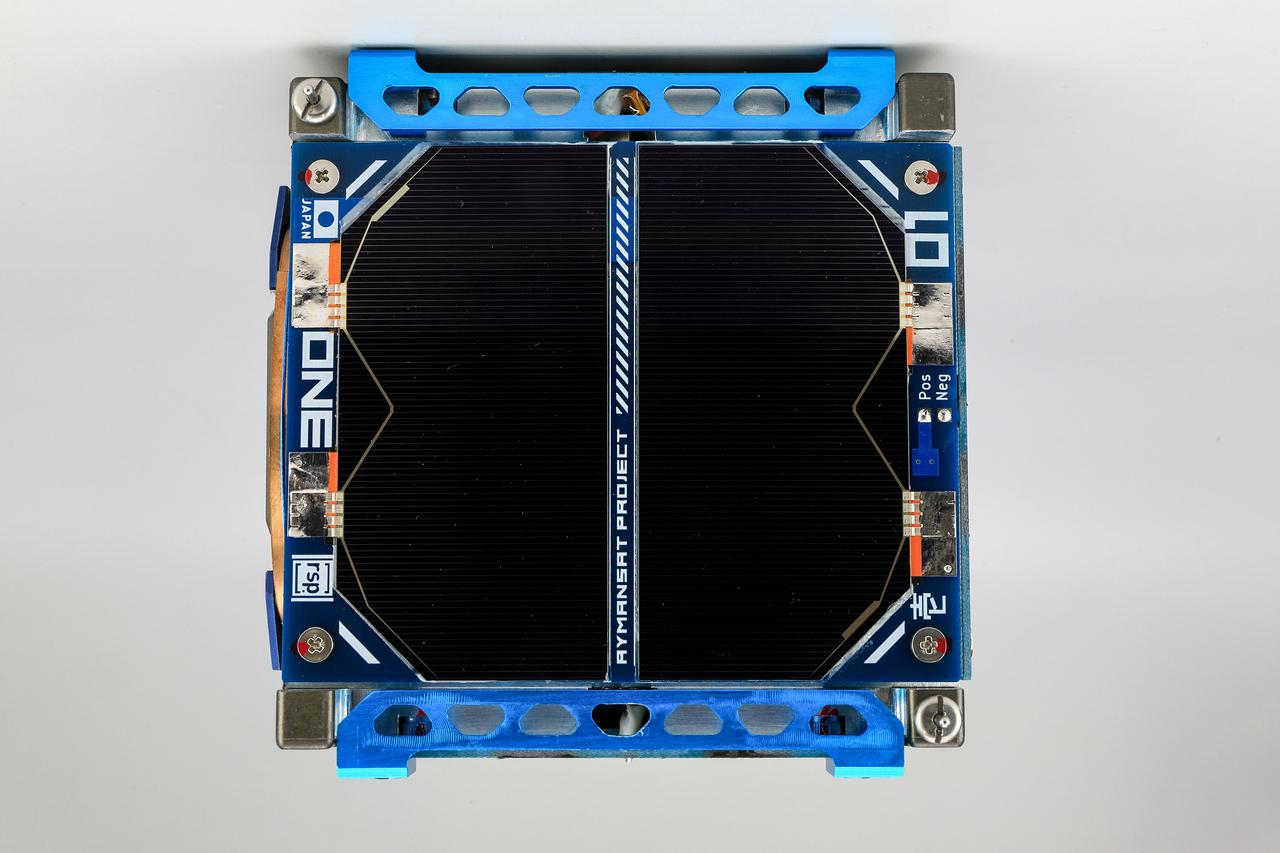
jsc2021e004420 (10/3/2020) --- A pre-flight view of the top of the RSP-01 Flight Model. The RSP-01 satellite is a 1-Unit (1U) CubeSat that deploys during the JEM Small Satellite Orbital Deployer-16 (J-SSOD-16) micro-satellite deployment mission and is handled by the Japanese Experiment Module Remote Manipulator System (JEMRMS). RSP-01 is developed by Rymansat Spaces and launches to the International Space Station aboard the NG-15 Cygnus Cargo Vehicle. Image Credit: Rymansat Spaces.
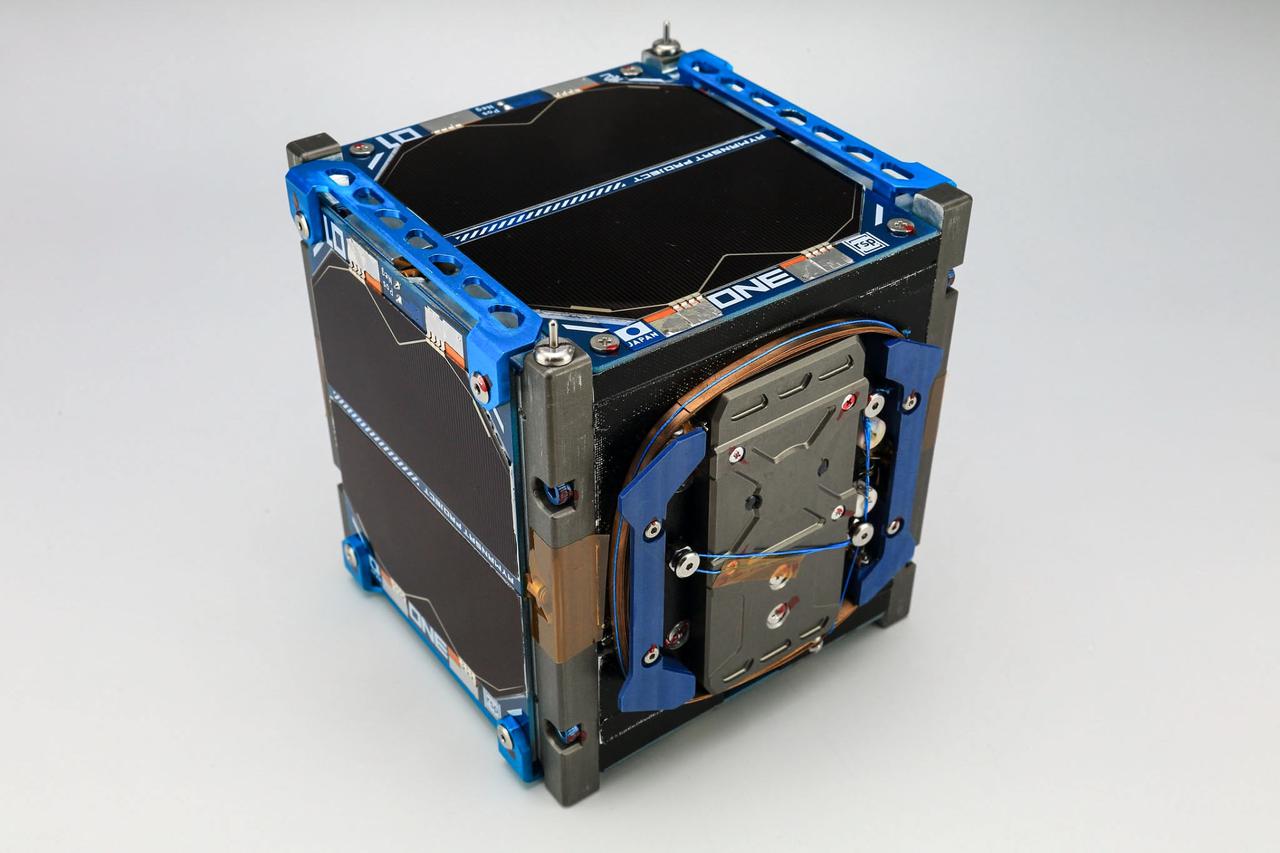
jsc2021e004417 (10/6/2020) --- A pre-flight view of the RSP-01 Flight Model. The RSP-01 satellite is a 1-Unit (1U) CubeSat that deploys during the JEM Small Satellite Orbital Deployer-16 (J-SSOD-16) micro-satellite deployment mission and is handled by the Japanese Experiment Module Remote Manipulator System (JEMRMS). RSP-01 is developed by Rymansat Spaces and launches to the International Space Station aboard the NG-15 Cygnus Cargo Vehicle. Image Credit: Rymansat Spaces.
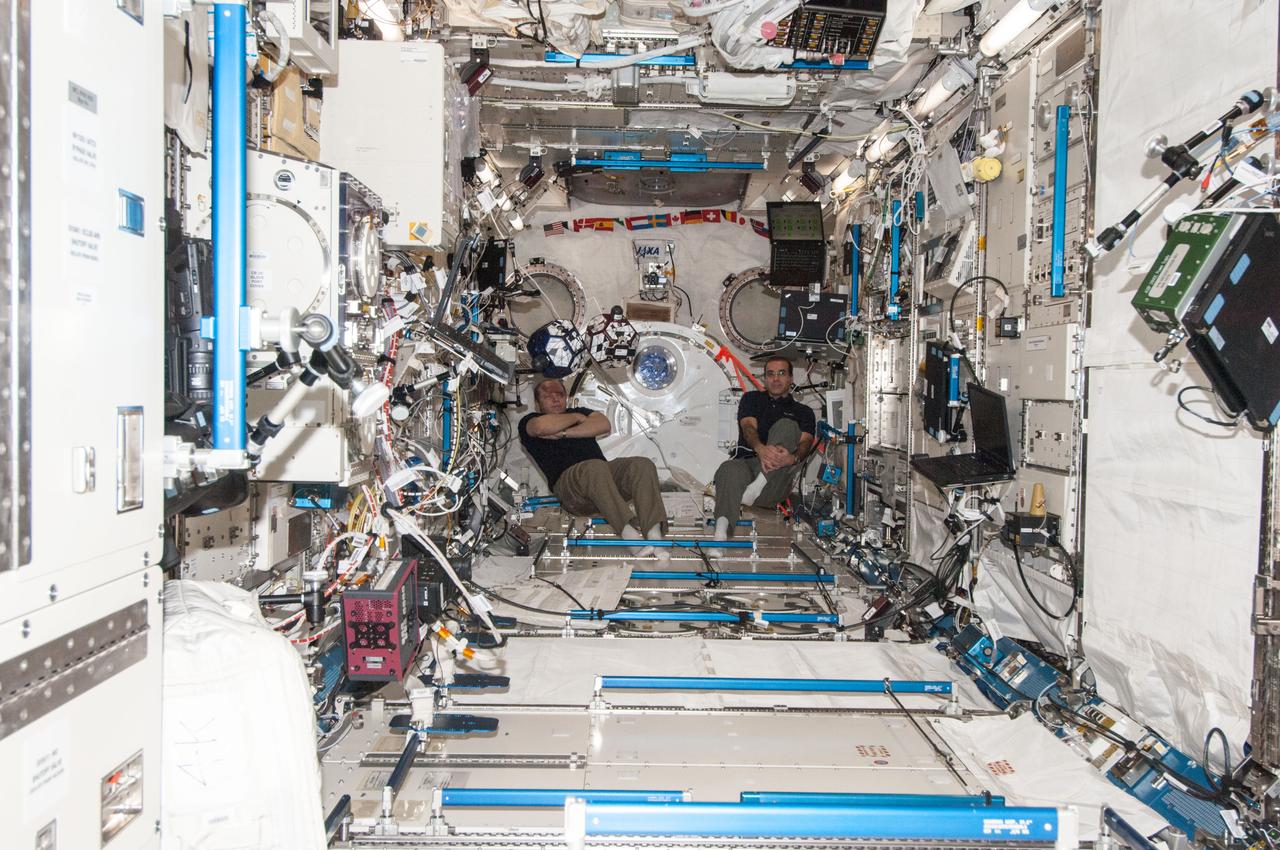
ISS038-E-031405 (15 Jan. 2014) --- In the International Space Station's Kibo laboratory, Russian cosmonaut Oleg Kotov (left), Expedition 38 commander; and NASA astronaut Rick Mastracchio, flight engineer, conduct a session with a pair of bowling-ball-sized free-flying satellites known as Synchronized Position Hold, Engage, Reorient, Experimental Satellites, or SPHERES. The experiment uses student written algorithms that operate the small satellites to demonstrate critical mission tasks such as formation flying and vehicle dockings.
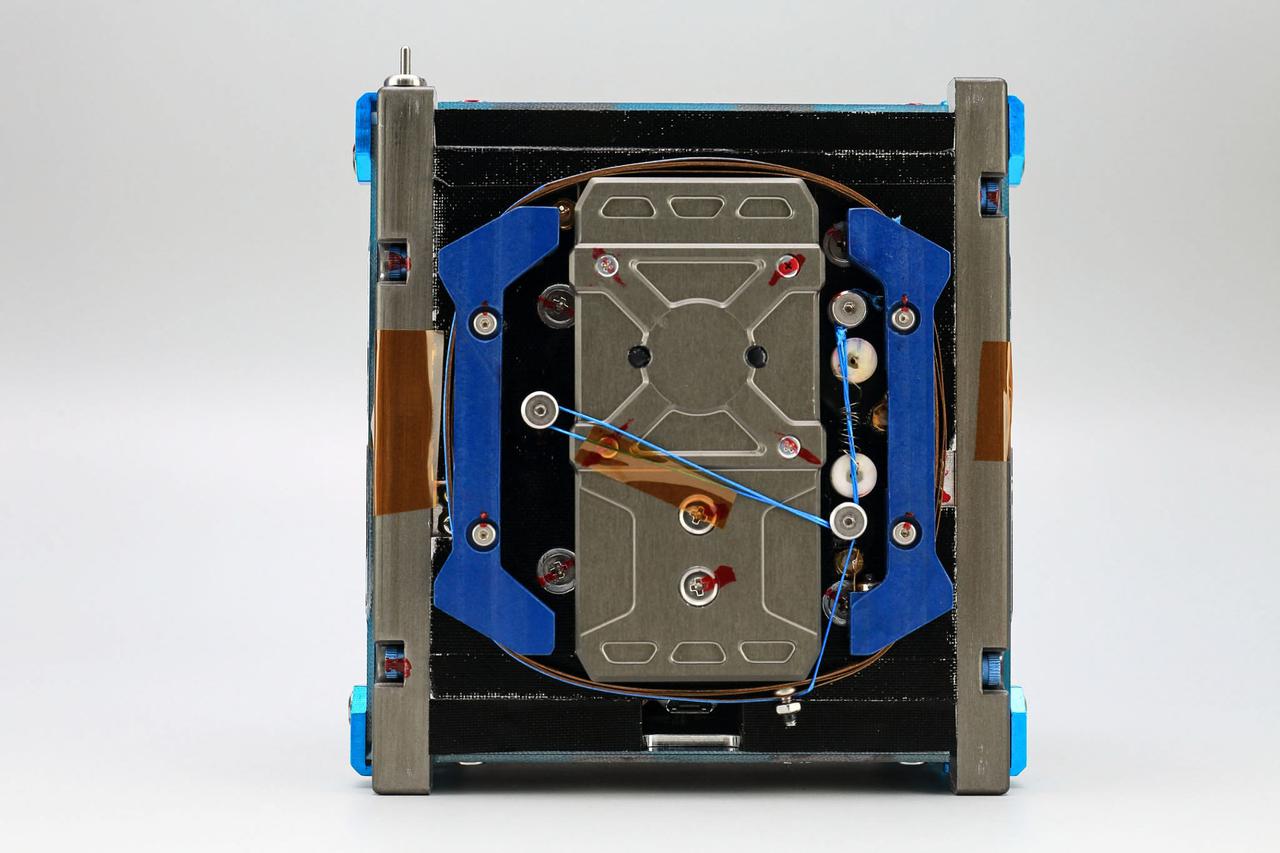
jsc2021e004418 (10/6/2020) --- A pre-flight view of the front side of the RSP-01 Flight Model. The RSP-01 satellite is a 1-Unit (1U) CubeSat that deploys during the JEM Small Satellite Orbital Deployer-16 (J-SSOD-16) micro-satellite deployment mission and is handled by the Japanese Experiment Module Remote Manipulator System (JEMRMS). RSP-01 is developed by Rymansat Spaces and launches to the International Space Station aboard the NG-15 Cygnus Cargo Vehicle. Image Credit: Rymansat Spaces.

jsc2021e004419 (10/27/2020) --- A pre-flight view of the RSP-01 Robot Arm Deployment. The RSP-01 satellite is a 1-Unit (1U) CubeSat that deploys during the JEM Small Satellite Orbital Deployer-16 (J-SSOD-16) micro-satellite deployment mission and is handled by the Japanese Experiment Module Remote Manipulator System (JEMRMS). RSP-01 is developed by Rymansat Spaces and launches to the International Space Station aboard the NG-15 Cygnus Cargo Vehicle. Image Credit: Rymansat Spaces.
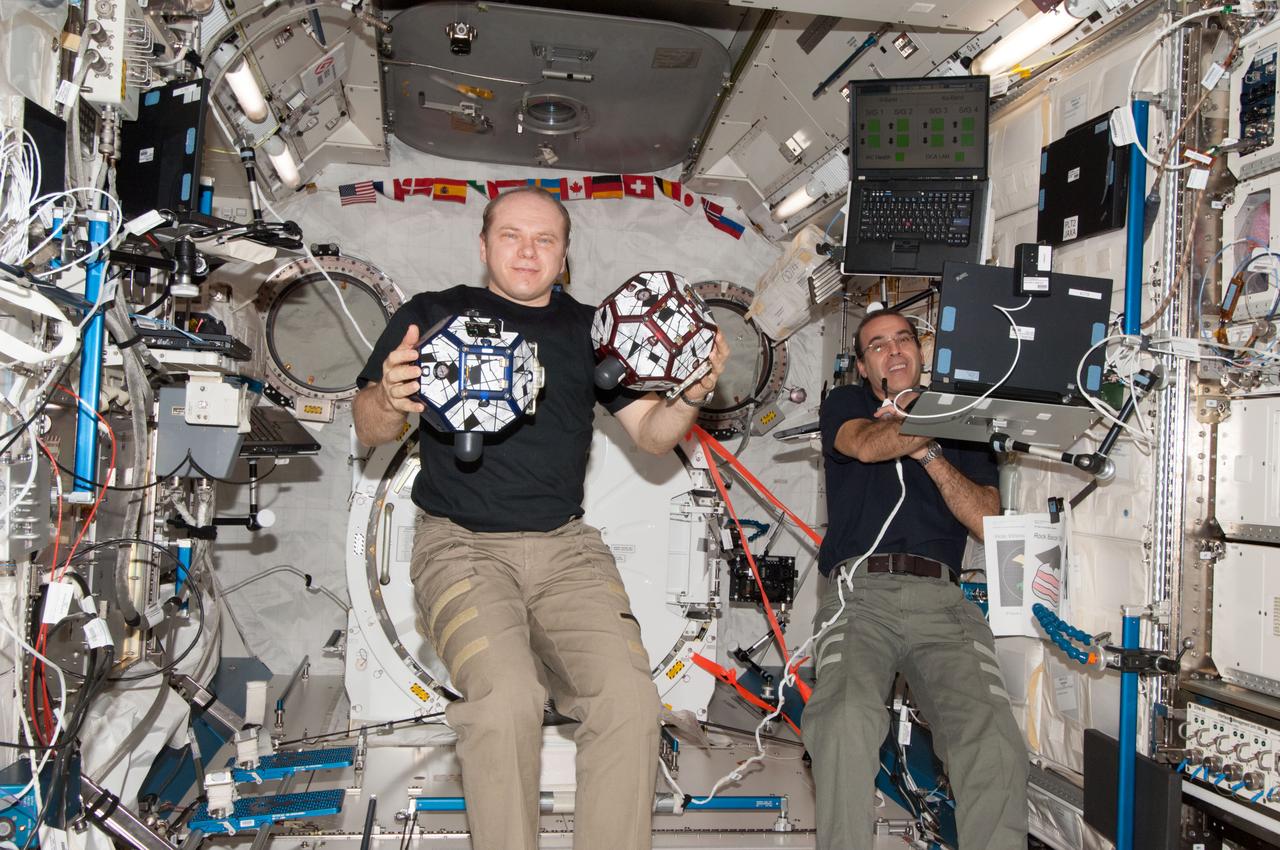
ISS038-E-031405 (15 Jan. 2014) --- In the International Space Station's Kibo laboratory, Russian cosmonaut Oleg Kotov (left), Expedition 38 commander; and NASA astronaut Rick Mastracchio, flight engineer, conduct a session with a pair of bowling-ball-sized free-flying satellites known as Synchronized Position Hold, Engage, Reorient, Experimental Satellites, or SPHERES. The experiment uses student written algorithms that operate the small satellites to demonstrate critical mission tasks such as formation flying and vehicle dockings.
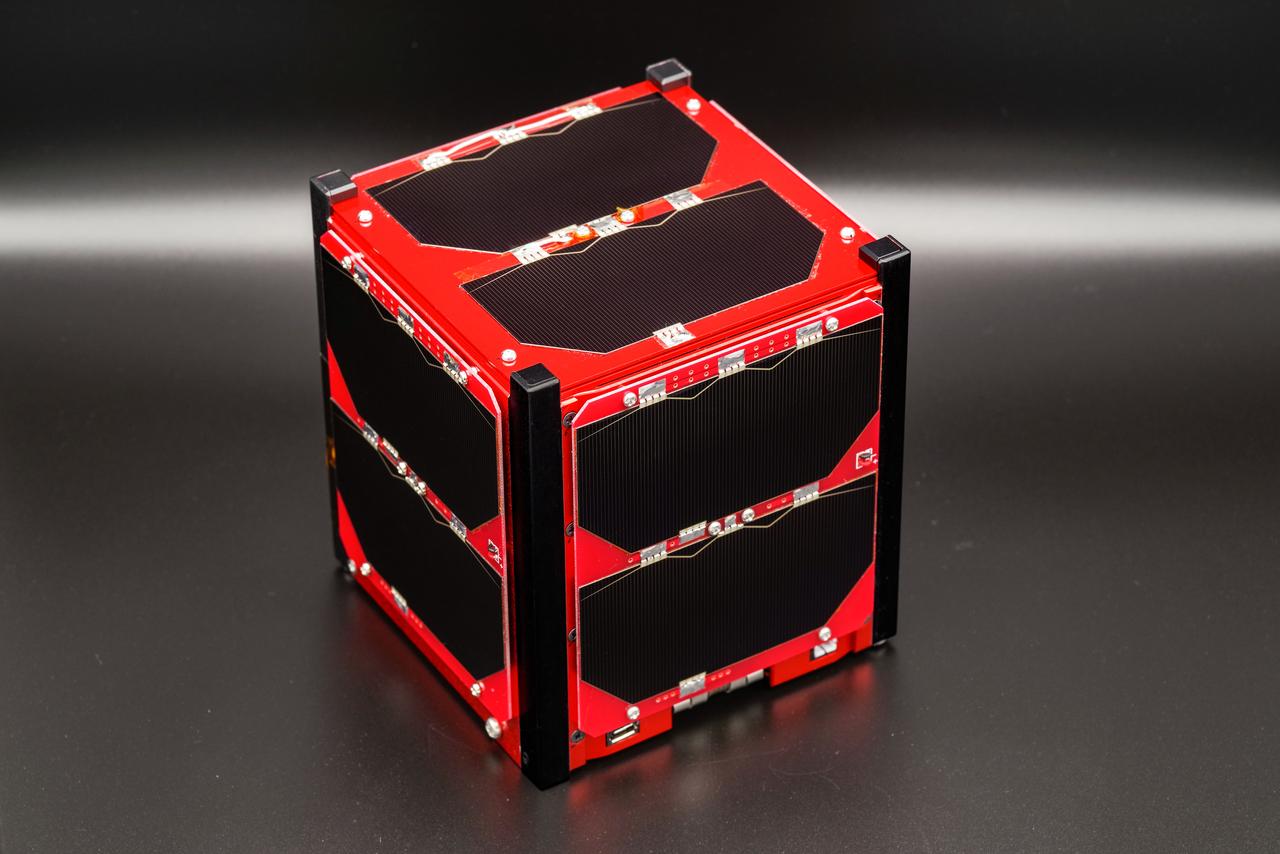
jsc2020e049613 (2/25/2020) --- A preflight view of the WARP-01 flight unit. The WARP-01 satellite is a 1-Unit (1U) CubeSat that deploys during the JEM Small Satellite Orbital Deployer-16 (J-SSOD-16) micro-satellite deployment mission. WARP-01, was developed by the University of Tsukuba and Warpspace Inc. Photo courtesy of: WARPSPACE Inc.
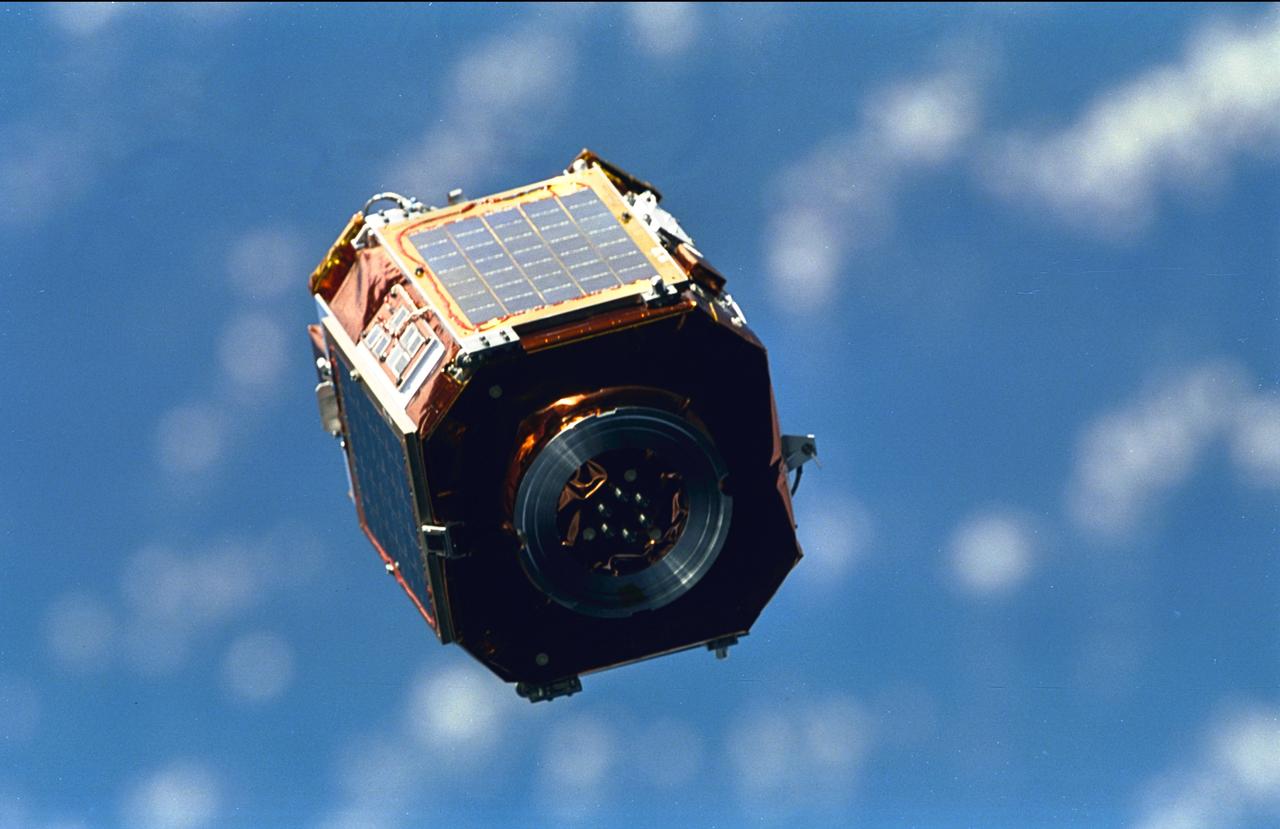
STS088-354-031 (14 Dec. 1998) --- Toward the STS-88 mission's end, the astronauts deployed a small 590-pound satellite called SAC-A for the Argentinean National Committee of Space Activities. Equipped with five technology experiments, SAC-A was ejected from a canister in Endeavour's cargo bay at 10:31 p.m. (CST) as the satellite flew over the northern Indian Ocean. The satellite is expected to remain in orbit from five to nine months sending back data to Argentine researchers on Earth.
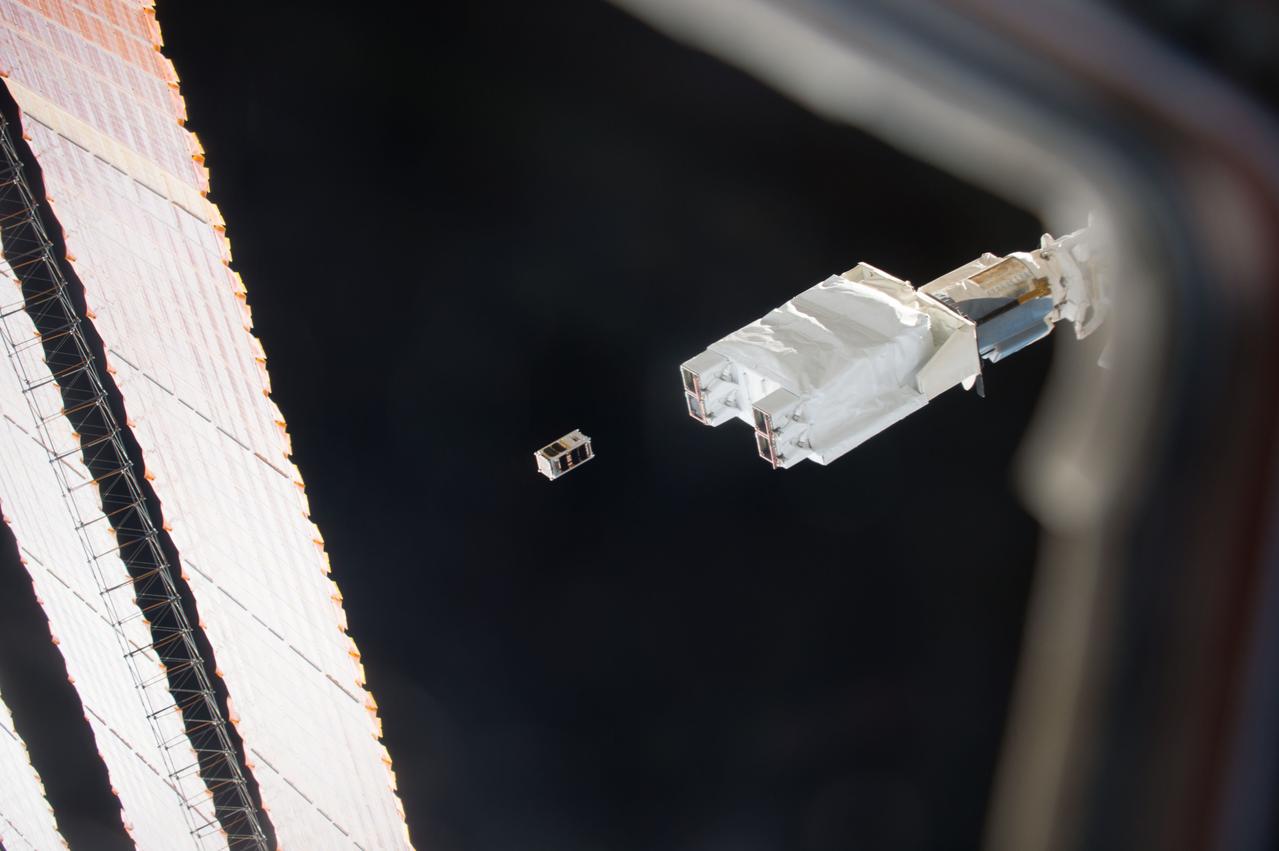
iss050e031525 (1/16/2017) --- Photo documentation of the Japanese-Small Satellite Orbital Deployer-6 (J-SSOD-6) deployment of the AOBA-Velox-3 Cubesat. The AOBA-Velox-3 mission is a joint mission between Nanyang Technological University (NTU), Singapore and the Kyushu Institute of Technology (Kyutech), Japan. This 2-Unit (2U) micro-satellite tests a micro-propulsion system, Pulse Plasma Thruster, PPT designed by NTU, that allows the spacecraft to remain in orbit up to six months.
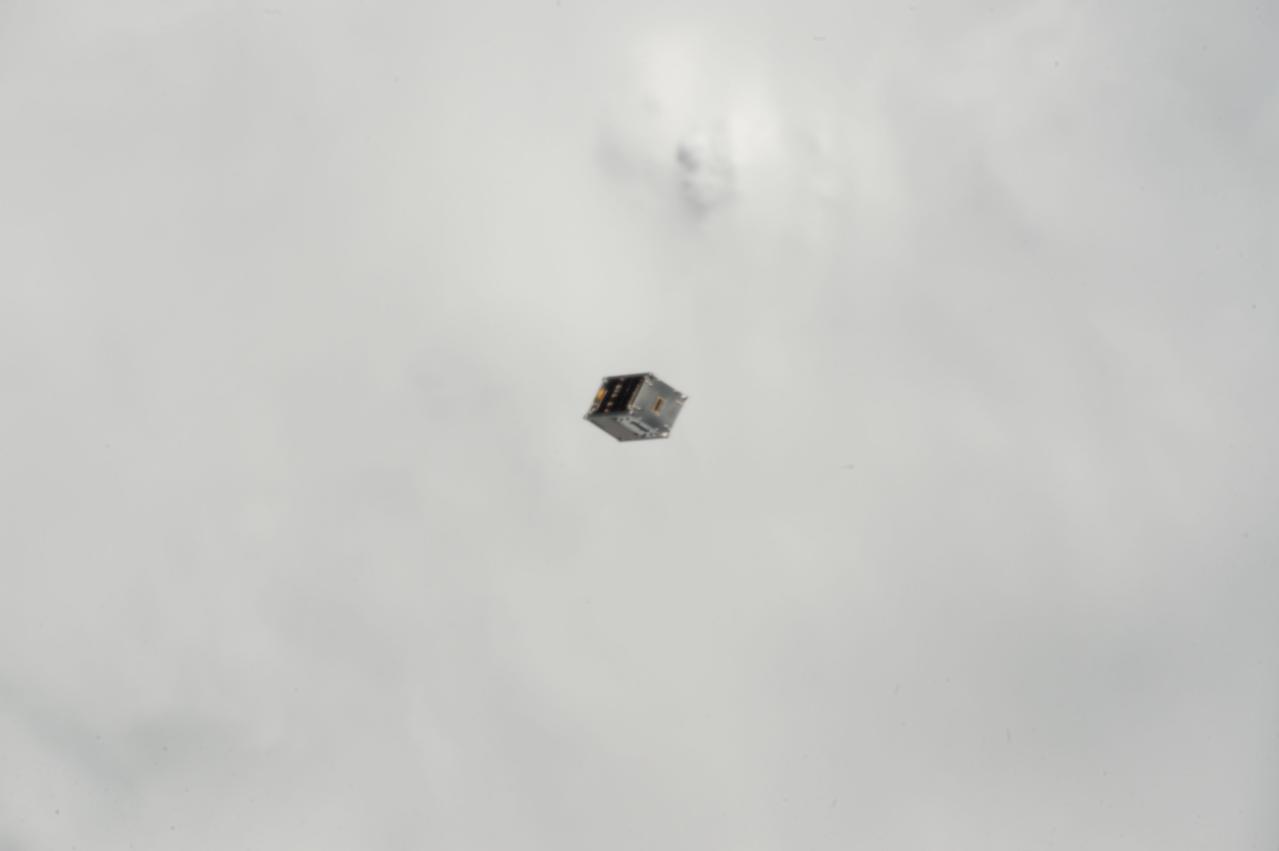
iss050e031566 (1/16/2017) --- Photo documentation of the Japanese-Small Satellite Orbital Deployer-6 (J-SSOD-6) deployment of the AOBA-Velox-3 Cubesat. The AOBA-Velox-3 mission is a joint mission between Nanyang Technological University (NTU), Singapore and the Kyushu Institute of Technology (Kyutech), Japan. This 2-Unit (2U) micro-satellite tests a micro-propulsion system, Pulse Plasma Thruster, PPT designed by NTU, that allows the spacecraft to remain in orbit up to six months.
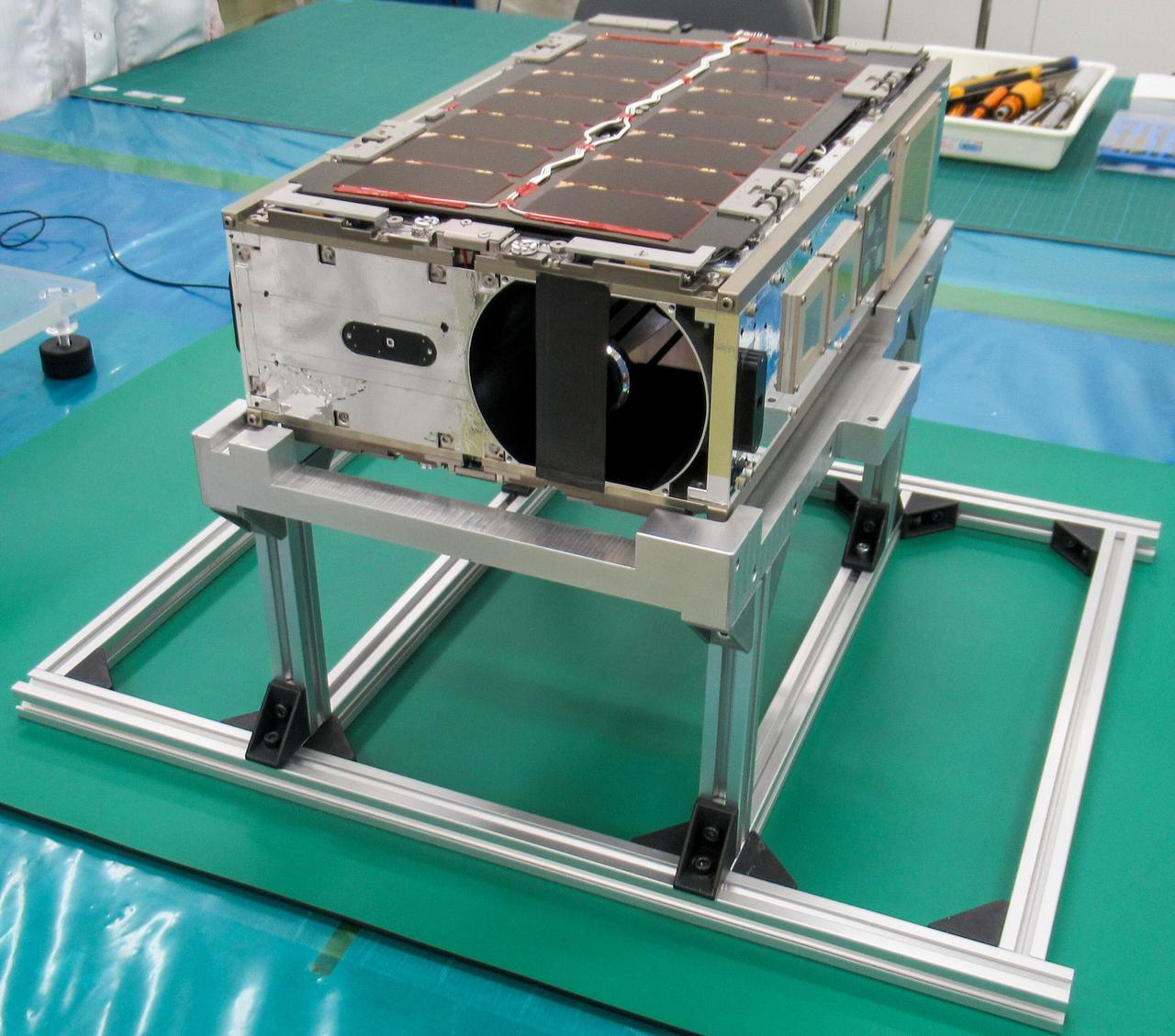
jsc2024e081750 (12/17/2024) --- ONboard Globe-Looking And Imaging Satellite (ONGLAISAT) is a 6U size CubeSat aiming for high signal-to-noise ratio image capture using Time Delay Integration (TDI) technology as its mission. ONGLAISAT is deployed from the International Space Station as part of the JEM Small Satellite Orbital Deployer-30 (J-SSOD-30) CubeSat deployment mission. Image courtesy of Space BD Inc.
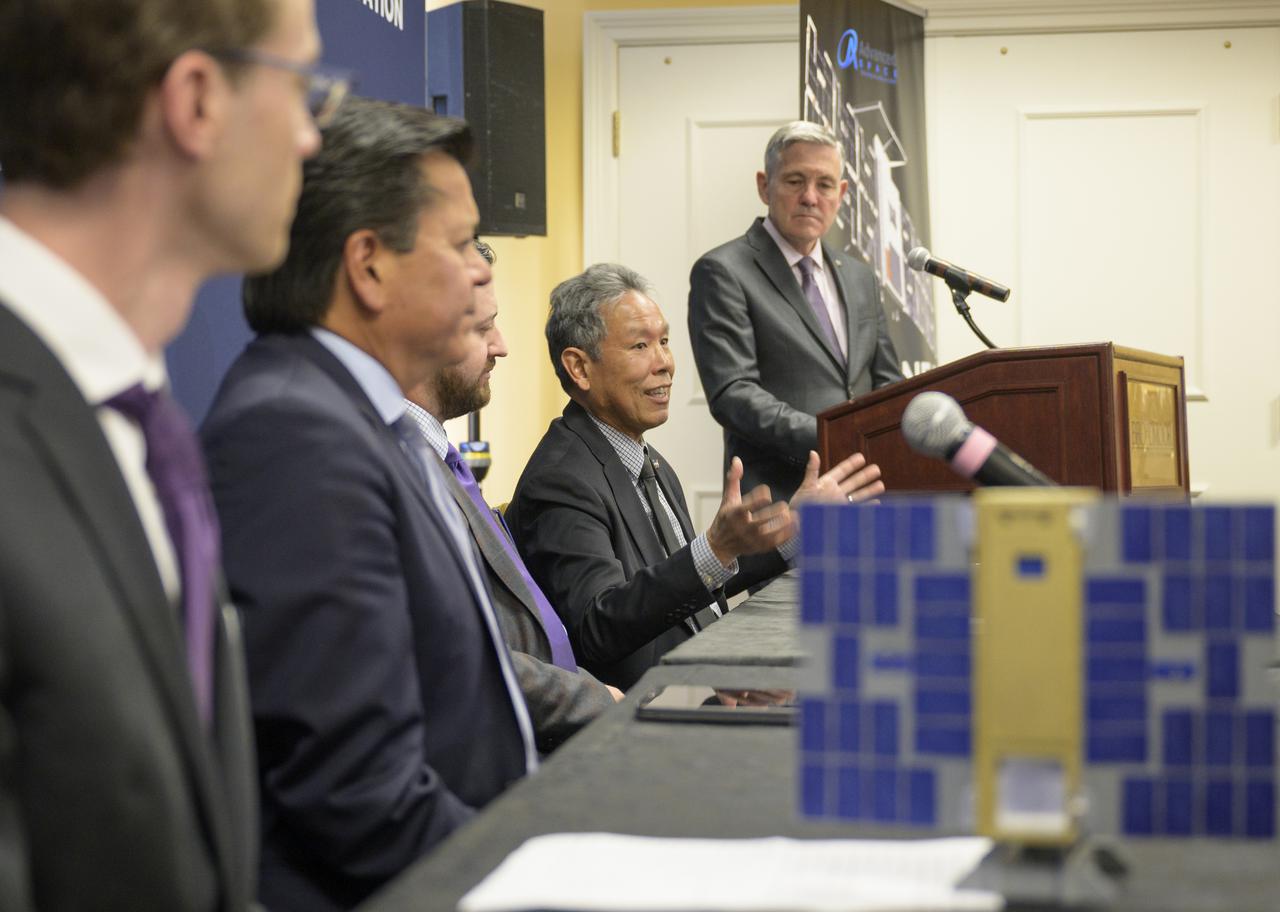
Elwood Agasid, deputy program manager for Small Spacecraft Technology at Ames Research Center and Space Technology Hall of Fame inductee speaks at “Small Satellites, Big Missions: Pathfinding CubeSats Exploring the Moon and Beyond,” a news conference during the 37th Space Symposium, Wednesday, April 6, 2022, in Colorado Springs, Colorado. Photo Credit: (NASA/Bill Ingalls)
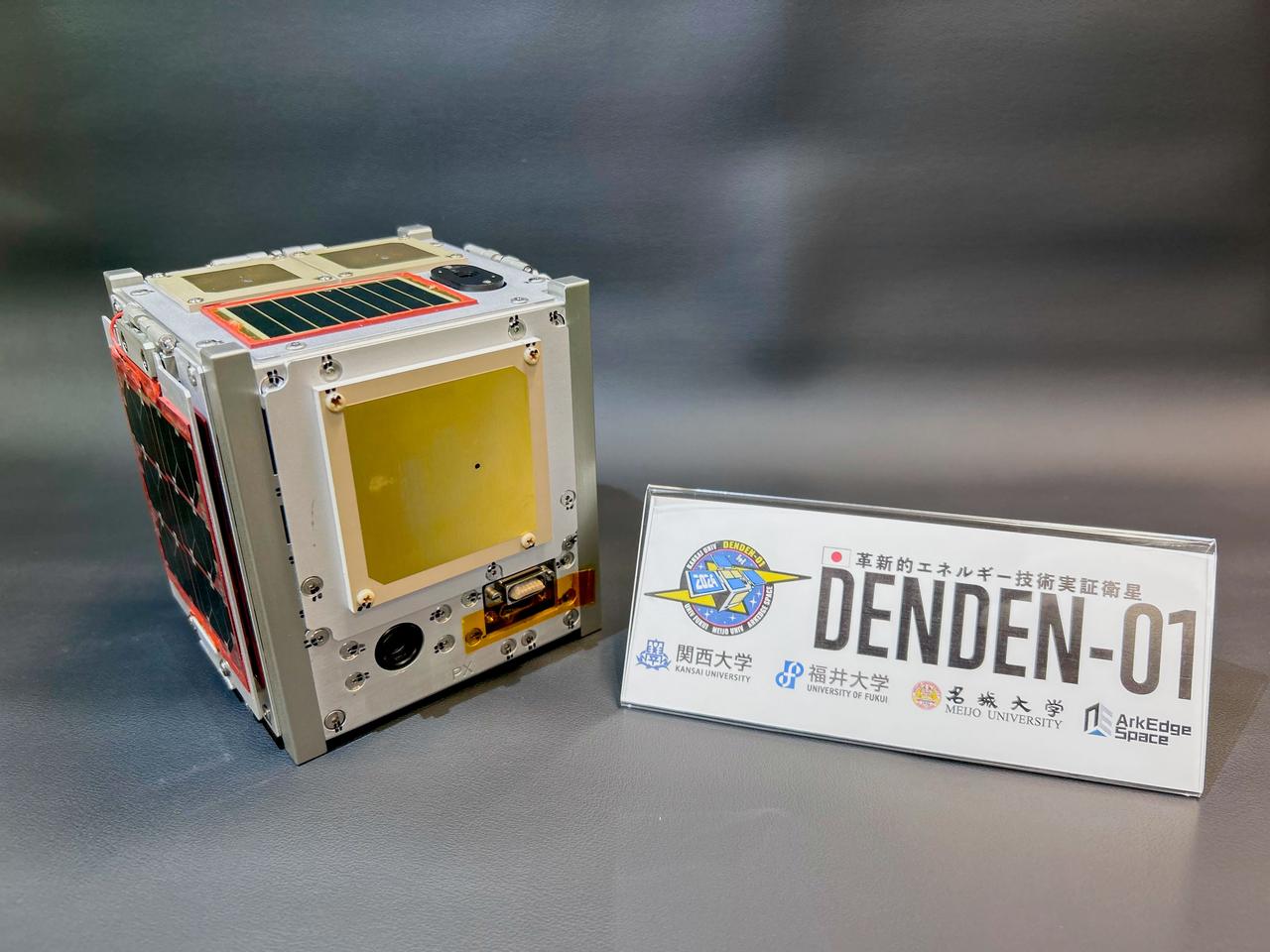
jsc2024e081746 (6/1/2024) --- Preflight imagery of the DENDEN-01 Flight Model, developed by Kansai University in collaboration with University of Fukui, Meijo University, and ArkEdge Space, Inc. DENDEN-01 CubeSat is deployed as part of the JEM Small Satellite Orbital Deployer-30 (J-SSOD-30) CubeSat deployment mission and demonstrates novel power technologies for future nanosatellites, as well as a small hyperspectral camera. Image courtesy of Kansai University.

Elwood Agasid, deputy program manager for Small Spacecraft Technology at Ames Research Center and Space Technology Hall of Fame inductee speaks at “Small Satellites, Big Missions: Pathfinding CubeSats Exploring the Moon and Beyond,” a news conference during the 37th Space Symposium, Wednesday, April 6, 2022, in Colorado Springs, Colorado. Photo Credit: (NASA/Bill Ingalls)
![iss057e006069 (10/6/2018) --- Documentation of two deployed Japan Aerospace Exploration Agency (JAXA) CubeSats, STARS-Me and RSP-00, during the JEM [Japanese Experiment Module]-Small Satellite Orbital Deployer 10 (J-SSOD 10) mission. Earth is in the background.](https://images-assets.nasa.gov/image/iss057e006069/iss057e006069~medium.jpg)
iss057e006069 (10/6/2018) --- Documentation of two deployed Japan Aerospace Exploration Agency (JAXA) CubeSats, STARS-Me and RSP-00, during the JEM [Japanese Experiment Module]-Small Satellite Orbital Deployer 10 (J-SSOD 10) mission. Earth is in the background.

CAPE CANAVERAL, Fla. – Theresa Overcash shows elements of a prototype of the StangSat at Kennedy Space Center to Grace Johnson. The satellite is a small cube measuring 10 inches on all sides and will be launched on a rocket that will carry it on a suborbital mission in Mojave, Calif. Photo credit: NASA_ Kim Shiflett
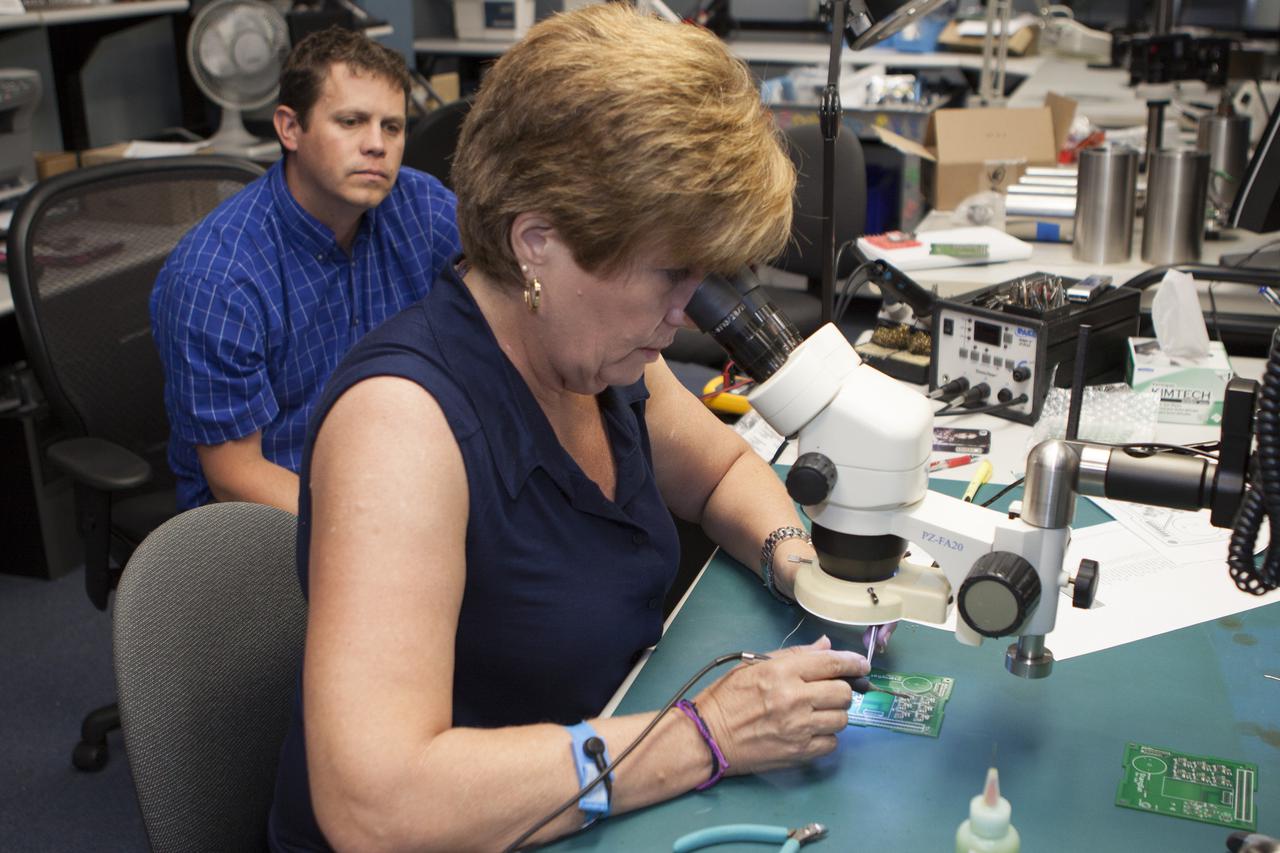
CAPE CANAVERAL, Fla. – Theresa Overcash works with elements of a prototype of the StangSat at Kennedy Space Center before final assembly as Shaun Daly looks on. The satellite is a small cube measuring 10 inches on all sides and will be launched on a rocket that will carry it on a suborbital mission in Mojave, Calif. Photo credit: NASA_Kim Shiflett
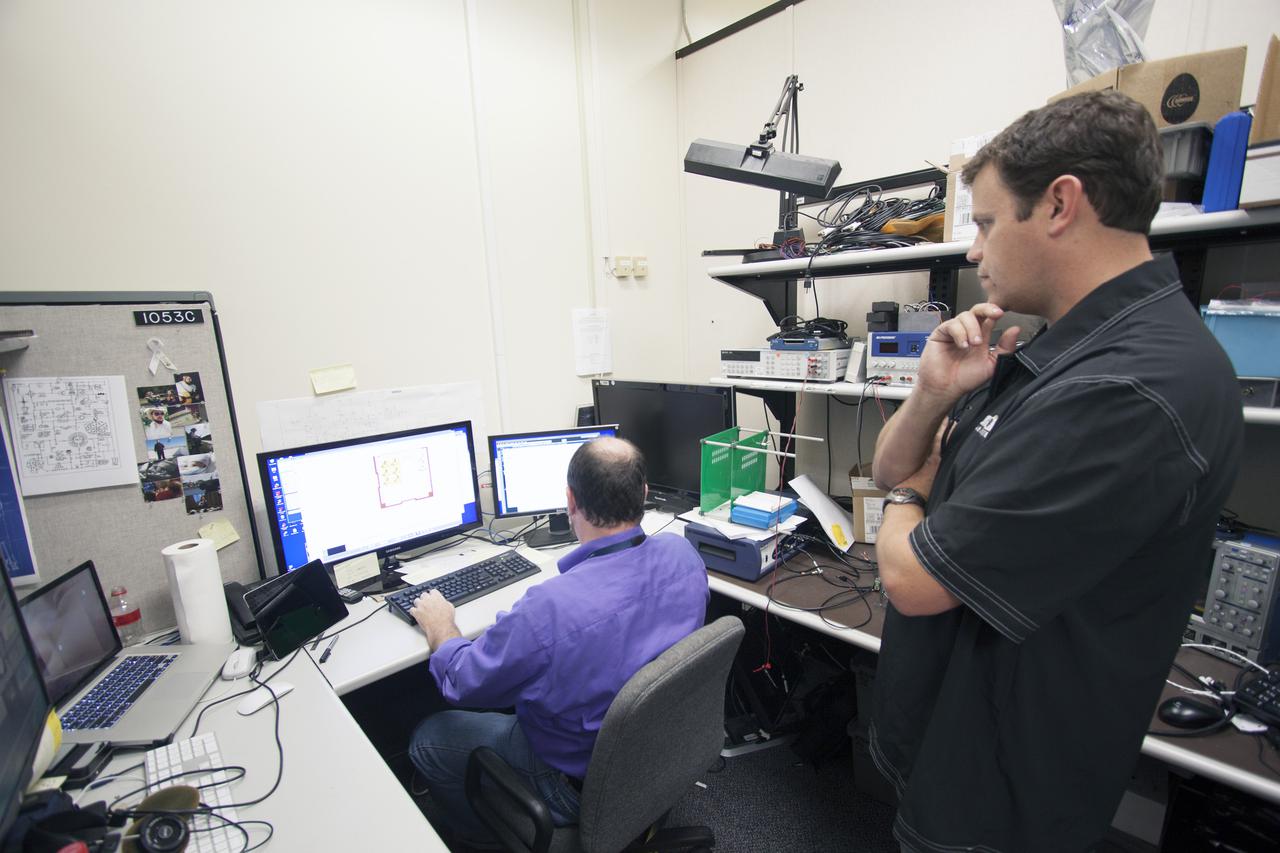
CAPE CANAVERAL, Fla. – Shaun Daly, right, and Robert Olsen test elements of a prototype of the StangSat at Kennedy Space Center before final assembly. The satellite is a small cube measuring 10 inches on all sides and will be launched on a rocket that will carry it on a suborbital mission in Mojave, Calif. Photo credit: NASA_Jim Grossmann

Bradley Cheetham (CEO) or Tom Gardner (Director of Engineering), Advanced Space speaks at “Small Satellites, Big Missions: Pathfinding CubeSats Exploring the Moon and Beyond,” a news conference during the 37th Space Symposium, Wednesday, April 6, 2022, in Colorado Springs, Colorado. Photo Credit: (NASA/Bill Ingalls)
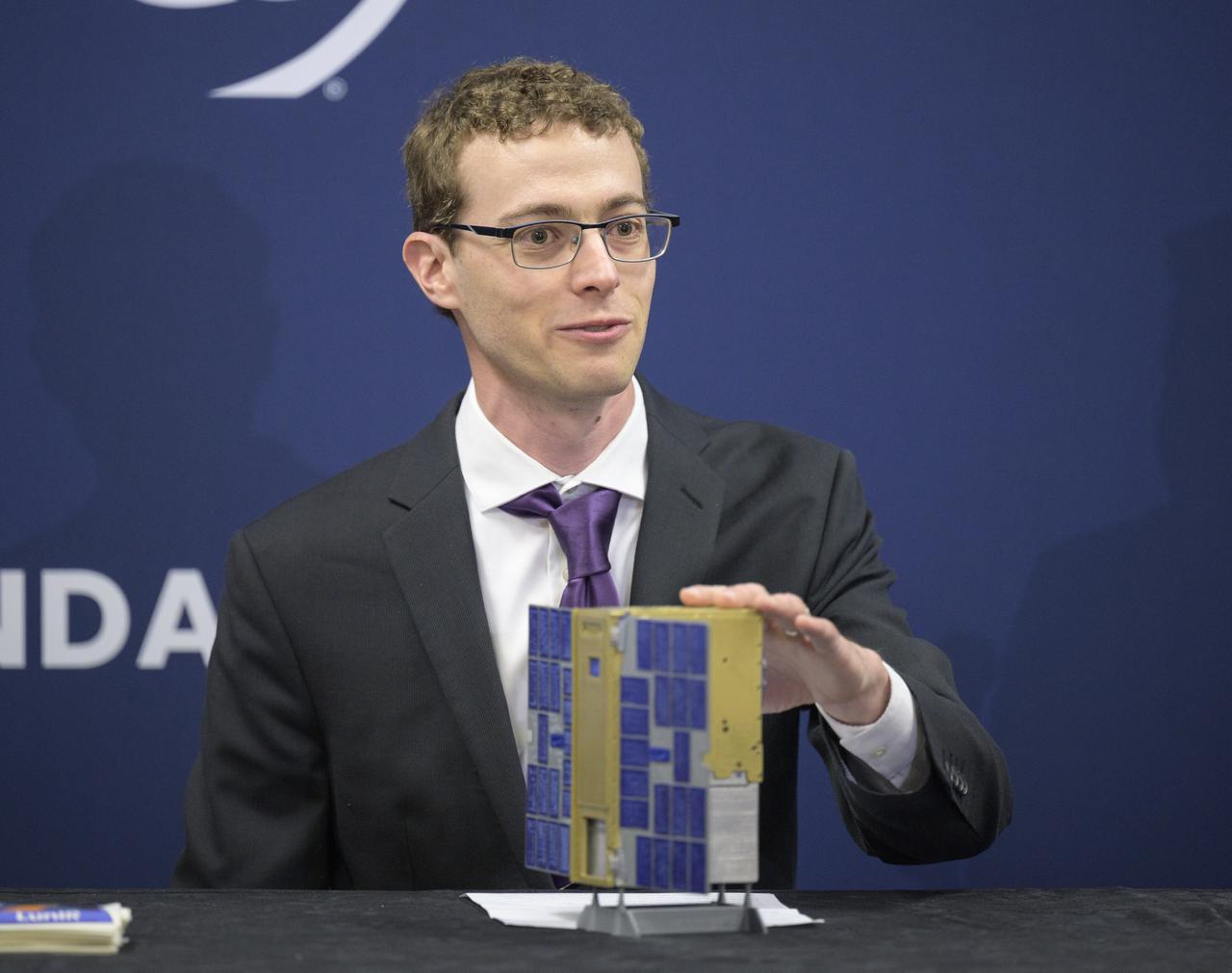
Joe Shoer, Lockheed Martin speaks at “Small Satellites, Big Missions: Pathfinding CubeSats Exploring the Moon and Beyond,” a news conference during the 37th Space Symposium, Wednesday, April 6, 2022, in Colorado Springs, Colorado. Photo Credit: (NASA/Bill Ingalls)

NASA Associate Administrator Bob Cabana speaks at “Small Satellites, Big Missions: Pathfinding CubeSats Exploring the Moon and Beyond,” a news conference during the 37th Space Symposium, Wednesday, April 6, 2022, in Colorado Springs, Colorado. Photo Credit: (NASA/Bill Ingalls)
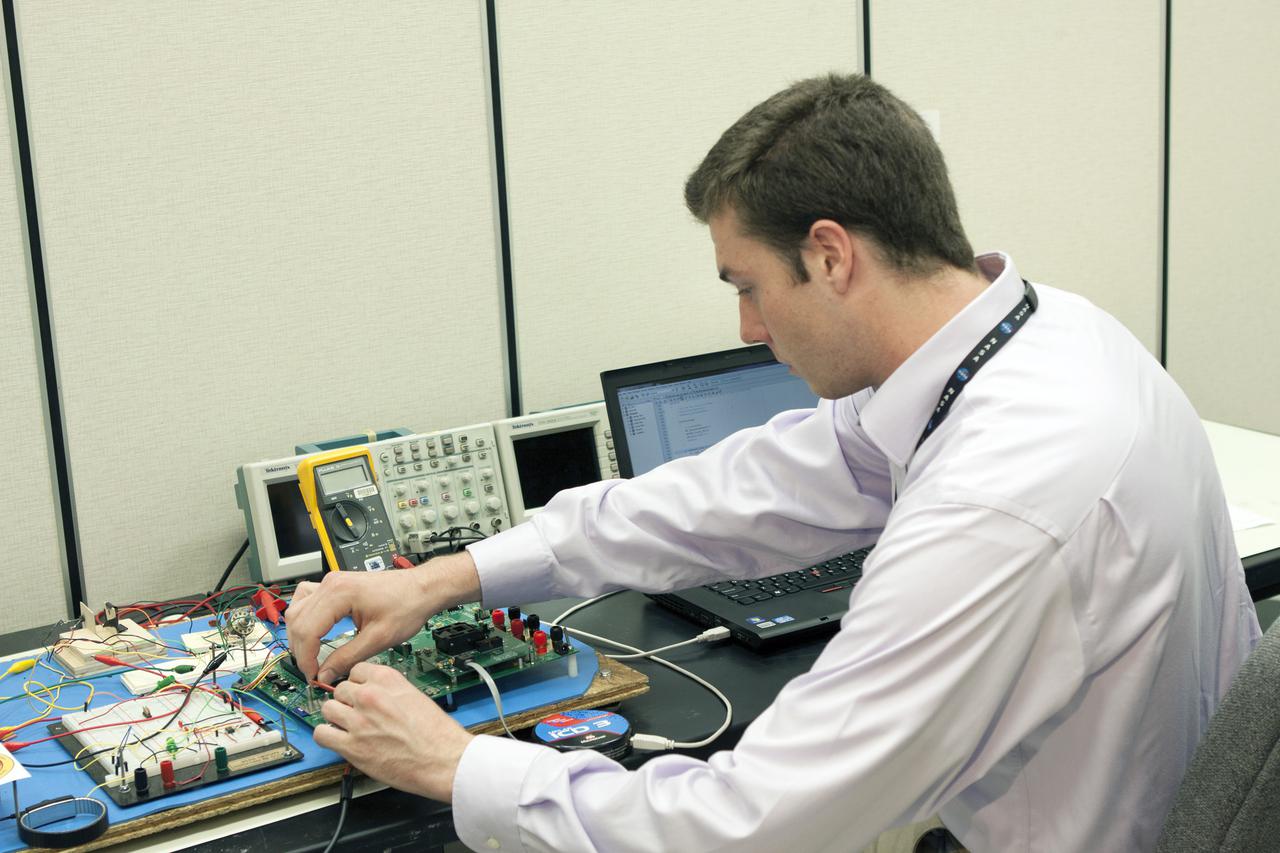
CAPE CANAVERAL, Fla. – Benjamin Plotner, an engineering intern, tests elements of a prototype of the StangSat at Kennedy Space Center before final assembly. The satellite is a small cube measuring 10 inches on all sides and will be launched on a rocket that will carry it on a suborbital mission in Mojave, Calif. Photo credit: NASA_Jim Grossmann

NASA Associate Administrator Bob Cabana speaks at “Small Satellites, Big Missions: Pathfinding CubeSats Exploring the Moon and Beyond,” a news conference during the 37th Space Symposium, Wednesday, April 6, 2022, in Colorado Springs, Colorado. Photo Credit: (NASA/Bill Ingalls)
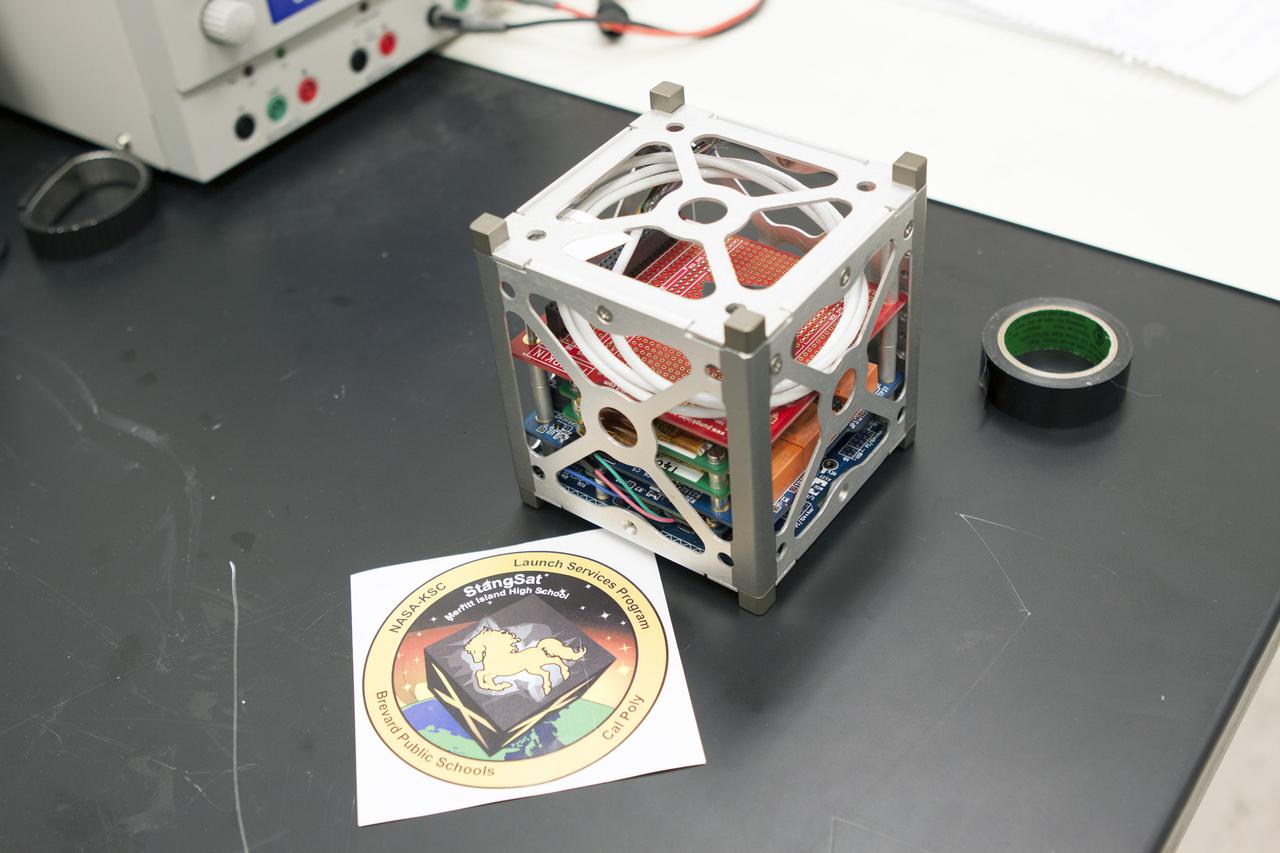
CAPE CANAVERAL, Fla. – A prototype of the StangSat undergoes testing at Kennedy Space Center before final assembly. The satellite is a small cube measuring 10 inches on all sides and will be launched on a rocket that will carry it on a suborbital mission in Mojave, Calif. Photo credit: NASA_Jim Grossmann
![iss057e006099 (10/6/2018) --- Documentation of two deployed Japan Aerospace Exploration Agency (JAXA) CubeSats, STARS-Me and RSP-00, during the JEM [Japanese Experiment Module]-Small Satellite Orbital Deployer 10 (J-SSOD 10) mission. Earth is in the background.](https://images-assets.nasa.gov/image/iss057e006099/iss057e006099~medium.jpg)
iss057e006099 (10/6/2018) --- Documentation of two deployed Japan Aerospace Exploration Agency (JAXA) CubeSats, STARS-Me and RSP-00, during the JEM [Japanese Experiment Module]-Small Satellite Orbital Deployer 10 (J-SSOD 10) mission. Earth is in the background.
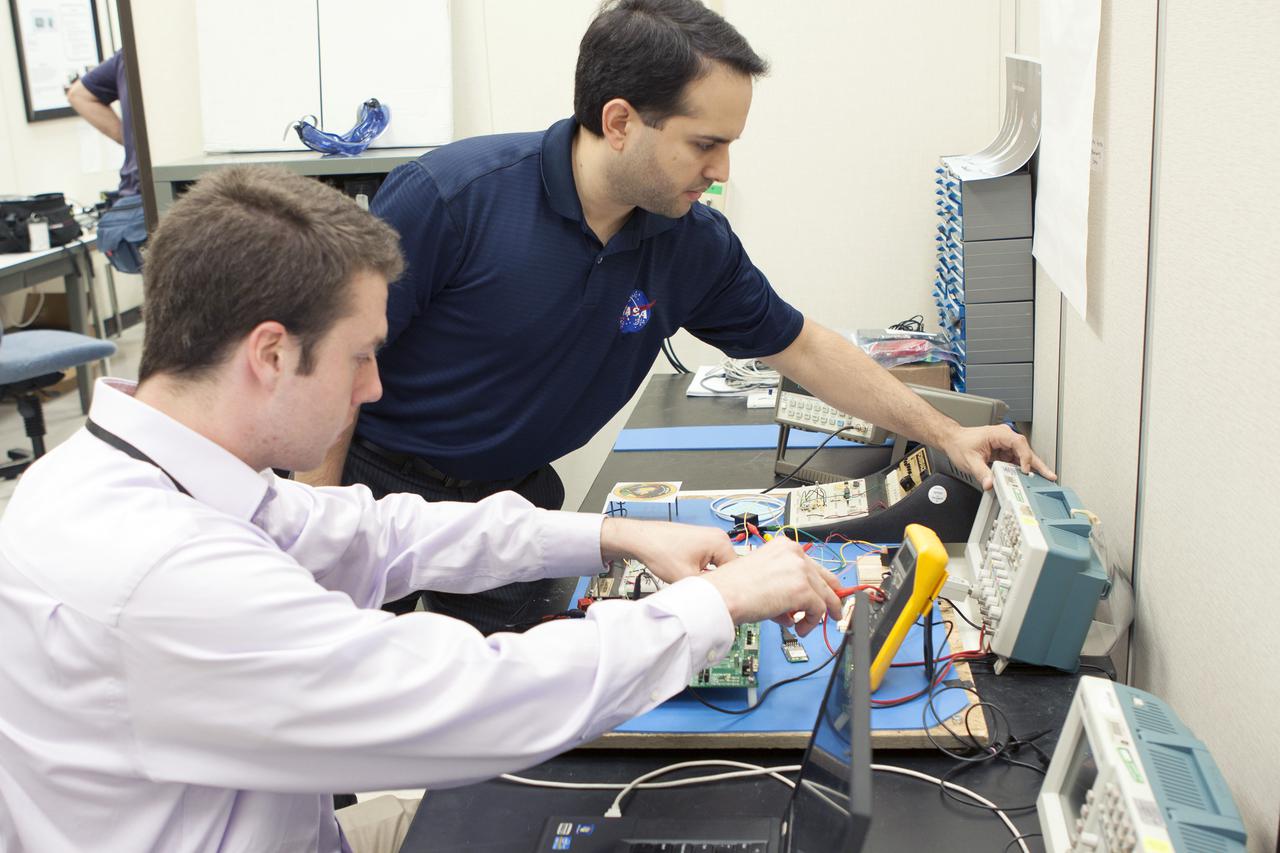
CAPE CANAVERAL, Fla. – Benjamin Plotner, an engineering intern, and Kelvin Ruiz test elements of a prototype of the StangSat at Kennedy Space Center before final assembly. The satellite is a small cube measuring 10 inches on all sides and will be launched on a rocket that will carry it on a suborbital mission in Mojave, Calif. Photo credit: NASA_Jim Grossmann

NASA Associate Administrator Bob Cabana speaks at “Small Satellites, Big Missions: Pathfinding CubeSats Exploring the Moon and Beyond,” a news conference during the 37th Space Symposium, Wednesday, April 6, 2022, in Colorado Springs, Colorado. Photo Credit: (NASA/Bill Ingalls)
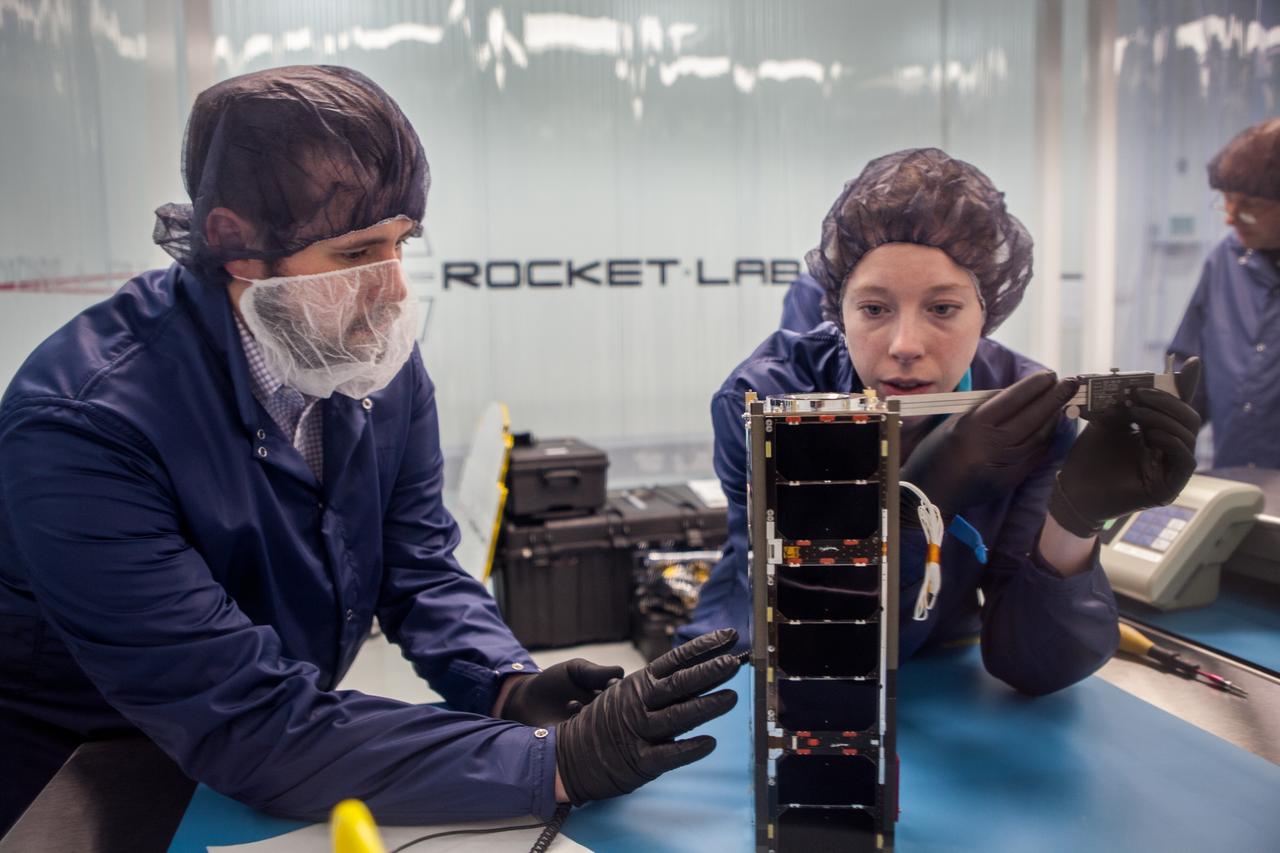
A host of CubeSats, or small satellites, are undergoing the final stages of processing at Rocket Lab USA’s facility in Huntington Beach, California, for NASA’s first mission dedicated solely to spacecraft of their size. This will be the first launch under the agency’s new Venture Class Launch Services. Scientists, including those from NASA and various universities, began arriving at the facility in early April with spacecraft small enough to be a carry-on to be prepared for launch. A team from NASA’s Goddard Spaceflight Center in Greenbelt, Maryland, completed final checkouts of a CubeSat called the Compact Radiation Belt Explorer (CeREs), before placing the satellite into a dispenser to hold the spacecraft during launch inside the payload fairing. Among its missions, the satellite will examine the radiation belt and how electrons are energized and lost, particularly during events called microbursts — when sudden swarms of electrons stream into the atmosphere. This facility is the final stop for designers and builders of the CubeSats, but the journey will continue for the spacecraft. Rocket Lab will soon ship the satellites to New Zealand for launch aboard the company’s Electron orbital rocket on the Mahia Peninsula this summer. The CubeSats will be flown on an Educational Launch of Nanosatellites (ELaNa) mission to space through NASA’s CubeSat Launch Initiative. CeREs is one of the 10 ELaNa CubeSats scheduled to be a part of this mission.
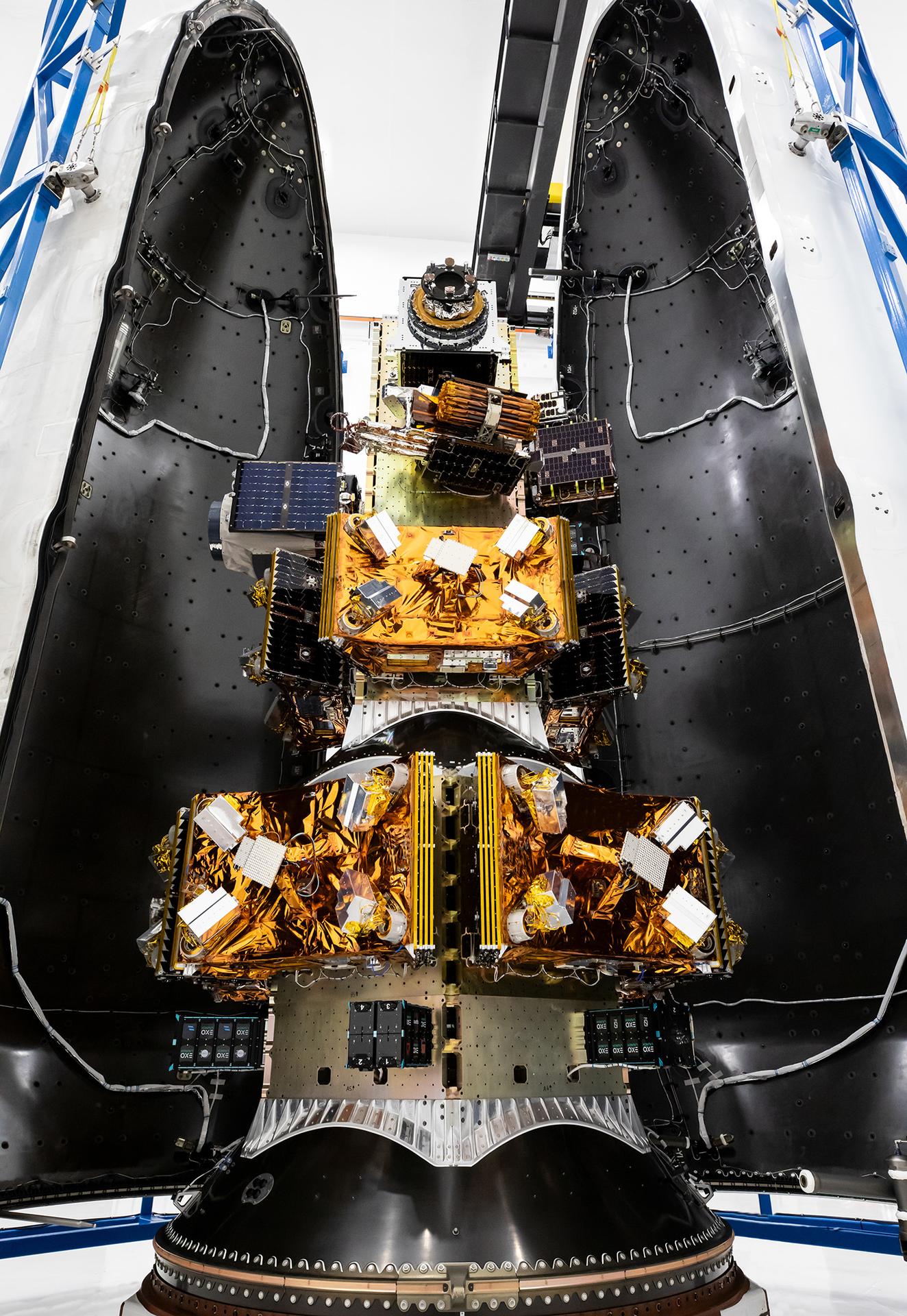
Teams prepare to encapsulate in early January 2026 NASA’s Pandora small satellite, and NASA-sponsored Star-Planet Activity Research CubeSat (SPARCS), and Black Hole Coded Aperture Telescope (BlackCAT) CubeSat, inside a SpaceX Falcon 9 payload fairing along with several other satellites at Vandenberg Space Force Base in California, as part of the company’s Twilight mission. Pandora will provide an in-depth study of at least 20 known planets orbiting distant stars to determine the composition of their atmospheres — especially the presence of hazes, clouds, and water.
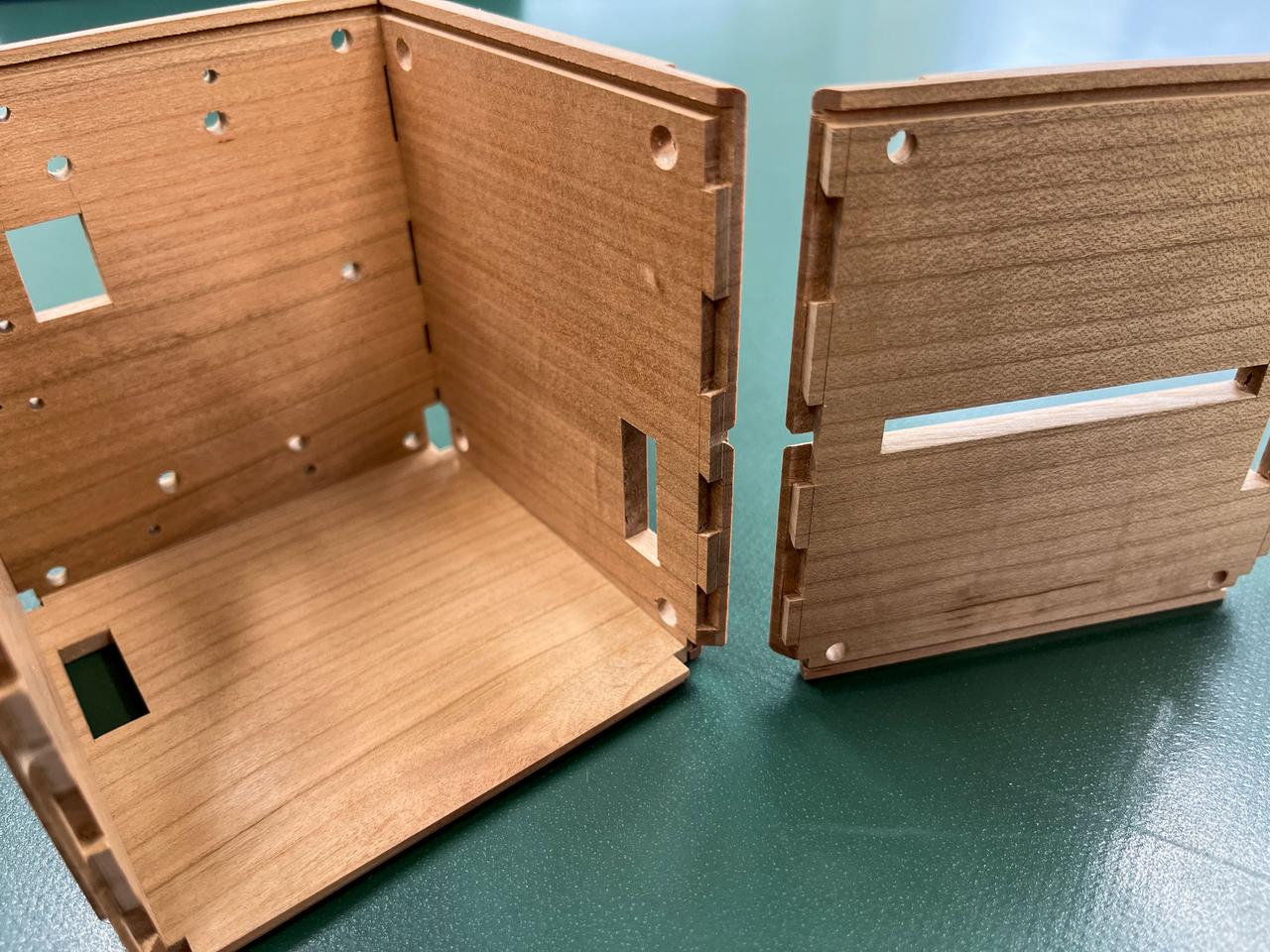
jsc2024e081748 (3/18/2023) --- The traditional Japanese wooden joint method called “Blind Miter Dovetail Joint” is used for the LignoSat to connect two wooden panels without using glue or nails. LignoSat is the world’s first wooden satellite to demonstrate whether wood can be used in space and is deployed as part of the JEM Small Satellite Orbital Deployer-30 (J-SSOD-30) CubeSat deployment mission. Image courtesy of Kyoto University.
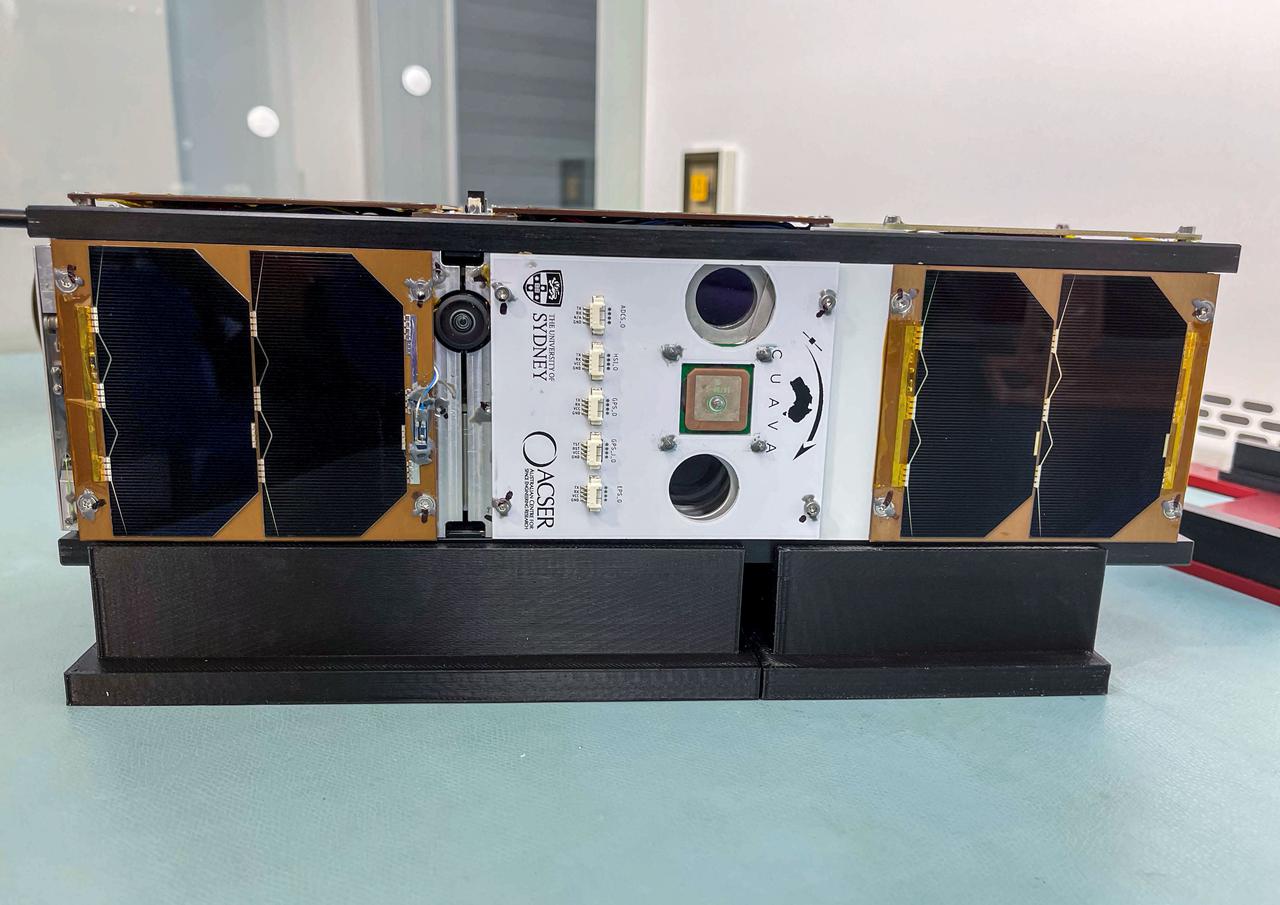
jsc2021e052206 (11/3/2021) --- A preflight view of a Pathfinder Satellite for Remote Sensing and Earth Observation (CUAVA-1) CubeSat about to undergo thermal vacuum testing at the Australian Research Council Industrial Transformation Training Centre (AITC). The CUAVA-1 investigation is part of the JEM (Japanese Experiment Module) Small Satellite Orbital Deployer-19 (J-SSOD-19) mission. Image Credit: CUAVA.
![jsc2024e043926 (7/10/2024) --- Overall image of the SAKURA Flight Module. SAKURA is a 1U CubeSat, developed in the Growing Advanced and Refined space Development ENgineering succession and under the satellite (GARDENs) program by the Chiba Institute of Technology, and will deploy on the JEM [Japanese Experiment Module]-Small Satellite Orbital Deployer-31 (J-SSOD-31) mission.](https://images-assets.nasa.gov/image/jsc2024e043926/jsc2024e043926~medium.jpg)
jsc2024e043926 (7/10/2024) --- Overall image of the SAKURA Flight Module. SAKURA is a 1U CubeSat, developed in the Growing Advanced and Refined space Development ENgineering succession and under the satellite (GARDENs) program by the Chiba Institute of Technology, and will deploy on the JEM [Japanese Experiment Module]-Small Satellite Orbital Deployer-31 (J-SSOD-31) mission.
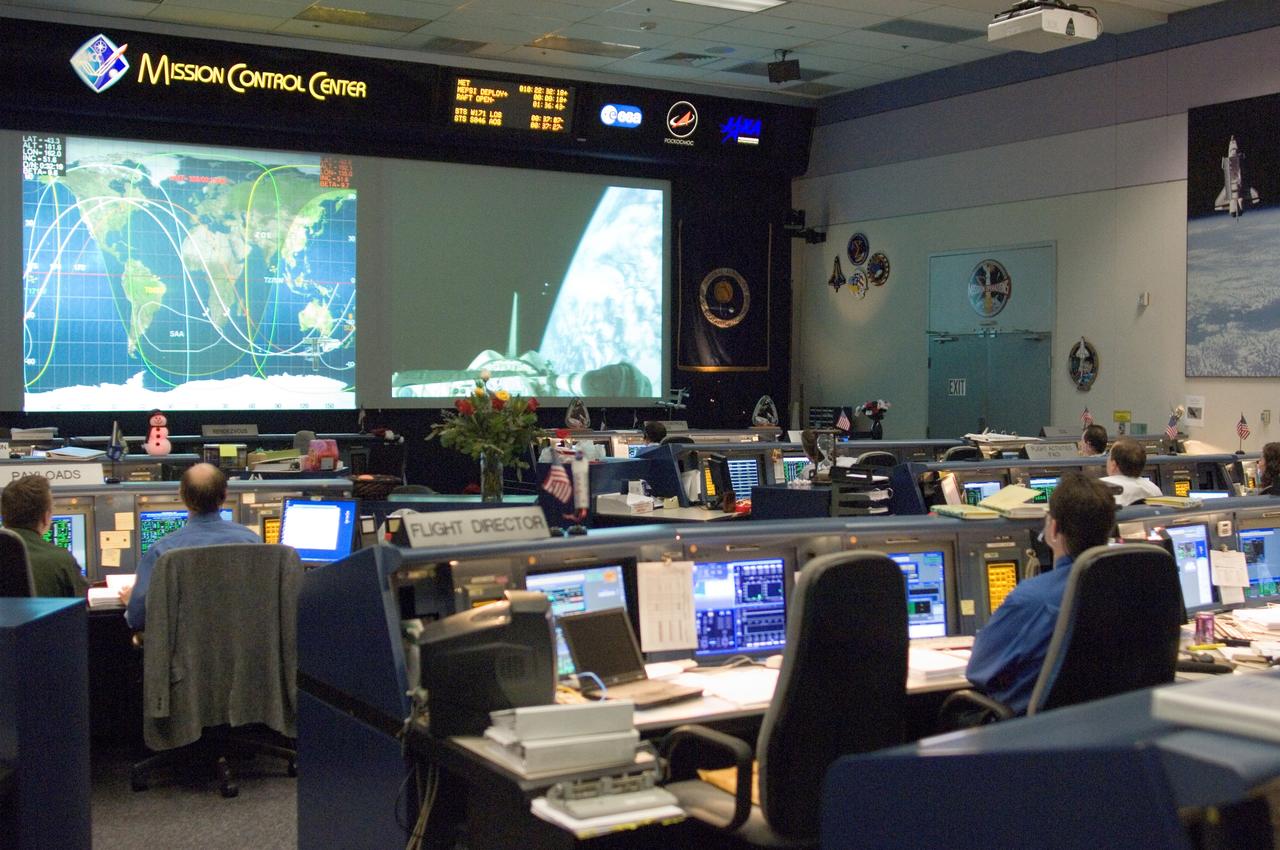
JSC2006-E-54711 (21 Dec. 2006) --- Overall view of the Shuttle Flight Control Room in the Johnson Space Center's Mission Control Center during the final deployment of some small satellites from Space Shuttle Discovery's cargo bay. On a screen in the front of the control room, a Department of Defense pico-satellite known as Atmospheric Neutral Density Experiment (ANDE) is released from the shuttle's payload bay by STS-116 crewmembers and viewed via live television on the ground.
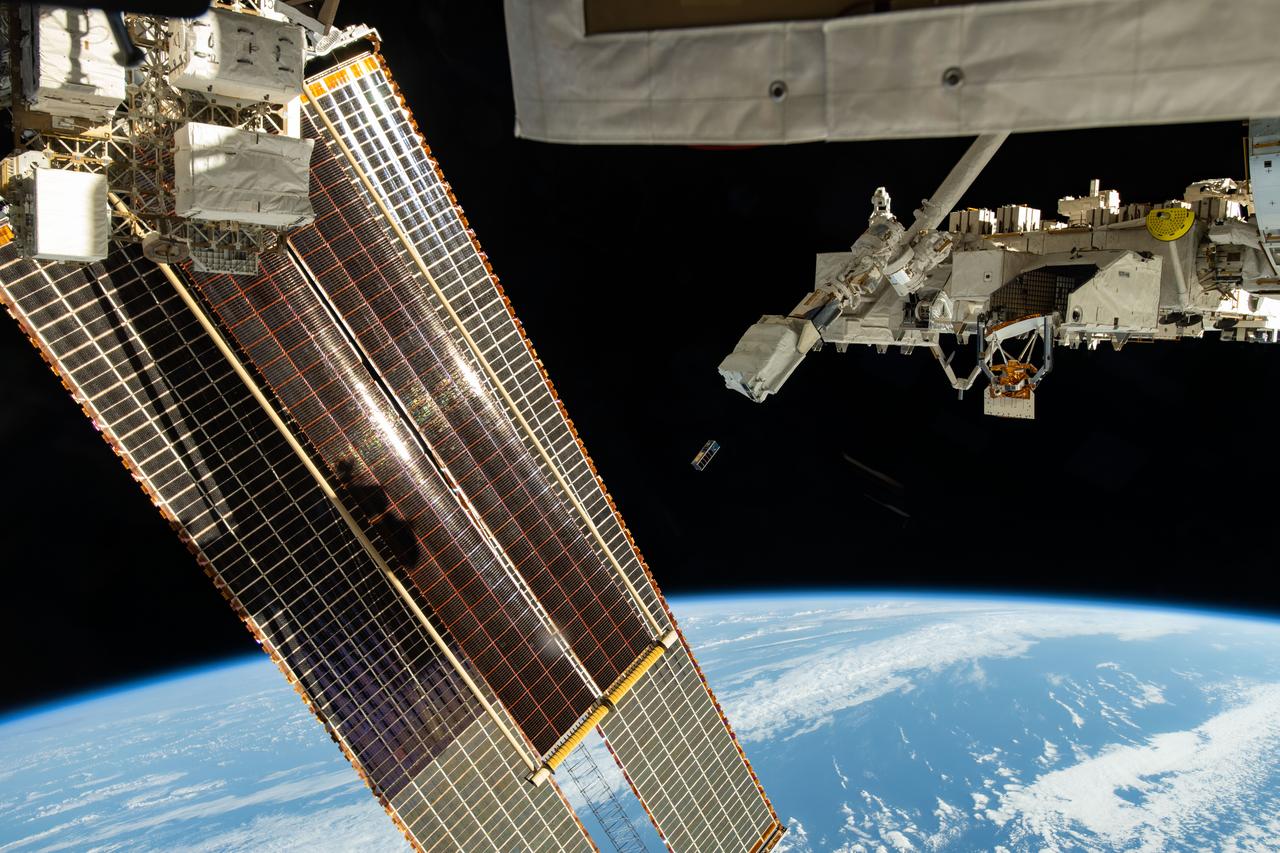
iss071e006845 (4/10/2024) --- View of the Japanese Experiment Module (JEM) Small Satellite Orbital Deployer-28 (J-SSOD-28) attached to the JEM Remote Manipulator System on the JEM Exposed Facility with the CURTIS experiment inside the deployer during Expedition 71. CURTIS is a 3U size satellite created through joint research between Panasonic HD and Kyutech. CURTIS carries out four different mission objectives to demonstrate technologies that can be used in future CubeSats.
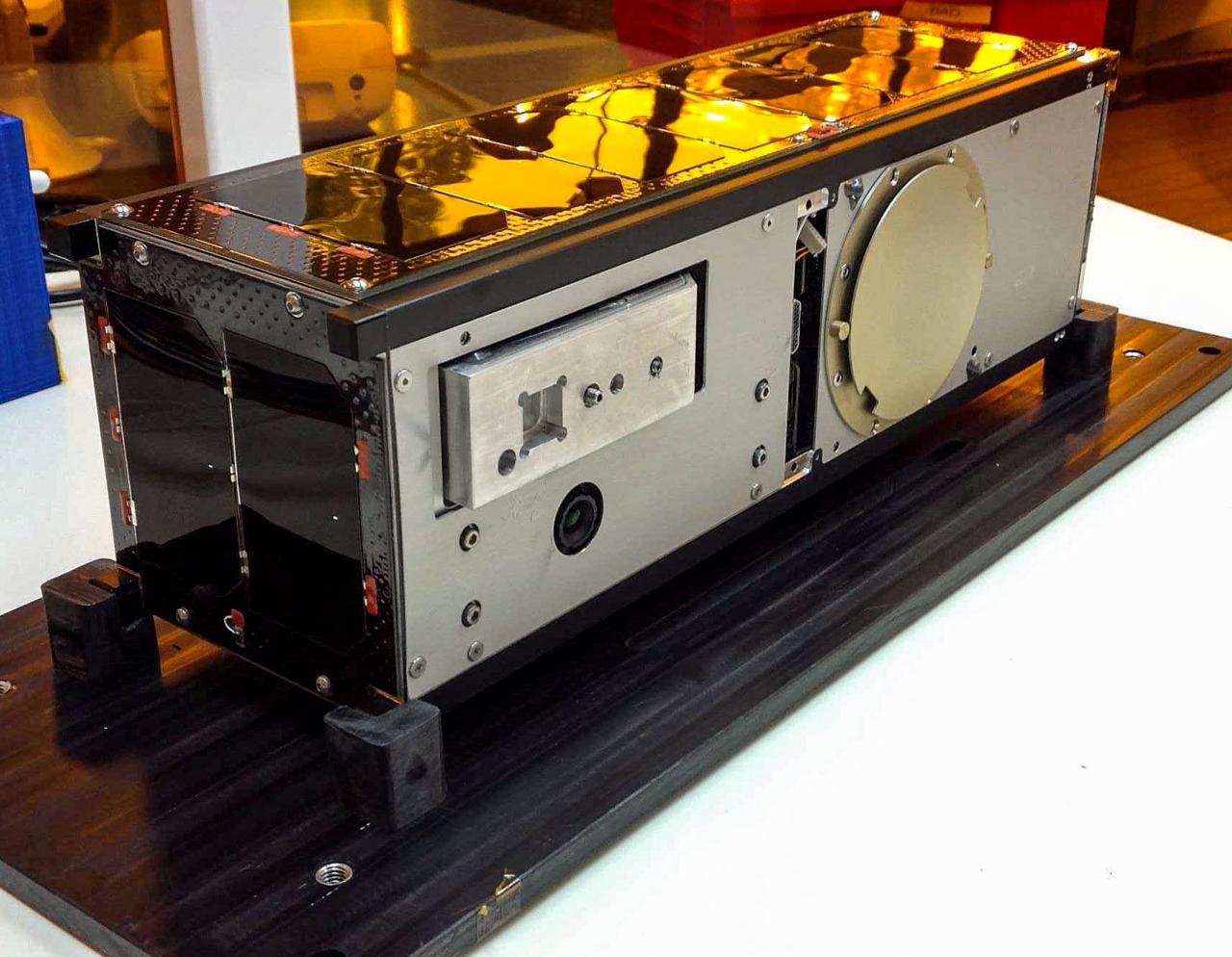
jsc2020e026629 (9/30/2019) --- Preflight imagery of the UGA-SPOC-Spectral Ocean Color Satellite before leaving the University of Georgia Small Satellite Research Laboratory for environmental testing. SPOC (Spectral Ocean Color) is a 3U CubeSat built by students at the University of Georgia. The primary mission objective is to develop and operate the first moderate resolution coastal ecosystem and ocean color CubeSat with a focus on Earth science applications.
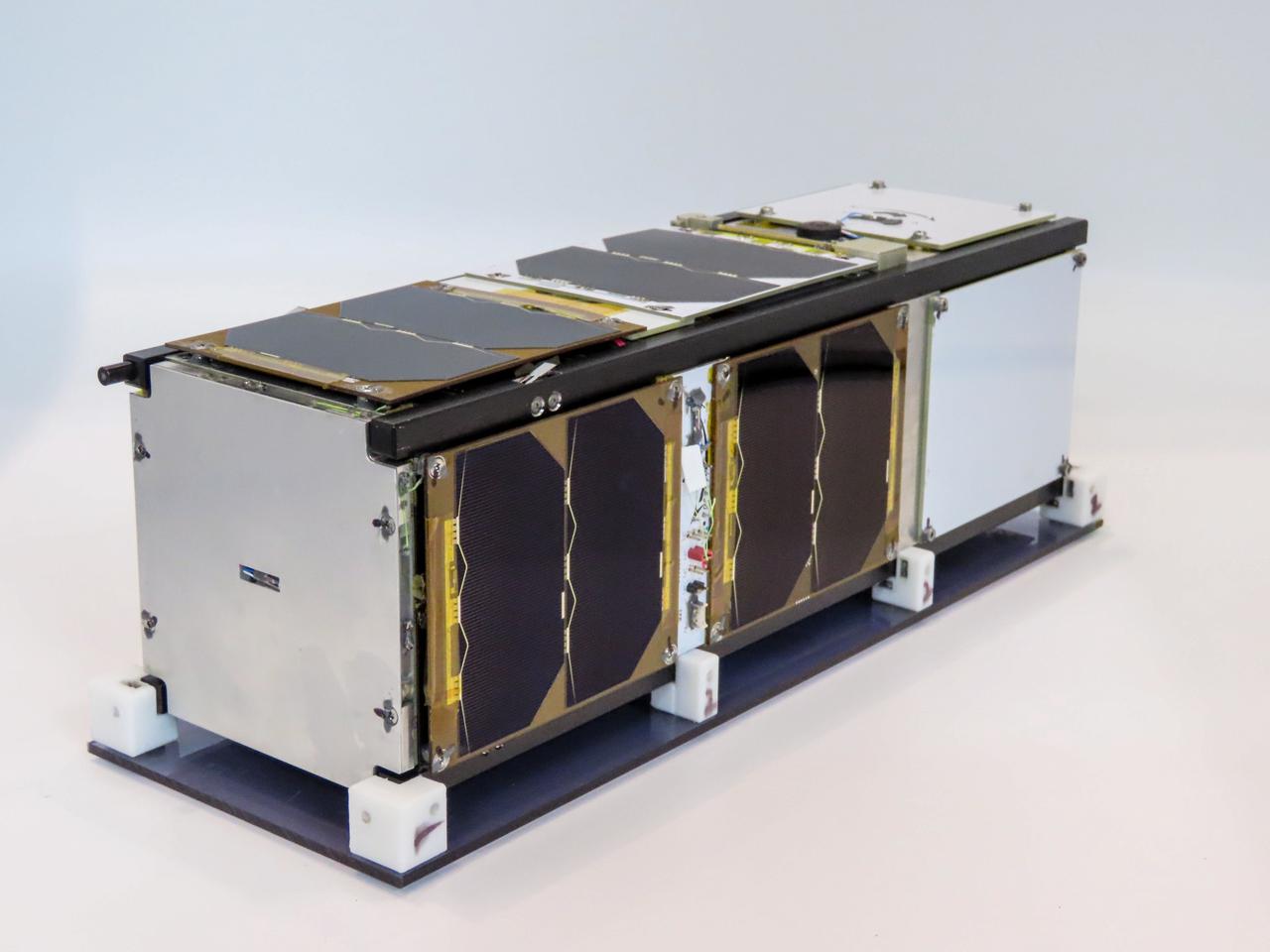
jsc2021e052204 (5/19/2021) --- A preflight view of a Pathfinder Satellite for Remote Sensing and Earth Observation (CUAVA-1) about to undergo thermal vacuum testing at the Australian Research Council Industrial Transformation Training Centre (AITC). The CUAVA-1 investigation is part of the JEM (Japanese Experiment Module) Small Satellite Orbital Deployer-19 (J-SSOD-19) mission. Image Credit: CUAVA.
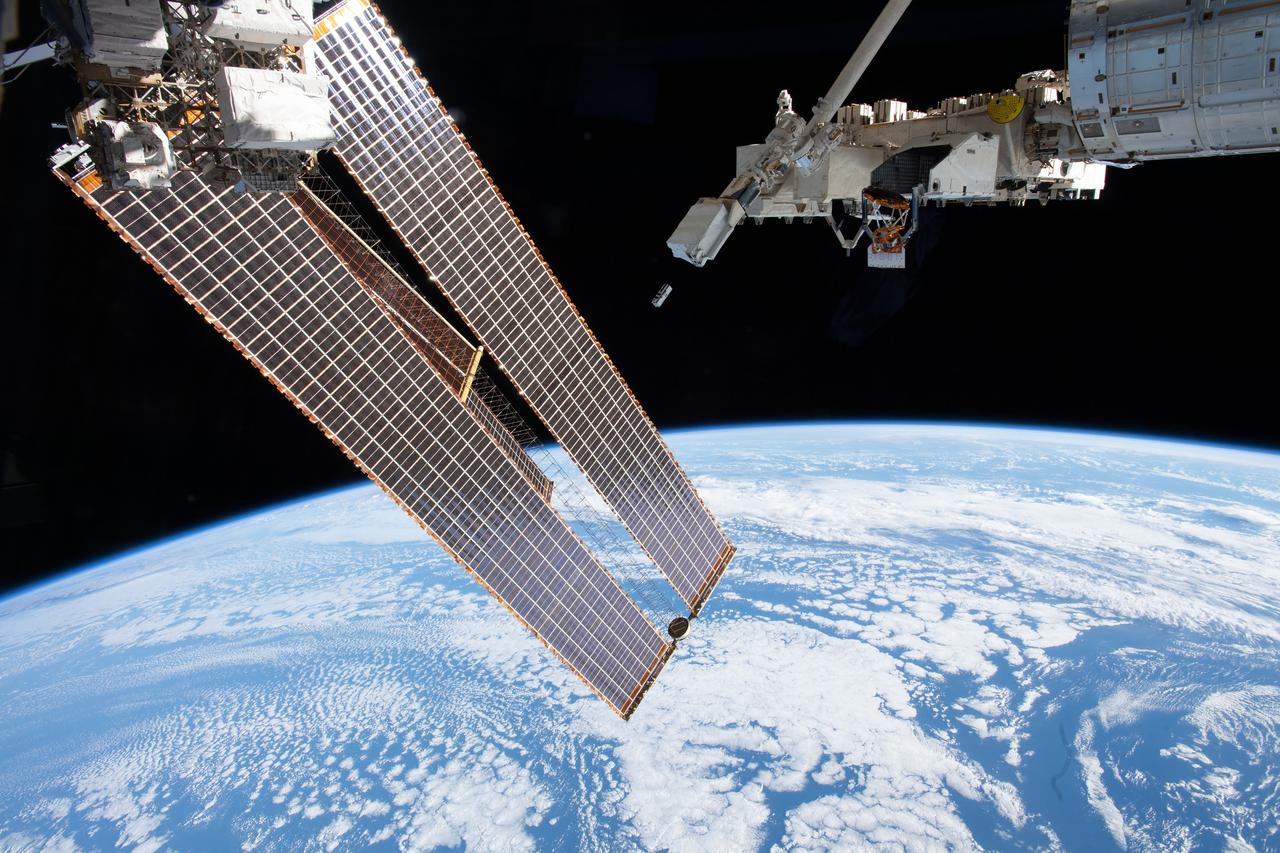
iss066e135088 (2/3/2022) --- A view of the deployed Light-1 CubeSat. The Light-1 CubeSat focuses on the detection of Terrestrial Gamma-ray Flashes (TGFs) coming from the Earth’s atmosphere. This feat is achieved by utilizing two detectors that are integrated onboard a compact 3-Unit (3U) satellite bus, proving to be extremely efficient in terms of cost, manufacturing and assembly time. Light-1 is deployed as a part of the JEM Small Satellite Orbital Deployer-20 (J-SSOD-20) micro-satellite deployment mission, and launches to the International Space Station aboard the SpaceX-24 Dragon Cargo Vehicle.
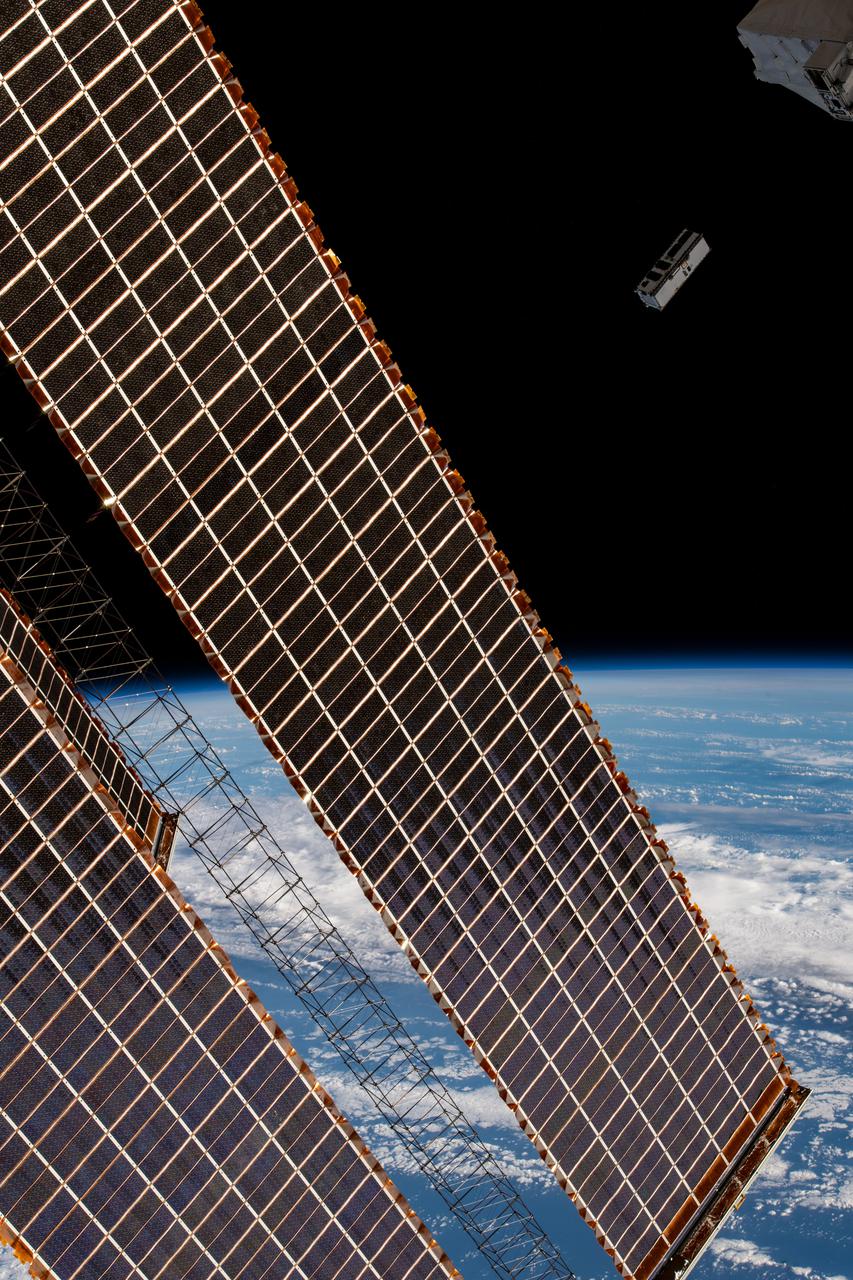
iss066e135521 (2/3/2022) --- A view of the deployed Light-1 CubeSat. The Light-1 CubeSat focuses on the detection of Terrestrial Gamma-ray Flashes (TGFs) coming from the Earth’s atmosphere. This feat is achieved by utilizing two detectors that are integrated onboard a compact 3-Unit (3U) satellite bus, proving to be extremely efficient in terms of cost, manufacturing and assembly time. Light-1 is deployed as a part of the JEM Small Satellite Orbital Deployer-20 (J-SSOD-20) micro-satellite deployment mission, and launches to the International Space Station aboard the SpaceX-24 Dragon Cargo Vehicle.
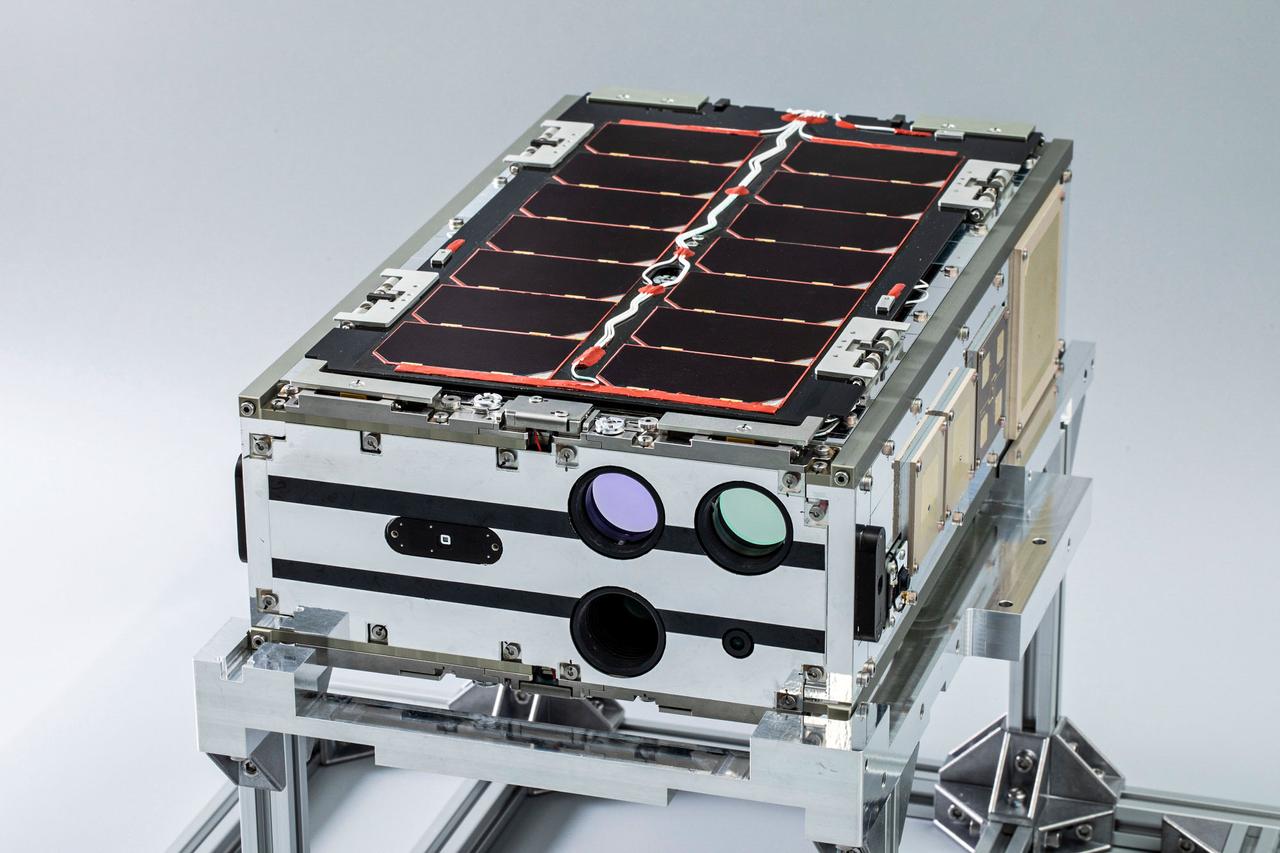
jsc2025e000002 (1/2/2025) --- YODAKA, a 6U size CubeSat, performs the “tanka” (short Japanese poems) mission with the Internet of Things (IoT) communication device and the Earth observation mission with the multi-spectral cameras. YODAKA is deployed as part of the JEM Small Satellite Orbital Deployer-30 (J-SSOD-30) CubeSat deployment mission from the International Space Station. Image courtesy of ArkEdge Space Inc.

This image of the greater Los Angeles area was taken on March 29, 2019, by ASTERIA, the Arcsecond Space Telescope Enabling Research in Astrophysics satellite. The Port of Long Beach is visible near the center of the image. ASTERIA is a CubeSat, or a small satellite composed of cube units that measure 10 centimeters (4.5 inches) on each side. ASTERIA was designed to demonstrate precision pointing technology in a CubeSat, which could be used to observe planets around other stars. A slight decrease in a star's brightness as detected by ASTERIA could indicate that a planet is orbiting the star and passed in front of the star. This is called a planet transit. After completing its primary mission objectives in January 2018, ASTERIA has continued to operate on an extended mission. The mission team took this image to further test the capabilities of the satellite. https://photojournal.jpl.nasa.gov/catalog/PIA23124
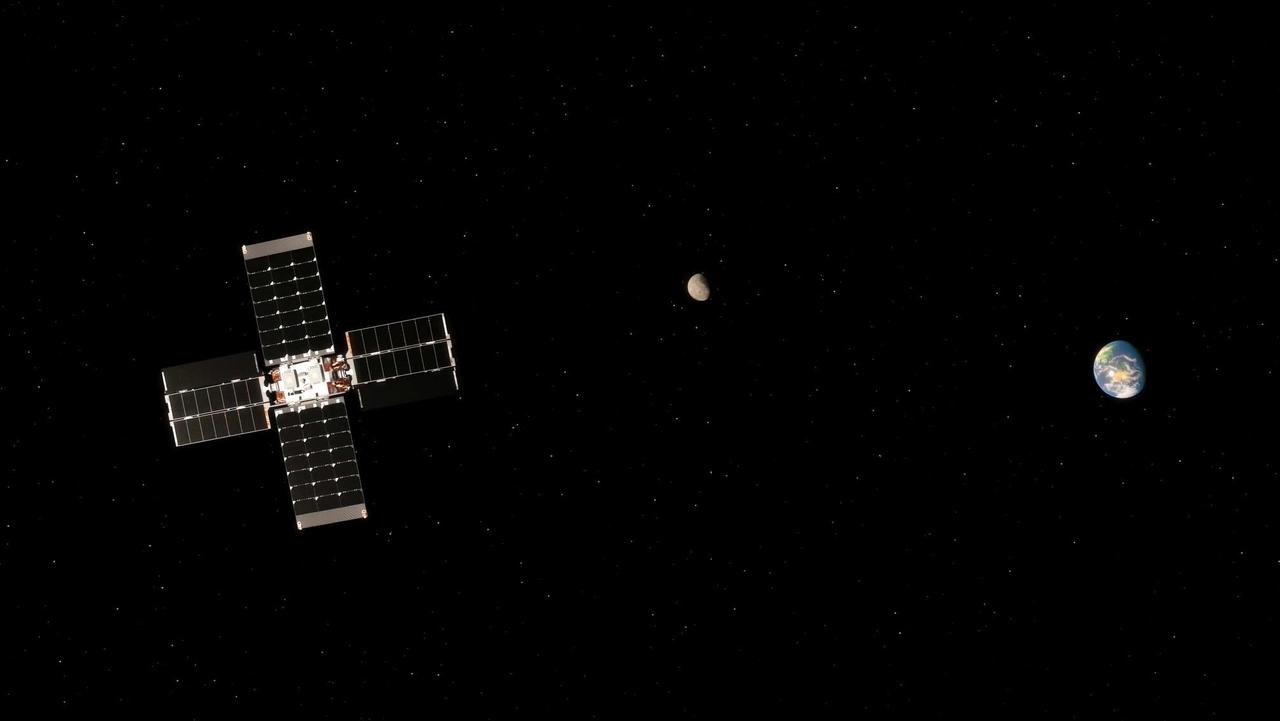
This illustration shows NASA's Lunar Flashlight carrying out a trajectory correction maneuver with the Moon and Earth in the background. Powered by the small satellite's four thrusters, the maneuver is needed to reach lunar orbit. Lunar Flashlight launched Nov. 30, 2022, and will take about four months to reach its science orbit to seek out surface water ice in the darkest craters of the Moon's South Pole. A technology demonstration, the small satellite, or SmallSat, will use a reflectometer equipped with four lasers that emit near-infrared light in wavelengths readily absorbed by surface water ice. To achieve the mission's goals with the satellite's limited amount of propellent, Lunar Flashlight will employ an energy-efficient near-rectilinear halo orbit, taking it within 9 miles (15 kilometers) of the lunar South Pole and 43,000 miles (70,000 kilometers) away at its farthest point. Only one other spacecraft has employed this type of orbit: NASA's Cislunar Autonomous Positioning System Technology Operations and Navigation Experiment (CAPSTONE) mission, which launched in June 2022. https://photojournal.jpl.nasa.gov/catalog/PIA25258
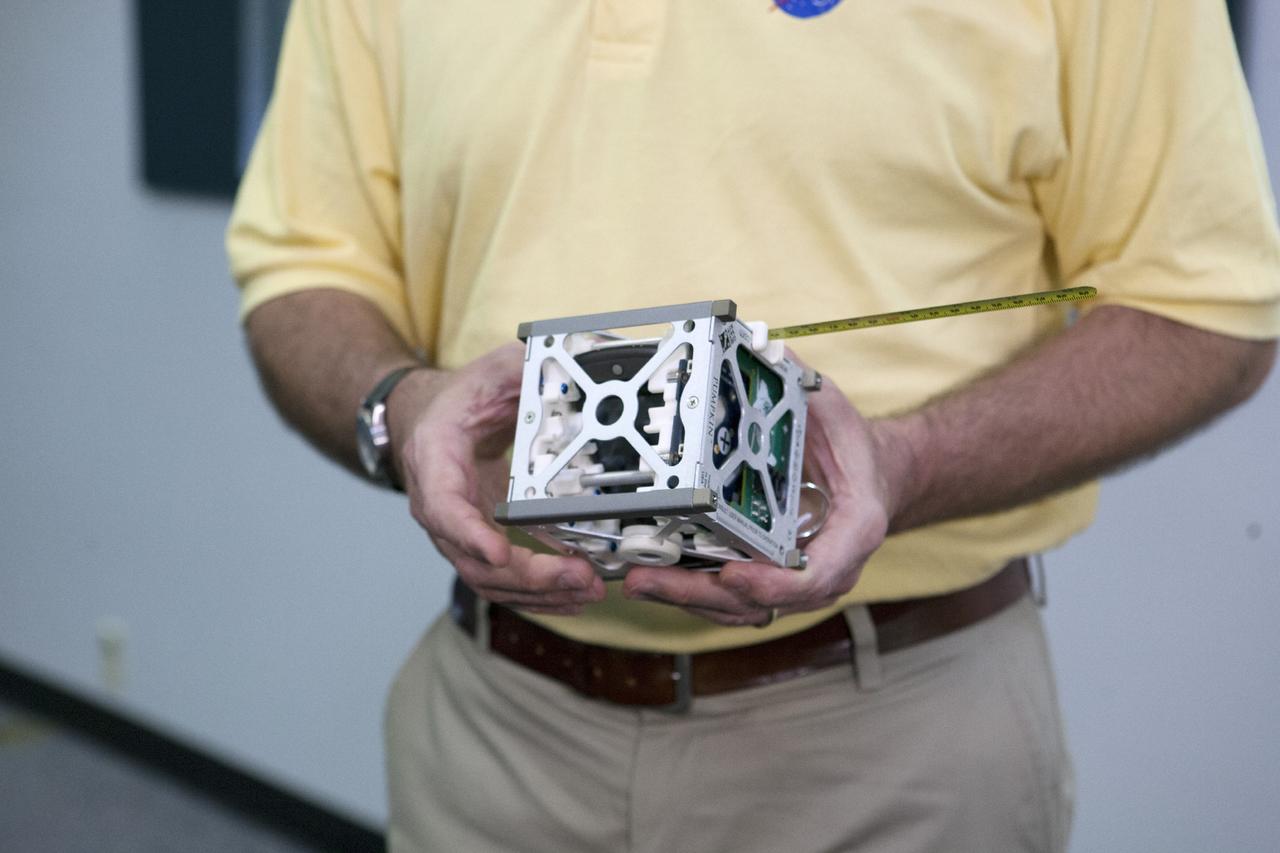
CAPE CANAVERAL, Fla. -- At the News Center at NASA's Kennedy Space Center in Florida, Andrew Petro, the agency's acting director of the Early Stage Innovation Division of the Office of the Chief Technologist, discusses the agency’s CubeSat Launch initiative. CubeSats provide opportunities for small satellite payloads to fly on rockets planned for upcoming launches. CubeSats, a class of research spacecraft called nanosatellites, are flown as auxiliary payloads on previously planned missions. The cube-shaped satellites are approximately four inches long, have a volume of about one quart and weigh about three pounds. For more information, visit: http://www.nasa.gov/directorates/heo/home/CubeSats_initiative.html Photo credit: NASA/Kim Shiflett

jsc2021e052201 (3/2/2021) --- One of the payload cameras is installed into the Binar-1 flight model. The custom-made Binar Bus, the powerhouse of the satellite, sits high up in the 1U CubeSat frame, separated from the installed payload by the slim silver transceiver. Binar-1 is a 1-Unit (1U) CubeSat, the first in a series from Curtin University in Perth, Australia, to help establish a capability for planetary research. The satellite is developed by a team of students and researchers with the intention to cultivate the skills and technology to build future planetary missions focused on the Moon and small bodies of the solar system. Image courtesy of Curtin University
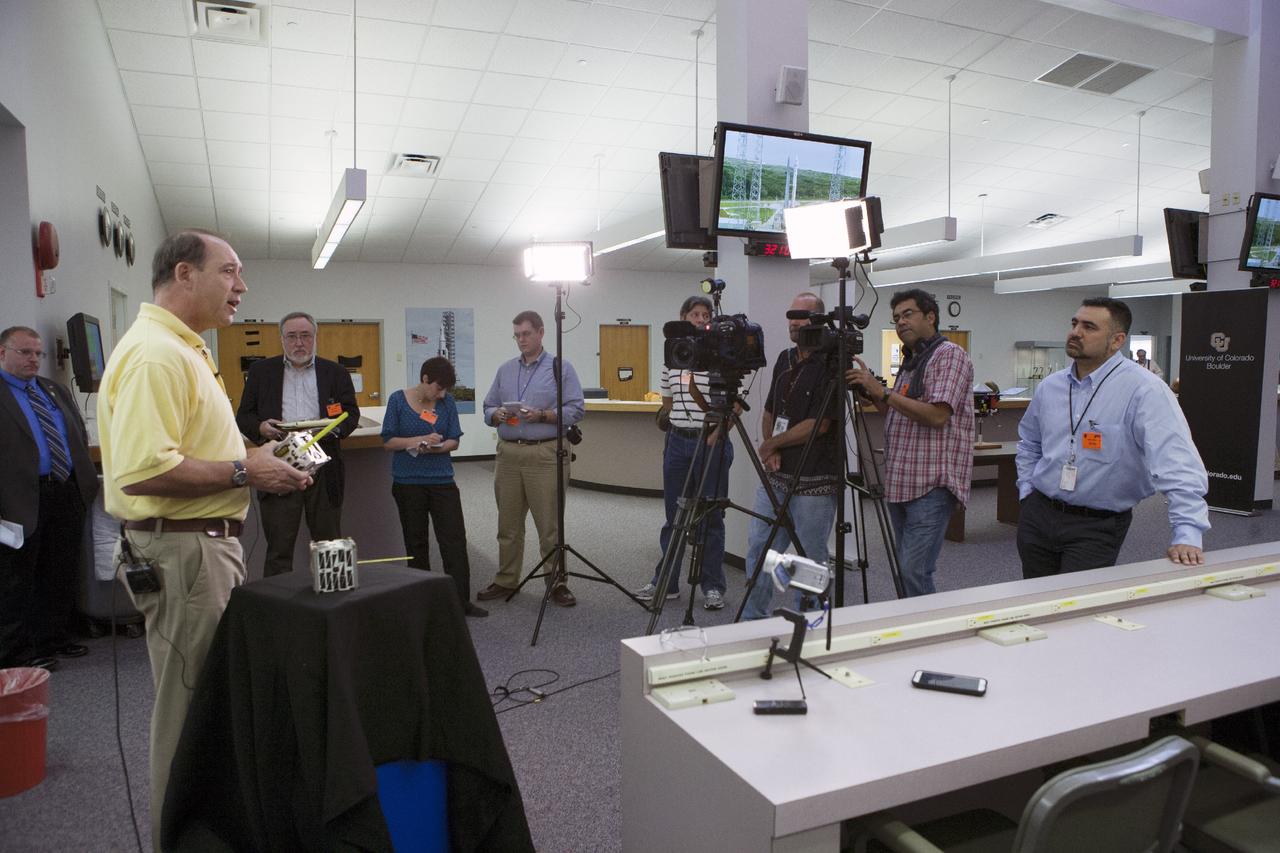
CAPE CANAVERAL, Fla. -- At the News Center at NASA's Kennedy Space Center in Florida, Andrew Petro, the agency's acting director of the Early Stage Innovation Division of the Office of the Chief Technologist, discusses the agency’s CubeSat Launch initiative. CubeSats provide opportunities for small satellite payloads to fly on rockets planned for upcoming launches. CubeSats, a class of research spacecraft called nanosatellites, are flown as auxiliary payloads on previously planned missions. The cube-shaped satellites are approximately four inches long, have a volume of about one quart and weigh about three pounds. For more information, visit: http://www.nasa.gov/directorates/heo/home/CubeSats_initiative.html Photo credit: NASA/Kim Shiflett
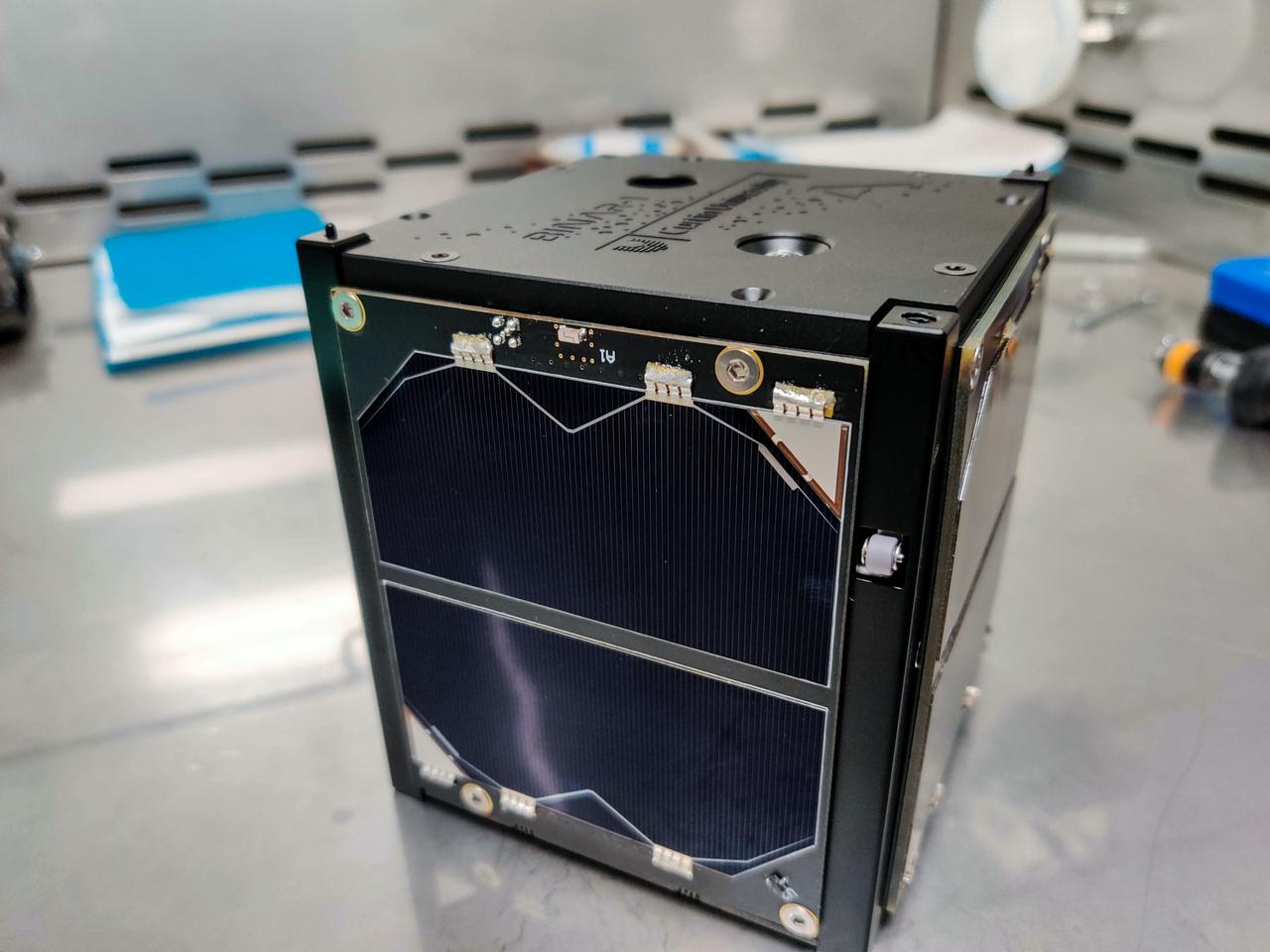
jsc2021e052200 (1/25/2021) --- A completed Binar-1 flight model sits waiting for launch. Binar-1 is first Western Australian sovereign spacecraft. The deep blue solar panels seen at the front of the spacecraft will power the two sunken camera lenses seen on the top of the satellite, amongst a plethora of other subsystems. Binar-1 is a 1-Unit (1U) CubeSat, the first in a series from Curtin University in Perth, Australia, to help establish a capability for planetary research. The satellite is developed by a team of students and researchers with the intention to cultivate the skills and technology to build future planetary missions focused on the Moon and small bodies of the solar system. Image courtesy of Curtin University.
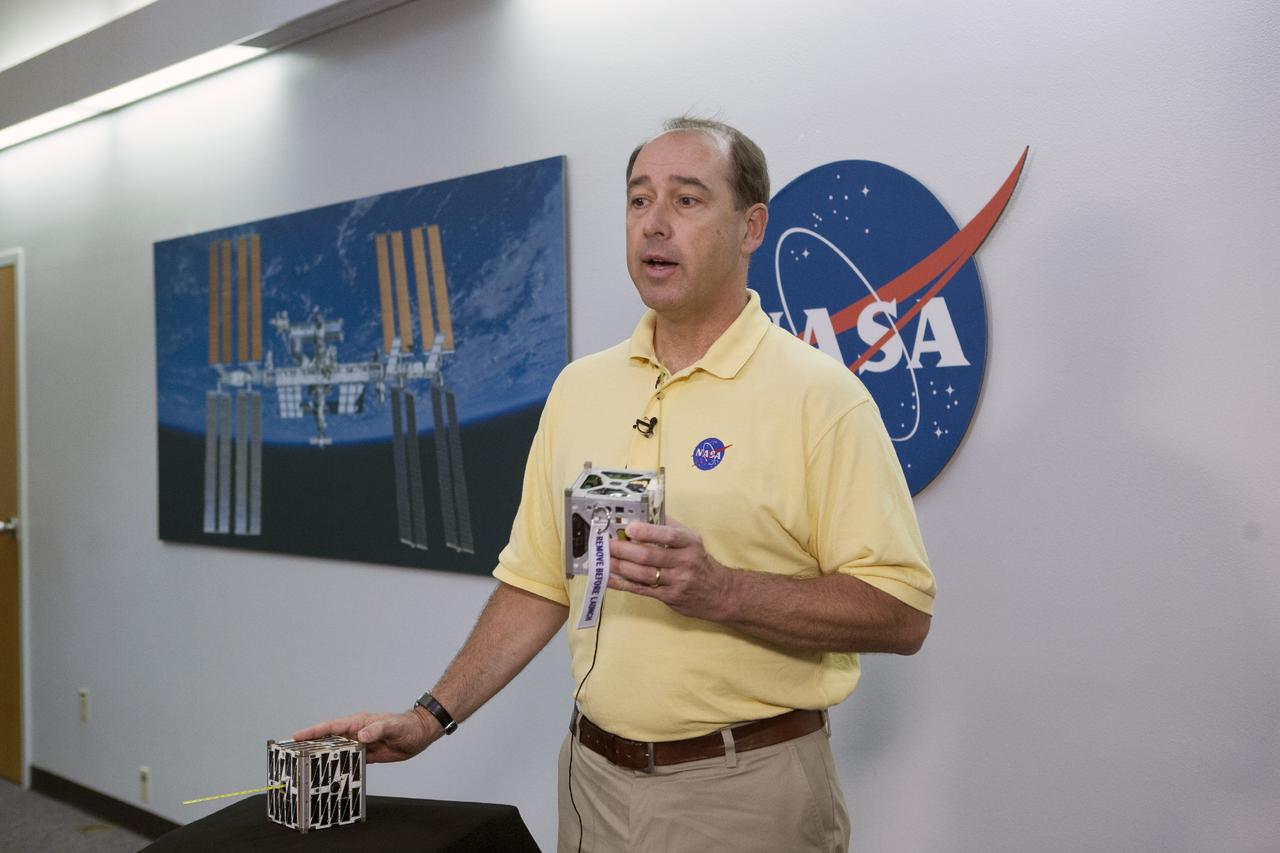
CAPE CANAVERAL, Fla. -- At the News Center at NASA's Kennedy Space Center in Florida, Andrew Petro, the agency's acting director of the Early Stage Innovation Division of the Office of the Chief Technologist, discusses the agency’s CubeSat Launch initiative. CubeSats provide opportunities for small satellite payloads to fly on rockets planned for upcoming launches. CubeSats, a class of research spacecraft called nanosatellites, are flown as auxiliary payloads on previously planned missions. The cube-shaped satellites are approximately four inches long, have a volume of about one quart and weigh about three pounds. For more information, visit: http://www.nasa.gov/directorates/heo/home/CubeSats_initiative.html Photo credit: NASA/Kim Shiflett
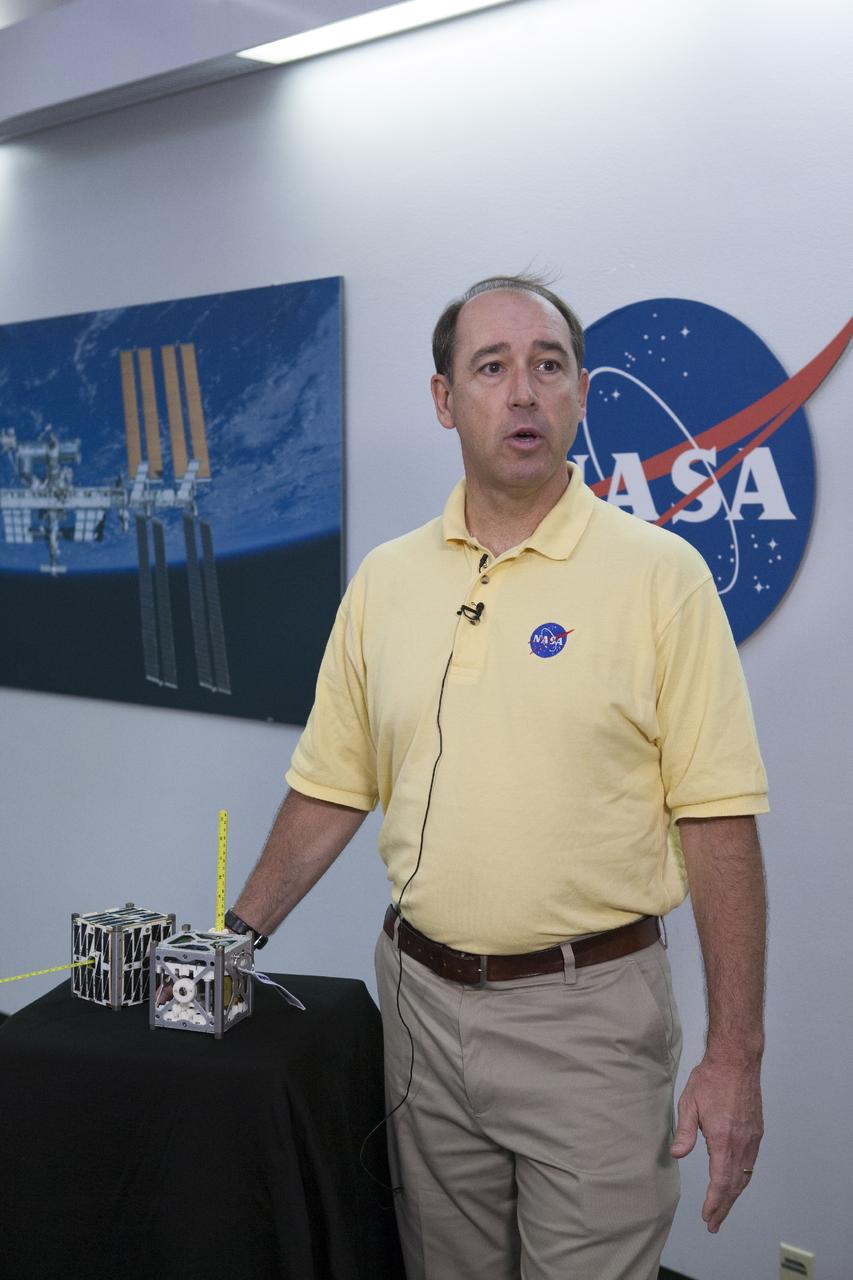
CAPE CANAVERAL, Fla. -- At the News Center at NASA's Kennedy Space Center in Florida, Andrew Petro, the agency's acting director of the Early Stage Innovation Division of the Office of the Chief Technologist, discusses the agency’s CubeSat Launch initiative. CubeSats provide opportunities for small satellite payloads to fly on rockets planned for upcoming launches. CubeSats, a class of research spacecraft called nanosatellites, are flown as auxiliary payloads on previously planned missions. The cube-shaped satellites are approximately four inches long, have a volume of about one quart and weigh about three pounds. For more information, visit: http://www.nasa.gov/directorates/heo/home/CubeSats_initiative.html Photo credit: NASA/Kim Shiflett

jsc2021e052203 (4/12/2021) --- Top view of the completed Binar-1 flight model, waiting for launch. Binar-1 is first Western Australian sovereign spacecraft. The deep blue solar panels seen at the front of the spacecraft will power the two sunken camera lenses seen on the top of the satellite, amongst a plethora of other subsystems. Binar-1 is a 1-Unit (1U) CubeSat, the first in a series from Curtin University in Perth, Australia, to help establish a capability for planetary research. The satellite is developed by a team of students and researchers with the intention to cultivate the skills and technology to build future planetary missions focused on the Moon and small bodies of the solar system. Image courtesy of Curtin University.
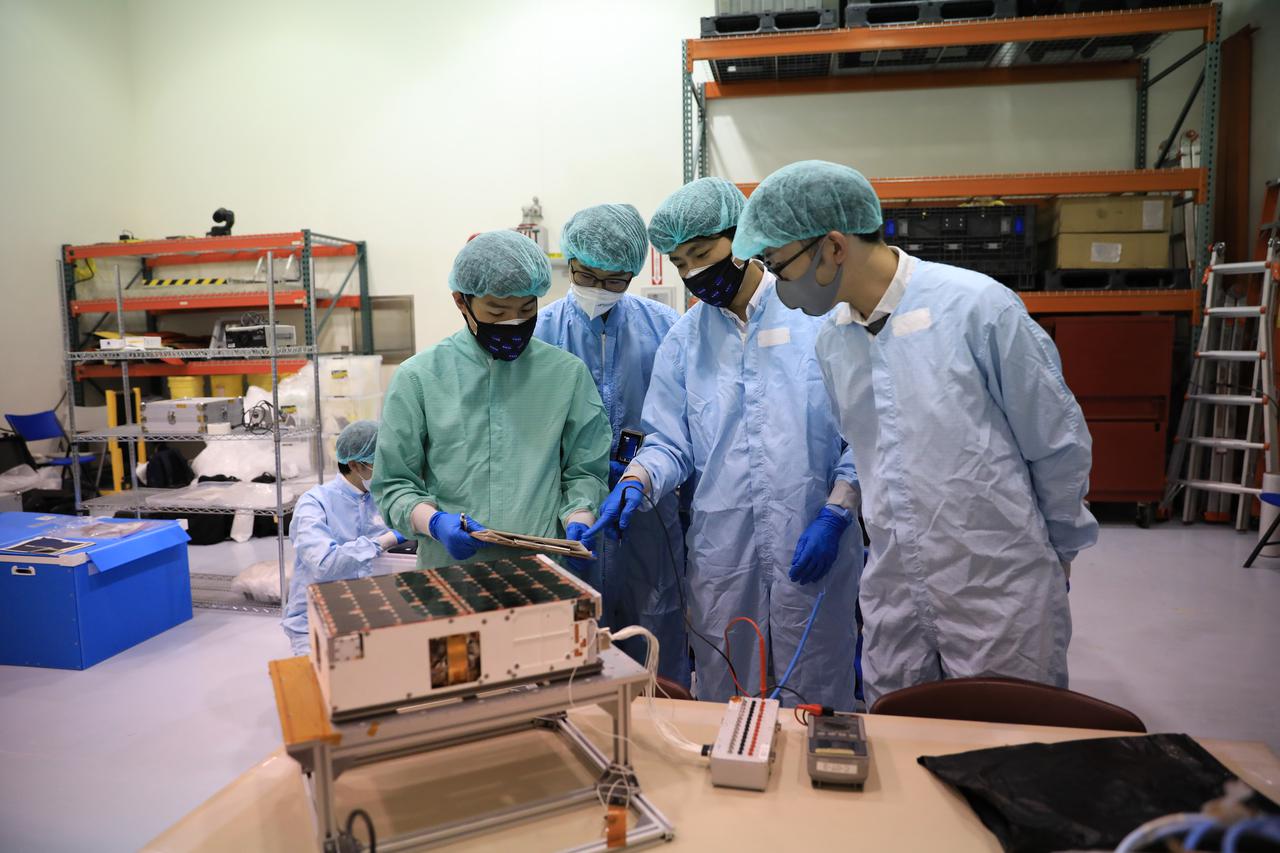
Teams worked on the final processing of their payloads that will fly aboard Artemis I. Housed within the Orion stage adapter, the satellites – called CubeSats – are roughly the size of a large shoe box and weigh no more than 30 pounds. Despite their small size, they enable science and technology experiments that may enhance our understanding of the deep space environment, expand our knowledge of the Moon, and demonstrate new technologies that could be used on future missions.
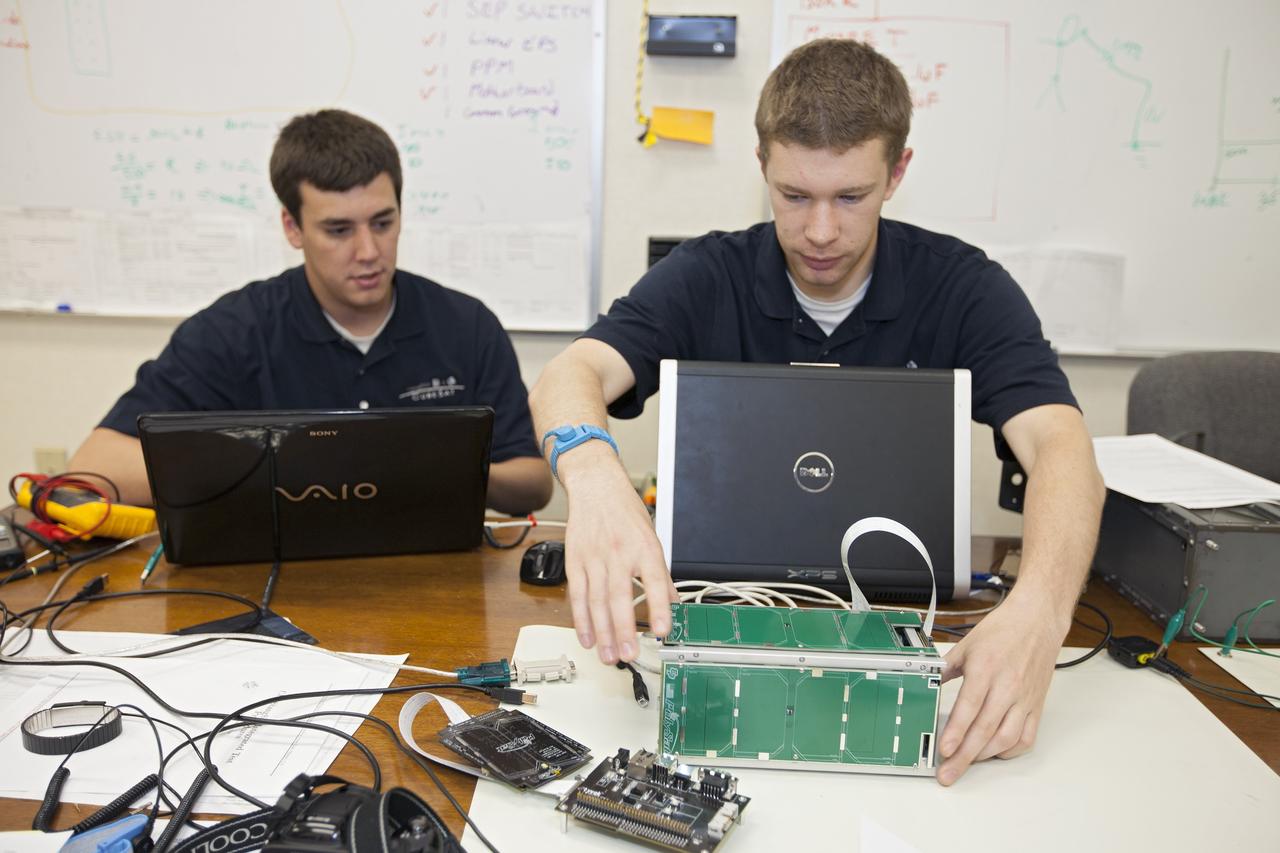
CAPE CANAVERAL, Fla. – Students from California Polytechnic Institute, or CalPoly, perform integration tests on a cubesat called PolySat they will fly on a suborbital mission in the summer. The satellite will work inside a small rocket to measure vibration and other data during launch. NASA engineers are acting as mentors for the project and some of the space agency's labs at Kennedy Space Center, including this one inside the Operations and Checkout Building, are being used by the teams. Photo credit: NASA/Kim Shiflett
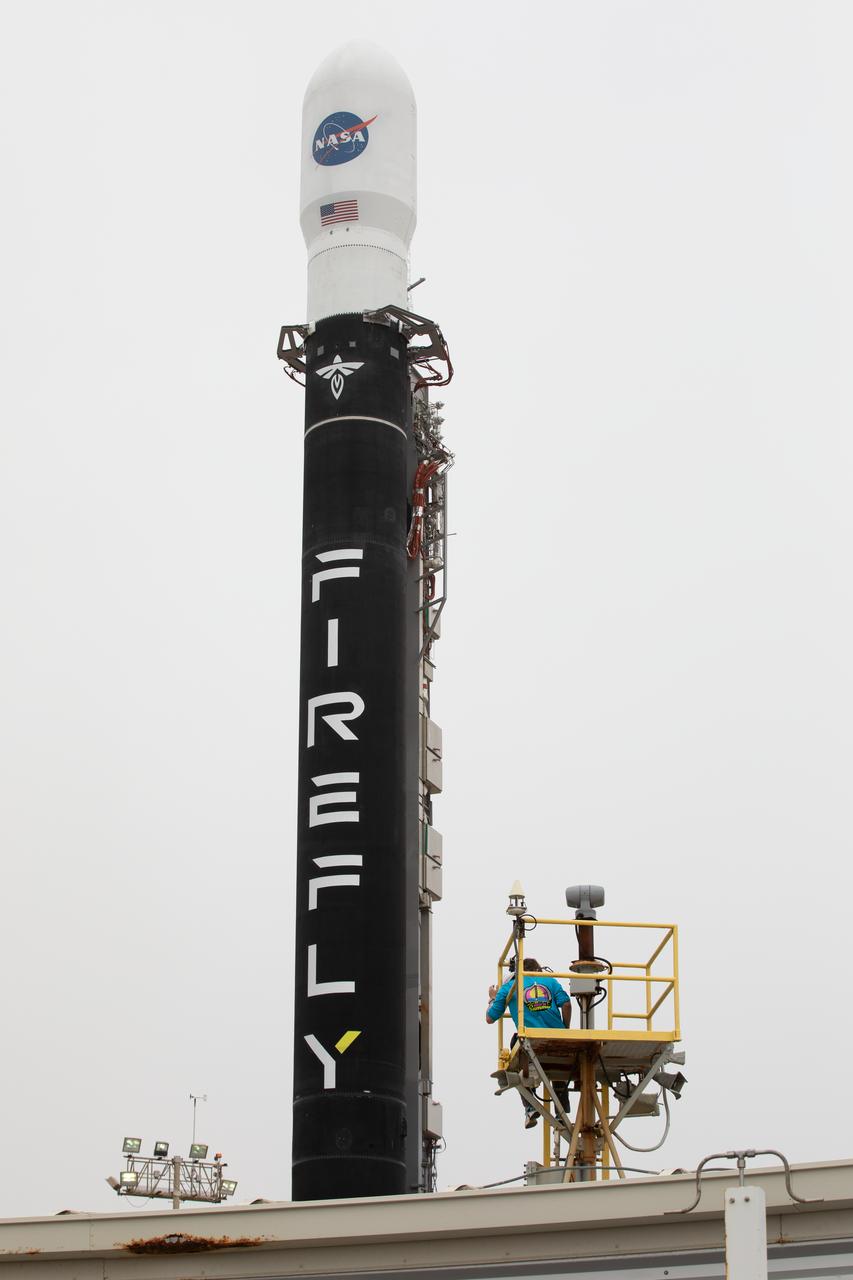
Firefly Aerospace’s Alpha rocket carrying eight CubeSats as part of NASA’s CubeSat Launch Initiative’s (CSLI) ELaNa 43 (Educational Launch of Nanosatellites) mission stands vertical at Space Launch Complex 2 at Vandenberg Space Force Base, California, on Monday, July 1, 2024. Firefly Aerospace is one of three companies selected to fly small satellites to space under NASA’s Launch Services Program Venture-Class Launch Services Demonstration 2 (VCLS Demo 2) contract awarded in December 2020.

Teams worked on the final processing of their payloads that will fly aboard Artemis I. Housed within the Orion stage adapter, the satellites – called CubeSats – are roughly the size of a large shoe box and weigh no more than 30 pounds. Despite their small size, they enable science and technology experiments that may enhance our understanding of the deep space environment, expand our knowledge of the Moon, and demonstrate new technologies that could be used on future missions.
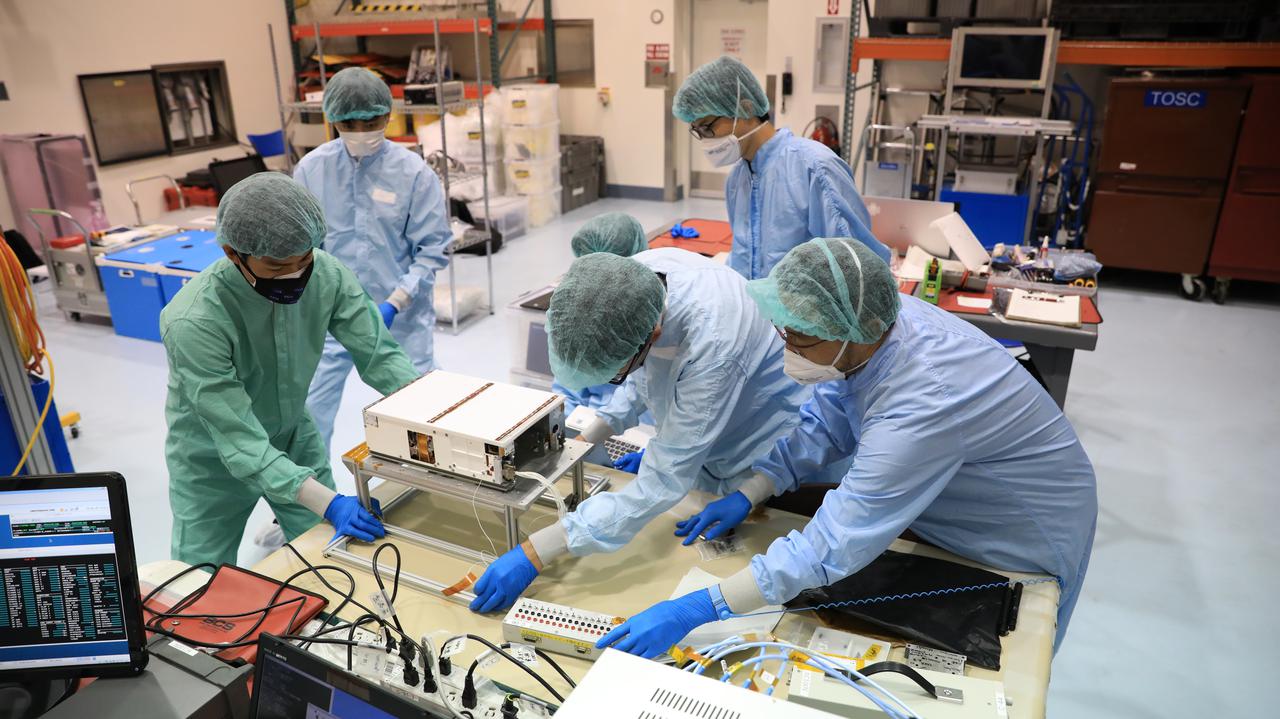
Teams worked on the final processing of their payloads that will fly aboard Artemis I. Housed within the Orion stage adapter, the satellites – called CubeSats – are roughly the size of a large shoe box and weigh no more than 30 pounds. Despite their small size, they enable science and technology experiments that may enhance our understanding of the deep space environment, expand our knowledge of the Moon, and demonstrate new technologies that could be used on future missions.
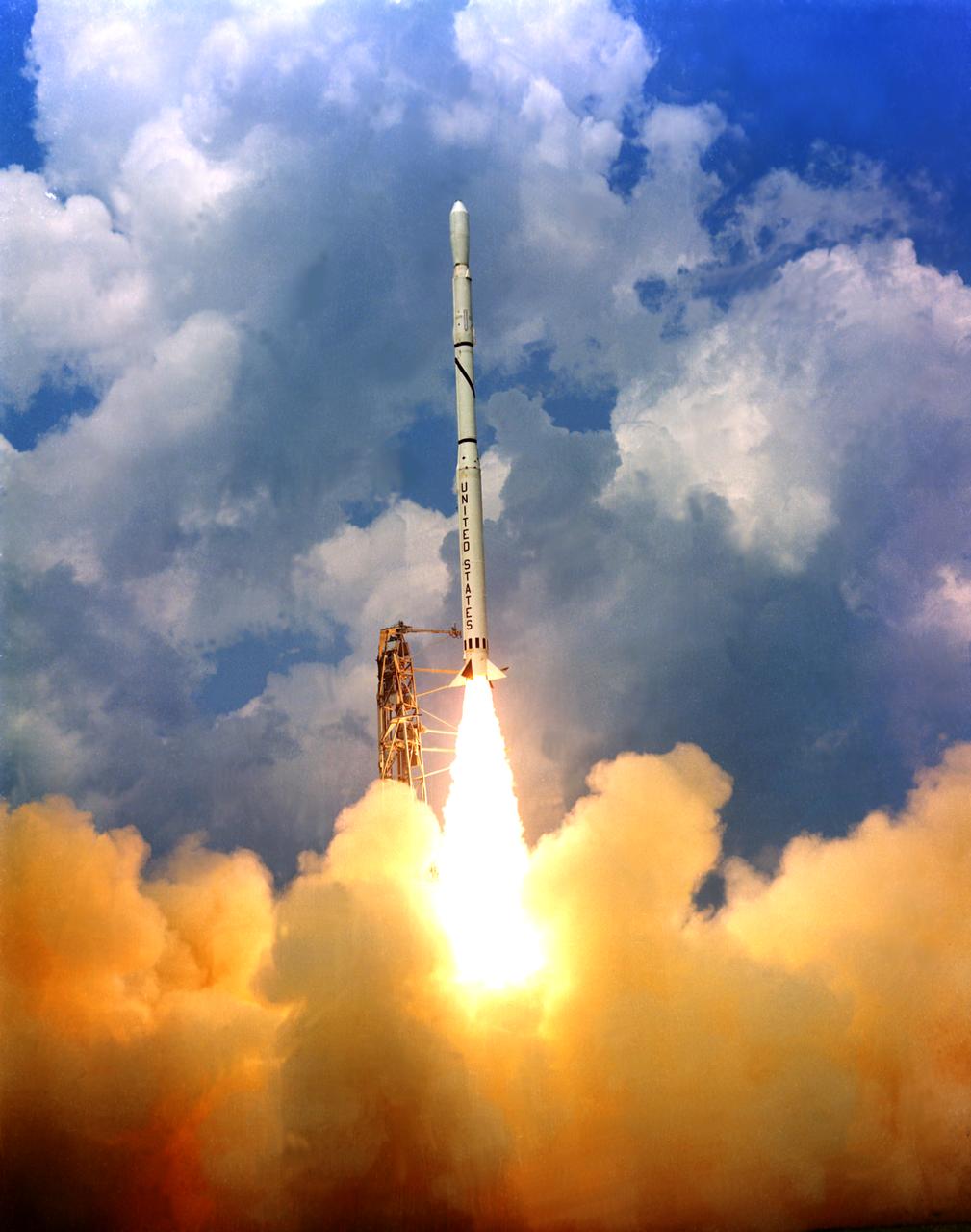
Scout launch vehicle lift off on Wallops Island in 1965. The Scout launch vehicle was used for unmanned small satellite missions, high altitude probes, and reentry experiments. Scout, the smallest of the basic launch vehicles, is the only United States launch vehicle fueled exclusively with solid propellants. Published in the book " A Century at Langley" by Joseph Chambers pg. 92
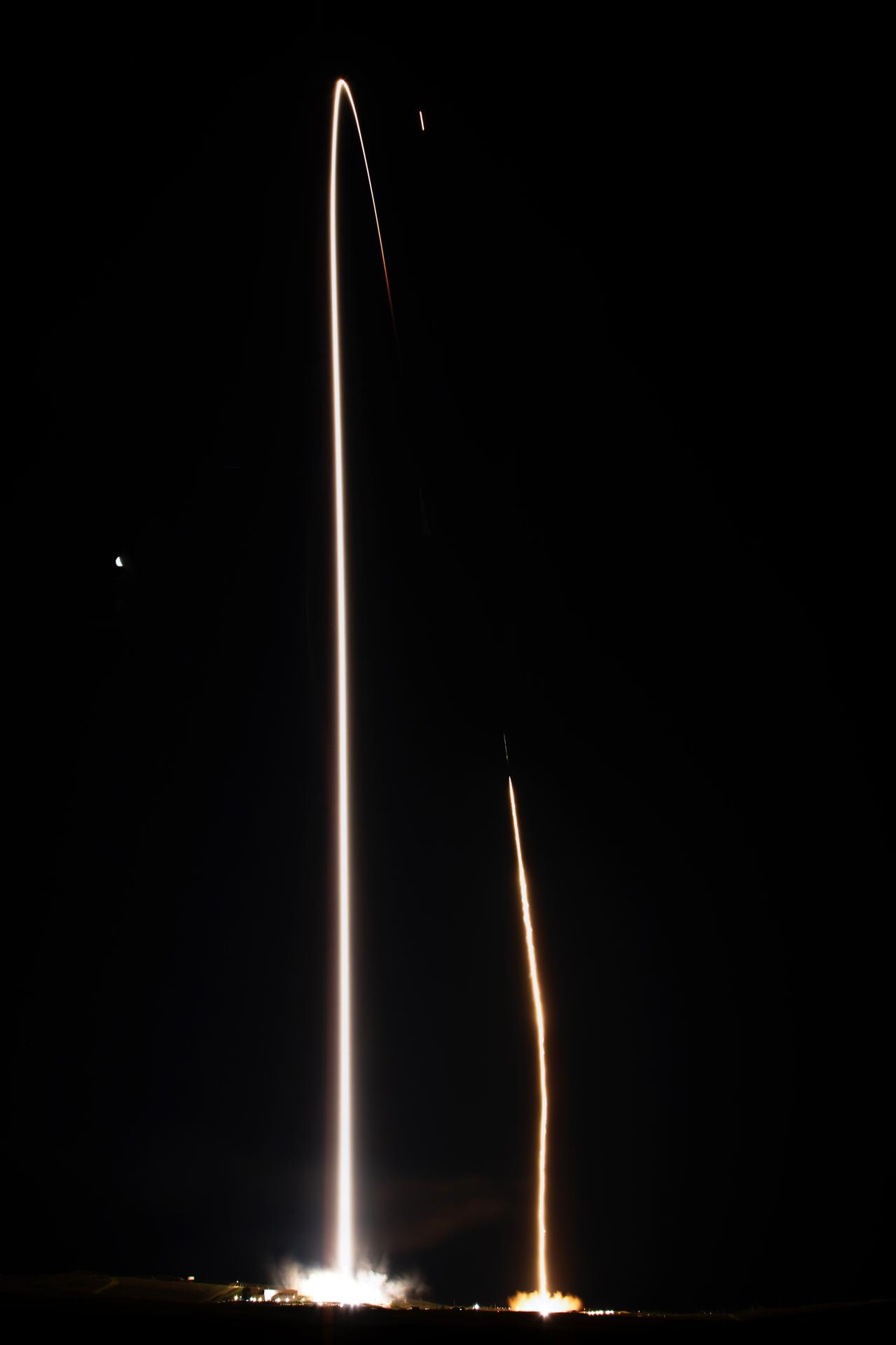
A photo captures the liftoff and landing of a SpaceX Falcon 9 rocket carrying NASA’s Pandora small satellite, the Star-Planet Activity Research CubeSat (SPARCS), and Black Hole Coded Aperture Telescope (BlackCAT) CubeSat from Space Launch Complex 4 East at Vandenberg Space Force Base in California on Sunday, Jan. 11, 2026, as part of the company’s Twilight mission. Pandora will provide an in-depth study of at least 20 known planets orbiting distant stars to determine the composition of their atmospheres — especially the presence of hazes, clouds, and water.
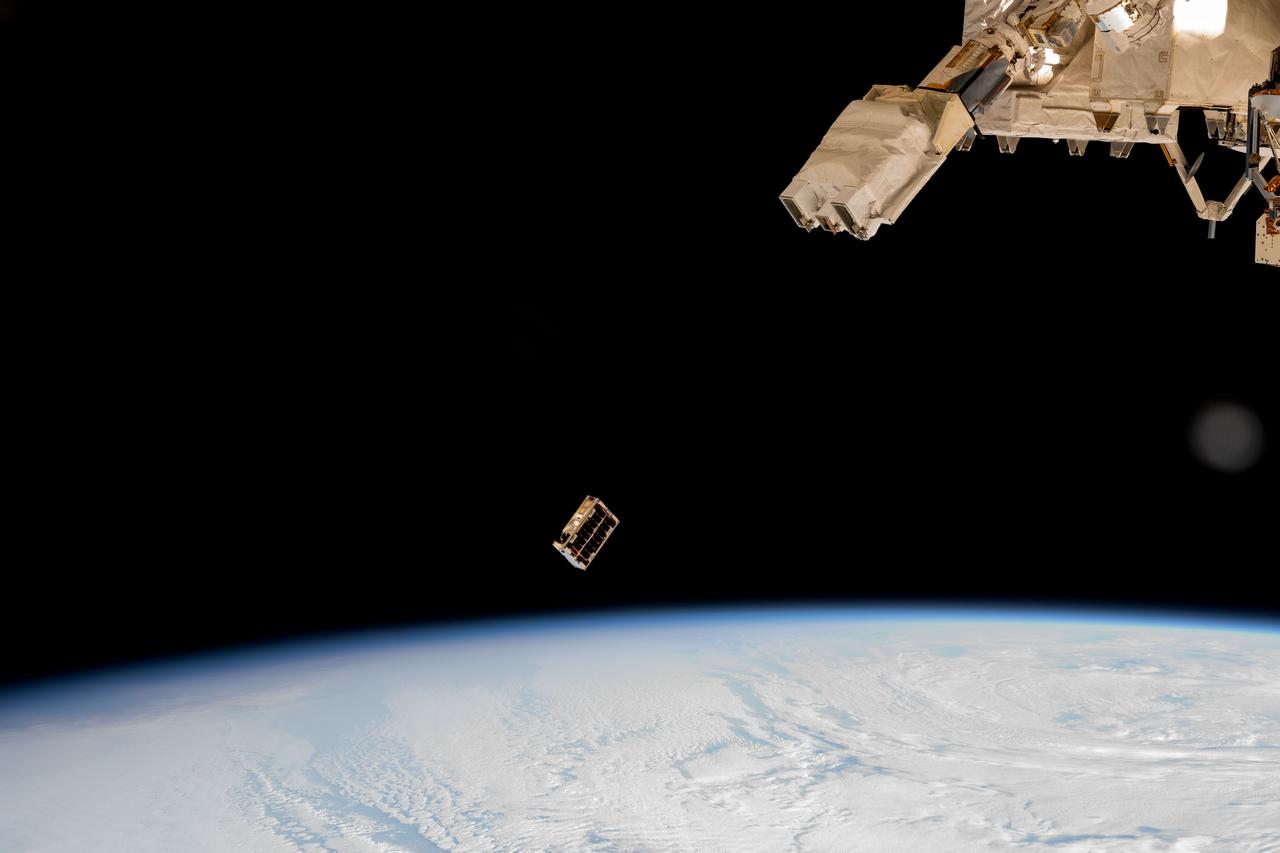
iss072e352225 (Dec. 9, 2024) --- A CubeSat is ejected into Earth orbit from a small satellite orbital deployer attached to the International Space Station's Kibo laboratory module. A series of CubeSats were deployed into Earth orbit on Dec. 9, 2024, for educational research missions designed by Japanese high school and college students. Credit: NASA/Butch Wilmore
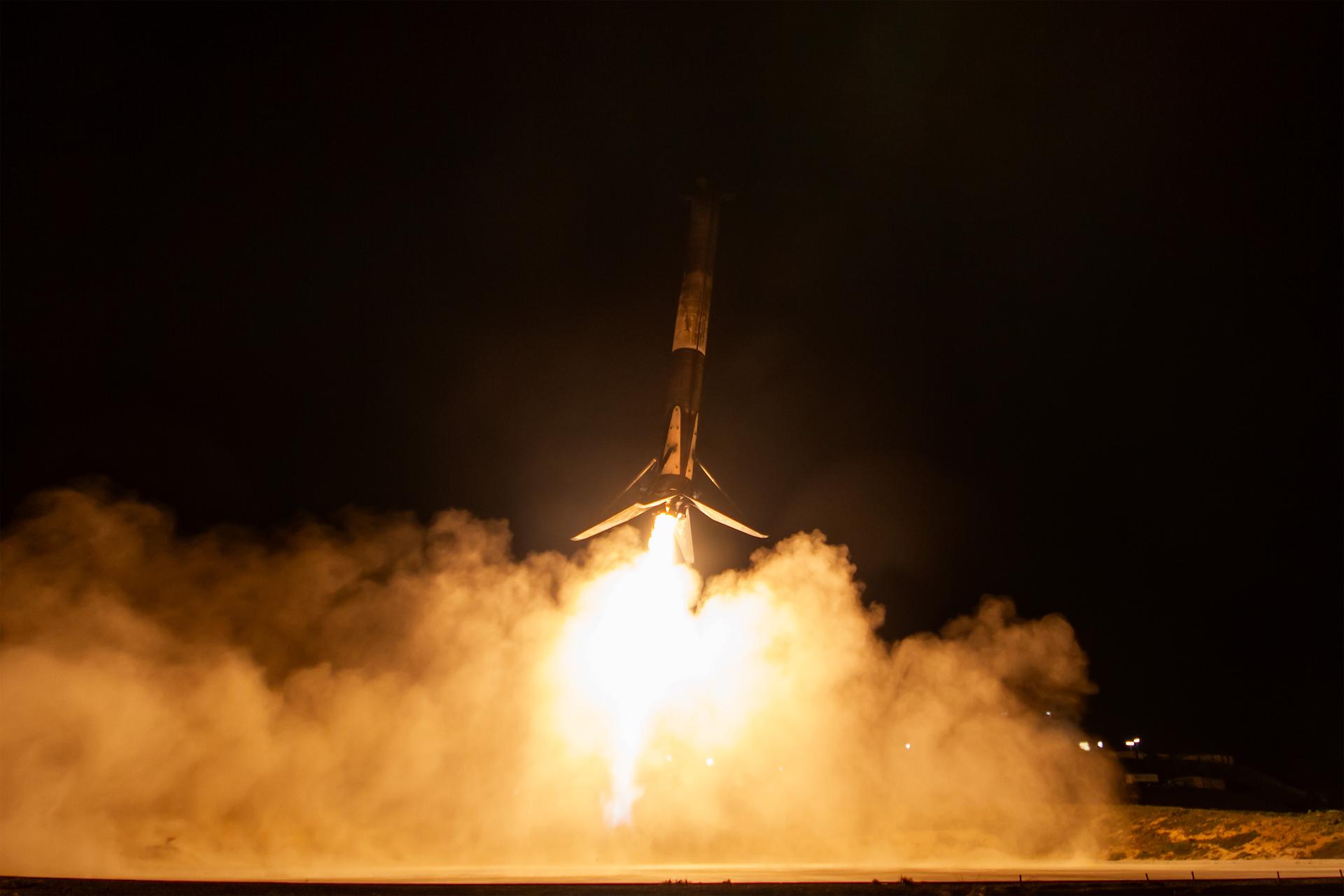
A SpaceX booster prepares for landing following the launch of NASA’s Pandora small satellite, the Star-Planet Activity Research CubeSat (SPARCS), and Black Hole Coded Aperture Telescope (BlackCAT) CubeSat from Space Launch Complex 4 East at Vandenberg Space Force Base in California on Sunday, Jan. 11, 2026, as part of the company’s Twilight mission. Pandora will provide an in-depth study of at least 20 known planets orbiting distant stars to determine the composition of their atmospheres — especially the presence of hazes, clouds, and water.
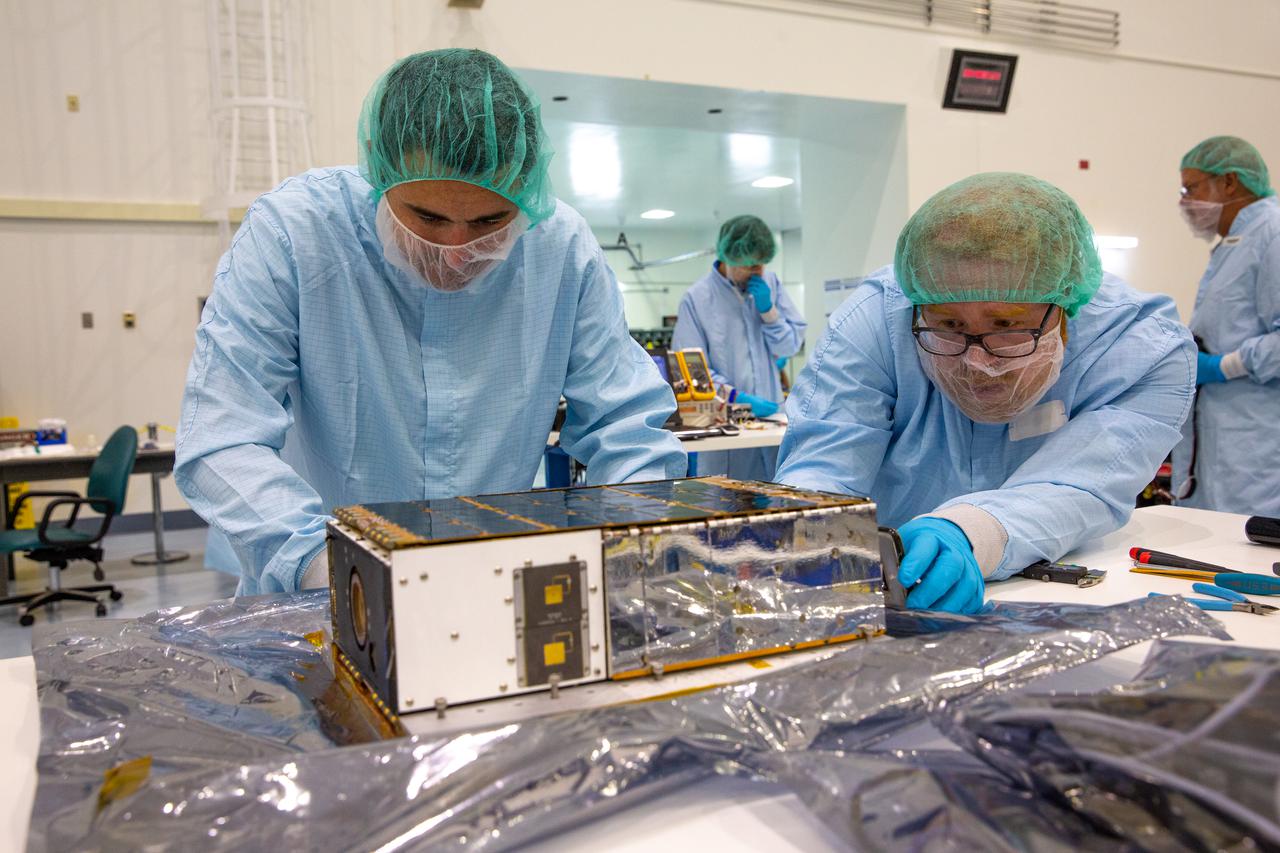
Teams worked on the final processing of their payloads that will fly aboard Artemis I. Housed within the Orion stage adapter, the satellites – called CubeSats – are roughly the size of a large shoe box and weigh no more than 30 pounds. Despite their small size, they enable science and technology experiments that may enhance our understanding of the deep space environment, expand our knowledge of the Moon, and demonstrate new technologies that could be used on future missions.
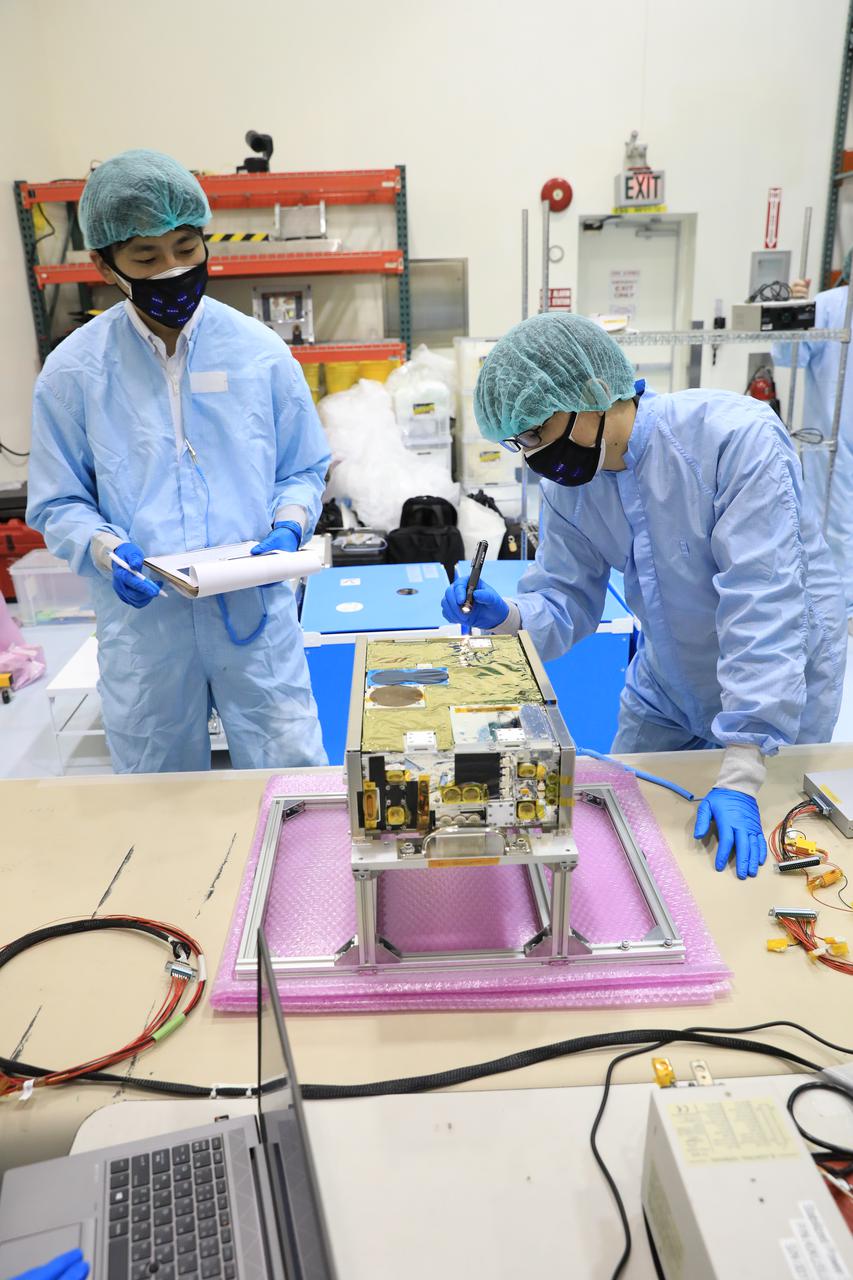
Teams worked on the final processing of their payloads that will fly aboard Artemis I. Housed within the Orion stage adapter, the satellites – called CubeSats – are roughly the size of a large shoe box and weigh no more than 30 pounds. Despite their small size, they enable science and technology experiments that may enhance our understanding of the deep space environment, expand our knowledge of the Moon, and demonstrate new technologies that could be used on future missions.
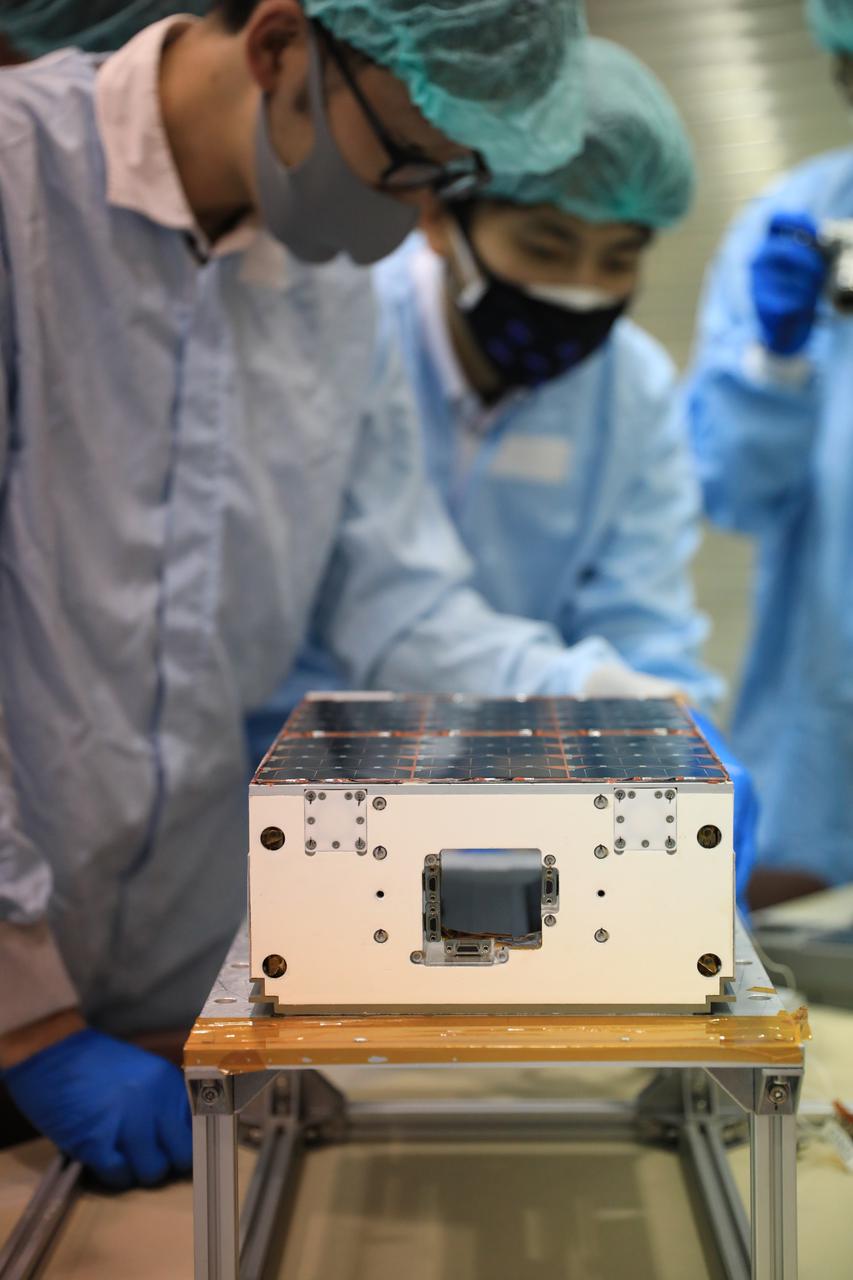
Teams worked on the final processing of their payloads that will fly aboard Artemis I. Housed within the Orion stage adapter, the satellites – called CubeSats – are roughly the size of a large shoe box and weigh no more than 30 pounds. Despite their small size, they enable science and technology experiments that may enhance our understanding of the deep space environment, expand our knowledge of the Moon, and demonstrate new technologies that could be used on future missions.
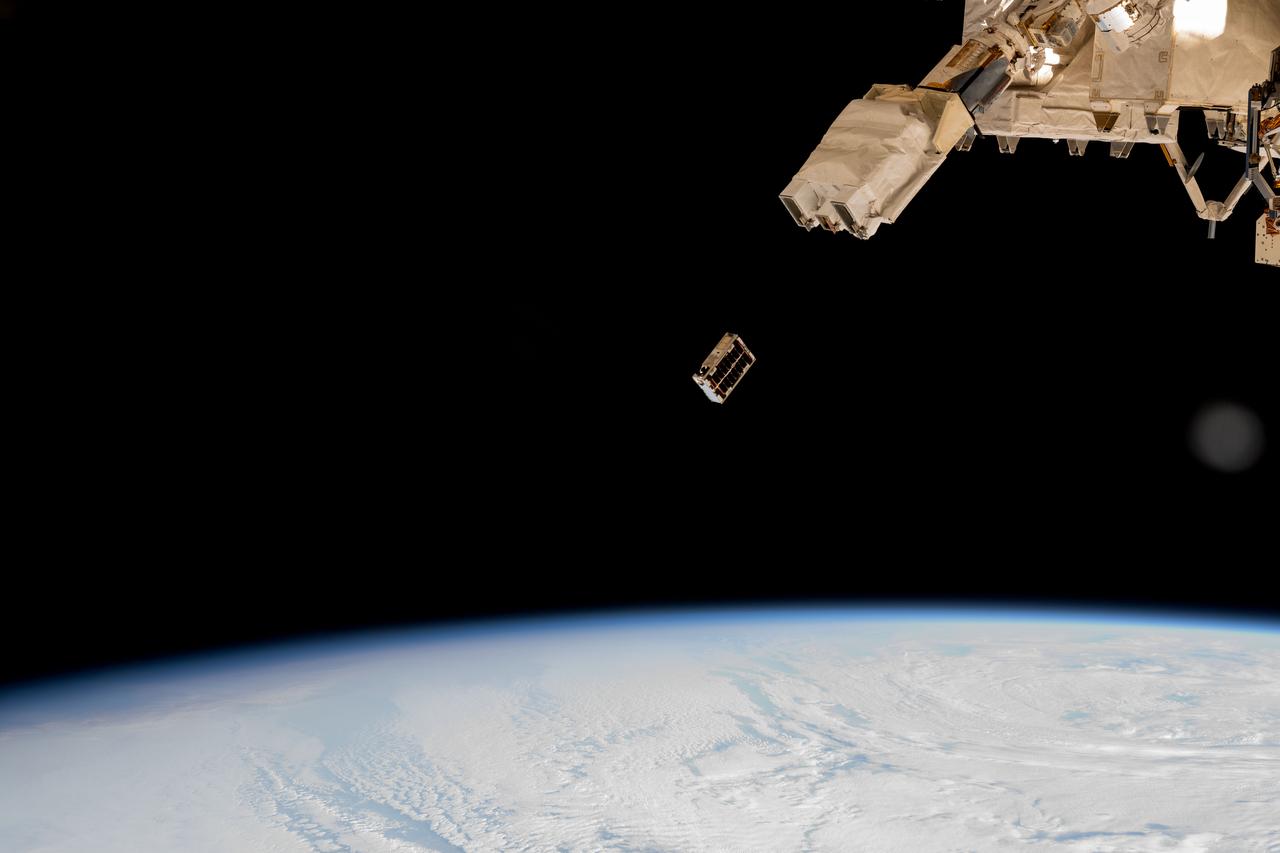
iss072e352235 (Dec. 9, 2024) --- A CubeSat is ejected into Earth orbit from a small satellite orbital deployer attached to the International Space Station's Kibo laboratory module. A series of CubeSats were deployed into Earth orbit on Dec. 9, 2024, for educational research missions designed by Japanese high school and college students. Credit: NASA/Butch Wilmore
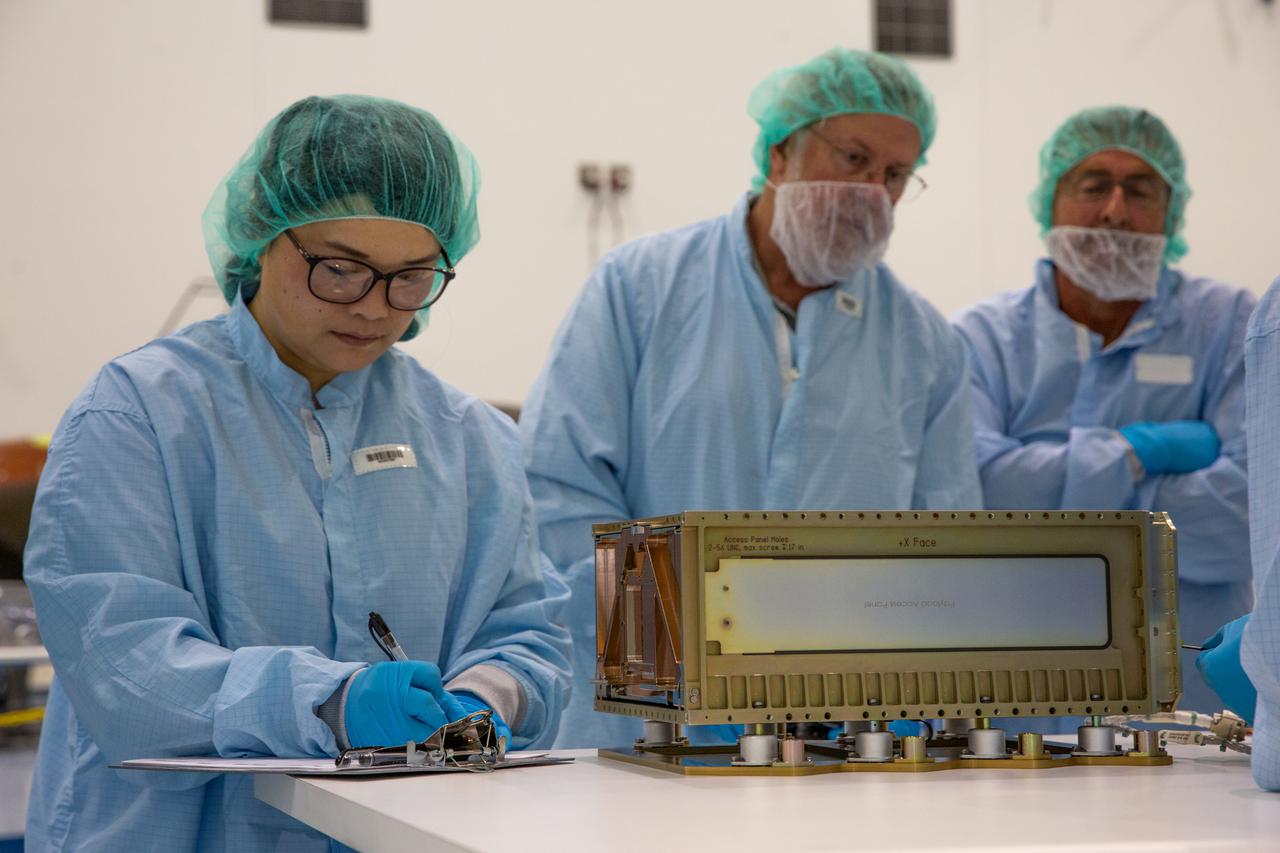
Teams worked on the final processing of their payloads that will fly aboard Artemis I. Housed within the Orion stage adapter, the satellites – called CubeSats – are roughly the size of a large shoe box and weigh no more than 30 pounds. Despite their small size, they enable science and technology experiments that may enhance our understanding of the deep space environment, expand our knowledge of the Moon, and demonstrate new technologies that could be used on future missions.