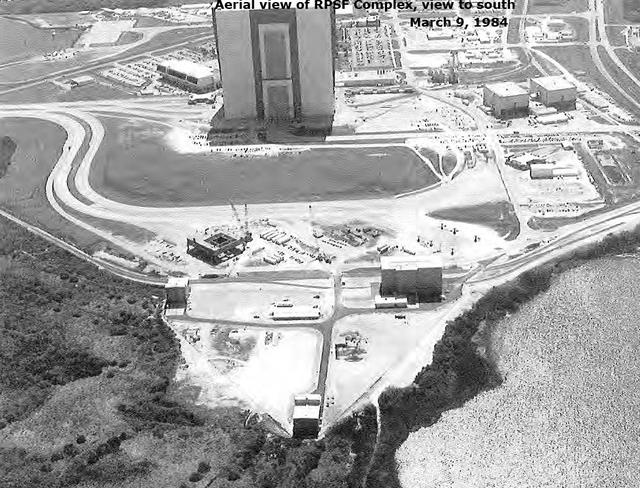
Aerial View of RPSF Complex, view to the south, March 9, 1984
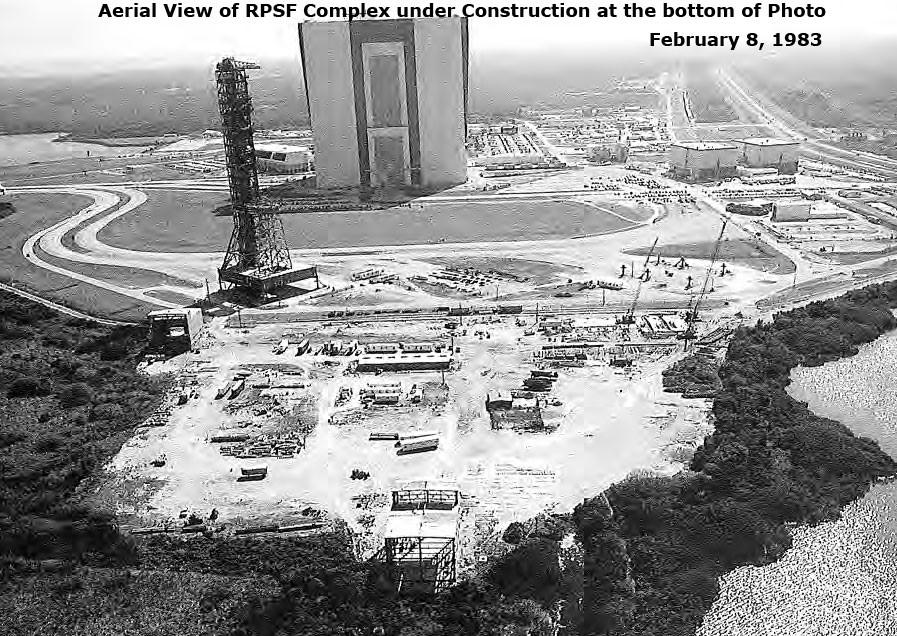
Aerial View of RPSF Complex under construction, February 8, 1983
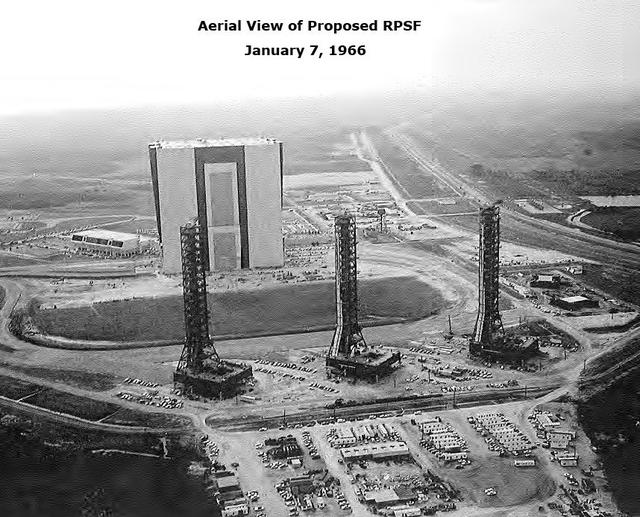
Aerial View of Proposed RPSF Area, January 7, 1966
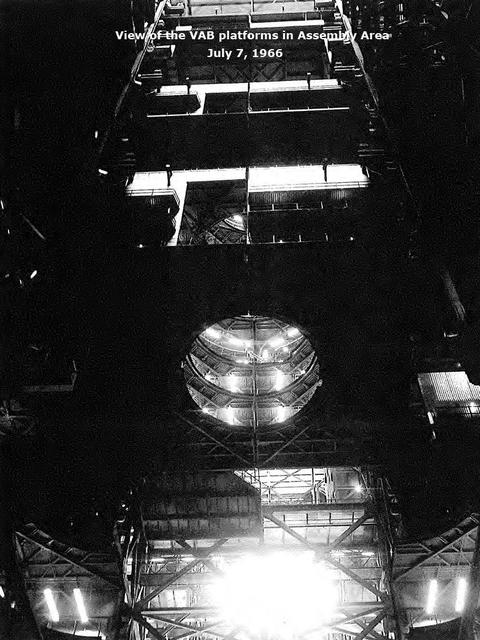
View of the VAB platforms in Assembly Area, July 7, 1966
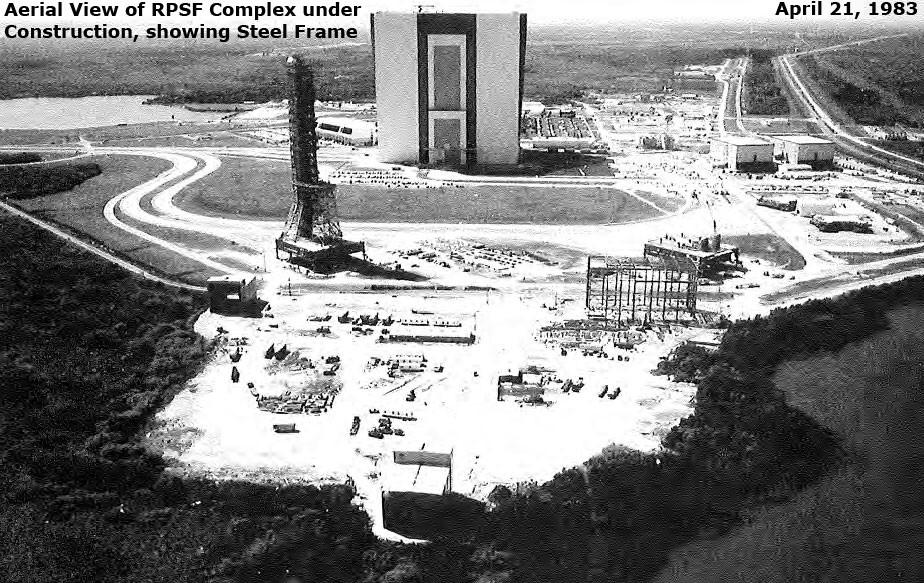
Aerial View of RPSF Complex under construction showing steel frame, April 21, 1983
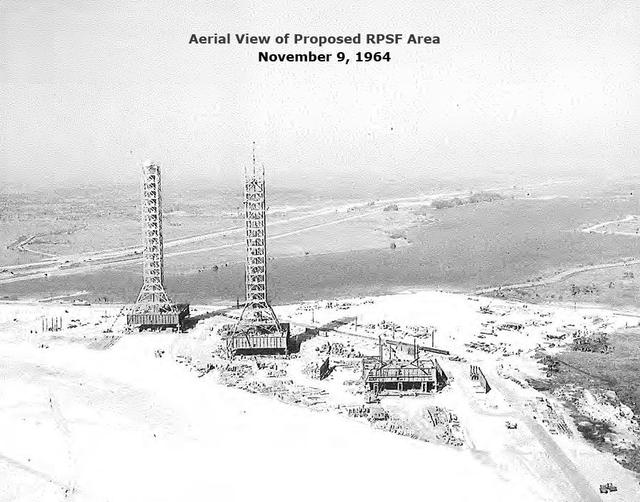
Aerial View of Proposed RPSF Area, November 9, 1964
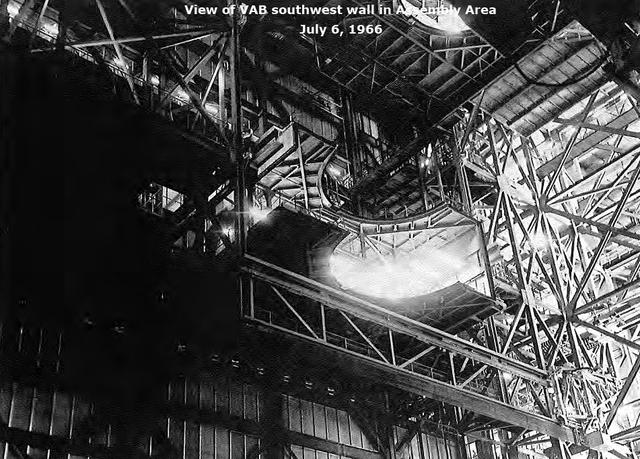
View of VAB southwest wall in Assembly Area, July 6, 1966
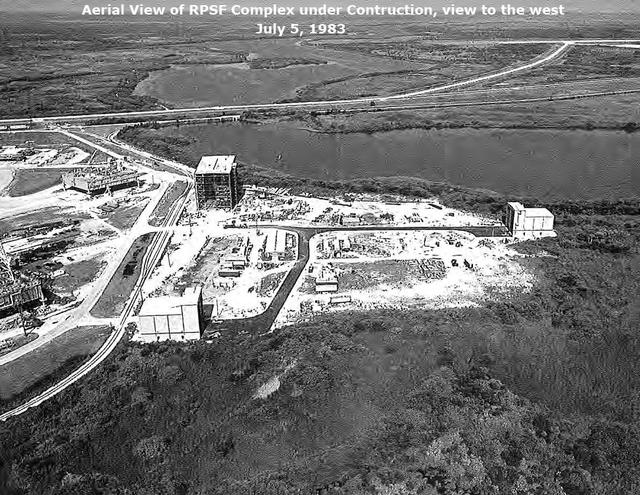
Aerial View of RPSF Complex under construction view to the west, July 5, 1983
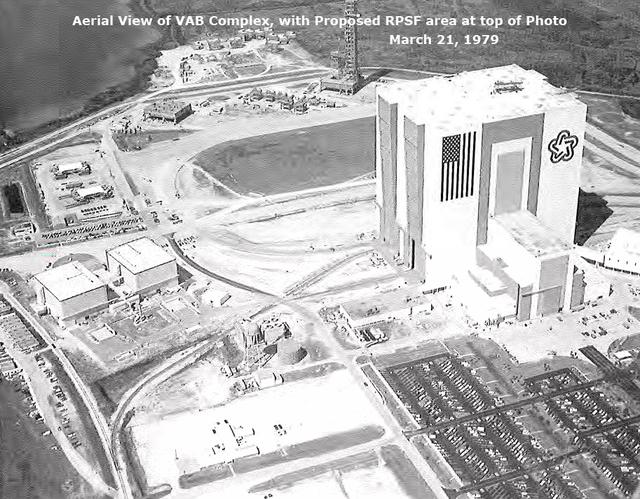
Aerial View of VAB Complex, with Proposed RPSF Area, March 21, 1979
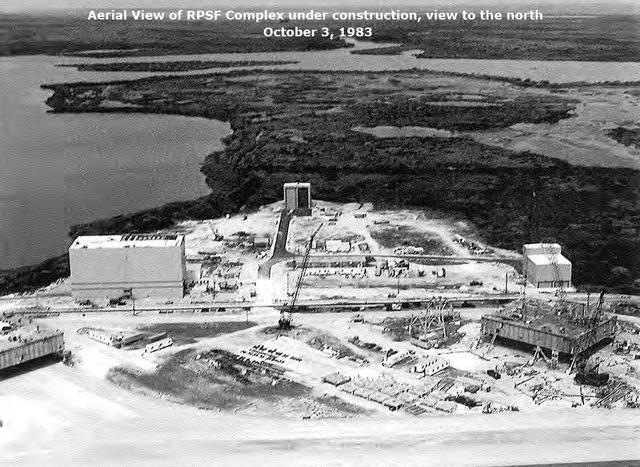
Aerial View of RPSF Complex under construction view to the north, October 3, 1983
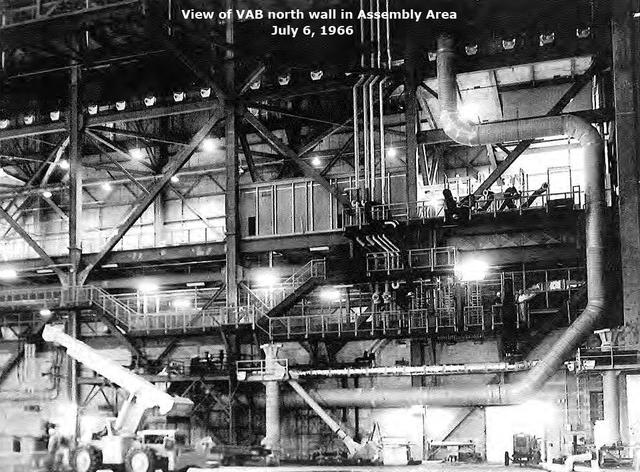
View of VAB north wall in Assembly Area, July 6, 1966
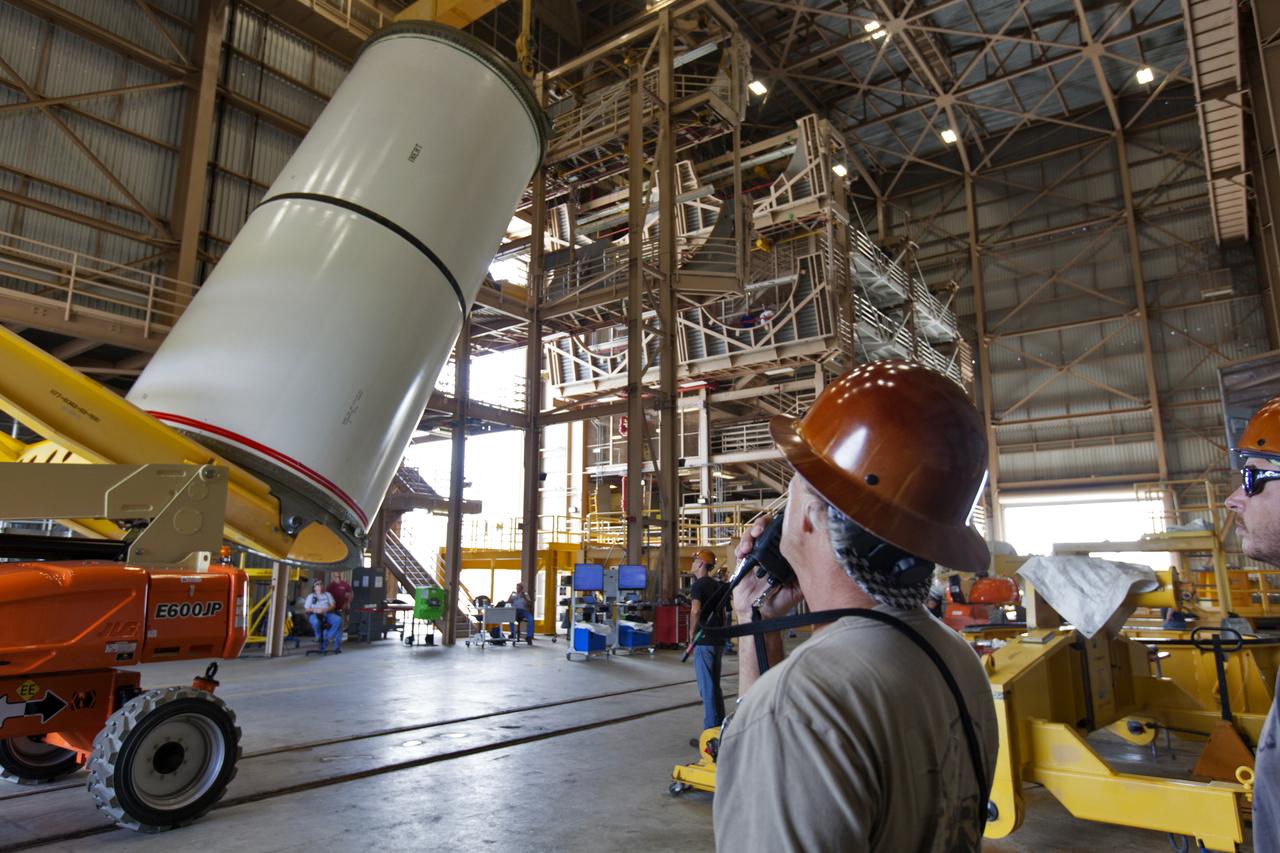
Jacobs technicians, on the Test and Operations Support Contract, practice crane operations with an inert booster rocket segment in the Rotation, Processing and Surge Facility on June 22, 2018, at NASA's Kennedy Space Center in Florida. Dual cranes are being used to move the segment from vertical to horizontal, a maneuver known as a "breakover rotation." As part of routine processing operations for the agency's Space Launch System (SLS) rocket, the RPSF team will receive all of the solid rocket fuel segments for inspection and preparation prior to transporting them to the Vehicle Assembly Building for stacking on the mobile launcher. Many pathfinding operations are being done to prepare for launch of the SLS and Orion spacecraft on Exploration Mission-1 and deep space missions.
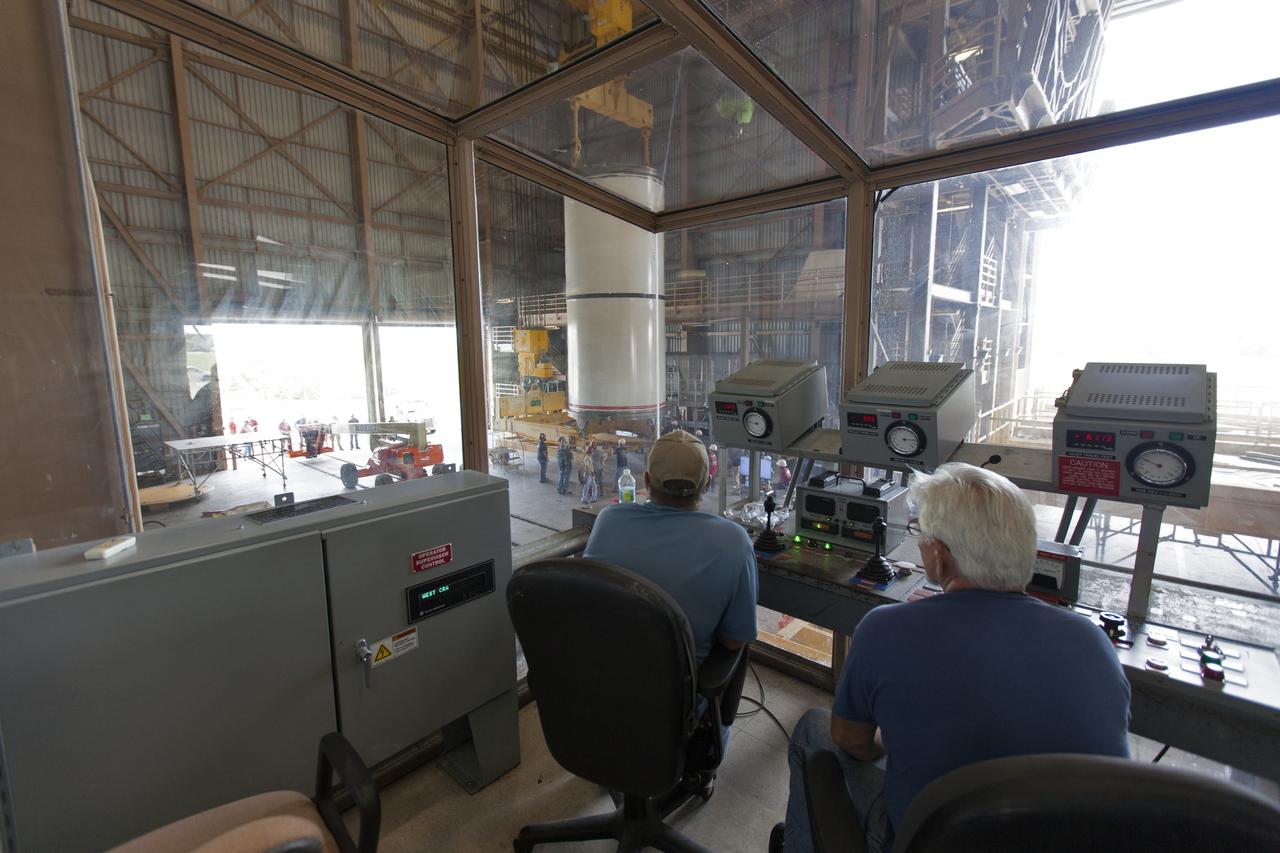
Jacobs technicians, on the Test and Operations Support Contract, practice crane operations with an inert booster rocket segment in the Rotation, Processing and Surge Facility on June 22, 2018, at NASA's Kennedy Space Center in Florida. Dual cranes are being used to move the segment from vertical to horizontal, a maneuver known as a "breakover rotation." As part of routine processing operations for the agency's Space Launch System (SLS) rocket, the RPSF team will receive all of the solid rocket fuel segments for inspection and preparation prior to transporting them to the Vehicle Assembly Building for stacking on the mobile launcher. Many pathfinding operations are being done to prepare for launch of the SLS and Orion spacecraft on Exploration Mission-1 and deep space missions.

Technicians transport the right forward segment for NASA’s SLS (Space Launch System) Moon rocket boosters from the Rotation Processing and Surge Facility to NASA’s Vehicle Assembly Building in Florida on Monday, Feb. 15, 2025. The right forward segment will be transferred into High Bay 3 where it will be attached to the center forward segment on mobile launcher 1. The twin solid boosters, five segments on each side, will help support the remaining rocket components and the Orion spacecraft during final assembly of the Artemis II Moon rocket and provide more than 75 percent of the total SLS thrust during liftoff from NASA Kennedy’s Launch Pad 39B.
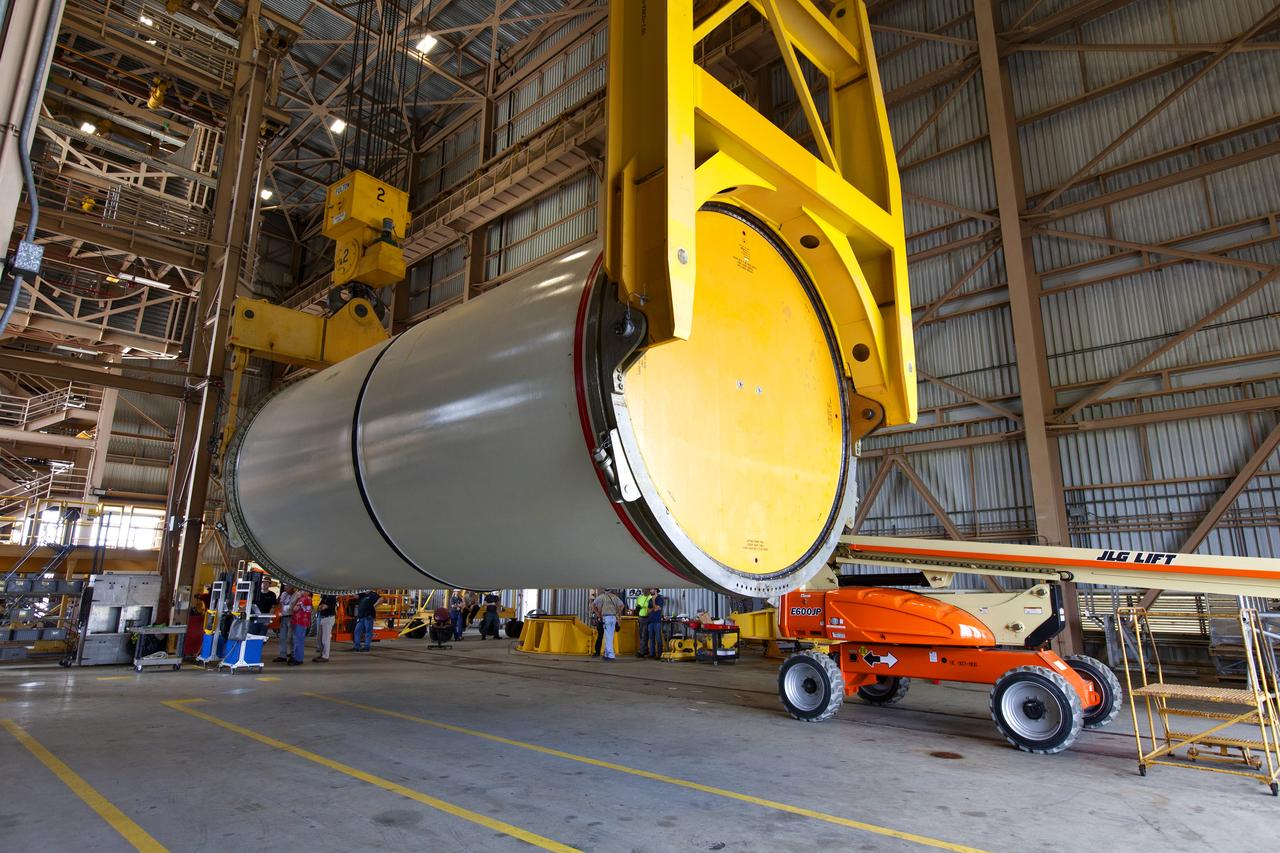
Jacobs technicians, on the Test and Operations Support Contract, practice crane operations with an inert booster rocket segment in the Rotation, Processing and Surge Facility on June 22, 2018, at NASA's Kennedy Space Center in Florida. Dual cranes were used to move the segment from vertical to horizontal, a maneuver known as a "breakover rotation." As part of routine processing operations for the agency's Space Launch System (SLS) rocket, the RPSF team will receive all of the solid rocket fuel segments for inspection and preparation prior to transporting them to the Vehicle Assembly Building for stacking on the mobile launcher. Many pathfinding operations are being done to prepare for launch of the SLS and Orion spacecraft on Exploration Mission-1 and deep space missions.
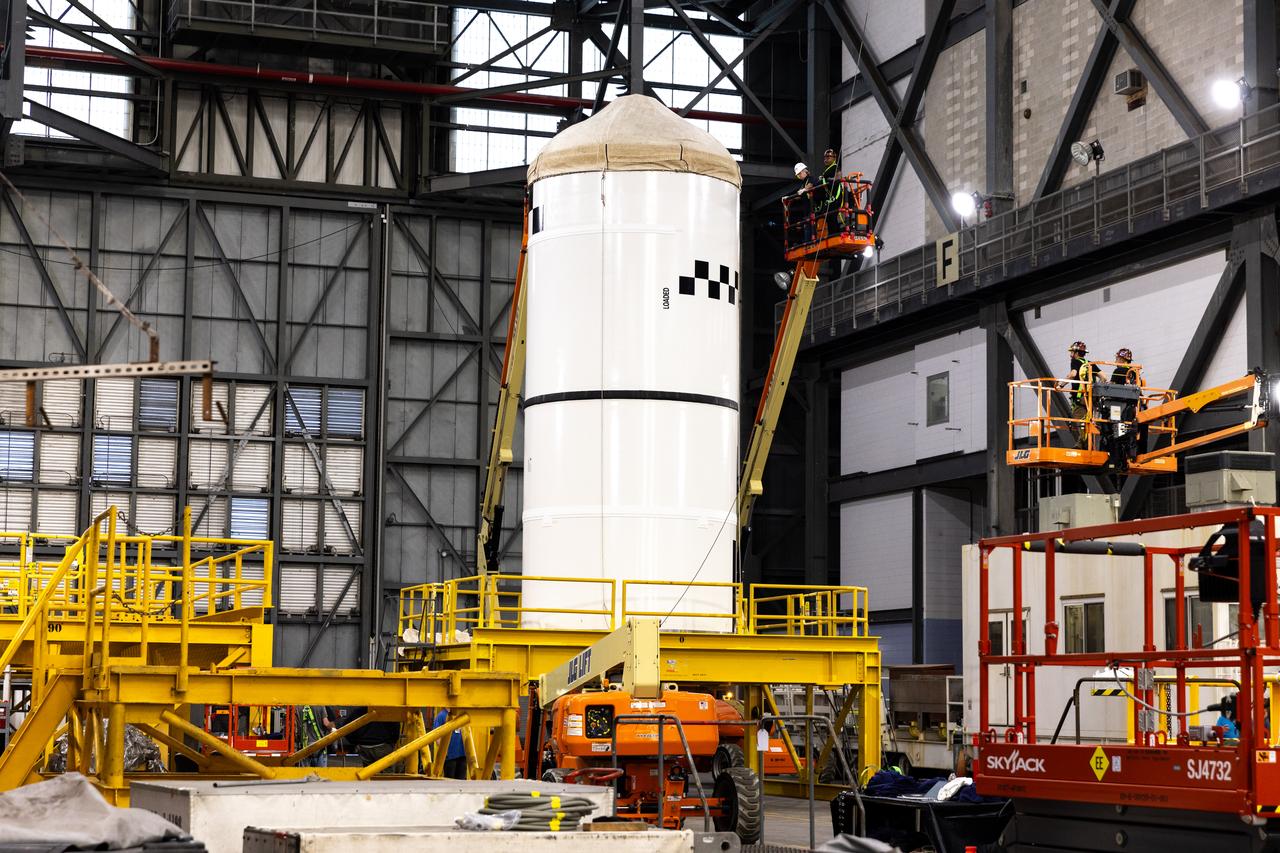
Technicians transport the right forward segment for NASA’s SLS (Space Launch System) Moon rocket boosters from the Rotation Processing and Surge Facility to NASA’s Vehicle Assembly Building in Florida on Monday, Feb. 15, 2025. The right forward segment will be transferred into High Bay 3 where it will be attached to the center forward segment on mobile launcher 1. The twin solid boosters, five segments on each side, will help support the remaining rocket components and the Orion spacecraft during final assembly of the Artemis II Moon rocket and provide more than 75 percent of the total SLS thrust during liftoff from NASA Kennedy’s Launch Pad 39B.
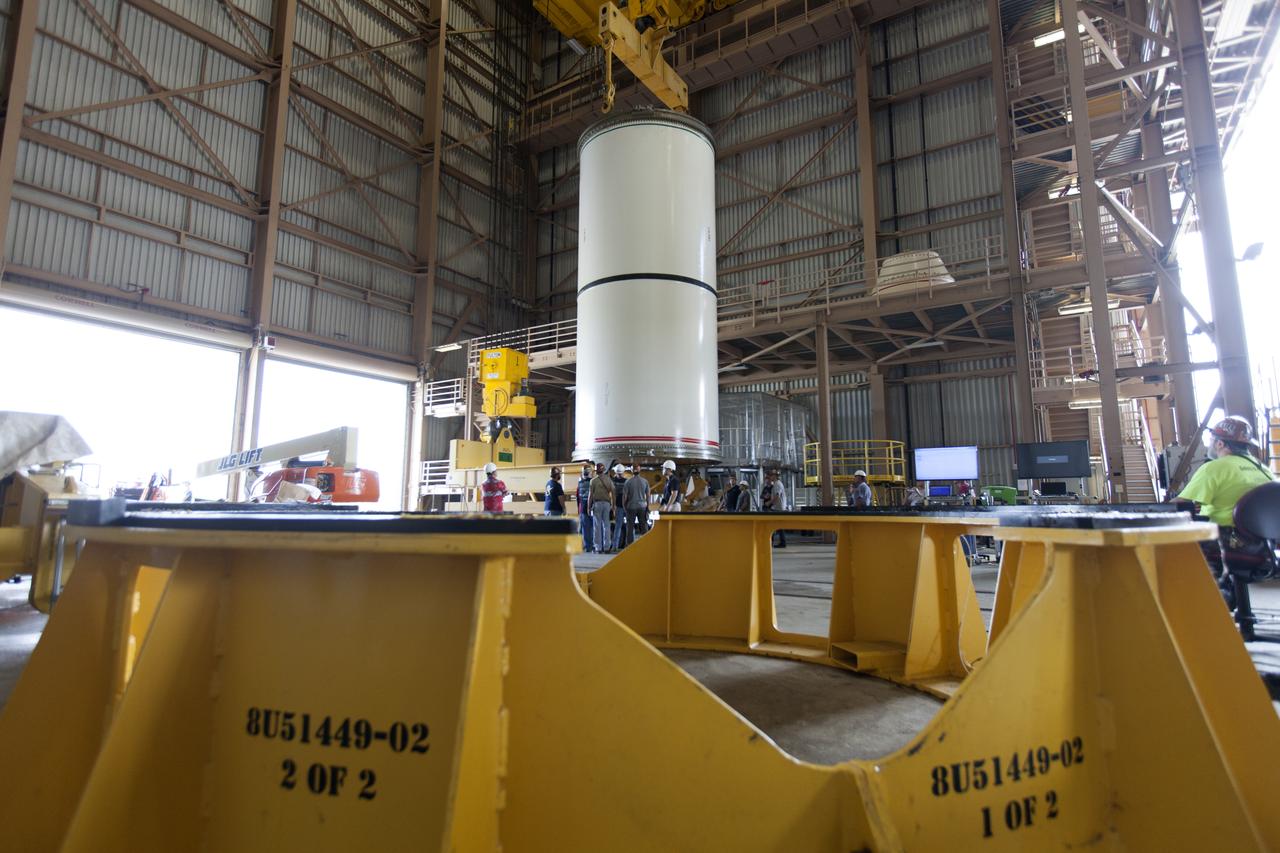
Jacobs technicians, on the Test and Operations Support Contract, practice crane operations with an inert booster rocket segment in the Rotation, Processing and Surge Facility on June 22, 2018, at NASA's Kennedy Space Center in Florida. Dual cranes are being used to move the segment from vertical to horizontal, a maneuver known as a "breakover rotation." As part of routine processing operations for the agency's Space Launch System (SLS) rocket, the RPSF team will receive all of the solid rocket fuel segments for inspection and preparation prior to transporting them to the Vehicle Assembly Building for stacking on the mobile launcher. Many pathfinding operations are being done to prepare for launch of the SLS and Orion spacecraft on Exploration Mission-1 and deep space missions.
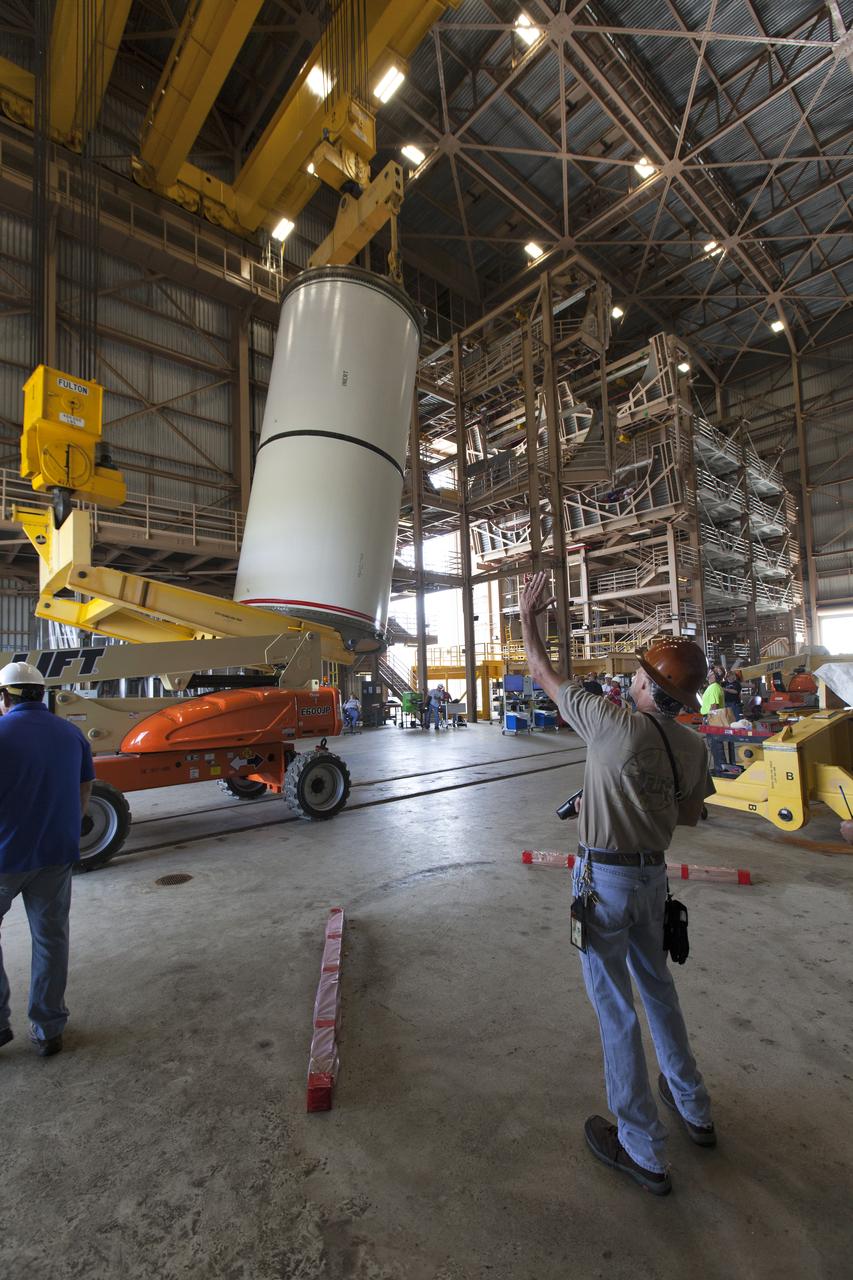
Jacobs technicians, on the Test and Operations Support Contract, practice crane operations with an inert booster rocket segment in the Rotation, Processing and Surge Facility on June 22, 2018, at NASA's Kennedy Space Center in Florida. Dual cranes are being used to move the segment from vertical to horizontal, a maneuver known as a "breakover rotation." As part of routine processing operations for the agency's Space Launch System (SLS) rocket, the RPSF team will receive all of the solid rocket fuel segments for inspection and preparation prior to transporting them to the Vehicle Assembly Building for stacking on the mobile launcher. Many pathfinding operations are being done to prepare for launch of the SLS and Orion spacecraft on Exploration Mission-1 and deep space missions.
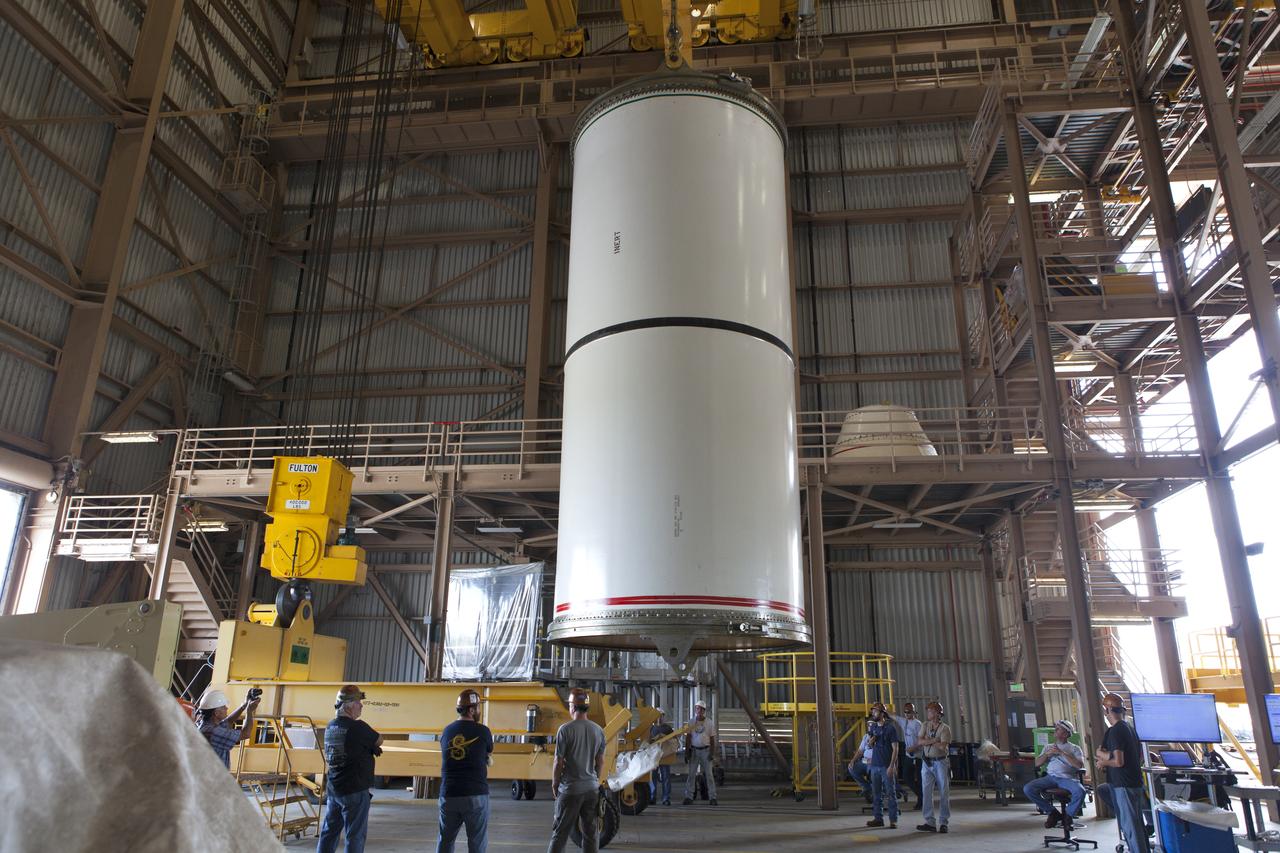
Jacobs technicians, on the Test and Operations Support Contract, practice crane operations with an inert booster rocket segment in the Rotation, Processing and Surge Facility on June 22, 2018, at NASA's Kennedy Space Center in Florida. Dual cranes are being used to move the segment from vertical to horizontal, a maneuver known as a "breakover rotation." As part of routine processing operations for the agency's Space Launch System (SLS) rocket, the RPSF team will receive all of the solid rocket fuel segments for inspection and preparation prior to transporting them to the Vehicle Assembly Building for stacking on the mobile launcher. Many pathfinding operations are being done to prepare for launch of the SLS and Orion spacecraft on Exploration Mission-1 and deep space missions.
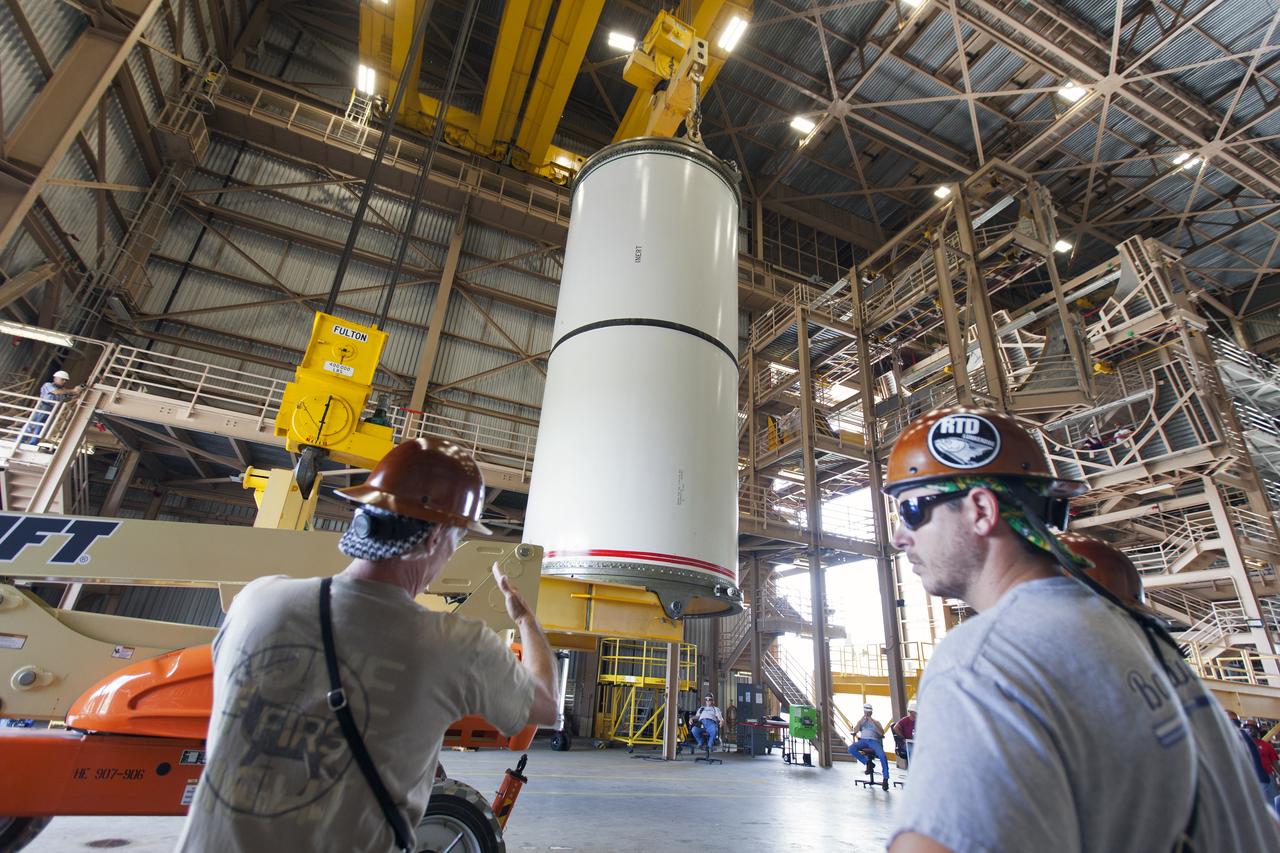
Jacobs technicians, on the Test and Operations Support Contract, practice crane operations with an inert booster rocket segment in the Rotation, Processing and Surge Facility on June 22, 2018, at NASA's Kennedy Space Center in Florida. Dual cranes are being used to move the segment from vertical to horizontal, a maneuver known as a "breakover rotation." As part of routine processing operations for the agency's Space Launch System (SLS) rocket, the RPSF team will receive all of the solid rocket fuel segments for inspection and preparation prior to transporting them to the Vehicle Assembly Building for stacking on the mobile launcher. Many pathfinding operations are being done to prepare for launch of the SLS and Orion spacecraft on Exploration Mission-1 and deep space missions.
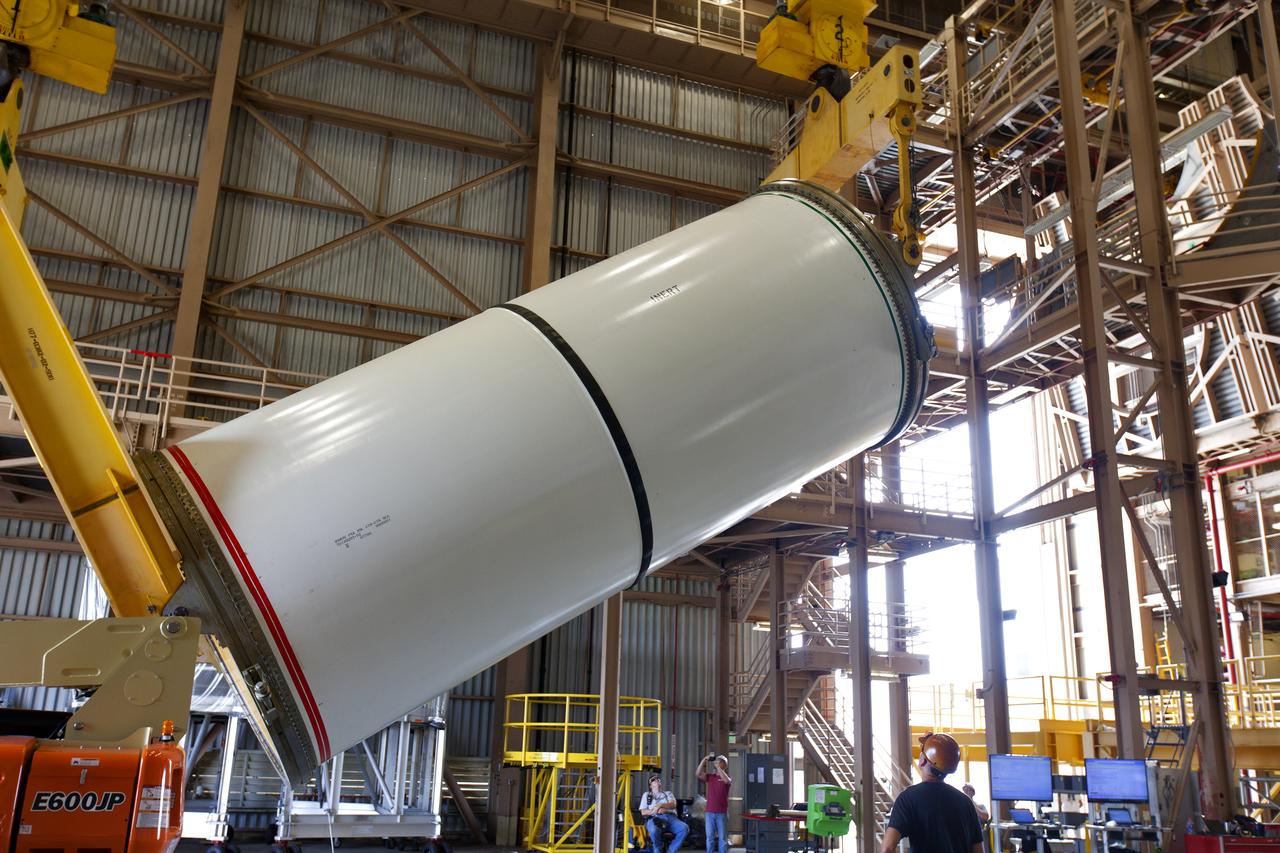
Jacobs technicians, on the Test and Operations Support Contract, practice crane operations with an inert booster rocket segment in the Rotation, Processing and Surge Facility on June 22, 2018, at NASA's Kennedy Space Center in Florida. Dual cranes are used to move the segment from vertical to horizontal, a maneuver known as a "breakover rotation." As part of routine processing operations for the agency's Space Launch System (SLS) rocket, the RPSF team will receive all of the solid rocket fuel segments for inspection and preparation prior to transporting them to the Vehicle Assembly Building for stacking on the mobile launcher. Many pathfinding operations are being done to prepare for launch of the SLS and Orion spacecraft on Exploration Mission-1 and deep space missions.
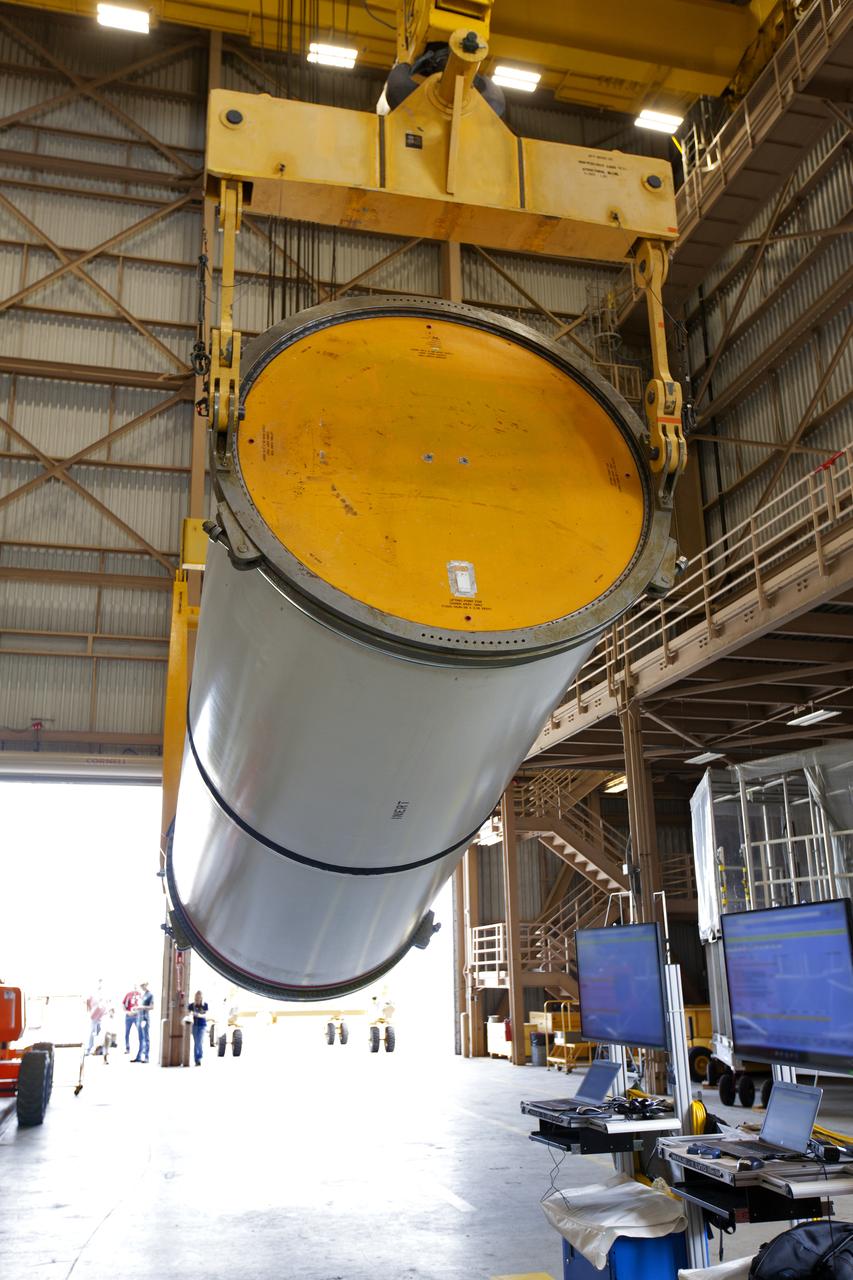
Jacobs technicians, on the Test and Operations Support Contract, practice crane operations with an inert booster rocket segment in the Rotation, Processing and Surge Facility on June 22, 2018, at NASA's Kennedy Space Center in Florida. Dual cranes are used to move the segment from vertical to horizontal, a maneuver known as a "breakover rotation." As part of routine processing operations for the agency's Space Launch System (SLS) rocket, the RPSF team will receive all of the solid rocket fuel segments for inspection and preparation prior to transporting them to the Vehicle Assembly Building for stacking on the mobile launcher. Many pathfinding operations are being done to prepare for launch of the SLS and Orion spacecraft on Exploration Mission-1 and deep space missions.
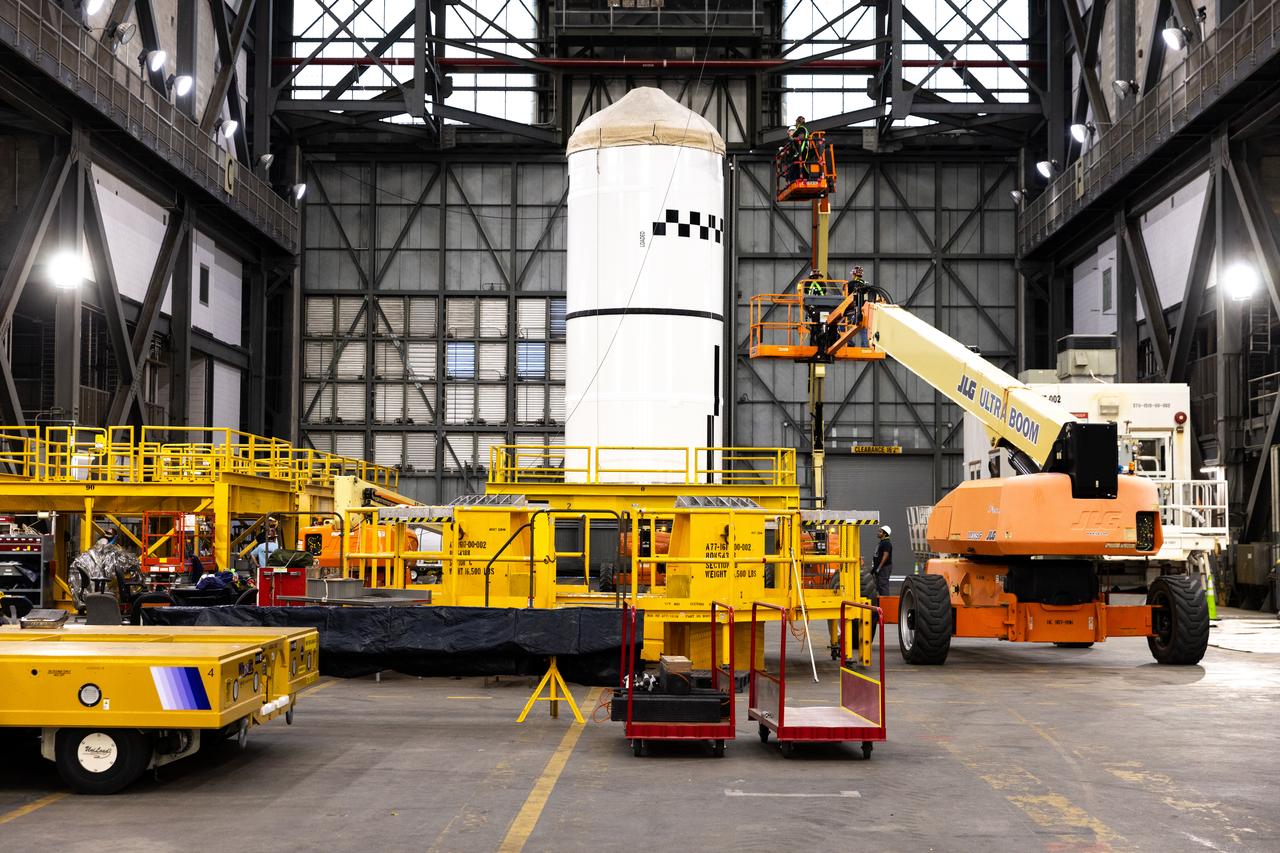
Technicians transport the right forward segment for NASA’s SLS (Space Launch System) Moon rocket boosters from the Rotation Processing and Surge Facility to NASA’s Vehicle Assembly Building in Florida on Monday, Feb. 15, 2025. The right forward segment will be transferred into High Bay 3 where it will be attached to the center forward segment on mobile launcher 1. The twin solid boosters, five segments on each side, will help support the remaining rocket components and the Orion spacecraft during final assembly of the Artemis II Moon rocket and provide more than 75 percent of the total SLS thrust during liftoff from NASA Kennedy’s Launch Pad 39B.
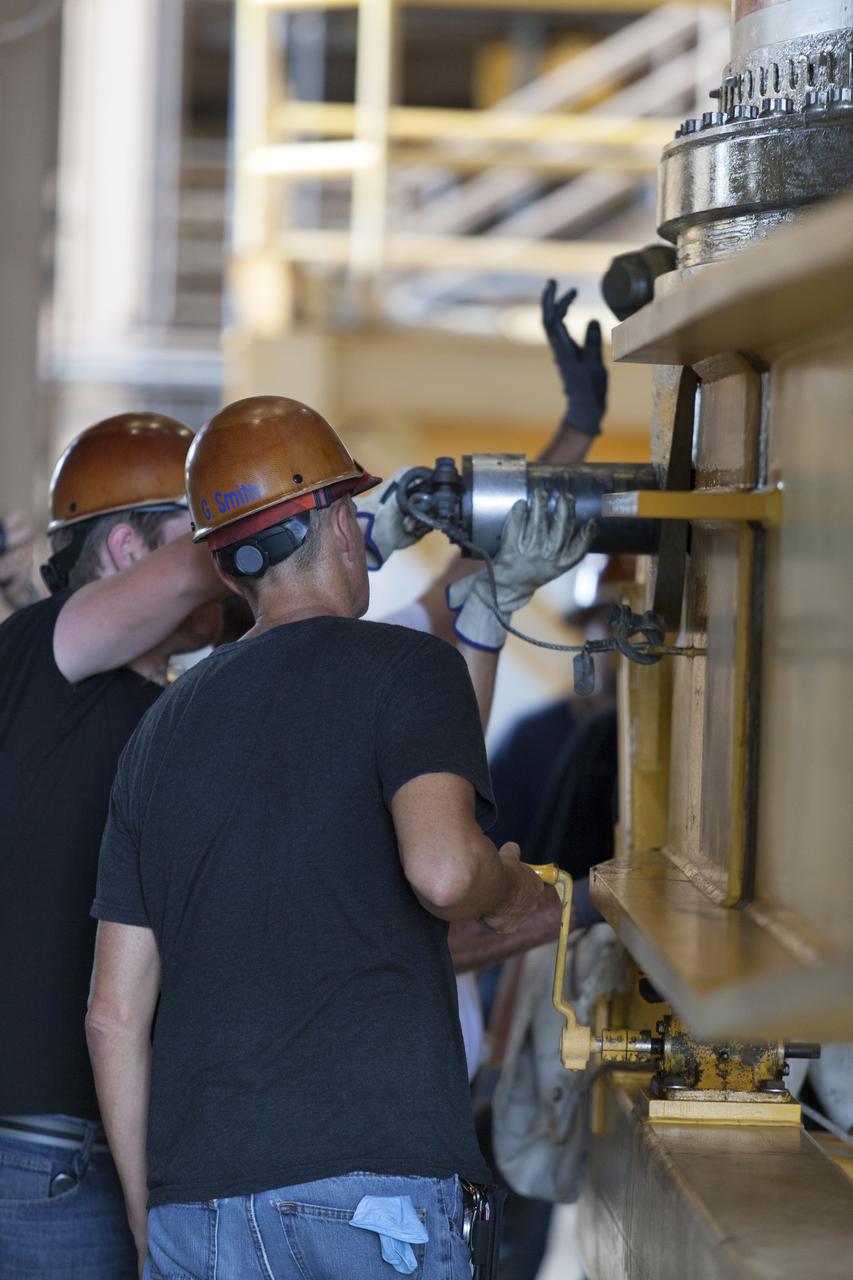
Jacobs technicians, on the Test and Operations Support Contract, check bolt fittings as they practice crane operations with an inert booster rocket segment in the Rotation, Processing and Surge Facility on June 22, 2018, at NASA's Kennedy Space Center in Florida. Dual cranes are being used to move the segment from vertical to horizontal, a maneuver known as a "breakover rotation." As part of routine processing operations for the agency's Space Launch System (SS) rocket, the RPSF team will receive all of the solid rocket fuel segments for inspection and preparation prior to transporting them to the Vehicle Assembly Building for stacking on the mobile launcher. Many pathfinding operations are being done to prepare for launch of the SLS and Orion spacecraft on Exploration Mission-1 and deep space missions.
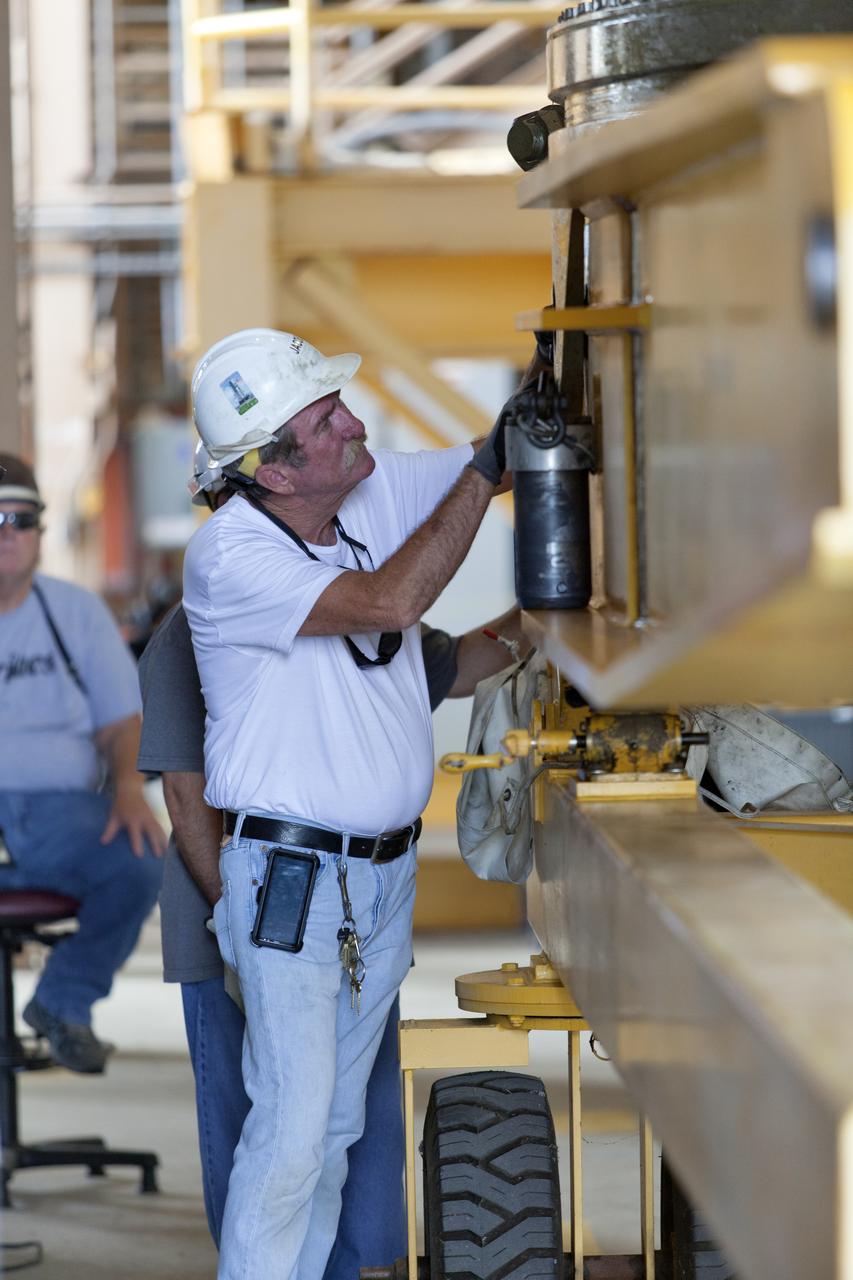
A Jacobs technician, on the Test and Operations Support Contract, checks bolt fittings during practice crane operations with an inert booster rocket segment in the Rotation, Processing and Surge Facility on June 22, 2018, at NASA's Kennedy Space Center in Florida. Dual cranes will be used to move the segment from vertical to horizontal, a maneuver known as a "breakover rotation." As part of routine processing operations for the agency's Space Launch System (SLS) rocket, the RPSF team will receive all of the solid rocket fuel segments for inspection and preparation prior to transporting them to the Vehicle Assembly Building for stacking on the mobile launcher. Many pathfinding operations are being done to prepare for launch of the SLS and Orion spacecraft on Exploration Mission-1 and deep space missions.
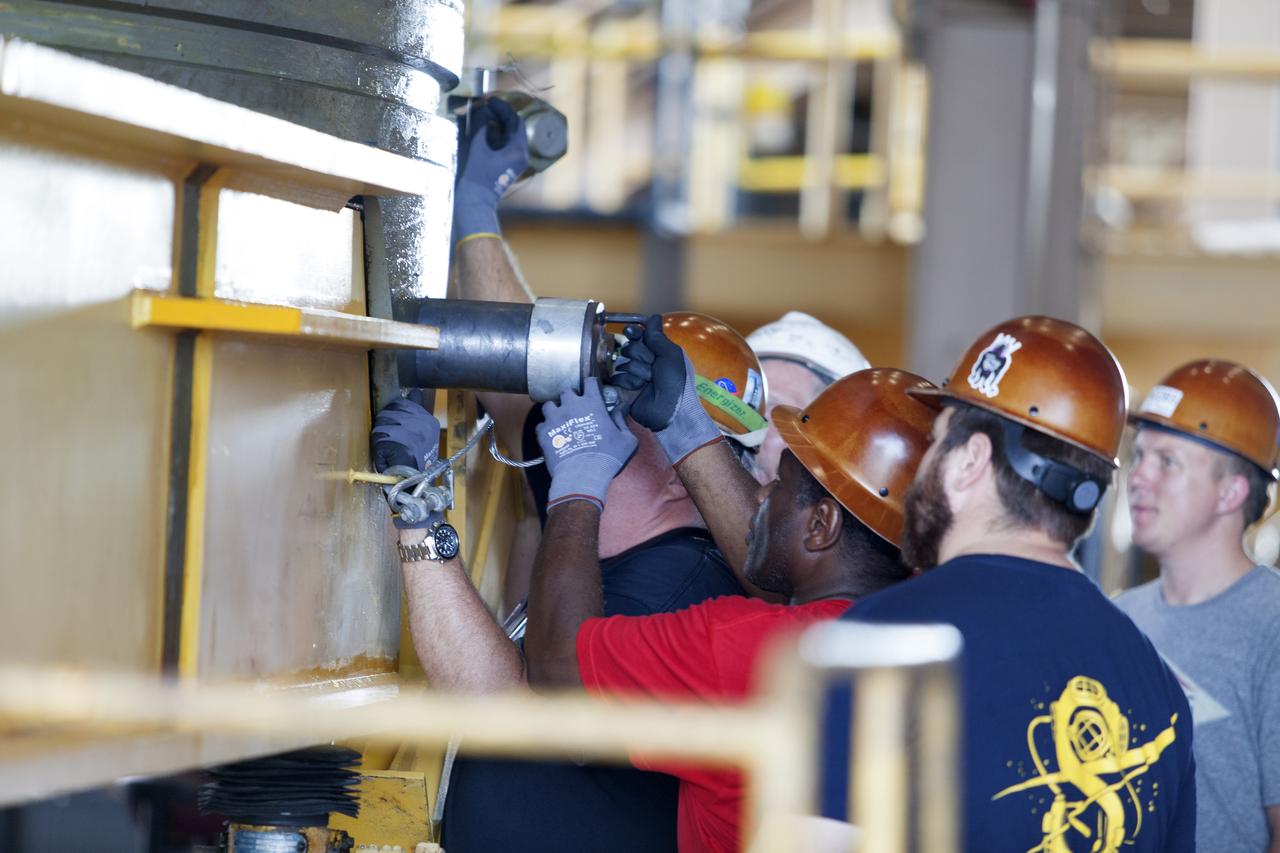
Jacobs technicians, on the Test and Operations Support Contract, check bolt fittings as they practice crane operations with an inert booster rocket segment in the Rotation, Processing and Surge Facility on June 22, 2018, at NASA's Kennedy Space Center in Florida. Dual cranes are being used to move the segment from vertical to horizontal, a maneuver known as a "breakover rotation." As part of routine processing operations for the agency's Space Launch System (SLS) rocket, the RPSF team will receive all of the solid rocket fuel segments for inspection and preparation prior to transporting them to the Vehicle Assembly Building for stacking on the mobile launcher. Many pathfinding operations are being done to prepare for launch of the SLS and Orion spacecraft on Exploration Mission-1 and deep space missions.
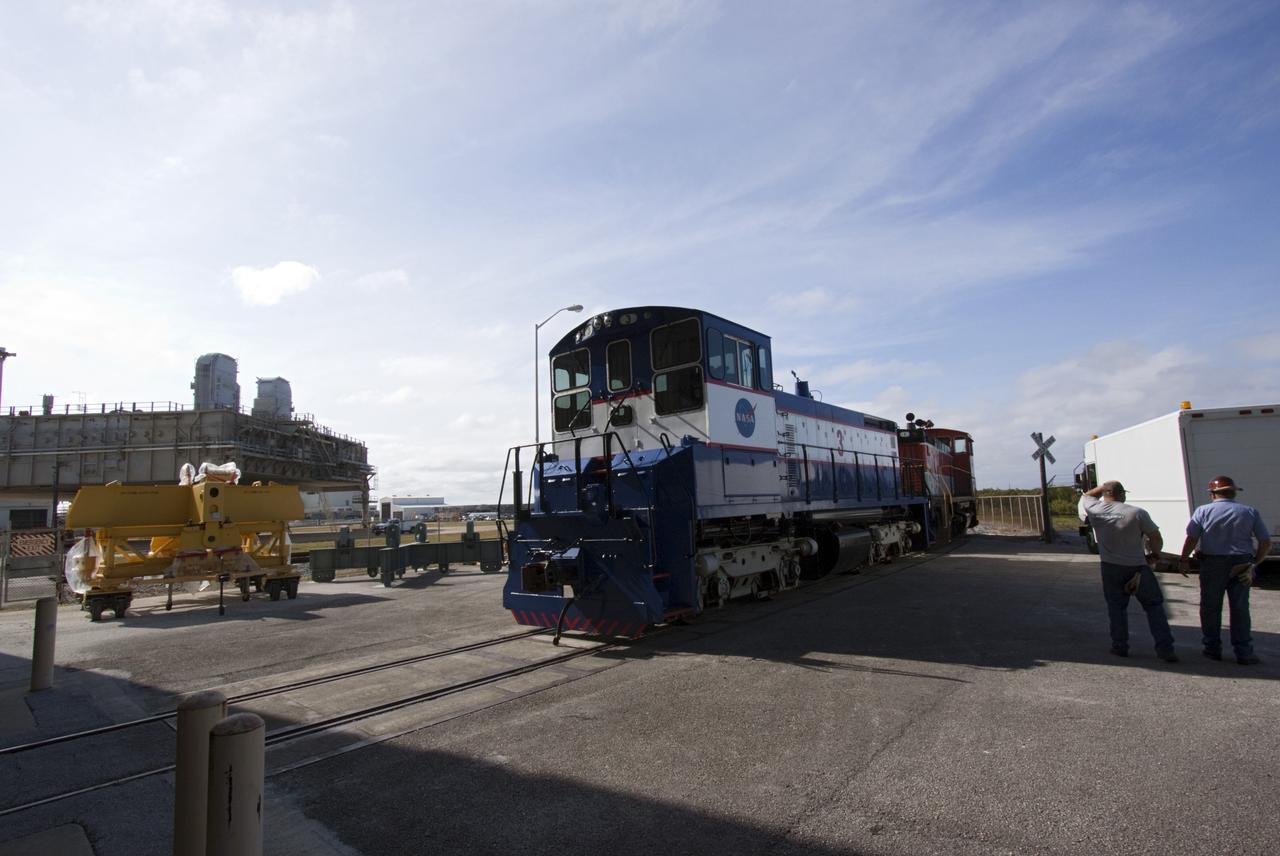
CAPE CANAVERAL, Fla. – NASA locomotive No. 1 pulls locomotive No. 3 out of the Rotation, Processing and Surge Facility, or RPSF, at the Kennedy Space Center in Florida. Inside, an overhead crane was used to lift NASA locomotive No. 2 off of its trucks and moved aside, so locomotive No. 3 could be raised off its trucks and moved into position atop the trucks previously used by locomotive No. 2. The RPSF was built to support work on the solid rocket used motors during the space shuttle era. The facility had never previously been used for another purpose, but is now free to serve other customers. With rails running into the building's high bay and a pair of heavy-lift cranes positioned overhead, the facility's capabilities were a perfect fit for the NASA Railroad's needs. Railroad managers wanted to trade the wheel and axle assemblies, or trucks, of locomotives No. 2 and No. 3. Locomotive No. 3 was painstakingly restored in recent years by the NASA Railroad team, and handles much of the rail work required at the center in the post-shuttle era. But the trucks on locomotive No. 2 are in better shape and are more environmentally friendly. For more information, visit: http://www.nasa.gov/exploration/systems/ground/rpsf_locomotives.html Photo credit: NASA/Jim Grossmann
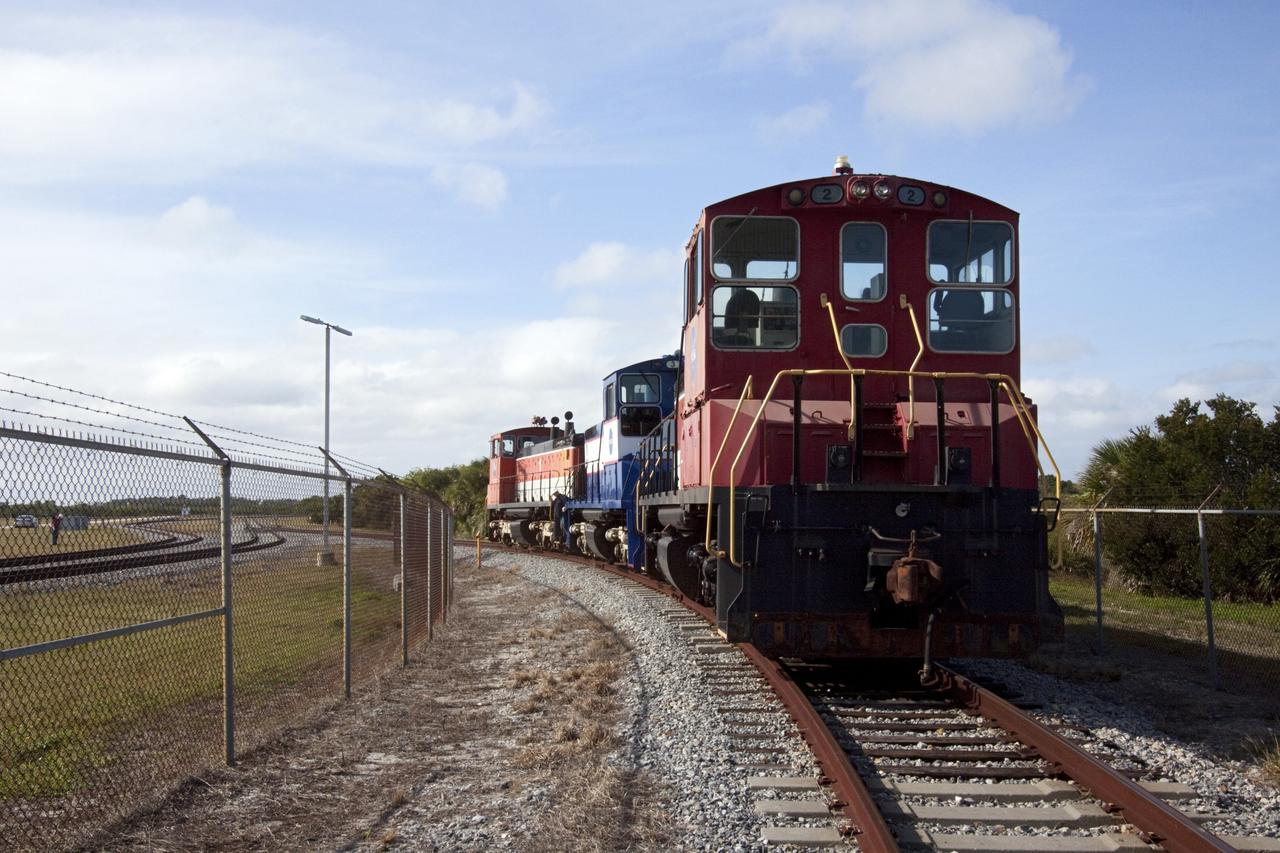
CAPE CANAVERAL, Fla. – At Kennedy Space Center in Florida, NASA railroad locomotive No. 1 pulls locomotives 2 and 3 away from Launch Complex 39 area's Rotation, Processing and Surge Facility, or RPSF, where wheel and axle assemblies were swapped between locomotives 2 and 3. The RPSF was built to support work on the solid rocket used motors during the space shuttle era. The facility had never previously been used for another purpose, but is now free to serve other customers. With rails running into the building's high bay and a pair of heavy-lift cranes positioned overhead, the facility's capabilities were a perfect fit for the NASA Railroad's needs. Railroad managers wanted to trade the wheel and axle assemblies, or trucks, of locomotives No. 2 and No. 3. Locomotive No. 3 was painstakingly restored in recent years by the NASA Railroad team, and handles much of the rail work required at the center in the post-shuttle era. But the trucks on locomotive No. 2 are in better shape and are more environmentally friendly. For more information, visit: http://www.nasa.gov/exploration/systems/ground/rpsf_locomotives.html Photo credit: NASA/Jim Grossmann
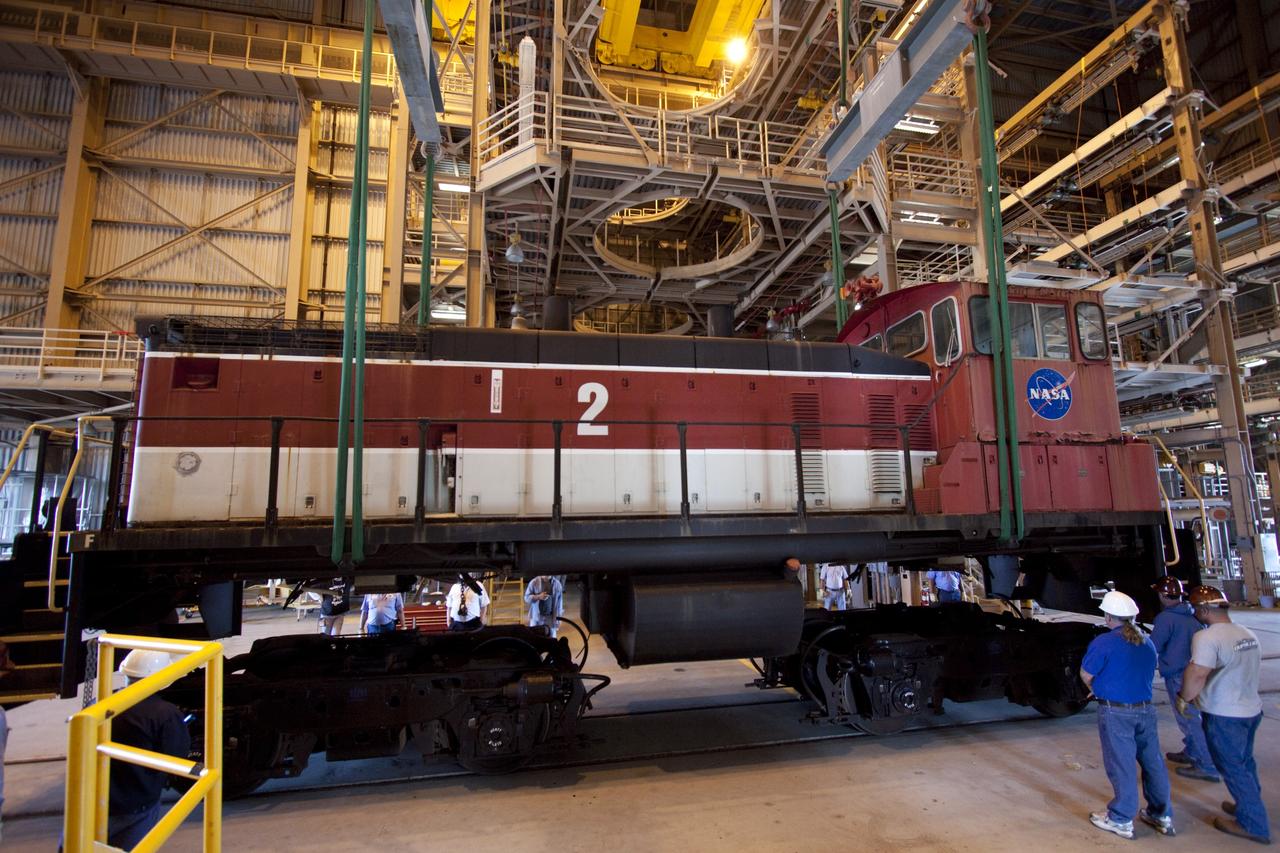
CAPE CANAVERAL, Fla. – NASA locomotive No. 1 pulls locomotive No. 3 out of the Rotation, Processing and Surge Facility, or RPSF, at the Kennedy Space Center in Florida. Inside, an overhead crane was used to lift NASA locomotive No. 2 off of its trucks and moved aside, so locomotive No. 3 could be raised off its trucks and moved into position atop the trucks previously used by locomotive No. 2. The RPSF was built to support work on the solid rocket used motors during the space shuttle era. The facility had never previously been used for another purpose, but is now free to serve other customers. With rails running into the building's high bay and a pair of heavy-lift cranes positioned overhead, the facility's capabilities were a perfect fit for the NASA Railroad's needs. Railroad managers wanted to trade the wheel and axle assemblies, or trucks, of locomotives No. 2 and No. 3. Locomotive No. 3 was painstakingly restored in recent years by the NASA Railroad team, and handles much of the rail work required at the center in the post-shuttle era. But the trucks on locomotive No. 2 are in better shape and are more environmentally friendly. For more information, visit: http://www.nasa.gov/exploration/systems/ground/rpsf_locomotives.html Photo credit: NASA/Jim Grossmann
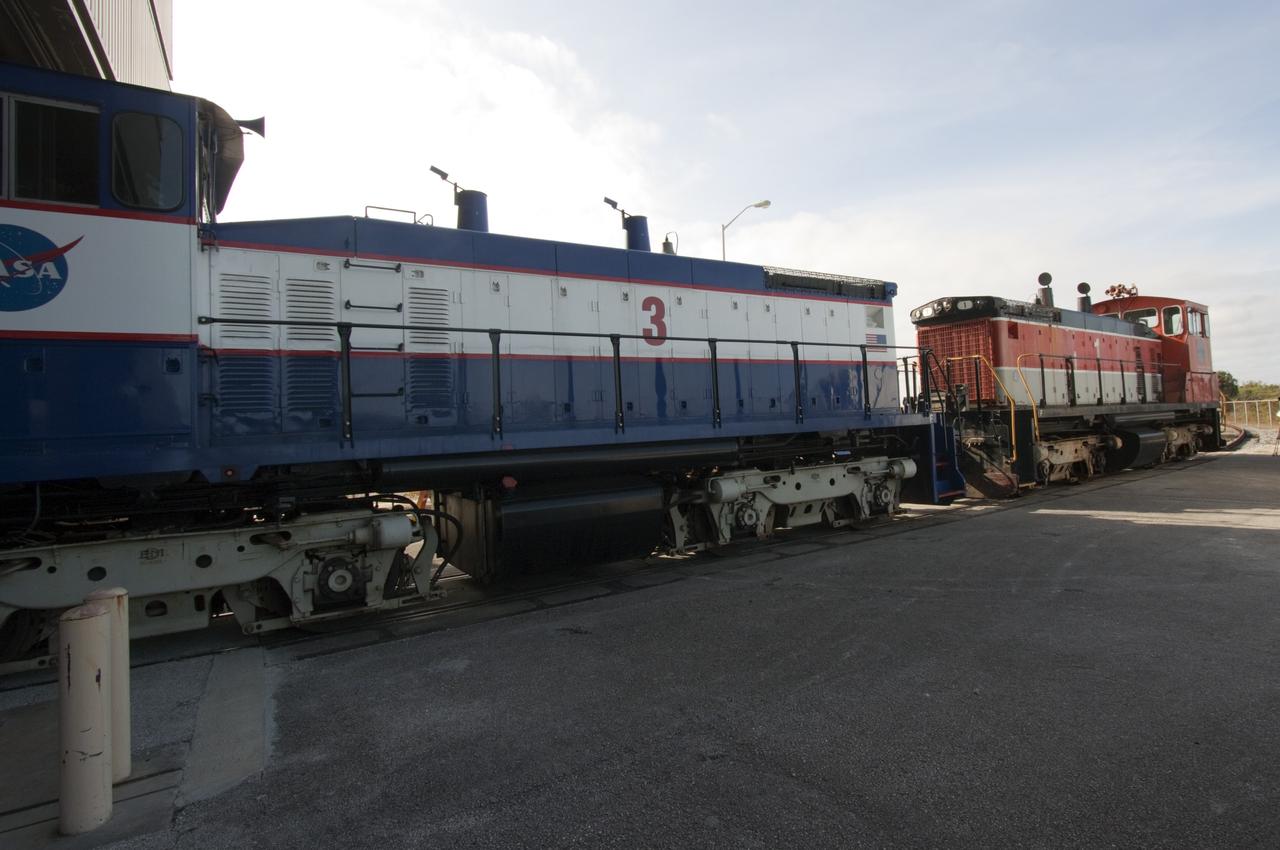
CAPE CANAVERAL, Fla. – NASA locomotive No. 1 pulls locomotive No. 3 out of the Rotation, Processing and Surge Facility, or RPSF, at the Kennedy Space Center in Florida. Inside, an overhead crane was used to lift NASA locomotive No. 2 off of its trucks and moved aside, so locomotive No. 3 could be raised off its trucks and moved into position atop the trucks previously used by locomotive No. 2. The RPSF was built to support work on the solid rocket used motors during the space shuttle era. The facility had never previously been used for another purpose, but is now free to serve other customers. With rails running into the building's high bay and a pair of heavy-lift cranes positioned overhead, the facility's capabilities were a perfect fit for the NASA Railroad's needs. Railroad managers wanted to trade the wheel and axle assemblies, or trucks, of locomotives No. 2 and No. 3. Locomotive No. 3 was painstakingly restored in recent years by the NASA Railroad team, and handles much of the rail work required at the center in the post-shuttle era. But the trucks on locomotive No. 2 are in better shape and are more environmentally friendly. For more information, visit: http://www.nasa.gov/exploration/systems/ground/rpsf_locomotives.html Photo credit: NASA/Jim Grossmann
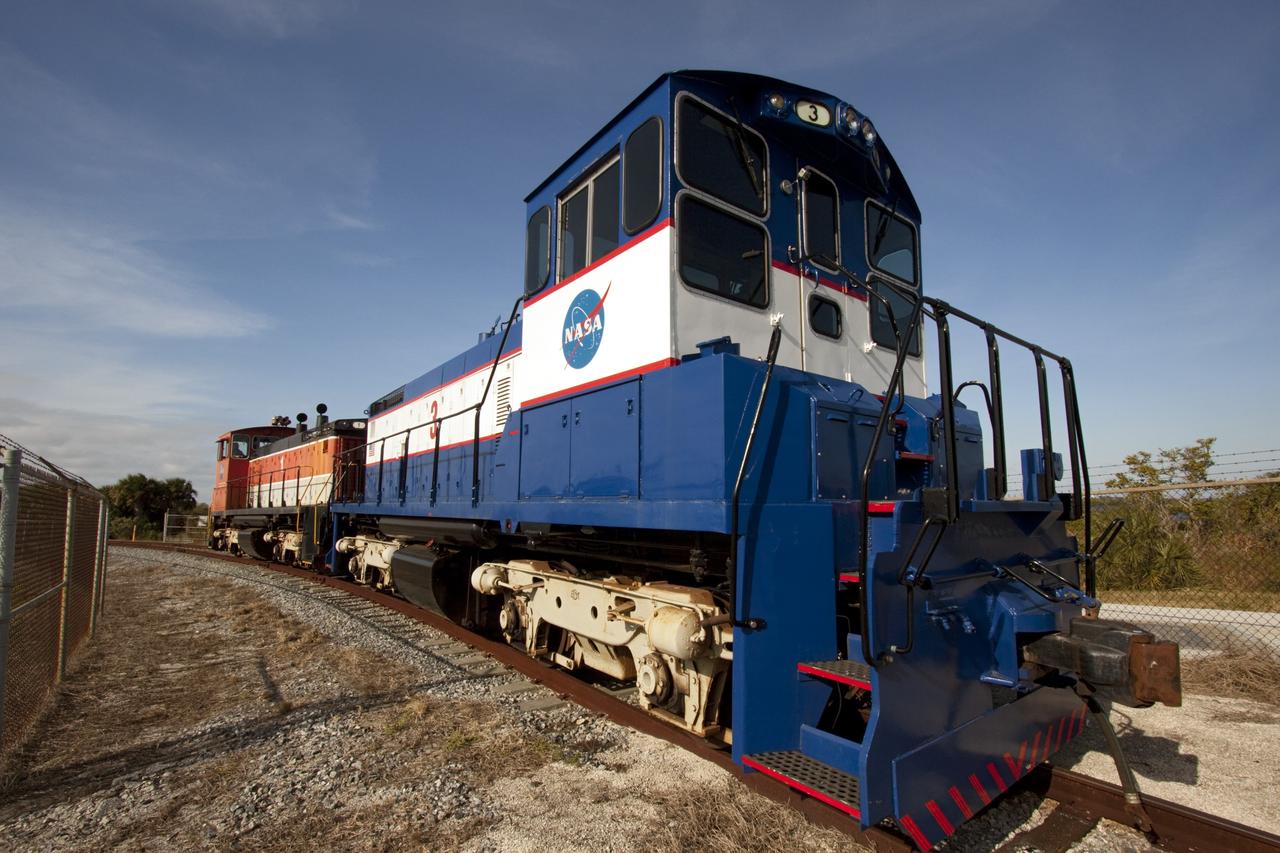
CAPE CANAVERAL, Fla. – NASA locomotive No. 1 pulls locomotive No. 3 out of the Rotation, Processing and Surge Facility, or RPSF, at the Kennedy Space Center in Florida. Inside, an overhead crane was used to lift NASA locomotive No. 2 off of its trucks and moved aside, so locomotive No. 3 could be raised off its trucks and moved into position atop the trucks previously used by locomotive No. 2. The RPSF was built to support work on the solid rocket used motors during the space shuttle era. The facility had never previously been used for another purpose, but is now free to serve other customers. With rails running into the building's high bay and a pair of heavy-lift cranes positioned overhead, the facility's capabilities were a perfect fit for the NASA Railroad's needs. Railroad managers wanted to trade the wheel and axle assemblies, or trucks, of locomotives No. 2 and No. 3. Locomotive No. 3 was painstakingly restored in recent years by the NASA Railroad team, and handles much of the rail work required at the center in the post-shuttle era. But the trucks on locomotive No. 2 are in better shape and are more environmentally friendly. For more information, visit: http://www.nasa.gov/exploration/systems/ground/rpsf_locomotives.html Photo credit: NASA/Jim Grossmann
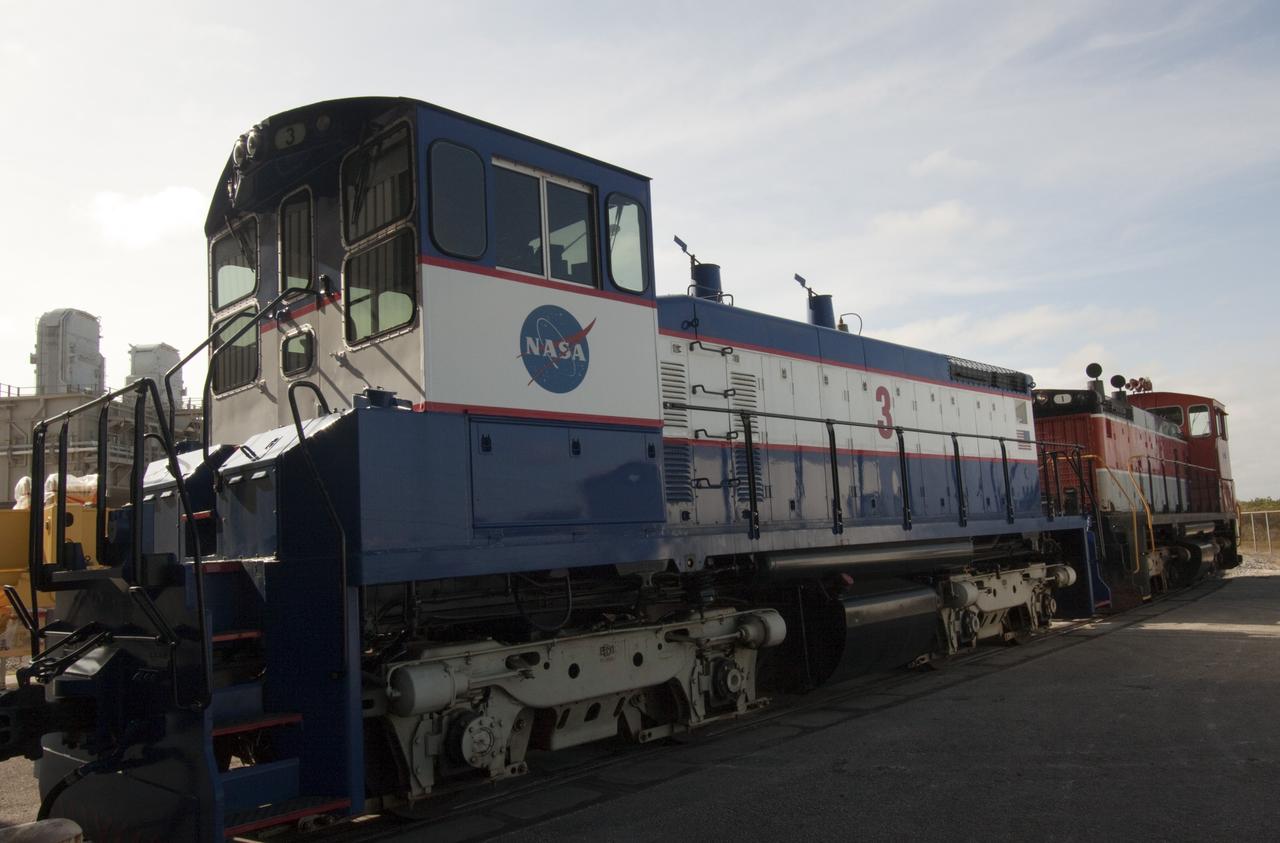
CAPE CANAVERAL, Fla. – NASA locomotive No. 1 pulls locomotive No. 3 out of the Rotation, Processing and Surge Facility, or RPSF, at the Kennedy Space Center in Florida. Inside, an overhead crane was used to lift NASA locomotive No. 2 off of its trucks and moved aside, so locomotive No. 3 could be raised off its trucks and moved into position atop the trucks previously used by locomotive No. 2. The RPSF was built to support work on the solid rocket used motors during the space shuttle era. The facility had never previously been used for another purpose, but is now free to serve other customers. With rails running into the building's high bay and a pair of heavy-lift cranes positioned overhead, the facility's capabilities were a perfect fit for the NASA Railroad's needs. Railroad managers wanted to trade the wheel and axle assemblies, or trucks, of locomotives No. 2 and No. 3. Locomotive No. 3 was painstakingly restored in recent years by the NASA Railroad team, and handles much of the rail work required at the center in the post-shuttle era. But the trucks on locomotive No. 2 are in better shape and are more environmentally friendly. For more information, visit: http://www.nasa.gov/exploration/systems/ground/rpsf_locomotives.html Photo credit: NASA/Jim Grossmann
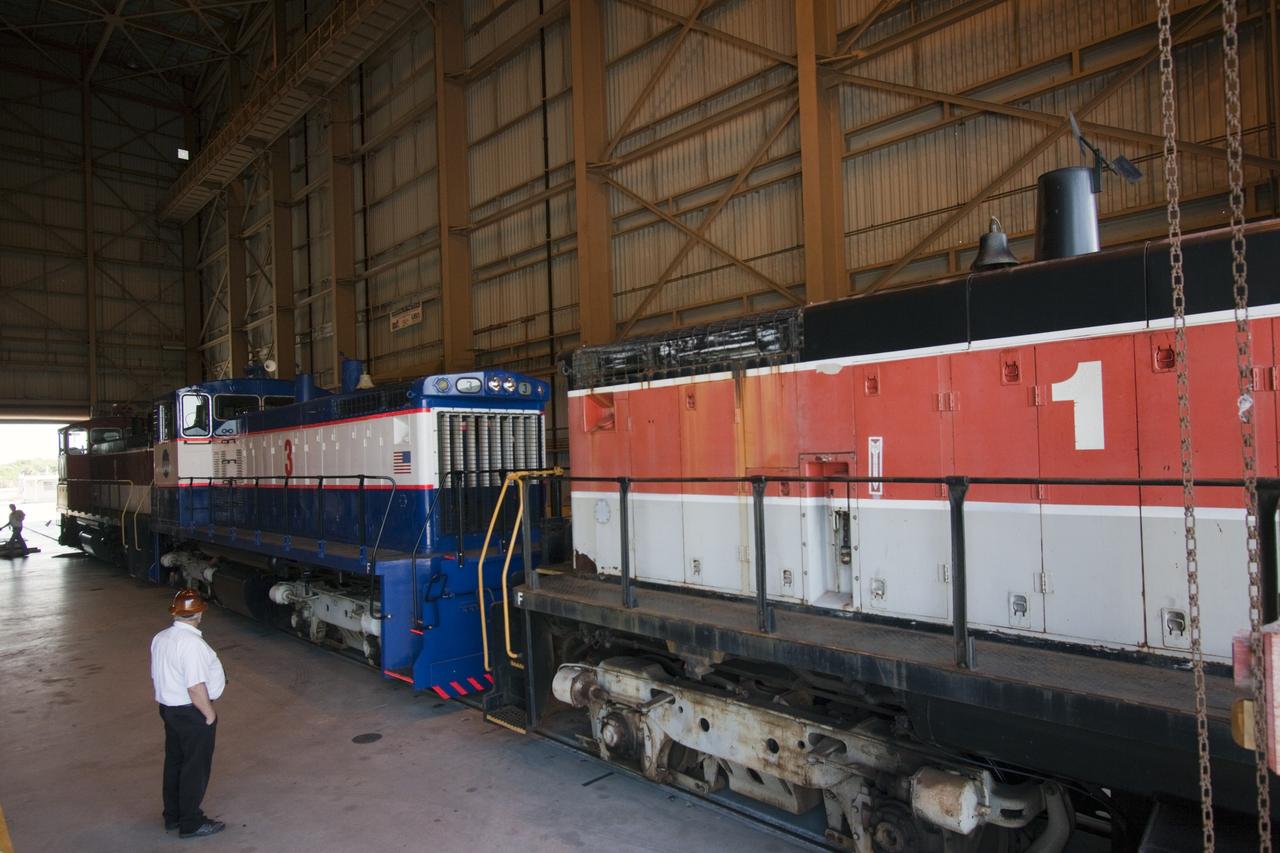
CAPE CANAVERAL, Fla. – Inside the Rotation, Processing and Surge Facility, or RPSF, at the Kennedy Space Center in Florida, NASA locomotive No. 1 pulls locomotives No. 2 and 3 out after wheel and axle assemblies to be swapped between locomotives 2 and 3. The RPSF was built to support work on the solid rocket used motors during the space shuttle era. The facility had never previously been used for another purpose, but is now free to serve other customers. With rails running into the building's high bay and a pair of heavy-lift cranes positioned overhead, the facility's capabilities were a perfect fit for the NASA Railroad's needs. Railroad managers wanted to trade the wheel and axle assemblies, or trucks, of locomotives No. 2 and No. 3. Locomotive No. 3 was painstakingly restored in recent years by the NASA Railroad team, and handles much of the rail work required at the center in the post-shuttle era. But the trucks on locomotive No. 2 are in better shape and are more environmentally friendly. For more information, visit: http://www.nasa.gov/exploration/systems/ground/rpsf_locomotives.html Photo credit: NASA/Jim Grossmann