NASA Wide-field Infrared Survey Explorer mission will survey the entire sky in a portion of the electromagnetic spectrum called the mid-infrared with far greater sensitivity than any previous mission or program ever has.
Wide-field Infrared Survey Explorer Artist Concept
Artist concept of Wide-field Infrared Survey Explorer. A new NASA mission will scan the entire sky in infrared light in search of nearby cool stars, planetary construction zones and the brightest galaxies in the universe.  http://photojournal.jpl.nasa.gov/catalog/PIA06927
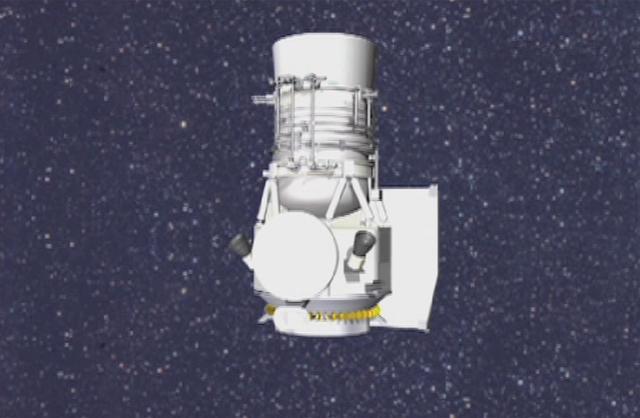
Artist Concept of Wide-field Infrared Survey Explorer WISE
This artist concept shows NASA Wide-field Infrared Survey Explorer rotating in space, revealing all sides of the spacecraft.
Views of WISE in Space Artist Concept
NASA Wide-field Infrared Survey Explorer, or WISE, spacecraft sits on the test stand after connection to the conical adapter.
NASA WISE Spacecraft sits on Test Stand
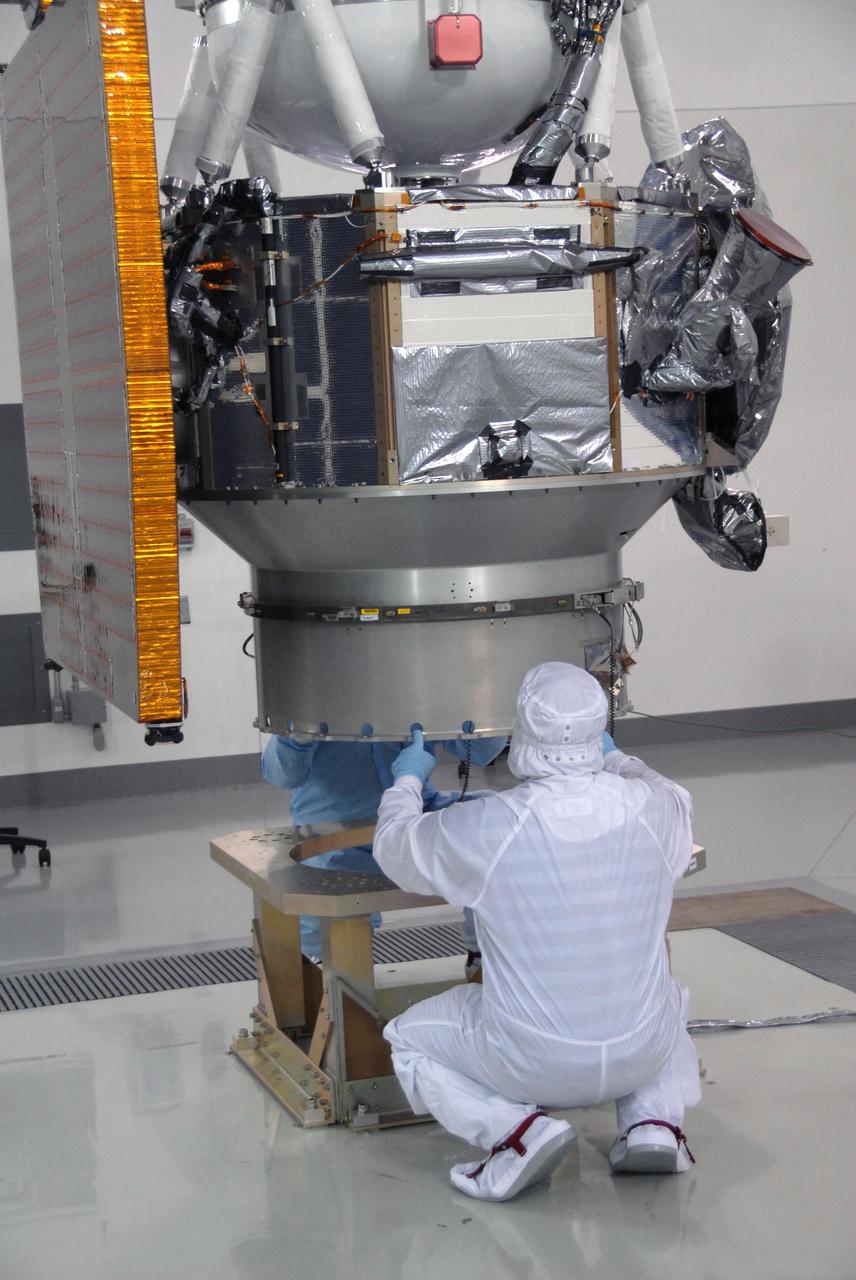
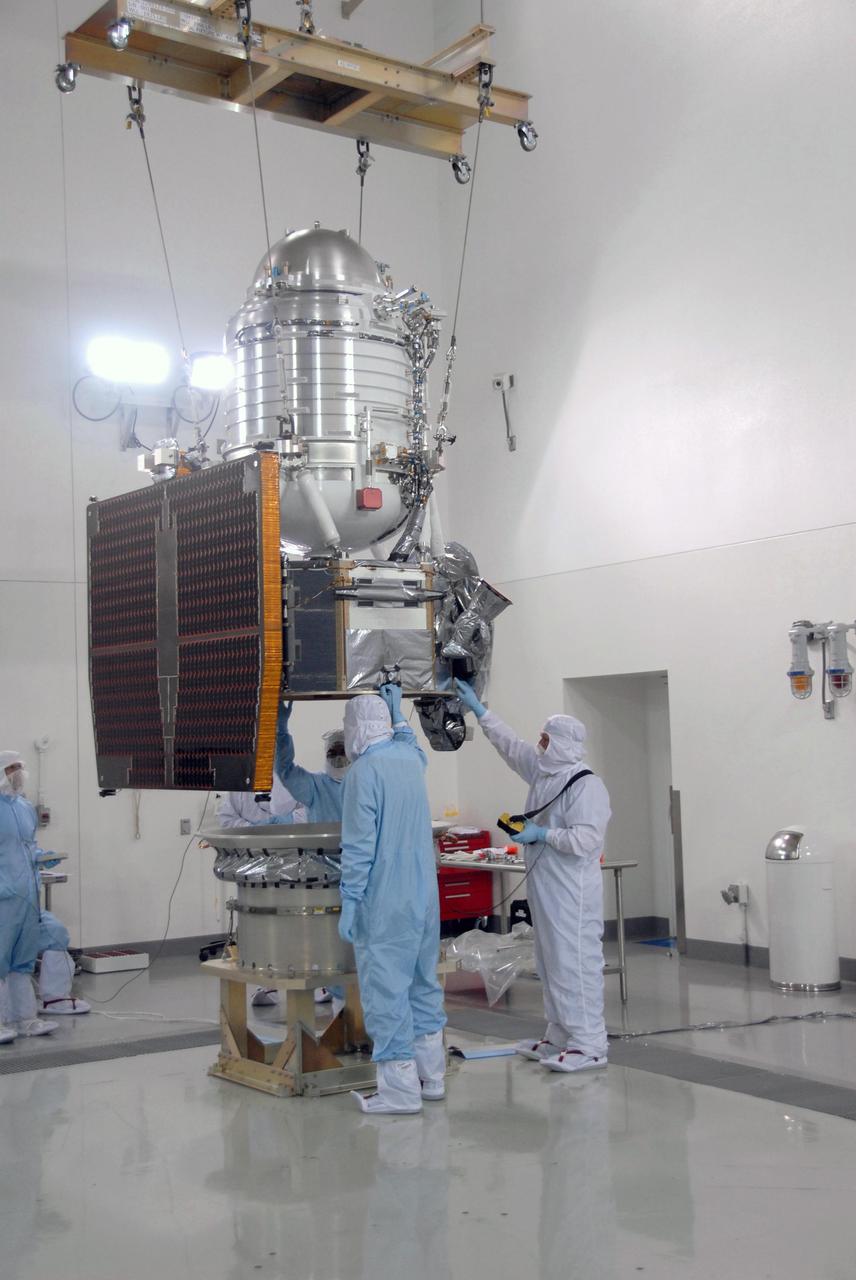
Workers check NASA Wide-field Infrared Survey Explorer, or WISE, spacecraft as it is lowered onto a work stand.
NASA WISE Spacecraft Lowered onto Work Stand
Seen as a red dusty cloud in this image from NASA Wide-field Infrared Survey Explorer, Puppis A is the remnant of a supernova explosion.
Ancient Supernova Revealed
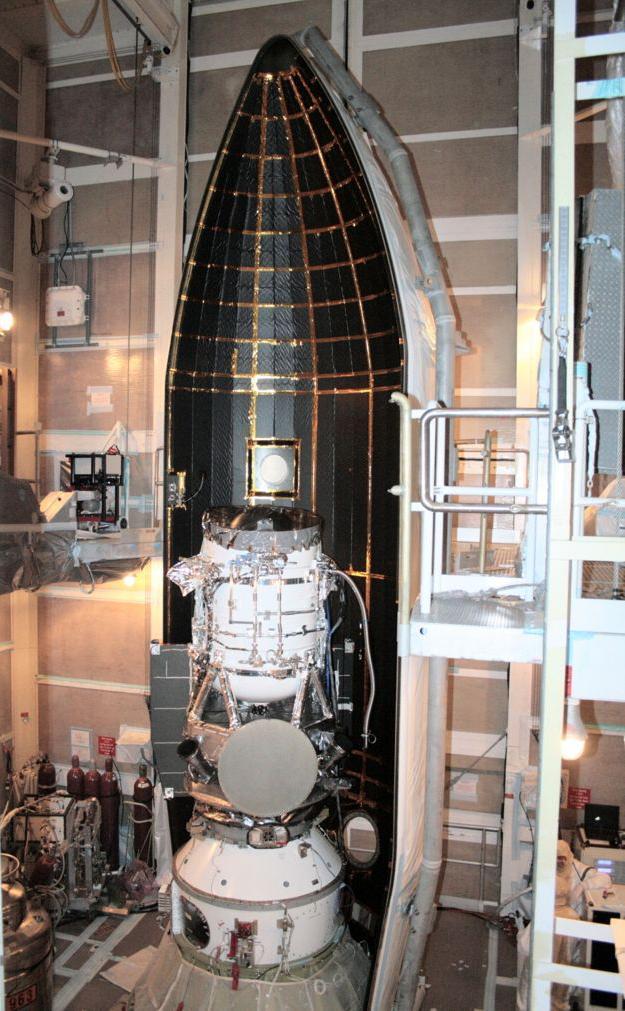
NASA Wide-field Infrared Survey Explorer is shown inside one-half of the nose cone, or fairing, that will protect it during launch.
WISE Snug in its Nose Cone
NASA Wide-field Infrared Survey Explorer is shown inside one-half of the nose cone, or fairing, that will protect it during launch.
WISE Snug in its Nose Cone
NASA Wide-field Infrared Survey Explorer arrives at Vandenberg Air Force Base
WISE Arrives at Vandenberg Air Force Base
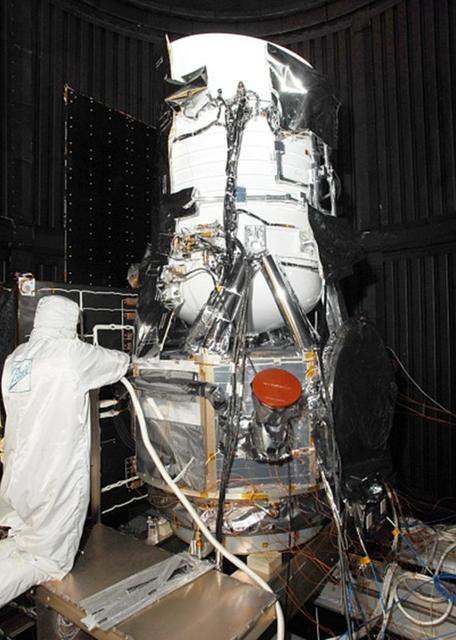
NASA Wide-field Infrared Survey Explorer in the clean room at Ball Aerospace & Technologies Corp., in Boulder, Colo.
WISE Spacecraft in Clean Room
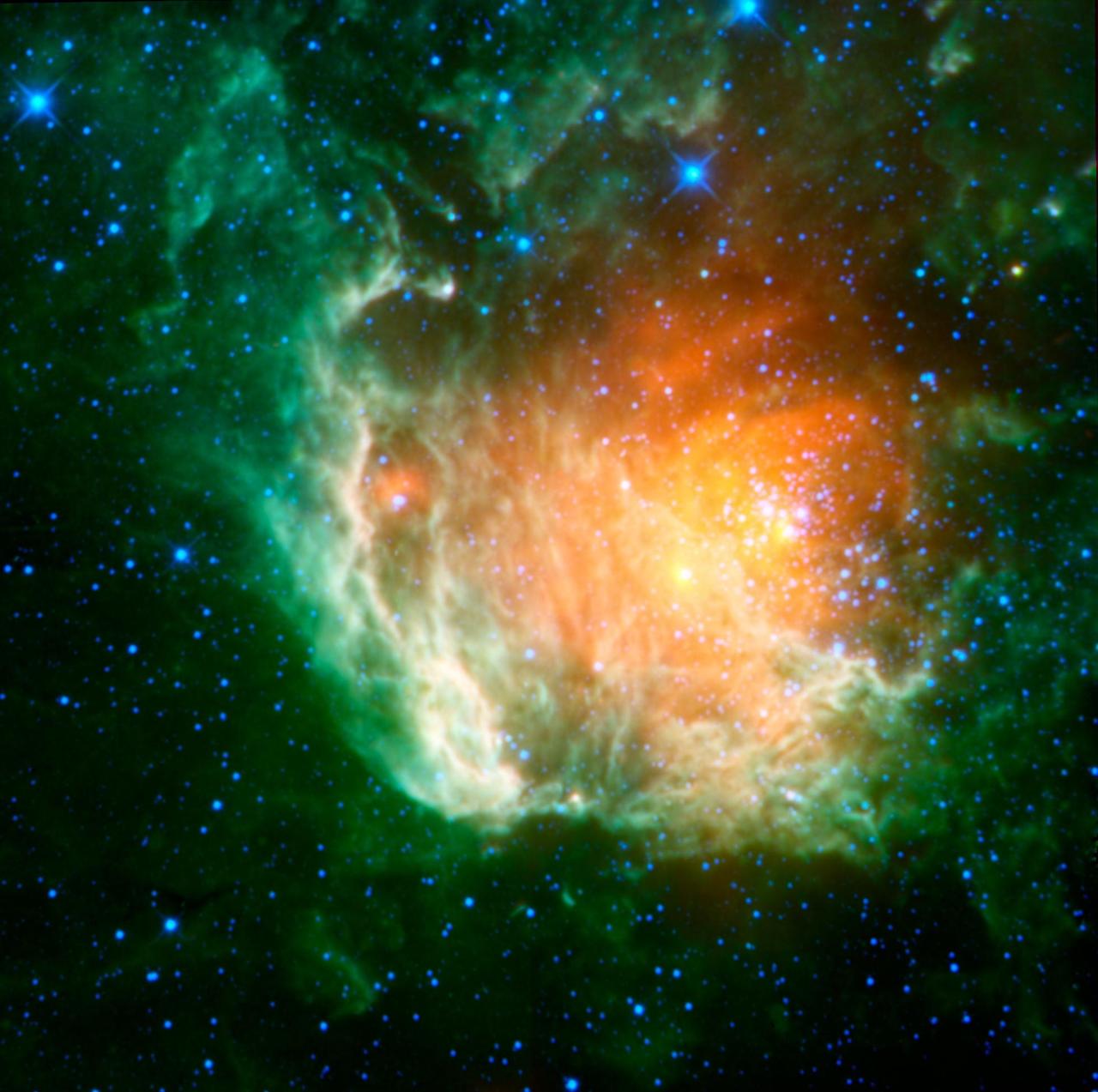
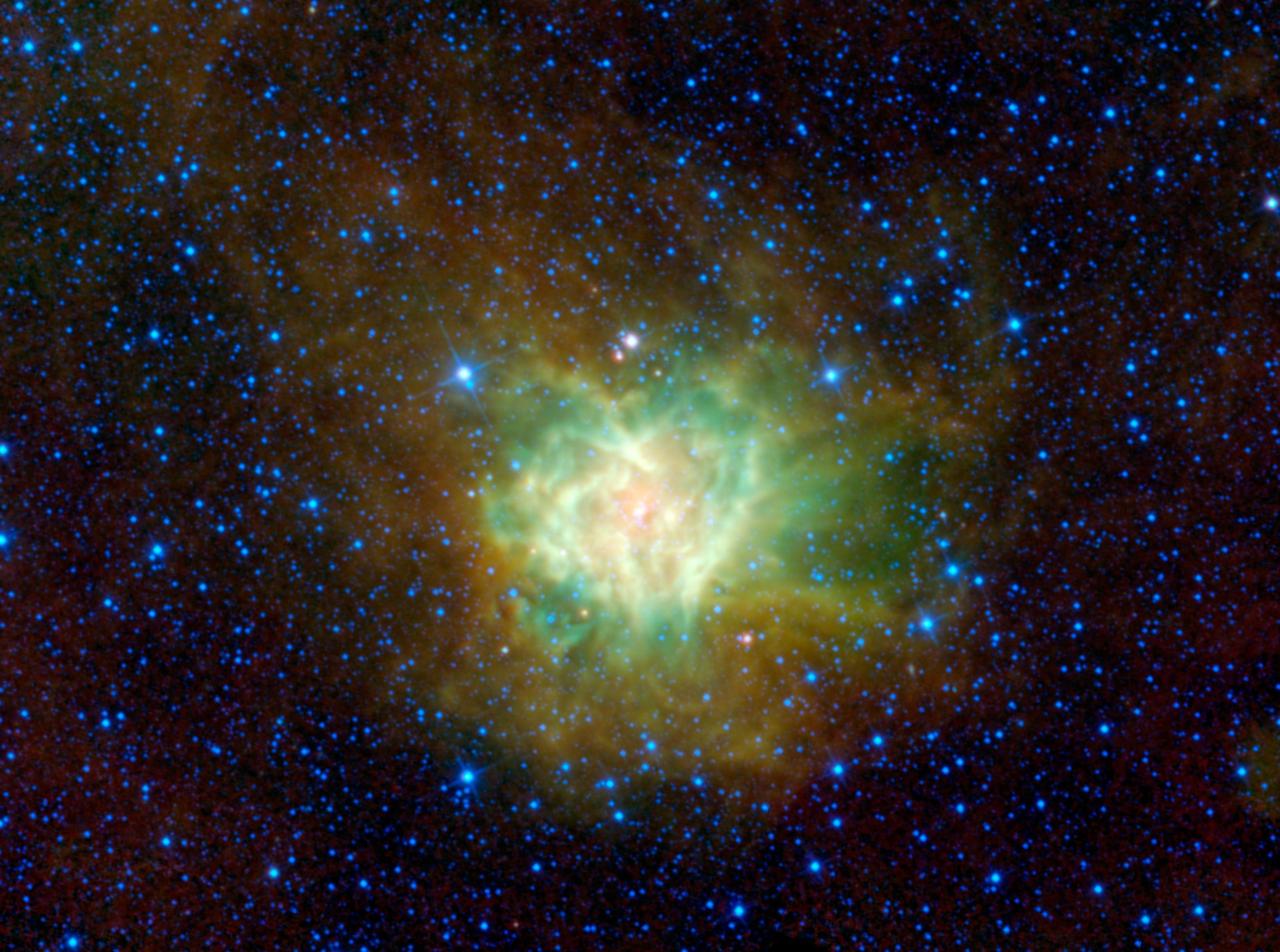
A new infrared image from NASA Wide-field Infrared Survey Explorer shows a cosmic rosebud blossoming with new stars.
Cosmic Rosebud
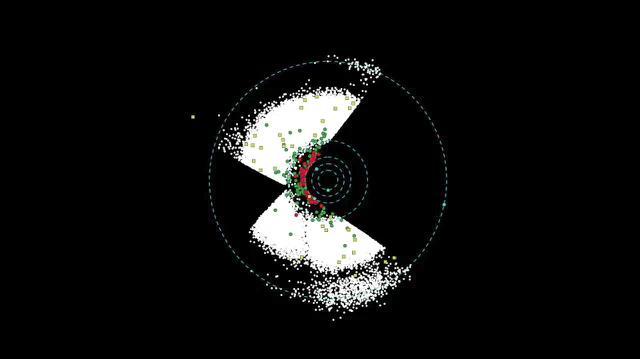
This image shows asteroids observed so far by NASA Wide-field Infrared Survey Explorer. An animation is available at the Photojournal.
Scanning for Asteroids and Comets
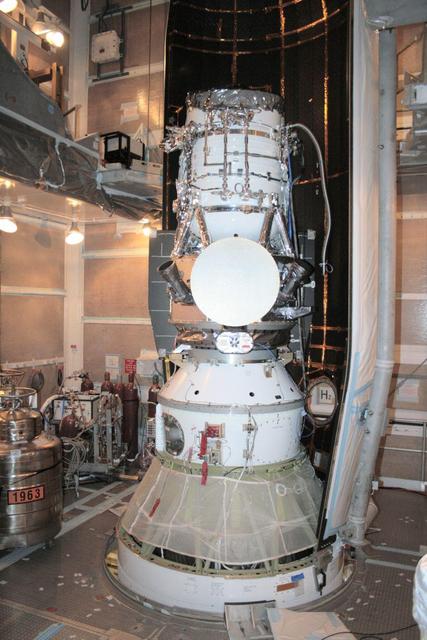
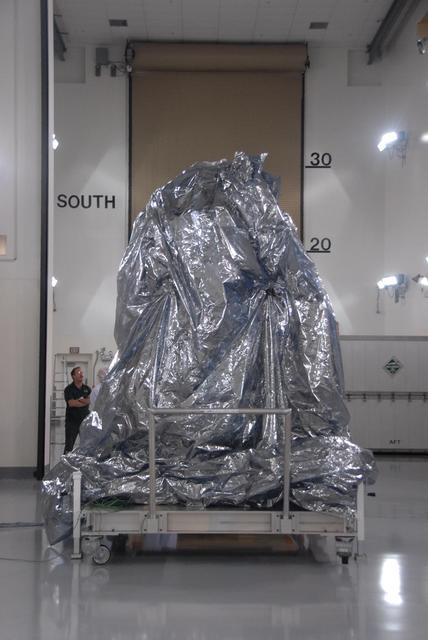
NASA Wide-field Infrared Survey Explorer spacecraft sits with its protective covering.
NASA WISE Spacecraft in Protective Covering
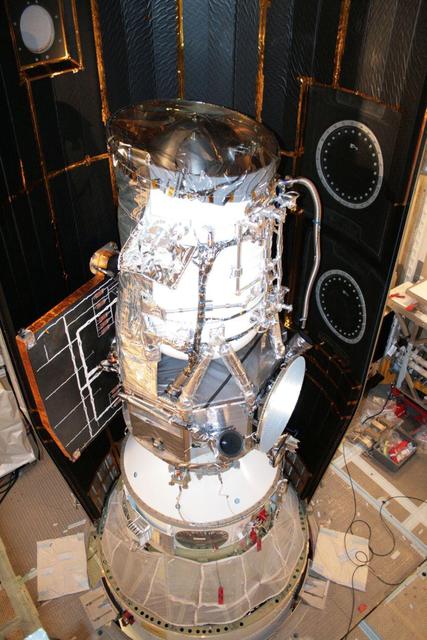
NASA Wide-field Infrared Survey Explorer is shown inside one-half of the nose cone, or fairing, that will protect it during launch.
WISE Snug in its Nose Cone
NASA Wide-field Infrared Survey Explorer large field of view and multi-wavelength infrared sight allowed it to form this complete view of the cluster, containing dozens of bright galaxies and hundreds of smaller ones.
Fornax Galaxy Cluster
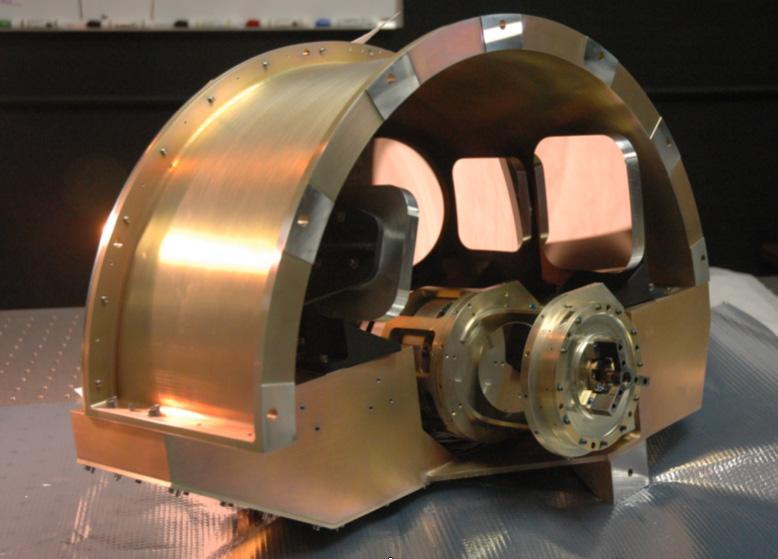
NASA Wide-field Infrared Survey Explorer, or WISE, back-end imager optics. This picture shows the imager optics which are mounted at the back of the optical system.
NASA WISE Imager Optics
A new infrared image from NASA Wide-field Infrared Survey Explorer, or WISE, showcases the Tadpole nebula, and asteroids that just happened to be cruising by.
Asteroid Caught Marching Across Tadpole Nebula
NASA Wide-Field Infrared Survey Explorer has uncovered a striking population of young stellar objects in a complex of dense, dark clouds in the southern constellation of Circinus.
Star Formation in the Circinus Molecular Cloud Complex
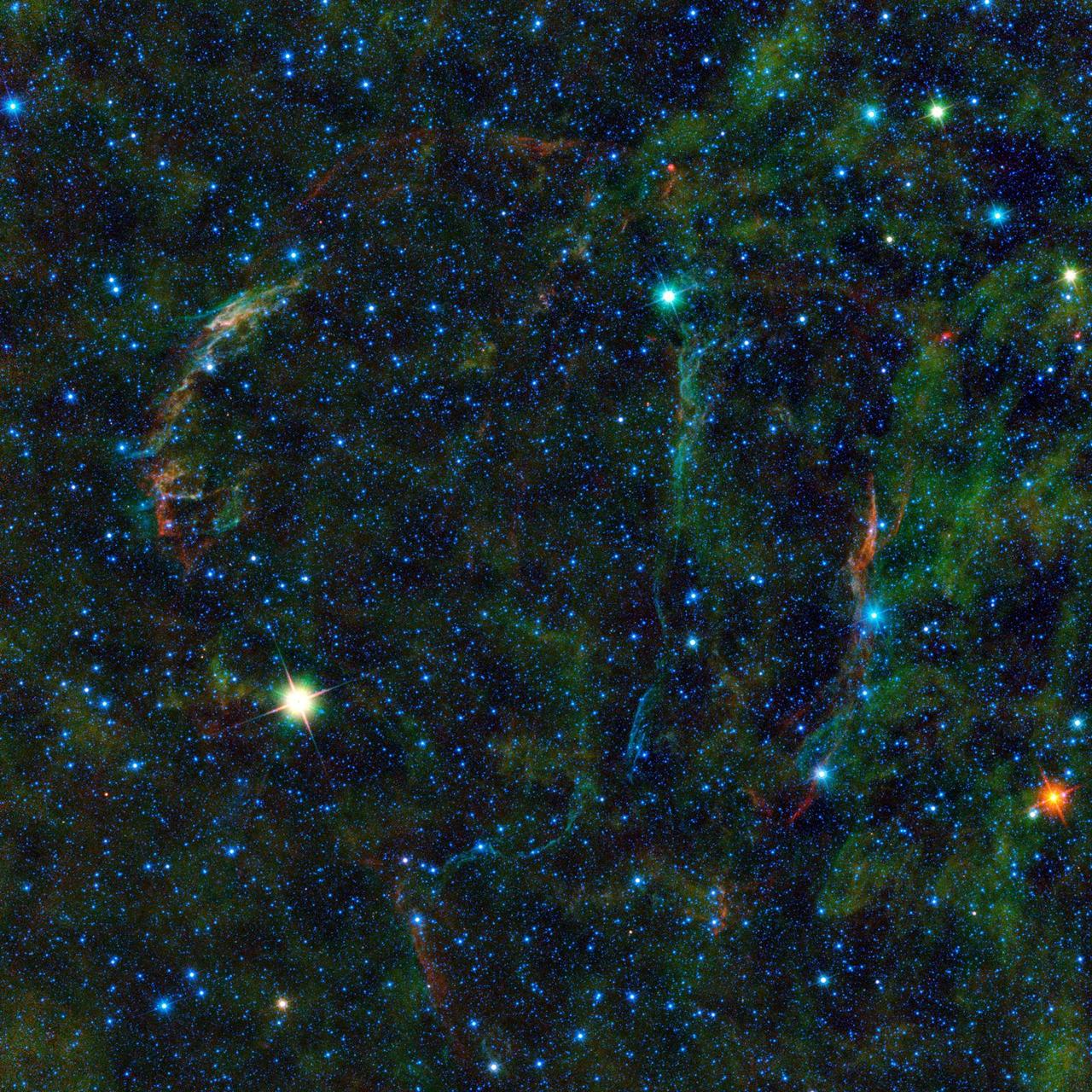
This large mosaic image from NASA Wide-field Infrared Survey Explorer, features the wreckage of an exploded star, as well as other stars nearing the end of their lives.
Beyond the Veil
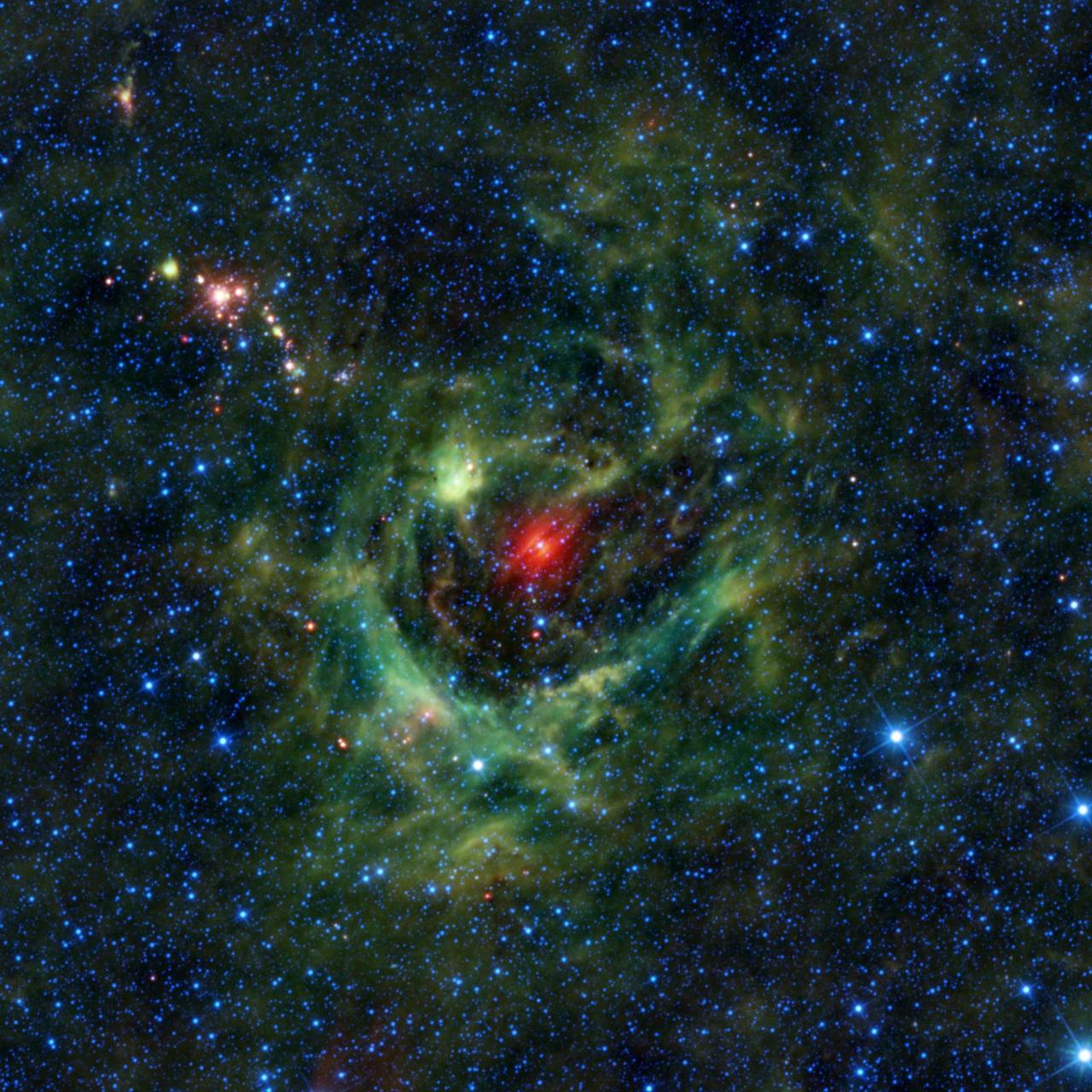
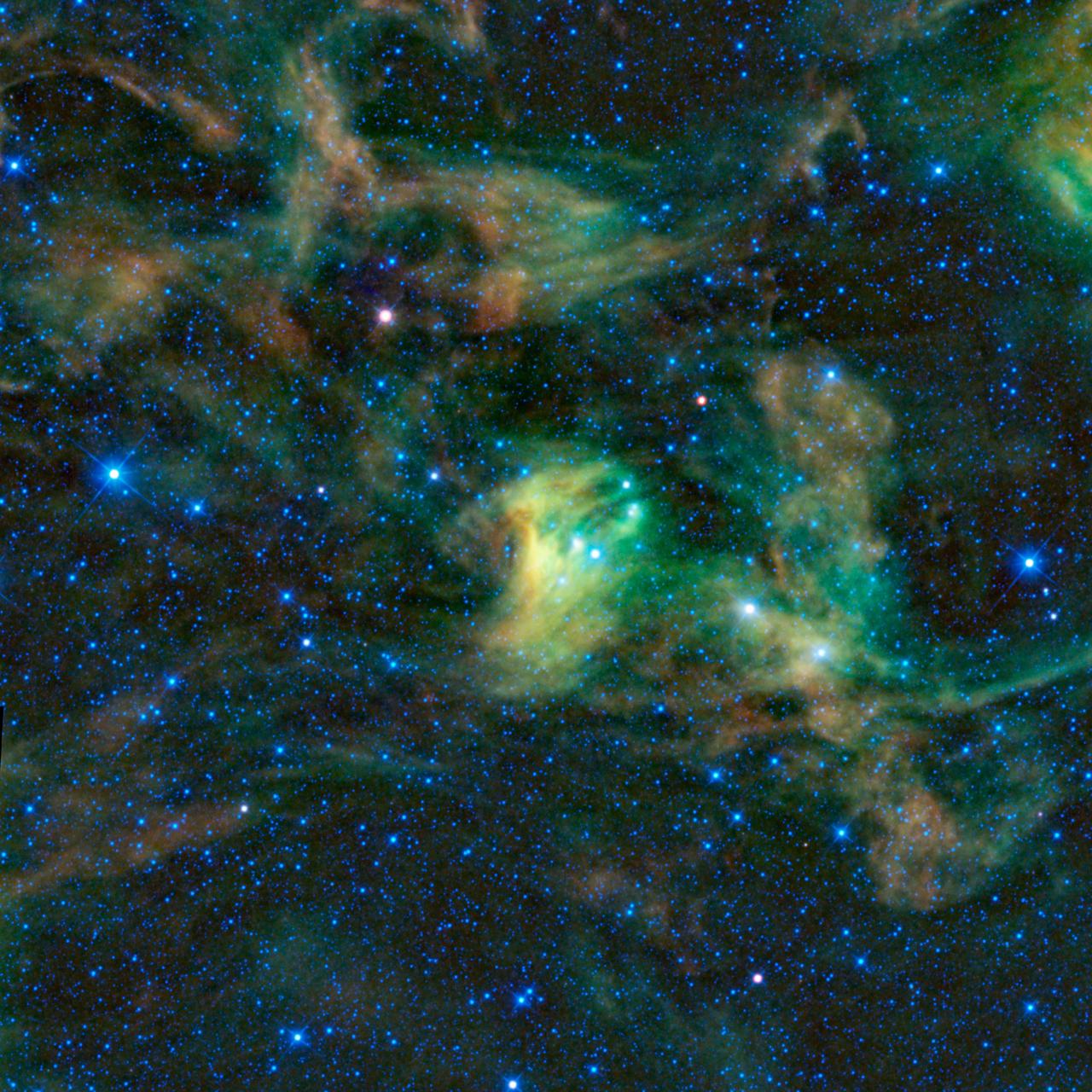
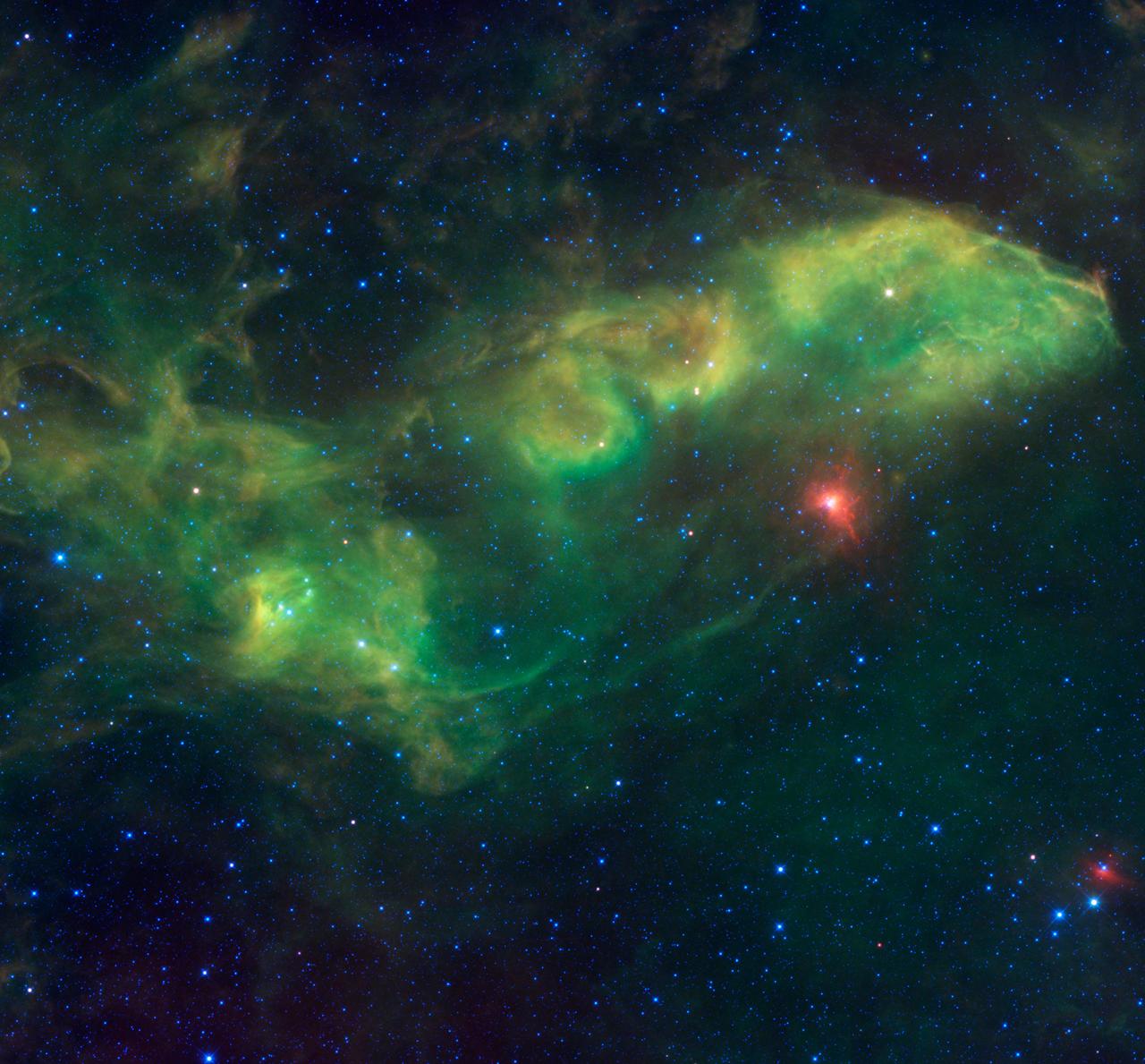
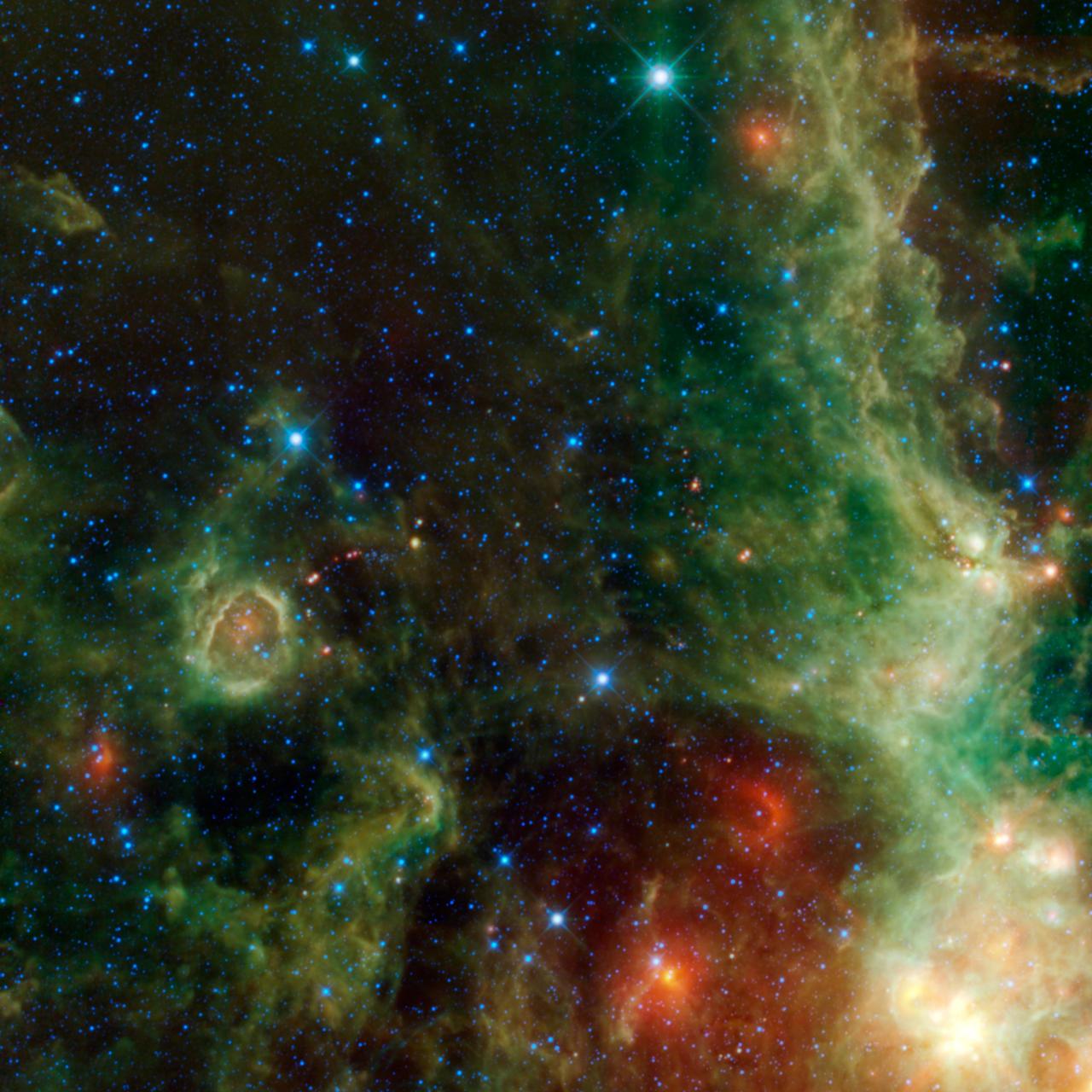
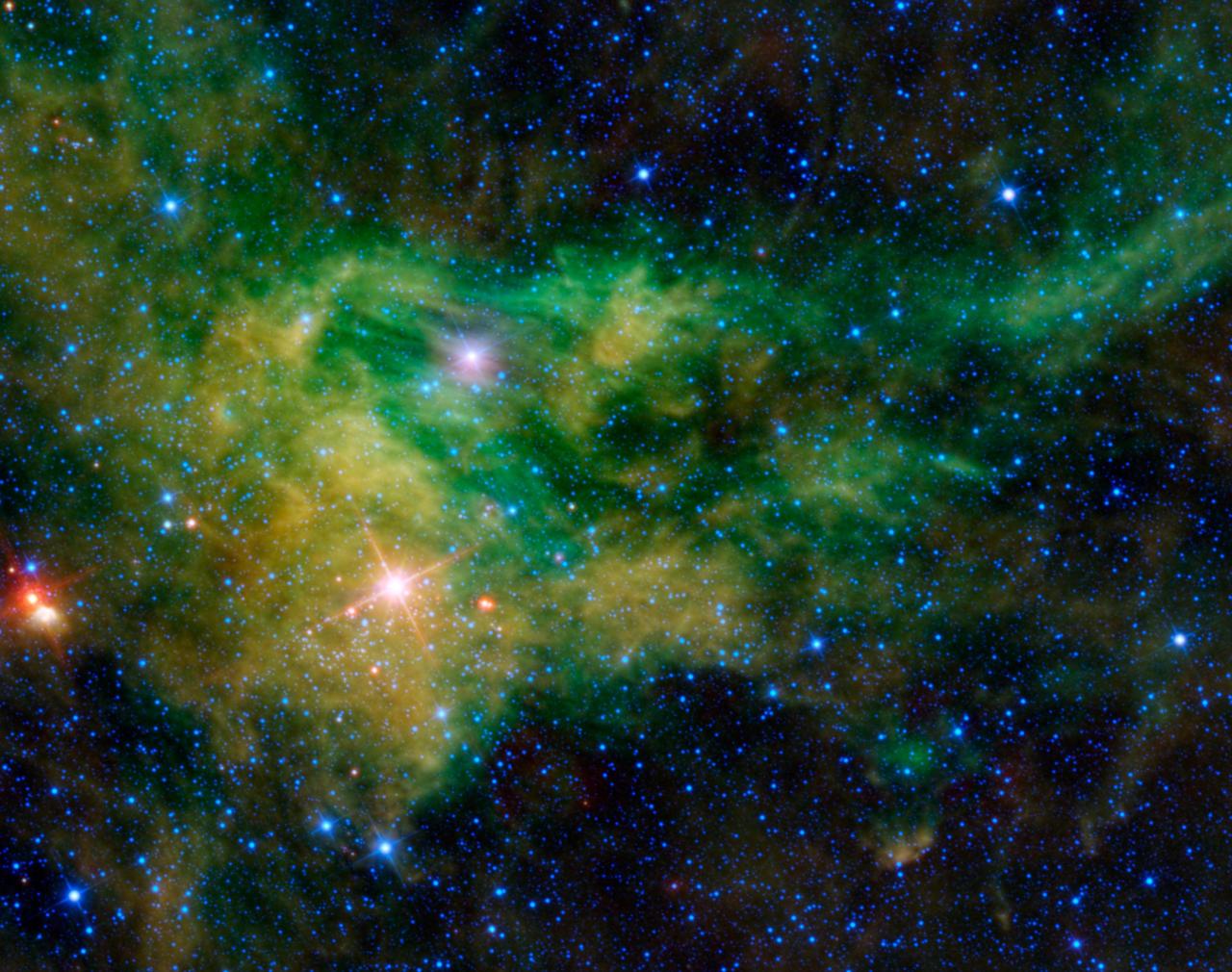
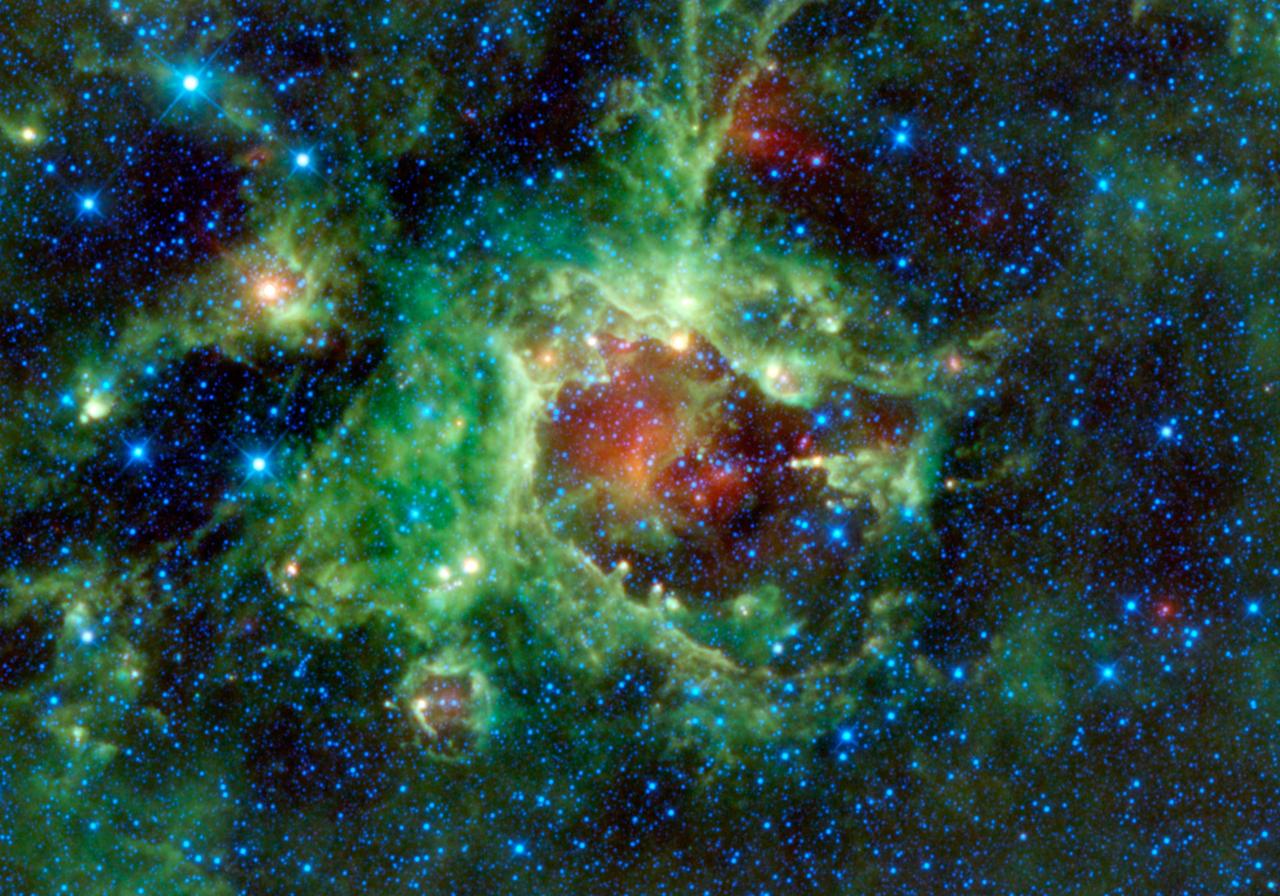
This image from NASA Wide-field Infrared Survey Explorer, or WISE, features a region of star birth wrapped in a blanket of dust, colored green in this infrared view.
A Celestial Shamrock
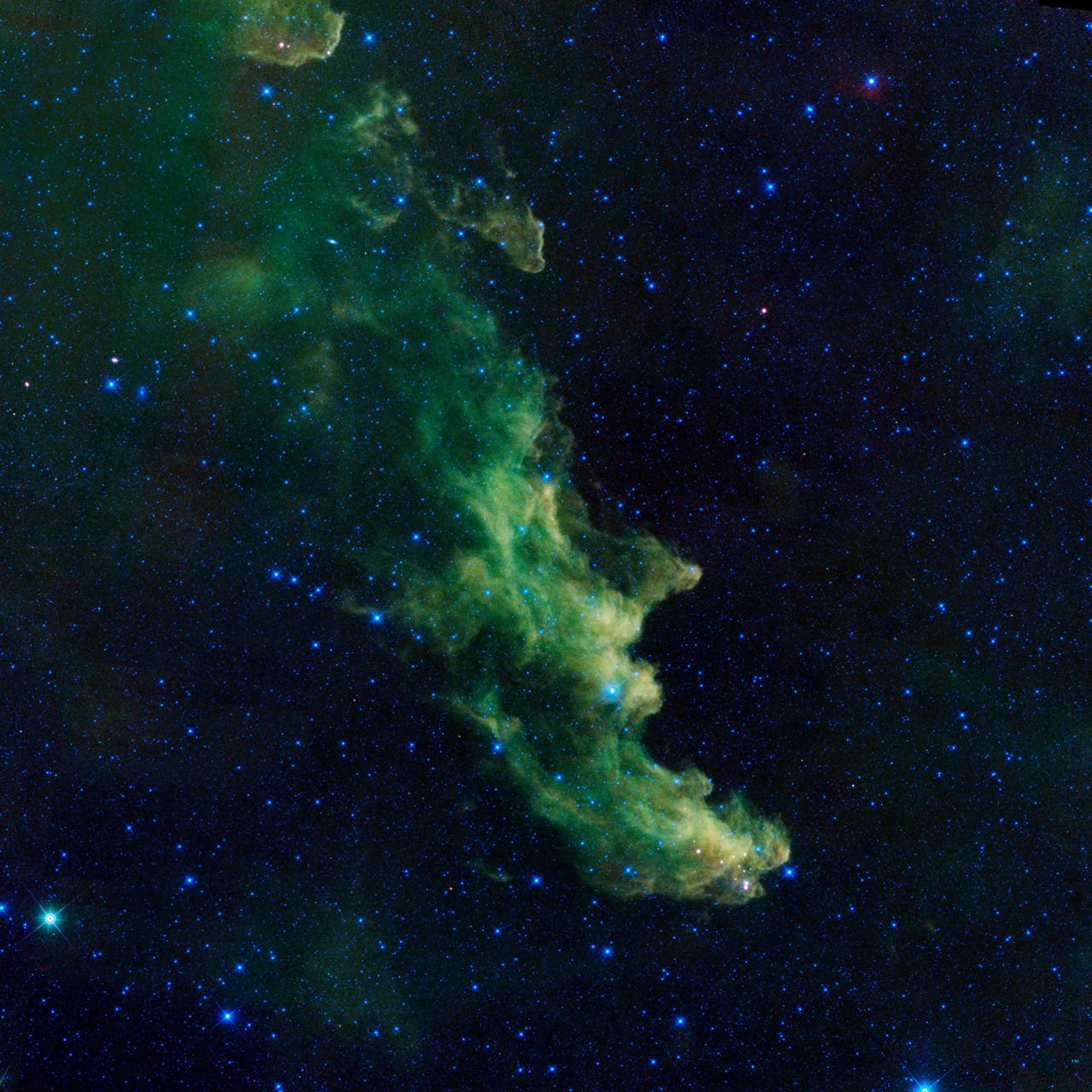
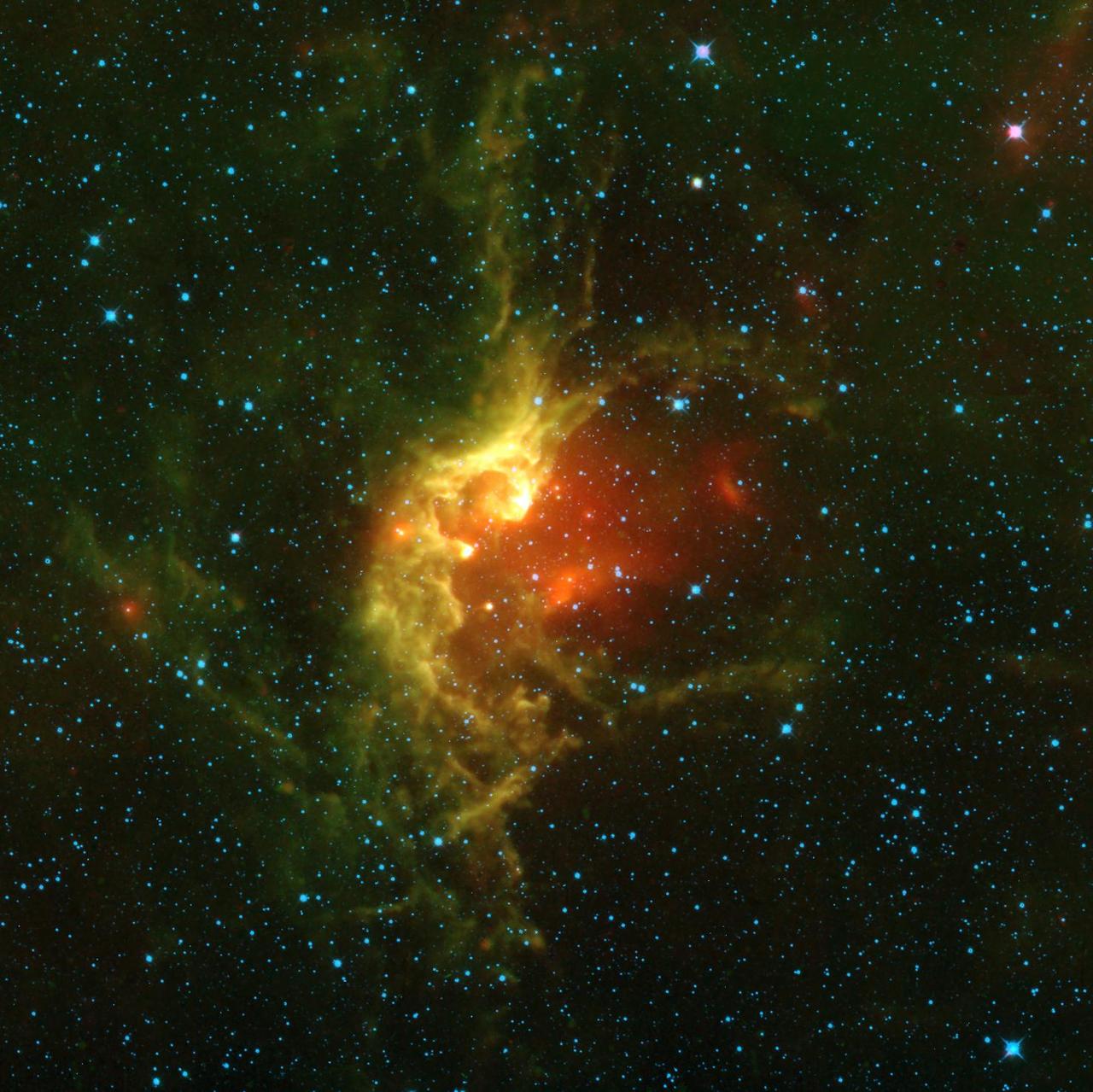
An infrared portrait of the Witch Head nebula from NASA Wide-field Infrared Survey Explorer, or WISE, shows billowy clouds where new stars are brewing.
Witch Head Brews Baby Stars
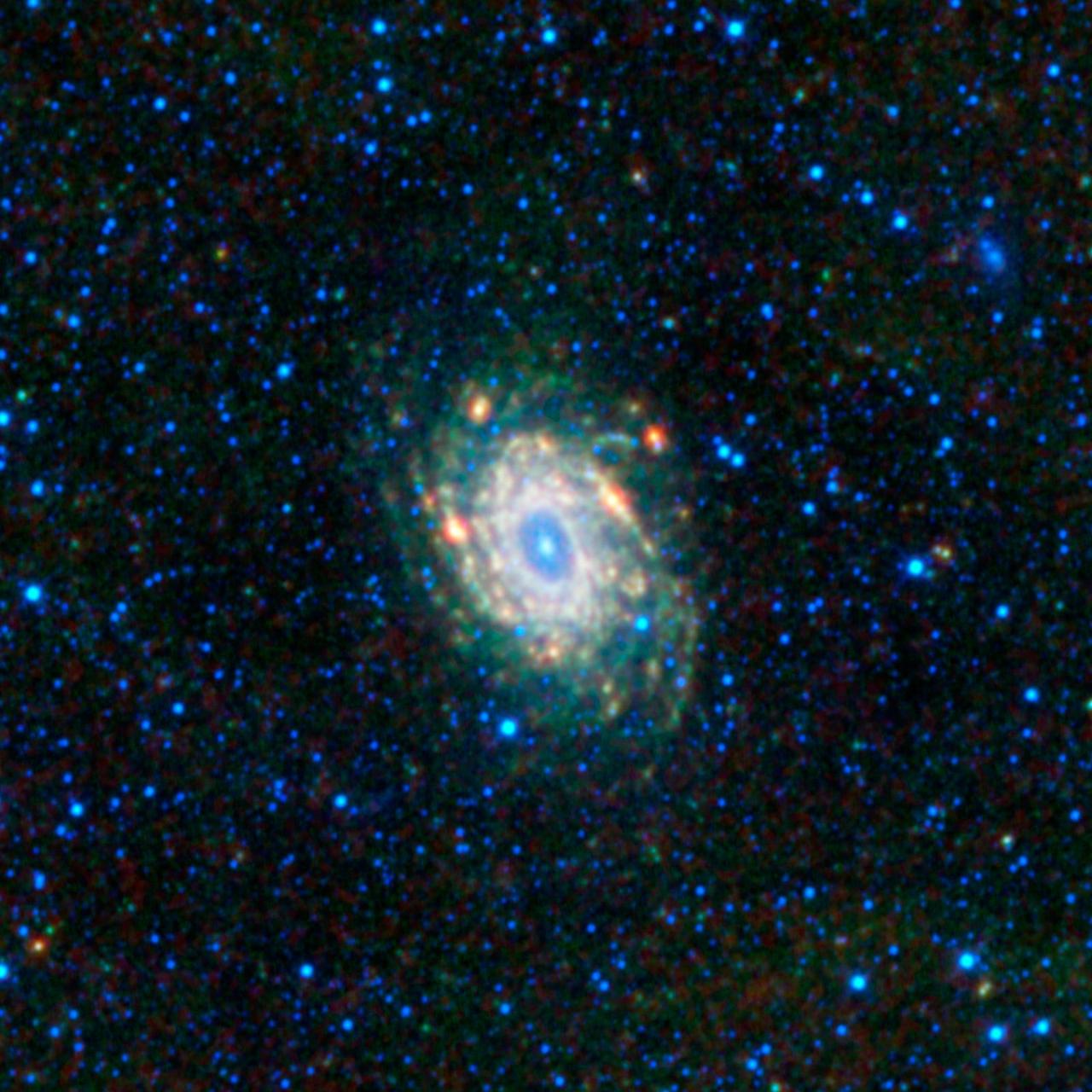
This mosaic image from NASA Wide-field Infrared Survey Explorer is located in a constellation in the southern sky, Pavo, which is Latin for peacock.
NGC 6744 -- A Sibling of the Milky Way
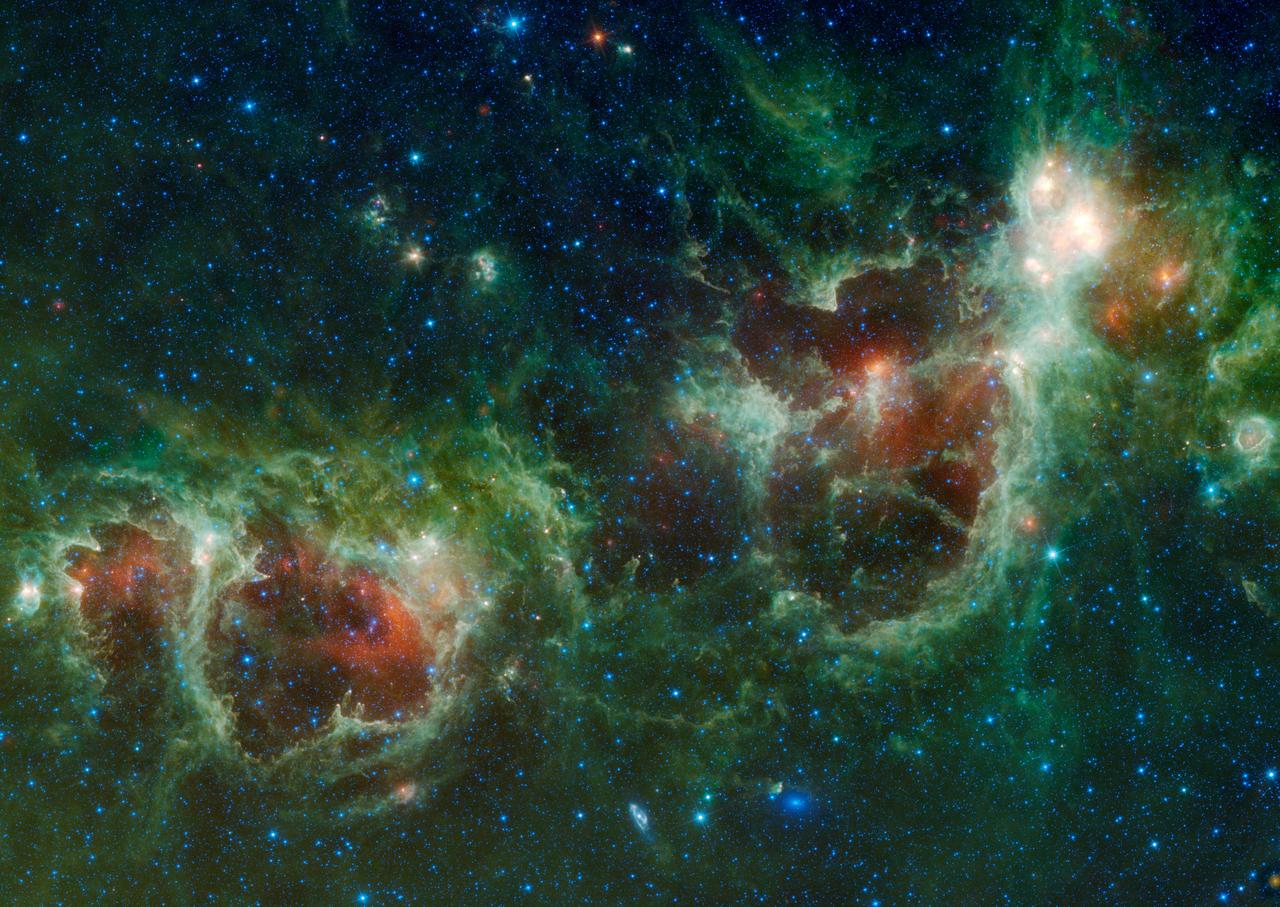
NASA Wide-field Infrared Survey Explorer has captured a huge mosaic of two bubbling clouds in space, known as the Heart and Soul nebulae.
Heart and Soul
NASA Wide-field Infrared Survey Explorer has seen a cluster of newborn stars enclosed in a cocoon of dust and gas in the constellation Camelopardalis.
WISE Reveals a Hidden Star Cluster
NASA Wide-field Infrared Survey Explorer, or WISE, helped lead astronomers to what appears to be a new example of a dancing black hole duo.
Two Black Holes on Way to Becoming One Artist Concept
A view of the flexure springs in the soft ride being mated to the payload attach fitting for NASA Wide-field Infrared Survey Explorer, or WISE, spacecraft.
View of Flexure Springs on NASA WISE Spacecraft
The Seagull nebula, seen in this infrared mosaic from NASA Wide-field Infrared Survey Explorer, draws its common name from it resemblance to a gull in flight.
Seagull Nebula -- Running with the Big Dog
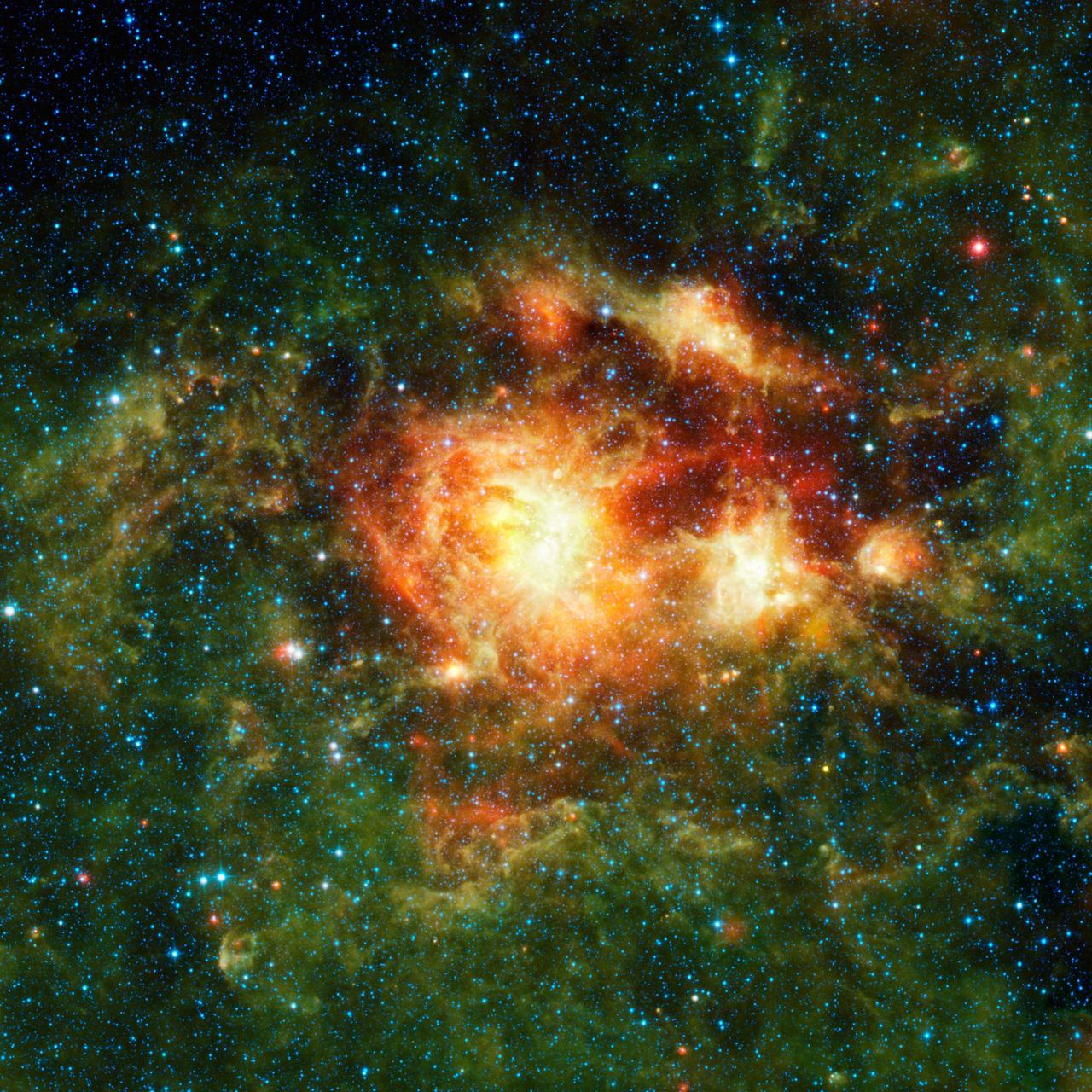
This infrared image taken by NASA Wide-field Infrared Survey Explorer shows a star-forming cloud teeming with gas, dust and massive newborn stars.
Stellar Storm of Infrared Light
NASA Wide-field Infrared Survey Explorer, shows a giant nebula around Lambda Orionis, inflating Orion head to huge proportions.
Orion Big Head Revealed in Infrared
WFIRST, the Wide Field Infrared Survey Telescope, is shown here in an artist's rendering. It will carry a Wide Field Instrument to provide astronomers with Hubble-quality images covering large swaths of the sky, and enabling several studies of cosmic evolution. Its Coronagraph Instrument will directly image exoplanets similar to those in our own solar system and make detailed measurements of the chemical makeup of their atmospheres.  http://photojournal.jpl.nasa.gov/catalog/PIA20060
WFIRST Artist's Concept
Between the claws of the dreaded scorpion imagined by the ancient Greeks lies this giant dust cloud, imaged by the Wide-field Infrared Survey Explorer. The constellation of Scorpius is prominent in the summer night sky in North America.
Dusty Reflections in the Scorpion Claws
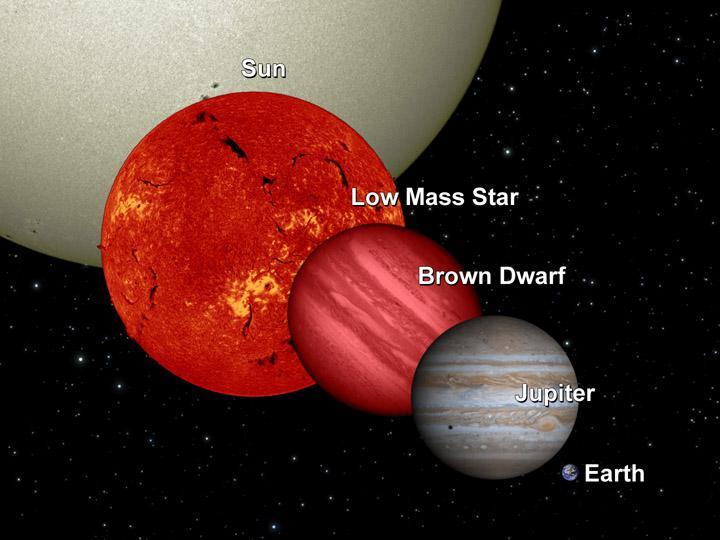
NASA Wide-field Infrared Survey Explorer will uncover many failed stars, or brown dwarfs, in infrared light. This diagram shows a brown dwarf in relation to Earth, Jupiter, a low-mass star and the sun.
Brown Dwarf Comparison
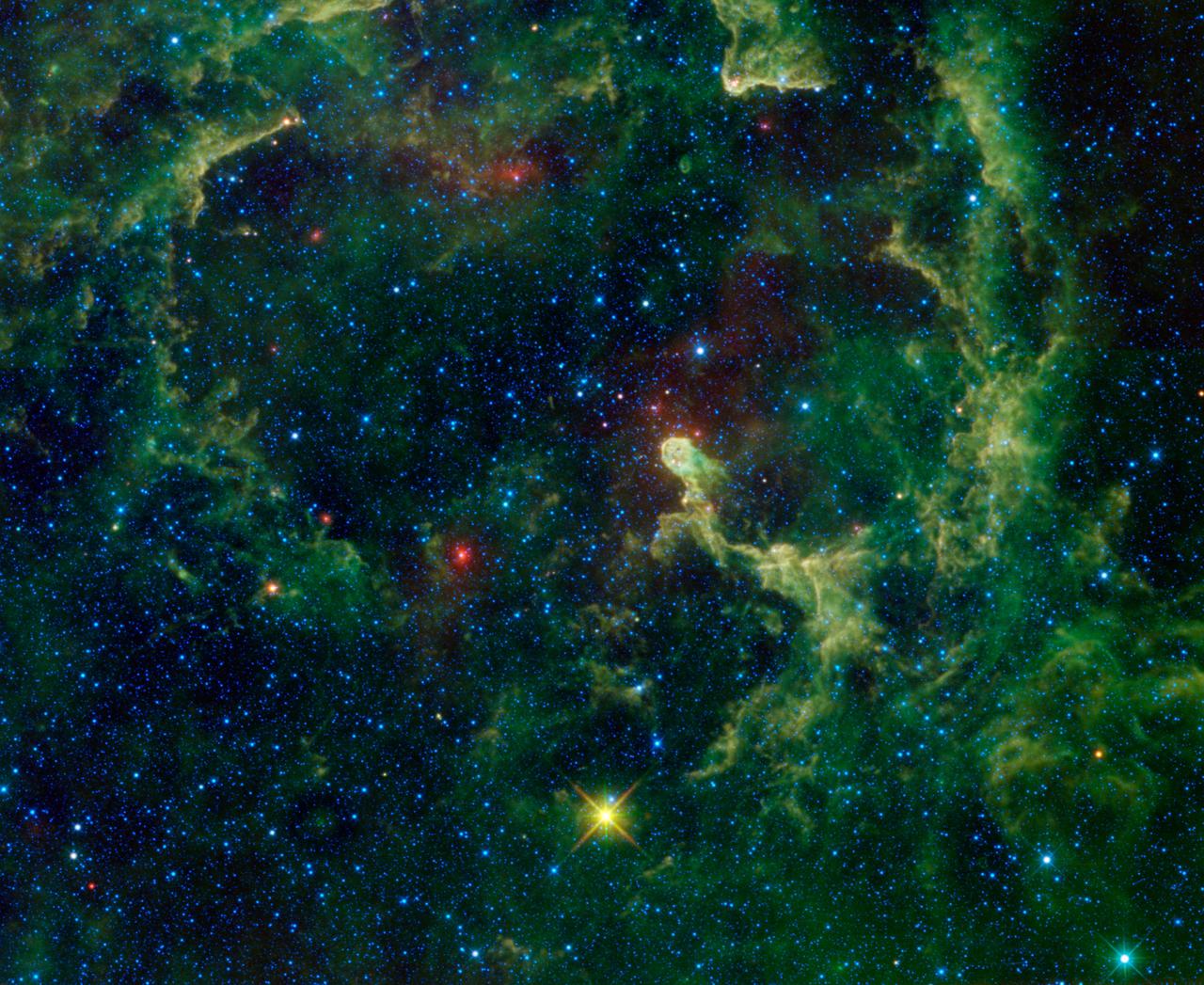
This image of the Elephant Trunk nebula from NASA Wide-field Survey Explorer shows clouds of dust and gas being pushed and eroded by a massive star. The bright trunk of the nebula near the center is an especially dense cloud.
Blowin in the Stellar Wind
This infrared image shows NASA Wide-field Infrared Survey Explorer WISE rocketing into the sky just before dawn on Dec. 14 from Vandenberg Air Force Base in California. All systems are behaving as expected.
Prepping WISE to Pop its Lens Cap
Star clusters such as the Pleiades are often considered some of the most beautiful objects in the sky. This image of the star cluster NGC 2259 is from NASA Wide-field Infrared Survey Explorer.
Star Cluster Overshadowed by Infrared Objects
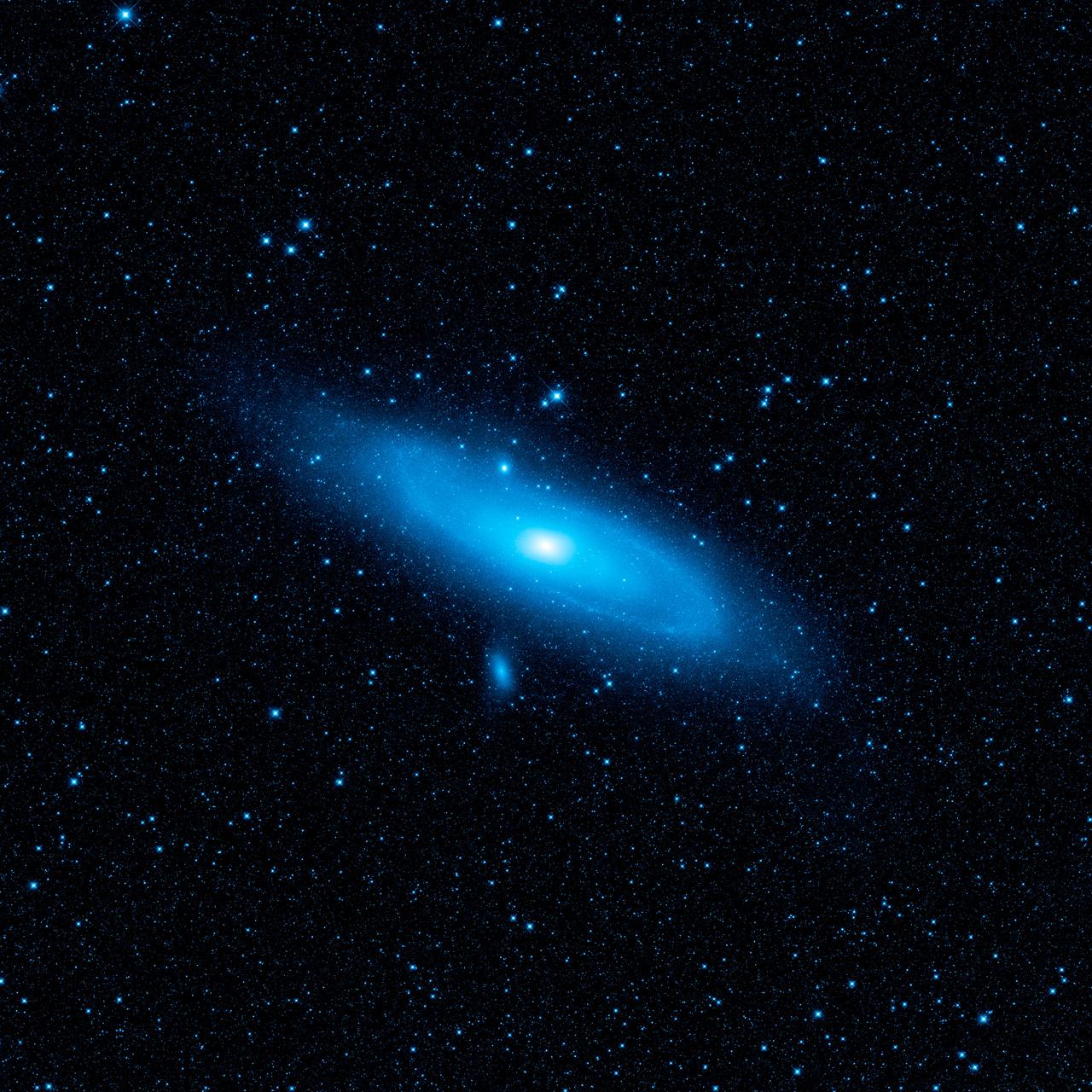
This image from NASA Wide-field Infrared Survey Explorer highlights the Andromeda galaxy older stellar population in blue. A pronounced warp in the disk of the galaxy, the aftermath of a collision with another galaxy, can be seen in the spiral arm.
Warped Andromeda
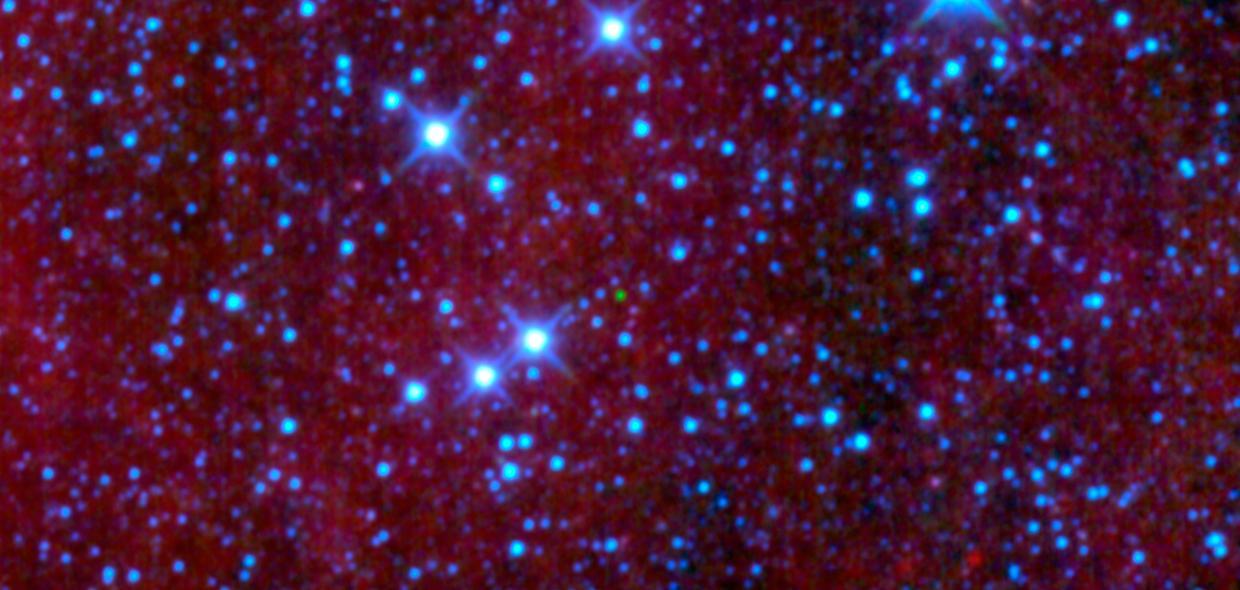
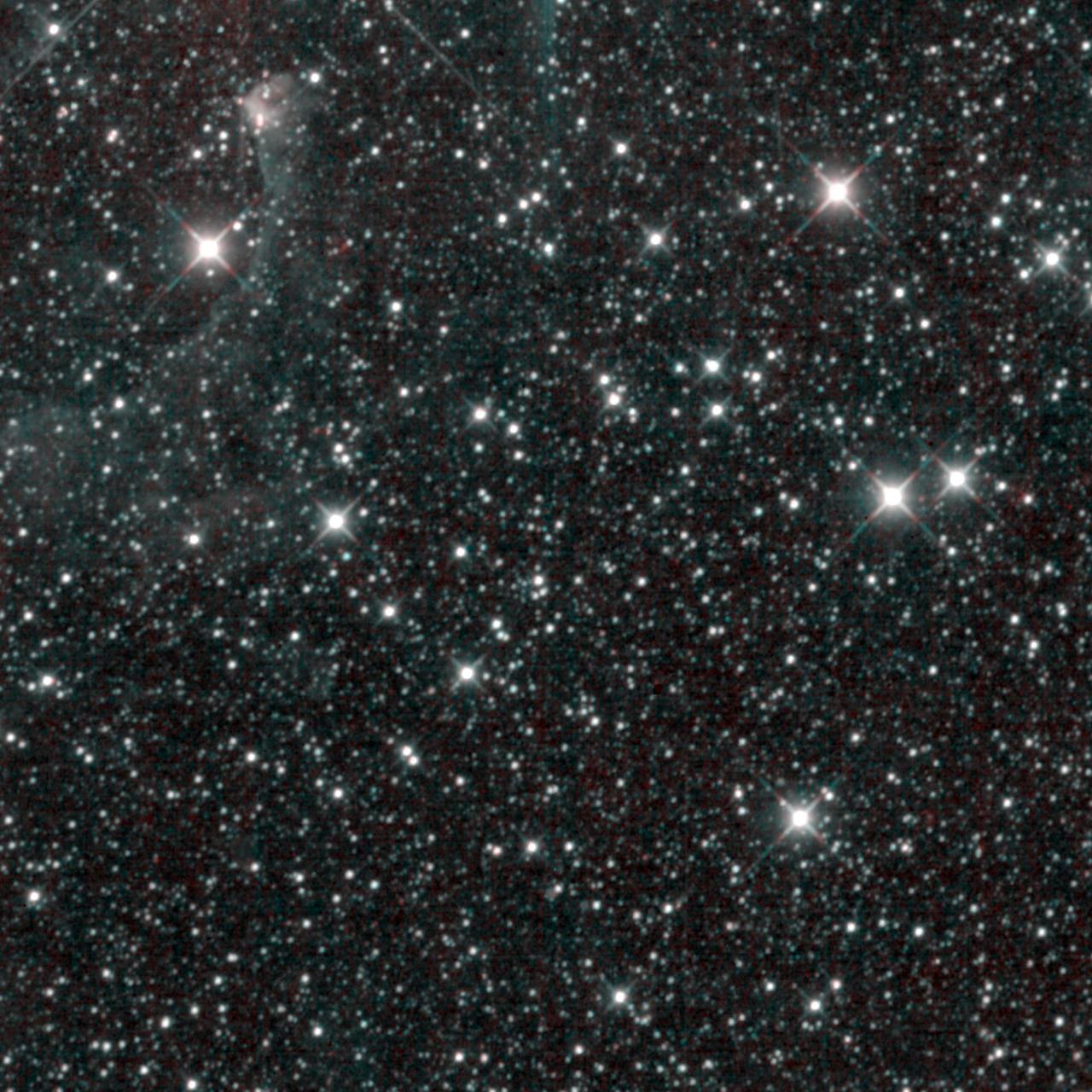
On the morning of February 1, 2011, NASA Wide-field Infrared Survey Explorer, or WISE, took its last snapshot of the sky. WISE final picture shows thousands of stars in a patch of the Milky Way galaxy in the constellation Perseus.
WISE Last Light
At Vandenberg Air Force Base Astrotech processing facility in California, NASA Wide-field Infrared Survey Explorer, or WISE, spacecraft is being lifted from a work stand.
NASA WISE Spacecraft Lifted from Work Stand
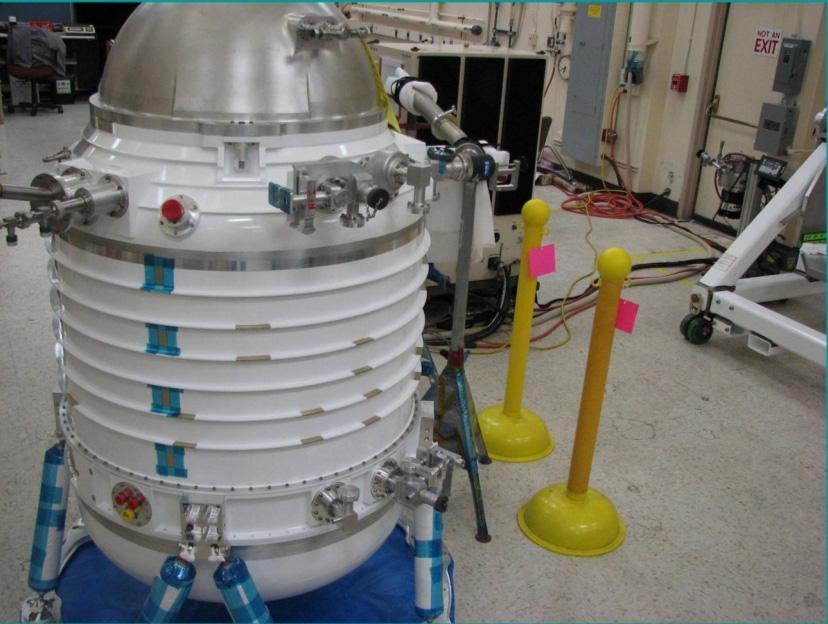
Some say the science instrument on NASA Wide-field Infrared Survey Explorer mission resembles the Star Wars robot R2-D2. The instrument is enclosed in a solid-hydrogen cryostat, which cools the WISE telescope and detectors.
A Robot or a Science Instrument?
The aptly named Cocoon nebula is featured in this image from NASA Wide-field Infrared Survey Explorer. This cloud of dust and gas is located in the constellation Cygnus, and is wrapped in a dark cloud of dust called Barnard 168.
Cosmic Cocoon
This view from NASA Wide-field Infrared Survey Explorer takes in an area of the sky in the constellation of Scorpius surrounding Jabbah Arabic name means the forehead of the scorpion which is larger than a grid of eight by eight full moons.
Jabbah and Associates
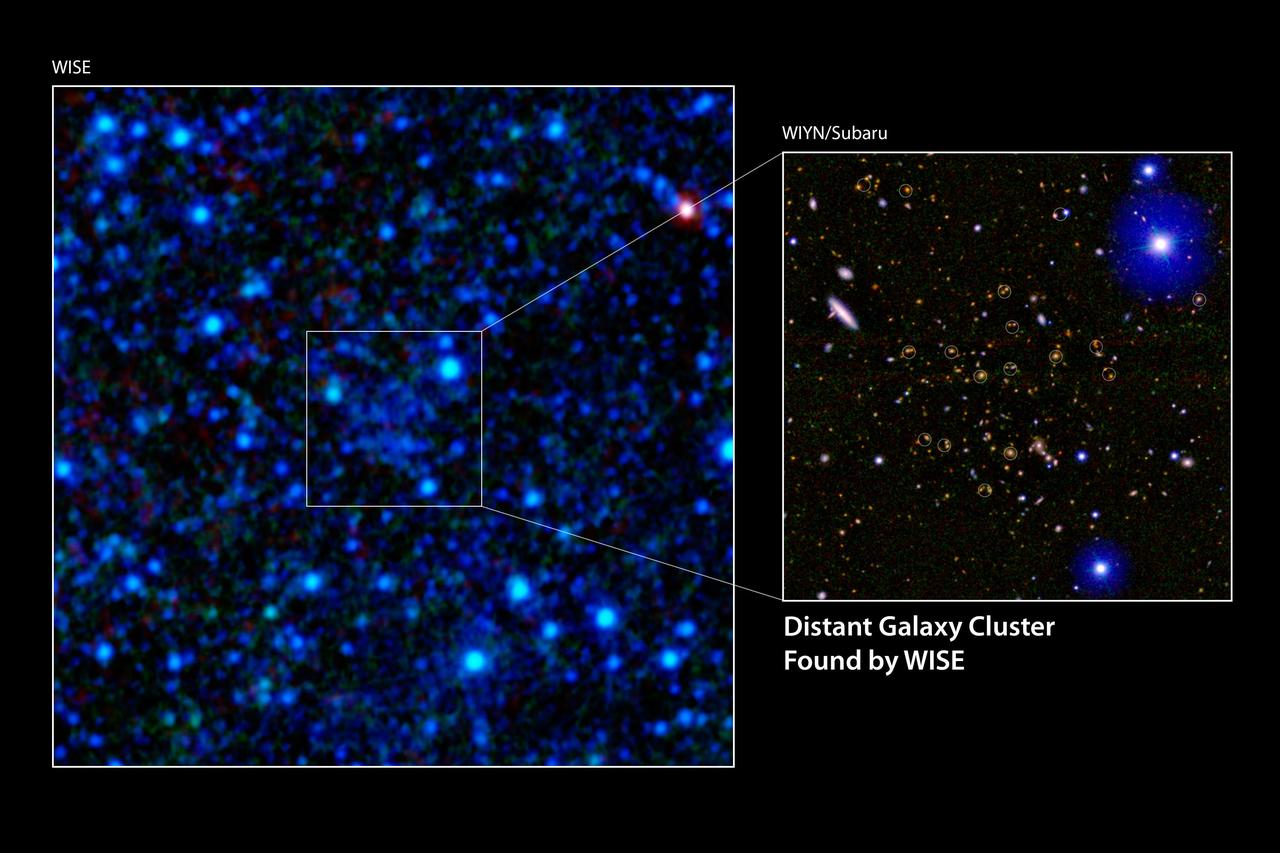
A galaxy cluster 7.7 billion light-years away has been discovered using infrared data from NASA Wide-field Infrared Survey Explorer WISE. The discovery image is shown in the main panel.
WISE Finds a Galactic Metropolis
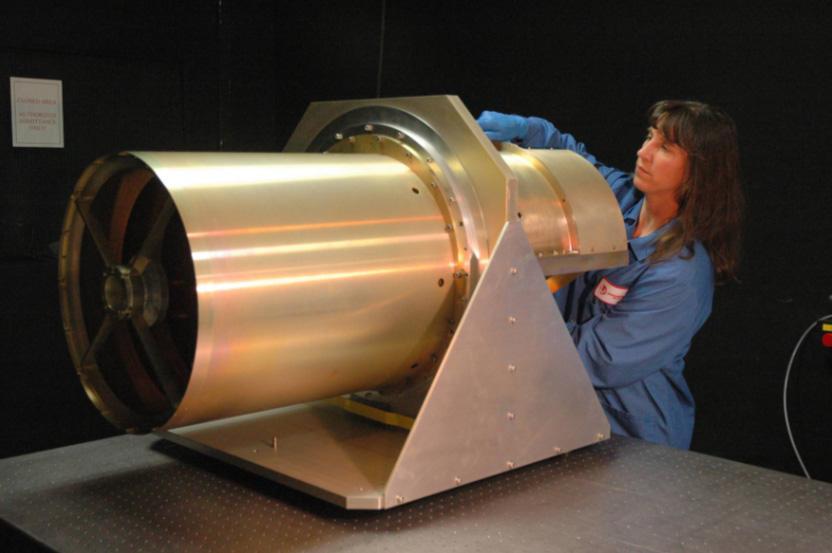
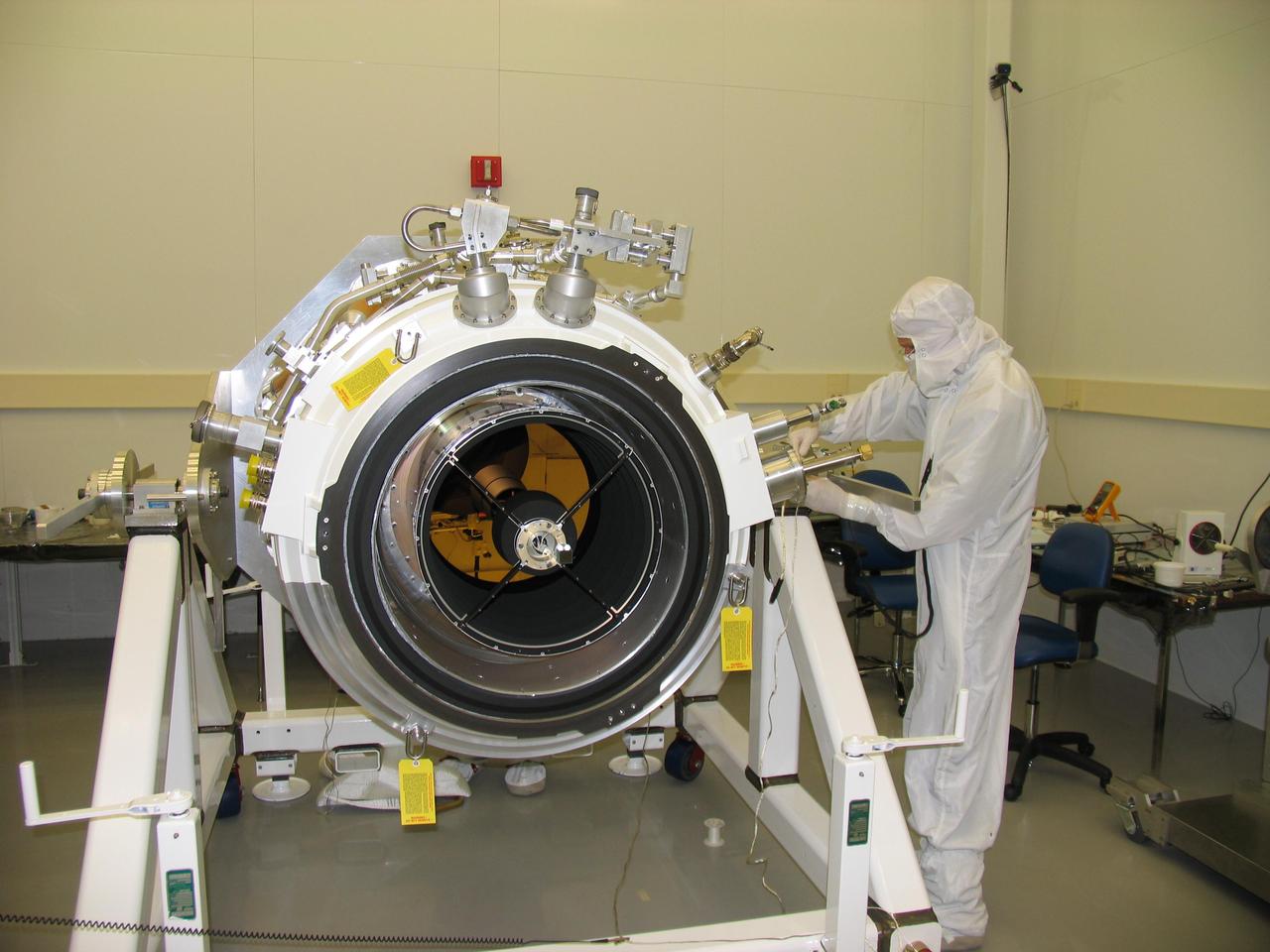
This image shows NASA 40 cm diameter Wide-field Infrared Survey Explorer telescope. Here the lead optical test engineer attaches the back-end imager optics to the afocal.
NASA WISE Telescope
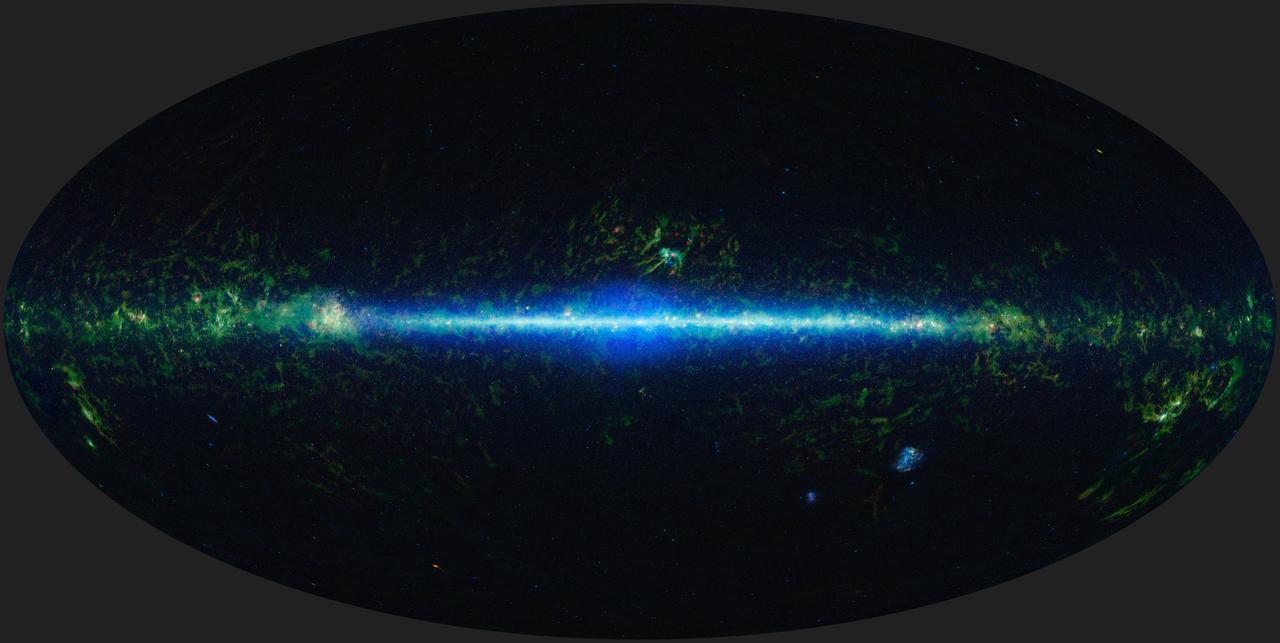
This is a mosaic of the images covering the entire sky as observed by NASA Wide-field Infrared Survey Explorer WISE, part of its All-Sky Data Release. In this mosaic, the Milky Way Galaxy runs horizontally across the map.
Mapping the Infrared Universe: The Entire WISE Sky
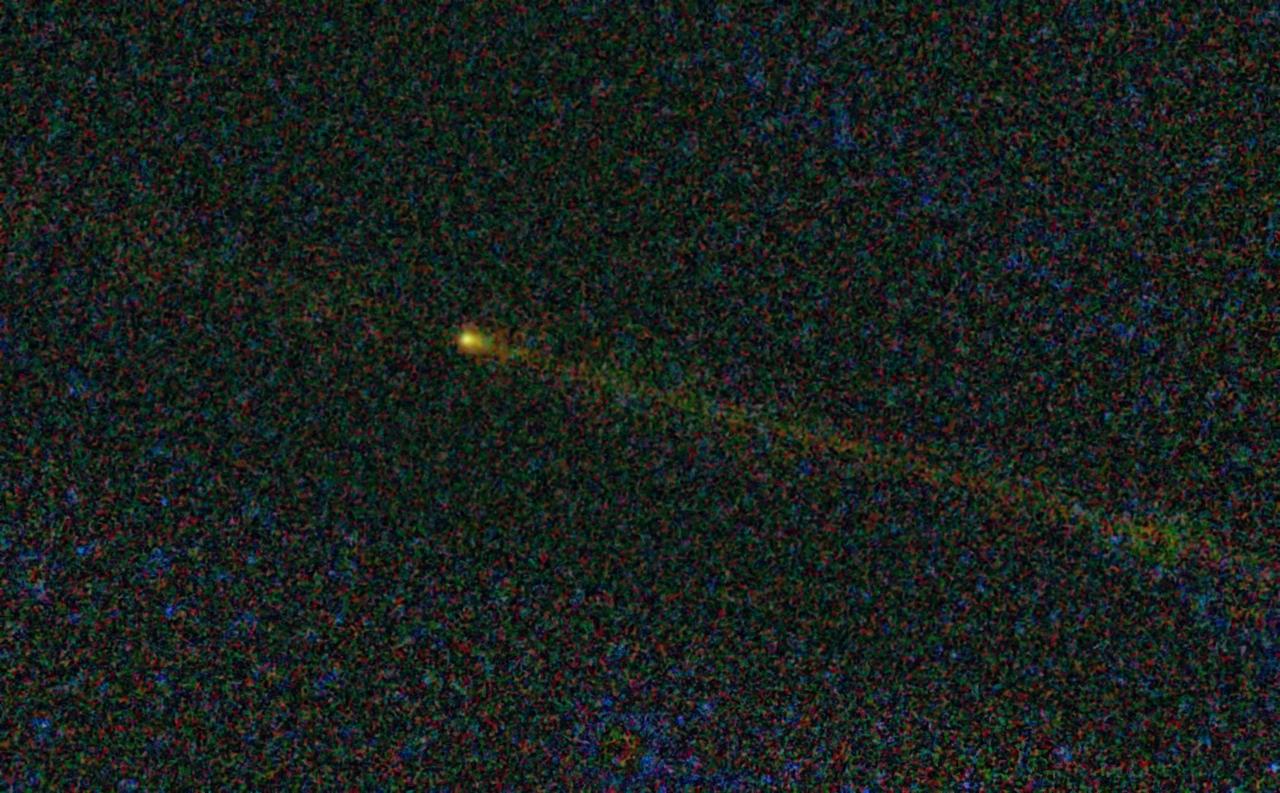
This visitor from deep space, seen here by NASA Wide-field Infrared Survey Explorer, is comet Hartley 2, the destination for NASA EPOXI mission. The comet tail is seen here as a fuzzy streak to the right of the comet.
Icy Visitor from Beyond
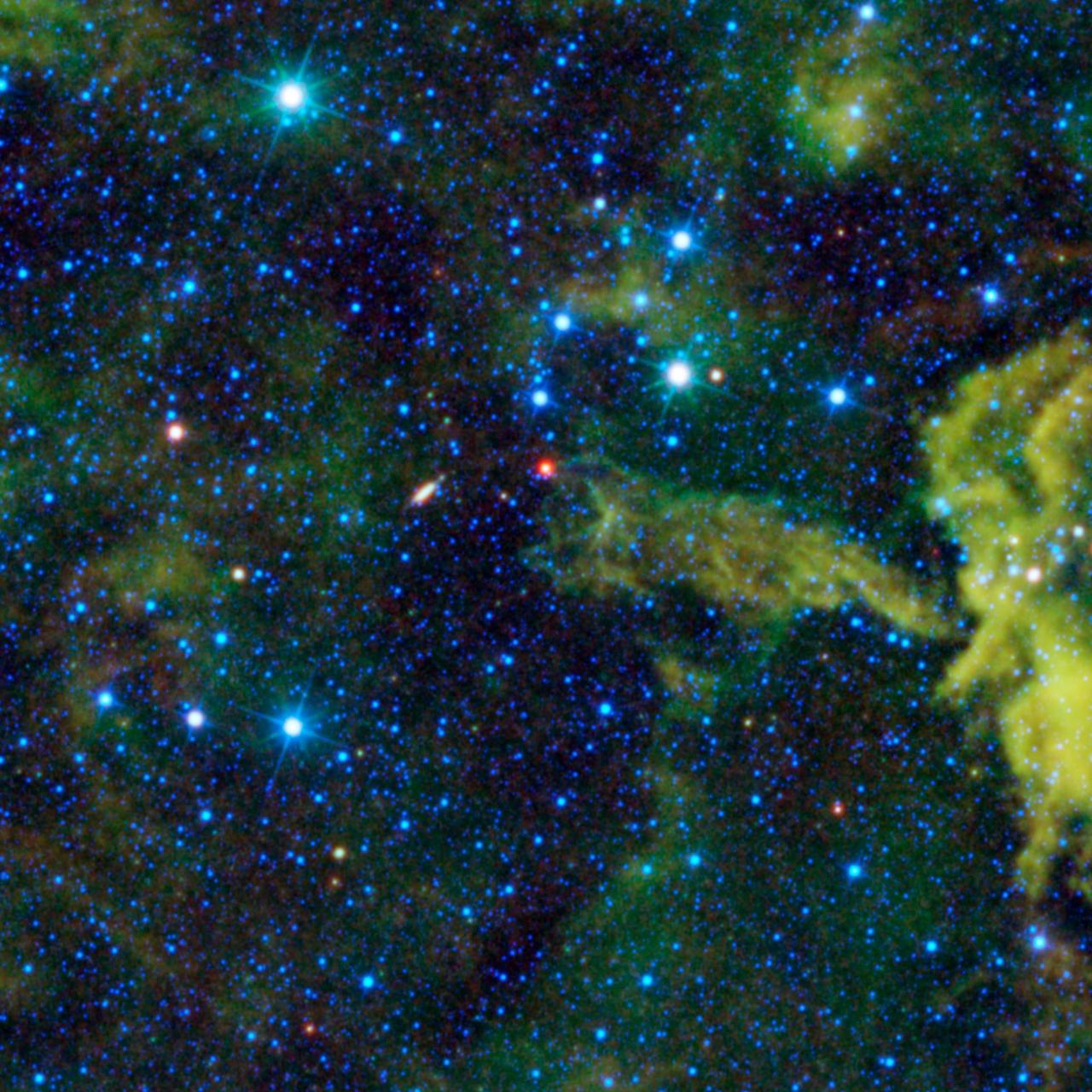
This image from NASA Wide-field Infrared Survey Explorer, or WISE, is a view of an area of the sky over 12 times the size of the full Moon on the border of the constellations Sagittarius and Corona Australis.
Star Clusters Young and Old, Near and Far
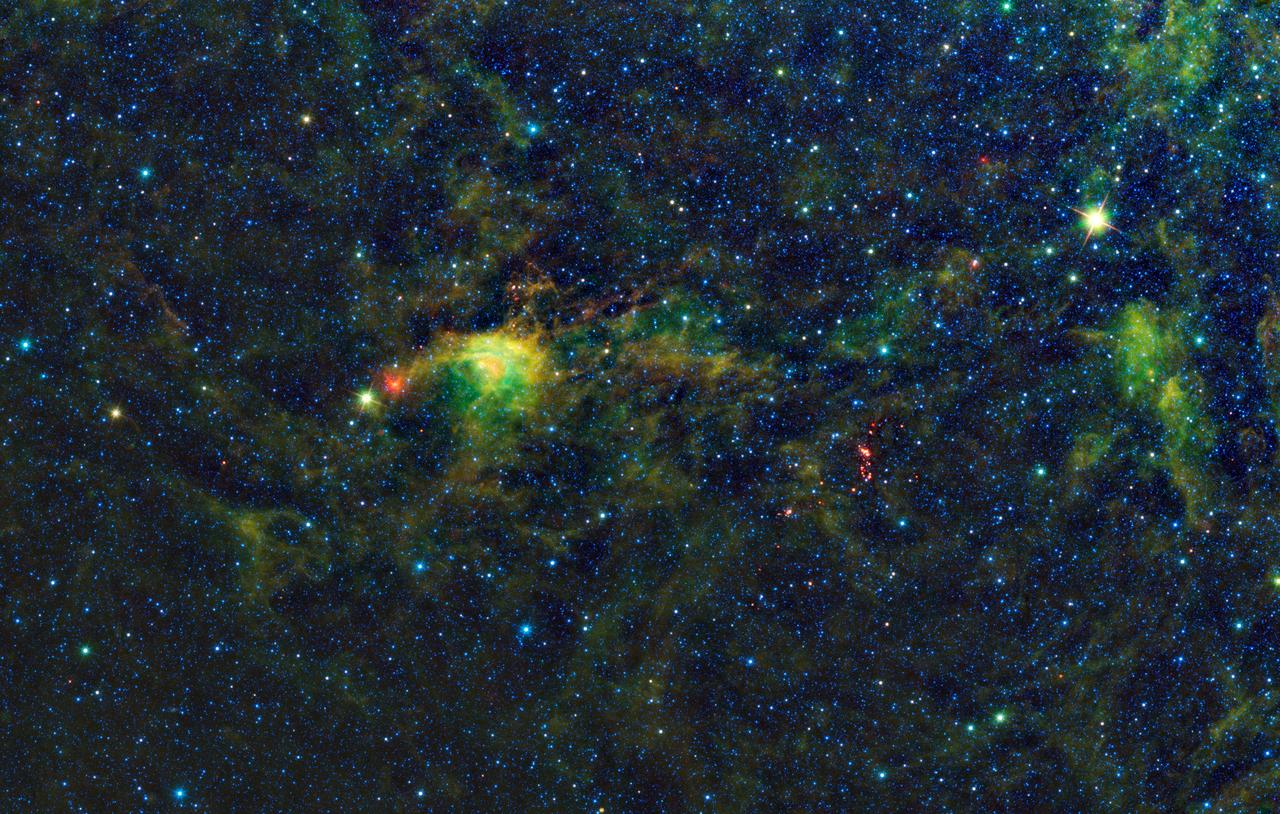
New stars are forming inside this giant cloud of dust and gas as seen in infrared light by NASA Wide-field Infrared Survey Explorer, spanning across the constellation Vela.
WISE Peers into the Stellar Darkness
This stellar object is called Spitzer 073425.3-465409, as seen by NASA Wide-field Infrared Survey Explorer; the cloud CG4 might be imagined as a cosmic alligator eating its way across the sky.
Cosmic Alligator Eats its Way through the Sky
NASA Wide-field Infrared Survey Explorer captured this colorful image of the reflection nebula IRAS 12116-6001. This cloud of interstellar dust cannot be seen directly in visible light, but WISE detectors observed the nebula at infrared wavelengths.
Dark Reflections in the Southern Cross
This infrared image from NASA Wide-field Infrared Survey Explorer features one of the bright stars in the constellation Perseus, named Menkhib, along with a large star forming cloud commonly called the California Nebula.
Menkhib and the California Nebula
This colorful picture is a mosaic of Messier 8, or the Lagoon nebula, taken by NASA Wide-field Infrared Survey Explorer. This nebula is composed of clouds of gas and dust in which new stars are forming.
WISE Catches the Lagoon Nebula in Center of Action
This artist conception shows NASA Wide-field Infrared Survey Explorer mapping the whole sky in infrared. The mission will unveil hundreds of thousands of asteroids, and hundreds of millions of stars and galaxies.
Mapping the Infrared Sky Artist Concept
Nebulae are enormous clouds of dust and gas occupying the space between the stars. Simply called LBN 114.55+00.22, is seen here in an image from NASA Wide-field Infrared Survey Explorer.
A Nebula by Any Other Name
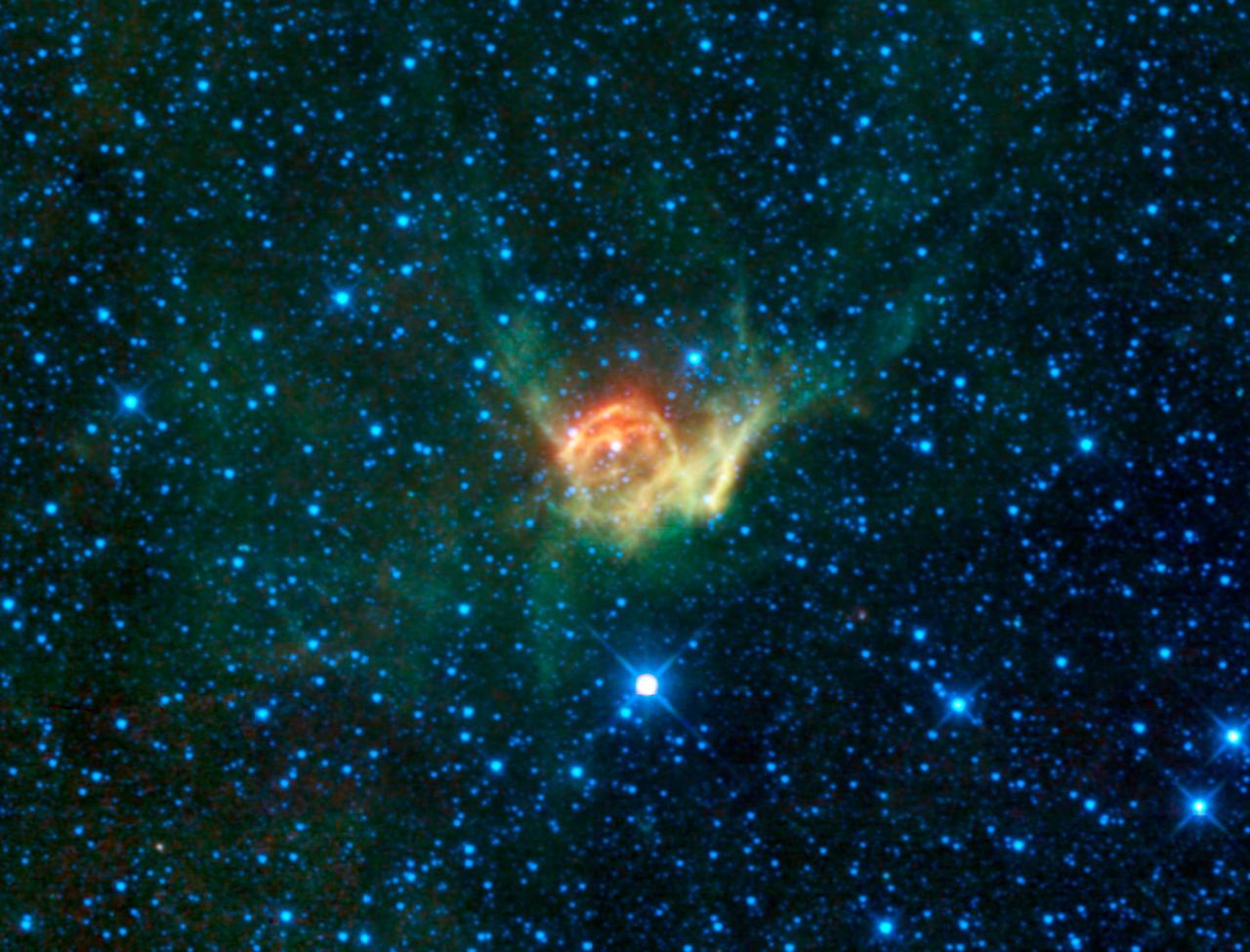
This heroic image from from NASA Wide-field Infrared Survey Explorer is of a special cloud of dust and gas in the constellation Canis Major catalogued as NGC 2359, or more commonly known as Thor Helmet.
Thor Helmet
Gripped in the claw of the constellation Scorpius sits the reflection nebula DG 129, a cloud of gas and dust that reflects light from nearby, bright stars. This infrared view of the nebula was captured by NASA Wide-field Infrared Survey Explorer.
In the Grip of the Scorpion Claw
This image from NASA Wide-field Infrared Survey Explorer, or WISE, is a view within the constellation Cassiopeia of another portion of the vast star forming complex that makes up part of the Perseus spiral arm of the Milky Way Galaxy.
IC 1795
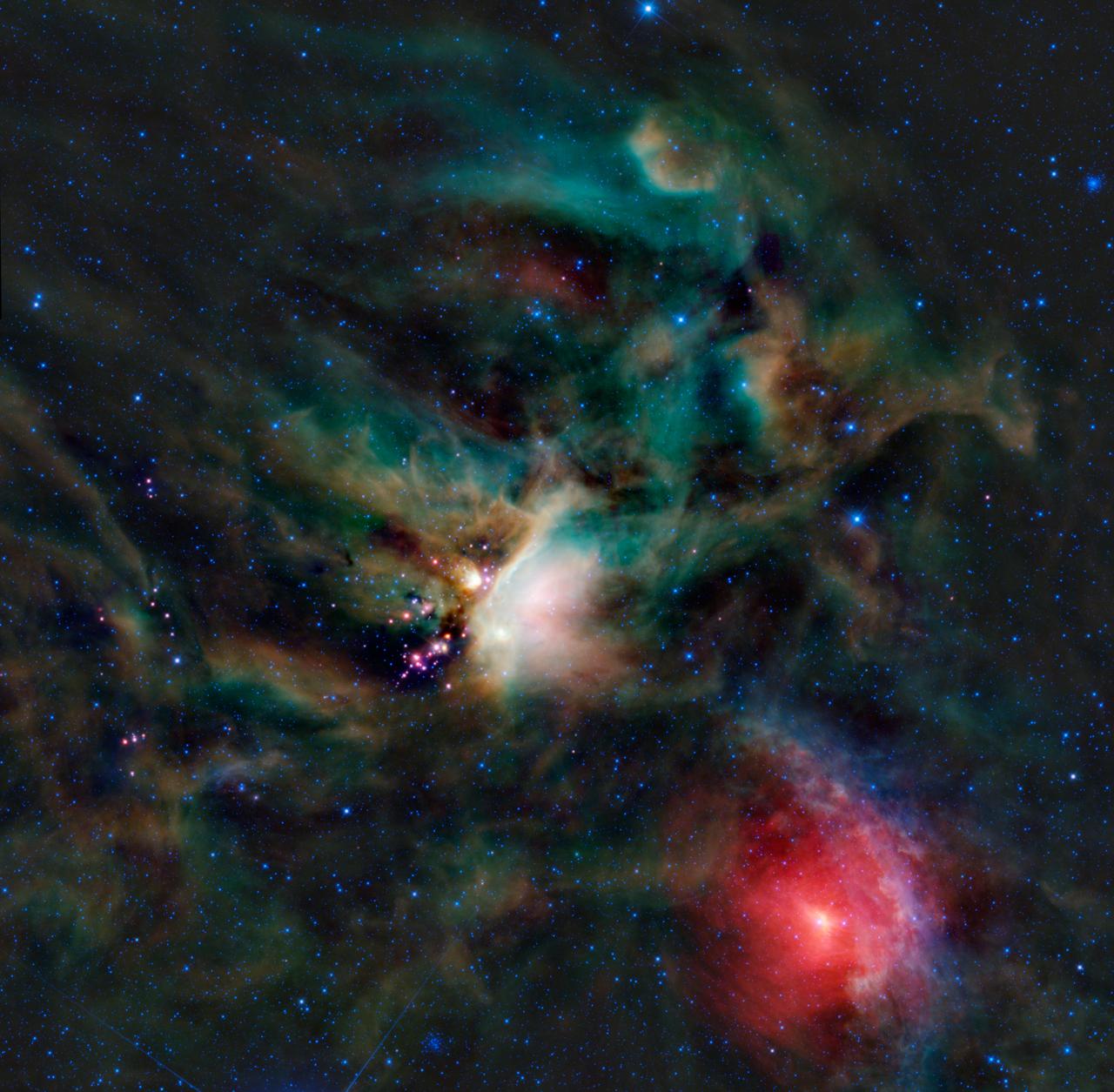
A rich collection of colorful astronomical objects is revealed in this picturesque image of the Rho Ophiuchi cloud complex from NASA Wide-field Infrared Explorer; the cloud is found rising above the plane of the Milky Way in the night sky.
WISE Unveils a Treasure Trove of Beauty
The science instrument on NASA Wide-field Infrared Survey Explorer is shown here with its aperture cover removed, during assembly at the Space Dynamics Laboratory in Logan, Utah.
A Look Inside WISE
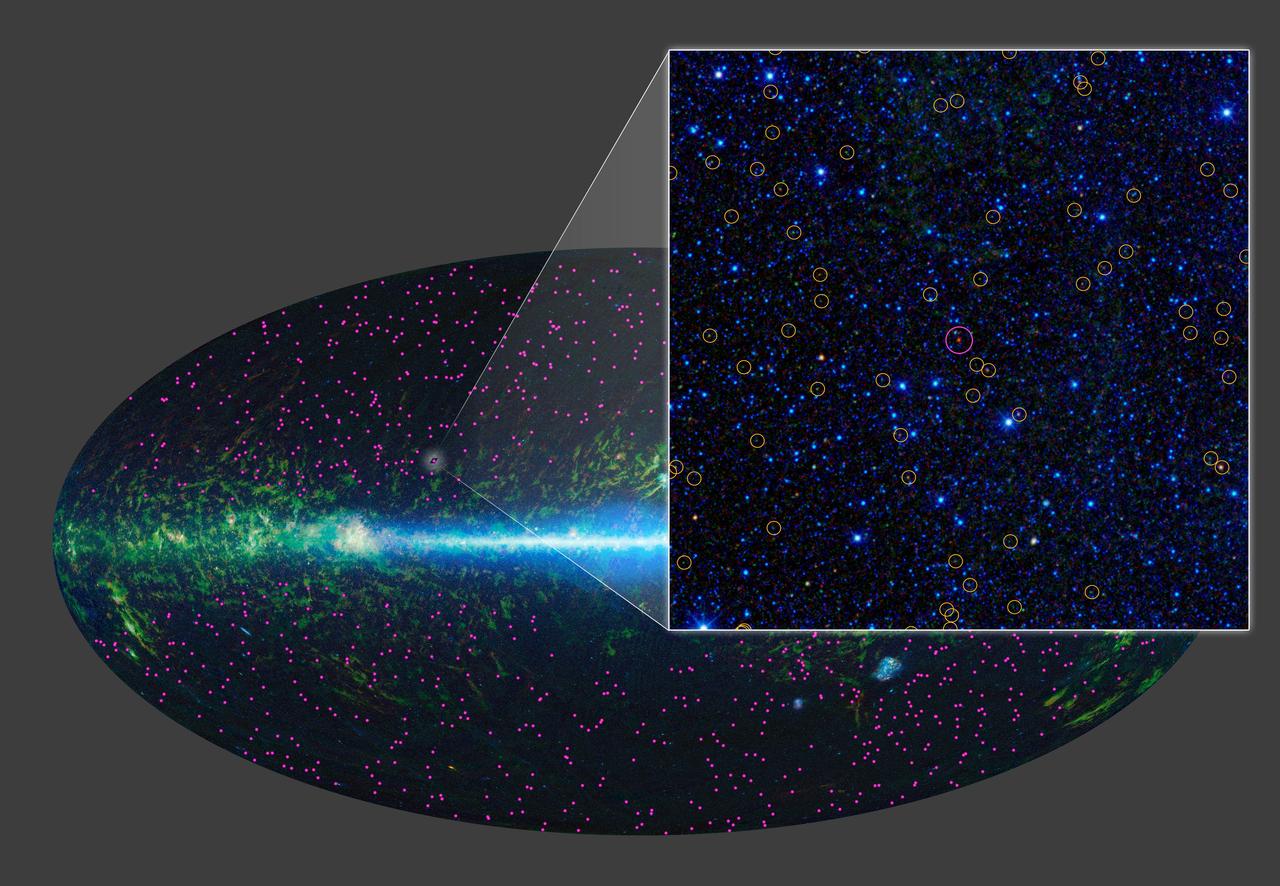
This zoomed-in view of a portion of the all-sky survey from NASA Wide-field Infrared Survey Explorer shows a collection of quasar candidates shown in yellow circles. Quasars are supermassive black holes feeding off gas and dust.
Exposing Black Holes Disguised in Dust
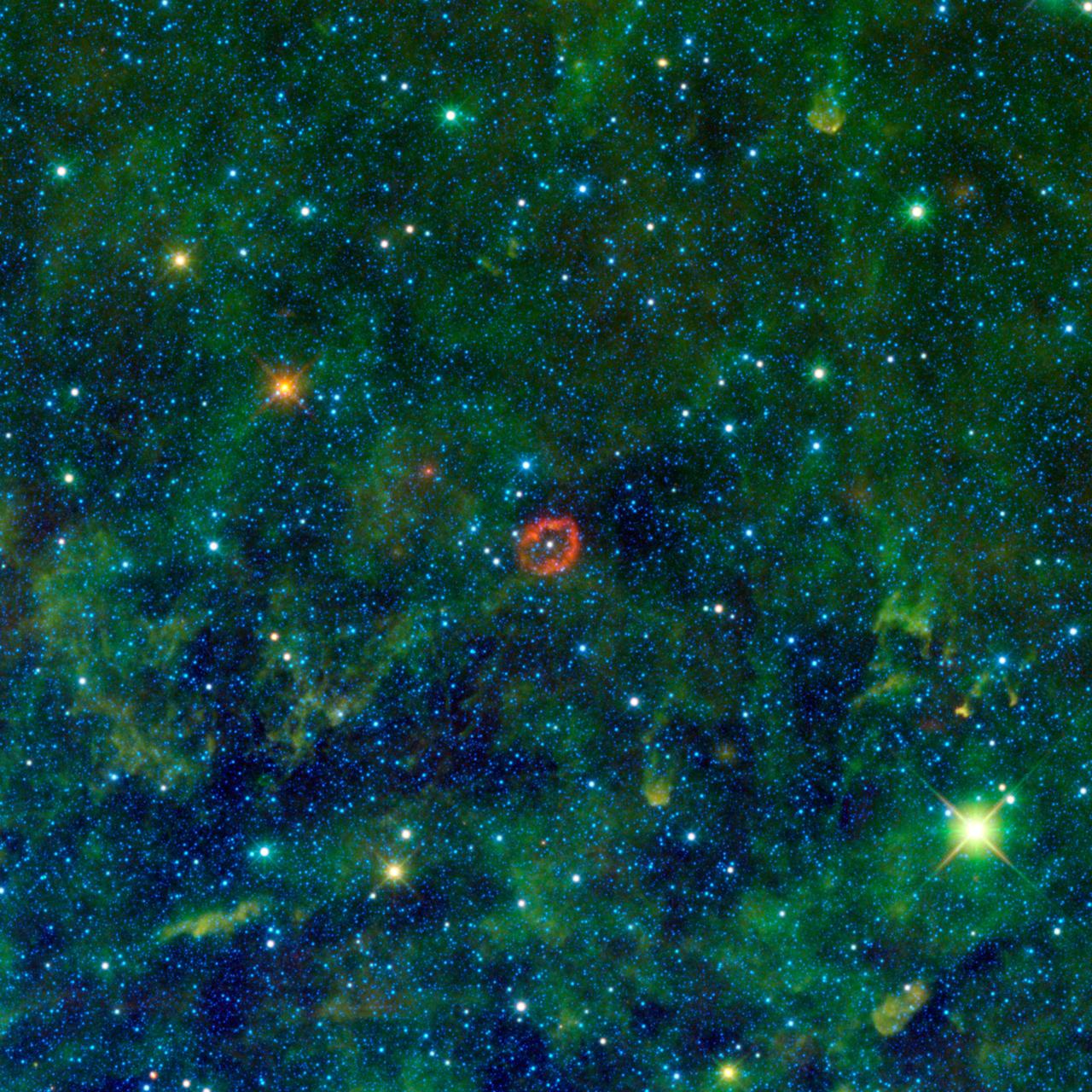
Some might see a blood-red jellyfish, while others might see a pair of lips. In fact, the red-colored object in this new image from NASA Wide-field Infrared Survey Explorer is a sphere of stellar innards.
Jumbo Jellyfish or Massive Star?
NASA Wide-field Infrared Survey Explorer observed the star-forming cloud NGC 281 in the constellation of Cassiopeia as it appears to be chomping through the cosmos, earning it the nickname the Pacman nebula.
Does Pacman Have Teeth?
Radiation and winds from massive stars have blown a cavity into the surrounding dust and gas, creating the Trifid nebula, as seen here in infrared light by NASA Wide-field Infrared Survey Explorer, or WISE.
Storm of Stars in the Trifid Nebula
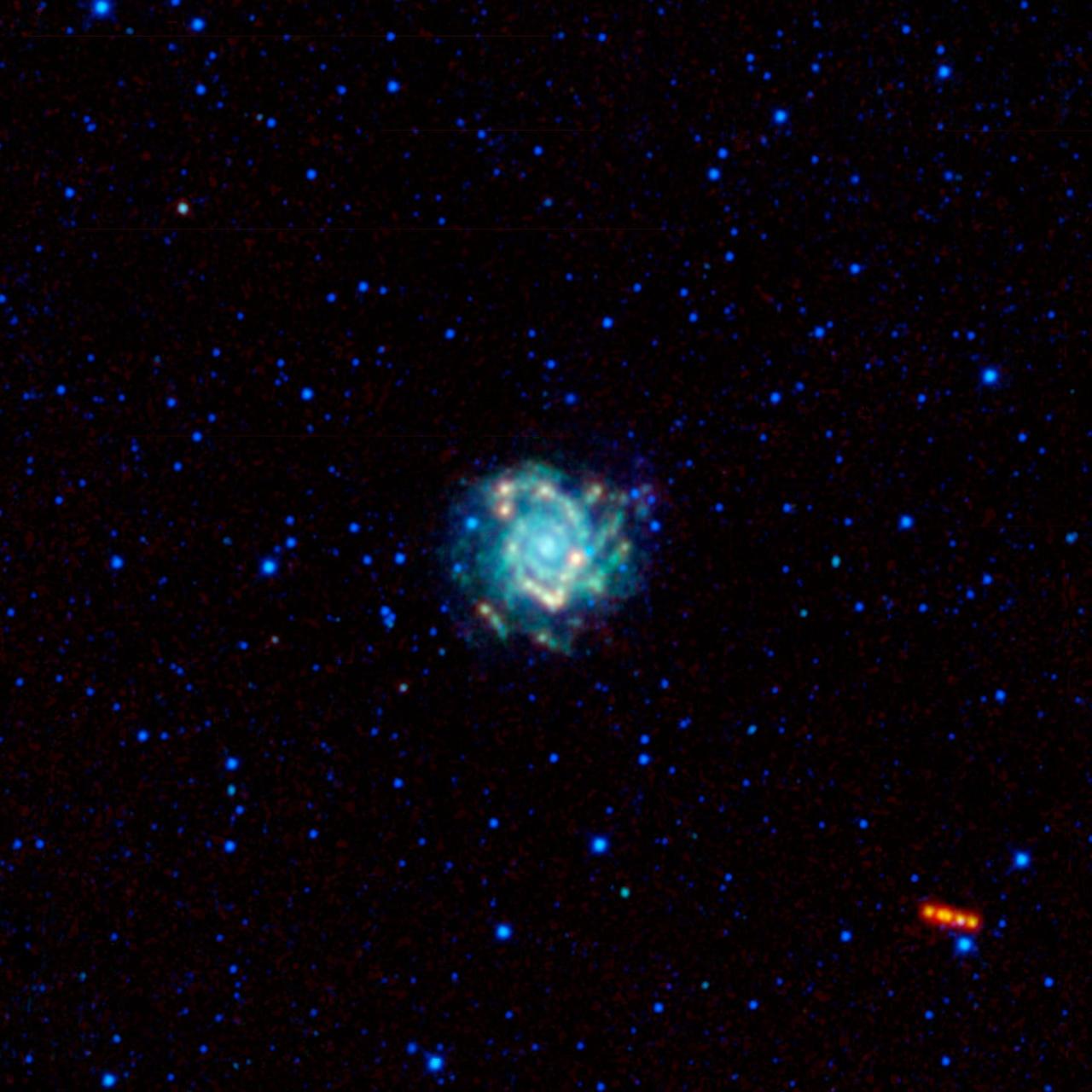
Galaxy Messier 74, with its spiral arms seen face-on, is in the center of this image captured by NASA Wide-field Infrared Survey Explorer, or WISE, while an asteroid tracks its way across the sky.
A Spiral Galaxy is Visited by a Trojan War Hero
This infrared image from NASA Wide-field Infrared Survey Explorer shows the Lambda Centauri nebula, a star-forming cloud in our Milky Way galaxy, also known as the Running Chicken nebula.
Chasing Chickens in the Lambda Centauri Nebula
This chart based on data from NASA Wide-field Infrared Survey Explorer illustrates why infrared-sensing telescopes are more suited to finding small, dark asteroids than telescopes that detect visible light.
Infrared Telescopes Spy Small, Dark Asteroids
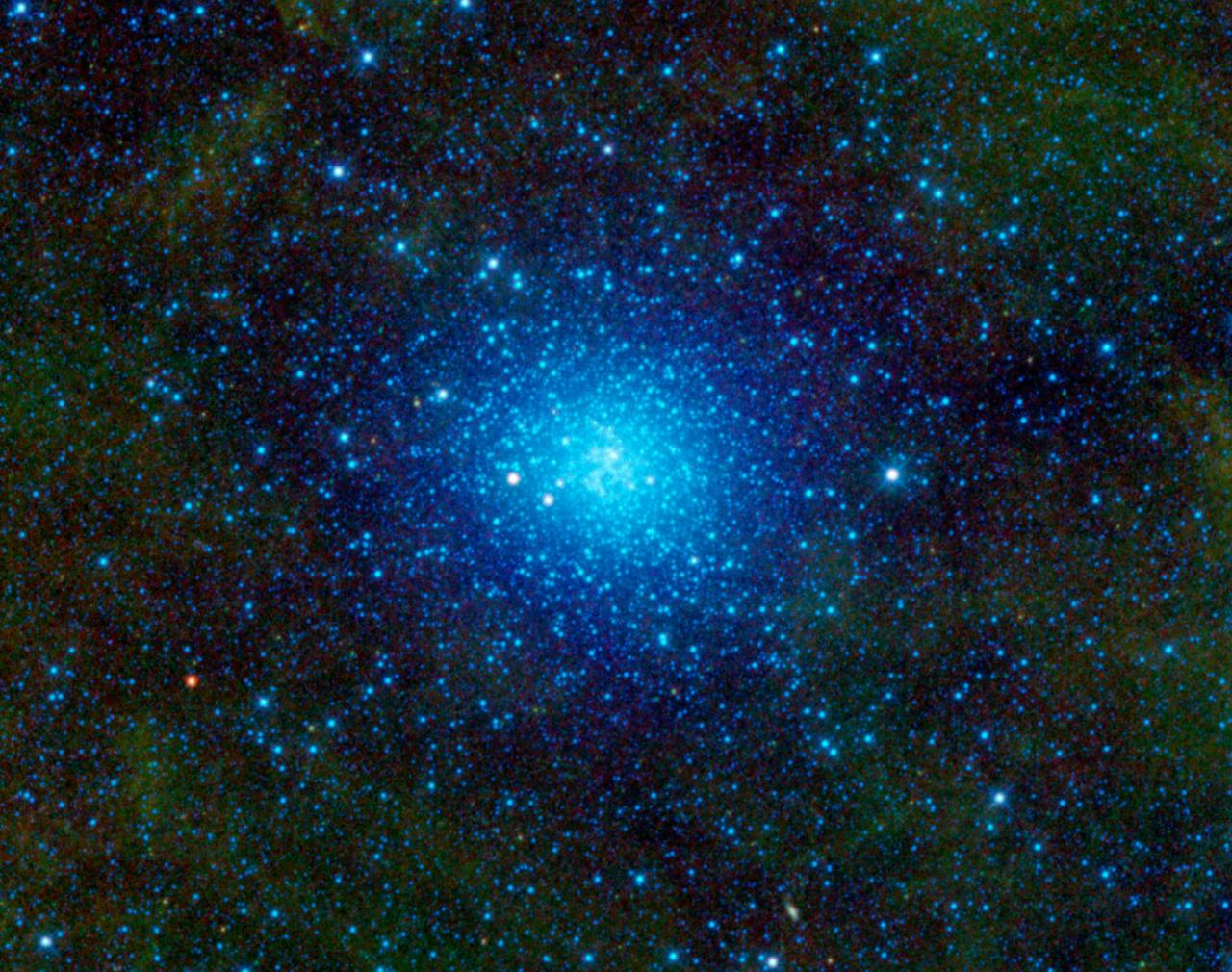
NASA Wide-field Infrared Survey Explorer has captured a favorite observing target of amateur astronomers, Omega Centauri. This celestial cluster of stars can be found in the constellation Centaurus.
Omega Centauri
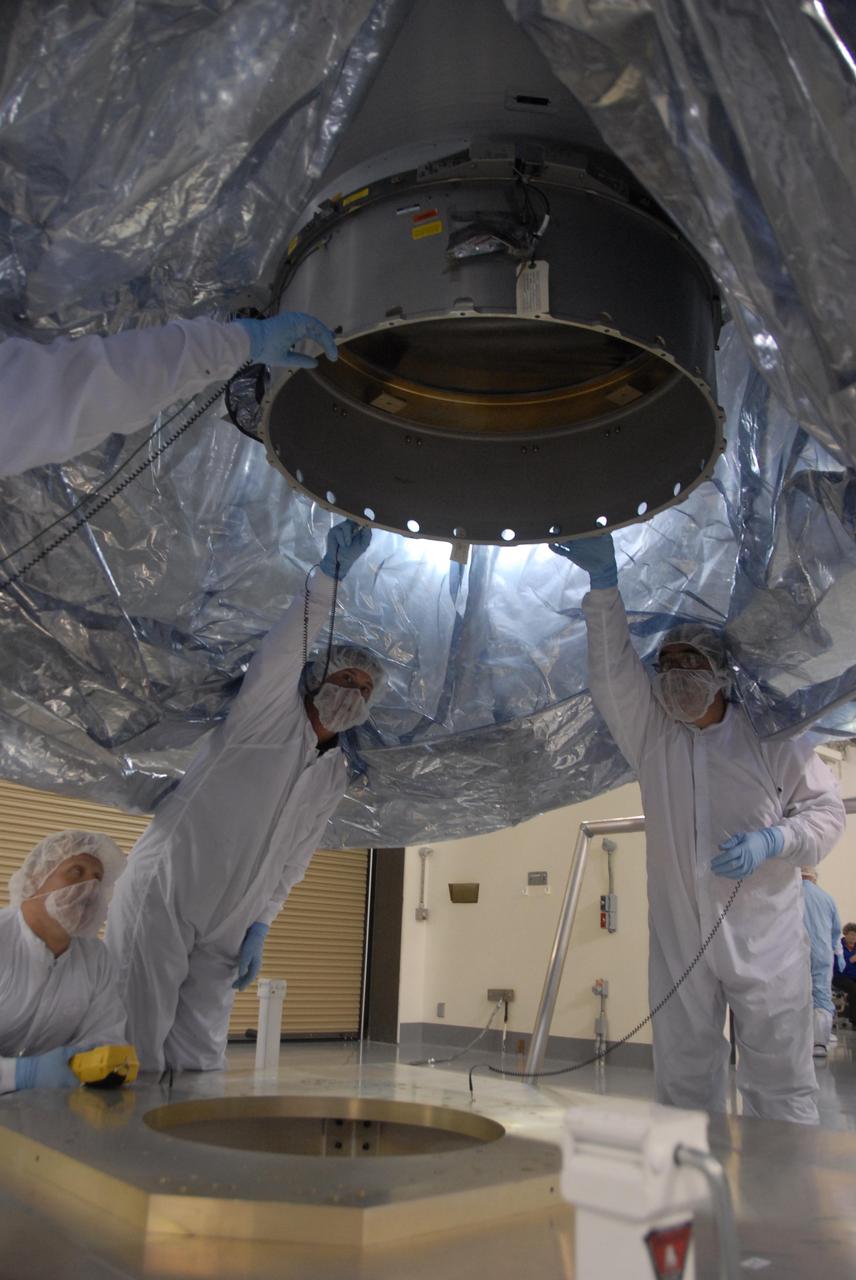
At Vandenberg Air Force Base Astrotech processing facility in California, NASA Wide-field Infrared Survey Explorer, or WISE, spacecraft is lowered toward the flight conical adapter and test stand.
NASA WISE Spacecraft Lowered Toward Test Stand
Sending chills down the spine of all arachnophobes is the Tarantula nebula, seen in this image from NASA Wide-field Infrared Survey Explorer; the nebula is the largest star-forming region known in our entire Local Group of galaxies.
WISE Spies the Tarantula Nebula
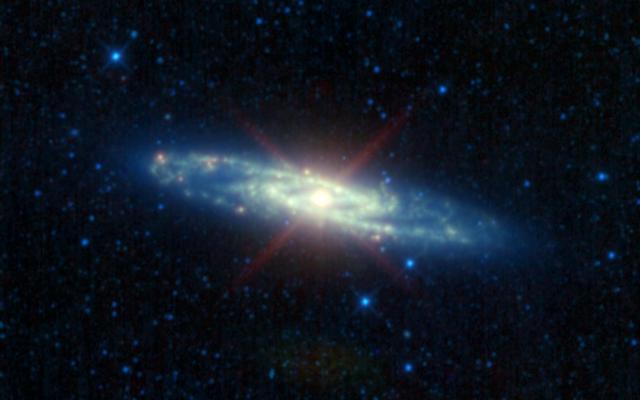
The Sculptor galaxy, or NGC 253, is seen in a rainbow of infrared colors in this mosaic by NASA Wide-field Infrared Survey Explorer. The Sculptor galaxy can be seen by observers in the southern hemisphere with a pair of good binoculars.
The Many Infrared Personalities of the Sculptor Galaxy
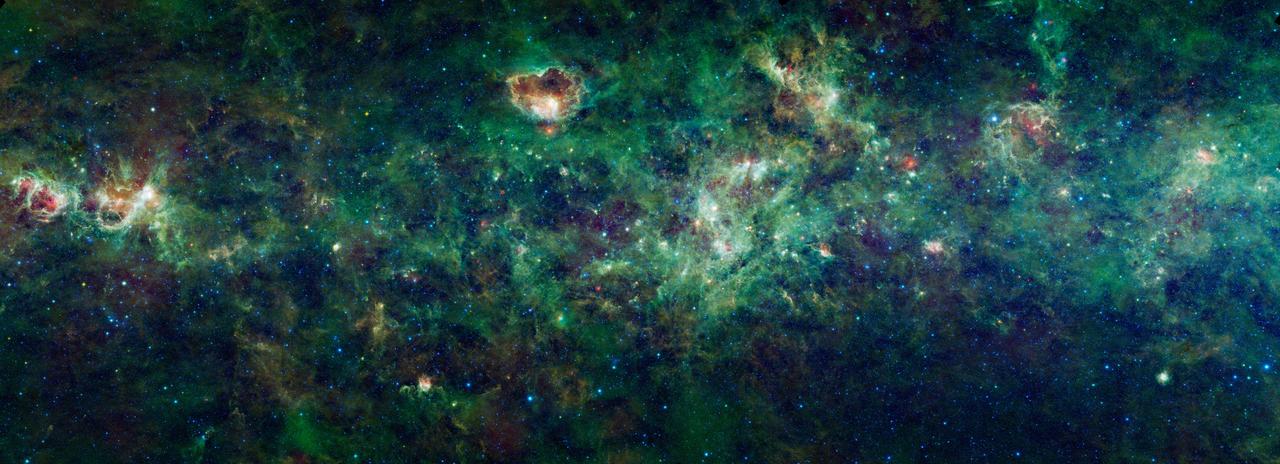
This enormous section of the Milky Way galaxy is a mosaic of images from NASA Wide-field Infrared Survey Explorer. The constellations Cassiopeia and Cepheus are featured in this 1,000-square degree expanse.
A Royal Celebration
NASA Wide-field Infrared Survey Explorer is a little like the Vincent van Gogh of the infrared sky, providing the world with picturesque images of the cosmos by representing infrared light through color. This image is the nebula NGC 2174.
The van Gogh of the Infrared Sky
This frame from an animation illustrates asteroid-hunting results from NASA Wide-field Infrared Survey Explorer, or WISE, taken during its one-year survey of the sky in infrared light.
Changing Views of Our Solar System
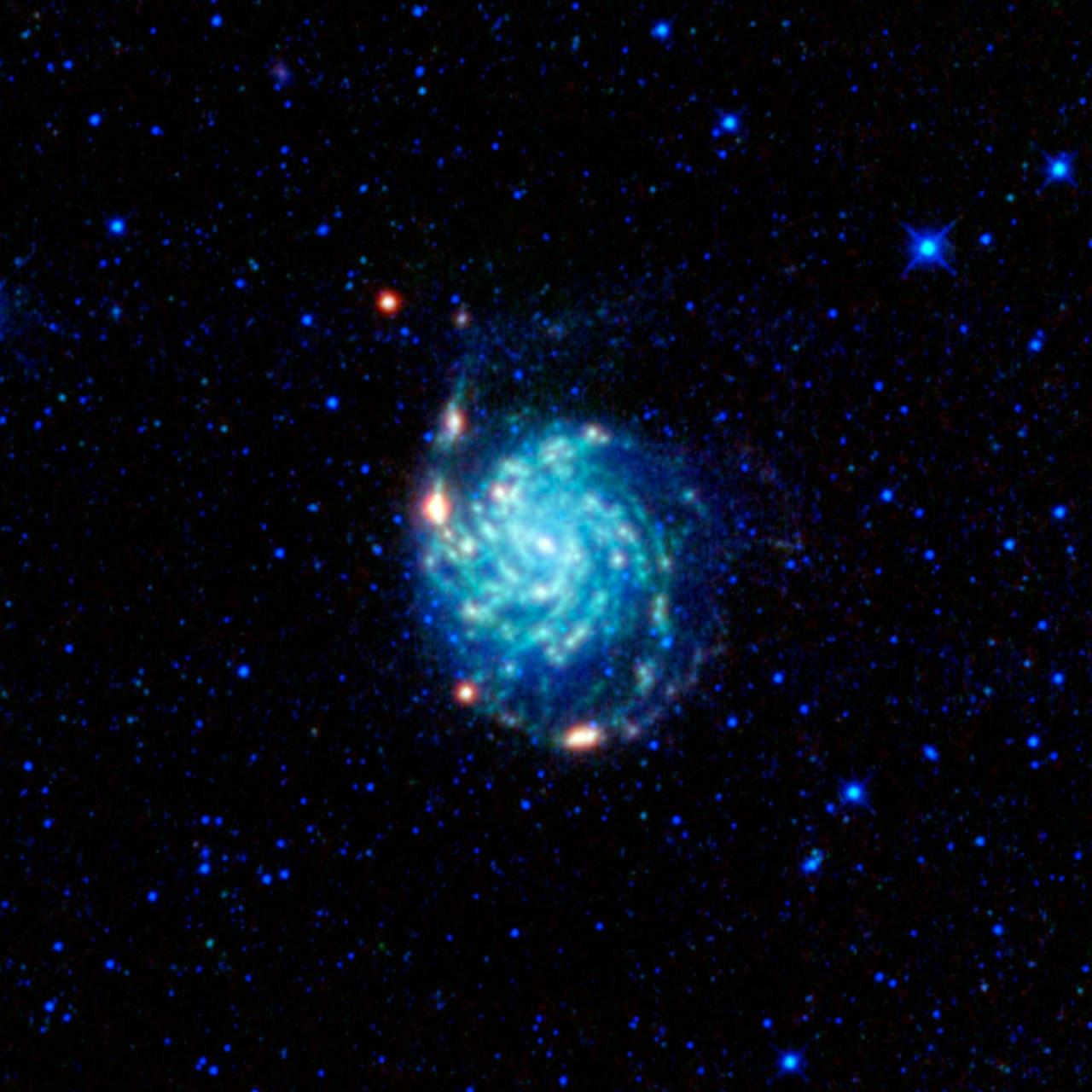
A large spiral galaxy dominates this view from NASA Wide-field Infrared Survey Explorer. The galaxy, often called the Pinwheel galaxy, was designated object 101 in astronomer Charles Messier catalog of fuzzy things in the sky that are not comets.
M 101: The Pinwheel Galaxy
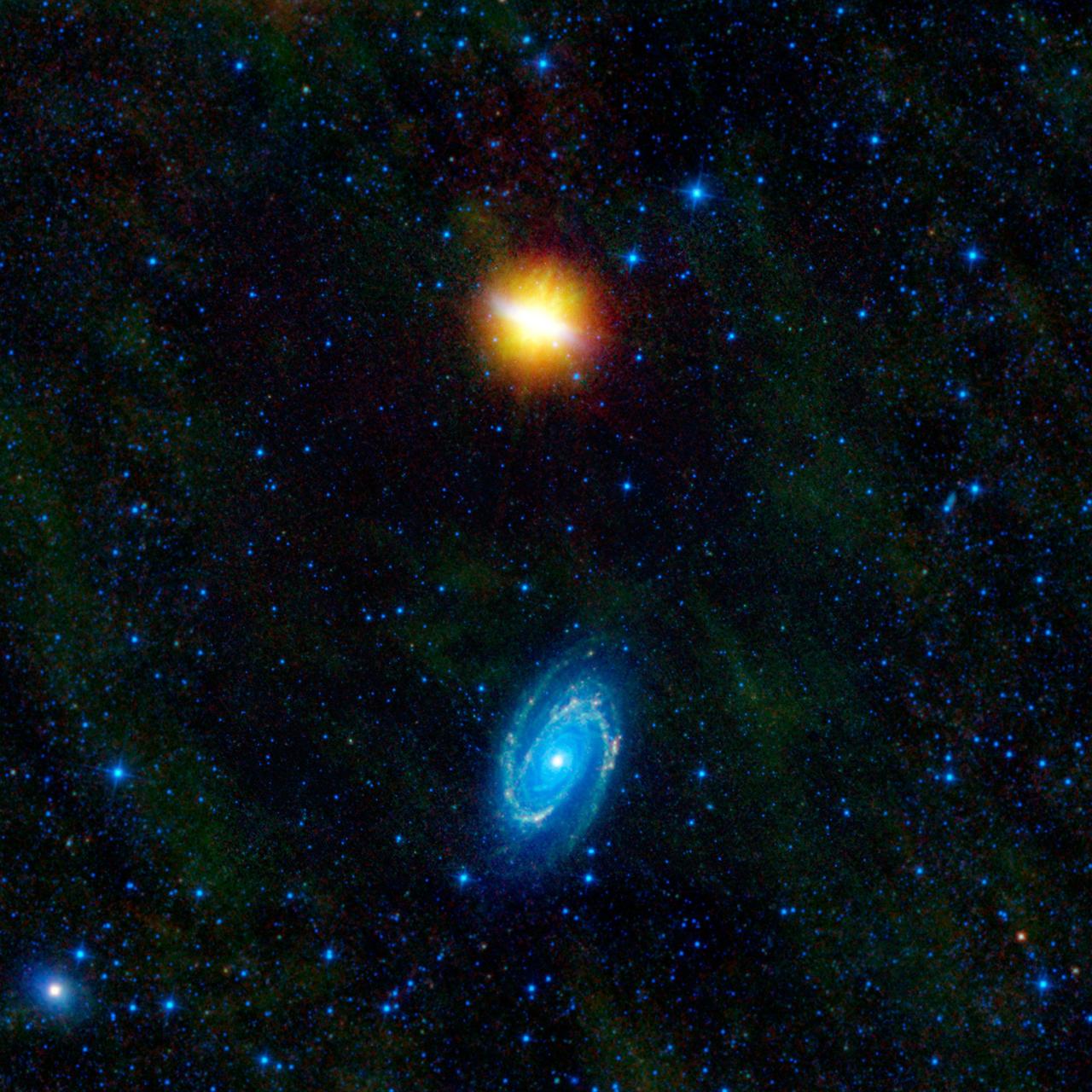
This image from NASA Wide-Field Infrared Explorer features two stunning galaxies engaged in an intergalactic dance. The galaxies, Messier 81 and Messier 82, swept by each other a few hundred million years ago.
WISE Beholds a Pair of Dancing Galaxies
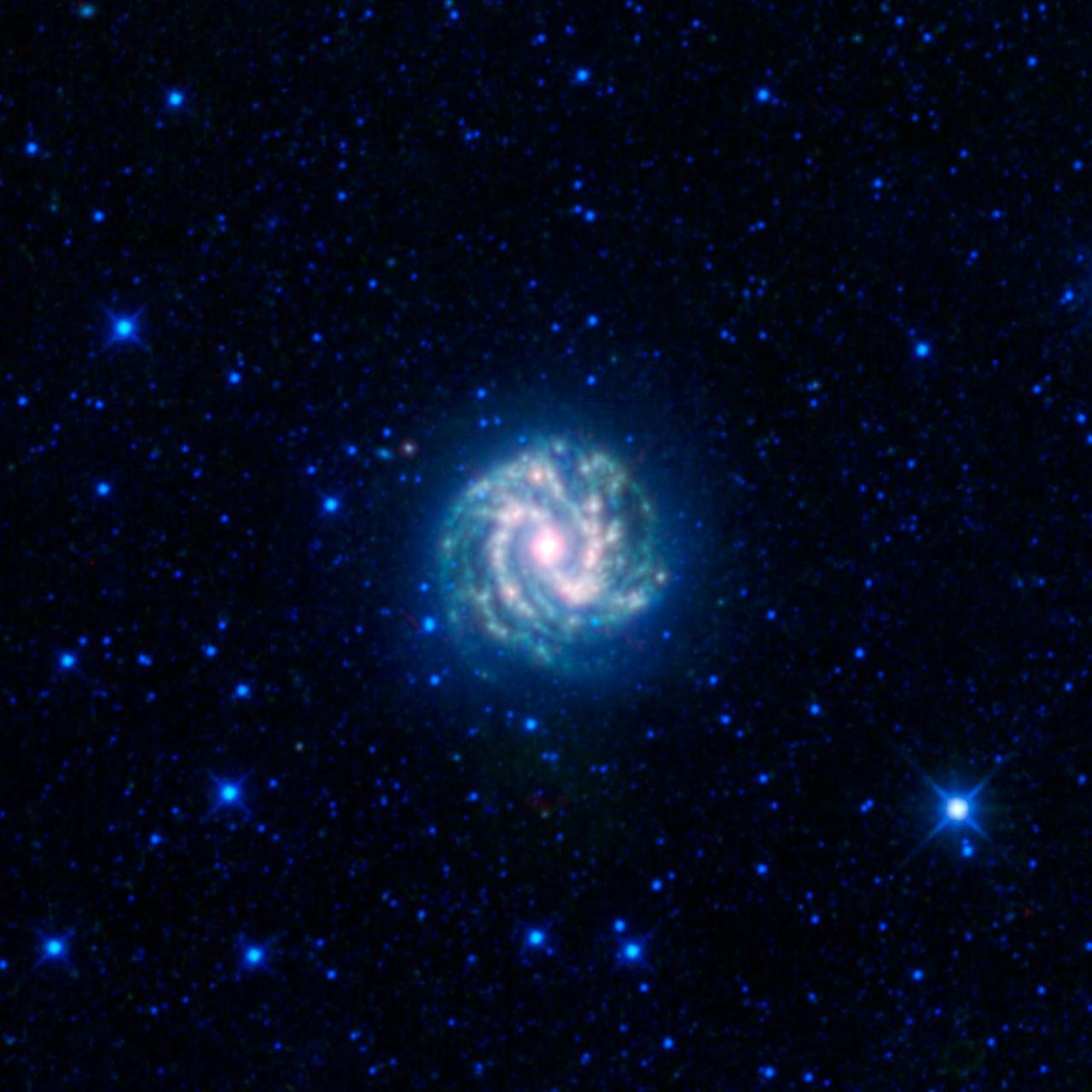
This image from NASA Wide-field Infrared Survey Explorer shows the nearby galaxy M83. This is a spiral galaxy approximately 15 million light-years away in the constellation Hydra, sometimes referred to as the southern Pinwheel galaxy.
Southern Pinwheel
NASA Wide-field Infrared Survey Explorer captured this colorful image of the nebula BFS 29 surrounding the star CE-Camelopardalis, found hovering in the band of the night sky comprising the Milky Way.
Supergiant Star Near Giraffe Hind Foot
This picture of the open star cluster NGC 7380 is a mosaic of images from NASA Wide-field Infrared Survey Explorer mission spanning an area on the sky of about 5 times the size of the full Moon.
NGC 7380
A colorful collection of galaxy specimens from NASA Wide-field Infrared Survey Explorer mission showcases galaxies of several types, from elegant grand design spirals to more patchy flocculent spirals.
The Galaxy Menagerie from WISE
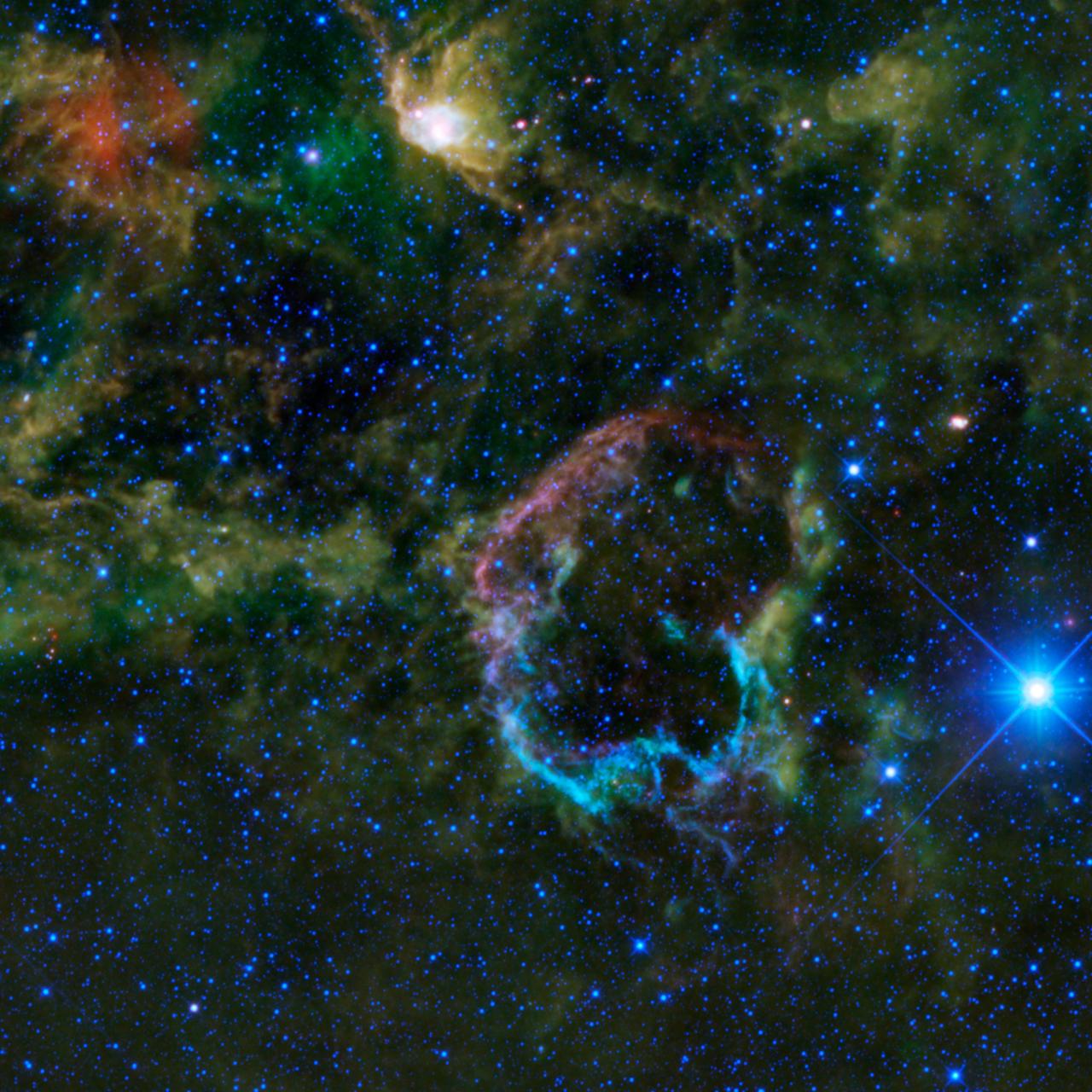
This oddly colorful nebula is the supernova remnant IC 443 as seen by NASA Wide-field Infrared Survey Explorer; the Jellyfish nebula is particularly interesting because it provides a look into how stellar explosions interact with their environment.
An Explosion of Infrared Color
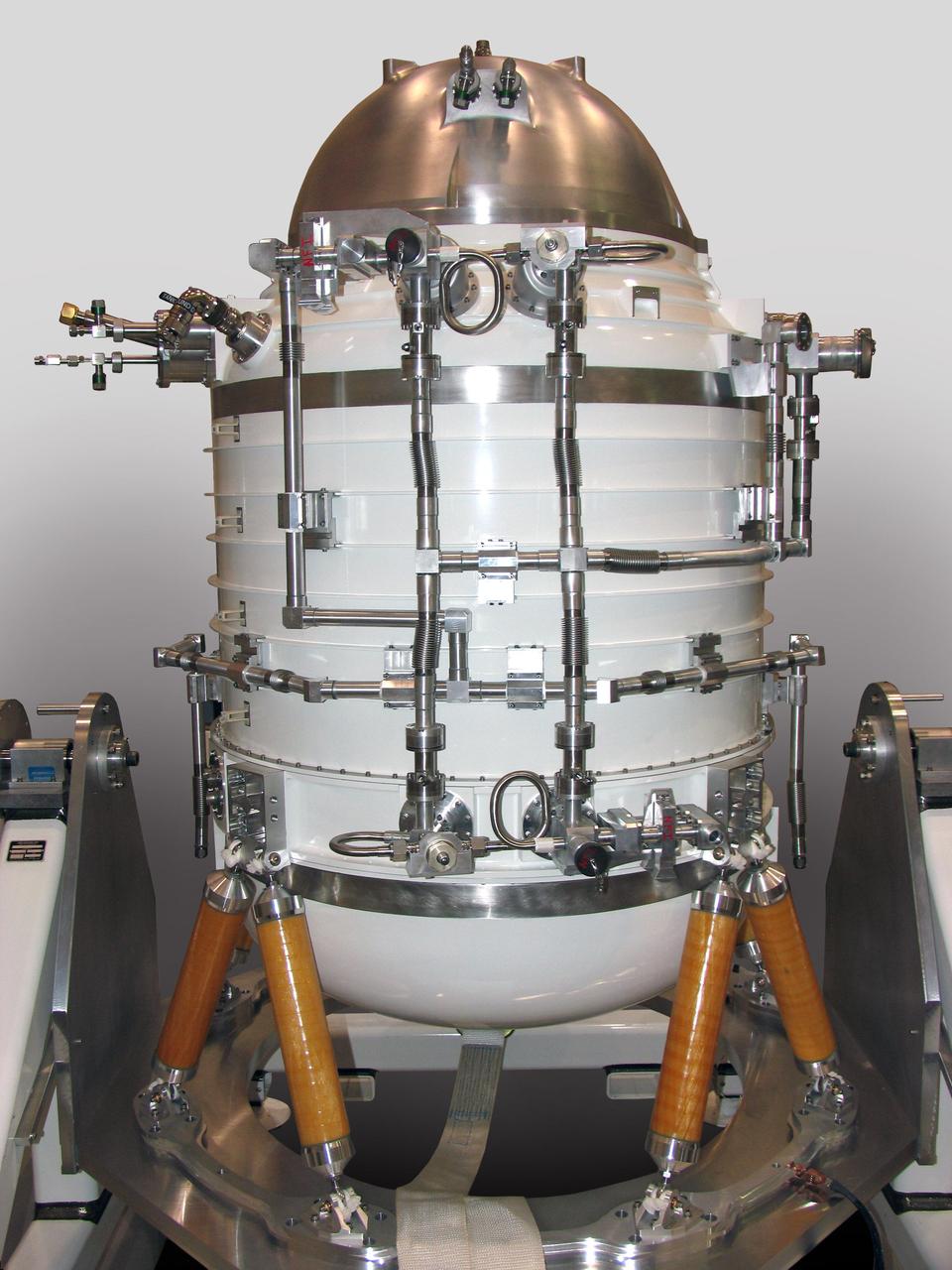
Initial assembly of NASA Wide-field Infrared Survey Explorer cryostat. The cryostat is a 2-stage solid hydrogen dewar that is used to cool the WISE optics and detectors. Here the cryostat internal structures are undergoing their initial vacuum pumpdown.
NASA WISE Cryostat
This mosaic image taken by NASA Wide-field Infrared Survey Explorer, features three nebulae that are part of the giant Orion Molecular Cloud. Included in this view are the Flame nebula, the Horsehead nebula and NGC 2023.
A Flame in Orion Belt
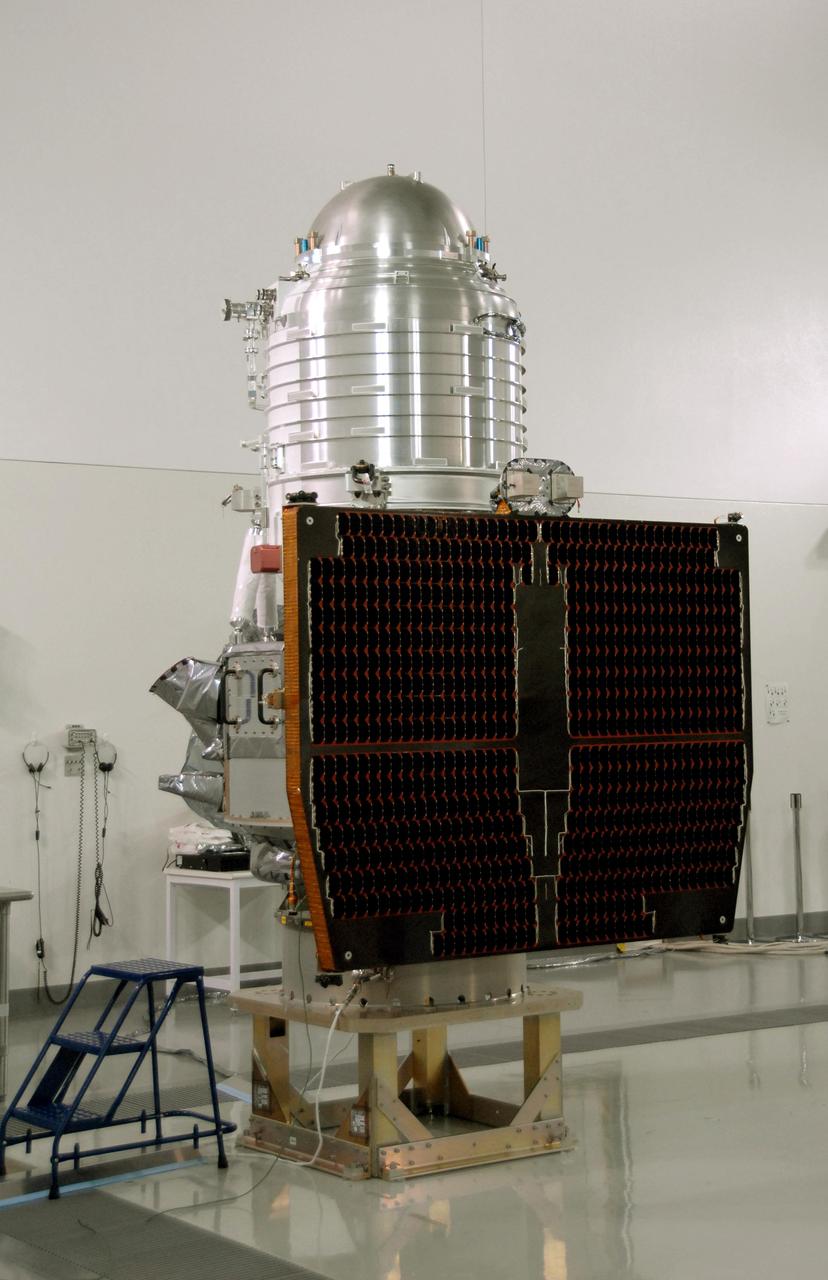
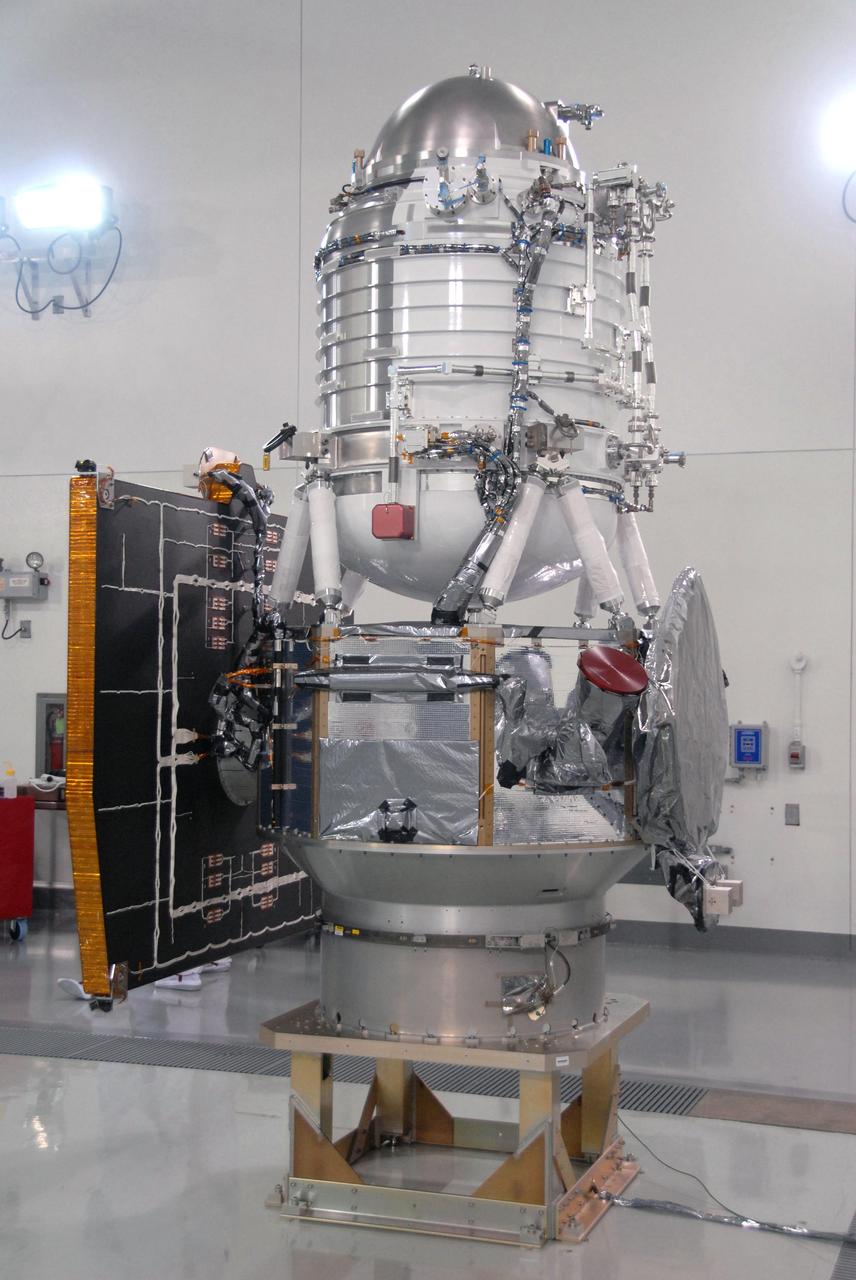
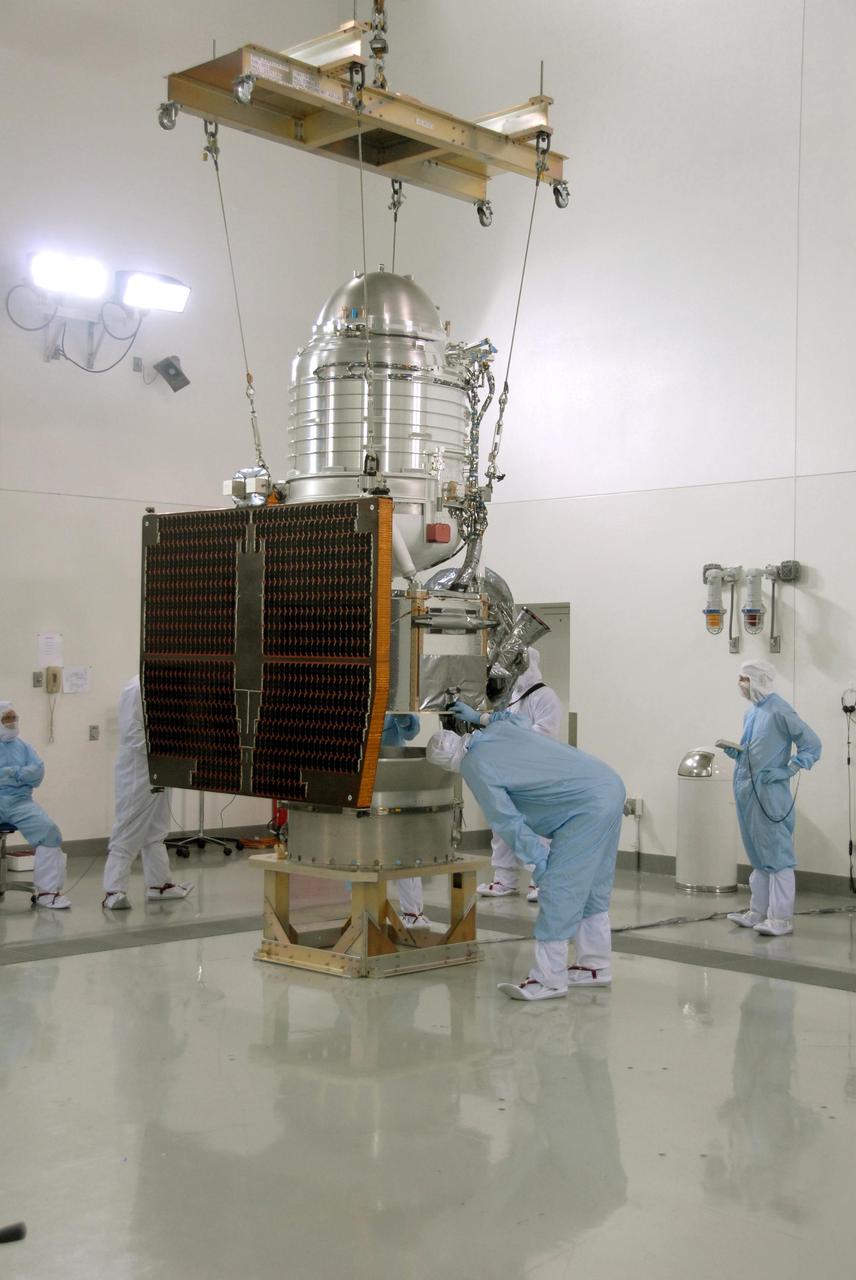
NASA Wide-field Infrared Survey Explorer spacecraft is situated on a work stand. At left on the spacecraft is the fixed panel solar array. In front, the square is the HGA Slotted Array Ku-Band.
NASA WISE Spacecraft Situated on Work Stand
This image zooms in on the region around the first hot DOG red object in magenta circle, discovered by NASA Wide-field Infrared Survey Explorer, or WISE. Hot DOGs are hot dust-obscured galaxies.
Extremely Bright and Extremely Rare
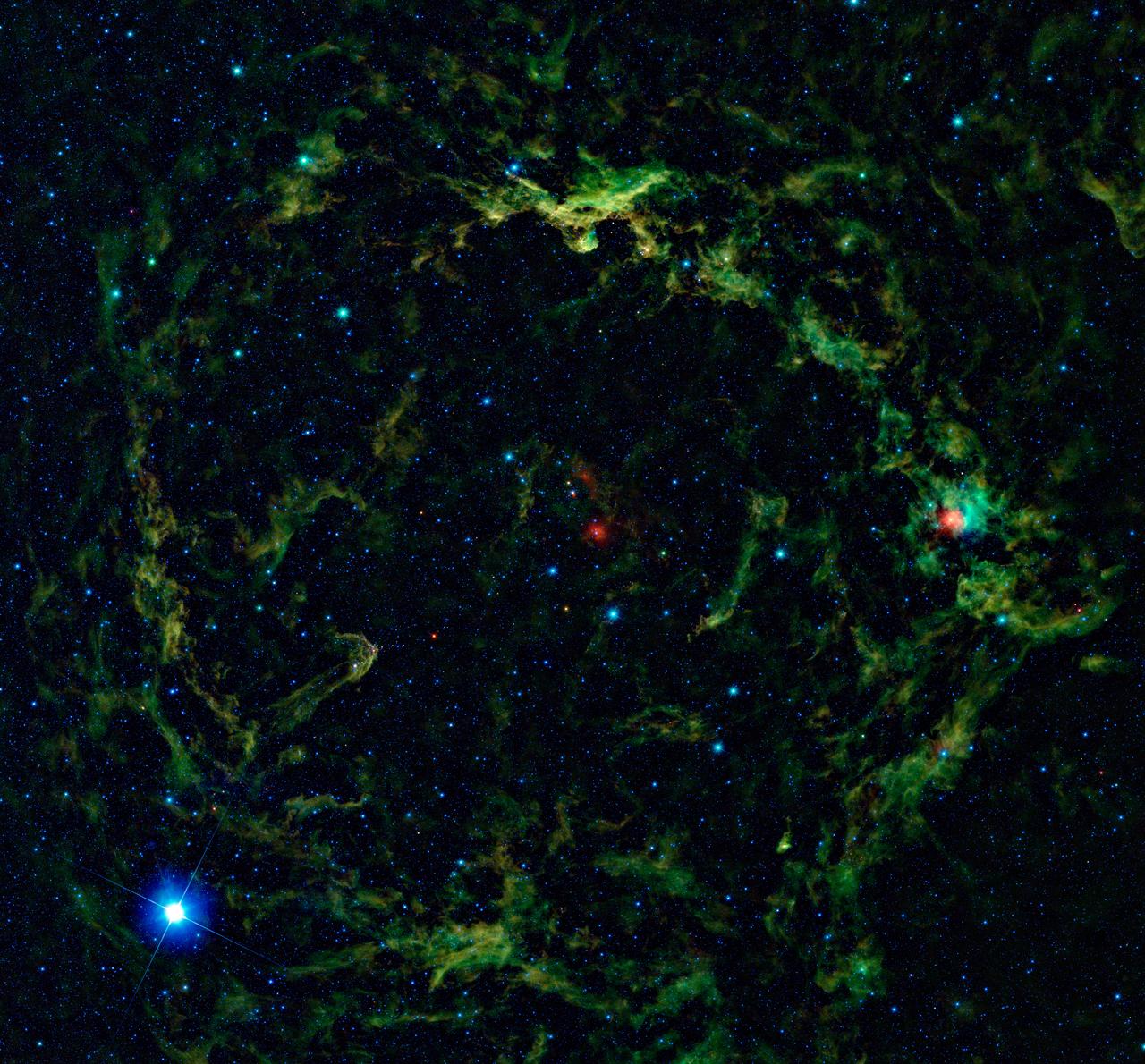
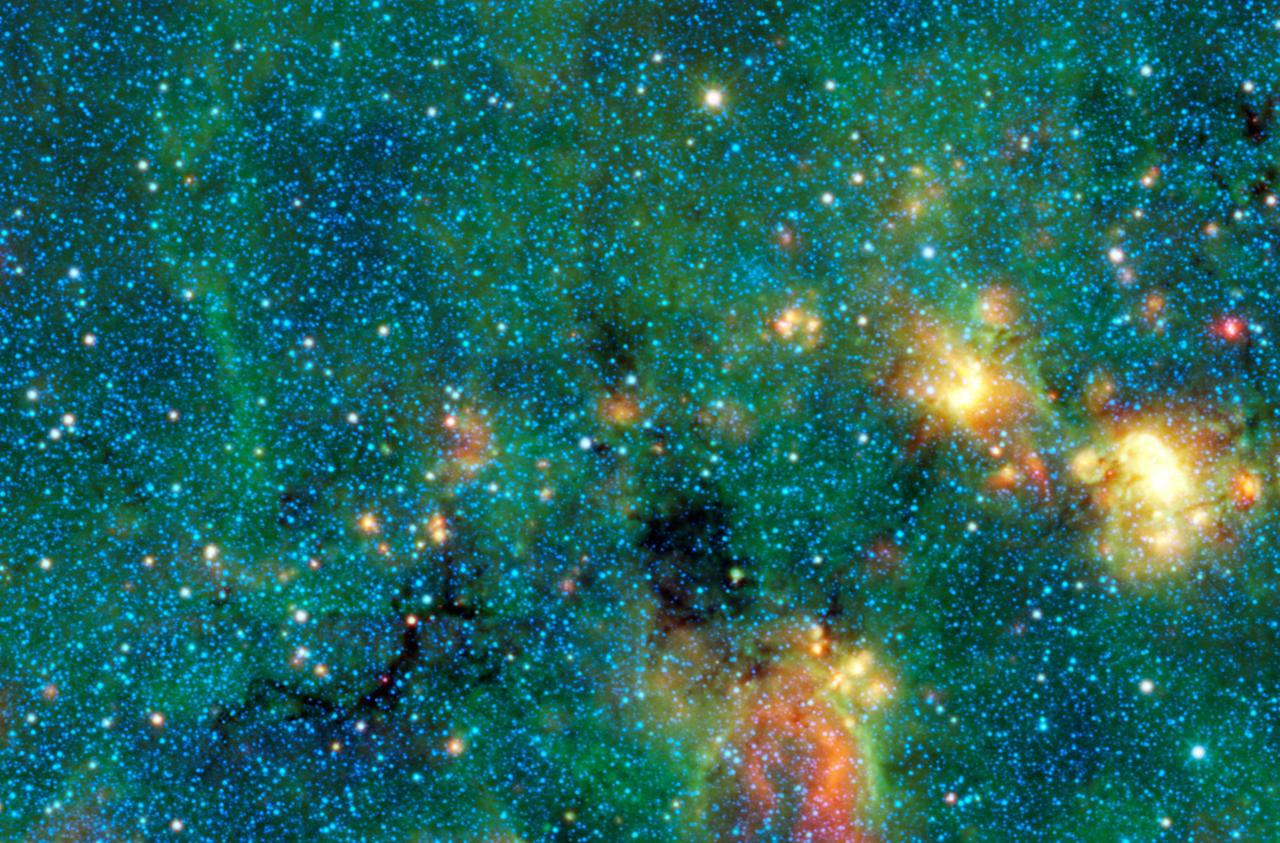
This infrared image from NASA Wide-field Infrared Survey Explorer shows exceptionally cold, dense cloud cores seen in silhouette against the bright diffuse infrared glow of the plane of the Milky Way galaxy.
Dark Murky Clouds in the Bright Milky Way
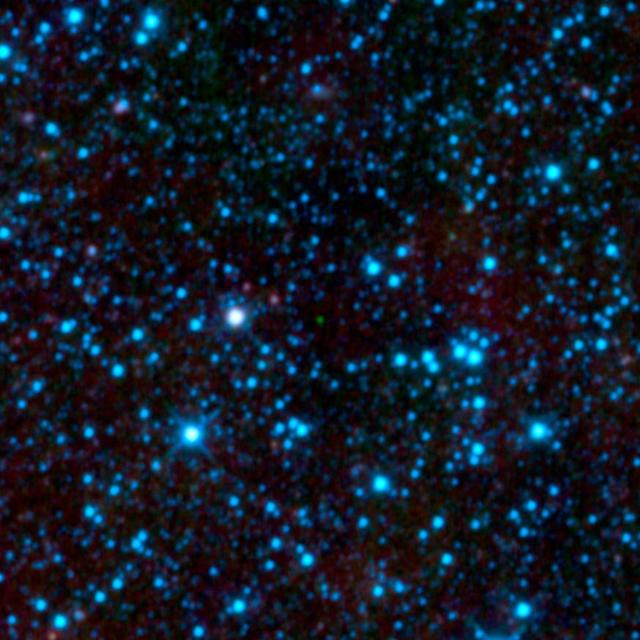
The green dot in the middle of this image might look like an emerald amidst glittering diamonds, but is a dim star belonging to a class called brown dwarfs; it is the first ultra-cool brown dwarf discovered by NASA Wide-field Infrared Survey Explorer.
Collecting Brown Dwarfs in the Night Sky
NASA Wide-field Infrared Survey Explorer has uncovered the coldest brown dwarf known so far green dot in very center of this infrared image. WISE 1828+2650 is located in the constellation Lyra. The blue dots are a mix of stars and galaxies.
Reigning Title-Holder for Coldest Brown Dwarf
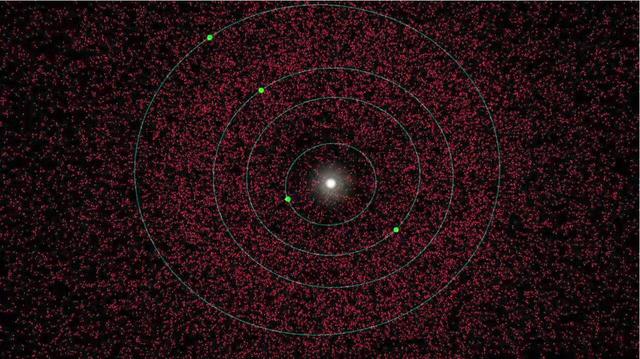
This frame from a video demonstrates how NASA Wide-field Infrared Survey Explorer surveys asteroids and comets in the solar system. Perspective shown here is looking down from high above Earth North Pole, a kind of bird eye view of the solar system.
Asteroid and Comet Census from WISE
This image shows the famous Pleiades cluster of stars as seen through the eyes of NASA Wide-field Infrared Survey Explorer; they are what astronomers call an open cluster of stars, loosely bound to each other to eventually go their separate ways.
Seven Sisters Get WISE
The immense Andromeda galaxy, also known as Messier 31, is captured in full in this image from NASA Wide-field Infrared Survey Explorer. Andromeda is the closest large galaxy to our Milky Way galaxy, and is located 2.5 million light-years from our sun.
Our Neighbor Andromeda
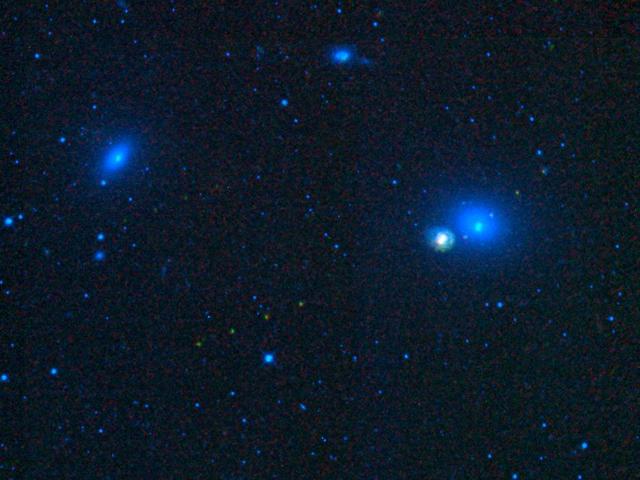
This image from NASA Wide-field Infrared Survey Explorer, shows four galaxies in the Virgo cluster: Messier 59, Messier 60, NGC 4647, and NGC 4638. It also shows the tracks of three asteroids, which appear in this image as trails of green dots.
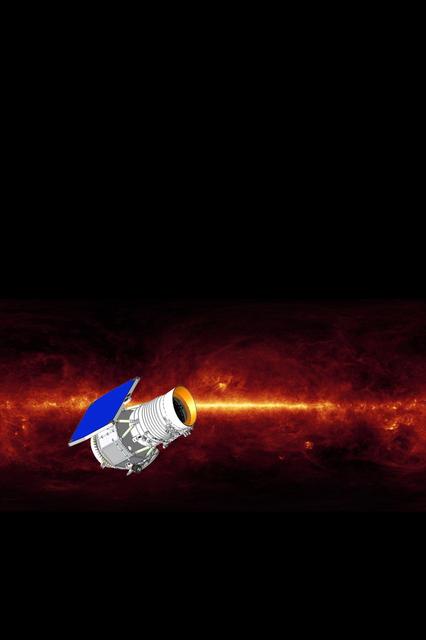
Asteroids in Virgo
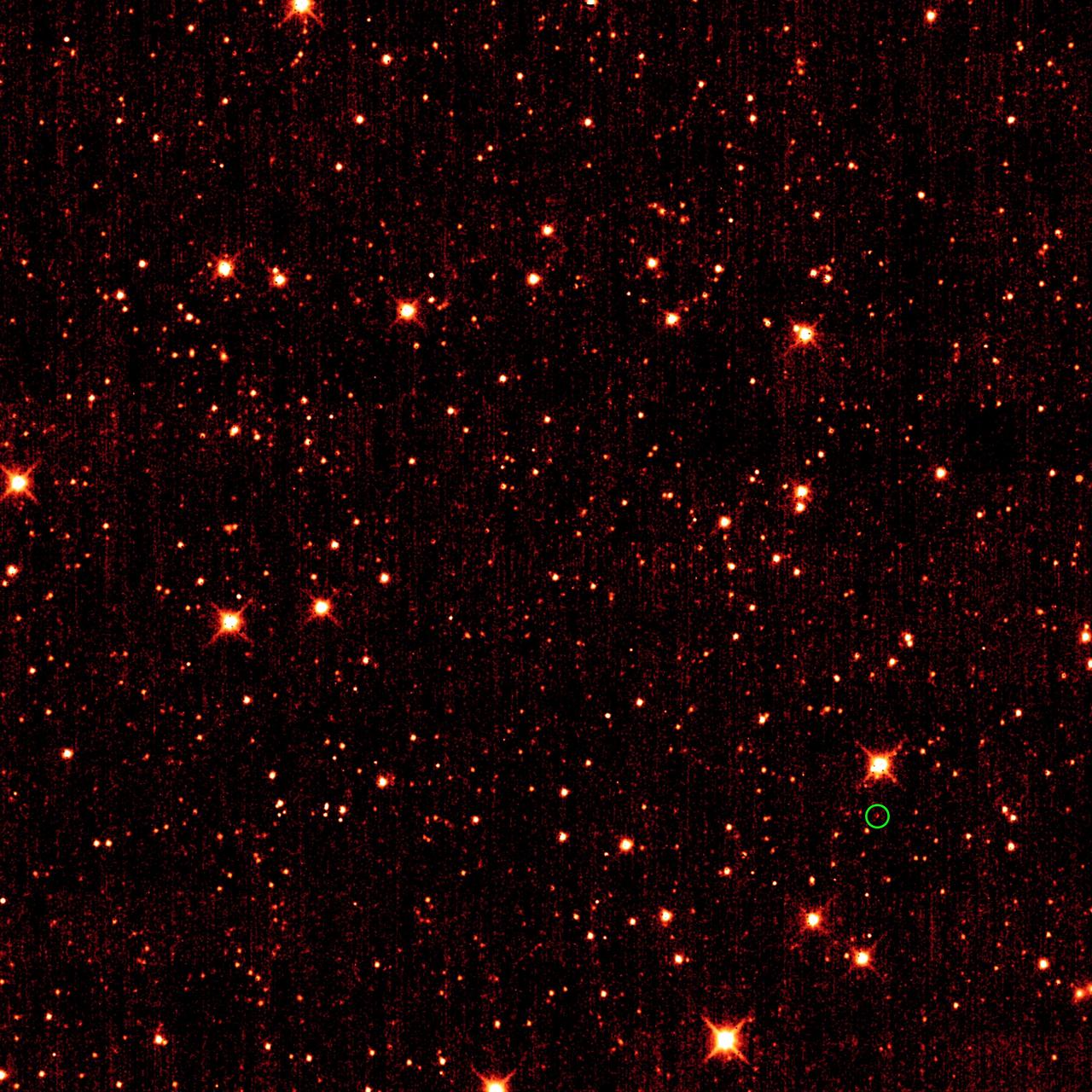
Asteroid 2010 TK7, the first known Earth Trojan asteroid, is circled in green, in this single frame taken by NASA Wide-field Infrared Survey Explorer. The majority of the other dots are stars or galaxies far beyond our solar system.
A Glimmer in the Eye of WISE
NASA Wide-field Infrared Survey Explorer, captured this image of a star-forming cloud of dust and gas located in the constellation of Monoceros. Sh2-284 is relatively isolated at the very end of an outer spiral arm of our Milky Way galaxy.
Pointing a Finger at Star Formation
An engineer loads hydrogen gas into the Wide-Field Infrared Survey Explorer in a clean room at the Vandenberg Air Force Base, Calif. The hydrogen is cooled and frozen inside a Thermos-like bottle, called the cryostat, which keeps the science instrument
Freezing Hydrogen
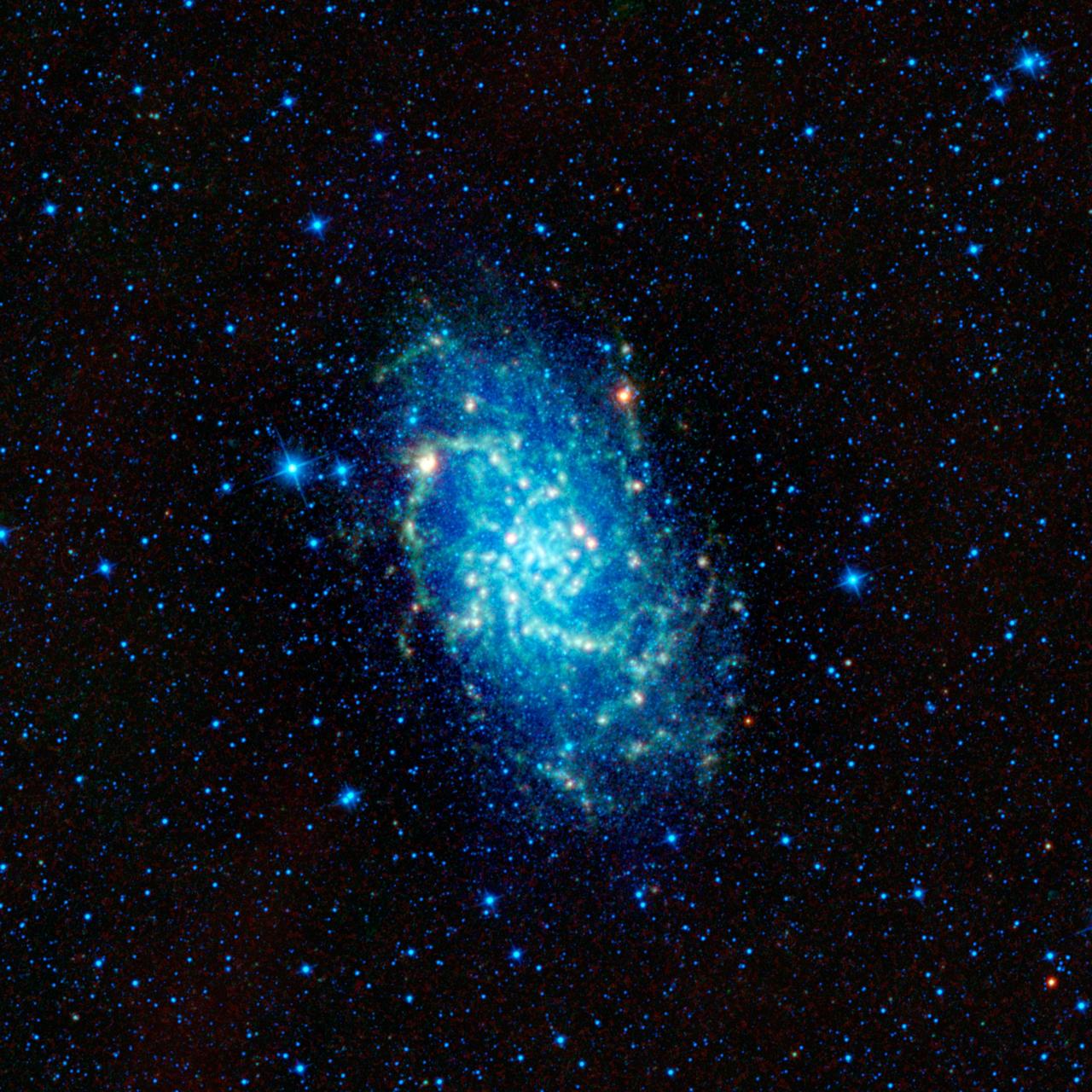
This image captured by NASA Wide-field Infrared Survey Explorer shows of one of our closest neighboring galaxies, Messier 33. Also named the Triangulum galaxy, M33 is one of largest members in our small neighborhood of galaxies -- the Local Group.
WISE Spies a Galactic Neighbor
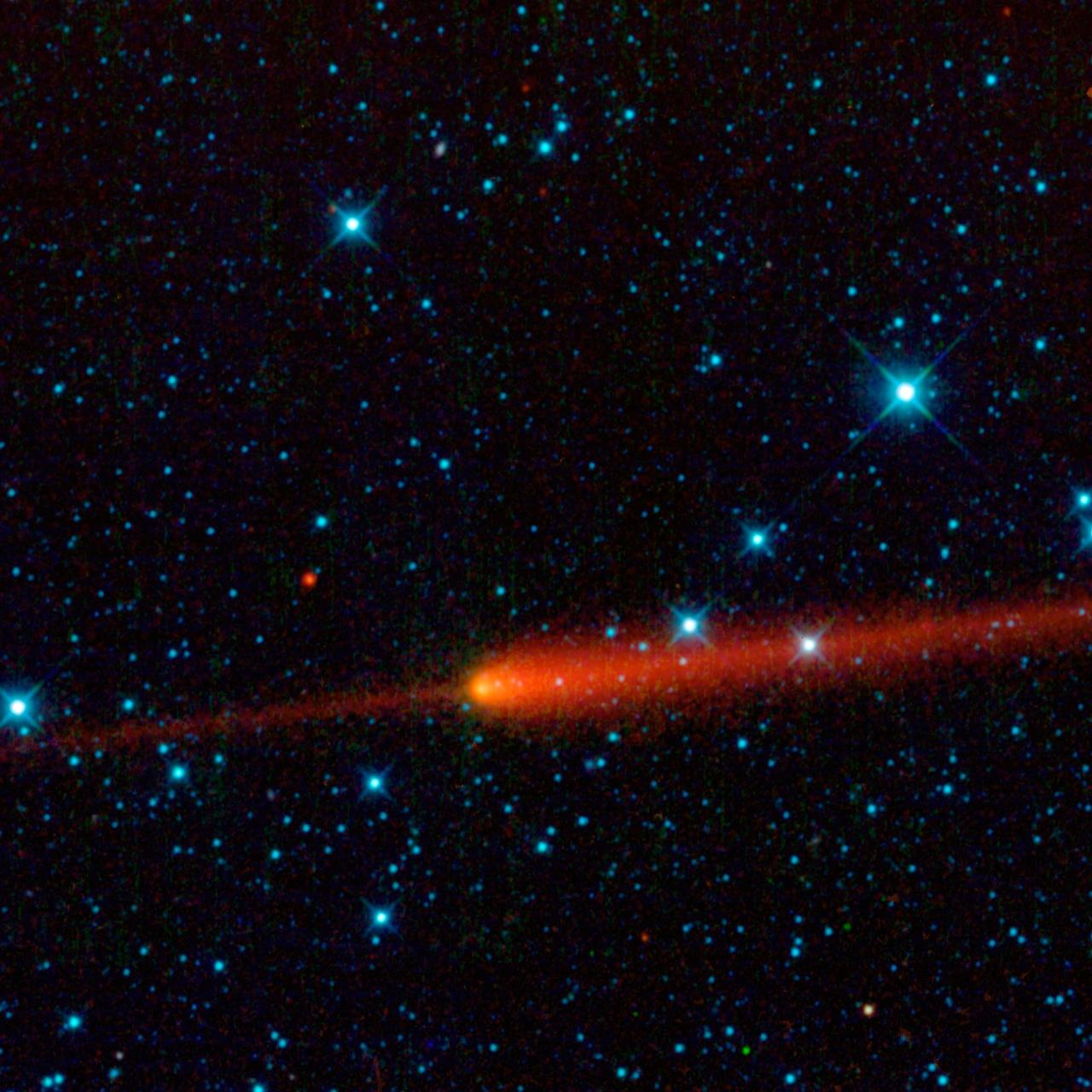
This image from NASA Wide-field Infrared Survey Explorer features comet 65/P Gunn. Comets are balls of dust and ice left over from the formation of the solar system. The comet tail is seen here in red trailing off to the right of the comet nucleus.
WISE Catches Comet 65P/Gunn
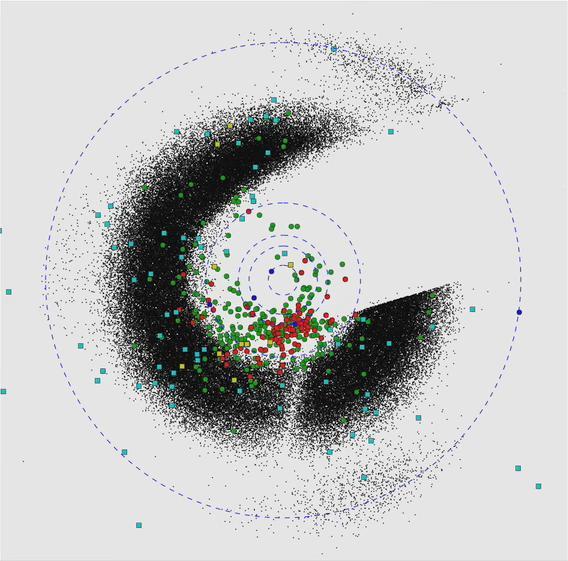
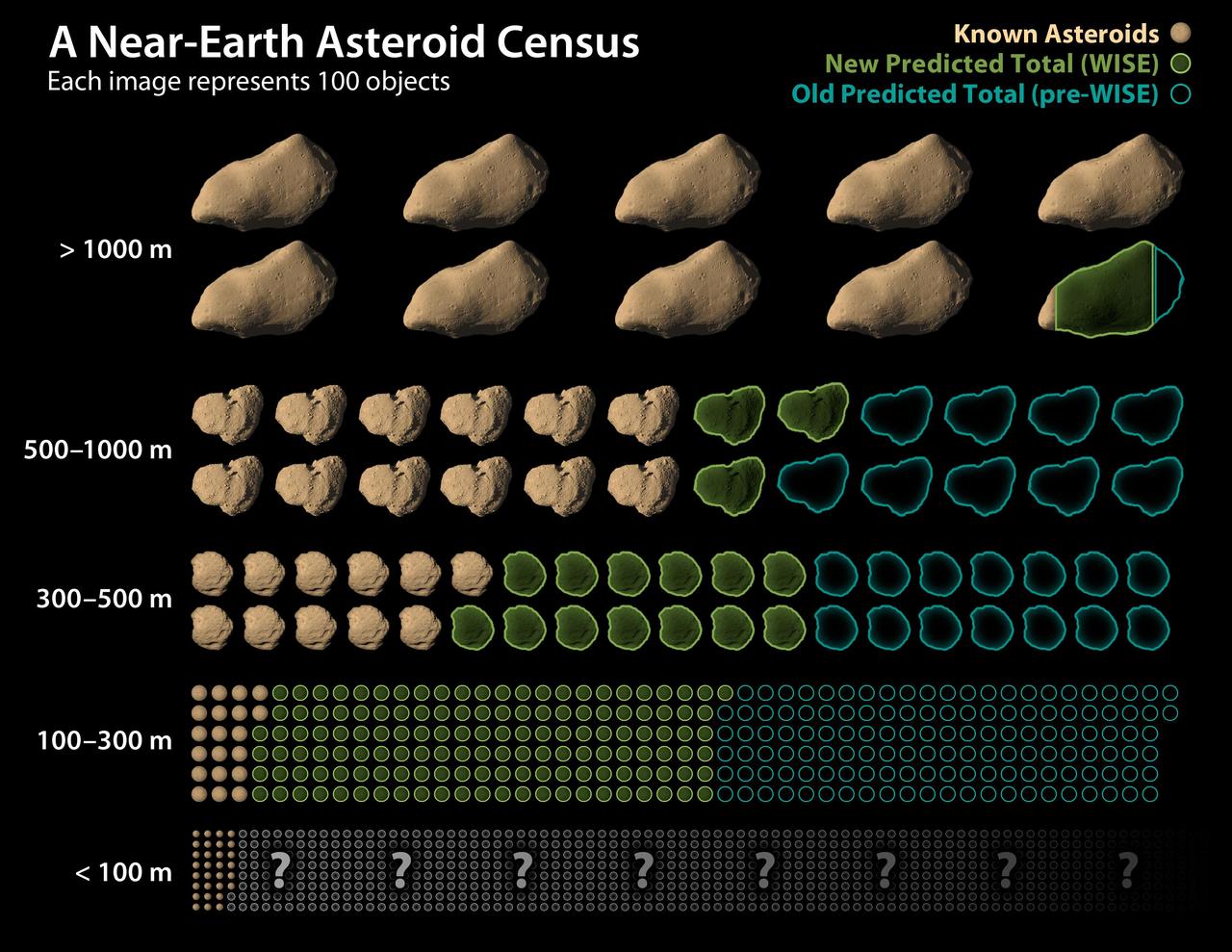
Data from NASA Wide-field Infrared Survey Explorer has led to revisions in the estimated population of near-Earth asteroids. The most accurate survey to date has allowed new estimates of the total numbers of objects in different size categories.
WISE Revises Numbers of Asteroids Near Earth
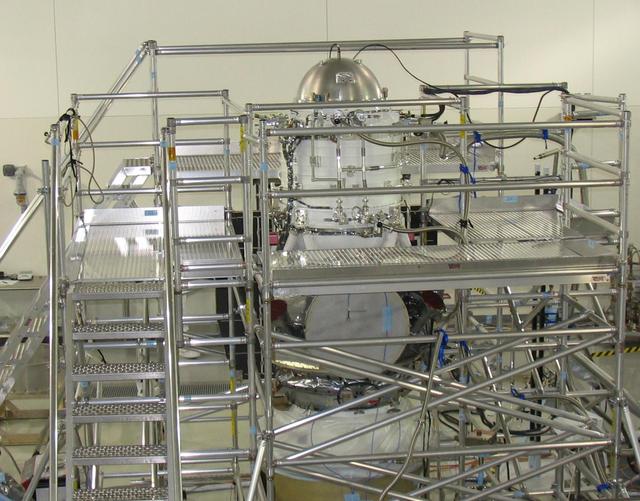
A scaffolding structure built around NASA Wide-field Infrared Survey Explorer allows engineers to freeze its hydrogen coolant. The WISE infrared instrument is kept extremely cold by a bottle-like tank filled with frozen hydrogen, called the cryostat.
Freezing WISE Hydrogen
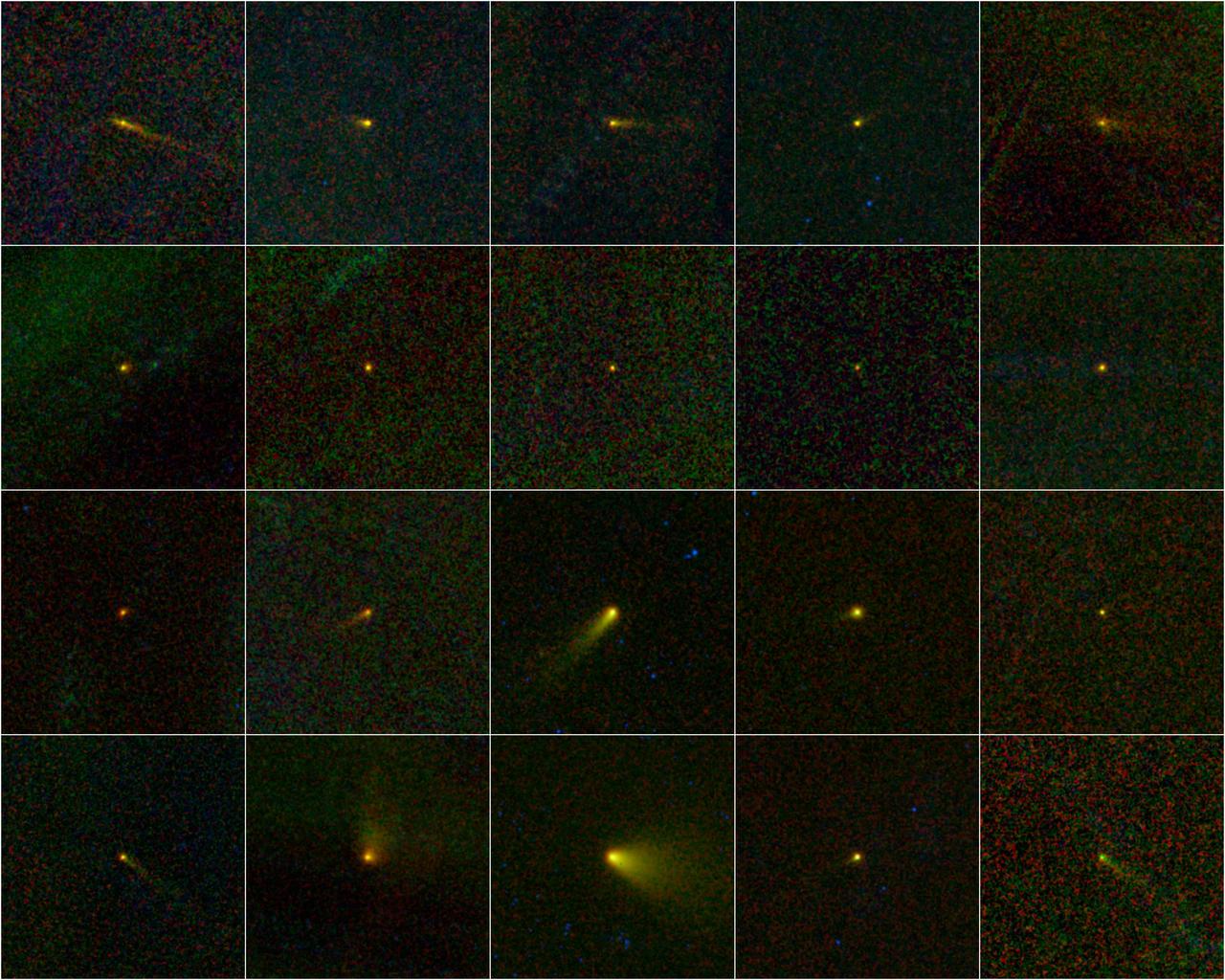
During its one-year mission, NASA Wide-field Infrared Survey Explorer, mapped the entire sky in infrared light. Among the multitudes of astronomical bodies that have been discovered by the NEOWISE portion of the WISE mission are 20 comets.
Comets WISE -- A Family Portrait
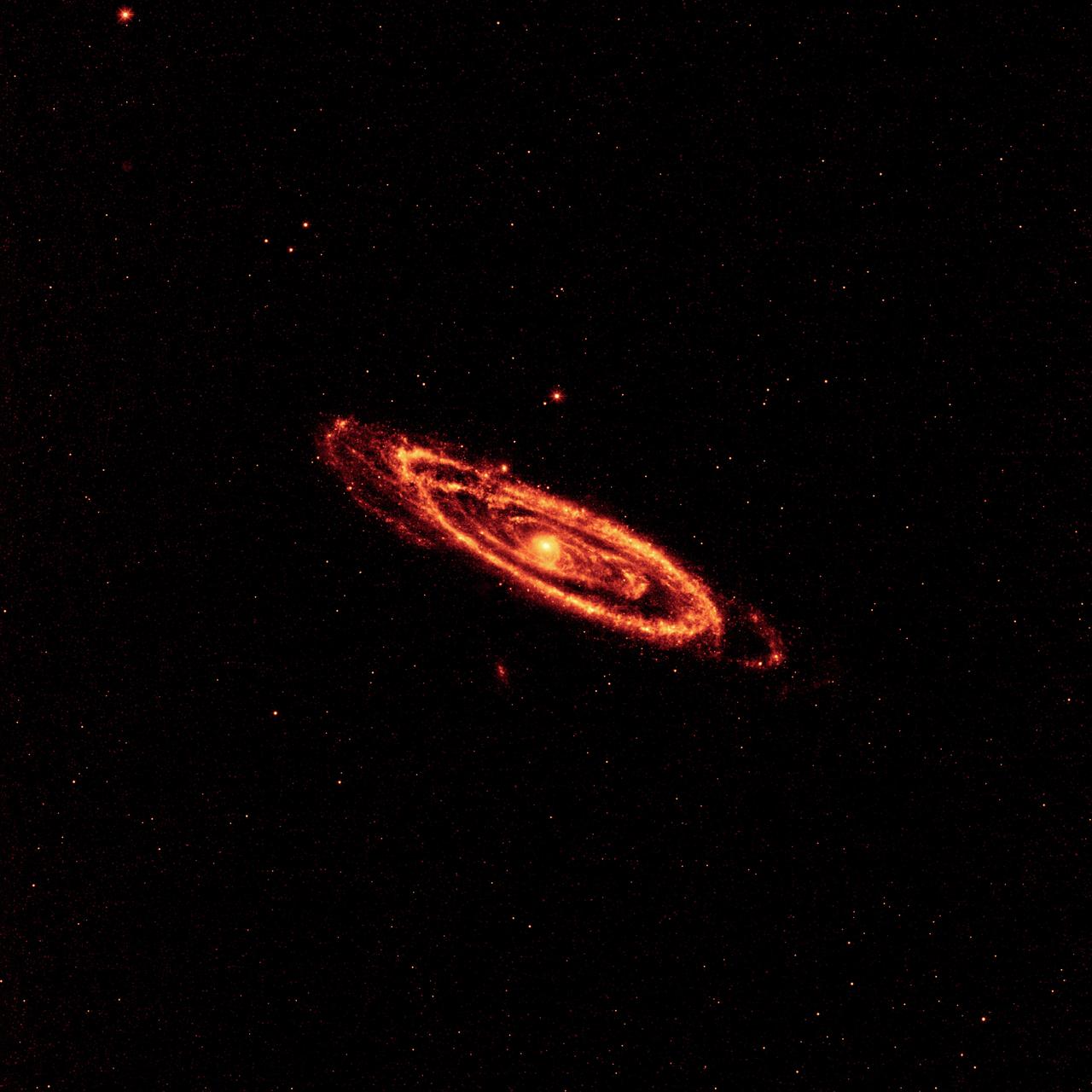
This image from NASA Wide-field Infrared Survey Explorer highlights the dust that speckles the Andromeda galaxy spiral arms. The hot dust, which is being heated by newborn stars, traces the spidery arms all the way to the center of the galaxy.
The Dirt on Andromeda
This artist conception based on data from NASA Wide-field Infrared Survey Explorer illustrates what brown dwarfs of different types might look like to a hypothetical interstellar traveler who has flown a spaceship to each one.
A Trio of Brown Dwarfs Artist Concept