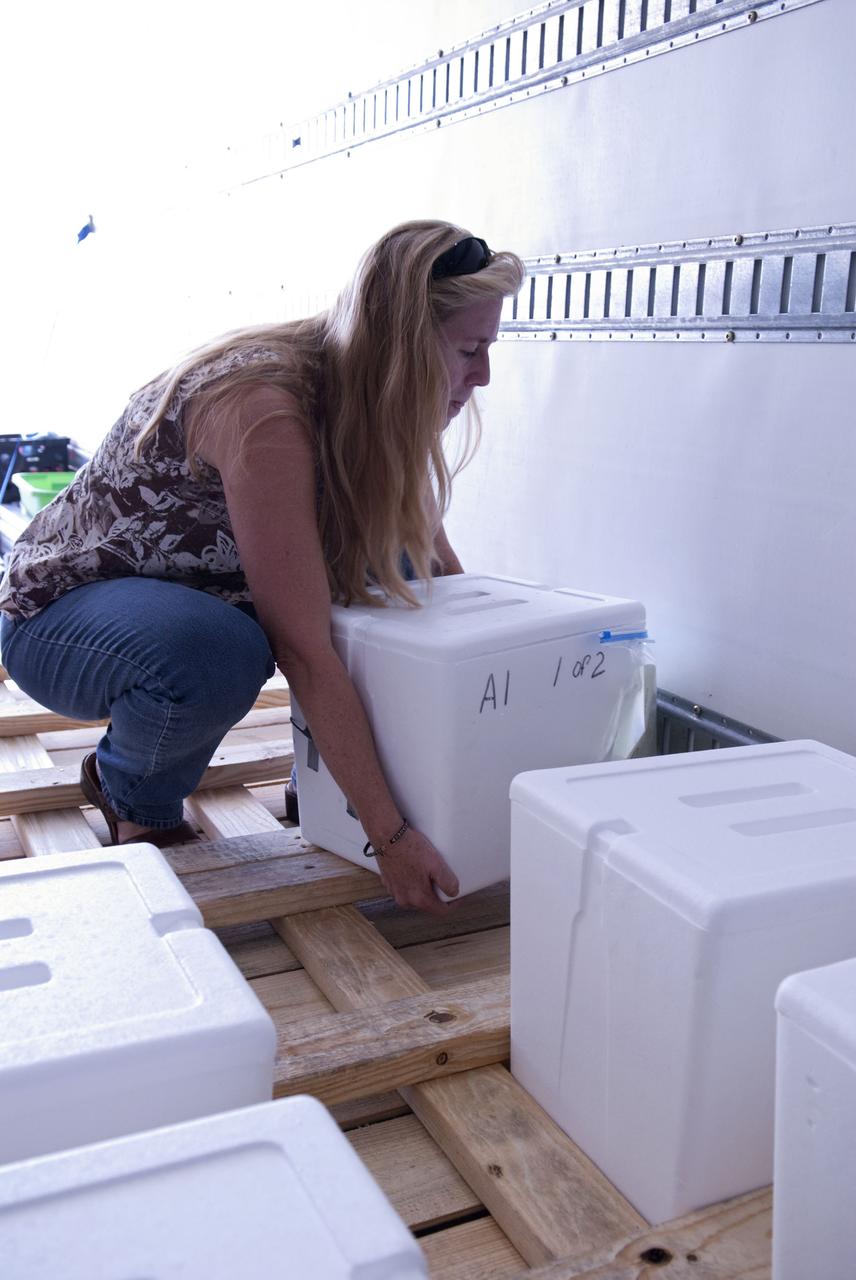
FED-EX TRUCK ARRIVAL WITH SEA TURTLES - GULF RESCUE OPS
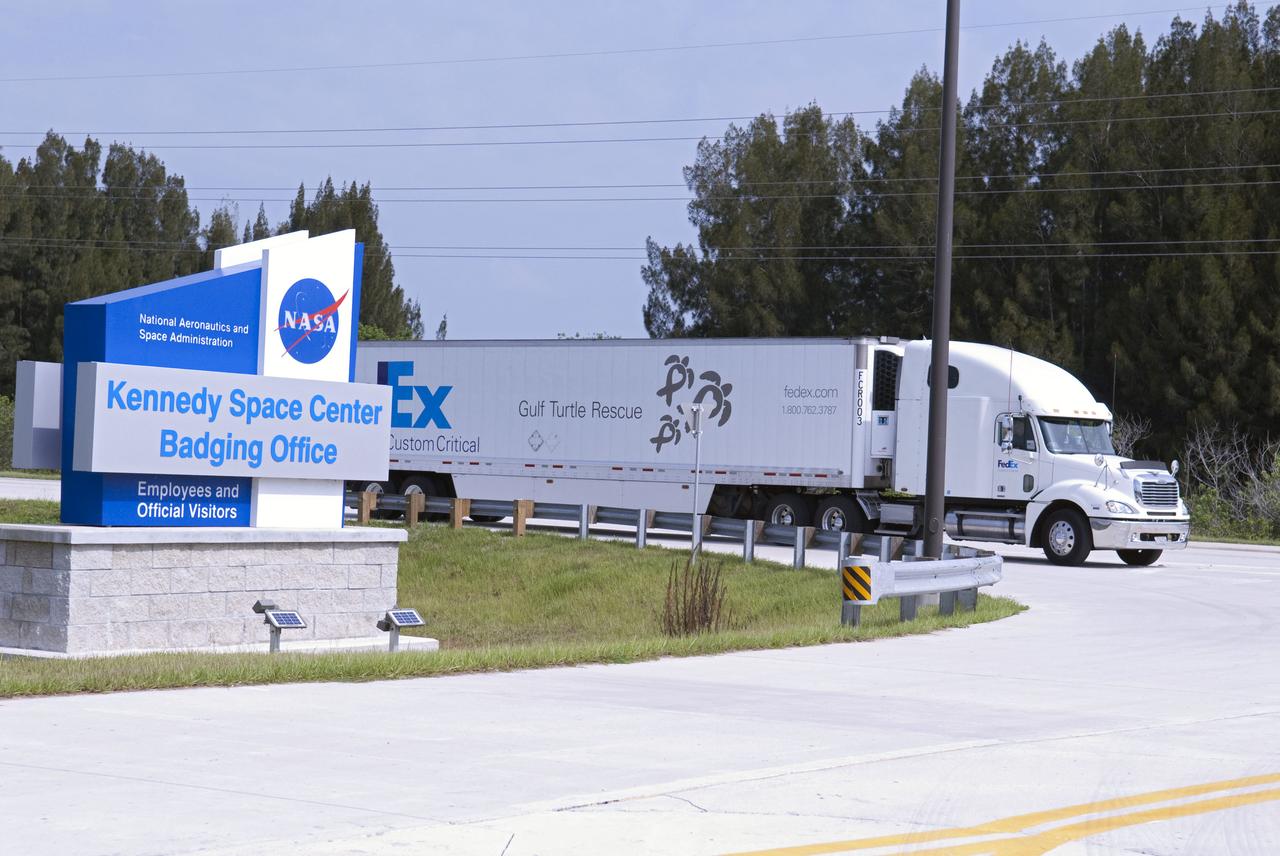
FED-EX TRUCK ARRIVAL WITH SEA TURTLES - GULF RESCUE OPS
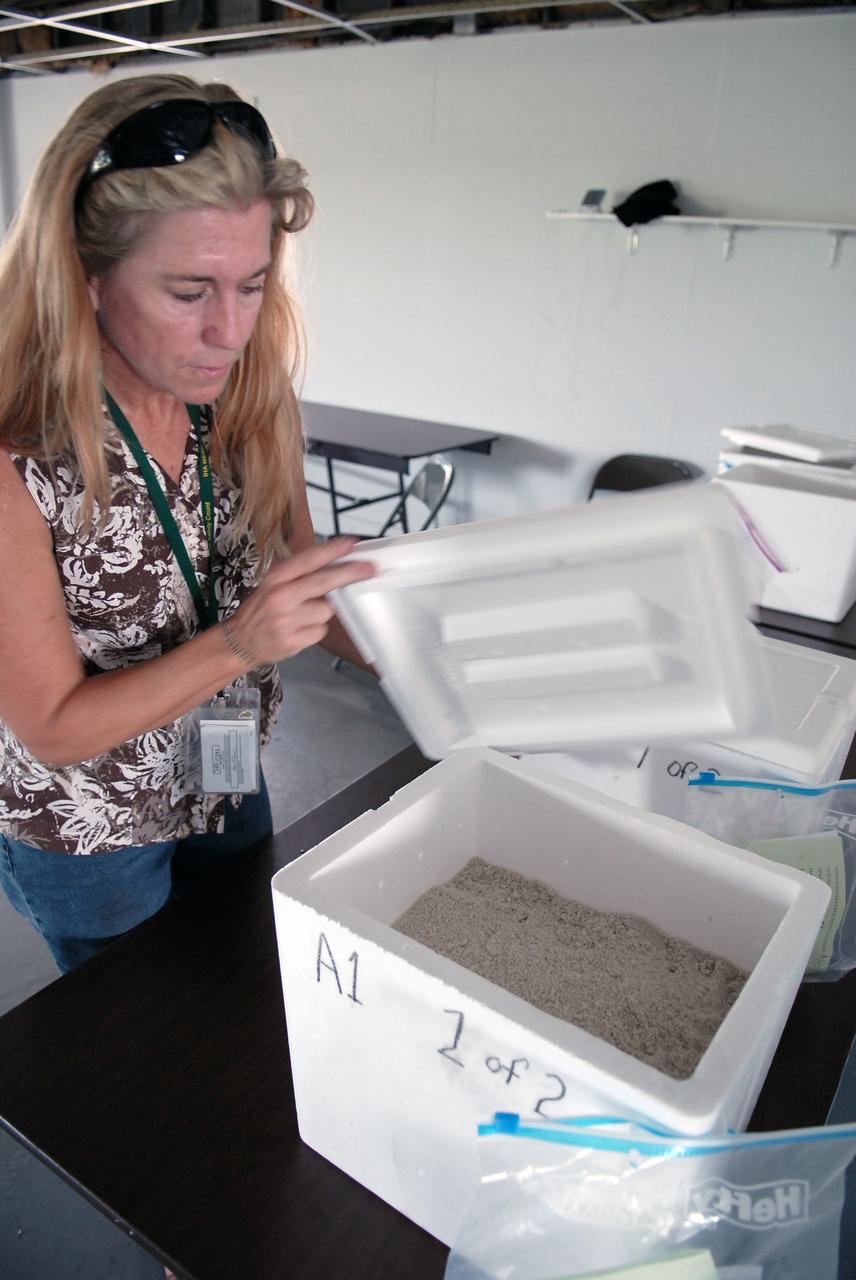
FED-EX TRUCK ARRIVAL WITH SEA TURTLES - GULF RESCUE OPS

FED-EX TRUCK ARRIVAL WITH SEA TURTLES - GULF RESCUE OPS

FED-EX TRUCK ARRIVAL WITH SEA TURTLES - GULF RESCUE OPS
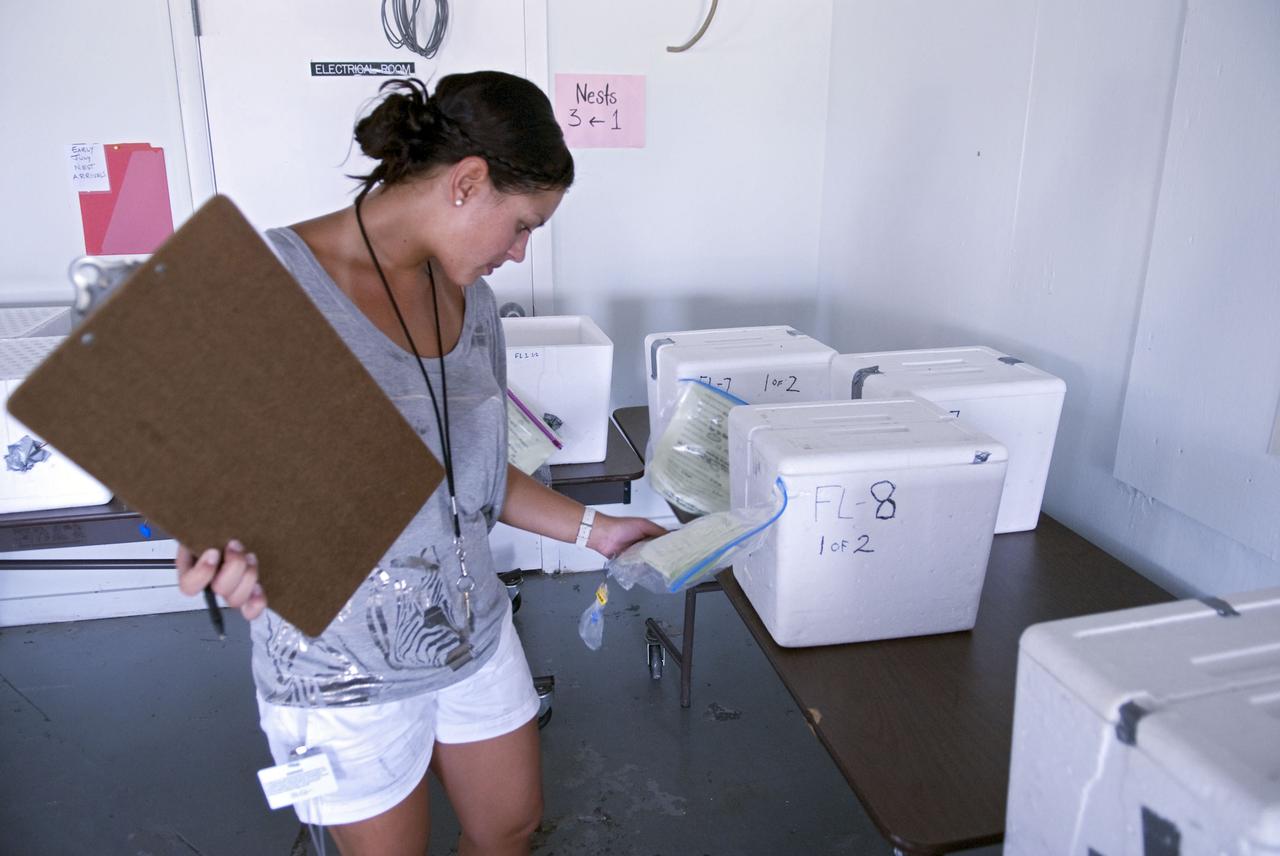
FED-EX TRUCK ARRIVAL WITH SEA TURTLES - GULF RESCUE OPS
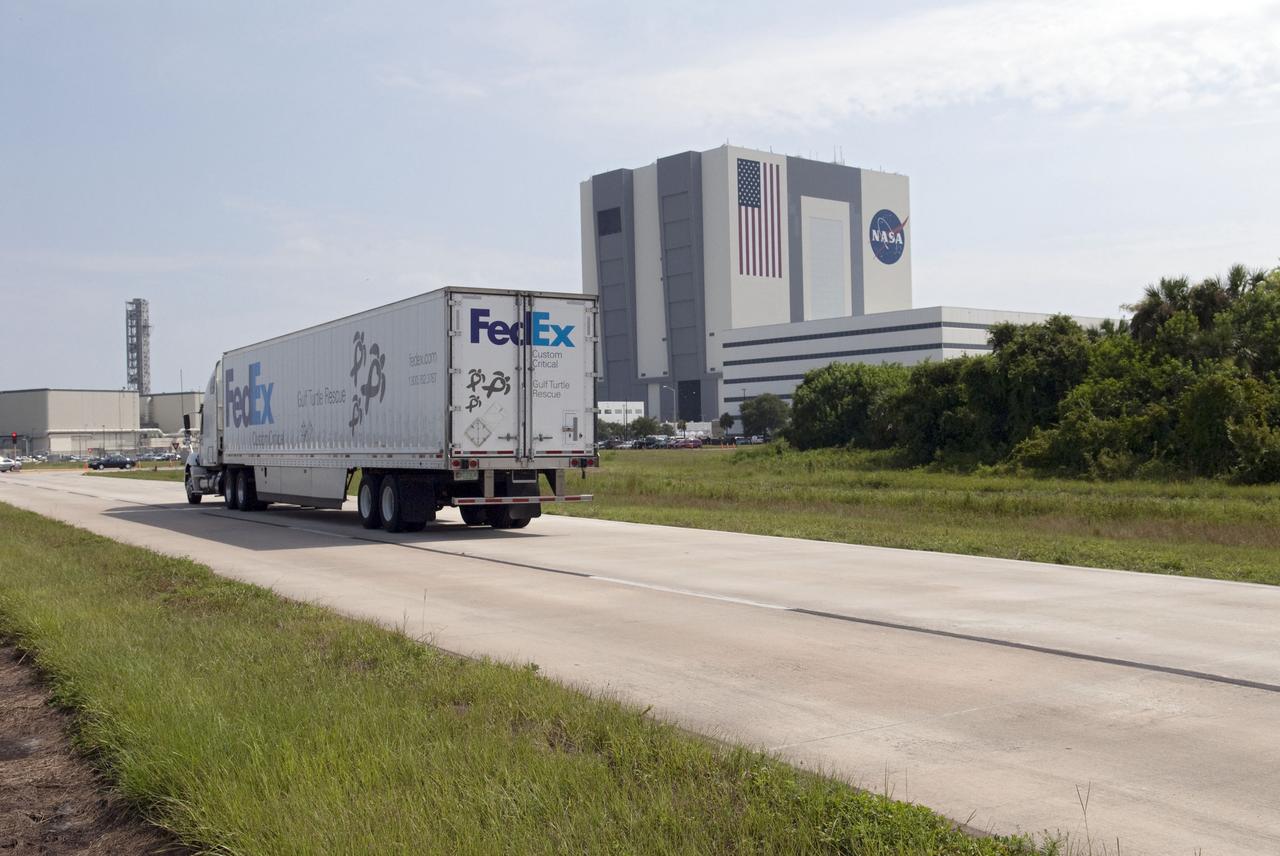
FED-EX TRUCK ARRIVAL WITH SEA TURTLES - GULF RESCUE OPS
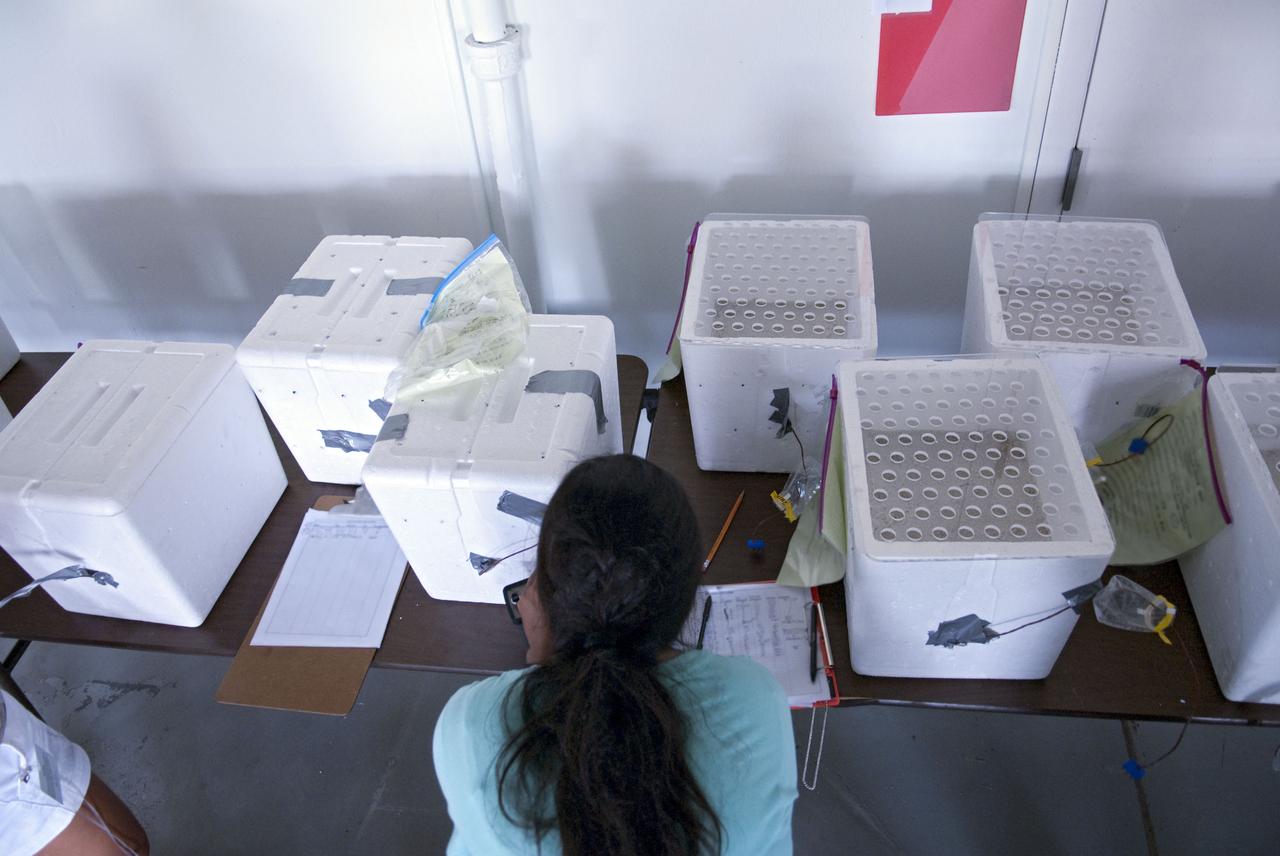
FED-EX TRUCK ARRIVAL WITH SEA TURTLES - GULF RESCUE OPS
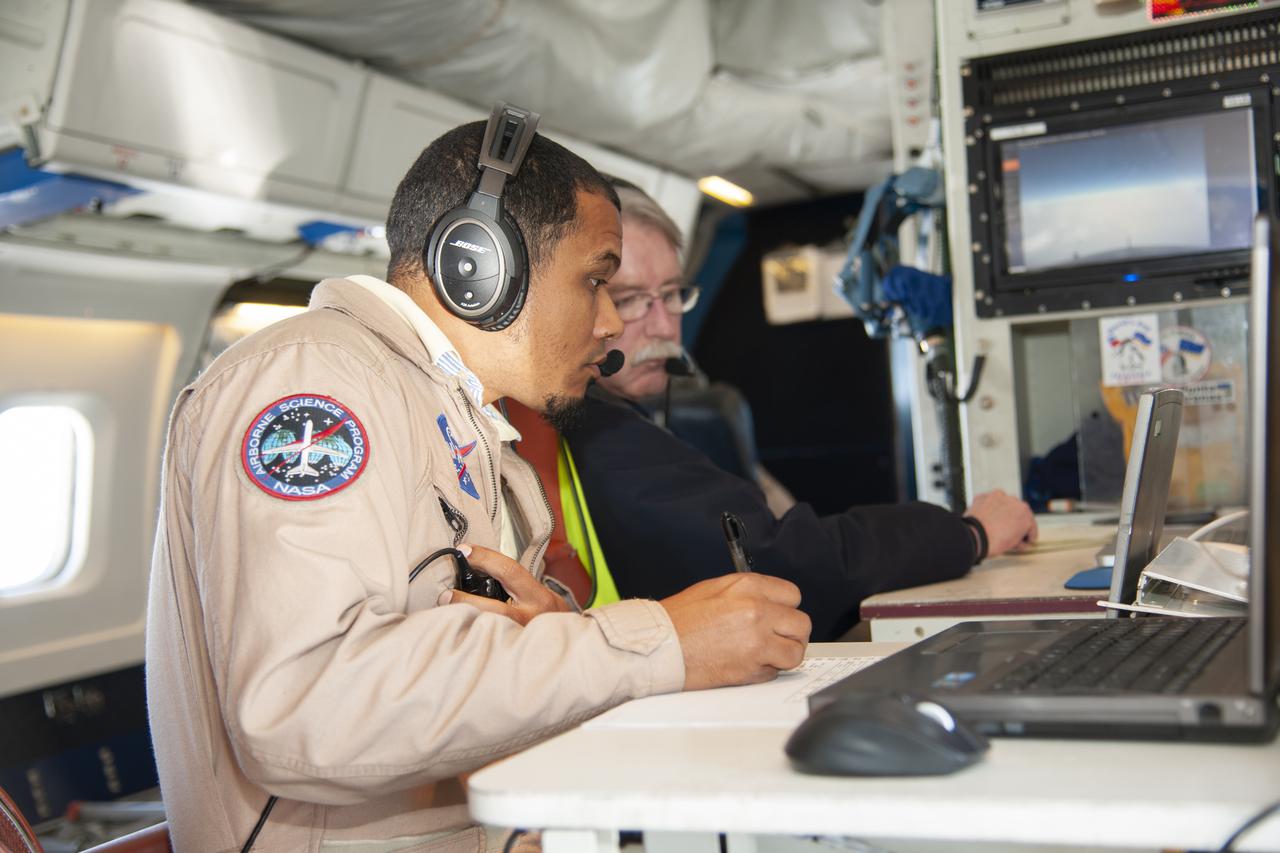
Matt Berry, left, and Chris Jennison examine incoming data on NASA’s DC-8 airborne science aircraft. The 62-year-old ex-airliner is one of seven DC-8s still flying.
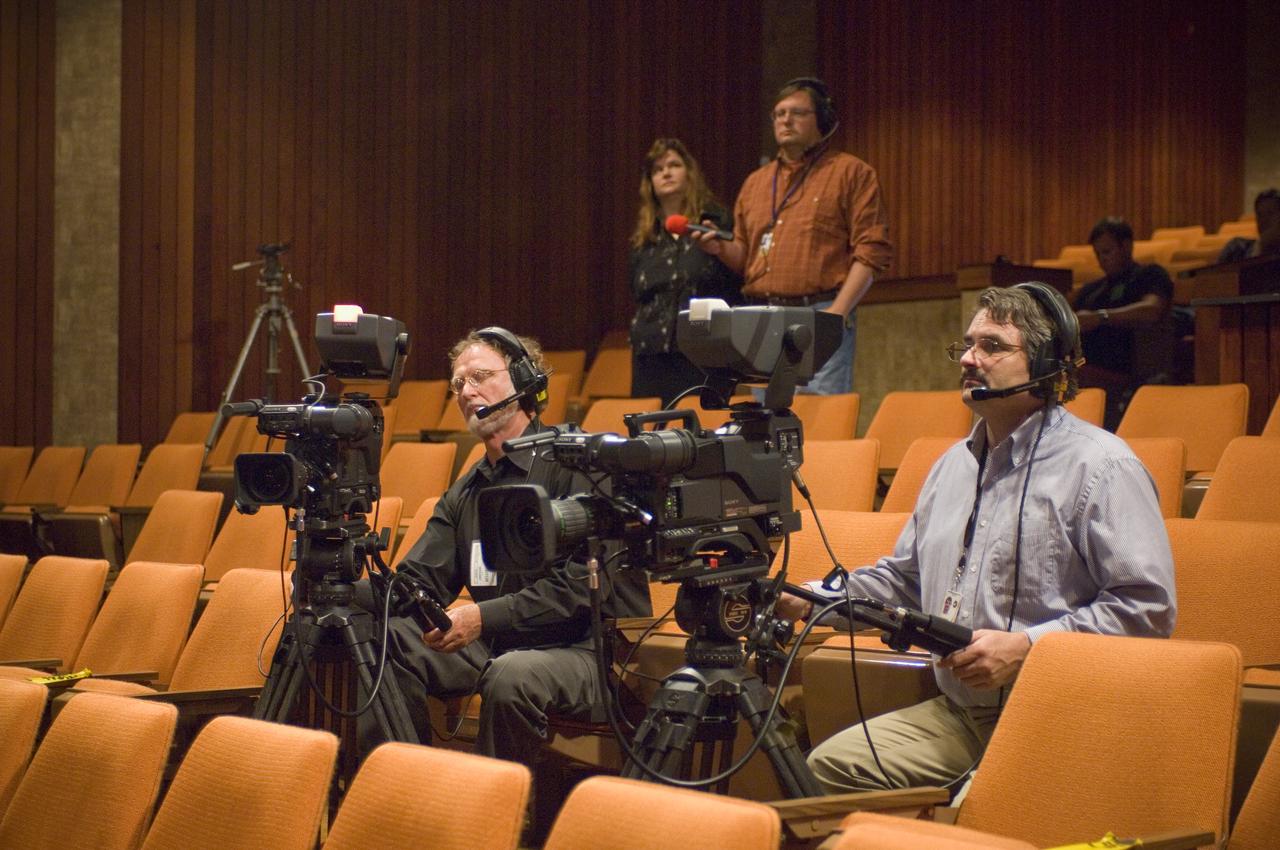
NASA Officials gather at Ames Research Center to discuss Spaceship development progress. Constellation is developing the Orion spacecraft and Ares rockets to support an American return to the moon by 2020. (with front right, Eric James, NASA-EX on camera, Ed Schilling, NASA video producer in distance with Astrid Olson, NASA Ames PAO)
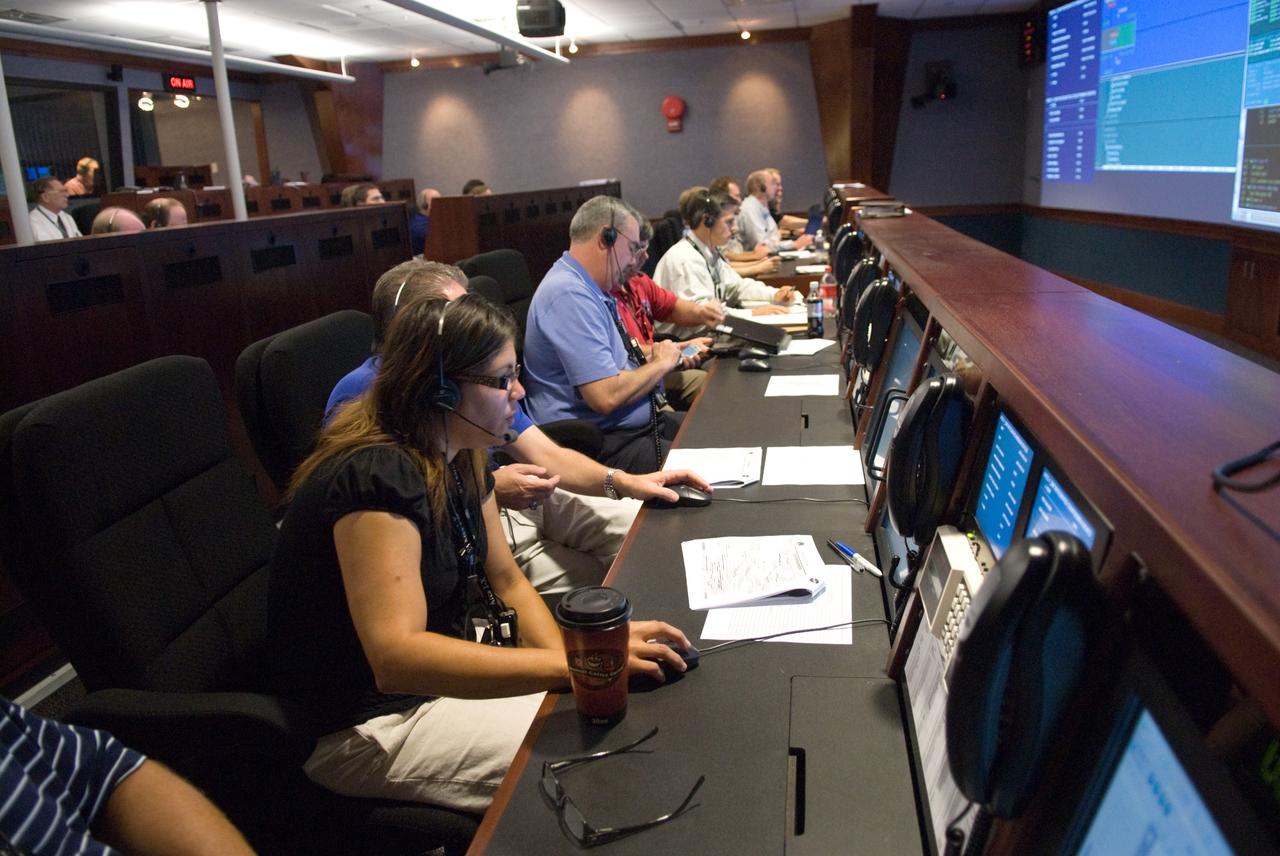
CAPE CANAVERAL, Fla. – In the Mission Director Center in Cape Canaveral Air Force Station's Hangar AE, mission engineers take part in a countdown simulation for the upcoming Ares I-X flight test. Ares I-X is targeted for the test on Oct. 31. The Hangar AE control rooms provide real-time voice, data and video information for ex¬pendable vehicle checkout and launch operations, similar to that provided by the space shuttle control rooms. Photo credit: NASA/Kim Shiflett
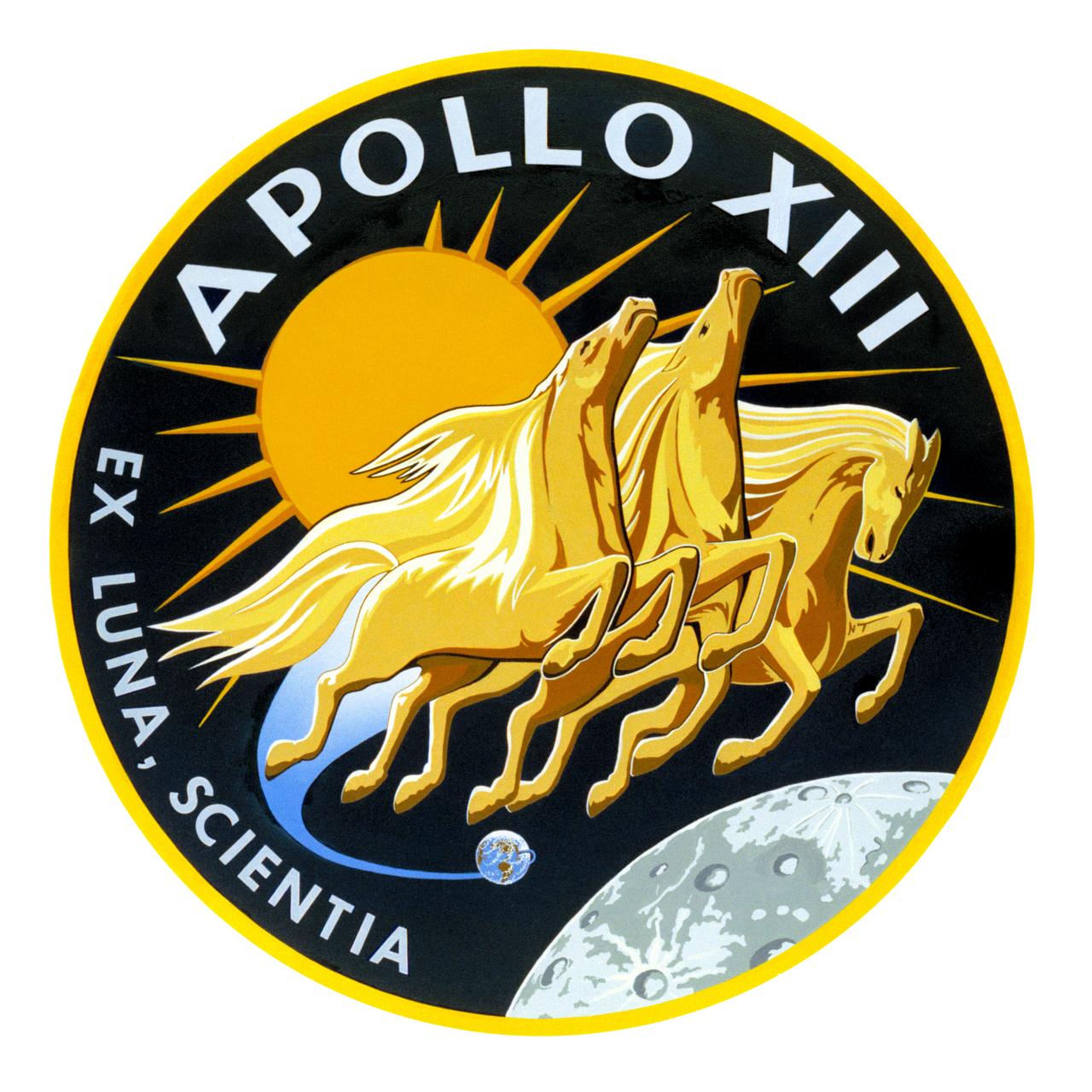
S69-60662 (December 1969) --- This is the insignia of the Apollo 13 lunar landing mission. The Apollo 13 prime crew will be astronauts James A. Lovell Jr., commander; Thomas K. Mattingly II, command module pilot; and Fred W. Haise Jr., lunar module pilot. Represented in the Apollo 13 emblem is Apollo, the sun god of Greek mythology, symbolizing how the Apollo flights have extended the light of knowledge to all mankind. The Latin phrase Ex Luna, Scientia means "From the Moon, Knowledge." Apollo 13 will be the National Aeronautics and Space Administration's (NASA) third lunar landing mission.
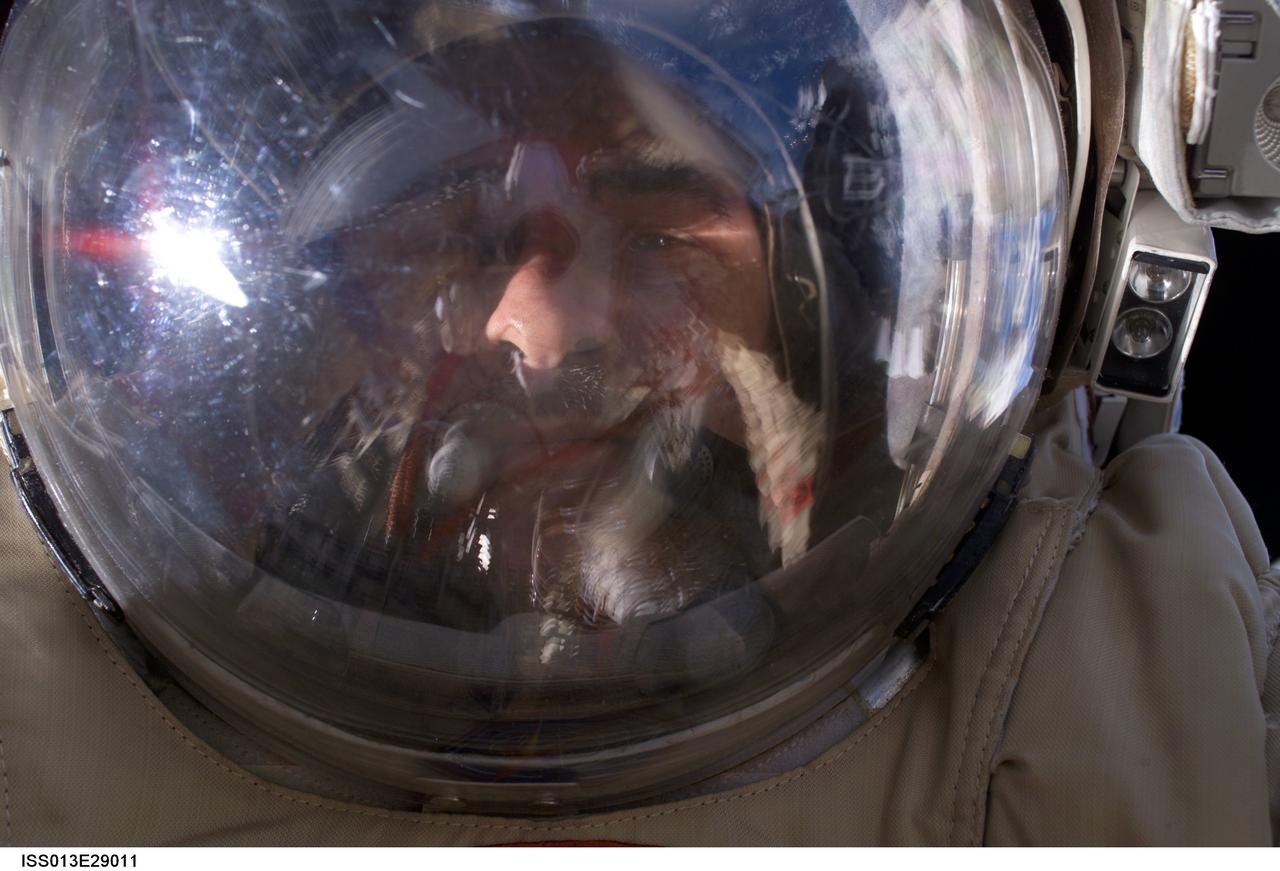
ISS013-E-29011 (1 June 2006) --- A close-up view shows the face of cosmonaut Pavel V. Vinogradov, Expedition 13 commander representing Russia's Federal Space Agency, through his helmet visor during the first session of extravehicular activity (EVA) performed by the Expedition 13 crew during their six-month mission. Vinogradov was attired in a Russian Orlan spacesuit.
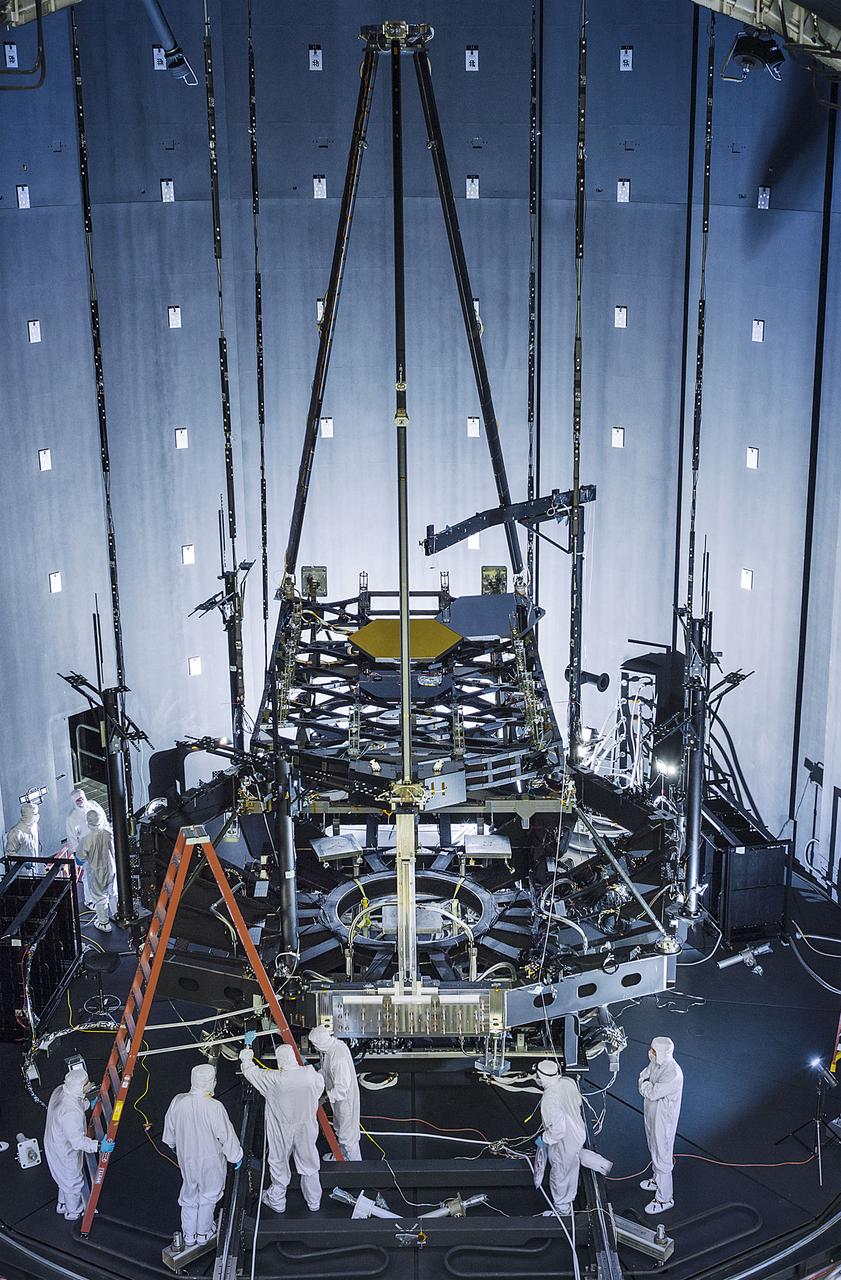
Inside NASA's giant thermal vacuum chamber, called Chamber A, at NASA's Johnson Space Center in Houston, the James Webb Space Telescope's Pathfinder backplane test model, is being prepared for its cryogenic test. Previously used for manned spaceflight missions, this historic chamber is now filled with engineers and technicians preparing for a crucial test. Exelis developed and installed the optical test equipment in the chamber. "The optical test equipment was developed and installed in the chamber by Exelis," said Thomas Scorse, Exelis JWST Program Manager. "The Pathfinder telescope gives us our first opportunity for an end-to-end checkout of our equipment." "This will be the first time on the program that we will be aligning two primary mirror segments together," said Lee Feinberg, NASA Optical Telescope Element Manager. "In the past, we have always tested one mirror at a time but this time we will use a single test system and align both mirrors to it as though they are a single monolithic mirror." The James Webb Space Telescope is the scientific successor to NASA's Hubble Space Telescope. It will be the most powerful space telescope ever built. Webb is an international project led by NASA with its partners, the European Space Agency and the Canadian Space Agency. Image credit: NASA/Chris Gunn Text credit: Laura Betz, NASA's Goddard Space Flight Center, Greenbelt, Maryland <b><a href="http://www.nasa.gov/audience/formedia/features/MP_Photo_Guidelines.html" rel="nofollow">NASA image use policy.</a></b> <b><a href="http://www.nasa.gov/centers/goddard/home/index.html" rel="nofollow">NASA Goddard Space Flight Center</a></b> enables NASA’s mission through four scientific endeavors: Earth Science, Heliophysics, Solar System Exploration, and Astrophysics. Goddard plays a leading role in NASA’s accomplishments by contributing compelling scientific knowledge to advance the Agency’s mission. <b>Follow us on <a href="http://twitter.com/NASAGoddardPix" rel="nofollow">Twitter</a></b> <b>Like us on <a href="http://www.facebook.com/pages/Greenbelt-MD/NASA-Goddard/395013845897?ref=tsd" rel="nofollow">Facebook</a></b> <b>Find us on <a href="http://instagrid.me/nasagoddard/?vm=grid" rel="nofollow">Instagram</a></b>
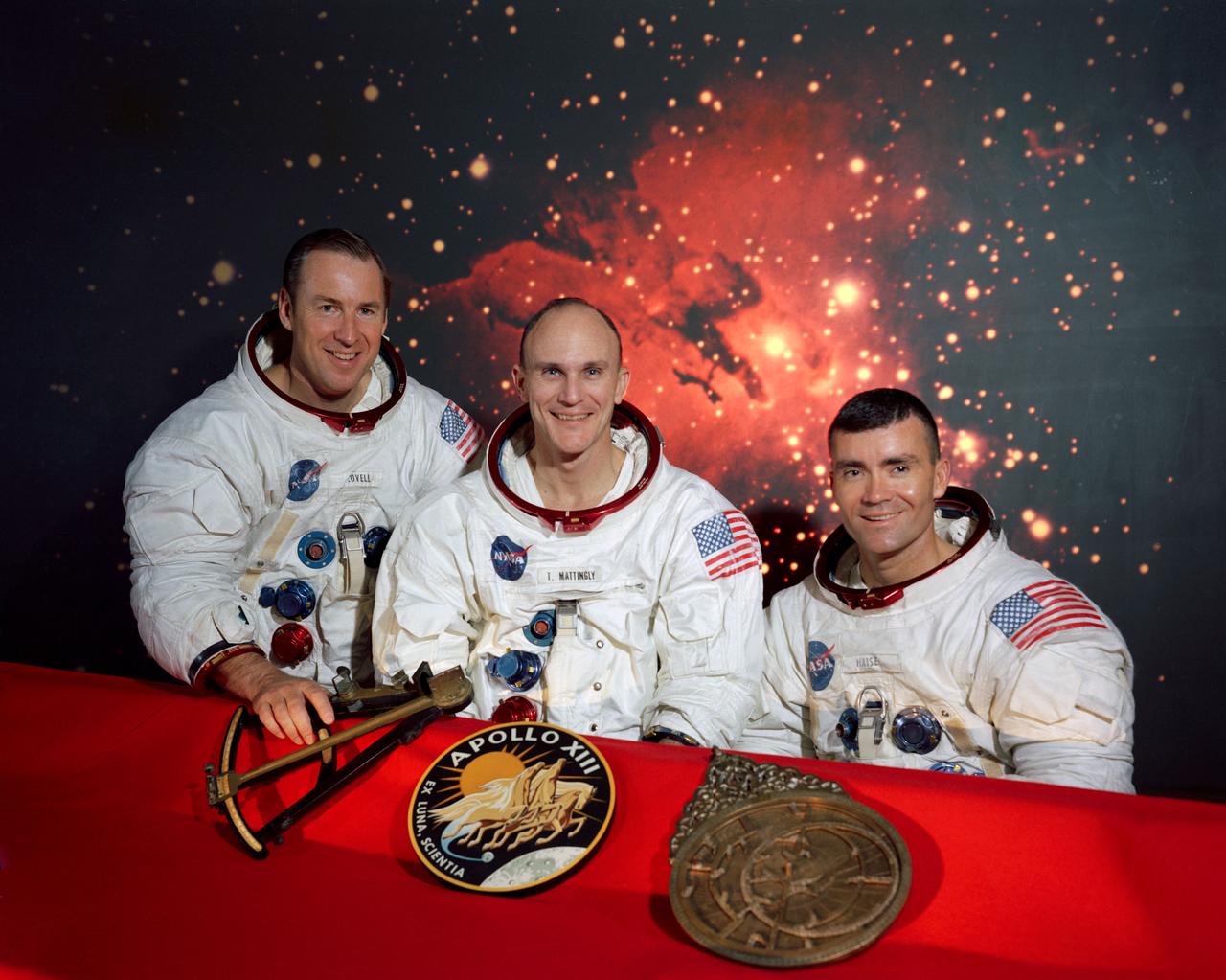
S69-62224 (December 1969) --- The members of the prime crew of the Apollo 13 lunar landing mission (left to right) are astronauts James A. Lovell Jr., commander; Thomas K. Mattingly II, command module pilot; and Fred W. Haise Jr., lunar module pilot. They are seated in front of a scene of the Lagoon Nebula, with the mission insignia and two items of early navigation in the foreground. Represented in the Apollo 13 emblem (center) is Apollo, the sun god of Greek mythology, symbolizing that the Apollo flights have extended the light of knowledge to all mankind. The Latin phrase Ex Luna, Scientia means "From the Moon, Knowledge." The Hindu astrolabe in Sanskrit (on right) was used to predict the position of celestial bodies before the invention of the octant (on left) was used in 1790 to determine the altitude of celestial bodies from aboard ship.
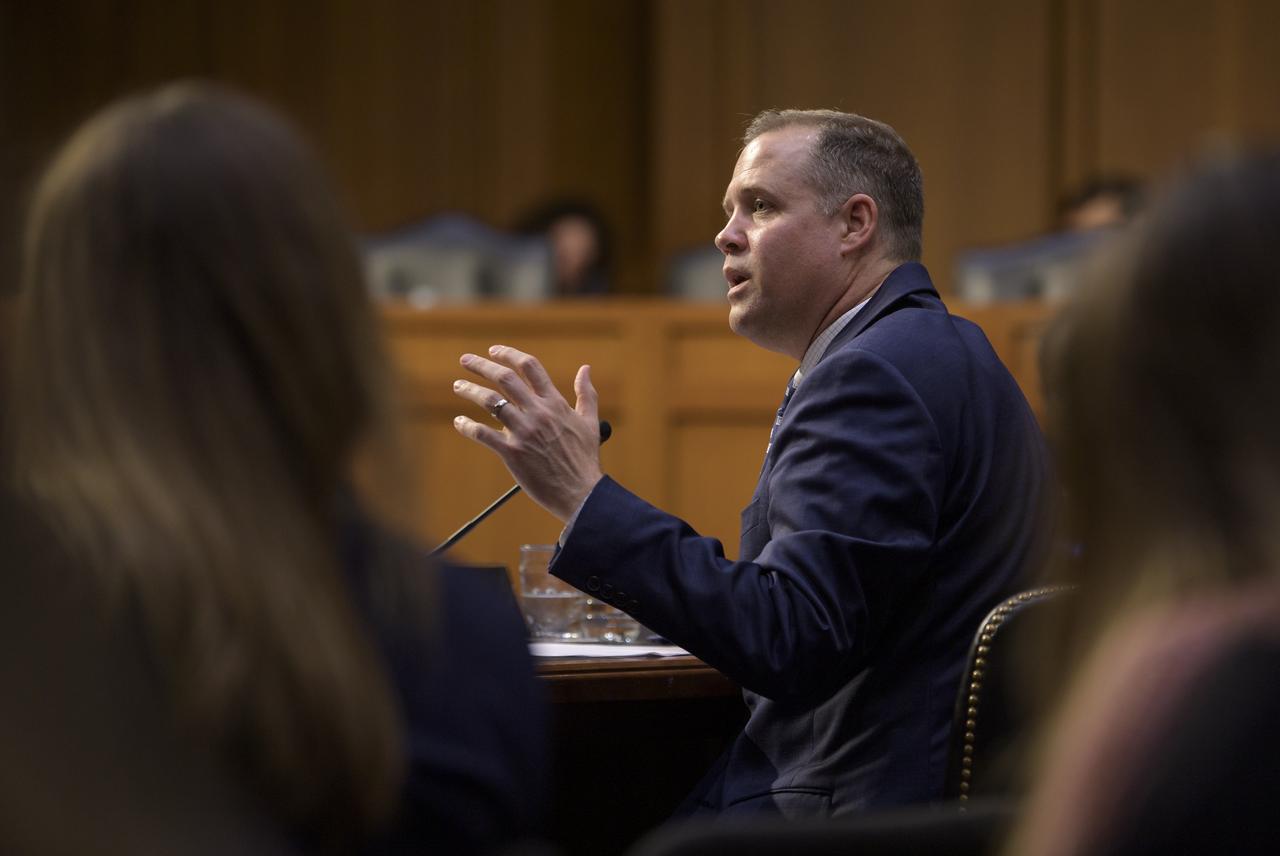
NASA Administrator Jim Bridenstine testifies before the Senate Committee on Commerce, Science, and Transportation during a hearing titled, “Moon to Mars: NASA’s Plans for Deep Space Exploration,” Wednesday, July 17, 2019, at the Hart Senate Office Building in Washington. Photo Credit: (NASA/Bill Ingalls)
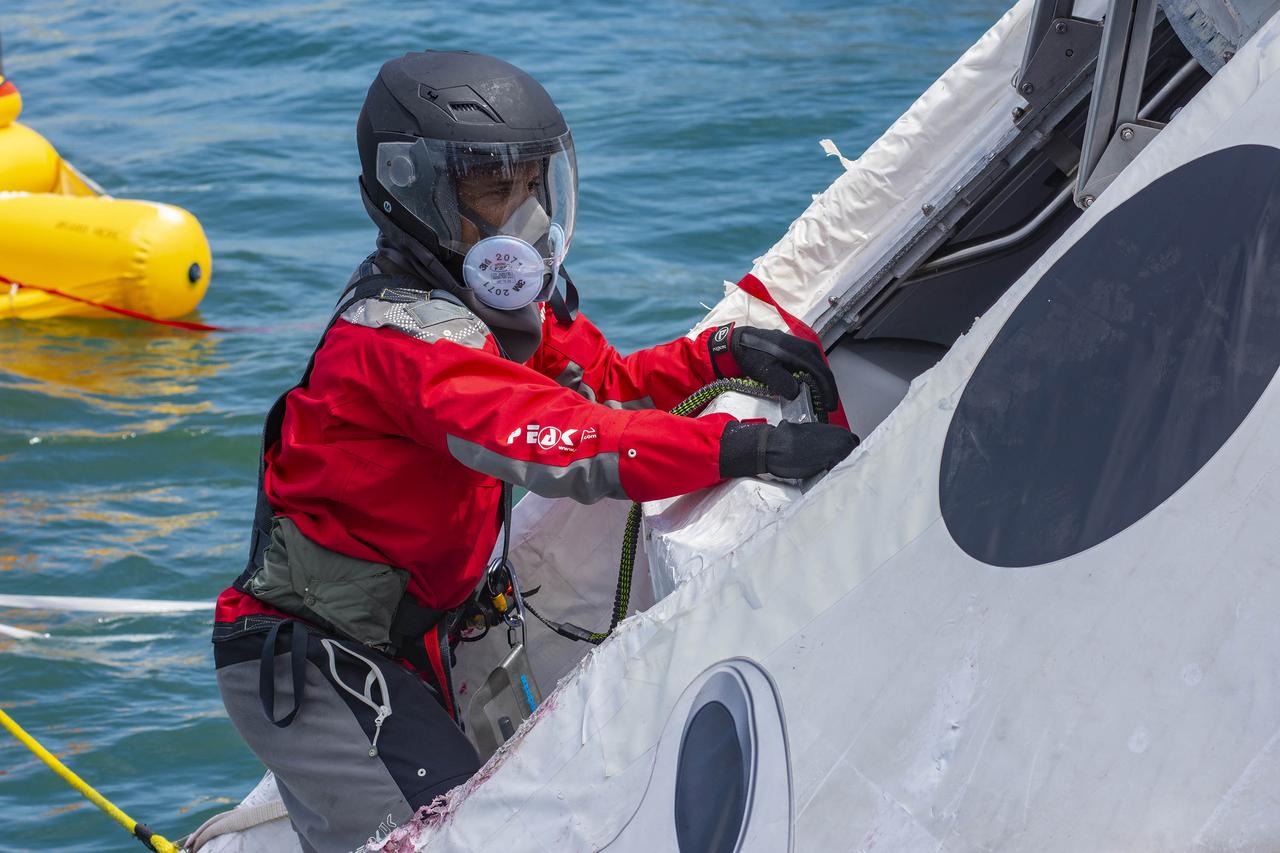
NASA astronaut Victor Glover, and pilot for the agency’s SpaceX Crew-1 mission, participates in an egress training exercise on July 21, 2020, in Florida. The exercise involved simulating an emergency situation after splashdown of the Crew Dragon spacecraft. Mission specialist Shannon Walker and spacecraft commander Michael Hopkins – both NASA astronauts – also participated in the training, along with Soichi Noguchi, mission specialist and Japan Aerospace Exploration Agency (JAXA) astronaut. Glover, Walker, Hopkins, and Noguchi will launch to the International Space Station from Launch Complex 39A at the agency’s Kennedy Space Center in Florida. Crew-1 will be the first operational mission to the orbiting laboratory under NASA’s Commercial Crew Program, following the agency’s certification of SpaceX’s crew transportation system.

Crew Dragon commander Michael Hopkins, pilot Victor Glover, mission specialist Shannon Walker – all NASA astronauts – and Japan Aerospace Exploration Agency (JAXA) astronaut and mission specialist Soichi Noguchi participate in an egress training exercise on July 21, 2020, in preparation for NASA’s SpaceX Crew-1 mission. The exercise involved simulating an emergency situation after splashdown of the Crew Dragon spacecraft. Hopkins, Glover, Walker, and Noguchi will launch to the International Space Station from Launch Complex 39A at the agency’s Kennedy Space Center in Florida. Crew-1 will be the first operational mission to the orbiting laboratory under NASA’s Commercial Crew Program, following the agency’s certification of SpaceX’s crew transportation system.

NASA Administrator Jim Bridenstine testifies before the Senate Committee on Commerce, Science, and Transportation during a hearing titled, “Moon to Mars: NASA’s Plans for Deep Space Exploration,” Wednesday, July 17, 2019, at the Hart Senate Office Building in Washington. Photo Credit: (NASA/Bill Ingalls)

NASA astronaut Victor Glover, and pilot for the agency’s SpaceX Crew-1 mission, participates in an egress training exercise on July 21, 2020, in Florida. The exercise involved simulating an emergency situation after splashdown of the Crew Dragon spacecraft. Mission specialist Shannon Walker and spacecraft commander Michael Hopkins – both NASA astronauts – also participated in the training, along with Soichi Noguchi, mission specialist and Japan Aerospace Exploration Agency (JAXA) astronaut. Glover, Walker, Hopkins, and Noguchi will launch to the International Space Station from Launch Complex 39A at the agency’s Kennedy Space Center in Florida. Crew-1 will be the first operational mission to the orbiting laboratory under NASA’s Commercial Crew Program, following the agency’s certification of SpaceX’s crew transportation system.
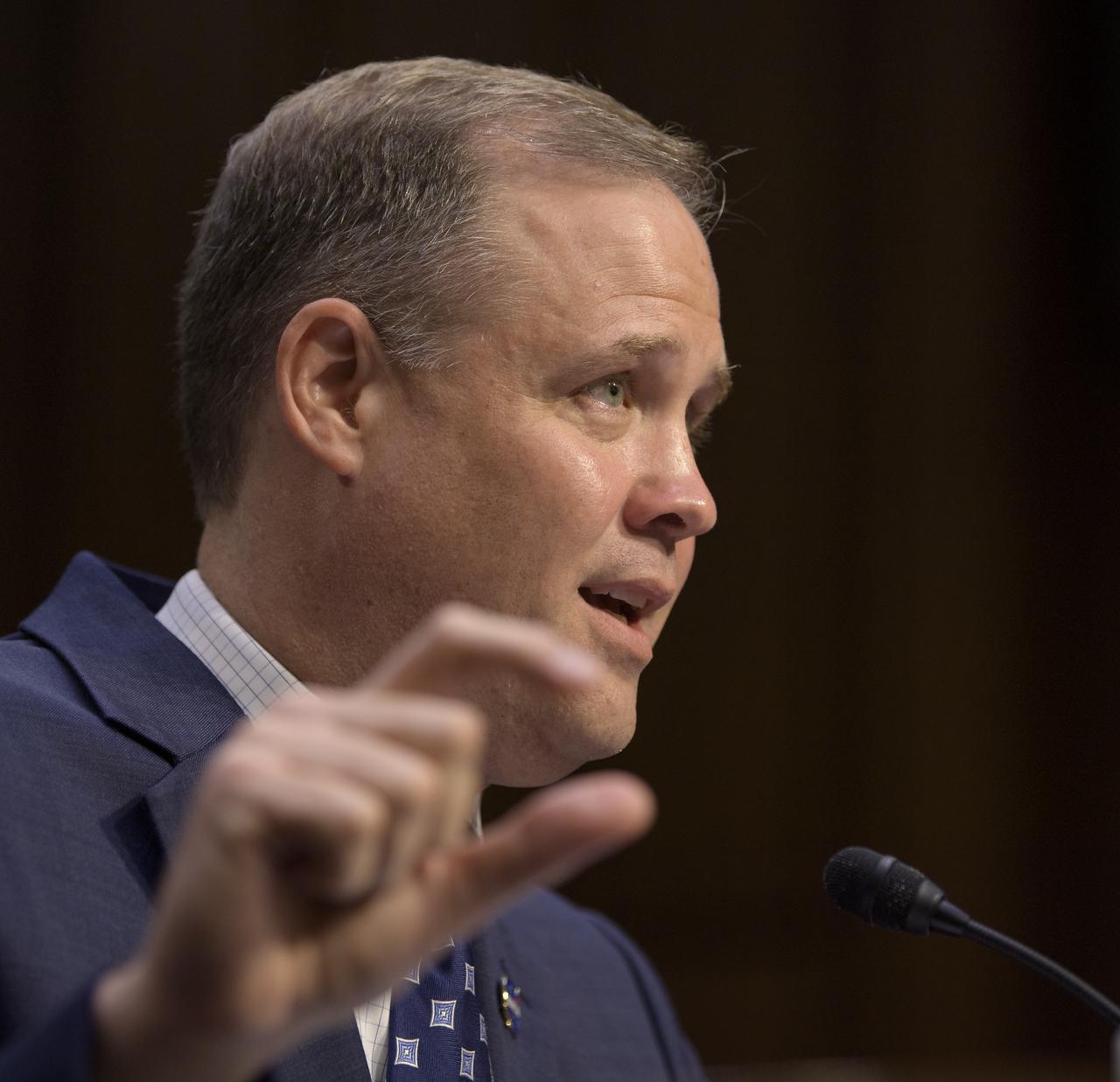
NASA Administrator Jim Bridenstine testifies before the Senate Committee on Commerce, Science, and Transportation during a hearing titled, “Moon to Mars: NASA’s Plans for Deep Space Exploration,” Wednesday, July 17, 2019, at the Hart Senate Office Building in Washington. Photo Credit: (NASA/Bill Ingalls)
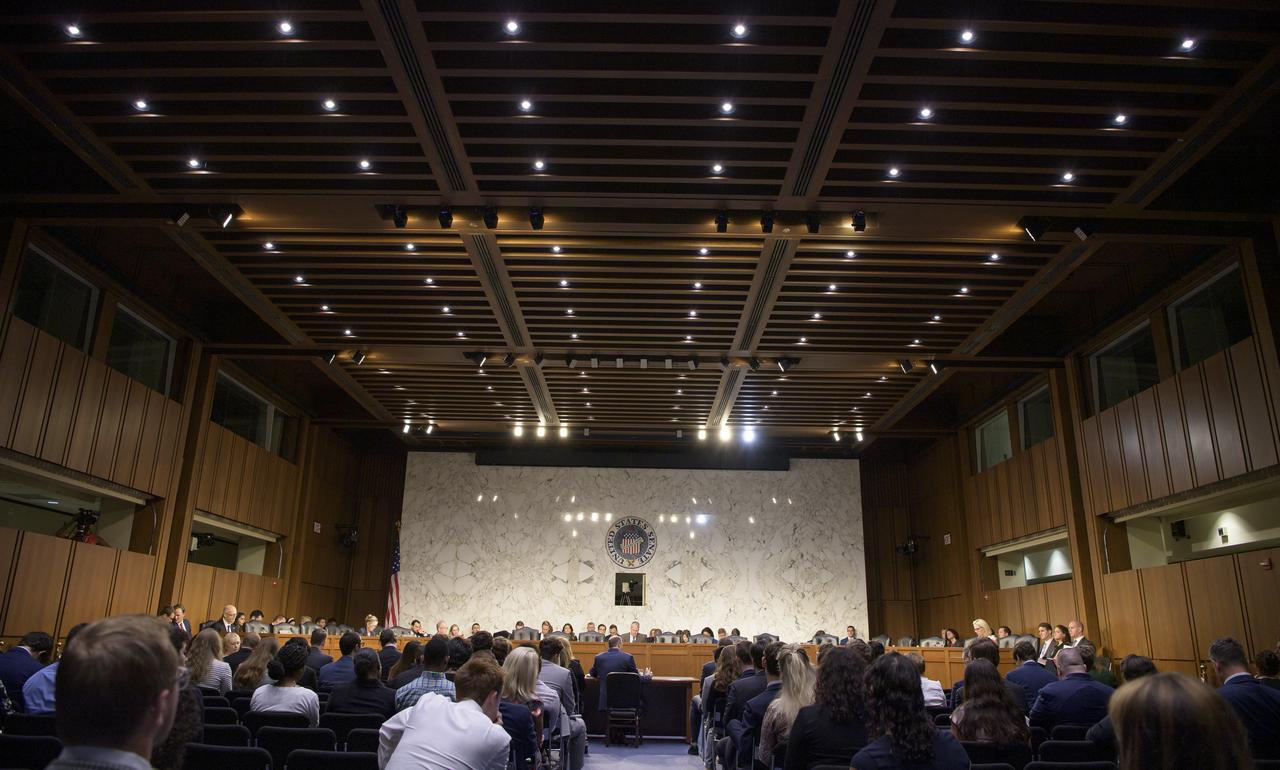
NASA Administrator Jim Bridenstine testifies before the Senate Committee on Commerce, Science, and Transportation during a hearing titled, “Moon to Mars: NASA’s Plans for Deep Space Exploration,” Wednesday, July 17, 2019, at the Hart Senate Office Building in Washington. Photo Credit: (NASA/Bill Ingalls)

NASA astronaut Victor Glover, and pilot for the agency’s SpaceX Crew-1 mission, participates in an egress training exercise on July 21, 2020, in Florida. The exercise involved simulating an emergency situation after splashdown of the Crew Dragon spacecraft. Mission specialist Shannon Walker and spacecraft commander Michael Hopkins – both NASA astronauts – also participated in the training, along with Soichi Noguchi, mission specialist and Japan Aerospace Exploration Agency (JAXA) astronaut. Glover, Walker, Hopkins, and Noguchi will launch to the International Space Station from Launch Complex 39A at the agency’s Kennedy Space Center in Florida. Crew-1 will be the first operational mission to the orbiting laboratory under NASA’s Commercial Crew Program, following the agency’s certification of SpaceX’s crew transportation system.

From back to front, pilot Victor Glover, mission specialist Shannon Walker, mission specialist Soichi Noguchi, and spacecraft commander Michael Hopkins participate in an egress training exercise on July 21, 2020, in preparation for NASA’s SpaceX Crew-1 mission. Glover, Walker, and Hopkins are all NASA astronauts; Noguchi is a Japan Aerospace Exploration Agency (JAXA) astronaut. The exercise involved simulating an emergency situation after splashdown of the Crew Dragon spacecraft. Hopkins, Glover, Walker, and Noguchi will launch to the International Space Station from Launch Complex 39A at the agency’s Kennedy Space Center in Florida. Crew-1 will be the first operational mission to the orbiting laboratory under NASA’s Commercial Crew Program, following the agency’s certification of SpaceX’s crew transportation system.
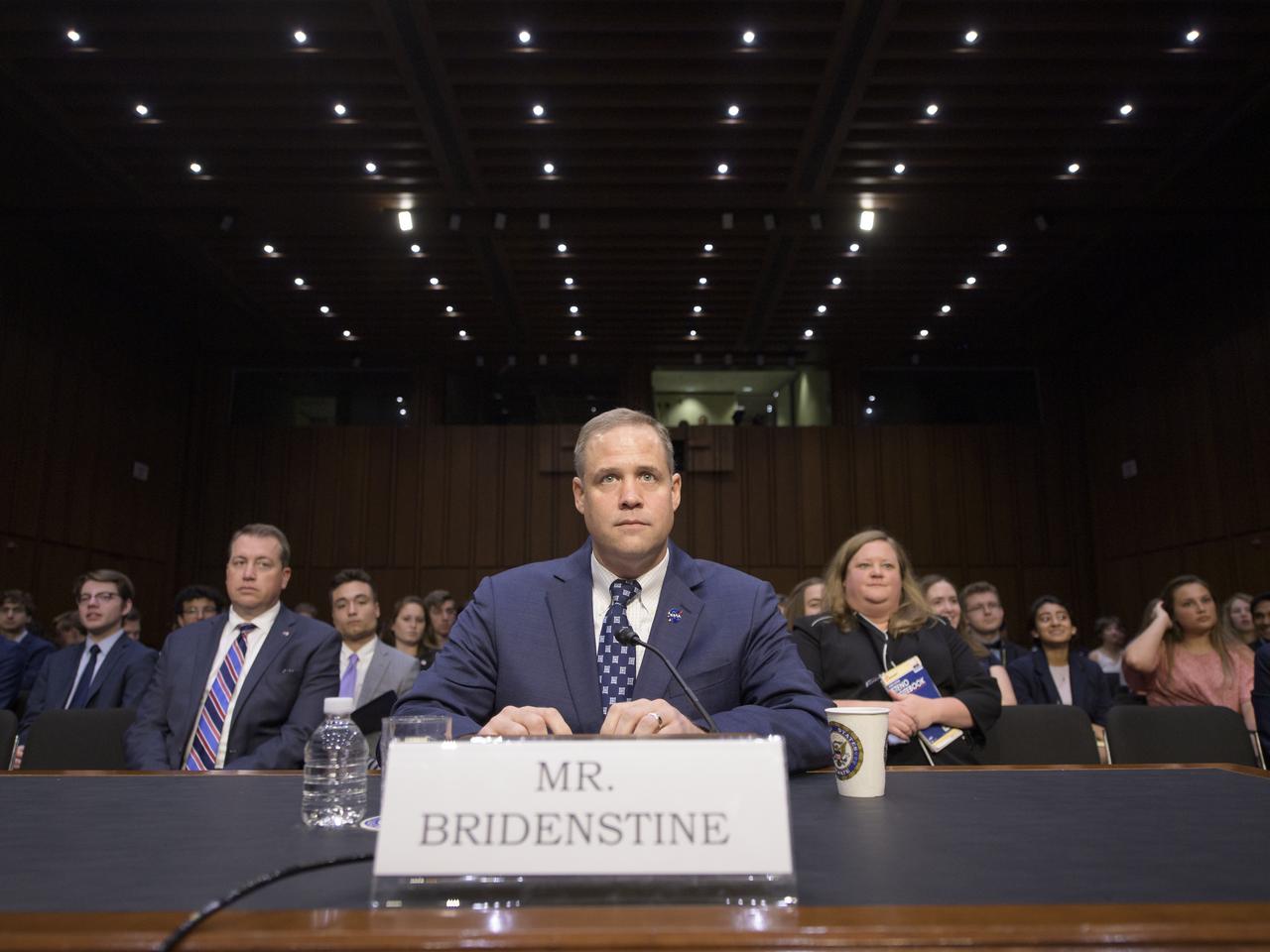
NASA Administrator Jim Bridenstine testifies before the Senate Committee on Commerce, Science, and Transportation during a hearing titled, “Moon to Mars: NASA’s Plans for Deep Space Exploration,” Wednesday, July 17, 2019, at the Hart Senate Office Building in Washington. Photo Credit: (NASA/Bill Ingalls)
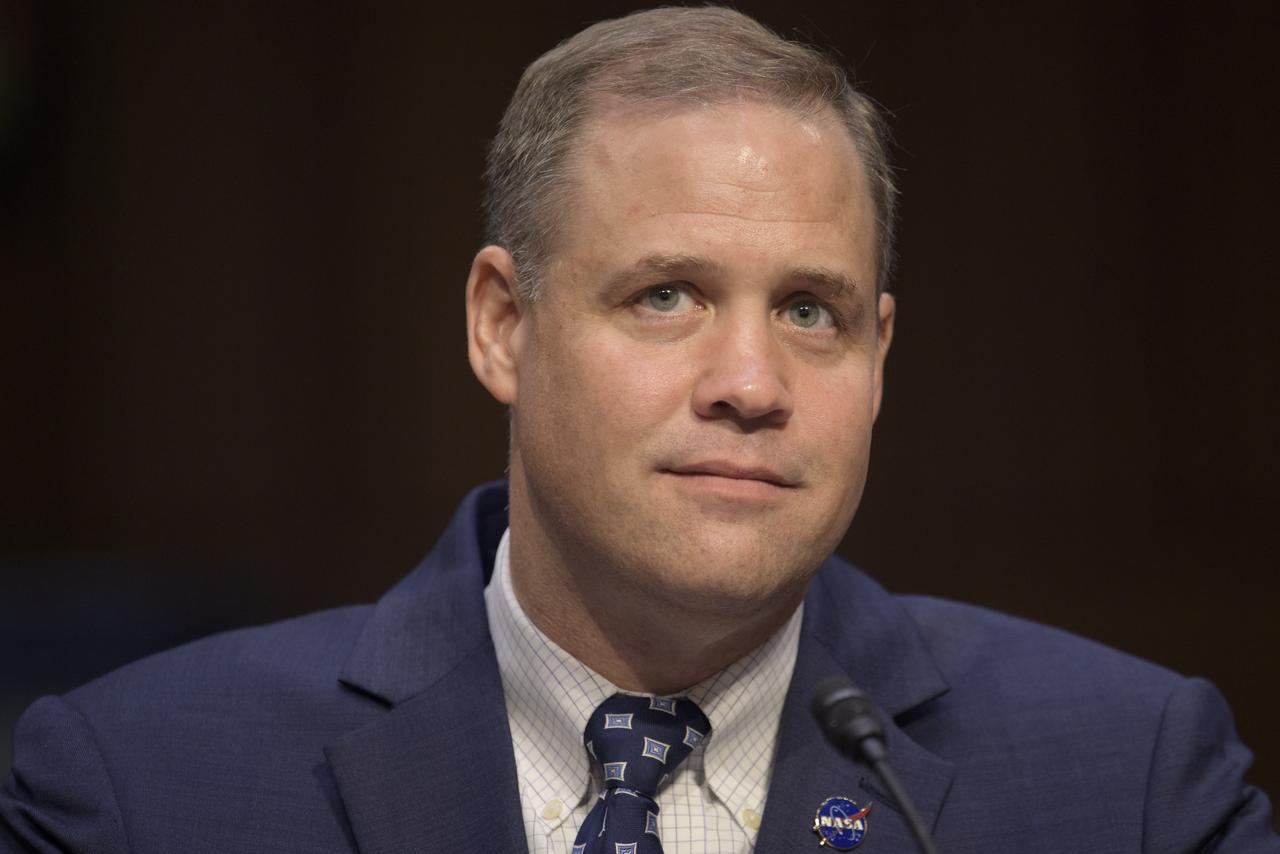
NASA Administrator Jim Bridenstine testifies before the Senate Committee on Commerce, Science, and Transportation during a hearing titled, “Moon to Mars: NASA’s Plans for Deep Space Exploration,” Wednesday, July 17, 2019, at the Hart Senate Office Building in Washington. Photo Credit: (NASA/Bill Ingalls)

NASA astronaut Michael Hopkins, and spacecraft commander for the agency’s SpaceX Crew-1 mission, participates in an egress training exercise on July 21, 2020, in Florida. The exercise involved simulating an emergency situation after splashdown of the Crew Dragon spacecraft. Mission specialist Shannon Walker and pilot Victor Glover – both NASA astronauts – also participated in the training, along with Soichi Noguchi, mission specialist and Japan Aerospace Exploration Agency (JAXA) astronaut. Hopkins, Walker, Glover, and Noguchi will launch to the International Space Station from Launch Complex 39A at the agency’s Kennedy Space Center in Florida. Crew-1 will be the first operational mission to the orbiting laboratory under NASA’s Commercial Crew Program, following the agency’s certification of SpaceX’s crew transportation system.

NASA Administrator Jim Bridenstine testifies before the Senate Committee on Commerce, Science, and Transportation during a hearing titled, “Moon to Mars: NASA’s Plans for Deep Space Exploration,” Wednesday, July 17, 2019, at the Hart Senate Office Building in Washington. Photo Credit: (NASA/Bill Ingalls)

NASA Administrator Jim Bridenstine testifies before the Senate Committee on Commerce, Science, and Transportation during a hearing titled, “Moon to Mars: NASA’s Plans for Deep Space Exploration,” Wednesday, July 17, 2019, at the Hart Senate Office Building in Washington. Photo Credit: (NASA/Bill Ingalls)
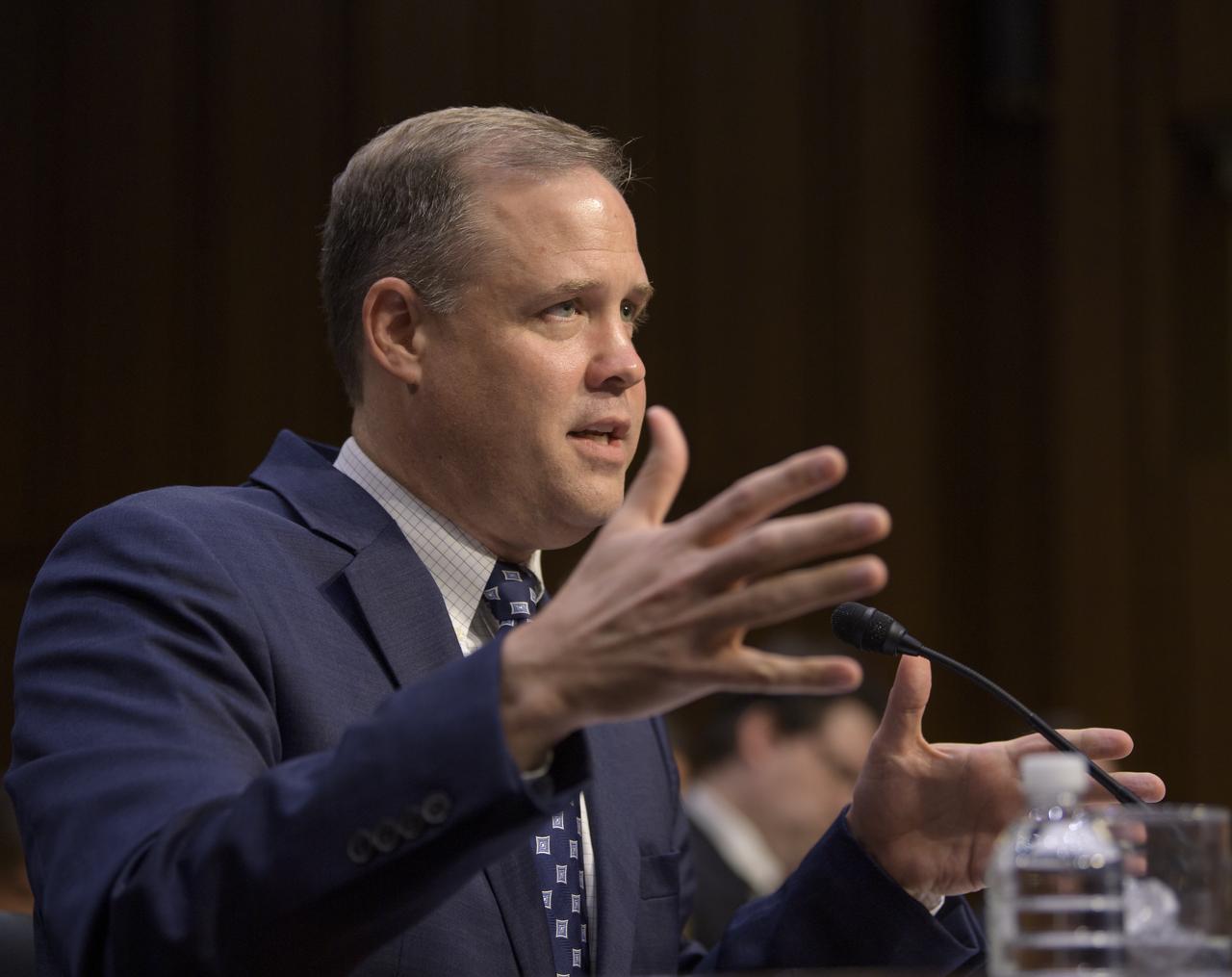
NASA Administrator Jim Bridenstine testifies before the Senate Committee on Commerce, Science, and Transportation during a hearing titled, “Moon to Mars: NASA’s Plans for Deep Space Exploration,” Wednesday, July 17, 2019, at the Hart Senate Office Building in Washington. Photo Credit: (NASA/Bill Ingalls)
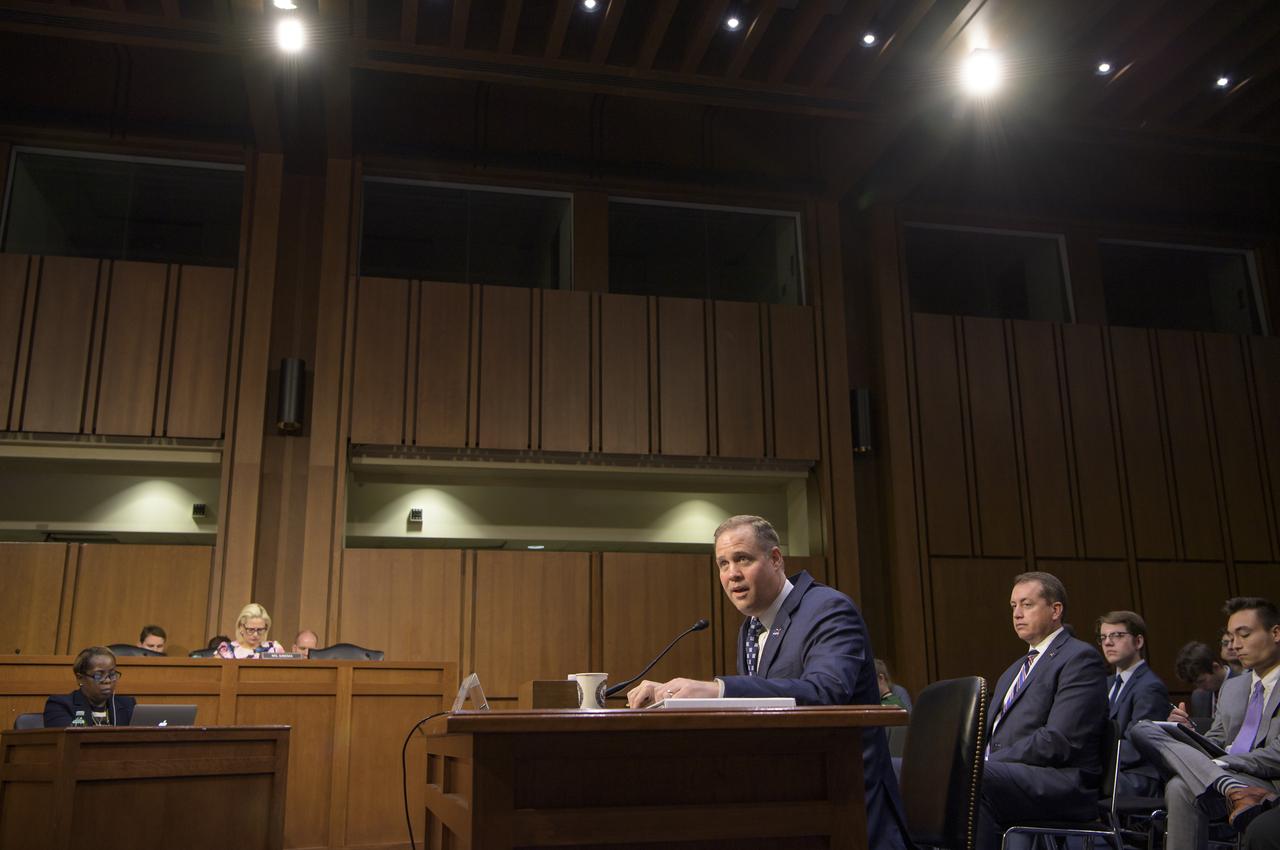
NASA Administrator Jim Bridenstine testifies before the Senate Committee on Commerce, Science, and Transportation during a hearing titled, “Moon to Mars: NASA’s Plans for Deep Space Exploration,” Wednesday, July 17, 2019, at the Hart Senate Office Building in Washington. Photo Credit: (NASA/Bill Ingalls)
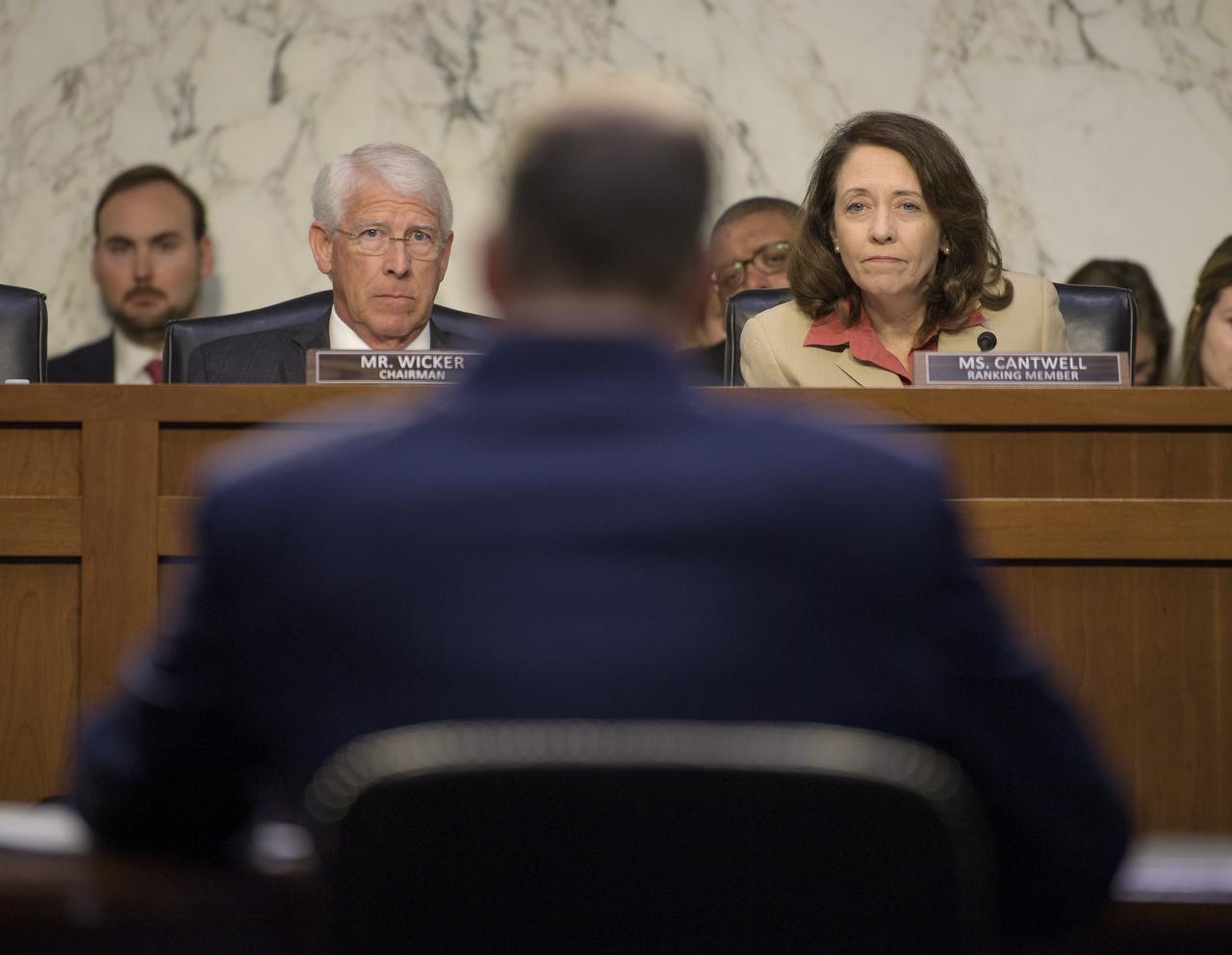
Chairman Roger Wicker, R-Miss., left, and Ranking member Sen. Maria Cantwell, D-Wash., right listen as NASA Administrator Jim Bridenstine testifies before the Senate Committee on Commerce, Science, and Transportation during a hearing titled, “Moon to Mars: NASA’s Plans for Deep Space Exploration,” Wednesday, July 17, 2019, at the Hart Senate Office Building in Washington. Photo Credit: (NASA/Bill Ingalls)
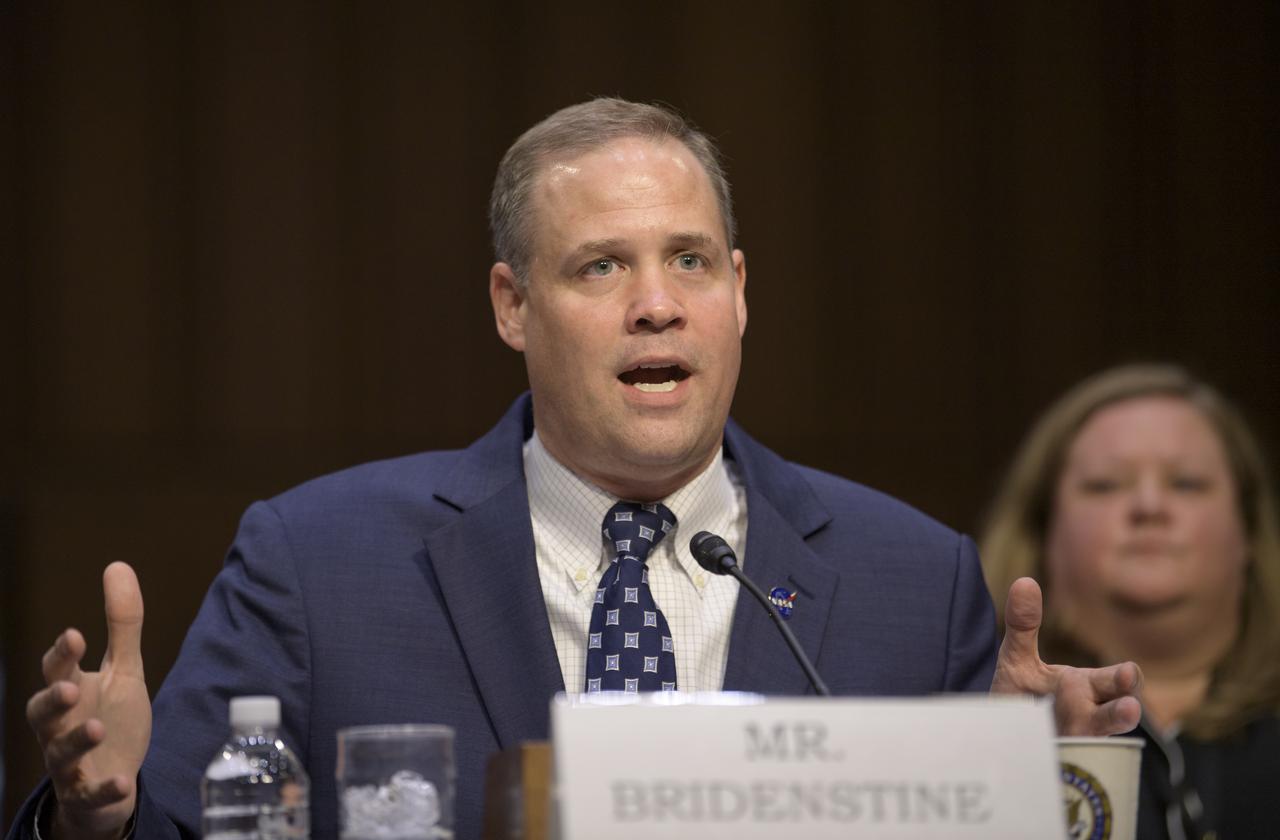
NASA Administrator Jim Bridenstine testifies before the Senate Committee on Commerce, Science, and Transportation during a hearing titled, “Moon to Mars: NASA’s Plans for Deep Space Exploration,” Wednesday, July 17, 2019, at the Hart Senate Office Building in Washington. Photo Credit: (NASA/Bill Ingalls)

NASA Administrator Jim Bridenstine testifies before the Senate Committee on Commerce, Science, and Transportation during a hearing titled, “Moon to Mars: NASA’s Plans for Deep Space Exploration,” Wednesday, July 17, 2019, at the Hart Senate Office Building in Washington. Photo Credit: (NASA/Bill Ingalls)
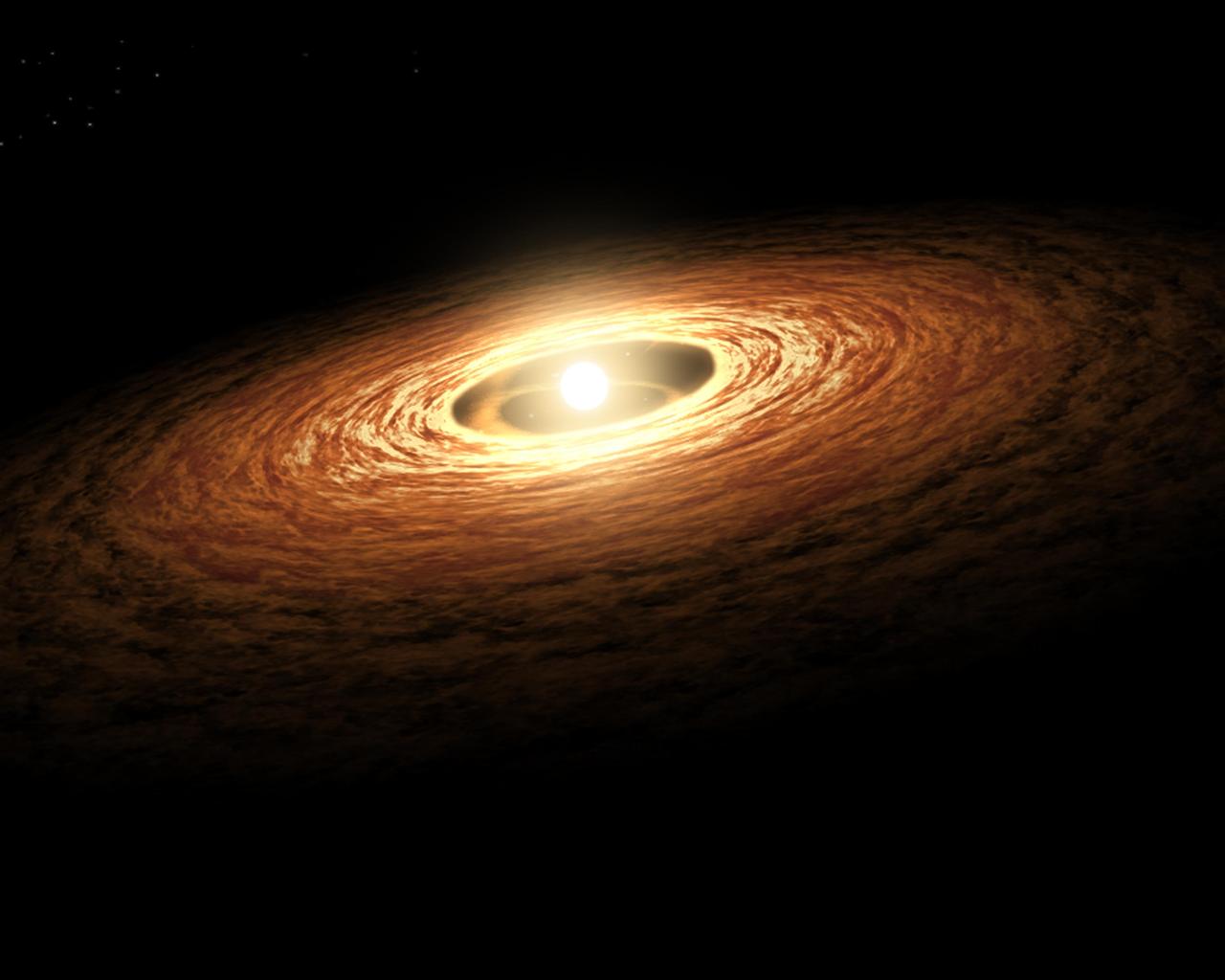
This artist's concept illustrates how silicate crystals like those found in comets can be created by an outburst from a growing star. The image shows a young sun-like star encircled by its planet-forming disk of gas and dust. The silicate that makes up most of the dust would have begun as non-crystallized, amorphous particles. Streams of material are seen spiraling from the disk onto the star increasing its mass and causing the star to brighten and heat up dramatically. The outburst causes temperatures to rise in the star's surrounding disk. The animation (figure 1) zooms into the disk to show close-ups of silicate particles. When the disk warms from the star's outburst, the amorphous particles of silicate melt. As they cool off, they transform into forsterite (figure 2), a type of silicate crystal often found in comets in our solar system. In April 2008, NASA's Spitzer Space Telescope detected evidence of this process taking place on the disk of a young sun-like star called EX Lupi. http://photojournal.jpl.nasa.gov/catalog/PIA12008
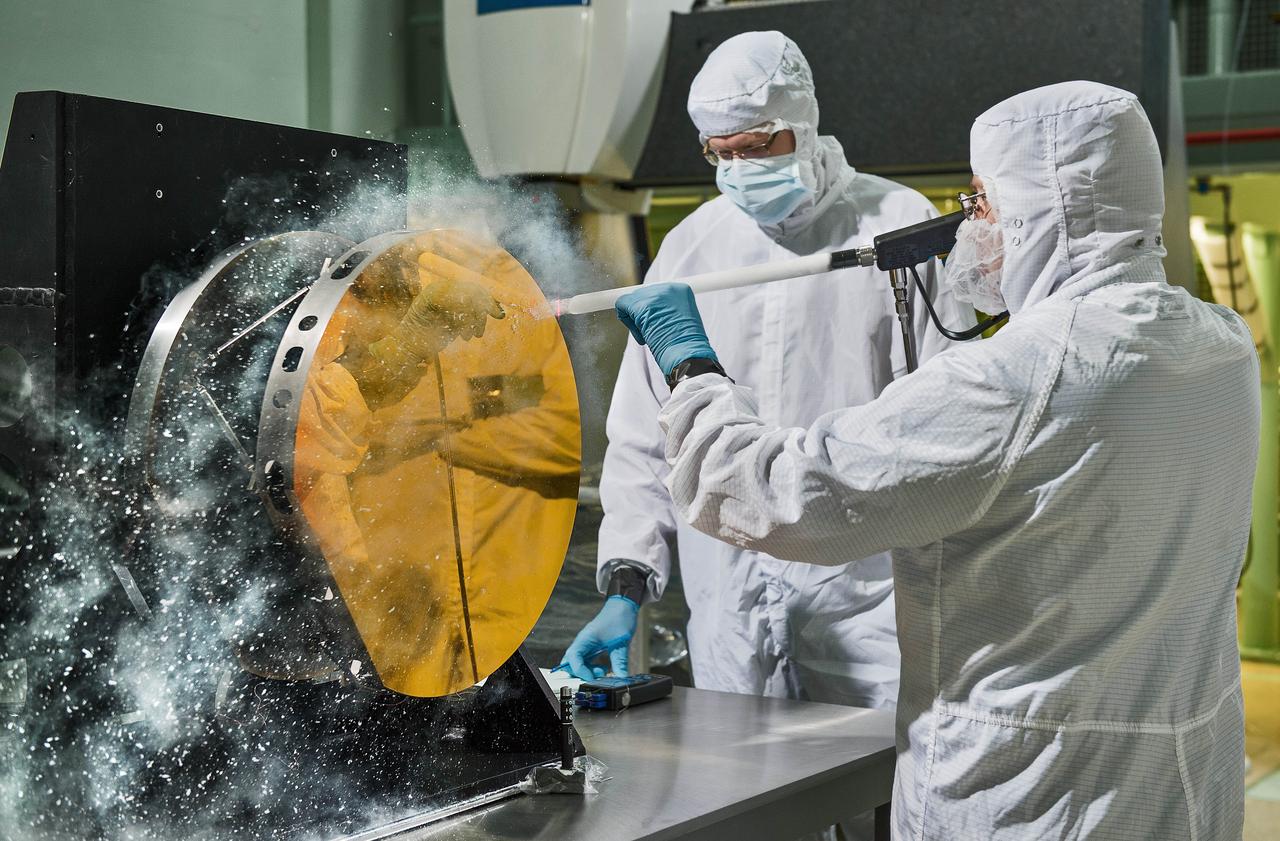
Just like drivers sometimes use snow to clean their car mirrors in winter, two Exelis Inc. engineers are practicing "snow cleaning'" on a test telescope mirror for the James Webb Space Telescope at NASA's Goddard Space Flight Center in Greenbelt, Maryland. By shooting carbon dioxide snow at the surface, engineers are able to clean large telescope mirrors without scratching them. "The snow-like crystals (carbon dioxide snow) knock contaminate particulates and molecules off the mirror," said Lee Feinberg, NASA optical telescope element manager. This technique will only be used if the James Webb Space Telescope's mirror is contaminated during integration and testing. The Webb telescope is the scientific successor to NASA's Hubble Space Telescope. It will be the most powerful space telescope ever built. With a mirror seven times as large as Hubble's and infrared capability, Webb will be capturing light from 13.5 billion light years away. To do this, its mirror must be kept super clean. "Small dust particles or molecules can impact the science that can be done with the Webb," said Feinberg. "So cleanliness especially on the mirrors is critical." Webb is an international project led by NASA with its partners, the European Space Agency and the Canadian Space Agency. Image credit: NASA/Goddard/Chris Gunn
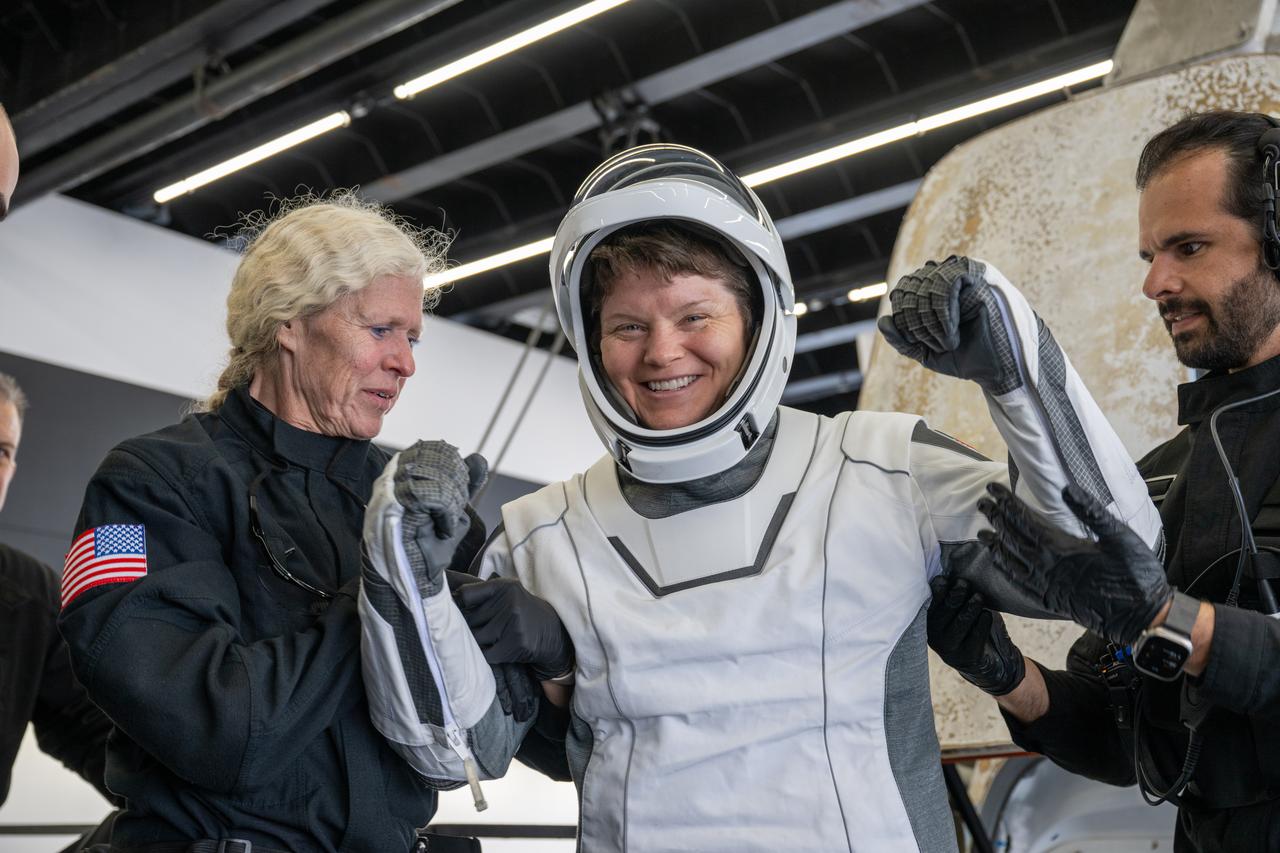
NASA astronaut Anne McClain is helped out of the SpaceX Dragon Endurance spacecraft onboard the SpaceX recovery ship SHANNON after she, NASA astronaut Nichole Ayers, JAXA (Japan Aerospace Exploration Agency) astronaut Takuya Onishi, and Roscosmos cosmonaut Kirill Peskov landed in the Pacific Ocean off the coast of San Diego, Calif., Saturday, Aug. 9, 2025. McClain, Ayers, Onishi, and Peskov are returning after 147 days in space as part of Expedition 73 aboard the International Space Station. Photo Credit: (NASA/Keegan Barber)
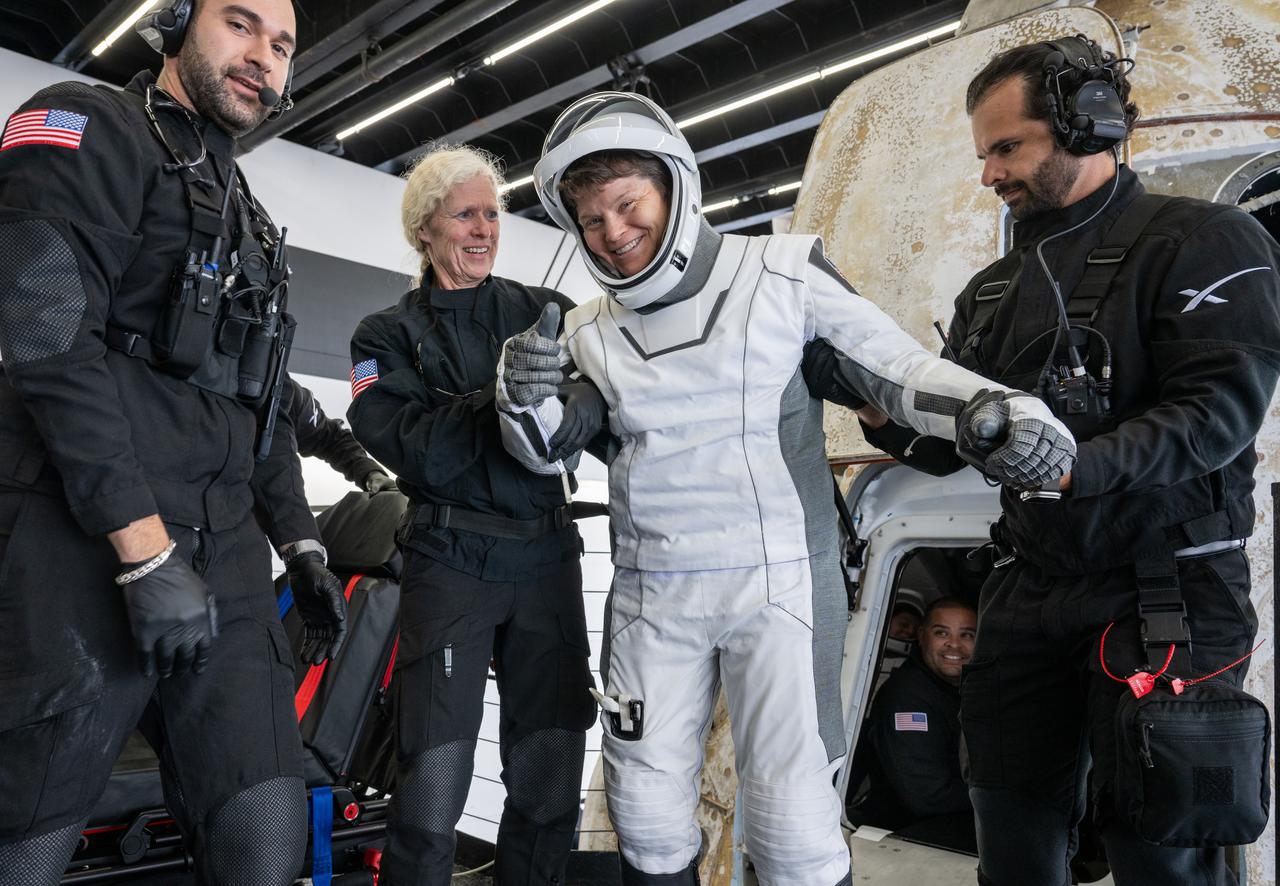
NASA astronaut Anne McClain is helped out of the SpaceX Dragon Endurance spacecraft onboard the SpaceX recovery ship SHANNON after she, NASA astronaut Nichole Ayers, JAXA (Japan Aerospace Exploration Agency) astronaut Takuya Onishi, and Roscosmos cosmonaut Kirill Peskov landed in the Pacific Ocean off the coast of San Diego, Calif., Saturday, Aug. 9, 2025. McClain, Ayers, Onishi, and Peskov are returning after 147 days in space as part of Expedition 73 aboard the International Space Station. Photo Credit: (NASA/Keegan Barber)
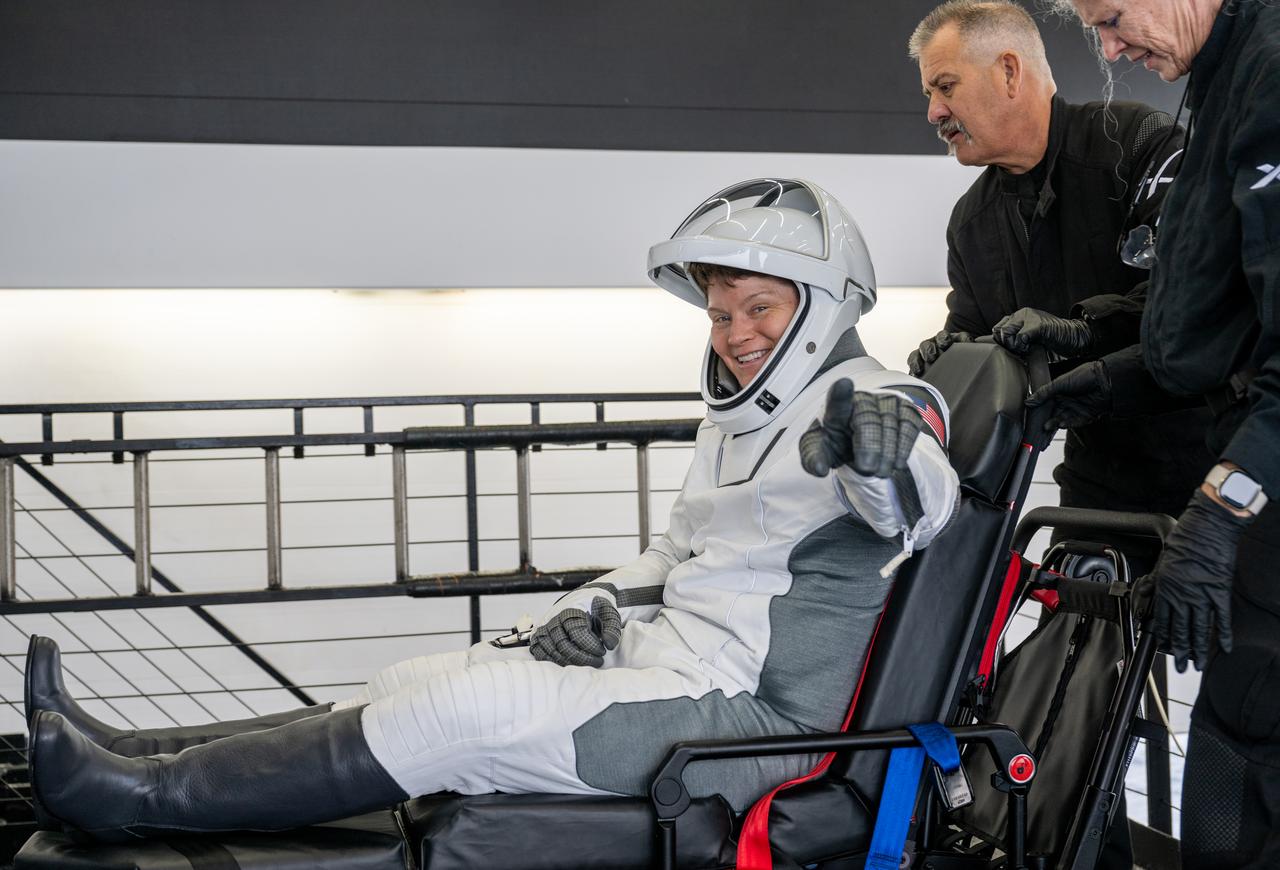
NASA astronaut Anne McClain is helped out of the SpaceX Dragon Endurance spacecraft onboard the SpaceX recovery ship SHANNON after she, NASA astronaut Nichole Ayers, JAXA (Japan Aerospace Exploration Agency) astronaut Takuya Onishi, and Roscosmos cosmonaut Kirill Peskov landed in the Pacific Ocean off the coast of San Diego, Calif., Saturday, Aug. 9, 2025. McClain, Ayers, Onishi, and Peskov are returning after 147 days in space as part of Expedition 73 aboard the International Space Station. Photo Credit: (NASA/Keegan Barber)
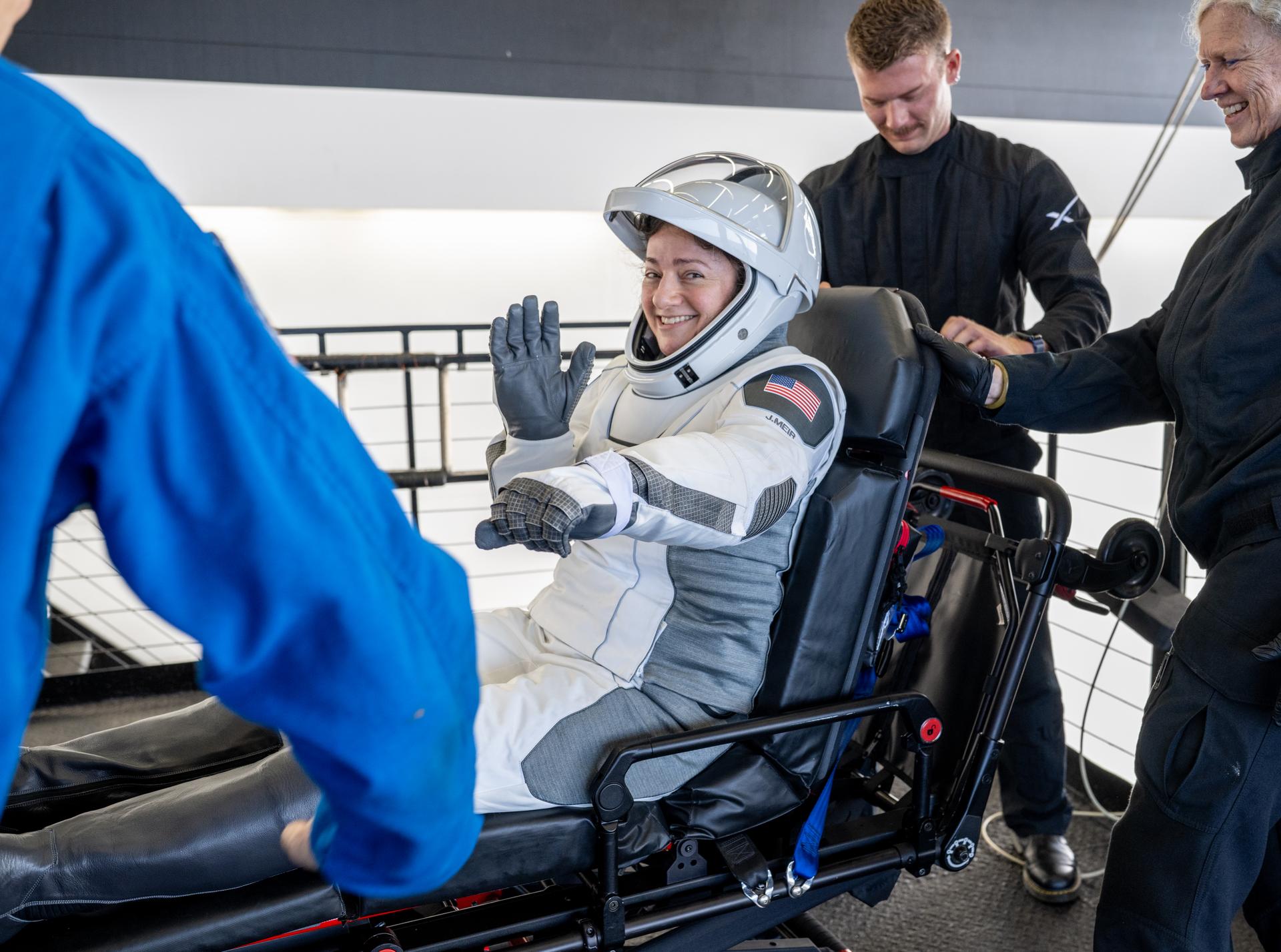
NASA astronaut Jessica Meir is helped out of the SpaceX Dragon Freedom spacecraft onboard the SpaceX recovery ship SHANNON after she, NASA astronaut Jack Hathaway, ESA (European Space Agency) astronaut Sophie Adenot, and Roscosmos cosmonaut Andrey Fedyaev landed in the Pacific Ocean off the coast of Los Angeles, Calif., Thursday, Oct. 8, 2026. Meir, Hathaway, Adenot, and Fedyaev are returning after seven-months in space as part of Expedition 74 aboard the International Space Station. Photo Credit: (NASA/Keegan Barber)
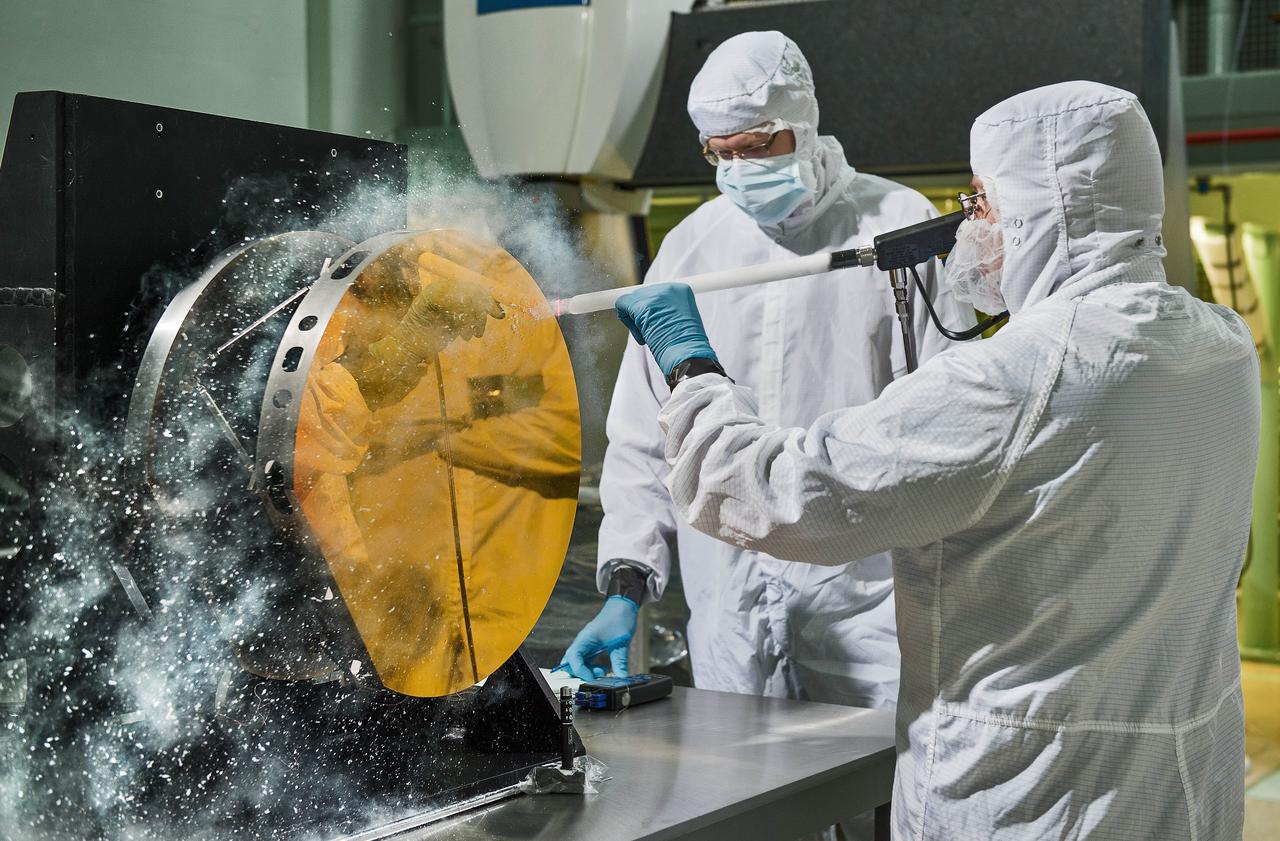
Just like drivers sometimes use snow to clean their car mirrors in winter, two Exelis Inc. engineers are practicing "snow cleaning'" on a test telescope mirror for the James Webb Space Telescope at NASA's Goddard Space Flight Center in Greenbelt, Maryland. By shooting carbon dioxide snow at the surface, engineers are able to clean large telescope mirrors without scratching them. "The snow-like crystals (carbon dioxide snow) knock contaminate particulates and molecules off the mirror," said Lee Feinberg, NASA optical telescope element manager. This technique will only be used if the James Webb Space Telescope's mirror is contaminated during integration and testing. The Webb telescope is the scientific successor to NASA's Hubble Space Telescope. It will be the most powerful space telescope ever built. With a mirror seven times as large as Hubble's and infrared capability, Webb will be capturing light from 13.5 billion light years away. To do this, its mirror must be kept super clean. "Small dust particles or molecules can impact the science that can be done with the Webb," said Feinberg. "So cleanliness especially on the mirrors is critical." Webb is an international project led by NASA with its partners, the European Space Agency and the Canadian Space Agency. Image credit: NASA/Goddard/Chris Gunn Text credit: Laura Betz, NASA's Goddard Space Flight Center, Greenbelt, Maryland <b><a href="http://www.nasa.gov/audience/formedia/features/MP_Photo_Guidelines.html" rel="nofollow">NASA image use policy.</a></b> <b><a href="http://www.nasa.gov/centers/goddard/home/index.html" rel="nofollow">NASA Goddard Space Flight Center</a></b> enables NASA’s mission through four scientific endeavors: Earth Science, Heliophysics, Solar System Exploration, and Astrophysics. Goddard plays a leading role in NASA’s accomplishments by contributing compelling scientific knowledge to advance the Agency’s mission. <b>Follow us on <a href="http://twitter.com/NASAGoddardPix" rel="nofollow">Twitter</a></b> <b>Like us on <a href="http://www.facebook.com/pages/Greenbelt-MD/NASA-Goddard/395013845897?ref=tsd" rel="nofollow">Facebook</a></b> <b>Find us on <a href="http://instagrid.me/nasagoddard/?vm=grid" rel="nofollow">Instagram</a></b>
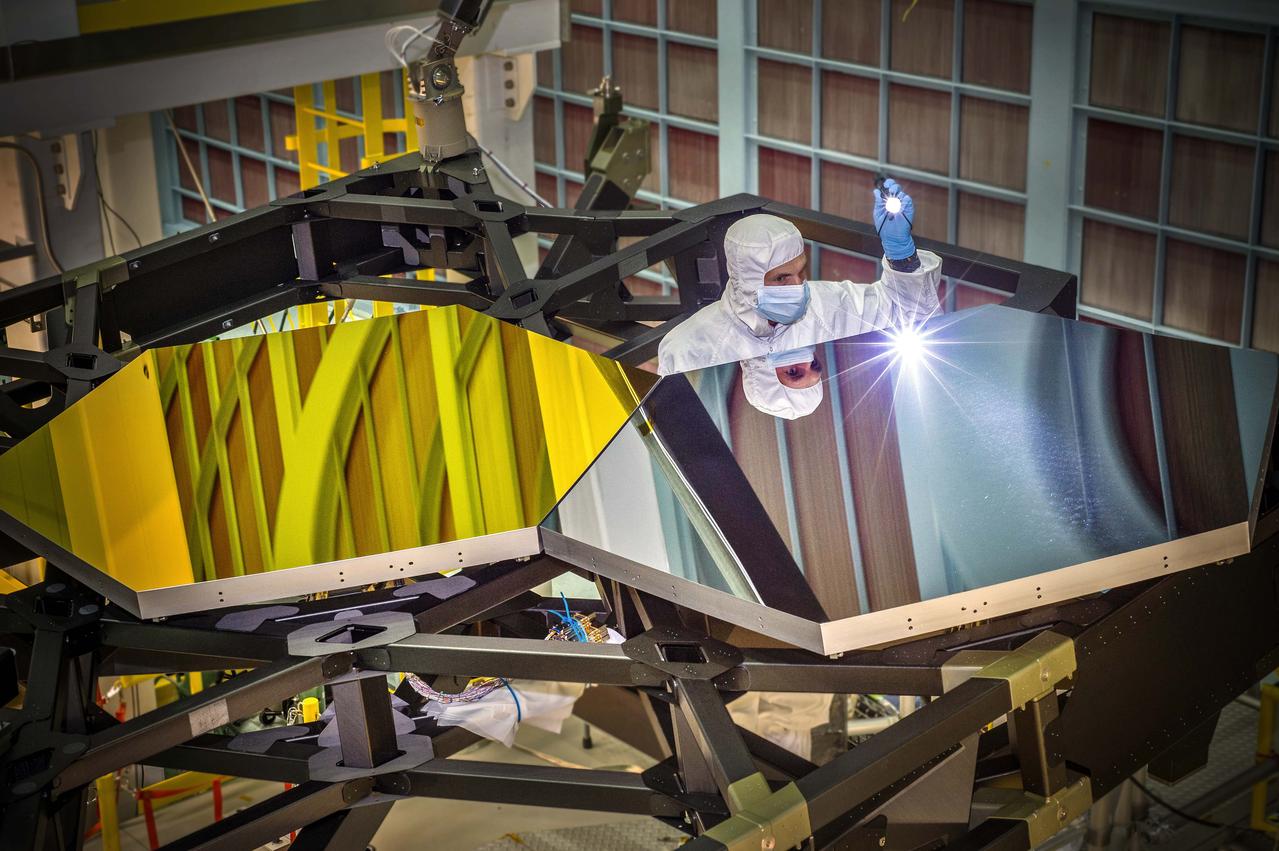
Inside NASA's Goddard Space Flight Center's giant clean room in Greenbelt, Md., JWST Optical Engineer Larkin Carey from Ball Aerospace, examines two test mirror segments recently placed on a black composite structure. This black composite structure is called the James Webb Space Telescope's “Pathfinder” and acts as a spine supporting the telescope's primary mirror segments. The Pathfinder is a non-flight prototype. The mirrors were placed on Pathfinder using a robotic arm move that involved highly trained engineers and technicians from Exelis, Northrop Grumman and NASA. "Getting this right is critical to proving we are ready to start assembling the flight mirrors onto the flight structure next summer," said Lee Feinberg, NASA's Optical Telescope Element Manager at NASA Goddard. "This is the first space telescope that has ever been built with a light-weighted segmented primary mirror, so learning how to do this is a groundbreaking capability for not only the Webb telescope but for potential future space telescopes." The James Webb Space Telescope is the successor to NASA's Hubble Space Telescope. It will be the most powerful space telescope ever built. Webb is an international project led by NASA with its partners, the European Space Agency and the Canadian Space Agency. For more information about the Webb telescope, visit: <a href="http://www.jwst.nasa.gov" rel="nofollow">www.jwst.nasa.gov</a> or <a href="http://www.nasa.gov/webb" rel="nofollow">www.nasa.gov/webb</a> Credit: NASA/Chris Gunn <b><a href="http://www.nasa.gov/audience/formedia/features/MP_Photo_Guidelines.html" rel="nofollow">NASA image use policy.</a></b> <b><a href="http://www.nasa.gov/centers/goddard/home/index.html" rel="nofollow">NASA Goddard Space Flight Center</a></b> enables NASA’s mission through four scientific endeavors: Earth Science, Heliophysics, Solar System Exploration, and Astrophysics. Goddard plays a leading role in NASA’s accomplishments by contributing compelling scientific knowledge to advance the Agency’s mission. <b>Follow us on <a href="http://twitter.com/NASAGoddardPix" rel="nofollow">Twitter</a></b> <b>Like us on <a href="http://www.facebook.com/pages/Greenbelt-MD/NASA-Goddard/395013845897?ref=tsd" rel="nofollow">Facebook</a></b> <b>Find us on <a href="http://instagram.com/nasagoddard?vm=grid" rel="nofollow">Instagram</a></b>