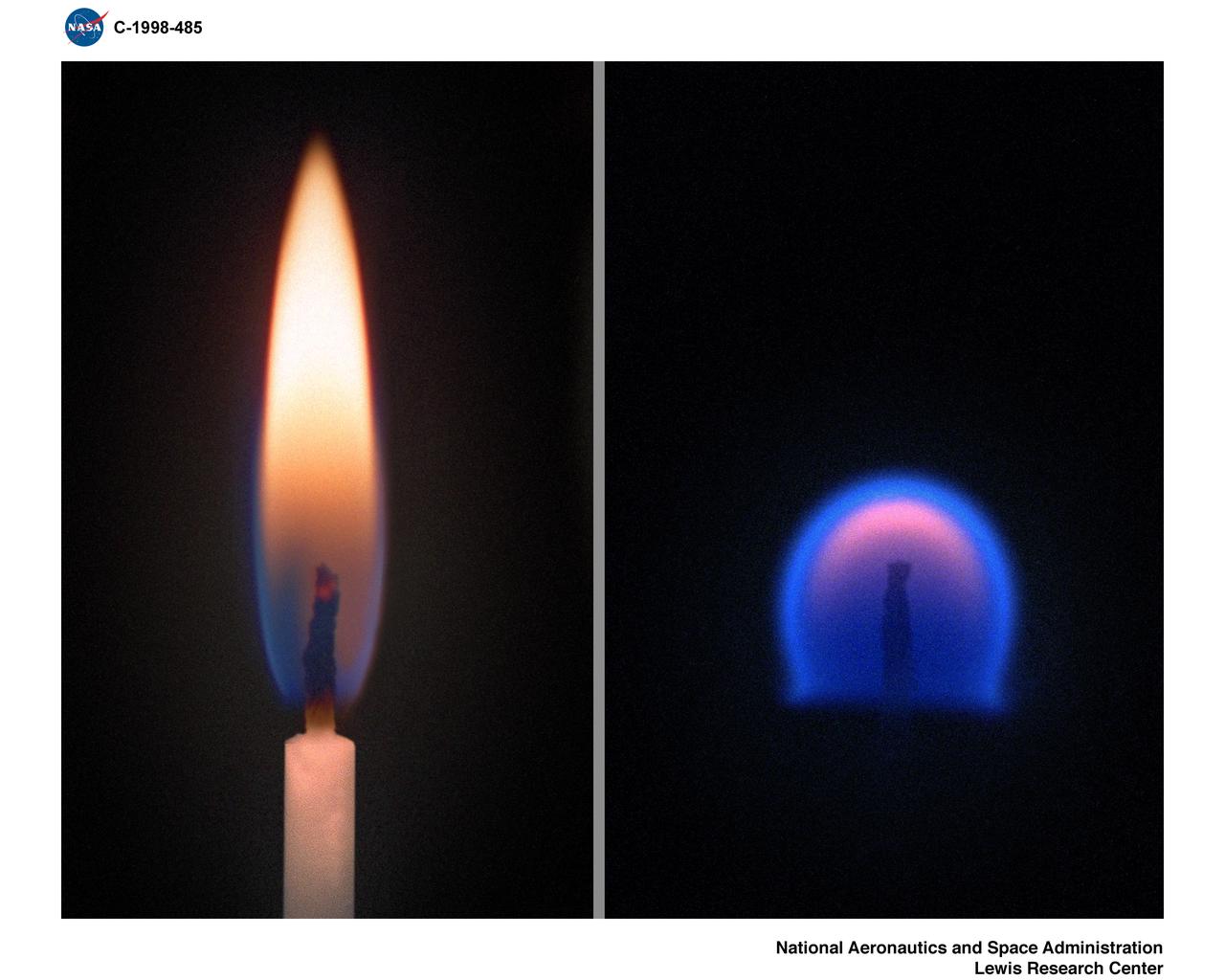
Comparison of a Candle Flame burning in normal gravity or 1-G (left) and a flame burning in Microgravity.
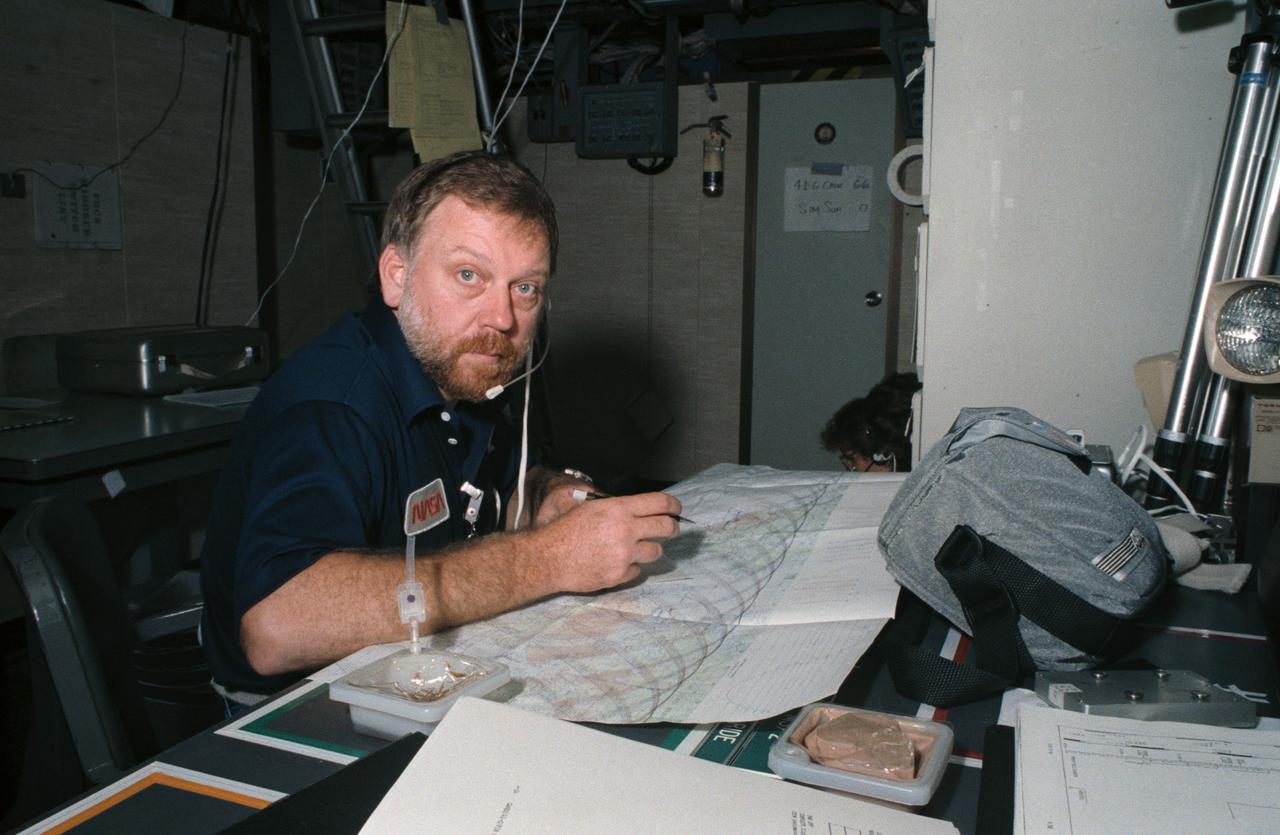
Views of STS-41G Crew member Paul Sculley-Powers during mission experiment training, Fixed Base Simulator, Bldg. 5, 09/09/1984. 1. SHUTTLE - SIMUALTOR (1-G) JSC, HOUSTON, TX
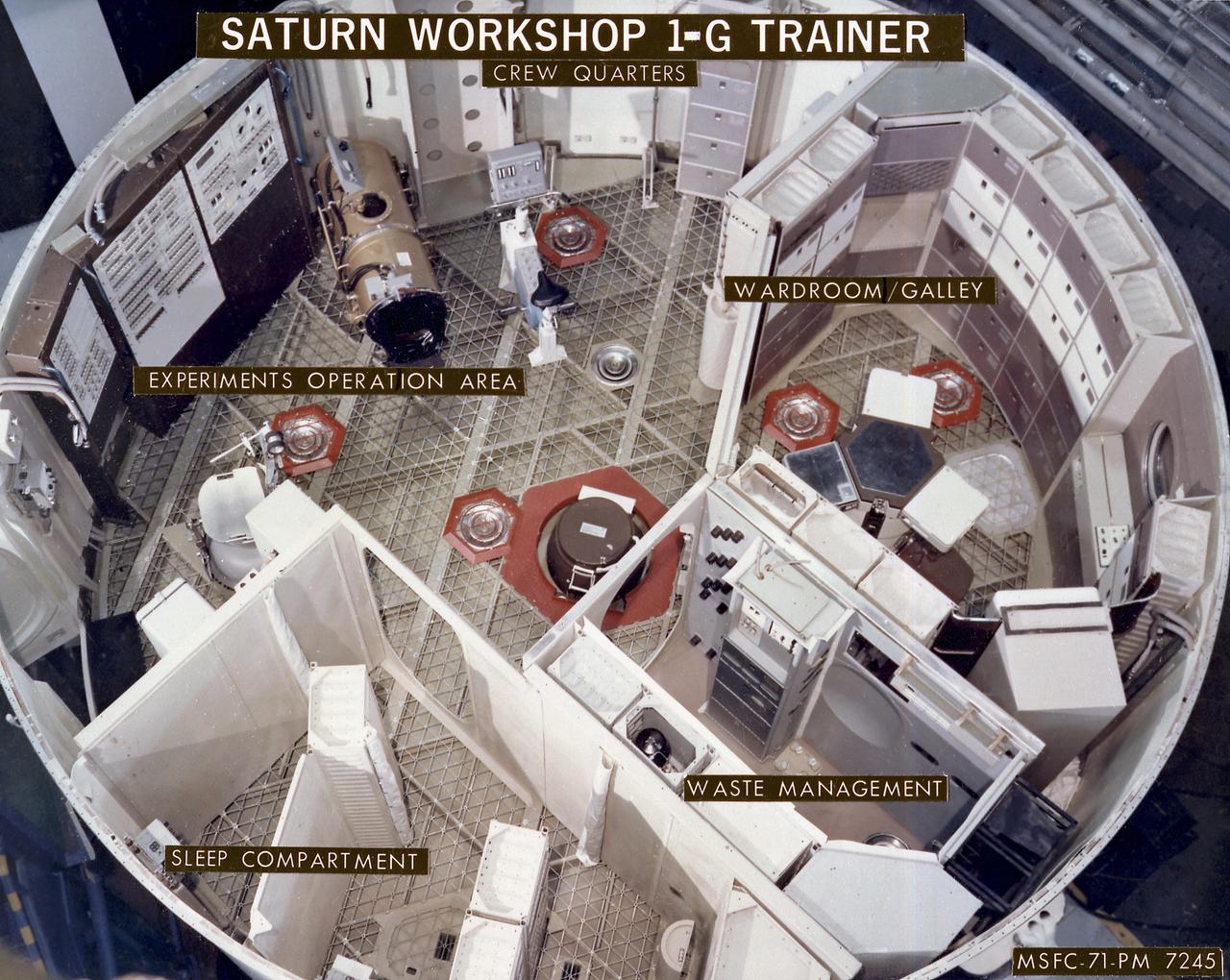
This image depicts a layout of the Skylab workshop 1-G trainer crew quarters. At left, in the sleep compartment, astronauts slept strapped to the walls of cubicles and showered at the center. Next right was the waste management area where wastes were processed and disposed. Upper right was the wardroom where astronauts prepared their meals and foods were stored. In the experiment operation area, upper left, against the far wall, was the lower-body negative-pressure device (Skylab Experiment M092) and the Ergometer for the vectorcardiogram experiment (Skylab Experiment M063). The trainers and mockups were useful in the developmental phase, while engineers and astronauts were still working out optimum designs. They provided much data applicable to the manufacture of the flight articles.
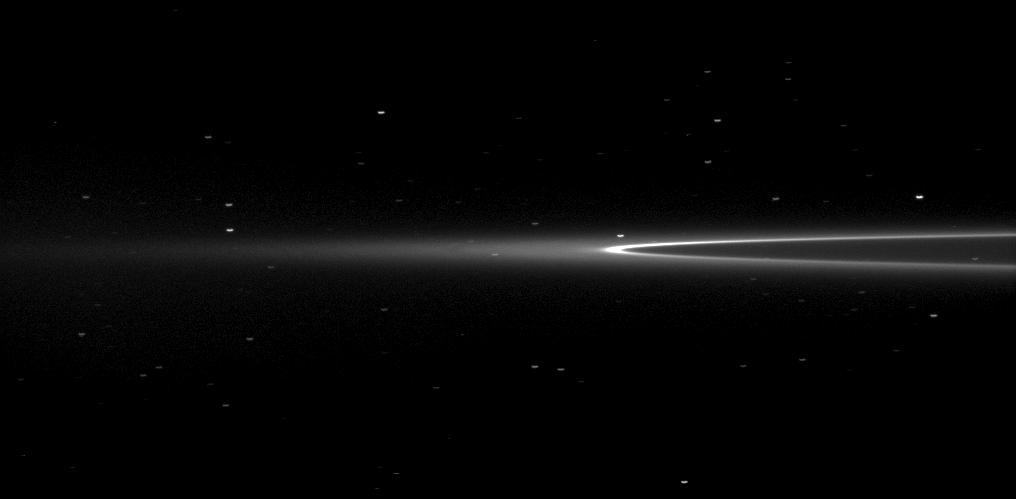
NASA Cassini spacecraft looks toward Saturn tiny moon Aegaeon within the G-ring arc. The moonlet Aegaeon formerly known as S/2008 S 1 cant be seen in this image, but it orbits in the bright arc of Saturn faint G ring shown here.
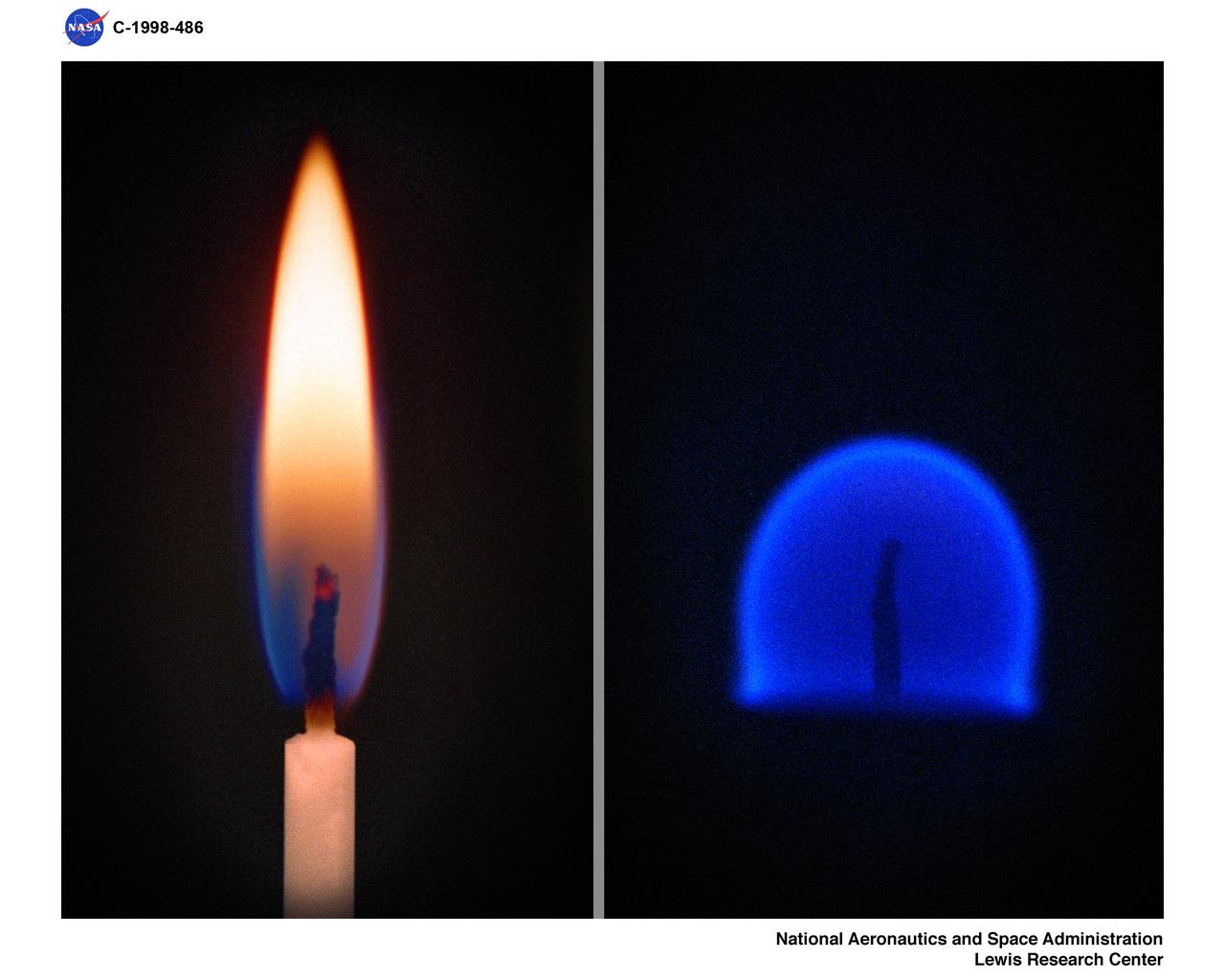
CANDLE FLAME NORMAL 1-G ONE GRAVITY AND MICROGRAVITY 0-G ZERO GRAVITY COMPARISON
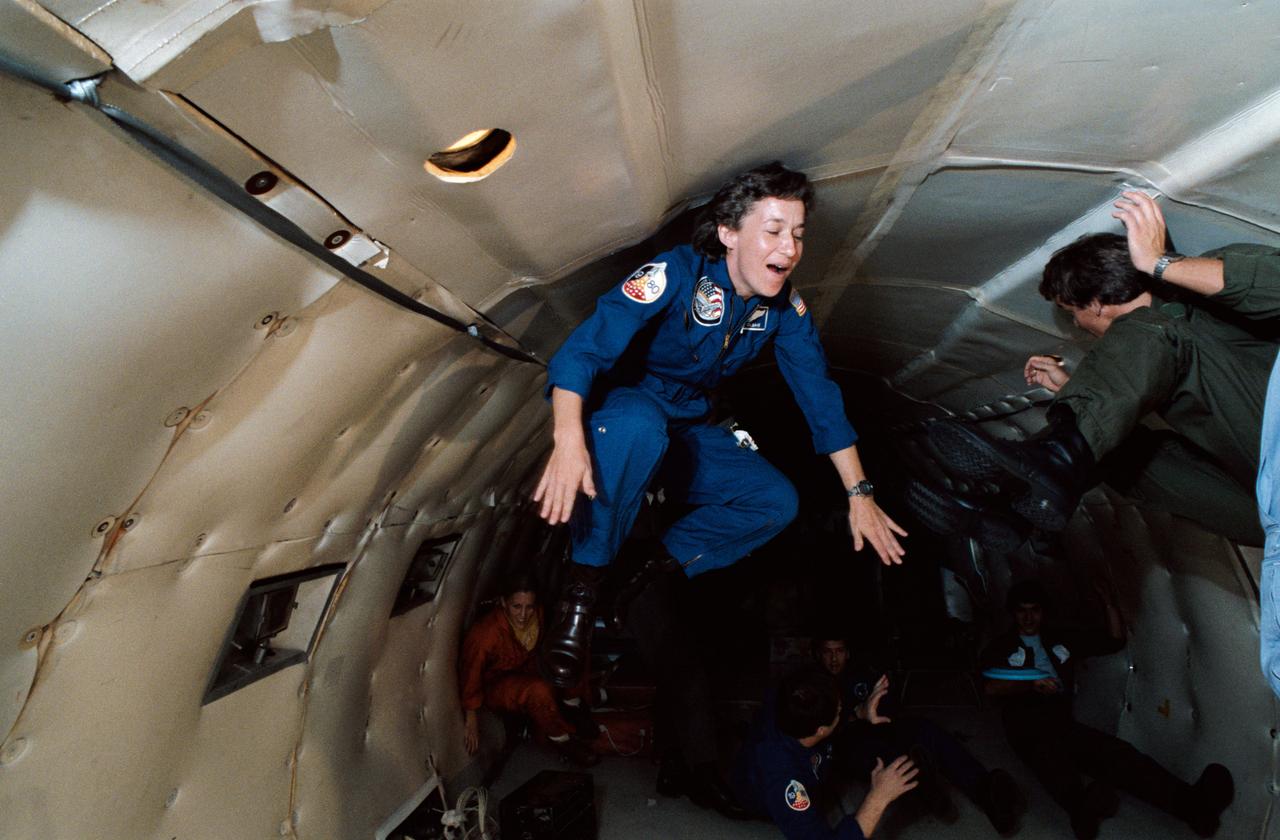
KC-135 inflight training of the STS-30/61B Crew for suit donning doffing and Zero-G orientation for Rudolfo Neri, Astronaut Mary Cleave, and Ricardo Peralta, Backup Neri. 1. Astronaut Cleave, Mary - Zero-G 2. Neri, Rodolfo - Zero-G 3. Peralta, Ricard - Zero-G
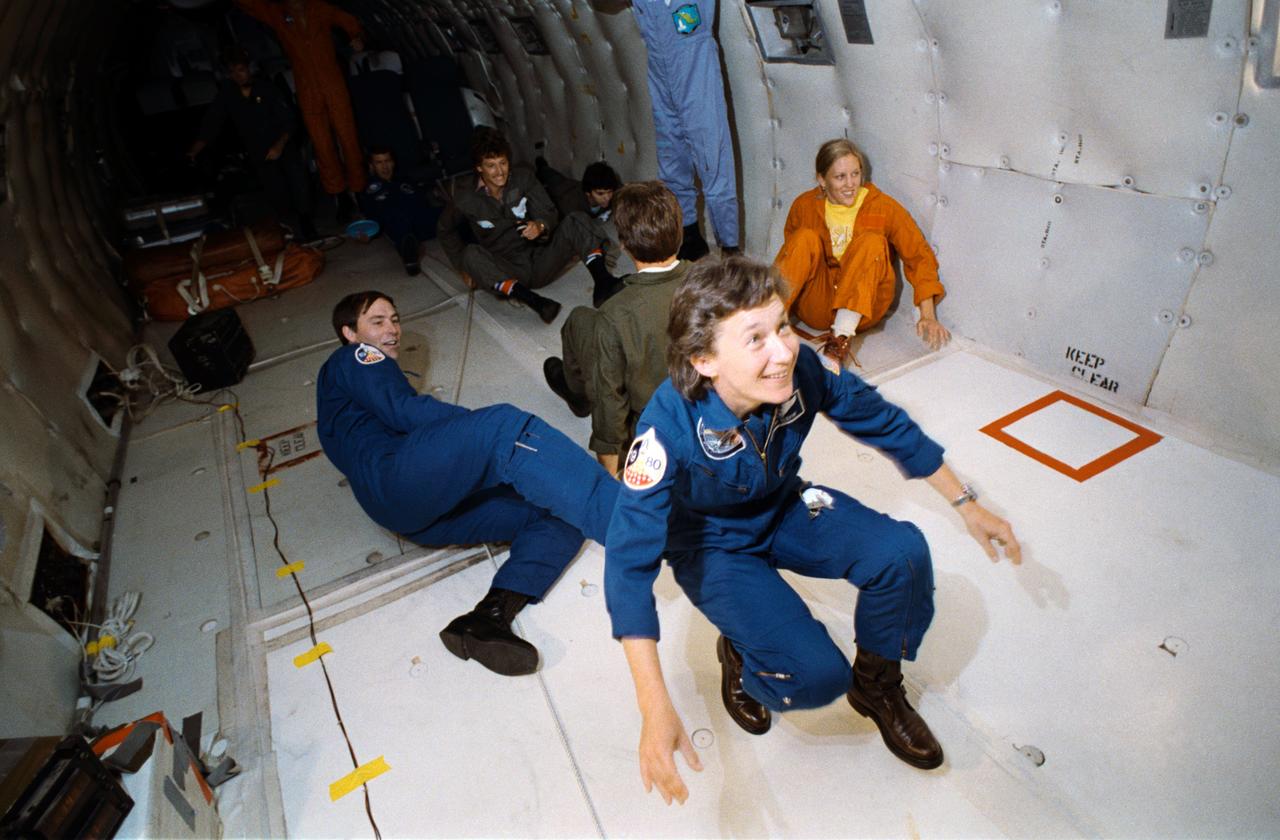
KC-135 inflight training of the STS-30/61B Crew for suit donning doffing and Zero-G orientation for Rudolfo Neri, Astronaut Mary Cleave, and Ricardo Peralta, Backup Neri. 1. Astronaut Cleave, Mary - Zero-G 2. Neri, Rodolfo - Zero-G 3. Peralta, Ricard - Zero-G
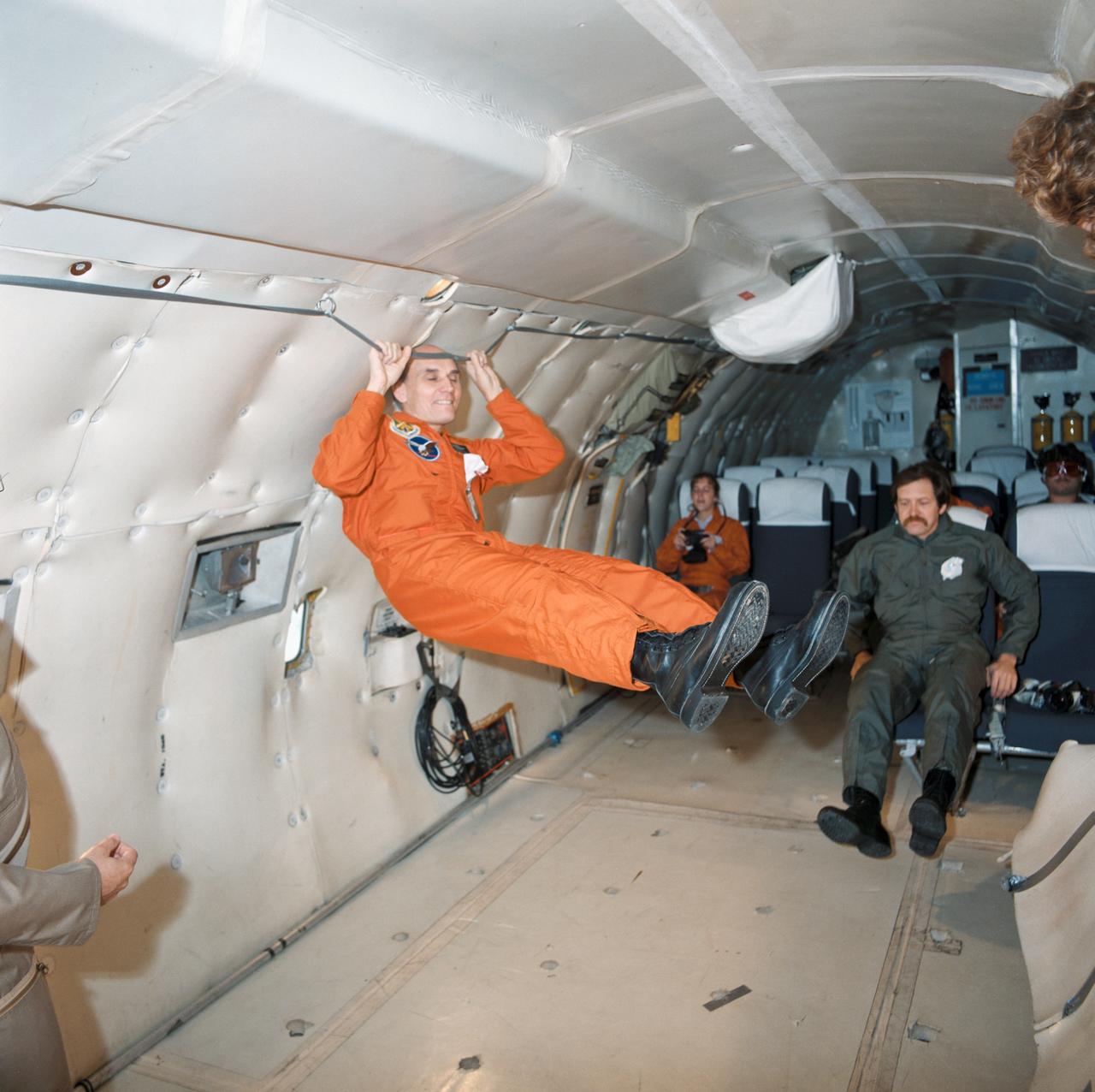
Views of STS-51E Crewman Senator Jake Garn during Zero-G Parabolas. 1. Senator E. J. "Jake" Garn - Zero-G
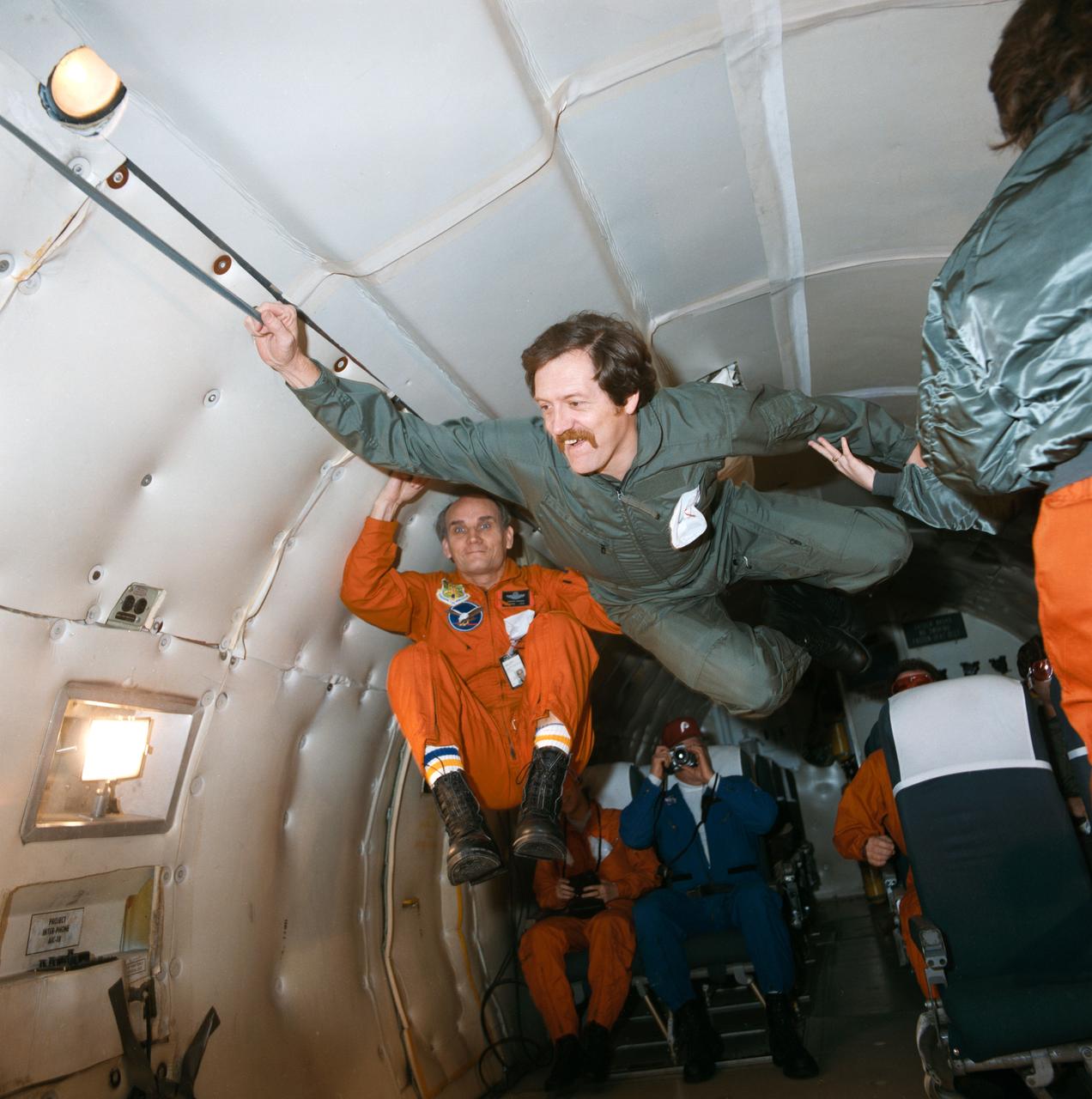
Views of STS-51E Crewman Senator Jake Garn during Zero-G Parabolas. 1. Senator E. J. "Jake" Garn - Zero-G
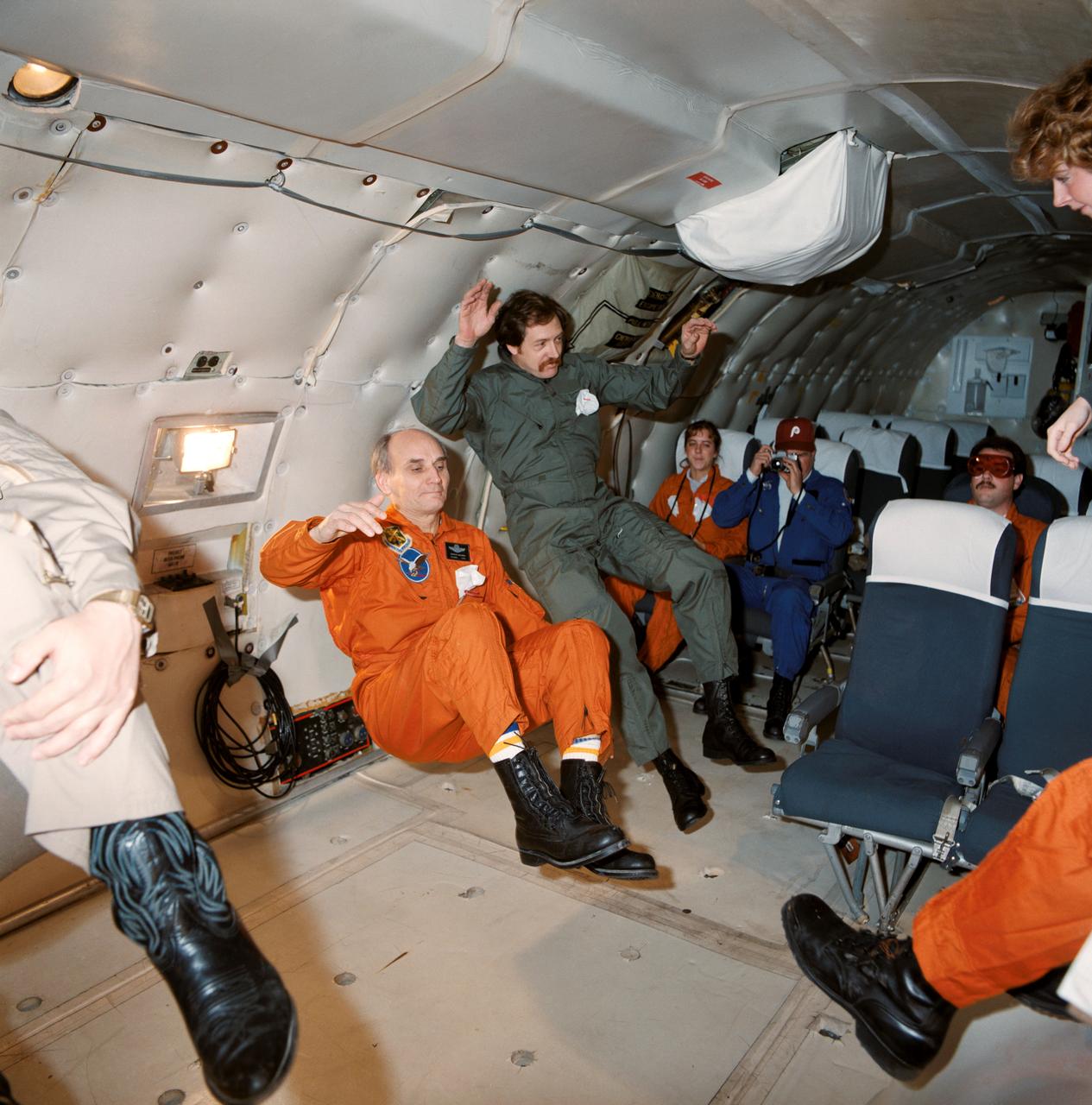
Views of STS-51E Crewman Senator Jake Garn during Zero-G Parabolas. 1. Senator E. J. "Jake" Garn - Zero-G
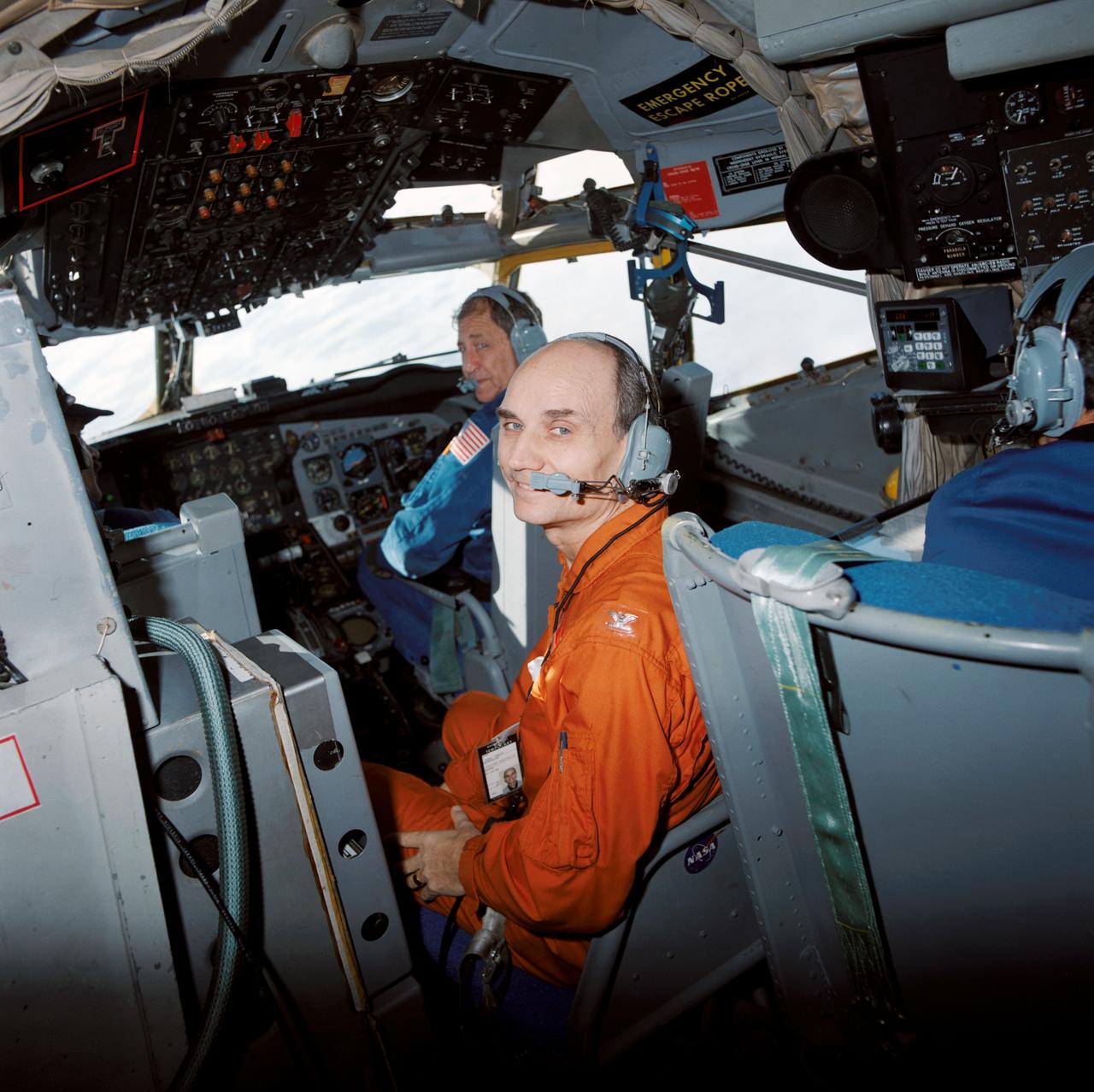
Views of STS-51E Crewman Senator Jake Garn during Zero-G Parabolas. 1. Senator E. J. "Jake" Garn - Zero-G
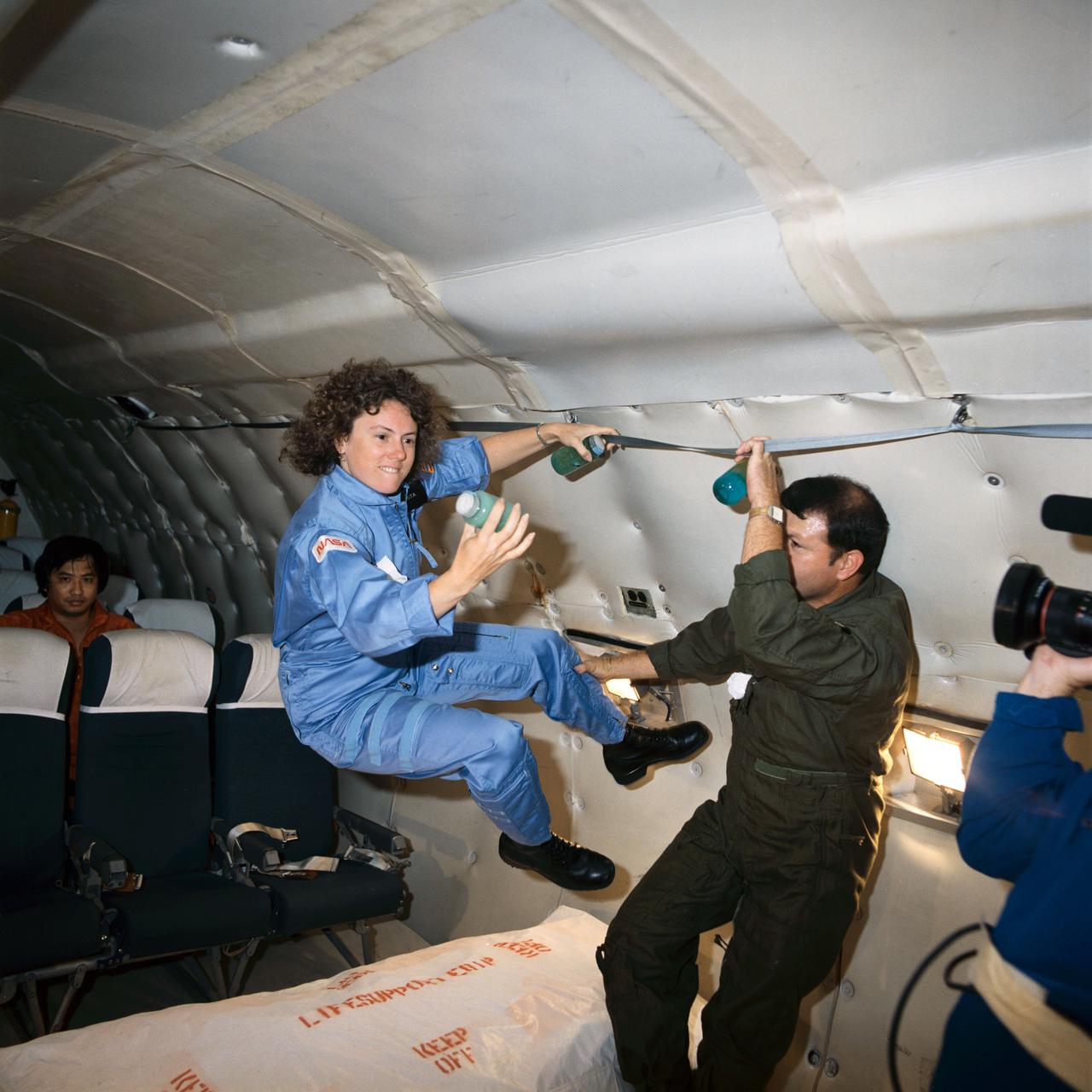
Teacher-in-Space trainees on the KC-135 for Zero-G training. Sharon Christa McAuliffe experiences a few moments of weightlessness provided by the KC-135. She and Bob Mayfield, a JSC Aerospace Education Specialist, are previewing a Molecular Mixing Experiment which was designed to demonstrate differences of separation process in 1-G and Zero-G.
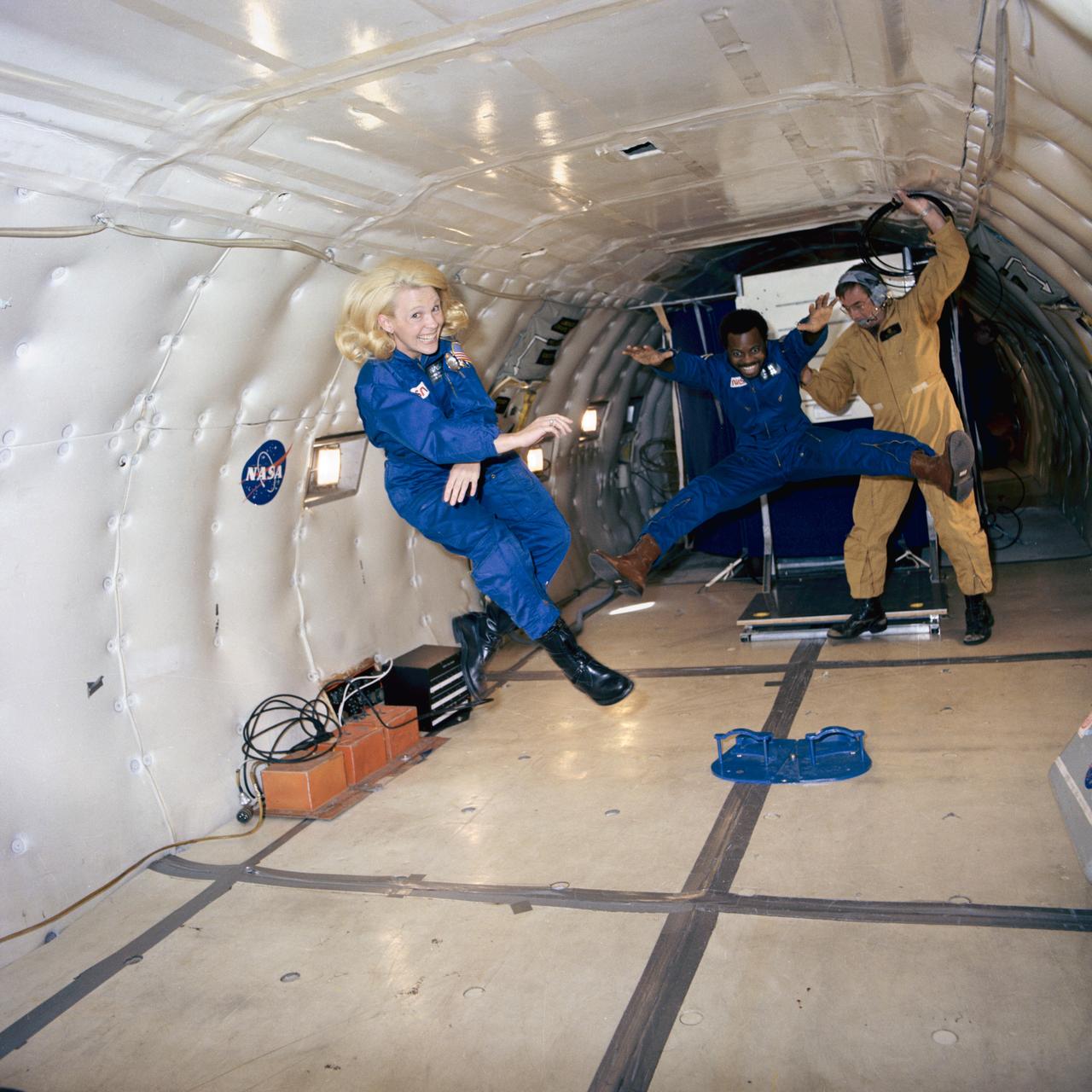
Zero-gravity experiments in KC-135 conducted by John Young, Robert L. Crippen, Joseph Kerwin, and Margaret Seddon. 1. Kerwin, Joseph - Zero-G 2. Seddon, Margaret - Zero-G 3. Young, John - Zero-G 4. Aircraft - KC-135
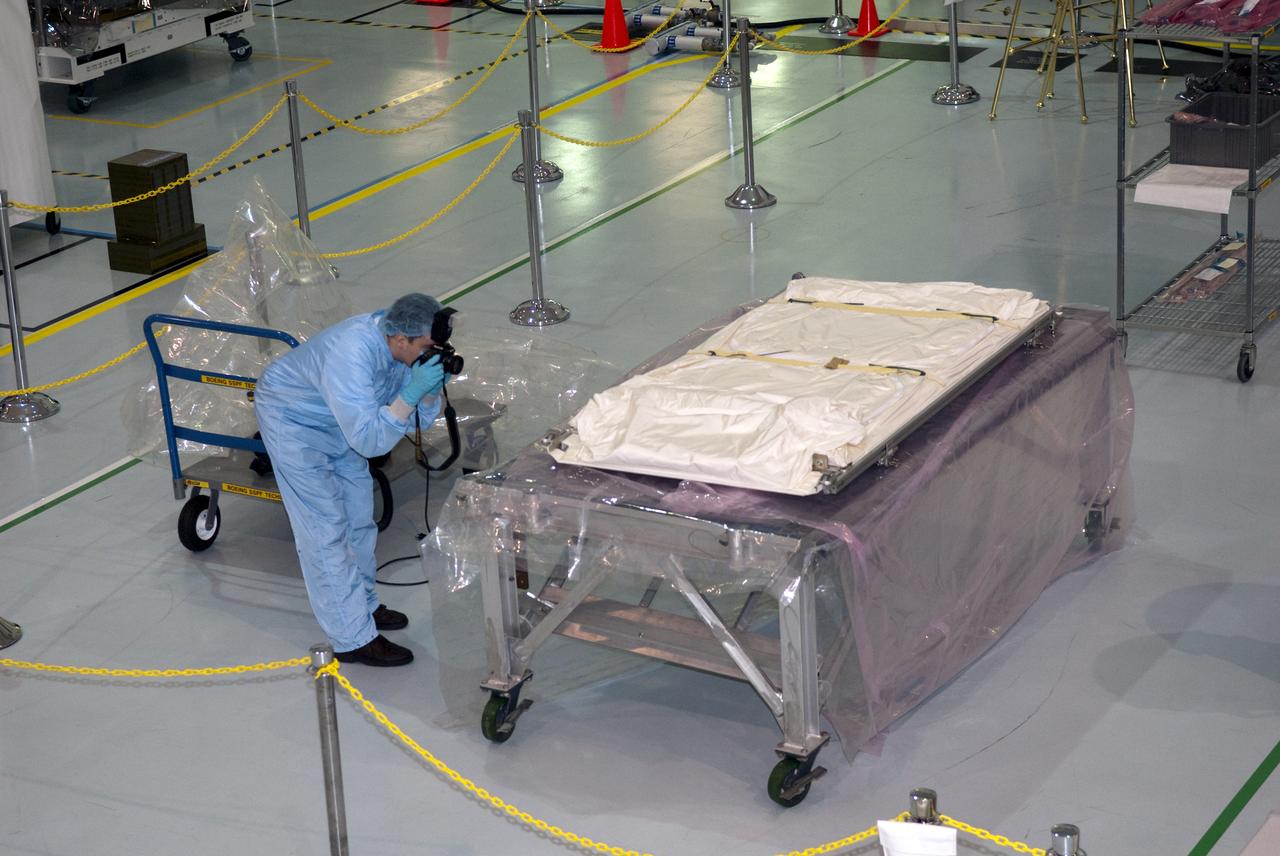
STS-131 MPLM LEONARDO FM-1 O-G RACK INSTALLATION
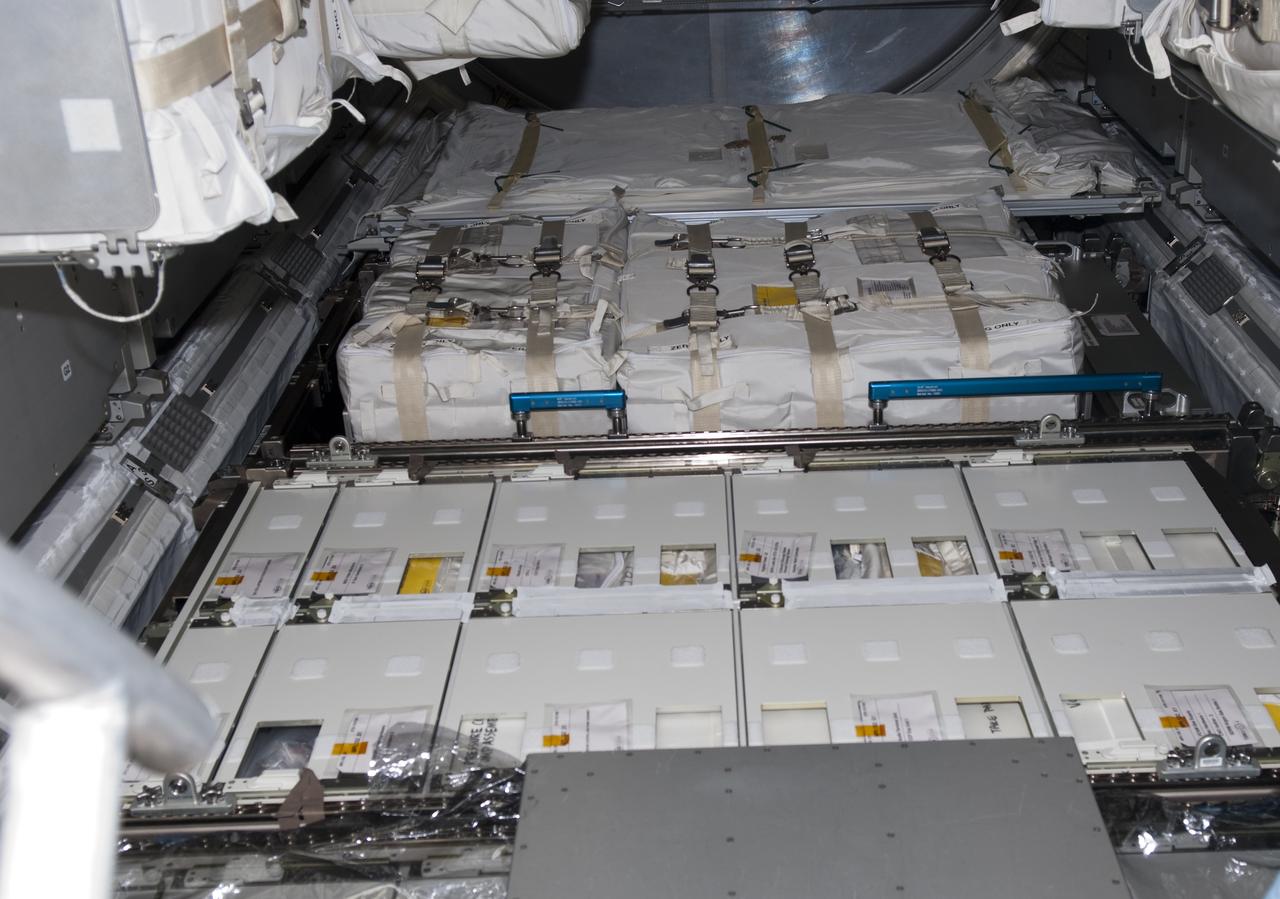
STS-131 MPLM LEONARDO FM-1 O-G RACK INSTALLATION
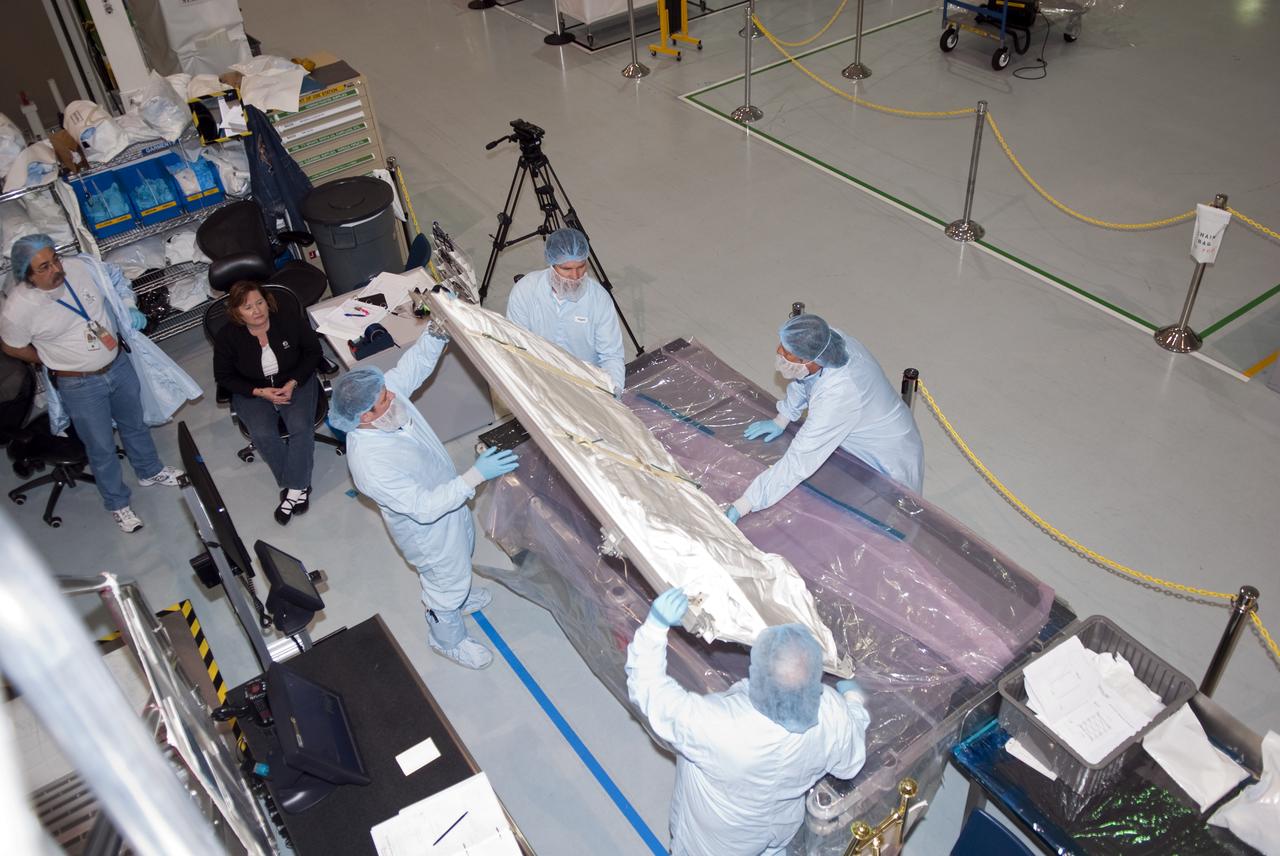
STS-131 MPLM LEONARDO FM-1 O-G RACK INSTALLATION
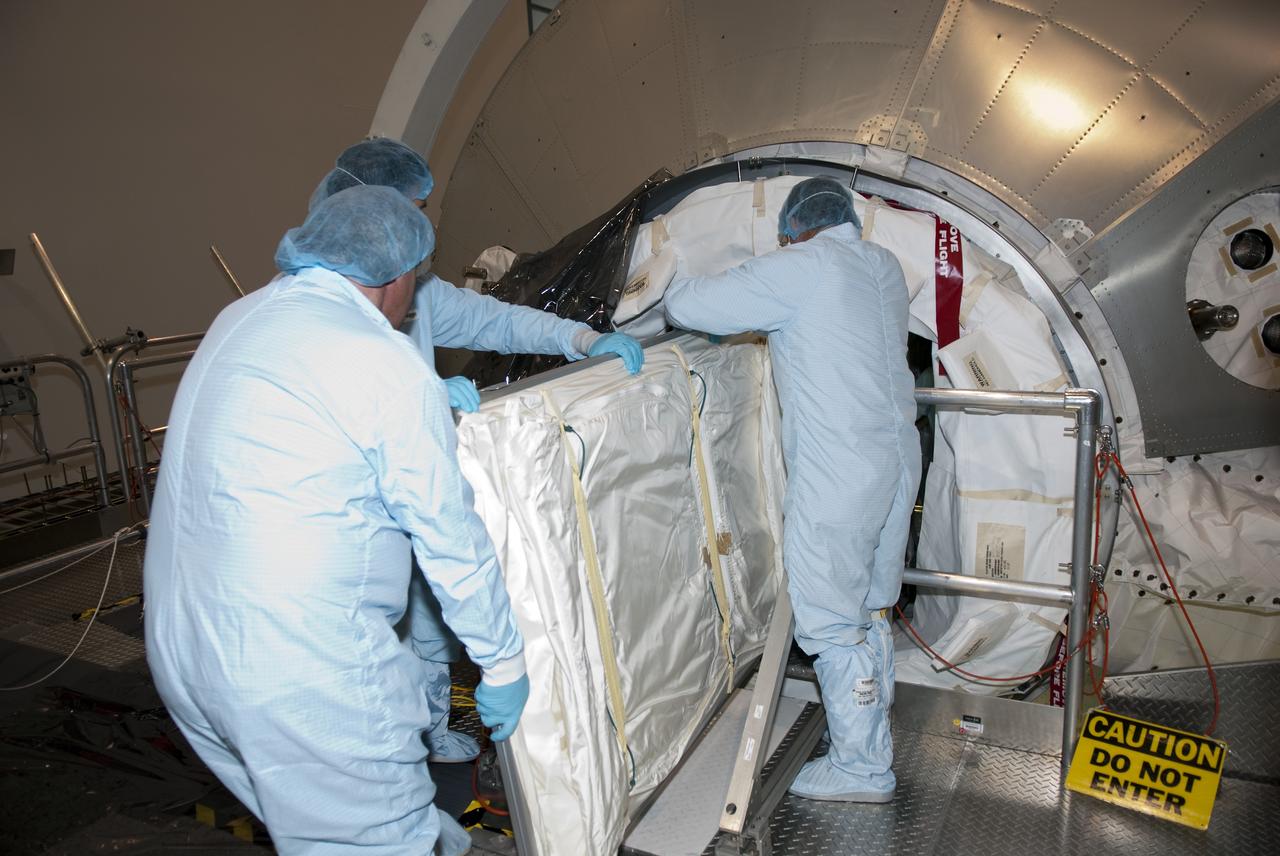
STS-131 MPLM LEONARDO FM-1 O-G RACK INSTALLATION
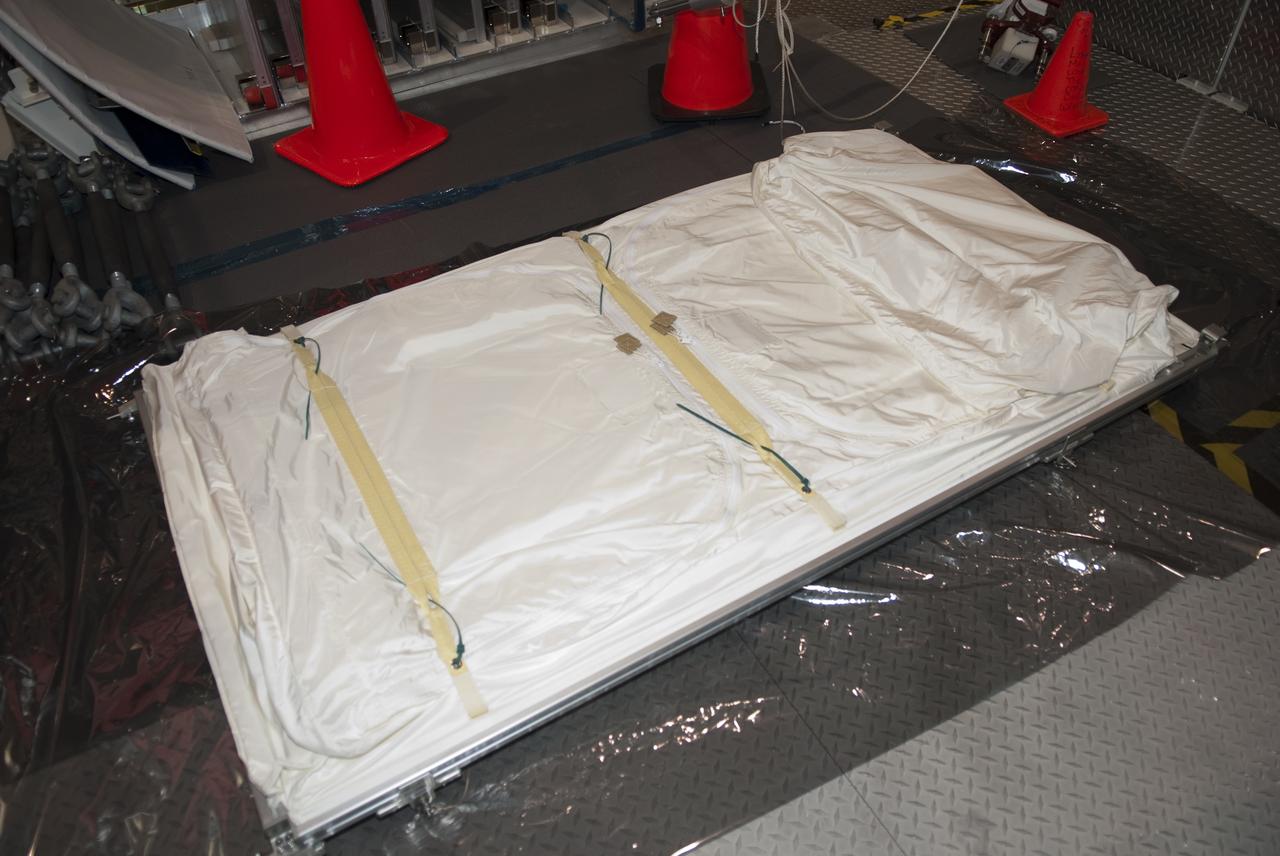
STS-131 MPLM LEONARDO FM-1 O-G RACK INSTALLATION
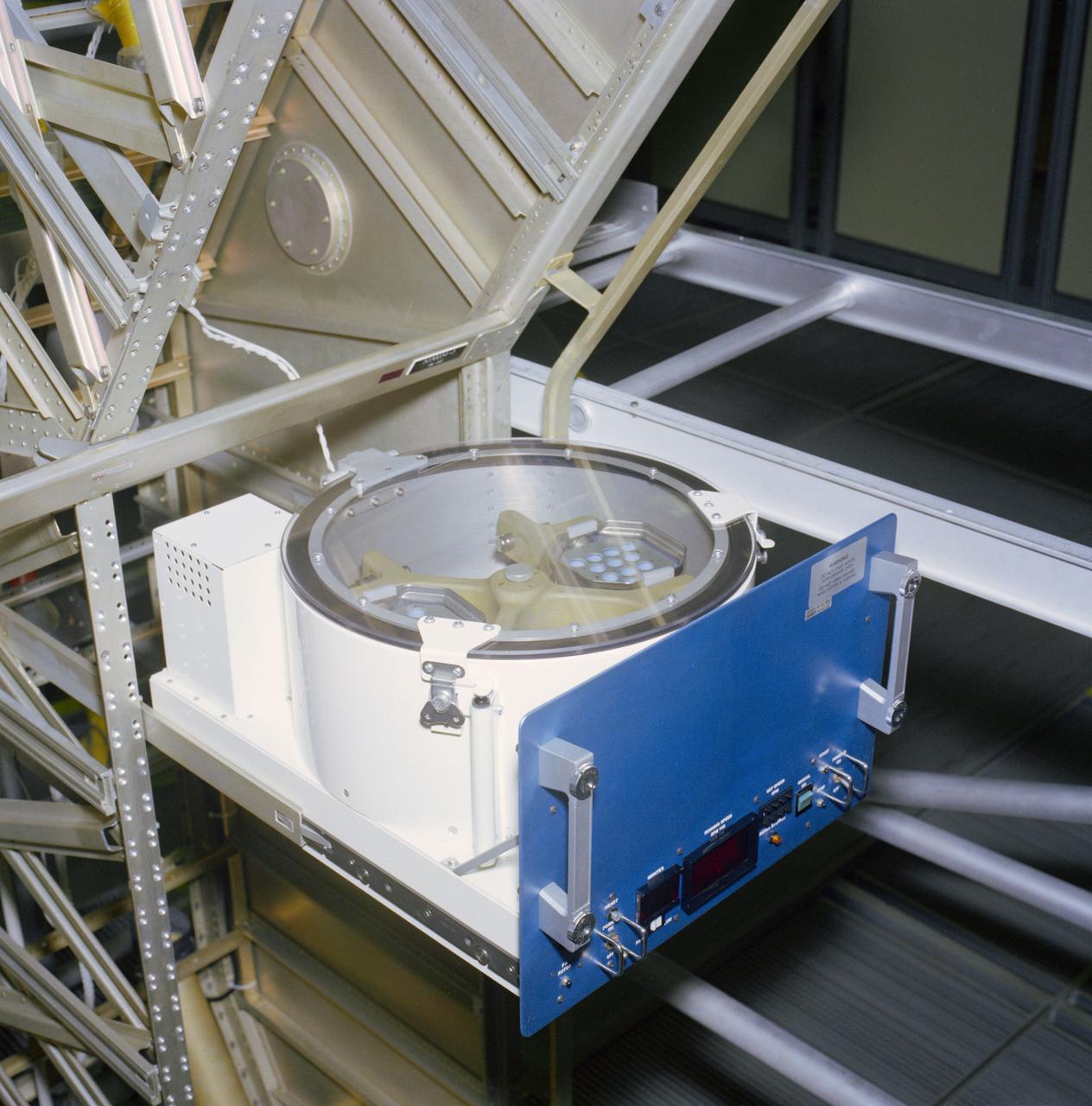
S81-25565 (Feb 1981) --- Expected to be a busy item of flight hardware on the Spacelab Life Sciences (SLS-1) mission is this low-gravity centrifuge. To be flown onboard Columbia for STS-40, the centrifuge is able to simulate several gravity levels (0.5 g, 1.0 g, 1.5 g. and 2.0 g). Blood samples, taken during the flight, will be placed in the centrifuge, fixed for post flight analysis and transferred to a freezer.

Views of STS-51E PS Patrick Baudry during Zero-G Training Flights. 1. STS-51E - CREW TRAINING
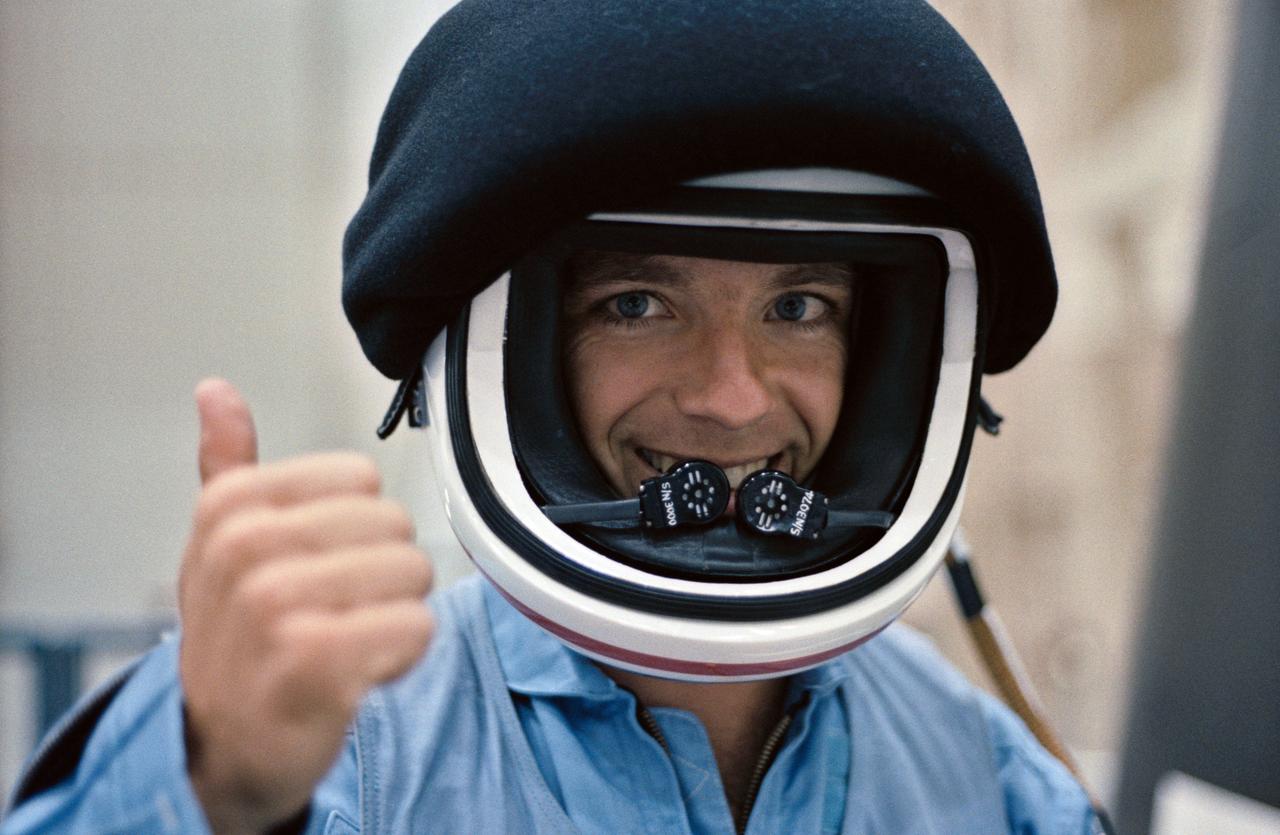
Views of the STS-41G Crew, Bldg. 9A, 1-G Training Facility. JSC, HOUSTON, TX
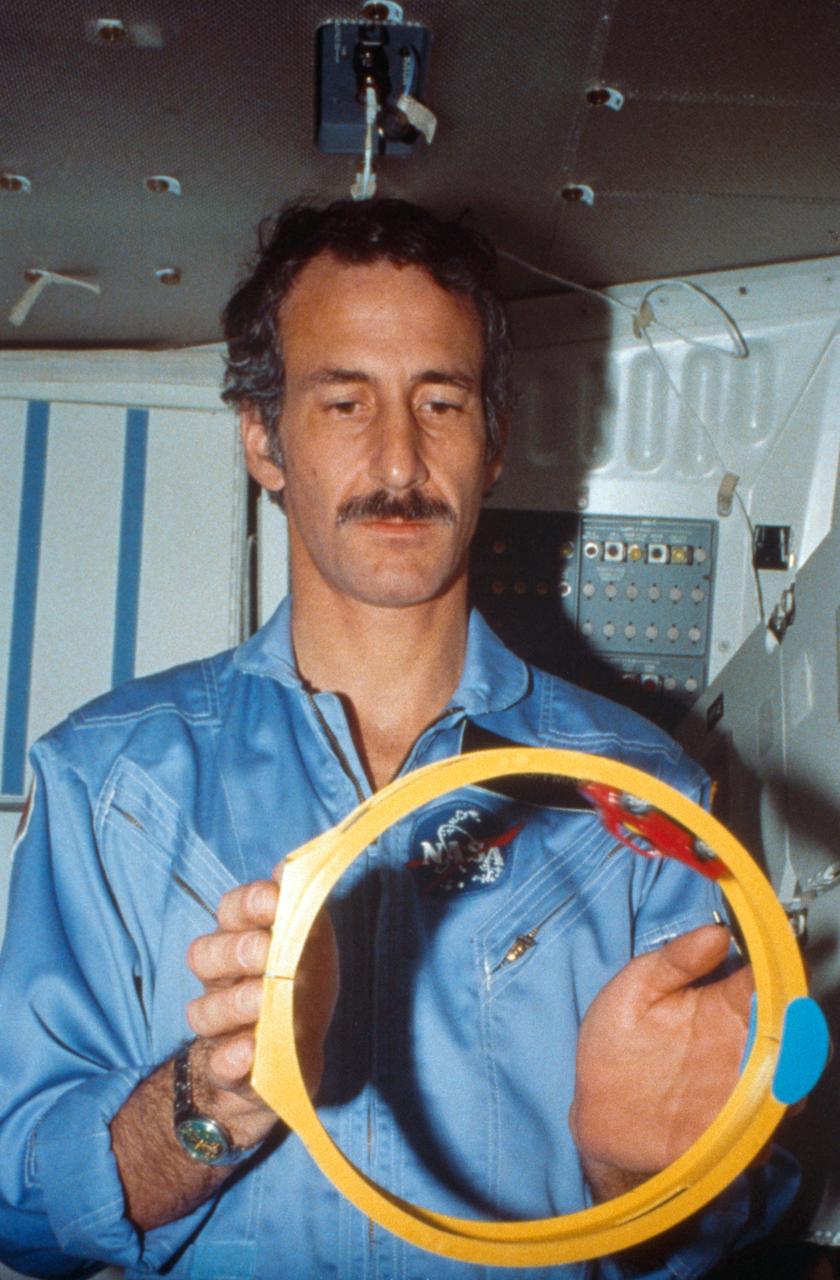
S85-26476 (1 February 1985) --- Astronaut Jeffrey A. Hoffman, 51-D mission specialist, goes through a one-G simulation of operation of a friction-powered toy car in NASA's one-G Shuttle trainer at the Johnson Space Center.
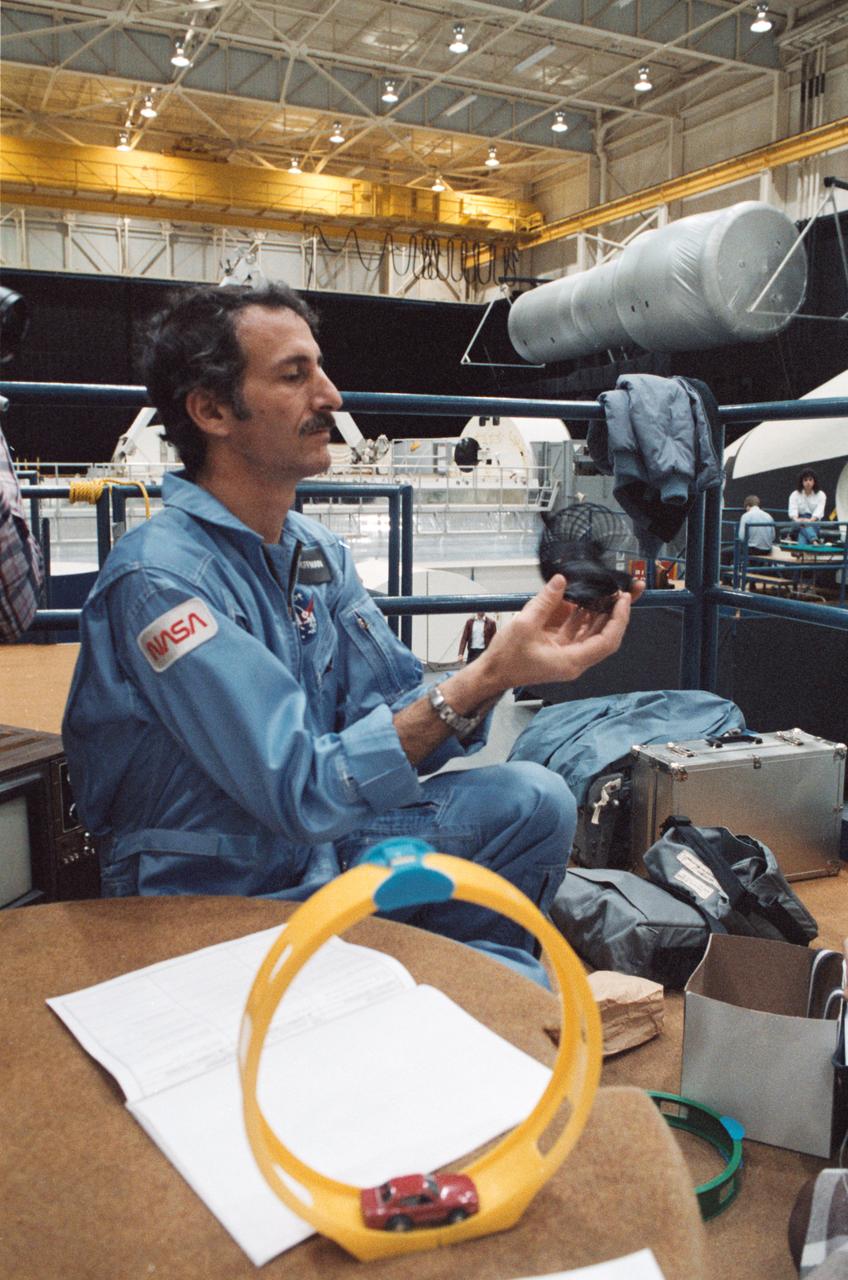
STS-51E Crewman Jeff Hoffman in 1-G Trainer with space experiment toys and camera, 01/17/1985, . 1. STS-51E - EXPERIMENTS (TOYS) JSC, HOUSTON, TX Also available in 35 B&W
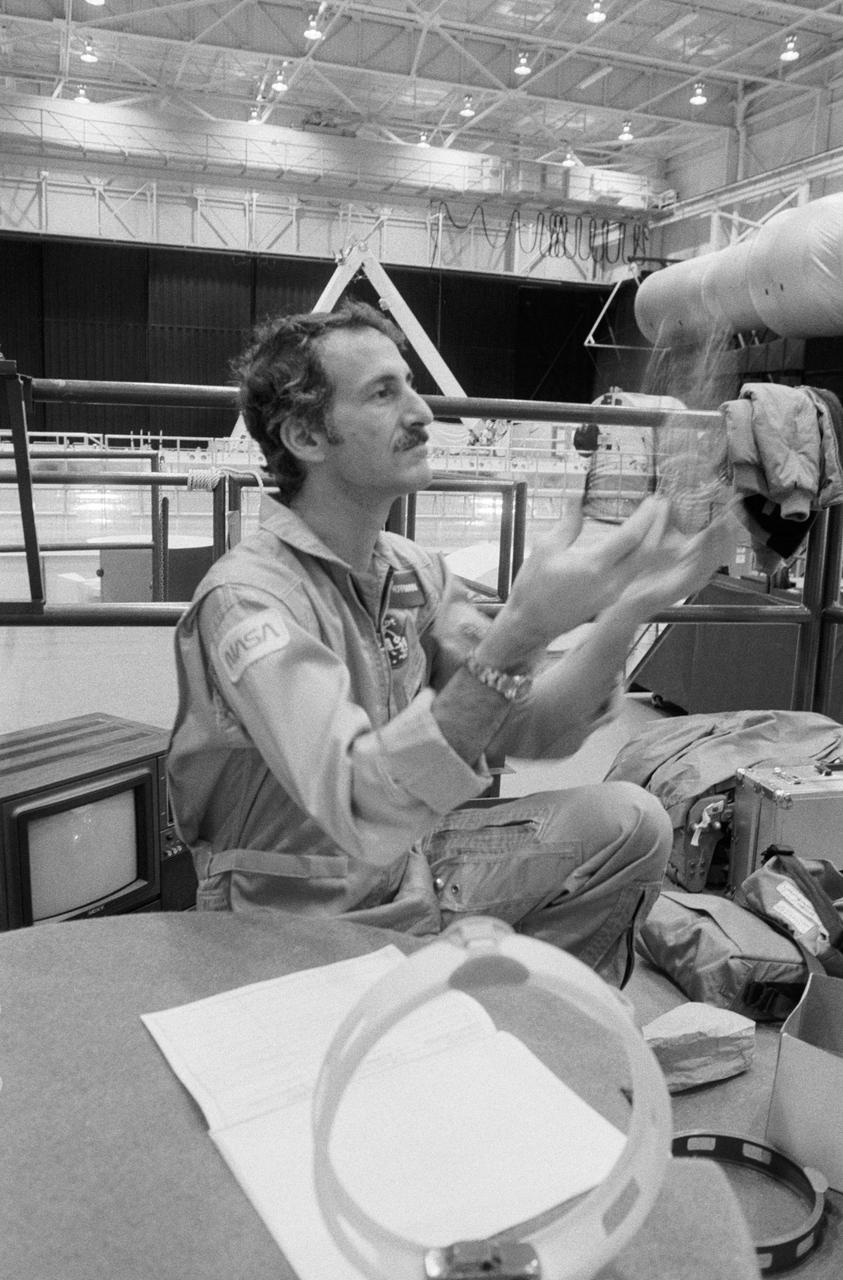
STS-51E Crewman Jeff Hoffman in 1-G Trainer with Space Experiment toys and camera, 01/17/1985, . 1. STS-51E - EXPERIMENTS (TOYS) JSC, HOUSTON, TX Also available in 35 B&W
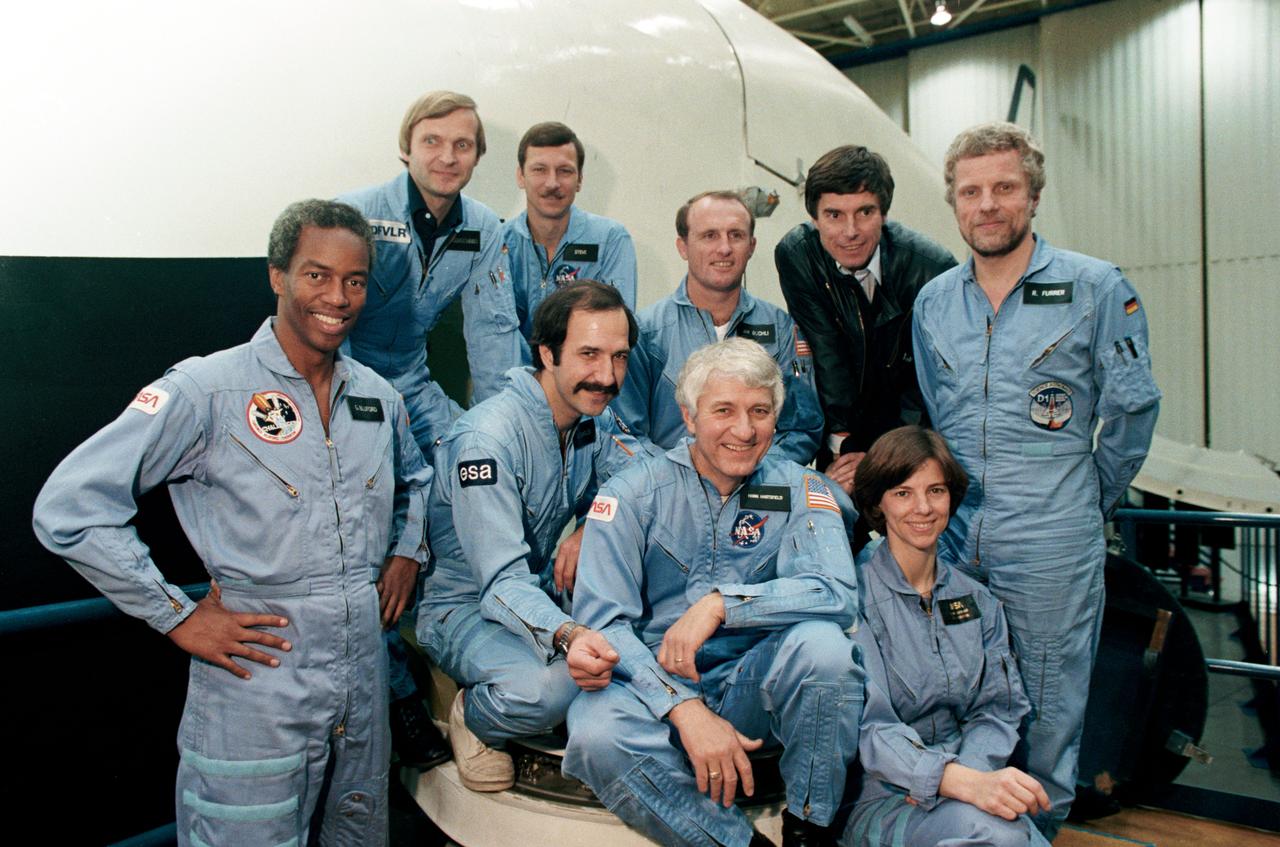
Unofficial group photo of the STS-61A Crew and Ulf Merbold, Bldg. 9A; and, 1-G Trainer Cockpit. JSC, HOUSTON, TX Also available in 4x5 BW
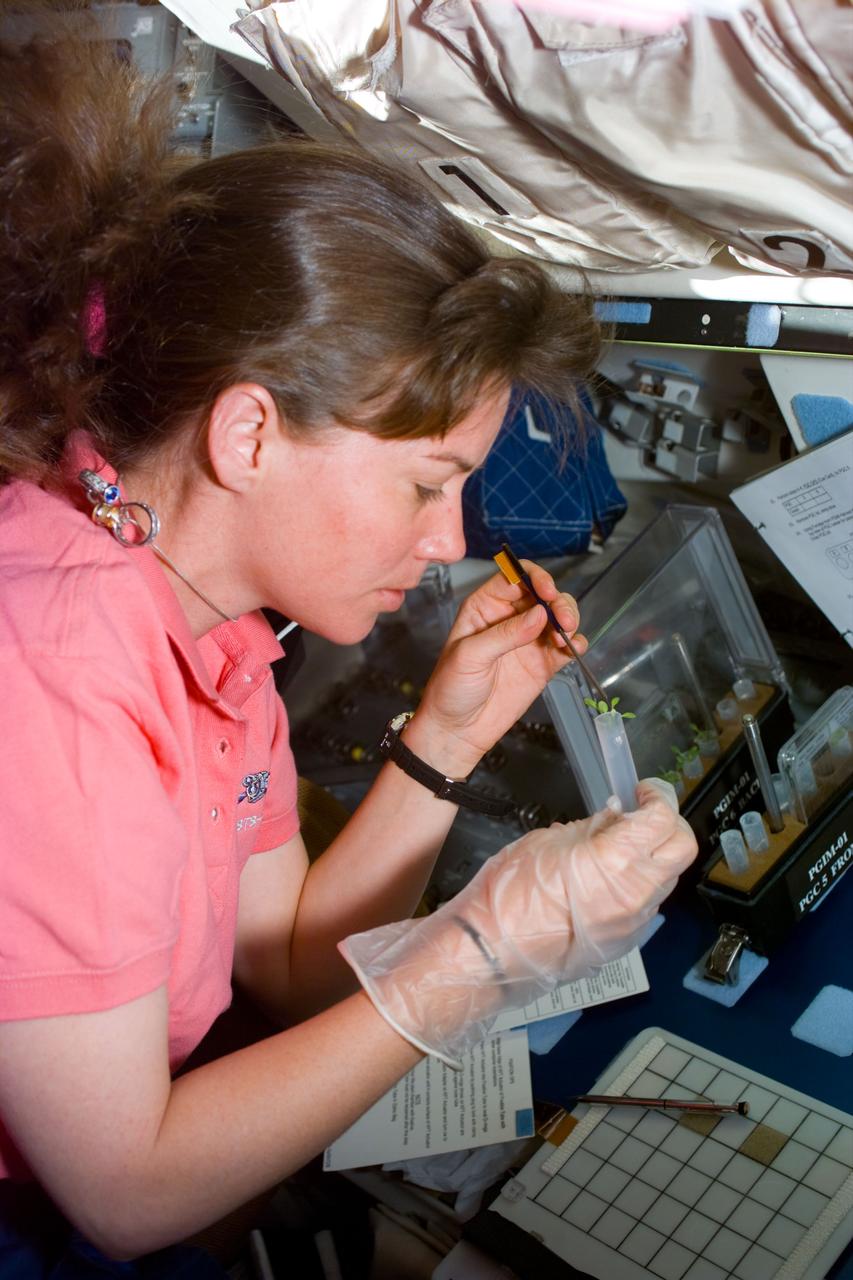
S93-E-5026 (23 July 1999) --- Astronaut Catherine G. (Cady) Coleman works with a small plant seedling on Columbia's flight deck. The photo was recorded with an electronic still camera (ESC) on Flight Day 1.
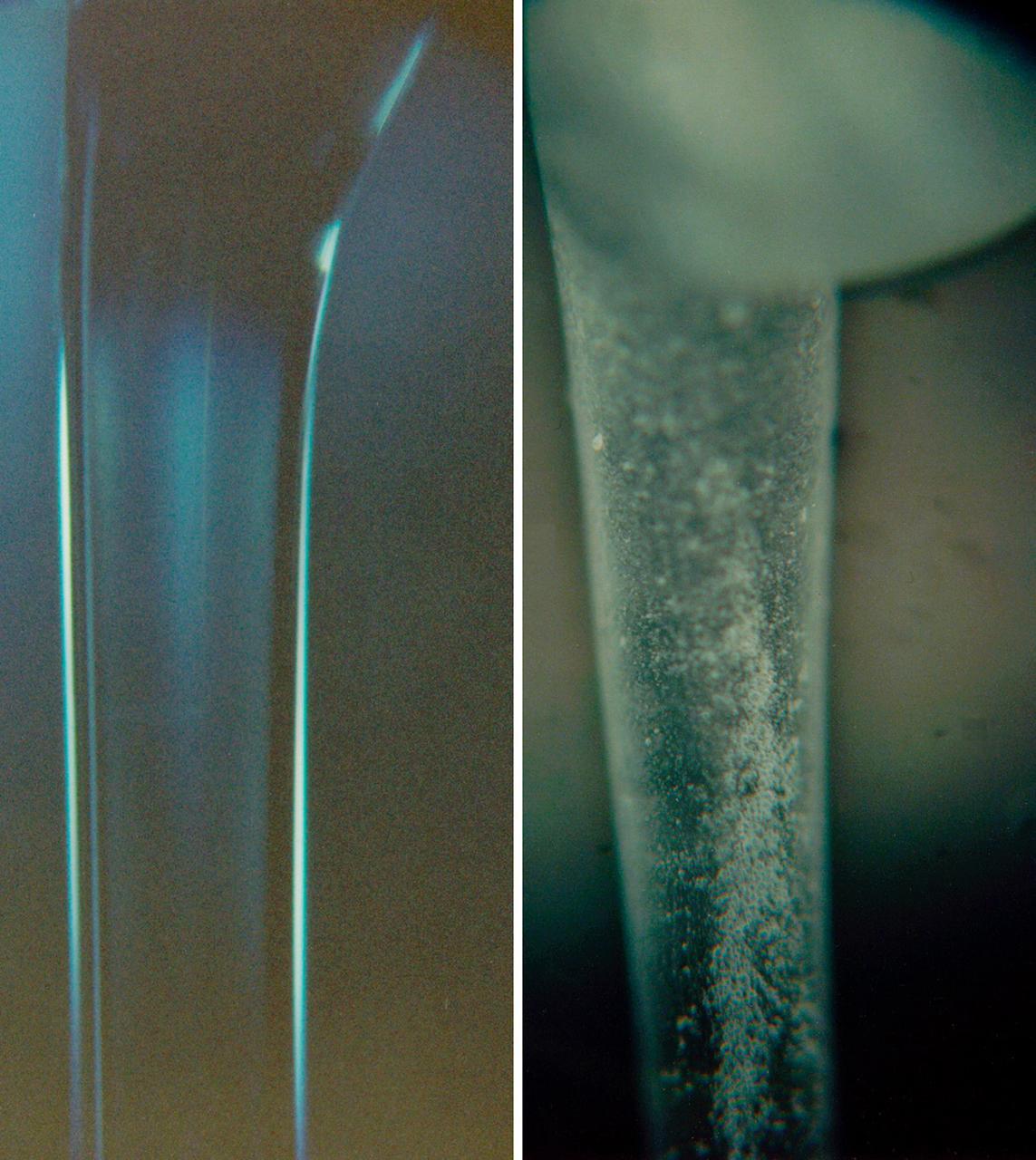
Sections of ZBLAN fibers pulled in a conventional 1-g process (right) and in experiments aboard NASA's KC-135 low-gravity aircraft (left). The rough surface of the 1-g fiber indicates surface defects that would scatter an optical signal and greatly degrade its quality. ZBLAN is part of the family of heavy-metal fluoride glasses (fluorine combined zirconium, barium, lanthanum, aluminum, and sodium). NASA is conducting research on pulling ZBLAN fibers in the low-g environment of space to prevent crystallization that limits ZBLAN's usefulness in optical fiber-based communications. ZBLAN is a heavy-metal fluoride glass that shows exceptional promise for high-throughput communications with infrared lasers. Photo credit: NASA/Marshall Space Flight Center
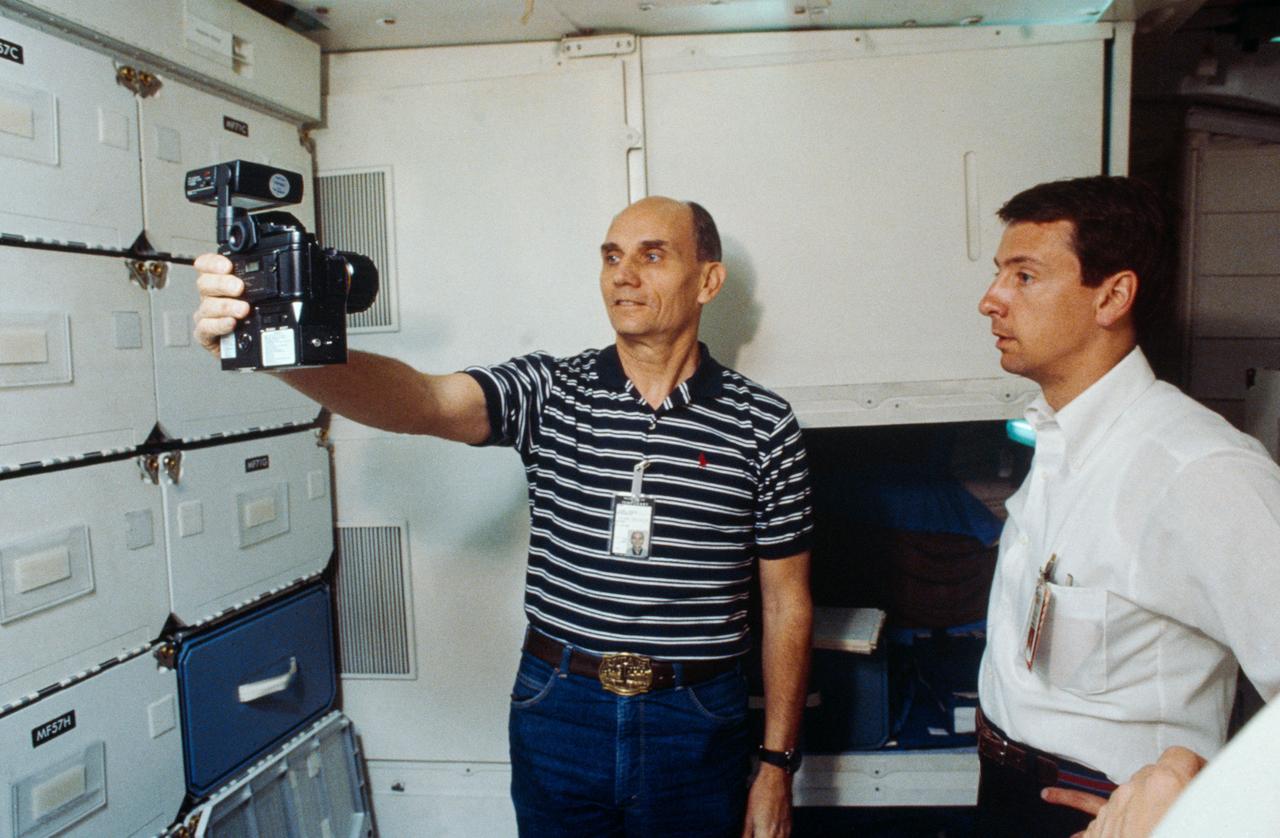
Views of Sen. Jake Garn and Charles Walker during STS-51B, Medical Experiment Training, 1-G Trainer, Bldg. 9A. 1. Senator Jake Garn - STS-51B Training 2. Charles Walker - STS-51B Training JSC, Houston, TX
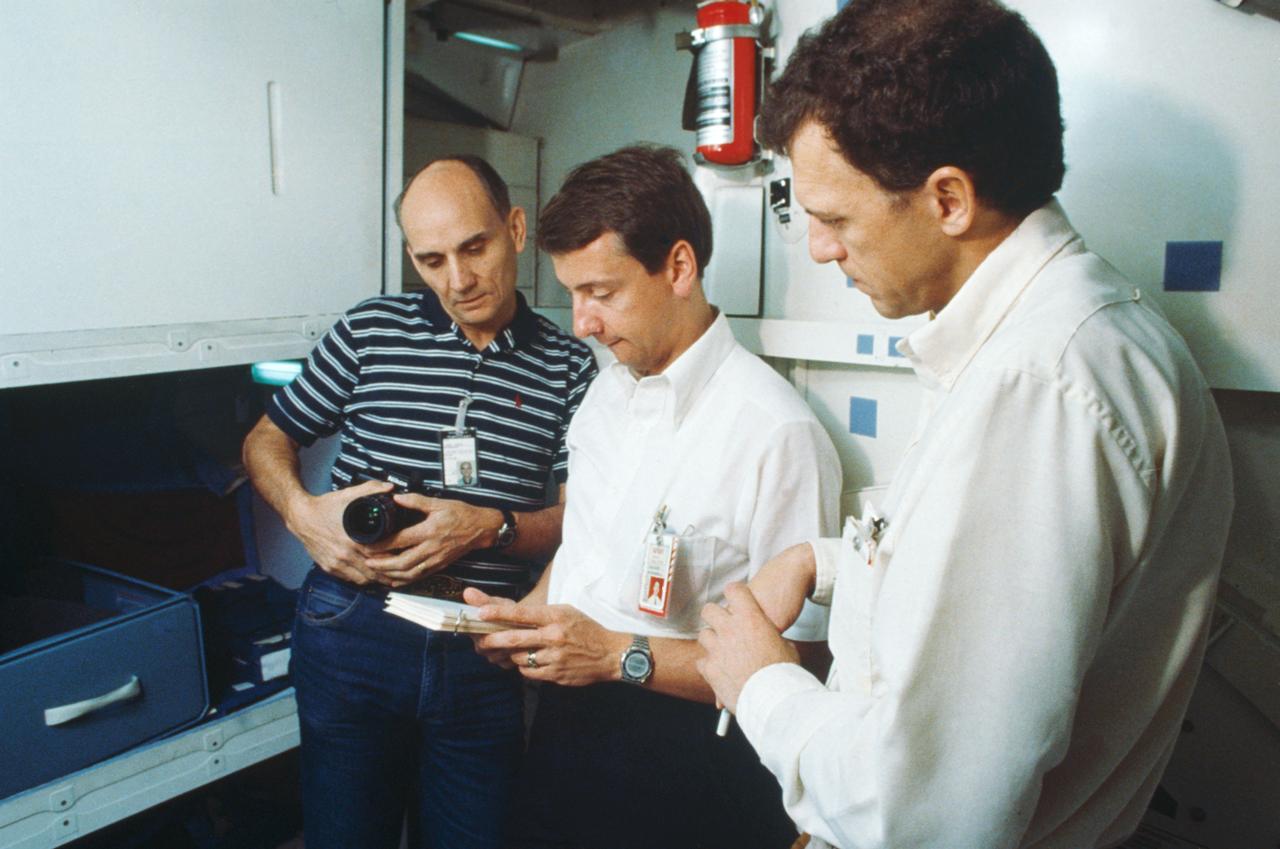
Views of Sen. Jake Garn and Charles Walker during STS-51B, Medical Experiment Training, 1-G Trainer, Bldg. 9A. 1. Senator Jake Garn - STS-51B Training 2. Charles Walker - STS-51B Training JSC, Houston, TX

Views of Sen. Jake Garn and Charles Walker during STS-51B, Medical Experiment Training, 1-G Trainer, Bldg. 9A. 1. Senator Jake Garn - STS-51B Training 2. Charles Walker - STS-51B Training JSC, Houston, TX
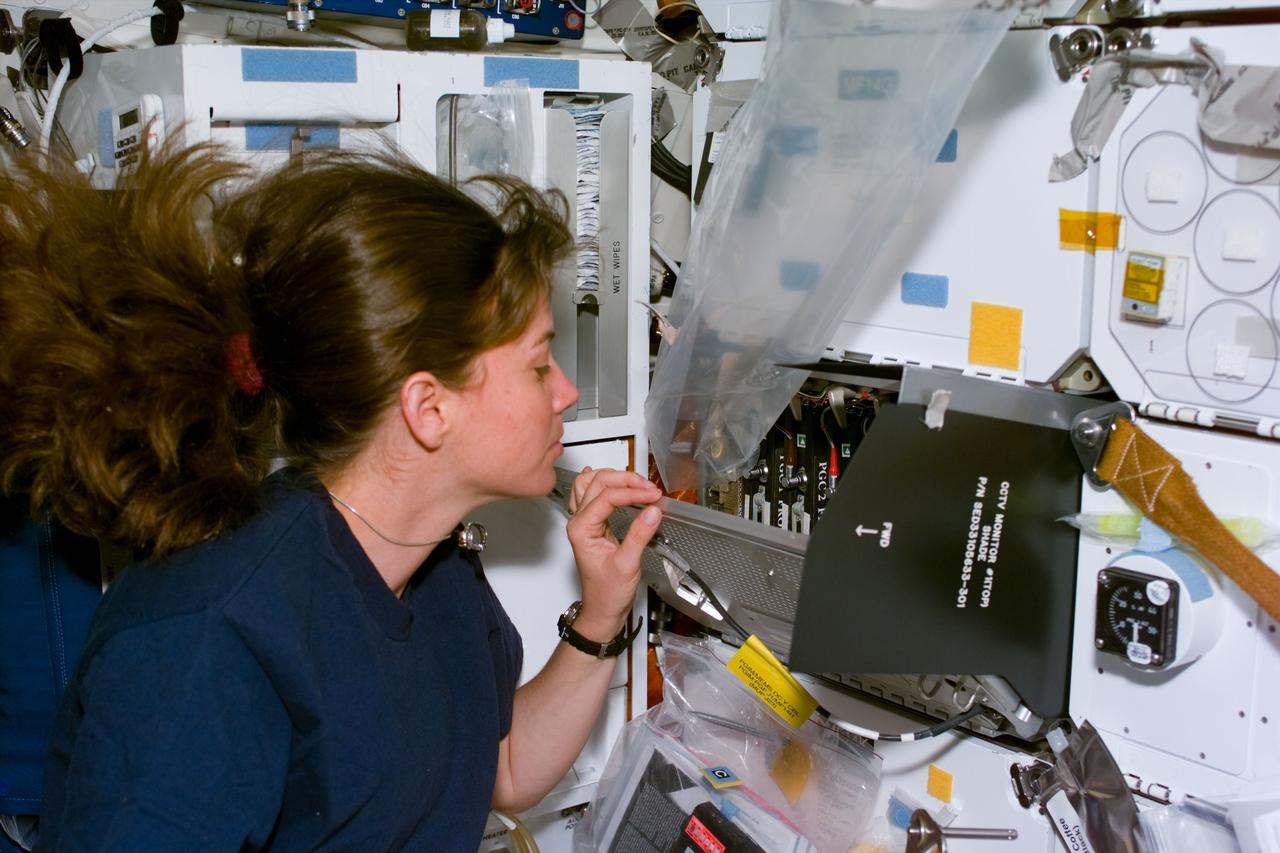
S93-E-5043 (24 July 1999) --- Astronaut Catherine G. (Cady) Coleman, mission specialist, checks the support system for the Plant Growth Investigations in Microgravity 1 (PGIM-1) experiment on Columbia's middeck. The photo was recorded with an electronic still camera (ESC) on Flight Day 2.
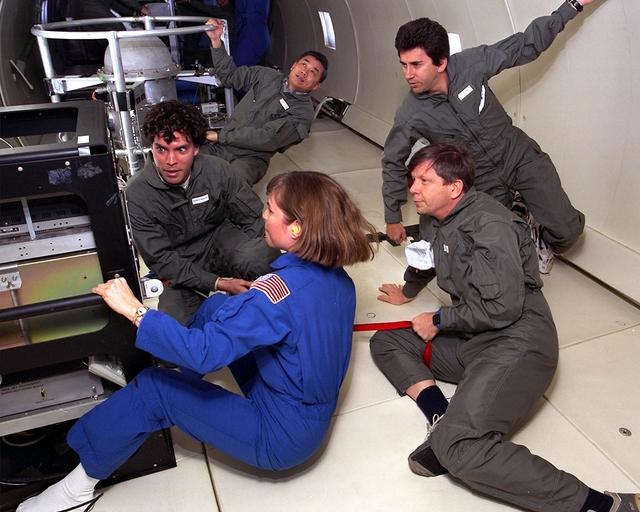
Mission specialist Janice Voss (center, foreground) trains with payload specialists Paul Rorney (right, background) and Roger Crouch (right, foreground) for the Materials Sciences Lab-1 (MSL-1) mission flown in 1997. They are aboard the NASA KC-135 low-g training aircraft.
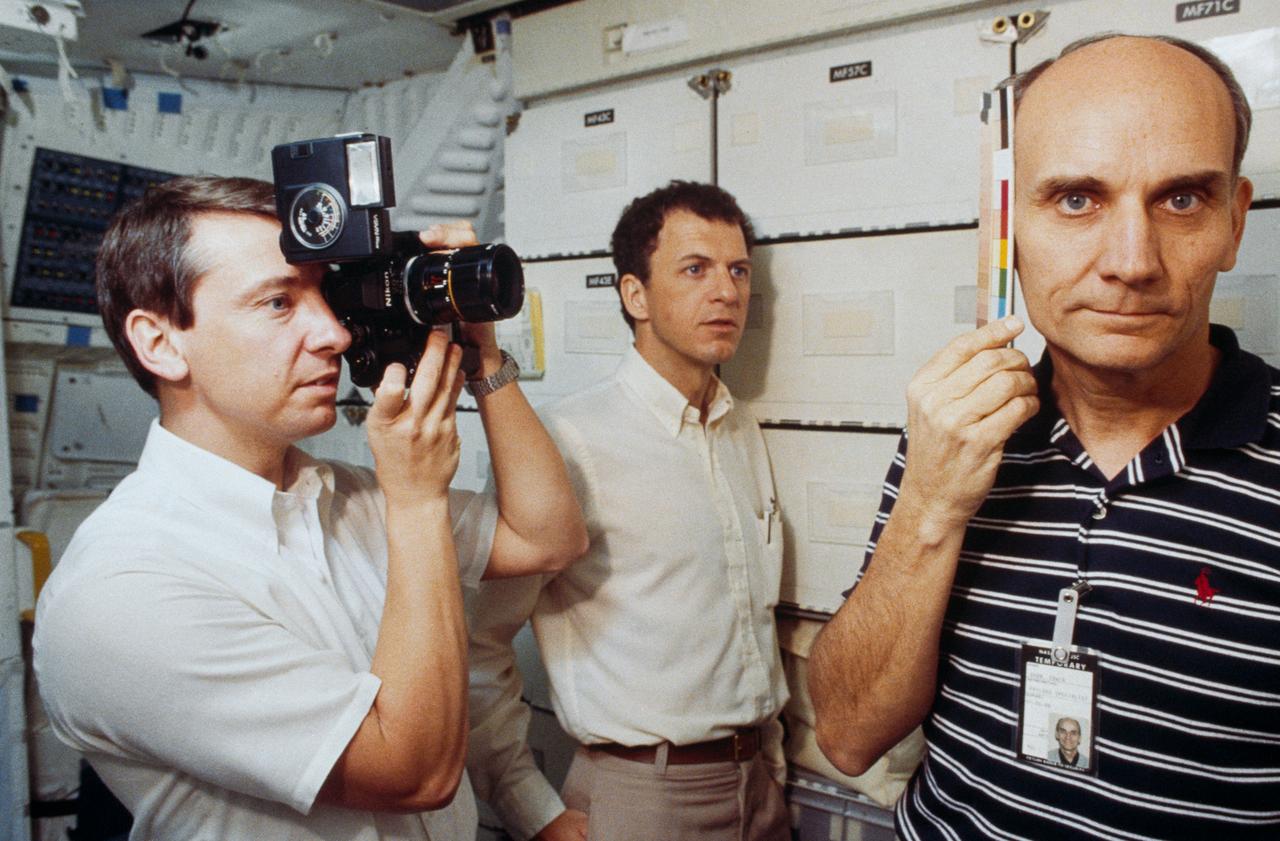
Views of Sen. Jake Garn and Charles Walker during STS-51B, Medical Experiment Training, 1-G Trainer, Bldg. 9A. 1. Senator Jake Garn - STS-51B Training 2. Charles Walker - STS-51B Training JSC, Houston, TX
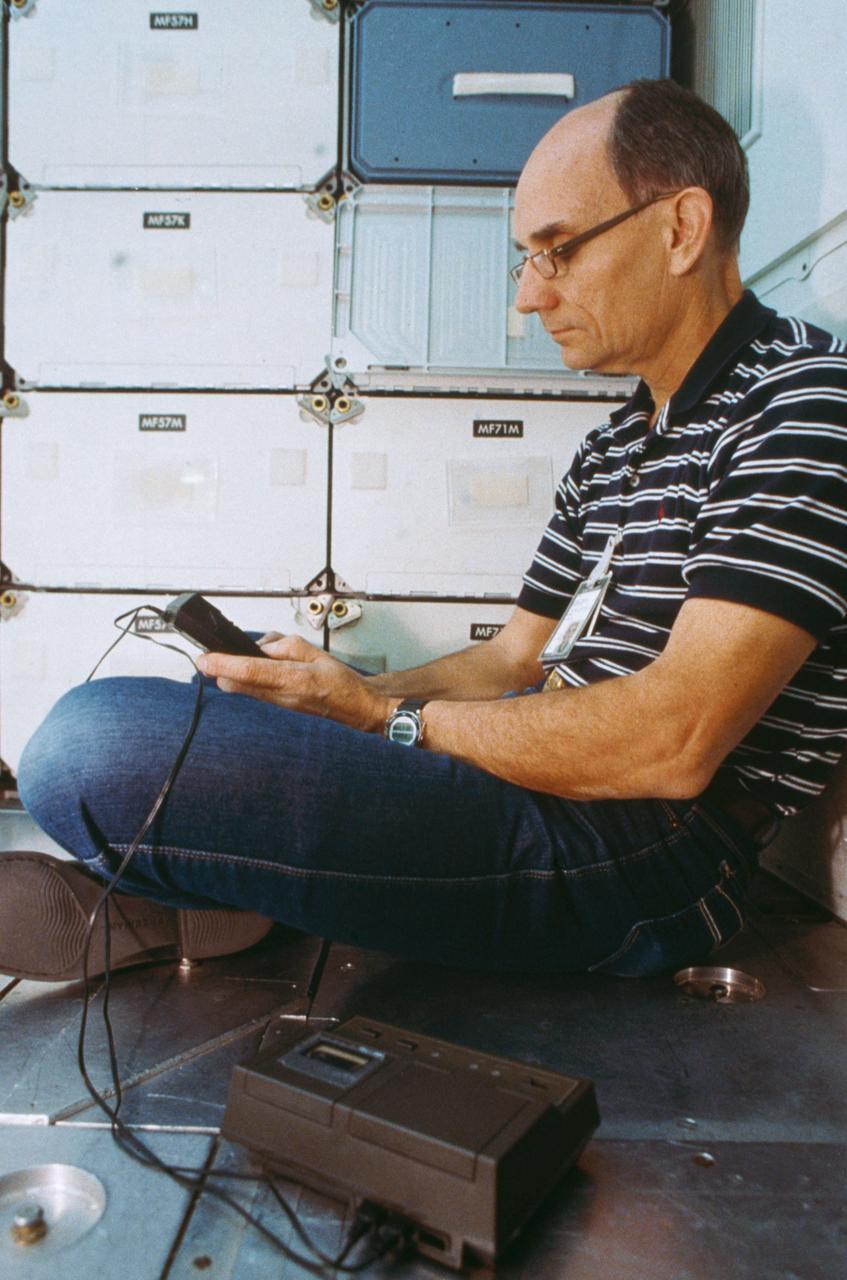
Views of Sen. Jake Garn and Charles Walker during STS-51B, Medical Experiment Training, 1-G Trainer, Bldg. 9A. 1. Senator Jake Garn - STS-51B Training 2. Charles Walker - STS-51B Training JSC, Houston, TX
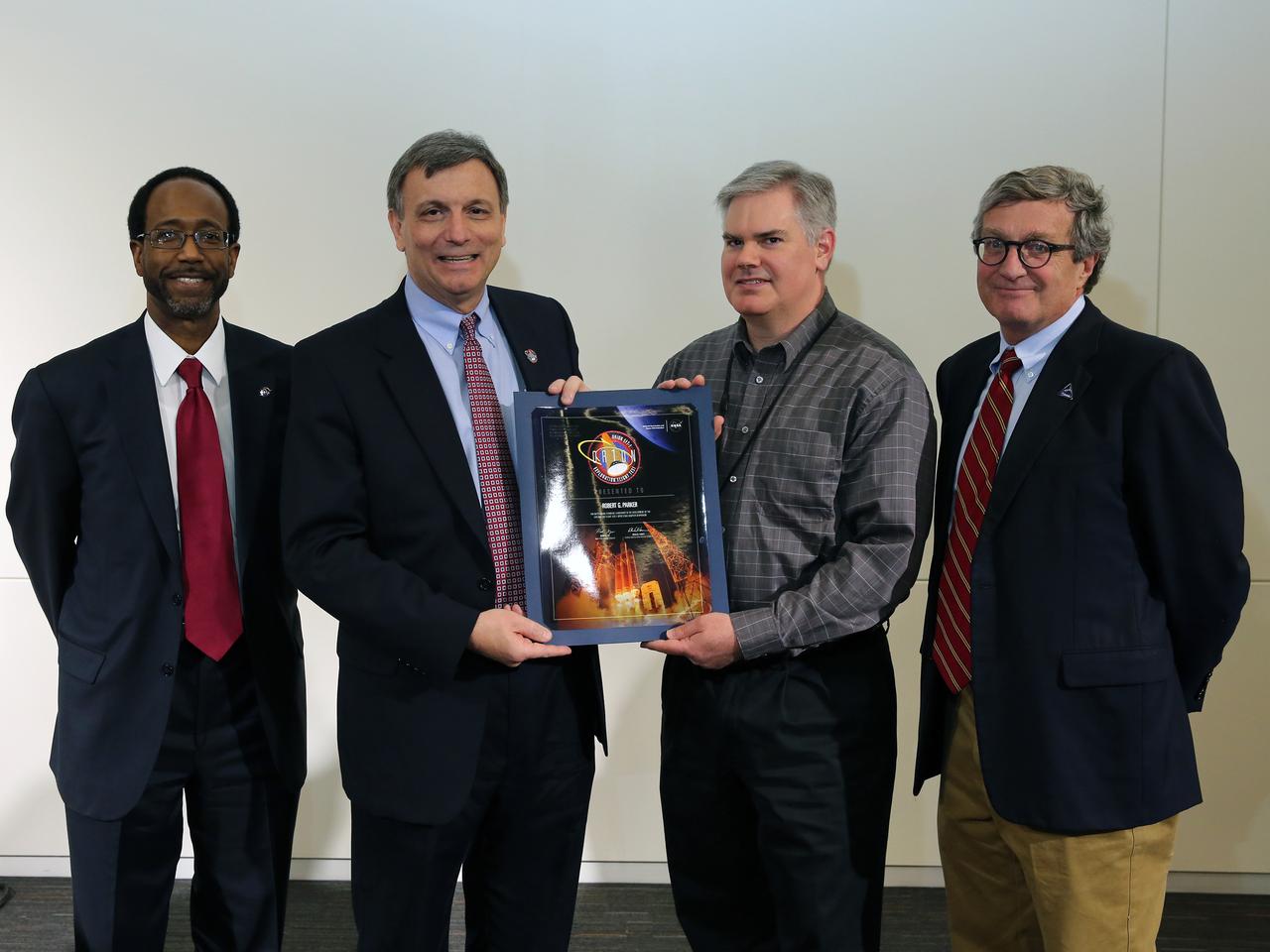
NASA and Lockheed Martin Orion leadership visit Langley Research Center in Hampton, VA on March 19, 2015 to celebrate the center's contribution to Orion's Exploration Flight Test-1 (EFT-1). Award was presented to Robert G. Parker. Part of Batch image transfer from Flickr.
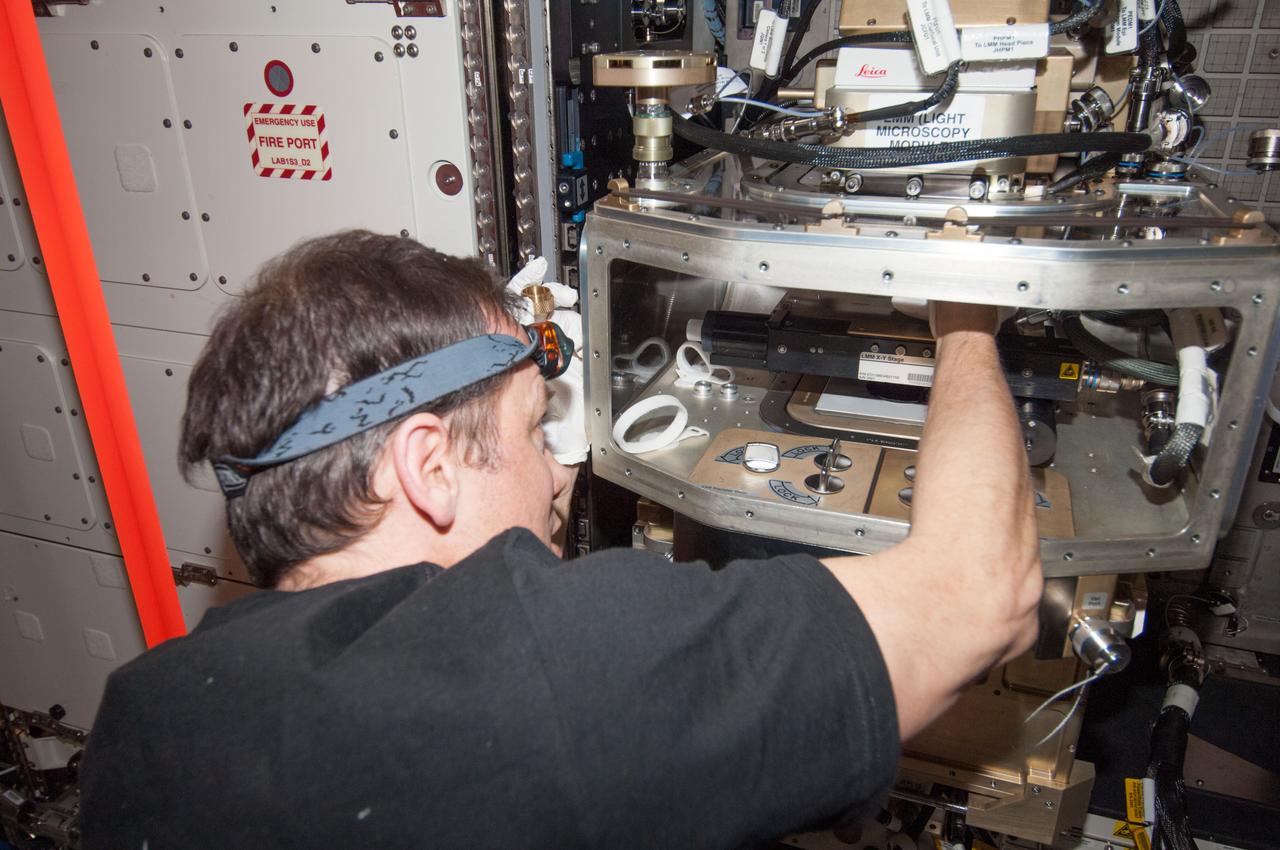
ISS034-E-051798 (21 Feb. 2013) --- NASA astronaut Tom Marshburn, Expedition 34 flight engineer, configures one of the experiment racks in the U.S. lab called Destiny aboard the International Space Station in Earth orbit. ACE produces microscopic images of materials which contain small colloidal particles, and it examines flow characteristics and the evolution and ordering effects within these colloidal materials in 1-G and micro-G environments.
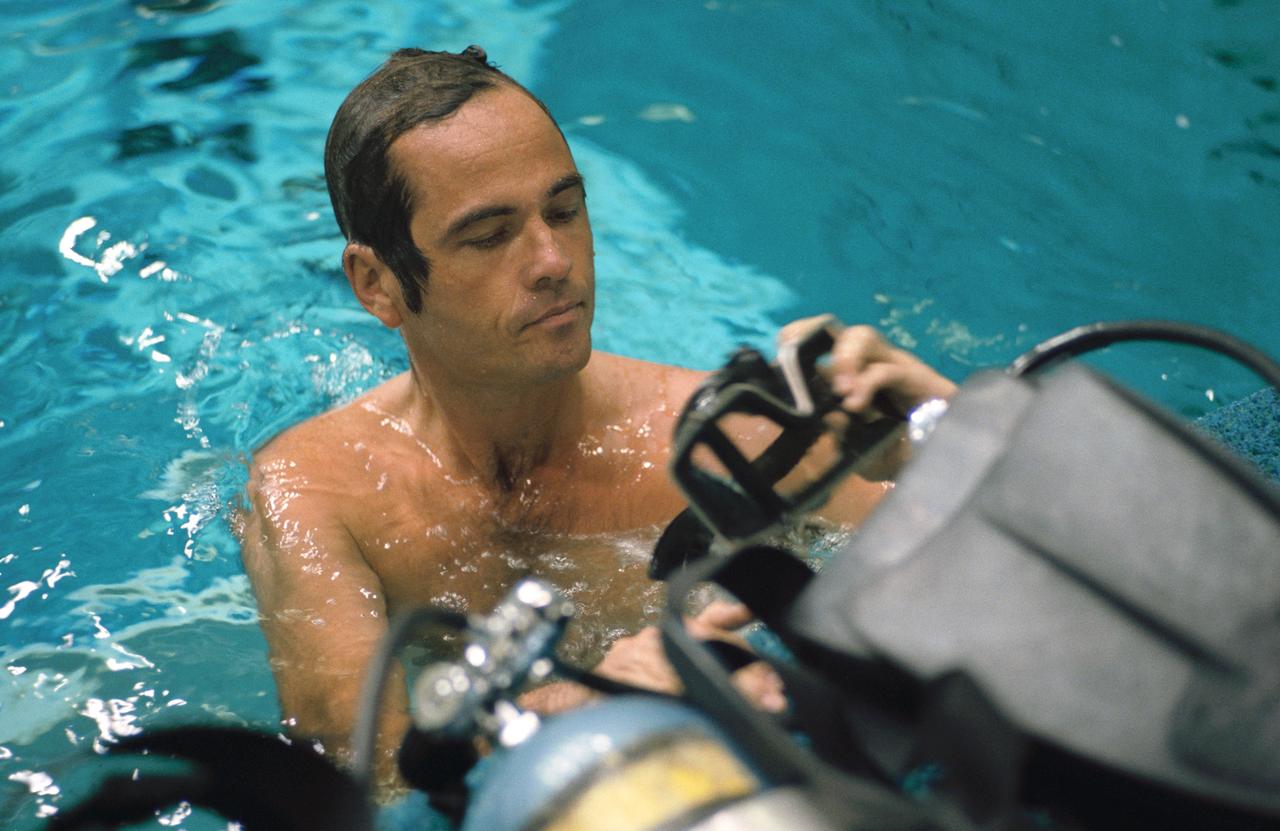
S84-36956 (1 July 1984) --- Astronaut Robert L. Crippen, 41-G crew commander, prepares his SCUBA mask prior to submerging into the weightless environment training facility's 25 ft. deep pool to observe a simulation exercise for two fellow 41-G crewmembers assigned to an extravehicular activity (EVA) in space. Not pictured are Astronauts Kathryn D. Sullivan and David C. Leestma, mission specialists who will perform the EVA during the eight-day mission scheduled for October of this year.
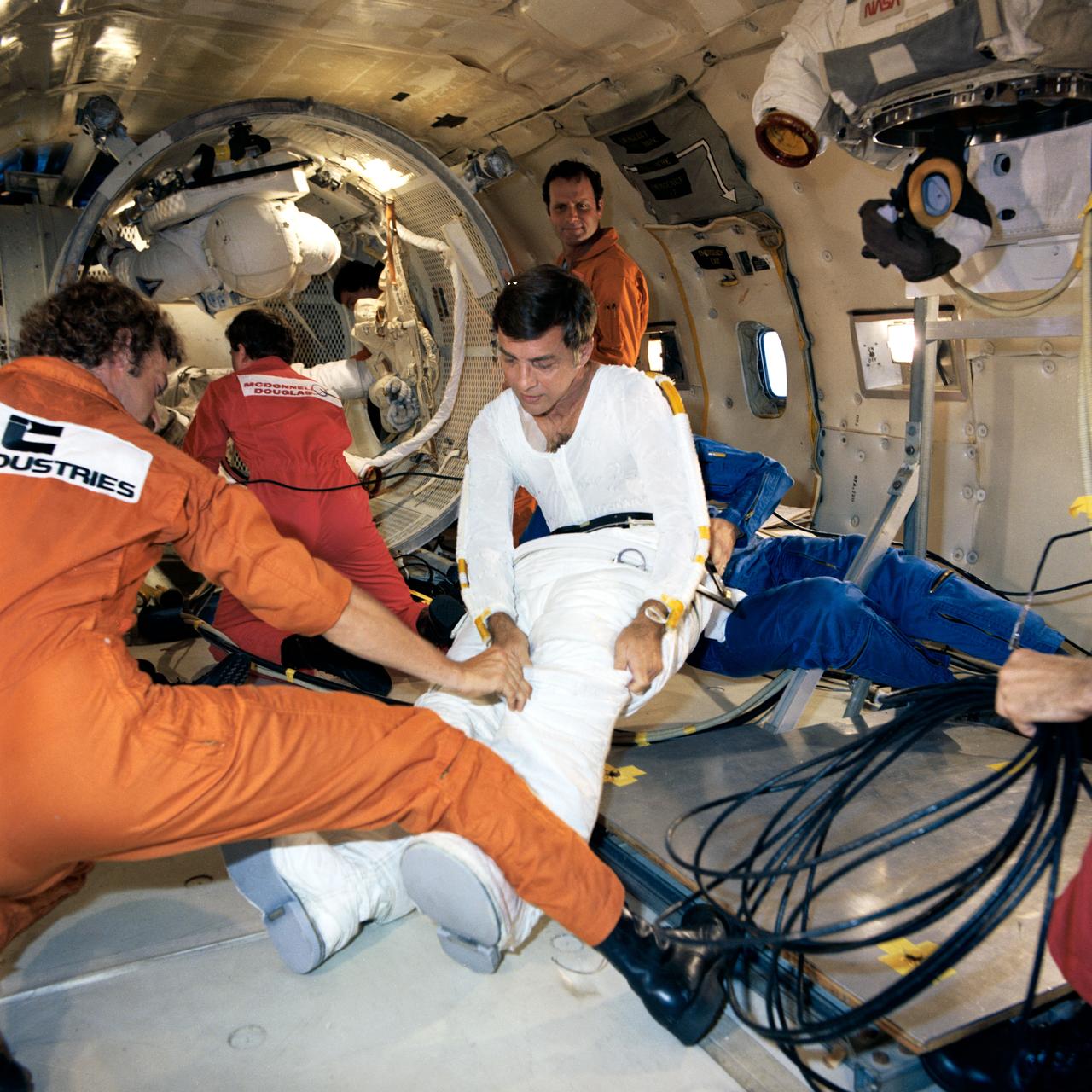
Spacesuit Donning and Doffing in Zero-G Training for Don Peterson of the STS-6 Crew with Astronaut Jerry Ross assisting; and, apparatus for testing the JSC Mechanically-Induced Settling Technology (MIST) Experiment. The training is being held aboard the KC-135 to simulate weightlessness. He is being assisted to don the lower torso of the Extravehicular Mobility Unit (EMU) by an ILC Technician. 1. ASTRONAUT ROSS, JERRY L. - ZERO-G SUITING 2. SHUTTLE - EXPERIMENTS (MIST)
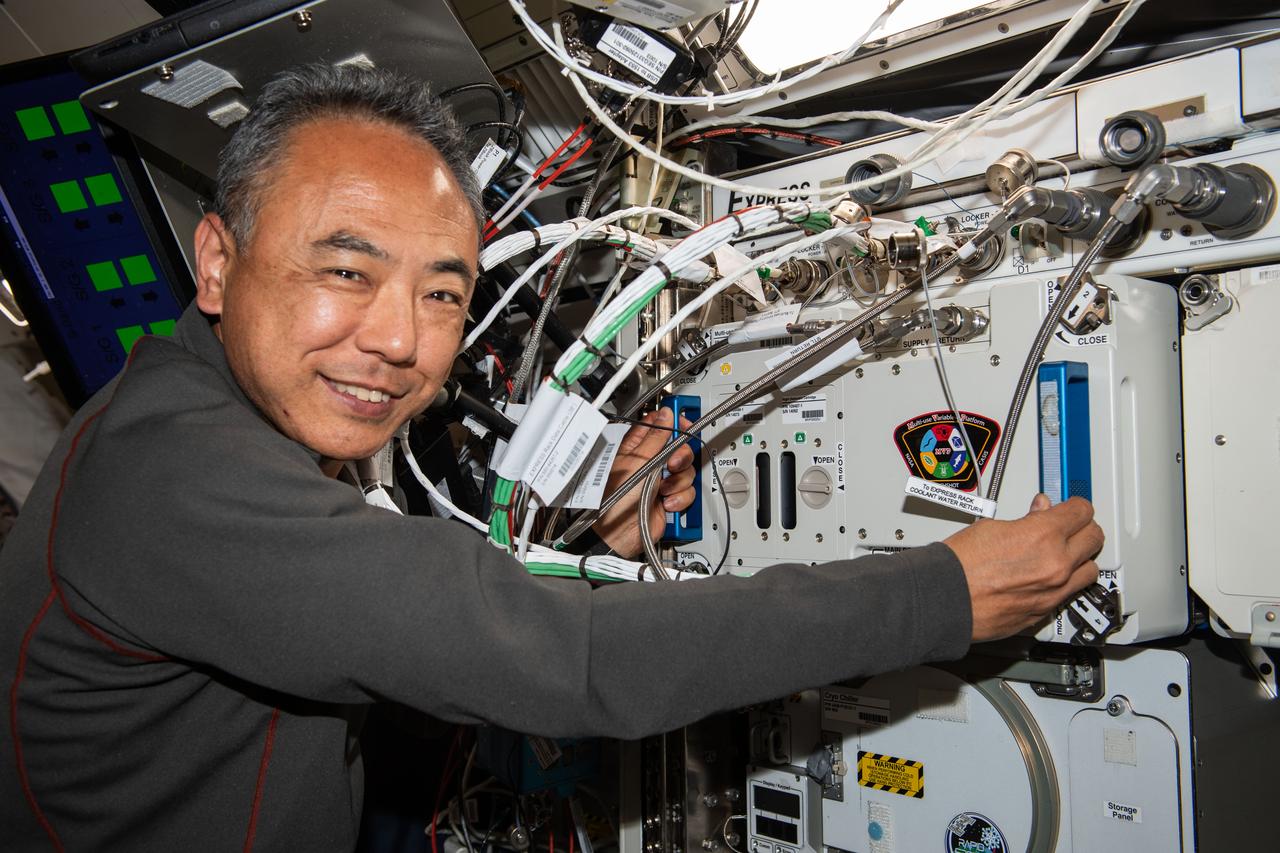
iss069e085467 (Sept. 1, 2023) --- Expedition 69 Flight Engineer and JAXA (Japan Aerospace Exploration Agency) astronaut Satoshi Furukawa removes experiment hardware from inside the Multi-use Variable-g Platform, a biology research device that can generate artificial gravity inside the International Space Station's Kibo laboratory module.
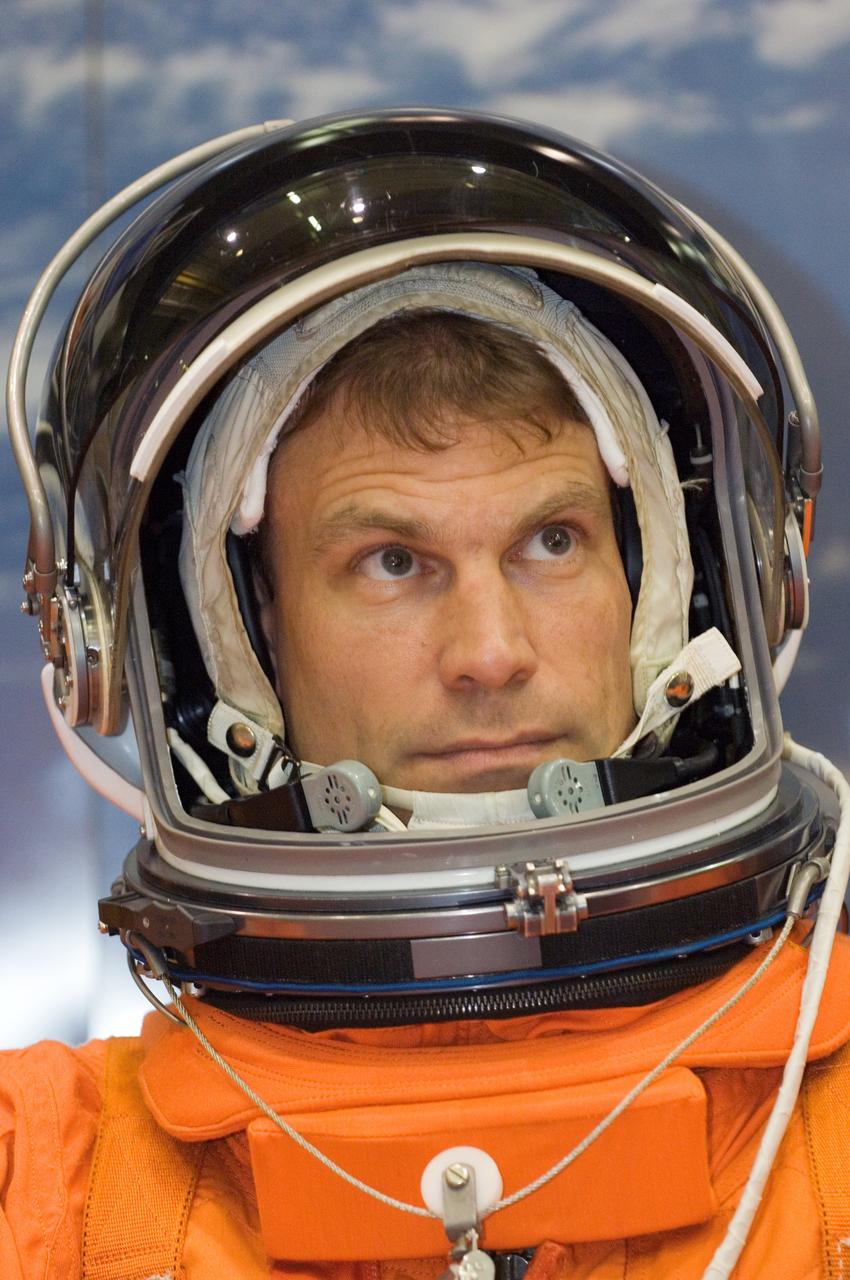
JSC2007-E-21208 (1 May 2007) --- Attired in a training version of his shuttle launch and entry suit, astronaut Stanley G. Love, STS-122 mission specialist, awaits the start of an emergency egress training session in the Space Vehicle Mockup Facility at Johnson Space Center.
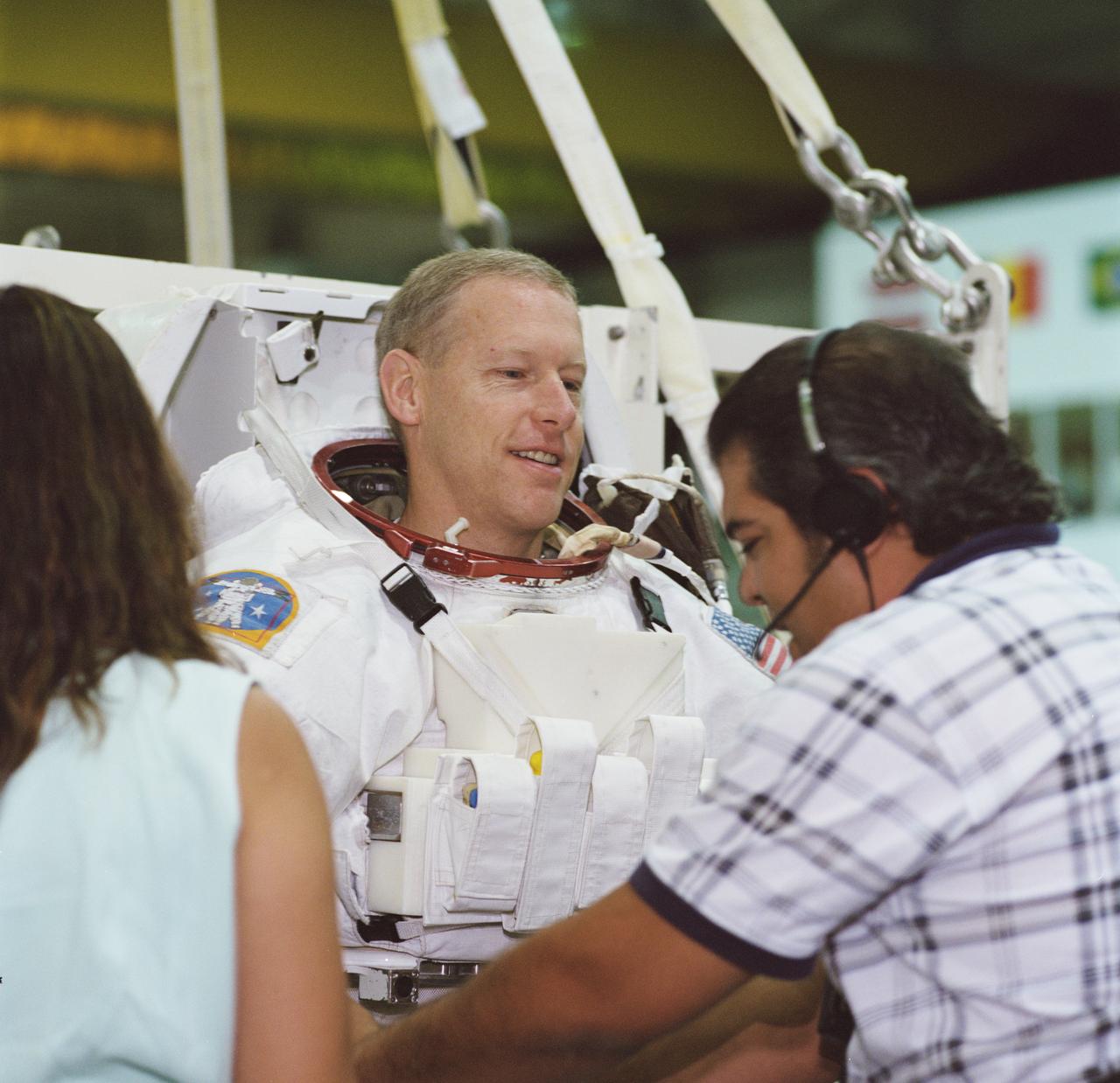
JSC2001-01611 (1 June 2001) --- Astronaut Patrick G. Forrester, STS-105 mission specialist, prepares to be submerged in the waters of the Neutral Buoyancy Laboratory (NBL) at the Johnson Space Center (JSC). Suit technician Joey Cambiaso assists Forrester with the training version of his Extravehicular Mobility Unit (EMU) space suit.

Egress training of Orbiter Simulator, Bldg. 9A, (Technical Services Facility). S78-34922 - Fullerton & Brand, suited. 1. SHUTTLE - CREW TRAINING 2. VANCE D. BRAND - EGRESS TRAINING 3. CHARLES G. FULLERTON - EGRESS TRAINING JSC, HOUSTON, TX
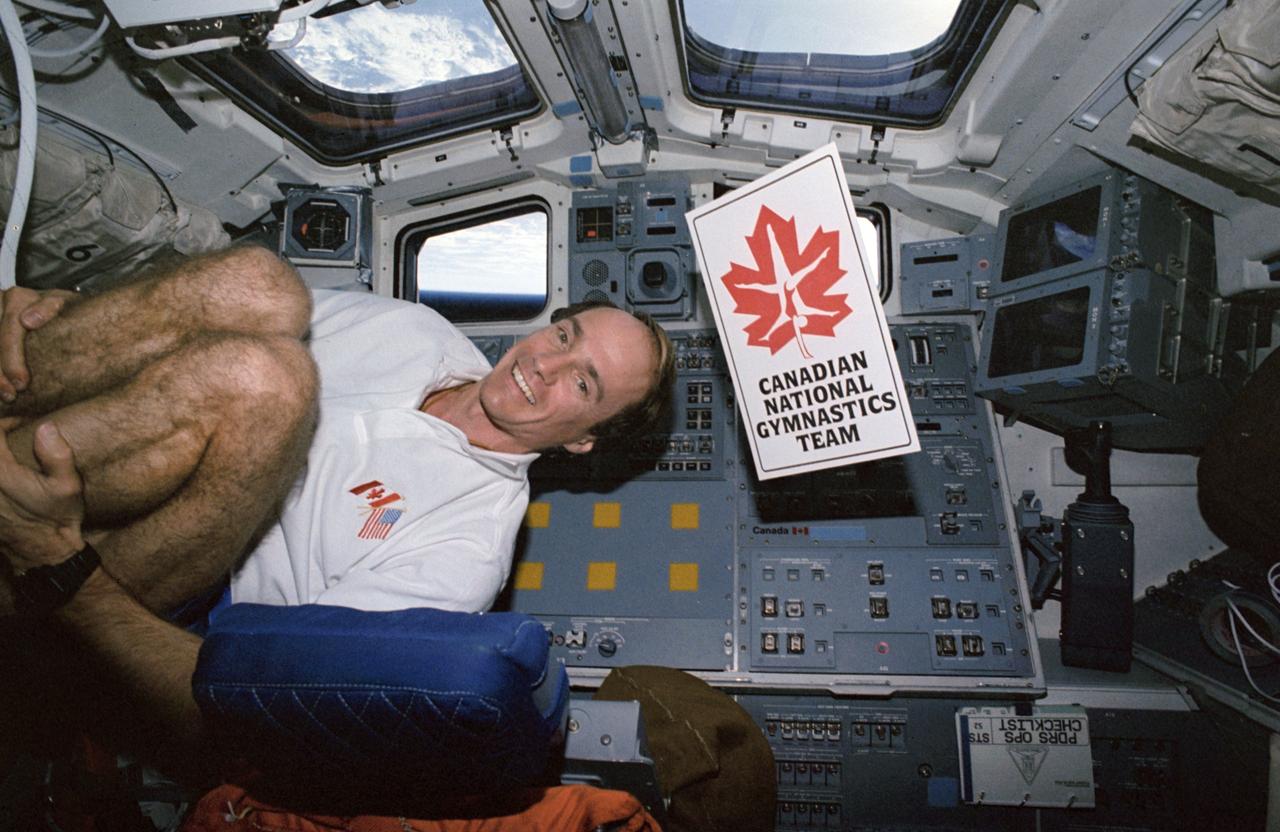
STS052-24-014 (22 Oct-1 Nov 1992) --- Canadian payload specialist Steven G. MacLean tries out gymnastics in the weightlessness of space on the aft flight deck of the Earth-orbiting Space Shuttle Columbia. MacLean, along with five NASA astronauts, spent ten days aboard Columbia for the STS-52 mission.
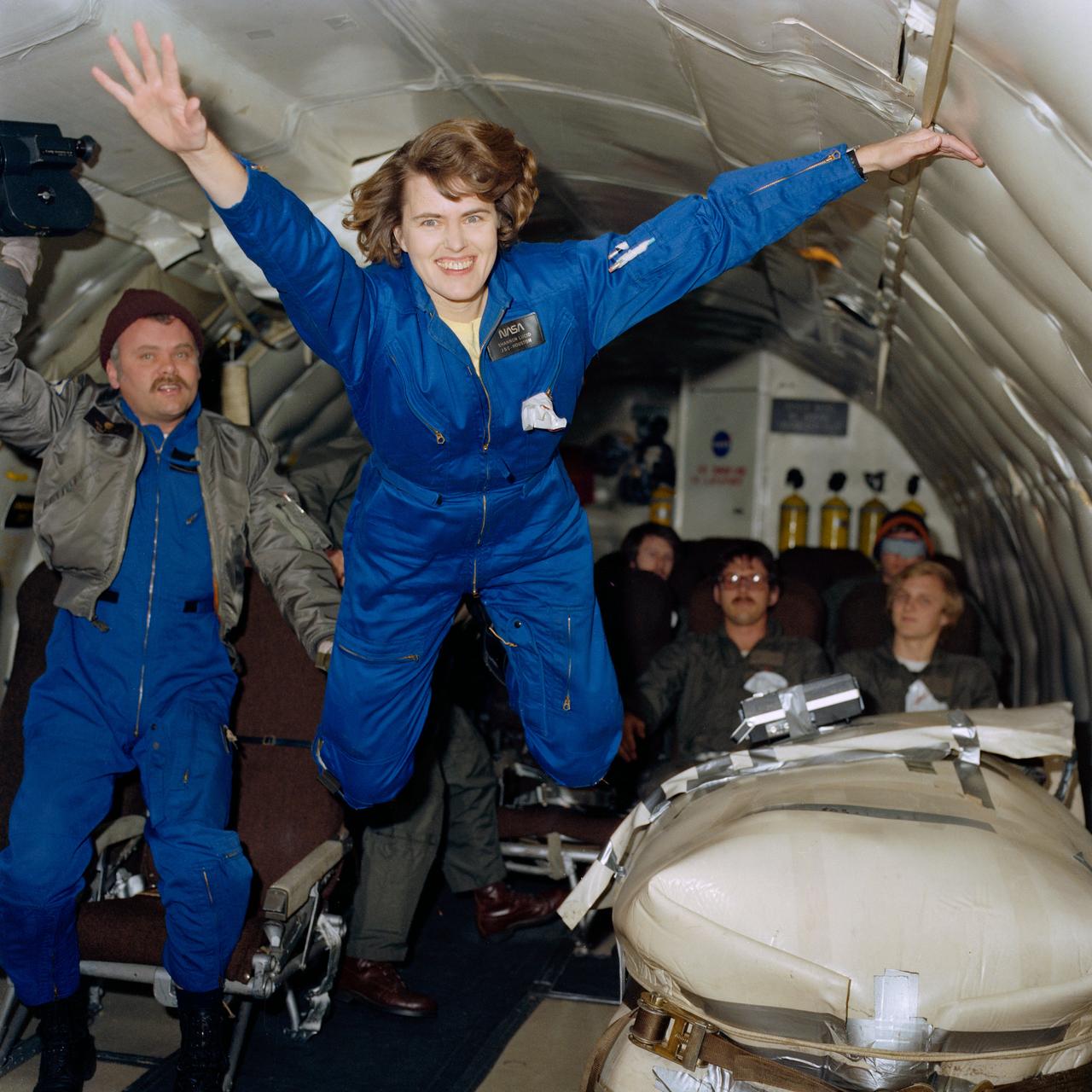
Astronaut -Candidate (ASCAN) Guion S. Bluford and Aviation Safety Officer Charles F. Hayes got a unique perspective of their environment during a zero- gravity flight. They are aboard a KC-135 Aircraft, which flies a special pattern repeatedly to afford a series of 30-seconds-of-weightlessness sessions. Astronauts Bluford and Hayes are being assisted by C. P. Stanley of the Photography Branch of the Photographic Technology Division (PTD) at Johnson Space Center (JSC). Some medical studies and a Motion Sickness Experiment were conducted on this particular flight. Astronaut Bluford is one of 20 Scientist/ASCAN's who began training at JSC, 07/1978. 1. Dr. Jeffrey A. Hoffman - Zero-G 2. ASCAN Shannon Lucid - Zero-G 3. ASCAN Guion Bluford - Zero-G
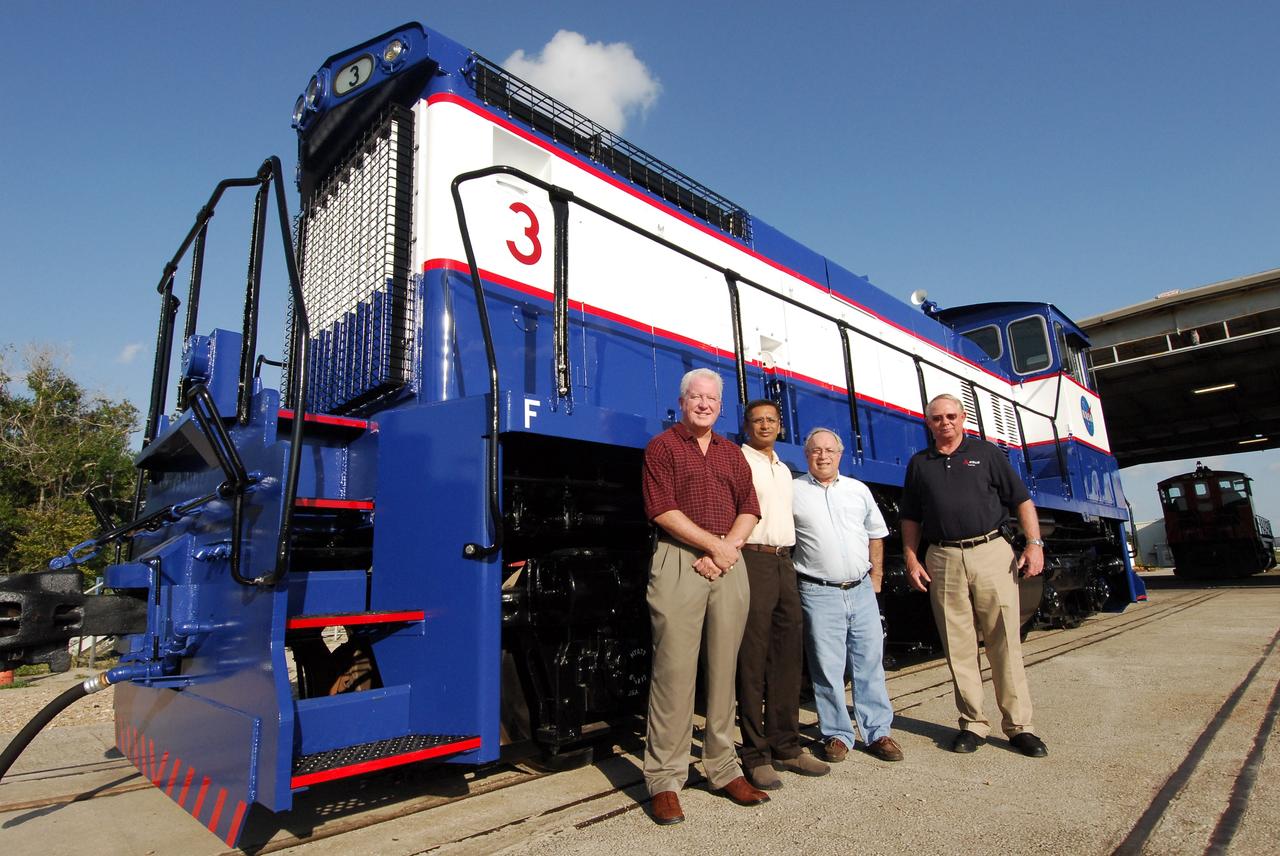
CAPE CANAVERAL, Fla. – At NASA's Kennedy Space Center in Florida, the NASA Railroad and Transportation Management Team poses alongside NASA Railroad locomotive 3. From left are John Muzzy, with EG&G, Sandeep Wilkhu, with NASA, and Tony Adrade and Chuck Sturgill, with EG&G. The Railroad Operation and Maintenance Team at Kennedy completed the refurbishment of locomotive 3 in October. The 15-month process, including a new paint scheme, dealt with extensive corrosion to the locomotive because of Kennedy's proximity to the Atlantic Ocean. Locomotives 1 and 2 also will be refurbished eventually. The NASA Railroad locomotives are SW-1500 switch engines built by Electro Motive Diesel (EMD). Photo credit: NASA/Amanda Diller
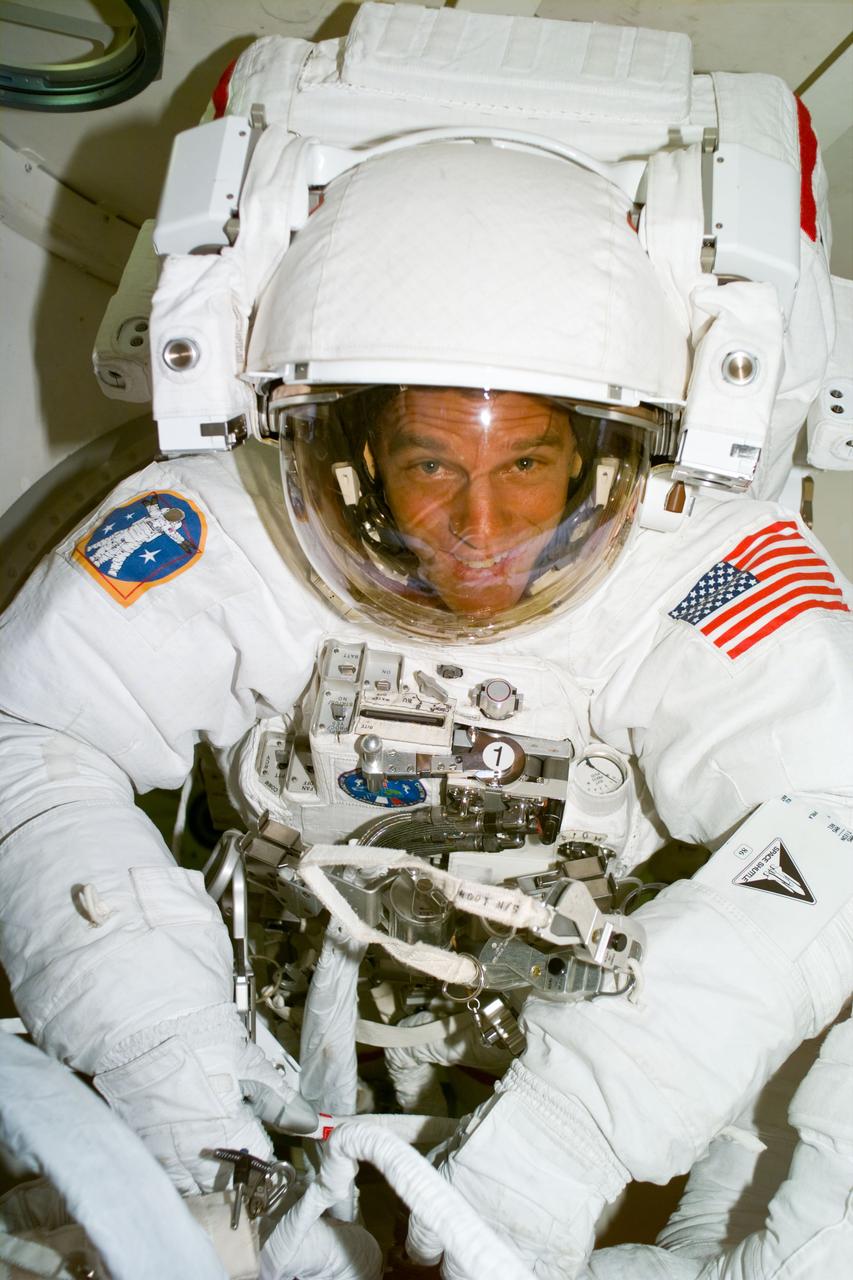
STS086E5383 (1 Oct. 1997) --- This still photo shows Scott F. Parazynski, mission specialist, still suited up after performing an Extravehicular Activity during the STS-86 mission. Parazynski was joined in the EVA by Vladimir G. Titov, mission specialist representing the Russian Space Agency (RSA), out of frame. It was the first U.S. vehicle-based spacewalk involving an international astronaut. The view was captured at 23:11:05 GMT on October 1, 1997.
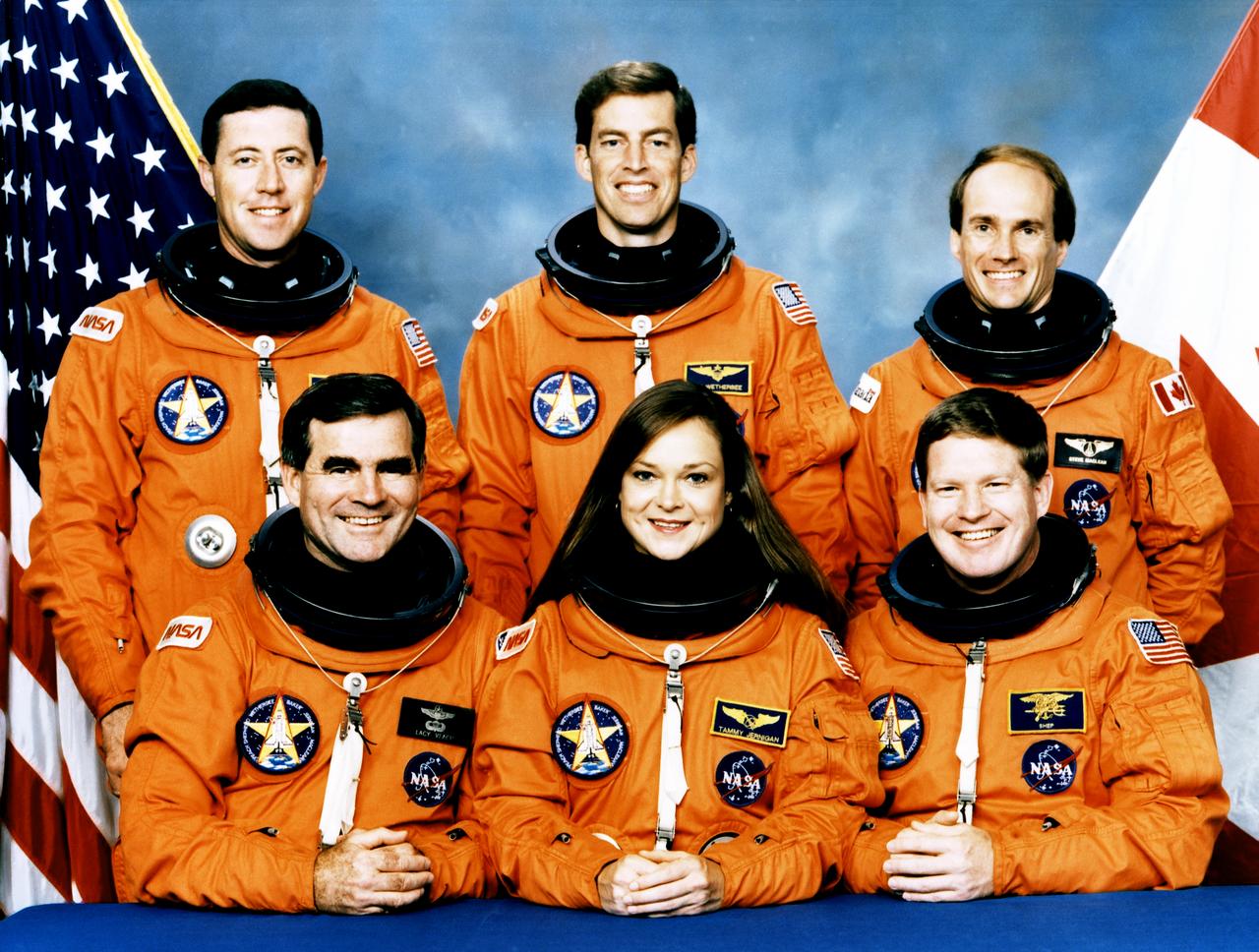
Five NASA astronauts and one Canadian payload specialist composed the STS-52 crew. Pictured on the back row, left to right, are Michael A. Baker, pilot; James B. Wetherbee, commander; and Steven G. Maclean, payload specialist. On the front row, left to right, are mission specialists Charles (Lacy) Veach, Tamara Jernigan, and William Shepherd. Launched aboard the Space Shuttle Columbia on October 22, 1992 at 1:09:39 p.m. (EDT), the crew’s primary objectives were the deployment of the Laser Geodynamic Satellite (LAGEOS II) and operation of the U.S. Microgravity Payload-1 (USMP-1).

FDCD Branch Stability and Control branch: Names, rows front to back, people left to right: Ground level: 1. ?? 2. Debra L. Livingston 3. Katherine G. Johnson 4. Robert Dunning Step 1: 1. Ellie Fillmore (?) 2. Al Hamer 3. Suresh Joshi Step 2: 1. John Young 2. Ernest Armstrong 3. Vladislav Klein 4. Charles T. Woolley Step 3: 1. Lawrence Taylor 2. Tony Fontana Step 4: 1. Bill Suit 2. Jane Carpenter 3. Daniel P. Giesy 4. Mario Smith Step 5: 1. Albert Schy 2. Ray Montgomery 3. Sahajendra Singh Top level: 1: Jim Batterson 2. Jim Williams 3. Claude Keckler 4. N. Sundararajan Behind all: John Shebalin Names given by Danial P. Giesy
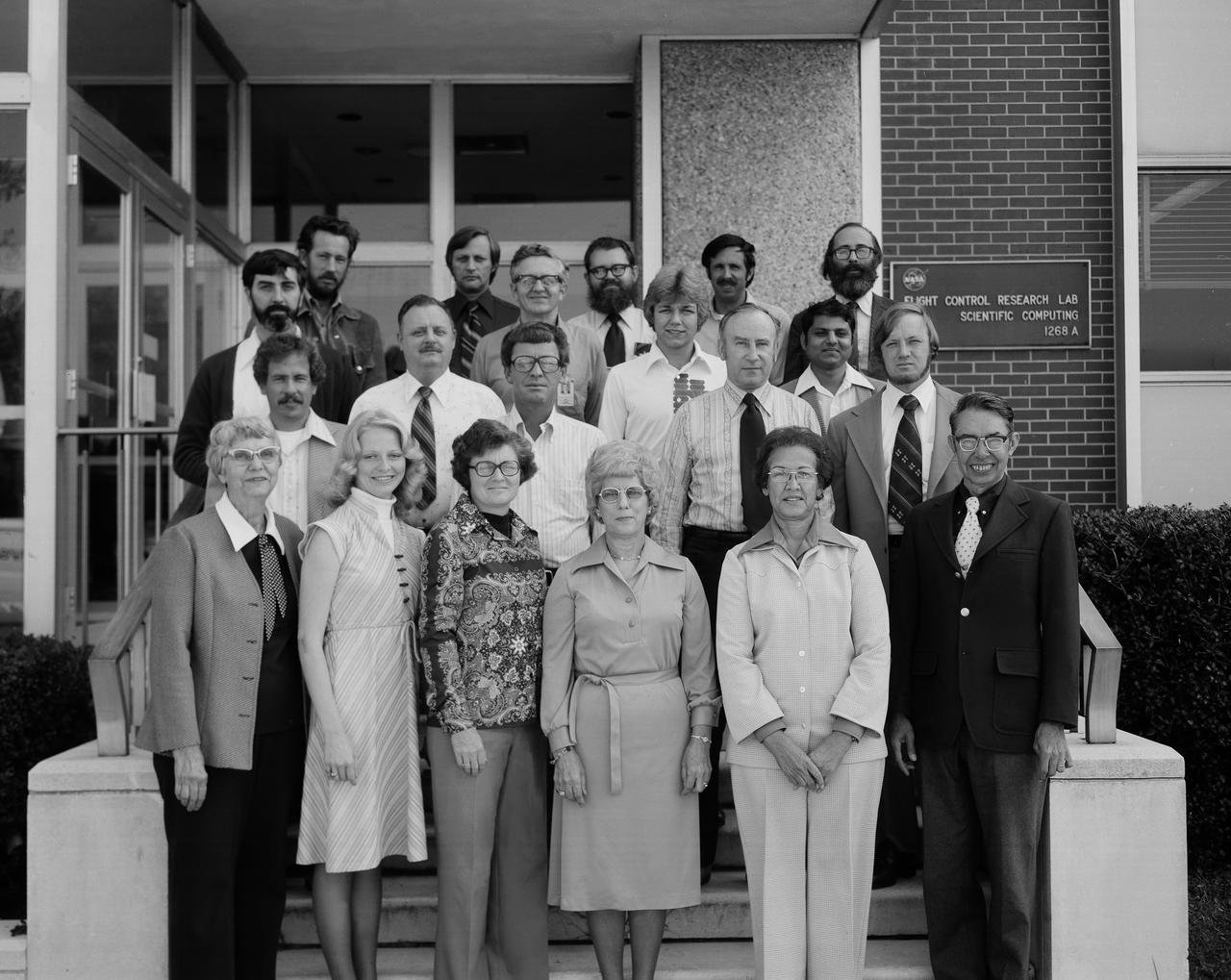
FDCD Stability and Control Branch Photo. Names, rows front to back, people left to right: Ground level: 1. Margery Hanna 2. Debra L. Livingston 3. Carolyn Grantham 4. Nell Moore 5. Katherine G. Johnson 6. Hewitt Phillips Step 1: 1. John Shaughnessy 2. John Young 3. Bill Martz 4. Charles T. Woolley Step 2: 1. Al Hamer 2. Marion Wise (?) 3. Suresh Joshi Step 3: 1. Willard W. Anderson 2. Albert A. Schy 3. Daniel P. Giesy Step 4: 1. Hugh Bergeron 2. Claude Keckler 3. Nelson Groom 4. Ralph Will Names Given by Danial Pl. Giesy.

Stability and Control Branch Photo: Names, rows front to back, people left to right: Row 1: 1. ?? Graduate Student (USAF) 2. Robert Dunning 3. Rhonda Harvey Poppen 4. Katherine G. Johnson 5. ?? Graduate Student (USAF) 6. Vladislav Klein Row 2: 1. Mario Smith 2. Jeff Williams 3. N. Sundararajan 4. Tony Fontana 5. John Young Row 3: 1. Lawrence Taylor 2. Jim Batterson 3. Suresh Joshi 4. Daniel P. Giesy Row 4: 1. Bill Suit 2. Albert A. Schy 3. Al Hamer 4. Ernest Armstrong 5. Claude Keckler Row 5: 1. Chris Brown 2. Robert Bullock 3. Ray Montgomery 4. Jim Williams 5. Sahajendra Singh 6. Graduate Student (Egypt) Names given by Daniel P. Giesy.
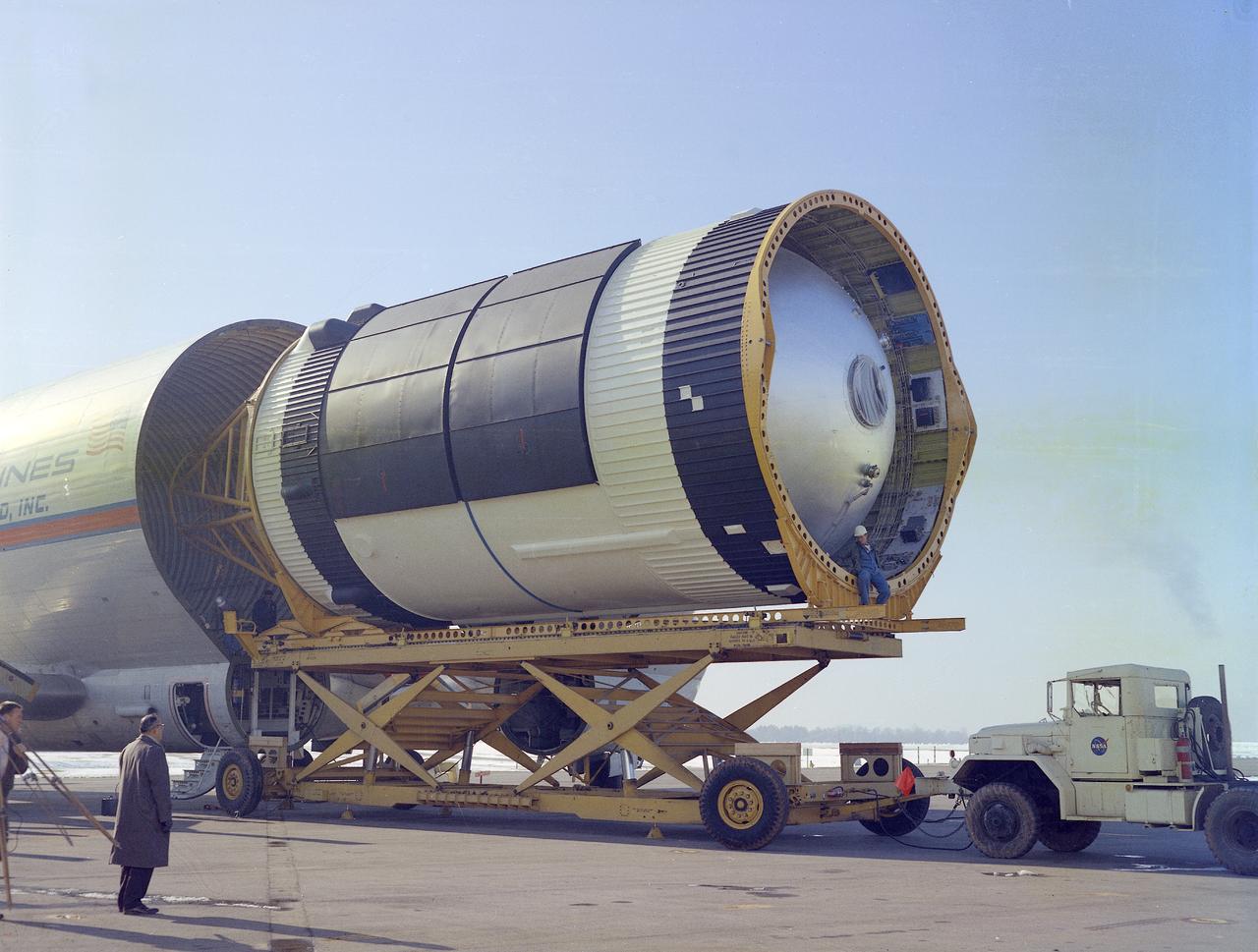
This photograph was taken at the Redstone airfield, Huntsville, Alabama, during the unloading of the Saturn V S-IVB stage that housed the Orbital Workshop (OWS) from the Super Guppy, the NASA plane that was specially built to carry oversized cargo. The OWS measured 22 feet (6.7 m) in diameter, and 48 feet (14.6 m) in length. The Saturn V S-IVB stage was modified at the McDornell Douglas facility at Huntington Beach, California, for a new role, which was to house the OWS. In addition to the test articles, engineering mockups, and flight equipment, both McDonnell Douglas and Martin Marietta built 0-G trainers, neutral buoyancy trainers, and high-fidelity mockups for the 1-G trainer to be used in the KC-135 aircraft. The Marshall Space Flight Center had program management responsibility for the development of Skylab hardware and experiments.
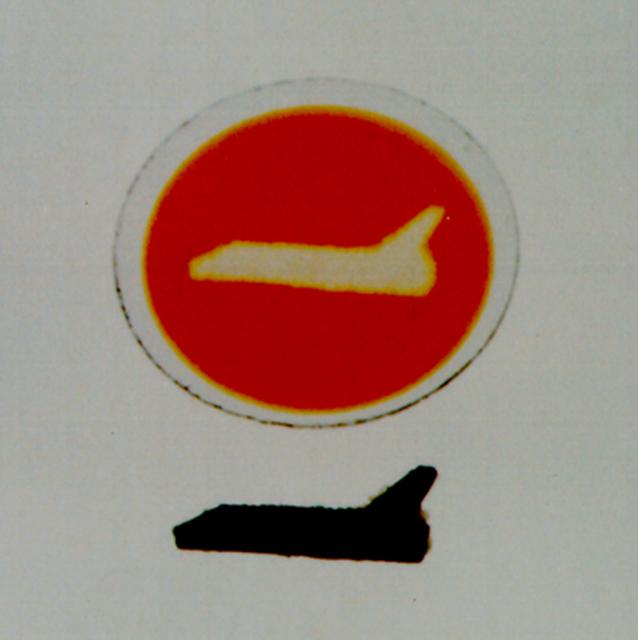
Polydiacetylenes are a unique class of highly conjugated organic polymers that are of interest for both electronic and photonic applications. Photodeposition from solutions is a novel process superior to those grown by conventional techniques. Evidence of this is seen when the films are viewed under a microscope; they exhibit small particles of solid polymer which form in the bulk solution, get transported by convection to the surface of the growing film, and become embedded. Also convection tends to cause the film thickness to be less uniform, and may even affect the molecular orientation of the films. The thrust of the research is to investigate in detail, both in 1-g and low-g, the effects of convection (and lack thereof) on this novel and interesting reaction. In this example, a portion of the substrate was blocked from exposure to the UV light by the mask, which was placed on the opposite side of the glass disk as the film, clearly demonstrating that photodeposition occurs only where the substrate is irradiated directly.
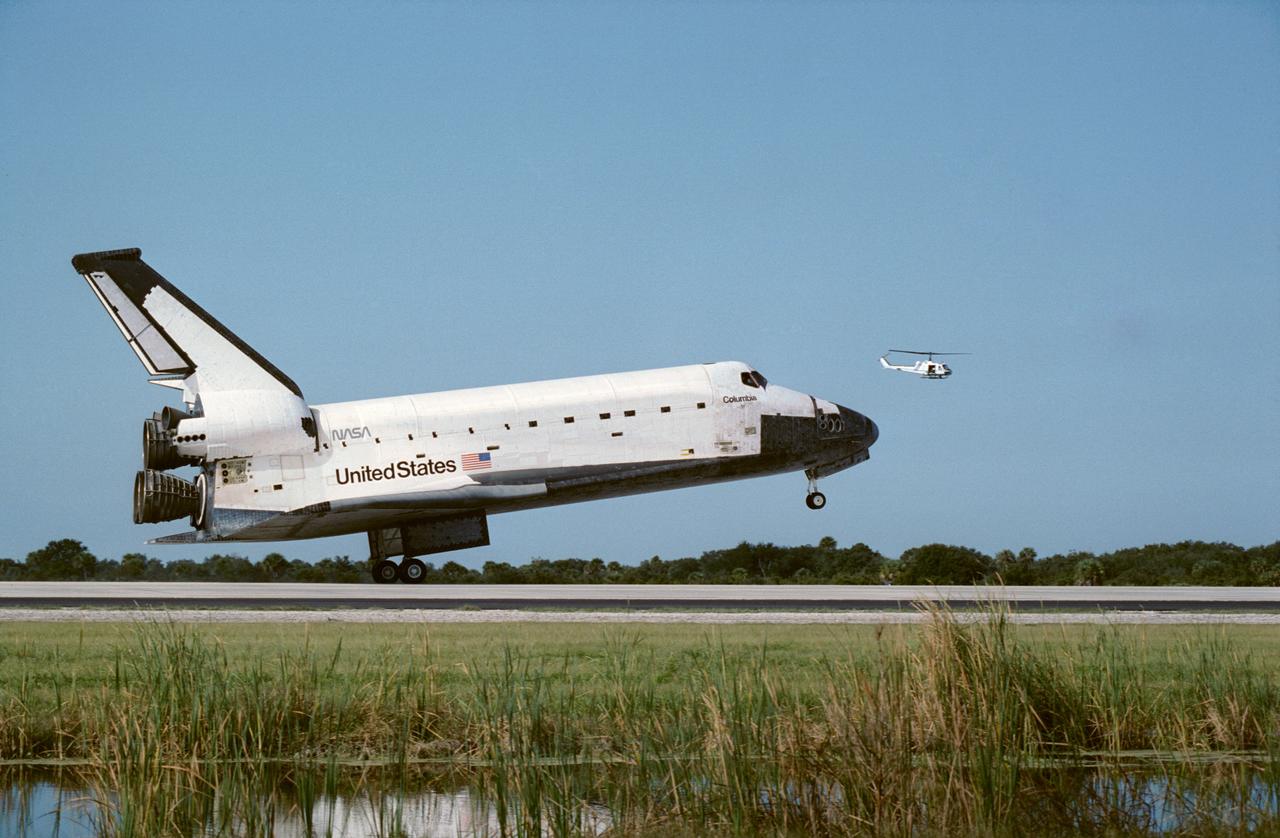
STS052-S-098 (1 Nov 1992) --- This ground-level side view shows the Space Shuttle Columbia just prior to main landing gear touchdown at KSC's Shuttle Landing Facility to successfully complete a ten-day Earth-orbital mission. Onboard were a crew of five NASA astronauts and a Canadian payload specialist. Landing occurred at 9:05:53 a.m. (EST), November 1, 1992. Crewmembers are astronauts James D. Wetherbee, Michael A. Baker, Tamara E. Jernigan, Charles L. (Lacy) Veach and William M. Shepherd along with payload specialist Steven G. MacLean. The view was recorded with a 35mm camera.
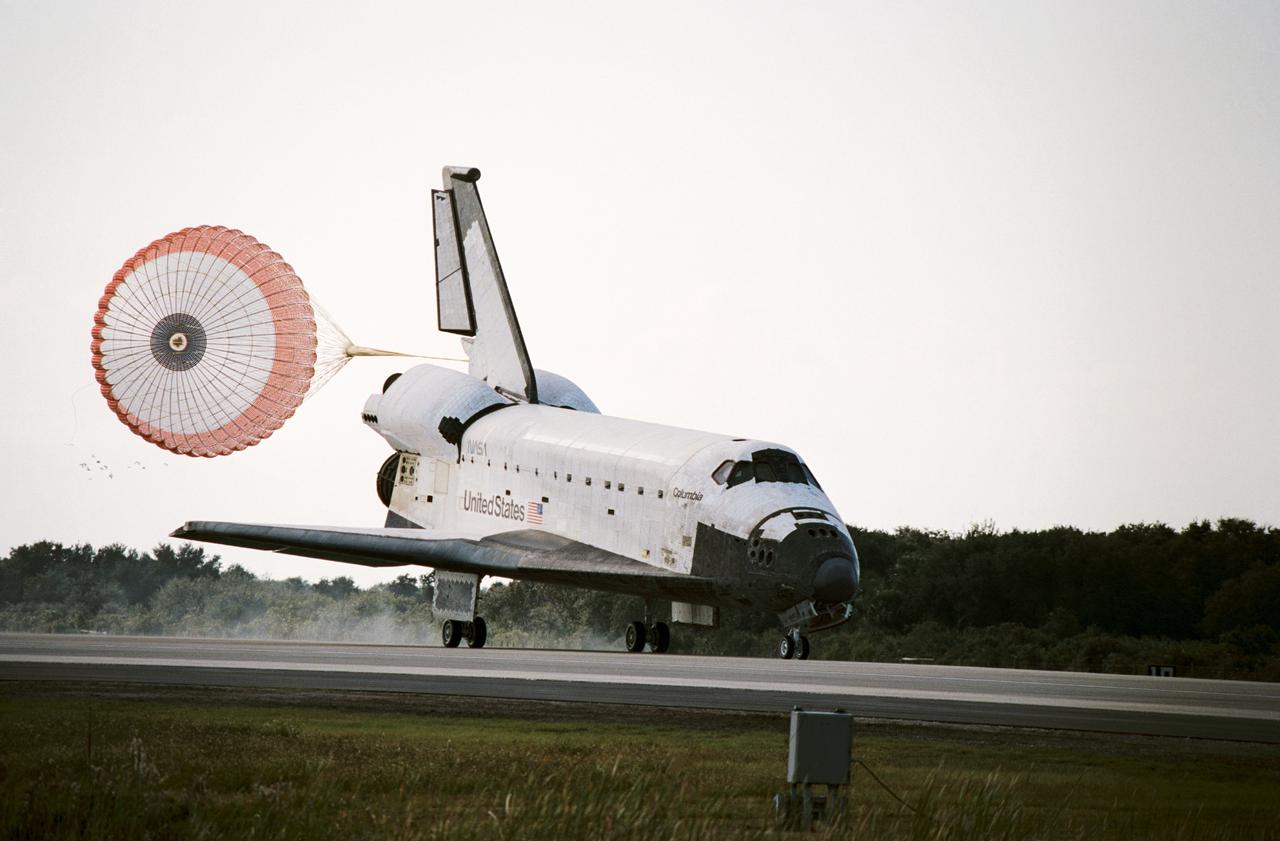
STS052-S-099 (1 Nov. 1992) --- This three-quarter front view shows the Space Shuttle Columbia just after deployment of the drag chute during landing at KSC's Shuttle Landing Facility. Onboard were a crew of five NASA astronauts and a Canadian payload specialist. Landing occurred at 9:05:53 a.m. (EST), November 1, 1992. Crewmembers are astronauts James D. Wetherbee, Michael A. Baker, Tamara E. Jernigan, Charles L. (Lacy) Veach and William M. Shepherd along with payload specialist Steven G. MacLean. The photo was taken with a 35mm camera.
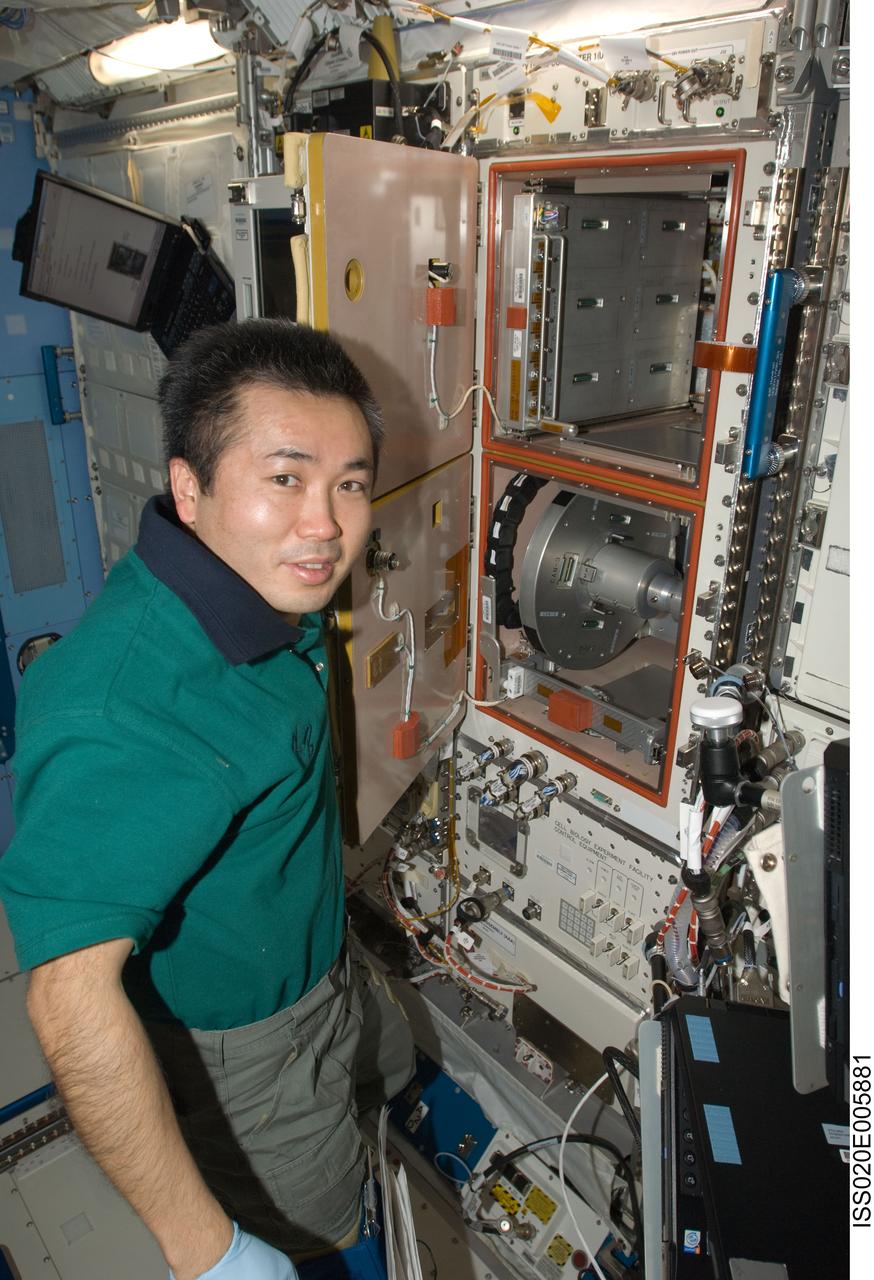
ISS020-E-005881 (1 June 2009) --- Japan Aerospace Exploration Agency (JAXA) astronaut Koichi Wakata, Expedition 20 flight engineer, conducts the current periodic humidity check on the Cell Biology Experiment Facility (CBEF) in the Saibo Rack in the Kibo laboratory of the International Space Station. Wakata opened the facility’s door for wiping up any condensation inside the micro-G & 1G section, if present, and also secured floating fan mesh with Kapton tape.
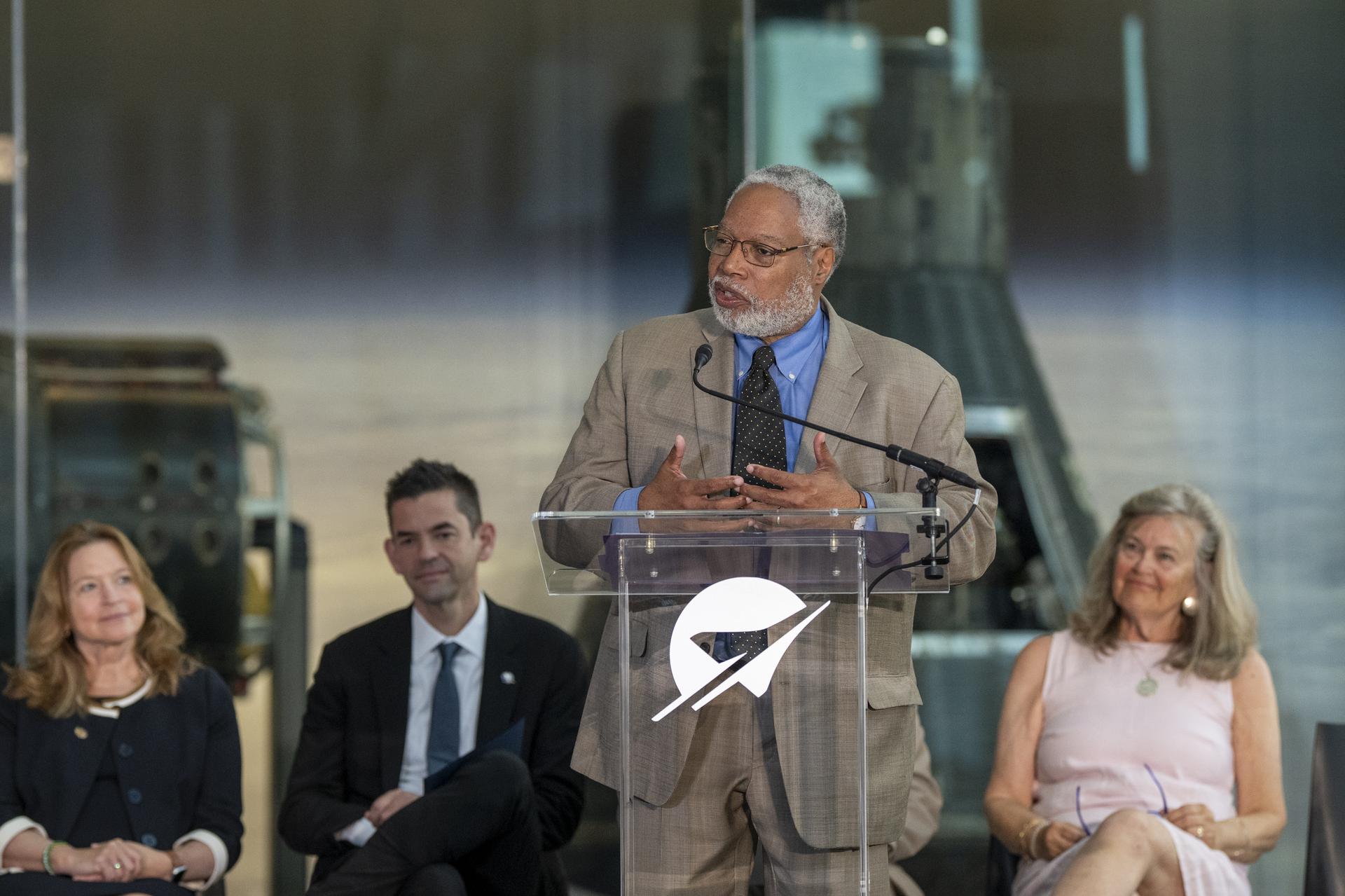
Secretary of the Smithsonian Institution Lonnie G. Bunch III delivers remarks during the Smithsonian’s National Air and Space Museum rededication ceremony Wednesday, July 1, 2026, in Washington. The swatch is being returned to the museum after having been flown aboard NASA’s Artemis II mission around the Moon and back to Earth in April 2026. Photo Credit: (NASA/Keegan Barber)
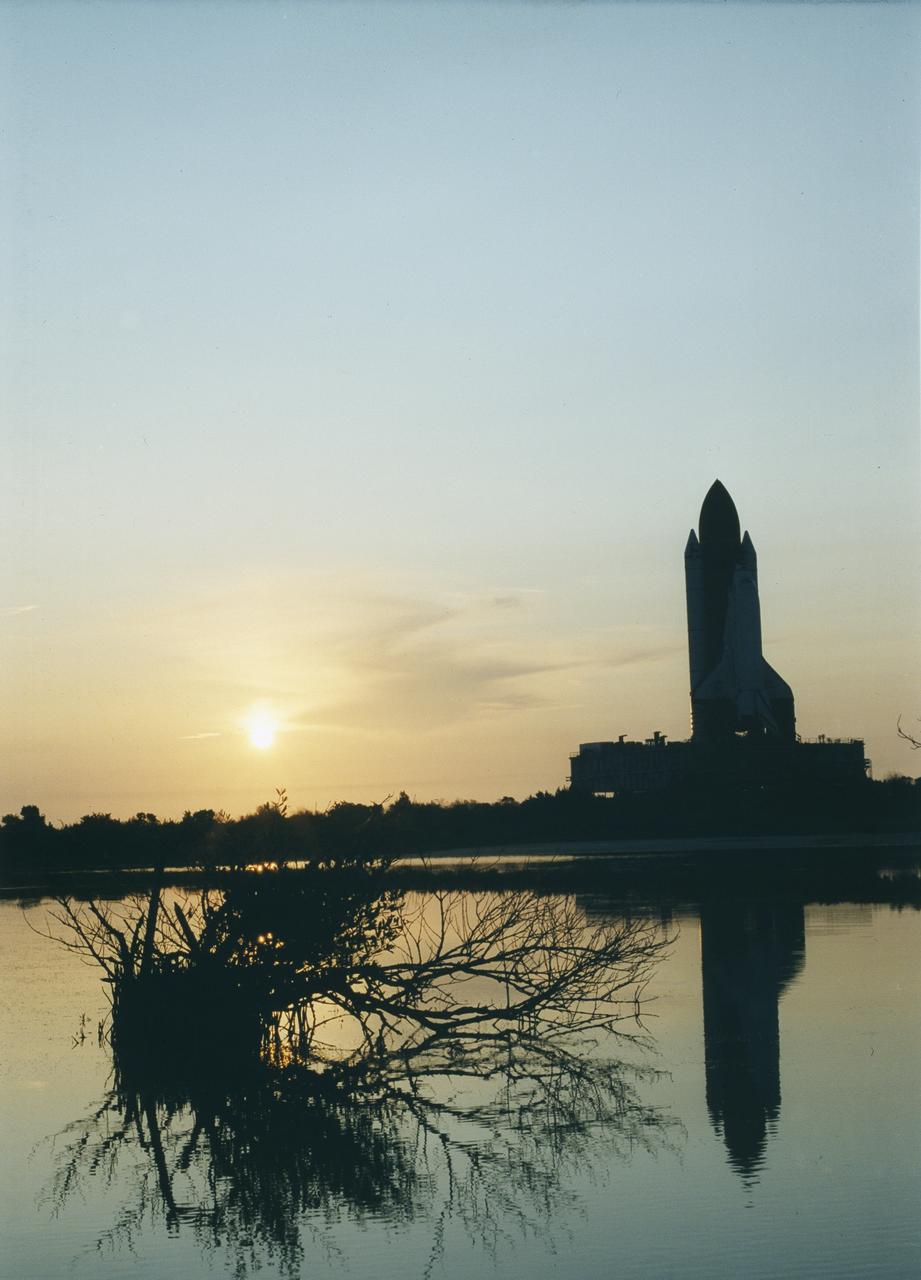
Launched aboard the Space Shuttle Atlantis on August 2, 1991, the STS-43 mission’s primary payload was the Tracking and Data Relay Satellite 5 (TDRS-5) attached to an Inertial Upper Stage (IUS), which became the 4th member of an orbiting TDRS cluster. The flight crew consisted of five astronauts: John E. Blaha, commander; Michael A. Baker, pilot; Shannon W. Lucid, mission specialist 1; James C. Adamson, mission specialist 2; and G. David Low, mission specialist 3.
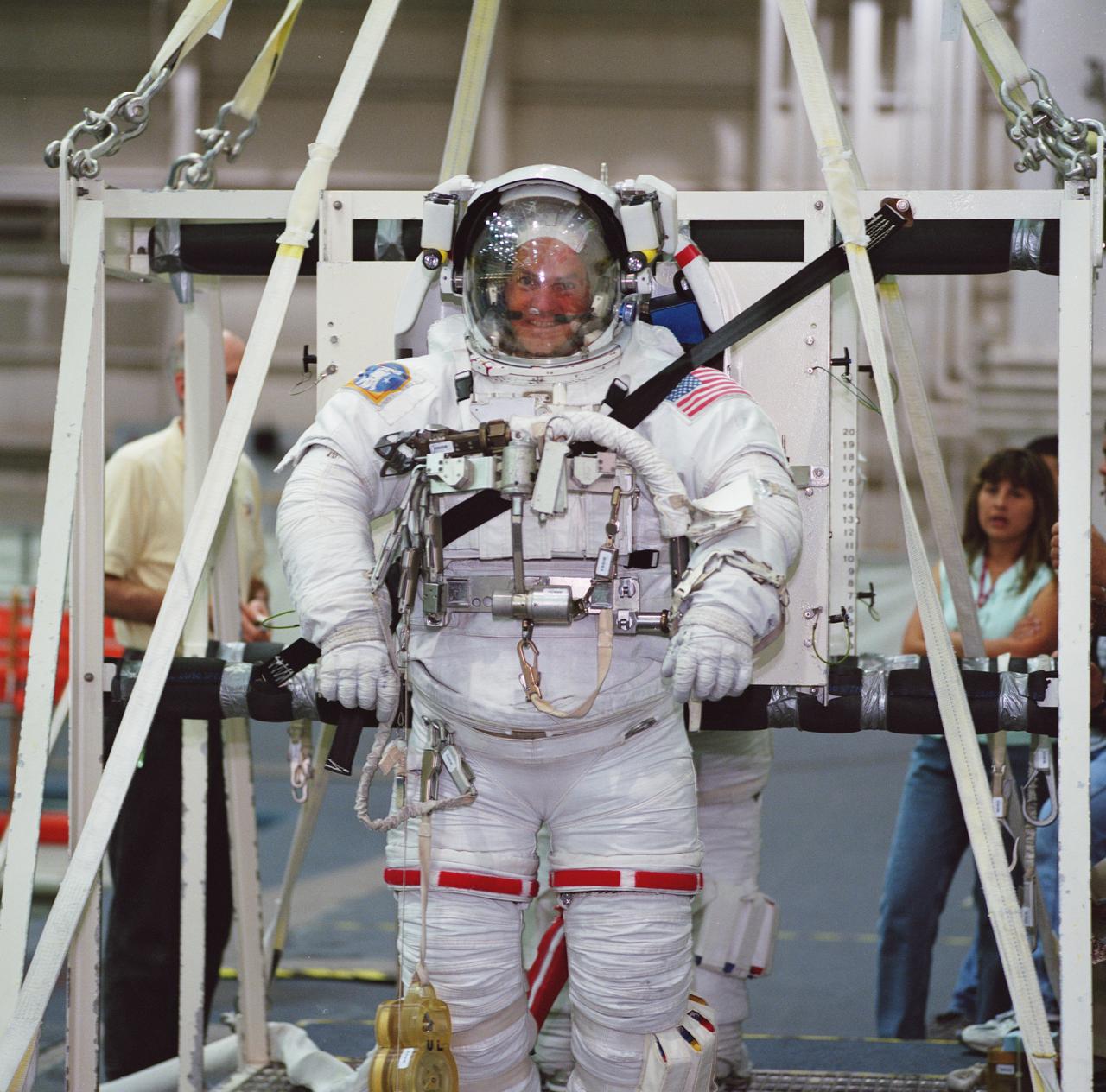
JSC2001-01607 (1 June 2001) --- Astronaut Frederick W. Sturckow, STS-105 pilot, is photographed along with astronaut Patrick G. Forrester (partially out of frame) as they prepare to be submerged in the waters of the Neutral Buoyancy Laboratory (NBL) at the Johnson Space Center (JSC). Sturckow and Forrester are wearing the training version of the Extravehicular Mobility Unit (EMU) space suit.

S92-40001 (1 June 1992) --- Payload specialist Steven G. Maclean is assisted by two SCUBA-equipped divers as he participates in emergency bailout training in the Johnson Space Center's (JSC) Weightless Environment Training Facility (WET-F). Maclean will join five NASA astronauts for the scheduled 10-day STS-52 mission.
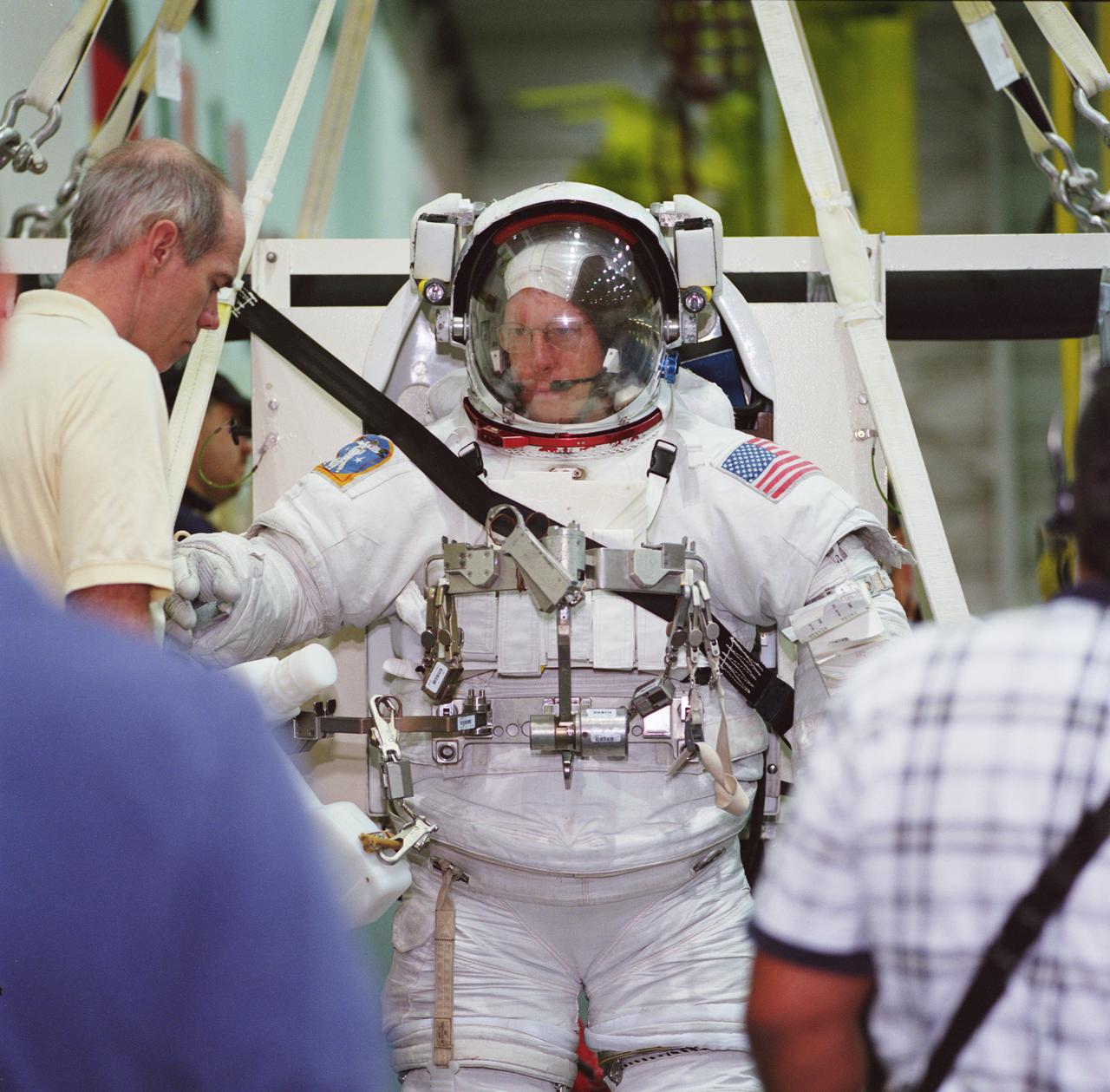
JSC2001-01606 (1 June 2001) --- Astronaut Patrick G. Forrester, STS-105 mission specialist, is photographed as the final touches are made on the training version of his Extravehicular Mobility Unit (EMU) space suit prior to being submerged in the waters of the Neutral Buoyancy Laboratory (NBL) at the Johnson Space Center (JSC). Forrester is assisted by fellow crewmember Daniel T. Barry, mission specialist.
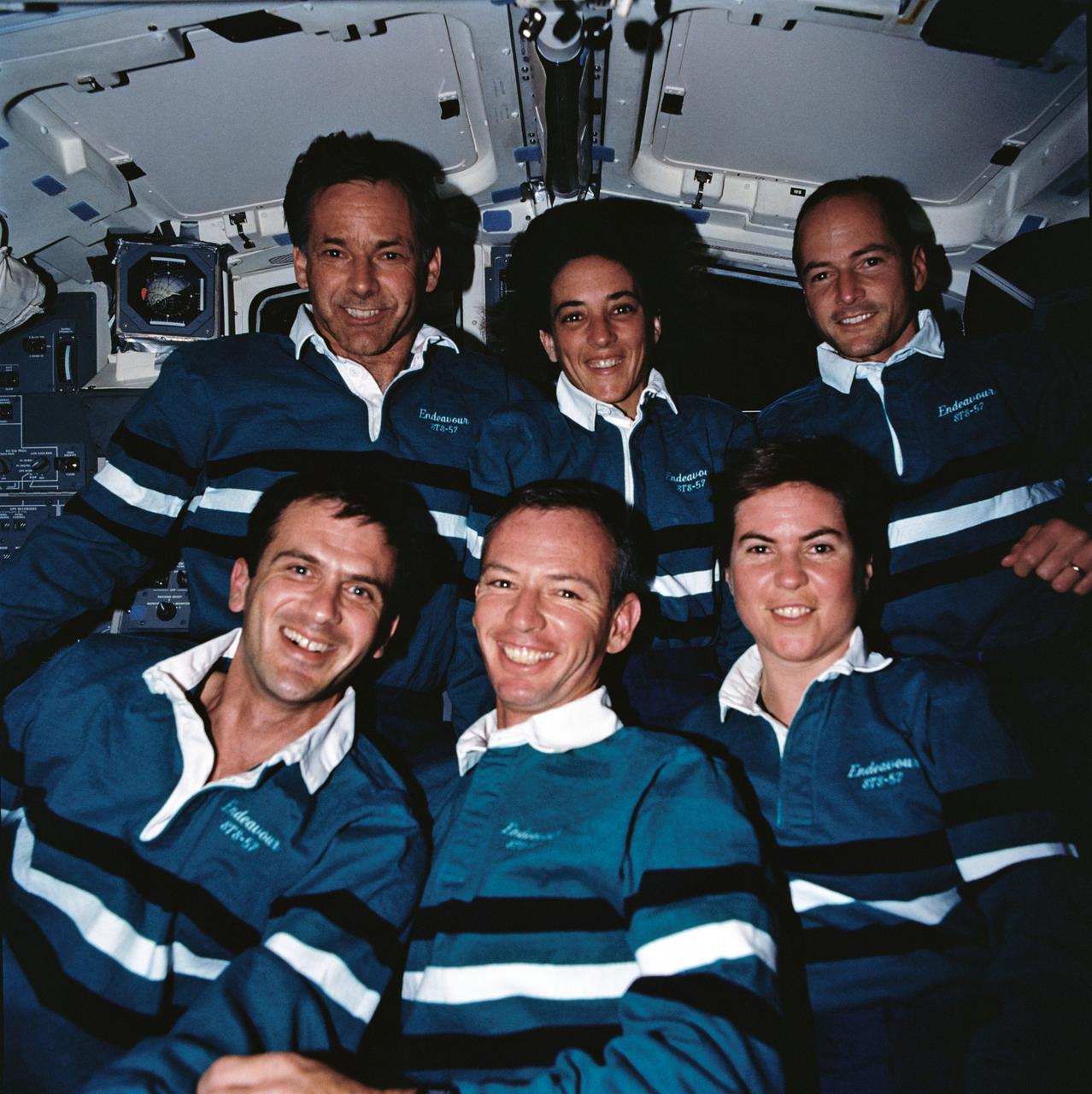
STS057-94-017 (21 June - 1 July 1993) --- Six astronauts onboard the Space Shuttle Endeavour pose for the traditional inflight crew portrait on the aft flight deck. In the rear (left to right) are astronauts Ronald J. Grabe, mission commander; Nancy J. Sherlock, mission specialist; and G. David Low, payload commander; in front (left to right), Peter J. K. (Jeff) Wisoff, mission specialist; Brian Duffy, pilot; and Janice E. Voss, mission specialist.
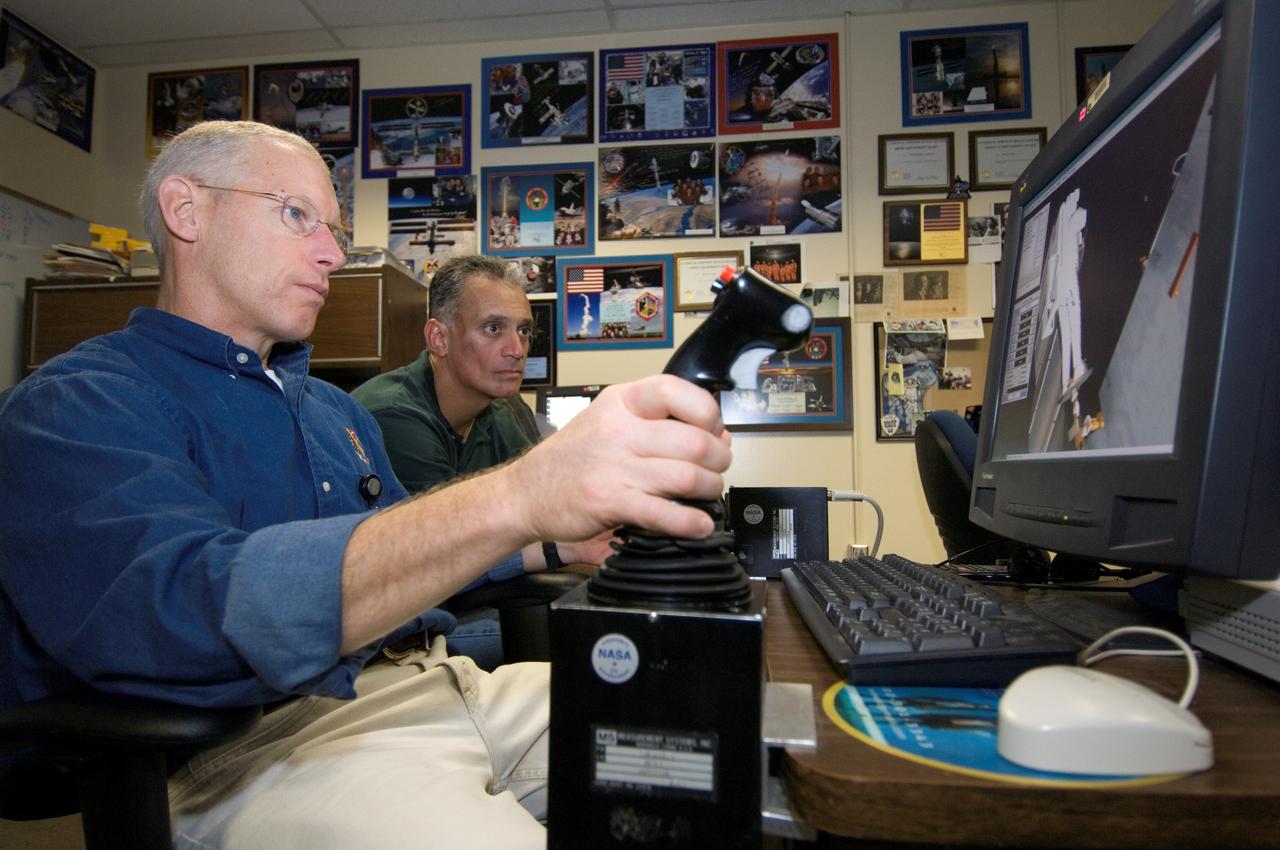
JSC2006-E-47420 (1 Nov. 2006) --- Astronauts Patrick G. Forrester (foreground) and John D. (Danny) Olivas, both STS-117 mission specialists, use the virtual reality lab at Johnson Space Center to train for their duties aboard the space shuttle and space station. This type of computer interface, paired with virtual reality training hardware and software, helps to prepare the entire team for dealing with space station elements.
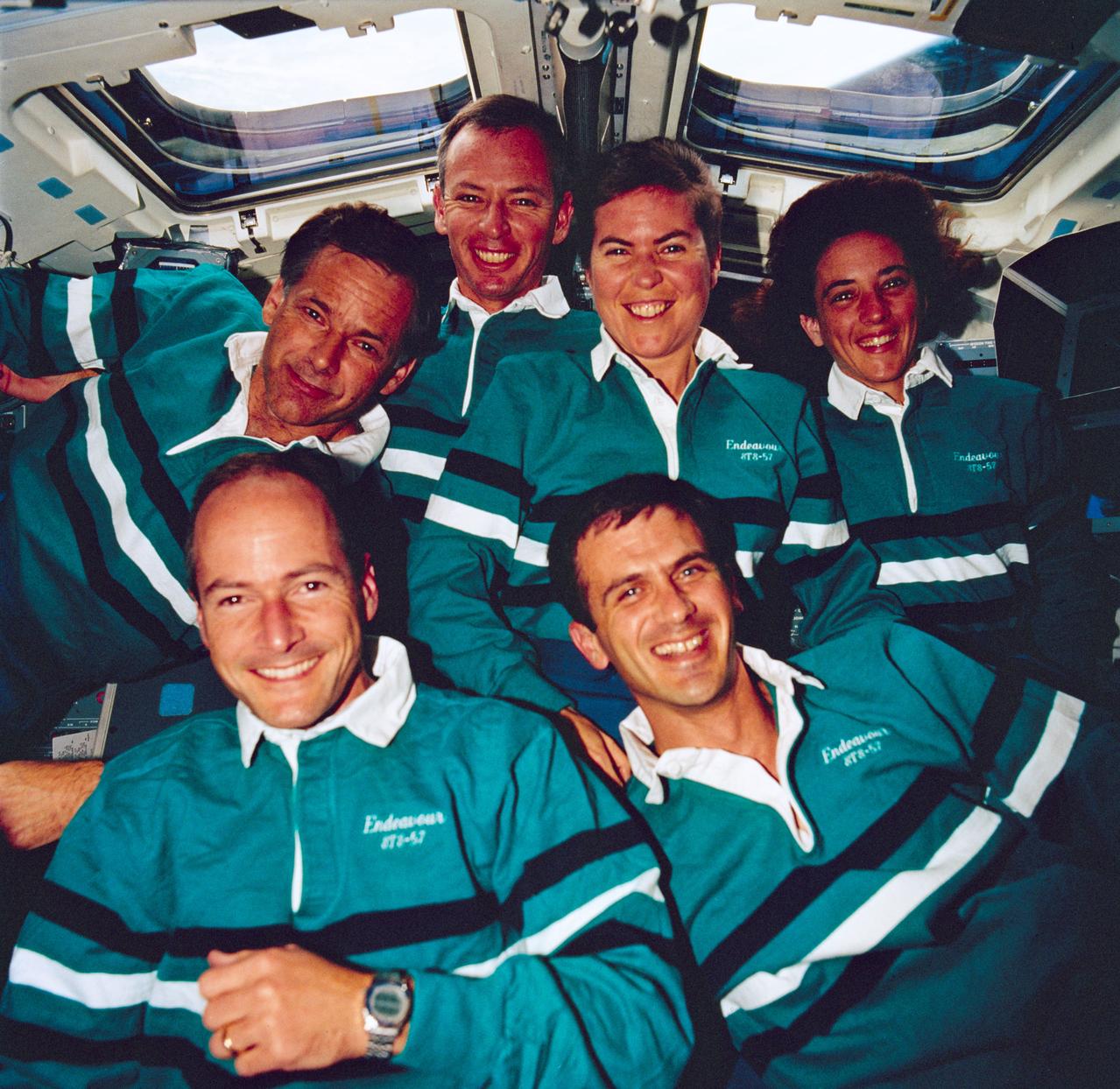
STS057-94-007 (21 June-1 July 1993) --- The six STS-57 crewmembers used a pre-set 70mm camera to record the traditional in-space crew portrait on Endeavour's aft flight deck. In front are astronauts G. David Low, payload commander; and Peter J. K. (Jeff) Wisoff, mission specialist. In the back are astronauts Ronald J. Grabe, mission commander; Brian Duffy, pilot; Janice E. Voss and Nancy J. Sherlock, mission specialists.
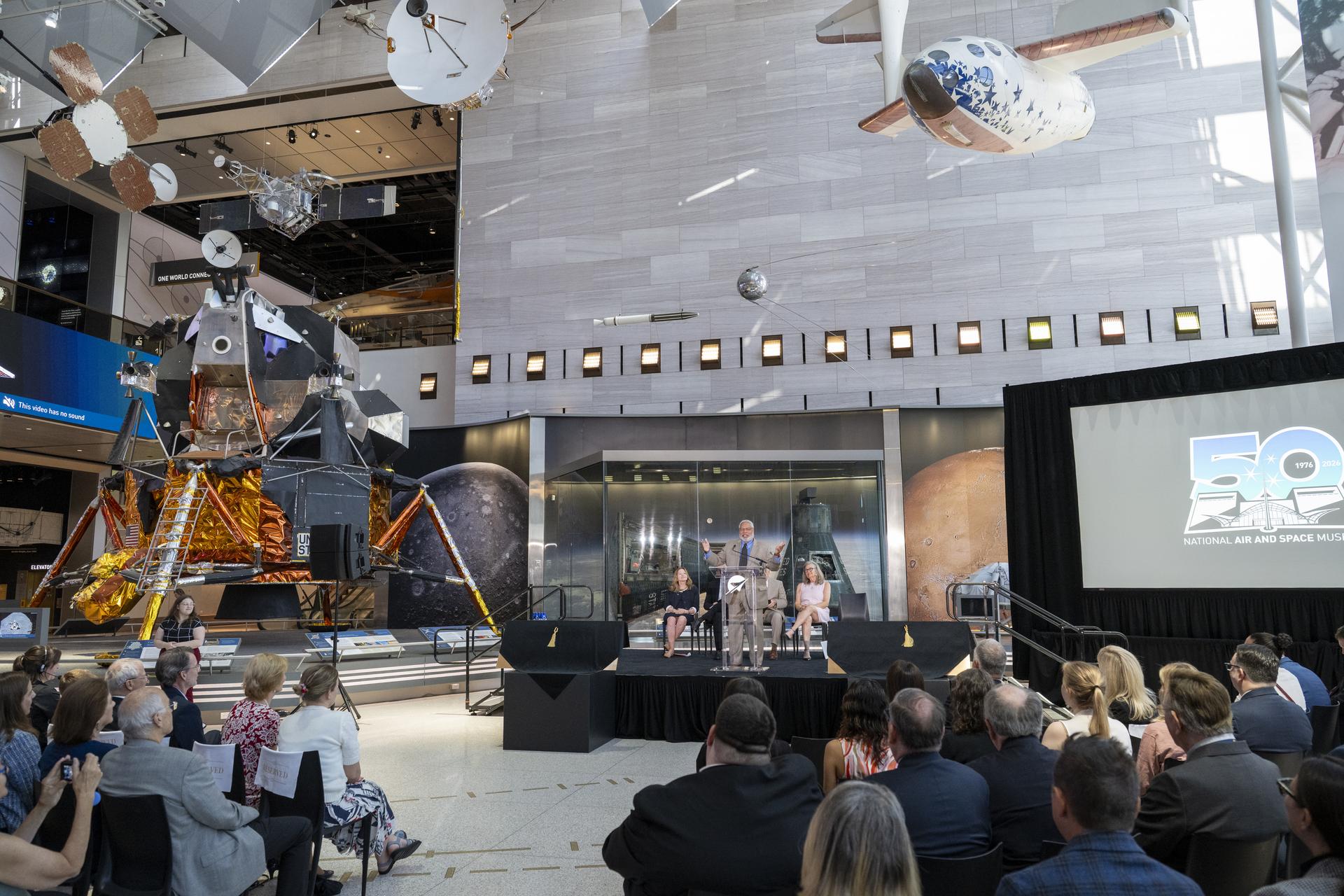
Secretary of the Smithsonian Institution Lonnie G. Bunch III delivers remarks during the Smithsonian’s National Air and Space Museum rededication ceremony Wednesday, July 1, 2026, in Washington. The swatch is being returned to the museum after having been flown aboard NASA’s Artemis II mission around the Moon and back to Earth in April 2026. Photo Credit: (NASA/Keegan Barber)
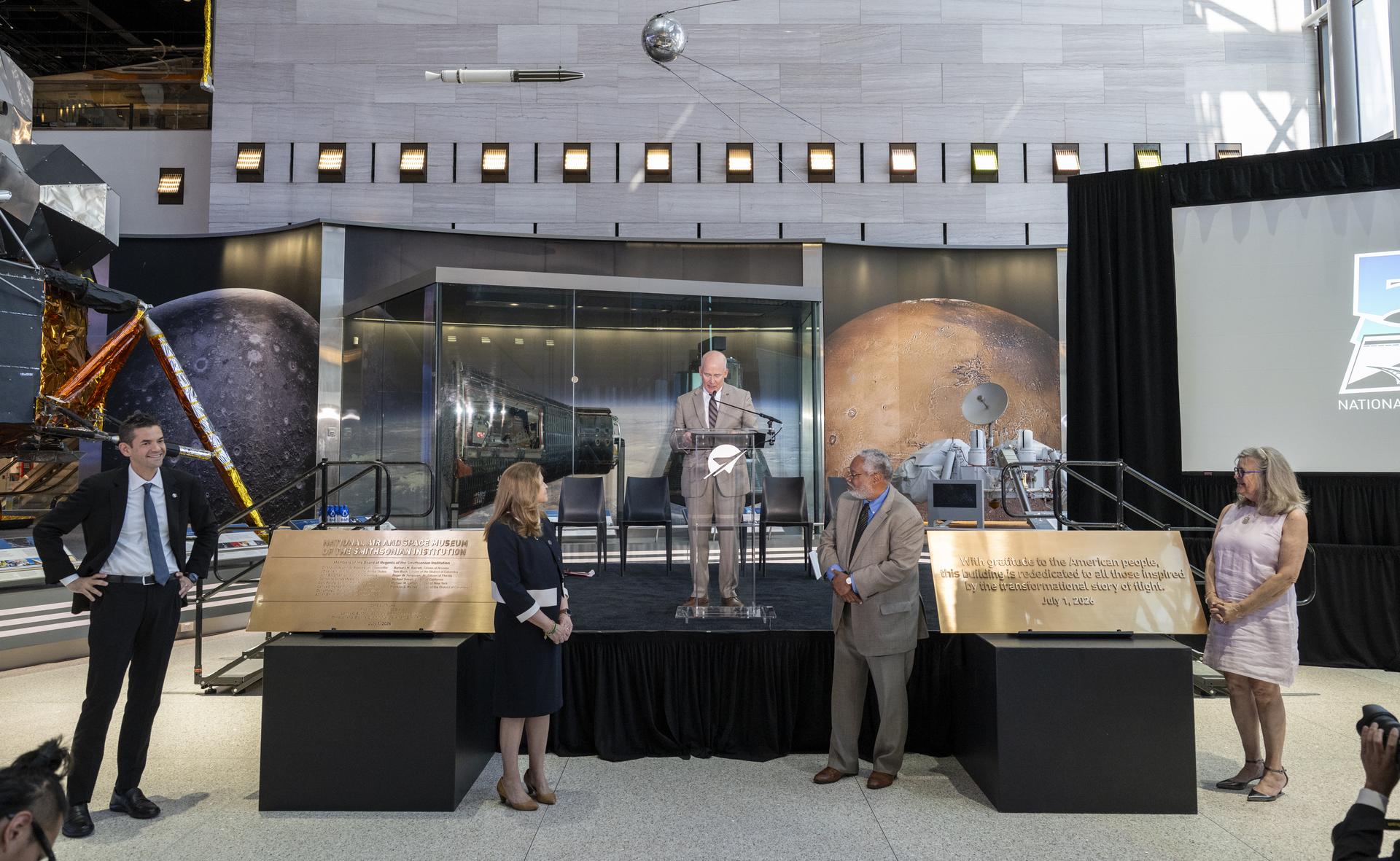
From left to right, NASA Administrator Jared Isaacman, Under Secretary for Science and Research at the Smithsonian Institution Ellen Stofan, Director of the Smithsonian’s National Air and Space Museum Christopher Browne, Secretary of the Smithsonian Institution Lonnie G. Bunch III, and Wright brother’s great-grandniece Amanda Wright Lane are seen after unveiling plaques during the Smithsonian’s National Air and Space Museum rededication ceremony Wednesday, July 1, 2026, in Washington. Photo Credit: (NASA/Keegan Barber)

AS11-37-5445 (20 July 1969) --- The Apollo 11 Command and Service Modules (CSM) are photographed from the Lunar Module (LM) in lunar orbit during the Apollo 11 lunar landing mission. The lunar surface below is in the north central Sea of Fertility. The coordinates of the center of the picture are 51 degrees east longitude and 1 degree north latitude. About half of the crater Taruntius G is visible in the lower left corner of the picture. Part of Taruntius H can be seen at lower right.
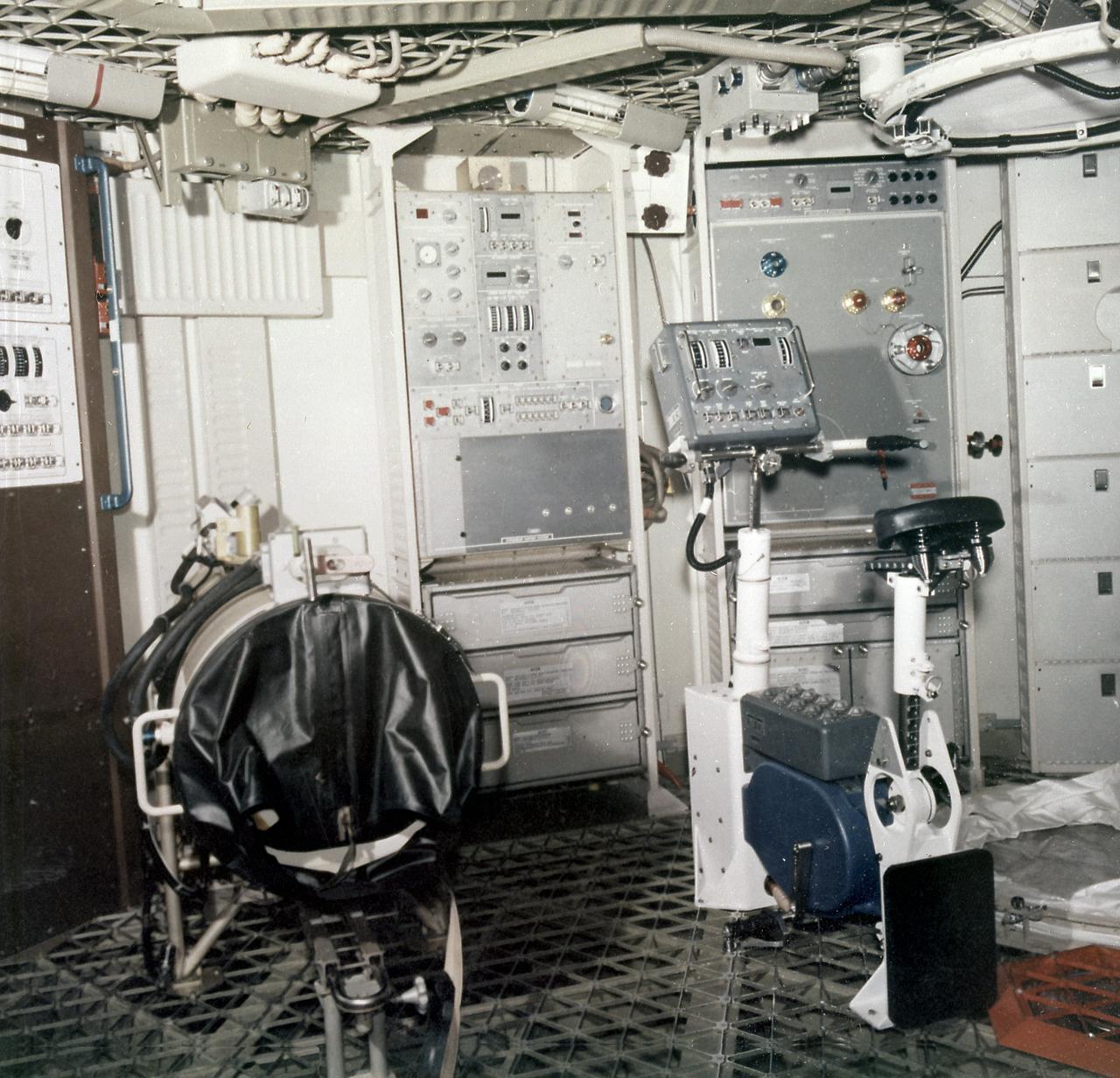
The Orbital Workshop internal arrangement shown here is the medical experimental equipment. In this view, looking from the wardroom area, are the lower-body Negative Pressure (Experiment M092) unit, left, and the ergometer for the vectorcardiograph (Experiment - M093). Both are used in several ways to keep check on the astronauts' condition and tolerance in extended weightlessness. The 1-G trainer permits the astronauts to get experience with all of the equipment and operations except the absence of gravity.
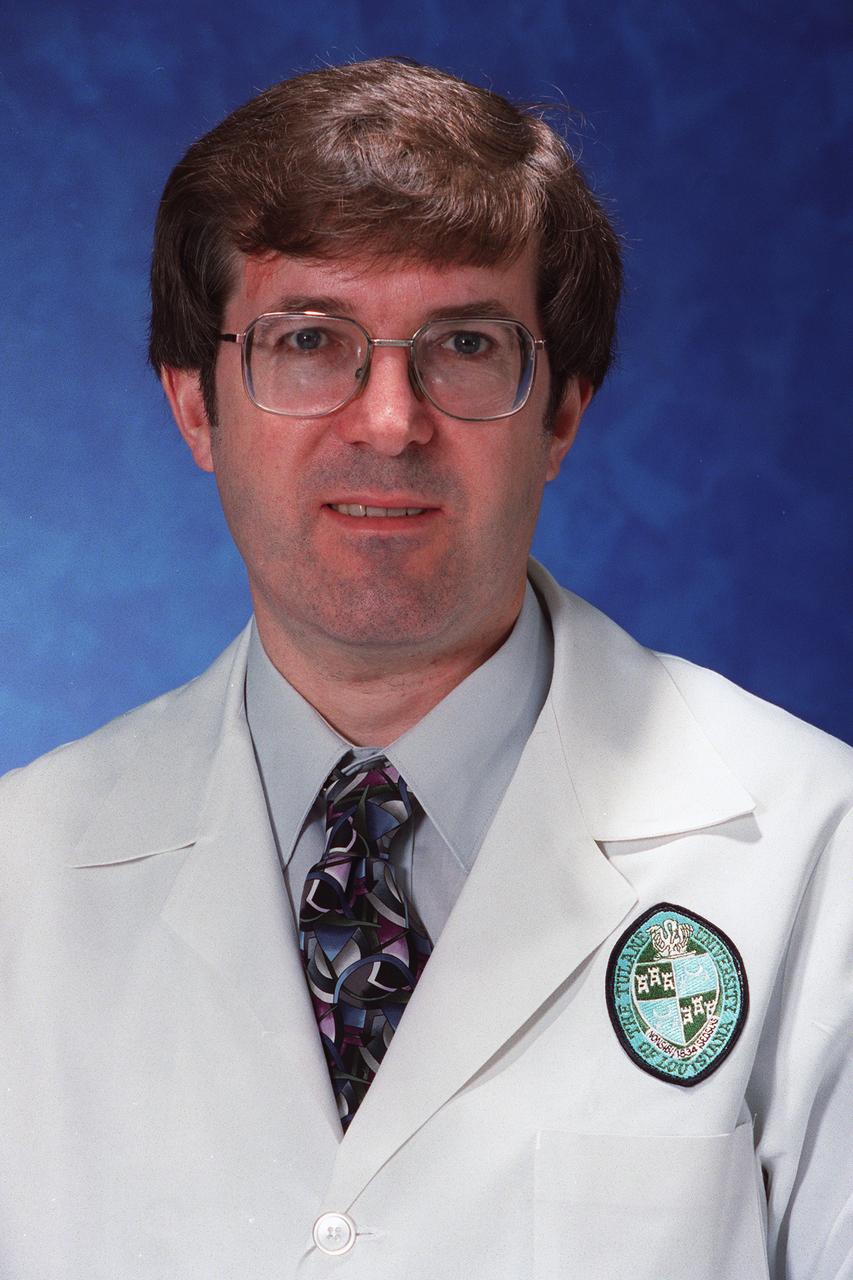
Dr. Timothy G. Hammond of the Department of Internal Medicine, Nephrology Section, Tulane University Medical Center, New Orleans, LA, is one of NASA's principal investigators conducting research with the NASA Bioreactor project directed by Johrnson Space Center. Hammond's investigations include Production of 1-25- diOH D3 by Renal Epithelial Cells in Simulated Microgravity Culture and Differentiation of Cultured Normal Human Renal Epithelial Cells in Microgravity. Photo credit: Tulane University.
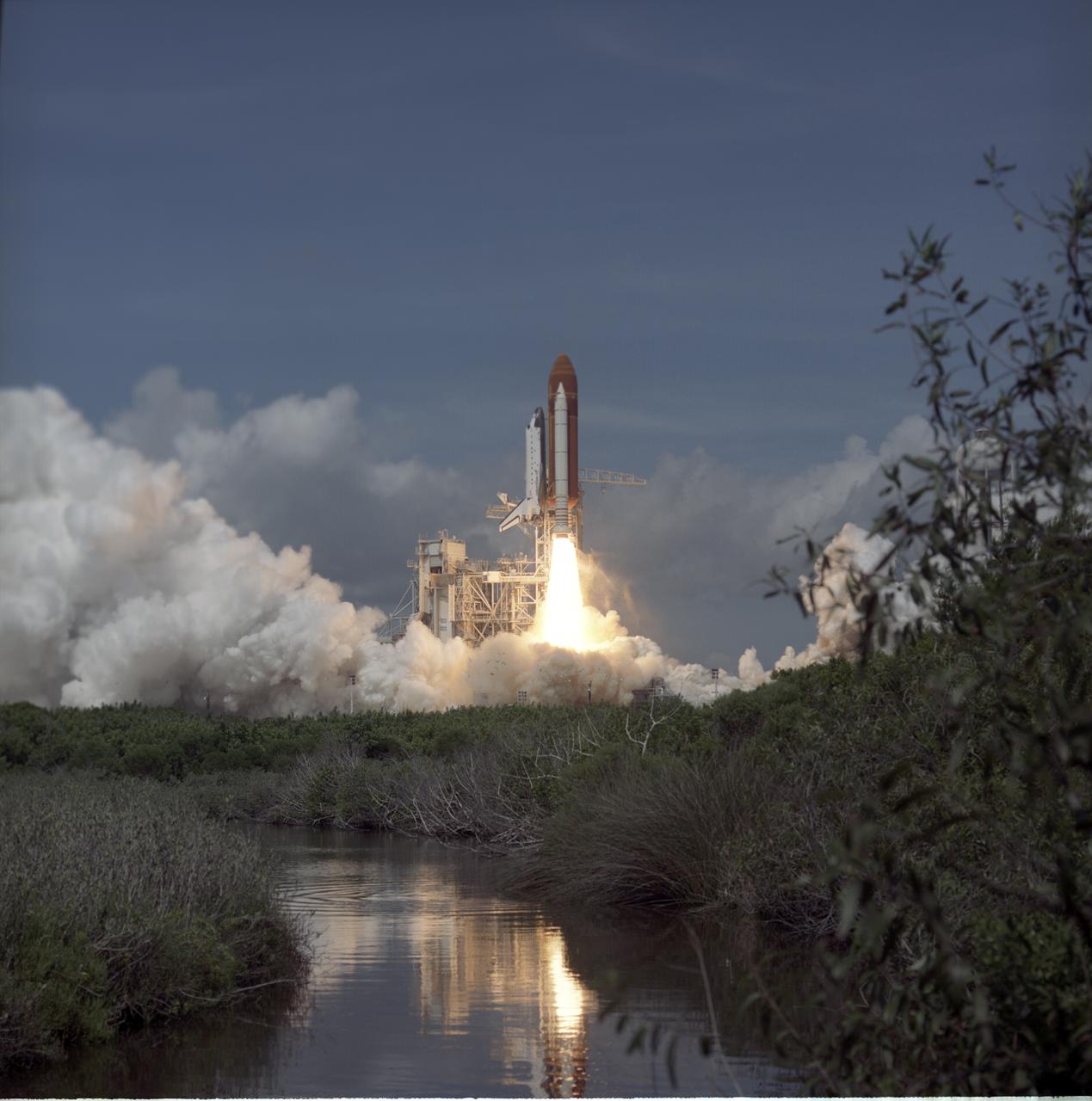
Launched aboard the Space Shuttle Atlantis on August 2, 1991, the STS-43 mission’s primary payload was the Tracking and Data Relay Satellite 5 (TDRS-5) attached to an Inertial Upper Stage (IUS), which became the 4th member of an orbiting TDRS cluster. The flight crew consisted of 5 astronauts: John E. Blaha, commander; Michael A. Baker, pilot; Shannon W. Lucid, mission specialist 1; James C. Adamson, mission specialist 2; and G. David Low, mission specialist 3.
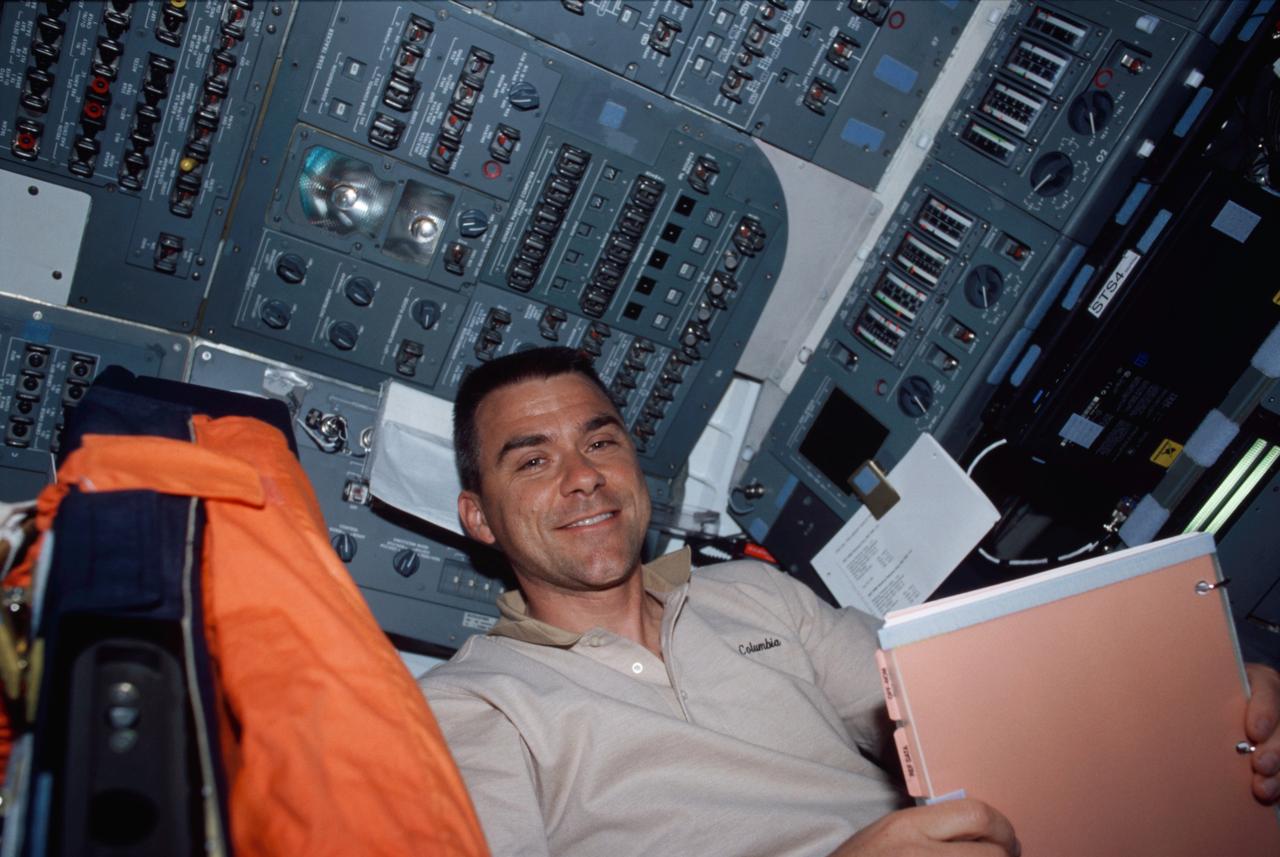
STS109-319-034 (1-12 March 2002) -- Astronaut Duane G. Carey, STS-109 pilot, consults a reference manual on the flight deck of the Space Shuttle Columbia. Making his first trip into space, Carey has been very busy this week inside the crew cabin, assisting four space walking astronauts participate in five days of extravehicular activity (EVA) to perform work on the Hubble Space Telescope (HST).
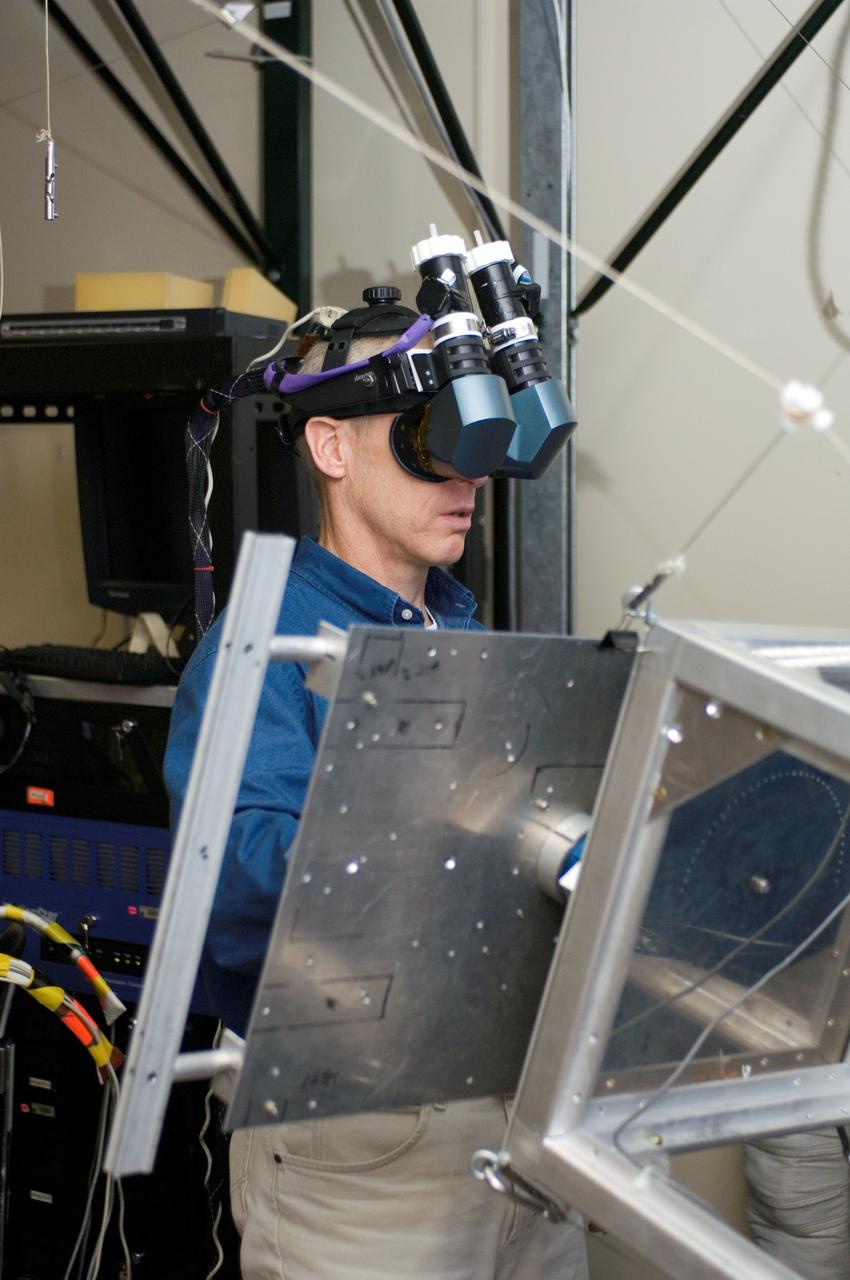
JSC2006-E-47421 (1 Nov. 2006) --- Astronaut Patrick G. Forrester, STS-117 mission specialist, uses virtual reality hardware in the Space Vehicle Mockup Facility at Johnson Space Center to rehearse some of his duties on the upcoming mission to the International Space Station. This type of virtual reality training allows the astronauts to wear a helmet and special gloves while looking at computer displays simulating actual movements around the various locations on the station hardware with which they will be working.
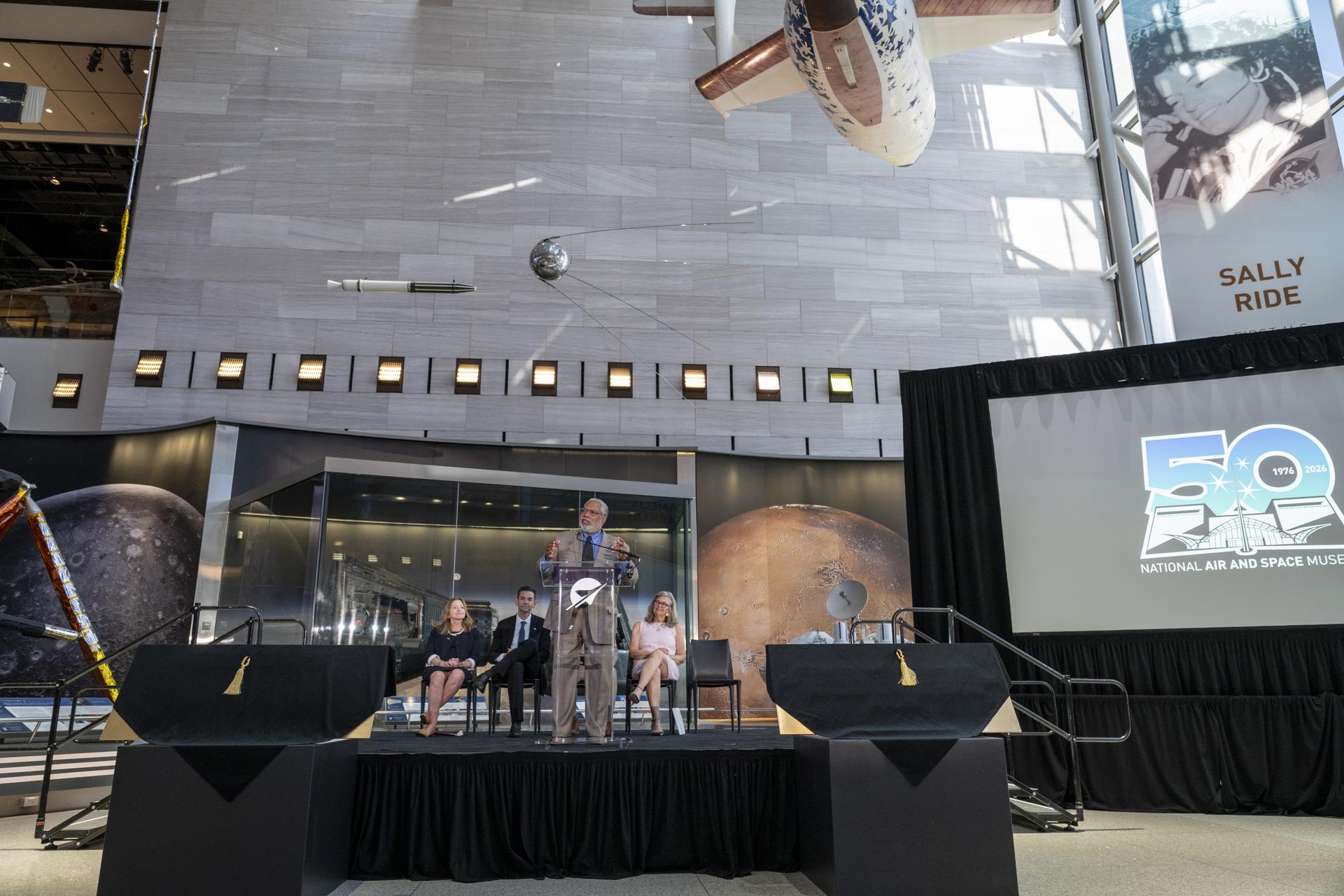
Secretary of the Smithsonian Institution Lonnie G. Bunch III delivers remarks during the Smithsonian’s National Air and Space Museum rededication ceremony Wednesday, July 1, 2026, in Washington. The swatch is being returned to the museum after having been flown aboard NASA’s Artemis II mission around the Moon and back to Earth in April 2026. Photo Credit: (NASA/Keegan Barber)
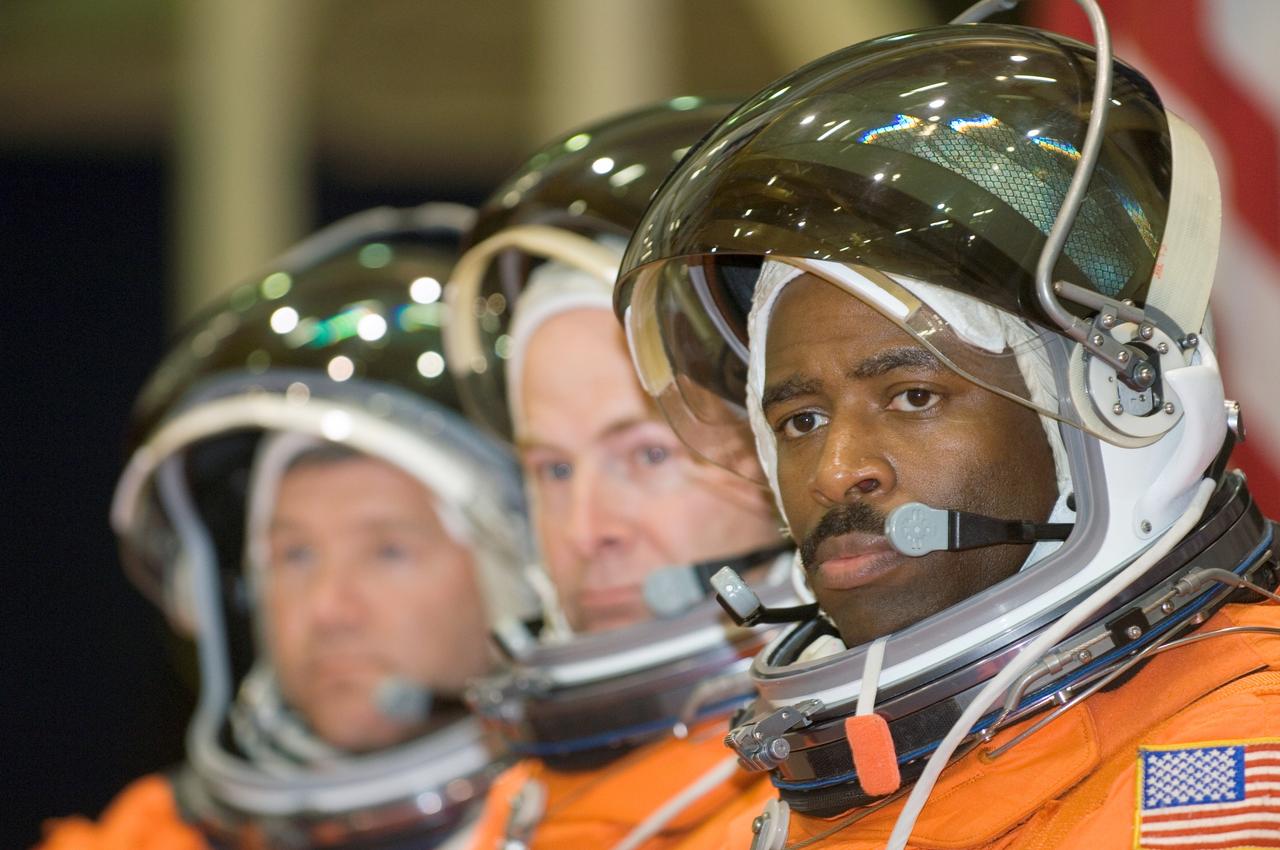
JSC2007-E-21251 (1 May 2007) --- Astronauts Stephen N. Frick (left), STS-122 commander; Alan G. Poindexter, pilot; and Leland D. Melvin, mission specialist, await the start of an emergency egress training session in the Space Vehicle Mockup Facility at Johnson Space Center. The crewmembers are wearing training versions of their shuttle launch and entry suits.
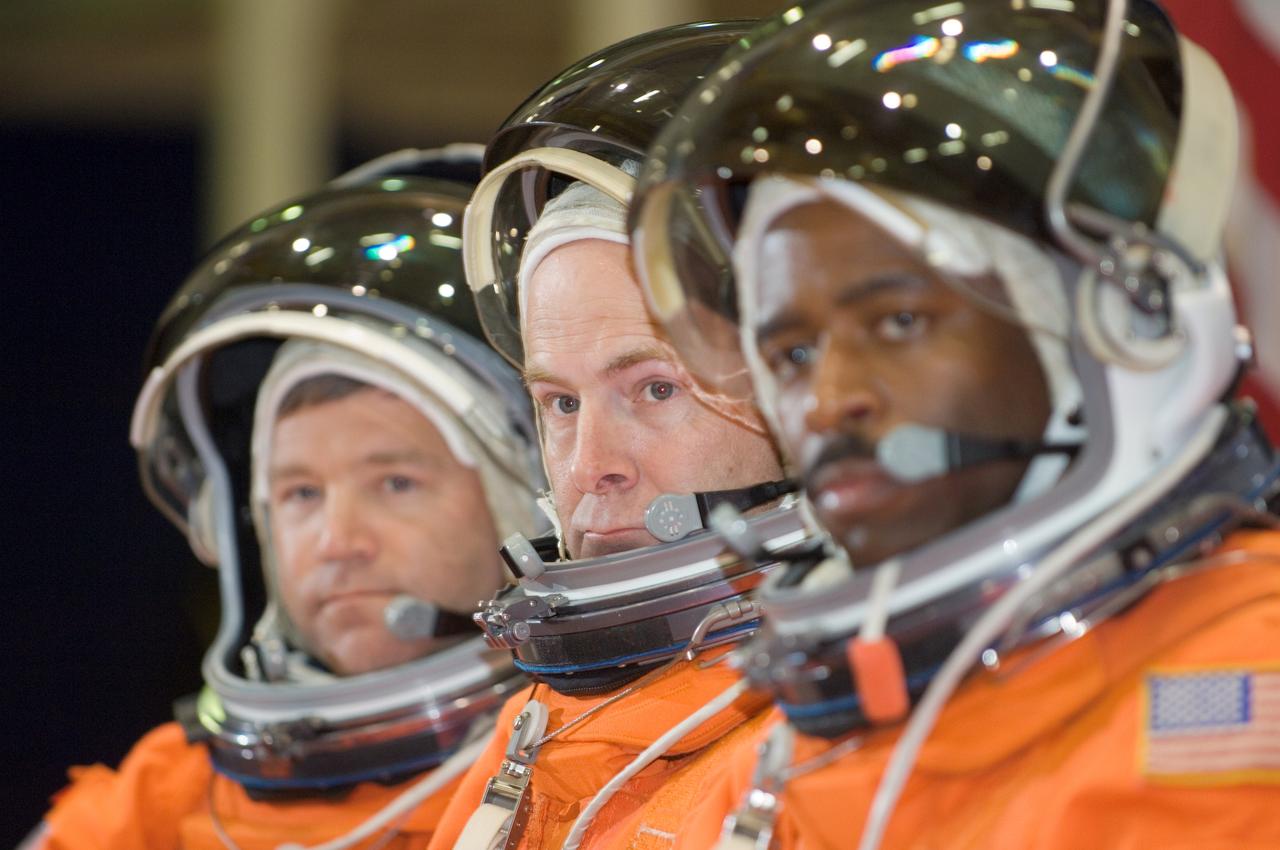
JSC2007-E-21250 (1 May 2007) --- Astronauts Stephen N. Frick (left), STS-122 commander; Alan G. Poindexter, pilot; and Leland D. Melvin, mission specialist, await the start of an emergency egress training session in the Space Vehicle Mockup Facility at Johnson Space Center. The crewmembers are wearing training versions of their shuttle launch and entry suits.
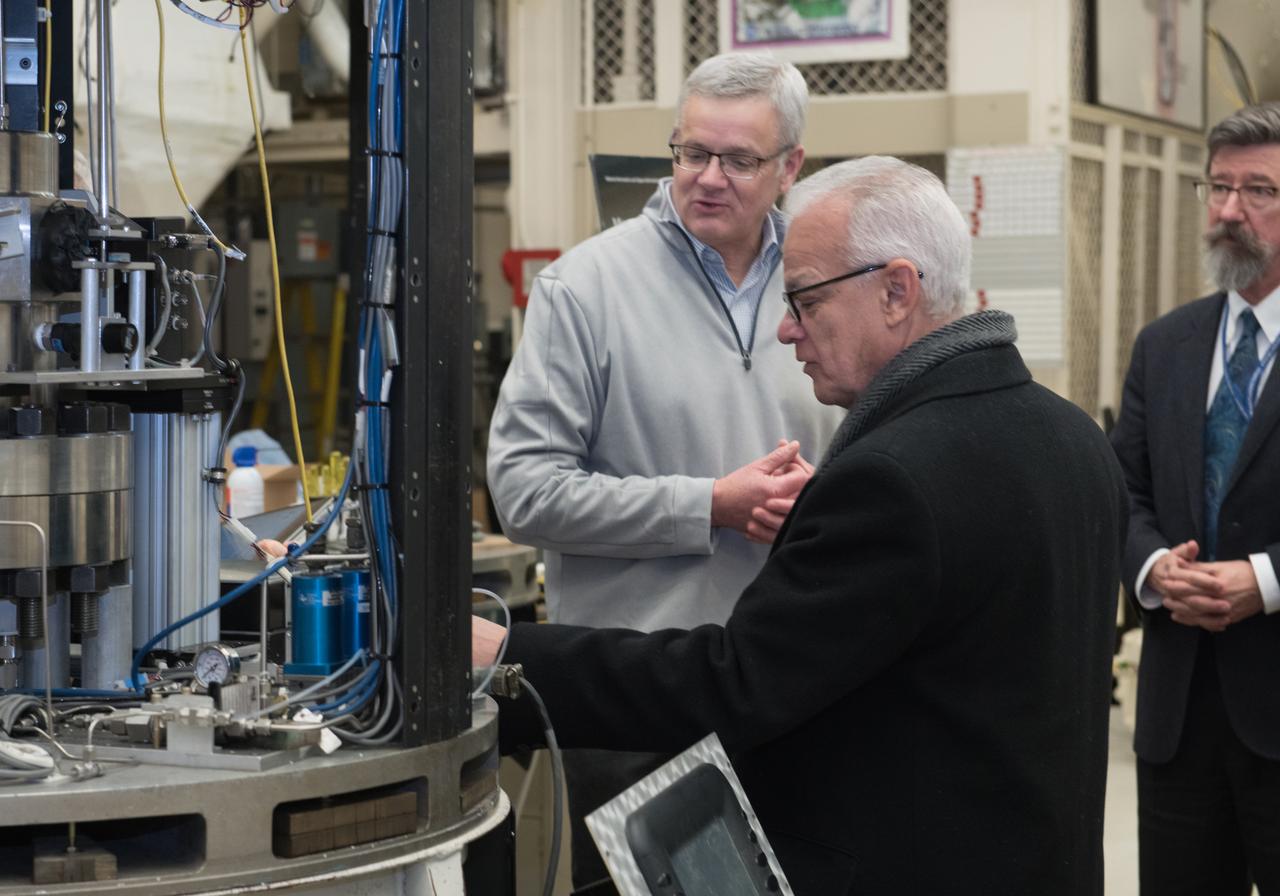
Office of the Chief Technologist, OCT Innovation Workshop, and Facility Tours
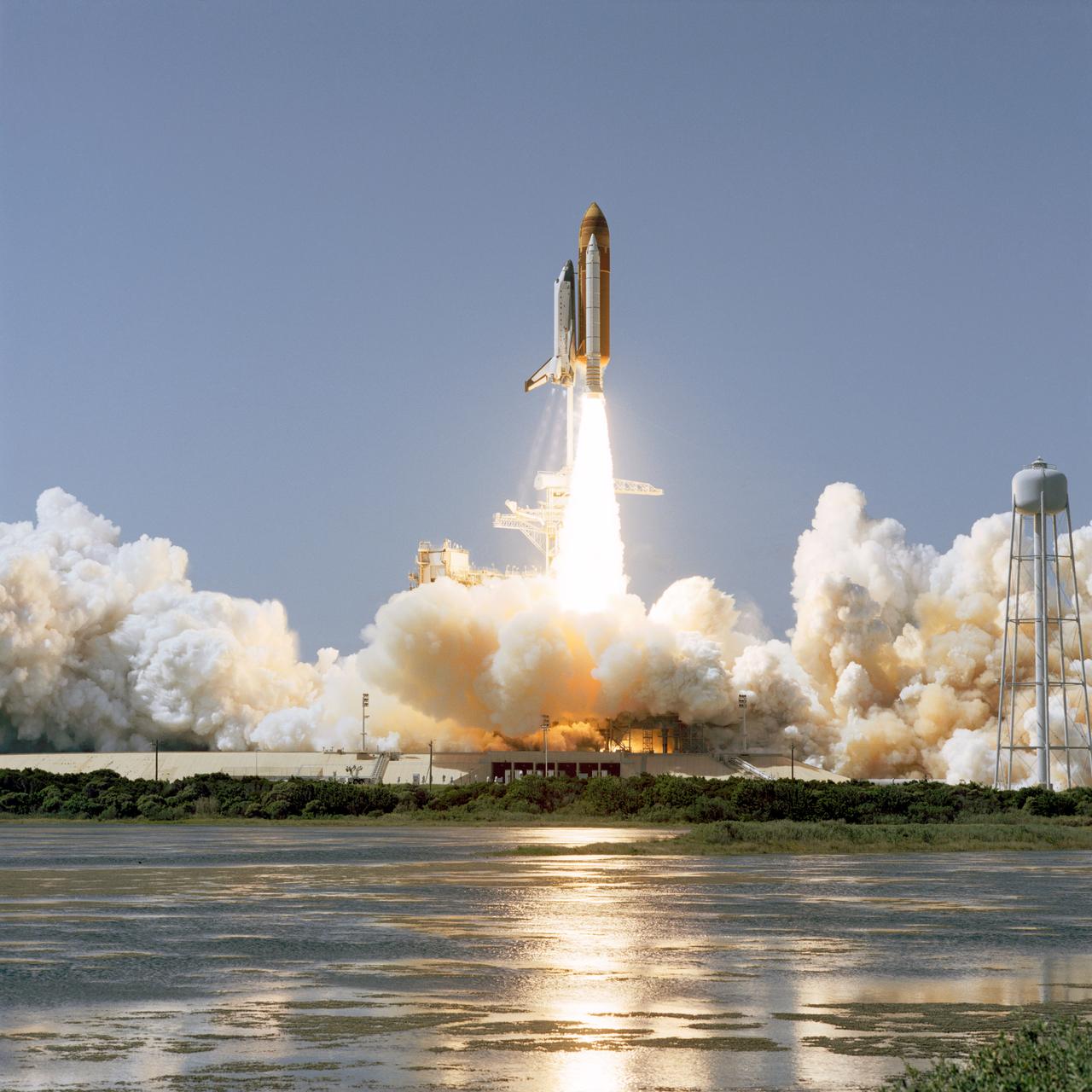
STS052-S-051 (22 Oct 1992) --- This distant 70mm image shows the Space Shuttle Columbia clearing the tower at Launch Pad 39B, at the Kennedy Space Center (KSC), on its way toward a ten-day Earth-orbital mission with a crew of five NASA astronauts and a Canadian payload specialist. Liftoff occurred at 1:09:39 p.m. (EDT), October 22, 1992. Crew members are astronauts James D. Wetherbee, Michael A. Baker, Tamara E. Jernigan, Charles L. (Lacy) Veach and William M. Shepherd, along with payload specialist Steven G. MacLean. Payloads onboard include the Laser Geodynamic Satellite II (LAGEOS II), which will be deployed early in the mission, a series of Canadian experiments, and the United States Microgravity Payload-1 (USMP-1).
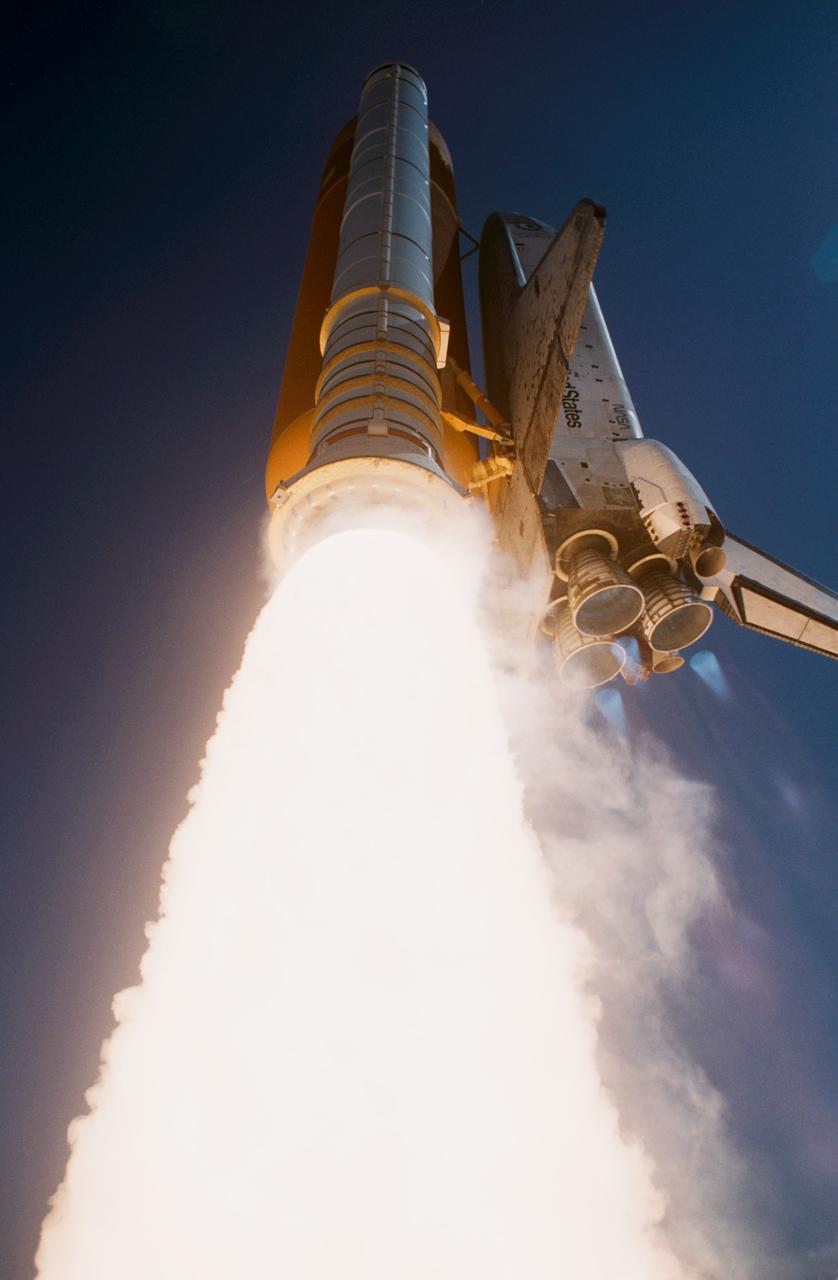
STS052-S-053 (22 Oct. 1992) --- This low-angle 35mm image shows the space shuttle Columbia on its way toward a ten-day Earth-orbital mission with a crew of five NASA astronauts and a Canadian payload specialist. Liftoff occurred at 1:09:39 p.m. (EDT), Oct. 22, from Kennedy Space Center?s (KSC) Launch Pad 39B. Crew members onboard are astronauts James D. Wetherbee, Michael A. Baker, Tamara E. Jernigan, Charles L. (Lacy) Veach and William M. Shepherd, along with payload specialist Steven G. MacLean. Payloads onboard include the Laser Geodynamic Satellite II (LAGEOS II), which will be deployed early in the mission, a series of Canadian experiments, and the United States Microgravity Payload-1 (USMP-1). Photo credit: NASA
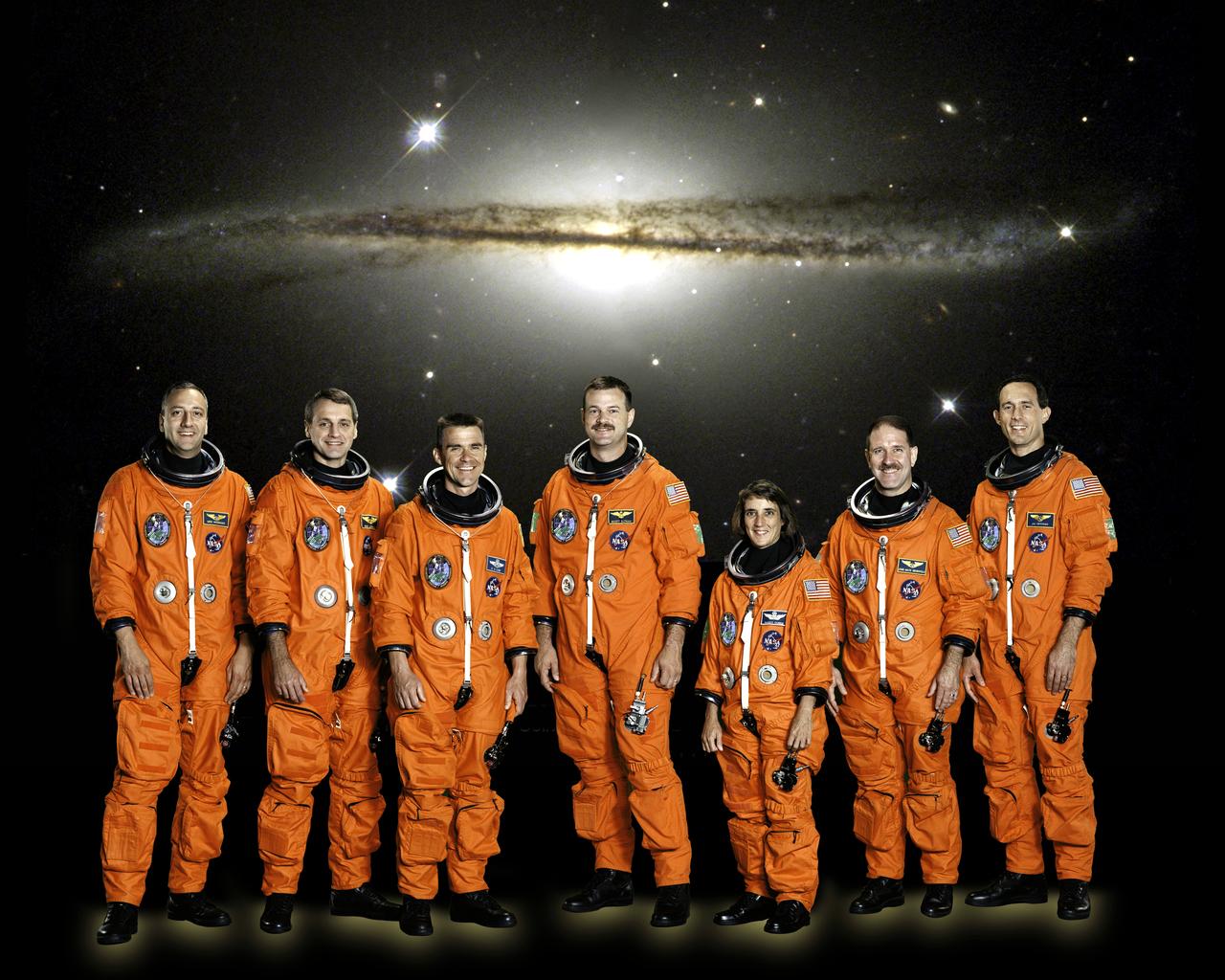
Posing for the traditional preflight crew portrait, the seven astronauts of the STS-109 mission are (left to right) astronauts Michael J. Massimino, Richard M. Linnehan, Duane G. Carey, Scott D. Altman, Nancy J. Currie, John M. Grunsfeld and James H. Newman. Altman and Carey were commander and pilot, respectively, with the others serving as mission specialists. Grunsfeld was payload commander. Launched aboard the Space Shuttle Columbia on March 1, 2002, the group was the fourth visit to the the Hubble Space Telescope (HST) for performing upgrade and servicing on the giant orbital observatory.
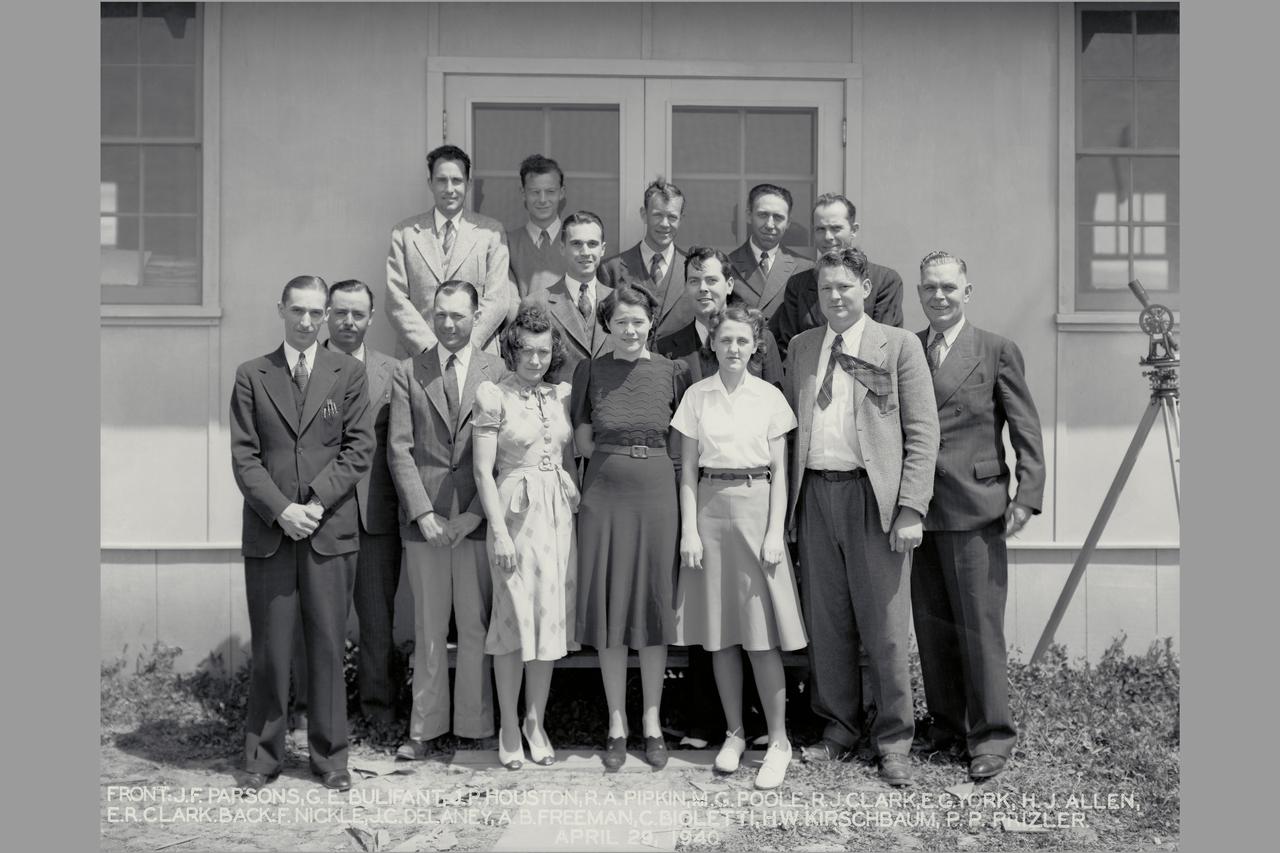
Arriving Engineers were John Parsons and Ferril Nickle (January 29, 1940) They were the first permanent members of the laboratory's staff on site. Other early arrivals from Langley were: Carlton Bioletti, March 1; Arthur B. Freeman, March 2; Edward R. Sharp, March 11; Manie G Poole, March 11; H. Julian Allen, April 13; Geroge E. Bulifant, April 17; Howard W. Krischbaum, April 29; and John P. Houston, April 29. Russ Robinson on-site representative of the construction group and their support staff E York, R Pippen.
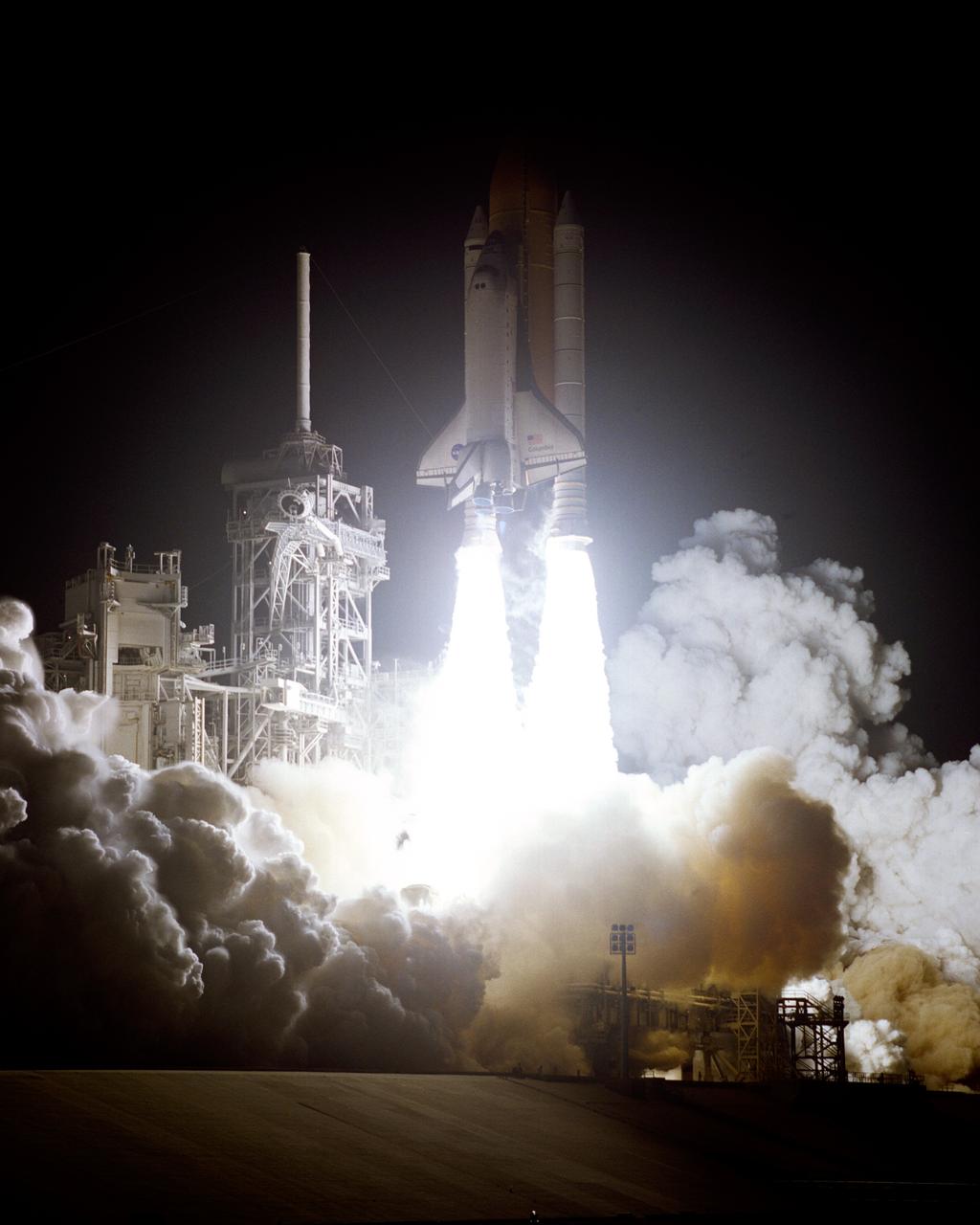
STS109-S-007 (1 March 2002) --- The Space Shuttle Columbia begins its 27th flight in the pre-dawn hours from Launch Pad 39A. Liftoff for STS-109 occurred at 6:22:02:08 a.m., EST (11:22:02:08 GMT). The goal of the mission is the maintenance and upgrade of the Hubble Space Telescope, to be carried out in five space walks. On board the spacecraft were astronauts Scott D. Altman, Duane G. Carey, Nancy J. Currie, John M. Grunsfeld, James H. Newman, Richard M. Linnehan and Michael J. Massimino.
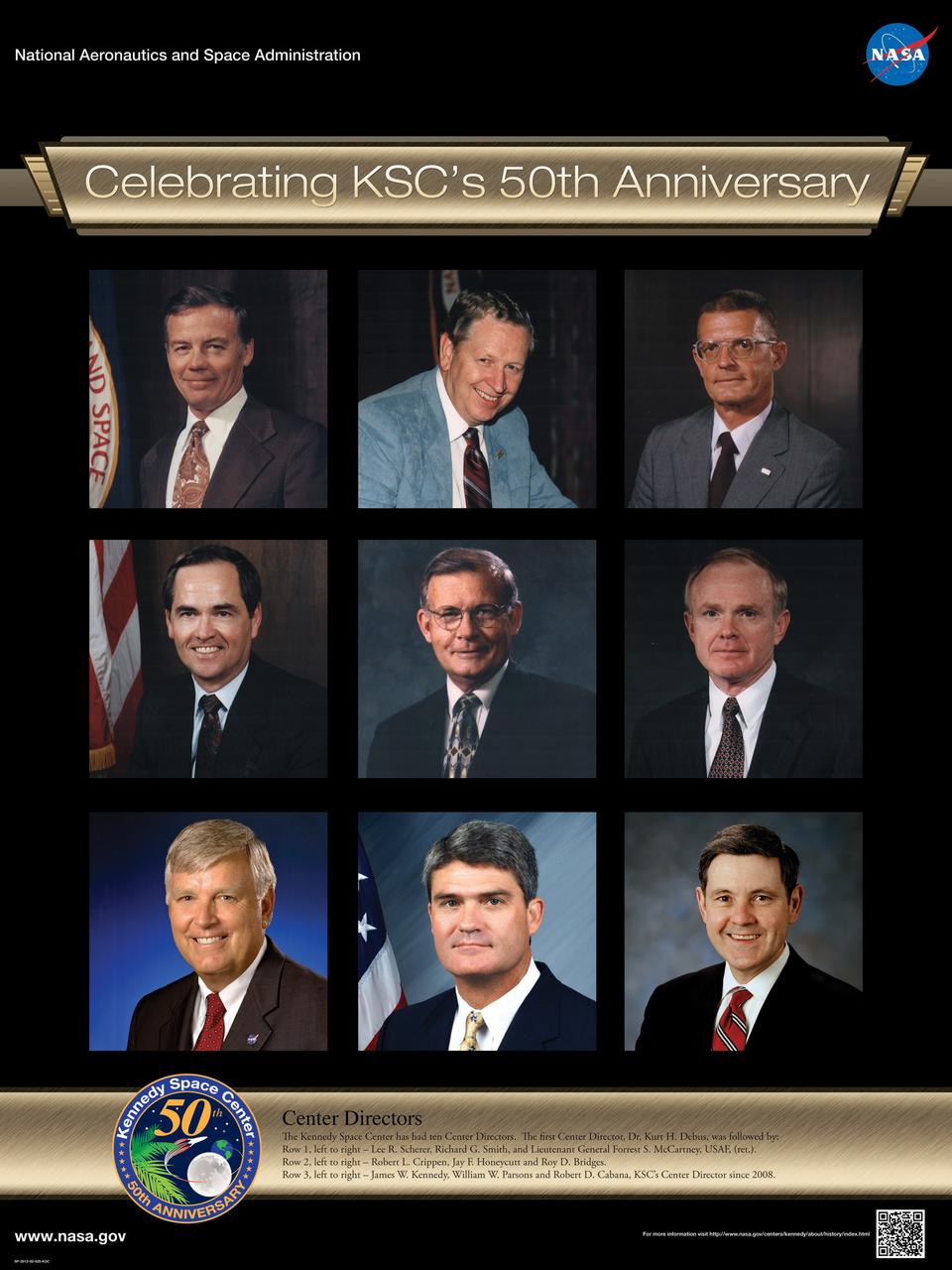
Center Directors: The Kennedy Space Center has had ten Center Directors. The first Center Director, Dr. Kurt H. Debus, was followed by: Row 1, left to right – Lee R. Scherer, Richard G. Smith, and Lieutenant General Forrest S. McCartney, USAF, ret.. Row 2, left to right – Robert L. Crippen, Jay F. Honeycutt and Roy D. Bridges. Row 3, left to right – James W. Kennedy, William W. Parsons and Robert D. Cabana, KSC’s Center Director since 2008. Poster designed by Kennedy Space Center Graphics Department/Greg Lee. Credit: NASA
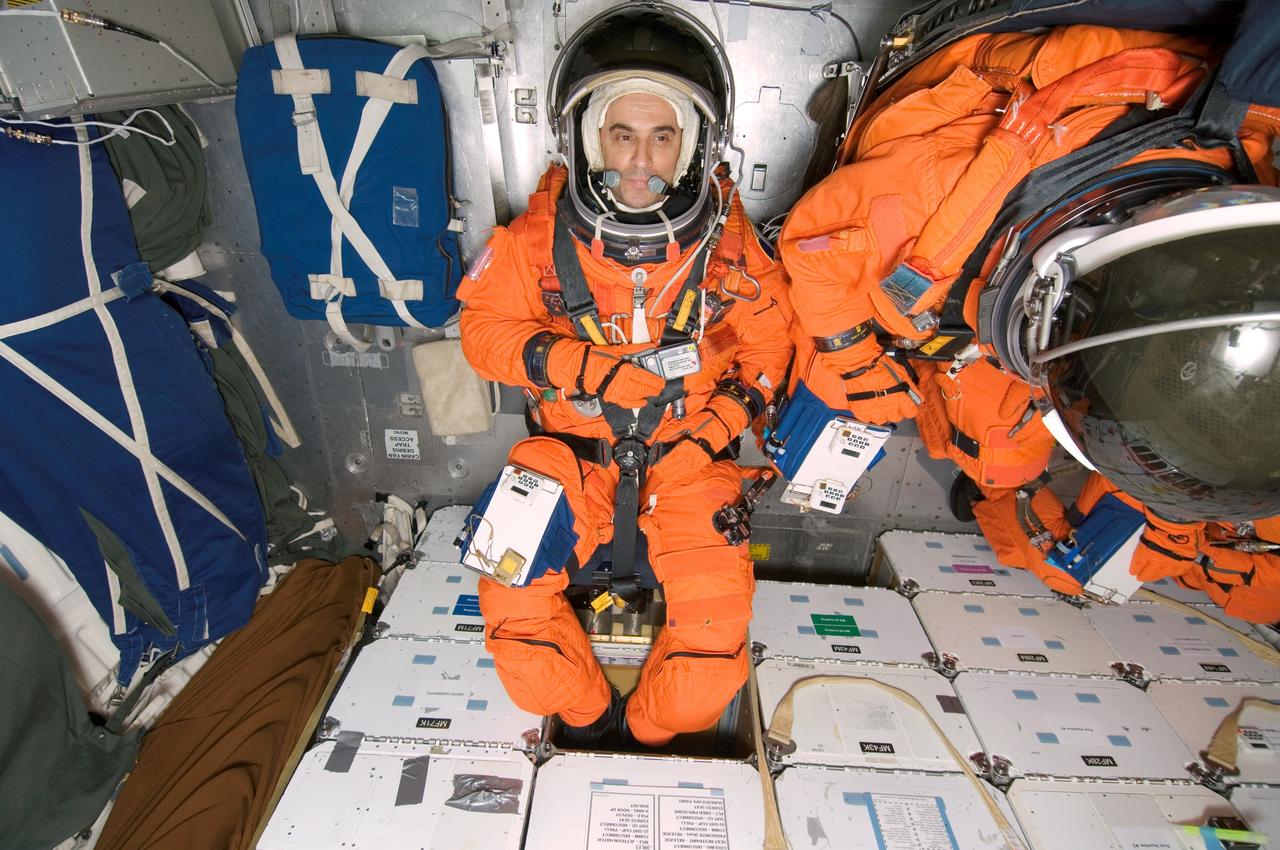
JSC2007-E-21237 (1 May 2007) --- European Space Agency (ESA) astronaut Leopold Eyharts, Expedition 16 flight engineer; astronaut Stanley G. Love (partially out of frame) and ESA astronaut Hans Schlegel (out of frame), both STS-122 mission specialists, participate in a training session in one of the full-scale trainers in the Space Vehicle Mockup Facility at Johnson Space Center. Attired in training versions of their shuttle launch and entry suits, the three are seated on the middeck for a post insertion/de-orbit training session. Eyharts is scheduled to join Expedition 16 as flight engineer after launching to the International Space Station on mission STS-122.

JSC2007-E-21236 (1 May 2007) --- European Space Agency (ESA) astronaut Leopold Eyharts (foreground), Expedition 16 flight engineer; astronaut Stanley G. Love and ESA astronaut Hans Schlegel, both STS-122 mission specialists, participate in a training session in one of the full-scale trainers in the Space Vehicle Mockup Facility at Johnson Space Center. Attired in training versions of their shuttle launch and entry suits, the three are seated on the middeck for a post insertion/de-orbit training session. Eyharts is scheduled to join Expedition 16 as flight engineer after launching to the International Space Station on mission STS-122.
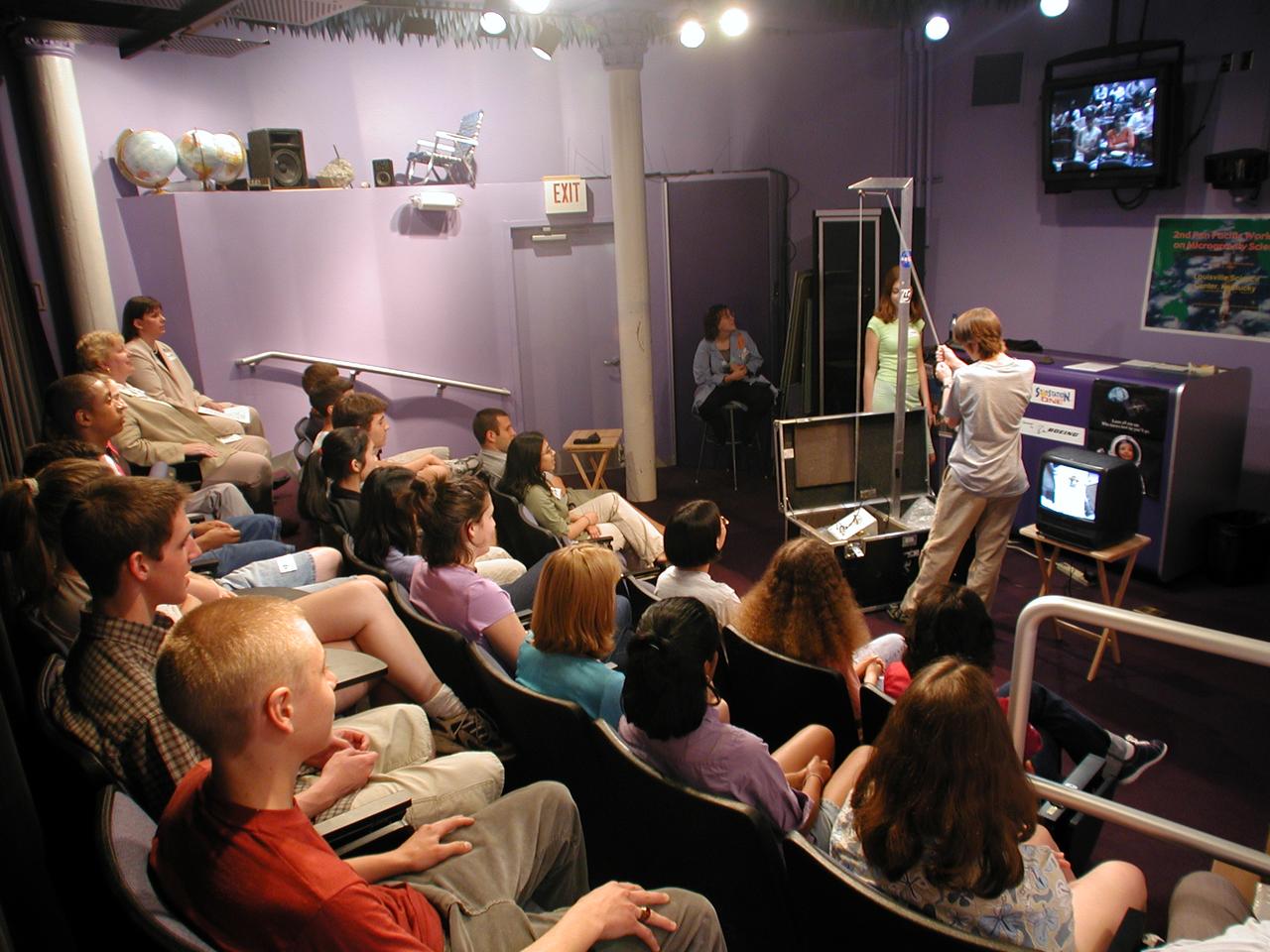
John Henson (grade 12) and Suzi Bryce (grade 10) from DuPont Manual High School in Louisville, Kentucky, conduct a drop with NASA's Microgravity Demonstrator. A camera and a TV/VCR unit let students play back recordings of how different physical devices behave differently during freefall as compared to 1-g. The activity was part of the education outreach segment of the Pan-Pacific Basin Workshop on Microgravity Sciences held in Pasadena, California. The event originated at the California Science Center in Los Angeles. The DuPont Manual students patched in to the event through the distance learning lab at the Louisville Science Center. This image is from a digital still camera; higher resolution is not available.
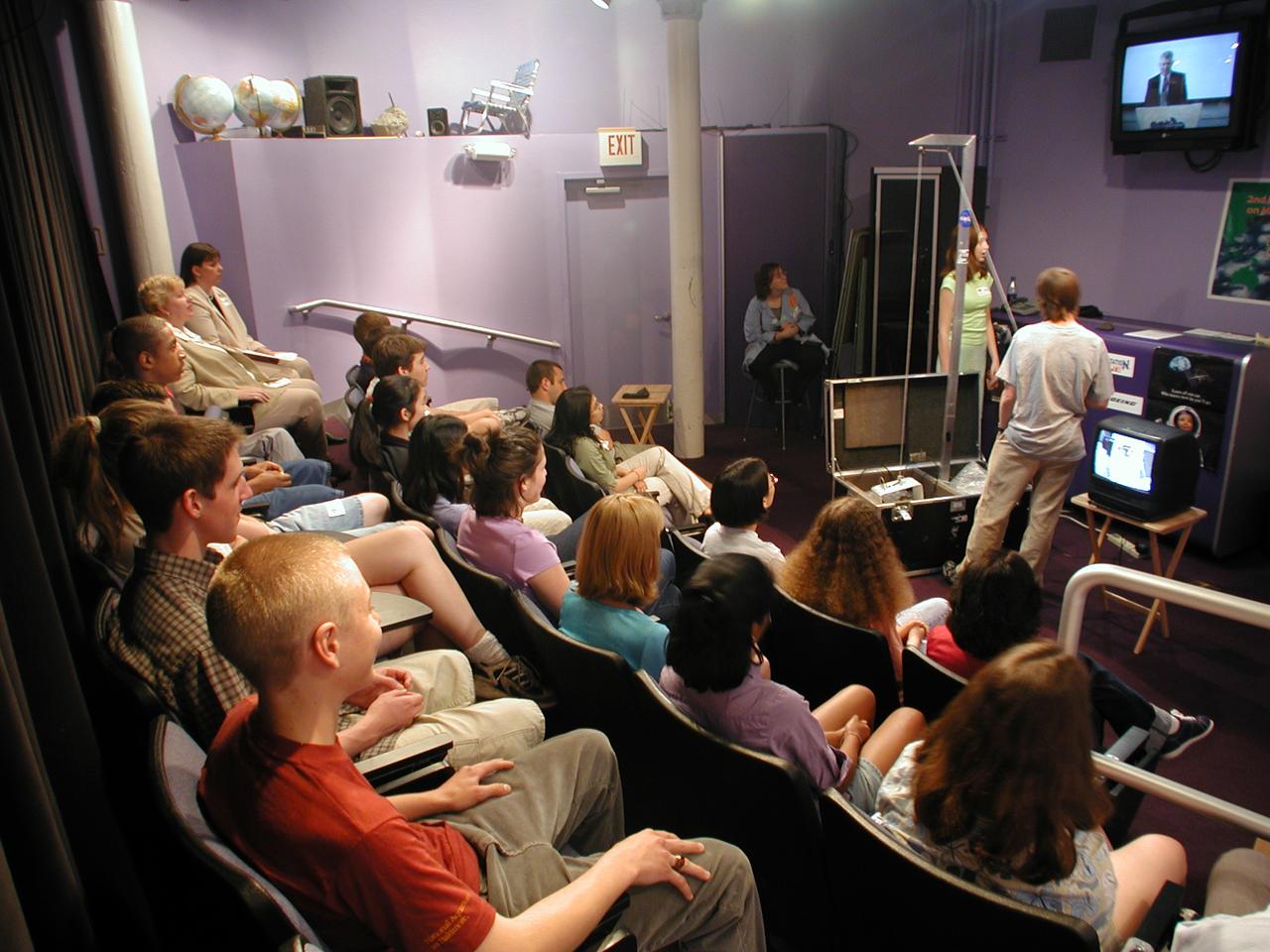
John Henson (grade 12) and Suzi Bryce (grade 10) conducted the drop from DuPont Manual High School in Louisville, Kentucky, conduct a drop with NASA's Microgravity Demonstrator. A camera and a TV/VCR unit let students play back recordings of how different physical devices behave differently during freefall as compared to 1-g. The activity was part of the education outreach segment of the Pan-Pacific Basin Workshop on Microgravity Sciences held in Pasadena, California. The event originated at the California Science Center in Los Angeles. The DuPont Manual students patched in to the event through the distance learning lab at the Louisville Science Center. This image is from a digital still camera; higher resolution is not available.
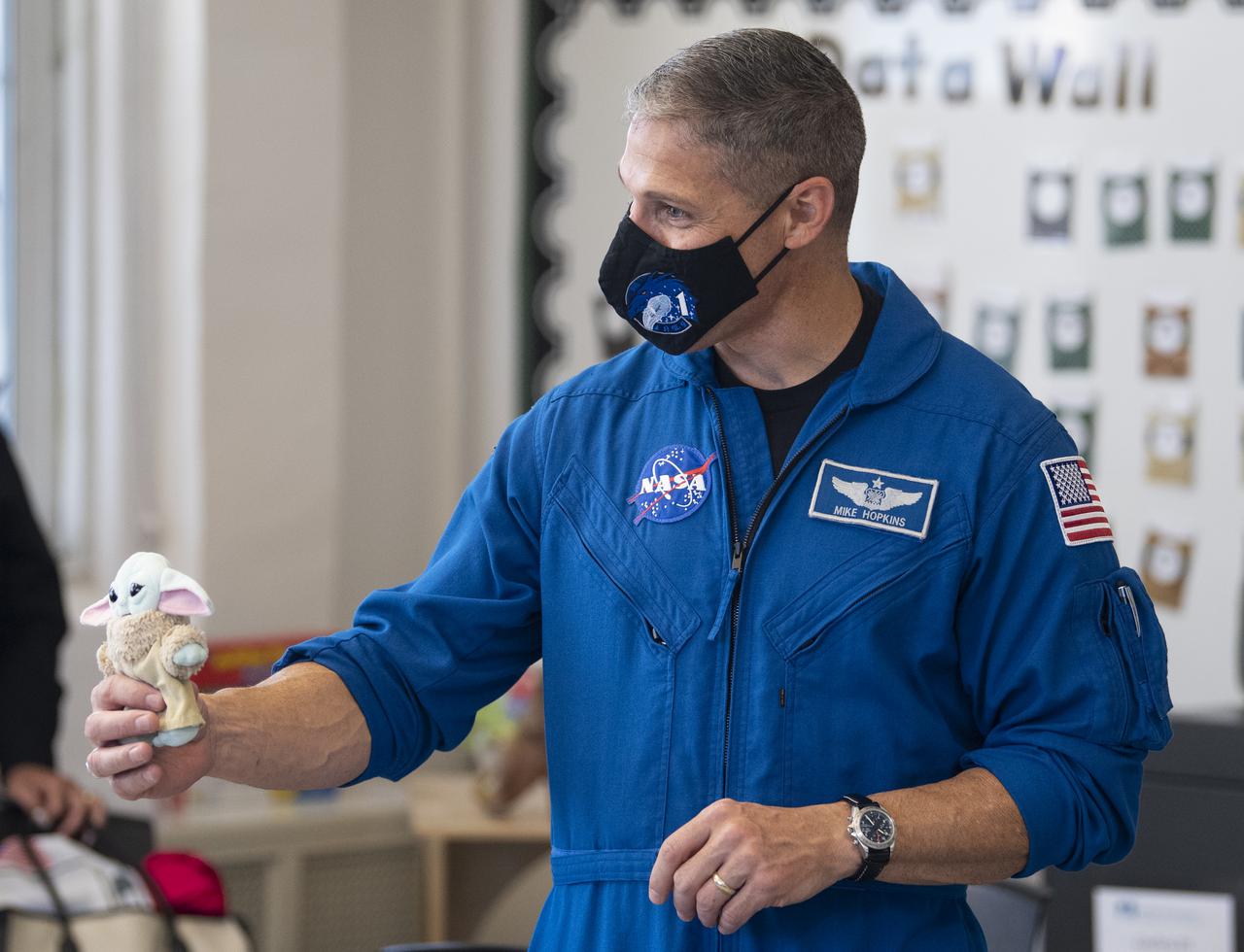
NASA astronaut Mike Hopkins shows his crew’s “zero-G indicator” as he speaks with students about his time aboard the International Space Station during the Crew-1 mission, Thursday, Nov. 18, 2021, at Garfield Elementary School in Washington, DC. Hopkins and fellow NASA astronauts Shannon Walker, Victor Glover, and Japan Aerospace Exploration Agency (JAXA) astronaut Soichi Noguchi launched on the first crew rotation mission to the International Space Station for SpaceX’s Falcon 9 and Crew Dragon spacecraft as part of the agency’s Commercial Crew Program and spent 168 days in space across Expeditions 64 and 65. Photo Credit: (NASA/Joel Kowsky)
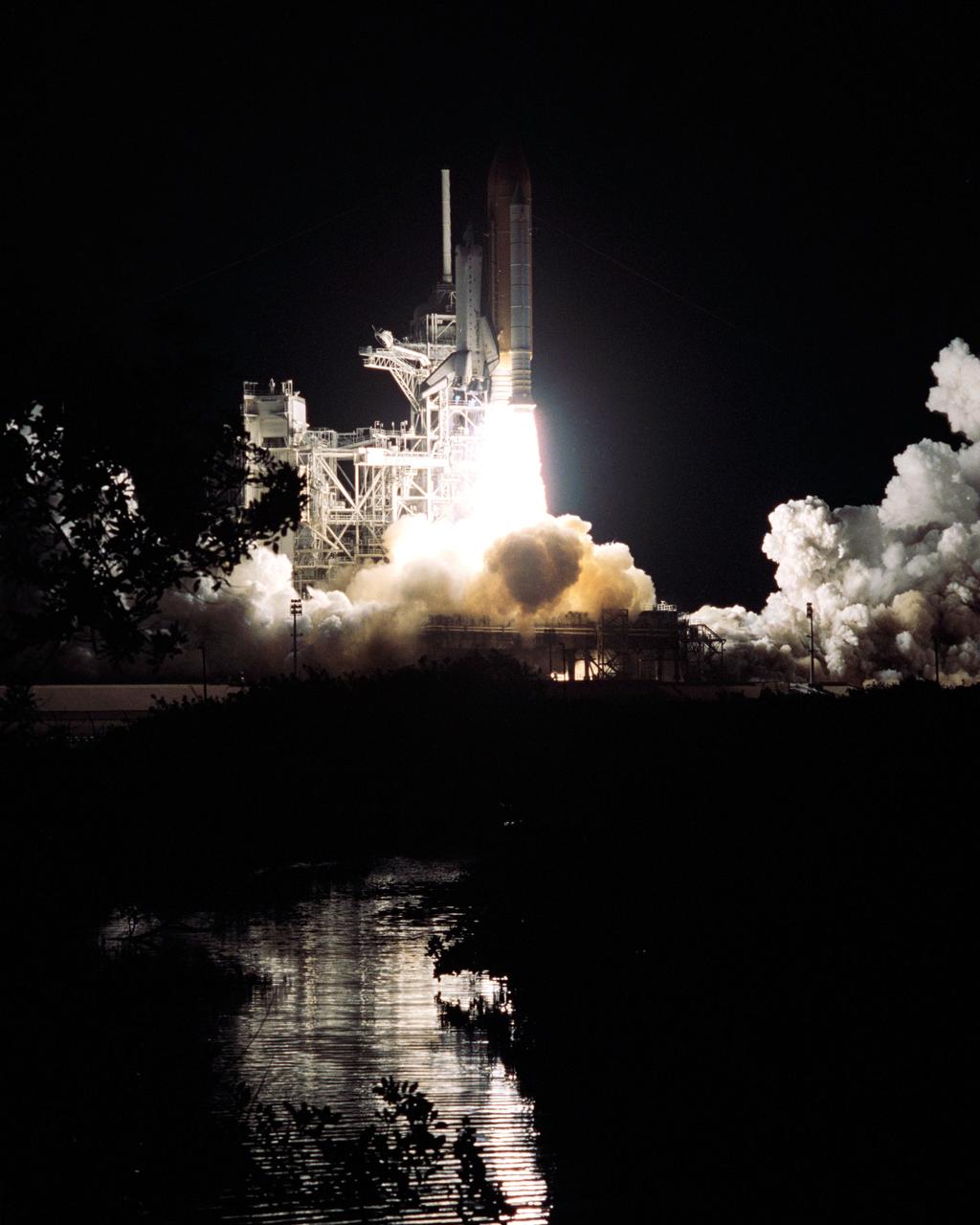
STS109-S-006 (1 March 2002) --- The Space Shuttle Columbia begins its 27th flight in the pre-dawn hours from Launch Pad 39A. Liftoff for STS-109 occurred at 6:22:02:08 a.m., EST (11:22:02:08 GMT). The goal of the mission is the maintenance and upgrade of the Hubble Space Telescope, to be carried out in five space walks. On board the spacecraft were astronauts Scott D. Altman, Duane G. Carey, Nancy J. Currie, John M. Grunsfeld, James H. Newman, Richard M. Linnehan and Michael J. Massimino.
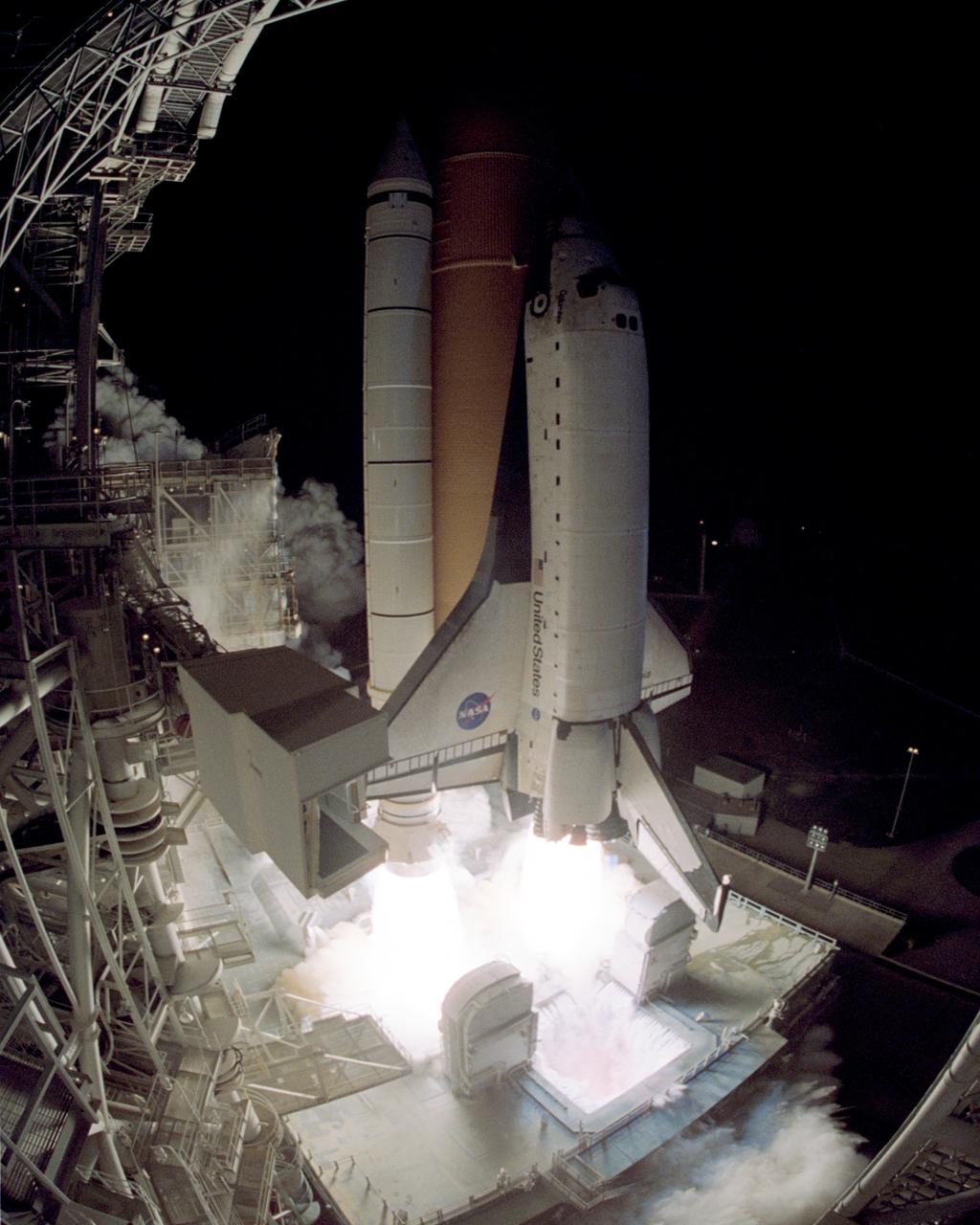
STS109-S-005 (1 March 2002) --- The Space Shuttle Columbia begins its 27th flight in the pre-dawn hours from Launch Pad 39A. Liftoff for STS-109 occurred at 6:22:02:08 a.m., EST (11:22:02:08 GMT). The goal of the mission is the maintenance and upgrade of the Hubble Space Telescope, to be carried out in five space walks. On board the spacecraft were astronauts Scott D. Altman, Duane G. Carey, Nancy J. Currie, John M. Grunsfeld, James H. Newman, Richard M. Linnehan and Michael J. Massimino.
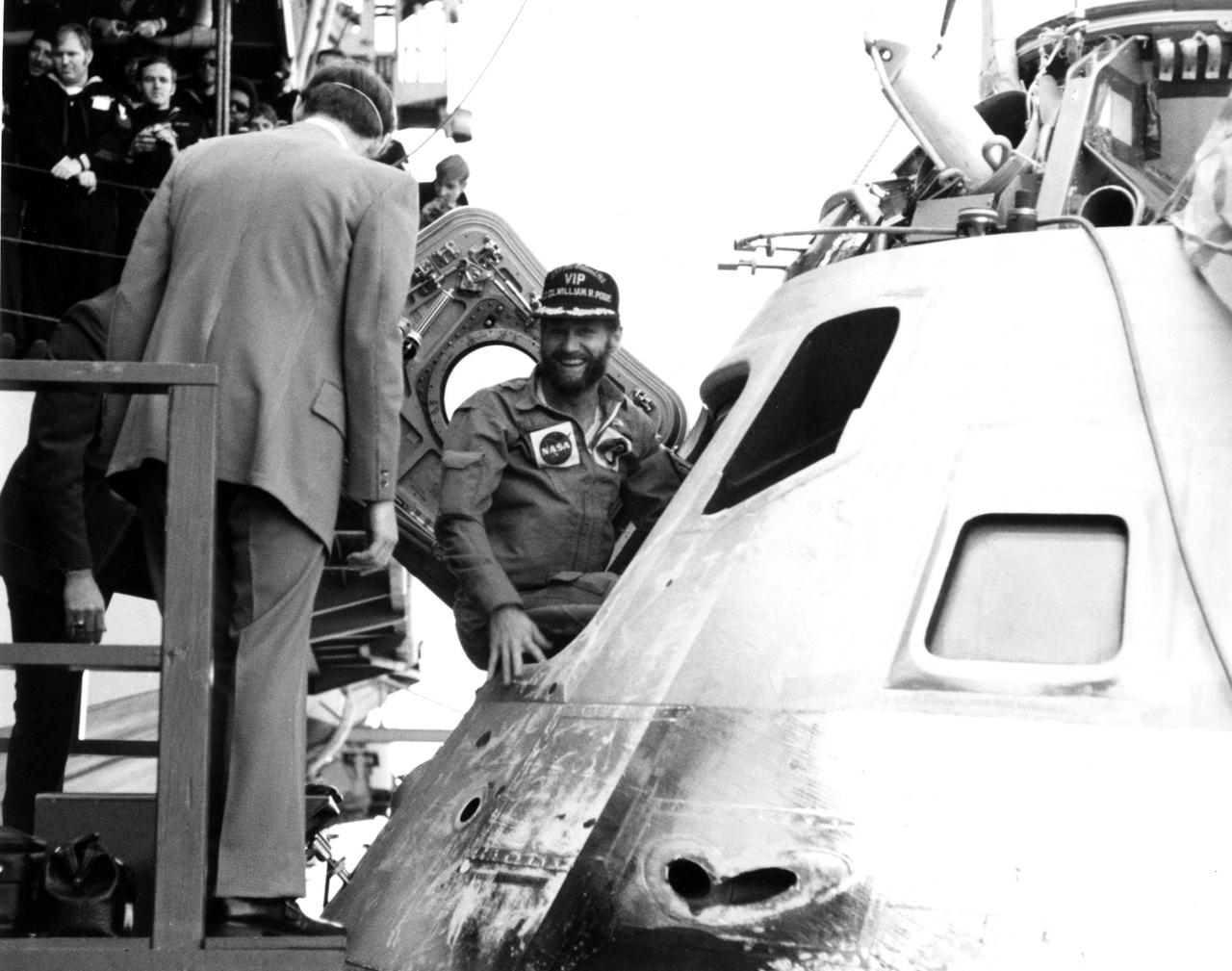
SKYLAB 4 PACIFIC RECOVERY AREA -- A smiling William R. Pogue pauses in hatchway of Skylab 4 command module during recovery activities today aboard the USS New Orleans at the completion of man's longest space journey to date. Pogue splashed down with astronauts Gerald P. Carr and Dr. Edward G. Gibson at 11:17 a.m. EDT Feb. 8, 1974, 84 days after the trio was launched by a Saturn IB rocket from Kennedy Space Center. Circling the globe 1, 214 times aboard the sophisticated Skklab space station during the nearly three-month flight, the astronauts demonstrated man's ability to live and work in space for extended periods.
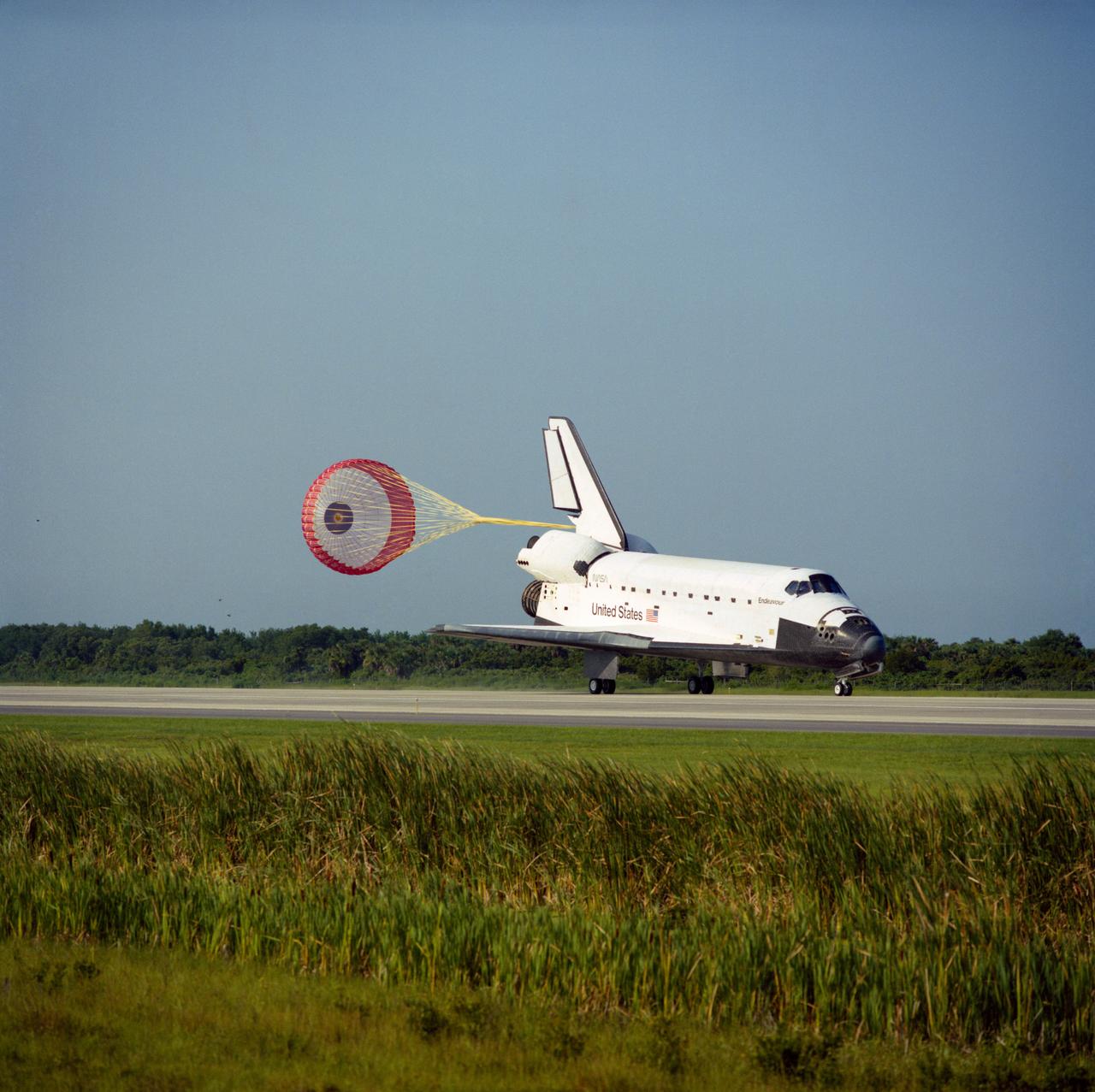
STS057-S-082 (1 July 1993) --- The drag chute on the Space Shuttle Endeavour is fully deployed in this scene on Runway 33 (KSC's Shuttle Landing Facility) as the spacecraft successfully completes a ten-day mission in Earth orbit. Official mission duration was nine days, twenty-three hours, forty-four minutes and fifty-five seconds. Main gear touchdown occurred at 8:52:16 (EDT), July 1, 1993. Onboard Endeavour for the landing were six NASA astronauts and the European Retrievable Carrier (EURECA) spacecraft. Crewmembers were astronauts Ronald J. Grabe, Brian Duffy, G. David Low, Nancy J. Sherlock, Peter J. K. (Jeff) Wisoff and Janice E. Voss.
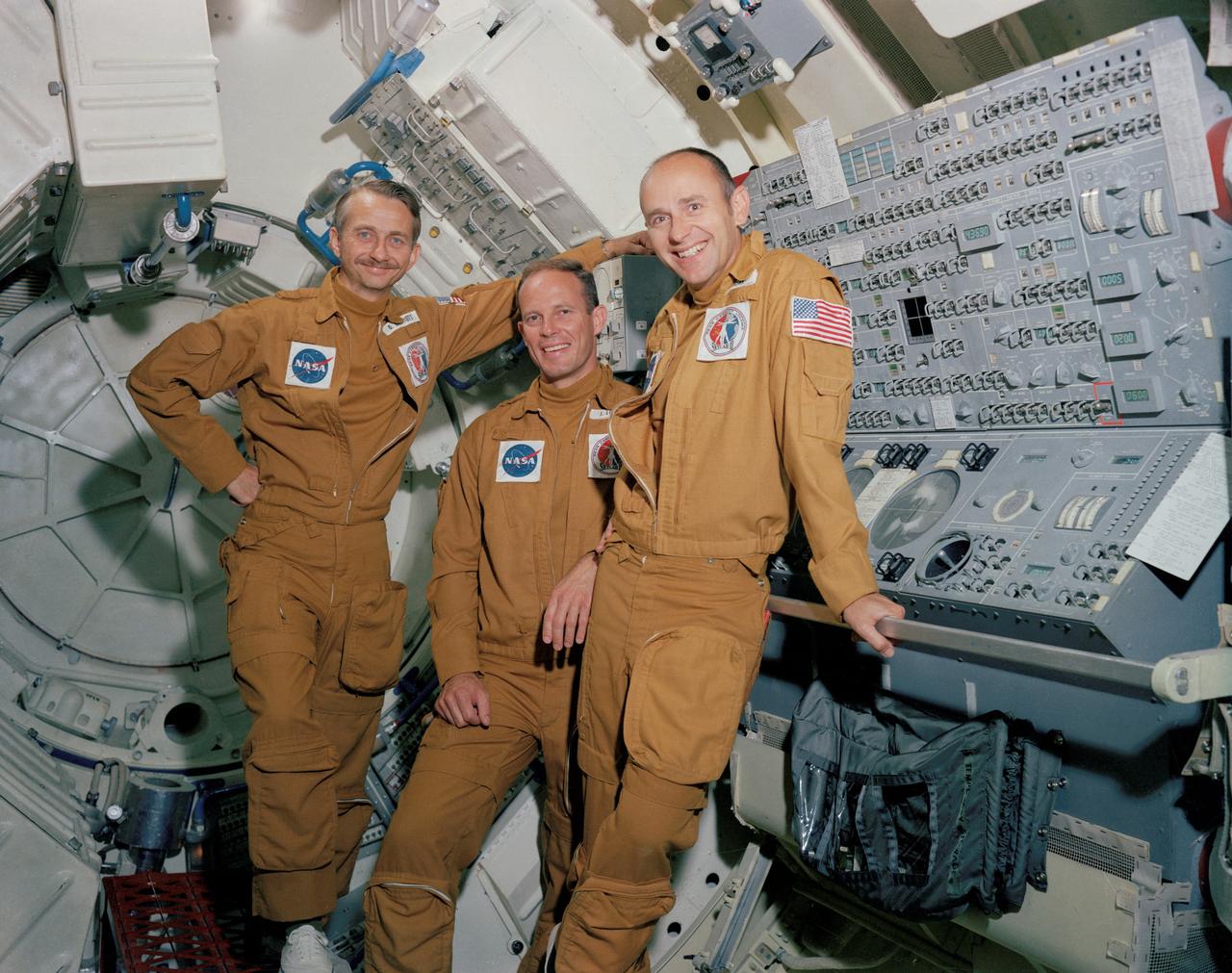
S73-28714 (29 June 1973) --- These three men are the prime crewmen for the Skylab 3 mission. Pictured in the one-G trainer Multiple Docking Adapter (MDA) at the Johnson Space Center (JSC) are, left to right, scientist-astronaut Owen K. Garriott, science pilot; and astronauts Jack R. Lousma and Alan L. Bean, pilot and commander, respectively. Photo credit: NASA
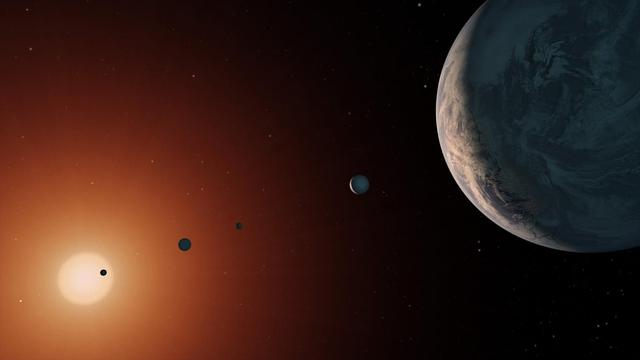
This illustration shows what the TRAPPIST-1 system might look like from a vantage point near planet TRAPPIST-1f (at right). The system has been revealed through observations from NASA's Spitzer Space Telescope and the ground-based TRAPPIST (TRAnsiting Planets and PlanetesImals Small Telescope) telescope, as well as other ground-based observatories. The system was named for the TRAPPIST telescope. The seven planets of TRAPPIST-1 are all Earth-sized and terrestrial, according to research published in 2017 in the journal Nature. TRAPPIST-1 is an ultra-cool dwarf star in the constellation Aquarius, and its planets orbit very close to it. They are likely all tidally locked, meaning the same face of the planet is always pointed at the star, as the same side of our moon is always pointed at Earth. This creates a perpetual night side and perpetual day side on each planet. TRAPPIST-1b and c receive the most light from the star and would be the warmest. TRAPPIST-1e, f and g all orbit in the habitable zone, the area where liquid water is most likely to be detected. But any of the planets could potentially harbor liquid water, depending on their compositions. https://photojournal.jpl.nasa.gov/catalog/PIA21751
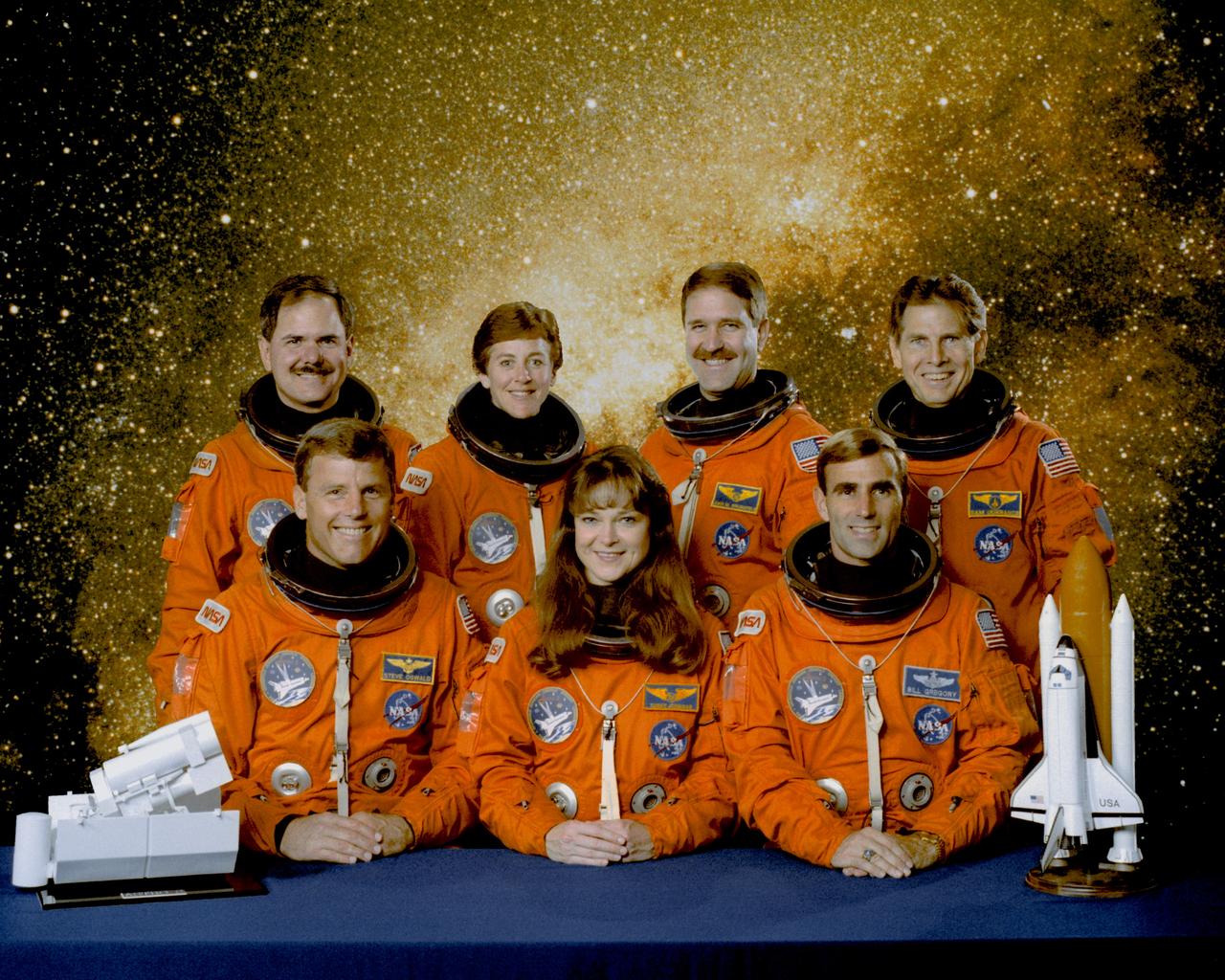
STS067-S-002 (December 1994) --- Five NASA astronauts and two payload specialists from the private sector have been named to fly aboard the Space Shuttle Endeavour for the STS-67/ASTRO-2 mission, scheduled for March 1995. In front are astronauts (left to right) Stephen S. Oswald, mission commander; Tamara E. Jernigan, payload commander; and William G. Gregory, pilot. In the back are (left to right) Ronald A. Parise, payload specialist; astronauts Wendy B. Lawrence, and John M. Grunsfeld, both mission specialists; and Samuel T. Durrance, payload specialist. Dr. Durrance is a research scientist in the Department of Physics and Astronomy at Johns Hopkins University, Baltimore, Maryland. Dr. Parise is a senior scientist in the Space Observatories Department, Computer Sciences Corporation, Silver Spring, Maryland. Both payload specialist's flew aboard the Space Shuttle Columbia for the STS-35/ASTRO-1 mission in December 1990.
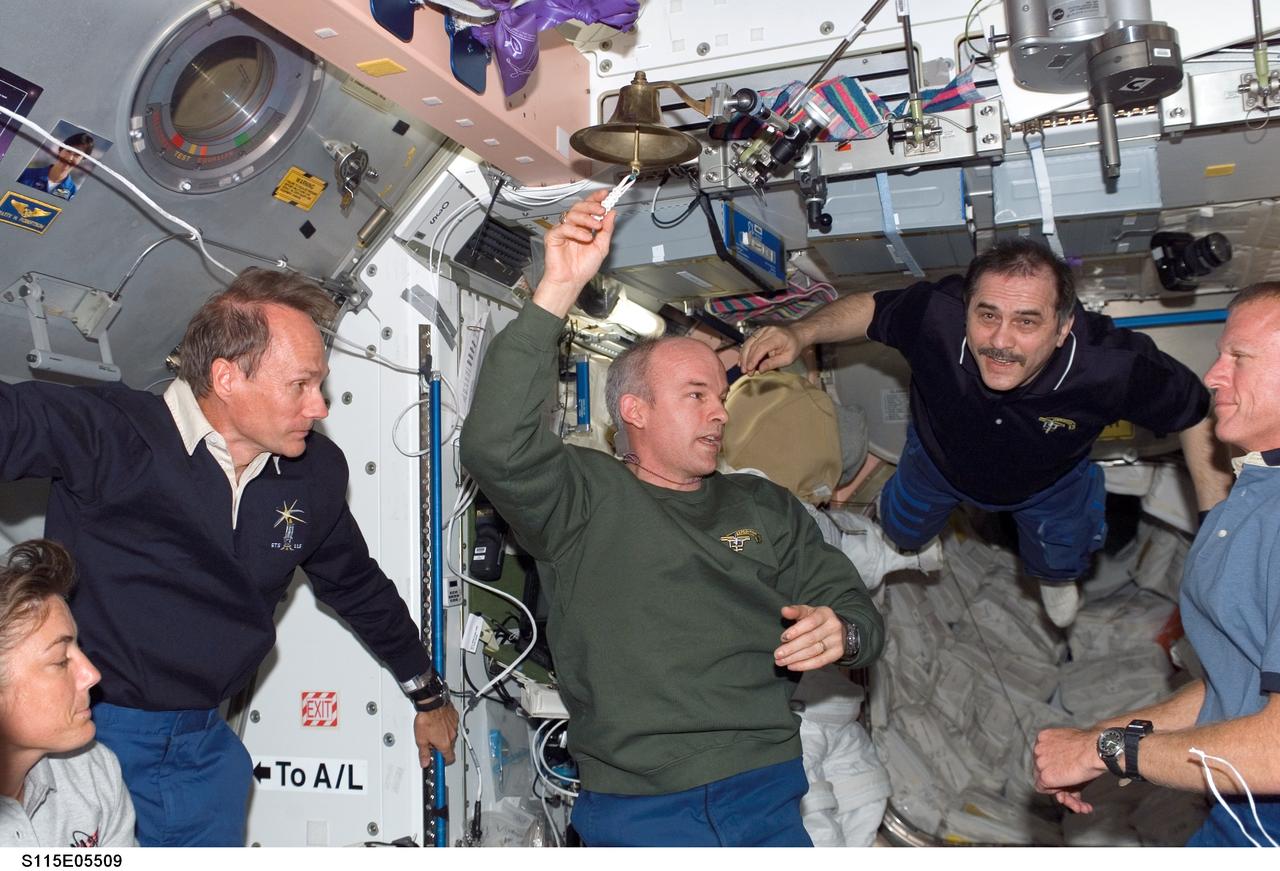
S115-E-05509 (11 Sept. 2006) --- Expedition 13 and STS-115 crewmembers reunite onboard the International Space Station soon after its docking with the Space Shuttle Atlantis. Cosmonaut Pavel Vinogradov, Expedition 13 commander representing Russia's Federal Space Agency, floats into the aft end of Unity from one of the pressurized mating adapters (PMA-1). Vinogradov's crewmate, astronaut Jeffrey N. Williams, flight engineer and NASA space station science officer, is in center frame. Canadian astronaut Steven G. MacLean (second left) is standing in the hatch to Quest, next to astronaut Heidemarie M. Stefanyshyn-Piper, mission specialist oon the Atlantis crew. Astronaut Brent W. Jett Jr., the shuttle mission's crew commander, is at right.
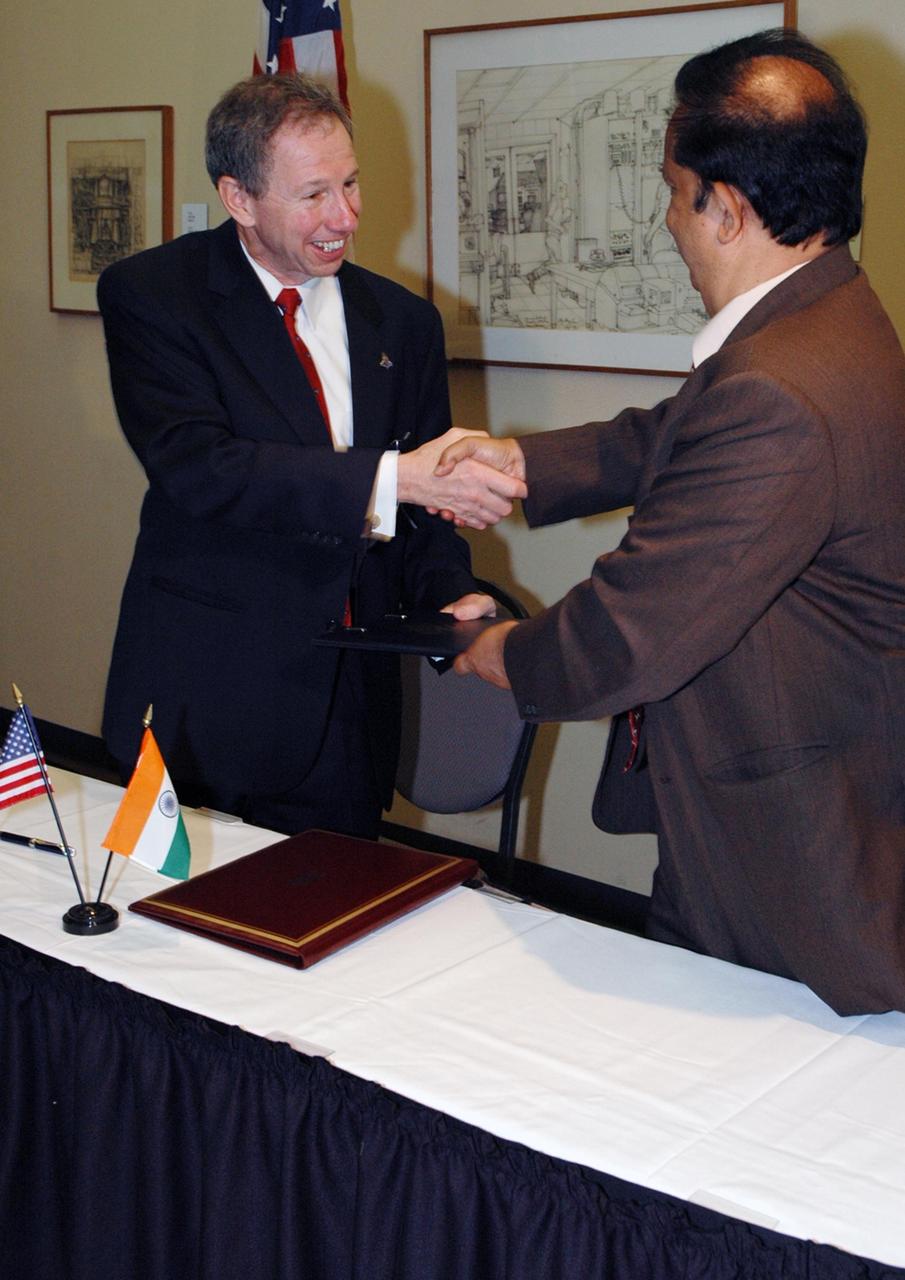
KENNEDY SPACE CENTER, FLA. -- At the NASA's Kennedy Space Center Visitor Complex, NASA Administrator Michael Griffin (left) and Indian Space Research Organization Chairman G. Madhavan Nair show their pleasure after signing a framework agreement establishing the terms for future cooperation between the two agencies in the exploration and use of outer space for peaceful purposes. According to the framework agreement, the two agencies will identify areas of mutual interest and seek to develop cooperative programs or projects in Earth and space science, exploration, human space flight and other activities. In addition to a long history of cooperation in Earth science, NASA and the Indian Space Research Organization also are cooperating on India's first, mission to the moon, Chandrayaan-1, which will be launched later this year. NASA is providing two of the 11 instruments on the spacecraft: the moon mineralogy mapper instrument and the miniature synthetic aperture radar instrument. Photo credit: NASA/Kim Shiflett
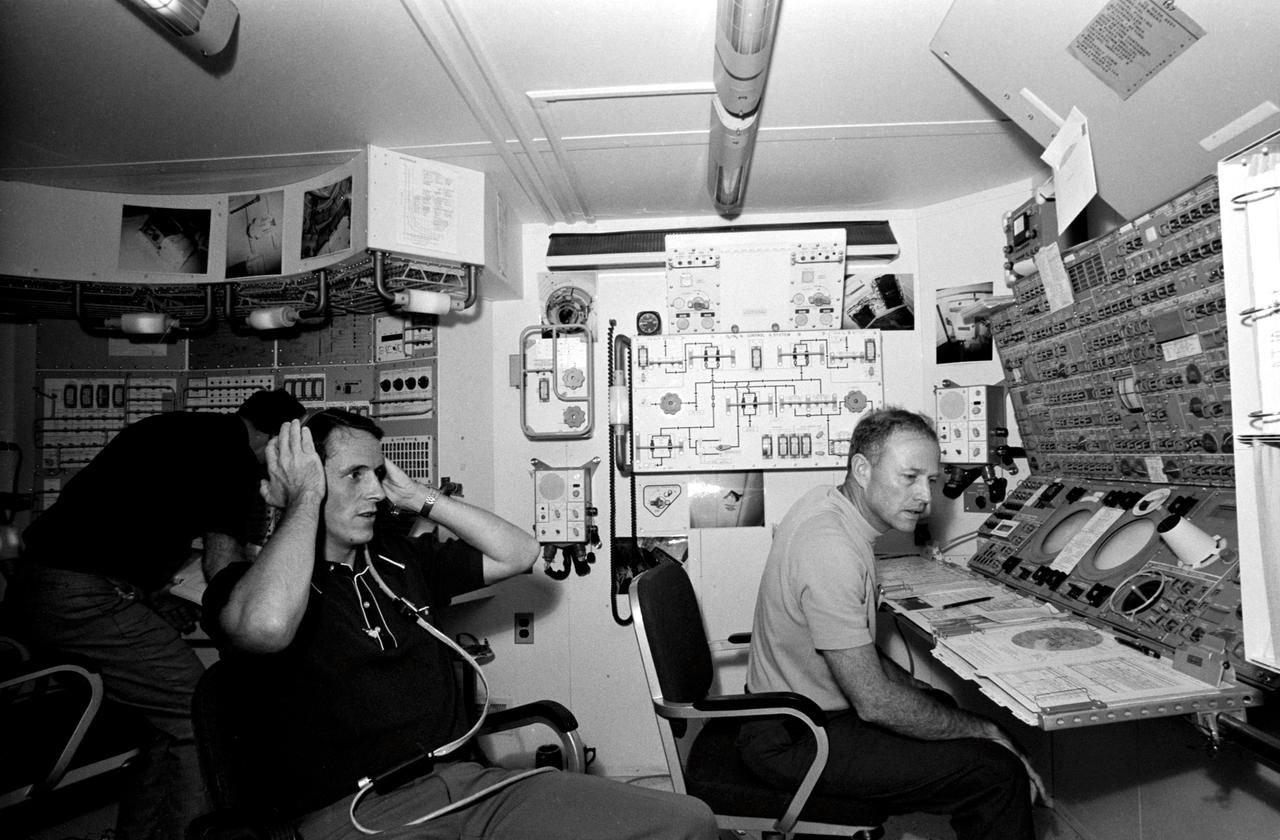
S73-28411 (February 1973) --- The three members of the prime crew of the third of three scheduled manned Skylab missions (Skylab 4) go through Skylab preflight training in the Mission Training and Simulation Facility at the Johnson Space Center. Astronaut Gerald P. Carr (on right), Skylab 4 commander, is seated at a simulator which represents the control and display console of the Apollo Telescope Mount which is located in the space station's Multiple Docking Adapter. Seated on the left is scientist-astronaut Edward G. Gibson, Skylab 4 science pilot. In the left background is astronaut William R. Pogue, Skylab 4 pilot. (Unmanned Skylab 1 will carry the Skylab space station payload into Earth orbit). Photo credit: NASA
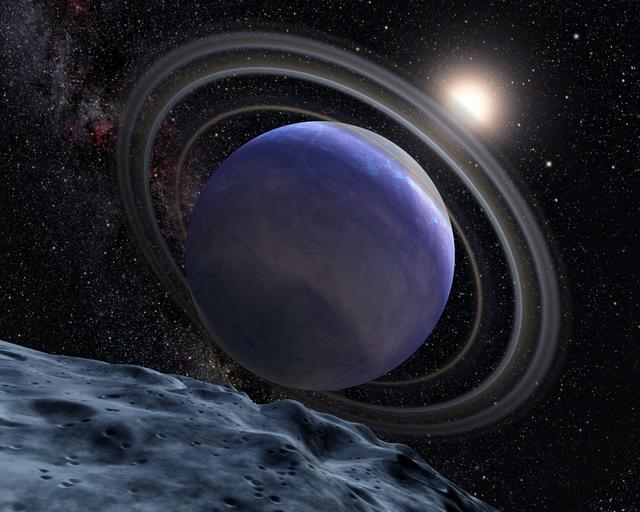
Release Date April 1, 2009 This is an artistic illustration of the giant planet HR 8799b. The planet was first discovered in 2007 at the Gemini North observatory. It was identified in the NICMOS archival data in a follow-up search of NICMOS archival data to see if Hubble had also serendipitously imaged it. The planet is young and hot, at a temperature of 1500 degrees Fahrenheit. It is slightly larger than Jupiter and may be at least seven times more massive. Analysis of the NICMOS data suggests the planet has water vapor in its atmosphere and is only partially cloud covered. It is not known if the planet has rings or moons, but circumplanetary debris is common among the outer planets of our solar system. Credit: NASA/Goddard Space Flight Center/ESA/G. Bacon (STScI) To learn more about the Hubble Space Telescope go here: <a href="http://www.nasa.gov/mission_pages/hubble/main/index.html" rel="nofollow">www.nasa.gov/mission_pages/hubble/main/index.html</a>
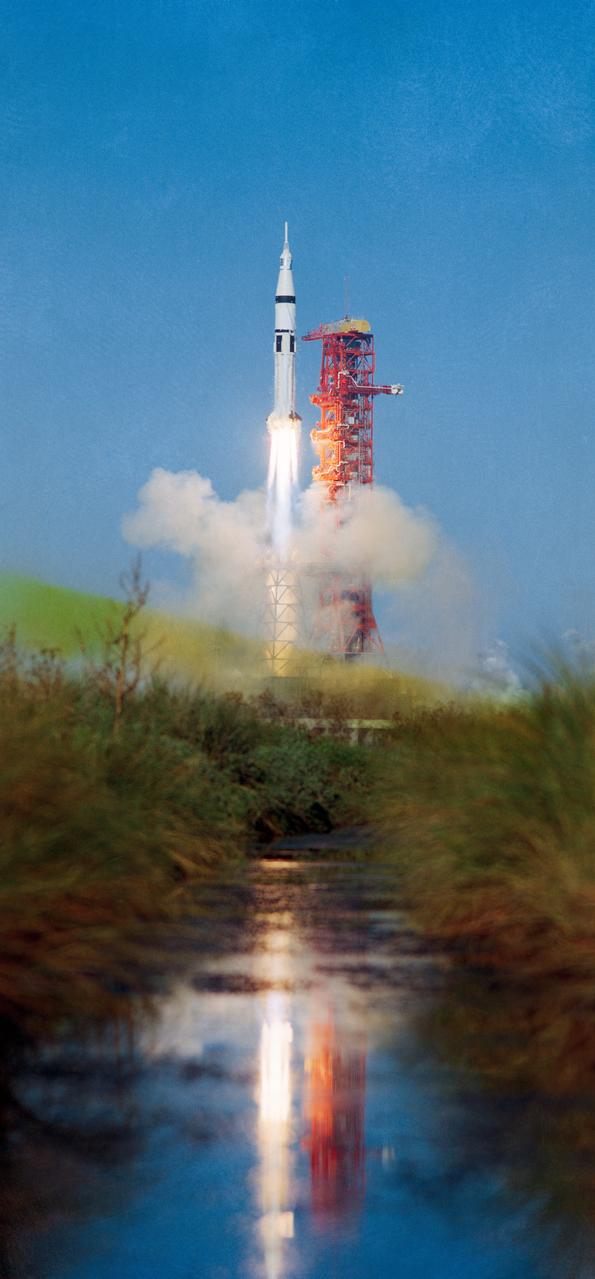
S73-37285 (16 Nov. 1973) --- The Skylab 4/Saturn 1B space vehicle is launched from Pad B, Launch Complex 39, Kennedy Space Center, Florida, at 9:01:23 a.m. (EST), Friday, Nov. 16, 1973. Skylab 4 is the third and last of three scheduled manned Skylab missions. Aboard the Skylab 4 Command/Service Module were astronauts Gerald P. Carr, Edward G. Gibson and William R. Pogue. In addition to the CSM and its launch escape system, the Skylab 4 space vehicle consisted of the Saturn 1B first (S-1B) stage and the Saturn 1B second (S-IVB) stage. (The Skylab 1/Saturn V unmanned space vehicle with the space station payload was launched from Pad A on May 14, 1973). Photo credit: NASA
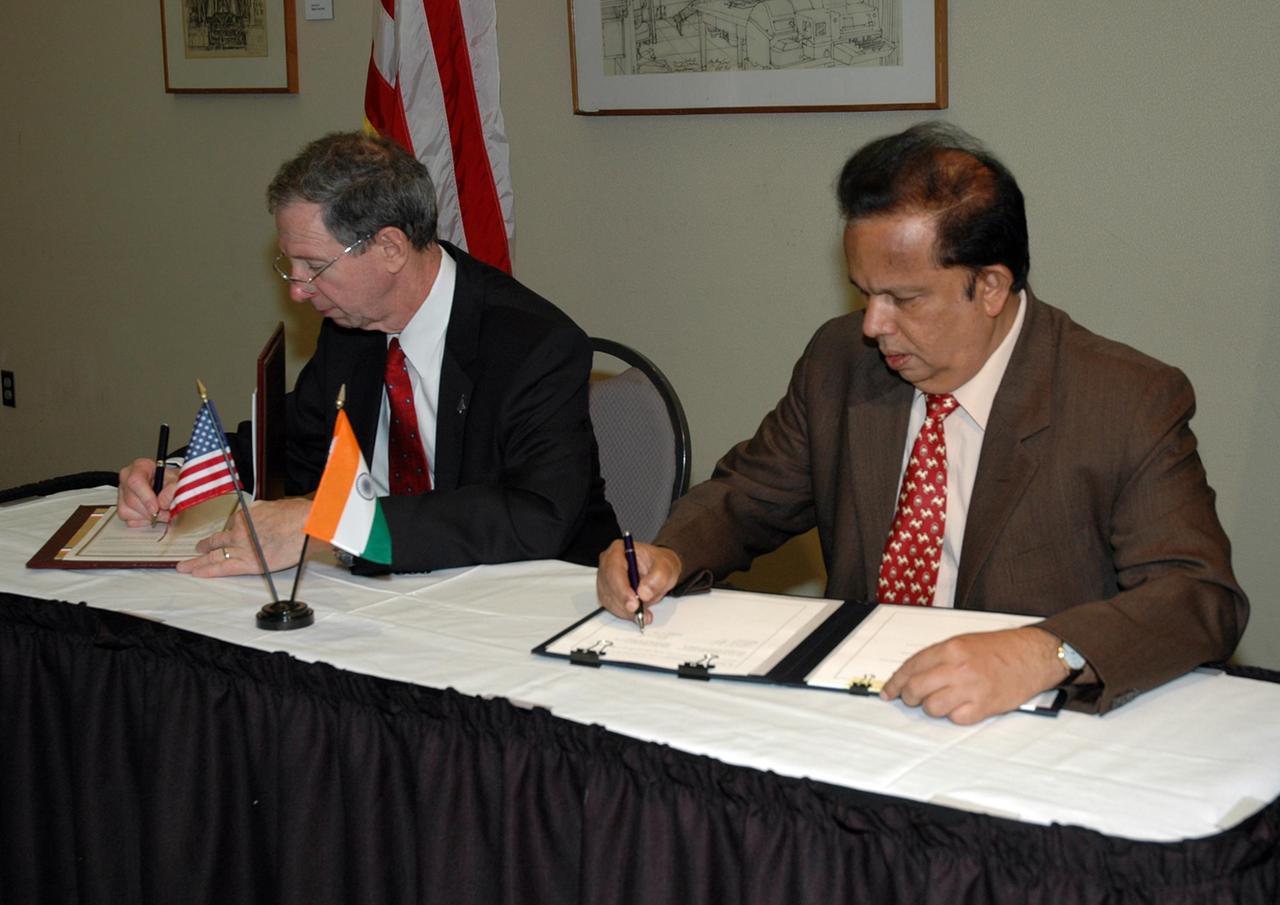
KENNEDY SPACE CENTER, FLA. -- At a ceremony at the NASA's Kennedy Space Center Visitor Complex, NASA Administrator Michael Griffin (left) and Indian Space Research Organization Chairman G. Madhavan Nair sign a framework agreement establishing the terms for future cooperation between the two agencies in the exploration and use of outer space for peaceful purposes. According to the framework agreement, the two agencies will identify areas of mutual interest and seek to develop cooperative programs or projects in Earth and space science, exploration, human space flight and other activities. In addition to a long history of cooperation in Earth science, NASA and the Indian Space Research Organization also are cooperating on India's first, mission to the moon, Chandrayaan-1, which will be launched later this year. NASA is providing two of the 11 instruments on the spacecraft: the moon mineralogy mapper instrument and the miniature synthetic aperture radar instrument. Photo credit: NASA/Kim Shiflett
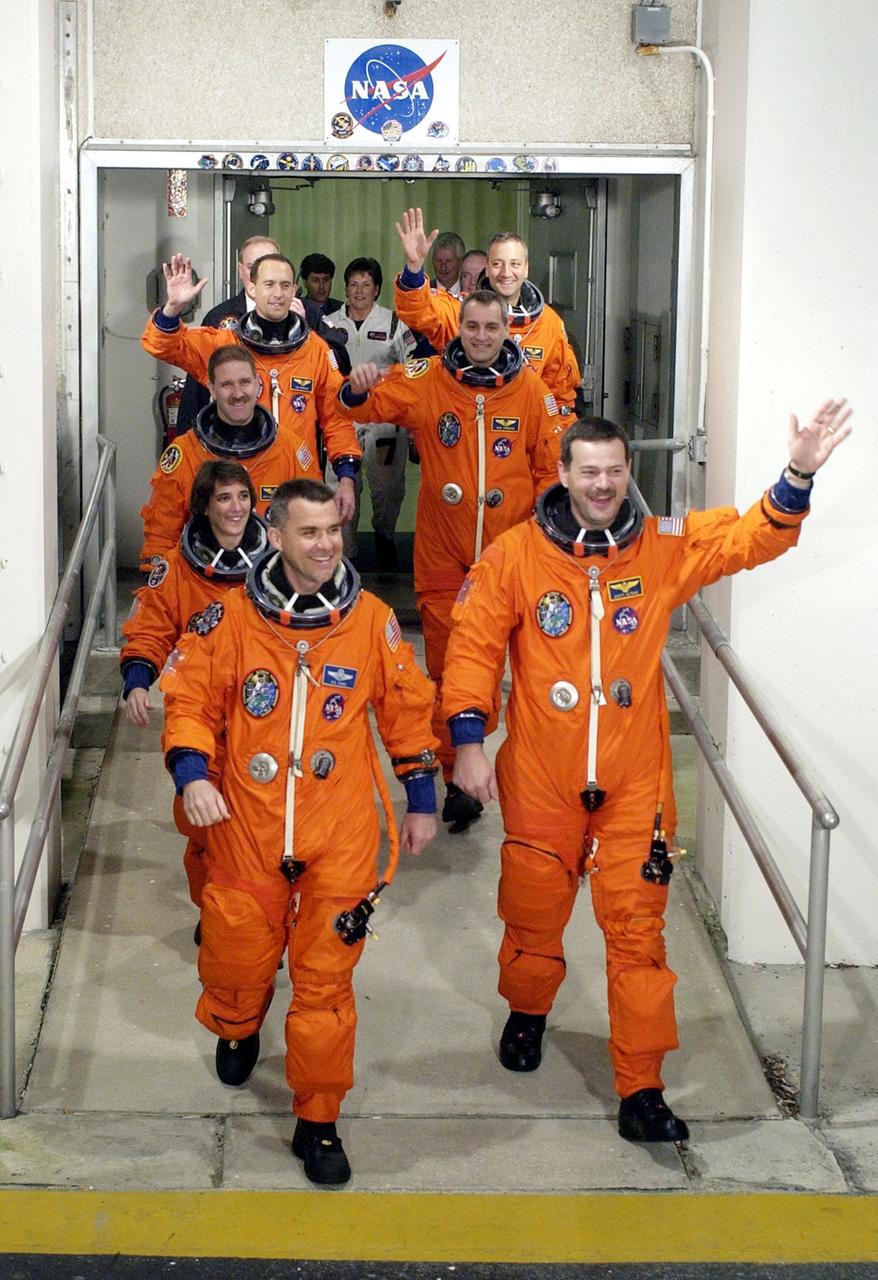
STS109-S-021 (1 March 2002) --- The STS-109 crew members wave to onlookers as they stride out from the Operations and Checkout Building, eager to get to the launch pad. They are, from front to back, Duane G. Carey (left) and Scott D. Altman (right); Nancy J. Currie, mission specialist; John M. Grunsfeld (left), payload commander, and Richard M. Linnehan (right); James H. Newman (left) and Michael J. Massimino (right), all mission specialists. On mission STS-109, the crew will capture the Hubble Space Telescope using Columbia's robotic arm and secure it on a work stand in Columbia's payload bay. Four members of the crew will perform five scheduled space walks to complete system upgrades to the telescope. Mission STS-109 is the 27th flight of the orbiter Columbia and the 108th flight overall in NASA's Space Shuttle program.