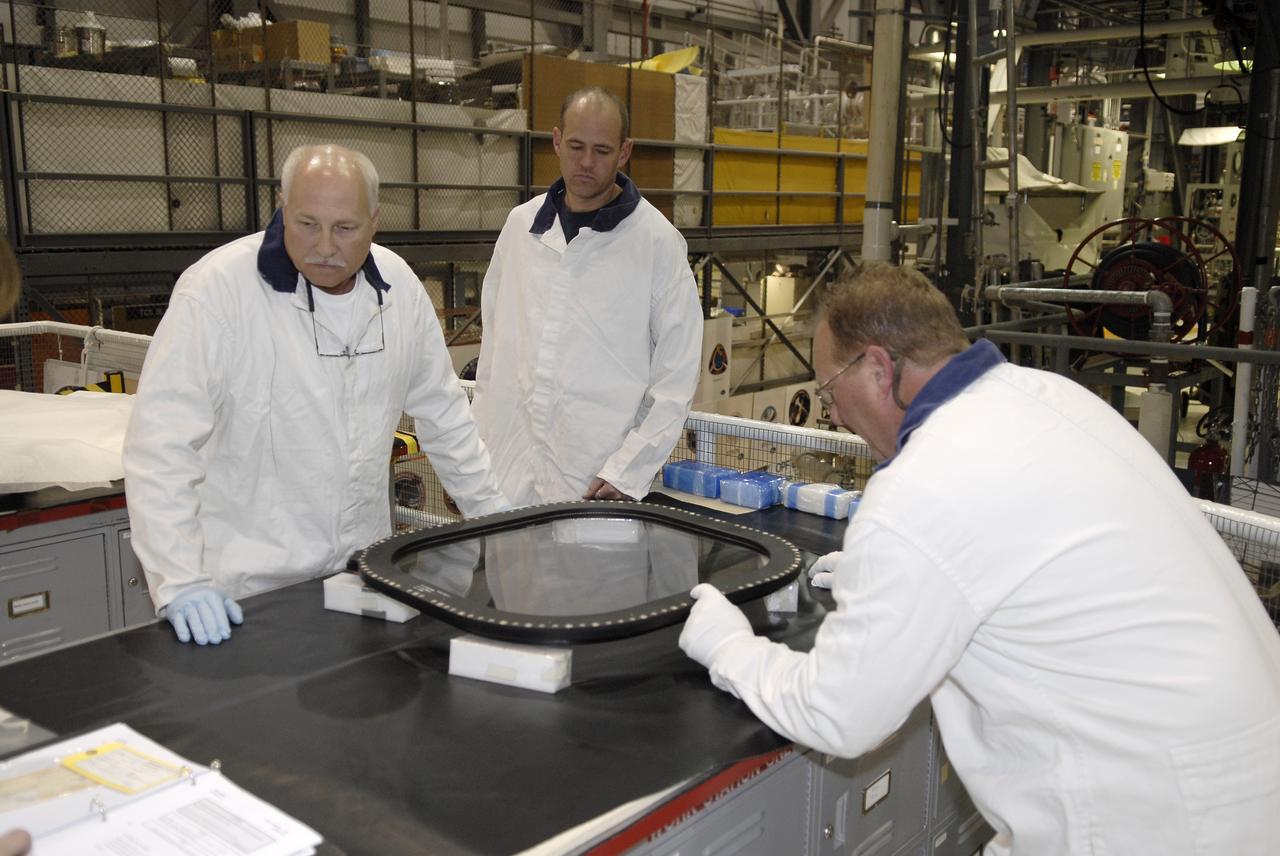
STS-132 ATLANTIS - WINDOW #8 INSTALLATION
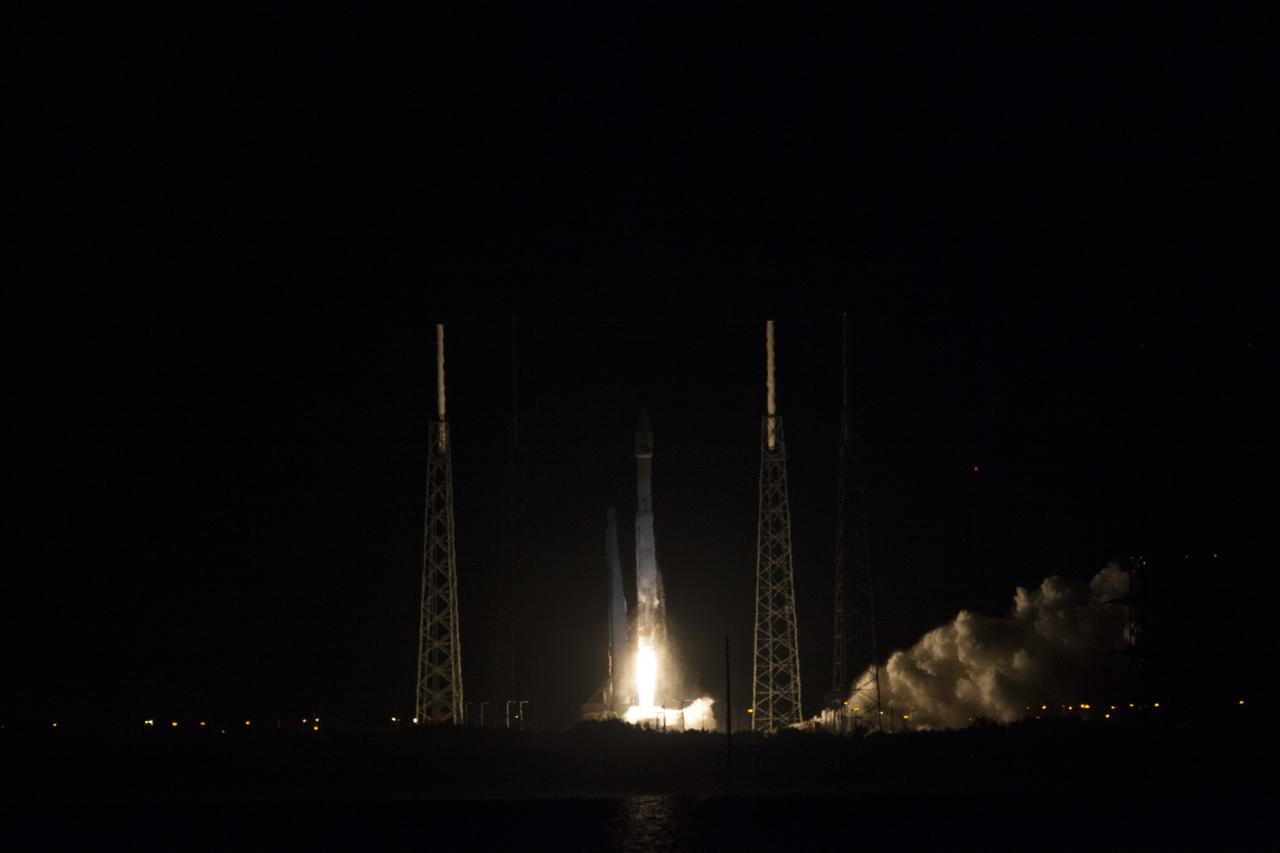
CAPE CANAVERAL, Fla. -- A United Launch Alliance Atlas V rocket soars off Space Launch Complex 41 at Cape Canaveral Air Force Station in Florida into the night, carrying NASA's Tracking and Data Relay Satellite, or TDRS-L, to Earth orbit. Launch was at 9:33 p.m. EST Jan. 23 during a 40-minute launch window. The TDRS-L spacecraft is the second of three new satellites designed to ensure vital operational continuity for NASA by expanding the lifespan of the Tracking and Data Relay Satellite System TDRSS fleet, which consists of eight satellites in geosynchronous orbit. The spacecraft provide tracking, telemetry, command and high-bandwidth data return services for numerous science and human exploration missions orbiting Earth. These include NASA's Hubble Space Telescope and the International Space Station. TDRS-L has a high-performance solar panel designed for more spacecraft power to meet the growing S-band communications requirements. TDRSS is one of three NASA Space Communication and Navigation SCaN networks providing space communications to NASA’s missions. For more information more about TDRS-L, visit http://www.nasa.gov/tdrs. To learn more about SCaN, visit www.nasa.gov/scan. Photo credit: NASA/Kim Shiflett
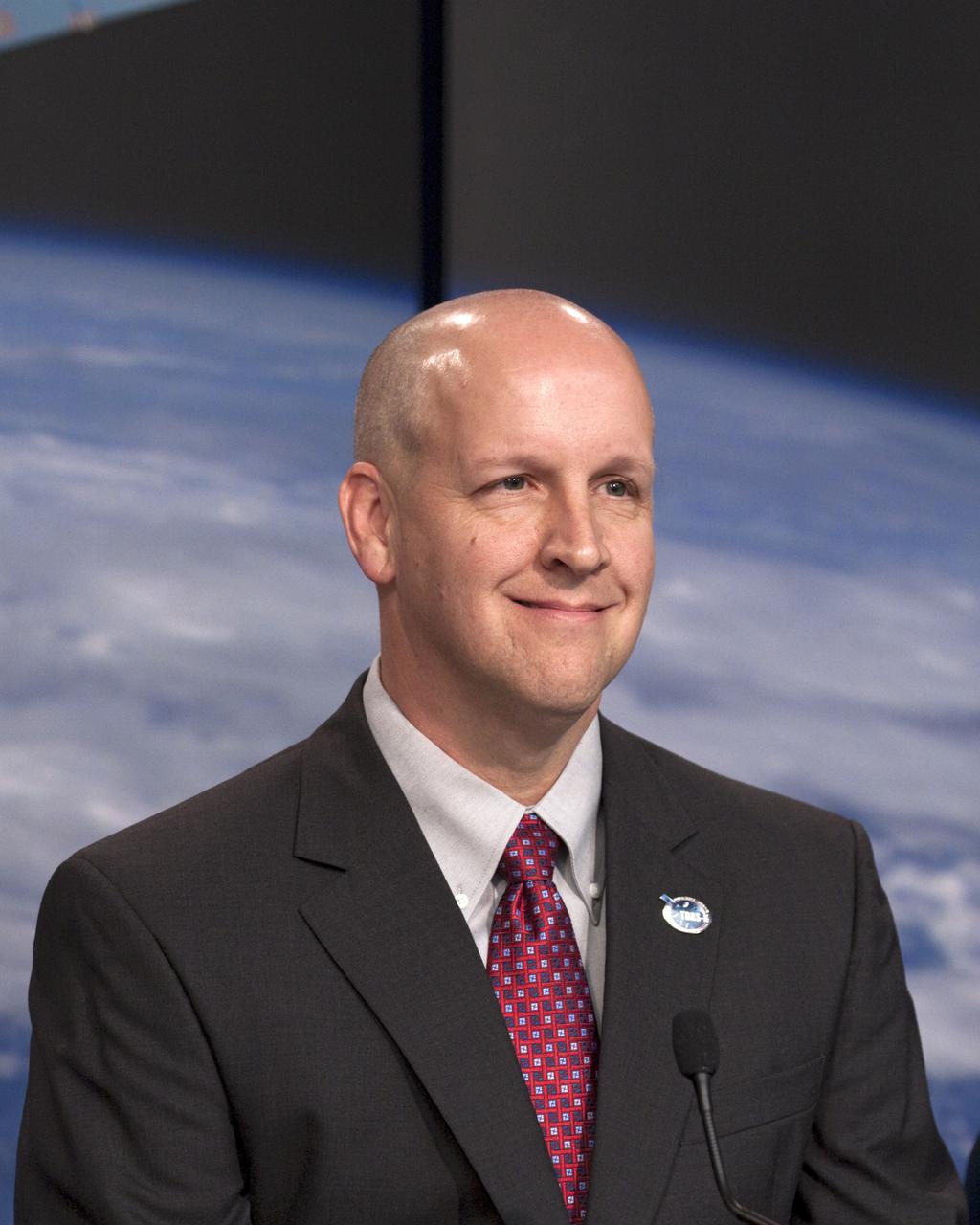
CAPE CANAVERAL, Fla. –- At a news conference, NASA and United Launch Alliance officials discussed preparations for the planned launch of NASA's Tracking and Data Relay Satellite, TDRS-K, atop an Atlas V rocket. Among those participating in the briefing is Tim Dunn, NASA launch director at the Kennedy Space Center. Liftoff for the TDRS-K is planned for Jan. 30, 2013. The TDRS-K spacecraft is part of the next-generation series in the Tracking and Data Relay Satellite System, a constellation of space-based communication satellites providing tracking, telemetry, command and high-bandwidth data return services. For more information, visit http:__www.nasa.gov_mission_pages_tdrs_index.html Photo credit: NASA_Kim Shiflett

CAPE CANAVERAL, Fla. - In Orbiter Processing Facility 1 at NASA's Kennedy Space Center in Florida, window #8, removed from the top of space shuttle Atlantis' crew module, is carefully inspected by United Space Alliance technicians. Inspection and maintenance of the crew module windows is standard procedure between shuttle missions. Atlantis is next slated to deliver an Integrated Cargo Carrier and Russian-built Mini Research Module to the International Space Station on the STS-132 mission. The second in a series of new pressurized components for Russia, the module will be permanently attached to the Zarya module. Three spacewalks are planned to store spare components outside the station, including six spare batteries, a boom assembly for the Ku-band antenna and spares for the Canadian Dextre robotic arm extension. A radiator, airlock and European robotic arm for the Russian Multi-purpose Laboratory Module also are payloads on the flight. Launch is targeted for May 14. Photo credit: NASA/Glenn Benson
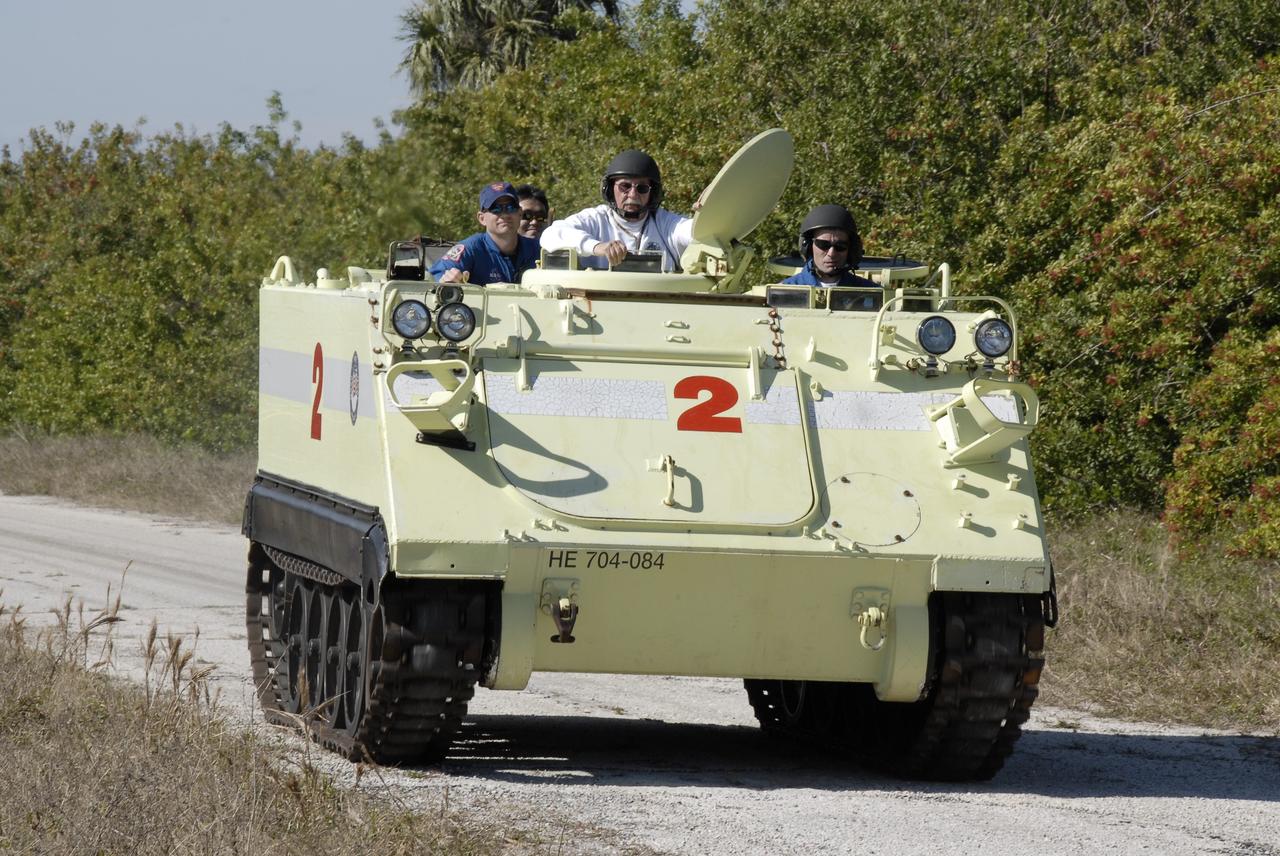
CAPE CANAVERAL, Fla. – At NASA's Kennedy Space Center in Florida, STS-119 Commander Lee Archambault drives the M-113 armored personnel carrier used for emergency escape, if needed, from Launch Pad 39A. Next to him in front is astronaut rescue team leader Capt. George Hoggard. Behind is Pilot Tony Antonelli and Mission Specialist Koichi Wakata, who represents the Japan Aerospace Exploration Agency. The crew members are at Kennedy for prelaunch preparation known as terminal countdown demonstration test, or TCDT. The training provides astronauts and ground crews with an opportunity to participate in various simulated countdown activities, including equipment familiarization and a simulated launch countdown. The crew of space shuttle Discovery is targeted to launch on the STS-119 mission Feb. 12. During Discovery's 14-day mission, the crew will install the S6 truss segment and solar arrays to the starboard side of the International Space Station, completing the station's truss, or backbone. Photo credit: NASA/Kim Shiflett
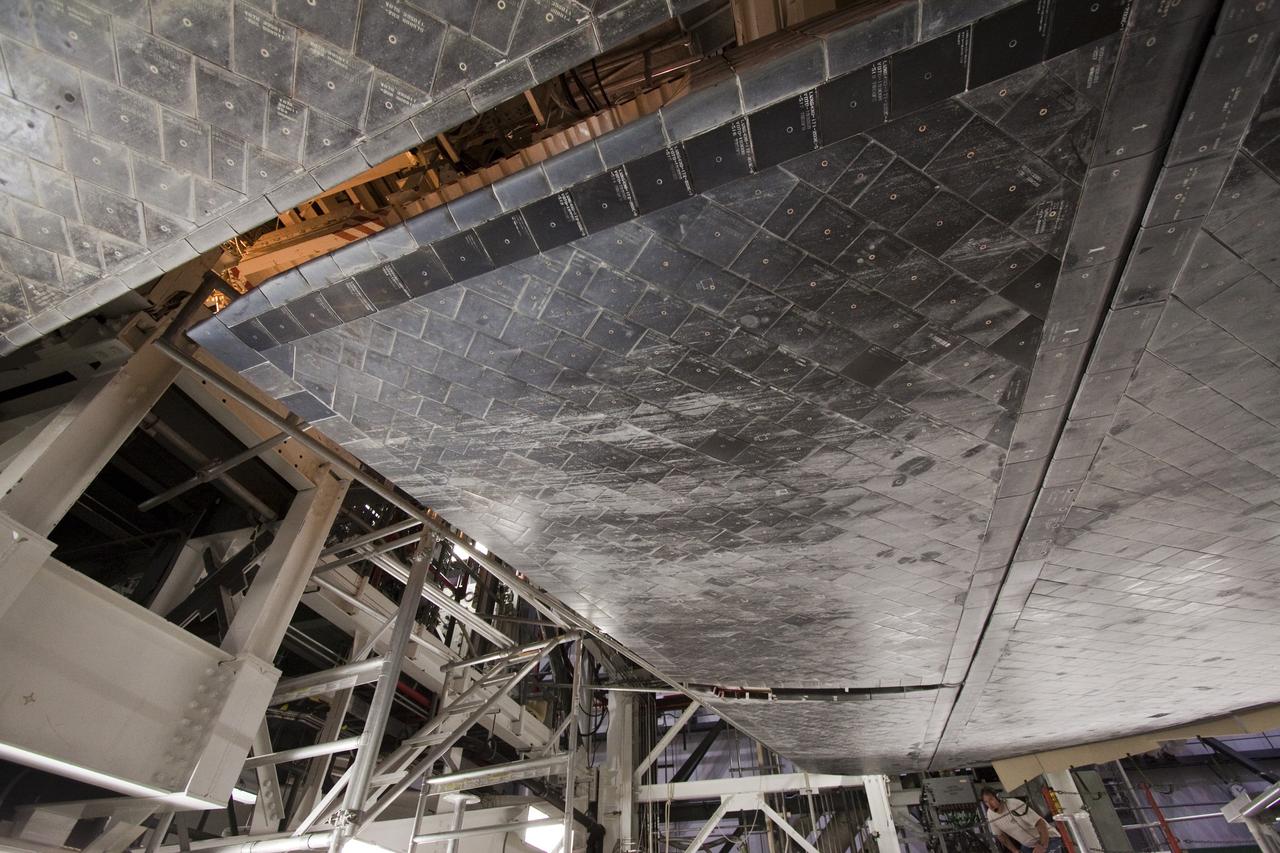
CAPE CANAVERAL, Fla. -- Space shuttle Atlantis goes through a routine landing gear test in Orbiter Processing Facility-1 at NASA's Kennedy Space Center in Florida. Technicians are checking to make sure the shuttle's wheels, brakes, elevons and body flap function properly. Seen here, an elevon is tested. Elevons are located on the trailing edge of each wing and help control pitch of the shuttle as it comes in for landing. Atlantis is being prepared for the STS-135 mission, which will deliver the Raffaello multi-purpose logistics module packed with supplies, logistics and spare parts to the International Space Station. STS-135 is targeted to launch June 28, and will be the last spaceflight for the Space Shuttle Program. Photo credit: NASA/Jack Pfaller
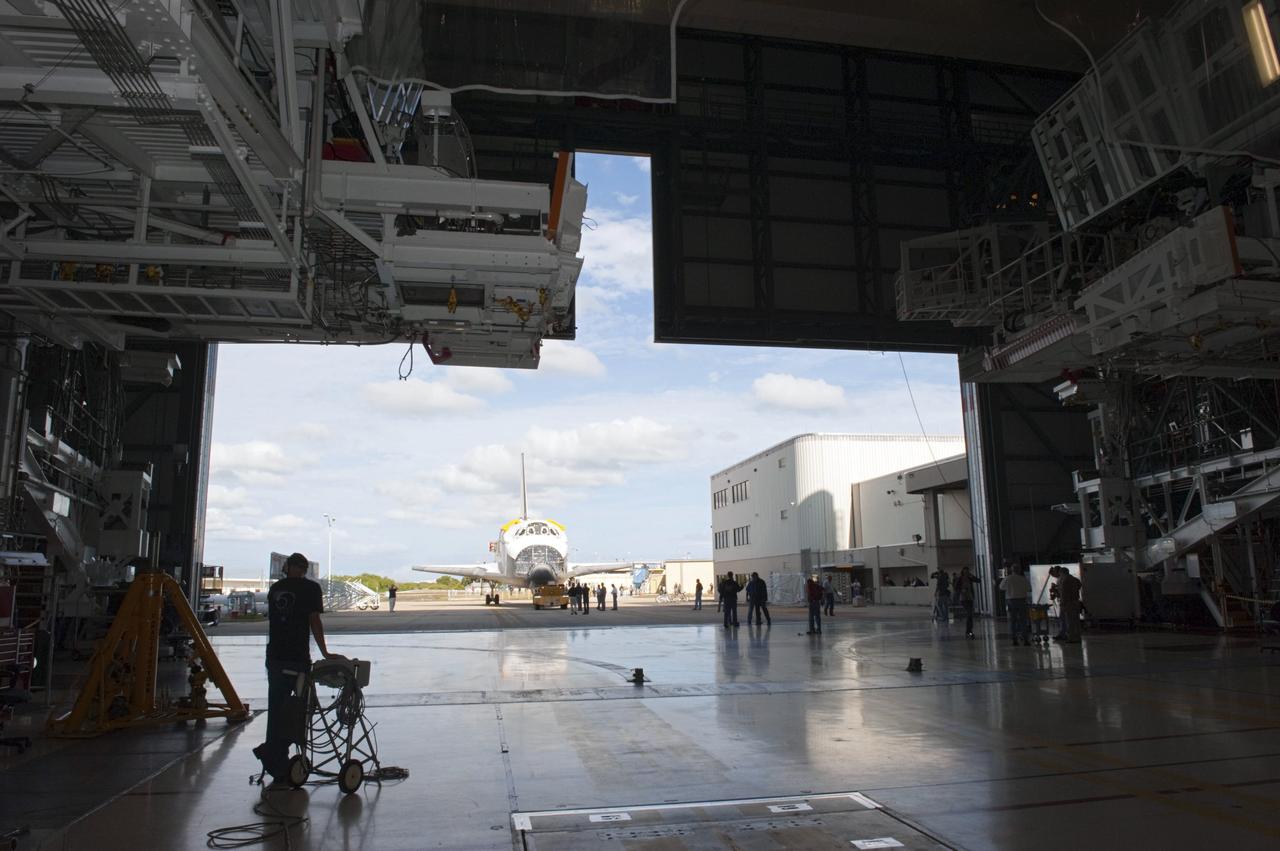
CAPE CANAVERAL, Fla. – At NASA’s Kennedy Space Center in Florida, space shuttle Endeavour is being towed to Orbiter Processing Facility-2 (OPF-2). Shuttle Endeavour will remain in OPF-2 so that the orbiter maneuvering system (OMS) pods and forward reaction control system can be installed. Technicians also will offload water and Freon gas from lines located in Endeavour’s midbody. The work is part of Endeavour’s transition and retirement processing. The spacecraft is being prepared for public display at the California Science Center in Los Angeles. Endeavour flew 25 missions, spent 299 days in space, orbited Earth 4,671 times and traveled 122, 883, 151 miles over the course of its 19-year career. Endeavour’s STS-134 and final mission was completed after landing on June 1, 2011. Photo credit: Kim Shiflett
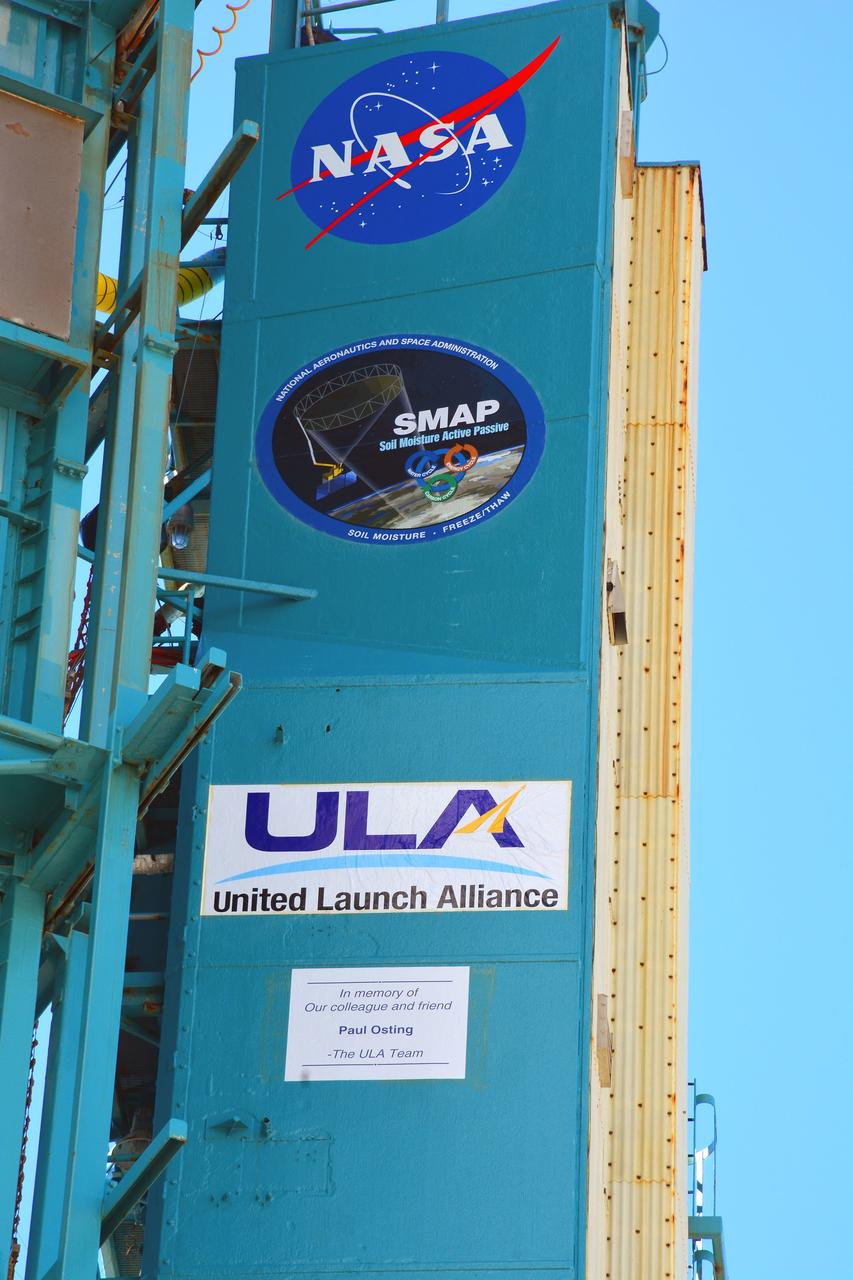
VANDENBERG AFB, California – Detail of mission and NASA logos at Space Launch Complex-2 at Vandenberg AFB, California - the launch site for NASA's SMAP spacecraft. For more, go to www.nasa.gov/smap Photo credit: NASA/Randy Beaudoin
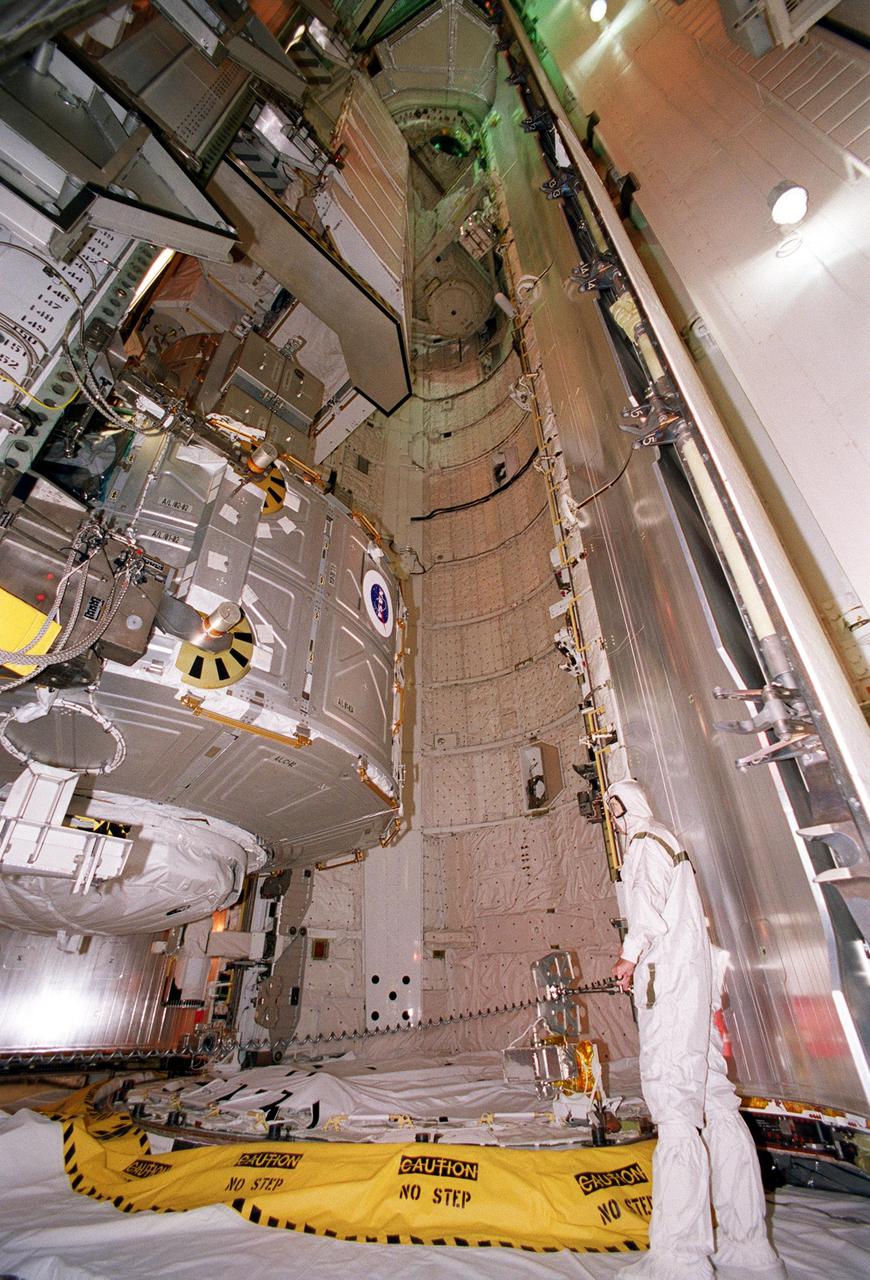
KENNEDY SPACE CENTER, Fla. -- The Joint Airlock Module, sporting a NASA logo, is moved toward the payload bay of Space Shuttle Atlantis for mission STS-104. Once installed and activated, the airlock becomes the primary path for International Space Station spacewalk entry and departure using U.S. spacesuits, which are known as Extravehicular Mobility Units, or EMUs. In addition, the Joint Airlock is designed to support the Russian Orlan spacesuit for EVA activity. Launch of Atlantis is scheduled no earlier than July 12 at 5:04 a.m. EDT
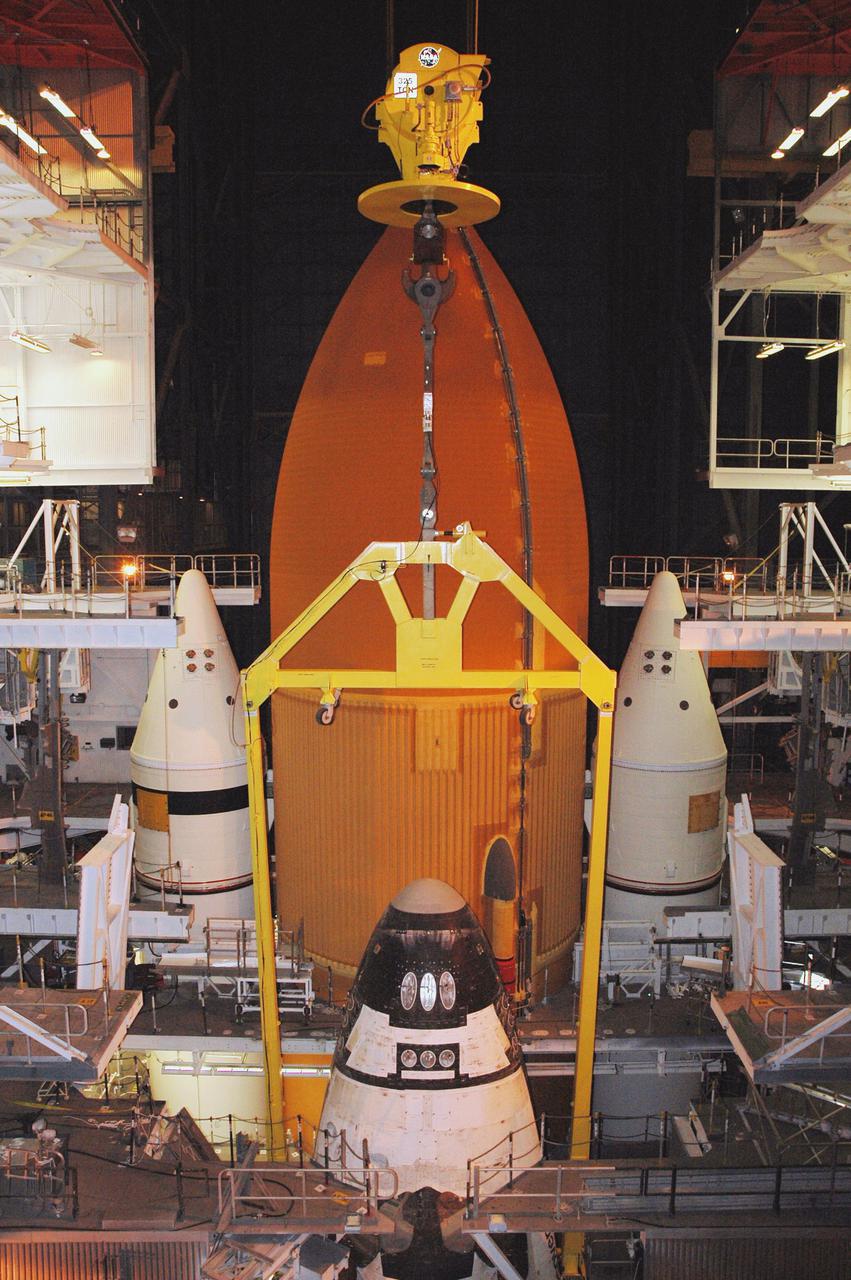
KENNEDY SPACE CENTER, FLA. - In high bay 1 of the Vehicle Assembly Building at NASA’s Kennedy Space Center, a crane is ready to lift the orbiter Discovery away from the External Tank (ET) and Solid Rocket Boosters. The orbiter will be remated with another tank, ET-121. Discovery then is expected to be rolled back to the launch pad in mid-June for Return to Flight mission STS-114. The launch window extends from July 13 to July 31.
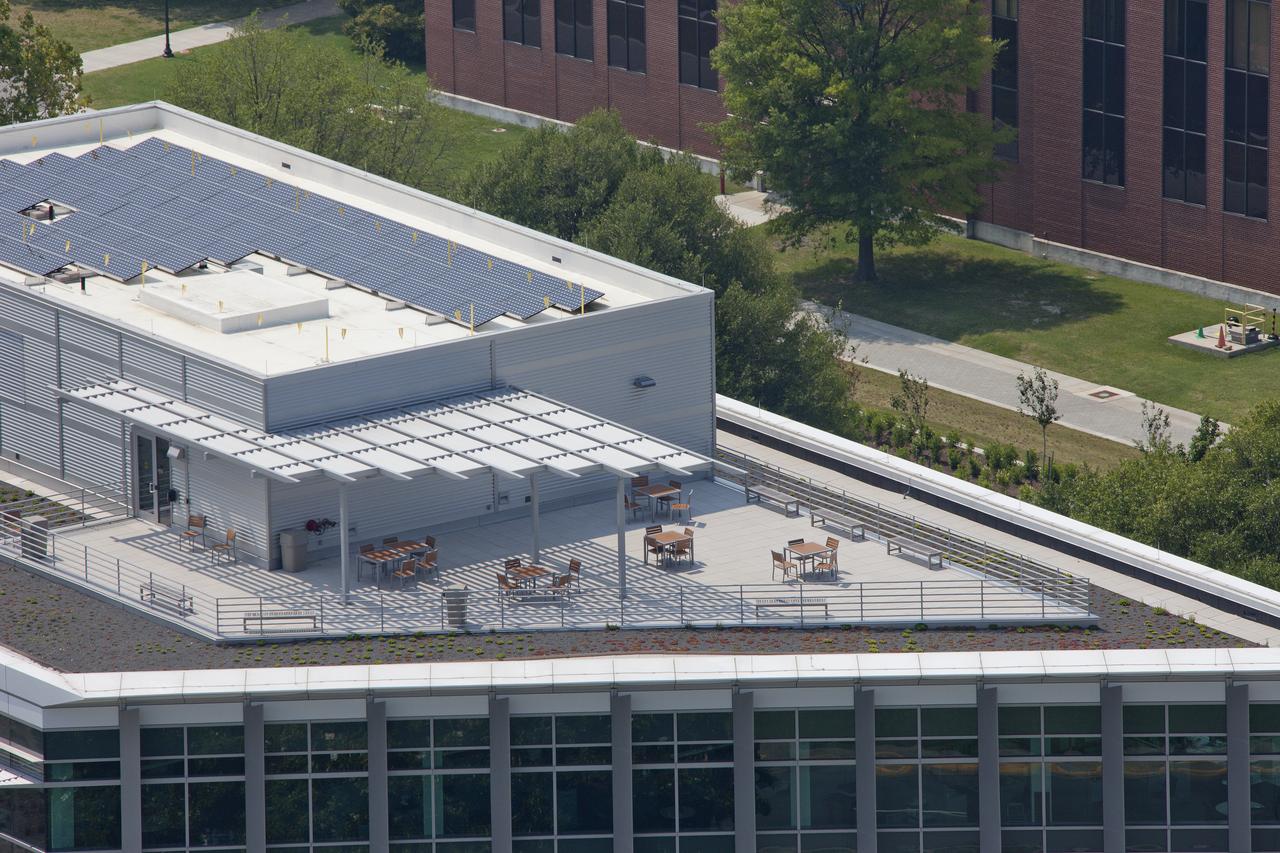
Aerial of NASA Langley Research Center New Town Center Head Quarters
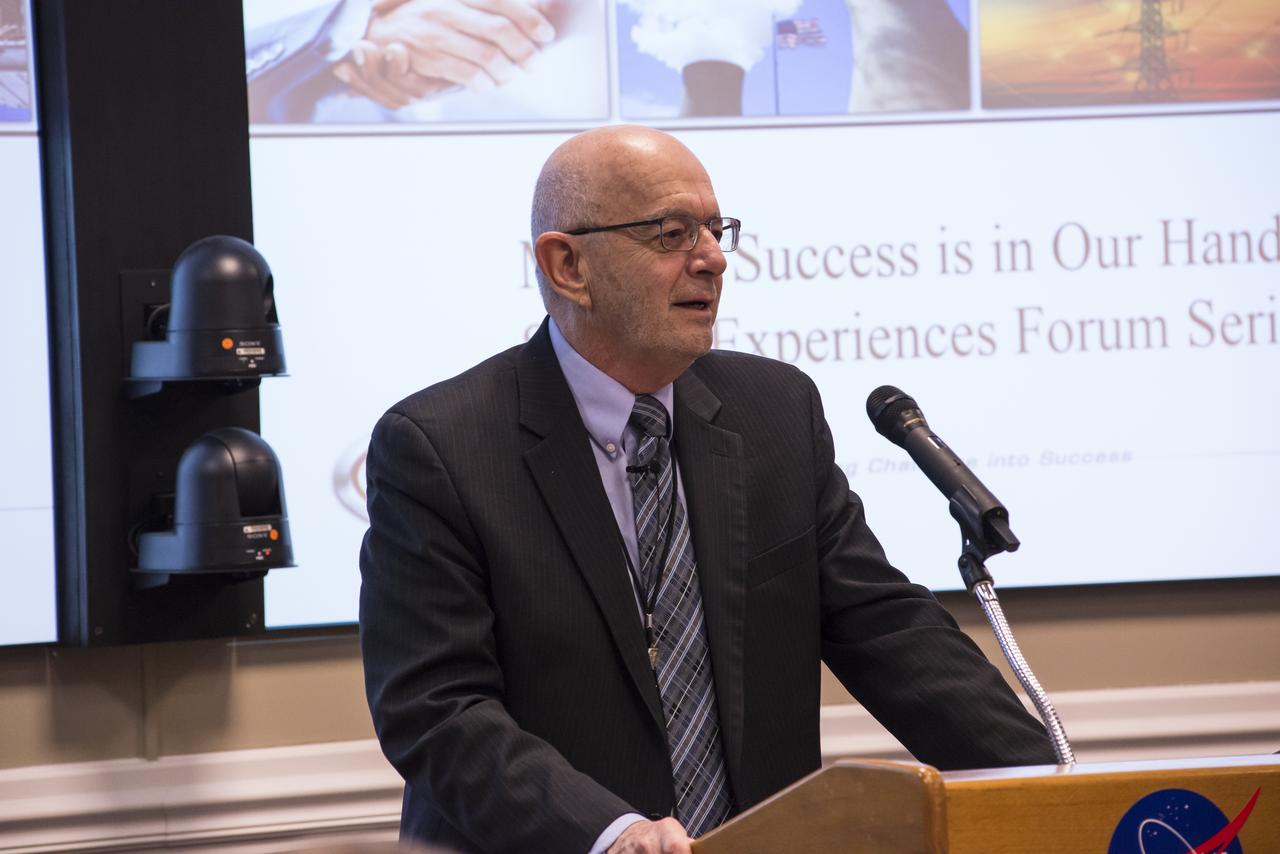
Vernon "Bill" Wessel, former associate director of NASA's Glenn Research Center from 2006-2011, addresses team members at NASA's Marshall Space Flight Center Jan. 19 as part of the "Mission Success in in Our Hands" Shared Experiences forum. Wessel, currently senior vice president of Ares Corp. and deputy of the Huntsville-based company's Space & Defense Division, spoke about his 30-year NASA career and the importance of workplace safety. "Keep in your head every day and in every way that safety is number one," he said. "When you meet people, ask them, 'How are you doing today? How's the job? How are you staying safe?' These are the things that are important." The bimonthly Shared Experiences forum, a Marshall safety initiative to promote and strengthen mission assurance and flight safety, is sponsored by NASA partner Jacobs Engineering of Huntsville.
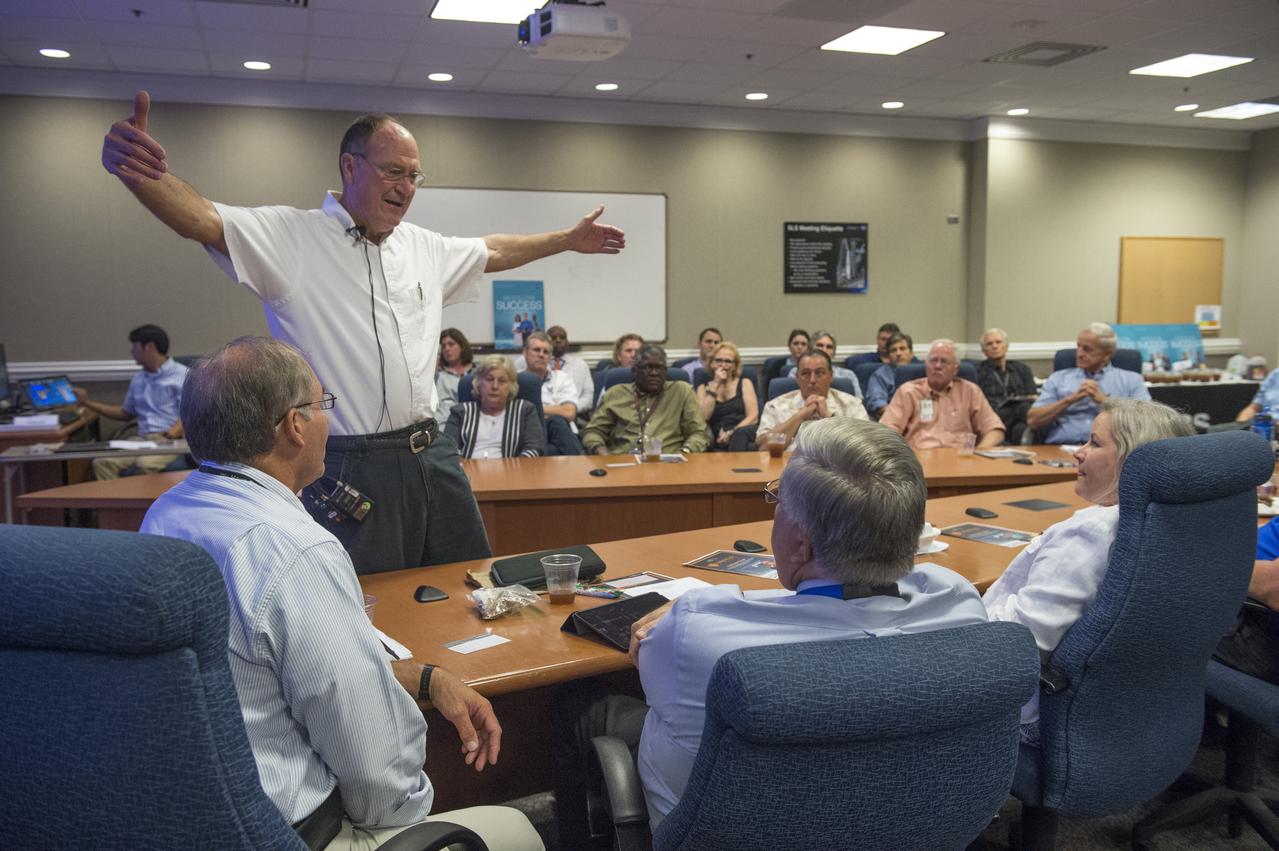
MICHAEL "RUDI" RUDOLPHI GESTURES DURING A "MISSION SUCCESS IS IN OUR HANDS" SHARED EXPERIENCES FORUM JUNE 16, WHERE HE SPOKE ABOUT HIS "UNFORGETTABLE" EXPERIENCES AS A SENIOR NASA REPRESENTATIVE OVERSEEING DEBRIS RECOVERY EFFORTS FOLLOWING THE LOSS OF SPACE SHUTTLE COLUMBIA AND ITS CREW.
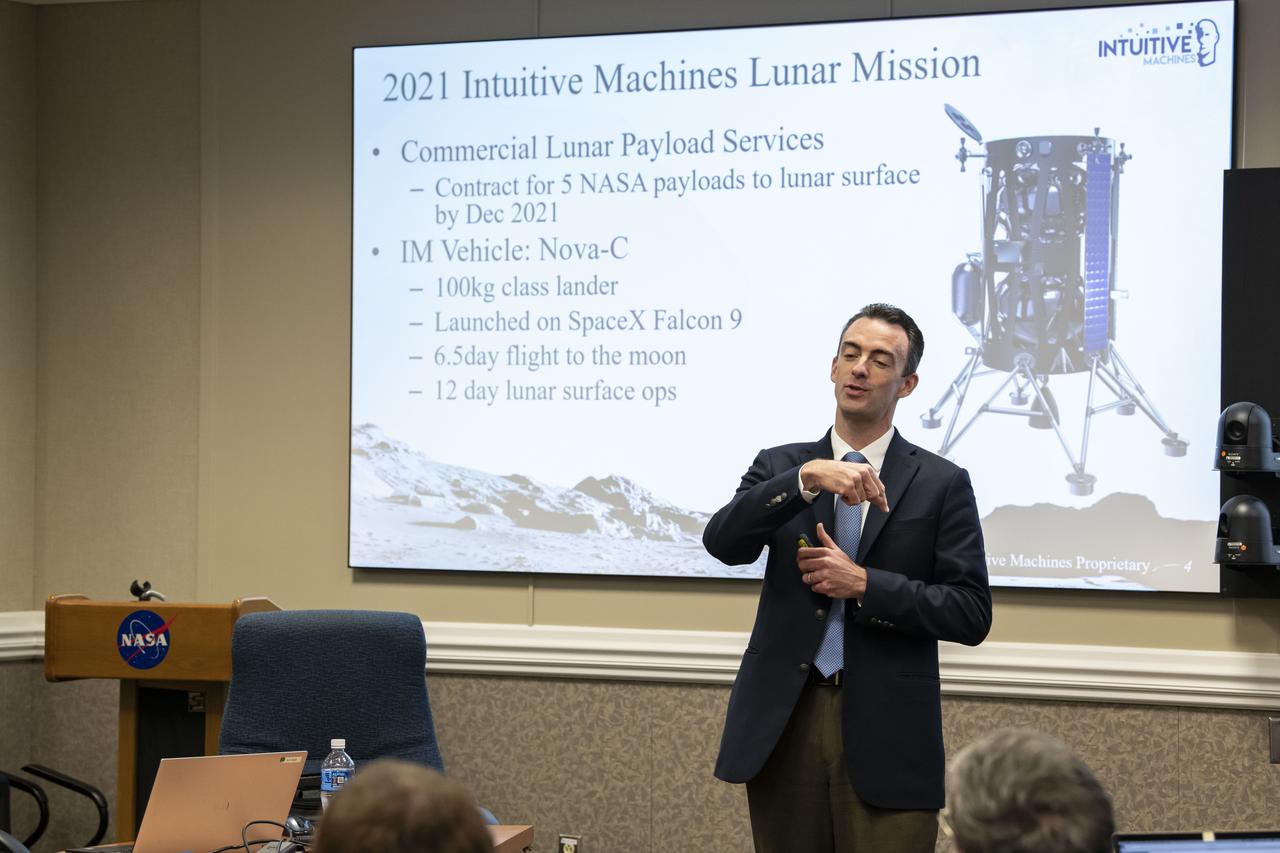
Rob Morehead, lead propulsion engineer for Intuitive Machines in Houston, delivers the monthly Tech Talk on Oct. 24 at NASA’s Marshall Space Flight Center. Morehead presented Intuitive Machines’ Nova-C lunar lander, which will deliver payloads to the surface of the Moon for government and commercial customers, including NASA. Intuitive Machines was selected by the agency as one of the companies for NASA’s Commercial Lunar Payload Service program. Nova-C currently has five NASA payloads and two commercial payloads manifested for its first flight, slated to launch in 2021. It will reach the Moon six days after launch and operate on the lunar surface for 12 days. Morehead worked at NASA’s Johnson Space Center for 20 years before joining Intuitive Machines.