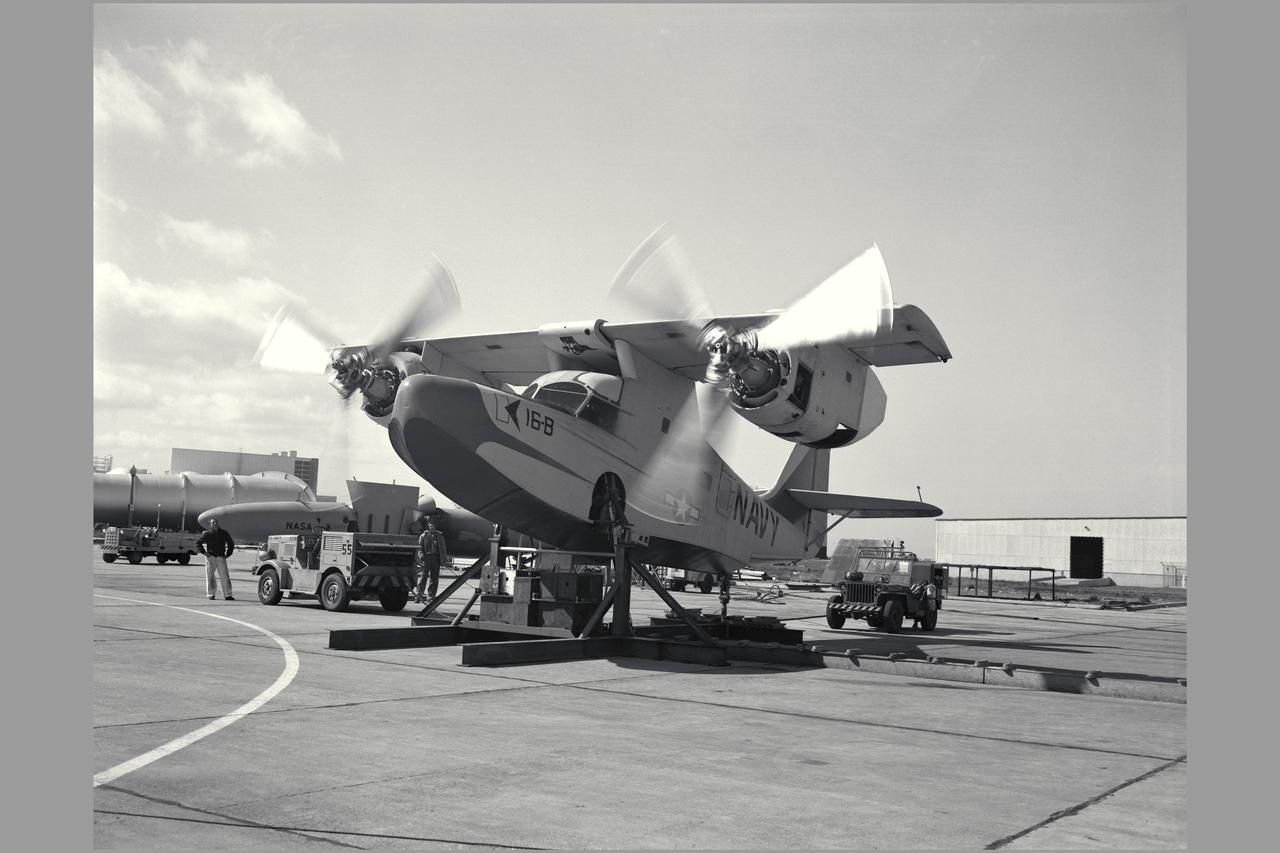
KAMAN K-16-B aircraft
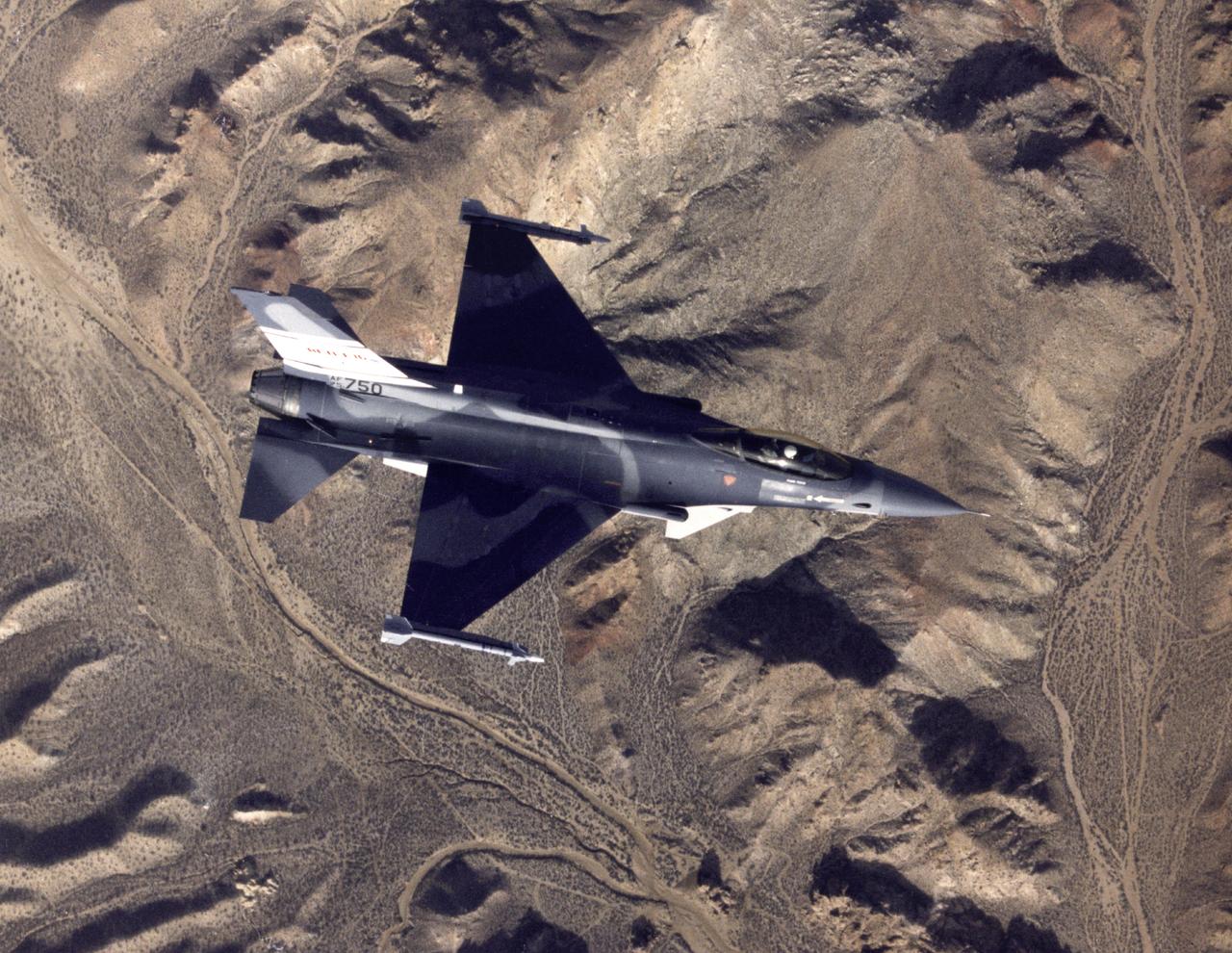
Overhead photograph of the AFTI F-16 painted in a non-standard gray finish, taken during a research flight in 1989. The two sensor pods are visible on the fuselage just forward of the wings and one of the two chin canards can be seen as a light-colored triangle ahead of one of the pods. A Sidewinder air-to-air missile is mounted on each wing tip.
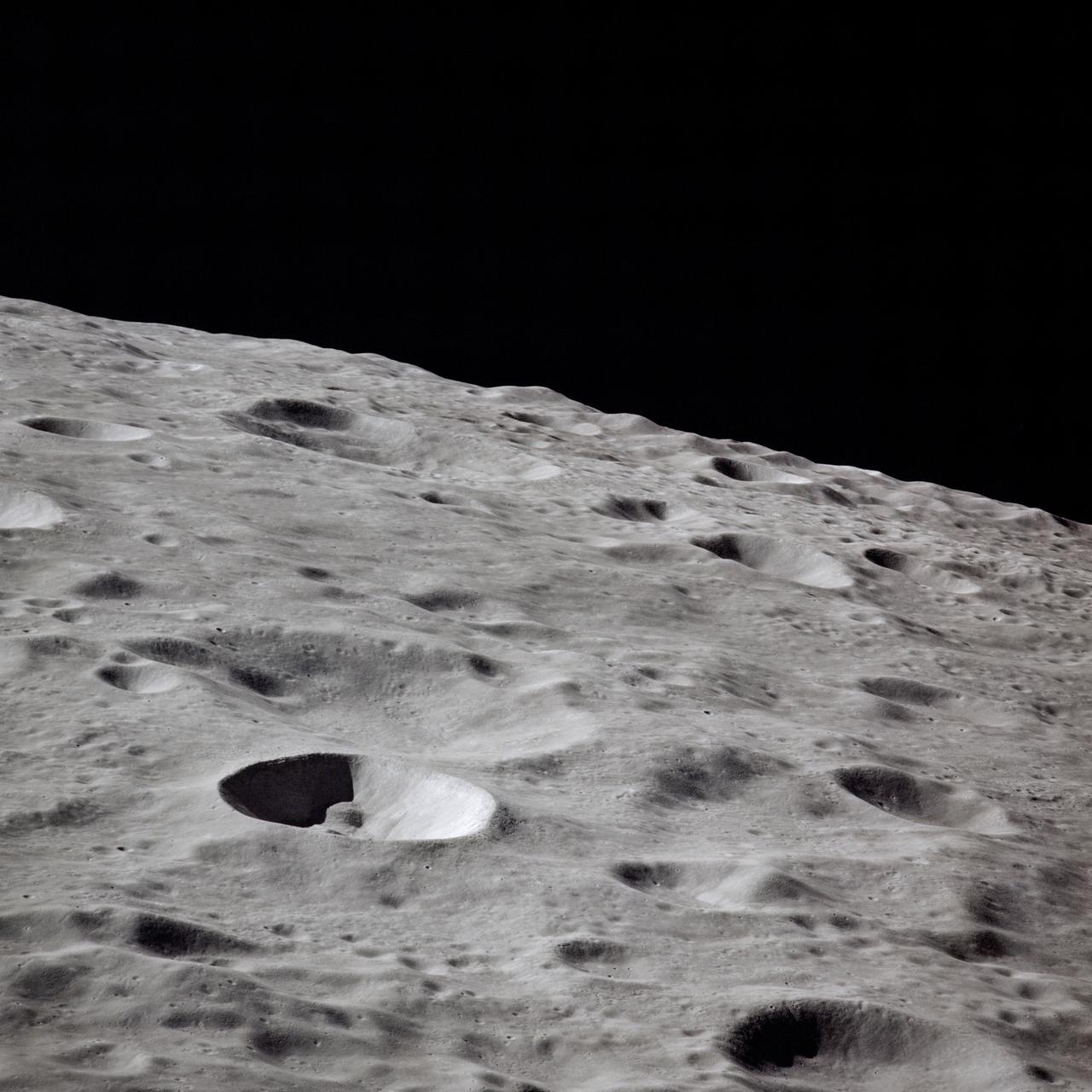
AS16-118-18964 (16-27 April 1972) --- This lunar farside oblique view from the Apollo 16 spacecraft in lunar orbit shows the Leonov Crater, just to the left and above the principal point of the photograph. Just beyond the horizon lies the Moscow Sea.
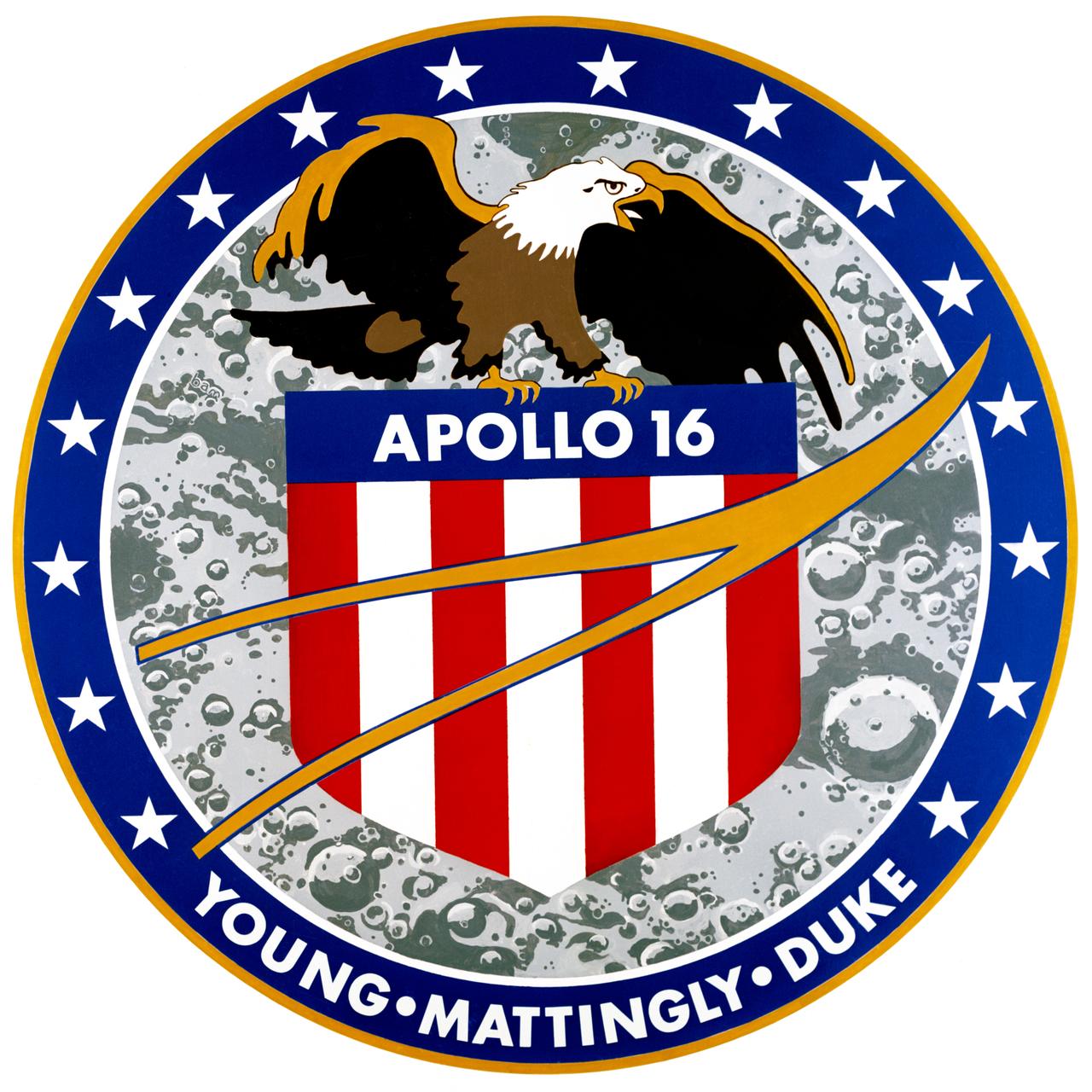
S71-56246 (November 1971) --- The Apollo 16 crew patch is dominated by an eagle perched atop a red, white and blue shield a superimposed on a lunar scene, surrounded by a blue circle of 16 stars with the crew's surnames completing the bottom are of the circle. Across the face of the shield is a gold symbol of flight outlined in blue, similar to that on the National Aeronautics and Space Administration (NASA) agency seal and insignia. The design was created by a NASA artist from ideas submitted by the three crew men: astronauts John W. Young, commander; Thomas K. Mattingly II, command module pilot; and Charles M. Duke Jr., lunar module pilot. This is the official Apollo 16 emblem, a property of the government of the United States. It has been authorized only for use by the astronauts. Its reproduction in any form other than in news, information and education media is not authorized without approval. Unauthorized use is subject to the provisions of Title 18, U.S. Code, Section 701.
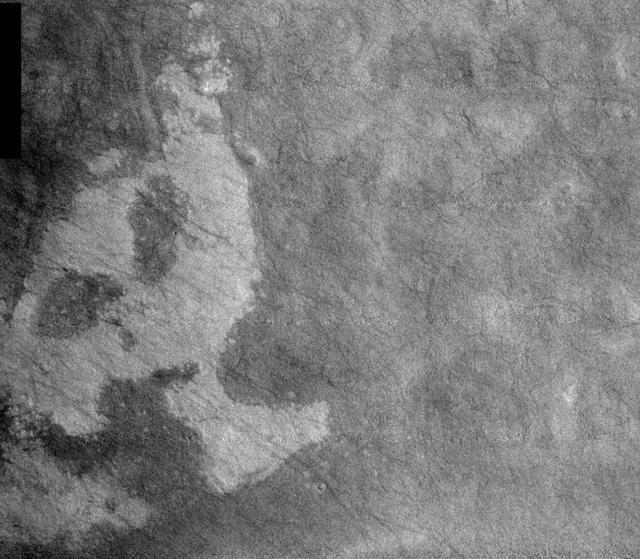
THEMIS Images as Art #16
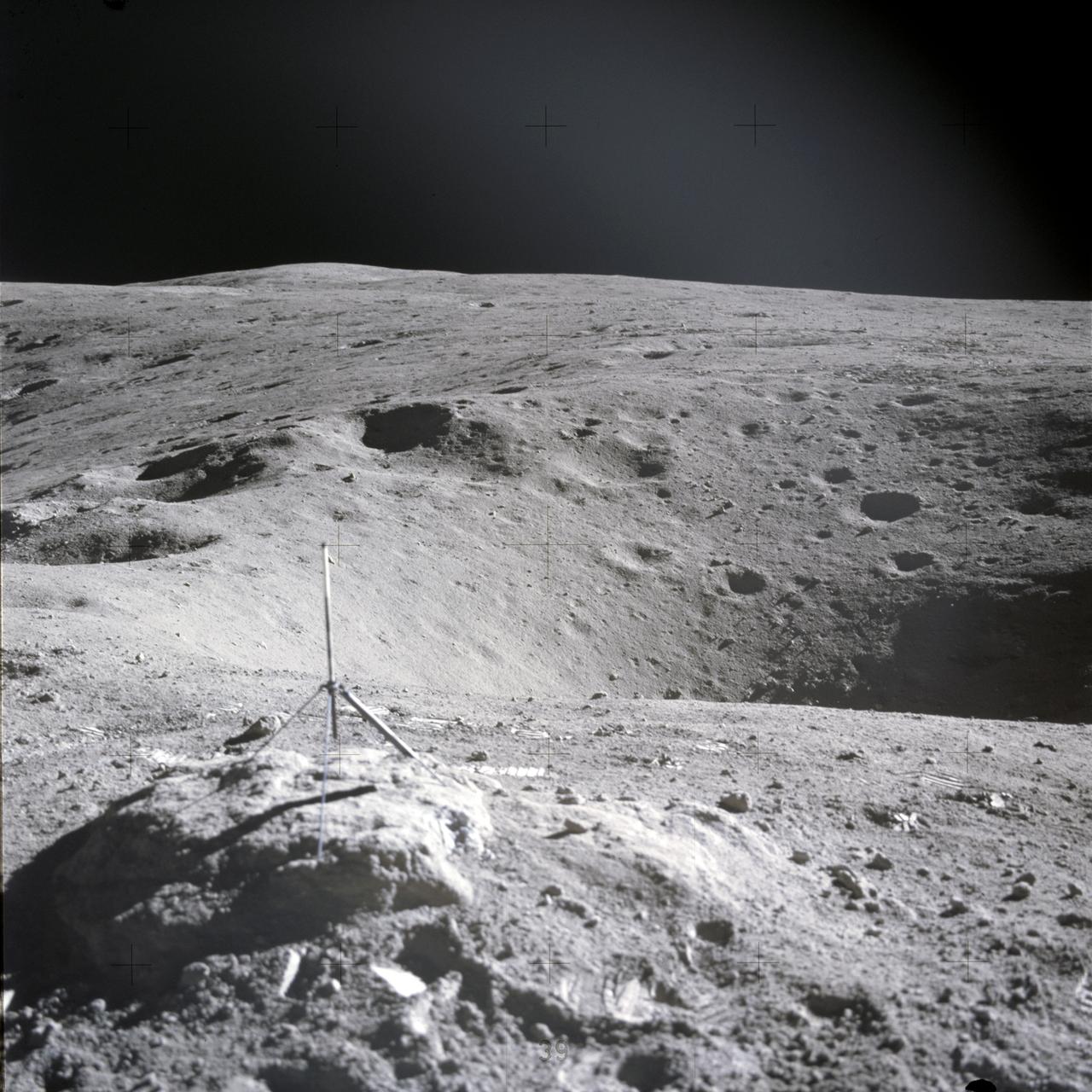
AS16-114-18421 (16-27 April 1972) --- This picture of the lunar surface was photographed by astronaut John W. Young during Apollo 16's first extravehicular activity (EVA) at EVA Station No 1. The instrument near the small crater's edge (foreground) is a gnomon. While astronauts Young, commander; and Charles M. Duke Jr., lunar module pilot; descended in the Apollo 16 Lunar Module (LM) "Orion" to explore the Descartes highlands landing site on the moon, astronaut Thomas K. Mattingly II, command module pilot, remained with the Command and Service Modules (CSM) "Casper" in lunar orbit.
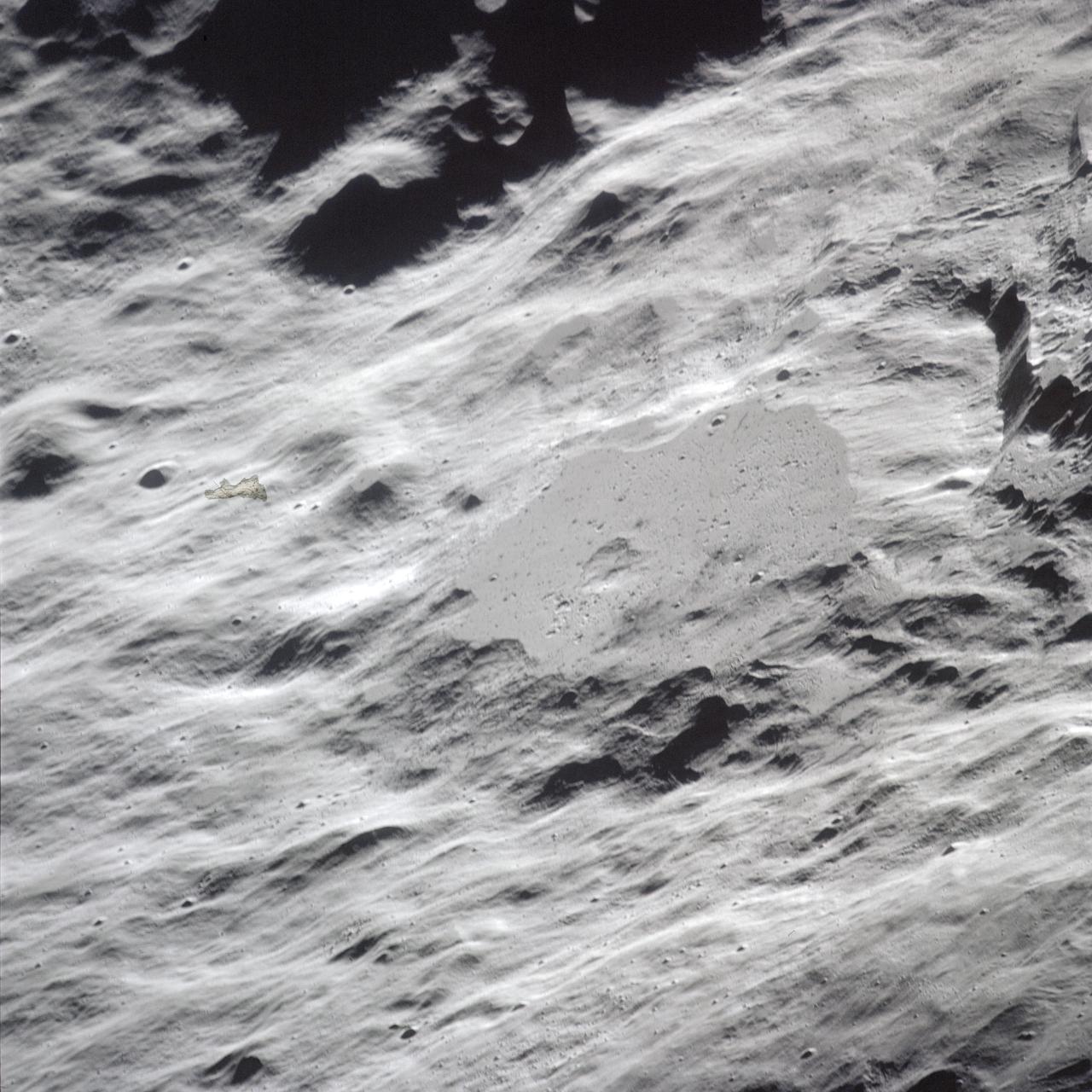
AS16-120-19273 (April 1972) --- King Crater as photographed from the Apollo 16 spacecraft in lunar orbit.
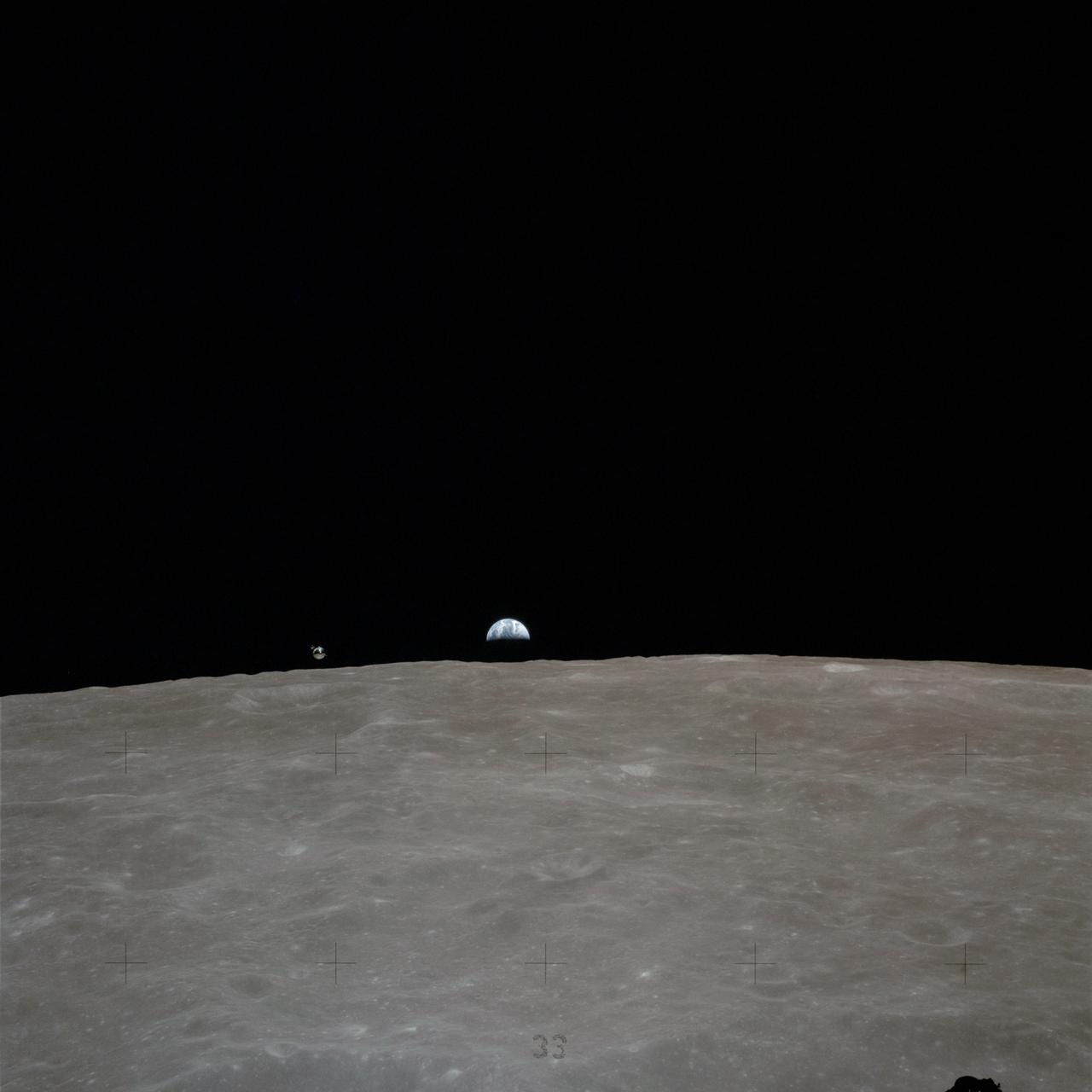
AS16-113-18289 (16-27 April 1972) --- Earth rises over the lunar horizon, with the Apollo 16 Command and Services Modules (CSM) to the left of Earth. This photograph was taken from the Lunar Module (LM) "Orion" before the two Apollo 16 spacecraft re-joined following the CSM's failure to make the circularization burn on April 20, 1972. Astronaut Thomas K. Mattingly II, command module pilot, was inside the CSM "Casper", while astronauts John W. Young, commander, and Charles M. Duke Jr., lunar module pilot, were manning the LM. While astronauts Young and Duke descended in the LM to explore the Descartes region of the moon, astronaut Mattingly remained with the CSM in lunar orbit. Photo credit: NASA
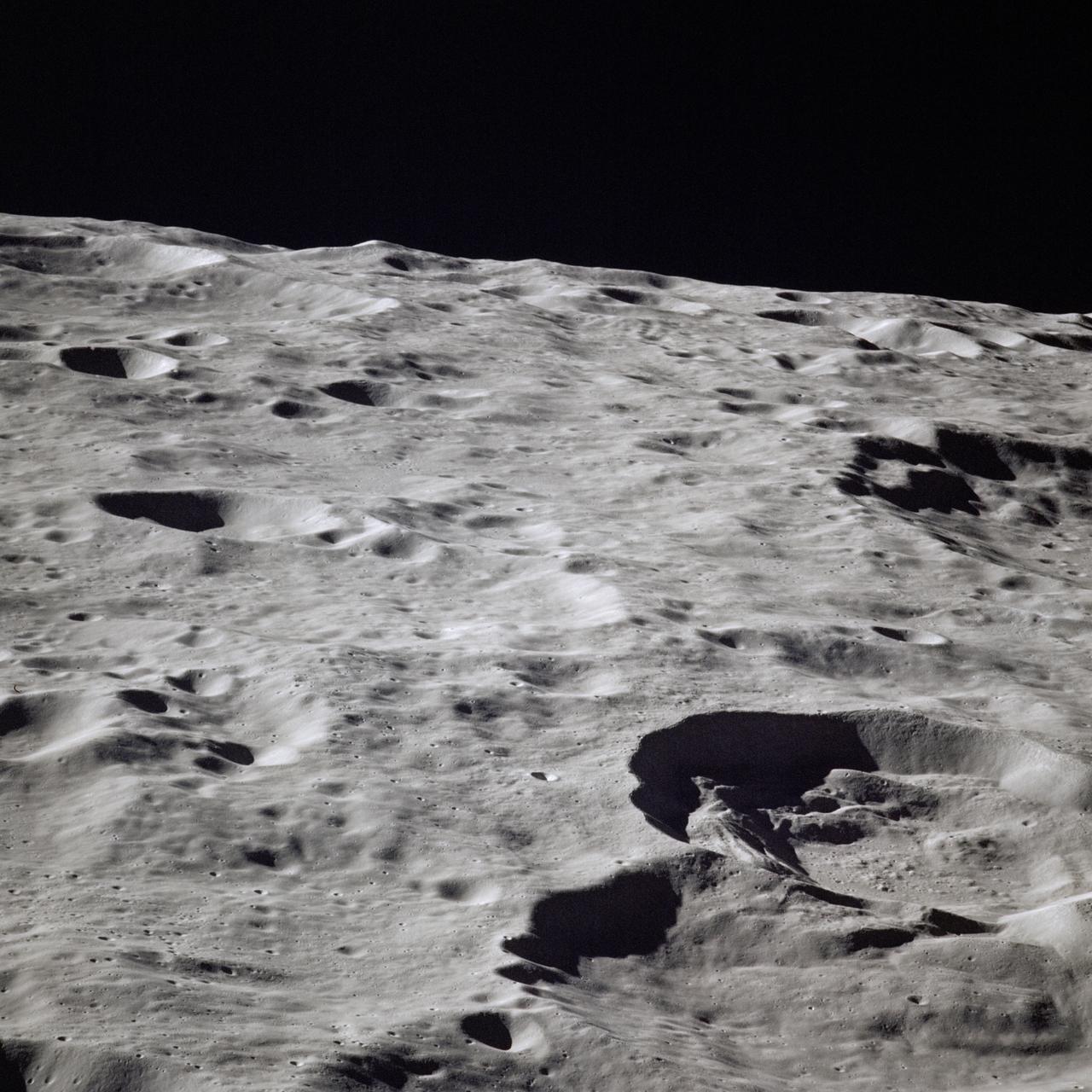
AS16-118-18947 (16-27 April 1972) --- A 250mm view looking north by westward across lunar farside highland terrain, as photographed from the Apollo 16 spacecraft in lunar orbit. The frame is centered at approximately 158 degrees east longitude and 17 degrees north latitude. Van Gent Crater is the lower of two large craters at extreme lower right corner. The top of the two craters is unnamed. The west part of Konstantinov Crater is at extreme right center. Nagaoka Crater is just below the horizon at upper left.

Expedition 16 Commander Peggy Whitson dons her flight suit prior to launch, Wednesday, Oct. 10, 2007, in Baikonur, Kazakhstan. Expedition 16 Flight Engineer and Soyuz Commander Yuri Malenchenko, Whitson, and Malaysian spaceflight participant Sheikh Muszaphar Shukor launched from the Baikonur Cosmodrome in Kazakhstan at sunset n their Soyuz TMA-11 spacecraft bound for a docking to the International Space Station on Oct. 12. Whitson and Malenchenko will spend six months on the station, while Shukor will return to Earth Oct. 21 with two of the Expedition 15 crewmembers currently on the complex. Photo Credit: (NASA/Bill Ingalls)
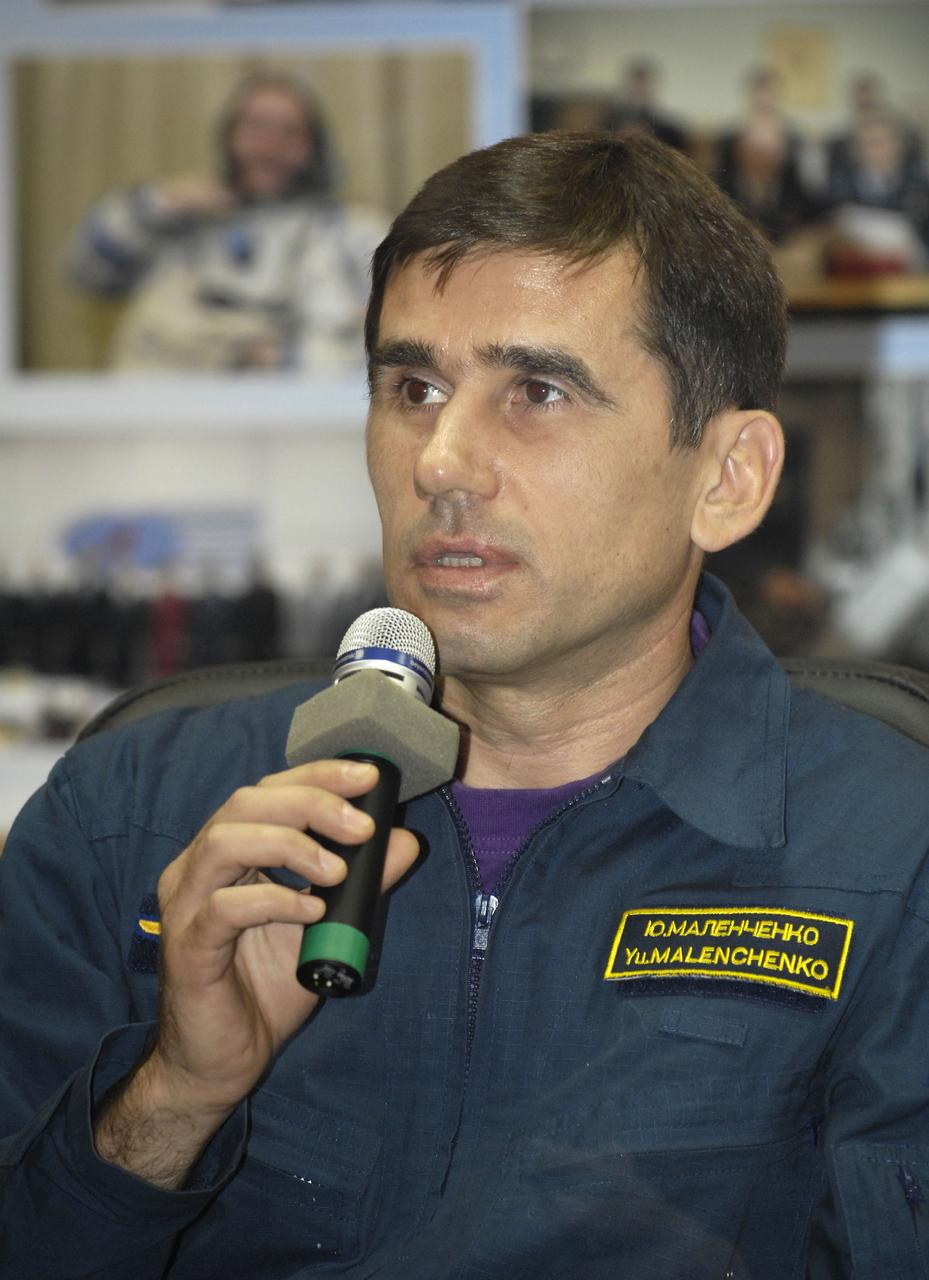
Expedition 16 Flight Engineer and Soyuz Commander Yuri Malenchenko speaks during the State Commission meeting and press conference, Tuesday, Oct. 9, 2007, at the Baikonur Cosmodrome in Kazakhstan. The Expedition 16 crew is in preparation for their launch to the International Space Station Oct. 10 in their Soyuz TMA-11 spacecraft. Commander Peggy Whitson and Malenchenko will spend six months on the station while spaceflight participant Shukor will return to Earth Oct. 21 with two of the Expedition 15 crewmembers currently on the complex. Photo Credit: (NASA/Bill Ingalls) Photo Credit: "NASA/Bill Ingalls"
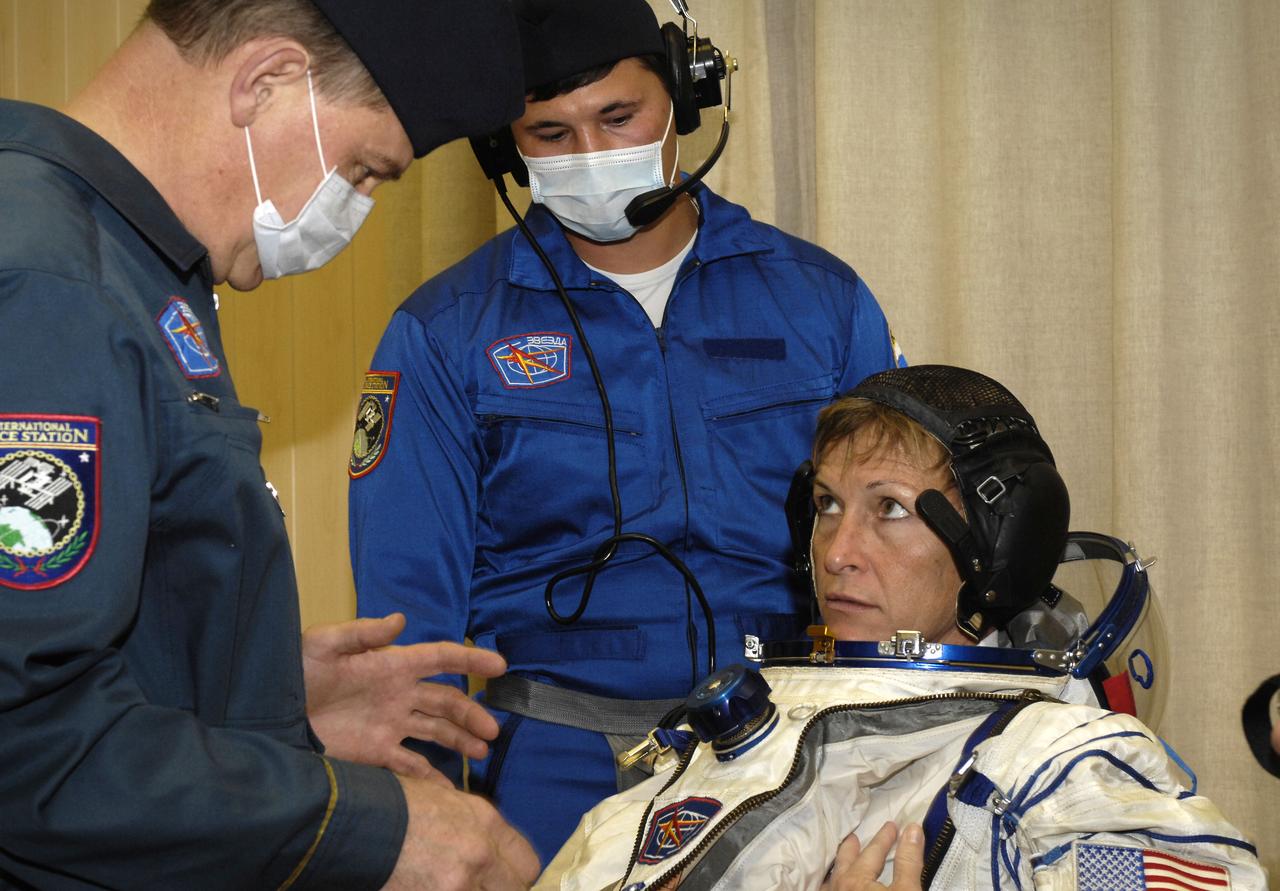
Expedition 16 Commander Peggy Whitson dons her flight suit prior to launch, Wednesday, Oct. 10, 2007, in Baikonur, Kazakhstan. Expedition 16 Flight Engineer and Soyuz Commander Yuri Malenchenko, Whitson, and Malaysian spaceflight participant Sheikh Muszaphar Shukor launched from the Baikonur Cosmodrome in Kazakhstan at sunset n their Soyuz TMA-11 spacecraft bound for a docking to the International Space Station on Oct. 12. Whitson and Malenchenko will spend six months on the station, while Shukor will return to Earth Oct. 21 with two of the Expedition 15 crewmembers currently on the complex. Photo Credit: (NASA/Bill Ingalls)
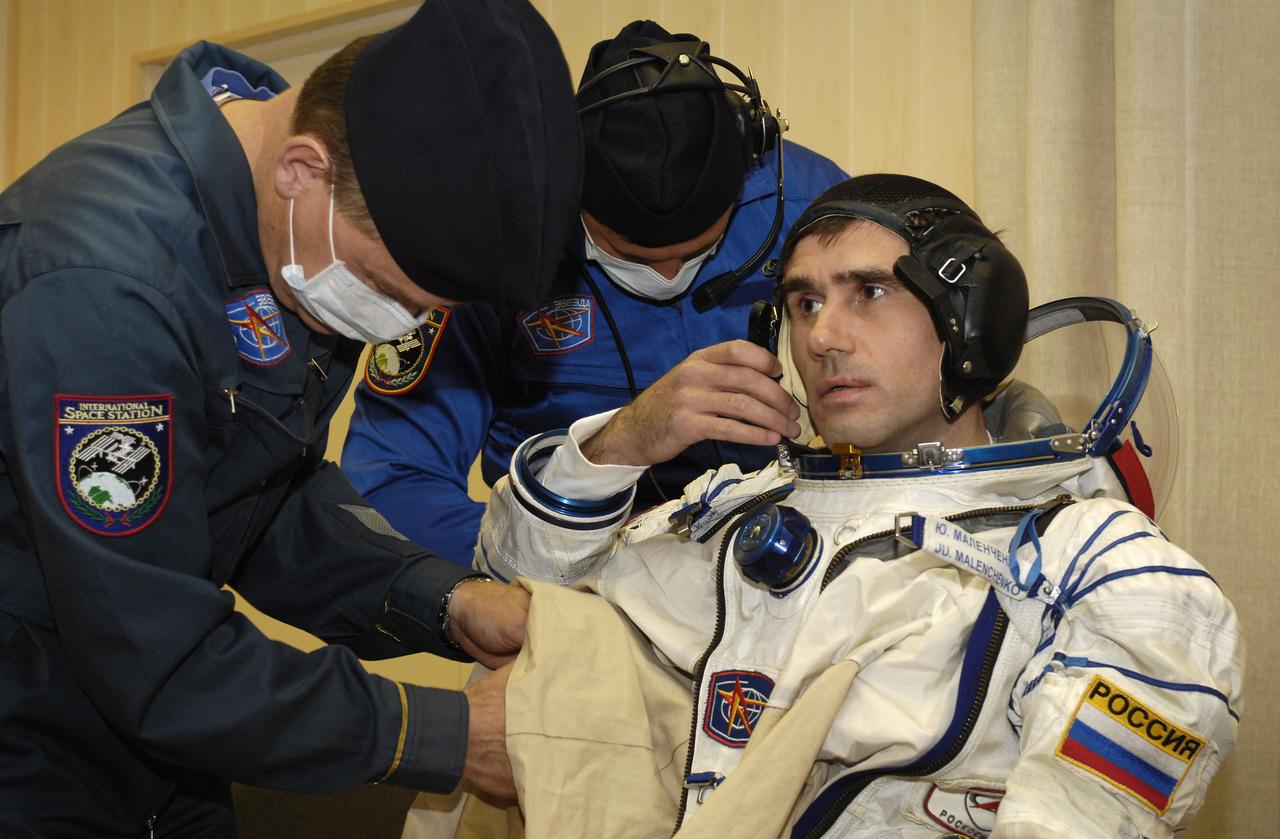
Expedition 16 Flight Engineer and Soyuz Commander Yuri Malenchenko dons his flight suit prior to launch, Wednesday, Oct. 10, 2007, in Baikonur, Kazakhstan. Expedition 16 Commander Peggy Whitson, Malenchenko, and Malaysian spaceflight participant Sheikh Muszaphar Shukor launched from the Baikonur Cosmodrome in Kazakhstan at sunset n their Soyuz TMA-11 spacecraft bound for a docking to the International Space Station on Oct. 12. Whitson and Malenchenko will spend six months on the station, while Shukor will return to Earth Oct. 21 with two of the Expedition 15 crewmembers currently on the complex. Photo Credit: (NASA/Bill Ingalls)

Expedition 16 Commander Peggy Whitson listens during the State Commission meeting and press conference, Tuesday, Oct. 9, 2007, at the Baikonur Cosmodrome in Kazakhstan. The Expedition 16 crew is in preparation for their launch to the International Space Station Oct. 10 in their Soyuz TMA-11 spacecraft. Commander Peggy Whitson and Flight Engineer Yuri Malenchenko will spend six months on the station while spacelfight participant Sheikh Muszhaphar Shukor will return to Earth Oct. 21 with two of the Expedition 15 crewmembers currently on the complex. Photo Credit: (NASA/Bill Ingalls) Photo Credit: "NASA/Bill Ingalls"
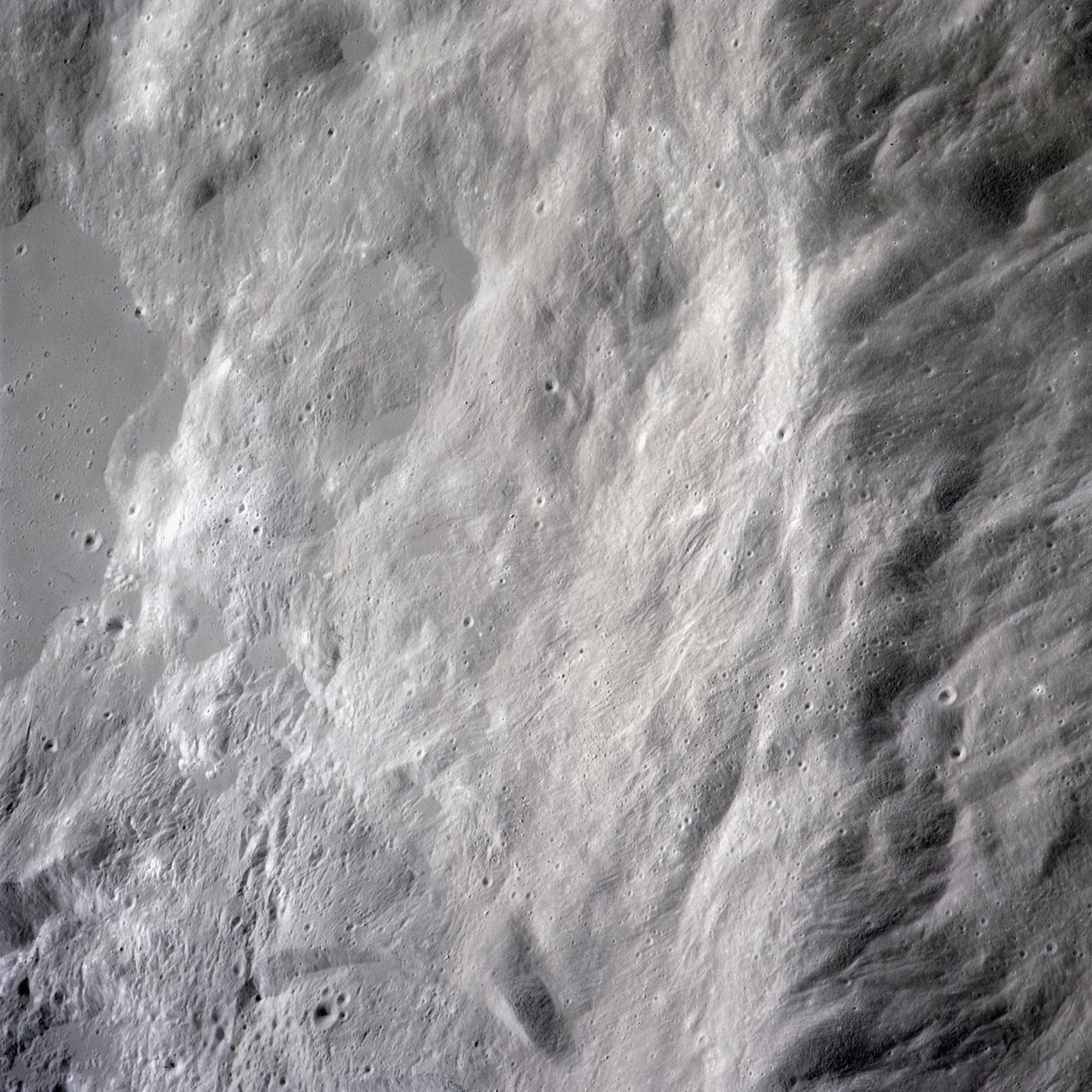
AS16-120-19228 (16-27 April 1972) --- Strongly textured terrain north of the lunar farside King Crater which is centered near 120.5 degrees east longitude and 5.5 degrees north latitude. This near vertical oblique view eastward was photographed from the Apollo 16 spacecraft in lunar orbit with a Hasselblad camera equipped with a 250mm telephoto lens. Several irregular areas characterized by conspicuously smooth surfaces interrupt the rough texture in this view of the eastern quarter of the large, unnamed crater between King and Guyot. Similar "ponds" occur at varied levels in the rim deposits of the nearside craters Copernicus and Tycho. Hold picture with the smooth area at the top.
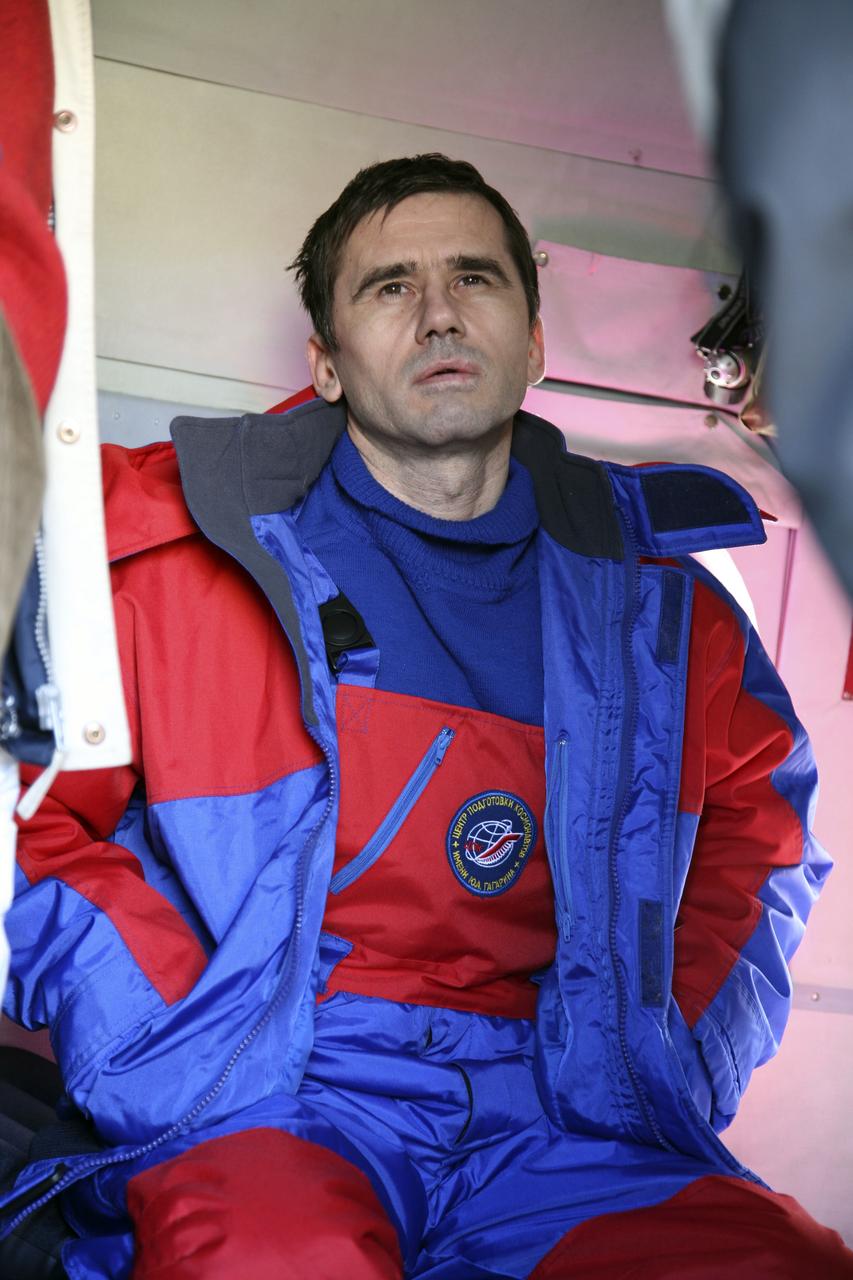
Expedition 16 Flight Engineer and Soyuz Commander Yuri Malenchenko sits in a helicopter after he and fellow crew members Expedition 16 Commander Peggy Whitson and South Korean spaceflight participant So-yeon Yi landed their Soyuz TMA-11 capsule, Friday, April 19, 2008, in central Kazakhstan. Whitson and Malenchenko completed 192 days in space and Yi 11 days in orbit. Photo Credit: (NASA/Reuters/Pool)
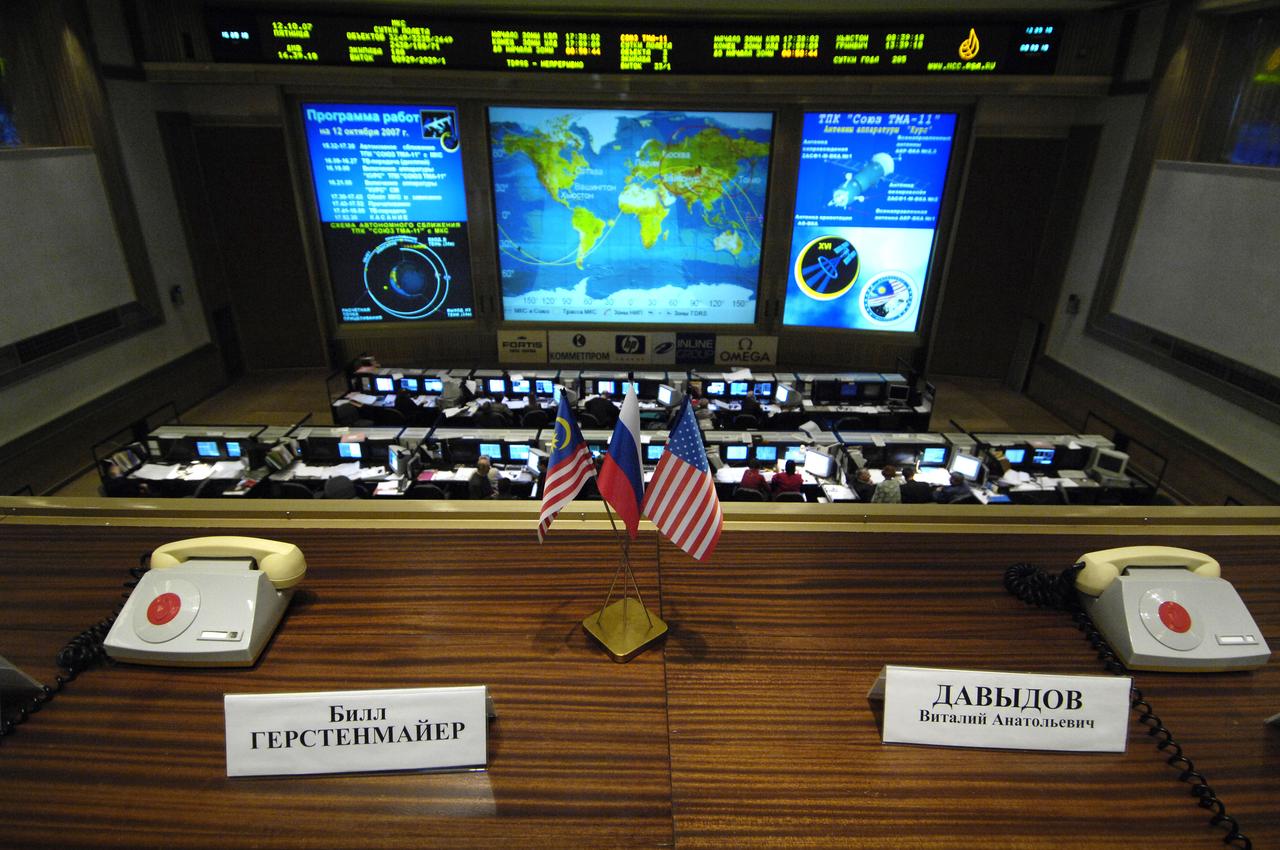
The flags of Malaysia, Russia and the United States sit between the phones used by officials to speak with the crew of the International Space Station (ISS) in the Russian Mission Control Center in Korolev, outside Moscow, Friday, Oct. 12, 2007. Expedition 16 Commander Peggy Whitson, Soyuz Commander and Flight Engineer Yuri Malenchenko and Malaysian spaceflight participant Sheikh Muszaphar Shukor docked their Soyuz TMA-11 spacecraft to the ISS at 10:50 a.m. EDT, October 12. The crew launched on Wednesday from the Baikonur Cosmodrome in Kazakhstan. Photo Credit: (NASA/Bill Ingalls)
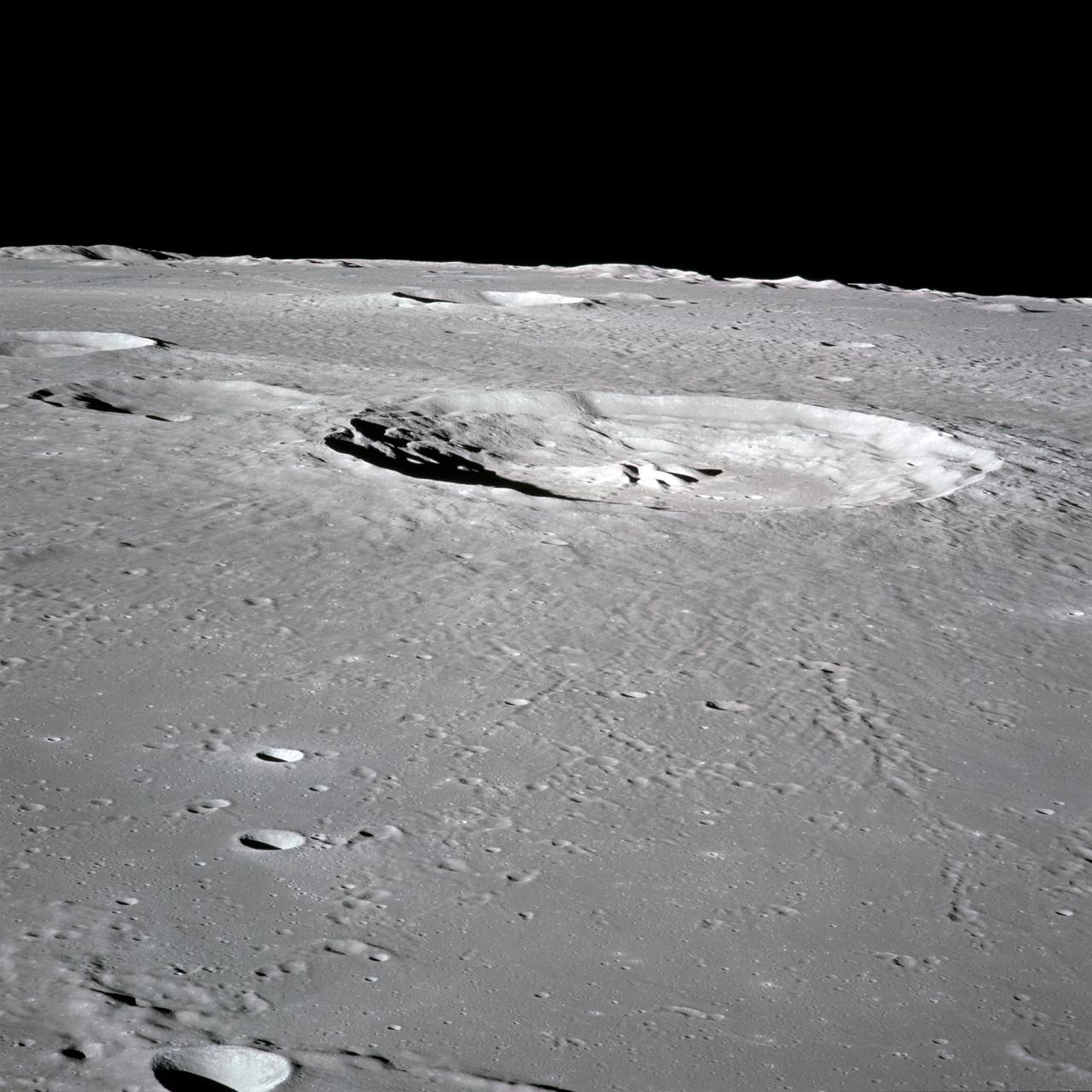
AS16-120-19242 (16-27 April 1972) --- This 70mm handheld camera's view of the moon, photographed during the Apollo 16 mission's lunar orbit, features Crater Bullialdus, located at approximately 20 degrees south latitude and 20.8 west longitude.
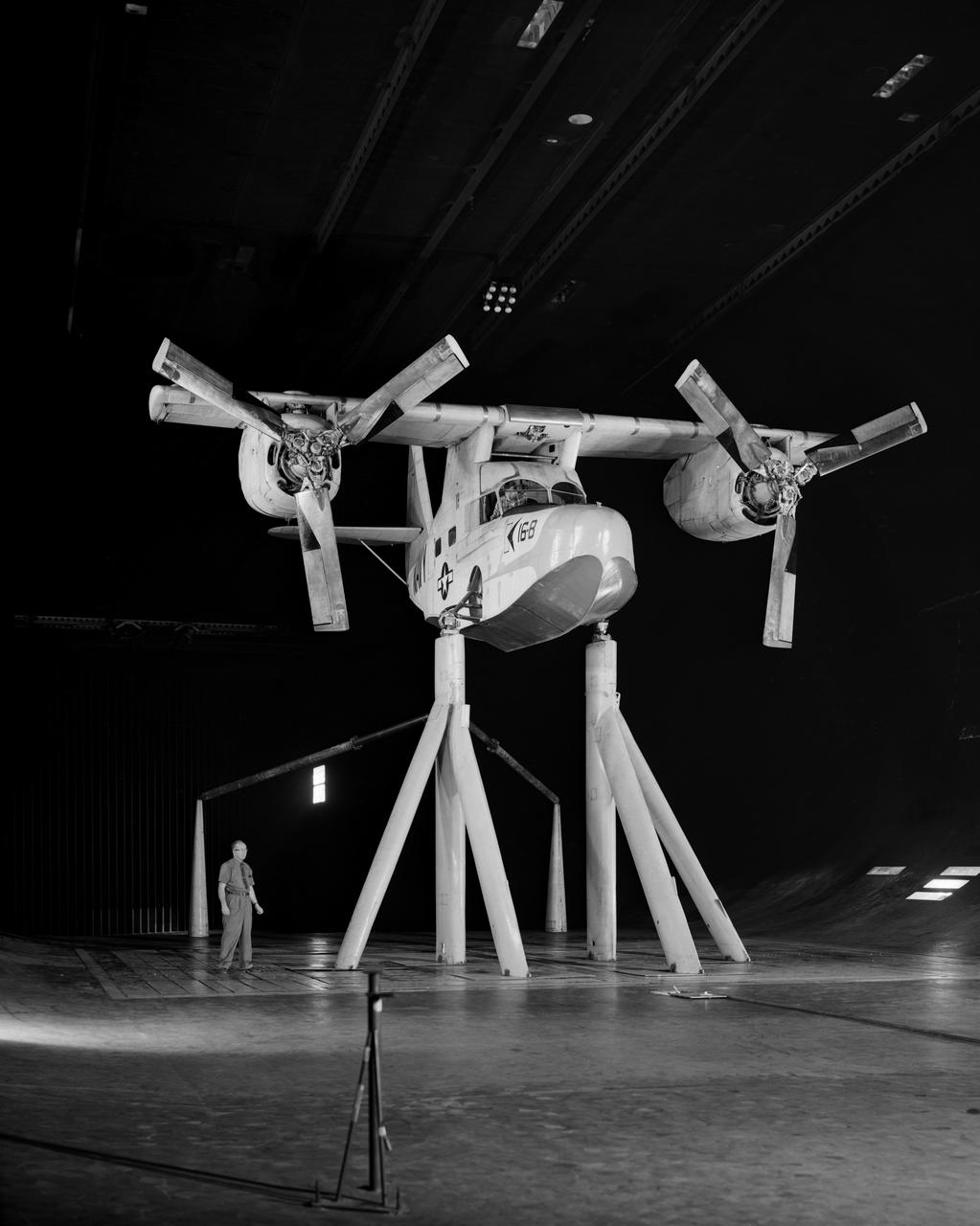
Test No. 175 Kaman K-16 in 40x80 Foot Wind Tunnel at Ames Research Center. Pictured with two Kaman employees. 3/4 Front view of Airplane. Kaman K-16B was an experimental tilt wing aircraft, it used the fuselage of a JRF-5 and was powered by two General Electric YT58-GE-2A engines.
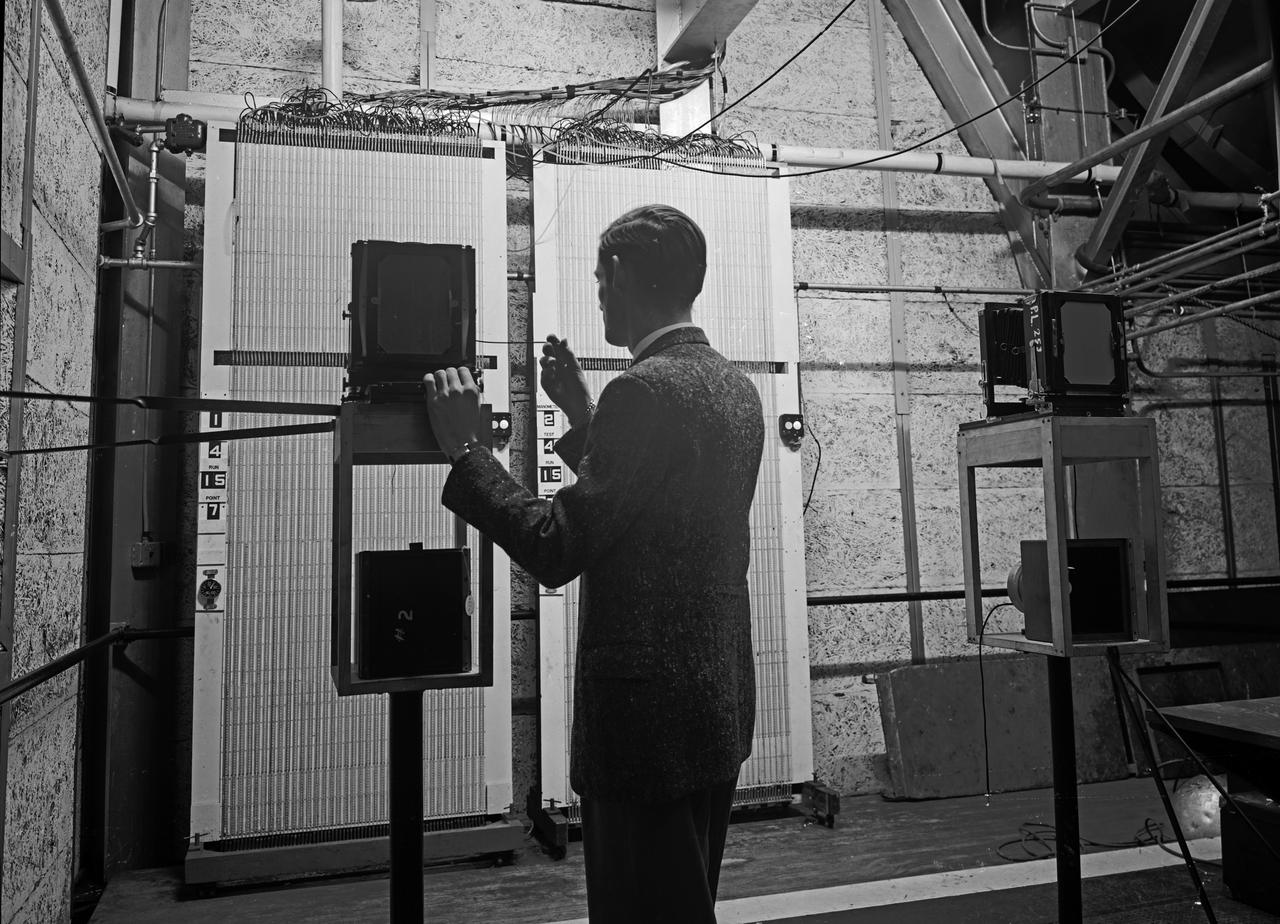
Instrumentation in 16 Foot Wind Tunnel manometer boards
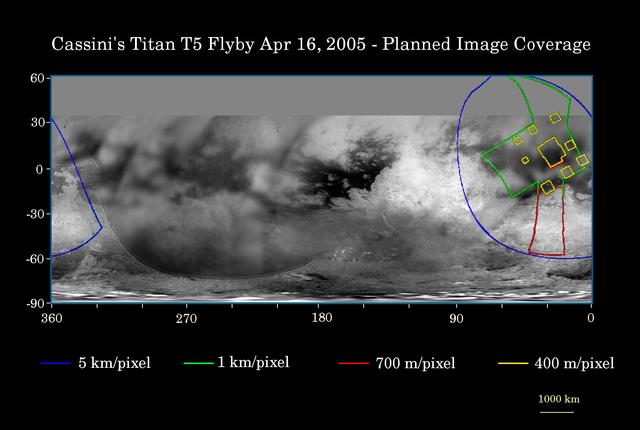
Cassini April 16 Flyby of Titan
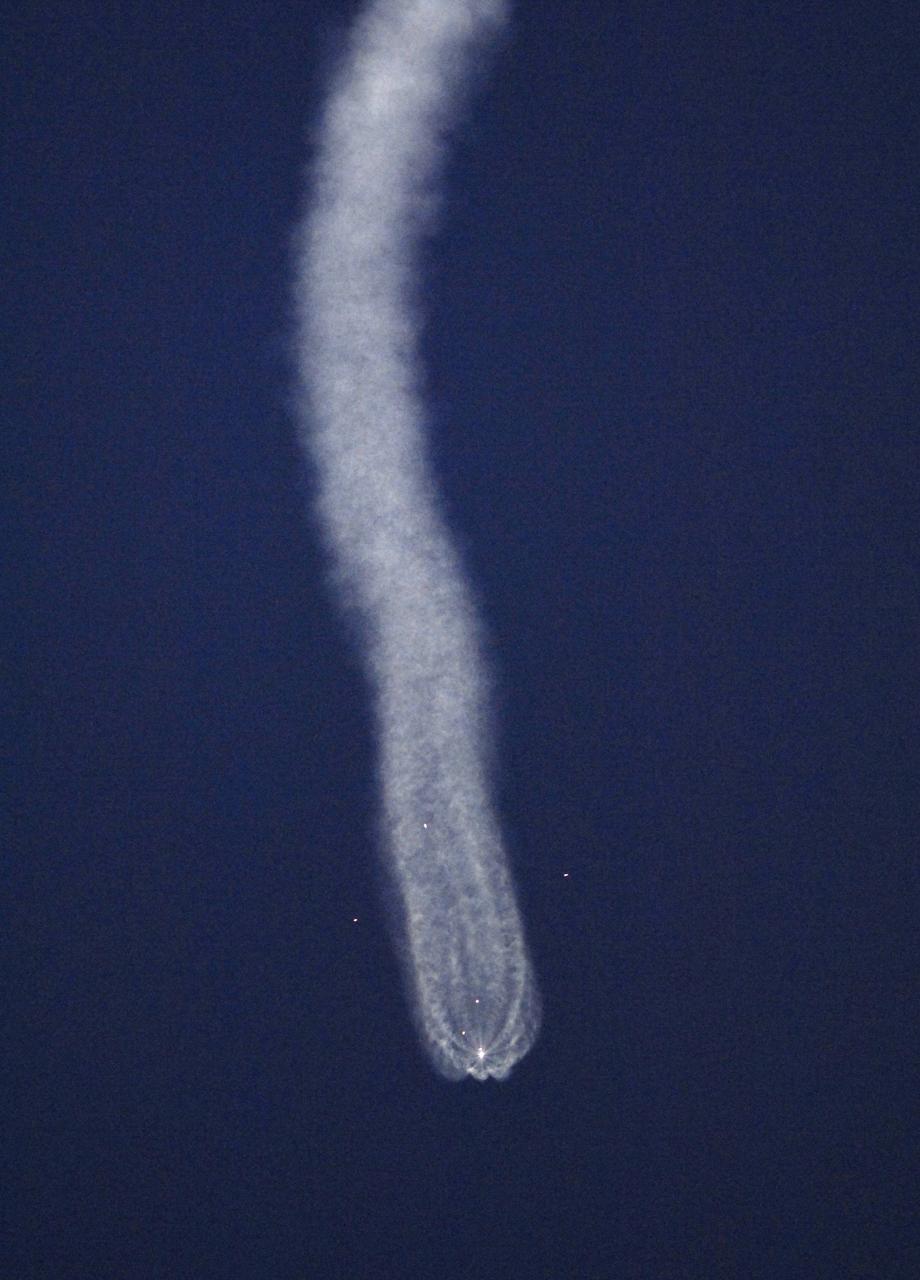
Expedition 16 Commander Peggy Whitson, Flight Engineer and Soyuz Commander Yuri Malenchenko and Malaysian spaceflight participant Sheikh Muszaphar Shukor blasted off from the Baikonur Cosmodrome in Kazakhstan at sunset, Wednesday, Oct. 10, 2007 in their Soyuz TMA-11 spacecraft. They will dock with the International Space Station on October 12. Whitson and Malenchenko will spend six months on the station, while Shukor will return to Earth October 21 with two of the Expedition 15 crewmembers currently on the complex. Photo Credit: (NASA/Bill Ingalls)
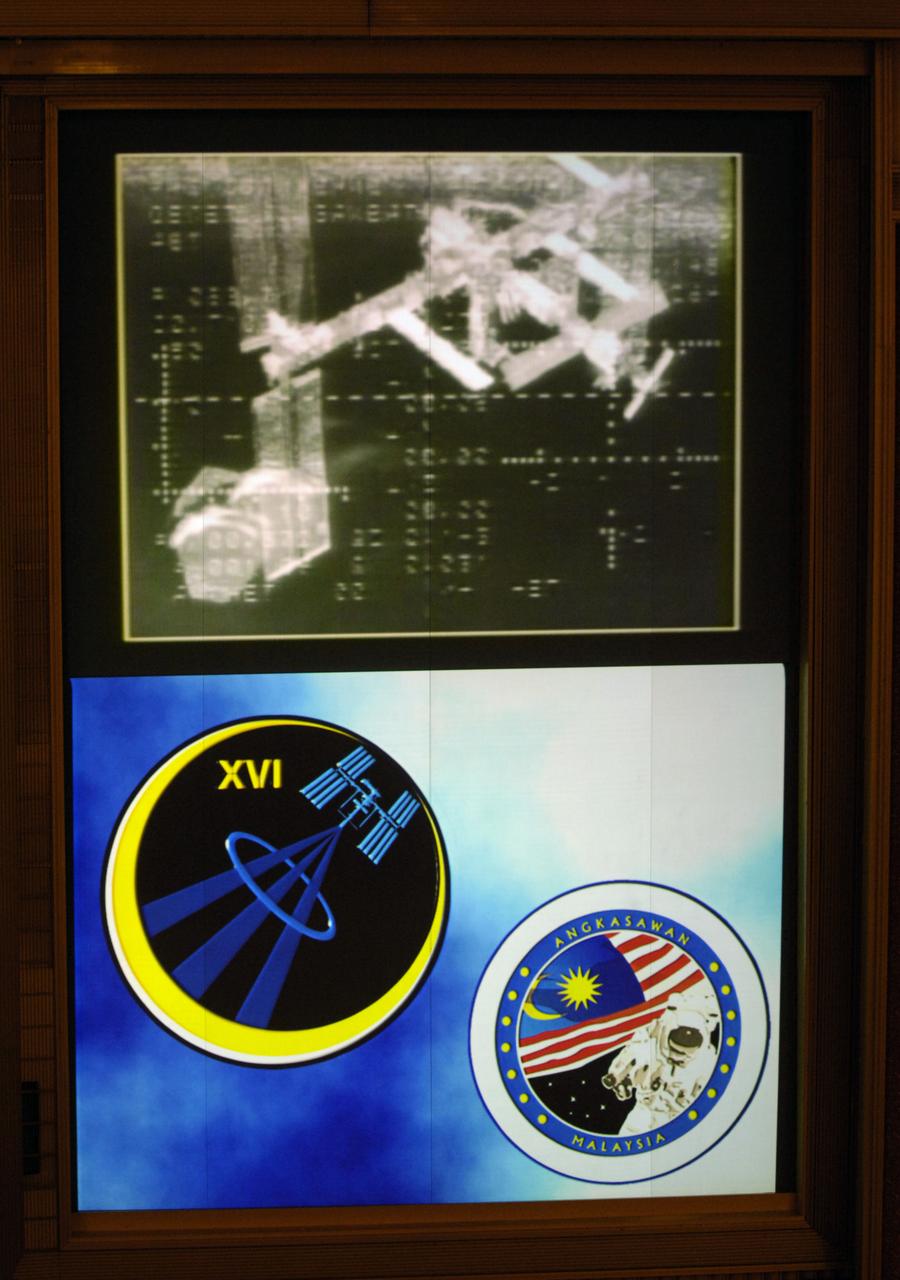
Live video from the Soyuz TMA-11 spacecraft of the International Space Station is shown on the screen in the Russian Mission Control Center in Korolev, outside Moscow, Friday, Oct. 12, 2007. Expedition 16 Commander Peggy Whitson, Soyuz Commander and Flight Engineer Yuri Malenchenko and Malaysian spaceflight participant Sheikh Muszaphar Shukor docked their Soyuz TMA-11 spacecraft to the ISS at 10:50 a.m. EDT, October 12. The crew launched on Wednesday from the Baikonur Cosmodrome in Kazakhstan. Photo Credit: (NASA/Bill Ingalls)
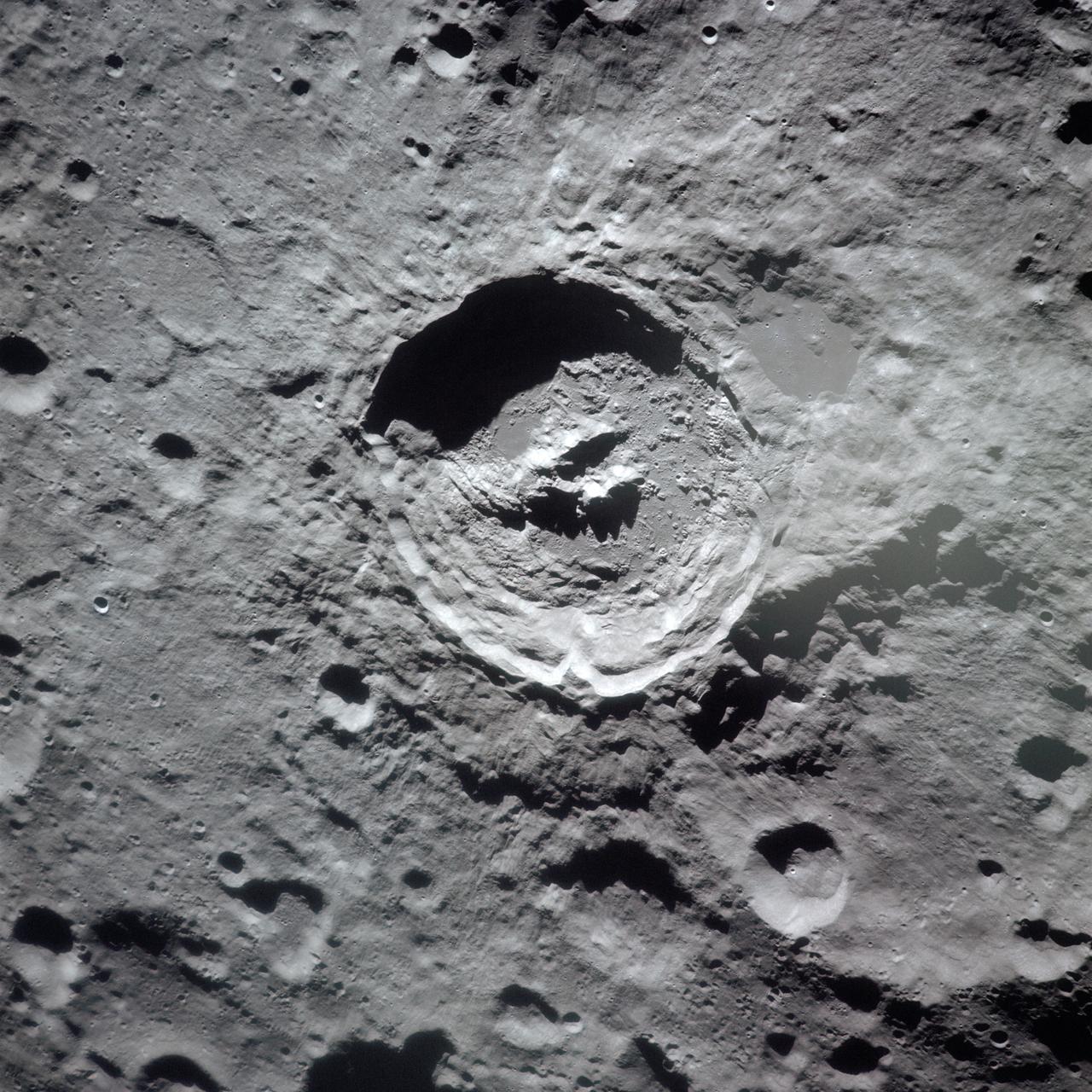
AS16-122-19580 (16-27 April 1972) --- This vertical view shows the King Crater on the lunar surface. It was exposed with color positive film in a hand-held 70mm camera onboard the Command and Service Modules during the Apollo 16 mission's 98th orbit of the moon. Center point coordinates are located at 5.4 degrees north latitude and 120.8 degrees east longitude.
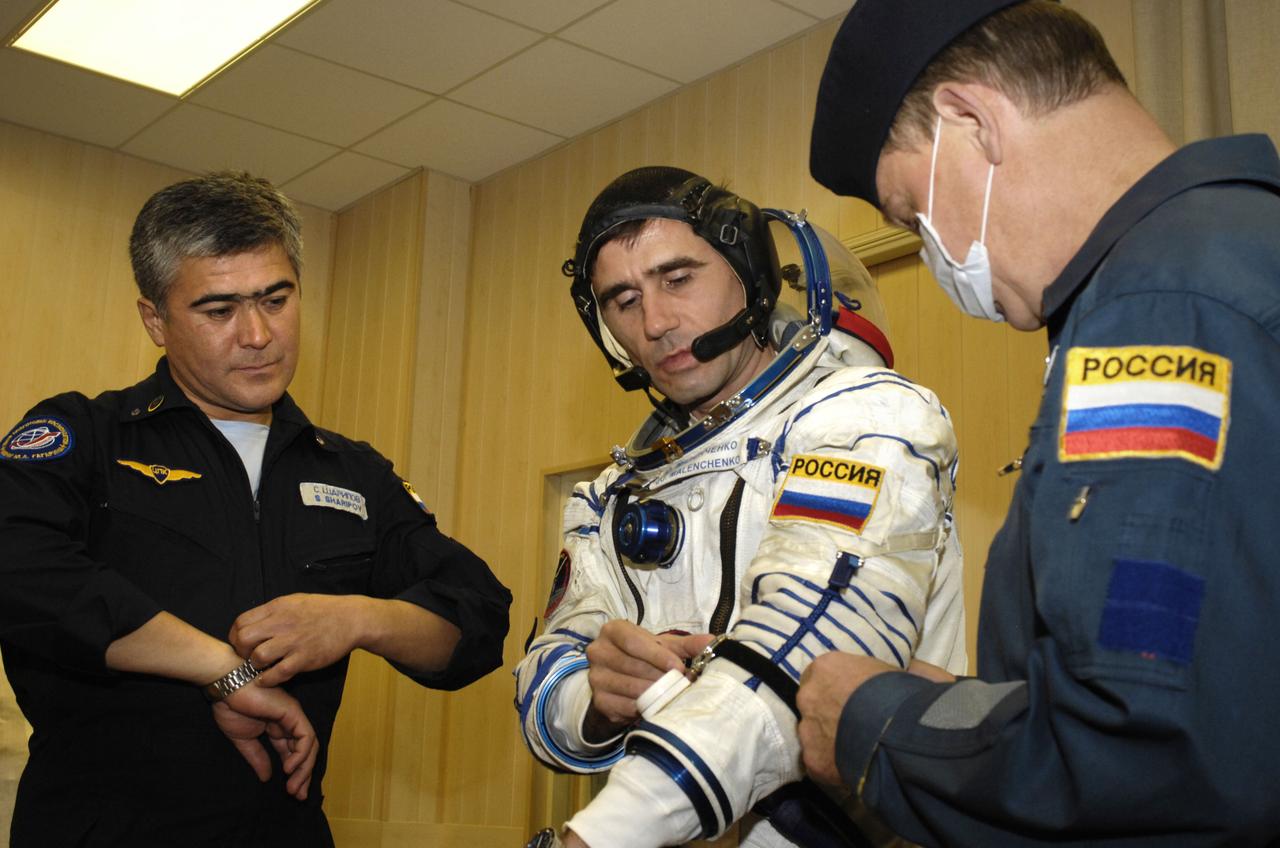
Expedition 16 Flight Engineer and Soyuz Commander Yuri Malenchenko dons his flight suit prior to launch, Wednesday, Oct. 10, 2007, in Baikonur, Kazakhstan. Expedition 16 Commander Peggy Whitson, Malenchenko, and Malaysian spaceflight participant Sheikh Muszaphar Shukor launched from the Baikonur Cosmodrome in Kazakhstan at sunset n their Soyuz TMA-11 spacecraft bound for a docking to the International Space Station on Oct. 12. Whitson and Malenchenko will spend six months on the station, while Shukor will return to Earth Oct. 21 with two of the Expedition 15 crewmembers currently on the complex. Photo Credit: (NASA/Bill Ingalls)
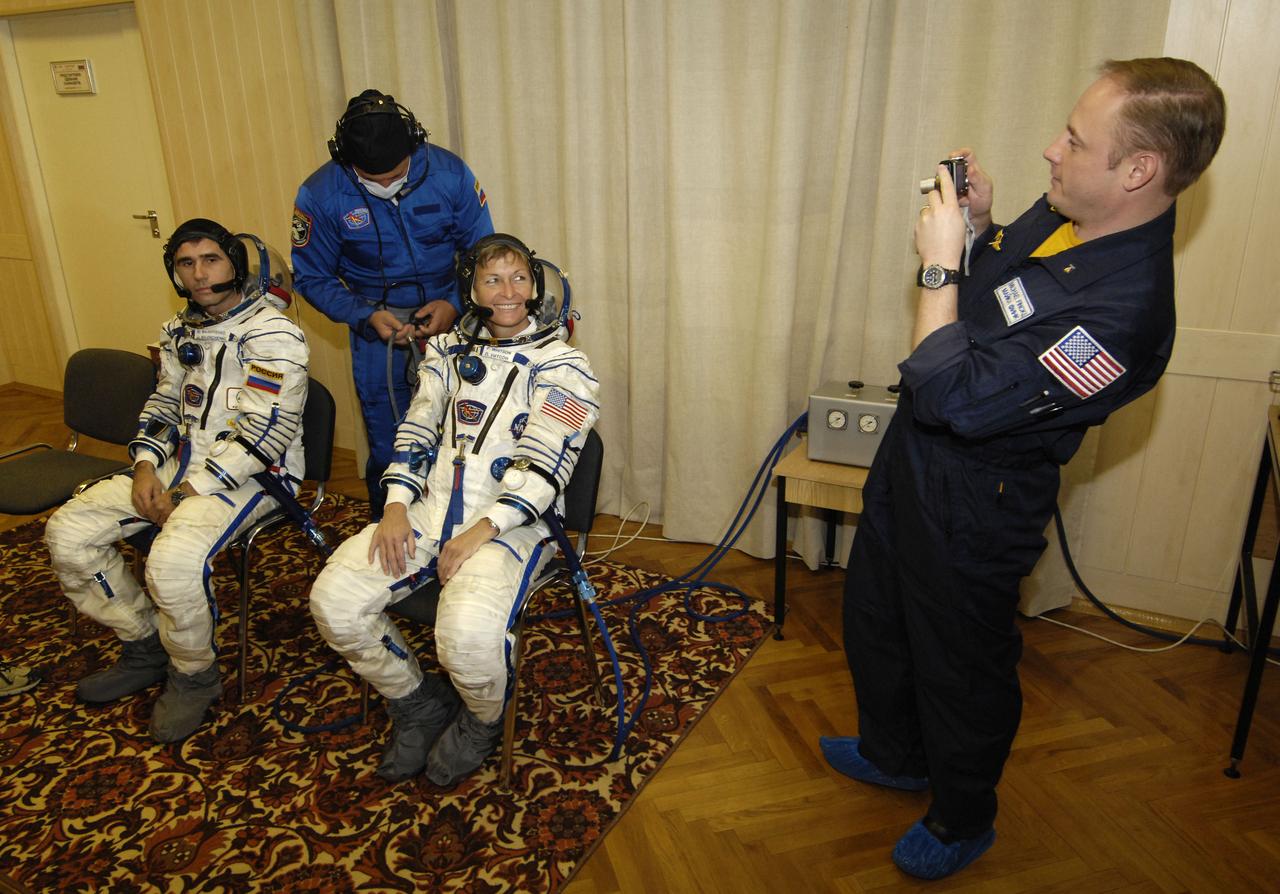
Expedition 16 backup Commander Michael Fincke, right, photographs Expedition 16 Commander Peggy Whitson and Flight Engineer and Soyuz Commander Yuri Malenchenko, left, shortly before they and Malaysian spaceflight participant Sheikh Muszaphar Shukor launched from the Baikonur Cosmodrome in Kazakhstan, Wednesday, Oct. 10, 2007. Their Soyuz TMA-11 spacecraft will dock to the International Space Station on Oct. 12. Whitson and Malenchenko will spend six months on the station, while Shukor will return to Earth Oct. 21 with two of the Expedition 15 crewmembers currently on the complex. Photo Credit: (NASA/Bill Ingalls)
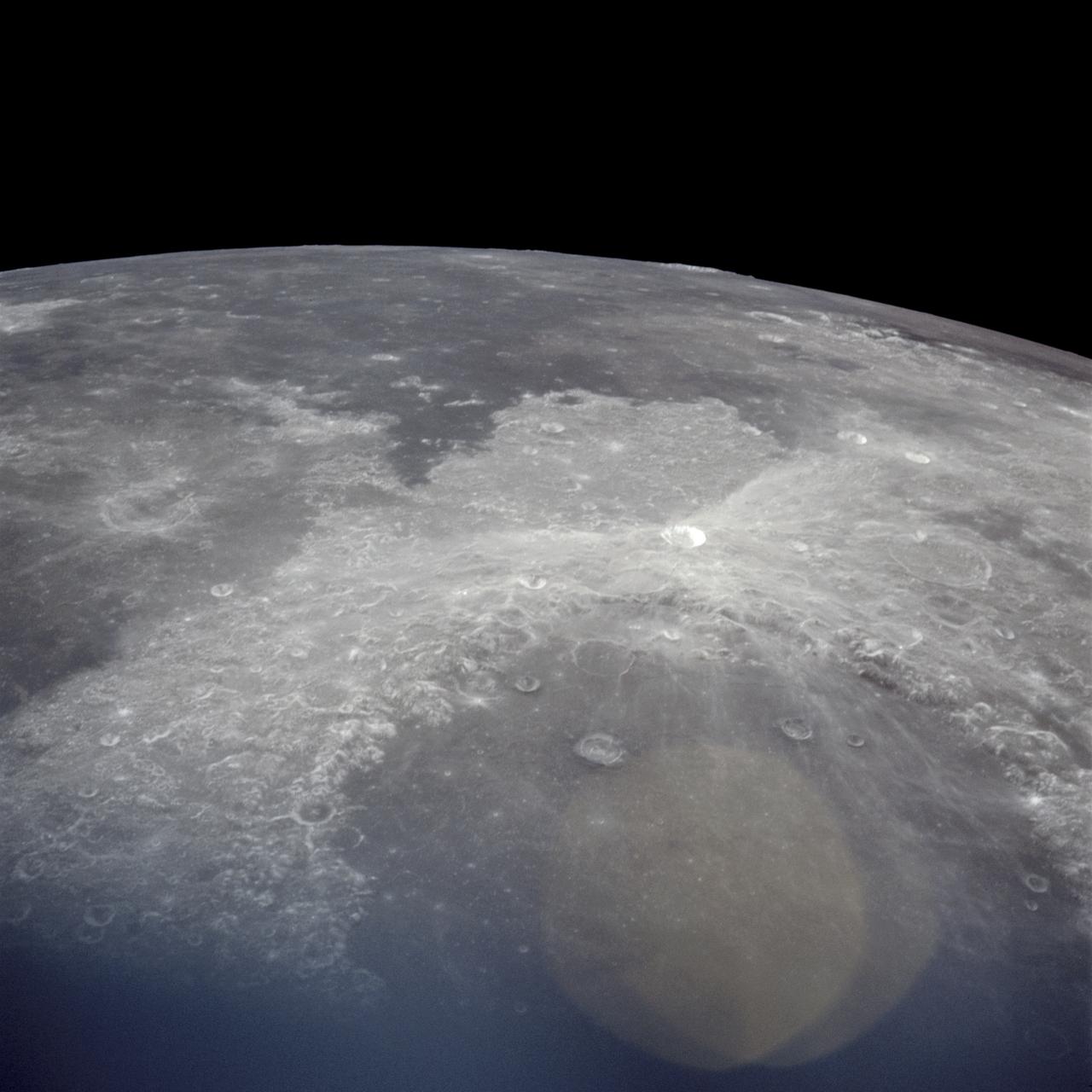
AS16-121-19438 (April 1972) --- An oblique view of a portion of the lunar nearside as photographed from the Apollo 16 spacecraft in lunar orbit, looking across the Sea of Crises southwesterly into the Sea of Tranquility. The conspicuous, bright-rayed crater is Proclus. The crater Taruntius in the northeasterly portion of the Sea of Fertility is near the left center edge. A portion of the Sea of Serenity is visible on the horizon at upper right.
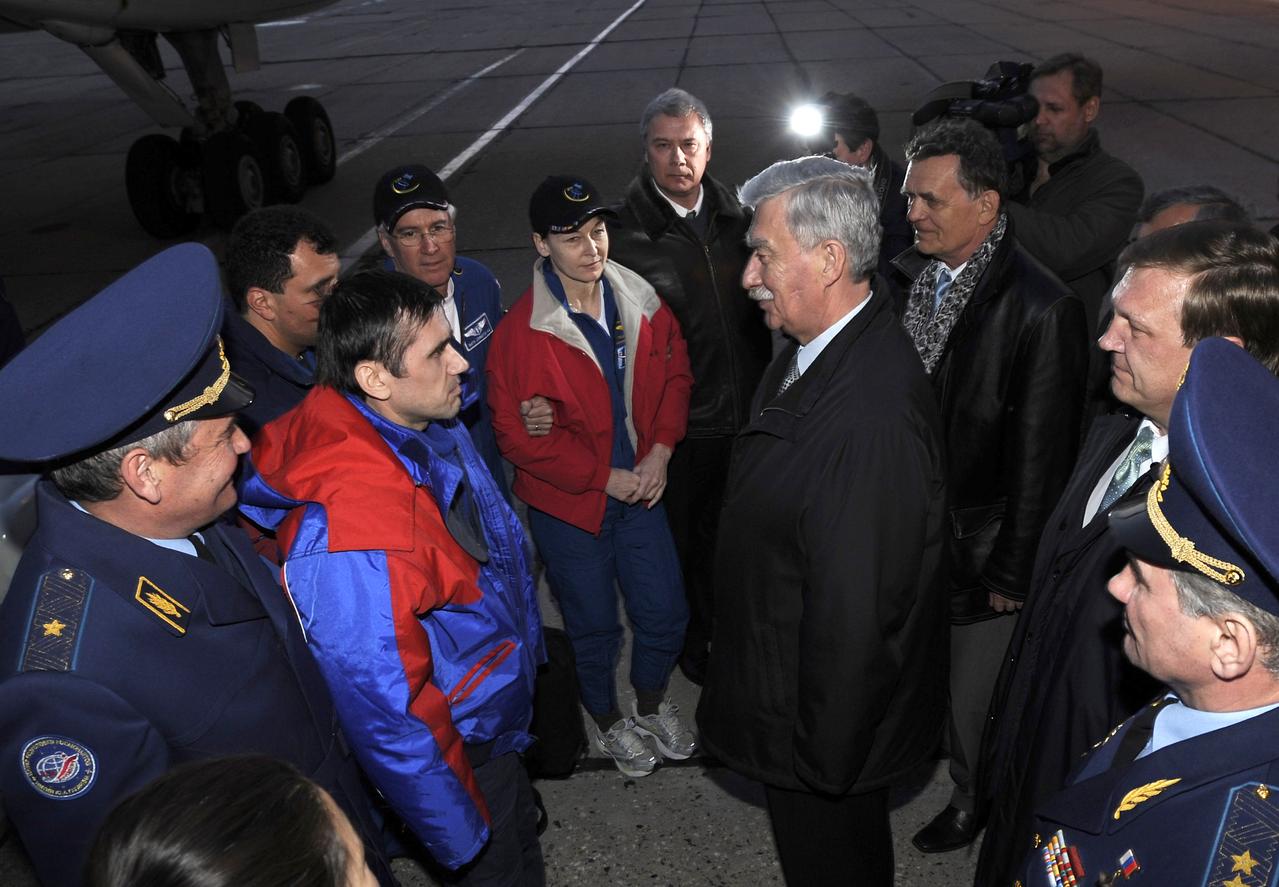
Expedition 16 Flight Engineer and Soyuz Commander Yuri Malenchenko, second from left, and Expedition 16 Commander Peggy Whitson meet with Russian officials at the foot of the airplane steps after they arrived at Chkalovsky Airport near Star City, Russia, Friday, April 19, 2008. Whitson, Malechenko and Yi landed their Soyuz TMA-11 spacecraft on April 19, 2008 in central Kazakhstan to complete 192 days in space for Whitson and Malenchenko and 11 days in orbit for Yi. Photo Credit: (NASA/Bill Ingalls)

Expedition 16 Commander Peggy Whitson, right, Flight Engineer and Soyuz Commander Yuri Malenchenko participate in the traditional blessing prior to joining Malaysian spaceflight participant Sheikh Muszaphar Shukor for the bus ride to building 254 at the Baikonur Cosmodrome where the crew don their spacesuits, Wednesday, Oct. 10, 2007, in Baikonur. The crew is set to launch at sunset in their Soyuz TMA-11 spacecraft bound for a docking to the International Space Station on October 12. Whitson and Malenchenko will spend six months on the station, while Shukor will return to Earth October 21 with two of the Expedition 15 crewmembers currently on the complex. Photo Credit: (NASA/Bill Ingalls)
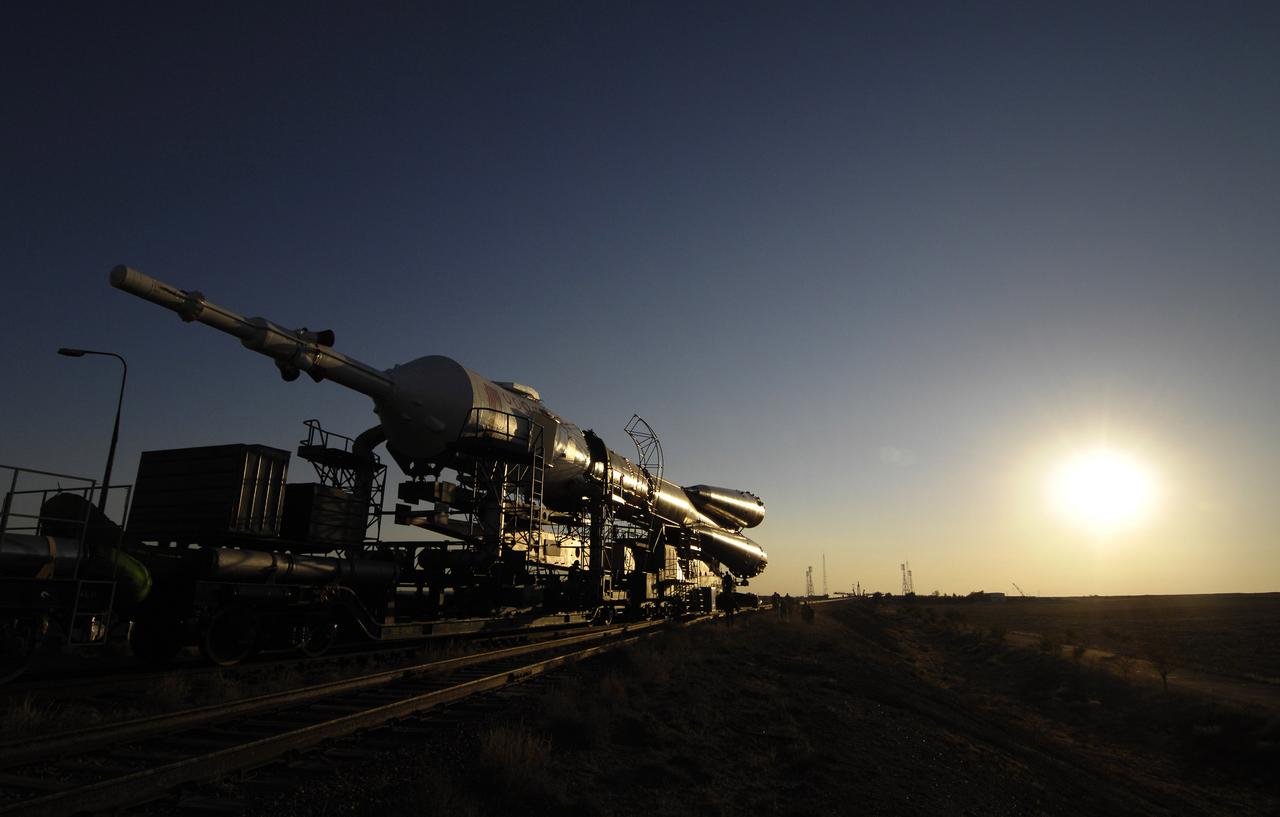
The Soyuz TMA-11 spacecraft is transported by railcar to its launch pad at the Baikonur Cosmodrome, Monday, Oct. 8, 2007, in Kazakhstan for an October 10th launch date. The Soyuz will carry Expedition 16 Commander Peggy Whitson, Flight Engineer and Soyuz Commander Yuri Malenchenko and Malaysian spaceflight participant Sheikh Muszaphar Shukor to the International Space Station. Whitson and Malenchenko will spend six months on the station. Shukor, who is flying under an agreement between Malaysia and the Russian Federal Space Agency, will return to Earth October 21 with two of the Expedition 15 crew members currently on the complex. Photo Credit: (NASA/Bill Ingalls)
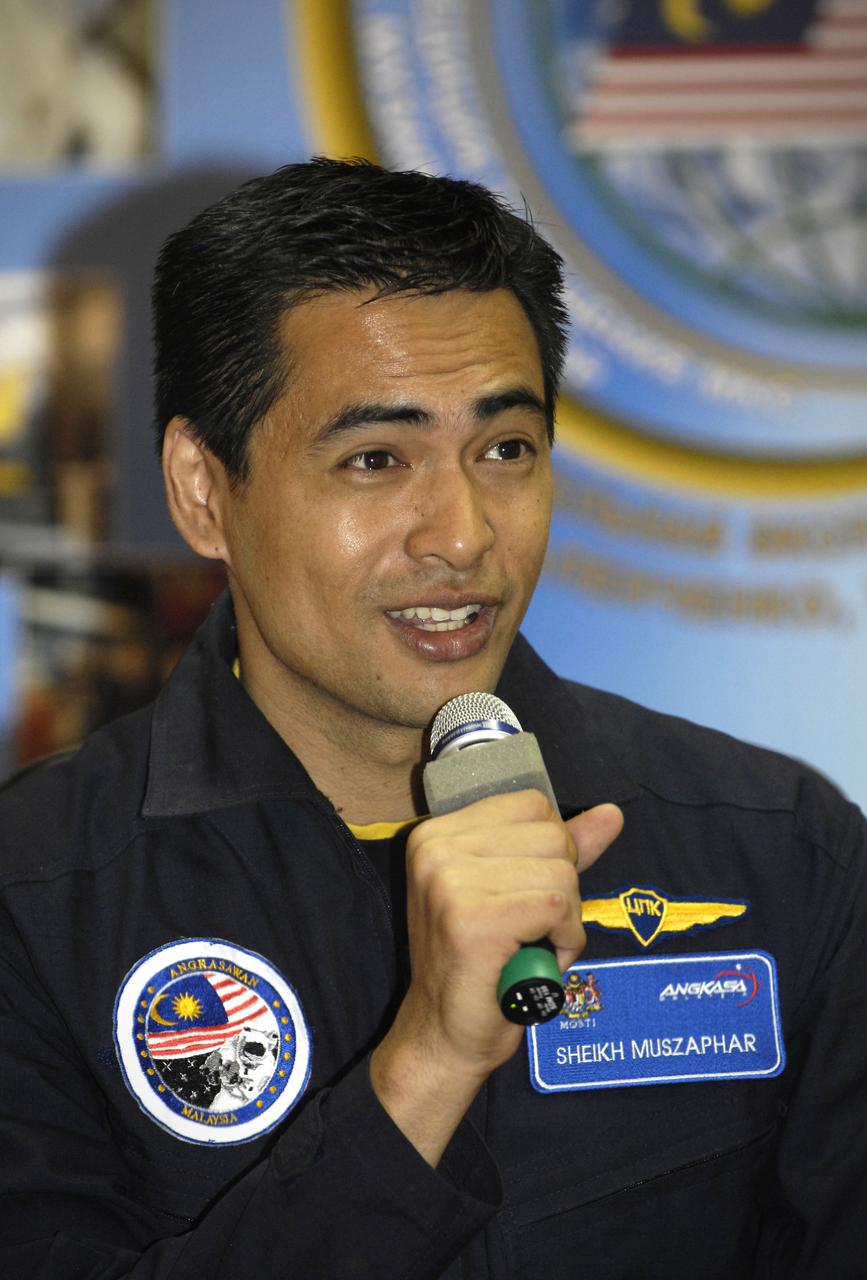
Malaysian spaceflight participant Sheikh Muszhaphar Shukor speaks during the State Commission meeting and press conference, Tuesday, Oct. 9, 2007, at the Baikonur Cosmodrome in Kazakhstan. The Expedition 16 crew is in preparation for their launch to the International Space Station Oct. 10 in their Soyuz TMA-11 spacecraft. Commander Peggy Whitson and Flight Engineer Yuri Malenchenko will spend six months on the station while Shukor will return to Earth Oct. 21 with two of the Expedition 15 crewmembers currently on the complex. Photo Credit: (NASA/Bill Ingalls) Photo Credit: "NASA/Bill Ingalls"
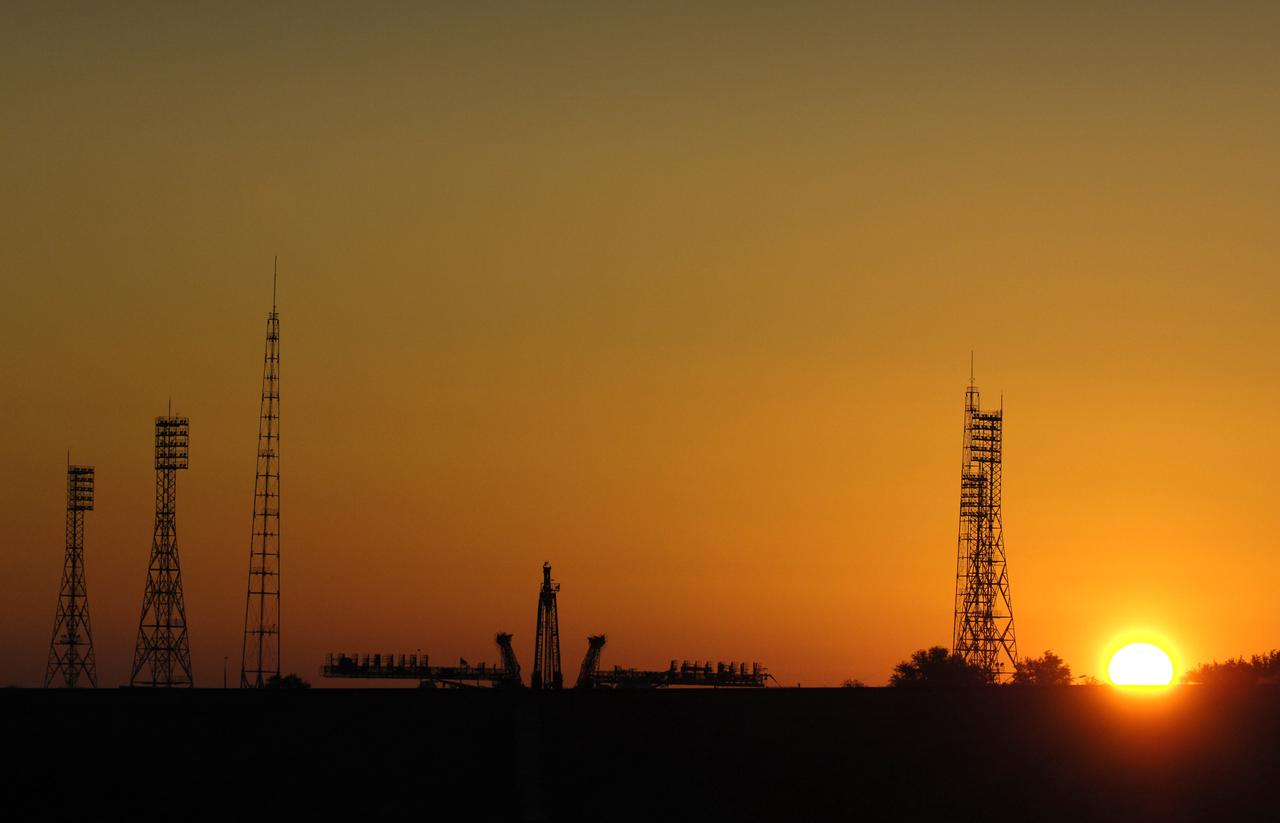
The Soyuz launch pad is seen prior to the arrival of the Soyuz TMA-11 spacecraft, Monday, Oct. 8, 2007, in Baikonur, Kazakhstan. The Soyuz was transported by railcar to its launch pad at the Baikonur Cosmodrome for an October 10th launch date, when it will carry Expedition 16 Commander Peggy Whitson, Flight Engineer and Soyuz Commander Yuri Malenchenko and Malaysian spaceflight participant Sheikh Muszaphar Shukor to the International Space Station. Whitson and Malenchenko will spend six months on the station. Shukor, who is flying under an agreement between Malaysia and the Russian Federal Space Agency, will return to Earth October 21 with two of the Expedition 15 crew members currently on the complex. Photo Credit: (NASA/Bill Ingalls)
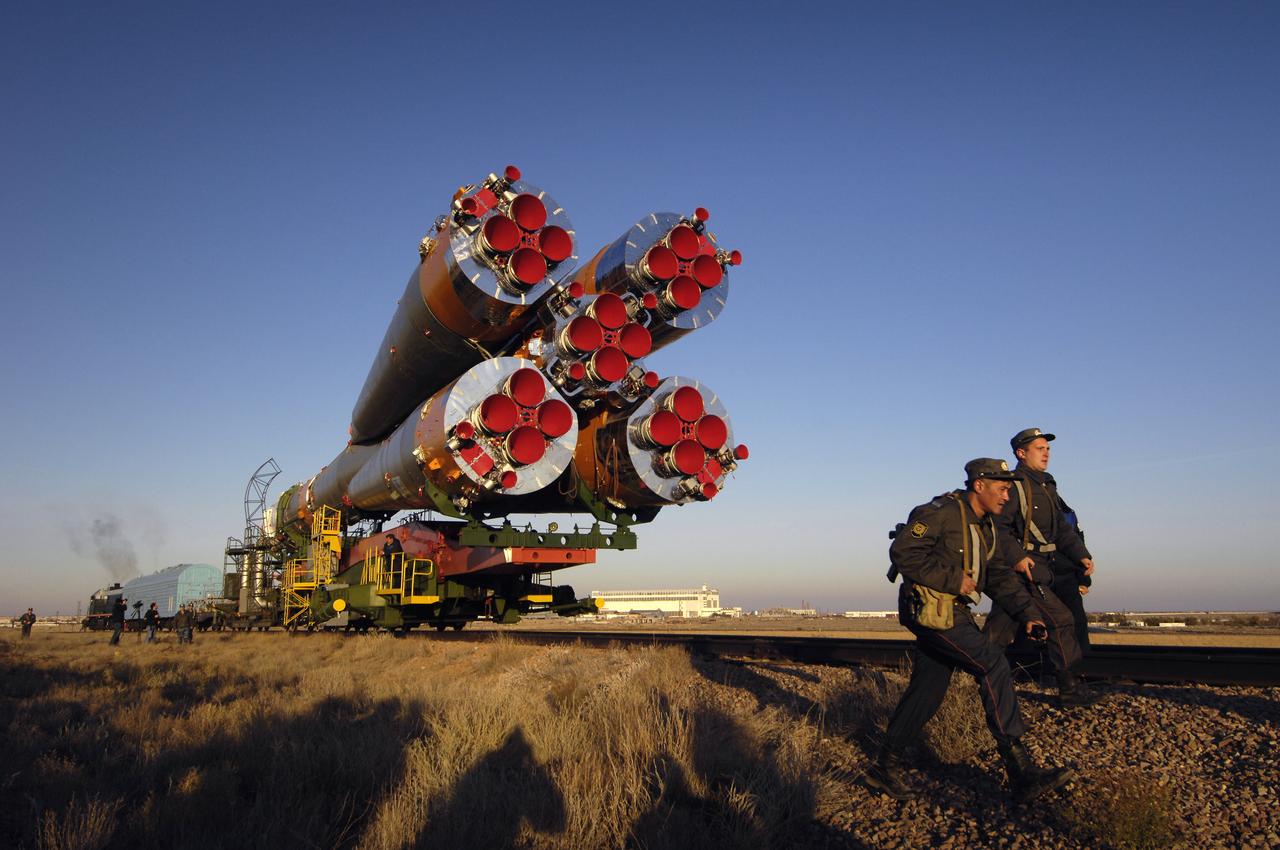
The Soyuz TMA-11 spacecraft is transported by railcar to its launch pad at the Baikonur Cosmodrome, Monday, Oct. 8, 2007, in Kazakhstan for an October 10th launch date. The Soyuz will carry Expedition 16 Commander Peggy Whitson, Flight Engineer and Soyuz Commander Yuri Malenchenko and Malaysian spaceflight participant Sheikh Muszaphar Shukor to the International Space Station. Whitson and Malenchenko will spend six months on the station. Shukor, who is flying under an agreement between Malaysia and the Russian Federal Space Agency, will return to Earth October 21 with two of the Expedition 15 crew members currently on the complex. Photo Credit: (NASA/Bill Ingalls)
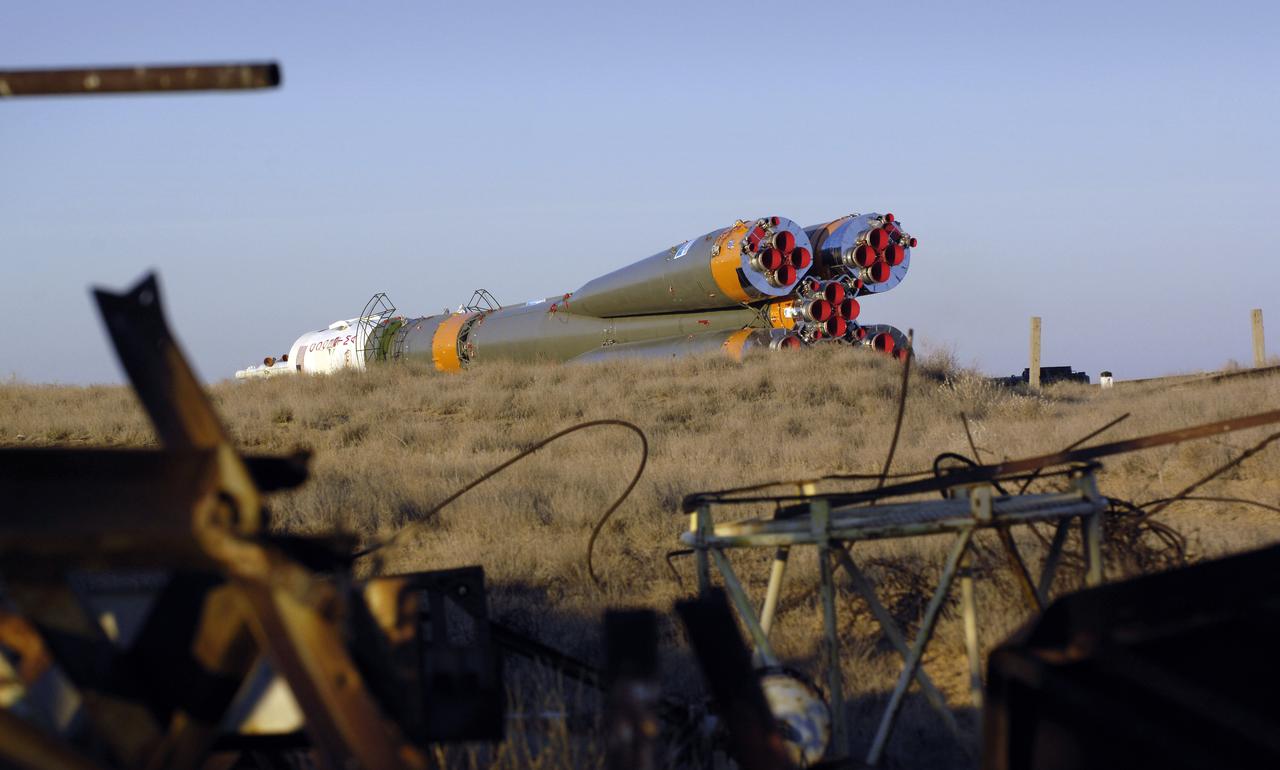
The Soyuz TMA-11 spacecraft is transported by railcar to its launch pad at the Baikonur Cosmodrome, Monday, Oct. 8, 2007, in Kazakhstan for an October 10th launch date. The Soyuz will carry Expedition 16 Commander Peggy Whitson, Flight Engineer and Soyuz Commander Yuri Malenchenko and Malaysian spaceflight participant Sheikh Muszaphar Shukor to the International Space Station. Whitson and Malenchenko will spend six months on the station. Shukor, who is flying under an agreement between Malaysia and the Russian Federal Space Agency, will return to Earth October 21 with two of the Expedition 15 crew members currently on the complex. Photo Credit: (NASA/Bill Ingalls)
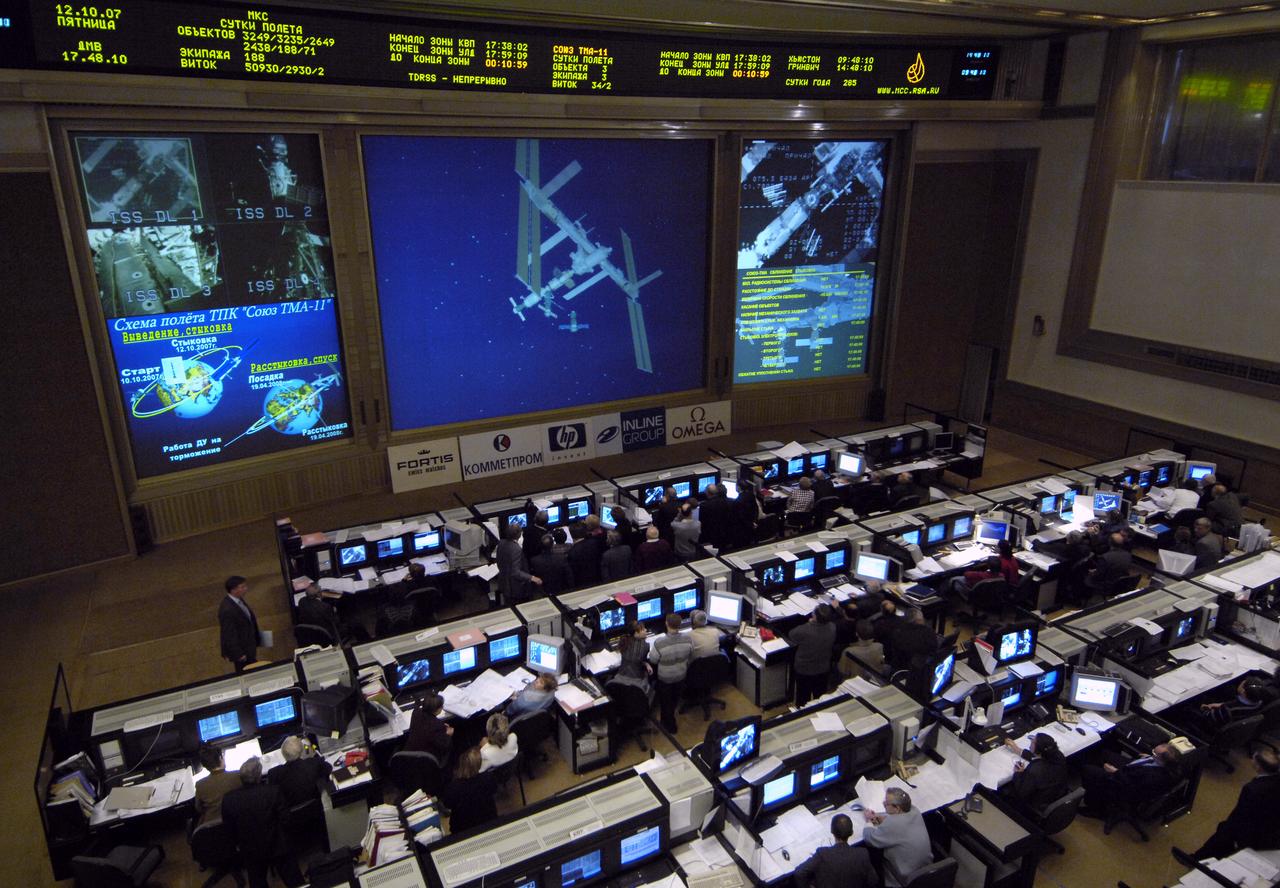
Live video from the Soyuz TMA-11 spacecraft of the International Space Station is shown on the screen in the upper right in the Russian Mission Control Center in Korolev, outside Moscow, Friday, Oct. 12, 2007. Expedition 16 Commander Peggy Whitson, Soyuz Commander and Flight Engineer Yuri Malenchenko and Malaysian spaceflight participant Sheikh Muszaphar Shukor docked their Soyuz TMA-11 spacecraft to the ISS at 10:50 a.m. EDT, October 12. The crew launched on Wednesday from the Baikonur Cosmodrome in Kazakhstan. Photo Credit: (NASA/Bill Ingalls)
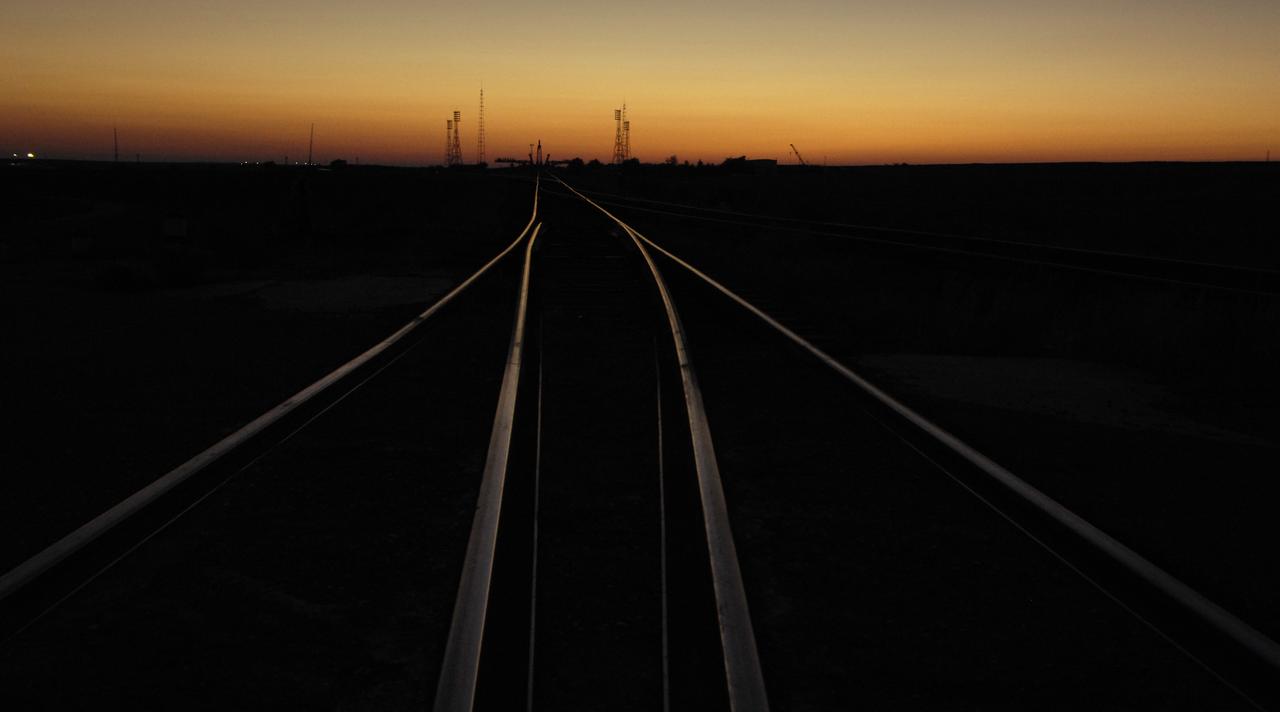
The Soyuz launch pad is seen prior to the arrival of the Soyuz TMA-11 spacecraft, Monday, Oct. 8, 2007, in Baikonur, Kazakhstan. The Soyuz was transported by railcar to its launch pad at the Baikonur Cosmodrome for an October 10th launch date, when it will carry Expedition 16 Commander Peggy Whitson, Flight Engineer and Soyuz Commander Yuri Malenchenko and Malaysian spaceflight participant Sheikh Muszaphar Shukor to the International Space Station. Whitson and Malenchenko will spend six months on the station. Shukor, who is flying under an agreement between Malaysia and the Russian Federal Space Agency, will return to Earth October 21 with two of the Expedition 15 crew members currently on the complex. Photo Credit: (NASA/Bill Ingalls)
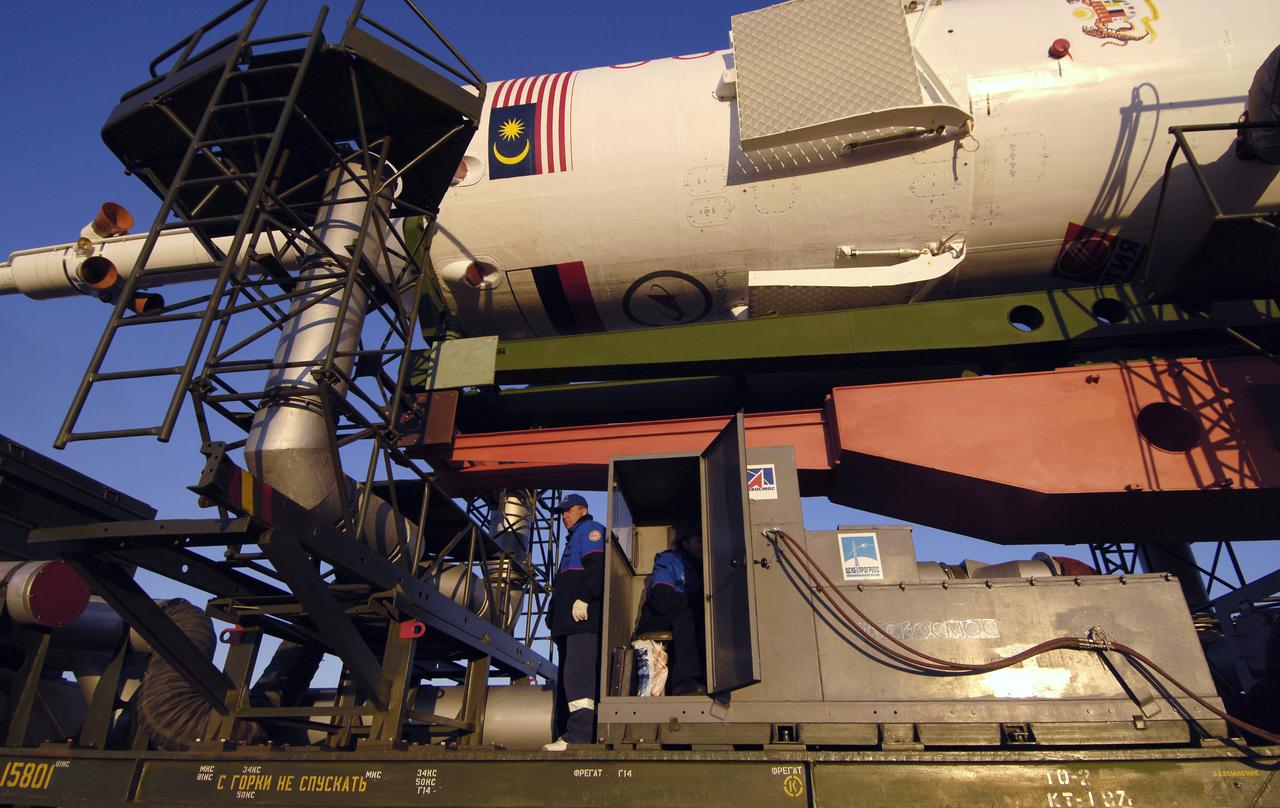
The Soyuz TMA-11 spacecraft is transported by railcar to its launch pad at the Baikonur Cosmodrome, Monday, Oct. 8, 2007, in Kazakhstan for an October 10th launch date. The Soyuz will carry Expedition 16 Commander Peggy Whitson, Flight Engineer and Soyuz Commander Yuri Malenchenko and Malaysian spaceflight participant Sheikh Muszaphar Shukor to the International Space Station. Whitson and Malenchenko will spend six months on the station. Shukor, who is flying under an agreement between Malaysia and the Russian Federal Space Agency, will return to Earth October 21 with two of the Expedition 15 crew members currently on the complex. Photo Credit: (NASA/Bill Ingalls)
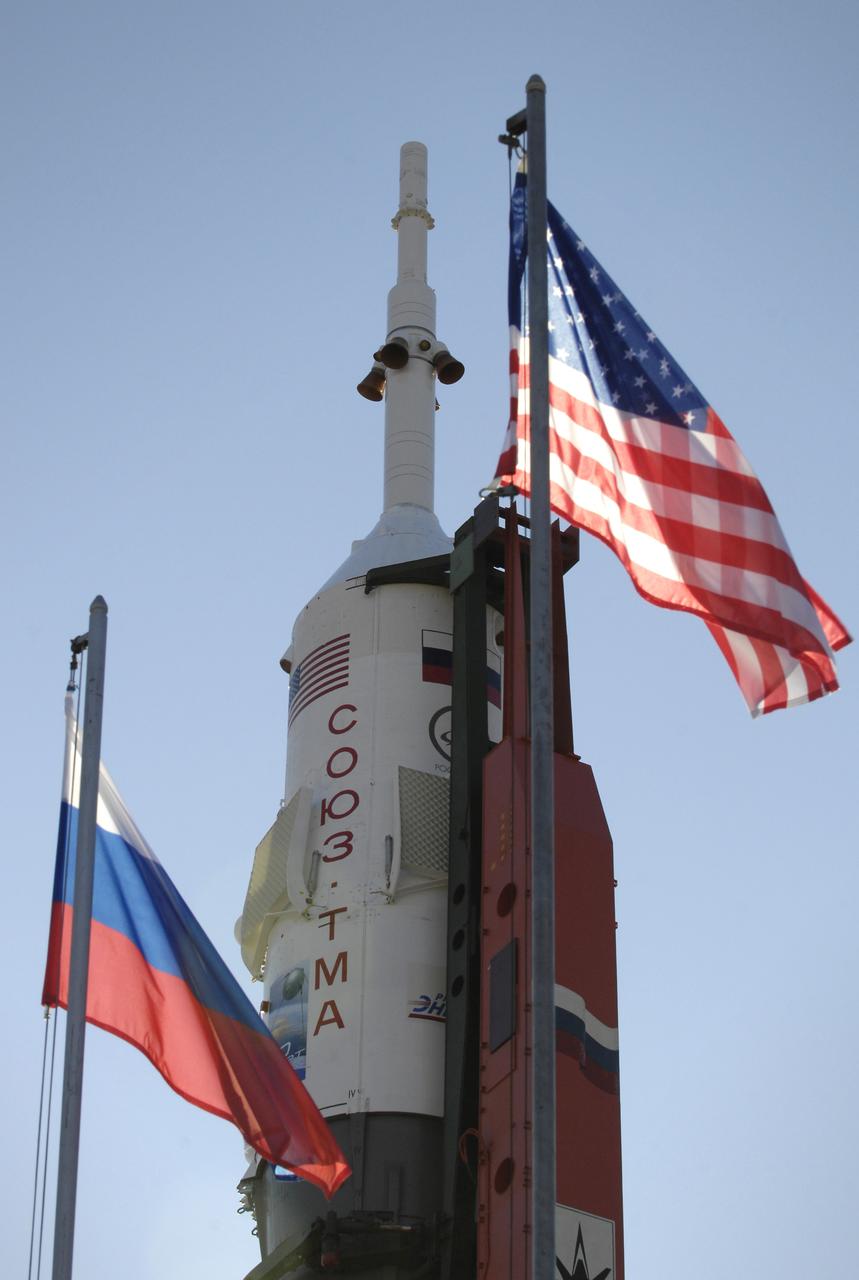
The Soyuz TMA-11 spacecraft was transported by railcar to its launch pad at the Baikonur Cosmodrome, Monday, Oct. 8, 2007, in Kazakhstan for an October 10th launch date. The Soyuz will carry Expedition 16 Commander Peggy Whitson, Flight Engineer and Soyuz Commander Yuri Malenchenko and Malaysian spaceflight participant Sheikh Muszaphar Shukor to the International Space Station. Whitson and Malenchenko will spend six months on the station. Shukor, who is flying under an agreement between Malaysia and the Russian Federal Space Agency, will return to Earth October 21 with two of the Expedition 15 crew members currently on the complex. Photo Credit: (NASA/Bill Ingalls)
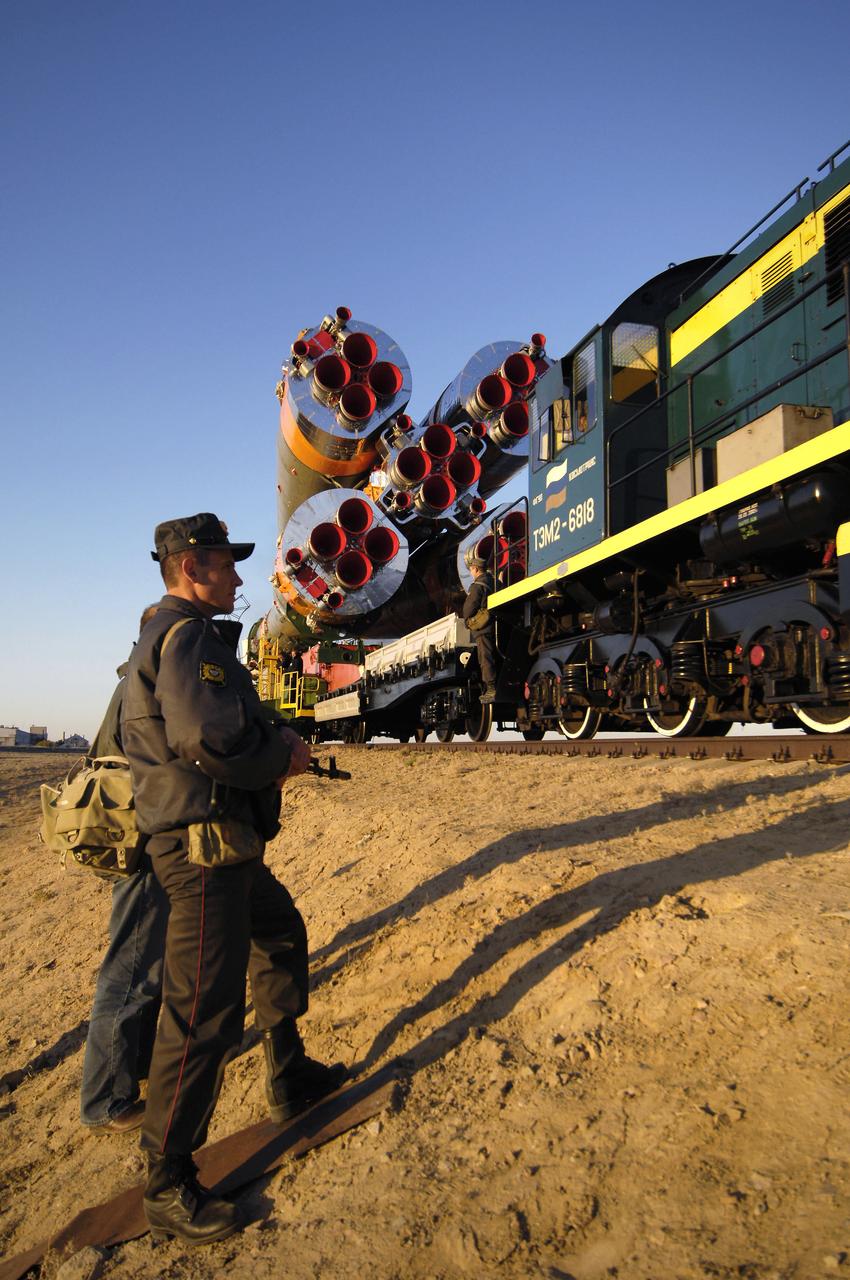
The Soyuz TMA-11 spacecraft is transported by railcar to its launch pad at the Baikonur Cosmodrome, Monday, Oct. 8, 2007, in Kazakhstan for an October 10th launch date. The Soyuz will carry Expedition 16 Commander Peggy Whitson, Flight Engineer and Soyuz Commander Yuri Malenchenko and Malaysian spaceflight participant Sheikh Muszaphar Shukor to the International Space Station. Whitson and Malenchenko will spend six months on the station. Shukor, who is flying under an agreement between Malaysia and the Russian Federal Space Agency, will return to Earth October 21 with two of the Expedition 15 crew members currently on the complex. Photo Credit: (NASA/Bill Ingalls)
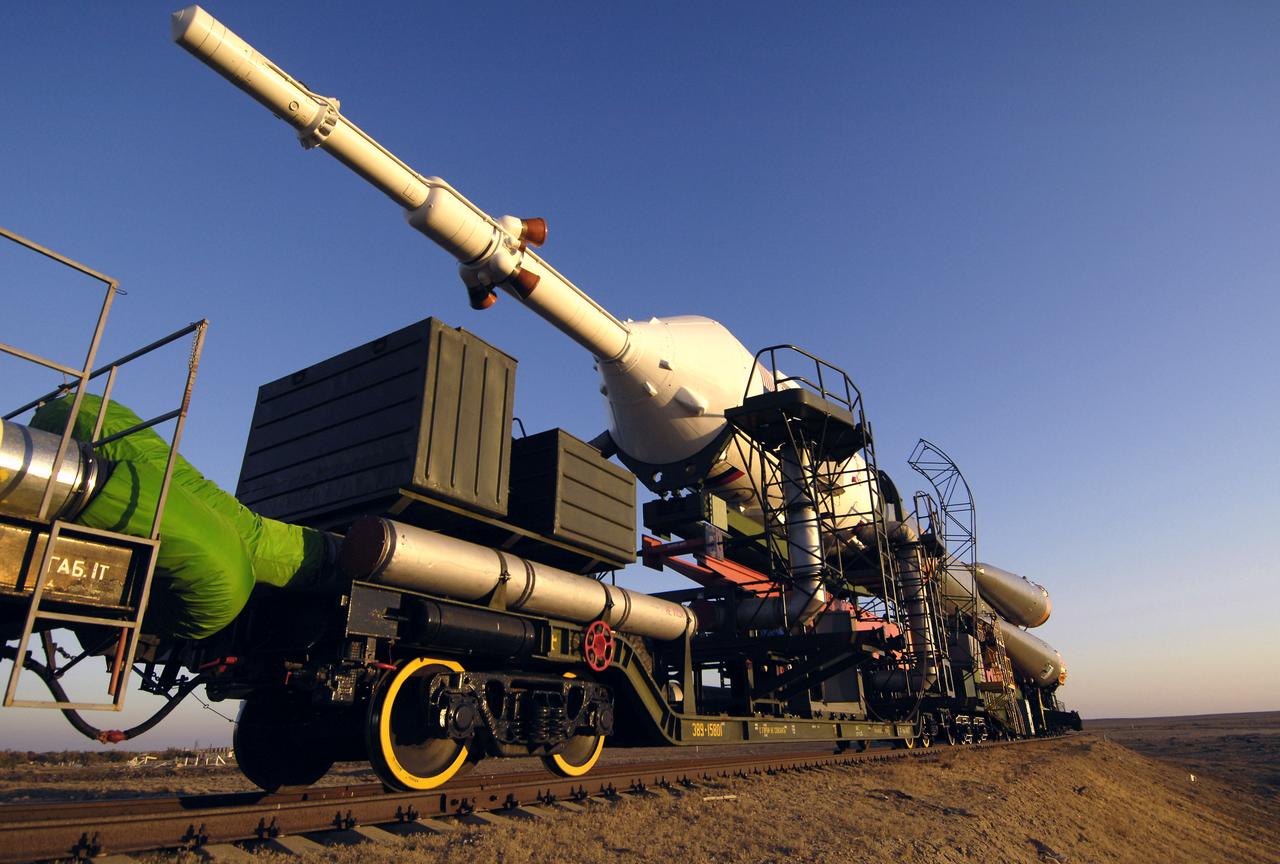
The Soyuz TMA-11 spacecraft is transported by railcar to its launch pad at the Baikonur Cosmodrome, Monday, Oct. 8, 2007, in Kazakhstan for an October 10th launch date. The Soyuz will carry Expedition 16 Commander Peggy Whitson, Flight Engineer and Soyuz Commander Yuri Malenchenko and Malaysian spaceflight participant Sheikh Muszaphar Shukor to the International Space Station. Whitson and Malenchenko will spend six months on the station. Shukor, who is flying under an agreement between Malaysia and the Russian Federal Space Agency, will return to Earth October 21 with two of the Expedition 15 crew members currently on the complex. Photo Credit: (NASA/Bill Ingalls)

The Russian Sokol suits of Expedition 16 Commander Peggy Whitson and Malaysian spaceflight participant Sheikh Muszaphar Shukor are laid out prior to suit-up by the crew, Wednesday, Oct. 10, 2007, in Baikonur, Kazakhstan. Flight Engineer and Soyuz Commander Yuri Malenchenko was the first to don his flight suit. The three crew members launched from the Baikonur Cosmodrome in Kazakhstan at sunset in their Soyuz TMA-11 spacecraft bound for a docking to the International Space Station on Oct. 12. Whitson and Malenchenko will spend six months on the station, while Shukor will return to Earth Oct. 21 with two of the Expedition 15 crewmembers currently on the complex. Photo Credit: (NASA/Bill Ingalls)
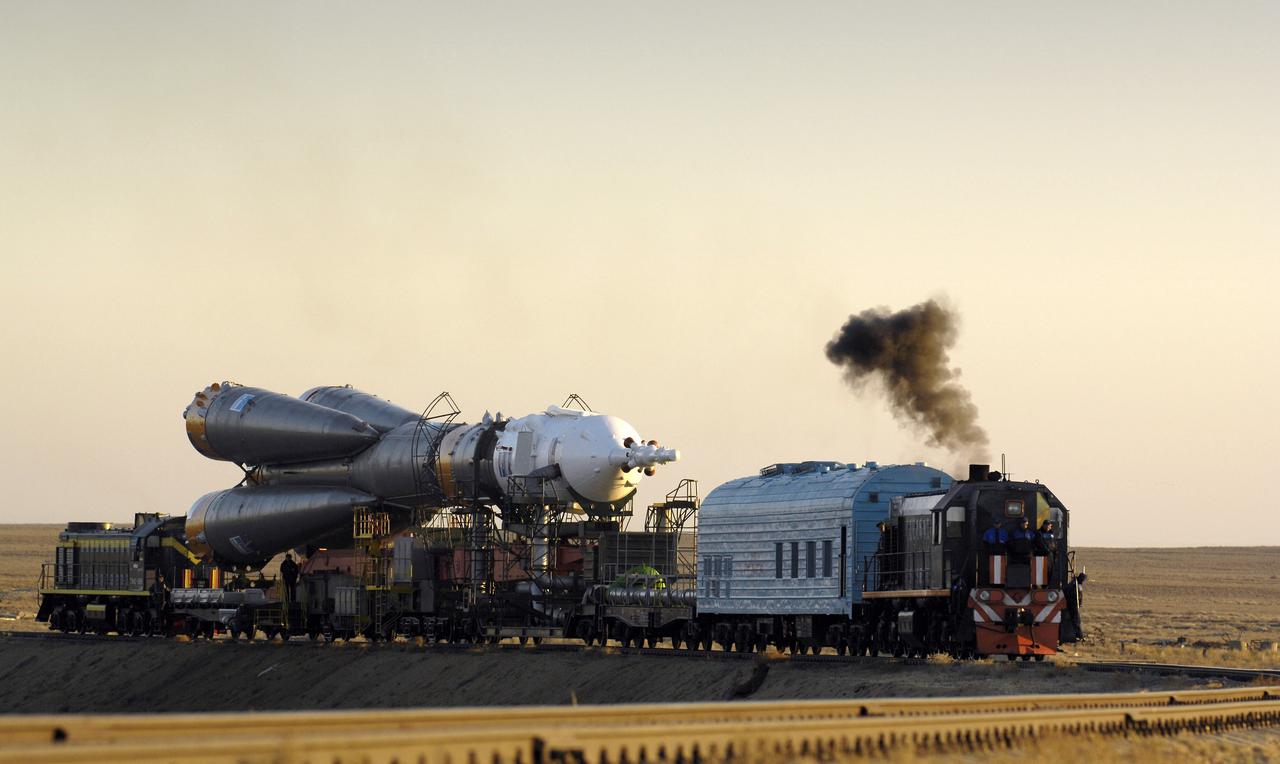
The Soyuz TMA-11 spacecraft is transported by railcar to its launch pad at the Baikonur Cosmodrome, Monday, Oct. 8, 2007, in Kazakhstan for an October 10th launch date. The Soyuz will carry Expedition 16 Commander Peggy Whitson, Flight Engineer and Soyuz Commander Yuri Malenchenko and Malaysian spaceflight participant Sheikh Muszaphar Shukor to the International Space Station. Whitson and Malenchenko will spend six months on the station. Shukor, who is flying under an agreement between Malaysia and the Russian Federal Space Agency, will return to Earth October 21 with two of the Expedition 15 crew members currently on the complex. Photo Credit: (NASA/Bill Ingalls)
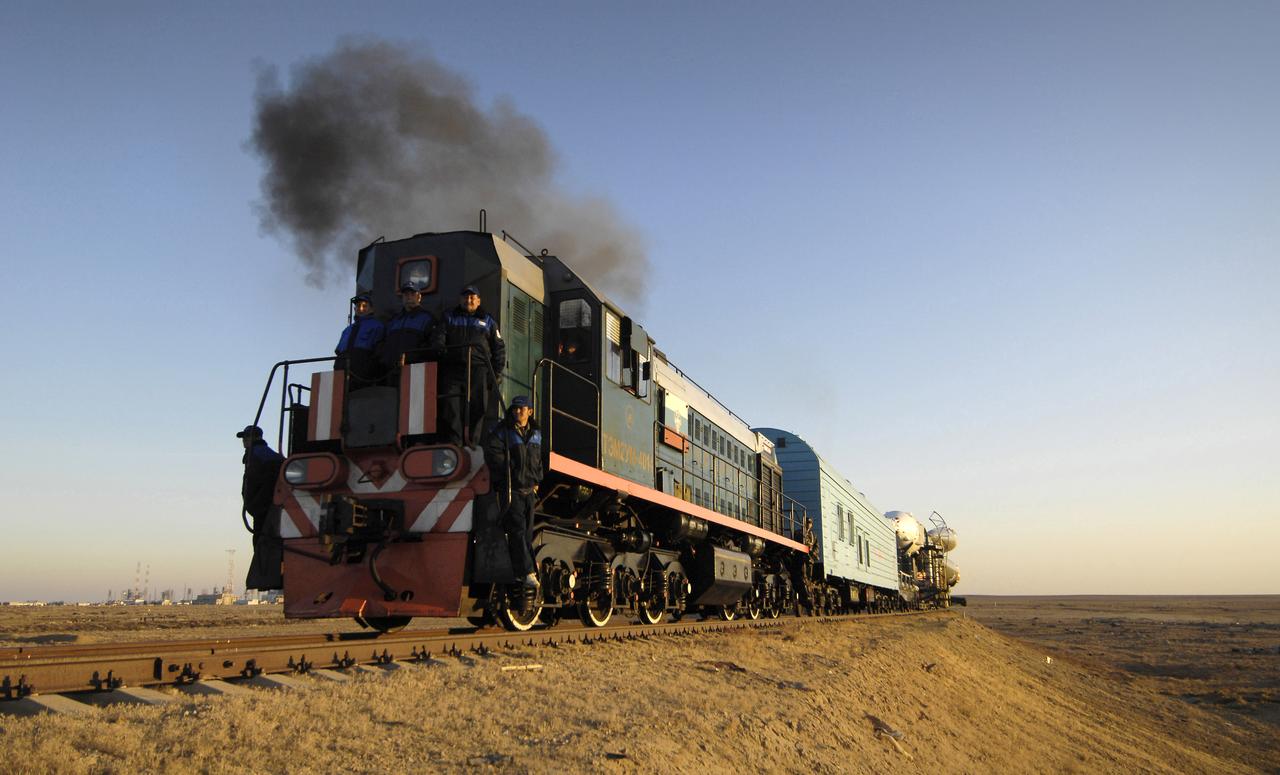
The Soyuz TMA-11 spacecraft is transported by railcar to its launch pad at the Baikonur Cosmodrome, Monday, Oct. 8, 2007, in Kazakhstan for an October 10th launch date. The Soyuz will carry Expedition 16 Commander Peggy Whitson, Flight Engineer and Soyuz Commander Yuri Malenchenko and Malaysian spaceflight participant Sheikh Muszaphar Shukor to the International Space Station. Whitson and Malenchenko will spend six months on the station. Shukor, who is flying under an agreement between Malaysia and the Russian Federal Space Agency, will return to Earth October 21 with two of the Expedition 15 crew members currently on the complex. Photo Credit: (NASA/Bill Ingalls)
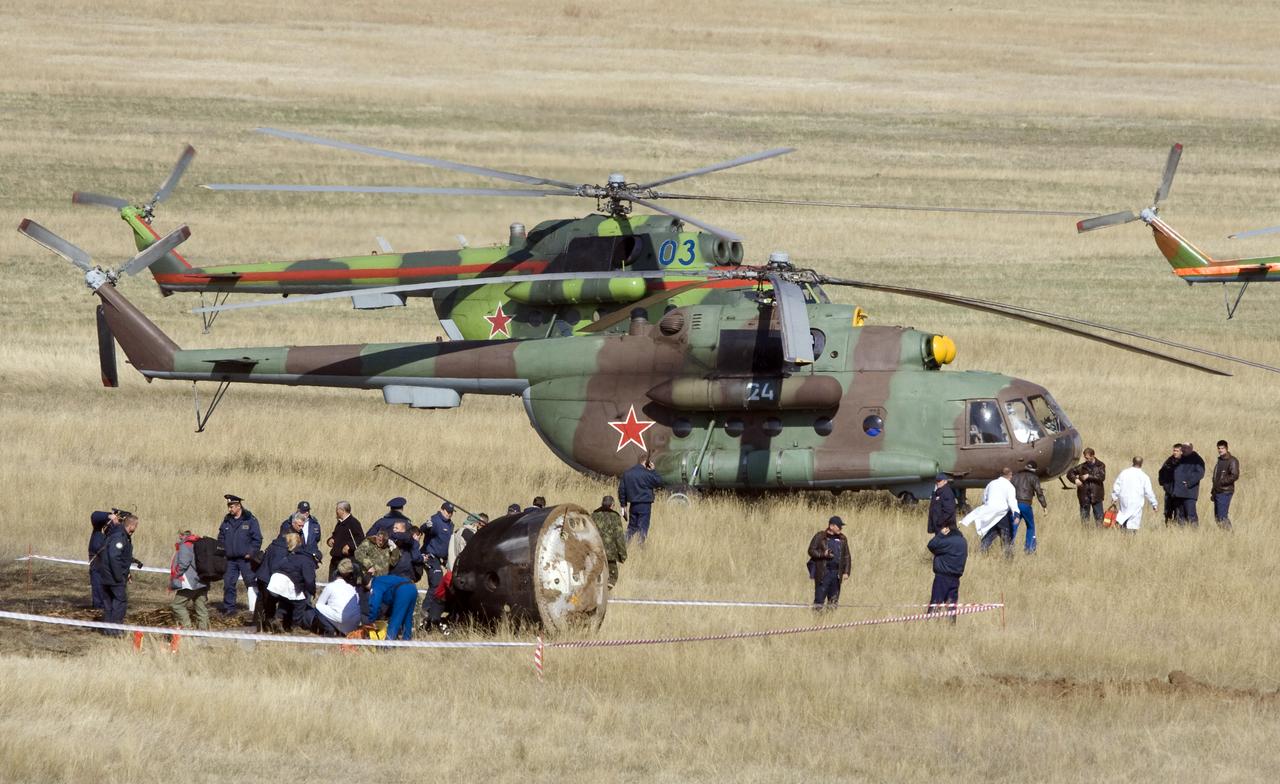
Russian ground crews walk around the Soyuz TMA-11 spacecraft after it landed carrying Expedition 16 Commander Peggy Whitson, Flight Engineer and Soyuz Commander Yuri Malenchenko and South Korean spaceflight participant So-yeon Yi, Friday, April 19, 2008, in central Kazakhstan to complete 192 days in space for Whitson and Malenchenko and 11 days in orbit for Yi. Photo Credit: (NASA/Reuters/Pool)
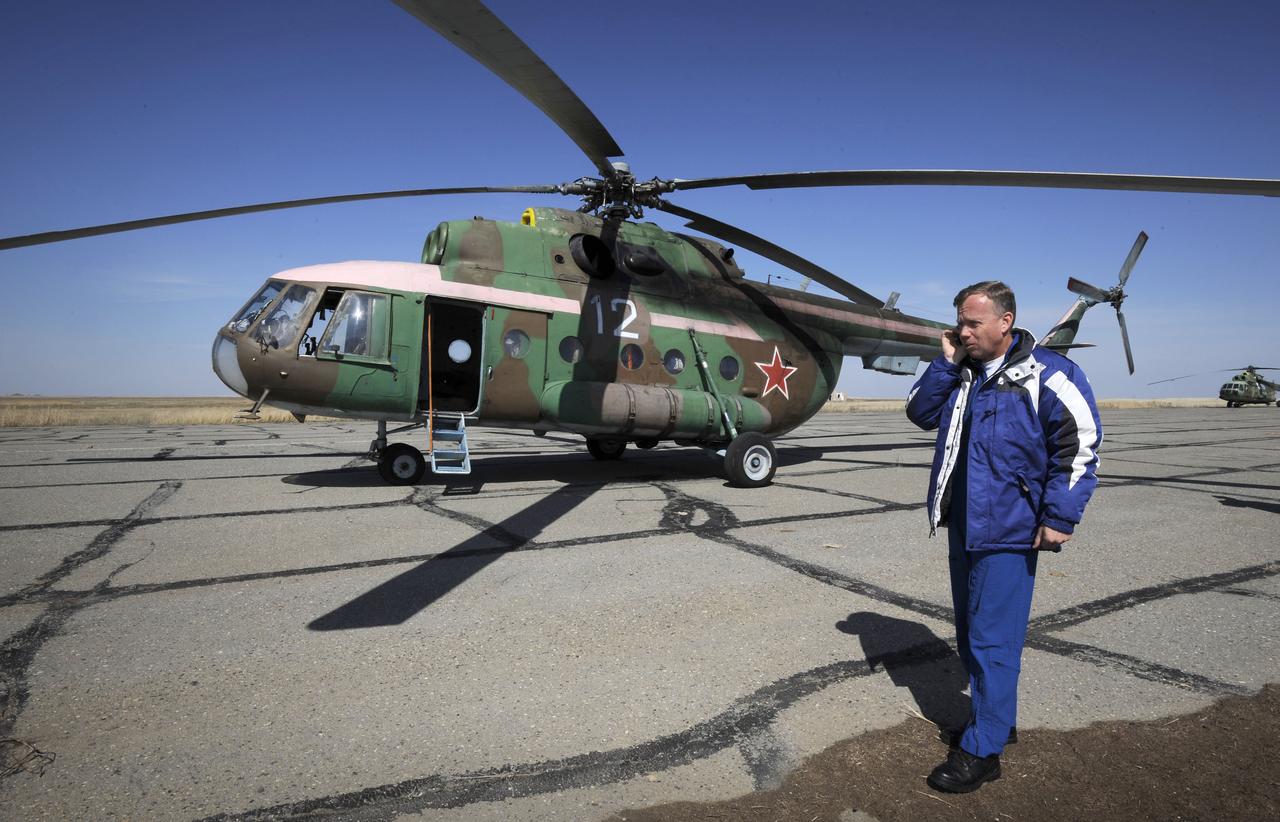
Chief of NASA's Astronaut office, Steve Lindsey, receives information at the Arkalyk airport in Kazakhstan, Friday, April 19, 2008, on the landing of the Expedition 16 crew in the Soyuz TMA-11 capsule. The Soyuz made a ballistic landing, touching down more then 400 kilometers short of the intended target in central Kazakhstan. Photo Credit: (NASA/Bill Ingalls)
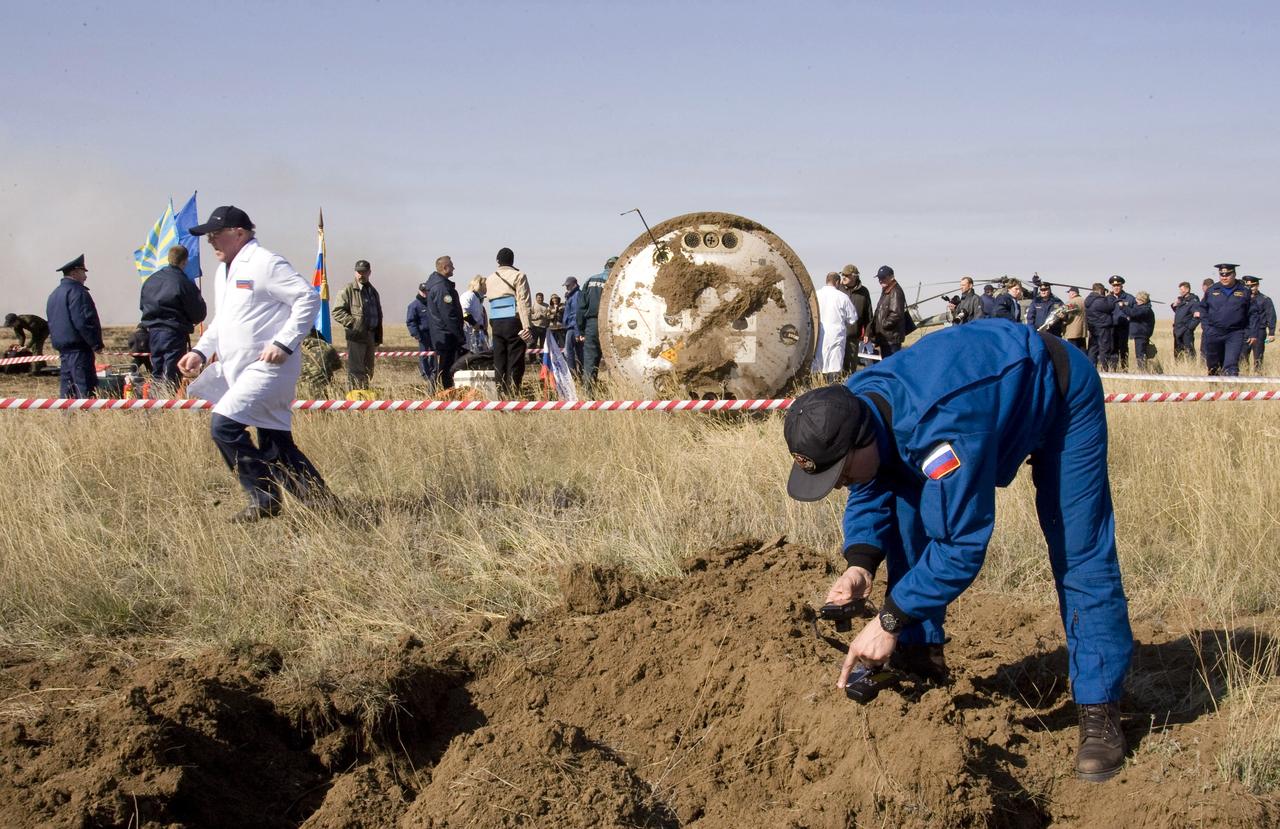
A Russian ground crew member examines the over turned soil near the Soyuz TMA-11 spacecraft after it landed carrying Expedition 16 Commander Peggy Whitson, Flight Engineer and Soyuz Commander Yuri Malenchenko and South Korean spaceflight participant So-yeon Yi, Friday, April 19, 2008, in central Kazakhstan to complete 192 days in space for Whitson and Malenchenko and 11 days in orbit for Yi. Photo Credit: (NASA/Reuters/Pool)
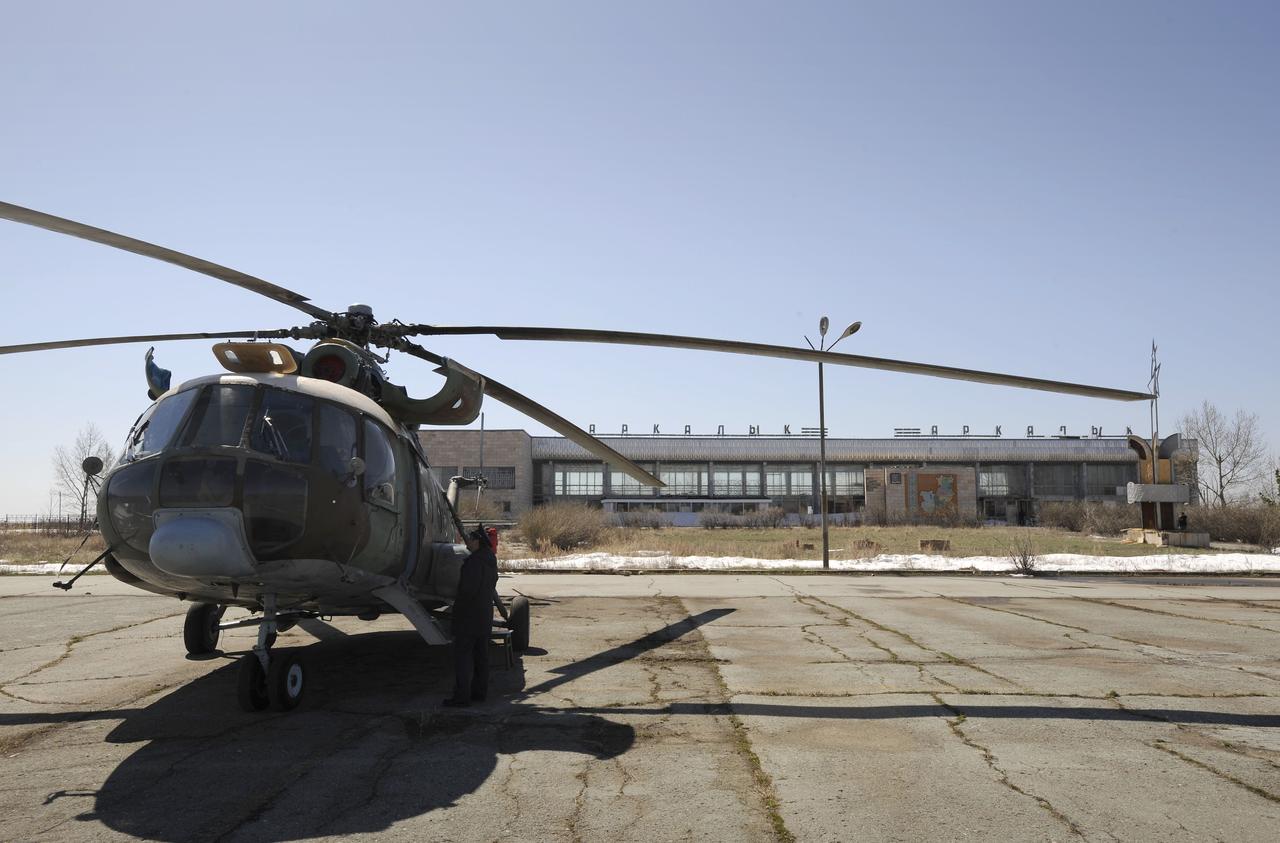
A Russian Search and Rescue helicopter waits for refueling at the Arkalyk airport in Kazakhstan prior to taking off for the landing of the Soyuz TMA-11 spacecraft carrying Expedition 16 Commander Peggy Whitson, Flight Engineer and Soyuz Commander Yuri Malenchenko and South Korean spaceflight participant So-yeon Yi, Friday, April, 19, 2008. The Soyuz made a ballistic landing, touching down more then 400 kilometers short of the intended target in central Kazakhstan. Photo Credit: (NASA/Bill Ingalls)
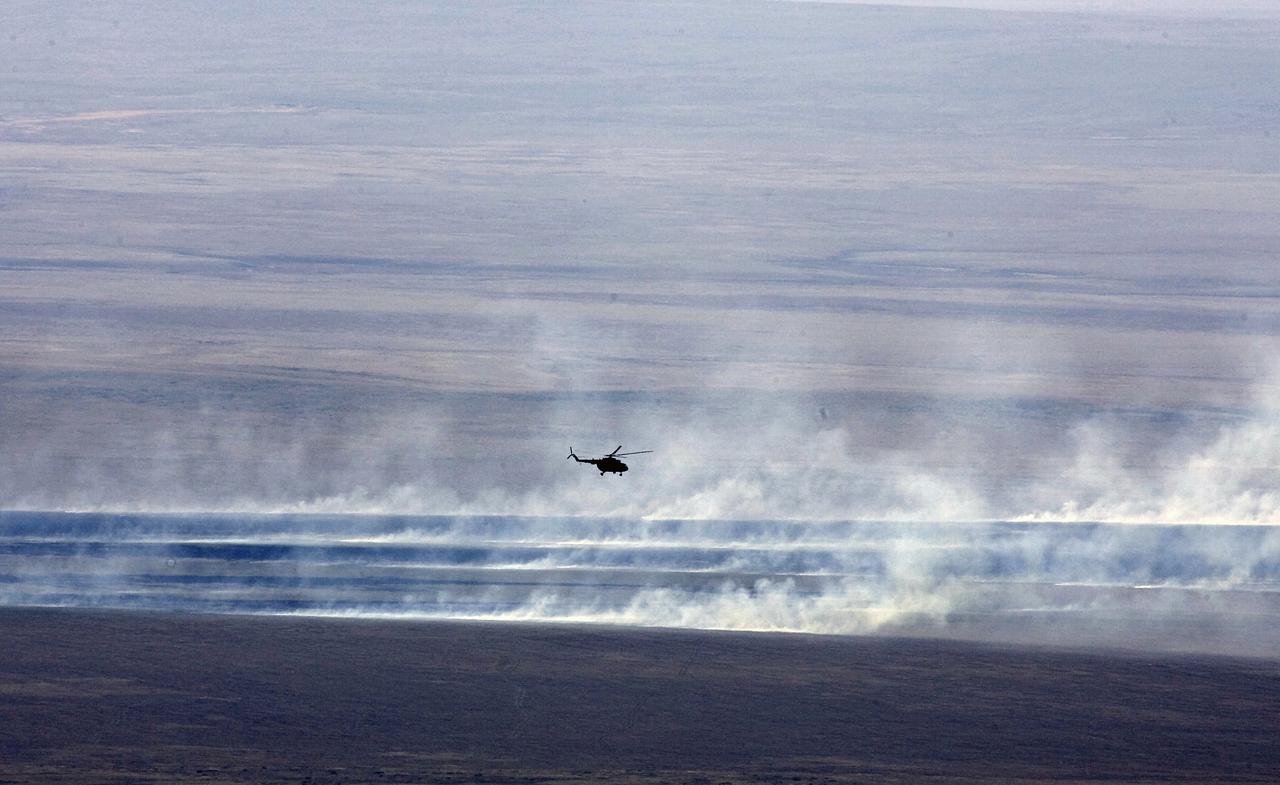
A Russian search and rescue helicopter flies over the burning Kazakh steppe after Expedition 16 Commander Peggy Whitson, Flight Engineer and Soyuz Commander Yuri Malenchenko and South Korean spaceflight participant So-yeon Yi landed their Soyuz TMA-11 spacecraft, Friday, April 19, 2008, in central Kazakhstan to complete 192 days in space for Whitson and Malenchenko and 11 days in orbit for Yi. Photo Credit: (NASA/Reuters/Pool)
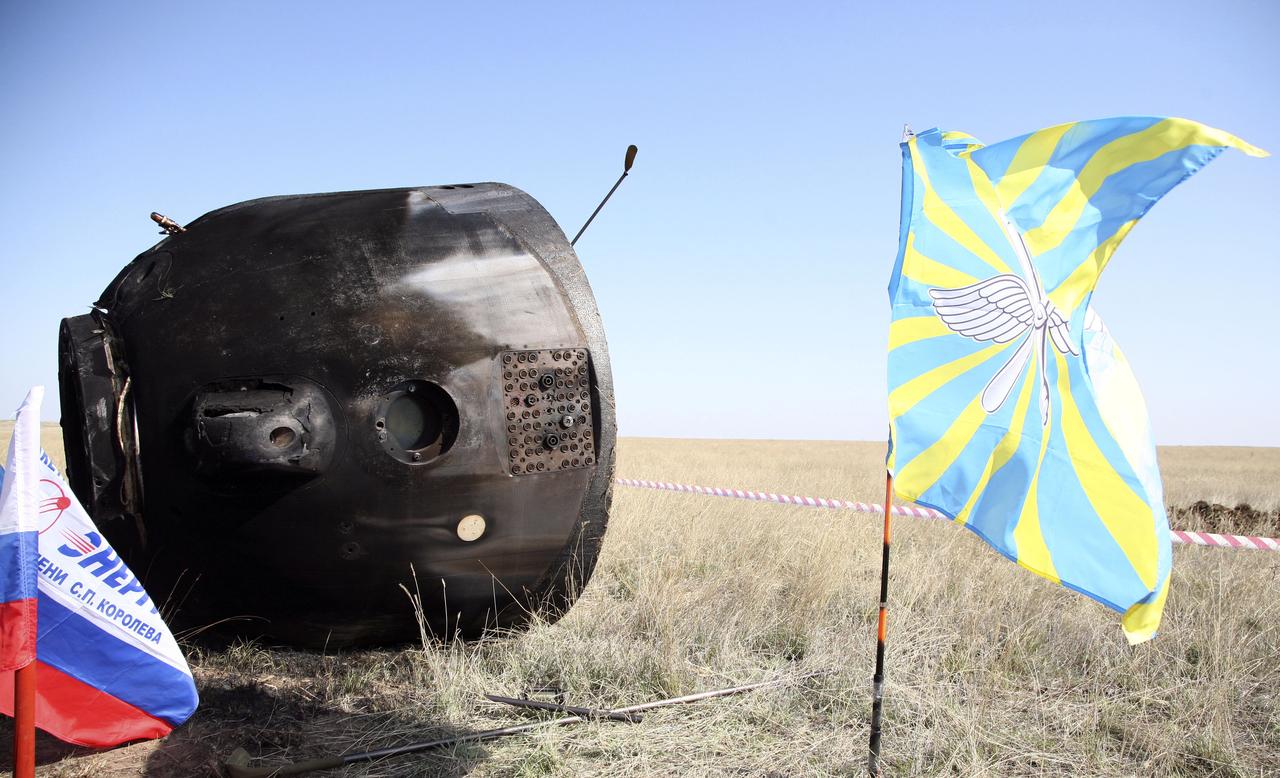
The Soyuz TMA-11 capsule lays on its side on the Kazakh steppe, Friday, April 19, 2008. Expedition 16 Commander Peggy Whitson, Flight Engineer and Soyuz Commander Yuri Malenchenko and South Korean spaceflight participant So-yeon Yi landed their Soyuz TMA-11 spacecraft in central Kazakhstan to complete 192 days in space for Whitson and Malenchenko and 11 days in orbit for Yi. Photo Credit: (NASA/Reuters/Pool)
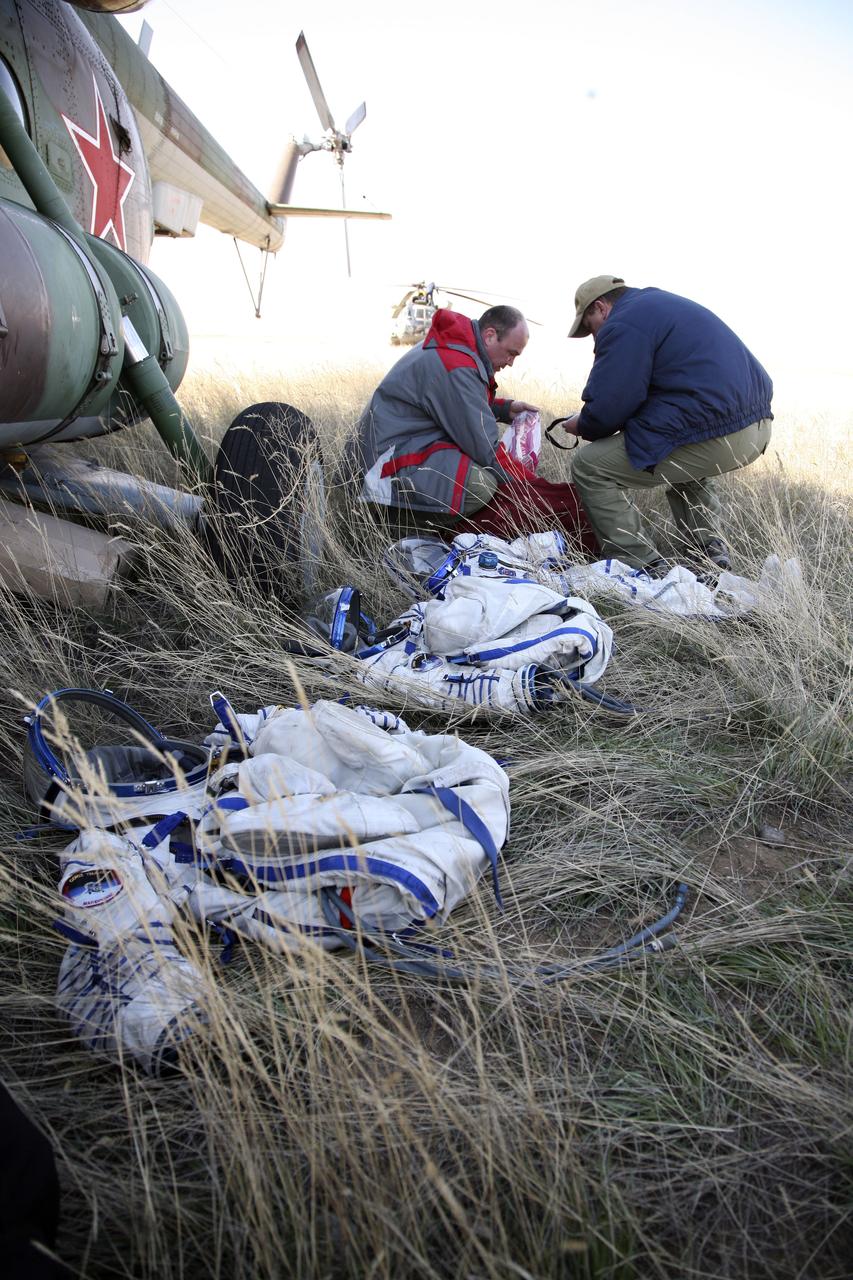
Russian Sokol flight suits of Expedition 16 Commander Peggy Whitson, Flight Engineer and Soyuz Commander Yuri Malenchenko and South Korean spaceflight participant So-yeon Yi are seen laying on the ground shortly after their Soyuz TMA-11 spacecraft landed in central Kazakhstan, Friday, April 19, 2008, to complete 192 days in space for Whitson and Malenchenko and 11 days in orbit for Yi. Photo Credit: (NASA/Reuters/Pool)
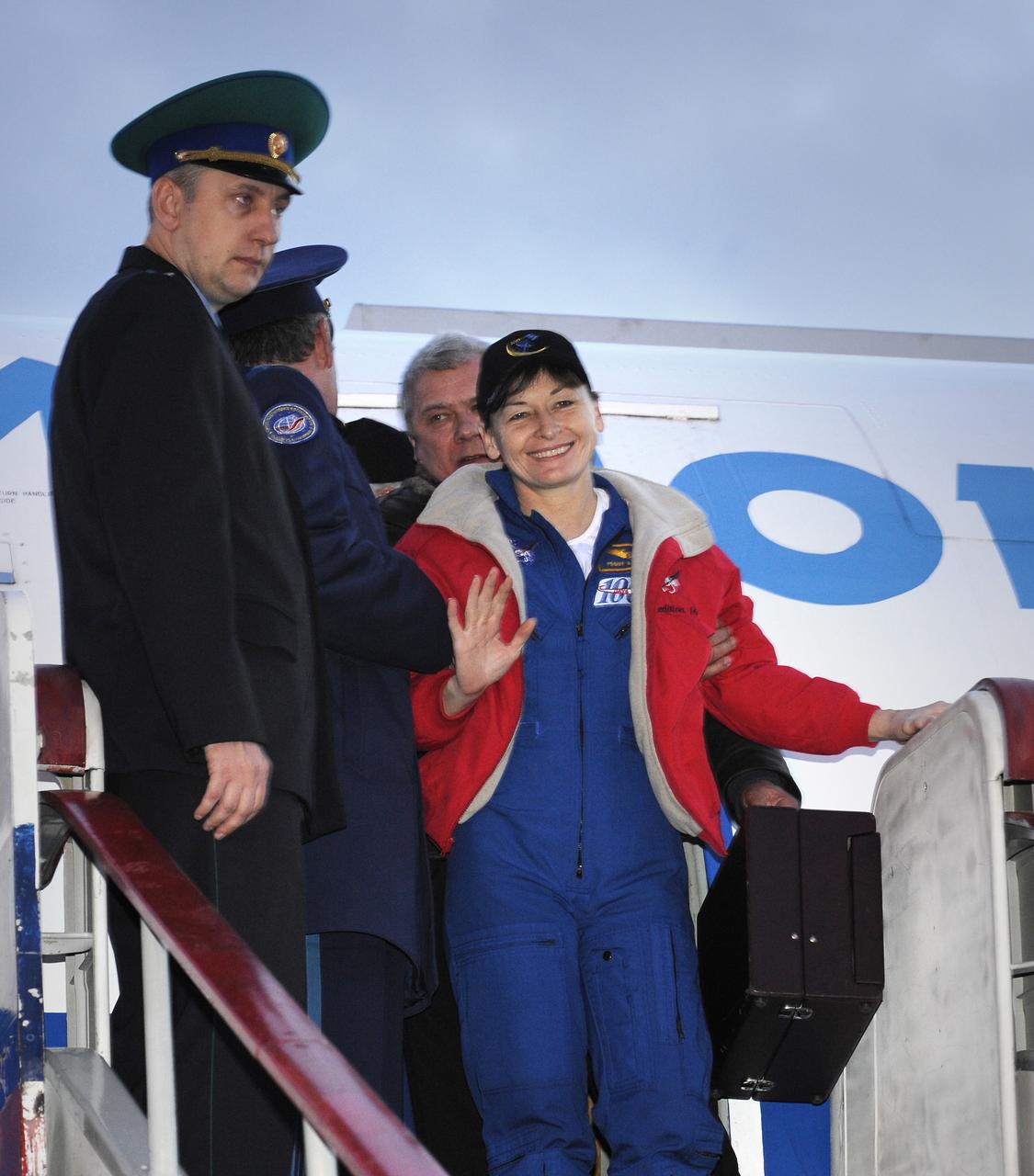
Expedition 16 Commander Peggy Whitson waves to a crowd of well-wishers from the top of the airplane steps as she arrives at Chkalovsky Airport near Star City, Russia along with Flight Engineer and Soyuz Commander Yuri Malenchenko and South Korean spaceflight participant So-yeon Yi, Friday, April 19, 2008. Whitson, Malechenko and Yi landed their Soyuz TMA-11 spacecraft in central Kazakhstan to complete 192 days in space for Whitson and Malenchenko and 11 days in orbit for Yi. Photo Credit: (NASA/Bill Ingalls)
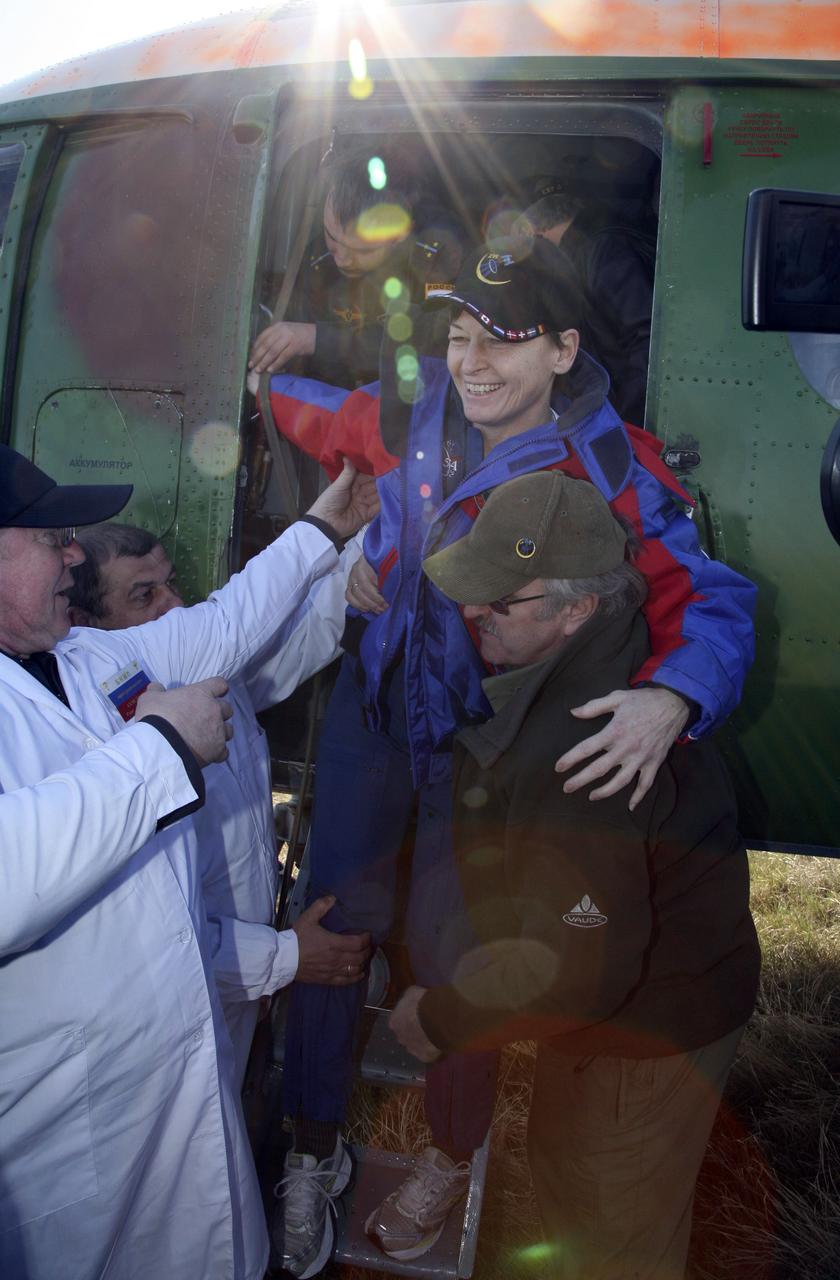
Expedition 16 Commander Peggy Whitson is helped out of a helicopter after landing in northern Kazakhstan, Friday, April 19, 2008. Whitson, Flight Engineer and Soyuz Commander Yuri Malenchenko and South Korean spaceflight participant So-yeon Yi landed their Soyuz TMA-11 spacecraft in central Kazakhstan to complete 192 days in space for Whitson and Malenchenko and 11 days in orbit for Yi. Photo Credit: (NASA/Reuters/Pool)
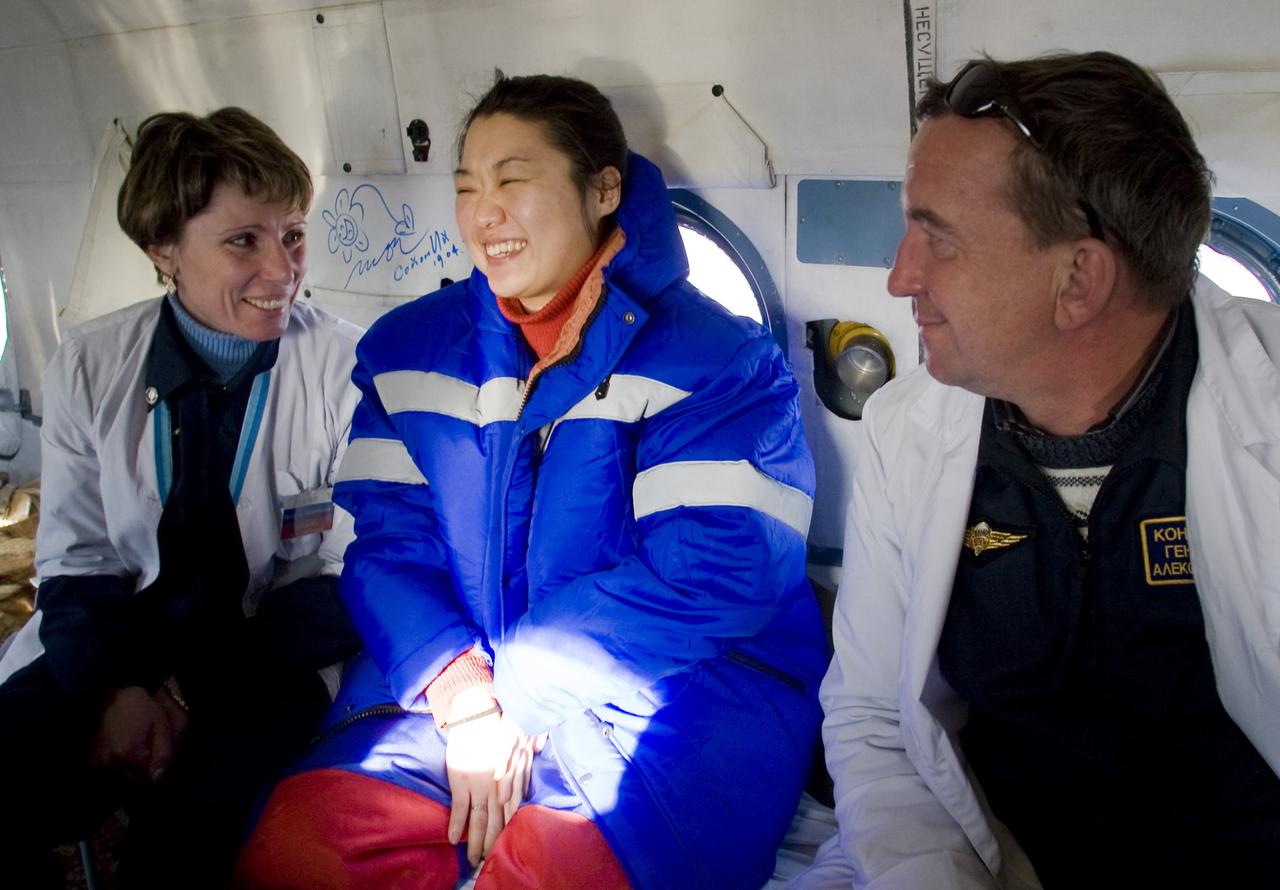
South Korean spaceflight participant So-Yeon YI jokes with Russian doctors in a helicopter after she and fellow crew members Expedition 16 Commander Peggy Whitson and Flight Engineer and Soyuz Commander Yuri Malenchenko landed their Soyuz TMA-11 capsule, Friday, April 19, 2008, in central Kazakhstan. Whitson and Malenchenko completed 192 days in space and Yi 11 days in orbit. Photo Credit: (NASA/Reuters/Pool)
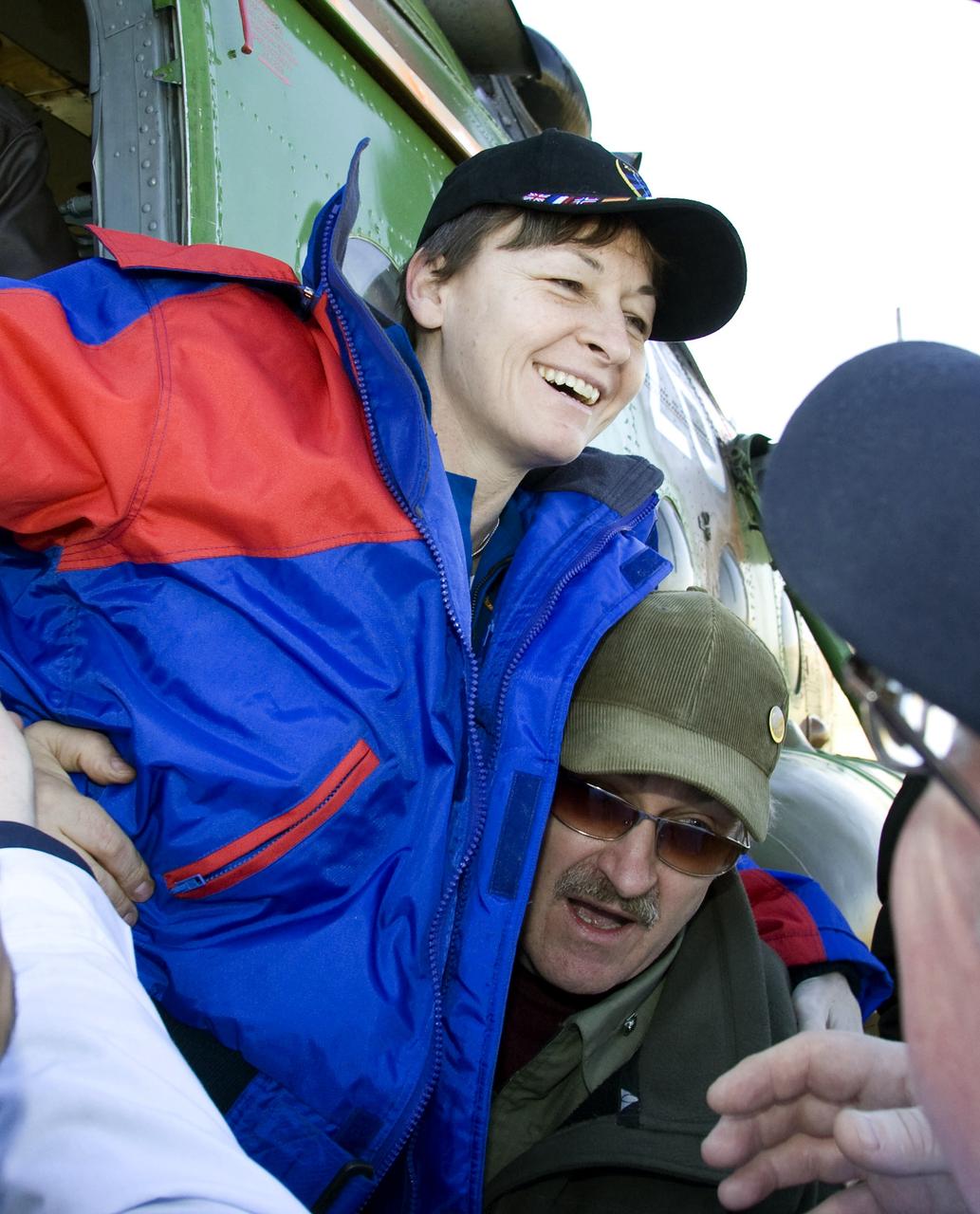
Expedition 16 Commander Peggy Whitson is helped out of a helicopter after landing in northern Kazakhstan, Friday, April 19, 2008. Whitson, Flight Engineer and Soyuz Commander Yuri Malenchenko and South Korean spaceflight participant So-yeon Yi landed their Soyuz TMA-11 spacecraft in central Kazakhstan to complete 192 days in space for Whitson and Malenchenko and 11 days in orbit for Yi. Photo Credit: (NASA/Reuters/Pool)
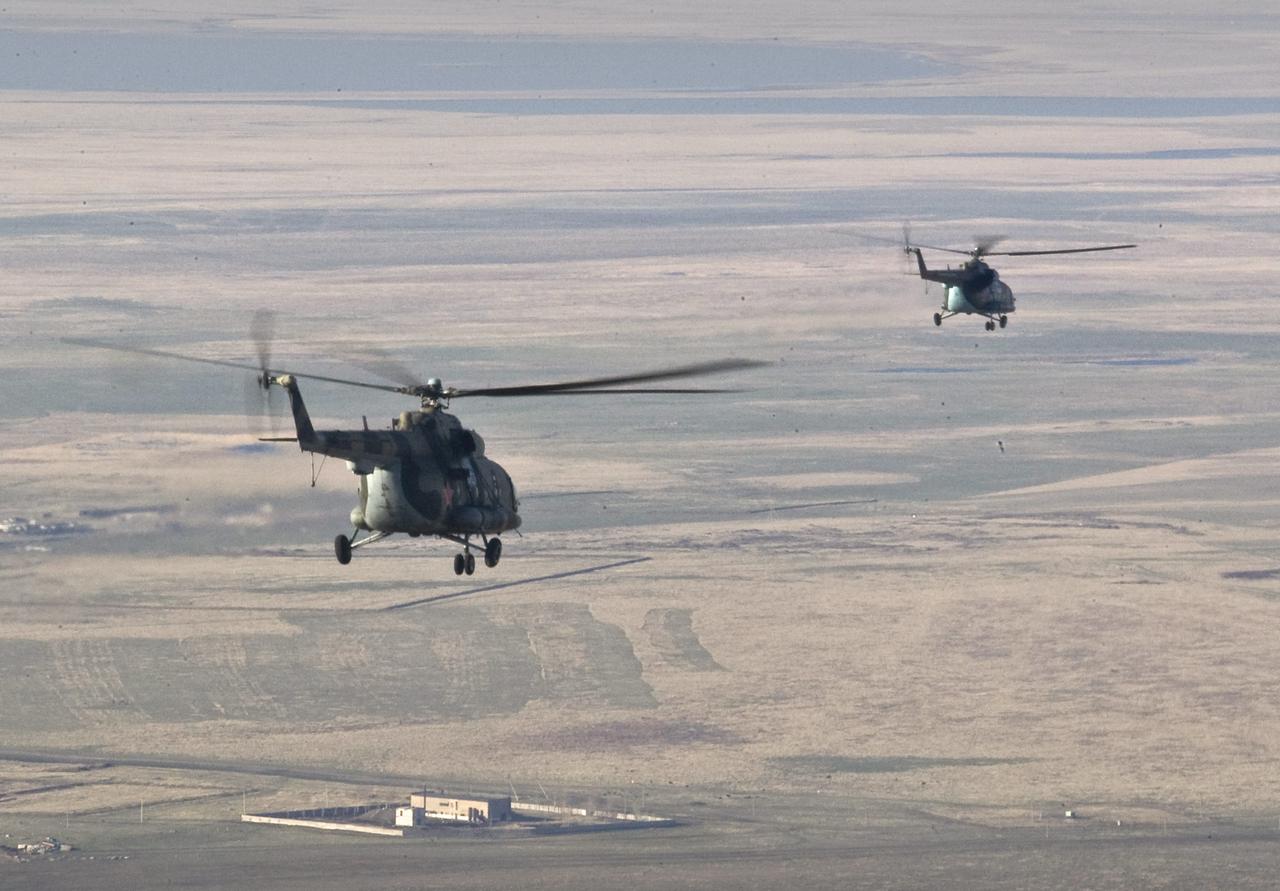
Rescue helicopters fly Expedition 16 Commander Peggy Whitson, Flight Engineer and Soyuz Commander Yuri Malenchenko and South Korean spaceflight participant So-yeon Yi to Kustanay, Kazakhstan shortly after their Soyuz TMA-11 spacecraft landed in central Kazakhstan, Friday, April 19, 2008. Whitson and Malenchenko completed 192 days in space and Yi spent 11 days in orbit. Photo Credit: (NASA/Reuters/Pool)
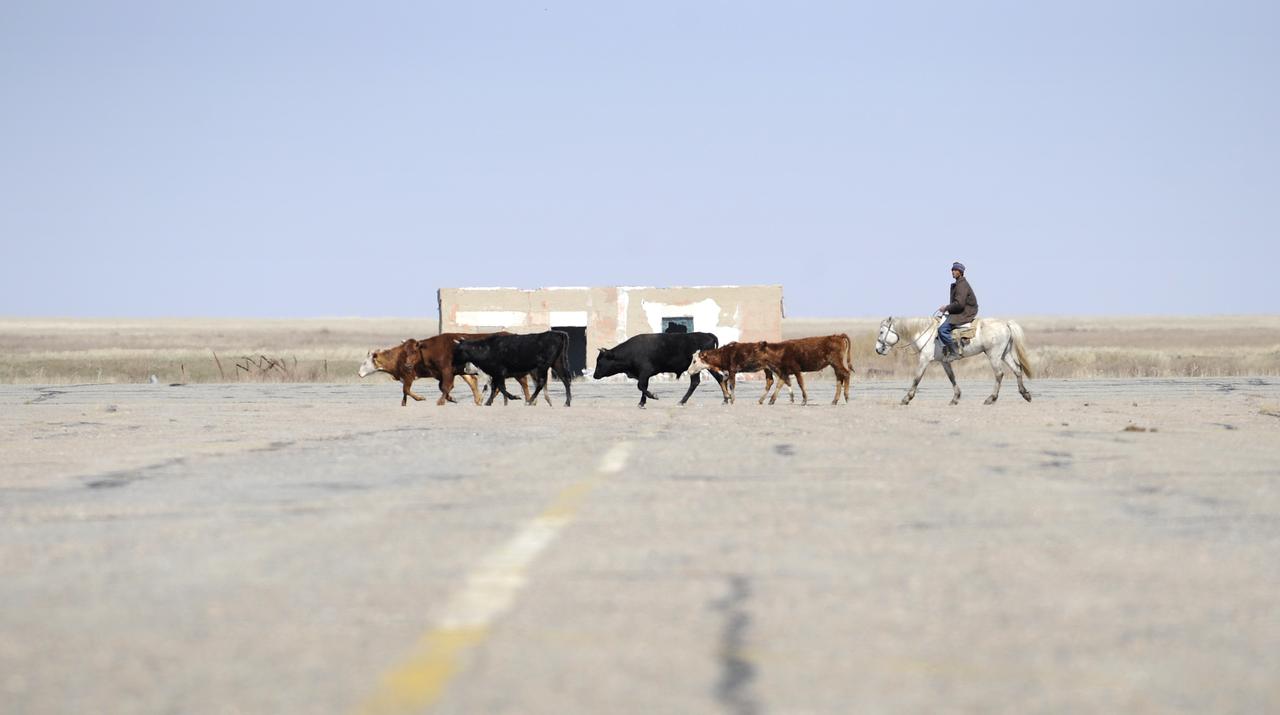
A Kazakh man herds cattle across the tarmac at the Arkalyk airport in Kazakhstan, Friday, April, 19, 2008. Arkalyk was used as one of the helicopter staging areas for the landing of the Soyuz TMA-11 spacecraft carrying Expedition 16 Commander Peggy Whitson, Flight Engineer and Soyuz Commander Yuri Malenchenko and South Korean spaceflight participant So-yeon Yi. The Soyuz made a ballistic landing, touching down more then 400 kilometers short of the intended target in central Kazakhstan. Photo Credit: (NASA/Bill Ingalls)

Women in traditional Kazakh dress wait to welcome Expedition 16 Commander Peggy Whitson, Flight Engineer and Soyuz Commander Yuri Malenchenko and South Korean spaceflight participant So-yeon Yi at the Kustanay airport in Kazakhstan, Friday, April 19, 2008. Whitson, Malenchenko and Yi landed their Soyuz TMA-11 capule in central Kazakhstan to complete 192 days in space for Whitson and Malenchenko and 11 days in orbit for Yi. Photo Credit: (NASA/Bill Ingalls)
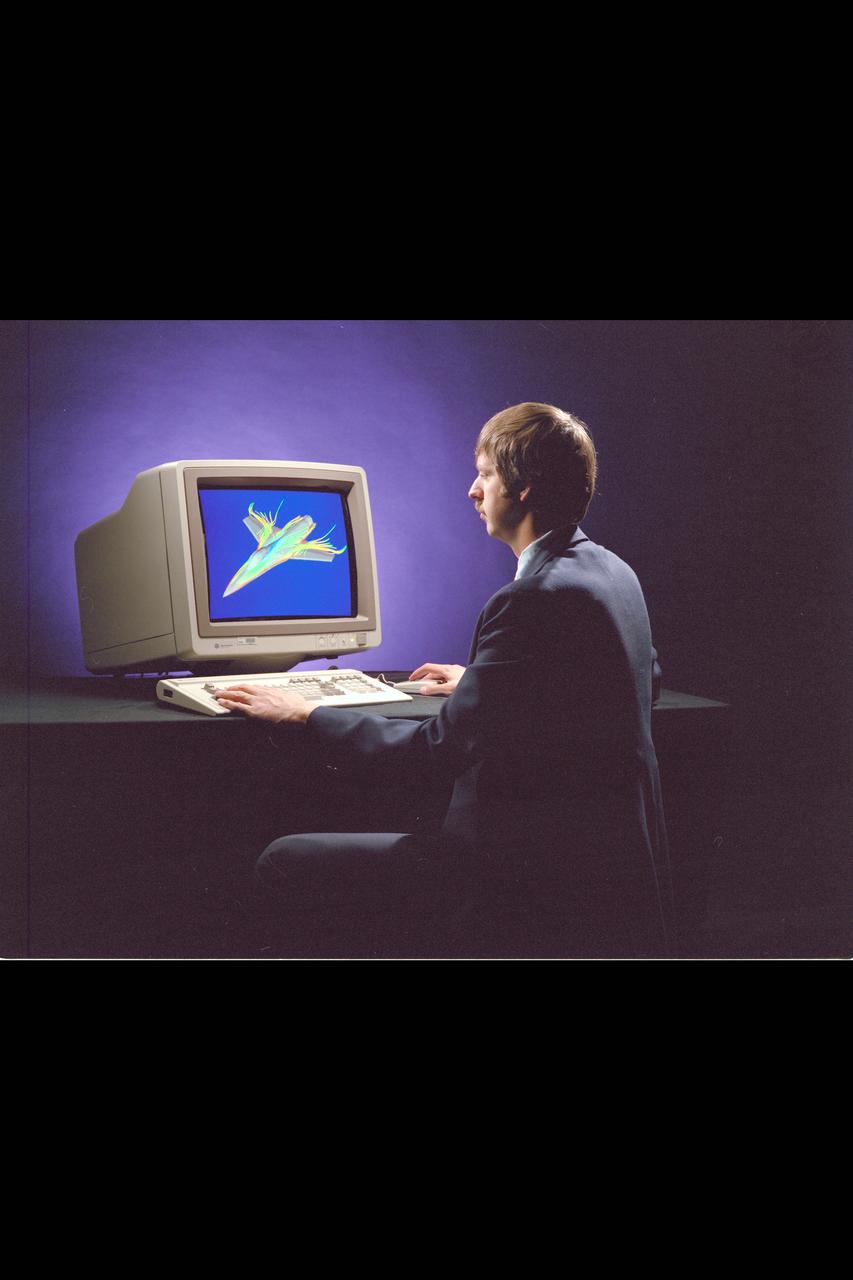
Iris Workstation with J. Flores computes F-16 CFD CGI
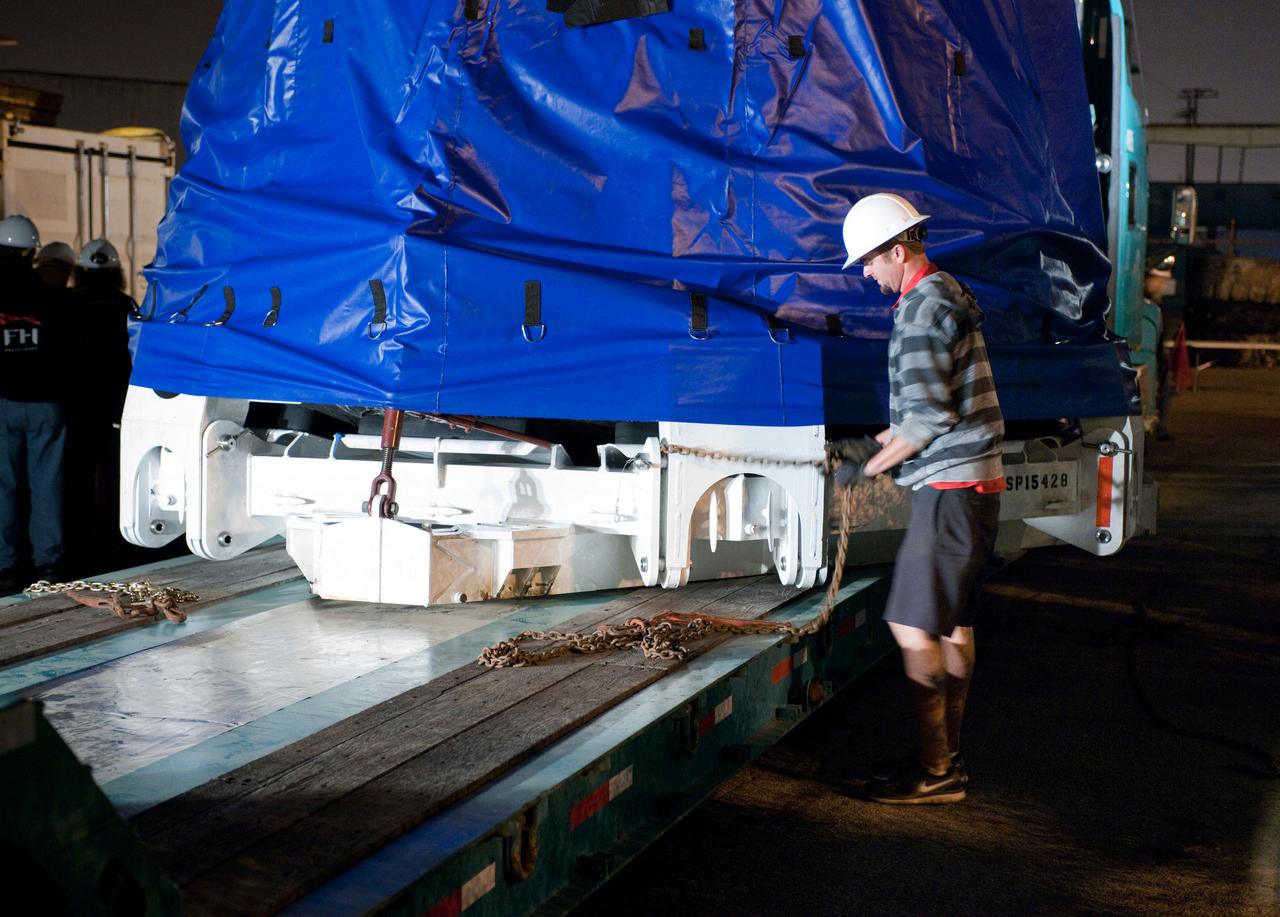
ED13-0079-16 (26 March 2013) ---- SpaceX Dragon's second operational mission ended on March 26 after three weeks attached to the International Space Station. The unmanned spacecraft splashed down in the Pacific Ocean about 214 miles off the coast of Baja California to successfully return about 2,670 pounds of science materials from the orbital outpost. Photo credit: NASA
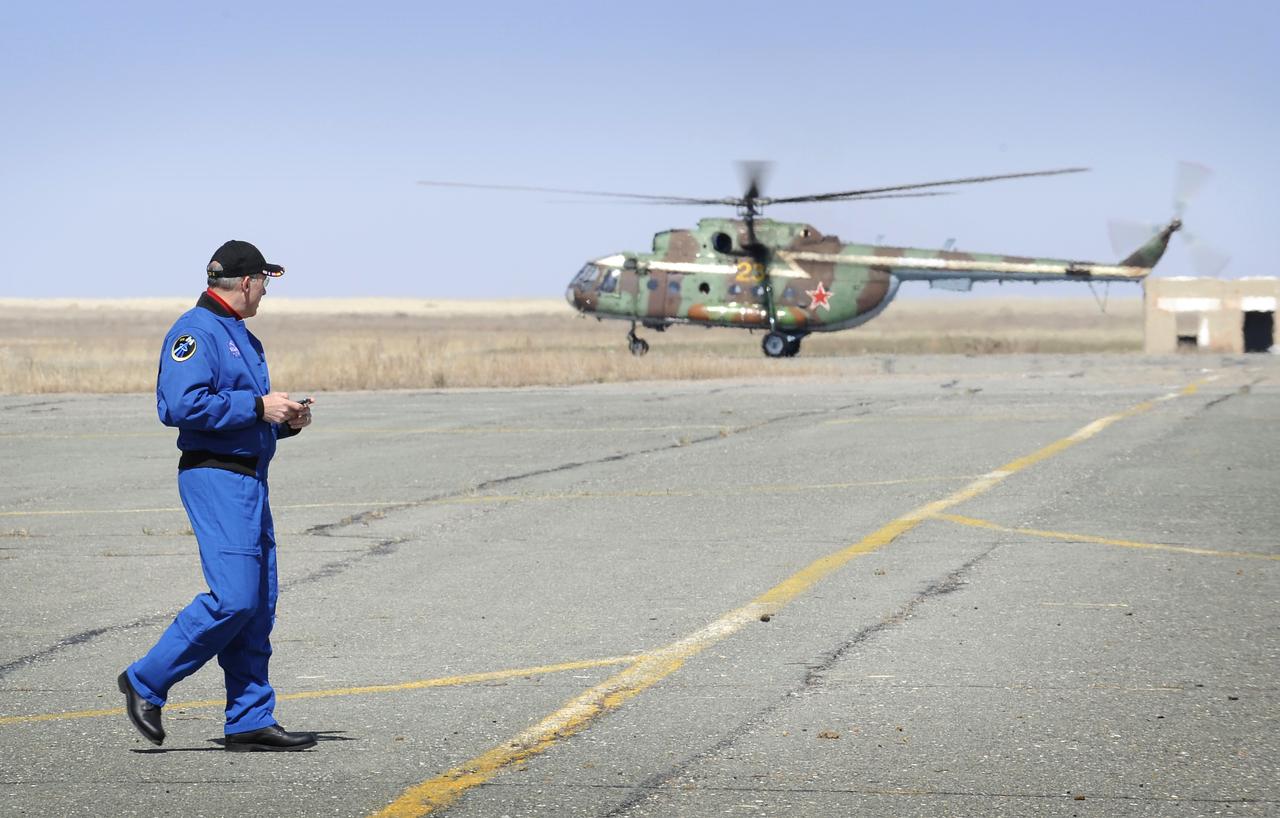
International Space Station Program Manager Michael Suffredini watches as the first wave of helicopters leaves the Arkalyk airport in Kazakhstan in preparation for the Soyuz TMA-11 landing, Friday, April 19, 2008. The Soyuz TMA-11 spacecraft carrying Expedition 16 Commander Peggy Whitson, Flight Engineer and Soyuz Commander Yuri Malenchenko and South Korean spacelfight participant So-yeon Yi landed in central Kazakhstan to complete 192 days in space for Whitson and Malenchenko and 11 days in orbit for Yi. Photo Credit: (NASA/Bill Ingalls)
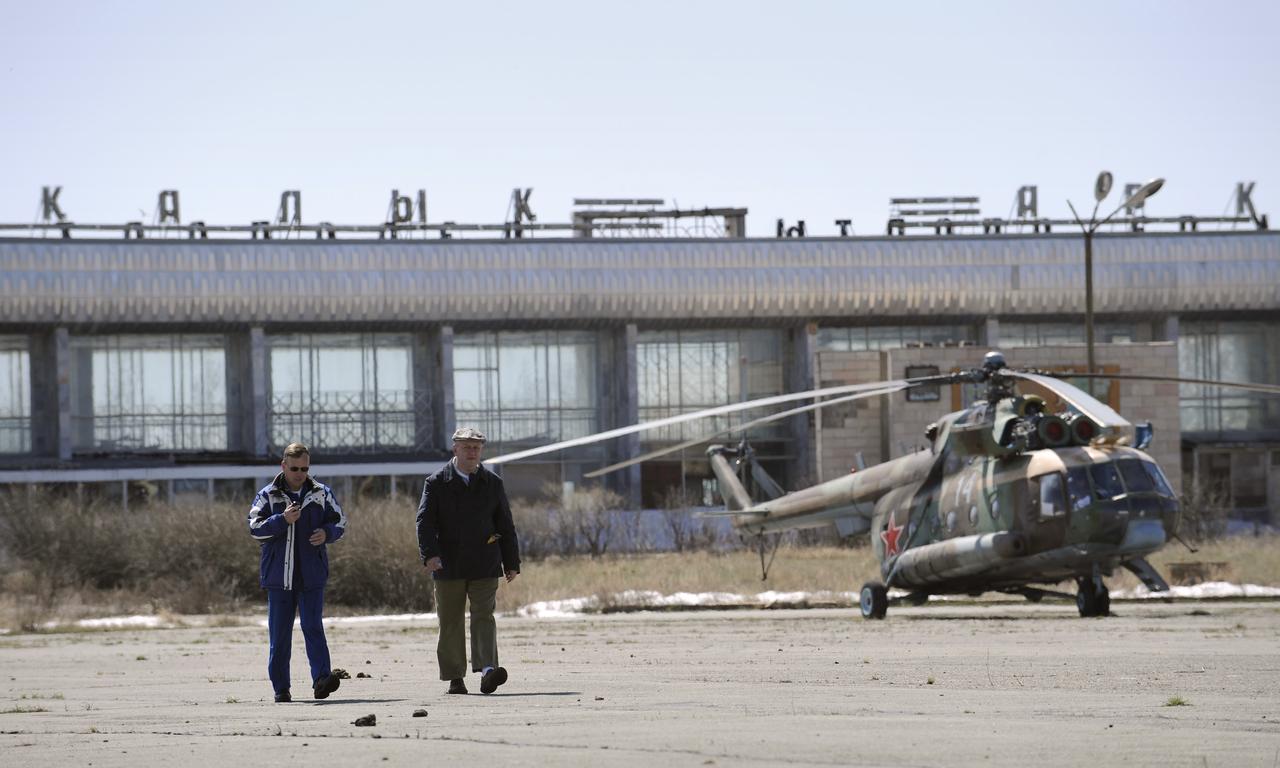
Chief of the NASA Astronaut office, Steve Lindsey, left, and interpreter Paul Kharmats wait at the Arkalyk airport in Kazakhstan as Russian helicopters are refueled, Friday, April 19, 2008. Arkalyk was used as one of the helicopter staging areas for the landing of the Soyuz TMA-11 spacecraft carrying Expedition 16 Commander Peggy Whitson, Flight Engineer and Soyuz Commander Yuri Malenchenko and South Korean spaceflight participant So-yeon Yi. The Soyuz made a ballistic landing, touching down more then 400 kilometers short of the intended target in central Kazakhstan. Photo Credit: (NASA/Bill Ingalls)
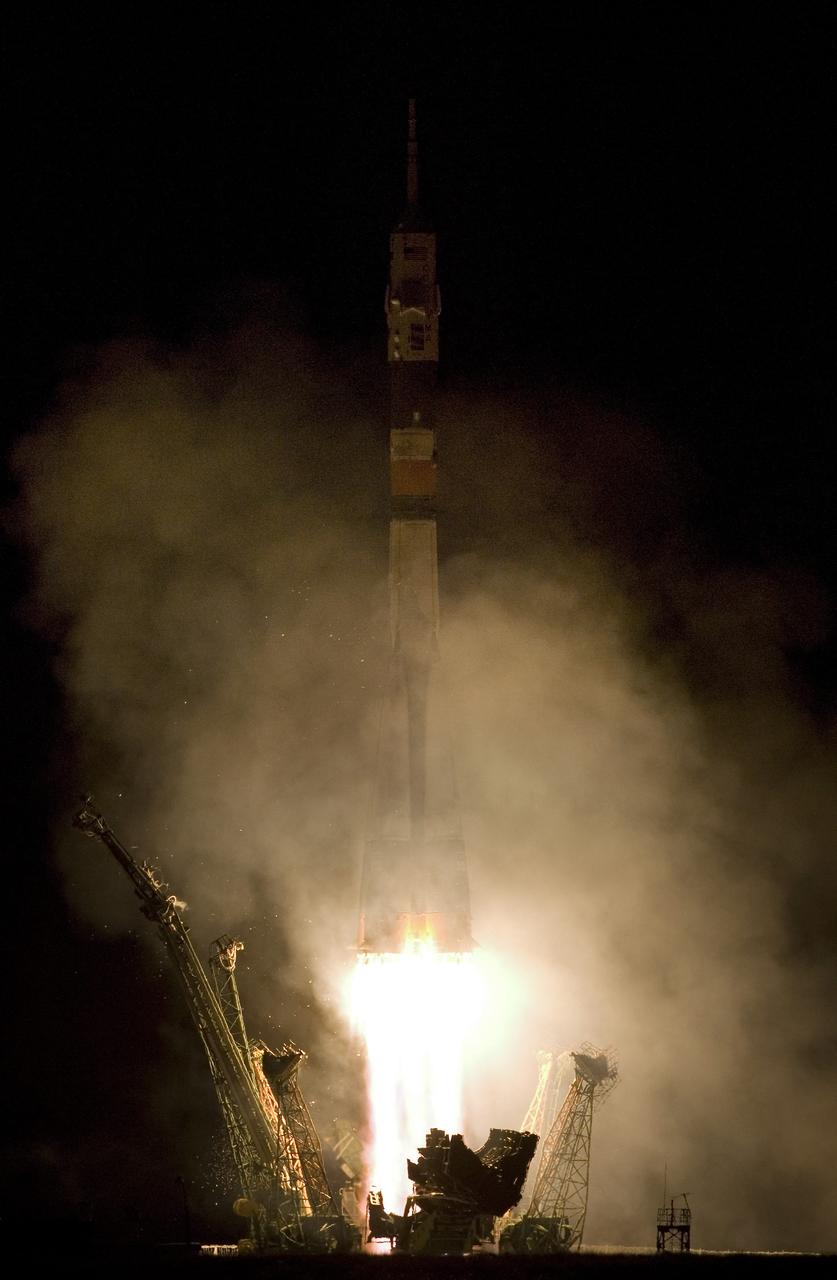
Expedition 16 Commander Peggy Whitson, Flight Engineer and Soyuz Commander Yuri Malenchenko and Malaysian spaceflight participant Sheikh Muszaphar Shukor blasted off from the Baikonur Cosmodrome in Kazakhstan at sunset, Wednesday, Oct. 10, 2007 in their Soyuz TMA-11 spacecraft. They will dock with the International Space Station on October 12. Whitson and Malenchenko will spend six months on the station, while Shukor will return to Earth October 21 with two of the Expedition 15 crewmembers currently on the complex. Photo Credit: (NASA/Bill Ingalls)
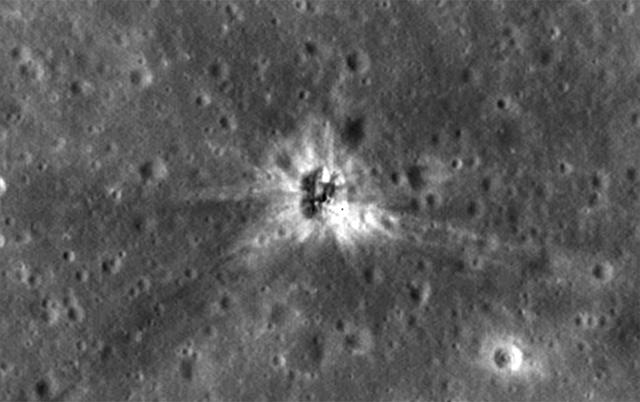
After decades of uncertainty, the Apollo 16 S-IVB impact site on the lunar surface has been identified. S-IVBs were portions of the Saturn V rockets that brought astronauts to the moon. The site was identified in imagery from the high-resolution LROC Narrow Angle Camera aboard NASA's Lunar Reconnaissance Orbiter. Beginning with Apollo 13, the S-IVB rocket stages were deliberately impacted on the lunar surface after they were used. Seismometers placed on the moon by earlier Apollo astronauts measured the energy of these impacts to shed light on the internal lunar structure. Locations of the craters that the boosters left behind were estimated from tracking data collected just prior to the impacts. Earlier in the LRO mission, the Apollo 13, 14, 15 and 17 impact sites were successfully identified, but Apollo 16's remained elusive. In the case of Apollo 16, radio contact with the booster was lost before the impact, so the location was only poorly known. Positive identification of the Apollo 16 S-IVB site took more time than the other four impact craters because the location ended up differing by about 30 km (about 19 miles) from the Apollo-era tracking estimate. (For comparison, the other four S-IVB craters were all within 7 km -- about four miles -- of their estimated locations.) Apollo 16's S-IVB stage is on Mare Insularum, about 160 miles southwest of Copernicus Crater (more precisely: 1.921 degrees north, 335.377 degrees east, minus 1,104 meters elevation). Credit: NASA/Goddard/Arizona State University <b><a href="http://www.nasa.gov/audience/formedia/features/MP_Photo_Guidelines.html" rel="nofollow">NASA image use policy.</a></b> <b><a href="http://www.nasa.gov/centers/goddard/home/index.html" rel="nofollow">NASA Goddard Space Flight Center</a></b> enables NASA’s mission through four scientific endeavors: Earth Science, Heliophysics, Solar System Exploration, and Astrophysics. Goddard plays a leading role in NASA’s accomplishments by contributing compelling scientific knowledge to advance the Agency’s mission. <b>Follow us on <a href="http://twitter.com/NASAGoddardPix" rel="nofollow">Twitter</a></b> <b>Like us on <a href="http://www.facebook.com/pages/Greenbelt-MD/NASA-Goddard/395013845897?ref=tsd" rel="nofollow">Facebook</a></b> <b>Find us on <a href="http://instagrid.me/nasagoddard/?vm=grid" rel="nofollow">Instagram</a></b>
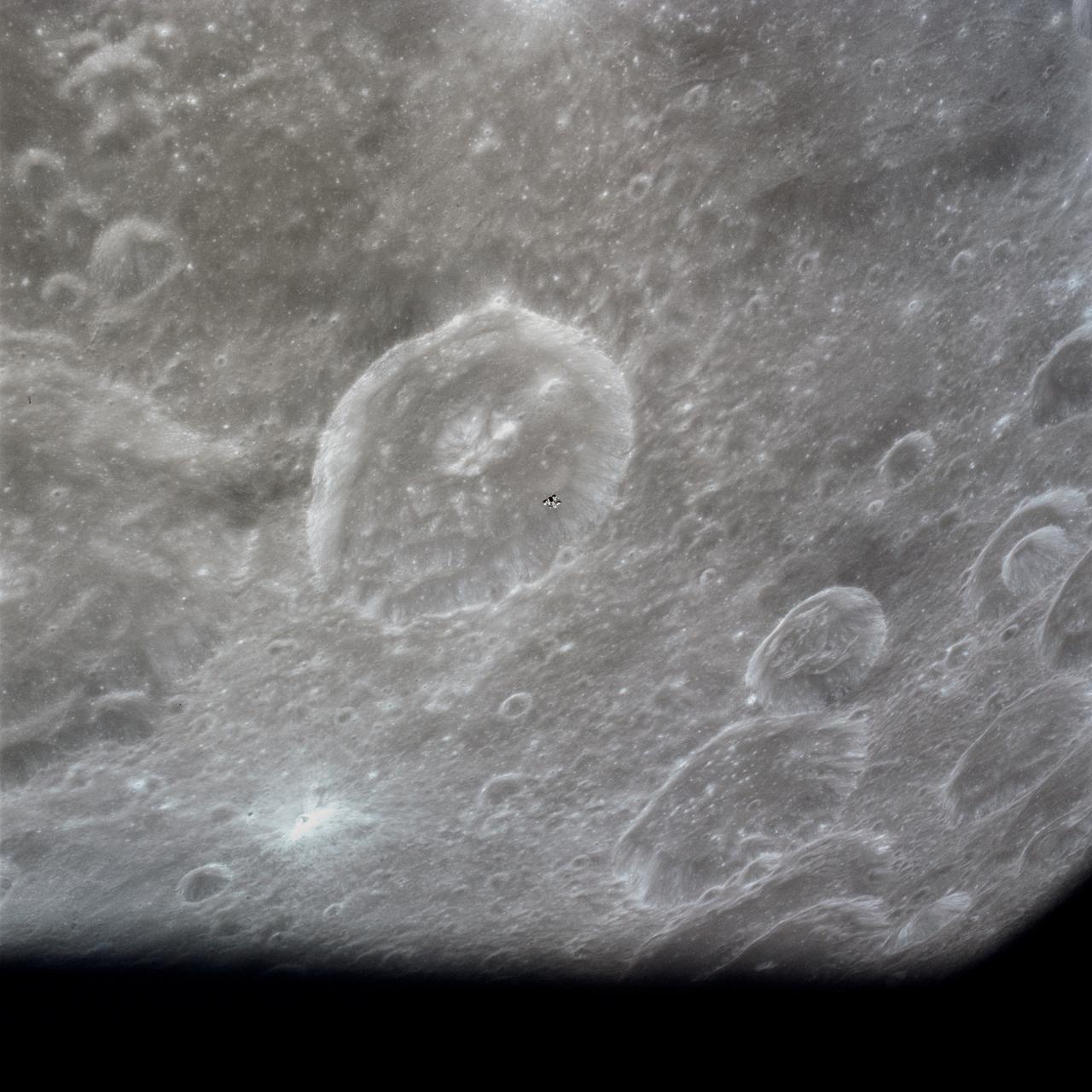
AS16-122-19527 (23 April 1972) --- The Apollo 16 Lunar Module (LM) ascent stage, with astronauts John W. Young and Charles M. Duke Jr. aboard, returns from the lunar surface to rejoin the Command and Service Modules (CSM) in lunar orbit. Astronaut Thomas K. (Ken) Mattingly II took this photograph from the Command Module (CM). The LM is above the Crater Schubert B. The lunar surface area visible in this picture is located at the western edge of Smyth's Sea.
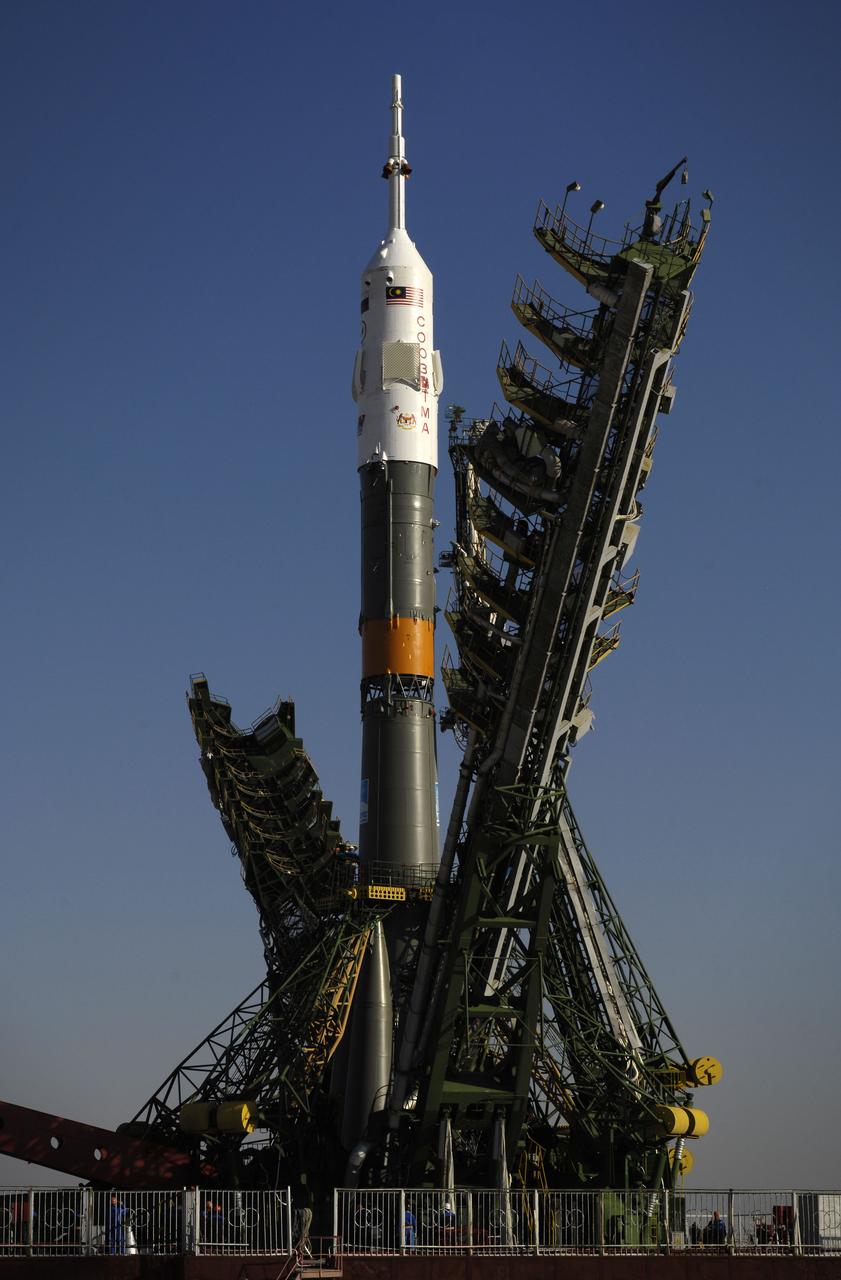
The Soyuz TMA-11 spacecraft was transported by railcar to its launch pad at the Baikonur Cosmodrome, Monday, Oct. 8, 2007, in Kazakhstan for an October 10th launch date. The Soyuz will carry Expedition 16 Commander Peggy Whitson, Flight Engineer and Soyuz Commander Yuri Malenchenko and Malaysian spaceflight participant Sheikh Muszaphar Shukor to the International Space Station. Whitson and Malenchenko will spend six months on the station. Shukor, who is flying under an agreement between Malaysia and the Russian Federal Space Agency, will return to Earth October 21 with two of the Expedition 15 crew members currently on the complex. Photo Credit: (NASA/Bill Ingalls)
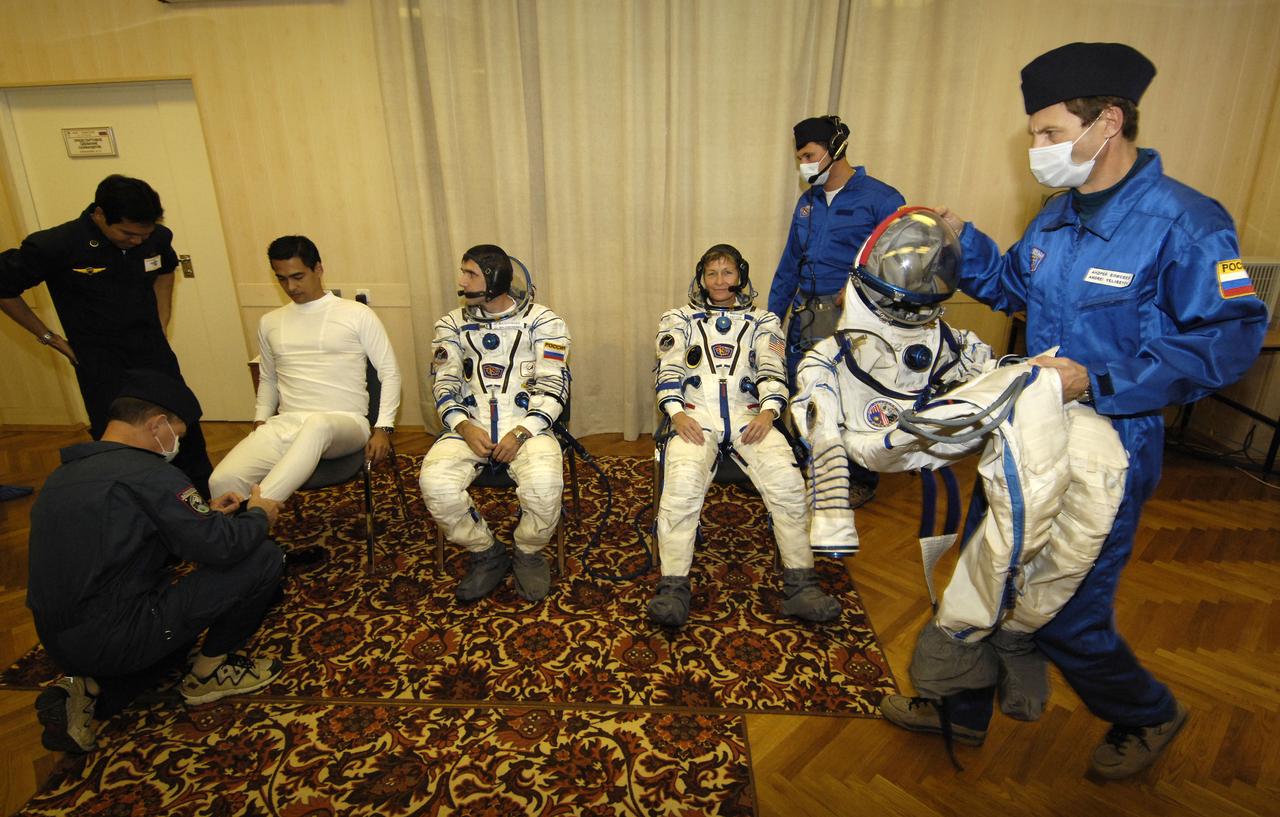
Malaysian spaceflight participant Sheikh Muszaphar Shukor, left sitting, Flight Engineer and Soyuz Commander Yuri Malenchenko and Expedition 16 Commander Peggy Whitson, right sitting, don their flight suits prior to launch at the Baikonur Cosmodrome in Kazakhstan, Wednesday, Oct. 10, 2007. The three launched at sunset in their Soyuz TMA-11 spacecraft bound for a docking to the International Space Station on Oct. 12. Whitson and Malenchenko will spend six months on the station, while Shukor will return to Earth Oct. 21 with two of the Expedition 15 crewmembers currently on the complex. Photo Credit: "NASA/Bill Ingalls)
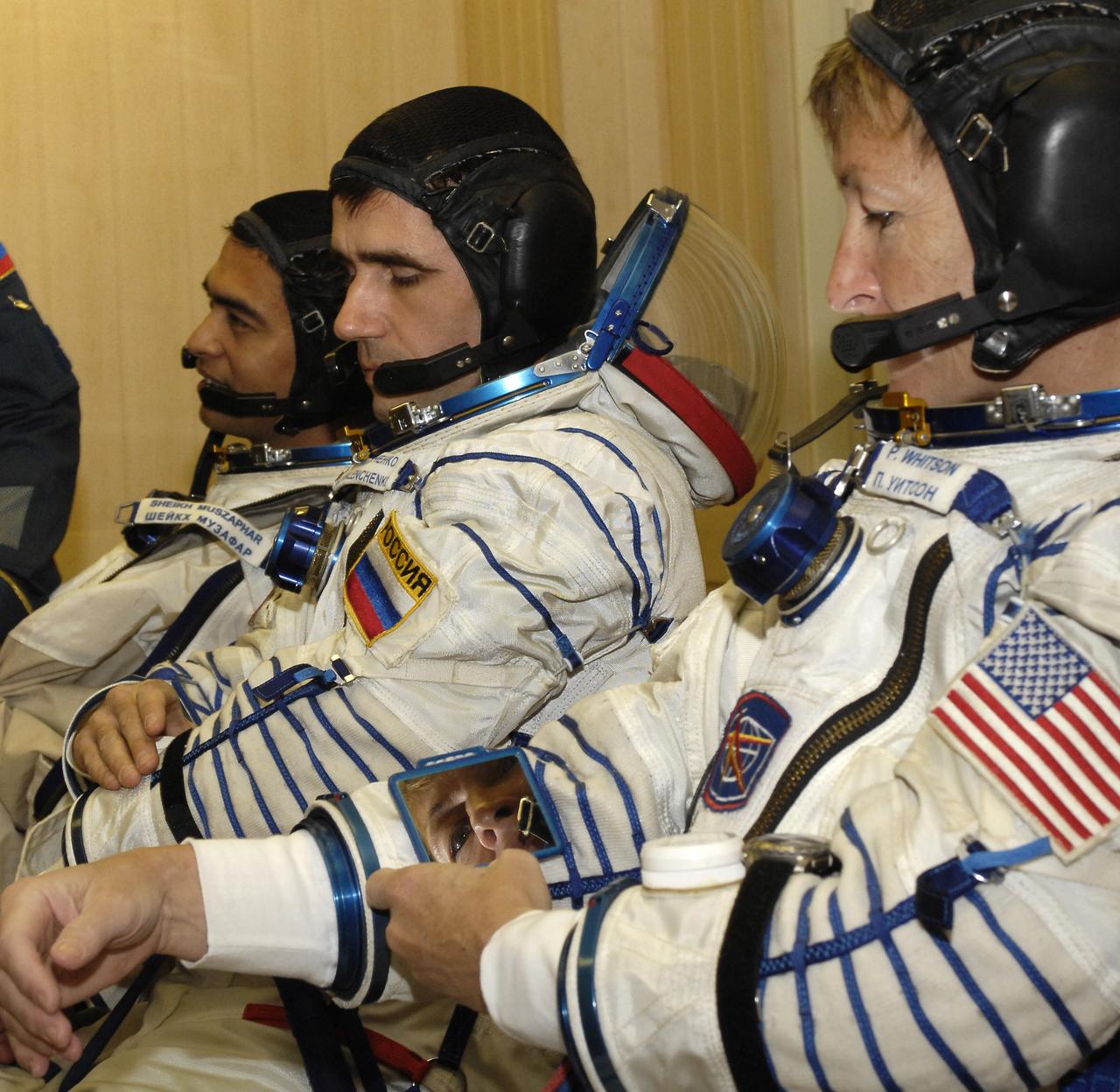
Expedition 16 Commander Peggy Whitson, right, adjusts the mirror on her Russian sokol suit, Wednesday, Oct. 10, 2007, in Baikonur, Kazakhstan. Flight Engineer and Soyuz Commander Yuri Malenchenko, center, and Malaysian spaceflight participant Sheikh Muszaphar Shukor are seen next to her. The three launched at sunset Oct. 10 in their Soyuz TMA-11 spacecraft bound for a docking to the International Space Station on Oct. 12. Whitson and Malenchenko will spend six months on the station, while Shukor will return to Earth Oct. 21 with two of the Expedition 15 crewmembers currently on the complex. Photo Credit: (NASA/Bill Ingalls)

Expedition 16 Commander Peggy Whitson, Flight Engineer and Soyuz Commander Yuri Malenchenko and Malaysian spaceflight participant Sheikh Muszhaphar Shukor are protected behind glass during the State Commission meeting and press conference, Tuesday, Oct. 9, 2007, at the Baikonur Cosmodrome in Kazakhstan. The crew is in preparation for their launch to the International Space Station Oct. 10 in their Soyuz TMA-11 spacecraft. Whitson and Malenchenko will spend six months on the station while Shukor will return to Earth Oct. 21 with two of the Expedition 15 crewmembers currently on the complex. Photo Credit: (NASA/Bill Ingalls) Photo Credit: "NASA/Bill Ingalls"

Expedition 16 Commander Peggy Whitson, right, Flight Engineer and Soyuz Commander Yuri Malenchenko and Malaysian spaceflight participant Sheikh Muszhaphar Shukor give the thumbs up during the State Commission meeting and press conference, Tuesday, Oct. 9, 2007, at the Baikonur Cosmodrome in Kazakhstan. The crew is in preparation for their launch to the International Space Station Oct. 10 in their Soyuz TMA-11 spacecraft. Whitson and Malenchenko will spend six months on the station while Shukor will return to Earth Oct. 21 with two of the Expedition 15 crewmembers currently on the complex. Photo Credit: (NASA/Victor Zelentsov)
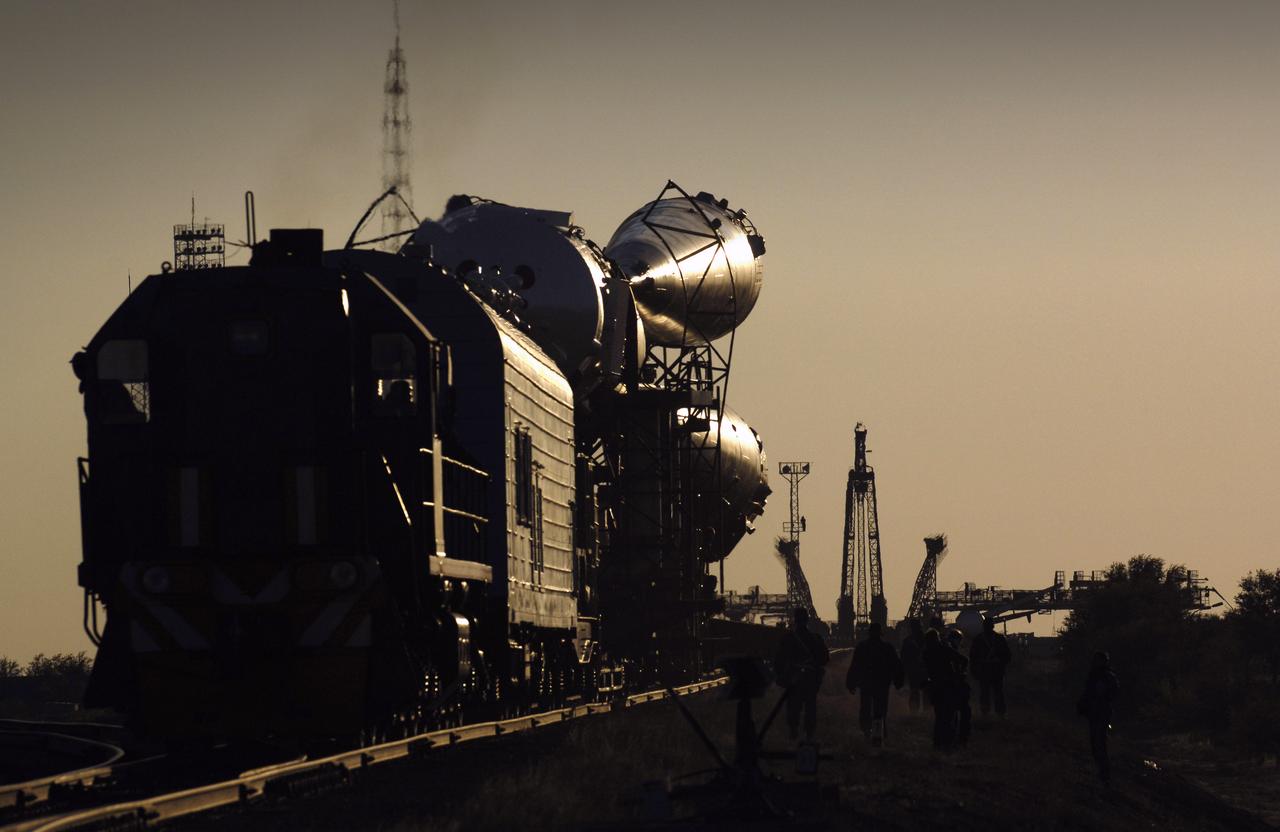
The Soyuz TMA-11 spacecraft is transported by railcar to its launch pad at the Baikonur Cosmodrome, Monday, Oct. 8, 2007, in Kazakhstan for an October 10th launch date. The Soyuz will carry Expedition 16 Commander Peggy Whitson, Flight Engineer and Soyuz Commander Yuri Malenchenko and Malaysian spaceflight participant Sheikh Muszaphar Shukor to the International Space Station. Whitson and Malenchenko will spend six months on the station. Shukor, who is flying under an agreement between Malaysia and the Russian Federal Space Agency, will return to Earth October 21 with two of the Expedition 15 crew members currently on the complex. Photo Credit: (NASA/Bill Ingalls)
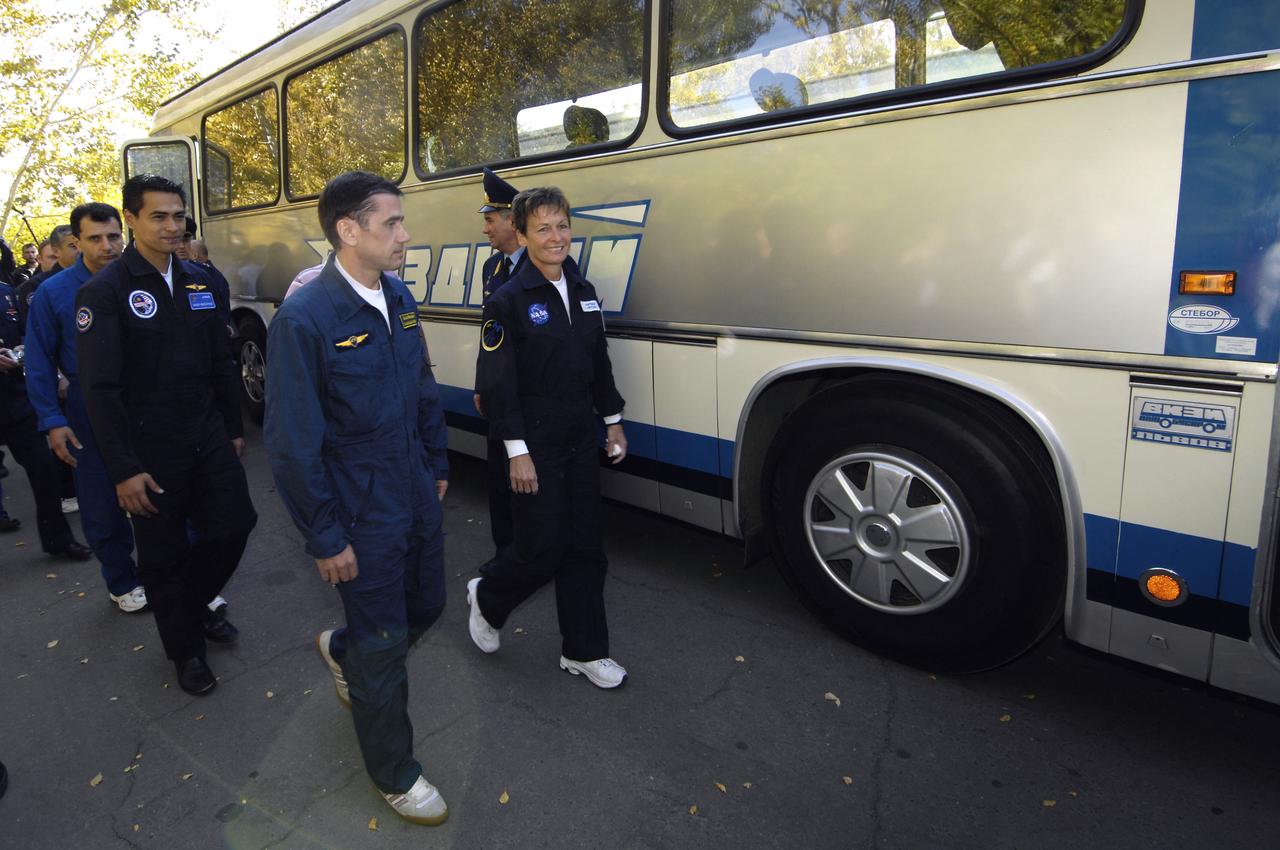
Expedition 16 Commander Peggy Whitson, right, Flight Engineer and Soyuz Commander Yuri Malenchenko and Malaysian spaceflight participant Sheikh Muszhaphar Shukor, left, board the crew bus that will take them from the Cosmonaut hotel to building 254 where they will don their flight suits at the Baikonur Cosmodrome in Kazakhstan, Wednesday, Oct. 10, 2007. The crew launched at sunset in their Soyuz TMA-11 spacecraft bound for a docking to the International Space Station on Oct. 12. Whitson and Malenchenko will spend six months on the station, while Shukor will return to Earth Oct. 21 with two of the Expedition 15 crewmembers currently on the complex. Photo Credit: (NASA/Bill Ingalls)
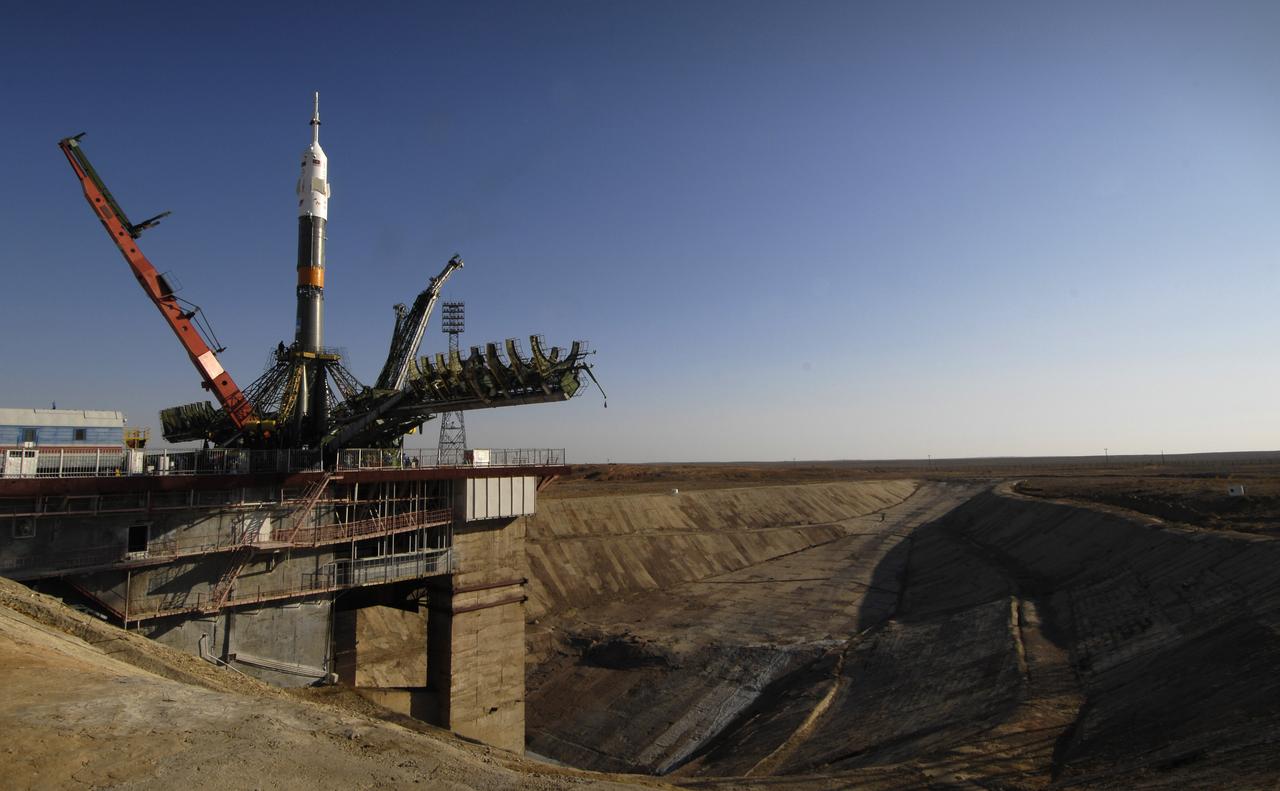
The Soyuz TMA-11 spacecraft was transported by railcar to its launch pad at the Baikonur Cosmodrome, Monday, Oct. 8, 2007, in Kazakhstan for an October 10th launch date. The Soyuz will carry Expedition 16 Commander Peggy Whitson, Flight Engineer and Soyuz Commander Yuri Malenchenko and Malaysian spaceflight participant Sheikh Muszaphar Shukor to the International Space Station. Whitson and Malenchenko will spend six months on the station. Shukor, who is flying under an agreement between Malaysia and the Russian Federal Space Agency, will return to Earth October 21 with two of the Expedition 15 crew members currently on the complex. Photo Credit: (NASA/Bill Ingalls)
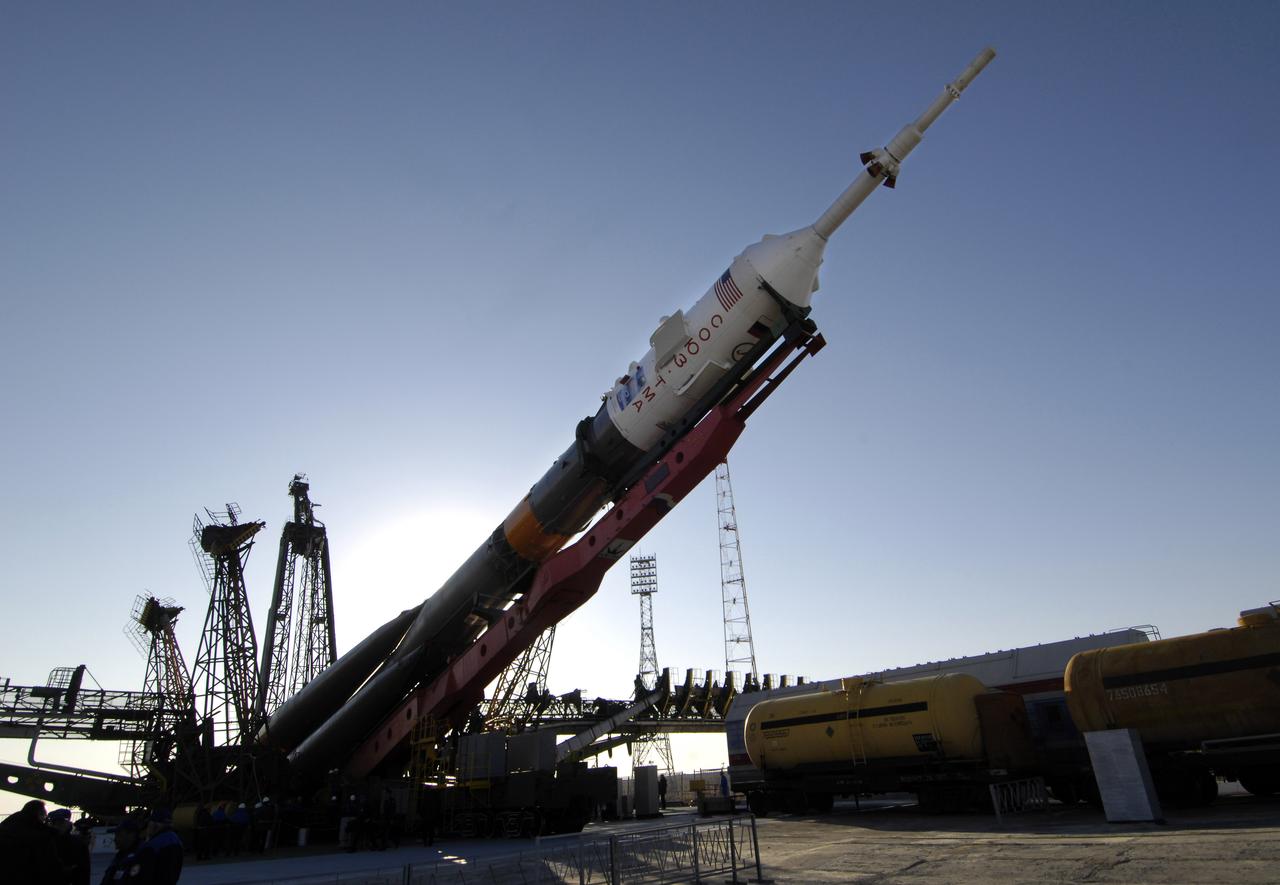
The Soyuz TMA-11 spacecraft was transported by railcar to its launch pad at the Baikonur Cosmodrome, Monday, Oct. 8, 2007, in Kazakhstan for an October 10th launch date. The Soyuz will carry Expedition 16 Commander Peggy Whitson, Flight Engineer and Soyuz Commander Yuri Malenchenko and Malaysian spaceflight participant Sheikh Muszaphar Shukor to the International Space Station. Whitson and Malenchenko will spend six months on the station. Shukor, who is flying under an agreement between Malaysia and the Russian Federal Space Agency, will return to Earth October 21 with two of the Expedition 15 crew members currently on the complex. Photo Credit: (NASA/Bill Ingalls)
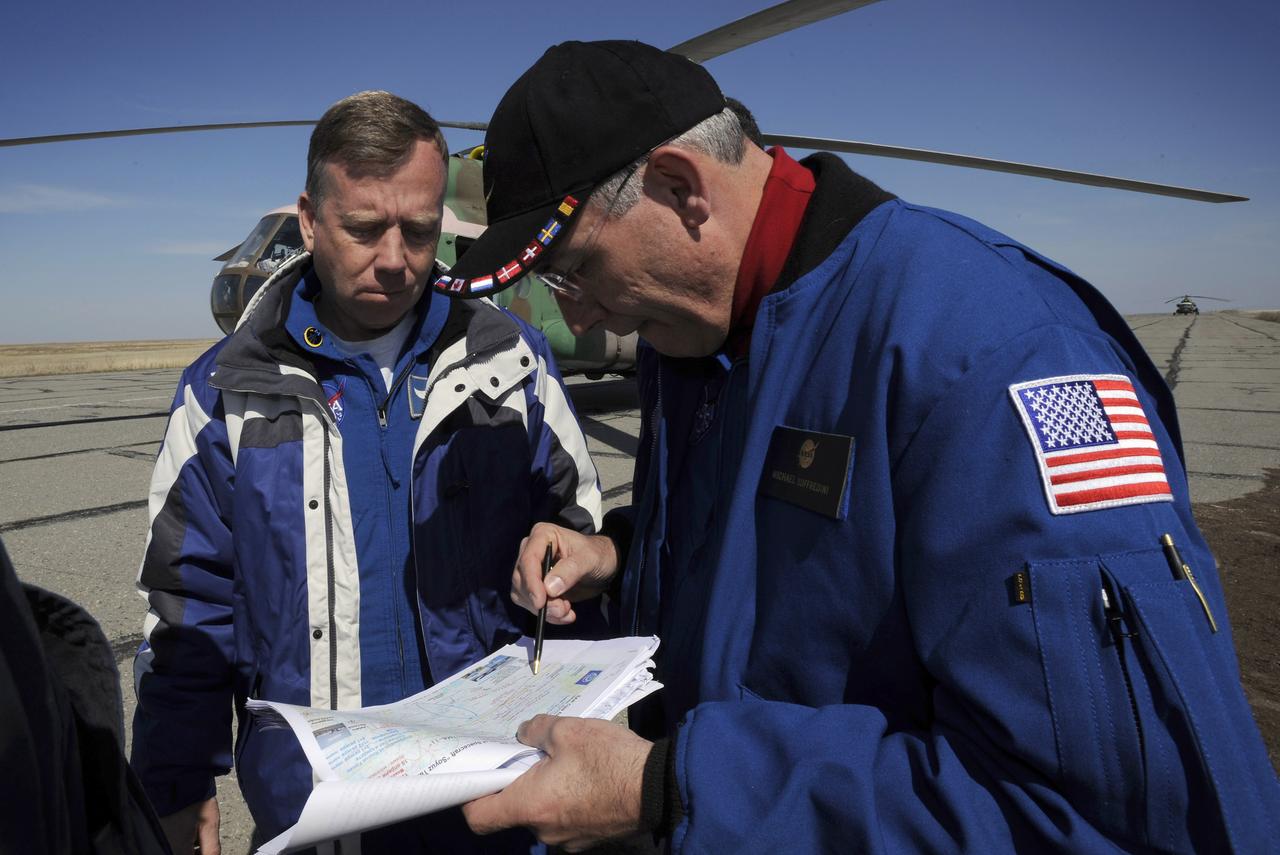
Chief of NASA's Astronaut office, Steve Lindsey, left, and International Space Station Program Manager, Michael Suffredini, examine a map of central Kazakhstan at the Arkalyk airport as they received information on the landing of the Expedition 16 crew in the Soyuz TMA-11 capsule, Saturday, April 19, 2008. The Soyuz made a ballistic landing, touching down more then 400 kilometers short of the intended target in central Kazakhstan. The crew reported by satellite phone to recovery forces that they were in good shape. Photo Credit: (NASA/Bill Ingalls)
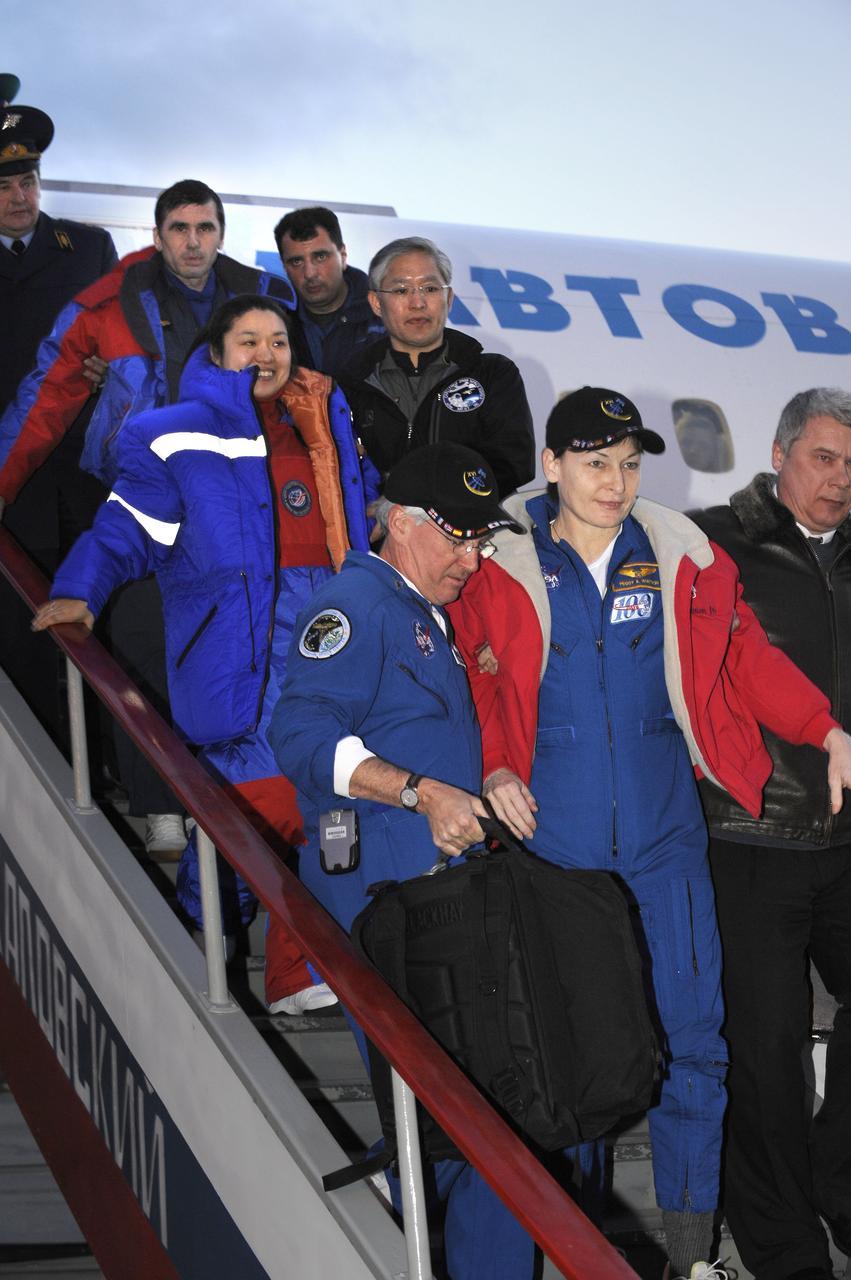
Expedition 16 Commander Peggy Whitson, bottom, South Korean spaceflight participant So-yeon Yi and Flight Engineer and Soyuz Commander Yuri Malenchenko, top, walk down the airplane steps as they arrive at Chkalovsky Airport near Star City, Russia, Friday, April 19, 2008. Whitson, Malechenko and Yi landed their Soyuz TMA-11 spacecraft on April 19, 2008 in central Kazakhstan to complete 192 days in space for Whitson and Malenchenko and 11 days in orbit for Yi. Photo Credit: (NASA/Bill Ingalls)
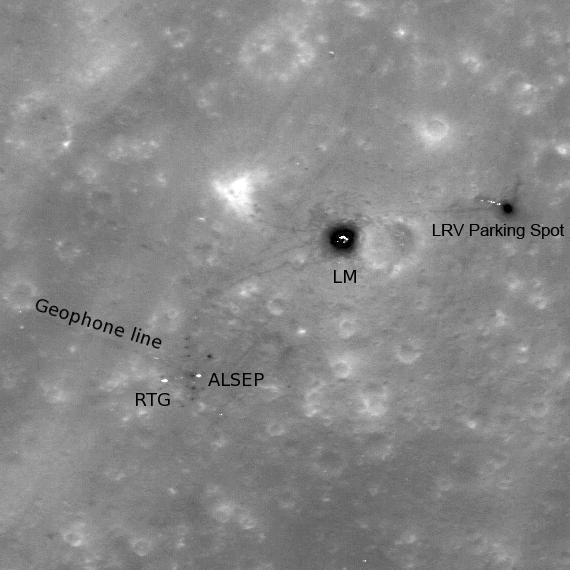
Apollo 16, Footsteps Under High Sun
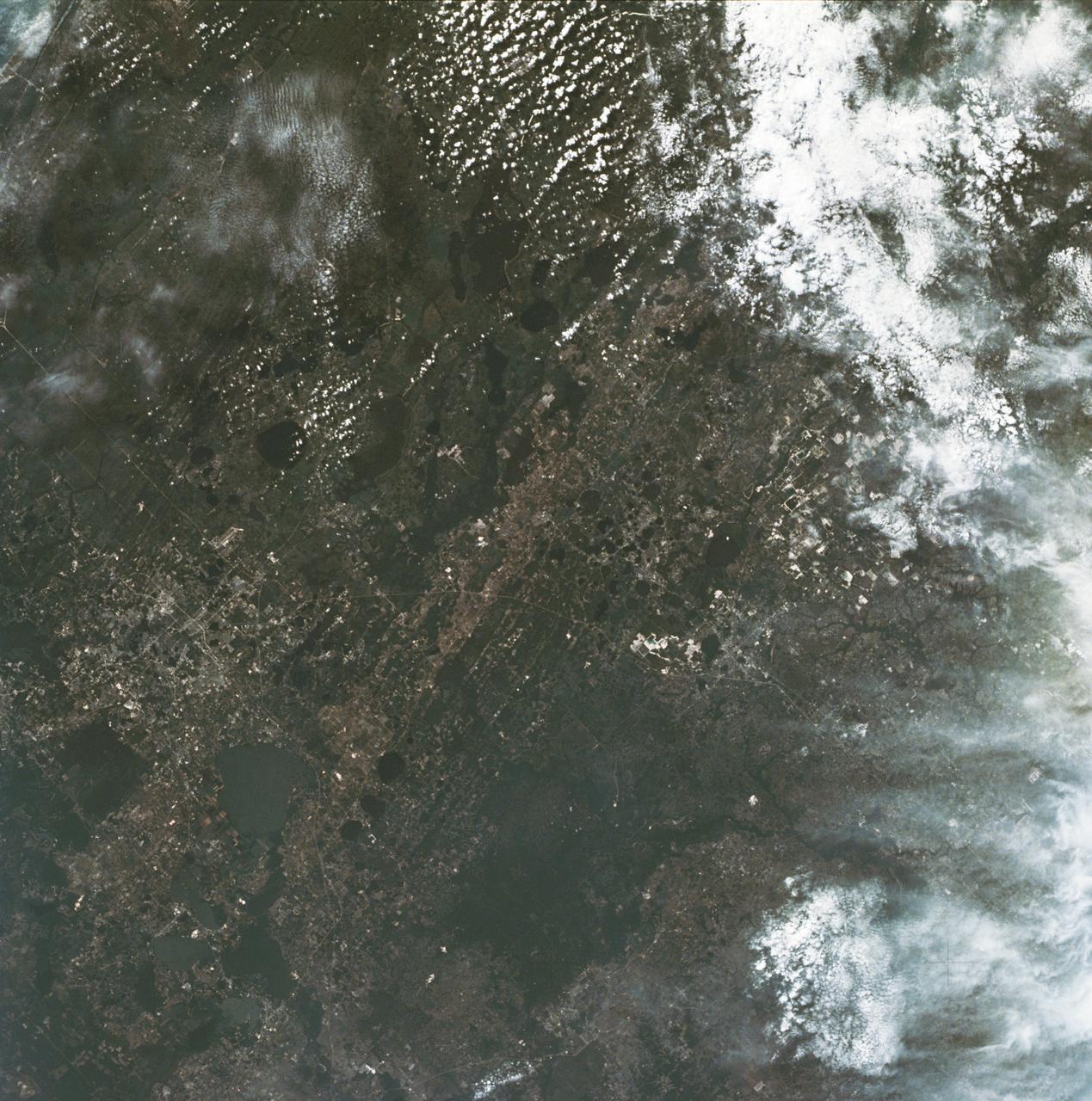
SL2-16-281 (June 1973) --- A vertical view of the Orlando and central Florida area photographed from the Skylab space station in Earth orbit. (The picture should be held with the heaviest cloud cover at the bottom.) The extensive road and highway network in the area is clearly visible. The Lakeland and Winter Haven area is near the center of the picture. Interstate 4 extends southwesterly out of Orlando through the center of the picture. The urban growth caused by the opening of the Disney World amusement complex is clearly evident. The giant recreational facility is just southwest of Orlando. This picture was taken by one of the six lenses of the Itek-furnished S190-A Multispectral Photographic Facility Experiment in the Multiple Docking Adapter of the space station. Type SO-356 film was used. Photo credit: NASA
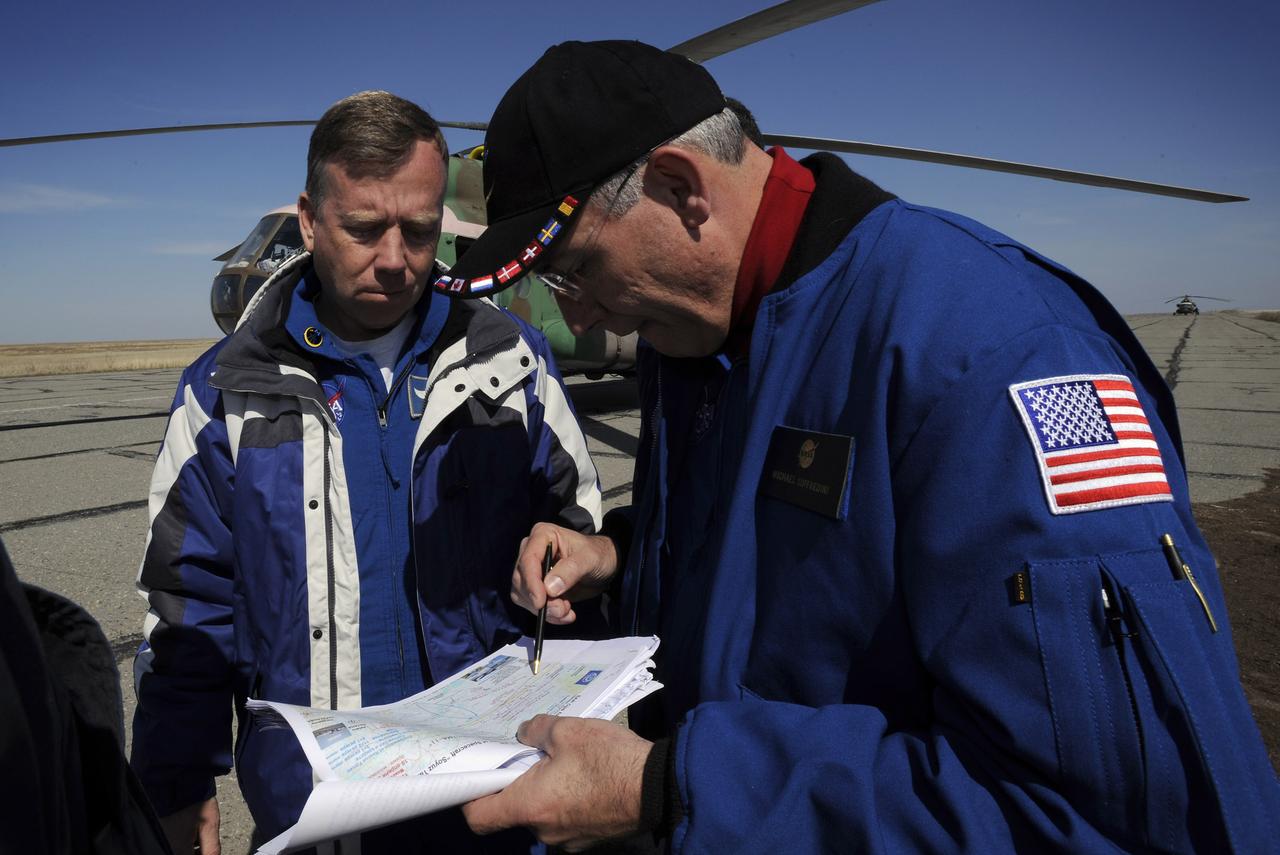
Steve Lindsey, Chief of NASA's Astronaut office, left, and Michael Sufferdini, International Station Program Manager, examine a map of central Kazakhstan as they received information at the Arkalyk airport April 19, 2008 on the landing of the Expedition 16 crew in the Soyuz TMA-11 capsule. The Soyuz made a ballistic landing, touching down more then 400 kilometers short of the intended target, but the crew reported by satellite phone to recovery forces that they were in good shape. Photo Credit: (NASA/Bill Ingalls)
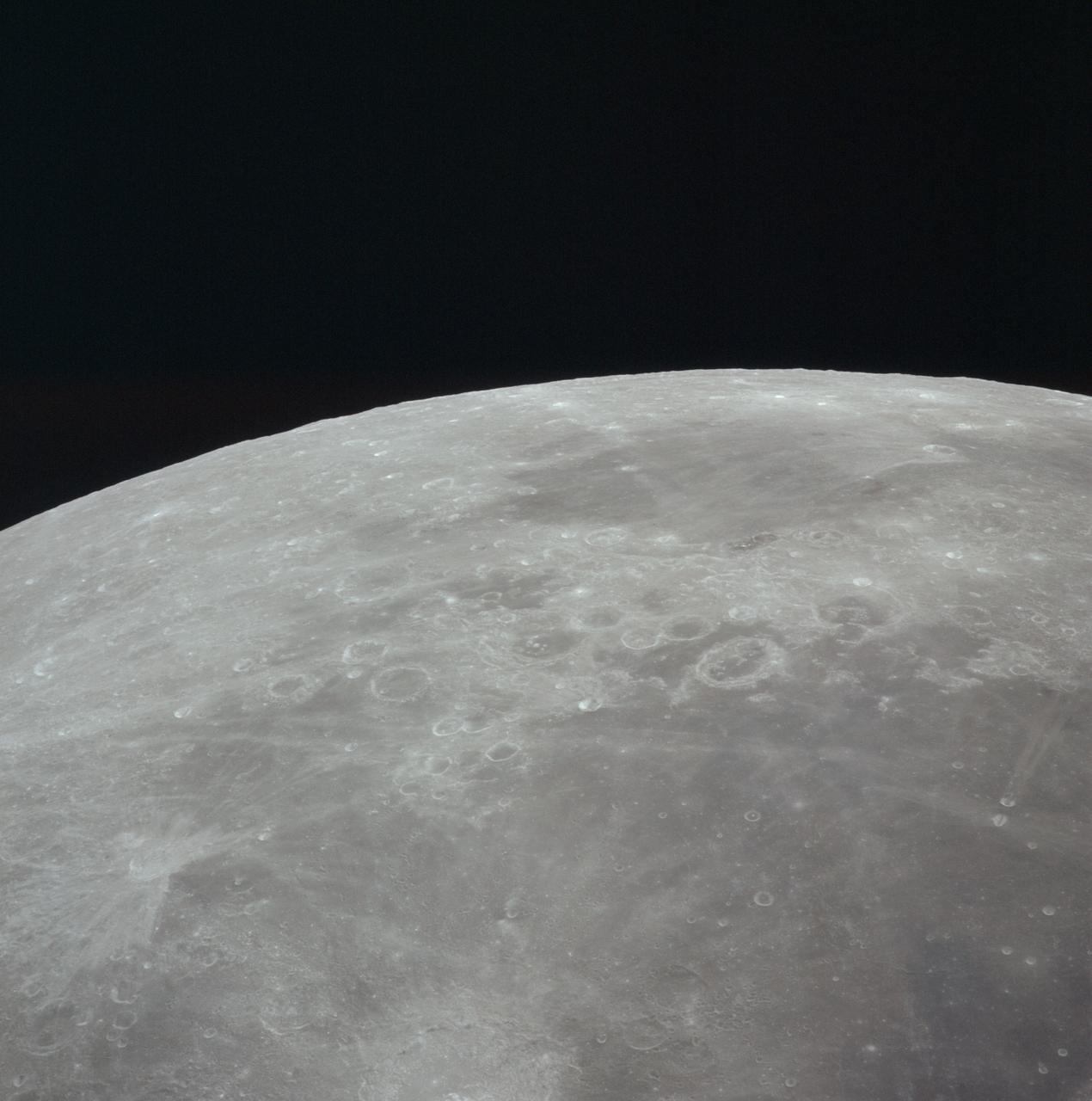
AS16-121-19449 (16-27 April 1972) --- This 70mm handheld camera's view of the moon, photographed during the Apollo 16 mission's trans-Earth coast, features Mare Fecunditatis (Sea of Fertility) in the foreground with the twin craters Messier at the lower right. Nearer the horizon is Mare Nectaris (Sea of Nectar) with craters Goclenius and Gutenberg in between. Goclenius is located at approximately 10 degrees south latitude and 45 degrees east longitude.
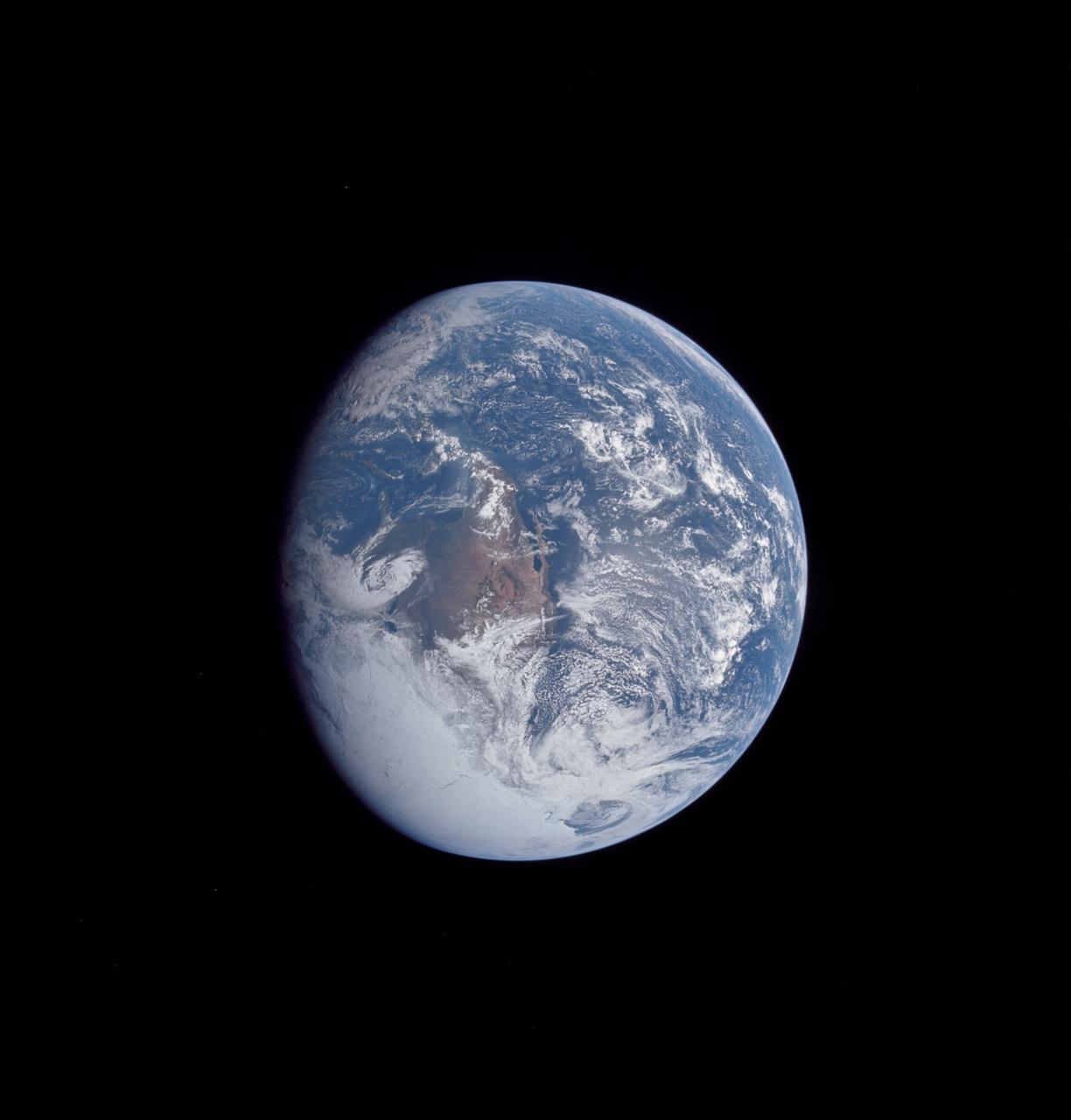
AS16-118-18885 (16 April 1972) --- A good view of Earth photographed about one and one-half hours after trans-lunar injection on April 16, 1972. Although there is much cloud cover, the United States in large part, most of Mexico and some parts of Central America are clearly visible. Note Lake Michigan and Lake Superior and the Bahama Banks (see different shade of blue below Florida). Just beginning man's fifth lunar landing mission were astronauts John W. Young, commander; Thomas K. Mattingly, II, command module pilot and Charles M. Duke Jr., lunar module pilot. While astronauts Young and Duke descended in the Lunar Module (LM) "Orion" to explore the Descartes highlands region of the moon, astronaut Mattingly remained with the Command and Service Modules (CSM) "Casper" in lunar orbit.
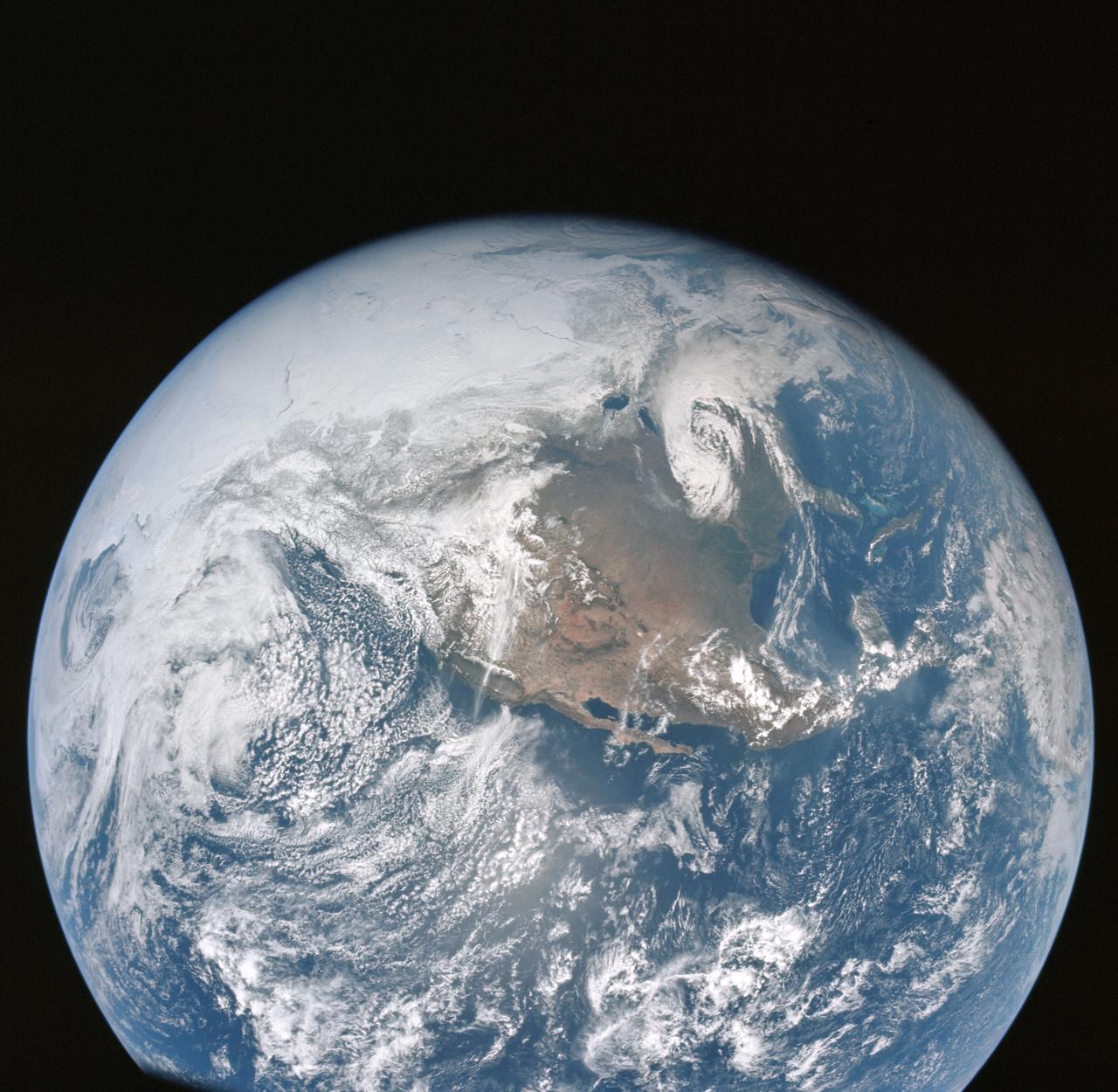
AS16-118-18880 (16 April 1972) --- A good view of Earth photographed about one hour after trans-lunar injection on April 16, 1972. Although there is much cloud cover, the United States in large part, most of Mexico and some of Central America are clearly visible. Note the Great Lakes (Michigan and Superior) and the Bahama Banks (note different shade of blue below Florida). While astronauts John W. Young, commander, and Charles M. Duke Jr., lunar module pilot, descended in the Lunar Module (LM) "Orion" to explore the Descartes highlands region of the moon, astronaut Thomas K. (Ken) Mattingly II, command module pilot, remained with the Command and Service Modules (CSM) "Casper" in lunar orbit.
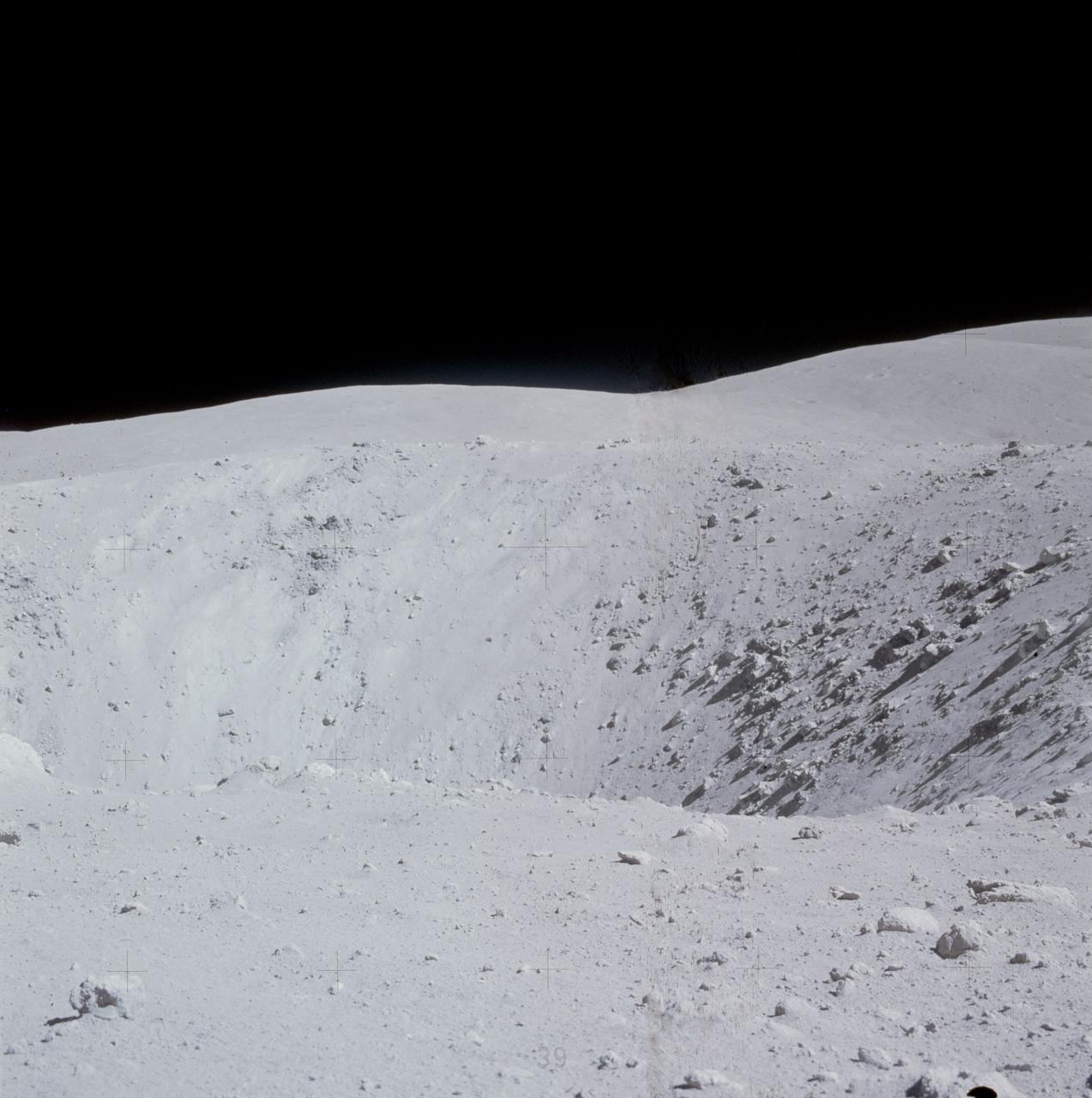
AS16-116-18599 (21 April 1972) --- A close-up view of Buster Crater, which was visited by the two moon-exploring crew men of the Apollo 16 lunar landing mission, during the first extravehicular activity (EVA), April 21, 1972. Astronaut Charles M. Duke Jr. said the crater appeared to be larger than 50 meters, and he called it a very spectacular crater. This was the second stop for astronauts John W. Young and Duke on the mission's first EVA. Young exposed this view with his 70mm Hasselblad camera. While astronauts Young, commander; and Duke, lunar module pilot; descended in the Apollo 16 Lunar Module (LM) "Orion" to explore the Descartes highlands landing site on the moon, astronaut Thomas K. Mattingly II, command module pilot, remained with the Command and Service Modules (CSM) "Casper" in lunar orbit.
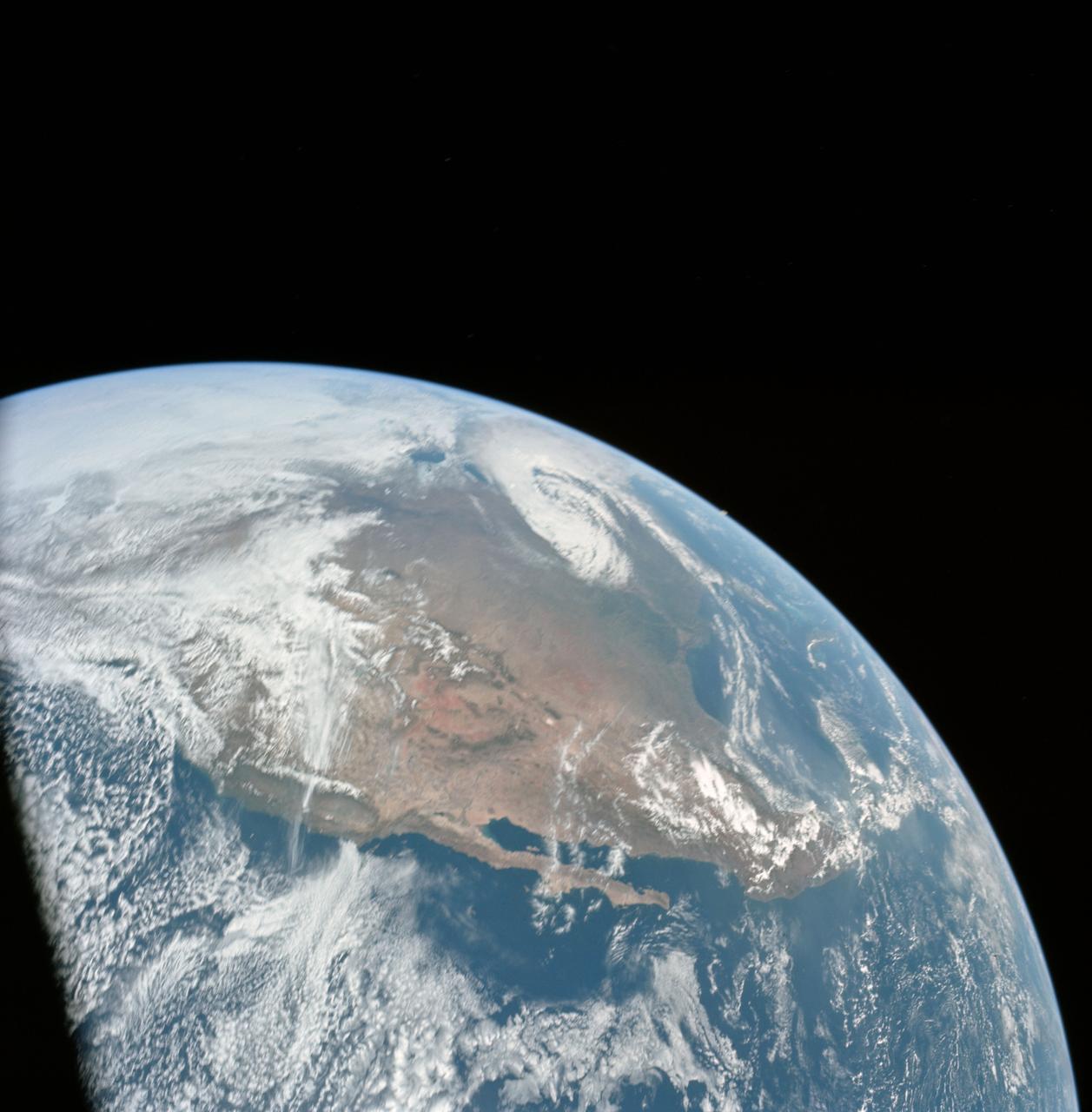
AS16-118-18873 (16 April 1972) --- A good view of Earth photographed shortly after trans-lunar injection of April 16, 1972. Although there is much cloud cover (over Canada and the oceans), the United States in large part, most of Mexico and some parts of Central America are clearly visible. Note Lake Michigan and Lake Superior, also note the Bahama Banks at upper right part of the sphere. A large part of the Rocky Mountain Range is also visible. Just beginning man's fifth lunar landing mission were astronauts John W. Young, commander; Thomas K. Mattingly II, command module pilot; and Charles M. Duke Jr., lunar module pilot. While astronauts Young and Duke descended in the Lunar Module (LM) to explore the moon, astronaut Mattingly remained with the Command and Service Modules (CSM) in lunar orbit.
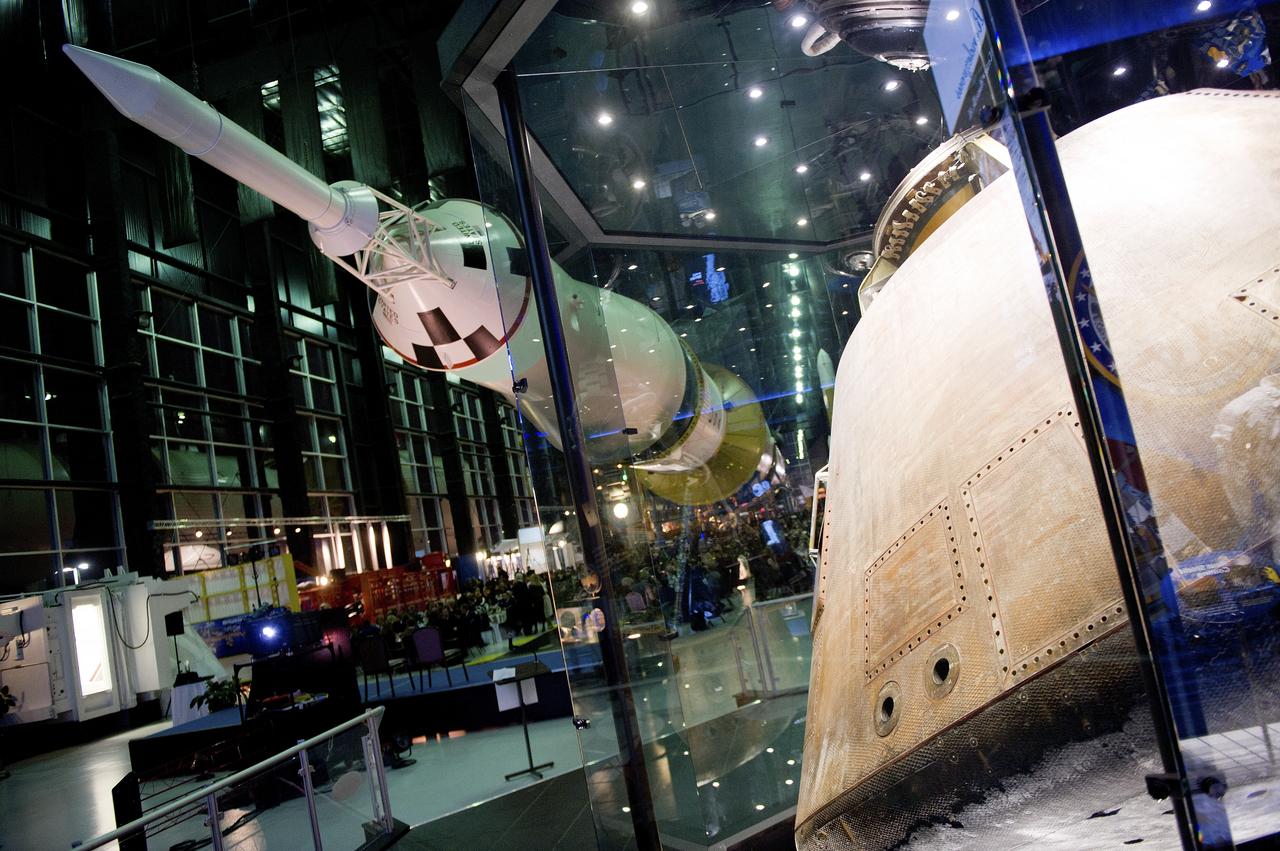
THE APOLLO 16 CAPSULE SITS ON DISPLAY IN THE FOREGROUND OF AN EVENT AT THE DAVIDSON CENTER.
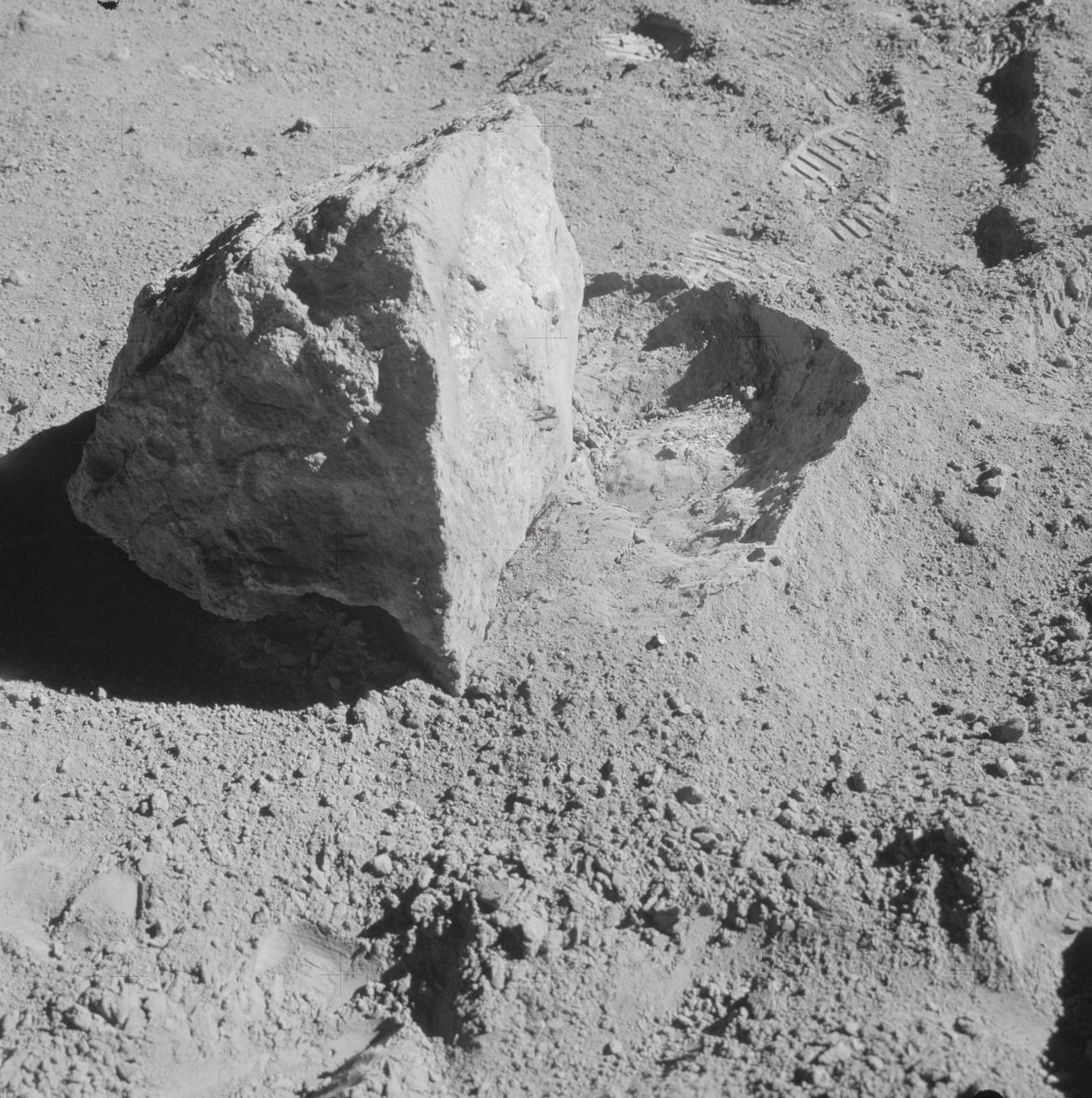
AS16-107-17573 (22 April 1972) --- A close-up view of a block (about 1/2 meter long) found by the two moon-exploring crewmembers of the Apollo 16 lunar landing mission. The block had been rolled over only moments earlier during this Apollo 16 second extravehicular activity (EVA) near South Ray Crater. Astronaut John W. Young, commander, said at the post-mission press conference, "The block has been sitting there evidently since South Ray Crater was formed." While astronauts Young and Charles M. Duke Jr., lunar module pilot; descended in the Apollo 16 Lunar Module (LM) "Orion" to explore the Descartes highlands landing site on the moon, astronaut Thomas K. Mattingly II, command module pilot, remained with the Command and Service Modules (CSM) "Casper" in lunar orbit.
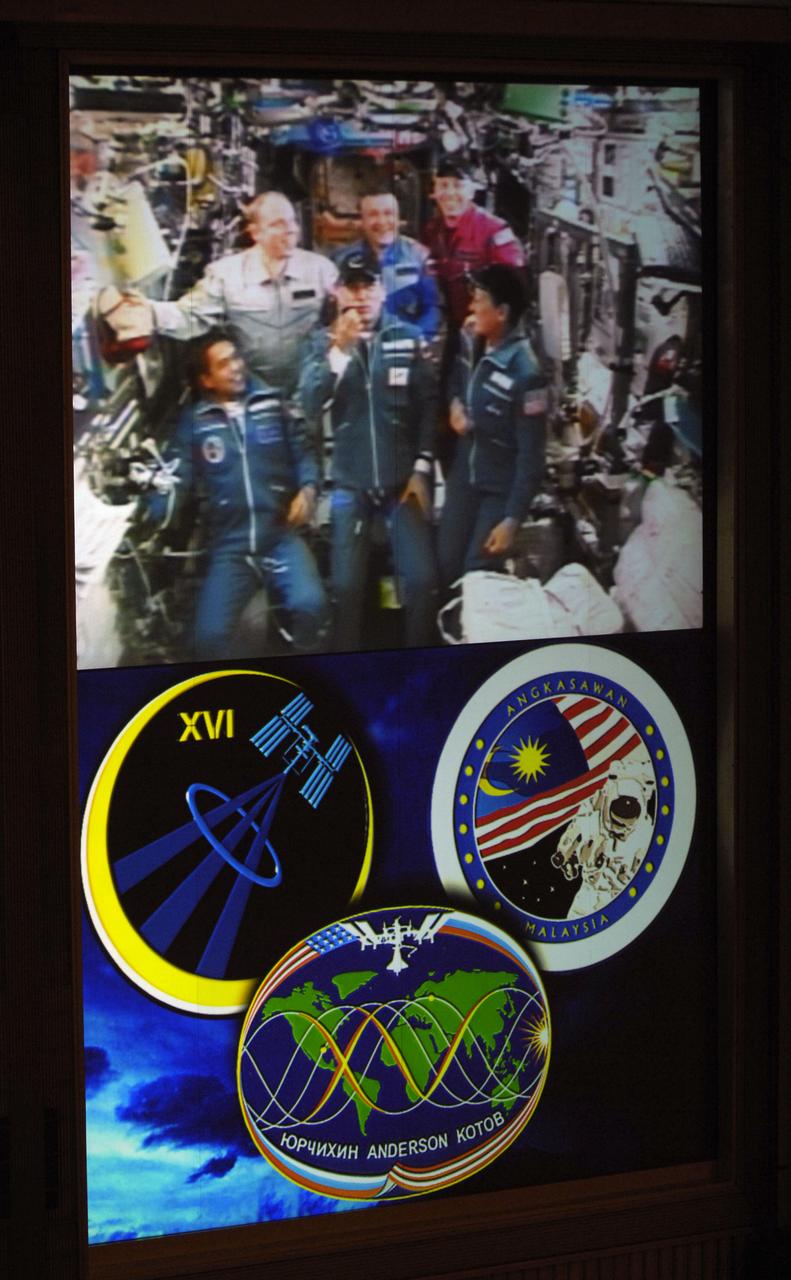
Live video from the International Space Station is shown on the screen in the Russian Mission Control Center in Korolev, outside Moscow, Friday, Oct. 12, 2007. Expedition 16 Commander Peggy Whitson, bottom right, Soyuz Commander and Flight Engineer Yuri Malenchenko, bottom center, and Malaysian spaceflight participant Sheikh Muszaphar Shukor docked their Soyuz TMA-11 spacecraft to the station at 10:50 a.m. EDT. October 12. Expedition 15 Commander Fyodor Yurchikhin, top left, and Flight Engineers Oleg Kotov and Clay Anderson, top right, welcomed the new crew aboard the ISS when the hatches were opened at 12:22 p.m. EDT. Both crews will work together for about nine days before Yurchikhin, Kotov and Shukor depart for Earth in their Soyuz TMA-10 spacecraft. Photo Credit: (NASA/Bill Ingalls)
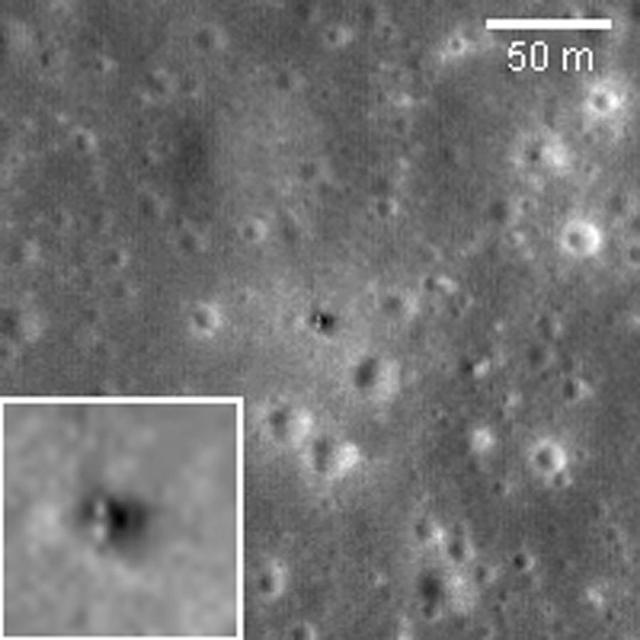
Luna 16 was the first robotic mission to land on the Moon on basaltic plains of Mare Fecunditatis and return a sample to the Earth. It was launched by the Soviet Union on 12 September 1970. This image was taken by NASA Lunar Reconnaissance Orbiter.

This is the Apollo 16 lunar landing mission crew portrait. Pictured from left to right are: Thomas K. Mattingly II, Command Module pilot; John W. Young, Mission Commander; and Charles M. Duke Jr., Lunar Module pilot. Launched from the Kennedy Space Center on April 16, 1972, Apollo 16 spent three days on Earth's Moon. The first study of the highlands area, the landing site for Apollo 16 was the Descartes Highlands. The fifth lunar landing mission out of six, Apollo 16 was famous for deploying and using an ultraviolet telescope as the first lunar observatory. The telescope photographed ultraviolet light emitted by Earth and other celestial objects. The Lunar Roving Vehicle, developed by the Marshall Space Flight Center, was also used for collecting rocks and data on the mysterious lunar highlands. In this photo, astronaut John W. Young photographs Charles M. Duke, Jr. collecting rock samples at the Descartes landing site. Duke stands by Plum Crater while the Lunar Roving Vehicle waits parked in the background. High above, Thomas K. Mattingly orbits in the Command Module. The mission ended April 27, 1972 as the crew splashed down into the Pacific Ocean.
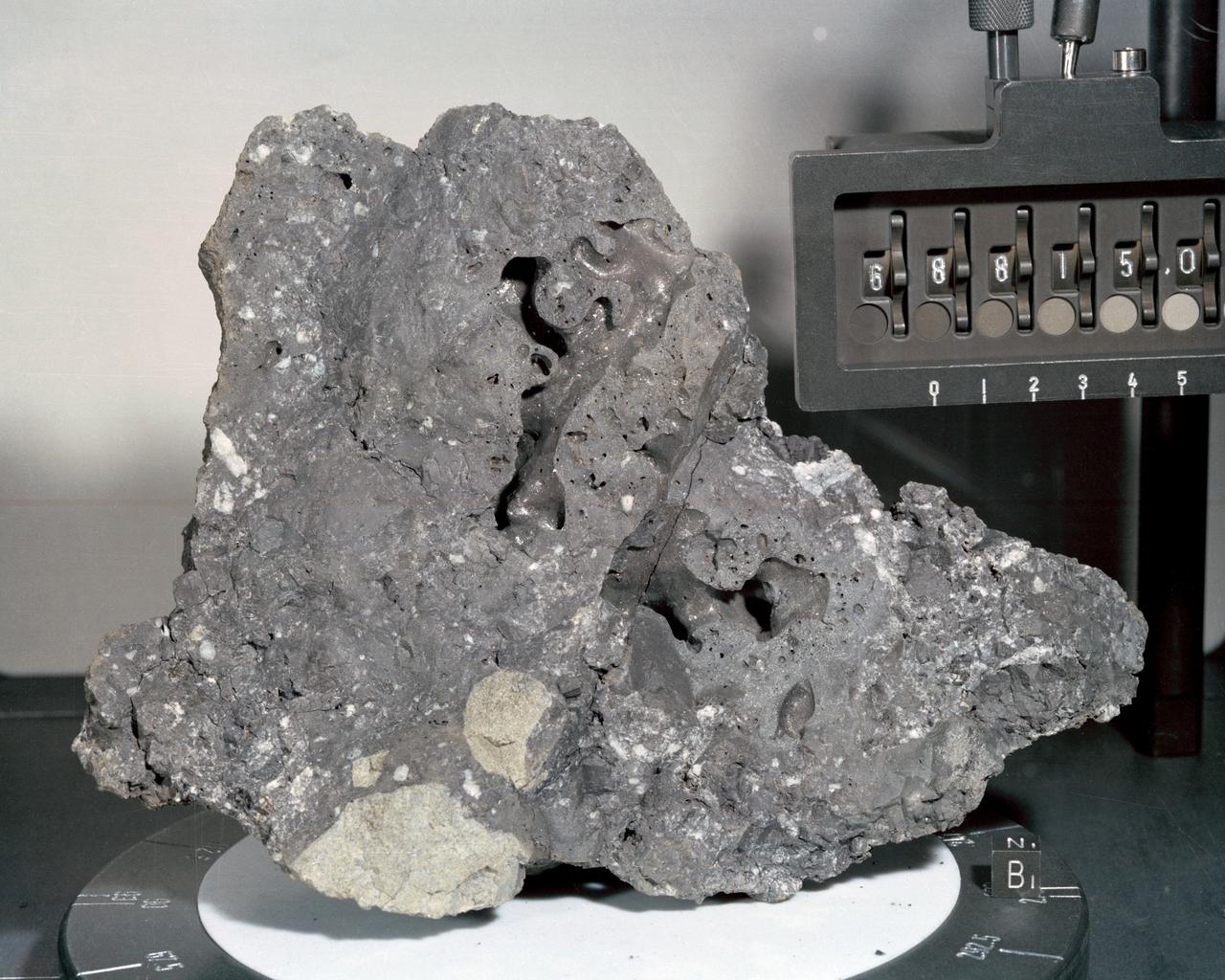
A closeup view or "mug shot" of Apollo 16 lunar sample no. 68815, a dislodged fragment from a parent boulder roughly four feet high and five feet long encountered at Station 8. The crew tried in vain to overturn the parent boulder. A fillet-soil sample was taken close to the boulder, allowing for study of the type and rate of erosion acting on lunar rocks. The fragment itself is very hard, has many veticles and a variety of inclusions. In addition, numerous metallic particles were observed in the black matrix.
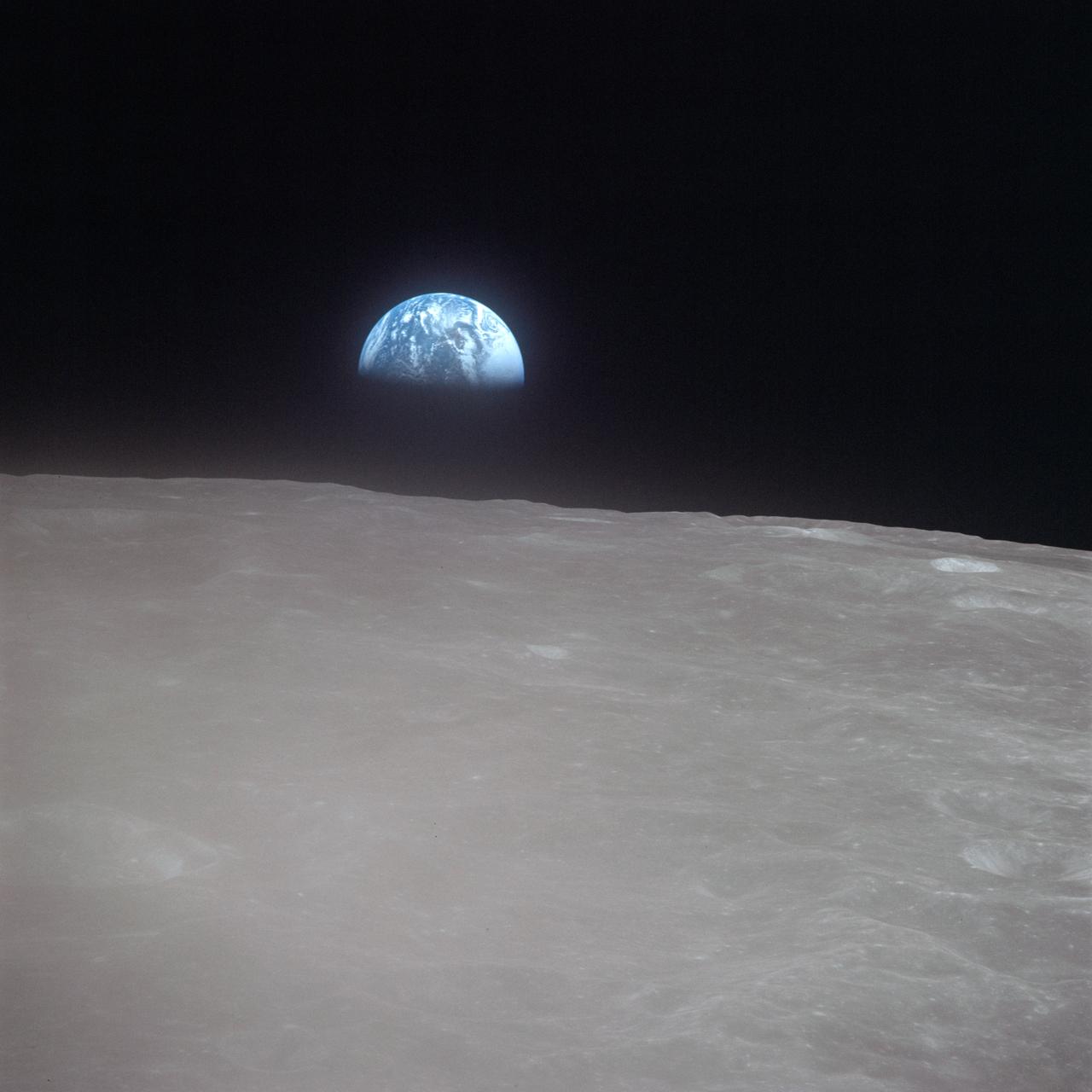
AS16-120-19187 (19 April 1972) --- Apollo 16 astronauts captured this Earth rise scene with a handheld Hasselblad camera during the second revolution of the moon. Identifiable craters seen on the moon include Saha, Wyld, and Saenger. Much of the terrain seen here is never visible from Earth, as the Command Module (CM) was just passing onto what is known as the dark side or far side of the moon. Crewmen aboard the CM at the time the photo was made were astronauts John W. Young, Thomas K. Mattingly II and Charles M. Duke Jr. Mattingly remained later with the CM in lunar orbit while Young and Duke descended in the lunar module (LM) to explore the surface of the moon.
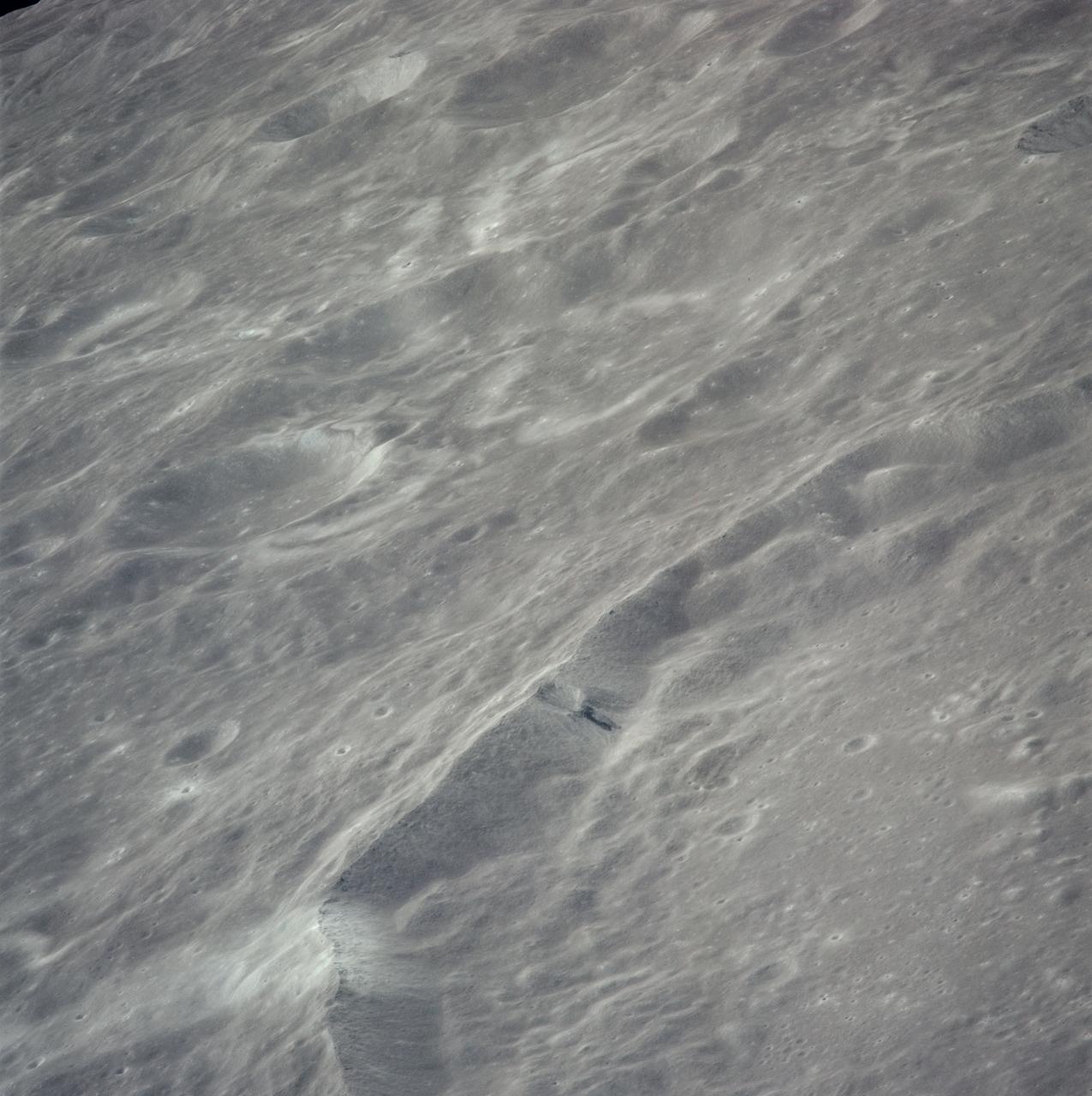
AS16-121-19407 (April 1972) --- An oblique view of a rim of Guyot Crater on the lunar farside, as photographed from the Apollo 16 spacecraft in lunar orbit. The coordinates of the center of Guyot Crater are 116.5 degrees east longitude and 10.5 degrees north latitude. Note the black coloration which appears to be lava flow down the side of the crater rim. While astronauts John W. Young, commander; and Charles M. Duke Jr., lunar module pilot; descended in the Apollo 16 Lunar Module (LM) "Orion" to explore the Descartes highlands site on the moon, astronaut Thomas K. Mattingly II, command module pilot, remained with the Command and Service Modules (CSM) "Casper" in lunar orbit.

Huntsville’s Jack Giles, Alabama State Senator (left), and Dr. Rocco Petrone, Marshall Space Flight Center Director (Middle), speak with Astronaut Owen Garriott who is inside the Apollo 16 Command Module on display at the Alabama Space and Rocket Center in Huntsville, Alabama. The successful Apollo 16 manned lunar landing mission took place April 16, 1972 through April 27, 1972. (Photograph courtesy of Huntsville/Madison County Public Library)
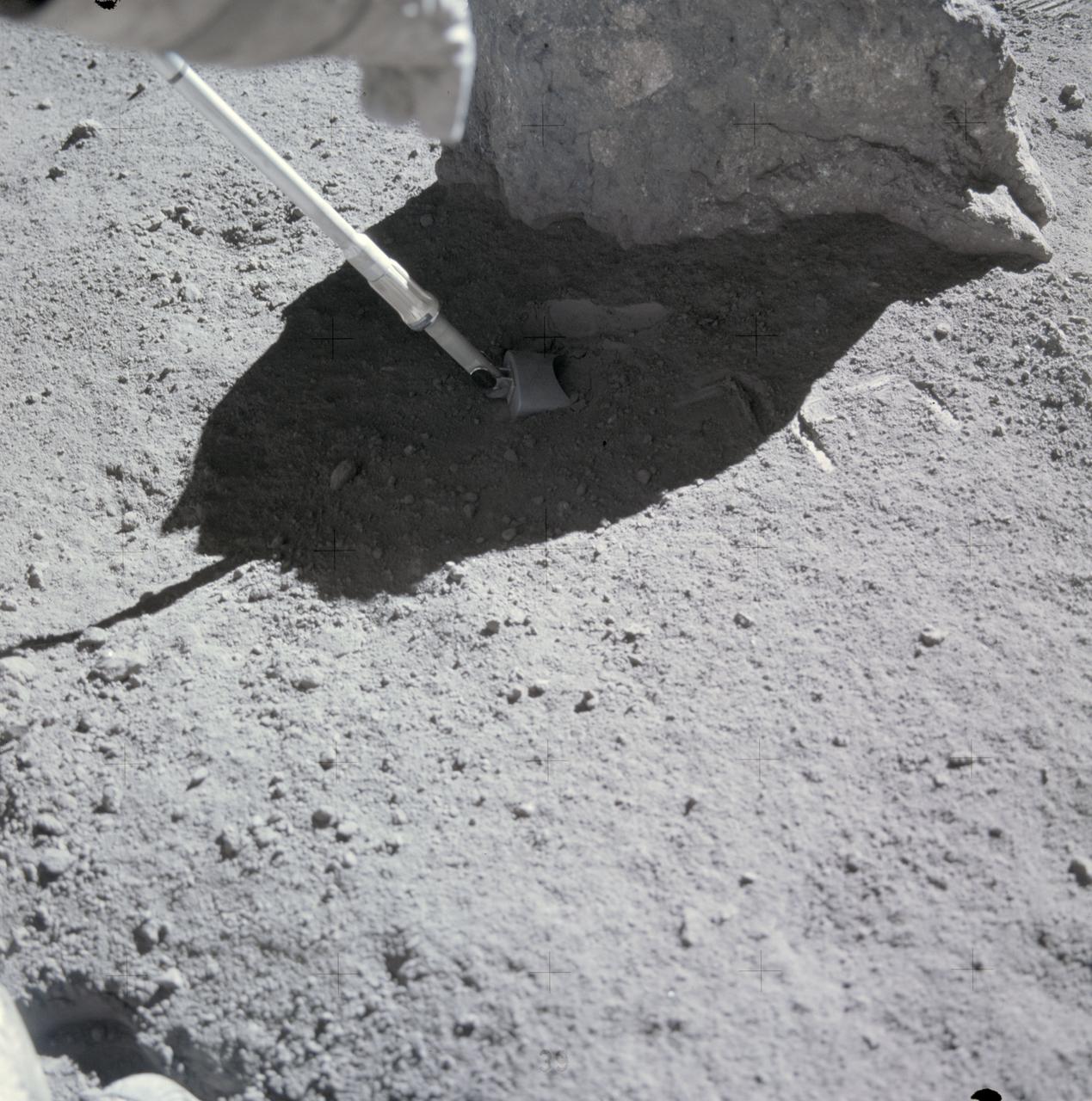
AS16-107-17561 (16-27 April 1972) --- One of the Apollo 16 astronauts scoops up lunar soil at the base of a small boulder at Station No. 9 during the second Apollo 16 extravehicular activity (EVA) at the Descartes landing site. Depressions to the right of the scoop were made when a surface sample was taken. This photograph was taken just before the boulder was rolled over. While astronauts John W. Young, commander; and Charles M. Duke Jr., lunar module pilot; descended in the Apollo 16 Lunar Module (LM) "Orion" to explore the Descartes highlands landing site on the moon, astronaut Thomas K. Mattingly II, command module pilot, remained with the Command and Service Modules (CSM) "Casper" in lunar orbit.
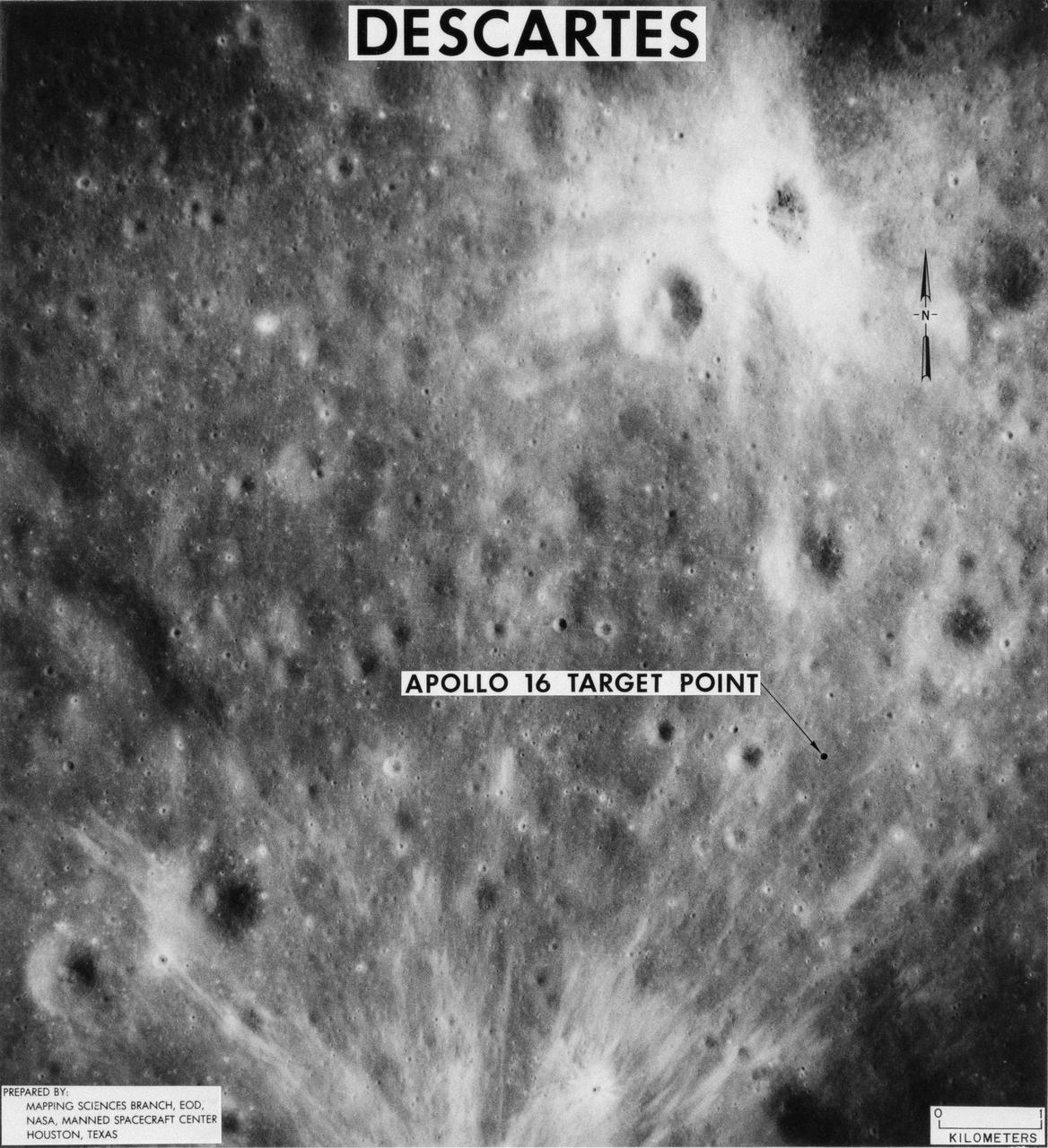
S71-44150 (February 1971) --- A vertical view of the Apollo 16 landing site located in the Descartes area on the lunar nearside. The overlay indicates the location of the proposed touchdown point for the Apollo 16 Lunar Module (LM). Descartes is located west of the Sea of Nectar and southwest of the Sea of Tranquility. This photograph was taken with a 500mm lens camera from lunar orbit by the Apollo 16 crew. Astronauts John W. Young, commander; and Charles M. Duke Jr., lunar module pilot; descended in the Apollo 16 LM "Orion" to explore the Descartes highlands landing site on the moon. Astronaut Thomas K. Mattingly II, command module pilot, remained with the Command and Service Modules (CSM) "Casper" in lunar orbit.
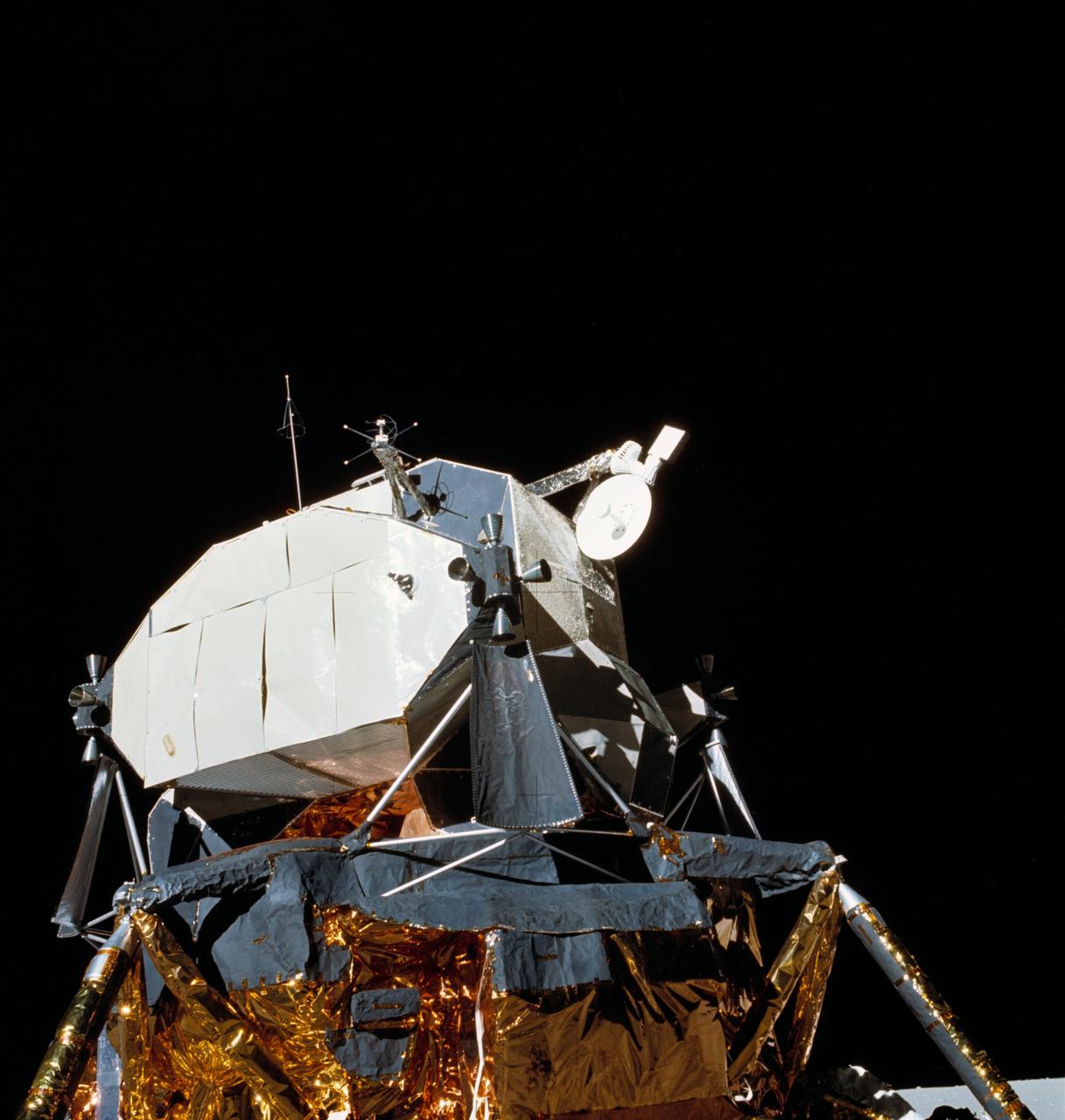
AS16-113-18334 (21 April 1972) --- View of the Lunar Module (LM) "Orion" parked on the lunar surface. During their post mission press conference, the Apollo 16 crewmembers called attention to the steerable S-band antenna, which was "frozen" in a yaw axis during much of the flight. This view of the LM was photographed by astronaut Charles M. Duke Jr., the lunar module pilot, during the mission's first extravehicular activity (EVA). Astronauts John W. Young, commander, and Duke had earlier descended in the LM to explore the Descartes region of the moon, while astronaut Thomas K. Mattingly II, command module pilot, remained with the Command and Service Modules (CSM) "Casper" in lunar orbit.
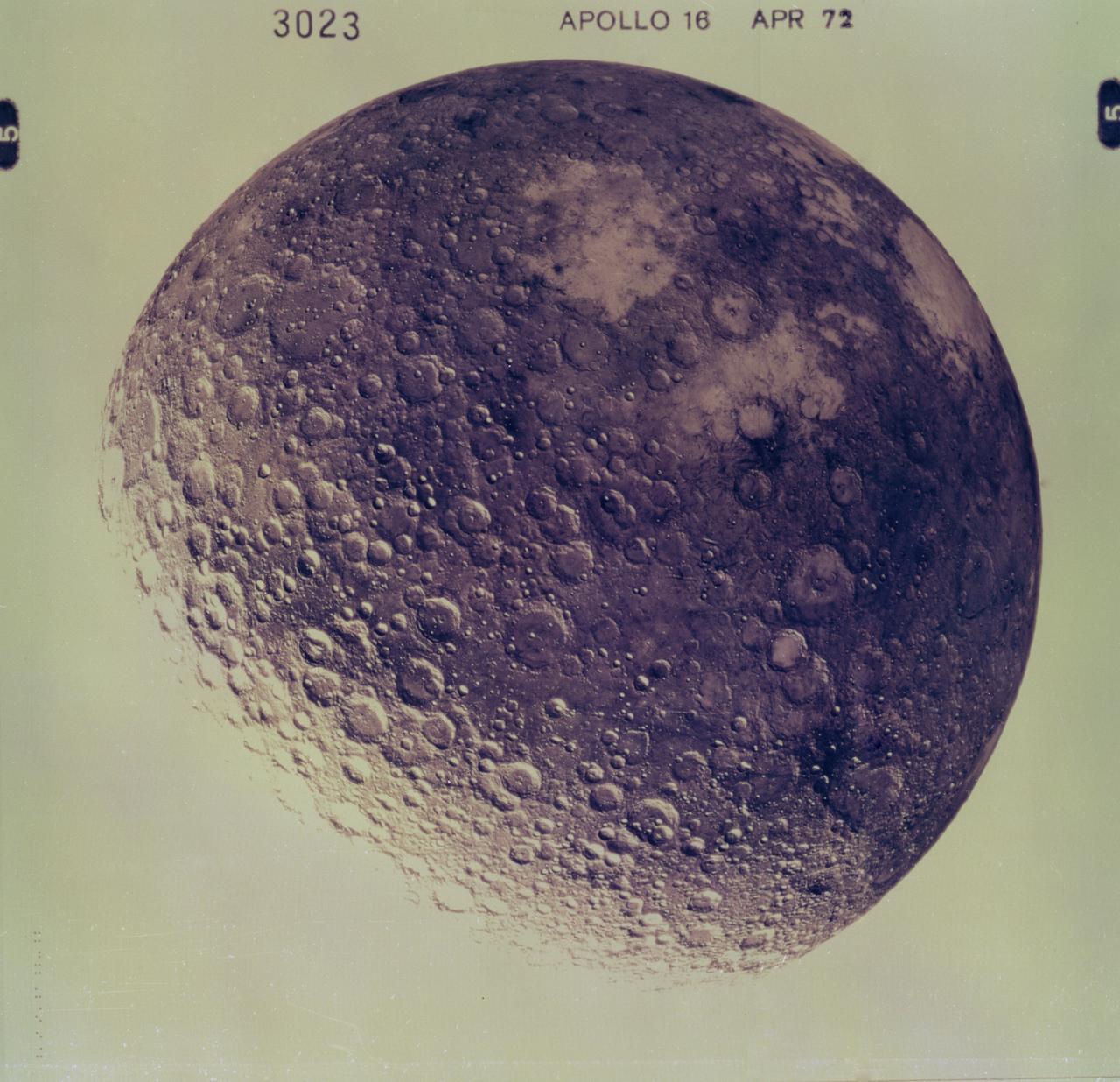
This view of the back side of the Moon was captured by the Apollo 16 mission crew. The sixth manned lunar landing mission, the Apollo 16 (SA-511), carrying three astronauts: Mission Commander John W. Young, Command Module pilot Thomas K. Mattingly II, and Lunar Module pilot Charles M. Duke, lifted off on April 16, 1972. The Apollo 16 continued the broad-scale geological, geochemical, and geophysical mapping of the Moon’s crust, begun by the Apollo 15, from lunar orbit. This mission marked the first use of the Moon as an astronomical observatory by using the ultraviolet camera/spectrograph which photographed ultraviolet light emitted by Earth and other celestial objects. The Lunar Roving Vehicle, developed by the Marshall Space Flight Center, was also used. The mission ended on April 27, 1972.
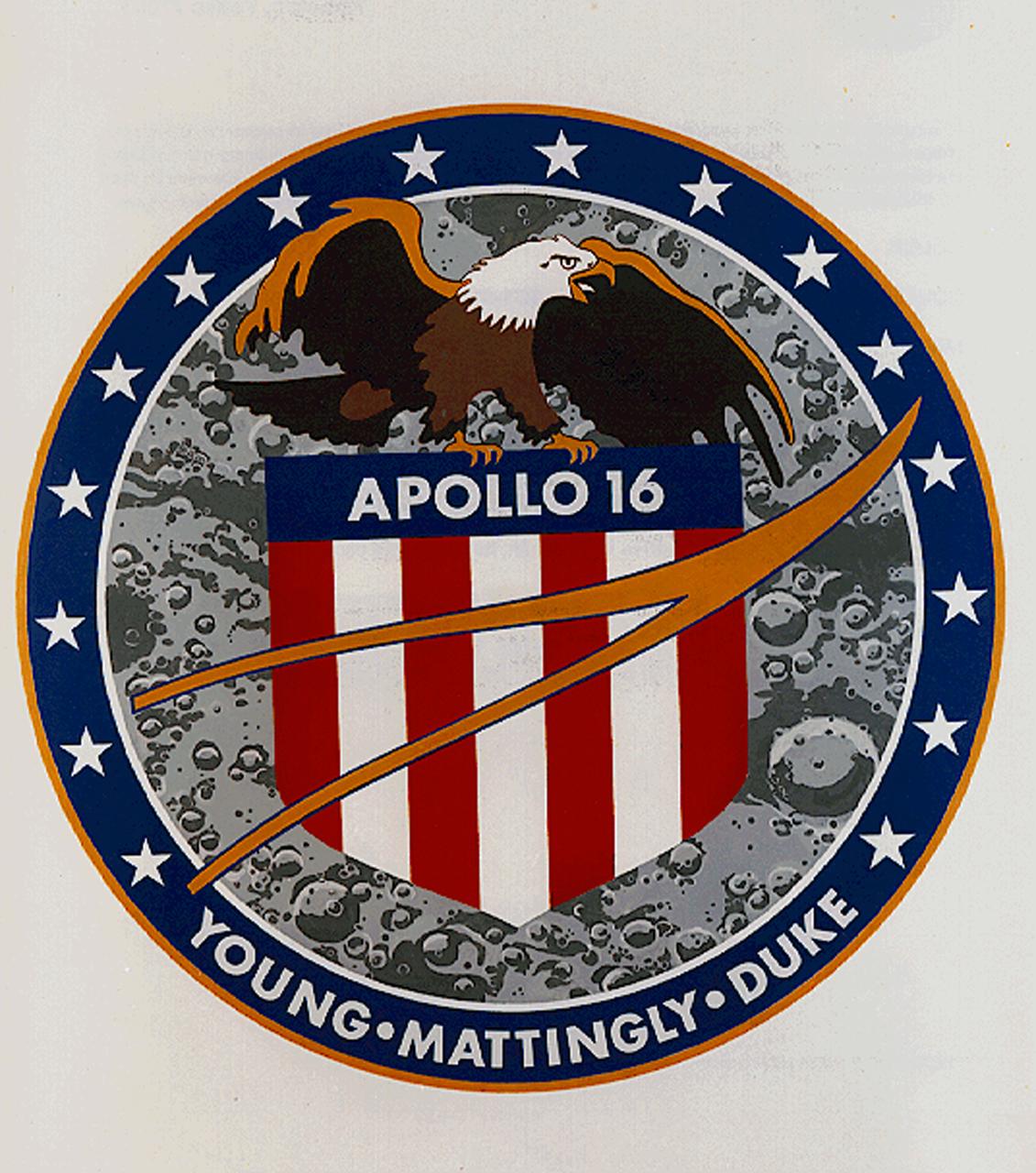
The Apollo 16 crew patch is dominated by an eagle perched atop a red, white, and blue shield superimposed on a lunar surface scene. Similar to that on the NASA agency shield and insignia, there is a gold symbol of flight outlined in blue across the face of the shield. The border surrounding the shield is a circle of 16 stars completed by the the crew’s surnames at the bottom. The patch was designed from ideas submitted by the Apollo 16 3-man crew: John W. Young, Mission Commander: Thomas K. Mattingly, Command Module pilot; and Charles M. Duke, Lunar Module pilot. (Note: This is the official Apollo 16 emblem, a property of the United States government. Its reproduction in any form other than in news, information, and education media is not authorized without approval. Unauthorized use is subject to the provisions of Title 18, U.S. Code, Section 701.)
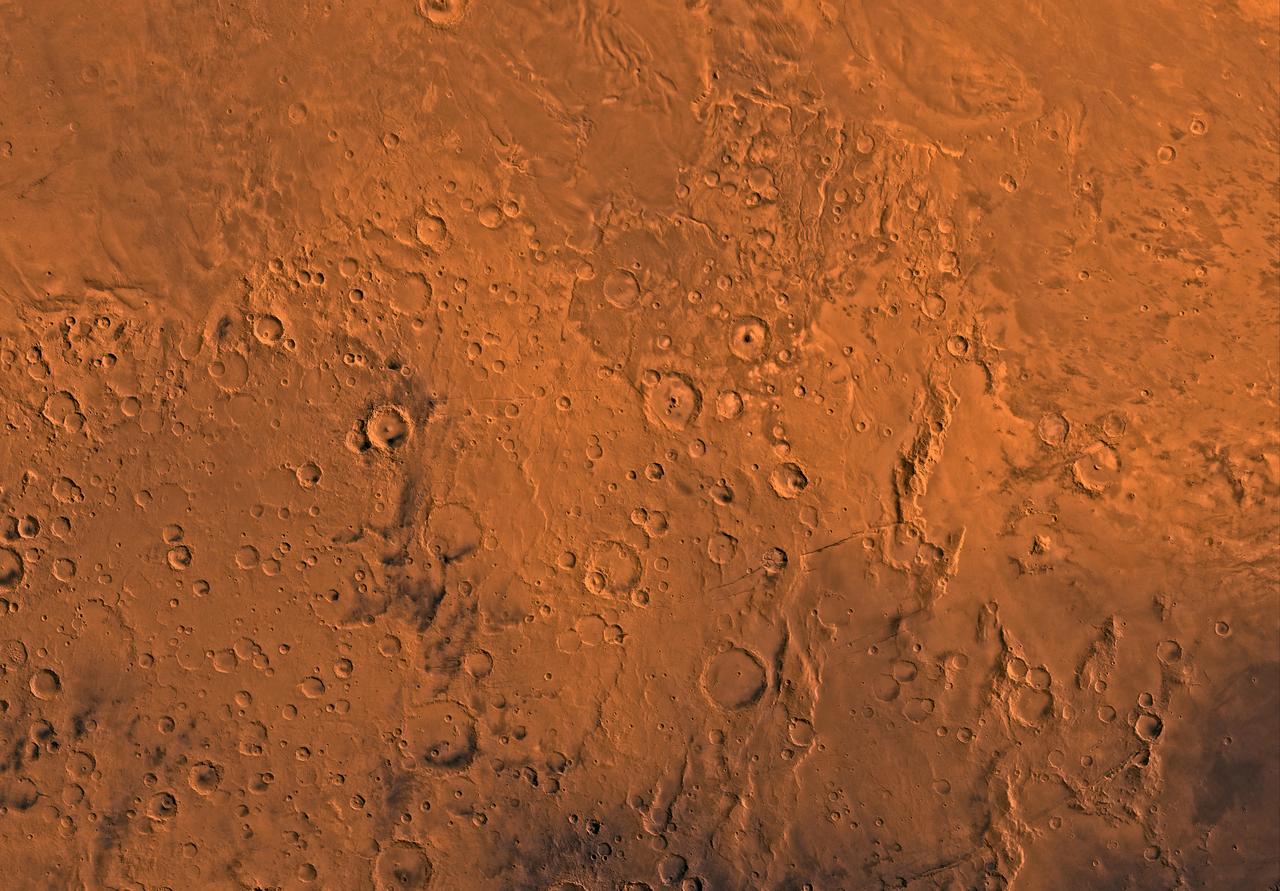
Mars digital-image mosaic merged with color of the MC-16 quadrangle, Memnonia region of Mars. This image is from NASA's Viking Orbiter 1. http://photojournal.jpl.nasa.gov/catalog/PIA00176
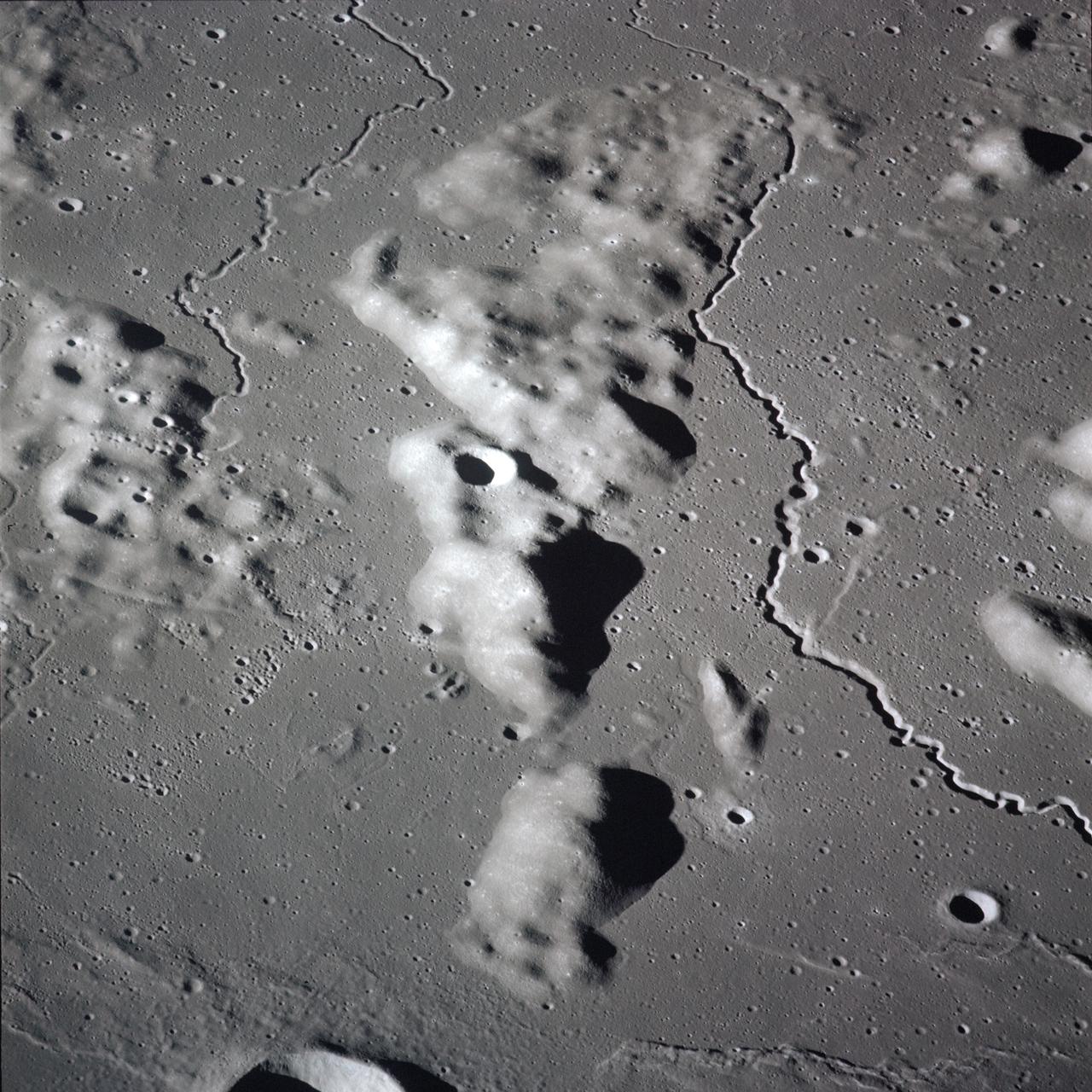
AS16-119-19161 (16-27 April 1972) --- The prominent rille feature running through the area is Herigonius I. The coordinates for the center of the area pictured are 14.7 degrees south latitude and 36.4 degrees west longitude. The photo was taken by the Apollo 16 astronauts from the Command and Service Modules (CSM) in lunar orbit. While astronauts John W. Young and Charles M. Duke Jr. descended in the Lunar Module (LM) "Orion" to explore the Descartes highlands region of the moon, astronaut Thomas K. (Ken) Mattingly II, remained with the CSM "Casper" in lunar orbit.
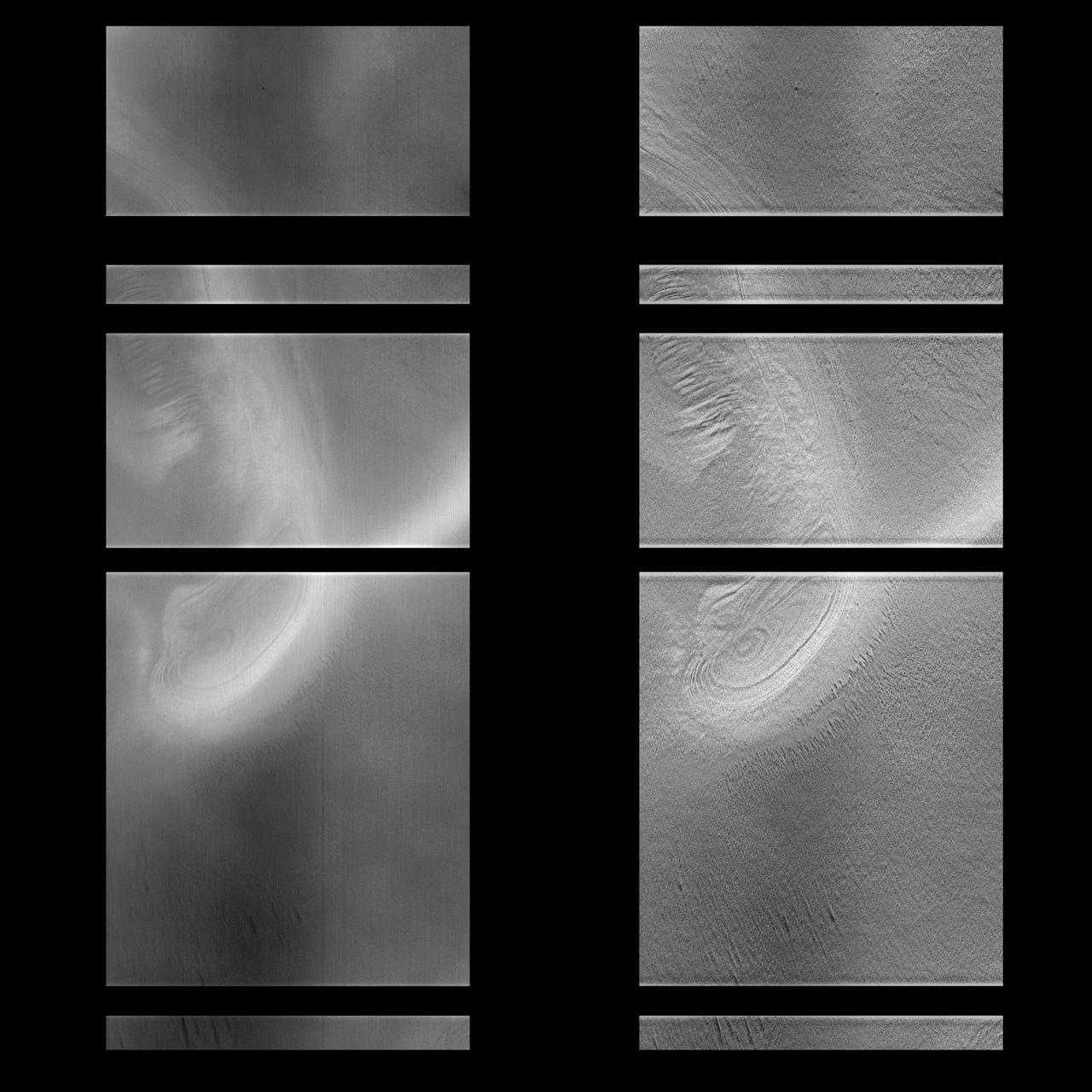
MOC View of Mars98 Landing Zone - 1/16/98