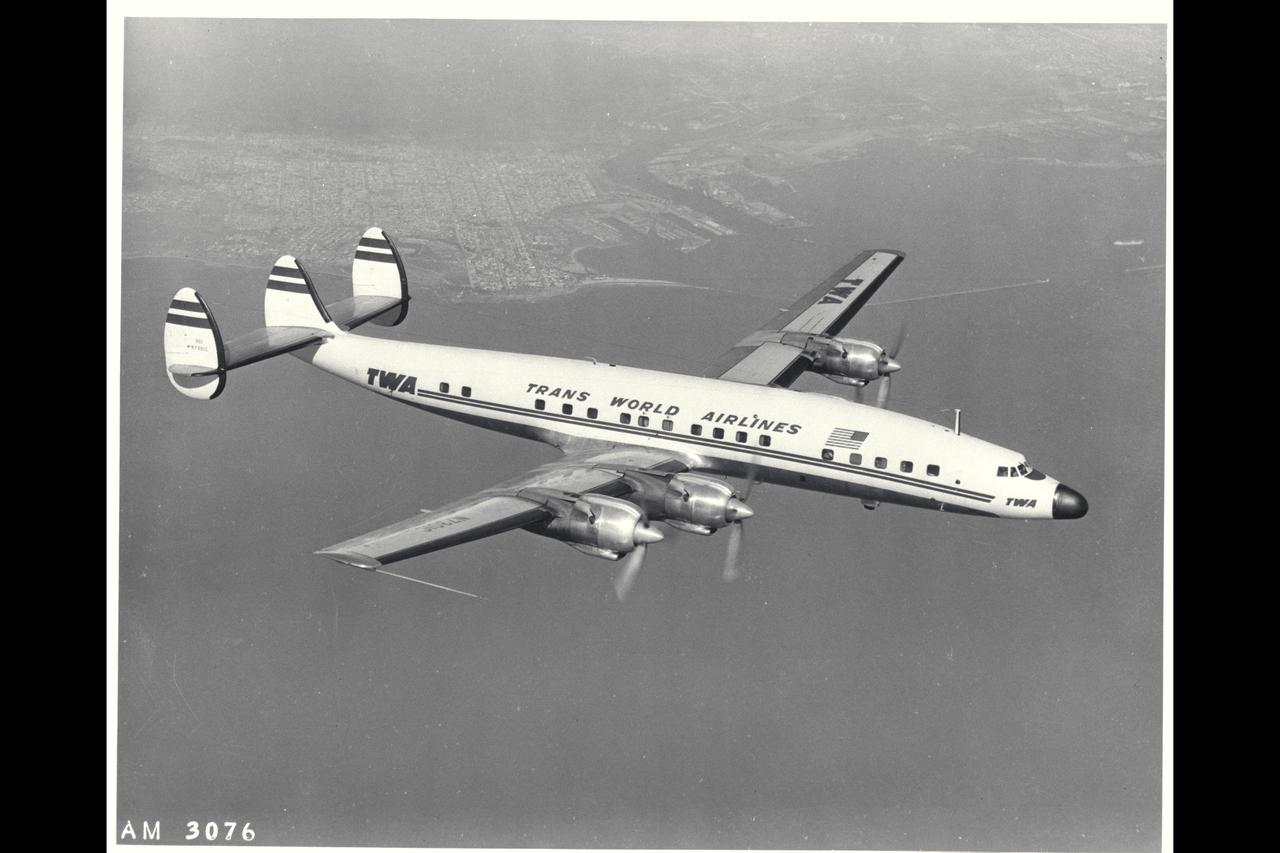
Lockheed 1649 Airplane

CAPE CANAVERAL, Fla. - Media gathered on the bank of the turn basin at NASA's Kennedy Space Center in Florida are witness to space shuttle Endeavour's liftoff from Launch Pad 39A. Launch on the STS-130 mission to the International Space Station was at 4:14 a.m. EST. This was the second launch attempt for space shuttle Endeavour's STS-130 crew and the final scheduled space shuttle night launch. The first attempt on Feb. 7 was scrubbed due to unfavorable weather. The primary payload for the STS-130 mission to the International Space Station is the Tranquility node, a pressurized module that will provide additional room for crew members and many of the station's life support and environmental control systems. Attached to one end of Tranquility is a cupola, a unique work area with six windows on its sides and one on top. The cupola resembles a circular bay window and will provide a vastly improved view of the station's exterior. The multi-directional view will allow the crew to monitor spacewalks and docking operations, as well as provide a spectacular view of Earth and other celestial objects. The module was built in Turin, Italy, by Thales Alenia Space for the European Space Agency. For information on the STS-130 mission and crew, visit http:__www.nasa.gov_mission_pages_shuttle_shuttlemissions_sts130_index.html. Photo credit: NASA_Jim Grossmann
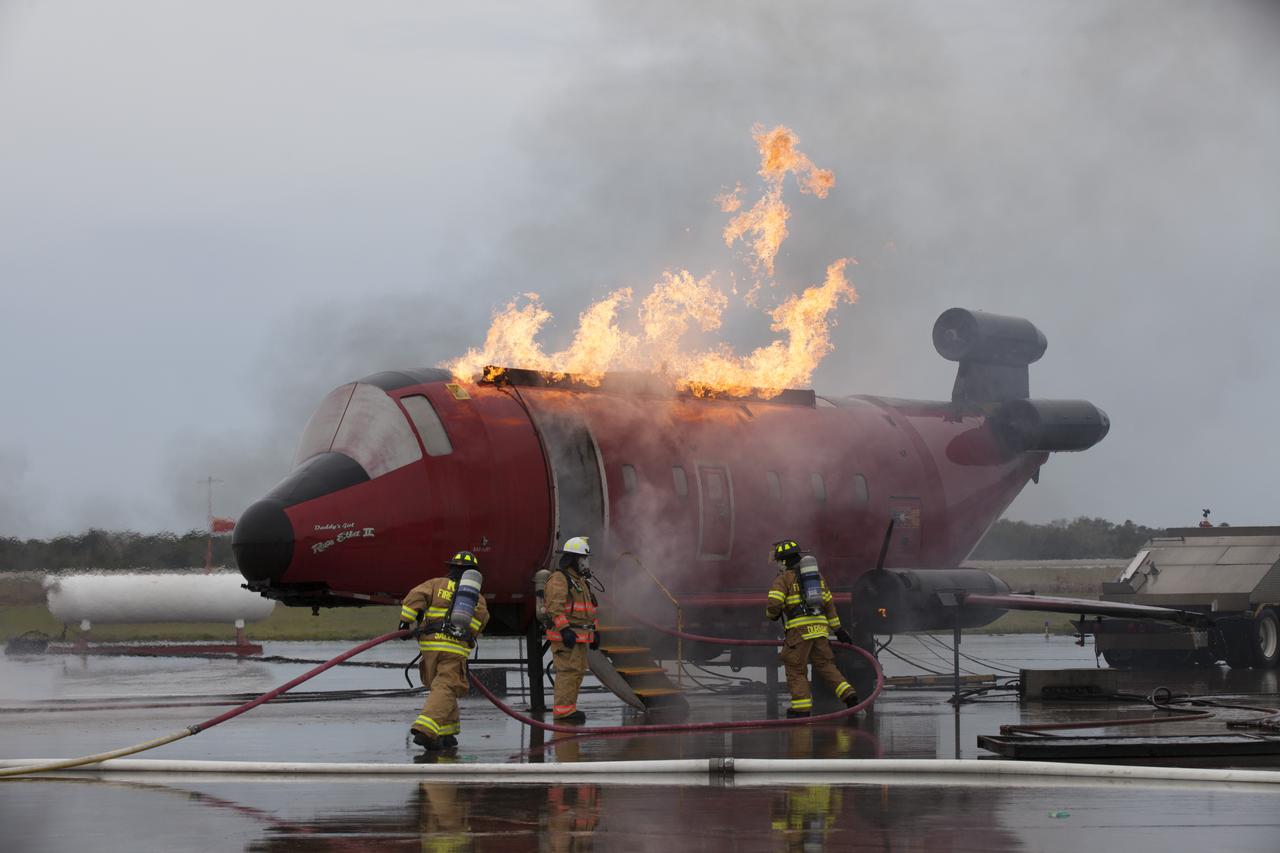
CAPE CANAVERAL, Fla. - Special Rescue Operations firefighters with NASA Fire Rescue Services in the Protective Services Office at NASA’s Kennedy Space Center in Florida participate in a training exercise at the Shuttle Landing Facility. Firefighters, wearing protective gear, use hoses to put out a fire burning on a mock-up of a small plane. Kennedy’s firefighters recently achieved Pro Board Certification in aerial fire truck operations and completed vehicle extrication training using the Jaws of Life. The Protective Services Office is one step closer to achieving certification in vehicle machinery extrication and other rescue skills. Kennedy’s firefighters are with G4S Government Solutions Inc., on the Kennedy Protective Services Contract. Photo credit: NASA/Kim Shiflett
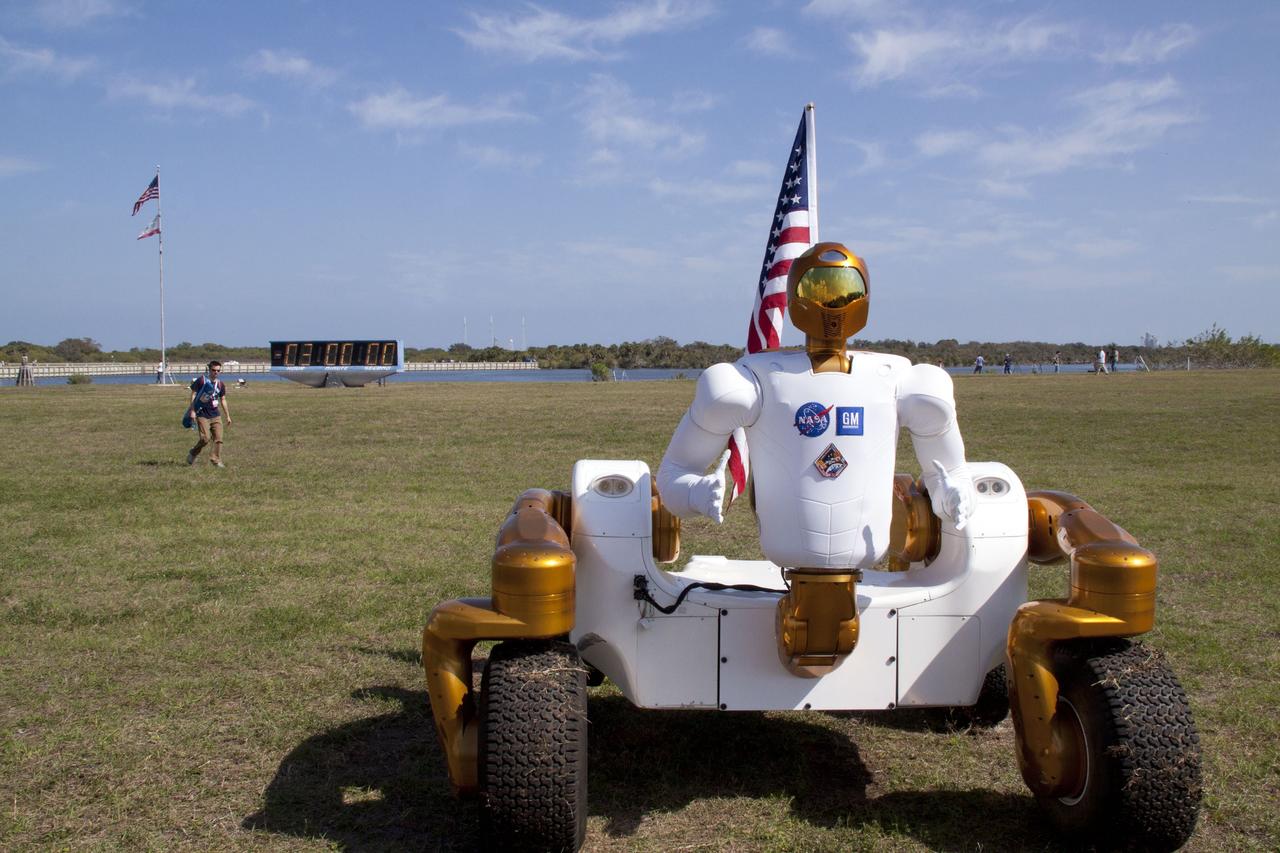
CAPE CANAVERAL, Fla. -- At NASA's Kennedy Space Center in Florida, a working model of the dexterous humanoid astronaut helper, Robonaut 2, is available for media to check out before space shuttle Discovery's final flight on the STS-133 mission. Discovery and its six-member STS-133 crew will deliver the Permanent Multipurpose Module, packed with supplies and critical spare parts, as well as Robonaut 2 to the International Space Station. For more information on the STS-133 mission, visit www.nasa.gov/mission_pages/shuttle/shuttlemissions/sts133/. Photo Credit: NASA/Jack Pfaller
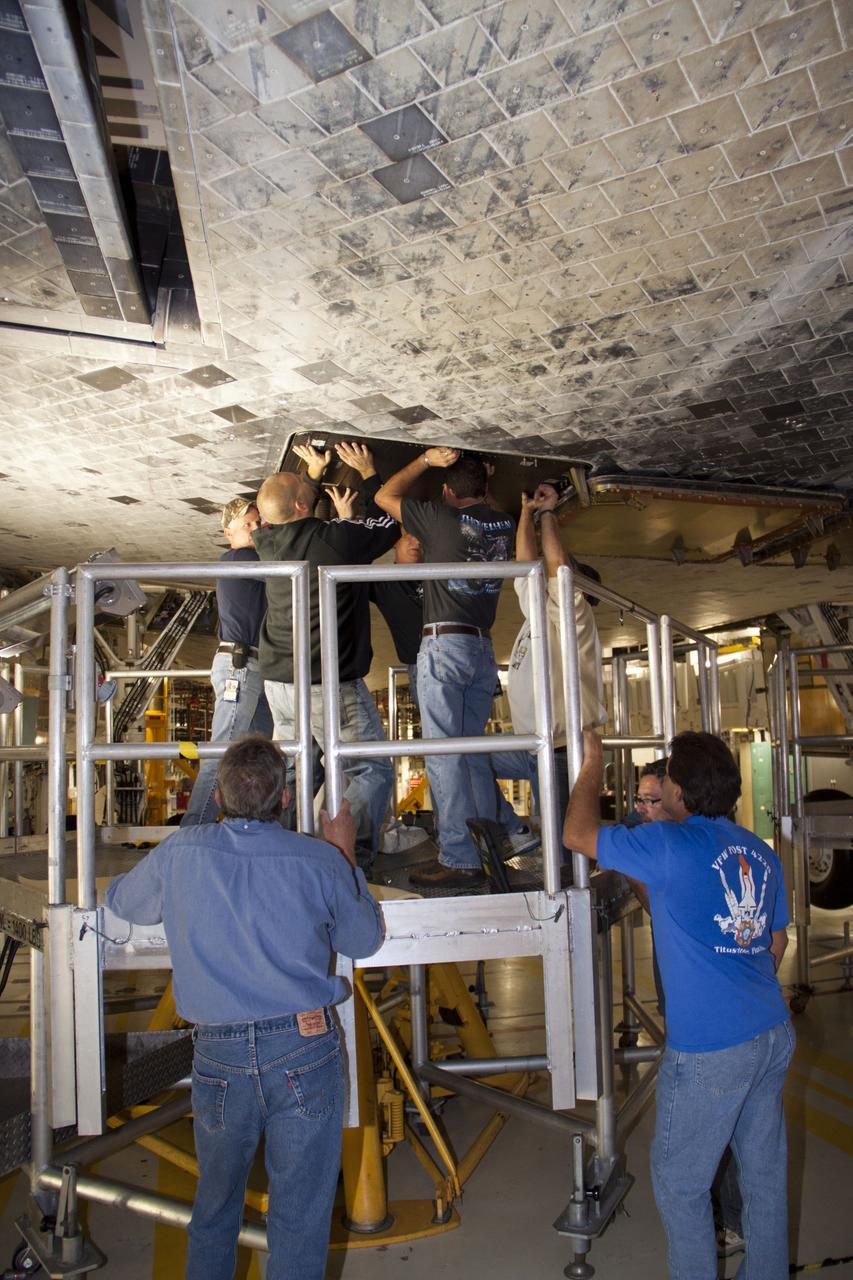
CAPE CANAVERAL, Fla. – Inside Orbiter Processing Facility-1 at NASA’s Kennedy Space Center in Florida, technicians install a ferry flight door on space shuttle Discovery. The work is part of the Space Shuttle Program’s transition and retirement processing of shuttle Discovery, which is being prepared for display at Smithsonian’s National Air and Space Museum, Steven F. Udvar-Hazy Center in Chantilly, Va. Discovery is scheduled to be transported atop a NASA Shuttle Carrier Aircraft modified 747 jet to Dulles International Airport in Virginia on April 17 and then moved to the Smithsonian for permanent public display on April 19. For more information, visit http://www.nasa.gov/shuttle. Photo credit: NASA/Jim Grossmann
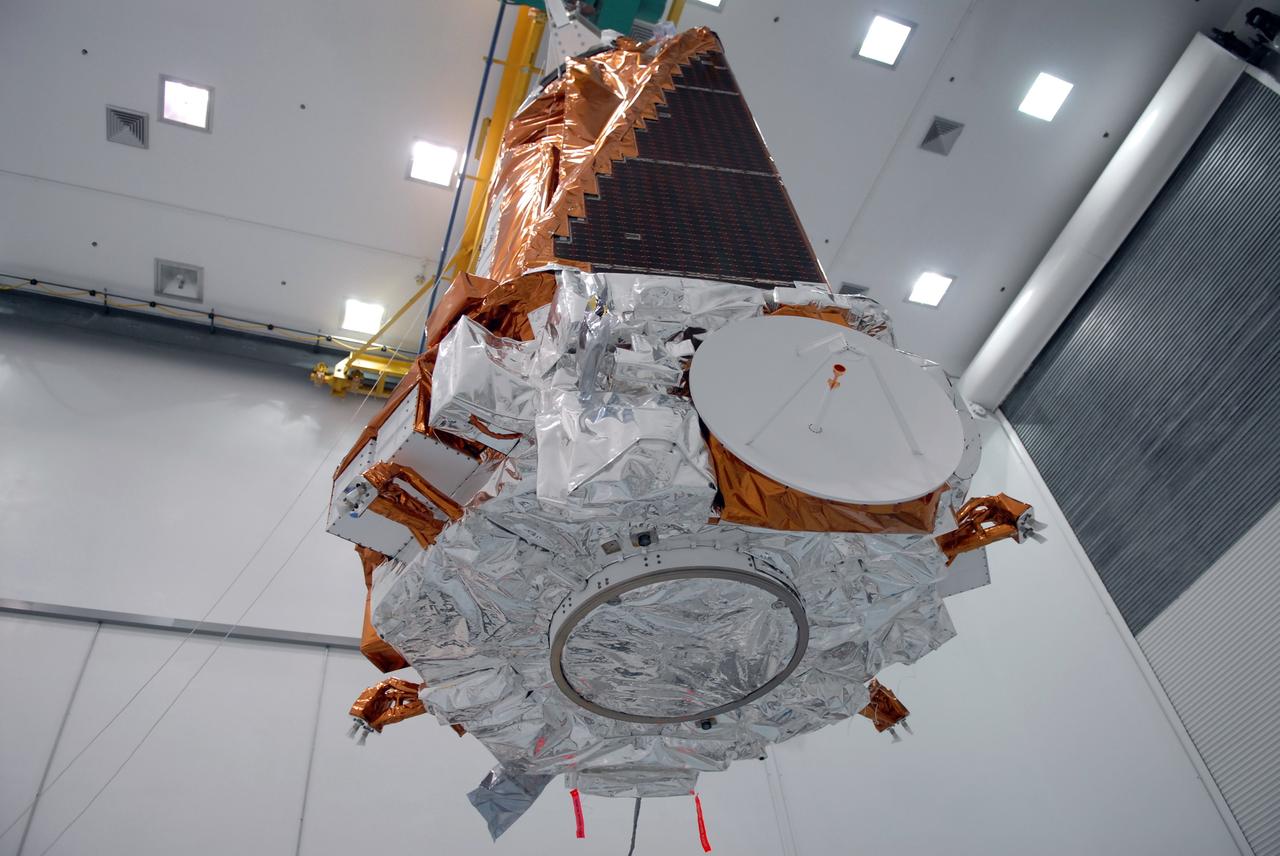
CAPE CANAVERAL, Fla. – At the Hazardous Processing Facility at Astrotech in Titusville, Fla., the suspended Kepler spacecraft is moved toward a Delta II third stage. Kepler is designed to survey more than 100,000 stars in our galaxy to determine the number of sun-like stars that have Earth-size and larger planets, including those that lie in a star's "habitable zone," a region where liquid water, and perhaps life, could exist. If these Earth-size worlds do exist around stars like our sun, Kepler is expected to be the first to find them and the first to measure how common they are. The liftoff of Kepler aboard a Delta II rocket is currently targeted for 10:48 p.m. EST March 5 from Space Launch Complex 17 on Cape Canaveral Air Force Station. Photo credit: NASA/Troy Cryder
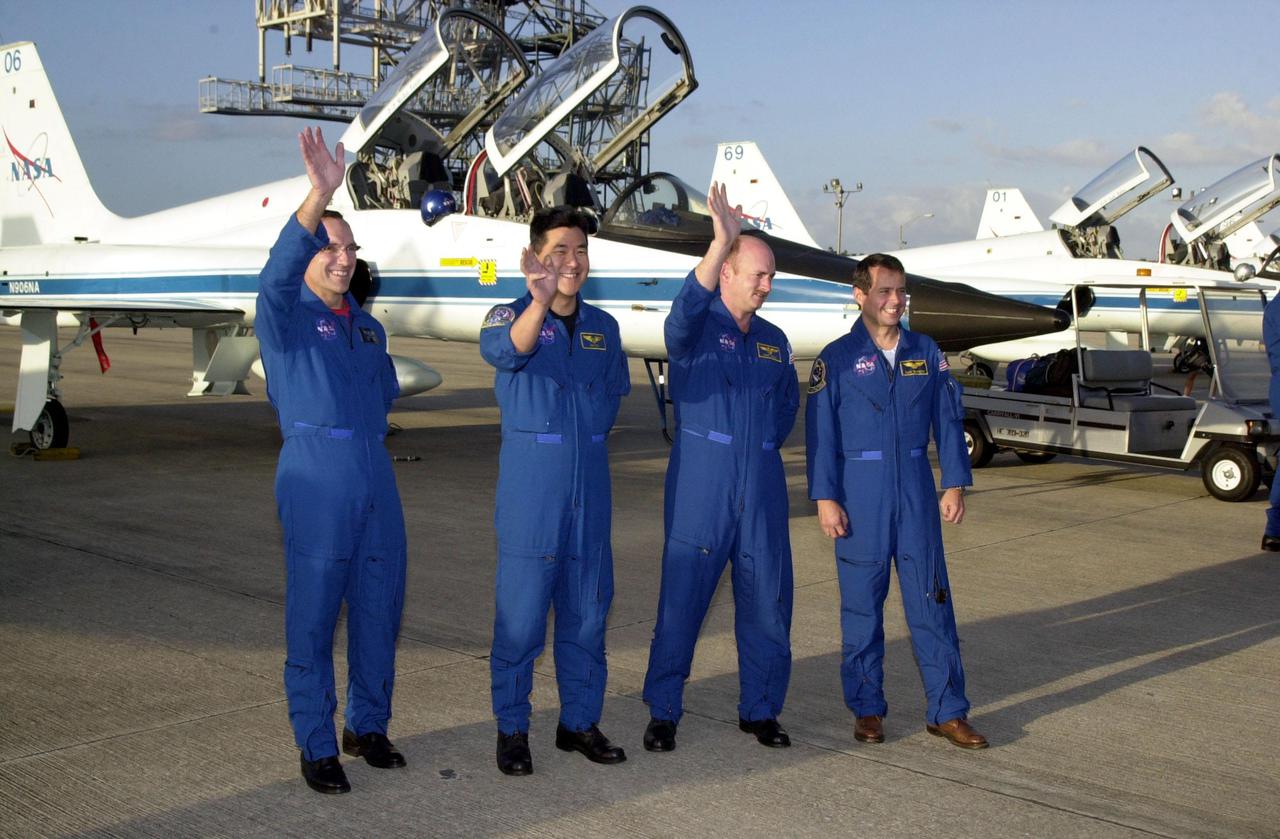
KENNEDY SPACE CENTER, Fla. -- Members of the STS-108 and Expedition Four crews greet representatives of the media at the Shuttle Landing Facility after arriving aboard T-38 jets (in the background). From left, they are Expedition Four crew member Carl E. Walz, STS-108 Mission Specialist Daniel M. Tani, STS-108 Pilot Mark E. Kelly, and Expedition Four crew member Daniel W. Bursch. They will be participating in the Terminal Countdown Demonstration Test, a dress rehearsal for their upcoming launch. The Expedition Four crew will be transported to the International Space Station on mission STS-108, targeted for launch on Nov. 29 on Space Shuttle Endeavour, and return on mission STS-111 in May 2002 after a more than five-month stay on the Station. The Multi-Purpose Logistics Module Raffaello, filled with supplies and equipment, will also be transported to the Station on the 11-day STS-108 mission
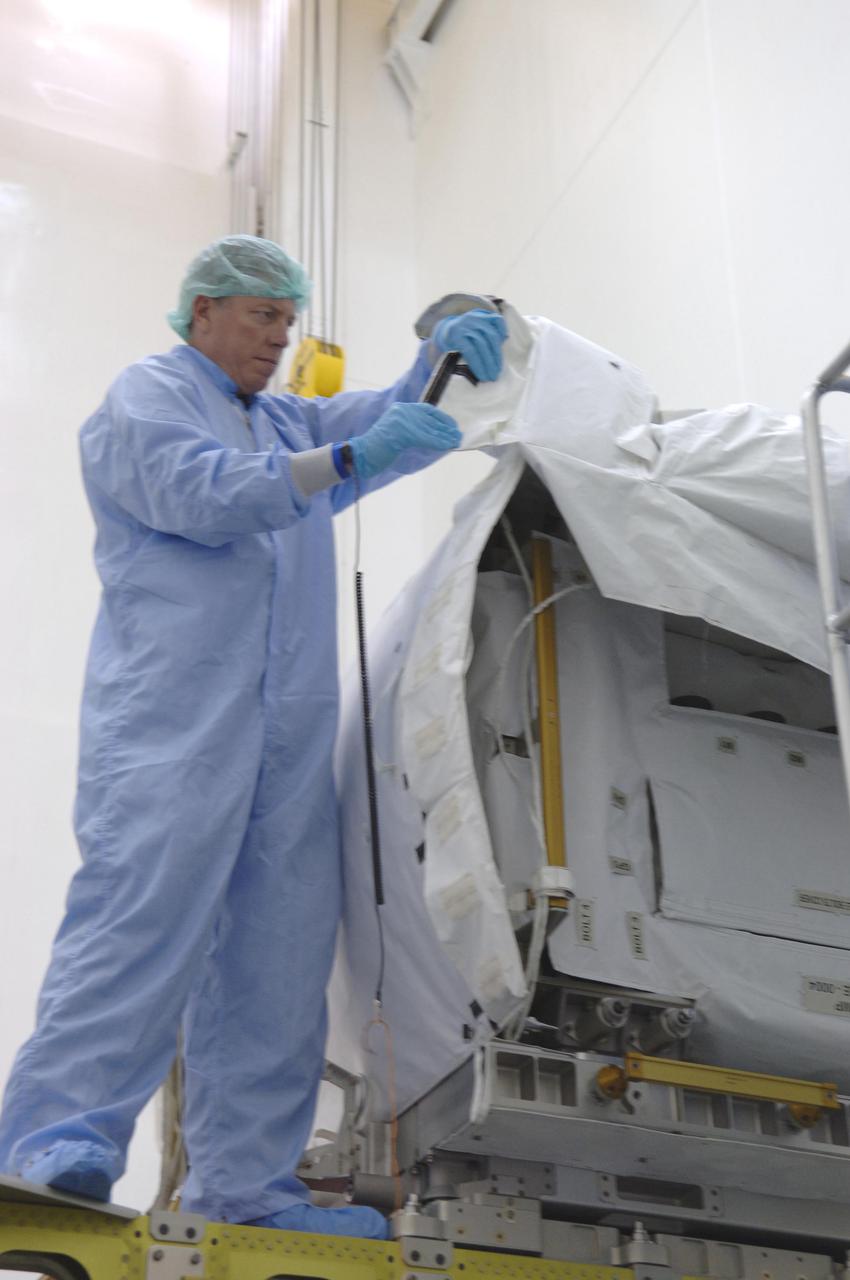
KENNEDY SPACE CENTER, FLA. - At Astrotech Space Operations in Titusville, Fla., STS-121 Mission Commander takes a look at a pump module. The STS-121 crew is at KSC to take part in Crew Equipment Interface Test activities, which provide hands-on experience with equipment they will use on-orbit. STS-121, the second Return to Flight mission, is targeted for launch in a lighted planning window of Sept. 9 to Sept. 25.