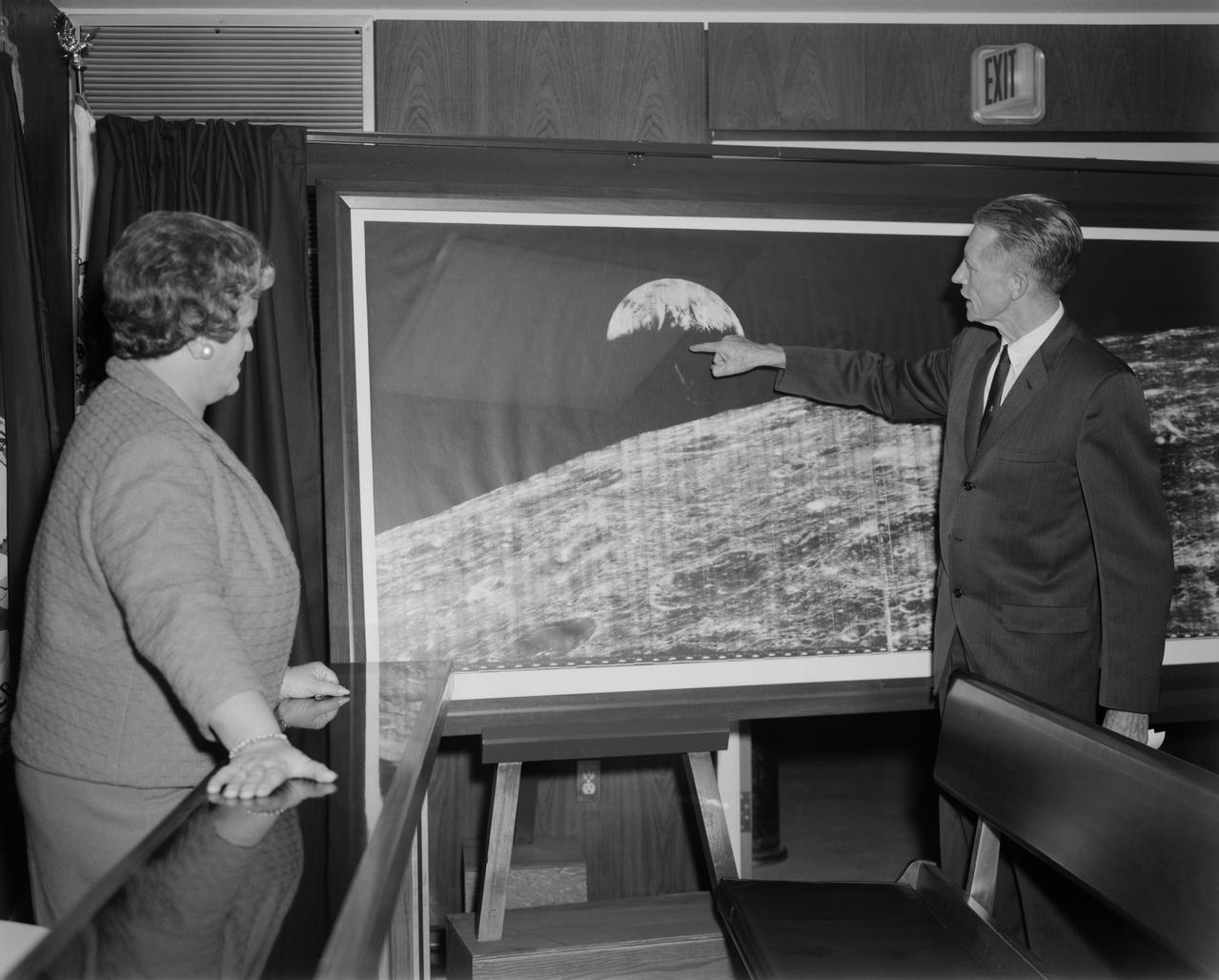
Langley Center Director Floyd Thompson shows Ann Kilgore the "picture of the century." This was the first picture of the earth taken from space. From Spaceflight Revolution: "On 23 August 1966 just as Lunar Orbiter I was about to pass behind the moon, mission controllers executed the necessary maneuvers to point the camera away from the lunar surface and toward the earth. The result was the world's first view of the earth from space. It was called "the picture of the century' and "the greatest shot taken since the invention of photography." Not even the color photos of the earth taken during the Apollo missions superseded the impact of this first image of our planet as a little island of life floating in the black and infinite sea of space." -- Published in James R. Hansen, Spaceflight Revolution: NASA Langley Research Center From Sputnik to Apollo, (Washington: NASA, 1995), pp. 345-346. Mayor Ann Kilgore was married to NASA researcher Edwin Carroll Kilgore. Mrs. Kilgore was Mayor from 1963-1971 and again from 1974-1978.
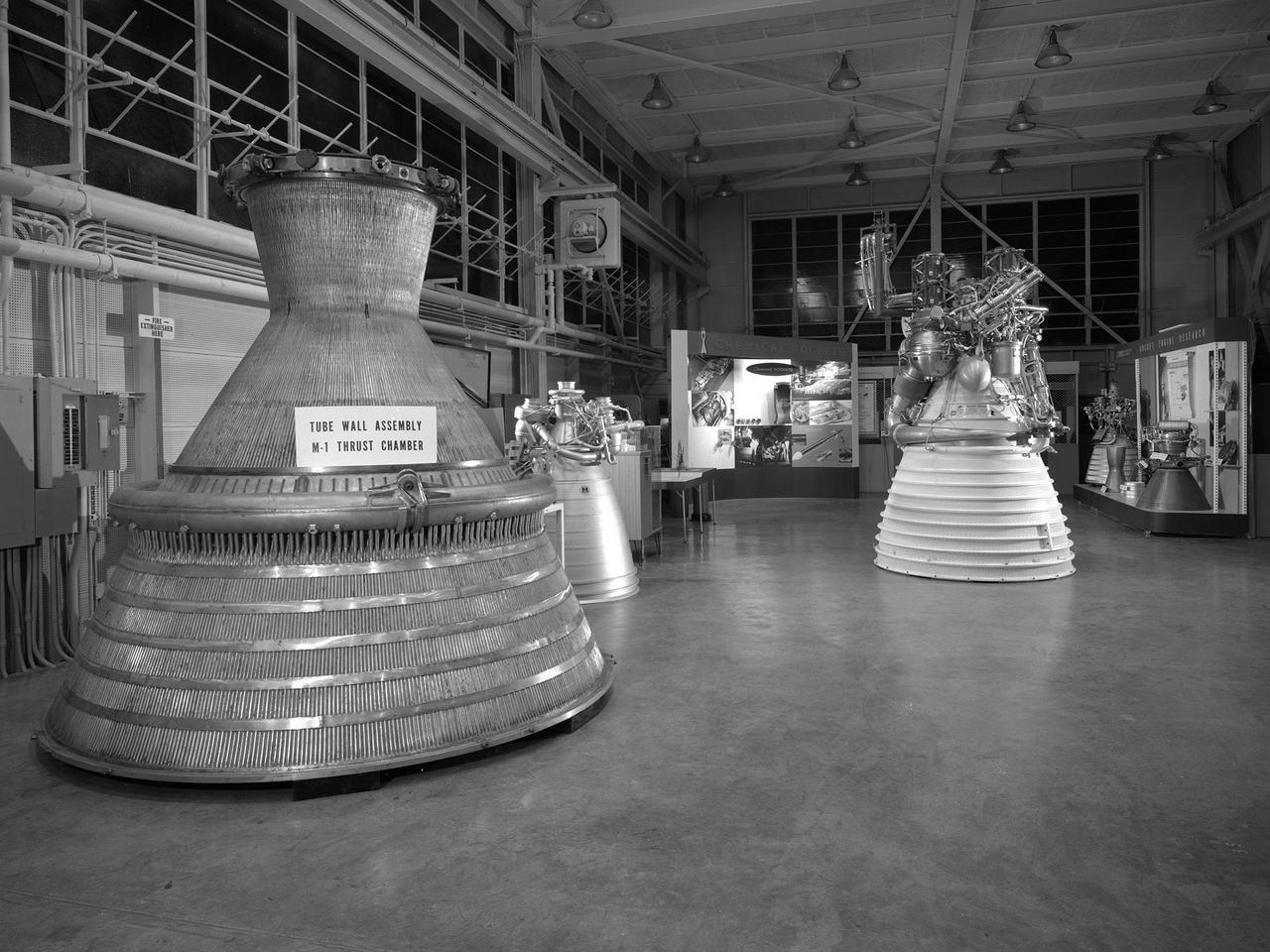
An array of rocket engines displayed in the Propulsion Systems Laboratory for the 1966 Inspection held at the National Aeronautics and Space Administration (NASA) Lewis Research Center. Lewis engineers had been working on chemical, nuclear, and solid rocket engines throughout the 1960s. The engines on display are from left to right: two scale models of the Aerojet M-1, a Rocketdyne J-2, a Pratt and Whitney RL-10, and a Rocketdyne throttleable engine. Also on display are several ejector plates and nozzles. The Chemical Rocket Division resolved issues such as combustion instability and screech, and improved operation of cooling systems and turbopumps. The 1.5-million pound thrust M-1 engine was the largest hydrogen-fueled rocket engine ever created. It was a joint project between NASA Lewis and Aerojet-General. Although much larger in size, the M-1 used technology developed for the RL-10 and J-2. The M-1 program was cancelled in late 1965 due to budget cuts and the lack of a post-Apollo mission. The October 1966 Inspection was the culmination of almost a year of events held to mark the centers’ 25th anniversary. The three‐day Inspection, Lewis’ first since 1957, drew 2000 business, industry, and government executives and included an employee open house. The visitors witnessed presentations at the major facilities and viewed the Gemini VII spacecraft, a Centaur rocket, and other displays in the hangar. In addition, Lewis’ newest facility, the Zero Gravity Facility, was shown off for the first time.
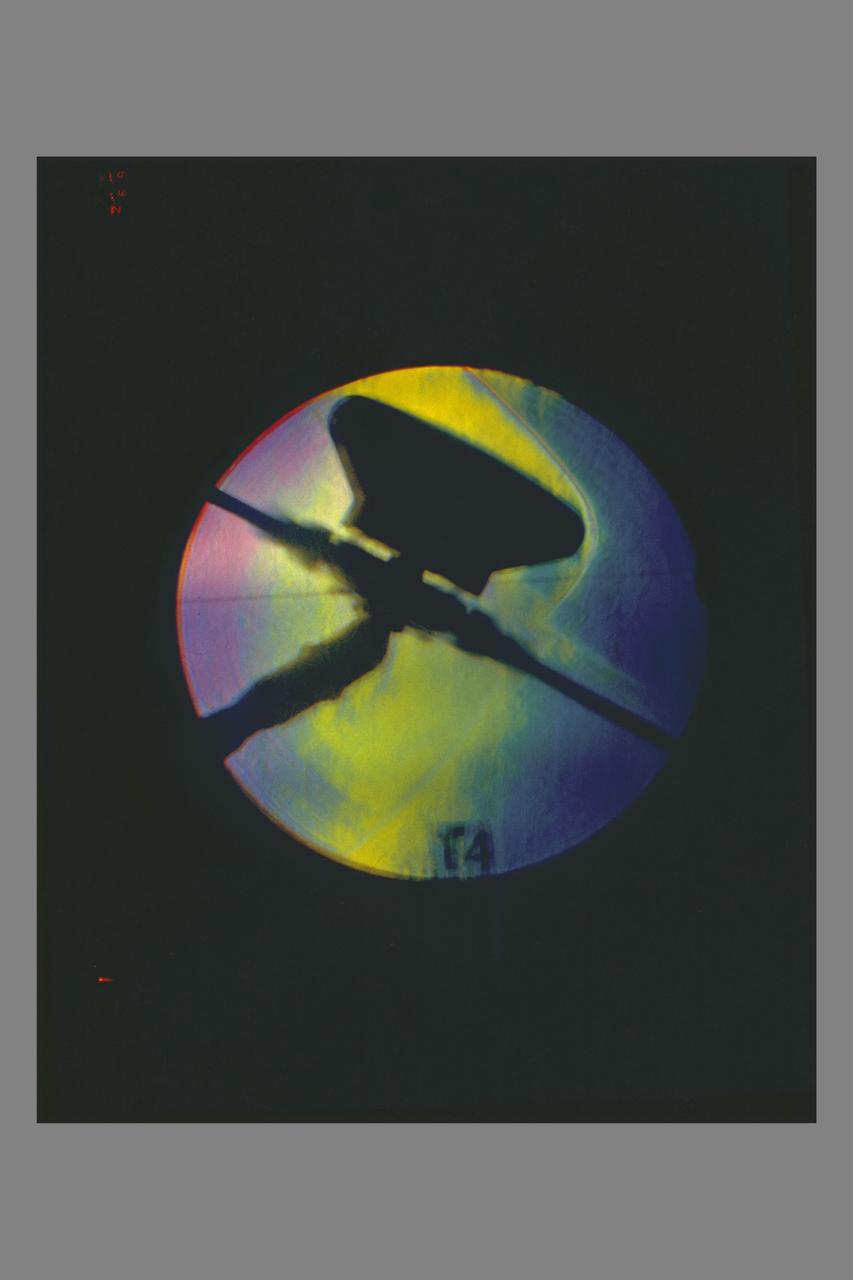
Aerodynamic Characteristics of Rotary Entry Vehicle configuration REV-1 model schlieren Testing being done at the NASA Ames Research Center, California
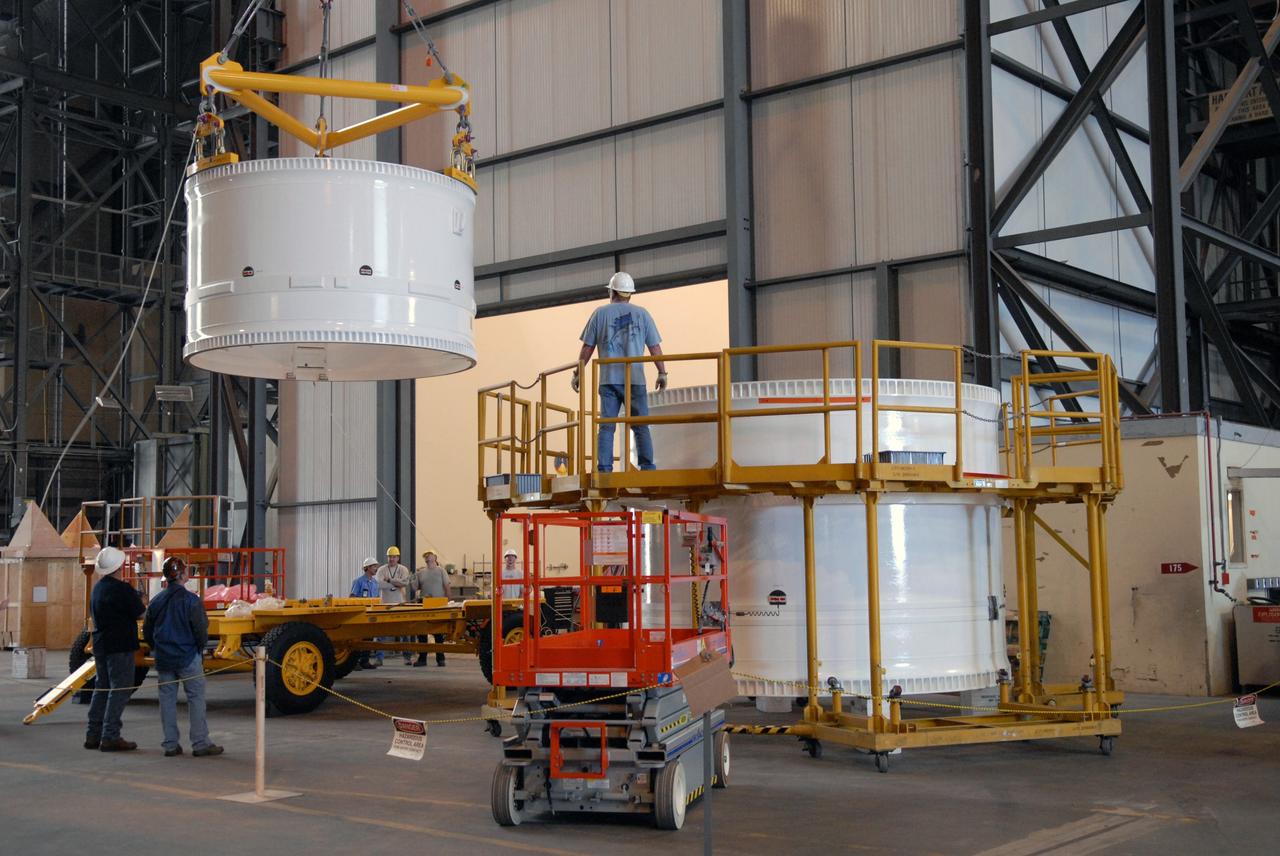
CAPE CANAVERAL, Fla. – In the Vehicle Assembly Building, the forward fifth segment simulator for the Ares I-X rocket is lifted toward the center segment beside it for stacking. Ares I-X is the test vehicle for the Ares I, which is part of the Constellation Program to return men to the moon and beyond. Ares I is the essential core of a safe, reliable, cost-effective space transportation system that eventually will carry crewed missions back to the moon, on to Mars and out into the solar system. Ares I-X is targeted for launch in July 2009. Photo credit: NASA/Dimitri Gerondidakis
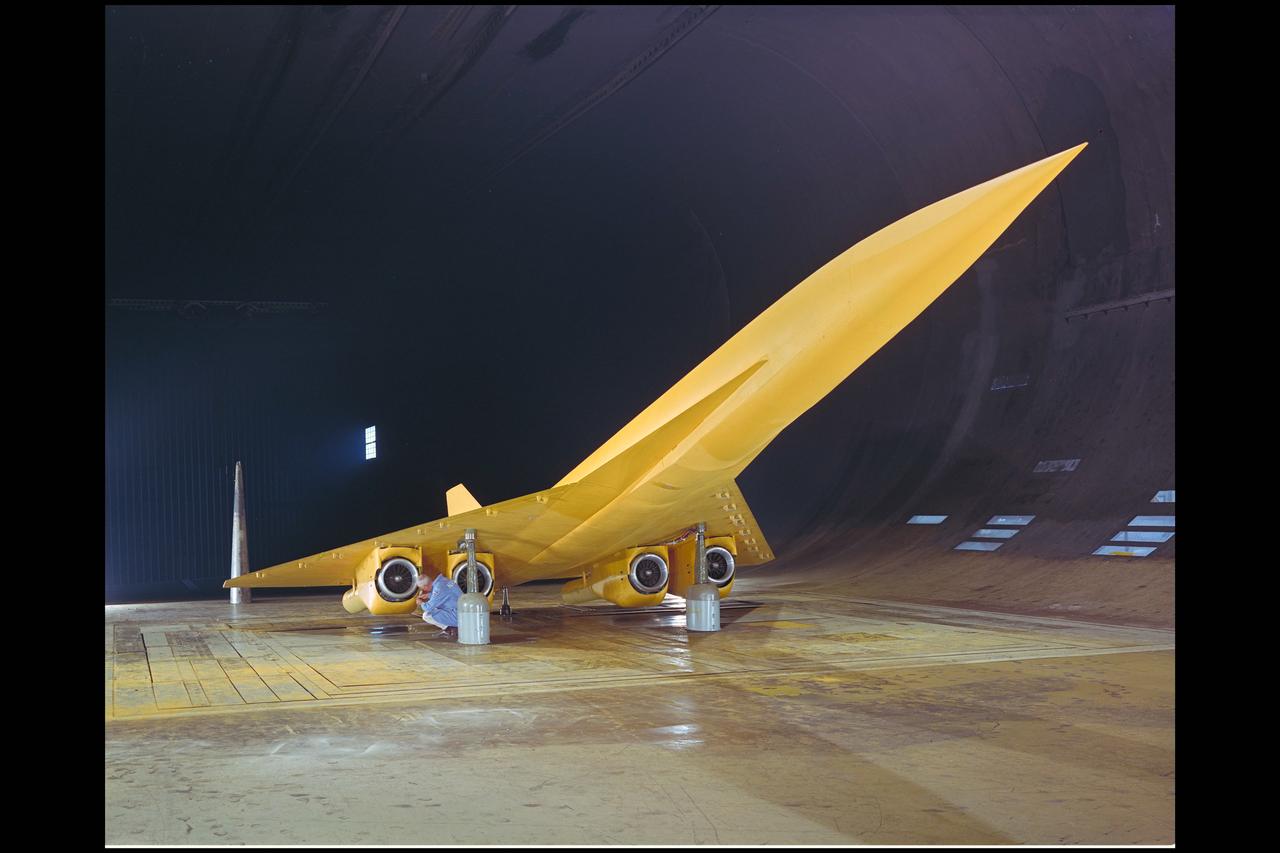
Double delta planform on a supersonic transport model mounted in the 40x80ft. w.t.
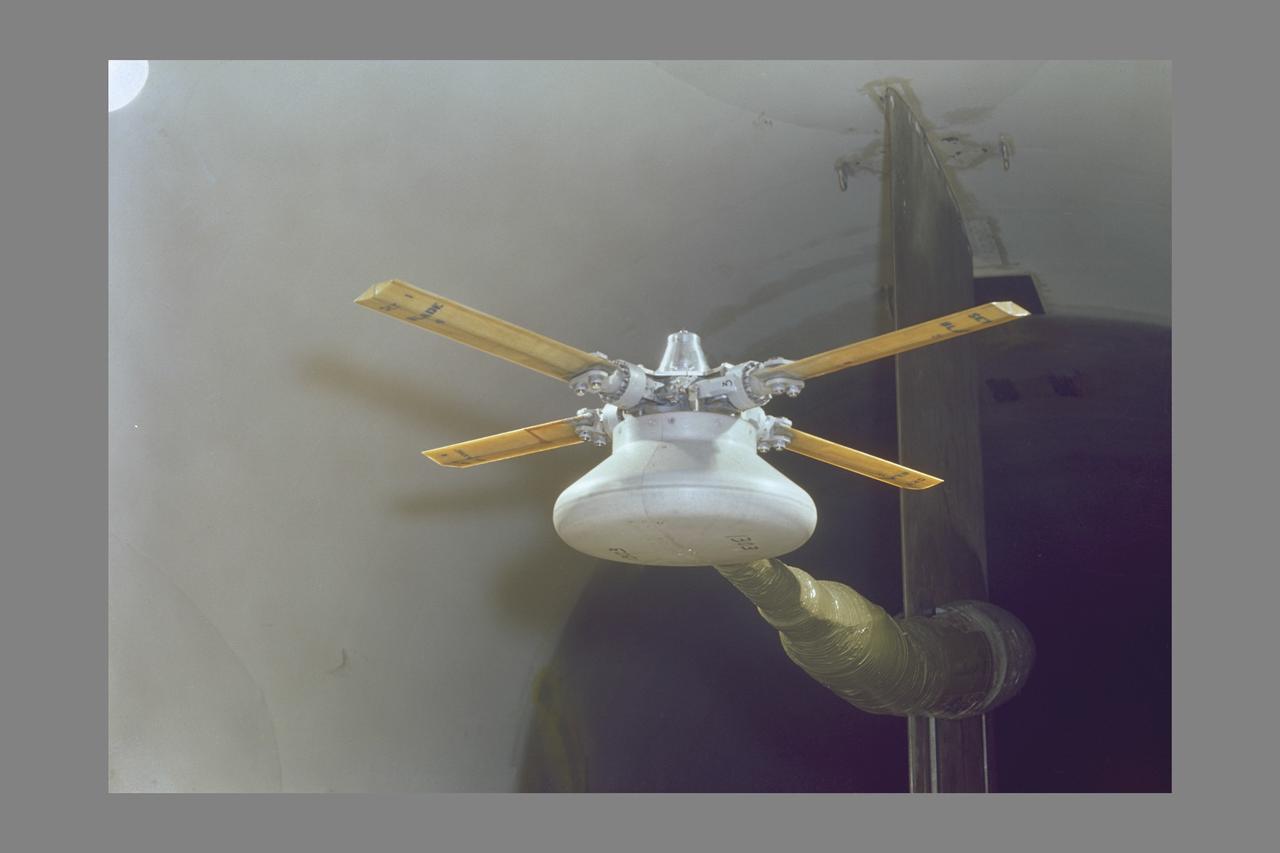
Ames Rotary Entry Vehicle #1 model in REV-1 testing in the Ames Research Center 12ft. Pressure Wind Tunnel
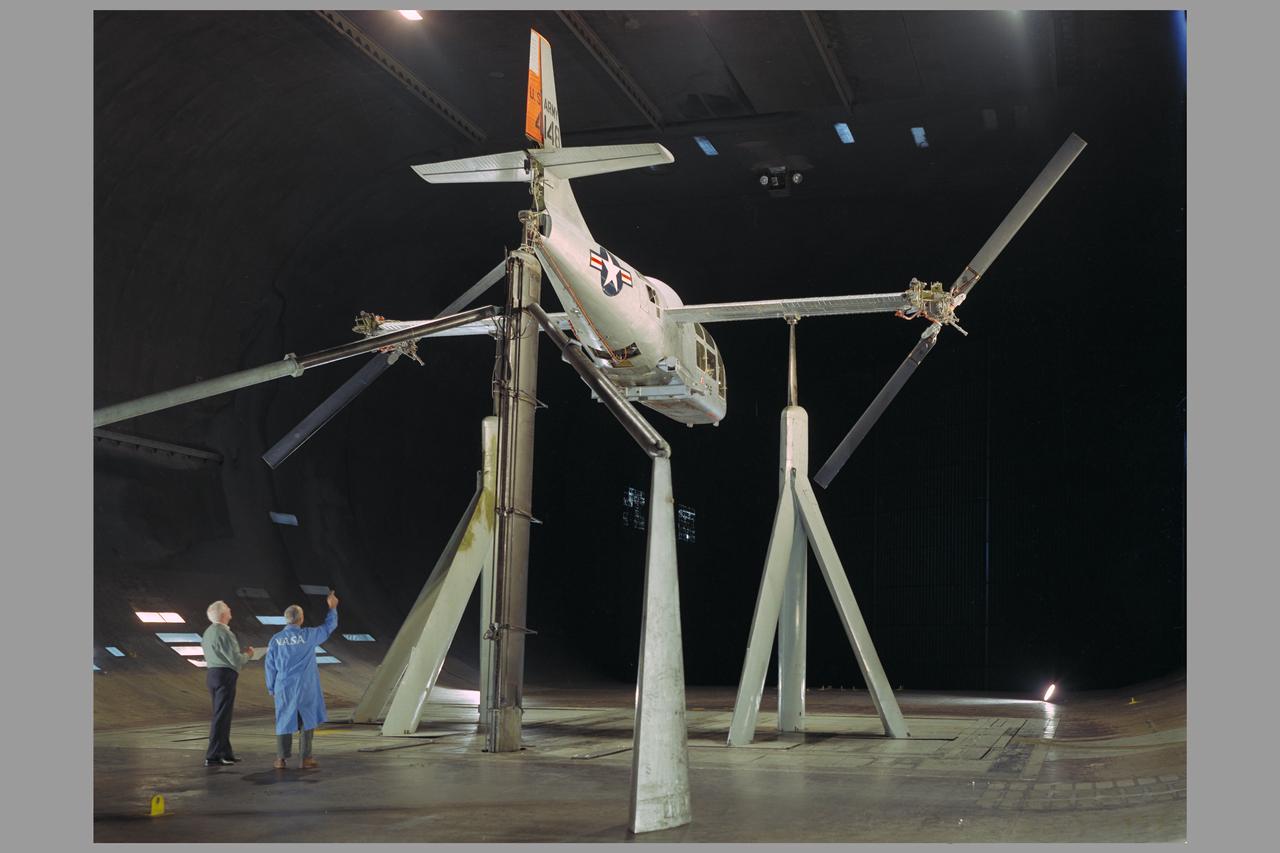
XV-3 in Ames Reseach Center 40x80ft wind tunnel; Rotor dynamic stability tests
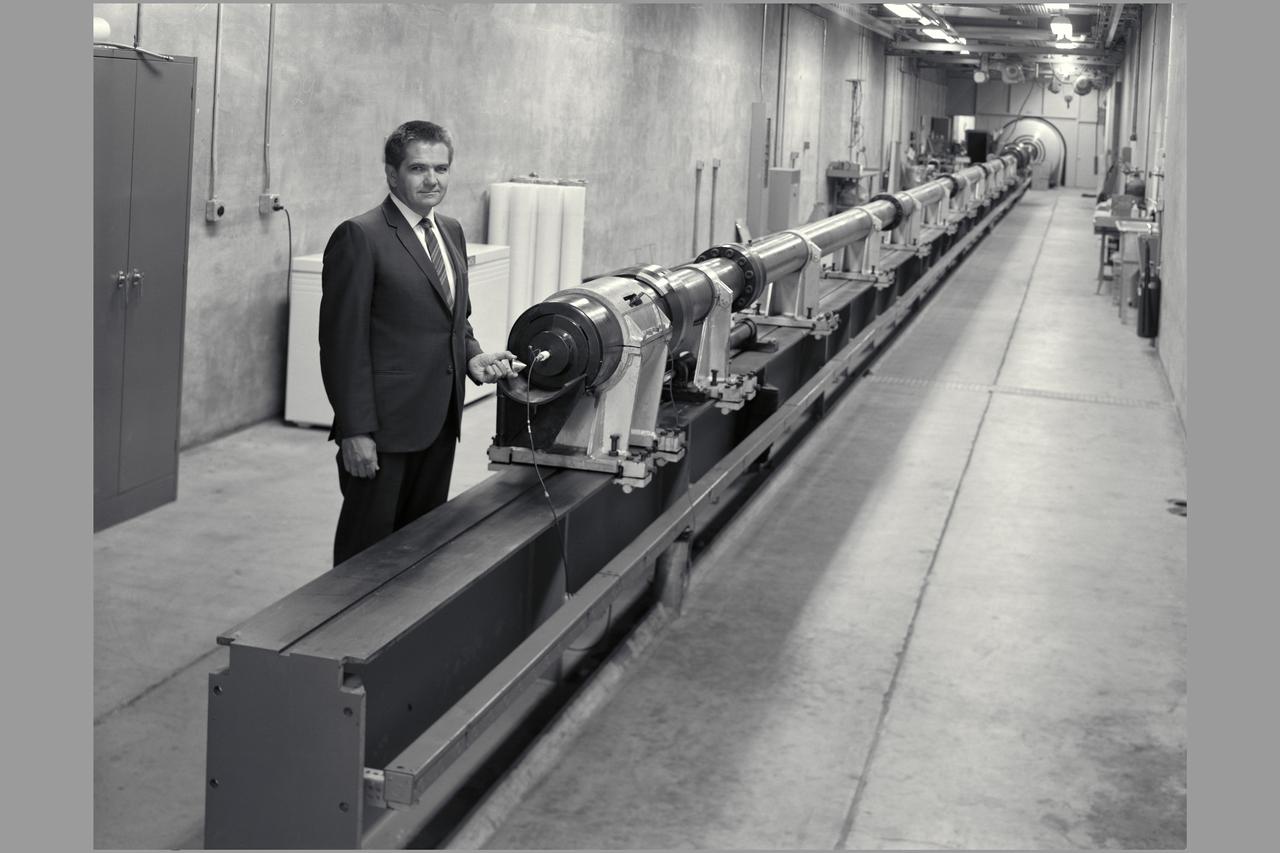
Thomas N. Canning, Hypersonic Free-Flight Branch Chief, holds model that is fired down range in gun. Hypersonic Free-Flight Gun.
R_1962-L-09381 003
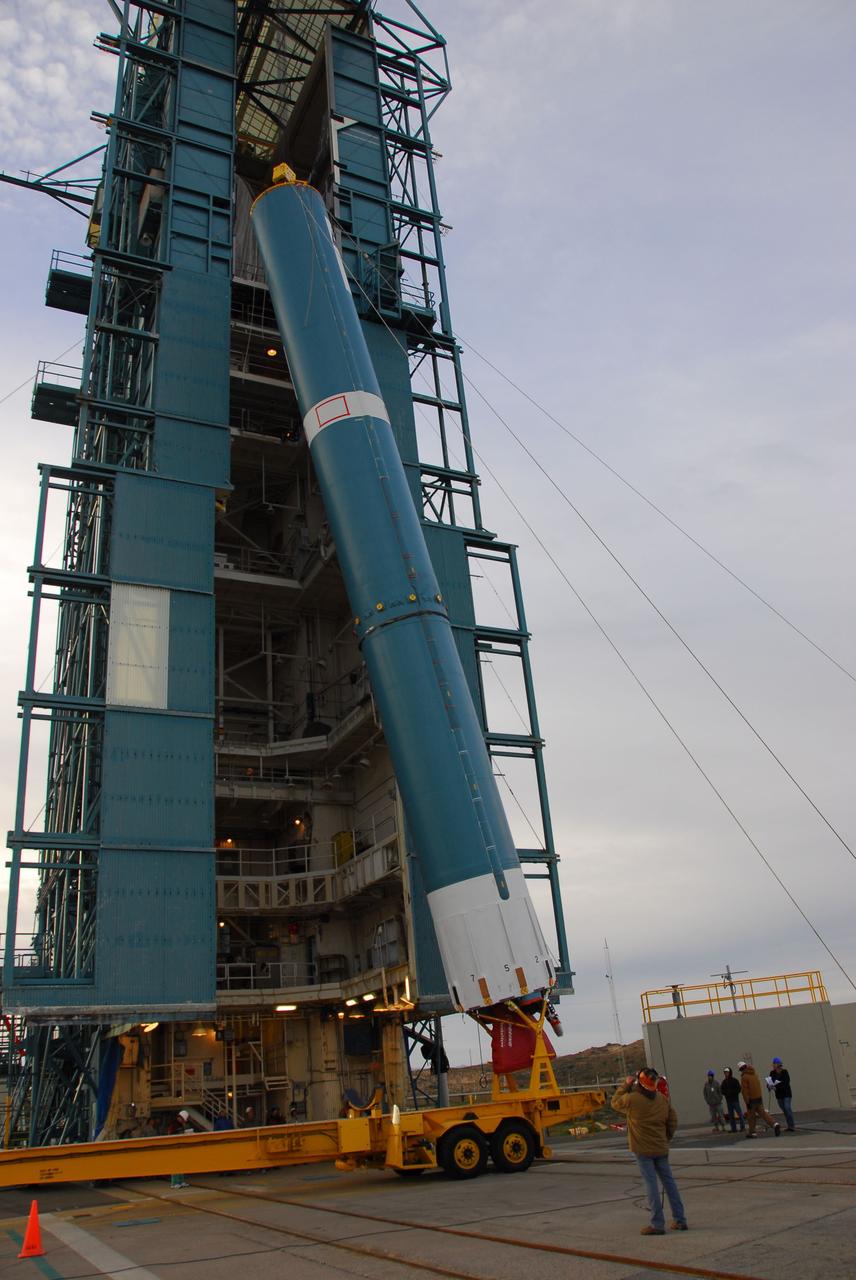
VANDENBERG AIR FORCE BASE, Calif. -- The first stage of the Delta II rocket that will carry NASA's Aquarius satellite into low Earth orbit is raised onto the launch pad at Vandenberg Air Force Base's Space Launch Complex-2 (SLC-2) in California. While the Delta II rocket is stacked on SLC-2, teams for NASA's Glory spacecraft and Orbital Sciences Taurus XL rocket are in launch preparation mode at Vandenberg's nearby Space Launch Complex 576-E. Scheduled to launch in June, Aquarius' mission will be to provide monthly maps of global changes in sea surface salinity. By measuring ocean salinity from space, Aquarius will provide new insights into how the massive natural exchange of freshwater between the ocean, atmosphere and sea ice influences ocean circulation, weather and climate. Also going up with the satellite are optical and thermal cameras, a microwave radiometer and the SAC-D spacecraft, which were developed with the help of institutions in Italy, France, Canada and Argentina. Photo credit: NASA/VAFB
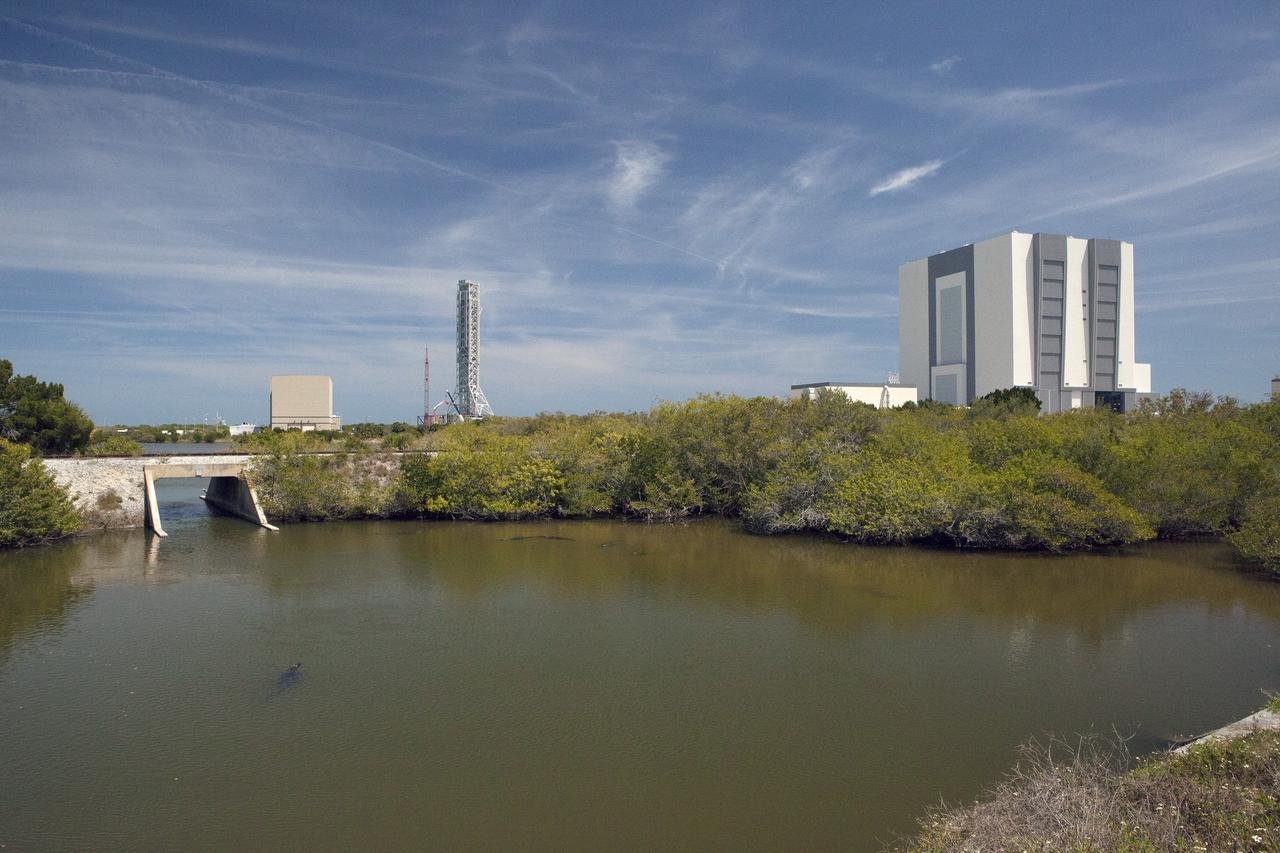
CAPE CANAVERAL, Fla. – Manatees and alligators gather in a creek at Kennedy Space Center's Launch Complex 39 area. In the background from left to right are the Rotation, Processing and Surge Facility, mobile launcher and Vehicle Assembly Building. The center shares a boundary with the Merritt Island National Wildlife Refuge, which encompasses 140,000 acres that provide a habitat for more than 330 species of birds, 31 mammals, 117 fishes, and 65 amphibians and reptiles. Photo credit: NASA/Daniel Casper
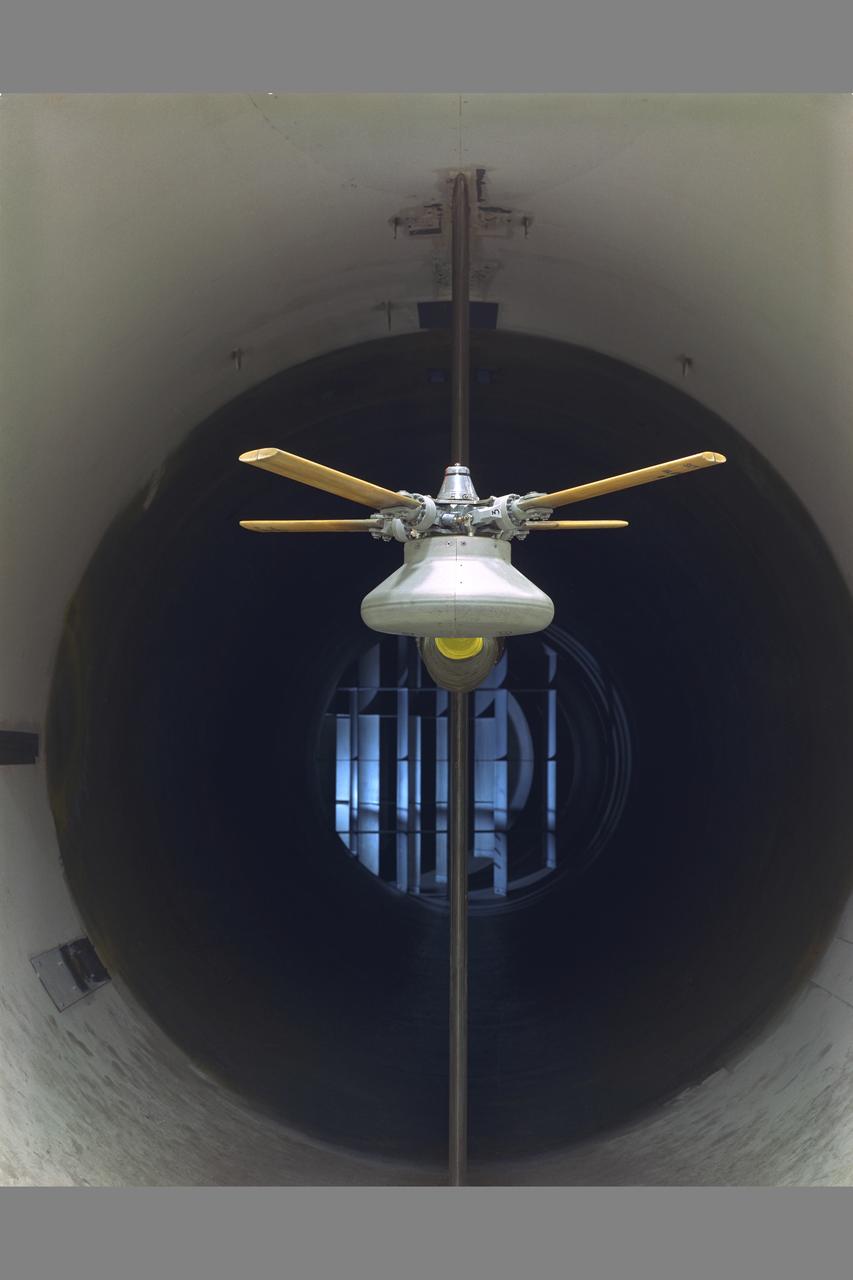
Rotary Entry Vehicle model in NASA Ames Reseach Center 12ft Pressure Wind Tunnel
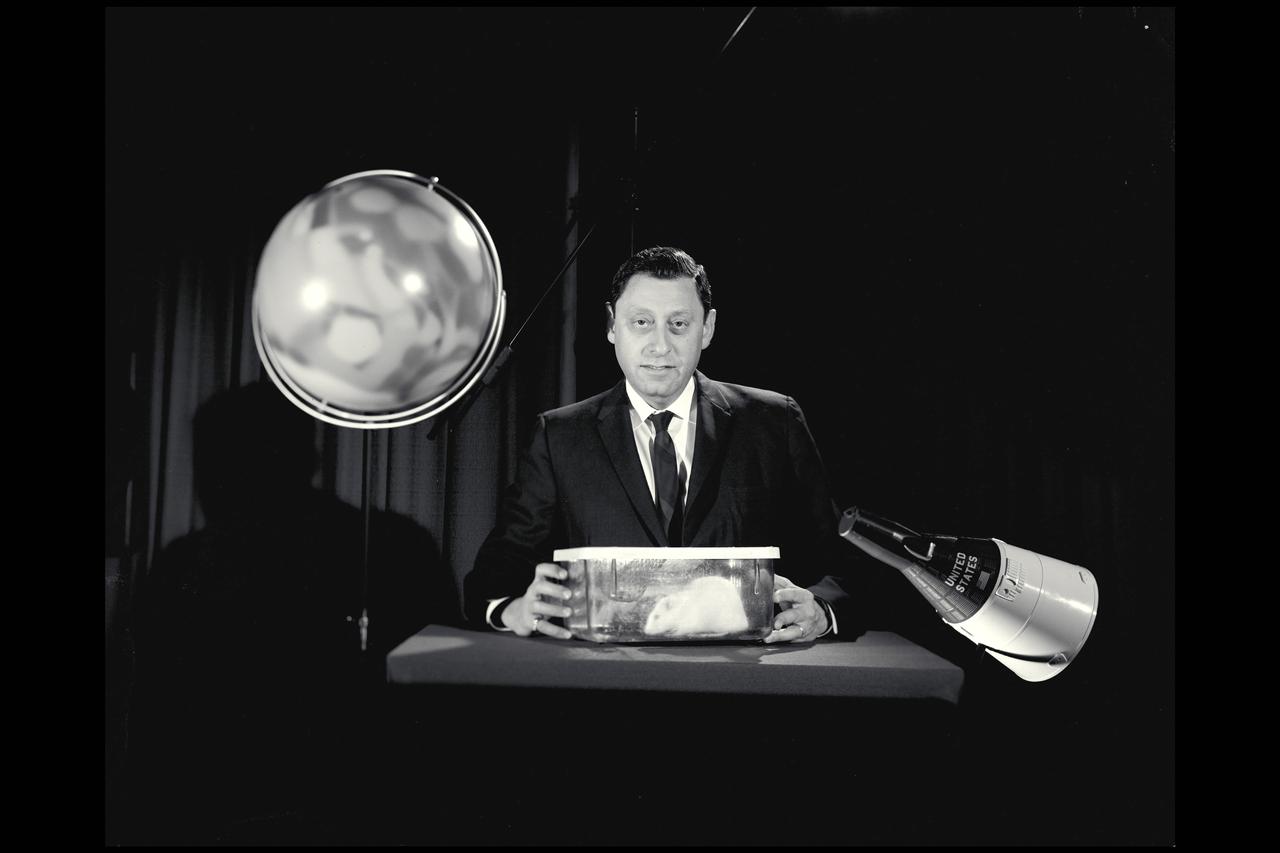
Dr Harold P. Klein, Ass't Director Ames Life Sciences
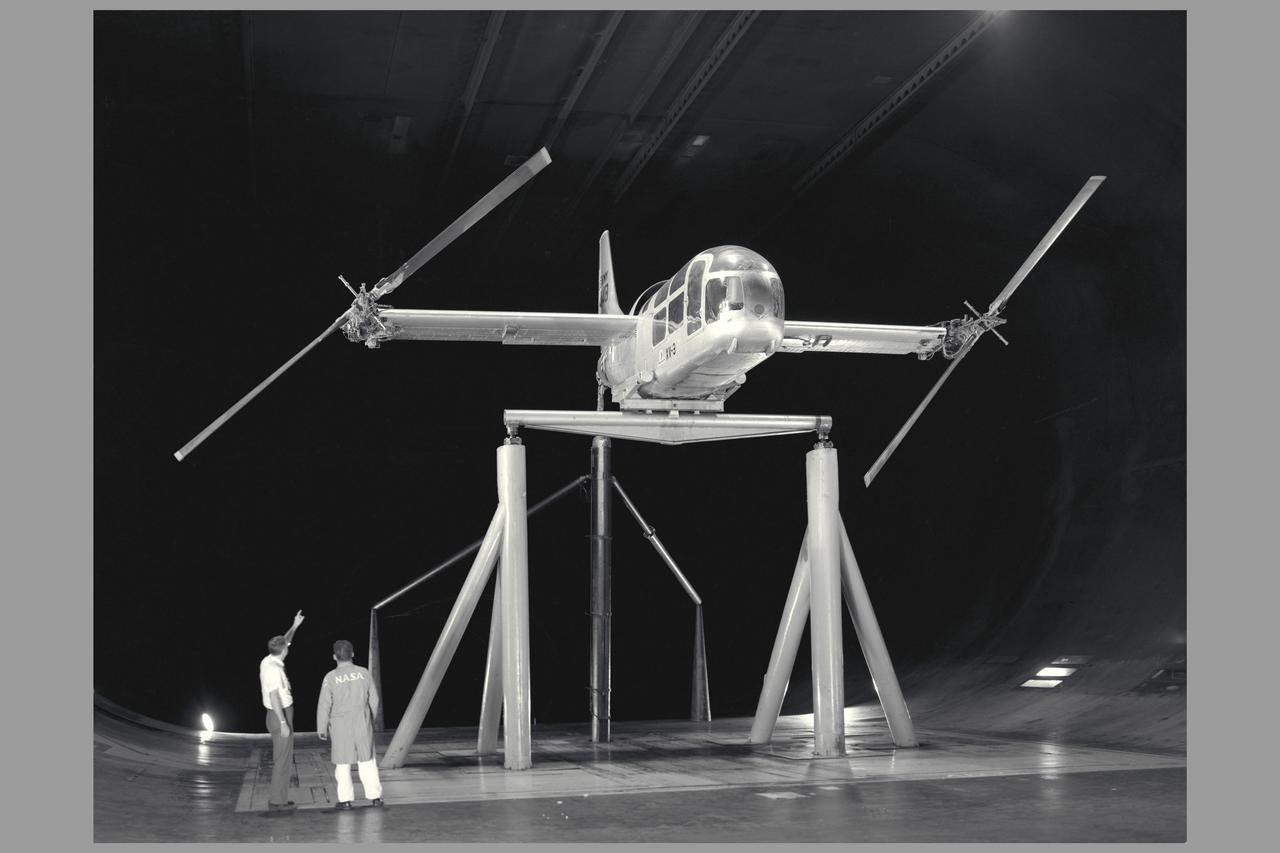
XV-3 in Ames Reseach Center 40x80ft wind tunnel with K. Edenborough and B. Ramsey, engineers Published in The History of the XV-15 Tilt Rotor Research Aircraft (from Concept to Flight NASA SP-2000-4517)
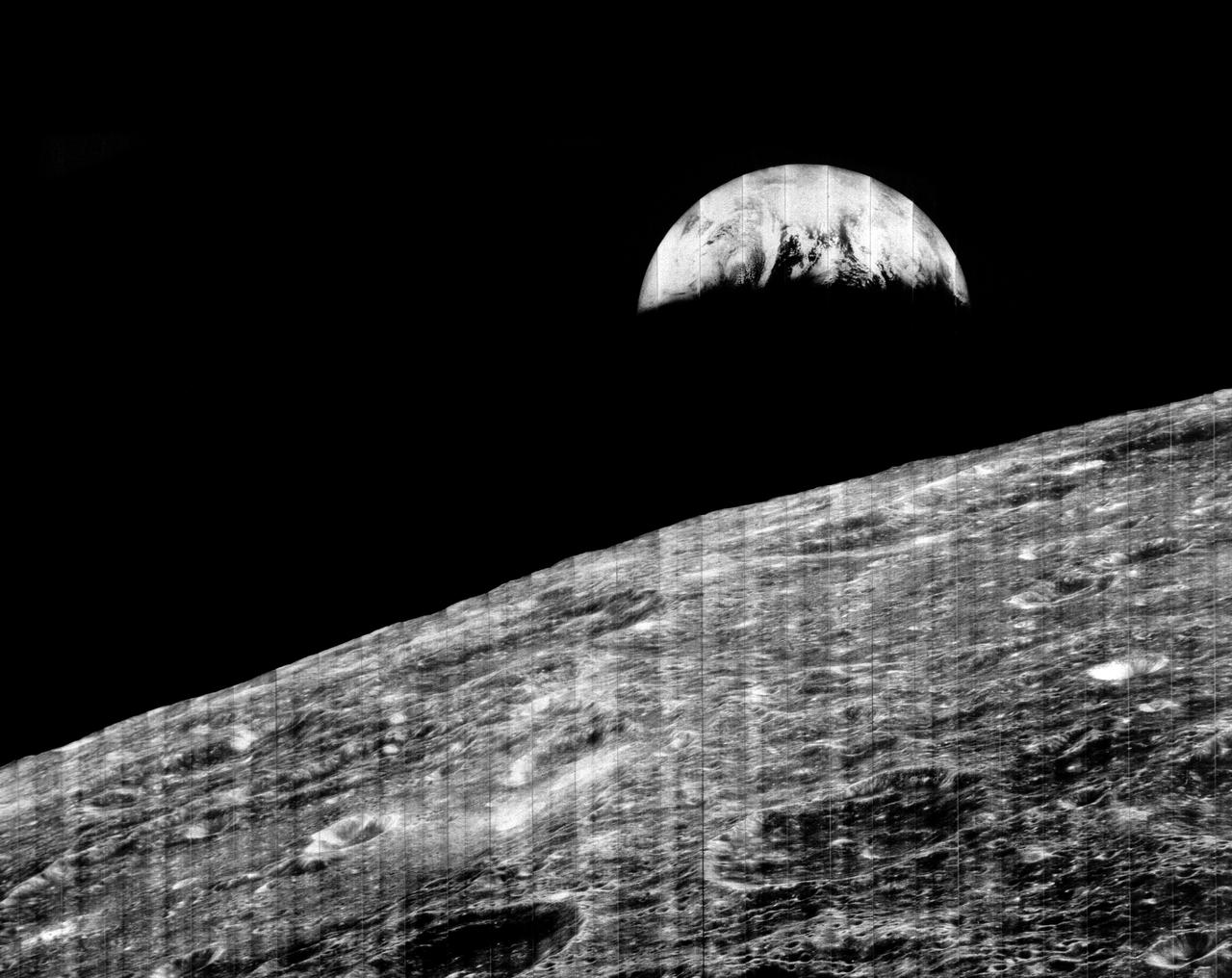
Lunar Orbiter 1 photographed Earth from the moon, this image was called "the image of the century" published in " A Century at Langley" by Joseph Chambers Pg.93. Also in the book " A Bunch of Plambers" by John Newcomb pg. 92.

MR. J. WARFEL, D. TRACEY, T. BROWNE, D. KLAUK, MRS L. McCORMICK, C. BATINOVICH, WORKING IN THE DATA ANALYSIS MANAGEMENT AREA OF THE PIONEER TAPE PROCESSING STATION. Pioneer Off-Line Data Processing System.
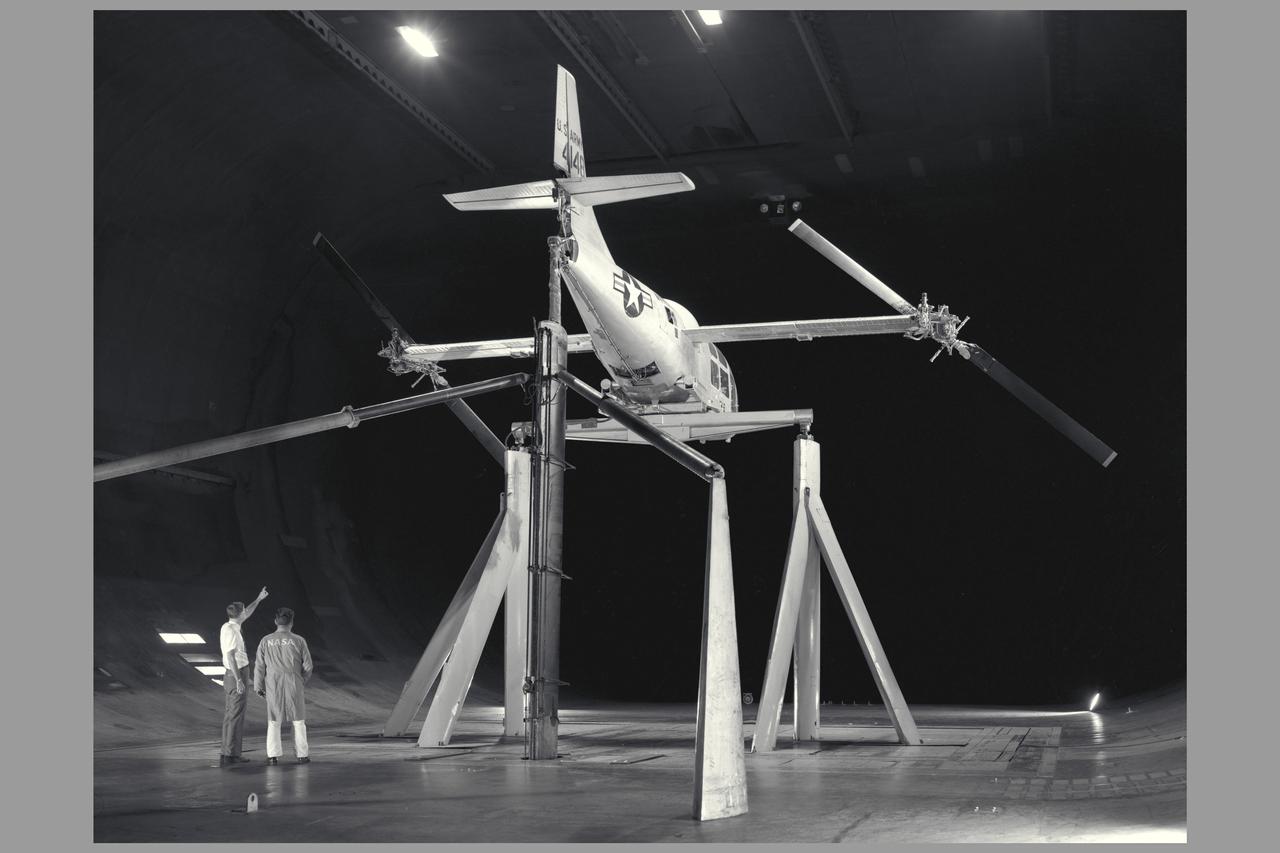
XV-3 from rear in Ames Reseach Center 40x80ft wind tunnel with K Edenborough and B. Ramsey
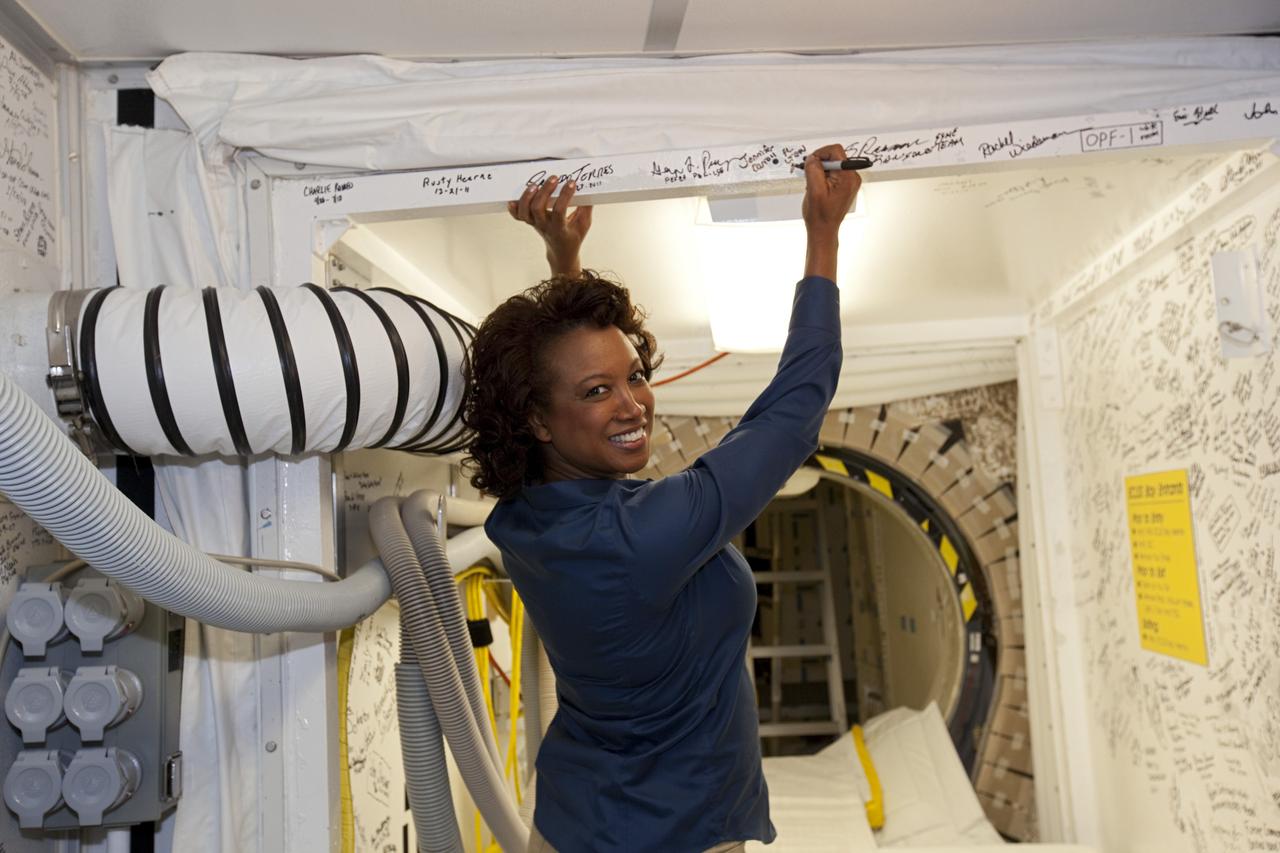
CAPE CANAVERAL, Fla. – Florida’s Lt. Gov. Jennifer Carroll signs a wall of the White Room during a tour of Kennedy Space Center’s Orbiter Processing Facility-1. The room affords access to the shuttle as it is undergoing processing in the facility. Everyone visiting the interior of the shuttle – astronauts, technicians and guests alike - is given the opportunity to “autograph” a wall of the room. The tour coincided with Carroll’s visit to Kennedy for a meeting with Cabana. Atlantis is being prepared for public display at the Kennedy Space Center Visitor Complex in 2013. The groundbreaking for Atlantis’ exhibit hall took place in January Atlantis is scheduled to be moved to the visitor complex in November. For more information, visit http://www.nasa.gov/shuttle. Photo credit: NASA/Jim Grossmann
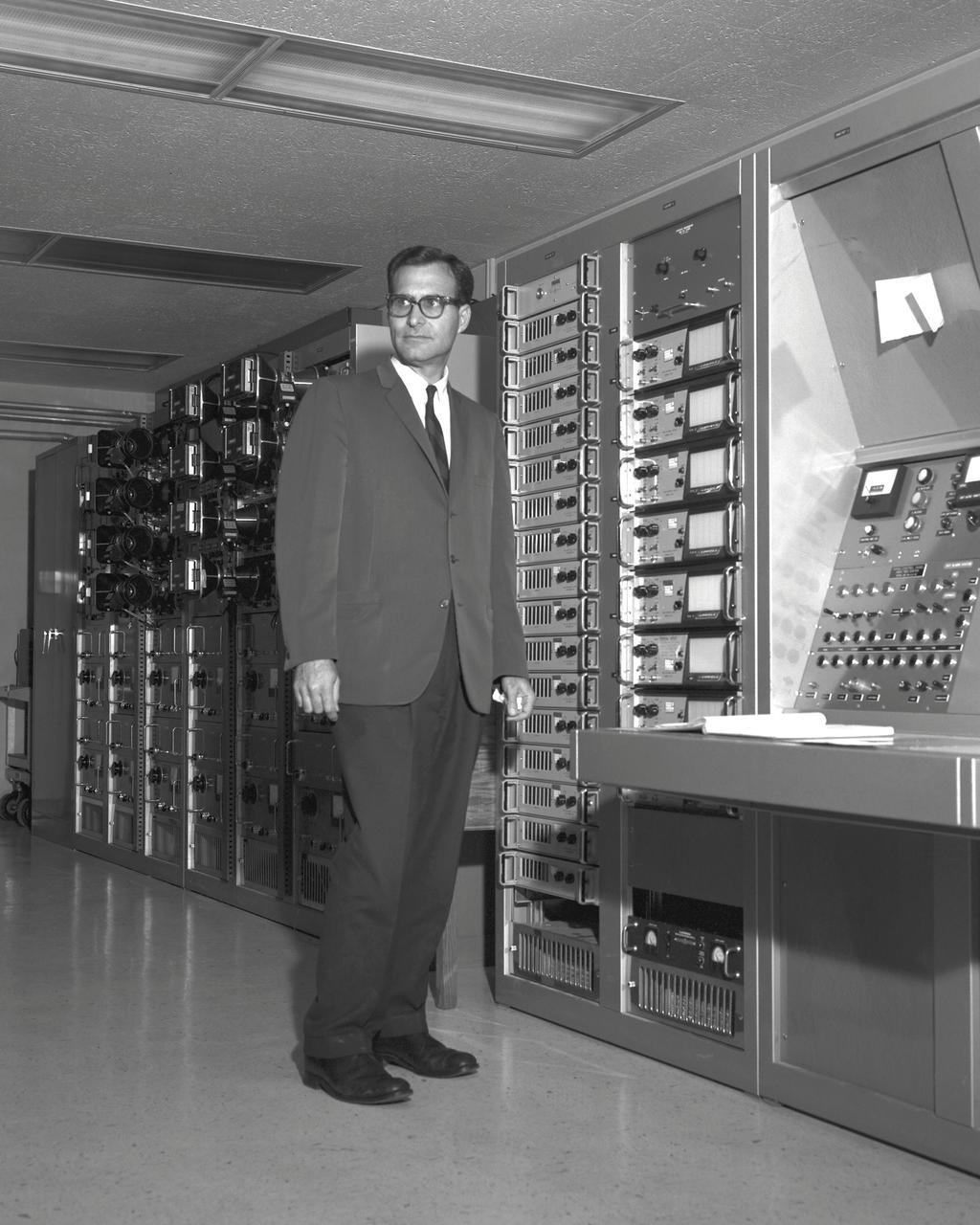
Alvin Seiff at Hypervelocity Free Flight Facility control room at the Ames Research Center.
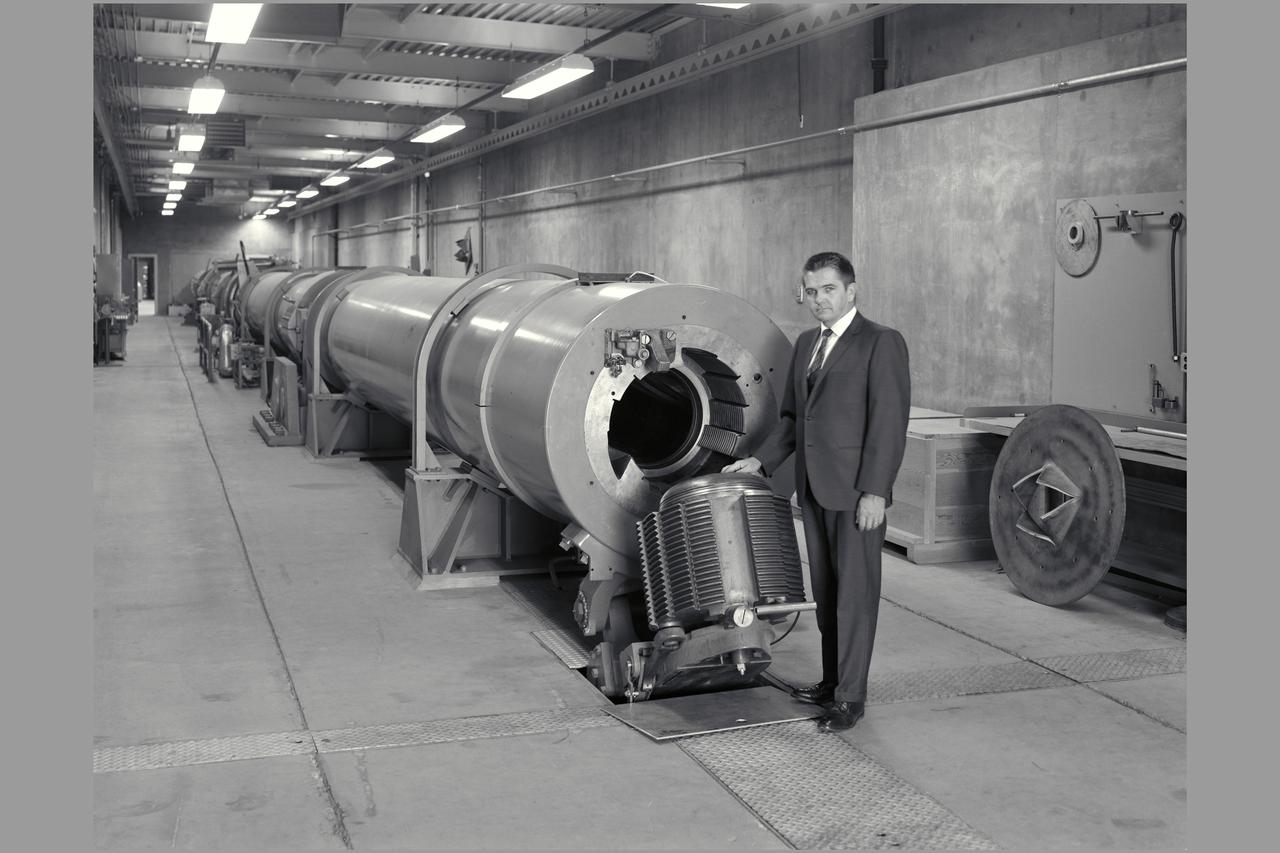
Thomas N. Canning, Hypersonic Free-Flight Branch Chief, inspects breech of the counter flow section of gun. Hypersonic Free-Flight Gun.
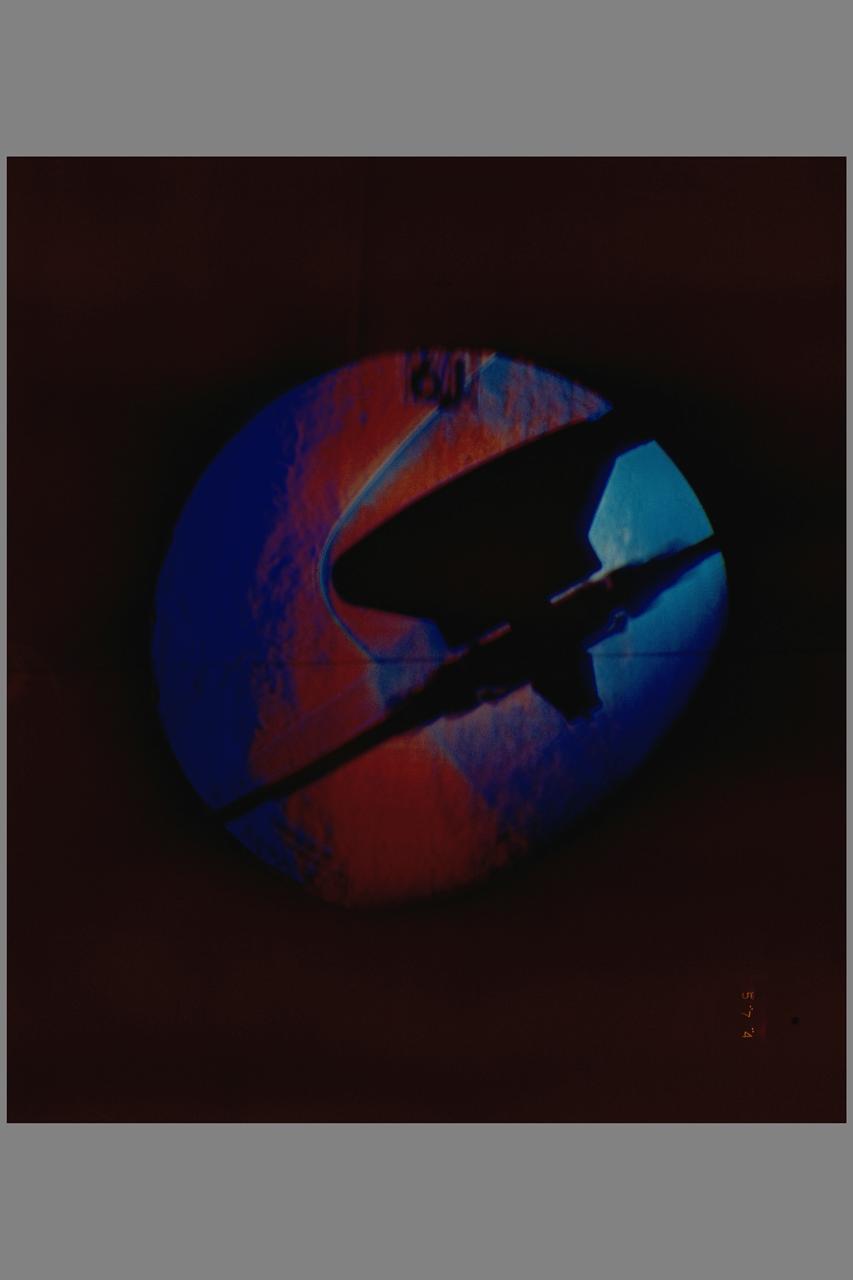
Aerodynamic Characteristics of Rotary Entry Vehicle configuration REV-1 model schlieren. Testing being done at the NASA Ames Research Center, California
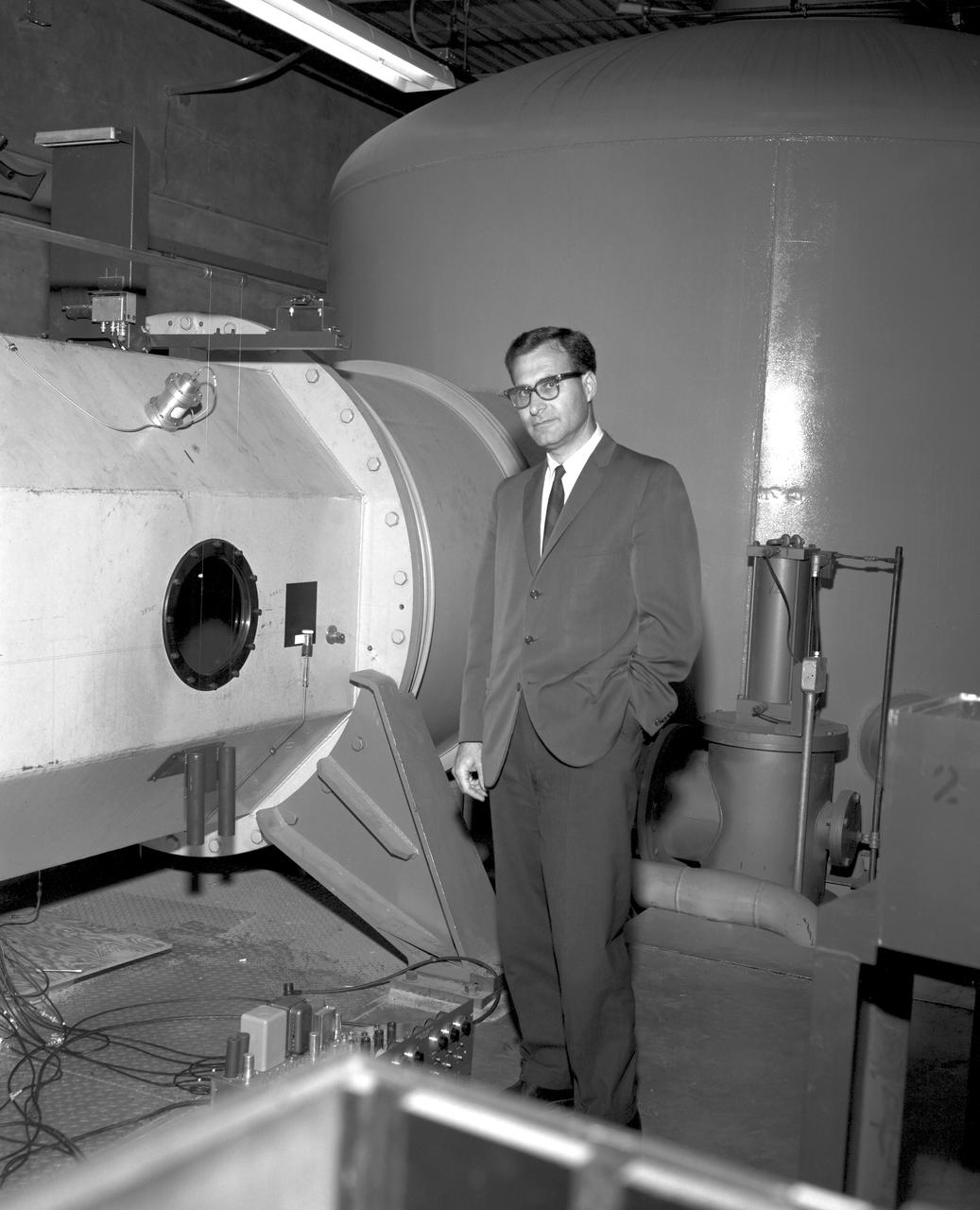
Alvin Seiff at Hypervelocity Free Flight Facility at the Ames Research Center.
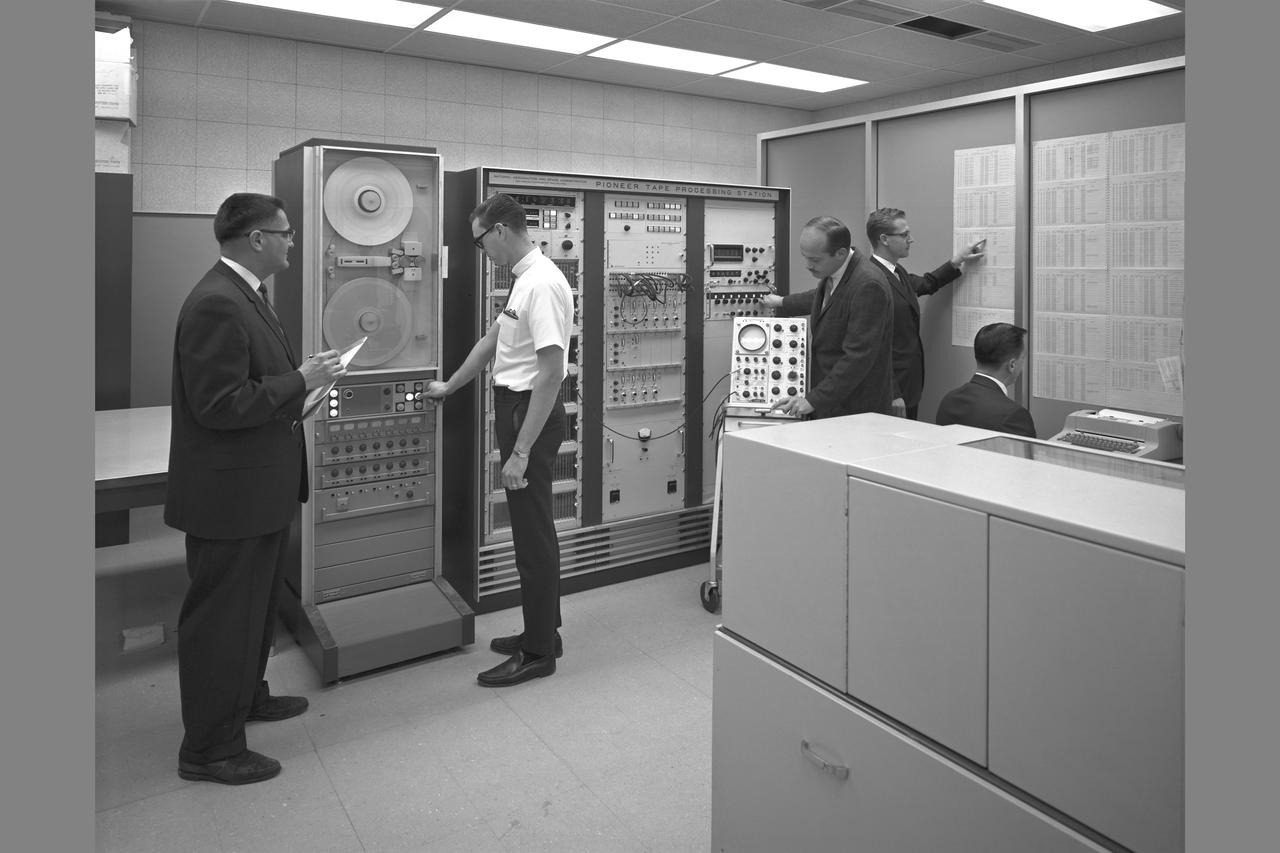
MR. R. O. FIMMEL, MR. G. R. HARVEY, R. C. VINYARD, N. WIRTH, D. KLAUK, WORKING IN THE DATA ROOM OF THE PIONEER TAPE PROCESSING STATION. Pioneer Off-Line Data Processing System.
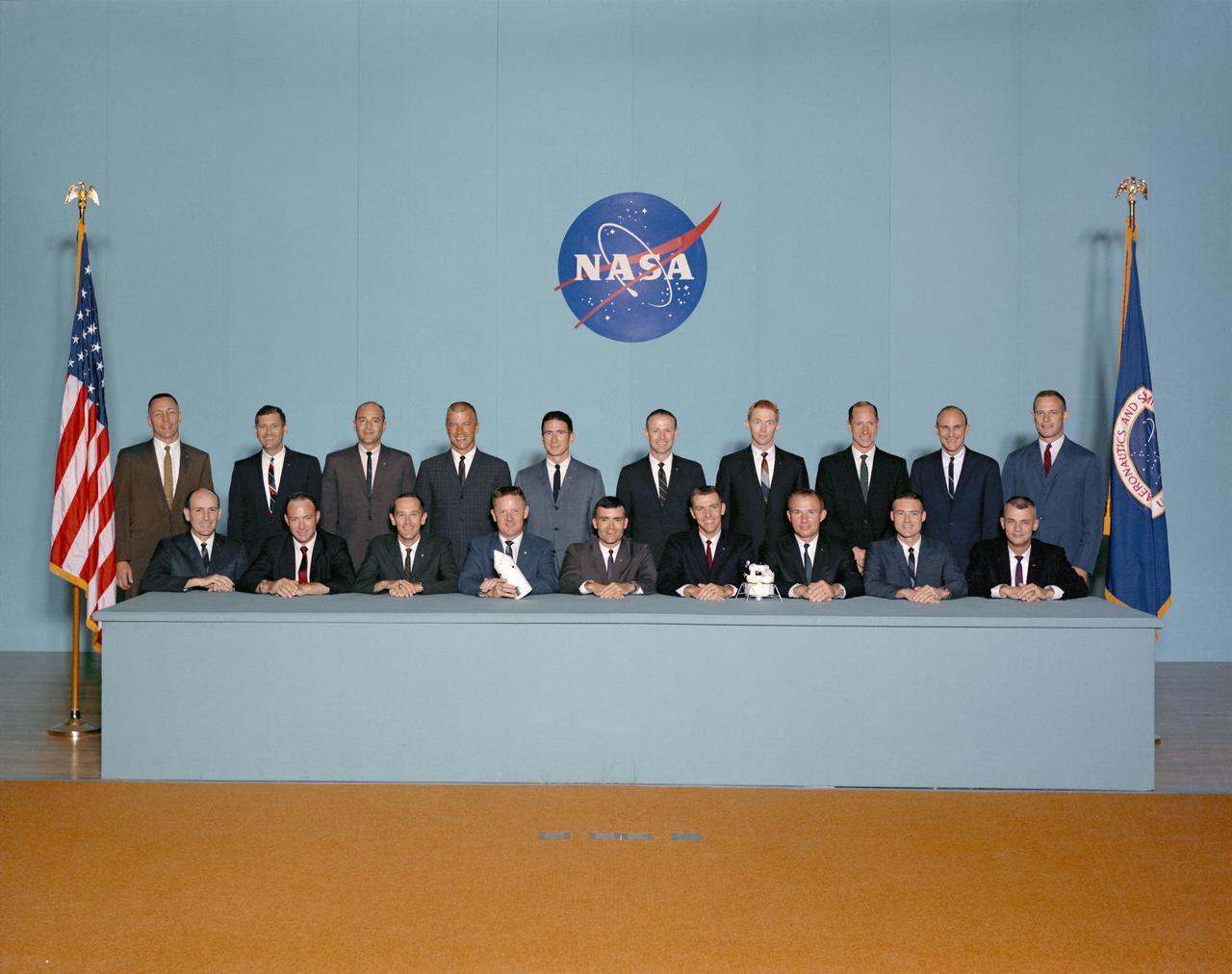
S67-30404 (May 1967) --- Portrait of astronaut group selected April 4, 1966. Seated, left to right, are Edward G. Givens Jr., Edgar D. Mitchell, Charles M. Duke Jr., Don L. Lind, Fred W. Haise Jr., Joe H. Engle, Vance D. Brand, John S. Bull and Bruce McCandless II. Standing, left to right, are John L. Swigert Jr., William R. Pogue, Ronald E. Evans, Paul J. Weitz, James B. Irwin, Gerald P. Carr, Stuart A. Roosa, Alfred M. Worden, Thomas K. Mattingly and Jack R. Lousma. Photo credit: NASA or National Aeronautics and Space Administration
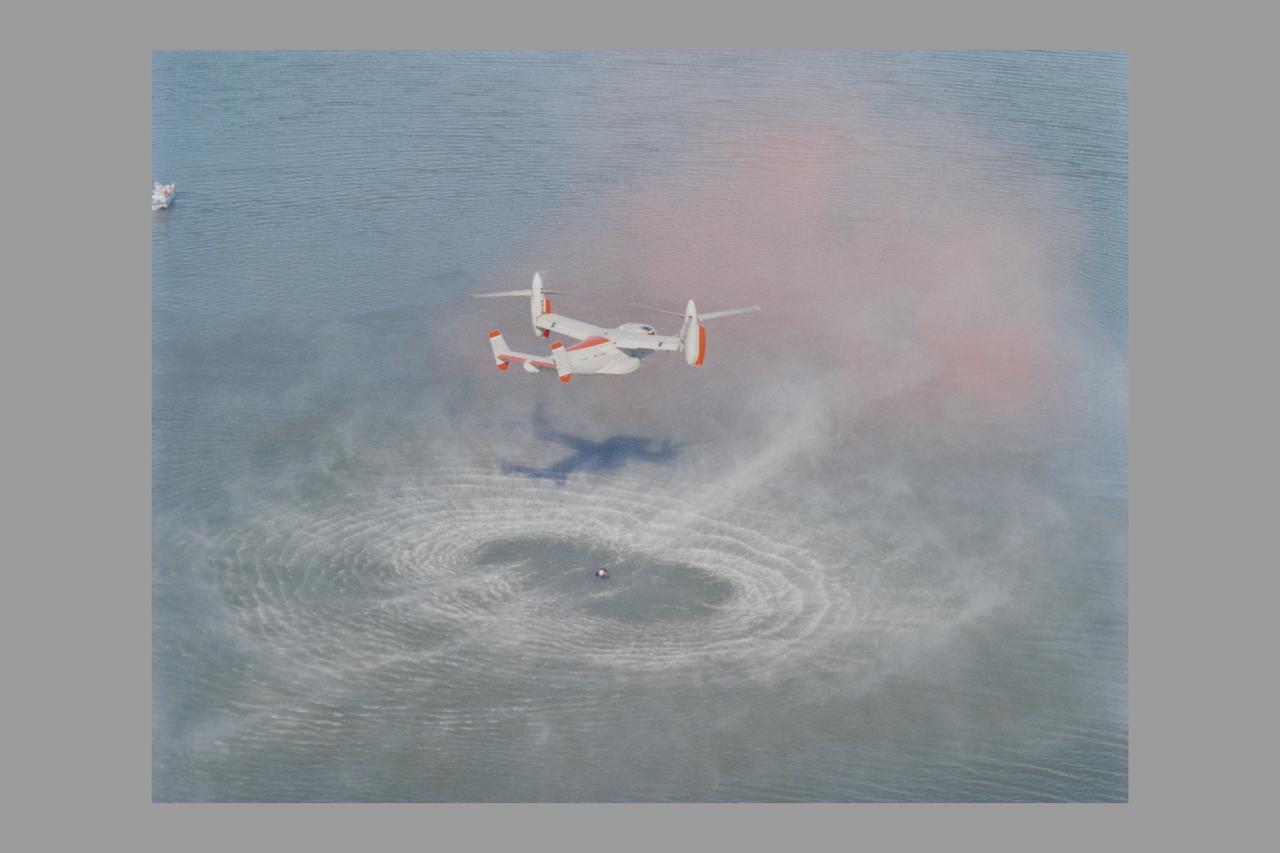
Bell XV-15 Tilt Rotor Army Configurations; Rescue at sea
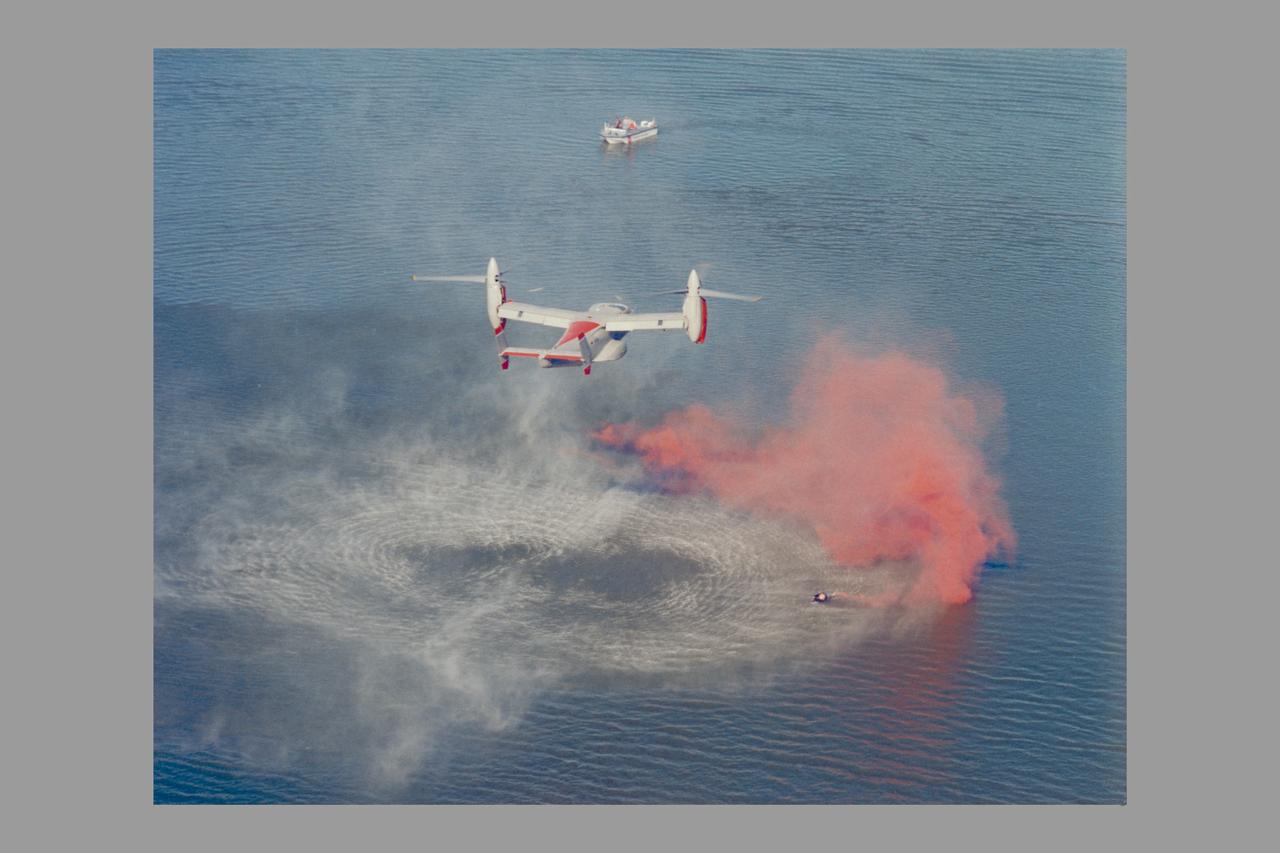
Bell XV-15 Tilt Rotor Army Configurations; Rescue
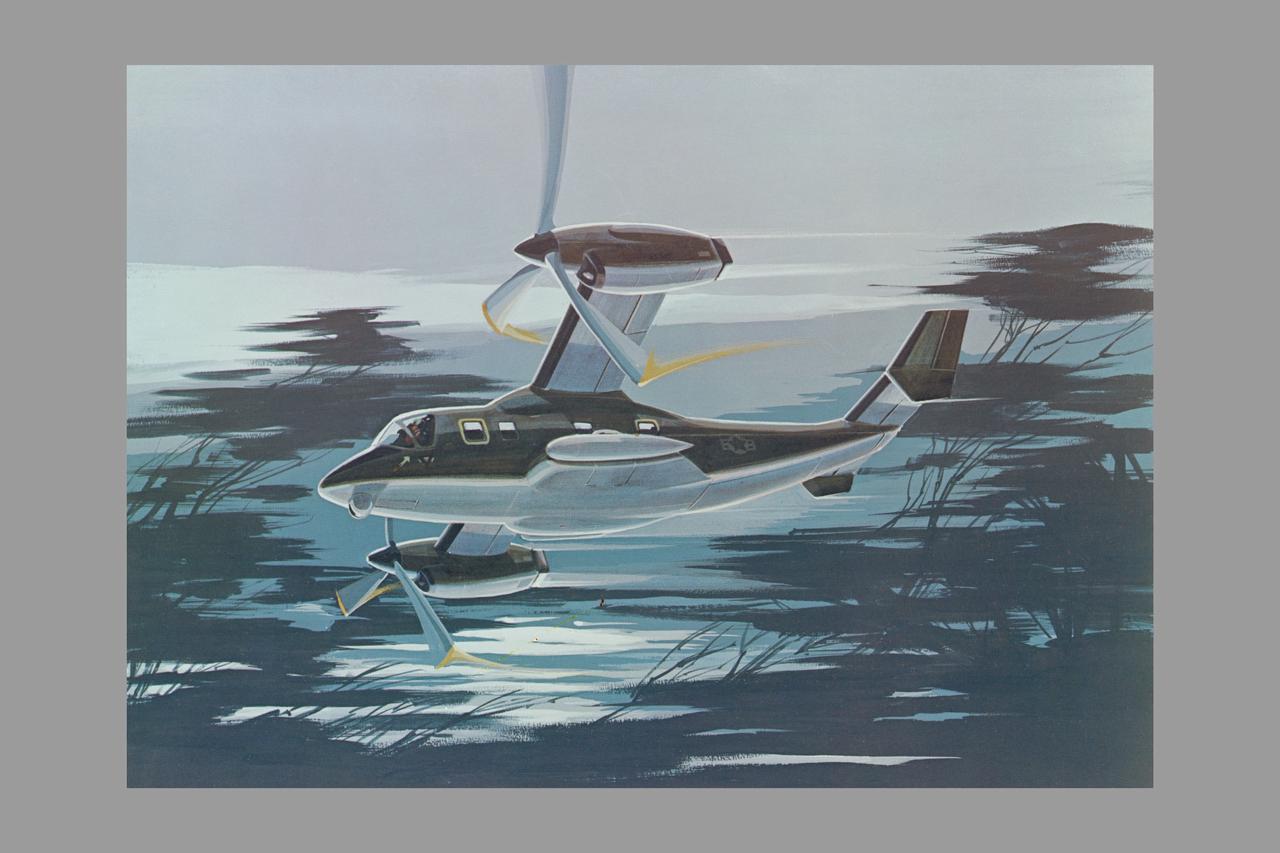
Bell XV-15 Tilt Rotor Army Configurations; Combat, Rescue, and JVX artist renderings
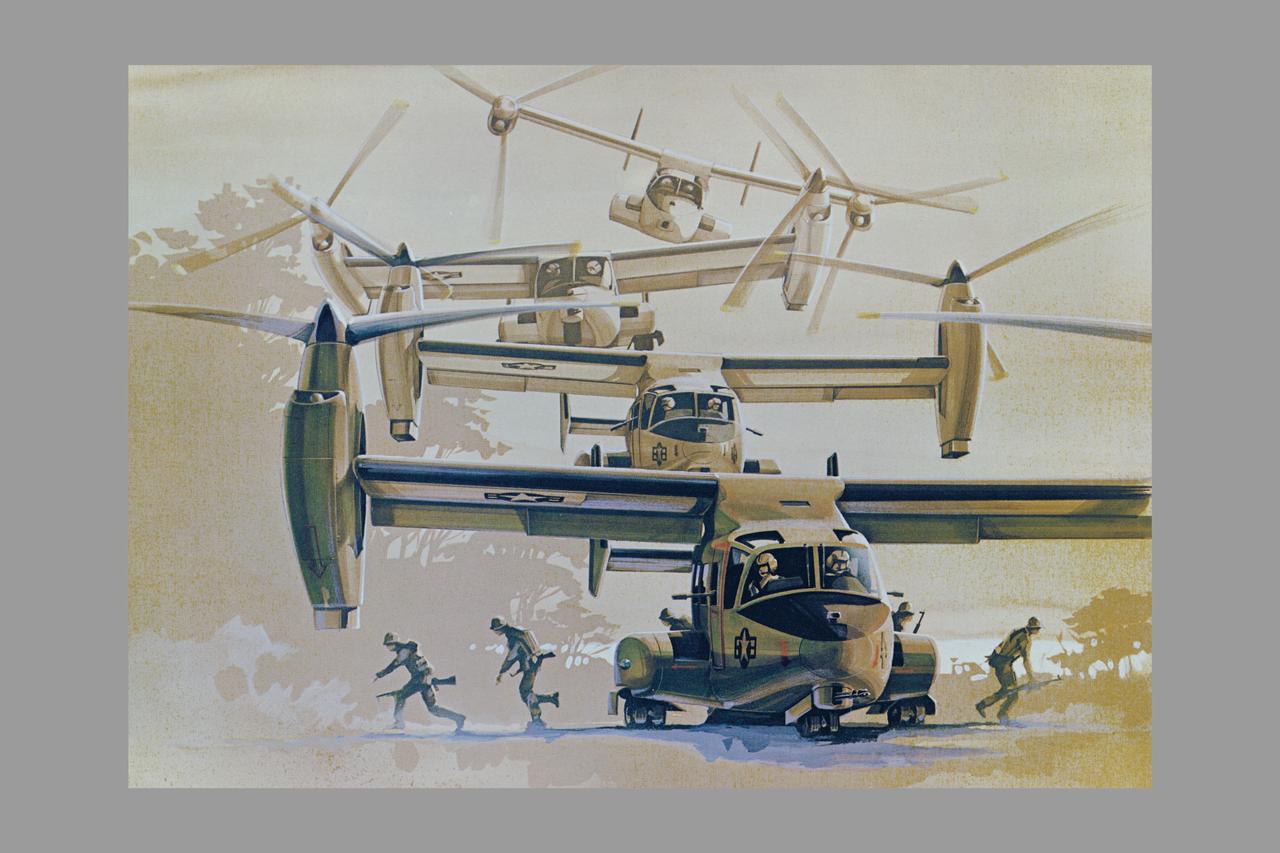
Artists' renderings of Bell XV-15 Army Configurations: Combat, Rescue and JVX
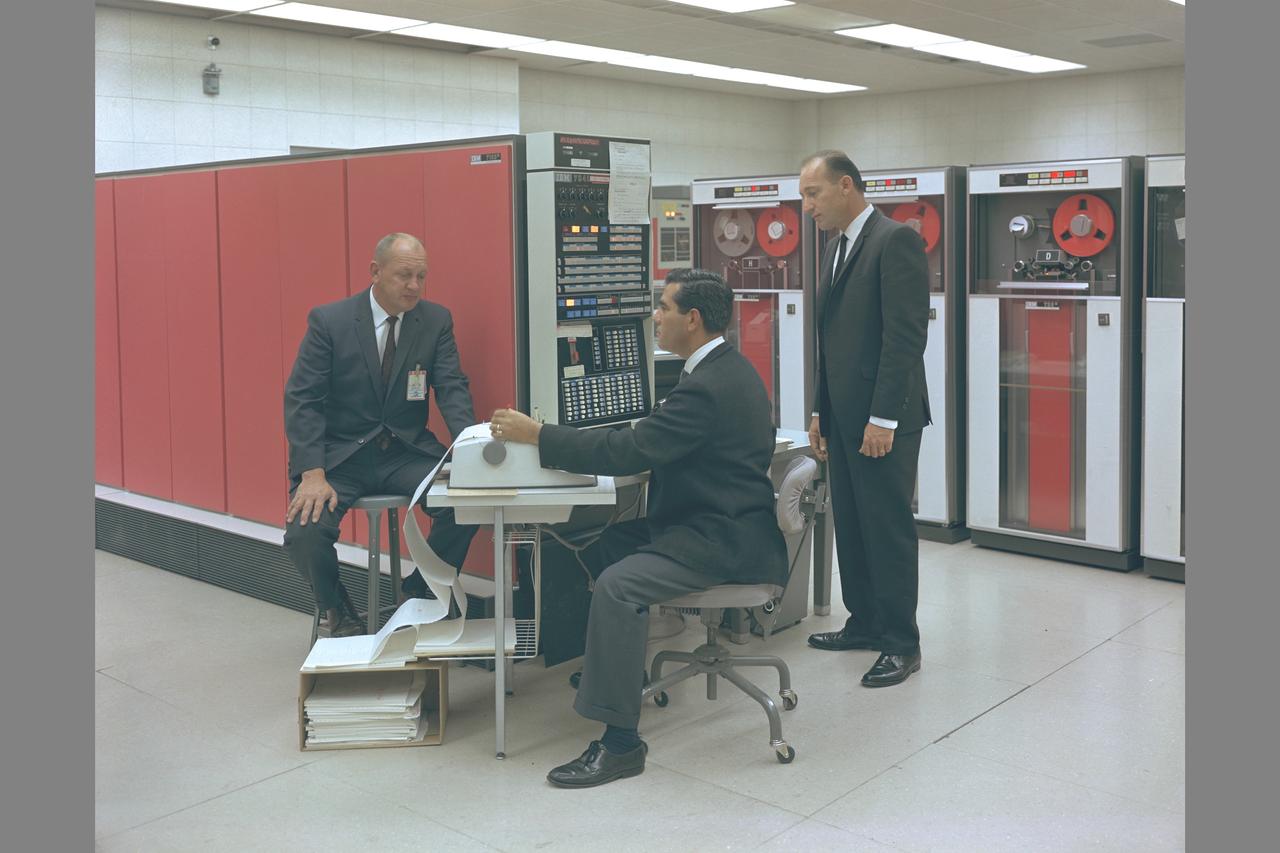
MR. A. NATWICK, MR. T. GONZALES, MR. F. GIALLANZA, AT WORK IN THE 7094 COMPUTER ROOM OF THE PIONEER TAPE PROCESSING STATION AT NASA AMES RESEARCH CENTER. Pioneer Off-Line Data Processing System.
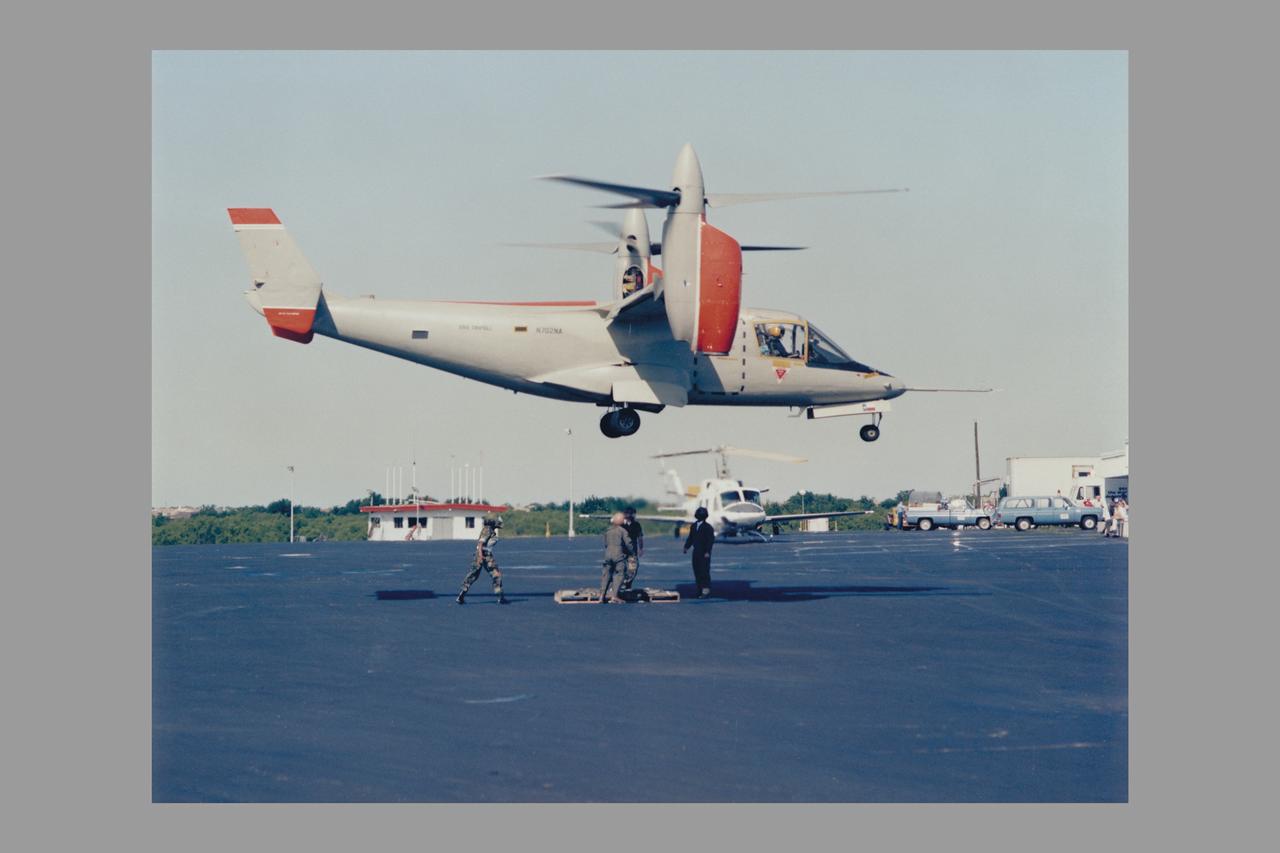
Bell XV-15 Tilt Rotor Army Configurations; Combat
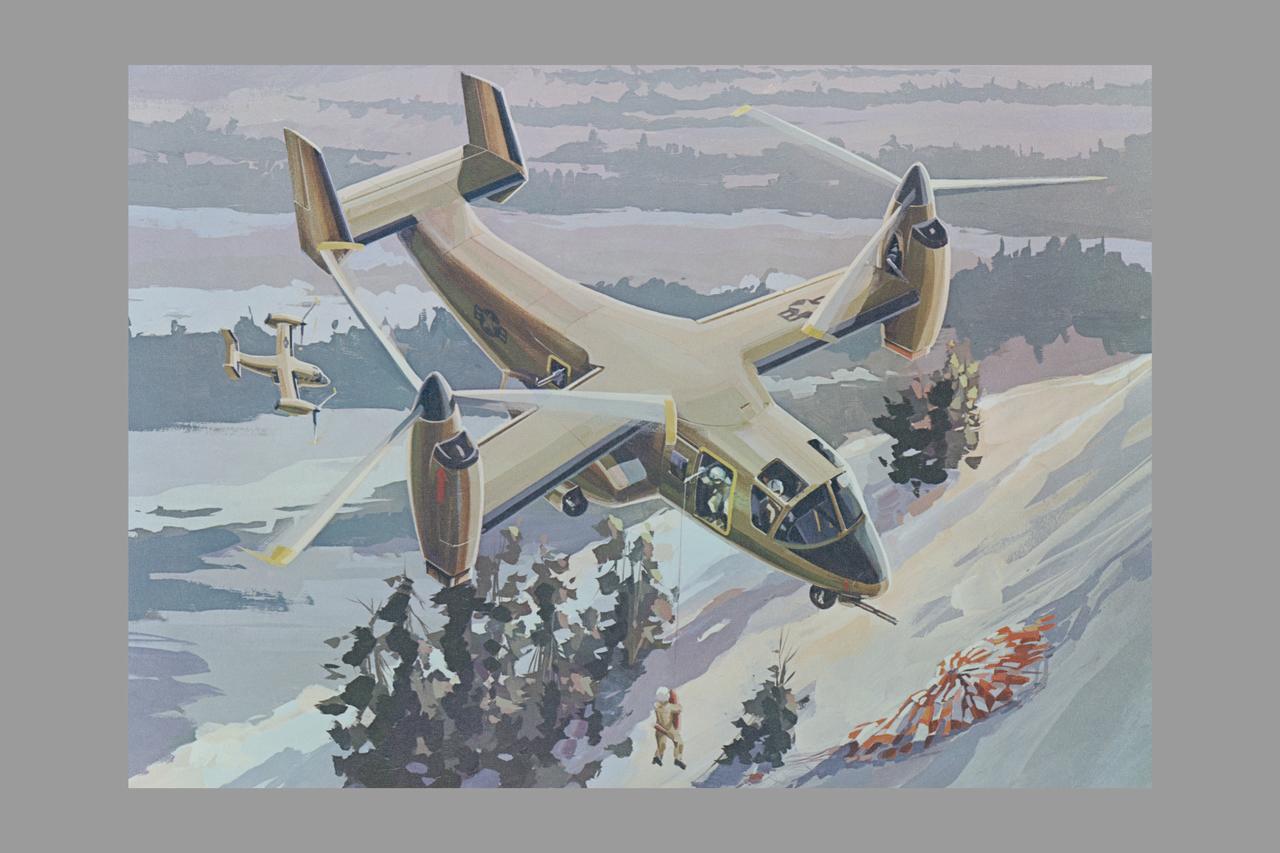
Artists' renderings of Bell XV-15 Army Configurations: Combat, Rescue and JVX
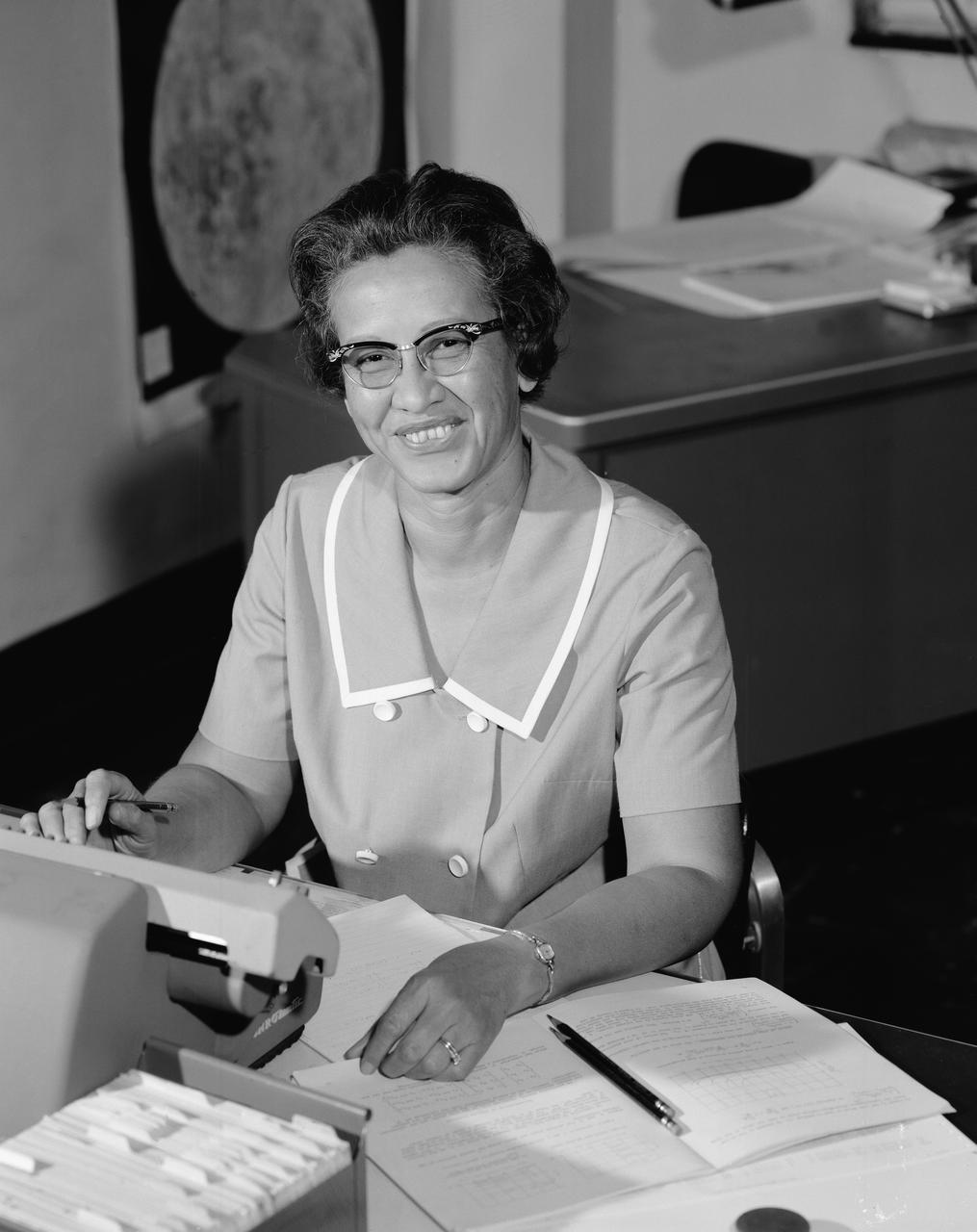
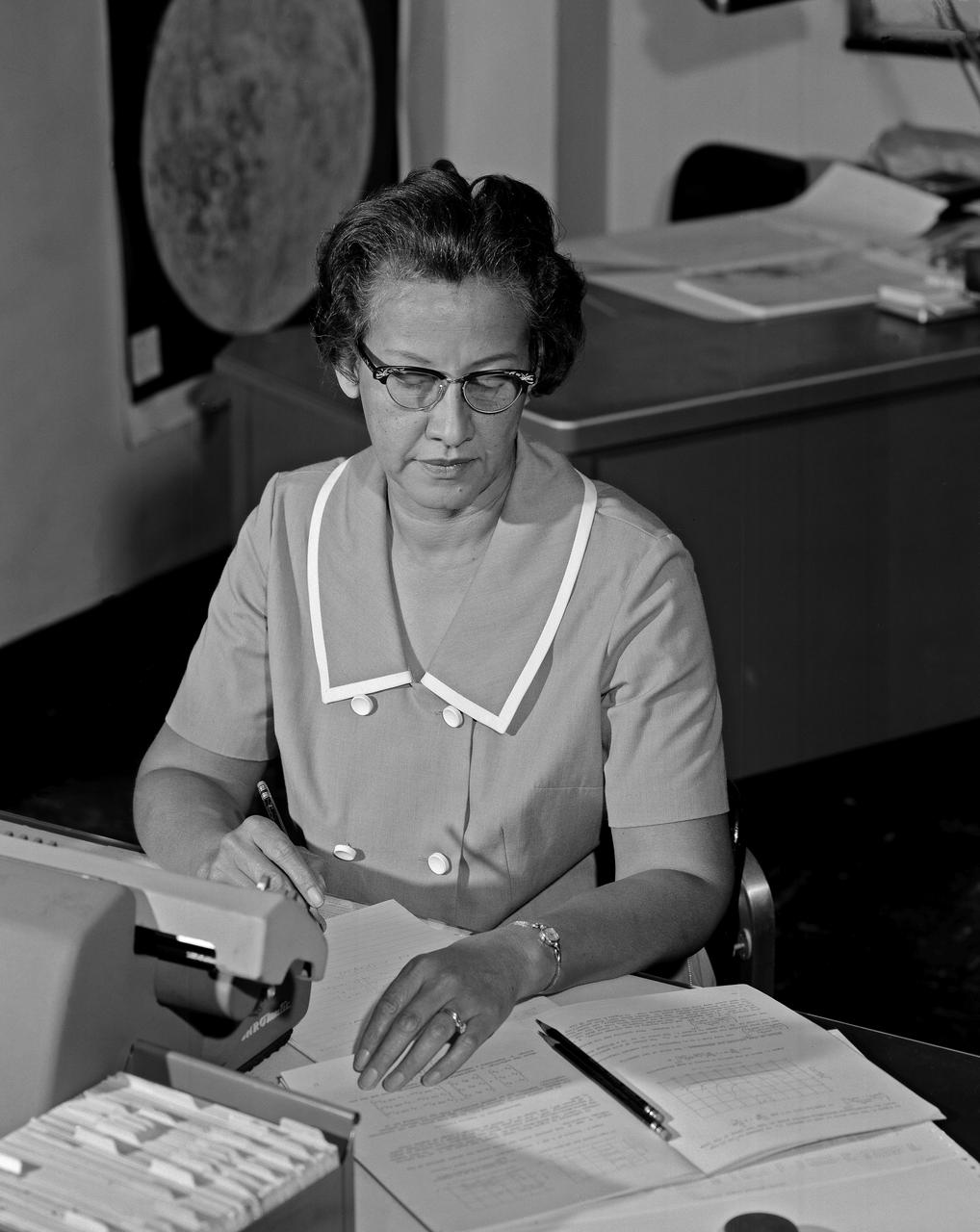
Katherine Johnson At Her Desk at NASA Langley Research Center
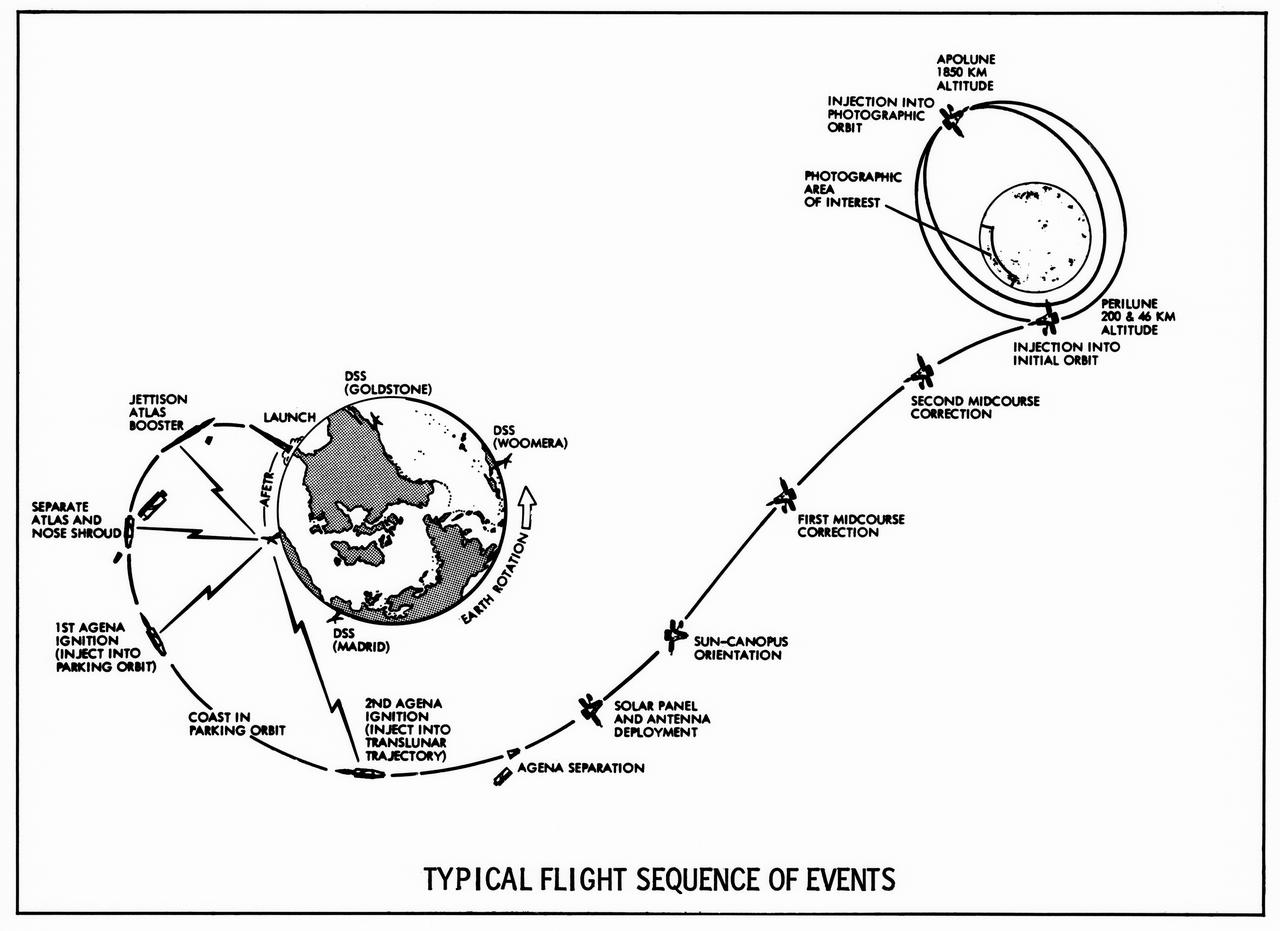
Lunar Orbiter's "Typical Flight sequence of Events" turned out to be quite typical indeed, as all five spacecraft performed exactly as planned. -- Published in James R. Hansen, Spaceflight Revolution: NASA Langley Research Center From Sputnik to Apollo, (Washington: NASA, 1995), p. 340.
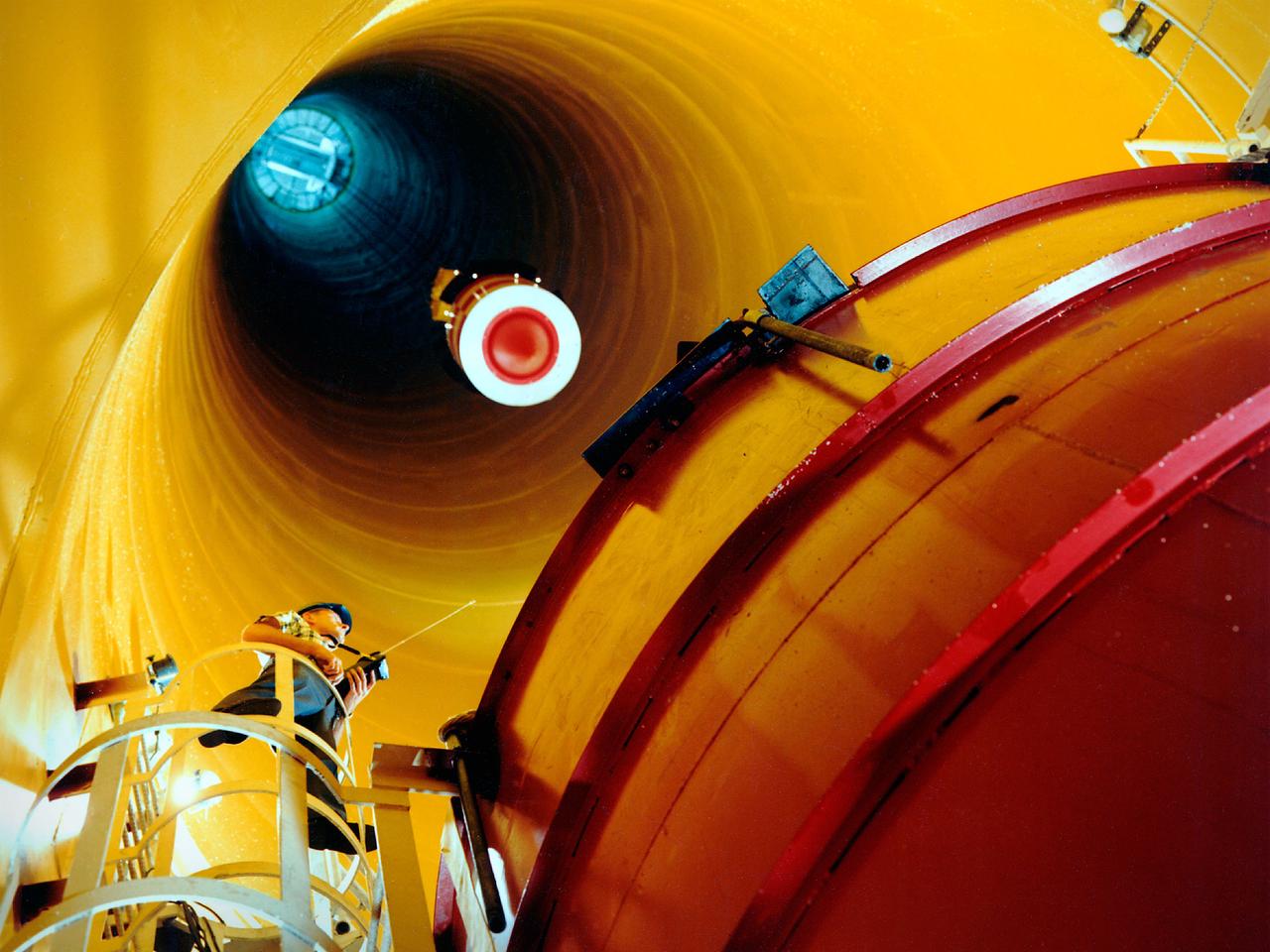
National Aeronautics and Space Administration (NASA) Lewis Research Center. Lewis researchers had been studying the behavior of liquid in microgravity for several years using ballistic rocket flights, aircraft flying series of parabolas, and in the 2.2-Second Drop Tower. It was easier to control experiments and repeat tests based on almost instantaneous test results in the Zero Gravity Research Facility than missiles or aircraft. It also more than doubled the microgravity time of the original drop tower. The experiments were enclosed in a large experiment package that was suspended inside the chamber. A vacuum was introduced to the chamber before the package was released. The test equipment allowed researchers to film and take measurements of the experiment as it was falling. The 2500‐pound package was slowed by special Styrofoam‐like pellets in a decelerator cart. An experiment, traveling 176 feet per second, was stopped in about 15 feet of deceleration material. The facility’s designers struggled to determine the correct type of deceleration pellets to use. For several years Lewis engineers tested various samples from manufacturers. The final selection was not made until the facility’s completion in May 1966, just before the facility made its public debut at the 1966 Inspection of the Center.
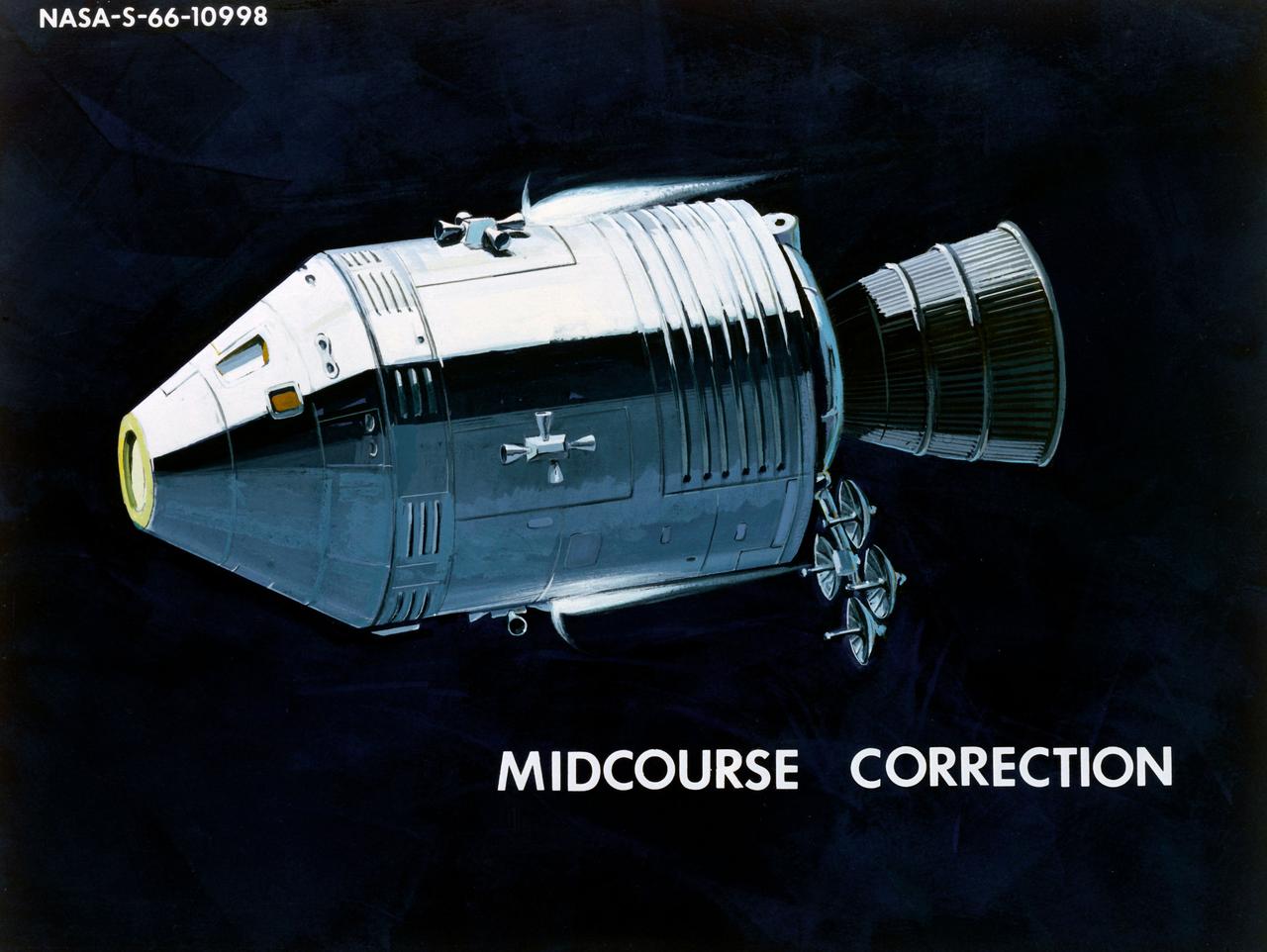
Apollo CM, Mid-Course Correction. MSC, HOUSTON, TX CN/BW 12/01/1966 - 06/01/1966
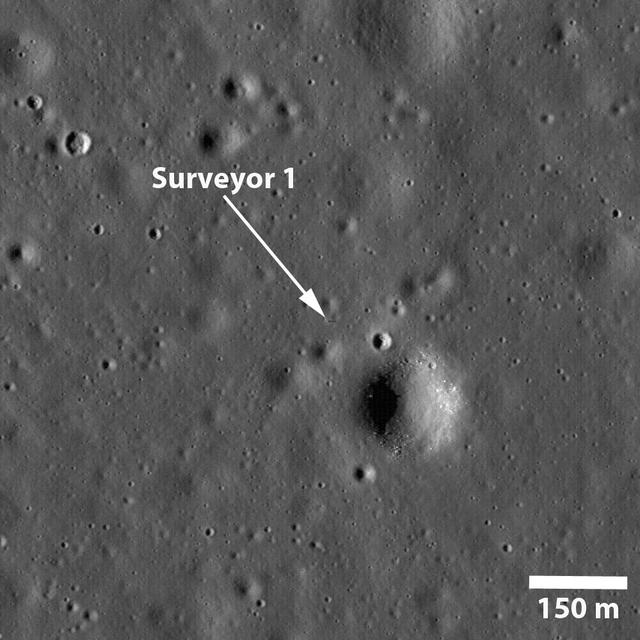
NASA Surveyor 1 spacecraft sitting silently on Oceanus Procellarum, the first US spacecraft to land on another planet on June 2, 1966 in this image taken by NASA Lunar Reconnaissance Orbiter.
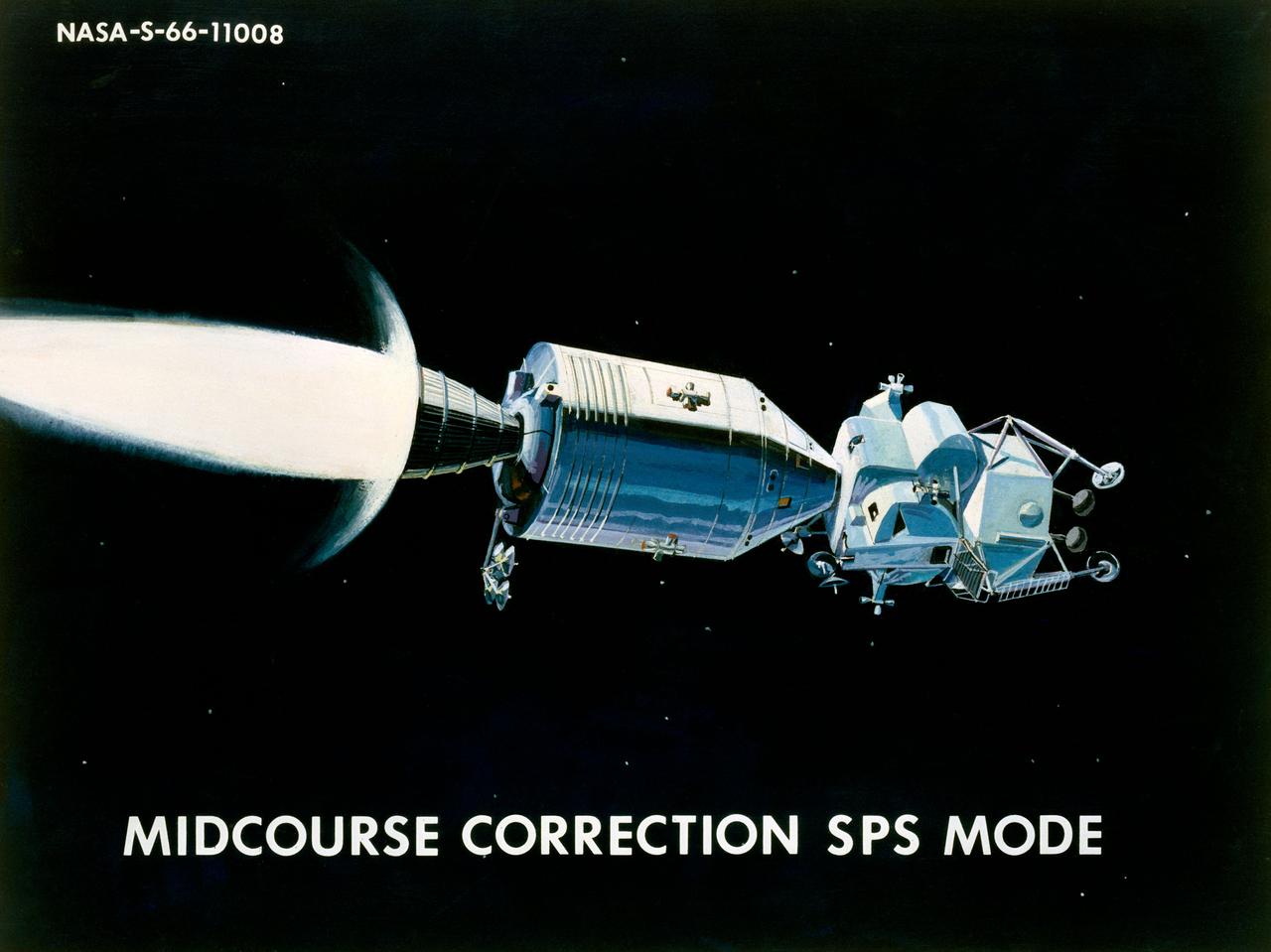
Apollo CM, Mid-Course correction, SPS Mode. MSC, HOUSTON, TX CN/BW 12/01/1966 - 06/01/1966
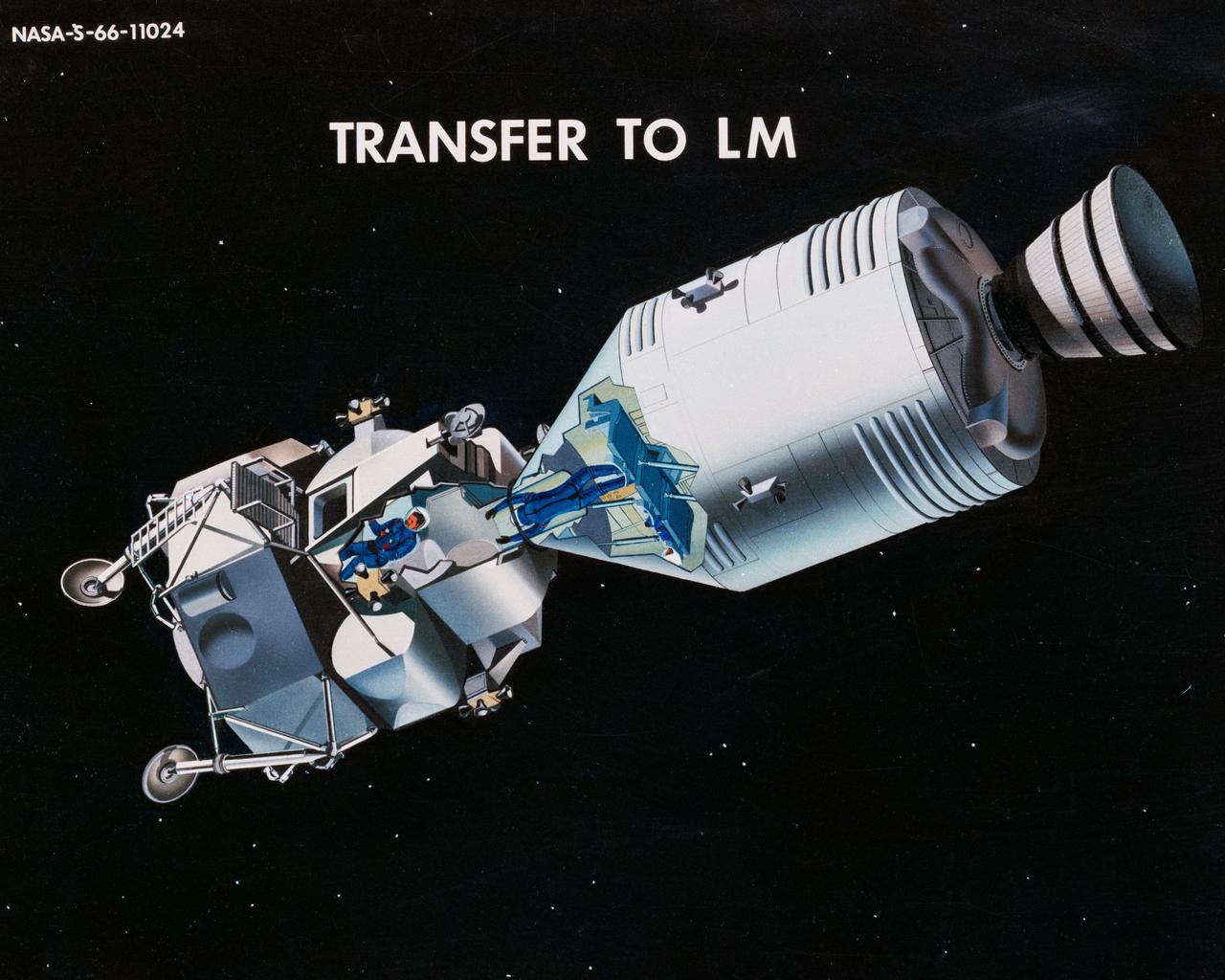
Apollo CM, Transfer to Lunar Module (LM). MSC, HOUSTON, TX CN/BW 12/01/1966 - 06/01/1966
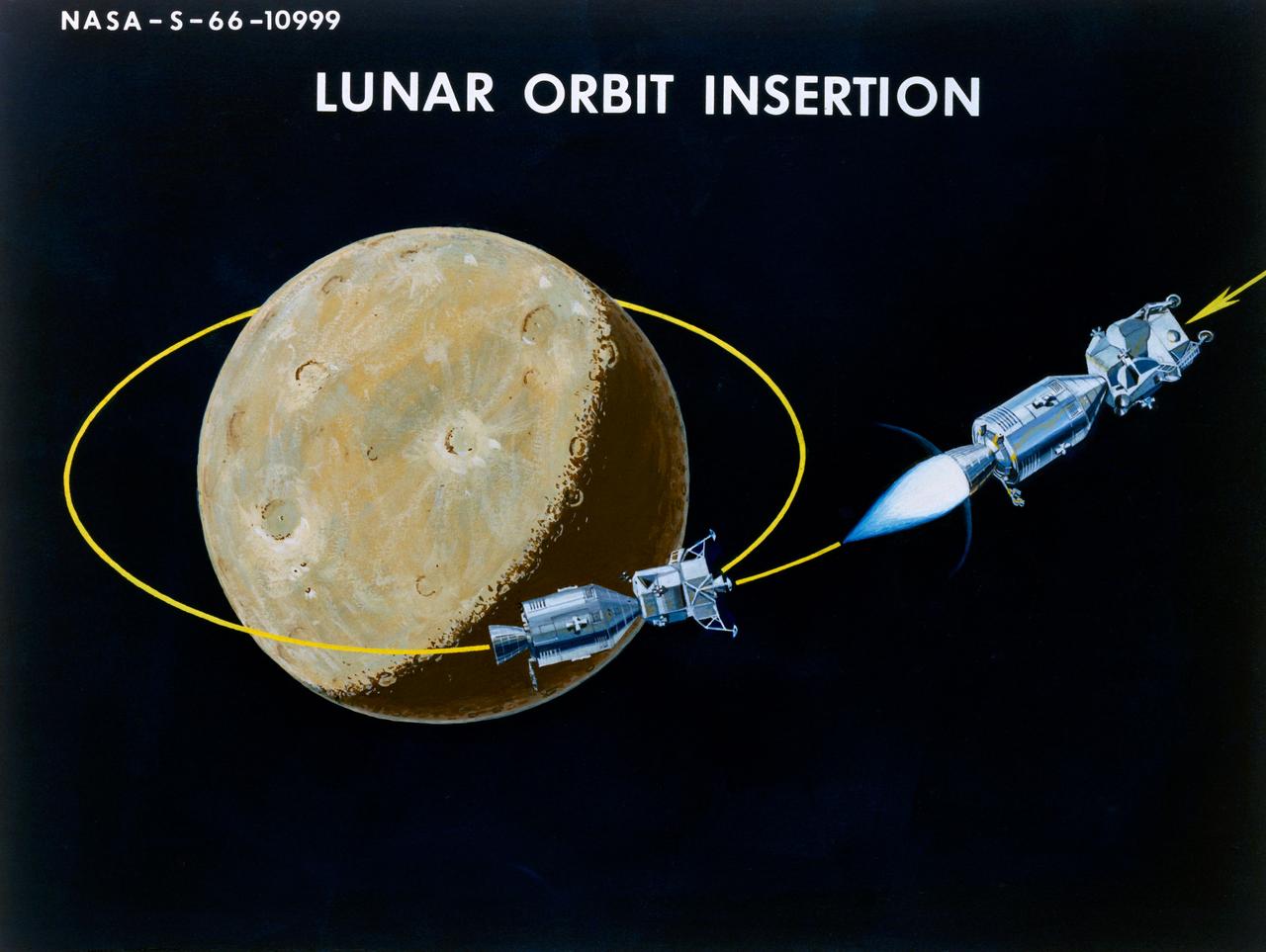
S66-10999 (1966) --- A 1966 artist's concept of an Apollo lunar module linked with the Command and Service Modules during lunar orbit insertion. Photo credit: NASA
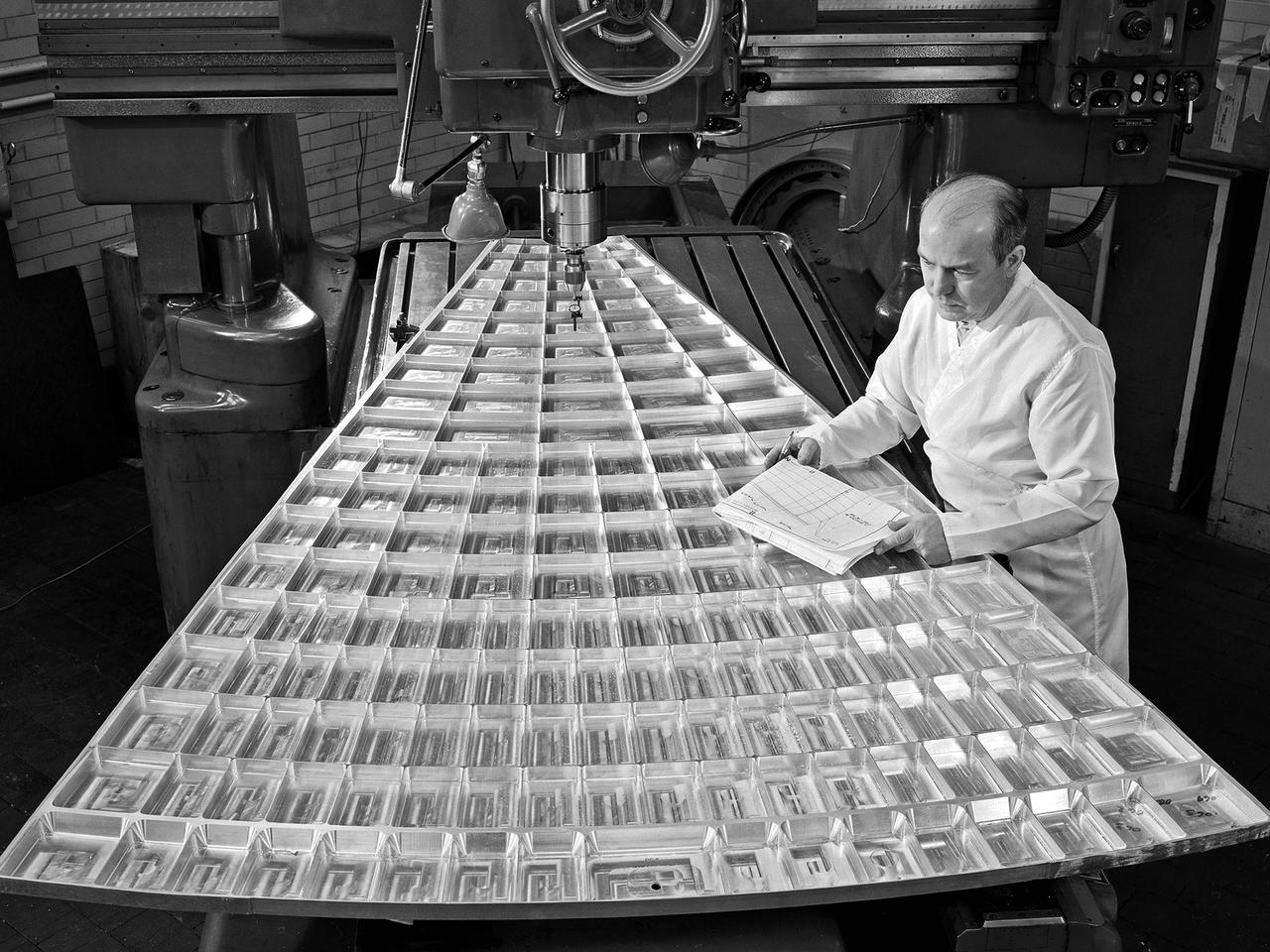
Daniel Bernatowicz, Chief of the Advanced Power Systems Branch at the National Aeronautics and Space Administration (NASA) Lewis Research Center, examines a 20-foot section of a solar mirror being fabricated in the Jig Bore Room of the Technical Services Building. NASA Lewis was conducting a wide-ranging effort to explore methods of generating electrical power for spacecraft. One method employed a large parabolic mirror to concentrate the sun’s energy. The mirror had to remain rigid and withstand micrometeoroids, but remain light and compact enough to be easily launched. In 1963 Bernatowicz and his researchers undertook a program to design a solar mirror to work with the Brayton cycle system on a space station. The mirror in this photograph was prepared for a conference on Advanced Technology in Space Power Systems held at Lewis in late August 1966. Lewis experts discussed advances with batteries, fuel cells, isotope and thermoelectric generators, and the SNAP-8 space power system. Lewis was developing several types of solar mirrors to work with a Brayton cycle electric generating system. The mirror’s 12 sections were shaped using a unique forming process developed at Lewis, coated with an epoxy, and plated with aluminum. The mirror concentrated the Sun's rays on a heat storage receiver containing lithium fluoride. This material was heated to produce power in a turbogenerator system, while additional heat was stored for use when the unit was in the Earth's shadow.
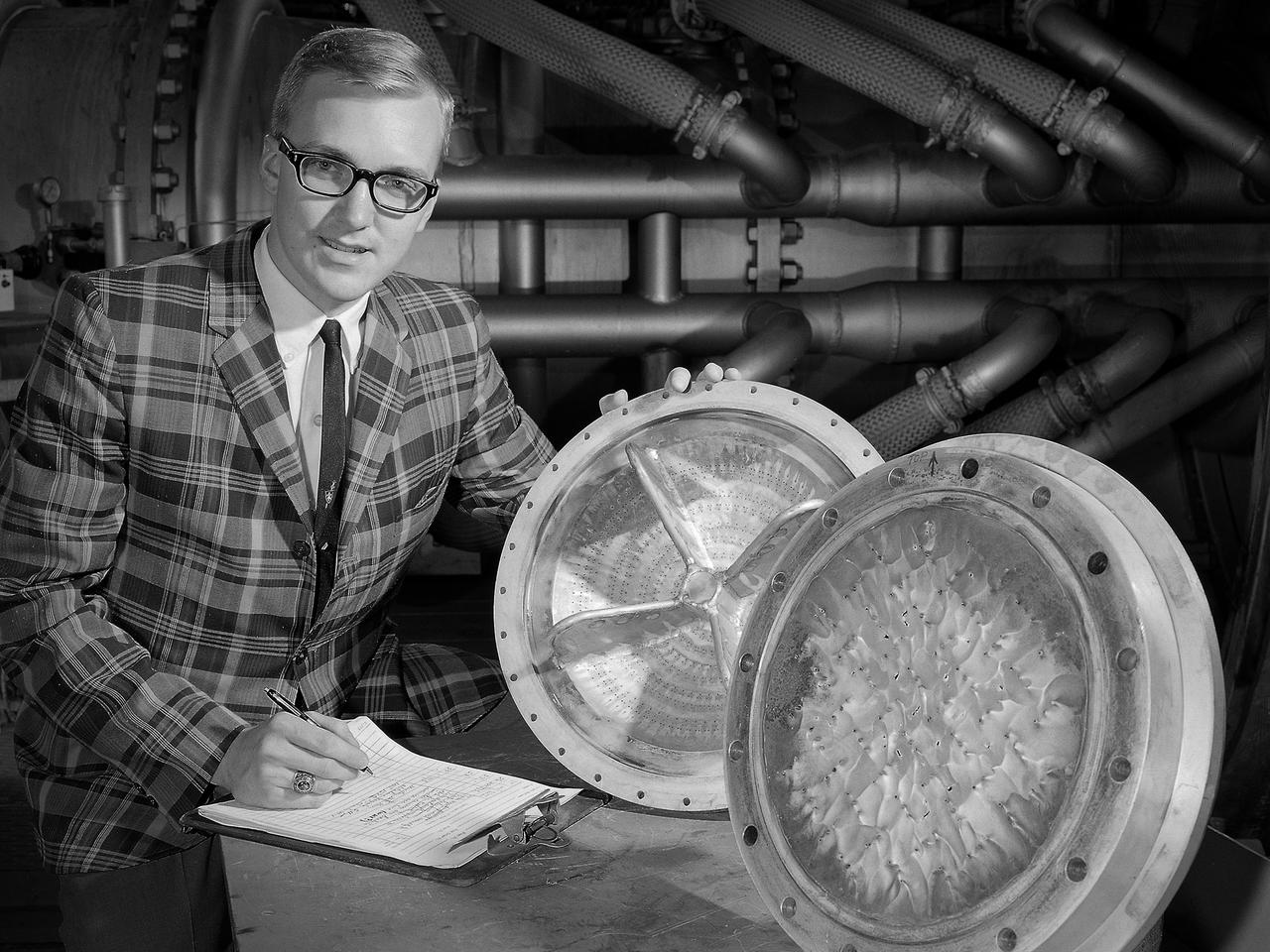
Dan Sokolowski worked as an engineering coop student at the National Aeronautics and Space Administration (NASA) Lewis Research Center from 1962 to 1966 while earning his Mechanical Engineering degree from Purdue. At the time of this photograph Sokolowski had just been hired as a permanent NASA employee in the Chemical Rocket Evaluation Branch of the Chemical Rocket Division. He had also just won a regional American Institute of Aeronautics and Astronautics competition for his paper on high and low-frequency combustion instability. The resolution of the low-frequency combustion instability, or chugging, in liquid hydrogen rocket systems was one of Lewis’ more significant feats of the early 1960s. In most rocket engine combustion chambers, the pressure, temperature, and flows are in constant flux. The engine is considered to be operating normally if the fluctuations remain random and within certain limits. Lewis researchers used high-speed photography to study and define Pratt and Whitney’s RL-10’s combustion instability by throttling the engine under the simulated flight conditions. They found that the injection of a small stream of helium gas into the liquid-oxygen tank immediately stabilized the system. Sokolowski’s later work focused on combustion in airbreathing engines. In 1983 was named Manager of a multidisciplinary program aimed at improving durability of combustor and turbine components. After 39 years Sokolowski retired from NASA in September 2002.
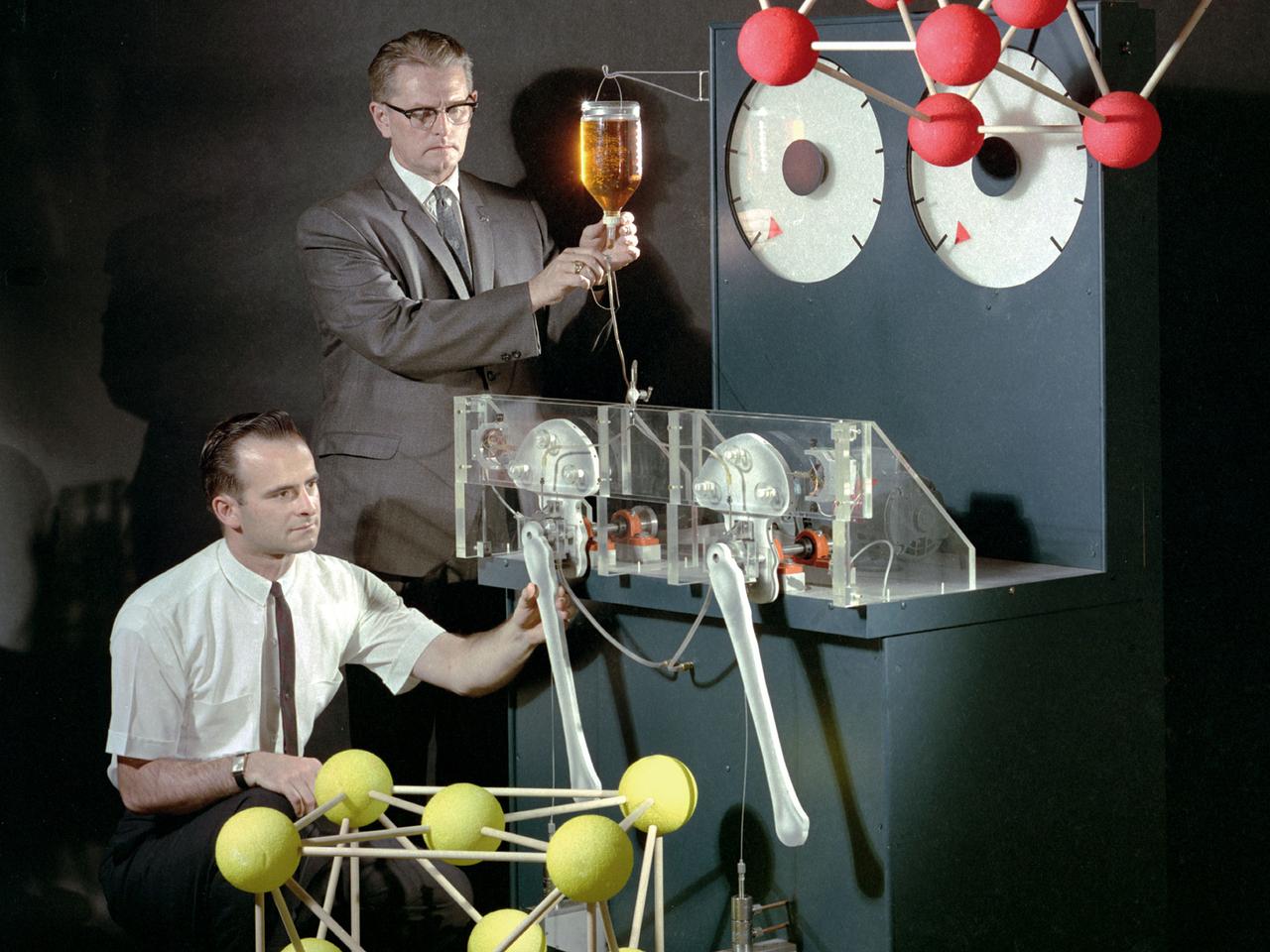
Robert Johnson, top, sets the lubricant flow while Donald Buckley adjusts the bearing specimen on an artificial hip simulator at the National Aeronautics and Space Administration (NASA) Lewis Research Center. The simulator was supplemented by large crystal lattice models to demonstrate the composition of different bearing alloys. This this image by NASA photographer Paul Riedel was used for the cover of the August 15, 1966 edition of McGraw-Hill Product Engineering. Johnson was chief of Lubrication Branch and Buckley head of the Space Environment Lubrication Section in the Fluid System Components Division. In 1962 they began studying the molecular structure of metals. Their friction and wear testing revealed that the optimal structure for metal bearings was a hexagonal crystal structure with proper molecular space. Bearing manufacturers traditionally preferred cubic structures over hexagonal arrangements. Buckley and Johnson found that even though the hexagonal structural was not as inherently strong as its cubic counterpart, it was less likely to cause a catastrophic failure. The Lewis researchers concentrated their efforts on cobalt-molybdenum and titanium alloys for high temperatures applications. The alloys had a number of possible uses, included prosthetics. The alloys were similar in composition to the commercial alloys used for prosthetics, but employed the longer lasting hexagonal structure.
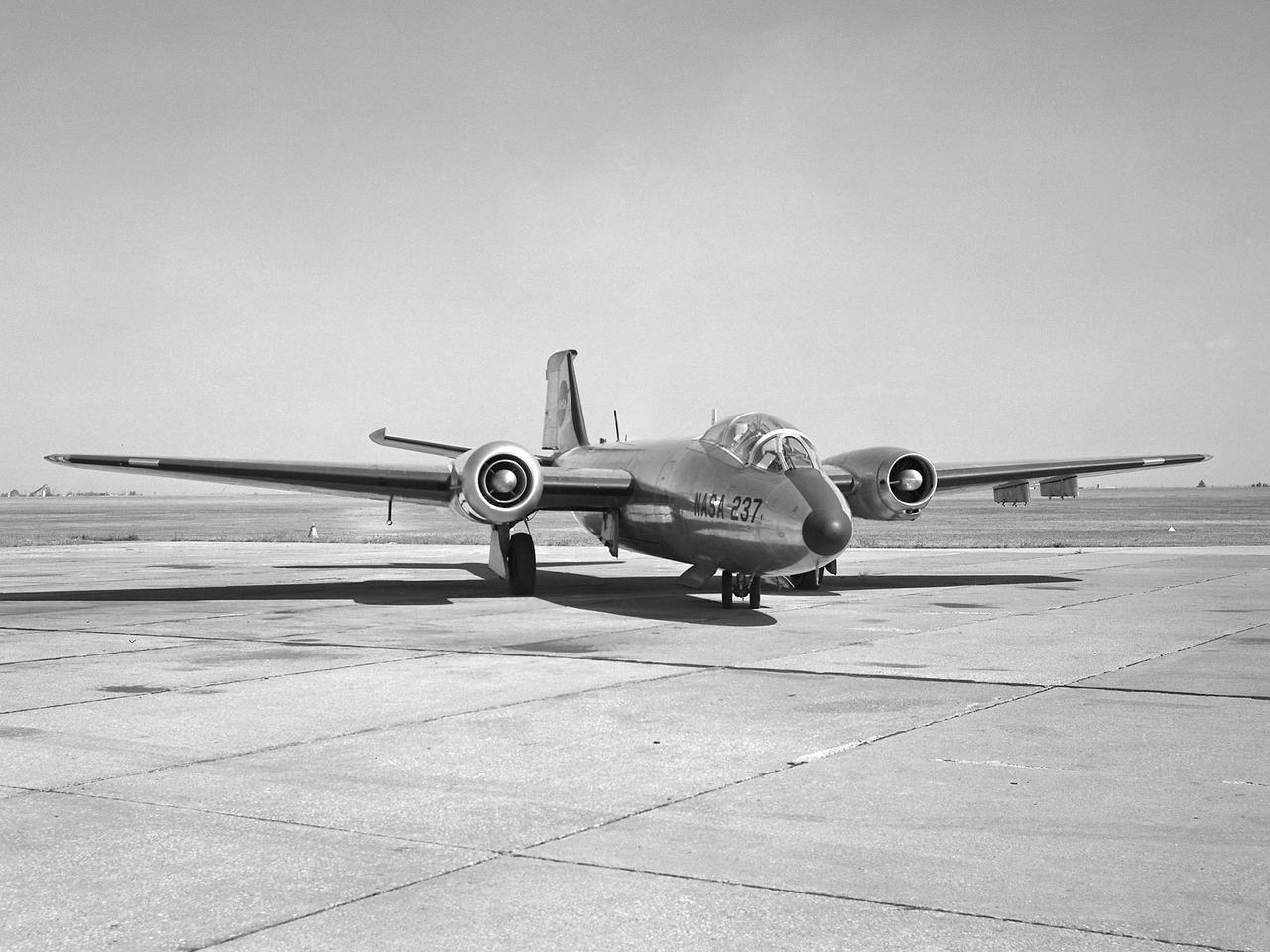
A Martin B-57B Canberra outfitted with a noise suppressor on its right engine at the National Aeronautics and Space Administration (NASA) Lewis Research Center. The aircraft was being prepared for the October 1966 Inspection of the center. The Inspection also marked Lewis’ twentieth anniversary. Lewis researchers had been studying engine noise for almost a decade, but the problem seemed to be increasing in the mid-1960s with heavier airline traffic and larger engines. Researchers discovered early on that the majority of the noise did not emanate from the engine itself, but from the mixing of the hot exhaust gasses with the atmosphere. Attempts to reduce the turbulence using new exhaust nozzles were successful but often resulted in decreased engine performance. The researchers decided to try to lower the jet nozzle exit velocity without decreasing its thrust. The inlet mass air flow had to be increased to accomplish this. The Lewis B-57B was powered by two Wright Aeronautical J65 turbojets. Lewis engineers modified the stators on the two engines to simulate the noise levels from more-modern turbofan engines. A noise suppressor was added to only one of the two engines, seen here on the left. The engines were run one at a time at power levels similar to landing while the aircraft sat on the Lewis hangar apron. A microphone and recording equipment was setup to capture the noise levels. The engine with the suppressor produced 13 fewer decibels than the standard engine.
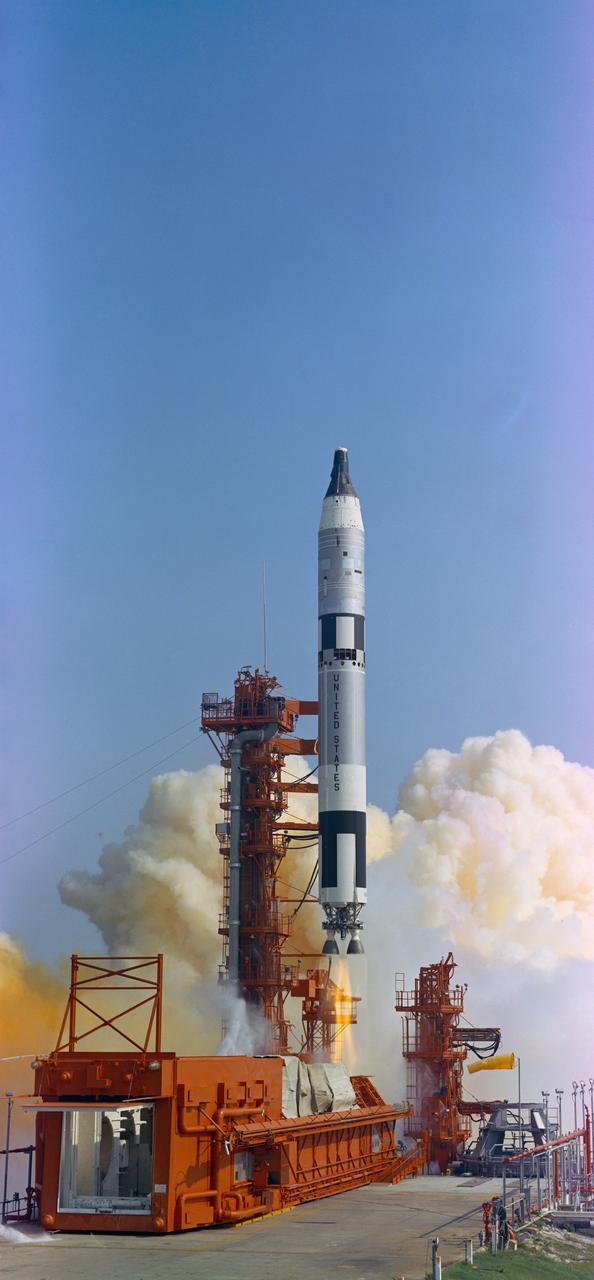
S66-34098 (3 June 1966) --- The Gemini-9 spacecraft was successfully launched from the Kennedy Space Center's Launch Complex 19 at 8:39 a.m. (EST), June 3, 1966. Photo credit: NASA
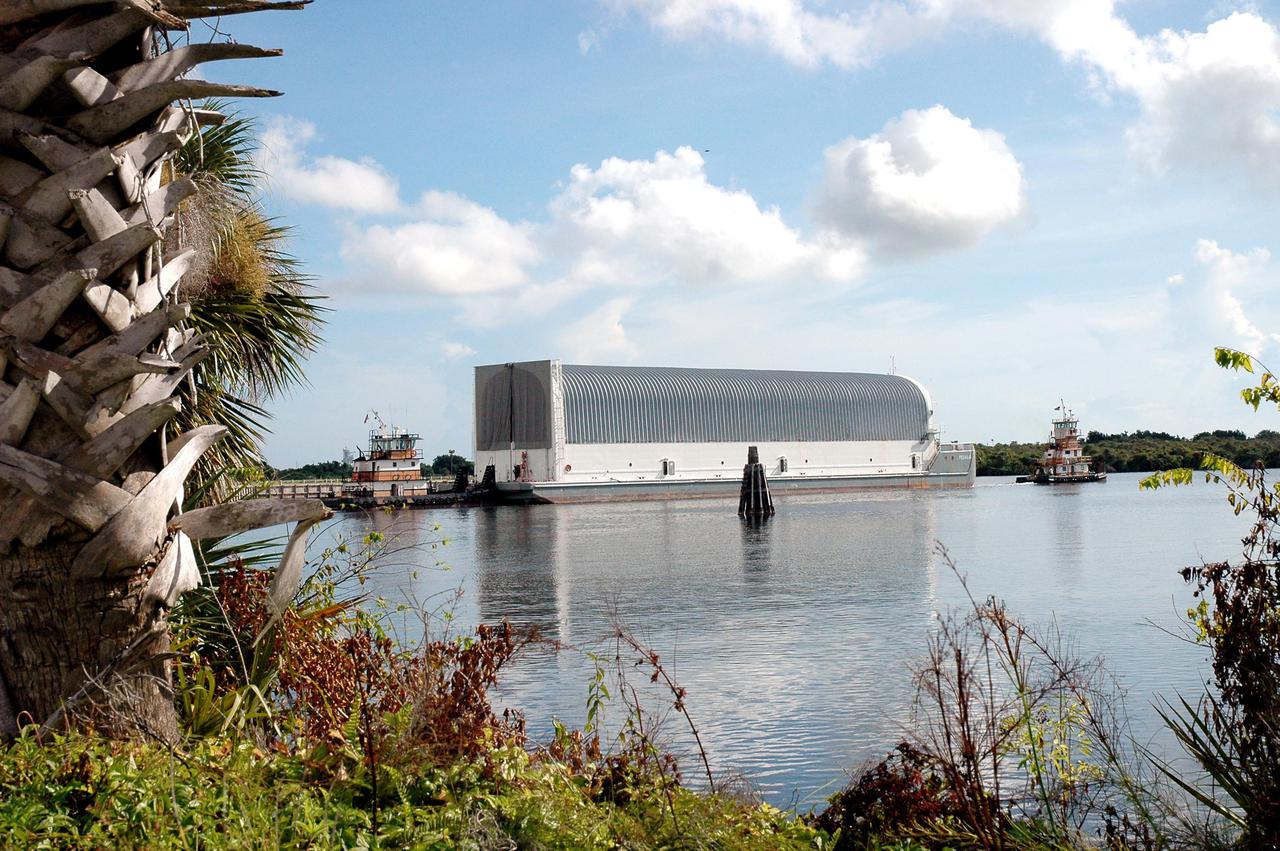
KENNEDY SPACE CENTER, FLA. - Viewed across the Turn Basin at NASA Kennedy Space Center, the barge Pegasus is towed away from the dock on the other side. It is being towed to Port Canaveral where it will join one of the Solid Rocket Booster Recovery Ships and begin its journey around the Florida peninsula to Michoud Assembly Facility in New Orleans. The barge’s cargo is External Tank 119. Delivered to KSC in June, ET-119 is the third newly redesigned tank.
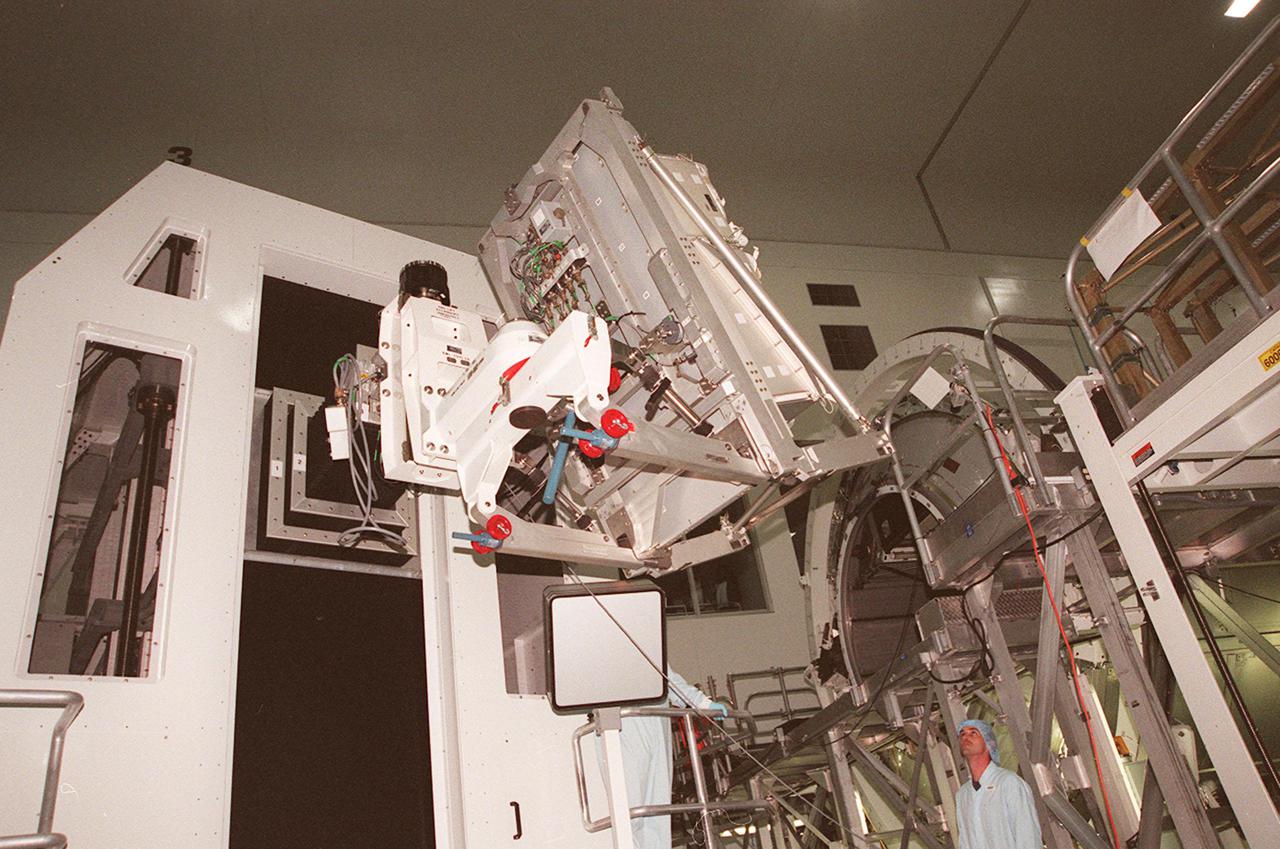
KENNEDY SPACE CENTER, FLA. -- In the Space Station Processing Facility, the Rack Insertion Unit lifts another laboratory rack to the Multi-Purpose Logistics Module Leonardo, in the background. The MPLM is the first of three such pressurized modules that will serve as the International Space Station’s “moving vans,” carrying laboratory racks filled with equipment, experiments and supplies to and from the International Space Station aboard the Space Shuttle. Leonardo will be launched for the first time March 1, 2001, on Shuttle mission STS-102. On that flight, Leonardo will be filled with equipment and supplies to outfit the U.S. laboratory module, being carried to the ISS on the Jan. 19, 2001, launch of STS-98
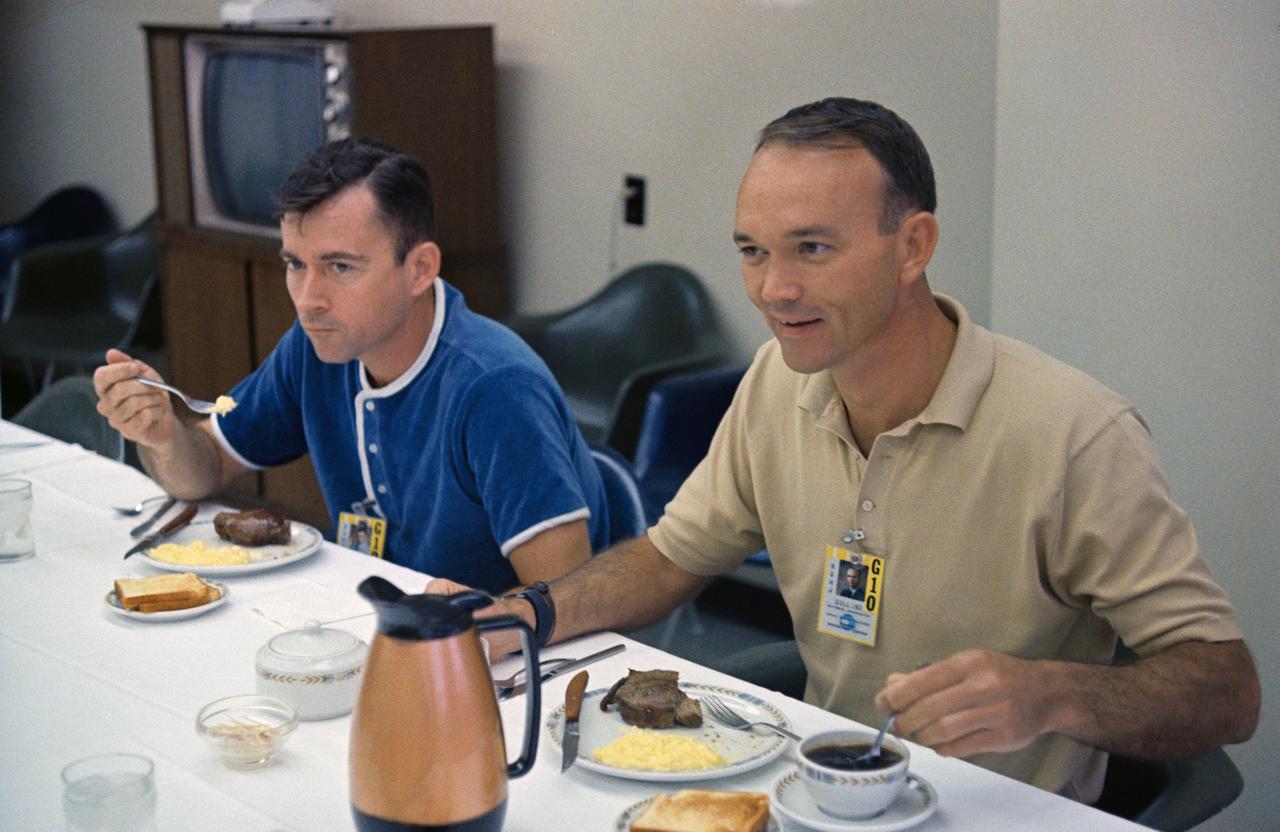
S66-42748 (18 July 1966) --- The Gemini-10 prime crew, astronauts John W. Young (left), command pilot, and Michael Collins, pilot, enjoy a breakfast of steak and eggs on the day of the Gemini-10 launch. The Gemini-10 liftoff was at 5:20 p.m. (EST), July 18, 1966. Photo credit: NASA
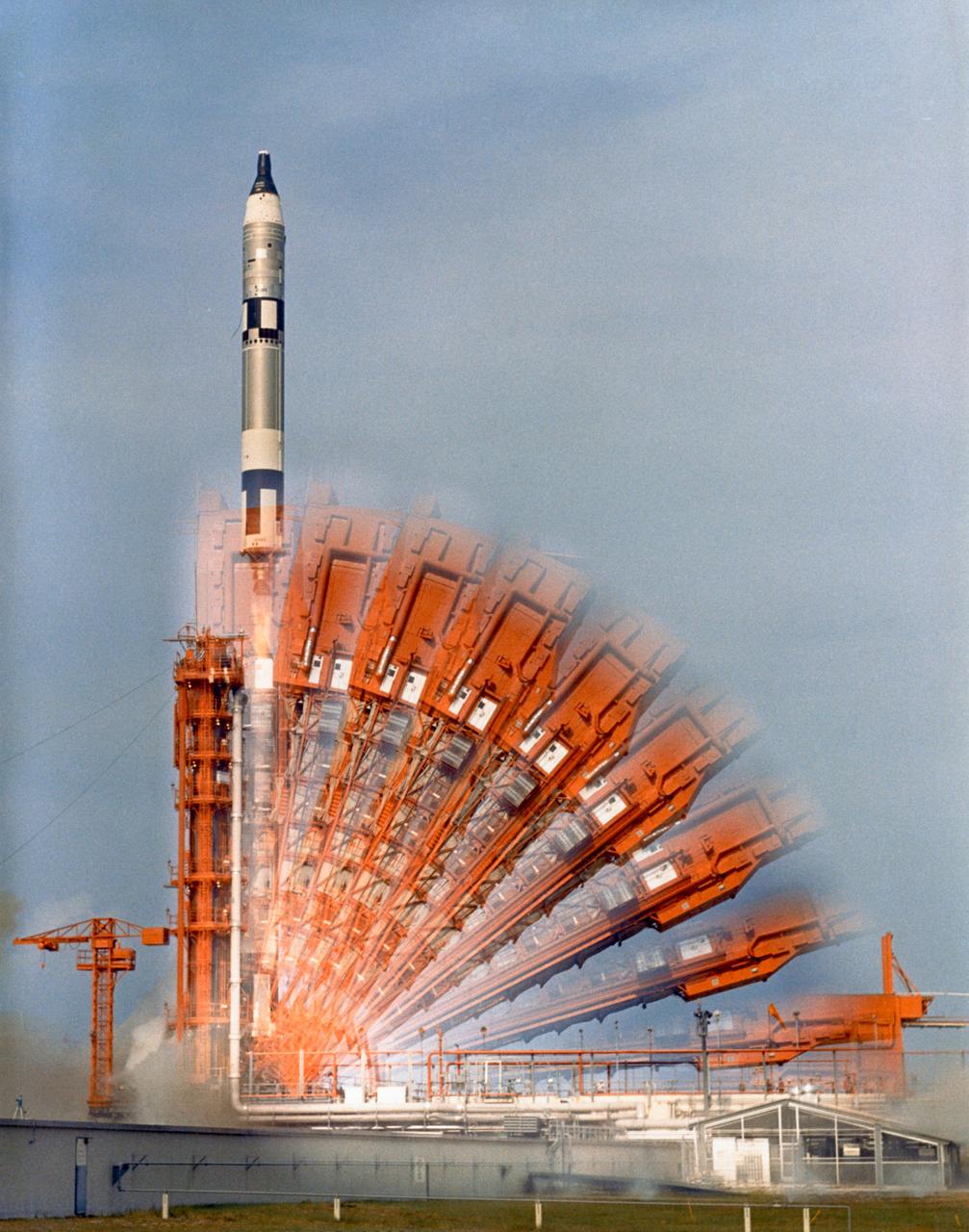
S66-42762 (18 July 1966) --- The Gemini-10 spacecraft is launched from Complex 19 at 5:20 p.m., July 18, 1966. A time exposure creates the illusion of multiple rocker arms. Onboard are astronauts John W. Young, command pilot, and Michael Collins, pilot. Photo credit: NASA
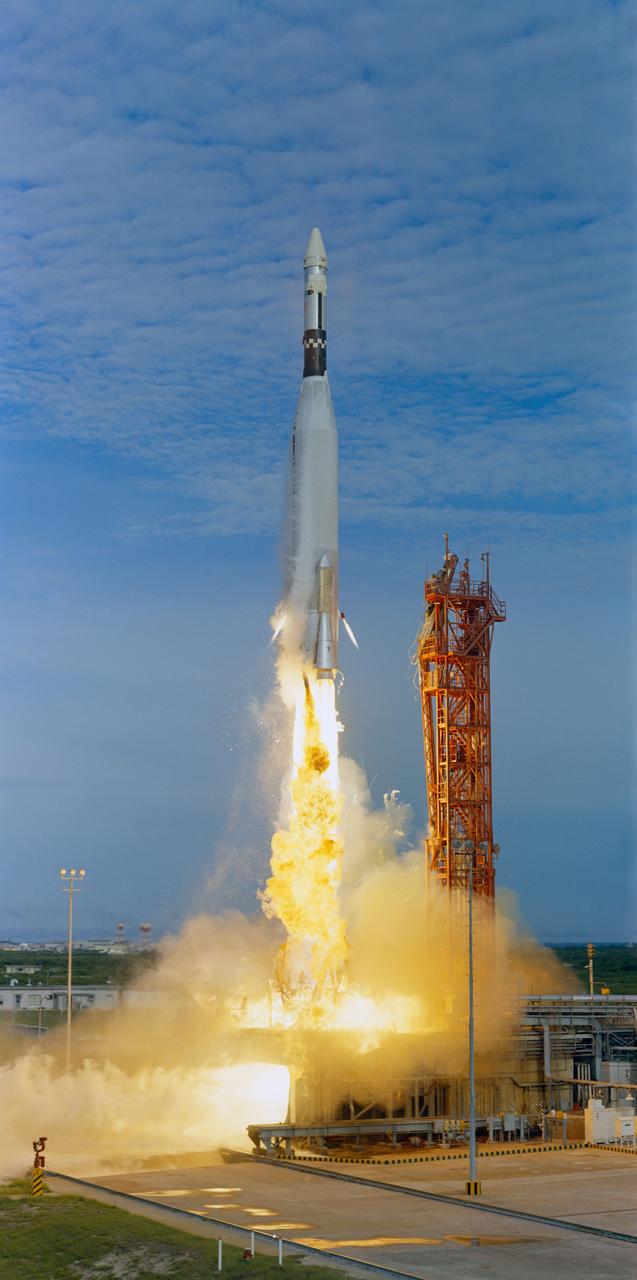
S66-50784 (12 Sept. 1966) --- An Agena Target Docking Vehicle atop its Atlas launch vehicle was launched from the Kennedy Space Center's Launch Complex 14 at 6:05 a.m., Sept. 12, 1966. The Agena served as a rendezvous and docking vehicle for the Gemini-11 spacecraft. Photo credit: NASA
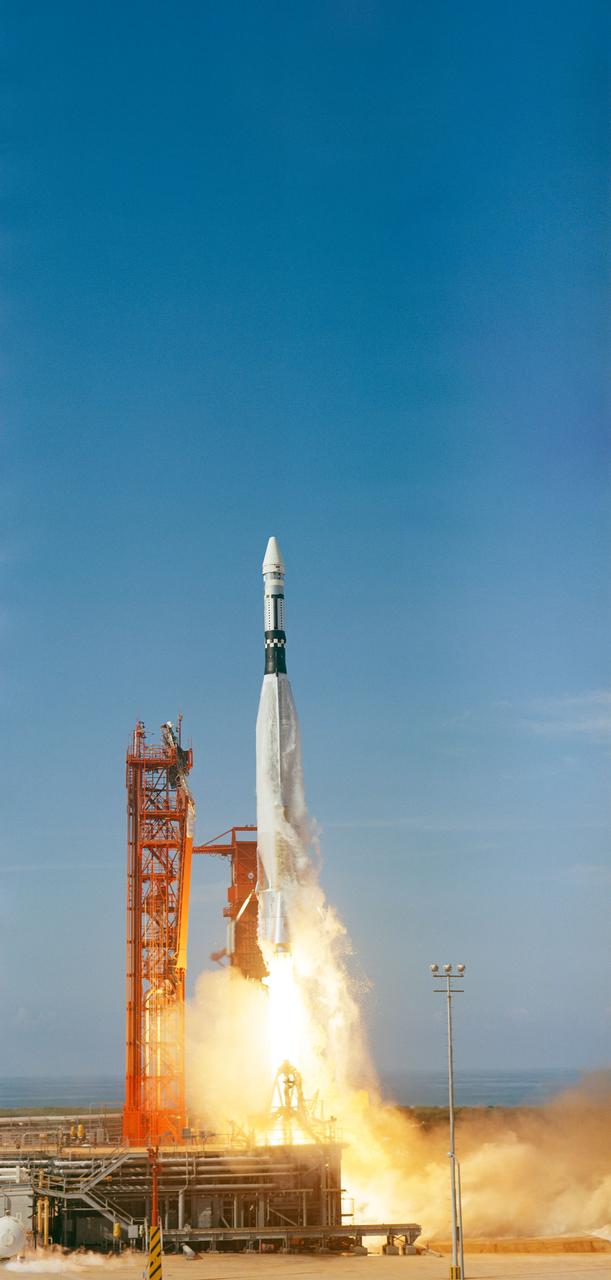
S66-64544 (11 Nov. 1966) --- An Agena Target Docking Vehicle atop its Atlas launch vehicle was launched from the Kennedy Space Center's Launch Complex 14 at 2:08 p.m. (EST), Nov. 11, 1966. The Agena served as a rendezvous and docking vehicle for the Gemini-12 spacecraft. Photo credit: NASA
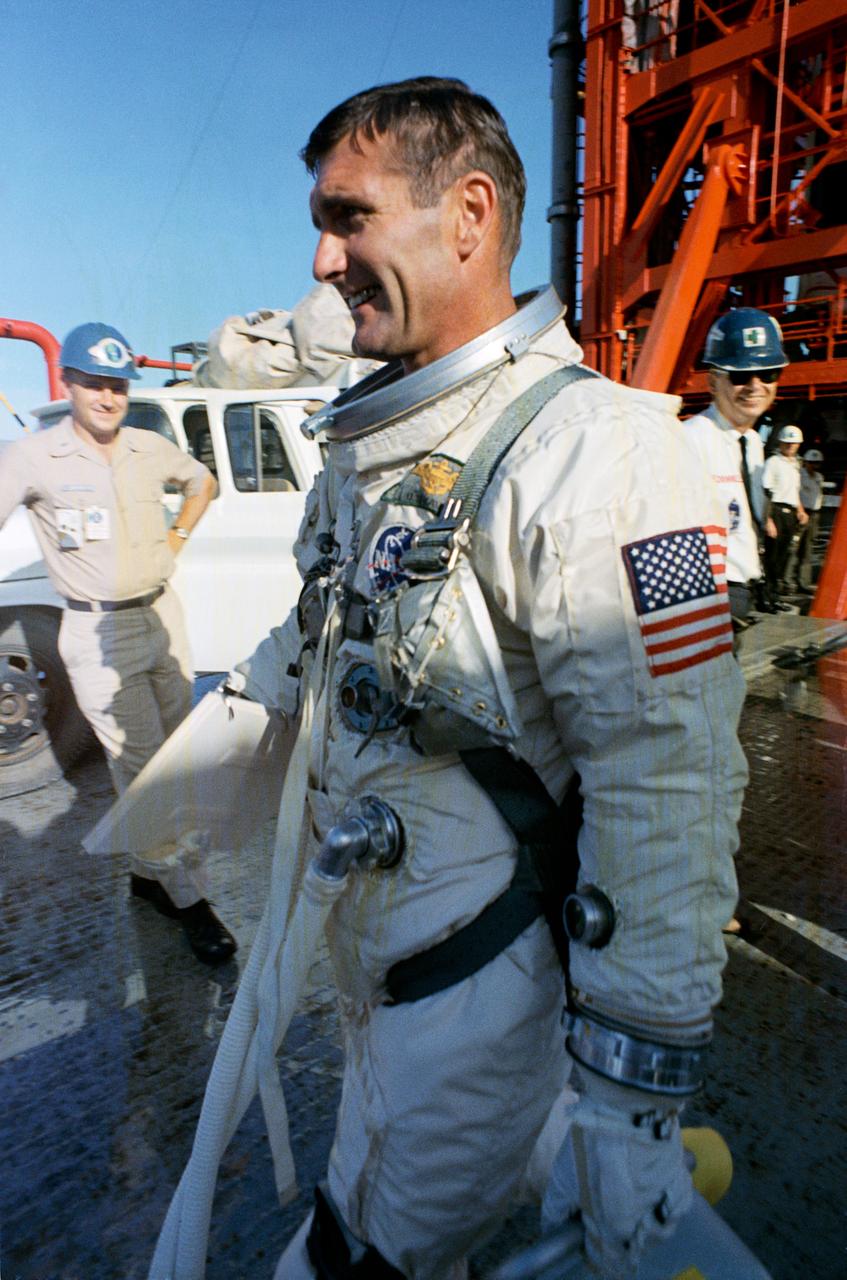
S66-50775 (10 Sept. 1966) --- Astronaut Richard F. Gordon Jr., pilot, walks away from Pad 19 following postponement of the Gemini-11 spaceflight. The mission was rescheduled for Sept. 12, 1966. Photo credit: NASA
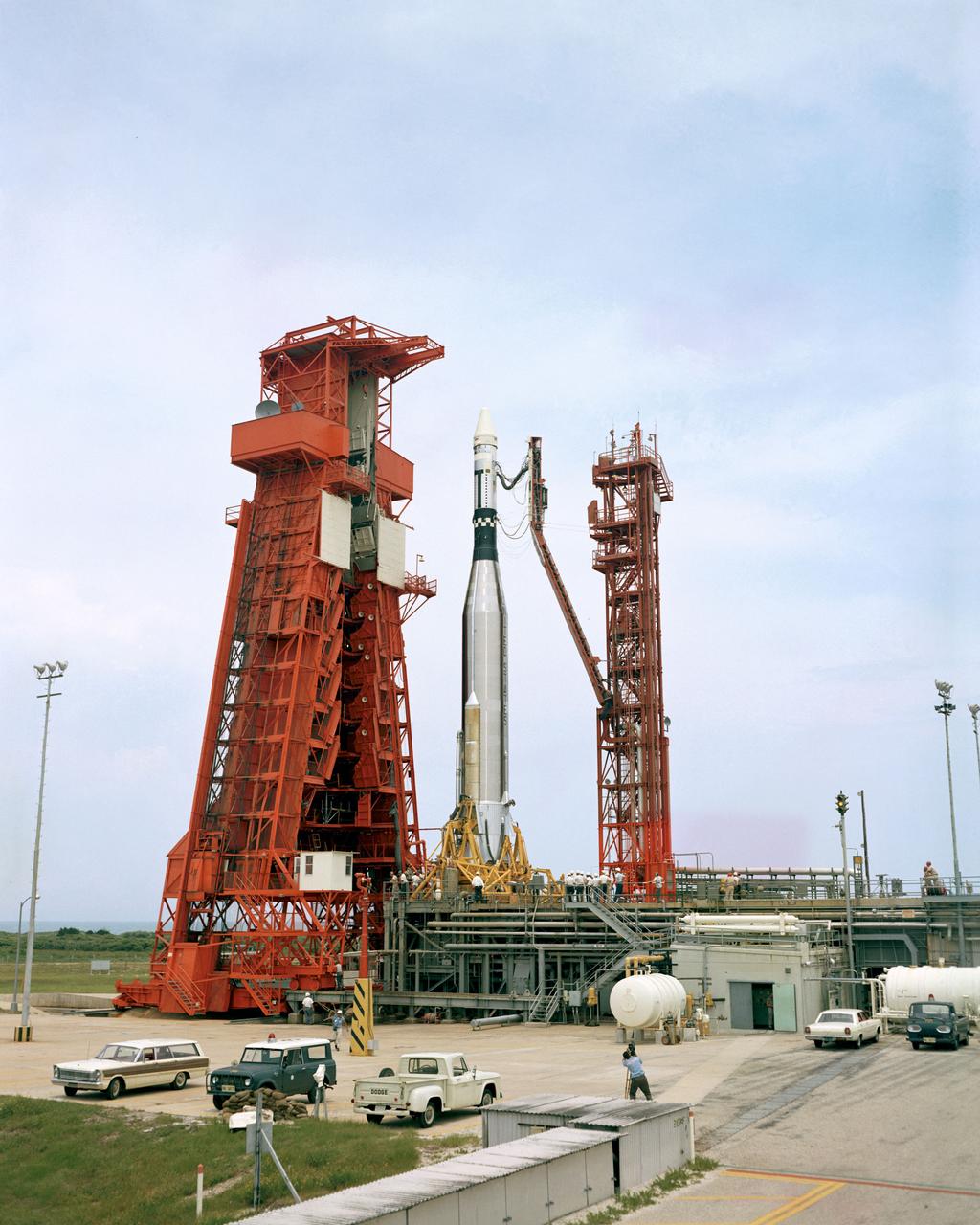
S66-42739 (18 July 1966) --- An Agena Target Docking Vehicle atop its Atlas launch vehicle during prelaunch preparations at Launch Complex 14. The Agena will be a rendezvous and docking vehicle for the Gemini-10 spaceflight. The Agena was launched on July 18, 1966, at 3:39 p.m. (EST). Photo credit: NASA
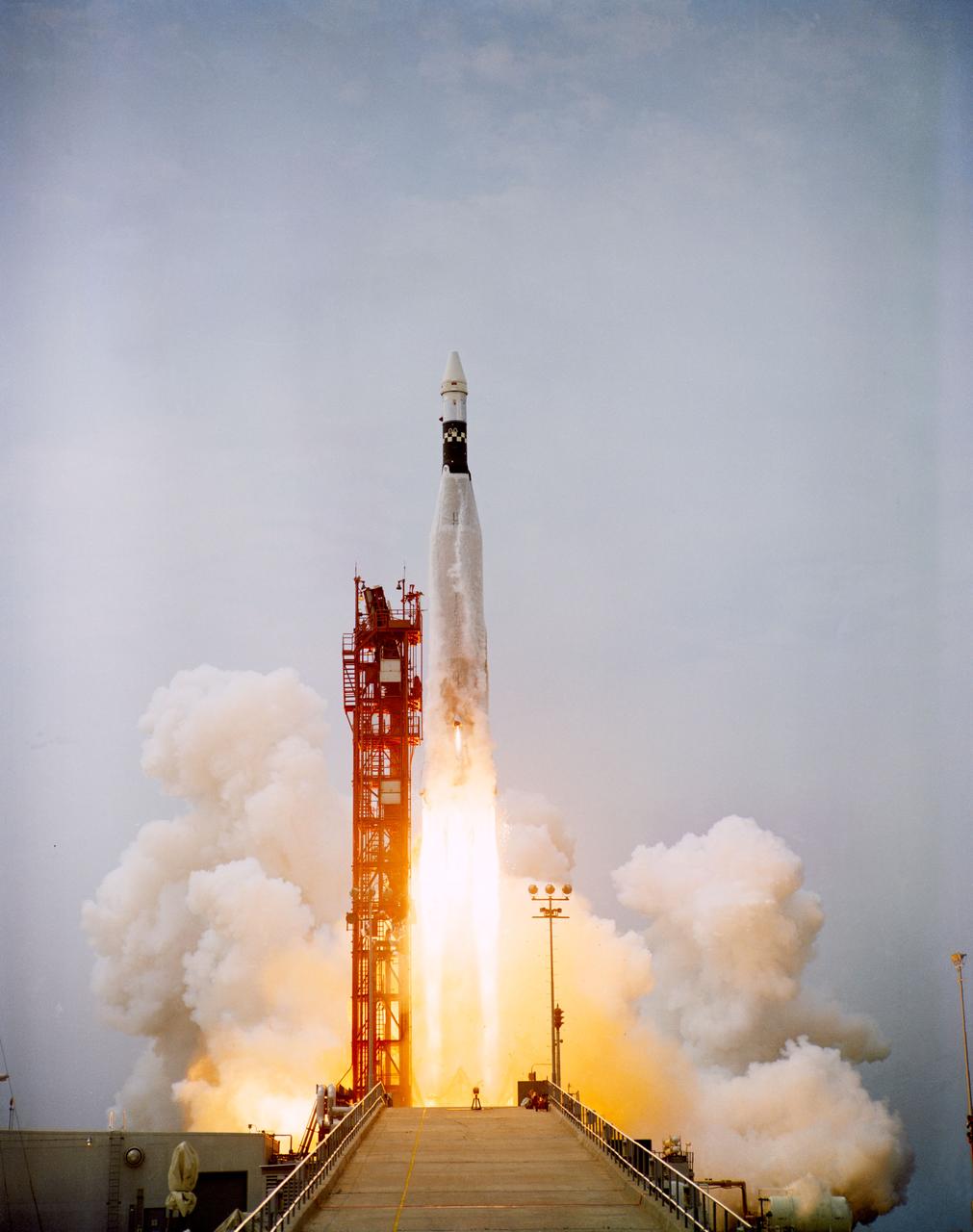
S66-32139 (1 June 1966) --- An Augmented Target Docking Adapter (ATDA) atop an Atlas launch vehicle is launched from Kennedy Space Center's Pad 14 at 10 a.m., June 1, 1966. The ATDA is a rendezvous and docking vehicle for the Gemini-9A space mission. Photo credit: NASA
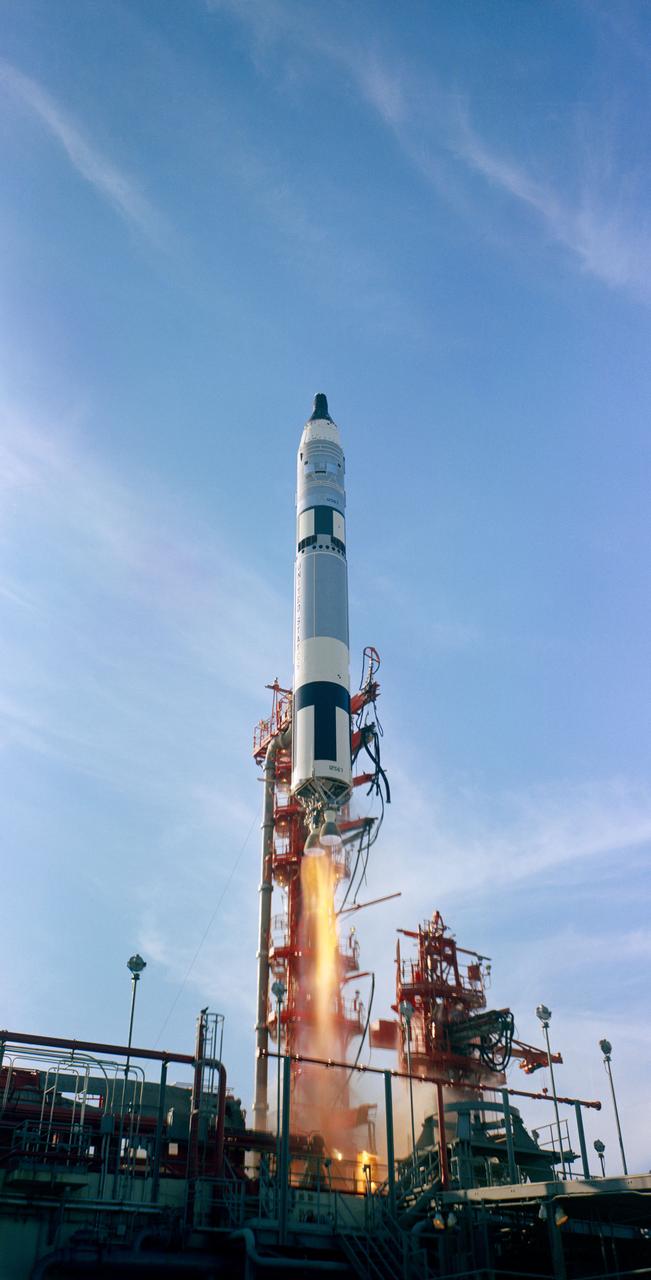
S66-59970 (11 Nov. 1966) --- Gemini-12 spacecraft, carrying astronauts James A. Lovell Jr., command pilot, and Edwin E. Aldrin Jr., pilot, was launched from the Kennedy Space Center's Launch Complex 19 at 3:46 p.m. (EST), Nov. 11, 1966. Photo credit: NASA
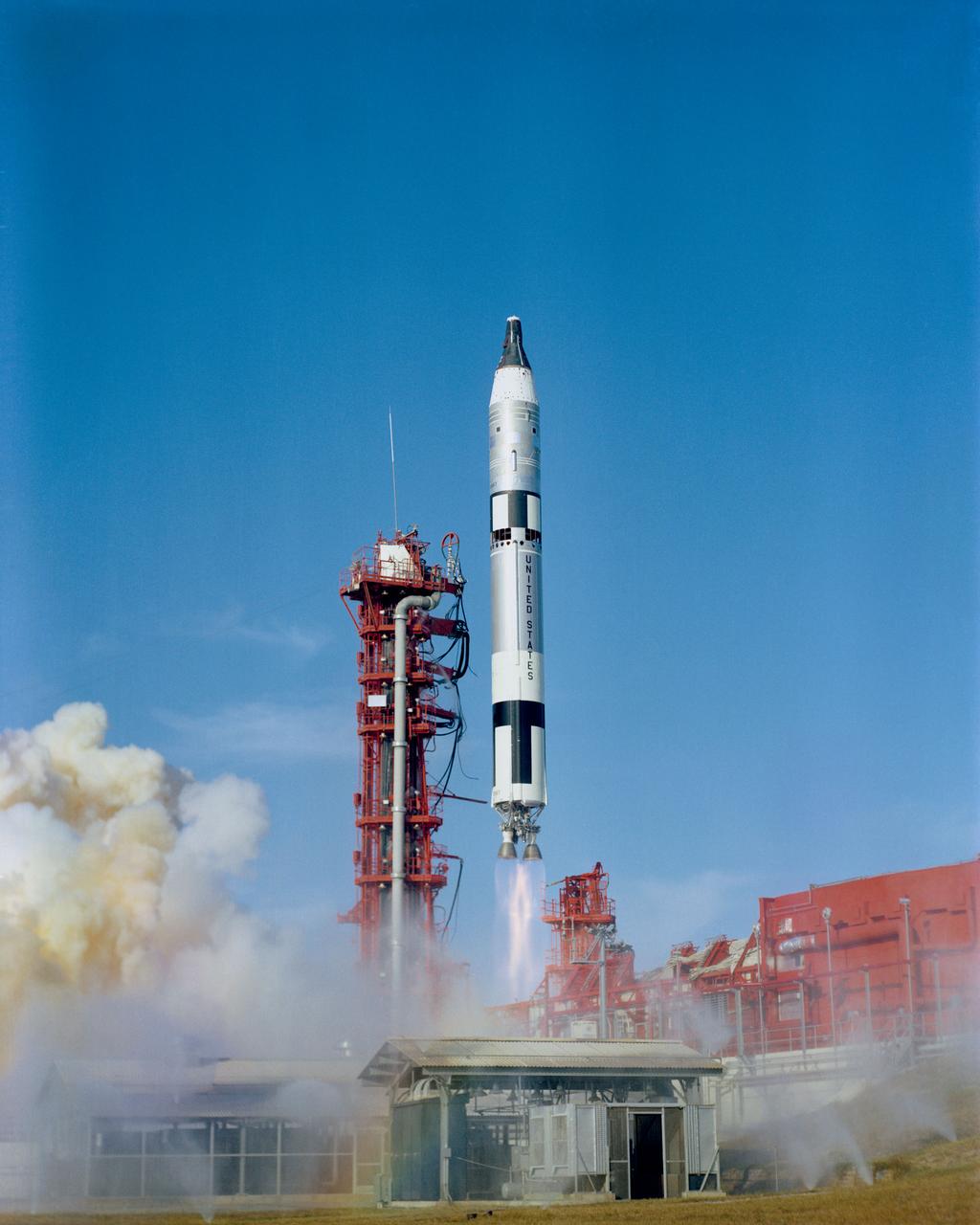
S66-59975 (11 Nov. 1966) --- Gemini-12 spacecraft, carrying astronauts James A. Lovell Jr., command pilot, and Edwin E. Aldrin Jr., pilot, was launched from the Kennedy Space Center's Launch Complex 19 at 3:46 p.m. (EST), Nov. 11, 1966. Photo credit: NASA
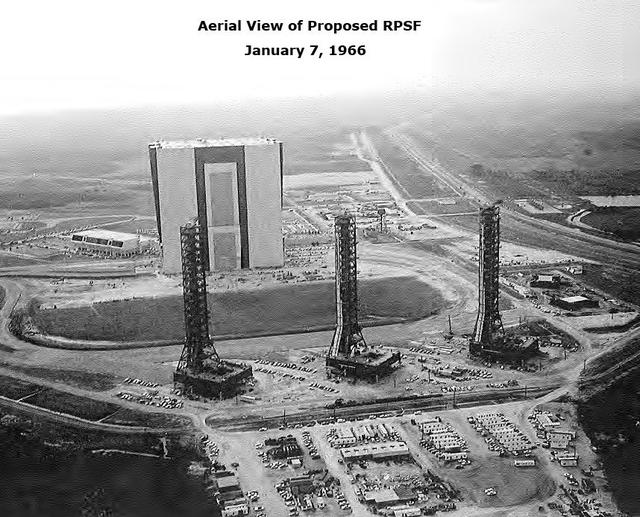
Aerial View of Proposed RPSF Area, January 7, 1966
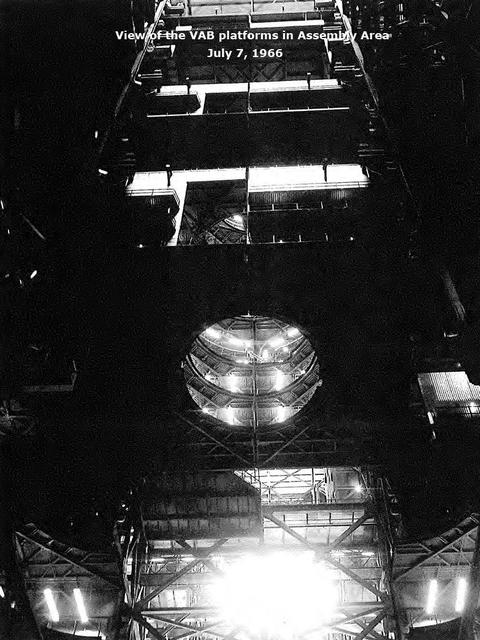
View of the VAB platforms in Assembly Area, July 7, 1966
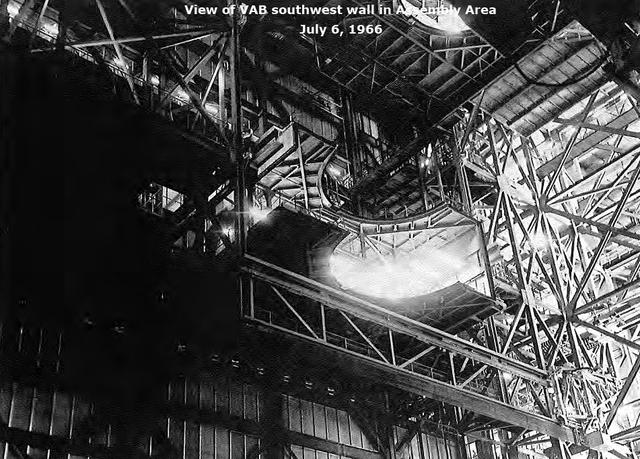
View of VAB southwest wall in Assembly Area, July 6, 1966
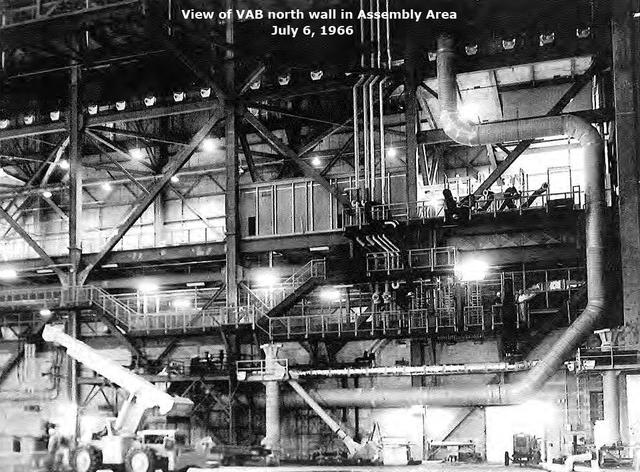
View of VAB north wall in Assembly Area, July 6, 1966
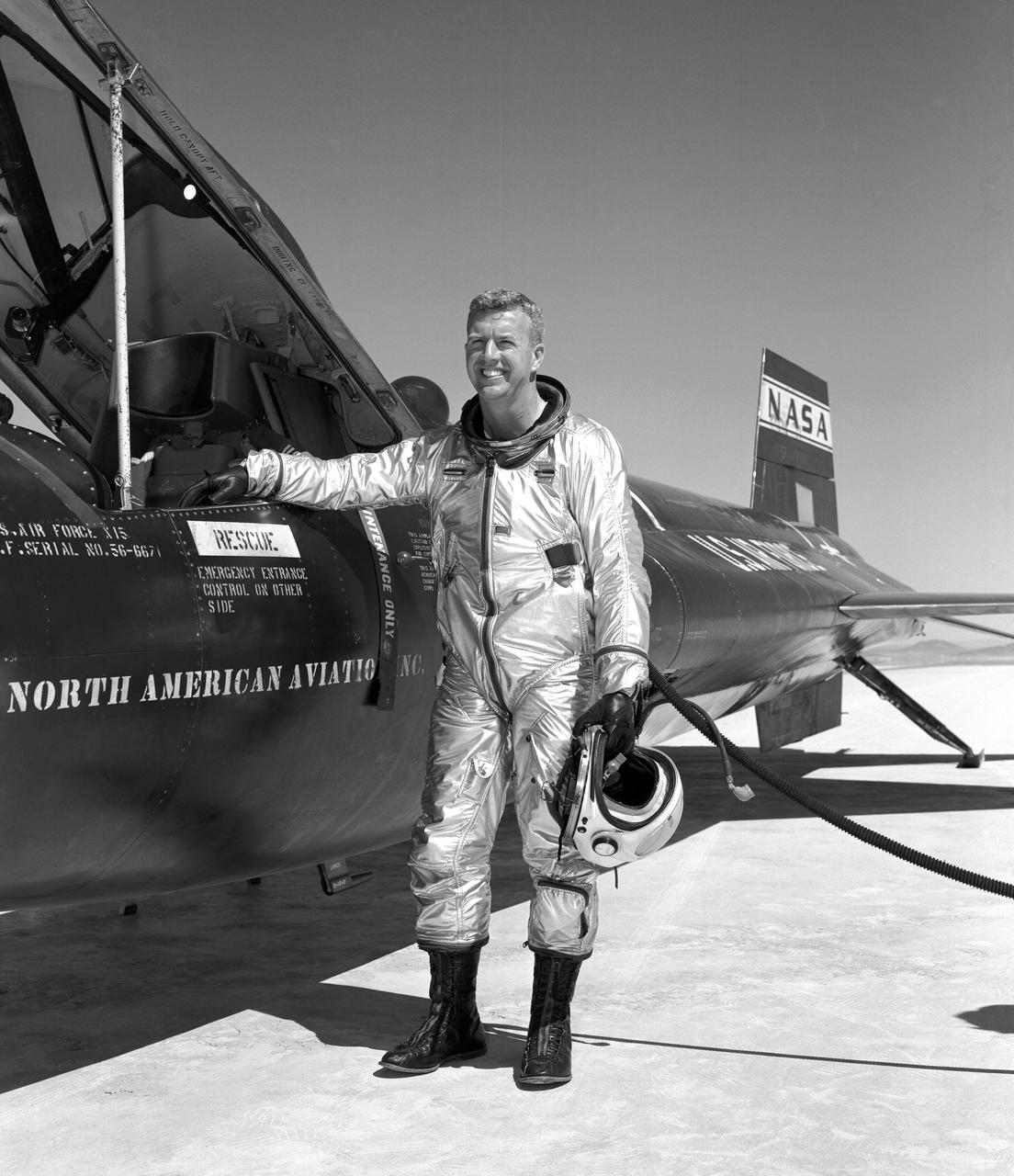
Walker made the first NASA-piloted X-15 flight March 25, 1960, and flew the aircraft 24 times, achieving its highest altitude (354,300 ft.) Aug. 22, 1963. He died piloting a F-104 that was caught up in a vortex of the XB-70.
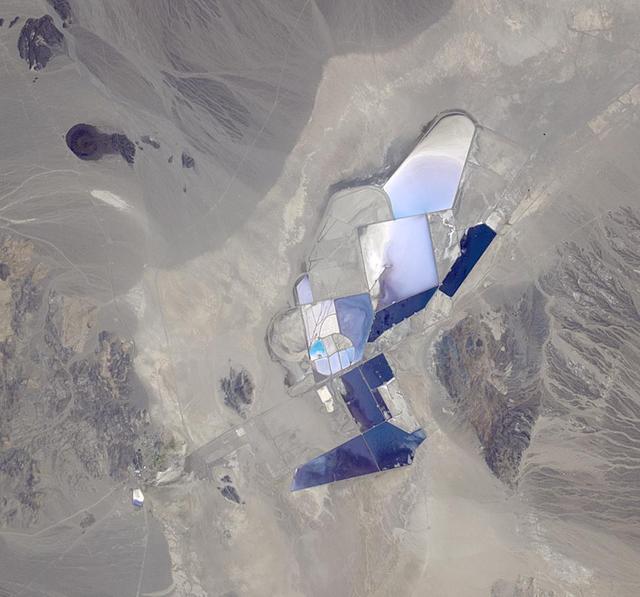
This image from NASA Terra spacecraft shows the once-abandoned mining town of Silver Peak, Nevada, which began to thrive again when Foote Mineral Company began extracting lithium from brine below the floor of Clayton Valley in 1966.
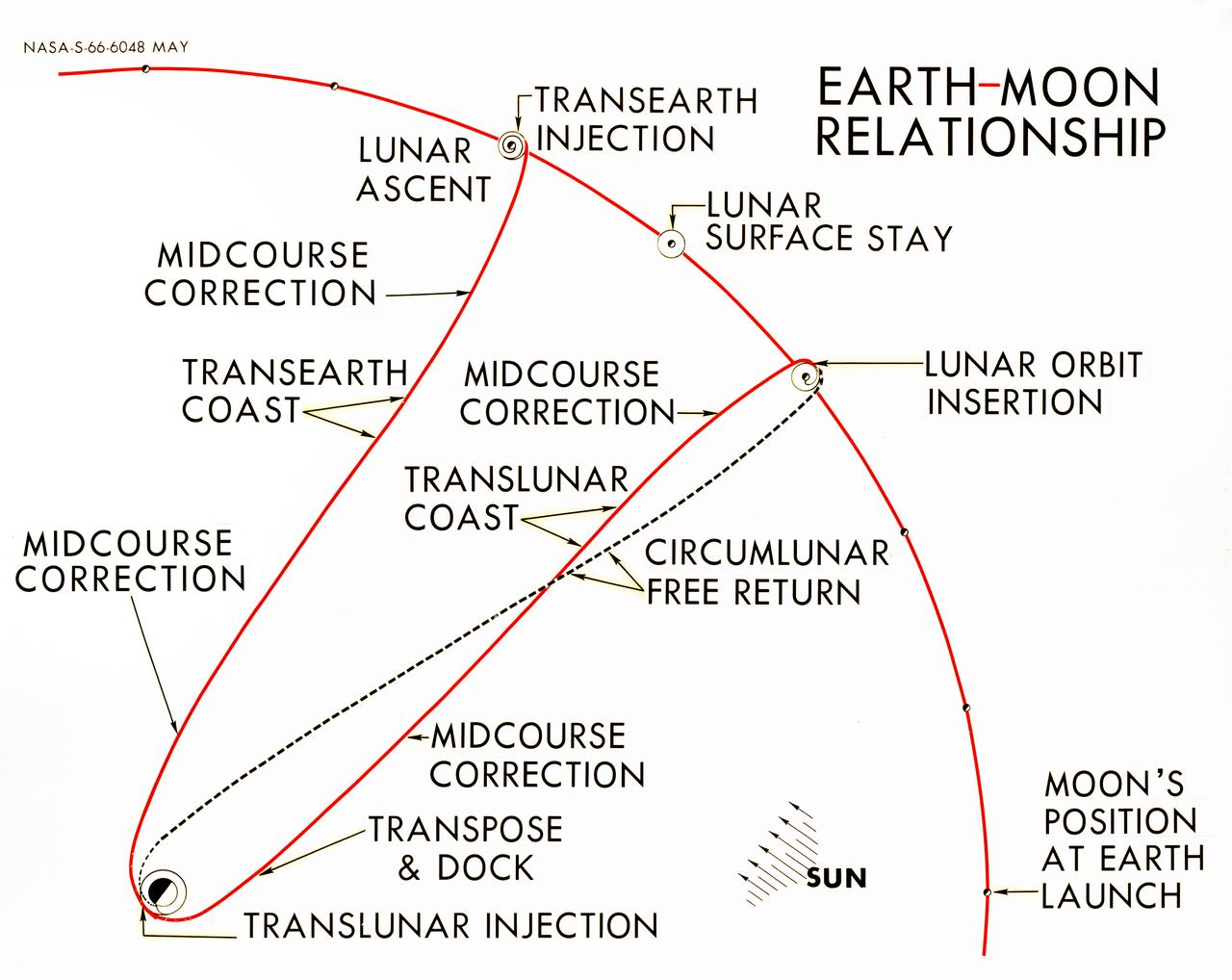
S66-06048 (1966) --- This chart depicts a nominal mission profile for an Apollo lunar landing mission. Photo credit: NASA
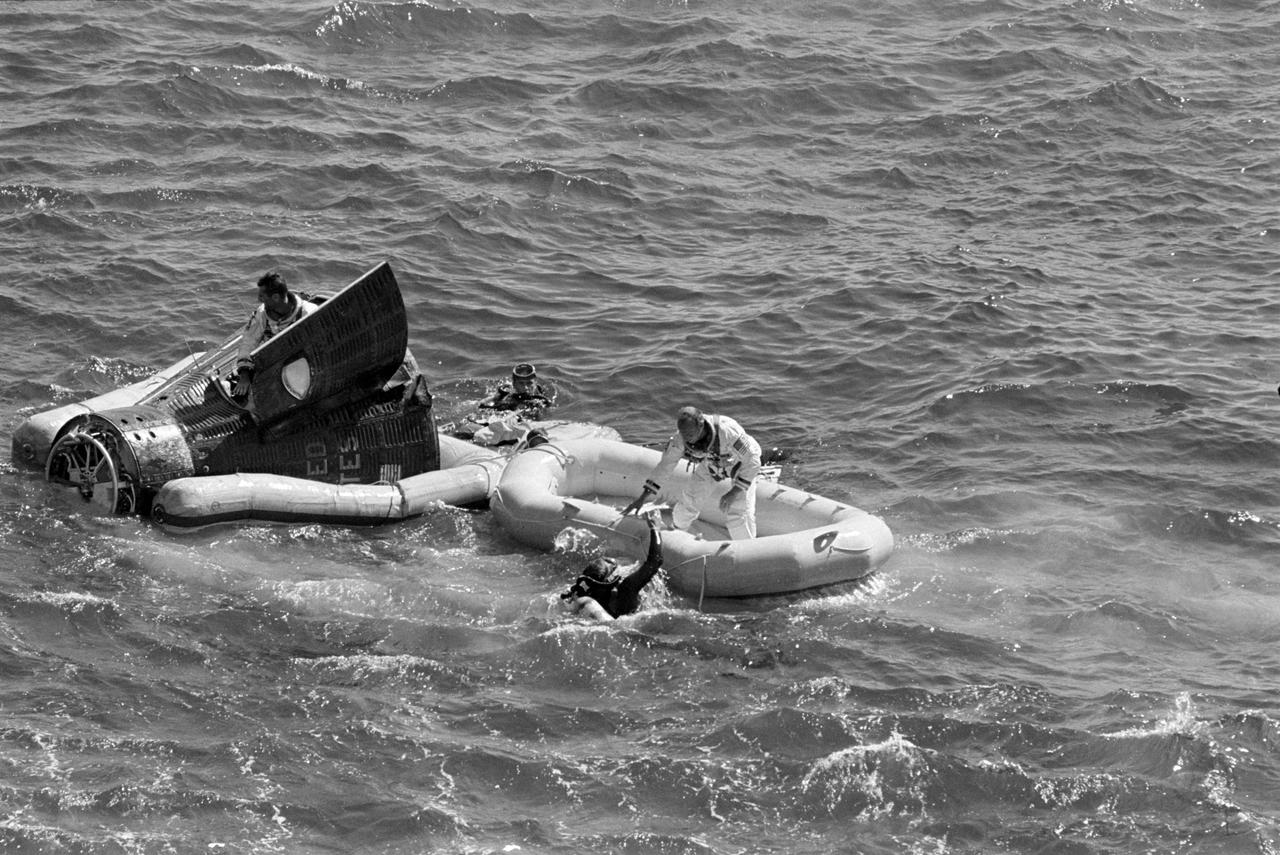
S66-50795 (15 Sept. 1966) --- Frogmen assist in the recovery of Gemini 11 astronauts Conrad & Gordon while they await the helicopter.
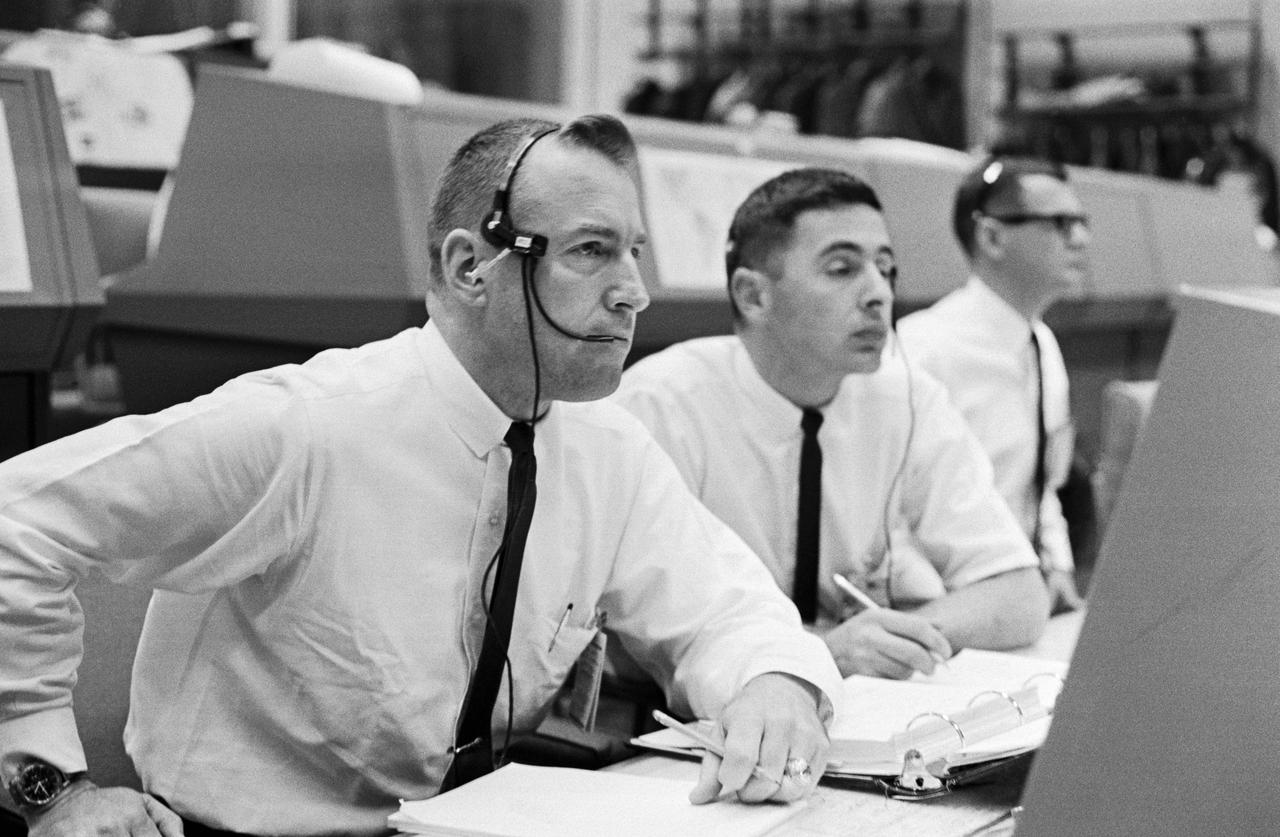
S66-24805 (16 March 1966) --- Personnel in Mission Control watch Gemini-8 launch on their screens. Photo credit: NASA
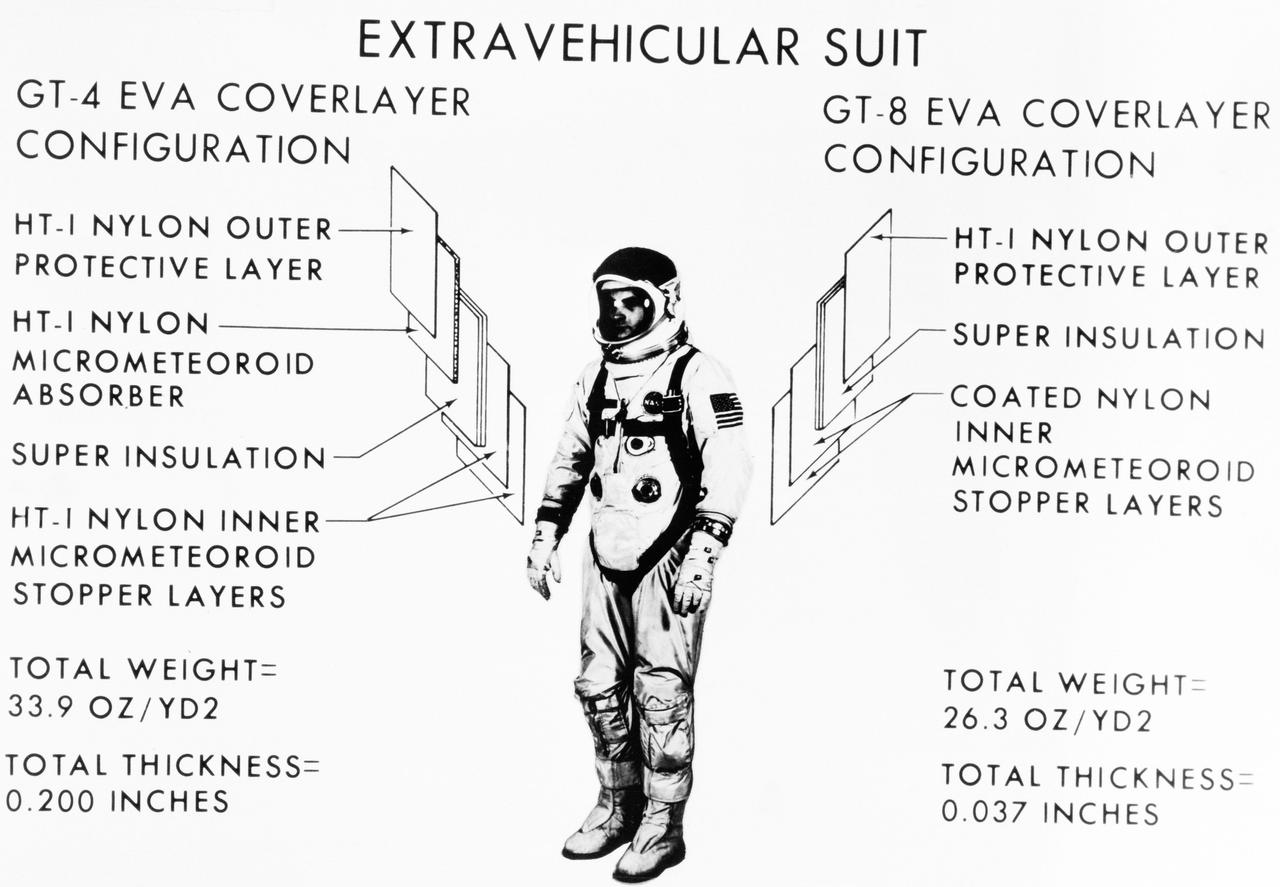
S66-01122 (January 1966) --- Artist concept of the Gemini-4 EVA coverlayer configuration.
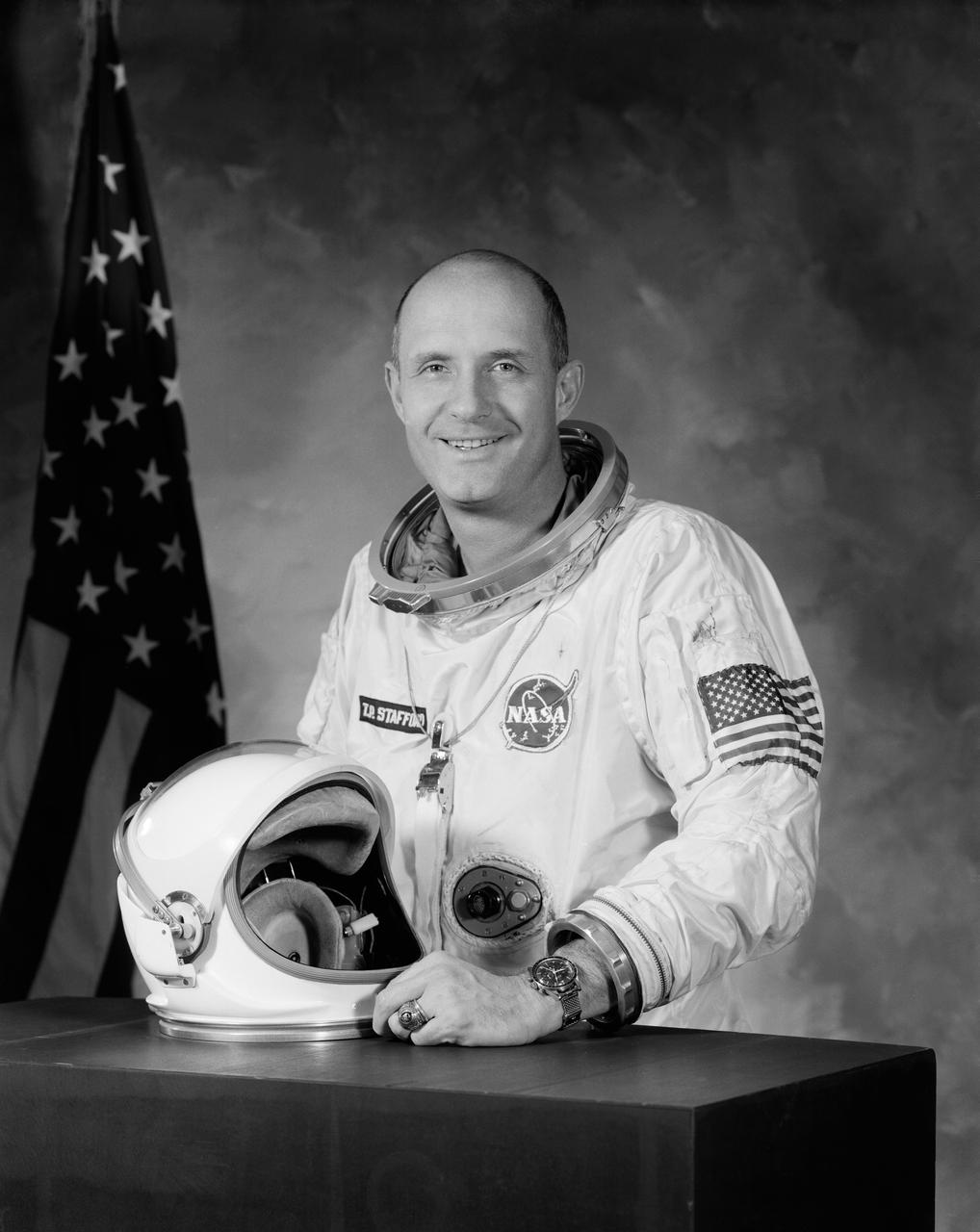
S66-15994 (1966) --- Portrait of astronaut Thomas P. Stafford, wearing his spacesuit. Photo credit: NASA
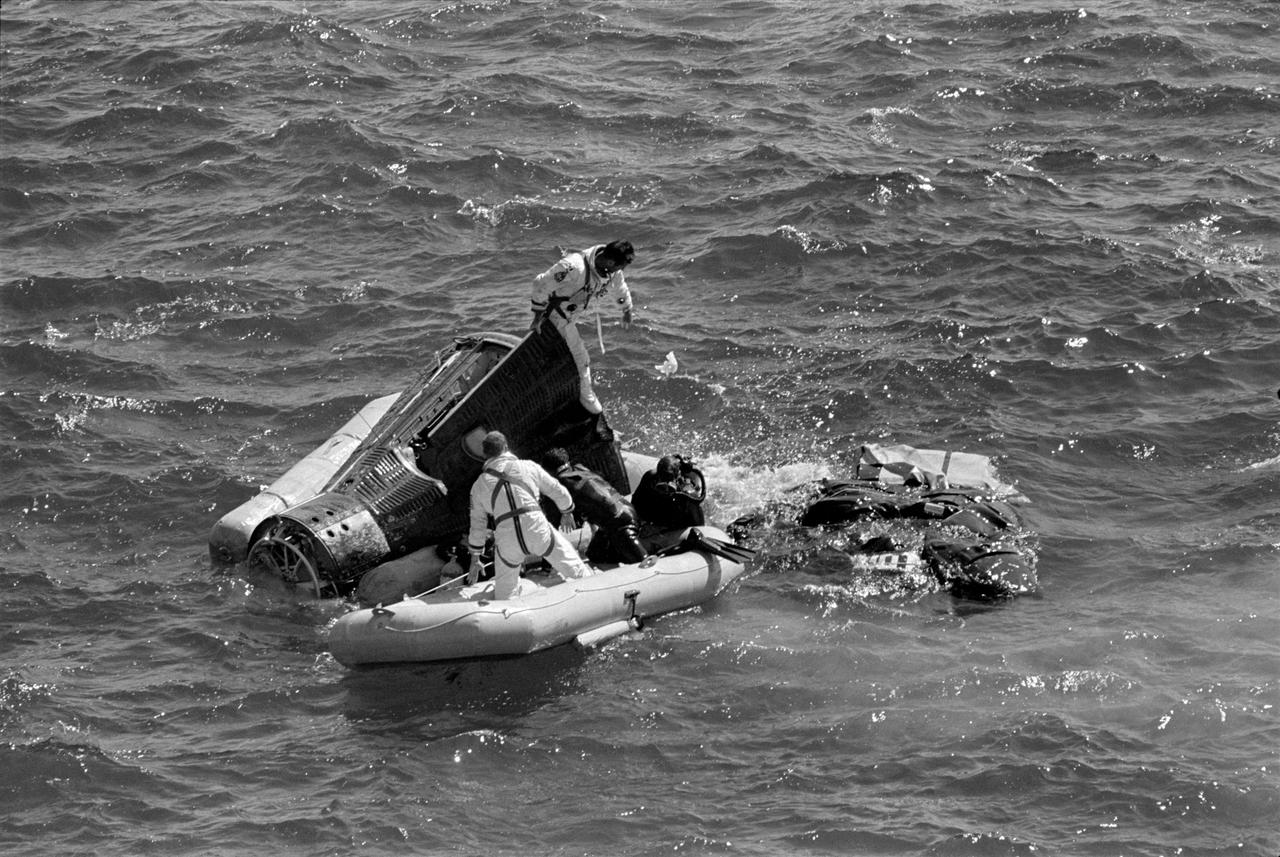
S66-50789 (15 Sept. 1966) --- Frogmen assist in the recovery of Gemini 11 astronauts Conrad & Gordon while they await the helicopter.
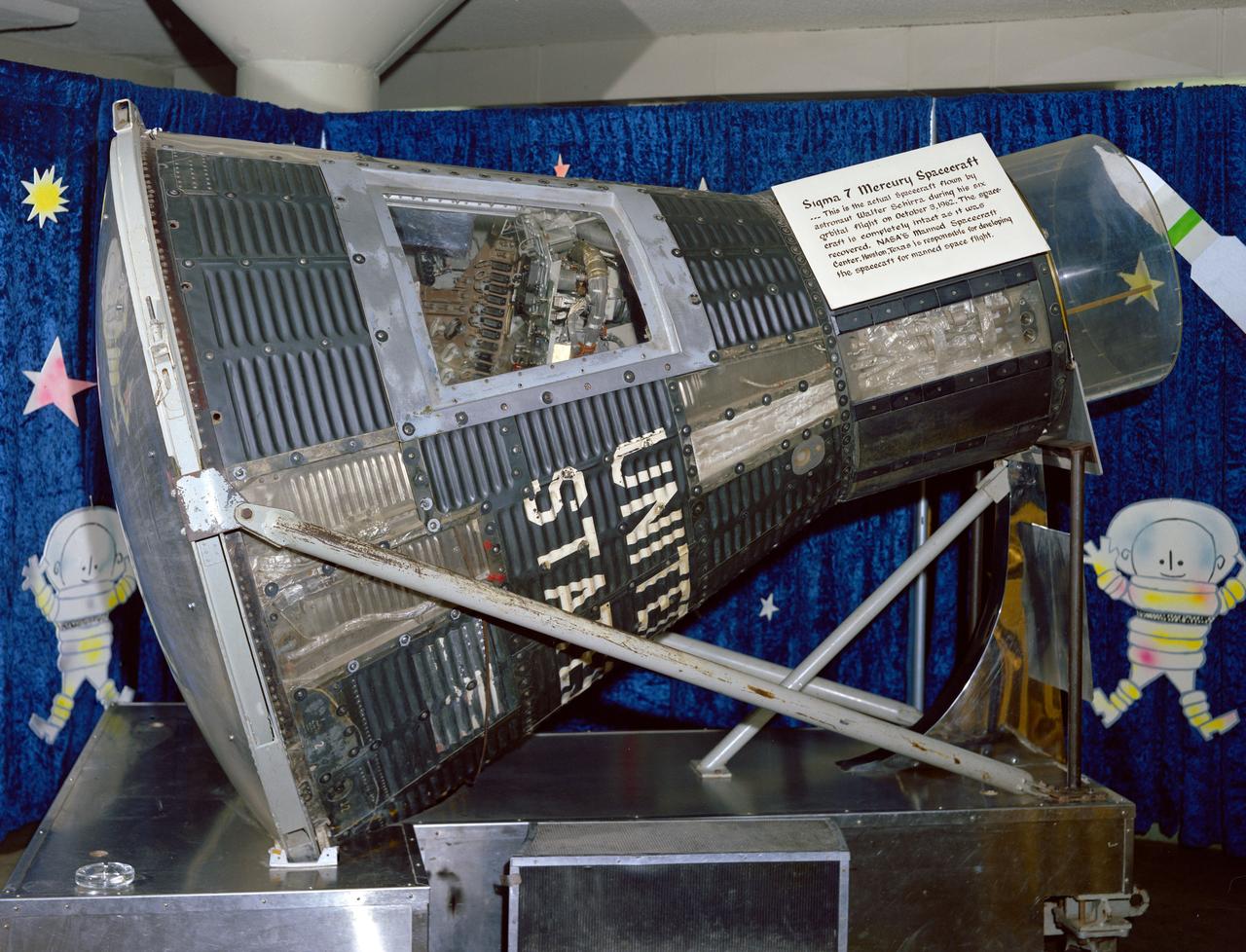
S66-53205 (1966) --- Mercury Atlas (MA-8) Sigma 7 capsule on display at the Johnson Space Center. Photo credit: NASA
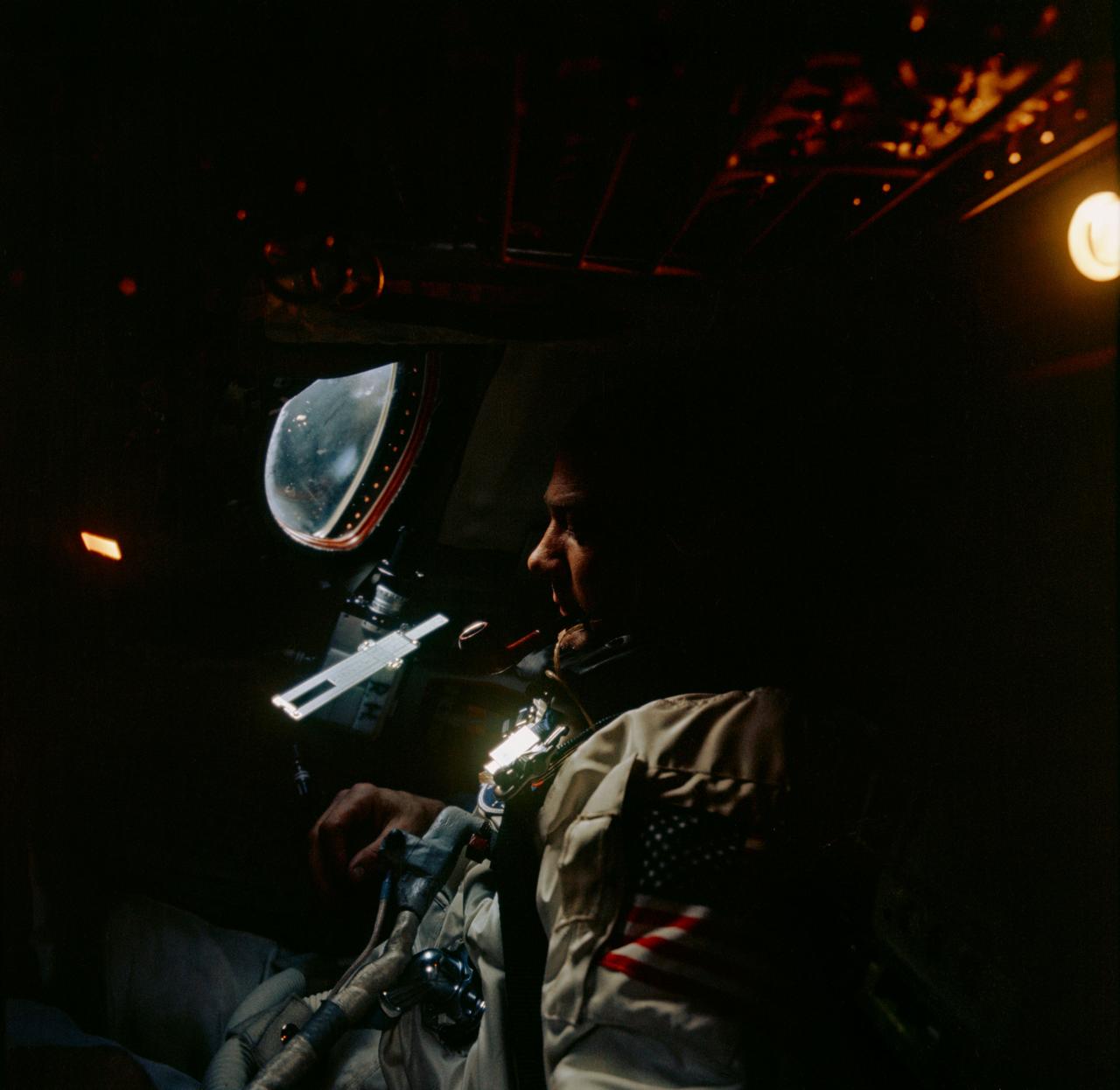
S66-62984 (13 Nov. 1966) --- Astronaut Edwin Aldrin Jr. photographed inside the Gemini-12 spacecraft cabin during the spaceflight. Photo credit: NASA
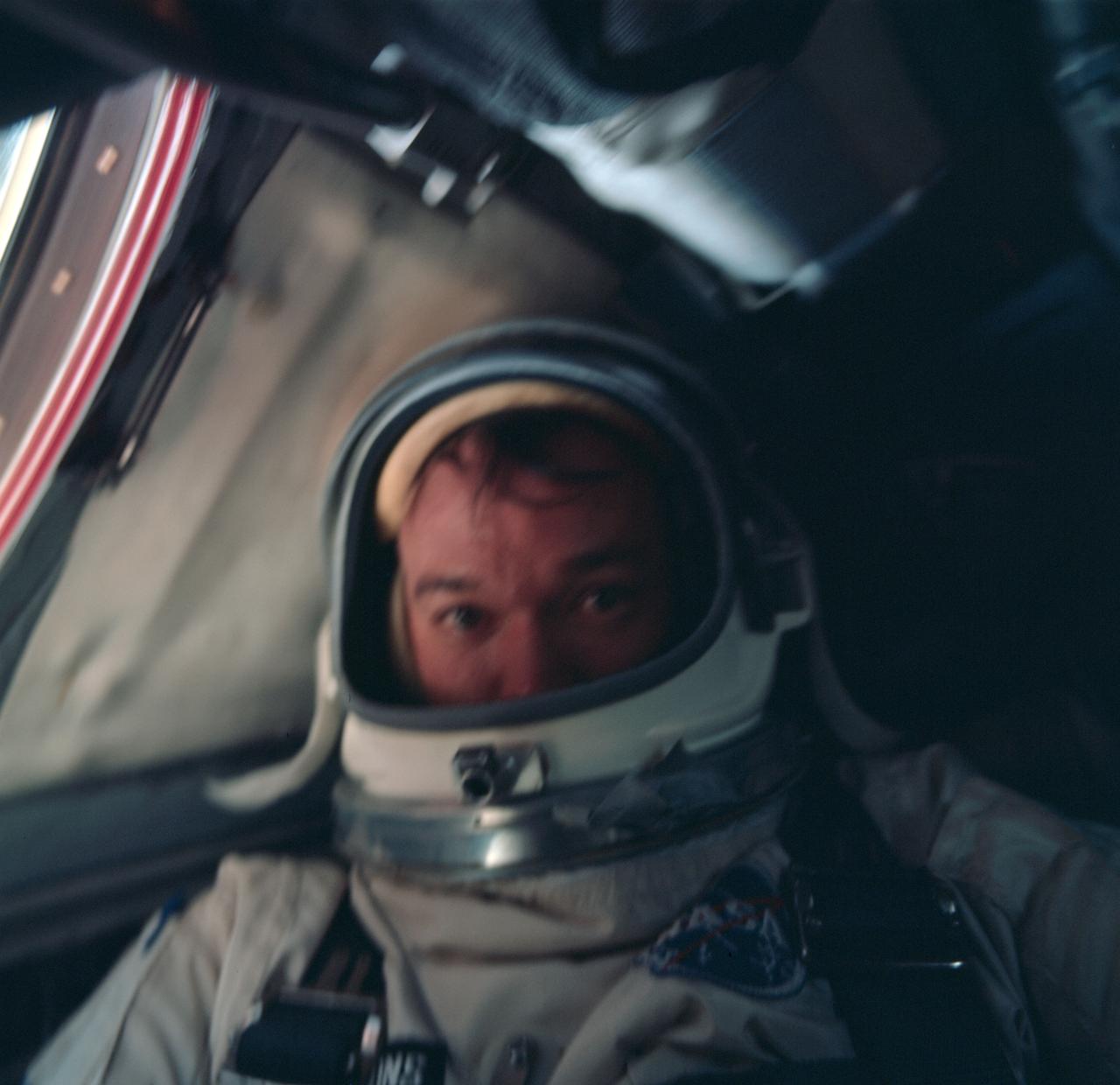
S66-46270 (18 July 1966) --- Astronaut Michael Collins is photographed inside the spacecraft during the Gemini-10 mission. Photo credit: NASA
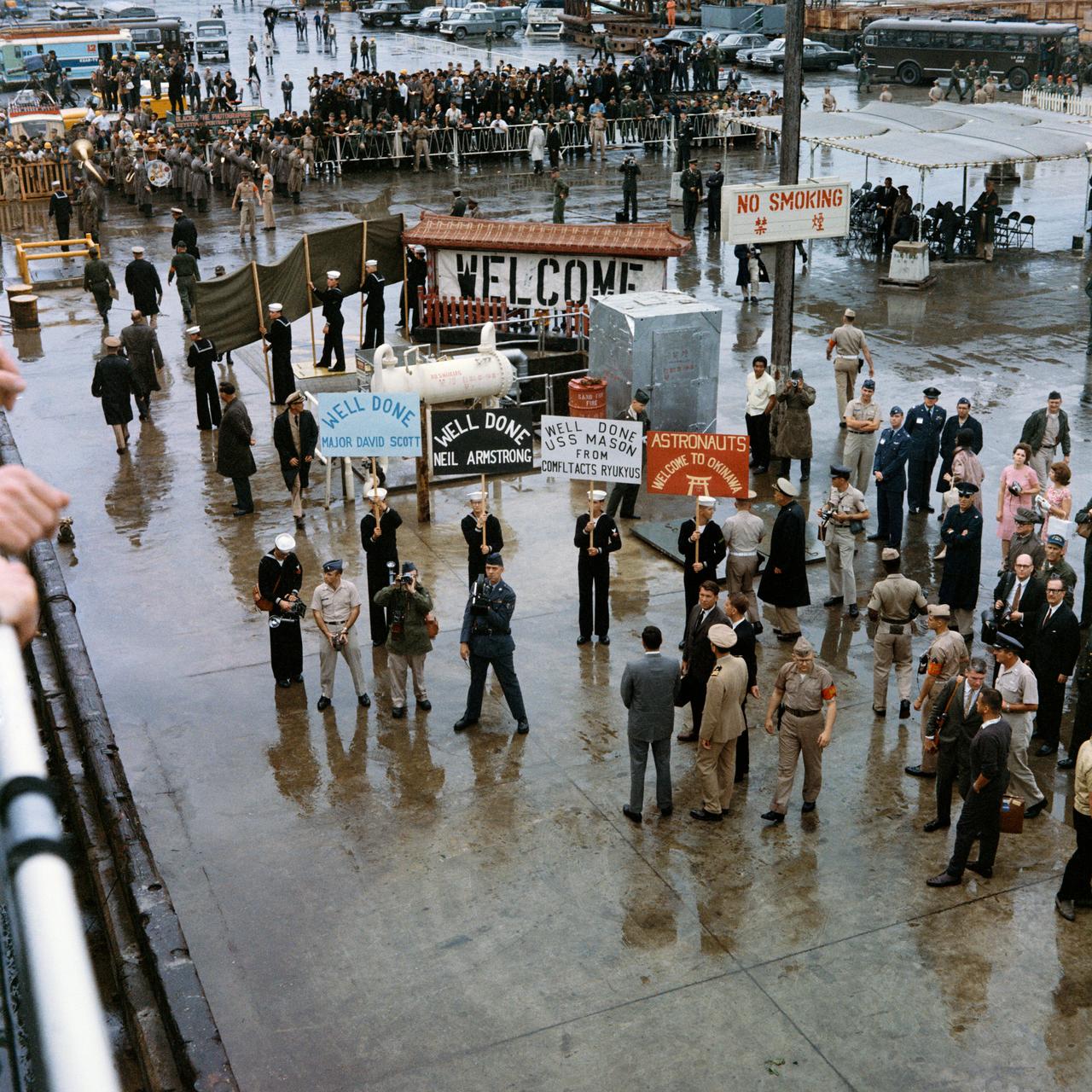
S66-18606 (17 March 1966) --- U.S. personnel at the Naha, Okinawa, military installation plan a welcome for the Gemini-8 crew. Photo credit: NASA
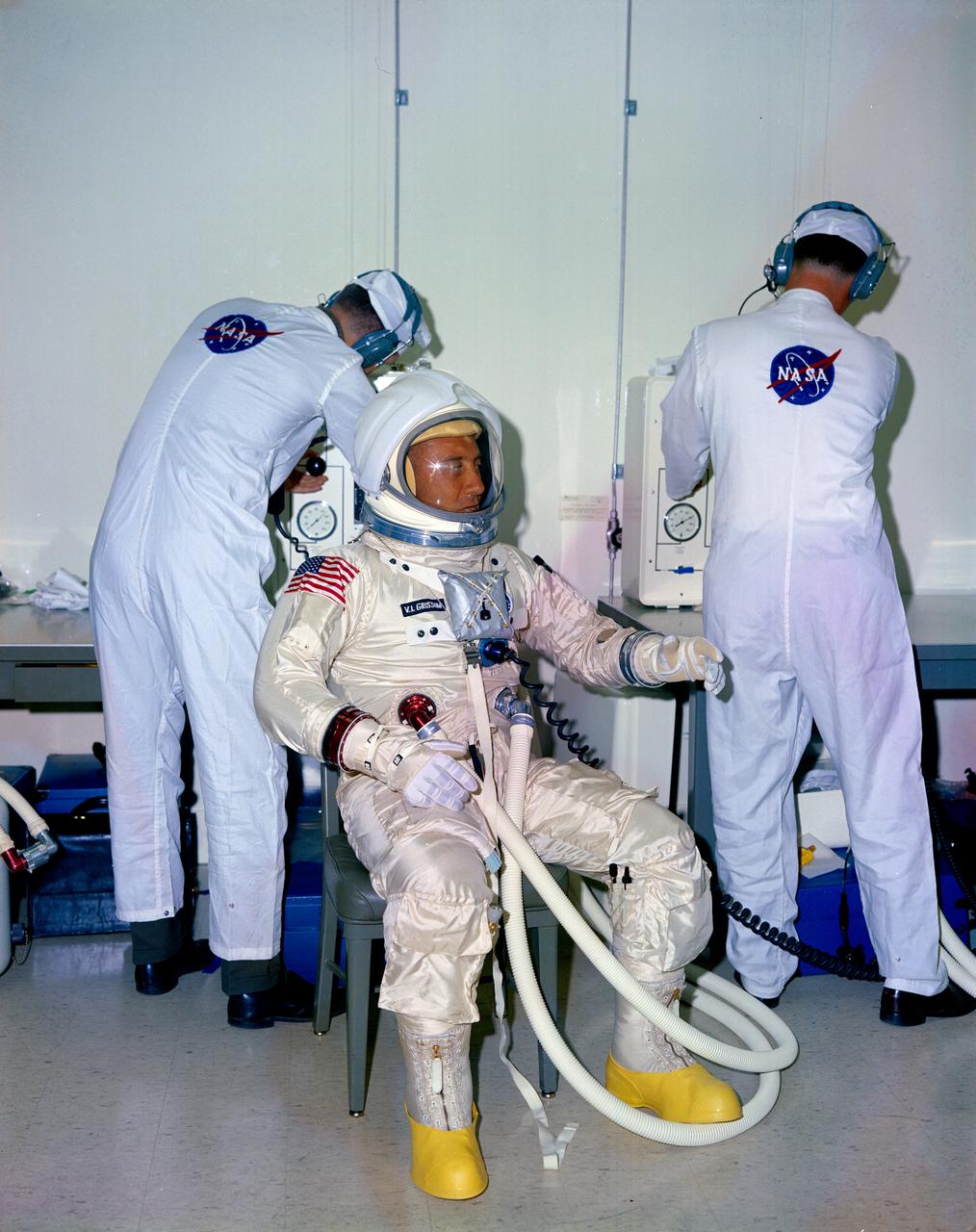
S66-58023 (1966) --- NASA suit technicians assist astronaut Virgil I. Grissom during suiting operations prior to tests at the Kennedy Space Center.
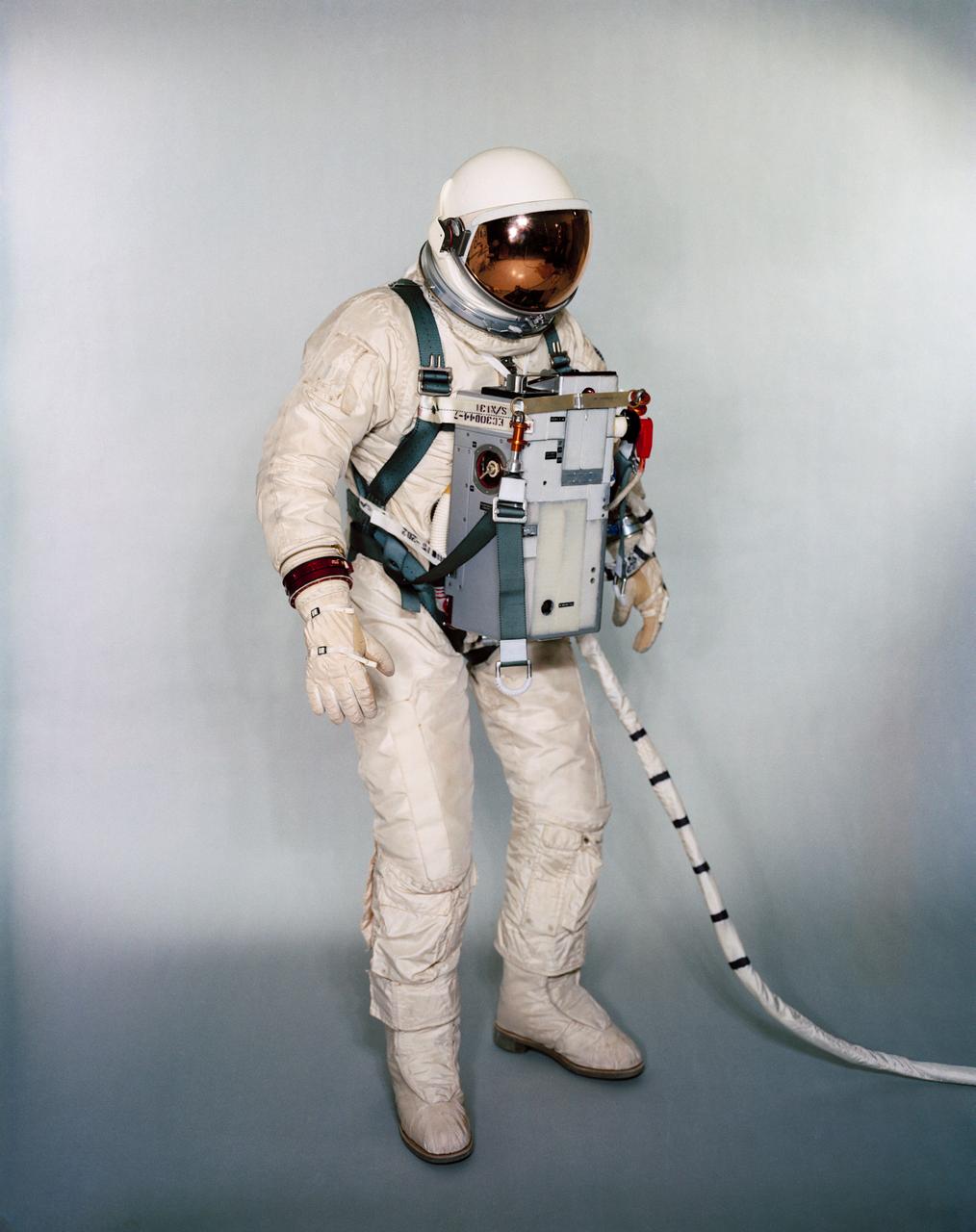
S67-24267 (1966) --- Suited test subject equipped with Gemini-12 Life Support System and waist tethers for extravehicular activity (EVA). Photo credit: NASA
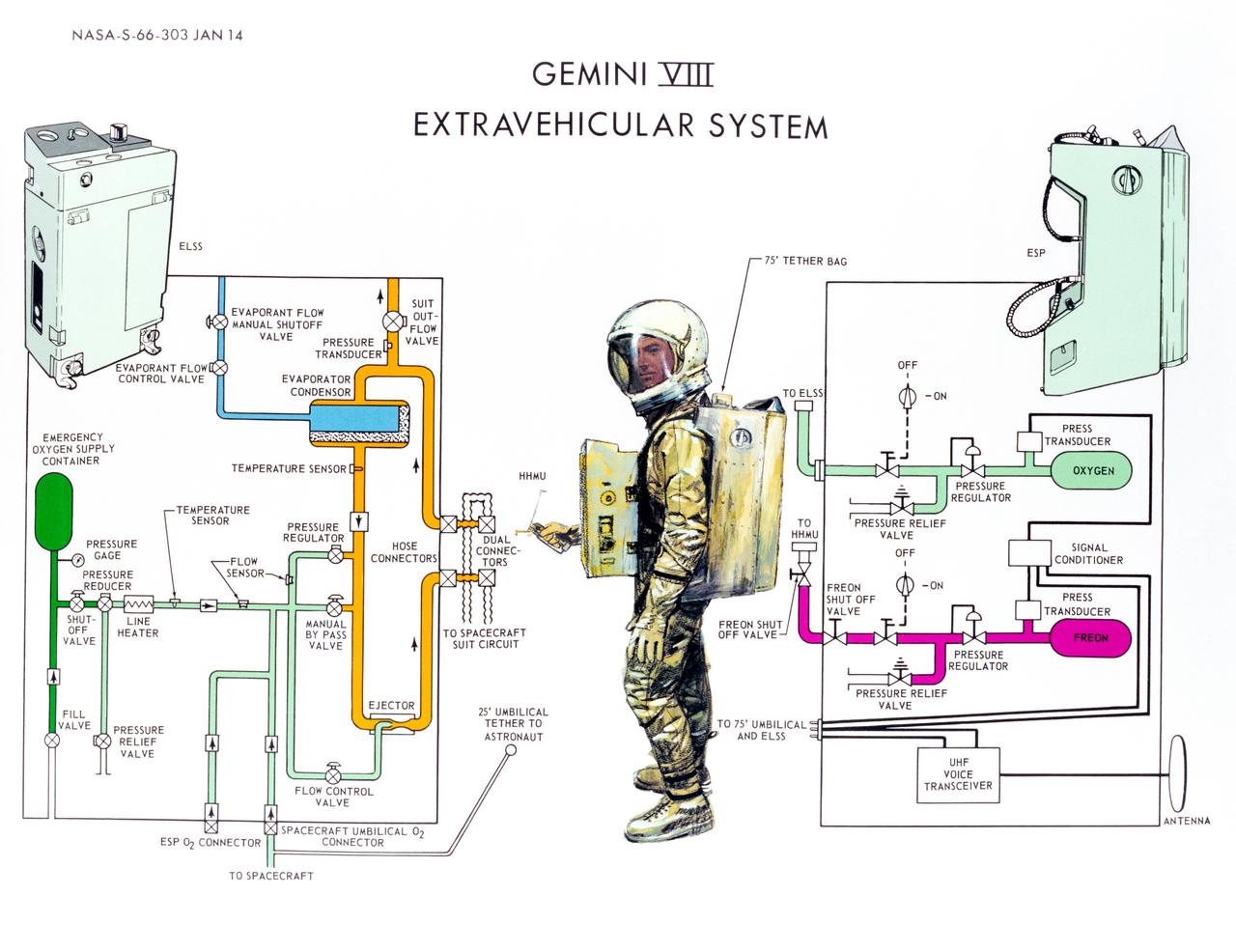
S66-00303 (14 Jan. 1966) --- Illustrative diagram showing the operation of the chest and backpacks of the Gemini-8 extravehicular system. Photo credit: NASA
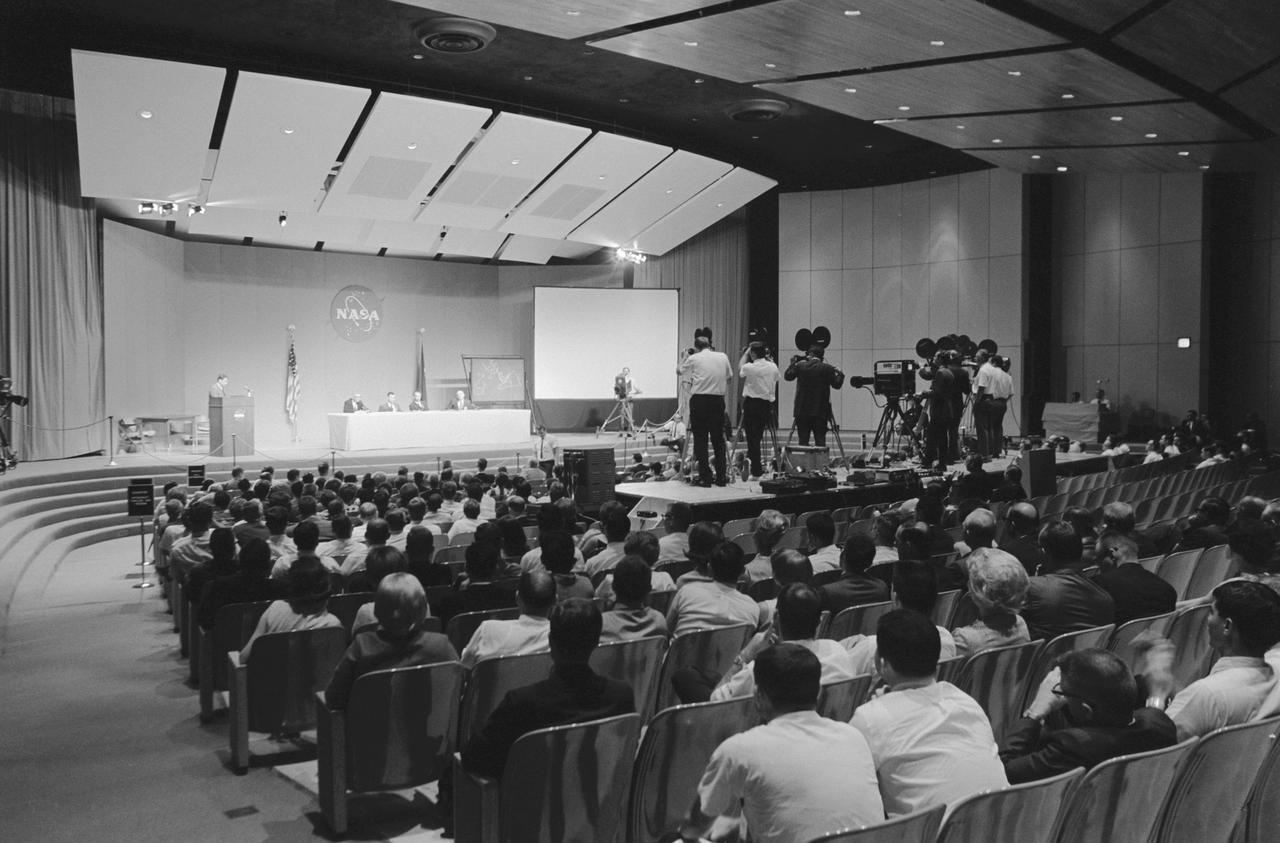
S66-39896 (1 Aug. 1966) --- Scene in Building 1 auditorium during the Gemini-10 news conference. Photo credit: NASA
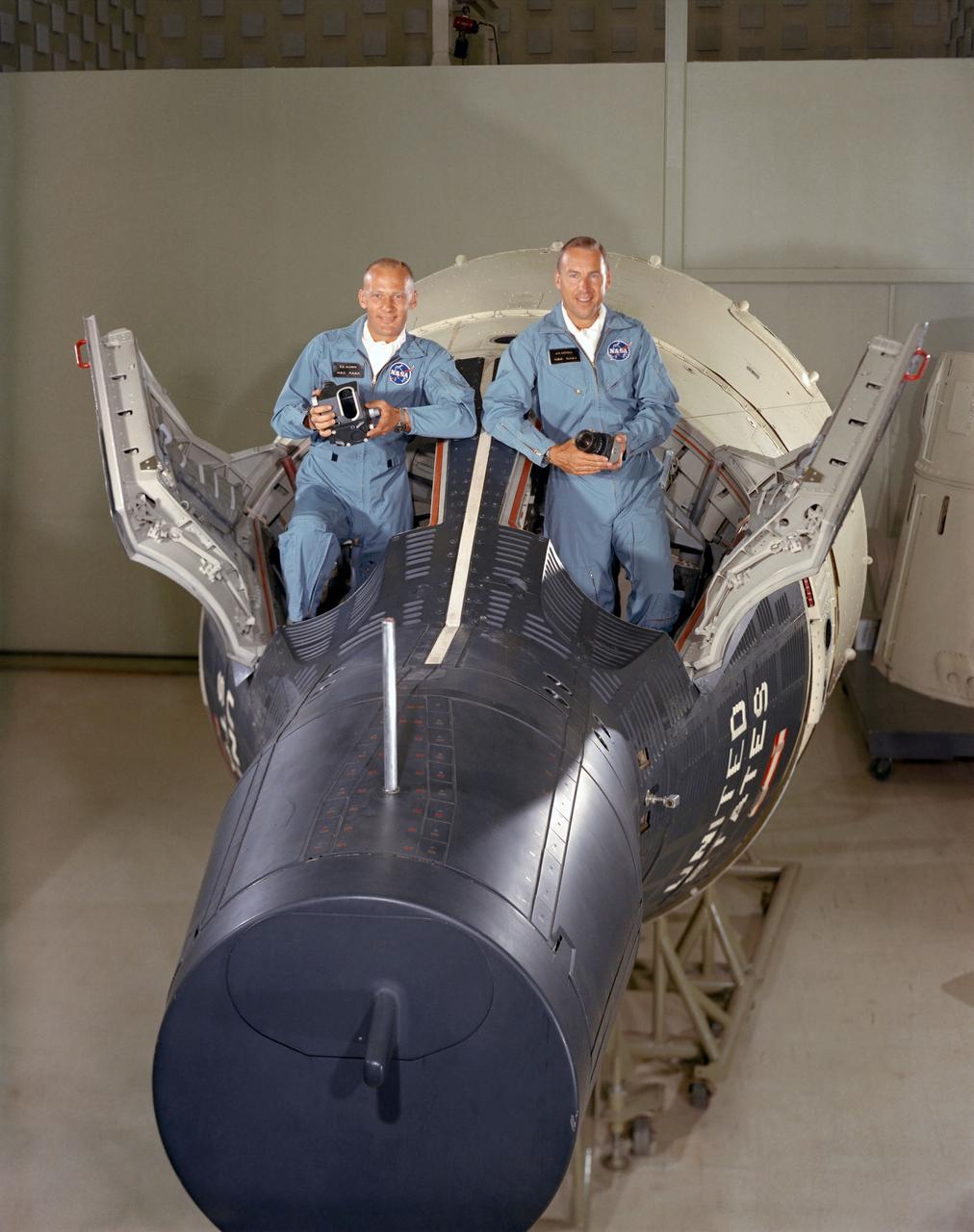
S66-46952 (September 1966) --- Astronauts James A. Lovell Jr. (right), command pilot, and Edwin E. Aldrin Jr., pilot. Photo credit: NASA
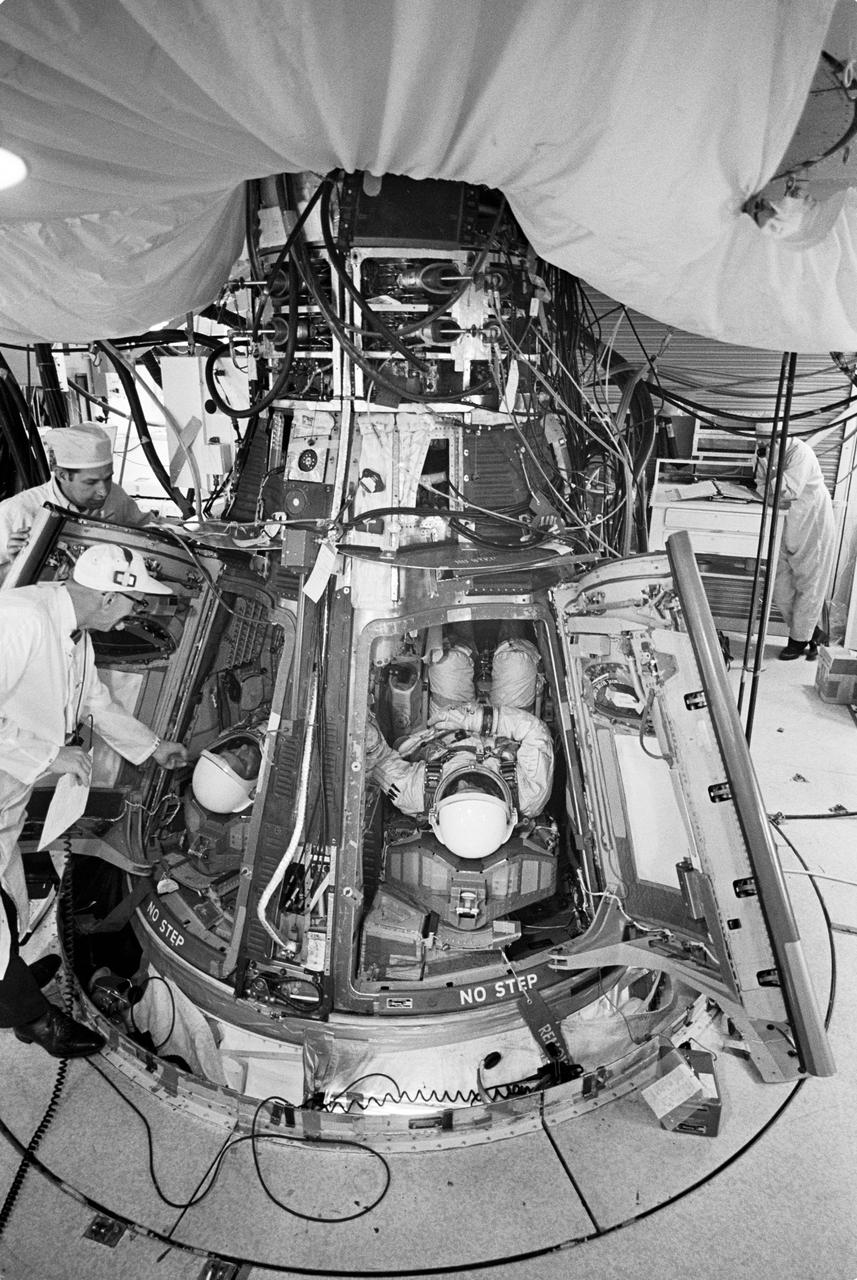
S66-24403 (16 March 1966) --- Astronauts David R. Scott and Neil A. Armstrong inserted into Gemini-8 spacecraft prior to liftoff. Photo credit: NASA
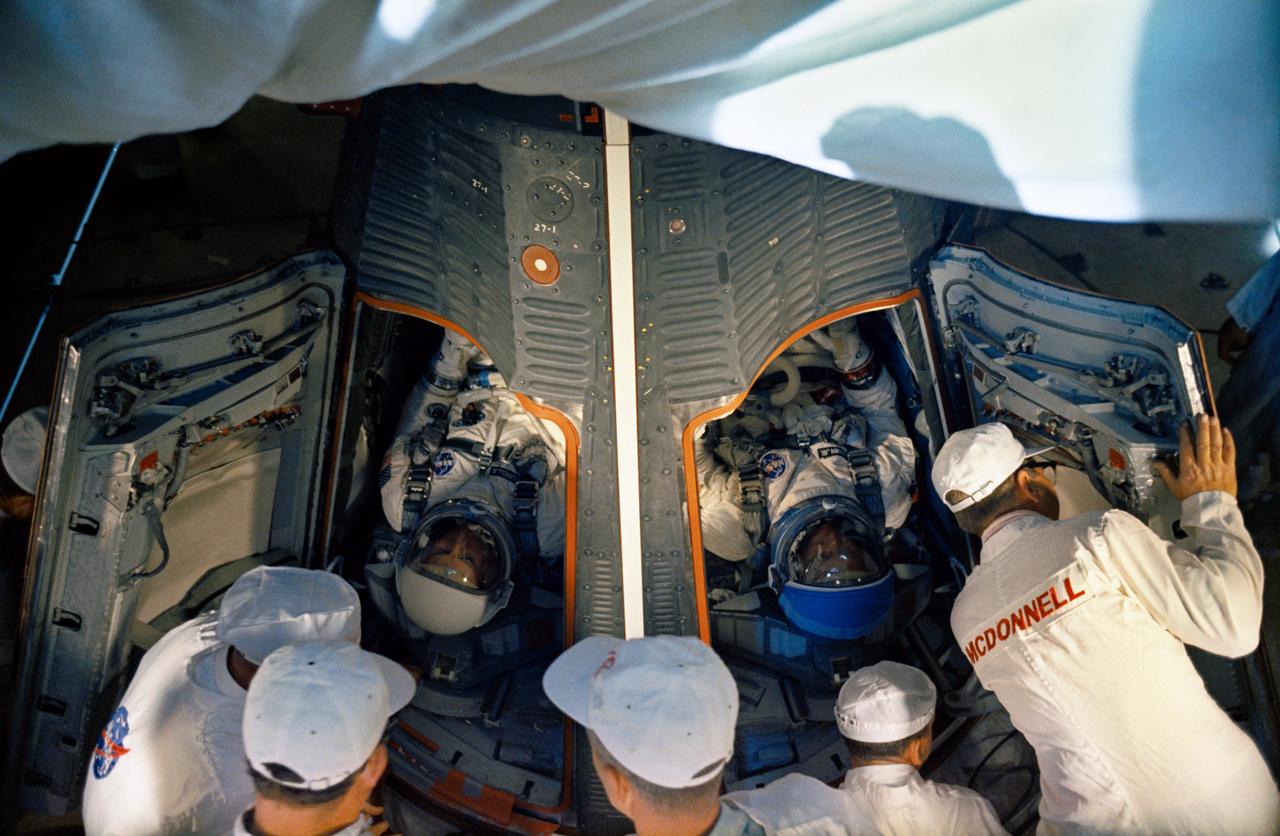
S66-59971 (11 Nov. 1966) --- Technicians prepare to close the hatches of the Gemini-12 spacecraft in the white room atop Pad 19 after insertion of astronaut James A. Lovell Jr. (left), command pilot, and Edwin E. Aldrin Jr., pilot. Liftoff was at 3:46 p.m. (EST), Nov. 11, 1966. Photo credit: NASA
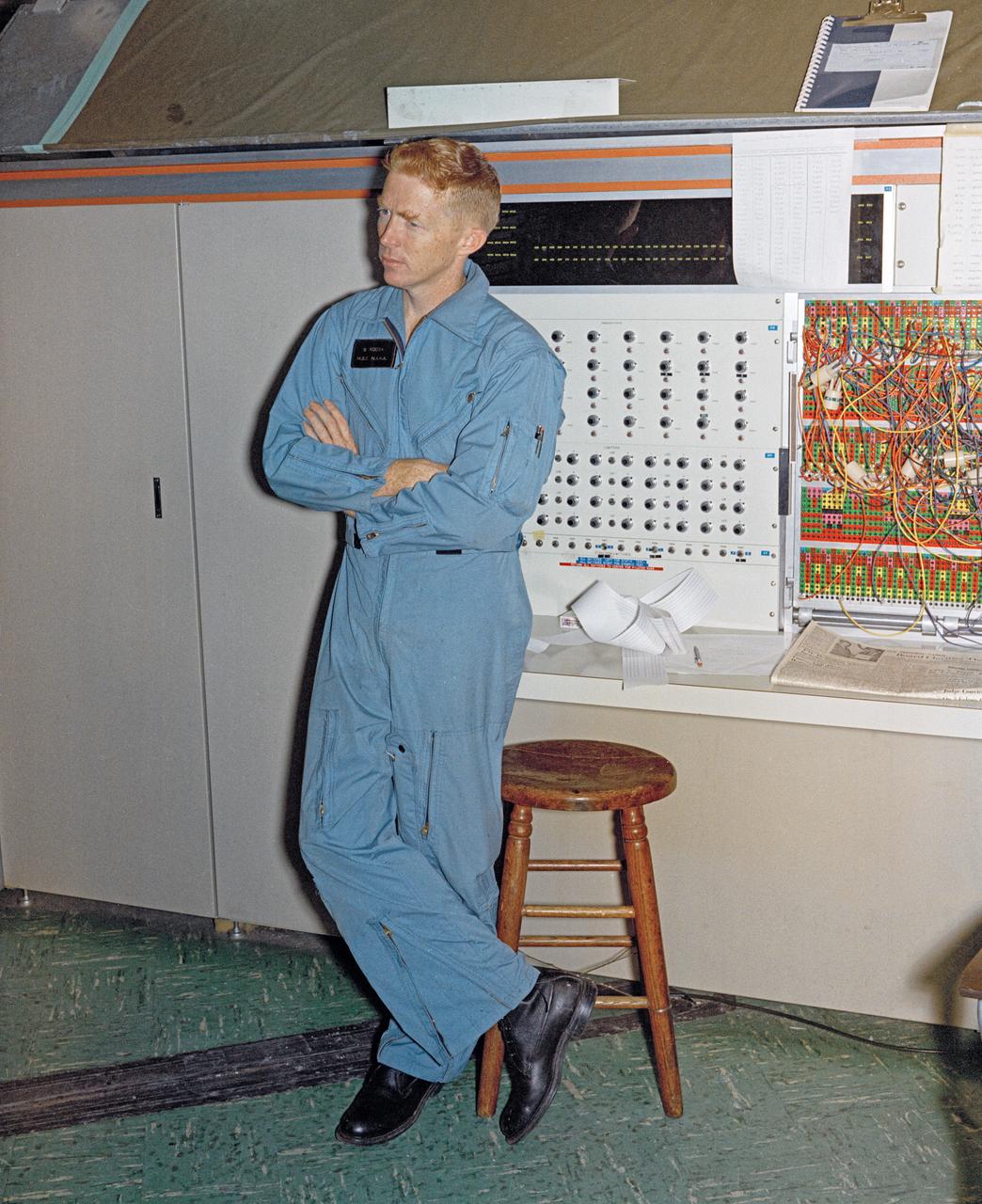
Astronauts Stuart A. Roosa, and Alfred M. Worden training a tRendezvous Docking Simulator NASA Langley. Worden was one of the 19 astronauts selected by NASA in April 1966. He served as a member of the astronaut support crew for the Apollo 9 flight and as backup command module pilot for the Apollo 12 flight. Colonel Roosa was one of the 19 astronauts selected by NASA in April 1966. He was a member of the astronaut support crew for the Apollo 9 flight.
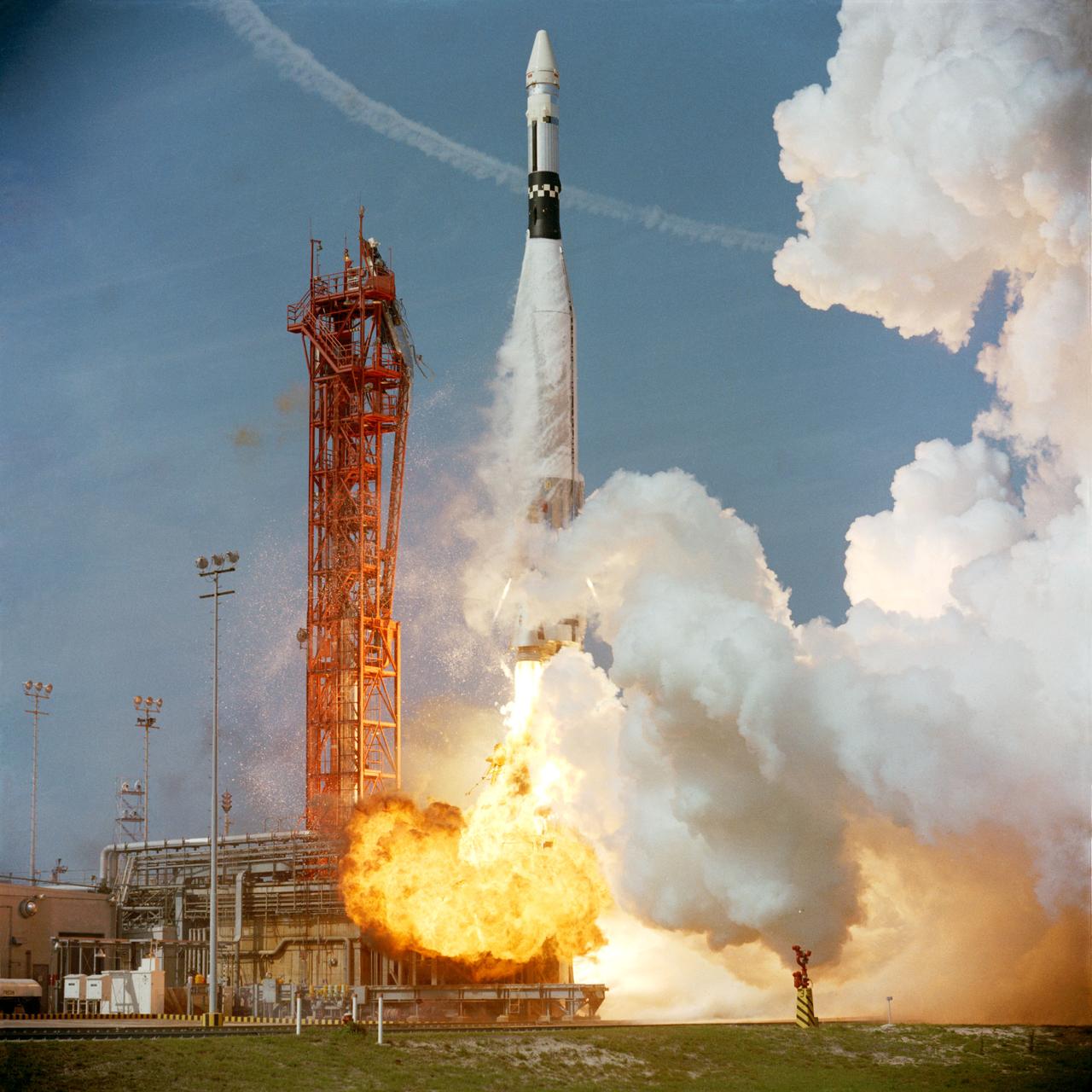
S66-24482 (16 March 1966) --- An Agena Target Docking Vehicle atop an Atlas rocket lifts off from Launch Complex 14 at Cape Kennedy at 10 a.m., March 16, 1966 just prior to the Gemini-8 liftoff at nearby Launch Complex 19. The Agena served as a rendezvous and docking vehicle for the Gemini-8 spacecraft. A chase plane leaves a contrail in the background. Photo credit: NASA
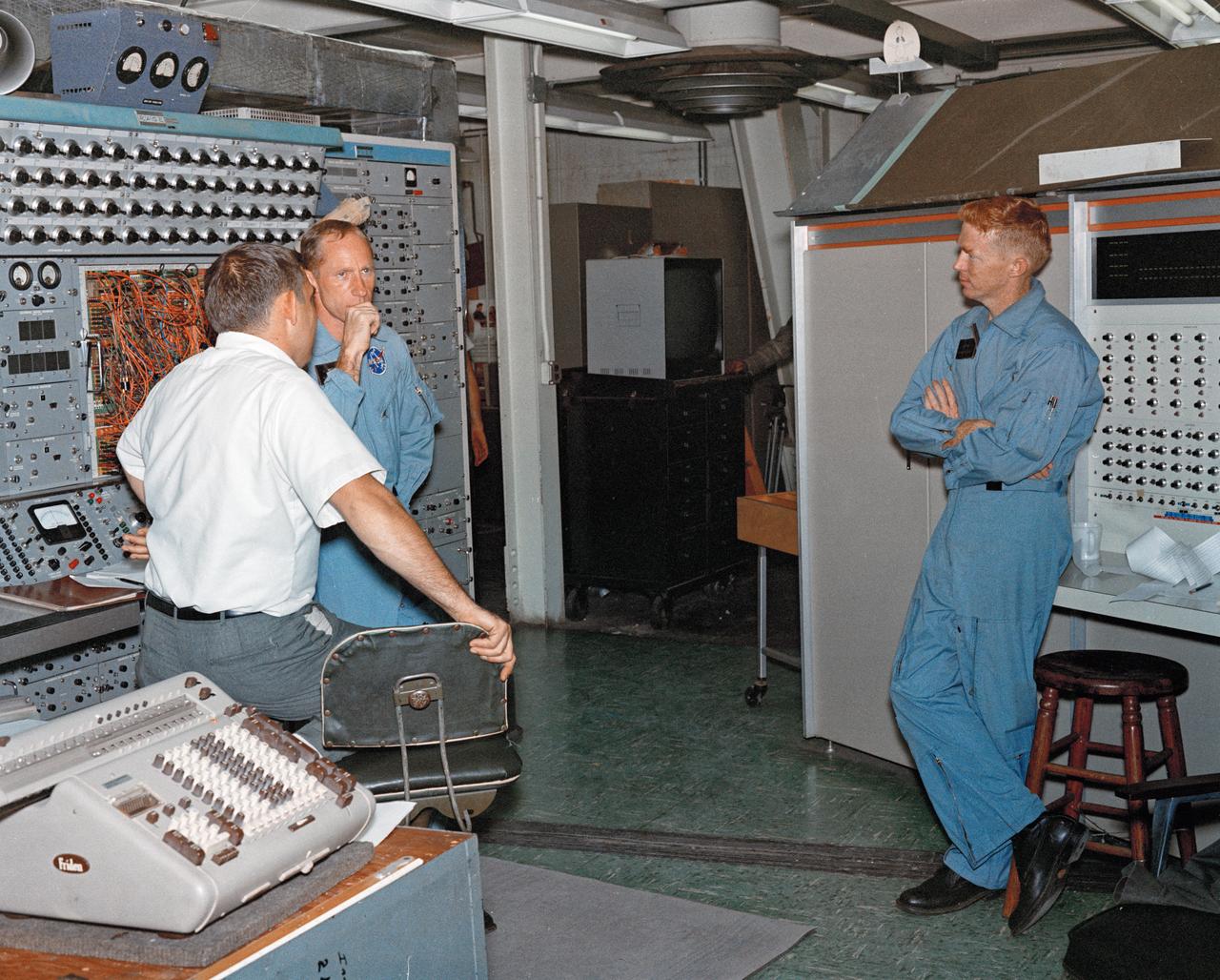
Astronauts Stuart A. Roosa, and Alfred M. Worden training a tRendezvous Docking Simulator NASA Langley. Worden was one of the 19 astronauts selected by NASA in April 1966. He served as a member of the astronaut support crew for the Apollo 9 flight and as backup command module pilot for the Apollo 12 flight. Colonel Roosa was one of the 19 astronauts selected by NASA in April 1966. He was a member of the astronaut support crew for the Apollo 9 flight.
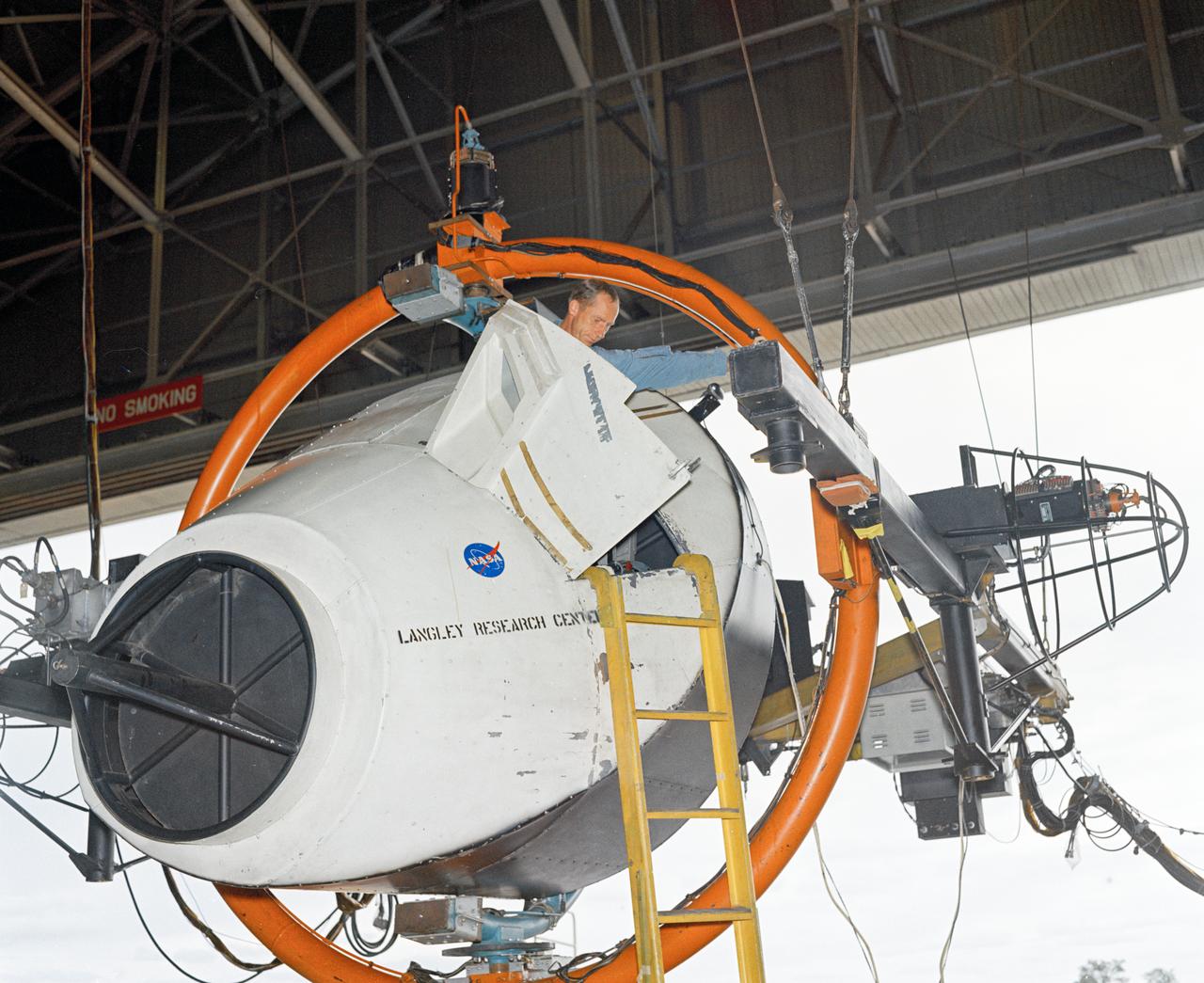
Astronauts Stuart A. Roosa, and Alfred M. Worden training a tRendezvous Docking Simulator NASA Langley. Worden was one of the 19 astronauts selected by NASA in April 1966. He served as a member of the astronaut support crew for the Apollo 9 flight and as backup command module pilot for the Apollo 12 flight. Colonel Roosa was one of the 19 astronauts selected by NASA in April 1966. He was a member of the astronaut support crew for the Apollo 9 flight.

S66-42751 (18 July 1966) --- An Agena Target Docking Vehicle atop its Atlas launch vehicle was launched from the Kennedy Space Center's Launch Complex 14 at 3:39 p.m. (EST), July 18, 1966. The Gemini-10 liftoff followed the Agena liftoff by 101 minutes. The Agena served as a rendezvous and docking vehicle for the Gemini-10 spacecraft. Photo credit: NASA
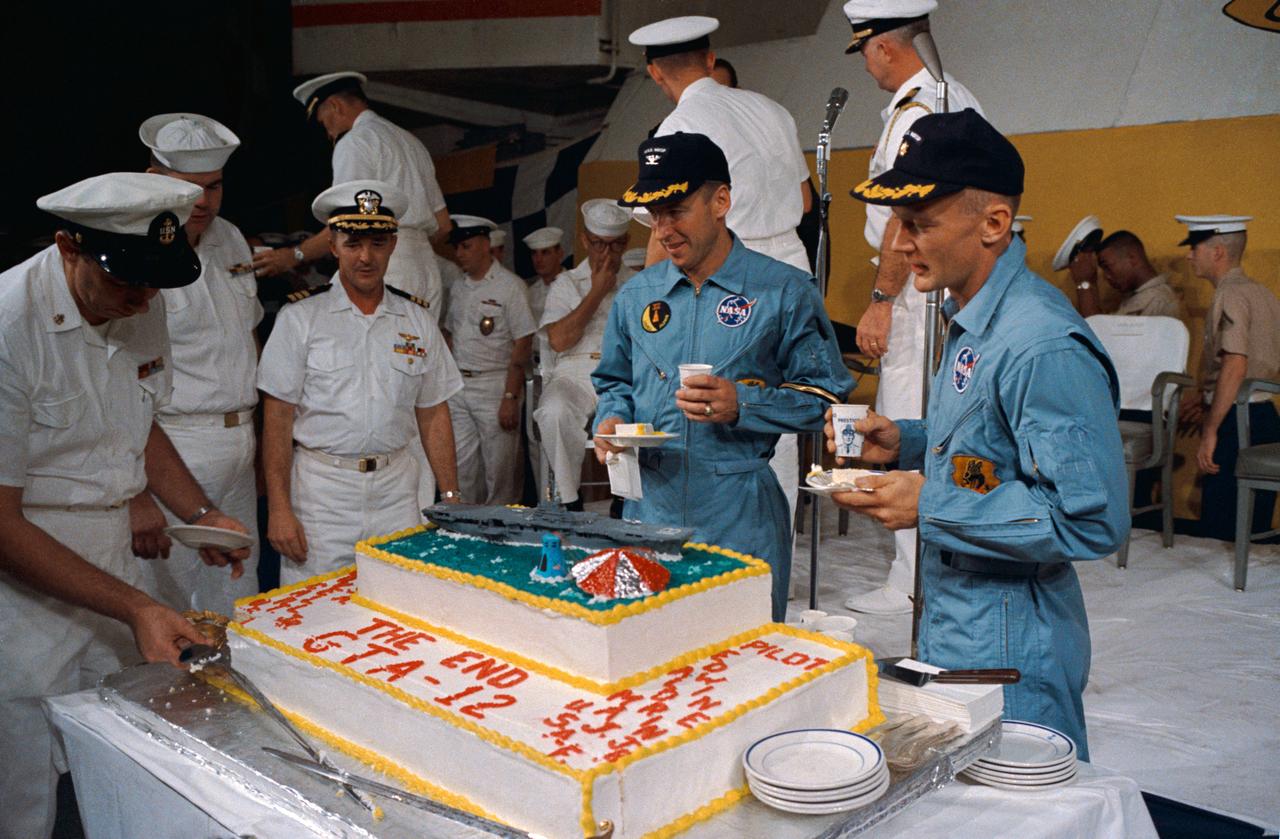
S66-59989 (16 Nov. 1966) --- Gemini-12 astronaut James A. Lovell Jr. (left), command pilot, and Edwin E. Aldrin Jr. (right), pilot, eat a piece of cake presented the two astronauts by crew members of the prime recovery ship, USS Wasp. Gemini-12 splashed down in the Atlantic Ocean at 2:21 p.m. (EST), Nov. 15, 1966, to conclude a four-day mission in space. Photo credit: NASA
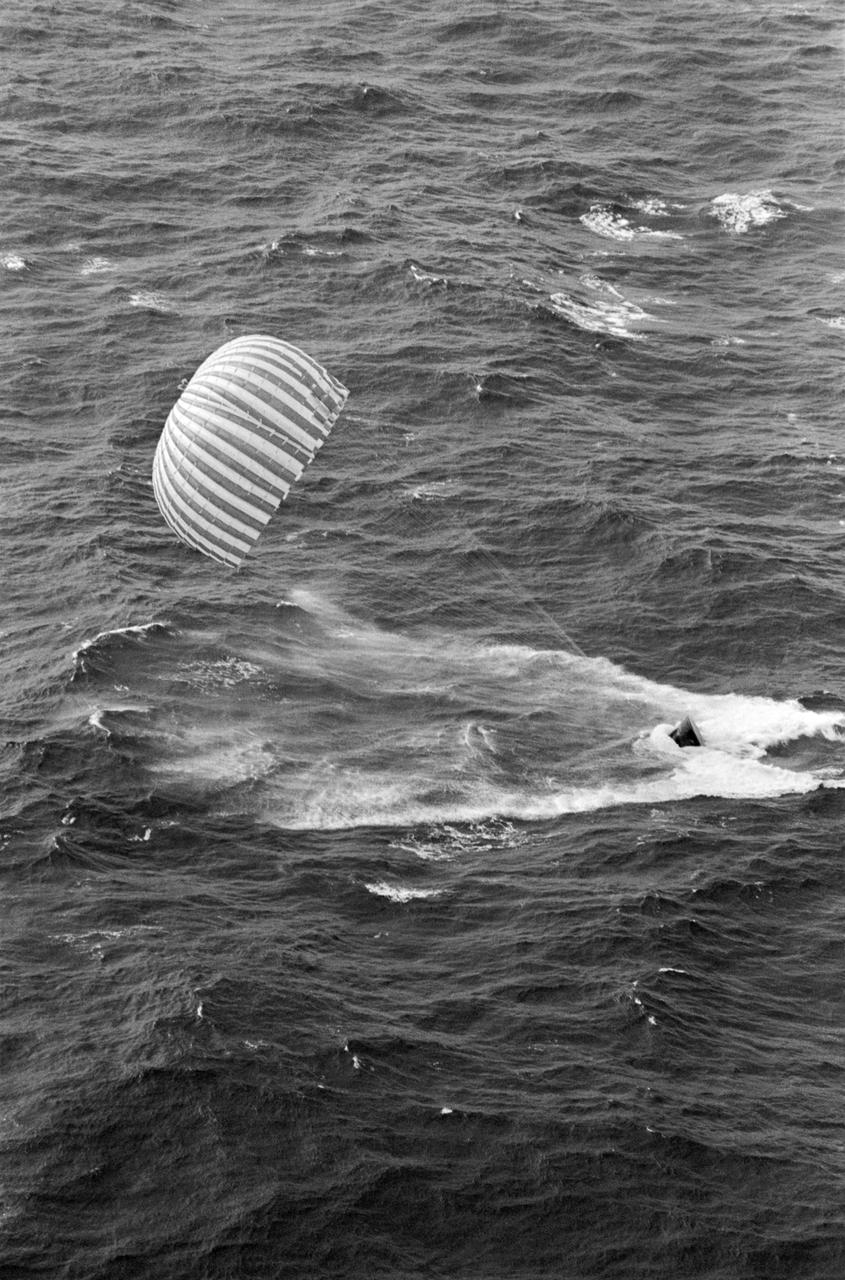
S66-59936 (15 Nov. 1966) --- The last Gemini spaceflight is concluded as the Gemini-12 spacecraft, with astronaut James A. Lovell Jr., command pilot, and Edwin E. Aldrin Jr., pilot, aboard, touches down in the Atlantic Ocean 2.5 nautical miles from the prime recovery ship, USS Wasp. Gemini-12 splashed down at 2:21 p.m. (EST), Nov. 15, 1966, to conclude a four-day mission in space. Photo credit: NASA
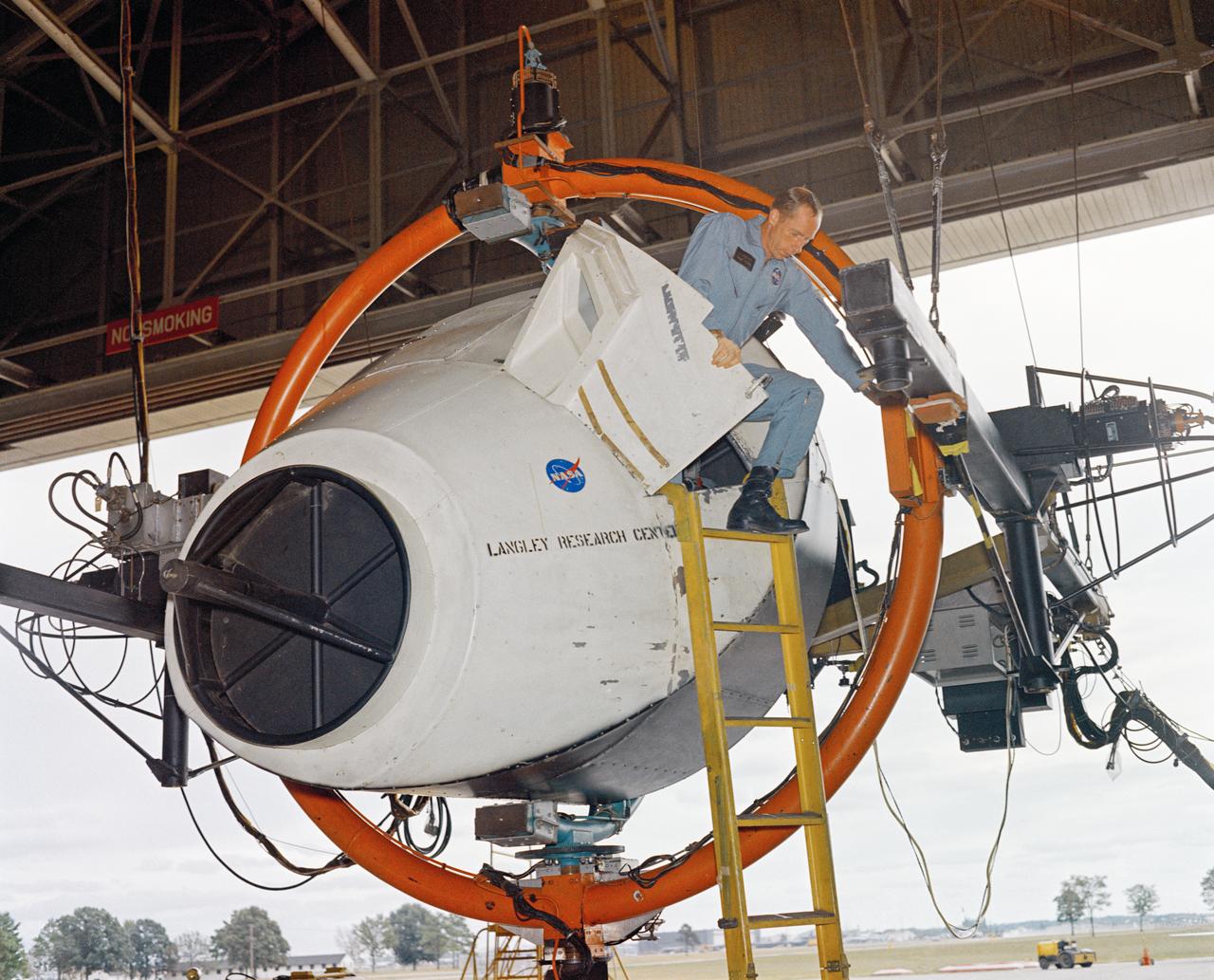
Astronauts Stuart A. Roosa, and Alfred M. Worden training a tRendezvous Docking Simulator NASA Langley. Worden was one of the 19 astronauts selected by NASA in April 1966. He served as a member of the astronaut support crew for the Apollo 9 flight and as backup command module pilot for the Apollo 12 flight. Colonel Roosa was one of the 19 astronauts selected by NASA in April 1966. He was a member of the astronaut support crew for the Apollo 9 flight.
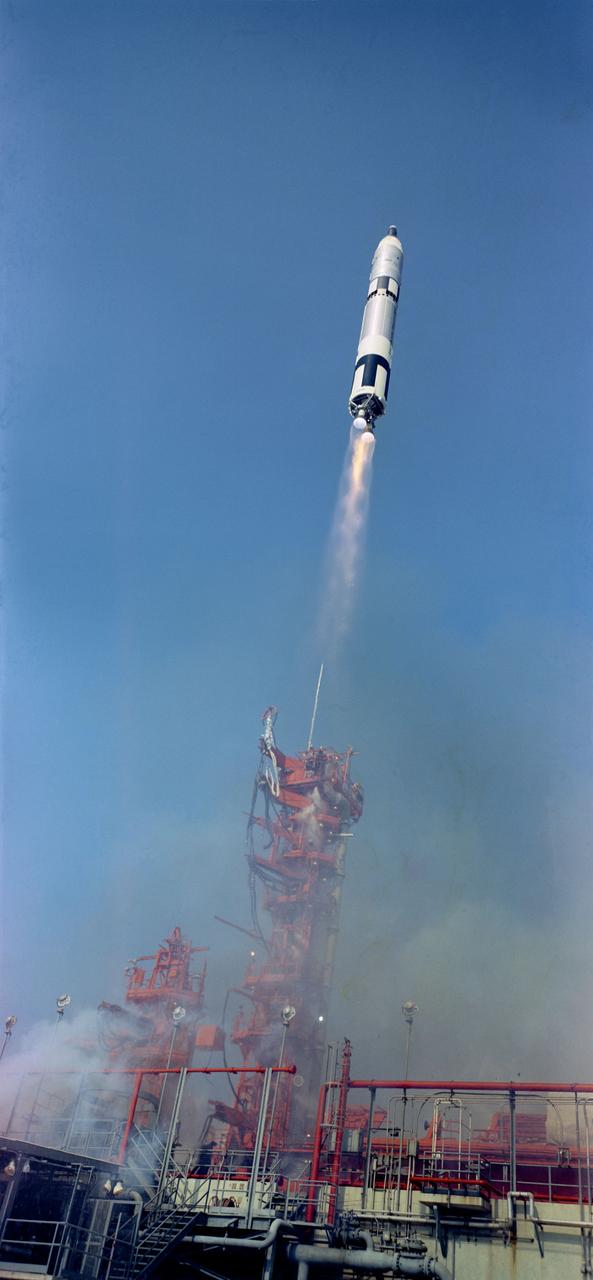
S66-34064 (3 June 1966) ?-- The Gemini-9 spacecraft, carrying astronauts Thomas P. Stafford, command pilot, and Eugene A. Cernan, pilot, was successfully launched by the National Aeronautics and Space Administration from the Kennedy Space Center?s Launch Complex 19 at 8:39 a.m. (EST), June 3, 1966. Photo credit: NASA
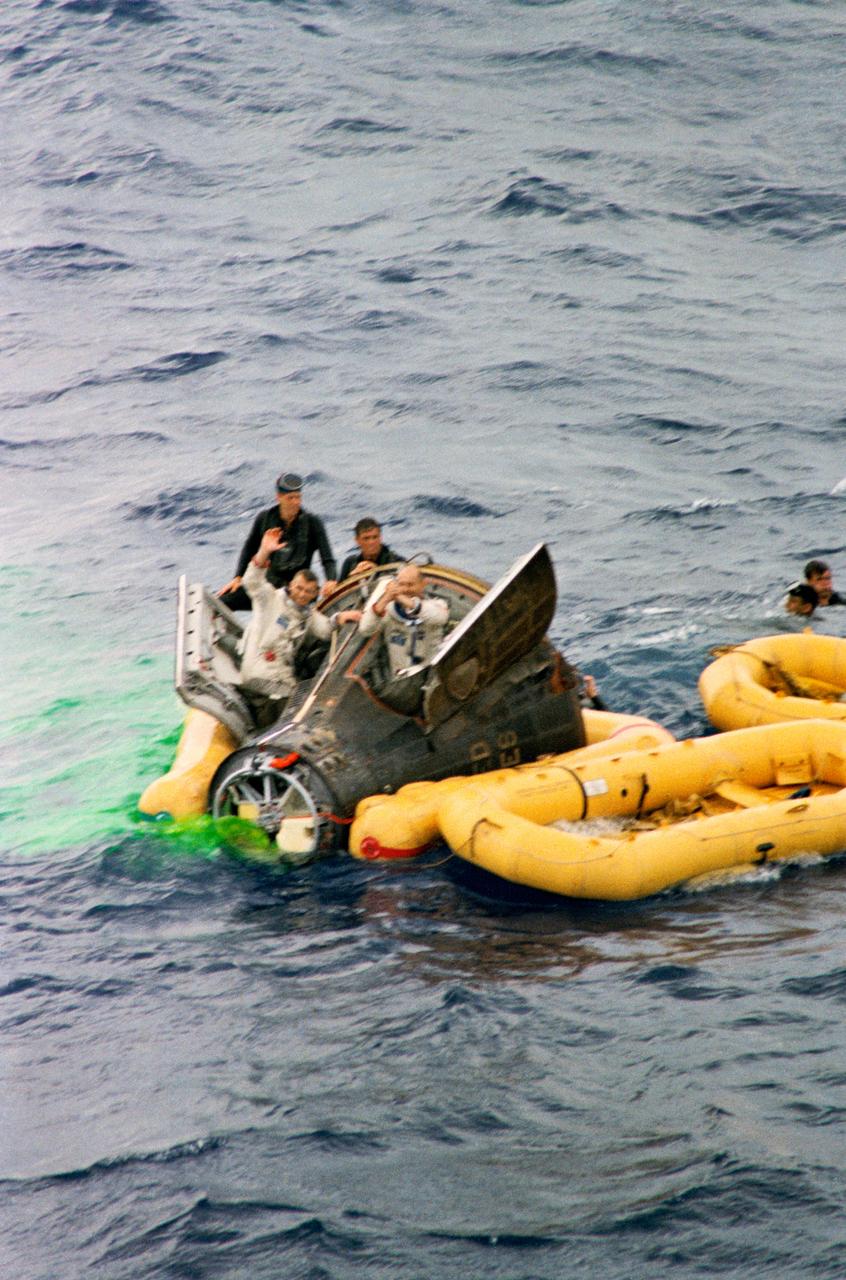
S66-34110 (6 June 1966) --- Astronauts Thomas Stafford (right) and Eugene Cernan wave to those aboard the aircraft carrier USS Wasp as the recovery ship approaches. U.S. Navy frogmen assist in the recovery operations. Gemini-9A splashed down in the Atlantic Ocean only 3.5 miles from the USS Wasp. Gemini-9 splashed down 345 miles east of Cape Kennedy at 9 a.m. (EST), June 6, 1966. Photo credit: NASA
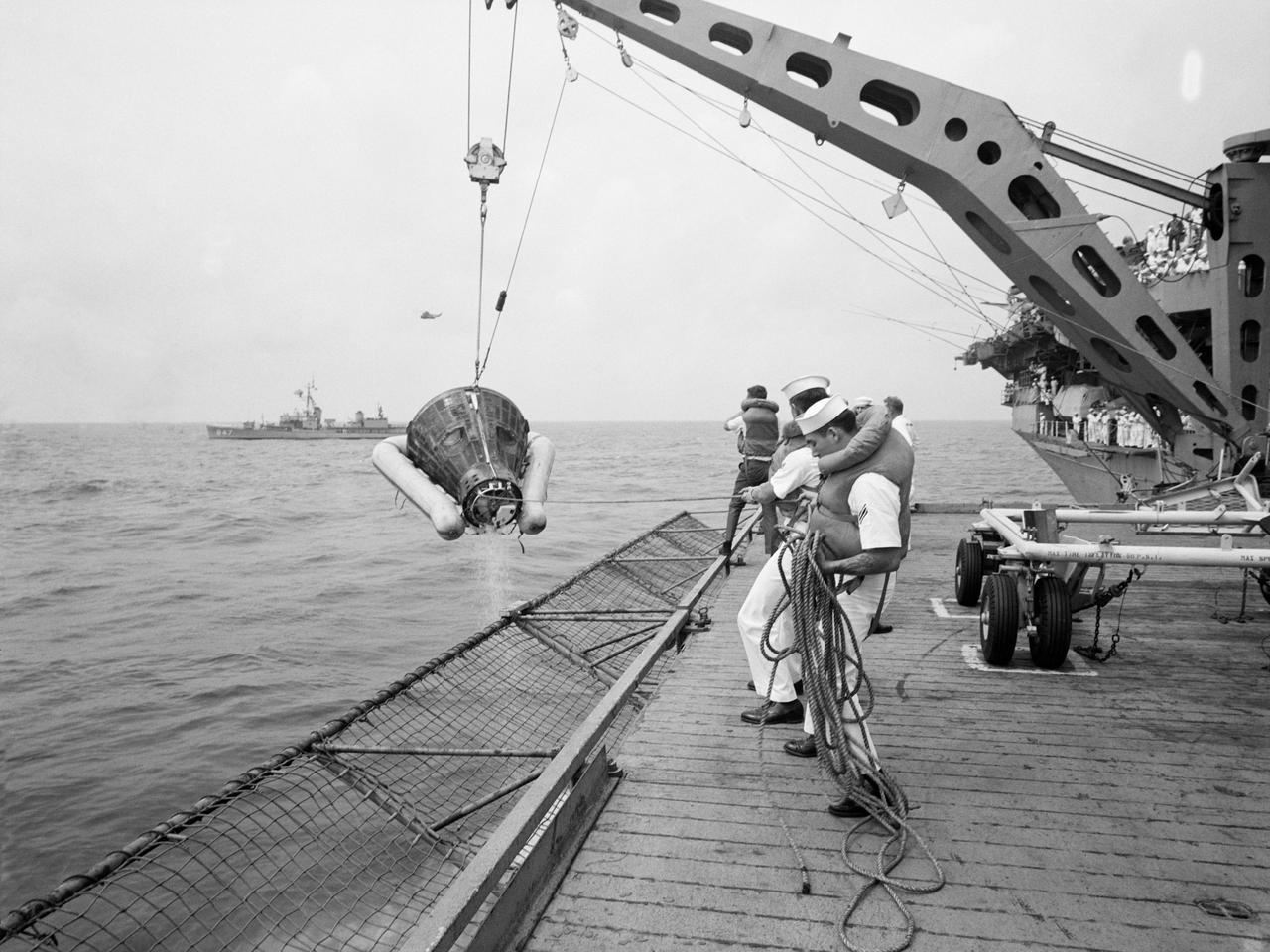
S66-34101 (6 June 1966) --- The Gemini-9 spacecraft, with astronauts Thomas P. Stafford and Eugene A. Cernan still inside, is hoisted aboard the aircraft carrier USS Wasp. Gemini-9 splashed down only 3.5 miles from the big recovery ship at 9 a.m. (EST), June 6, 1966, 345 miles east of Cape Kennedy, to conclude a 72-hour, 21-minute mission in space. Photo credit: NASA
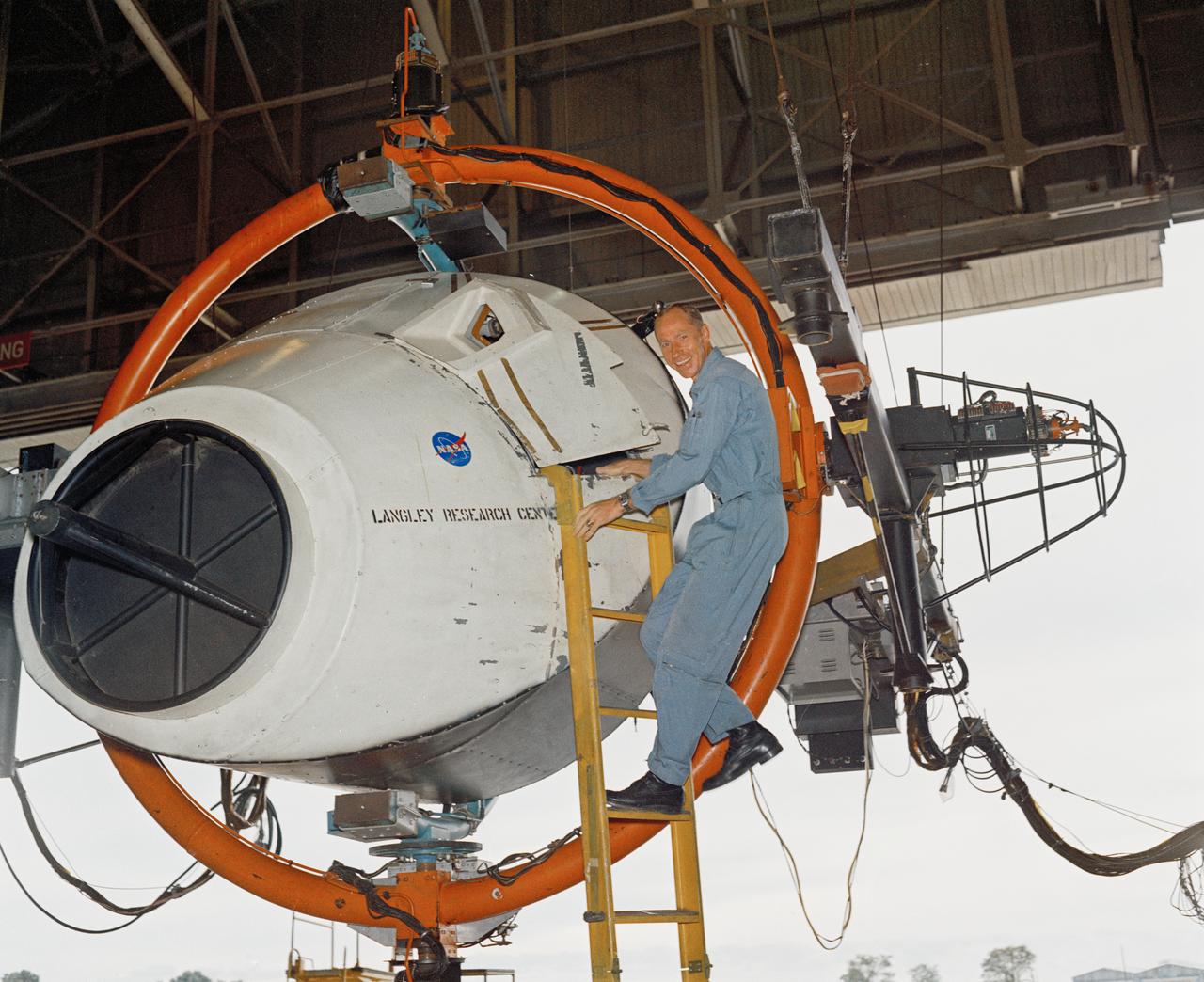
Astronauts Stuart A. Roosa, and Alfred M. Worden training a tRendezvous Docking Simulator NASA Langley. Worden was one of the 19 astronauts selected by NASA in April 1966. He served as a member of the astronaut support crew for the Apollo 9 flight and as backup command module pilot for the Apollo 12 flight. Colonel Roosa was one of the 19 astronauts selected by NASA in April 1966. He was a member of the astronaut support crew for the Apollo 9 flight.
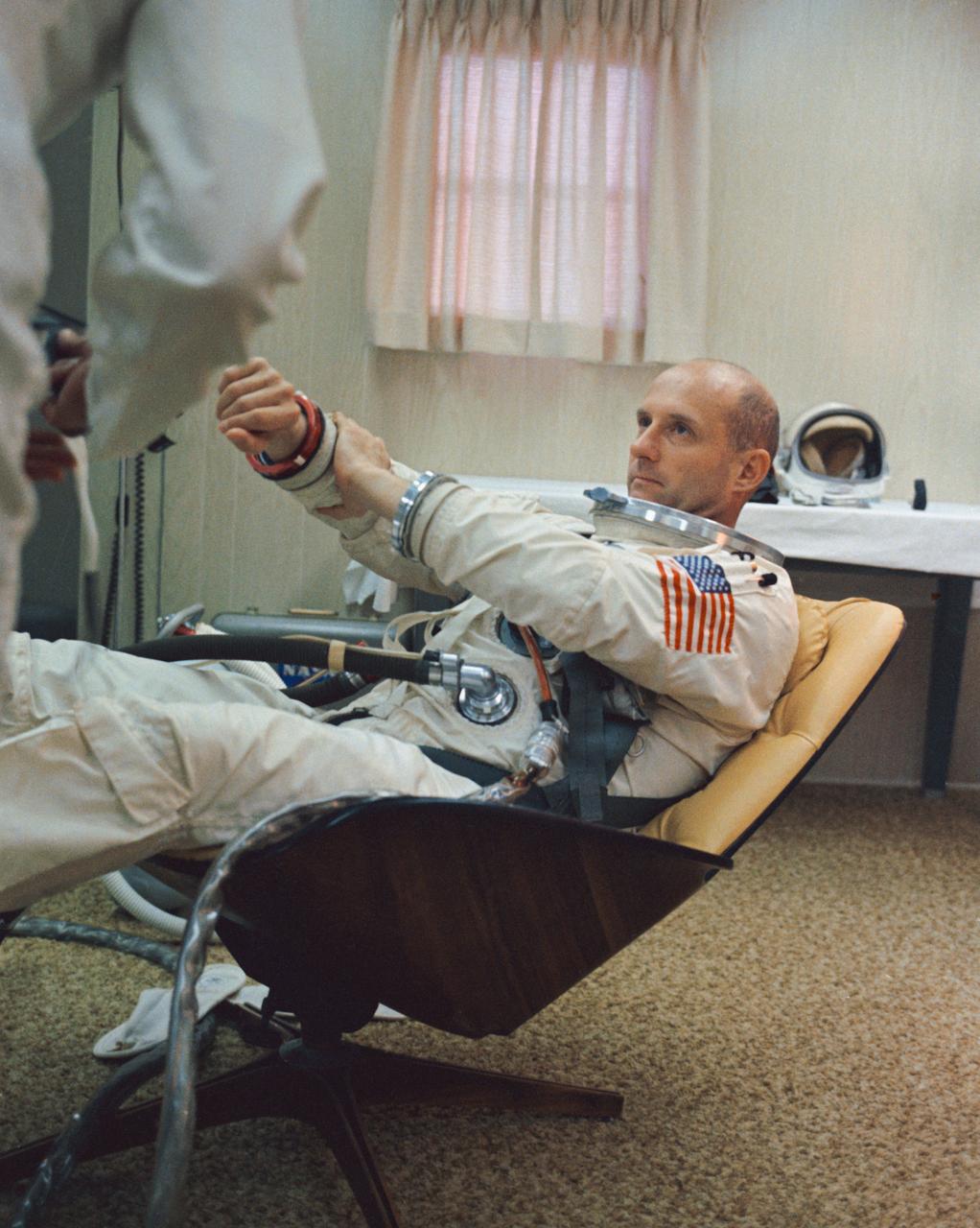
S66-34060 (3 June 1966) --- Astronaut Thomas P. Stafford, Gemini-9A prime crew command pilot, adjusts a sleeve of his spacesuit during suiting up procedures at Launch Complex 16, Kennedy Space Center. The Gemini-9A liftoff was at 8:39 a.m. (EST), June 3, 1966. Photo credit: NASA
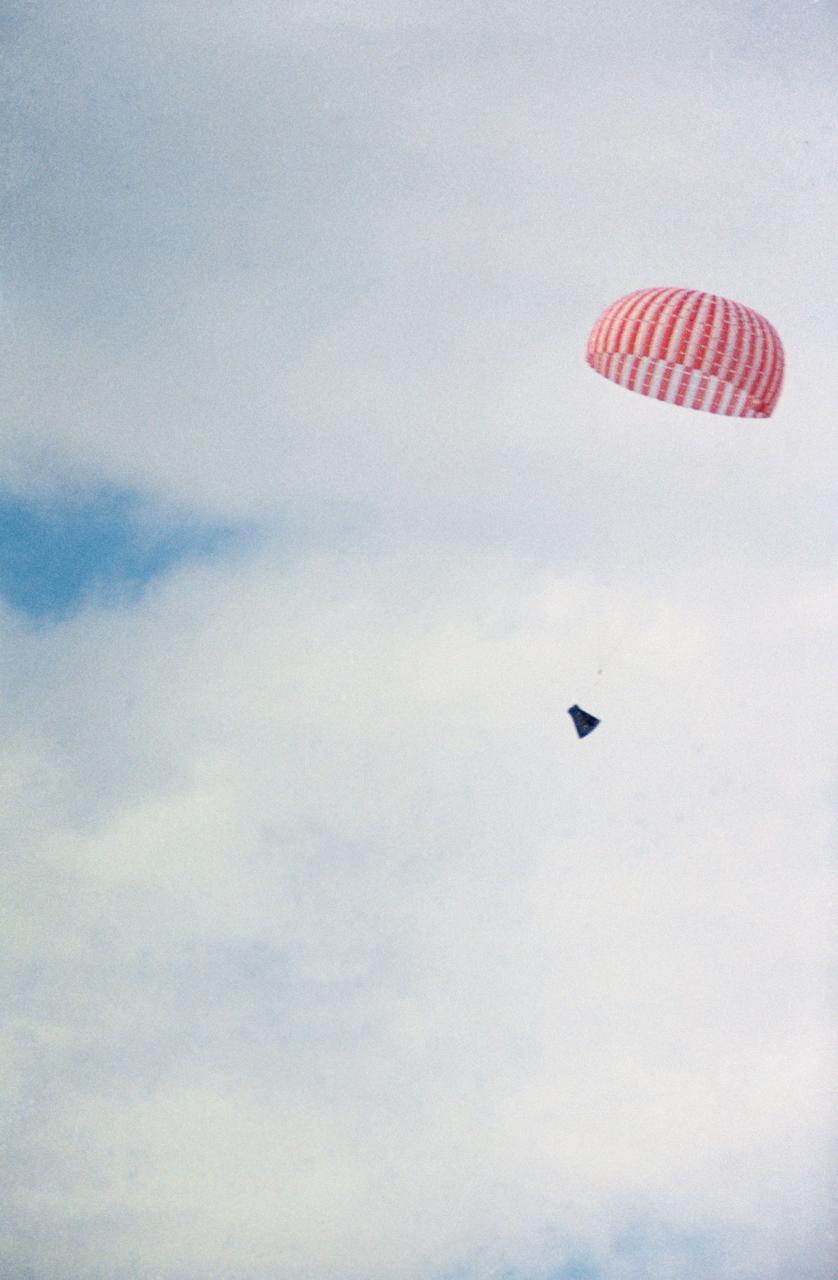
S66-59986 (15 Nov. 1966) --- The Gemini spaceflight program concludes as the Gemini-12 spacecraft, with astronaut James A. Lovell Jr., command pilot, and Edwin E. Aldrin Jr., pilot, aboard, nears touchdown in the Atlantic Ocean 2.5 nautical miles from the prime recovery ship, USS Wasp. Gemini-12 splashed down at 2:21 p.m. (EST), Nov. 11, 1966, to conclude the four-day mission in space. Photo credit: NASA
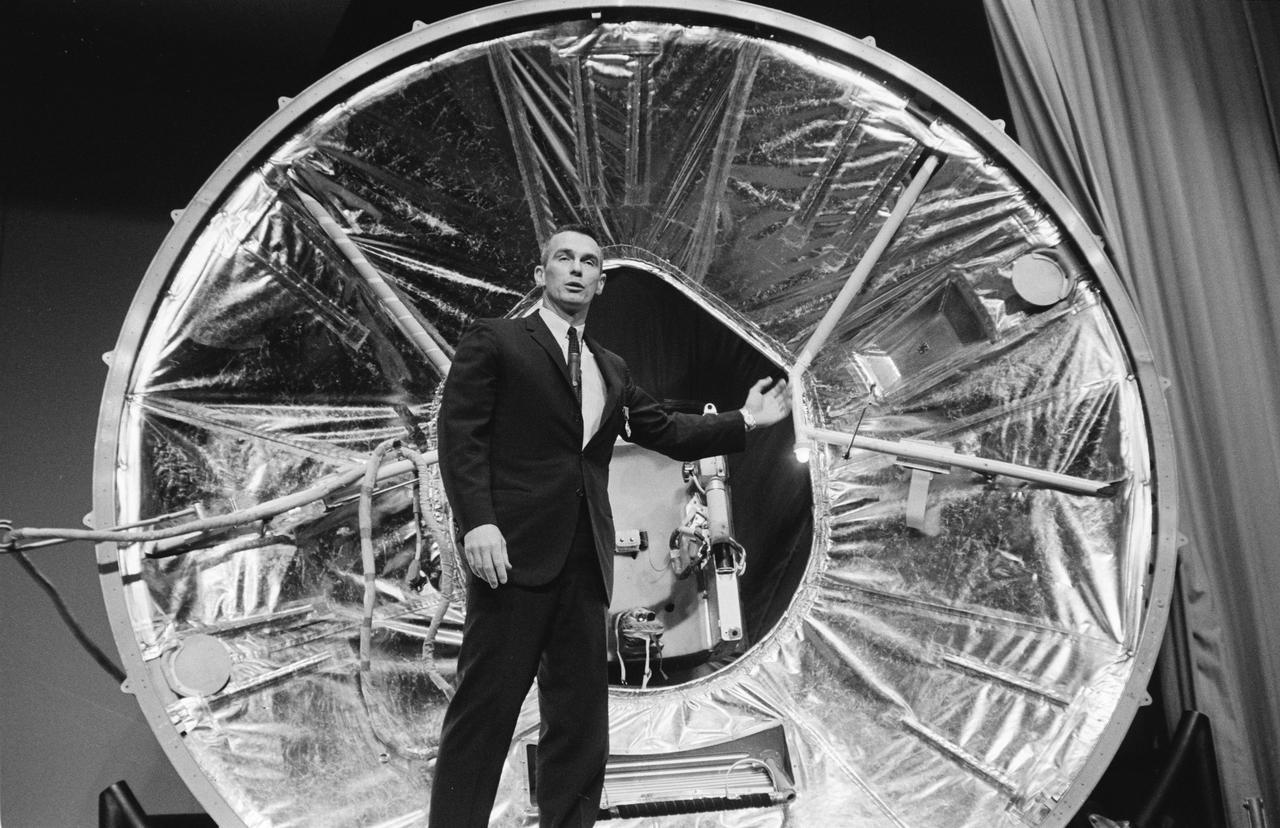
S66-32698 (17 June 1966) --- Astronaut Eugene A. Cernan discusses his Gemini-9A extravehicular activity before a gathering of news media representatives in the MSC auditorium. In the background is an Astronaut Maneuvering Unit (AMU) mock-up mounted in a mock-up of a Gemini spacecraft adapter equipment section. Astronauts Cernan and Thomas P. Stafford completed their three-day mission in space on June 6, 1966. Photo credit: NASA

S66-50757 (15 Sept. 1966) --- Astronaut Charles Conrad Jr., command pilot of the Gemini-11 spaceflight, is hoisted aboard a recovery helicopter from the USS Guam. Astronaut Richard F. Gordon Jr., pilot, sits in a life raft below waiting to be picked up. Gemini-11 splashed down at 9 a.m. (EST) Sept. 15, 1966, to conclude a three-day mission in space. Photo credit: NASA
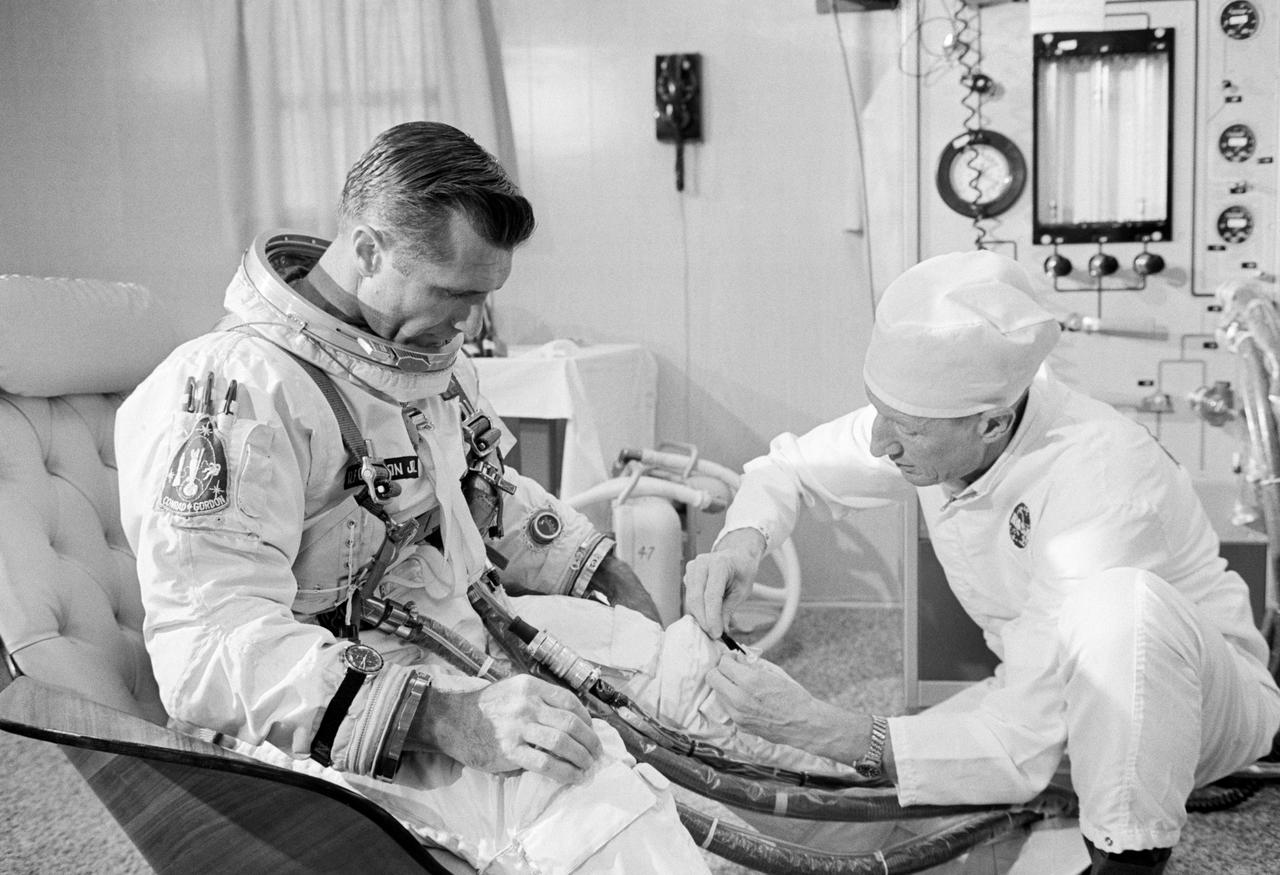
S66-50816 (12 Sept. 1966) --- Astronaut Richard F. Gordon Jr., pilot of the Gemini-11 spaceflight, undergoes suiting up operations in the Launch Complex 16 suit trailer during the Gemini-11 prelaunch countdown. At right is suit technician Clyde Teague. Later, astronaut Gordon and Charles Conrad Jr., command pilot, entered a transport van which carried them to Pad 19 and their waiting spacecraft. The liftoff was at 9:42 a.m. (EST), Sept. 12, 1966. Photo credit: NASA
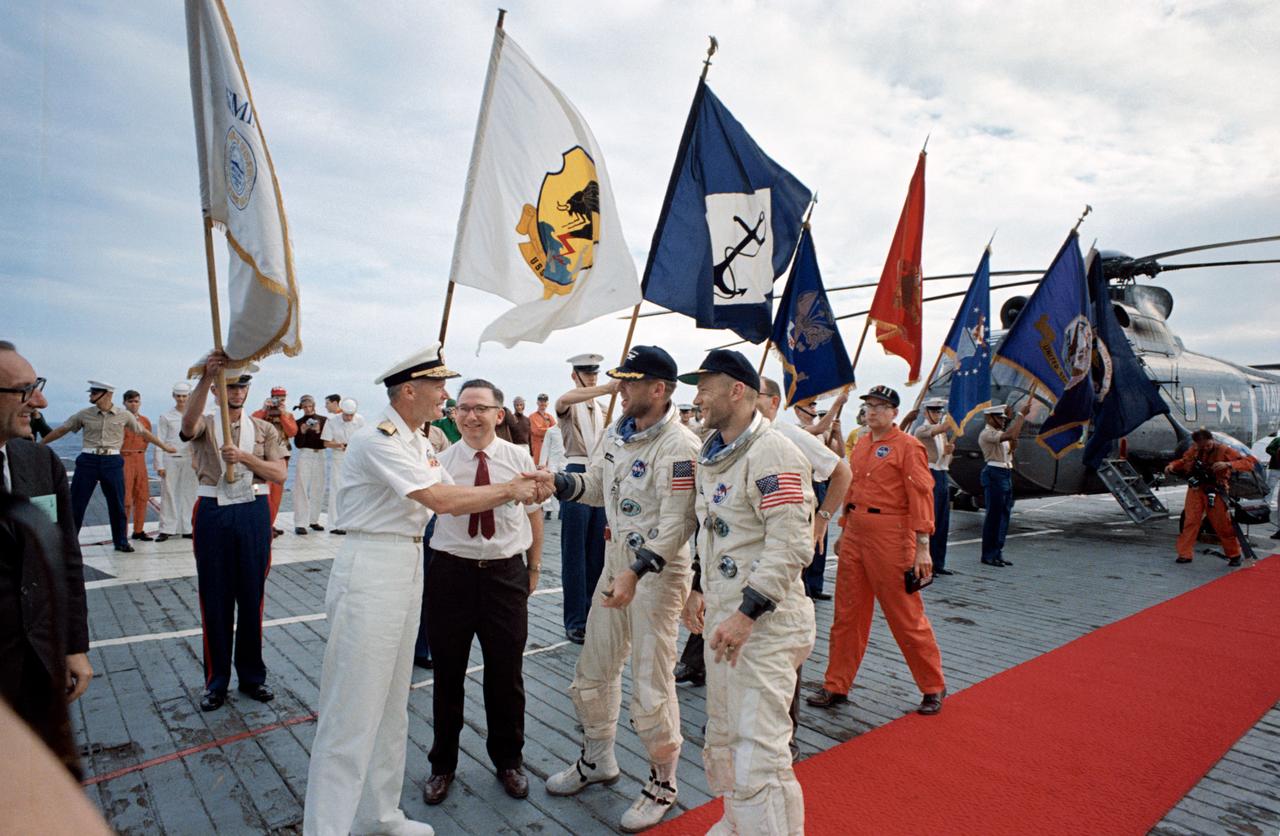
S66-59981 (15 Nov. 1966) --- Astronauts James A. Lovell Jr. (left), command pilot, and Edwin E. Aldrin Jr., pilot, receive official welcome as they arrive aboard the aircraft carrier USS Wasp. Gemini-12 splashed down in the Atlantic Ocean recovery area at 2:21 p.m. (EST), Nov. 15, 1966, to conclude a four-day mission in space. Photo credit: NASA
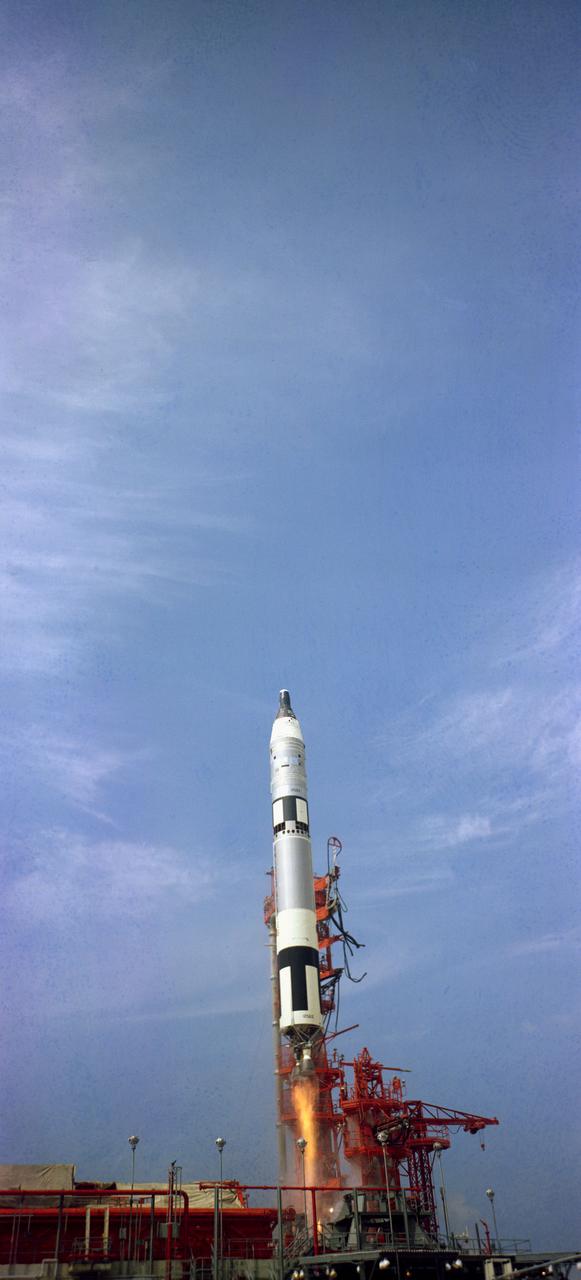
S66-24465 (16 March 1966) --- The Gemini-Titan 8 (GT-8), carrying astronauts Neil A. Armstrong, command pilot, and David R. Scott, pilot, was successfully launched by the National Aeronautics and Space Administration's (NASA) John F. Kennedy Space Center (KSC) at 11:41 a.m. (EST), March 16, 1966. An attempt will be made to rendezvous and dock the Gemini-8 spacecraft with Agena Docking Target Vehicle. Photo credit: NASA
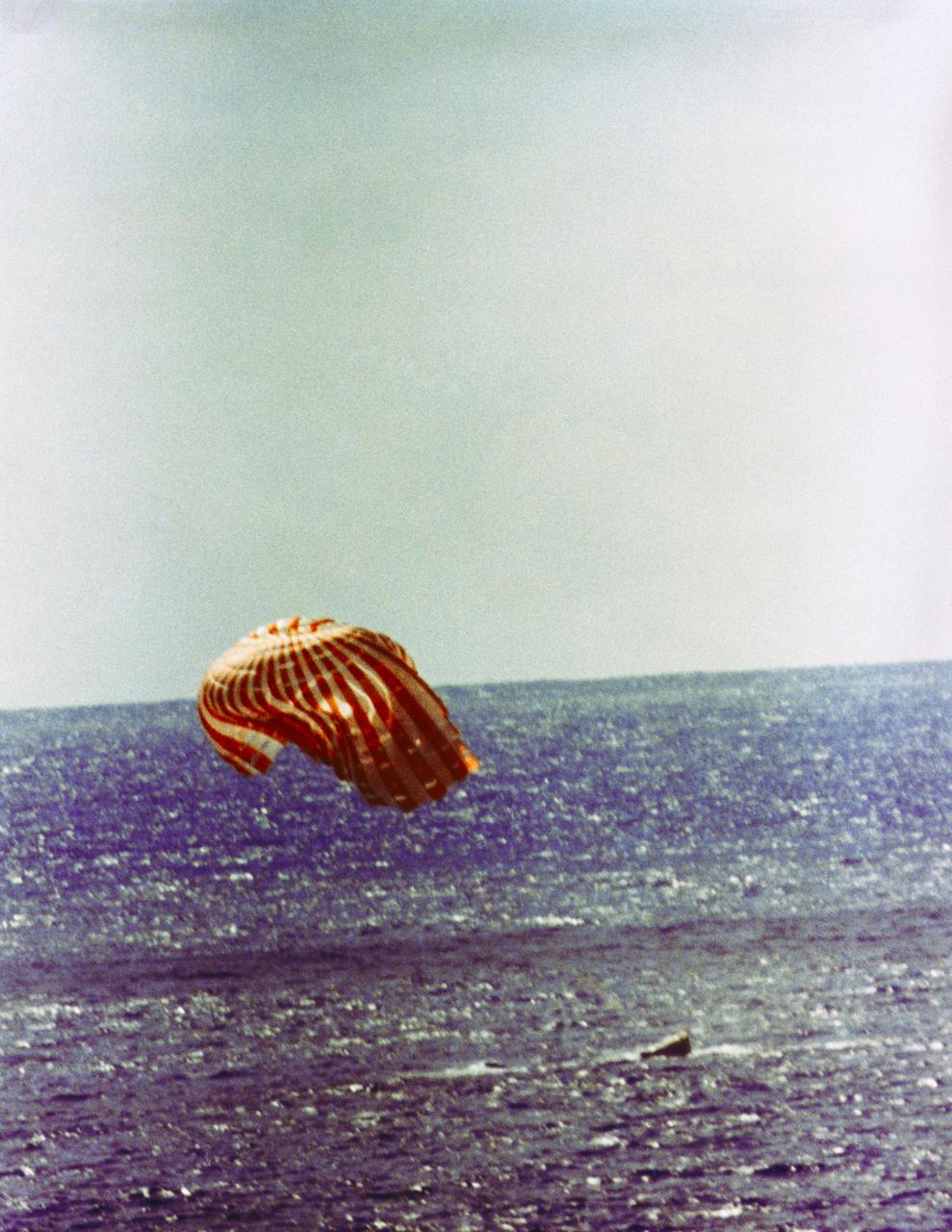
S66-50749 (15 Sept. 1966) --- The Gemini-11 spaceflight is concluded as the Gemini-11 spacecraft, with astronauts Charles Conrad Jr., command pilot, and Richard F. Gordon Jr., pilot, aboard, touches down in the Atlantic Ocean 1.5-2 statute miles from the prime recovery ship, USS Guam. Gemini-11 splashed down at 9 a.m. (EST), Sept. 15, 1966, to conclude a three-day mission in space. Photo credit: NASA
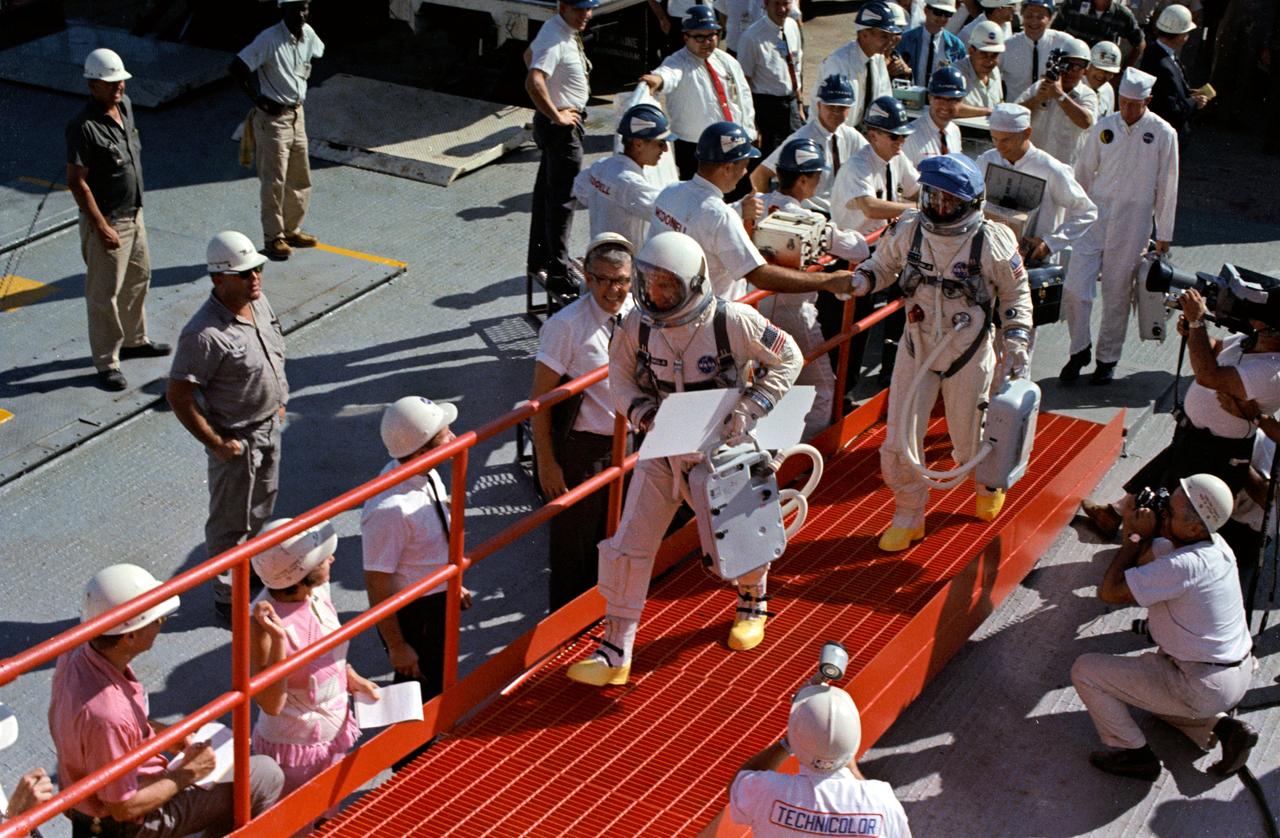
S66-59966 (11 Nov. 1966) --- Astronauts James A. Lovell Jr. (leading), command pilot, and Edwin E. Aldrin Jr., pilot, walk up the ramp at Pad 19 after arriving from the Launch Complex 16 suiting trailer during the prelaunch countdown. Moments later they entered the elevator which took them to the white room and the waiting Gemini-12 spacecraft. Liftoff was at 3:46 p.m. (EST), Nov. 11, 1966. Photo credit: NASA
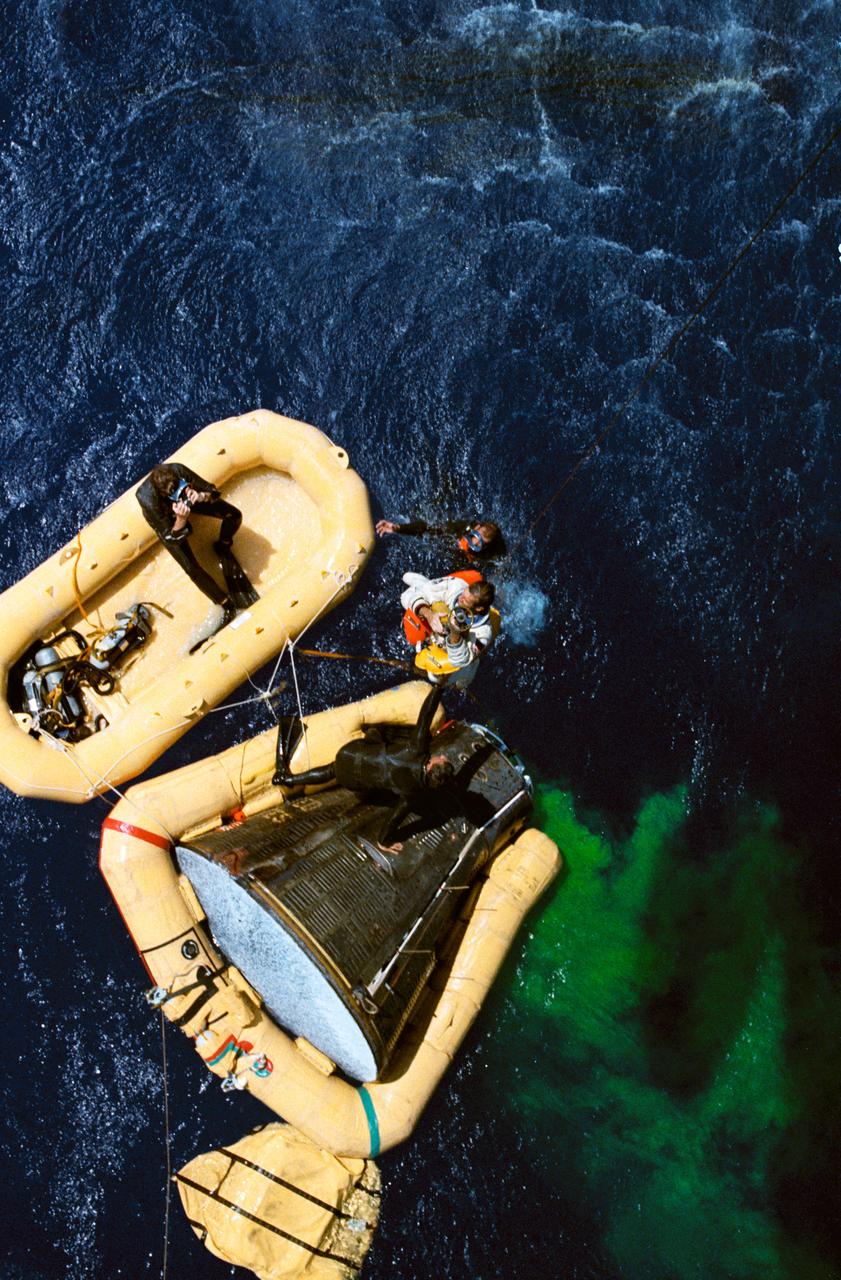
S66-50759 (15 Sept. 1966) --- Astronaut Richard F. Gordon Jr., pilot of the Gemini-11 spaceflight, is hoisted from the water by a recovery helicopter from the prime recovery ship USS Guam. Gemini-11 splashed down in the western Atlantic recovery area at 9 a.m. (EST), Sept. 15, 1966, to conclude the three-day mission in space. Astronaut Charles Conrad Jr. (out of frame) is the Gemini-11 command pilot. Photo credit: NASA