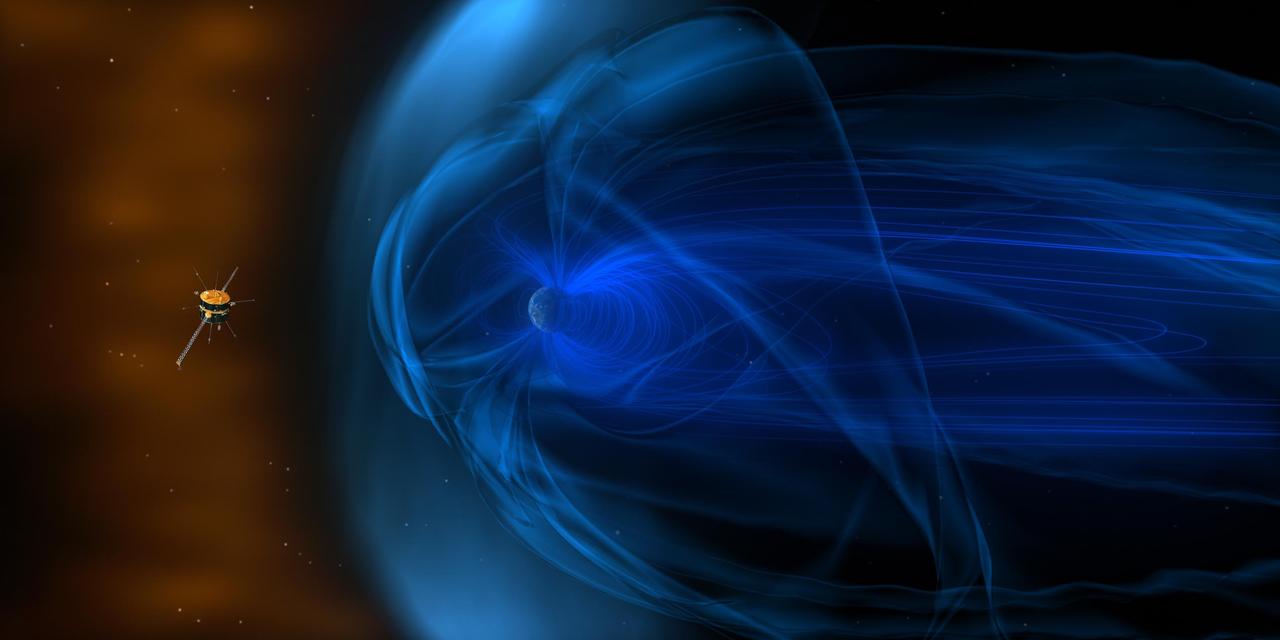
The end of 2014 marks two decades of data from a NASA mission called Wind. Wind -- along with 17 other missions – is part of what's called the Heliophysics Systems Observatory, a fleet of spacecraft dedicated to understanding how the sun and its giant explosions affect Earth, the planets and beyond.  Wind launched on Nov. 1, 1994, with the goal of characterizing the constant stream of particles from the sun called the solar wind. With particle observations once every 3 seconds, and 11 magnetic measurements every second, Wind measurements were – and still are – the highest cadence solar wind observations for any near-Earth spacecraft.  <b><a href="http://www.nasa.gov/audience/formedia/features/MP_Photo_Guidelines.html" rel="nofollow">NASA image use policy.</a></b>  <b><a href="http://www.nasa.gov/centers/goddard/home/index.html" rel="nofollow">NASA Goddard Space Flight Center</a></b> enables NASA’s mission through four scientific endeavors: Earth Science, Heliophysics, Solar System Exploration, and Astrophysics. Goddard plays a leading role in NASA’s accomplishments by contributing compelling scientific knowledge to advance the Agency’s mission.  <b>Follow us on <a href="http://twitter.com/NASAGoddardPix" rel="nofollow">Twitter</a></b>  <b>Like us on <a href="http://www.facebook.com/pages/Greenbelt-MD/NASA-Goddard/395013845897?ref=tsd" rel="nofollow">Facebook</a></b>  <b>Find us on <a href="http://instagrid.me/nasagoddard/?vm=grid" rel="nofollow">Instagram</a></b>
Solar Wind Workhorse Marks 20 Years of Science Discoveries
NASA image release April 22, 2010  This brand new Hubble photo is of a small portion of one of the largest seen star-birth regions in the galaxy, the Carina Nebula. Towers of cool hydrogen laced with dust rise from the wall of the nebula. The scene is reminiscent of Hubble's classic &quot;Pillars of Creation&quot; photo from 1995, but is even more striking in appearance. The image captures the top of a three-light-year-tall pillar of gas and dust that is being eaten away by the brilliant light from nearby bright stars. The pillar is also being pushed apart from within, as infant stars buried inside it fire off jets of gas that can be seen streaming from towering peaks like arrows sailing through the air. Credit: NASA, ESA, and M. Livio and the Hubble 20th Anniversary Team (STScI)  To read learn more about this image go to:  <a href="http://www.nasa.gov/mission_pages/hubble/science/hubble20th-img.html" rel="nofollow">www.nasa.gov/mission_pages/hubble/science/hubble20th-img....</a>  <b><a href="http://www.nasa.gov/audience/formedia/features/MP_Photo_Guidelines.html" rel="nofollow">NASA image use policy.</a></b>  <b><a href="http://www.nasa.gov/centers/goddard/home/index.html" rel="nofollow">NASA Goddard Space Flight Center</a></b> enables NASA’s mission through four scientific endeavors: Earth Science, Heliophysics, Solar System Exploration, and Astrophysics. Goddard plays a leading role in NASA’s accomplishments by contributing compelling scientific knowledge to advance the Agency’s mission.  <b>Follow us on <a href="http://twitter.com/NASAGoddardPix" rel="nofollow">Twitter</a></b>  <b>Like us on <a href="http://www.facebook.com/pages/Greenbelt-MD/NASA-Goddard/395013845897?ref=tsd" rel="nofollow">Facebook</a></b>  <b>Find us on <a href="http://instagram.com/nasagoddard?vm=grid" rel="nofollow">Instagram</a></b>
Starry-Eyed Hubble Celebrates 20 Years of Awe and Discovery
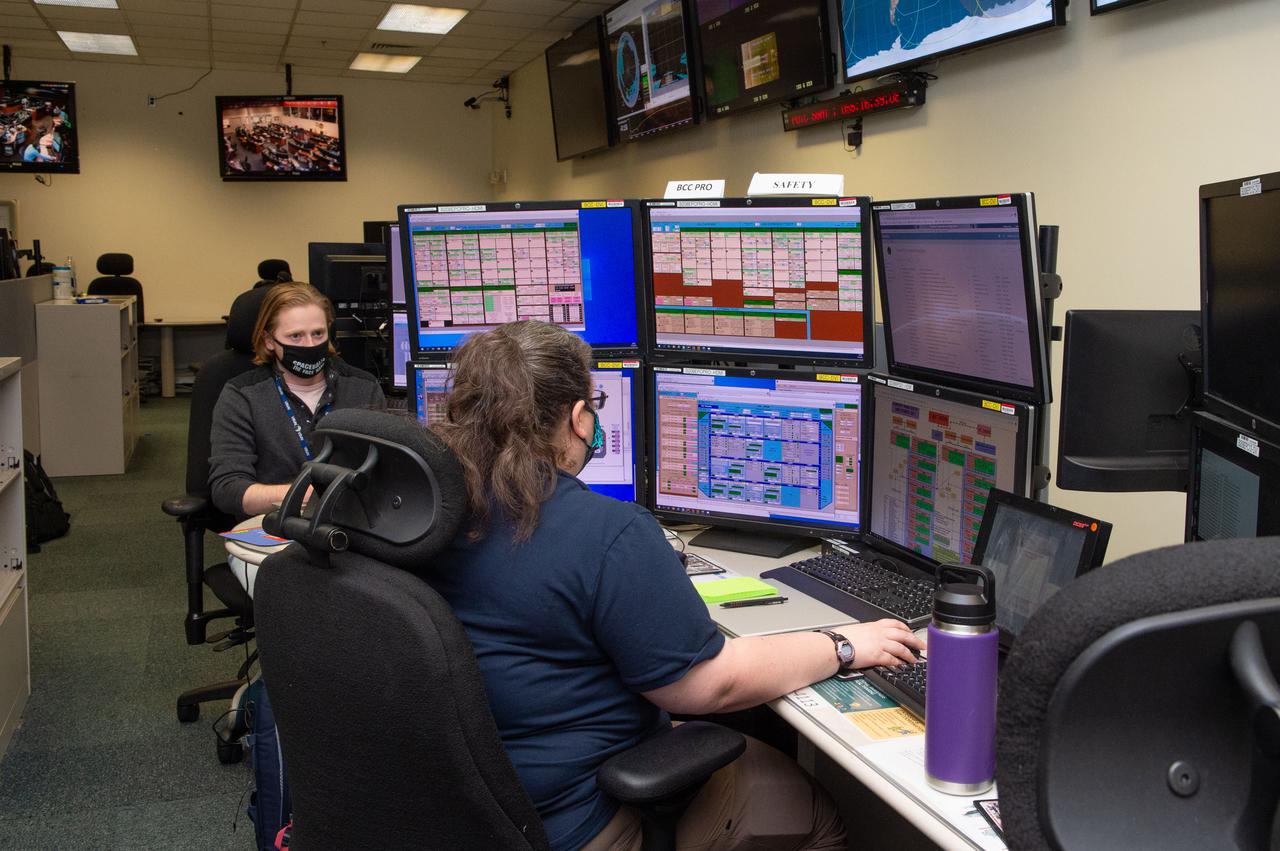
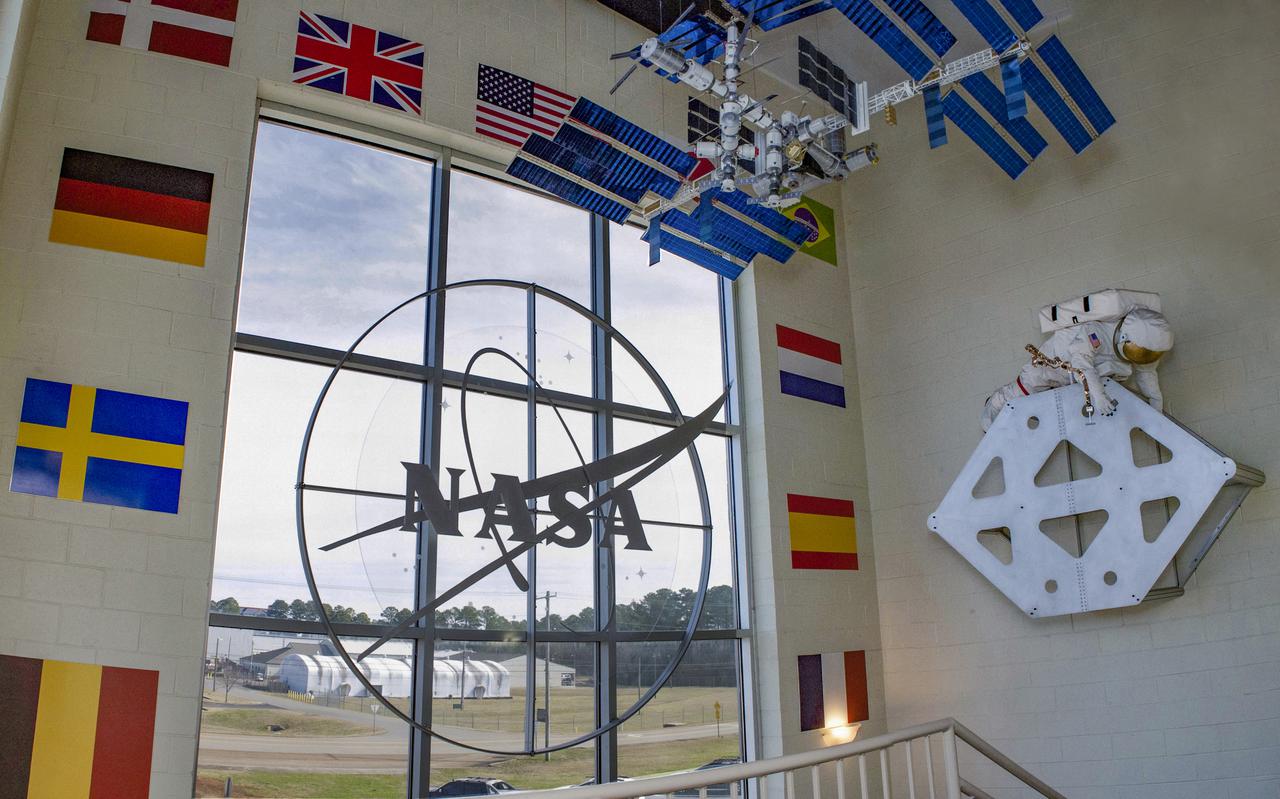
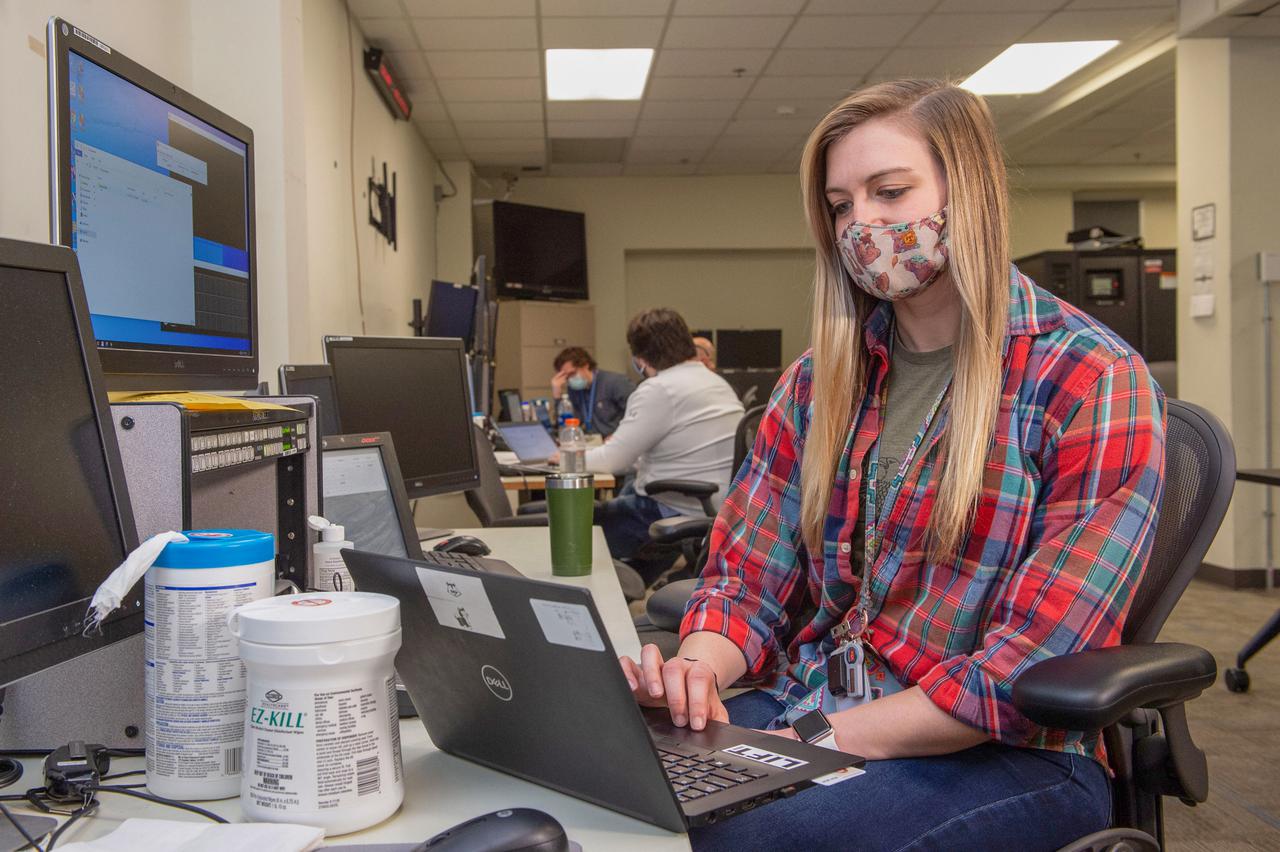
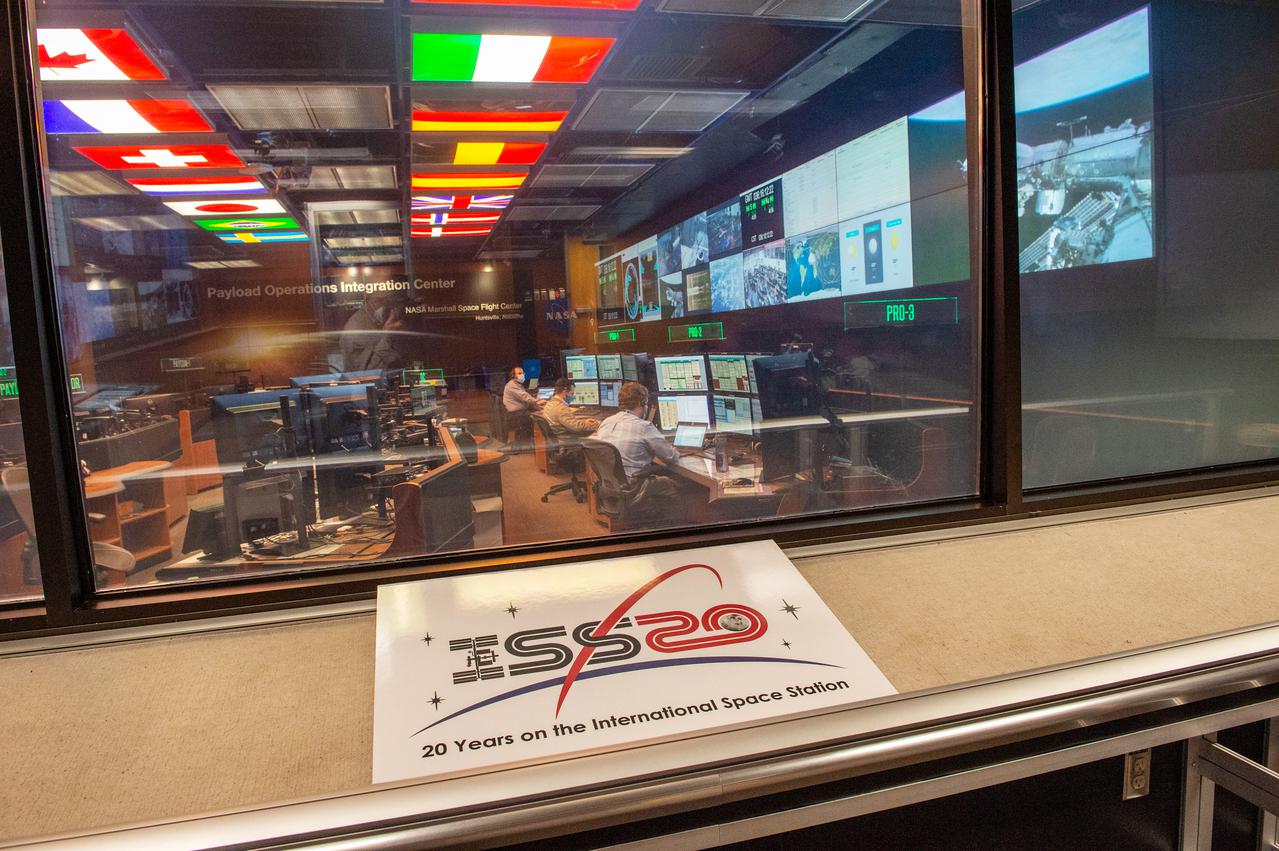
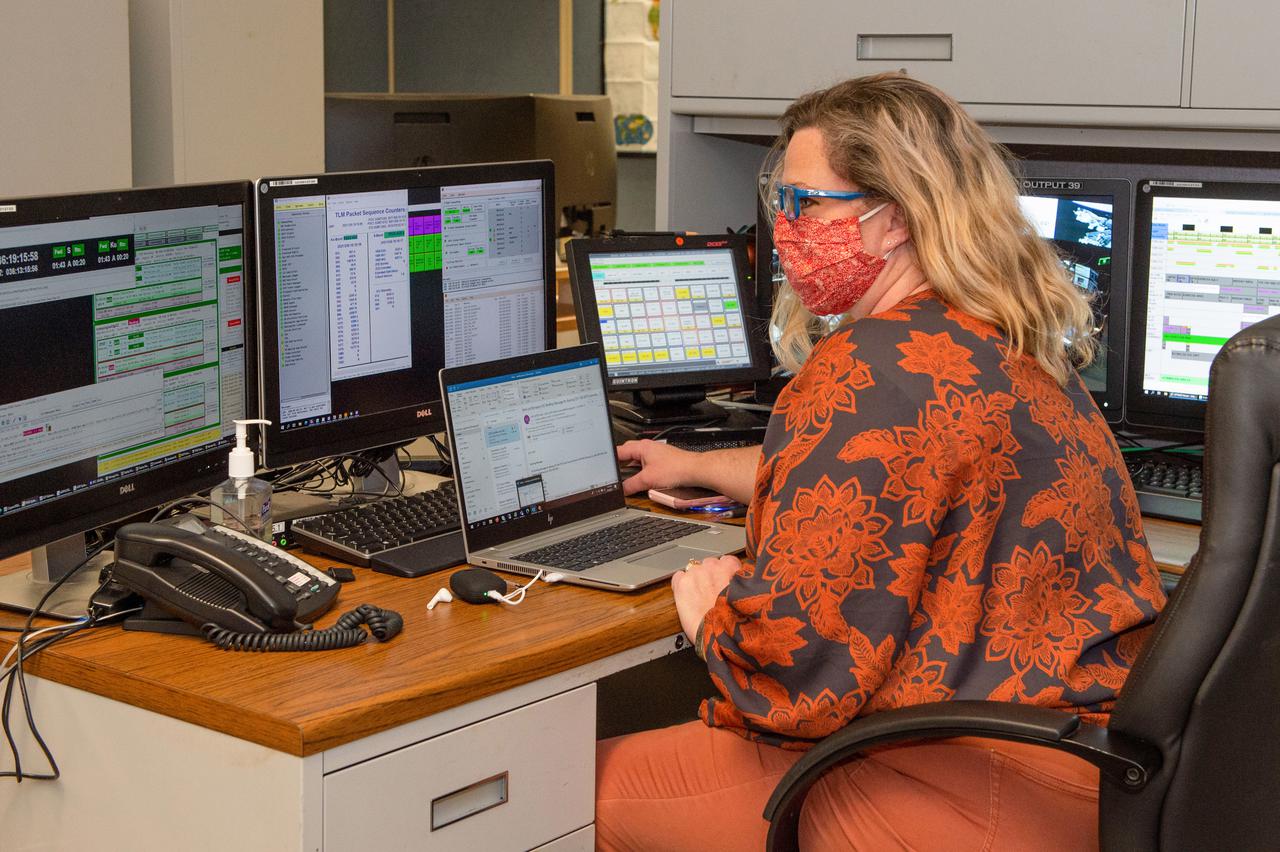
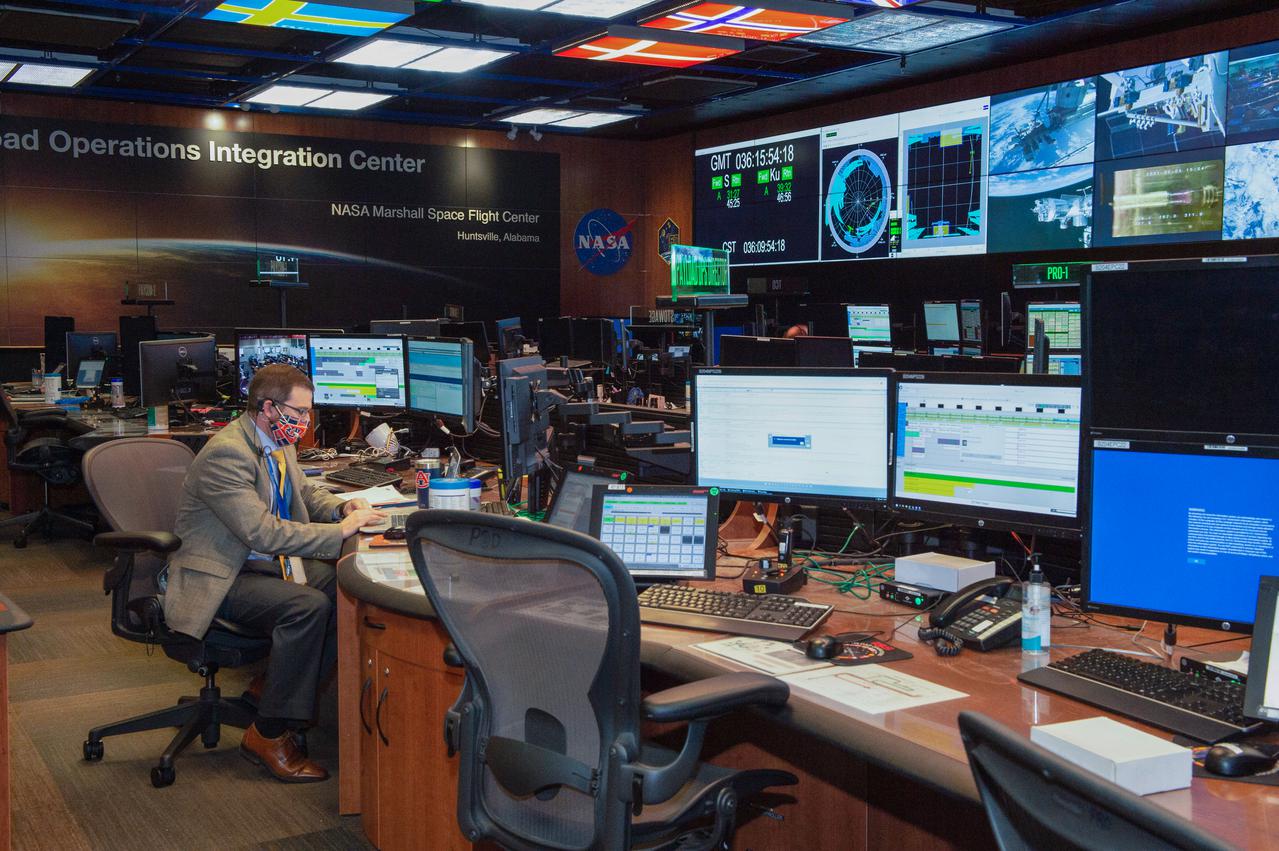
A look inside the International Space Station Payload Operations Integration Center at NASA’s Marshall Space Flight Center in Huntsville, AL.  The POIC team supports science operations on the International Space Station 24 hours a day, 7 days a week. For more than 20 years the POIC team has worked with scientists from around the world to enable the space station crew to conduct experiments that improve life on Earth and enable future exploration.
A look inside the International Space Station Payload Operations Integration Center at NASA’s Marshall Space Flight Center in Huntsville, AL. The POIC team supports science operations on the International Space Station 24 hours a day, 7 days a week. For more than 20 years the POIC team has worked with scientists from around the world to enable the space station crew to conduct experiments that improve life on Earth and enable future exploration.
A look inside the International Space Station Payload Operations Integration Center at NASA’s Marshall Space Flight Center in Huntsville, AL.  The POIC team supports science operations on the International Space Station 24 hours a day, 7 days a week. For more than 20 years the POIC team has worked with scientists from around the world to enable the space station crew to conduct experiments that improve life on Earth and enable future exploration.
A look inside the International Space Station Payload Operations Integration Center at NASA’s Marshall Space Flight Center in Huntsville, AL. The POIC team supports science operations on the International Space Station 24 hours a day, 7 days a week. For more than 20 years the POIC team has worked with scientists from around the world to enable the space station crew to conduct experiments that improve life on Earth and enable future exploration.
A look inside the International Space Station Payload Operations Integration Center at NASA’s Marshall Space Flight Center in Huntsville, AL.  The POIC team supports science operations on the International Space Station 24 hours a day, 7 days a week. For more than 20 years the POIC team has worked with scientists from around the world to enable the space station crew to conduct experiments that improve life on Earth and enable future exploration.
A look inside the International Space Station Payload Operations Integration Center at NASA’s Marshall Space Flight Center in Huntsville, AL. The POIC team supports science operations on the International Space Station 24 hours a day, 7 days a week. For more than 20 years the POIC team has worked with scientists from around the world to enable the space station crew to conduct experiments that improve life on Earth and enable future exploration.
A look inside the International Space Station Payload Operations Integration Center at NASA’s Marshall Space Flight Center in Huntsville, AL.  The POIC team supports science operations on the International Space Station 24 hours a day, 7 days a week. For more than 20 years the POIC team has worked with scientists from around the world to enable the space station crew to conduct experiments that improve life on Earth and enable future exploration.
A look inside the International Space Station Payload Operations Integration Center at NASA’s Marshall Space Flight Center in Huntsville, AL. The POIC team supports science operations on the International Space Station 24 hours a day, 7 days a week. For more than 20 years the POIC team has worked with scientists from around the world to enable the space station crew to conduct experiments that improve life on Earth and enable future exploration.
A look inside the International Space Station Payload Operations Integration Center at NASA’s Marshall Space Flight Center in Huntsville, AL.  The POIC team supports science operations on the International Space Station 24 hours a day, 7 days a week. For more than 20 years the POIC team has worked with scientists from around the world to enable the space station crew to conduct experiments that improve life on Earth and enable future exploration.
A look inside the International Space Station Payload Operations Integration Center at NASA’s Marshall Space Flight Center in Huntsville, AL. The POIC team supports science operations on the International Space Station 24 hours a day, 7 days a week. For more than 20 years the POIC team has worked with scientists from around the world to enable the space station crew to conduct experiments that improve life on Earth and enable future exploration.
A look inside the International Space Station Payload Operations Integration Center at NASA’s Marshall Space Flight Center in Huntsville, AL.  The POIC team supports science operations on the International Space Station 24 hours a day, 7 days a week. For more than 20 years the POIC team has worked with scientists from around the world to enable the space station crew to conduct experiments that improve life on Earth and enable future exploration.
A look inside the International Space Station Payload Operations Integration Center at NASA’s Marshall Space Flight Center in Huntsville, AL. The POIC team supports science operations on the International Space Station 24 hours a day, 7 days a week. For more than 20 years the POIC team has worked with scientists from around the world to enable the space station crew to conduct experiments that improve life on Earth and enable future exploration.
A look inside the International Space Station Payload Operations Integration Center at NASA’s Marshall Space Flight Center in Huntsville, AL.  The POIC team supports science operations on the International Space Station 24 hours a day, 7 days a week. For more than 20 years the POIC team has worked with scientists from around the world to enable the space station crew to conduct experiments that improve life on Earth and enable future exploration.
A look inside the International Space Station Payload Operations Integration Center at NASA’s Marshall Space Flight Center in Huntsville, AL. The POIC team supports science operations on the International Space Station 24 hours a day, 7 days a week. For more than 20 years the POIC team has worked with scientists from around the world to enable the space station crew to conduct experiments that improve life on Earth and enable future exploration.
A look inside the International Space Station Payload Operations Integration Center at NASA’s Marshall Space Flight Center in Huntsville, AL.  The POIC team supports science operations on the International Space Station 24 hours a day, 7 days a week. For more than 20 years the POIC team has worked with scientists from around the world to enable the space station crew to conduct experiments that improve life on Earth and enable future exploration.
A look inside the International Space Station Payload Operations Integration Center at NASA’s Marshall Space Flight Center in Huntsville, AL. The POIC team supports science operations on the International Space Station 24 hours a day, 7 days a week. For more than 20 years the POIC team has worked with scientists from around the world to enable the space station crew to conduct experiments that improve life on Earth and enable future exploration.
A look inside the International Space Station Payload Operations Integration Center at NASA’s Marshall Space Flight Center in Huntsville, AL.  The POIC team supports science operations on the International Space Station 24 hours a day, 7 days a week. For more than 20 years the POIC team has worked with scientists from around the world to enable the space station crew to conduct experiments that improve life on Earth and enable future exploration.
A look inside the International Space Station Payload Operations Integration Center at NASA’s Marshall Space Flight Center in Huntsville, AL. The POIC team supports science operations on the International Space Station 24 hours a day, 7 days a week. For more than 20 years the POIC team has worked with scientists from around the world to enable the space station crew to conduct experiments that improve life on Earth and enable future exploration.
A look inside the International Space Station Payload Operations Integration Center at NASA’s Marshall Space Flight Center in Huntsville, AL.  The POIC team supports science operations on the International Space Station 24 hours a day, 7 days a week. For more than 20 years the POIC team has worked with scientists from around the world to enable the space station crew to conduct experiments that improve life on Earth and enable future exploration.
A look inside the International Space Station Payload Operations Integration Center at NASA’s Marshall Space Flight Center in Huntsville, AL. The POIC team supports science operations on the International Space Station 24 hours a day, 7 days a week. For more than 20 years the POIC team has worked with scientists from around the world to enable the space station crew to conduct experiments that improve life on Earth and enable future exploration.
A look inside the International Space Station Payload Operations Integration Center at NASA’s Marshall Space Flight Center in Huntsville, AL.  The POIC team supports science operations on the International Space Station 24 hours a day, 7 days a week. For more than 20 years the POIC team has worked with scientists from around the world to enable the space station crew to conduct experiments that improve life on Earth and enable future exploration.
A look inside the International Space Station Payload Operations Integration Center at NASA’s Marshall Space Flight Center in Huntsville, AL. The POIC team supports science operations on the International Space Station 24 hours a day, 7 days a week. For more than 20 years the POIC team has worked with scientists from around the world to enable the space station crew to conduct experiments that improve life on Earth and enable future exploration.
A look inside the International Space Station Payload Operations Integration Center at NASA’s Marshall Space Flight Center in Huntsville, AL.  The POIC team supports science operations on the International Space Station 24 hours a day, 7 days a week. For more than 20 years the POIC team has worked with scientists from around the world to enable the space station crew to conduct experiments that improve life on Earth and enable future exploration.
A look inside the International Space Station Payload Operations Integration Center at NASA’s Marshall Space Flight Center in Huntsville, AL. The POIC team supports science operations on the International Space Station 24 hours a day, 7 days a week. For more than 20 years the POIC team has worked with scientists from around the world to enable the space station crew to conduct experiments that improve life on Earth and enable future exploration.
A look inside the International Space Station Payload Operations Integration Center at NASA’s Marshall Space Flight Center in Huntsville, AL.  The POIC team supports science operations on the International Space Station 24 hours a day, 7 days a week. For more than 20 years the POIC team has worked with scientists from around the world to enable the space station crew to conduct experiments that improve life on Earth and enable future exploration.
A look inside the International Space Station Payload Operations Integration Center at NASA’s Marshall Space Flight Center in Huntsville, AL. The POIC team supports science operations on the International Space Station 24 hours a day, 7 days a week. For more than 20 years the POIC team has worked with scientists from around the world to enable the space station crew to conduct experiments that improve life on Earth and enable future exploration.
A look inside the International Space Station Payload Operations Integration Center at NASA’s Marshall Space Flight Center in Huntsville, AL.  The POIC team supports science operations on the International Space Station 24 hours a day, 7 days a week. For more than 20 years the POIC team has worked with scientists from around the world to enable the space station crew to conduct experiments that improve life on Earth and enable future exploration.
A look inside the International Space Station Payload Operations Integration Center at NASA’s Marshall Space Flight Center in Huntsville, AL. The POIC team supports science operations on the International Space Station 24 hours a day, 7 days a week. For more than 20 years the POIC team has worked with scientists from around the world to enable the space station crew to conduct experiments that improve life on Earth and enable future exploration.
A look inside the International Space Station Payload Operations Integration Center at NASA’s Marshall Space Flight Center in Huntsville, AL.  The POIC team supports science operations on the International Space Station 24 hours a day, 7 days a week. For more than 20 years the POIC team has worked with scientists from around the world to enable the space station crew to conduct experiments that improve life on Earth and enable future exploration.
A look inside the International Space Station Payload Operations Integration Center at NASA’s Marshall Space Flight Center in Huntsville, AL. The POIC team supports science operations on the International Space Station 24 hours a day, 7 days a week. For more than 20 years the POIC team has worked with scientists from around the world to enable the space station crew to conduct experiments that improve life on Earth and enable future exploration.
A look inside the International Space Station Payload Operations Integration Center at NASA’s Marshall Space Flight Center in Huntsville, AL.  The POIC team supports science operations on the International Space Station 24 hours a day, 7 days a week. For more than 20 years the POIC team has worked with scientists from around the world to enable the space station crew to conduct experiments that improve life on Earth and enable future exploration.
A look inside the International Space Station Payload Operations
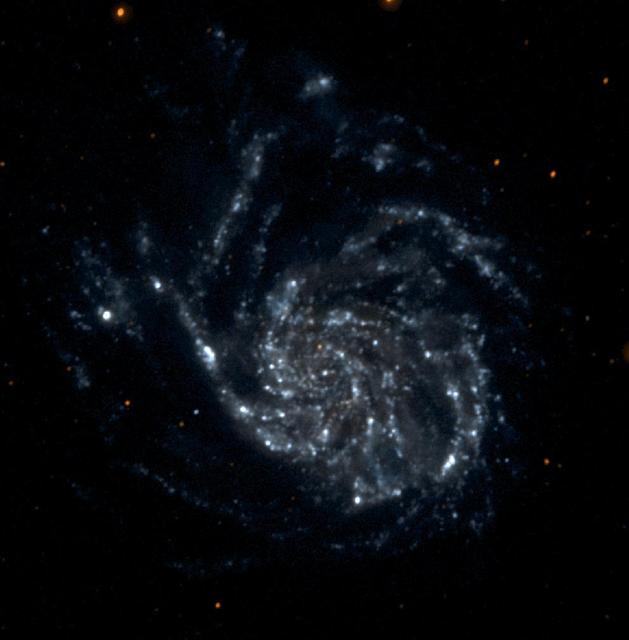
This single orbit exposure, ultraviolet color image of Messier 101 was taken by NASA's Galaxy Evolution Explorer on June 20, 2003. Messier 101 is a large spiral galaxy located 20 million light-years from Earth. This image is a short and medium "exposure" picture of the evolution of star formation in a spiral galaxy. The far ultraviolet emission detects the younger stars as concentrated in tight spiral arms, while the near ultraviolet emission, which traces stars living for more than 100 million years, displays the movement of the spiral pattern over a 100 million year period. The red stars in the foreground of the image are Milky Way stars.  http://photojournal.jpl.nasa.gov/catalog/PIA04632
Messier 101 Single Orbit Exposure
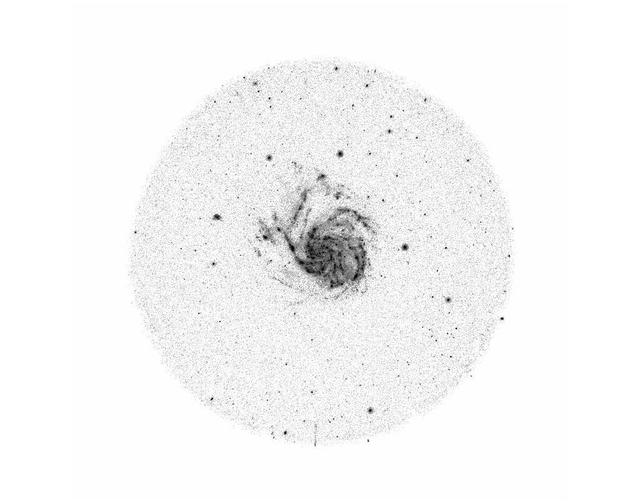
NASA Galaxy Evolution Explorer took this near ultraviolet image of Messier 101 on June 20, 2003. Messier 101 is a large spiral galaxy located 20 million light-years from Earth.  http://photojournal.jpl.nasa.gov/catalog/PIA04631
Messier 101
This view of the volcanic plains of Neptune moon Triton was produced using topographic maps derived from images acquired by NASA Voyager spacecraft during its August 1989 flyby, 20 years ago this week.
Triton Volcanic Plains #2
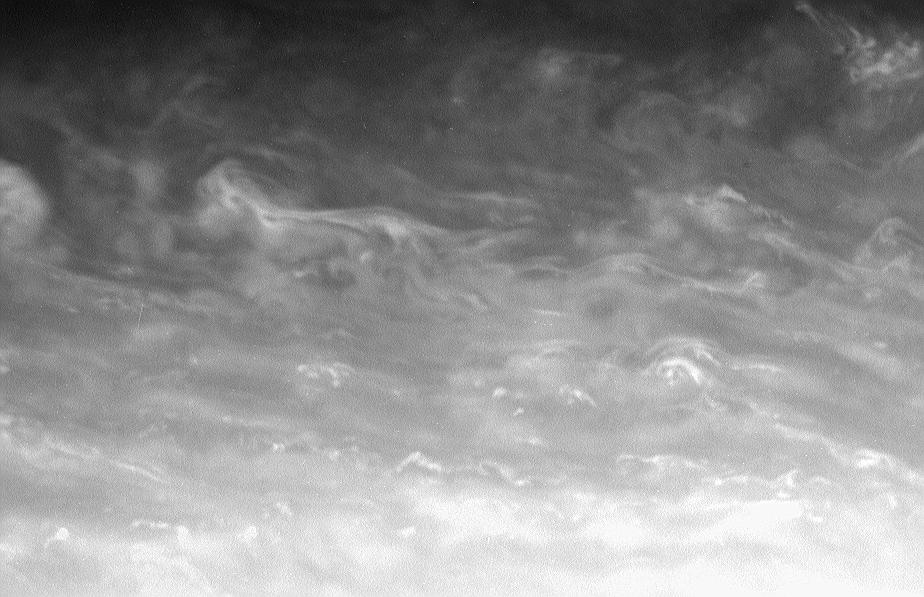
The bright whorls and small-scale specks of convective clouds drift through a region just north of Saturn bright equatorial band. Observers have seen major storms develop in this region in the past 15-20 years
Rotating Flow
This view of the volcanic plains of Neptune moon Triton was produced using topographic maps derived from images acquired by NASA Voyager spacecraft during its August 1989 flyby, 20 years ago this week.
Triton Volcanic Plains
This simulated voyage over the surface of Neptune large moon Triton was produced using topographic maps derived from images acquired by NASA Voyager spacecraft during its August 1989 flyby, 20 years ago this week.
Flight Over Triton
This view of the volcanic plains of Neptune moon Triton was produced using topographic maps derived from images acquired by NASA Voyager spacecraft during its August 1989 flyby, 20 years ago this week.
Triton Cantaloupe Terrain
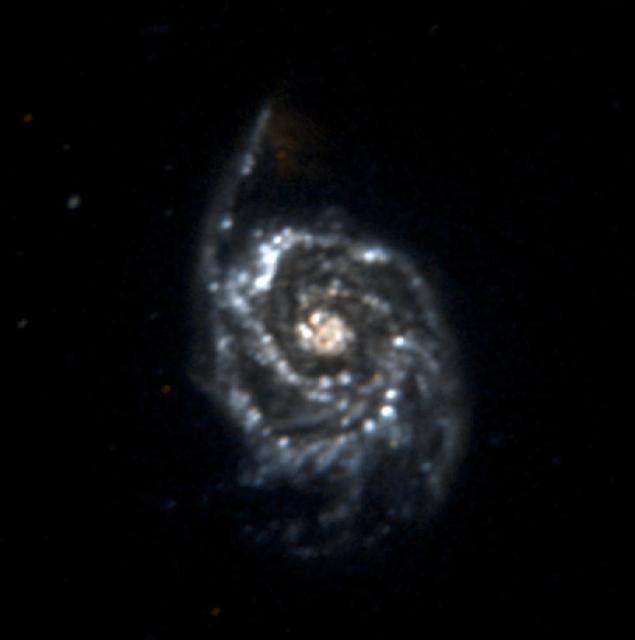
NASA's Galaxy Evolution Explorer took this image of the spiral galaxy Messier 51 on June 19 and 20, 2003. Messier 51 is located 27 million light-years from Earth. Due to a lack of star formation, the companion galaxy in the top of the picture is barely visible as a near ultraviolet object.  http://photojournal.jpl.nasa.gov/catalog/PIA04628
Galaxy Messier 51
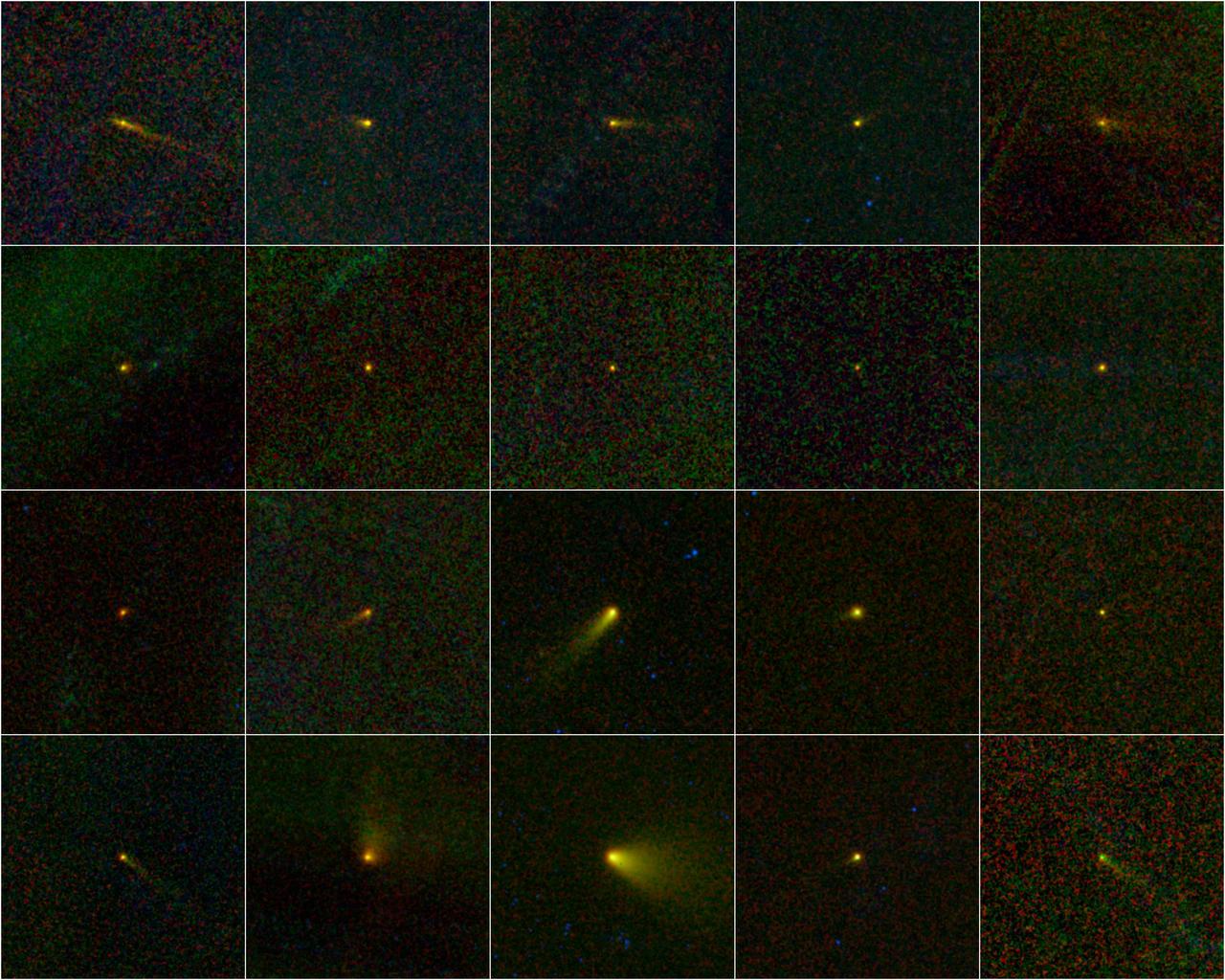
During its one-year mission, NASA Wide-field Infrared Survey Explorer, mapped the entire sky in infrared light. Among the multitudes of astronomical bodies that have been discovered by the NEOWISE portion of the WISE mission are 20 comets.
Comets WISE -- A Family Portrait
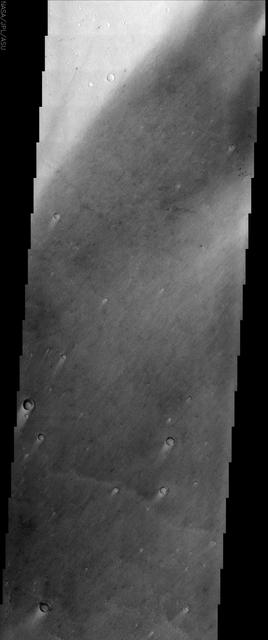
Cerberus, seen in this image from NASA Mars Odyssey spacecraft, is a dark region on Mars that has shrunk down from a continuous length of about 1000 km to roughly three discontinuous spots a few 100 kms in length in less than 20 years.
Cerberus Wind Streaks
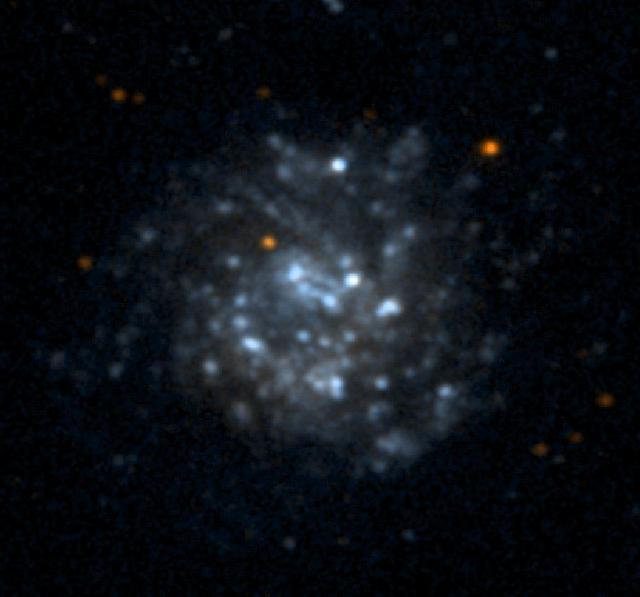
NASA Galaxy Evolution Explorer took this ultraviolet color image of the galaxy NGC5474 on June 7, 2003. NGC5474 is located 20 million light-years from Earth and is within a group of galaxies dominated by the Messier 101 galaxy. Star formation in this galaxy shows some evidence of a disturbed spiral pattern, which may have been induced by tidal interactions with Messier 101.  http://photojournal.jpl.nasa.gov/catalog/PIA04634
Galaxy NGC5474
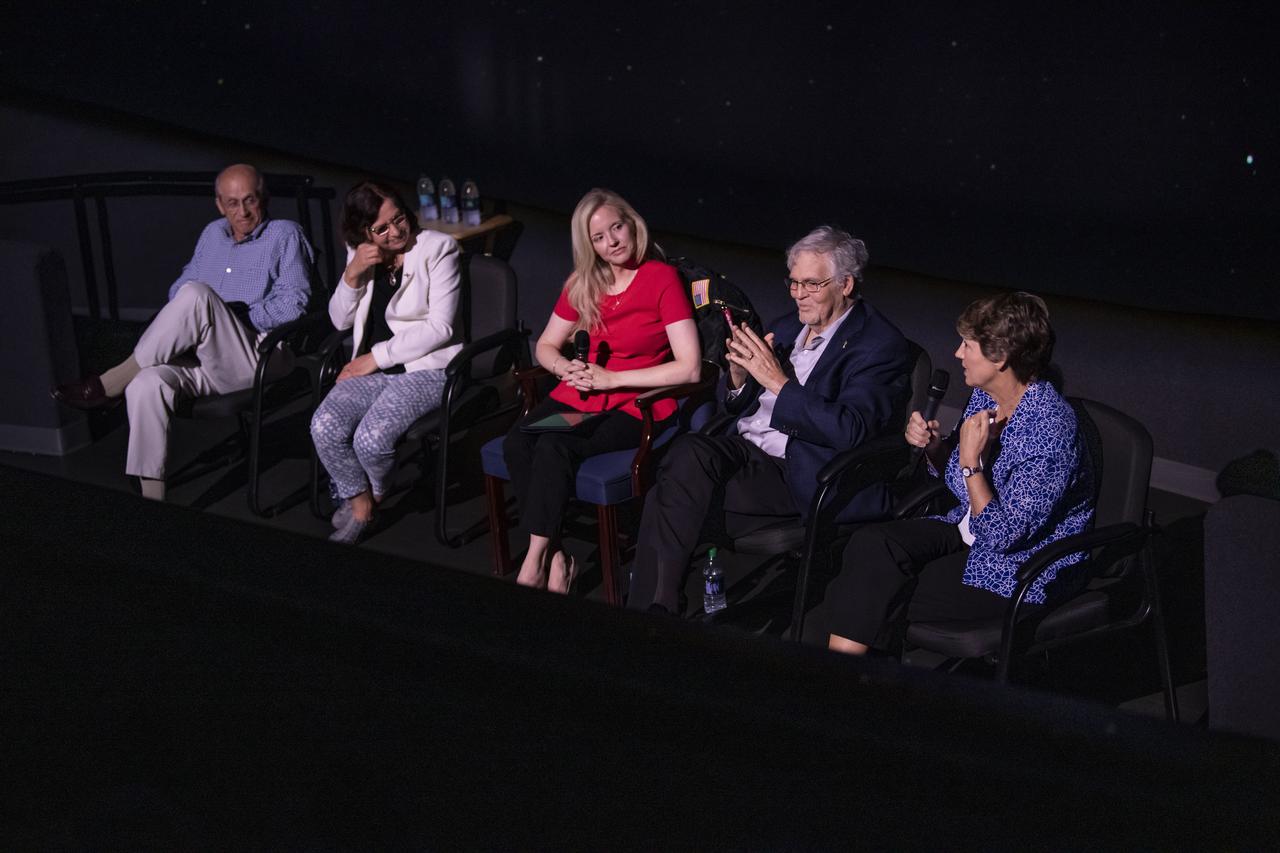
The 20th year of the Chandra X-ray Telescope was celebrated at the U.S. Space and Rocket Center's planetarium. The speakers were retired Astronaut Eileen Collins, Astrophysicist at the "Chandra X-ray Center Aneta Siemiginowska, "Senior Astrophysicist at the Chandra X-ray center Harvey Tananbaum, and Chandra Project Scientist Dr. Martin Weisskopf.  The panel discussion was moderated by Kim Kowal Arcand, "Visualizaton Lead at the Chandra  X-ray Center.
20 Years Of Science With NASA's Chandra X-ray Observatory
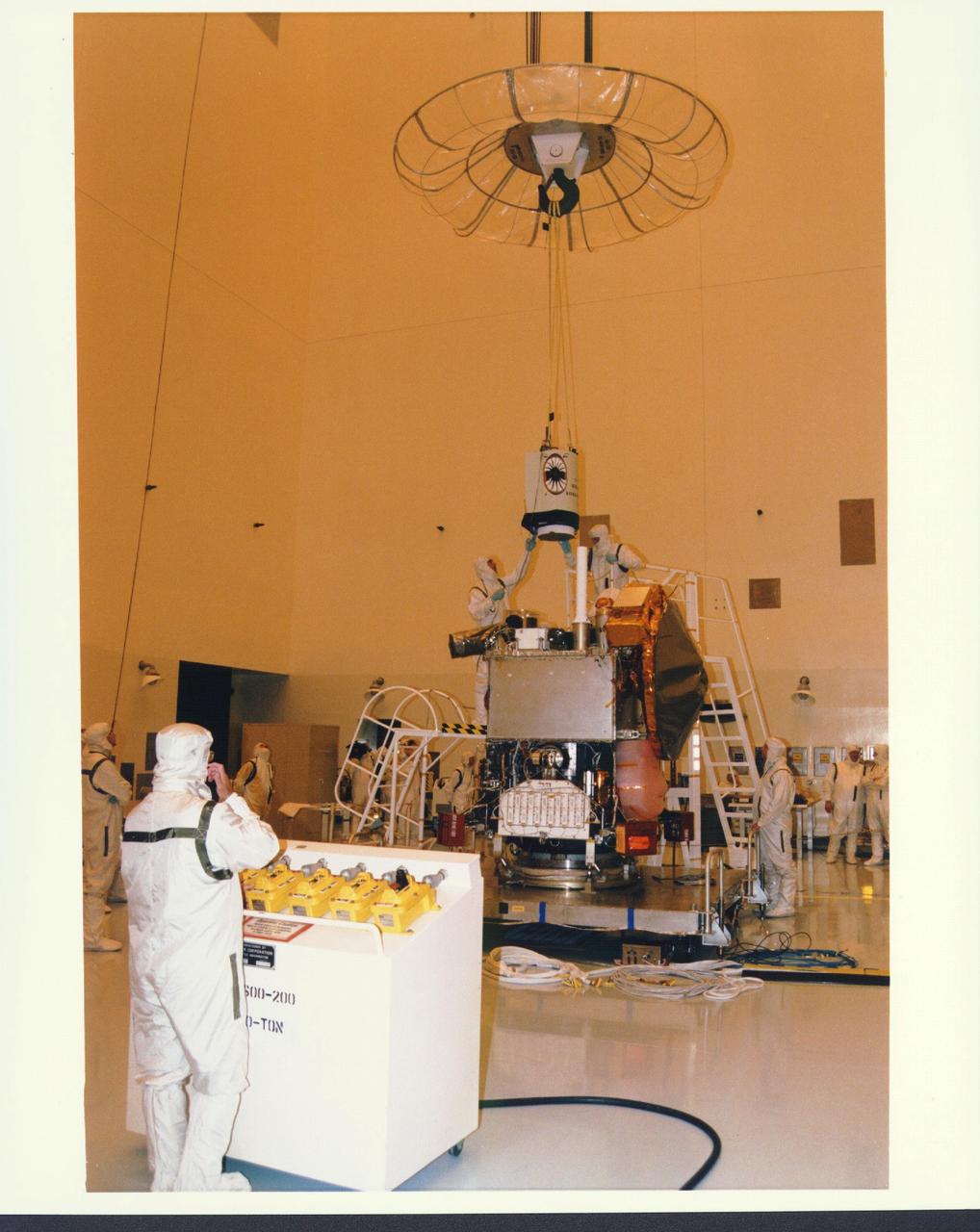
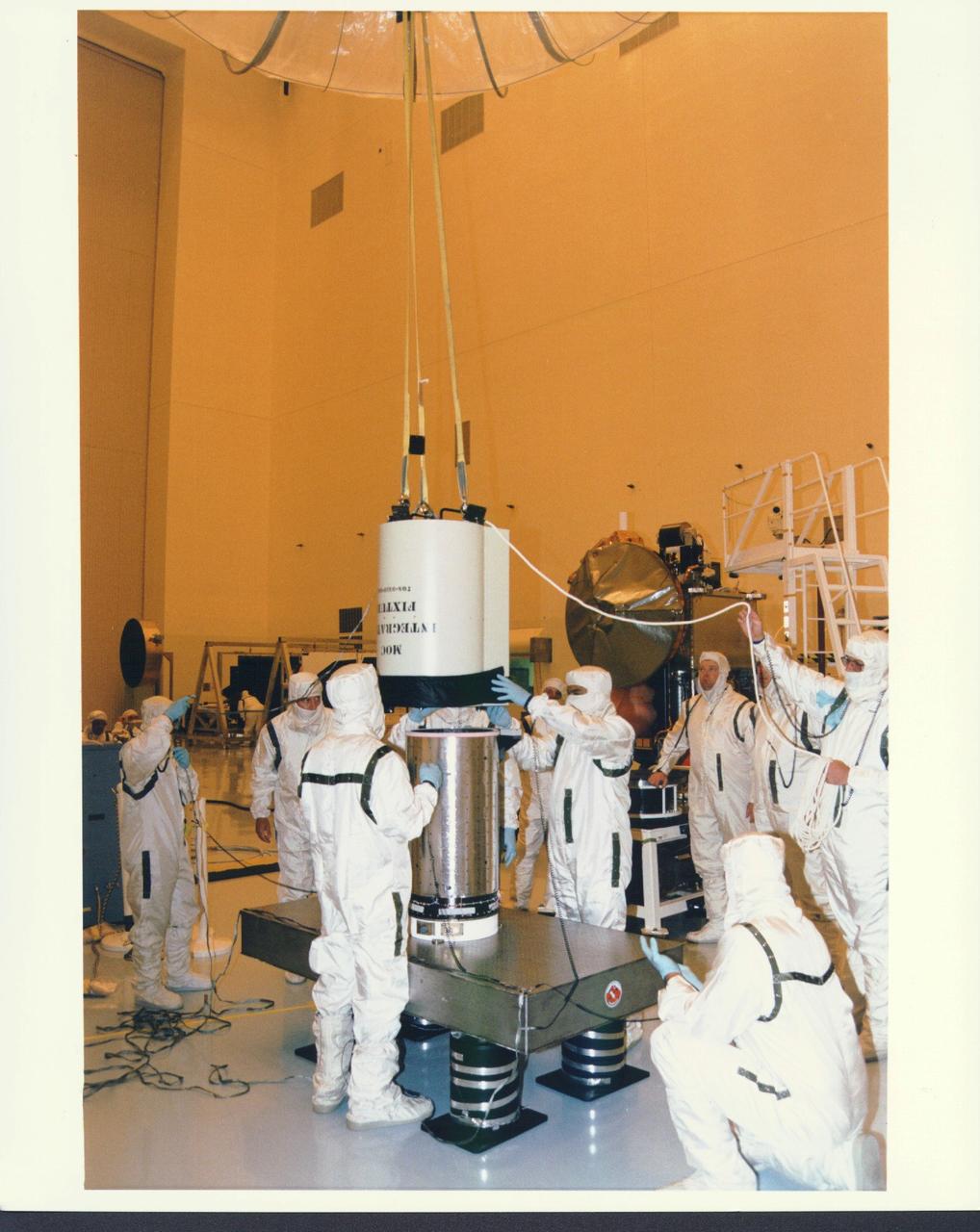
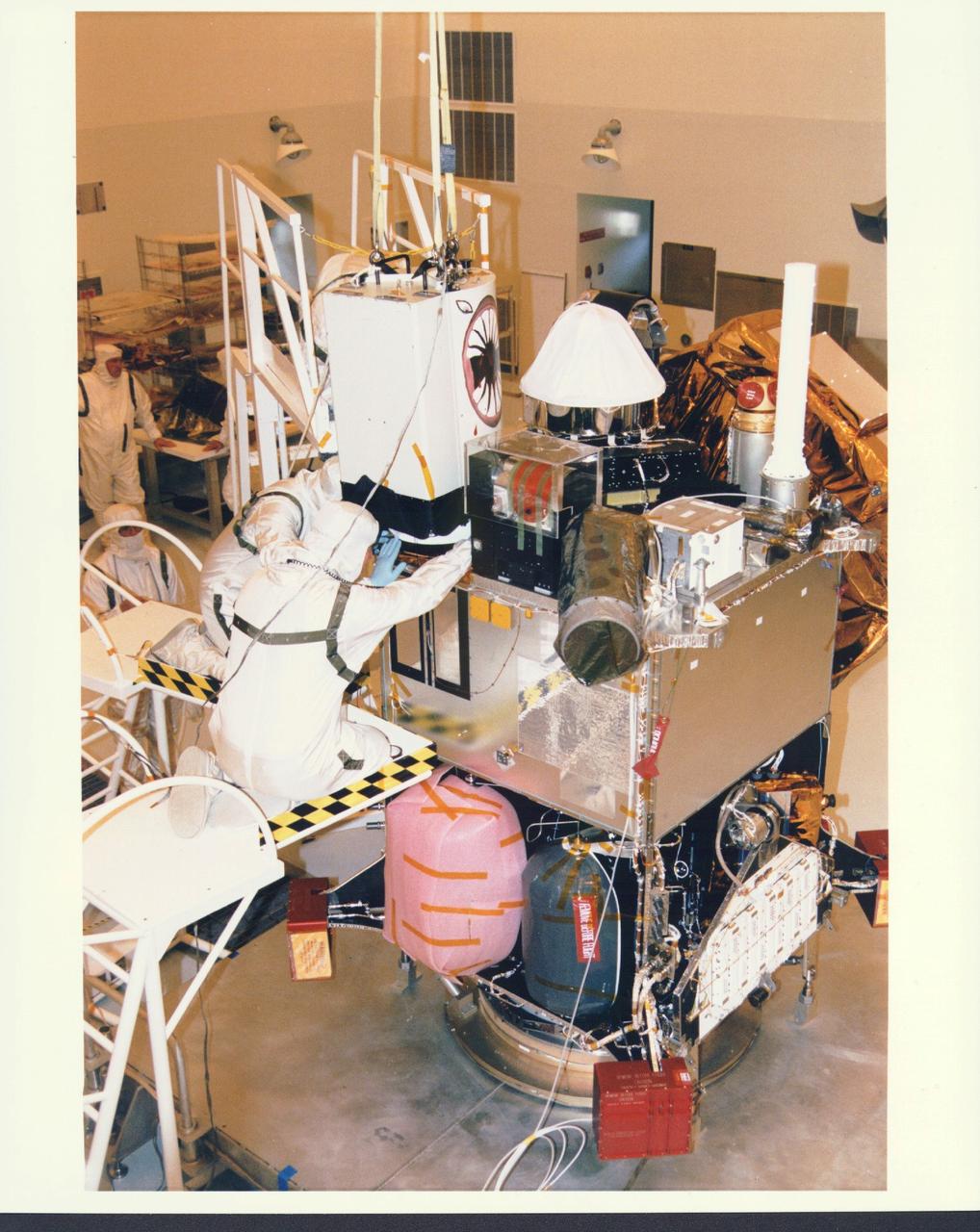
KENNEDY SPACE CENTER, FLA. -  In the Payload Hazardous Servicing Facility at KSC, installation is under way of the Mars Orbiter Camera (MOC) on the Mars Global Surveyor spacecraft.  The MOC is one of a suite of six scientific instruments that will gather data about Martian topography, mineral distribution and weather during a two-year period.  The Mars Global Surveyor is slated for launch aboard a Delta II expendable launch vehicle on Nov. 6, the beginning of a 20-day launch period.
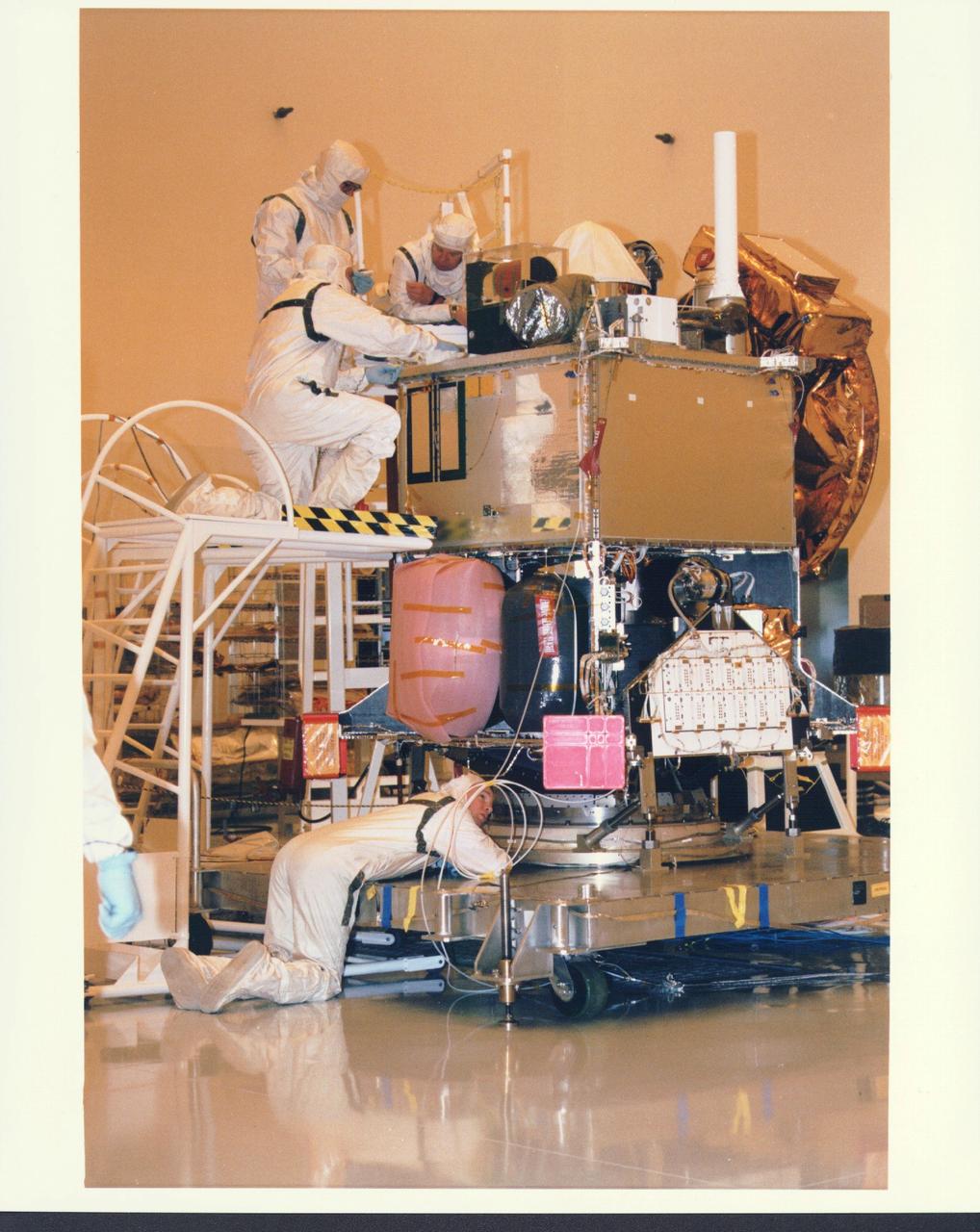
KENNEDY SPACE CENTER, FLA. - In the Payload Hazardous Servicing Facility at KSC, installation is under way of the Mars Orbiter Camera (MOC) on the Mars Global Surveyor spacecraft. The MOC is one of a suite of six scientific instruments that will gather data about Martian topography, mineral distribution and weather during a two-year period. The Mars Global Surveyor is slated for launch aboard a Delta II expendable launch vehicle on Nov. 6, the beginning of a 20-day launch period.
KENNEDY SPACE CENTER, FLA. -  In the Payload Hazardous Servicing Facility at KSC, installation is under way of the Mars Orbiter Camera (MOC) on the Mars Global Surveyor spacecraft.  The MOC is one of a suite of six scientific instruments that will gather data about Martian topography, mineral distribution and weather during a two-year period.  The Mars Global Surveyor is slated for launch aboard a Delta II expendable launch vehicle on Nov. 6, the beginning of a 20-day launch period.
KENNEDY SPACE CENTER, FLA. - In the Payload Hazardous Servicing Facility at KSC, installation is under way of the Mars Orbiter Camera (MOC) on the Mars Global Surveyor spacecraft. The MOC is one of a suite of six scientific instruments that will gather data about Martian topography, mineral distribution and weather during a two-year period. The Mars Global Surveyor is slated for launch aboard a Delta II expendable launch vehicle on Nov. 6, the beginning of a 20-day launch period.
KENNEDY SPACE CENTER, FLA. -  In the Payload Hazardous Servicing Facility at KSC, installation is under way of the Mars Orbiter Camera (MOC) on the Mars Global Surveyor spacecraft.  The MOC is one of a suite of six scientific instruments that will gather data about Martian topography, mineral distribution and weather during a two-year period.  The Mars Global Surveyor is slated for launch aboard a Delta II expendable launch vehicle on Nov. 6, the beginning of a 20-day launch period.
KENNEDY SPACE CENTER, FLA. - In the Payload Hazardous Servicing Facility at KSC, installation is under way of the Mars Orbiter Camera (MOC) on the Mars Global Surveyor spacecraft. The MOC is one of a suite of six scientific instruments that will gather data about Martian topography, mineral distribution and weather during a two-year period. The Mars Global Surveyor is slated for launch aboard a Delta II expendable launch vehicle on Nov. 6, the beginning of a 20-day launch period.
KENNEDY SPACE CENTER, FLA. -  In the Payload Hazardous Servicing Facility at KSC, installation is under way of the Mars Orbiter Camera (MOC) on the Mars Global Surveyor spacecraft.  The MOC is one of a suite of six scientific instruments that will gather data about Martian topography, mineral distribution and weather during a two-year period.  The Mars Global Surveyor is slated for launch aboard a Delta II expendable launch vehicle on Nov. 6, the beginning of a 20-day launch period.
KENNEDY SPACE CENTER, FLA. - In the Payload Hazardous Servicing Facility at KSC, installation is under way of the Mars Orbiter Camera (MOC) on the Mars Global Surveyor spacecraft. The MOC is one of a suite of six scientific instruments that will gather data about Martian topography, mineral distribution and weather during a two-year period. The Mars Global Surveyor is slated for launch aboard a Delta II expendable launch vehicle on Nov. 6, the beginning of a 20-day launch period.
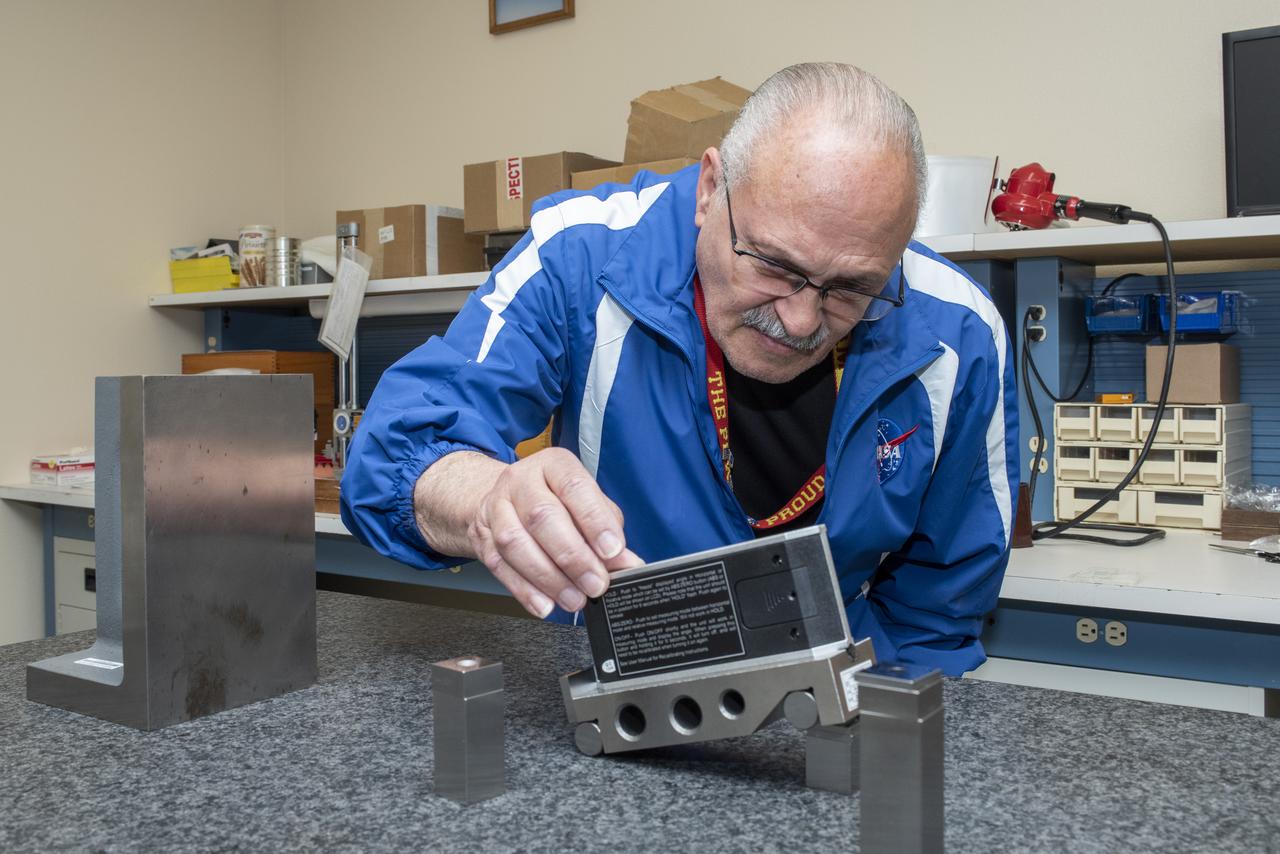
Arnold Gonzales, a 20-year veteran of the NASA Armstrong Calibration Laboratory, uses a digital protractor to calibrate an item sent to the lab at NASA’s Armstrong Flight Research Center in California.
Calibration Laboratory Provides Key Aircraft Support
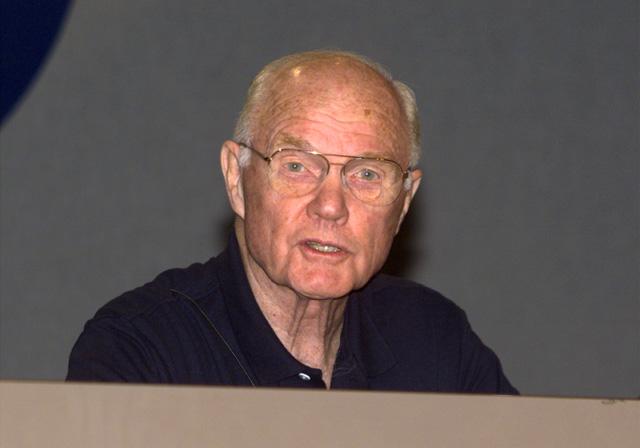
98-E-01303 (20 Feb. 1998) --- U.S. Sen. John H. Glenn Jr. (D., Ohio) fields a question during a press conference held to announce the crew members for STS-95 mission of the Space Shuttle Discovery. Glenn will fly as a payload specialist on the mission. The press conference was held on Feb. 20, 1998, 36 years after Glenn's historic Earth-orbital, MA-6 spaceflight.
STS-95 crew news conference at JSC
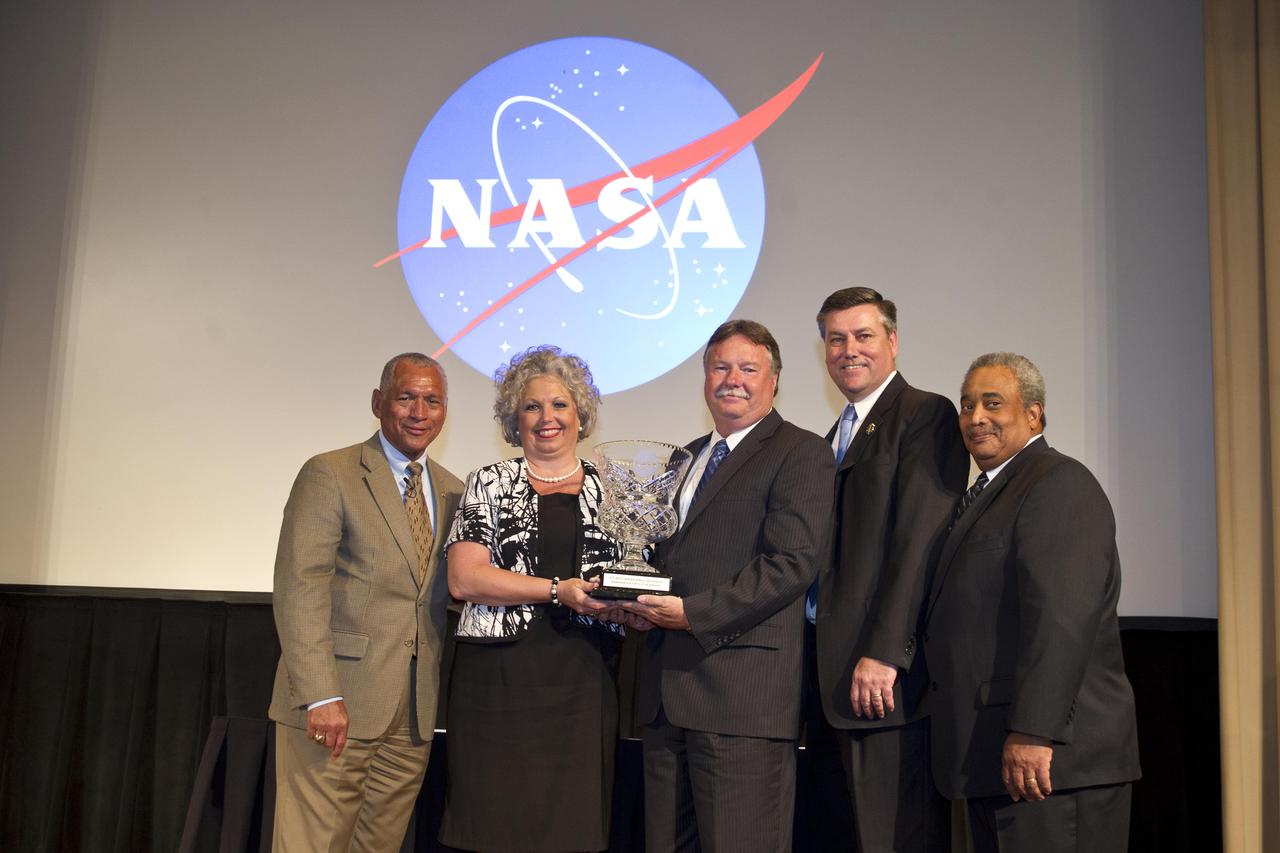
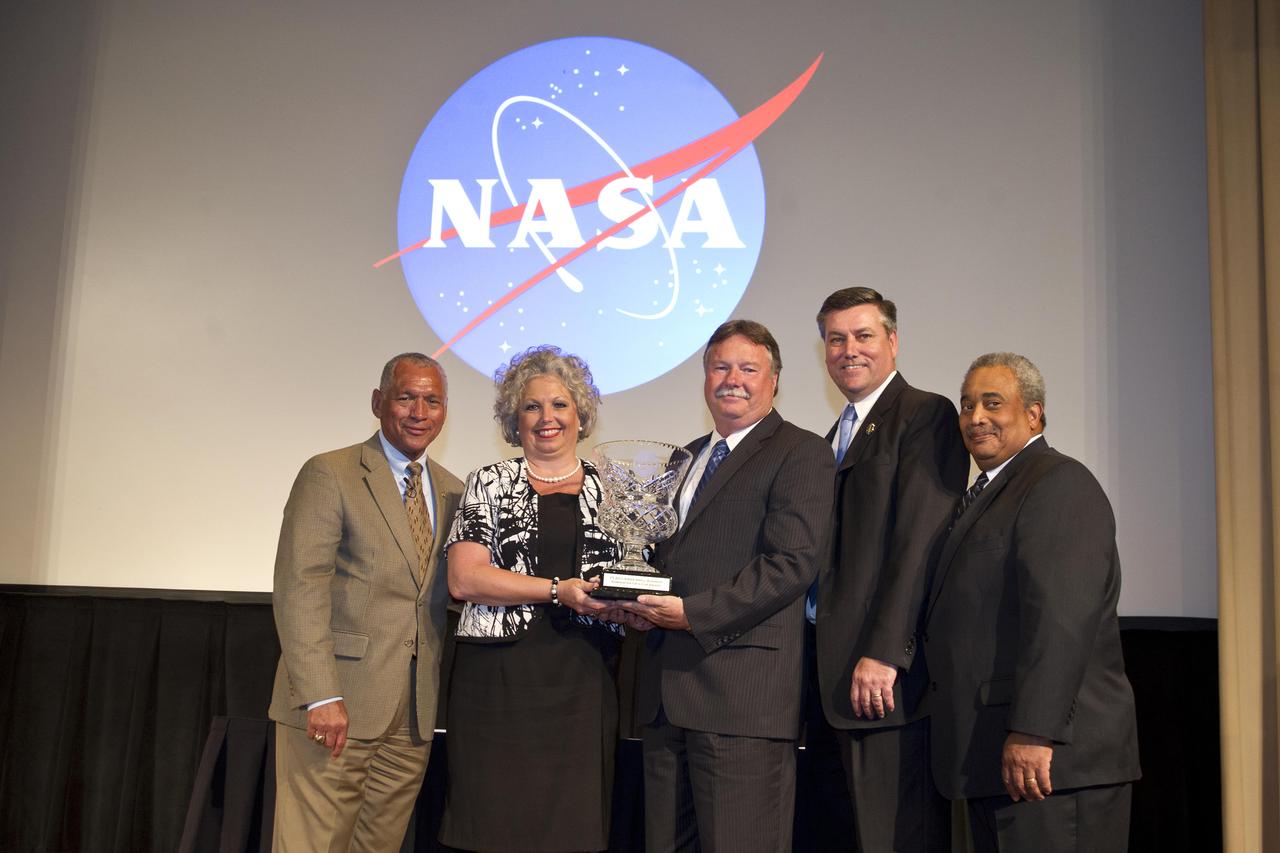
NASA Administrator Charles Bolden (l) and NASA Small Business Programs Associate Administrator Glenn Delgado (r) present NASA's Small Business Administrator's Cup Award to Stennis Space Center in recognition of its stellar small business program for fiscal year 2011. Receiving the award April 20, 2012, are (l to r) Stennis Procurement Office personnel Michelle Stracener and Rob Harris, along with Stennis Space Center Director Patrick Scheuermann. Bolden and Delgado presented the award during an onsite visit April 20.
Stennis award
NASA Administrator Charles Bolden (l) and NASA Small Business Programs Associate Administrator Glenn Delgado (r) present NASA's Small Business Administrator's Cup Award to Stennis Space Center in recognition of its stellar small business program for fiscal year 2011. Receiving the award April 20, 2012, are (l to r) Stennis Procurement Office personnel Michelle Stracener and Rob Harris, along with Stennis Space Center Director Patrick Scheuermann. Bolden and Delgado presented the award during an onsite visit April 20.
Stennis award
This VIS image shows much of the same location as yesterday's image. Gale Crater is the home of the Curiosity Rover. The rover landed in August of 2012 and has been exploring the crater for the past 6 Earth years (3 Mars years). The goal of the mission is to climb onto the layered deposit in the center of the crater to assess it's possible origins.  Orbit Number: 71424 Latitude: -4.66294 Longitude: 137.356 Instrument: VIS Captured: 2018-01-20 04:52  https://photojournal.jpl.nasa.gov/catalog/PIA22393
Gale Crater
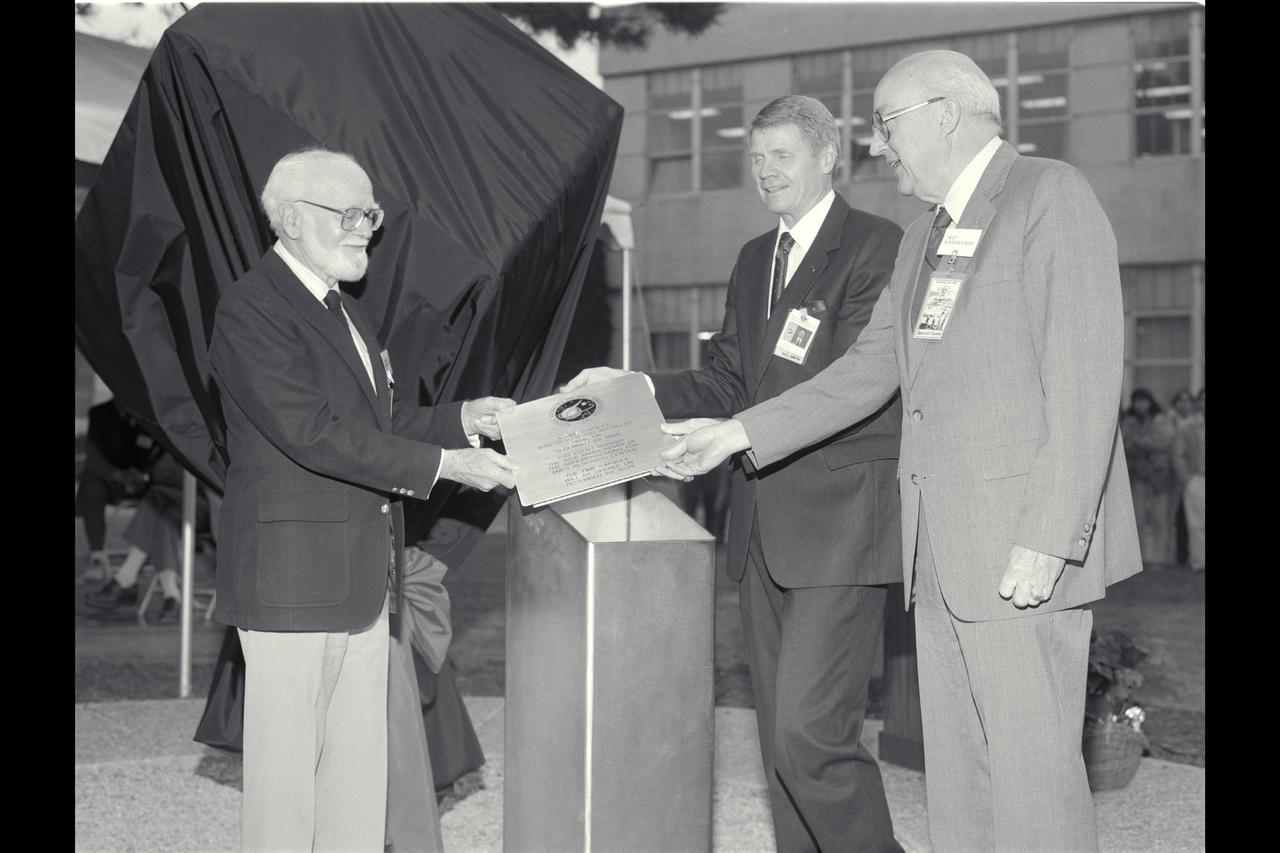
On 20 December 1989, Ames buried a time capsule and unveiled a sculpture at the spot where, fifty years earlier, Russel Robinson  had turned the first spade of dirt for the Ames construction shack: Robinson (left) Ames Director Dale Compton (center) and retired Ames Director Sy Syvertson (right)
ARC-1989-A89-0787-13
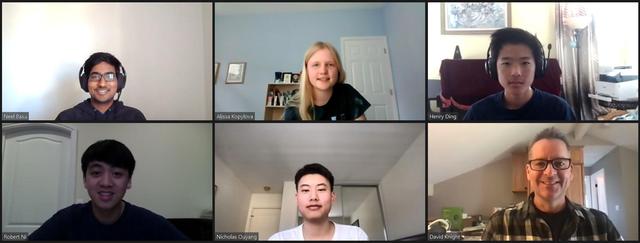
For the fourth consecutive year, Irvine's University High School won the Southern California regional round of the National Science Bowl, hosted by JPL. The team, including coach David Knight (lower right), paused for a group shot after their victory on March 20, 2021.  https://photojournal.jpl.nasa.gov/catalog/PIA23730
University High School Science Bowl Team
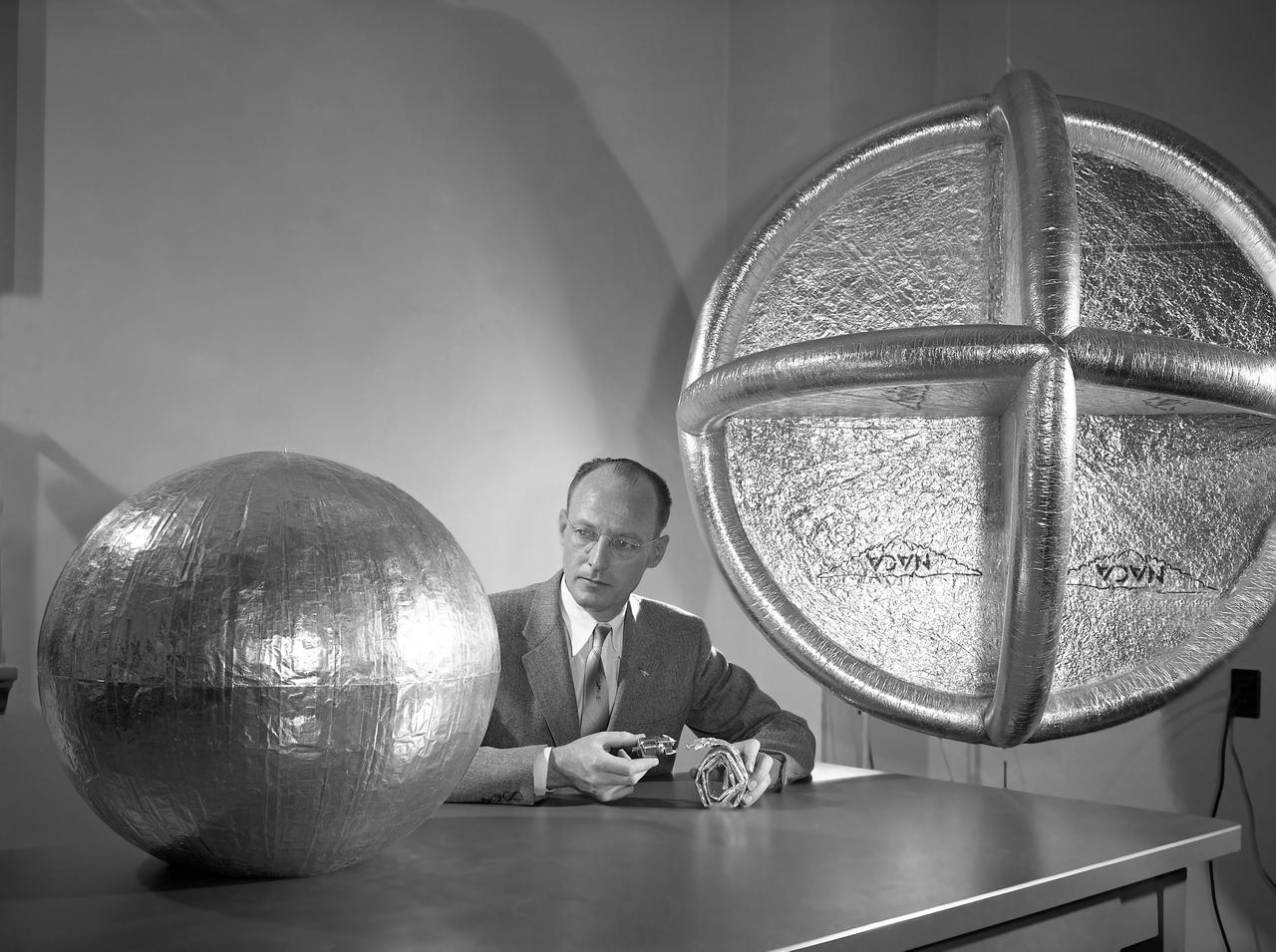
L57-525 Engineer W.J. O Sullivan, Jr., looks at inflated 20 inch subsatellite while holding inflation bottle and folded duplicate copy, February 1957. Photograph published in A New Dimension  Wallops Island Flight Test Range: The First Fifteen Years by Joseph Shortal. A NASA publication. Page 601.
Engineer W.J. O'Sullivan, Jr. with 20 Inch Subsatellite
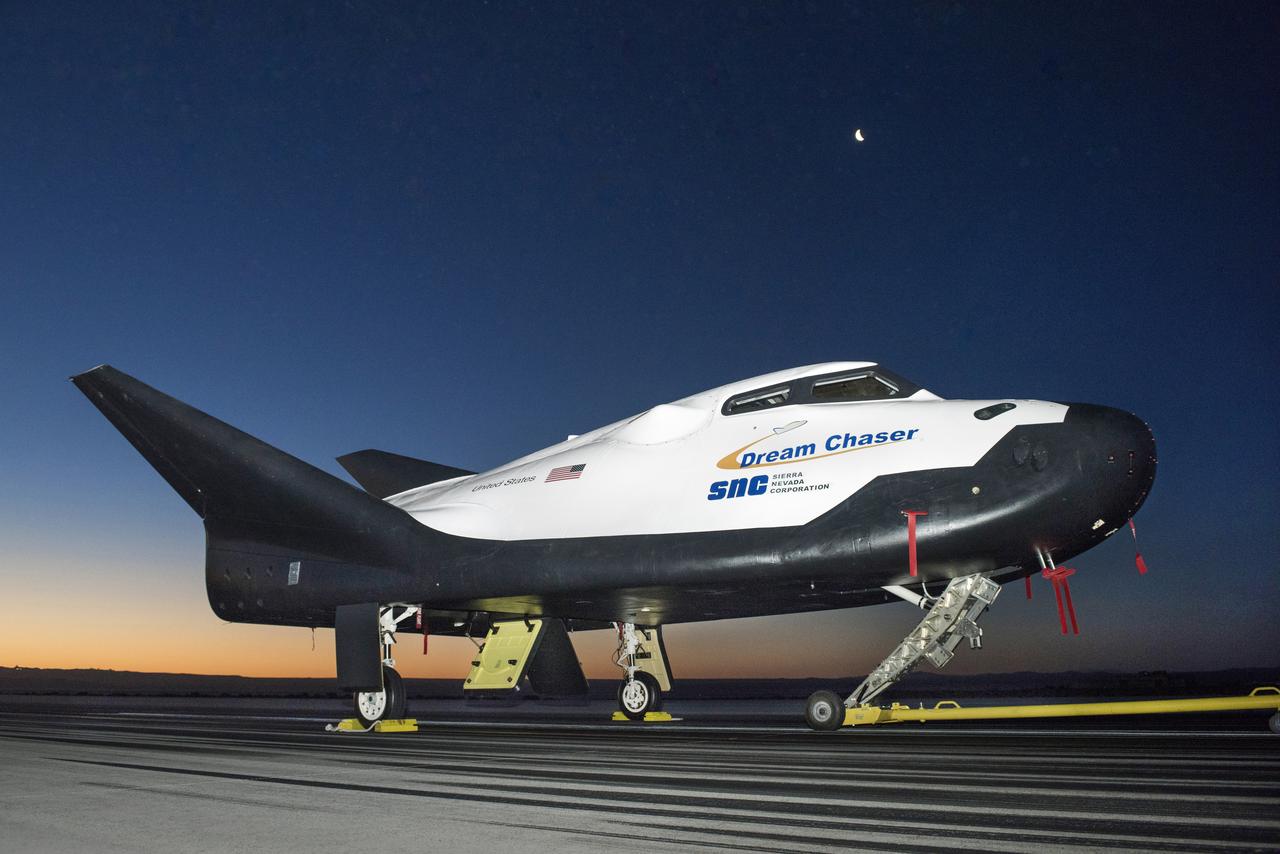
Sierra Nevada Corporation's (SNC) Dream Chaser® spacecraft shown on the runway at NASA's Armstrong Flight Research Center on May 20 preparing for a tow-test. The spacecraft is undergoing ground tests leading up to a free flight test later this year.
AFRC2017-0124-015
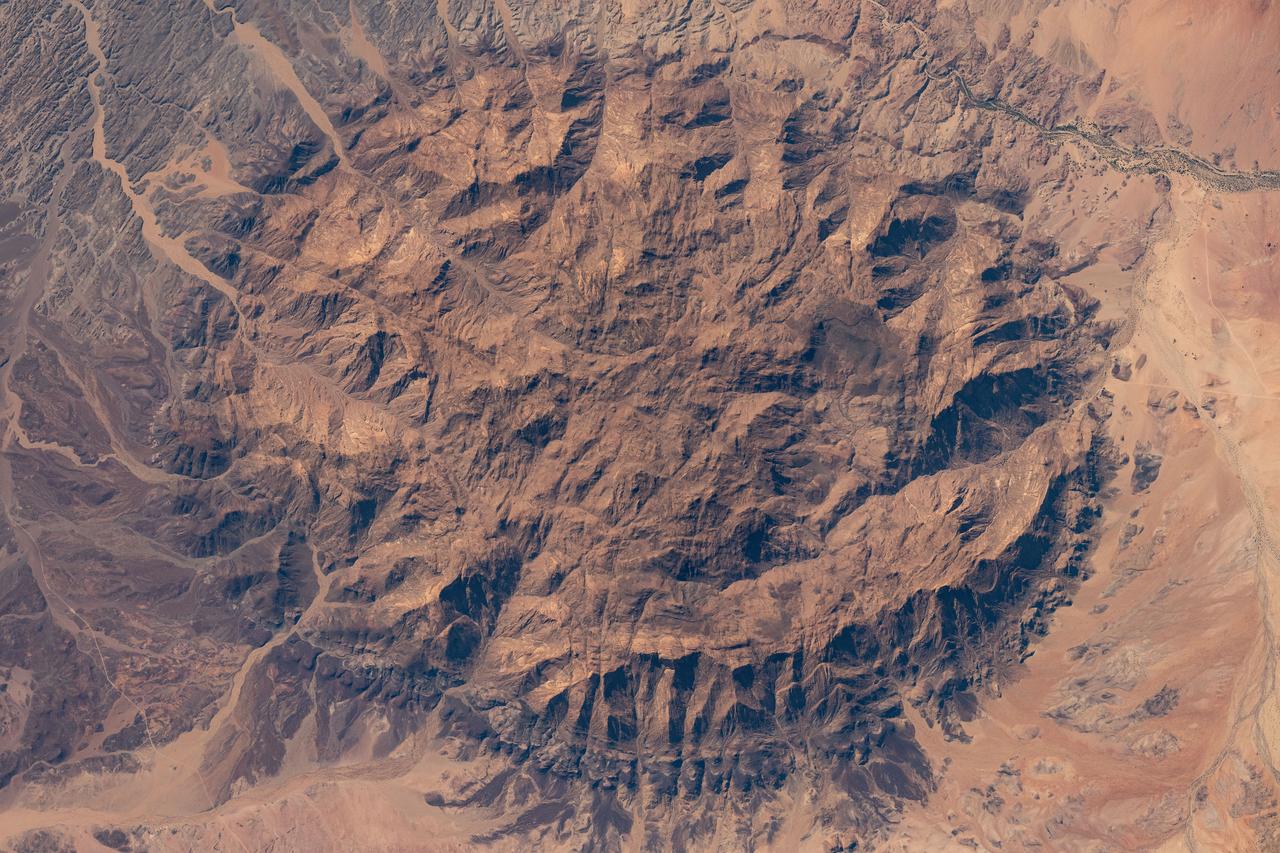
iss071e522460 (Aug. 20, 2024) --- The dome-shaped Brandburg Massif, near the Atlantic coast of central Namibia, containing Brandberg Mountain, the African nation's highest peak and ancient rock paintings going back at least 2,000 years, is pictured from the International Space Station as it orbited 261 miles above.
iss071e522460
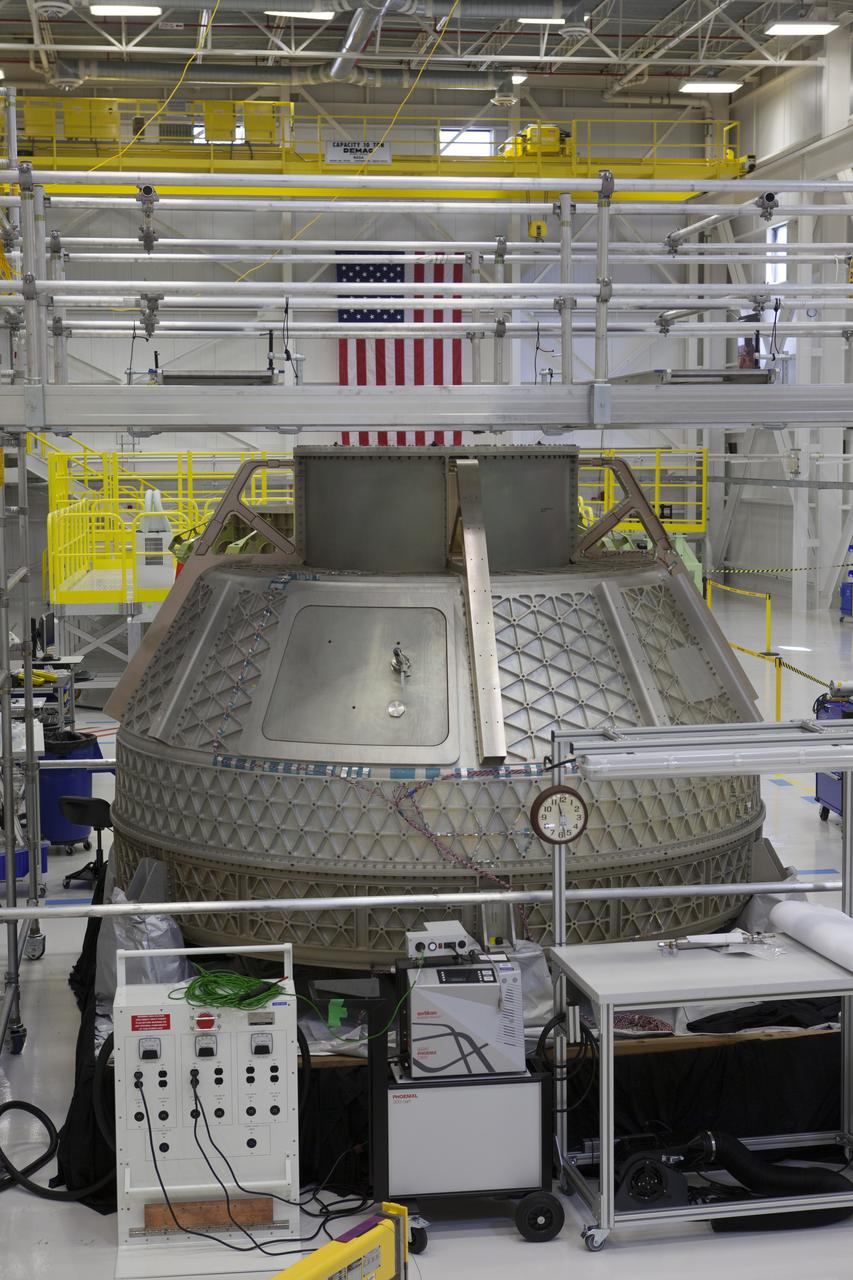
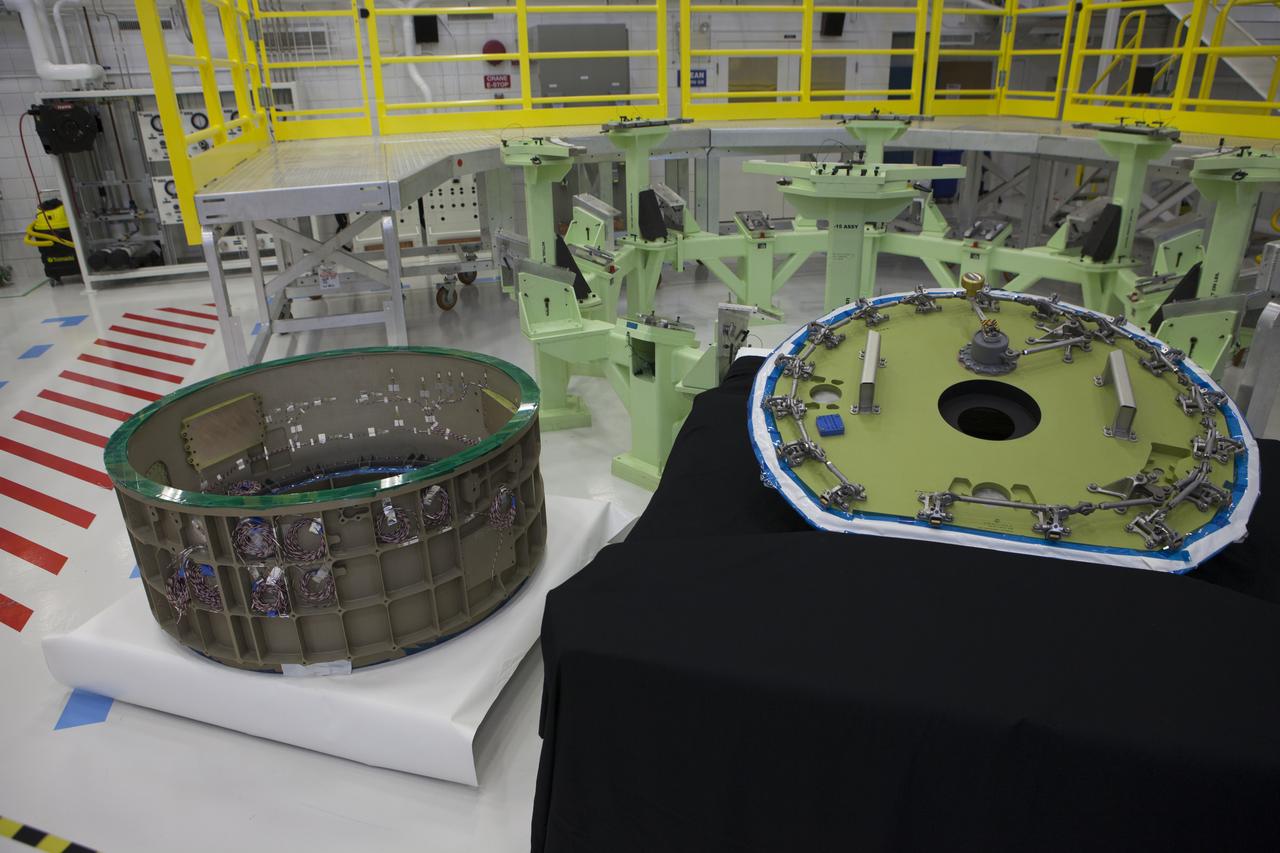
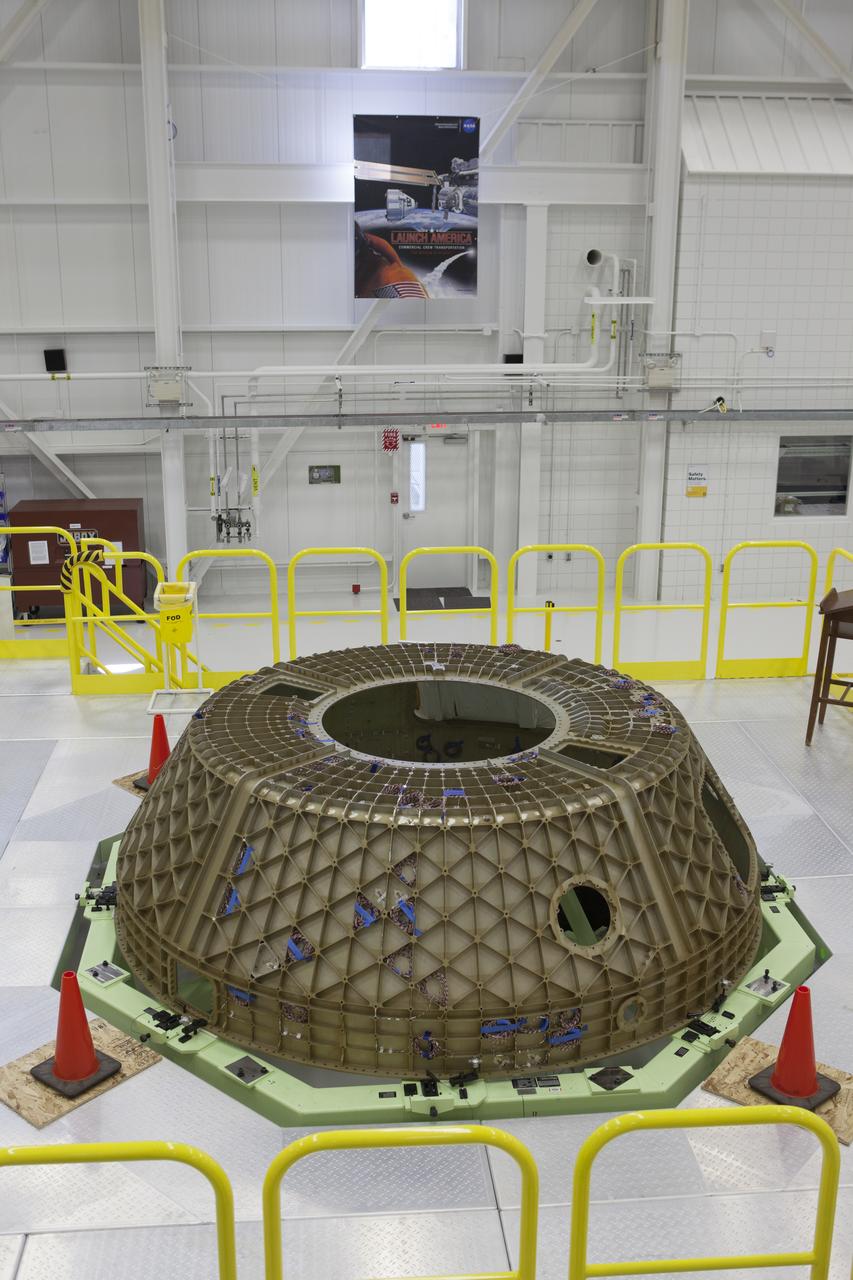
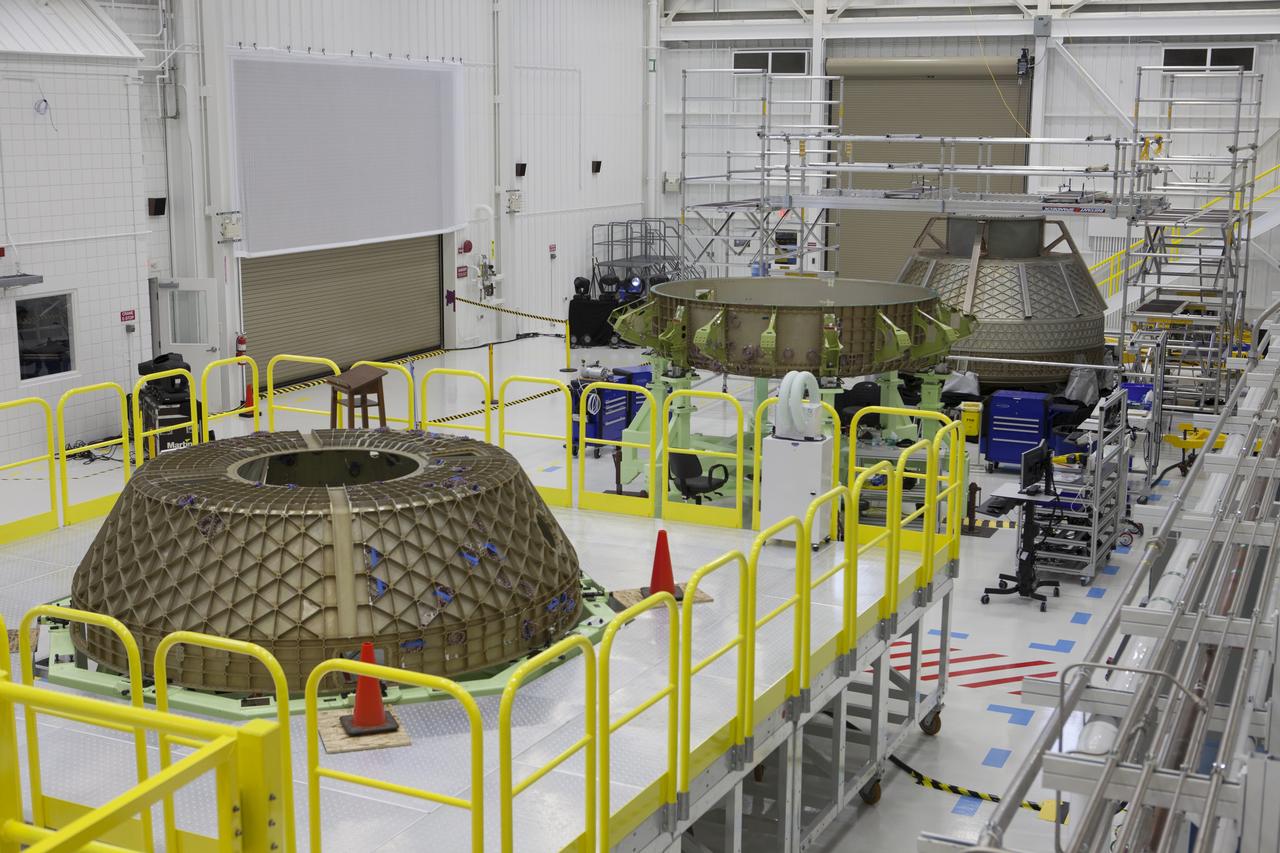
The Boeing CST-100 Structural Test Article awaits testing inside the Commercial Crew and Cargo Processing Facility, or C3PF, at NASA’s Kennedy Space Center in Florida. The test article will serve as a pathfinder for assembling and processing operational CST-100 spacecraft inside the revitalized facility, which for 20 years served as a shuttle processing hangar.
Capsule Sections in High Bay
L59-3802 Nike-Cajun sounding rocket with University of Iowa payload on launcher at Wallops for flight test, May 20, 1959. Photograph published in A New Dimension  Wallops Island Flight Test Range: The First Fifteen Years by Joseph Shortal. A NASA publication. Page 698.
Nike-Cajun Sounding Rocket with University of Iowa Payload
L59-3802 Nike-Cajun sounding rocket with University of Iowa payload on launcher at Wallops for flight test, May 20, 1959. Photograph published in A New Dimension  Wallops Island Flight Test Range: The First Fifteen Years by Joseph Shortal. A NASA publication. Page 698.
Nike-Cajun Sounding Rocket with University of Iowa Payload
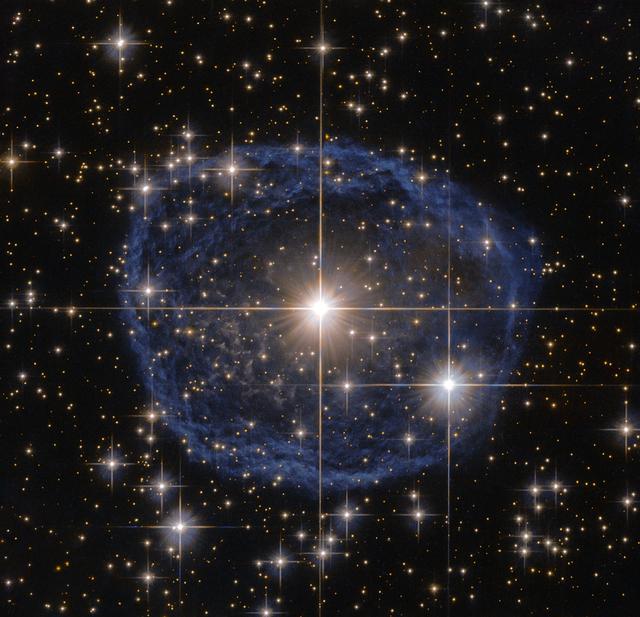
Sparkling at the centre of this beautiful NASA/ESA Hubble Space Telescope image is a Wolf–Rayet star known as WR 31a, located about 30 000 light-years away in the constellation of Carina (The Keel). The distinctive blue bubble appearing to encircle WR 31a, and its uncatalogued stellar sidekick, is a Wolf–Rayet nebula — an interstellar cloud of dust, hydrogen, helium and other gases. Created when speedy stellar winds interact with the outer layers of hydrogen ejected by Wolf–Rayet stars, these nebulae are frequently ring-shaped or spherical. The bubble — estimated to have formed around 20 000 years ago — is expanding at a rate of around 220 000 kilometres per hour! Unfortunately, the lifecycle of a Wolf–Rayet star is only a few hundred thousand years — the blink of an eye in cosmic terms. Despite beginning life with a mass at least 20 times that of the Sun, Wolf–Rayet stars typically lose half their mass in less than 100 000 years. And WR 31a is no exception to this case. It will, therefore, eventually end its life as a spectacular supernova, and the stellar material expelled from its explosion will later nourish a new generation of stars and planets.
Blue bubble in Carina
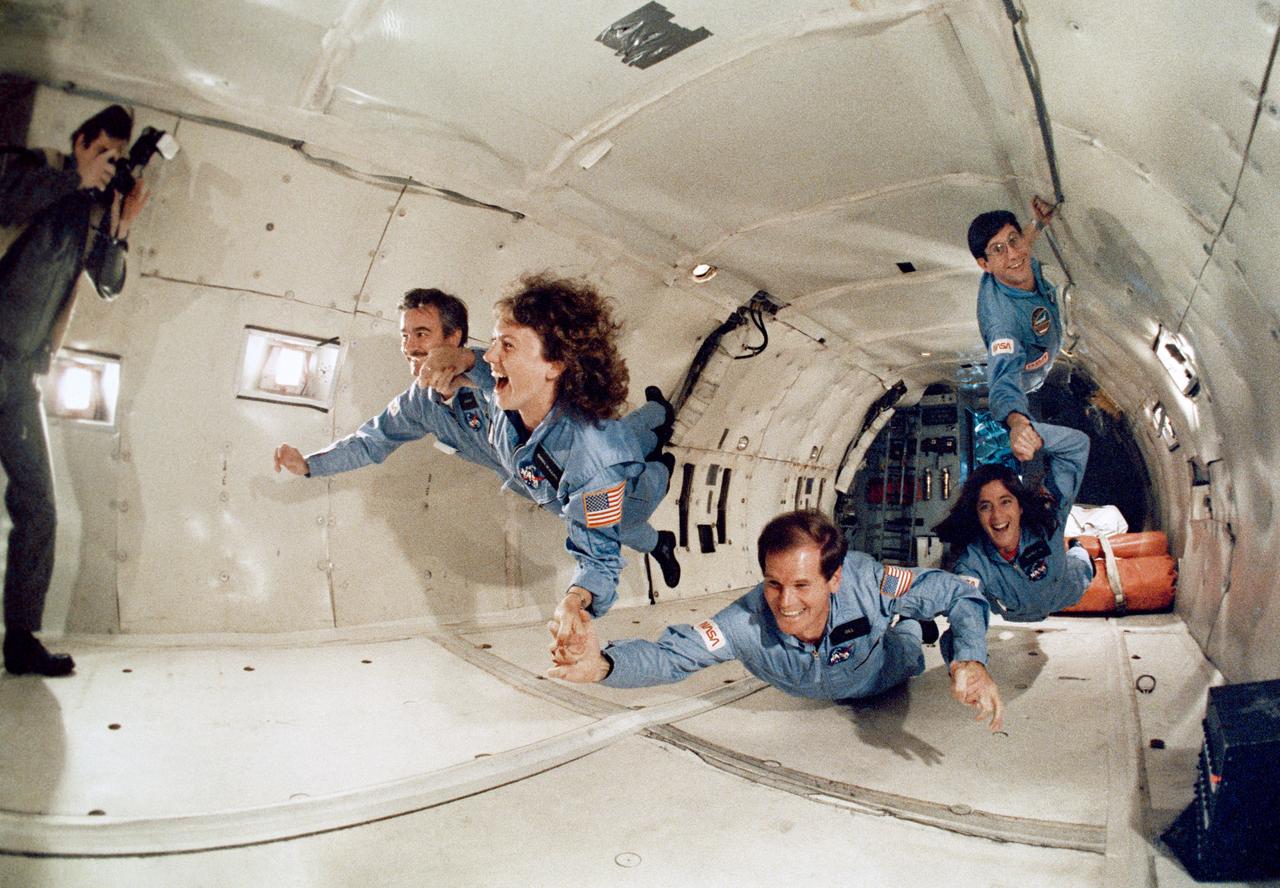
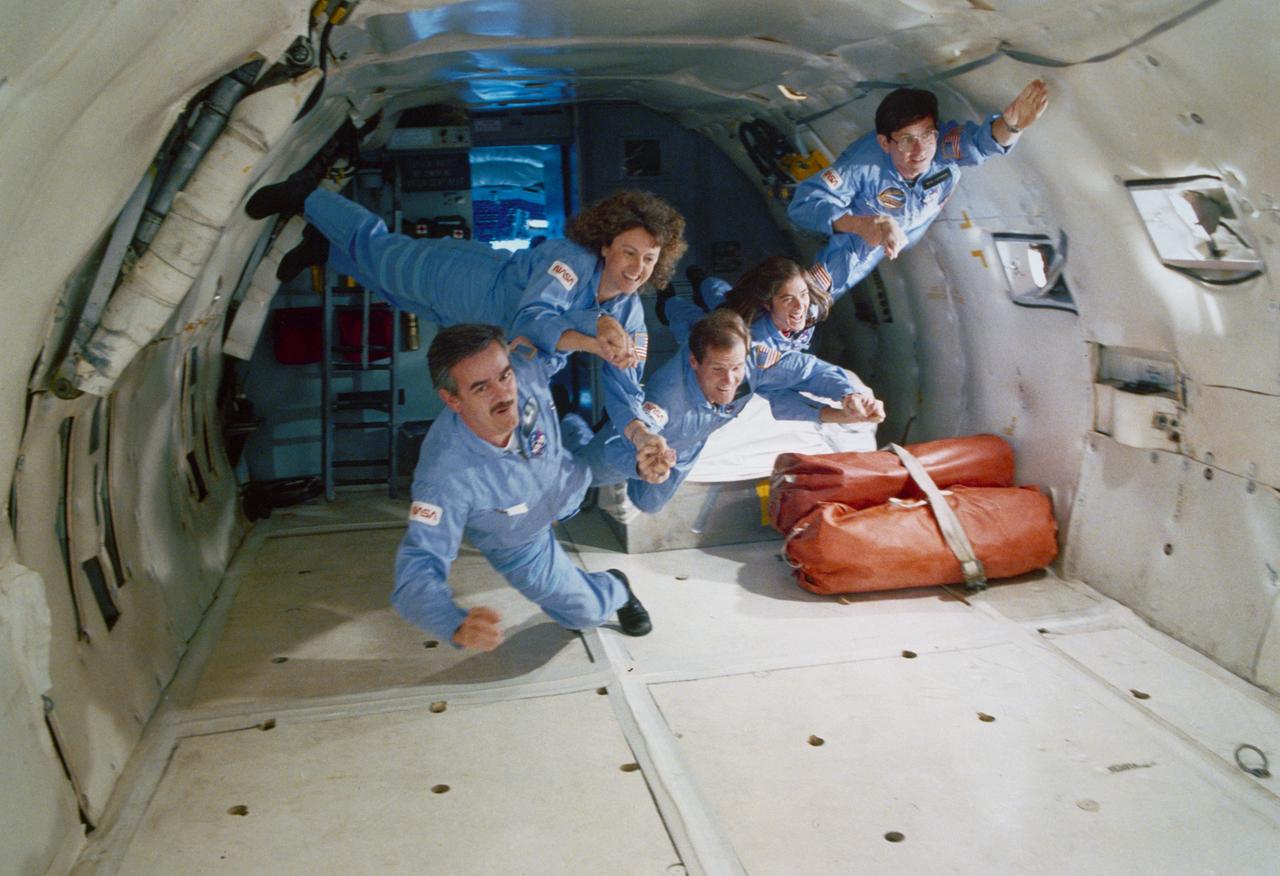
S85-44834 (20 Nov. 1985) --- This flying human chain represents prime and backup payload specialists for two upcoming STS missions. The group, representing trainees for STS-61C later this year and STS-51L early next year, shared some 40 parabolas in NASA?s KC-135, ?Zero-G? aircraft on Nov. 20, 1985. Left to right are Gerard Magilton, RCA backup payload specialist for STS-61C; Sharon Christa McAuliffe, payload specialist/teacher citizen observer for STS-51L; U.S. Representative Bill Nelson (D., Florida), scheduled for 61C; Barbara R. Morgan, backup to McAuliffe; and Robert J. Cenker, RCA payload specialist for 61C. The photo was taken by Otis Imboden. Photo credit: NASA
CREW TRAINING - STS-33/51-L (Zero-G)
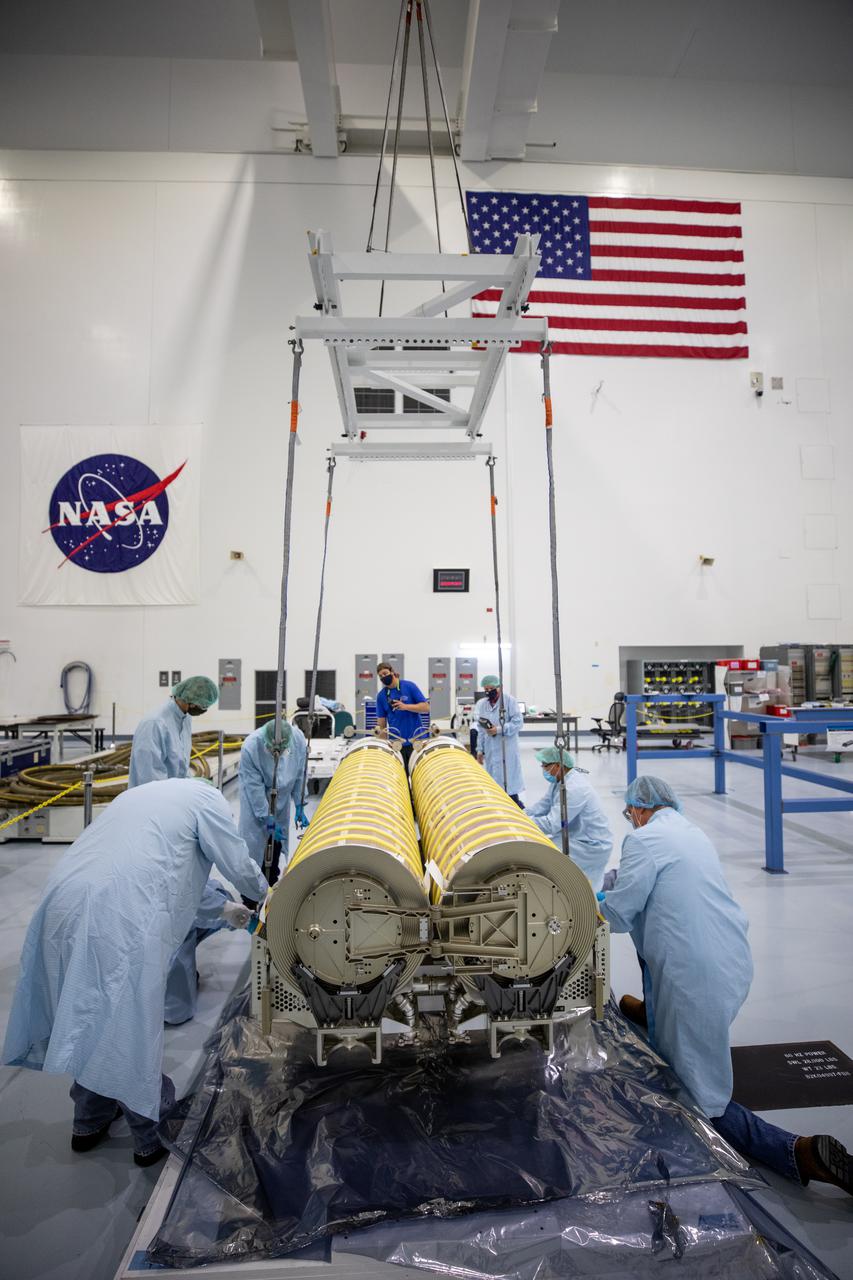
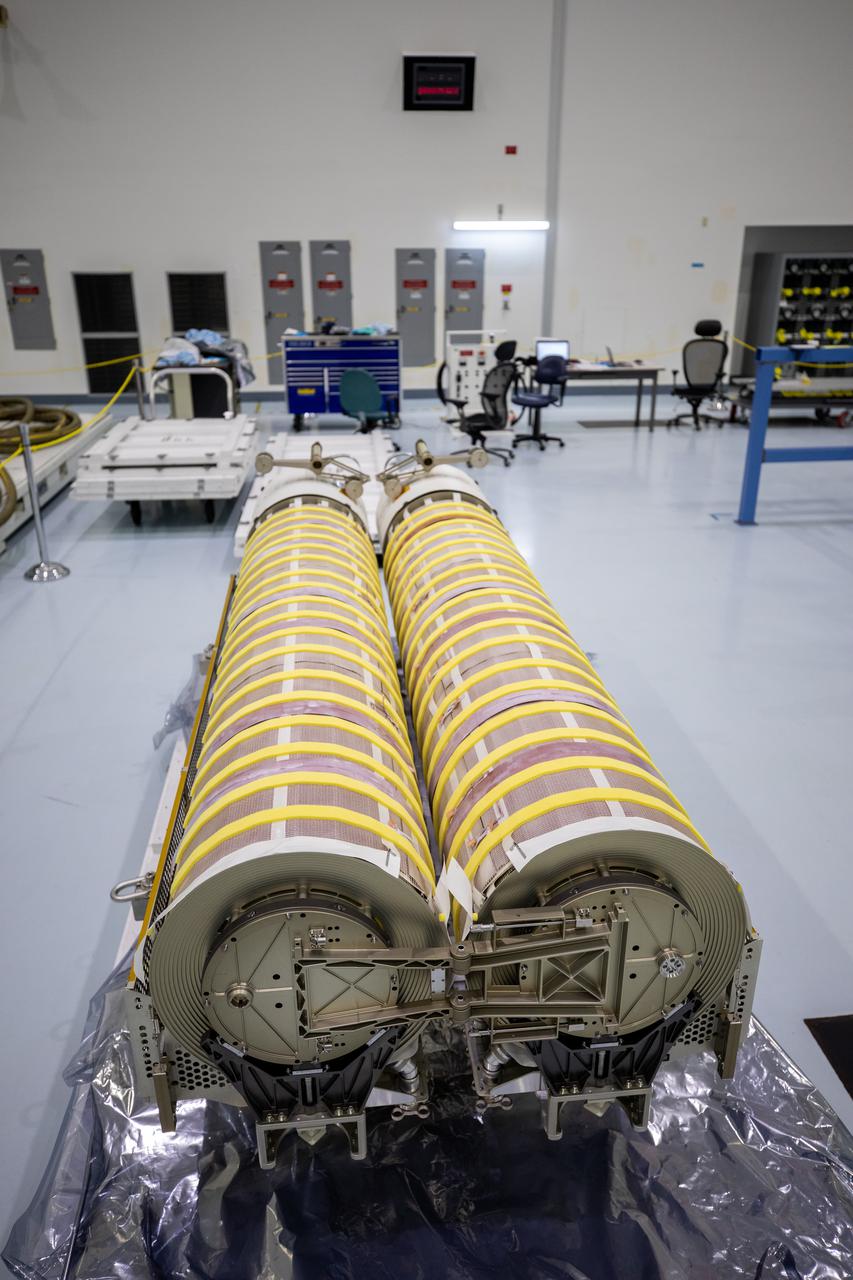
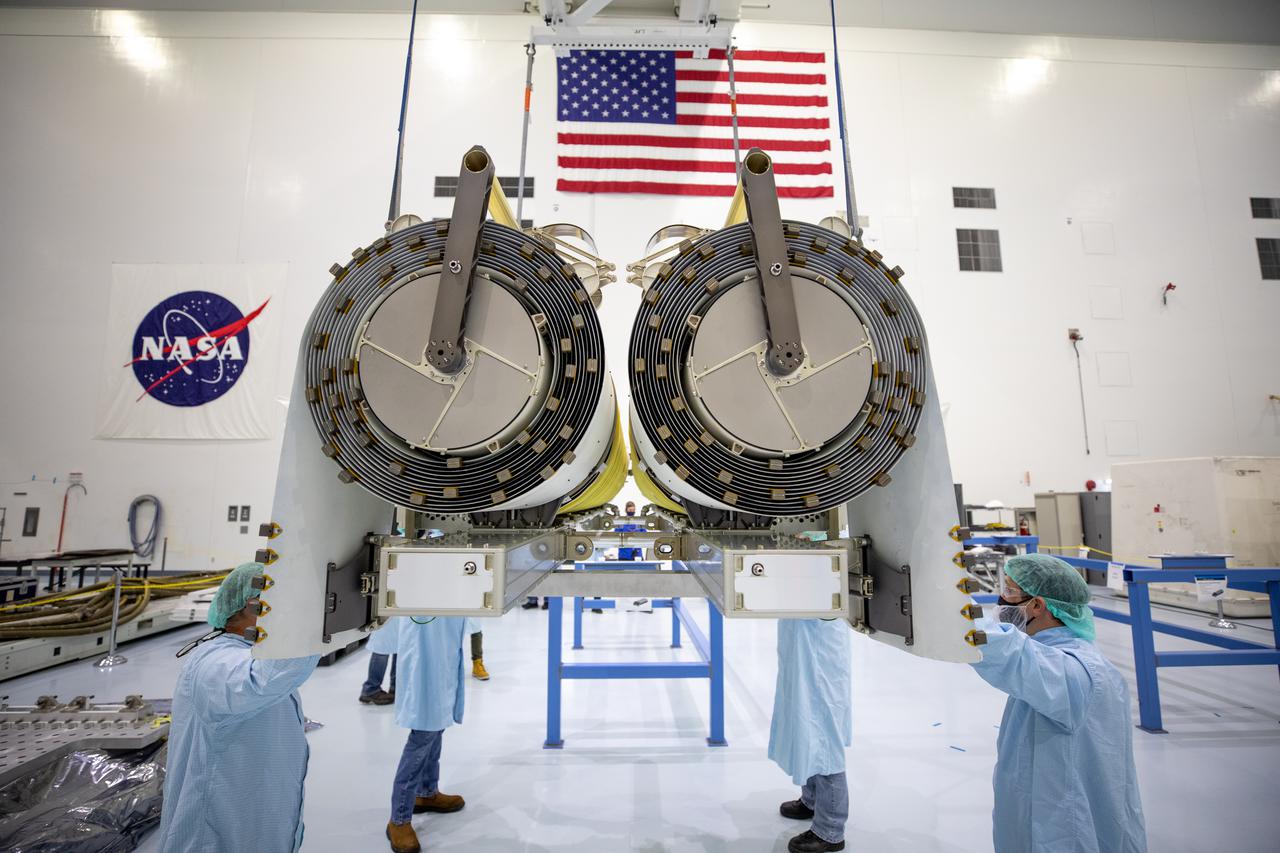
NASA and Boeing workers move solar arrays for the International Space Station to flight support equipment in the high bay of the Space Station Processing Facility at NASA’s Kennedy Space Center in Florida on April 2, 2021. The 63- by- 20-foot solar arrays will launch to the International Space Station later this year. They are the first two of six new solar arrays that in total will produce more than 120 kilowatts of electricity from the Sun’s energy, enough to power more than 40 average U.S. homes. Combined with the eight original, larger arrays, this advanced hardware will provide 215 kilowatts of energy, a 20 to 30 percent increase in power, helping maximize the space station’s capabilities for years to come. The arrays will produce electricity to sustain the station’s systems and equipment, plus augment the electricity available to continue a wide variety of public and private experiments and research in the microgravity environment of low-Earth orbit.
ISS Solar Array Arrival at KSC
S85-44835 (20 Nov. 1985) --- This flying human chain represents prime and backup payload specialists for two upcoming STS missions.  The group, representing trainees for STS-61C later this year and STS-51L early next year, shared some 40 parabolas in NASA?s KSC-135, ?Zero-G? aircraft on Nov. 20. Left to right are Gerard Magilton, RCA backup payload specialist for STS-61C; Sharon Christa McAuliffe, payload specialist/teacher citizen observer for STS-51L; U.S. Rep. Bill Nelson (D., Florida), scheduled for 61-C; Barbara R. Morgan, backup to McAuliffe; and Robert J. Cenker, RCA payload specialist for 61-C. The photo was taken by Keith Meyers, New York Times. Photo credit: NASA
CREW TRAINING - STS-33/51L (ZERO-G)
In view are the first two of six solar arrays shortly before NASA and Boeing workers began lifting them into flight support equipment the Space Station Processing Facility at NASA’s Kennedy Space Center in Florida on April 2, 2021. The 63- by- 20-foot solar arrays will launch to the International Space Station later this year. The six new solar arrays in total will produce more than 120 kilowatts of electricity from the Sun’s energy, enough to power more than 40 average U.S. homes. Combined with the eight original, larger arrays, this advanced hardware will provide 215 kilowatts of energy, a 20 to 30 percent increase in power, helping maximize the space station’s capabilities for years to come. The arrays will produce electricity to sustain the station’s systems and equipment, plus augment the electricity available to continue a wide variety of public and private experiments and research in the microgravity environment of low-Earth orbit.
ISS Solar Array Arrival at KSC
NASA and Boeing workers help position the solar arrays onto flight support equipment inside the high bay of the Space Station Processing Facility at NASA’s Kennedy Space Center in Florida on April 2, 2021. The 63- by- 20-foot solar arrays will launch to the International Space Station later this year. They are the first two of six new solar arrays that in total will produce more than 120 kilowatts of electricity from the Sun’s energy, enough to power more than 40 average U.S. homes. Combined with the eight original, larger arrays, this advanced hardware will provide 215 kilowatts of energy, a 20 to 30 percent increase in power, helping maximize the space station’s capabilities for years to come. The arrays will produce electricity to sustain the station’s systems and equipment, plus augment the electricity available to continue a wide variety of public and private experiments and research in the microgravity environment of low-Earth orbit.
ISS Solar Array Arrival at KSC
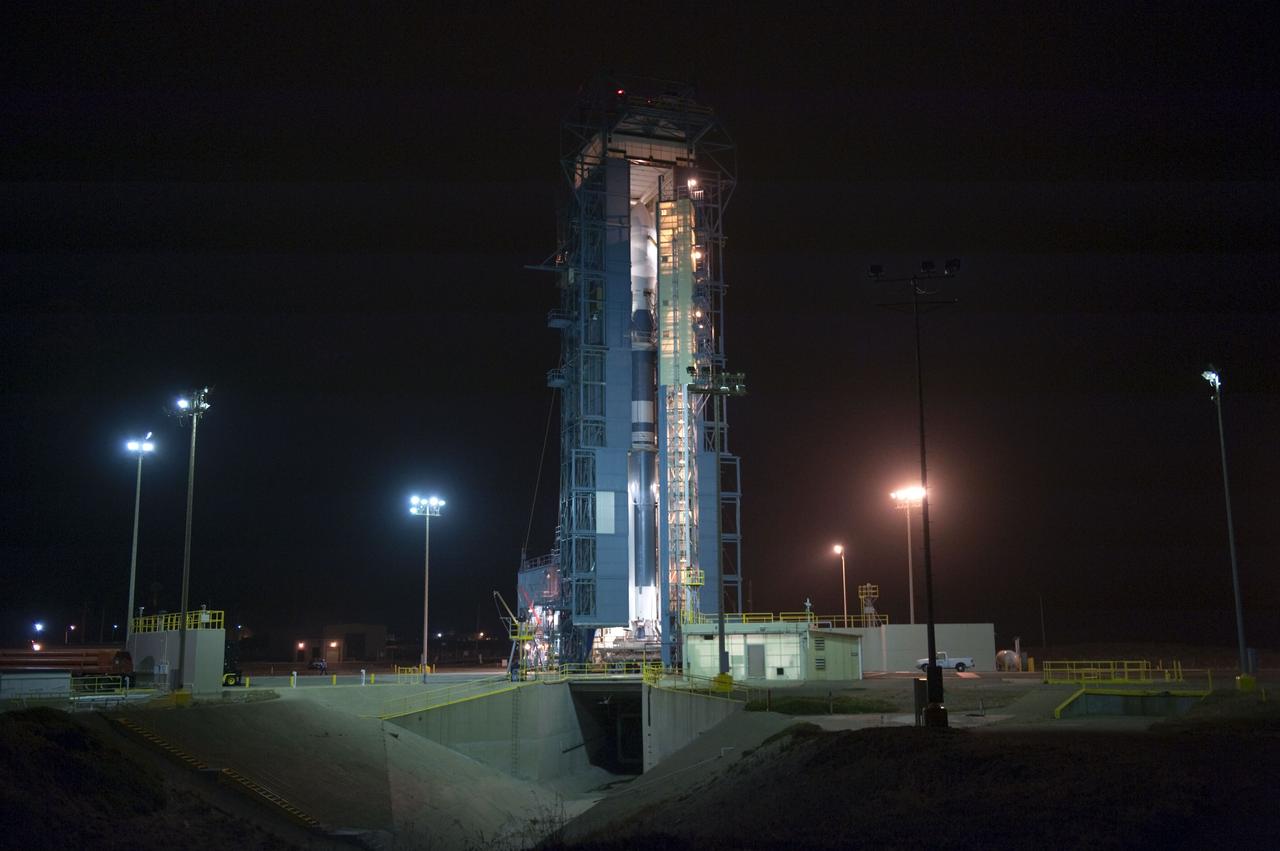
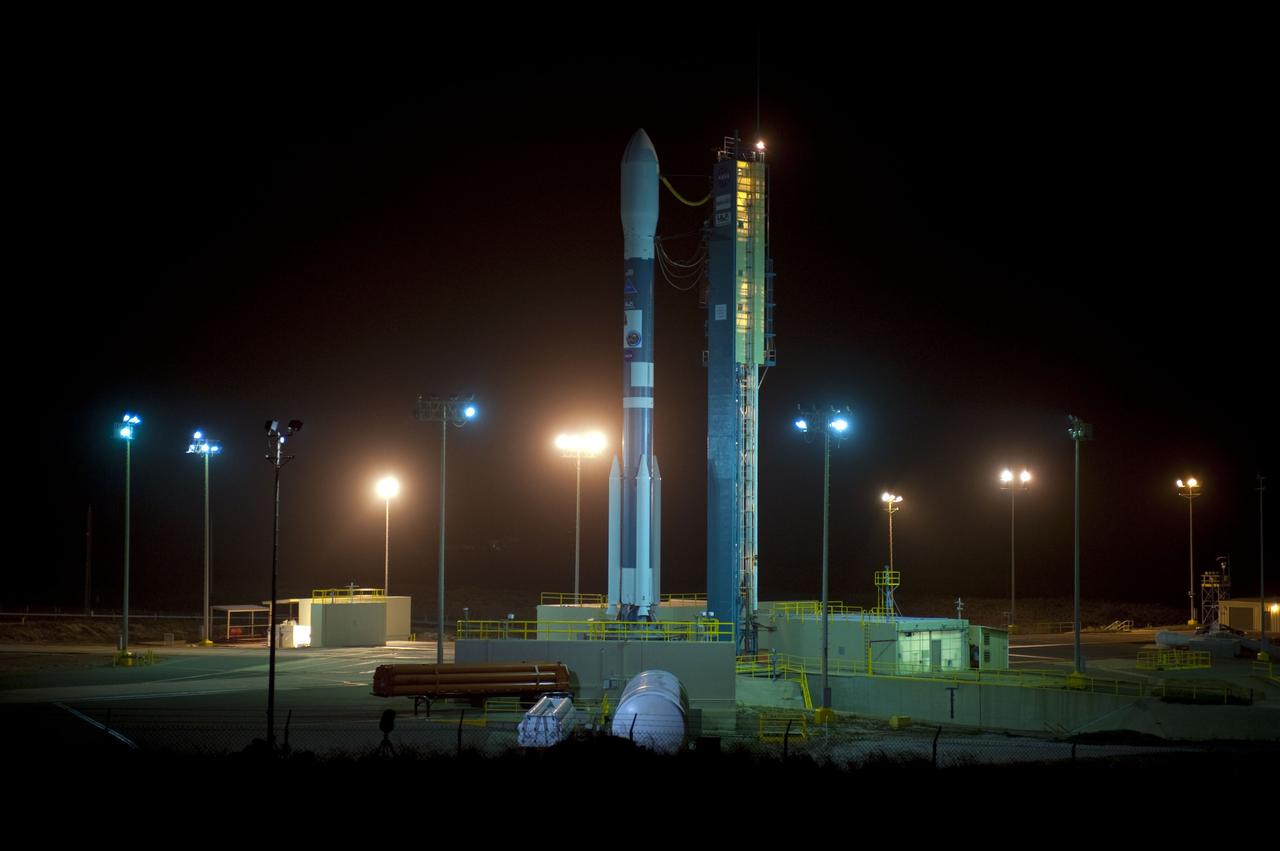
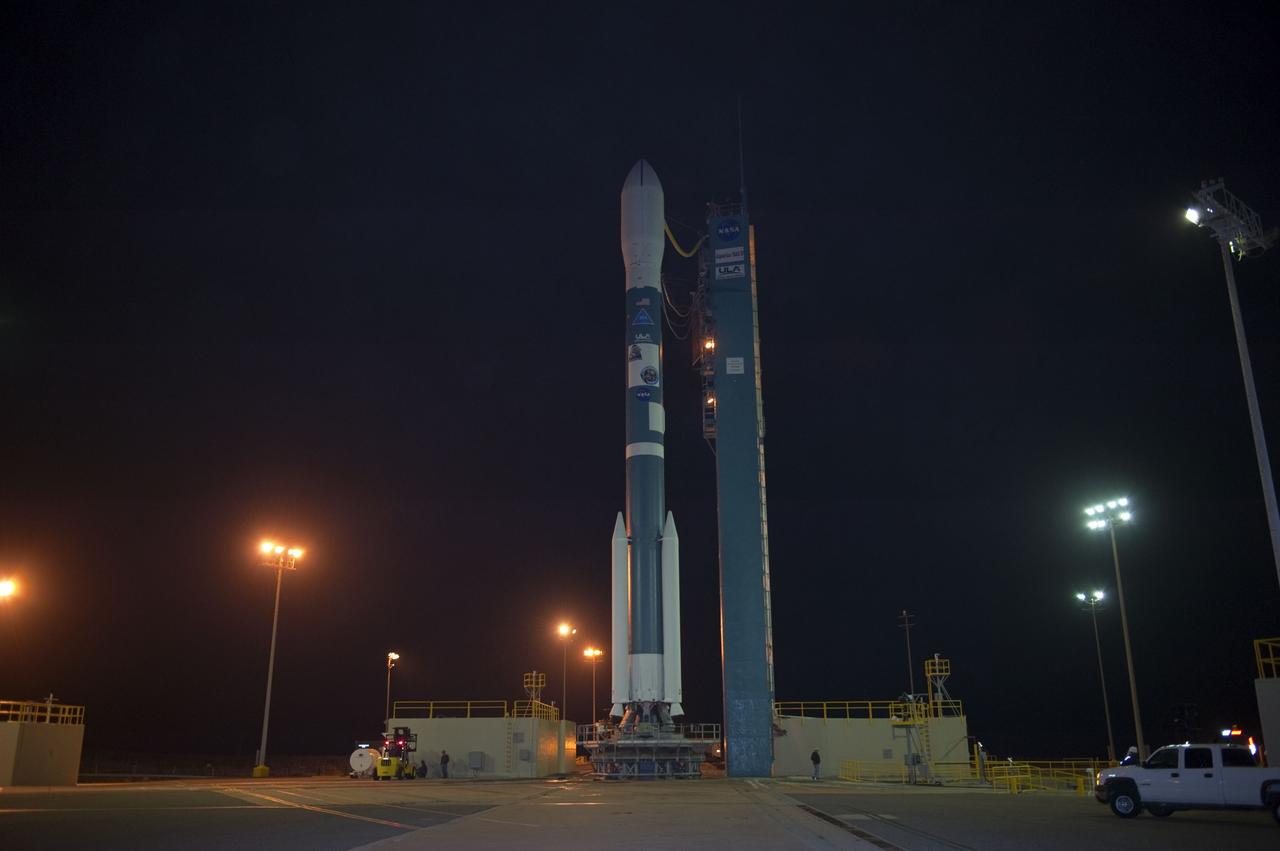
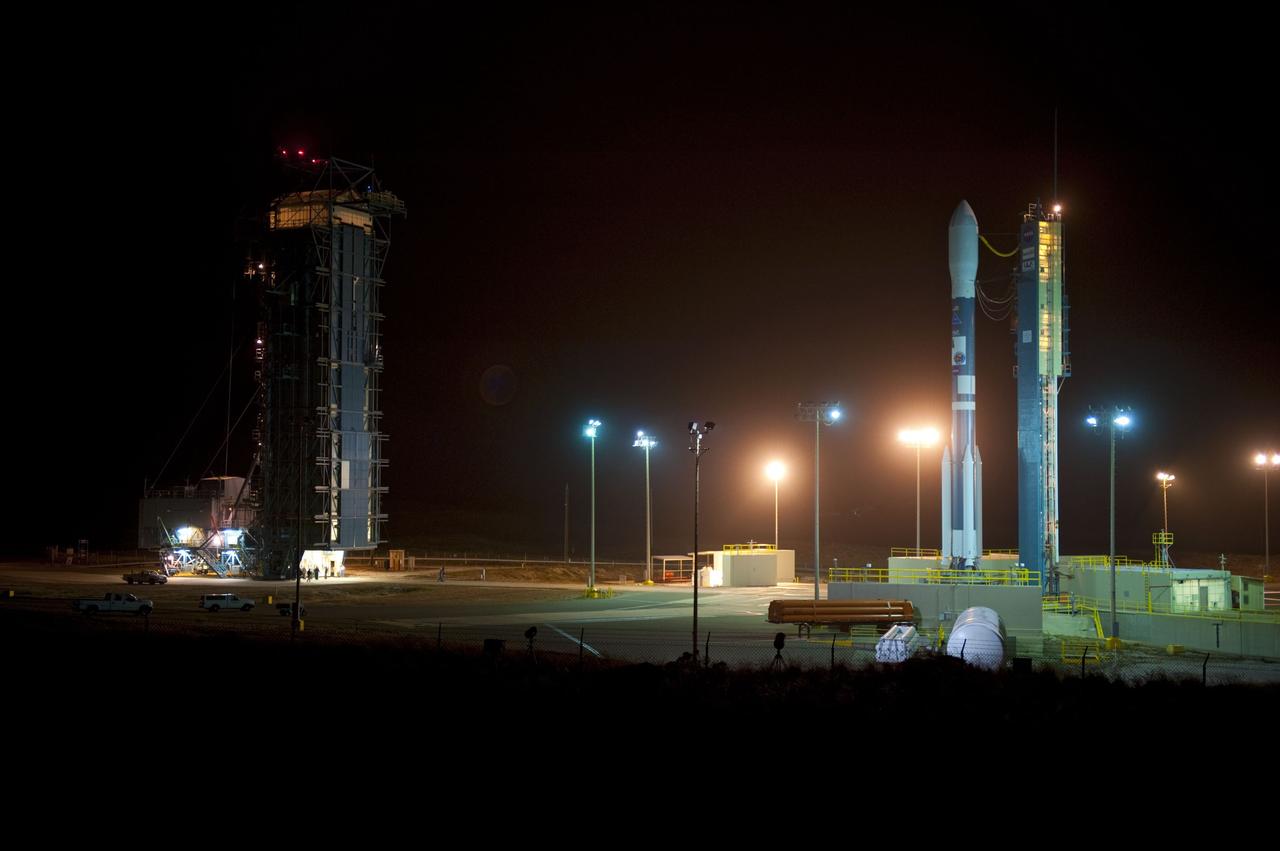
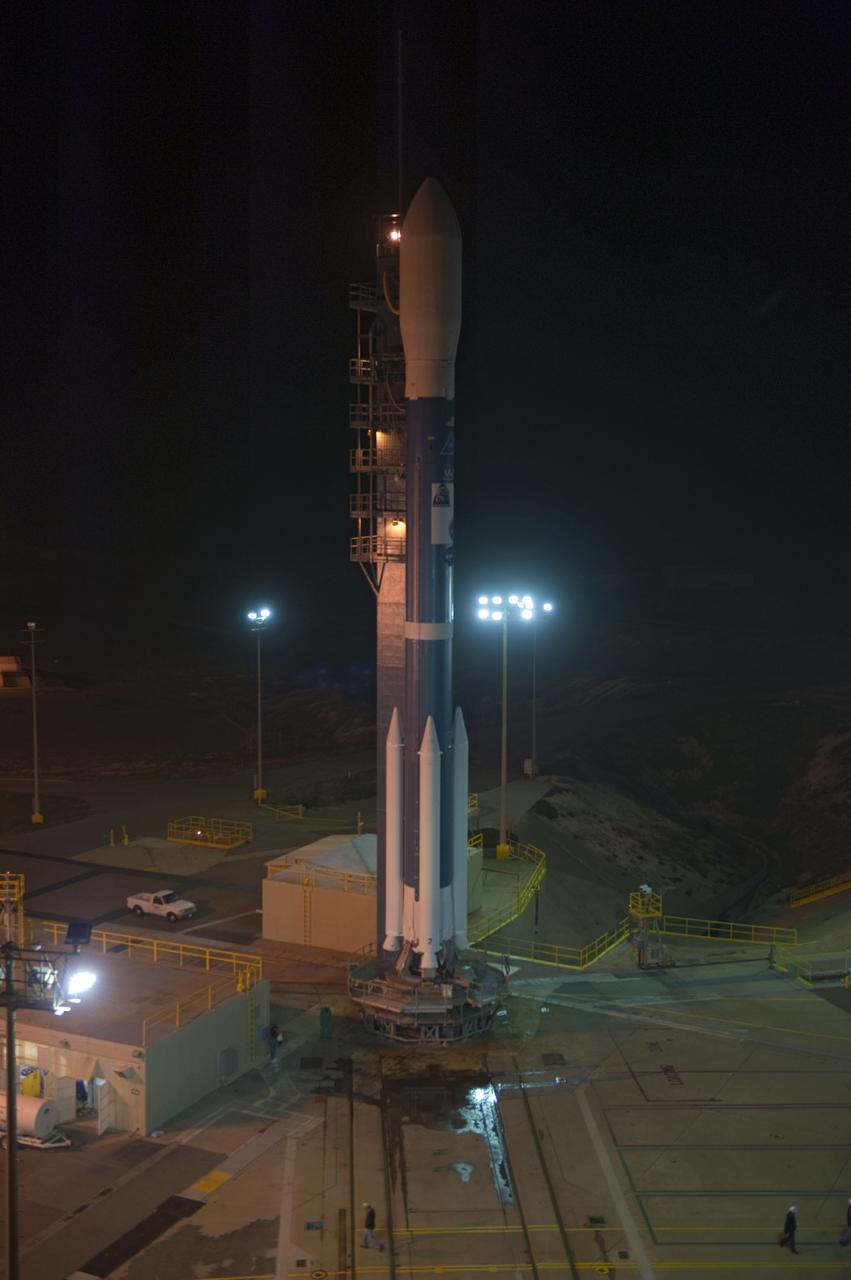
VANDENBERG AIR FORCE BASE, Calif. -- At NASA's Launch Complex-2 at Vandenberg Air Force Base in California the United Launch Alliance Delta II rocket with the Aquarius/SAC-D spacecraft atop is prepared for launch.        Liftoff is slated for 7:20 PDT/10:20 EDT today. Aquarius, the NASA-built instrument on the SAC-D spacecraft will provide new insights into how variations in ocean surface salinity relate to fundamental climate processes on its three-year mission. For more information visit: www.nasa.gov/aquarius. Photo credit: NASA/VAFB
KSC-2011-4358
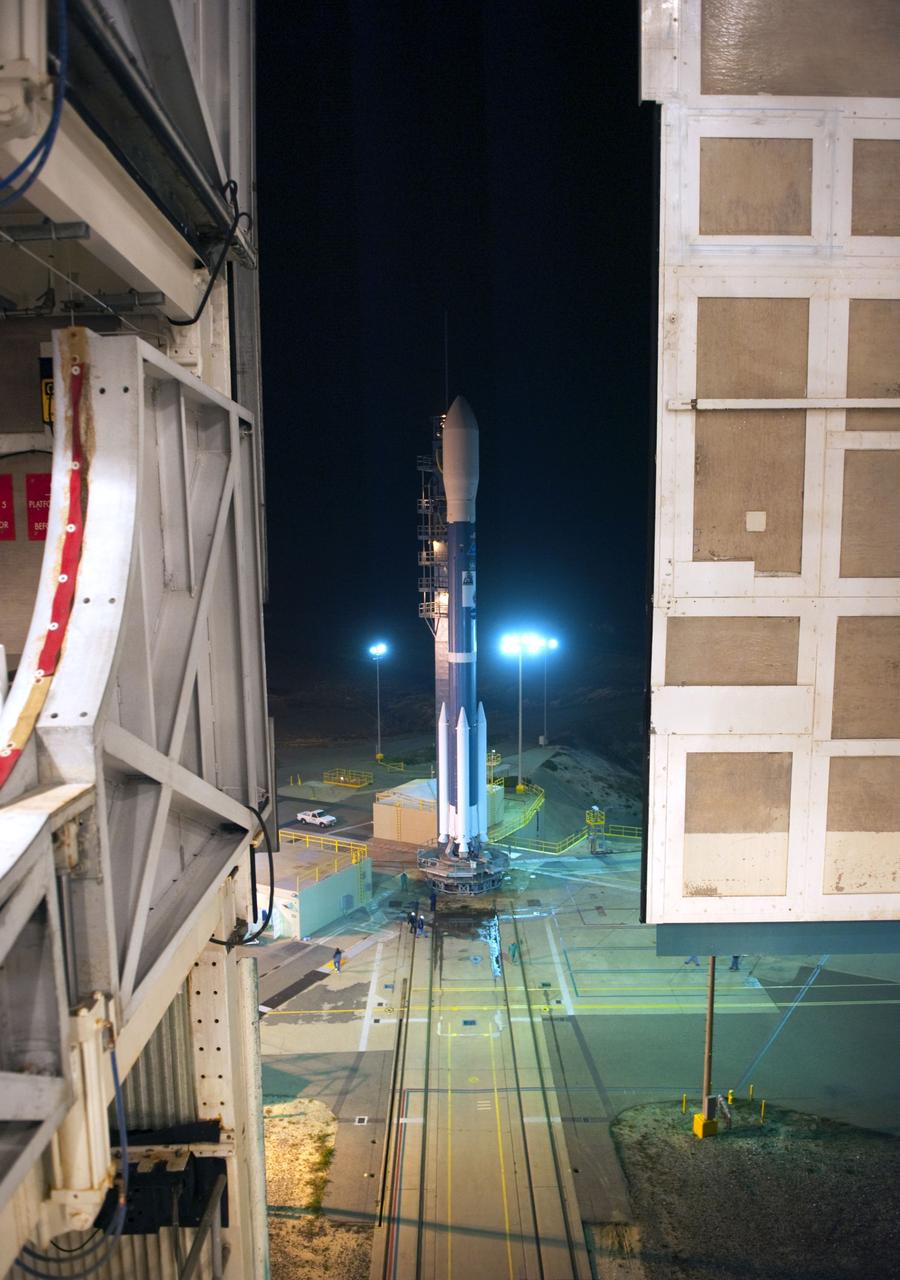
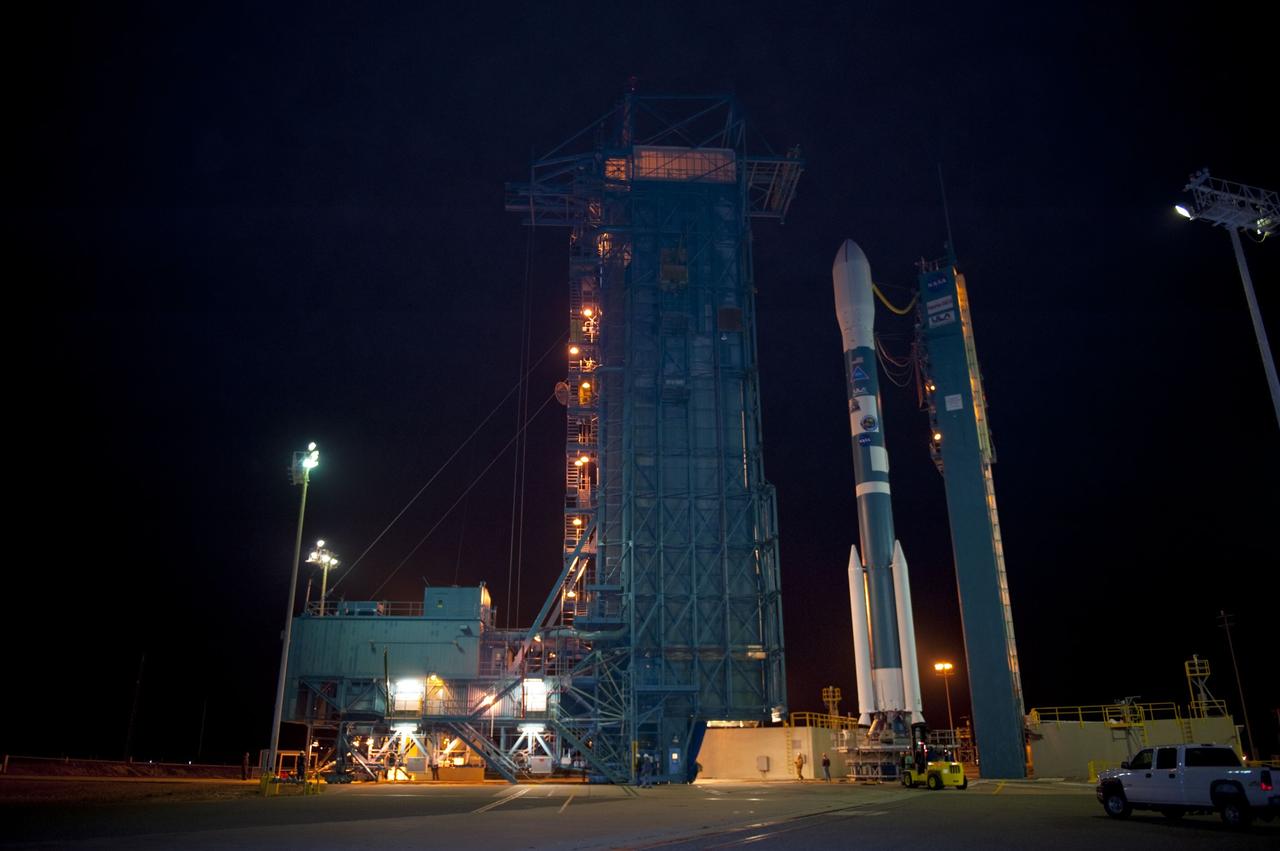
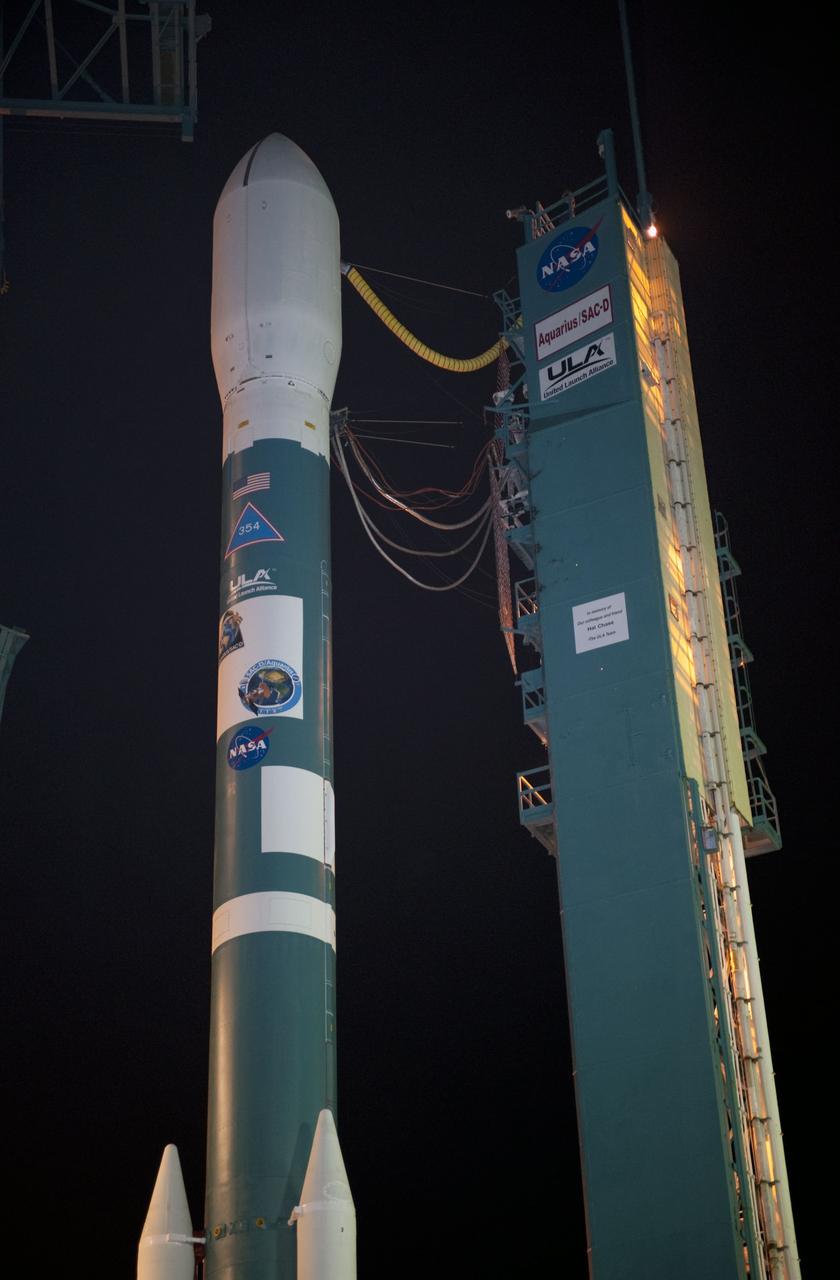
VANDENBERG AIR FORCE BASE, Calif. -- The mobile service tower at NASA's Launch Complex-2 at Vandenberg Air Force Base in California has moved away from the United Launch Alliance Delta II rocket with the Aquarius/SAC-D spacecraft atop in preparation for launch.        Liftoff is slated for 7:20 PDT/10:20 EDT today. Aquarius, the NASA-built instrument on the SAC-D spacecraft will provide new insights into how variations in ocean surface salinity relate to fundamental climate processes on its three-year mission. For more information visit: www.nasa.gov/aquarius. Photo credit: NASA/VAFB
KSC-2011-4354
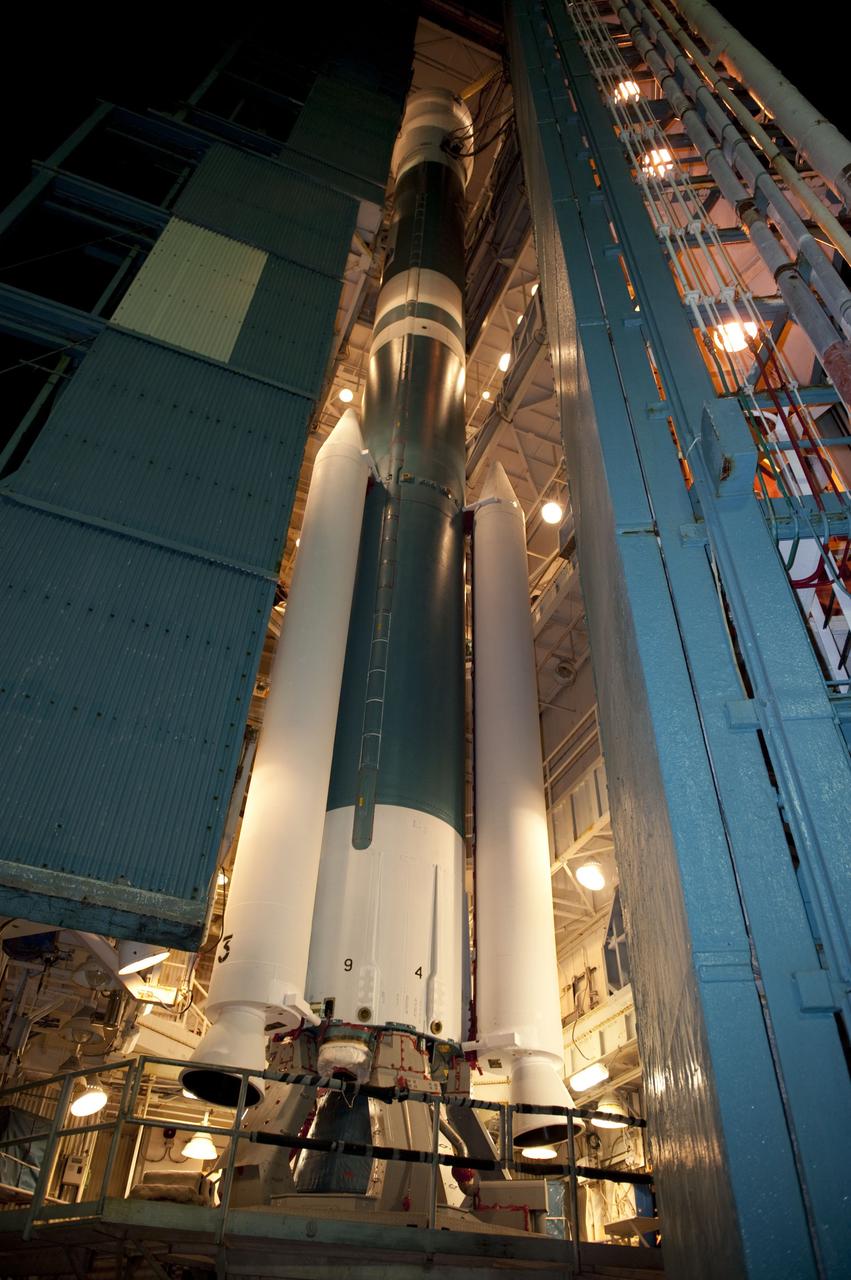
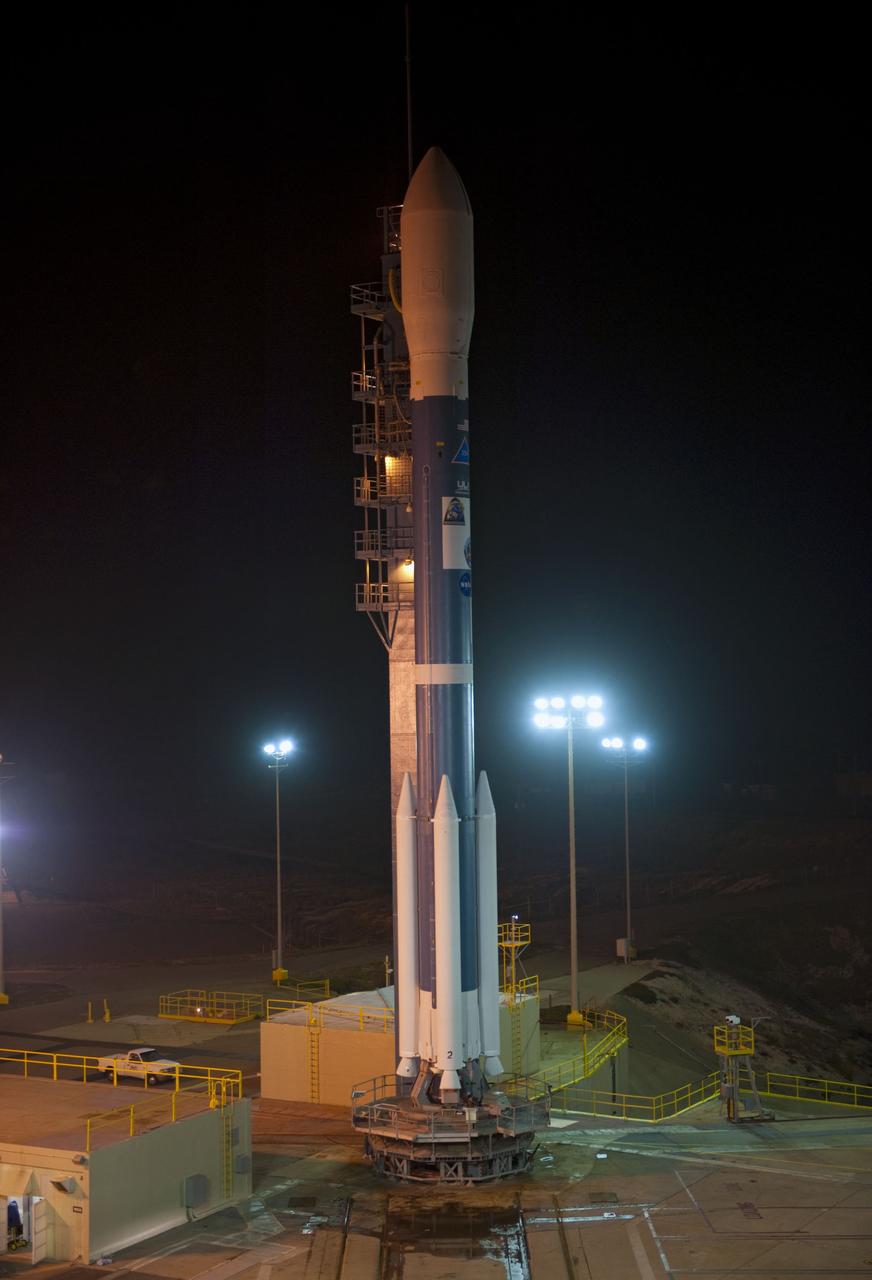
VANDENBERG AIR FORCE BASE, Calif. -- At NASA's Launch Complex-2 at Vandenberg Air Force Base in California the United Launch Alliance Delta II rocket with the Aquarius/SAC-D spacecraft atop is prepared for launch.        Liftoff is slated for 7:20 PDT/10:20 EDT today. Aquarius, the NASA-built instrument on the SAC-D spacecraft will provide new insights into how variations in ocean surface salinity relate to fundamental climate processes on its three-year mission. For more information visit: www.nasa.gov/aquarius. Photo credit: NASA/VAFB
KSC-2011-4357
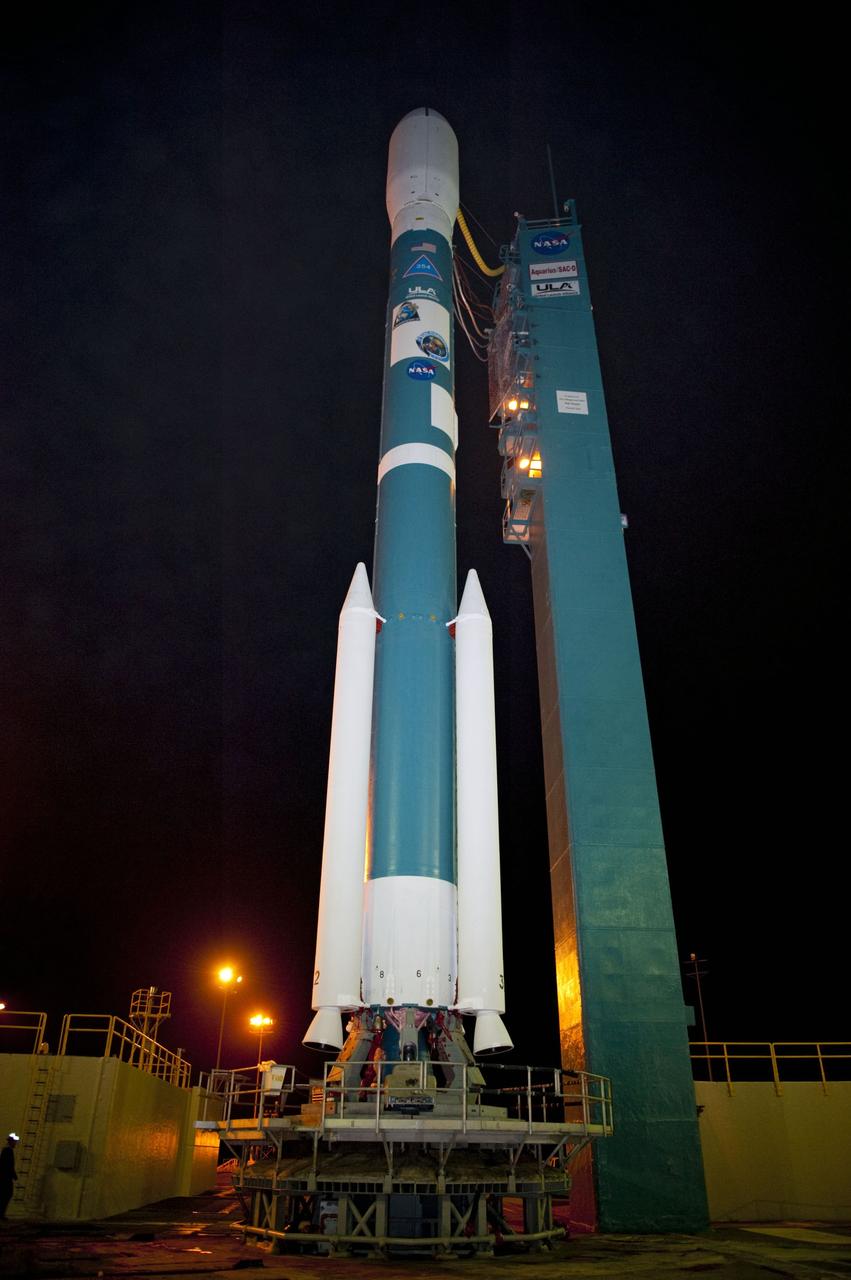
VANDENBERG AIR FORCE BASE, Calif. -- At NASA's Launch Complex-2 at Vandenberg Air Force Base in California the United Launch Alliance Delta II rocket with the Aquarius/SAC-D spacecraft atop is prepared for launch.        Liftoff is slated for 7:20 PDT/10:20 EDT today. Aquarius, the NASA-built instrument on the SAC-D spacecraft will provide new insights into how variations in ocean surface salinity relate to fundamental climate processes on its three-year mission. For more information visit: www.nasa.gov/aquarius. Photo credit: NASA/VAFB
KSC-2011-4361
VANDENBERG AIR FORCE BASE, Calif. -- The mobile service tower at NASA's Launch Complex-2 at Vandenberg Air Force Base in California slowly moves away from the United Launch Alliance Delta II rocket with the Aquarius/SAC-D spacecraft atop in preparation for launch.          Liftoff is slated for 7:20 PDT/10:20 EDT today. Aquarius, the NASA-built instrument on the SAC-D spacecraft will provide new insights into how variations in ocean surface salinity relate to fundamental climate processes on its three-year mission. For more information visit: www.nasa.gov/aquarius. Photo credit: NASA/VAFB
KSC-2011-4352
VANDENBERG AIR FORCE BASE, Calif. -- The mobile service tower at NASA's Launch Complex-2 at Vandenberg Air Force Base in California has moved away from the United Launch Alliance Delta II rocket with the Aquarius/SAC-D spacecraft atop in preparation for launch.        Liftoff is slated for 7:20 PDT/10:20 EDT today. Aquarius, the NASA-built instrument on the SAC-D spacecraft will provide new insights into how variations in ocean surface salinity relate to fundamental climate processes on its three-year mission. For more information visit: www.nasa.gov/aquarius. Photo credit: NASA/VAFB
KSC-2011-4356
VANDENBERG AIR FORCE BASE, Calif. -- The mobile service tower at NASA's Launch Complex-2 at Vandenberg Air Force Base in California has moved away from the United Launch Alliance Delta II rocket with the Aquarius/SAC-D spacecraft atop in preparation for launch.        Liftoff is slated for 7:20 PDT/10:20 EDT today. Aquarius, the NASA-built instrument on the SAC-D spacecraft will provide new insights into how variations in ocean surface salinity relate to fundamental climate processes on its three-year mission. For more information visit: www.nasa.gov/aquarius. Photo credit: NASA/VAFB
KSC-2011-4355
VANDENBERG AIR FORCE BASE, Calif. -- At NASA's Launch Complex-2 at Vandenberg Air Force Base in California the United Launch Alliance Delta II rocket with the Aquarius/SAC-D spacecraft atop is prepared for launch.        Liftoff is slated for 7:20 PDT/10:20 EDT today. Aquarius, the NASA-built instrument on the SAC-D spacecraft will provide new insights into how variations in ocean surface salinity relate to fundamental climate processes on its three-year mission. For more information visit: www.nasa.gov/aquarius. Photo credit: NASA/VAFB
KSC-2011-4359
VANDENBERG AIR FORCE BASE, Calif. -- At NASA's Launch Complex-2 at Vandenberg Air Force Base in California the United Launch Alliance Delta II rocket with the Aquarius/SAC-D spacecraft atop is prepared for launch.        Liftoff is slated for 7:20 PDT/10:20 EDT today. Aquarius, the NASA-built instrument on the SAC-D spacecraft will provide new insights into how variations in ocean surface salinity relate to fundamental climate processes on its three-year mission. For more information visit: www.nasa.gov/aquarius. Photo credit: NASA/VAFB
KSC-2011-4360
VANDENBERG AIR FORCE BASE, Calif. -- At NASA's Launch Complex-2 at Vandenberg Air Force Base in California the United Launch Alliance Delta II rocket with the Aquarius/SAC-D spacecraft atop is prepared for launch.        Liftoff is slated for 7:20 PDT/10:20 EDT today. Aquarius, the NASA-built instrument on the SAC-D spacecraft will provide new insights into how variations in ocean surface salinity relate to fundamental climate processes on its three-year mission. For more information visit: www.nasa.gov/aquarius. Photo credit: NASA/VAFB
KSC-2011-4364
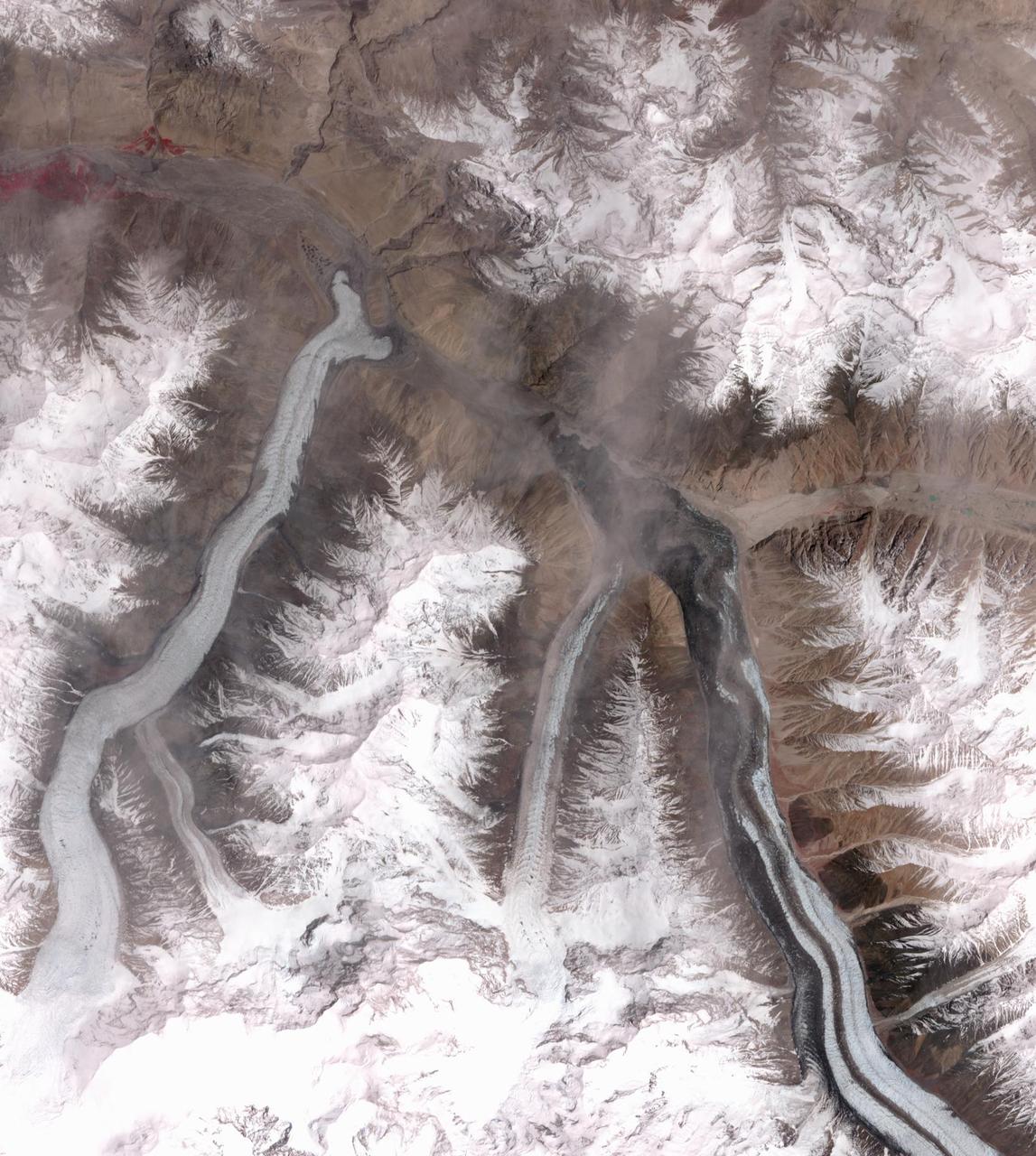
In October 2016, the Khurdopin Glacier in Pakistan began a rapid surge after 20 years of little movement. By March, 2017, a large lake had formed in the Shimshal River, where the glacier had formed a dam. Fortunately, the river carved an outlet through the glacier before the lake could empty catastrophically. In this pair of ASTER images, acquired August 20, 2015 and May 21, 2017, the advance of the Khurdopin Glacier (dark gray and white "river" in lower right quarter of image) is obvious by comparing the before and after images. The images cover an area of 25 by 27.8 km, and are located at 36.3 degrees north, 75.5 degrees east.  https://photojournal.jpl.nasa.gov/catalog/PIA22304
Khurdopin Glacier, Pakistan
VANDENBERG AIR FORCE BASE, Calif. -- At NASA's Launch Complex-2 at Vandenberg Air Force Base in California the United Launch Alliance Delta II rocket with the Aquarius/SAC-D spacecraft atop is prepared for launch.        Liftoff is slated for 7:20 PDT/10:20 EDT today. Aquarius, the NASA-built instrument on the SAC-D spacecraft will provide new insights into how variations in ocean surface salinity relate to fundamental climate processes on its three-year mission. For more information visit: www.nasa.gov/aquarius. Photo credit: NASA/VAFB
KSC-2011-4363
VANDENBERG AIR FORCE BASE, Calif. -- At NASA's Launch Complex-2 at Vandenberg Air Force Base in California the United Launch Alliance Delta II rocket with the Aquarius/SAC-D spacecraft atop is prepared for launch.        Liftoff is slated for 7:20 PDT/10:20 EDT today. Aquarius, the NASA-built instrument on the SAC-D spacecraft will provide new insights into how variations in ocean surface salinity relate to fundamental climate processes on its three-year mission. For more information visit: www.nasa.gov/aquarius. Photo credit: NASA/VAFB
KSC-2011-4362
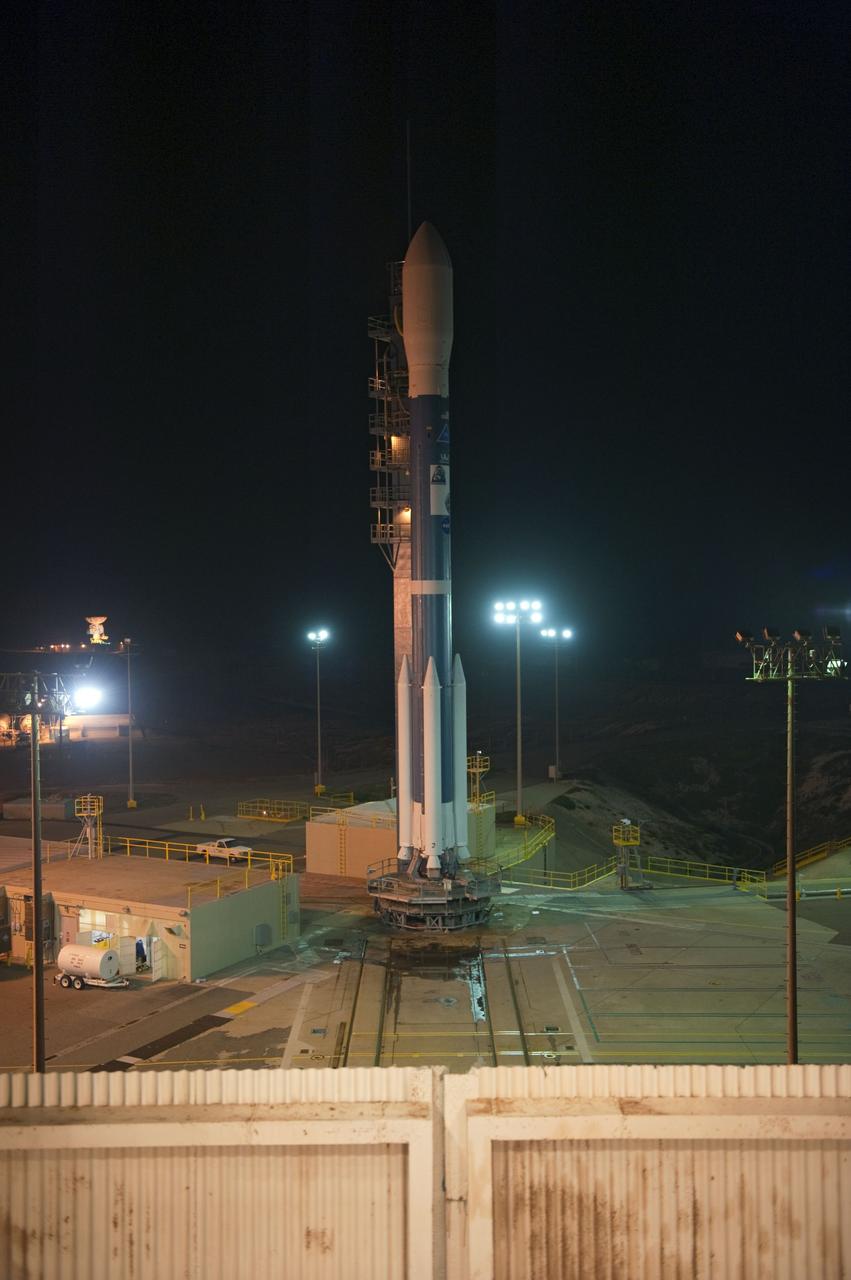
VANDENBERG AIR FORCE BASE, Calif. -- The mobile service tower at NASA's Launch Complex-2 at Vandenberg Air Force Base in California is ready to roll away to reveal the United Launch Alliance Delta II rocket with the Aquarius/SAC-D spacecraft atop in preparation for launch.            Liftoff is slated for 7:20 PDT/10:20 EDT today. Aquarius, the NASA-built instrument on the SAC-D spacecraft will provide new insights into how variations in ocean surface salinity relate to fundamental climate processes on its three-year mission. For more information visit: www.nasa.gov/aquarius. Photo credit: NASA/VAFB
KSC-2011-4351
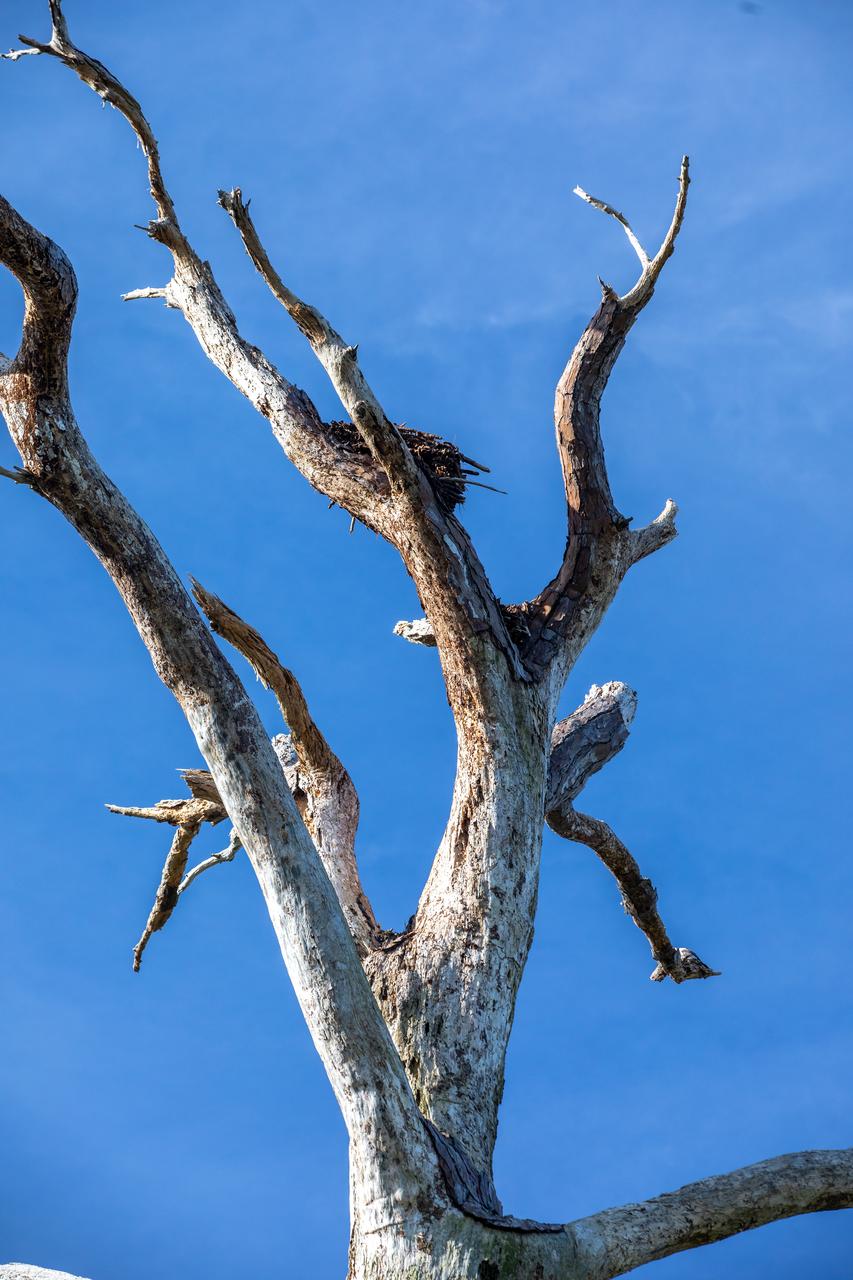
Shown in this Jan. 20, 2023, photo is the remainder of a nest used by southern bald eagles for several years at NASA’s Kennedy Space Center. After a recent fire burned the tree, the eagles returned to the area on Kennedy Parkway North and built a new nest in a tree about 60 yards away. Each year, eagles take up winter residence at the Florida spaceport, breeding and raising a new generation. The center shares a boundary with the Merritt Island National Wildlife Refuge, home to more than 1,500 species of plants and animals, and 15 federally listed species.
Eagles Nest at KSC
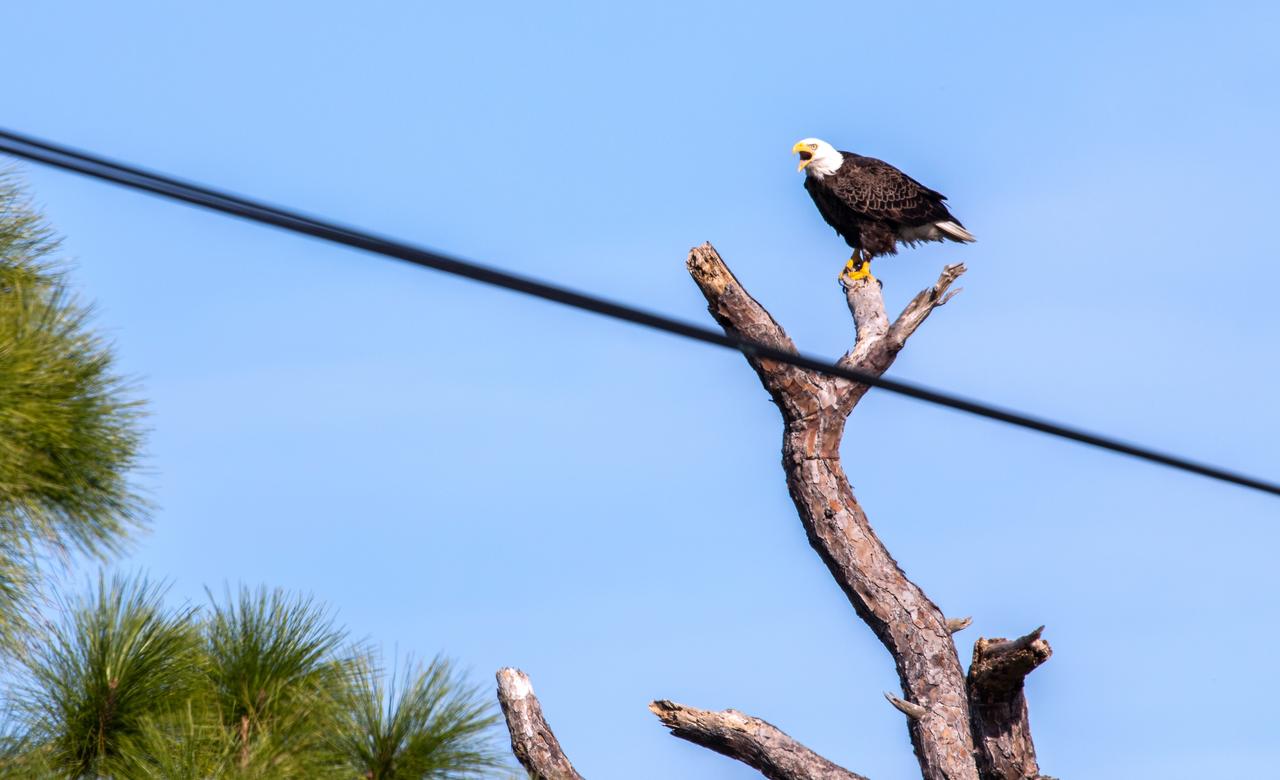
A southern bald eagle is perched in a tree at NASA’s Kennedy Space Center on Jan. 20, 2023. After a recent fire burned a tree that housed an eagles’ nest for several years, the birds returned to the area on Kennedy Parkway North and built a new nest in a tree about 60 yards away. Each year, eagles take up winter residence at the Florida spaceport, breeding and raising a new generation. The center shares a boundary with the Merritt Island National Wildlife Refuge, home to more than 1,500 species of plants and animals, and 15 federally listed species.
Eagles Nest at KSC
Expedition 43 NASA Astronaut Scott Kelly walks along the Avenue of the Cosmonauts where two long rows of trees are all marked with the name and year of the crew member who planted them starting from Yuri Gagarin's tree, Friday, March 20, 2015 at the Cosmonaut Hotel in Baikonur, Kazakhstan. Kelly, and Russian Cosmonauts Gennady Padalka, and Mikhail Kornienko of the Russian Federal Space Agency (Roscosmos) are preparing for launch to the International Space Station in their Soyuz TMA-16M spacecraft from the Baikonur Cosmodrome in Kazakhstan March 28, Kazakh time. As the one-year crew, Kelly and Kornienko will return to Earth on Soyuz TMA-18M in March 2016. Photo Credit: (NASA/Bill Ingalls)
Expedition 43 Preflight
A southern bald eagle is perched in a tree at NASA’s Kennedy Space Center on Jan. 20, 2023. After a recent fire burned a tree that housed an eagles’ nest for several years, the birds returned to the area on Kennedy Parkway North and built a new nest in a tree about 60 yards away. Each year, eagles take up winter residence at the Florida spaceport, breeding and raising a new generation. The center shares a boundary with the Merritt Island National Wildlife Refuge, home to more than 1,500 species of plants and animals, and 15 federally listed species.
Eagles Nest at KSC
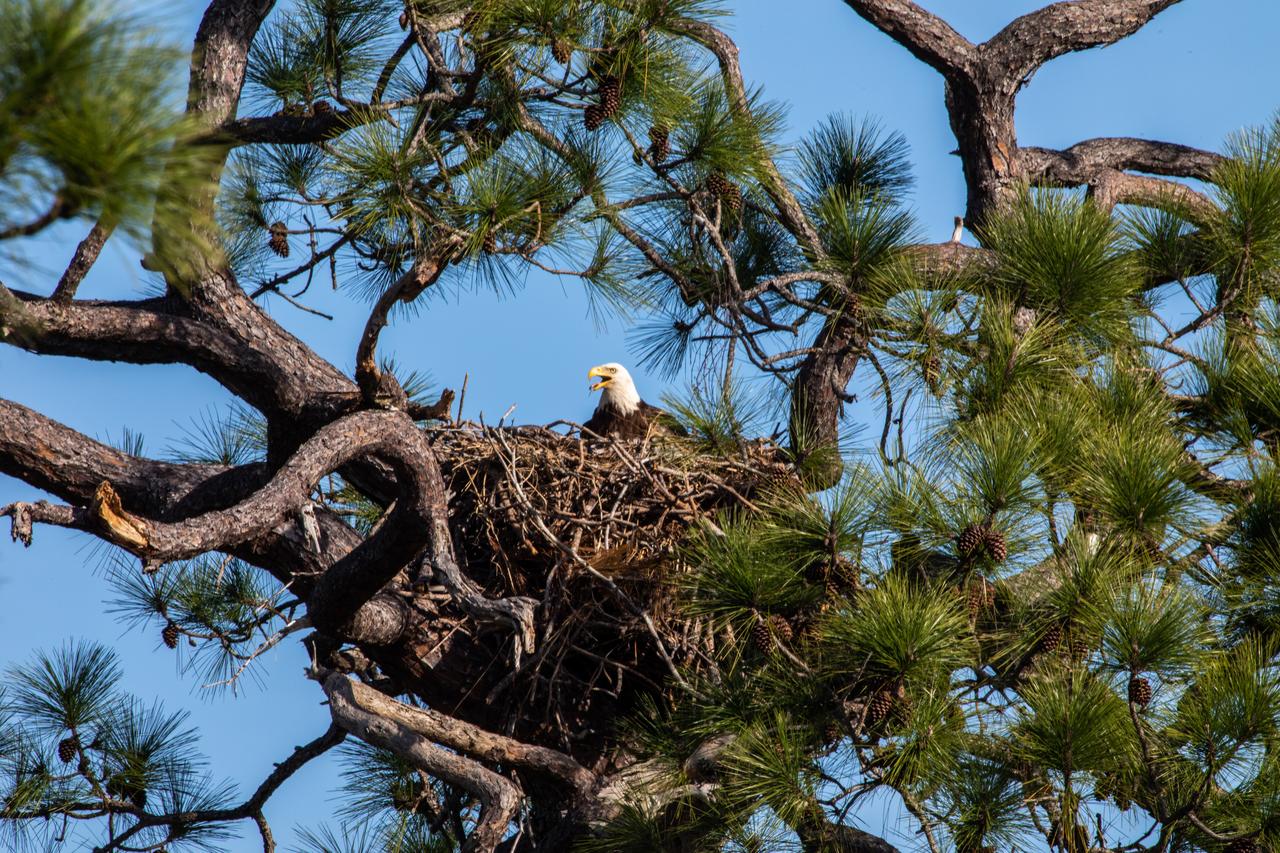
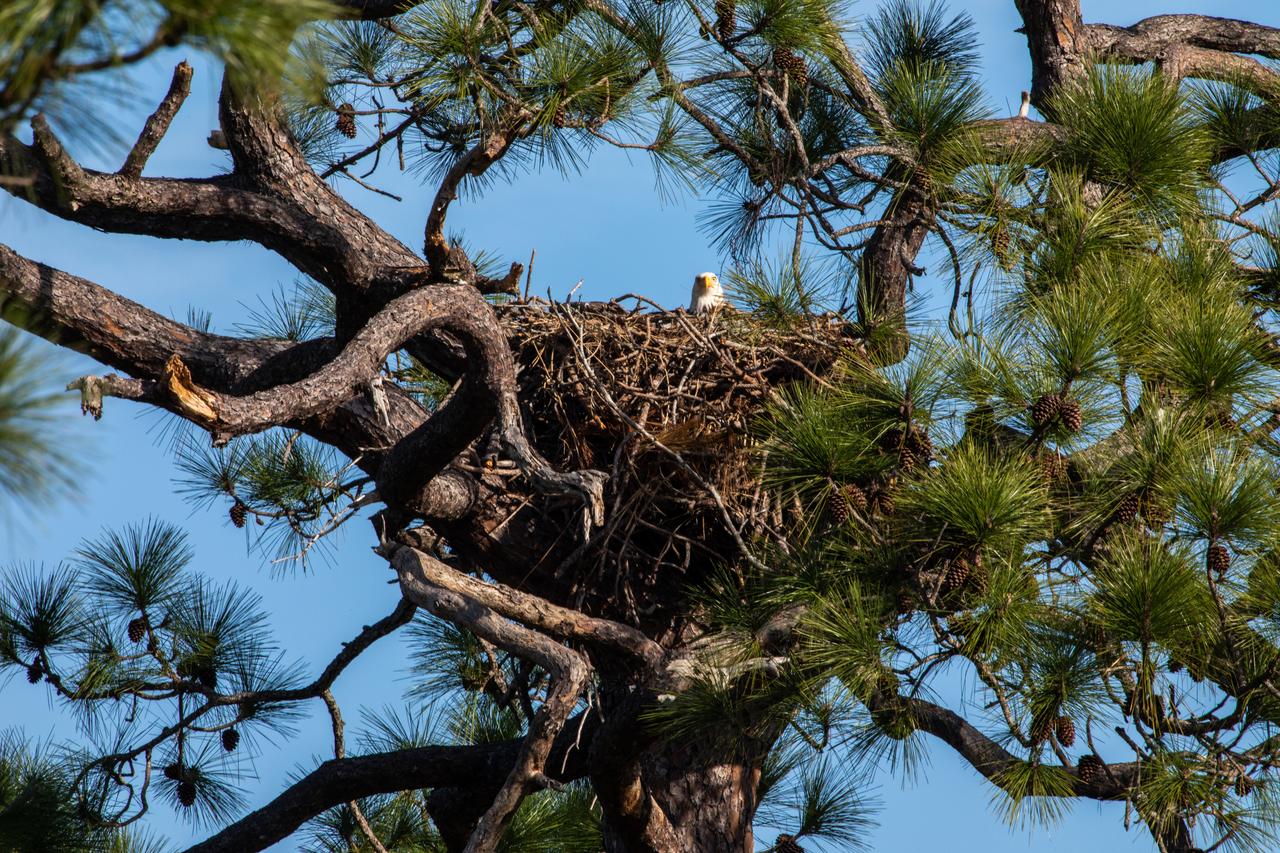
A southern bald eagle occupies a nest at NASA’s Kennedy Space Center on Jan. 20, 2023. After a recent fire burned a tree that housed an eagles’ nest for several years, the birds returned to the area on Kennedy Parkway North and built a new nest in a tree about 60 yards away. Each year, eagles take up winter residence at the Florida spaceport, breeding and raising a new generation. The center shares a boundary with the Merritt Island National Wildlife Refuge, home to more than 1,500 species of plants and animals, and 15 federally listed species.
Eagles Nest at KSC
A southern bald eagle occupies a nest at NASA’s Kennedy Space Center on Jan. 20, 2023. After a recent fire burned a tree that housed an eagles’ nest for several years, the birds returned to the area on Kennedy Parkway North and built a new nest in a tree about 60 yards away. Each year, eagles take up winter residence at the Florida spaceport, breeding and raising a new generation. The center shares a boundary with the Merritt Island National Wildlife Refuge, home to more than 1,500 species of plants and animals, and 15 federally listed species.
Eagles Nest at KSC
A 2 week observation through the optic eye of the Chandra X-Ray Observatory revealed this sturning explosion occurring in the super massive black hole at the Milky Way's center, known as Sagittarius A or Sgr A*. Huge lobes of 20-million degree Centigrade gas ( red loops in image) flank both sides of the black hole and extend over dozens of light years indicating that enormous explosions occurred several times over the last 10 thousand years. Weighing in at 3-million times the mass of the sun, the Sgr A* is a starved black hole, possibly because explosive events in the past have cleared much of the gas around it.
History of Chandra X-Ray Observatory
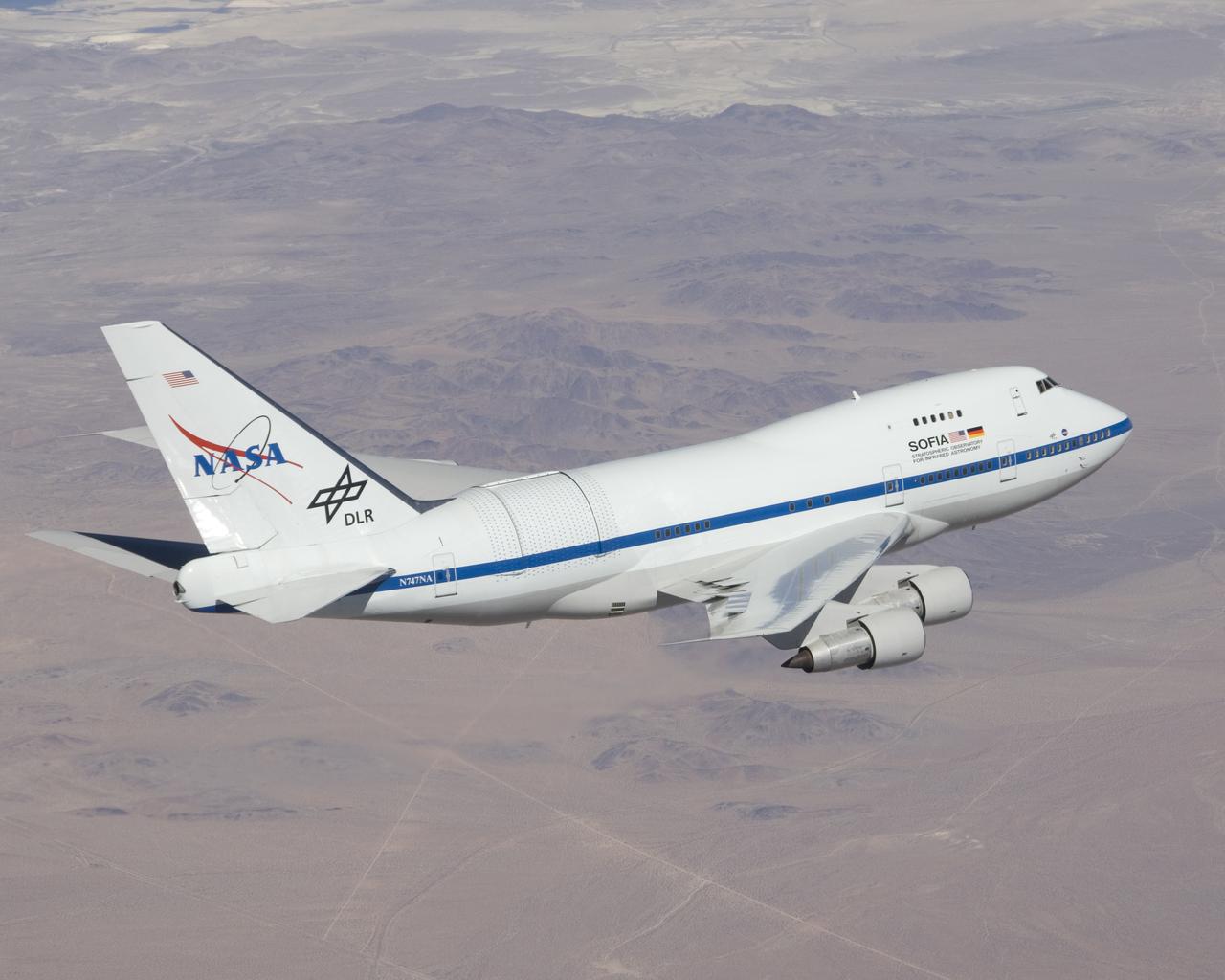
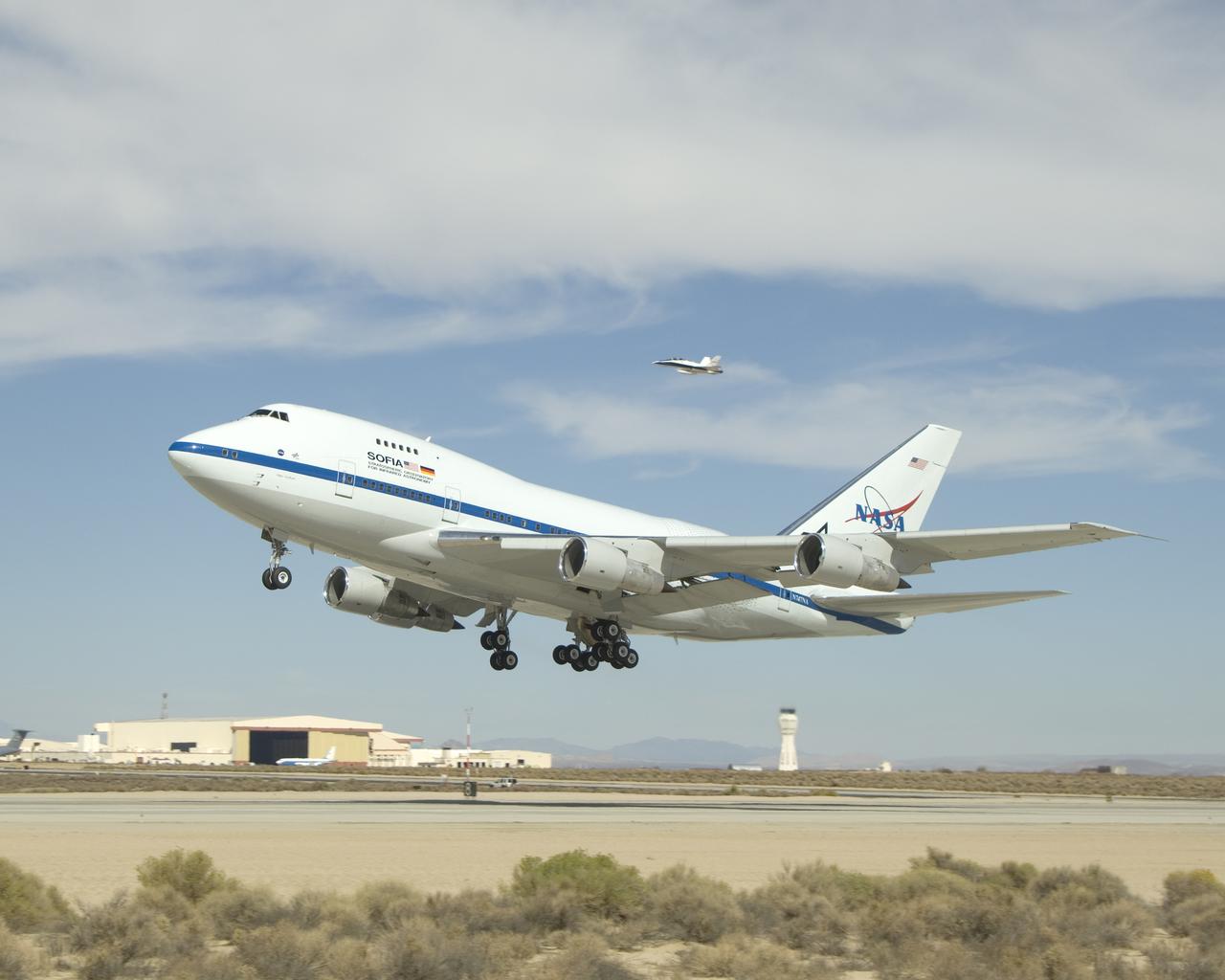
NASA's Stratospheric Observatory for Infrared Astronomy, or SOFIA, arrived at NASA's Dryden Flight Research Center at Edwards Air Force Base, Calif. on May 31, 2007. The heavily modified Boeing 747SP was ferried to Dryden from Waco, Texas, where L-3 Communications Integrated Systems installed a German-built 2.5-meter infrared telescope and made other major modifications over the past several years. SOFIA is scheduled to undergo installation and integration of mission systems and a multi-phase flight test program at Dryden over the next three years that is expected to lead to a full operational capability to conduct astronomy missions in about 2010. During its expected 20-year lifetime, SOFIA will be capable of "Great Observatory" class astronomical science, providing astronomers with access to the visible, infrared and sub-millimeter spectrum with optimized performance in the mid-infrared to sub-millimeter range.
NASA's SOFIA infrared observatory in flight for the first of a series of test flights to verify the flight performance of the highly modified Boeing 747SP
NASA's Stratospheric Observatory for Infrared Astronomy, or SOFIA, arrived at NASA's Dryden Flight Research Center at Edwards Air Force Base, Calif. on May 31, 2007. The heavily modified Boeing 747SP was ferried to Dryden from Waco, Texas, where L-3 Communications Integrated Systems installed a German-built 2.5-meter infrared telescope and made other major modifications over the past several years. SOFIA is scheduled to undergo installation and integration of mission systems and a multi-phase flight test program at Dryden over the next three years that is expected to lead to a full operational capability to conduct astronomy missions in about 2010. During its expected 20-year lifetime, SOFIA will be capable of "Great Observatory" class astronomical science, providing astronomers with access to the visible, infrared and sub-millimeter spectrum with optimized performance in the mid-infrared to sub-millimeter range.
NASA's SOFIA infrared observatory lifts off on the first of a series of test flights to verify the flight performance of the highly modified Boeing 747SP
NASA Public Affairs Officer Greg Harland, right, poses for a photograph with newly inducted Chronicler Jim Banke during a ceremony at Kennedy Space Center’s NASA News Center in Florida on May 3, 2019. Banke spent many years with Florida Today and covered the Space Shuttle Program and many other launches from Kennedy and Cape Canaveral Air Force Station for more than 20 years. Also inducted as members were journalist Todd Halvorson, radio broadcaster Vic Ratner and photographer Peter Cosgrove. They were selected by a committee of their peers on March 25. The Chroniclers recognizes retirees of the news and communications business who have helped spread news of American space exploration from Kennedy for 10 years or more.
The Chroniclers Ceremony
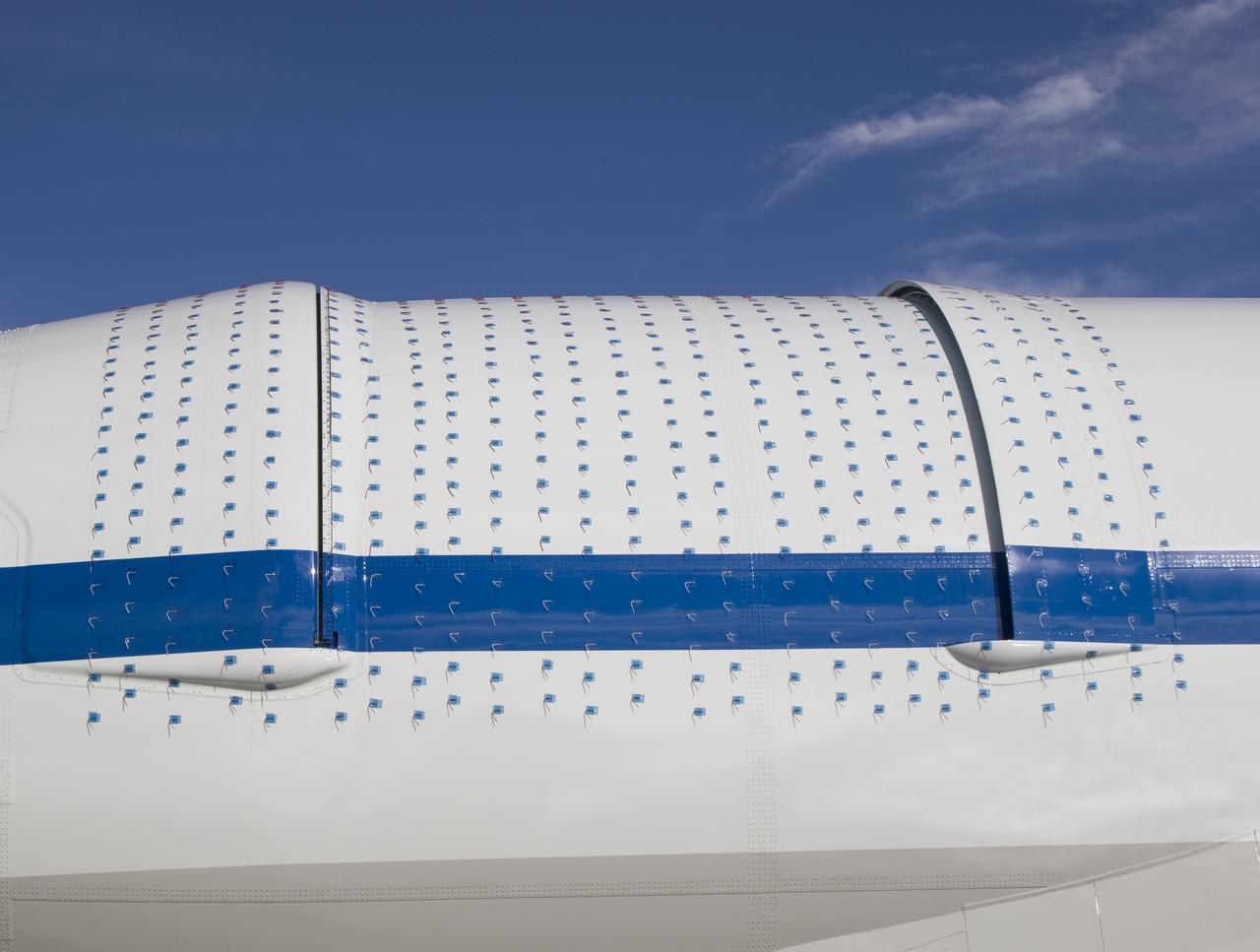
NASA's Stratospheric Observatory for Infrared Astronomy, or SOFIA, arrived at NASA's Dryden Flight Research Center at Edwards Air Force Base, Calif. on May 31, 2007. The heavily modified Boeing 747SP was ferried to Dryden from Waco, Texas, where L-3 Communications Integrated Systems installed a German-built 2.5-meter infrared telescope and made other major modifications over the past several years. SOFIA is scheduled to undergo installation and integration of mission systems and a multi-phase flight test program at Dryden over the next three years that is expected to lead to a full operational capability to conduct astronomy missions in about 2010. During its expected 20-year lifetime, SOFIA will be capable of "Great Observatory" class astronomical science, providing astronomers with access to the visible, infrared and sub-millimeter spectrum with optimized performance in the mid-infrared to sub-millimeter range.
Tiny two-inch string tufts blanket the telescope cavity door and related fairings to aid visual monitoring of airflow patterns during SOFIA 747SP flight tests
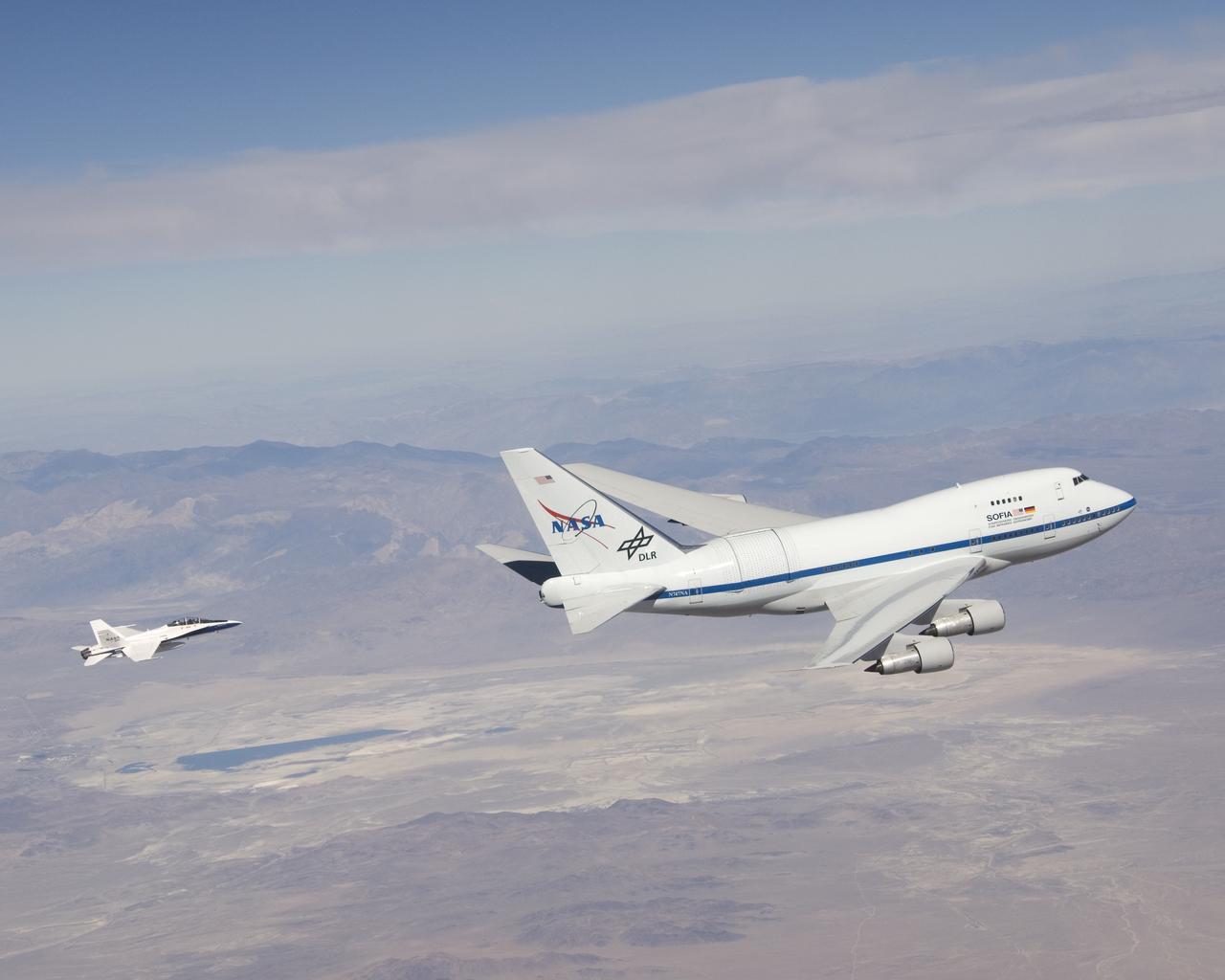
NASA's Stratospheric Observatory for Infrared Astronomy, or SOFIA, arrived at NASA's Dryden Flight Research Center at Edwards Air Force Base, Calif. on May 31, 2007. The heavily modified Boeing 747SP was ferried to Dryden from Waco, Texas, where L-3 Communications Integrated Systems installed a German-built 2.5-meter infrared telescope and made other major modifications over the past several years. SOFIA is scheduled to undergo installation and integration of mission systems and a multi-phase flight test program at Dryden over the next three years that is expected to lead to a full operational capability to conduct astronomy missions in about 2010. During its expected 20-year lifetime, SOFIA will be capable of "Great Observatory" class astronomical science, providing astronomers with access to the visible, infrared and sub-millimeter spectrum with optimized performance in the mid-infrared to sub-millimeter range.
NASA's SOFIA infrared observatory and F/A-18 safety chase during the first series of test flights to verify the flight performance of the modified Boeing 747SP
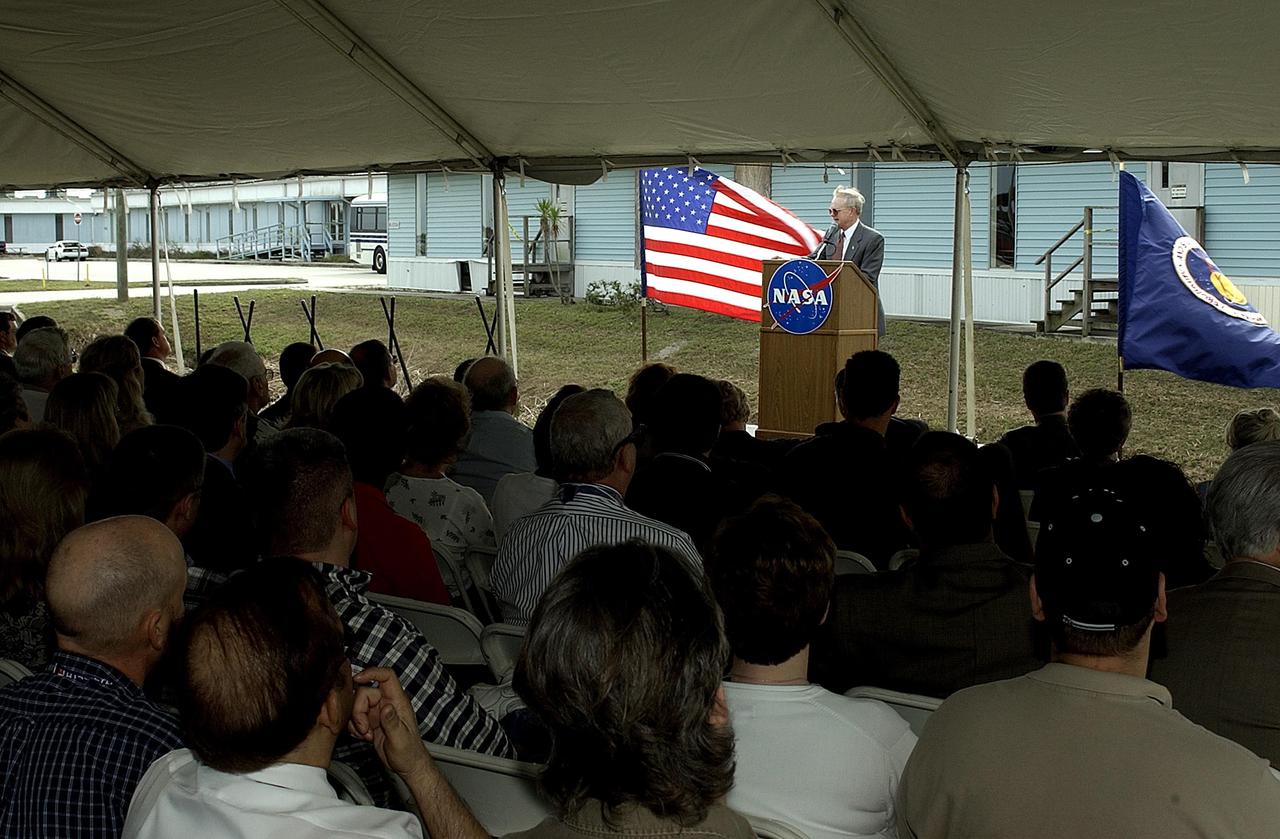
KENNEDY SPACE CENTER, FLA. - Center Director Roy Bridges speaks to attendees at the groundbreaking for the Operations Support Building II.  The audience included representatives of Governor Jeb Bush and the state of Florida.  The new building will replace modular housing constructed more than 20 years ago and house NASA and contractor support staff for shuttle operations.  The demolition of the modular buildings has begun and construction will immediately follow.  The new structure is projected to be ready in April 2005.
KSC-03pd0574
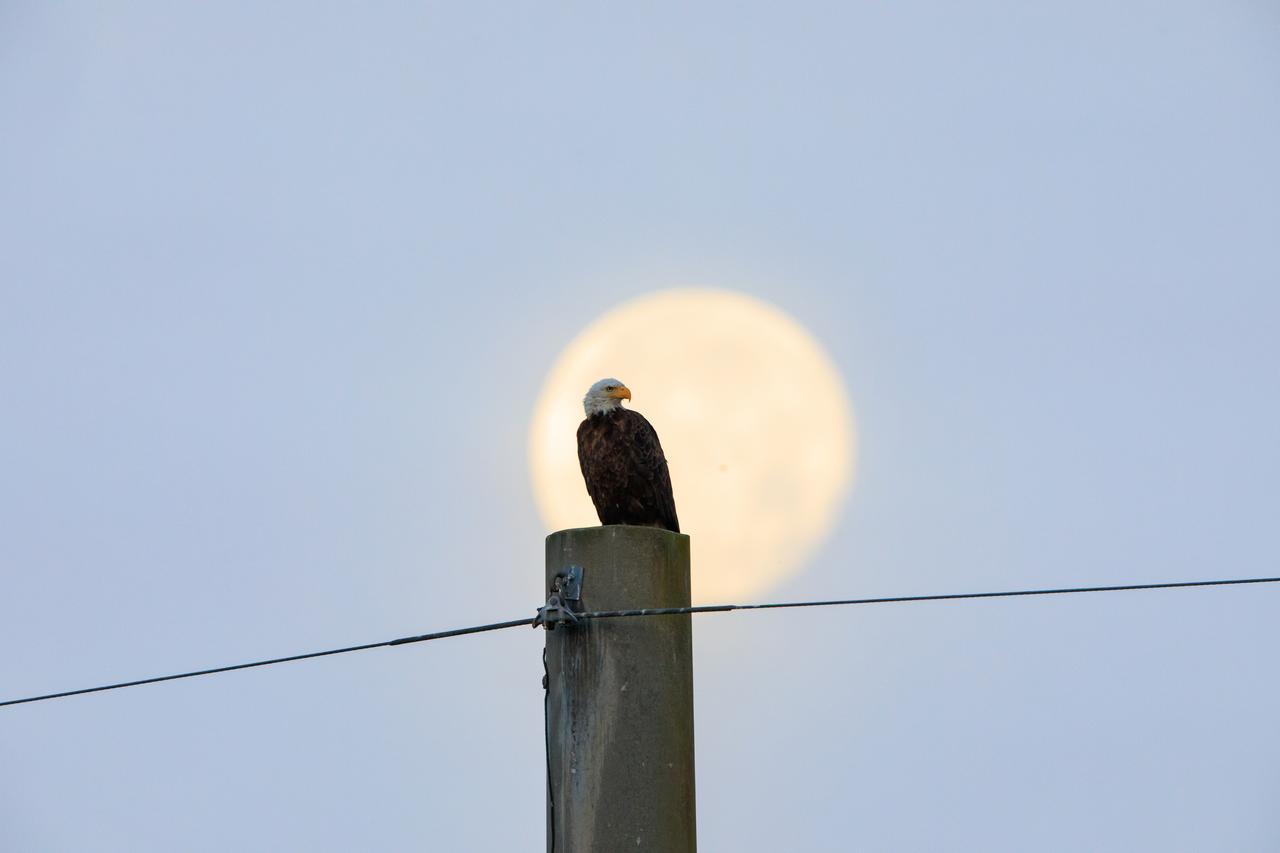
With the Moon in the background, an American bald eagle perches on a pole near its nest at NASA’s Kennedy Space Center on April 10, 2023. The eagle is part of a mated pair that takes up residence at the Florida spaceport during nesting season. This year, the pair is raising a lone baby eagle in the nest, located off of Kennedy Parkway, about two miles from the Vehicle Assembly Building. Kennedy currently is home to approximately 20 nesting pairs of bald eagles.
Baby Eagle Gets Bigger
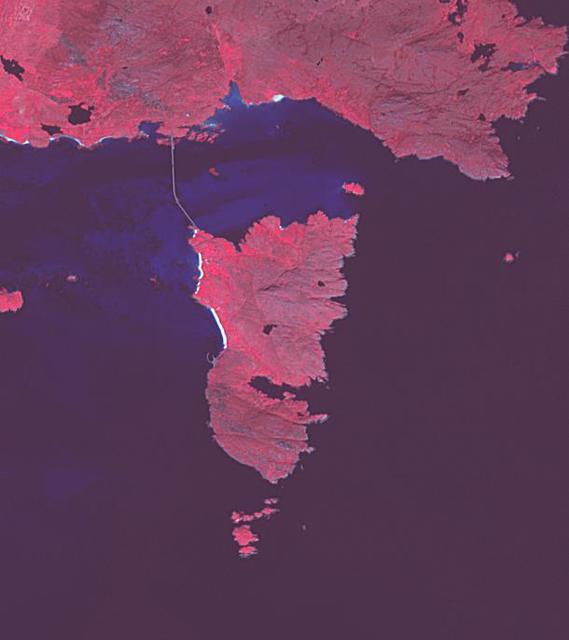
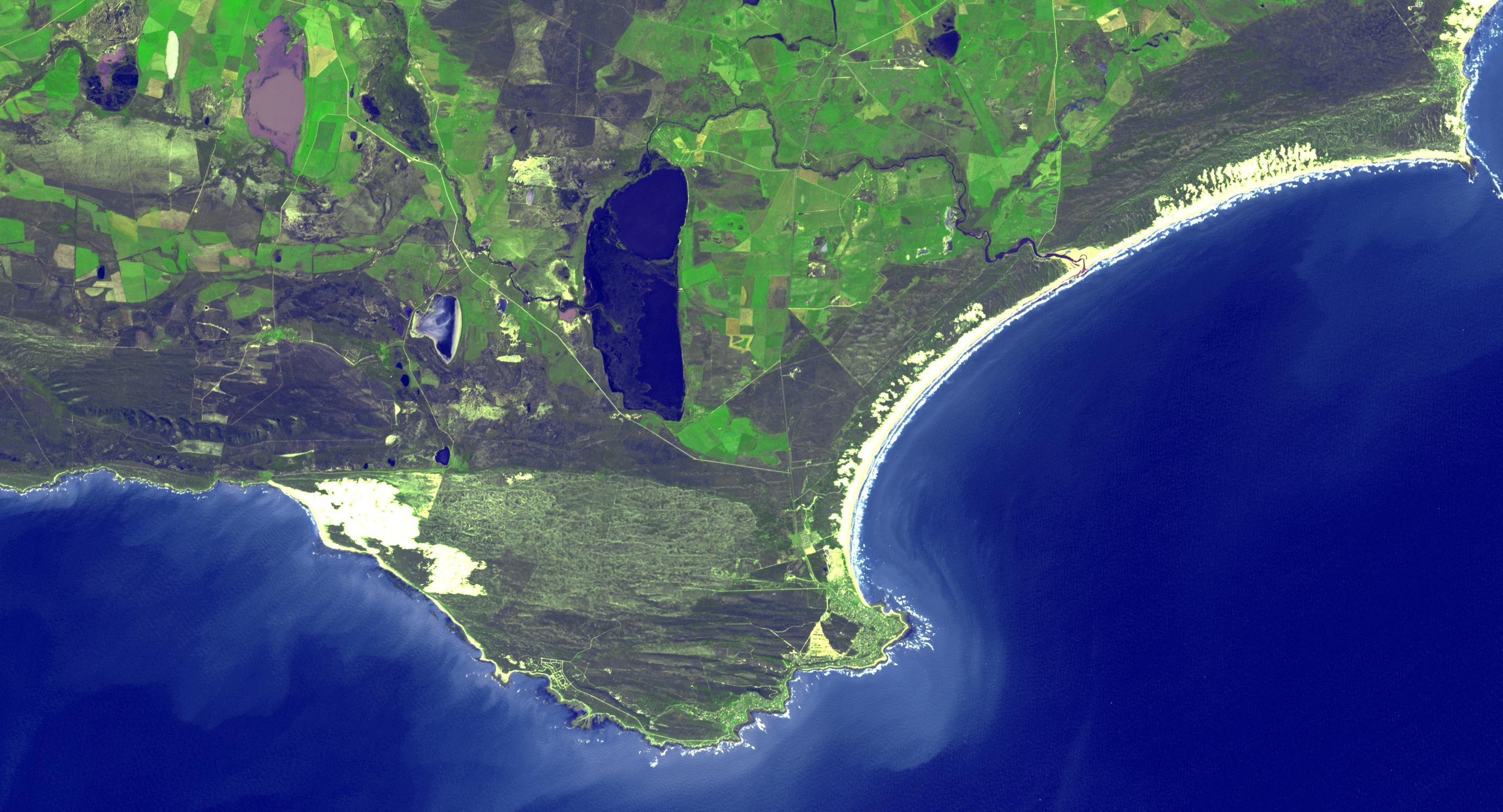
The southernmost tip of Africa is marked by the Cape Agulhas lighthouse. The warm Atlantic Agulhas current meets the cold water Indian Ocean Benguela current, creating treacherous seas that have claimed many ships over the last 450 years. The image covers an area of 22.5 by 41.1 kilometers, was acquired September 27, 2006, and is located at 34.8 degrees south, 20 degrees east.  http://photojournal.jpl.nasa.gov/catalog/PIA21014
Cape Agulhas, South Africa
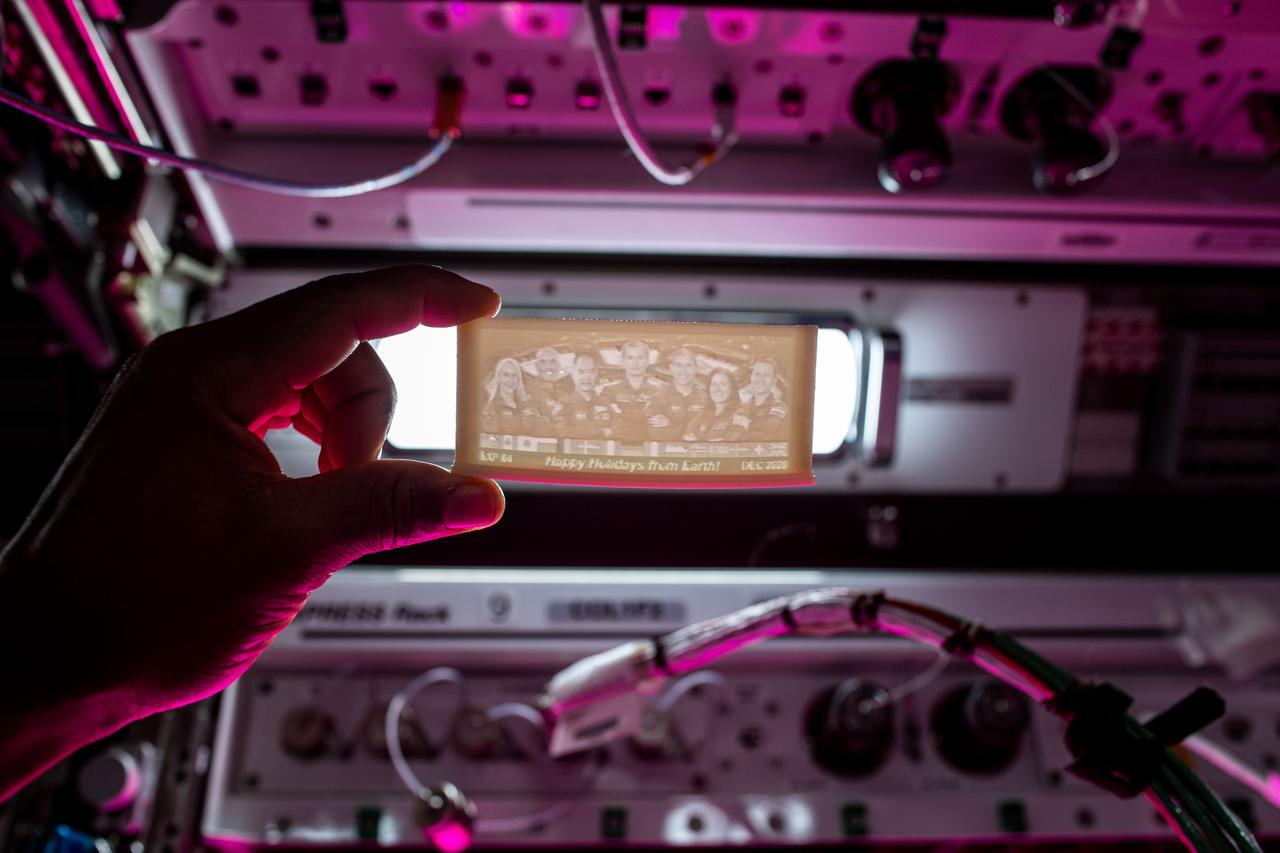
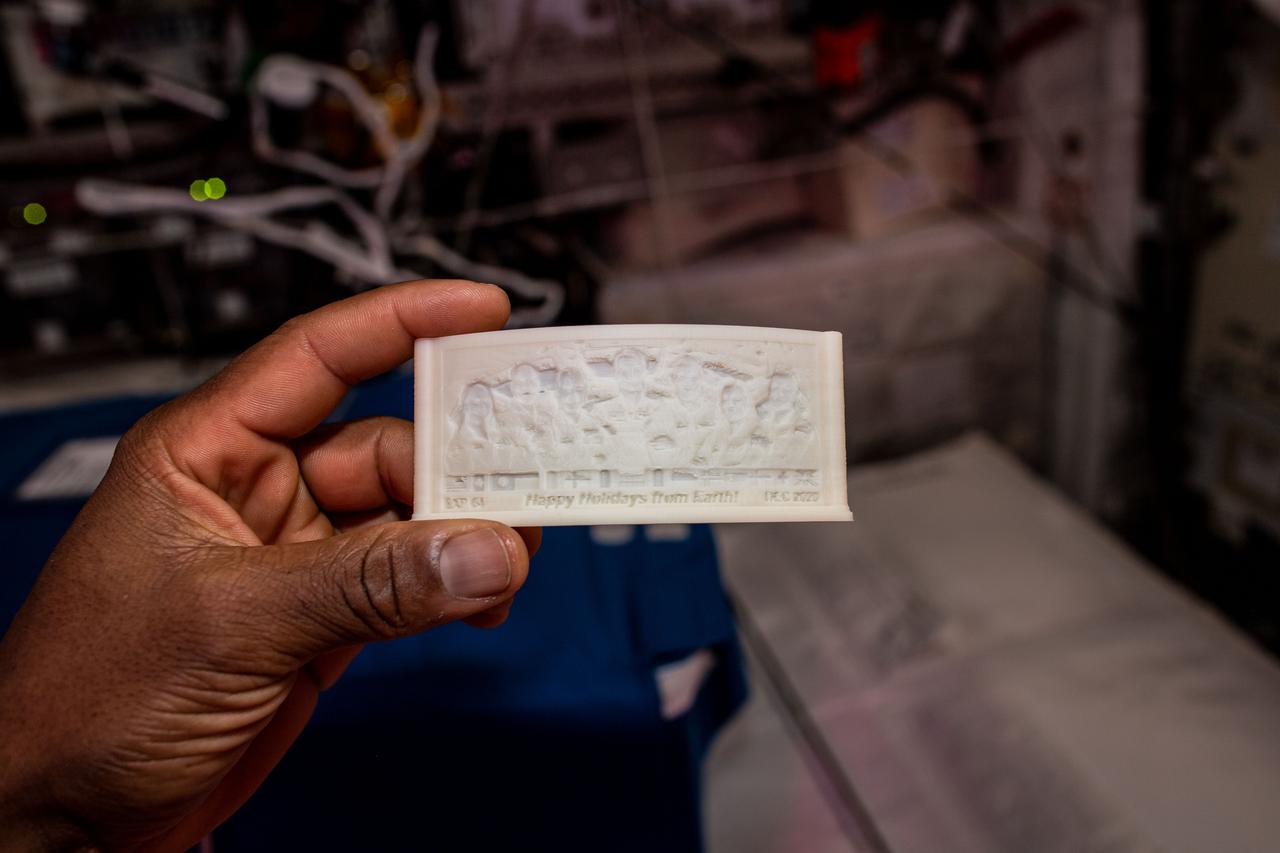
 iss064e024274 (1/20/2021) --- A view of the Year 2020 Print, printed in the Additive Manufacturing Facility (AMF) Manufacturing Device (ManD) and floating near the ISS20 Banner in the Kibo Japanese Experiment Module (JEM) aboard the International Space Station (ISS). The Bellevue High School 2020 Print project uses the space station’s Manufacturing Device – Additive Manufacturing Facility (AMF) to provide students a behind-the-scenes experience with the 3D prinitng process in microgravity.
iss064e024274
S98-02045 (20 February 1998) --- U.S. Sen. John H. Glenn Jr. (D.-Ohio) is given a briefing on the Shuttle emergency escape pole trainer/mockup at the Johnson Space Center (JSC).  Named as a crew member for STS-95 scheduled later this year aboard the Space Shuttle Discovery, Glenn has begun preliminary familiarization, suit fitting and training at the Houston NASA facility.
STS-95 crew activities with John Glenn
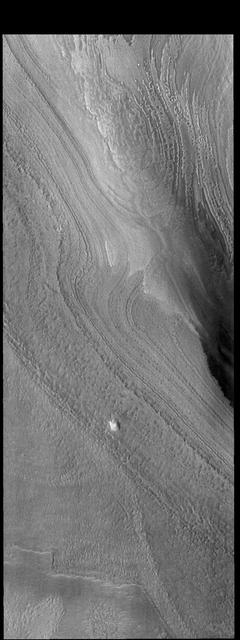
Today's VIS images shows part of the south polar cap. The cap was created over millions of years with deposition of ice and dust during different seasons, creating the layers seen in this image. This image was collected during summer at the south pole. The south polar cap is called Australe Planum.  Orbit Number: 83915 Latitude: -86.5552 Longitude: 149.181 Instrument: VIS Captured: 2020-11-13 20:32  https://photojournal.jpl.nasa.gov/catalog/PIA24351
South Polar Cap
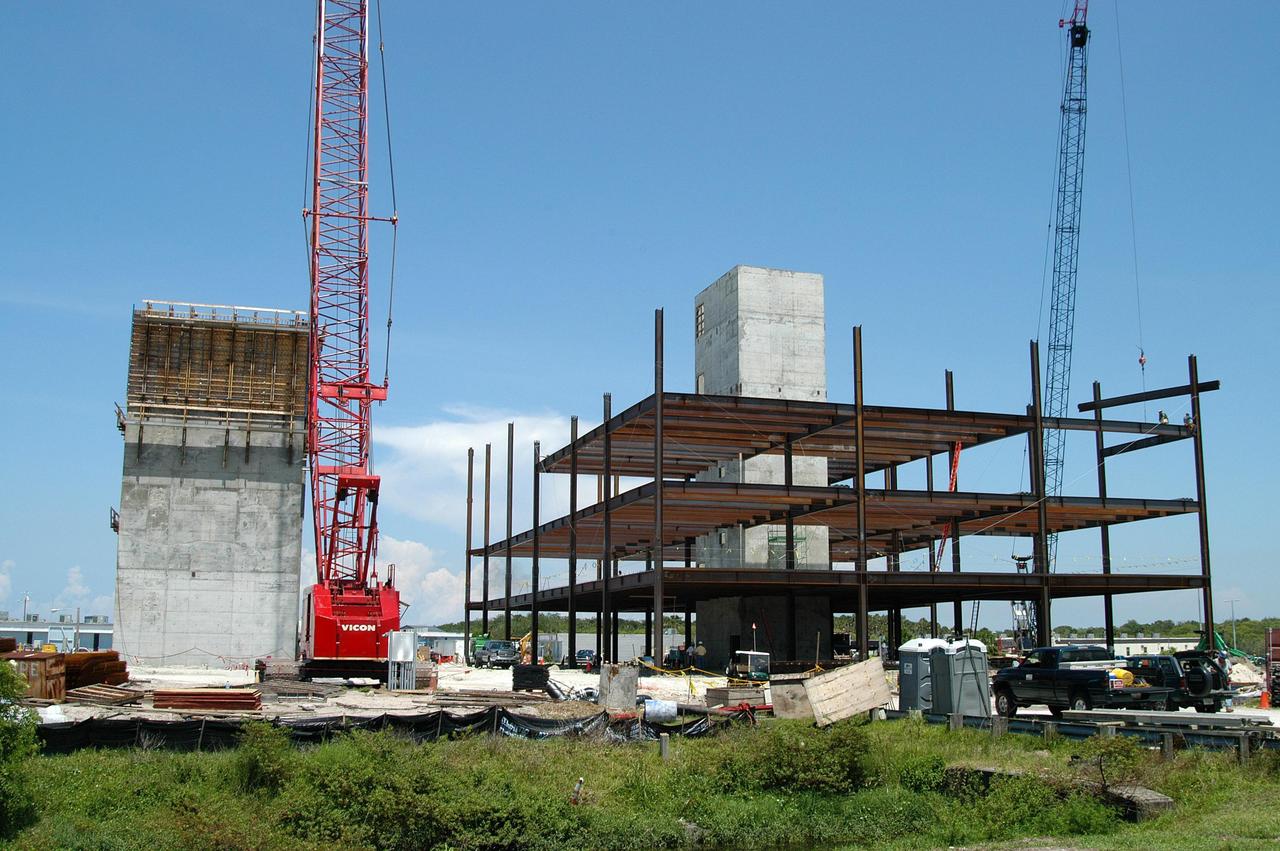
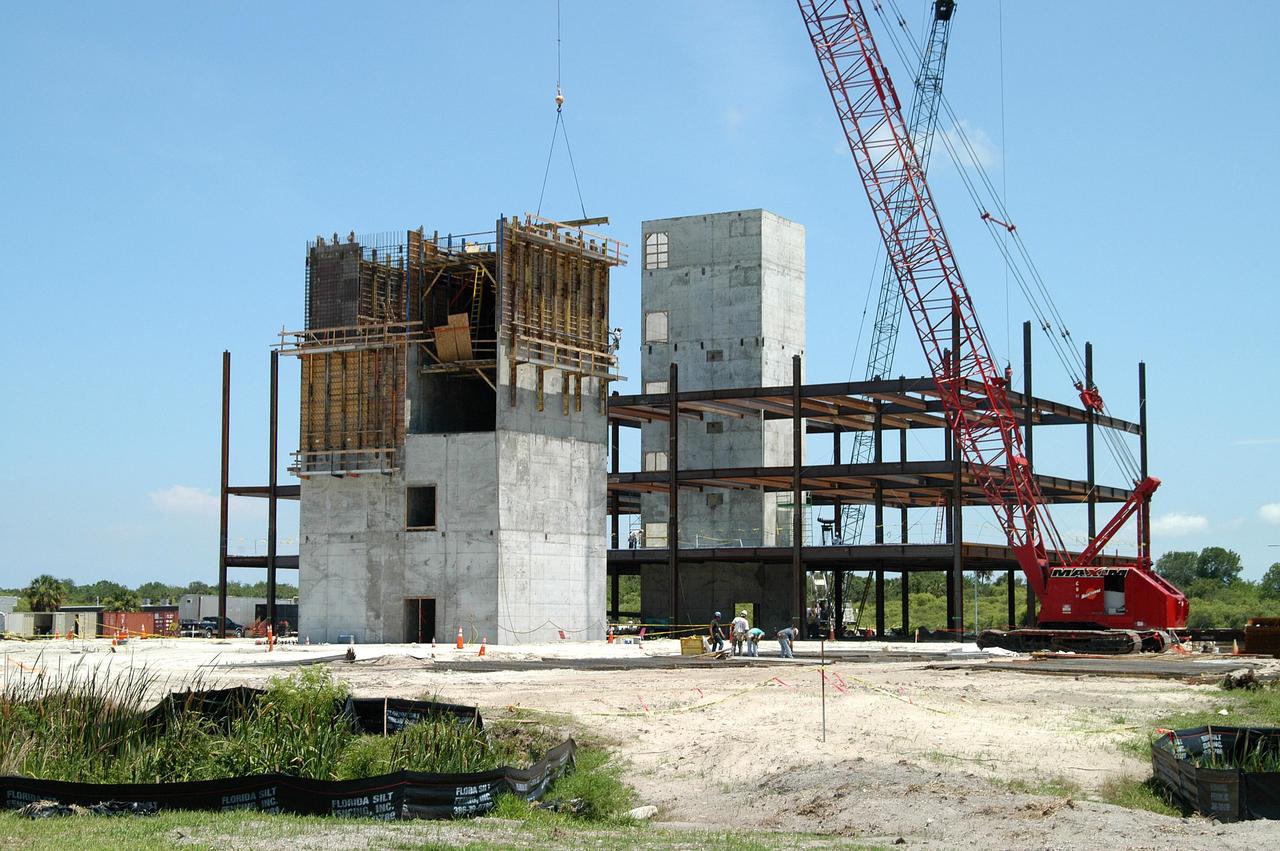
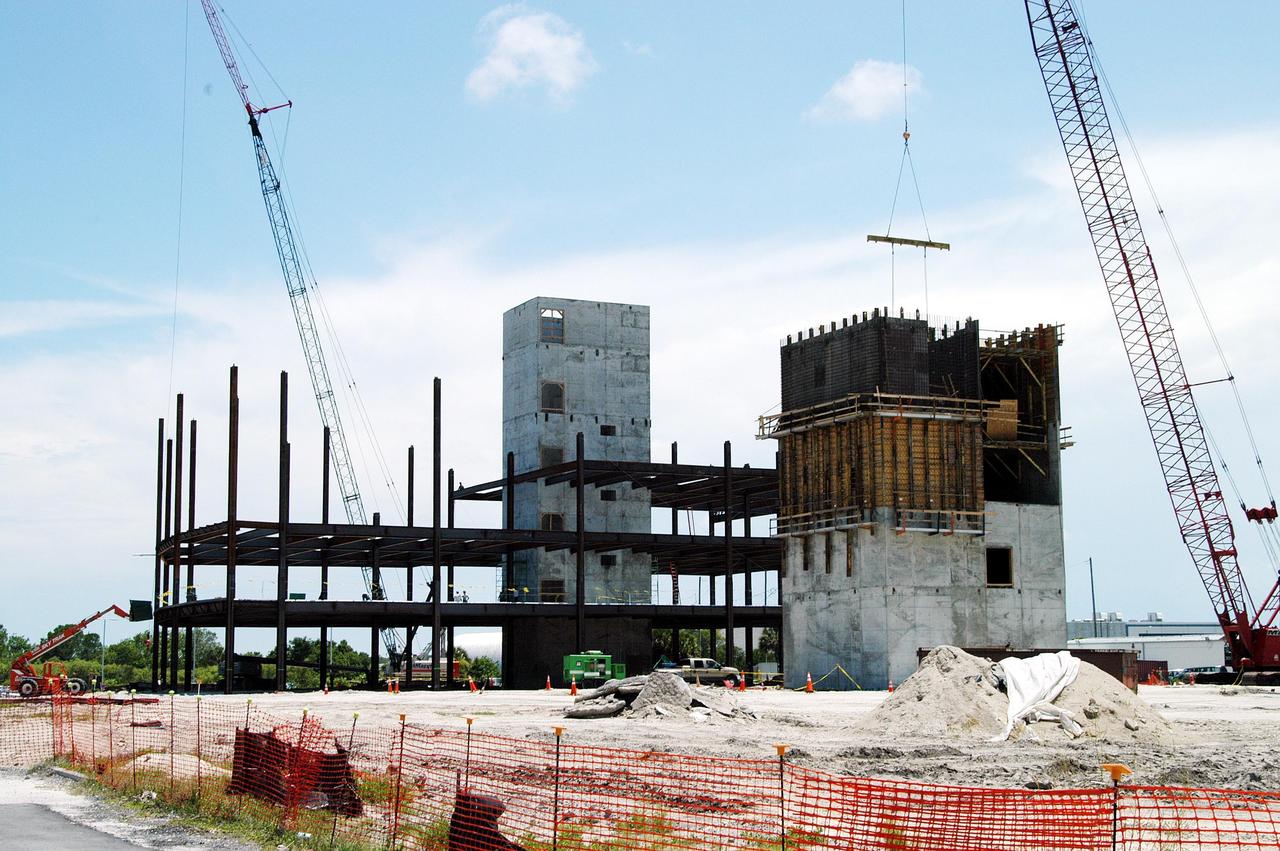
KENNEDY SPACE CENTER, FLA.  - Towers and girders are the current construction components on the Operations Support Building (OSB) II in the Launch Complex 39 Area.  The new building, which replaces modular housing constructed more than 20 years ago, will house NASA and contractor support staff for shuttle operations. The new structure is projected to be ready in April 2005.
KSC-04pd1289
KENNEDY SPACE CENTER, FLA. -  Director of Shuttle Processing Mike Wetmore speaks to attendees at the groundbreaking for the Operations Support Building II. The audience included representatives of Governor Jeb Bush and the state of Florida.  The new building will replace modular housing constructed more than 20 years ago and house NASA and contractor support staff for shuttle operations.  The demolition of the modular buildings has begun and construction will immediately follow.  The new structure is projected to be ready in April 2005.
KSC-03pd0576
This VIS image shows layering in the south polar cap. The layers are formed over thousands of years of seasonal change, reflecting ice and dust surface deposition. Where the layers appear close to each other are steep trough sides. The steeper the slope, the closer the layers. This image was collected during summer at the south polar cap.  Orbit Number: 91750 Latitude: -85.7516 Longitude: 177.751 Instrument: VIS Captured: 2022-08-20 23:34  https://photojournal.jpl.nasa.gov/catalog/PIA25633
Polar Layers
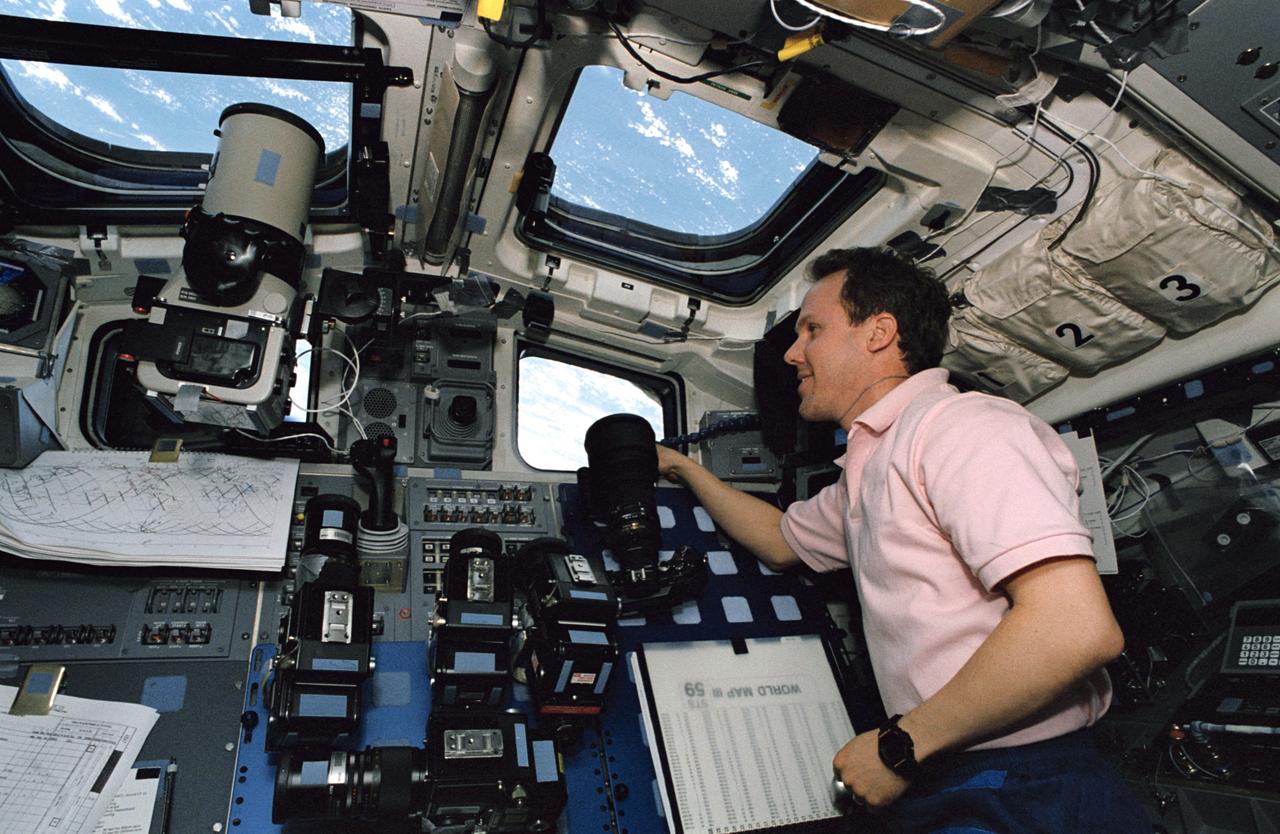
STS098-320-0017 (7-20 February 2001) ---  Astronaut William M. (Bill) Shepherd, Expedition One commander, poses for a  a photo at the ward room table while hosting members of the STS-98 crew (out of frame) onboard the International Space Station (ISS).  Shepherd and two cosmonauts, onboard the outpost since early November 2000, will return to Earth with their third set of visitors (the STS-102 crew) in March of this year.
Shepherd in the Service module
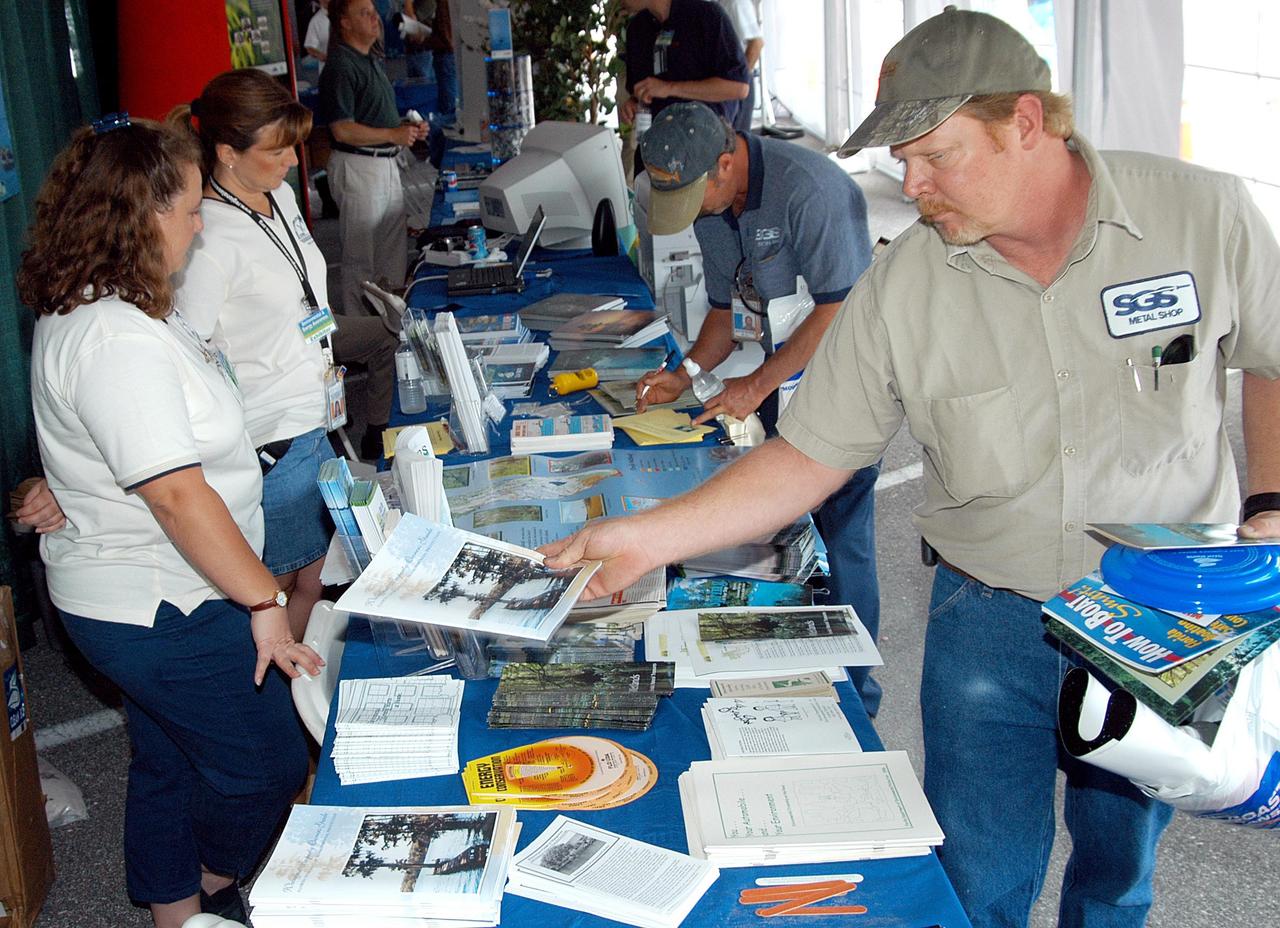
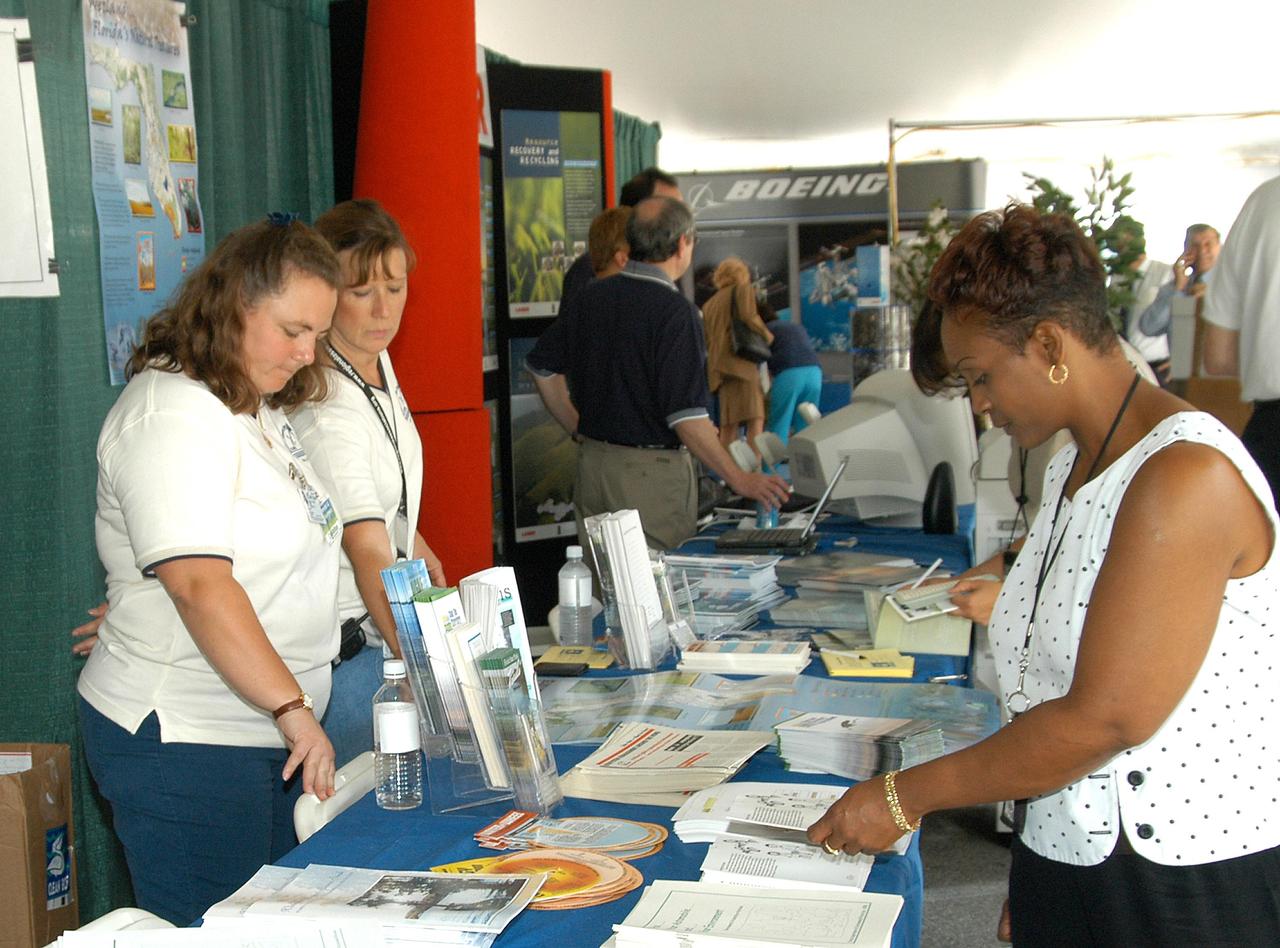
KENNEDY SPACE CENTER, FLA. - KSC employees stop at display tables set up in a tent near the Operations and Checkout Building for KSC’s annual Environmental and Energy Awareness Week, held April 20-22.  The slogan for this year’s event was “Today's Conservation Defines Tomorrow's Future.”  Presentations included Chemistry Safety, Cost-Effective Solar Applications, Non-Native Invasive Plant Identification and Control, Energy Efficient Lighting Systems, and Historical Changes in KSC’s Ecosystems.
KSC-04pd0955
2010 Yuri's Night celebration held at the NASA Ames Research Center, Moffett Field, Calif. as part of the world wide celebration of the first man in space and the Space Shuttle program that followed 20 years later. Lewis Braxton, III, Deputy Director of Ames Research Center, Deborah Feng, Director, Center Operations and Paul McKimm, Planners Collaborative.
ARC-2010-ACD10-0061-096
Part of the Boeing CST-100 Structural Test Article rests on a test stand inside the Commercial Crew and Cargo Processing Facility, or C3PF, at NASA’s Kennedy Space Center in Florida. The test article will serve as a pathfinder for assembling and processing operational CST-100 spacecraft inside the revitalized facility, which for 20 years served as a shuttle processing hangar.
Capsule Sections in High Bay
The lower dome of the Boeing CST-100 Structural Test Article awaits testing inside the Commercial Crew and Cargo Processing Facility, or C3PF, at NASA’s Kennedy Space Center in Florida. The test article will serve as a pathfinder for assembling and processing operational CST-100 spacecraft inside the revitalized facility, which for 20 years served as a shuttle processing hangar.
Capsule Sections in High Bay
KENNEDY SPACE CENTER, FLA. - Mario Busacca, with the Safety, Occupational Health and Environmental Division, handles a snake at one of the exhibits for KSC’s annual Environmental and Energy Awareness Week, held April 20-22. Presentations included Chemistry Safety, Cost-Effective Solar Applications, Non-Native Invasive Plant Identification and Control, Energy Efficient Lighting Systems, and Historical Changes in KSC’s Ecosystems.  The slogan for this year’s event was “Today's Conservation Defines Tomorrow's Future.”
KSC-04pd0956
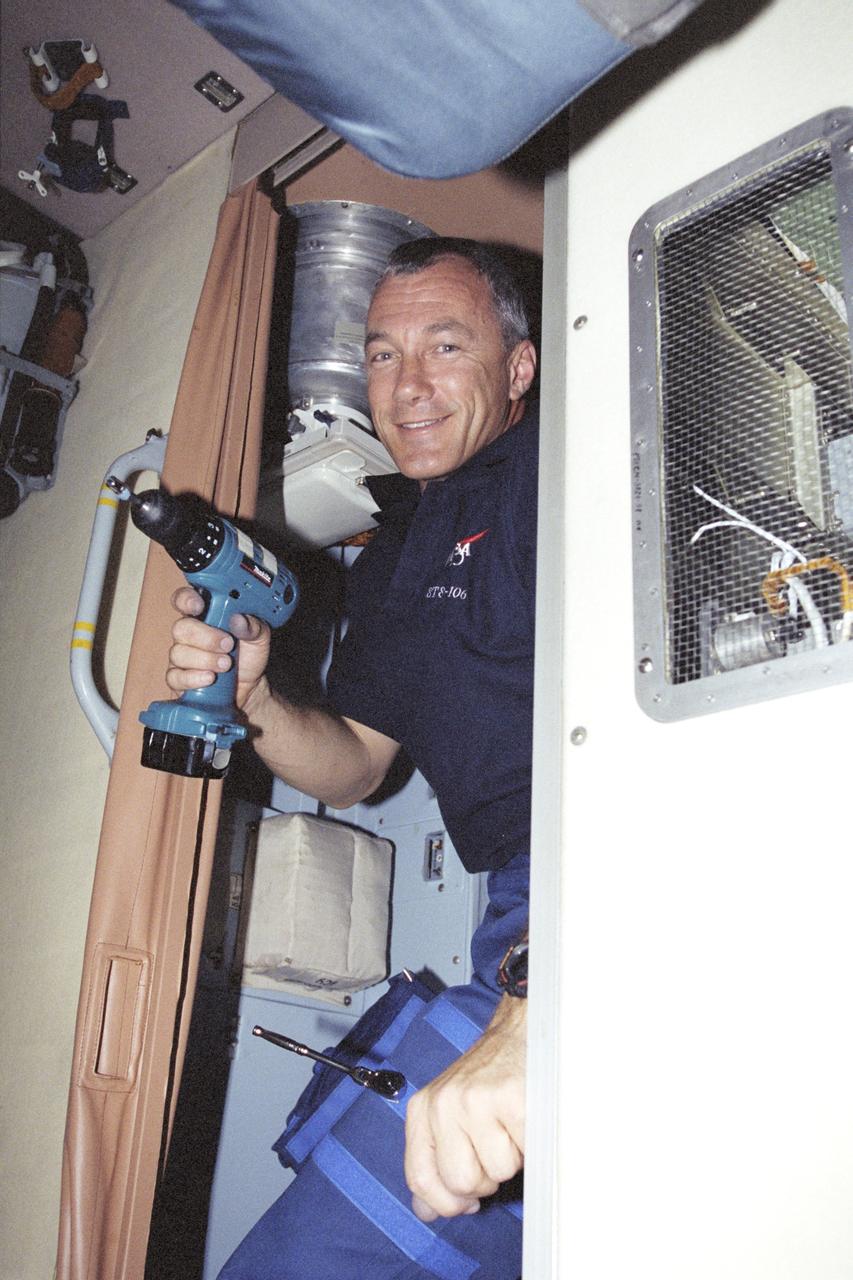
STS106-389-023 (8-20 September 2000) ---  Astronaut Terrence W. Wilcutt, STS-106 commander, uses a drill during installation work in the Service Module, which linked with the International Space Station (ISS) in July of this year.  Wilcutt and four other astronauts, along with two cosmonauts,  teamed to perform electrician's work and other detail work on the new addition.
Commander Wilcutt removes restraining bolts in Zvezda during STS-106
Part of the Boeing CST-100 Structural Test Article awaits testing inside the Commercial Crew and Cargo Processing Facility, or C3PF, at NASA’s Kennedy Space Center in Florida. The test article will serve as a pathfinder for assembling and processing operational CST-100 spacecraft inside the revitalized facility, which for 20 years served as a shuttle processing hangar.
Capsule Sections in High Bay
iss064e024194 (1/20/2021) --- A view of the Year 2020 Print, printed in the Additive Manufacturing Facility (AMF) Manufacturing Device (ManD) and held in front of an ExPRESS (Expedite the Processing of Experiments to Space Station) Rack Light in the Columbus European Laboratory aboard the International Space Station (ISS). The Bellevue High School 2020 Print project uses the space station’s Manufacturing Device – Additive Manufacturing Facility (AMF) to provide students a behind-the-scenes experience with the 3D prinitng process in microgravity.
iss064e024194
Today's VIS image crosses the boundary between Elysium Planitia (top) and Terra Cimmeria (bottom). This region of Elysium Planitia has been heavily eroded by winds scouring poor cemented surface materials over thousands of years.  Orbit Number: 95056 Latitude: -7.8036 Longitude: 152.443 Instrument: VIS Captured: 2023-05-20 05:05  https://photojournal.jpl.nasa.gov/catalog/PIA26255
Wind Etching
Parts of the Boeing CST-100 Structural Test Article rest on test stands inside the Commercial Crew and Cargo Processing Facility, or C3PF, at NASA’s Kennedy Space Center in Florida. The test article will serve as a pathfinder for assembling and processing operational CST-100 spacecraft inside the revitalized facility, which for 20 years served as a shuttle processing hangar.
Capsule Sections in High Bay
KENNEDY SPACE CENTER, FLA.  - Towers and girders are the current construction components on the Operations Support Building (OSB) II in the Launch Complex 39 Area.  The new building, which replaces modular housing constructed more than 20 years ago, will house NASA and contractor support staff for shuttle operations. The new structure is projected to be ready in April 2005.
KSC-04pd1290