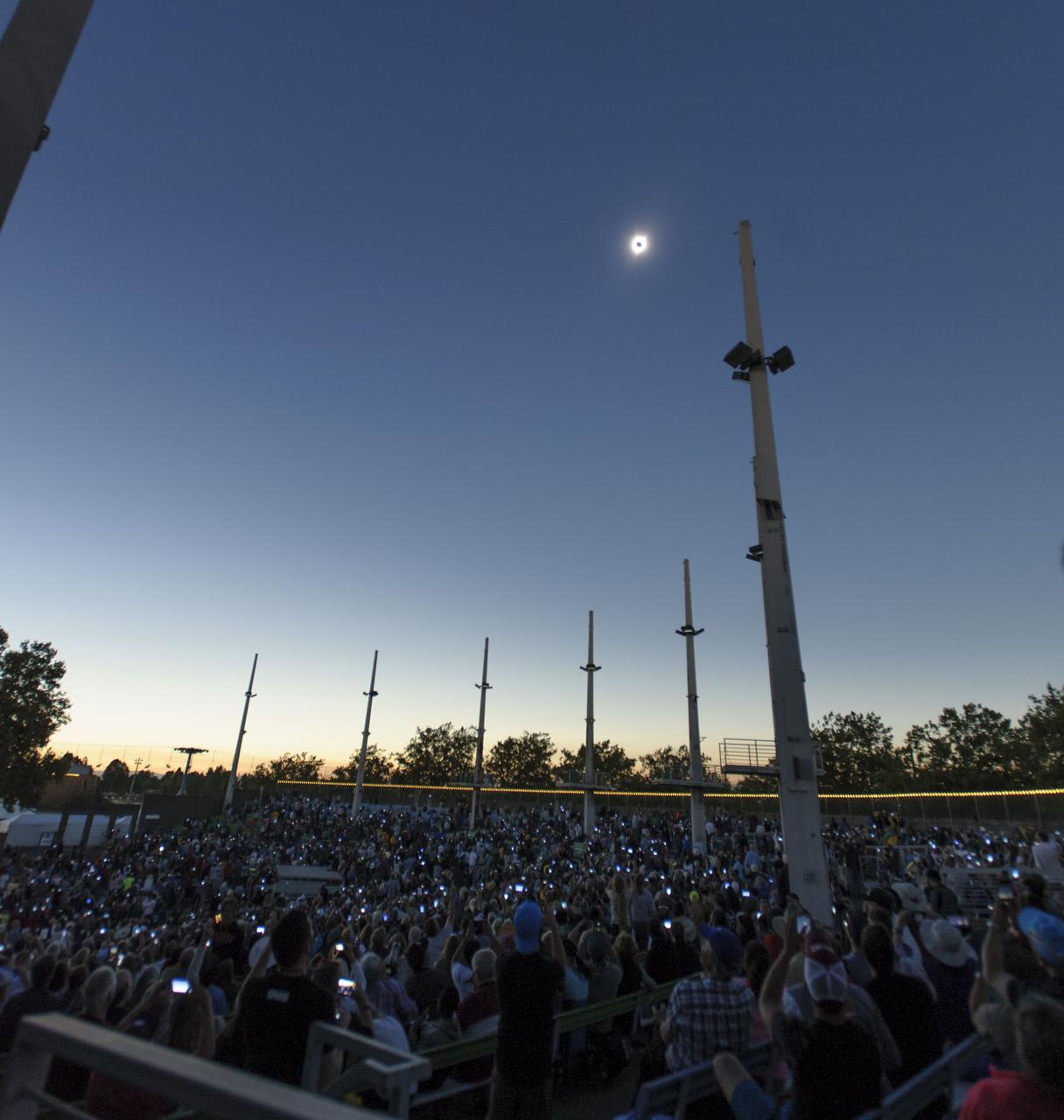
2017 Solar Eclipse totality as seen by the people attending the viewing event at the Oregon State Fairgrounds, Salem, Oregon.

Taking a break from his duties at the Ames Vertical Gun Range to look up at the eclipse over Ames Research Center in Mountain View Adam Parrish not only views but wears, on his forehead, the image of the 2017 Solar eclipse at 09:20:56 on August 21, 2017.

Taking a break from his duties at Ames Research Center Jacob Cohen, Ames Chief Scientist grabs his own view of the 2017 Solar Eclipse with his cellphone at 09:16:11 on August 21, 2017.

Dave Punaro reflects the shadow of the partial eclipse into a box during the total solar eclipse in Madras, Oregon on Monday, Aug. 21, 2017. A total solar eclipse swept across a narrow portion of the contiguous United States from Lincoln Beach, Oregon to Charleston, South Carolina. A partial solar eclipse was visible across the entire North American continent along with parts of South America, Africa, and Europe. Photo Credit: (NASA/Aubrey Gemignani)

Marshall Space Flight Center employees view the August 21, 2017 solar eclipse at the center’s activities building. The Huntsville area experienced 97 percent occultation, nearly a complete blocking out of the sun by the orbit of Earth's moon. The next opportunity to view a solar eclipse in the eastern and central United States will occur in April 2024.
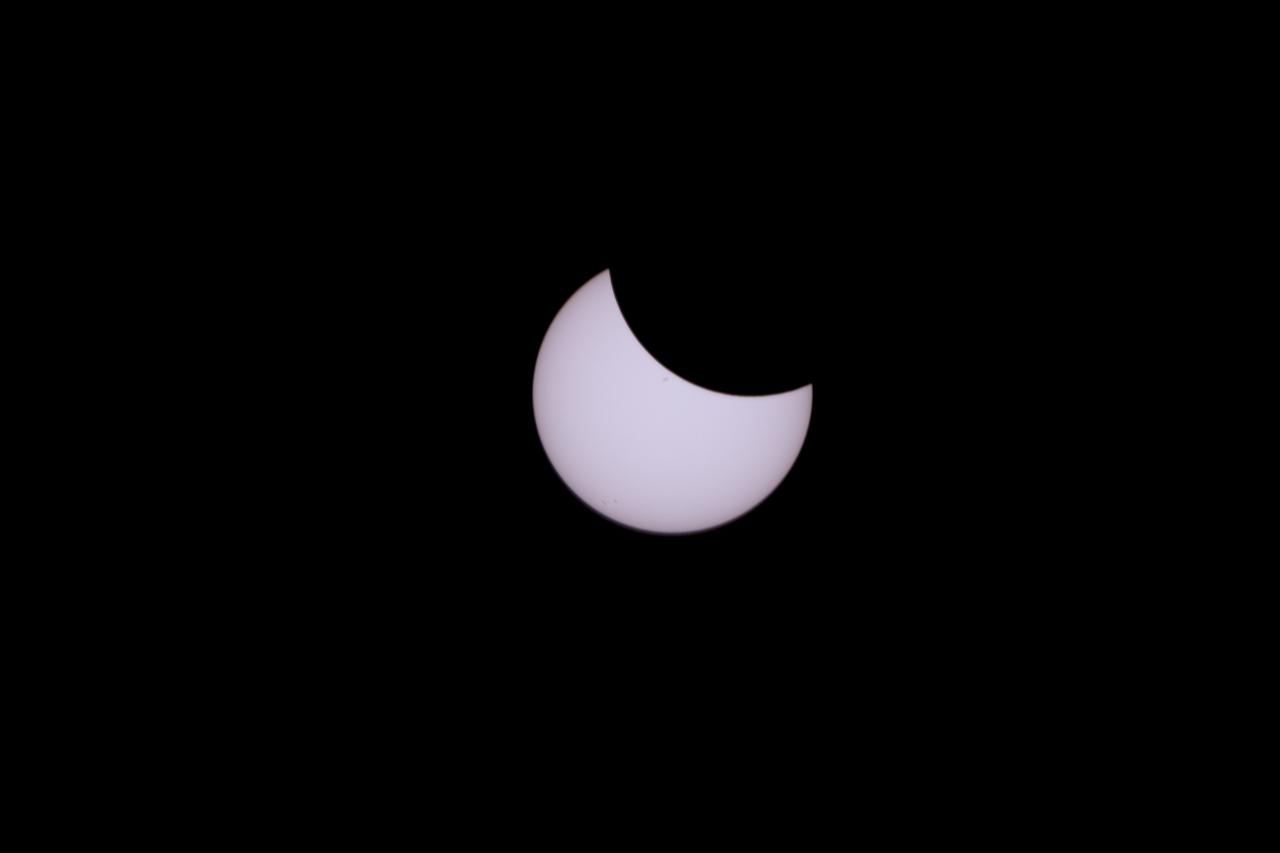
The Moon is seen passing in front of the Sun during a total solar eclipse on Monday, August 21, 2017 from onboard a NASA Gulfstream III aircraft flying 25,000 feet above the Oregon coast. A total solar eclipse swept across a narrow portion of the contiguous United States from Lincoln Beach, Oregon to Charleston, South Carolina. A partial solar eclipse was visible across the entire North American continent along with parts of South America, Africa, and Europe. Photo Credit: (NASA/Carla Thomas)
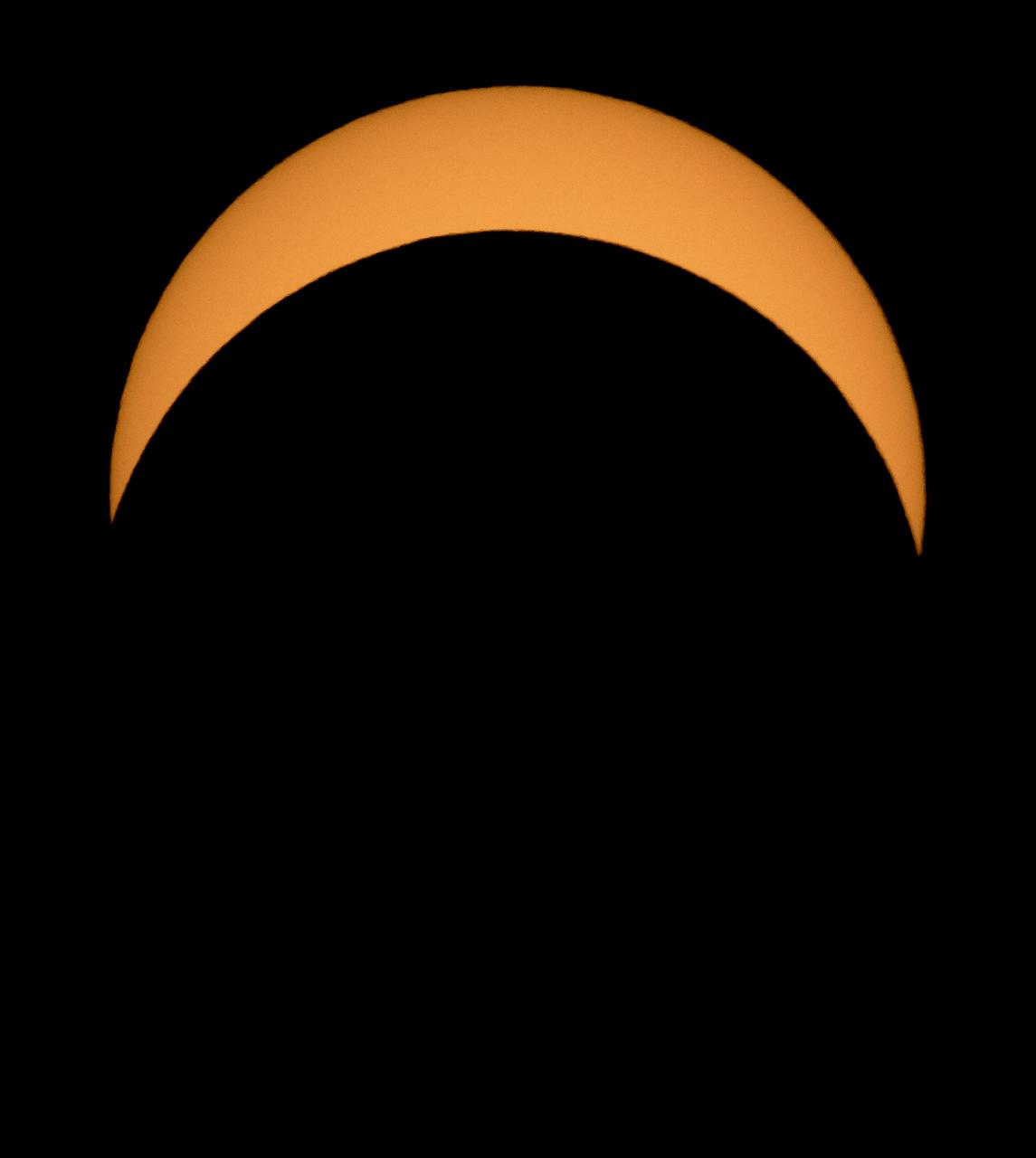
The Moon is seen passing in front of the Sun during a solar eclipse from Ross Lake, Northern Cascades National Park, Washington on Monday, Aug. 21, 2017. A total solar eclipse swept across a narrow portion of the contiguous United States from Lincoln Beach, Oregon to Charleston, South Carolina. A partial solar eclipse was visible across the entire North American continent along with parts of South America, Africa, and Europe. Photo Credit: (NASA/Bill Ingalls)
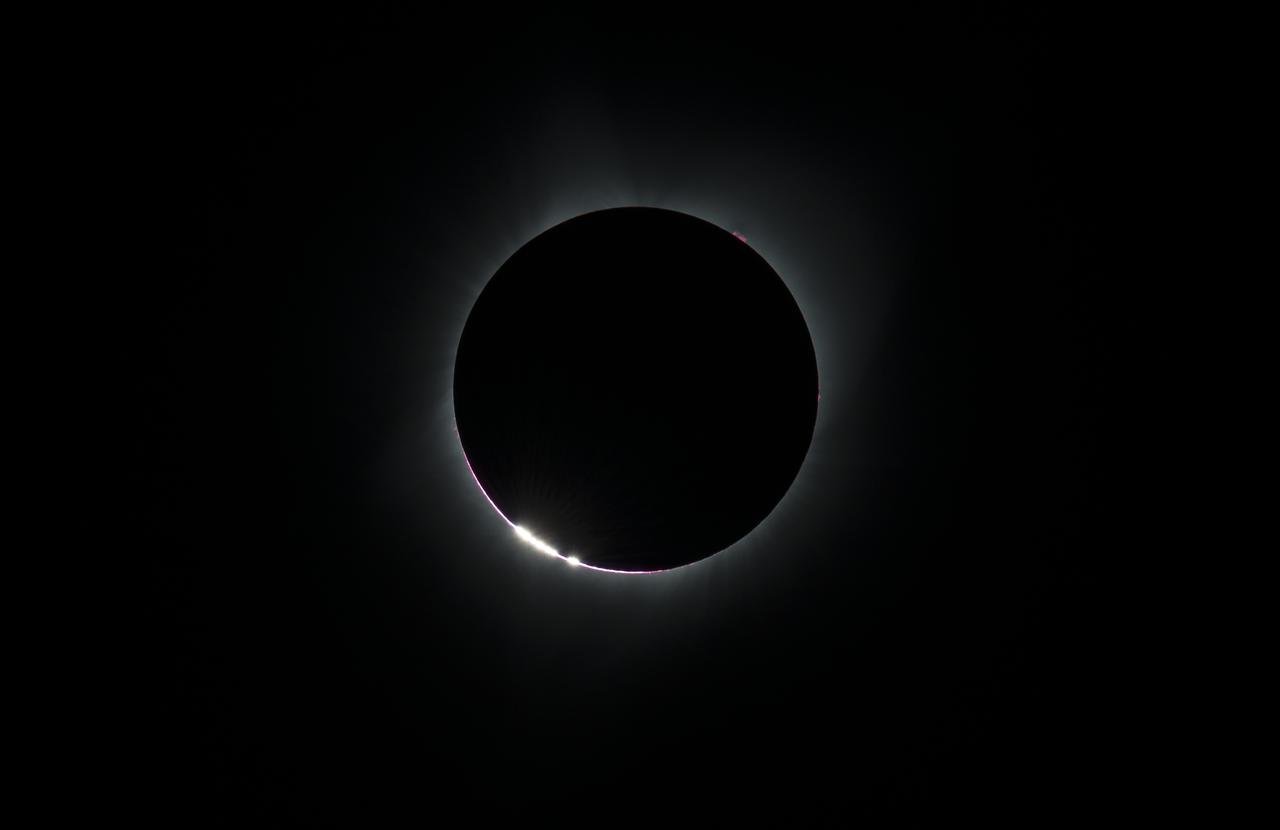
The Baily's Beads effect is seen as the moon makes its final move over the sun during the total solar eclipse on Monday, August 21, 2017 above Madras, Oregon. A total solar eclipse swept across a narrow portion of the contiguous United States from Lincoln Beach, Oregon to Charleston, South Carolina. A partial solar eclipse was visible across the entire North American continent along with parts of South America, Africa, and Europe. Photo Credit: (NASA/Aubrey Gemignani)
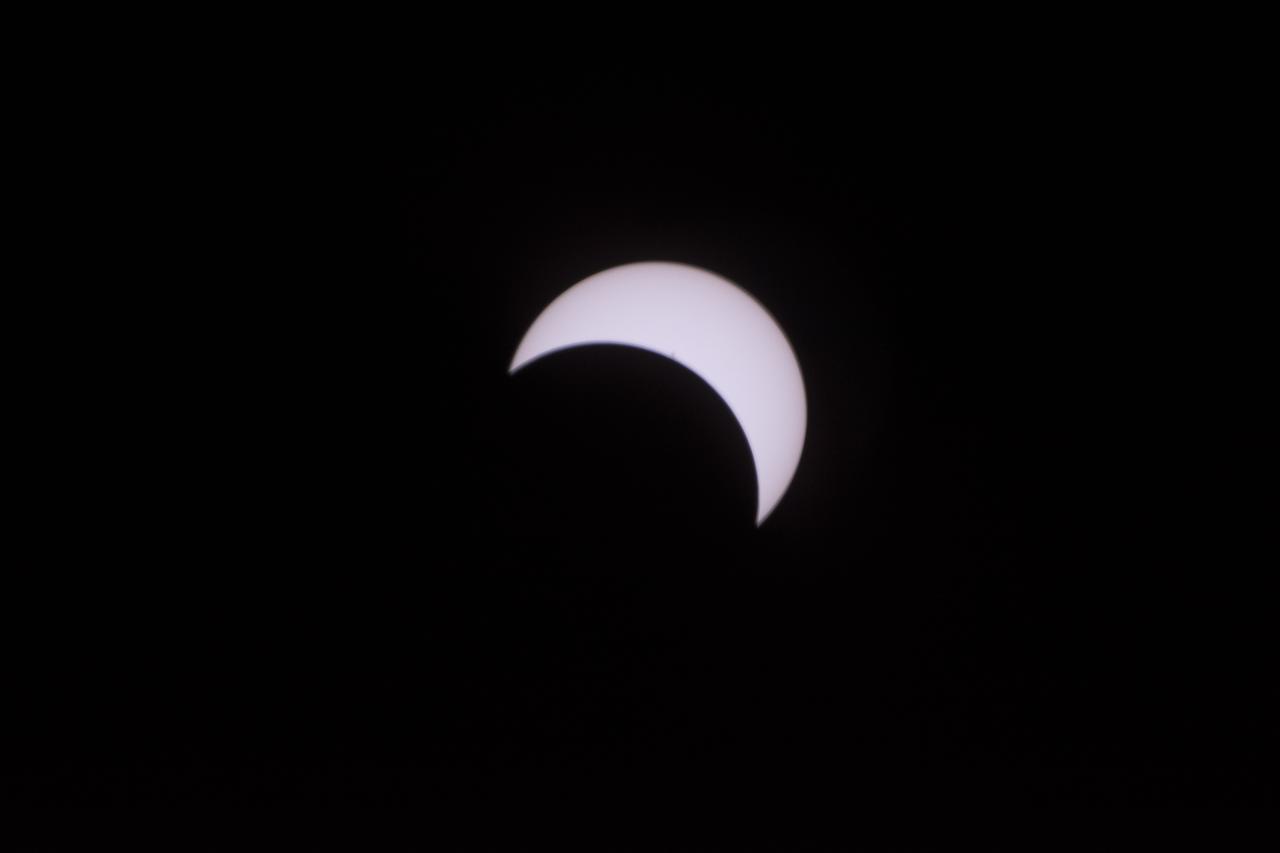
The Moon is seen passing in front of the Sun during a total solar eclipse on Monday, August 21, 2017 from onboard a NASA Gulfstream III aircraft flying 25,000 feet above the Oregon coast. A total solar eclipse swept across a narrow portion of the contiguous United States from Lincoln Beach, Oregon to Charleston, South Carolina. A partial solar eclipse was visible across the entire North American continent along with parts of South America, Africa, and Europe. Photo Credit: (NASA/Carla Thomas)
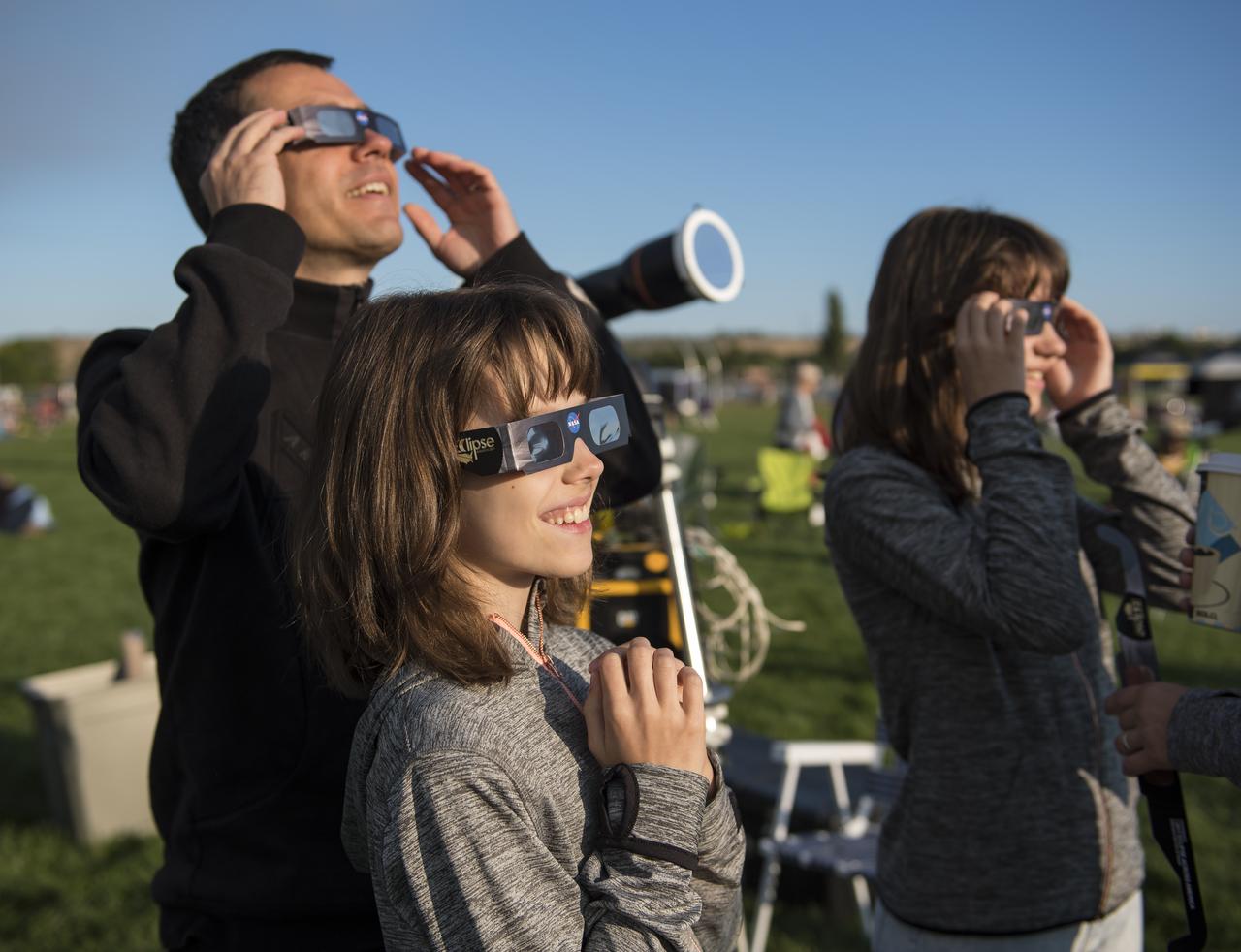
Klaus Koschinsky, left, and his daughters, Claudia, center, and Tanja, right, from Munich, Germany, are seen as they watch a total solar eclipse through protective glasses in Madras, Oregon on Monday, Aug. 21, 2017. A total solar eclipse swept across a narrow portion of the contiguous United States from Lincoln Beach, Oregon to Charleston, South Carolina. A partial solar eclipse was visible across the entire North American continent along with parts of South America, Africa, and Europe. Photo Credit: (NASA/Aubrey Gemignani)

This composite image of thirteen photographs shows the progression of a total solar eclipse at Madras High School in Madras, Oregon on Monday, August 21, 2017. A total solar eclipse swept across a narrow portion of the contiguous United States from Lincoln Beach, Oregon to Charleston, South Carolina. A partial solar eclipse was visible across the entire North American continent along with parts of South America, Africa, and Europe. Photo Credit: (NASA/Aubrey Gemignani)
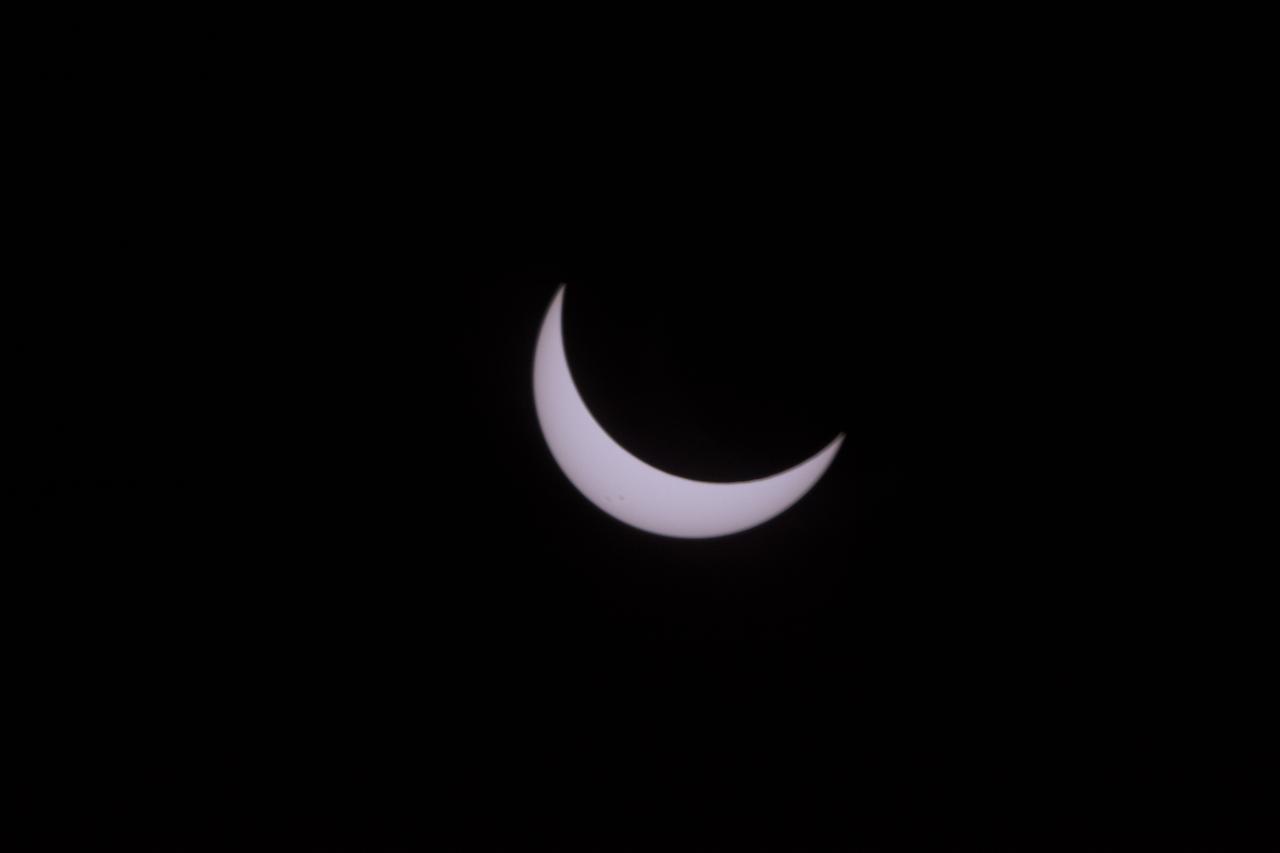
The Moon is seen passing in front of the Sun during a total solar eclipse on Monday, August 21, 2017 from onboard a NASA Gulfstream III aircraft flying 25,000 feet above the Oregon coast. A total solar eclipse swept across a narrow portion of the contiguous United States from Lincoln Beach, Oregon to Charleston, South Carolina. A partial solar eclipse was visible across the entire North American continent along with parts of South America, Africa, and Europe. Photo Credit: (NASA/Carla Thomas)
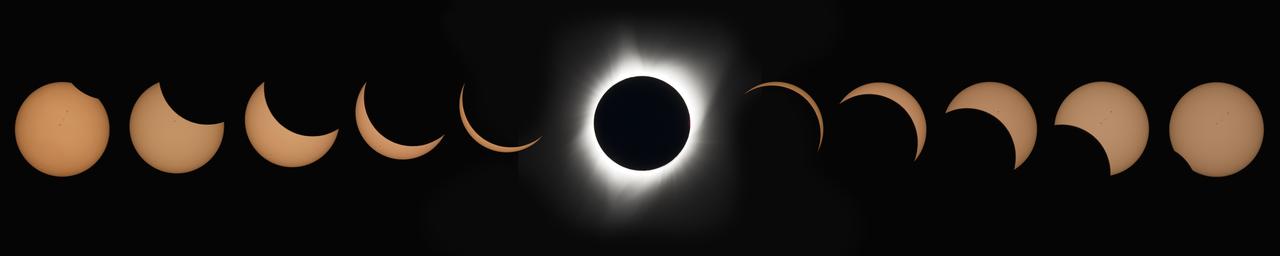
A total solar eclipse is seen on Monday, Aug. 21, 2017 above Madras, Oregon. A total solar eclipse swept across a narrow portion of the contiguous United States from Lincoln Beach, Oregon to Charleston, South Carolina. A partial solar eclipse was visible across the entire North American continent along with parts of South America, Africa, and Europe. Photo Credit: (NASA/Aubrey Gemignani)
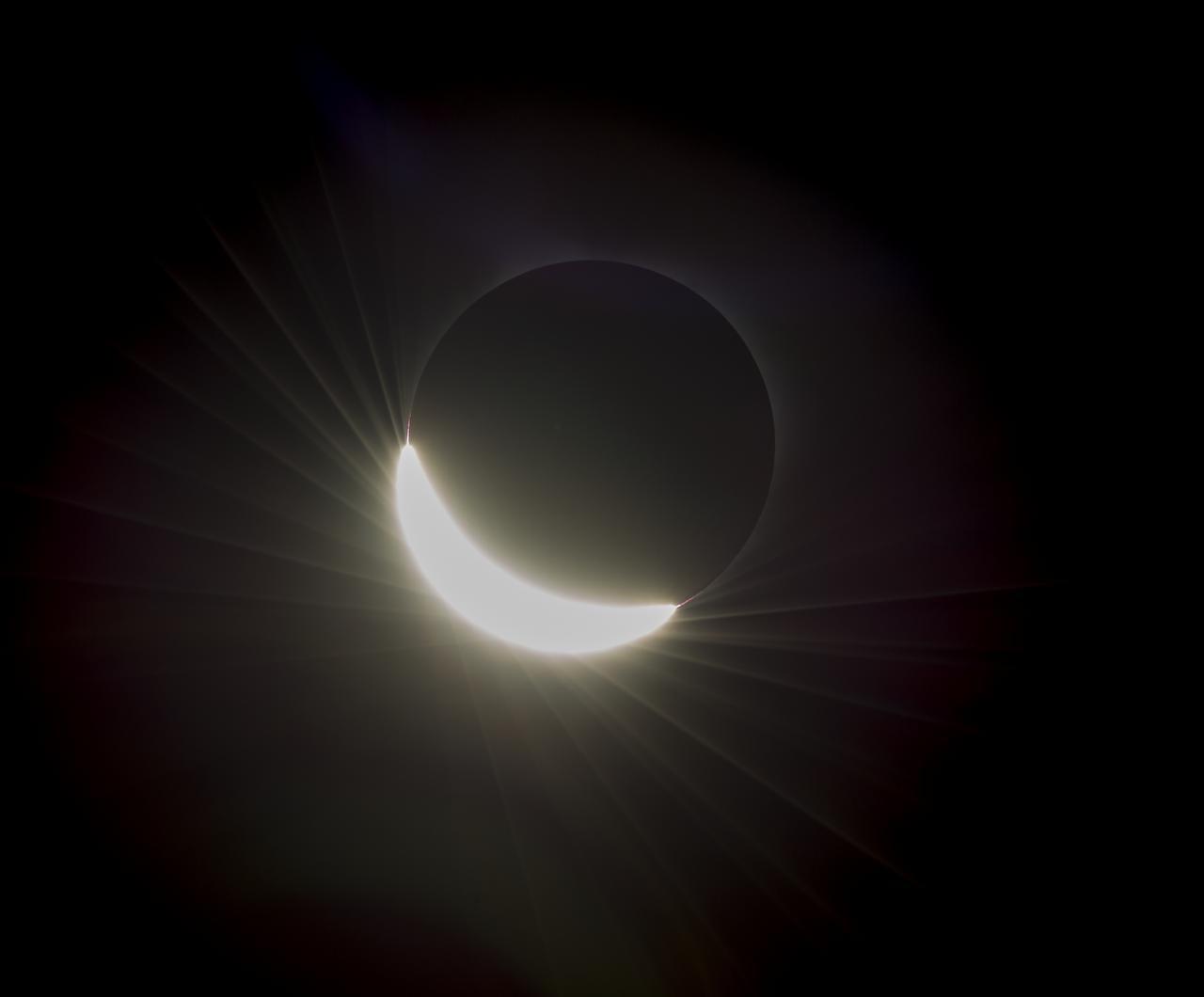
The last glimmer of the sun is seen as the moon makes its final move over the sun during the total solar eclipse on Monday, August 21, 2017 above Madras, Oregon. A total solar eclipse swept across a narrow portion of the contiguous United States from Lincoln Beach, Oregon to Charleston, South Carolina. A partial solar eclipse was visible across the entire North American continent along with parts of South America, Africa, and Europe. Photo Credit: (NASA/Aubrey Gemignani)

The Moon is seen passing in front of the Sun during a total solar eclipse on Monday, August 21, 2017 from onboard a NASA Gulfstream III aircraft flying 25,000 feet above the Oregon coast. A total solar eclipse swept across a narrow portion of the contiguous United States from Lincoln Beach, Oregon to Charleston, South Carolina. A partial solar eclipse was visible across the entire North American continent along with parts of South America, Africa, and Europe. Photo Credit: (NASA/Carla Thomas)
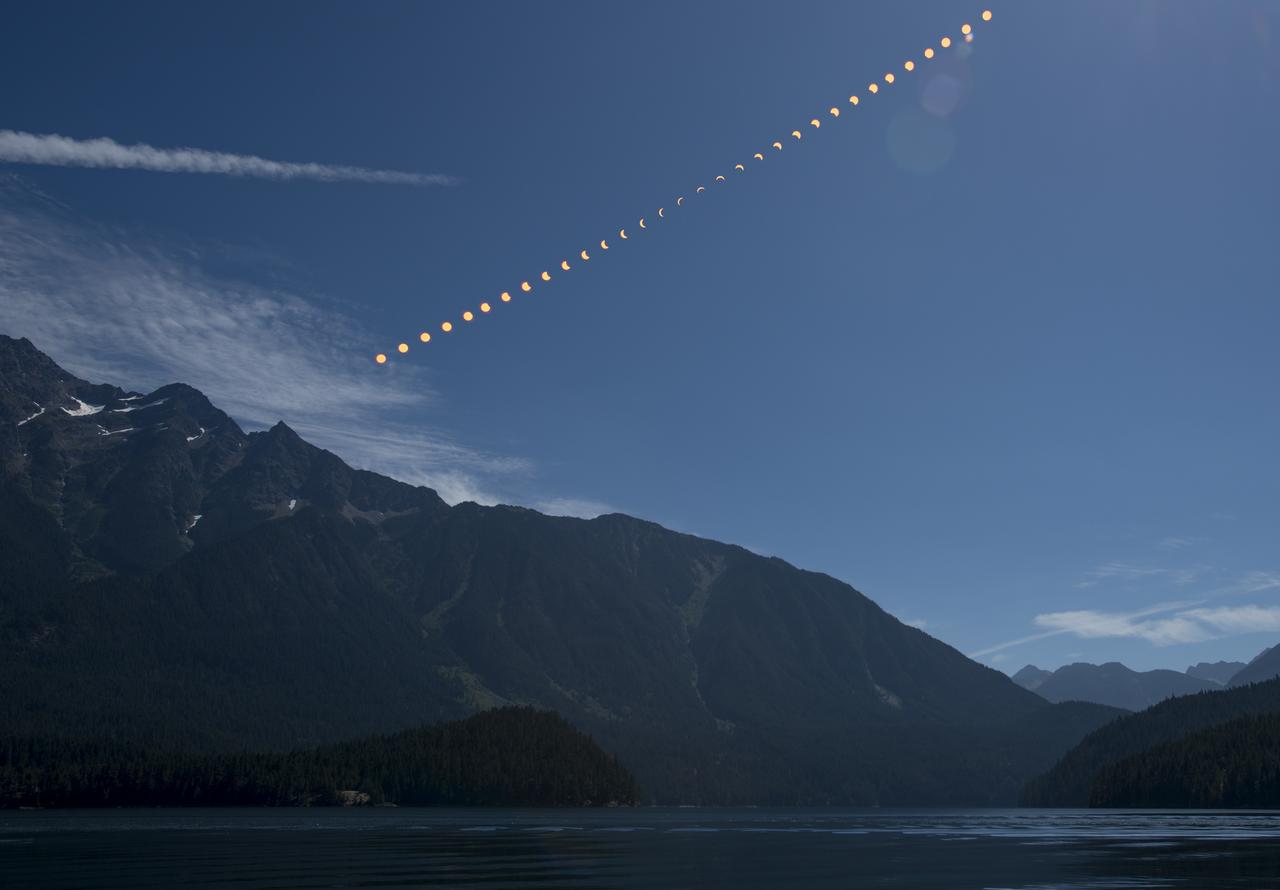
This composite image shows the progression of a partial solar eclipse over Ross Lake, in Northern Cascades National Park, Washington on Monday, Aug. 21, 2017. A total solar eclipse swept across a narrow portion of the contiguous United States from Lincoln Beach, Oregon to Charleston, South Carolina. A partial solar eclipse was visible across the entire North American continent along with parts of South America, Africa, and Europe. Photo Credit: (NASA/Bill Ingalls)

A boy watches the total solar eclipse through protective glasses in Madras, Oregon on Monday, Aug. 21, 2017. A total solar eclipse swept across a narrow portion of the contiguous United States from Lincoln Beach, Oregon to Charleston, South Carolina. A partial solar eclipse was visible across the entire North American continent along with parts of South America, Africa, and Europe. Photo Credit: (NASA/Aubrey Gemignani)
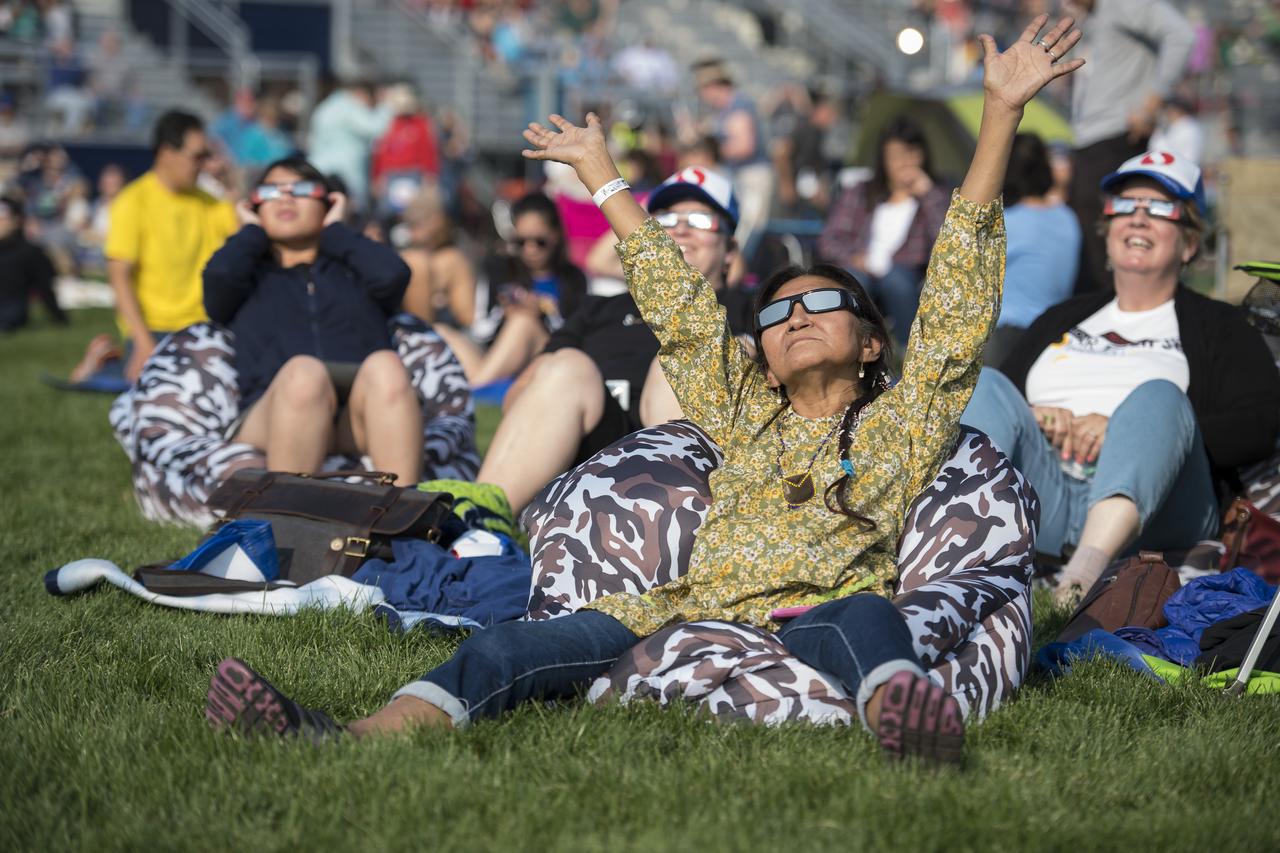
People are seen as they watch a total solar eclipse through protective glasses in Madras, Oregon on Monday, Aug. 21, 2017. A total solar eclipse swept across a narrow portion of the contiguous United States from Lincoln Beach, Oregon to Charleston, South Carolina. A partial solar eclipse was visible across the entire North American continent along with parts of South America, Africa, and Europe. Photo Credit: (NASA/Aubrey Gemignani)
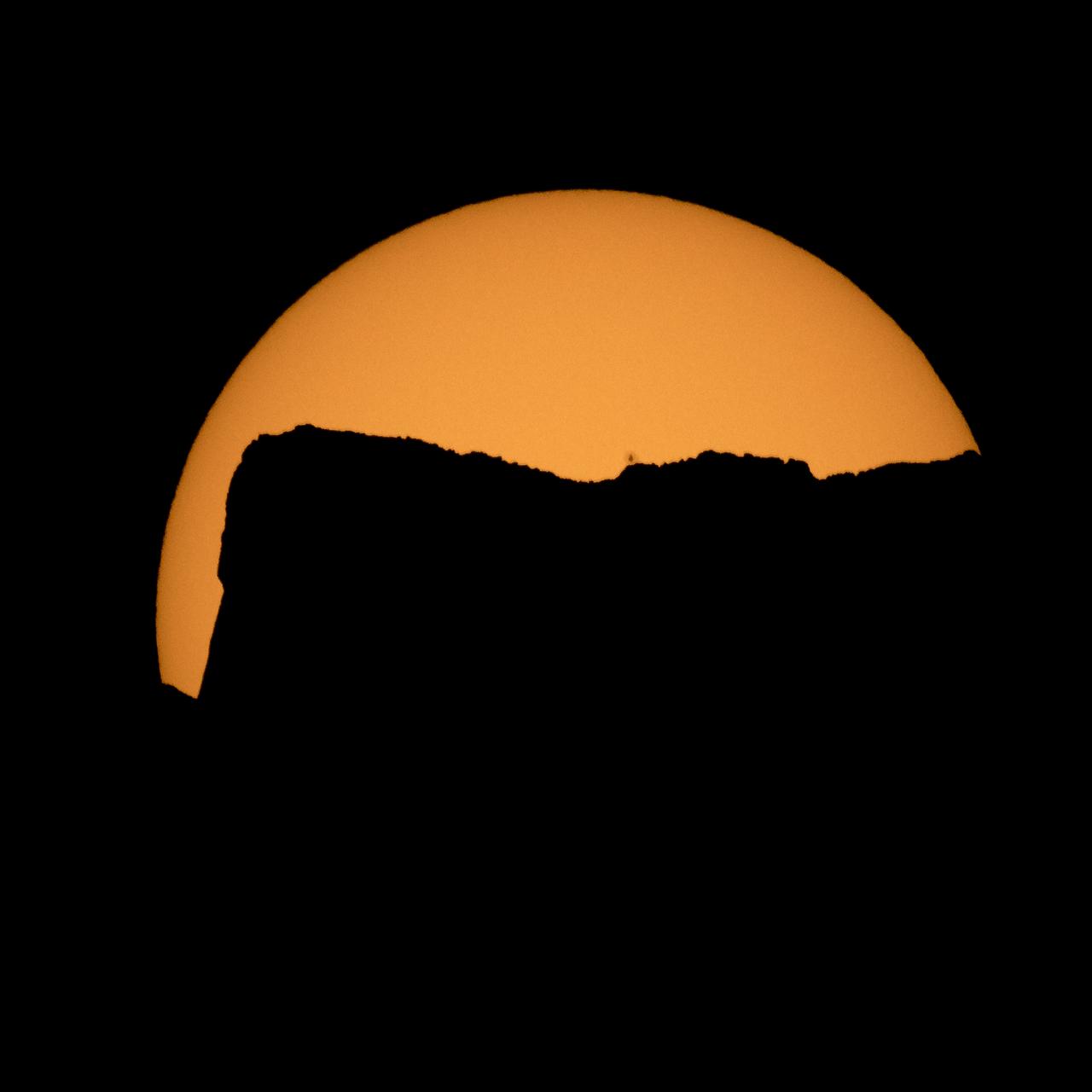
The Sun is seen as it rises behind Jack Mountain head of the solar eclipse, Monday, Aug. 21, 2017, Ross Lake, Northern Cascades National Park, Washington. A total solar eclipse will sweep across a narrow portion of the contiguous United States from Lincoln Beach, Oregon to Charleston, South Carolina. A partial solar eclipse was visible across the entire North American continent along with parts of South America, Africa, and Europe. Photo Credit: (NASA/Bill Ingalls)
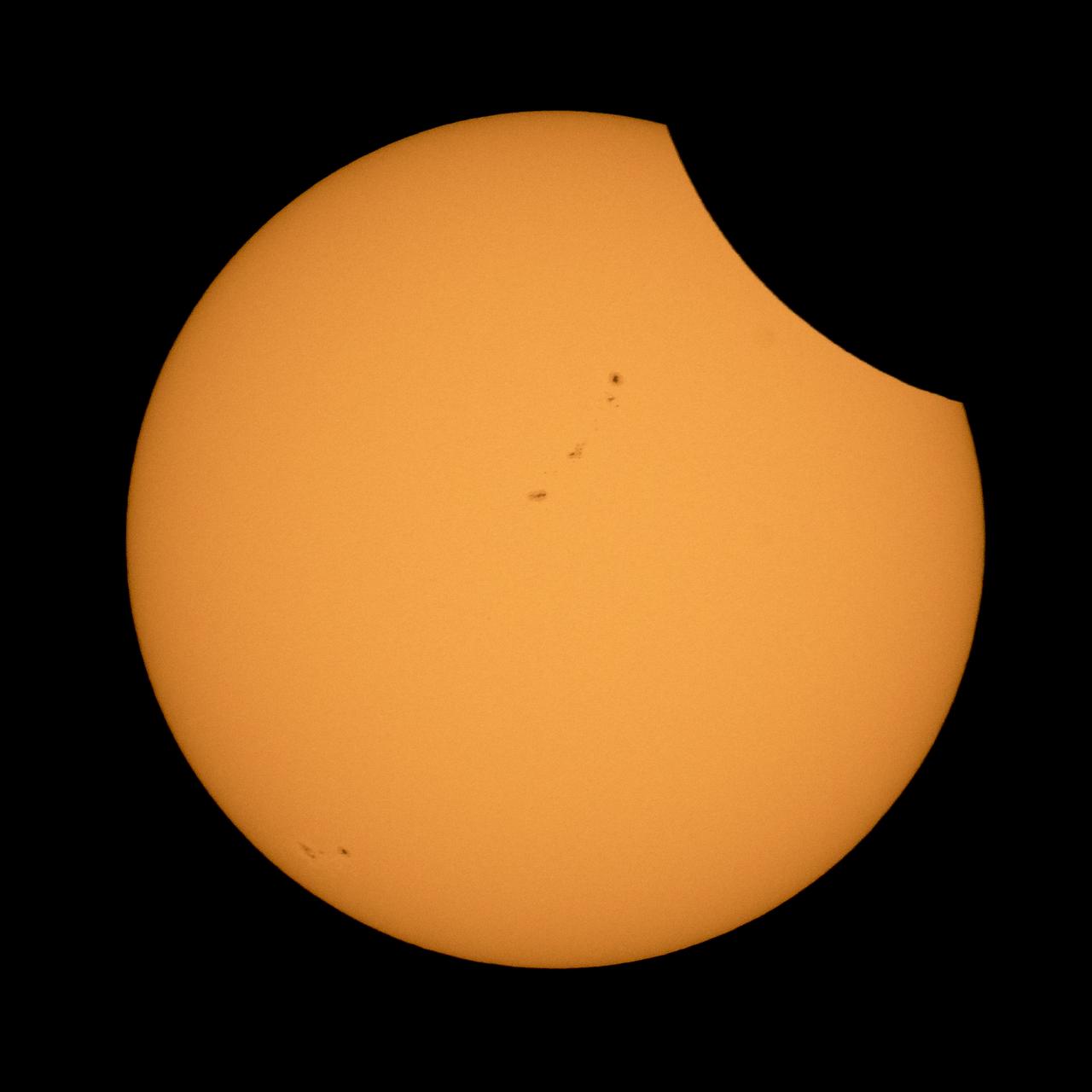
The Moon is seen as it starts passing in front of the Sun during a solar eclipse from Ross Lake, Northern Cascades National Park, Washington on Monday, Aug. 21, 2017. A total solar eclipse swept across a narrow portion of the contiguous United States from Lincoln Beach, Oregon to Charleston, South Carolina. A partial solar eclipse was visible across the entire North American continent along with parts of South America, Africa, and Europe. Photo Credit: (NASA/Bill Ingalls)
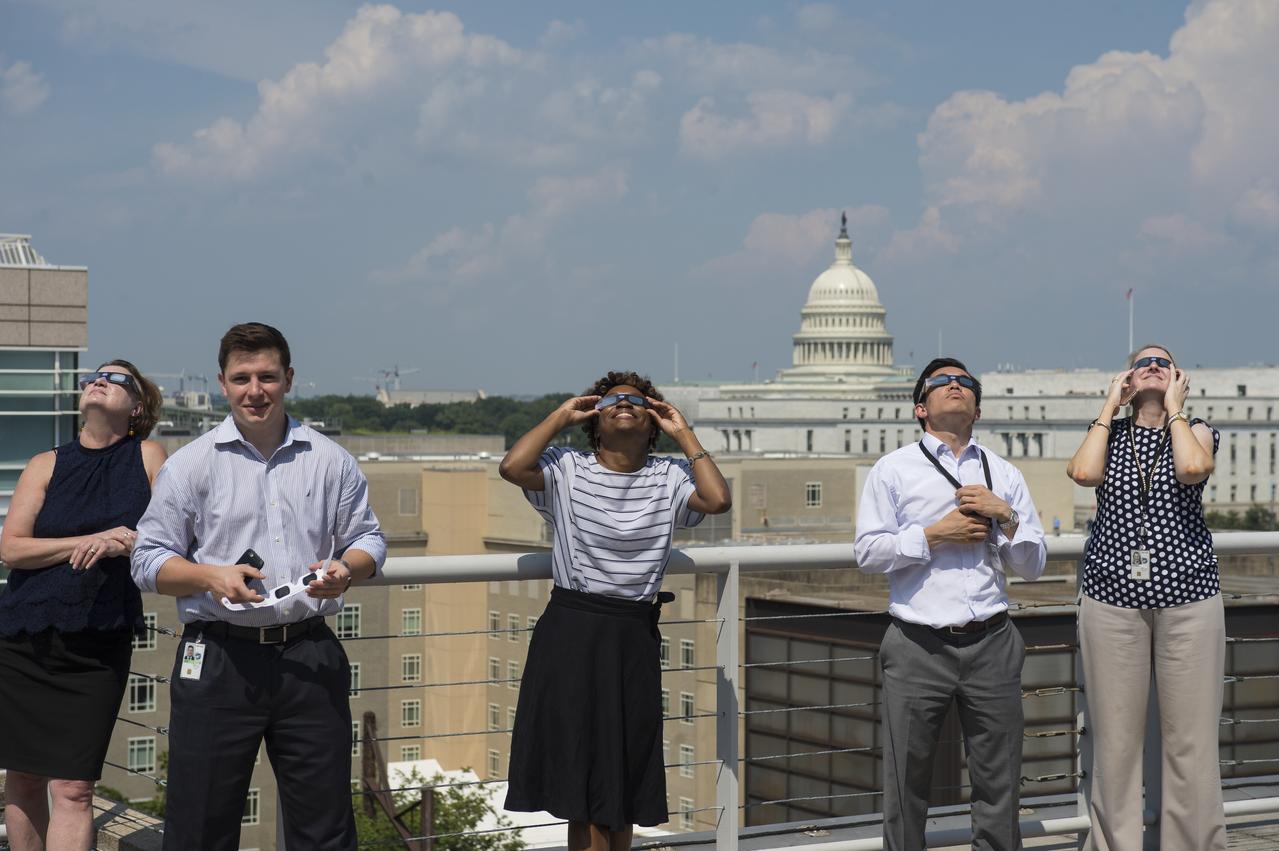
NASA employees and contractors use protective glasses to view a partial solar eclipse from NASA Headquarters Tuesday, Aug. 22, 2017 in Washington. A total solar eclipse swept across a narrow portion of the contiguous United States from Lincoln Beach, Oregon to Charleston, South Carolina. A partial solar eclipse was visible across the entire North American continent along with parts of South America, Africa, and Europe. Photo Credit: (NASA/Gwen Pitman)

People are seen as they watch a total solar eclipse through protective glasses in Madras, Oregon on Monday, Aug. 21, 2017. A total solar eclipse swept across a narrow portion of the contiguous United States from Lincoln Beach, Oregon to Charleston, South Carolina. A partial solar eclipse was visible across the entire North American continent along with parts of South America, Africa, and Europe. Photo Credit: (NASA/Aubrey Gemignani)
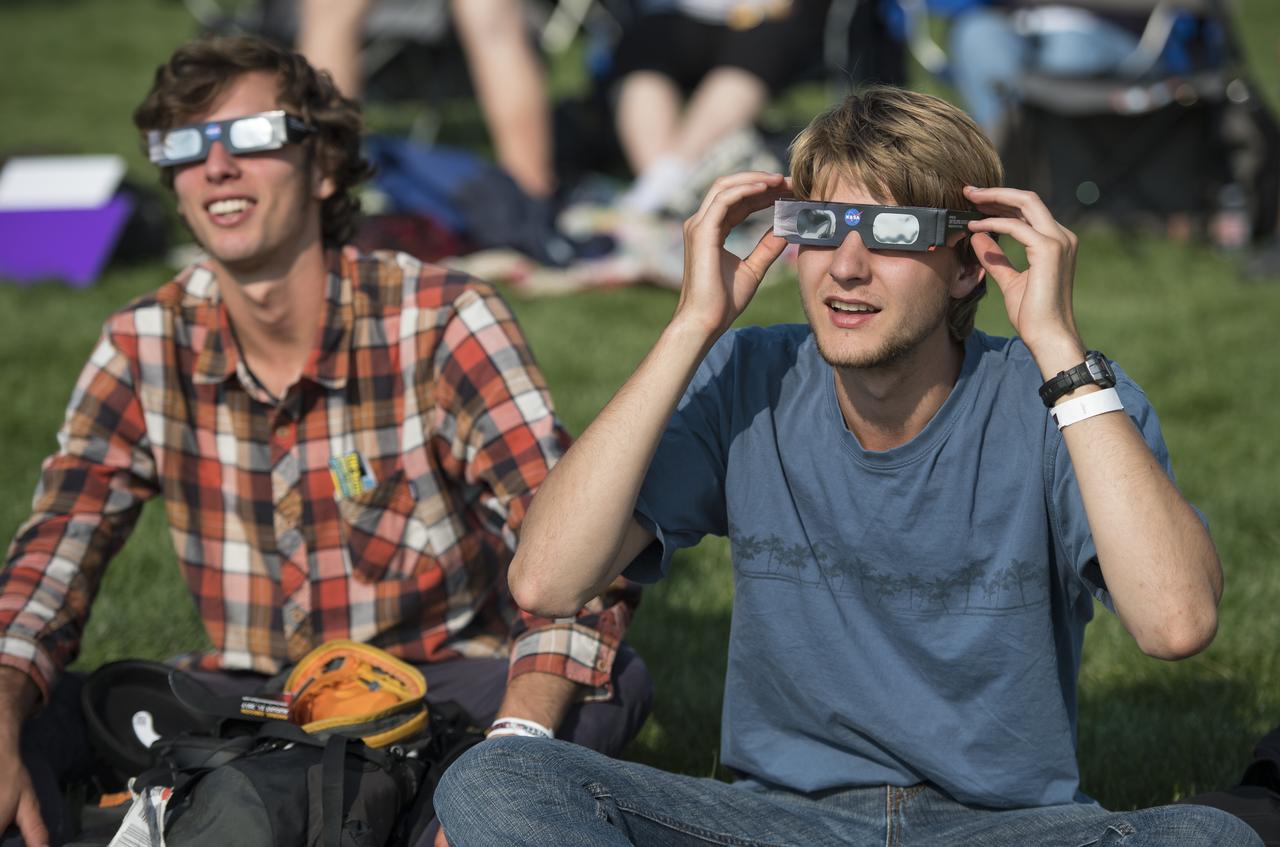
People are seen as they watch a total solar eclipse through protective glasses in Madras, Oregon on Monday, Aug. 21, 2017. A total solar eclipse swept across a narrow portion of the contiguous United States from Lincoln Beach, Oregon to Charleston, South Carolina. A partial solar eclipse was visible across the entire North American continent along with parts of South America, Africa, and Europe. Photo Credit: (NASA/Aubrey Gemignani)

This composite image of nine pictures shows the progression of a partial solar eclipse near Banner, Wyoming on Monday, Aug. 21, 2017. A total solar eclipse swept across a narrow portion of the contiguous United States from Lincoln Beach, Oregon to Charleston, South Carolina. A partial solar eclipse was visible across the entire North American continent along with parts of South America, Africa, and Europe. Photo Credit: (NASA/Joel Kowsky)

A man drums during the partial phase of the total solar eclipse in Madras, Oregon on Monday, Aug. 21, 2017. A total solar eclipse swept across a narrow portion of the contiguous United States from Lincoln Beach, Oregon to Charleston, South Carolina. A partial solar eclipse was visible across the entire North American continent along with parts of South America, Africa, and Europe. Photo Credit: (NASA/Aubrey Gemignani)
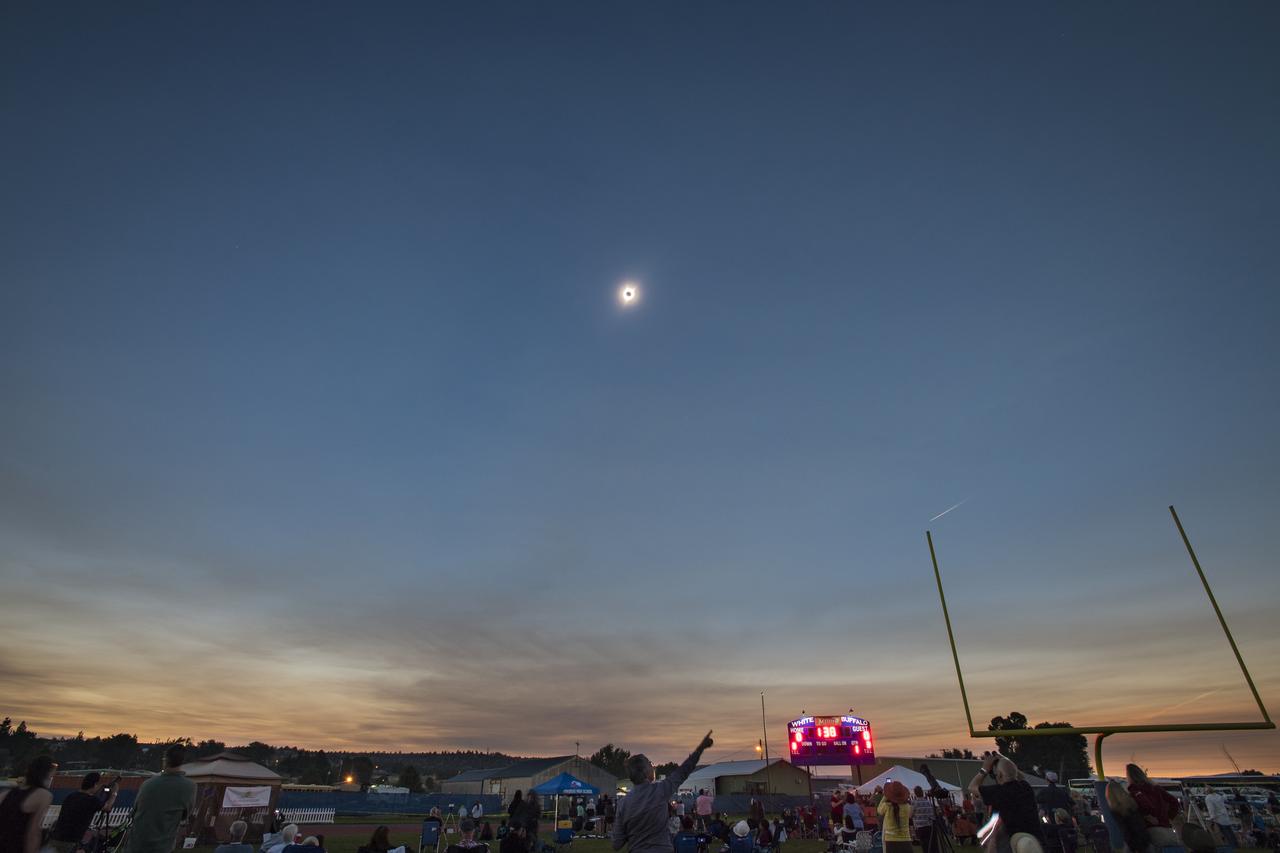
A total solar eclipse is seen on Monday, August 21, 2017 above Madras, Oregon. A total solar eclipse swept across a narrow portion of the contiguous United States from Lincoln Beach, Oregon to Charleston, South Carolina. A partial solar eclipse was visible across the entire North American continent along with parts of South America, Africa, and Europe. Photo Credit: (NASA/Aubrey Gemignani)
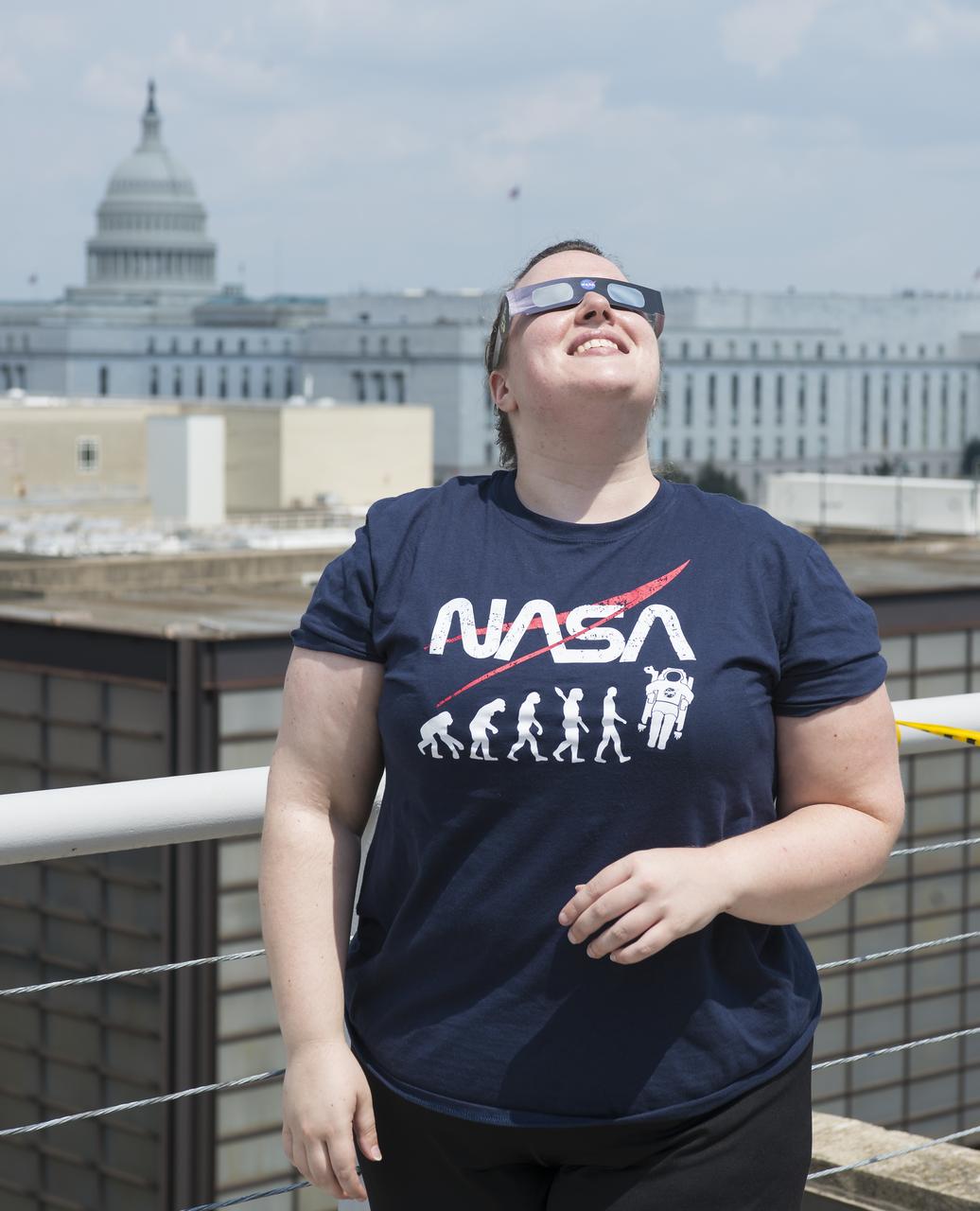
NASA employees and contractors use protective glasses to view a partial solar eclipse from NASA Headquarters Monday, Aug. 21, 2017 in Washington. A total solar eclipse swept across a narrow portion of the contiguous United States from Lincoln Beach, Oregon to Charleston, South Carolina. A partial solar eclipse was visible across the entire North American continent along with parts of South America, Africa, and Europe. Photo Credit: (NASA/Gwen Pitman)

The Moon is seen passing in front of the Sun during a total solar eclipse on Monday, August 21, 2017 from onboard a NASA Gulfstream III aircraft flying 25,000 feet above the Oregon coast. A total solar eclipse swept across a narrow portion of the contiguous United States from Lincoln Beach, Oregon to Charleston, South Carolina. A partial solar eclipse was visible across the entire North American continent along with parts of South America, Africa, and Europe. Photo Credit: (NASA/Carla Thomas)
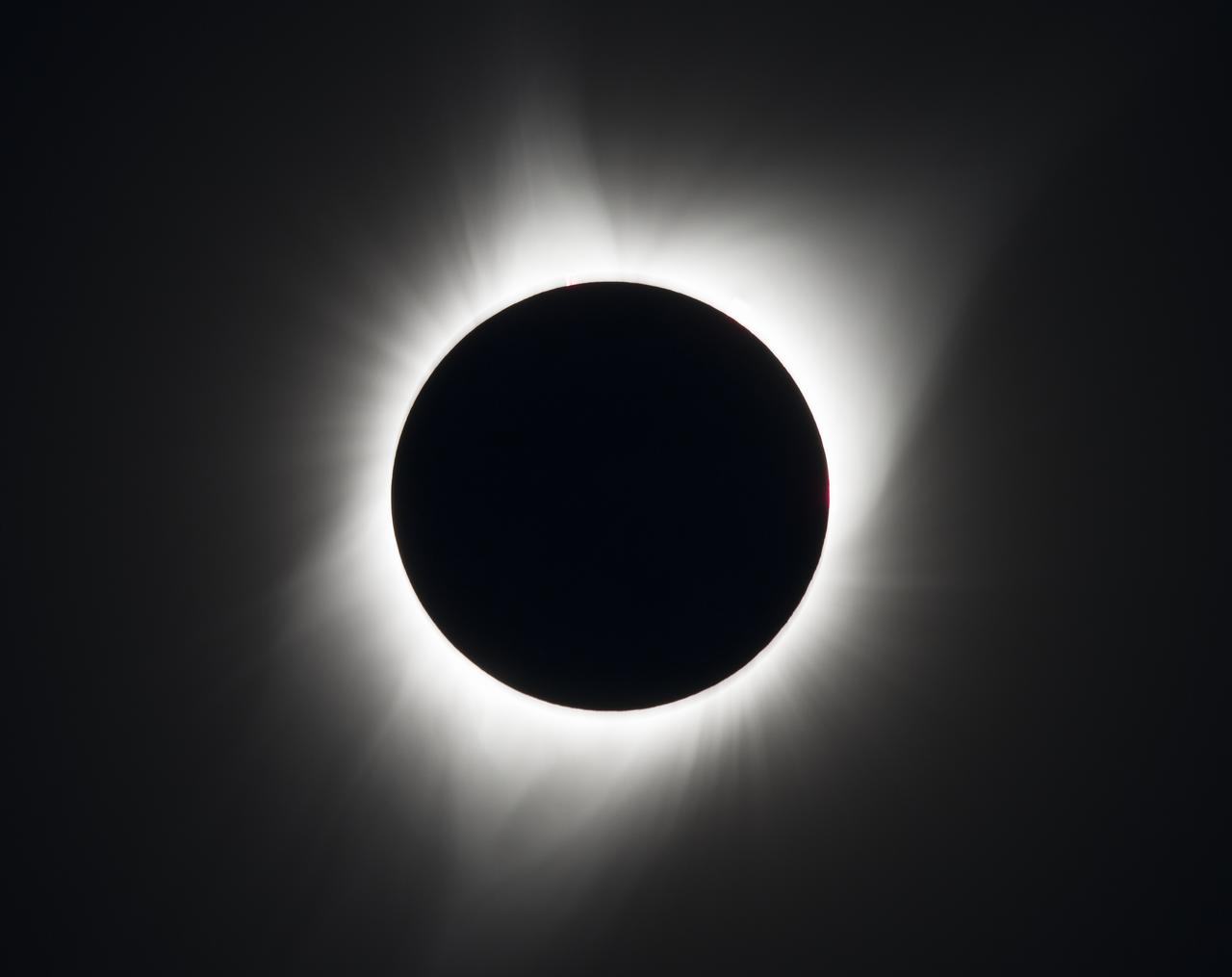
A total solar eclipse is seen on Monday, August 21, 2017 above Madras, Oregon. A total solar eclipse swept across a narrow portion of the contiguous United States from Lincoln Beach, Oregon to Charleston, South Carolina. A partial solar eclipse was visible across the entire North American continent along with parts of South America, Africa, and Europe. Photo Credit: (NASA/Aubrey Gemignani)

The Vasquez family from Eureka and Edgewood, Washington take a photo during the total solar eclipse in Madras, Oregon on Monday, Aug. 21, 2017. A total solar eclipse swept across a narrow portion of the contiguous United States from Lincoln Beach, Oregon to Charleston, South Carolina. A partial solar eclipse was visible across the entire North American continent along with parts of South America, Africa, and Europe. Photo Credit: (NASA/Aubrey Gemignani)
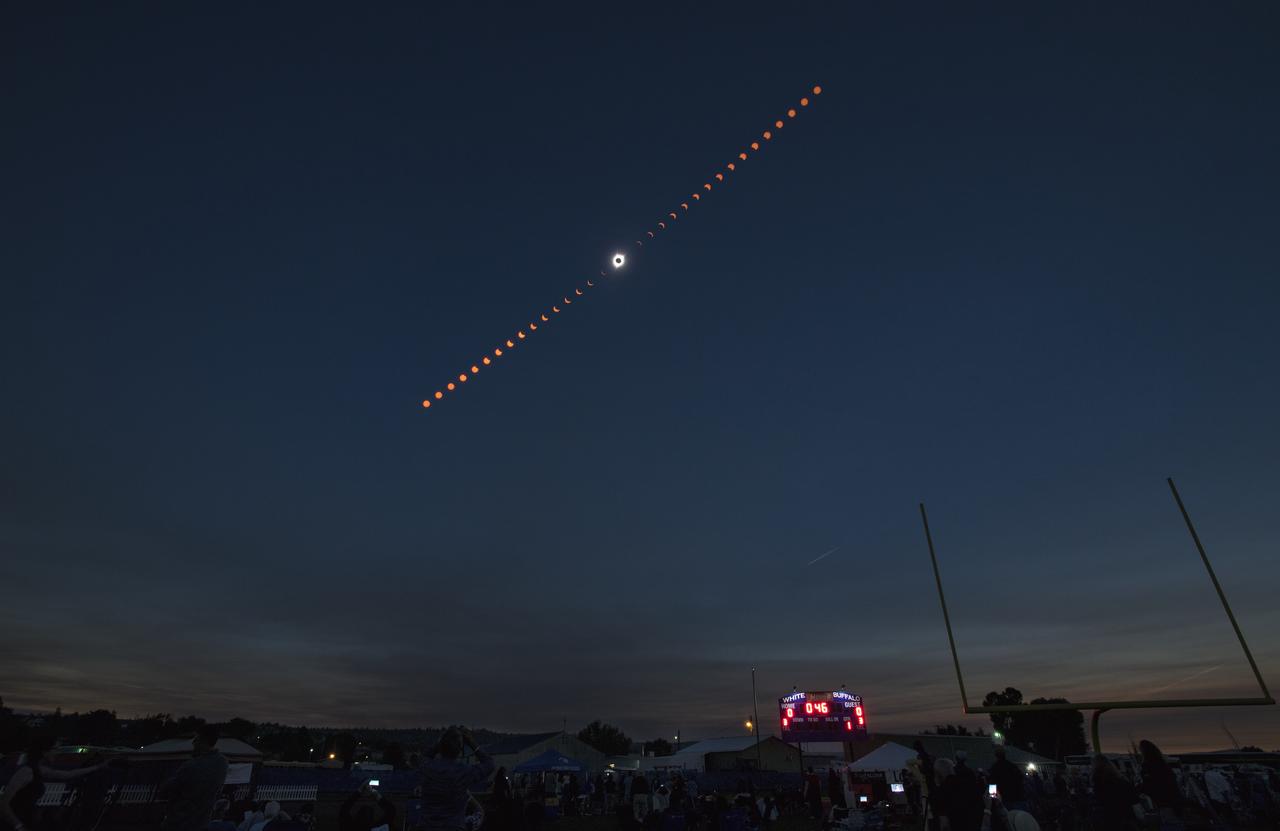
This composite image shows the progression of a total solar eclipse over Madras, Oregon on Monday, Aug. 21, 2017. A total solar eclipse swept across a narrow portion of the contiguous United States from Lincoln Beach, Oregon to Charleston, South Carolina. A partial solar eclipse was visible across the entire North American continent along with parts of South America, Africa, and Europe. Photo Credit: (NASA/Aubrey Gemignani)

NASA employees and contractors use protective glasses to view a partial solar eclipse from NASA Headquarters Monday, Aug. 21, 2017 in Washington. A total solar eclipse swept across a narrow portion of the contiguous United States from Lincoln Beach, Oregon to Charleston, South Carolina. A partial solar eclipse was visible across the entire North American continent along with parts of South America, Africa, and Europe. Photo Credit: (NASA/Gwen Pitman)
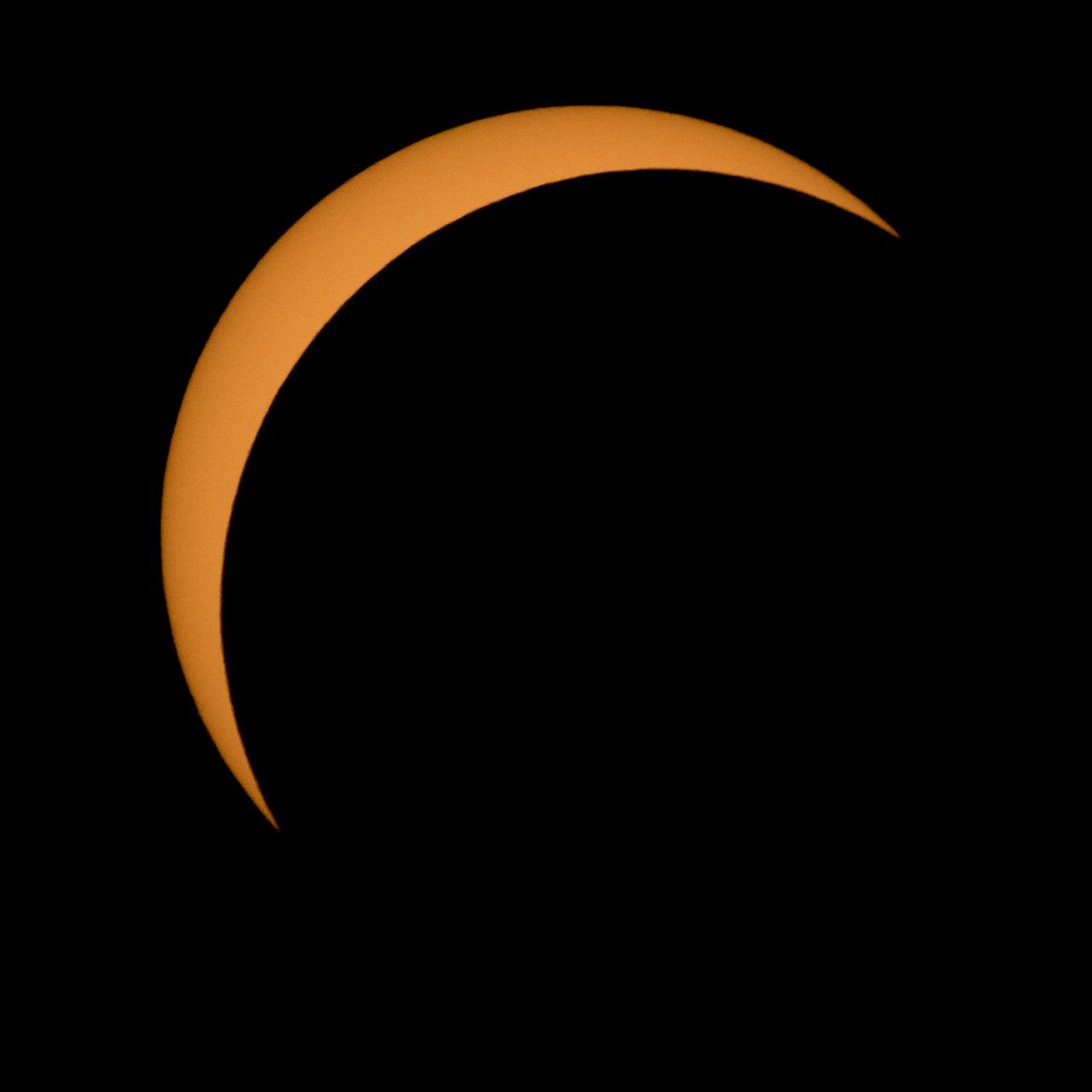
The Moon is seen passing in front of the Sun during a solar eclipse from Ross Lake, Northern Cascades National Park, Washington on Monday, Aug. 21, 2017. A total solar eclipse swept across a narrow portion of the contiguous United States from Lincoln Beach, Oregon to Charleston, South Carolina. A partial solar eclipse was visible across the entire North American continent along with parts of South America, Africa, and Europe. Photo Credit: (NASA/Bill Ingalls)
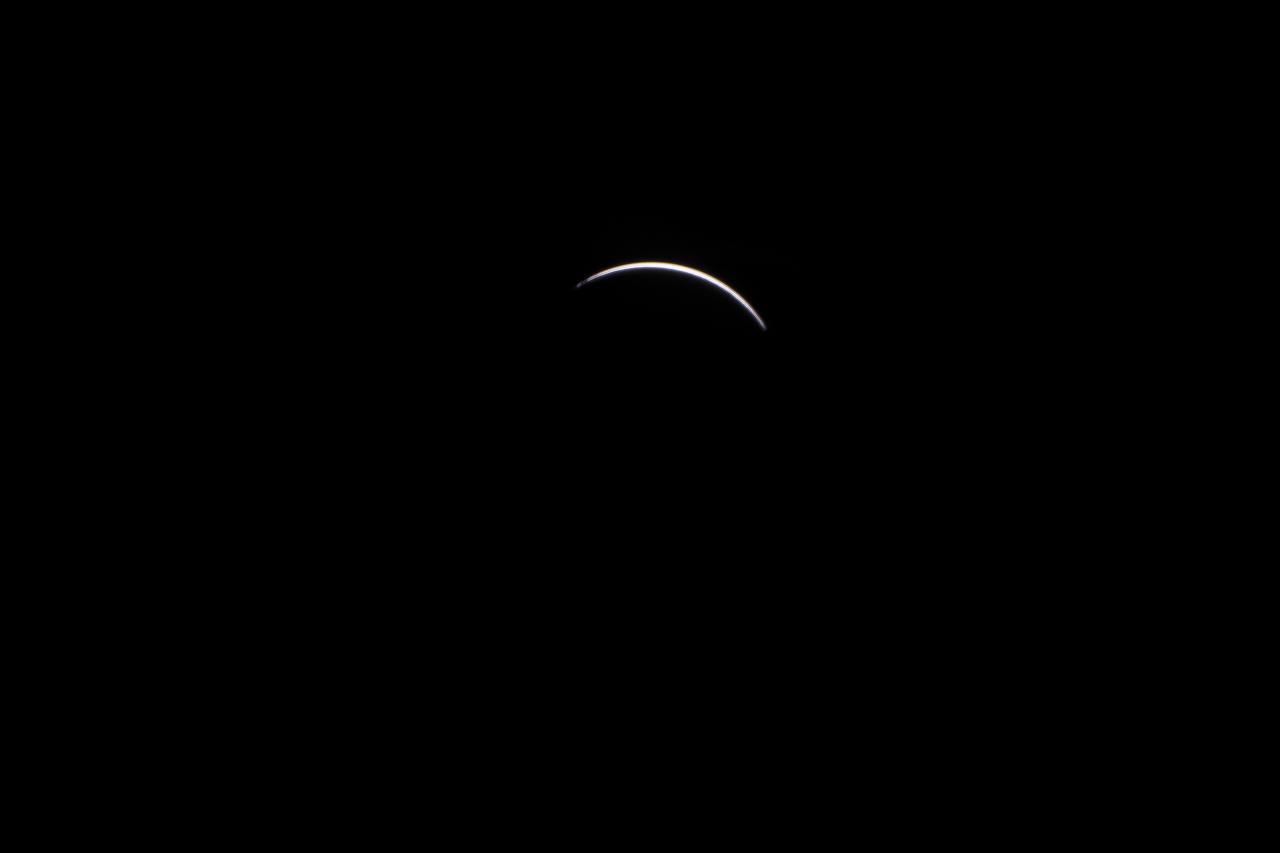
The Moon is seen passing in front of the Sun during a total solar eclipse on Monday, August 21, 2017 from onboard a NASA Gulfstream III aircraft flying 25,000 feet above the Oregon coast. A total solar eclipse swept across a narrow portion of the contiguous United States from Lincoln Beach, Oregon to Charleston, South Carolina. A partial solar eclipse was visible across the entire North American continent along with parts of South America, Africa, and Europe. Photo Credit: (NASA/Carla Thomas)

The Moon is seen passing in front of the Sun at the point of the maximum of the partial solar eclipse near Banner, Wyoming on Monday, Aug. 21, 2017. A total solar eclipse swept across a narrow portion of the contiguous United States from Lincoln Beach, Oregon to Charleston, South Carolina. A partial solar eclipse was visible across the entire North American continent along with parts of South America, Africa, and Europe. Photo Credit: (NASA/Joel Kowsky)

NASA employees and contractors use protective glasses to view a partial solar eclipse from NASA Headquarters Monday, Aug. 21, 2017 in Washington. A total solar eclipse swept across a narrow portion of the contiguous United States from Lincoln Beach, Oregon to Charleston, South Carolina. A partial solar eclipse was visible across the entire North American continent along with parts of South America, Africa, and Europe. Photo Credit: (NASA/Gwen Pitman)

Some prominences are seen as the moon begins to move off the sun during the total solar eclipse on Monday, August 21, 2017 above Madras, Oregon. A total solar eclipse swept across a narrow portion of the contiguous United States from Lincoln Beach, Oregon to Charleston, South Carolina. A partial solar eclipse was visible across the entire North American continent along with parts of South America, Africa, and Europe. Photo Credit: (NASA/Aubrey Gemignani)
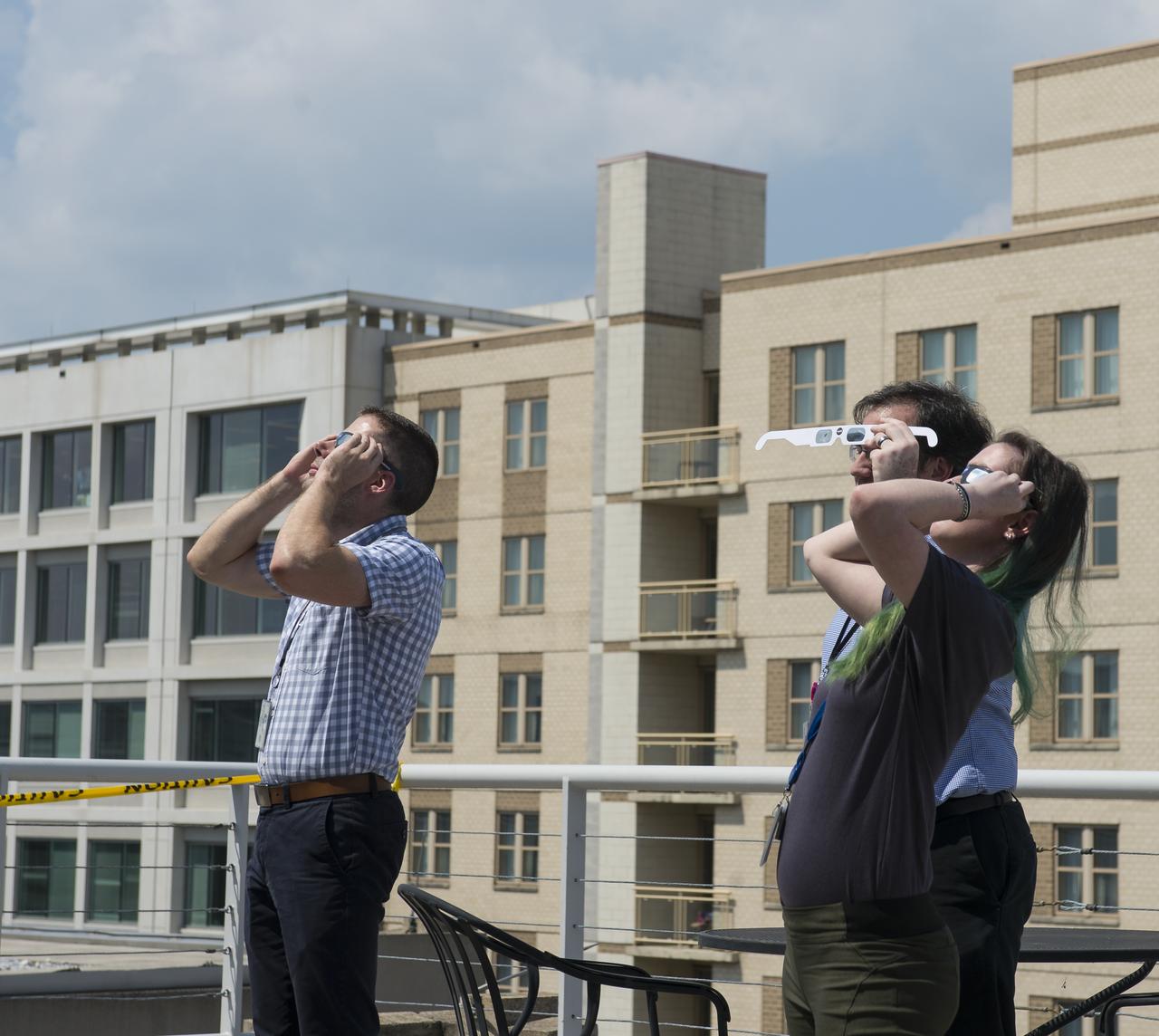
NASA employees and contractors use protective glasses to view a partial solar eclipse from NASA Headquarters Tuesday, Aug. 22, 2017 in Washington. A total solar eclipse swept across a narrow portion of the contiguous United States from Lincoln Beach, Oregon to Charleston, South Carolina. A partial solar eclipse was visible across the entire North American continent along with parts of South America, Africa, and Europe. Photo Credit: (NASA/Gwen Pitman)
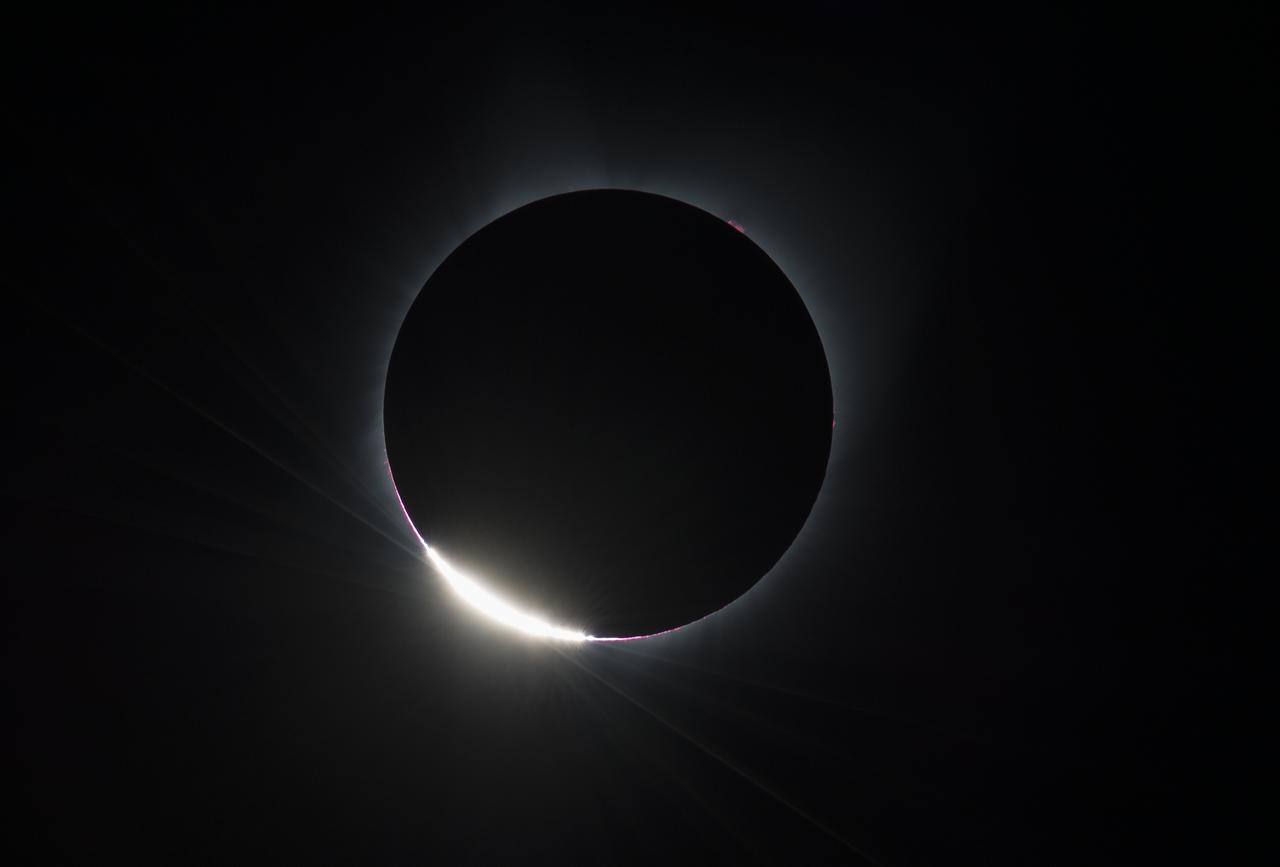
The Diamond Ring effect is seen as the moon makes its final move over the sun during the total solar eclipse on Monday, August 21, 2017 above Madras, Oregon. A total solar eclipse swept across a narrow portion of the contiguous United States from Lincoln Beach, Oregon to Charleston, South Carolina. A partial solar eclipse was visible across the entire North American continent along with parts of South America, Africa, and Europe. Photo Credit: (NASA/Aubrey Gemignani)
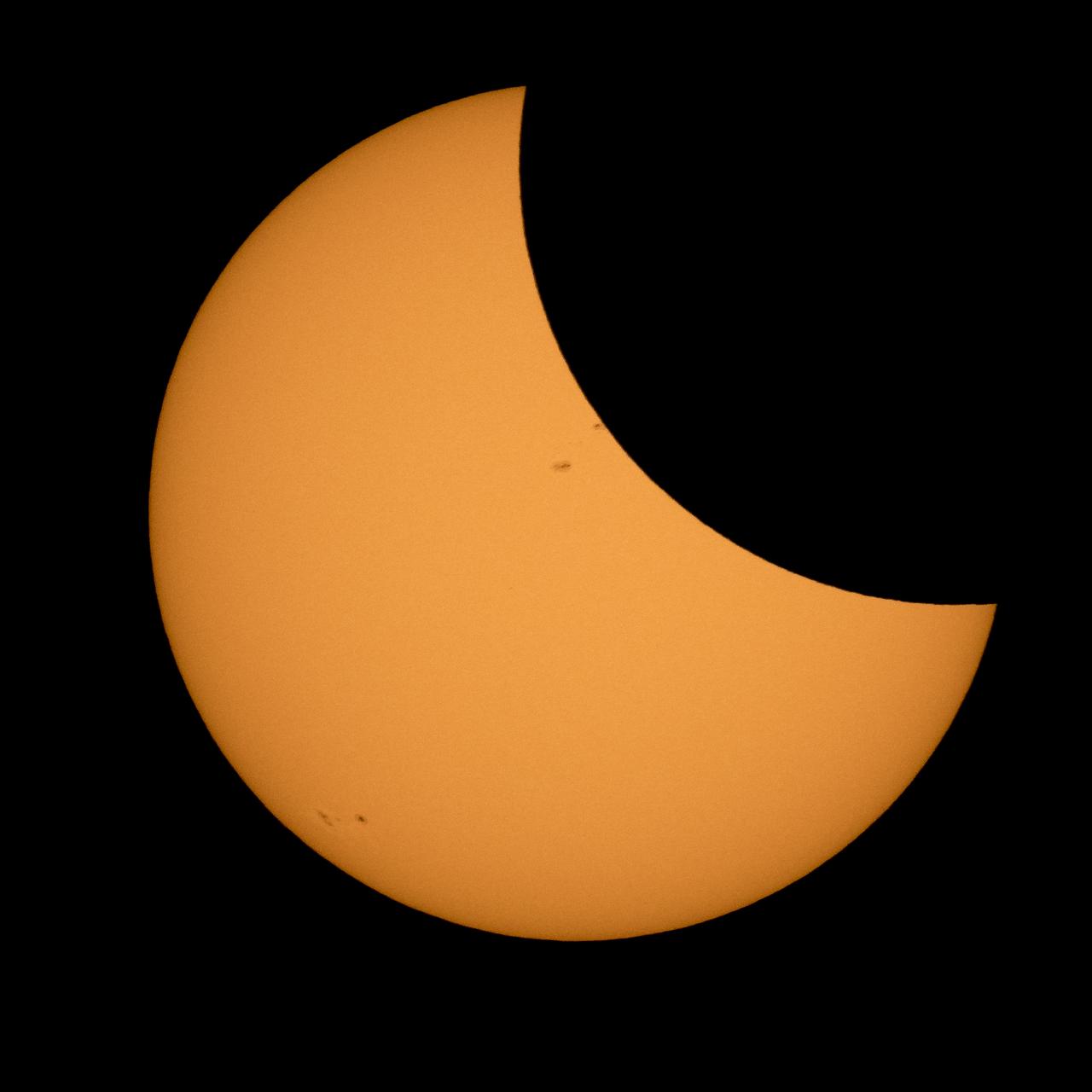
The Moon is seen passing in front of the Sun during a solar eclipse from Ross Lake, Northern Cascades National Park, Washington on Monday, Aug. 21, 2017. A total solar eclipse swept across a narrow portion of the contiguous United States from Lincoln Beach, Oregon to Charleston, South Carolina. A partial solar eclipse was visible across the entire North American continent along with parts of South America, Africa, and Europe. Photo Credit: (NASA/Bill Ingalls)
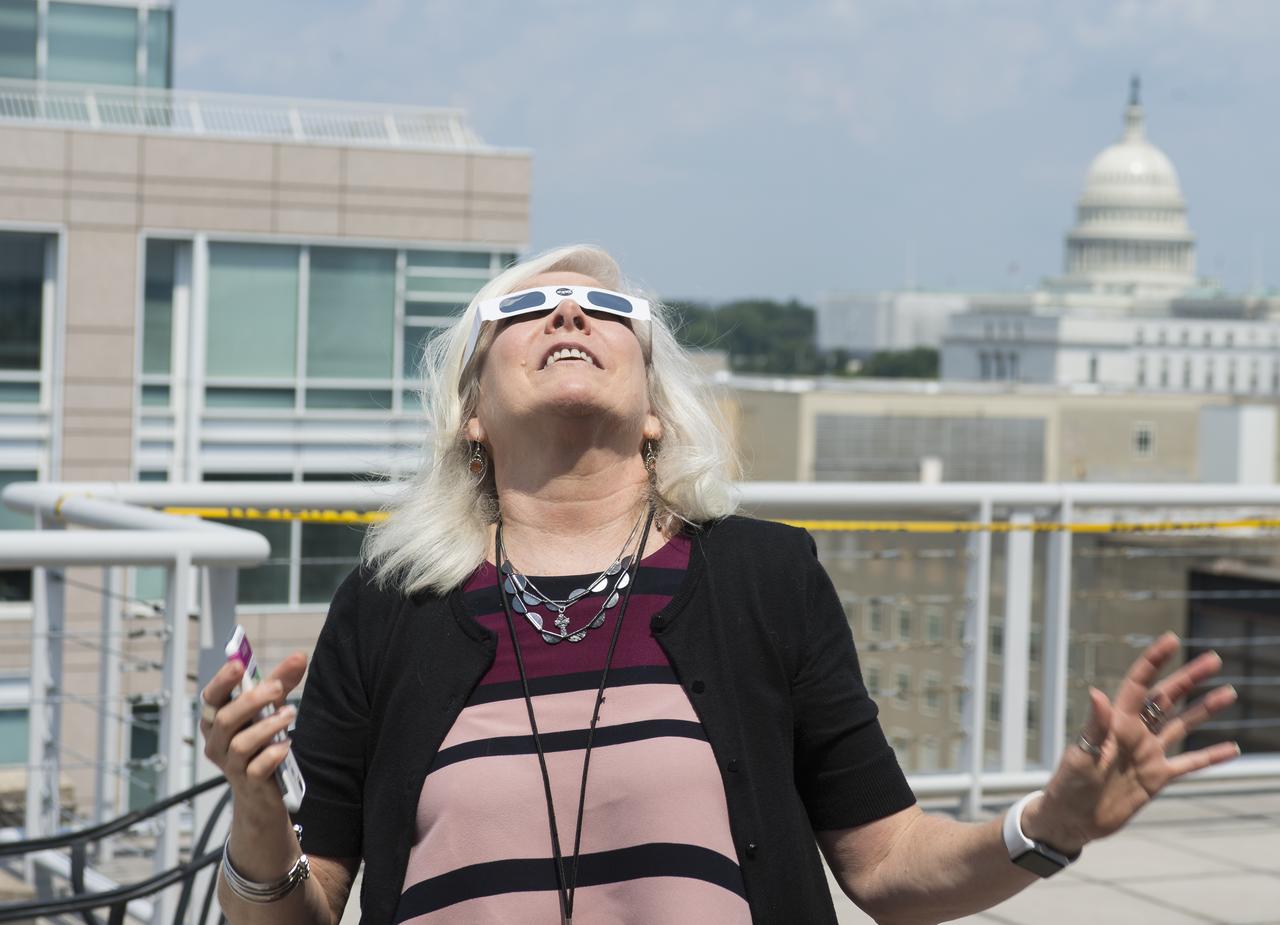
NASA employees and contractors use protective glasses to view a partial solar eclipse from NASA Headquarters Monday, Aug. 21, 2017 in Washington. A total solar eclipse swept across a narrow portion of the contiguous United States from Lincoln Beach, Oregon to Charleston, South Carolina. A partial solar eclipse was visible across the entire North American continent along with parts of South America, Africa, and Europe. Photo Credit: (NASA/Gwen Pitman)
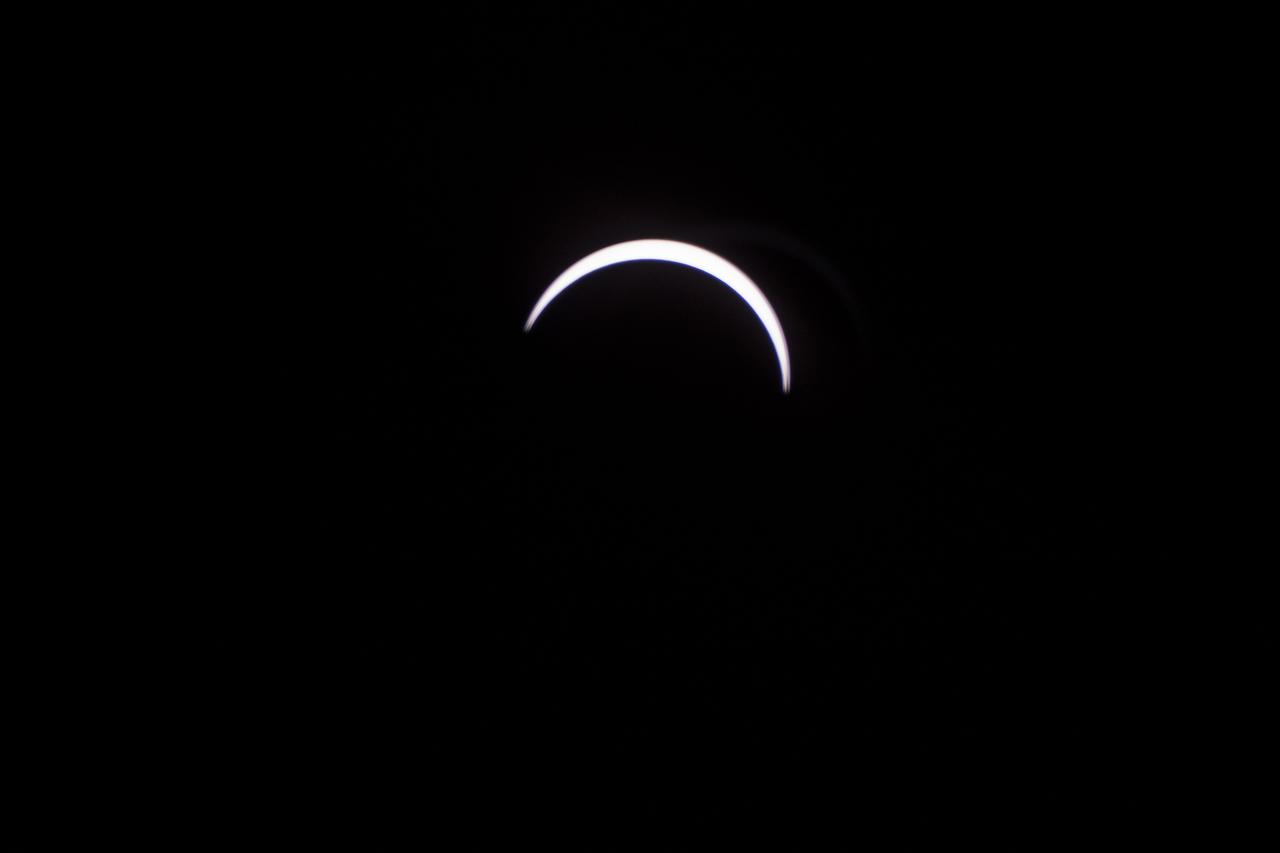
The Moon is seen passing in front of the Sun during a total solar eclipse on Monday, August 21, 2017 from onboard a NASA Gulfstream III aircraft flying 25,000 feet above the Oregon coast. A total solar eclipse swept across a narrow portion of the contiguous United States from Lincoln Beach, Oregon to Charleston, South Carolina. A partial solar eclipse was visible across the entire North American continent along with parts of South America, Africa, and Europe. Photo Credit: (NASA/Carla Thomas)

Visitors at the a NASA booth during the 2017 Solar Eclipse viewing event at the Oregon State Farigrounds, Salem, Oregon.
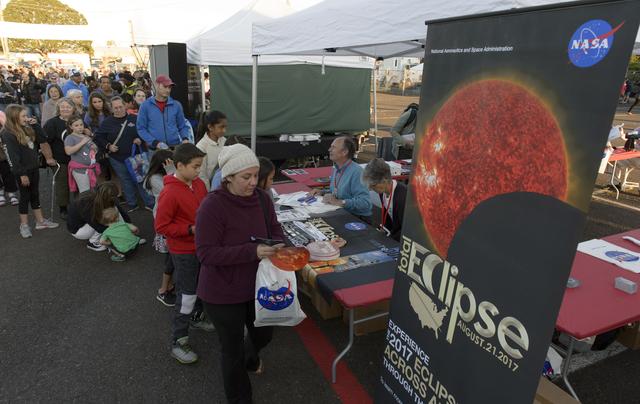
Visitors at the a NASA booth during the 2017 Solar Eclipse viewing event at the Oregon State Farigrounds, Salem, Oregon.
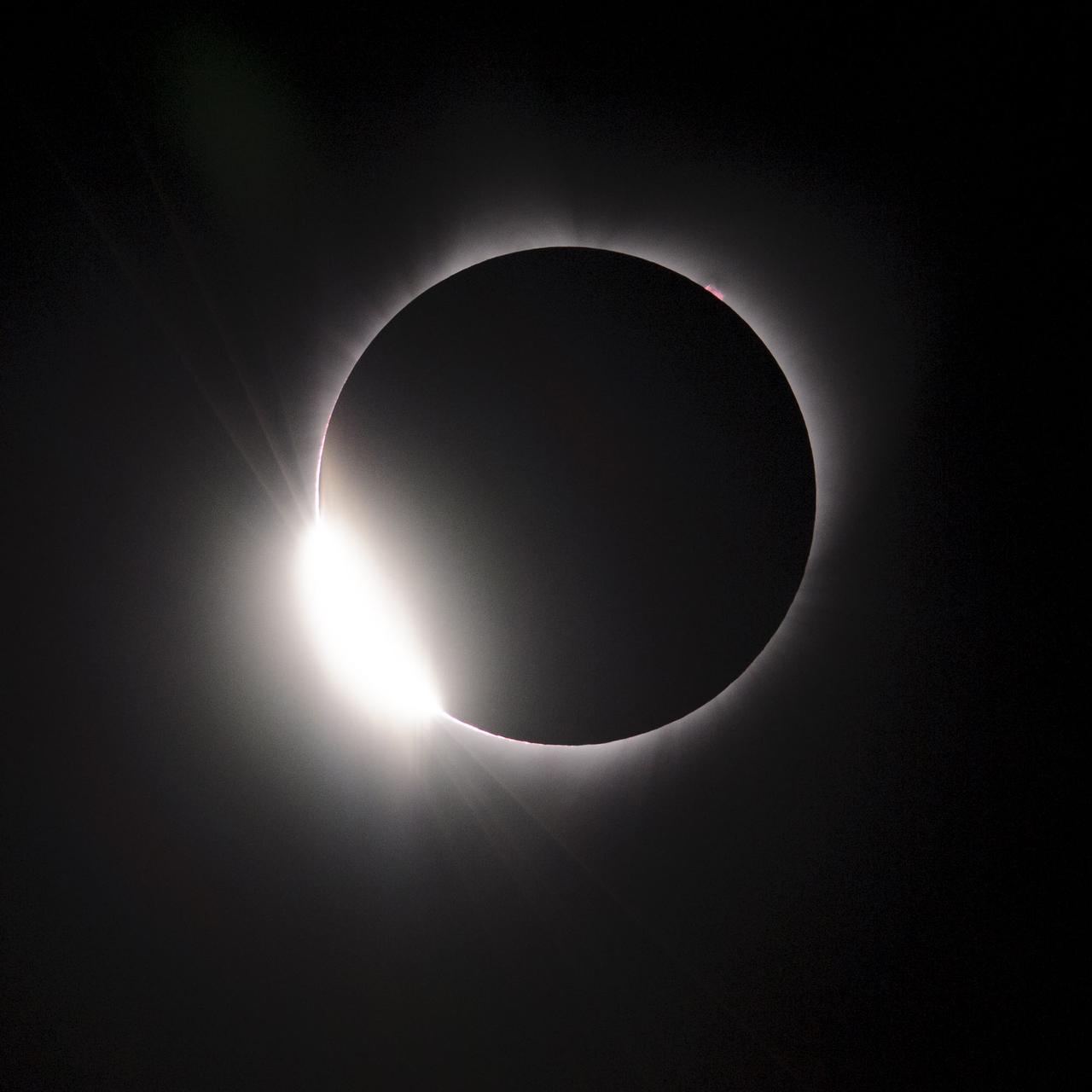
2017 Solar Eclipse first images from Oregon State Fair Grounds, Salem, Oregon. This image taken at 10:17:13 on August 21, 2017 as Oregon has almost reached totality.
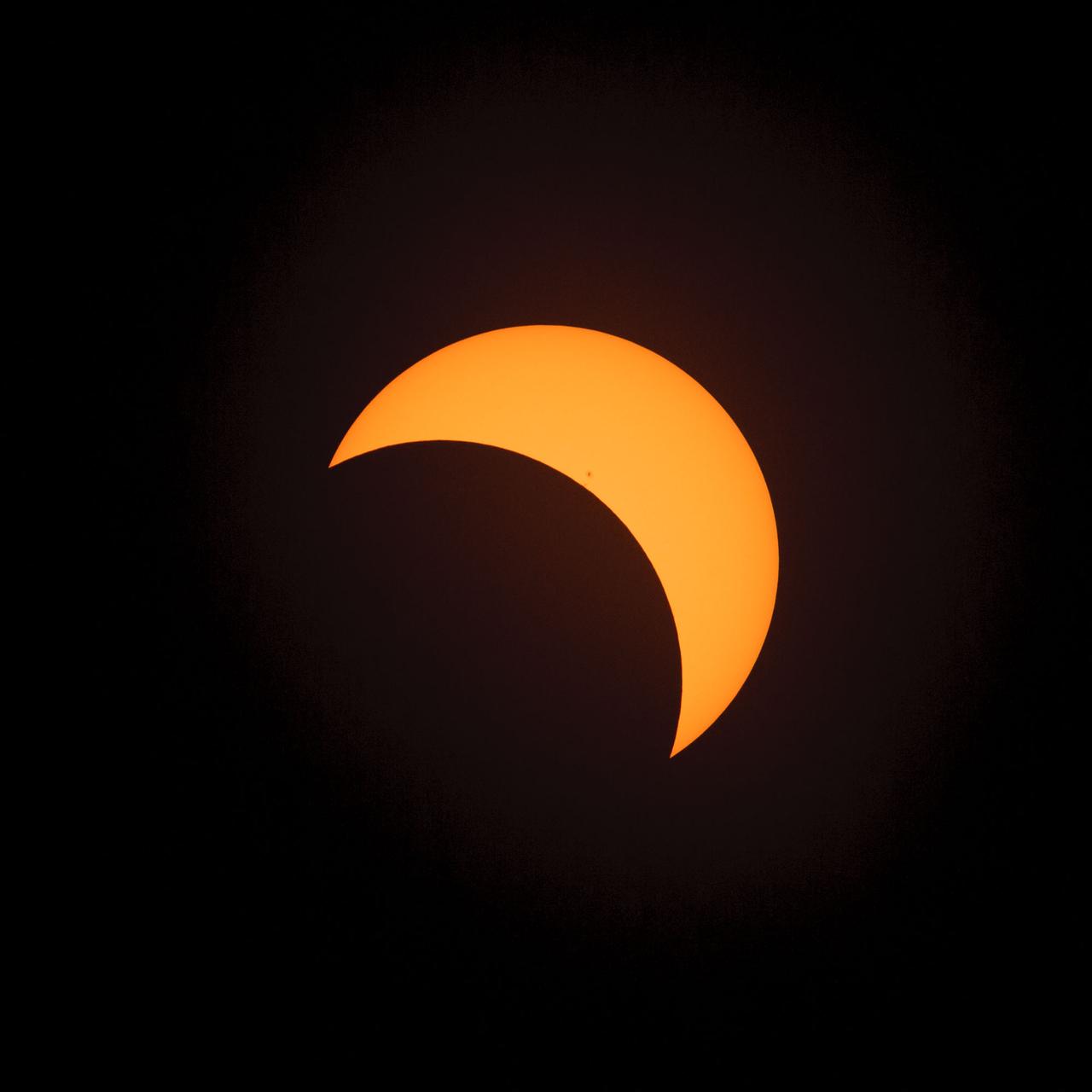
2017 Solar Eclipse first images from Oregon State Fair Grounds, Salem, Oregon. This image was taken at 10:44:10 on August 21, 2017 following totality.

2017 Solar Eclipse first images from Oregon State Fair Grounds, Salem, Oregon. This image taken at 10:18:30 on August 21, 2017 where they have reached totality.
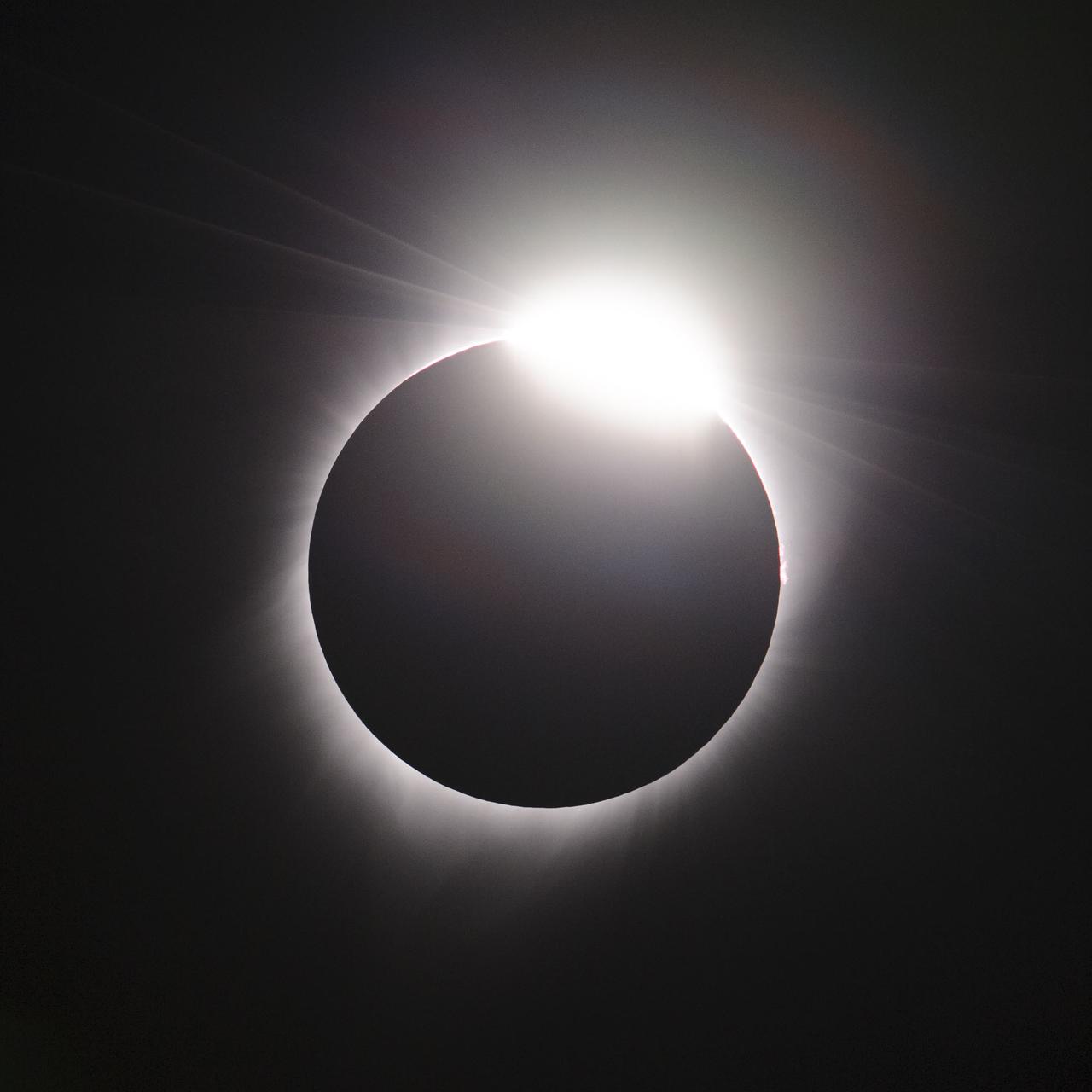
2017 Solar Eclipse first images from Oregon State Fair Grounds, Salem, Oregon. This image taken at 10:19:24 on August 21, 2017 as Oregon begins to see first light 'diamond' following totality.

Eirik Olsen, of Seattle, Washington, plays giant Jenga while waiting to watch the total solar eclipse in Madras, Oregon on Saturday, August 19, 2017. The eclipse will be sweeping across a narrow portion of the contiguous United States from Lincoln Beach, Oregon to Charleston, South Carolina on August 21. A partial solar eclipse will be visible across the entire North American continent along with parts of South America, Africa, and Europe. Photo Credit: (NASA/Aubrey Gemignani)

Robert Lightfoot, acting NASA administrator and Thomas Zurbuchen NASA AA for the science mission directorate view a partial eclipse solar eclipse Monday, August 21, 2017, from onboard a NASA Armstrong Flight Research Center’s Gulfstream III 35,000 feet above the Oregon Coast. A total solar eclipse swept across a narrow portion of the contiguous United States from Lincoln Beach, Oregon to Charleston, South Carolina. Photo Credit: (NASA/Carla Thomas)
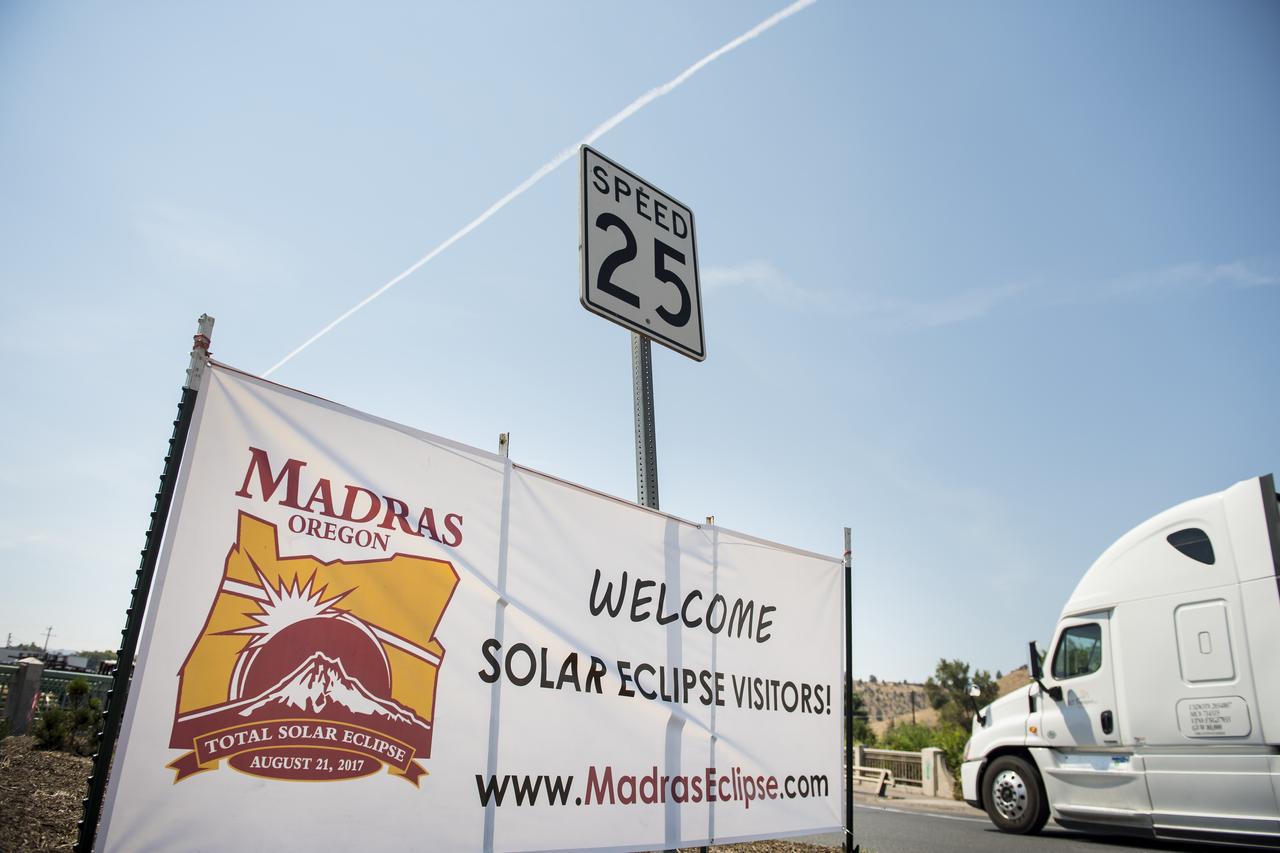
A welcome sign is seen along the roads in Madras, Oregon, where thousands of visitors are expected for the total solar eclipse, Saturday, August 19, 2017. The eclipse will be sweeping across a narrow portion of the contiguous United States from Lincoln Beach, Oregon to Charleston, South Carolina on August 21. A partial solar eclipse will be visible across the entire North American continent along with parts of South America, Africa, and Europe. Photo Credit: (NASA/Aubrey Gemignani)

Robert Lightfoot, acting NASA administrator and Thomas Zurbuchen NASA AA for the science mission directorate view a partial eclipse solar eclipse Monday, August 21, 2017, from onboard a NASA Armstrong Flight Research Center’s Gulfstream III 35,000 feet above the Oregon Coast. A total solar eclipse swept across a narrow portion of the contiguous United States from Lincoln Beach, Oregon to Charleston, South Carolina. Photo Credit: (NASA/Carla Thomas)

A sign is seen along the roads in Madras, Oregon, where thousands of visitors are expected for the total solar eclipse, Saturday, August 19, 2017. The eclipse will be sweeping across a narrow portion of the contiguous United States from Lincoln Beach, Oregon to Charleston, South Carolina on August 21. A partial solar eclipse will be visible across the entire North American continent along with parts of South America, Africa, and Europe. Photo Credit: (NASA/Aubrey Gemignani)
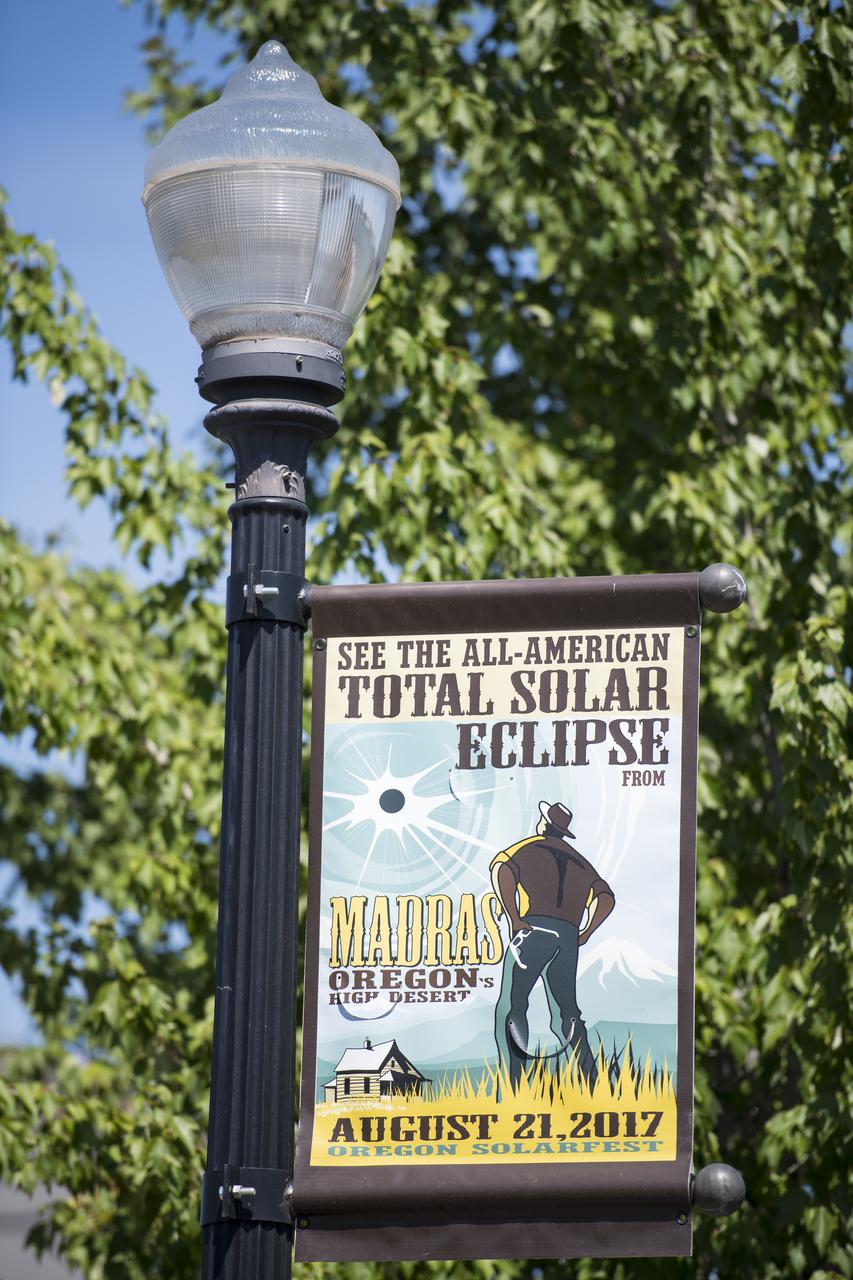
A sign is seen along the roads in Madras, Oregon, where thousands of visitors are expected for the total solar eclipse, Saturday, August 19, 2017. The eclipse will be sweeping across a narrow portion of the contiguous United States from Lincoln Beach, Oregon to Charleston, South Carolina on August 21. A partial solar eclipse will be visible across the entire North American continent along with parts of South America, Africa, and Europe. Photo Credit: (NASA/Aubrey Gemignani)

Robert Lightfoot, acting NASA administrator and Thomas Zurbuchen NASA AA for the science mission directorate view a partial eclipse solar eclipse Monday, August 21, 2017, from onboard a NASA Armstrong Flight Research Center’s Gulfstream III 35,000 feet above the Oregon Coast. A total solar eclipse swept across a narrow portion of the contiguous United States from Lincoln Beach, Oregon to Charleston, South Carolina. Photo Credit: (NASA/Carla Thomas)

Smokey Bear, left, and Judy Reese of the Crooked River National Grassland, right, wave at passersby as crowds arrive to watch the total solar eclipse in Madras, Oregon on Saturday, August 19, 2017. The eclipse will be sweeping across a narrow portion of the contiguous United States from Lincoln Beach, Oregon to Charleston, South Carolina on August 21. A partial solar eclipse will be visible across the entire North American continent along with parts of South America, Africa, and Europe. Photo Credit: (NASA/Aubrey Gemignani)
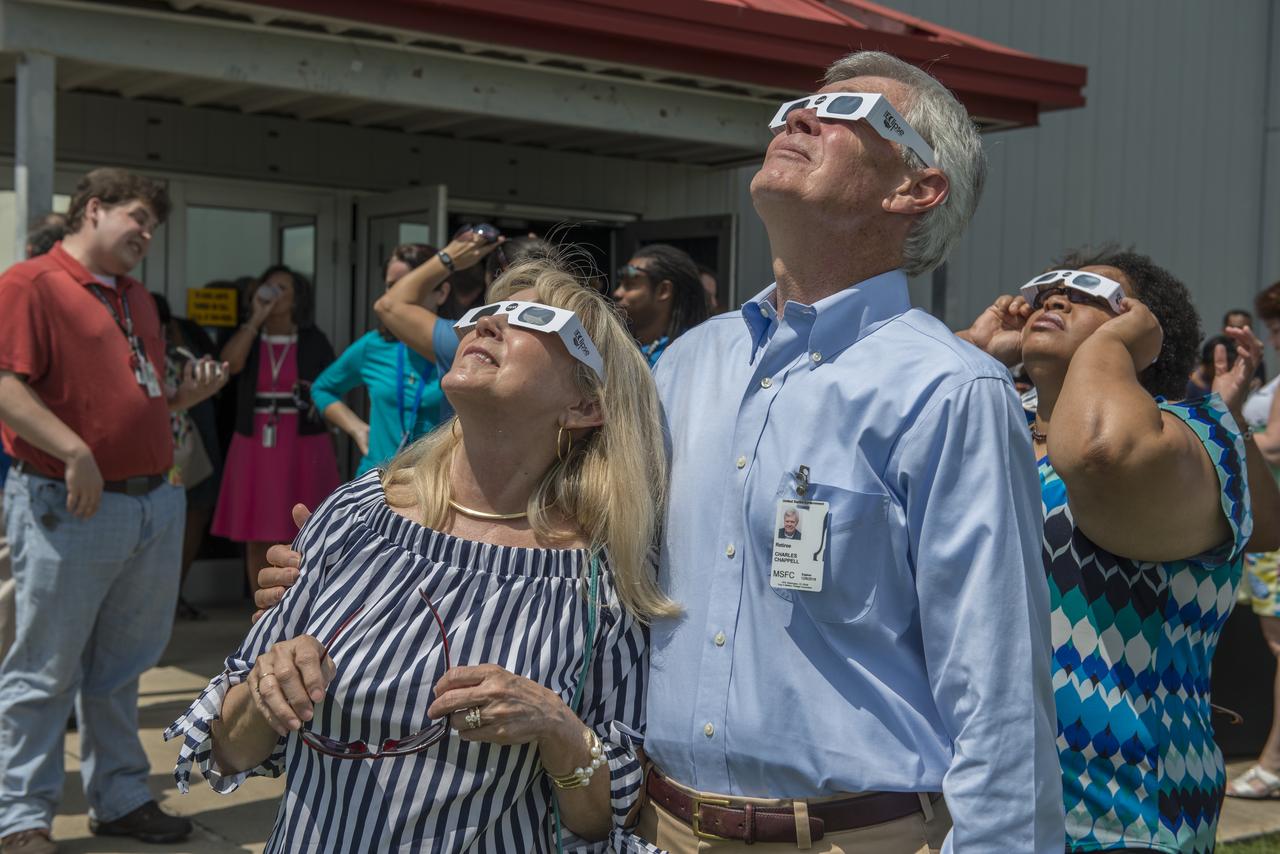
Former Spacelab 1 Mission scientist Rick Chappell views the August 21, 2017 solar eclipse with his wife. Chappell, a former associate director for science at Marshall and now a physics professor at Vanderbilt University in Nashville, joined a throng of Marshall personnel to marvel at the eclipse.

Lili Bornio, right, and her mom, set up to sell eclipse shirts and stickers, that she designed, to raise money for medical school, in Madras, Oregon on Saturday, August 19, 2017. Thousands of visitors are expected in Madras to view the total solar eclipse. The eclipse will be sweeping across a narrow portion of the contiguous United States from Lincoln Beach, Oregon to Charleston, South Carolina on August 21. A partial solar eclipse will be visible across the entire North American continent along with parts of South America, Africa, and Europe. Photo Credit: (NASA/Aubrey Gemignani)

This composite image of seven pictures shows the progression of a partial solar eclipse near from Ross Lake, Northern Cascades National Park, Washington on Monday, Aug. 21, 2017. The second to the last frame shows the International Space Station, with a crew of six onboard, in silhouette as it transits the Sun at roughly five miles per second. A total solar eclipse swept across a narrow portion of the contiguous United States from Lincoln Beach, Oregon to Charleston, South Carolina. A partial solar eclipse was visible across the entire North American continent along with parts of South America, Africa, and Europe. Photo Credit: (NASA/Bill Ingalls)

Carol Jensen, a produce purveyor for Black Bear Diner, is seen displaying solar glasses for sale at Black Bear Diner in Madras, Oregon on Saturday, August 19, 2017. She is volunteering her time to help prepare for the crowds arriving to watch the total solar eclipse. The eclipse will be sweeping across a narrow portion of the contiguous United States from Lincoln Beach, Oregon to Charleston, South Carolina on August 21. A partial solar eclipse will be visible across the entire North American continent along with parts of South America, Africa, and Europe. Photo Credit: (NASA/Aubrey Gemignani)

A total solar eclipse is seen on Monday, August 21, 2017 from onboard a NASA Armstrong Flight Research Center’s Gulfstream III 25,000 feet above the Oregon coast. A total solar eclipse swept across a narrow portion of the contiguous United States from Lincoln Beach, Oregon to Charleston, South Carolina. Photo Credit: (NASA/Carla Thomas)
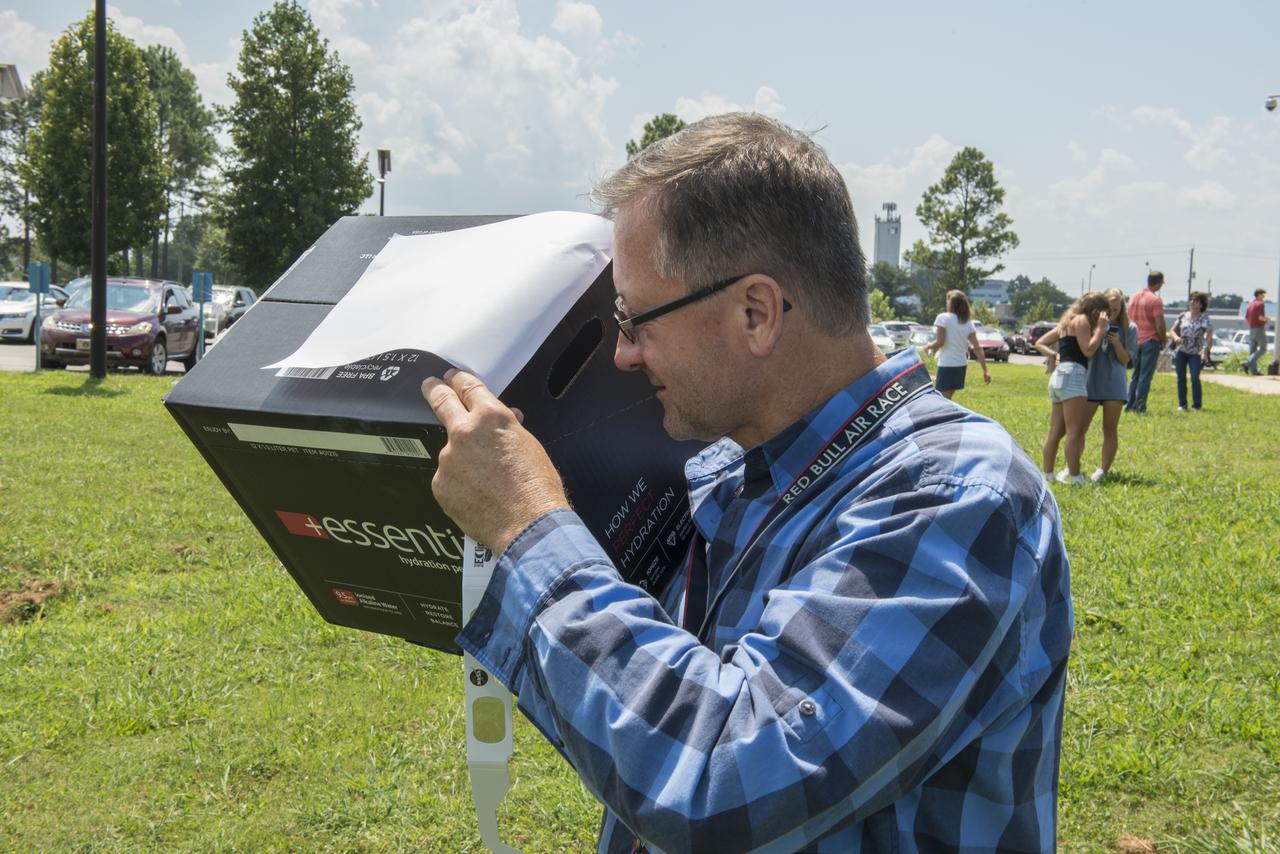
Marshall Space Flight Center employee, Phillip Domen, safely views the August 21, 2017 solar eclipse with his homemade viewing box. The Huntsville area experienced 97 percent occultation, nearly a complete blocking out of the sun by the orbit of Earth's moon. The next opportunity to view a solar eclipse in the eastern and central United States will occur in April 2024.
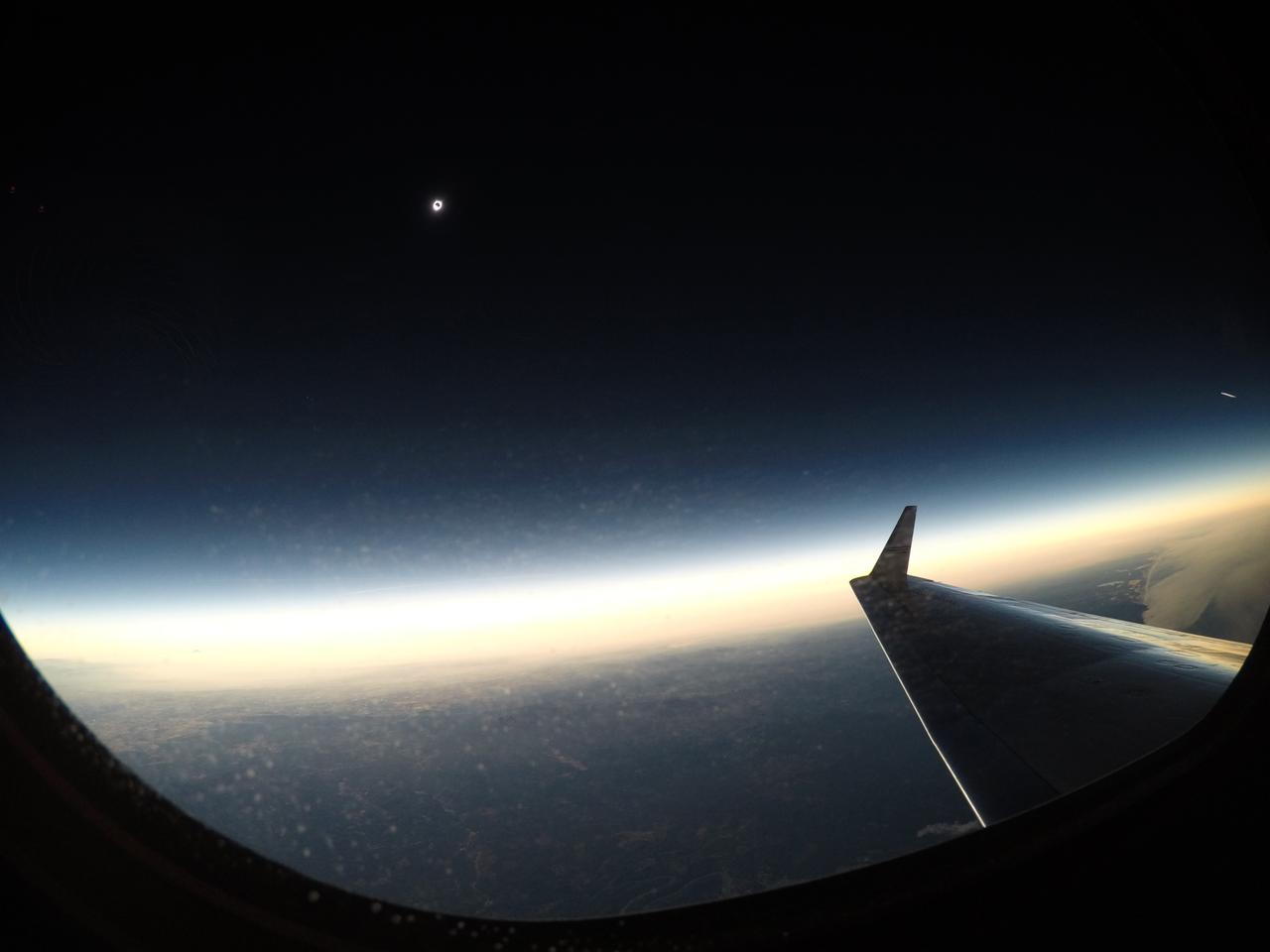
A total solar eclipse is seen on Monday, August 21, 2017 from onboard a NASA Armstrong Flight Research Center’s Gulfstream III 25,000 feet above the Oregon coast. A total solar eclipse swept across a narrow portion of the contiguous United States from Lincoln Beach, Oregon to Charleston, South Carolina. Photo Credit: (NASA/Carla Thomas)
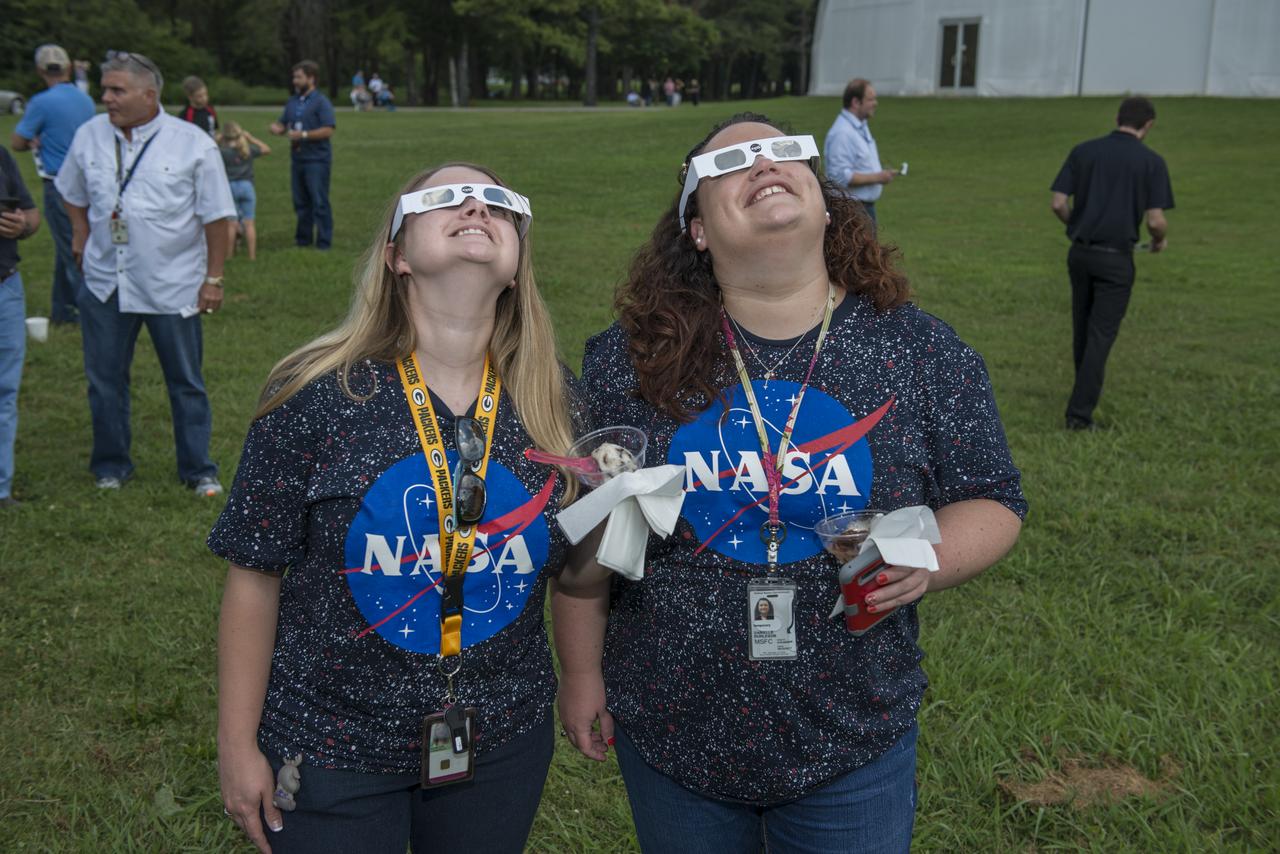
Krisdon Manecke and Danielle Burleson of the Office of the Chief Information Officer (OCIO) view the August 21, 2017 solar eclipse at the Marshall Space Flight Center’s viewing opportunity at the activities building. The Huntsville area experienced 97 percent occultation, nearly a complete blocking out of the sun by the orbit of Earth's moon. The next opportunity to view a solar eclipse in the eastern and central United States will occur in April 2024.
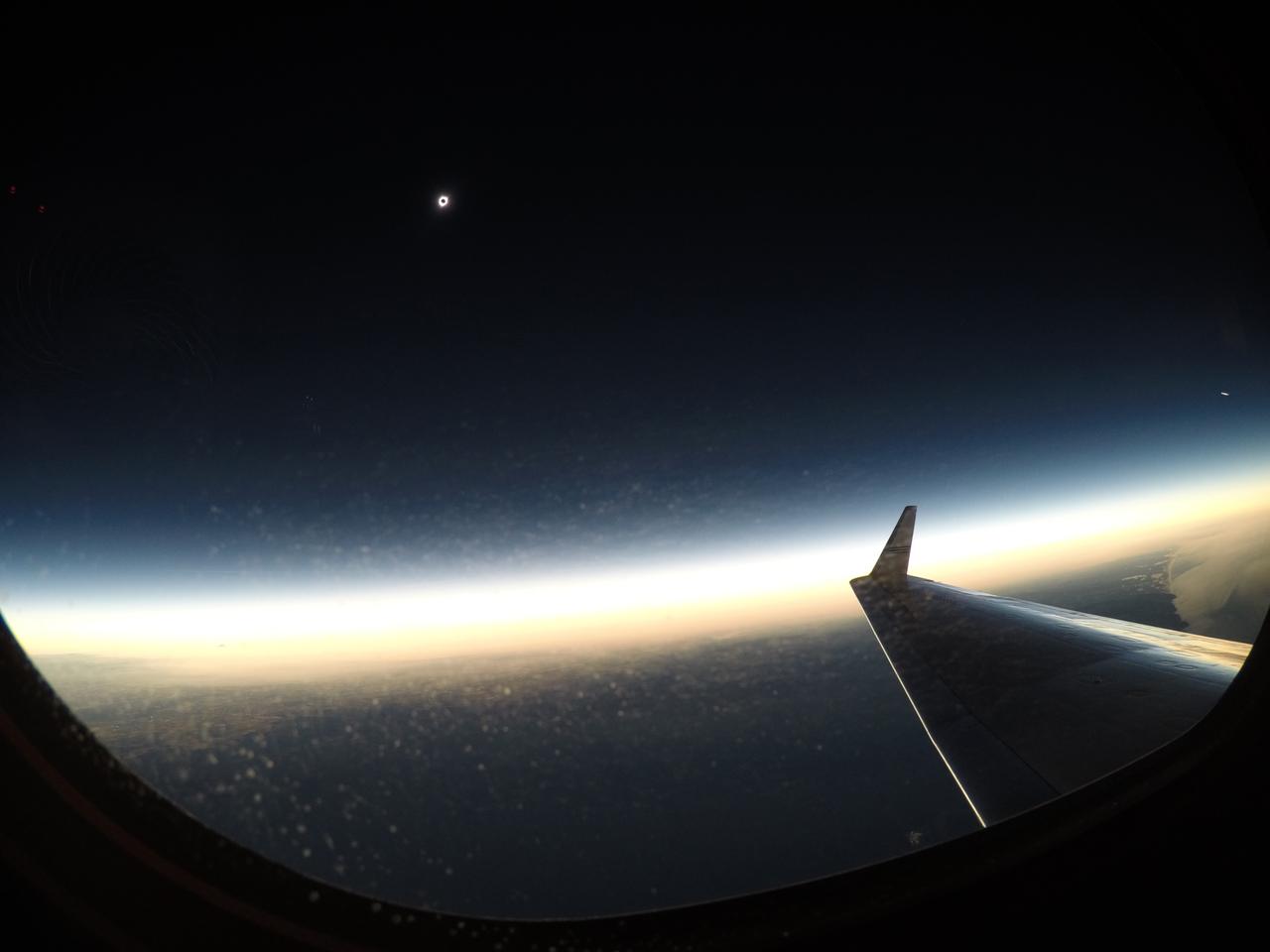
A total solar eclipse is seen on Monday, August 21, 2017 from onboard a NASA Armstrong Flight Research Center’s Gulfstream III 25,000 feet above the Oregon coast. A total solar eclipse swept across a narrow portion of the contiguous United States from Lincoln Beach, Oregon to Charleston, South Carolina. Photo Credit: (NASA/Carla Thomas)
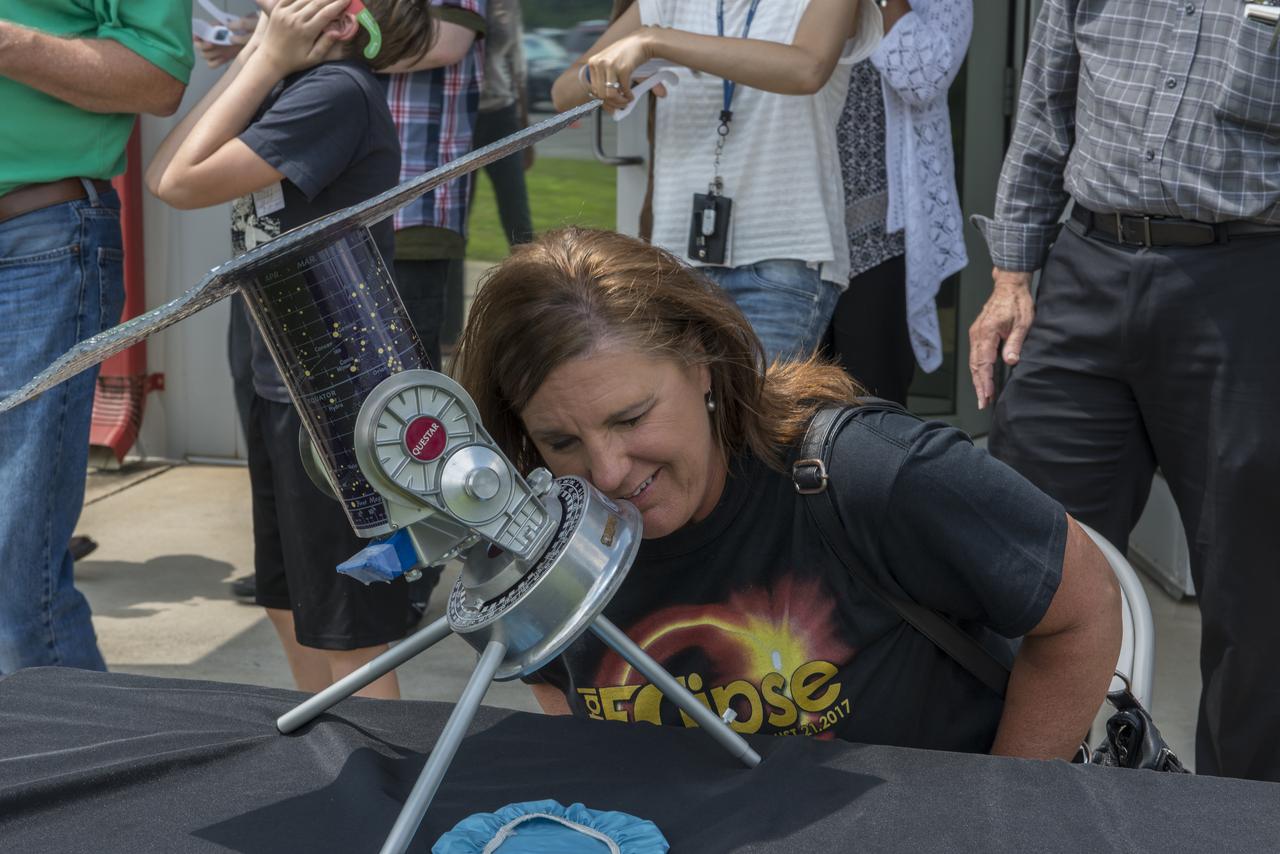
Judy Darwin of the Marshall Space Flight Center’s Office of the Chief Information Officer (CIO) views the August 21, 2017 solar eclipse through the telescope set up for Marshall employees. The Huntsville area experienced 97 percent occultation, nearly a complete blocking out of the sun by the orbit of Earth's moon. The next opportunity to view a solar eclipse in the eastern and central United States will occur in April 2024.

Robert Wilson of the Solar/Solar terrestrial Studies team at the National Space Science and Technology Center, a joint research and collaborative think tank partnership of the University of Alabama in Huntsville (UAH) and the Marshall Space Flight Center, adjusts his telescope which is set up as a viewing opportunity for MSFC employees prior to the August 21, 2017 solar eclipse event. The Huntsville area experienced 97 percent occultation, nearly a complete blocking out of the sun by the orbit of Earth's moon. The next opportunity to view a solar eclipse in the eastern and central United States will occur in April 2024.
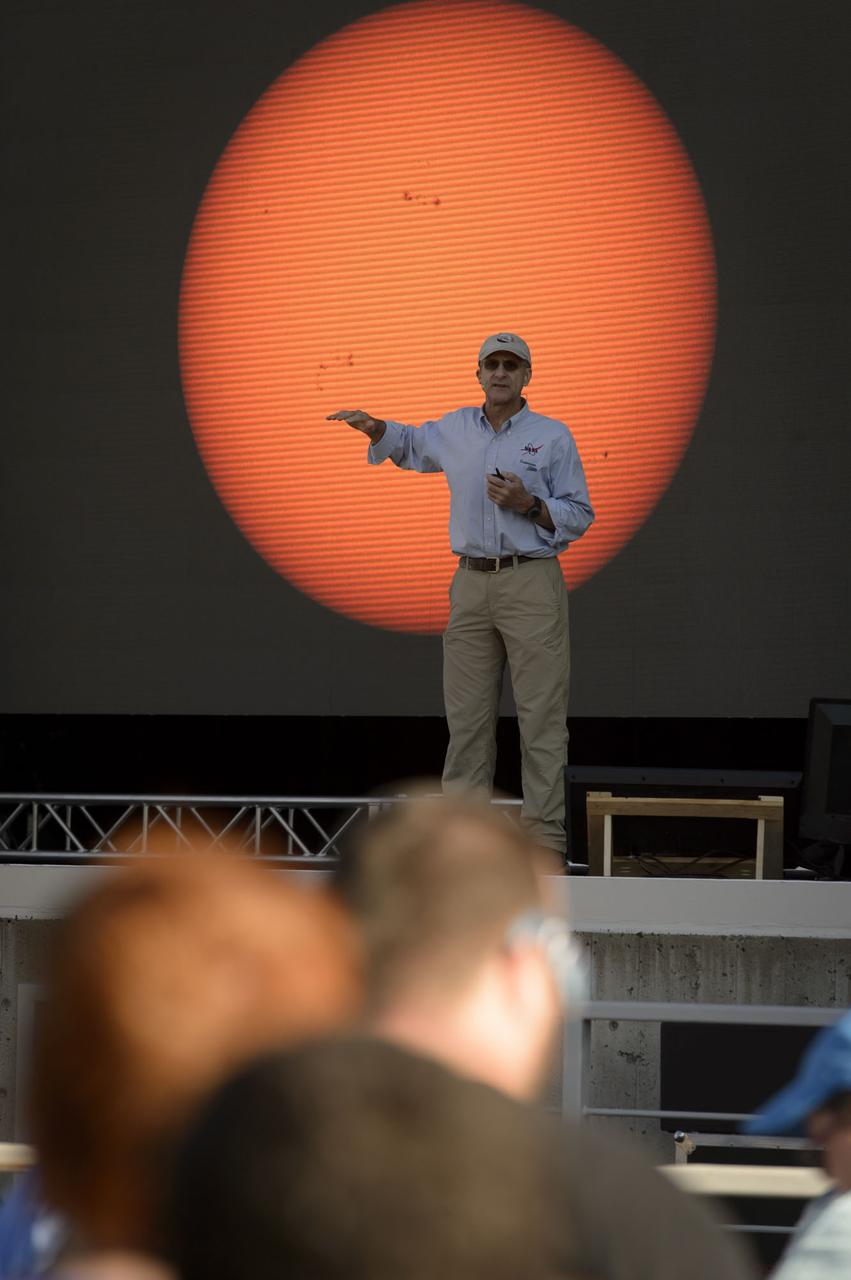
Astronaut Don Pettit gives an overview of the 2017 Solar Eclipse during the viewing event at the Oregon State Fair Grounds, Salem, Oregon
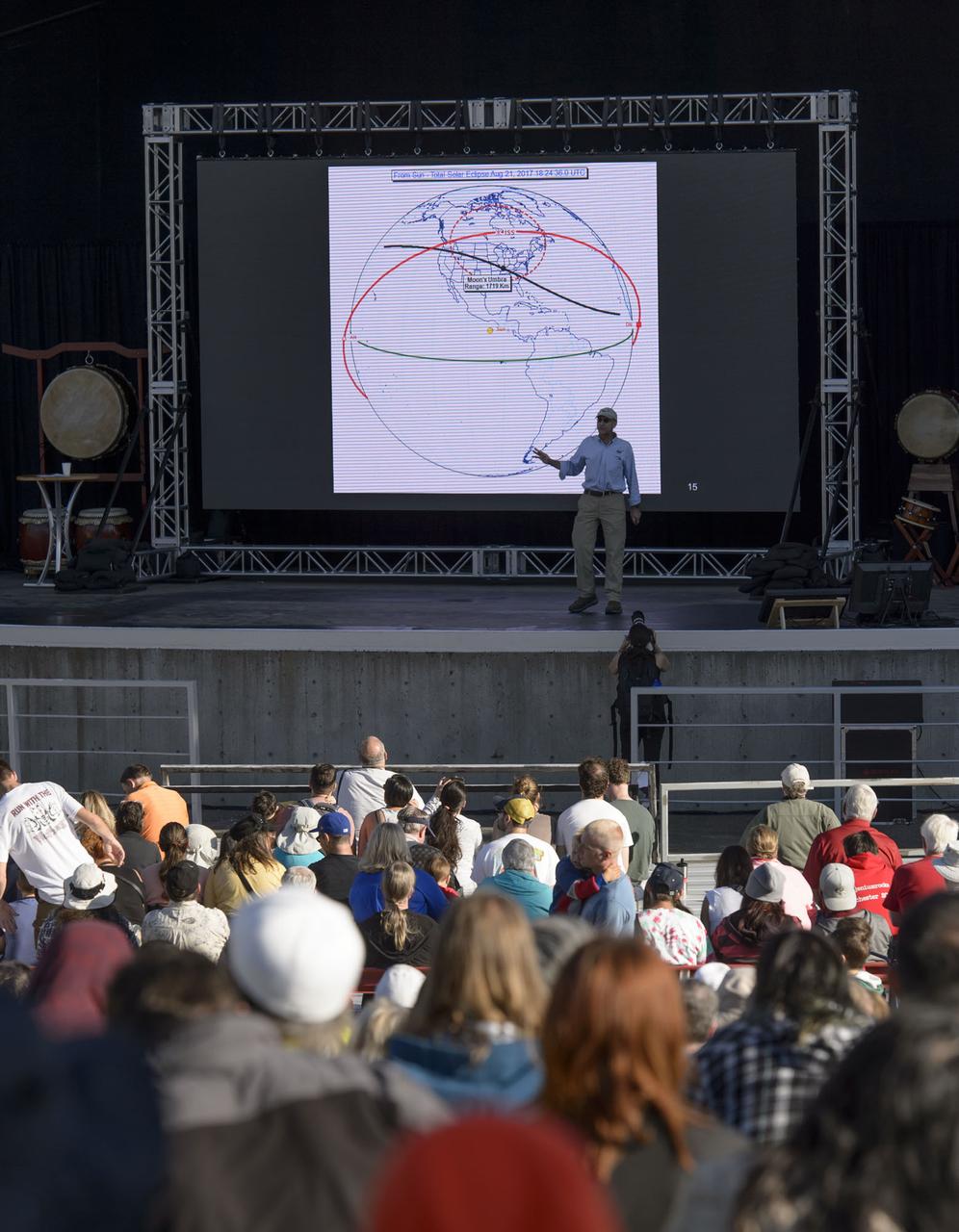
Astronaut Don Pettit gives an overview of the 2017 Solar Eclipse viewing event at the Oregon State Farigrounds, Salem, Orgon.
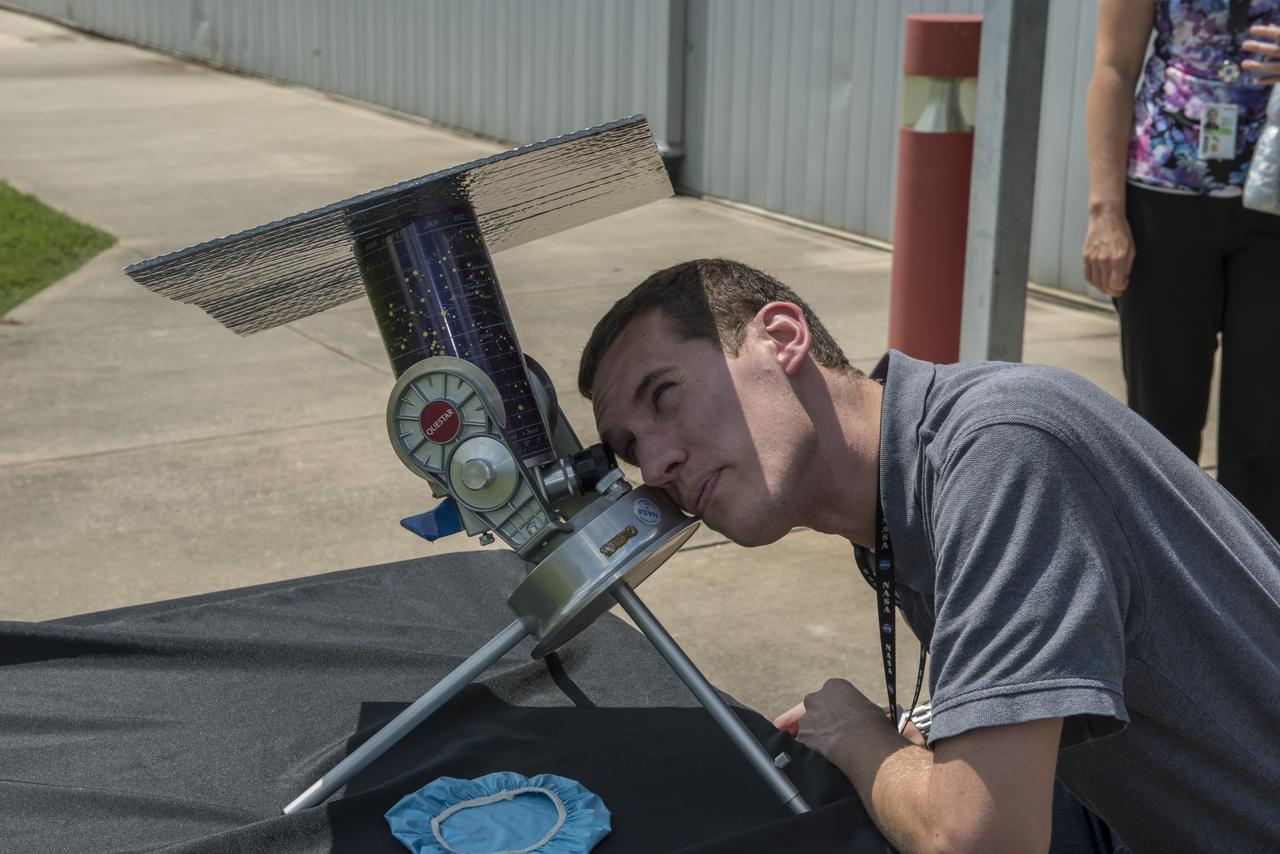
Brad Addona views the beginning of the August 21, 2017 at a viewing event for Marshall Space Flight Center’s activities building for Marshall employees. The Huntsville area experienced 97 percent occultation, nearly a complete blocking out of the sun by the orbit of Earth's moon. The next opportunity to view a solar eclipse in the eastern and central United States will occur in April 2024.
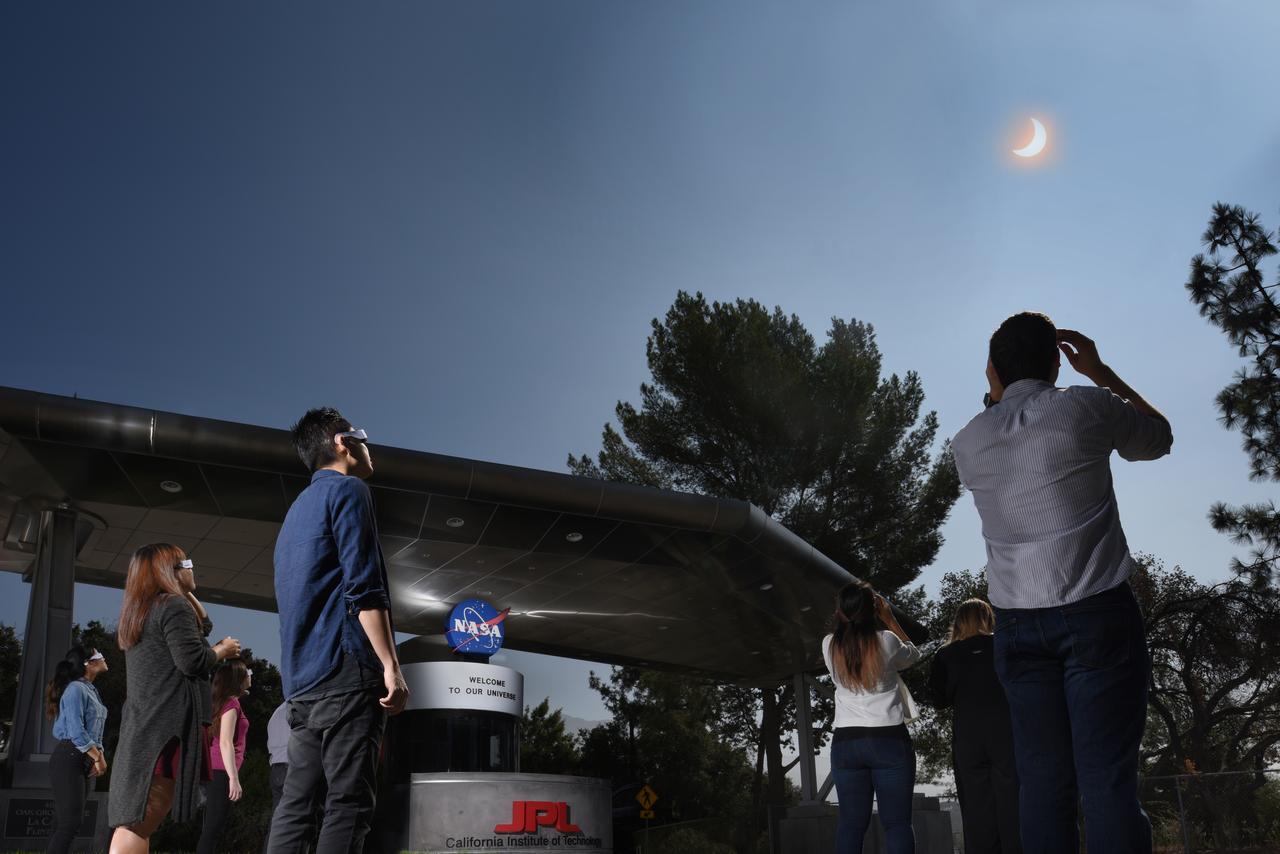
Employees and visitors to JPL stopped to watch the 2017 solar eclipse.
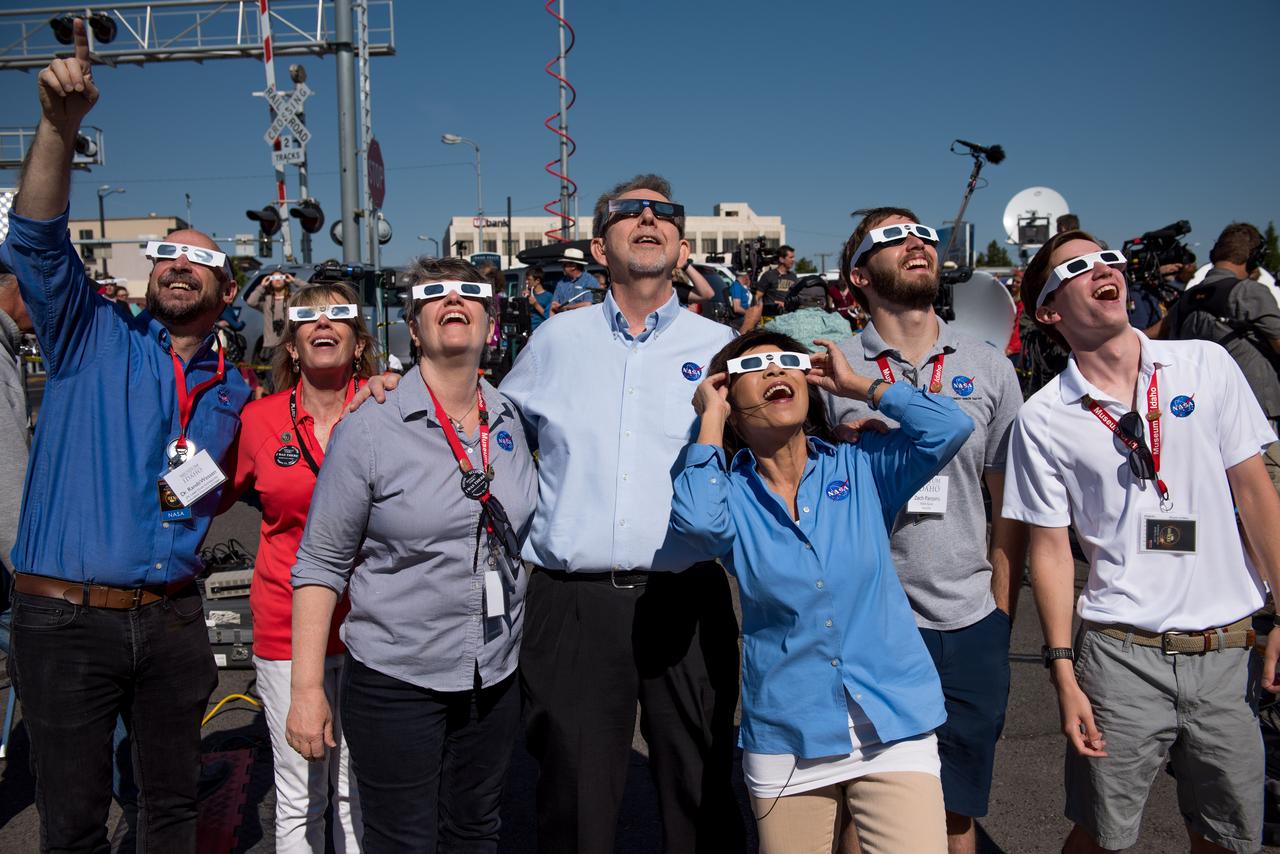
NASA employees enjoy the 2017 total solar eclipse in Idaho Falls, Idaho.
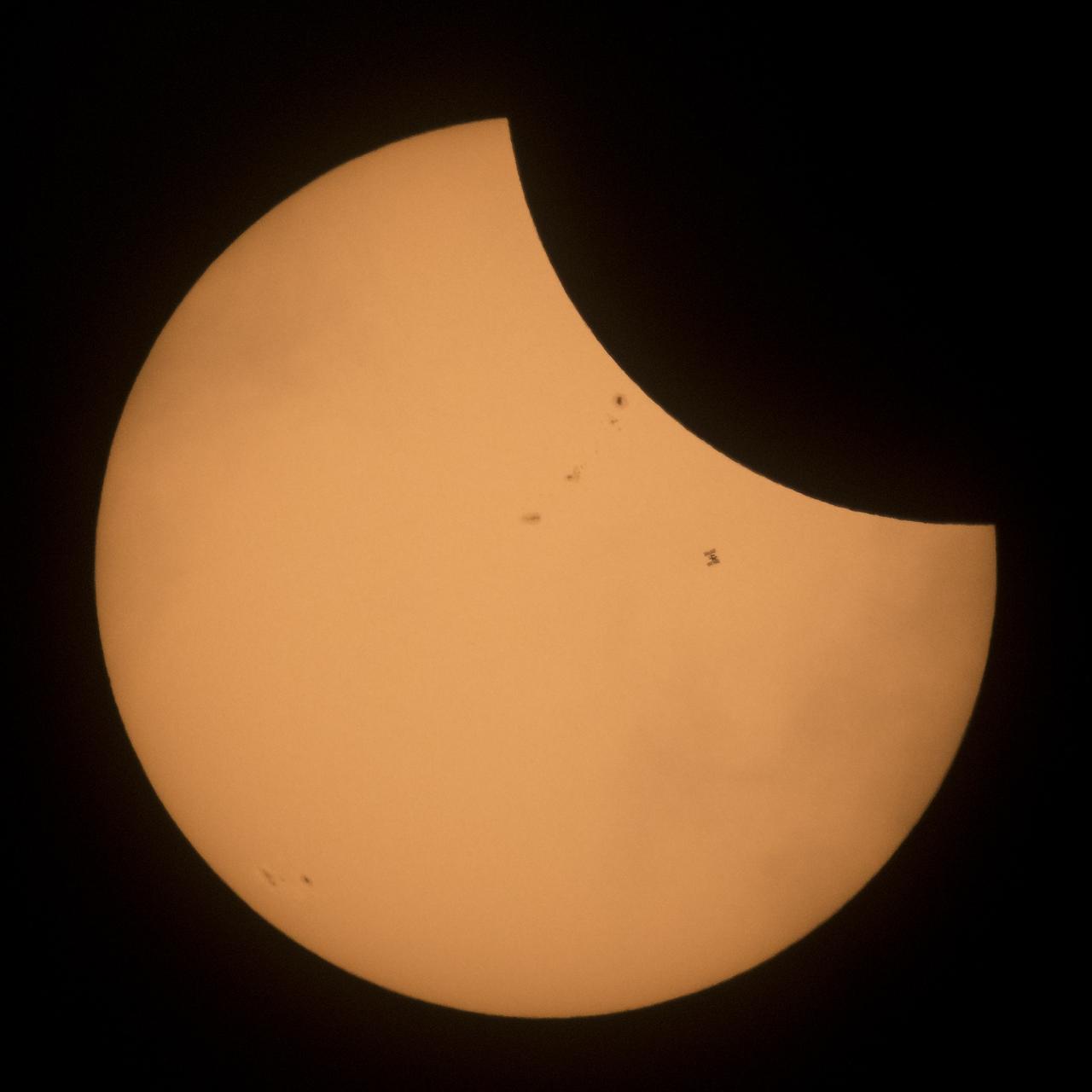
The International Space Station, with a crew of six onboard, is seen in silhouette as it transits the Sun at roughly five miles per second during a partial solar eclipse, Monday, Aug. 21, 2017 near Banner, Wyoming. Onboard as part of Expedition 52 are: NASA astronauts Peggy Whitson, Jack Fischer, and Randy Bresnik; Russian cosmonauts Fyodor Yurchikhin and Sergey Ryazanskiy; and ESA (European Space Agency) astronaut Paolo Nespoli. A total solar eclipse swept across a narrow portion of the contiguous United States from Lincoln Beach, Oregon to Charleston, South Carolina. A partial solar eclipse was visible across the entire North American continent along with parts of South America, Africa, and Europe. Photo Credit: (NASA/Joel Kowsky)
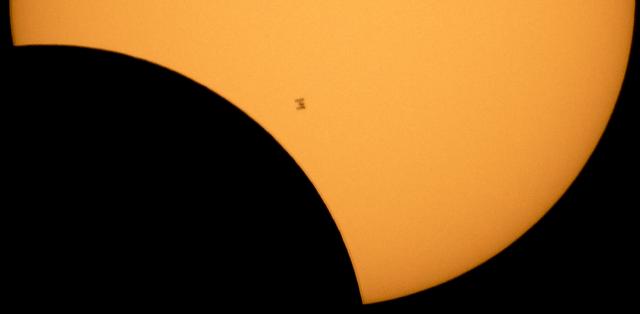
The International Space Station, with a crew of six onboard, is seen in silhouette as it transits the Sun at roughly five miles per second during a partial solar eclipse, Monday, Aug. 21, 2017 from Ross Lake, Northern Cascades National Park, Washington. Onboard as part of Expedition 52 are: NASA astronauts Peggy Whitson, Jack Fischer, and Randy Bresnik; Russian cosmonauts Fyodor Yurchikhin and Sergey Ryazanskiy; and ESA (European Space Agency) astronaut Paolo Nespoli. A total solar eclipse swept across a narrow portion of the contiguous United States from Lincoln Beach, Oregon to Charleston, South Carolina. A partial solar eclipse was visible across the entire North American continent along with parts of South America, Africa, and Europe. Photo Credit: (NASA/Bill Ingalls)
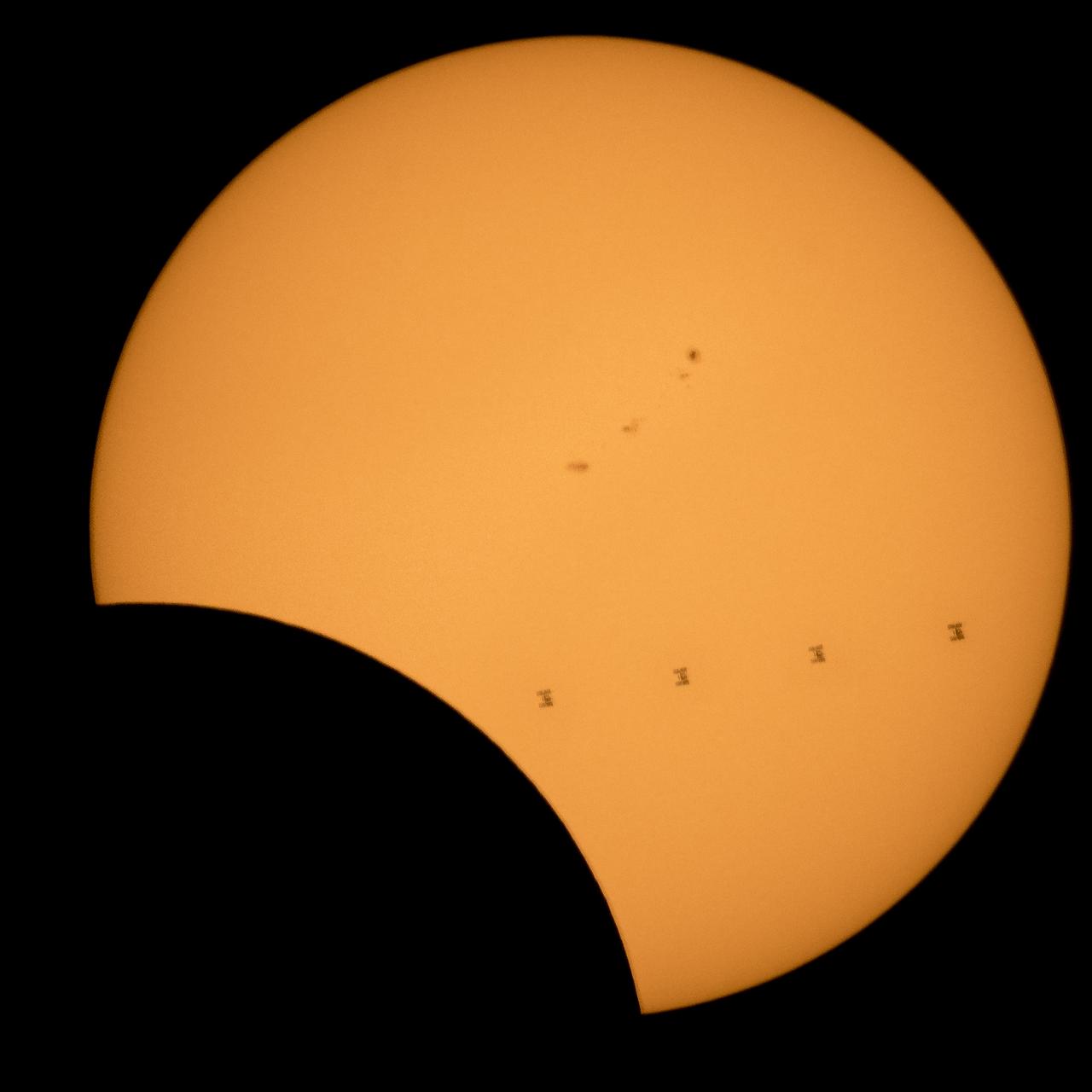
This composite image, made from 4 frames, shows the International Space Station, with a crew of six onboard, as it transits the Sun at roughly five miles per second during a partial solar eclipse, Monday, Aug. 21, 2017 from , Northern Cascades National Park in Washington. Onboard as part of Expedition 52 are: NASA astronauts Peggy Whitson, Jack Fischer, and Randy Bresnik; Russian cosmonauts Fyodor Yurchikhin and Sergey Ryazanskiy; and ESA (European Space Agency) astronaut Paolo Nespoli. A total solar eclipse swept across a narrow portion of the contiguous United States from Lincoln Beach, Oregon to Charleston, South Carolina. A partial solar eclipse was visible across the entire North American continent along with parts of South America, Africa, and Europe. Photo Credit: (NASA/Bill Ingalls)
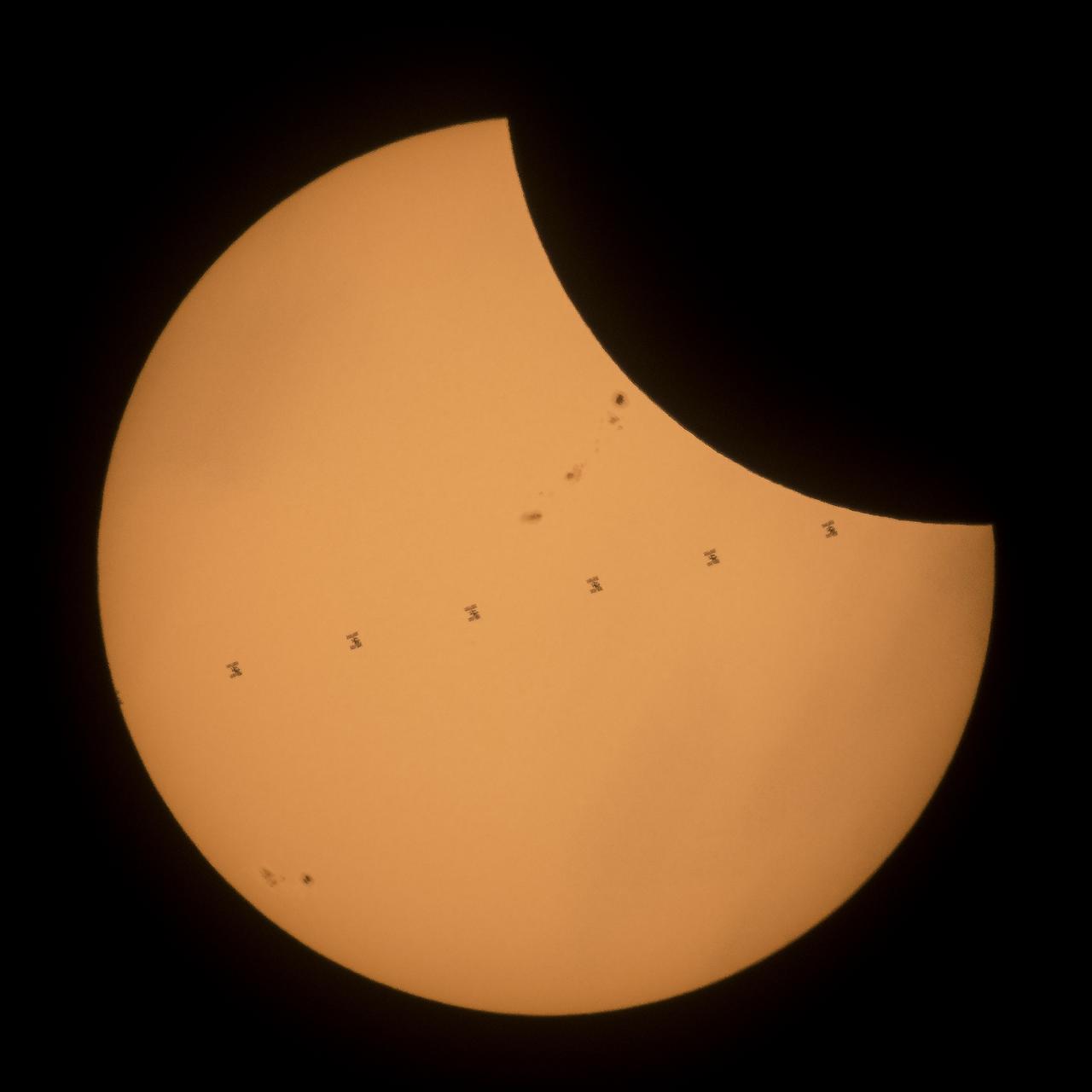
This composite image, made from seven frames, shows the International Space Station, with a crew of six onboard, as it transits the Sun at roughly five miles per second during a partial solar eclipse, Monday, Aug. 21, 2017 near Banner, Wyoming. Onboard as part of Expedition 52 are: NASA astronauts Peggy Whitson, Jack Fischer, and Randy Bresnik; Russian cosmonauts Fyodor Yurchikhin and Sergey Ryazanskiy; and ESA (European Space Agency) astronaut Paolo Nespoli. A total solar eclipse swept across a narrow portion of the contiguous United States from Lincoln Beach, Oregon to Charleston, South Carolina. A partial solar eclipse was visible across the entire North American continent along with parts of South America, Africa, and Europe. Photo Credit: (NASA/Joel Kowsky)
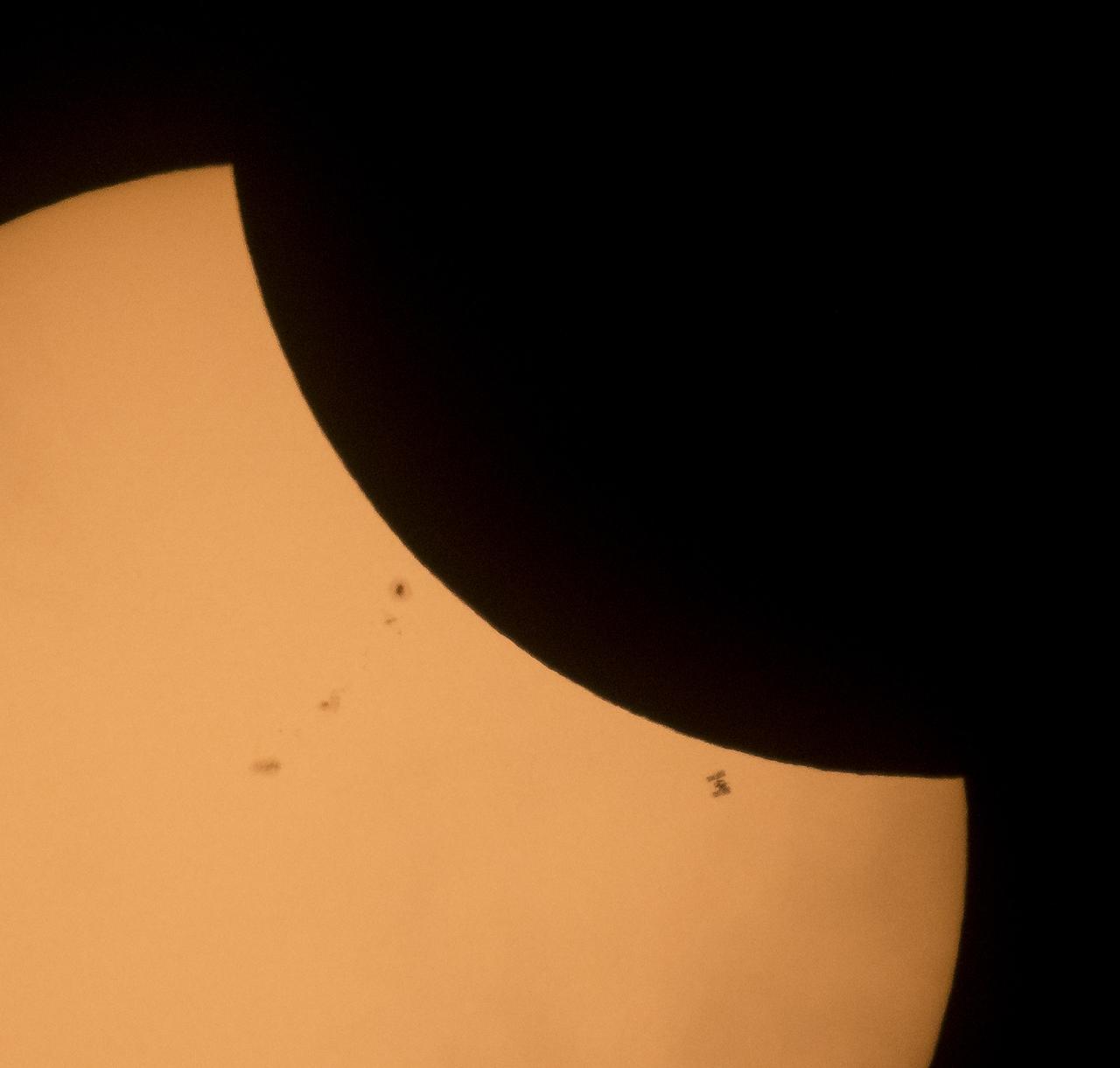
The International Space Station, with a crew of six onboard, is seen in silhouette as it transits the Sun at roughly five miles per second during a partial solar eclipse, Monday, Aug. 21, 2017 near Banner, Wyoming. Onboard as part of Expedition 52 are: NASA astronauts Peggy Whitson, Jack Fischer, and Randy Bresnik; Russian cosmonauts Fyodor Yurchikhin and Sergey Ryazanskiy; and ESA (European Space Agency) astronaut Paolo Nespoli. A total solar eclipse swept across a narrow portion of the contiguous United States from Lincoln Beach, Oregon to Charleston, South Carolina. A partial solar eclipse was visible across the entire North American continent along with parts of South America, Africa, and Europe. Photo Credit: (NASA/Joel Kowsky)

The crowd at a NASA event during the 2017 total solar eclipse in Idaho Falls, Idaho

Juniper Doucette with her mother Chloe Doucette, head of education at the museum of Idaho Falls, celebrate the 2017 total solar eclipse.

Juniper Doucette and her mother Chloe Doucette, head of education at the museum of Idaho Falls, enjoying the 2017 total solar eclipse.
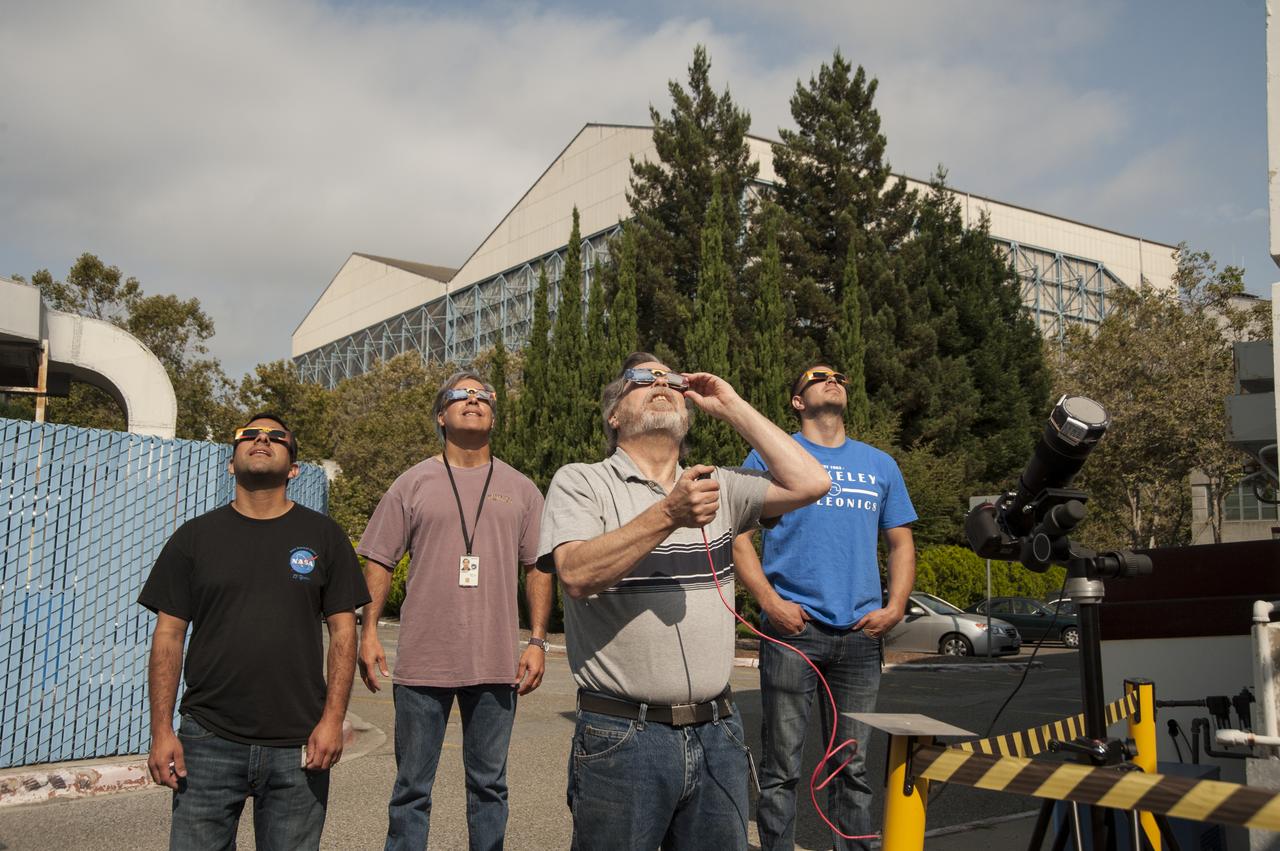
Taking a break from their duties at the Ames Vertical Gun Range to look up at the eclipse over Ames Research Center in Mountain View are from left to right are Alfredo "Freddie" Perez, Chuck Cornelison, Don Bowling, Adam Parish

Millions of excited people in the U.S. traveled many miles see a total eclipse, and what a show it was. The SDO spacecraft was not so fortunate: its orbit only allowed it to observe a partial eclipse that at its peak covered only about 14 per cent of the sun (Aug. 21, 2017). Most of the people in the U.S. (weather permitting) observed at least 60 per cent coverage of the sun by the Moon. The good news for SDO is that it gets to see partial and solar eclipses several times a year. So, it all kind of balances out, in a way. An animation is available at https://photojournal.jpl.nasa.gov/catalog/PIA21929

NASA Ames invited the public to participate in the 2017 Solar Eclipse viewing event on August 21, 2017.
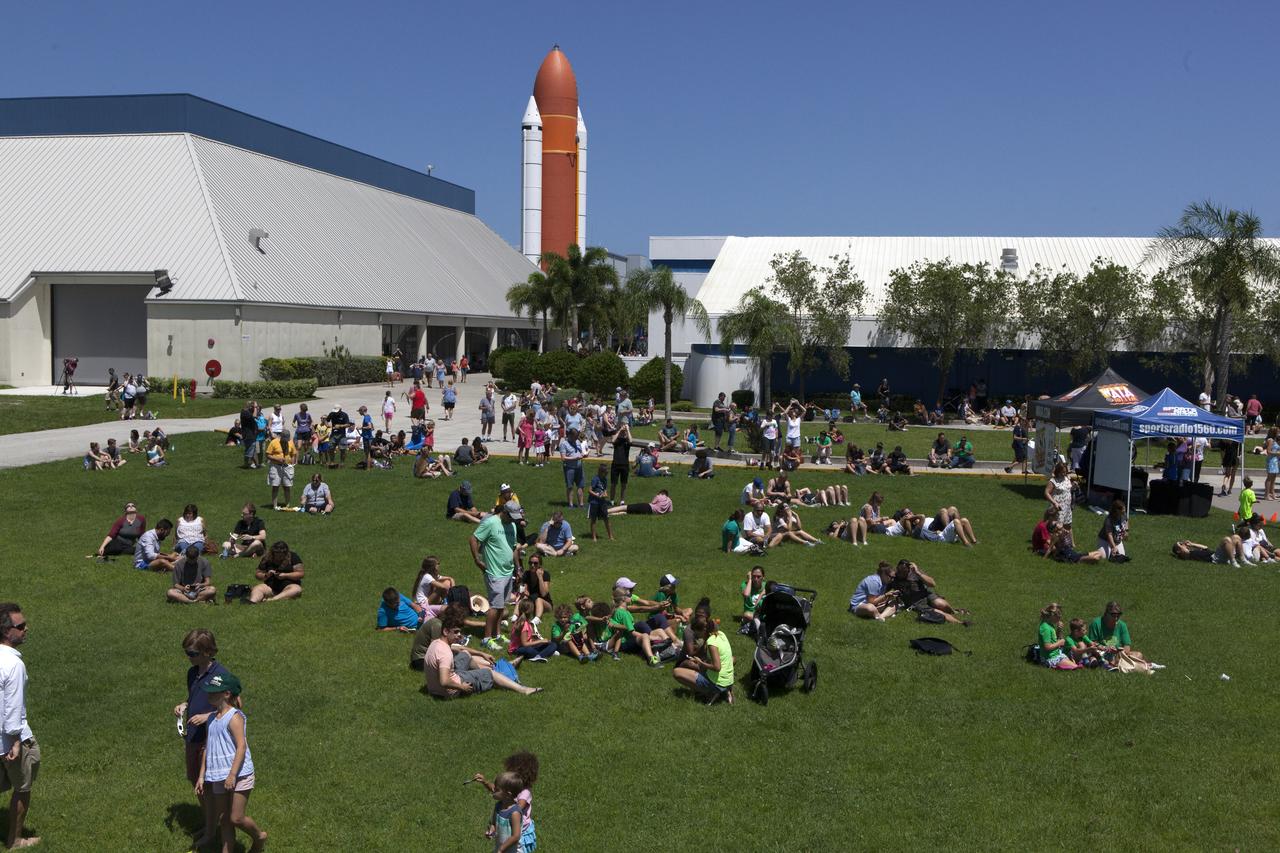
From the Kennedy Space Center Visitor Complex, guests joined Americans from coast to coast following the solar eclipse. Although a partial eclipse on Florida's Space Coast, young and old alike found many ways to watch the rare astronomical event. As the Moon passed between Earth and the midafternoon Sun, a shadow moved across the landscape. The 70-mile-wide totality path, or "umbral cone" -- where the entire Sun will vanish behind the Moon -- stretched across 14 states, from Oregon to South Carolina.

From the Kennedy Space Center Visitor Complex, guests joined Americans from coast to coast following the solar eclipse. Speaking at the event was astronaut John-David Bartoe. Although a partial eclipse on Florida's Space Coast, young and old alike found many ways to watch the rare astronomical event. As the Moon passed between Earth and the midafternoon Sun, a shadow moved across the landscape. The 70-mile-wide totality path, or "umbral cone" -- where the entire Sun will vanish behind the Moon -- stretched across 14 states, from Oregon to South Carolina.

NASA's Thomas Zurbuchen, AA for science mission directorate explains to Lesa Roe, acting deputy administrator, how the spectrograph showing different colors correlate to different elements, such as helium, in the Sun's atmosphere. Photo Credit: (NASA/Carla Thomas)
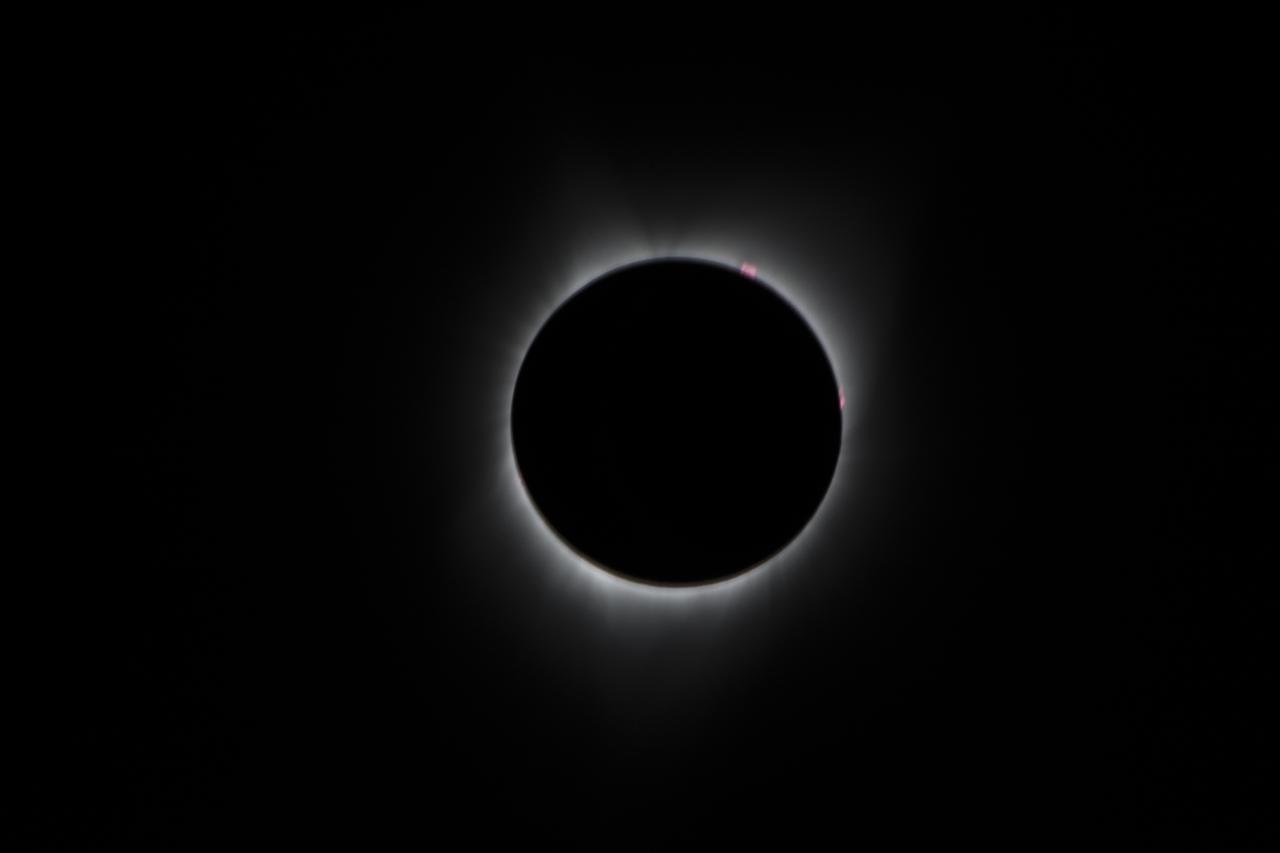
During the total solar eclipse, the Sun’s corona, only visible during the total eclipse, is shown as a crown of white flares from the surface. The red spots called Bailey's beads occurs where the moon grazes by the Sun and the rugged lunar limb topography allows beads of sunlight to shine through in some areas as photographed from NASA Armstrong’s Gulfstream III. Photo Credit: (NASA/Carla Thomas)

NASA Armstrong and NASA senior management Gulfstream III team pose for group shot by aircraft after return from covering Total solar eclipse. Photo Credit: (NASA/Carla Thomas)

NASA's Thomas Zurbuchen, AA for science missiond directorate and NASA's Robert Lightfoot, acting administrator, waiting for partial eclipse to occur. Photo Credit: (NASA/Carla Thomas)
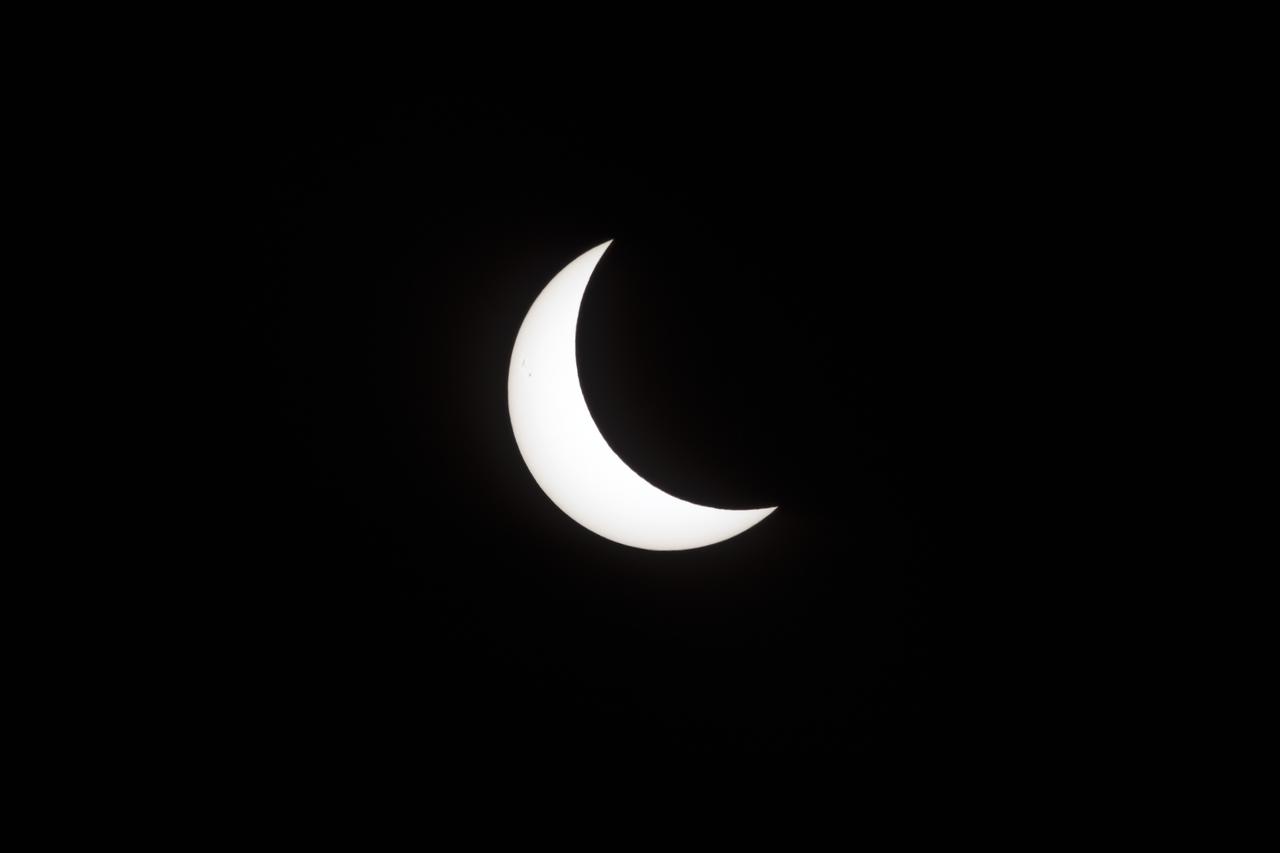
A partial eclipse on Florida's Space Coast, the rare astronomical event was photographed from the top of the Vehicle Assembly Building, as the Moon passed between Earth and the midafternoon Sun. The Moon's shadow moved across the landscape from Oregon to South Carolina. The 70-mile-wide totality path, or "umbral cone" -- where the entire Sun will vanish behind the Moon -- stretched across 14 states, from Oregon to South Carolina.
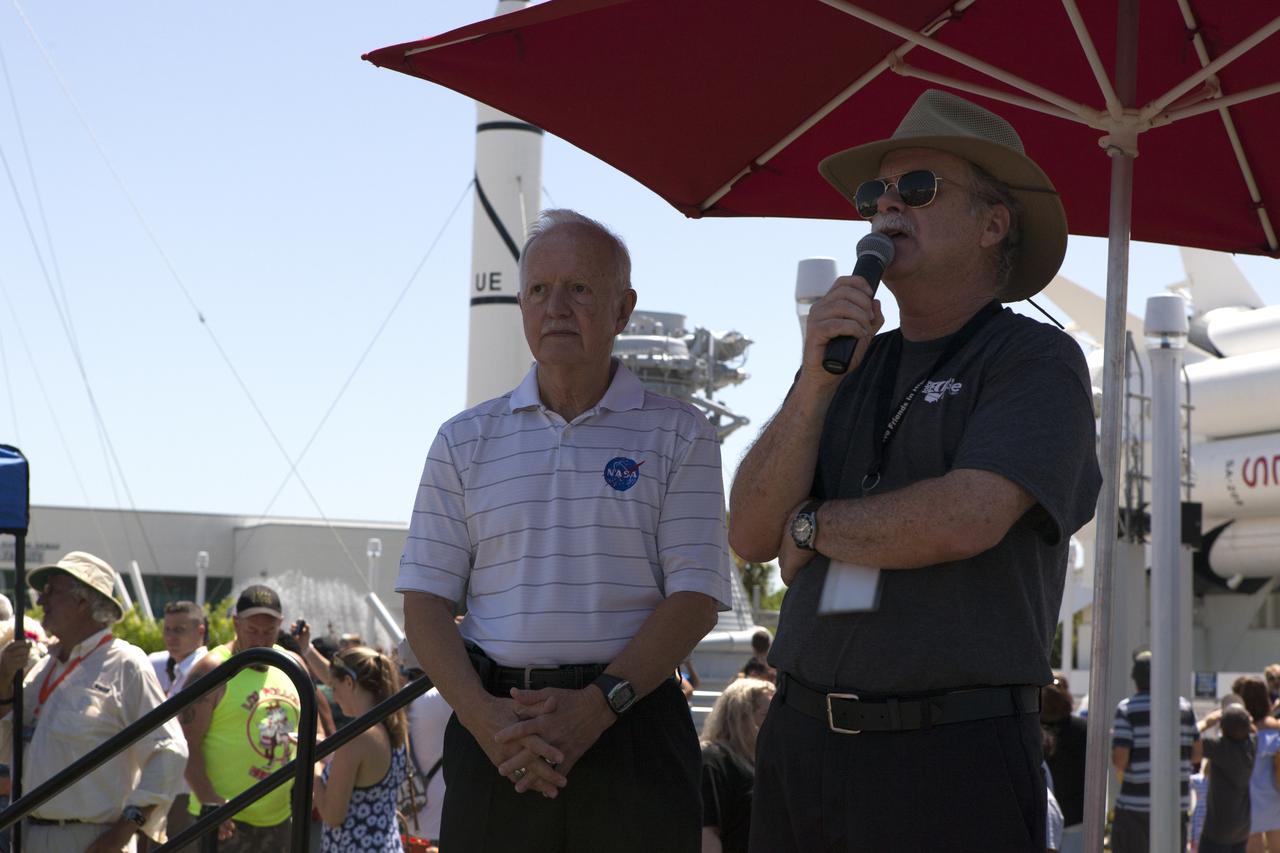
From the Kennedy Space Center Visitor Complex, guests joined Americans from coast to coast following the solar eclipse. Guest speakers were, astronaut John-David Bartoe, left, and communicator Jeff Lucas. Although a partial eclipse on Florida's Space Coast, young and old alike found many ways to watch the rare astronomical event. As the Moon passed between Earth and the midafternoon Sun, a shadow moved across the landscape. The 70-mile-wide totality path, or "umbral cone" -- where the entire Sun will vanish behind the Moon -- stretched across 14 states, from Oregon to South Carolina.

From the Kennedy Space Center Visitor Complex, guests joined Americans from coast to coast following the solar eclipse. Although a partial eclipse on Florida's Space Coast, young and old alike found many ways to watch the rare astronomical event. As the Moon passed between Earth and the midafternoon Sun, a shadow moved across the landscape. The 70-mile-wide totality path, or "umbral cone" -- where the entire Sun will vanish behind the Moon -- stretched across 14 states, from Oregon to South Carolina.
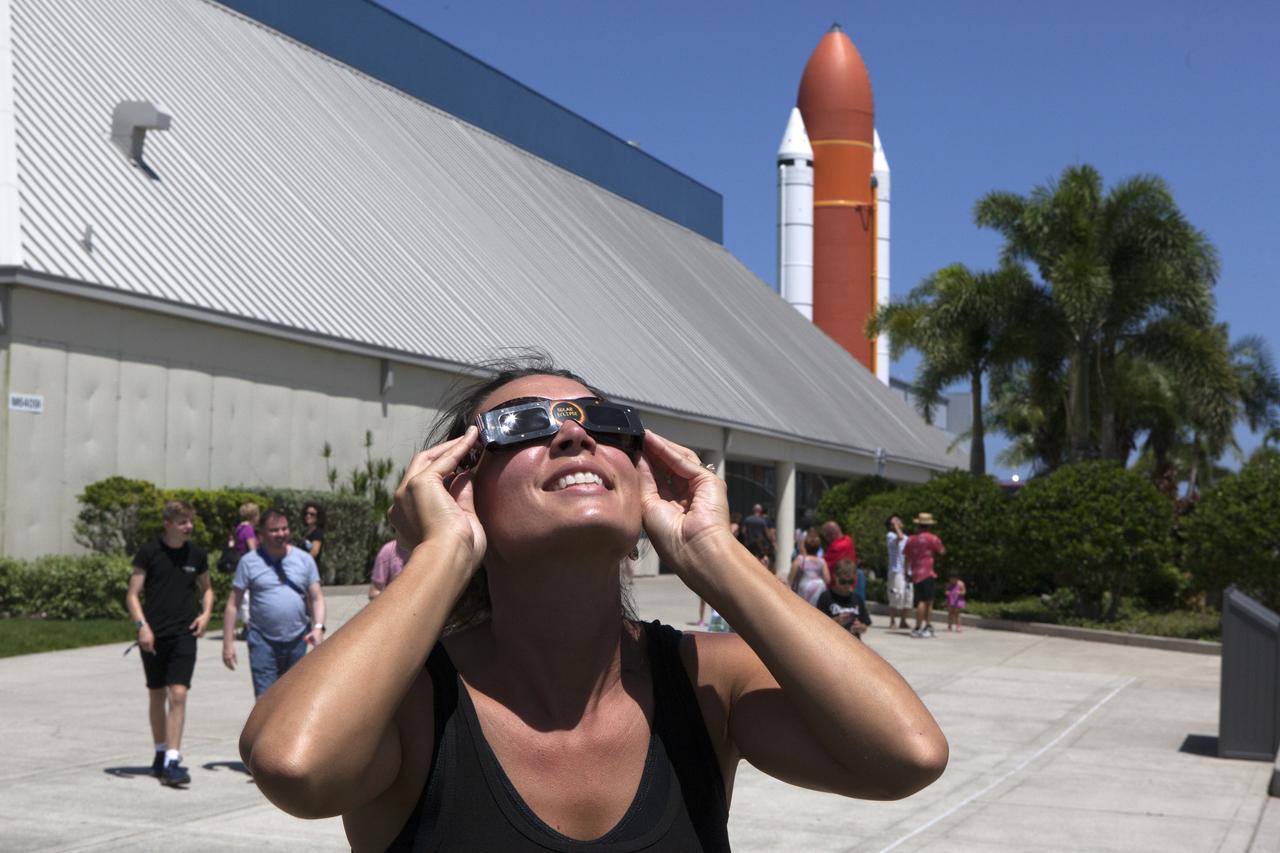
From the Kennedy Space Center Visitor Complex, guests joined Americans from coast to coast following the solar eclipse. Although a partial eclipse on Florida's Space Coast, young and old alike found many ways to watch the rare astronomical event. As the Moon passed between Earth and the midafternoon Sun, a shadow moved across the landscape. The 70-mile-wide totality path, or "umbral cone" -- where the entire Sun will vanish behind the Moon -- stretched across 14 states, from Oregon to South Carolina.
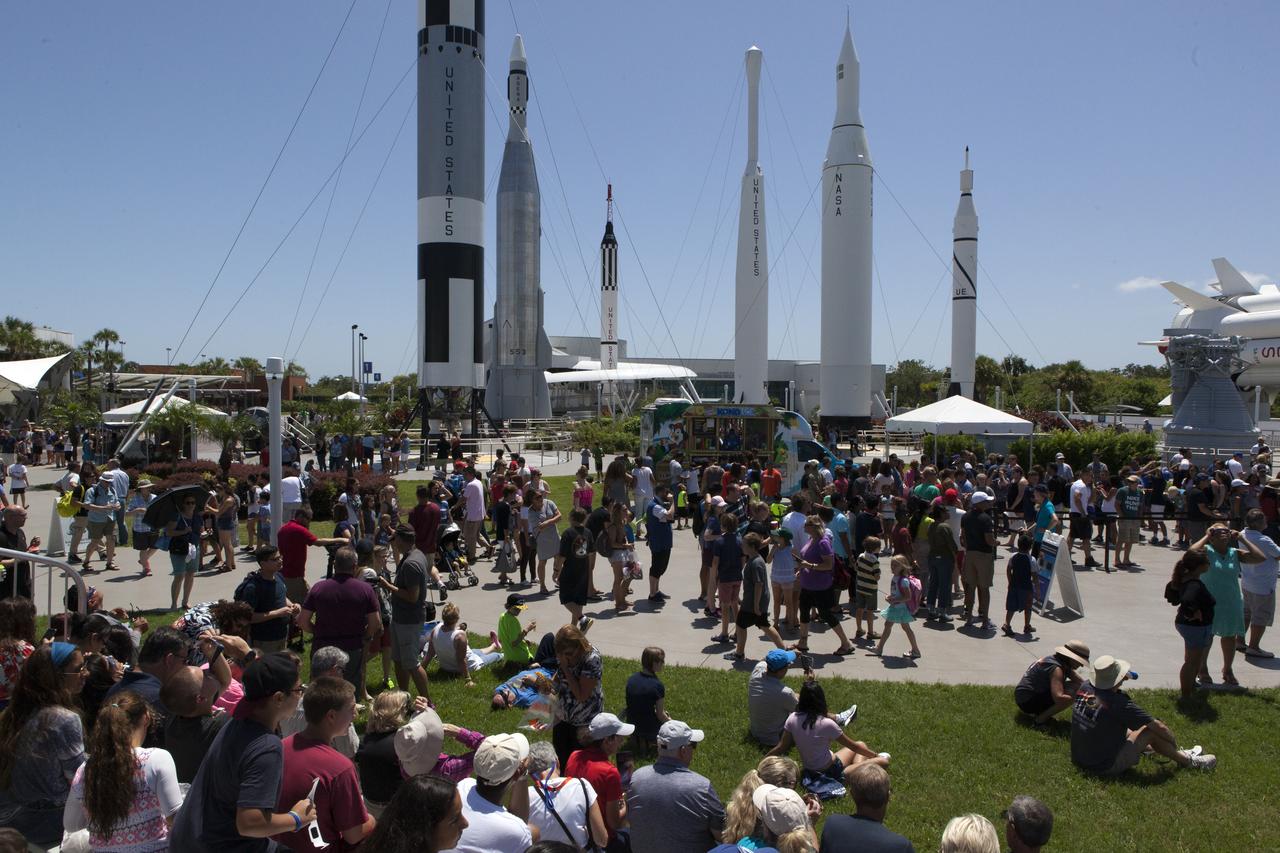
From the Kennedy Space Center Visitor Complex, guests joined Americans from coast to coast following the solar eclipse. Although a partial eclipse on Florida's Space Coast, young and old alike found many ways to watch the rare astronomical event. As the Moon passed between Earth and the midafternoon Sun, a shadow moved across the landscape. The 70-mile-wide totality path, or "umbral cone" -- where the entire Sun will vanish behind the Moon -- stretched across 14 states, from Oregon to South Carolina.
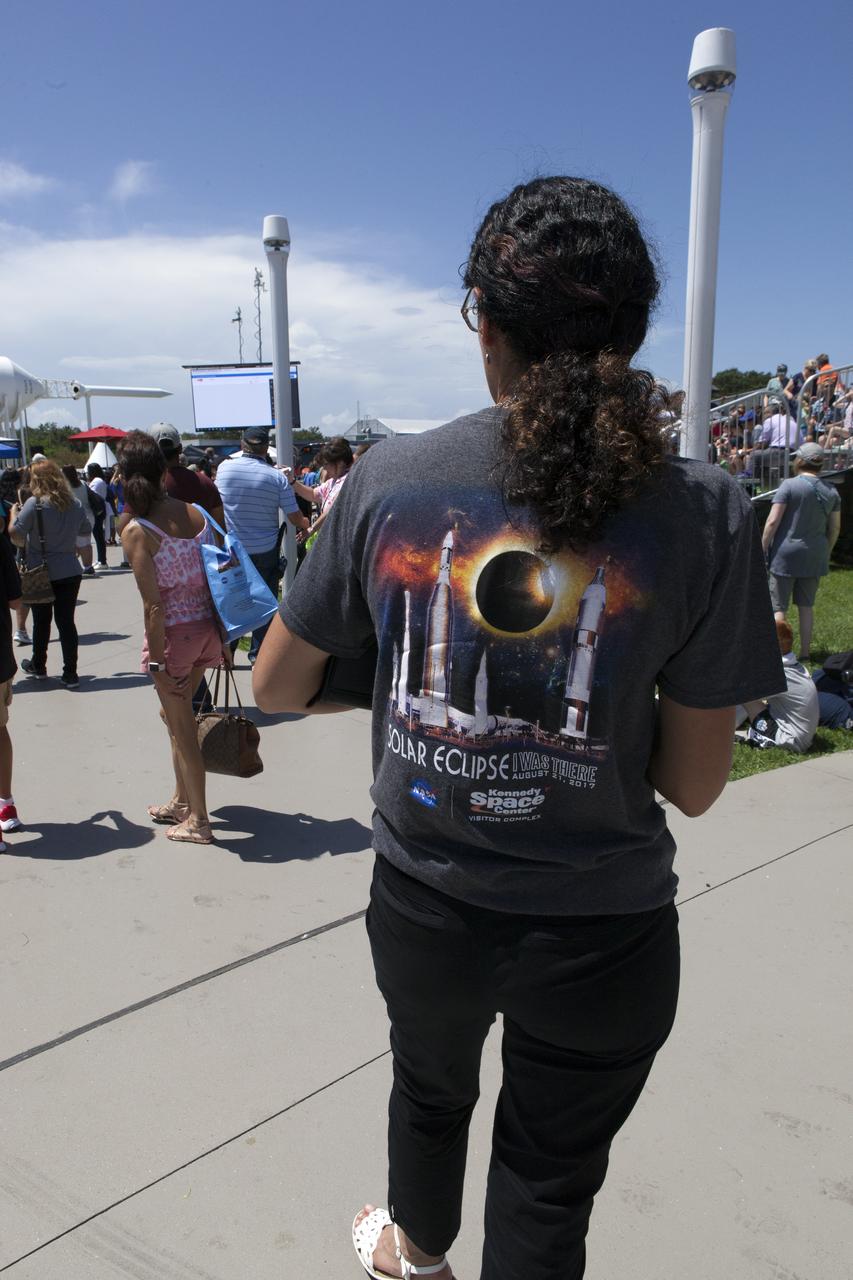
From the Kennedy Space Center Visitor Complex, guests joined Americans from coast to coast following the solar eclipse. Although a partial eclipse on Florida's Space Coast, young and old alike found many ways to watch the rare astronomical event. As the Moon passed between Earth and the midafternoon Sun, a shadow moved across the landscape. The 70-mile-wide totality path, or "umbral cone" -- where the entire Sun will vanish behind the Moon -- stretched across 14 states, from Oregon to South Carolina.

Armstrong videographer Mike Agnew operates spectrograph instrument on the 20th to prepare for eclipse day, the 21st. Photo Credit: (NASA/Carla Thomas)
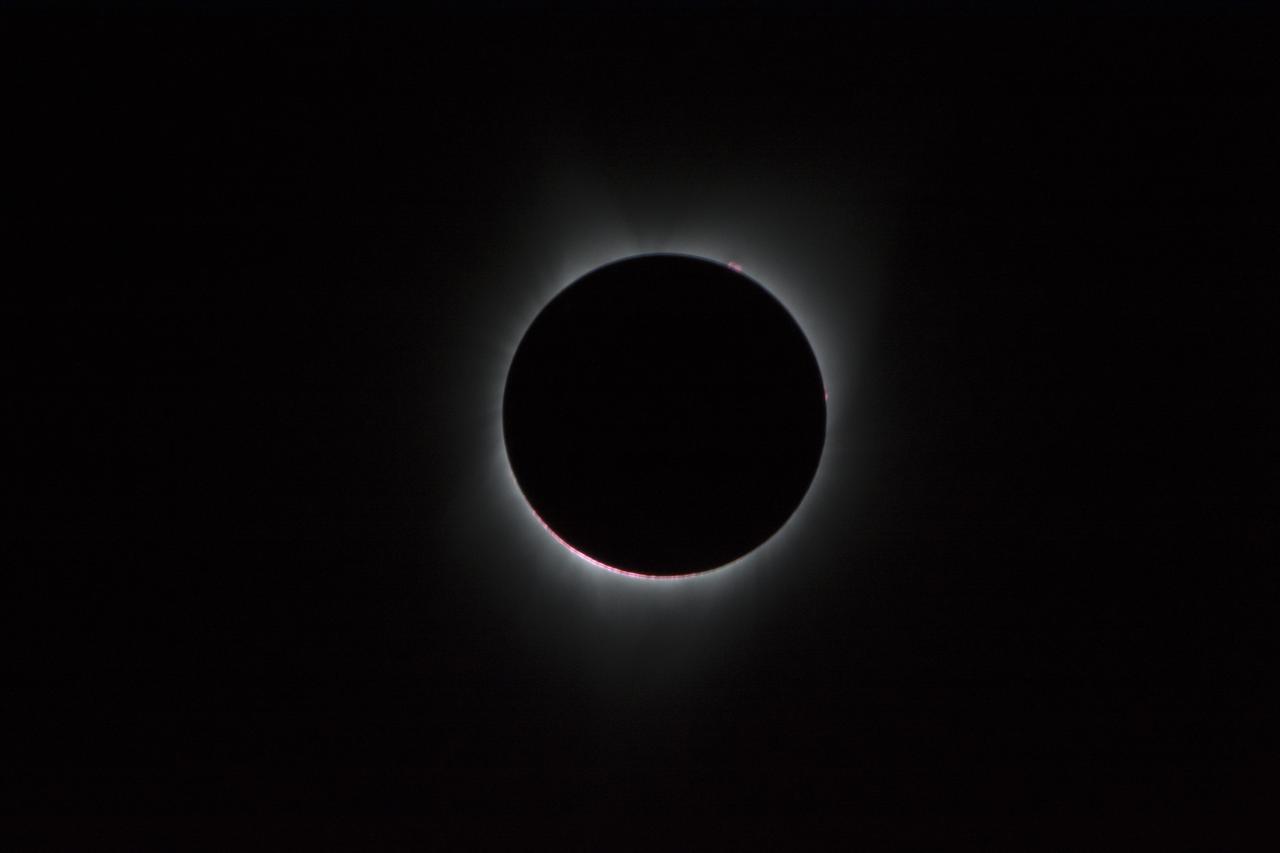
During the total solar eclipse, the Sun’s corona, only visible during the total eclipse, is shown as a crown of white flares from the surface. The red spots called Bailey's beads occurs where the moon grazes by the Sun and the rugged lunar limb topography allows beads of sunlight to shine through in some areas as photographed from NASA Armstrong’s Gulfstream III. Photo Credit: (NASA/Carla Thomas)

During the total solar eclipse, the Sun’s corona, only visible during the total eclipse, is shown as a crown of white flares from the surface. The red spots called Bailey's beads occurs where the moon grazes by the Sun and the rugged lunar limb topography allows beads of sunlight to shine through in some areas as photographed from NASA Armstrong’s Gulfstream III. Photo Credit: (NASA/Carla Thomas)
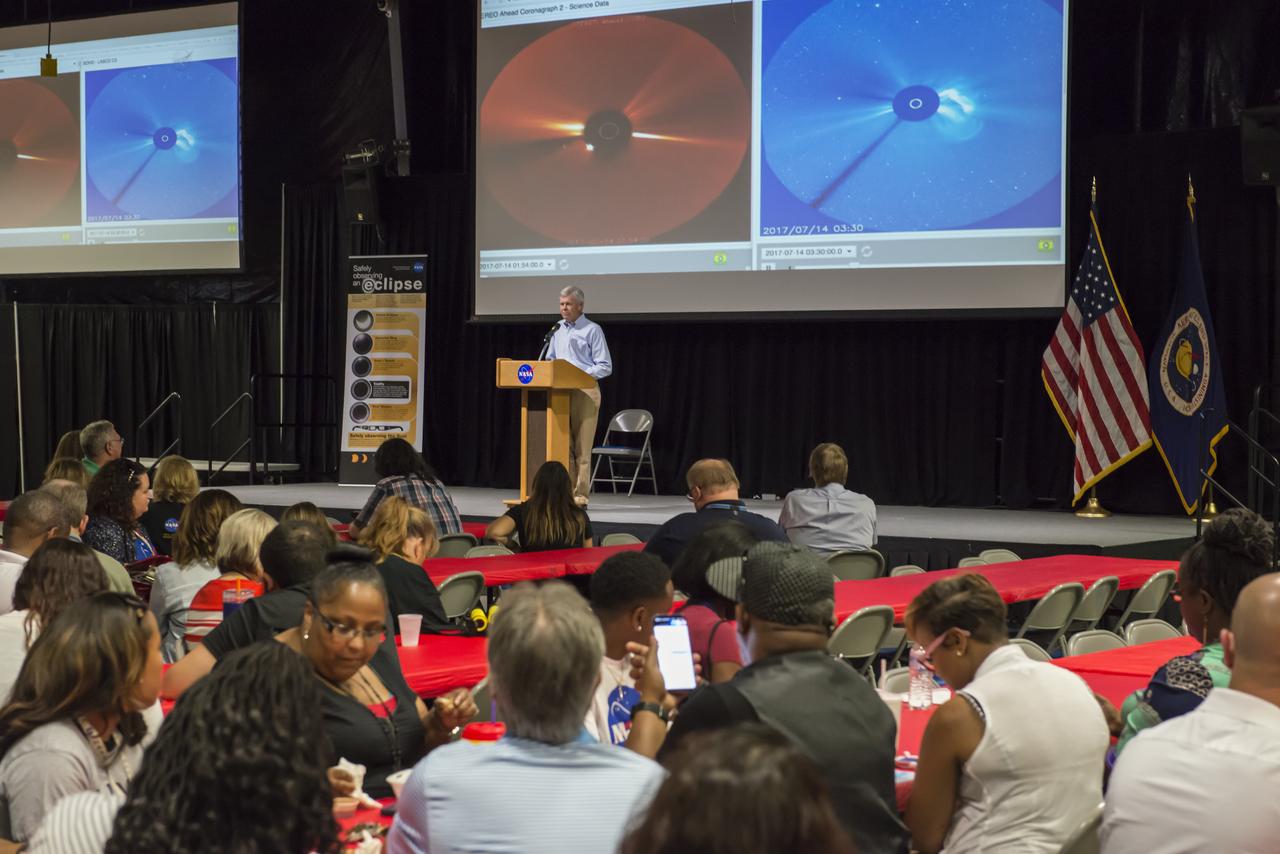
Former Spacelab 1 mission scientist Rick Chappell addresses Marshall team members during the Aug. 21 eclipse-watching event in Activities Building 4316. Chappell, a former associate director for science at Marshall and now a physics professor at Vanderbilt University in Nashville, joined a throng of Marshall personnel to marvel at the eclipse.
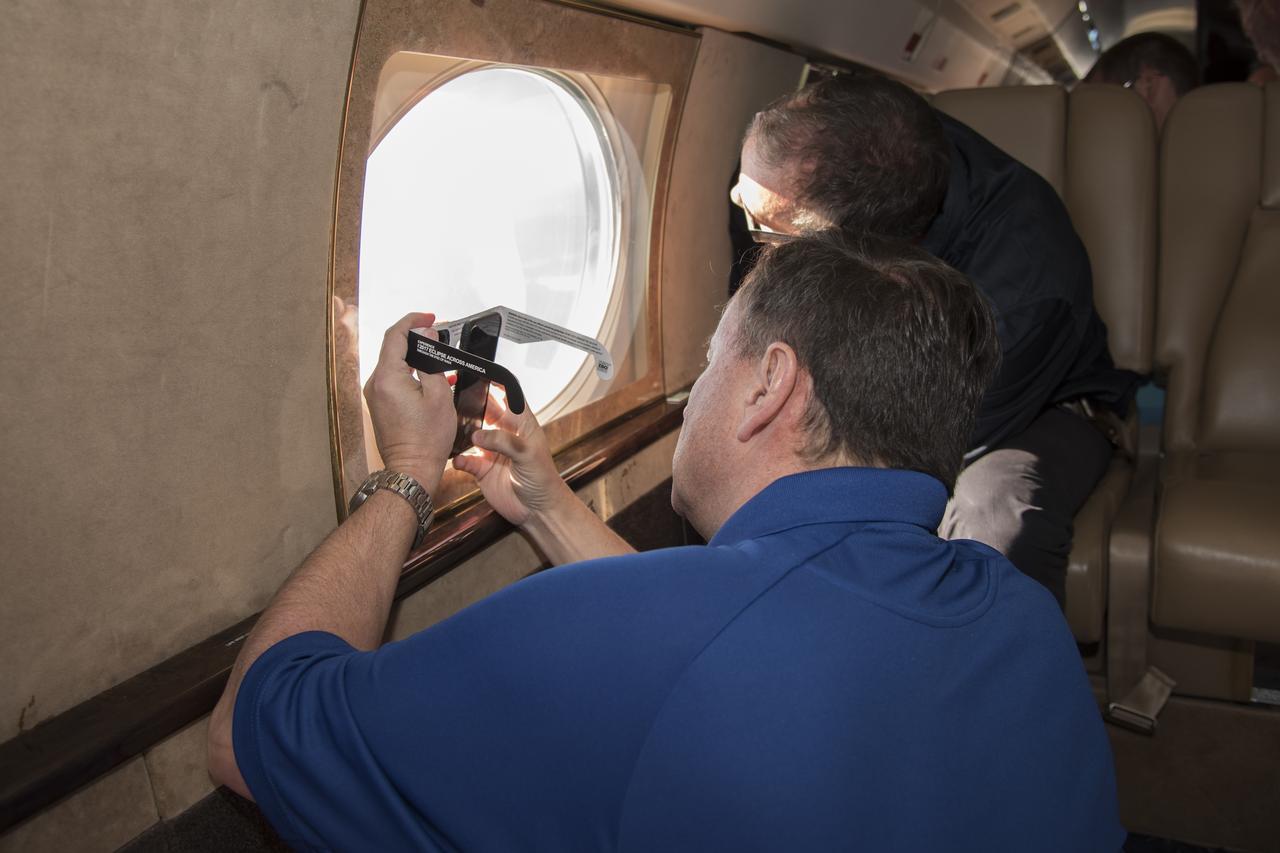
Robert Lightfoot, acting NASA administrator, takes photo of eclipse using eclipse glasses on cell phone. Photo Credit: (NASA/Carla Thomas)