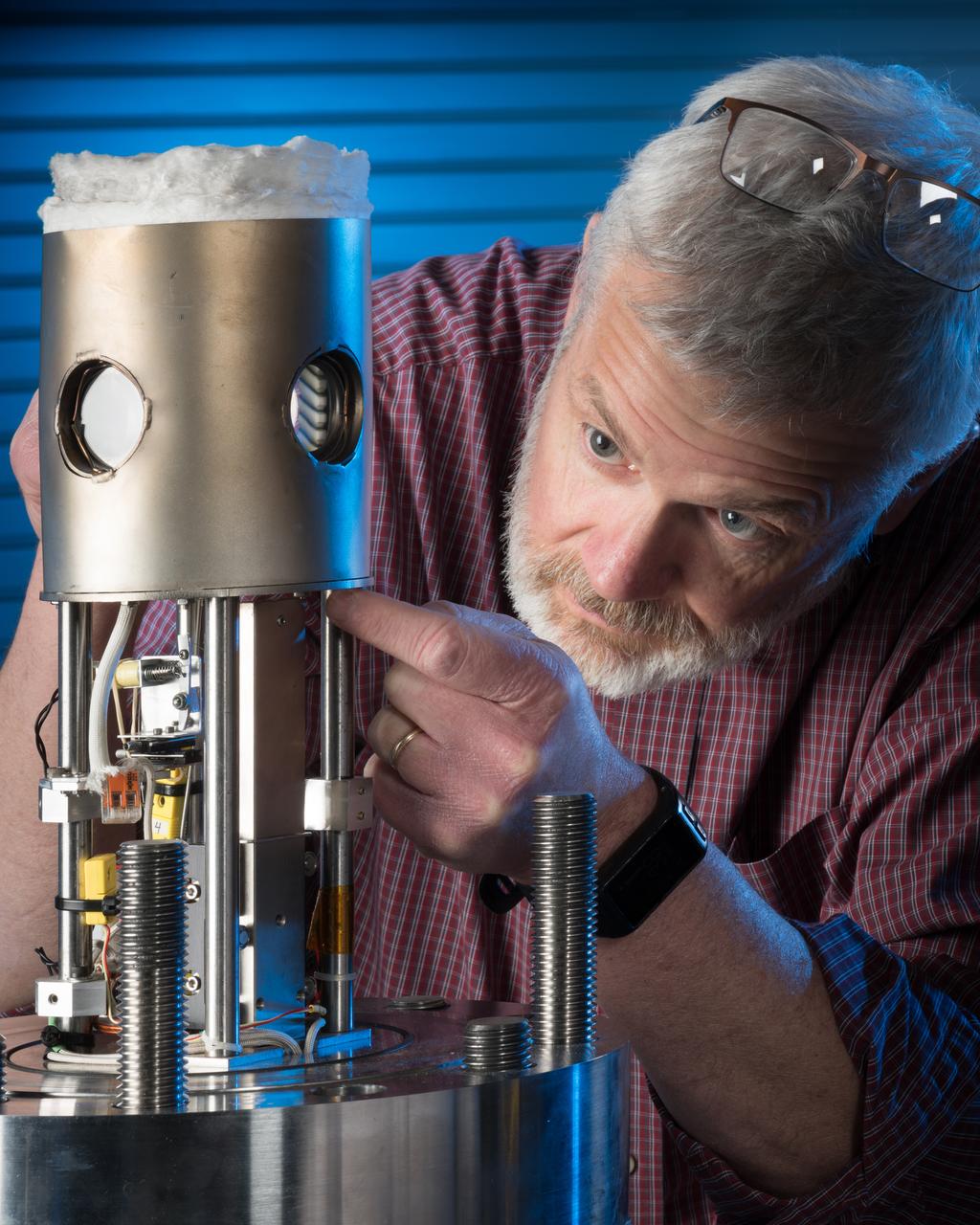
High Pressure Microgravity Combustion Experiment, HPMC, subjects liquid fuel droplets to high pressures and temperatures to study the ignition process in engine conditions, with a goal of improving fuel efficiency. In this configuration, the experiment is capable of testing droplet combustion at up to 100 atm of pressure, testing the droplet deployment system, which inserts the fuel droplet into the experiment.
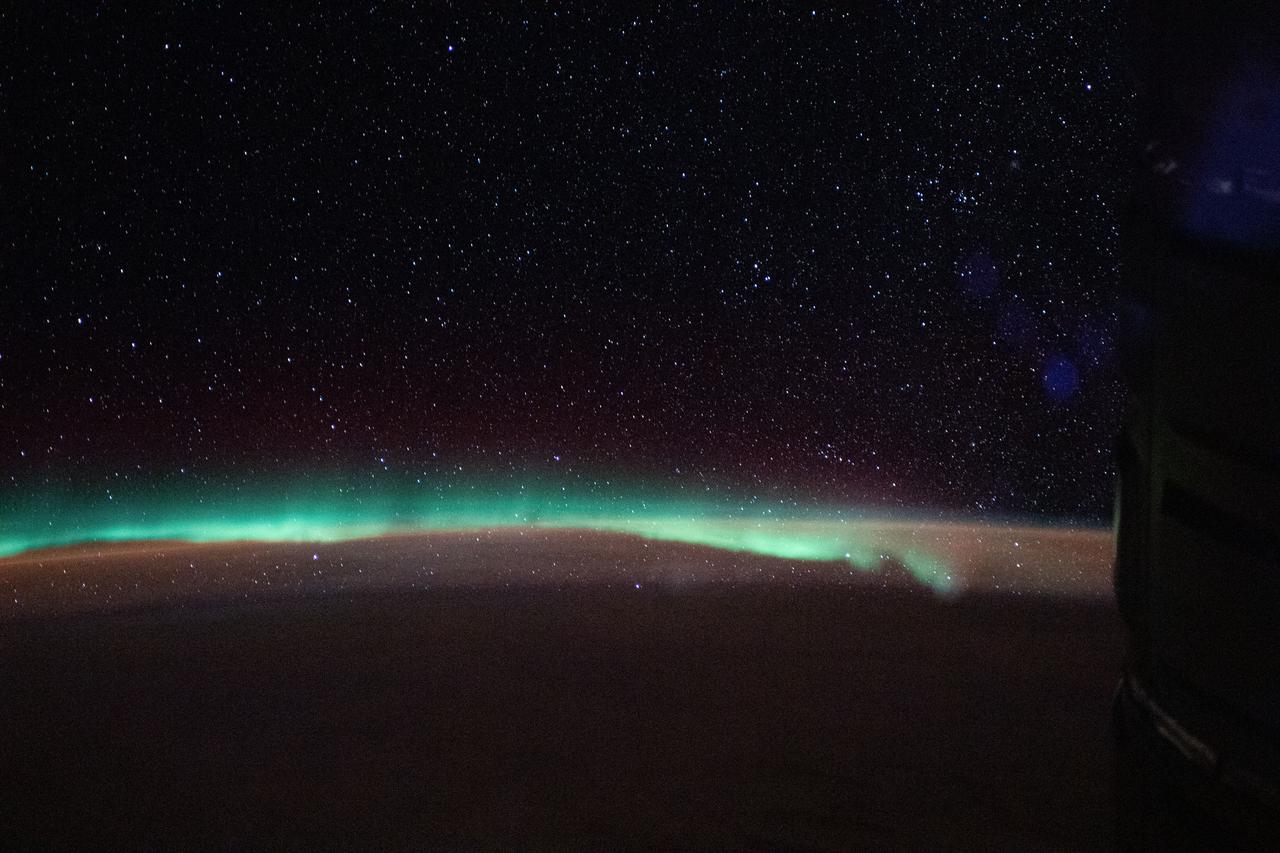
iss059e092459 (June 5, 2019) --- The aurora australis, or "southern lights," highlights a starry nighttime orbital pass as the International Space Station orbited 267 miles above the Indian Ocean southeast of Madagascar.
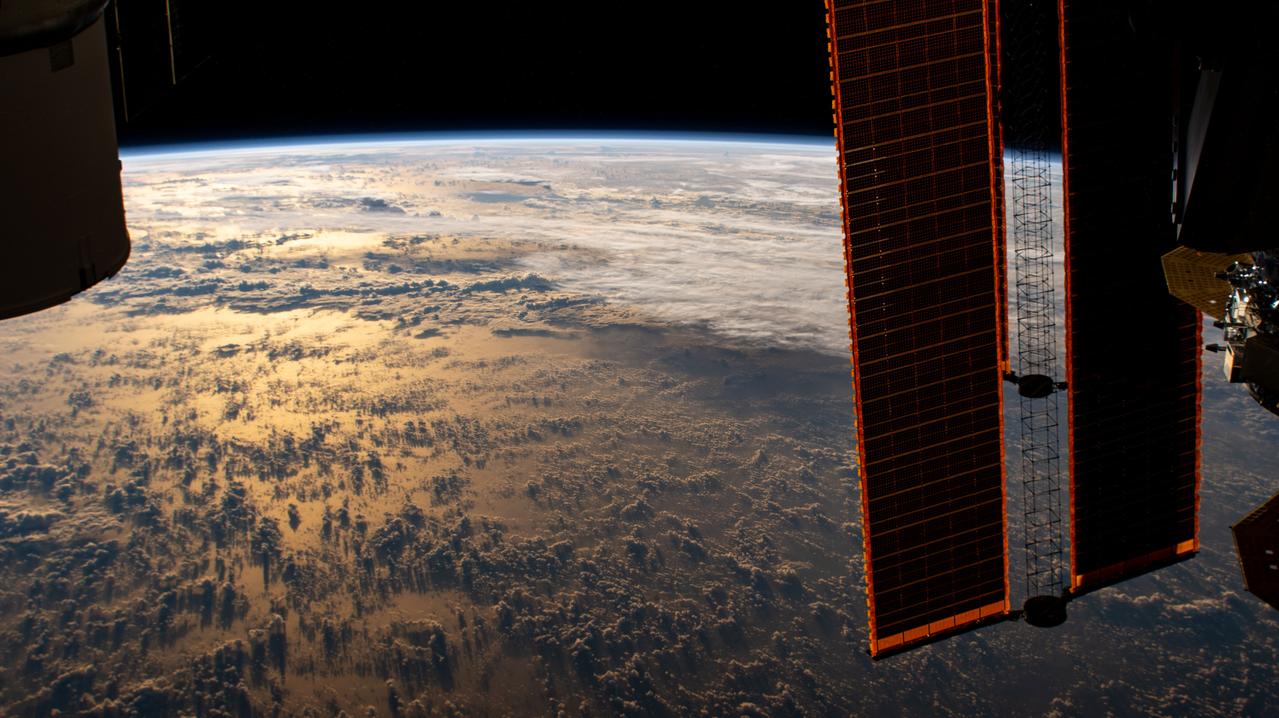
iss061e093009 (Dec. 18, 2019) --- The International Space Station orbits 267 miles above the Earth as the Sun's glint beams over the Philippine Sea highlighting the clouds and their shadows during an orbital sunrise.
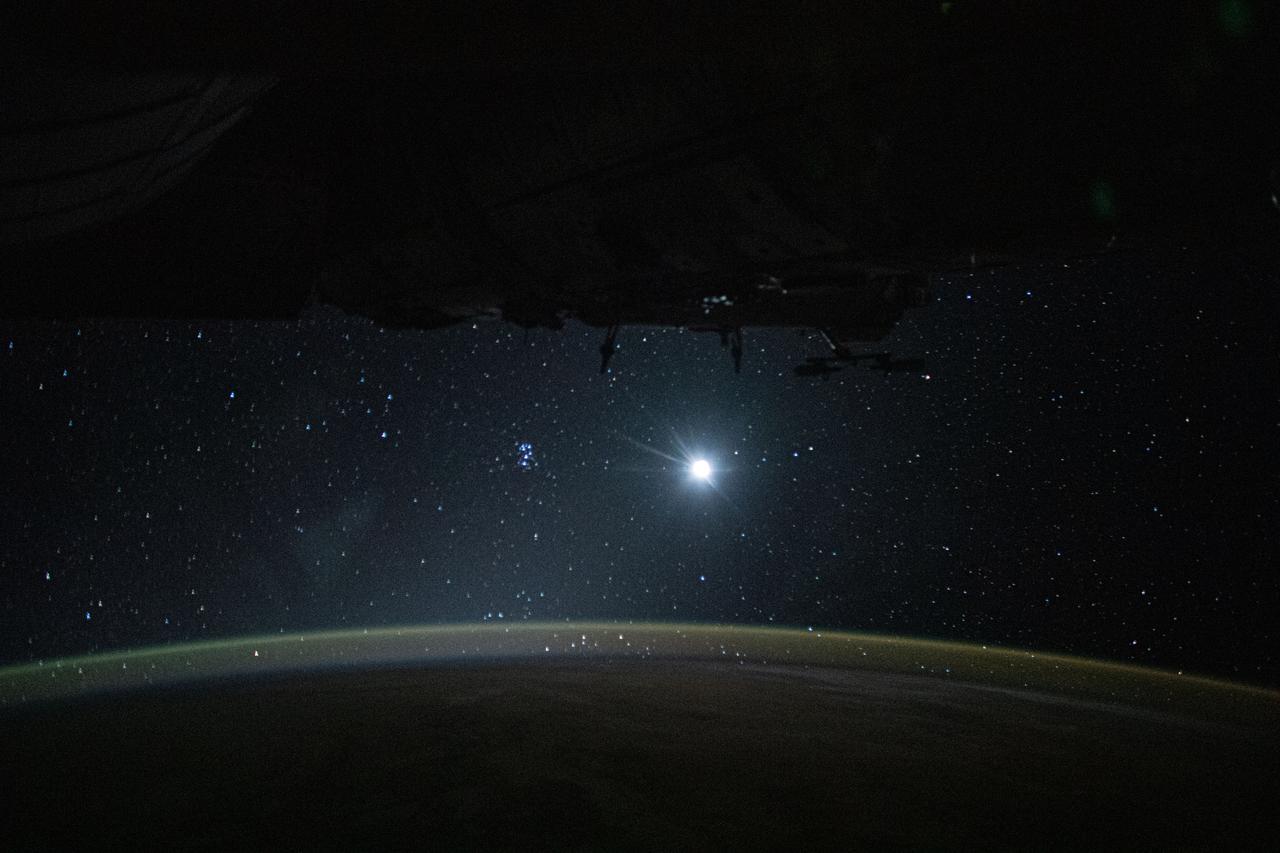
iss060e002083 (June 29, 2019) --- Earth's atmospheric glow, highlighted by the Moon and a starry orbital nighttime background, are pictured as the International Space Station orbited 256 miles above the Pacific Ocean, southeast of the Hawaiian island chain.
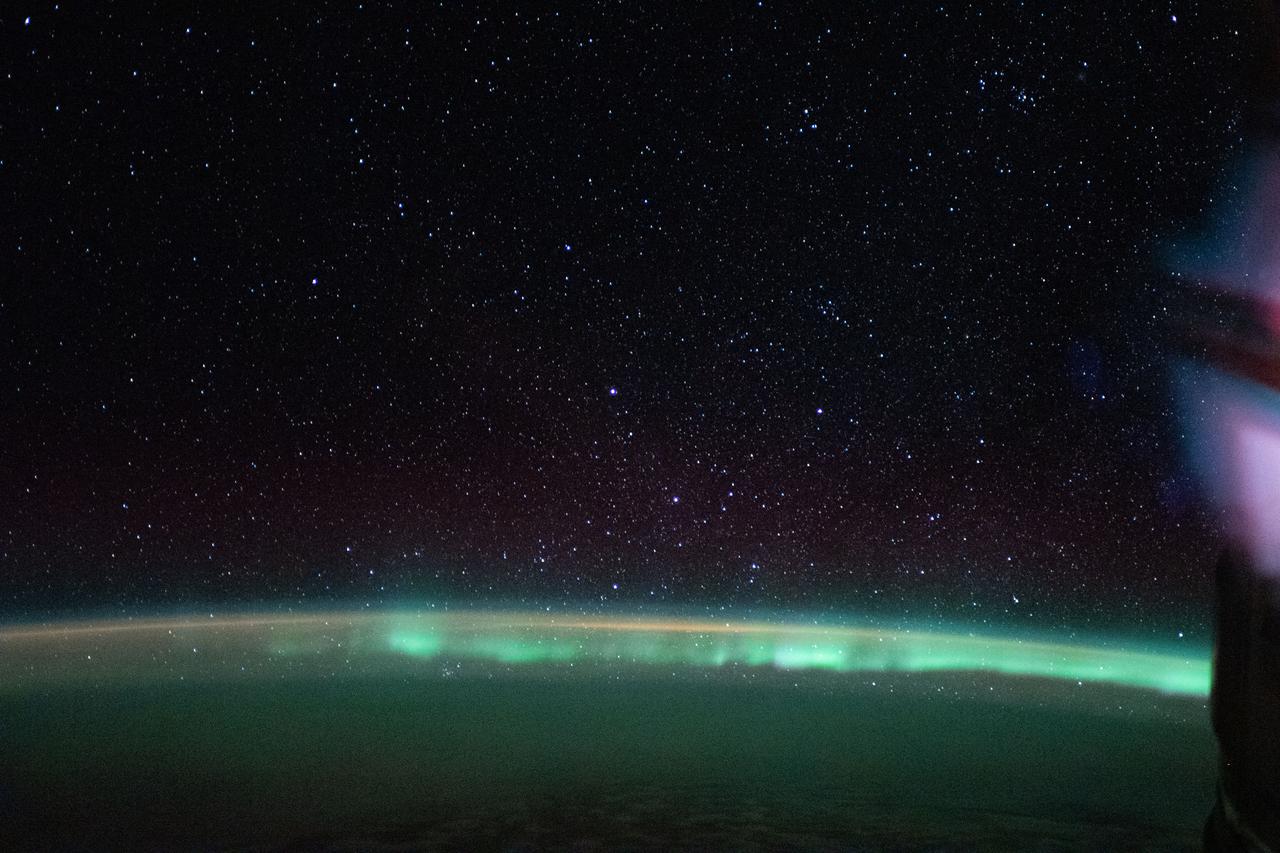
iss059e092462 (June 5, 2019) --- The aurora australis, or "southern lights," highlights a starry nighttime orbital pass as the International Space Station orbited 269 miles above the Indian Ocean southwest of Australia.
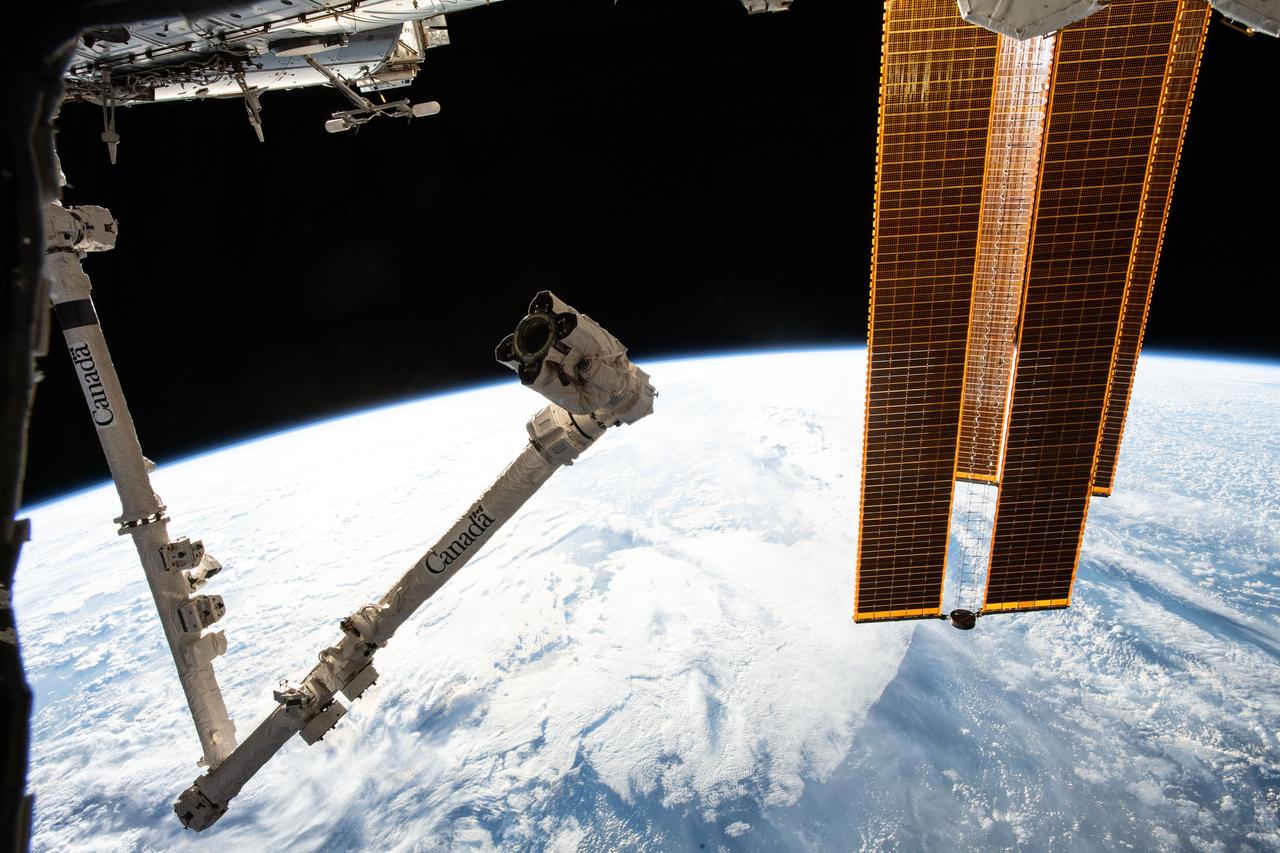
iss059e020197 (April 13, 2019) --- The International Space Station's Canadarm2 robotic arm and solar array's highlight the foreground as the orbital complex flew 260 miles above the South Pacific Ocean northwest of New Zealand.

iss059e027932 (April 21, 2019) --- The sun's first rays peek above Earth's limb highlighting the thin blue atmosphere during an orbital sunrise as the International Space Station orbited 255 miles above Indonesia.
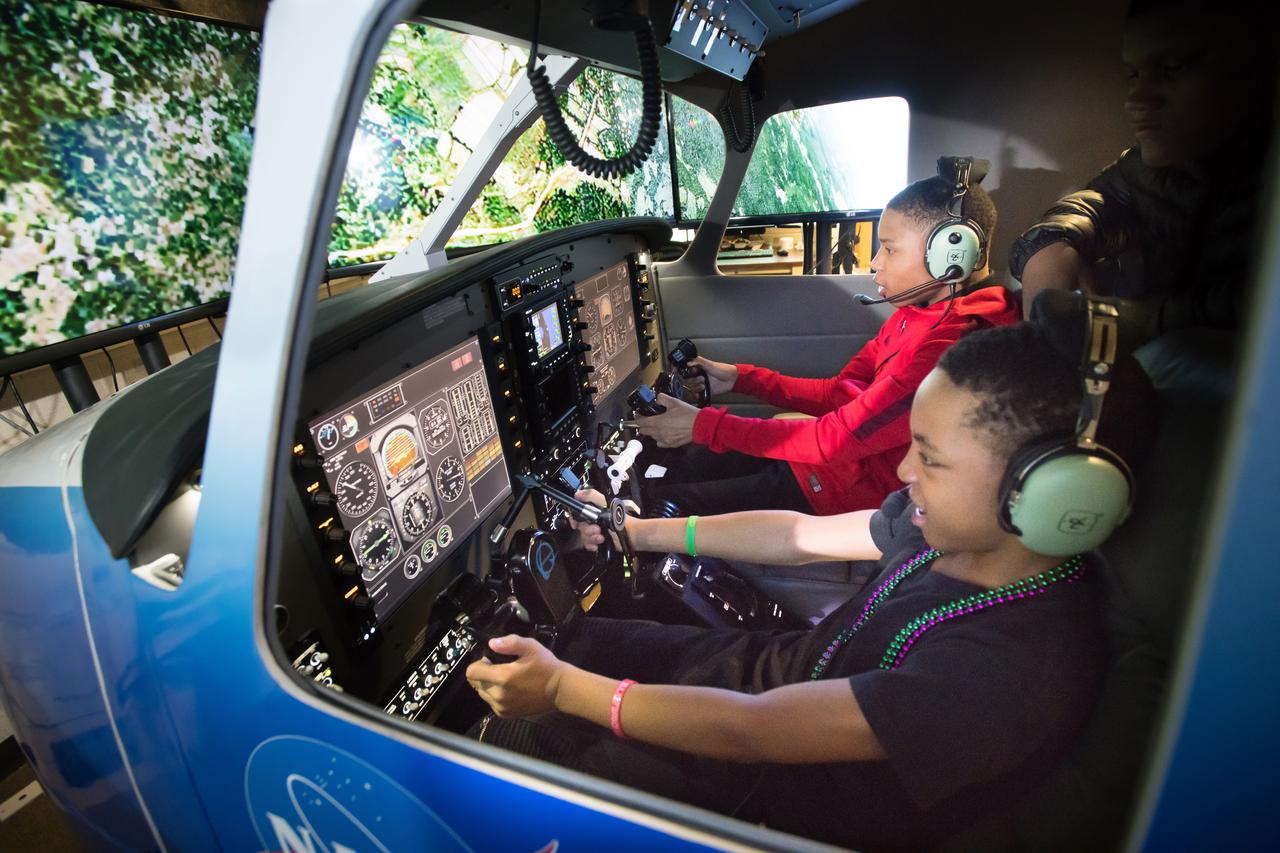
True2U Out of School Experience
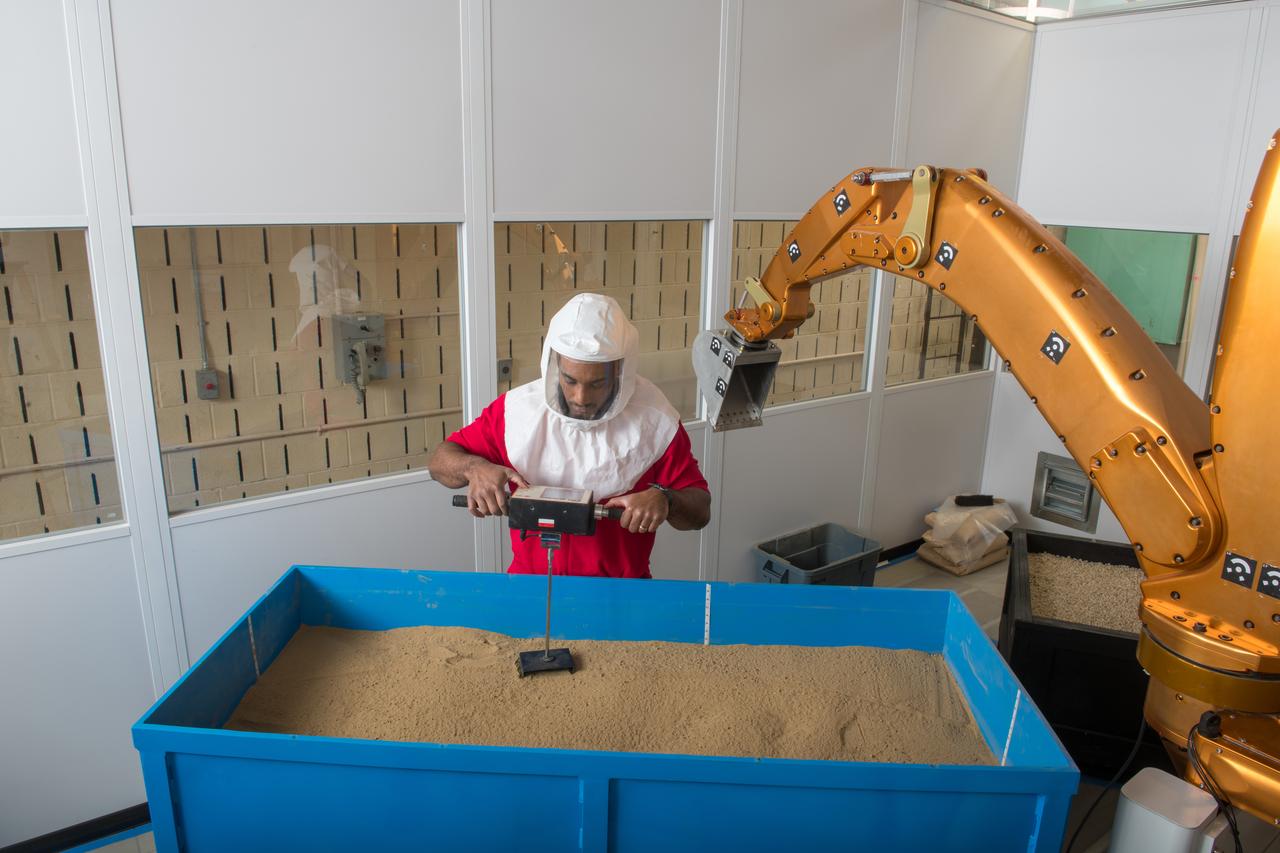
SLOPE Excavation Laboratory
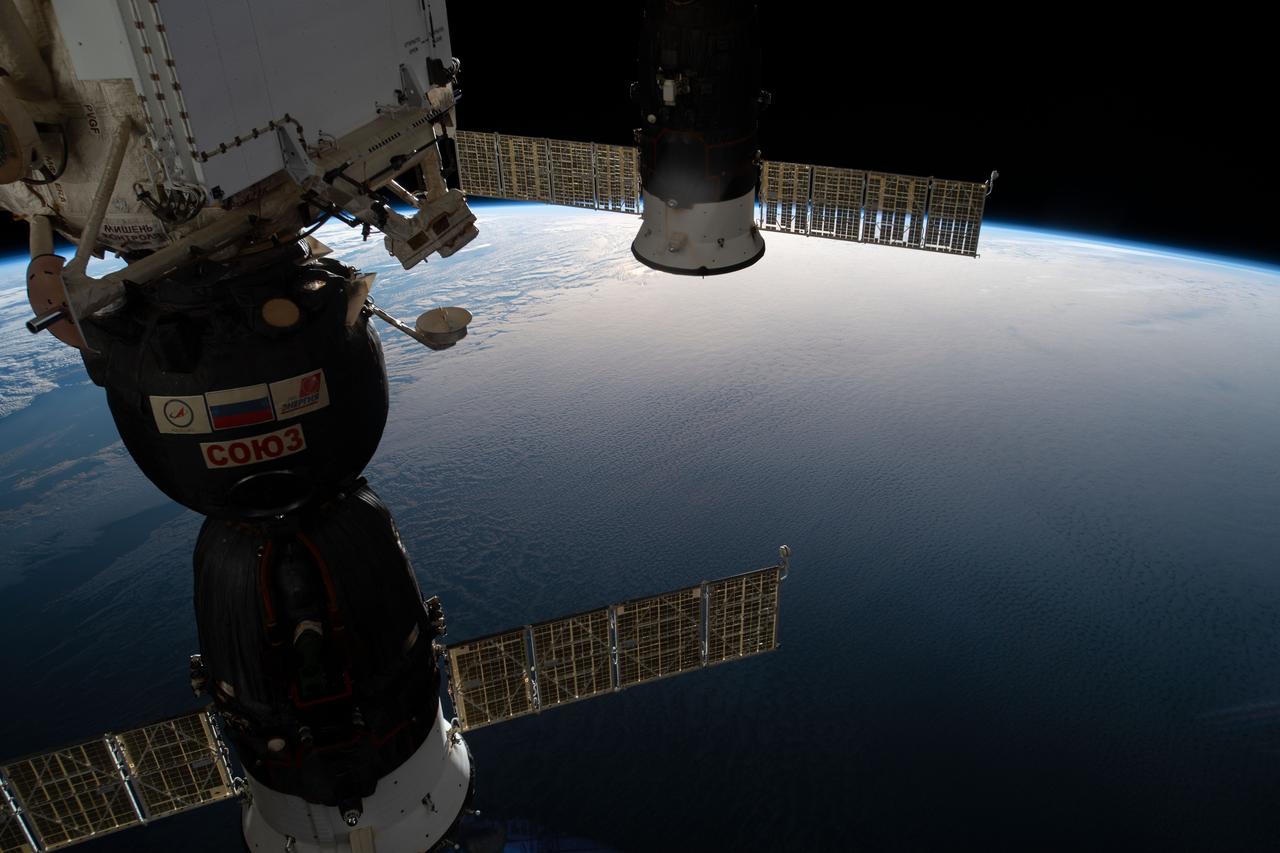
iss059e121391 (June 22, 2019) --- Two docked Russian spaceships, including the Soyuz MS-12 crew craft and the Progress 72 space freighter, are highlighted in this image as the International Space Station was about to cross South America 263 miles above the Atlantic Ocean.
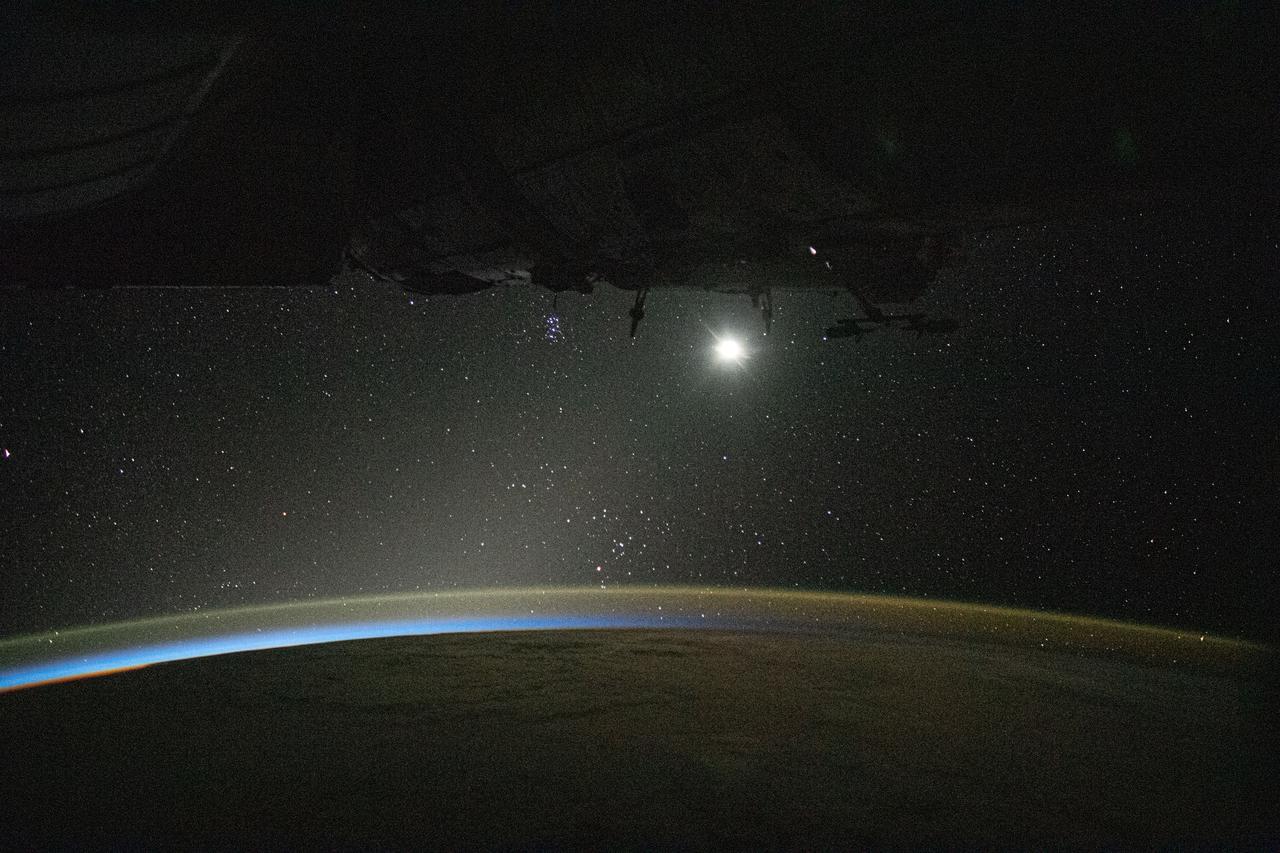
iss060e002090 (June 29, 2019) --- The Earth's limb and the atmospheric glow highlight the thin blue atmosphere back lit by the Sun's rays during a period between night and day. The light of the moon and the starry Milky Way drape the background as the International Space Station orbited 257 miles above the Pacific Ocean between Hawaii and Mexico.
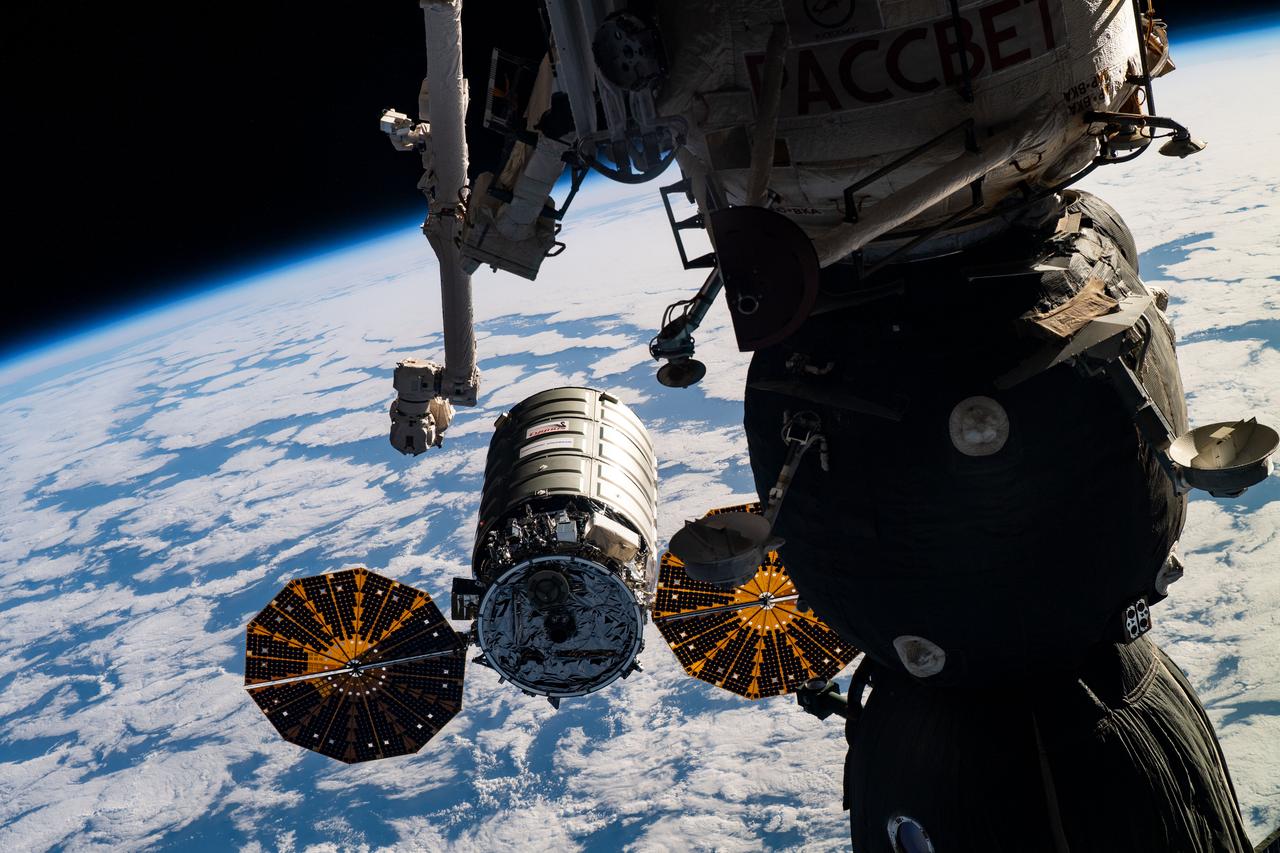
iss059e025269 (April 19, 2019) --- The Canadarm2 robotic arm is positioned to grapple the Northrop Grumman Cygnus cargo craft as it approaches its capture point with the International Space Station orbiting 255 miles above the Atlantic Ocean. Highlighting the foreground is the Soyuz MS-12 crew ship docked to the Rassvet module.

iss060e022358 (Aug. 4, 2019) --- The Milky Way lights up an orbital night pass as the International Space Station orbited 257 miles above the Coral Sea in between Australia and Papua New Guinea. The atmospheric glow highlights Earth's limb below.
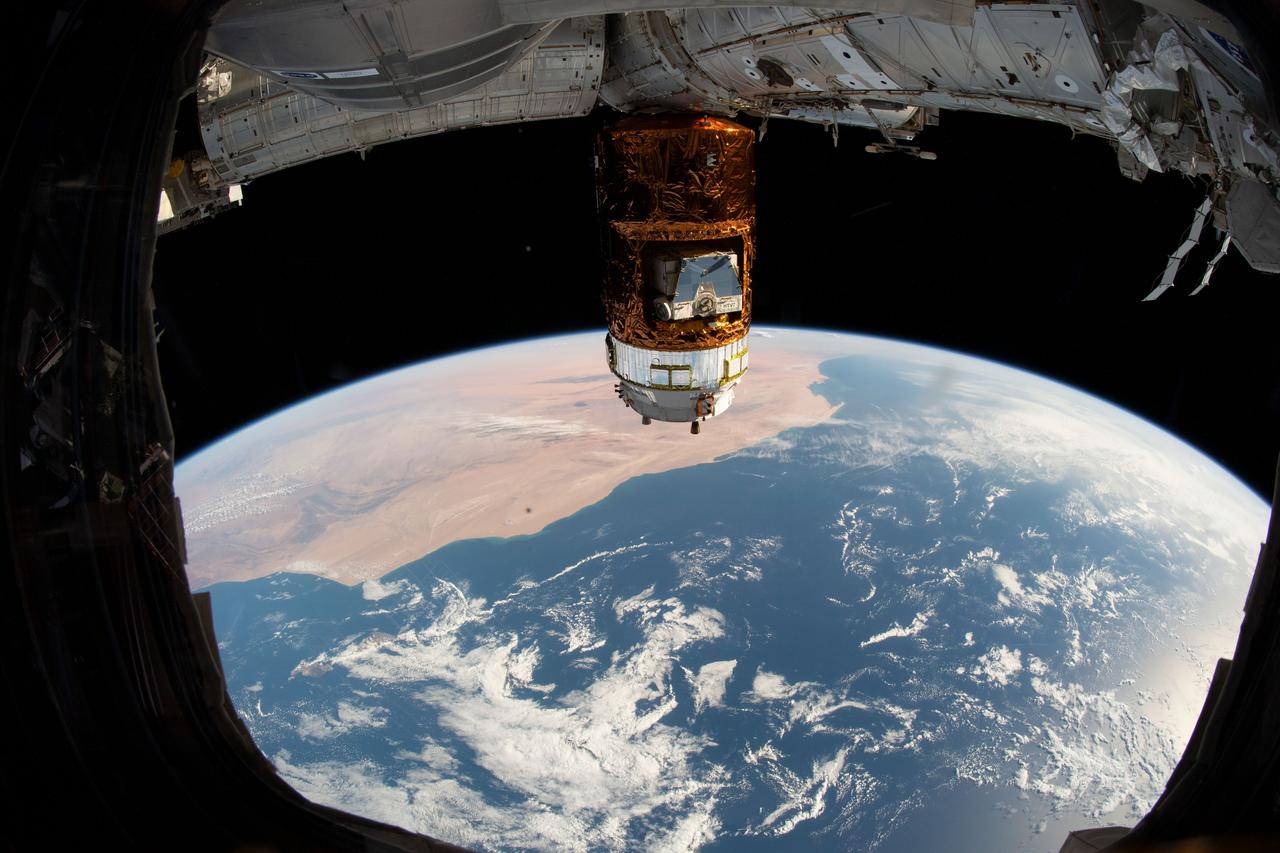
iss061e012184 (Oct. 20, 2019) --- Japan's H-II Transfer Vehicle-8 (HTV-8) highlights this image as the International Space Station orbited 253 miles above the Atlantic Ocean. This view from the orbiting complex looks across Morocco and Western Sahara.

iss059e025290 (April 19, 2019) --- The Canadarm2 robotic arm controlled by NASA astronaut Anne McClain maneuvers to grapple the Northrop Grumman Cygnus cargo craft as the International Space Station orbited 256 miles above the Atlantic Ocean. Highlighting the foreground is the Soyuz MS-12 crew ship docked to the Rassvet module.
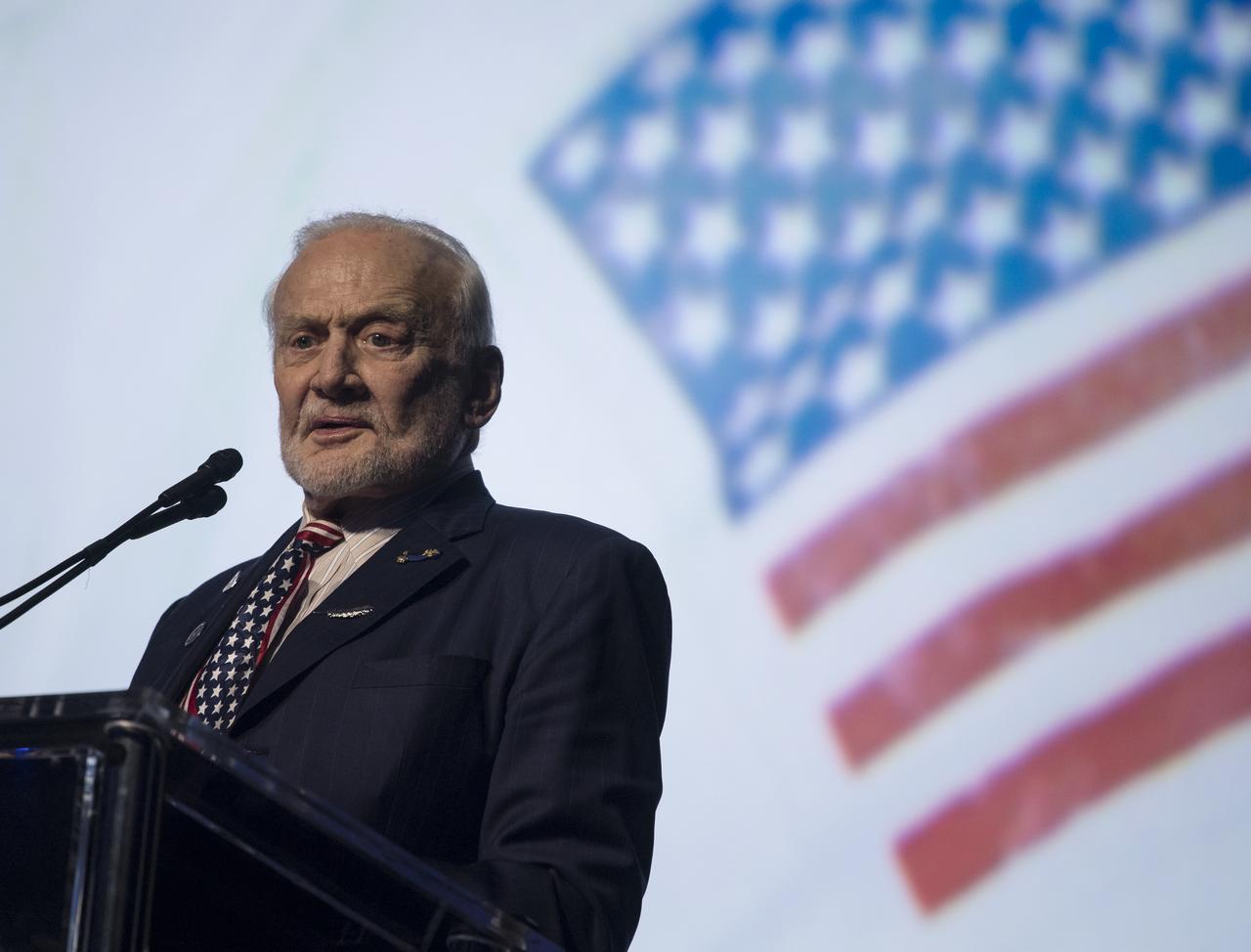
Apollo 11 astronaut Buzz Aldrin delivers remarks during the International Astronautical Federation World Space Award highlight lecture at the 70th International Astronautical Congress, Thursday, Oct. 24, 2019, at the Walter E. Washington Convention Center in Washington. The 2019 World Space Award was presented to the crew of Apollo 11. Photo Credit: (NASA/Joel Kowsky)
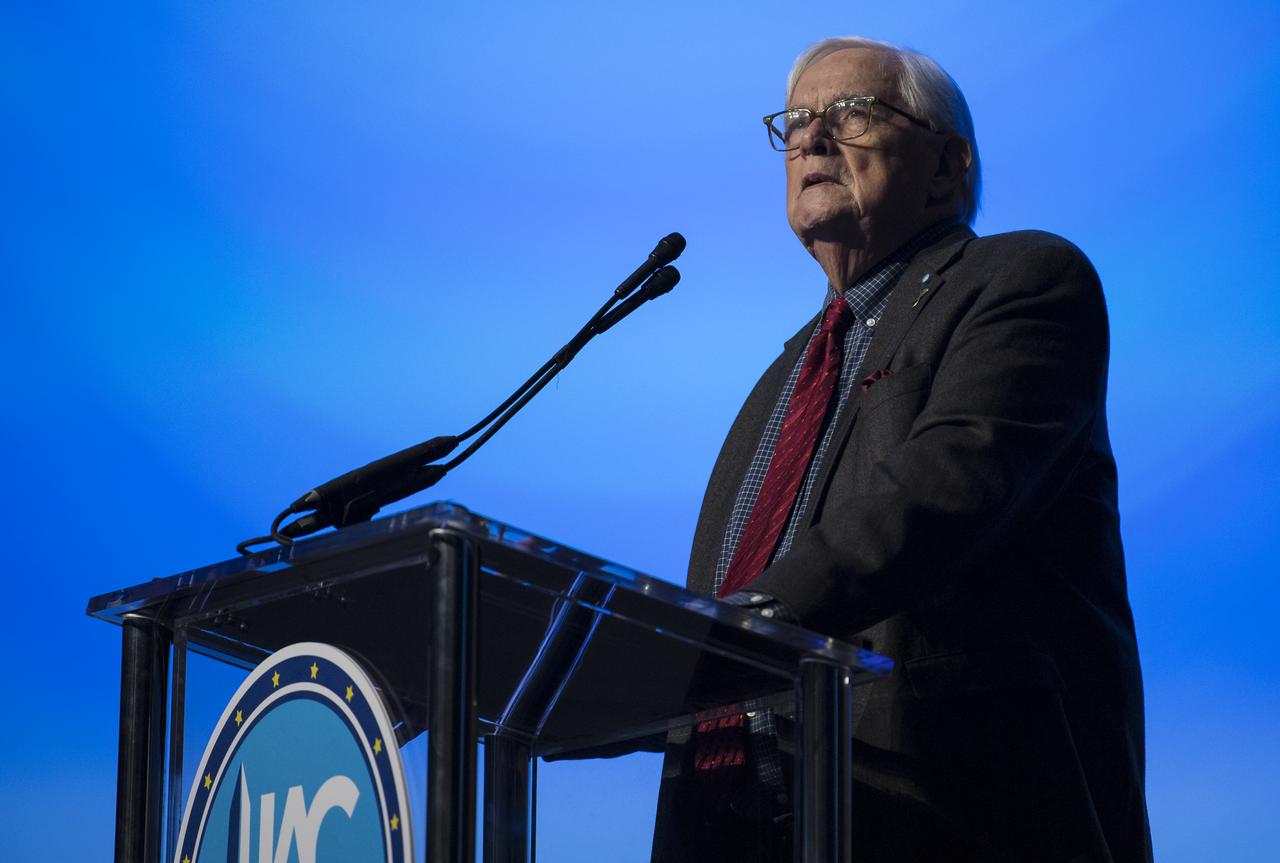
John Logsdon, Apollo historian and Professor Emeritus at George Washington University, speaks about the history of the Apollo program during the International Astronautical Federation World Space Award highlight lecture at the 70th International Astronautical Congress, Thursday, Oct. 24, 2019, at the Walter E. Washington Convention Center in Washington. The 2019 World Space Award was presented to the crew of Apollo 11. Photo Credit: (NASA/Joel Kowsky)
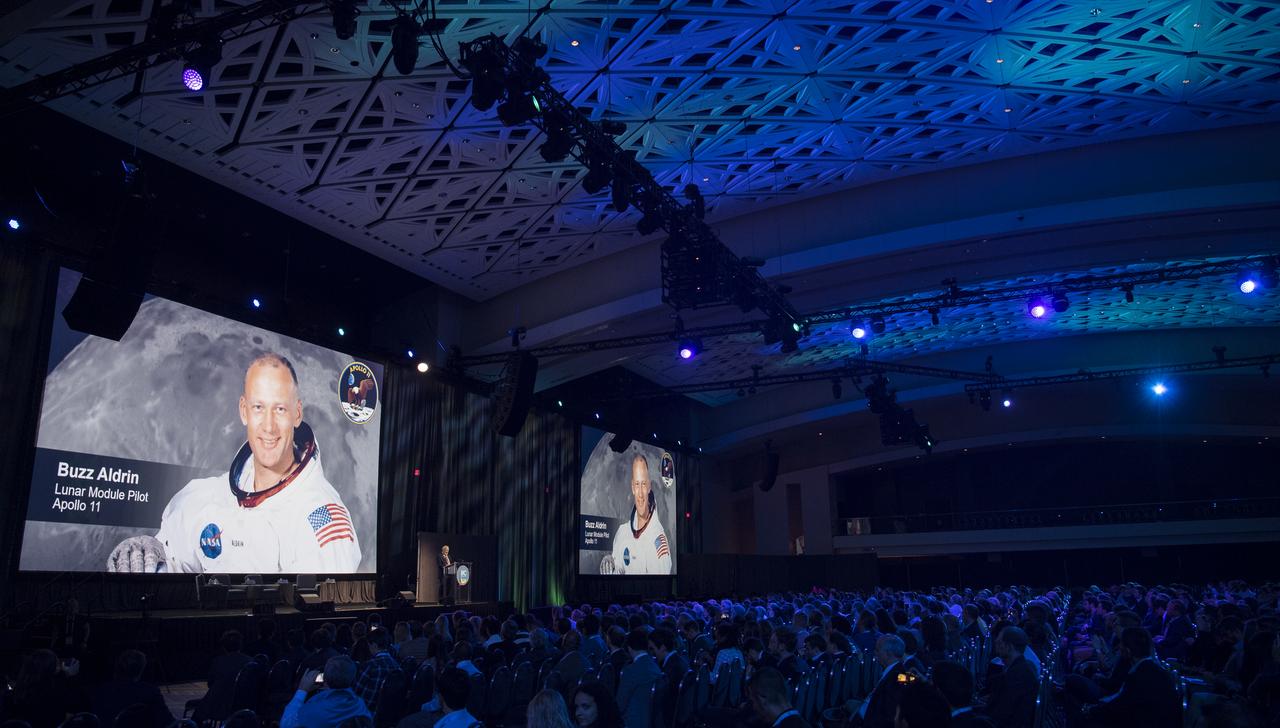
Apollo 11 astronaut Buzz Aldrin delivers remarks during the International Astronautical Federation World Space Award highlight lecture at the 70th International Astronautical Congress, Thursday, Oct. 24, 2019, at the Walter E. Washington Convention Center in Washington. The 2019 World Space Award was presented to the crew of Apollo 11. Photo Credit: (NASA/Joel Kowsky)
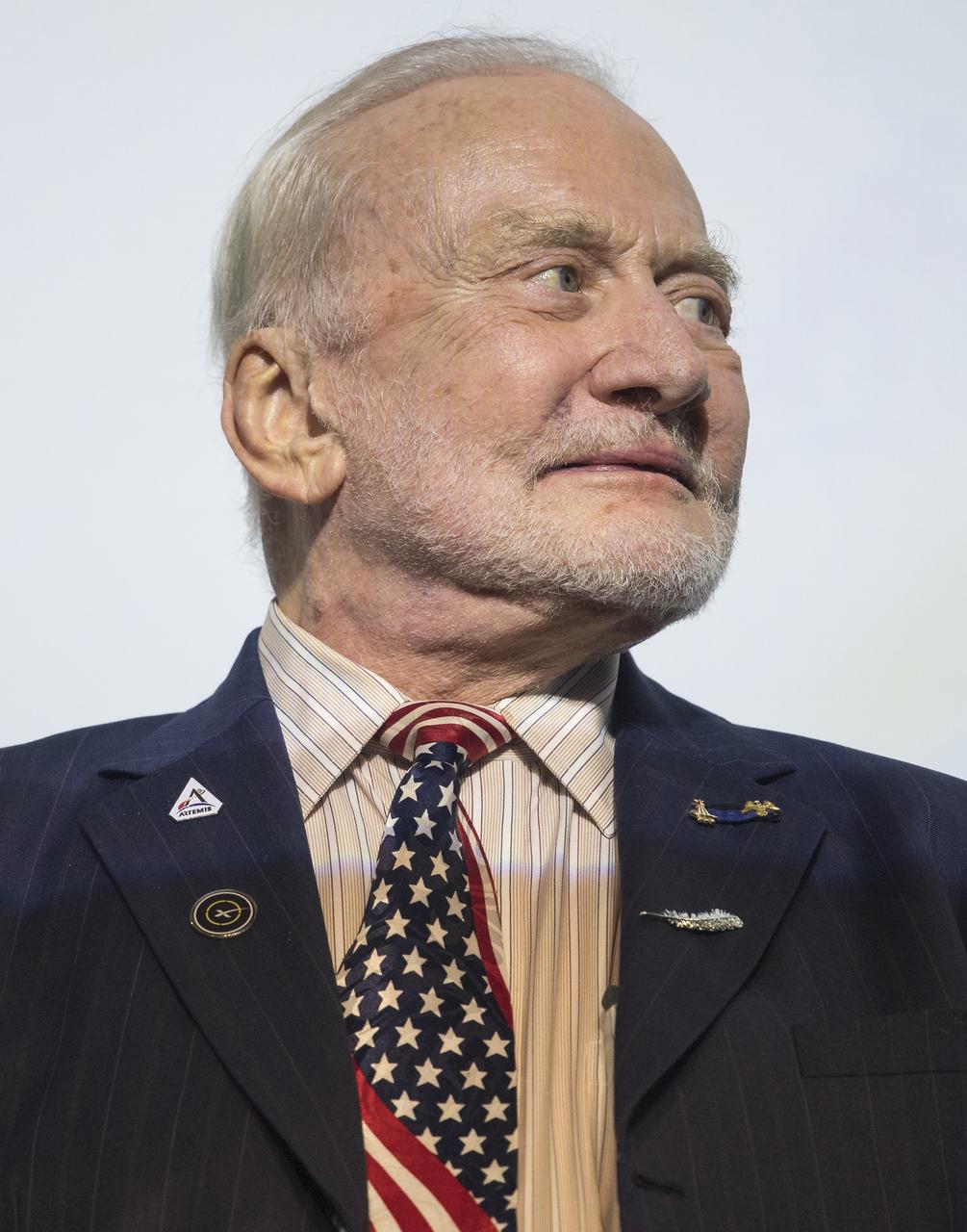
Apollo 11 astronaut Buzz Aldrin is seen during the International Astronautical Federation World Space Award highlight lecture at the 70th International Astronautical Congress, Thursday, Oct. 24, 2019, at the Walter E. Washington Convention Center in Washington. The 2019 World Space Award was presented to the crew of Apollo 11. Photo Credit: (NASA/Joel Kowsky)
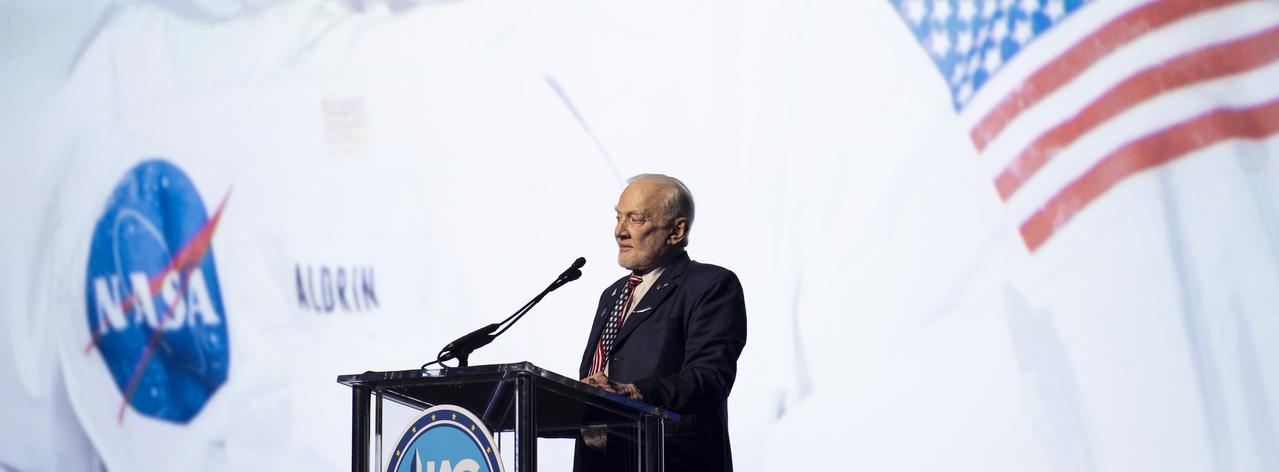
Apollo 11 astronaut Buzz Aldrin delivers remarks during the International Astronautical Federation World Space Award highlight lecture at the 70th International Astronautical Congress, Thursday, Oct. 24, 2019, at the Walter E. Washington Convention Center in Washington. The 2019 World Space Award was presented to the crew of Apollo 11. Photo Credit: (NASA/Joel Kowsky)
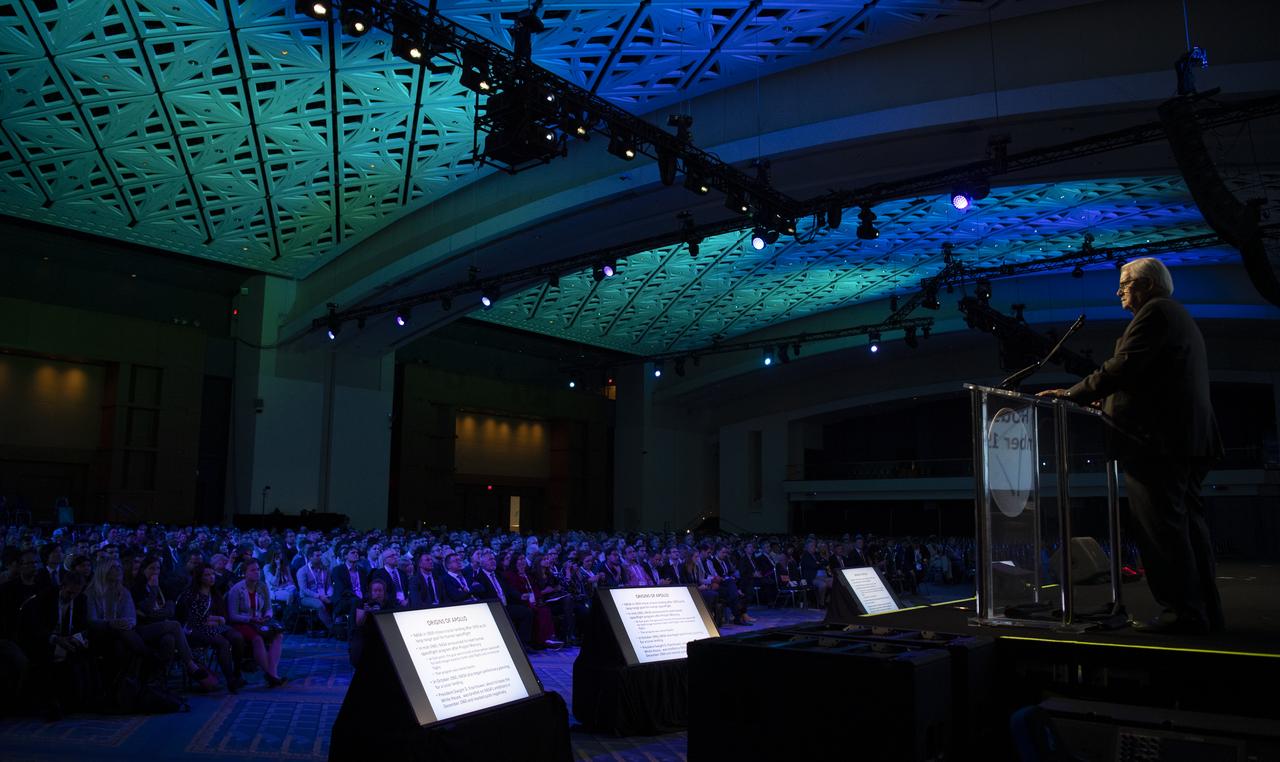
John Logsdon, Apollo historian and Professor Emeritus at George Washington University, speaks about the history of the Apollo program during the International Astronautical Federation World Space Award highlight lecture at the 70th International Astronautical Congress, Thursday, Oct. 24, 2019, at the Walter E. Washington Convention Center in Washington. The 2019 World Space Award was presented to the crew of Apollo 11. Photo Credit: (NASA/Joel Kowsky)

Rick Armstrong, son of Apollo 11 astronaut Neil Armstrong answers a question during at panel discussion at the International Astronautical Federation World Space Award highlight lecture at the 70th International Astronautical Congress, Thursday, Oct. 24, 2019, at the Walter E. Washington Convention Center in Washington. The 2019 World Space Award was presented to the crew of Apollo 11. Photo Credit: (NASA/Joel Kowsky)
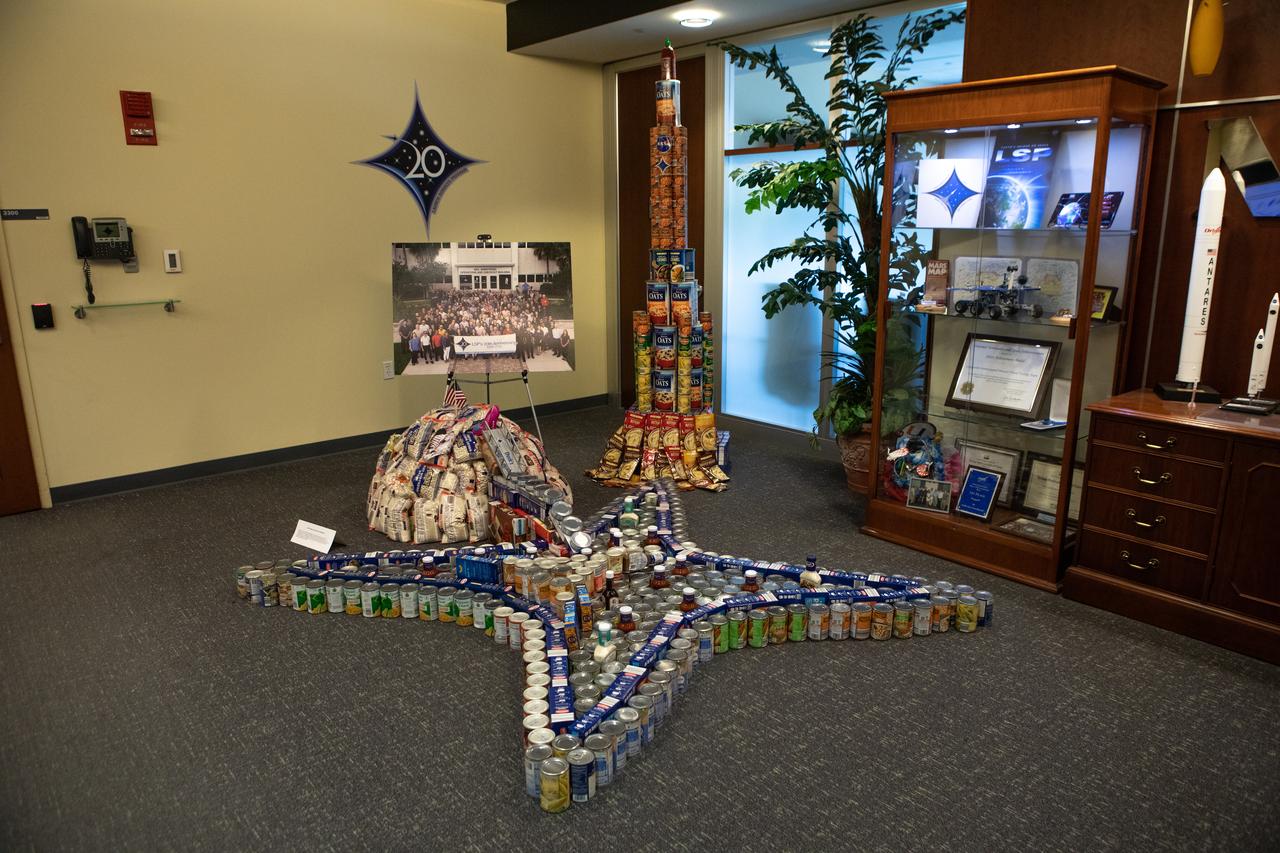
A sculpture created out of non-perishable canned and boxed foods by NASA’s Launch Services Program is on display at Kennedy Space Center in Florida as part of the 2019 Feds Feeds Families campaign. Kennedy employees had the opportunity to work in teams to construct sculptures reflecting this year’s theme – The Moon Lights the Way – to pay tribute to the 50th anniversary of the first Apollo Moon landing. As part of the theme, the can sculptures highlighted the accomplishments of the Apollo Program while incorporating aspects of NASA’s aim to return to the Moon and beyond to Mars. On Aug. 2, 2019, all sculptures will be deconstructed and boxed for donation.
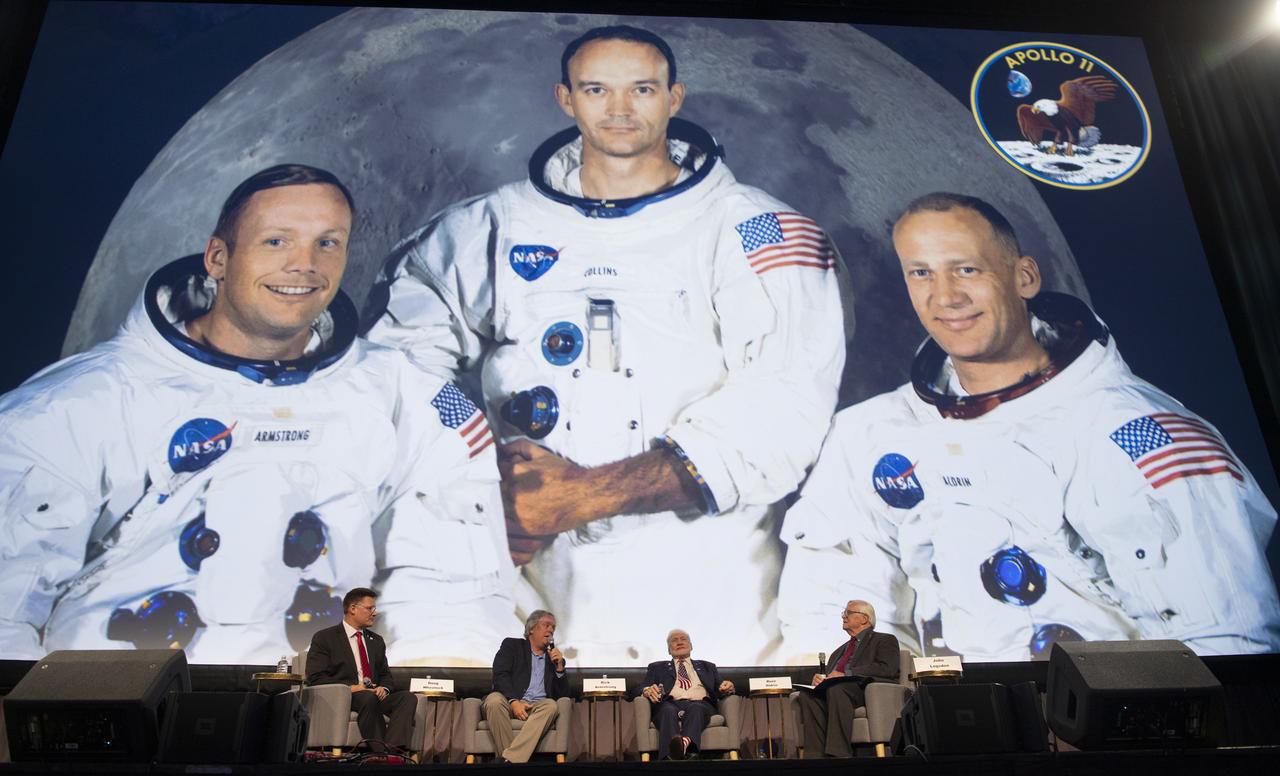
NASA astronaut Doug Wheelock, left, Rick Armstrong, son of Apollo 11 astronaut Neil Armstrong, second from left, Apollo 11 astronaut Buzz Aldrin, second from right, and John Logsdon, Apollo historian and Professor Emeritus at George Washington University, right, are seen during a panel discussion during the International Astronautical Federation World Space Award highlight lecture at the 70th International Astronautical Congress, Thursday, Oct. 24, 2019, at the Walter E. Washington Convention Center in Washington. The 2019 World Space Award was presented to the crew of Apollo 11. Photo Credit: (NASA/Joel Kowsky)

NASA astronaut Doug Wheelock, left, Rick Armstrong, son of Apollo 11 astronaut Neil Armstrong, second from left, Apollo 11 astronaut Buzz Aldrin, second from right, and John Logsdon, Apollo historian and Professor Emeritus at George Washington University, right, are seen during a panel discussion during the International Astronautical Federation World Space Award highlight lecture at the 70th International Astronautical Congress, Thursday, Oct. 24, 2019, at the Walter E. Washington Convention Center in Washington. The 2019 World Space Award was presented to the crew of Apollo 11. Photo Credit: (NASA/Joel Kowsky)

A sculpture created out of non-perishable canned and boxed foods is on display at NASA’s Kennedy Space Center in Florida as part of the 2019 Feds Feeds Families campaign. Kennedy employees had the opportunity to work in teams to construct sculptures reflecting this year’s theme – The Moon Lights the Way – to pay tribute to the 50th anniversary of the first Apollo Moon landing. As part of the theme, the can sculptures highlighted the accomplishments of the Apollo Program while incorporating aspects of NASA’s aim to return to the Moon and beyond to Mars. On Aug. 2, 2019, all sculptures will be deconstructed and boxed for donation.

A sculpture created out of non-perishable canned and boxed foods is on display at NASA’s Kennedy Space Center in Florida as part of the 2019 Feds Feeds Families campaign. Kennedy employees had the opportunity to work in teams to construct sculptures reflecting this year’s theme – The Moon Lights the Way – to pay tribute to the 50th anniversary of the first Apollo Moon landing. As part of the theme, the can sculptures highlighted the accomplishments of the Apollo Program while incorporating aspects of NASA’s aim to return to the Moon and beyond to Mars. On Aug. 2, 2019, all sculptures will be deconstructed and boxed for donation.
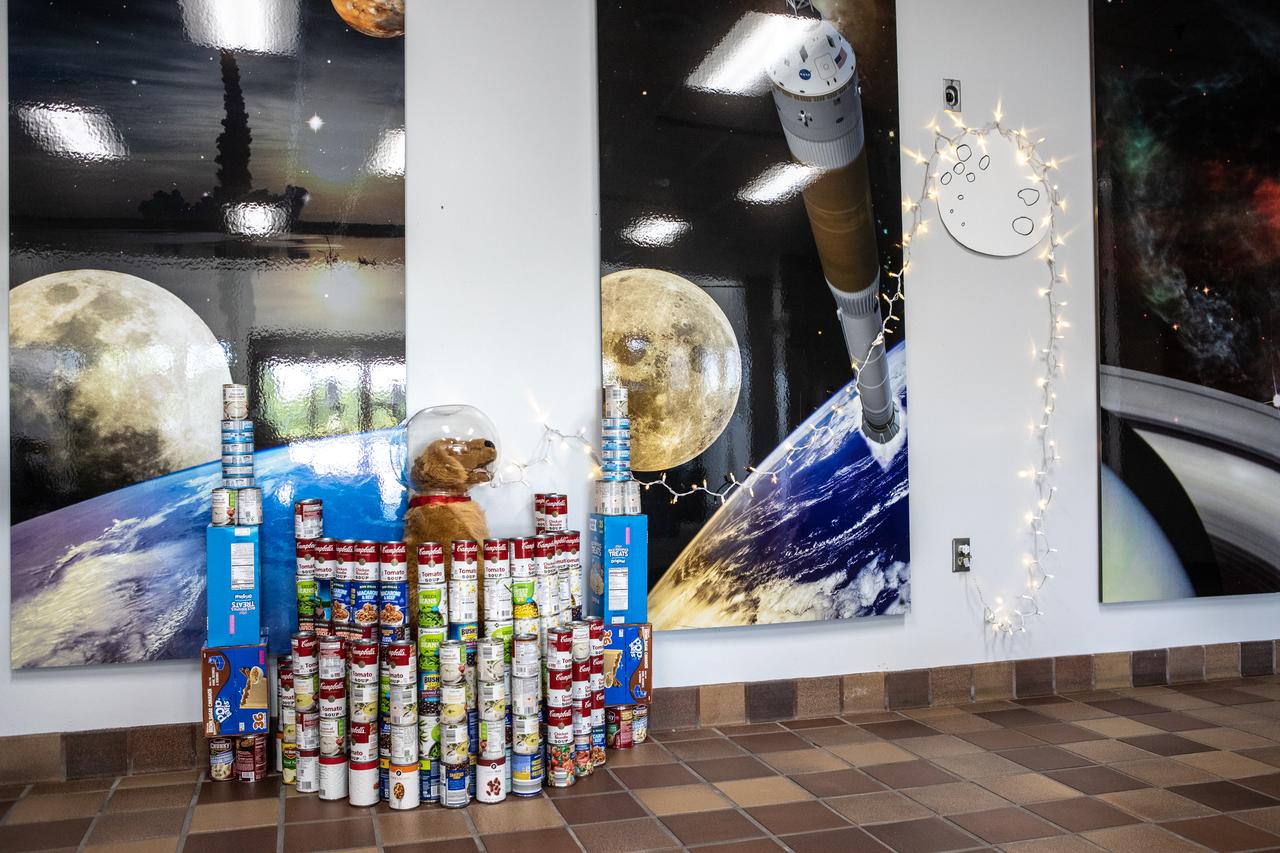
A sculpture created out of non-perishable canned and boxed foods is on display at NASA’s Kennedy Space Center in Florida as part of the 2019 Feds Feeds Families campaign. Kennedy employees had the opportunity to work in teams to construct sculptures reflecting this year’s theme – The Moon Lights the Way – to pay tribute to the 50th anniversary of the first Apollo Moon landing. As part of the theme, the can sculptures highlighted the accomplishments of the Apollo Program while incorporating aspects of NASA’s aim to return to the Moon and beyond to Mars. On Aug. 2, 2019, all sculptures will be deconstructed and boxed for donation.
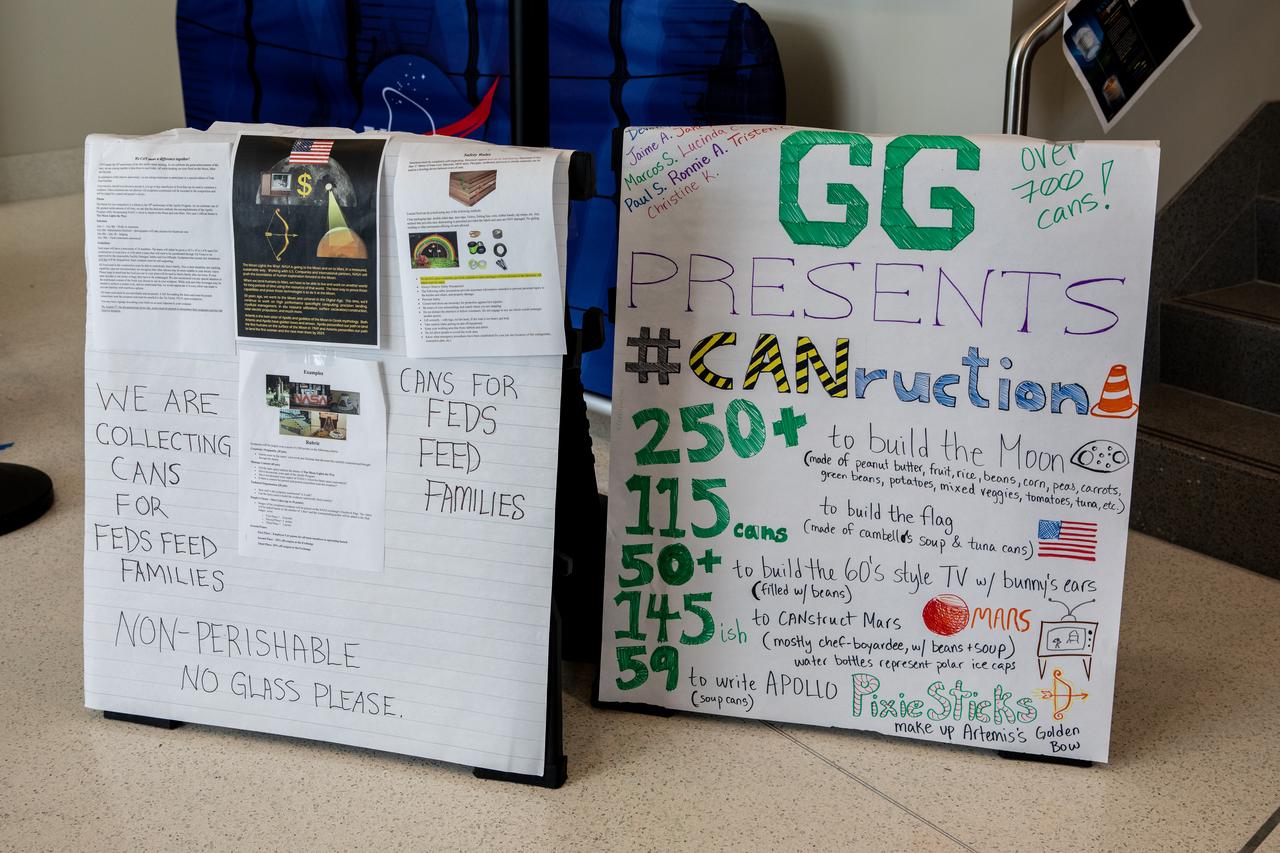
A sign explaining the construction of a sculpture created out of non-perishable canned and boxed foods is on display at NASA’s Kennedy Space Center in Florida as part of the 2019 Feds Feeds Families campaign. Kennedy employees had the opportunity to work in teams to construct sculptures reflecting this year’s theme – The Moon Lights the Way – to pay tribute to the 50th anniversary of the first Apollo Moon landing. As part of the theme, the can sculptures highlighted the accomplishments of the Apollo Program while incorporating aspects of NASA’s aim to return to the Moon and beyond to Mars. On Aug. 2, 2019, all sculptures will be deconstructed and boxed for donation.

NASA astronaut Doug Wheelock, left, Rick Armstrong, son of Apollo 11 astronaut Neil Armstrong, second from left, Apollo 11 astronaut Buzz Aldrin, second from right, and John Logsdon, Apollo historian and Professor Emeritus at George Washington University, right, are seen during a panel discussion during the International Astronautical Federation World Space Award highlight lecture at the 70th International Astronautical Congress, Thursday, Oct. 24, 2019, at the Walter E. Washington Convention Center in Washington. The 2019 World Space Award was presented to the crew of Apollo 11. Photo Credit: (NASA/Joel Kowsky)
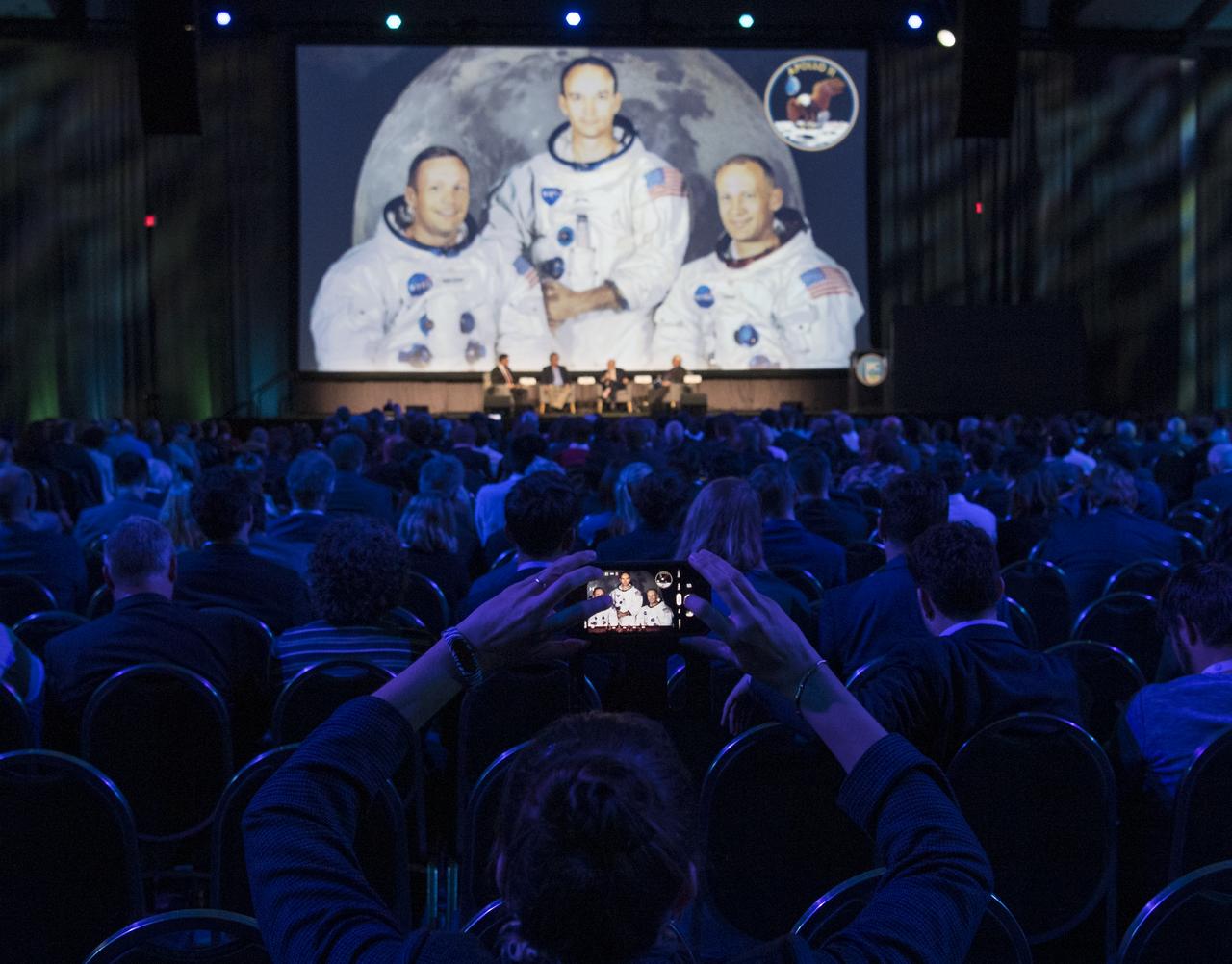
A member of the audience takes a picture of NASA astronaut Doug Wheelock, Rick Armstrong, son of Apollo 11 astronaut Neil Armstrong, Apollo 11 astronaut Buzz Aldrin, and John Logsdon, Apollo historian and Professor Emeritus at George Washington University, on stage during the International Astronautical Federation World Space Award highlight lecture at the 70th International Astronautical Congress, Thursday, Oct. 24, 2019, at the Walter E. Washington Convention Center in Washington. The 2019 World Space Award was presented to the crew of Apollo 11. Photo Credit: (NASA/Joel Kowsky)

A sculpture created out of non-perishable canned and boxed foods is on display at NASA’s Kennedy Space Center in Florida as part of the 2019 Feds Feeds Families campaign. Kennedy employees had the opportunity to work in teams to construct sculptures reflecting this year’s theme – The Moon Lights the Way – to pay tribute to the 50th anniversary of the first Apollo Moon landing. As part of the theme, the can sculptures highlighted the accomplishments of the Apollo Program while incorporating aspects of NASA’s aim to return to the Moon and beyond to Mars. On Aug. 2, 2019, all sculptures will be deconstructed and boxed for donation.
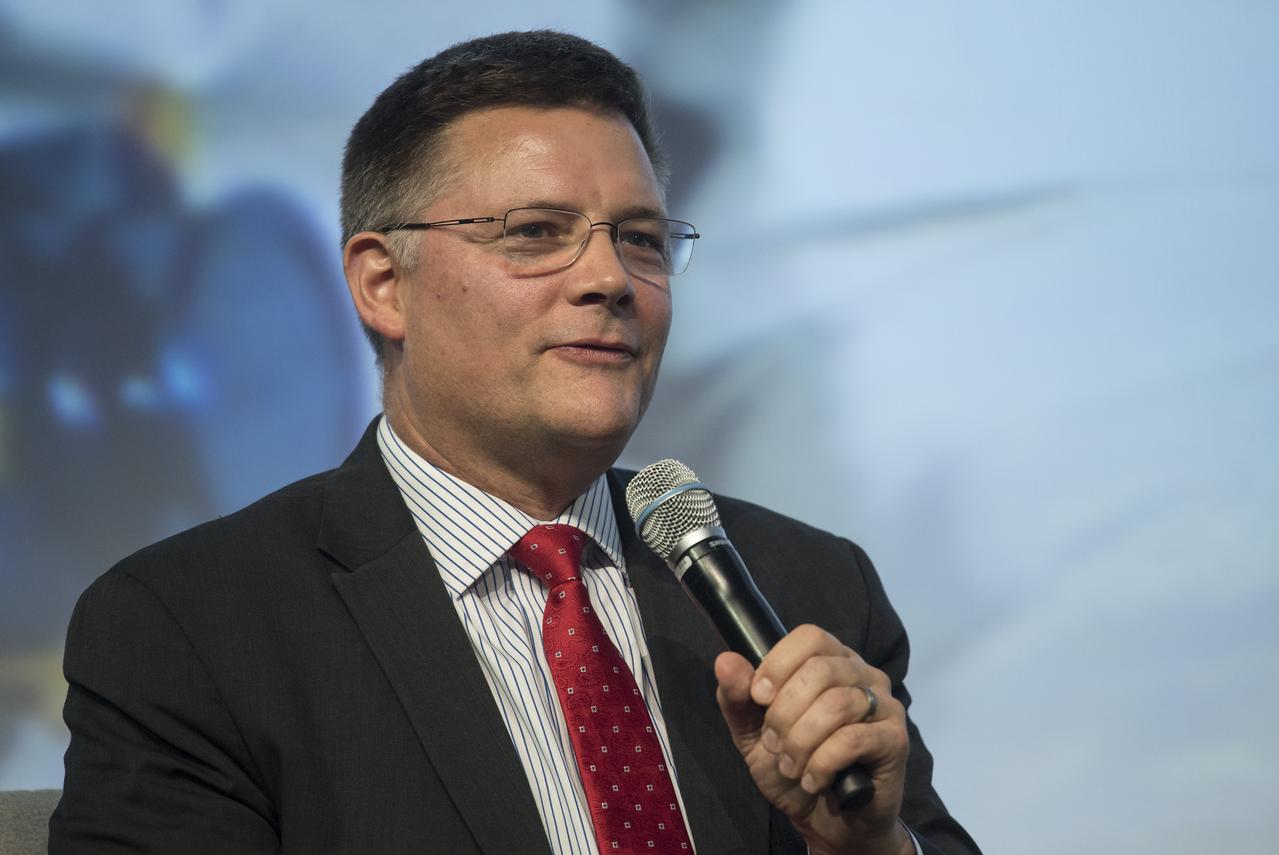
NASA astronaut Doug Wheelock, is seen during a panel discussion with Rick Armstrong, son of Apollo 11 astronaut Neil Armstrong, Apollo 11 astronaut Buzz Aldrin, and John Logsdon, Apollo historian and Professor Emeritus at George Washington University, at the International Astronautical Federation World Space Award highlight lecture at the 70th International Astronautical Congress, Thursday, Oct. 24, 2019, at the Walter E. Washington Convention Center in Washington. The 2019 World Space Award was presented to the crew of Apollo 11. Photo Credit: (NASA/Joel Kowsky)
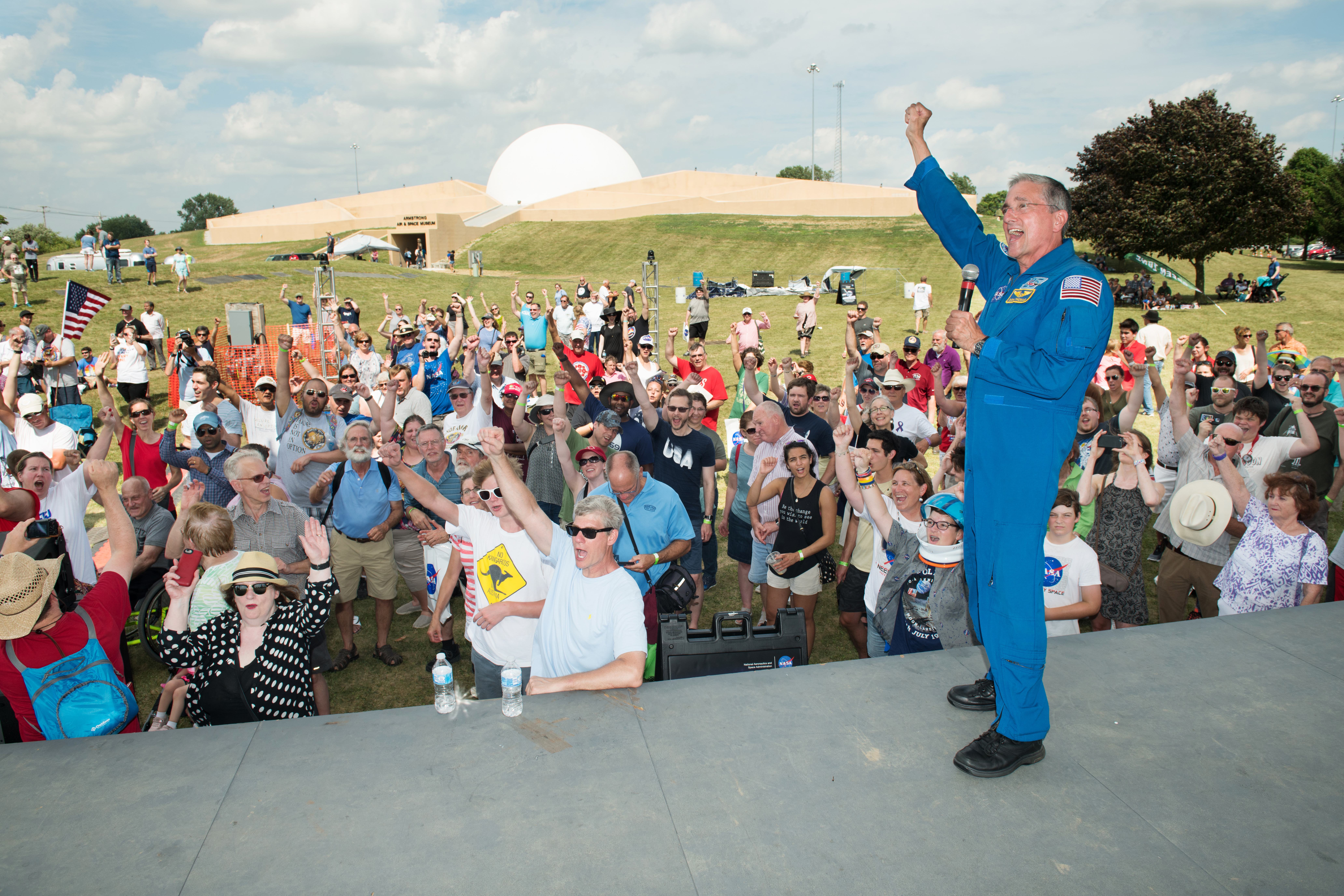
Astronaut Don Thomas and the crowd cheer at the moment of the Apollo 11 touchdown on the Moon during a replay of the 1969 television broadcast at the Summer Moon Festival, Wapakoneta, Ohio, Apollo 11 Moon Landing 50th Anniversary
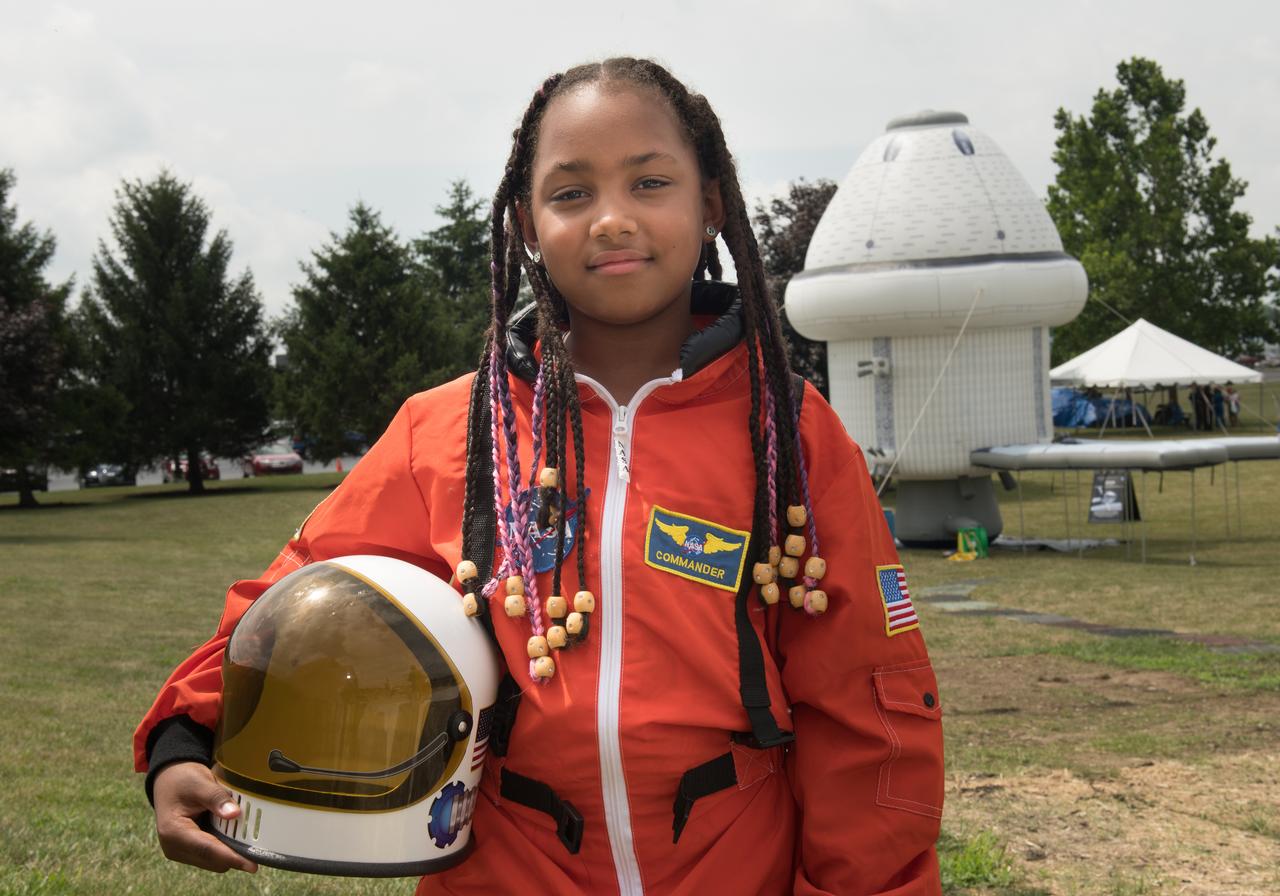
Summer Moon Festival, Wapakoneta, Ohio, Apollo 11 Moon Landing 50th Anniversary

Astronaut Sunita Williams crosses the finish line of the Run To The Moon Race during the Summer Moon Festival, Wapakoneta, Ohio, Apollo 11 Moon Landing 50th Anniversary
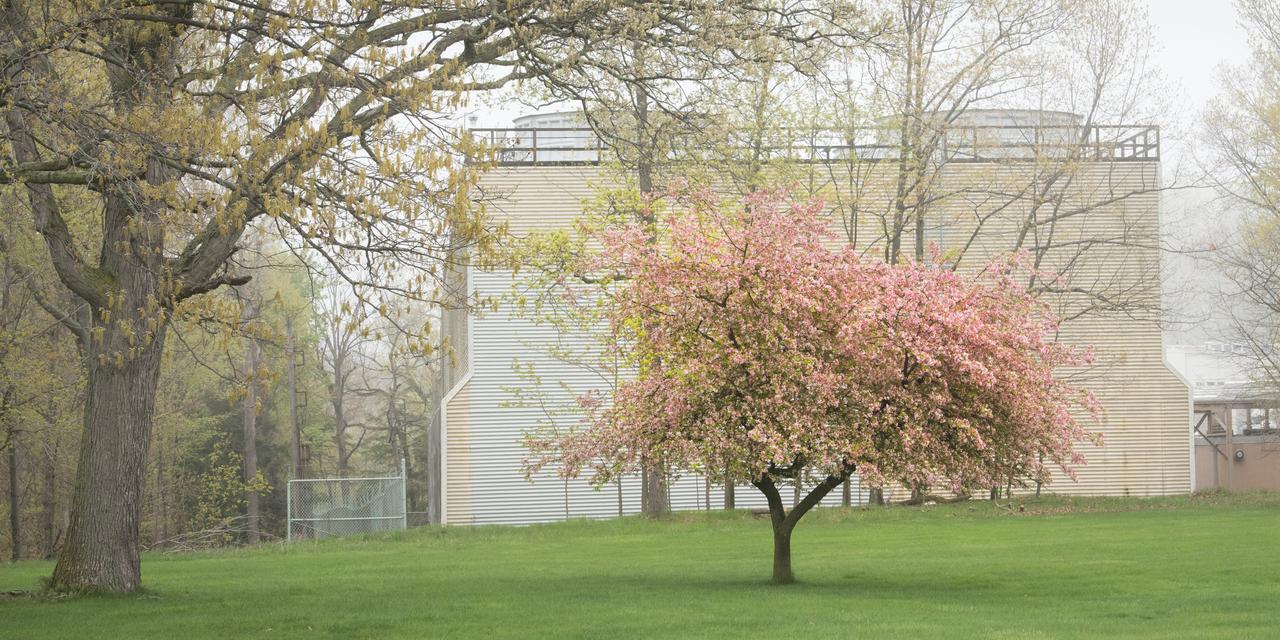
Flowering Crab Apple Tree in full Bloom in front of the Propulsion Systems Laboratory, PSL Cooling Tower #6 on a Foggy Day in Early Spring
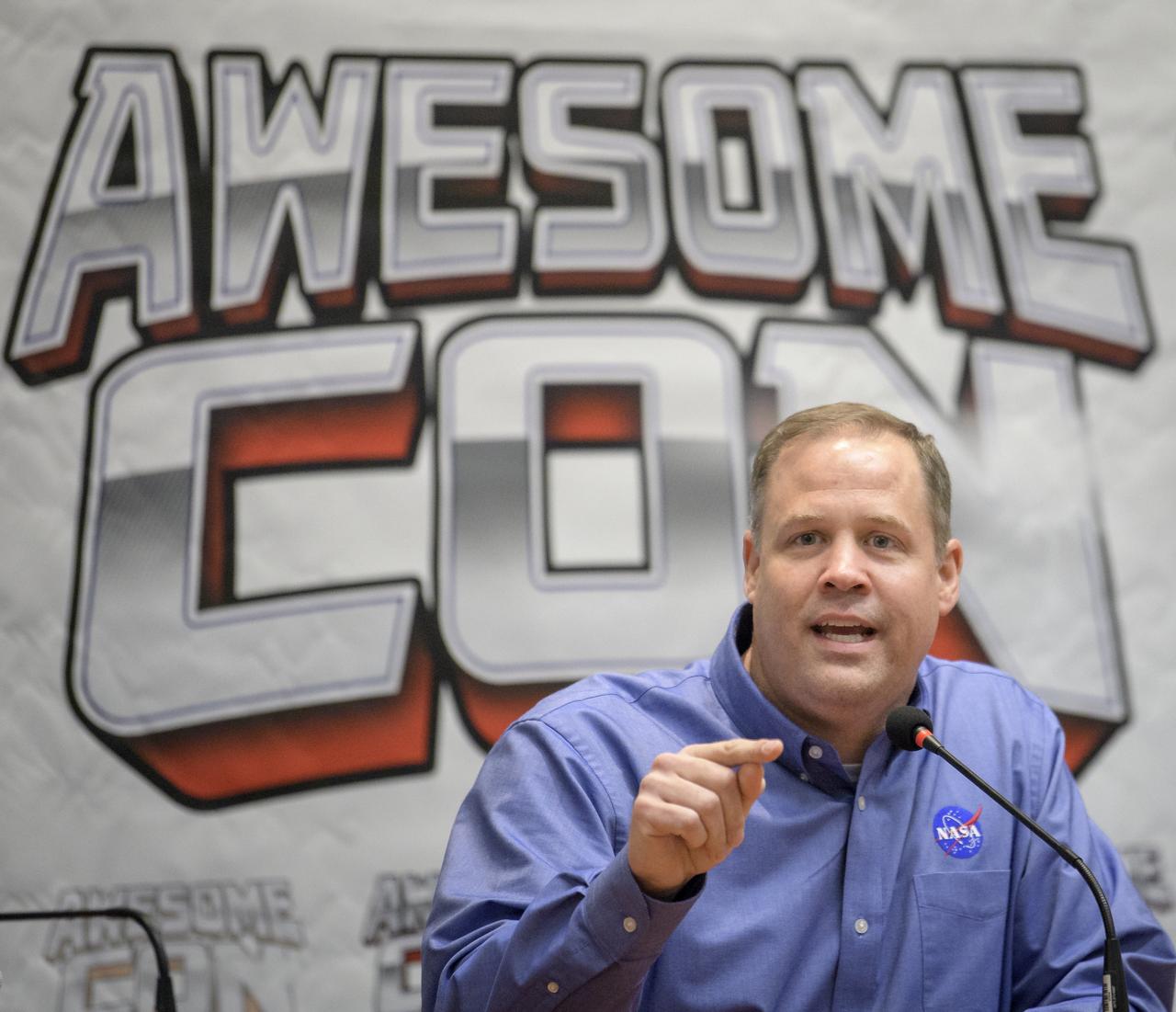
NASA Administrator Jim Bridenstine talks about getting American astronauts to the Moon in the next five years while participating in a Future Con panel discussion at Awesome Con, Saturday, April 27, 2019 at the Walter E. Washington Convention Center in Washington. Future Con highlights the intersection of science, technology, and science fiction inside D.C.’s largest pop culture event. Photo Credit: (NASA/Bill Ingalls)
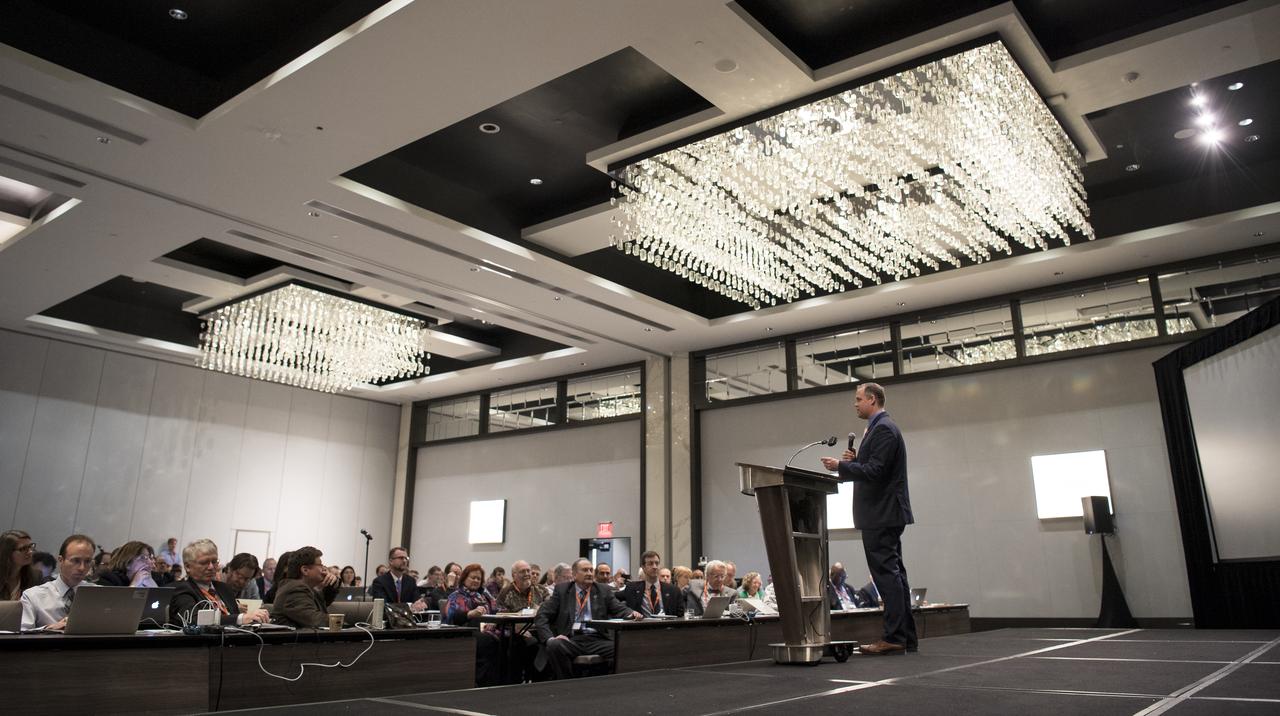
NASA Administrator Jim Bridenstine delivers a keynote speech at the sixth International Academy of Astronautics Planetary Defense Conference, Monday, April 29, 2019 at The Hotel at the University of Maryland in College Park Maryland. The conference brings together experts from around the world to present the latest research on Near-Earth Objects and will highlight the development of the first-ever mission to demonstrate an asteroid defection technique for planetary defense, NASA’s Double Asteroid Redirection Test (DART). Photo Credit: (NASA/Joel Kowsky)

NASA Administrator Jim Bridenstine delivers a keynote speech at the sixth International Academy of Astronautics Planetary Defense Conference, Monday, April 29, 2019 at The Hotel at the University of Maryland in College Park Maryland. The conference brings together experts from around the world to present the latest research on Near-Earth Objects and will highlight the development of the first-ever mission to demonstrate an asteroid defection technique for planetary defense, NASA’s Double Asteroid Redirection Test (DART). Photo Credit: (NASA/Joel Kowsky)

NASA Administrator Jim Bridenstine delivers a keynote speech at the sixth International Academy of Astronautics Planetary Defense Conference, Monday, April 29, 2019 at The Hotel at the University of Maryland in College Park Maryland. The conference brings together experts from around the world to present the latest research on Near-Earth Objects and will highlight the development of the first-ever mission to demonstrate an asteroid defection technique for planetary defense, NASA’s Double Asteroid Redirection Test (DART). Photo Credit: (NASA/Joel Kowsky)
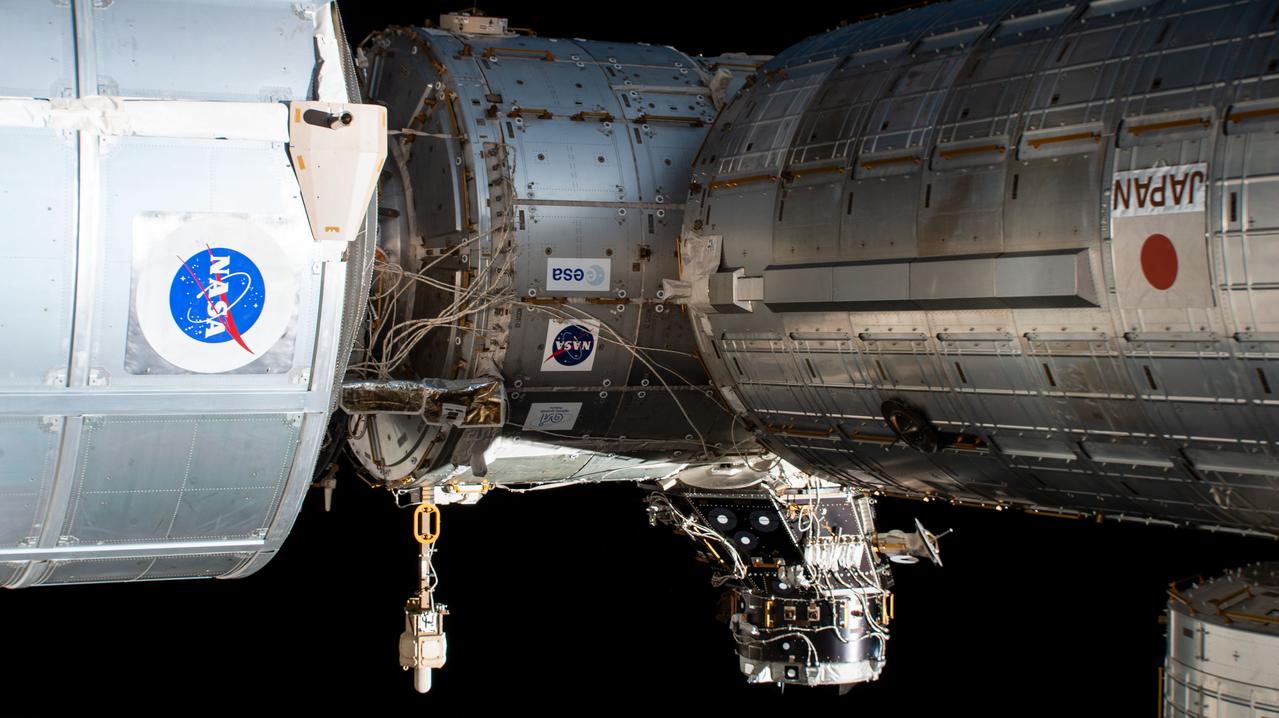
iss060e007002 (July 12, 2019) --- The forward-end of the International Space Station is pictured highlighting portions of three modules and a pressurized mating adapter. An external high definition camera captured (from left) the Permanent Multipurpose Module (PMM), the Harmony Module and the Japanese Kibo laboratory module. Protruding from the Harmony module is the pressurized mating adapter that will host the International Docking Adapter-3. The PMM is actually in front of the U.S. Destiny laboratory module to which Harmony is attached to.

An audience member dressed in character listens as NASA Administrator Jim Bridenstine talks about getting American astronauts to the Moon in the next five years while participating in a Future Con panel discussion at Awesome Con, Saturday, April 27, 2019 at the Walter E. Washington Convention Center in Washington. Future Con highlights the intersection of science, technology, and science fiction inside D.C.’s largest pop culture event. Photo Credit: (NASA/Bill Ingalls)
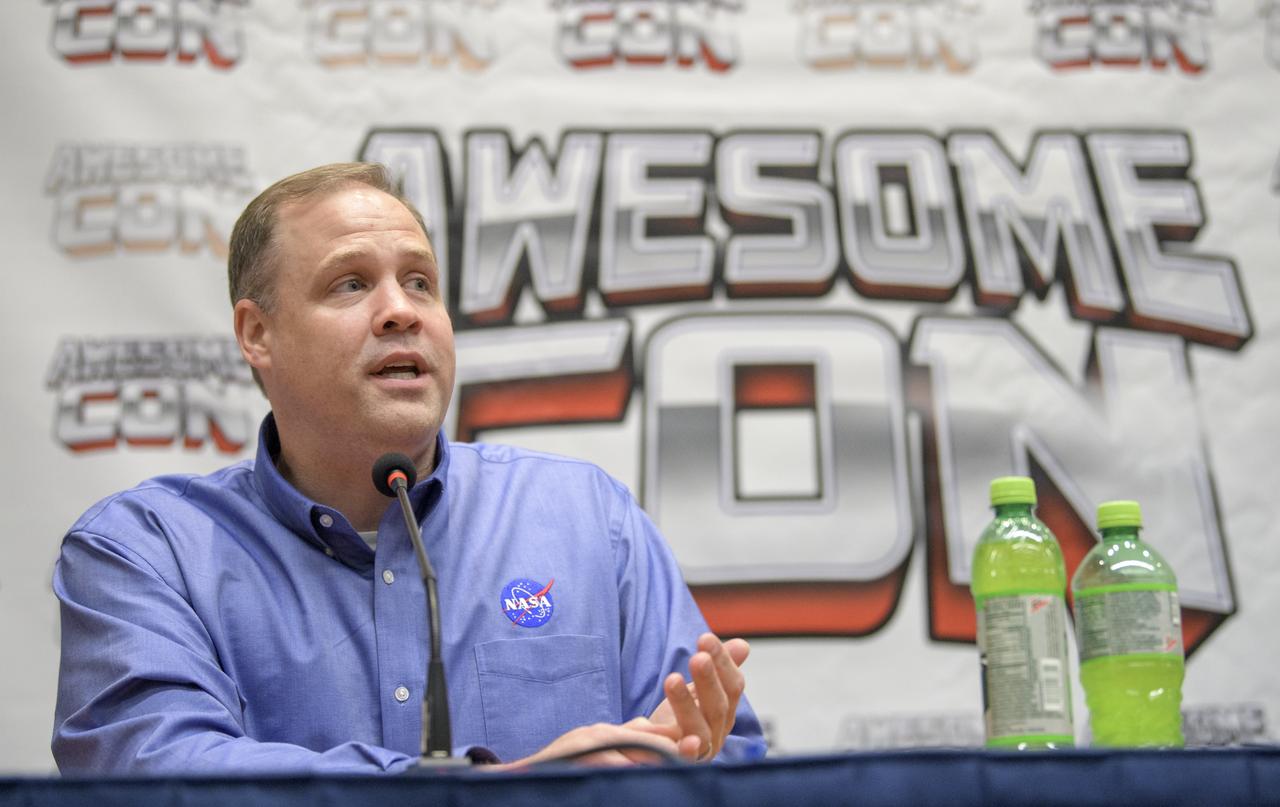
NASA Administrator Jim Bridenstine talks about getting American astronauts to the Moon in the next five years while participating in a Future Con panel discussion at Awesome Con, Saturday, April 27, 2019 at the Walter E. Washington Convention Center in Washington. Future Con highlights the intersection of science, technology, and science fiction inside D.C.’s largest pop culture event. Photo Credit: (NASA/Bill Ingalls)
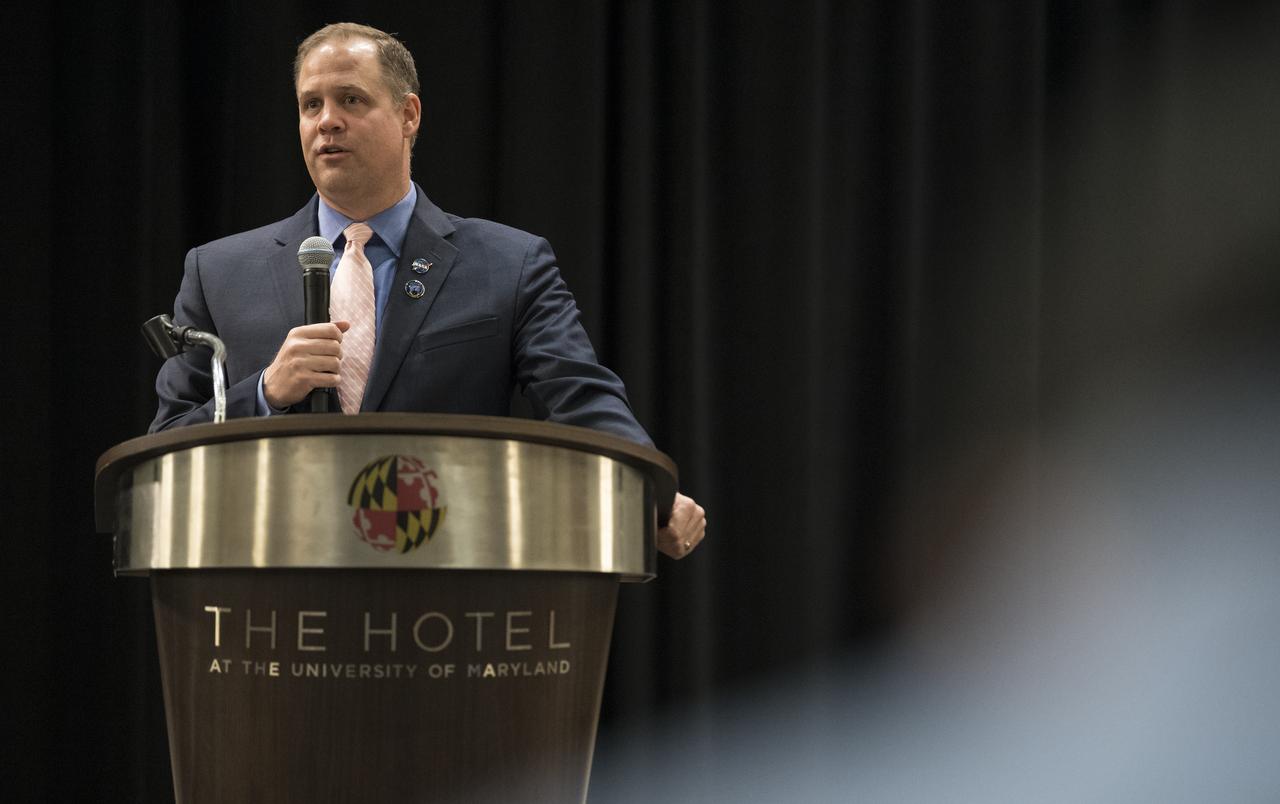
NASA Administrator Jim Bridenstine delivers a keynote speech at the sixth International Academy of Astronautics Planetary Defense Conference, Monday, April 29, 2019 at The Hotel at the University of Maryland in College Park Maryland. The conference brings together experts from around the world to present the latest research on Near-Earth Objects and will highlight the development of the first-ever mission to demonstrate an asteroid defection technique for planetary defense, NASA’s Double Asteroid Redirection Test (DART). Photo Credit: (NASA/Joel Kowsky)

An audience member dressed in character listens as NASA Administrator Jim Bridenstine talks about getting American astronauts to the Moon in the next five years while participating in a Future Con panel discussion at Awesome Con, Saturday, April 27, 2019 at the Walter E. Washington Convention Center in Washington. Future Con highlights the intersection of science, technology, and science fiction inside D.C.’s largest pop culture event. Photo Credit: (NASA/Bill Ingalls)
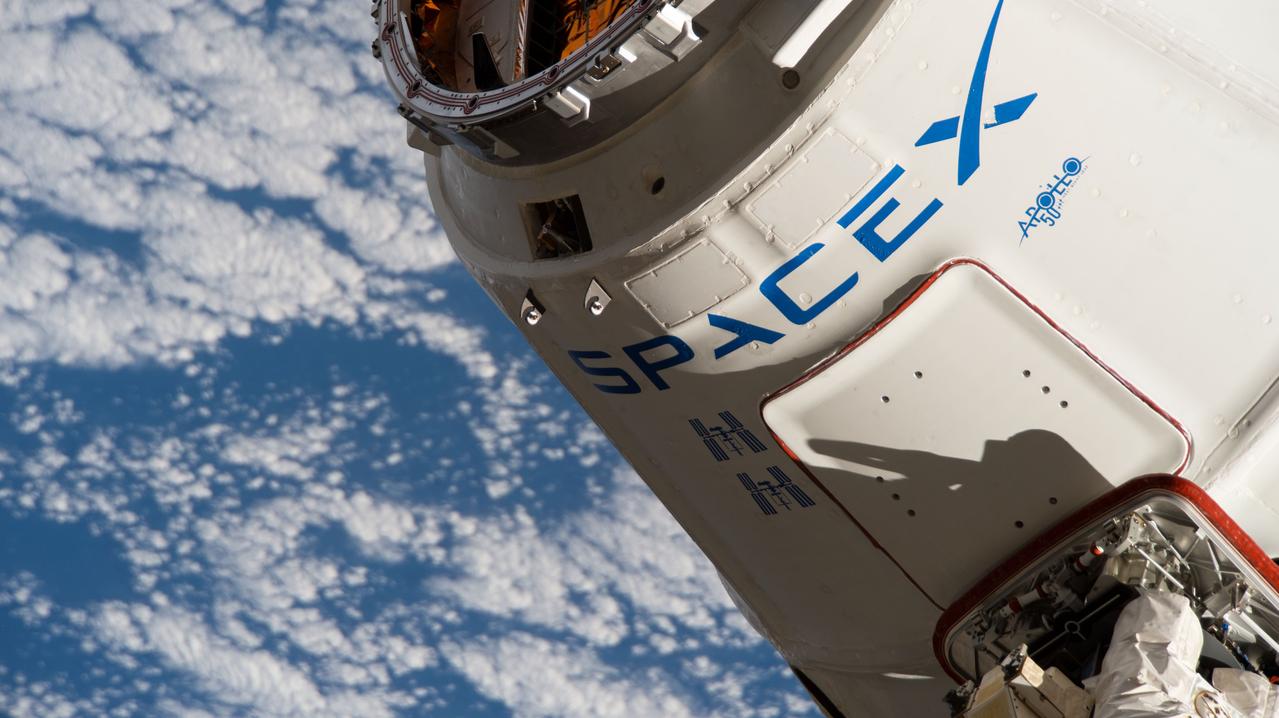
iss060e014962 (July 27, 2019) --- The re-usable SpaceX Dragon space freighter is in the grips of the Canadarm2 robotic arm shortly after it was captured following a day-and-a-half-long trip that began with a launch from Cape Canaveral, Florida. This was the third flight of this individual spacecraft with its previous flights denoted by two insignia depicting the International Space Station. The Apollo 50th anniversary insignia is also highlighted on the commercial resupply ship.

NASA Administrator Jim Bridenstine talks about getting American astronauts to the Moon in the next five years while participating in a Future Con panel discussion at Awesome Con, Saturday, April 27, 2019 at the Walter E. Washington Convention Center in Washington. Future Con highlights the intersection of science, technology, and science fiction inside D.C.’s largest pop culture event. Photo Credit: (NASA/Bill Ingalls)
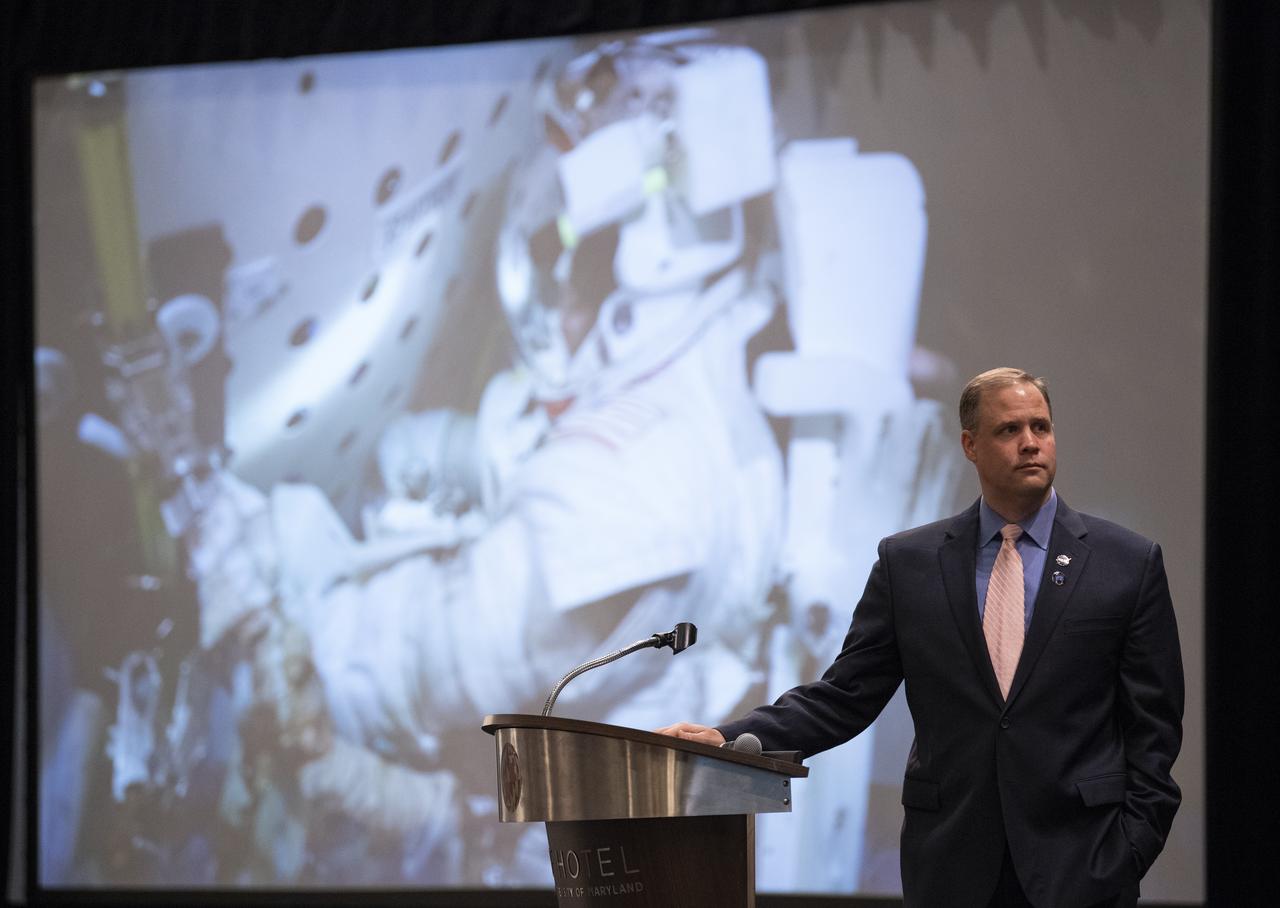
NASA Administrator Jim Bridenstine watches a short video as part of his keynote speech at the sixth International Academy of Astronautics Planetary Defense Conference, Monday, April 29, 2019 at The Hotel at the University of Maryland in College Park Maryland. The conference brings together experts from around the world to present the latest research on Near-Earth Objects and will highlight the development of the first-ever mission to demonstrate an asteroid defection technique for planetary defense, NASA’s Double Asteroid Redirection Test (DART). Photo Credit: (NASA/Joel Kowsky)
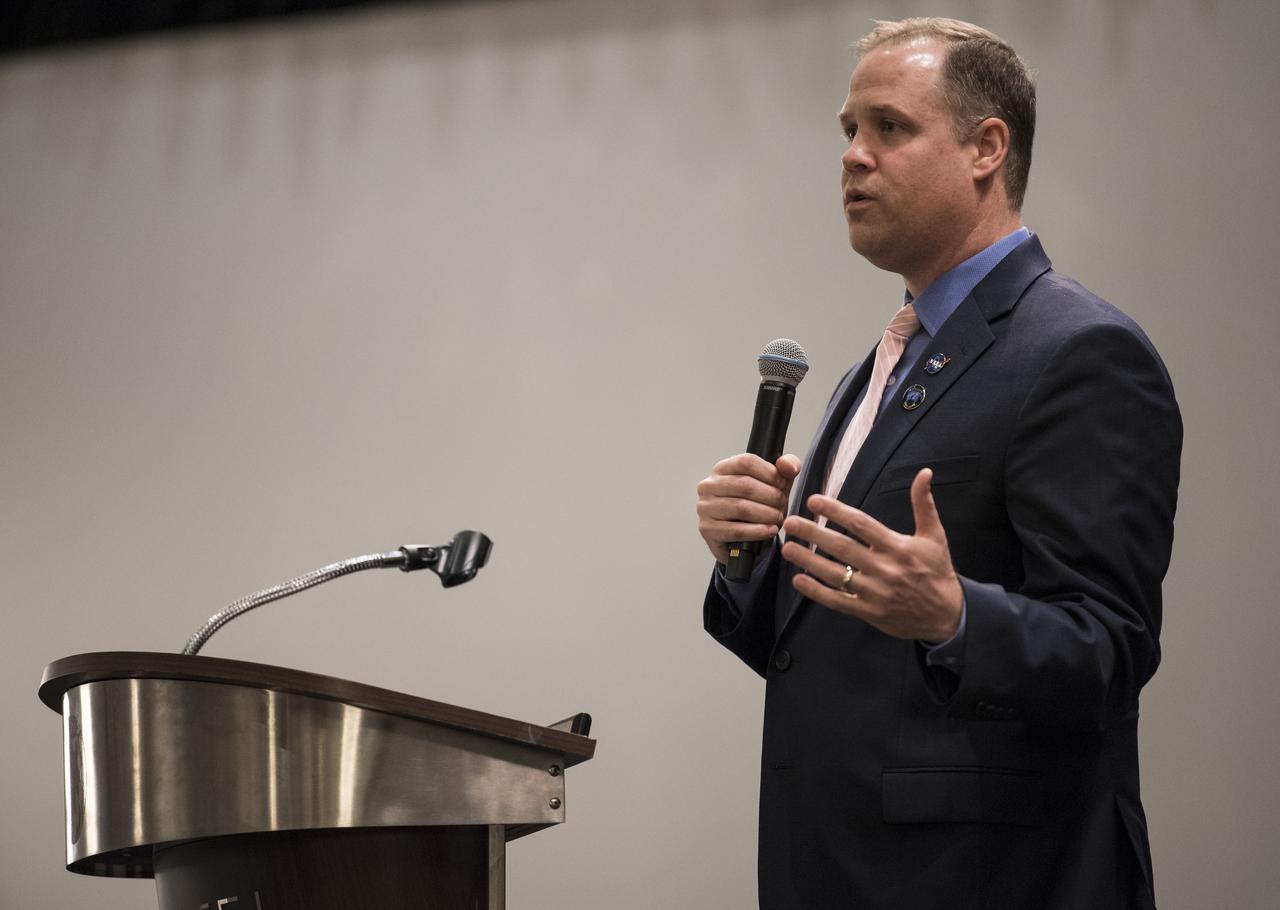
NASA Administrator Jim Bridenstine delivers a keynote speech at the sixth International Academy of Astronautics Planetary Defense Conference, Monday, April 29, 2019 at The Hotel at the University of Maryland in College Park Maryland. The conference brings together experts from around the world to present the latest research on Near-Earth Objects and will highlight the development of the first-ever mission to demonstrate an asteroid defection technique for planetary defense, NASA’s Double Asteroid Redirection Test (DART). Photo Credit: (NASA/Joel Kowsky)
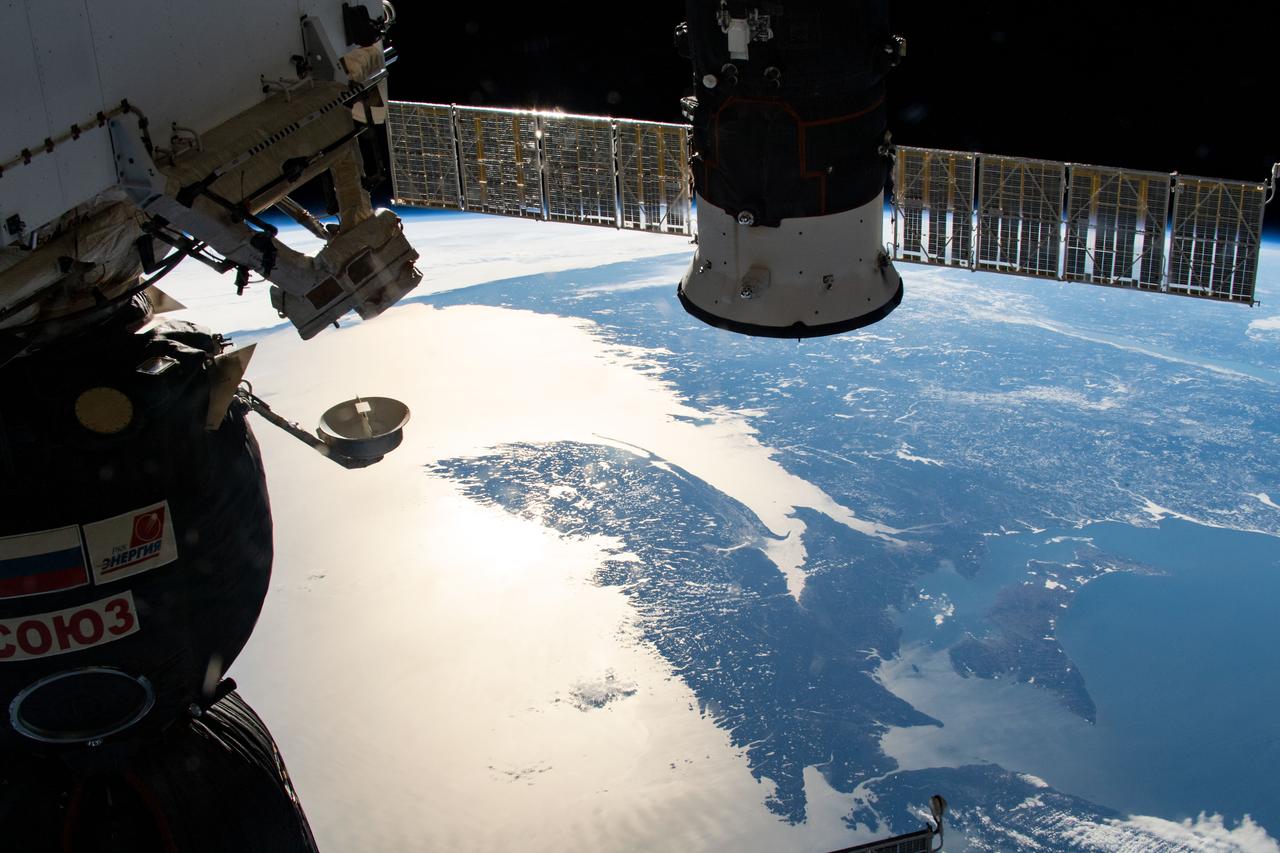
iss059e019071 (April 11, 2019) --- Two Russian spaceships, the Soyuz MS-12 crew ship (left) and the Progress 72 cargo craft, highlight the foreground with the east coast of the United States and Canada in the background. An Expedition 59 crew member took this photograph as the International Space Station orbited 257 miles above the sun glint-lit North Atlantic Ocean.
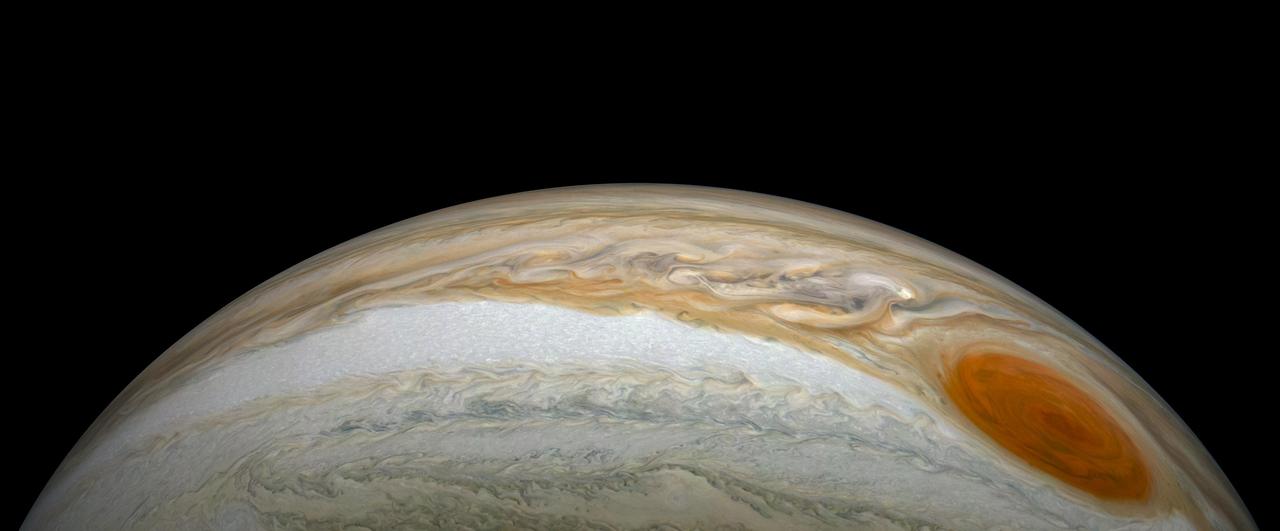
NASA's Juno spacecraft saw this striking vista during its most recent close flyby of Jupiter. This view highlights the contrast between the colorful South Equatorial Belt and the mostly white Southern Tropical Zone, a latitude that also features Jupiter's most famous phenomenon, the persistent, anticyclonic storm known as the Great Red Spot. Citizen scientist Kevin M. Gill created this image using data from the spacecraft's JunoCam imager. The raw image was taken on July 20, 2019, at 9:37 p.m. PDT (July 21, 2019, at 12:37 a.m. EDT) as the Juno spacecraft performed its 21st close flyby of Jupiter. At the time the image was taken, the spacecraft was 26,697 miles (42,965 kilometers) from the tops of the clouds, above a latitude of 46 degrees south. Enhanced image by Kevin M. Gill (CC-BY) based on images provided courtesy of NASA/JPL-Caltech/SwRI/MSSS.
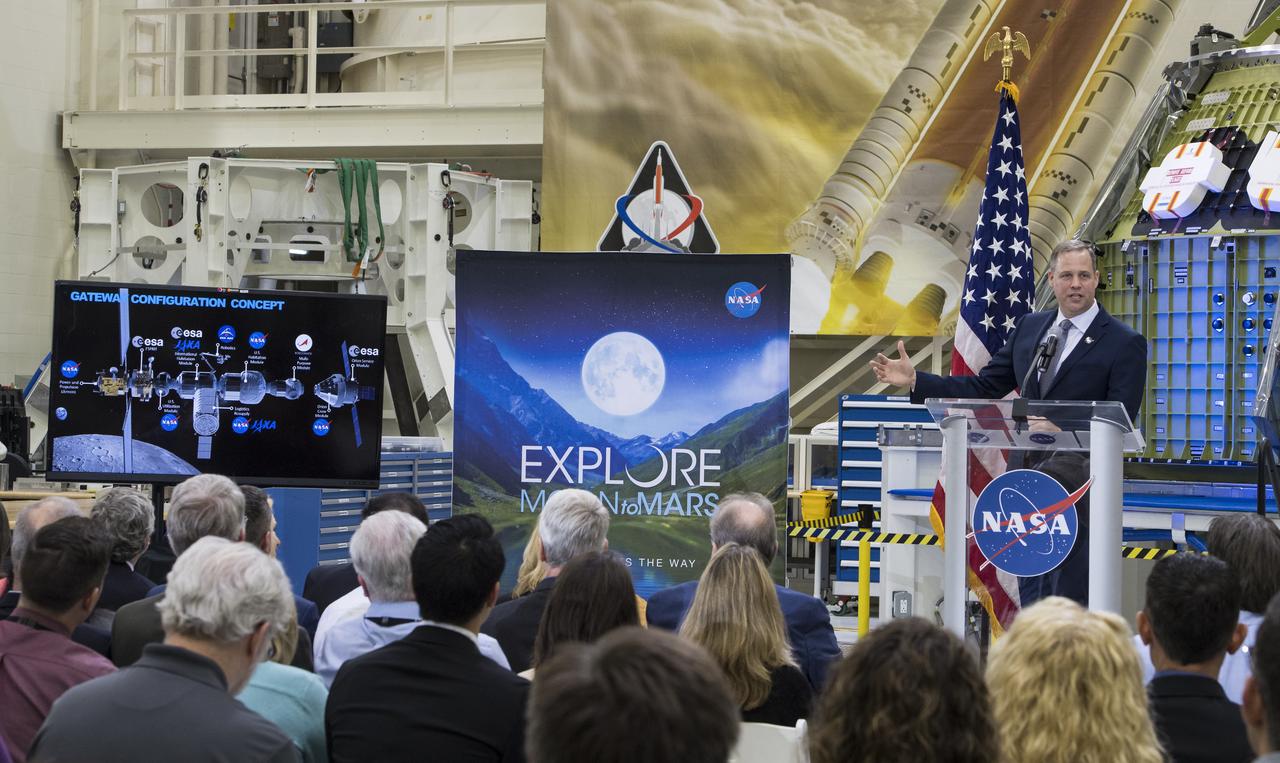
NASA Administrator Jim Bridenstine talks about the Gateway that will be in lunar orbit during an event highlighting the agency’s progress toward sending astronauts to the Moon and on to Mars, Monday, March 11, 2019, at the Neil Armstrong Operations and Checkout Building at NASA's Kennedy Space Center in Florida. Representatives from the Kennedy workforce, news media, and social media were in attendance. NASA's Orion spacecraft, which is scheduled to be flown on Exploration Mission-2, was on display. For information on NASA's Moon to Mars plans, visit: www.nasa.gov/moontomars Photo credit: (NASA/Aubrey Gemignani)
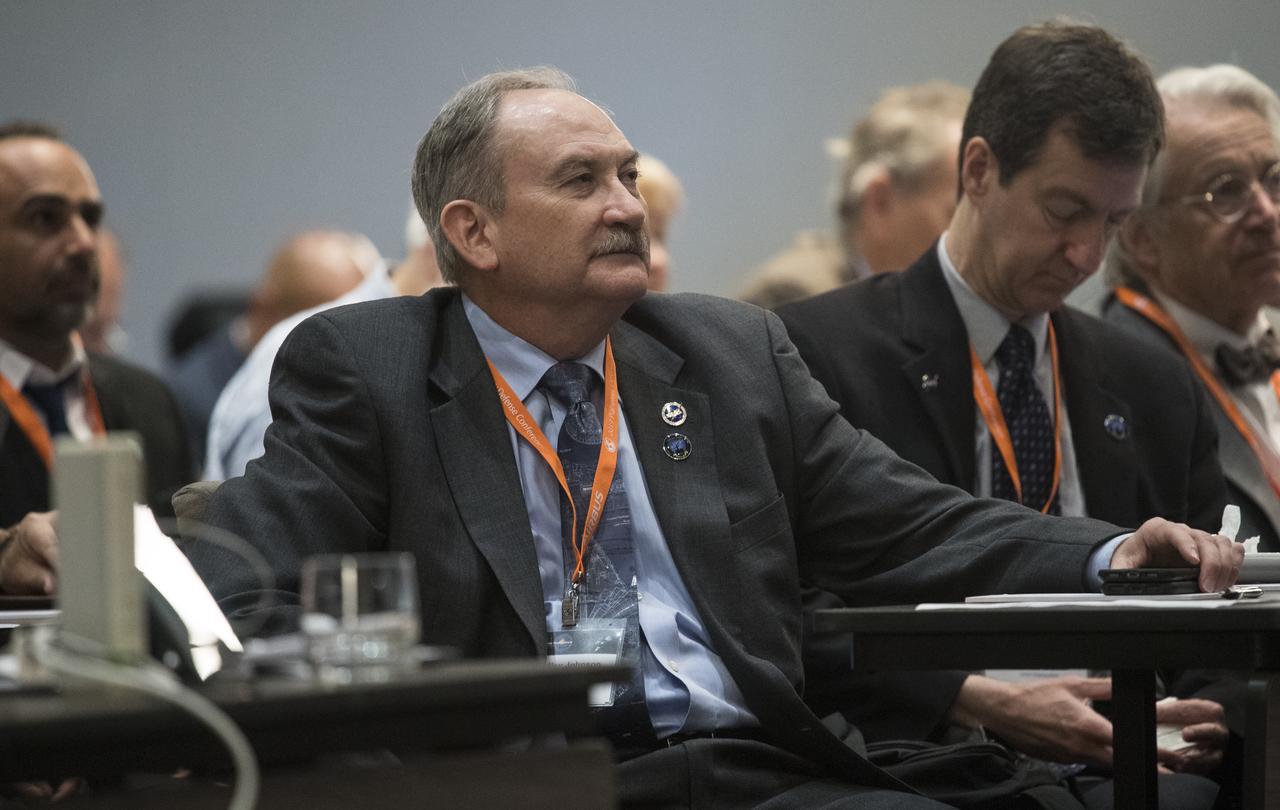
Lindley Johnson, NASA’s Planetary Defense Officer and Program Executive of the Planetary Defense Coordination Office (PDCO), is seen in the audience at the sixth International Academy of Astronautics Planetary Defense Conference, Monday, April 29, 2019 at The Hotel at the University of Maryland in College Park Maryland. The conference brings together experts from around the world to present the latest research on Near-Earth Objects and will highlight the development of the first-ever mission to demonstrate an asteroid defection technique for planetary defense, NASA’s Double Asteroid Redirection Test (DART). Photo Credit: (NASA/Joel Kowsky)
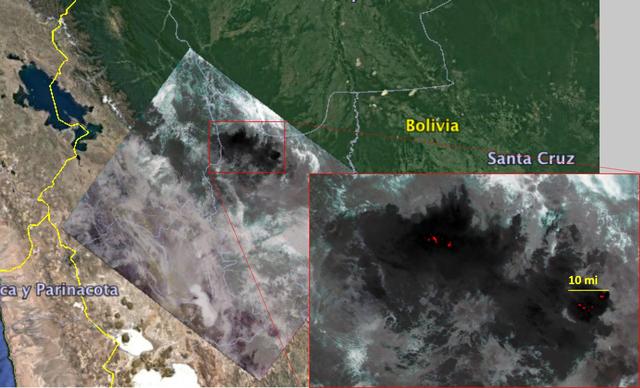
NASA's Ecosystem Spaceborne Thermal Radiometer Experiment on Space Station (ECOSTRESS) captured new imagery of fires in the Amazon regions of Brazil and Bolivia on Aug. 23, 2019. The red areas are where surface temperatures exceeded the maximum measureable temperature of the instrument's sensor (approximately 220 degrees Fahrenheit or 104 degrees Celsius), highlighting the burning areas along the fire fronts. The dark wispy areas indicate thick smoke — thick enough that it obscures much of the fire from view. The measurements cover areas of about 77 by 77 yards (70 by 70 meters) each, or about the size of a football field. https://photojournal.jpl.nasa.gov/catalog/PIA23357
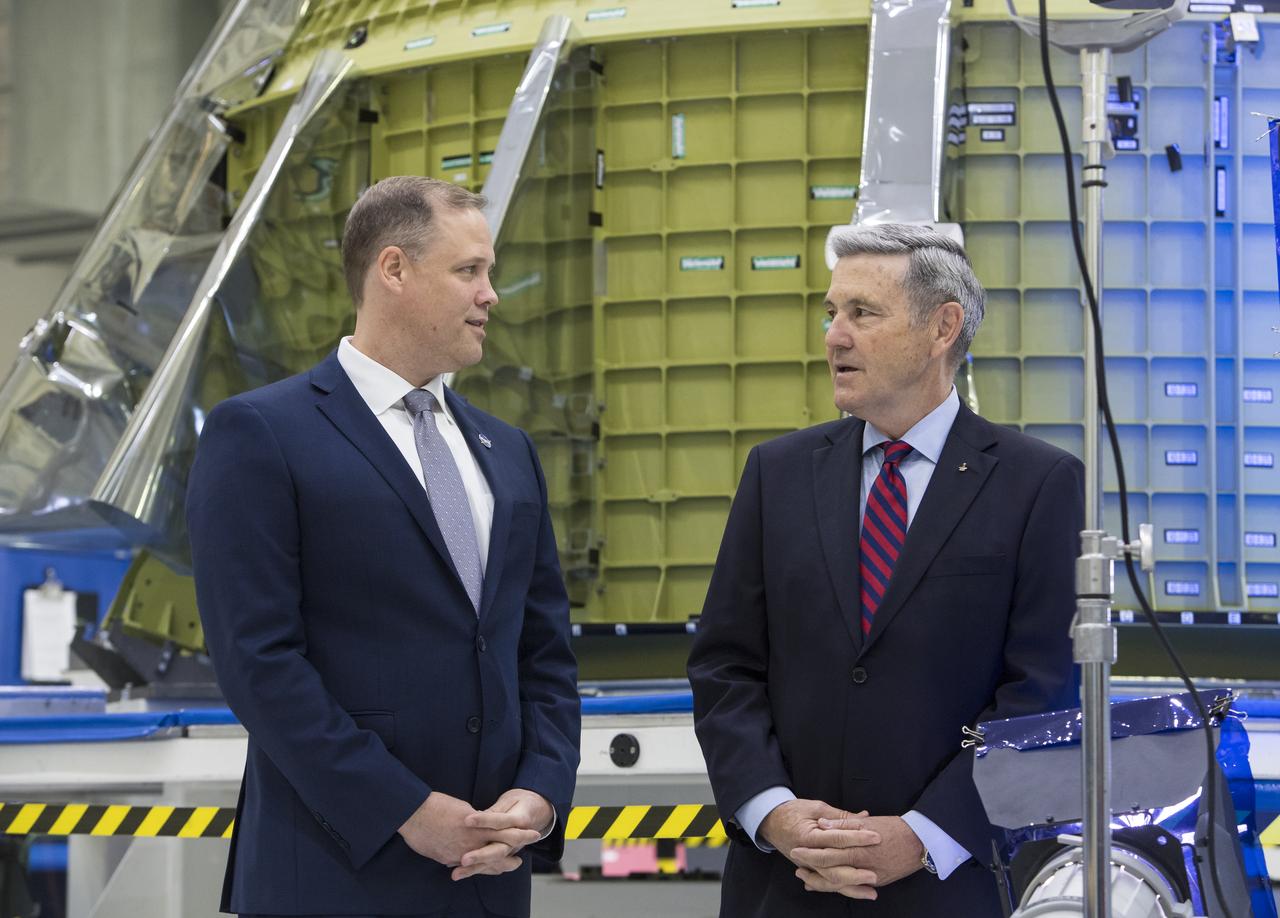
NASA Administrator Jim Bridenstine, left, talks to Kennedy Space Center Director Bob Cabana just before an event highlighting the agency’s progress toward sending astronauts to the Moon and on to Mars, Monday, March 11, 2019, at the Neil Armstrong Operations and Checkout Building at NASA's Kennedy Space Center in Florida. Representatives from the Kennedy workforce, news media, and social media were in attendance. NASA's Orion spacecraft, which is scheduled to be flown on Exploration Mission-2, was on display. For information on NASA's Moon to Mars plans, visit: www.nasa.gov/moontomars Photo credit: (NASA/Aubrey Gemignani)

Barbara Brown, chief technologist at NASA’s Kennedy Space Center in Florida, speaks to Kennedy employees inside the Florida spaceport’s Training Auditorium on Nov. 19, 2019, during Innovation Days. One of several events throughout the year aimed at fostering and encouraging an innovative culture at Kennedy, Innovation Days highlights how employees at the multi-user spaceport are constantly looking for new solutions to challenges they face at work. Also part of Innovation Days was an innovation showcase, where nearly 50 exhibitors demonstrated new technologies and innovations. Showcase participants included individuals from multiple directorates, programs and organizations throughout Kennedy.
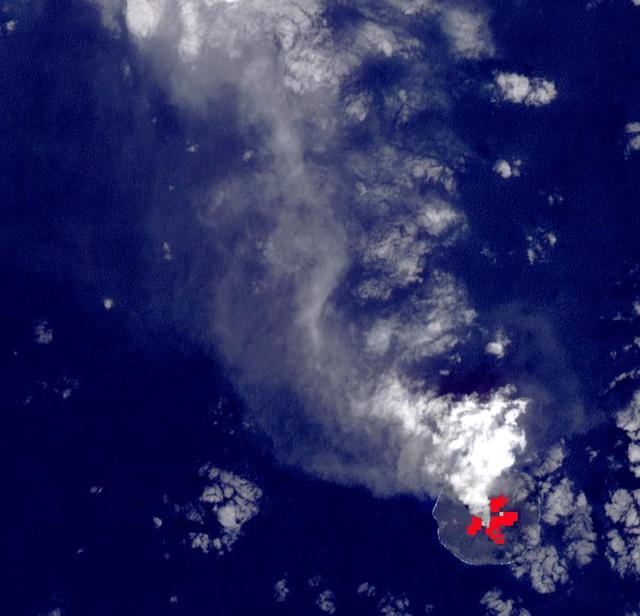
Nishinoshima Volcano is a small volcanic island located about 1000 km south of Tokyo. Recent activity began in December 2019, and has continued. ASTER captured this image of an ash and steam plume emanating from the central crater. Thermal infrared data is superimposed on a visible-infrared color image to highlight the lave flows that have flowed down the volcano's flanks. The image was acquired March 22, 2020, covers an area of 12.6 by 12.3 km, and is located at 27.3 degrees east, 140.8 degrees east. https://photojournal.jpl.nasa.gov/catalog/PIA23846
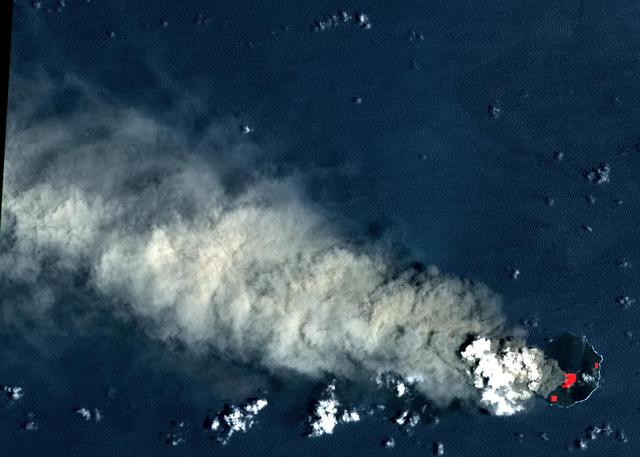
Nishinoshima is a small volcanic island located about 1000 km south of Tokyo, Japan. Eruptive activity began in December 2019, and has continued uninterrupted. ASTER captured this image of an ash and steam plume emanating from the central crater. Thermal infrared data is superposed in red on a visible-infrared color image to highlight the lava in the central crater and lava flows that have flowed down the volcano's flanks. The image was acquired July 28, 2020, covers an area of 15 by 21 km, and is located at 27.3 degrees north, 140.8 degrees east. https://photojournal.jpl.nasa.gov/catalog/PIA24017
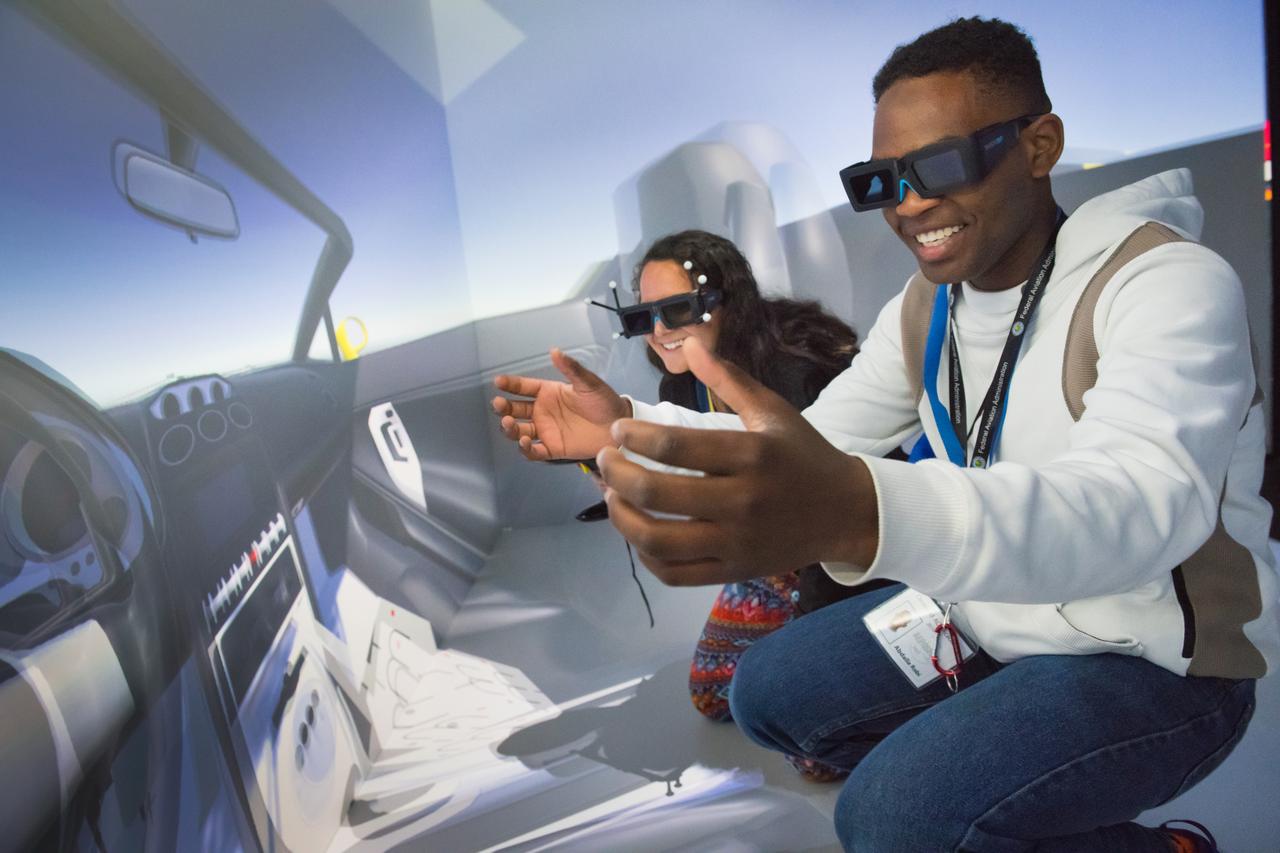
Aerospace Career Education, Organization of Black Aerospace Professionals, OBAP Cleveland ACE Academy Day
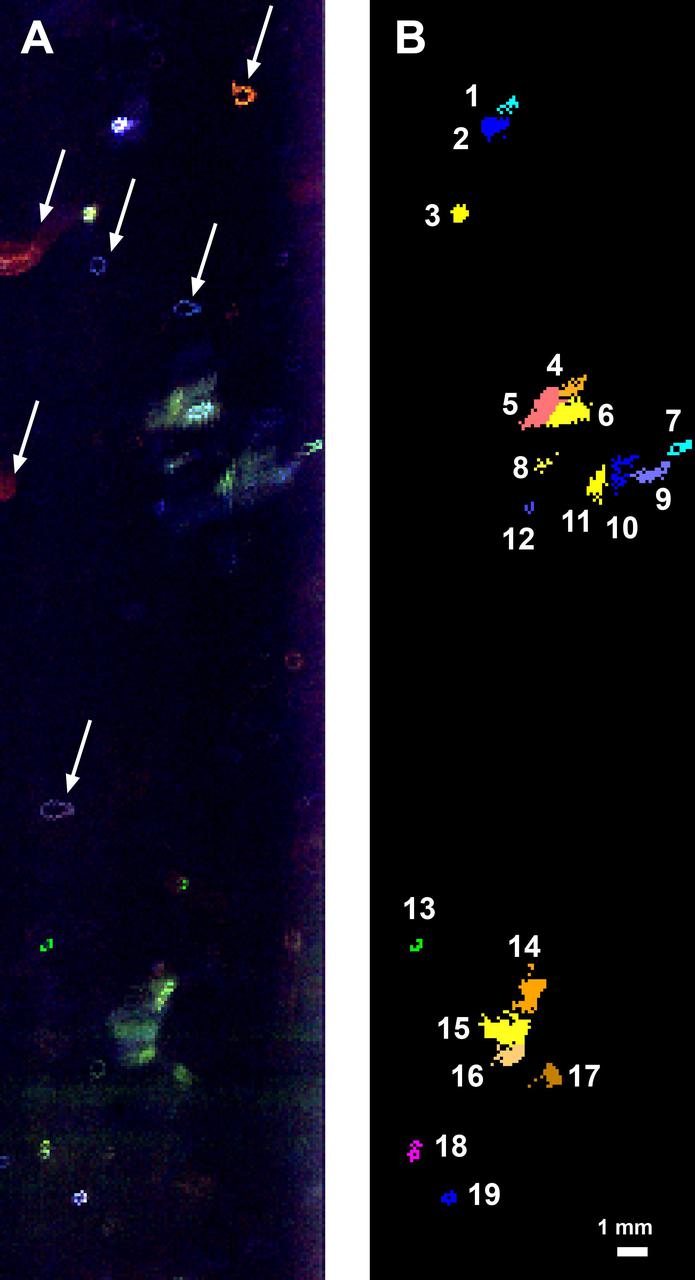
This fluorescence map of the inside wall of an ice borehole near Greenland's Summit Station was produced at a depth of 307.7 feet (93.8 meters) into the ice sheet by the WATSON (Wireline Analysis Tool for the Subsurface Observation of Northern ice sheets) instrument. Recorded during a 2019 field test of the WATSON instrument, the left panel shows the variety of biosignatures that were detected in the ice — different colors represent different organic molecules, some of which are likely microbes. The arrows highlight artifacts on the instrument's optical window, not biosignatures in the ice. In the right panel, the biosignature detections have been colorized to indicate the different features detected. Blotches that are the same color are likely made of the same chemicals. The numbers list the different and distinct features that WATSON detected at that depth in the ice. WATSON could one day be launched aboard a robotic mission to seek out biosignatures on the ocean moons of Enceladus, Europa, or even Titan. The WATSON team hopes to test the instrument in a variety of cold locations on Earth to see how the distribution and variety of biosignatures change depending on where they are. By testing WATSON in different "Earth analogs," scientists would be able to better understand the chemical fingerprints of any biosignatures detected on other worlds. https://photojournal.jpl.nasa.gov/catalog/PIA24140
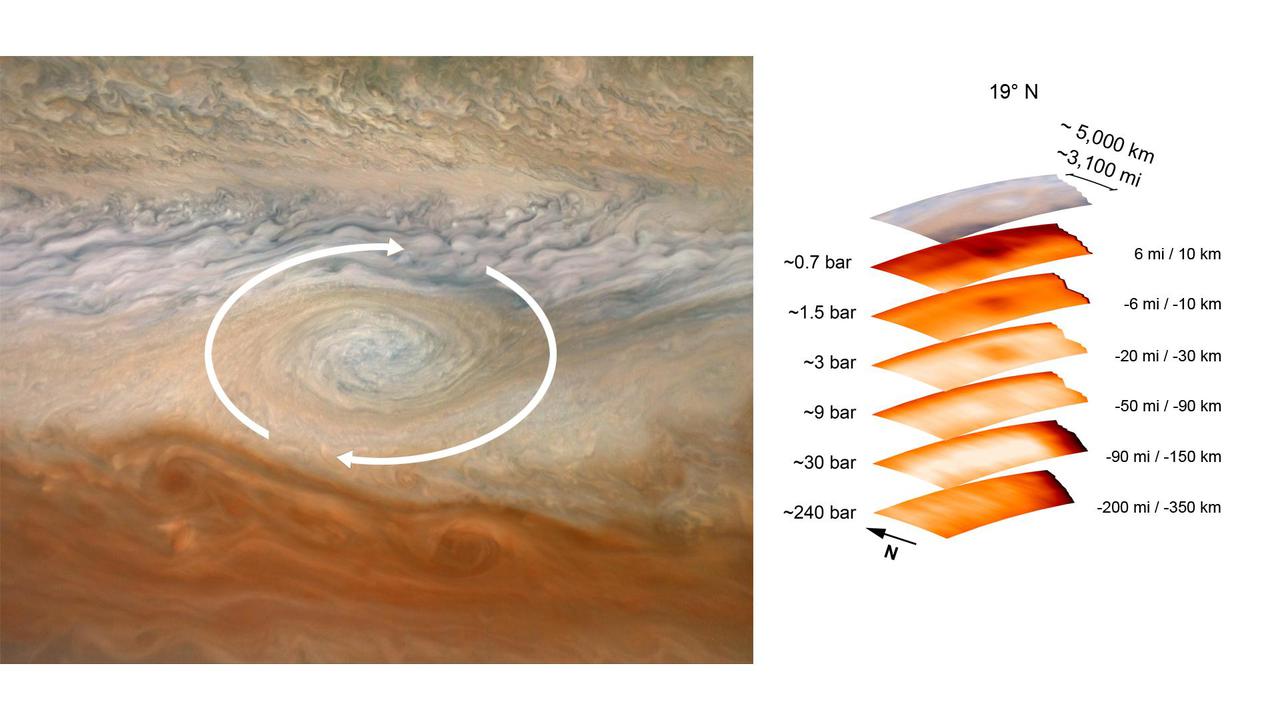
The image on the left, taken by the JunoCam imager aboard NASA's Juno spacecraft, has been annotated to depict the clockwise rotation of a vortex at Jupiter. The graphic on the right highlights the large-scale structure of the feature as seen by the spacecraft's microwave radiometer (MWR) instrument. Data for the image and the microwave radiometer results were collected during a low flyby of Jupiter that took place on July 21, 2019. The radiometer data was acquired from the six channels of MWR. Each MWR channel peers progressively deeper below the visible cloud tops. In fact, the MWR instrument enables Juno to see deeper into Jupiter than any previous spacecraft or Earth-based observations. Unlike Earth, which as a solid surface, Jupiter is a gas giant with no discernable solid surface. So the planetary science community has defined the "base" of Jupiter's atmosphere as the location where its pressure is equivalent to 1 bar. A bar is a metric unit of pressure that, at 14.5 pounds per square inch, is slightly less than the average atmospheric pressure on Earth at sea level. The numbers to the left of each layer of MWR data above indicate the pressure at the location in the atmosphere where the MWR reading occurred. The measurements to the right of each layer of MWR data provide the distance – either above or below the 1 bar level – from which the corresponding MWR measurement was taken. For context, the top layer in the figure is a visible-light image depicting Jupiter's different levels of clouds, with an average altitude about 6 miles above the 1 bar pressure region. https://photojournal.jpl.nasa.gov/catalog/PIA24975