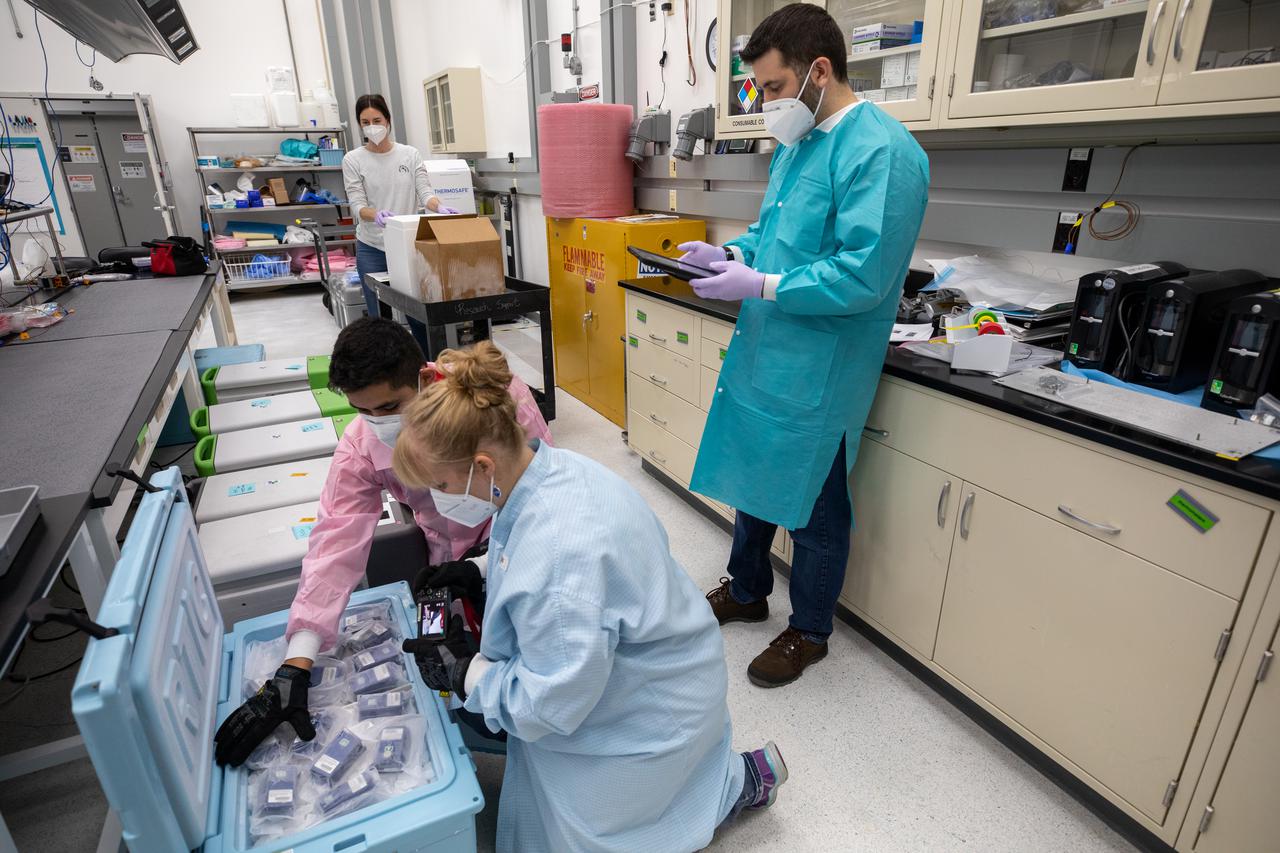
Members of the cold stowage team unpack science experiments inside the Space Station Processing Facility at NASA’s Kennedy Space Center in Florida on Jan. 14, 2021. The experiments returned to Earth on SpaceX’s 21st commercial resupply services mission (CRS-21). Making its successful parachute-assisted splashdown west of Tampa off the Florida coast, at 8:26 p.m. EST on Jan. 13, the SpaceX cargo Dragon returned more than 4,400 pounds of scientific experiments and other cargo from the International Space Station. After splashdown, SpaceX loaded Dragon aboard their Go Navigator recovery ship and packed an Airbus H225 helicopter with the time-sensitive research cargo for delivery to Kennedy. The upgraded cargo Dragon capsule also boasts double the powered locker capacity to preserve science samples, allowing for a significant increase in the research that can be carried back to Earth.
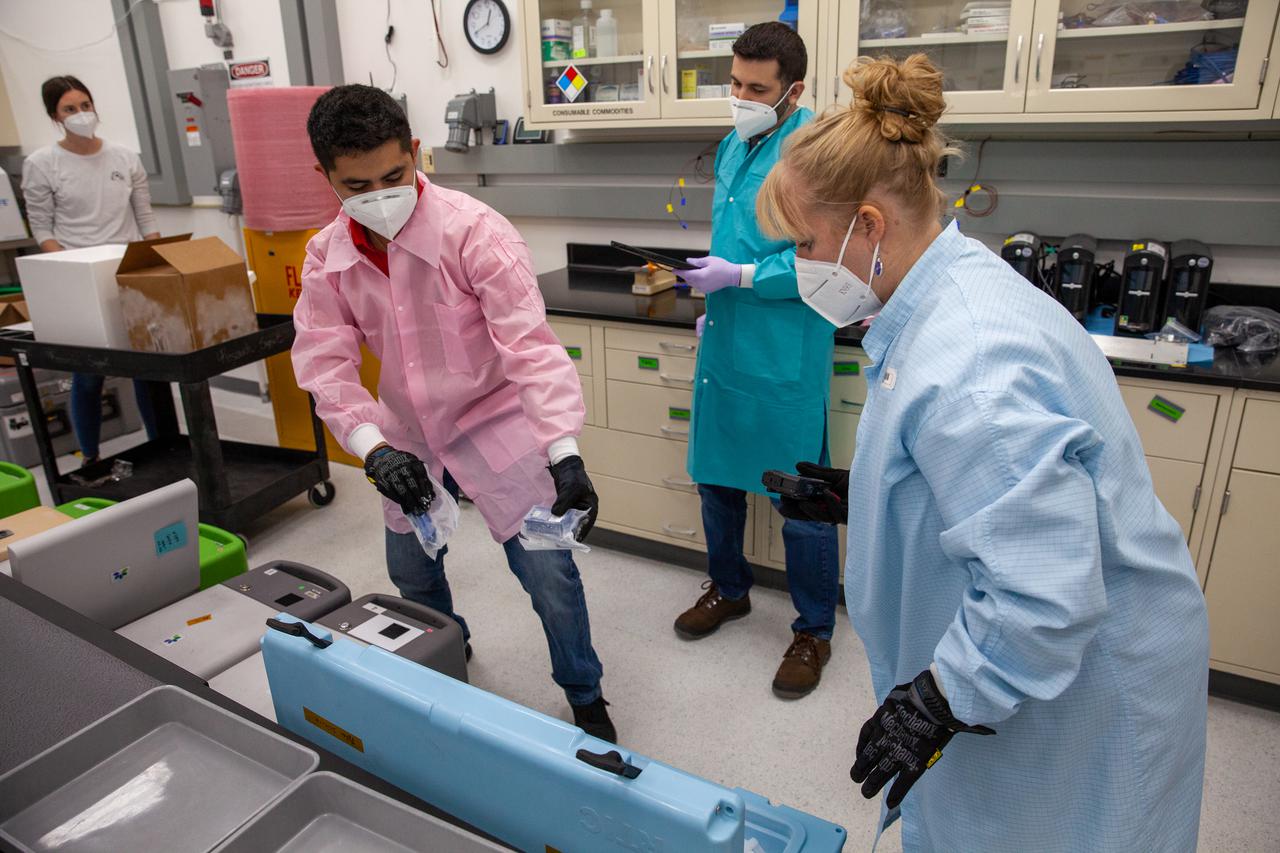
Members of the cold stowage team unpack science experiments inside the Space Station Processing Facility at NASA’s Kennedy Space Center in Florida on Jan. 14, 2021. The experiments returned to Earth on SpaceX’s 21st commercial resupply services mission (CRS-21). Making its successful parachute-assisted splashdown west of Tampa off the Florida coast, at 8:26 p.m. EST on Jan. 13, the SpaceX cargo Dragon returned more than 4,400 pounds of scientific experiments and other cargo from the International Space Station. After splashdown, SpaceX loaded Dragon aboard their Go Navigator recovery ship and packed an Airbus H225 helicopter with the time-sensitive research cargo for delivery to Kennedy. The upgraded cargo Dragon capsule also boasts double the powered locker capacity to preserve science samples, allowing for a significant increase in the research that can be carried back to Earth.
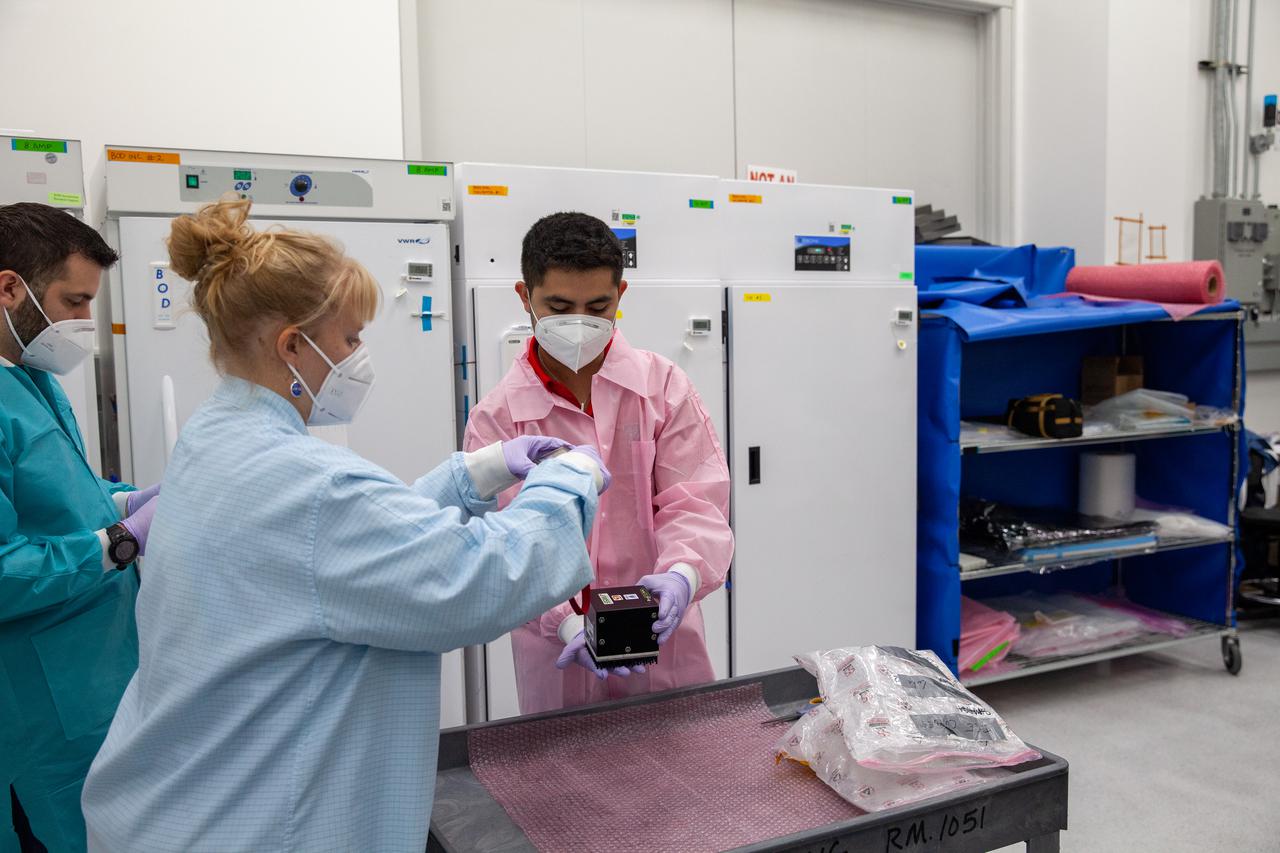
Members of the cold stowage team unpack science experiments inside the Space Station Processing Facility at NASA’s Kennedy Space Center in Florida on Jan. 14, 2021. The experiments returned to Earth on SpaceX’s 21st commercial resupply services mission (CRS-21). Making its successful parachute-assisted splashdown west of Tampa off the Florida coast, at 8:26 p.m. EST on Jan. 13, the SpaceX cargo Dragon returned more than 4,400 pounds of scientific experiments and other cargo from the International Space Station. After splashdown, SpaceX loaded Dragon aboard their Go Navigator recovery ship and packed an Airbus H225 helicopter with the time-sensitive research cargo for delivery to Kennedy. The upgraded cargo Dragon capsule also boasts double the powered locker capacity to preserve science samples, allowing for a significant increase in the research that can be carried back to Earth.
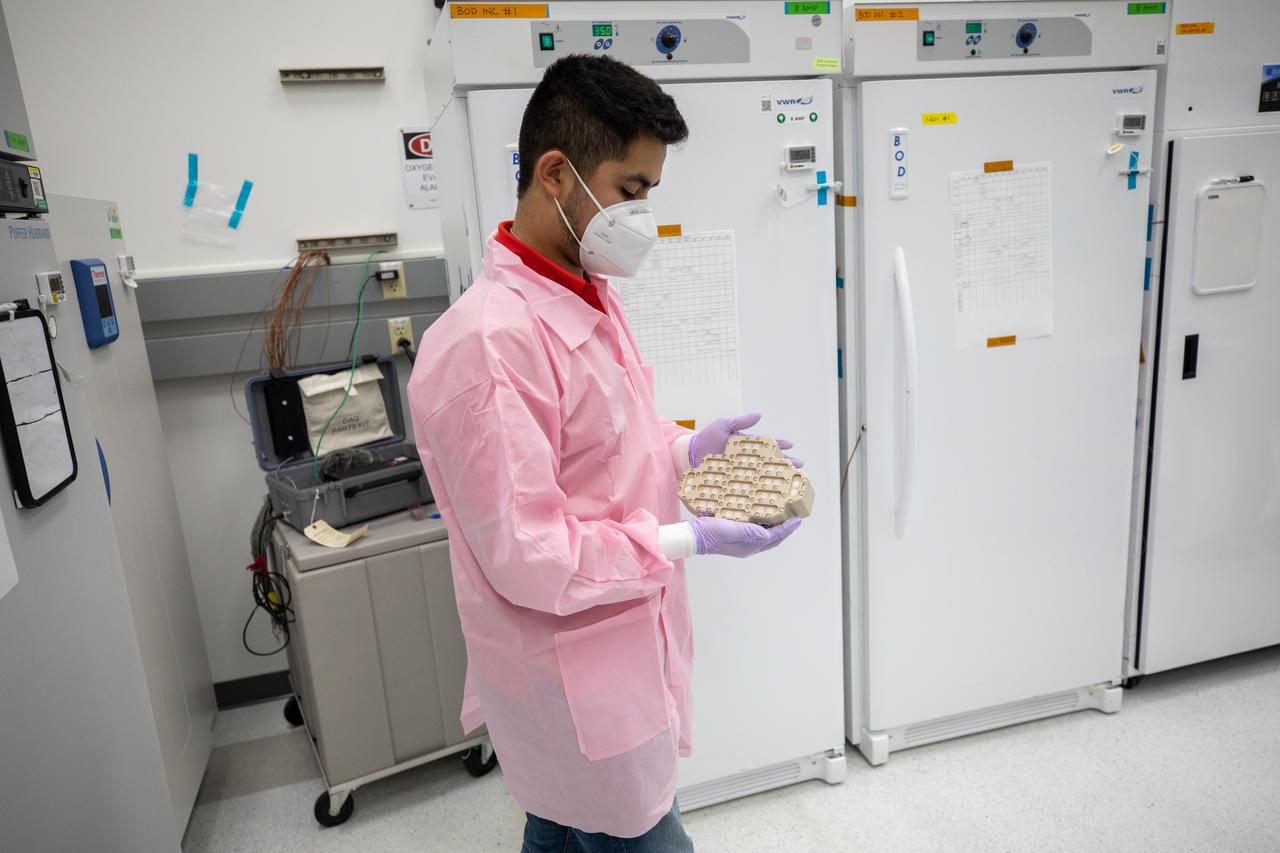
A member of the cold stowage team unpacks science experiments inside the Space Station Processing Facility at NASA’s Kennedy Space Center in Florida on Jan. 14, 2021. The experiments returned to Earth on SpaceX’s 21st commercial resupply services mission (CRS-21). Making its successful parachute-assisted splashdown west of Tampa off the Florida coast, at 8:26 p.m. EST on Jan. 13, the SpaceX cargo Dragon returned more than 4,400 pounds of scientific experiments and other cargo from the International Space Station. After splashdown, SpaceX loaded Dragon aboard their Go Navigator recovery ship and packed an Airbus H225 helicopter with the time-sensitive research cargo for delivery to Kennedy. The upgraded cargo Dragon capsule also boasts double the powered locker capacity to preserve science samples, allowing for a significant increase in the research that can be carried back to Earth.
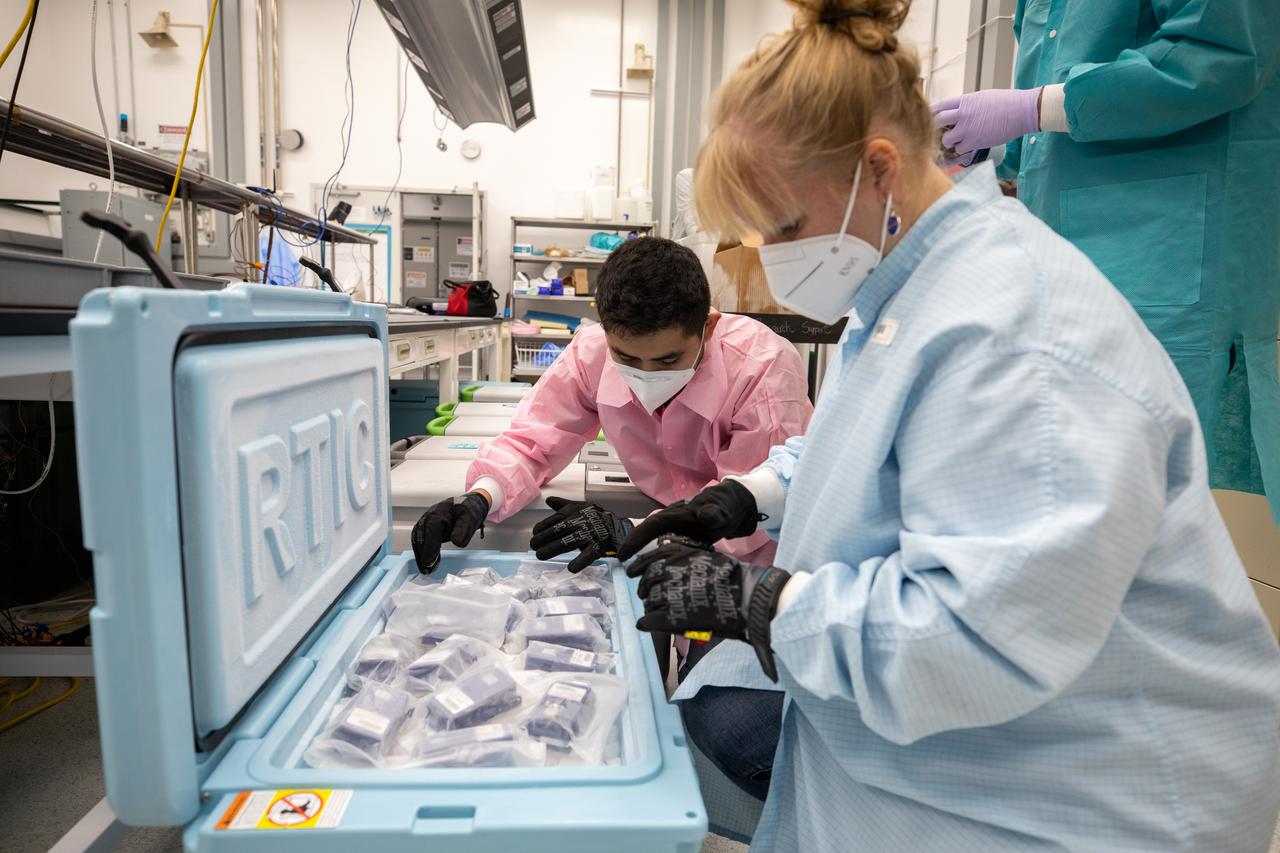
Members of the cold stowage team unpack science experiments inside the Space Station Processing Facility at NASA’s Kennedy Space Center in Florida on Jan. 14, 2021. The experiments returned to Earth on SpaceX’s 21st commercial resupply services mission (CRS-21). Making its successful parachute-assisted splashdown west of Tampa off the Florida coast, at 8:26 p.m. EST on Jan. 13, the SpaceX cargo Dragon returned more than 4,400 pounds of scientific experiments and other cargo from the International Space Station. After splashdown, SpaceX loaded Dragon aboard their Go Navigator recovery ship and packed an Airbus H225 helicopter with the time-sensitive research cargo for delivery to Kennedy. The upgraded cargo Dragon capsule also boasts double the powered locker capacity to preserve science samples, allowing for a significant increase in the research that can be carried back to Earth.
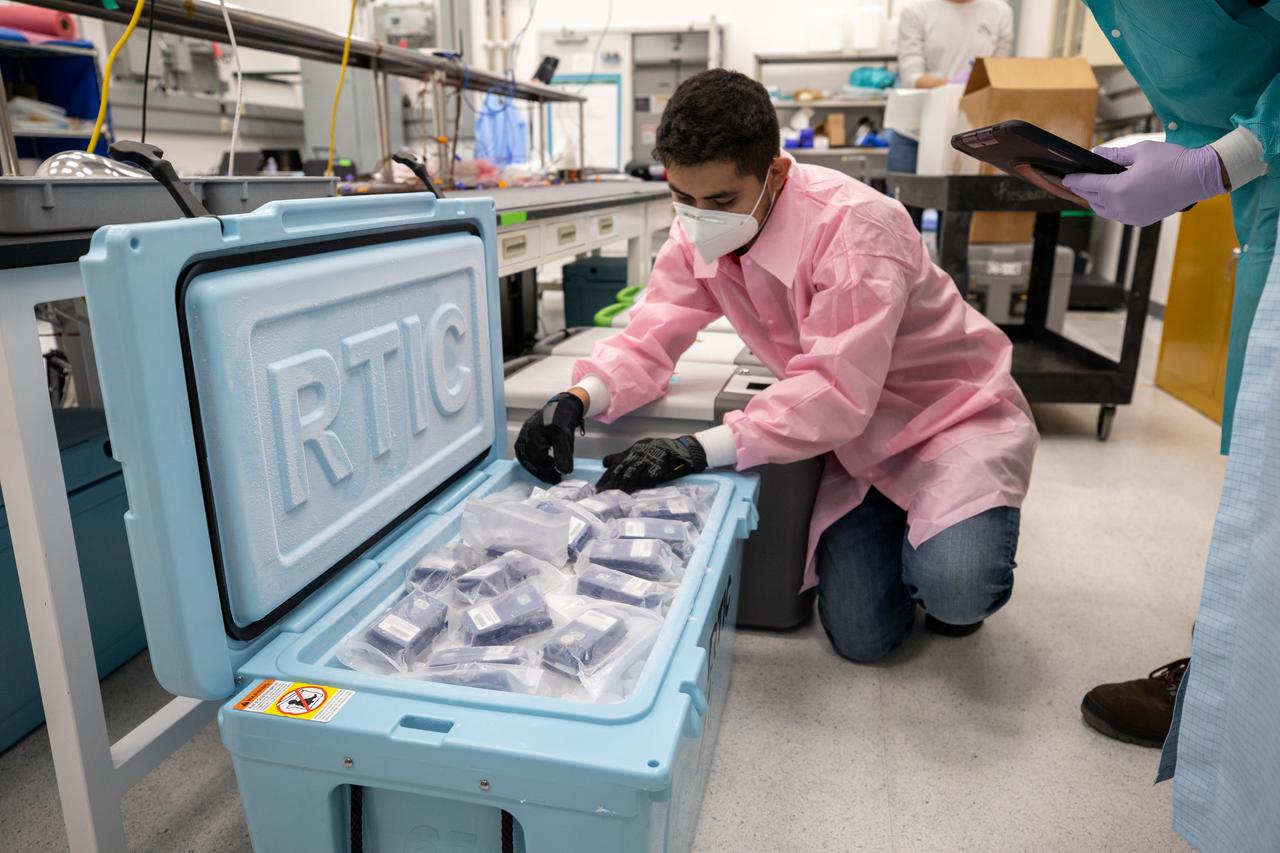
Members of the cold stowage team unpack science experiments inside the Space Station Processing Facility at NASA’s Kennedy Space Center in Florida on Jan. 14, 2021. The experiments returned to Earth on SpaceX’s 21st commercial resupply services mission (CRS-21). Making its successful parachute-assisted splashdown west of Tampa off the Florida coast, at 8:26 p.m. EST on Jan. 13, the SpaceX cargo Dragon returned more than 4,400 pounds of scientific experiments and other cargo from the International Space Station. After splashdown, SpaceX loaded Dragon aboard their Go Navigator recovery ship and packed an Airbus H225 helicopter with the time-sensitive research cargo for delivery to Kennedy. The upgraded cargo Dragon capsule also boasts double the powered locker capacity to preserve science samples, allowing for a significant increase in the research that can be carried back to Earth.
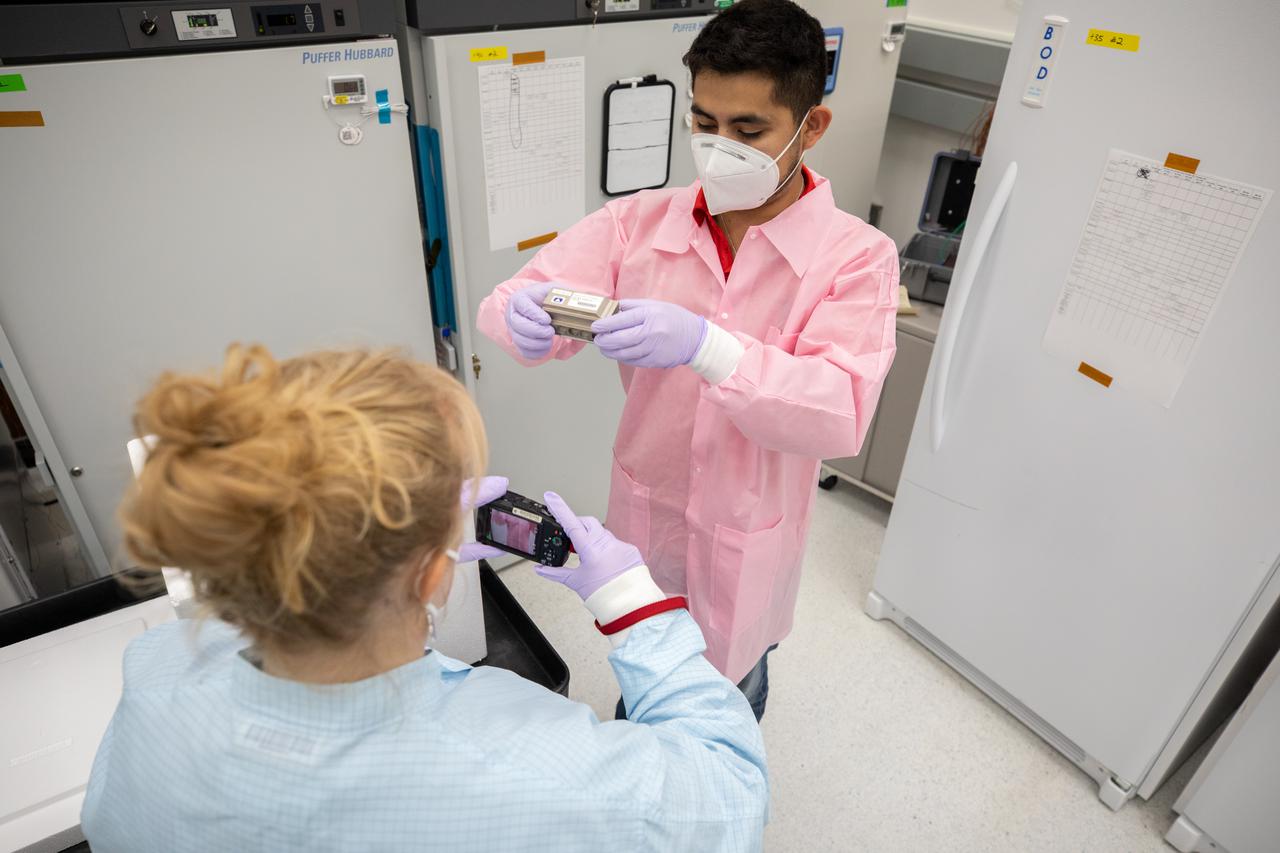
Members of the cold stowage team unpack science experiments inside the Space Station Processing Facility at NASA’s Kennedy Space Center in Florida on Jan. 14, 2021. The experiments returned to Earth on SpaceX’s 21st commercial resupply services mission (CRS-21). Making its successful parachute-assisted splashdown west of Tampa off the Florida coast, at 8:26 p.m. EST on Jan. 13, the SpaceX cargo Dragon returned more than 4,400 pounds of scientific experiments and other cargo from the International Space Station. After splashdown, SpaceX loaded Dragon aboard their Go Navigator recovery ship and packed an Airbus H225 helicopter with the time-sensitive research cargo for delivery to Kennedy. The upgraded cargo Dragon capsule also boasts double the powered locker capacity to preserve science samples, allowing for a significant increase in the research that can be carried back to Earth.
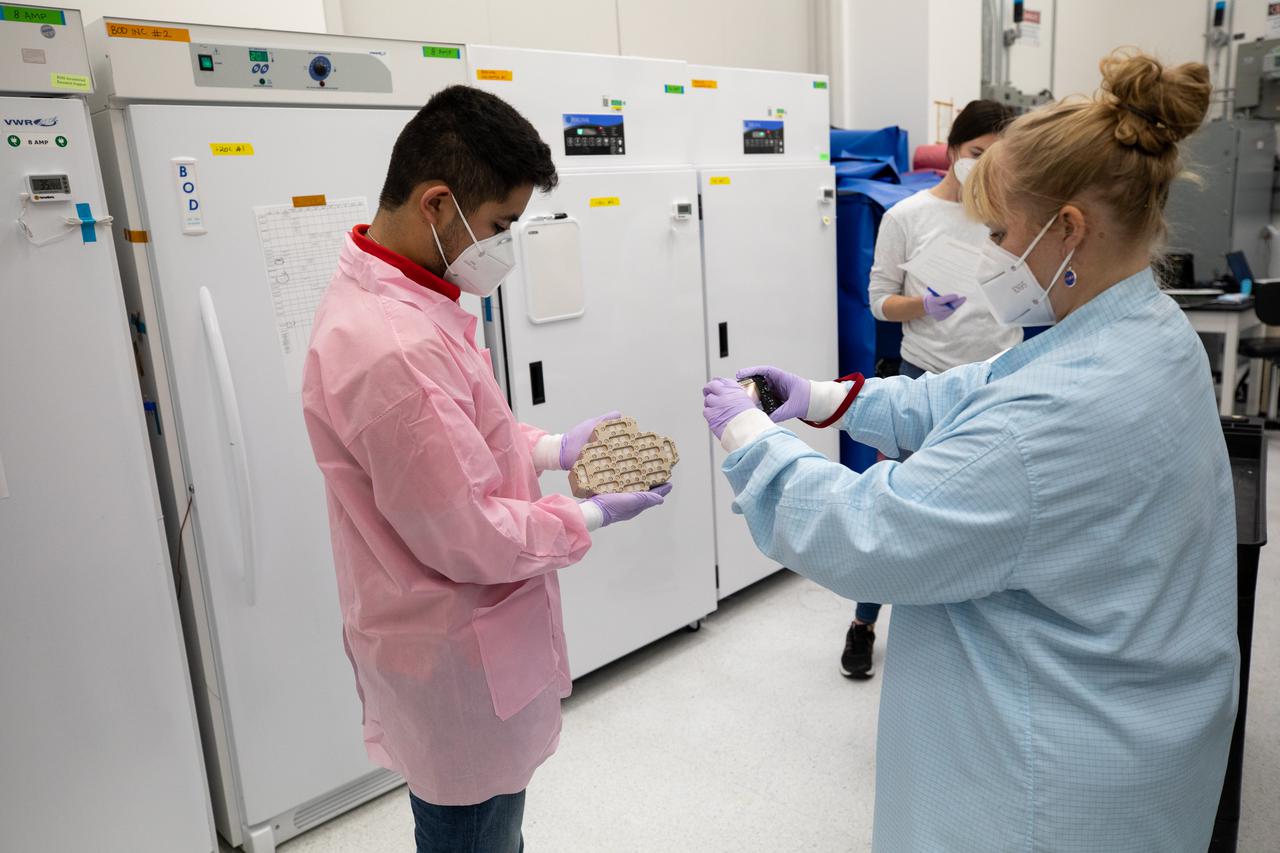
Members of the cold stowage team unpack science experiments inside the Space Station Processing Facility at NASA’s Kennedy Space Center in Florida on Jan. 14, 2021. The experiments returned to Earth on SpaceX’s 21st commercial resupply services mission (CRS-21). Making its successful parachute-assisted splashdown west of Tampa off the Florida coast, at 8:26 p.m. EST on Jan. 13, the SpaceX cargo Dragon returned more than 4,400 pounds of scientific experiments and other cargo from the International Space Station. After splashdown, SpaceX loaded Dragon aboard their Go Navigator recovery ship and packed an Airbus H225 helicopter with the time-sensitive research cargo for delivery to Kennedy. The upgraded cargo Dragon capsule also boasts double the powered locker capacity to preserve science samples, allowing for a significant increase in the research that can be carried back to Earth.
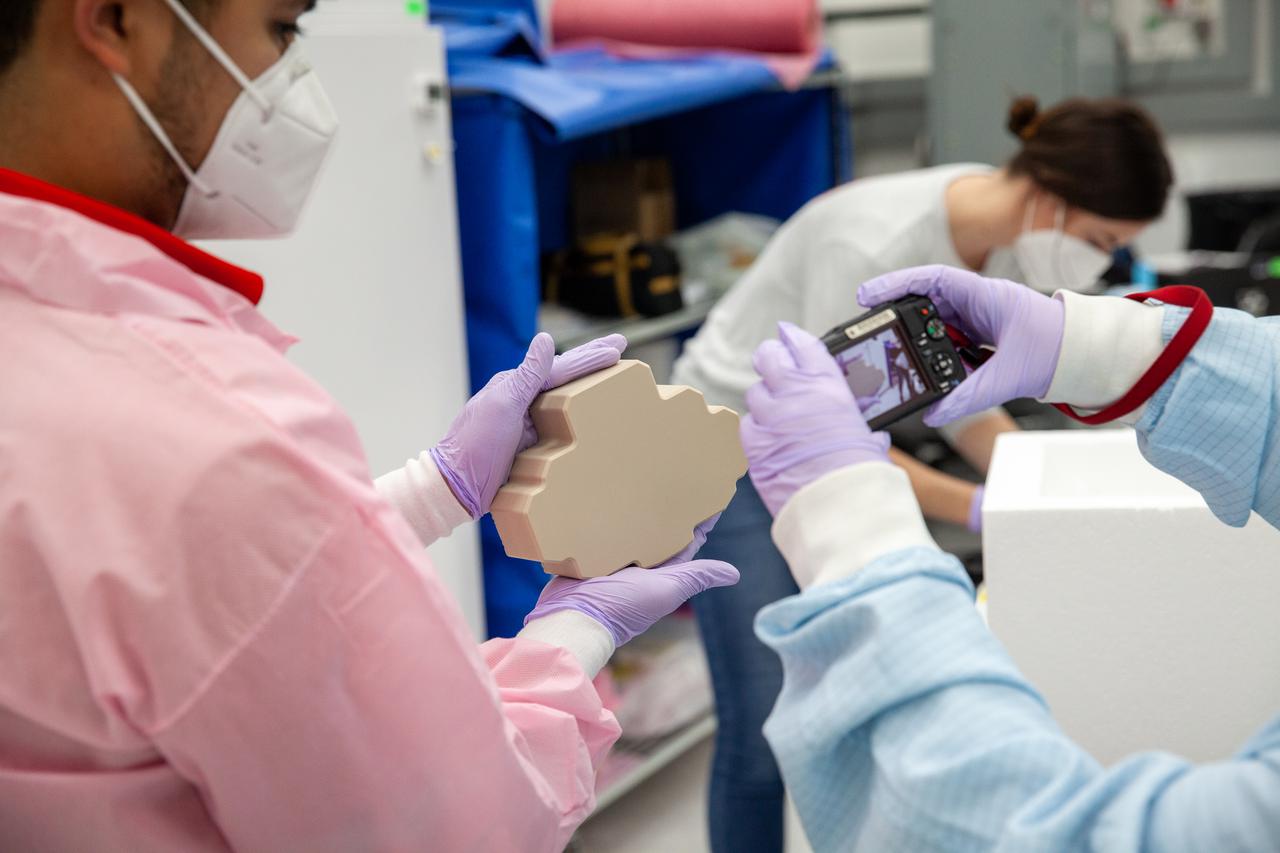
Members of the cold stowage team unpack science experiments inside the Space Station Processing Facility at NASA’s Kennedy Space Center in Florida on Jan. 14, 2021. The experiments returned to Earth on SpaceX’s 21st commercial resupply services mission (CRS-21). Making its successful parachute-assisted splashdown west of Tampa off the Florida coast, at 8:26 p.m. EST on Jan. 13, the SpaceX cargo Dragon returned more than 4,400 pounds of scientific experiments and other cargo from the International Space Station. After splashdown, SpaceX loaded Dragon aboard their Go Navigator recovery ship and packed an Airbus H225 helicopter with the time-sensitive research cargo for delivery to Kennedy. The upgraded cargo Dragon capsule also boasts double the powered locker capacity to preserve science samples, allowing for a significant increase in the research that can be carried back to Earth.
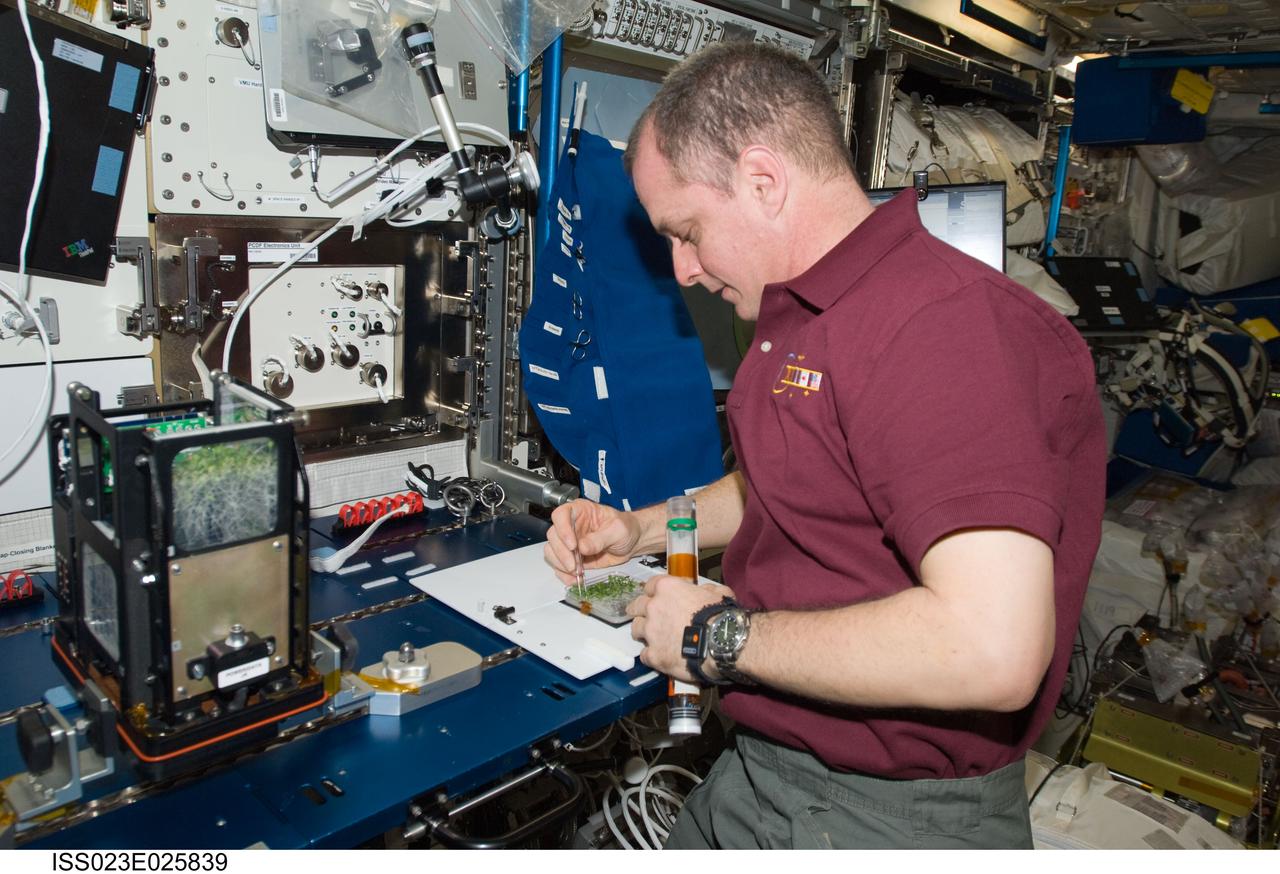
ISS023-E-025839 (21 April 2010) --- NASA astronaut T.J. Creamer, Expedition 23 flight engineer, services the Advanced Plant Experiments on Orbit-Cambium (APEX-Cambium) experiment in the Columbus laboratory of the International Space Station.
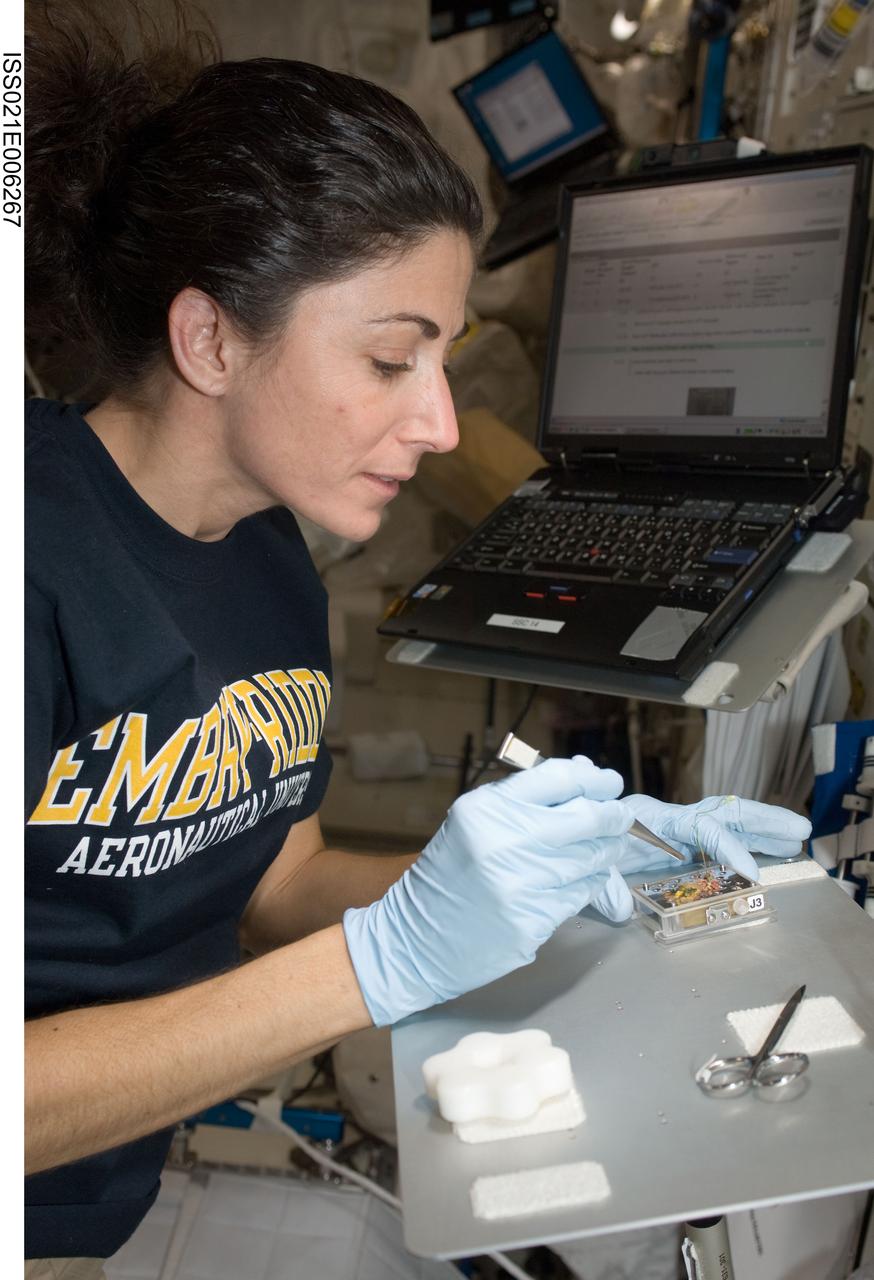
ISS021-E-006267 (13 Oct. 2009) --- NASA astronaut Nicole Stott, Expedition 21 flight engineer, works with the Cell Biology Experiment Facility (CBEF) SPACE SEED experiment in the Kibo laboratory of the International Space Station.
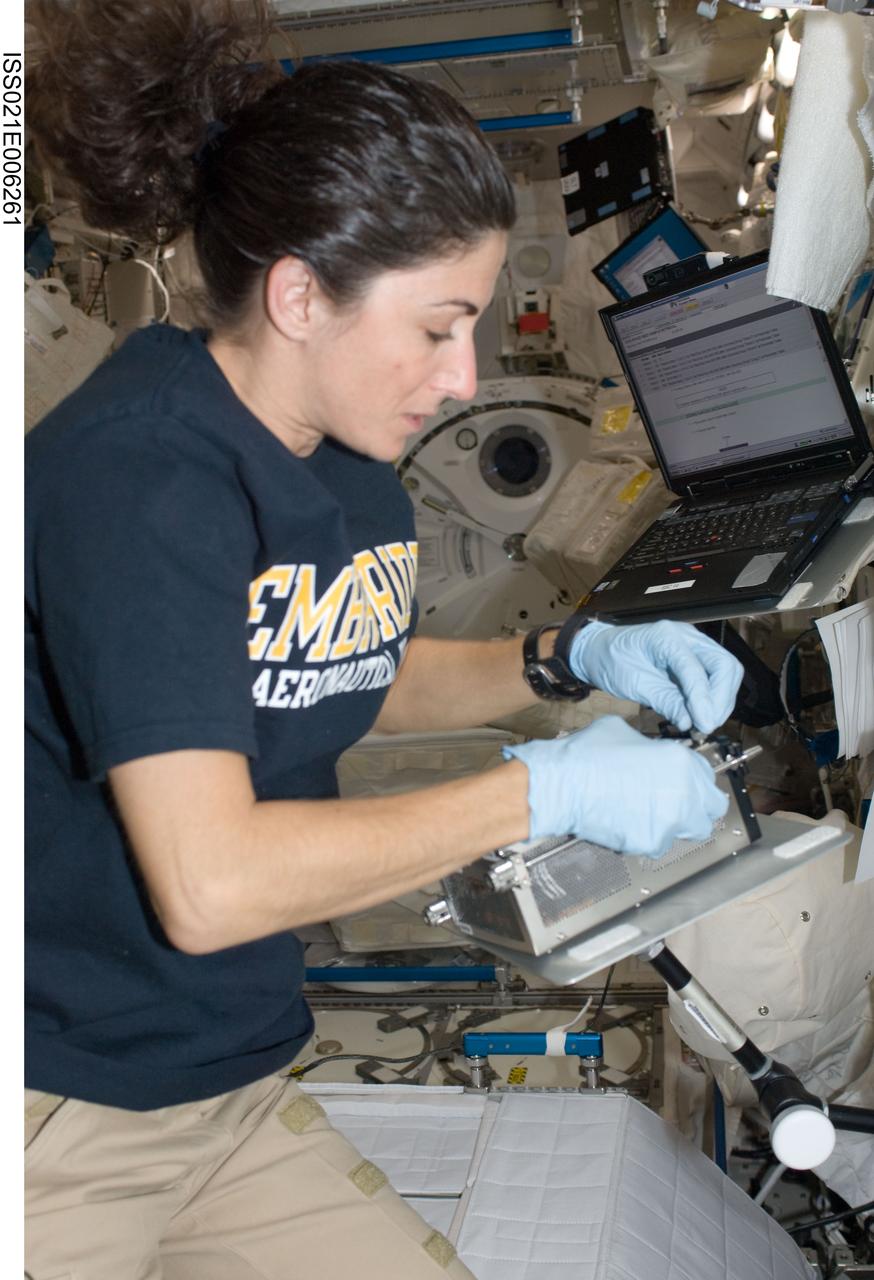
ISS021-E-006261 (13 Oct. 2009) --- NASA astronaut Nicole Stott, Expedition 21 flight engineer, works with the Cell Biology Experiment Facility (CBEF) SPACE SEED experiment in the Kibo laboratory of the International Space Station.
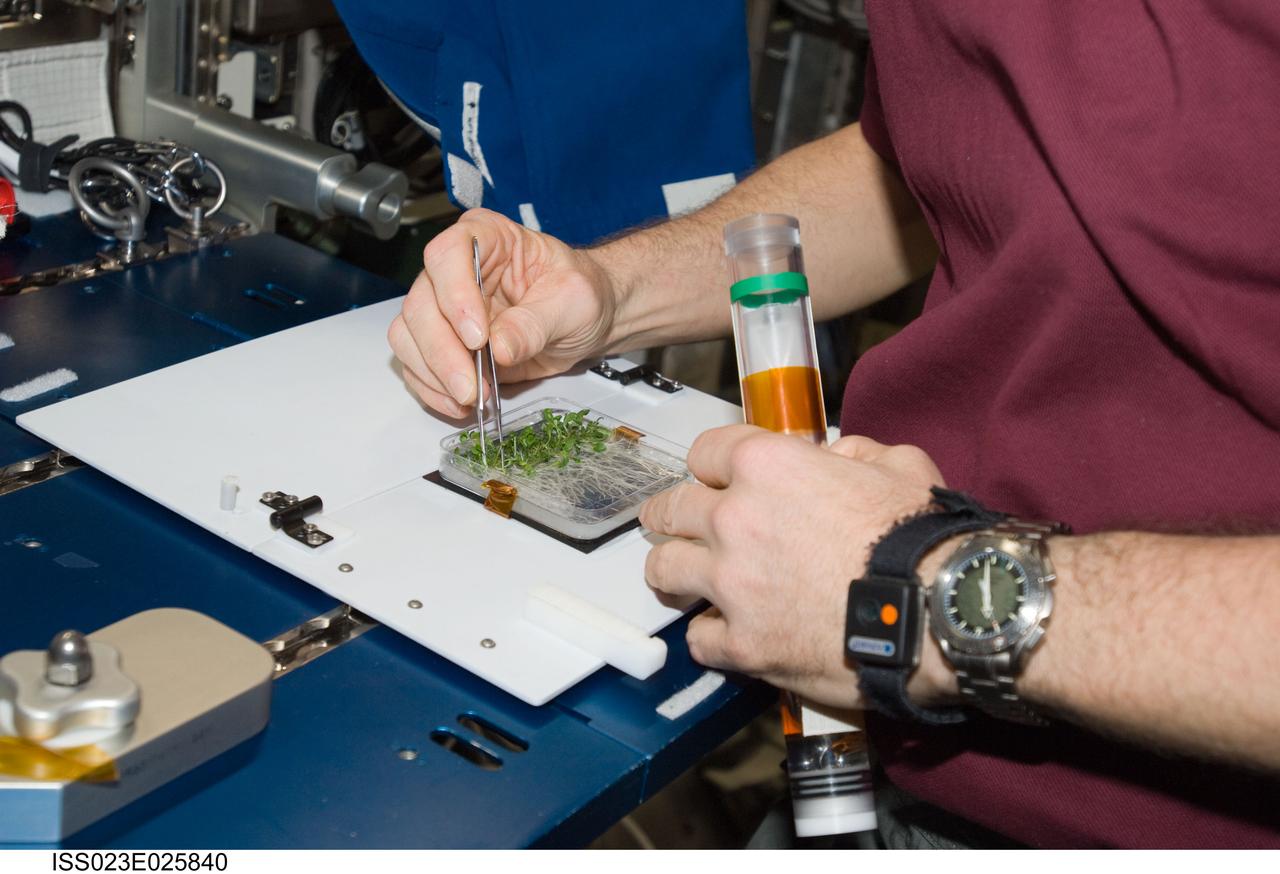
ISS023-E-025840 (21 April 2010) --- NASA astronaut T.J. Creamer, Expedition 23 flight engineer, services the Advanced Plant Experiments on Orbit-Cambium (APEX-Cambium) experiment in the Columbus laboratory of the International Space Station.
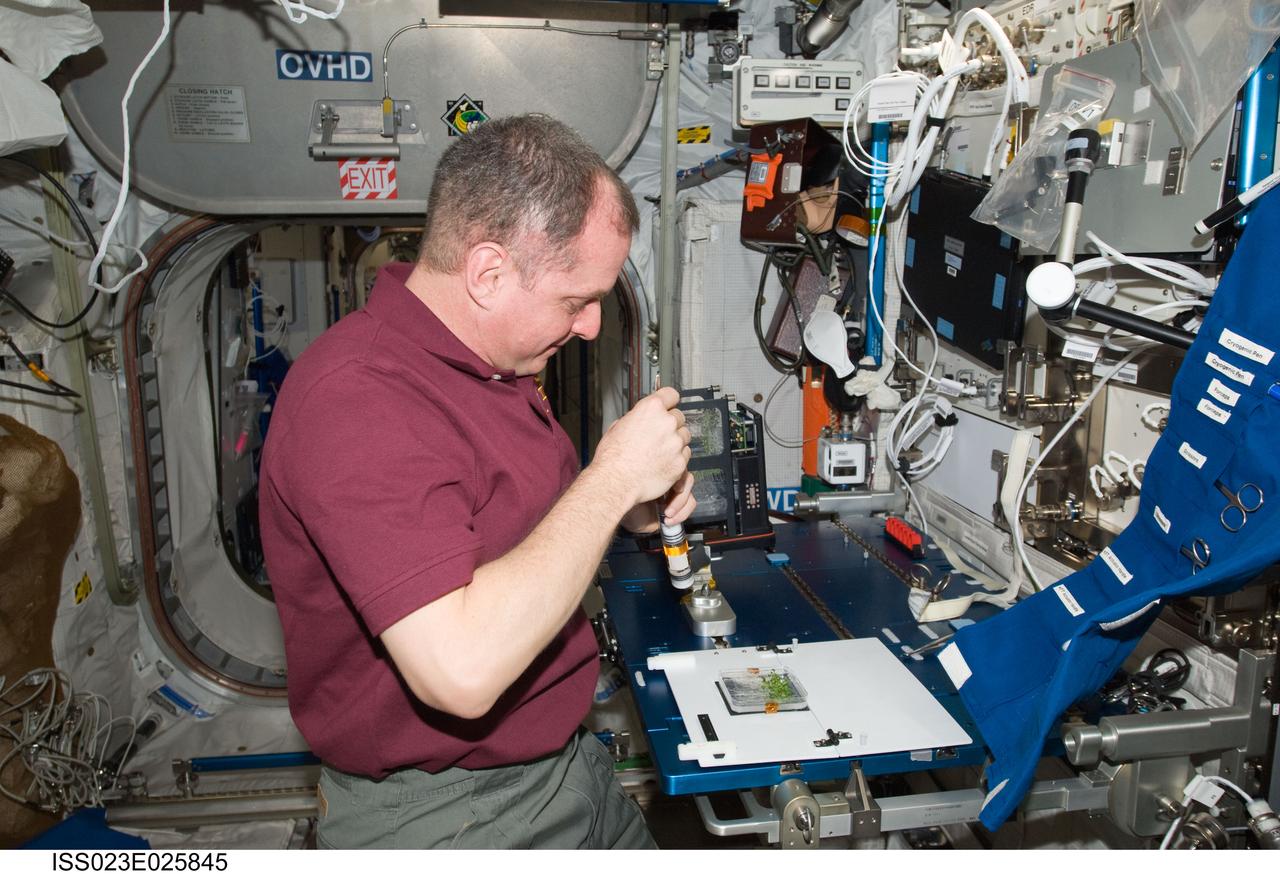
ISS023-E-025845 (21 April 2010) --- NASA astronaut T.J. Creamer, Expedition 23 flight engineer, services the Advanced Plant Experiments on Orbit-Cambium (APEX-Cambium) experiment in the Columbus laboratory of the International Space Station.
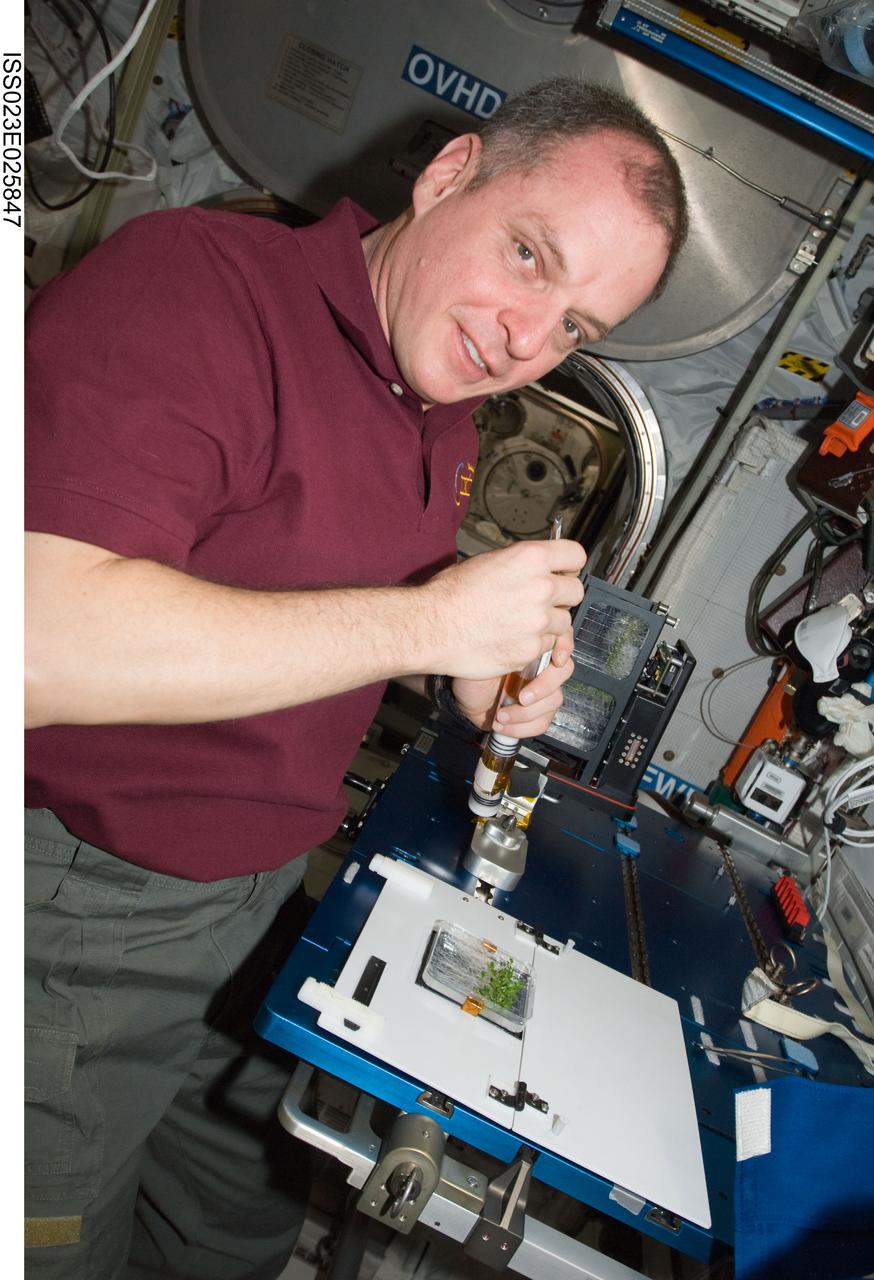
ISS023-E-025847 (21 April 2010) --- NASA astronaut T.J. Creamer, Expedition 23 flight engineer, services the Advanced Plant Experiments on Orbit-Cambium (APEX-Cambium) experiment in the Columbus laboratory of the International Space Station.
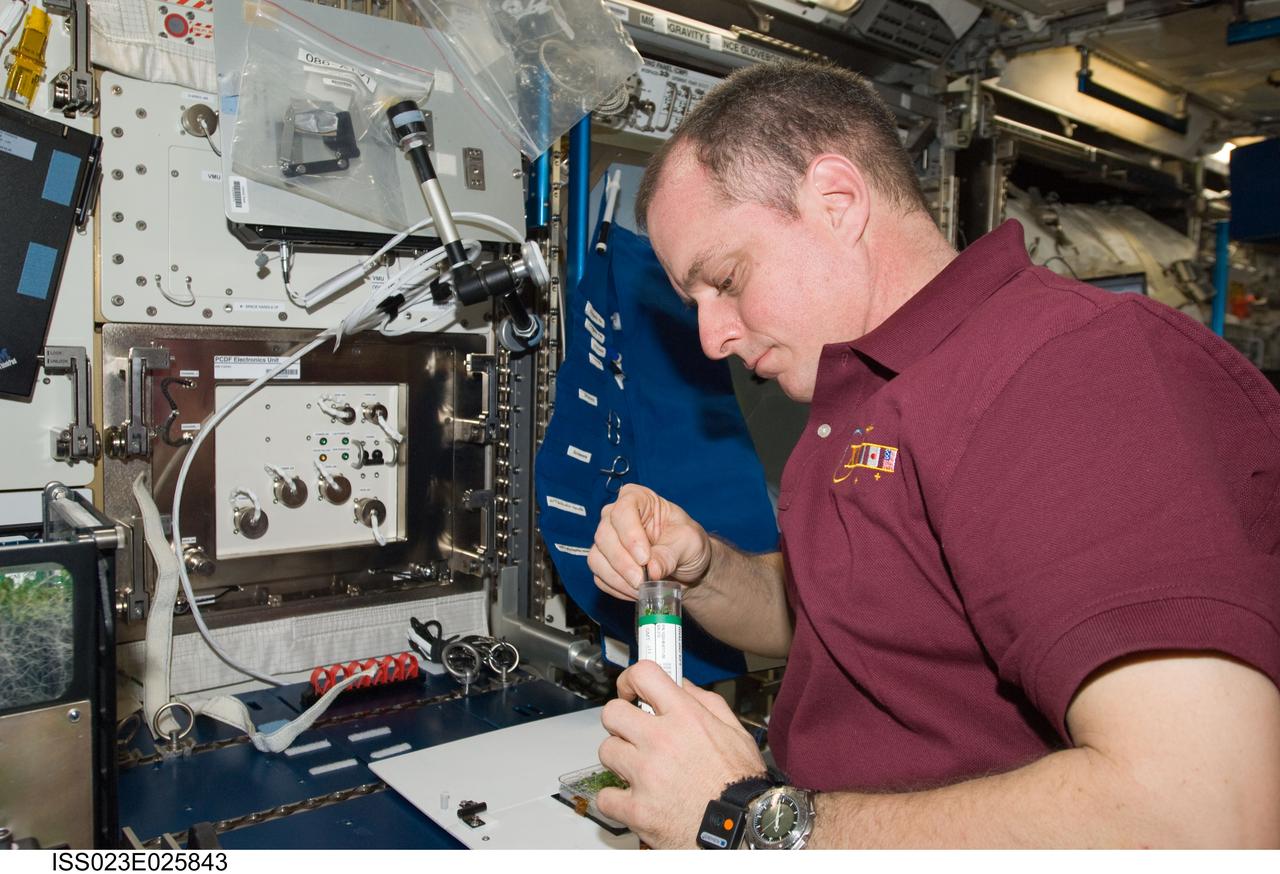
ISS023-E-025843 (21 April 2010) --- NASA astronaut T.J. Creamer, Expedition 23 flight engineer, services the Advanced Plant Experiments on Orbit-Cambium (APEX-Cambium) experiment in the Columbus laboratory of the International Space Station.
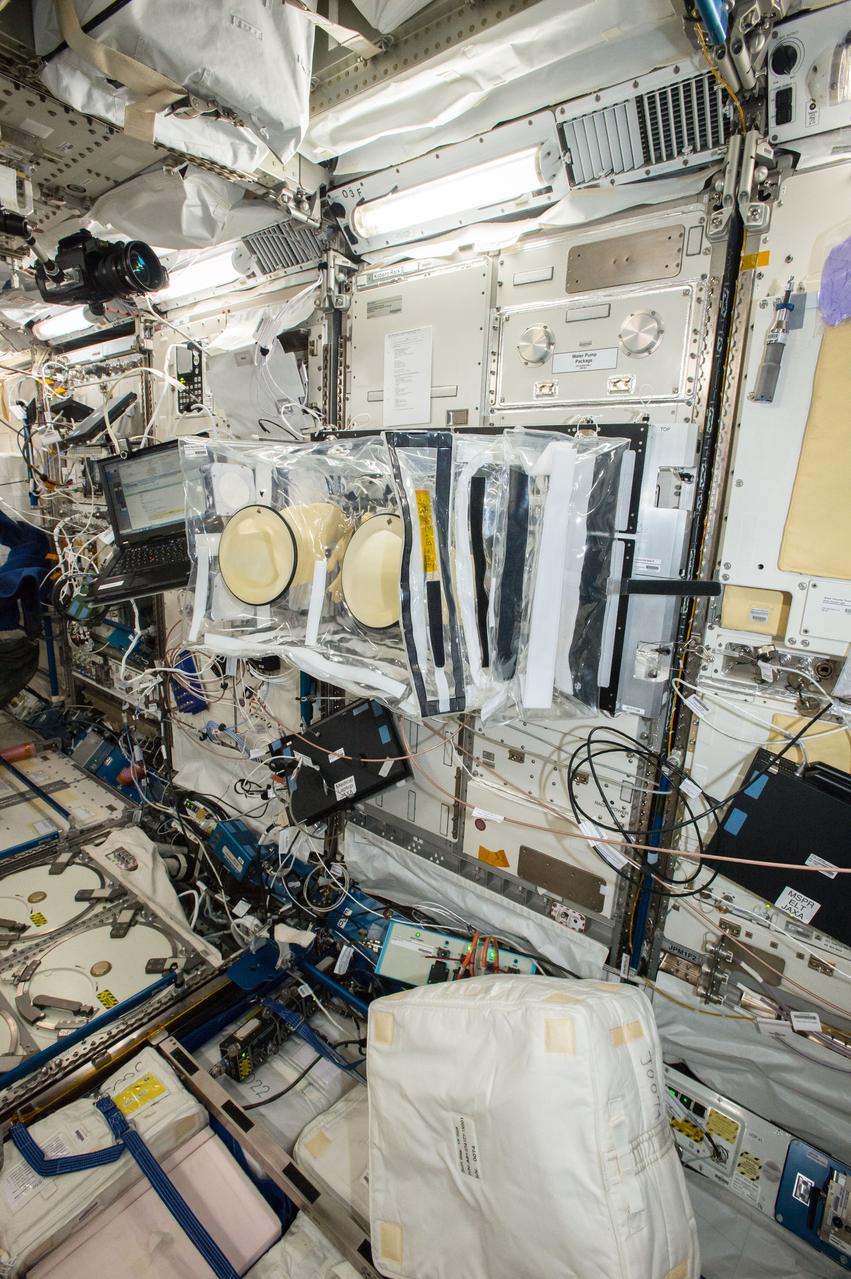
iss048e042371 (Jul. 21, 2016) --- Glove Box set up on the Kobairo Rack for the Mouse Epigenetics experiment in the Kibo Japanese Experiment Pressurized Module (JPM). The Mouse Epigenetics experiment studies the effects of the space environment on genetic activity, which can be used as a proxy for understanding how the human body changes in space.
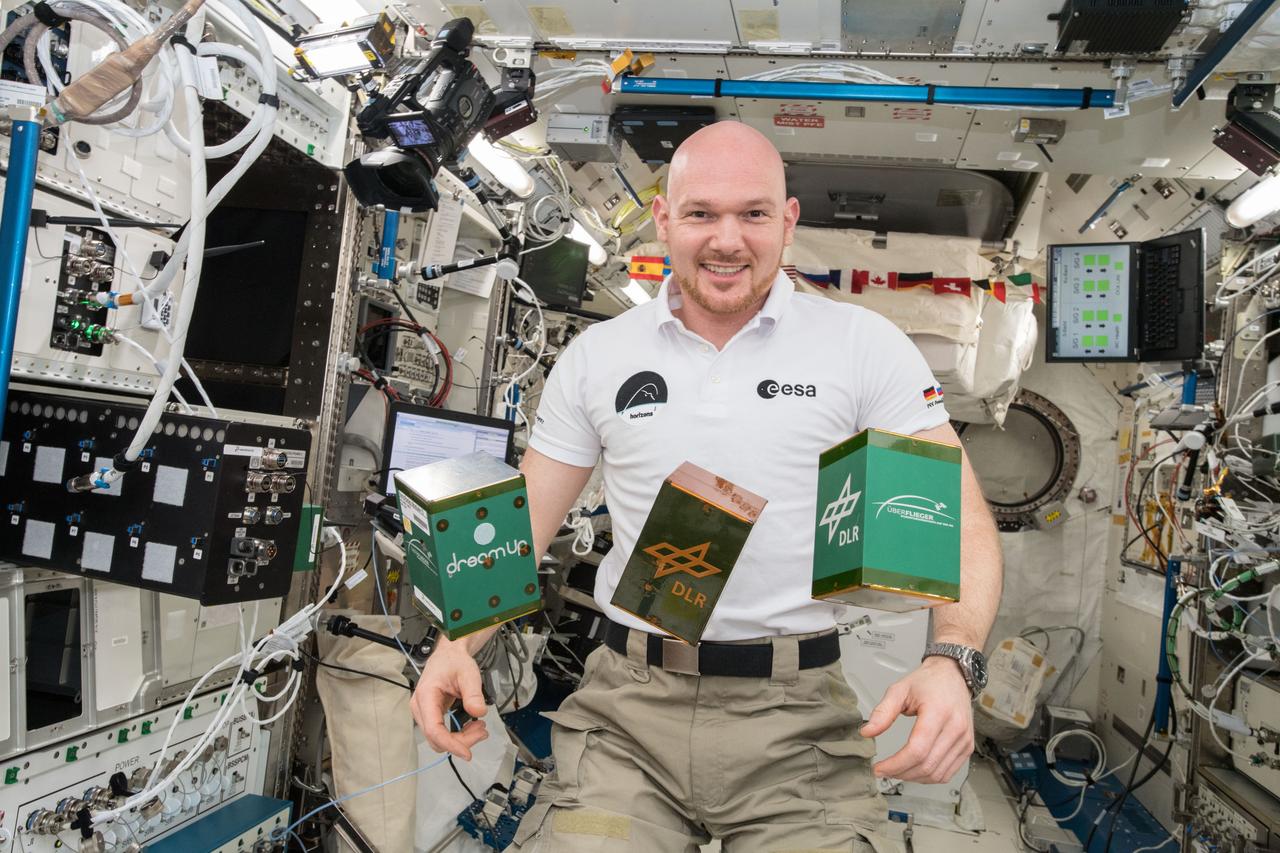
iss057e105672 (11/21/2018) --- (11/21/2018) --- A view of European Space Agency (ESA) astronaut Alexander Gerst with the (ARISE) - NanoRacks Module-75, the Pump Application using Pulsed Electromagnets for Liquid reLocation (PAPELL) - NanoRacks Module-76 and the Experimental Chondrule Formation at the International Space Station (EXCISS) - NanoRacks Module-77 experiments shown in the Japanese Experiment Module (Kibo).
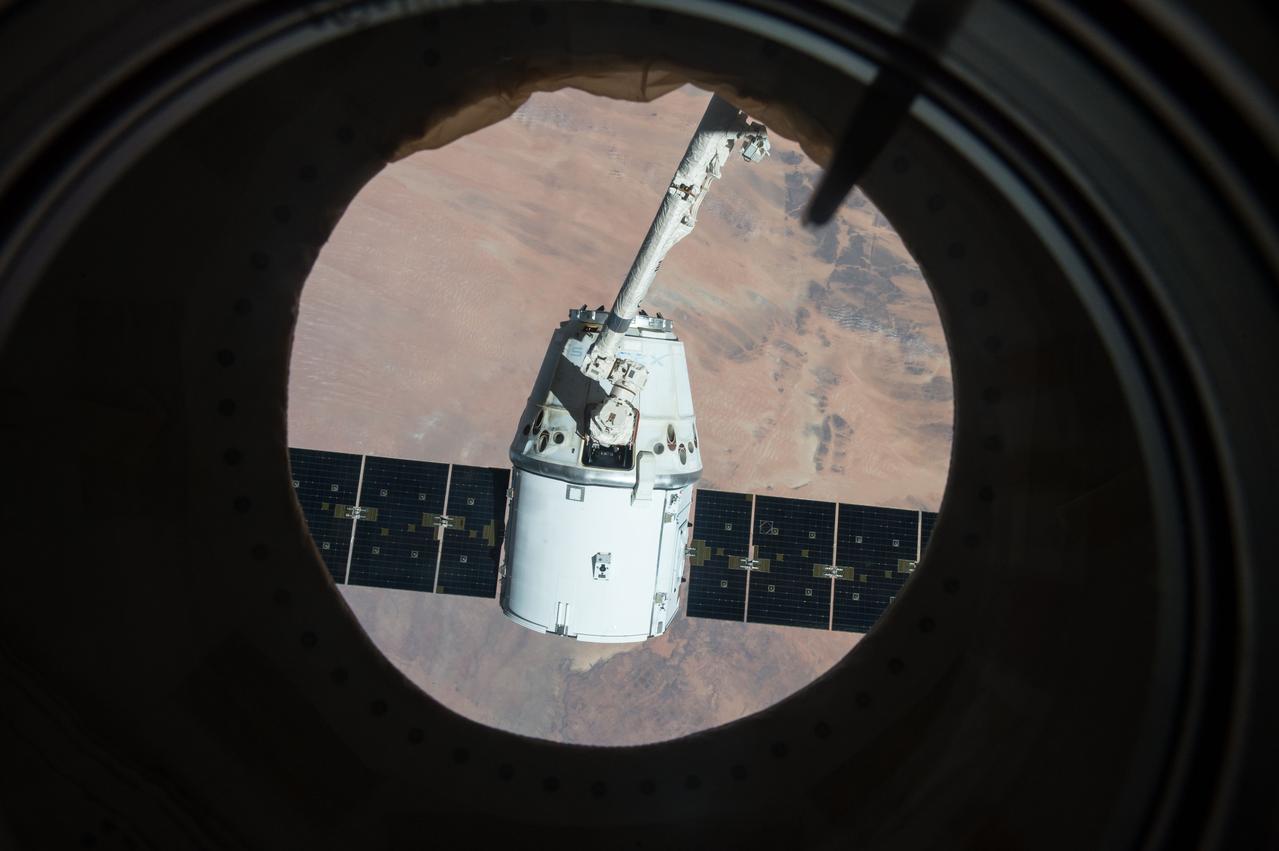
ISS043E228727 (05/21/2015) --- The SpaceX Dragon craft is poised and ready to be released from the International Space Station on May 21, 2015. This was SpaceX’s sixth resupply mission to the space station and returned about 3,100 pounds of experiment samples and equipment back down to Earth.
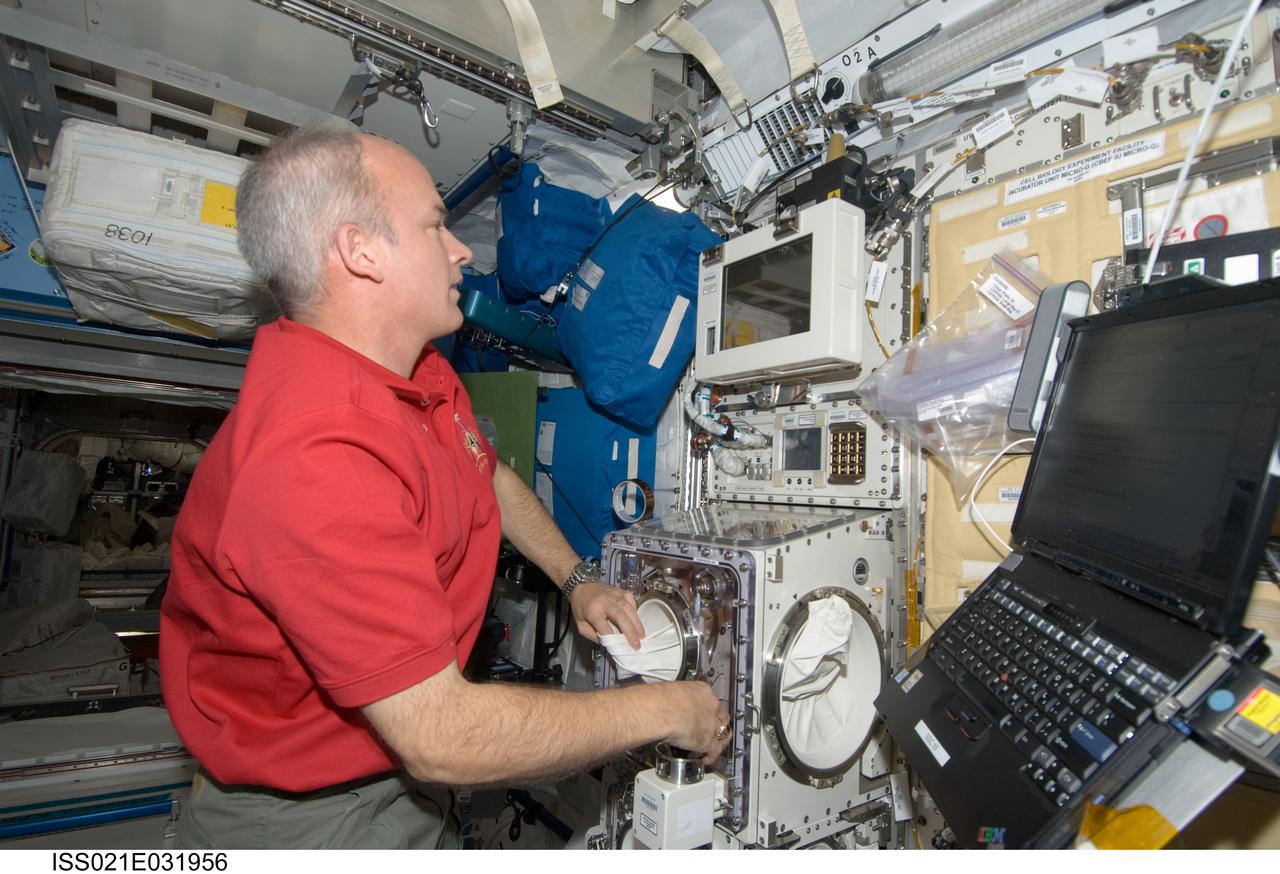
ISS021-E-031956 (23 Nov. 2009) --- Astronaut Jeffrey Williams, Expedition 21 flight engineer, works on an experiment at the Saibo biological experiment rack in the Kibo laboratory of the International Space Station while space shuttle Atlantis (STS-129) remains docked with the station.
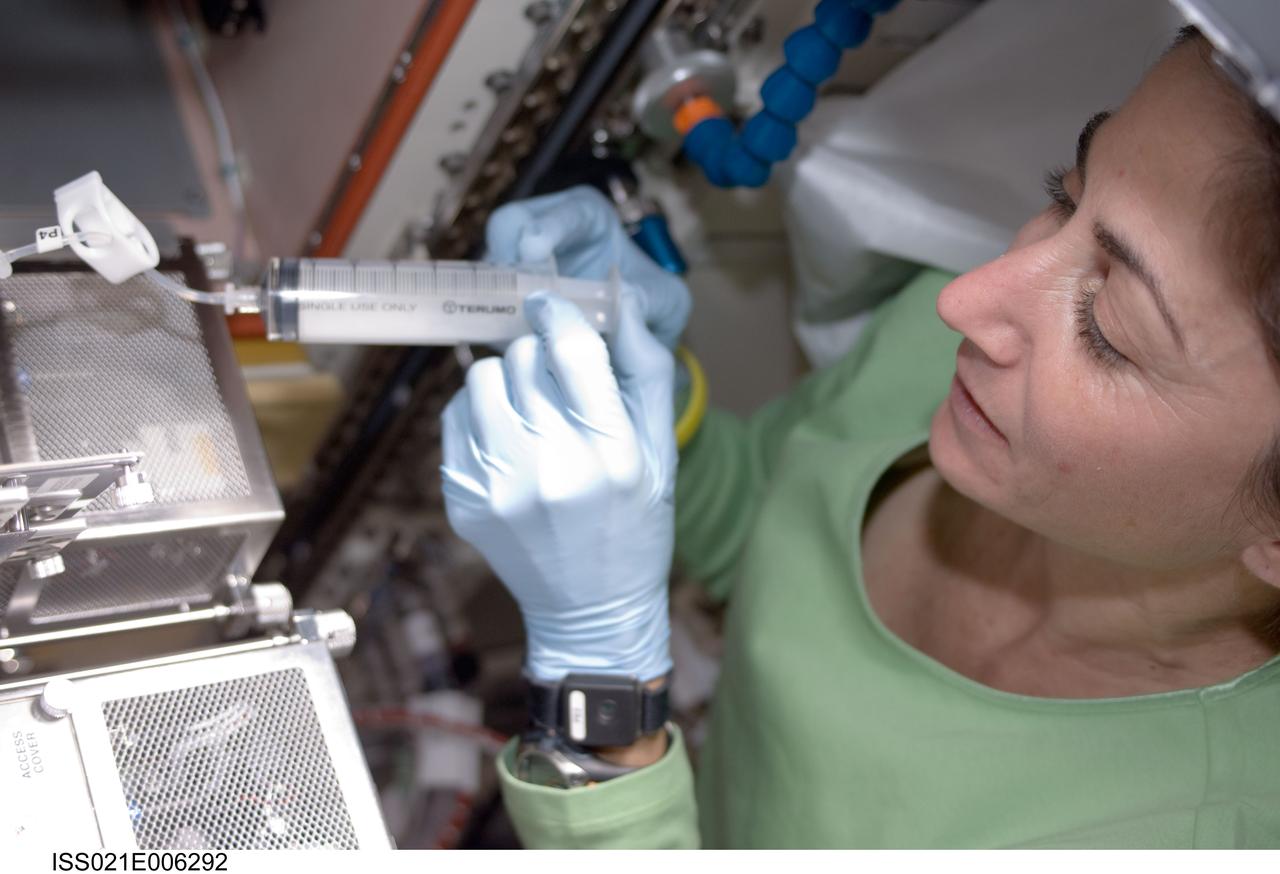
ISS021-E-006292 (14 Oct. 2009) --- NASA astronaut Nicole Stott, Expedition 21 flight engineer, using a watering syringe, supplies water to the Cell Biology Experiment Facility (CBEF) SPACE SEED experiment in the Kibo laboratory on the International Space Station.
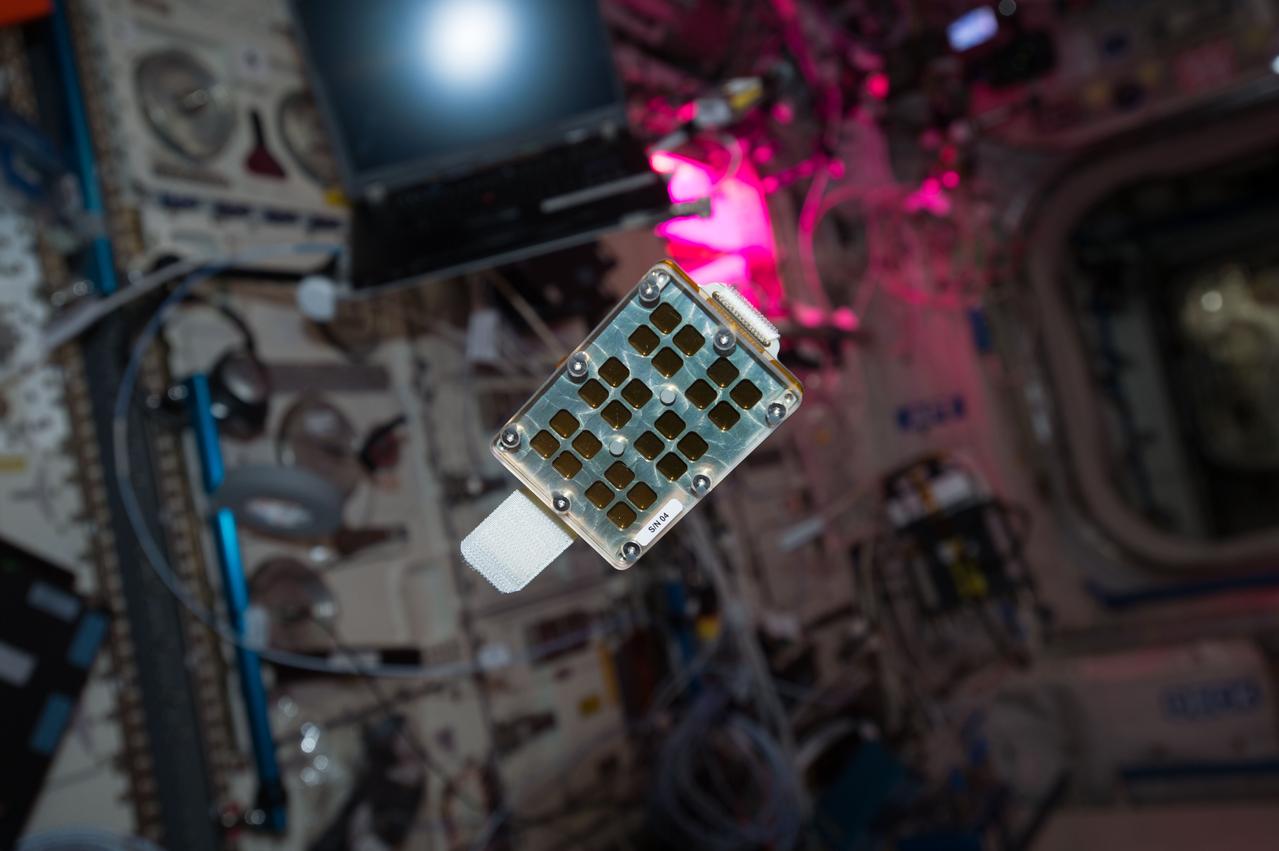
iss050e010908 911/21/2016) --- A view of Matiss floating in the Columbus Module. The Microbial Aerosol Tethering on Innovative Surfaces in the International Space Station (MATISS) experiment investigates the antibacterial properties of materials in space to see if future spacecraft could be made easier to clean. The experiment aims to understand the mechanisms of attachment of biofilms in microgravity conditions.
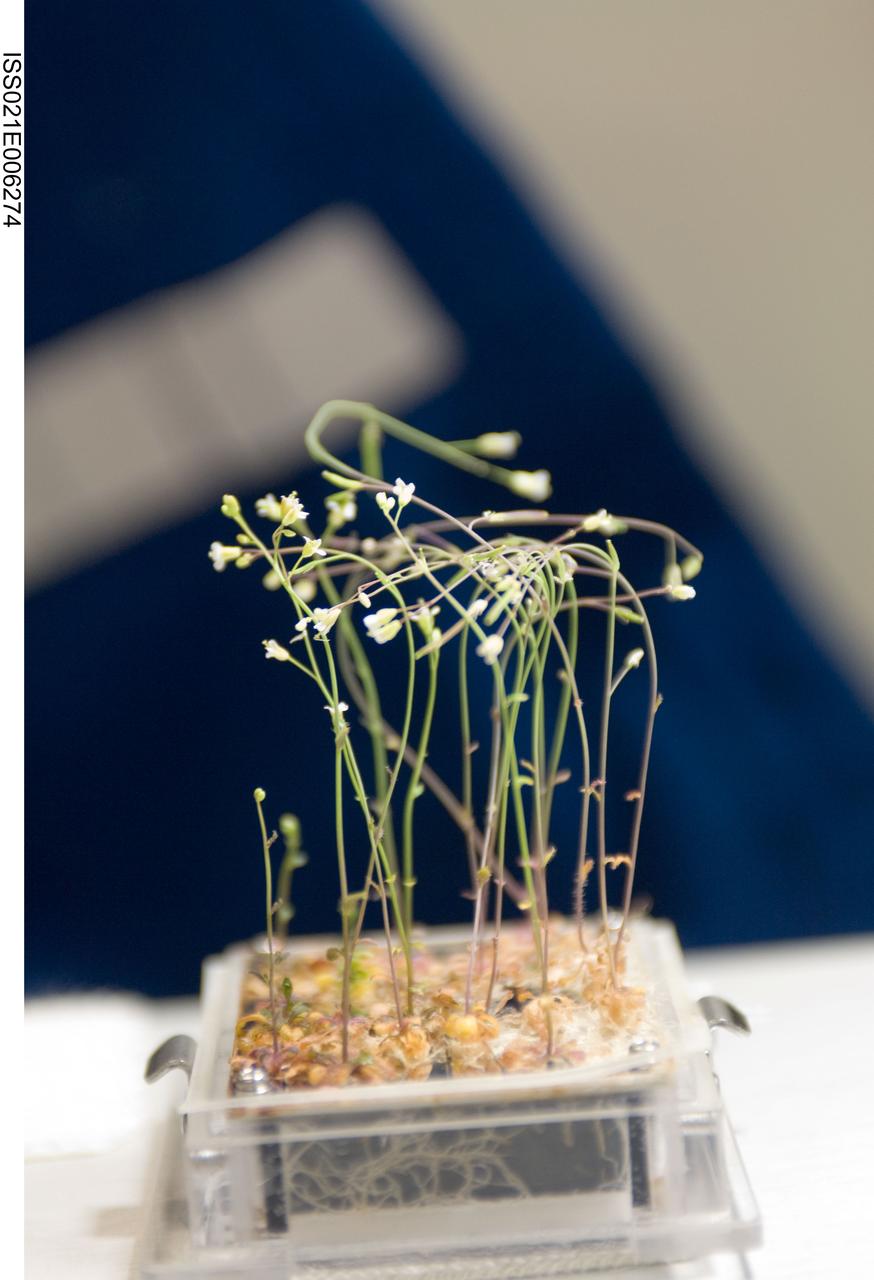
ISS021-E-006274 (13 Oct. 2009) --- A close-up view of the Cell Biology Experiment Facility (CBEF) SPACE SEED experiment is featured in this image photographed by an Expedition 21 crew member in the Kibo laboratory on the International Space Station.
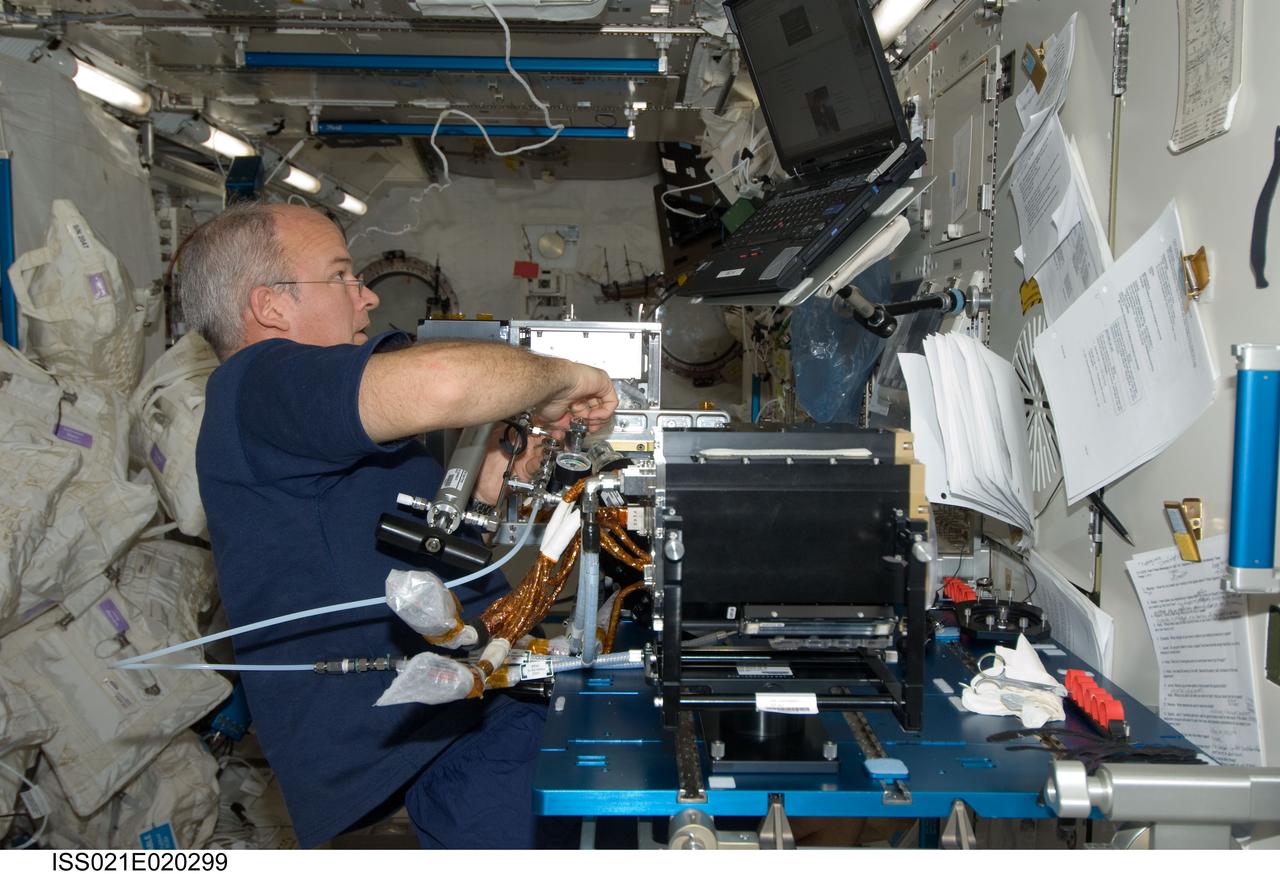
ISS021-E-020299 (5 Nov. 2009) --- NASA astronaut Jeffrey Williams, Expedition 21 flight engineer, works with Fluid Physics Experiment Facility/Marangoni Surface (FPEF MS) Core hardware in the Kibo laboratory of the International Space Station. The Marangoni convection experiment in the FPEF examines fluid tension flow in micro-G.
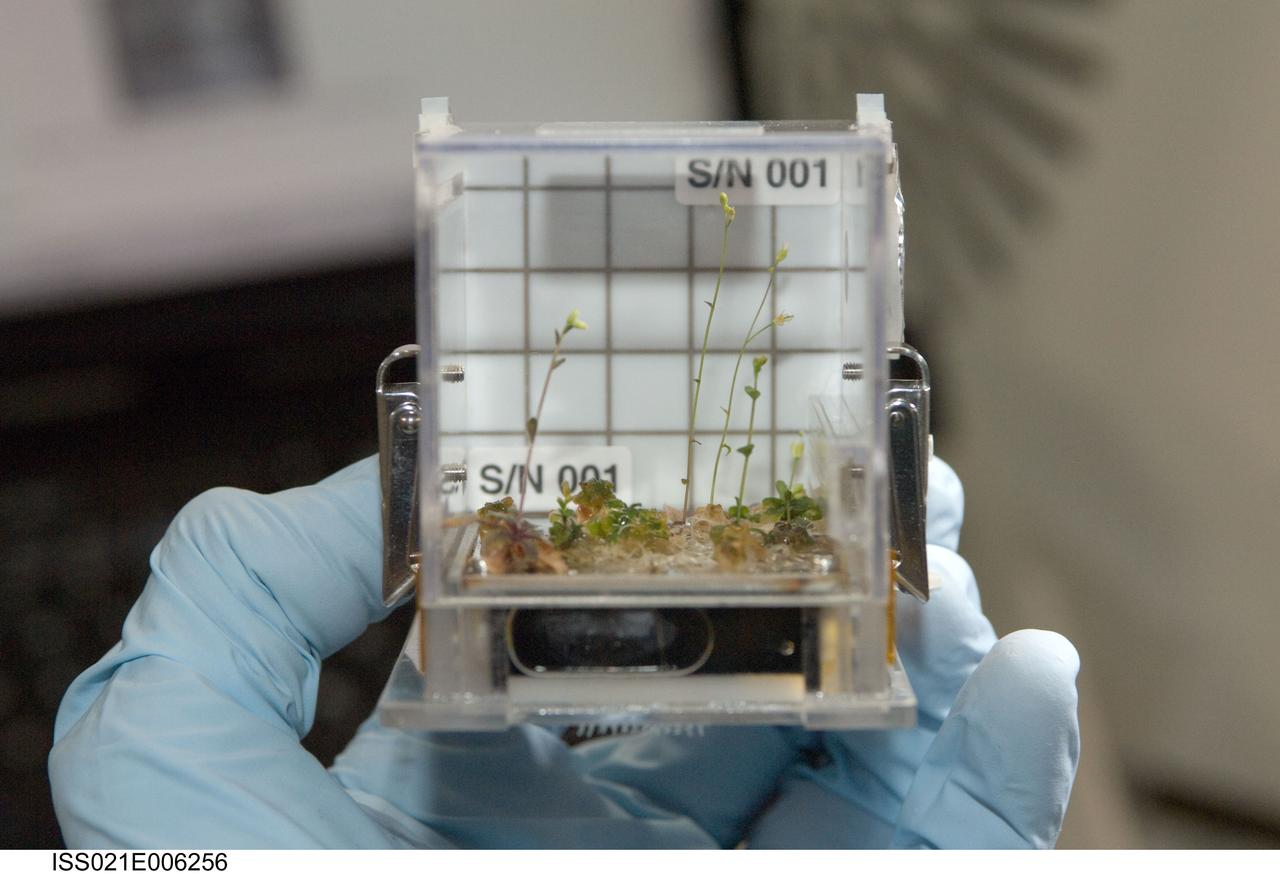
ISS021-E-006256 (13 Oct. 2009) --- A close-up view of the Cell Biology Experiment Facility (CBEF) SPACE SEED experiment is featured in this image photographed by an Expedition 21 crew member in the Kibo laboratory on the International Space Station.
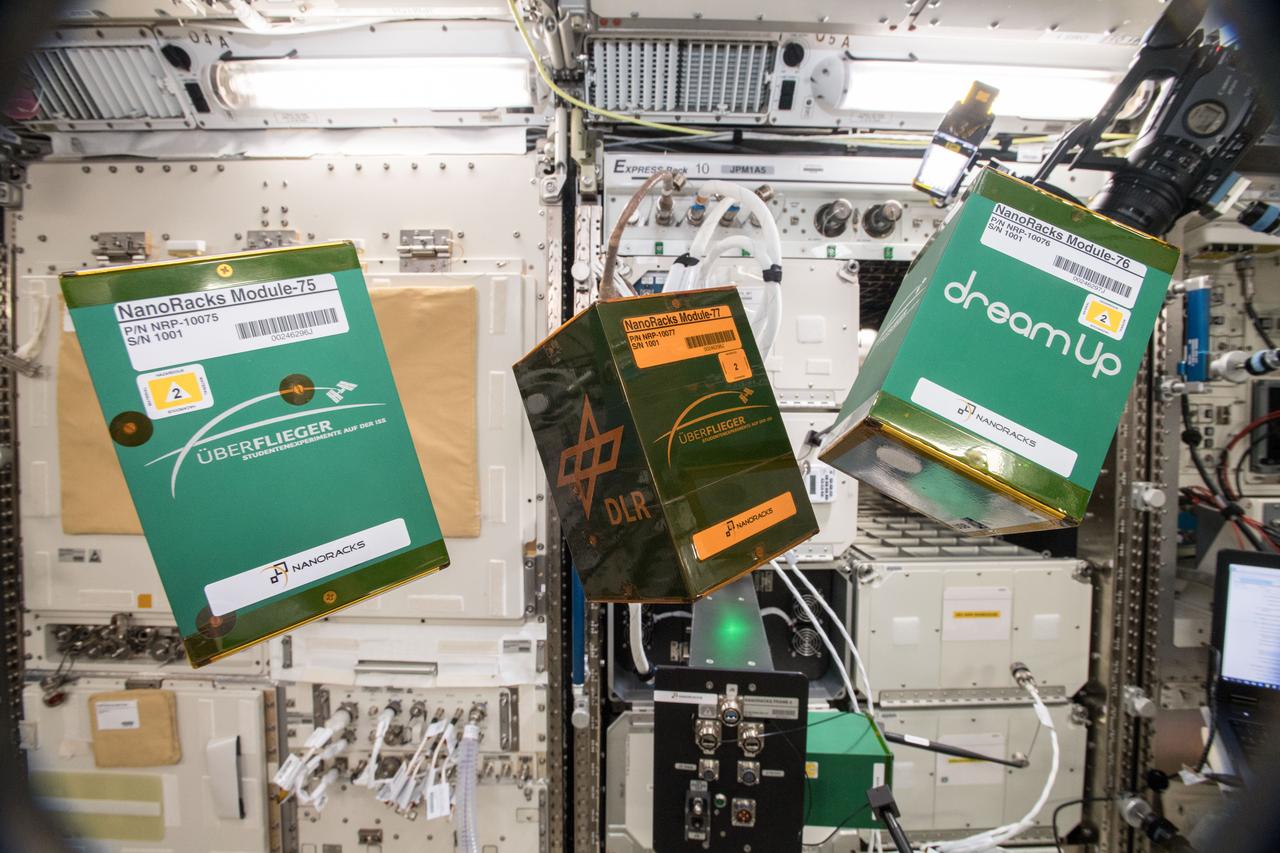
iss057e105661 (11/21/2018) --- A view of (ARISE) - NanoRacks Module-75, the Pump Application using Pulsed Electromagnets for Liquid reLocation (PAPELL) - NanoRacks Module-76 and the Experimental Chondrule Formation at the International Space Station (EXCISS) - NanoRacks Module-77 experiments shown in the Japanese Experiment Module (Kibo).
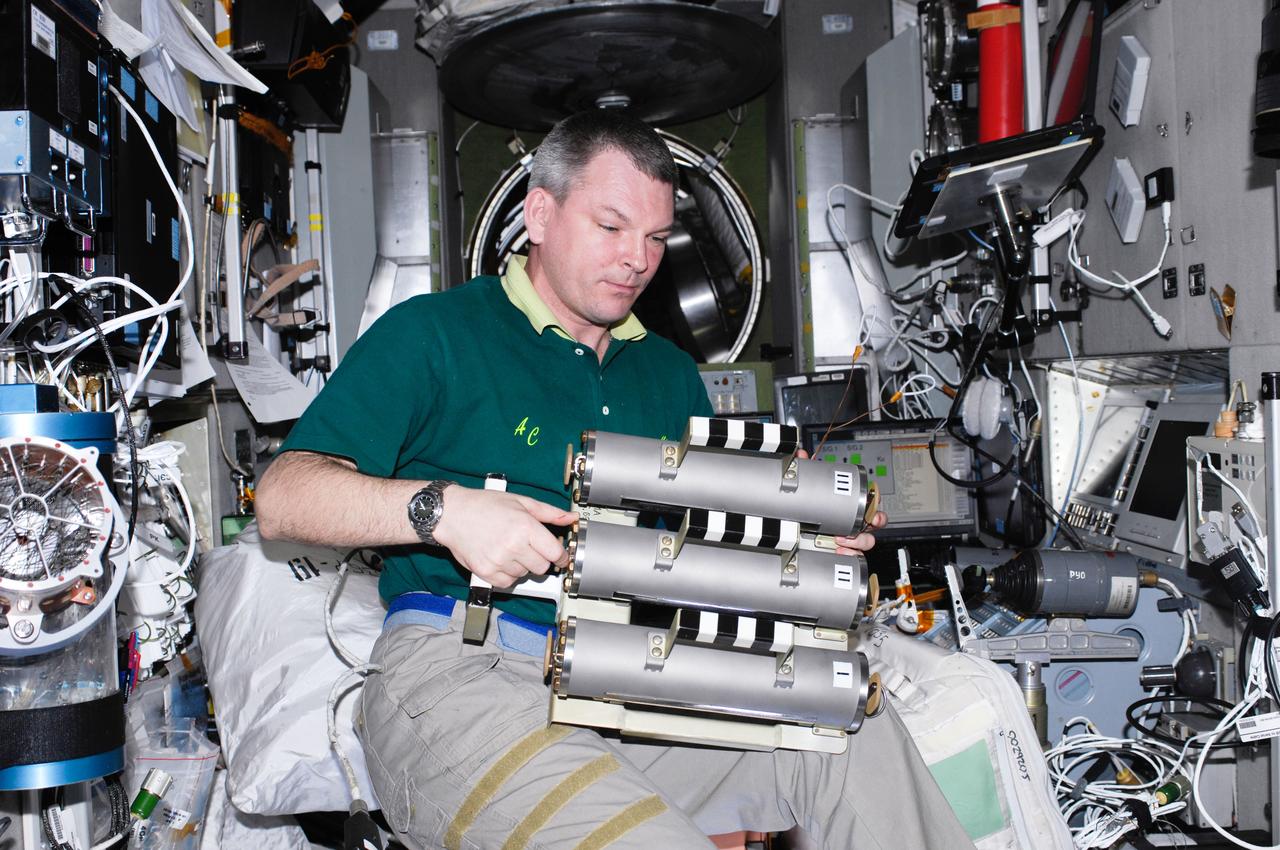
ISS028-E-018265 (21 July 2011) --- Russian cosmonaut Alexander Samokutyaev, Expedition 28 flight engineer, works with a Biorisk-MSN experiment container in the Zvezda Service Module of the International Space Station.
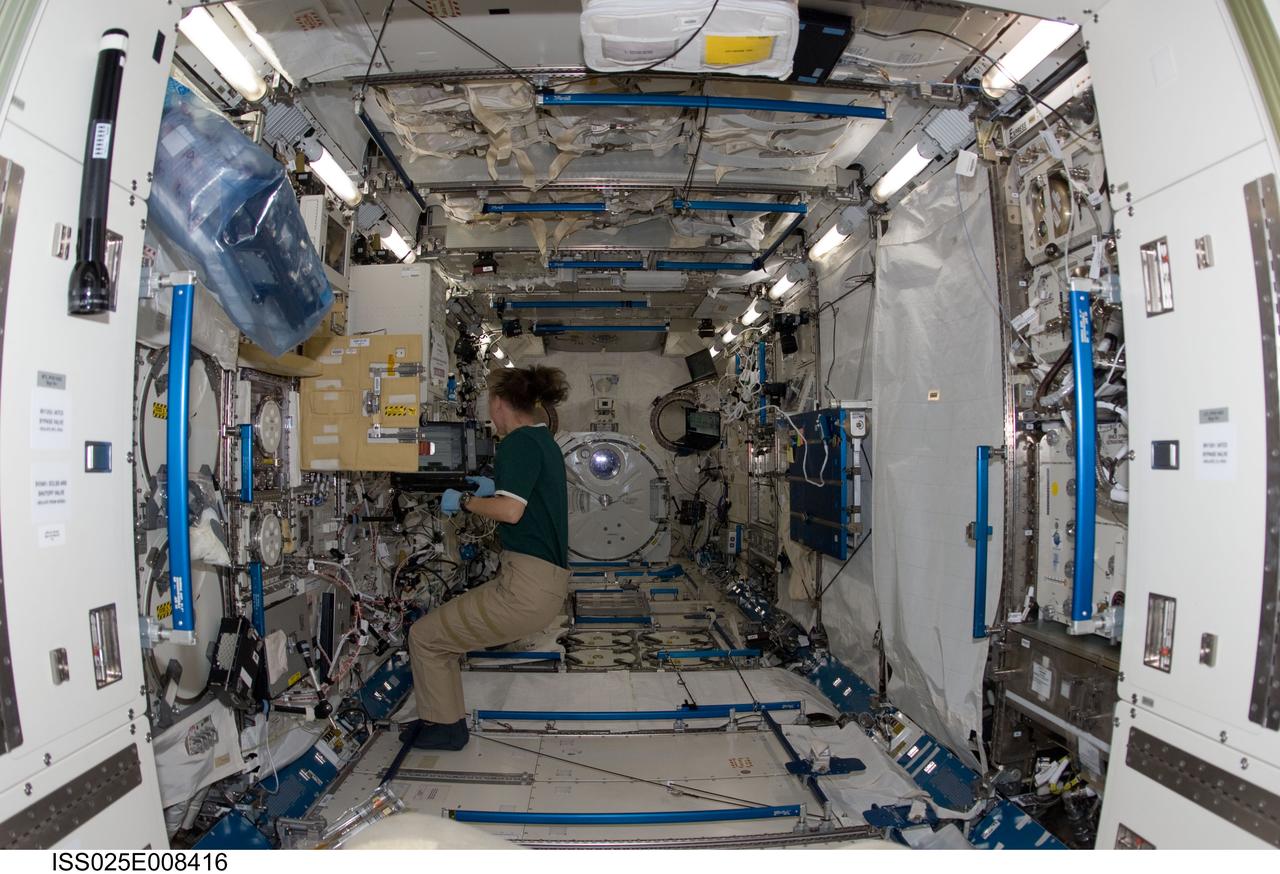
ISS025-E-008416 (21 Oct. 2010) --- NASA astronaut Shannon Walker, Expedition 25 flight engineer, uses a computer while working at the Cell Biology Experiment Facility (CBEF) in the Kibo laboratory of the International Space Station.
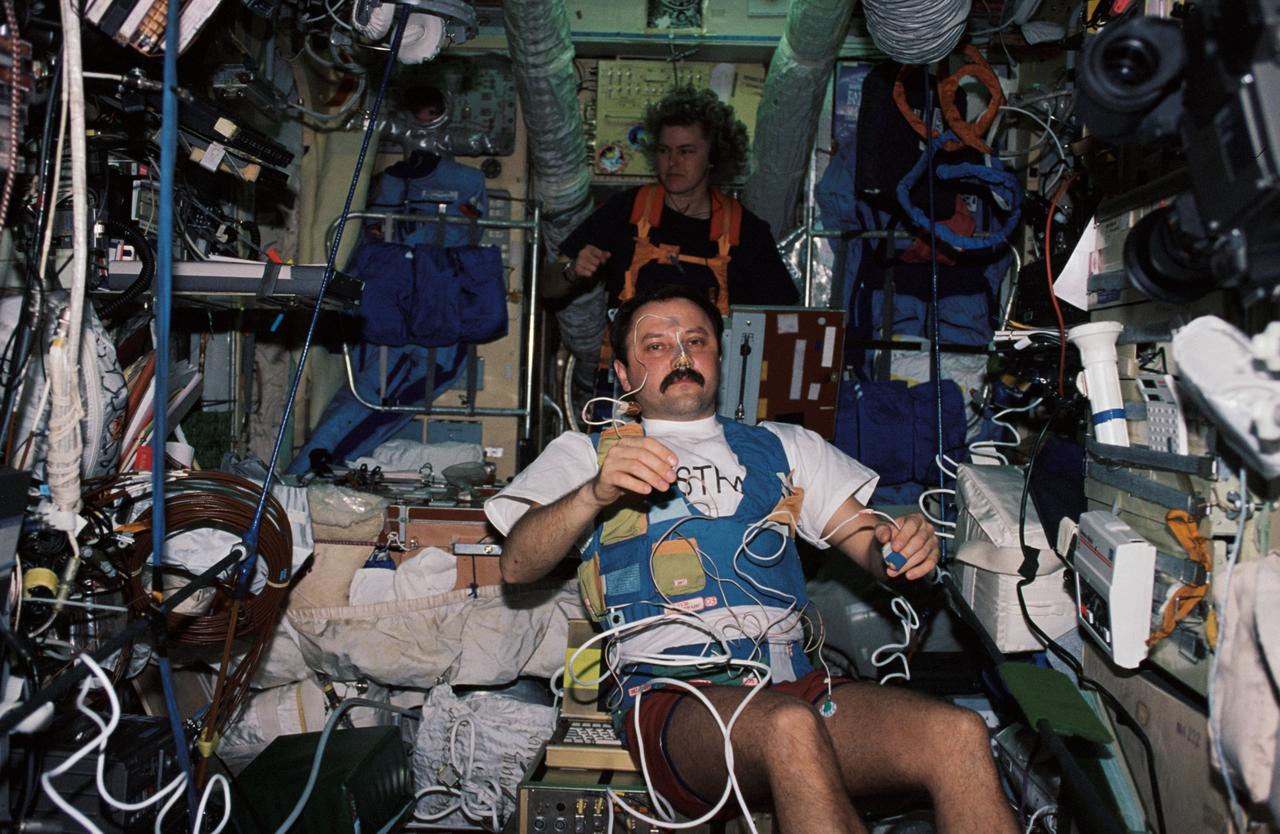
NM21-388-012 (For Release October 1996) --- Astronaut Shannon Lucid (background) exercises on the treadmill in the Mir space station Base Block while Mir 21 flight engineer Yury V. Usachev is wired for an experiment.
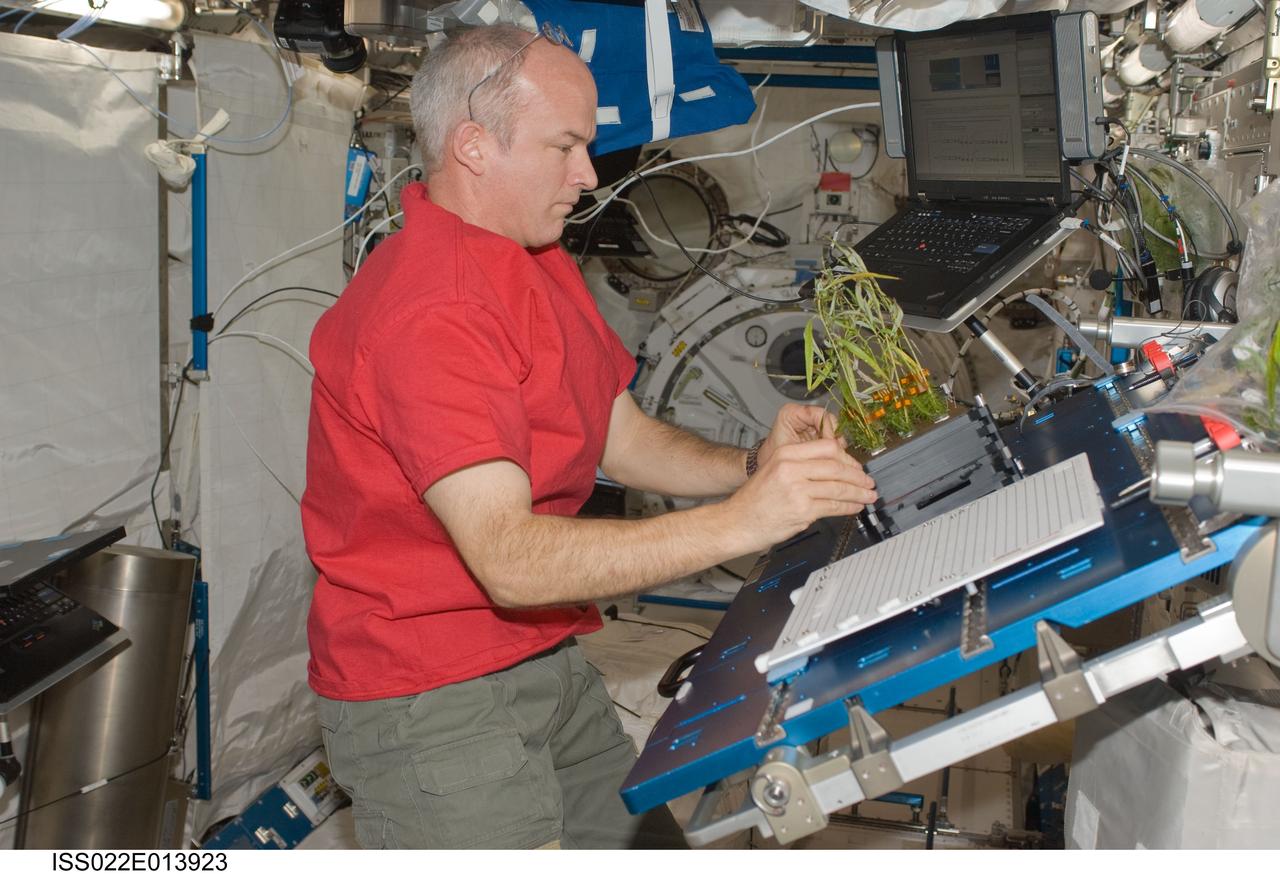
ISS022-E-013923 (21 Dec. 2009) --- NASA astronaut Jeffrey Williams, Expedition 22 commander, services the Advanced Plant Experiments on Orbit-Cambium (APEX-C) payload in the Kibo laboratory of the International Space Station.
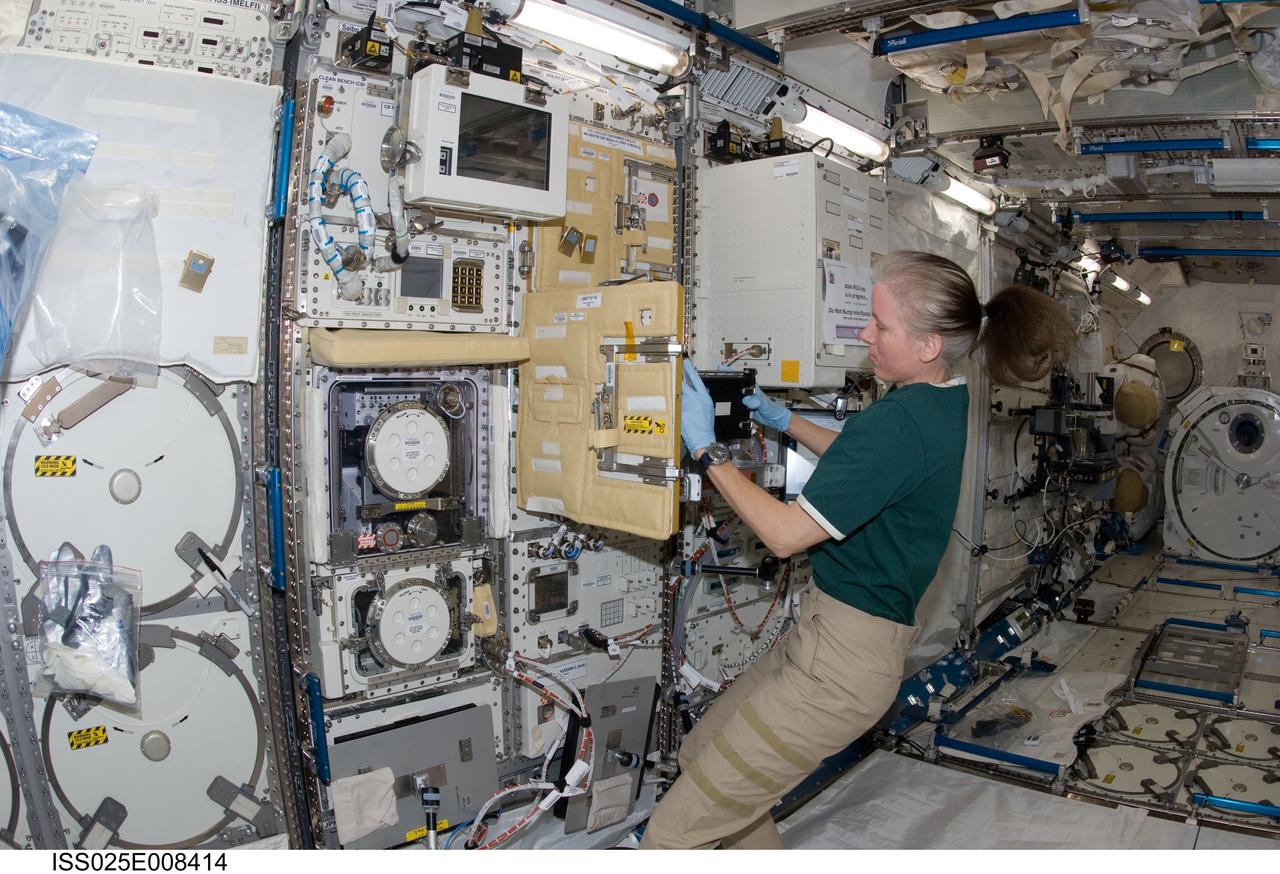
ISS025-E-008414 (21 Oct. 2010) --- NASA astronaut Shannon Walker, Expedition 25 flight engineer, works at the Cell Biology Experiment Facility (CBEF) in the Kibo laboratory of the International Space Station.
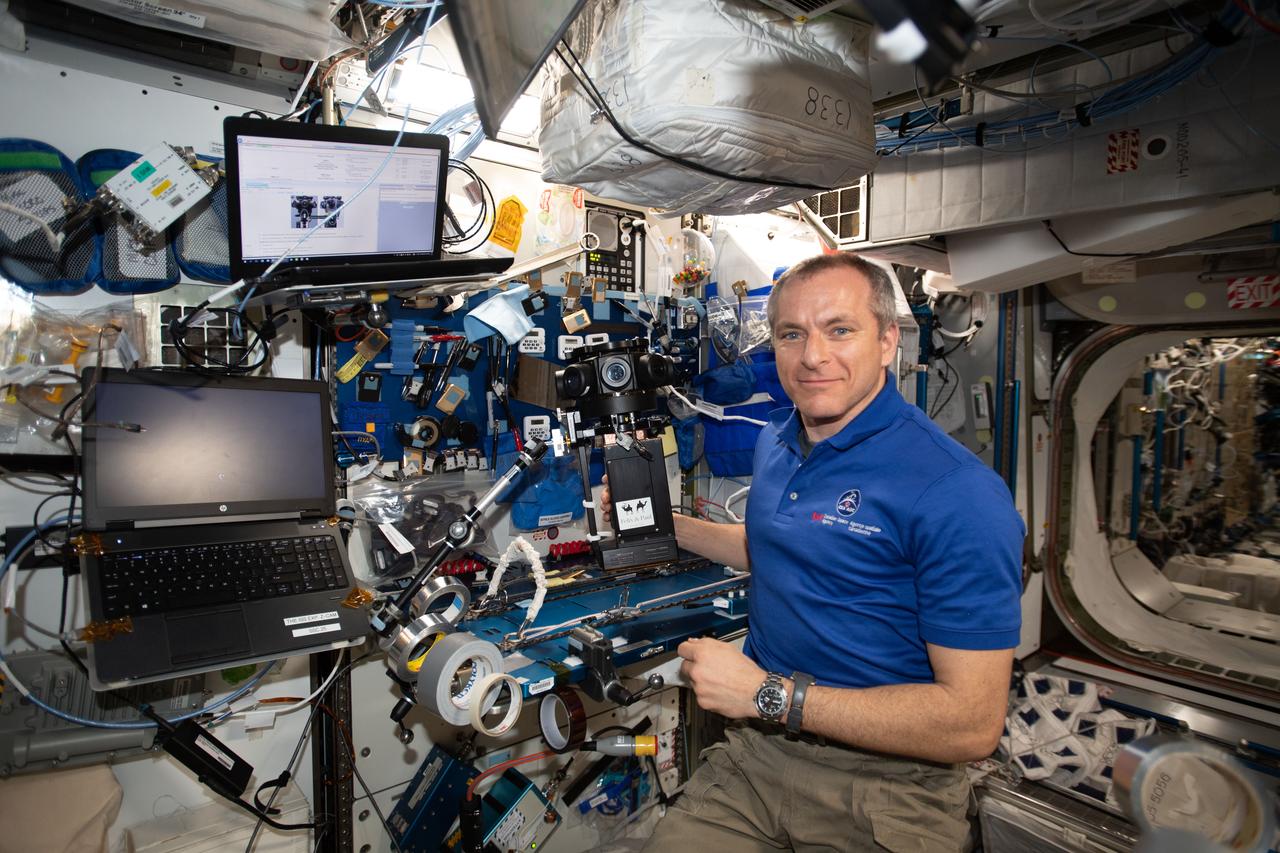
iss058e005160 (1/21/2019) --- A view of Canadian Space Agency (CSA) astronaut David Saint-Jacques setting up the Z-CAM V1 Pro Cinematic camera for the ISS Experience payload. The International Space Station Experience (ISS Experience) creates a virtual reality film documenting daily life aboard the space station. The 8- to 10-minute film created from footage taken during the six-month investigation covers different aspects of crew life, conducting science aboard the station, and the international partnerships involved.
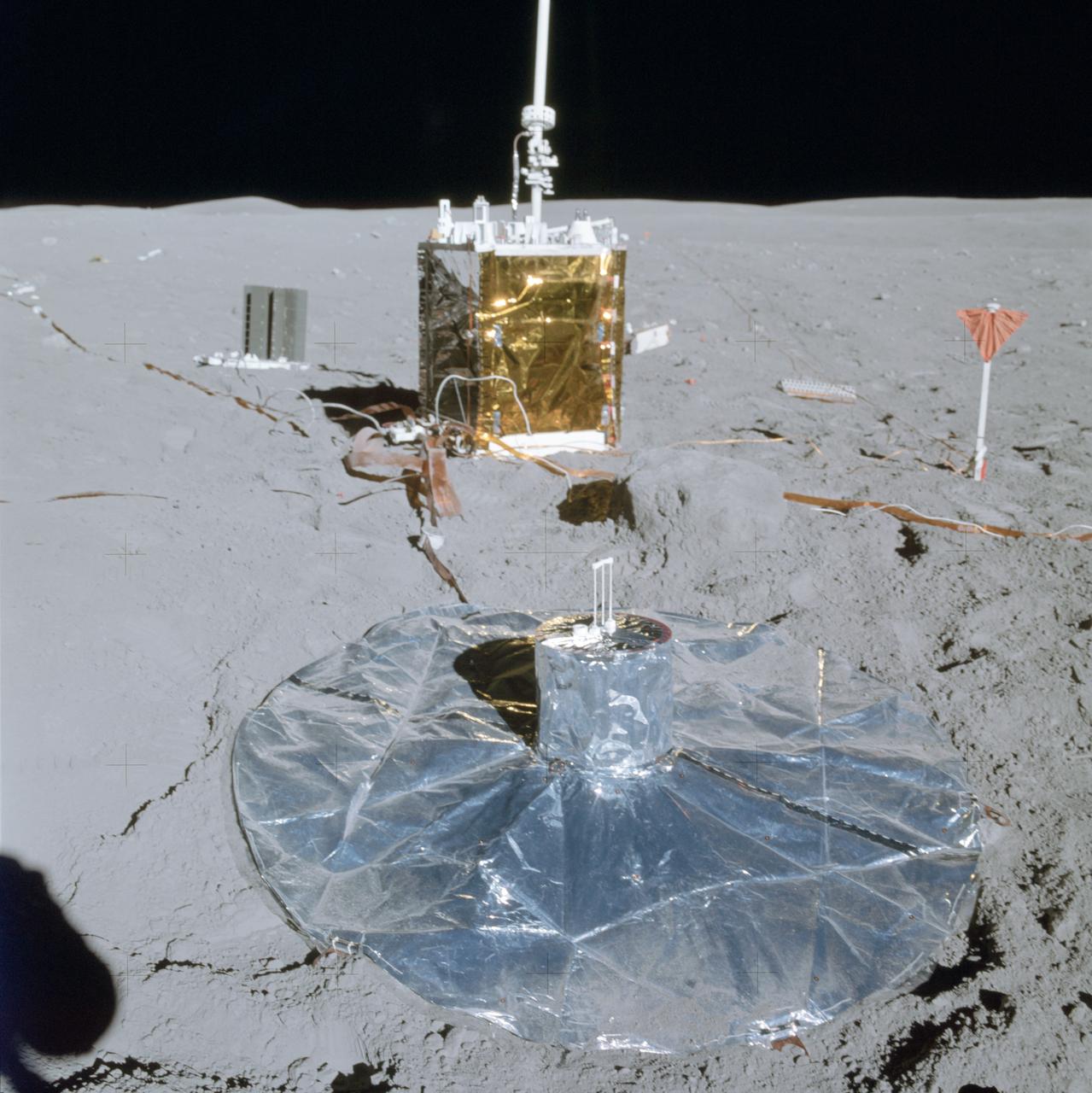
AS16-113-18347 (21 April 1972) --- A partial view of the Apollo 16 Apollo Lunar Surface Experiments Package (ALSEP) in deployed configuration on the lunar surface as photographed during the mission's first extravehicular activity (EVA), on April 21, 1972. The Passive Seismic Experiment (PSE) is in the foreground center; Central Station (C/S) is in center background, with the Radioisotope Thermoelectric Generator (RTG) to the left. One of the anchor flags for the Active Seismic Experiment (ASE) is at right. While astronauts John W. Young, commander; and Charles M. Duke Jr., lunar module pilot; descended in the Apollo 16 Lunar Module (LM) "Orion" to explore the Descartes highlands landing site on the moon, astronaut Thomas K. Mattingly II, command module pilot, remained with the Command and Service Modules (CSM) "Casper" in lunar orbit.
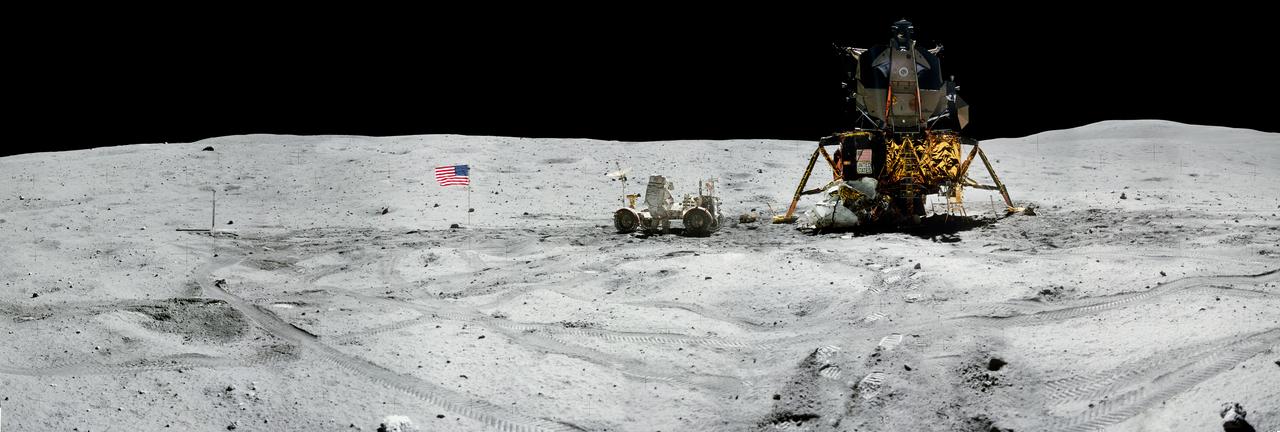
jsc2011e118363 - Panorama view of Apollo 16 commander Astronaut John W. Young, working at the Lunar Roving Vehicle (LRV) just prior to deployment of the Apollo Lunar Surface Experiments Package (ALSEP) during the first moonwalk of the mission on April 21, 1972. The panoramas were built by combining Apollo 16 images starting with frame AS16-116-18573 thru end frame AS16-116-18581. The panoramic images received minimal retouching by NASA imagery specialists, including the removal of lens flares that were problematic in stitching together the individual frames and blacking out the sky to the lunar horizon. These adjustments were made based on observations of the Moon walkers who reported that there are no stars visible in the sky due to the bright lunar surface reflection of the Sun.
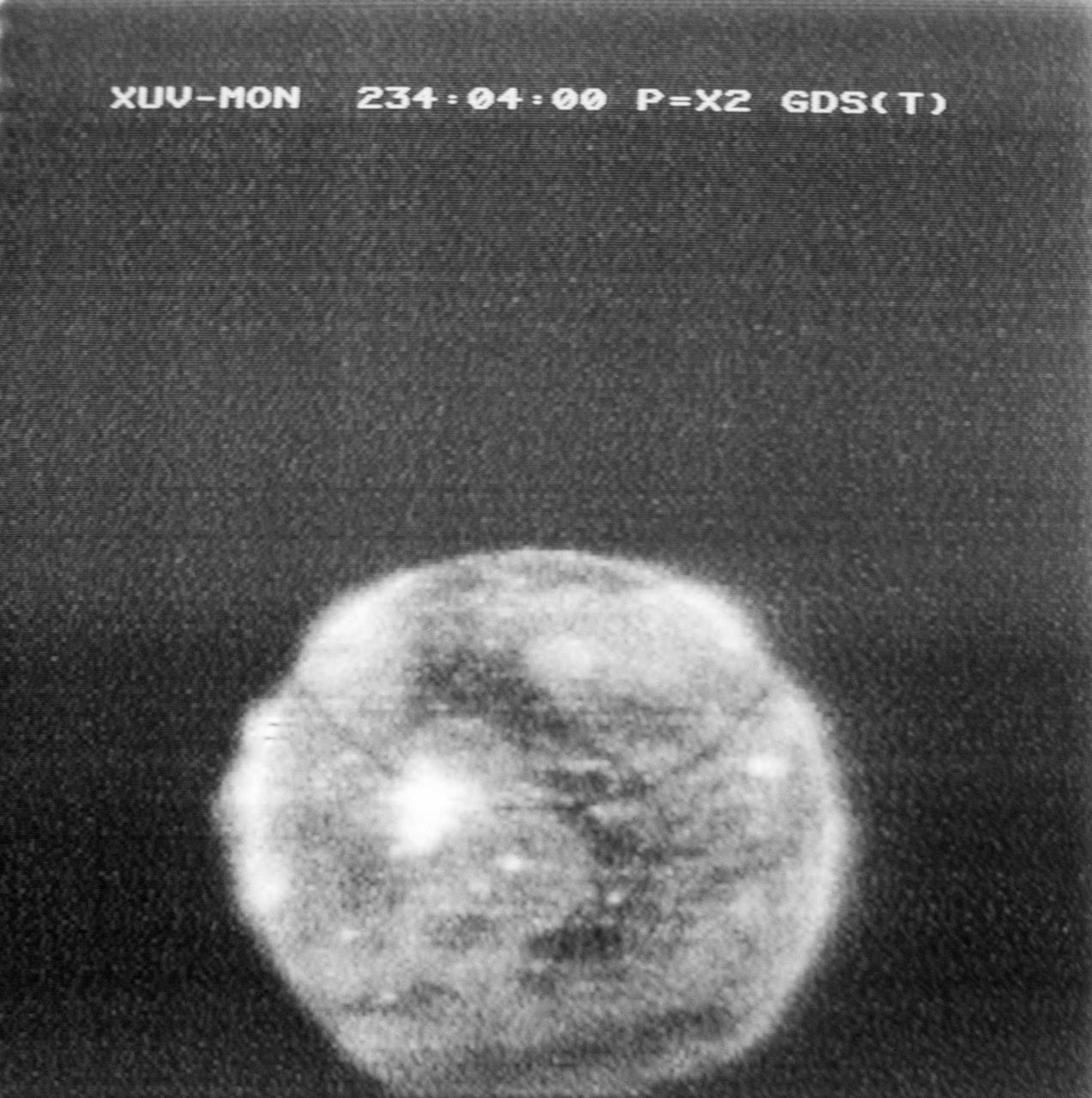
S73-32867 (21 Aug. 1973) --- The solar sphere viewed through the Skylab solar physics experiment (S082) Extreme Ultraviolet Spectroheliographis seen in this photographic reproduction taken from a color television transmission made by a TV camera aboard the Skylab space station in Earth orbit. The solar chromosphere and lower corona are much hotter than the surface of the sun characterized by the white light emissions. This image was recorded during the huge solar prominence which occurred on Aug. 21, 1973. Photo credit: NASA
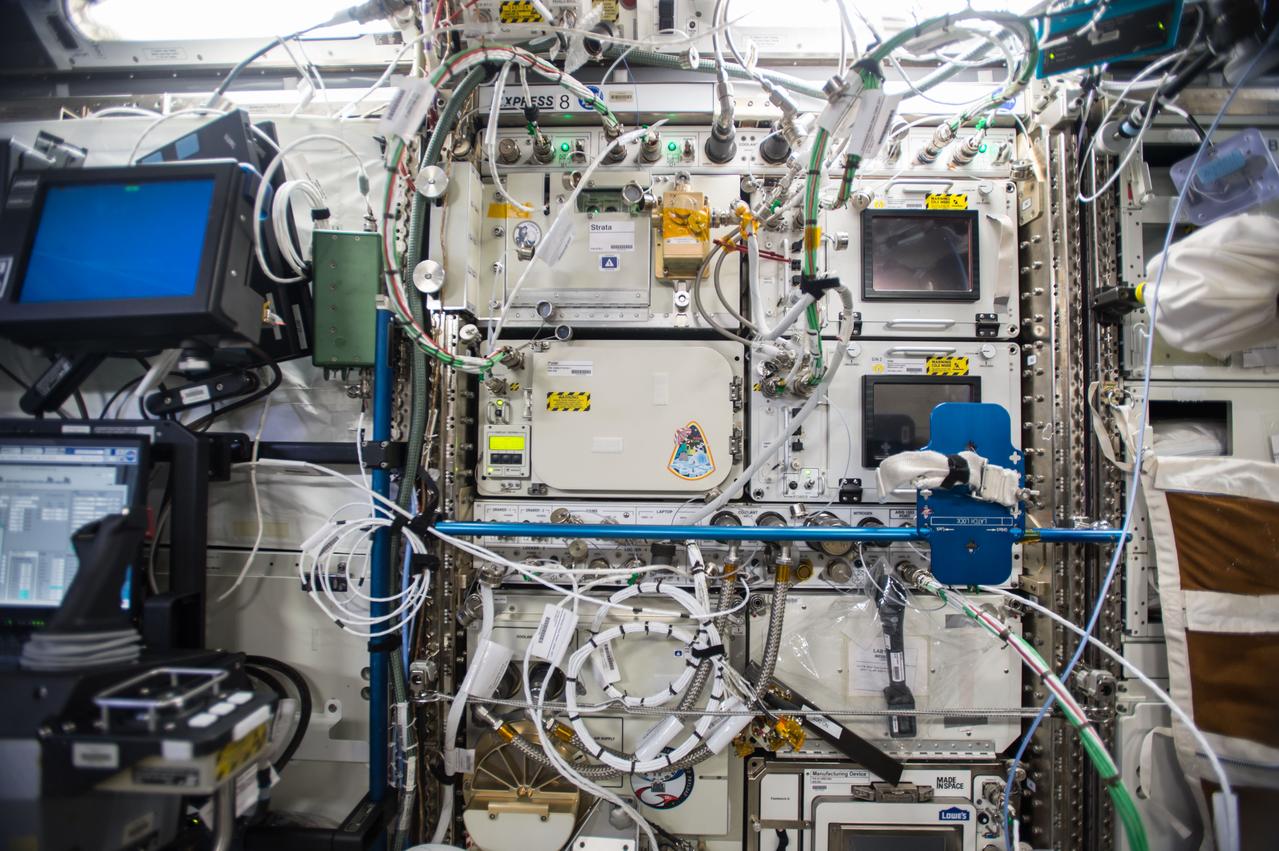
iss048e042382 (7/21/2016) --- Documentation of Polar facility 2 installed in ExPRESS (Expedite the Processing of Experiments to Space Station) Rack 8, LAB1P4, in the Destiny U.S. Laboratory. The newly-installed Space Automated Bioproduct Laboratories (SABL) 1 and 2 are also in view.
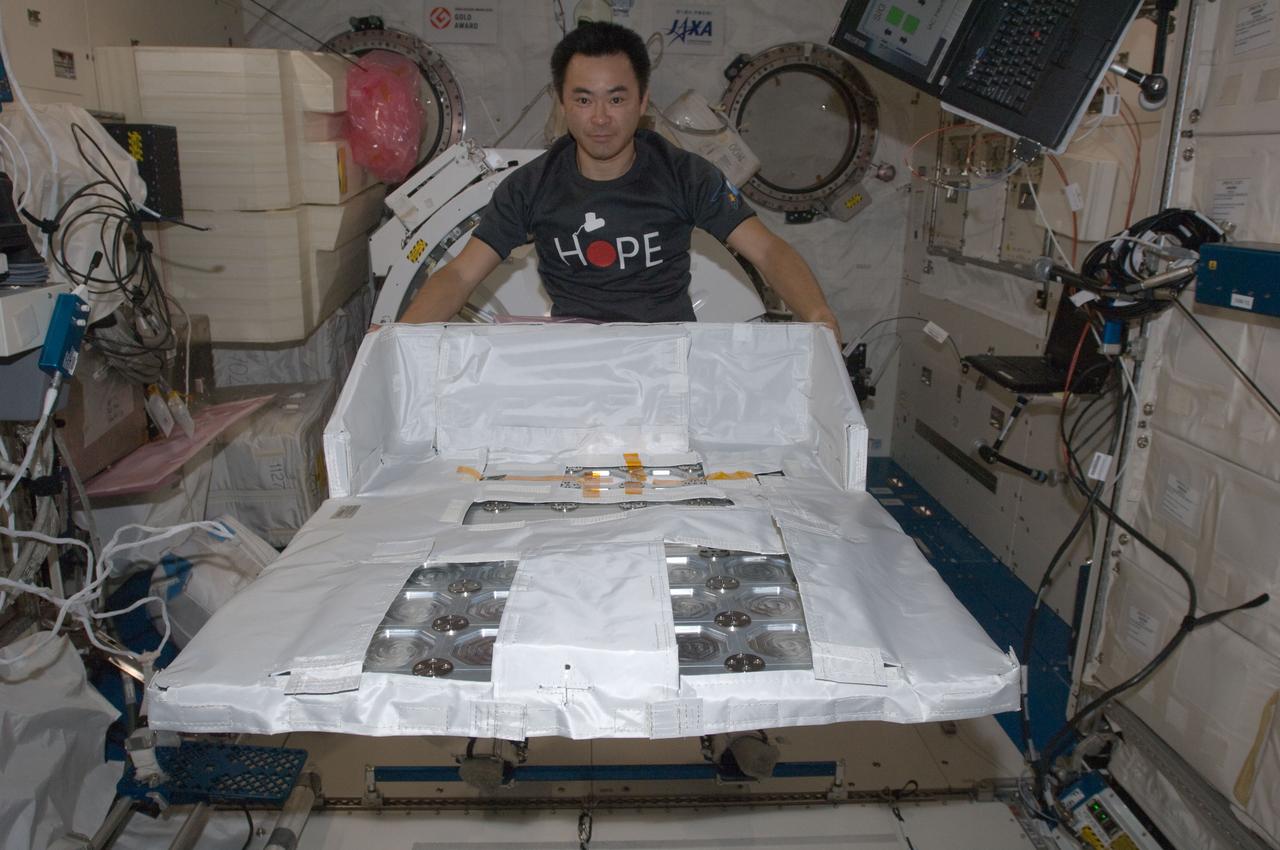
ISS032-E-022180 (21 Aug. 2012) --- Japan Aerospace Exploration Agency astronaut Aki Hoshide, Expedition 32 flight engineer, assembles the JEM Robotic Maneuvering System Multi-Purpose Experiment Platform (JEMRMS MPEP) in the Kibo laboratory of the International Space Station.
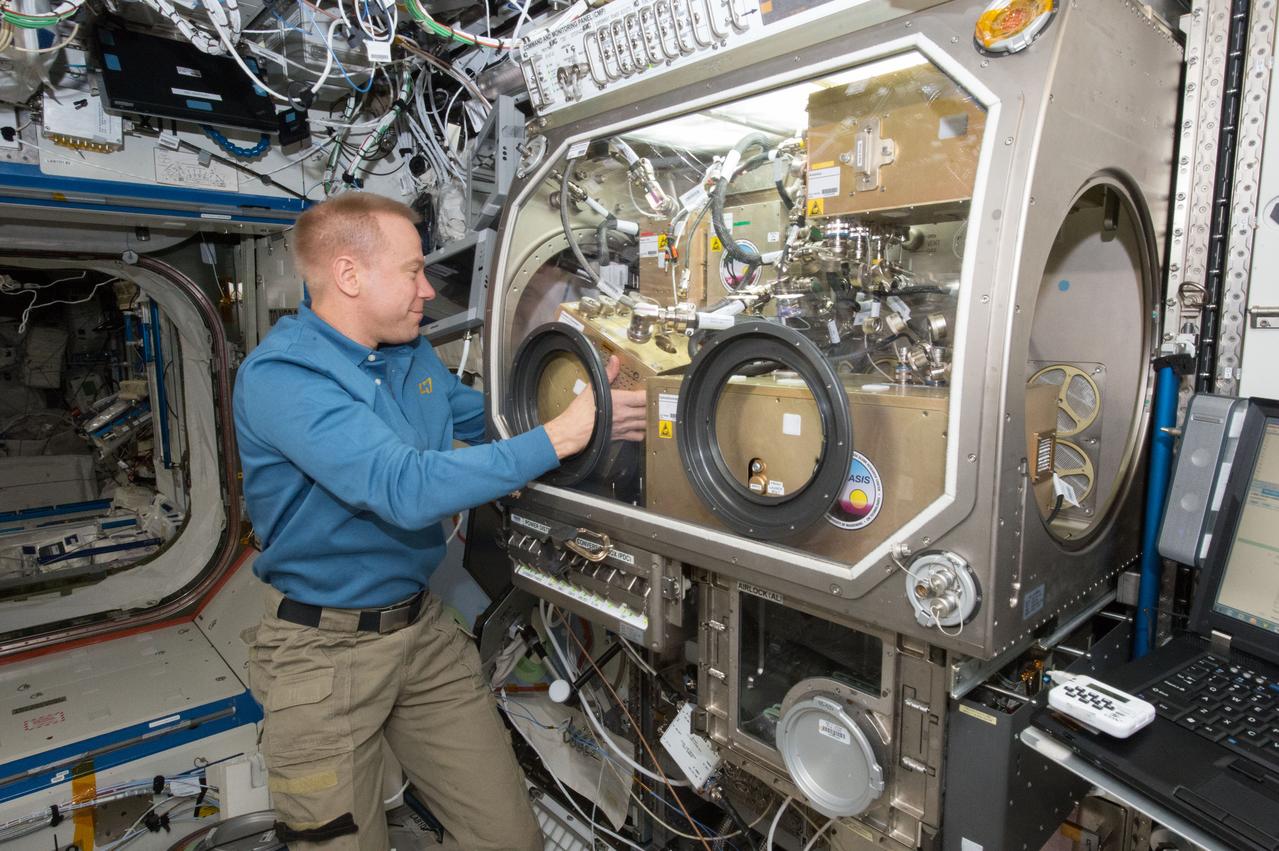
iss047e012491 (03/21/2016) --- NASA astronaut Tim Kopra stows hardware from the OASIS experiment aboard the International Space Station. OASIS, which stands for Observation and Analysis of Smectic Islands In Space, studies the unique behavior of liquid crystals in microgravity.
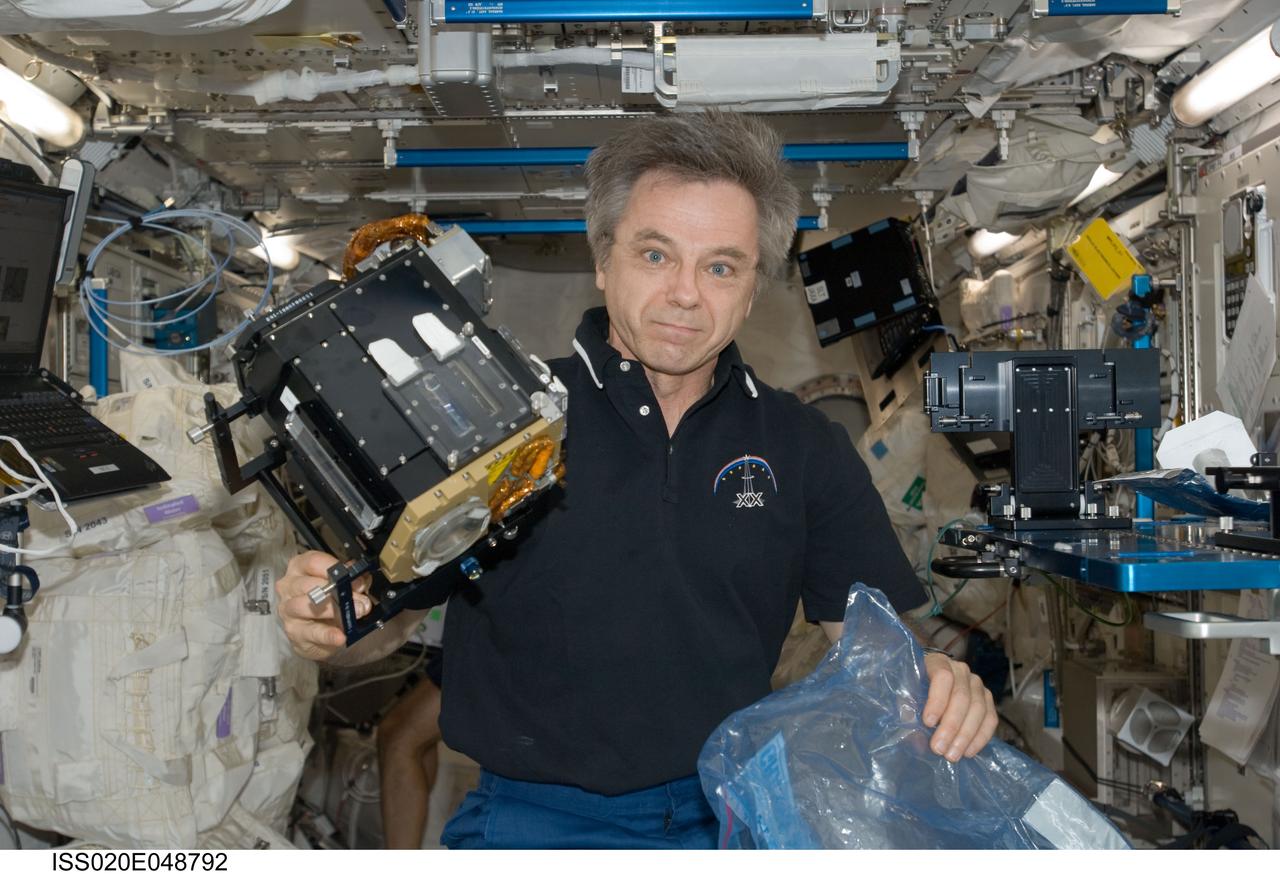
ISS020-E-048792 (7 Oct. 2009) --- Canadian Space Agency astronaut Robert Thirsk, Expedition 20/21 flight engineer, holds Fluid Physics Experiment Facility/Marangoni Surface (FPEF MS) Core hardware in the Kibo laboratory of the International Space Station.

iss053e234714 (Nov. 21, 2017) --- Advanced Plant Habitat (APH) Facility in the Japanese Experiment Module (JEM) Pressurized Module (JPM). The Plant Habitat is a fully automated facility that provides a large, enclosed, environmentally-controlled chamber for plant bioscience research.
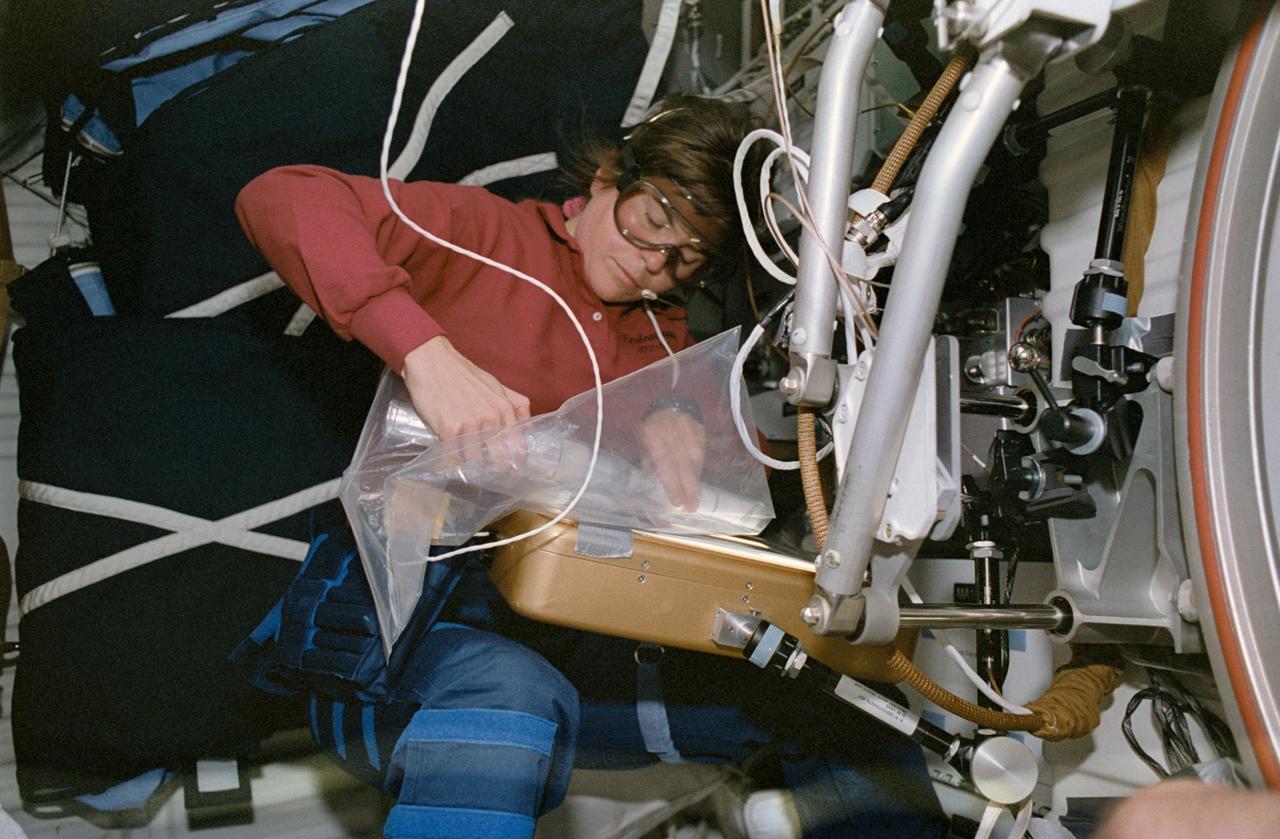
STS057-28-028 (21 June-1 July 1993) --- Astronaut Janice E. Voss works with the Support of Crystal Growth (SCG) experiment. Voss and five other NASA astronauts spent almost ten full days aboard the Space Shuttle Endeavour for the STS-57 mission.
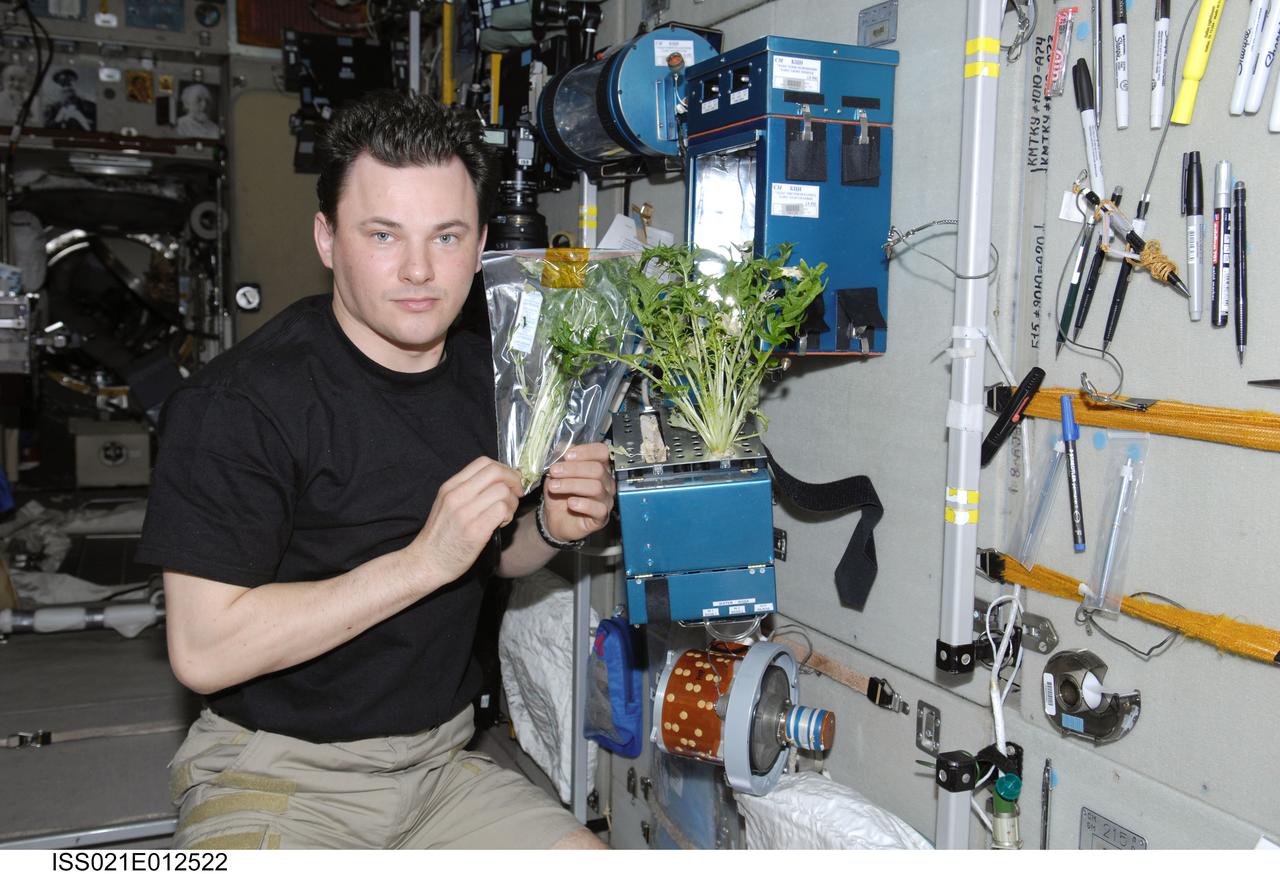
ISS021-E-012522 (26 Oct. 2009) --- Russian cosmonaut Roman Romanenko, Expedition 21 flight engineer, poses for a photo with the current growth experiment on the BIO-5 Rasteniya-2 (Plants-2) payload in the Zvezda Service Module of the International Space Station.
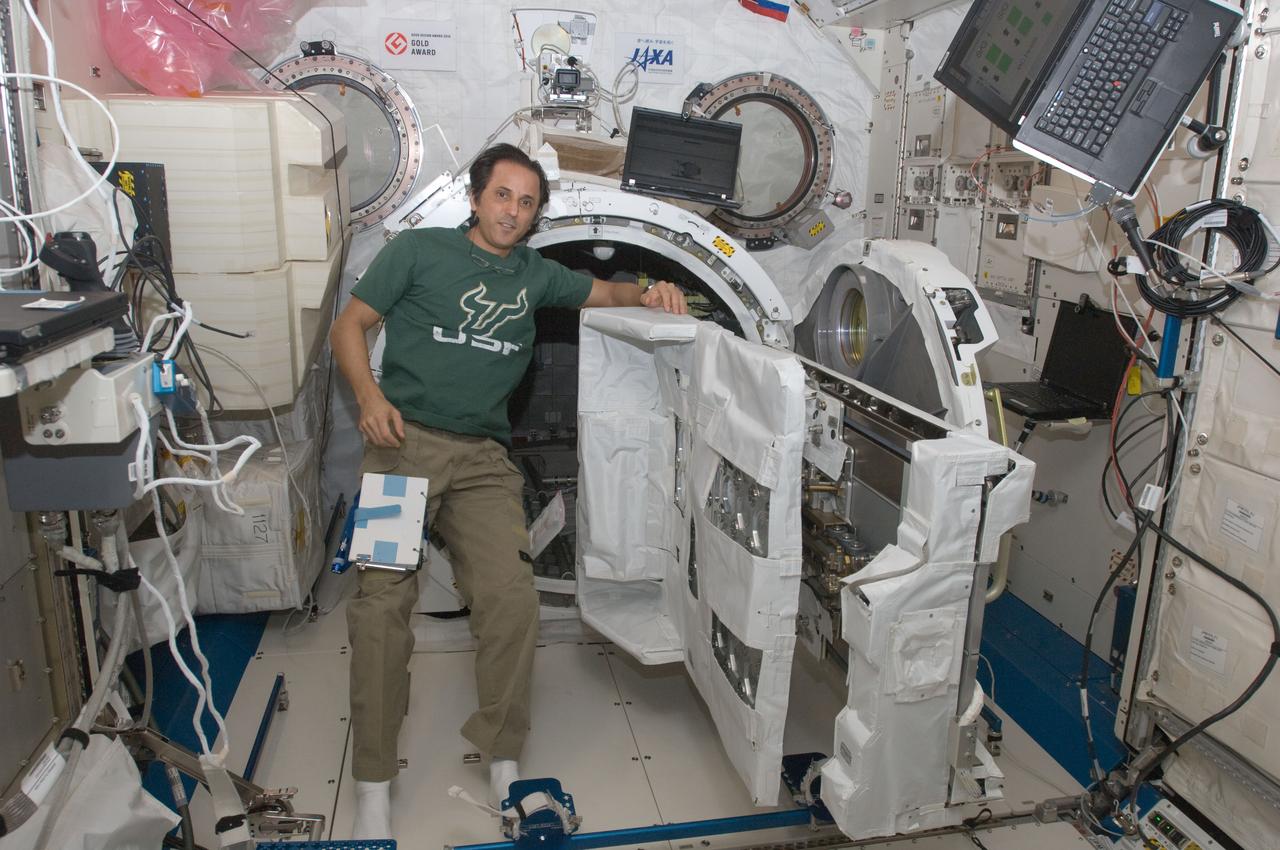
ISS032-E-022211 (21 Aug. 2012) --- NASA astronaut Joe Acaba, Expedition 32 flight engineer, is pictured near the newly assembled JEM Robotic Maneuvering System Multi-Purpose Experiment Platform (JEMRMS MPEP) in the Kibo laboratory of the International Space Station.
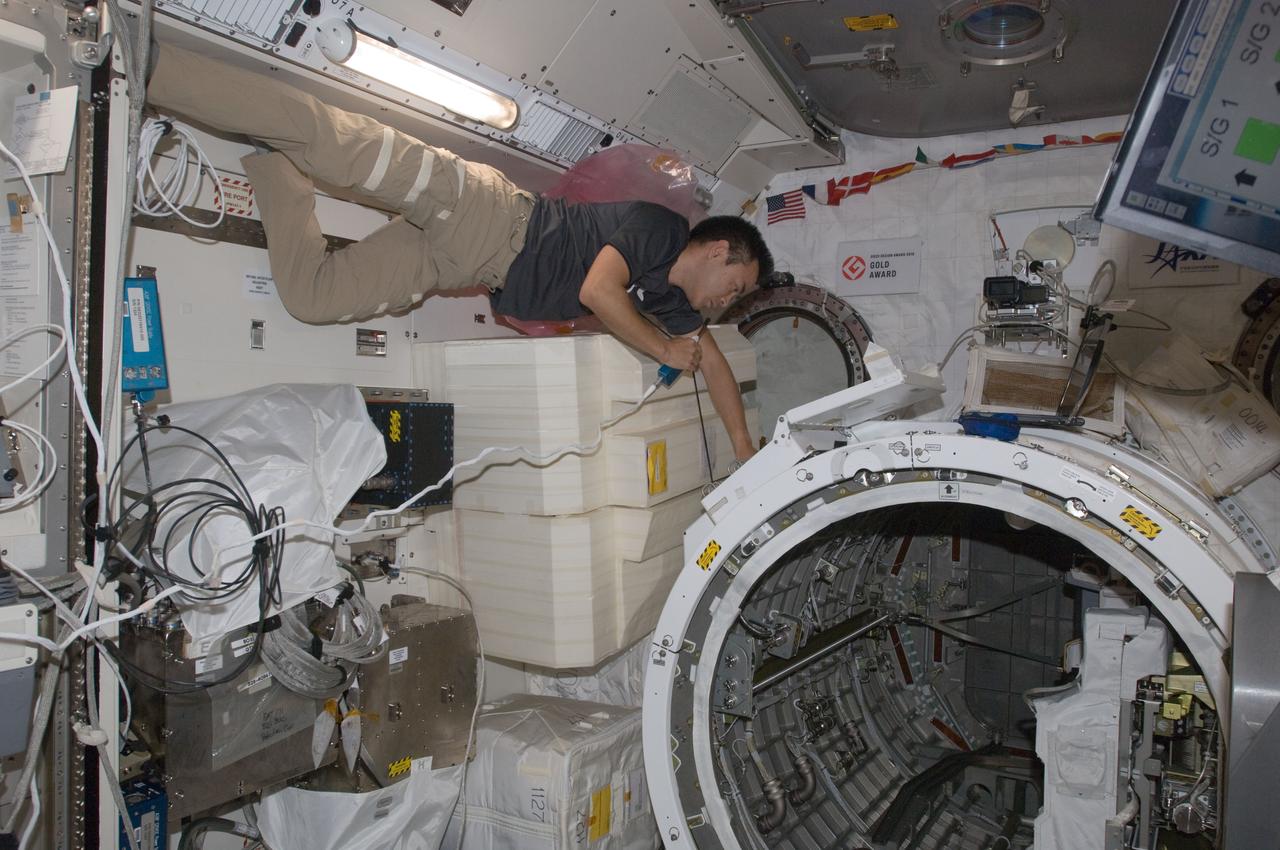
ISS032-E-022196 (21 Aug. 2012) --- Japan Aerospace Exploration Agency astronaut Aki Hoshide, Expedition 32 flight engineer, talks on a microphone while working near the airlock in the Kibo laboratory of the International Space Station. The JEM Robotic Maneuvering System Multi-Purpose Experiment Platform (JEMRMS MPEP) is visible in the airlock.
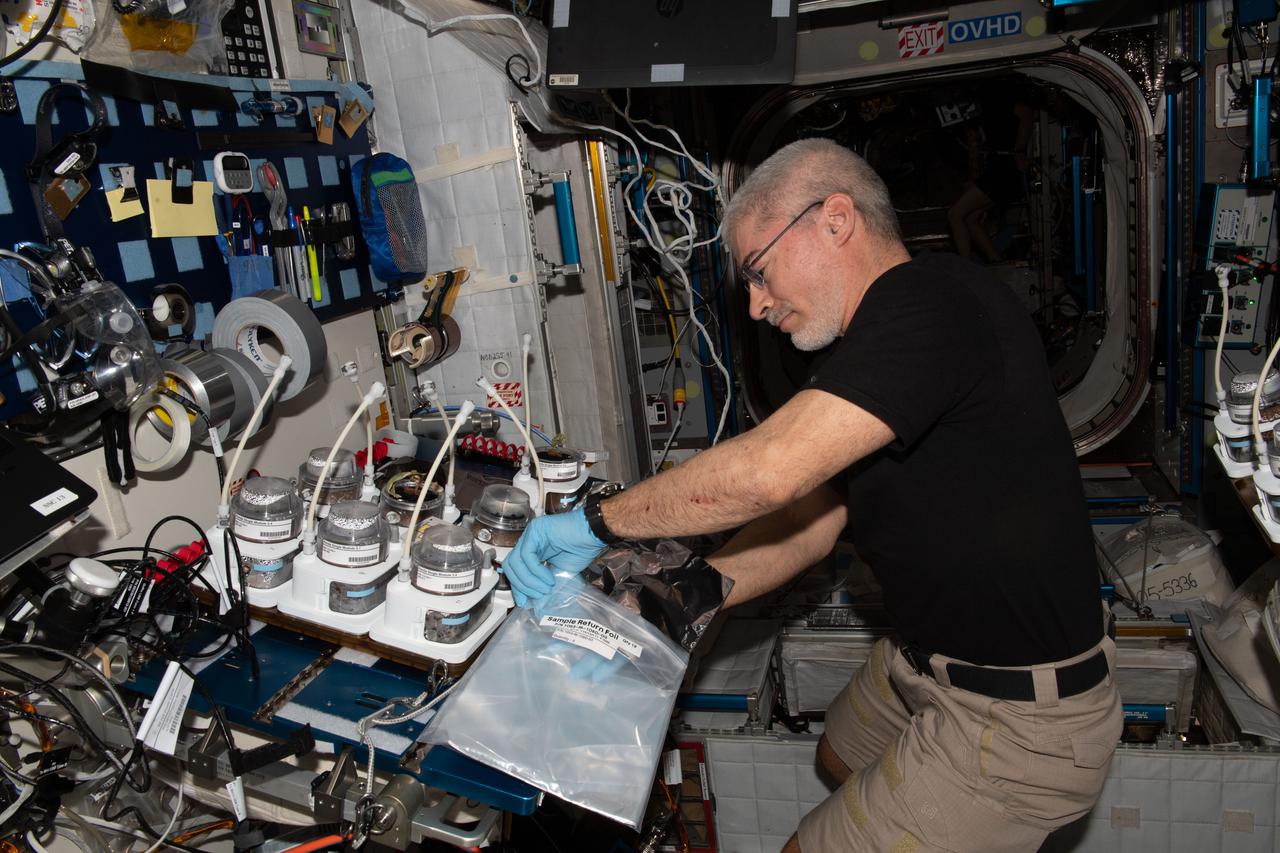
iss066e147338 (Feb. 21, 2022) --- NASA astronaut and Expedition 66 Flight Engineer Mark Vande Hei harvests plants growing for the Veggie PONDS experiment and collects samples for later analysis. The space agriculture study explores growing crops in space to sustain crews on missions beyond low-Earth orbit.
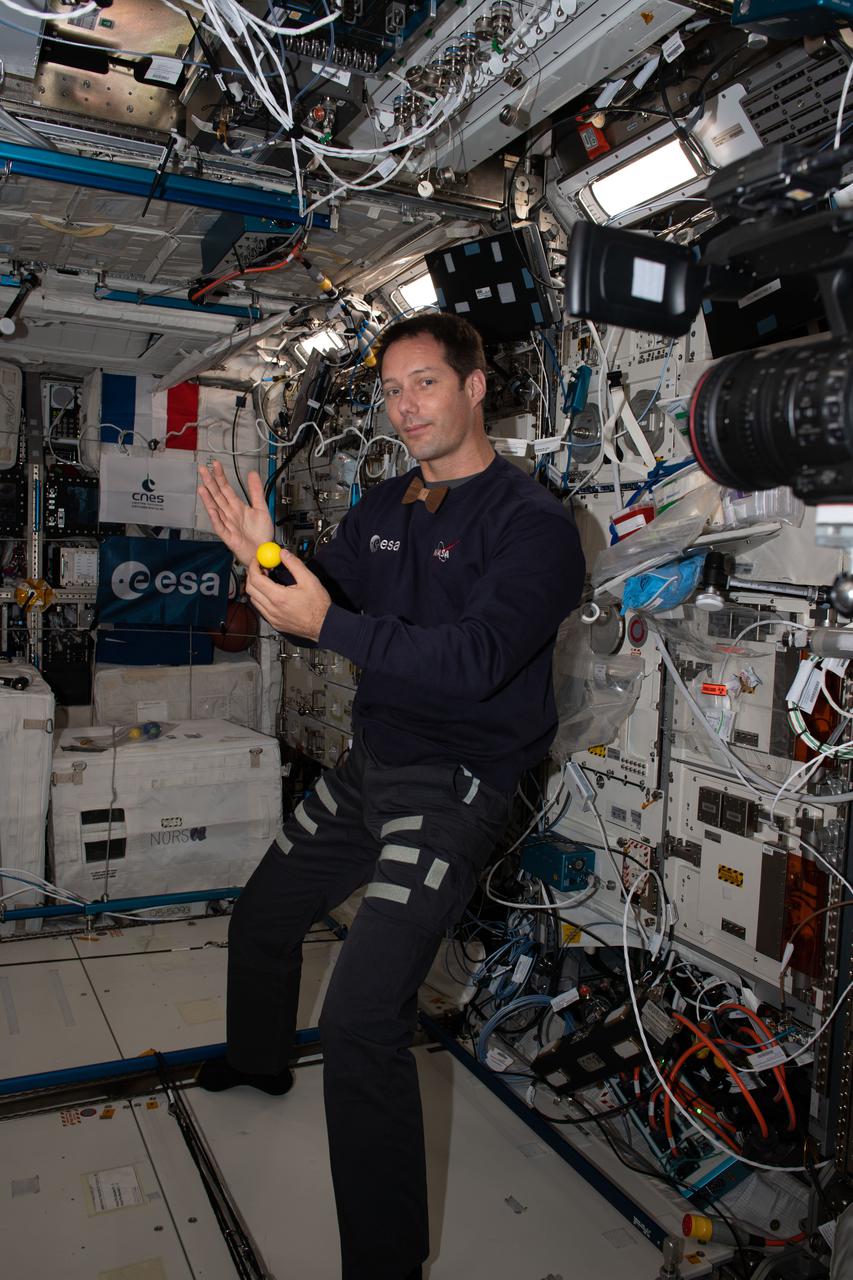
iss065e050323 (May 21, 2021) --- Expedition 65 Flight Engineer Thomas Pesquet of ESA (European Space Agency) performs magic tracks for the Illusion educational study. The experiment sponsored by ESA illustrates how visual perception and the central nervous system is impacted in microgravity.
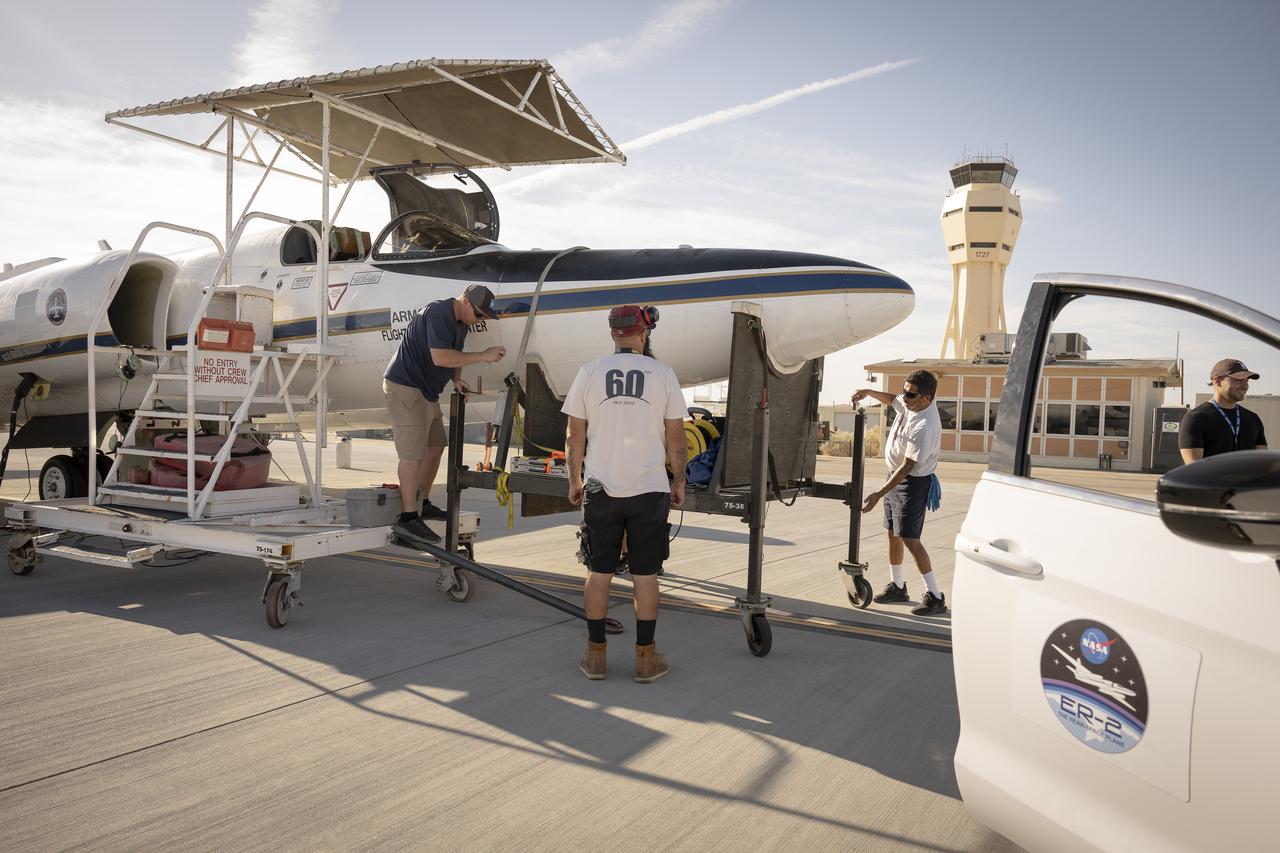
Ground crew members make final preparations on NASA Armstrong Flight Research Center’s ER-2 aircraft at Edwards, California, on Thursday, Aug. 21, 2025, ahead of a high-altitude mission for the Geological Earth Mapping Experiment (GEMx). The pilot will soon board the aircraft, which can fly at altitudes up to 70,000 feet.
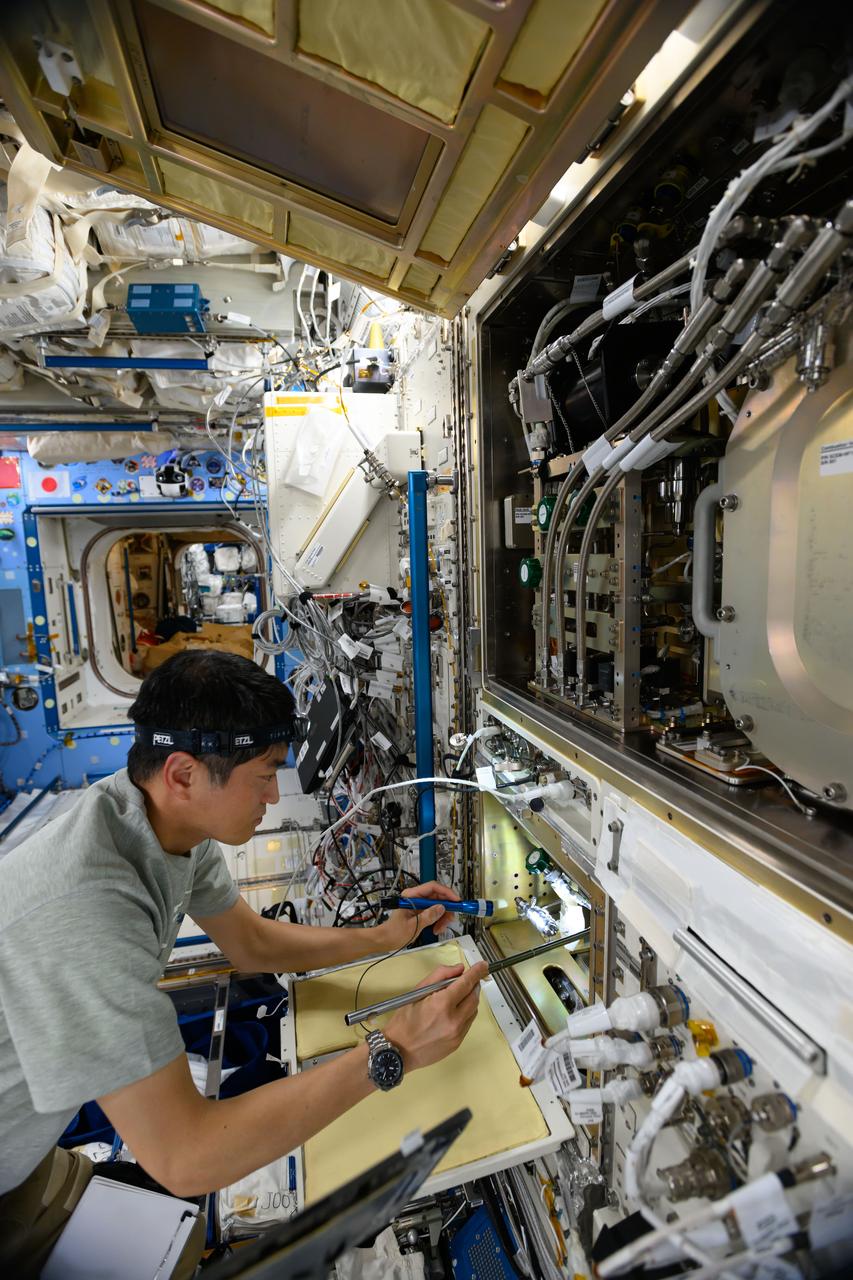
iss073e0000313 (April 21, 2025) --- JAXA (Japan Aerospace Exploration Agency) astronaut and Expedition 73 Commander Takuya Onishi inspects science hardware inside the Kibo laboratory module's Solid Combustion Experiment Module, a space fire safety research facility, aboard the International Space Station.
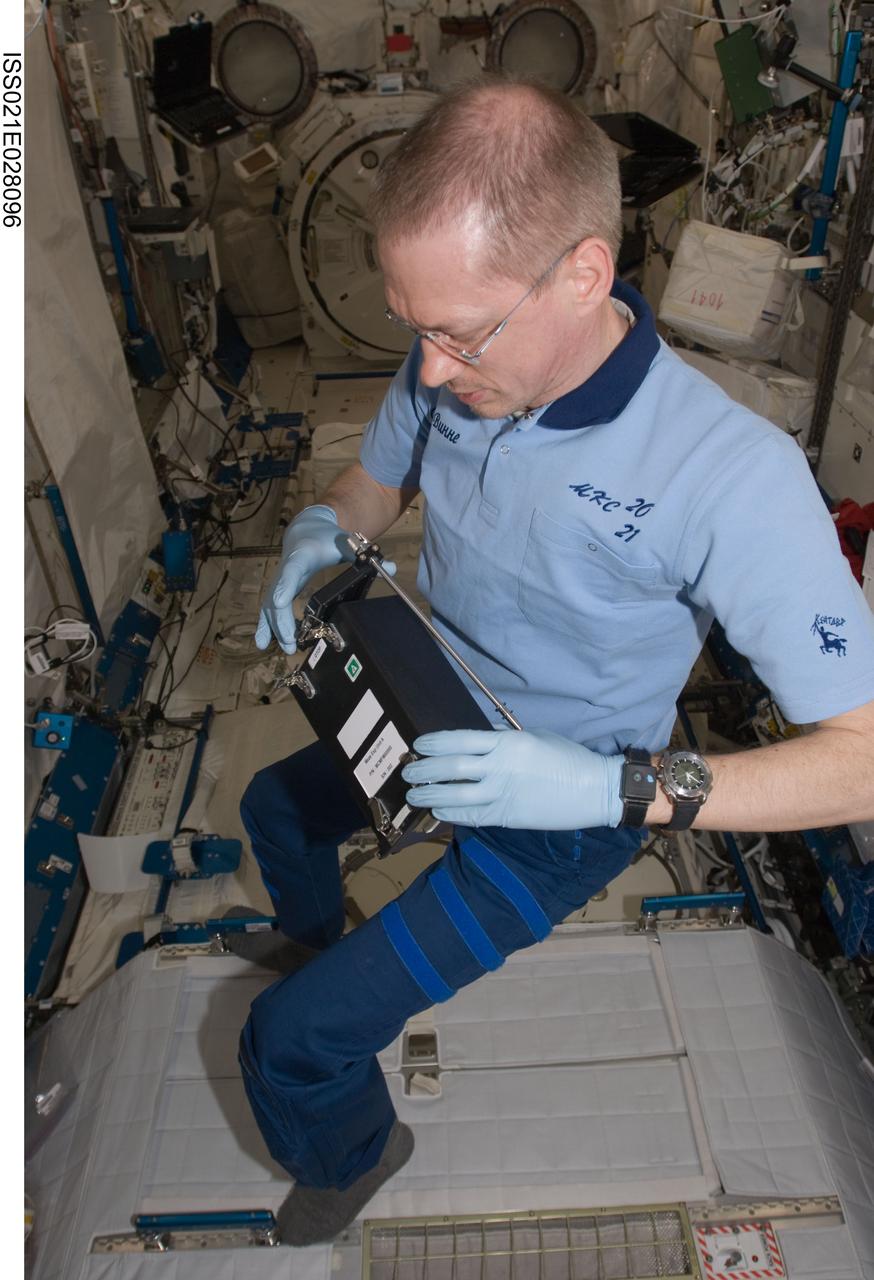
ISS021-E-028096 (17 Nov. 2009) --- European Space Agency astronaut Frank De Winne, Expedition 21 commander, works with the RadSilk experiment in the Kibo laboratory of the International Space Station. RadSilk examines the effects of radiation exposure in microgravity on silkworms.
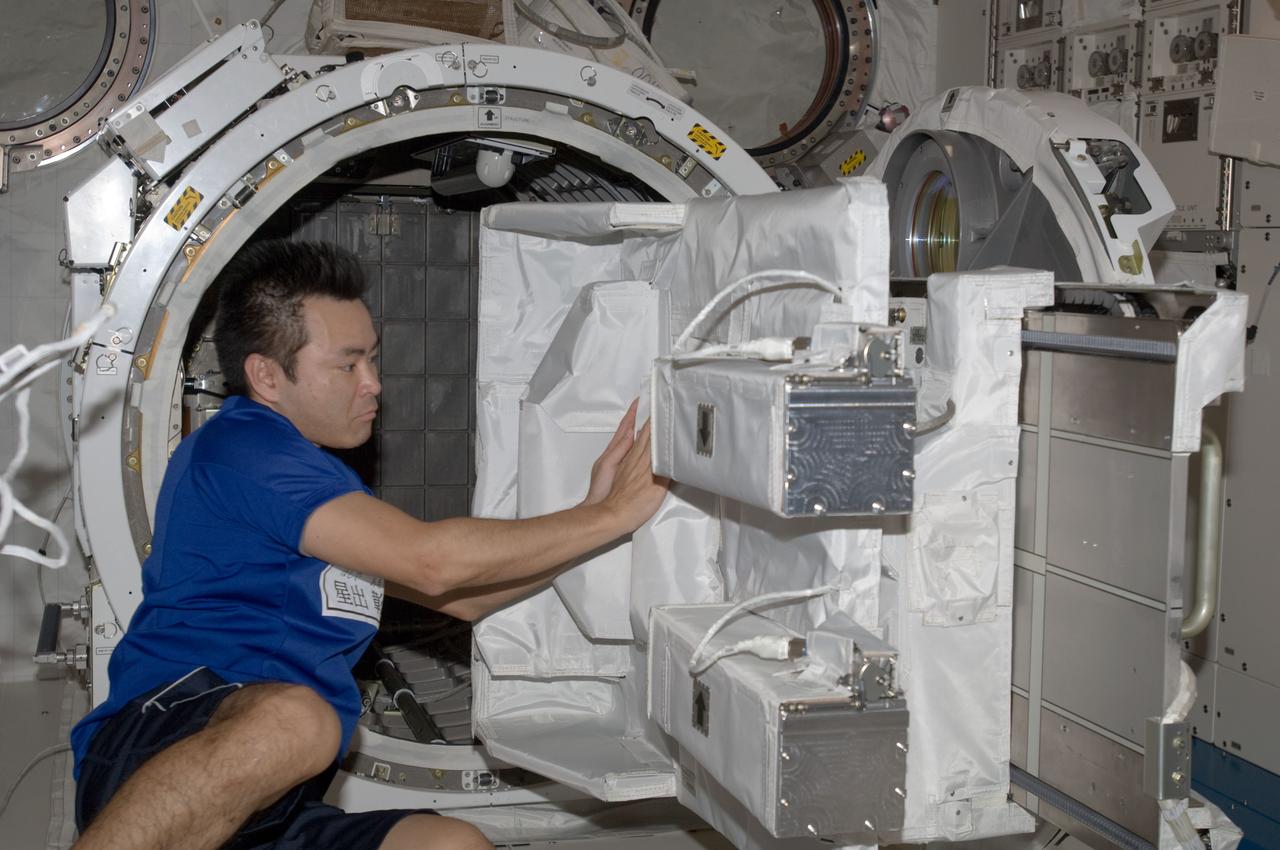
ISS033-E-006447 (21 Sept. 2012) --- In the International Space Station’s Kibo laboratory, Japan Aerospace Exploration Agency astronaut Aki Hoshide, Expedition 33 flight engineer, works with the Small Satellite Orbital Deployer (SSOD) installed on the Multi-Purpose Experiment Platform (MPEP) of the extended slide table of the Kibo airlock.
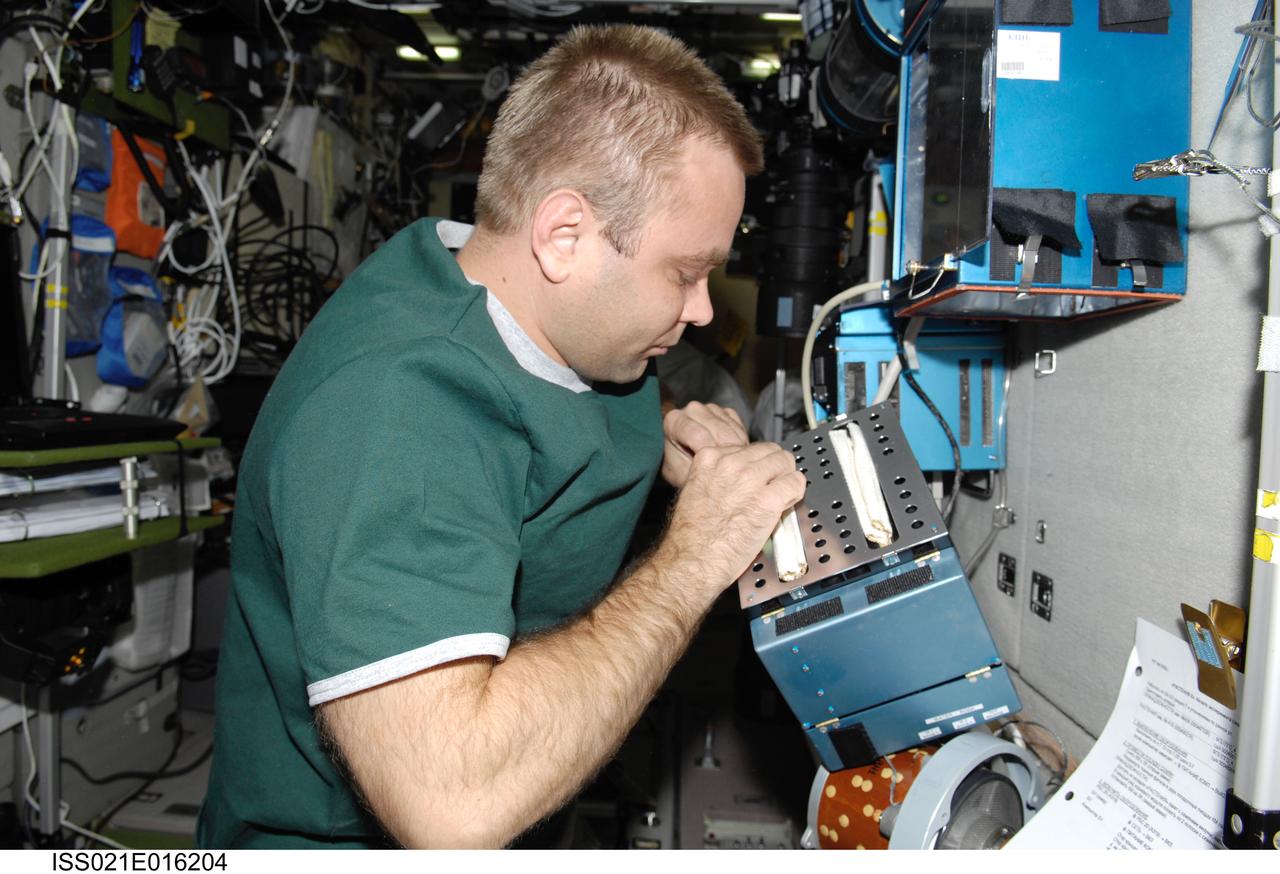
ISS021-E-016204 (29 Oct. 2009) --- Russian cosmonaut Maxim Suraev, Expedition 21 flight engineer, works with a new growth experiment on the BIO-5 Rasteniya-2 (Plants-2) payload in the Zvezda Service Module of the International Space Station.
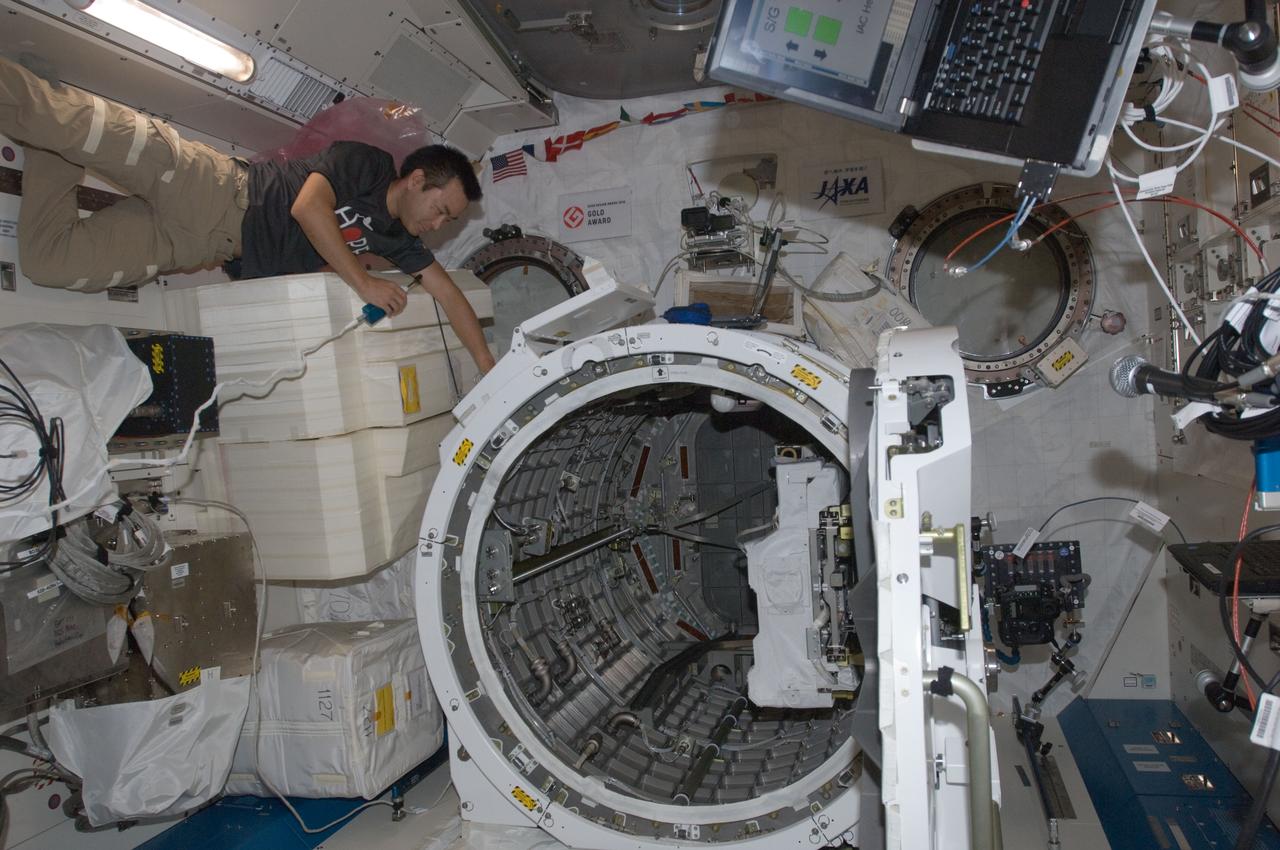
ISS032-E-022200 (21 Aug. 2012) --- Japan Aerospace Exploration Agency astronaut Aki Hoshide, Expedition 32 flight engineer, talks on a microphone while working near the airlock in the Kibo laboratory of the International Space Station. The JEM Robotic Maneuvering System Multi-Purpose Experiment Platform (JEMRMS MPEP) is visible in the airlock.

ISS022-E-013926 (21 Dec. 2009) --- NASA astronaut Jeffrey Williams, Expedition 22 commander, takes a moment for a photo while servicing the Advanced Plant Experiments on Orbit-Cambium (APEX-C) payload in the Kibo laboratory of the International Space Station.
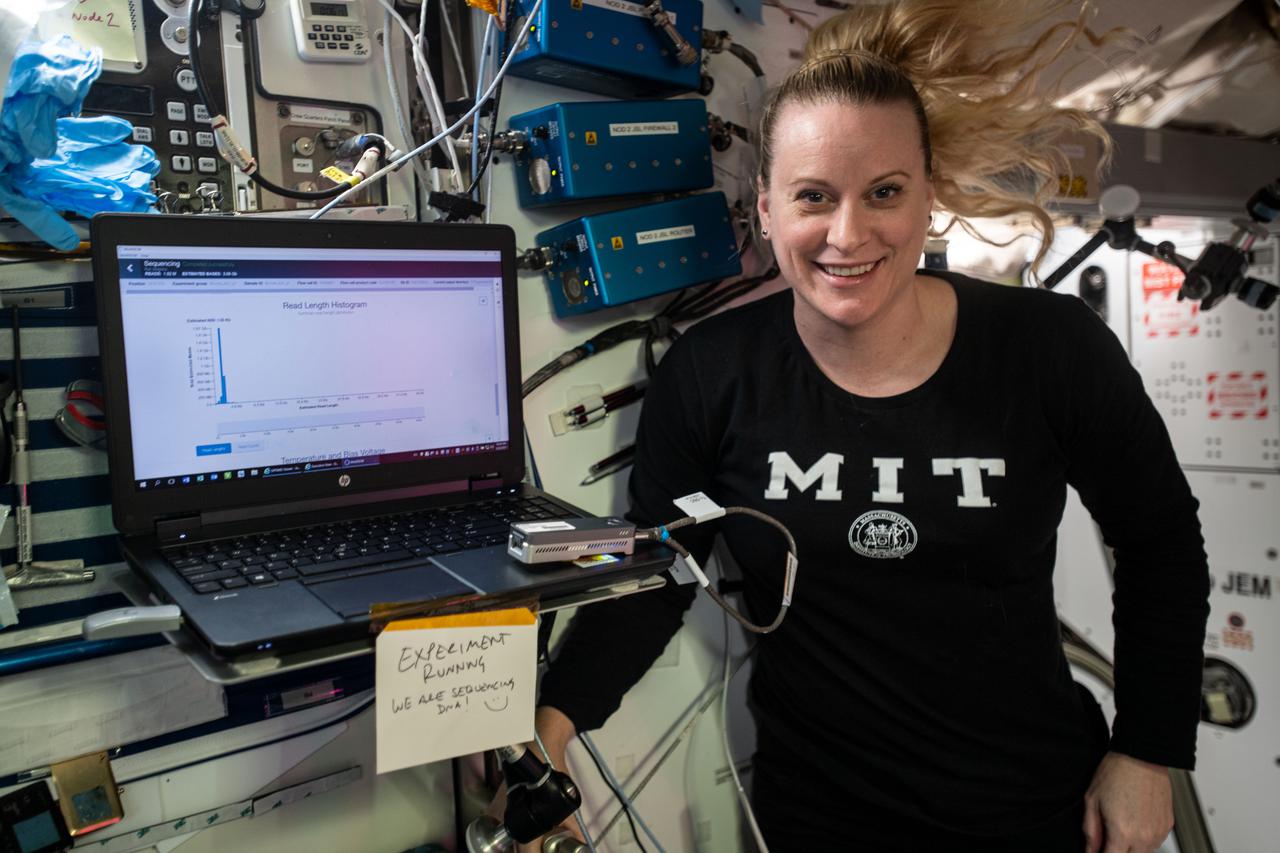
iss064e025418 (Jan. 21, 2021) --- NASA astronaut and Expedition 64 Flight Engineer Kate Rubins sequences DNA aboard the International Space Station for an experiment that seeks to diagnose medical conditions and identify microbes. Learn more about the first sequencing of DNA in space: https://go.nasa.gov/2VPsQFJ
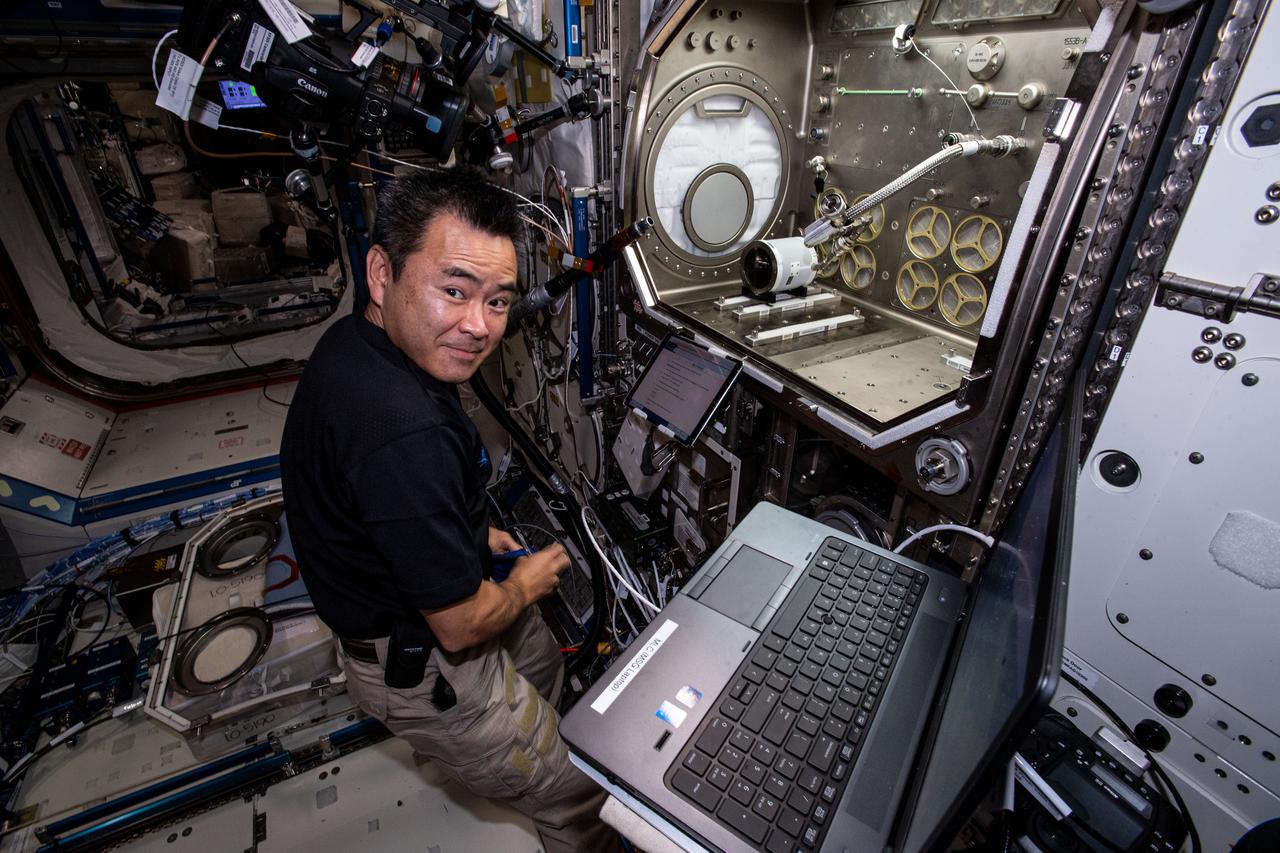
iss065e143164 (June 21, 2021) --- Expedition 65 Commander Akihiko Hoshide of the Japan Aerospace Exploration Agency (JAXA) works inside the Microgravity Science Glovebox conducting research for the Lyophilization-2 pharmaceutical experiment seeking to improve the quality and extend the shelf-life of medicines on Earth and in space.
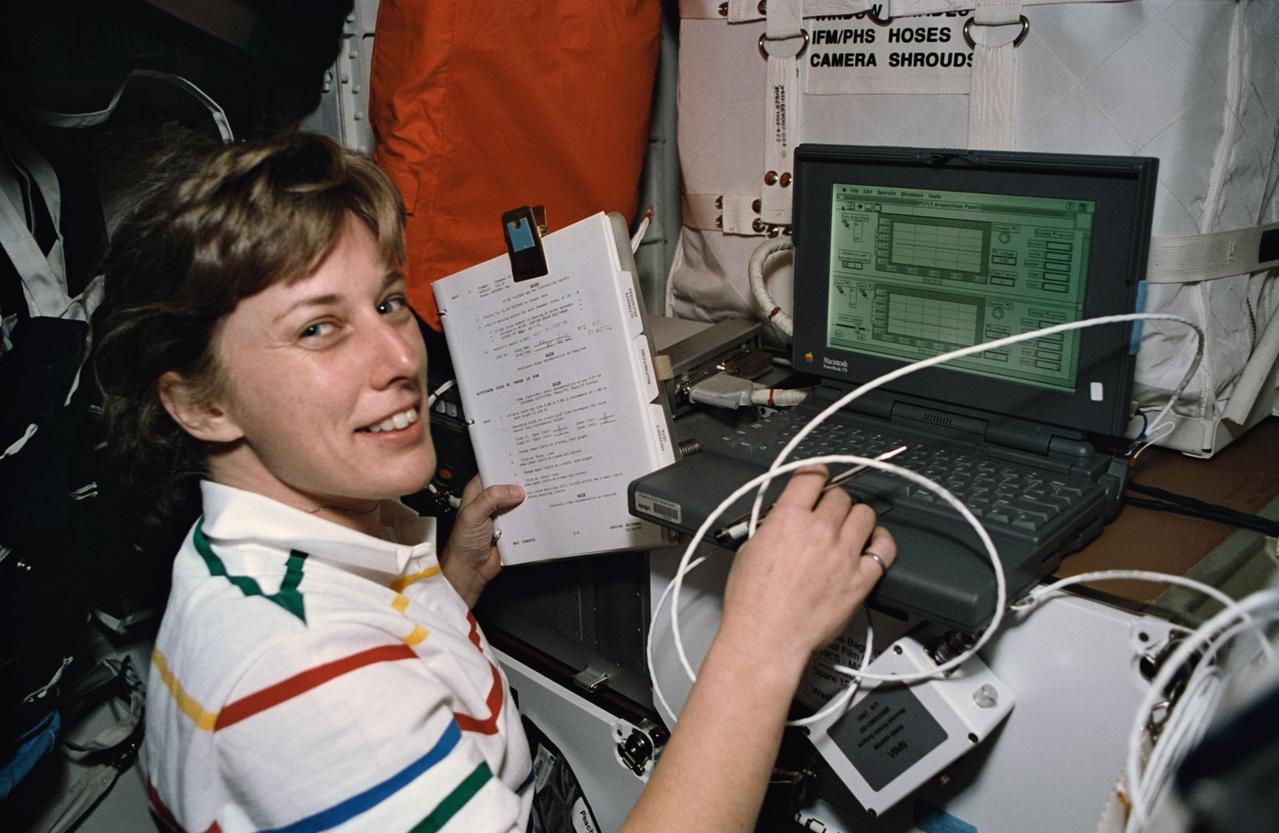
STS060-21-031 (3-11 Feb 1994) --- Using a lap top computer, astronaut N. Jan Davis monitors systems for the Commercial Protein Crystal Growth (CPCG) experiment onboard the Space Shuttle Discovery. Davis joined four other NASA astronauts and a Russian cosmonaut for eight days in space aboard Discovery.
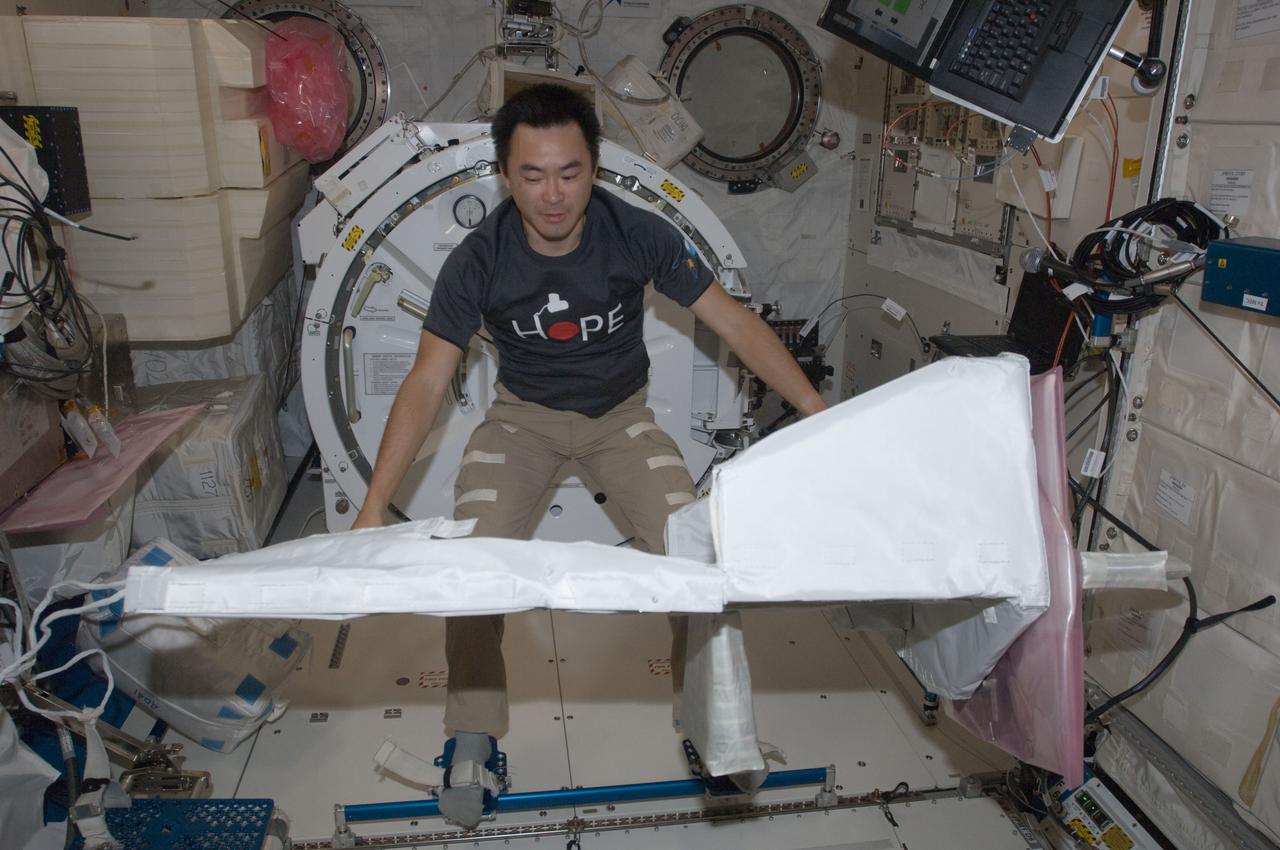
ISS032-E-022175 (21 Aug. 2012) --- Japan Aerospace Exploration Agency astronaut Aki Hoshide, Expedition 32 flight engineer, assembles the JEM Robotic Maneuvering System Multi-Purpose Experiment Platform (JEMRMS MPEP) in the Kibo laboratory of the International Space Station.
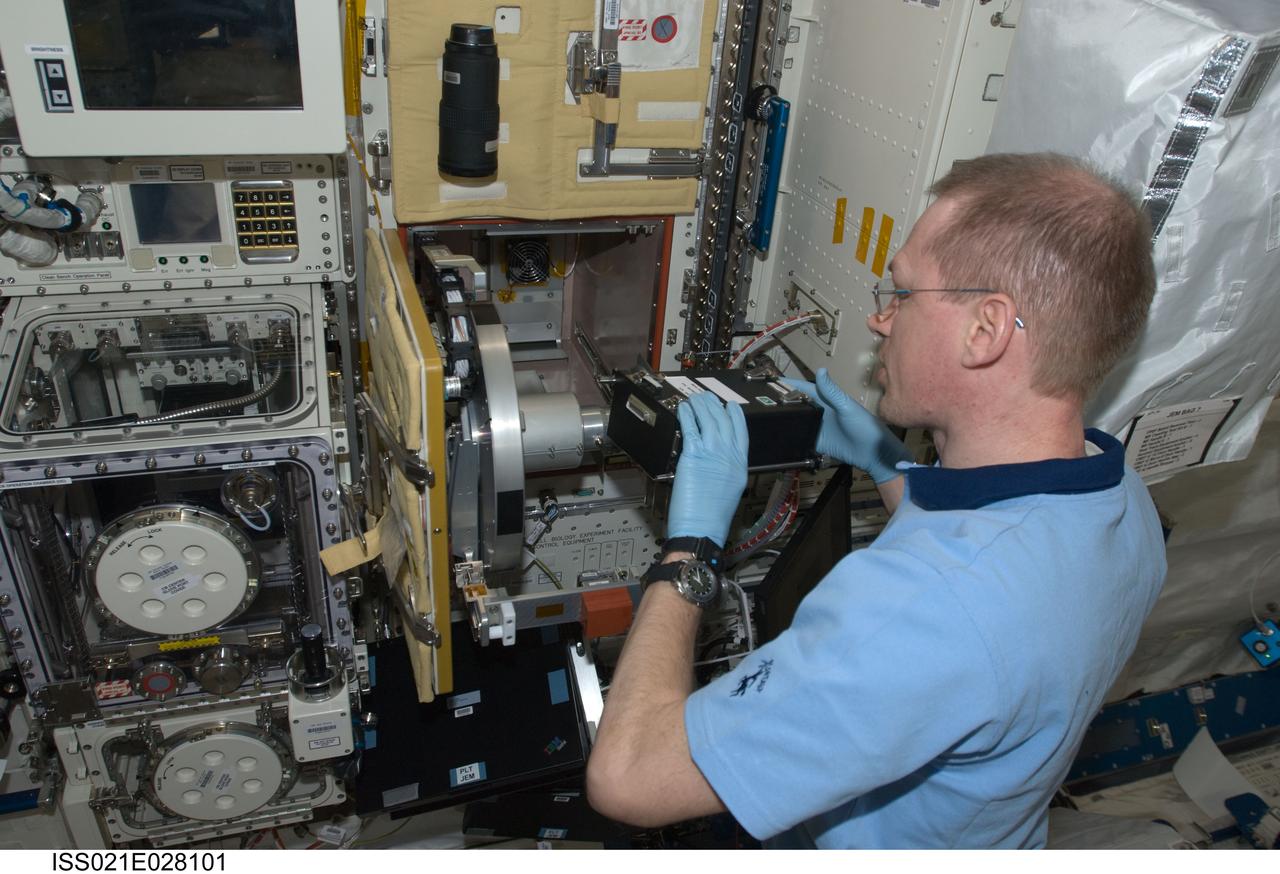
ISS021-E-028101 (17 Nov. 2009) --- European Space Agency astronaut Frank De Winne, Expedition 21 commander, works with the RadSilk experiment in the Kibo laboratory of the International Space Station. RadSilk examines the effects of radiation exposure in microgravity on silkworms.
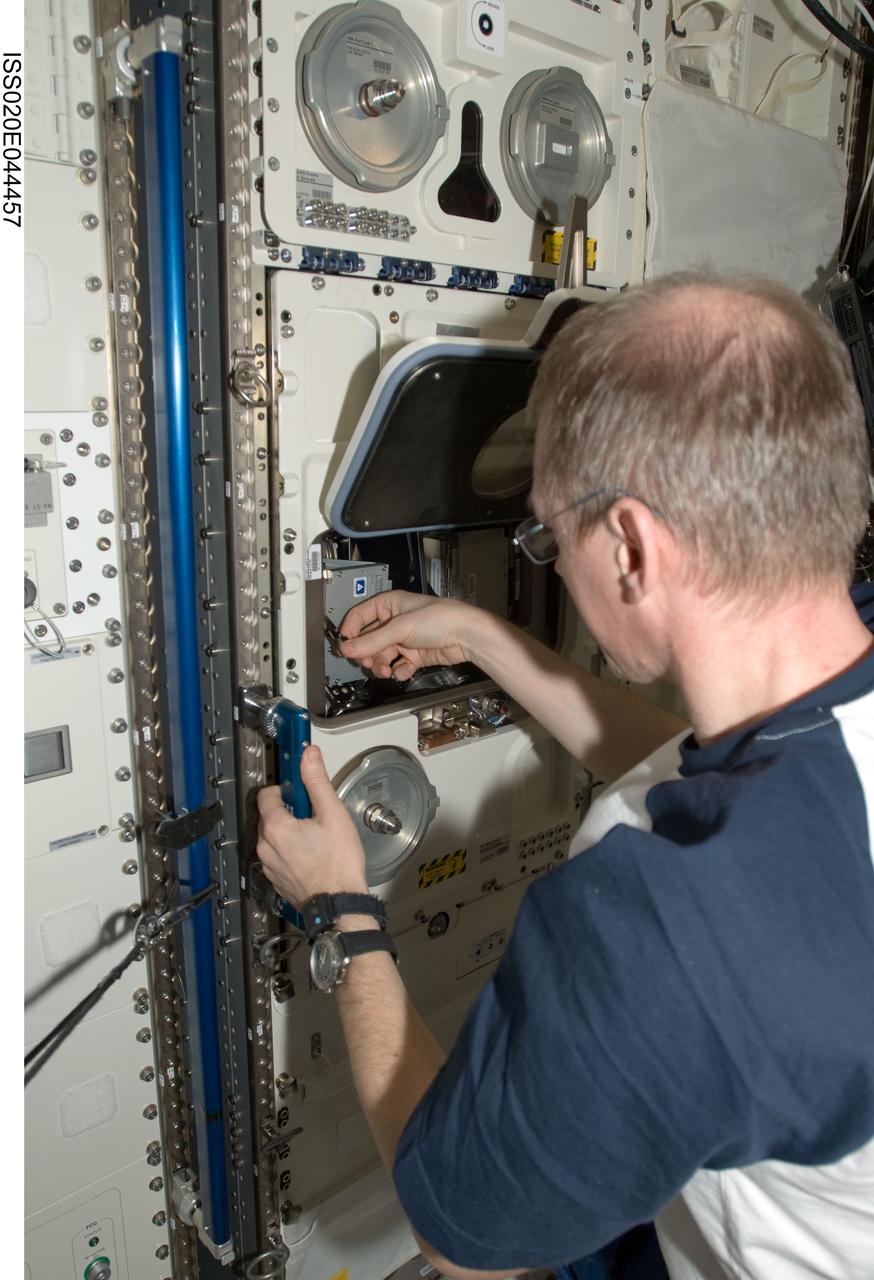
ISS020-E-044457 (2 Oct. 2009) --- European Space Agency astronaut Frank De Winne, Expedition 20 flight engineer and Expedition 21 commander, installs experiment containers in the Biolab incubator in the Columbus laboratory of the International Space Station.
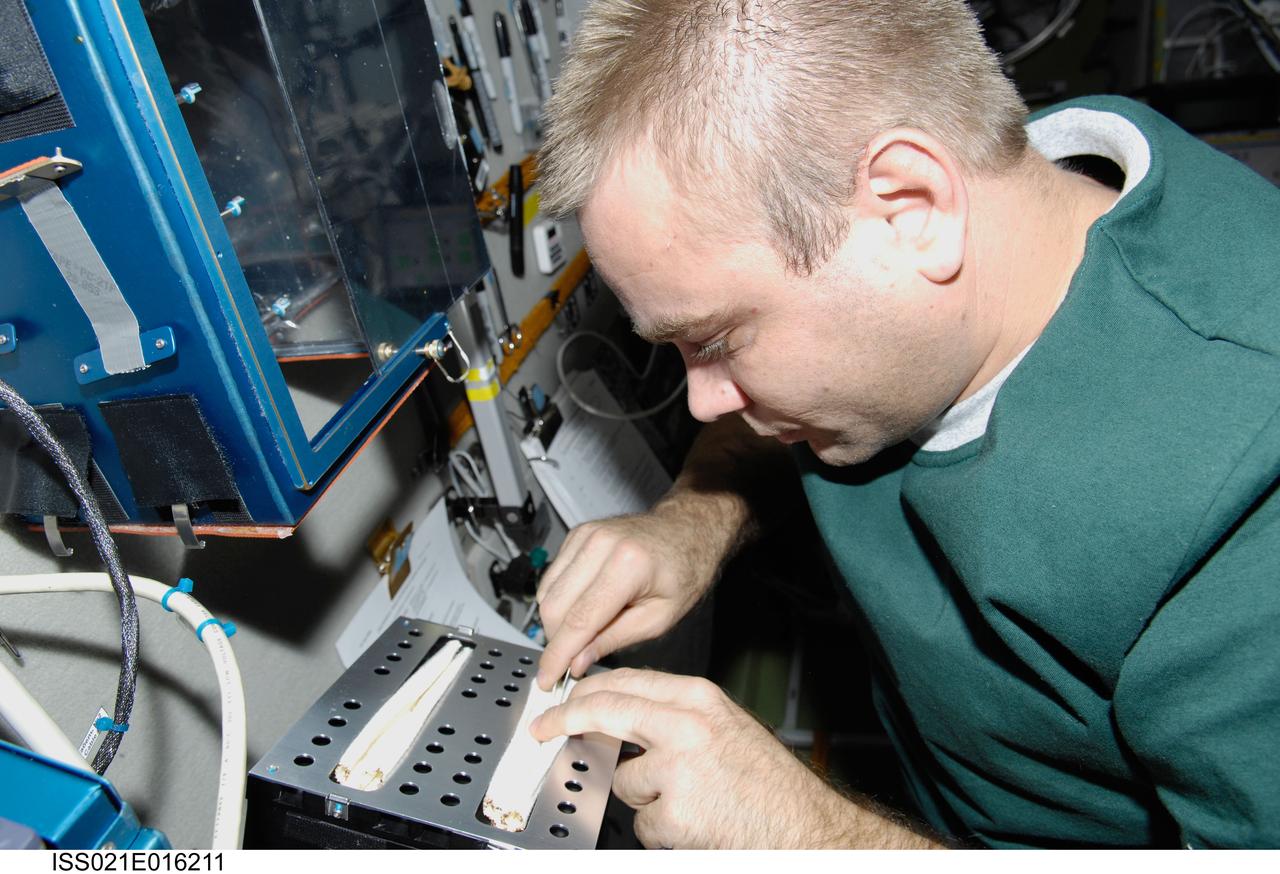
ISS021-E-016211 (29 Oct. 2009) --- Russian cosmonaut Maxim Suraev, Expedition 21 flight engineer, works with a new growth experiment on the BIO-5 Rasteniya-2 (Plants-2) payload in the Zvezda Service Module of the International Space Station.
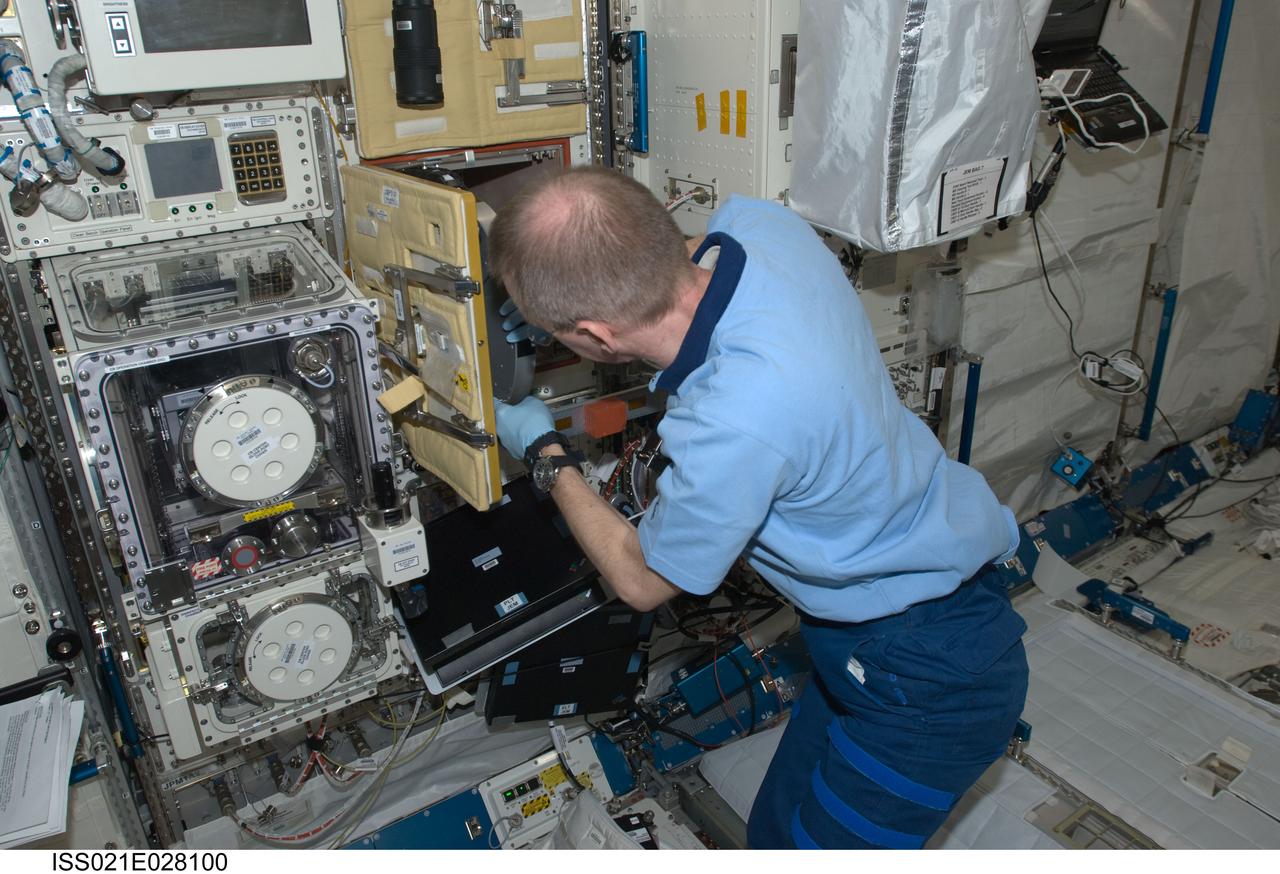
ISS021-E-028100 (17 Nov. 2009) --- European Space Agency astronaut Frank De Winne, Expedition 21 commander, works with the RadSilk experiment in the Kibo laboratory of the International Space Station. RadSilk examines the effects of radiation exposure in microgravity on silkworms.
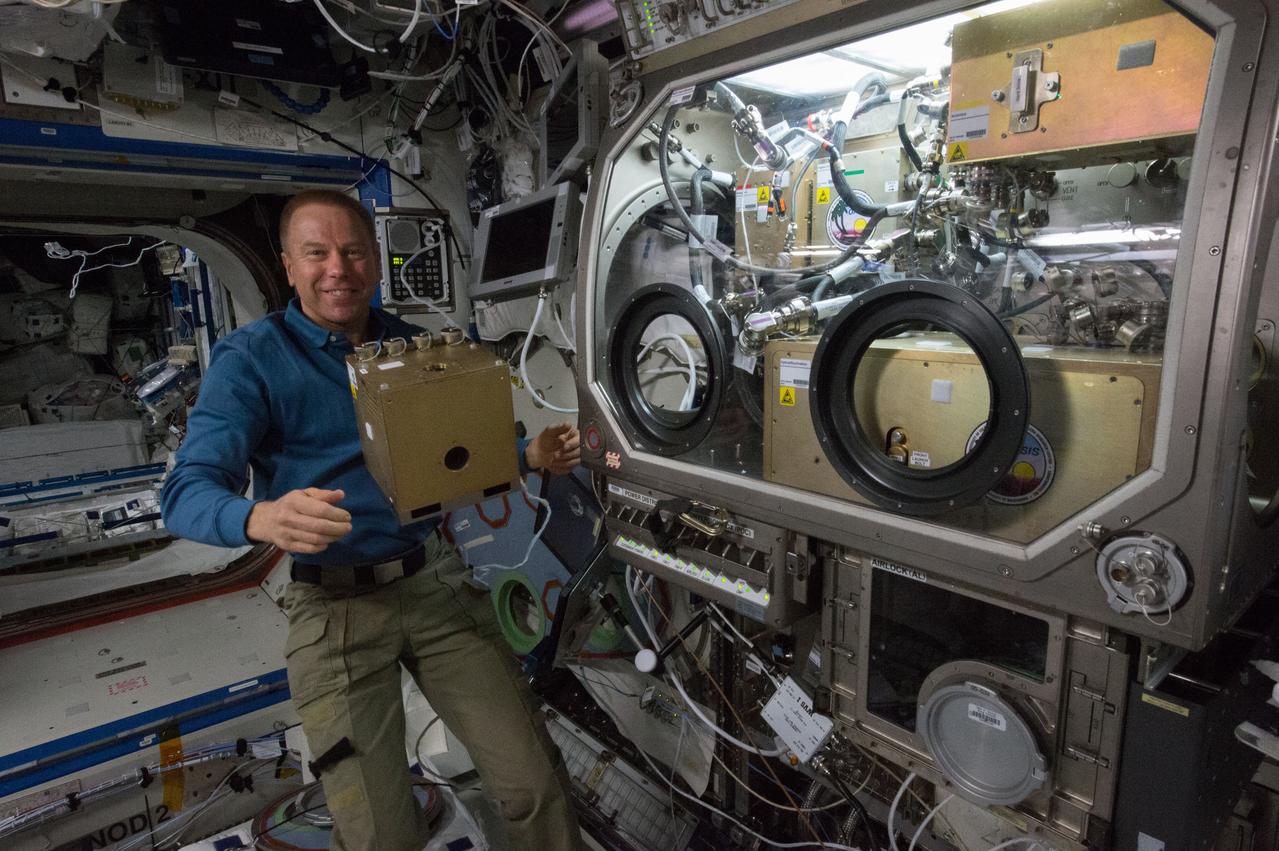
ISS047e012492 (03/21/2016) --- NASA astronaut Tim Kopra stows hardware from the OASIS experiment aboard the International Space Station. OASIS, which stands for Observation and Analysis of Smectic Islands In Space, studies the unique behavior of liquid crystals in microgravity.
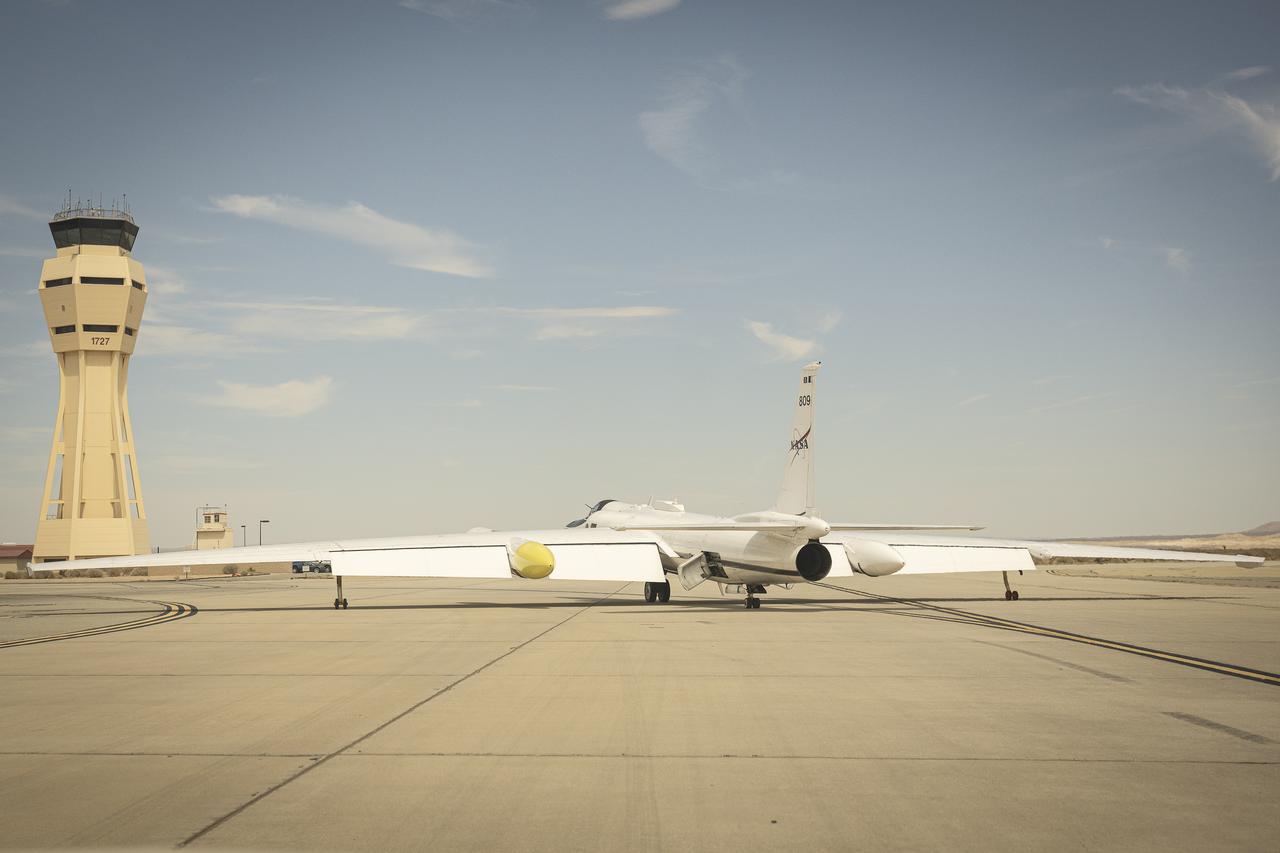
NASA Armstrong Flight Research Center’s ER-2 aircraft taxis at Edwards, California, on Thursday, Aug. 21, 2025, ahead of a high-altitude mission supporting the Geological Earth Mapping Experiment (GEMx), which requires flights of up to eight hours at approximately 65,000 feet altitude.
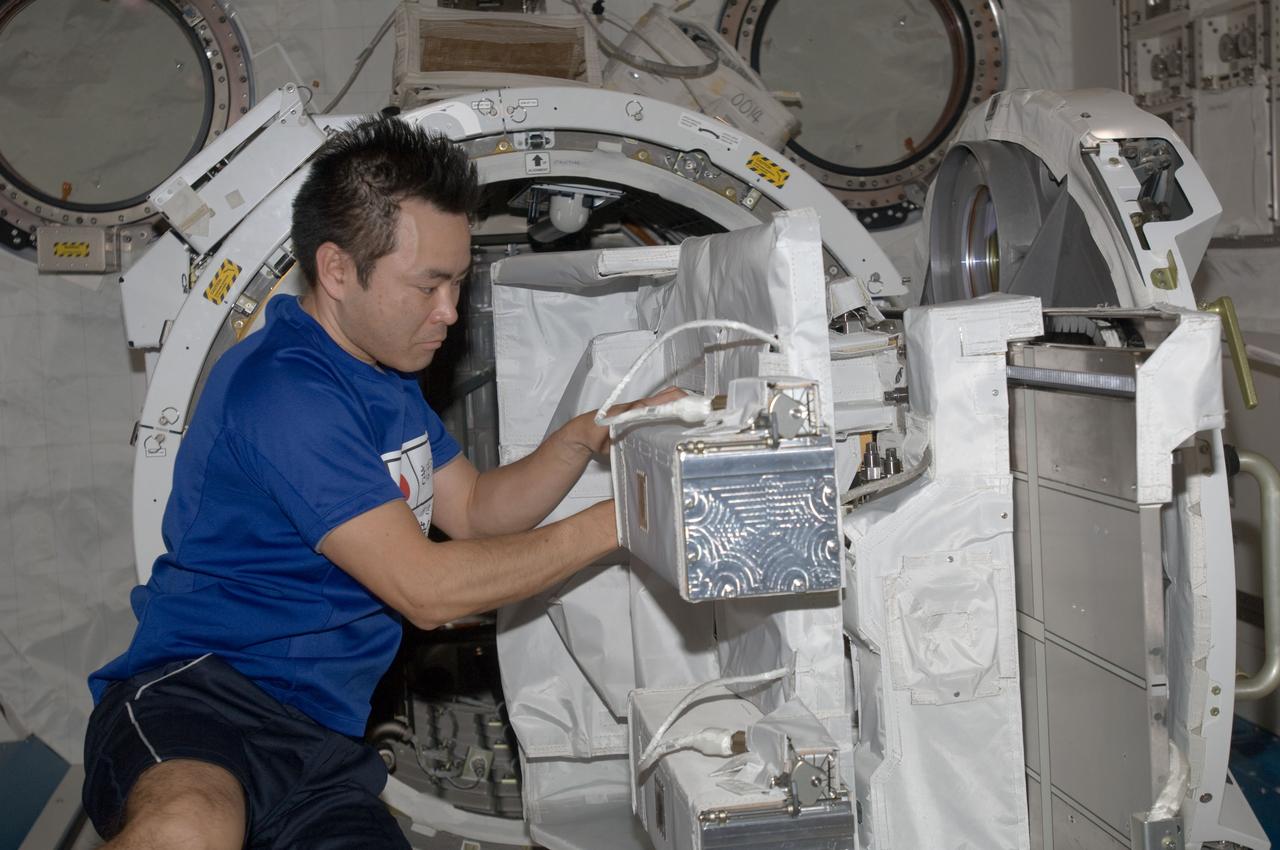
ISS033-E-006446 (21 Sept. 2012) --- In the International Space Station’s Kibo laboratory, Japan Aerospace Exploration Agency astronaut Aki Hoshide, Expedition 33 flight engineer, works with the Small Satellite Orbital Deployer (SSOD) installed on the Multi-Purpose Experiment Platform (MPEP) of the extended slide table of the Kibo airlock.
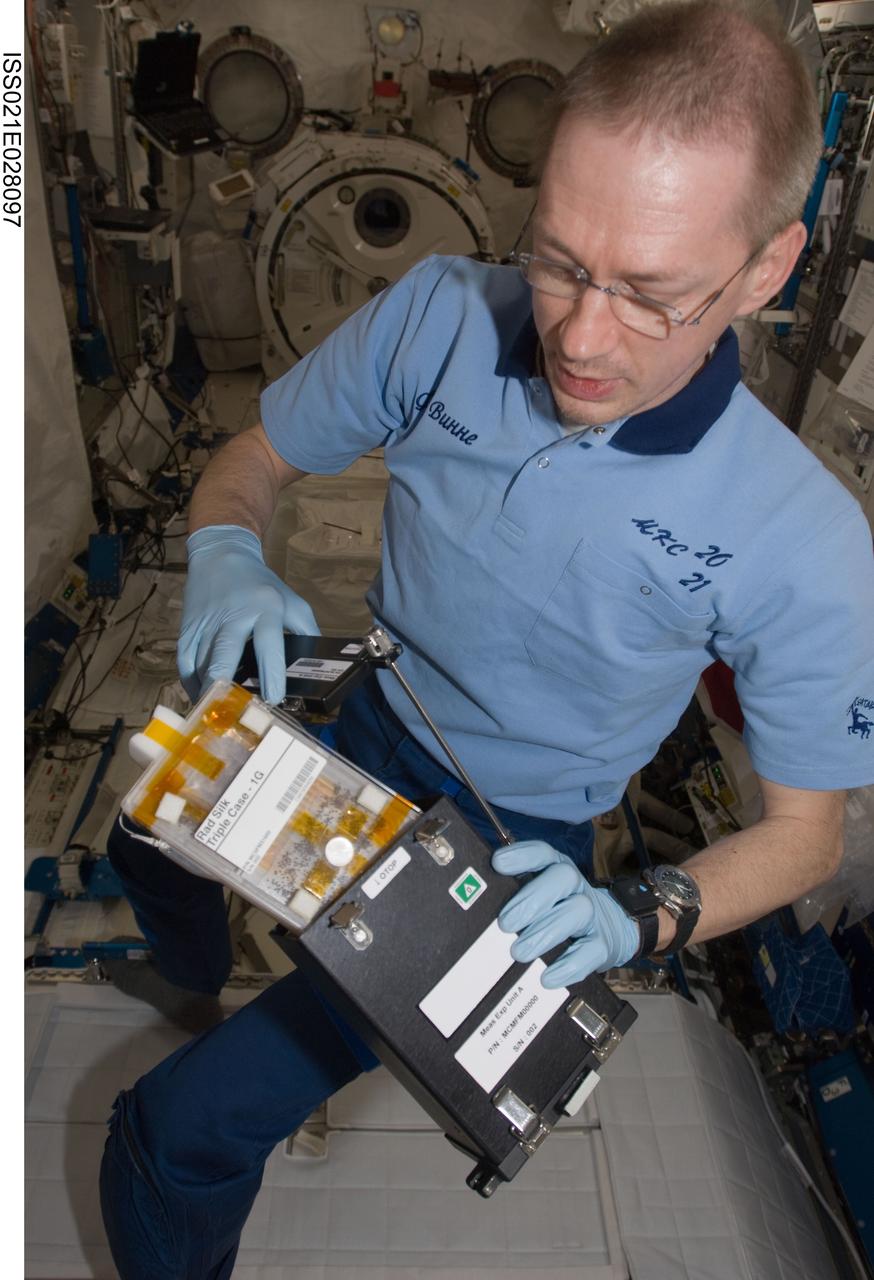
ISS021-E-028097 (17 Nov. 2009) --- European Space Agency astronaut Frank De Winne, Expedition 21 commander, works with the RadSilk experiment in the Kibo laboratory of the International Space Station. RadSilk examines the effects of radiation exposure in microgravity on silkworms.

iss067e378812 (Sept. 21, 2022) --- Expedition 67 Flight Engineer and ESA (European Space Agency) astronaut Samantha Cristoforetti works inside the Microgravity Science Glovebox removing hardware that supported the Ring Sheared Drop experiment. The fluid physics study observes the formation of destructive protein clusters that may be responsible for neurodegenerative diseases such as Alzheimer’s.
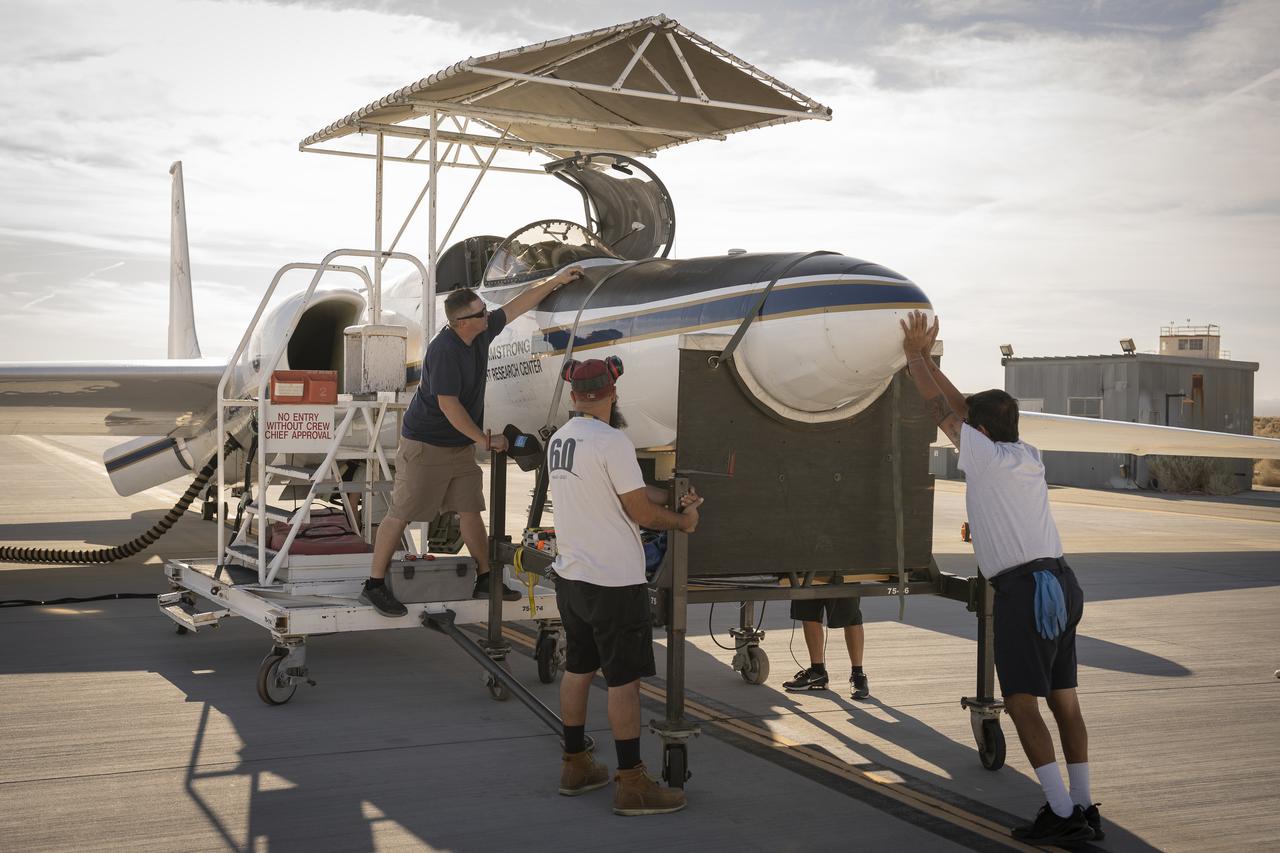
Crew members reattach the nose cone of NASA’s Armstrong Flight Research Center’s ER-2 aircraft at Edwards, California, on Thursday, Aug. 21, 2025, ahead of a mission for the Geological Earth Mapping Experiment (GEMx). The aircraft’s nose houses key science instruments used to collect data during flight.
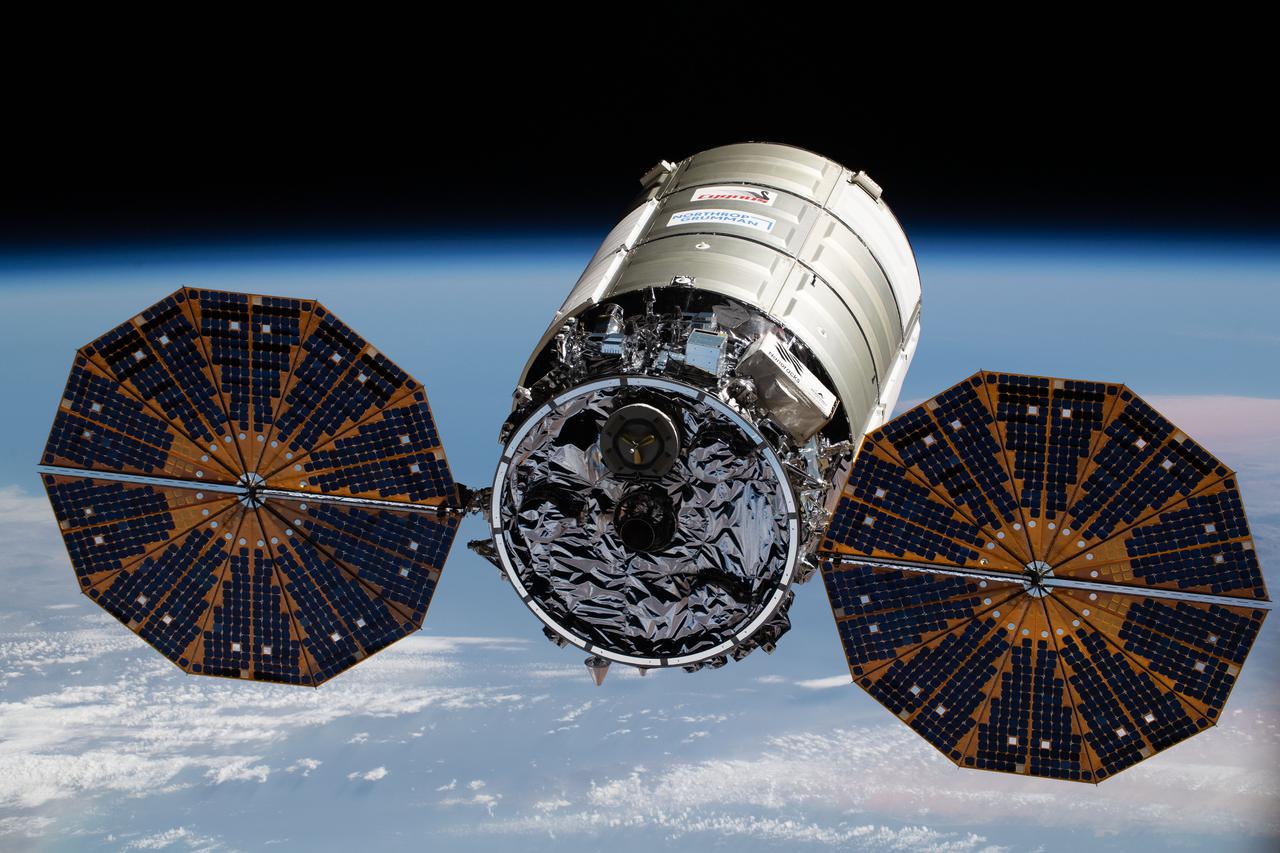
iss066e154853 (Feb. 21, 2022) --- Northrop Grummans's Cygnus space freighter, with its prominent cymbal-shaped UltraFlex solar arrays, is pictured approaching the International Space Station carrying 8,300 pounds of new science experiments, crew supplies, and station hardware to replenish the Expedition 66 crew.
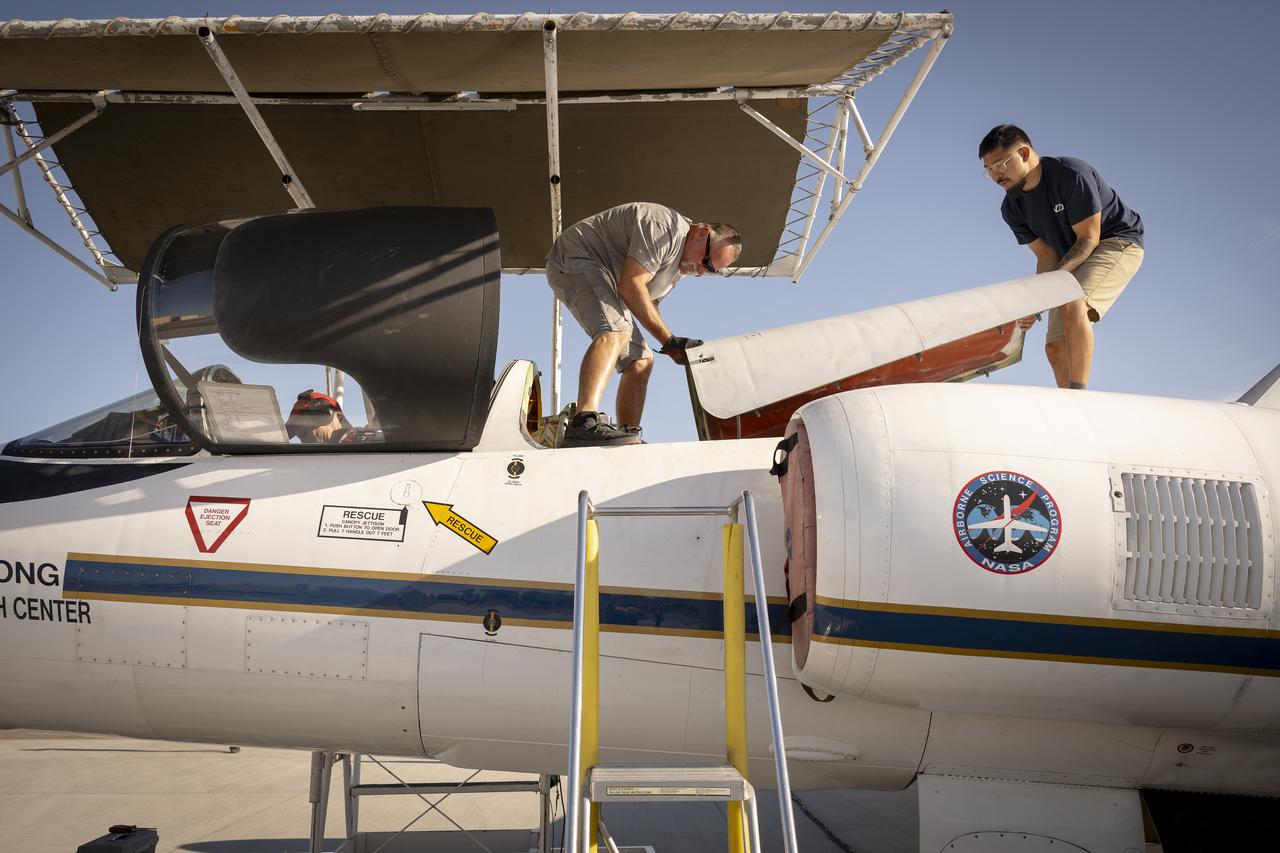
Ground crew members make final preparations on NASA Armstrong Flight Research Center’s ER-2 aircraft at Edwards, California, on Thursday, Aug. 21, 2025, ahead of a high-altitude mission for the Geological Earth Mapping Experiment (GEMx). The pilot will soon board the aircraft, which can fly at altitudes up to 70,000 feet.
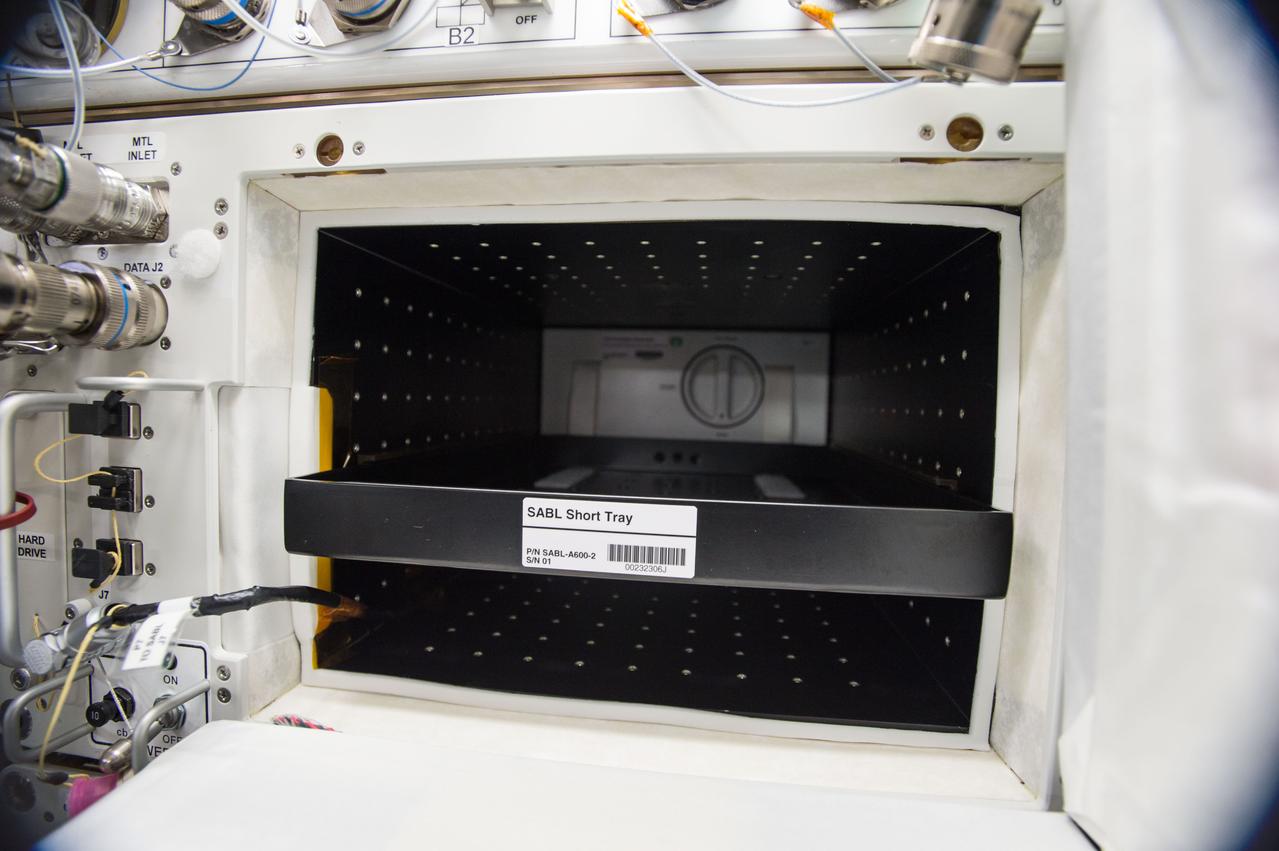
iss048e042380(7/21/2016) --- A view of the Space Automated Bioproduct Laboratory (SABL) Short Tray inside the SABL 2 following installation of the Carbon Dioxide (CO2) Incubator Controller. Image was taken during Heart Cells experiment setup in the Destiny U.S. Laboratory. The Space Automated Bioproduct Laboratory (SABL) supports a wide variety of experiments in the life, physical and material sciences with a focus on supporting research of biological systems and processes.
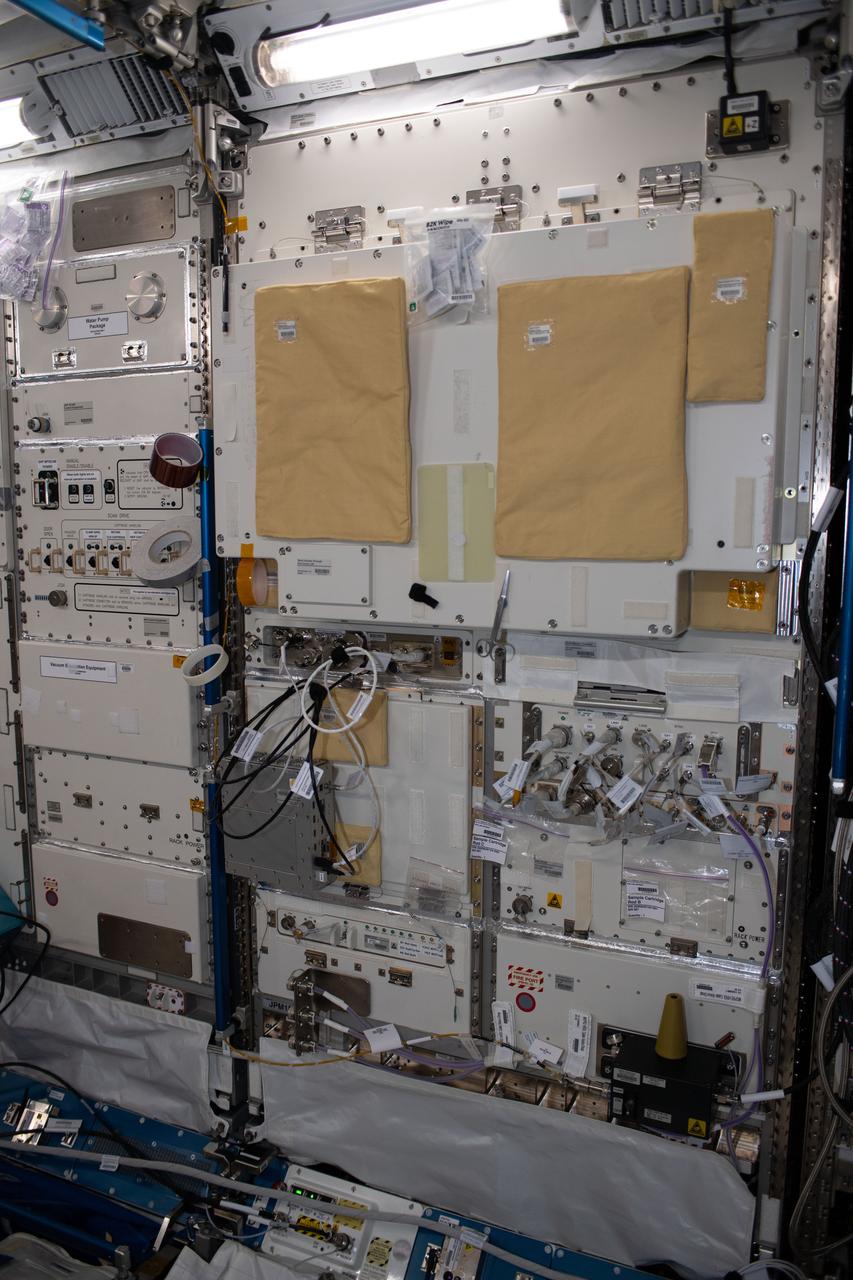
iss056e150256 (8/21/2018) --- A view of the Multi purpose Small Payload Rack (MSPR) 2 in the Kibo Japanese Experiment Pressurized Module (JPM) aboard the International Space Station (ISS). The Multi Purpose Small Payload Rack-2 (MSPR-2) is a second multipurpose payload rack system used in the Japanese Experiment Module (JEM). Similar to the original MSPR (still in use), MSPR-2 has two workspaces and a work table that can be used for wide fields of space environment utilization including science and educational missions.
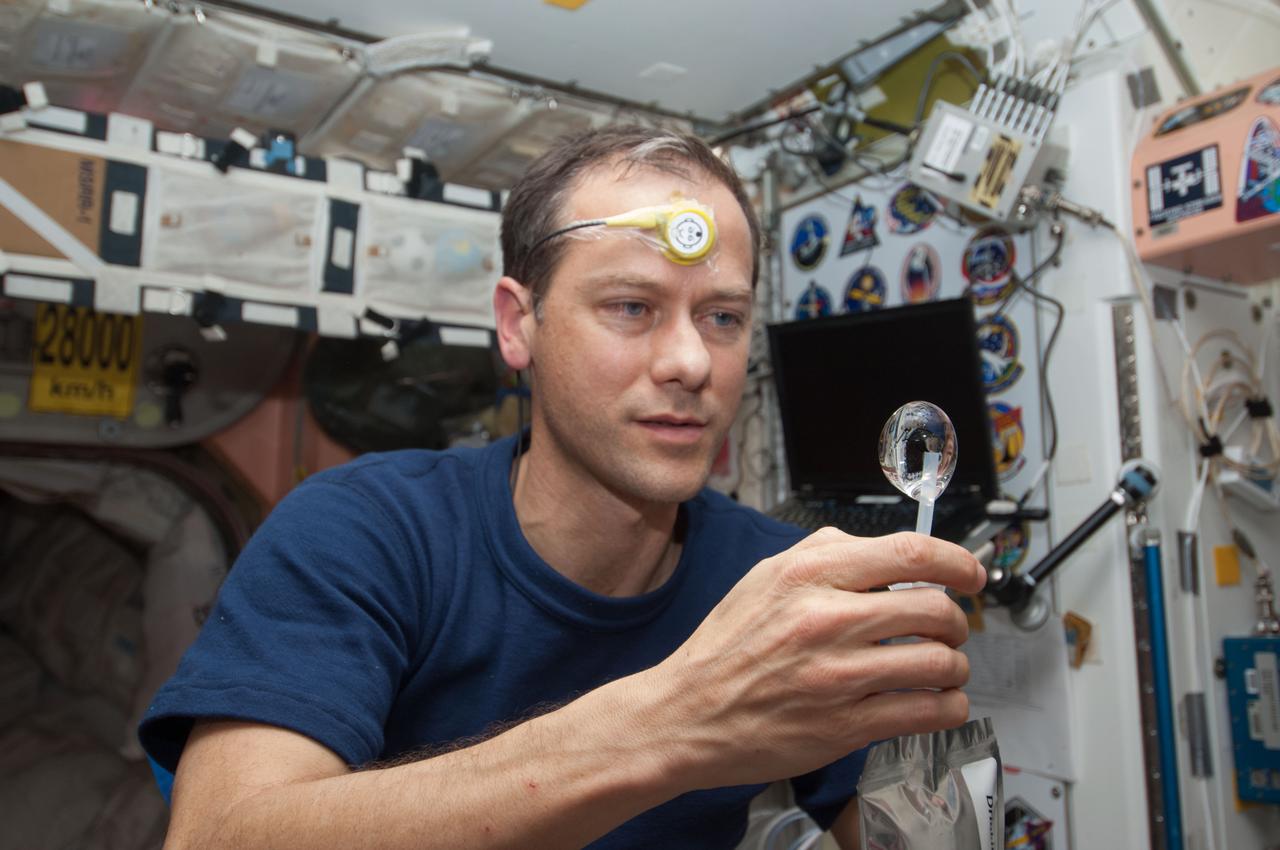
ISS034-E-031709 (21 Jan. 2013) --- NASA astronaut Tom Marshburn, Expedition 34 flight engineer, squeezes a water bubble out of his beverage container in the Unity node of the International Space Station. He is wearing a Drager Double Sensor on his forehead which is used on the Circadian Rhythms Experiment. This experiment examines the hypothesis that long-term spaceflights significantly affect the synchronization of the circadian rhythms in humans due to changes of a non-24 hour light-dark cycle.
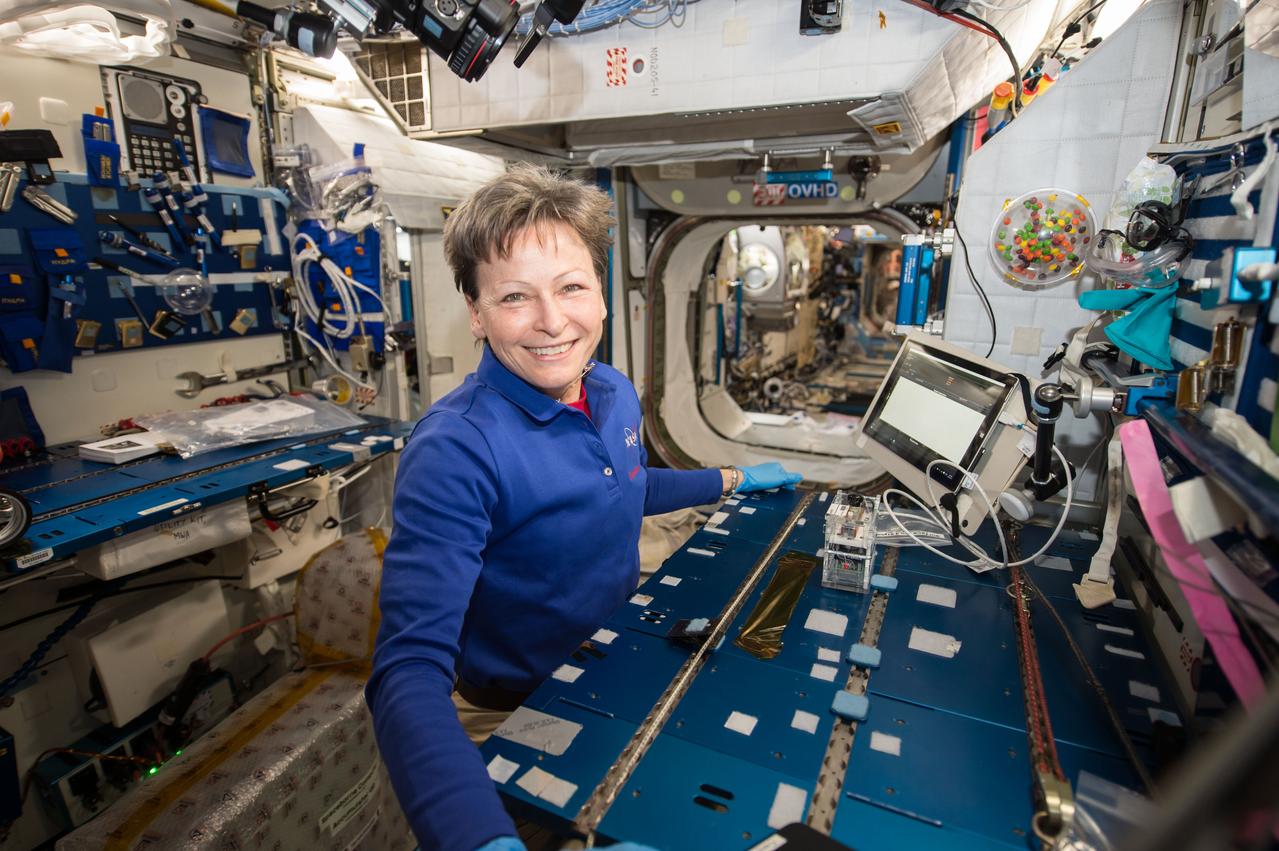
iss052e061925 (8/21/2017) --- NASA astronaut Peggy Whitson is photographed working with the Genes In Space experiment in the Node 2 module. Genes in Space is an innovation challenge including students and teachers across the United States from grades 7 through 12. Students design a pioneering DNA-related experiment to fly on the ISS, providing real-world training in science, technology, engineering and math (STEM) fields and connecting students to the space program.
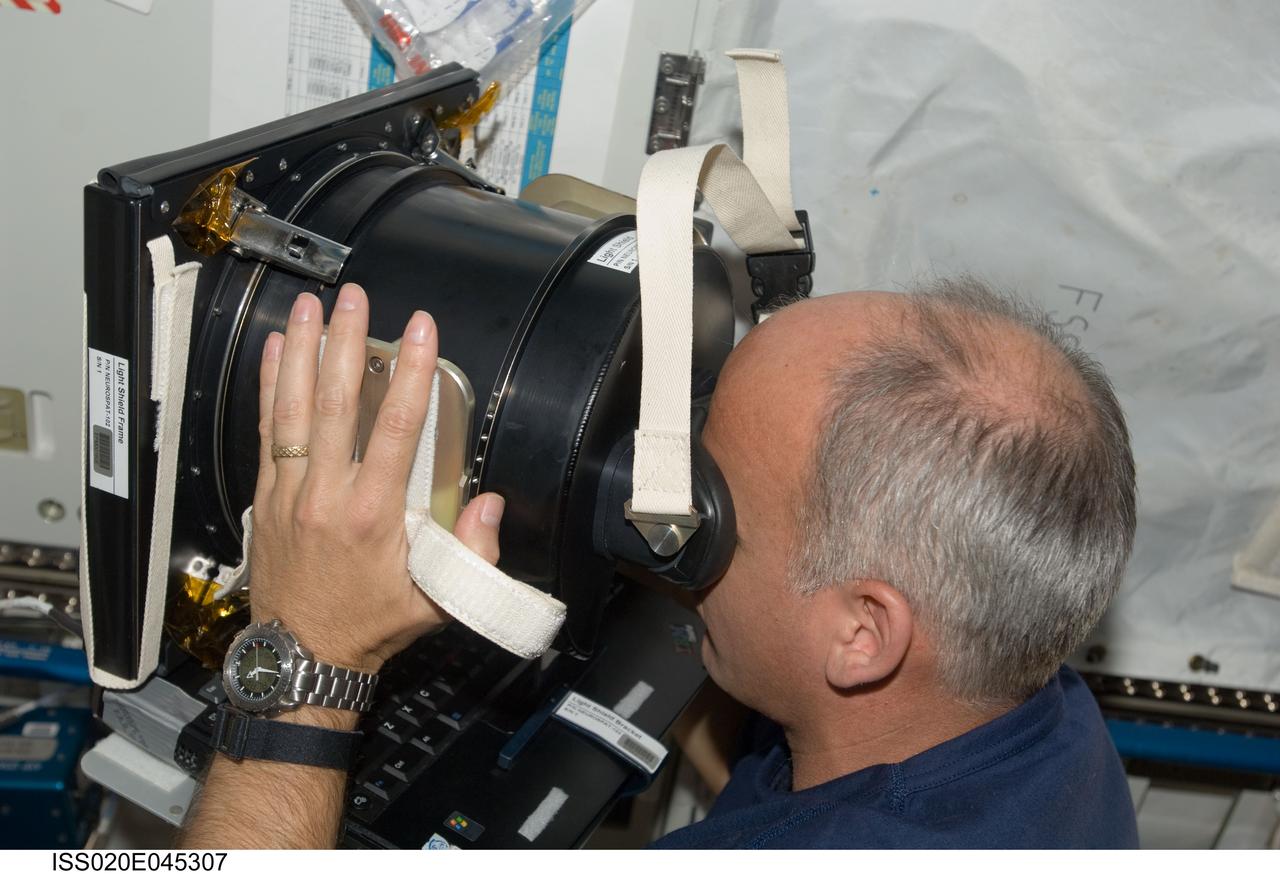
ISS020-E-045307 (5 Oct. 2009) --- NASA astronaut Jeffrey Williams, Expedition 21 flight engineer, uses Neurospat hardware to perform the Bodies in the Space Environment (BISE) experiment in the Destiny laboratory of the International Space Station. The Canadian Space Agency-sponsored BISE experiment studies how astronauts perceive up and down in microgravity.
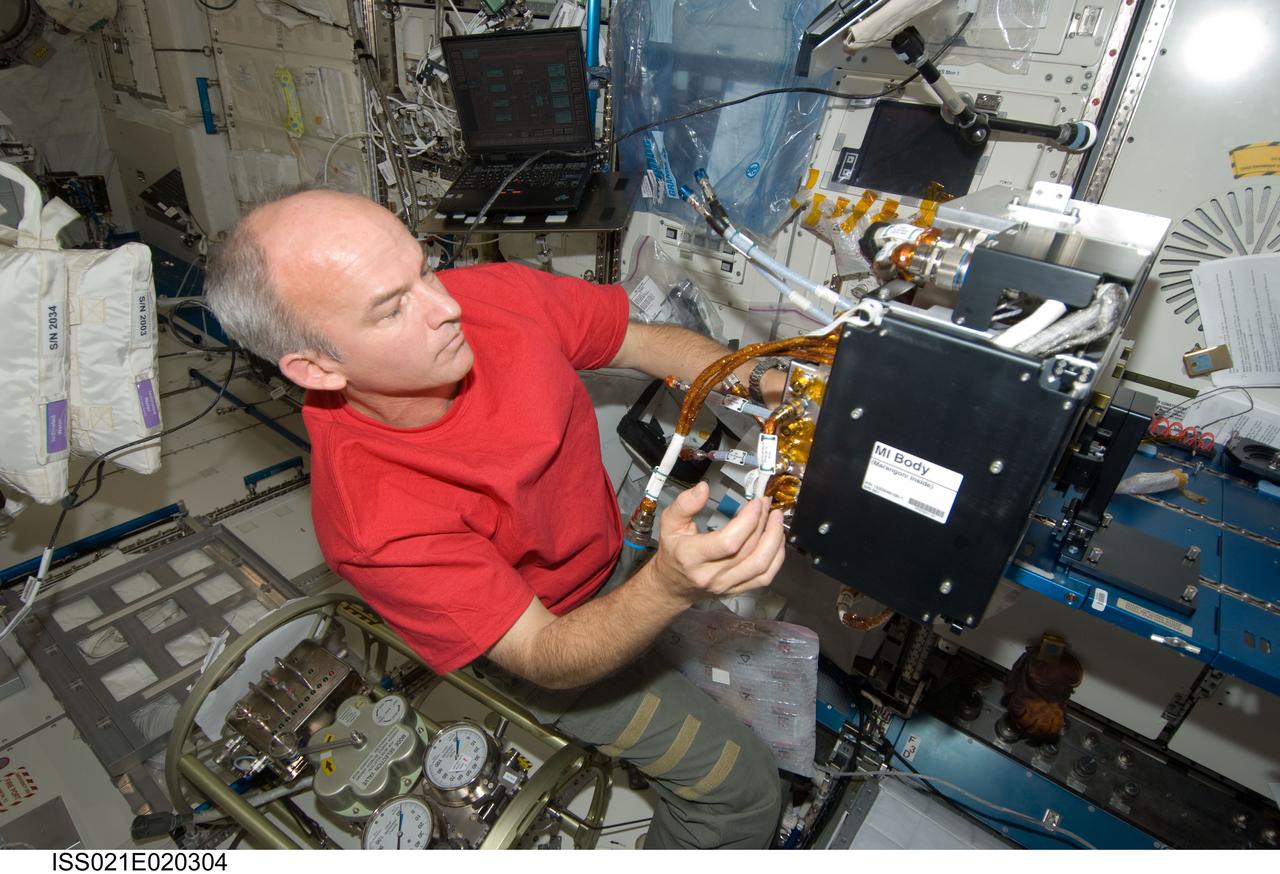
ISS021-E-020304 (5 Nov. 2009) --- NASA astronaut Jeffrey Williams, Expedition 21 flight engineer, works with Fluid Physics Experiment Facility/Marangoni Surface (FPEF MS) Core hardware in the Kibo laboratory of the International Space Station. Williams first inserted the Marangoni Inside (MI) cassette in the MI Core for a leak check, and then installed the MI Core into the FPEF MI Body. The Marangoni convection experiment in the FPEF examines fluid tension flow in micro-G.
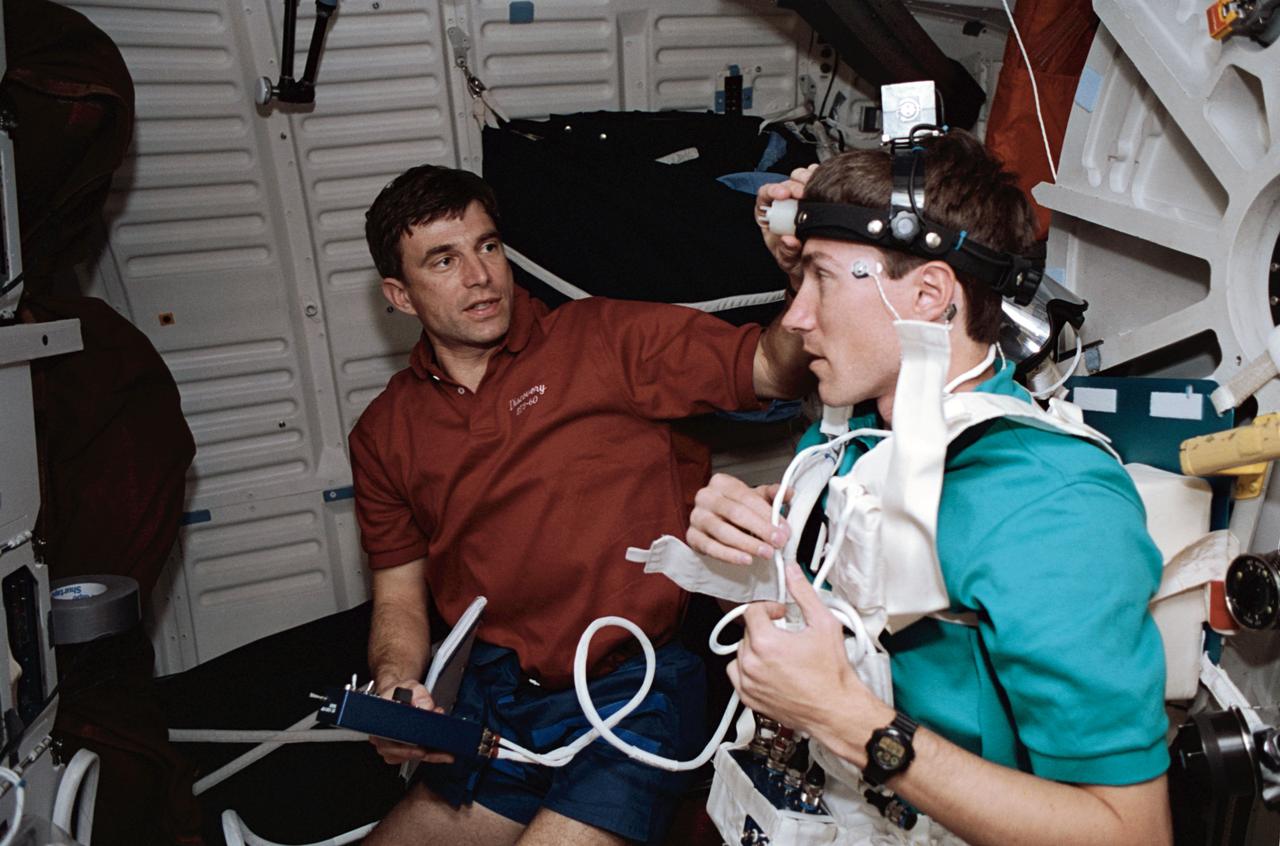
STS060-21-027 (3-11 Feb 1994) --- Astronaut Ronald M. Sega (left) and Russian cosmonaut Sergei K. Krikalev work on a joint U.S./Russian metabolic experiment on the Space Shuttle Discovery's middeck. A number of other U.S./Russian cooperative Detailed Supplementary Objectives (DSO) are included among the experiments conducted on the eight-day mission.
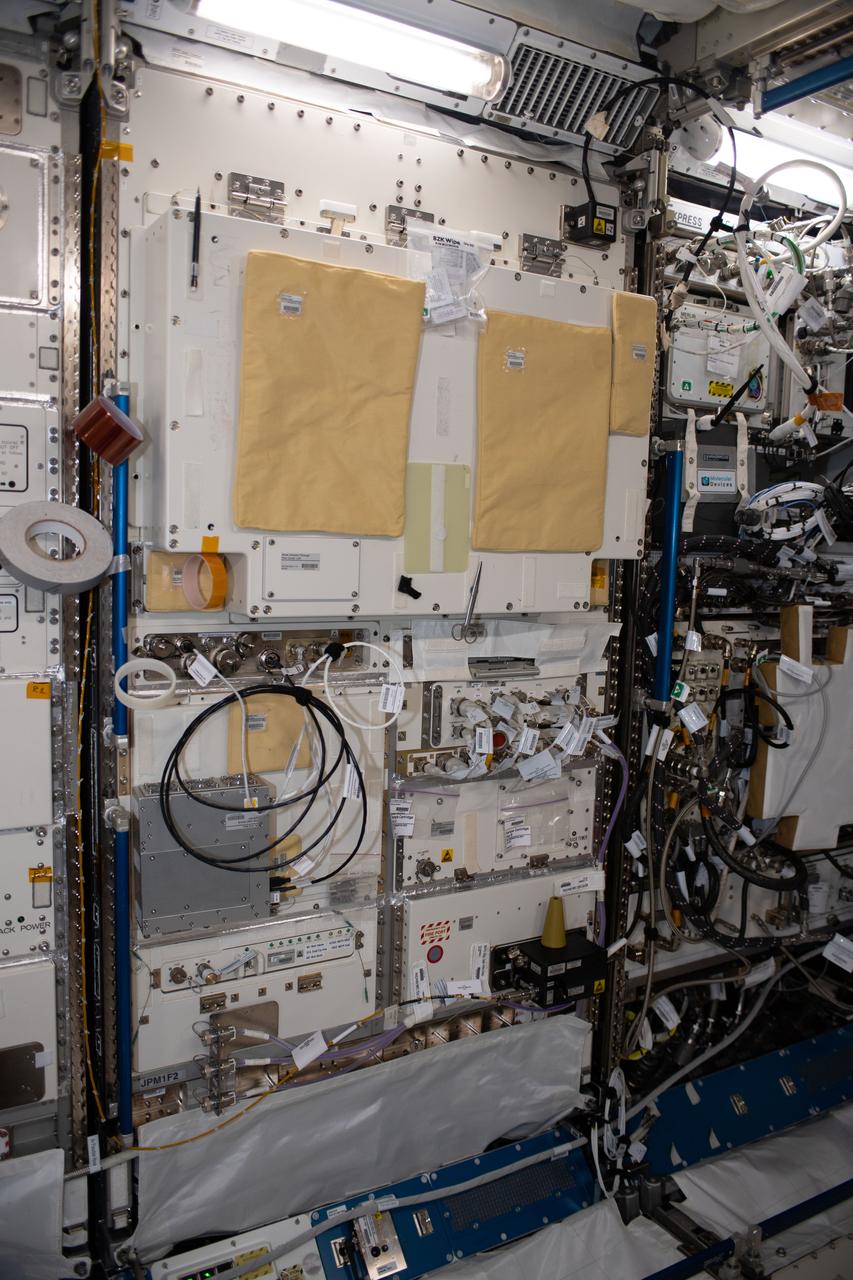
iss056e150255 (8/21/2018) --- A view of the Multi purpose Small Payload Rack (MSPR) 2 in the Kibo Japanese Experiment Pressurized Module (JPM) aboard the International Space Station (ISS). The Multi Purpose Small Payload Rack-2 (MSPR-2) is a second multipurpose payload rack system used in the Japanese Experiment Module (JEM). Similar to the original MSPR (still in use), MSPR-2 has two workspaces and a work table that can be used for wide fields of space environment utilization including science and educational missions.
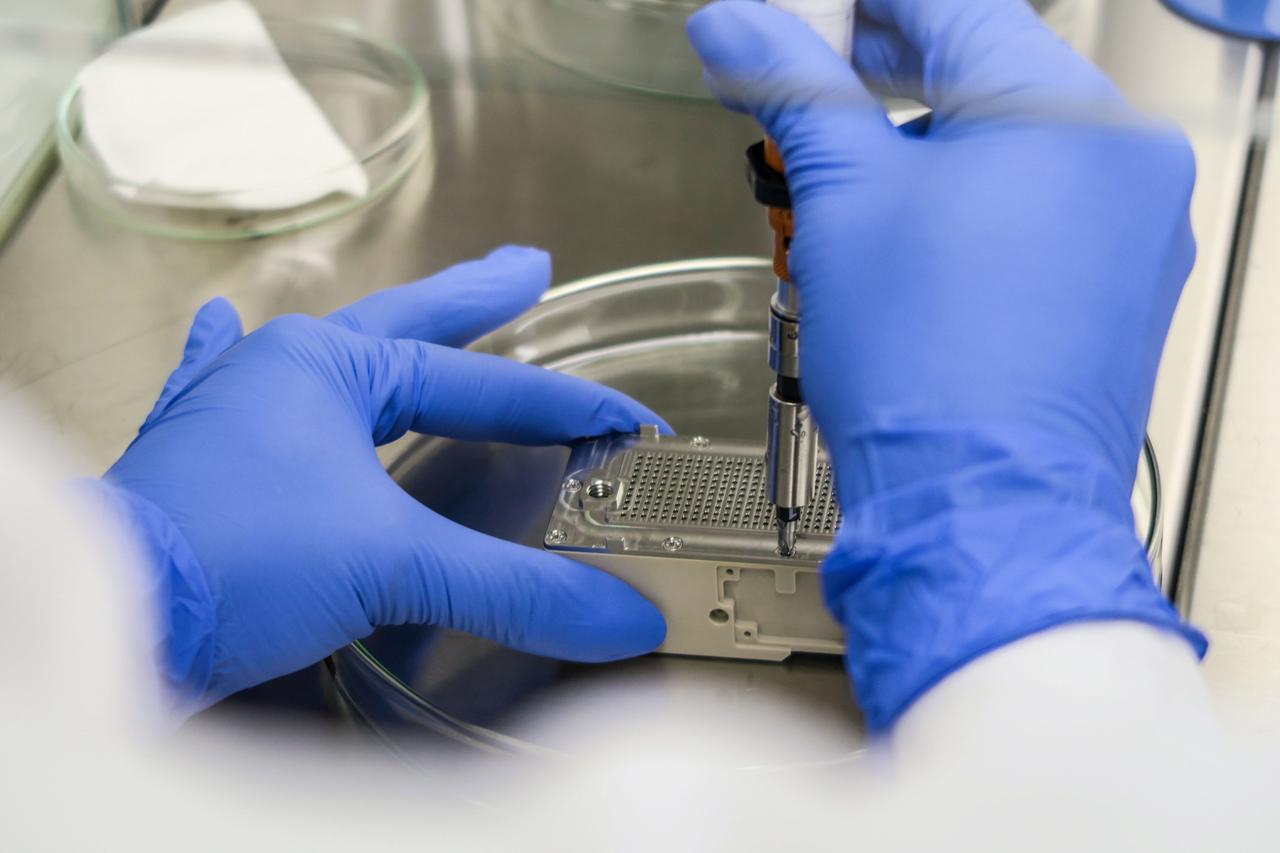
jsc2023e010176 (8/21/2021) --- This image shows the final step of assembling the ESA-Biofilms experiment unit. Inside the experiment unit, growth of the bacterial model organisms is supported under controlled conditions on different antimicrobial surfaces. The ESA-Biofilms investigation studies bacterial biofilm formation and antimicrobial properties of different metal surfaces under spaceflight conditions in altered gravity. Image courtesy of DLR, CC BY-NC-ND 3.0.
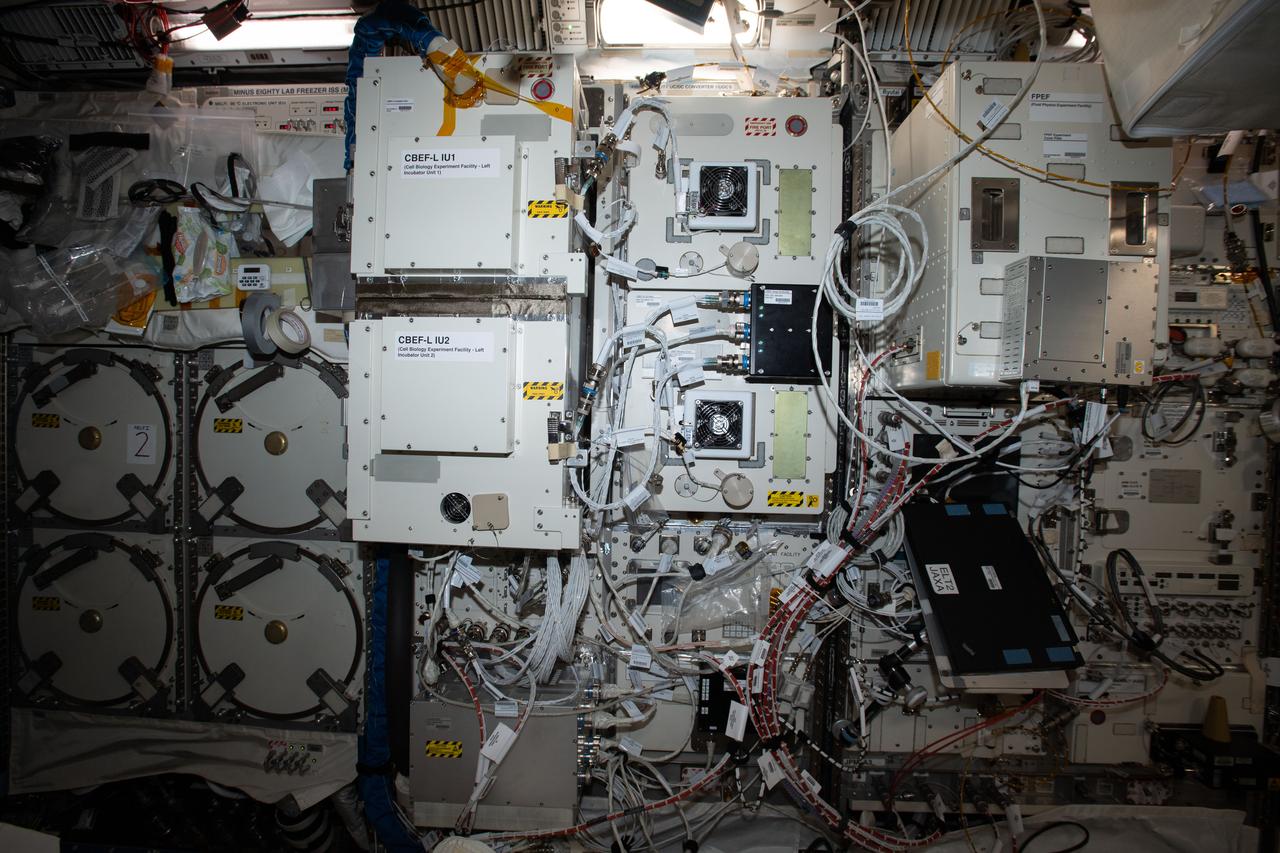
iss062e103684 (3/21/2020) --- A view of the rack containing CBEF-L (Cell Biology Experiment Facility-L) IU1 and CBEF-L IU2 in the Japanese Experiment Module (JEM) Pressurized Module (JPM). aboard the International Space Station (ISS). Cell Biology Experiment Facility-L (CBEF-L) is a Japan Aerospace Exploration Agency (JAXA) new subrack facility, which is an upgraded facility of the original Cell Biology Experiment Facility (CBEF) currently aboard the International Space Station (ISS). CBEF-L provides new capabilities with additional new resources such as Full High Definition video interface, Ethernet, 24 VDC power supply, and a larger diameter centrifugal test environment. By using the original CBEF and CBEF-L as one facility for the same experiment, the payload user is provided with an upgraded experimental environment that can handle the processing of more experimental samples for a wider array of experiments.
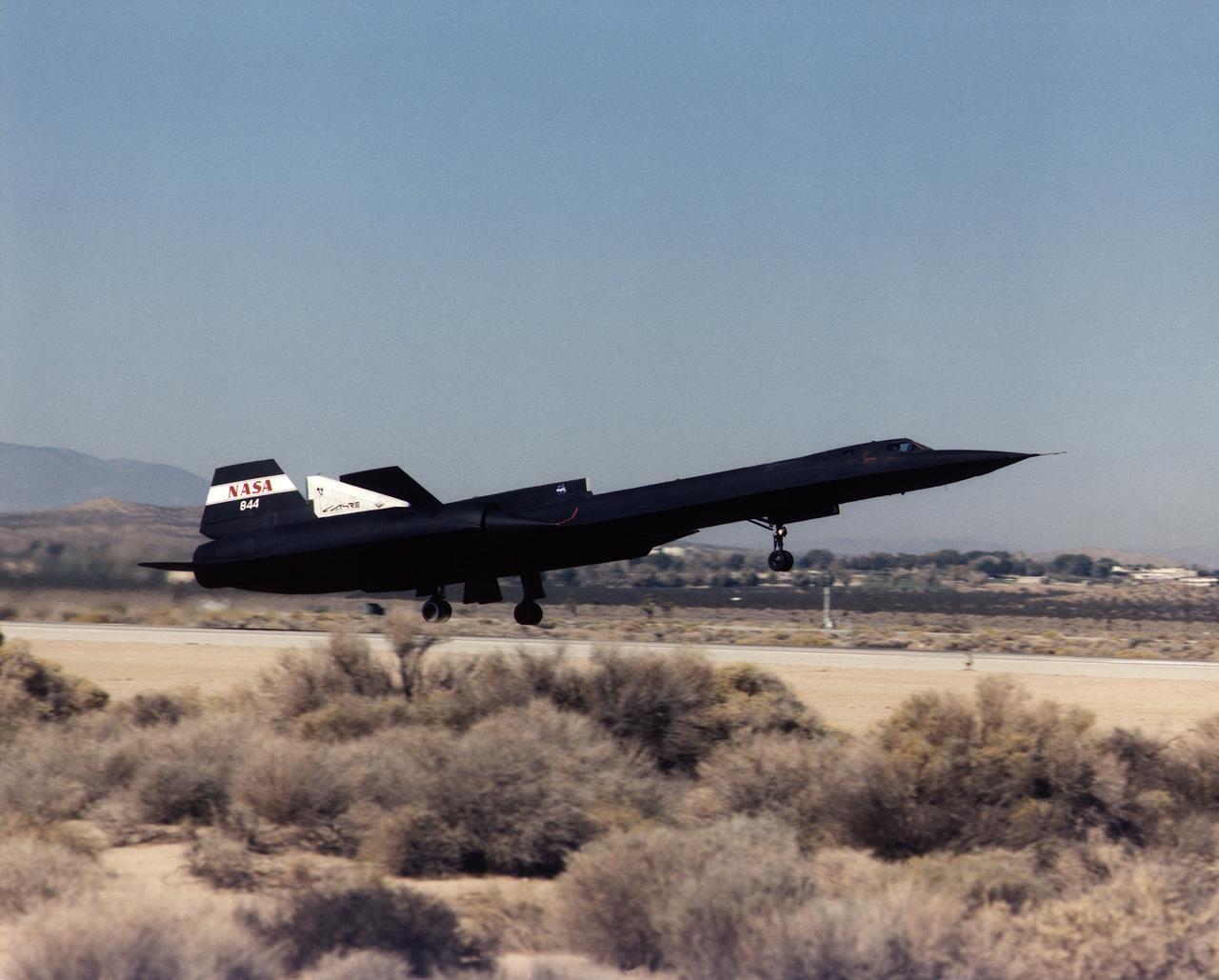
A NASA SR-71 takes off Oct. 31, making its first flight as part of the NASA/Rocketdyne/Lockheed Martin Linear Aerospike SR-71 Experiment (LASRE) at NASA's Dryden Flight Research Center, Edwards, California. The SR-71 took off at 8:31 a.m. PST. The aircraft flew for one hour and fifty minutes, reaching a maximum speed of Mach 1.2 before landing at Edwards at 10:21 a.m. PST, successfully validating the SR-71/linear aerospike experiment configuration. The goal of the first flight was to evaluate the aerodynamic characteristics and the handling of the SR-71/linear aerospike experiment configuration. The engine was not fired during the flight.
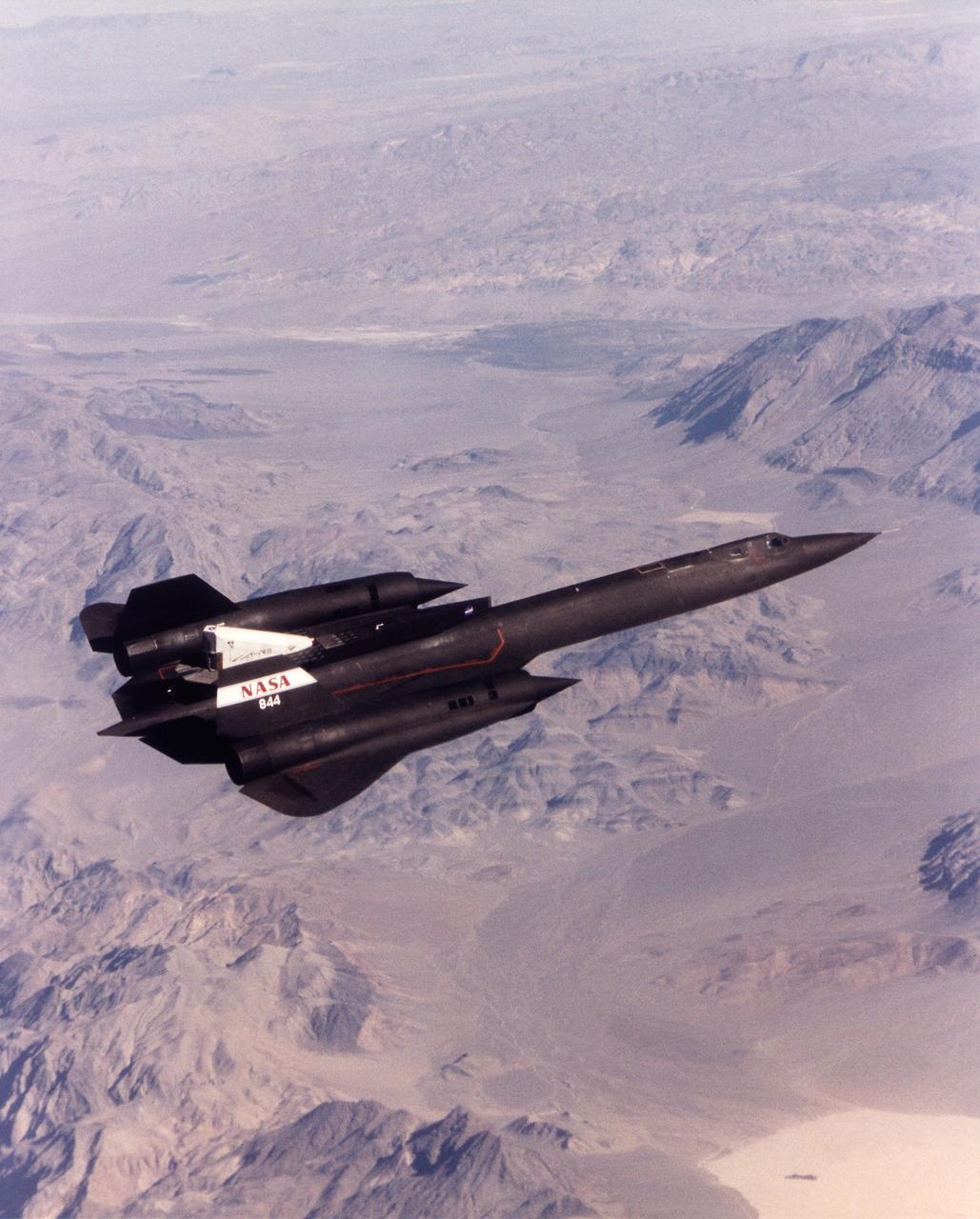
A NASA SR-71 made its successful first flight Oct. 31 as part of the NASA/Rocketdyne/ Lockheed Martin Linear Aerospike SR-71 Experiment (LASRE) at NASA's Dryden Flight Research Center, Edwards, California. The SR-71 took off at 8:31 a.m. PST. The aircraft flew for one hour and fifty minutes, reaching a maximum speed of Mach 1.2 before landing at Edwards at 10:21 a.m. PST, successfully validating the SR-71/linear aerospike experiment configuration. The goal of the first flight was to evaluate the aerodynamic characteristics and the handling of the SR-71/linear aerospike experiment configuration. The engine was not fired during the flight.
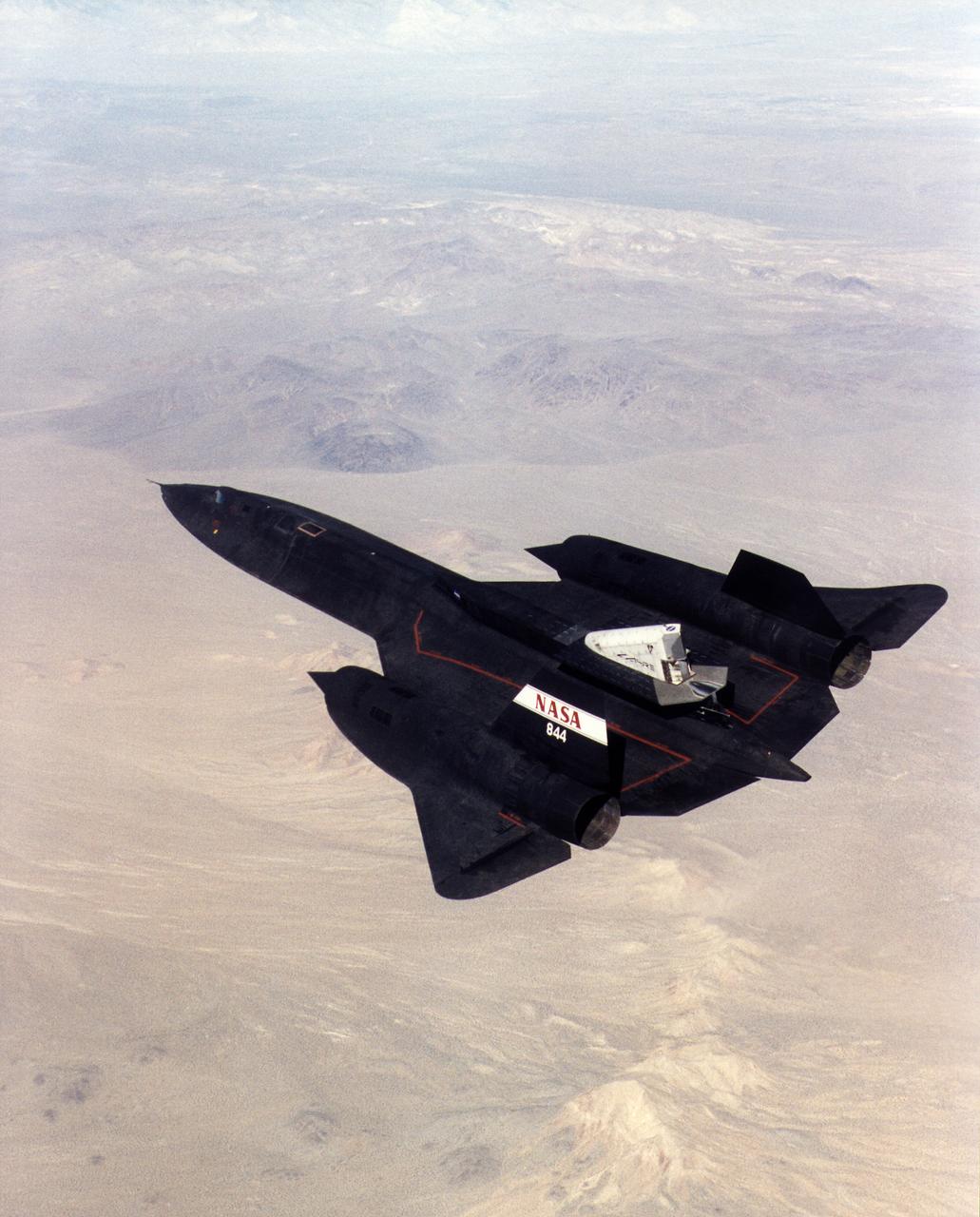
A NASA SR-71 successfully completed its first flight 31 October 1997 as part of the NASA/Rocketdyne/Lockheed Martin Linear Aerospike SR-71 Experiment (LASRE) at NASA's Dryden Flight Research Center, Edwards, California. The SR-71 took off at 8:31 a.m. PST. The aircraft flew for one hour and fifty minutes, reaching a maximum speed of Mach 1.2 before landing at Edwards at 10:21 a.m. PST, successfully validating the SR-71/linear aerospike experiment configuration. The goal of the first flight was to evaluate the aerodynamic characteristics and the handling of the SR-71/linear aerospike experiment configuration. The engine was not fired during the flight.

iss056e181758 (9/21/2018) --- A view of the Japanese Experiment Module (JEM) Pressurized Module (JPM) aboard the International Space Station (ISS). The Japanese Experiment Module, or JEM, called Kibo -- which means "hope" in Japanese -- is Japan's first human space facility and enhances the unique research capabilities of the International Space Station. Kibo consists of several components: two research facilities -- the Pressurized Module and Exposed Facility; a Logistics Module; a Remote Manipulator System; and an Inter-Orbit Communication System unit. Kibo also has a scientific airlock through which experiments are transferred and exposed to the external environment of space.
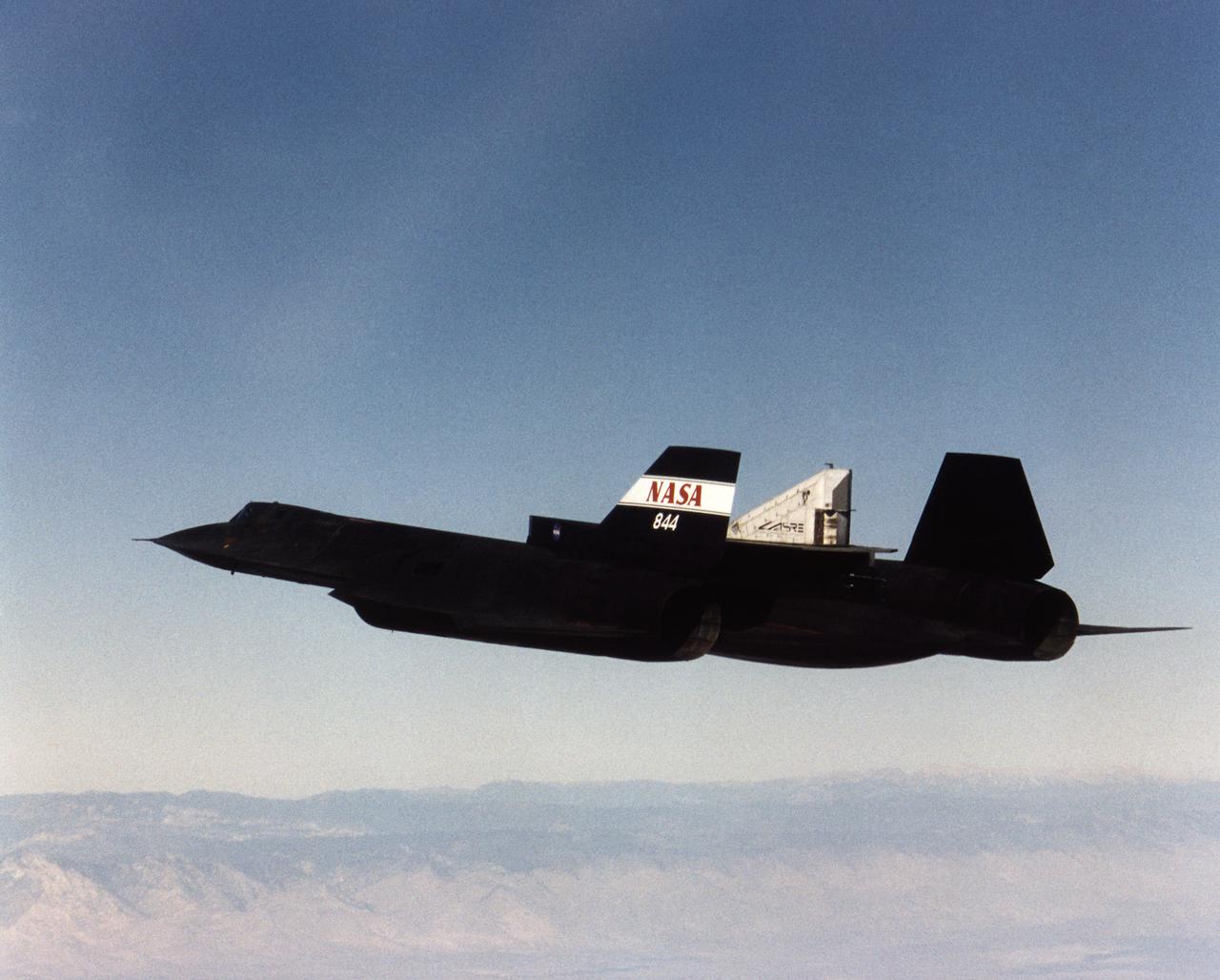
A NASA SR-71 successfully completed its first flight 31 October 1997 as part of the NASA/Rocketdyne/Lockheed Martin Linear Aerospike SR-71 Experiment (LASRE) at NASA's Dryden Flight Research Center, Edwards, California. The SR-71 took off at 8:31 a.m. PST. The aircraft flew for one hour and fifty minutes, reaching a maximum speed of Mach 1.2 before landing at Edwards at 10:21 a.m. PST, successfully validating the SR-71/linear aerospike experiment configuration. The goal of the first flight was to evaluate the aerodynamic characteristics and the handling of the SR-71/linear aerospike experiment configuration. The engine was not fired during the flight.
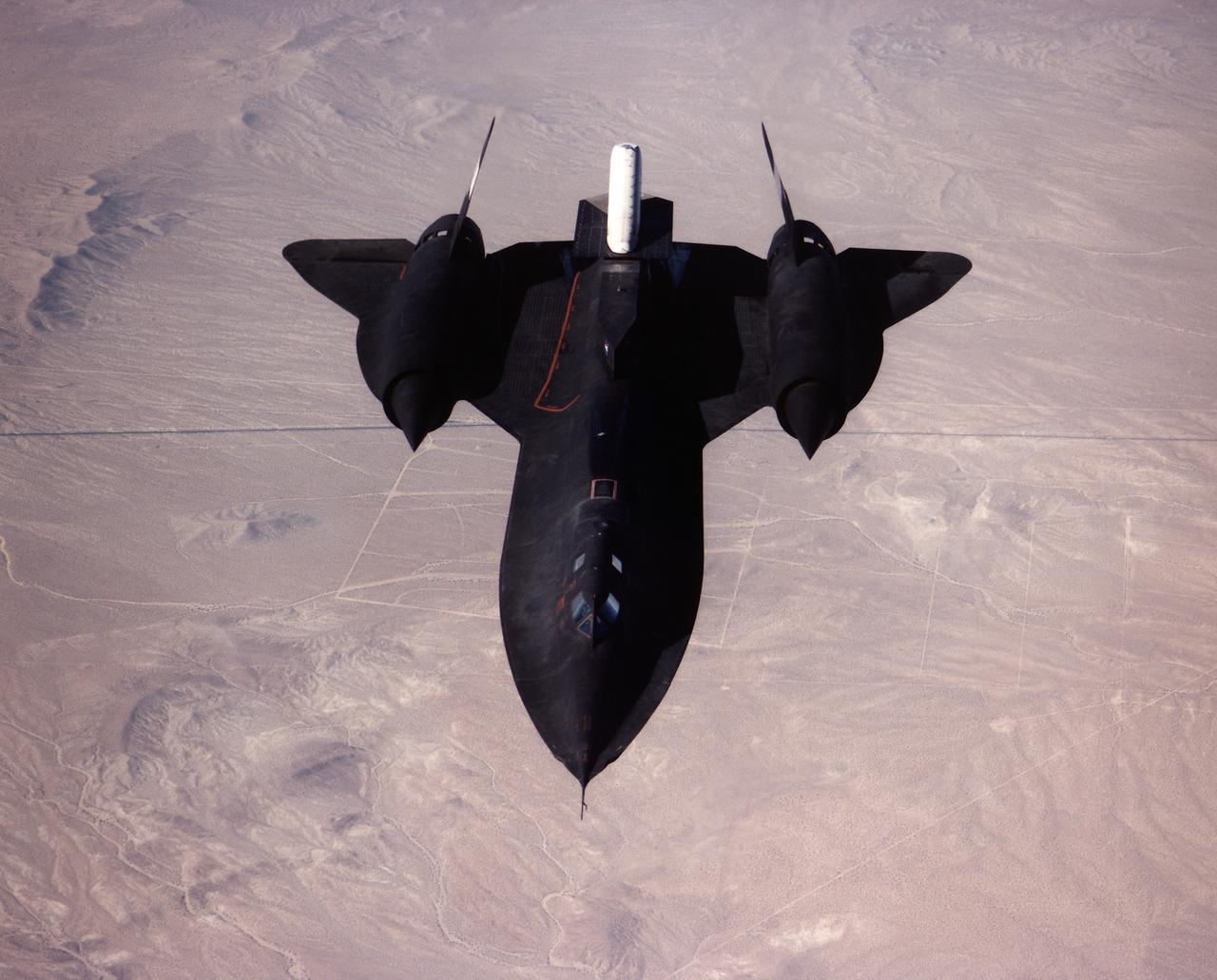
A NASA SR-71 made its successful first flight Oct. 31 as part of the NASA/Rocketdyne/Lockheed Martin Linear Aerospike SR-71 Experiment (LASRE) at NASA's Dryden Flight Research Center, Edwards, California. The SR-71 took off at 8:31 a.m. PST. The aircraft flew for one hour and fifty minutes, reaching a maximum speed of Mach 1.2 before landing at Edwards at 10:21 a.m. PST, successfully validating the SR-71/linear aerospike experiment configuration. The goal of the first flight was to evaluate the aerodynamic characteristics and the handling of the SR-71/linear aerospike experiment configuration. The engine was not fired during the flight.
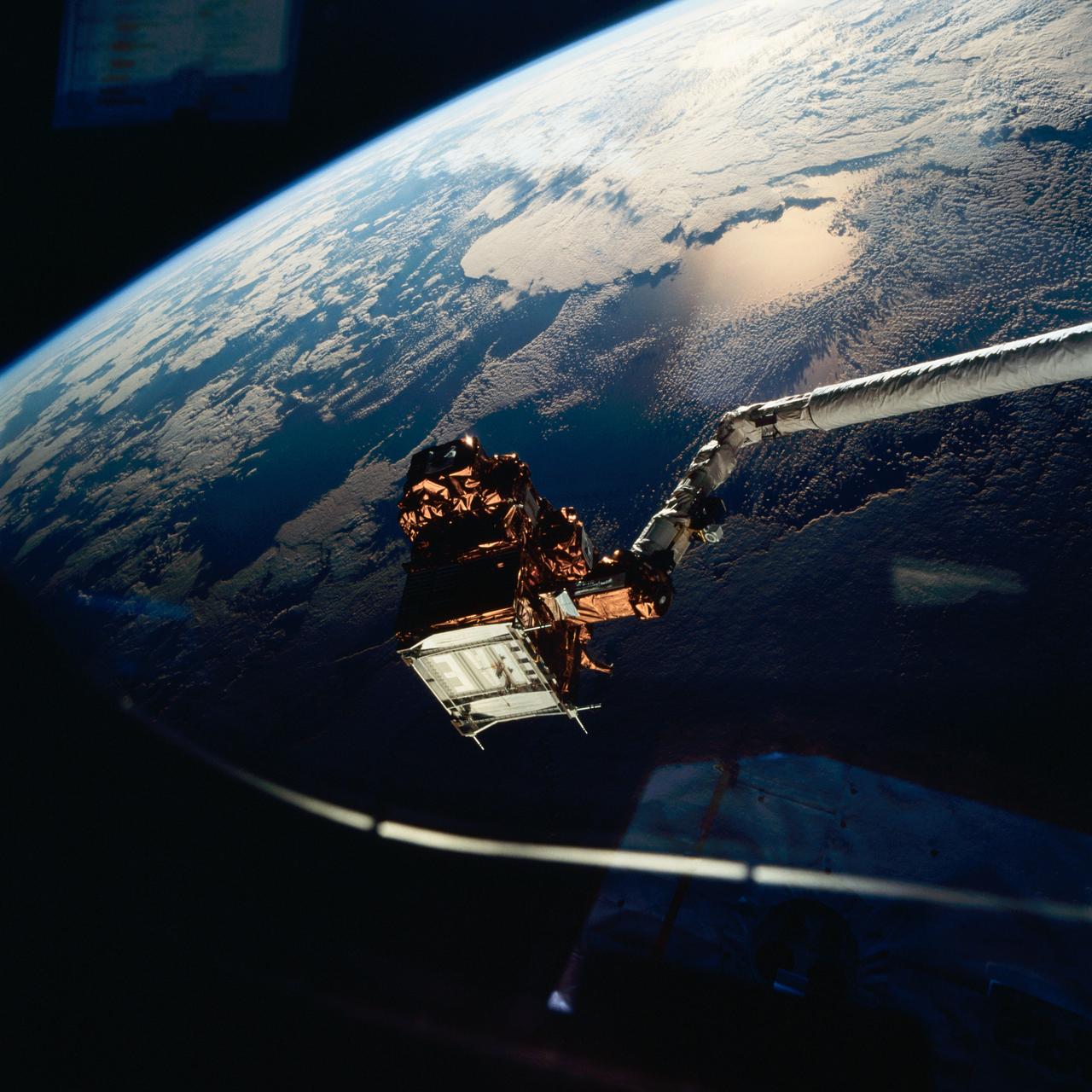
STS077-711-054 (21 May 1996) --- The Spartan 207 free flyer is held in the grasp of the Remote Manipulator System (RMS). As photographed through an overhead window on the Space Shuttle Endeavour?s aft flight deck, the satellite is backdropped against a heavily sunglinted horizon over the Middle East. The Spartan was re-captured by the six crew members on May 21, 1996 following a period of free-flight. The Endeavour crew spent a portion of the flight time in various activities involving the Spartan 207 and the related Inflatable Antenna Experiment (IAE). The Spartan project is managed by NASA?s Goddard Space Flight Center for NASA?s Office of Space Science, Washington, D.C.

S77-E-5065 (21 May 1996) --- With a cloudy horizon scene as a backdrop, the Spartan 207 free-flyer is held in the grasp of the Space Shuttle Endeavour's Remote Manipulator System (RMS) following its re-capture on May 21, 1996. The view was captured with an onboard Electronic Still Camera (ESC). The six-member crew has spent a portion of the early stages of the mission in various activities involving the Spartan 207 and the related Inflatable Antenna Experiment (IAE). The Spartan project is managed by NASA's Goddard Space Flight Center (GSFC) for NASA's Office of Space Science, Washington, D.C.
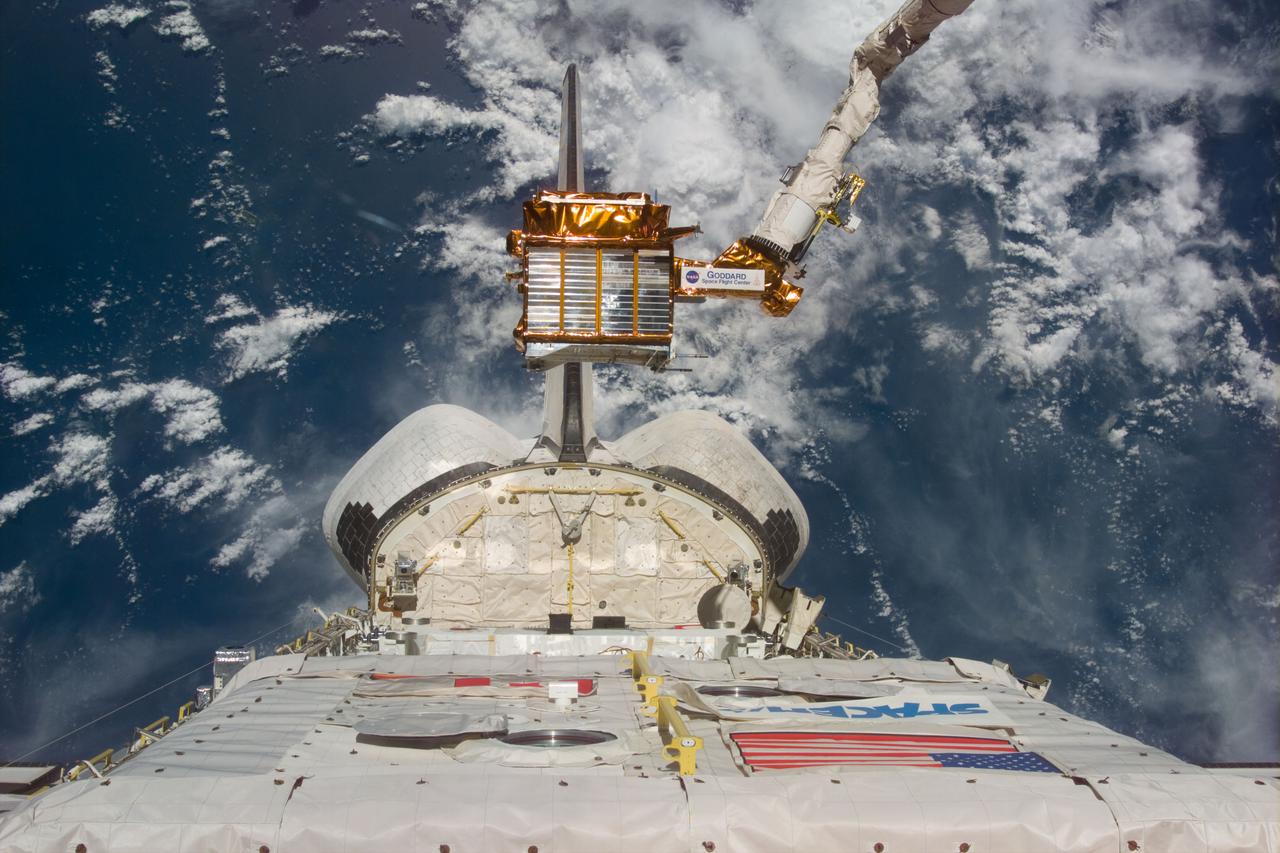
S77-E-5052 (21 May 1996) --- The Spartan 207 free-flyer is held in a low-hover mode above its berth in the Space Shuttle Endeavour's cargo bay in the grasp of the Remote Manipulator System (RMS). The free-flyer was re-captured by the six crew members on May 21, 1996. The crew has spent a portion of the early stages of the mission in various activities involving the Spartan 207 and the related Inflatable Antenna Experiment (IAE). The Spartan project is managed by NASA's Goddard Space Flight Center (GSFC) for NASA's Office of Space Science, Washington, D.C.
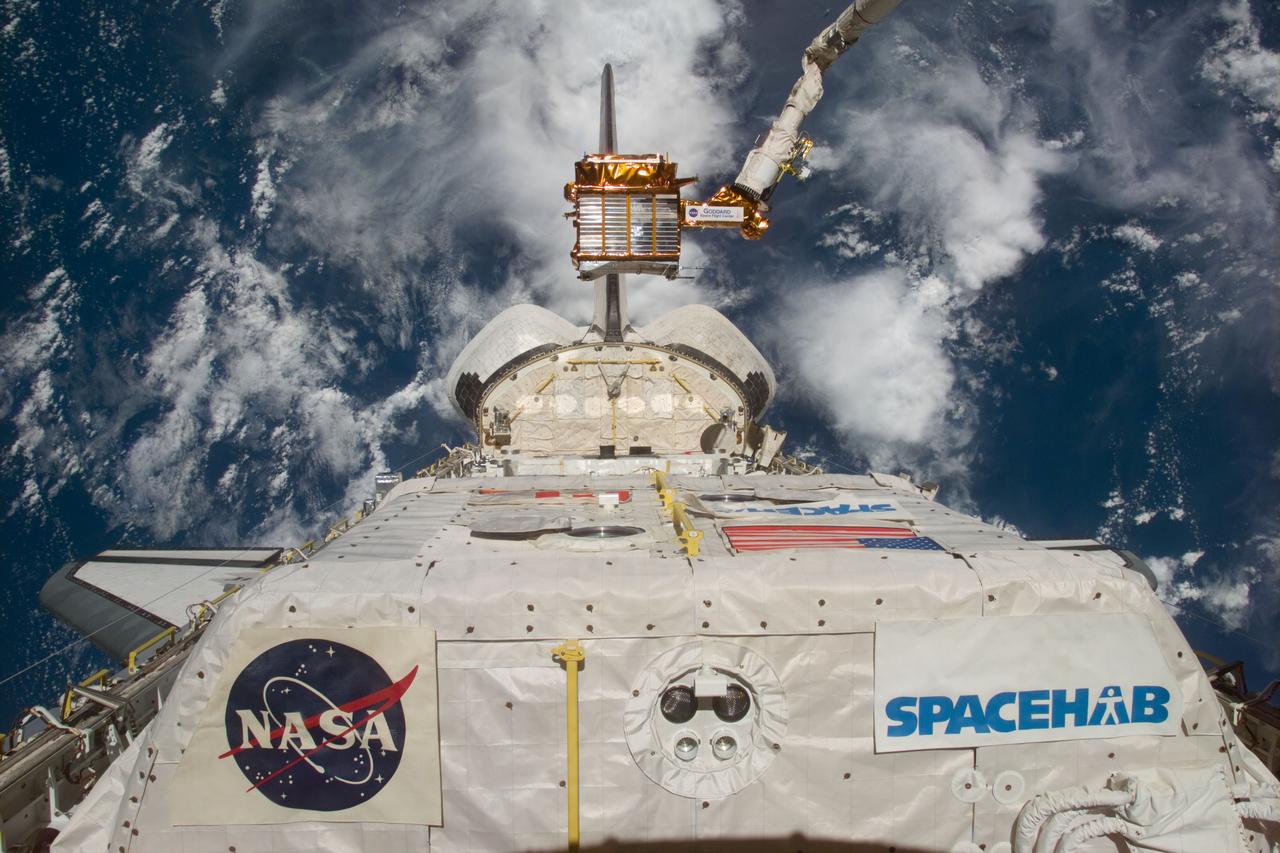
S77-E-5053 (21 May 1996) --- The Spartan 207 free-flyer is held in a low-hover mode above its berth in the Space Shuttle Endeavour's cargo bay in the grasp of the Remote Manipulator System (RMS). The Spacehab module can be seen in the foreground. The free-flyer was re-captured by the six crew members on May 21, 1996. The crew has spent a portion of the early stages of the mission in various activities involving the Spartan 207 and the related Inflatable Antenna Experiment (IAE). The Spartan project is managed by NASA's Goddard Space Flight Center (GSFC) for NASA's Office of Space Science, Washington, D.C.
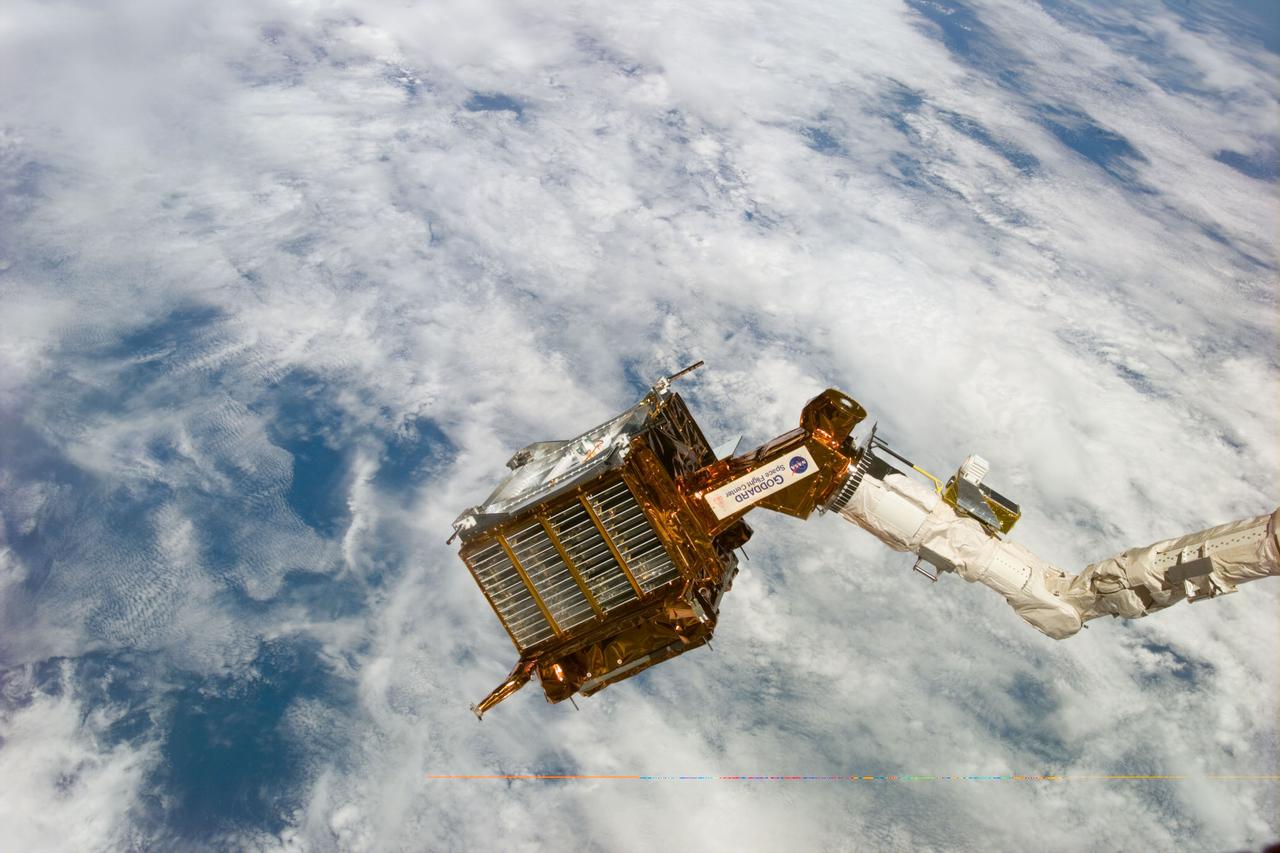
S77-E-5064 (21 May 1996)--- In this medium close-up view, captured by an Electronic Still Camera (ESC), the Spartan 207 free-flyer is held in the grasp of the Space Shuttle Endeavour's Remote Manipulator System (RMS) following its re-capture on May 21, 1996. The six-member crew has spent a portion of the early stages of the mission in various activities involving the Spartan 207 and the related Inflatable Antenna Experiment (IAE). The Spartan project is managed by NASA's Goddard Space Flight Center (GSFC) for NASA's Office of Space Science, Washington, D.C.
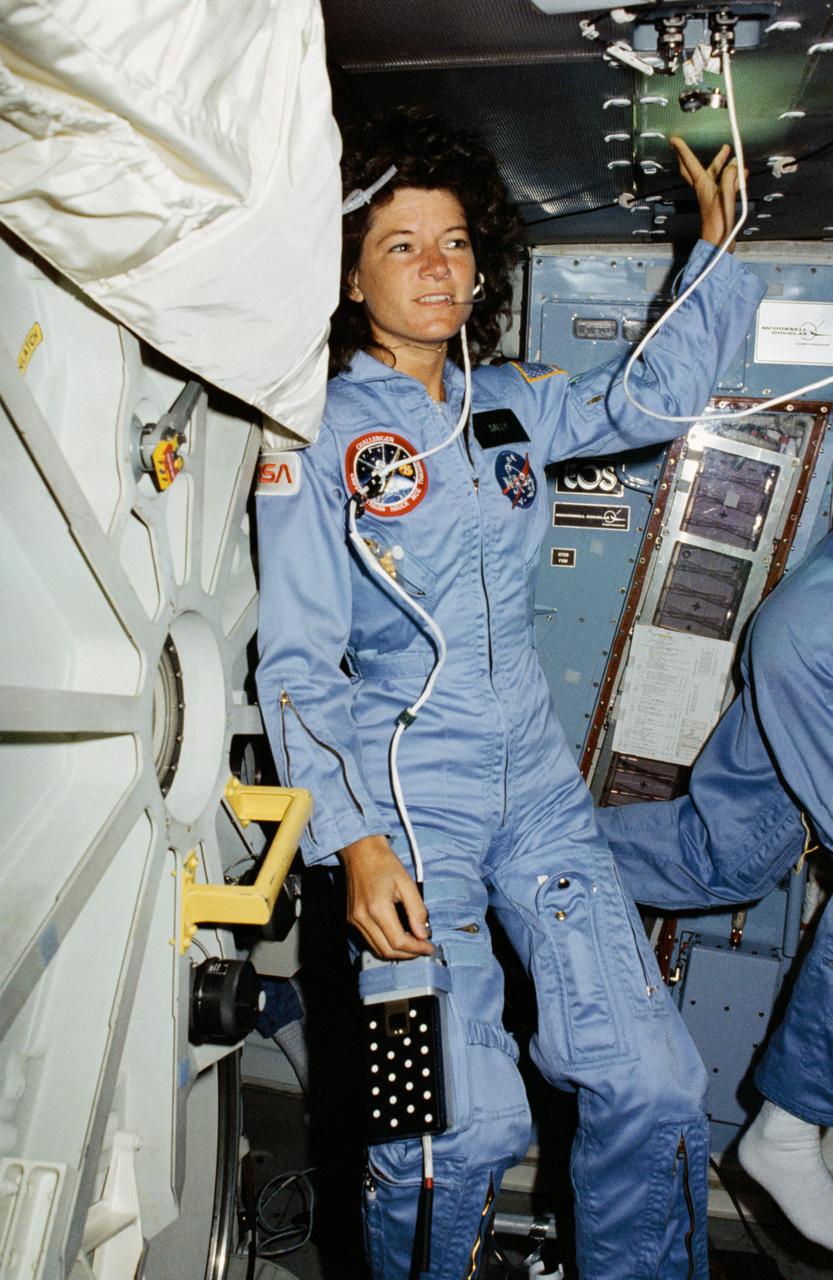
STS007-02-020 (21 June 1983) --- Astronaut Sally K. Ride, STS-7 mission specialist, STS-7 mission specialist, stands in the mid deck of the orbiting Space Shuttle Challenger near one of the experiment with which she has devoted a great deal of time. The continuous flow electrophoresis system (CFES) experiment, about the size of a household refrigerator, stands nearby. One of her fellow crewmembers moves partially out of frame in the background. The tube on her face is part of a communications system linking Dr. Ride to ground controllers in Houston.
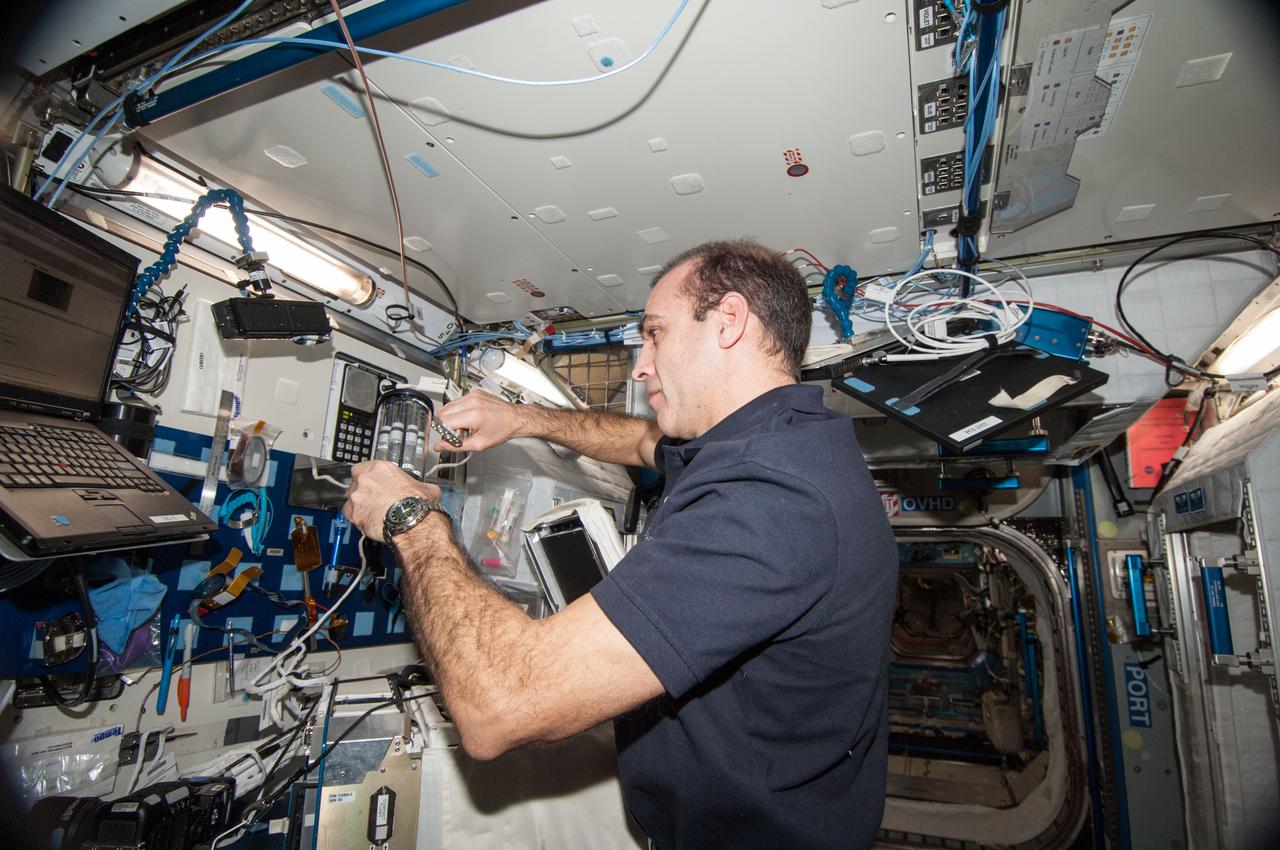
ISS038-E-031407 (16 Jan. 2014) --- NASA astronaut Rick Mastracchio, Expedition 38 flight engineer, accesses the Commercial Generic Bioprocessing Apparatus-2 (CGBA-2) while working with the Vaccine-21 Group Activation Pack (GAP) experiment in the Harmony node of the International Space Station. This experiment also referred to as Antibiotic Effectiveness in Space-1 (AES-1) tests the hypothesis that antibiotics used to treat bacterial grown in space will exhibit reduced efficacy and will be associated with specific changes in bacterial gene expression that correlate with cell survival.
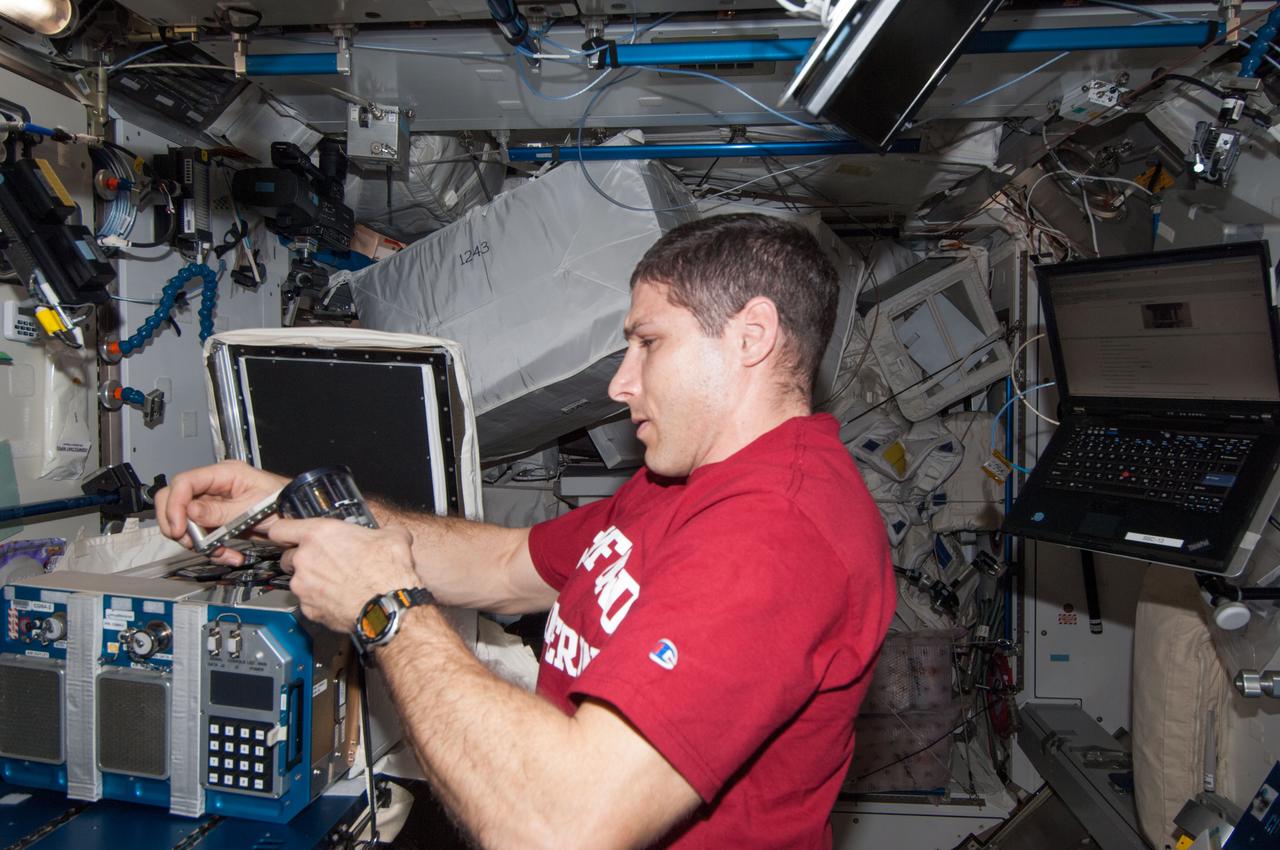
ISS038-E-031400 (14 Jan. 2014) --- NASA astronaut Mike Hopkins, Expedition 38 flight engineer, accesses the Commercial Generic Bioprocessing Apparatus-2 (CGBA-2) while working with the Vaccine-21 Group Activation Pack (GAP) experiment in the Harmony node of the International Space Station. This experiment also referred to as Antibiotic Effectiveness in Space-1 (AES-1) tests the hypothesis that antibiotics used to treat bacterial grown in space will exhibit reduced efficacy and will be associated with specific changes in bacterial gene expression that correlate with cell survival.
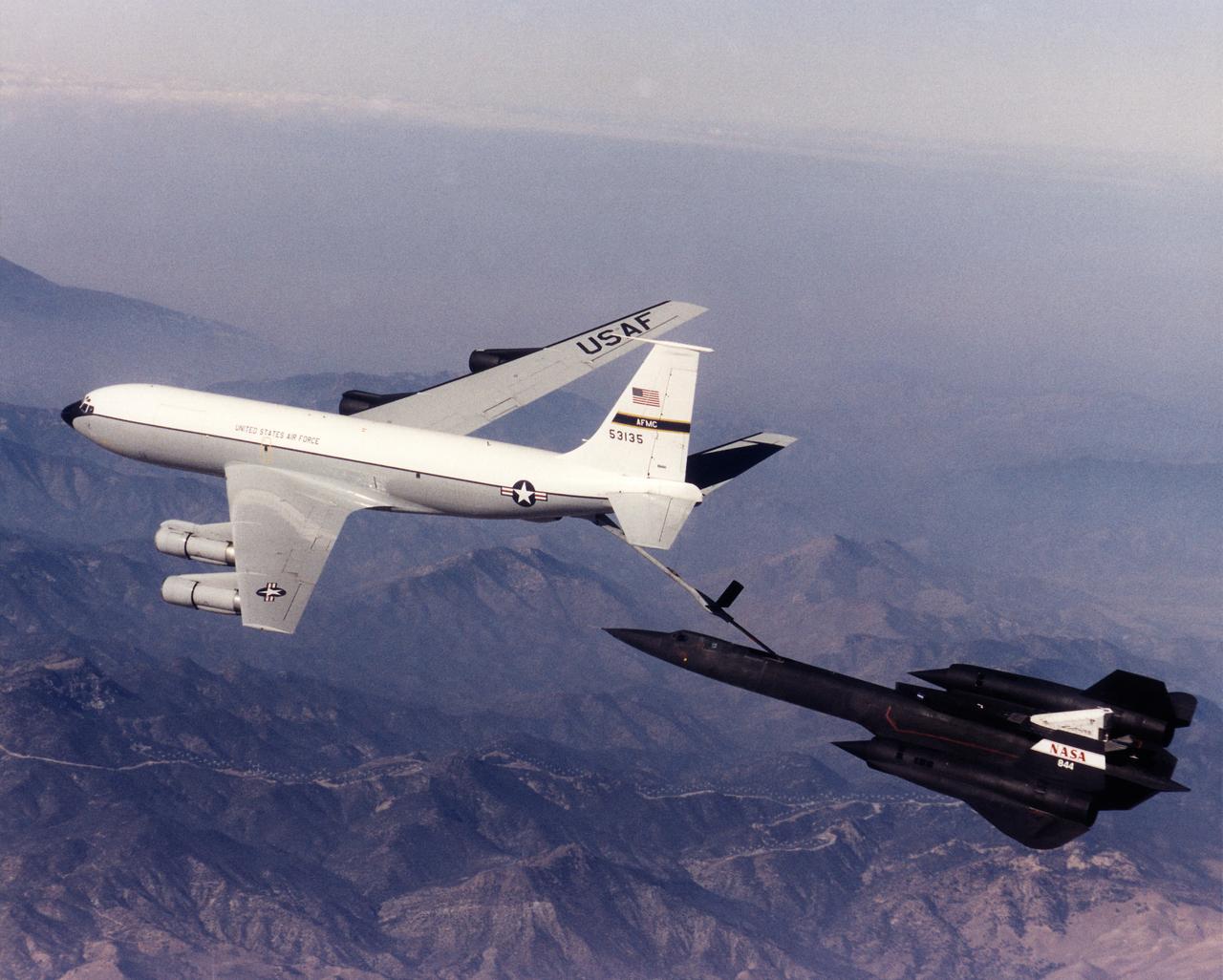
A NASA SR-71 refuels with an Edwards Air Force Base KC-135 during the first flight of the NASA/Rocketdyne/ Lockheed Martin Linear Aerospike SR-71 Experiment (LASRE). The flight took place Oct. 31 at NASA's Dryden Flight Research Center, Edwards, California. The SR-71 took off at 8:31 a.m. PST. The aircraft flew for one hour and fifty minutes, reaching a maximum speed of Mach 1.2 before landing at Edwards at 10:21 a.m. PST, successfully validating the SR-71/linear aerospike experiment configuration. The goal of the first flight was to evaluate the aerodynamic characteristics and the handling of the SR-71/linear aerospike experiment configuration. The engine was not fired during the flight.

STS057-30-021 (21 June-1 July 1993) --- Astronaut Brian Duffy, pilot, handles a soldering tool onboard the Earth-orbiting Space Shuttle Endeavour. The Soldering Experiment (SE) called for a crew member to solder on a printed circuit board containing 45 connection points, then de-solder 35 points on a similar board. The SE was part of a larger project called the Tools and Diagnostic Systems (TDS), sponsored by the Space and Life Sciences Directorate at Johnson Space Center (JSC). TDS represents a group of equipment selected from the tools and diagnostic hardware to be supported by the International Space Station program. TDS was designed to demonstrate the maintenance of experiment hardware on-orbit and to evaluate the adequacy of its design and the crew interface. Duffy and five other NASA astronauts spent almost ten days aboard the Space Shuttle Endeavour in Earth-orbit supporting the SpaceHab mission, retrieving the European Retrievable Carrier (EURECA) and conducting various experiments.
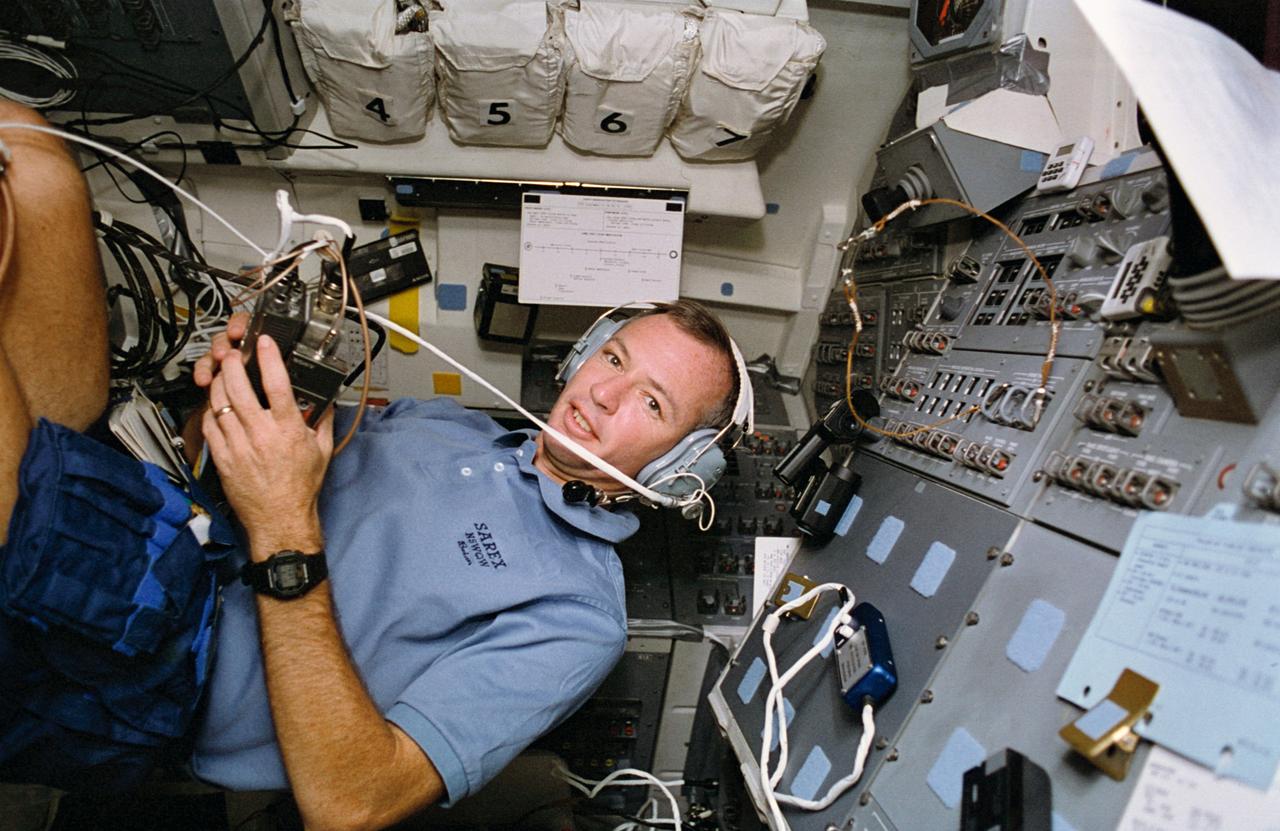
STS057-40-028 (21 June-1 July 1993) --- Astronaut Brian Duffy, pilot, talks to amateur radio operators on Earth from the flight deck of the Earth-orbiting Space Shuttle Endeavour. The space to Earth communications was part of the Shuttle amateur radio experiment (SAREX), which has been included on a number of Space Shuttle missions. Duffy, a licensed amateur radio operator using call letters N5WQW, was among crewmembers talking to students at various points on the ground.
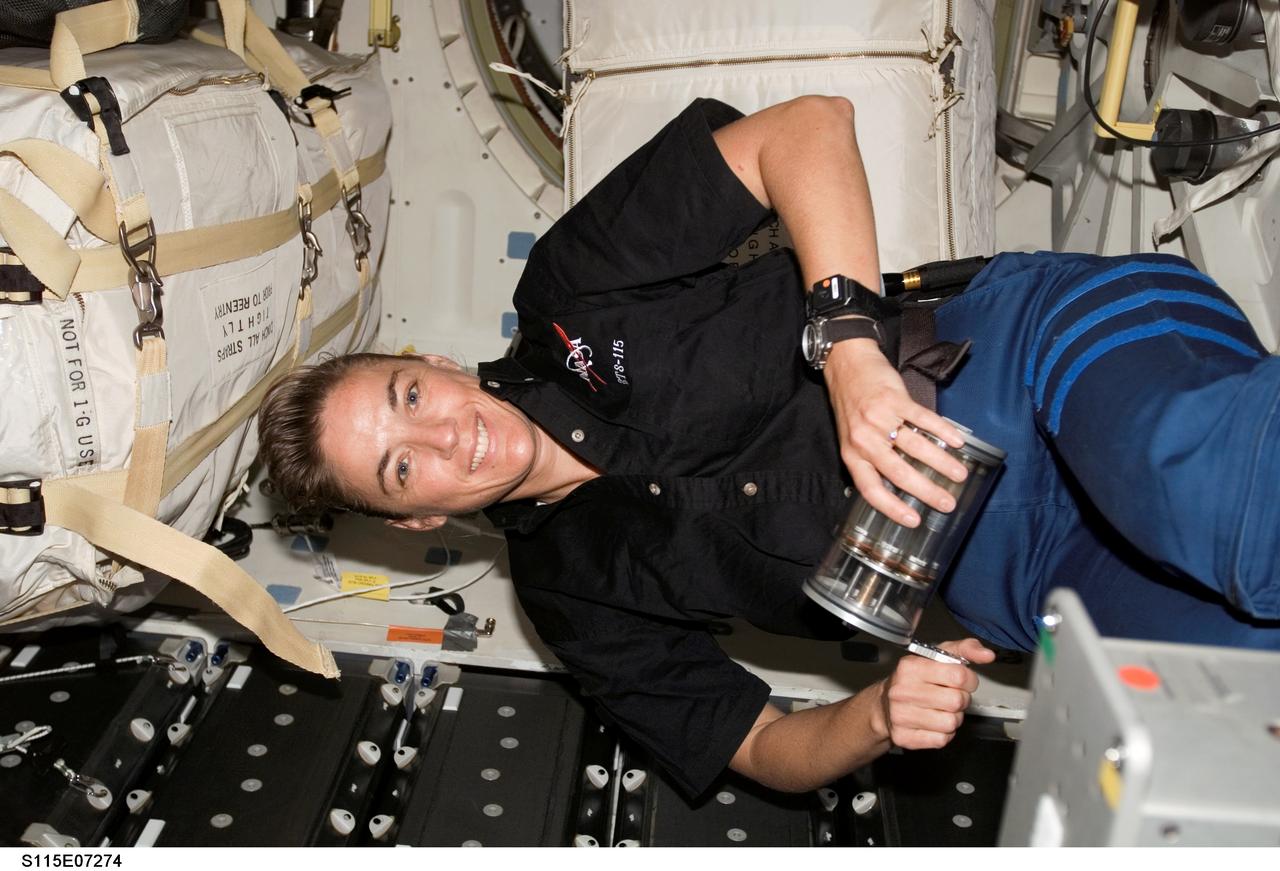
S115-E-07274 (9-21 Sept. 2006) --- Astronaut Heidemarie M. Stefanyshyn-Piper, STS-115 mission specialist, works with the Yeast-Group Activation Packs (Yeast-GAP) on the middeck of Space Shuttle Atlantis. Yeast-GAP experiment studies the effects of genetic changes of yeast cells exposed to the space environment. The results will help scientists to understand how cells respond to radiation and microgravity.
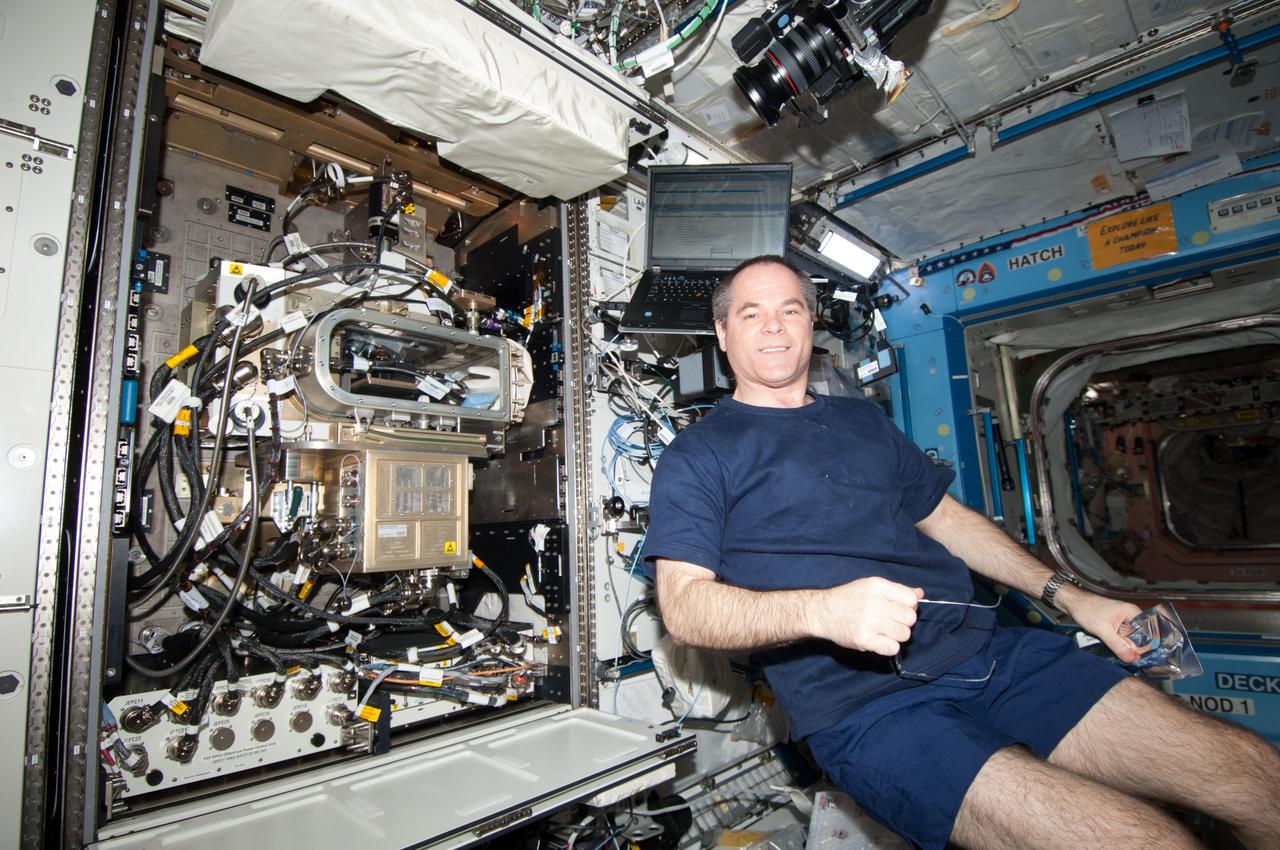
ISS034-E-056144 (21 Feb. 2013) --- Inside the U.S. Laboratory (Destiny) aboard the Earth-orbiting International Space Statio, NASA astronaut Kevin Ford, Expedition 34 commander, is seen with the Fluids Integration Rack (FIR)/Light Microscopy Module (LMM)/Advanced Colloids Experiment (ACE). ACE samples, which produce microscopic images of materials containing small colloidal particles, are scheduled for arrival on SpaceX-2 in the first week of March.
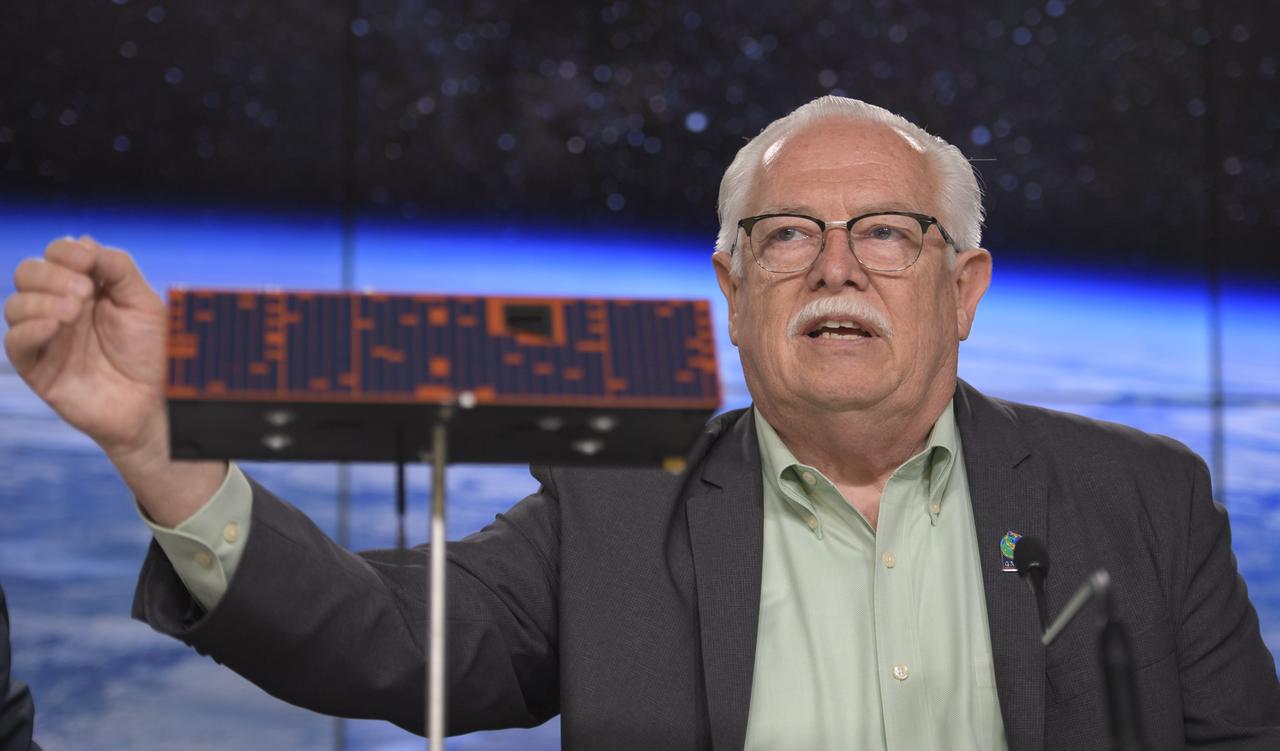
Phil Morton, NASA GRACE-FO project manager at JPL, discusses the Gravity Recovery and Climate Experiment Follow-On (GRACE-FO) mission during a prelaunch media briefing, Monday, May 21, 2018, at Vandenberg Air Force Base in California. The twin GRACE-FO spacecraft will measure changes in how mass is redistributed within and among Earth's atmosphere, oceans, land and ice sheets, as well as within Earth itself. Photo Credit: (NASA/Bill Ingalls)
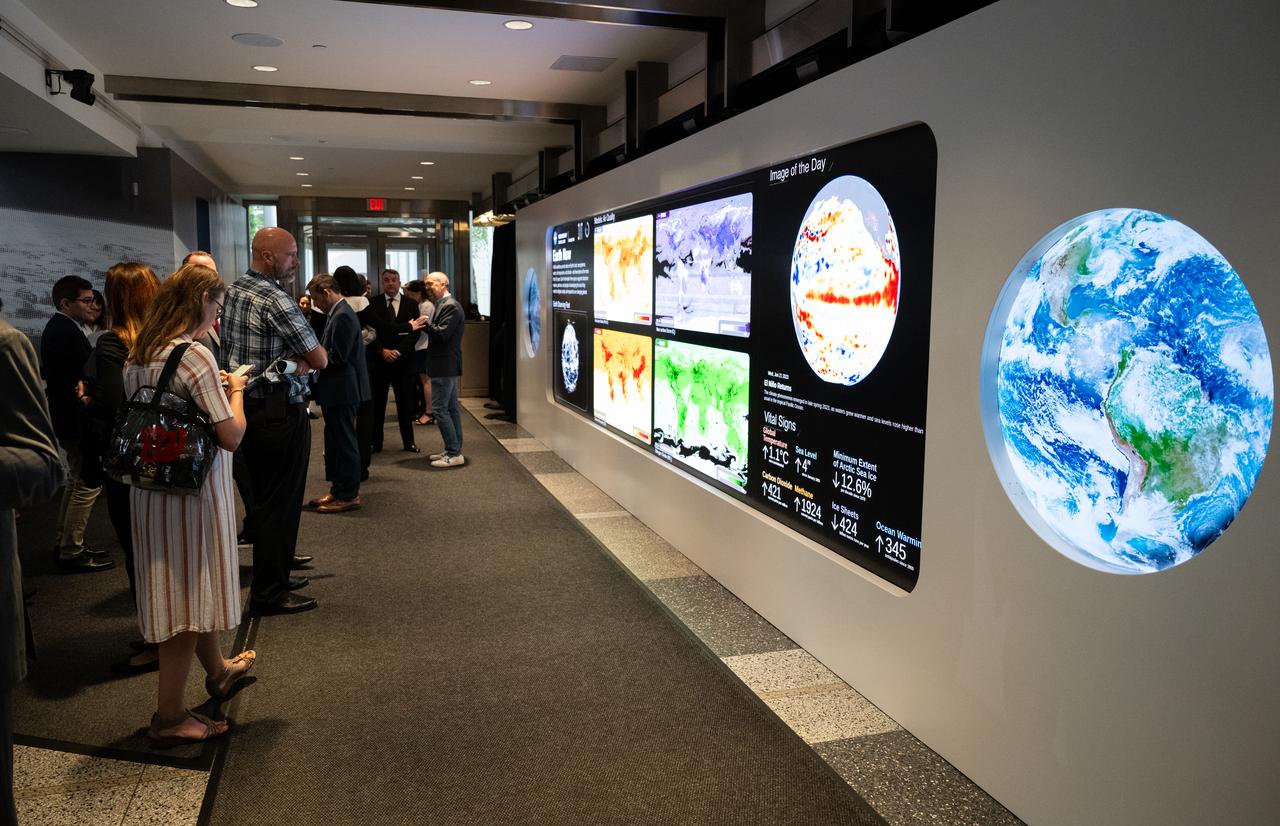
The hyperwall of NASA’s Earth Information Center is seen, Wednesday, June 21, 2023, at the Mary W. Jackson NASA Headquarters building in Washington. The Earth Information Center is new immersive experience that combines live data sets with cutting-edge data visualization and storytelling to allow visitors to see how our planet is changing. Photo Credit: (NASA/Joel Kowsky)