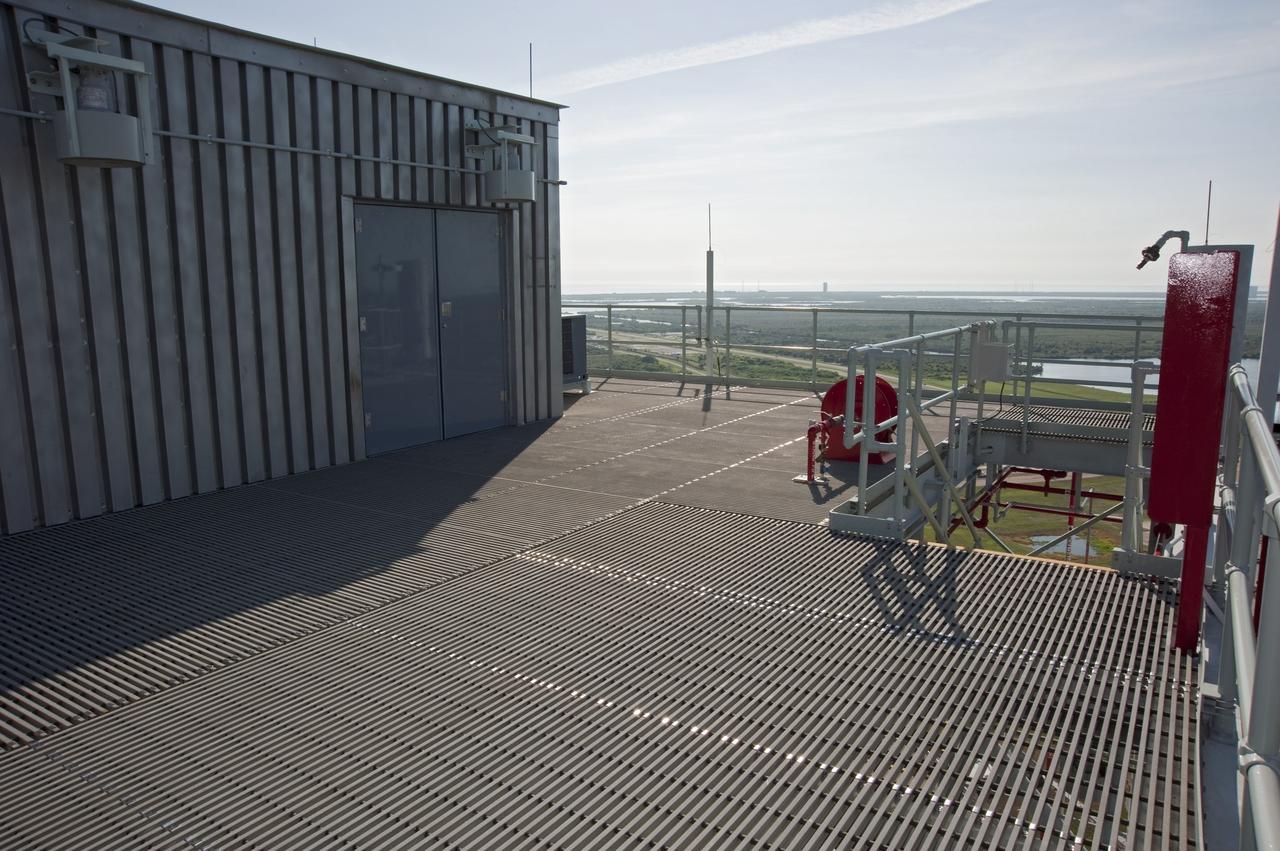
CAPE CANAVERAL, Fla. -- At NASA's Kennedy Space Center in Florida, the Cape Canaveral National Seashore is seen from the tower of NASA's new mobile launcher, or ML, support structure. It took about two years to construct the launcher in the Mobile Launcher Park site, north of the Vehicle Assembly Building, or VAB. The 355-foot-tall structure will support NASA's future human spaceflight program. The base of the launcher is lighter than space shuttle mobile launcher platforms so the crawler-transporter can pick up the heavier load of the tower and a taller rocket. The next step will be to add ground support equipment, such as umbilicals and access arms, for future rocket launches. For information on NASA's future plans, visit www.nasa.gov. Photo credit: NASA/Kim Shiflett
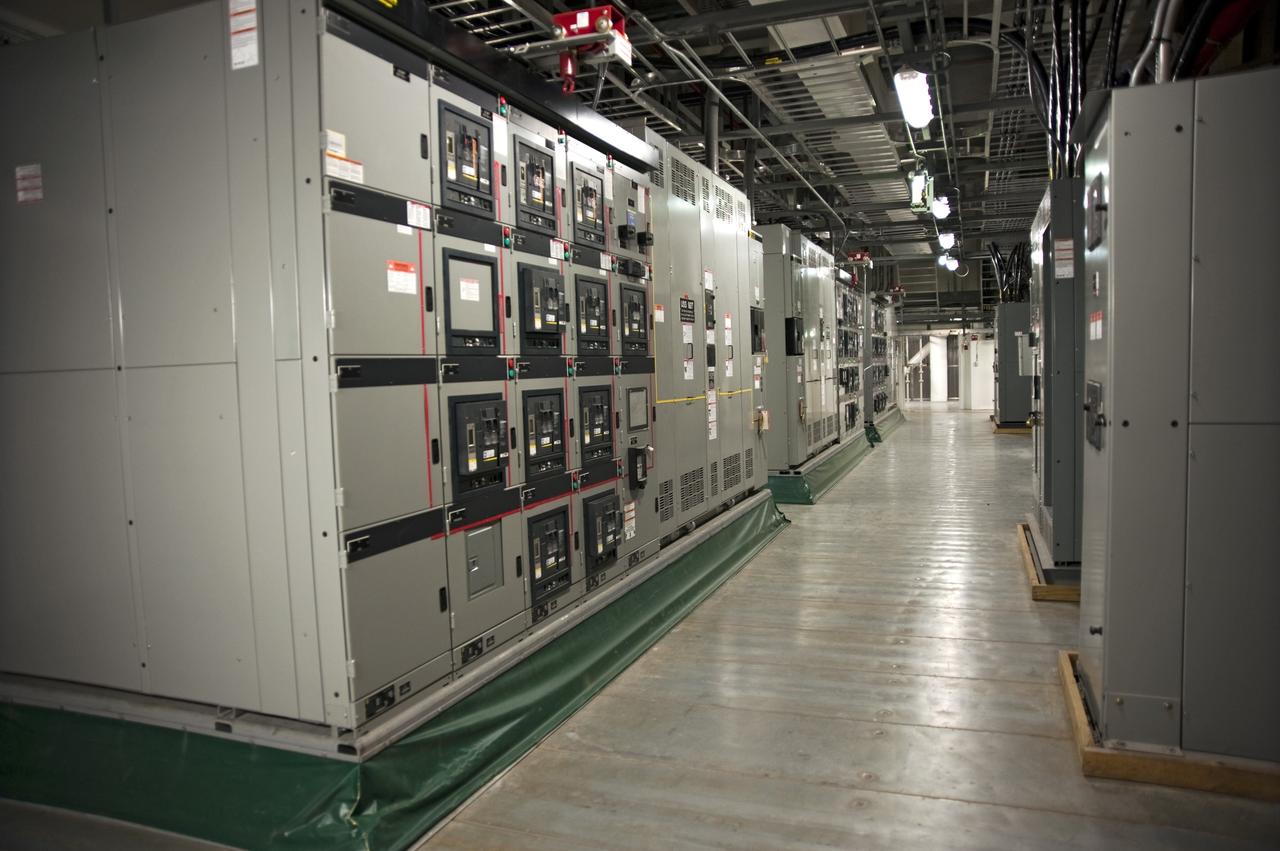
CAPE CANAVERAL, Fla. -- The interior of NASA's new mobile launcher, or ML, support structure is outfitted with solid steel flooring, lights, air conditioning, electrical boxes and sprinkler piping at NASA's Kennedy Space Center in Florida. The 355-foot-tall structure will support NASA's future human spaceflight program. The base of the launcher is lighter than space shuttle mobile launcher platforms so the crawler-transporter can pick up the heavier load of the tower and a taller rocket. The next step will be to add ground support equipment, such as umbilicals and access arms, for future rocket launches. For information on NASA's future plans, visit www.nasa.gov. Photo credit: NASA/Kim Shiflett
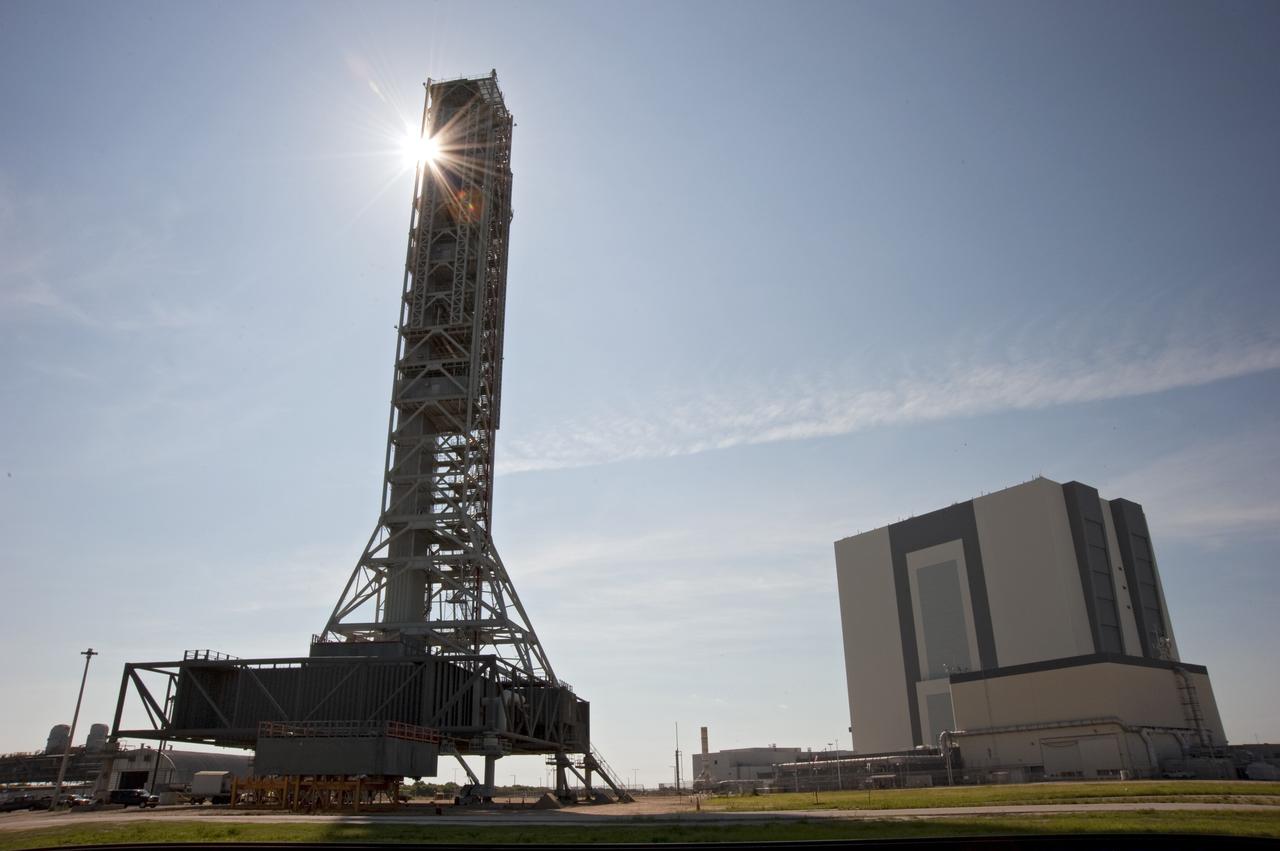
CAPE CANAVERAL, Fla. -- At NASA's Kennedy Space Center in Florida, NASA's new mobile launcher, or ML, support structure stands next to the 525-foot-tall Vehicle Assembly Building, or VAB. It took about two years to construct the launcher in the Mobile Launcher Park site, north of the VAB. The 355-foot-tall structure will support NASA's future human spaceflight program. The base of the launcher is lighter than space shuttle mobile launcher platforms so the crawler-transporter can pick up the heavier load of the tower and a taller rocket. The next step will be to add ground support equipment, such as umbilicals and access arms, for future rocket launches. For information on NASA's future plans, visit www.nasa.gov. Photo credit: NASA/Kim Shiflett
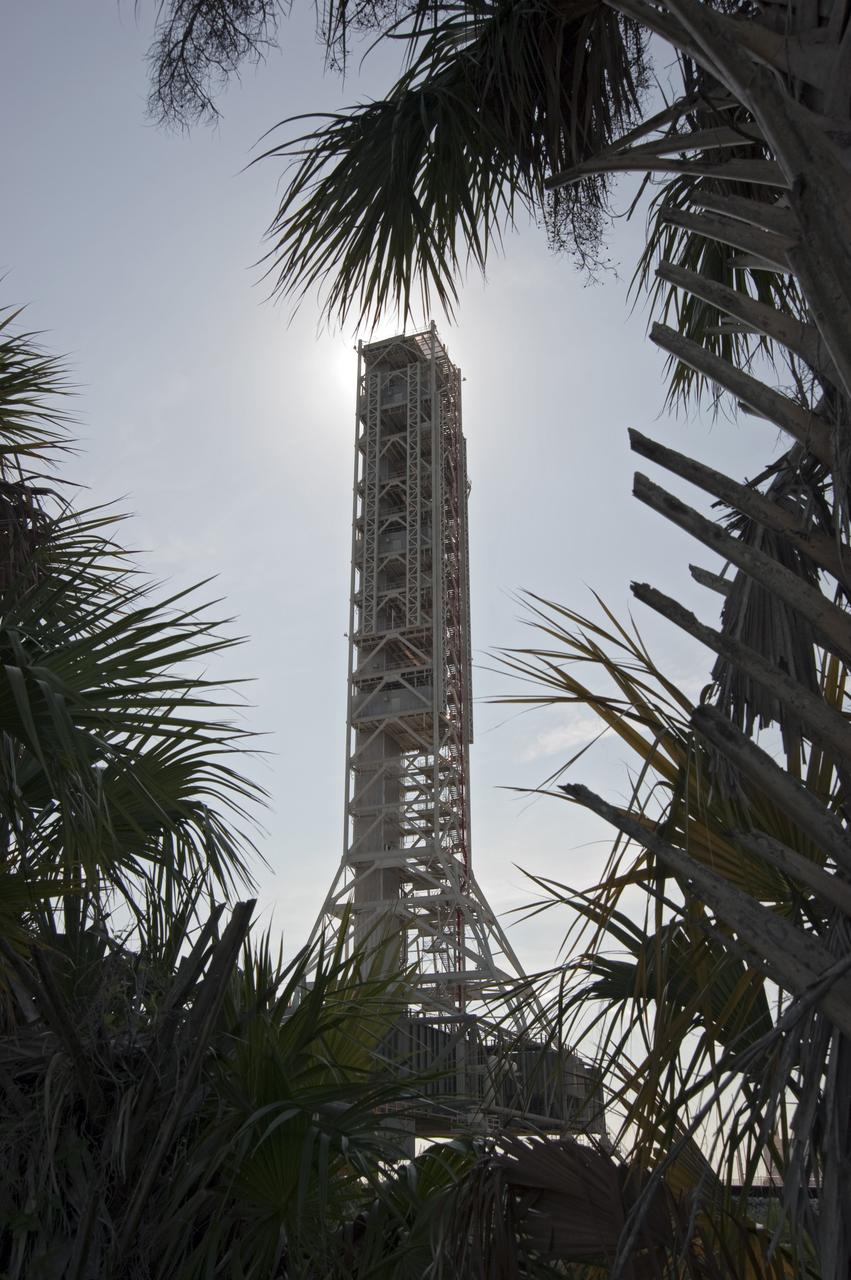
CAPE CANAVERAL, Fla. -- NASA's new mobile launcher, or ML, support structure stands tall at NASA's Kennedy Space Center in Florida. It took about two years to construct the launcher in the Mobile Launcher Park site, north of the Vehicle Assembly Building, or VAB. The 355-foot-tall structure will support NASA's future human spaceflight program. The base of the launcher is lighter than space shuttle mobile launcher platforms so the crawler-transporter can pick up the heavier load of the tower and a taller rocket. The next step will be to add ground support equipment, such as umbilicals and access arms, for future rocket launches. For information on NASA's future plans, visit www.nasa.gov. Photo credit: NASA/Kim Shiflett
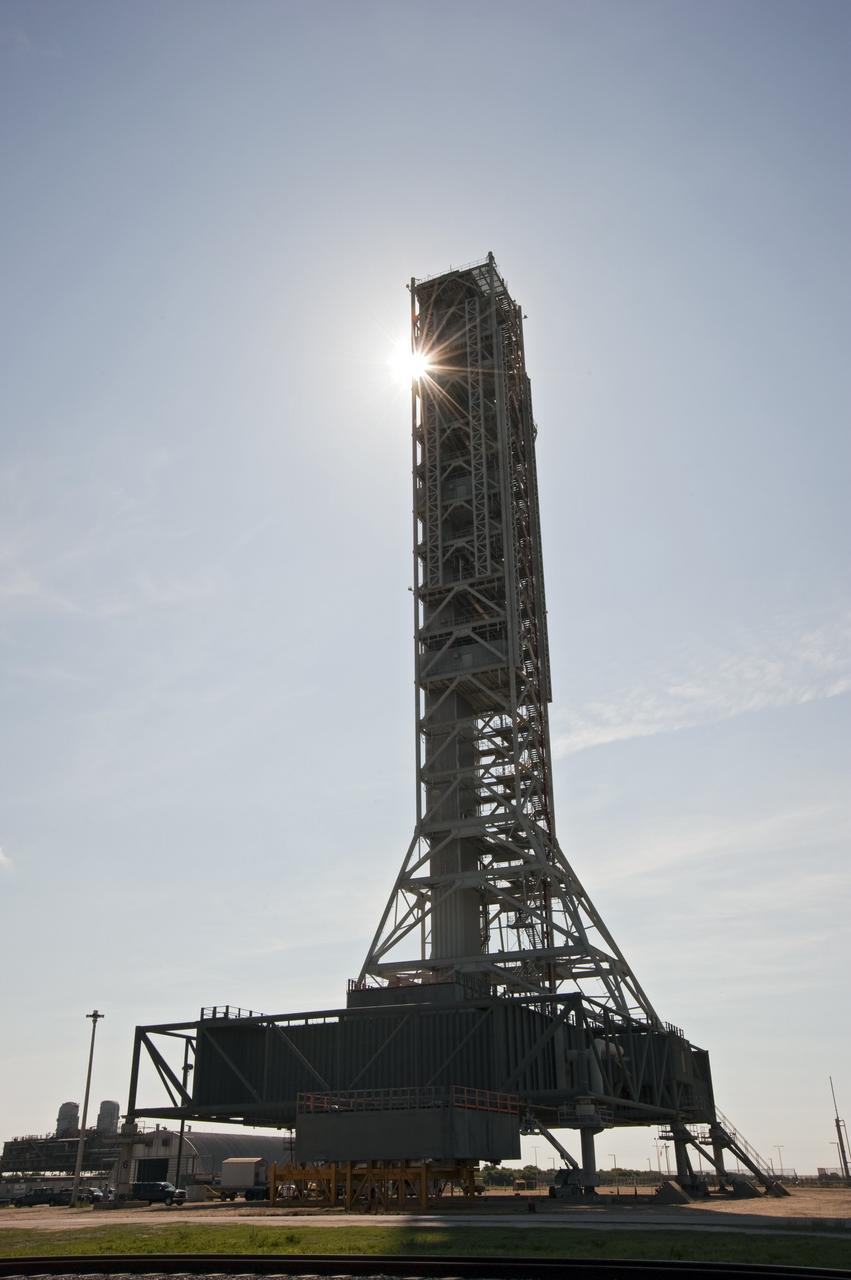
CAPE CANAVERAL, Fla. -- NASA's new mobile launcher, or ML, support structure stands tall at NASA's Kennedy Space Center in Florida. It took about two years to construct the launcher in the Mobile Launcher Park site, north of the Vehicle Assembly Building, or VAB. The 355-foot-tall structure will support NASA's future human spaceflight program. The base of the launcher is lighter than space shuttle mobile launcher platforms so the crawler-transporter can pick up the heavier load of the tower and a taller rocket. The next step will be to add ground support equipment, such as umbilicals and access arms, for future rocket launches. For information on NASA's future plans, visit www.nasa.gov. Photo credit: NASA/Kim Shiflett
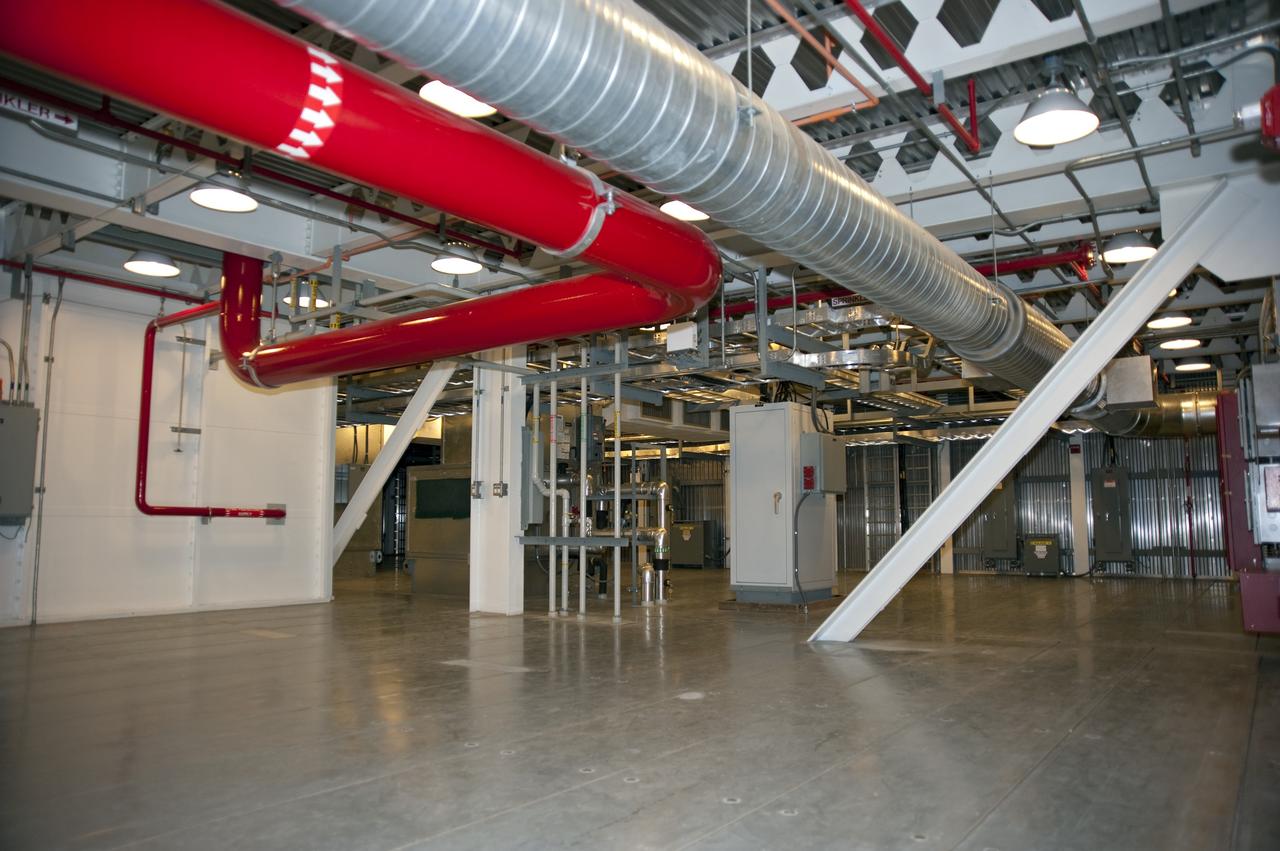
CAPE CANAVERAL, Fla. -- The interior of NASA's new mobile launcher, or ML, support structure is outfitted with solid steel flooring, lights, air conditioning, electrical boxes and sprinkler piping at NASA's Kennedy Space Center in Florida. The 355-foot-tall structure will support NASA's future human spaceflight program. The base of the launcher is lighter than space shuttle mobile launcher platforms so the crawler-transporter can pick up the heavier load of the tower and a taller rocket. The next step will be to add ground support equipment, such as umbilicals and access arms, for future rocket launches. For information on NASA's future plans, visit www.nasa.gov. Photo credit: NASA/Kim Shiflett

CAPE CANAVERAL, Fla. -- At NASA's Kennedy Space Center in Florida, Launch Pad 39A is seen in the distance from the tower of NASA's new mobile launcher, or ML, support structure. It took about two years to construct the launcher in the Mobile Launcher Park site, north of the Vehicle Assembly Building, or VAB. The 355-foot-tall structure will support NASA's future human spaceflight program. The base of the launcher is lighter than space shuttle mobile launcher platforms so the crawler-transporter can pick up the heavier load of the tower and a taller rocket. The next step will be to add ground support equipment, such as umbilicals and access arms, for future rocket launches. For information on NASA's future plans, visit www.nasa.gov. Photo credit: NASA/Kim Shiflett
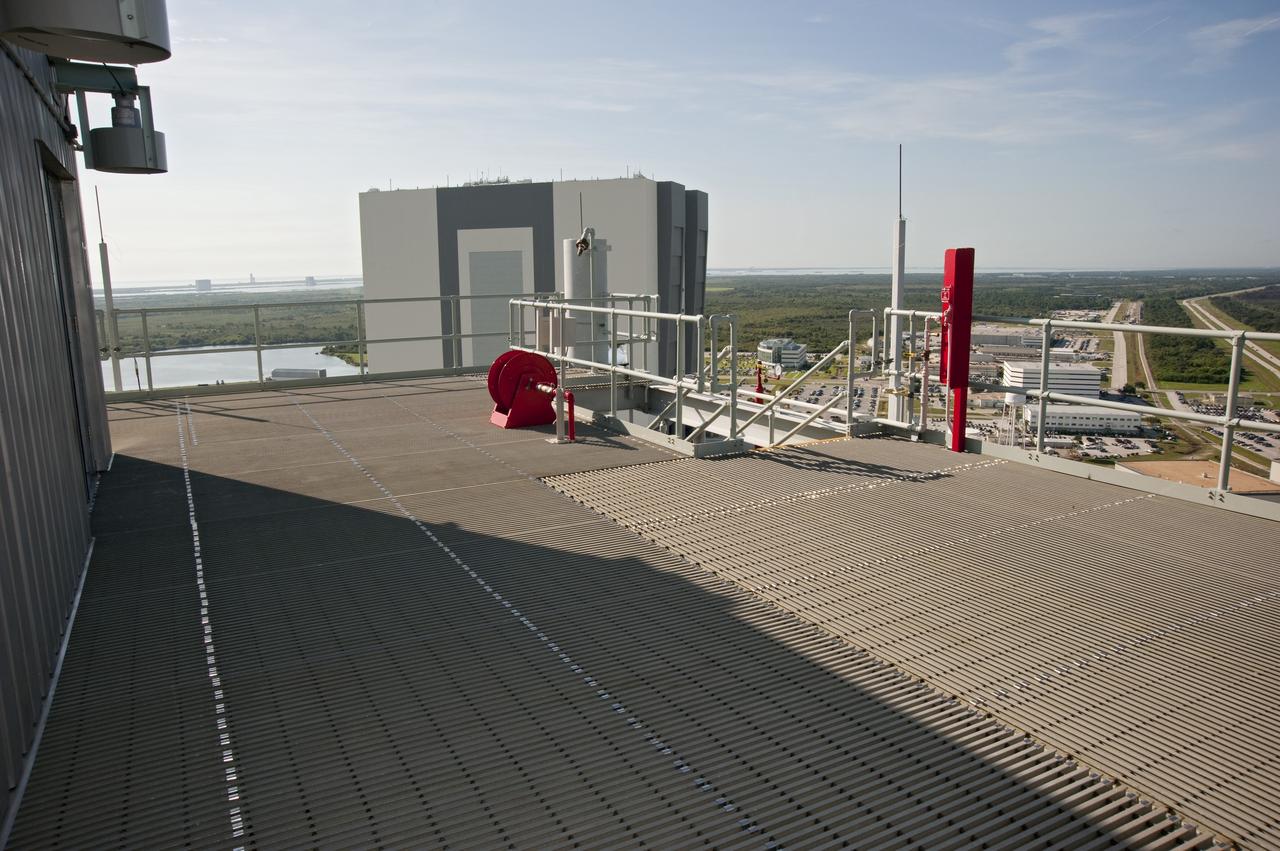
CAPE CANAVERAL, Fla. -- At NASA's Kennedy Space Center in Florida, the top of the 525-foot-tall Vehicle Assembly Building, or VAB, is seen from the tower of NASA's new mobile launcher, or ML, support structure. It took about two years to construct the launcher in the Mobile Launcher Park site, north of the VAB. The 355-foot-tall structure will support NASA's future human spaceflight program. The base of the launcher is lighter than space shuttle mobile launcher platforms so the crawler-transporter can pick up the heavier load of the tower and a taller rocket. The next step will be to add ground support equipment, such as umbilicals and access arms, for future rocket launches. For information on NASA's future plans, visit www.nasa.gov. Photo credit: NASA/Kim Shiflett
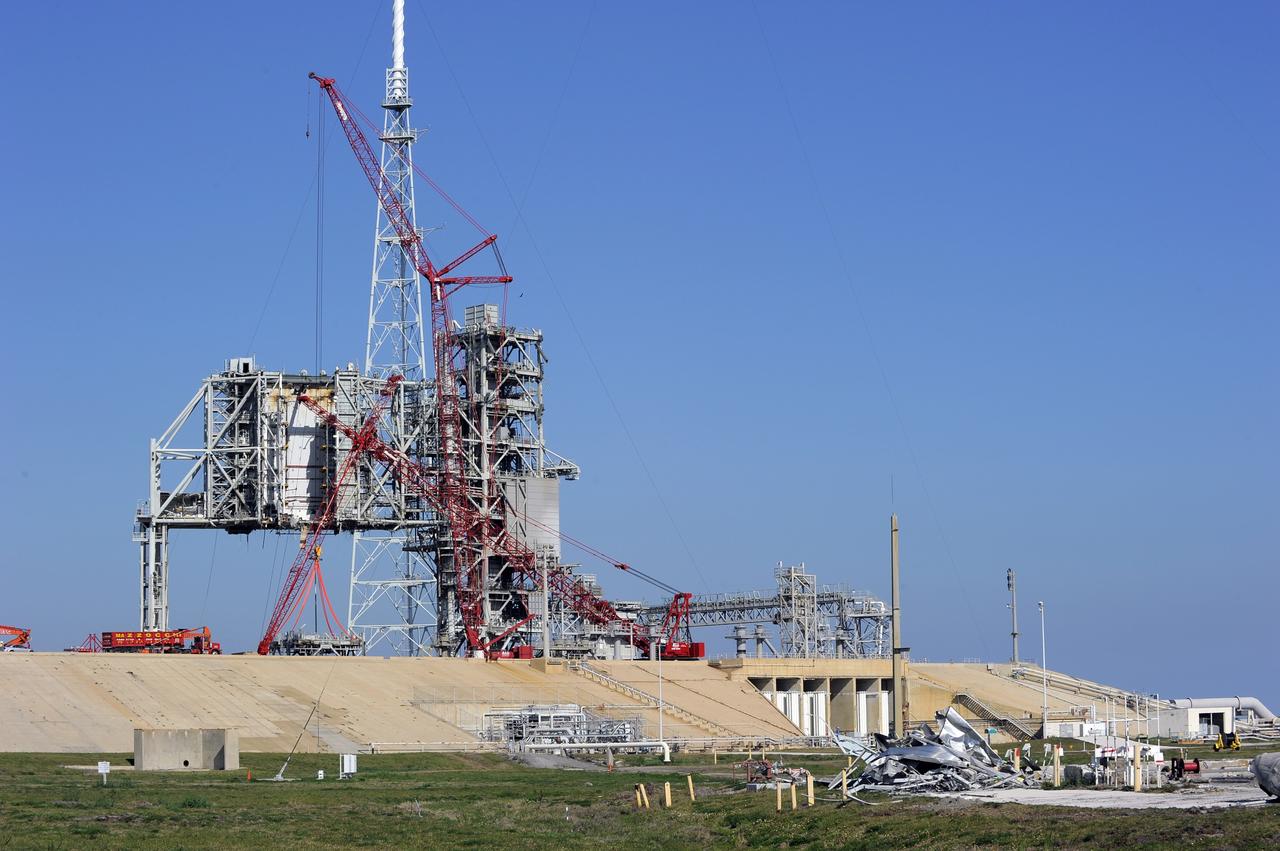
CAPE CANAVERAL, Fla. -- A large crane dismantles another level of the fixed service structure (FSS) on Launch Pad 39B at NASA's Kennedy Space Center in Florida. Work to remove the rotating service structure (RSS) also continues at the pad. The FSS and RSS were designed to support the unique needs of the Space Shuttle Program. In 2009, the pad was no longer needed for the shuttle program, so it is being restructured for future use. Its new design will feature a "clean pad" for rockets to come with their own launcher, making it more versatile for a number of vehicles. The transformation also includes the refurbishment of the liquid oxygen and liquid hydrogen tanks and the upgrade of about 1.3 million feet of cable. The new lightning protection system, which was in place for the October 2009 launch of Ares I-X, will remain. For information on NASA's future plans, visit www.nasa.gov. Photo credit: NASA/Kim Shiflett
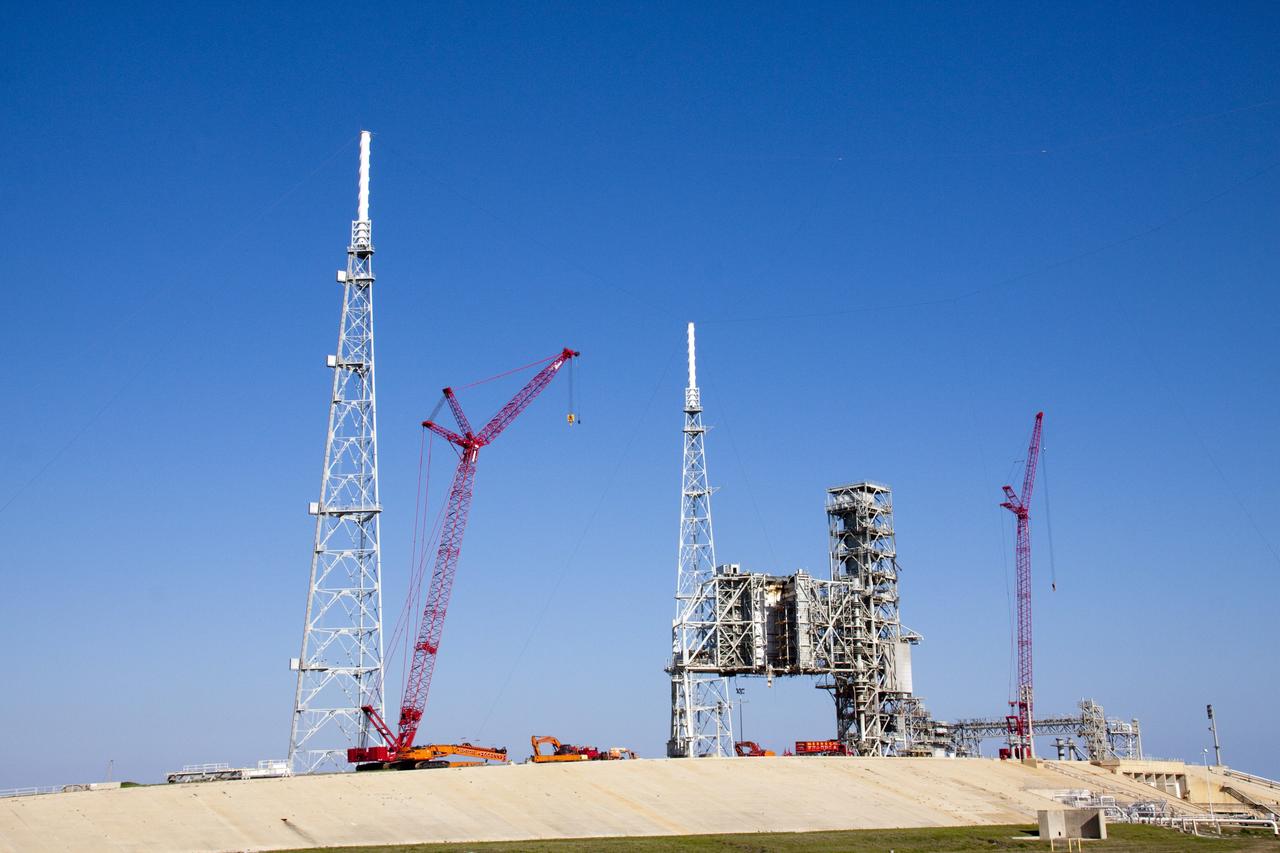
CAPE CANAVERAL, Fla. -- At NASA's Kennedy Space Center in Florida, two large cranes will assist in the removal of Launch Pad 39B's fixed service structure FSS and rotating service structure RSS. The FSS and RSS were designed to support the unique needs of the Space Shuttle Program. In 2009, the pad was no longer needed for the shuttle program, so it is being restructured for future use. Its new design will feature a "clean pad" for rockets to come with their own launcher, making it more versatile for a number of vehicles. The transformation also includes the refurbishment of the liquid oxygen and liquid hydrogen tanks and the upgrade of about 1.3 million feet of cable. The new lightning protection system, which was in place for the October 2009 launch of Ares I-X, will remain. For information on NASA's future plans, visit www.nasa.gov. Photo credit: NASA/Troy Cryder
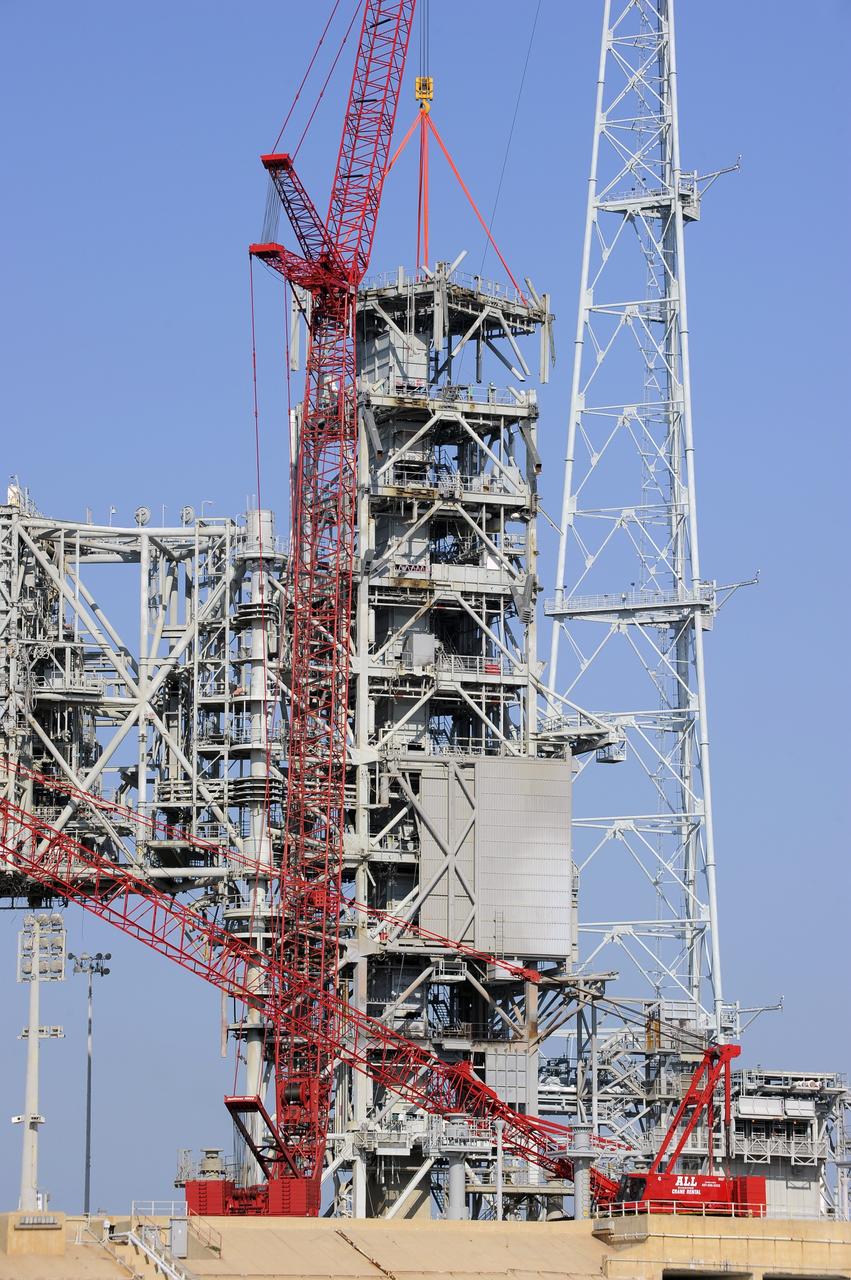
CAPE CANAVERAL, Fla. -- A large crane dismantles another level of the fixed service structure (FSS) on Launch Pad 39B at NASA's Kennedy Space Center in Florida. Work to remove the rotating service structure (RSS) also continues at the pad. The FSS and RSS were designed to support the unique needs of the Space Shuttle Program. In 2009, the pad was no longer needed for the shuttle program, so it is being restructured for future use. Its new design will feature a "clean pad" for rockets to come with their own launcher, making it more versatile for a number of vehicles. The transformation also includes the refurbishment of the liquid oxygen and liquid hydrogen tanks and the upgrade of about 1.3 million feet of cable. The new lightning protection system, which was in place for the October 2009 launch of Ares I-X, will remain. For information on NASA's future plans, visit www.nasa.gov. Photo credit: NASA/Kim Shiflett
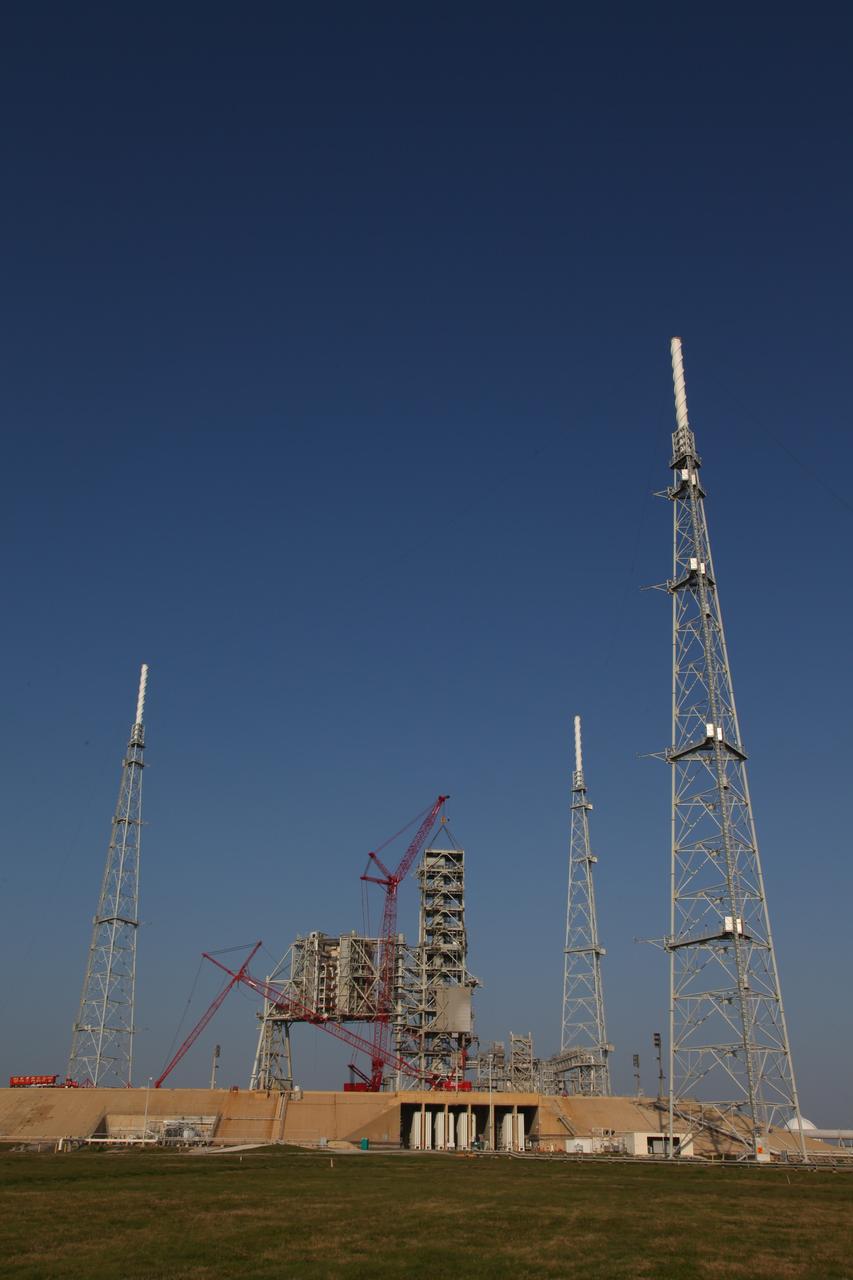
CAPE CANAVERAL, Fla. -- A large crane dismantles the fixed service structure FSS piece by piece on Launch Pad 39B at NASA's Kennedy Space Center in Florida. Work to remove the rotating service structure RSS also continues at the pad. The FSS and RSS were designed to support the unique needs of the Space Shuttle Program. In 2009, the pad was no longer needed for the shuttle program, so it is being restructured for future use. Its new design will feature a "clean pad" for rockets to come with their own launcher, making it more versatile for a number of vehicles. The transformation also includes the refurbishment of the liquid oxygen and liquid hydrogen tanks and the upgrade of about 1.3 million feet of cable. The new lightning protection system, which was in place for the October 2009 launch of Ares I-X, will remain. For information on NASA's future plans, visit www.nasa.gov. Photo credit: NASA/Frankie Martin

CAPE CANAVERAL, Fla. -- A large crane dismantles the fixed service structure FSS piece by piece on Launch Pad 39B at NASA's Kennedy Space Center in Florida. Work to remove the rotating service structure RSS also continues at the pad. The FSS and RSS were designed to support the unique needs of the Space Shuttle Program. In 2009, the pad was no longer needed for the shuttle program, so it is being restructured for future use. Its new design will feature a "clean pad" for rockets to come with their own launcher, making it more versatile for a number of vehicles. The transformation also includes the refurbishment of the liquid oxygen and liquid hydrogen tanks and the upgrade of about 1.3 million feet of cable. The new lightning protection system, which was in place for the October 2009 launch of Ares I-X, will remain. For information on NASA's future plans, visit www.nasa.gov. Photo credit: NASA/Frankie Martin
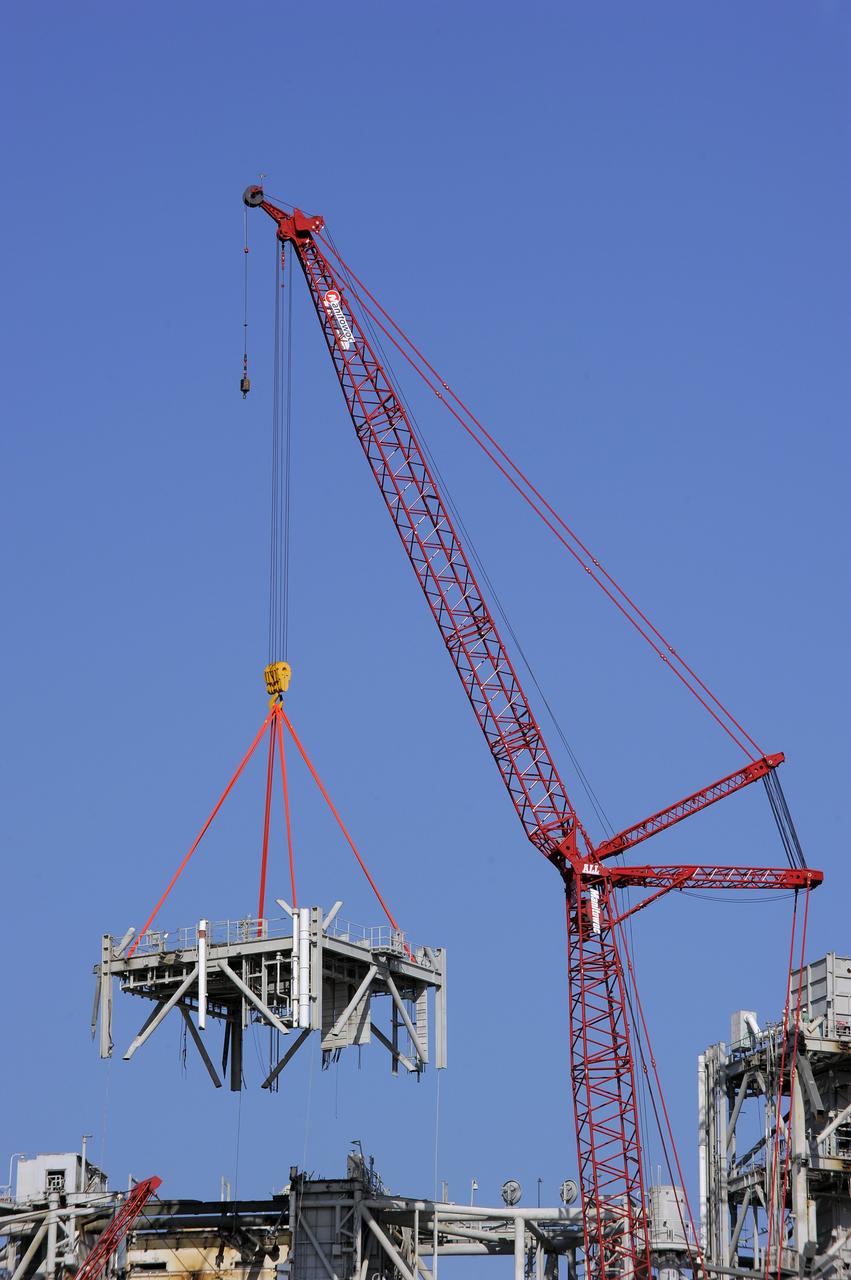
CAPE CANAVERAL, Fla. -- A large crane dismantles another level of the fixed service structure (FSS) on Launch Pad 39B at NASA's Kennedy Space Center in Florida. Work to remove the rotating service structure (RSS) also continues at the pad. The FSS and RSS were designed to support the unique needs of the Space Shuttle Program. In 2009, the pad was no longer needed for the shuttle program, so it is being restructured for future use. Its new design will feature a "clean pad" for rockets to come with their own launcher, making it more versatile for a number of vehicles. The transformation also includes the refurbishment of the liquid oxygen and liquid hydrogen tanks and the upgrade of about 1.3 million feet of cable. The new lightning protection system, which was in place for the October 2009 launch of Ares I-X, will remain. For information on NASA's future plans, visit www.nasa.gov. Photo credit: NASA/Kim Shiflett
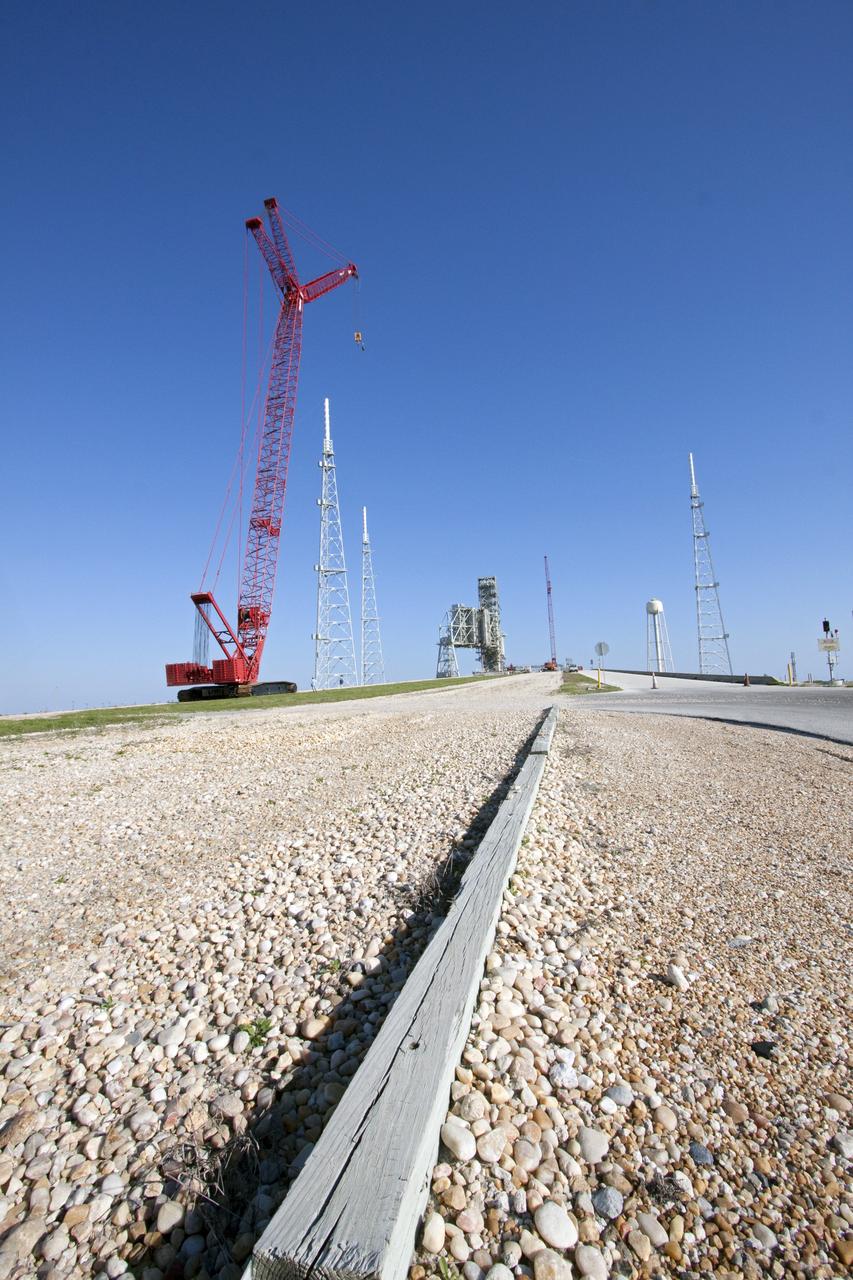
CAPE CANAVERAL, Fla. -- At NASA's Kennedy Space Center in Florida, a large crane makes its way up to the surface of Launch Pad 39B to assist in the removal of the fixed service structure FSS. Removal of the pad's rotating service structure RSS continues. The FSS and RSS were designed to support the unique needs of the Space Shuttle Program. In 2009, the pad was no longer needed for the shuttle program, so it is being restructured for future use. Its new design will feature a "clean pad" for rockets to come with their own launcher, making it more versatile for a number of vehicles. The transformation also includes the refurbishment of the liquid oxygen and liquid hydrogen tanks and the upgrade of about 1.3 million feet of cable. The new lightning protection system, which was in place for the October 2009 launch of Ares I-X, will remain. For information on NASA's future plans, visit www.nasa.gov. Photo credit: NASA/Troy Cryder
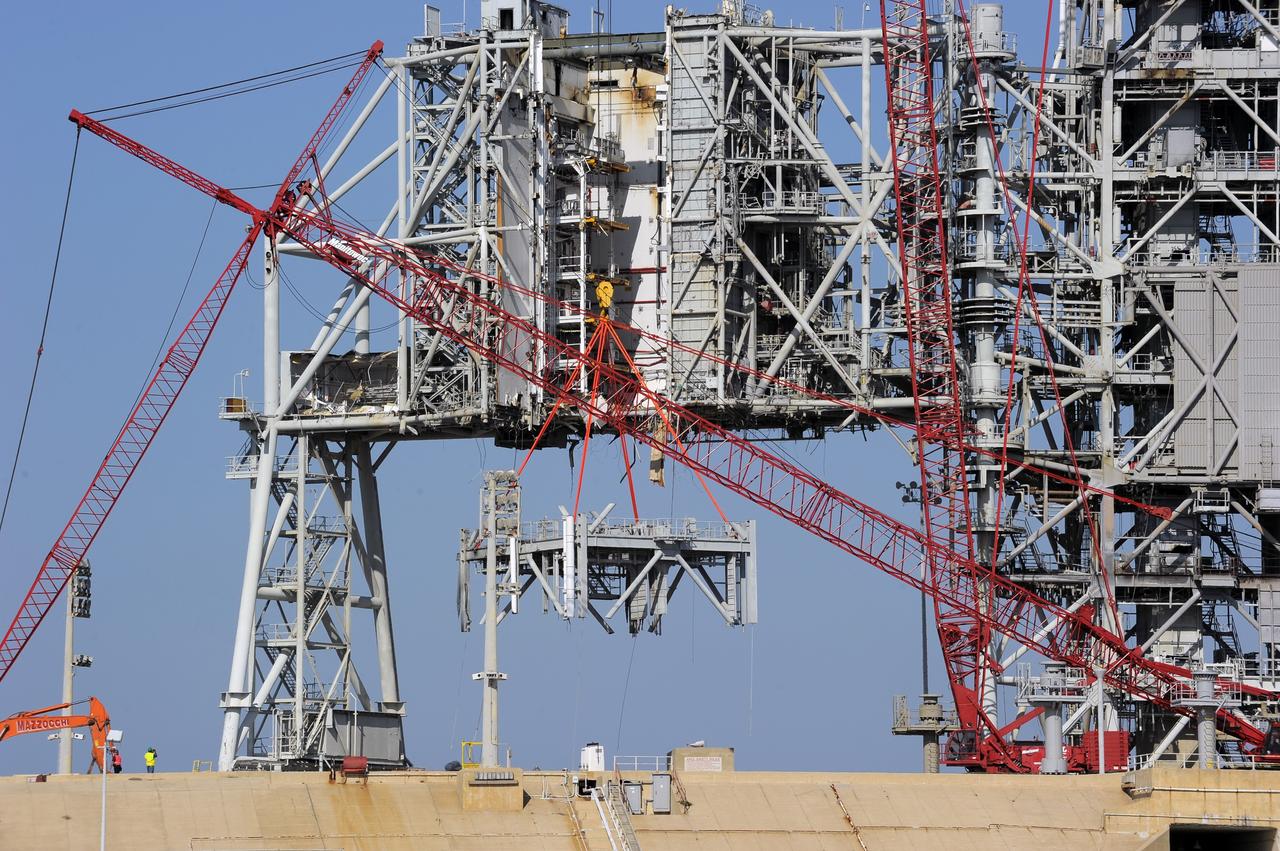
CAPE CANAVERAL, Fla. -- A large crane dismantles another level of the fixed service structure (FSS) on Launch Pad 39B at NASA's Kennedy Space Center in Florida. Work to remove the rotating service structure (RSS) also continues at the pad. The FSS and RSS were designed to support the unique needs of the Space Shuttle Program. In 2009, the pad was no longer needed for the shuttle program, so it is being restructured for future use. Its new design will feature a "clean pad" for rockets to come with their own launcher, making it more versatile for a number of vehicles. The transformation also includes the refurbishment of the liquid oxygen and liquid hydrogen tanks and the upgrade of about 1.3 million feet of cable. The new lightning protection system, which was in place for the October 2009 launch of Ares I-X, will remain. For information on NASA's future plans, visit www.nasa.gov. Photo credit: NASA/Kim Shiflett
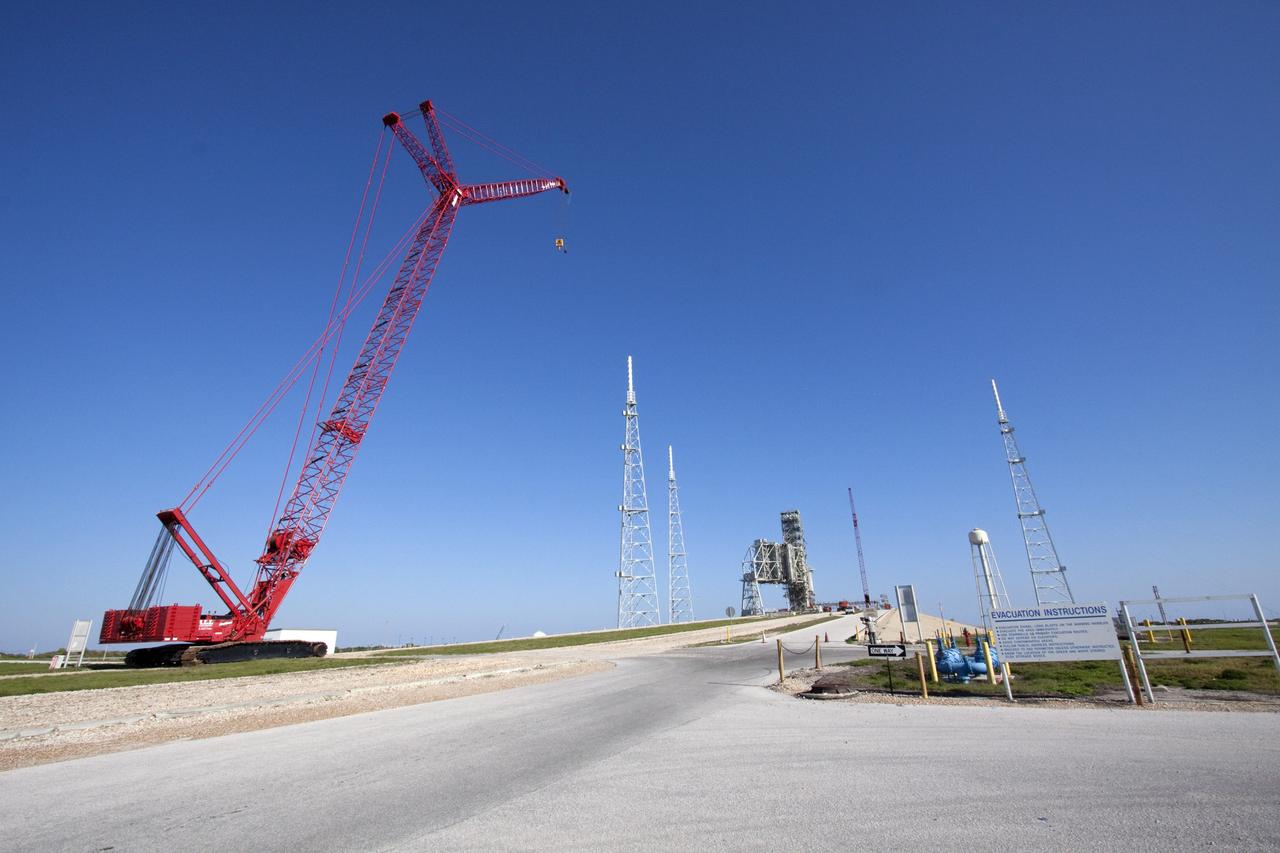
CAPE CANAVERAL, Fla. -- At NASA's Kennedy Space Center in Florida, a large crane makes its way up to the surface of Launch Pad 39B to assist in the removal of the fixed service structure FSS. Removal of the pad's rotating service structure RSS continues. The FSS and RSS were designed to support the unique needs of the Space Shuttle Program. In 2009, the pad was no longer needed for the shuttle program, so it is being restructured for future use. Its new design will feature a "clean pad" for rockets to come with their own launcher, making it more versatile for a number of vehicles. The transformation also includes the refurbishment of the liquid oxygen and liquid hydrogen tanks and the upgrade of about 1.3 million feet of cable. The new lightning protection system, which was in place for the October 2009 launch of Ares I-X, will remain. For information on NASA's future plans, visit www.nasa.gov. Photo credit: NASA/Troy Cryder
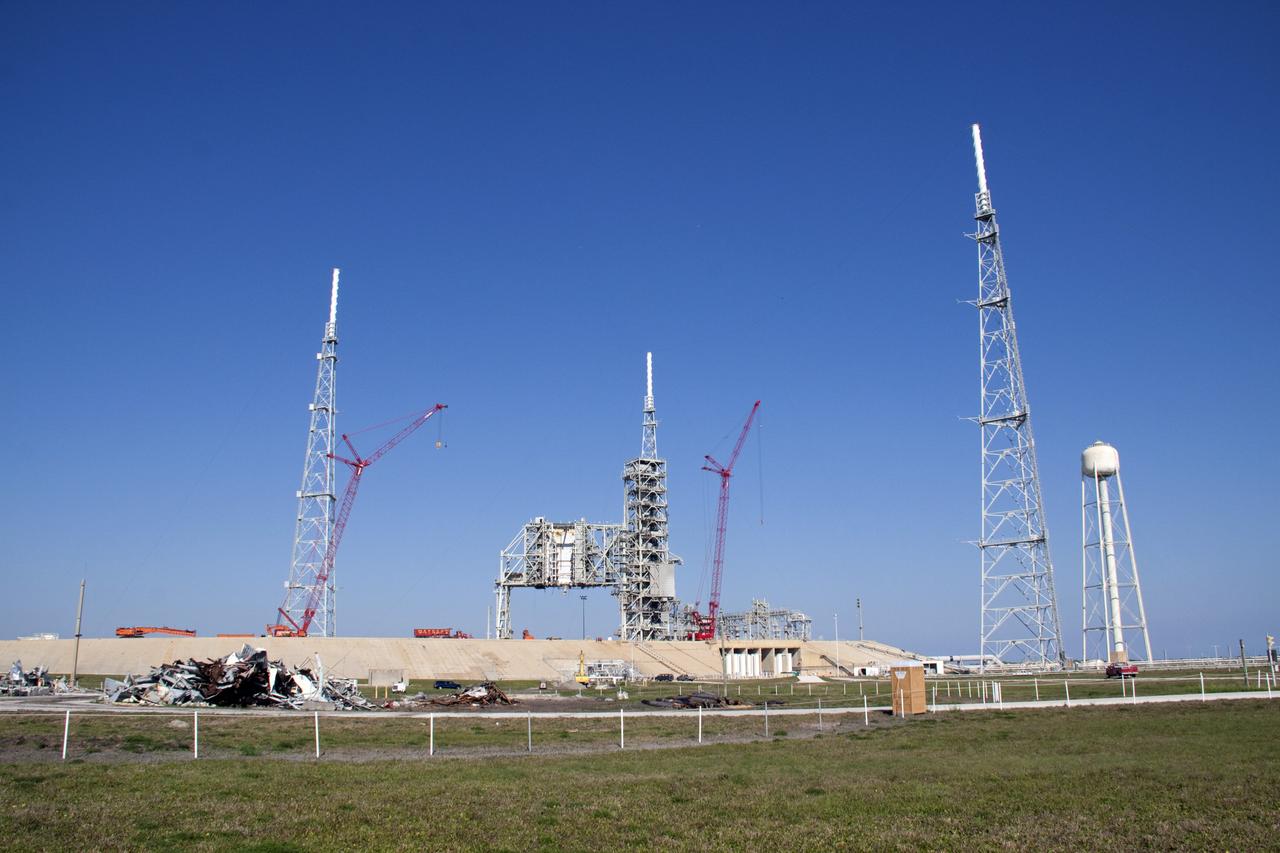
CAPE CANAVERAL, Fla. -- At NASA's Kennedy Space Center in Florida, two large cranes will assist in the removal of Launch Pad 39B's fixed service structure FSS and rotating service structure RSS. The FSS and RSS were designed to support the unique needs of the Space Shuttle Program. In 2009, the pad was no longer needed for the shuttle program, so it is being restructured for future use. Its new design will feature a "clean pad" for rockets to come with their own launcher, making it more versatile for a number of vehicles. The transformation also includes the refurbishment of the liquid oxygen and liquid hydrogen tanks and the upgrade of about 1.3 million feet of cable. The new lightning protection system, which was in place for the October 2009 launch of Ares I-X, will remain. For information on NASA's future plans, visit www.nasa.gov. Photo credit: NASA/Troy Cryder
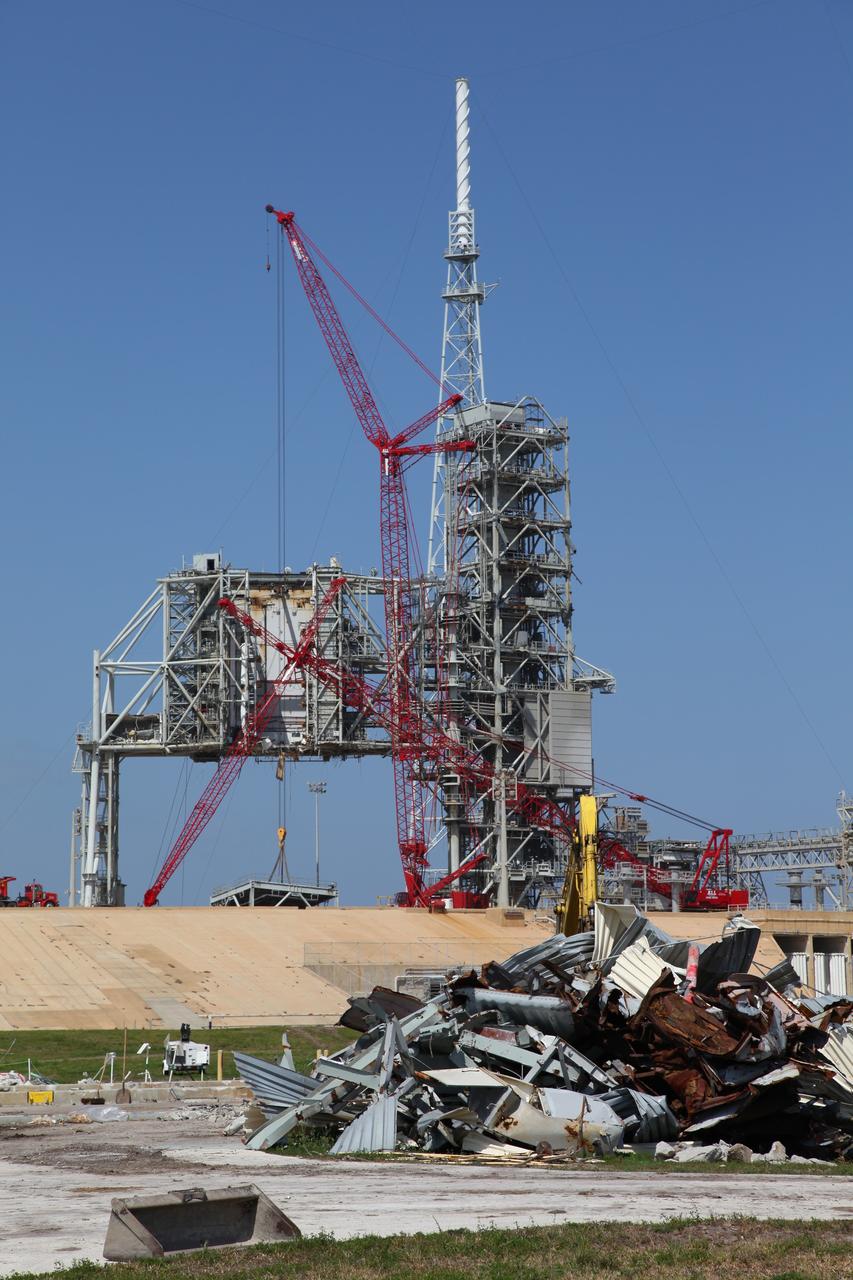
CAPE CANAVERAL, Fla. -- A large crane dismantles the fixed service structure (FSS) piece by piece on Launch Pad 39B at NASA's Kennedy Space Center in Florida. Work to remove the rotating service structure (RSS) also continues at the pad. The FSS and RSS were designed to support the unique needs of the Space Shuttle Program. In 2009, the pad was no longer needed for the shuttle program, so it is being restructured for future use. Its new design will feature a "clean pad" for rockets to come with their own launcher, making it more versatile for a number of vehicles. The transformation also includes the refurbishment of the liquid oxygen and liquid hydrogen tanks and the upgrade of about 1.3 million feet of cable. The new lightning protection system, which was in place for the October 2009 launch of Ares I-X, will remain. For information on NASA's future plans, visit www.nasa.gov. Photo credit: NASA/Frankie Martin
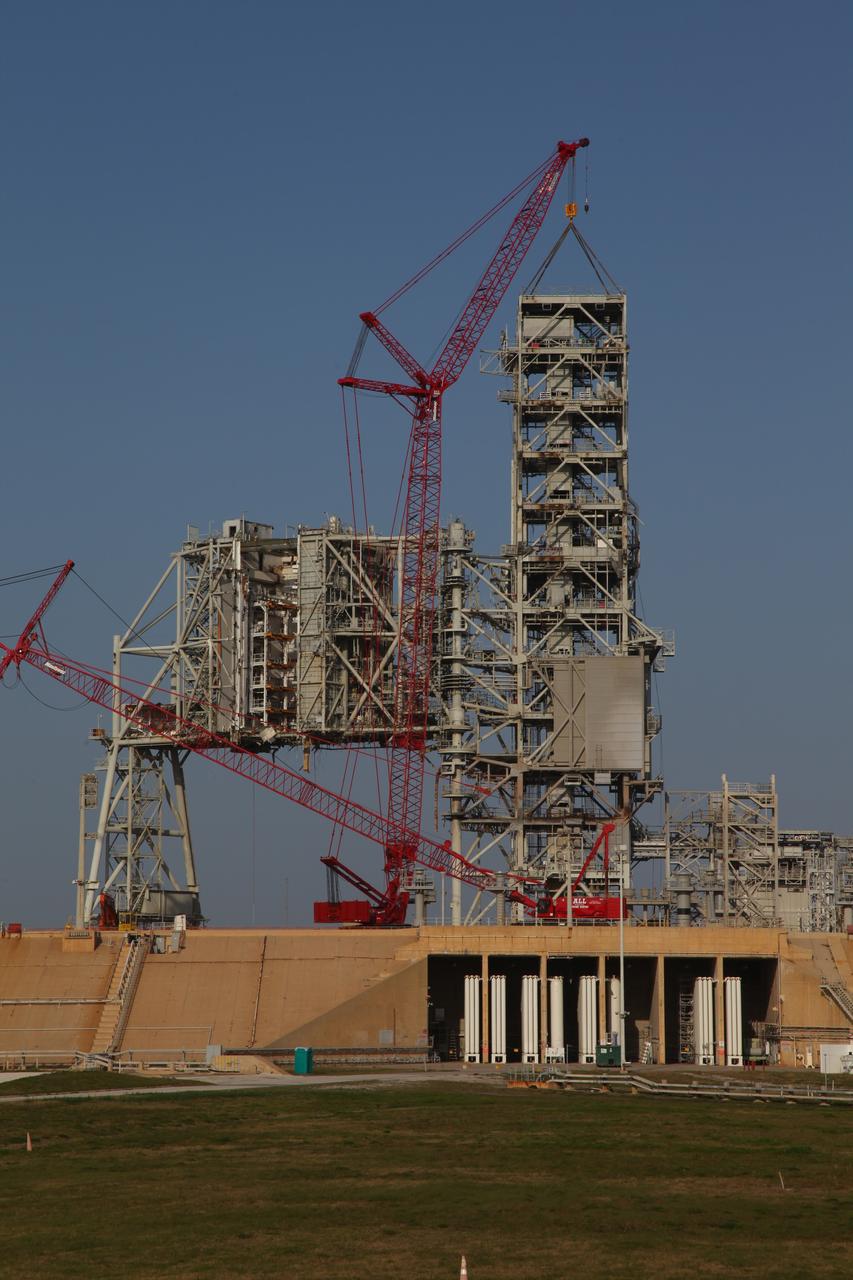
CAPE CANAVERAL, Fla. -- A large crane dismantles the fixed service structure FSS piece by piece on Launch Pad 39B at NASA's Kennedy Space Center in Florida. Work to remove the rotating service structure RSS also continues at the pad. The FSS and RSS were designed to support the unique needs of the Space Shuttle Program. In 2009, the pad was no longer needed for the shuttle program, so it is being restructured for future use. Its new design will feature a "clean pad" for rockets to come with their own launcher, making it more versatile for a number of vehicles. The transformation also includes the refurbishment of the liquid oxygen and liquid hydrogen tanks and the upgrade of about 1.3 million feet of cable. The new lightning protection system, which was in place for the October 2009 launch of Ares I-X, will remain. For information on NASA's future plans, visit www.nasa.gov. Photo credit: NASA/Frankie Martin
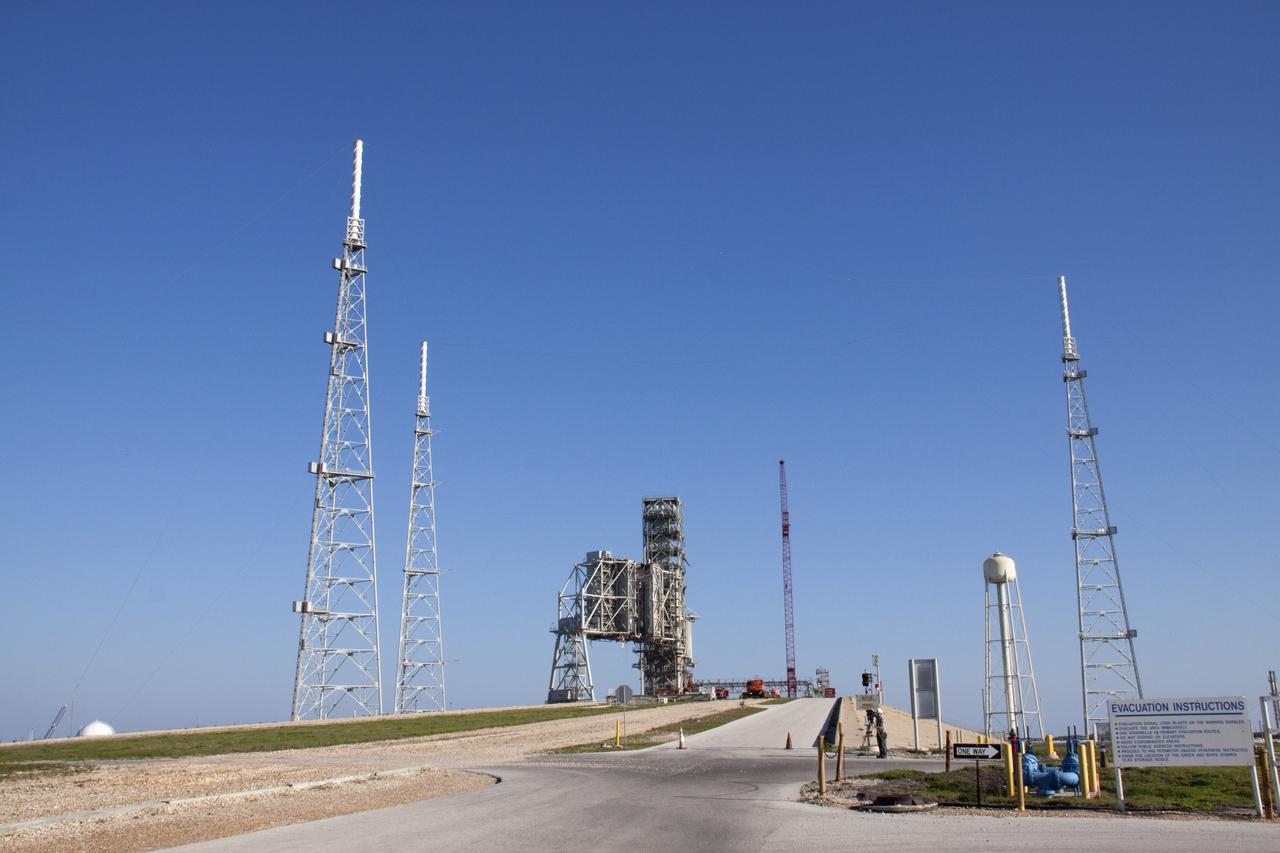
CAPE CANAVERAL, Fla. -- At NASA's Kennedy Space Center in Florida, preparations are under way to begin removing the fixed service structure FSS from Launch Pad 39B. Removal of the pad's rotating service structure RSS continues. The FSS and RSS were designed to support the unique needs of the Space Shuttle Program. In 2009, the pad was no longer needed for the shuttle program, so it is being restructured for future use. Its new design will feature a "clean pad" for rockets to come with their own launcher, making it more versatile for a number of vehicles. The transformation also includes the refurbishment of the liquid oxygen and liquid hydrogen tanks and the upgrade of about 1.3 million feet of cable. The new lightning protection system, which was in place for the October 2009 launch of Ares I-X, will remain. For information on NASA's future plans, visit www.nasa.gov. Photo credit: NASA/Troy Cryder
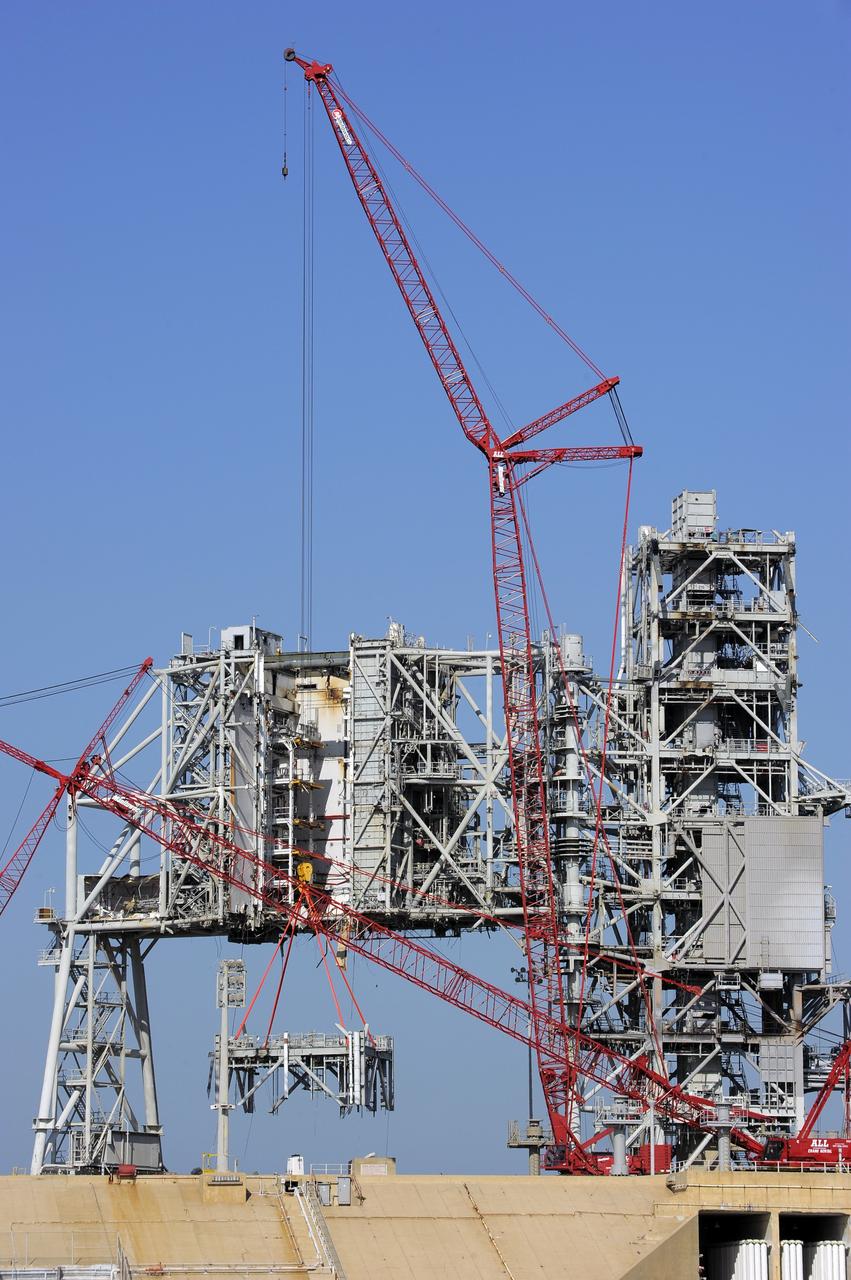
CAPE CANAVERAL, Fla. -- A large crane dismantles another level of the fixed service structure (FSS) on Launch Pad 39B at NASA's Kennedy Space Center in Florida. Work to remove the rotating service structure (RSS) also continues at the pad. The FSS and RSS were designed to support the unique needs of the Space Shuttle Program. In 2009, the pad was no longer needed for the shuttle program, so it is being restructured for future use. Its new design will feature a "clean pad" for rockets to come with their own launcher, making it more versatile for a number of vehicles. The transformation also includes the refurbishment of the liquid oxygen and liquid hydrogen tanks and the upgrade of about 1.3 million feet of cable. The new lightning protection system, which was in place for the October 2009 launch of Ares I-X, will remain. For information on NASA's future plans, visit www.nasa.gov. Photo credit: NASA/Kim Shiflett
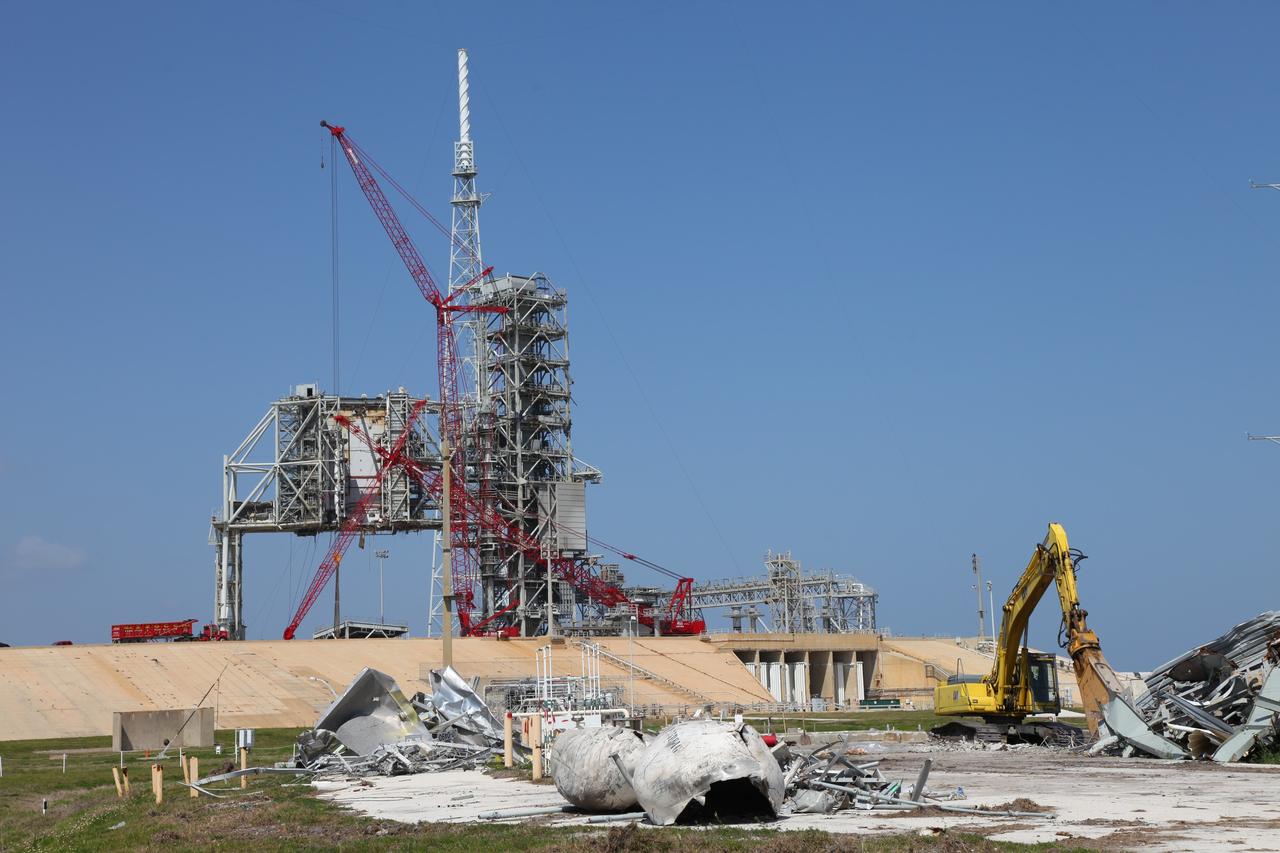
CAPE CANAVERAL, Fla. -- A large crane dismantles the fixed service structure (FSS) piece by piece on Launch Pad 39B at NASA's Kennedy Space Center in Florida. Work to remove the rotating service structure (RSS) also continues at the pad. The FSS and RSS were designed to support the unique needs of the Space Shuttle Program. In 2009, the pad was no longer needed for the shuttle program, so it is being restructured for future use. Its new design will feature a "clean pad" for rockets to come with their own launcher, making it more versatile for a number of vehicles. The transformation also includes the refurbishment of the liquid oxygen and liquid hydrogen tanks and the upgrade of about 1.3 million feet of cable. The new lightning protection system, which was in place for the October 2009 launch of Ares I-X, will remain. For information on NASA's future plans, visit www.nasa.gov. Photo credit: NASA/Frankie Martin
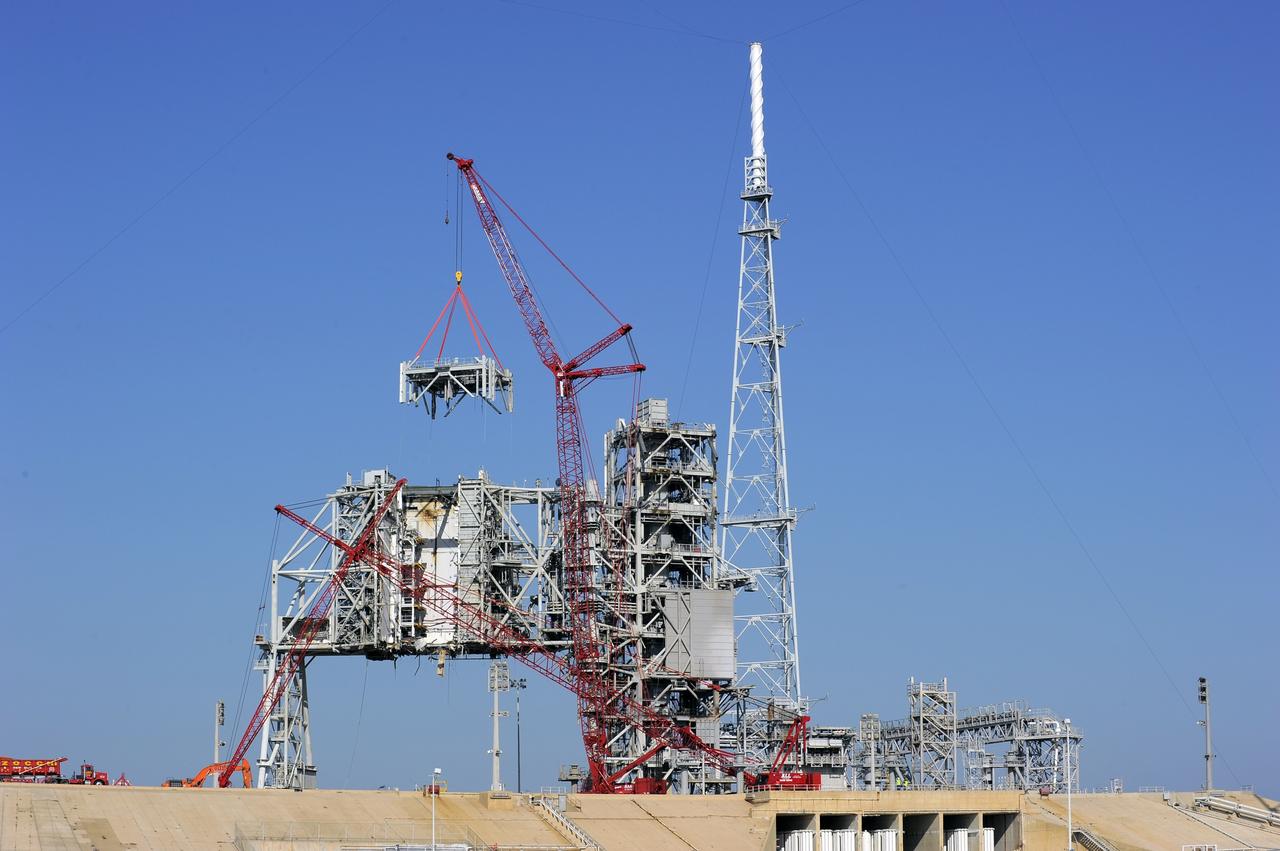
CAPE CANAVERAL, Fla. -- A large crane dismantles another level of the fixed service structure (FSS) on Launch Pad 39B at NASA's Kennedy Space Center in Florida. Work to remove the rotating service structure (RSS) also continues at the pad. The FSS and RSS were designed to support the unique needs of the Space Shuttle Program. In 2009, the pad was no longer needed for the shuttle program, so it is being restructured for future use. Its new design will feature a "clean pad" for rockets to come with their own launcher, making it more versatile for a number of vehicles. The transformation also includes the refurbishment of the liquid oxygen and liquid hydrogen tanks and the upgrade of about 1.3 million feet of cable. The new lightning protection system, which was in place for the October 2009 launch of Ares I-X, will remain. For information on NASA's future plans, visit www.nasa.gov. Photo credit: NASA/Kim Shiflett
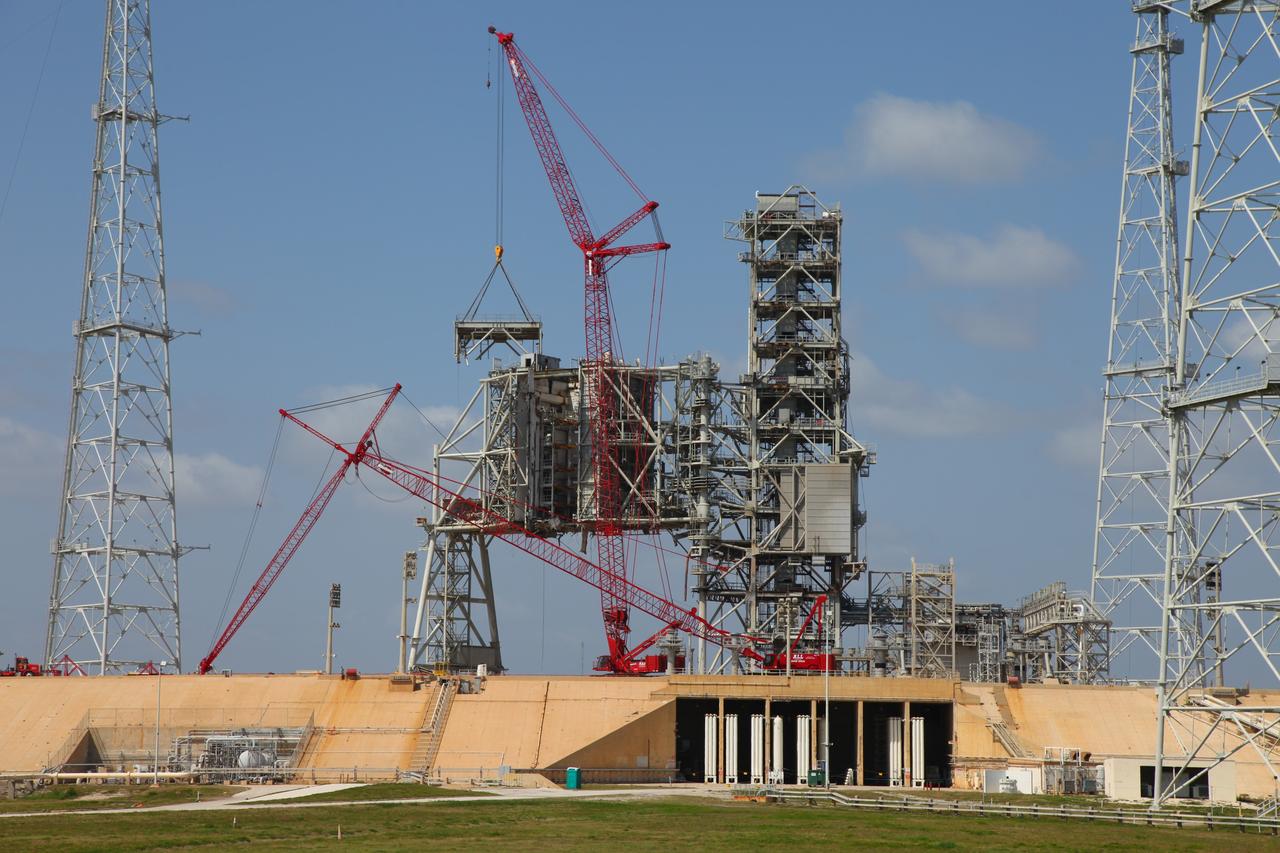
CAPE CANAVERAL, Fla. -- A large crane dismantles the fixed service structure (FSS) piece by piece on Launch Pad 39B at NASA's Kennedy Space Center in Florida. Work to remove the rotating service structure (RSS) also continues at the pad. The FSS and RSS were designed to support the unique needs of the Space Shuttle Program. In 2009, the pad was no longer needed for the shuttle program, so it is being restructured for future use. Its new design will feature a "clean pad" for rockets to come with their own launcher, making it more versatile for a number of vehicles. The transformation also includes the refurbishment of the liquid oxygen and liquid hydrogen tanks and the upgrade of about 1.3 million feet of cable. The new lightning protection system, which was in place for the October 2009 launch of Ares I-X, will remain. For information on NASA's future plans, visit www.nasa.gov. Photo credit: NASA/Frankie Martin
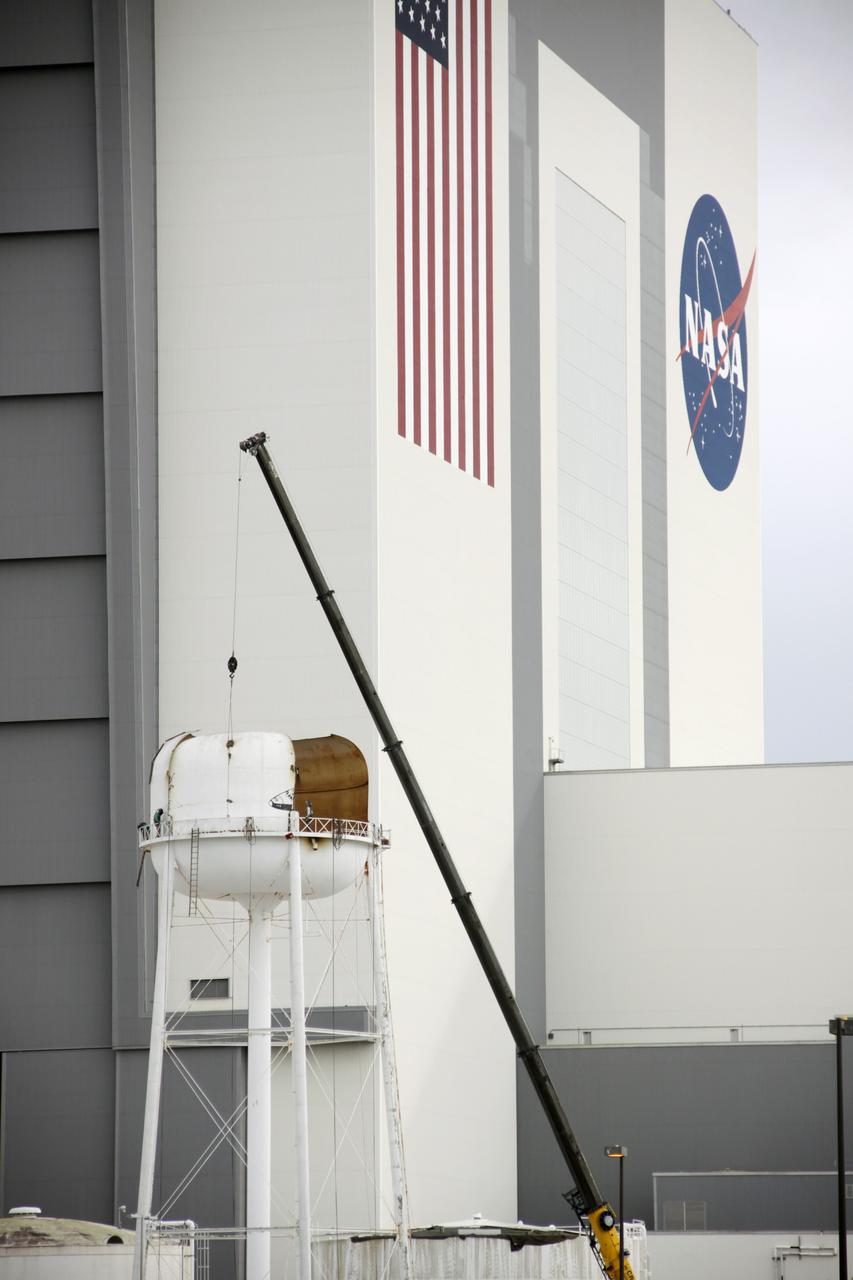
CAPE CANAVERAL, Fla. – At NASA’s Kennedy Space Center in Florida, work is underway to dismantle a water tower in the Launch Complex 39 area near the Vehicle Assembly Building. The effort is part of on-going efforts to upgrade and revitalize Kennedy's water and sewer systems to increase their reliability, sustainability and capabilities into the 21st century for current and future users. For more information, visit: http://kscpartnerships.ksc.nasa.gov/masterPlan/spaceportConcept.htm Photo credit: NASA/Tim Jacobs
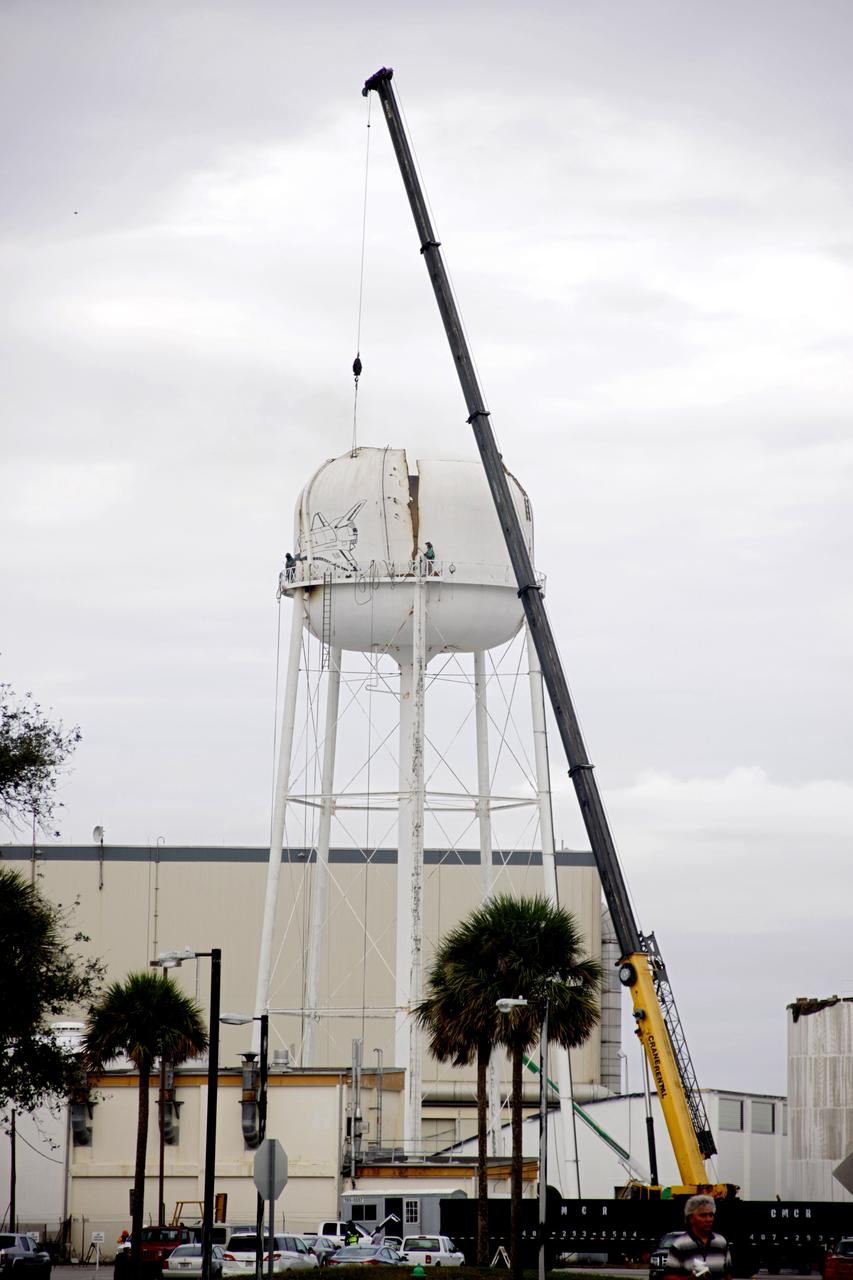
CAPE CANAVERAL, Fla. – At NASA’s Kennedy Space Center in Florida, work is underway to dismantle a water tower in the Launch Complex 39 area near the Vehicle Assembly Building. The effort is part of on-going efforts to upgrade and revitalize Kennedy's water and sewer systems to increase their reliability, sustainability and capabilities into the 21st century for current and future users. For more information, visit: http://kscpartnerships.ksc.nasa.gov/masterPlan/spaceportConcept.htm Photo credit: NASA/Tim Jacobs
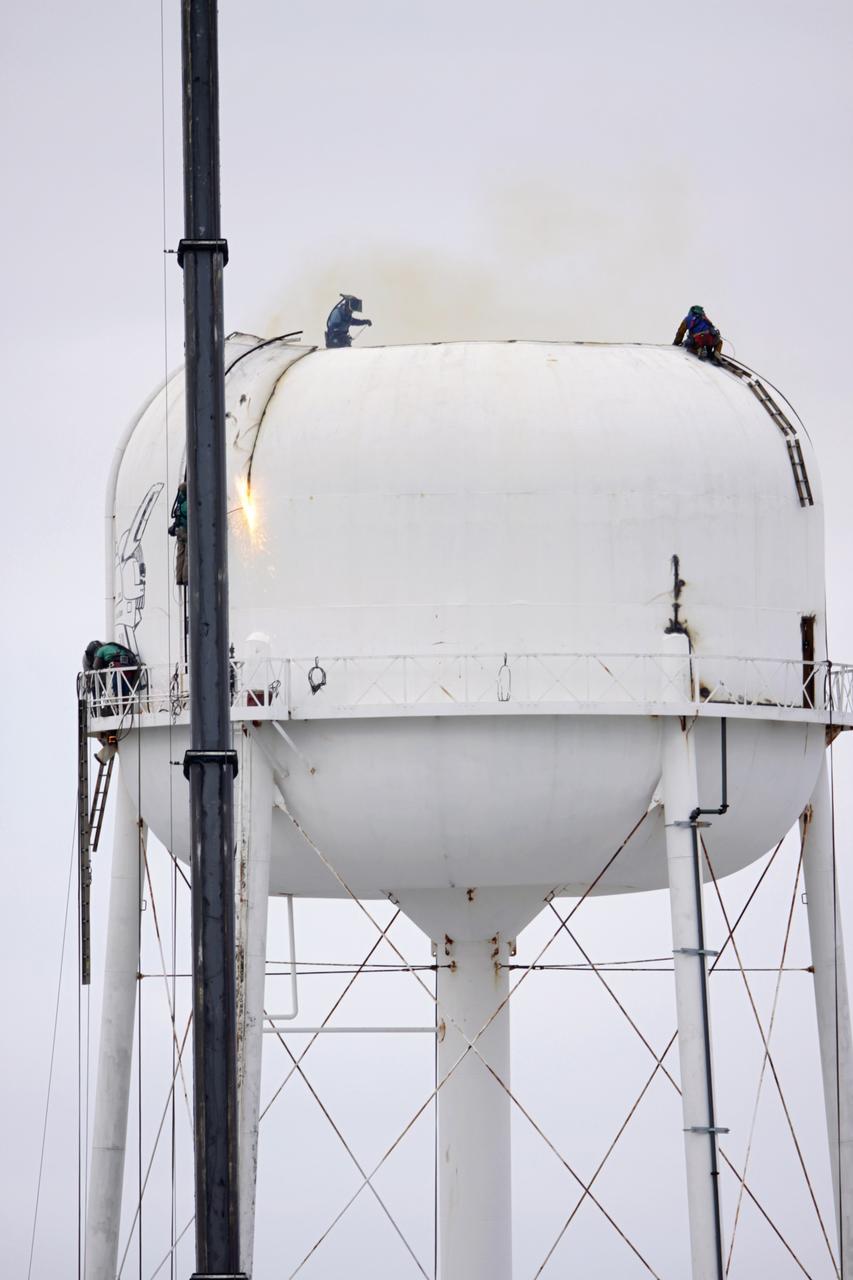
CAPE CANAVERAL, Fla. – Workers use a cutting torch to dismantle a water tower in the Launch Complex 39 area at NASA’s Kennedy Space Center in Florida. The effort is part of on-going efforts to upgrade and revitalize Kennedy's water and sewer systems to increase their reliability, sustainability and capabilities into the 21st century for current and future users. For more information, visit: http://kscpartnerships.ksc.nasa.gov/masterPlan/spaceportConcept.htm Photo credit: NASA/Tim Jacobs
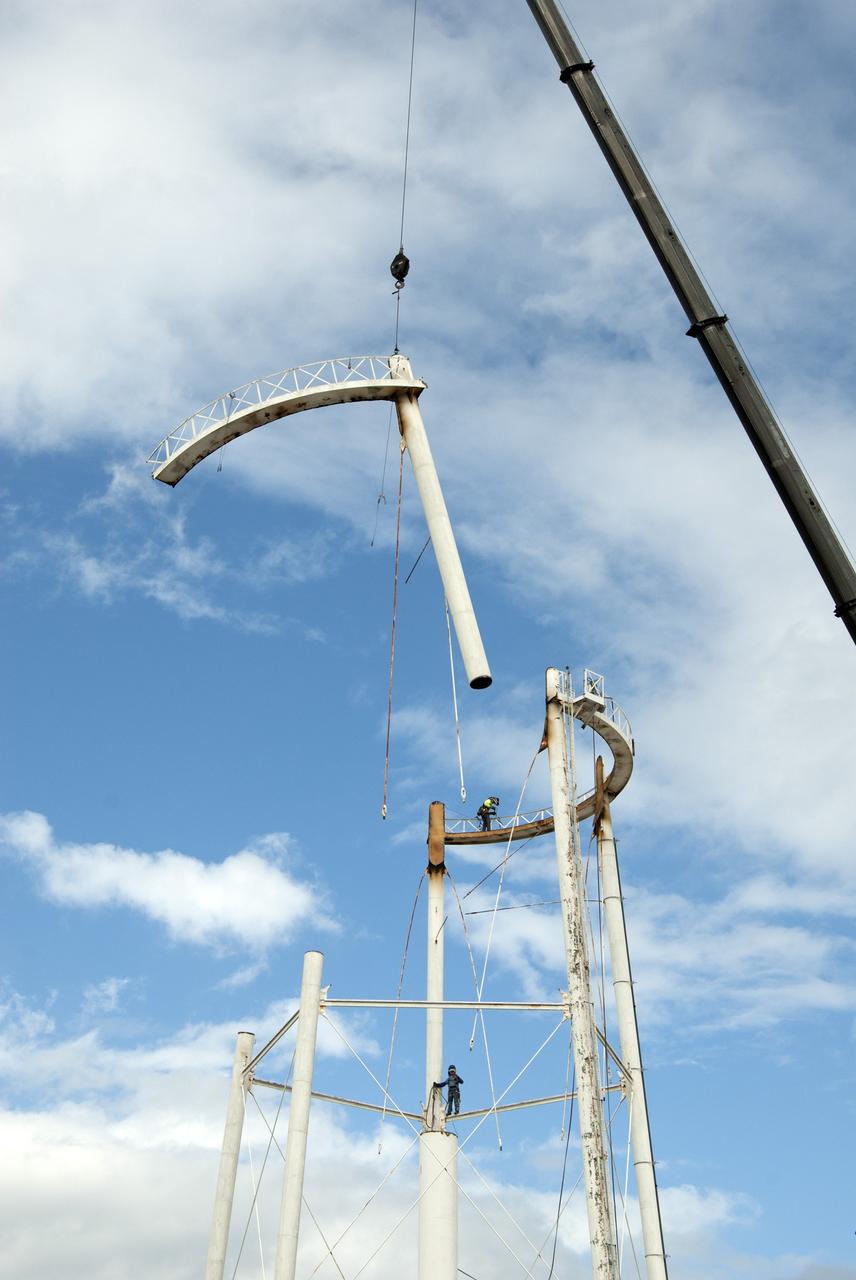
CAPE CANAVERAL, Fla. – At NASA’s Kennedy Space Center in Florida, work is underway to dismantle a water tower in the Launch Complex 39 area near the Vehicle Assembly Building. The effort is part of on-going efforts to upgrade and revitalize Kennedy's water and sewer systems to increase their reliability, sustainability and capabilities into the 21st century for current and future users. For more information, visit: http://kscpartnerships.ksc.nasa.gov/masterPlan/spaceportConcept.htm Photo credit: NASA/Jim Grossmann
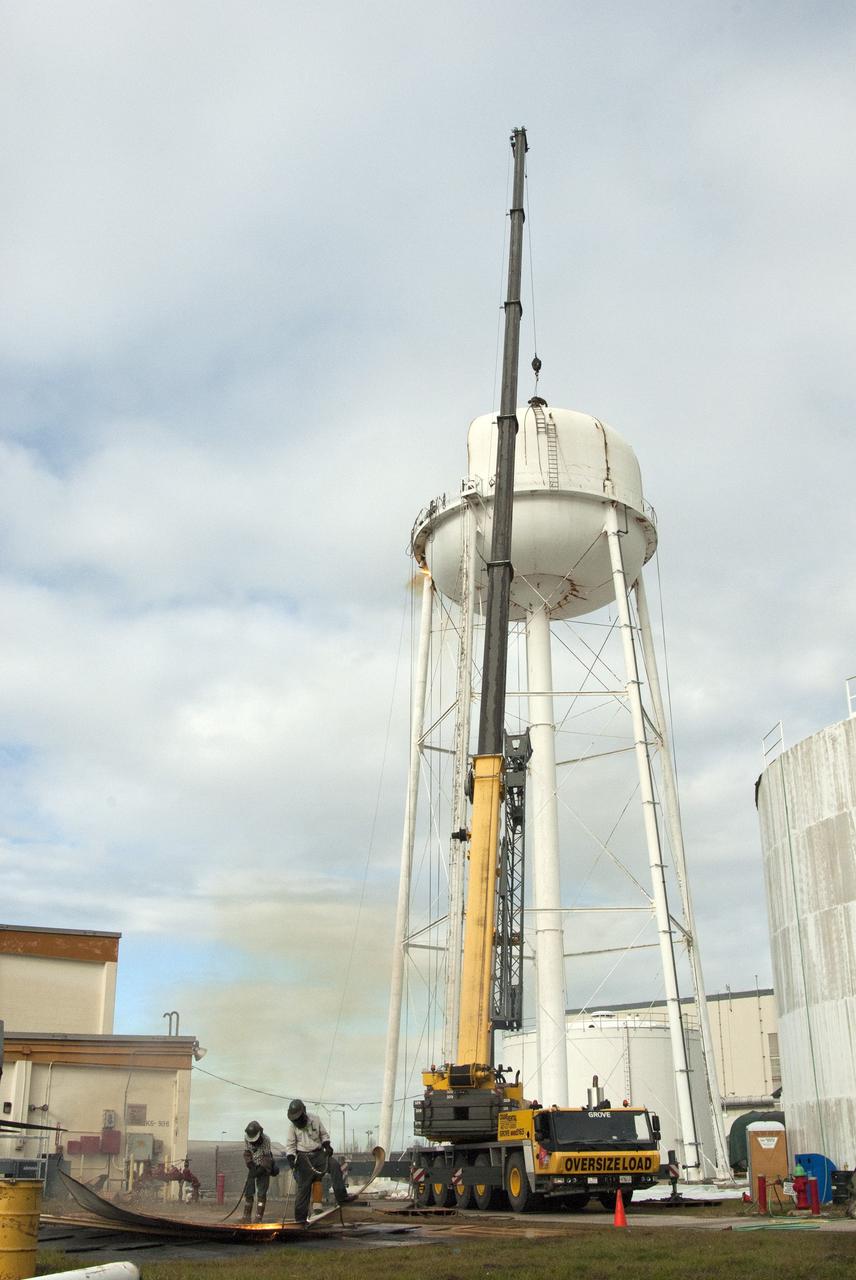
CAPE CANAVERAL, Fla. – Workers use a cutting torch to dismantle parts of a water tower in the Launch Complex 39 area at NASA’s Kennedy Space Center in Florida. The effort is part of on-going efforts to upgrade and revitalize Kennedy's water and sewer systems to increase their reliability, sustainability and capabilities into the 21st century for current and future users. For more information, visit: http://kscpartnerships.ksc.nasa.gov/masterPlan/spaceportConcept.htm Photo credit: NASA/Jim Grossmann
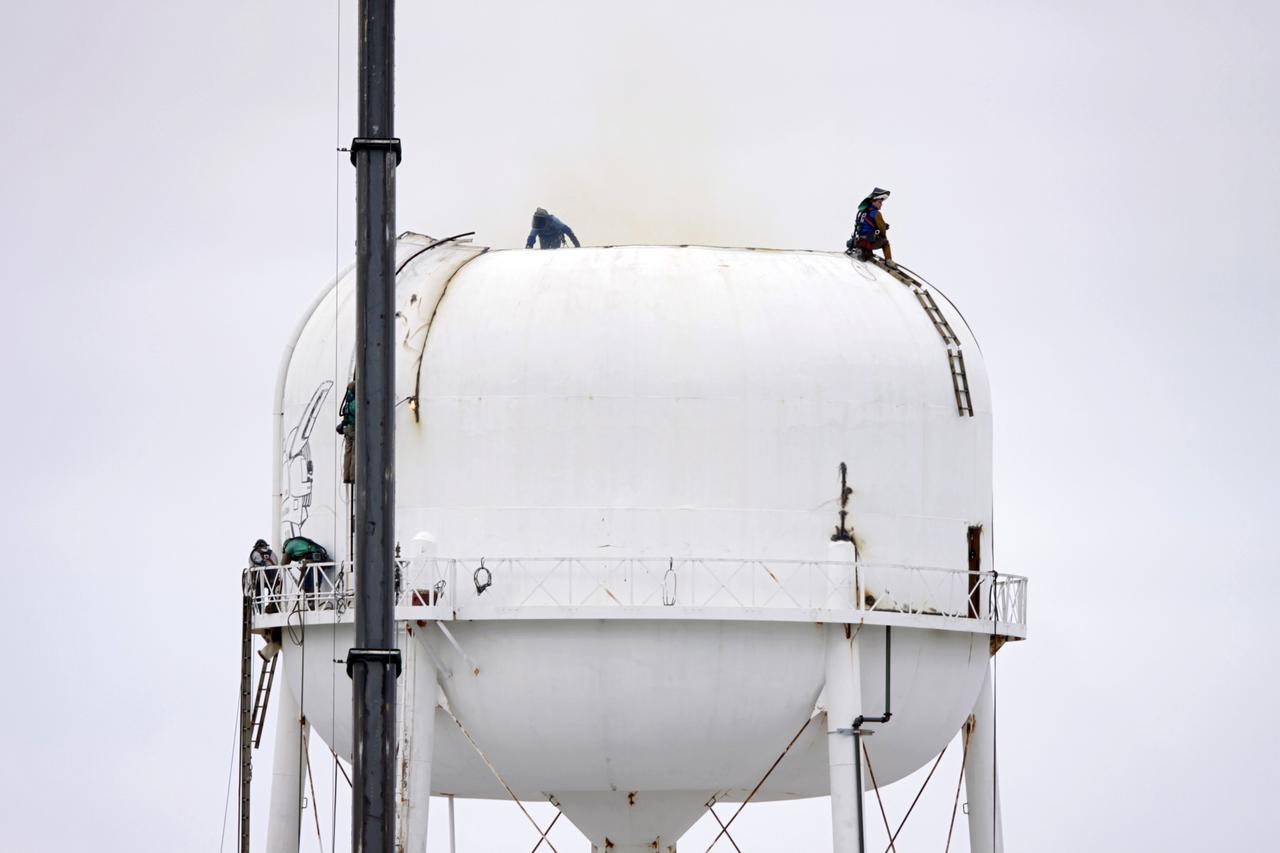
CAPE CANAVERAL, Fla. – Workers use a cutting torch to dismantle a water tower in the Launch Complex 39 area at NASA’s Kennedy Space Center in Florida. The effort is part of on-going efforts to upgrade and revitalize Kennedy's water and sewer systems to increase their reliability, sustainability and capabilities into the 21st century for current and future users. For more information, visit: http://kscpartnerships.ksc.nasa.gov/masterPlan/spaceportConcept.htm Photo credit: NASA/Tim Jacobs
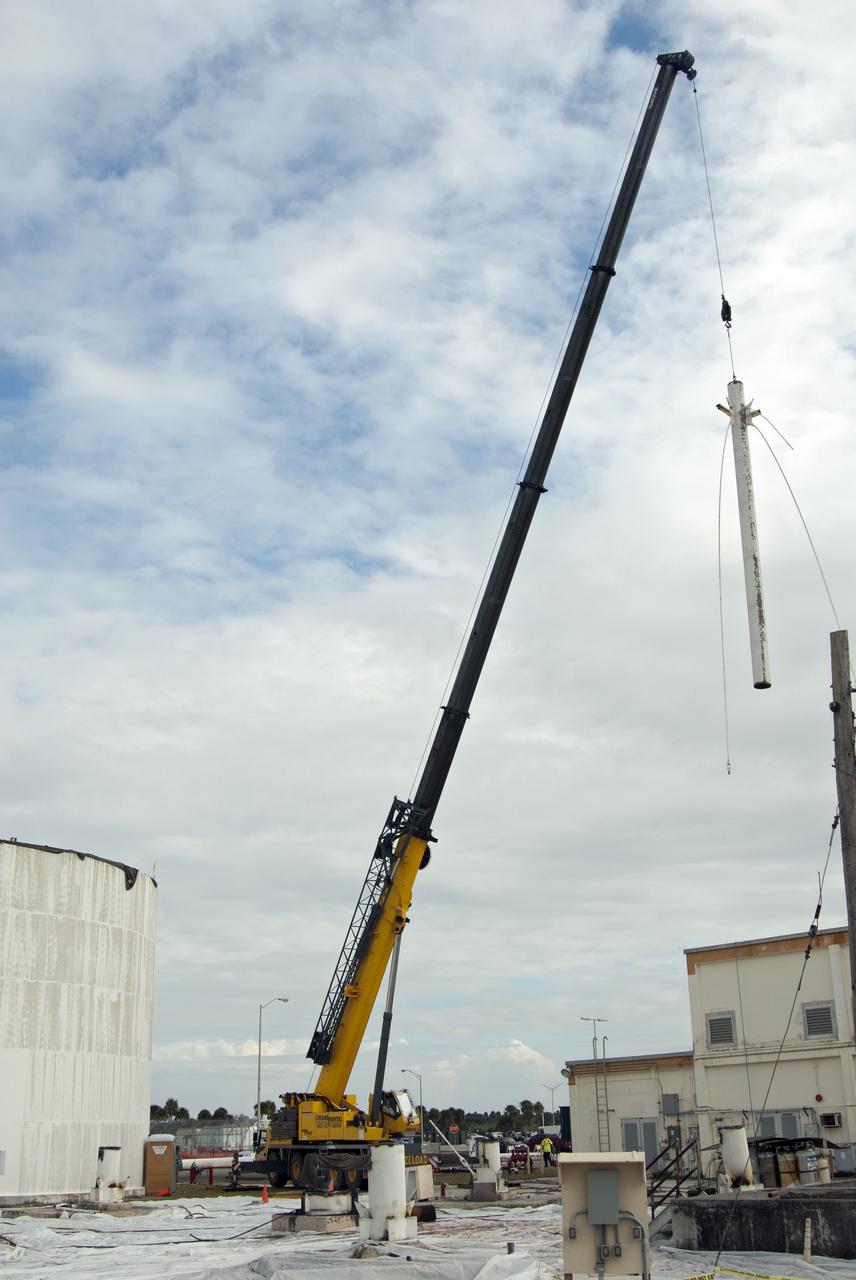
CAPE CANAVERAL, Fla. – At NASA’s Kennedy Space Center in Florida, work is underway to dismantle a water tower in the Launch Complex 39 area near the Vehicle Assembly Building. The effort is part of on-going efforts to upgrade and revitalize Kennedy's water and sewer systems to increase their reliability, sustainability and capabilities into the 21st century for current and future users. For more information, visit: http://kscpartnerships.ksc.nasa.gov/masterPlan/spaceportConcept.htm Photo credit: NASA/Jim Grossmann
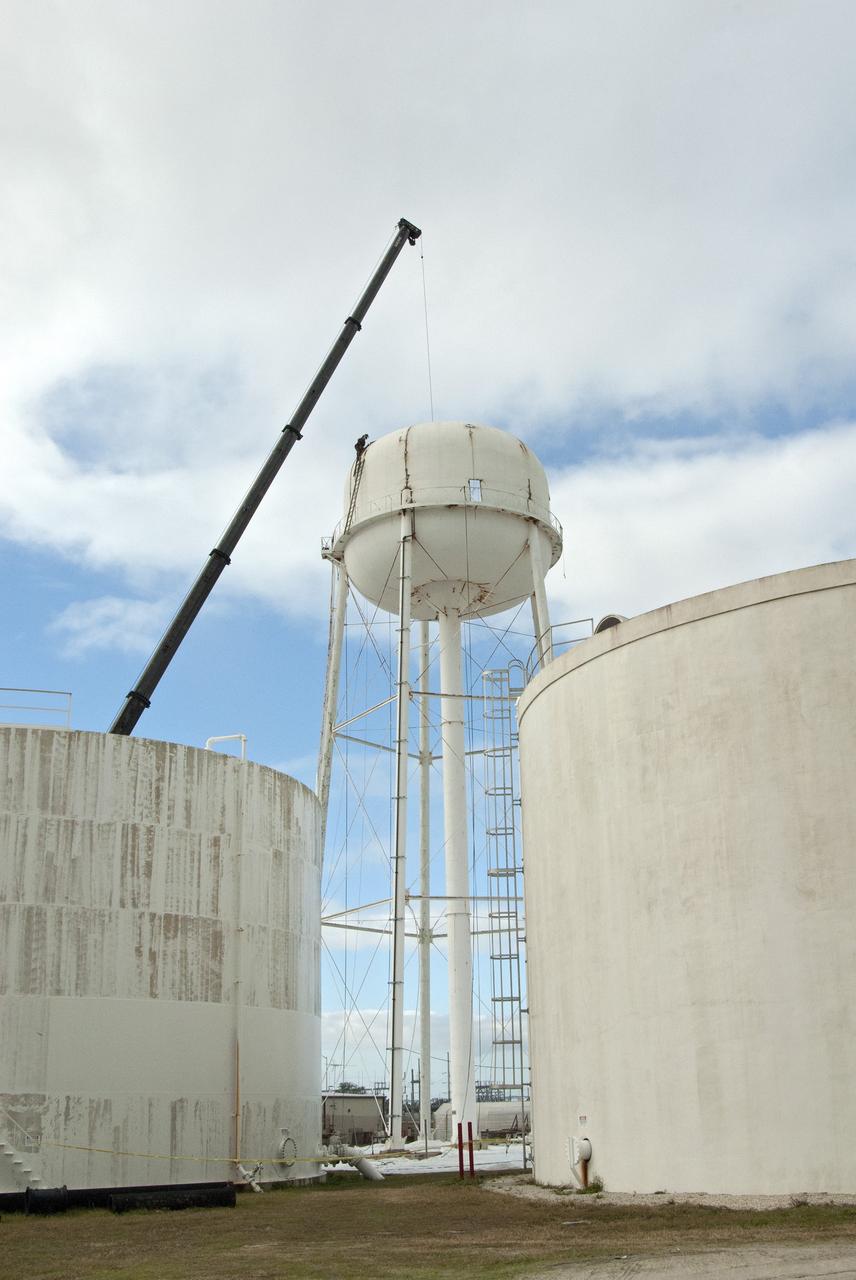
CAPE CANAVERAL, Fla. – At NASA’s Kennedy Space Center in Florida, work is underway to dismantle a water tower in the Launch Complex 39 area near the Vehicle Assembly Building. The effort is part of on-going efforts to upgrade and revitalize Kennedy's water and sewer systems to increase their reliability, sustainability and capabilities into the 21st century for current and future users. For more information, visit: http://kscpartnerships.ksc.nasa.gov/masterPlan/spaceportConcept.htm Photo credit: NASA/Jim Grossmann
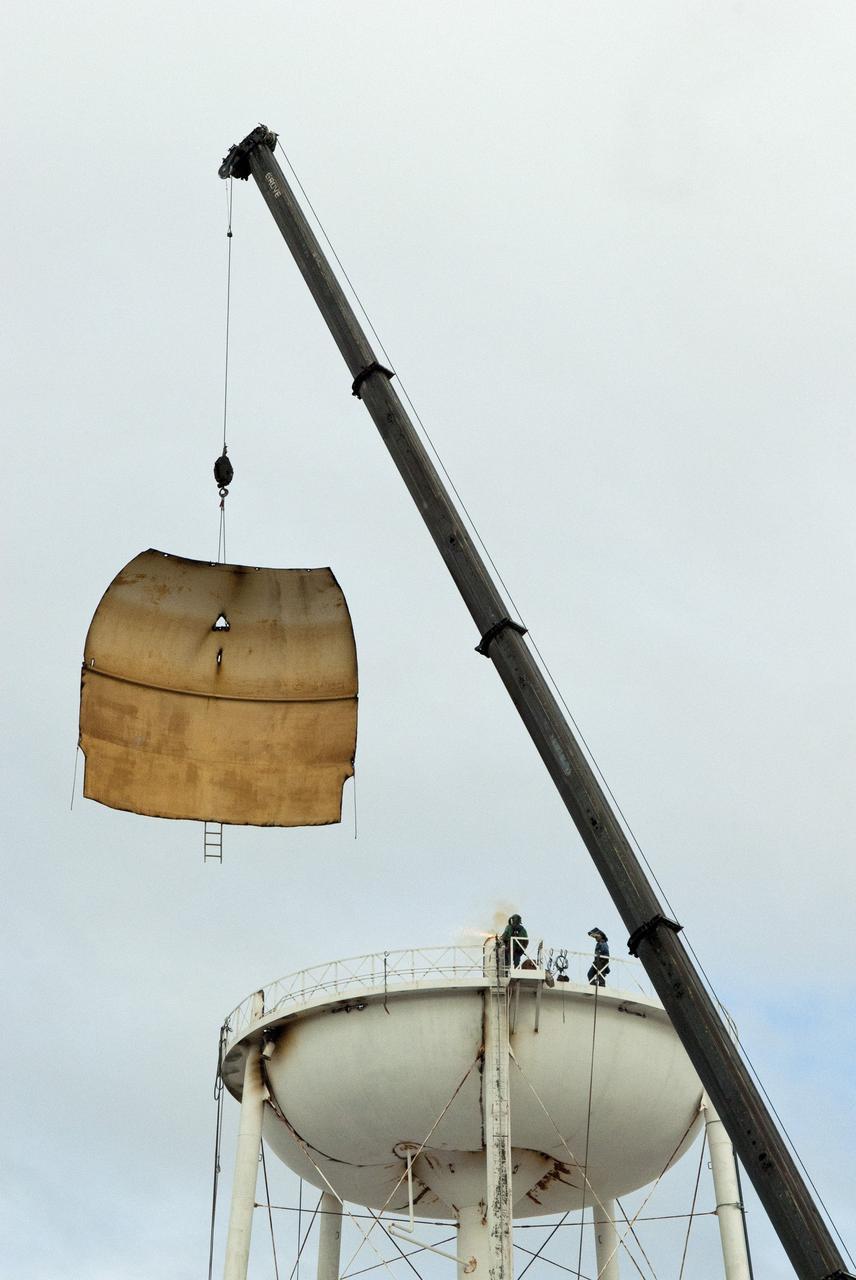
CAPE CANAVERAL, Fla. – At NASA’s Kennedy Space Center in Florida, work is underway to dismantle a water tower in the Launch Complex 39 area near the Vehicle Assembly Building. The effort is part of on-going efforts to upgrade and revitalize Kennedy's water and sewer systems to increase their reliability, sustainability and capabilities into the 21st century for current and future users. For more information, visit: http://kscpartnerships.ksc.nasa.gov/masterPlan/spaceportConcept.htm Photo credit: NASA/Jim Grossmann
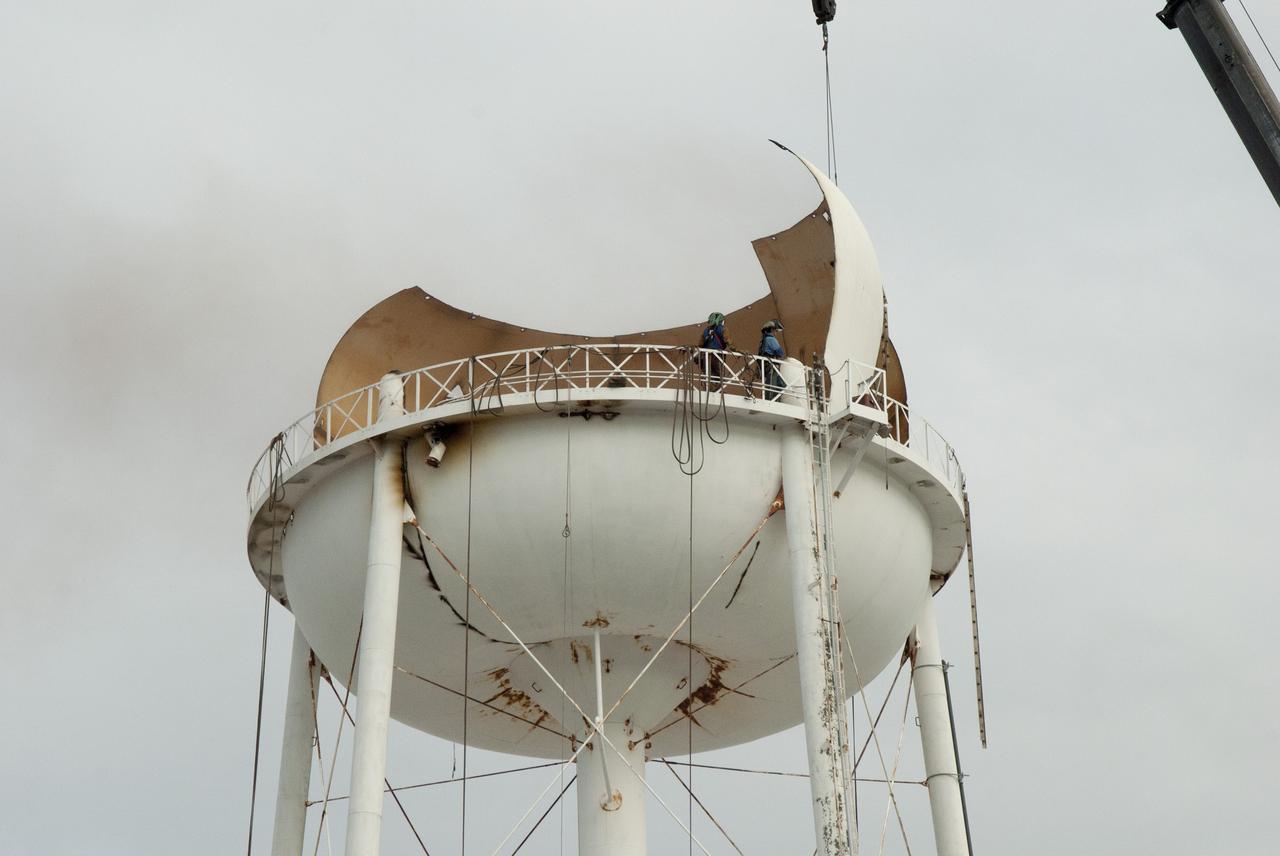
CAPE CANAVERAL, Fla. – At NASA’s Kennedy Space Center in Florida, work is underway to dismantle a water tower in the Launch Complex 39 area near the Vehicle Assembly Building. The effort is part of on-going efforts to upgrade and revitalize Kennedy's water and sewer systems to increase their reliability, sustainability and capabilities into the 21st century for current and future users. For more information, visit: http://kscpartnerships.ksc.nasa.gov/masterPlan/spaceportConcept.htm Photo credit: NASA/Jim Grossmann
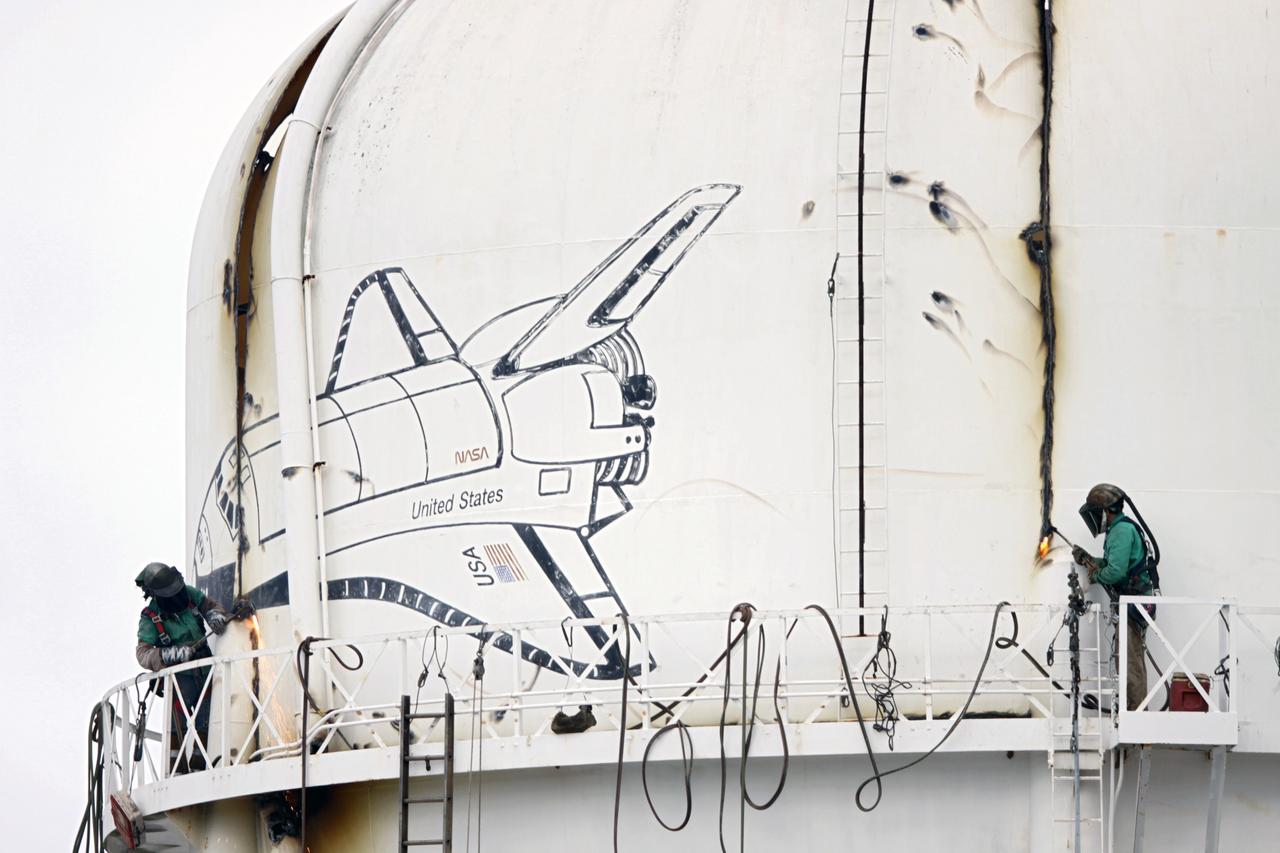
CAPE CANAVERAL, Fla. – Workers use a cutting torch to dismantle a water tower in the Launch Complex 39 area at NASA’s Kennedy Space Center in Florida. The effort is part of on-going efforts to upgrade and revitalize Kennedy's water and sewer systems to increase their reliability, sustainability and capabilities into the 21st century for current and future users. For more information, visit: http://kscpartnerships.ksc.nasa.gov/masterPlan/spaceportConcept.htm Photo credit: NASA/Tim Jacobs
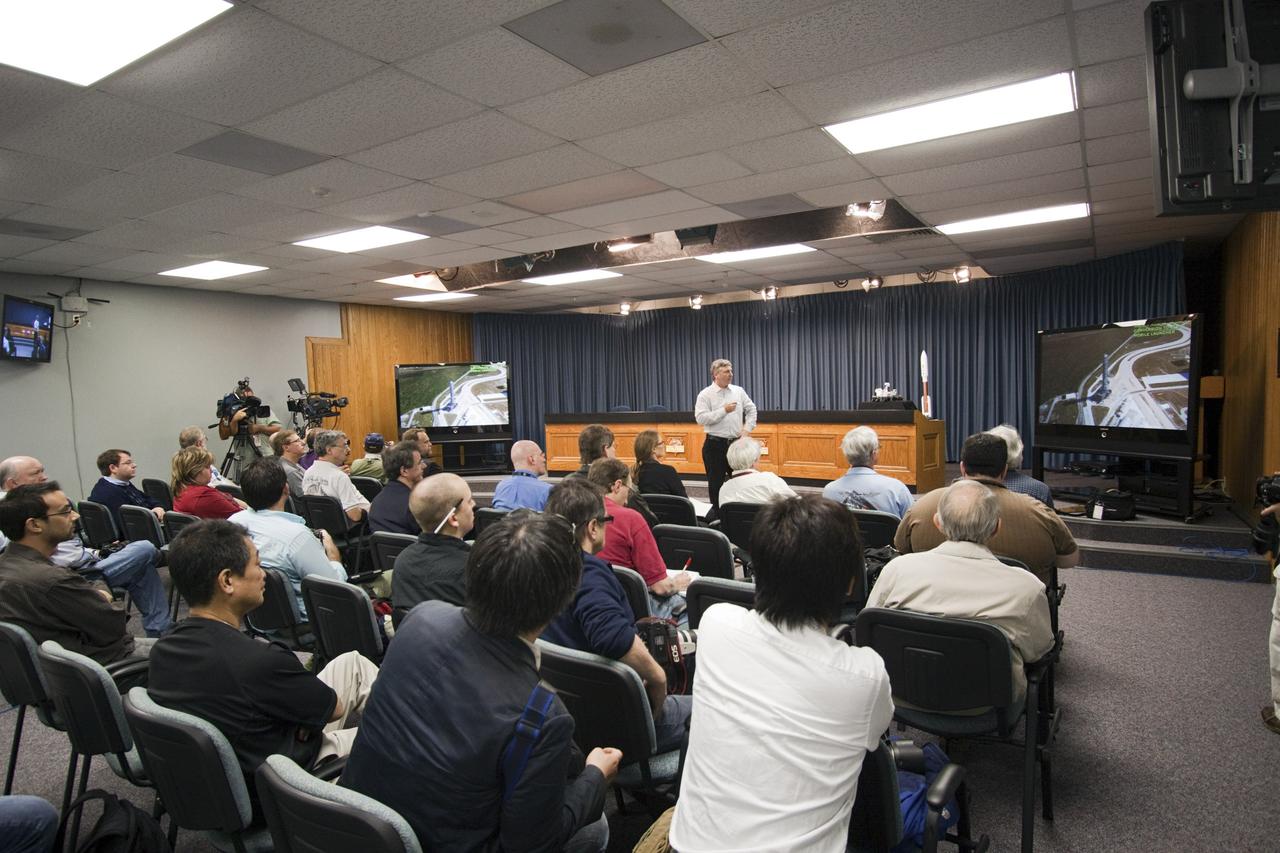
CAPE CANAVERAL, Fla. – In NASA Kennedy Space Center's Press Site auditorium in Florida, Scott Colloredo, NASA 21st Century Ground Systems project manager, gives the media representatives who will be taking the 21st Century Ground Systems tour an overview of the locations they will be visiting, including the Vehicle Assembly Building, a crawler-transporter parked on the crawlerway, the new mobile launcher on Launch Pad 39B, and the Launch Control Center's Firing Room 1. These facilities and equipment will be used to prepare and launch NASA's new Orion spacecraft on the Space Launch System heavy-lift rocket. The tour was arranged as part of prelaunch media activities for the agency's Mars Science Laboratory (MSL) launch. Liftoff of MSL aboard a United Launch Alliance Atlas V rocket from Space Launch Complex-41 on Cape Canaveral Air Force Station is planned during a launch window which extends from 10:02 a.m. to 11:45 a.m. EST on Nov. 26. For more information, visit http://www.nasa.gov/msl. Photo credit: NASA/Jim Grossmann
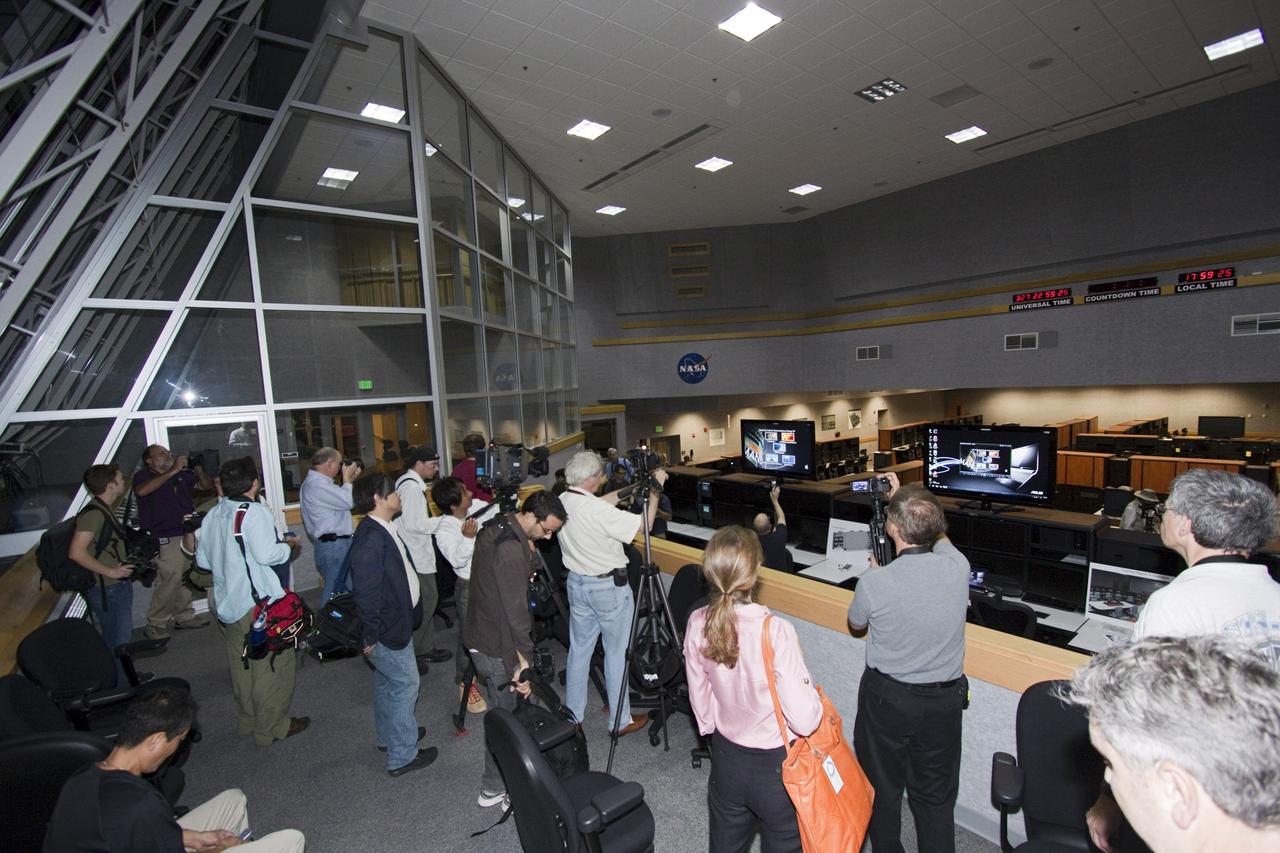
CAPE CANAVERAL, Fla. – At NASA Kennedy Space Center in Florida, media representatives tour the Launch Control Center's Firing Room 1. They are taking the 21st Century Ground Systems tour which also includes the Vehicle Assembly Building, a crawler-transporter parked on the crawlerway, and the new mobile launcher on Launch Pad 39B. These facilities and equipment will be used to prepare and launch NASA's new Orion spacecraft on the Space Launch System heavy-lift rocket. The tour was arranged as part of prelaunch media activities for the agency's Mars Science Laboratory (MSL) launch. Liftoff of MSL aboard a United Launch Alliance Atlas V rocket from Space Launch Complex-41 on Cape Canaveral Air Force Station is planned during a launch window which extends from 10:02 a.m. to 11:45 a.m. EST on Nov. 26. For more information, visit http://www.nasa.gov/msl. Photo credit: NASA/Jim Grossmann
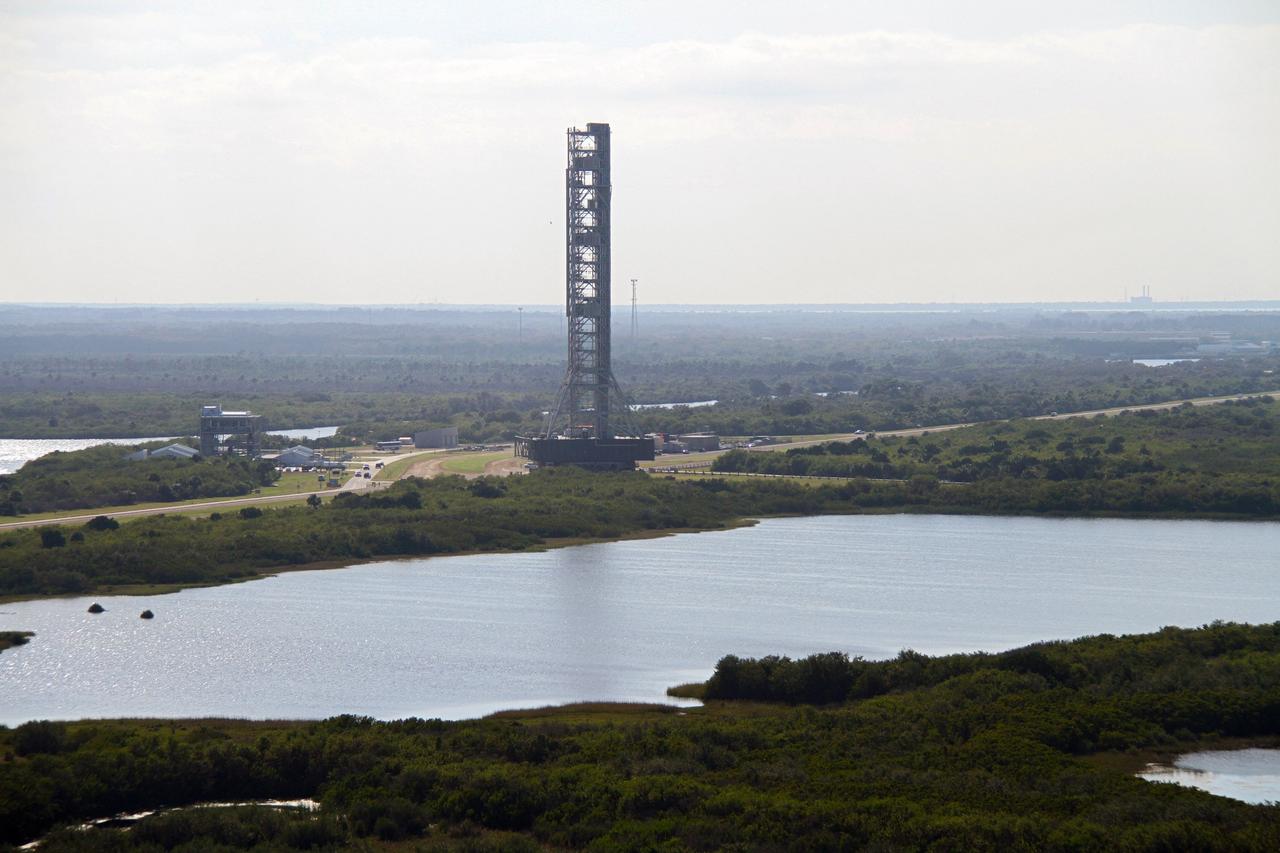
CAPE CANAVERAL, Fla. – The mobile launcher, or ML, passes by the Launch Complex 39 Observation Gantry at NASA's Kennedy Space Center in Florida as it makes the 4.2-mile trek from Launch Pad 39B to the park site near the Vehicle Assembly Building. Data on the ML collected from structural and functional engineering tests during its two-week stay on the pad will be used in the next phases of construction. The 355-foot-tall ML structure, which took about two years to construct, will be modified by NASA’s 21st Century Ground Systems Program to support NASA’s Space Launch System, the heavy-lift rocket that will launch astronauts into deep space on future exploration missions. For more information, visit http://www.nasa.gov/exploration/systems/sls. Photo credit: NASA/Cory Huston
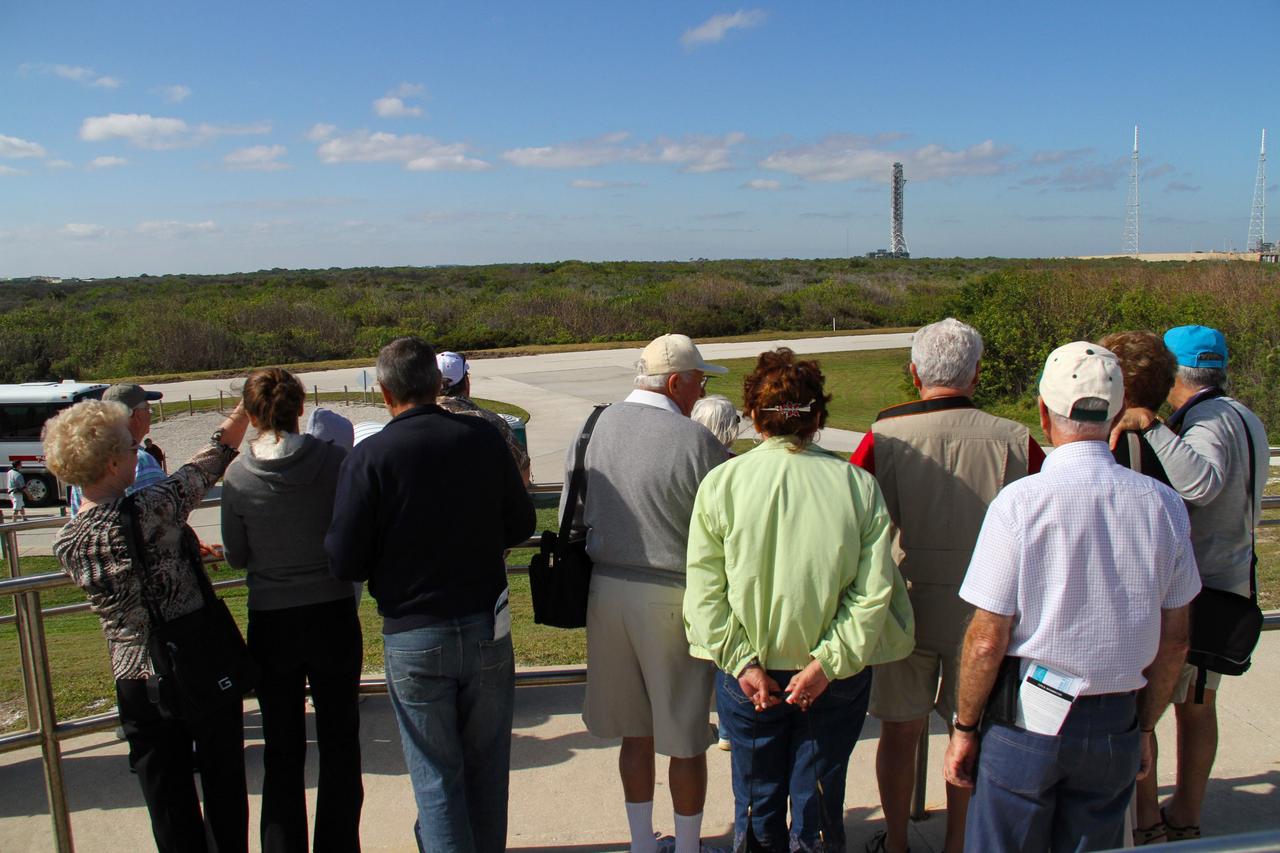
CAPE CANAVERAL, Fla. – Visitors on the Launch Complex 39 Observation Gantry at NASA's Kennedy Space Center in Florida experience a rare site -- the mobile launcher, or ML, rolling along the crawlerway from Launch Pad 39B to the park site near the Vehicle Assembly Building. Data on the ML collected from structural and functional engineering tests during its two-week stay on the pad will be used in the next phases of construction. The 355-foot-tall ML structure, which took about two years to construct, will be modified by NASA’s 21st Century Ground Systems Program to support NASA’s Space Launch System, the heavy-lift rocket that will launch astronauts into deep space on future exploration missions. For more information, visit http://www.nasa.gov/exploration/systems/sls. Photo credit: NASA/Cory Huston
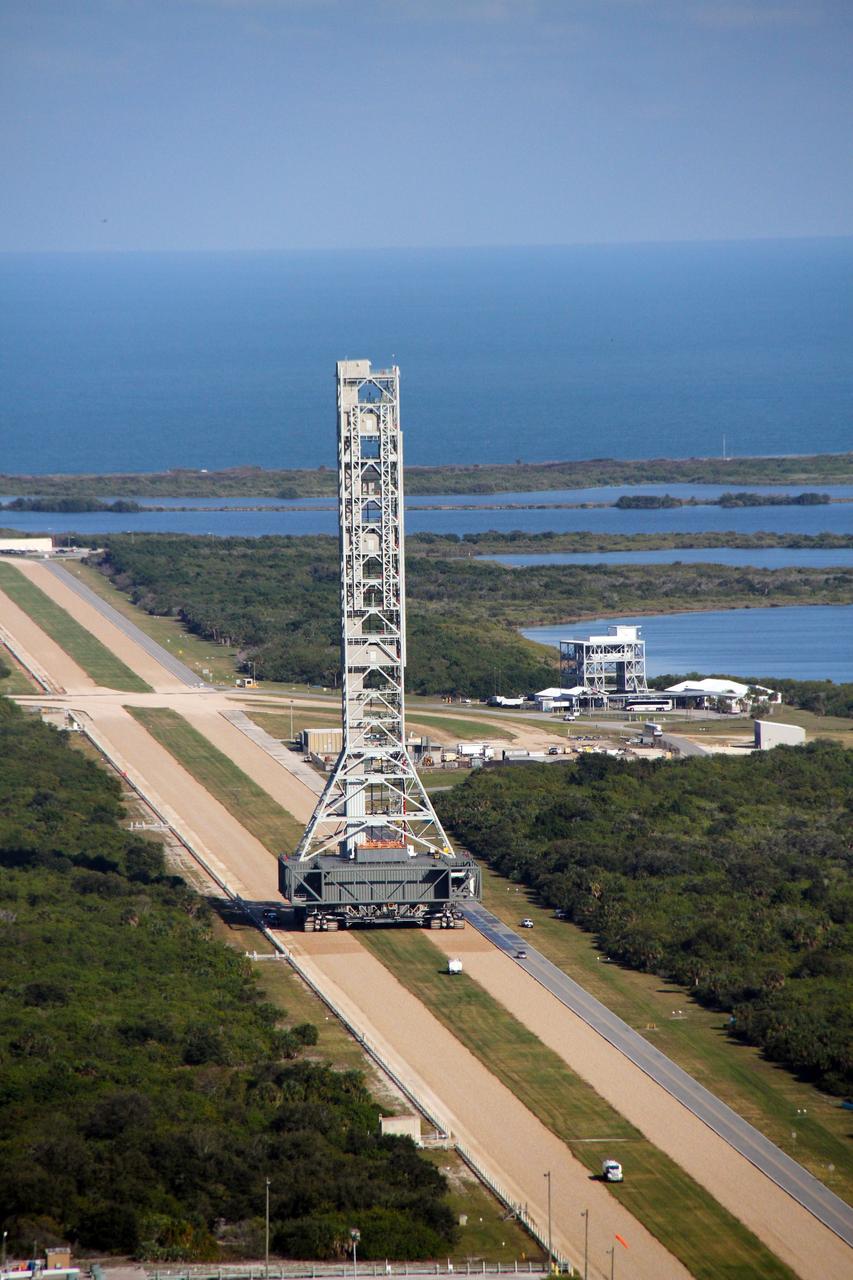
CAPE CANAVERAL, Fla. – The mobile launcher, or ML, passes by the Launch Complex 39 Observation Gantry at NASA's Kennedy Space Center in Florida as it makes the 4.2-mile trek from Launch Pad 39B to the park site near the Vehicle Assembly Building. In the background is the Atlantic Ocean. Data on the ML collected from structural and functional engineering tests during its two-week stay on the pad will be used in the next phases of construction. The 355-foot-tall ML structure, which took about two years to construct, will be modified by NASA’s 21st Century Ground Systems Program to support NASA’s Space Launch System, the heavy-lift rocket that will launch astronauts into deep space on future exploration missions. For more information, visit http://www.nasa.gov/exploration/systems/sls. Photo credit: NASA/Cory Huston
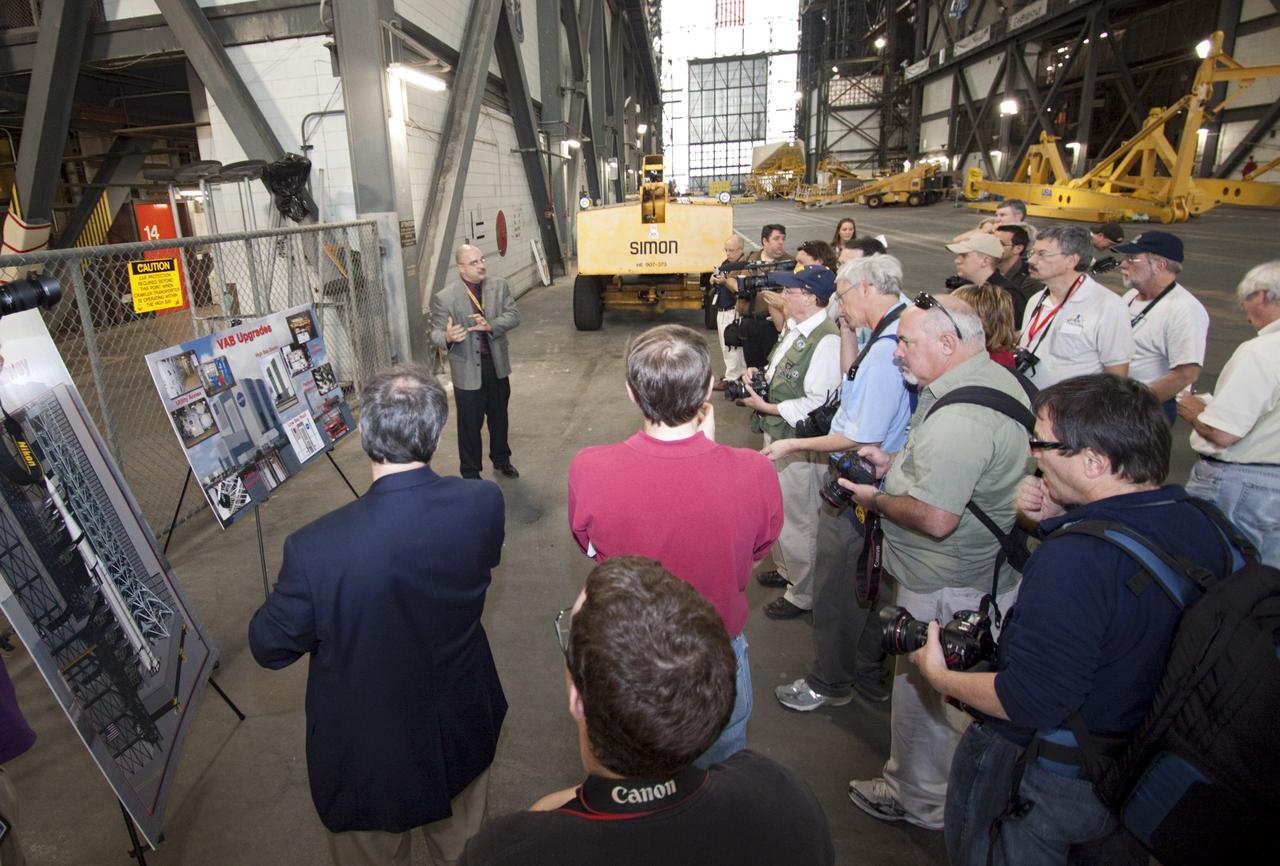
CAPE CANAVERAL, Fla. – At NASA Kennedy Space Center in Florida, Jose Lopez, NASA Vehicle Assembly Building (VAB) project manager, outlines the upgrades planned for the VAB to support NASA's forthcoming Space Launch System. Lopez' audience is made up of media representatives taking the 21st Century Ground Systems tour. Other stops on the tour include a crawler-transporter parked on the crawlerway, the new mobile launcher on Launch Pad 39B, and the Launch Control Center's Firing Room 1. These facilities and equipment will be used to prepare and launch NASA's new Orion spacecraft on the Space Launch System heavy-lift rocket. The tour was arranged as part of prelaunch media activities for the agency's Mars Science Laboratory (MSL) launch. Liftoff of MSL aboard a United Launch Alliance Atlas V rocket from Space Launch Complex-41 on Cape Canaveral Air Force Station is planned during a launch window which extends from 10:02 a.m. to 11:45 a.m. EST on Nov. 26. For more information, visit http://www.nasa.gov/msl. Photo credit: NASA/Jim Grossmann
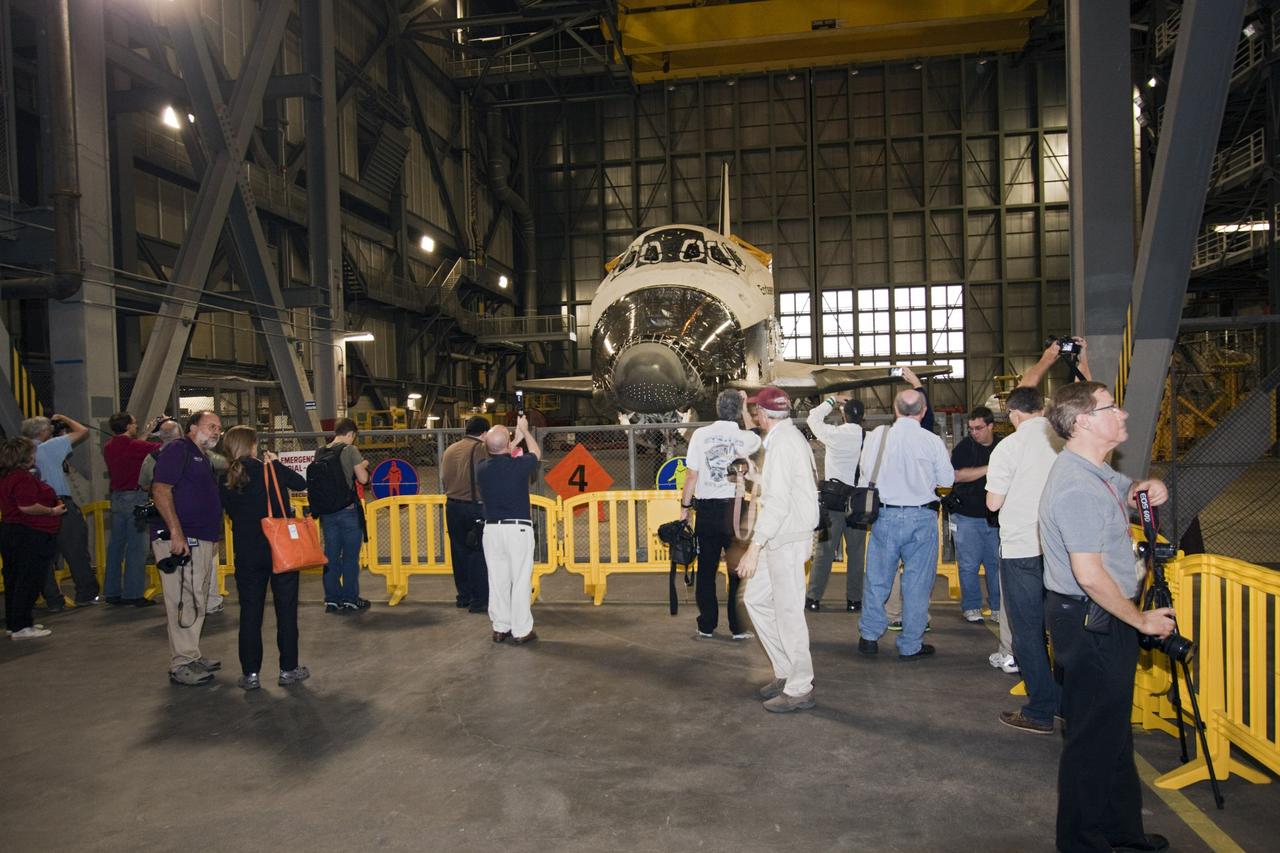
CAPE CANAVERAL, Fla. – At NASA Kennedy Space Center in Florida, media representatives taking the 21st Century Ground Systems tour get a close-up look at space shuttle Endeavour which is being stored in the Vehicle Assembly Building. Other stops on the tour include a crawler-transporter parked on the crawlerway, the new mobile launcher on Launch Pad 39B, and the Launch Control Center's Firing Room 1. These facilities and equipment will be used to prepare and launch NASA's new Orion spacecraft on the Space Launch System heavy-lift rocket. The tour was arranged as part of prelaunch media activities for the agency's Mars Science Laboratory (MSL) launch. Liftoff of MSL aboard a United Launch Alliance Atlas V rocket from Space Launch Complex-41 on Cape Canaveral Air Force Station is planned during a launch window which extends from 10:02 a.m. to 11:45 a.m. EST on Nov. 26. For more information, visit http://www.nasa.gov/msl. Photo credit: NASA/Jim Grossmann
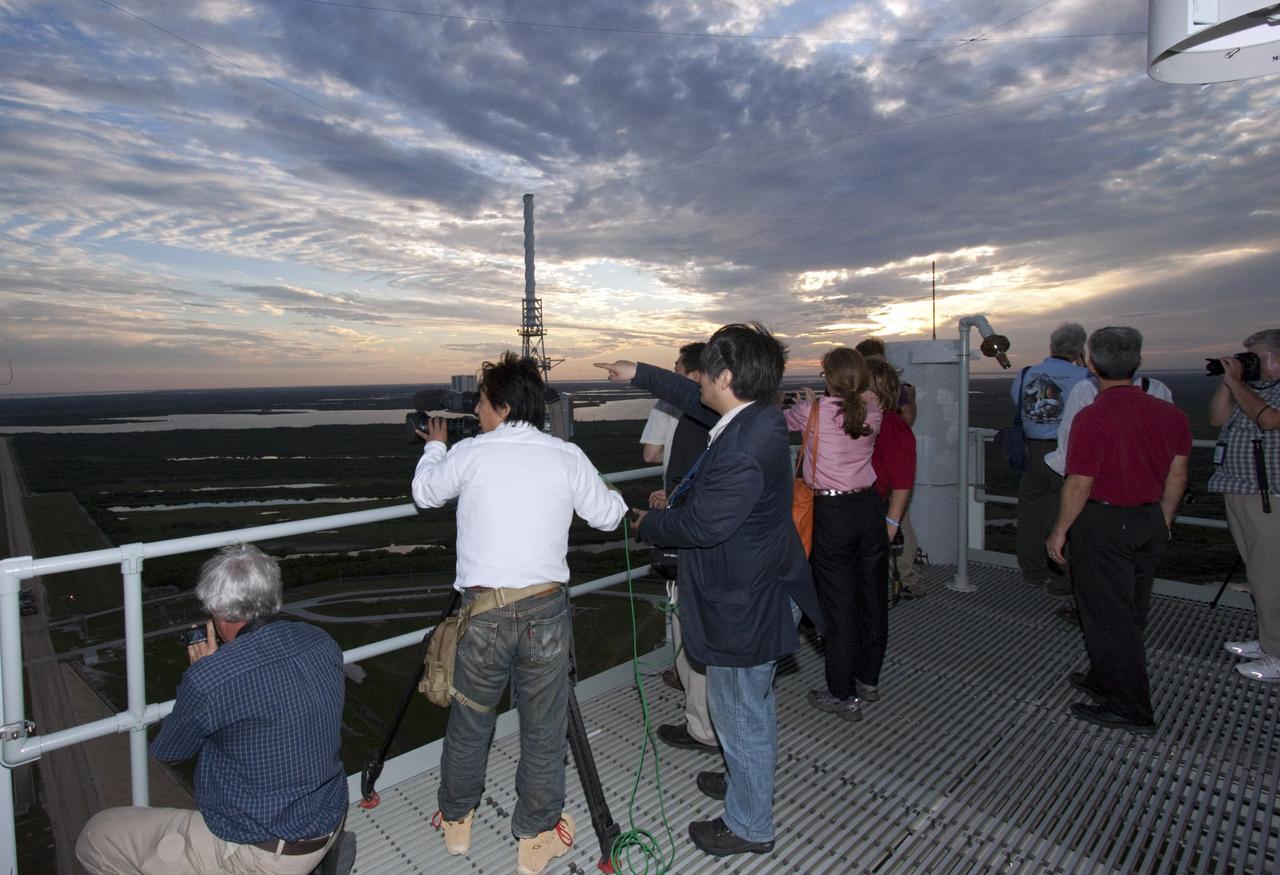
CAPE CANAVERAL, Fla. – At NASA Kennedy Space Center in Florida, media representatives photograph Kennedy Space Center from the vantage of the top of the 355-foot-tall mobile launcher at Launch Pad 39B. They are taking the 21st Century Ground Systems tour which also includes the Vehicle Assembly Building, a crawler-transporter parked on the crawlerway, and the Launch Control Center's Firing Room 1. These facilities and equipment will be used to prepare and launch NASA's new Orion spacecraft on the Space Launch System heavy-lift rocket. The tour was arranged as part of prelaunch media activities for the agency's Mars Science Laboratory (MSL) launch. Liftoff of MSL aboard a United Launch Alliance Atlas V rocket from Space Launch Complex-41 on Cape Canaveral Air Force Station is planned during a launch window which extends from 10:02 a.m. to 11:45 a.m. EST on Nov. 26. For more information, visit http://www.nasa.gov/msl. Photo credit: NASA/Jim Grossmann
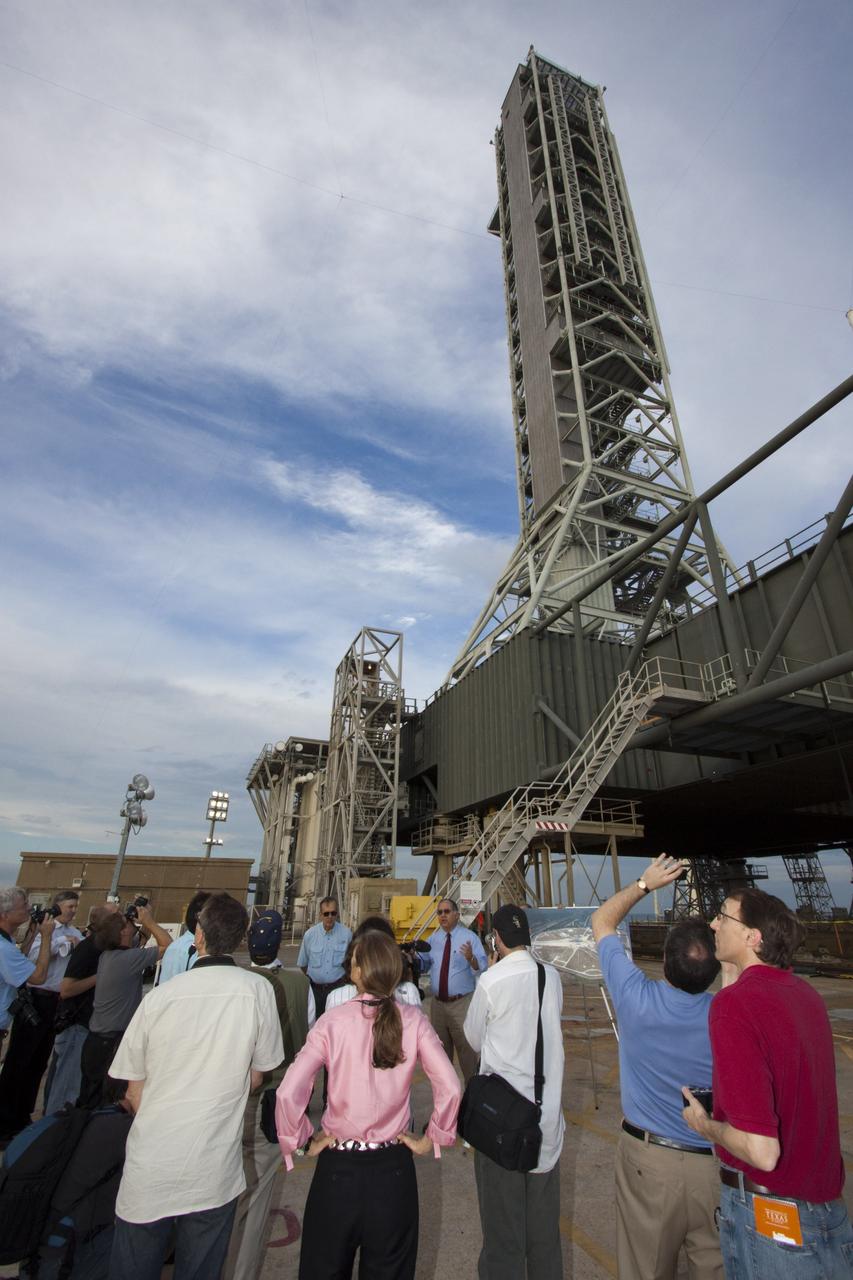
CAPE CANAVERAL, Fla. – At NASA Kennedy Space Center in Florida, Jose Perez-Morales (right), NASA launch pad project manager, and Larry Schultz, NASA mobile launcher project manager, outline the upgrades to Launch Pad 39B and the mobile launcher to support NASA's forthcoming Space Launch System heavy-lift rocket. Their audience is made up of media representatives taking the 21st Century Ground Systems tour. Other stops on the tour include the Vehicle Assembly Building, a crawler-transporter parked on the crawlerway, and the Launch Control Center's Firing Room 1. These facilities and equipment will be used to prepare and launch NASA's new Orion spacecraft. The tour was arranged as part of prelaunch media activities for the agency's Mars Science Laboratory (MSL) launch. Liftoff of MSL aboard a United Launch Alliance Atlas V rocket from Space Launch Complex-41 on Cape Canaveral Air Force Station is planned during a launch window which extends from 10:02 a.m. to 11:45 a.m. EST on Nov. 26. For more information, visit http://www.nasa.gov/msl. Photo credit: NASA/Jim Grossmann
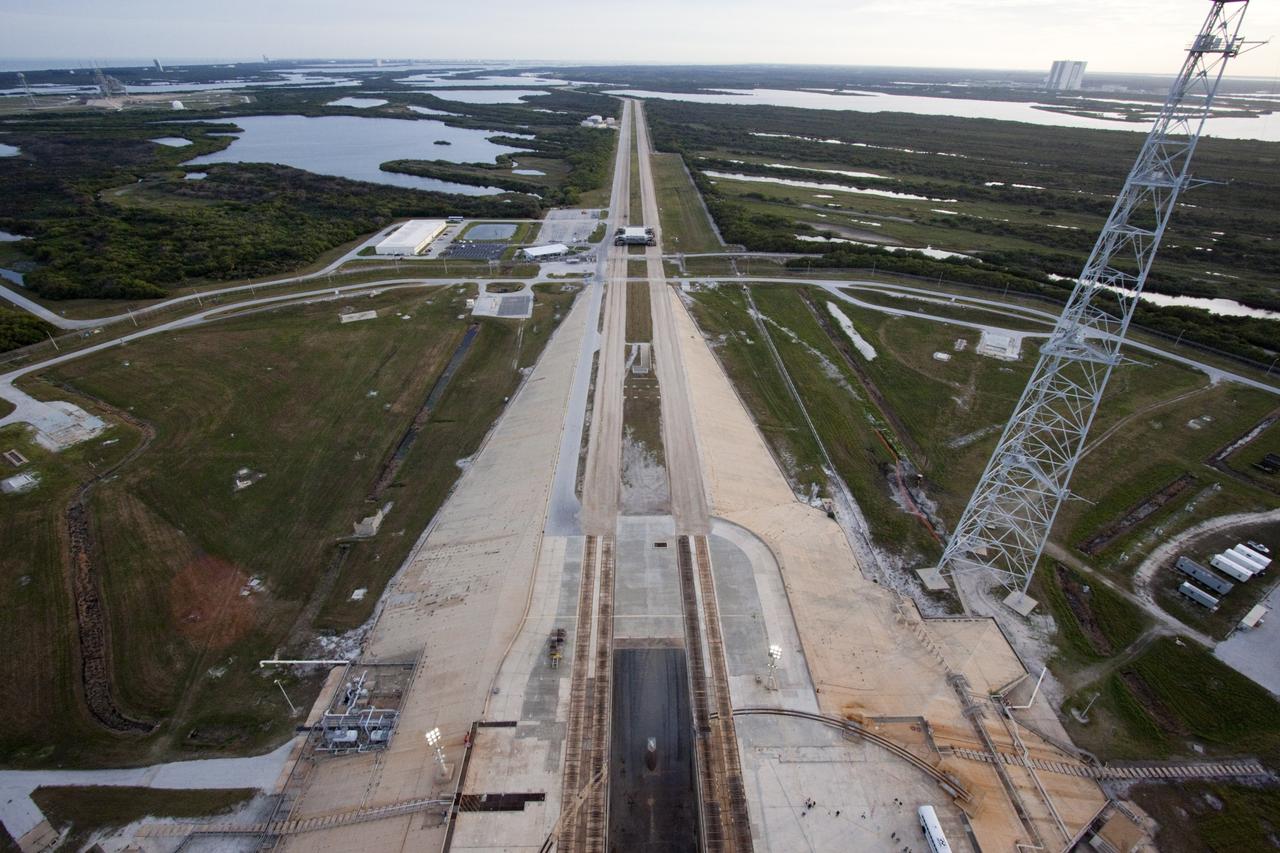
CAPE CANAVERAL, Fla. – At NASA Kennedy Space Center in Florida, this view, taken from the top of the 355-foot-tall mobile launcher at Launch Pad 39B, captures the crawler-transporter parked on the crawlerway leading to the pad's surface and the Vehicle Assembly Building (VAB), in the background at right. Media representatives are taking the 21st Century Ground Systems tour which also includes the VAB, a crawler-transporter, and the Launch Control Center's Firing Room 1. These facilities and equipment will be used to prepare and launch NASA's new Orion spacecraft on the Space Launch System heavy-lift rocket. The tour was arranged as part of prelaunch media activities for the agency's Mars Science Laboratory (MSL) launch. Liftoff of MSL aboard a United Launch Alliance Atlas V rocket from Space Launch Complex-41 on Cape Canaveral Air Force Station is planned during a launch window which extends from 10:02 a.m. to 11:45 a.m. EST on Nov. 26. For more information, visit http://www.nasa.gov/msl. Photo credit: NASA/Jim Grossmann
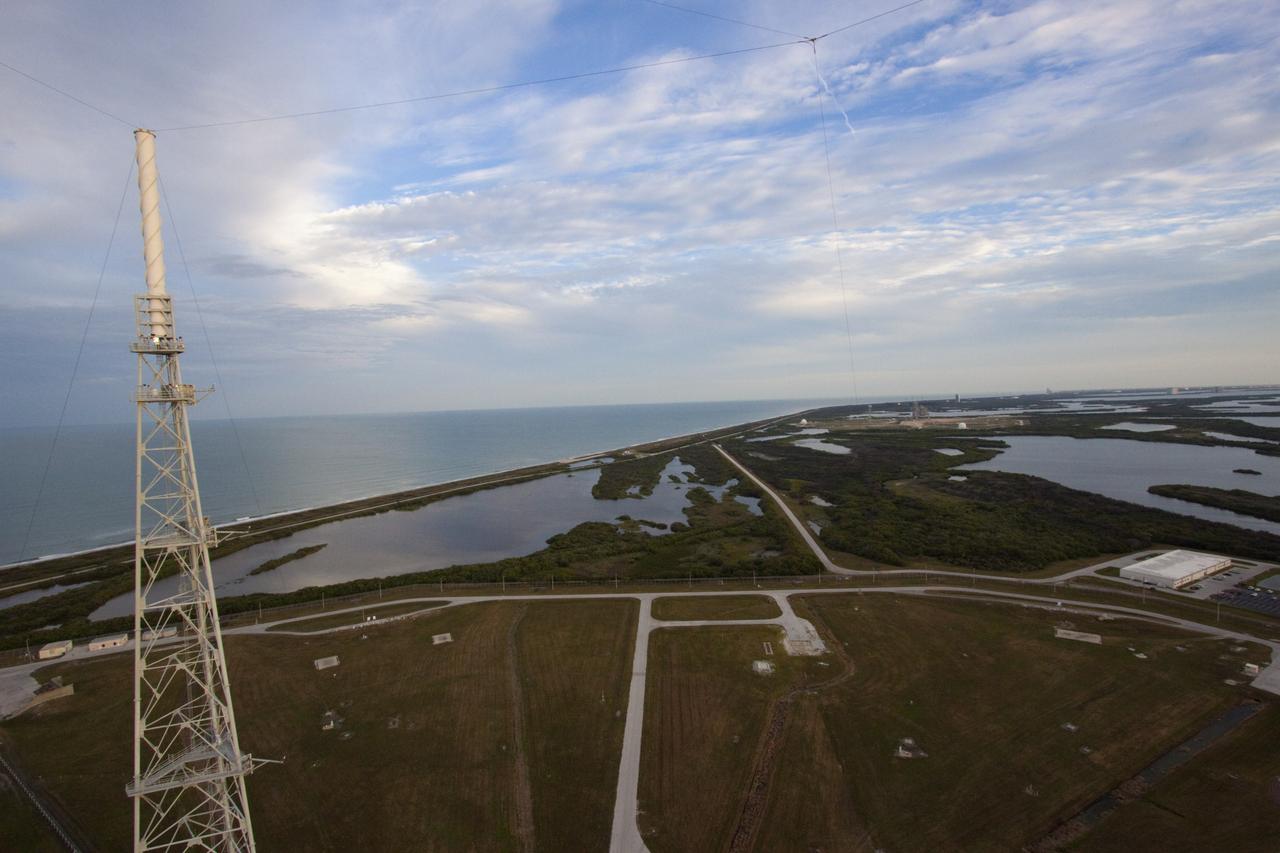
CAPE CANAVERAL, Fla. – At NASA Kennedy Space Center in Florida, this view, taken from the top of the 355-foot-tall mobile launcher at Launch Pad 39B, illustrates the close proximity of the pad to the Atlantic Ocean in the background. Media representatives are taking the 21st Century Ground Systems tour which also includes the Vehicle Assembly Building, a crawler-transporter parked on the crawlerway, and the Launch Control Center's Firing Room 1. These facilities and equipment will be used to prepare and launch NASA's new Orion spacecraft on the Space Launch System heavy-lift rocket. The tour was arranged as part of prelaunch media activities for the agency's Mars Science Laboratory (MSL) launch. Liftoff of MSL aboard a United Launch Alliance Atlas V rocket from Space Launch Complex-41 on Cape Canaveral Air Force Station is planned during a launch window which extends from 10:02 a.m. to 11:45 a.m. EST on Nov. 26. For more information, visit http://www.nasa.gov/msl. Photo credit: NASA/Jim Grossmann
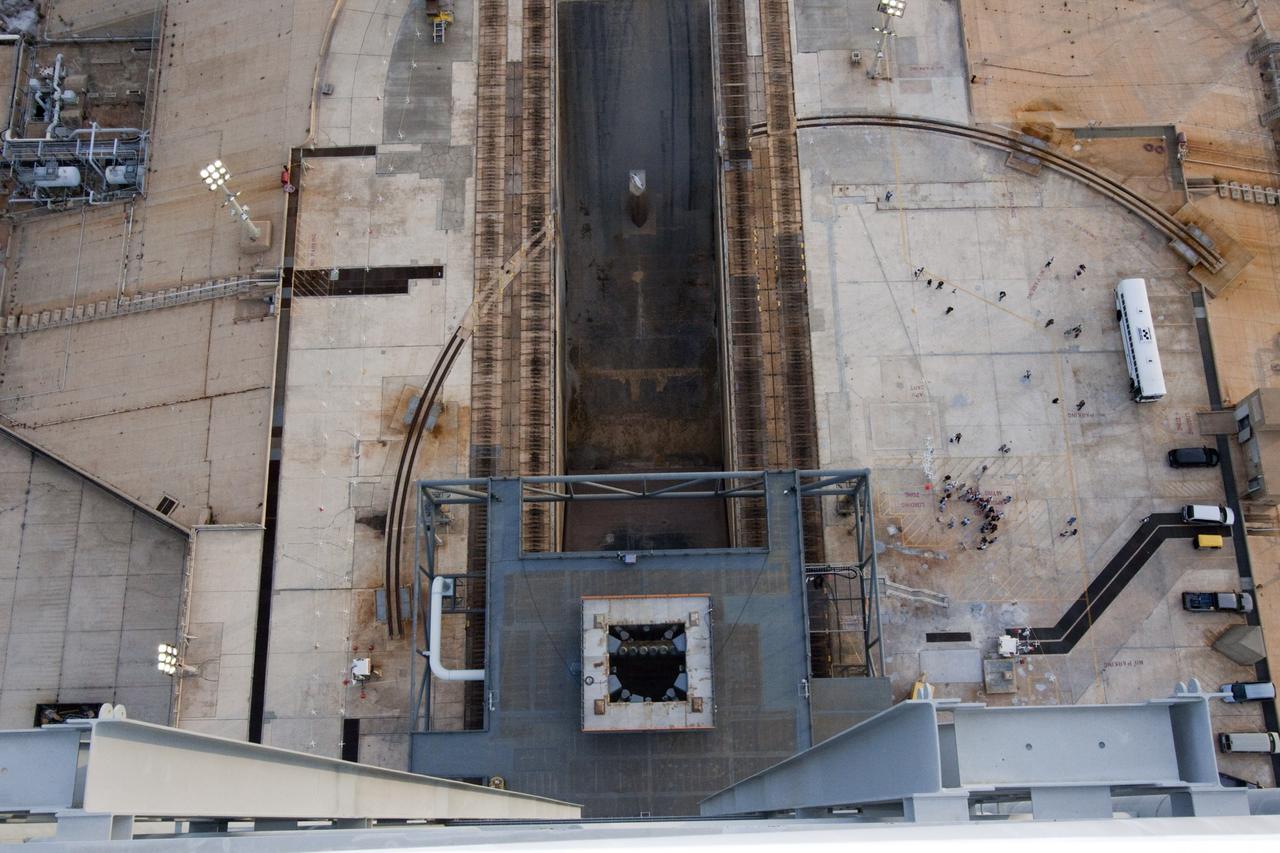
CAPE CANAVERAL, Fla. – At NASA Kennedy Space Center in Florida, media representatives taking the 21st Century Ground Systems tour appear to be the size of ants in this view from the top of the 355-foot-tall mobile launcher on Launch Pad 39B. Other stops on the tour include the Vehicle Assembly Building, a crawler-transporter parked on the crawlerway, and the Launch Control Center's Firing Room 1. These facilities and equipment will be used to prepare and launch NASA's new Orion spacecraft on the Space Launch System heavy-lift rocket. The tour was arranged as part of prelaunch media activities for the agency's Mars Science Laboratory (MSL) launch. Liftoff of MSL aboard a United Launch Alliance Atlas V rocket from Space Launch Complex-41 on Cape Canaveral Air Force Station is planned during a launch window which extends from 10:02 a.m. to 11:45 a.m. EST on Nov. 26. For more information, visit http://www.nasa.gov/msl. Photo credit: NASA/Jim Grossmann
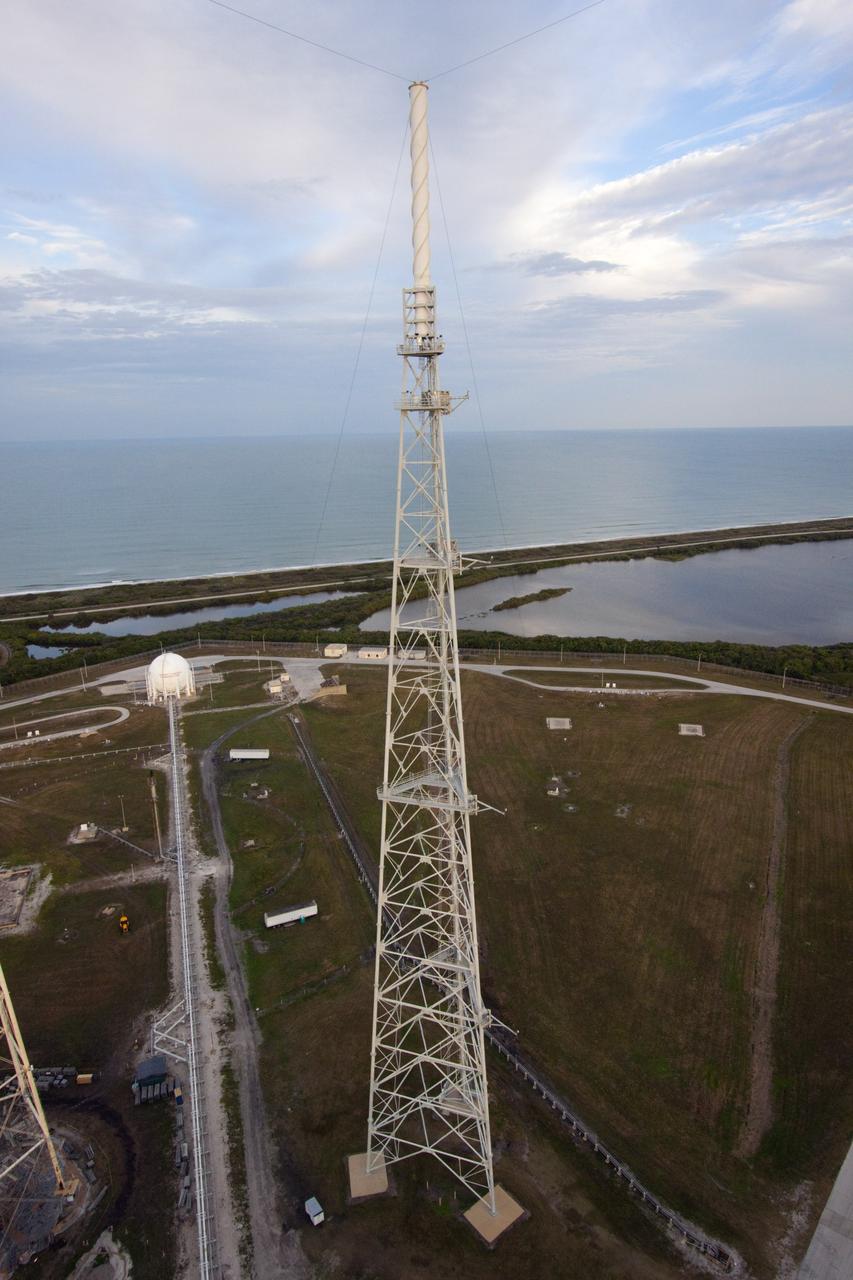
CAPE CANAVERAL, Fla. – At NASA Kennedy Space Center in Florida, this view, taken from the top of the 355-foot-tall mobile launcher at Launch Pad 39B, illustrates the close proximity of the pad to the Atlantic Ocean in the background. The structure in the center of the photo is one of three lightning masts at the pad. Media representatives are taking the 21st Century Ground Systems tour which also includes the Vehicle Assembly Building, a crawler-transporter parked on the crawlerway, and the Launch Control Center's Firing Room 1. These facilities and equipment will be used to prepare and launch NASA's new Orion spacecraft on the Space Launch System heavy-lift rocket. The tour was arranged as part of prelaunch media activities for the agency's Mars Science Laboratory (MSL) launch. Liftoff of MSL aboard a United Launch Alliance Atlas V rocket from Space Launch Complex-41 on Cape Canaveral Air Force Station is planned during a launch window which extends from 10:02 a.m. to 11:45 a.m. EST on Nov. 26. For more information, visit http://www.nasa.gov/msl. Photo credit: NASA/Jim Grossmann
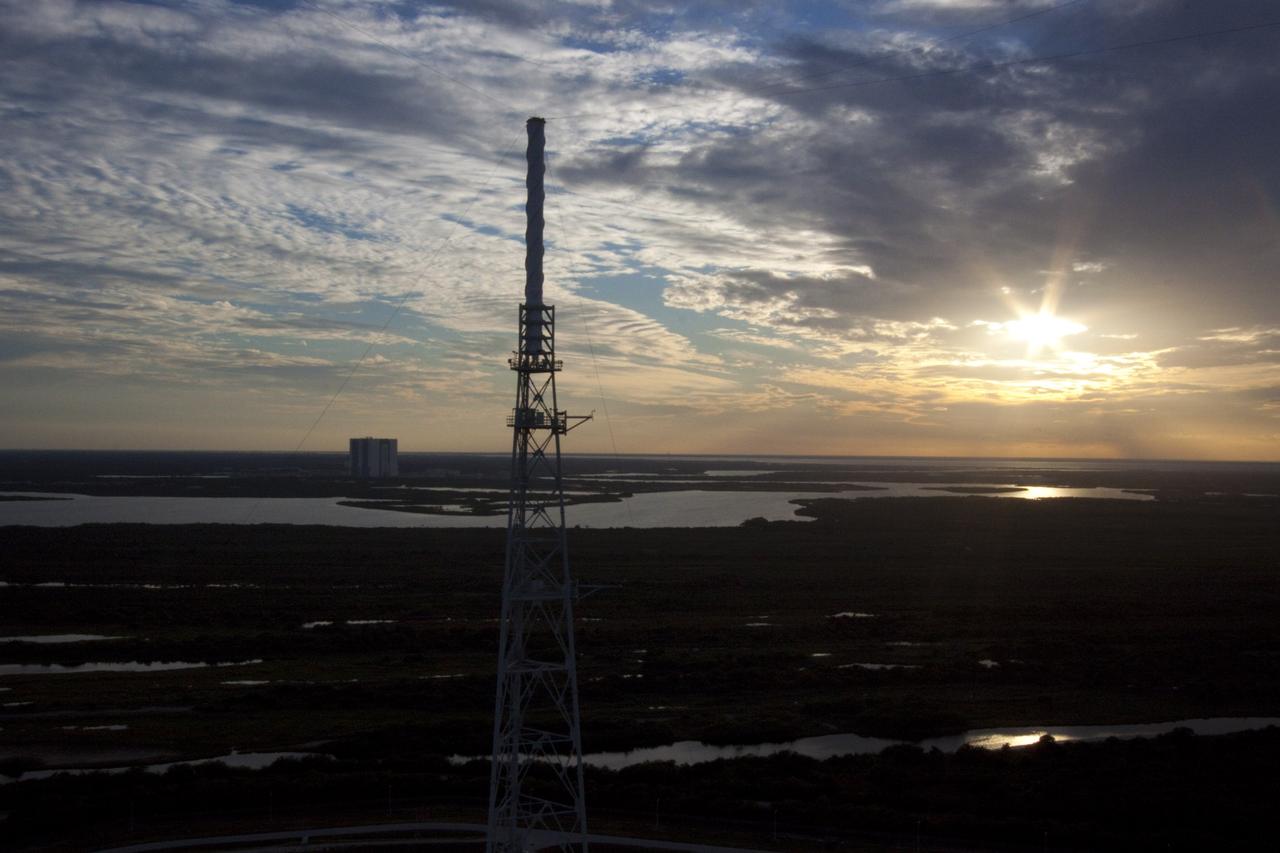
CAPE CANAVERAL, Fla. – At NASA Kennedy Space Center in Florida, the sun begins to set at Launch Pad 39B on the media representatives taking the 21st Century Ground Systems tour. This view was taken from the top of the 355-foot-tall mobile launcher at the pad. In the foreground is one of three lightning masts at the pad; in the distance is the Vehicle Assembly Building. Other stops on the tour include the Vehicle Assembly Building, a crawler-transporter parked on the crawlerway, and the Launch Control Center's Firing Room 1. These facilities and equipment will be used to prepare and launch NASA's new Orion spacecraft on the Space Launch System heavy-lift rocket. The tour was arranged as part of prelaunch media activities for the agency's Mars Science Laboratory (MSL) launch. Liftoff of MSL aboard a United Launch Alliance Atlas V rocket from Space Launch Complex-41 on Cape Canaveral Air Force Station is planned during a launch window which extends from 10:02 a.m. to 11:45 a.m. EST on Nov. 26. For more information, visit http://www.nasa.gov/msl. Photo credit: NASA/Jim Grossmann
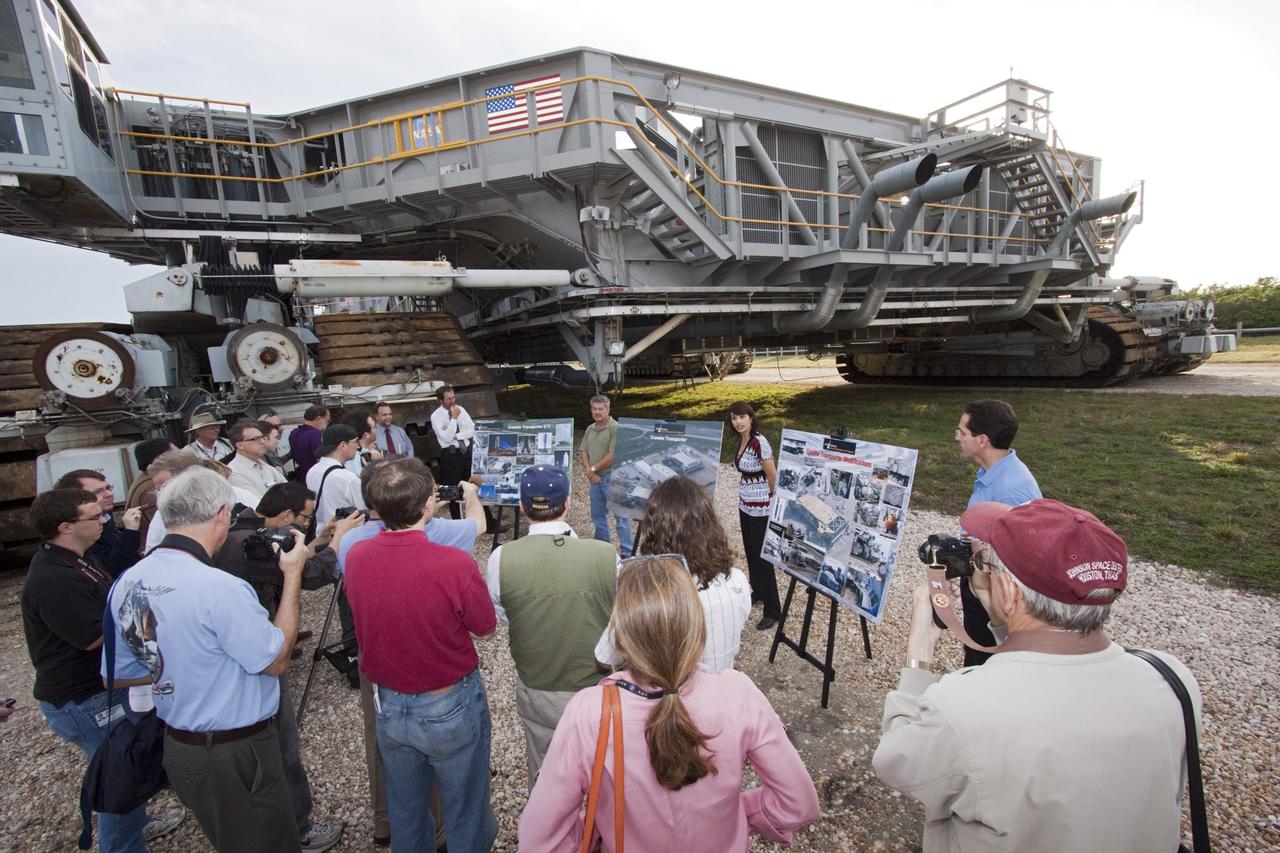
CAPE CANAVERAL, Fla. – At NASA Kennedy Space Center in Florida, Mary Hanna, NASA crawler-transporter project manager, outlines the upgrades planned for the crawler-transport to support NASA's forthcoming Space Launch System heavy-lift rocket. Hanna's audience is made up of media representatives taking the 21st Century Ground Systems tour. Other stops on the tour include the Vehicle Assembly Building, the new mobile launcher on Launch Pad 39B, and the Launch Control Center's Firing Room 1. These facilities and equipment will be used to prepare and launch NASA's new Orion spacecraft. The tour was arranged as part of prelaunch media activities for the agency's Mars Science Laboratory (MSL) launch. Liftoff of MSL aboard a United Launch Alliance Atlas V rocket from Space Launch Complex-41 on Cape Canaveral Air Force Station is planned during a launch window which extends from 10:02 a.m. to 11:45 a.m. EST on Nov. 26. For more information, visit http://www.nasa.gov/msl. Photo credit: NASA/Jim Grossmann
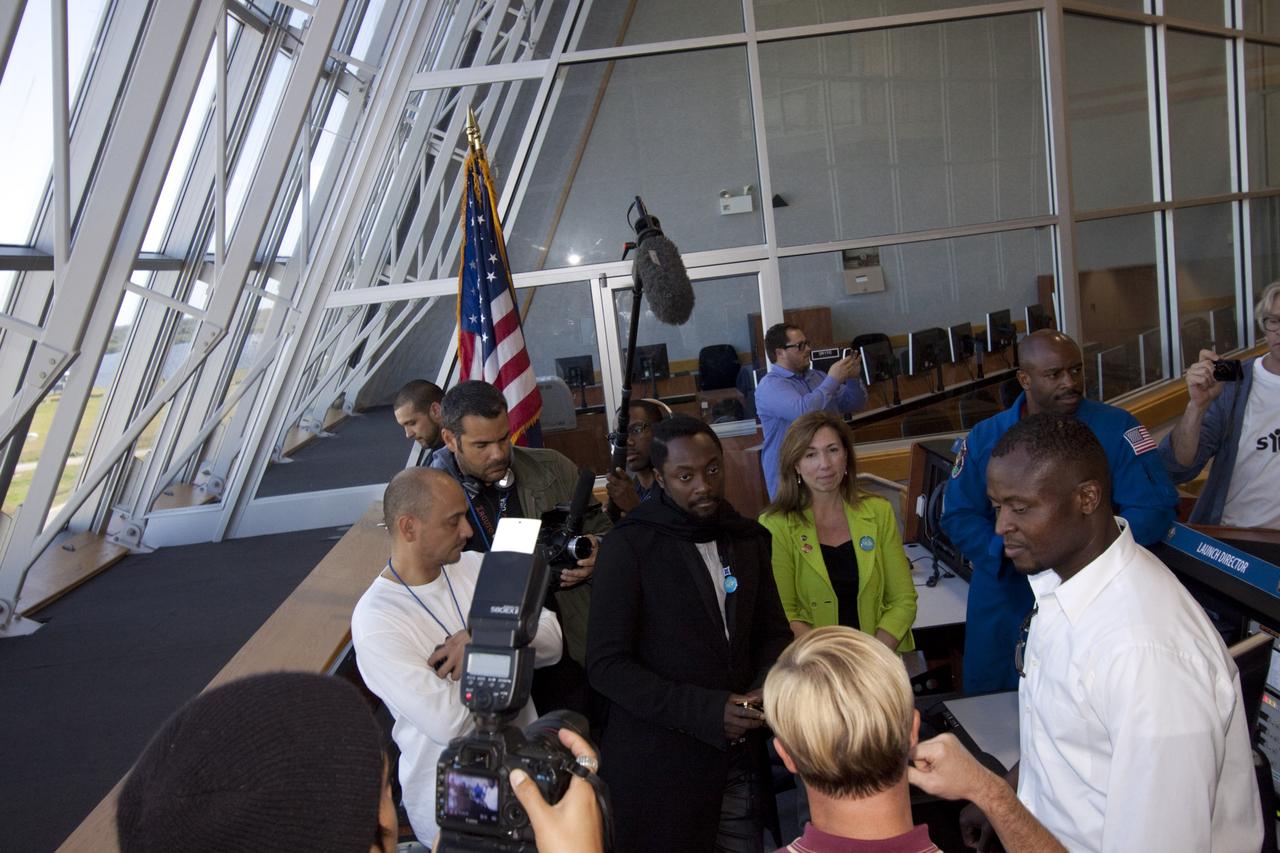
CAPE CANAVERAL, Fla. – At NASA Kennedy Space Center in Florida, Will.i.am (at center), entertainer and member of The Black Eyed Peas, tours Firing Room 4 in the Launch Control Center accompanied by NASA Deputy Administrator Lori Garver (green jacket); former astronaut Leland Melvin, NASA associate administrator for Education (blue flight suit); and Yves Lamothe, lead systems engineer for the 21st Century Ground Systems Program at Kennedy. The visit to the firing room followed their participation in a NASA Tweetup. The Tweetup is part of prelaunch activities for the agency’s Mars Science Laboratory (MSL) launch and provides the opportunity for tweeters will share their experiences with followers through the social networking site Twitter. The MSL mission will pioneer precision landing technology and a sky-crane touchdown to place a car-sized rover, Curiosity, near the foot of a mountain inside Gale Crater on Aug. 6, 2012. During a nearly two-year prime mission after landing, the rover will investigate whether the region has ever offered conditions favorable for microbial life, including the chemical ingredients for life. Liftoff of MSL aboard a United Launch Alliance Atlas V rocket from Space Launch Complex-41 on Cape Canaveral Air Force Station was at 10:02 a.m. EST on Nov. 26. For more information, visit http://www.nasa.gov/msl. Photo credit: NASA/Jim Grossmann

CAPE CANAVERAL, Fla. – At NASA Kennedy Space Center in Florida, presenters and Kennedy personnel supporting a NASA Tweetup get a close-up look at space shuttle Endeavour being stored in the Vehicle Assembly Building. From left are Yves Lamothe, lead systems engineer for the 21st Century Ground Systems Program at Kennedy; NASA Deputy Administrator Lori Garver; former astronaut Leland Melvin, NASA associate administrator for Education; and Will.i.am, entertainer and member of The Black Eyed Peas. The Tweetup is part of prelaunch activities for the agency’s Mars Science Laboratory (MSL) launch and provides the opportunity for tweeters will share their experiences with followers through the social networking site Twitter. The MSL mission will pioneer precision landing technology and a sky-crane touchdown to place a car-sized rover, Curiosity, near the foot of a mountain inside Gale Crater on Aug. 6, 2012. During a nearly two-year prime mission after landing, the rover will investigate whether the region has ever offered conditions favorable for microbial life, including the chemical ingredients for life. Liftoff of MSL aboard a United Launch Alliance Atlas V rocket from Space Launch Complex-41 on Cape Canaveral Air Force Station was at 10:02 a.m. EST on Nov. 26. For more information, visit http://www.nasa.gov/msl. Photo credit: NASA/Jim Grossmann

CAPE CANAVERAL, Fla. -- NASA managers at NASA's Kennedy Space Center in Florida show off the Florida Project of the Year trophies that the crawlerway system evaluation team received from the American Society of Civil Engineers (ASCE). From left are Michael Benik, director of Center Operations; Pepper Phillips, manager of the 21st Century Ground Systems Program Office; and Russell Romanella, associate director for Engineering and Technical Operations. The Cape Canaveral branch of the ASCE nominated the team for its project, the Crawlerway Evaluation to Support a Heavy-Lift Program. The crawlerway is a 130-foot-wide, specialty-built roadway between Kennedy's Vehicle Assembly Building (VAB), where rockets and spacecraft are prepared for flight, and Launch Pad 39A and 39B. The team's more than two-year evaluation confirmed the crawlerway system would be able to support the weight of moving the agency's future heavy-lift rockets and potential commercial vehicles from the VAB to the launch pads. The award honors the team's outstanding engineering efforts in research, design, construction and management, recognizing the complexity of multi-agency coordination and cost-effective engineering advances. For more information on the American Society of Civil Engineers, visit: http://www.asce.org. Photo credit: NASA/Kim Shiflett

CAPE CANAVERAL, Fla. – From left, Yves Lamothe, lead systems engineer for the 21st Century Ground Systems Program at NASA Kennedy Space Center; NASA Administrator Charles Bolden; Will.i.am, entertainer and member of The Black Eyed Peas; and former astronaut Leland Melvin, NASA associate administrator for Education, take part in a Tweetup at NASA Kennedy Space Center's Press Site in Florida during prelaunch activities for the agency’s Mars Science Laboratory (MSL) launch. Behind them, the countdown clock ticks off the seconds to launch. Participants in the Tweetup are given the opportunity to listen to agency briefings, tour locations on the center normally off limits to visitors, and get a close-up view of Space Launch Complex-41 on Cape Canaveral Air Force Station. The tweeters will share their experiences with followers through the social networking site Twitter. The MSL mission will pioneer precision landing technology and a sky-crane touchdown to place a car-sized rover, Curiosity, near the foot of a mountain inside Gale Crater on Aug. 6, 2012. During a nearly two-year prime mission after landing, the rover will investigate whether the region has ever offered conditions favorable for microbial life, including the chemical ingredients for life. Liftoff of MSL aboard a United Launch Alliance Atlas V rocket from pad 41 is planned during a launch window which extends from 10:02 a.m. to 11:45 a.m. EST on Nov. 26. For more information, visit http://www.nasa.gov/msl. Photo credit: NASA/Frankie Martin
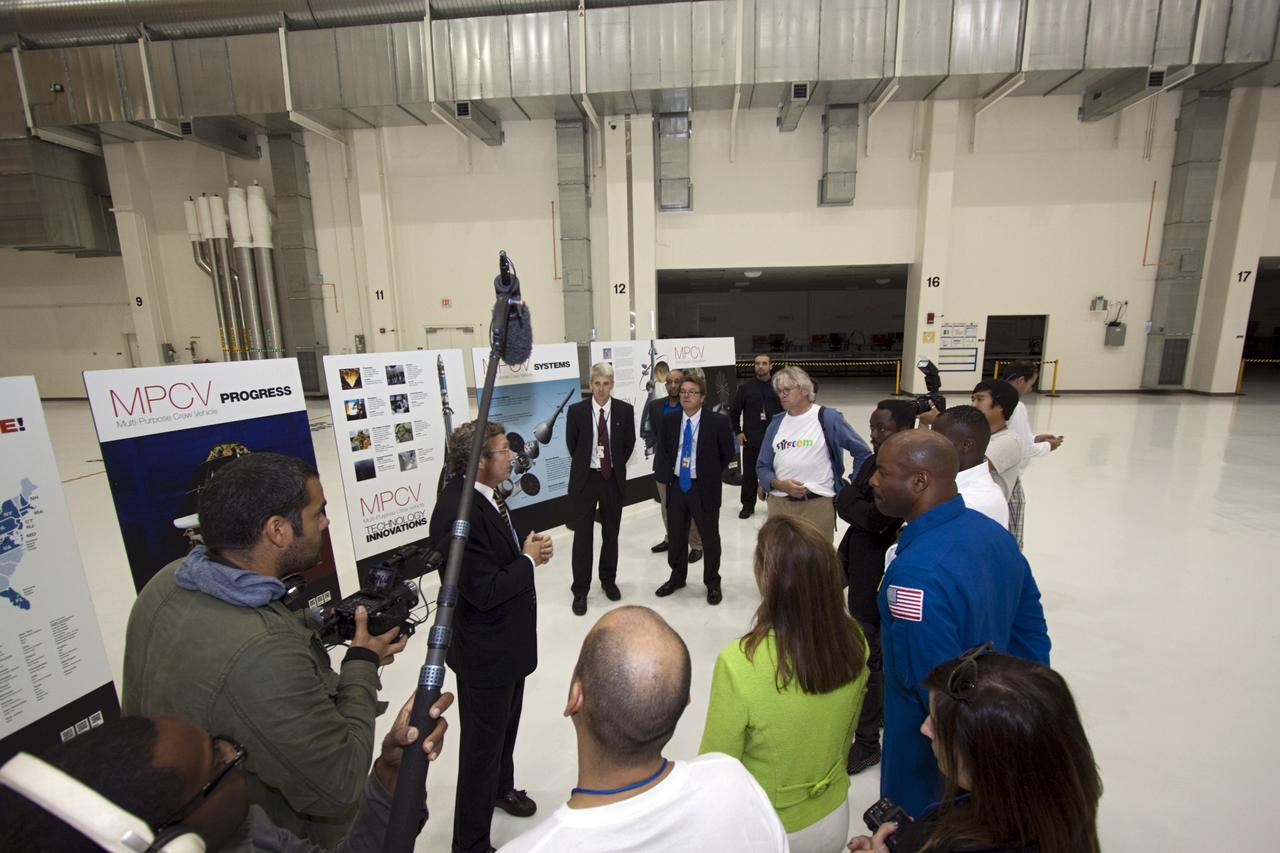
CAPE CANAVERAL, Fla. – At NASA Kennedy Space Center in Florida, presenters in a NASA Tweetup tour the Operations and Checkout Building (O&C). Listening to a briefing from from Larry Price, Lockheed Martin deputy program manager, on the Orion Multi Purpose Crew Vehicle are, from left, NASA Deputy Administrator Lori Garver (green jacket); former astronaut Leland Melvin, NASA associate administrator for Education (blue flight suit); Yves Lamothe, lead systems engineer for the 21st Century Ground Systems Program at Kennedy; Will.i.am, entertainer and member of The Black Eyed Peas; and Lars Perkins, chair of the Education and Public Outreach Committee of the NASA Advisory Council. The visit to the O&C followed their participation in a NASA Tweetup. The Tweetup is part of prelaunch activities for the agency’s Mars Science Laboratory (MSL) launch and provides the opportunity for tweeters will share their experiences with followers through the social networking site Twitter. The MSL mission will pioneer precision landing technology and a sky-crane touchdown to place a car-sized rover, Curiosity, near the foot of a mountain inside Gale Crater on Aug. 6, 2012. During a nearly two-year prime mission after landing, the rover will investigate whether the region has ever offered conditions favorable for microbial life, including the chemical ingredients for life. Liftoff of MSL aboard a United Launch Alliance Atlas V rocket from Space Launch Complex-41 on Cape Canaveral Air Force Station was at 10:02 a.m. EST on Nov. 26. For more information, visit http://www.nasa.gov/msl. Photo credit: NASA/Jim Grossmann
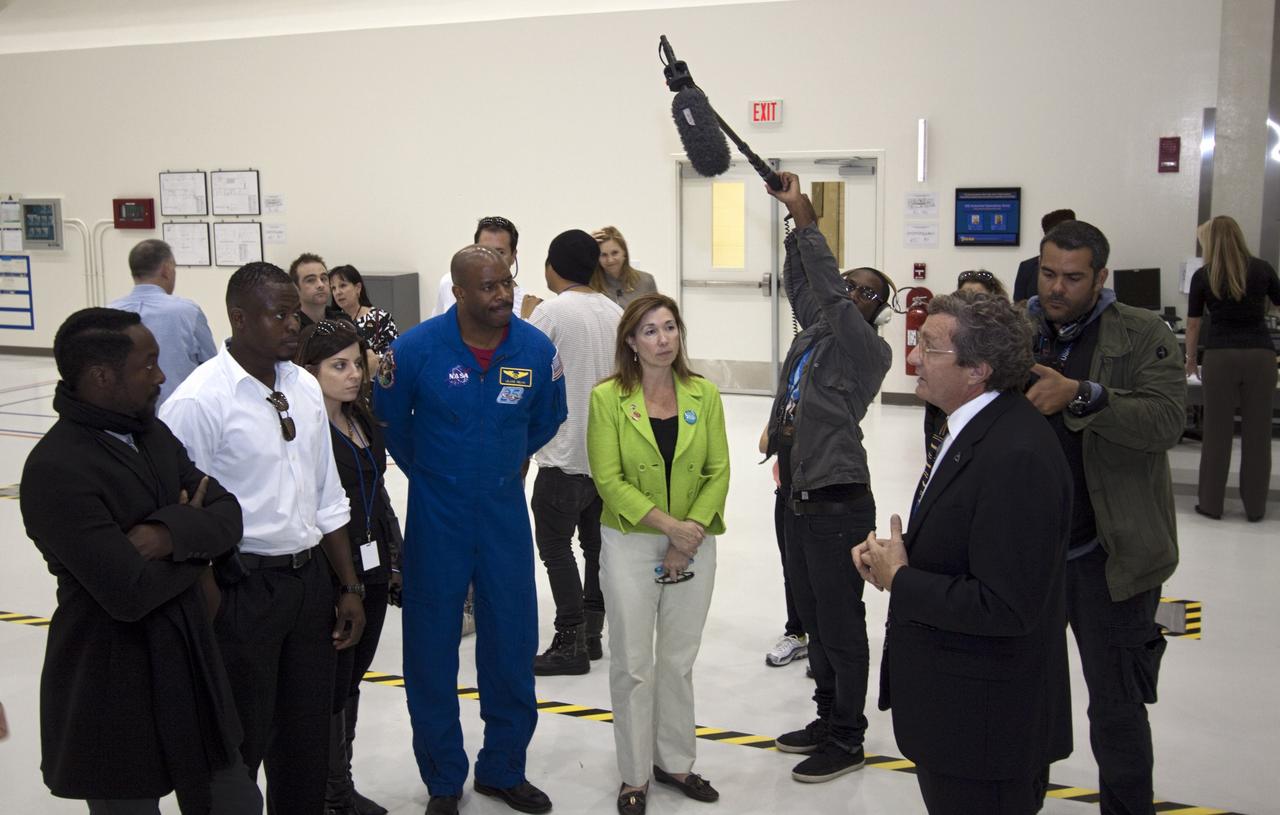
CAPE CANAVERAL, Fla. – At NASA Kennedy Space Center in Florida, Will.i.am (left), entertainer and member of The Black Eyed Peas, accompanied by Yves Lamothe, lead systems engineer for the 21st Century Ground Systems Program at Kennedy; former astronaut Leland Melvin, NASA associate administrator for Education (blue flight suit), and NASA Deputy Administrator Lori Garver (green jacket), receives a tour of the Operations and Checkout Building (O&C) from Larry Price, Lockheed Martin deputy program manager. The visit to the O&C followed their participation in a NASA Tweetup. The Tweetup is part of prelaunch activities for the agency’s Mars Science Laboratory (MSL) launch and provides the opportunity for tweeters will share their experiences with followers through the social networking site Twitter. The MSL mission will pioneer precision landing technology and a sky-crane touchdown to place a car-sized rover, Curiosity, near the foot of a mountain inside Gale Crater on Aug. 6, 2012. During a nearly two-year prime mission after landing, the rover will investigate whether the region has ever offered conditions favorable for microbial life, including the chemical ingredients for life. Liftoff of MSL aboard a United Launch Alliance Atlas V rocket from Space Launch Complex-41 on Cape Canaveral Air Force Station was at 10:02 a.m. EST on Nov. 26. For more information, visit http://www.nasa.gov/msl. Photo credit: NASA/Jim Grossmann