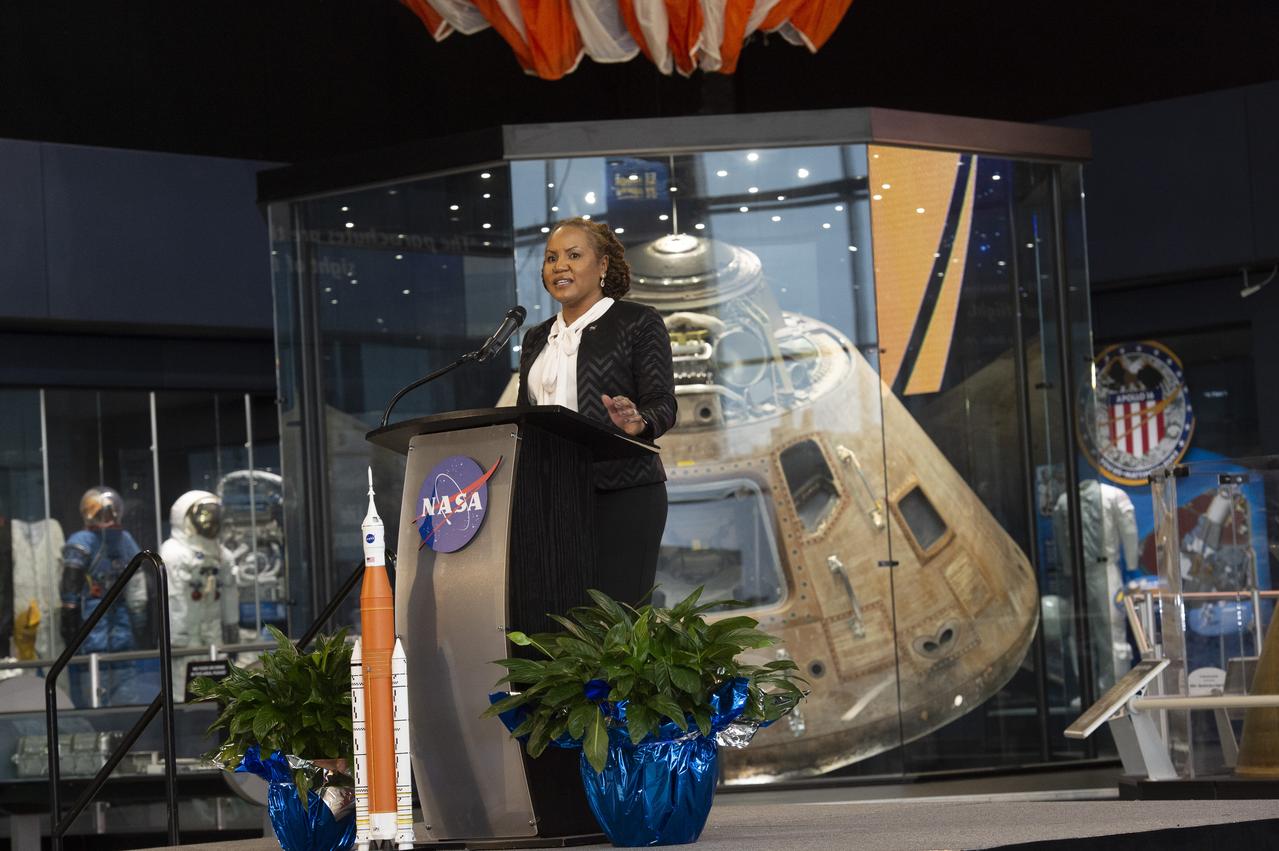
Monica Manning, assistant administrator of NASA’s Office of Procurement, addresses a crowd of nearly 900 industry leaders from 33 states at the 29th Marshall Small Business Alliance meeting Feb. 20 at the U.S. Space & Rocket Center. Manning introduced a new model for managing mission support for the agency, with the intent to align and simplify processes.

2010/119 - 04/29 at 16 :48 UTC Oil slick in the Gulf of Mexico (Input Direct Broadcast data courtesy Direct Readout Lab, NASA/GSFC) Satellite: Terra NASA/GSFC/Jeff Schmaltz/MODIS Land Rapid Response Team To learn more about MODIS go to: <a href="http://rapidfire.sci.gsfc.nasa.gov/gallery/?latest" rel="nofollow">rapidfire.sci.gsfc.nasa.gov/gallery/?latest</a> <b><a href="http://www.nasa.gov/centers/goddard/home/index.html" rel="nofollow">NASA Goddard Space Flight Center</a></b> is home to the nation's largest organization of combined scientists, engineers and technologists that build spacecraft, instruments and new technology to study the Earth, the sun, our solar system, and the universe.
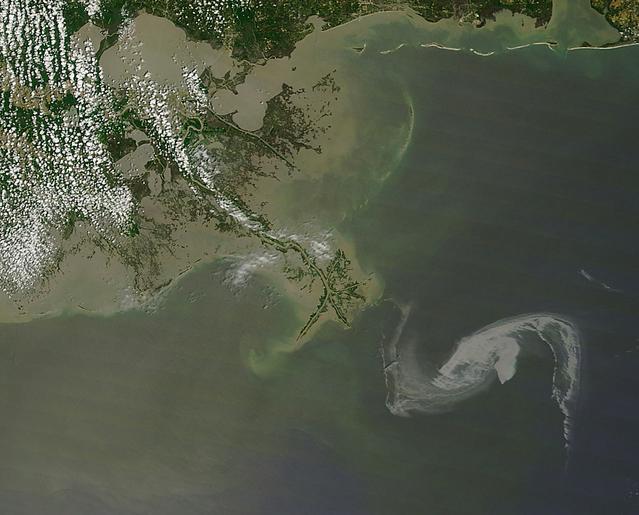
2010/119 - 04/29 at 16 :48 UTC Oil slick in the Gulf of Mexico To see a full view of this image go to: <a href="http://www.flickr.com/photos/gsfc/4563296541/">www.flickr.com/photos/gsfc/4563296541/</a> (Input Direct Broadcast data courtesy Direct Readout Lab, NASA/GSFC) Satellite: Terra NASA/GSFC/Jeff Schmaltz/MODIS Land Rapid Response Team To learn more about MODIS go to: <a href="http://rapidfire.sci.gsfc.nasa.gov/gallery/?latest" rel="nofollow">rapidfire.sci.gsfc.nasa.gov/gallery/?latest</a> <b><a href="http://www.nasa.gov/centers/goddard/home/index.html" rel="nofollow">NASA Goddard Space Flight Center</a></b> is home to the nation's largest organization of combined scientists, engineers and technologists that build spacecraft, instruments and new technology to study the Earth, the sun, our solar system, and the universe.
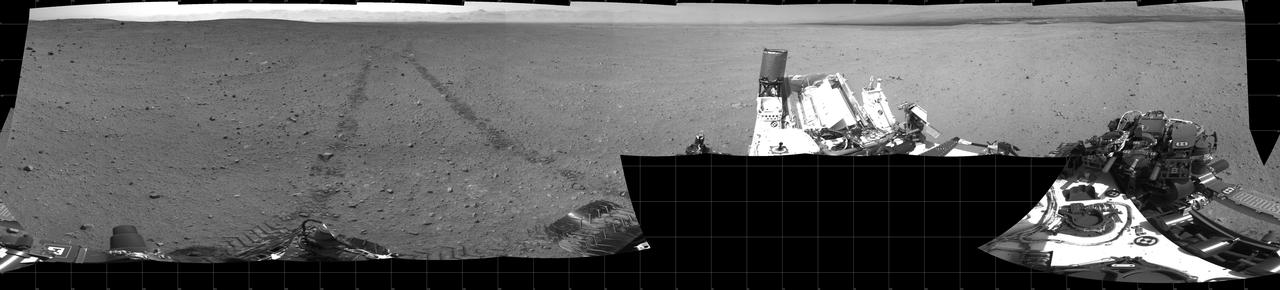
This scene shows the surroundings of the location where NASA Mars rover Curiosity arrived on the 29th Martian day, or sol, of the rover mission on Mars Sept. 4, 2012.
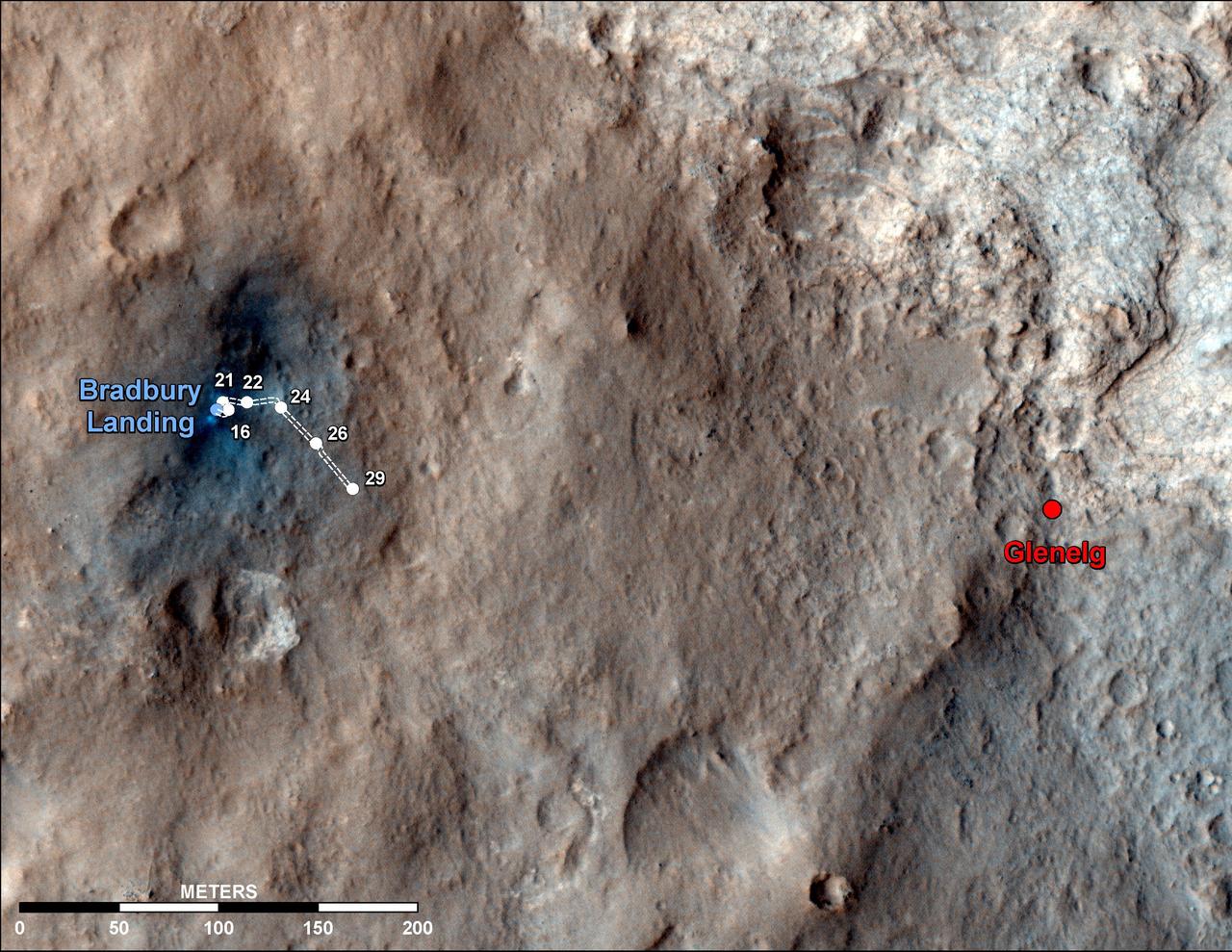
This map shows the route driven by NASA Mars rover Curiosity through the 29th Martian day, or sol, of the rover mission on Mars Sept. 4, 2012.

This image of Jupiter's norther polar region was processed by citizen scientist Emma Wälimäki. The data for the image was collected during Juno's 29th perijove (PJ) pass on Sept. 16, 2020. https://photojournal.jpl.nasa.gov/catalog/PIA24239
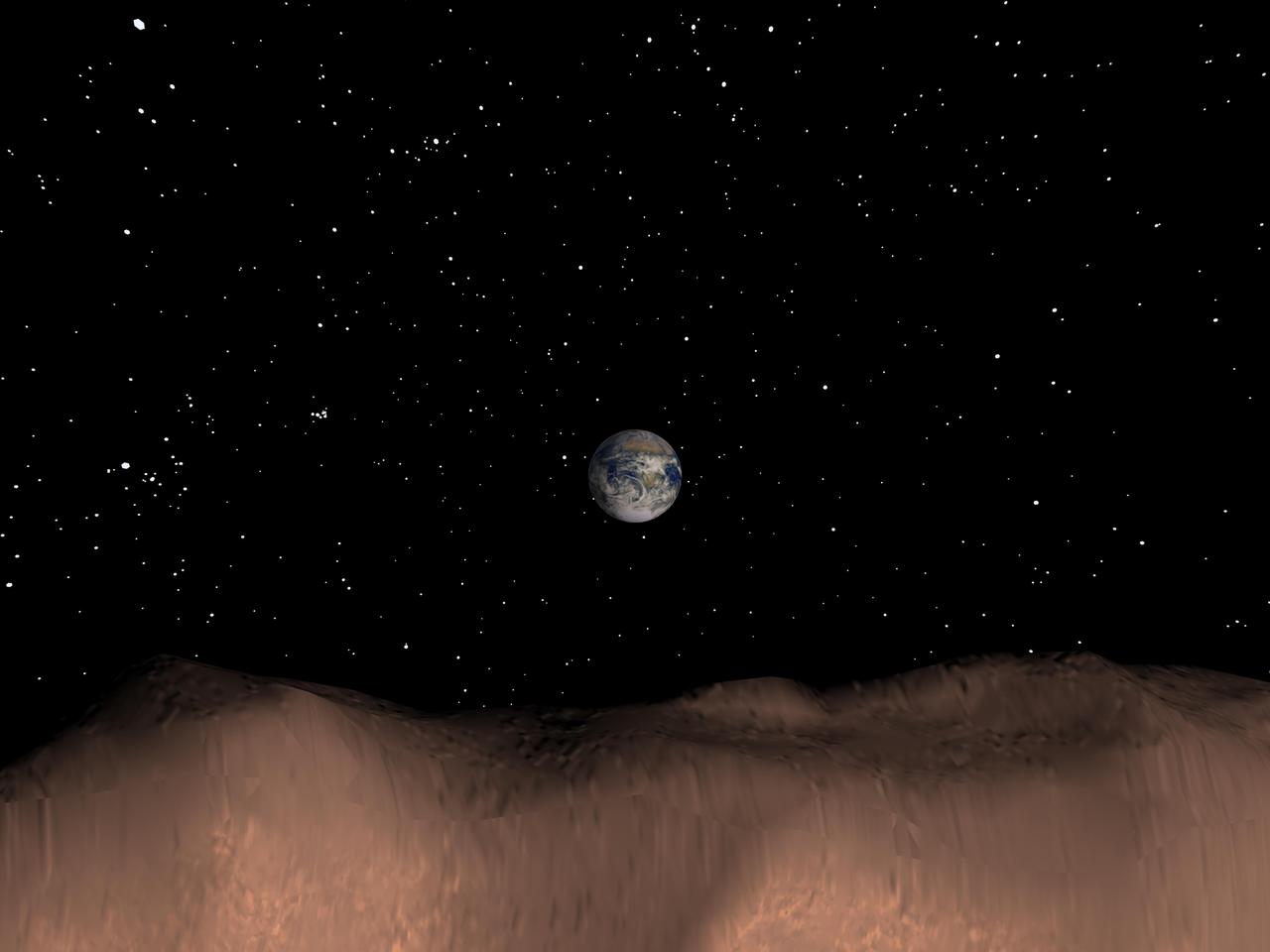
This computer generated image depicts a view of Earth as seen from the surface of the asteroid Toutatis on Nov 29th 1996. A 2.5 degree field-of-view synthetic computer camera was used for this simulation. Toutatis is visible on this date as a twelfth magnitude object in the night sky in the constellation of Virgo and could be viewed with a medium sized telescope. Toutatis currently approaches Earth once every four years and, on Nov. 29th, 1996 will be 5.2 million kilometers away (approx. 3.3 million miles). In approximately 8 years, on Sept. 29th, 2004, it will be less than 1.6 million kilometers from Earth. This is only 4 times the distance to the moon, and is the closest approach predicted for any known asteroid or comet during the next 60 years. http://photojournal.jpl.nasa.gov/catalog/PIA00515
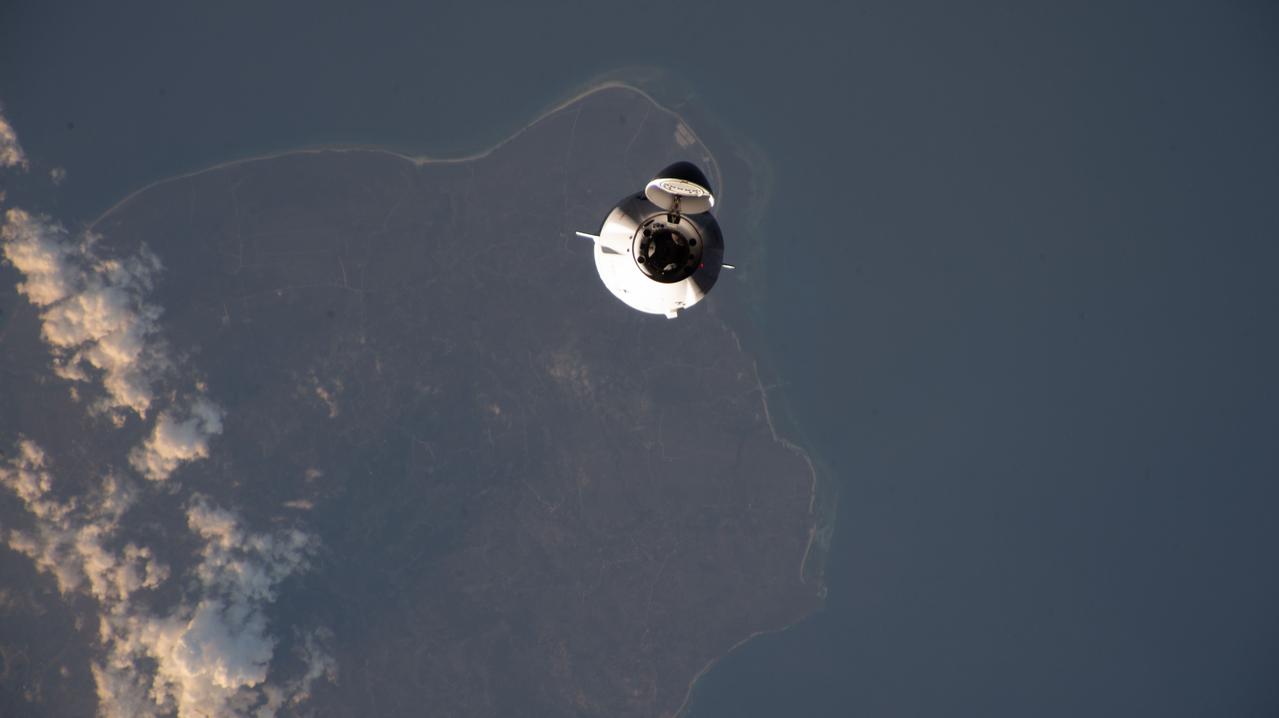
iss070e022097 (Nov. 11, 2023) --- The SpaceX Dragon cargo craft, on the company's 29th commercial resupply mission for NASA, approaches the International Space Station while orbiting 261 miles above the Lesser Sunda Islands.
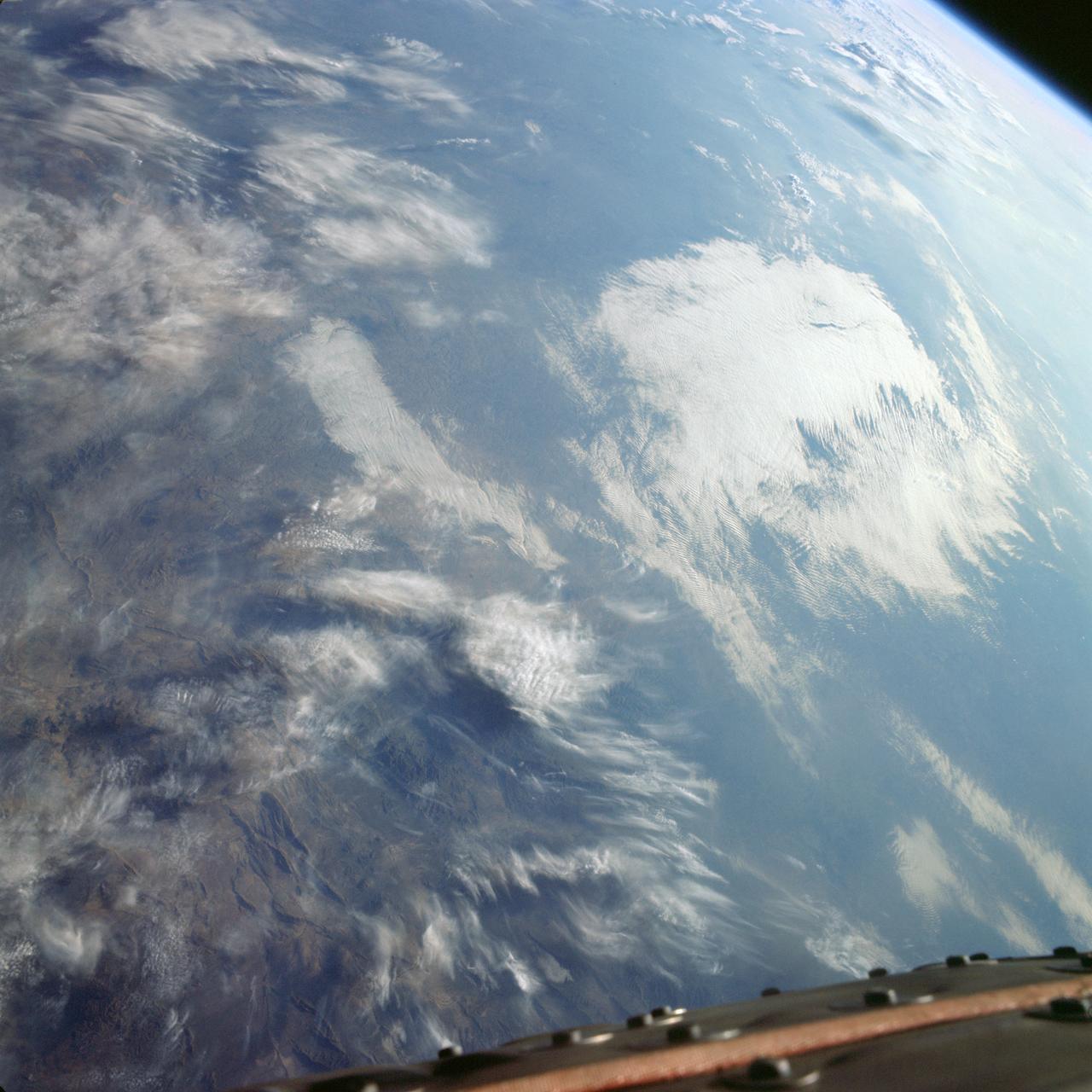
S66-54558 (14 Sept. 1966) --- Del Rio and Eagle Pass area of the Rio Grande Valley of Texas and Mexico as seen from the Gemini-11 spacecraft during its 29th revolution of Earth. Photo credit: NASA
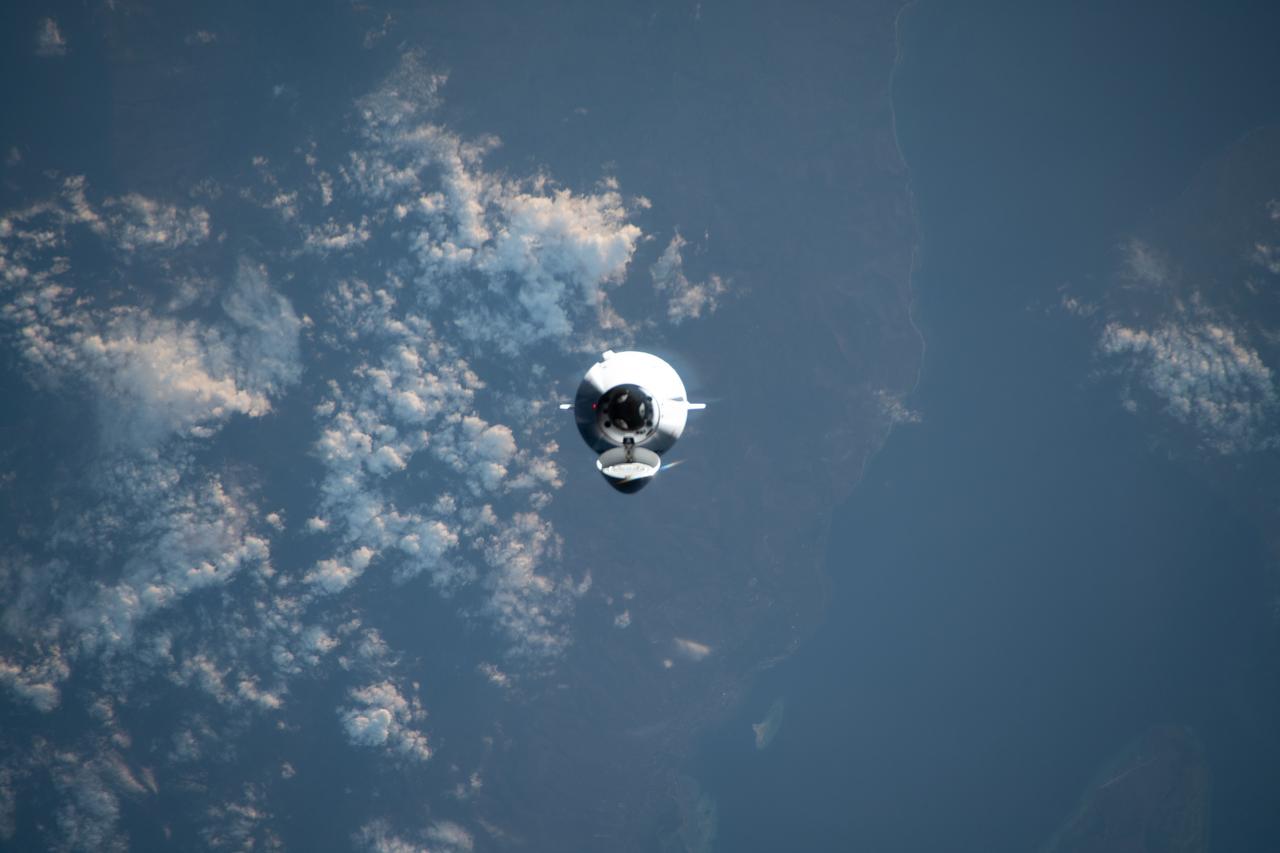
iss070e023587 (Nov. 11, 2023) --- The SpaceX Dragon cargo craft, on the company's 29th commercial resupply mission for NASA, approaches the International Space Station while orbiting 261 miles above the Lesser Sunda Islands.
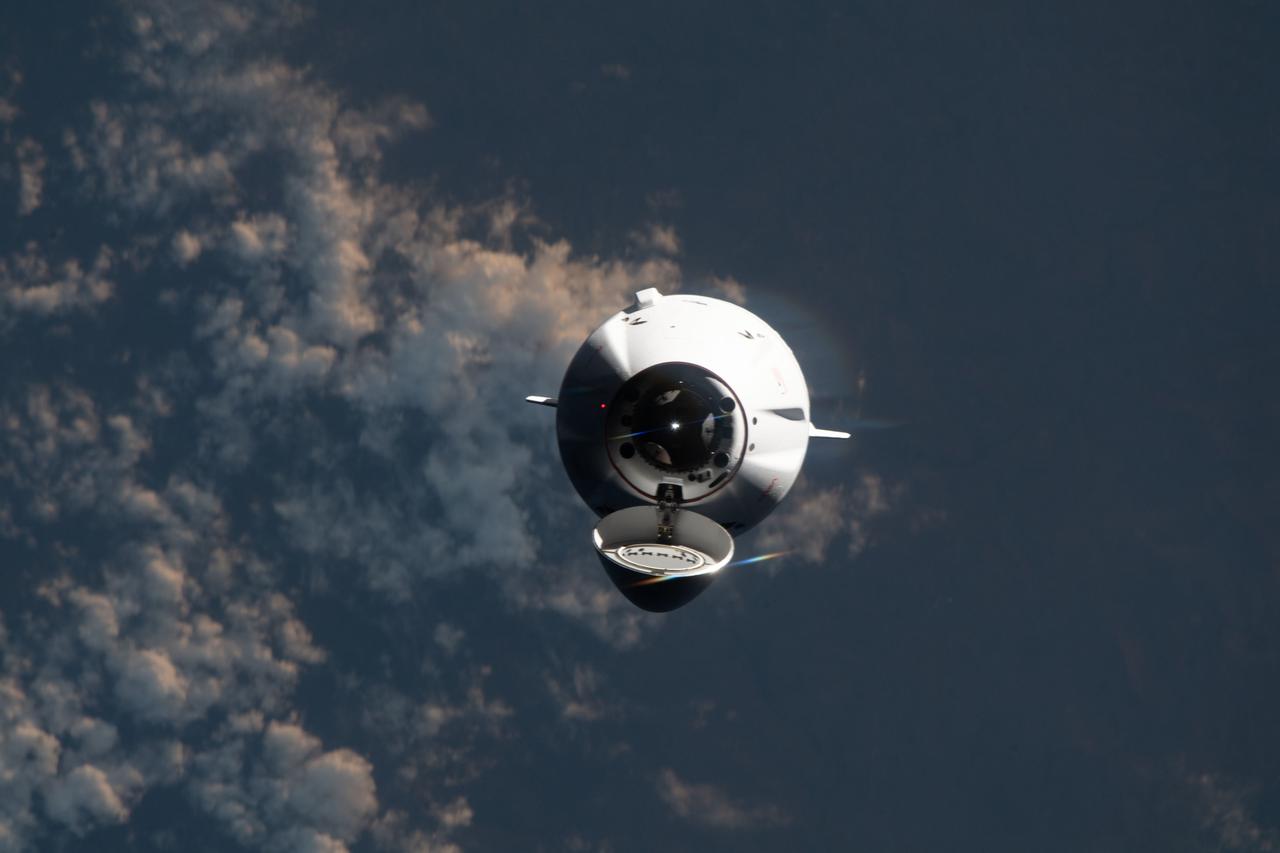
iss070e022160 (Nov. 11, 2023) --- The SpaceX Dragon cargo craft, on the company's 29th commercial resupply mission for NASA, approaches the International Space Station while orbiting 261 miles above Indonesia's Savu Sea.
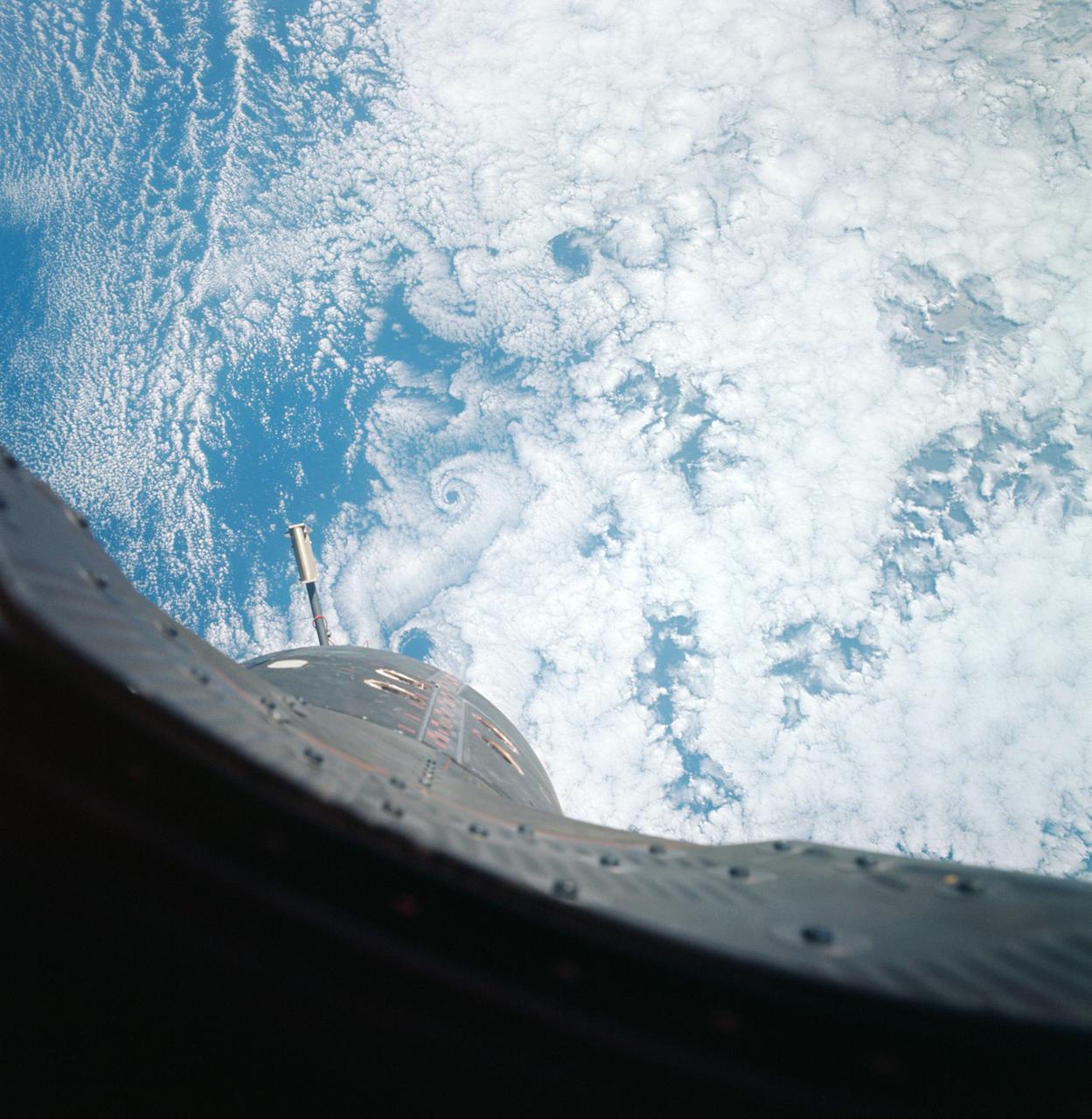
S66-63494 (13 Nov. 1966) --- Guadalupe Island, unique vortices off Baja California, Mexico, as seen from the Gemini-12 spacecraft during its 29th revolution of Earth. Photo credit: NASA
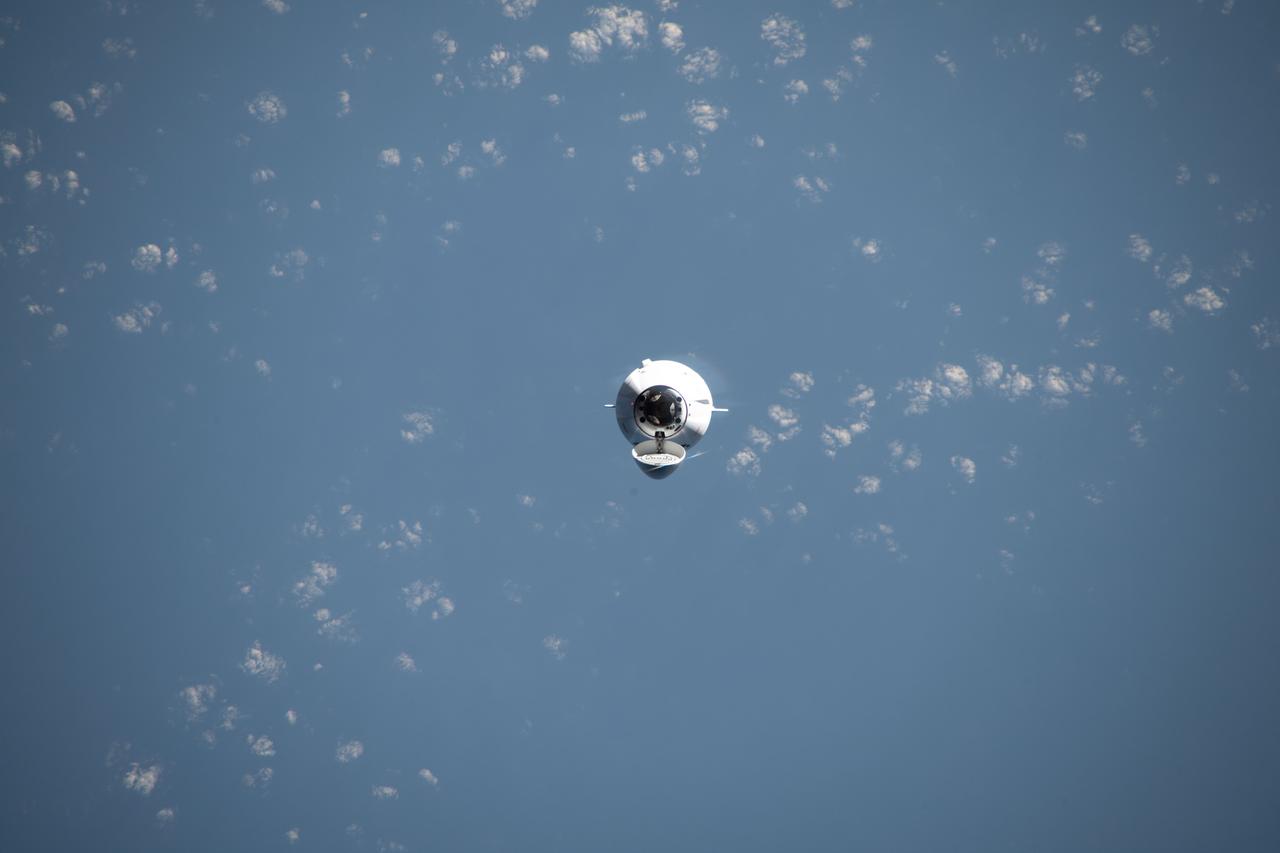
iss070e023576 (Nov. 11, 2023) --- The SpaceX Dragon cargo craft, on the company's 29th commercial resupply mission for NASA, approaches the International Space Station while orbiting 261 miles above the Indian Ocean in between Australia and Indonesia.
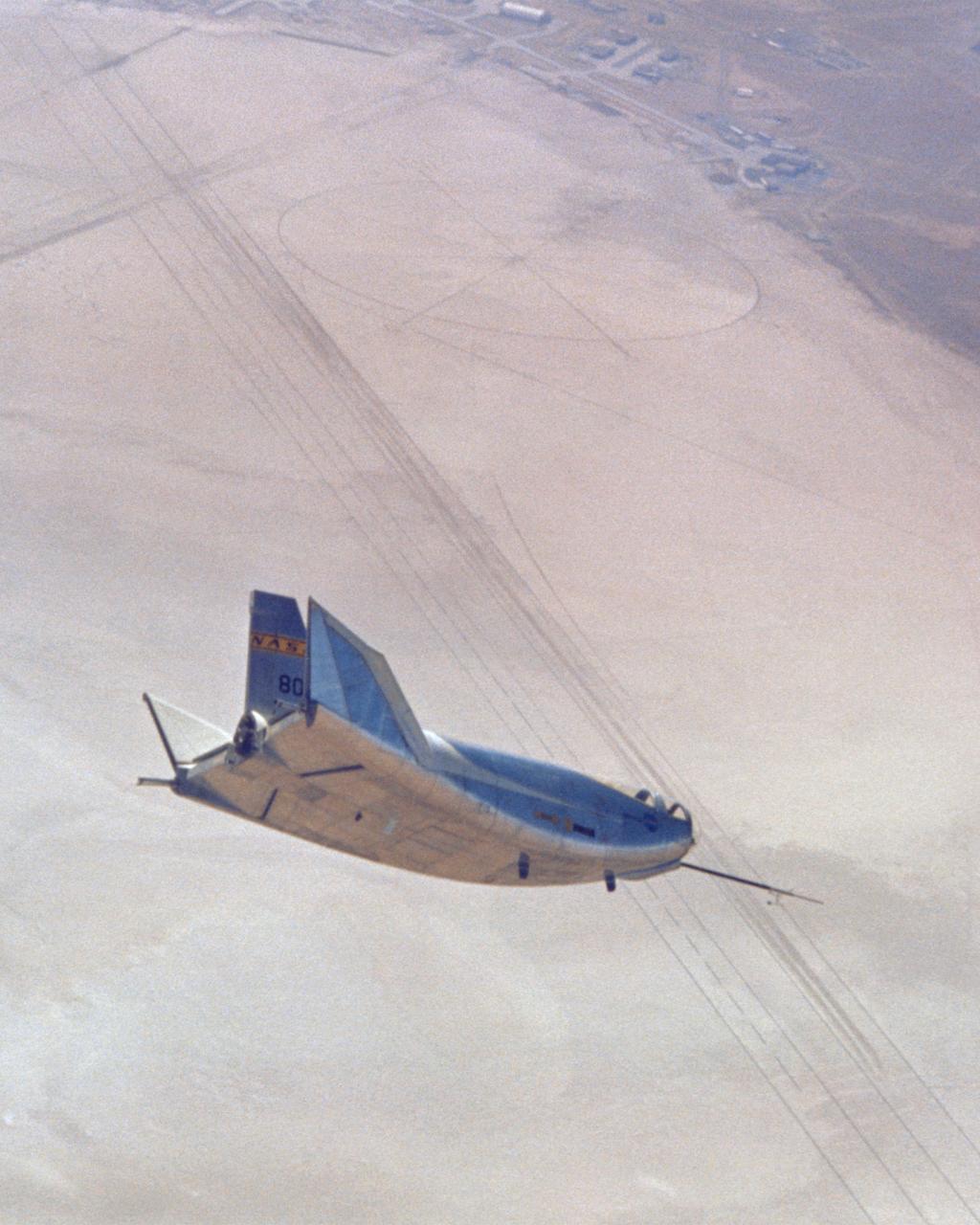
This photo shows the HL-10 in flight, turning to line up with lakebed runway 18. The pilot for this flight, the 29th of the HL-10 series, was Bill Dana. The HL-10 reached a peak altitude of 64,590 feet and a top speed of Mach 1.59 on this particular flight.
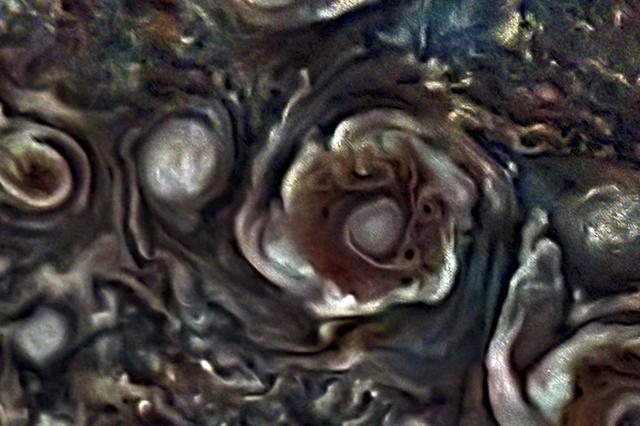
This JunoCam image depicts one of the eight circumpolar cyclones that surround a central cyclone at the gas giant's north pole. The data from this view of one of Jupiter's circumpolar cyclones was collected during Juno's 29th perijove (PJ) pass on Sept. 16, 2020, and processed by citizen scientist Gerald Eichstädt. https://photojournal.jpl.nasa.gov/catalog/PIA24238
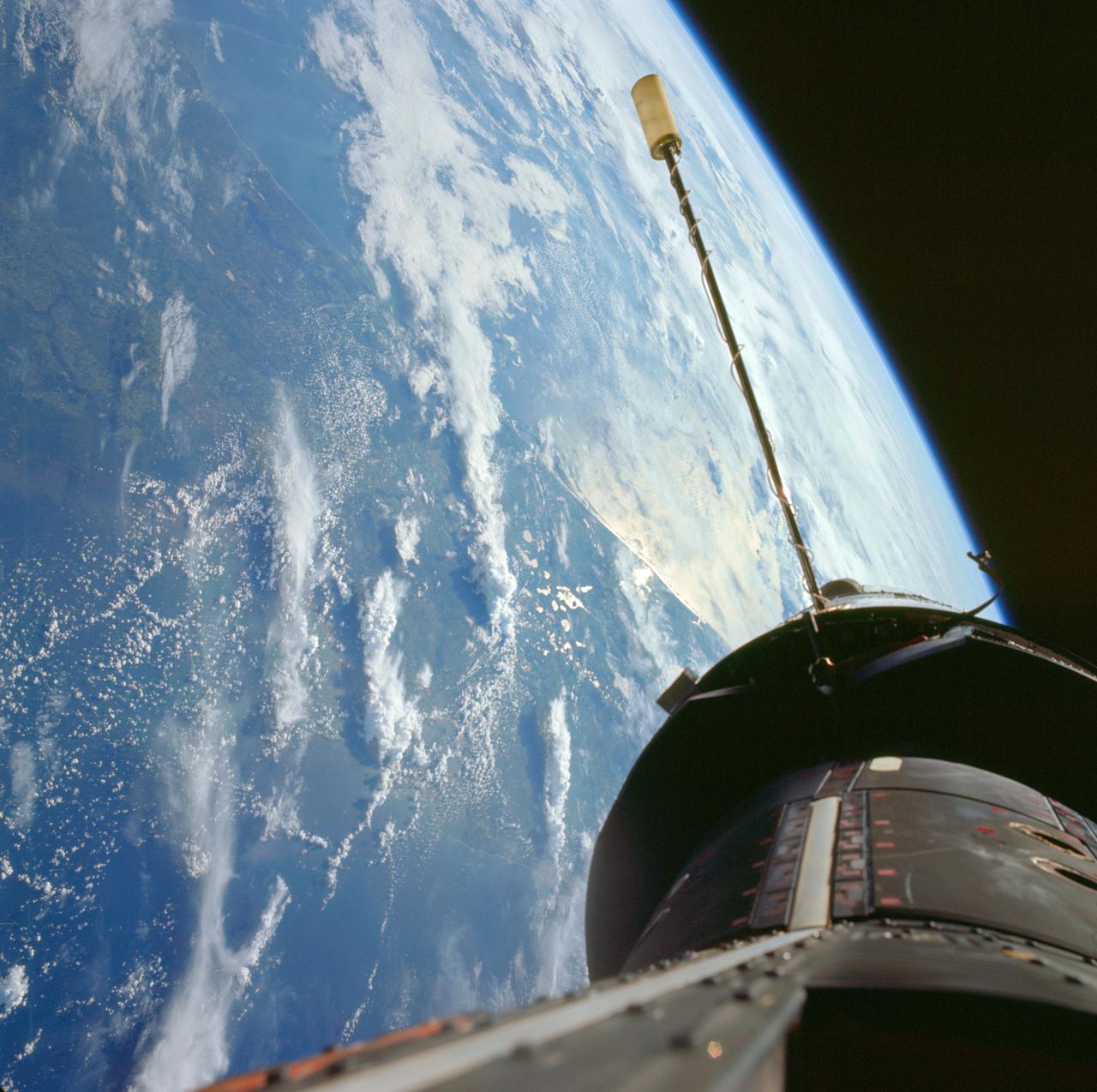
S66-54565 (14 Sept. 1966) --- Central portion of Florida, Gulf of Mexico to Atlantic Ocean, Cape Kennedy is at left center of photo, as seen from the Gemini-11 spacecraft during its 29th revolution of Earth. Photo lacks detail due to low sun angle. Sunglint on lakes is visible. Photo credit: NASA
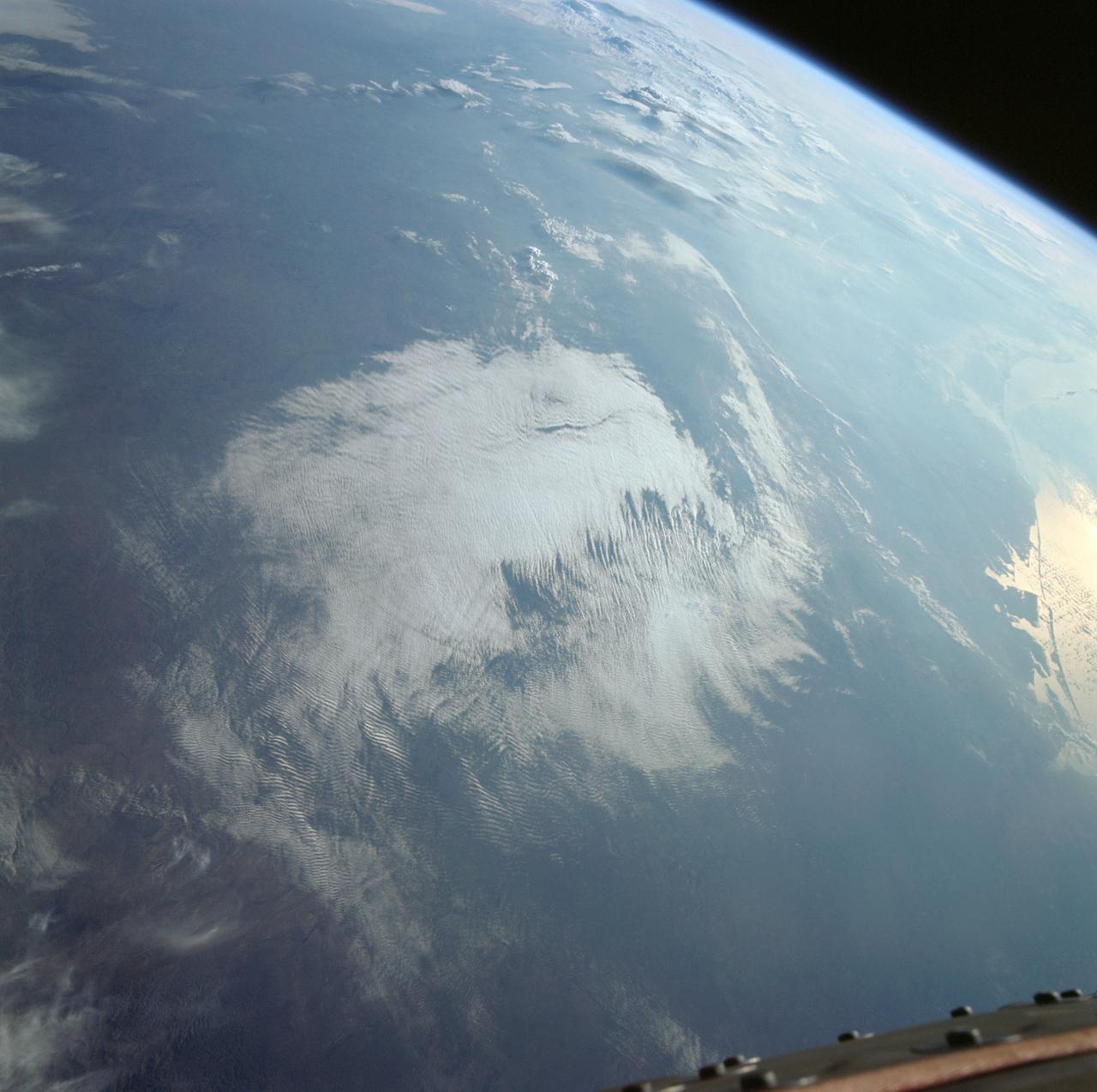
S66-54559 (14 Sept. 1966) --- Gulf Coast from Corpus Christi, Texas, to mouth of Mississippi River, as seen from the Gemini-11 spacecraft during its 29th revolution of Earth. This photo was taken near sunrise. Photo credit: NASA
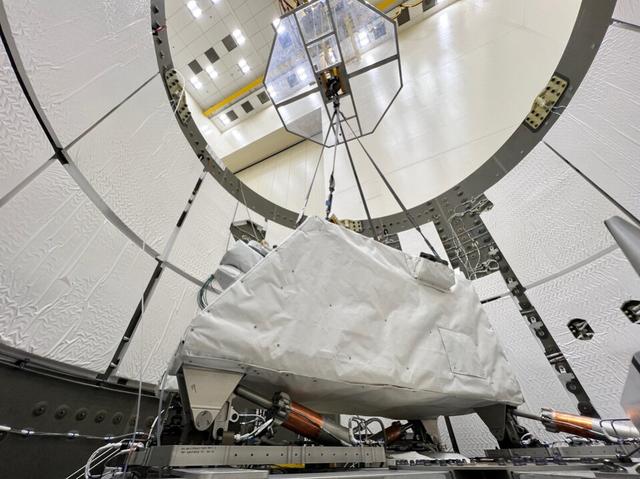
The Integrated LCRD Low Earth Orbit User Modem and Amplifier Terminal (ILLUMA-T) has been loaded into Dragon’s unpressurized spacecraft trunk. SpaceX will deliver the payload to the International Space Station during its 29th commercial resupply services mission. Launch is targeted for Sunday, Nov. 5 at 10:01 p.m. EST.
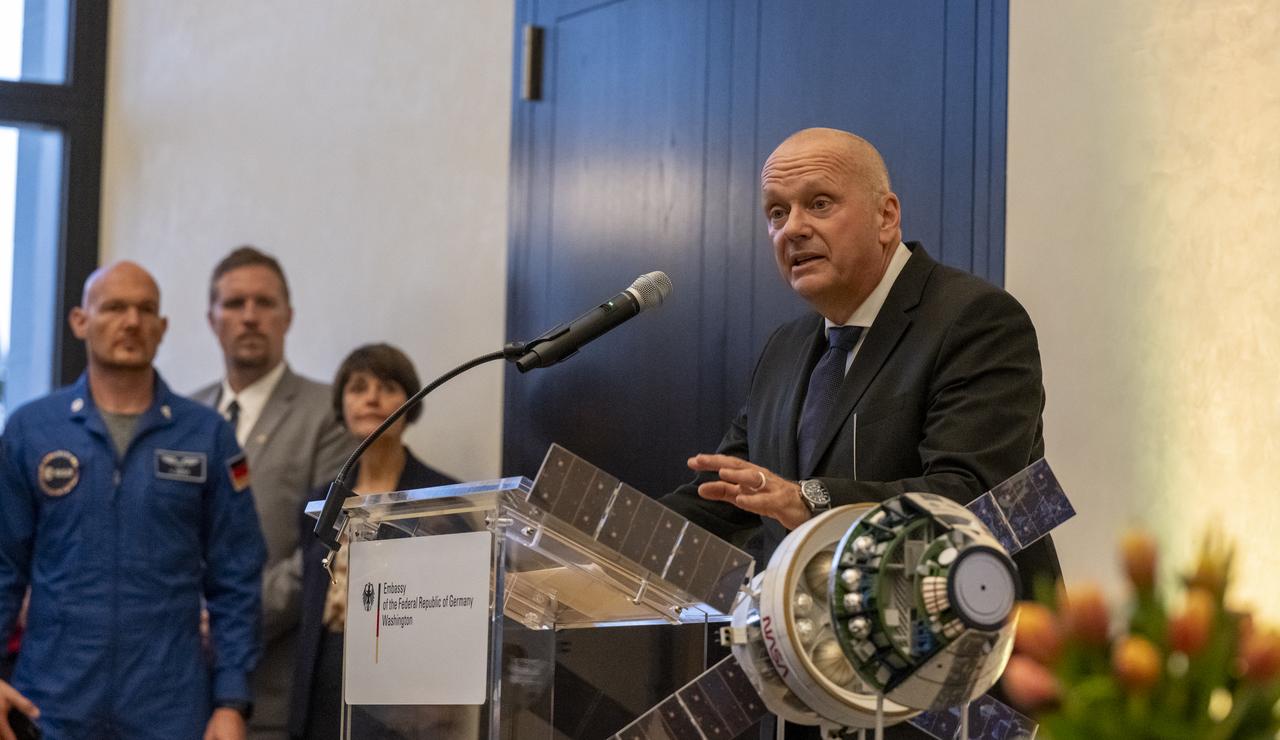
German Ambassador to the United States Andreas Michaelis delivers remarks during an Artemis Accords signing ceremony, Thursday, September 14, 2023, at the German Ambassador’s Residence in Washington. Germany is the 29th country to sign the Artemis Accords, which establish a practical set of principles to guide space exploration cooperation among nations participating in NASA’s Artemis program. Photo Credit: (NASA/Keegan Barber)
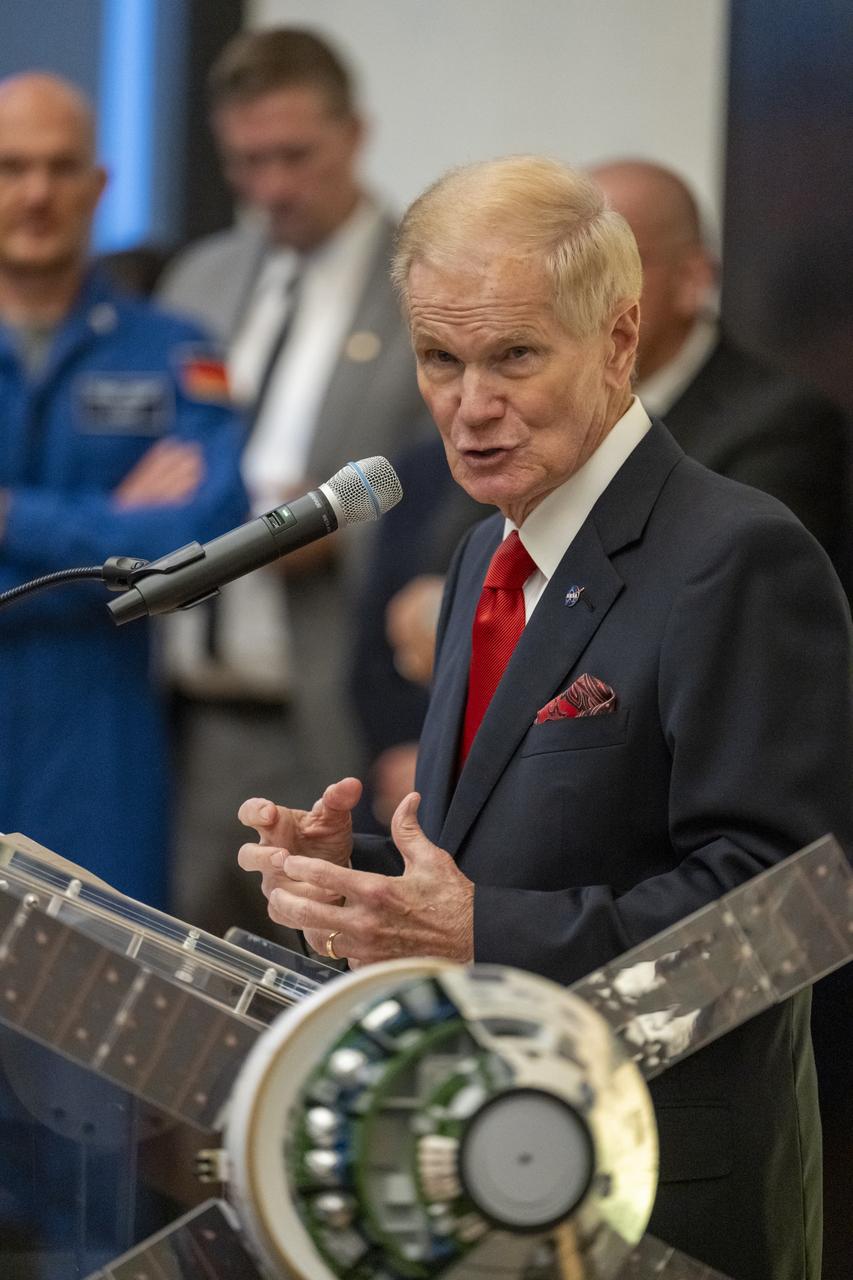
NASA Administrator Bill Nelson delivers remarks during an Artemis Accords signing ceremony, Thursday, September 14, 2023, at the German Ambassador’s Residence in Washington. Germany is the 29th country to sign the Artemis Accords, which establish a practical set of principles to guide space exploration cooperation among nations participating in NASA’s Artemis program. Photo Credit: (NASA/Keegan Barber)
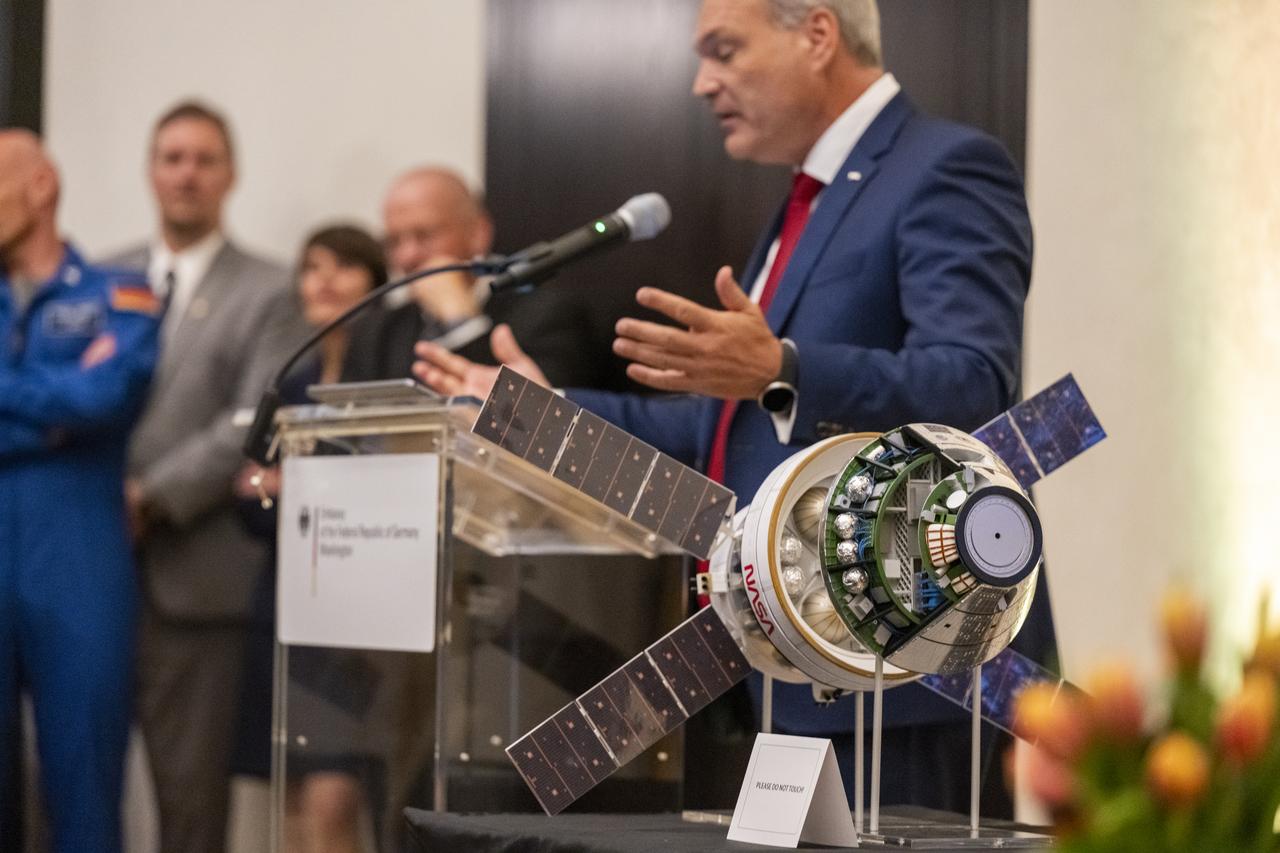
A model of the Orion Spacecraft is seen in the foreground as Director General of the German Space Agency at the German Aerospace Center (DLR) Walther Pelzer delivers remarks during an Artemis Accords signing ceremony, Thursday, September 14, 2023, at the German Ambassador’s Residence in Washington. Germany is the 29th country to sign the Artemis Accords, which establish a practical set of principles to guide space exploration cooperation among nations participating in NASA’s Artemis program. Photo Credit: (NASA/Keegan Barber)
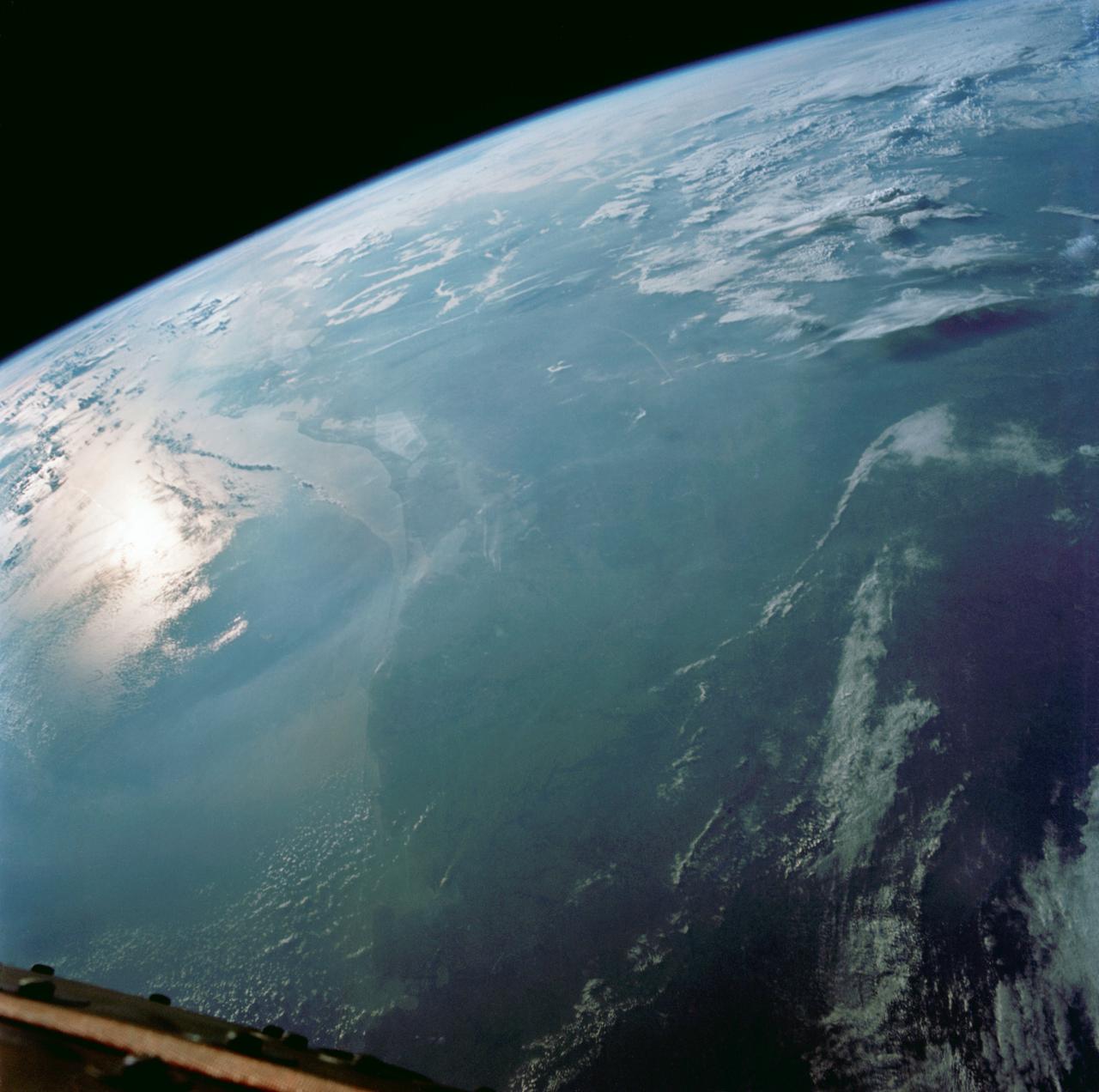
S66-54560 (14 Sept. 1966) --- U.S. Gulf coast area from Aransas Bay, Texas, to Mobile Bay, Alabama, as seen from the Gemini-11 spacecraft during its 29th revolution of Earth. The Galveston Bay and Houston area is in center of photograph. Further eastward along the coast can be seen the Mississippi River delta and New Orleans area. Taken with a modified 70mm Hasselblad camera, using Eastman Kodak, Ektachrome, MS (S.O. 368) color film. Photo credit: NASA
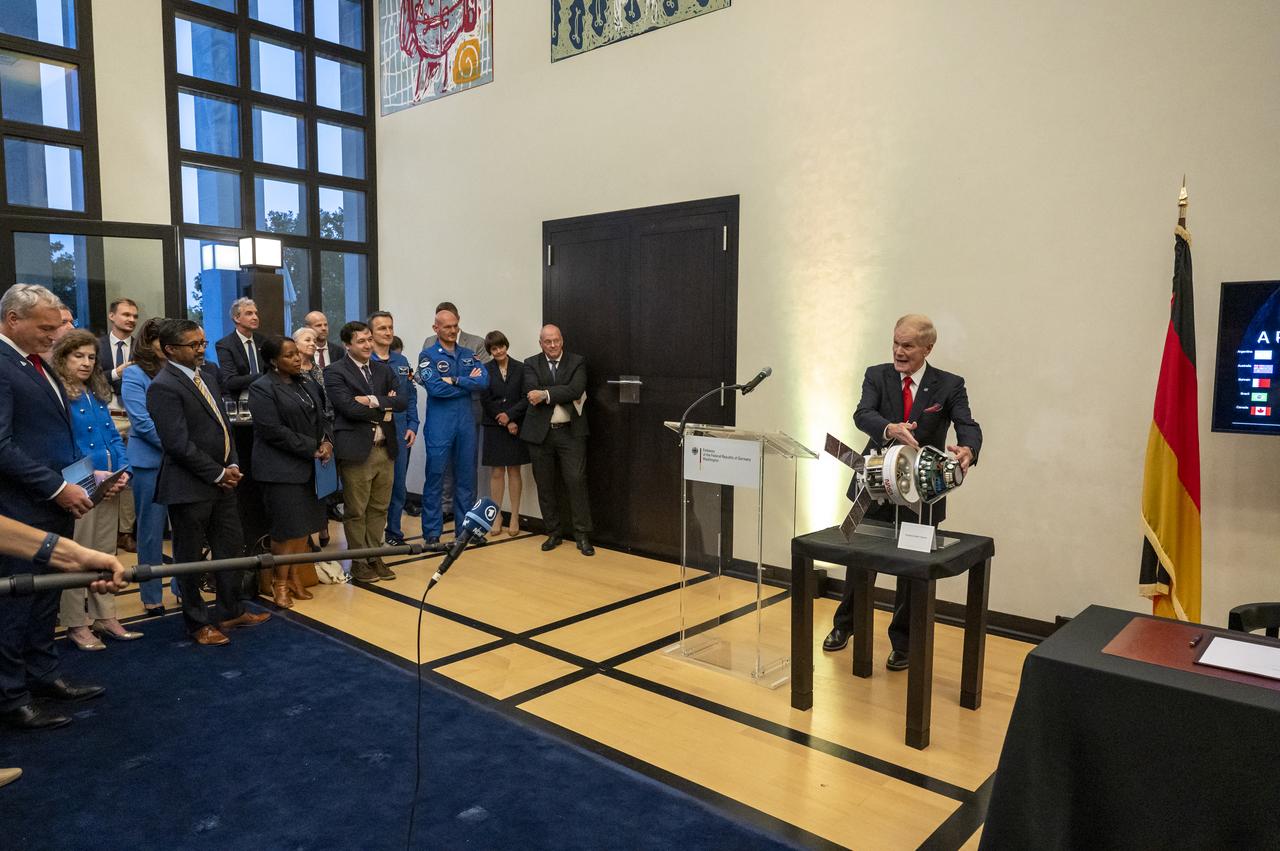
NASA Administrator Bill Nelson delivers remarks during an Artemis Accords signing ceremony, Thursday, September 14, 2023, at the German Ambassador’s Residence in Washington. Germany is the 29th country to sign the Artemis Accords, which establish a practical set of principles to guide space exploration cooperation among nations participating in NASA’s Artemis program. Photo Credit: (NASA/Keegan Barber)
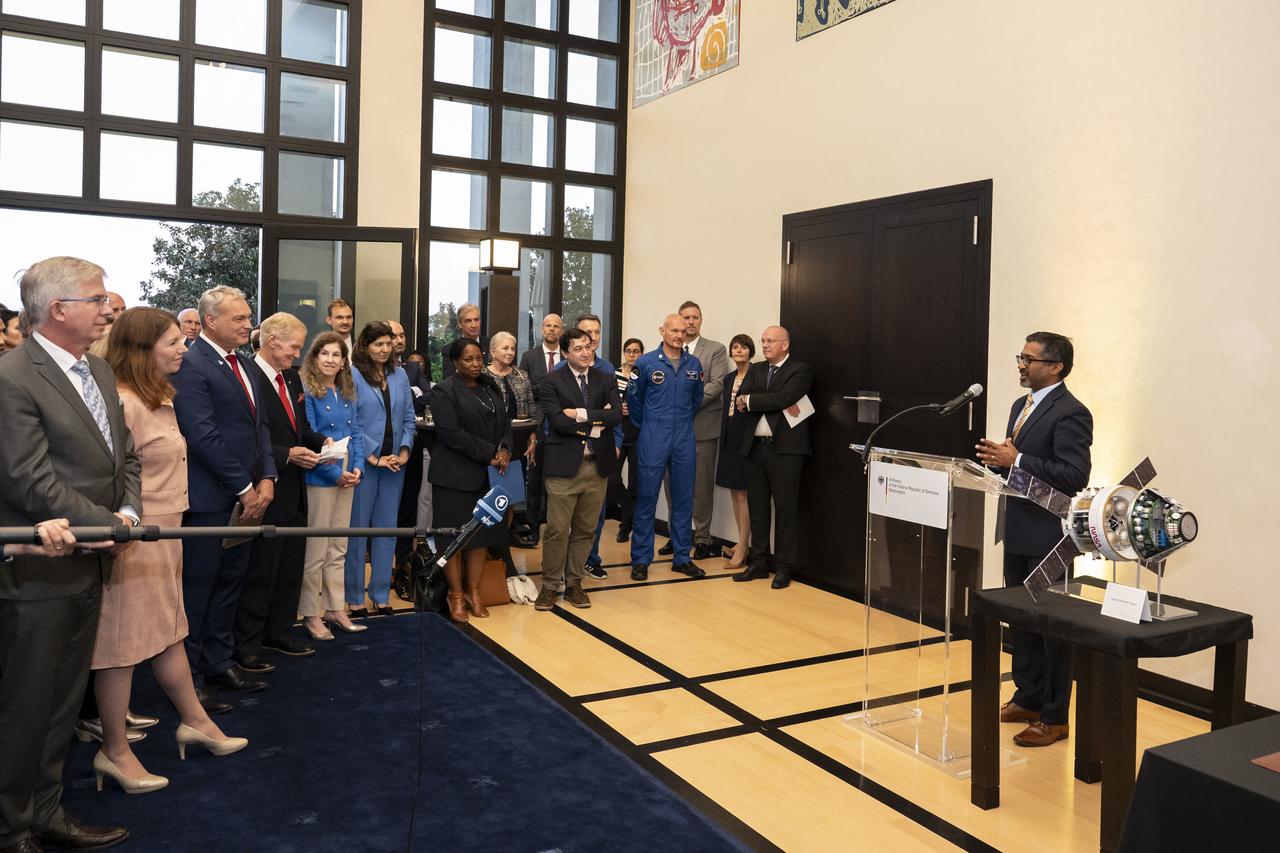
National Space Council (NSpC) Executive Secretary Chirag Parikh delivers remarks during an Artemis Accords signing ceremony, Thursday, September 14, 2023, at the German Ambassador’s Residence in Washington. Germany is the 29th country to sign the Artemis Accords, which establish a practical set of principles to guide space exploration cooperation among nations participating in NASA’s Artemis program. Photo Credit: (NASA/Keegan Barber)
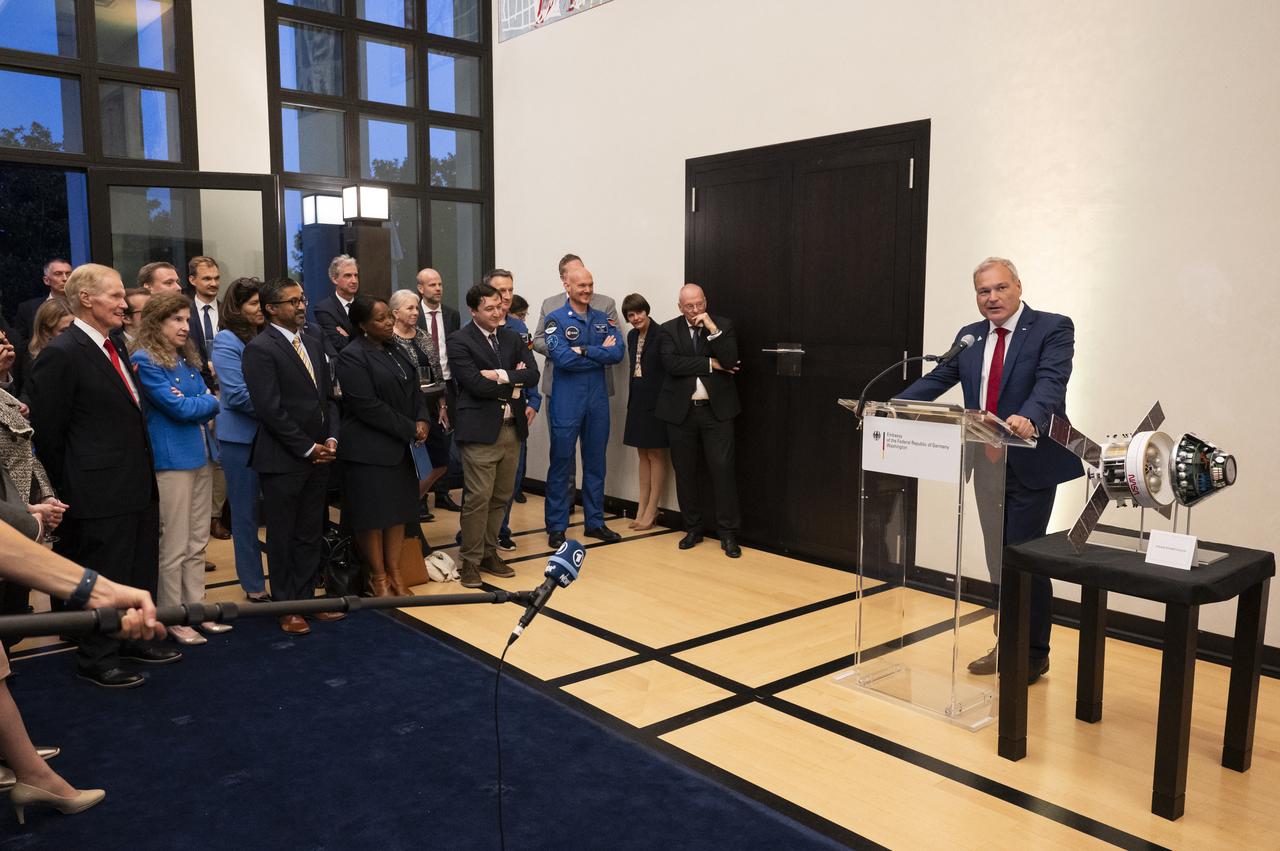
Director General of the German Space Agency at the German Aerospace Center (DLR) Walther Pelzer delivers remarks during an Artemis Accords signing ceremony, Thursday, September 14, 2023, at the German Ambassador’s Residence in Washington. Germany is the 29th country to sign the Artemis Accords, which establish a practical set of principles to guide space exploration cooperation among nations participating in NASA’s Artemis program. Photo Credit: (NASA/Keegan Barber)

National Space Council (NSpC) Executive Secretary Chirag Parikh delivers remarks during an Artemis Accords signing ceremony, Thursday, September 14, 2023, at the German Ambassador’s Residence in Washington. Germany is the 29th country to sign the Artemis Accords, which establish a practical set of principles to guide space exploration cooperation among nations participating in NASA’s Artemis program. Photo Credit: (NASA/Keegan Barber)
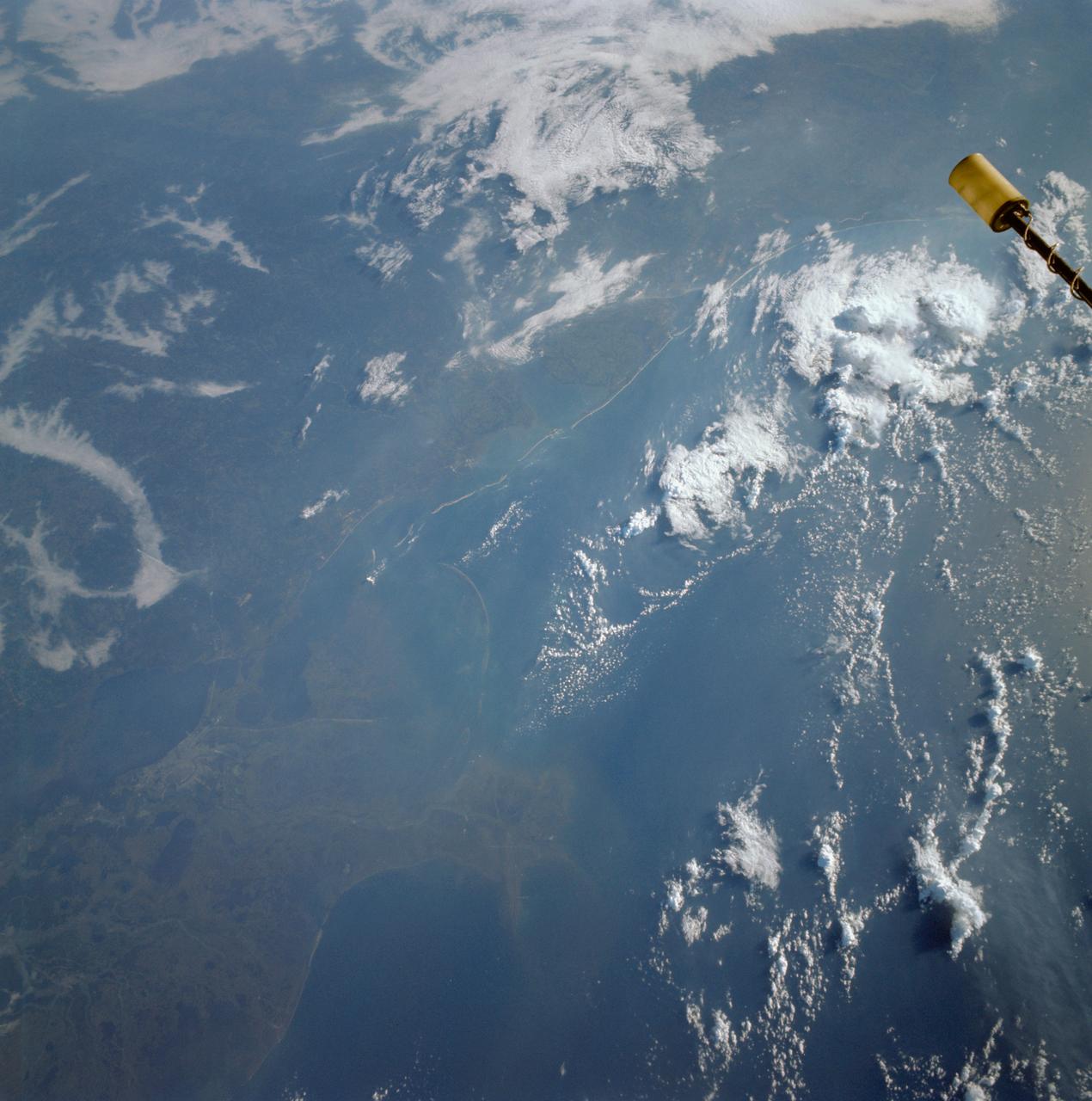
S66-54563 (14 Sept. 1966) --- View of the Gulf Coast area from Atchafalaya Bay to Apalachicola, including the mouth of the Mississippi River, Mobile Bay, New Orleans, Louisiana, and Pensacola, Florida, as seen from the Gemini-11 spacecraft during its 29th revolution of Earth. This photo was taken near sunrise. Photo credit: NASA
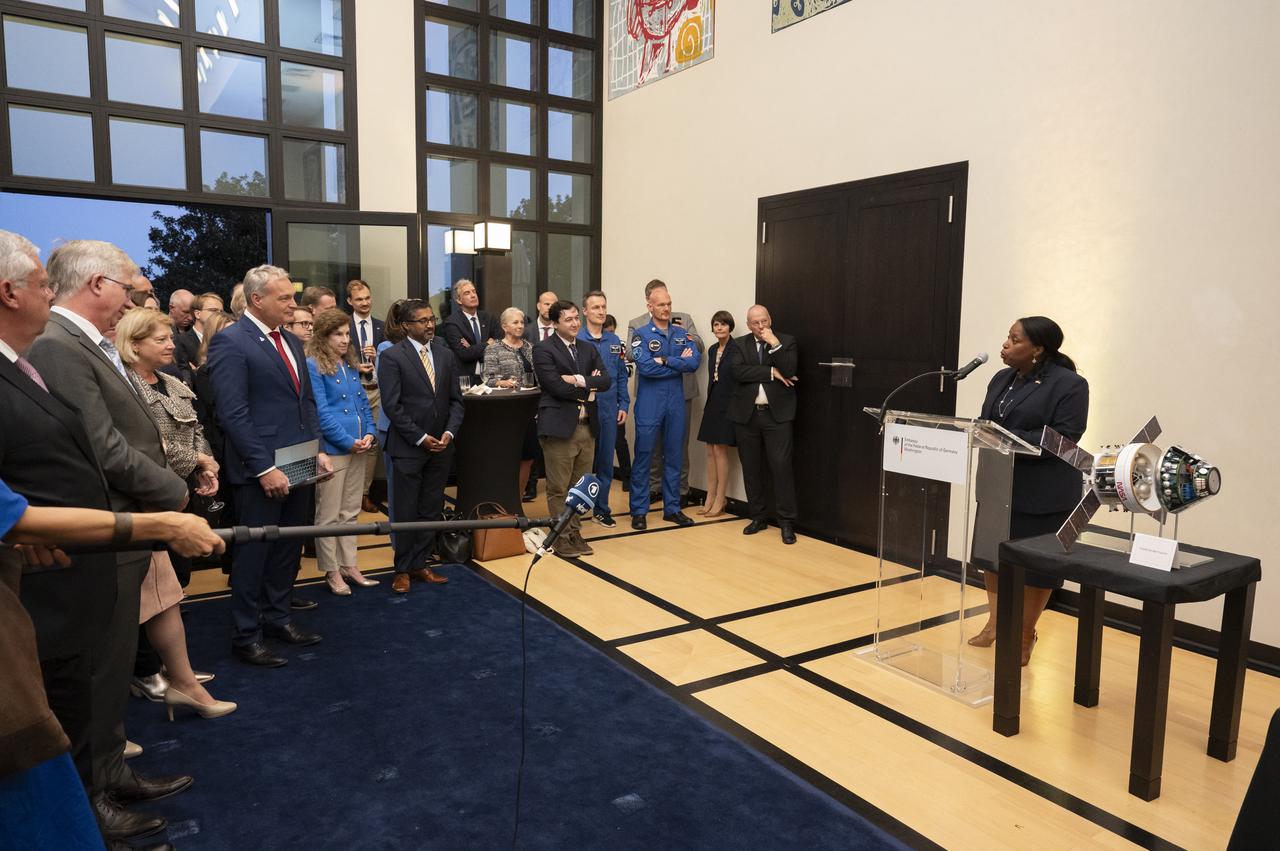
Acting Assistant Secretary of State for Oceans and International Environmental and Scientific Affairs Jennifer R. Littlejohn delivers remarks during an Artemis Accords signing ceremony, Thursday, September 14, 2023, at the German Ambassador’s Residence in Washington. Germany is the 29th country to sign the Artemis Accords, which establish a practical set of principles to guide space exploration cooperation among nations participating in NASA’s Artemis program. Photo Credit: (NASA/Keegan Barber)
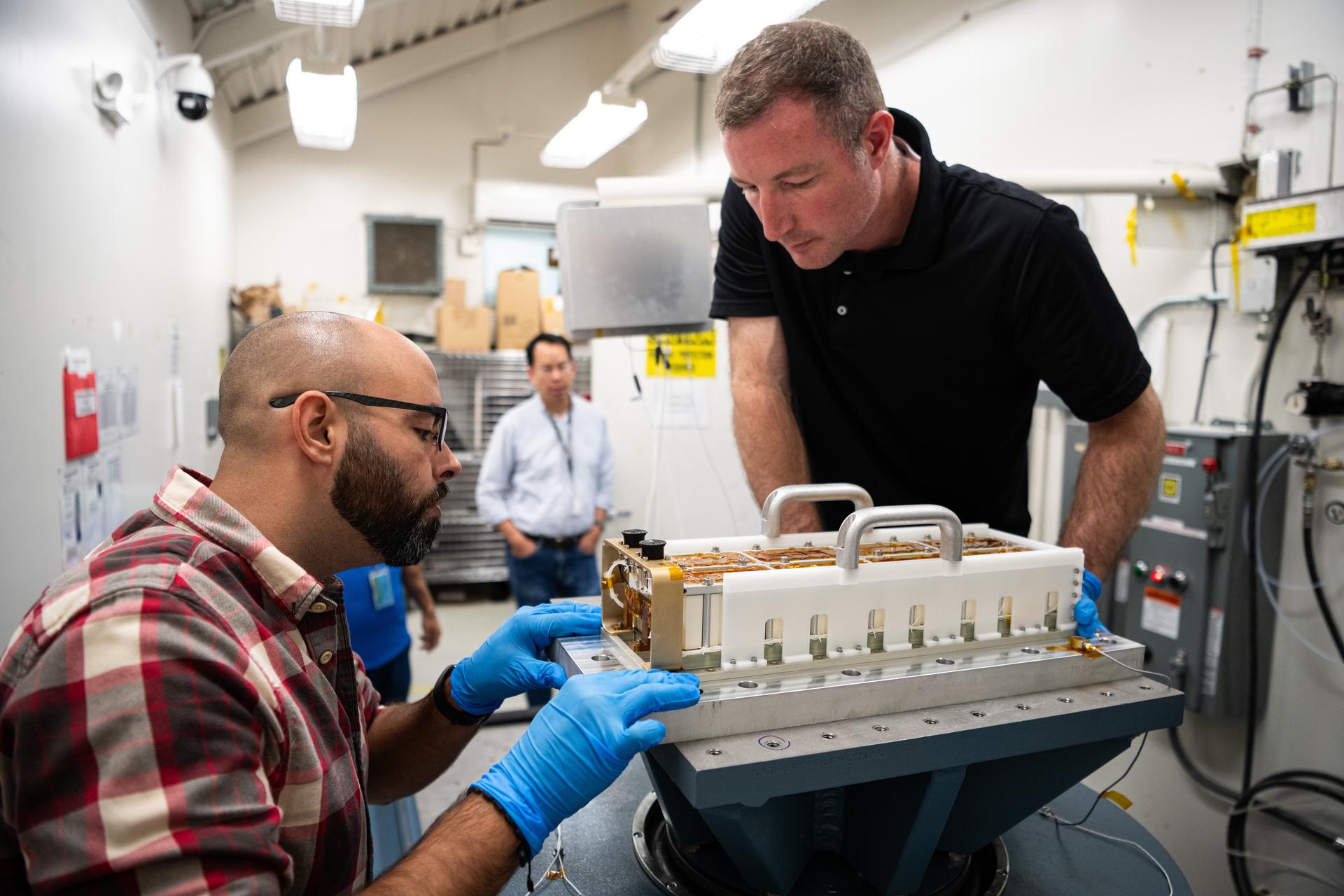
Mechanical Engineer John Seixal (left) and Engineering Technician Alex Schaeffer prepare the Lunar Environment Monitoring Station (LEMS) flight battery for vibration testing in a lab at NASA's Goddard Space Flight Center in Greenbelt, Maryland on September 29th, 2025. LEMS is a compact, autonomous, and self-sustaining seismometer suite designed to carry out continuous, long-term, monitoring of the lunar seismic environment at the South Polar region. NASA/Denny Henry.
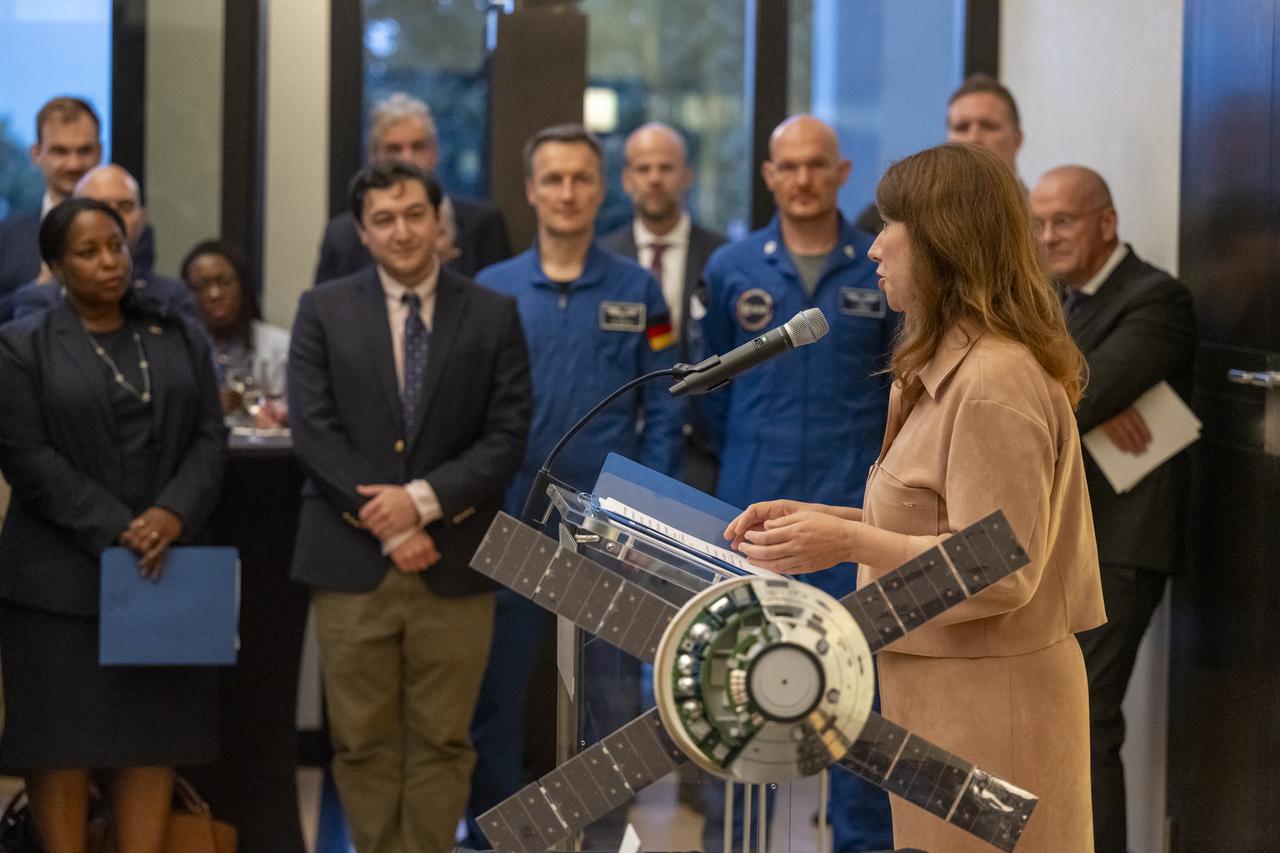
Federal Government Coordinator of German Aerospace Policy Anna Christmann delivers remarks during an Artemis Accords signing ceremony, Thursday, September 14, 2023, at the German Ambassador’s Residence in Washington. Germany is the 29th country to sign the Artemis Accords, which establish a practical set of principles to guide space exploration cooperation among nations participating in NASA’s Artemis program. Photo Credit: (NASA/Keegan Barber)
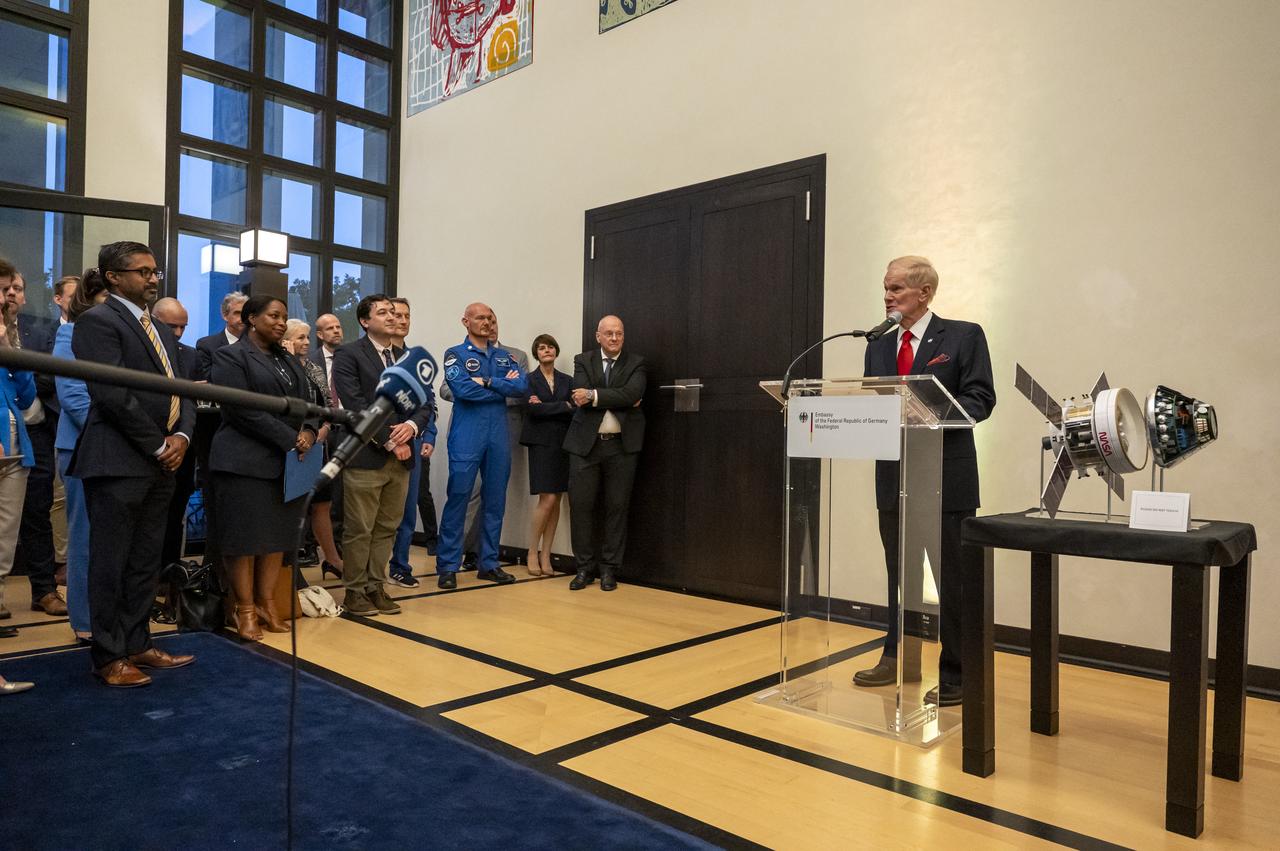
NASA Administrator Bill Nelson delivers remarks during an Artemis Accords signing ceremony, Thursday, September 14, 2023, at the German Ambassador’s Residence in Washington. Germany is the 29th country to sign the Artemis Accords, which establish a practical set of principles to guide space exploration cooperation among nations participating in NASA’s Artemis program. Photo Credit: (NASA/Keegan Barber)
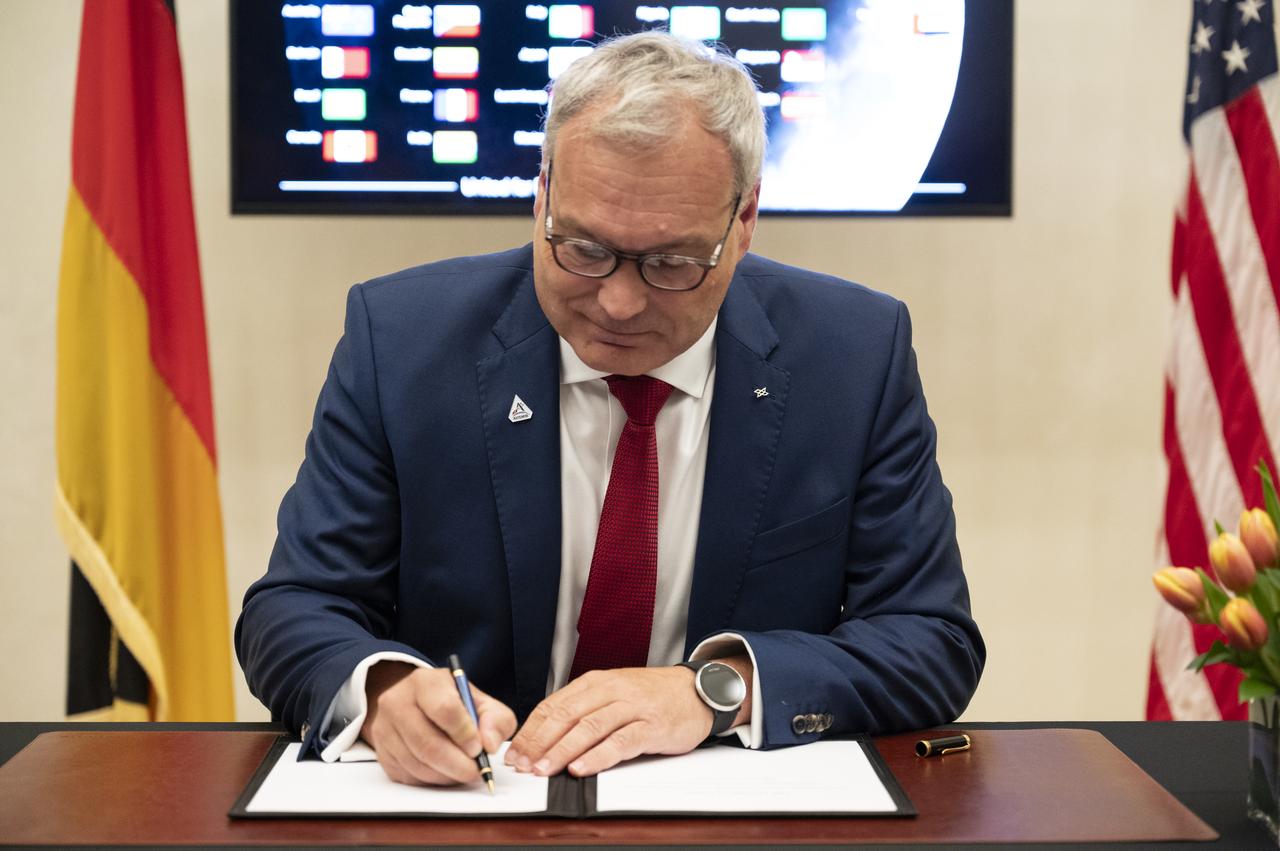
Director General of the German Space Agency at the German Aerospace Center (DLR) Walther Pelzer signs the Artemis Accords, Thursday, September 14, 2023, at the German Ambassador’s Residence in Washington. Germany is the 29th country to sign the Artemis Accords, which establish a practical set of principles to guide space exploration cooperation among nations participating in NASA’s Artemis program. Photo Credit: (NASA/Keegan Barber)
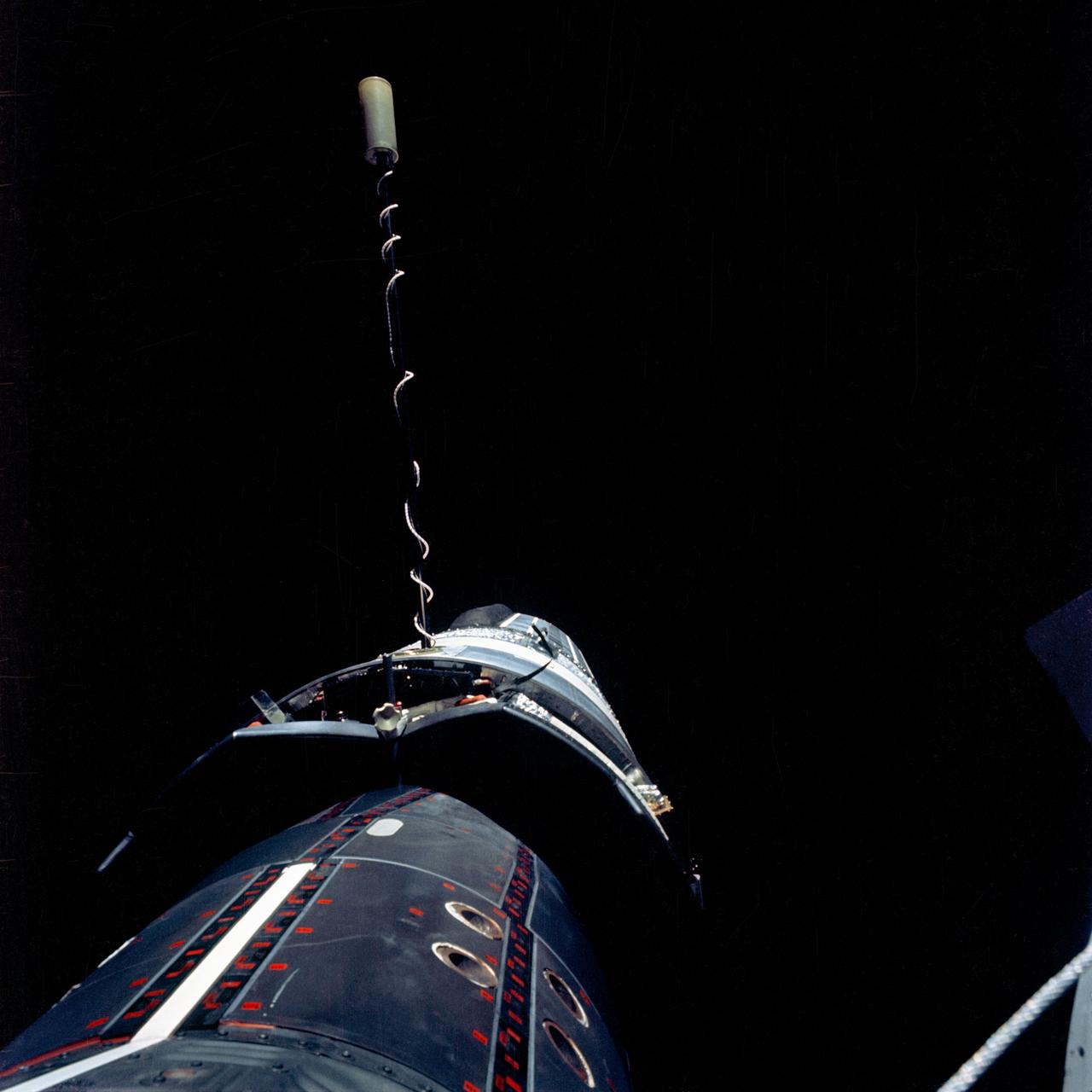
S66-54555 (14 Sept. 1966) --- The Gemini-11 spacecraft is docked to the Agena Target Vehicle in this photograph taken by astronaut Richard F. Gordon Jr., pilot, as he stood in the open hatch of the Gemini-11 spacecraft during his extravehicular activity (EVA). Note Agena's L-band antenna. Taken during Gemini-11's 29th revolution of Earth, using a modified 70mm Hasselblad camera, with Eastman Kodak, Ektachrome, MS (S.O. 368) color film. Photo credit: NASA

Federal Government Coordinator of German Aerospace Policy Anna Christmann delivers remarks during an Artemis Accords signing ceremony, Thursday, September 14, 2023, at the German Ambassador’s Residence in Washington. Germany is the 29th country to sign the Artemis Accords, which establish a practical set of principles to guide space exploration cooperation among nations participating in NASA’s Artemis program. Photo Credit: (NASA/Keegan Barber)

Acting Assistant Secretary of State for Oceans and International Environmental and Scientific Affairs Jennifer R. Littlejohn delivers remarks during an Artemis Accords signing ceremony, Thursday, September 14, 2023, at the German Ambassador’s Residence in Washington. Germany is the 29th country to sign the Artemis Accords, which establish a practical set of principles to guide space exploration cooperation among nations participating in NASA’s Artemis program. Photo Credit: (NASA/Keegan Barber)
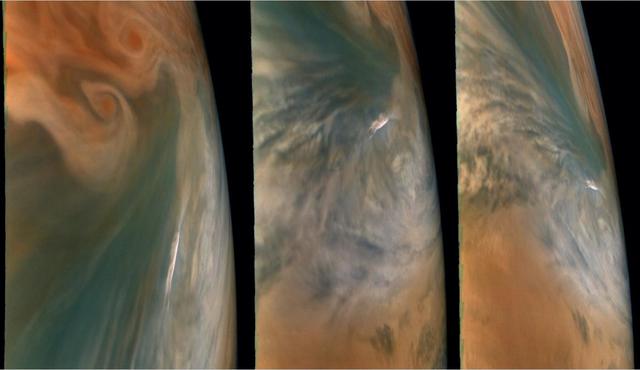
These images from NASA's Juno mission show three different views of a Jupiter "hot spot" — a break in Jupiter's cloud deck that provides a glimpse into Jupiter's deep atmosphere. Hot spots are flanked by clouds and active storms, and fueled by high-altitude electrical discharges recently discovered by Juno known as "shallow lightning." The pictures were taken by the JunoCam imager during its 29th close flyby of the giant planet on Sept. 16, 2020. Not all of Jupiter's clouds are the same. The planet is composed mostly of hydrogen and helium, and the vivid colors that appear in thick bands across Jupiter are likely plumes of sulfur compounds and phosphorus-containing gases rising from the planet's warmer interior. The small, bright cloud feature seen here is likely made of ammonia ice and water ice rising to a higher altitude than the surrounding features. The original JunoCam images used to produce these views were taken from altitudes between about 2,700 and 4,500 miles (4,300 and 7,200 kilometers) above Jupiter's cloud tops. Citizen scientist Brian Swift processed the images to enhance the color and contrast. https://photojournal.jpl.nasa.gov/catalog/PIA24298
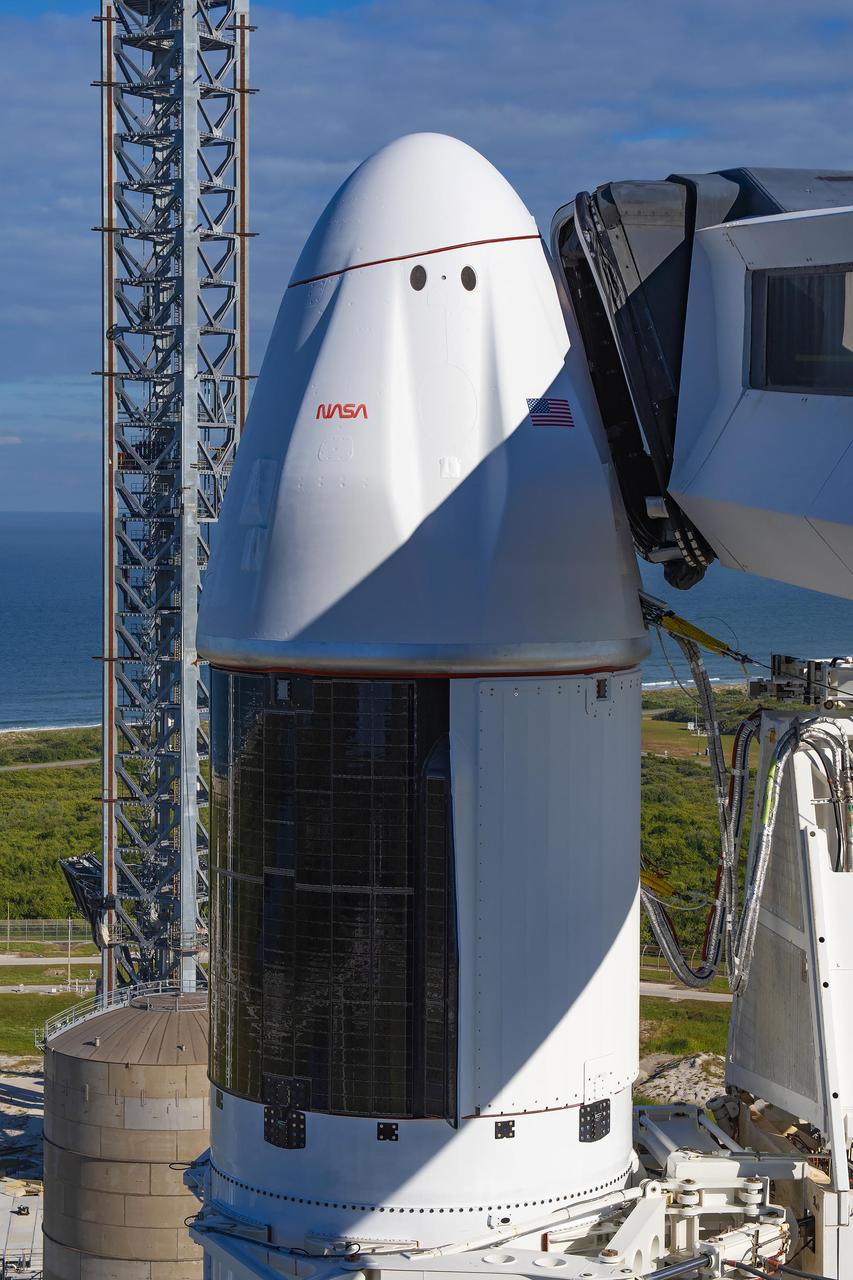
In preparation for SpaceX’s 29th commercial resupply services launch to the International Space Station for NASA, the company’s Falcon 9 rocket, with the Dragon spacecraft atop, is raised to a vertical position at Kennedy Space Center’s Launch Complex 39A in Florida on Wednesday, Nov. 8, 2023. The mission will carry scientific research, technology demonstrations, crew supplies, and hardware to the space station to support its Expedition 70 crew, including NASA’s Integrated Laser Communications Relay Demonstration Low Earth Orbit User Modem and Amplifier Terminal (ILLUMA-T) and Atmospheric Waves Experiment (AWE). Liftoff is scheduled for 8:28 p.m. EST Thursday, Nov. 9, from Kennedy’s Launch Complex 39A.
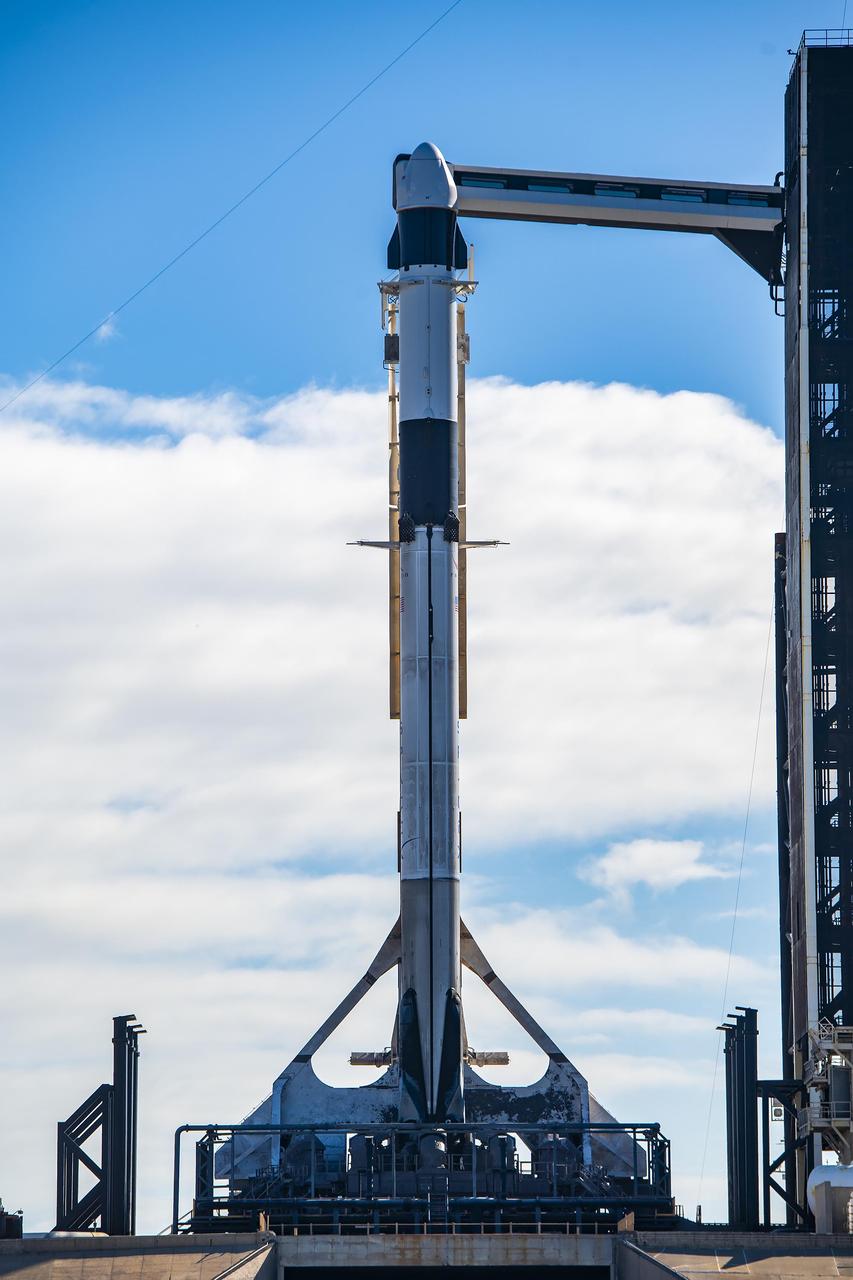
In preparation for SpaceX’s 29th commercial resupply services launch to the International Space Station for NASA, the company’s Falcon 9 rocket, with the Dragon spacecraft atop, is raised to a vertical position at Kennedy Space Center’s Launch Complex 39A in Florida on Wednesday, Nov. 8, 2023. The mission will carry scientific research, technology demonstrations, crew supplies, and hardware to the space station to support its Expedition 70 crew, including NASA’s Integrated Laser Communications Relay Demonstration Low Earth Orbit User Modem and Amplifier Terminal (ILLUMA-T) and Atmospheric Waves Experiment (AWE). Liftoff is scheduled for 8:28 p.m. EST Thursday, Nov. 9, from Kennedy’s Launch Complex 39A.

In preparation for SpaceX’s 29th commercial resupply services launch to the International Space Station for NASA, the company’s Falcon 9 rocket, with the Dragon spacecraft atop, is raised to a vertical position at Kennedy Space Center’s Launch Complex 39A in Florida on Wednesday, Nov. 8, 2023. The mission will carry scientific research, technology demonstrations, crew supplies, and hardware to the space station to support its Expedition 70 crew, including NASA’s Integrated Laser Communications Relay Demonstration Low Earth Orbit User Modem and Amplifier Terminal (ILLUMA-T) and Atmospheric Waves Experiment (AWE). Liftoff is scheduled for 8:28 p.m. EST Thursday, Nov. 9, from Kennedy’s Launch Complex 39A.
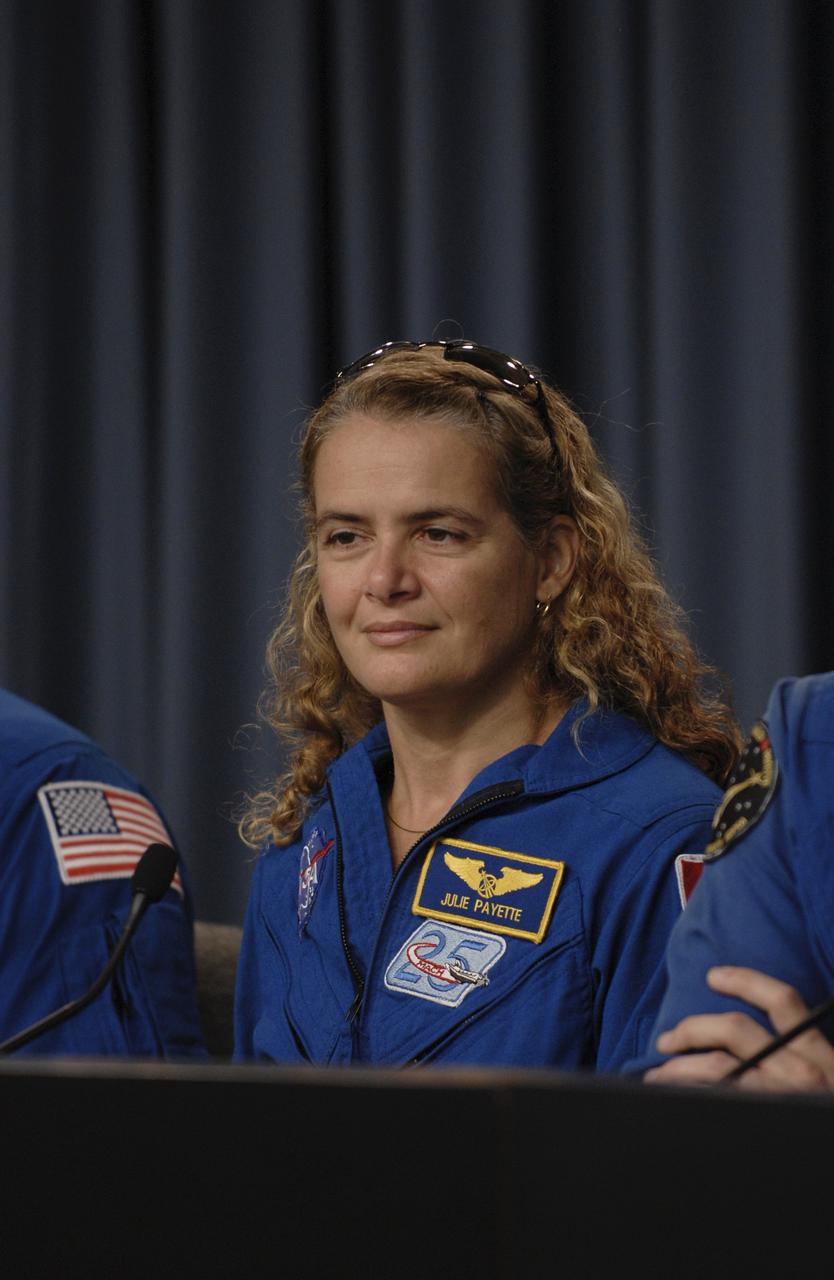
CAPE CANAVERAL, Fla. – At NASA's Kennedy Space Center in Florida, STS-127 Mission Specialist Julie Payette, who represents the Canadian Space Agency, takes part in a news conference following the landing of space shuttle Endeavour. The landing completed the 16-day, 6.5-million mile journey on the STS-127 mission. Endeavour delivered the Japanese Experiment Module's Exposed Facility and the Experiment Logistics Module-Exposed Section to the International Space Station. The mission was the 29th flight to the station, the 23rd flight of Endeavour and the 127th in the Space Shuttle Program, as well as the 71st landing at Kennedy. Photo credit: NASA/Kim Shiflett
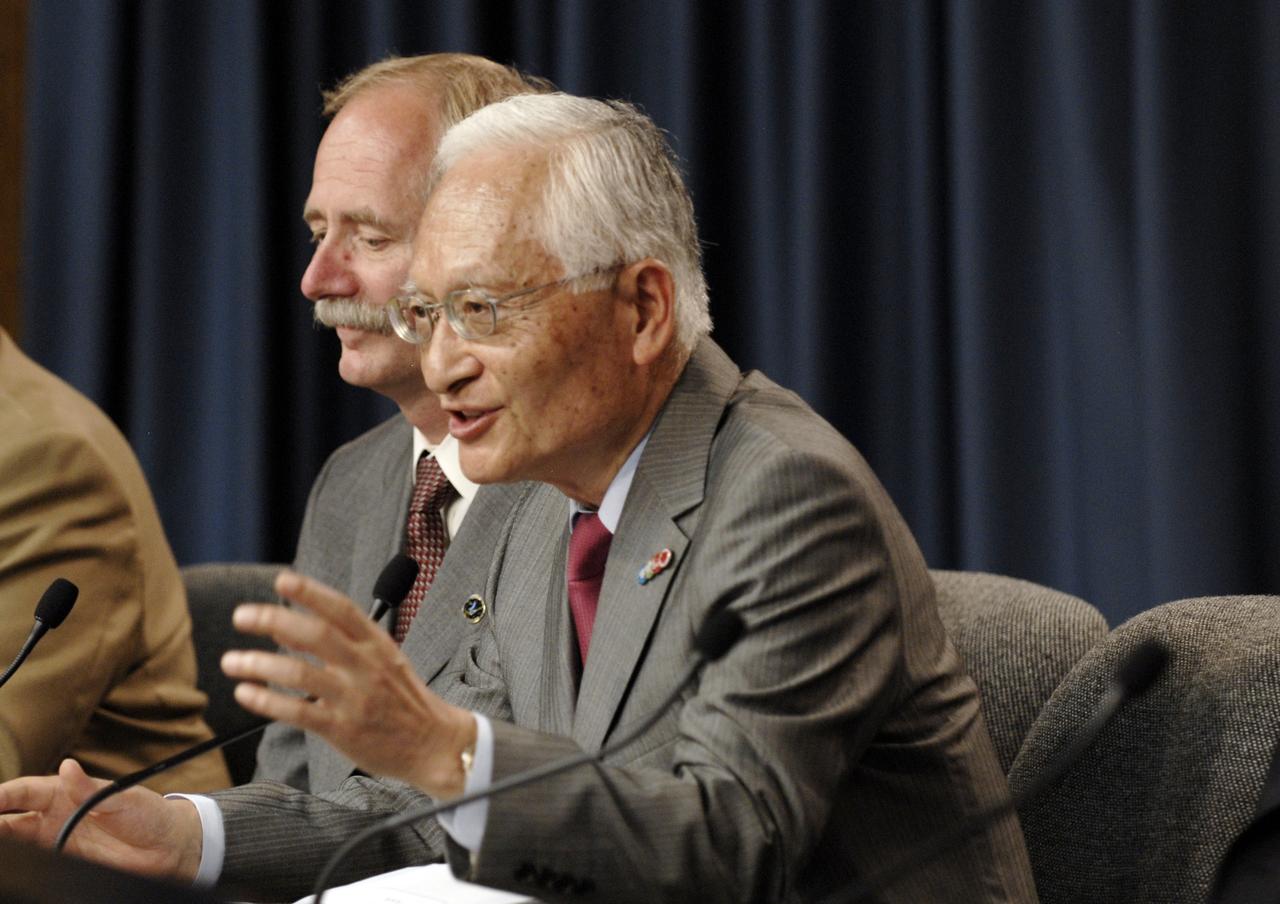
CAPE CANAVERAL, Fla. – At a post-landing news conference at NASA's Kennedy Space Center in Florida, President of the Japan Aerospace Exploration Agency Keiji Tachikawa (right) responds to a question from the media. Next to him at left is NASA Associate Administrator for Space Operations William Gerstenmaier. Space shuttle Endeavour and crew returned to Earth at 10:48 a.m. EDT to conclude the STS-127 mission. Endeavour delivered the Japanese Experiment Module's Exposed Facility and the Experiment Logistics Module-Exposed Section to the International Space Station. The mission was the 29th flight to the station, the 23rd flight of Endeavour and the 127th in the Space Shuttle Program, as well as the 71st landing at Kennedy. Photo credit: NASA/Kim Shiflett
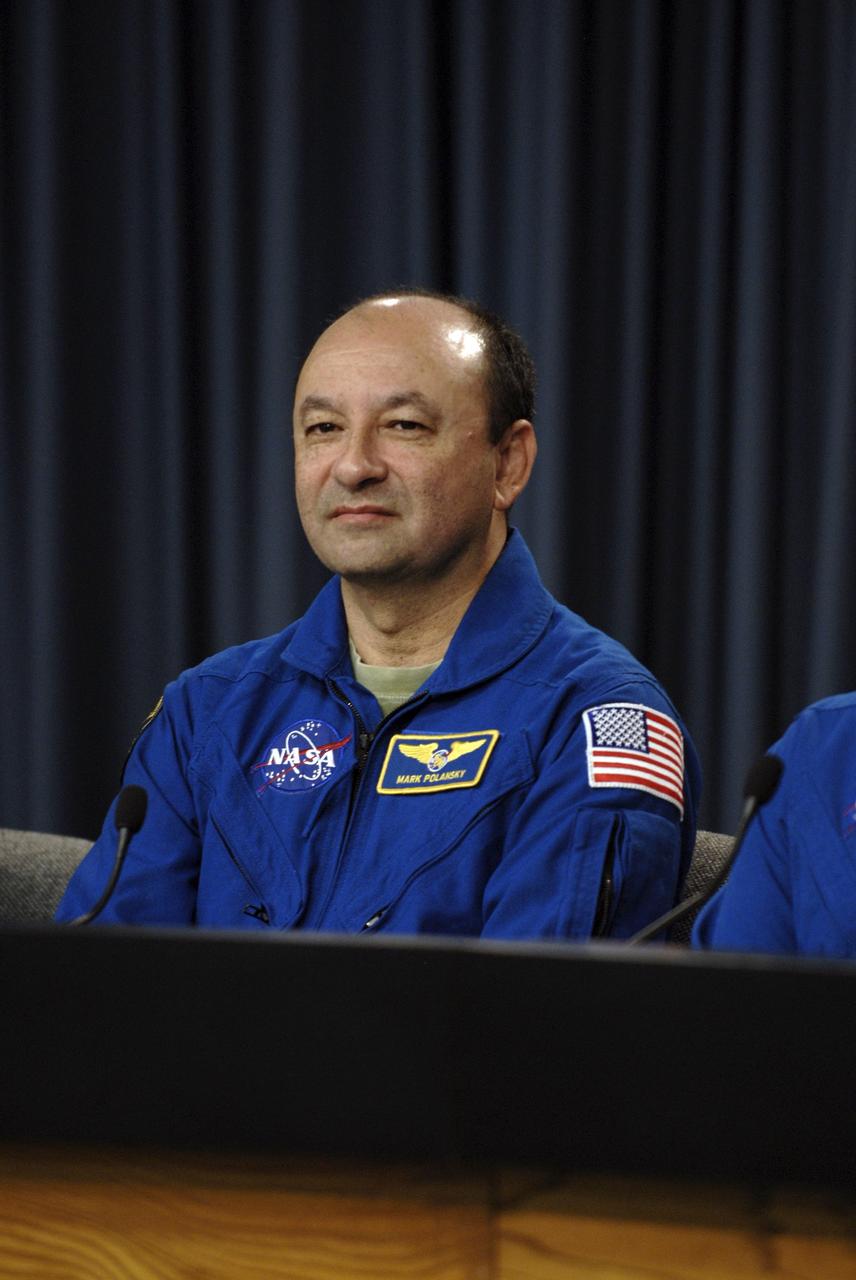
CAPE CANAVERAL, Fla. – At NASA's Kennedy Space Center in Florida, STS-127 Commander Mark Polansky takes part in a news conference following the landing of space shuttle Endeavour. The landing completed the 16-day, 6.5-million mile journey on the STS-127 mission. Endeavour delivered the Japanese Experiment Module's Exposed Facility and the Experiment Logistics Module-Exposed Section to the International Space Station. The mission was the 29th flight to the station, the 23rd flight of Endeavour and the 127th in the Space Shuttle Program, as well as the 71st landing at Kennedy. Photo credit: NASA/Kim Shiflett
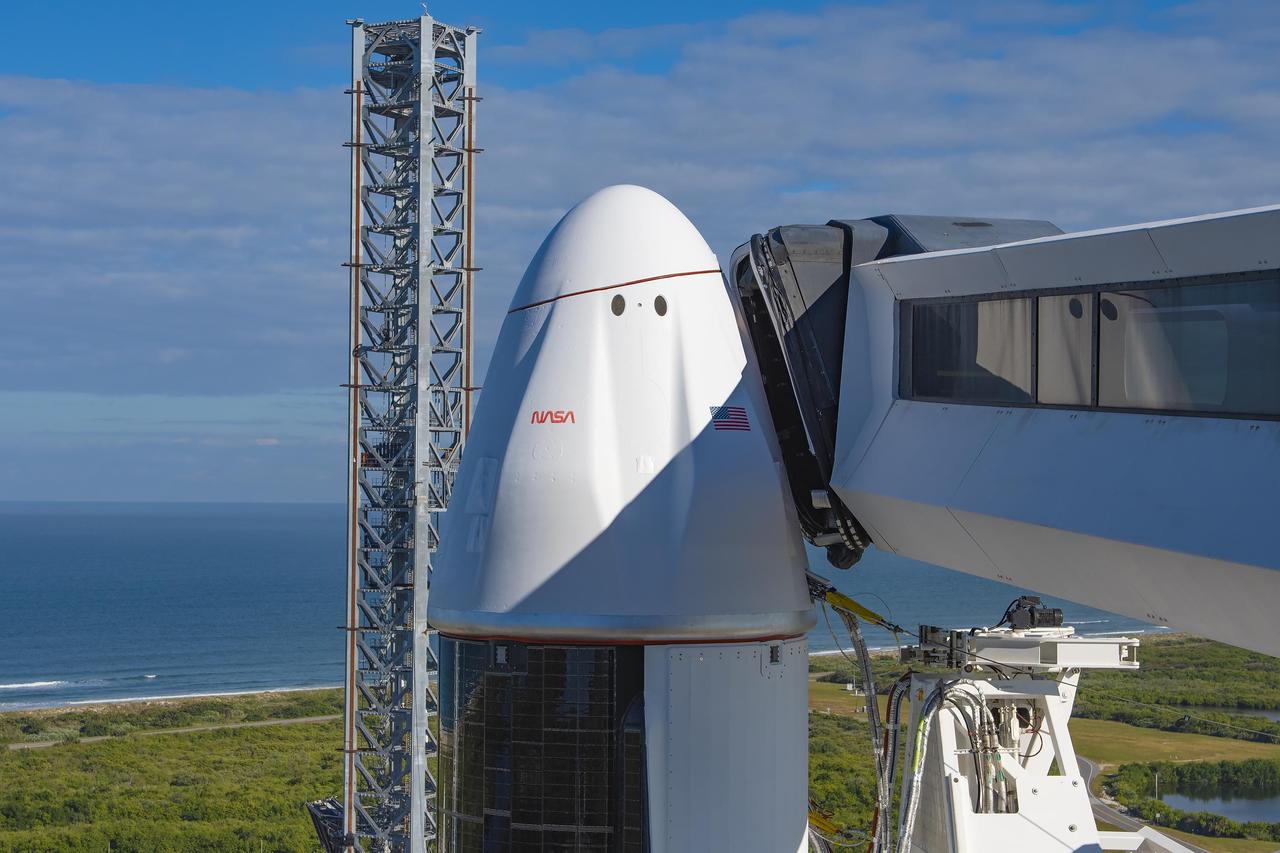
In preparation for SpaceX’s 29th commercial resupply services launch to the International Space Station for NASA, the company’s Falcon 9 rocket, with the Dragon spacecraft atop, is raised to a vertical position at Kennedy Space Center’s Launch Complex 39A in Florida on Wednesday, Nov. 8, 2023. The mission will carry scientific research, technology demonstrations, crew supplies, and hardware to the space station to support its Expedition 70 crew, including NASA’s Integrated Laser Communications Relay Demonstration Low Earth Orbit User Modem and Amplifier Terminal (ILLUMA-T) and Atmospheric Waves Experiment (AWE). Liftoff is scheduled for 8:28 p.m. EST Thursday, Nov. 9, from Kennedy’s Launch Complex 39A.
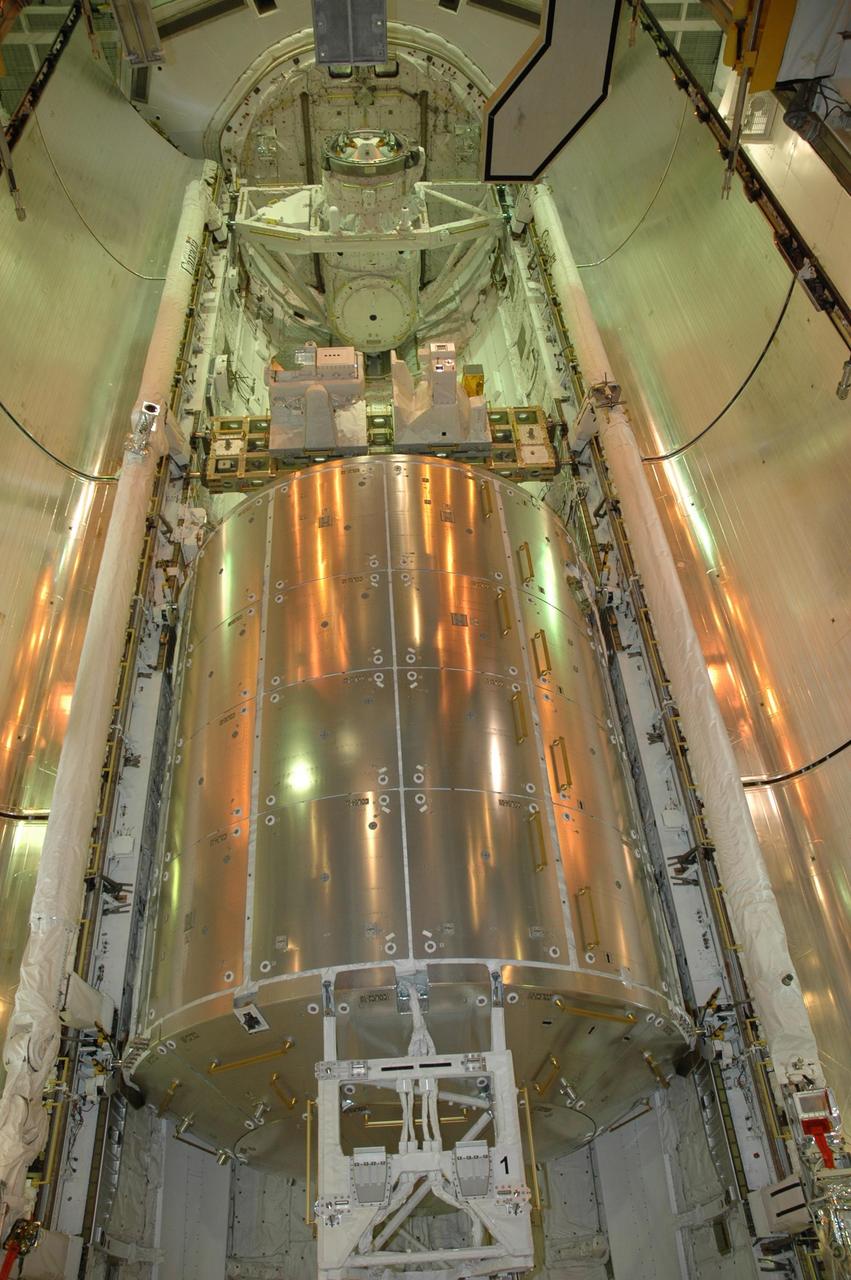
KENNEDY SPACE CENTER, FLA. -- With the Columbus Laboratory secure in space shuttle Atlantis' payload bay on Launch Pad 39A at NASA's Kennedy Space Center, the bay doors are ready for closure. Located above the laboratory are the integrated cargo carrier - lite and the orbital docking system (at top). STS-122 is the 121st space shuttle flight, the 29th flight for Atlantis and the 24th flight to the International Space Station. The Columbus laboratory module, built by the European Space Agency, is approximately 23 feet long and 15 feet wide, allowing it to hold 10 large racks of experiments. Atlantis is scheduled to launch at 2:45 p.m. Feb. 7. Photo credit: NASA/Jack Pfaller
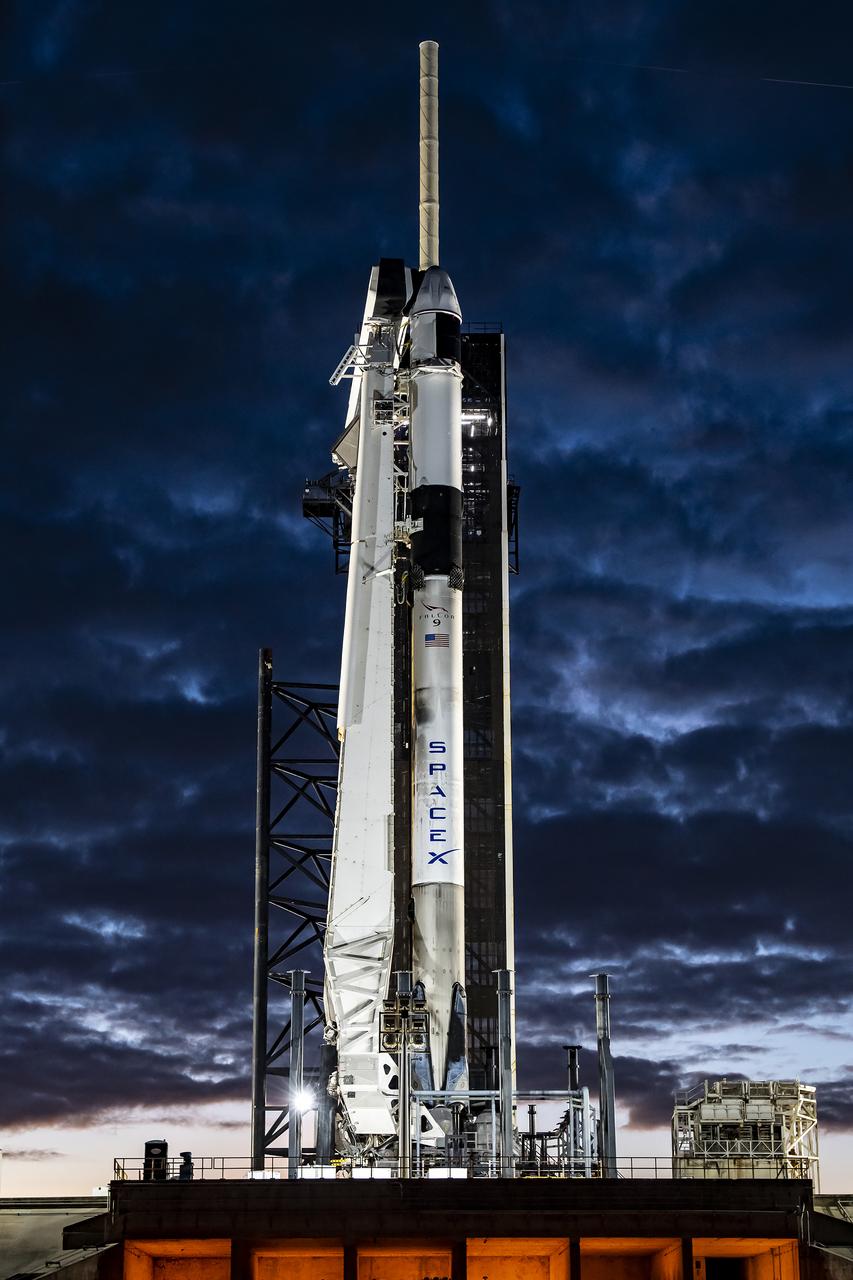
In preparation for SpaceX’s 29th commercial resupply services launch to the International Space Station for NASA, the company’s Falcon 9 rocket, with the Dragon spacecraft atop, is raised to a vertical position at Kennedy Space Center’s Launch Complex 39A in Florida on Wednesday, Nov. 8, 2023. The mission will carry scientific research, technology demonstrations, crew supplies, and hardware to the space station to support its Expedition 70 crew, including NASA’s Integrated Laser Communications Relay Demonstration Low Earth Orbit User Modem and Amplifier Terminal (ILLUMA-T) and Atmospheric Waves Experiment (AWE). Liftoff is scheduled for 8:28 p.m. EST Thursday, Nov. 9, from Kennedy’s Launch Complex 39A.
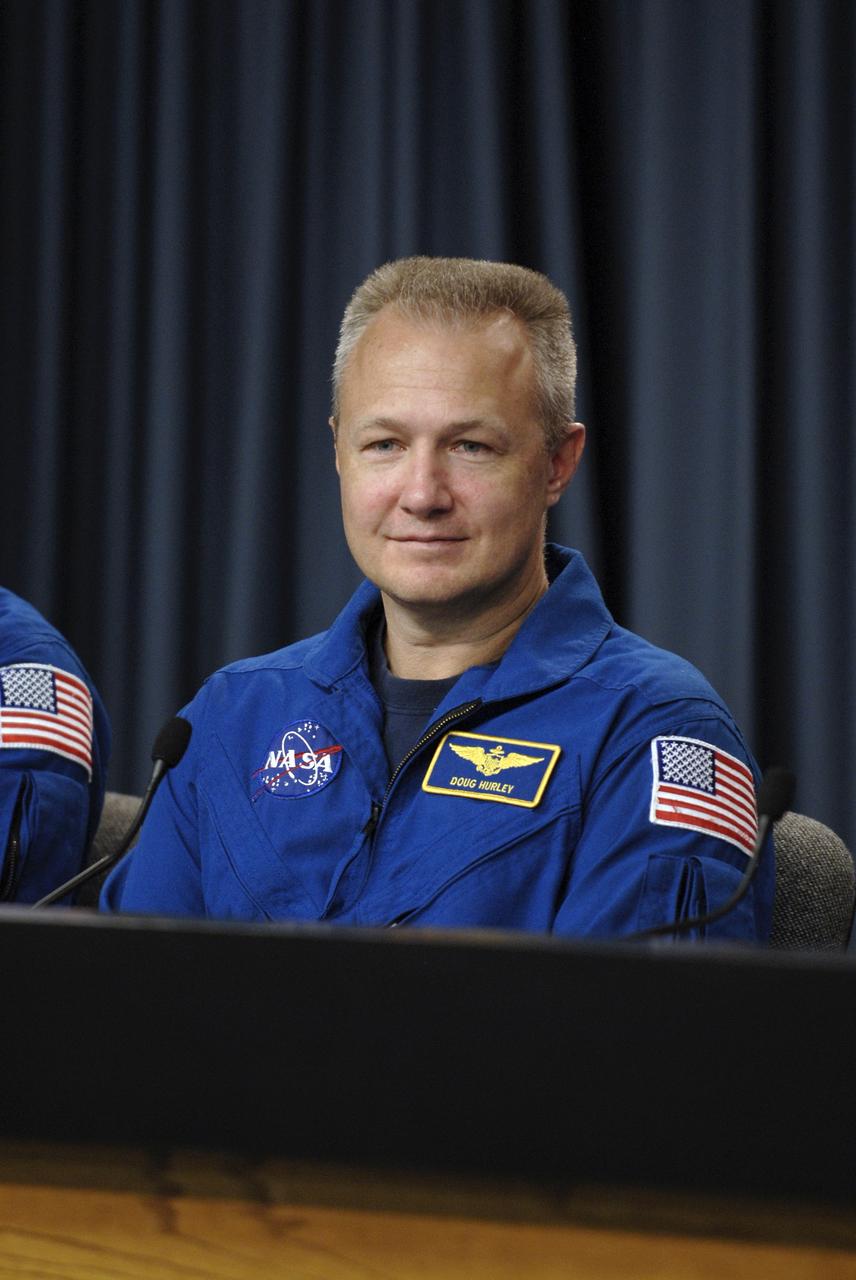
CAPE CANAVERAL, Fla. – At NASA's Kennedy Space Center in Florida, STS-127 Pilot Doug Hurley takes part in a news conference following the landing of space shuttle Endeavour. The landing completed the 16-day, 6.5-million mile journey on the STS-127 mission. Endeavour delivered the Japanese Experiment Module's Exposed Facility and the Experiment Logistics Module-Exposed Section to the International Space Station. The mission was the 29th flight to the station, the 23rd flight of Endeavour and the 127th in the Space Shuttle Program, as well as the 71st landing at Kennedy. Photo credit: NASA/Kim Shiflett
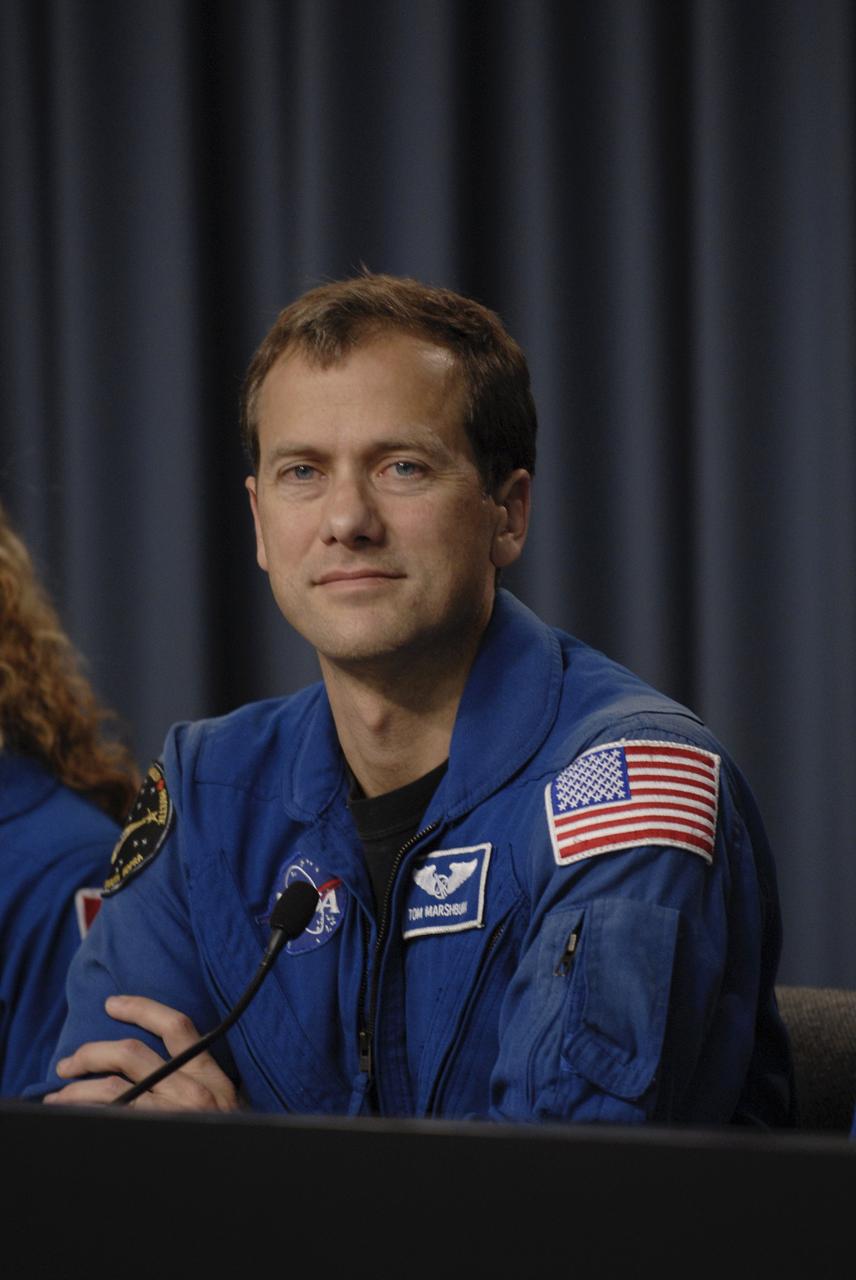
CAPE CANAVERAL, Fla. – At NASA's Kennedy Space Center in Florida, STS-127 Mission Specialist Tom Marshburn takes part in a news conference following the landing of space shuttle Endeavour. The landing completed the 16-day, 6.5-million mile journey on the STS-127 mission. Endeavour delivered the Japanese Experiment Module's Exposed Facility and the Experiment Logistics Module-Exposed Section to the International Space Station. The mission was the 29th flight to the station, the 23rd flight of Endeavour and the 127th in the Space Shuttle Program, as well as the 71st landing at Kennedy. Photo credit: NASA/Kim Shiflett

CAPE CANAVERAL, Fla. – At NASA’s Kennedy Space Center in Florida, workers pull cables between the 26th and 29th floors of high bay 3 in the 525-foot-tall Vehicle Assembly Building, or VAB, during part of a centerwide refurbishment initiative under the Ground Systems Development and Operations GSDO Program. The cable replacement project is under way in high bays 1 and 3 on the east side of the building, facing Launch Complex 39’s pads A and B. Approximately 150 miles of existing Apollo/shuttle era cabling is being removed to make room for installation of state-of-the-art command, communication and control systems that will be needed by future users to perform vehicle testing and verification prior to rollout to the launch pad. For more information, visit http://go.nasa.gov/groundsystems. Photo credit: NASA/Jim Grossmann
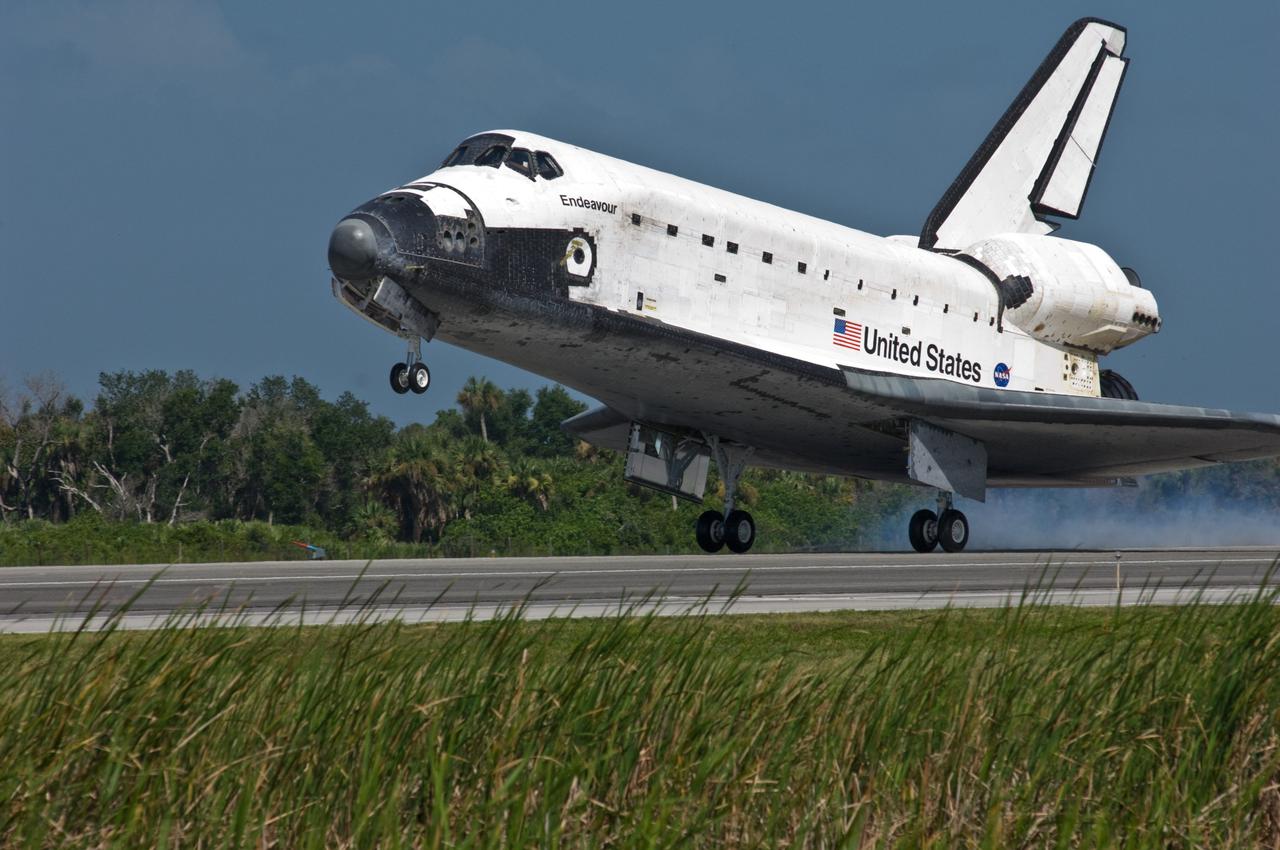
CAPE CANAVERAL, Fla. – Space shuttle Endeavour kicks up dust as it touches down on Runway 15 at NASA's Kennedy Space Center in Florida to complete the 16-day, 6.5-million mile journey on the STS-127 mission to the International Space Station. Endeavour landed on orbit 248. Main gear touchdown was at 10:48:08 a.m. EDT. Nose gear touchdown was at 10:48:21 a.m. and wheels stop was at 10:49:13 a.m. Endeavour delivered the Japanese Experiment Module's Exposed Facility and the Experiment Logistics Module-Exposed Section to the International Space Station. The mission was the 29th flight to the station, the 23rd flight of Endeavour and the 127th in the Space Shuttle Program, as well as the 71st landing at Kennedy. Photo credit: NASA/Chuck Tintera
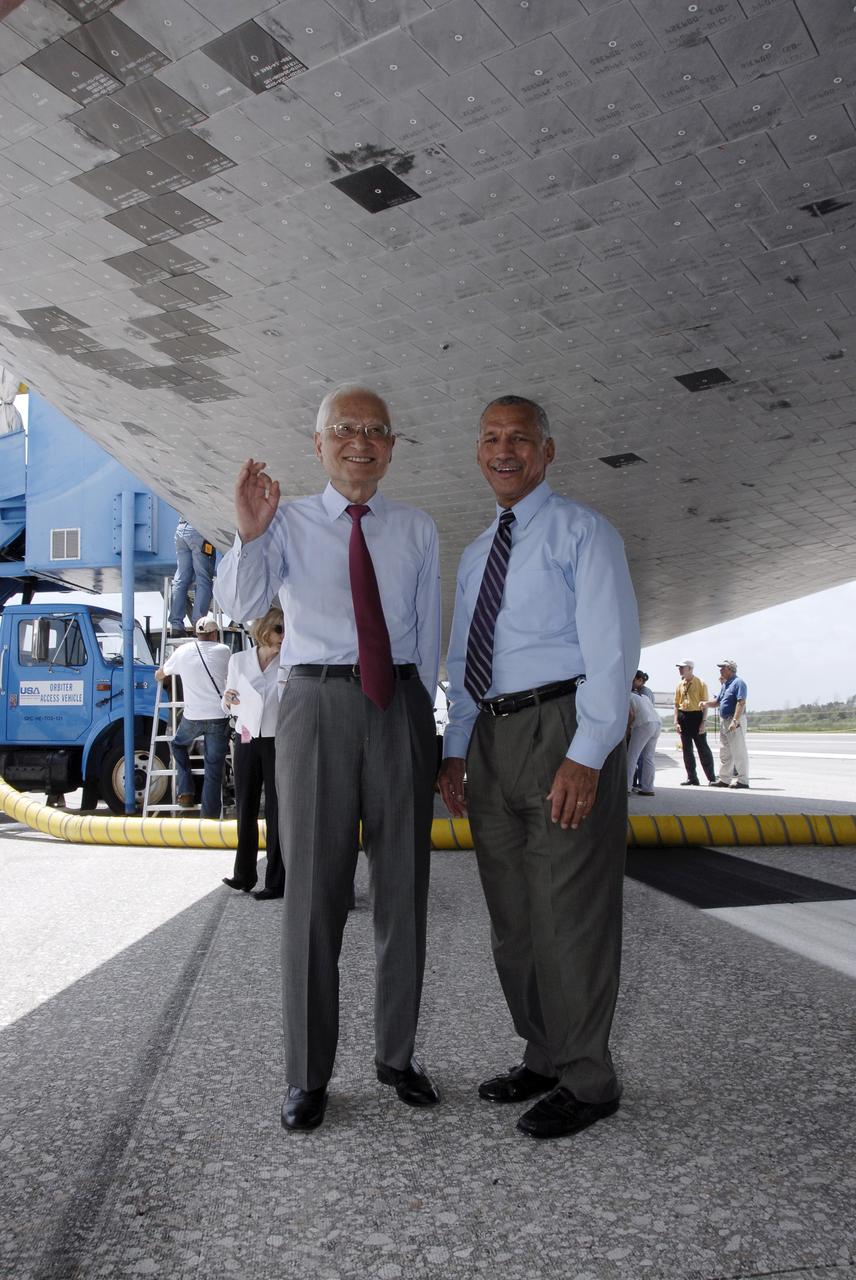
CAPE CANAVERAL, Fla. – At NASA's Kennedy Space Center in Florida, president of the Japan Aerospace Exploration Agency Keiji Tachikawa (left) and NASA Administrator Charles Bolden look over space shuttle Endeavour after its landing that completed the 16-day, 6.5-million mile journey on the STS-127 mission to the International Space Station. Main gear touchdown was at 10:48:08 a.m. EDT. Nose gear touchdown was at 10:48:21 a.m. and wheels stop was at 10:49:13 a.m. Endeavour delivered the Japanese Experiment Module's Exposed Facility and the Experiment Logistics Module-Exposed Section to the International Space Station. The mission was the 29th flight to the station, the 23rd flight of Endeavour and the 127th in the Space Shuttle Program, as well as the 71st landing at Kennedy. Photo credit: NASA/Kim Shiflett
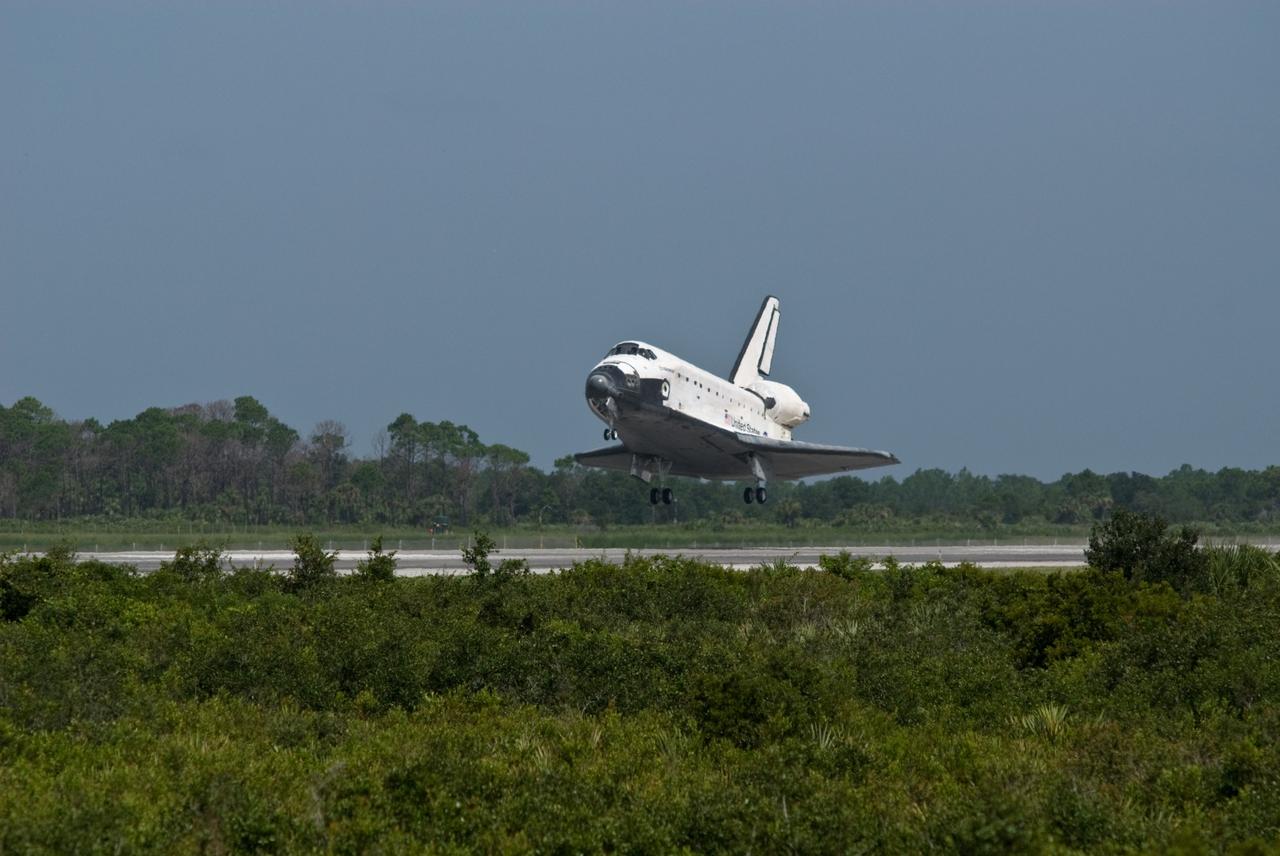
CAPE CANAVERAL, Fla. – Space shuttle Endeavour nears touchdown on Runway 15 at NASA's Kennedy Space Center in Florida to complete the 16-day, 6.5-million mile journey on the STS-127 mission to the International Space Station. Endeavour landed on orbit 248. Main gear touchdown was at 10:48:08 a.m. EDT. Nose gear touchdown was at 10:48:21 a.m. and wheels stop was at 10:49:13 a.m. Endeavour delivered the Japanese Experiment Module's Exposed Facility and the Experiment Logistics Module-Exposed Section to the International Space Station. The mission was the 29th flight to the station, the 23rd flight of Endeavour and the 127th in the Space Shuttle Program, as well as the 71st landing at Kennedy. Photo credit: NASA/Kevin O'Connell
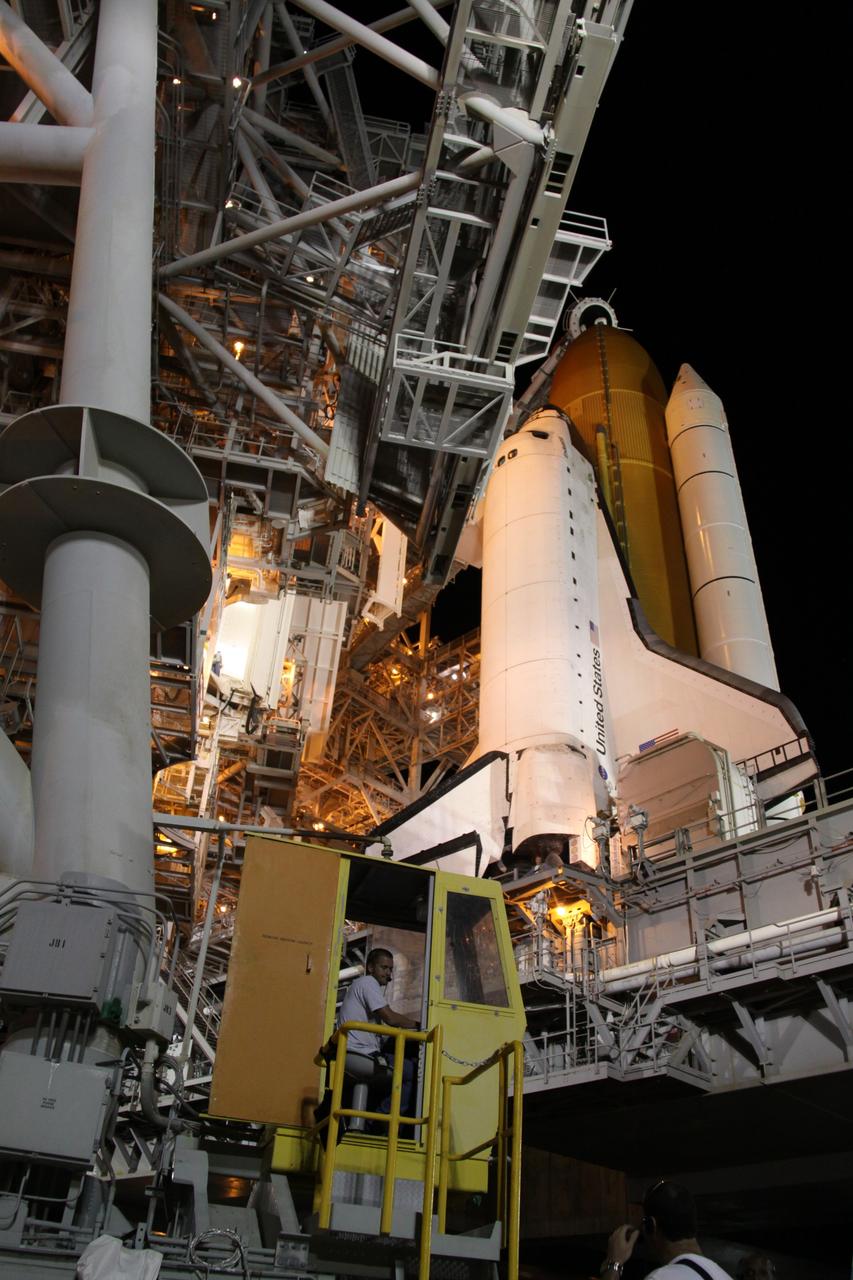
CAPE CANAVERAL, Fla. – On Launch Pad 39A at NASA's Kennedy Space Center in Florida, technicians in the control booth (lower left) begin to roll away the rotating service structure, or RSS, from space shuttle Endeavour. First motion was at 11:00 p.m. EDT. The rollback is in preparation for Endeavour's liftoff on the STS-127 mission with a crew of seven. This is the third launch attempt for the STS-127 mission. The first two attempts on June 13 and June 17 were scrubbed when a hydrogen gas leak occurred during tanking due to a misaligned Ground Umbilical Carrier Plate. Endeavour will deliver the Japanese Experiment Module's Exposed Facility, or JEM-EF, and the Experiment Logistics Module-Exposed Section, or ELM-ES, in the final of three flights dedicated to the assembly of the Japan Aerospace Exploration Agency's Kibo laboratory complex on the International Space Station. STS-127 is the 29th flight for the assembly of the space station. Photo credit: NASA/Jack Pfaller
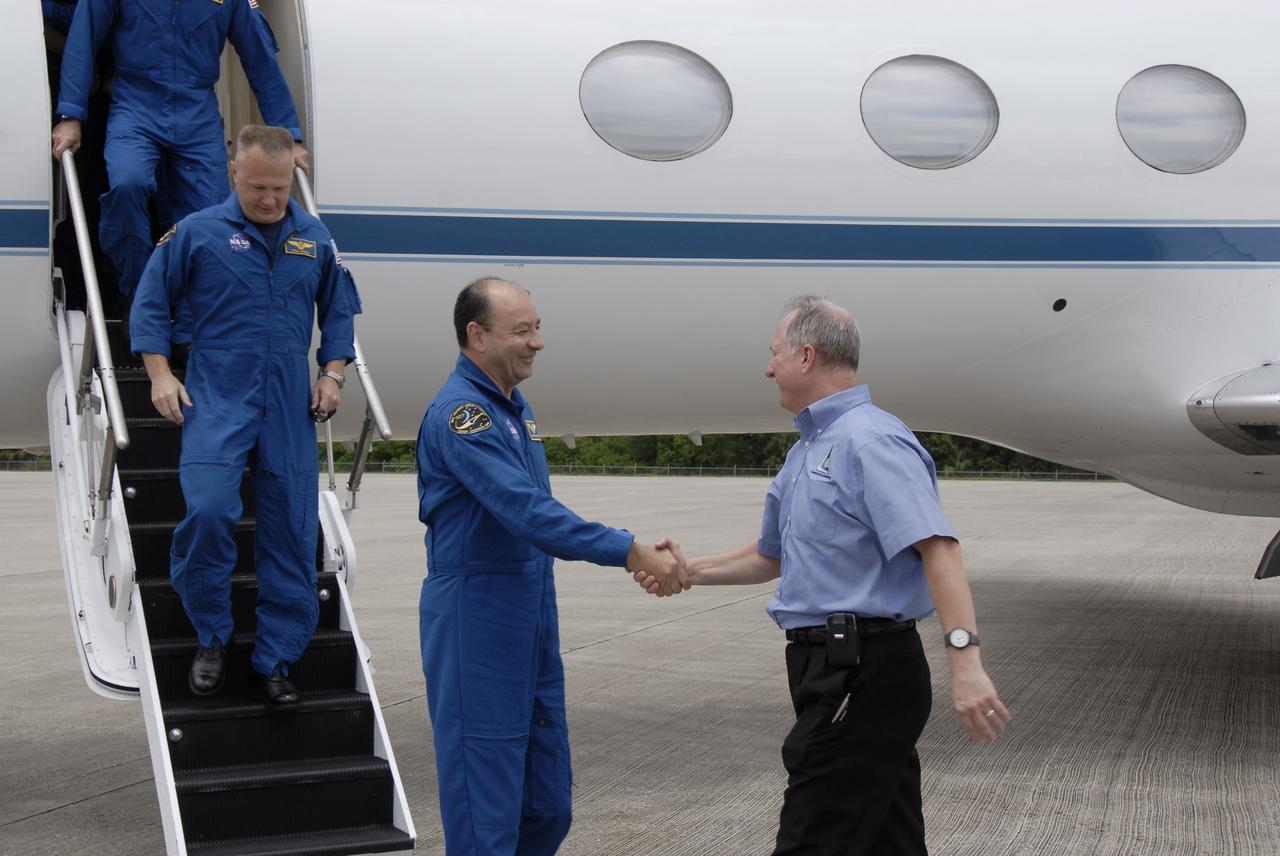
CAPE CANAVERAL, Fla. – – The STS-127 crew members arrive at NASA's Kennedy Space Center in Florida to prepare for space shuttle Endeavour's July 11 launch on the 29th assembly flight to the International Space Station. Leading the way, Commander Mark Polansky is greeted by the STS-127 Launch Director Pete Nickolenko. Behind Polansky is Pilot Doug Hurley. Polansky will be making his third shuttle flight and Hurley his first. This will be the third launch attempt due to the leak of hydrogen gas at the Ground Umbilical Carrier Plate during tanking on two previous attempts, June 13 and June 17. The STS-127 mission is the final of three flights dedicated to the assembly of the Japan Aerospace Exploration Agency's Kibo laboratory complex. Endeavour will deliver the Japanese Experiment Module's Exposed Facility, or JEM-EF, and the Experiment Logistics Module-Exposed Section, or ELM-ES. Photo credit: NASA/Kim Shiflett
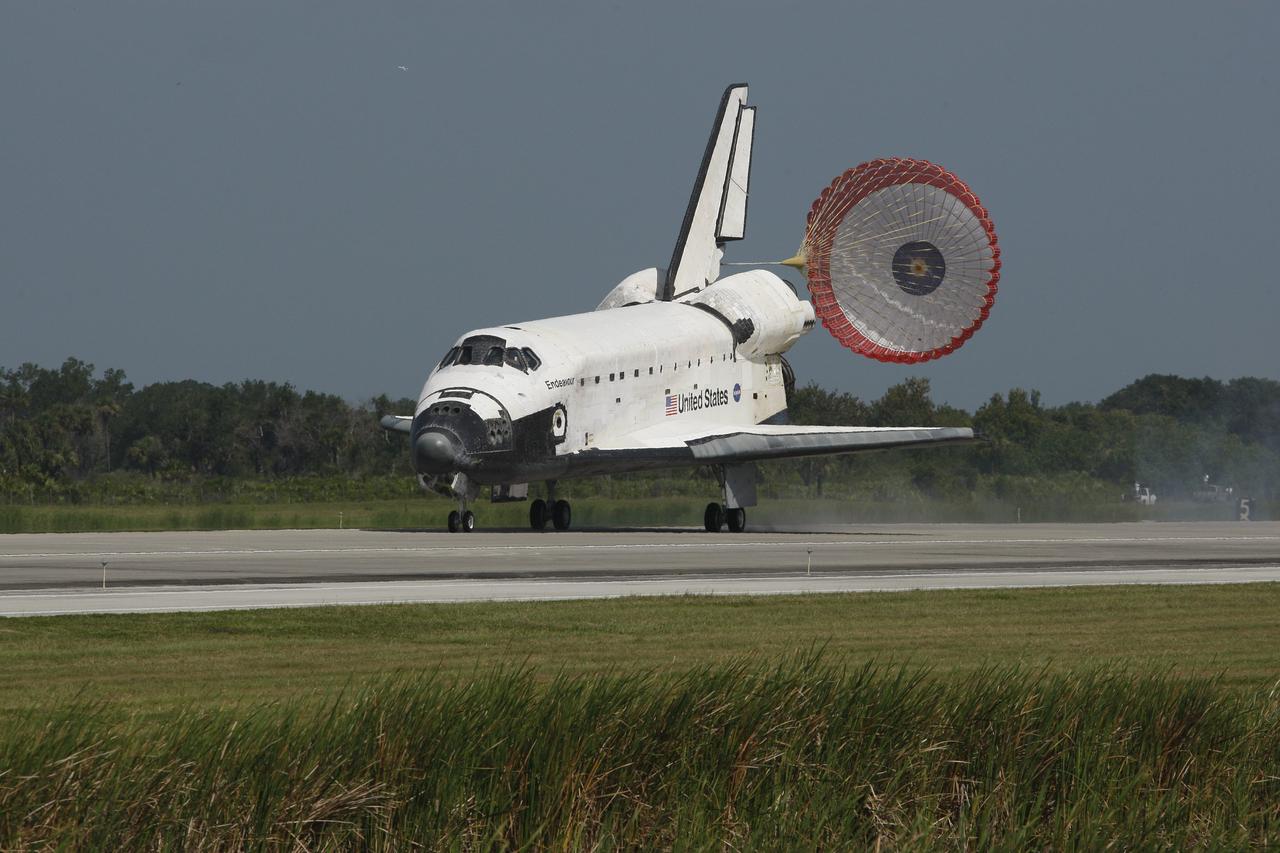
CAPE CANAVERAL, Fla. – The unfurled drogue chute slows space shuttle Endeavour as it lands on Runway 15 at NASA's Kennedy Space Center in Florida to complete the 16-day, 6.5-million mile journey on the STS-127 mission to the International Space Station. Endeavour landed on orbit 248. Main gear touchdown was at 10:48:08 a.m. EDT. Nose gear touchdown was at 10:48:21 a.m. and wheels stop was at 10:49:13 a.m. Endeavour delivered the Japanese Experiment Module's Exposed Facility and the Experiment Logistics Module-Exposed Section to the International Space Station. The mission was the 29th flight to the station, the 23rd flight of Endeavour and the 127th in the Space Shuttle Program, as well as the 71st landing at Kennedy. Photo courtesy of Scott Andrews
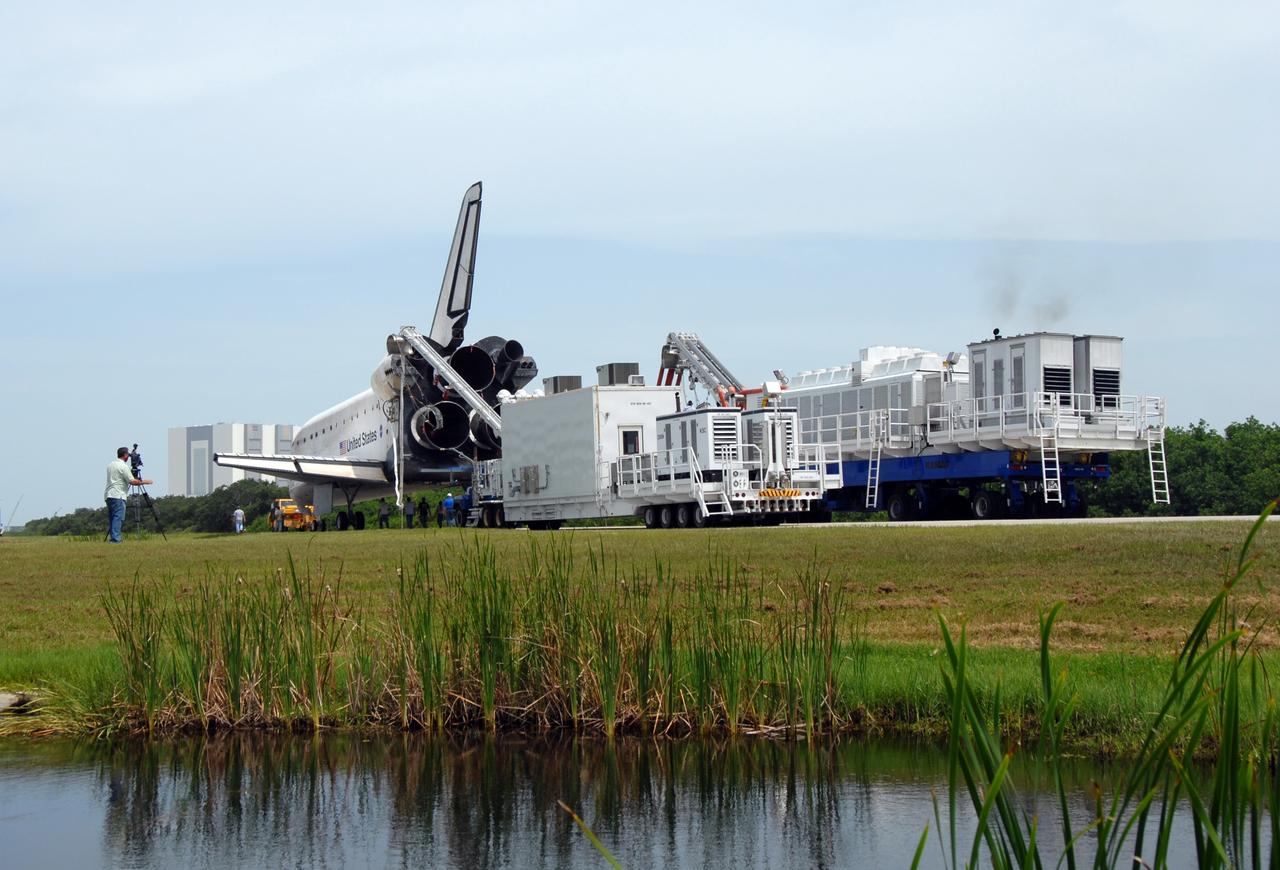
CAPE CANAVERAL, Fla. – At NASA's Kennedy Space Center in Florida, space shuttle Endeavour is towed away from the Shuttle Landing Facility. It is being taken to the Orbiter Processing Facility #2. Endeavour landed at 10:48 a.m. EDT, completing a journey of 6.5-million miles on the STS-127 mission. Umbilicals are still attached to purge the vehicle of any possible residual explosive or toxic fumes. Towing normally begins within four hours after landing and is completed within six hours unless removal of time-sensitive experiments is required on the runway. In the OPF, turnaround processing procedures on Endeavour will include various post-flight deservicing and maintenance functions, which are carried out in parallel with payload removal and the installation of equipment needed for the next mission. The STS-127 mission was the 29th flight to the station, the 23rd flight of Endeavour and the 71st landing at Kennedy. Photo credit: NASA/Jim Grossmann
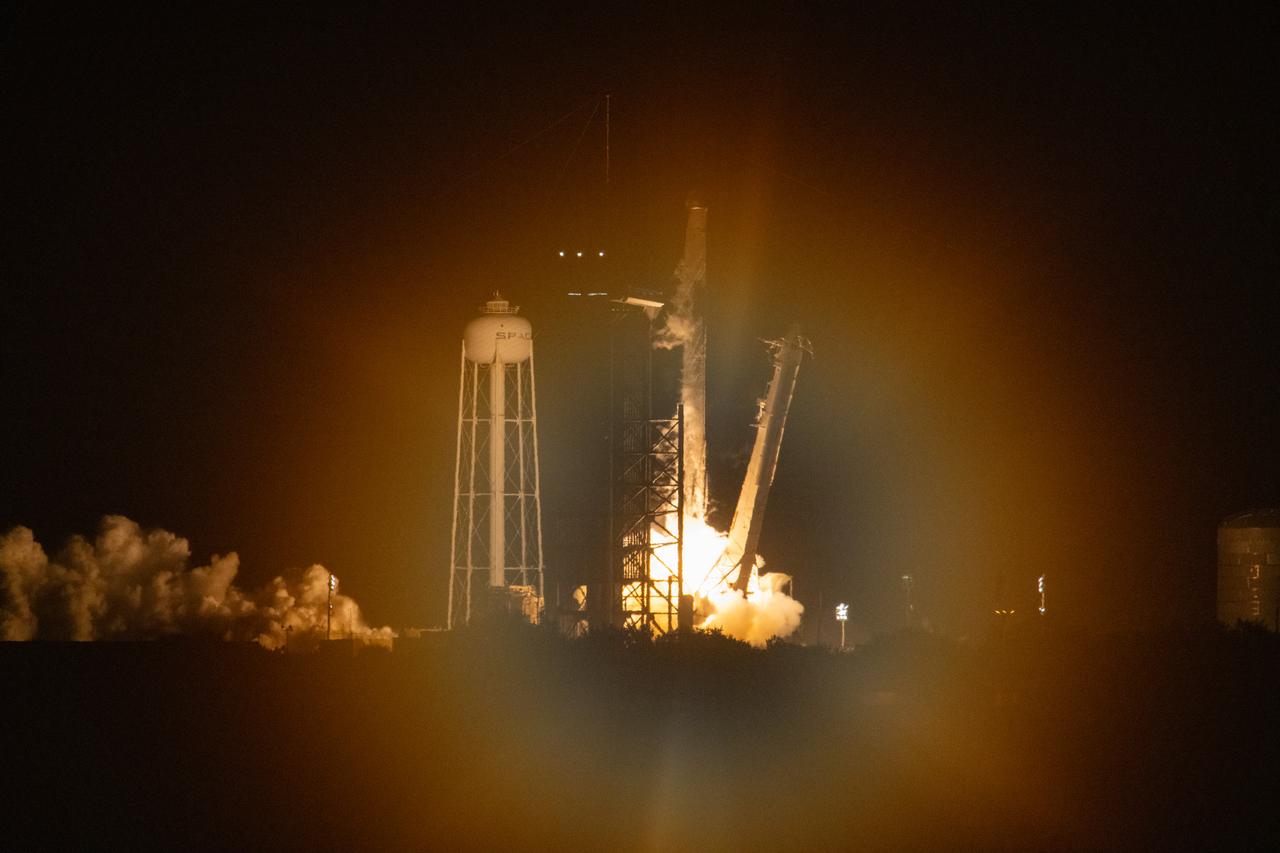
The SpaceX Falcon 9 rocket carrying the Dragon spacecraft lifts off from Launch Complex 39A at NASA’s Kennedy Space Center in Florida on Thursday, Nov. 9, 2023, on the company’s 29th commercial resupply services mission for the agency to the International Space Station. Liftoff was at 8:28 p.m. EST. Dragon will deliver scientific research, technology demonstrations, crew supplies, and hardware to the space station to support its Expedition 70 crew, including NASA’s Integrated Laser Communications Relay Demonstration Low Earth Orbit User Modem and Amplifier Terminal (ILLUMA-T) and Atmospheric Waves Experiment (AWE). The spacecraft is expected to spend about a month attached to the orbiting outpost before it returns to Earth with research and return cargo, splashing down off the coast of Florida.
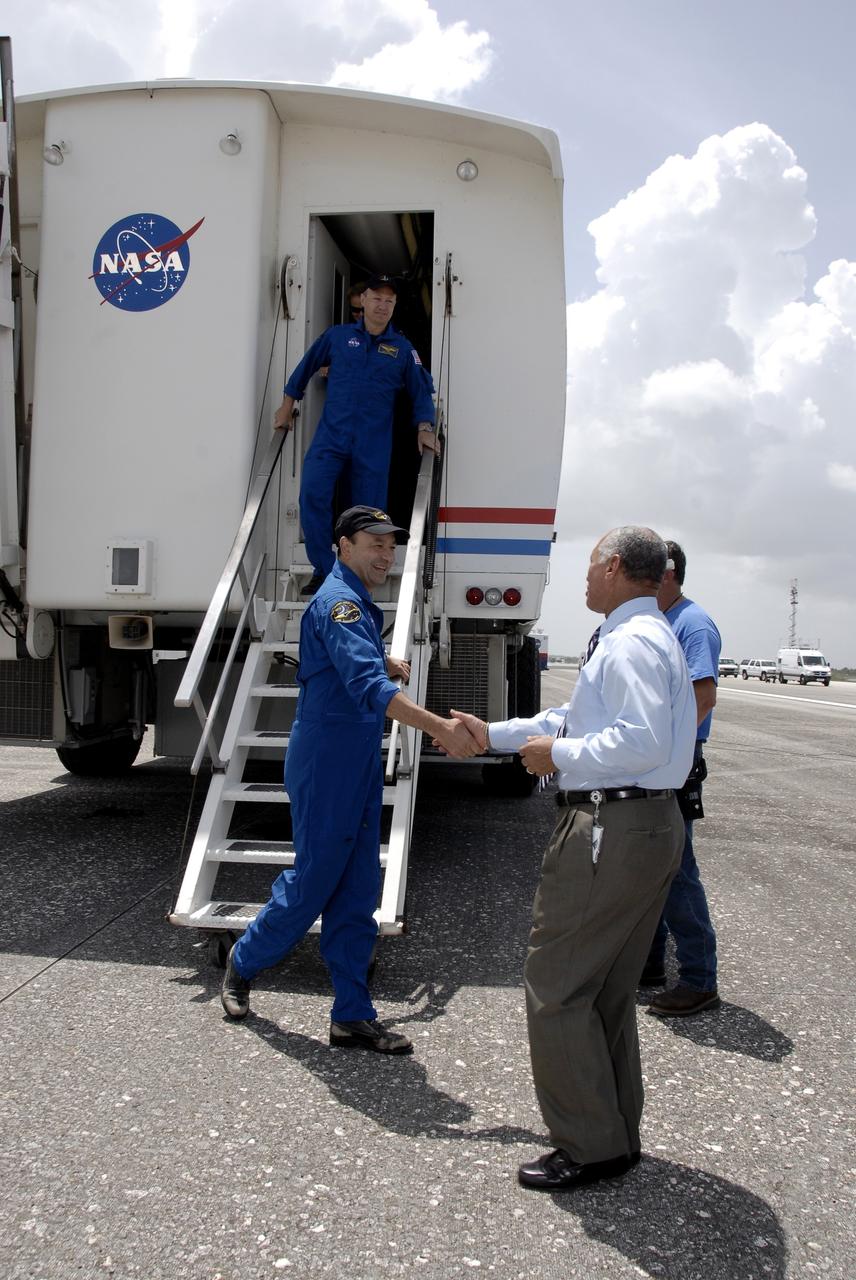
CAPE CANAVERAL, Fla. – Exiting from the crew transport vehicle at NASA's Kennedy Space Center in Florida, STS-127 Commander Mark Polansky is greeted by NASA Administrator Charles Bolden. Behind Polansky is Pilot Doug Hurley. The crew returned to Earth on space shuttle Endeavour to complete the 16-day, 6.5-million mile journey on the STS-127 mission to the International Space Station. Main gear touchdown was at 10:48:08 a.m. EDT. Nose gear touchdown was at 10:48:21 a.m. and wheels stop was at 10:49:13 a.m. Endeavour delivered the Japanese Experiment Module's Exposed Facility and the Experiment Logistics Module-Exposed Section to the International Space Station. The mission was the 29th flight to the station, the 23rd flight of Endeavour and the 127th in the Space Shuttle Program, as well as the 71st landing at Kennedy. Photo credit: NASA/Kim Shiflett
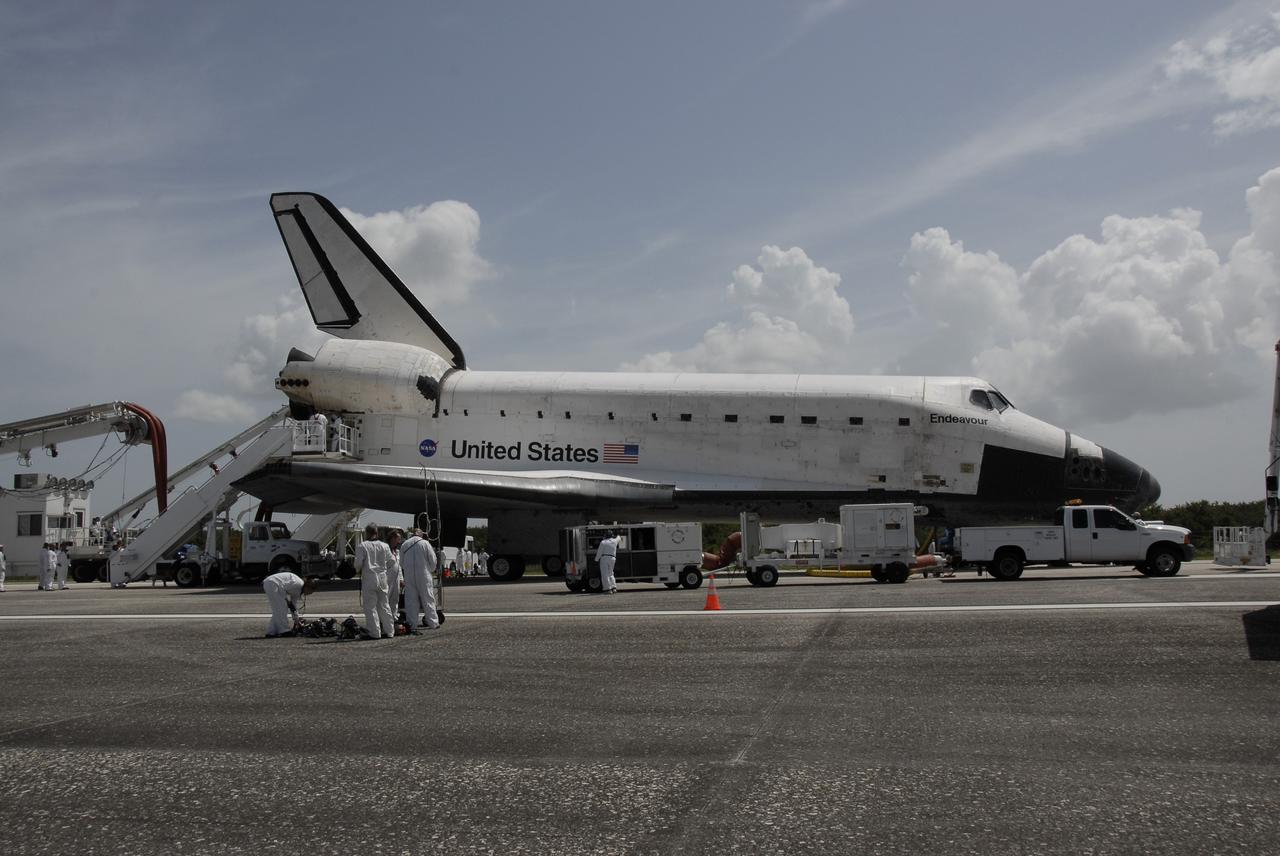
CAPE CANAVERAL, Fla. – A large team of specialists works methodically through procedures to "safe" Endeavour as it sits on the runway after landing to complete the 16-day, 6.5-million mile journey on the STS-127 mission to the International Space Station. Trucks are positioned at the shuttle’s nose and tail to drain away hazardous chemicals that may still be inside systems such as the thrusters. Later, the astronauts are expected to walk around Endeavour. Main gear touchdown was at 10:48:08 a.m. EDT. Nose gear touchdown was at 10:48:21 a.m. and wheels stop was at 10:49:13 a.m. Endeavour delivered the Japanese Experiment Module's Exposed Facility and the Experiment Logistics Module-Exposed Section to the International Space Station. The mission was the 29th flight to the station, the 23rd flight of Endeavour and the 127th in the Space Shuttle Program, as well as the 71st landing at Kennedy. Photo credit: NASA/Kim Shiflett
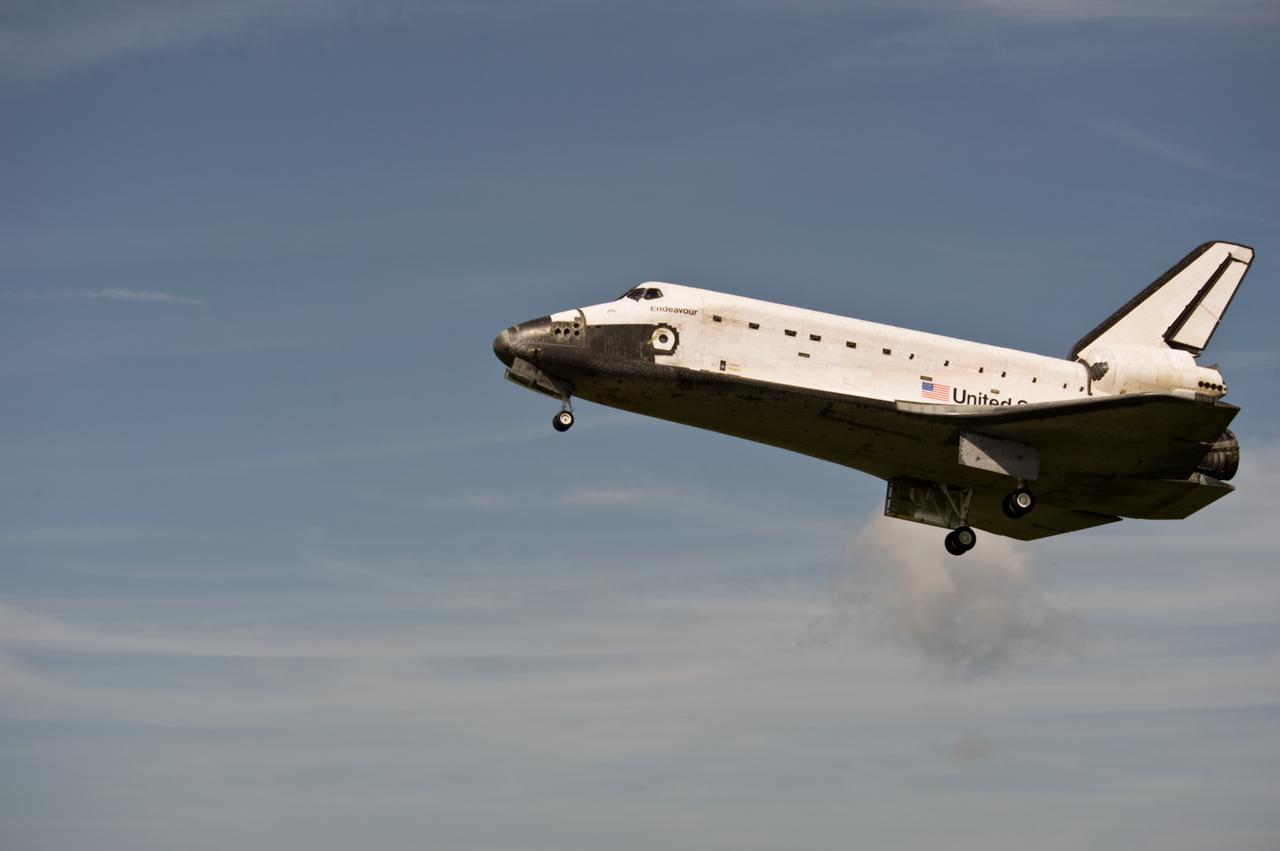
CAPE CANAVERAL, Fla. – Space shuttle Endeavour lowers its landing gear as it approaches Runway 15 at NASA's Kennedy Space Center in Florida. The landing completes Endeavour's 16-day, 6.5-million mile journey on the STS-127 mission to the International Space Station. Endeavour landed on orbit 248. Main gear touchdown was at 10:48:08 a.m. EDT. Nose gear touchdown was at 10:48:21 a.m. and wheels stop was at 10:49:13 a.m. Endeavour delivered the Japanese Experiment Module's Exposed Facility and the Experiment Logistics Module-Exposed Section to the International Space Station. The mission was the 29th flight to the station, the 23rd flight of Endeavour and the 127th in the Space Shuttle Program, as well as the 71st landing at Kennedy. Photo credit: NASA/Tony Gray
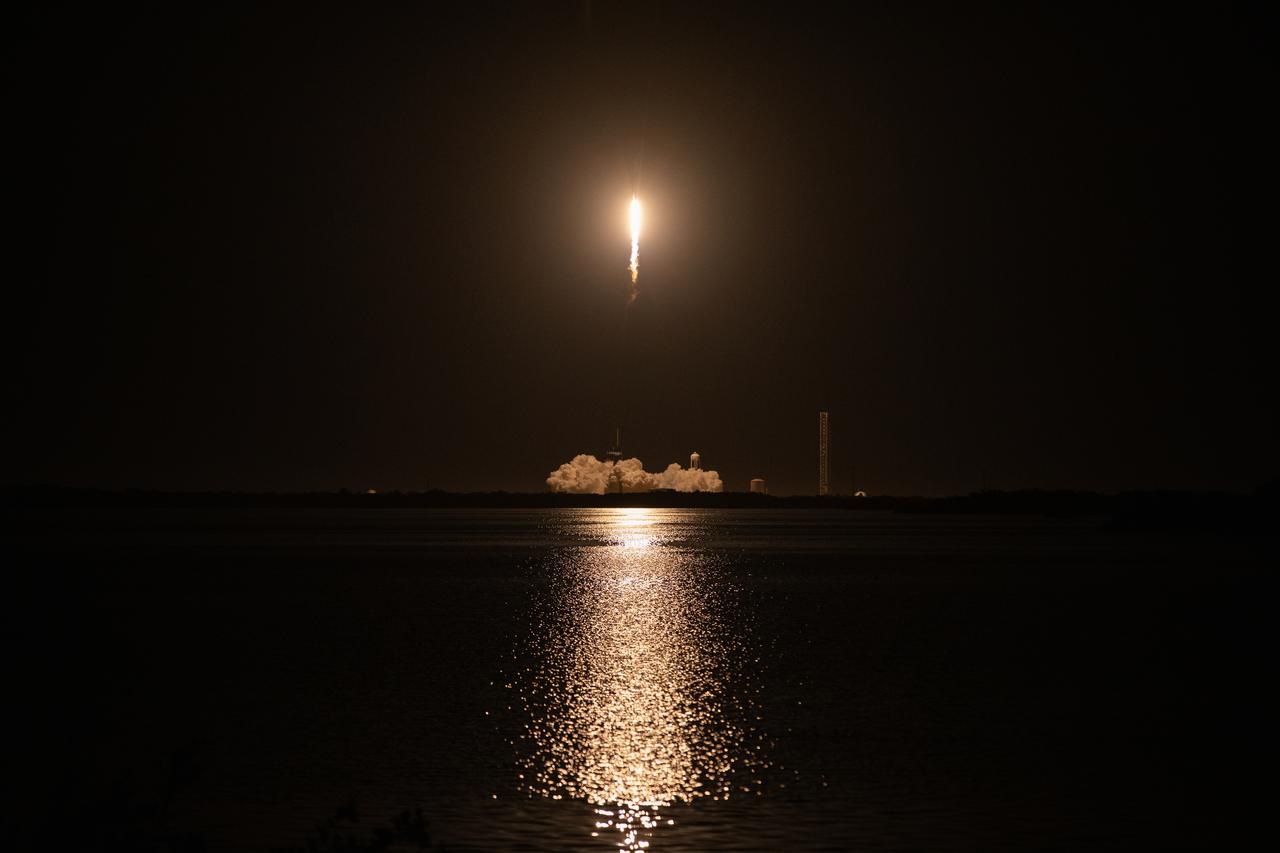
The SpaceX Falcon 9 rocket carrying the Dragon spacecraft lifts off from Launch Complex 39A at NASA’s Kennedy Space Center in Florida on Thursday, Nov. 9, 2023, on the company’s 29th commercial resupply services mission for the agency to the International Space Station. Liftoff was at 8:28 p.m. EST. Dragon will deliver scientific research, technology demonstrations, crew supplies, and hardware to the space station to support its Expedition 70 crew, including NASA’s Integrated Laser Communications Relay Demonstration Low Earth Orbit User Modem and Amplifier Terminal (ILLUMA-T) and Atmospheric Waves Experiment (AWE). The spacecraft is expected to spend about a month attached to the orbiting outpost before it returns to Earth with research and return cargo, splashing down off the coast of Florida.
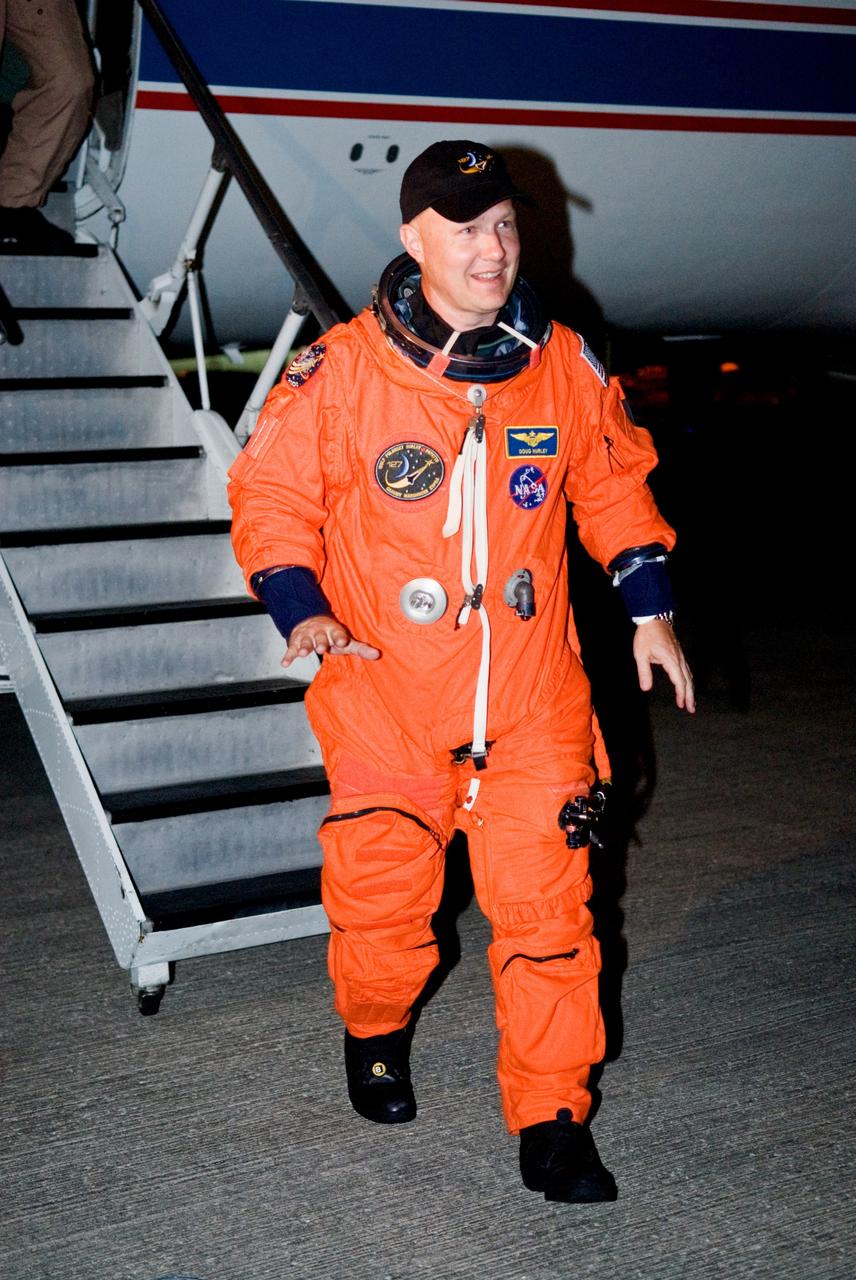
CAPE CANAVERAL, Fla. – On the Shuttle Landing Facility at NASA's Kennedy Space Center in Florida, STS-127 Pilot Doug Hurley exits the Shuttle Training Aircraft. He and Commander Mark Polansky have been practicing shuttle landings in preparation for launch of space shuttle Endeavour on the STS-127 mission, targeted for June 13. The STA is a Grumman American Aviation-built Gulf Stream II jet that was modified to simulate a shuttle’s cockpit, motion and visual cues, and handling qualities. The crew is at Kennedy for a launch dress rehearsal called the terminal countdown demonstration test, or TCDT, which includes emergency egress training and equipment familiarization. The STS-127 mission is the final of three flights dedicated to the assembly of the Japanese Kibo laboratory complex on the International Space Station. It is the 127th shuttle flight and the 29th in the assembly of the space station. Photo credit: NASA/Kim Shiflett

CAPE CANAVERAL, Fla. – On Launch Pad 39A at NASA's Kennedy Space Center in Florida, the rotating service structure, or RSS, at front left, is rolled away from space shuttle Endeavour. First motion was at 11:00 p.m. EDT. The rollback is in preparation for Endeavour's liftoff on the STS-127 mission with a crew of seven. This is the third launch attempt for the STS-127 mission. The first two attempts on June 13 and June 17 were scrubbed when a hydrogen gas leak occurred during tanking due to a misaligned Ground Umbilical Carrier Plate. Endeavour will deliver the Japanese Experiment Module's Exposed Facility, or JEM-EF, and the Experiment Logistics Module-Exposed Section, or ELM-ES, in the final of three flights dedicated to the assembly of the Japan Aerospace Exploration Agency's Kibo laboratory complex on the International Space Station. STS-127 is the 29th flight for the assembly of the space station. Photo credit: NASA/Jack Pfaller

The SpaceX Falcon 9 rocket carrying the Dragon spacecraft lifts off from Launch Complex 39A at NASA’s Kennedy Space Center in Florida on Thursday, Nov. 9, 2023, on the company’s 29th commercial resupply services mission for the agency to the International Space Station. Liftoff was at 8:28 p.m. EST. Dragon will deliver scientific research, technology demonstrations, crew supplies, and hardware to the space station to support its Expedition 70 crew, including NASA’s Integrated Laser Communications Relay Demonstration Low Earth Orbit User Modem and Amplifier Terminal (ILLUMA-T) and Atmospheric Waves Experiment (AWE). The spacecraft is expected to spend about a month attached to the orbiting outpost before it returns to Earth with research and return cargo, splashing down off the coast of Florida.
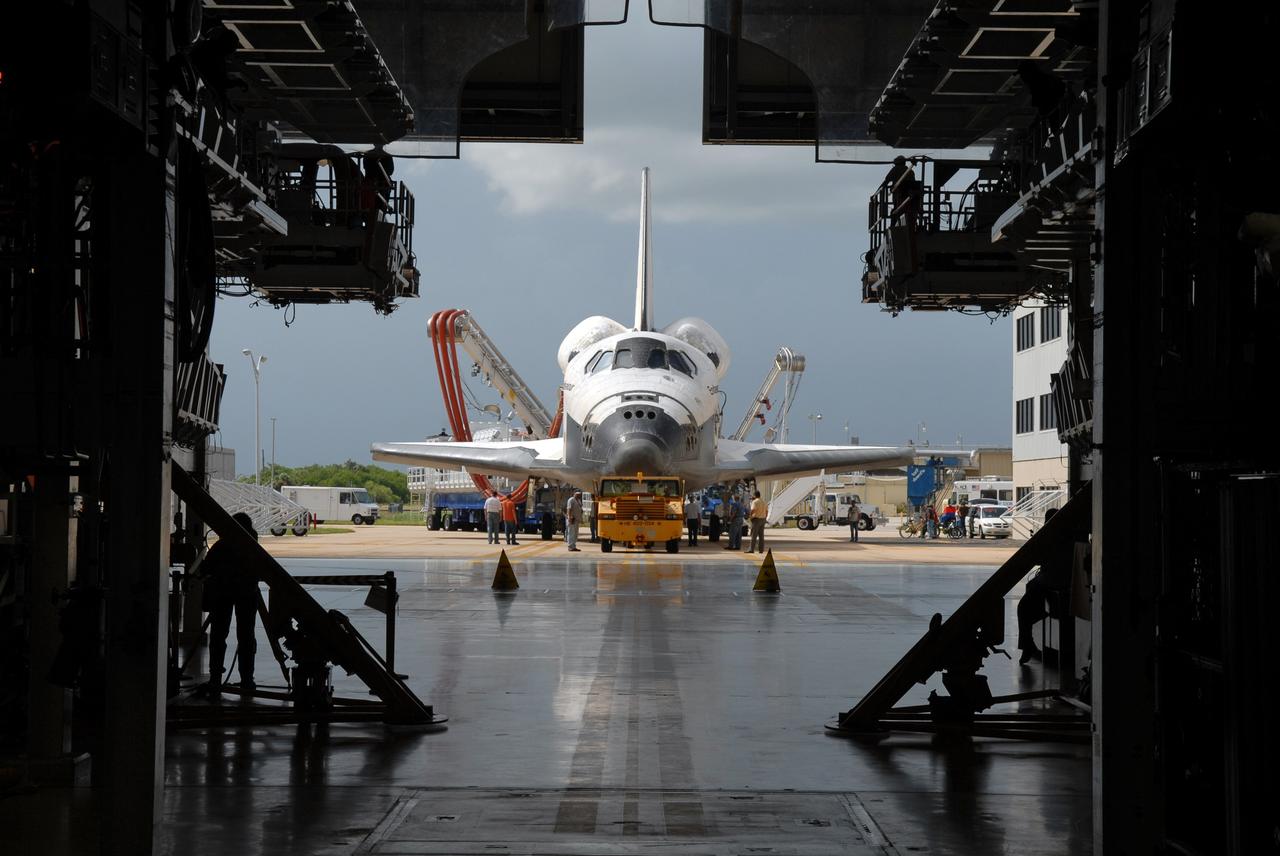
CAPE CANAVERAL, Fla. – At NASA's Kennedy Space Center in Florida, space shuttle Endeavour rolls into Orbiter Processing Facility #2. Endeavour landed at 10:48 a.m. EDT, completing a journey of 6.5-million miles on the STS-127 mission. Umbilicals are still attached to purge the vehicle of any possible residual explosive or toxic fumes. Towing normally begins within four hours after landing and is completed within six hours unless removal of time-sensitive experiments is required on the runway. In the OPF, turnaround processing procedures on Endeavour will include various post-flight deservicing and maintenance functions, which are carried out in parallel with payload removal and the installation of equipment needed for the next mission. The STS-127 mission was the 29th flight to the station, the 23rd flight of Endeavour and the 71st landing at Kennedy. Photo credit: NASA/Jim Grossmann
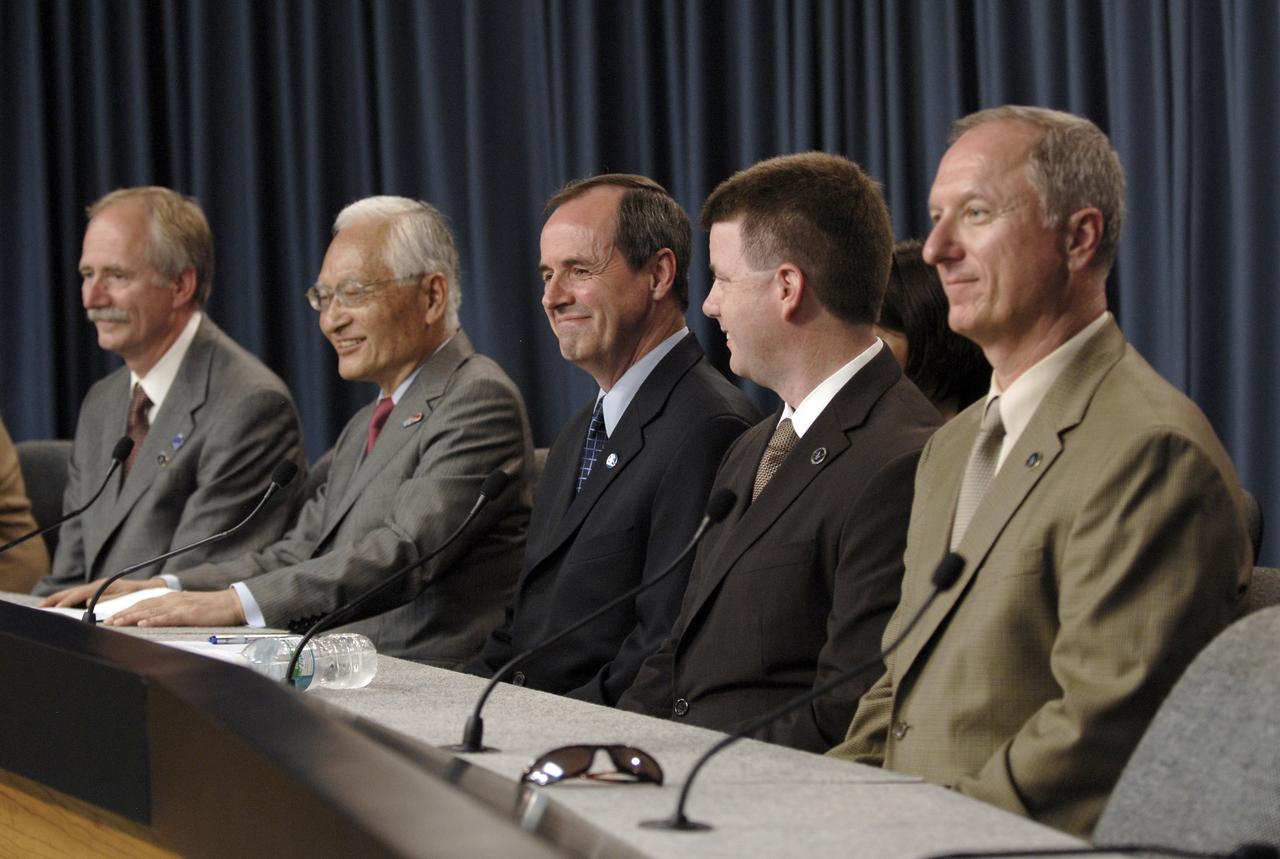
CAPE CANAVERAL, Fla. – At a post-landing news conference at NASA's Kennedy Space Center in Florida, participants respond with smiles to a question from the media. From left are NASA Associate Administrator for Space Operations William Gerstenmaier, President of the Japan Aerospace Exploration Agency Keiji Tachikawa, Director General of Operations in the Canadian Space Agency Benoit Marcotte, space shuttle Launch Integration Manager Mike Moses and STS-127 Launch Director Pete Nickolenko. Space shuttle Endeavour and crew returned to Earth at 10:48 a.m. EDT to conclude the STS-127 mission. Endeavour delivered the Japanese Experiment Module's Exposed Facility and the Experiment Logistics Module-Exposed Section to the International Space Station. The mission was the 29th flight to the station, the 23rd flight of Endeavour and the 127th in the Space Shuttle Program, as well as the 71st landing at Kennedy. Photo credit: NASA/Kim Shiflett

CAPE CANAVERAL, Fla. – NASA's Shuttle Training Aircraft lands at the Shuttle Landing Facility at NASA's Kennedy Space Center in Florida with STS-127 crew members aboard. The crew is returning to Kennedy to prepare for space shuttle Endeavour's July 11 launch on the 29th assembly flight to the International Space Station. This will be the third launch attempt due to the leak of hydrogen gas at the Ground Umbilical Carrier Plate during tanking on two previous attempts, June 13 and June 17. The STS-127 mission is the final of three flights dedicated to the assembly of the Japan Aerospace Exploration Agency's Kibo laboratory complex. Endeavour will deliver the Japanese Experiment Module's Exposed Facility, or JEM-EF, and the Experiment Logistics Module-Exposed Section, or ELM-ES. Photo credit: NASA/Kim Shiflett
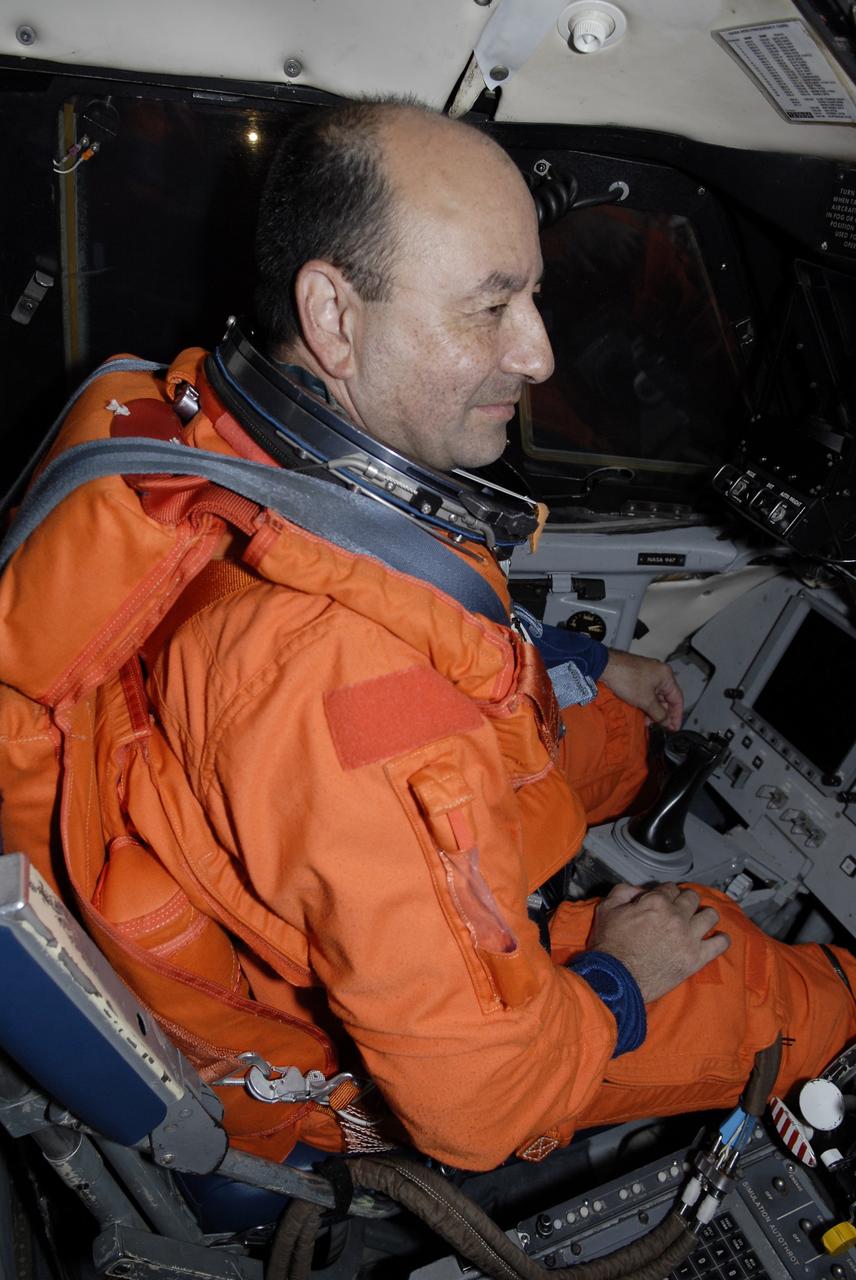
CAPE CANAVERAL, Fla. – On the Shuttle Landing Facility at NASA's Kennedy Space Center in Florida, STS-127 Commander Mark Polansky is wearing his complete launch-and-entry suit in the cockpit of the Shuttle Training Aircraft. He is preparing to practice shuttle landings in preparation for launch of space shuttle Endeavour on the STS-127 mission, targeted for June 13. The STA is a Grumman American Aviation-built Gulf Stream II jet that was modified to simulate a shuttle’s cockpit, motion and visual cues, and handling qualities. The crew is at Kennedy for a launch dress rehearsal called the terminal countdown demonstration test, or TCDT, which includes emergency egress training and equipment familiarization. The STS-127 mission is the final of three flights dedicated to the assembly of the Japanese Kibo laboratory complex on the International Space Station. It is the 127th shuttle flight and the 29th in the assembly of the space station. Photo credit: NASA/Kim Shiflett
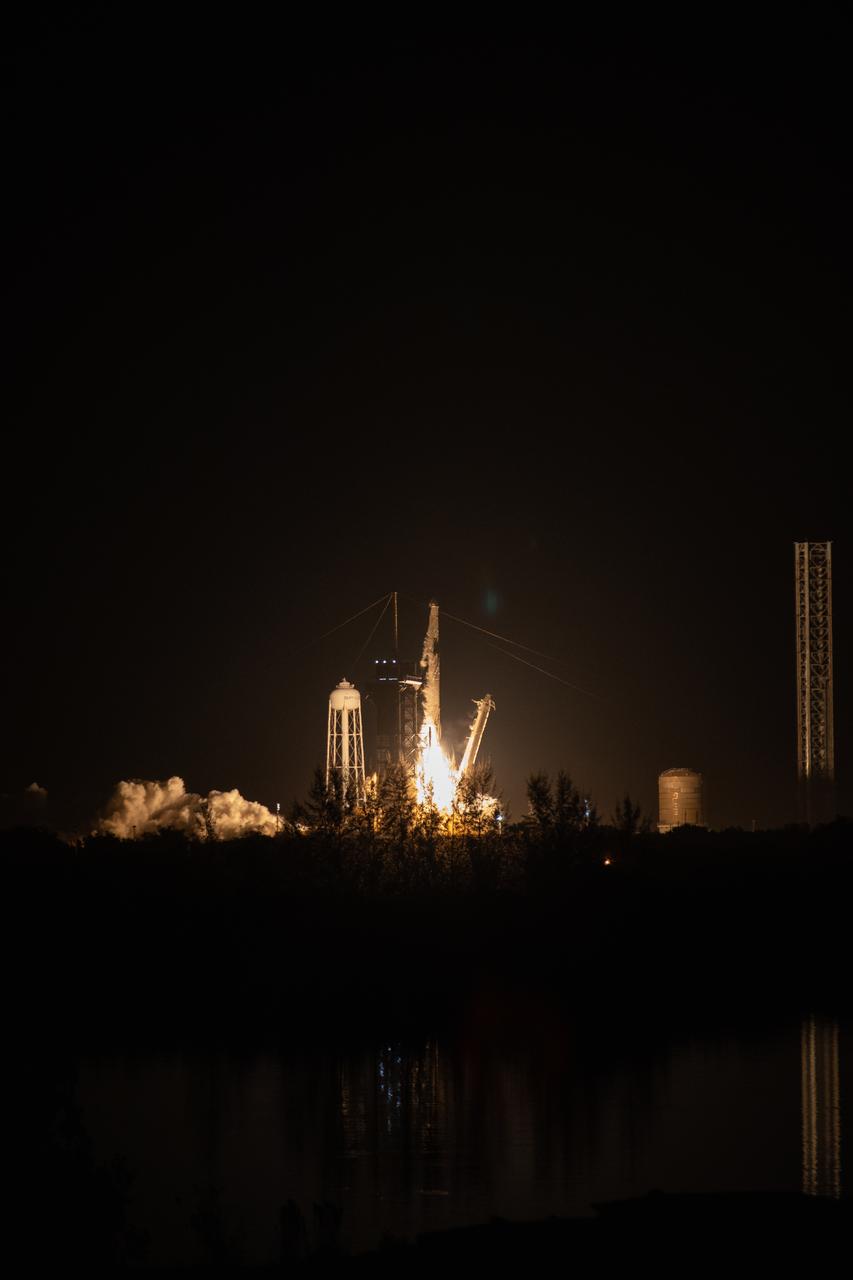
The SpaceX Falcon 9 rocket carrying the Dragon spacecraft lifts off from Launch Complex 39A at NASA’s Kennedy Space Center in Florida on Thursday, Nov. 9, 2023, on the company’s 29th commercial resupply services mission for the agency to the International Space Station. Liftoff was at 8:28 p.m. EST. Dragon will deliver scientific research, technology demonstrations, crew supplies, and hardware to the space station to support its Expedition 70 crew, including NASA’s Integrated Laser Communications Relay Demonstration Low Earth Orbit User Modem and Amplifier Terminal (ILLUMA-T) and Atmospheric Waves Experiment (AWE). The spacecraft is expected to spend about a month attached to the orbiting outpost before it returns to Earth with research and return cargo, splashing down off the coast of Florida.
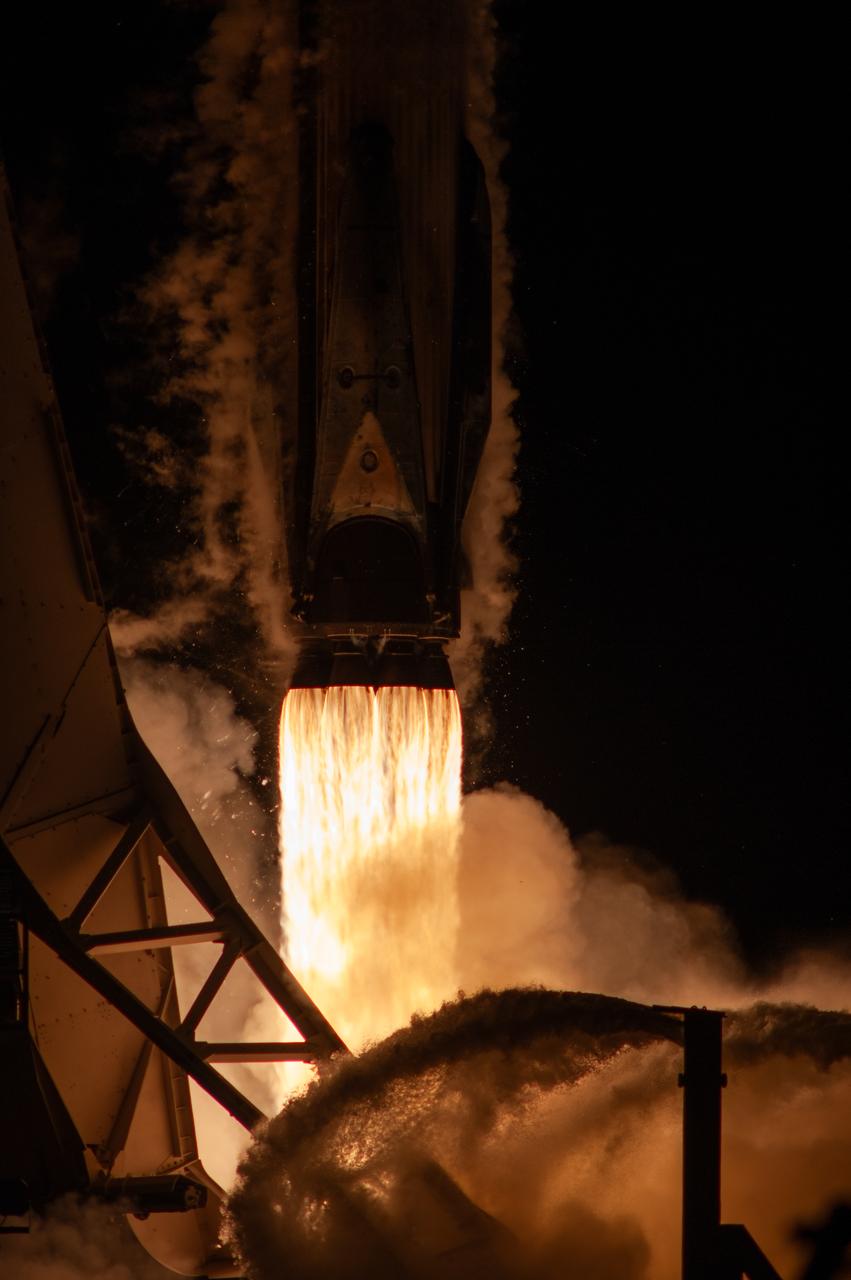
The SpaceX Falcon 9 rocket carrying the Dragon spacecraft lifts off from Launch Complex 39A at NASA’s Kennedy Space Center in Florida on Thursday, Nov. 9, 2023, on the company’s 29th commercial resupply services mission for the agency to the International Space Station. Liftoff was at 8:28 p.m. EST. Dragon will deliver scientific research, technology demonstrations, crew supplies, and hardware to the space station to support its Expedition 70 crew, including NASA’s Integrated Laser Communications Relay Demonstration Low Earth Orbit User Modem and Amplifier Terminal (ILLUMA-T) and Atmospheric Waves Experiment (AWE). The spacecraft is expected to spend about a month attached to the orbiting outpost before it returns to Earth with research and return cargo, splashing down off the coast of Florida.
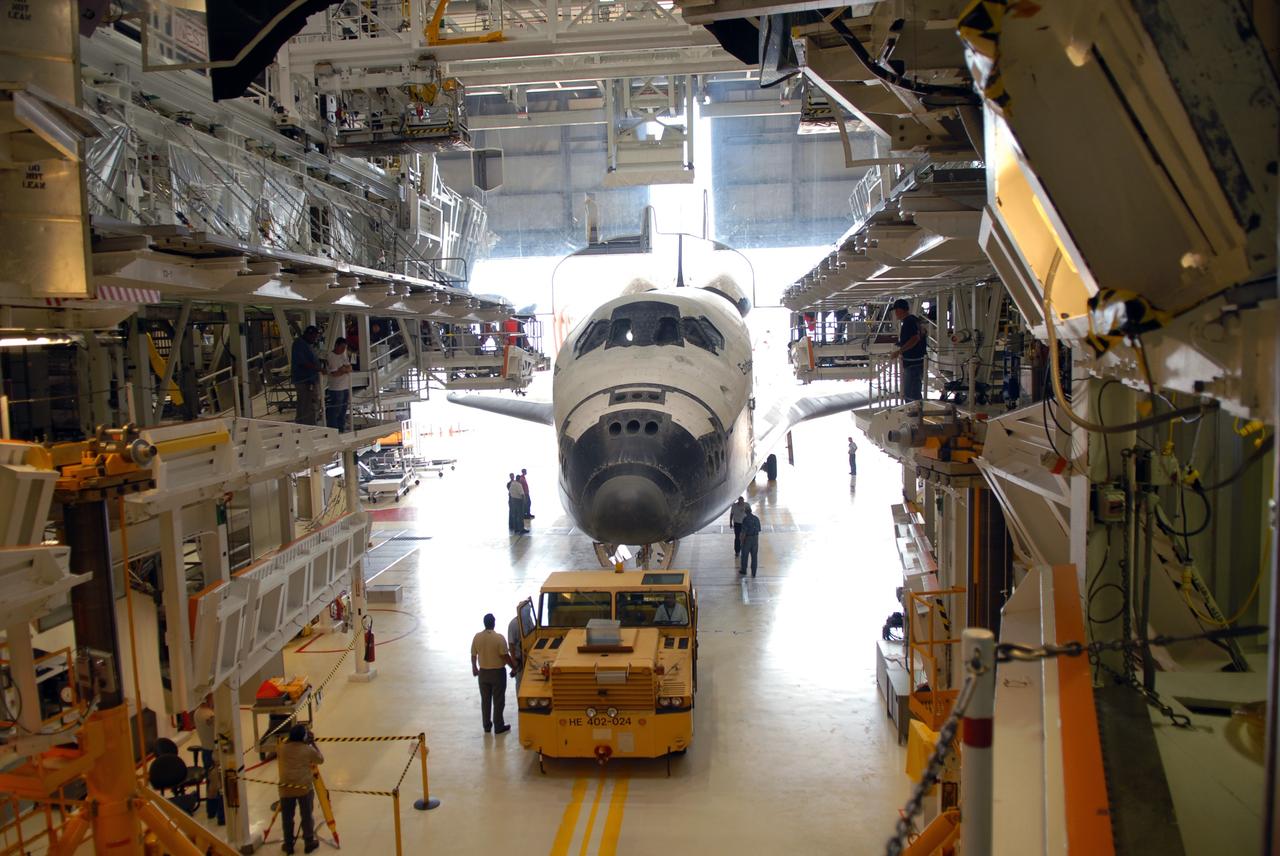
CAPE CANAVERAL, Fla. – At NASA's Kennedy Space Center in Florida, space shuttle Endeavour rolls into Orbiter Processing Facility #2. Endeavour landed at 10:48 a.m. EDT, completing a journey of 6.5-million miles on the STS-127 mission. Umbilicals are still attached to purge the vehicle of any possible residual explosive or toxic fumes. Towing normally begins within four hours after landing and is completed within six hours unless removal of time-sensitive experiments is required on the runway. In the OPF, turnaround processing procedures on Endeavour will include various post-flight deservicing and maintenance functions, which are carried out in parallel with payload removal and the installation of equipment needed for the next mission. The STS-127 mission was the 29th flight to the station, the 23rd flight of Endeavour and the 71st landing at Kennedy. Photo credit: NASA/Jim Grossmann
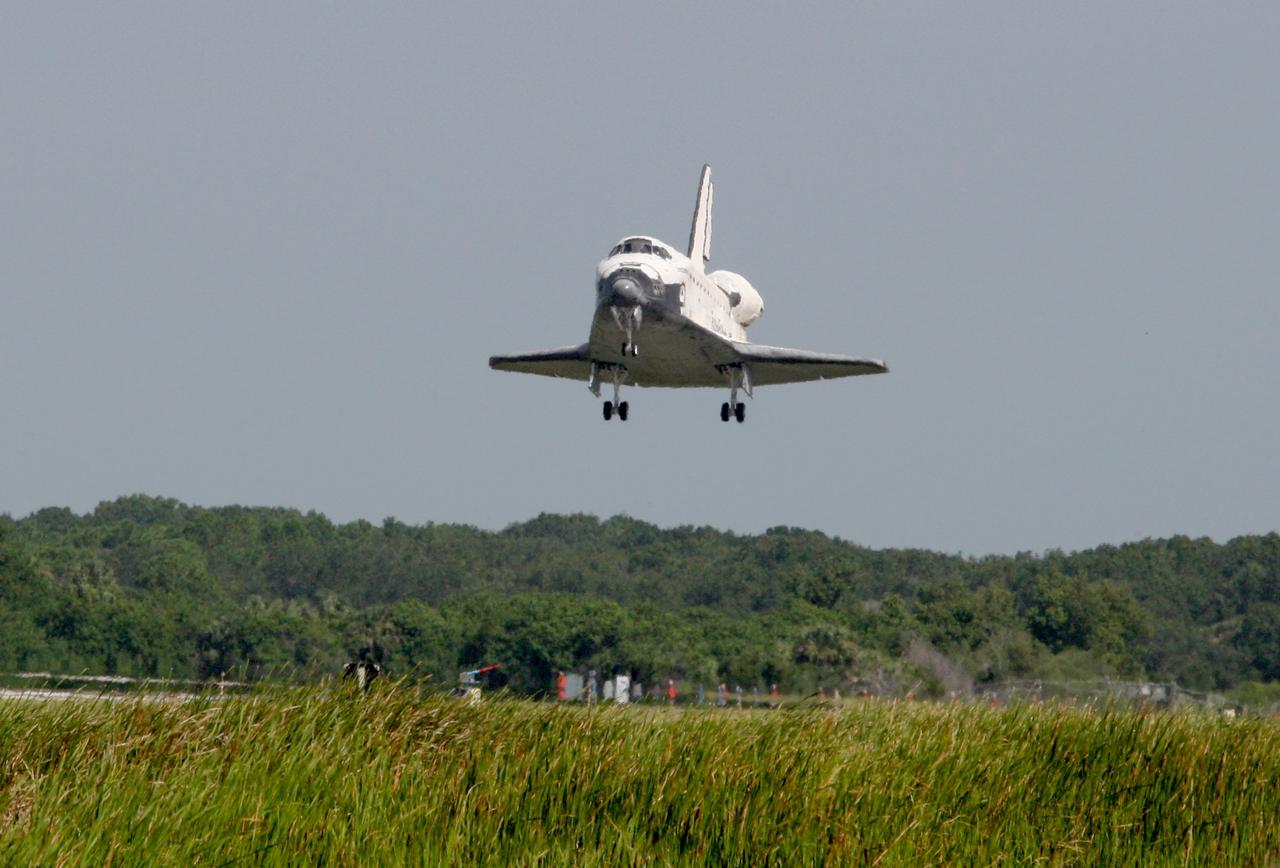
CAPE CANAVERAL, Fla. – With landing gear lowered, space shuttle Endeavour drops quickly toward Runway 15 at NASA's Kennedy Space Center in Florida to complete the 16-day, 6.5-million mile journey on the STS-127 mission to the International Space Station. Endeavour landed on orbit 248. Main gear touchdown was at 10:48:08 a.m. EDT. Nose gear touchdown was at 10:48:21 a.m. and wheels stop was at 10:49:13 a.m. Endeavour delivered the Japanese Experiment Module's Exposed Facility and the Experiment Logistics Module-Exposed Section to the International Space Station. The mission was the 29th flight to the station, the 23rd flight of Endeavour and the 127th in the Space Shuttle Program, as well as the 71st landing at Kennedy. Photo credit: NASA/Chuck Tintera
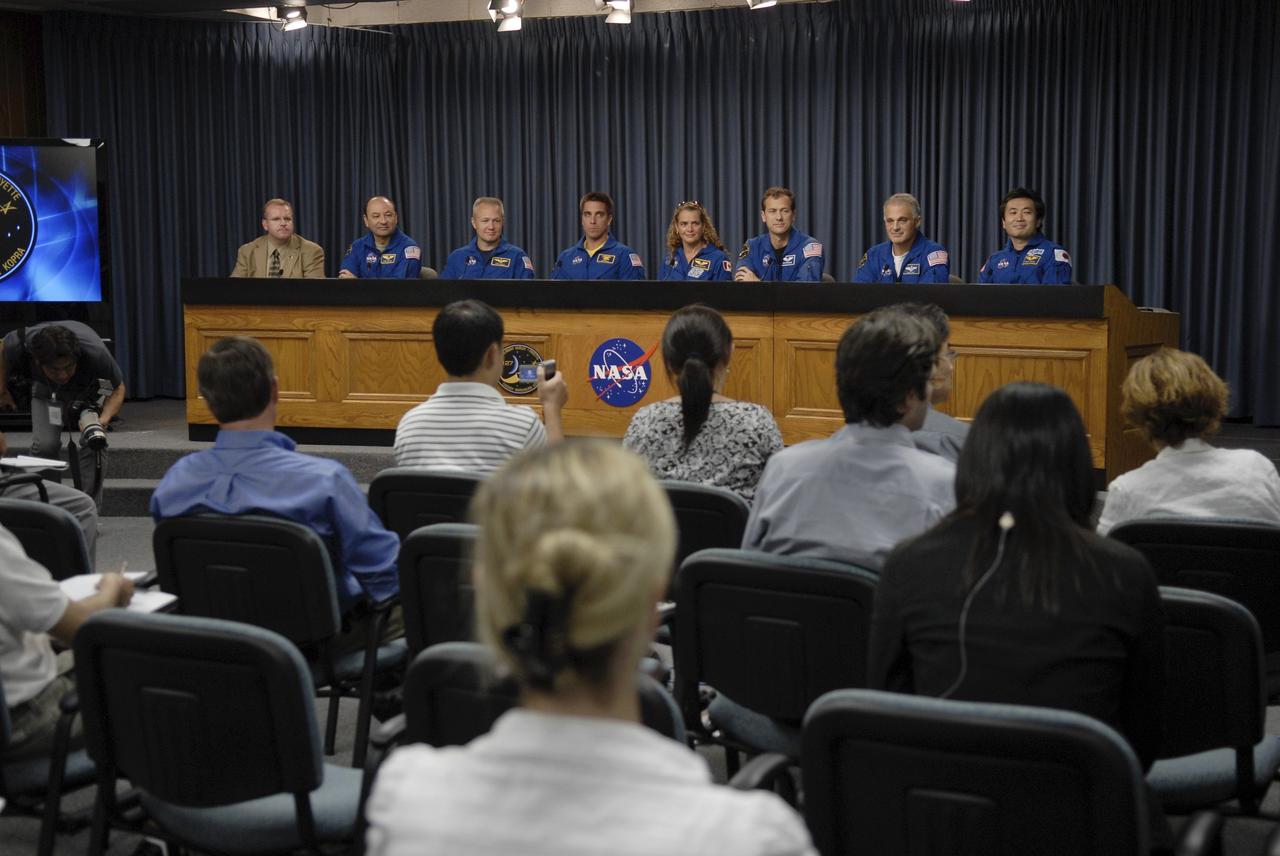
CAPE CANAVERAL, Fla. – At NASA's Kennedy Space Center in Florida, the STS-127 crew members take part in a news conference following their return to Earth on space shuttle Endeavour after the 16-day mission to the International Space Station. From left are NASA Public Affairs Officer Allard Beutel, Commander Mark Polansky, Pilot Doug Hurley, Mission Specialists Christopher Cassidy, Canadian Space Agency astronaut Julie Payette, Tom Marshburn and Dave Wolf, and Japan Aerospace Exploration Agency astronaut Koichi Wakata, who spent four months on the space station and returned on Endeavour. Endeavour delivered the Japanese Experiment Module's Exposed Facility and the Experiment Logistics Module-Exposed Section to the International Space Station. The mission was the 29th flight to the station, the 23rd flight of Endeavour and the 127th in the Space Shuttle Program, as well as the 71st landing at Kennedy. Photo credit: NASA/Kim Shiflett
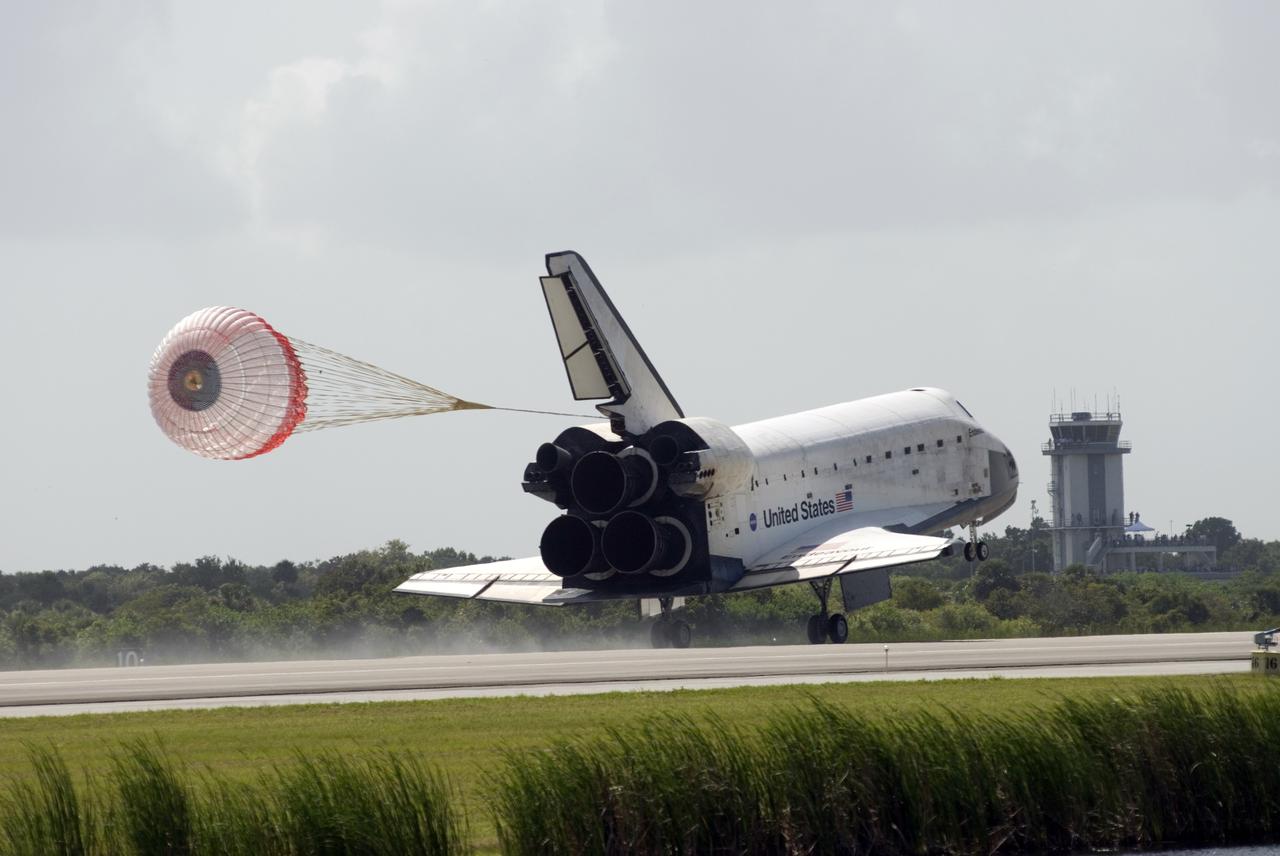
CAPE CANAVERAL, Fla. – The drogue chute slows space shuttle Endeavour on Runway 15 at NASA's Kennedy Space Center in Florida to complete the 16-day, 6.5-million mile journey on the STS-127 mission to the International Space Station. Endeavour landed on orbit 248. Main gear touchdown was at 10:48:08 a.m. EDT. Nose gear touchdown was at 10:48:21 a.m. and wheels stop was at 10:49:13 a.m. Endeavour delivered the Japanese Experiment Module's Exposed Facility and the Experiment Logistics Module-Exposed Section to the International Space Station. The mission was the 29th flight to the station, the 23rd flight of Endeavour and the 127th in the Space Shuttle Program, as well as the 71st landing at Kennedy. Photo credit: NASA/Tom Joseph
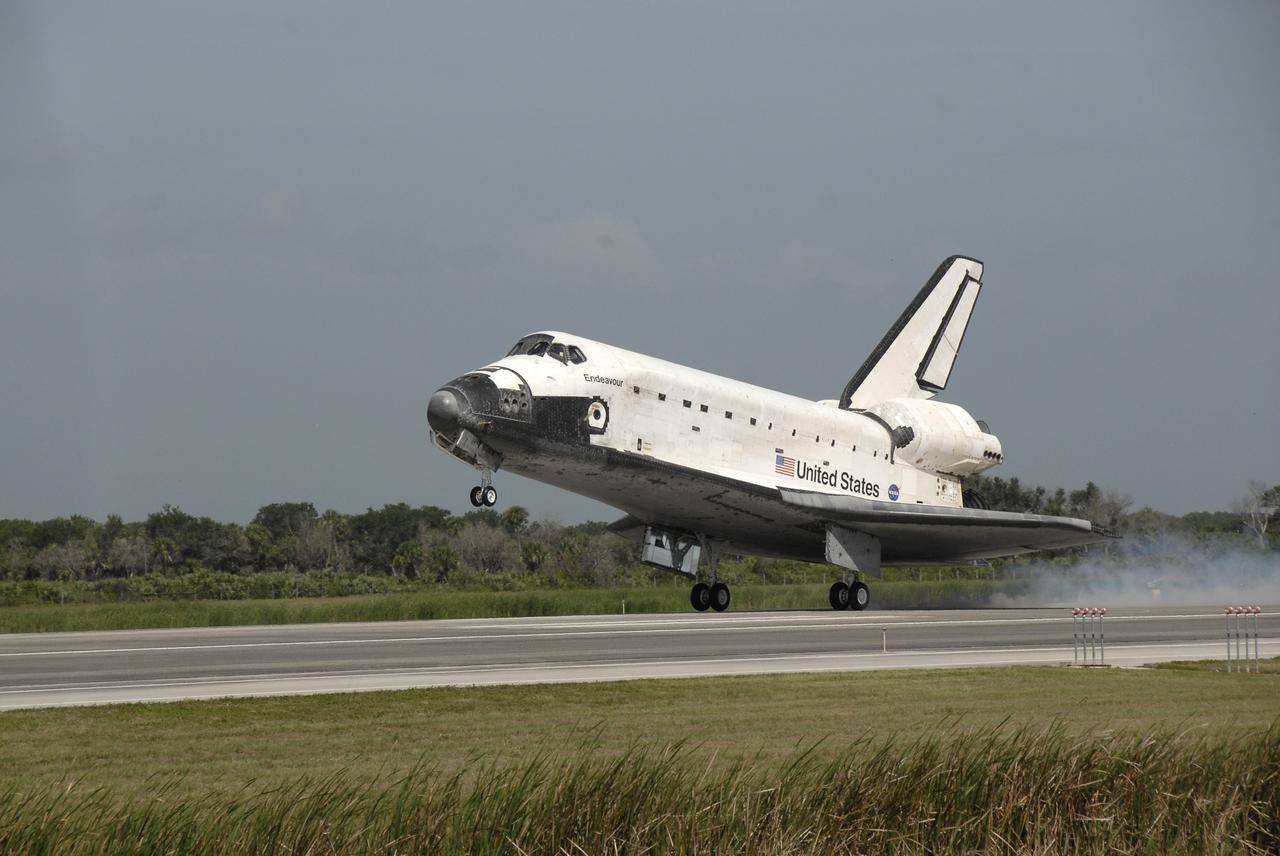
CAPE CANAVERAL, Fla. – Space shuttle Endeavour kicks up dust as it touches down on Runway 15 at NASA's Kennedy Space Center in Florida to complete the 16-day, 6.5-million mile journey on the STS-127 mission to the International Space Station. Endeavour landed on orbit 248. Main gear touchdown was at 10:48:08 a.m. EDT. Nose gear touchdown was at 10:48:21 a.m. and wheels stop was at 10:49:13 a.m. Endeavour delivered the Japanese Experiment Module's Exposed Facility and the Experiment Logistics Module-Exposed Section to the International Space Station. The mission was the 29th flight to the station, the 23rd flight of Endeavour and the 127th in the Space Shuttle Program, as well as the 71st landing at Kennedy. Photo credit: NASA/Kim Shiflett
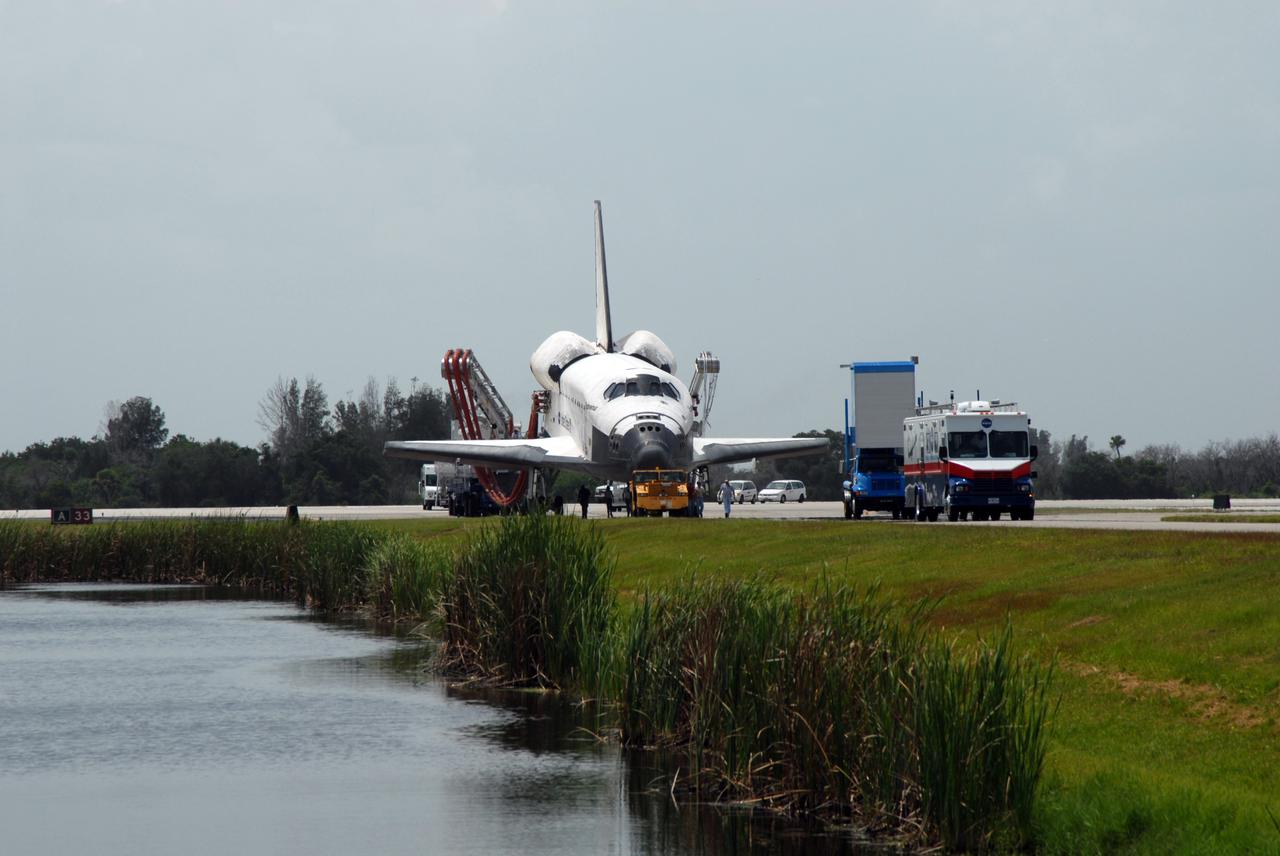
CAPE CANAVERAL, Fla. – At NASA's Kennedy Space Center in Florida, space shuttle Endeavour is towed away from the Shuttle Landing Facility. It is being taken to the Orbiter Processing Facility #2. Endeavour landed at 10:48 a.m. EDT, completing a journey of 6.5-million miles on the STS-127 mission. Towing normally begins within four hours after landing and is completed within six hours unless removal of time-sensitive experiments is required on the runway. In the OPF, turnaround processing procedures on Endeavour will include various post-flight deservicing and maintenance functions, which are carried out in parallel with payload removal and the installation of equipment needed for the next mission. The STS-127 mission was the 29th flight to the station, the 23rd flight of Endeavour and the 71st landing at Kennedy. Photo credit: NASA/Jim Grossmann
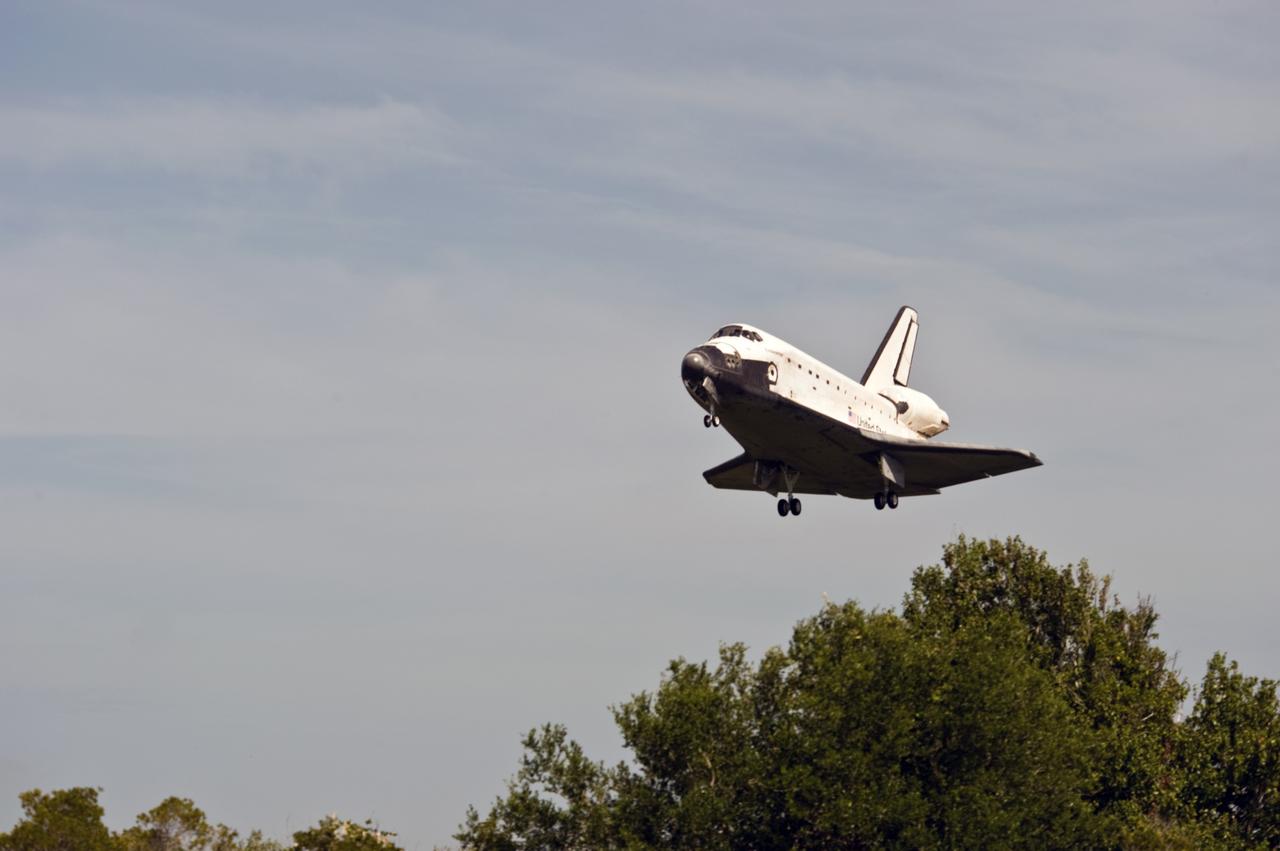
CAPE CANAVERAL, Fla. – Space shuttle Endeavour clears the trees as it heads for a landing on Runway 15 at NASA's Kennedy Space Center in Florida. The landing completes Endeavour's 16-day, 6.5-million mile journey on the STS-127 mission to the International Space Station. Endeavour landed on orbit 248. Main gear touchdown was at 10:48:08 a.m. EDT. Nose gear touchdown was at 10:48:21 a.m. and wheels stop was at 10:49:13 a.m. Endeavour delivered the Japanese Experiment Module's Exposed Facility and the Experiment Logistics Module-Exposed Section to the International Space Station. The mission was the 29th flight to the station, the 23rd flight of Endeavour and the 127th in the Space Shuttle Program, as well as the 71st landing at Kennedy. Photo credit: NASA/Tony Gray
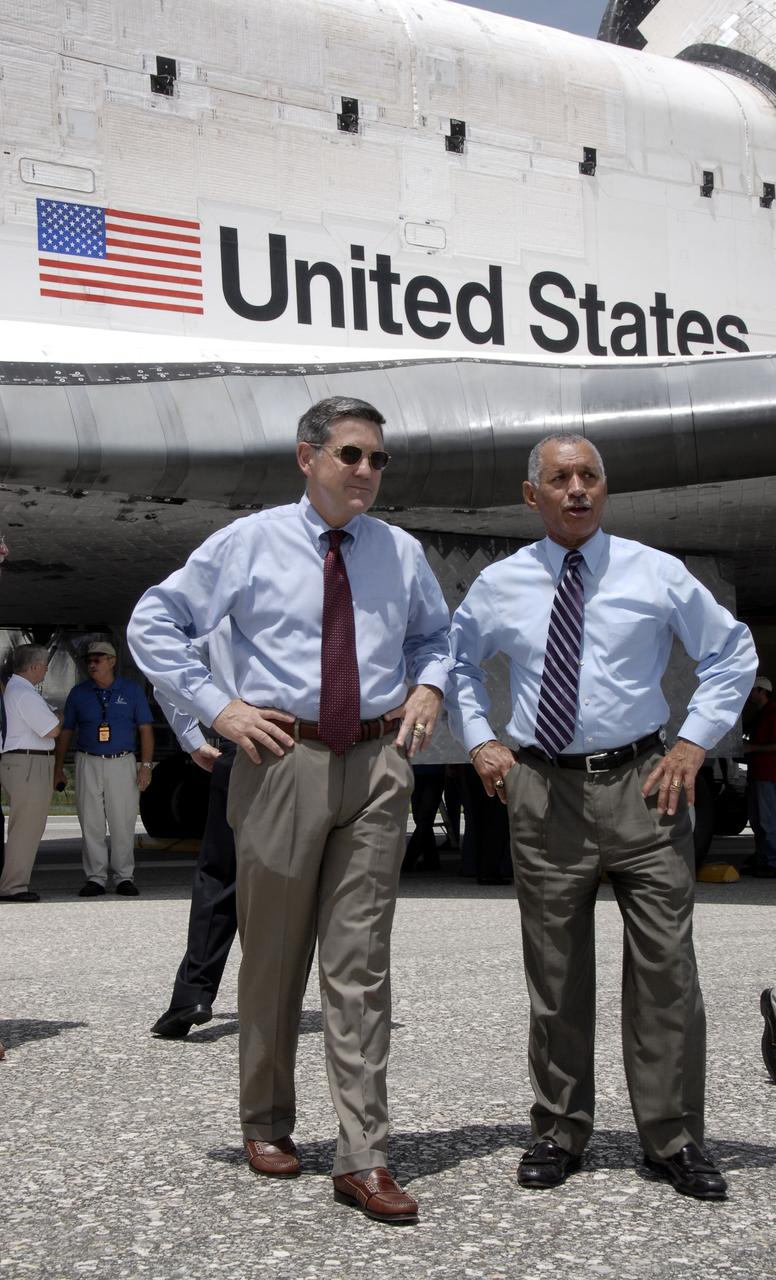
CAPE CANAVERAL, Fla. – At NASA's Kennedy Space Center in Florida, Center Director Bob Cabana (left) and NASA Administrator Charles Bolden wait near space shuttle Endeavour for the STS-127 crew to emerge from the crew transport vehicle. Endeavour's landing completed the 16-day, 6.5-million mile journey on the STS-127 mission to the International Space Station. Main gear touchdown was at 10:48:08 a.m. EDT. Nose gear touchdown was at 10:48:21 a.m. and wheels stop was at 10:49:13 a.m. Endeavour delivered the Japanese Experiment Module's Exposed Facility and the Experiment Logistics Module-Exposed Section to the International Space Station. The mission was the 29th flight to the station, the 23rd flight of Endeavour and the 127th in the Space Shuttle Program, as well as the 71st landing at Kennedy. Photo credit: NASA/Kim Shiflett

CAPE CANAVERAL, Fla. – At NASA's Kennedy Space Center in Florida, space shuttle Endeavour arrives in Orbiter Processing Facility #2. Endeavour landed at 10:48 a.m. EDT, completing a journey of 6.5-million miles on the STS-127 mission. Umbilicals are still attached to purge the vehicle of any possible residual explosive or toxic fumes. Towing normally begins within four hours after landing and is completed within six hours unless removal of time-sensitive experiments is required on the runway. In the OPF, turnaround processing procedures on Endeavour will include various post-flight deservicing and maintenance functions, which are carried out in parallel with payload removal and the installation of equipment needed for the next mission. The STS-127 mission was the 29th flight to the station, the 23rd flight of Endeavour and the 71st landing at Kennedy. Photo credit: NASA/Jim Grossmann
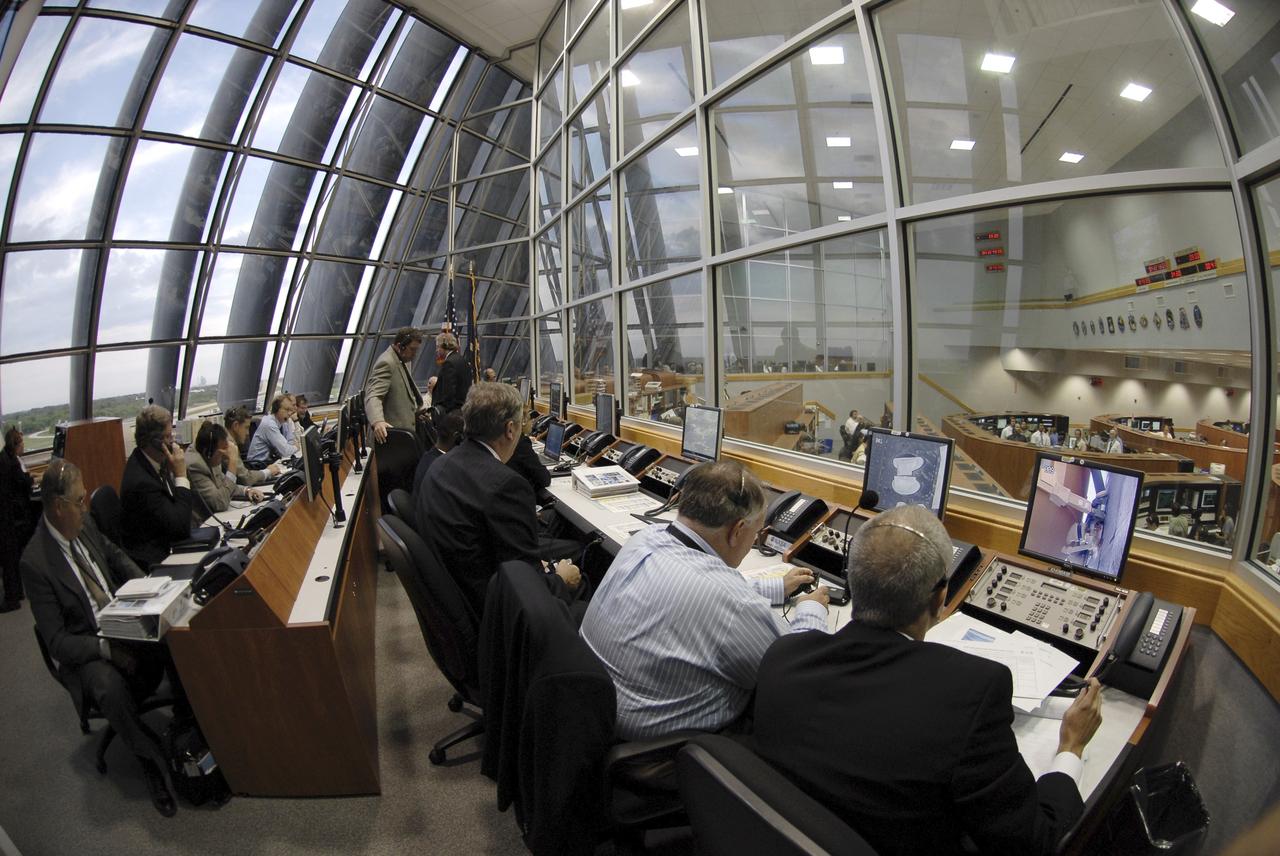
CAPE CANAVERAL, Fla. – At NASA's Kennedy Space Center in Florida, the STS-127 mission team consider the need to postpone the launch of space shuttle Endeavour because of lightning and thunderstorms within the 20-nautical-mile circle around the launch pad. The fifth launch attempt for the STS-127 mission was scrubbed at 6:39 p.m. EDT. The STS-127 launch was rescheduled for July 15 at 6:03 p.m. EDT. Endeavour will deliver the Japanese Experiment Module's Exposed Facility, or JEM-EF, and the Experiment Logistics Module-Exposed Section, or ELM-ES, in the final of three flights dedicated to the assembly of the Japan Aerospace Exploration Agency's Kibo laboratory complex on the International Space Station. STS-127 is the 29th flight for the assembly of the space Photo credit: NASA/Kim Shiflett
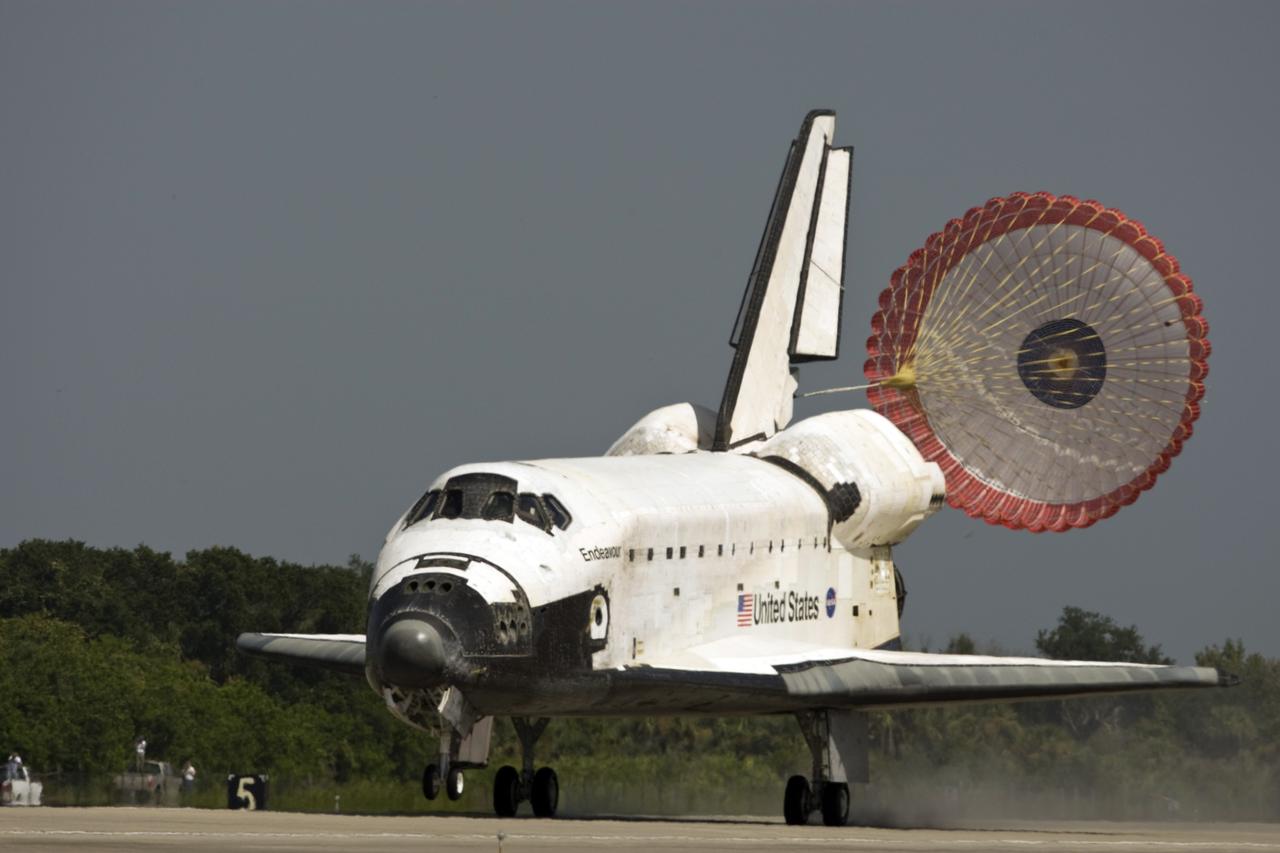
CAPE CANAVERAL, Fla. – The unfurled drogue chute slows space shuttle Endeavour as it lands on Runway 15 at NASA's Kennedy Space Center in Florida to complete the 16-day, 6.5-million mile journey on the STS-127 mission to the International Space Station. Endeavour landed on orbit 248. Main gear touchdown was at 10:48:08 a.m. EDT. Nose gear touchdown was at 10:48:21 a.m. and wheels stop was at 10:49:13 a.m. Endeavour delivered the Japanese Experiment Module's Exposed Facility and the Experiment Logistics Module-Exposed Section to the International Space Station. The mission was the 29th flight to the station, the 23rd flight of Endeavour and the 127th in the Space Shuttle Program, as well as the 71st landing at Kennedy. Photo courtesy of Scott Andrews
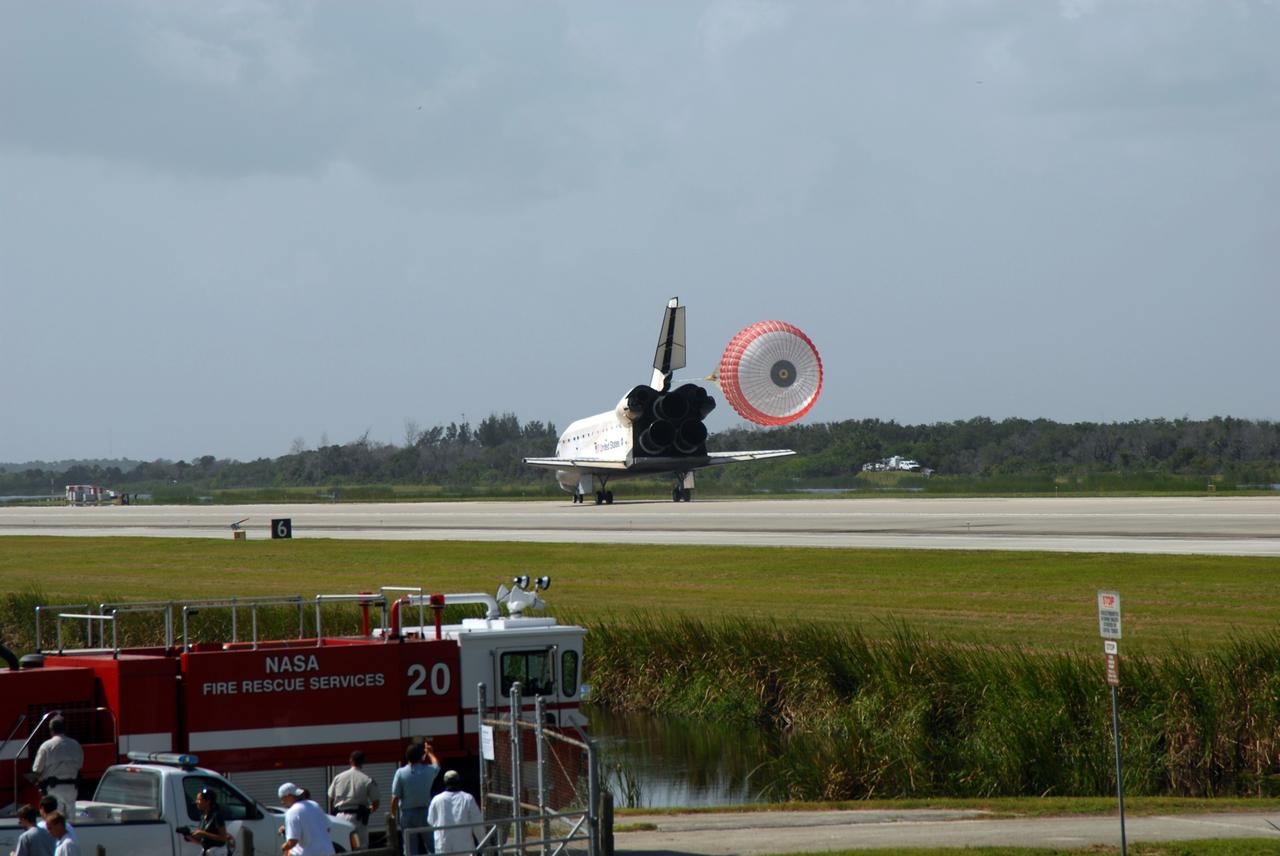
CAPE CANAVERAL, Fla. – The drogue chute slows space shuttle Endeavour on Runway 15 at NASA's Kennedy Space Center in Florida to complete the 16-day, 6.5-million mile journey on the STS-127 mission to the International Space Station. Endeavour landed on orbit 248. Main gear touchdown was at 10:48:08 a.m. EDT. Nose gear touchdown was at 10:48:21 a.m. and wheels stop was at 10:49:13 a.m. Endeavour delivered the Japanese Experiment Module's Exposed Facility and the Experiment Logistics Module-Exposed Section to the International Space Station. The mission was the 29th flight to the station, the 23rd flight of Endeavour and the 127th in the Space Shuttle Program, as well as the 71st landing at Kennedy. Photo credit: NASA/Jim Grossmann

CAPE CANAVERAL, Fla. – At NASA's Kennedy Space Center in Florida, Center Director Bob Cabana (left) listens to STS-127 Shuttle Launch Director Pete Nickolenko (right) about the need to postpone the launch of space shuttle Endeavour because of lightning and thunderstorms within the 20-nautical-mile circle around the launch pad. The fifth launch attempt for the STS-127 mission was scrubbed at 6:39 p.m. EDT. The STS-127 launch was rescheduled for July 15 at 6:03 p.m. EDT. Endeavour will deliver the Japanese Experiment Module's Exposed Facility, or JEM-EF, and the Experiment Logistics Module-Exposed Section, or ELM-ES, in the final of three flights dedicated to the assembly of the Japan Aerospace Exploration Agency's Kibo laboratory complex on the International Space Station. STS-127 is the 29th flight for the assembly of the space Photo credit: NASA/Kim Shiflett
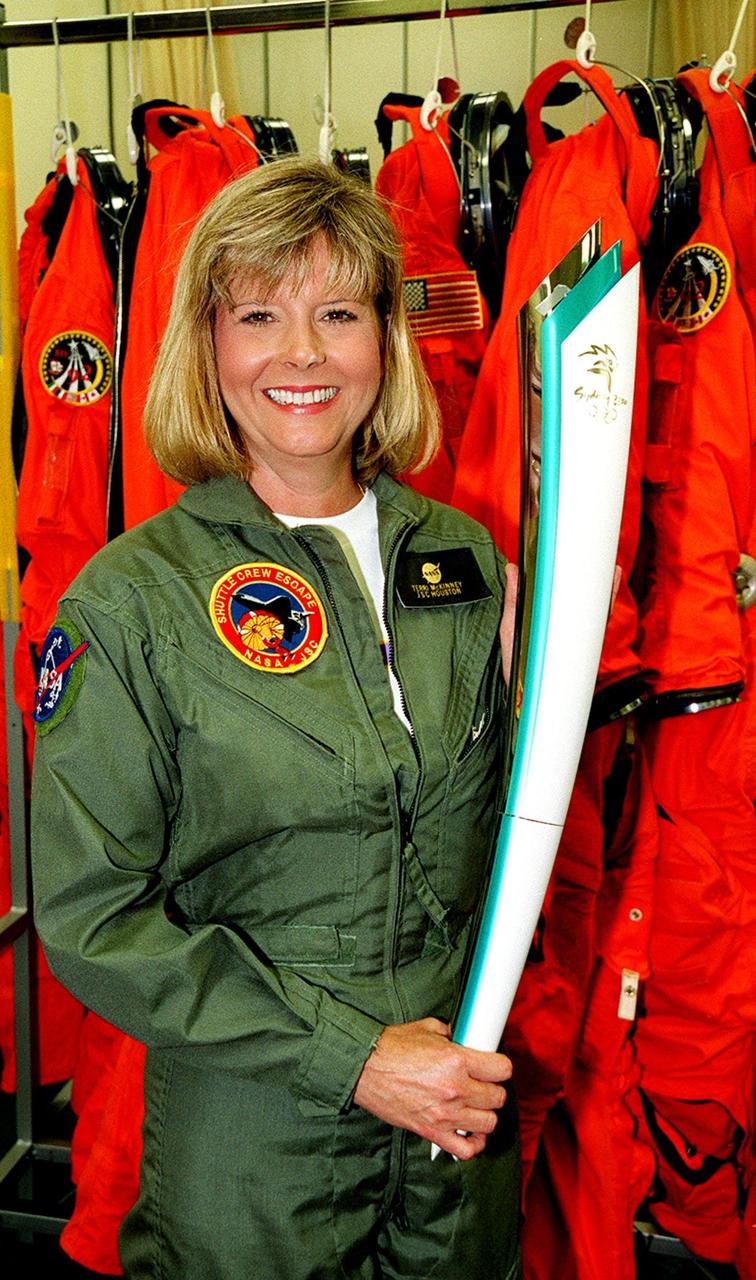
Teri McKinney, with Shuttle Crew Escape, Johnson Space Center, holds a replica of the Olympic torch carried aboard Space Shuttle Atlantis on mission STS-101. The addition of the torch to the payload was coordinated by astronaut Andy Thomas, who is from Australia. The torch will travel to Australia for the 2000 Olympic games being held there in September. . STS-101 was the third flight to the International Space Station and included repairs to the Station plus transfer of equipment and supplies to the Station for future missions. The landing of Atlantis completed a 9-day, 20-hour, 9-minute-long mission. It was the 98th flight in the Space Shuttle program and the 21st for Atlantis. The landing was the 51st at KSC, the 22nd consecutive landing at KSC and the 29th in the last 30 Shuttle flights, plus the 14th nighttime landing in Shuttle history
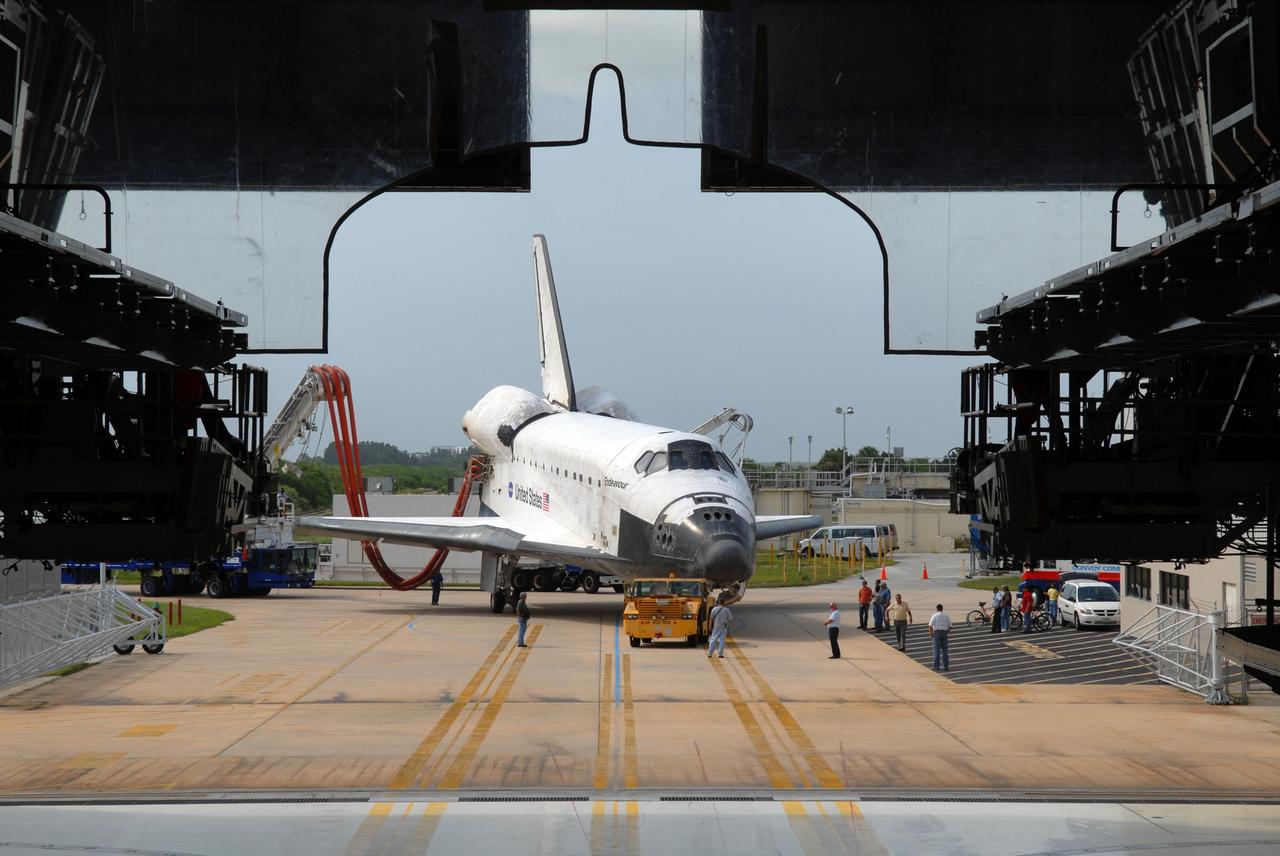
CAPE CANAVERAL, Fla. – At NASA's Kennedy Space Center in Florida, space shuttle Endeavour turns into Orbiter Processing Facility #2. Endeavour landed at 10:48 a.m. EDT, completing a journey of 6.5-million miles on the STS-127 mission. Umbilicals are still attached to purge the vehicle of any possible residual explosive or toxic fumes. Towing normally begins within four hours after landing and is completed within six hours unless removal of time-sensitive experiments is required on the runway. In the OPF, turnaround processing procedures on Endeavour will include various post-flight deservicing and maintenance functions, which are carried out in parallel with payload removal and the installation of equipment needed for the next mission. The STS-127 mission was the 29th flight to the station, the 23rd flight of Endeavour and the 71st landing at Kennedy. Photo credit: NASA/Jim Grossmann
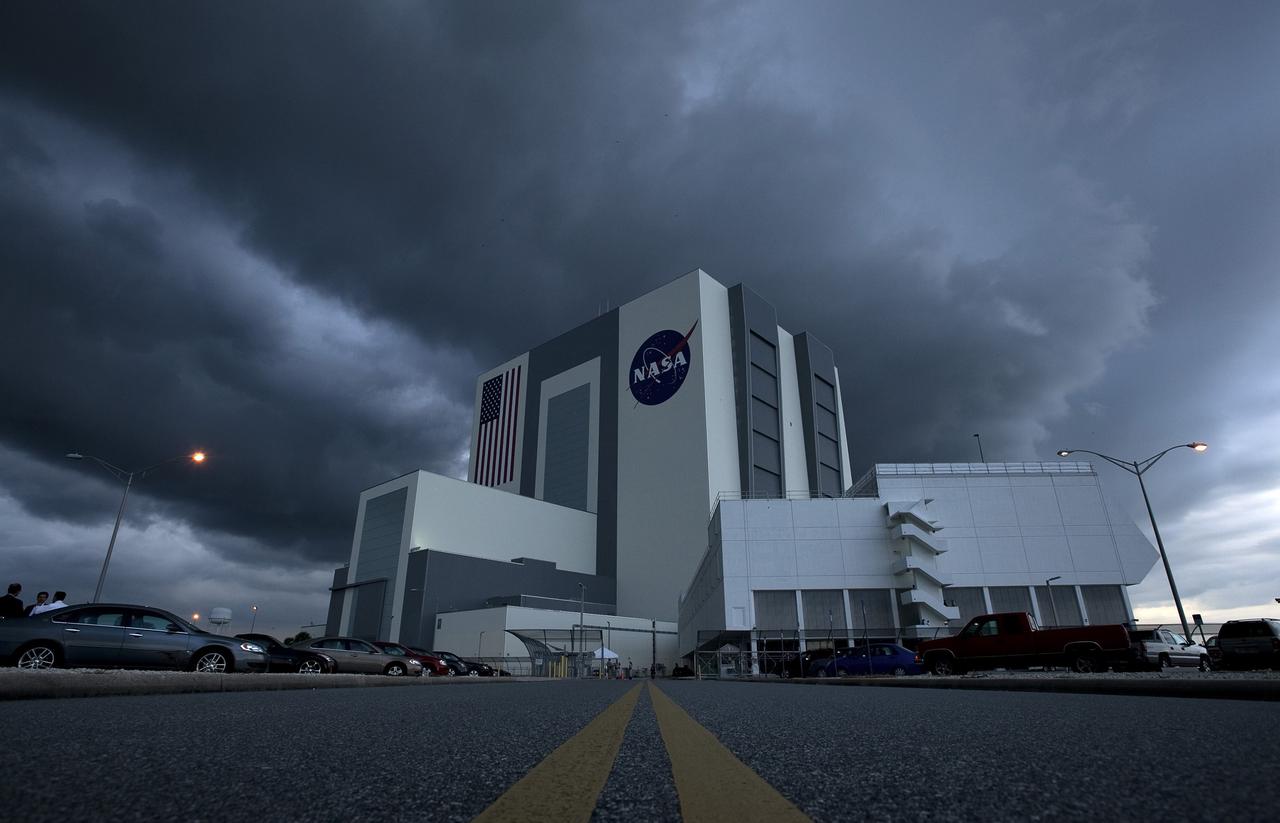
CAPE CANAVERAL, Fla. – Storm clouds roll in over the NASA Vehicle Assembly Building moments after STS-127 Space Shuttle Launch Director Pete Nickolenko and the launch team called the launch a "No Go" due to weather conditions at the NASA Kennedy Space Center in Cape Canaveral, Fla. Endeavour will be launching with the crew of STS-127 on a 16-day mission that will feature five spacewalks and complete construction of the Japan Aerospace Exploration Agency's Kibo laboratory. Endeavour will deliver the Japanese Experiment Module's Exposed Facility, or JEM-EF, and the Experiment Logistics Module-Exposed Section, or ELM-ES, in the final of three flights dedicated to the assembly of the Japan Aerospace Exploration Agency's Kibo laboratory complex on the International Space Station. STS-127 is the 29th flight for the assembly of the space station. Photo credit: NASA/Bill Ingalls
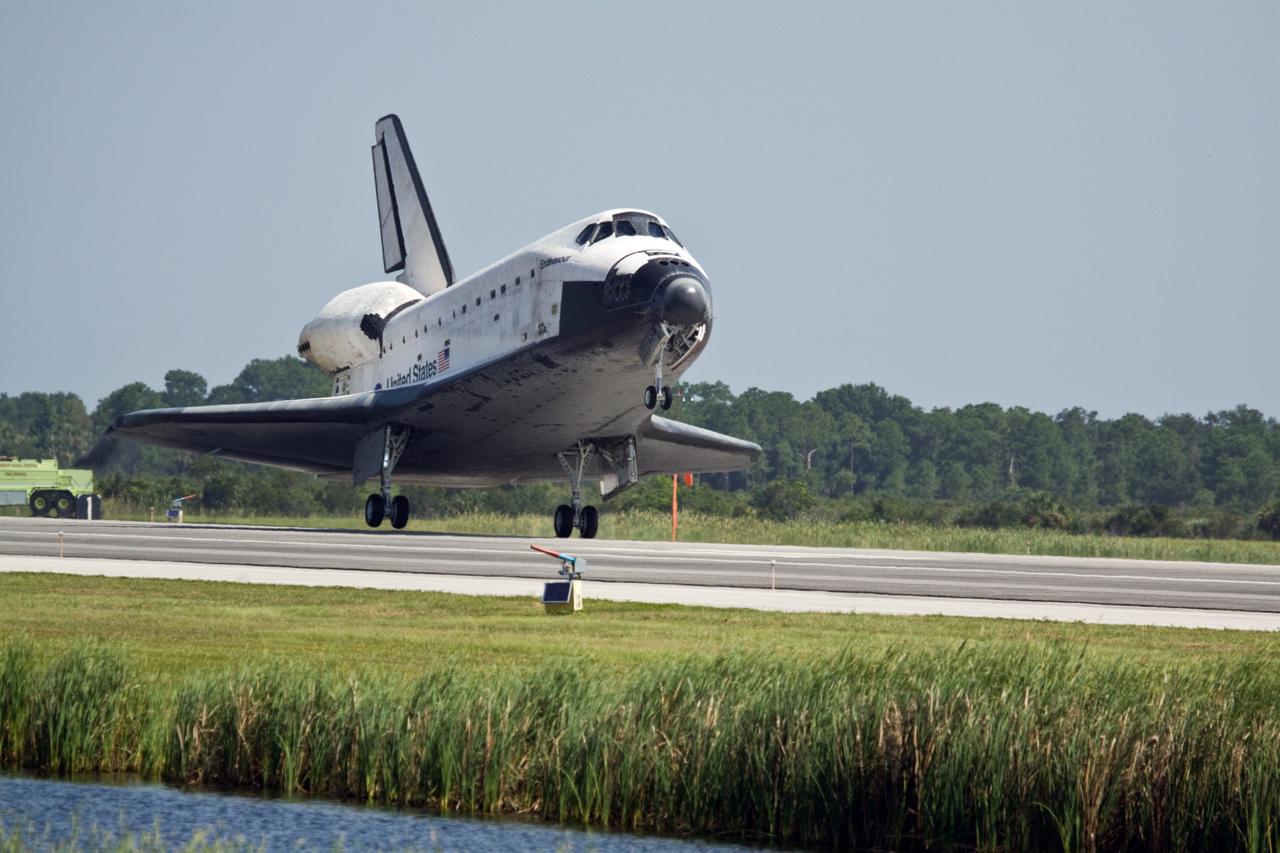
CAPE CANAVERAL, Fla. – Space shuttle Endeavour touches down on Runway 15 at NASA's Kennedy Space Center in Florida to complete the 16-day, 6.5-million mile journey on the STS-127 mission to the International Space Station. Endeavour landed on orbit 248. Main gear touchdown was at 10:48:08 a.m. EDT. Nose gear touchdown was at 10:48:21 a.m. and wheels stop was at 10:49:13 a.m. Endeavour delivered the Japanese Experiment Module's Exposed Facility and the Experiment Logistics Module-Exposed Section to the International Space Station. The mission was the 29th flight to the station, the 23rd flight of Endeavour and the 127th in the Space Shuttle Program, as well as the 71st landing at Kennedy. Photo credit: NASA/Kenny Allen

A SpaceX Falcon 9 rocket soars upward after its liftoff from Launch Complex 39A at NASA’s Kennedy Space Center in Florida on Thursday, Nov. 9, 2023, on the company’s 29th Commercial Resupply Services mission for the agency to the International Space Station. The Dragon spacecraft will deliver scientific research, technology demonstrations, crew supplies, and hardware to the space station to support its Expedition 70 crew, including NASA’s Integrated Laser Communications Relay Demonstration Low Earth Orbit User Modem and Amplifier Terminal (ILLUMA-T) and Atmospheric Waves Experiment (AWE). The spacecraft is expected to spend about a month attached to the orbiting outpost before it returns to Earth with research and return cargo, splashing down off the coast of Florida.

The SpaceX Falcon 9 rocket carrying the Dragon spacecraft lifts off from Launch Complex 39A at NASA’s Kennedy Space Center in Florida on Thursday, Nov. 9, 2023, on the company’s 29th commercial resupply services mission for the agency to the International Space Station. Liftoff was at 8:28 p.m. EST. Dragon will deliver scientific research, technology demonstrations, crew supplies, and hardware to the space station to support its Expedition 70 crew, including NASA’s Integrated Laser Communications Relay Demonstration Low Earth Orbit User Modem and Amplifier Terminal (ILLUMA-T) and Atmospheric Waves Experiment (AWE). The spacecraft is expected to spend about a month attached to the orbiting outpost before it returns to Earth with research and return cargo, splashing down off the coast of Florida.
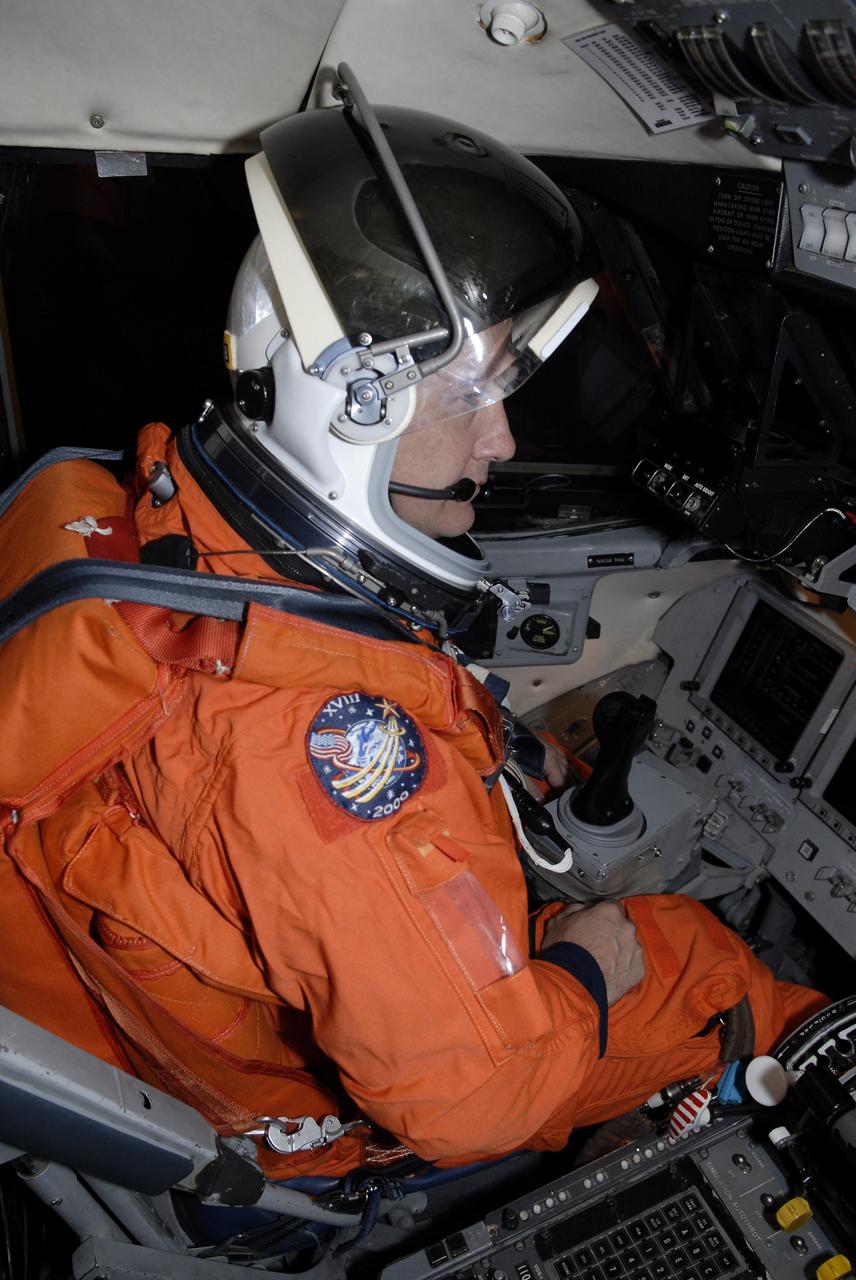
CAPE CANAVERAL, Fla. – On the Shuttle Landing Facility at NASA's Kennedy Space Center in Florida, STS-127 Pilot Doug Hurley is wearing his complete launch-and-entry suit in the cockpit of the Shuttle Training Aircraft. He is preparing to practice shuttle landings in preparation for launch of space shuttle Endeavour on the STS-127 mission, targeted for June 13. The STA is a Grumman American Aviation-built Gulf Stream II jet that was modified to simulate a shuttle’s cockpit, motion and visual cues, and handling qualities. The crew is at Kennedy for a launch dress rehearsal called the terminal countdown demonstration test, or TCDT, which includes emergency egress training and equipment familiarization. The STS-127 mission is the final of three flights dedicated to the assembly of the Japanese Kibo laboratory complex on the International Space Station. It is the 127th shuttle flight and the 29th in the assembly of the space station. Photo credit: NASA/Kim Shiflett
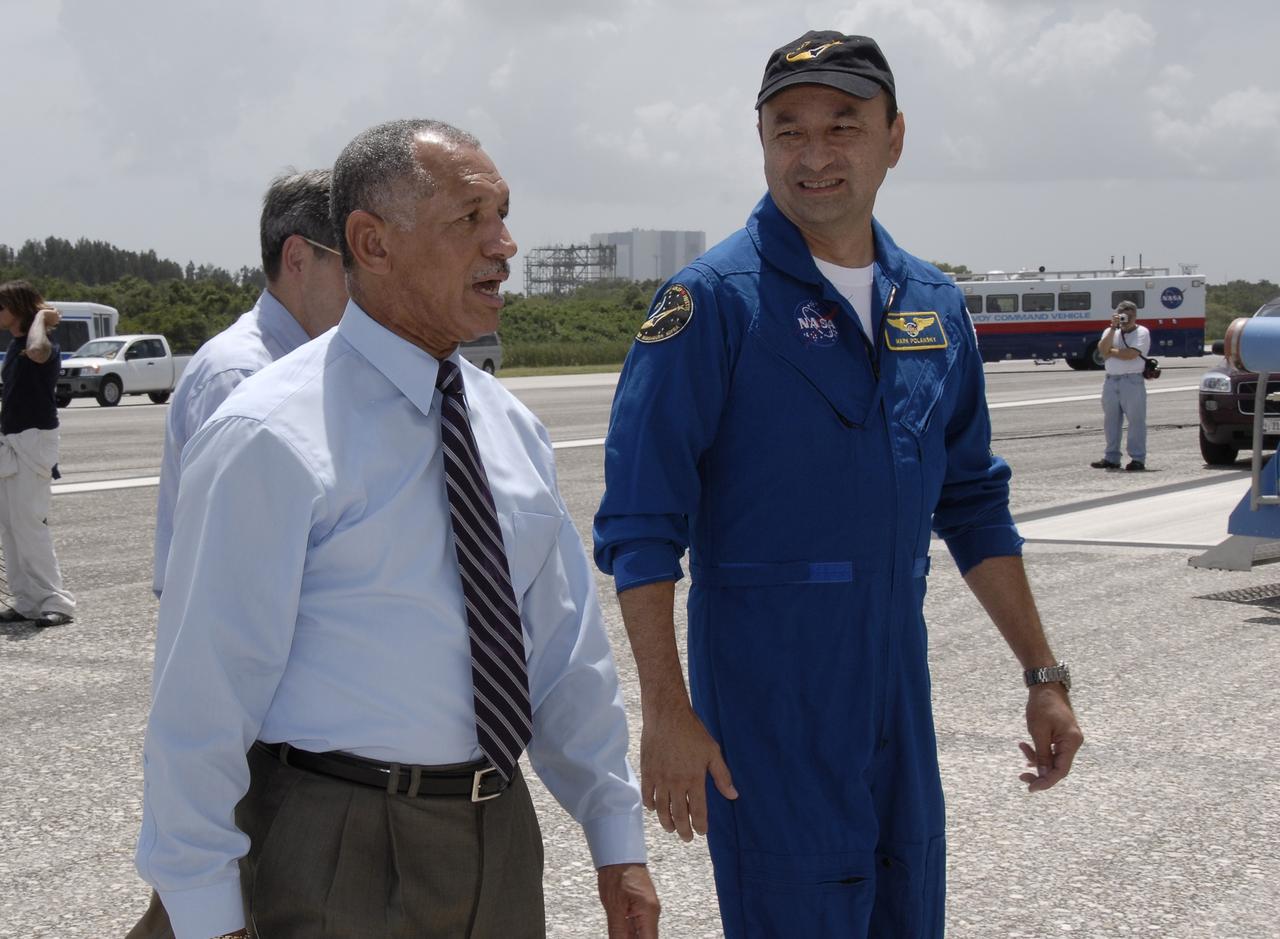
CAPE CANAVERAL, Fla. – At NASA's Kennedy Space Center in Florida, NASA Administrator Charles Bolden walks with STS-127 Commander Mark Polansky after space shuttle Endeavour's landing that completed the 16-day, 6.5-million mile journey on the STS-127 mission to the International Space Station. Behind Bolden is Center Director Bob Cabana. Main gear touchdown was at 10:48:08 a.m. EDT. Nose gear touchdown was at 10:48:21 a.m. and wheels stop was at 10:49:13 a.m. Endeavour delivered the Japanese Experiment Module's Exposed Facility and the Experiment Logistics Module-Exposed Section to the International Space Station. The mission was the 29th flight to the station, the 23rd flight of Endeavour and the 127th in the Space Shuttle Program, as well as the 71st landing at Kennedy. Photo credit: NASA/Kim Shiflett

CAPE CANAVERAL, Fla. – On Launch Pad 39A at NASA's Kennedy Space Center in Florida, technicians in the control booth (lower left) begin to roll away the rotating service structure, or RSS, from space shuttle Endeavour. First motion was at 11:00 p.m. EDT. The rollback is in preparation for Endeavour's liftoff on the STS-127 mission with a crew of seven. This is the third launch attempt for the STS-127 mission. The first two attempts on June 13 and June 17 were scrubbed when a hydrogen gas leak occurred during tanking due to a misaligned Ground Umbilical Carrier Plate. Endeavour will deliver the Japanese Experiment Module's Exposed Facility, or JEM-EF, and the Experiment Logistics Module-Exposed Section, or ELM-ES, in the final of three flights dedicated to the assembly of the Japan Aerospace Exploration Agency's Kibo laboratory complex on the International Space Station. STS-127 is the 29th flight for the assembly of the space station. Photo credit: NASA/Jack Pfaller
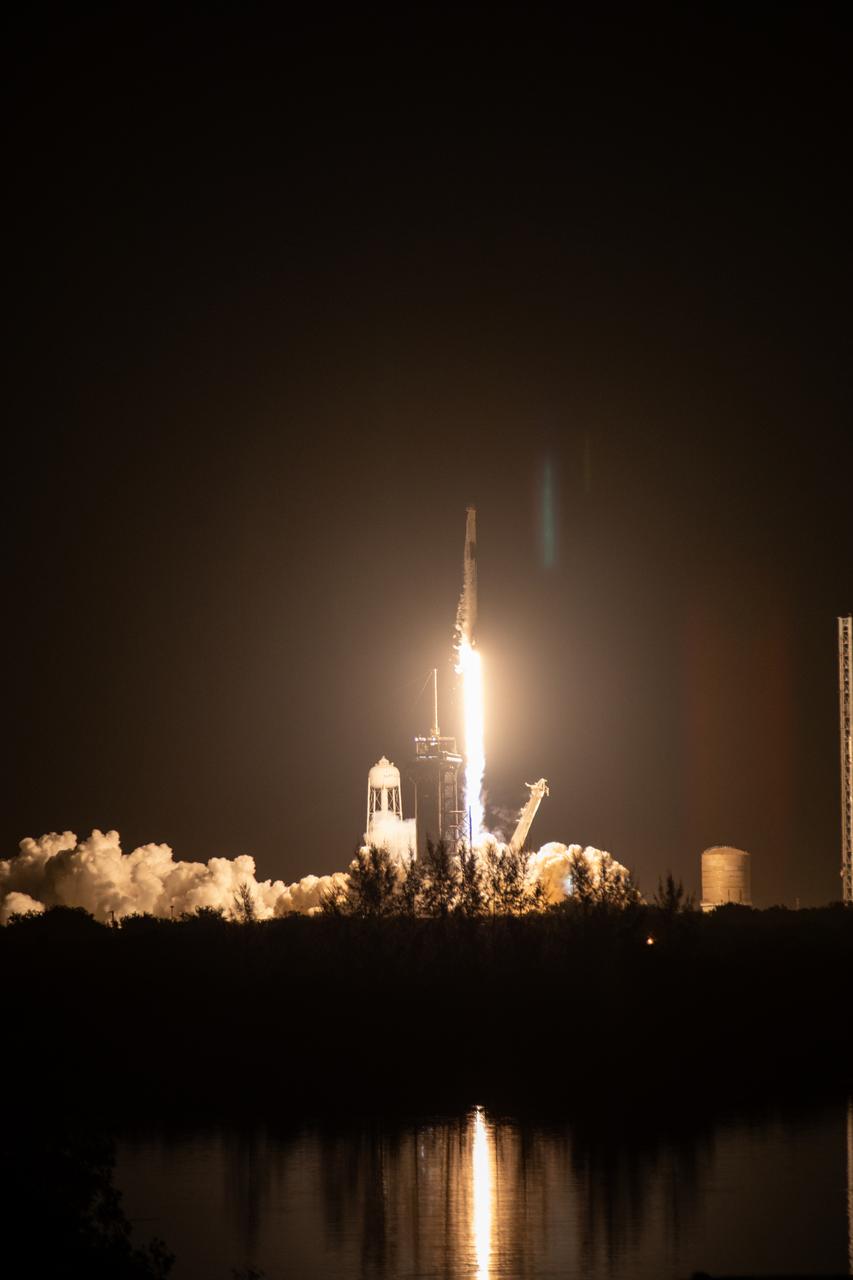
The SpaceX Falcon 9 rocket carrying the Dragon spacecraft lifts off from Launch Complex 39A at NASA’s Kennedy Space Center in Florida on Thursday, Nov. 9, 2023, on the company’s 29th commercial resupply services mission for the agency to the International Space Station. Liftoff was at 8:28 p.m. EST. Dragon will deliver scientific research, technology demonstrations, crew supplies, and hardware to the space station to support its Expedition 70 crew, including NASA’s Integrated Laser Communications Relay Demonstration Low Earth Orbit User Modem and Amplifier Terminal (ILLUMA-T) and Atmospheric Waves Experiment (AWE). The spacecraft is expected to spend about a month attached to the orbiting outpost before it returns to Earth with research and return cargo, splashing down off the coast of Florida.
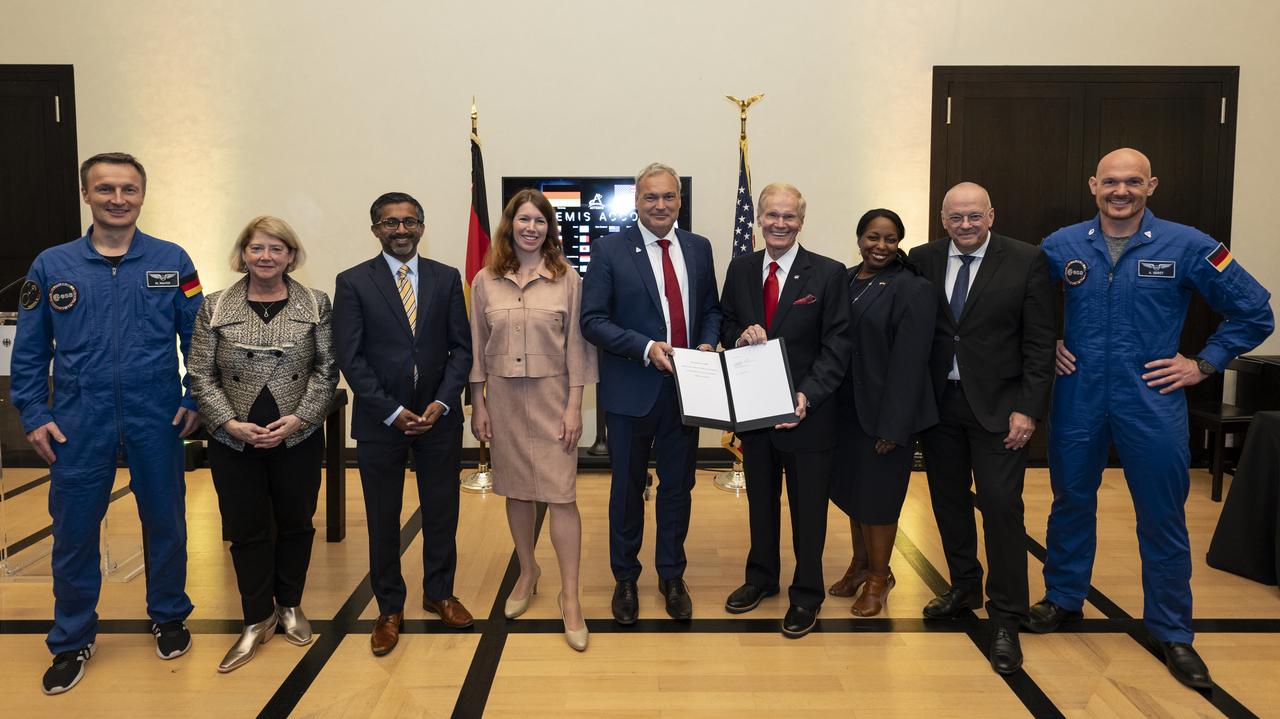
From left to right, ESA (European Space Agency) astronaut Matthias Maurer, NASA Deputy Administrator Pam Melroy, National Space Council (NSpC) Executive Secretary Chirag Parikh, Federal Government Coordinator of German Aerospace Policy Anna Christmann, NASA Administrator Bill Nelson, Director General of the German Space Agency at the German Aerospace Center (DLR) Walther Pelzer, Acting Assistant Secretary of State for Oceans and International Environmental and Scientific Affairs Jennifer R. Littlejohn, German Ambassador to the United States Andreas Michaelis, and ESA astronaut Alexander Gerst pose for a group photo during an Artemis Accords signing ceremony, Thursday, September 14, 2023, at the German Ambassador’s Residence in Washington. Germany is the 29th country to sign the Artemis Accords, which establish a practical set of principles to guide space exploration cooperation among nations participating in NASA’s Artemis program. Photo Credit: (NASA/Keegan Barber)
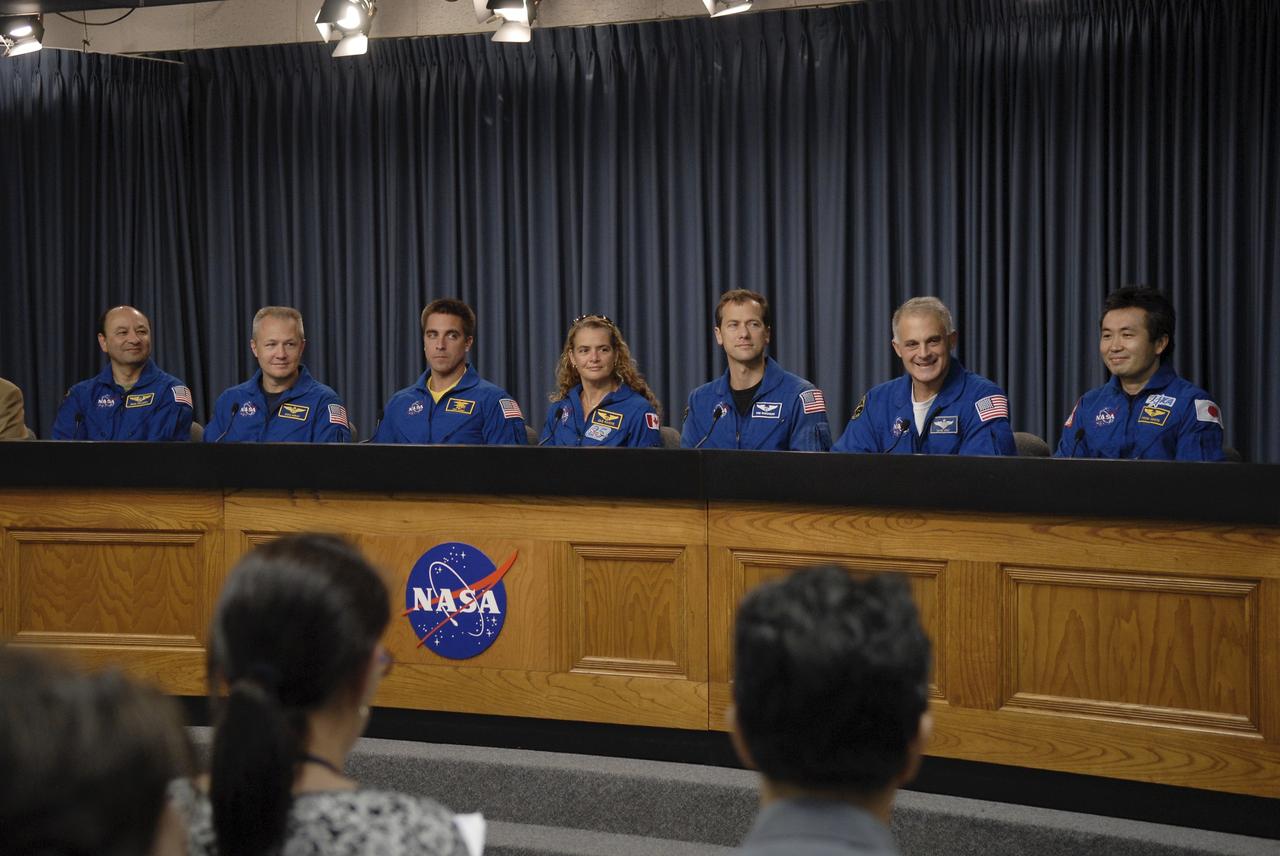
CAPE CANAVERAL, Fla. – At NASA's Kennedy Space Center in Florida, the STS-127 crew members take part in a news conference following their return to Earth on space shuttle Endeavour after the 16-day mission to the International Space Station. From left are Commander Mark Polansky, Pilot Doug Hurley, Mission Specialists Christopher Cassidy, Canadian Space Agency astronaut Julie Payette, Tom Marshburn and Dave Wolf, and Japan Aerospace Exploration Agency astronaut Koichi Wakata, who spent four months on the space station and returned on Endeavour. Endeavour delivered the Japanese Experiment Module's Exposed Facility and the Experiment Logistics Module-Exposed Section to the International Space Station. The mission was the 29th flight to the station, the 23rd flight of Endeavour and the 127th in the Space Shuttle Program, as well as the 71st landing at Kennedy. Photo credit: NASA/Kim Shiflett
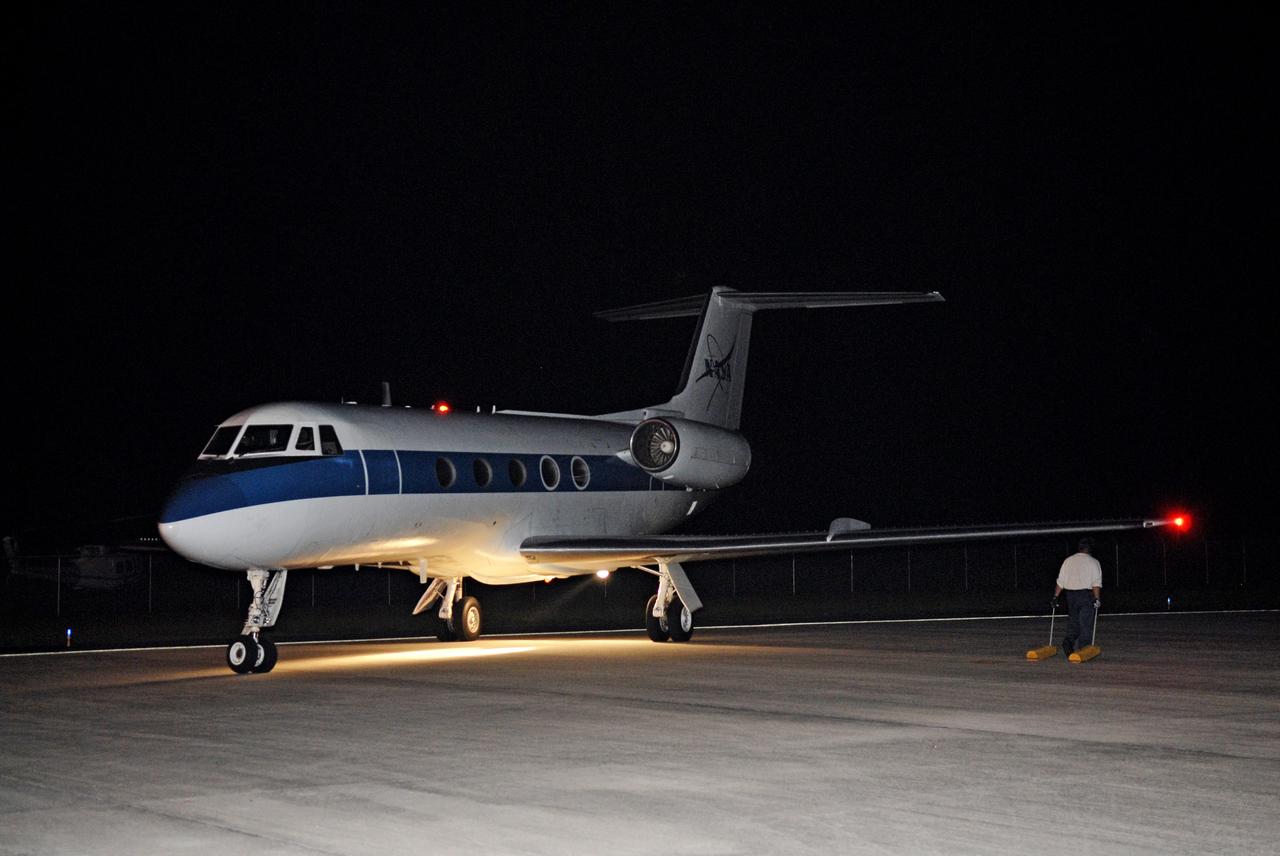
CAPE CANAVERAL, Fla. – A Shuttle Training Aircraft returns to the Shuttle Landing Facility at NASA's Kennedy Space Center in Florida. STS-127 Commander Mark Polansky and Pilot Doug Hurley have been practicing shuttle landings in preparation for launch of space shuttle Endeavour on the STS-127 mission, targeted for June 13. The STA is a Grumman American Aviation-built Gulf Stream II jet that was modified to simulate a shuttle’s cockpit, motion and visual cues, and handling qualities. The crew is at Kennedy for a launch dress rehearsal called the terminal countdown demonstration test, or TCDT, which includes emergency egress training and equipment familiarization. The STS-127 mission is the final of three flights dedicated to the assembly of the Japanese Kibo laboratory complex on the International Space Station. It is the 127th shuttle flight and the 29th in the assembly of the space station. Photo credit: NASA/Kim Shiflett
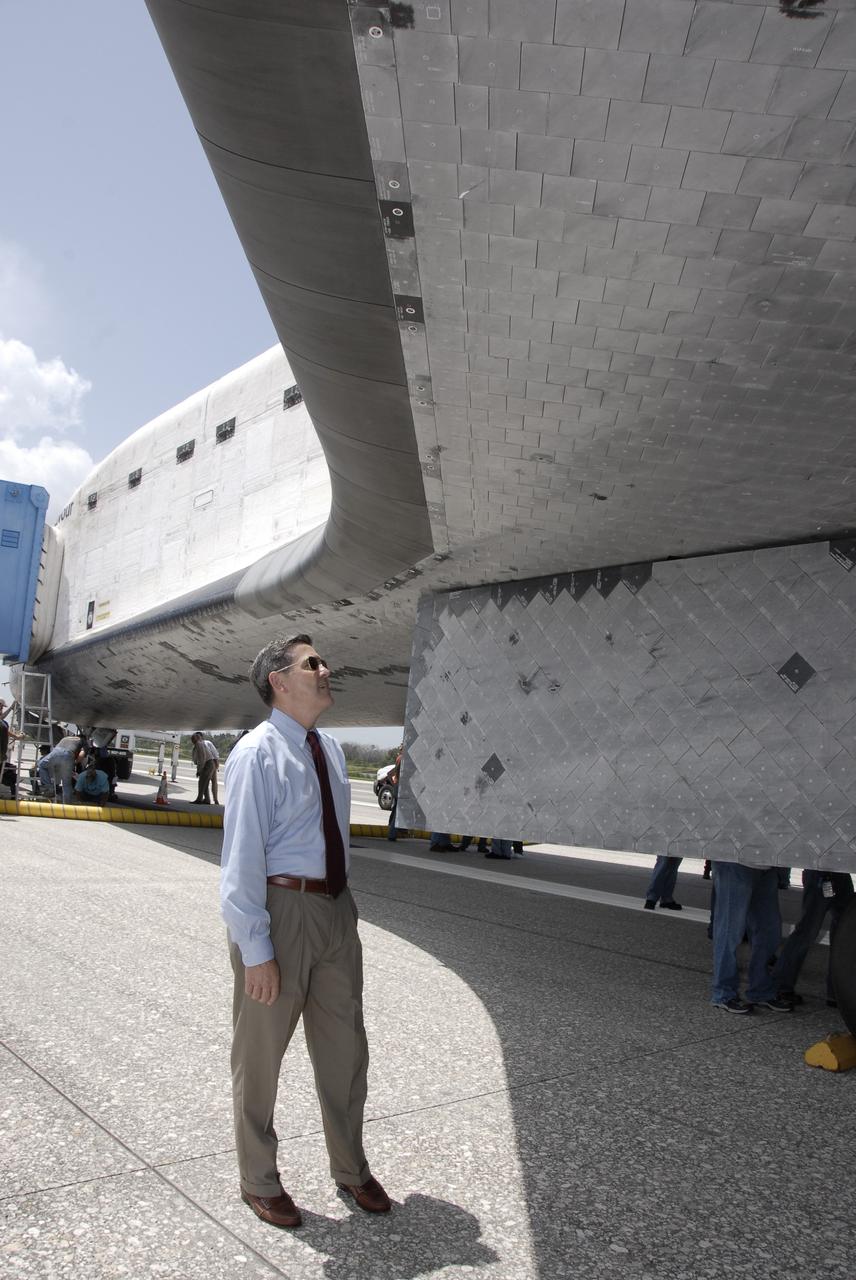
CAPE CANAVERAL, Fla. – At NASA's Kennedy Space Center in Florida, Center Director Bob Cabana takes a close look at the tiles beneath space shuttle Endeavour after its landing that completed the 16-day, 6.5-million mile journey on the STS-127 mission to the International Space Station. Main gear touchdown was at 10:48:08 a.m. EDT. Nose gear touchdown was at 10:48:21 a.m. and wheels stop was at 10:49:13 a.m. Endeavour delivered the Japanese Experiment Module's Exposed Facility and the Experiment Logistics Module-Exposed Section to the International Space Station. The mission was the 29th flight to the station, the 23rd flight of Endeavour and the 127th in the Space Shuttle Program, as well as the 71st landing at Kennedy. Photo credit: NASA/Kim Shiflett
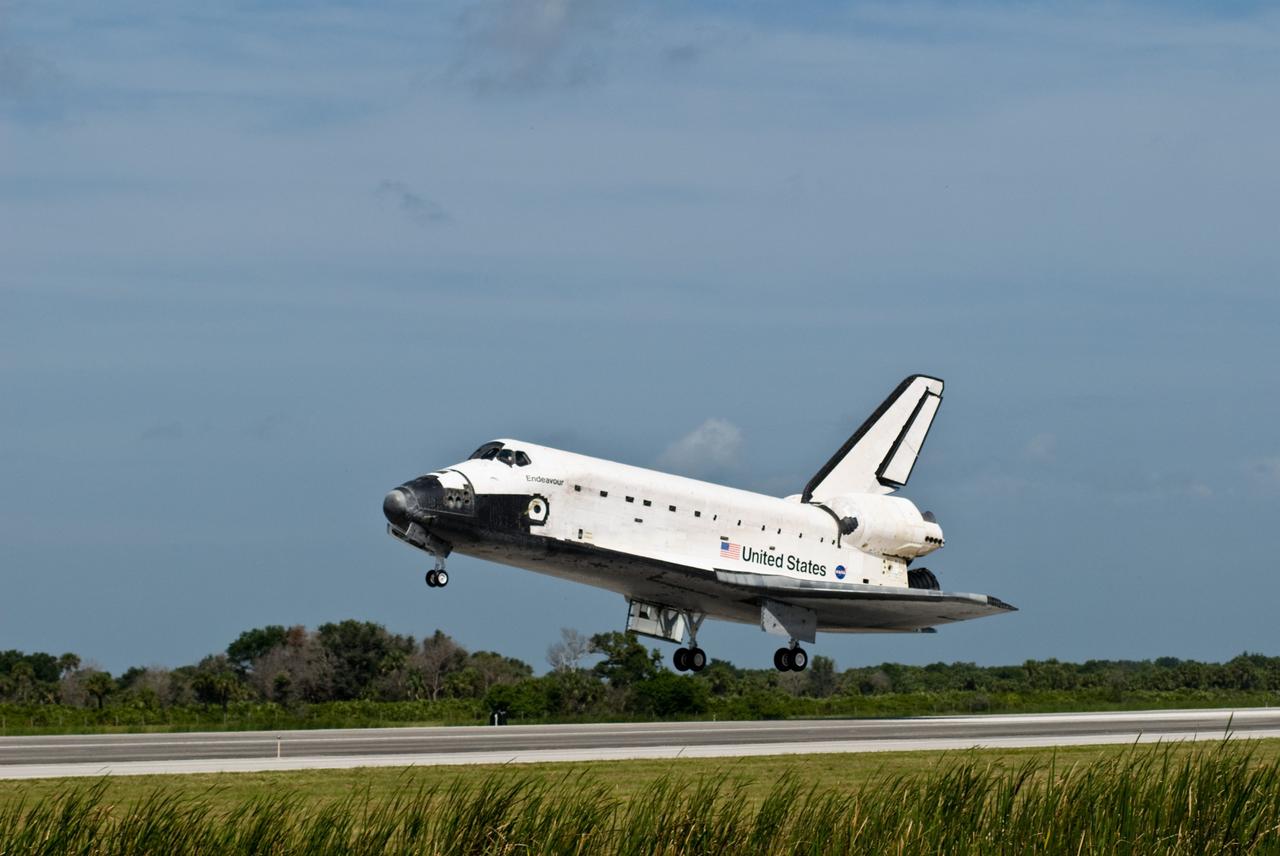
CAPE CANAVERAL, Fla. – With landing gear down, space shuttle Endeavour approaches landing on Runway 15 at NASA's Kennedy Space Center in Florida to complete the 16-day, 6.5-million mile journey on the STS-127 mission to the International Space Station. Endeavour landed on orbit 248. Main gear touchdown was at 10:48:08 a.m. EDT. Nose gear touchdown was at 10:48:21 a.m. and wheels stop was at 10:49:13 a.m. Endeavour delivered the Japanese Experiment Module's Exposed Facility and the Experiment Logistics Module-Exposed Section to the International Space Station. The mission was the 29th flight to the station, the 23rd flight of Endeavour and the 127th in the Space Shuttle Program, as well as the 71st landing at Kennedy. Photo credit: NASA/Linda Perry
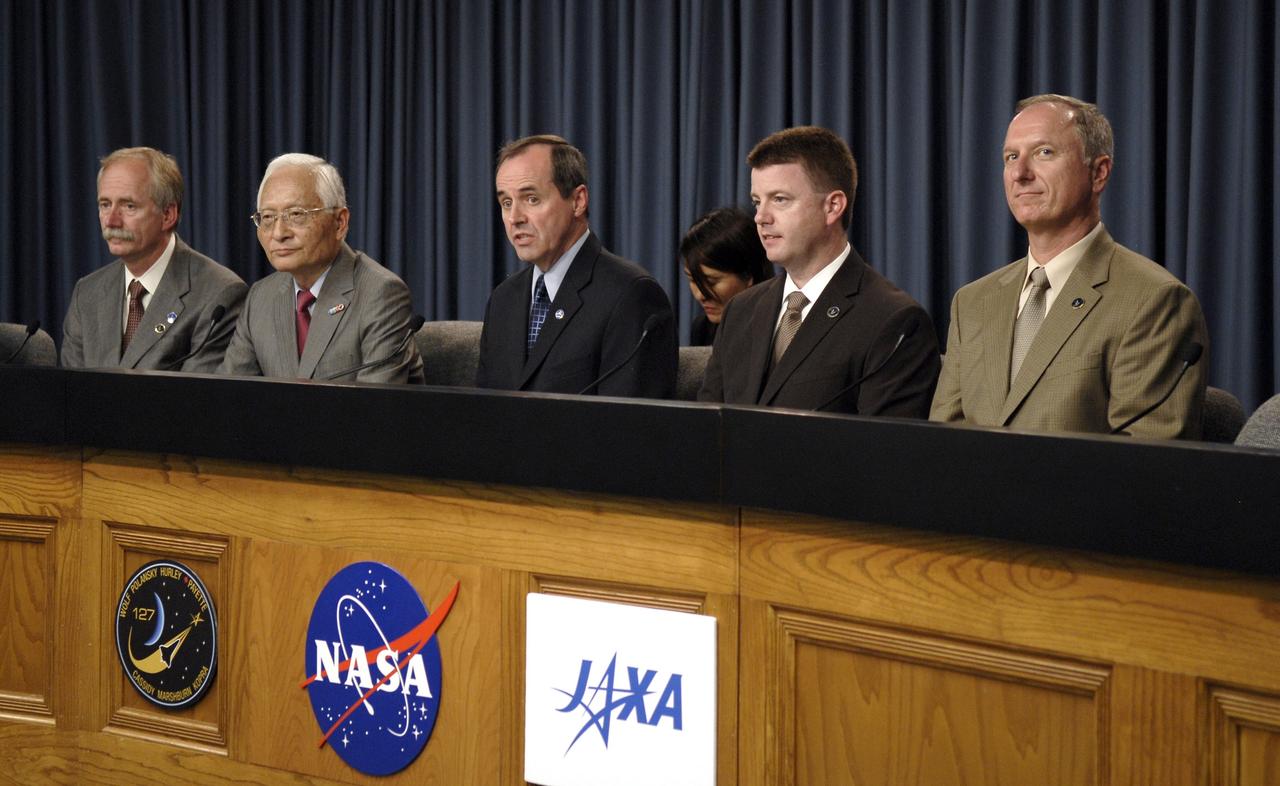
CAPE CANAVERAL, Fla. – At a post-landing news conference at NASA's Kennedy Space Center in Florida, NASA Associate Administrator for Space Operations William Gerstenmaier, President of the Japan Aerospace Exploration Agency Keiji Tachikawa, Director General of Operations in the Canadian Space Agency Benoit Marcotte, space shuttle Launch Integration Manager Mike Moses and STS-127 Launch Director Pete Nickolenko comment about the STS-127 mission and space shuttle Endeavour's return to Earth at 10:48 a.m. EDT. Endeavour delivered the Japanese Experiment Module's Exposed Facility and the Experiment Logistics Module-Exposed Section to the International Space Station. The mission was the 29th flight to the station, the 23rd flight of Endeavour and the 127th in the Space Shuttle Program, as well as the 71st landing at Kennedy. Photo credit: NASA/Kim Shiflett
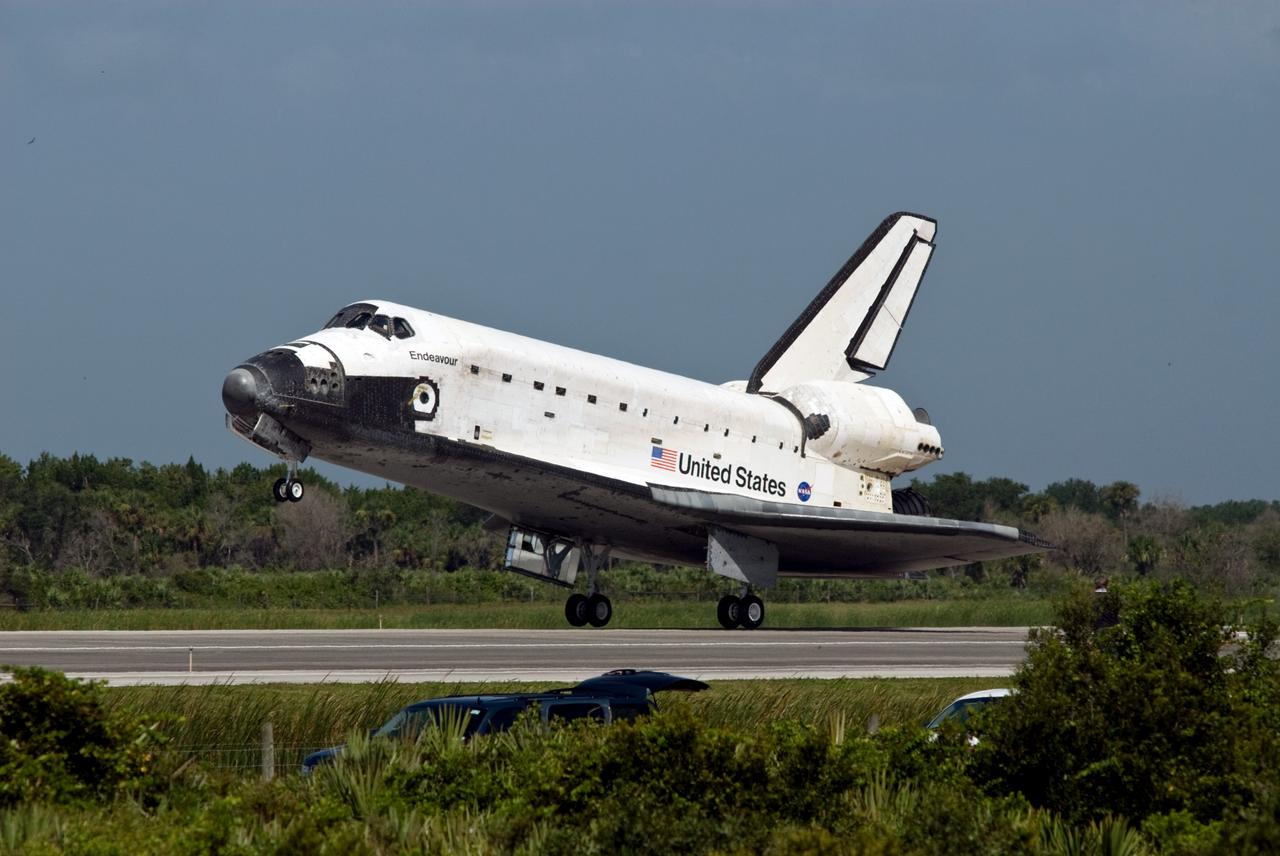
CAPE CANAVERAL, Fla. – Space Space shuttle Endeavour touches down on Runway 15 at NASA's Kennedy Space Center in Florida to complete the 16-day, 6.5-million mile journey on the STS-127 mission to the International Space Station. Endeavour landed on orbit 248. Main gear touchdown was at 10:48:08 a.m. EDT. Nose gear touchdown was at 10:48:21 a.m. and wheels stop was at 10:49:13 a.m. Endeavour delivered the Japanese Experiment Module's Exposed Facility and the Experiment Logistics Module-Exposed Section to the International Space Station. The mission was the 29th flight to the station, the 23rd flight of Endeavour and the 127th in the Space Shuttle Program, as well as the 71st landing at Kennedy. Photo credit: NASA/Kevin O'Connell
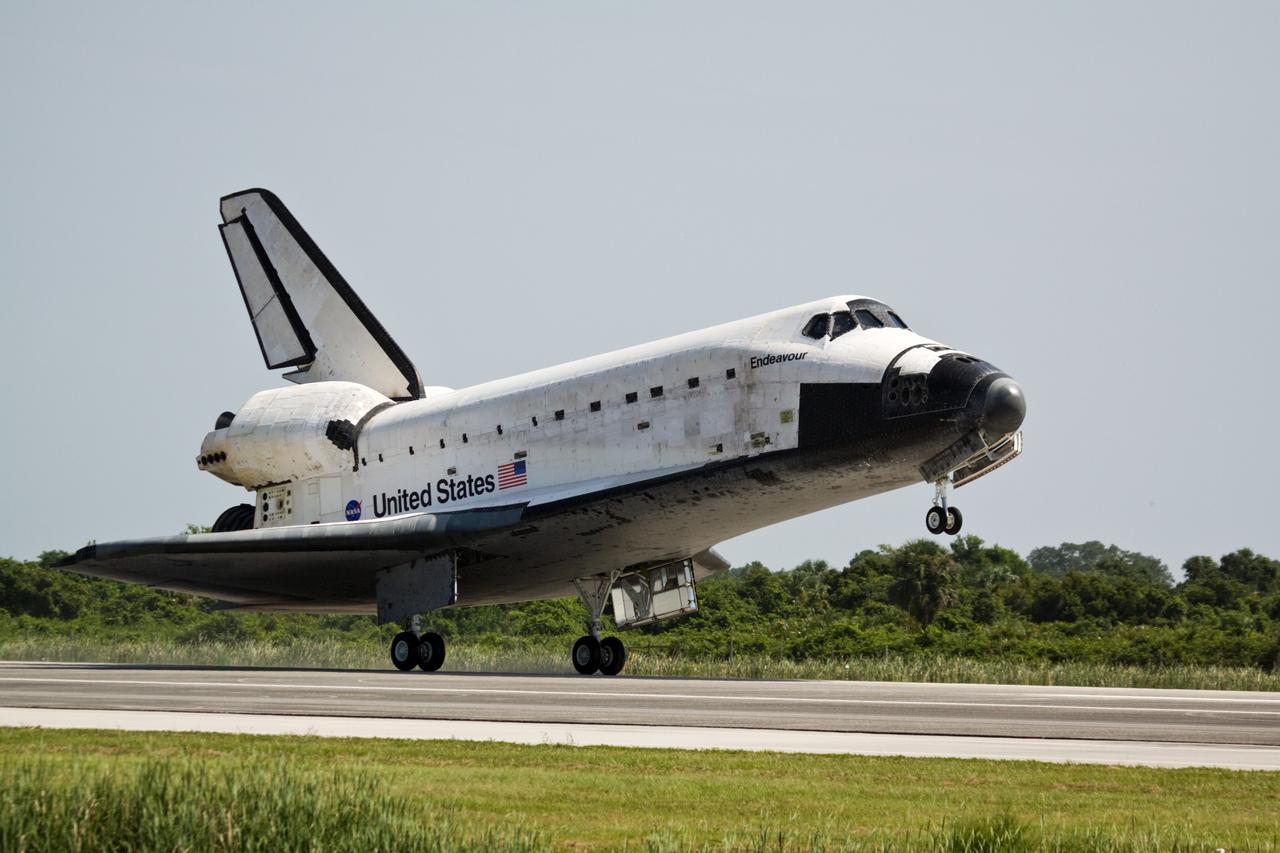
CAPE CANAVERAL, Fla. – Space shuttle Endeavour touches down on Runway 15 at NASA's Kennedy Space Center in Florida to complete the 16-day, 6.5-million mile journey on the STS-127 mission to the International Space Station. Endeavour landed on orbit 248. Main gear touchdown was at 10:48:08 a.m. EDT. Nose gear touchdown was at 10:48:21 a.m. and wheels stop was at 10:49:13 a.m. Endeavour delivered the Japanese Experiment Module's Exposed Facility and the Experiment Logistics Module-Exposed Section to the International Space Station. The mission was the 29th flight to the station, the 23rd flight of Endeavour and the 127th in the Space Shuttle Program, as well as the 71st landing at Kennedy. Photo credit: NASA/Kenny Allen