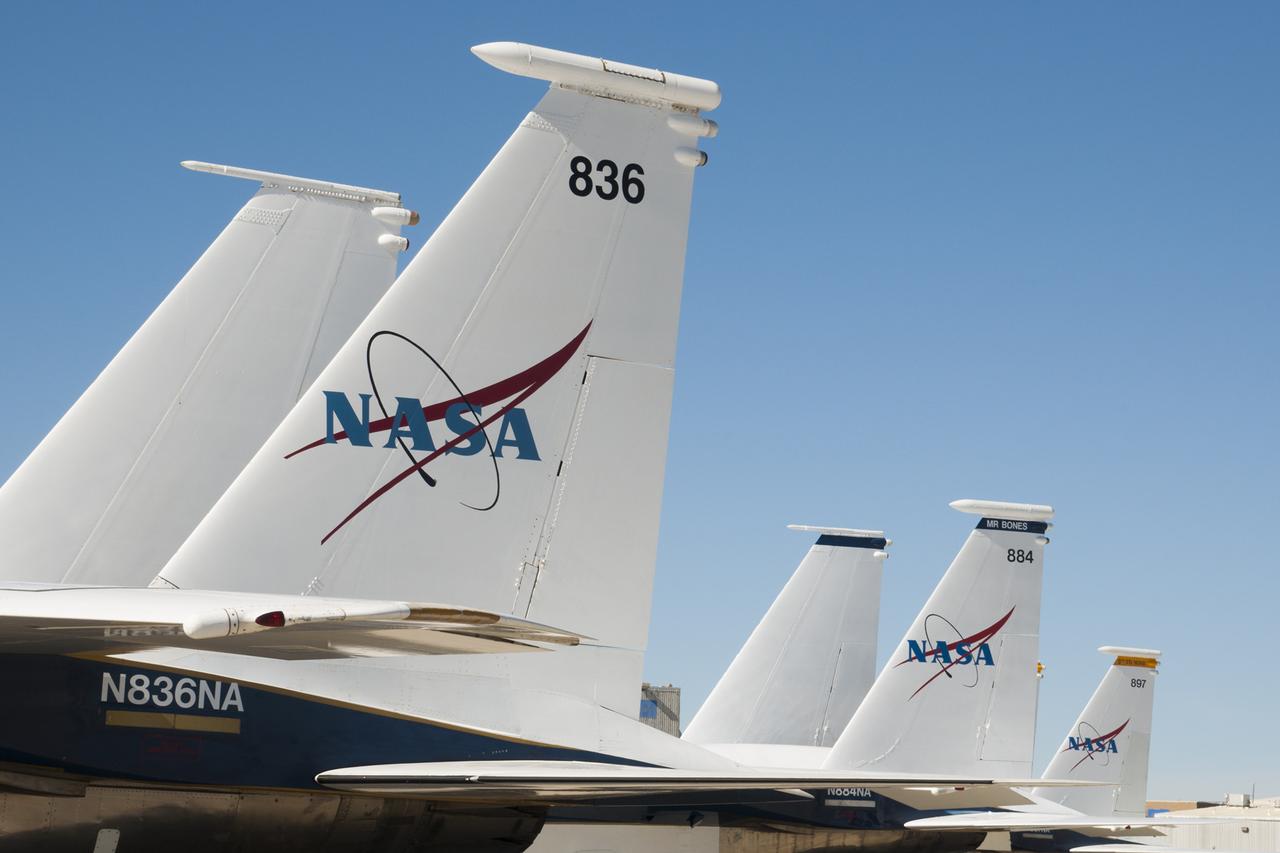
Left to right: workhorse F-15B #836, "Mr. Bones" F-15D #884, and "2nd to None" F-15D #897 on the back ramp at NASA's Neil A. Armstrong Flight Research Center.
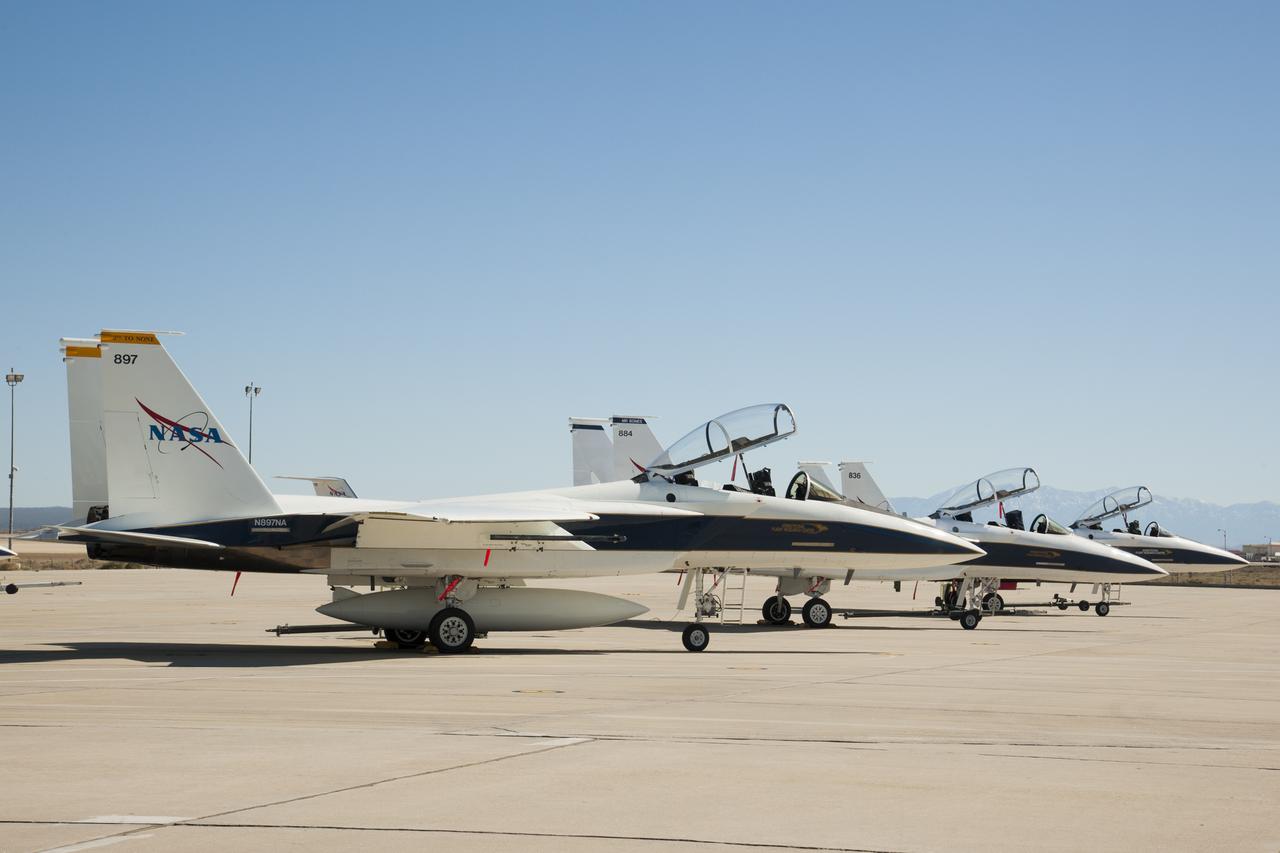
Left to right: "2nd to None" (F-15D #897), "Mr. Bones" (F-15D #884), and workhorse F-15B #836 on the back ramp at NASA's Neil A. Armstrong Flight Research Center.
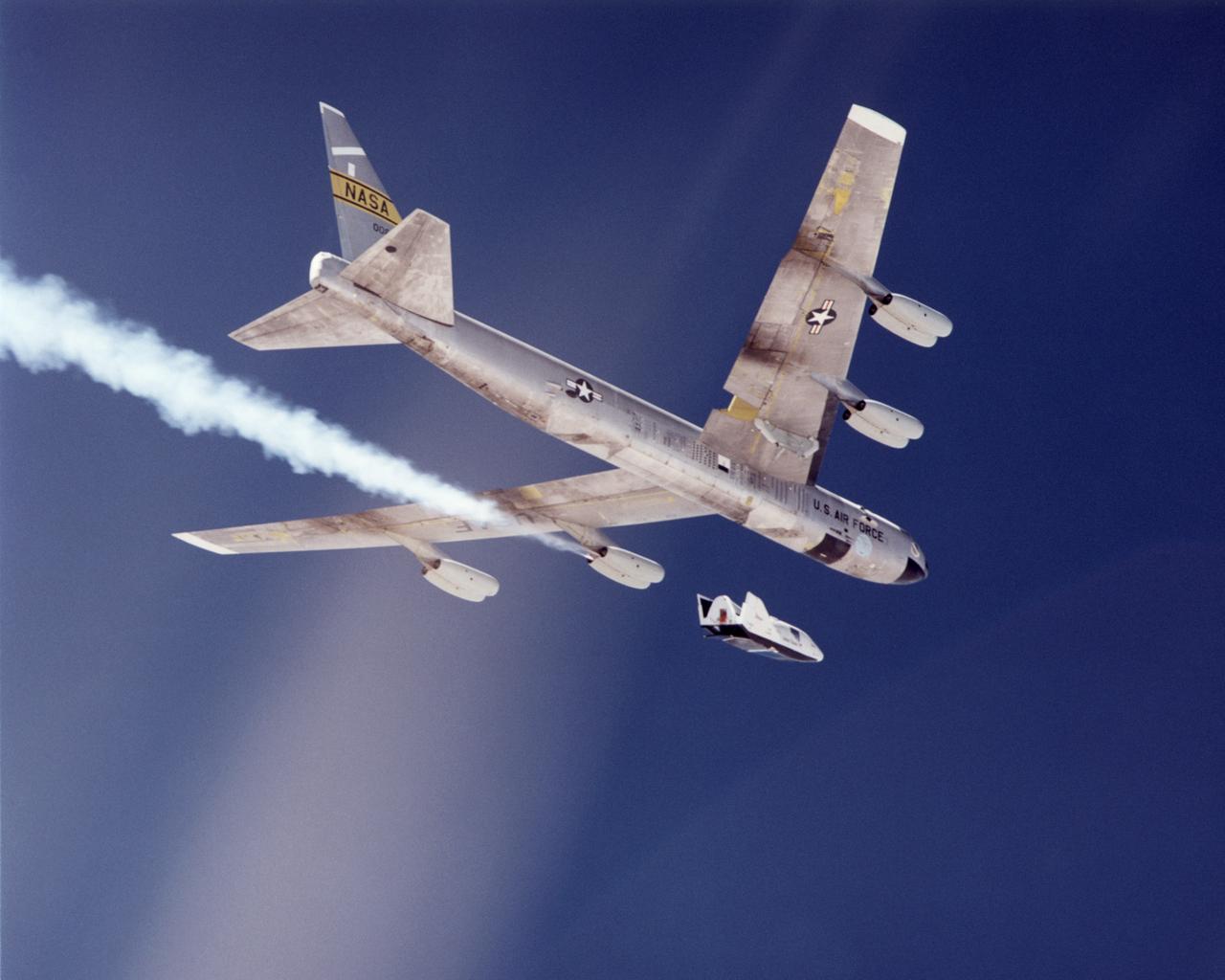
The second free-flight test of an evolving series of X-38 prototypes took place July 10, 2001 when the X-38 was released from NASA's B-52 mothership over the Edwards Air Force Base range in California's Mojave Desert. Shortly after the photo was taken, a sequenced deployment of a drogue parachute followed by a large parafoil fabric wing slowed the X-38 to enable it to land safely on Rogers Dry Lake at Edwards. NASA engineers from the Dryden Flight Research Center at Edwards, and the Johnson Space Center, Houston, Texas, are developing a "lifeboat" for the International Space Station based on X-38 research.
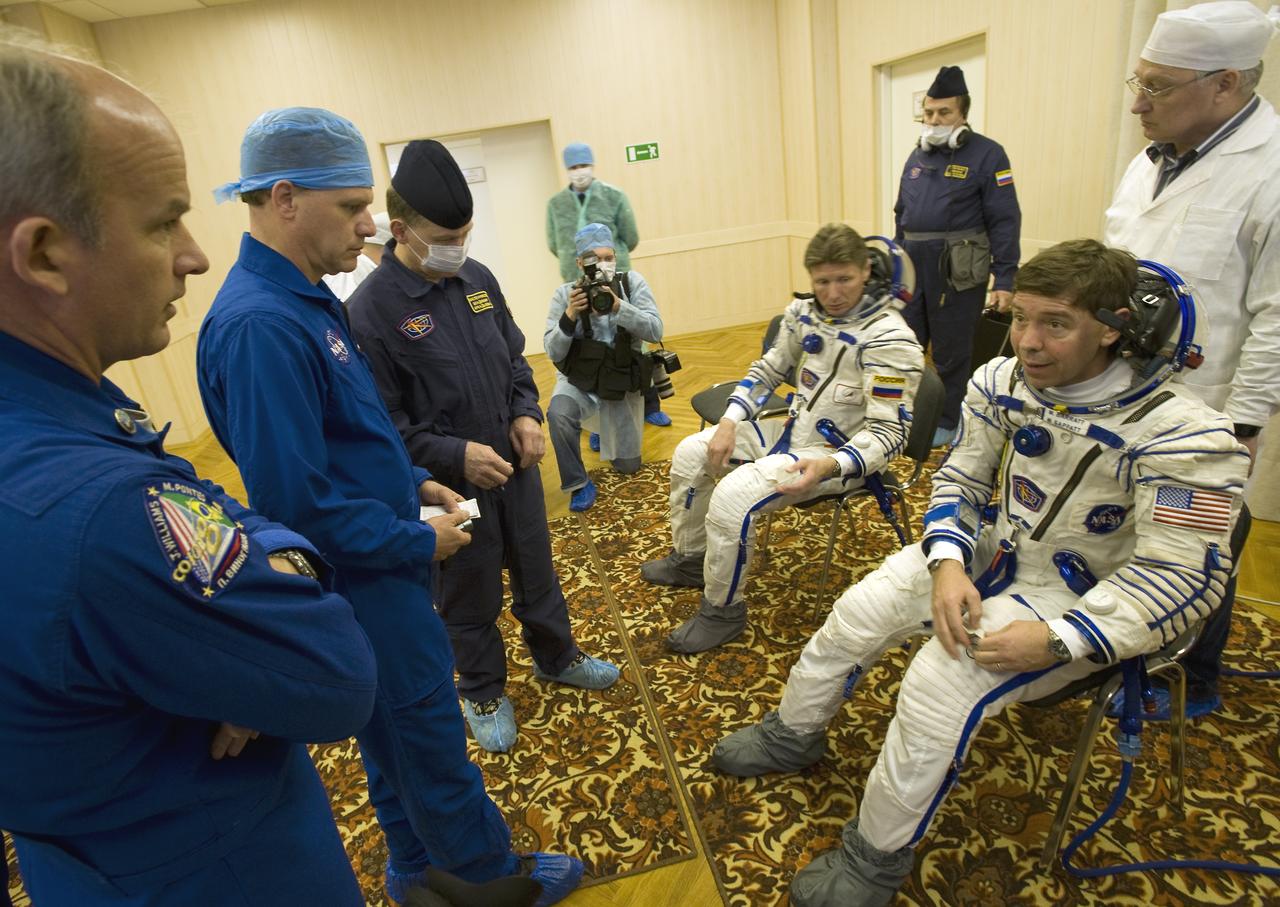
Expedition 19 backup commander Jeffrey Williams, left, NASA Flight Surgeon Ed Powers, M.D., 2nd from left, talk with Expedition 19 Flight Engineer Michael R. Barratt, far right, as he and fellow crew member Expedition 19 Commander Gennady I. Padalka don their Sokol flights suits in preparation for their Soyuz launch to the International Space Station with Spaceflight Participant Charles Simonyi on Thursday, March 26, 2009 in Baikonur, Kazakhstan. (Photo Credit: NASA/Bill Ingalls)
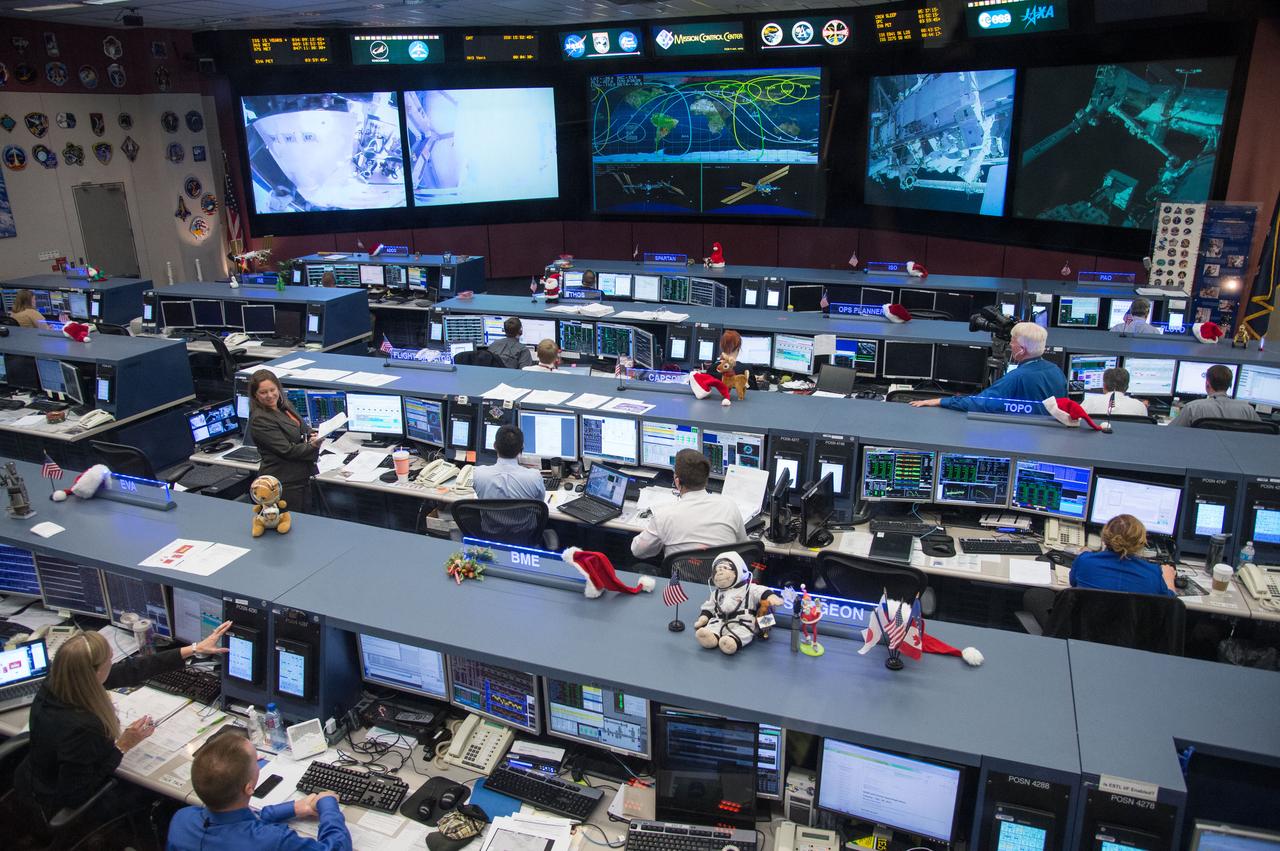
DATE: 12-24-13 LOCATION: Bldg. 30 - FCR-1 (30M/231) SUBJECT: ISS Flight Controllers during Expedition 38's 2nd Spacewalk to repair a faulty ISS Coolant pump with Astronauts Rick Mastracchio and Mike Hopkins. Flight Director: Dina Contella, Capcom's Doug Wheelock, Aki Hoshide, and Lead U.S. Spacewalk Officer Allison Bolinger. PHOTOGRAPHER: Lauren Harnett
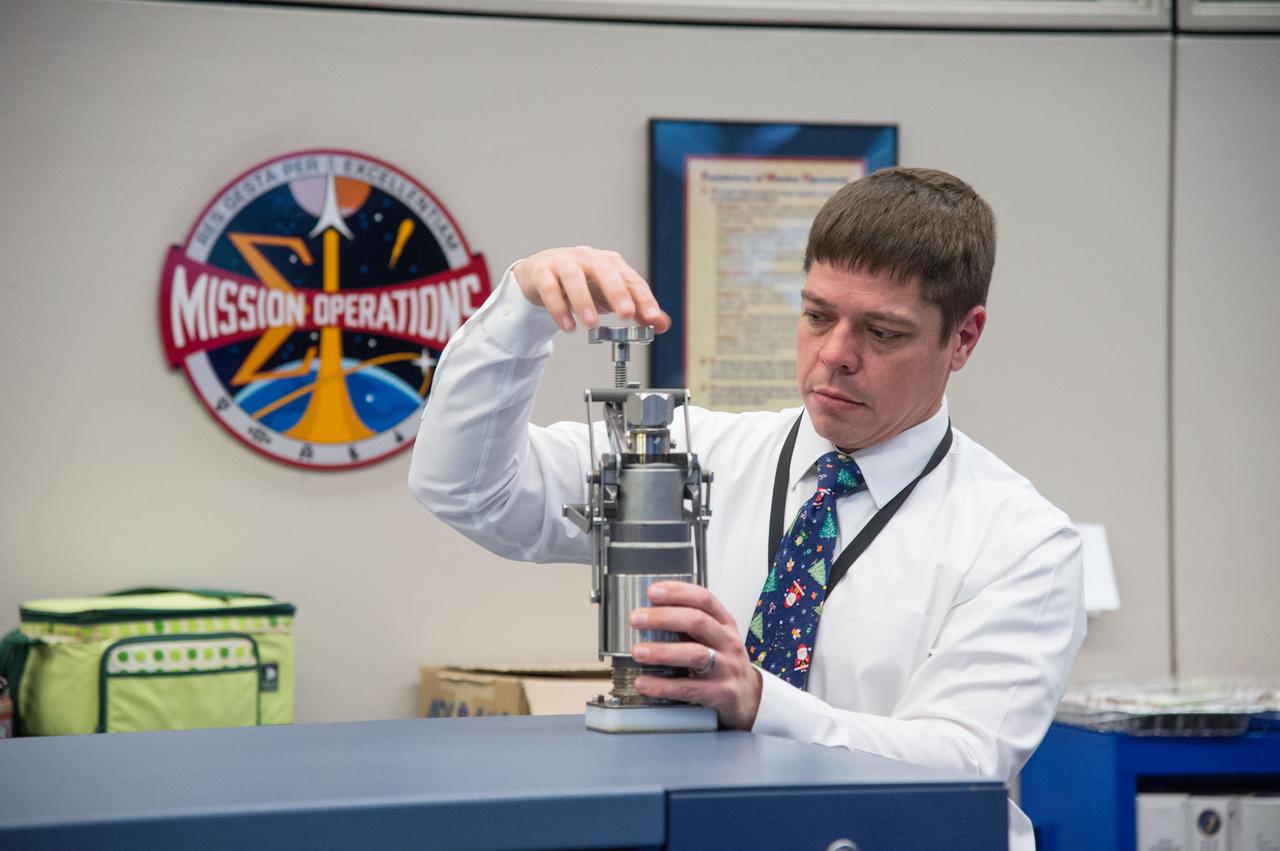
DATE: 12-24-13 LOCATION: Bldg. 30 - FCR-1 (30M/231) SUBJECT: ISS Flight Controllers during Expedition 38's 2nd Spacewalk to repair a faulty ISS Coolant pump with Astronauts Rick Mastracchio and Mike Hopkins. Flight Director: Dina Contella, Capcom's Doug Wheelock, Aki Hoshide, and Lead U.S. Spacewalk Officer Allison Bolinger. PHOTOGRAPHER: Lauren Harnett
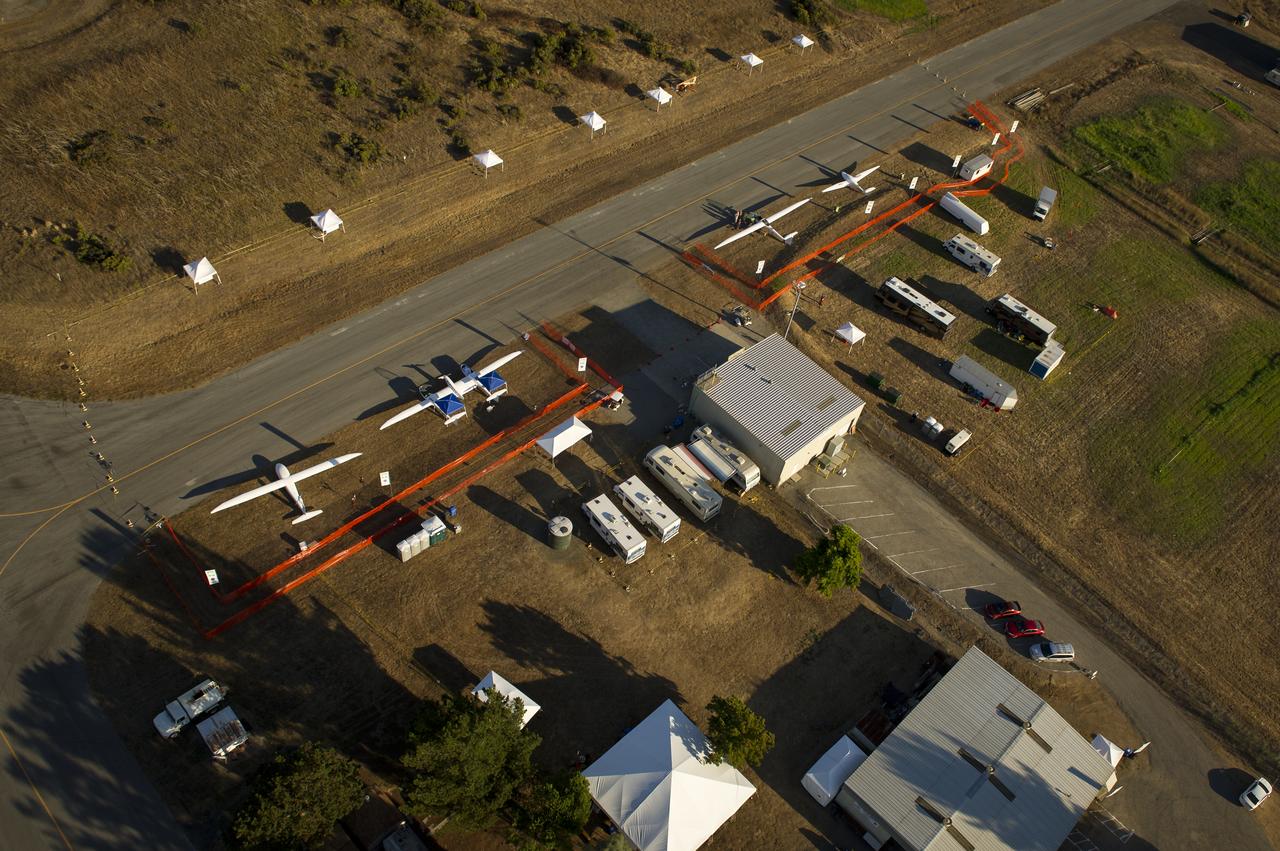
The e-Genius, left, Taurus G4, 2nd from left, EcoEagle, and PhoEnix aircraft, top right, are seen on the campus of the 2011 Green Flight Challenge, sponsored by Google, at the Charles M. Schulz Sonoma County Airport in Santa Rosa, Calif. on Wednesday, Sept. 28, 2011. NASA and the Comparative Aircraft Flight Efficiency (CAFE) Foundation are having the challenge with the goal to advance technologies in fuel efficiency and reduced emissions with cleaner renewable fuels and electric aircraft. Photo Credit: (NASA/Bill Ingalls)

DATE: 12-24-13 LOCATION: Bldg. 30 - FCR-1 (30M/231) SUBJECT: ISS Flight Controllers during Expedition 38's 2nd Spacewalk to repair a faulty ISS Coolant pump with Astronauts Rick Mastracchio and Mike Hopkins. Flight Director: Dina Contella, Capcom's Doug Wheelock, Aki Hoshide, and Lead U.S. Spacewalk Officer Allison Bolinger. PHOTOGRAPHER: Lauren Harnett
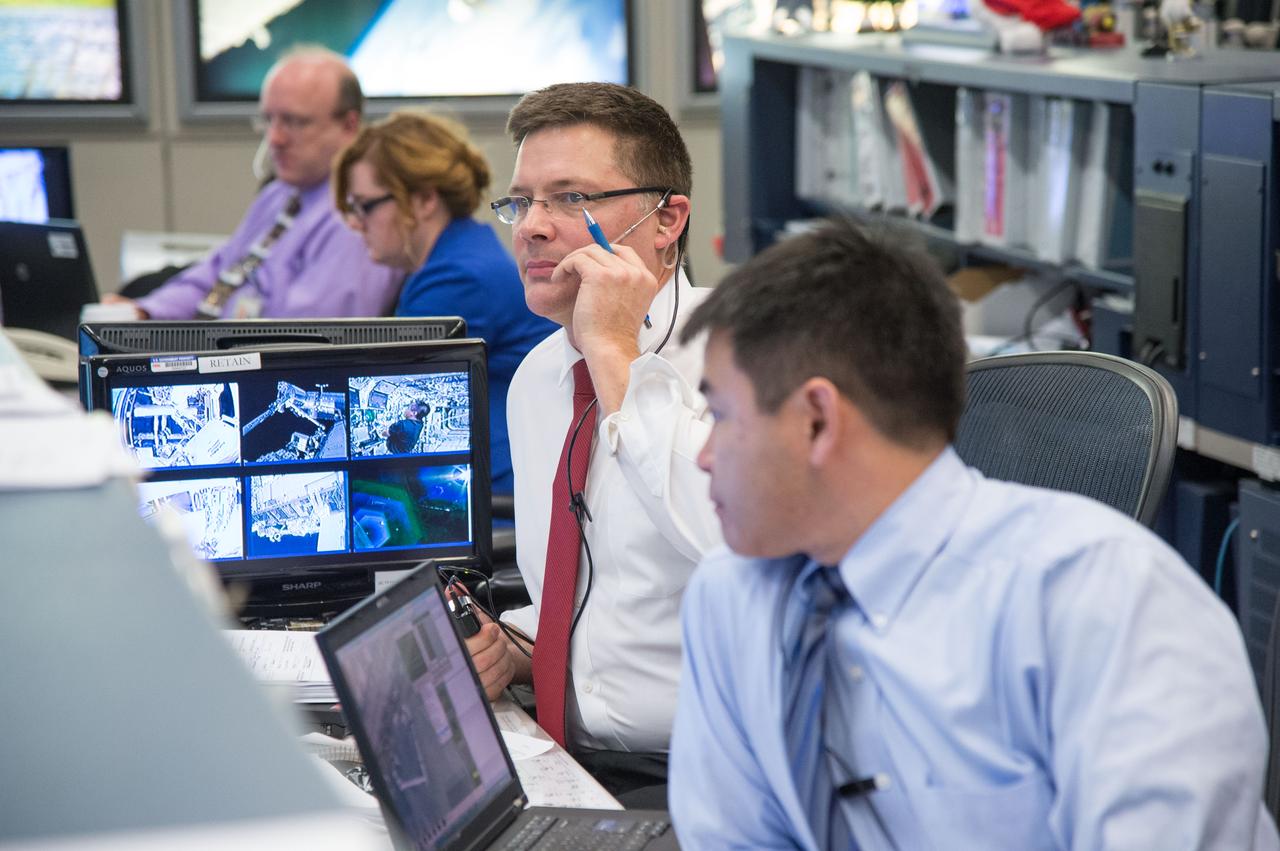
DATE: 12-24-13 LOCATION: Bldg. 30 - FCR-1 (30M/231) SUBJECT: ISS Flight Controllers during Expedition 38's 2nd Spacewalk to repair a faulty ISS Coolant pump with Astronauts Rick Mastracchio and Mike Hopkins. Flight Director: Dina Contella, Capcom's Doug Wheelock, Aki Hoshide, and Lead U.S. Spacewalk Officer Allison Bolinger. PHOTOGRAPHER: Lauren Harnett
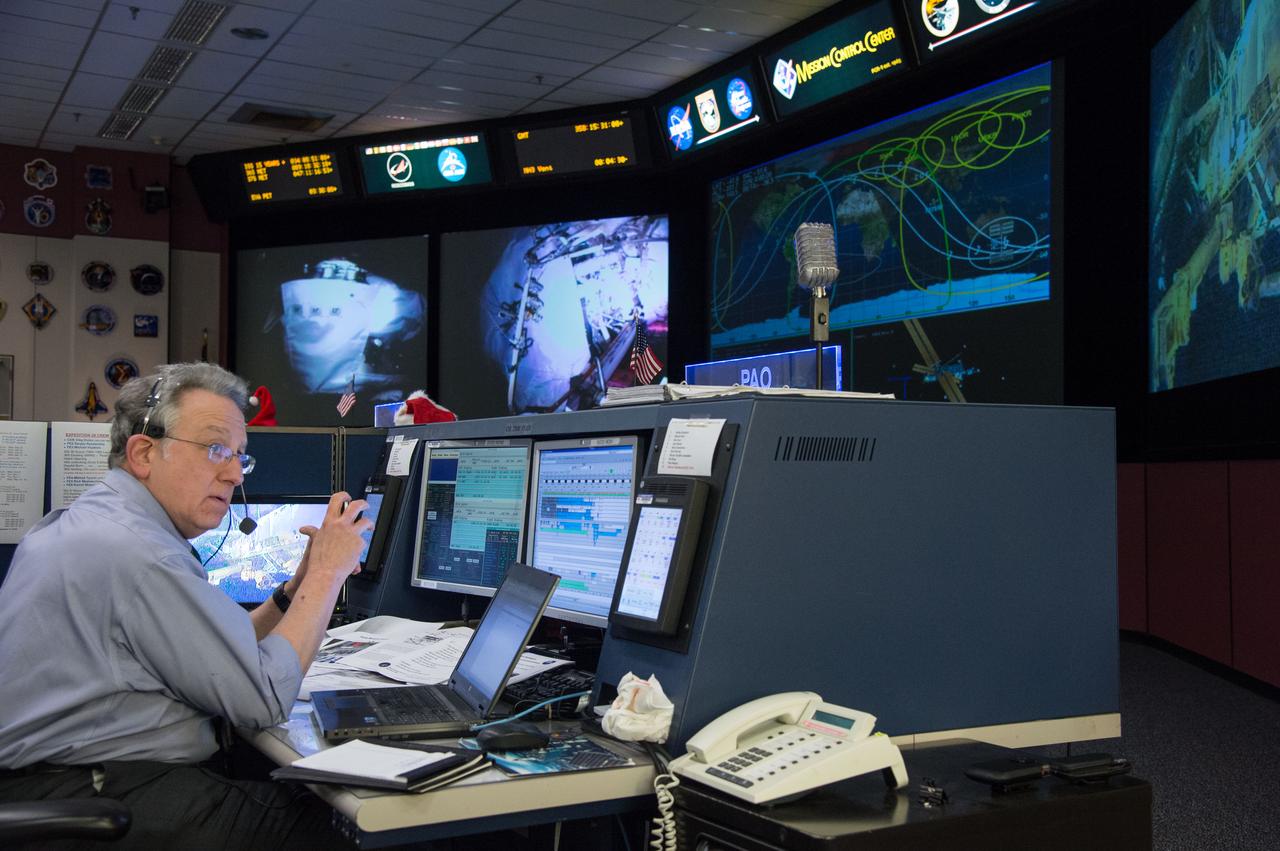
DATE: 12-24-13 LOCATION: Bldg. 30 - FCR-1 (30M/231) SUBJECT: ISS Flight Controllers during Expedition 38's 2nd Spacewalk to repair a faulty ISS Coolant pump with Astronauts Rick Mastracchio and Mike Hopkins. Flight Director: Dina Contella, Capcom's Doug Wheelock, Aki Hoshide, and Lead U.S. Spacewalk Officer Allison Bolinger. PHOTOGRAPHER: Lauren Harnett
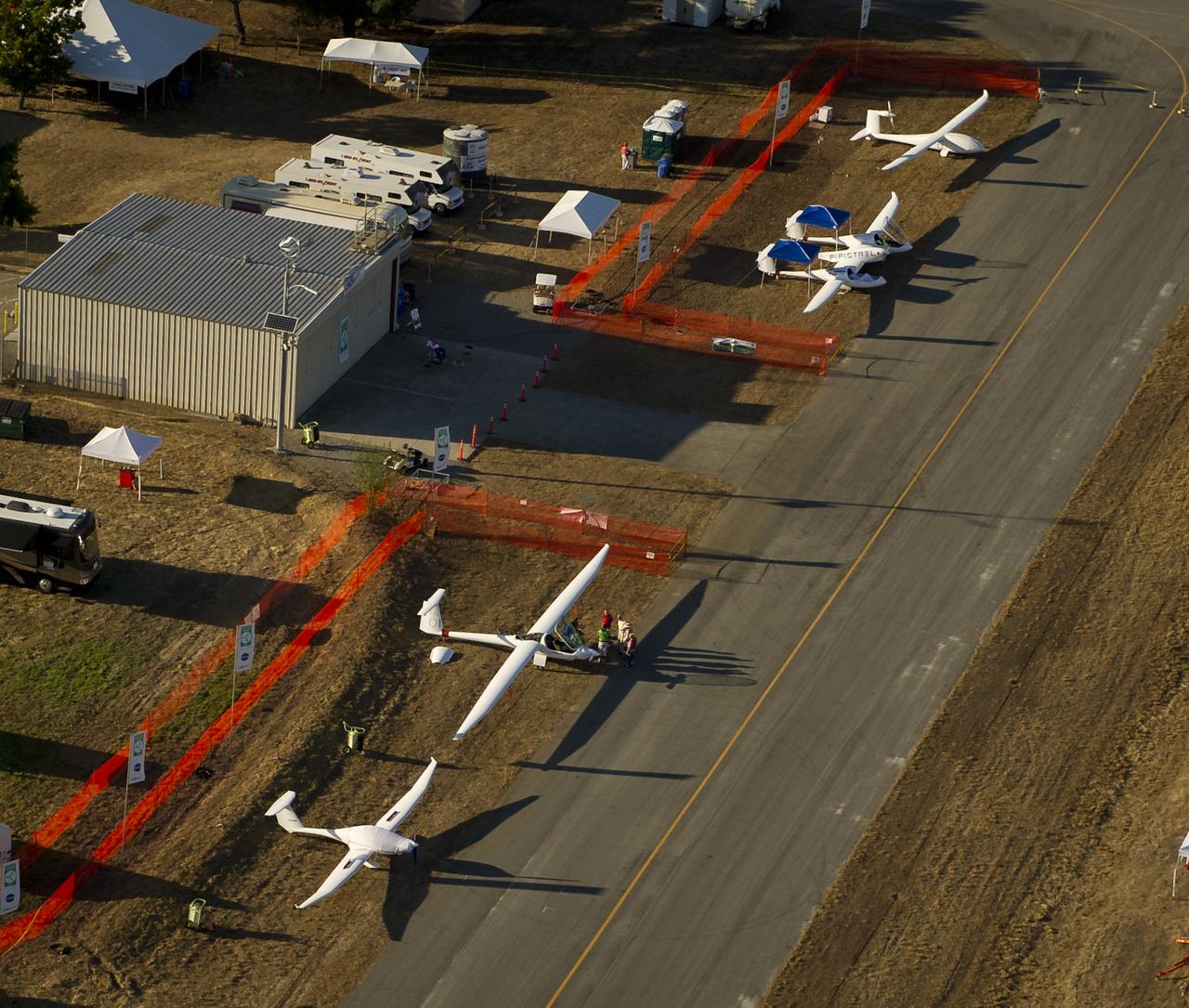
The PhoEnix, lower left, EcoEagle, 2nd from left, Taurus G4, and e-Genius aircraft, top right, are seen on the campus of the 2011 Green Flight Challenge, sponsored by Google, at the Charles M. Schulz Sonoma County Airport in Santa Rosa, Calif. on Wednesday, Sept. 28, 2011. NASA and the Comparative Aircraft Flight Efficiency (CAFE) Foundation are having the challenge with the goal to advance technologies in fuel efficiency and reduced emissions with cleaner renewable fuels and electric aircraft. Photo Credit: (NASA/Bill Ingalls)
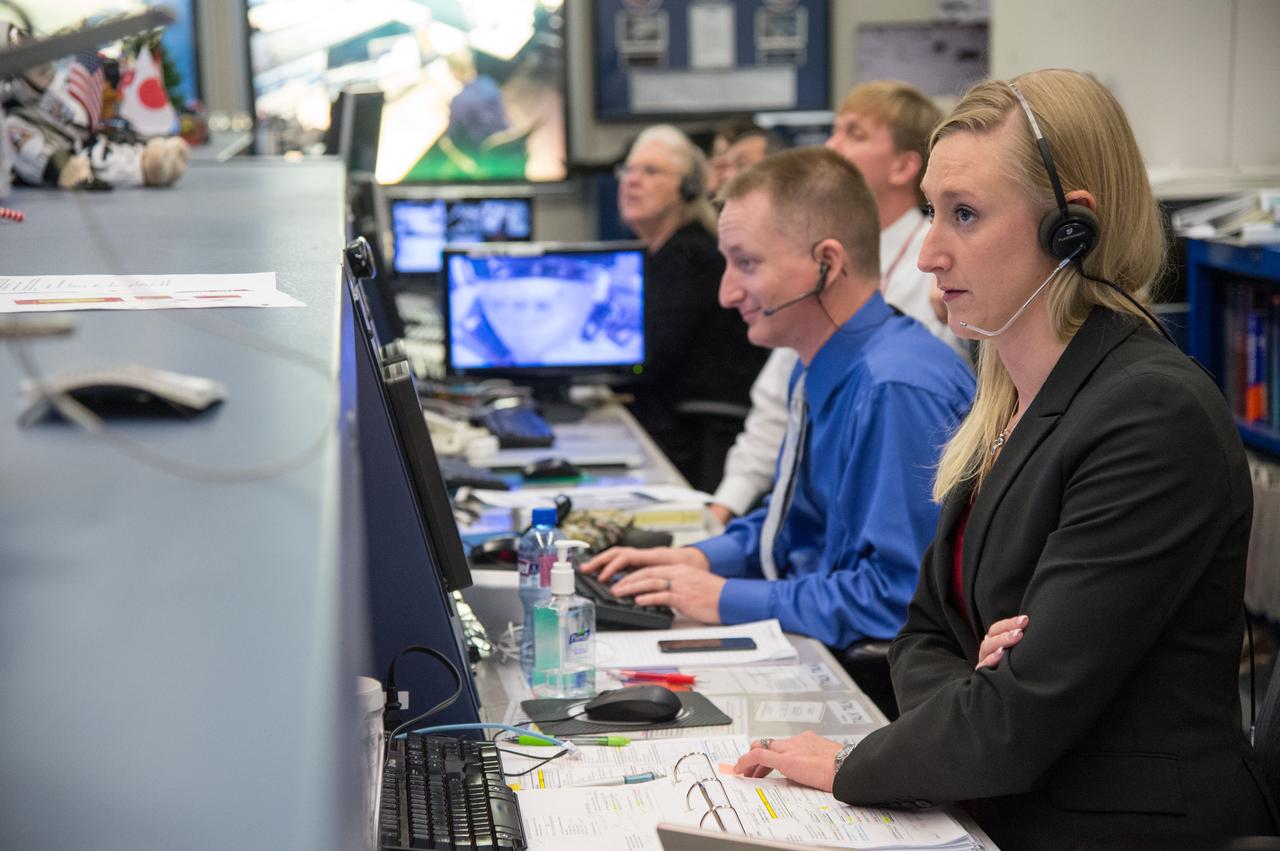
DATE: 12-24-13 LOCATION: Bldg. 30 - FCR-1 (30M/231) SUBJECT: ISS Flight Controllers during Expedition 38's 2nd Spacewalk to repair a faulty ISS Coolant pump with Astronauts Rick Mastracchio and Mike Hopkins. Flight Director: Dina Contella, Capcom's Doug Wheelock, Aki Hoshide, and Lead U.S. Spacewalk Officer Allison Bolinger. PHOTOGRAPHER: Lauren Harnett
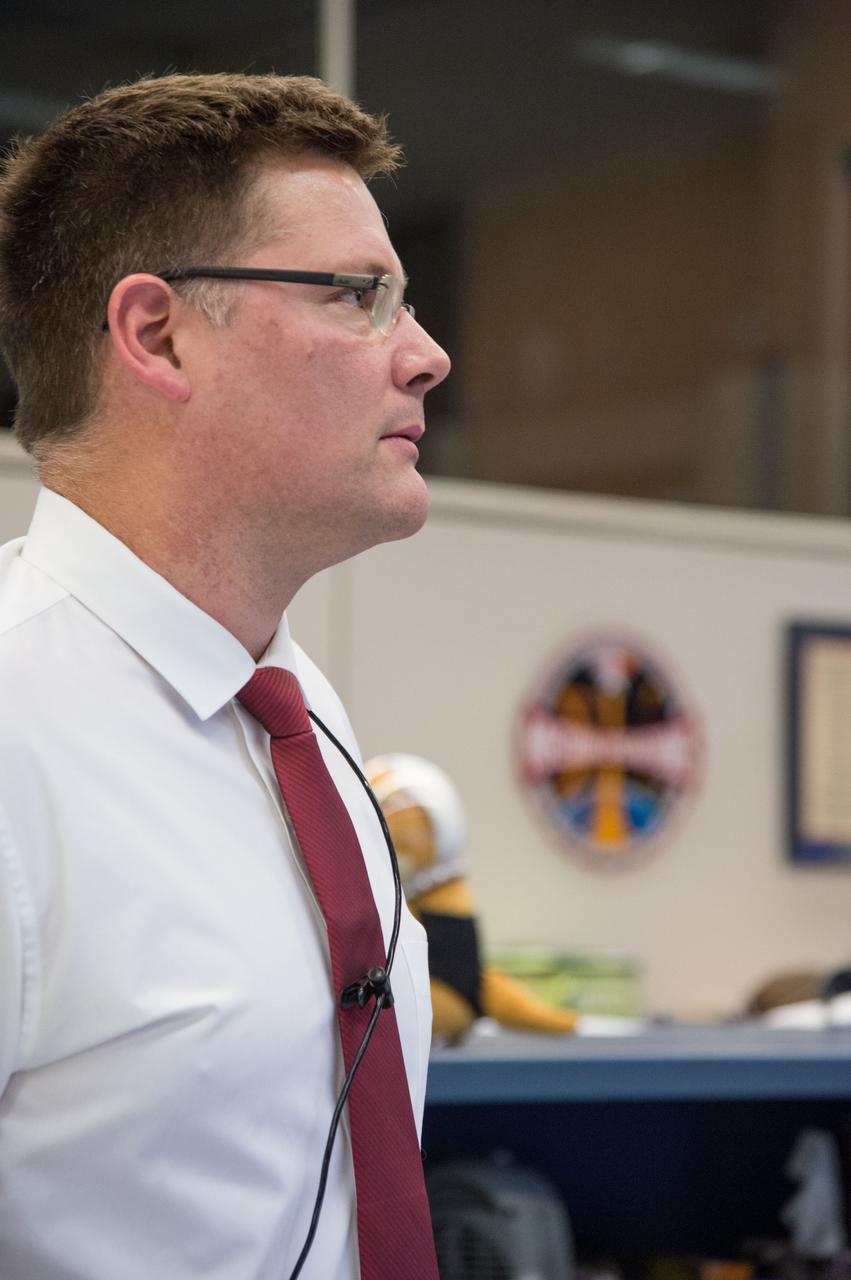
DATE: 12-24-13 LOCATION: Bldg. 30 - FCR-1 (30M/231) SUBJECT: ISS Flight Controllers during Expedition 38's 2nd Spacewalk to repair a faulty ISS Coolant pump with Astronauts Rick Mastracchio and Mike Hopkins. Flight Director: Dina Contella, Capcom's Doug Wheelock, Aki Hoshide, and Lead U.S. Spacewalk Officer Allison Bolinger. PHOTOGRAPHER: Lauren Harnett
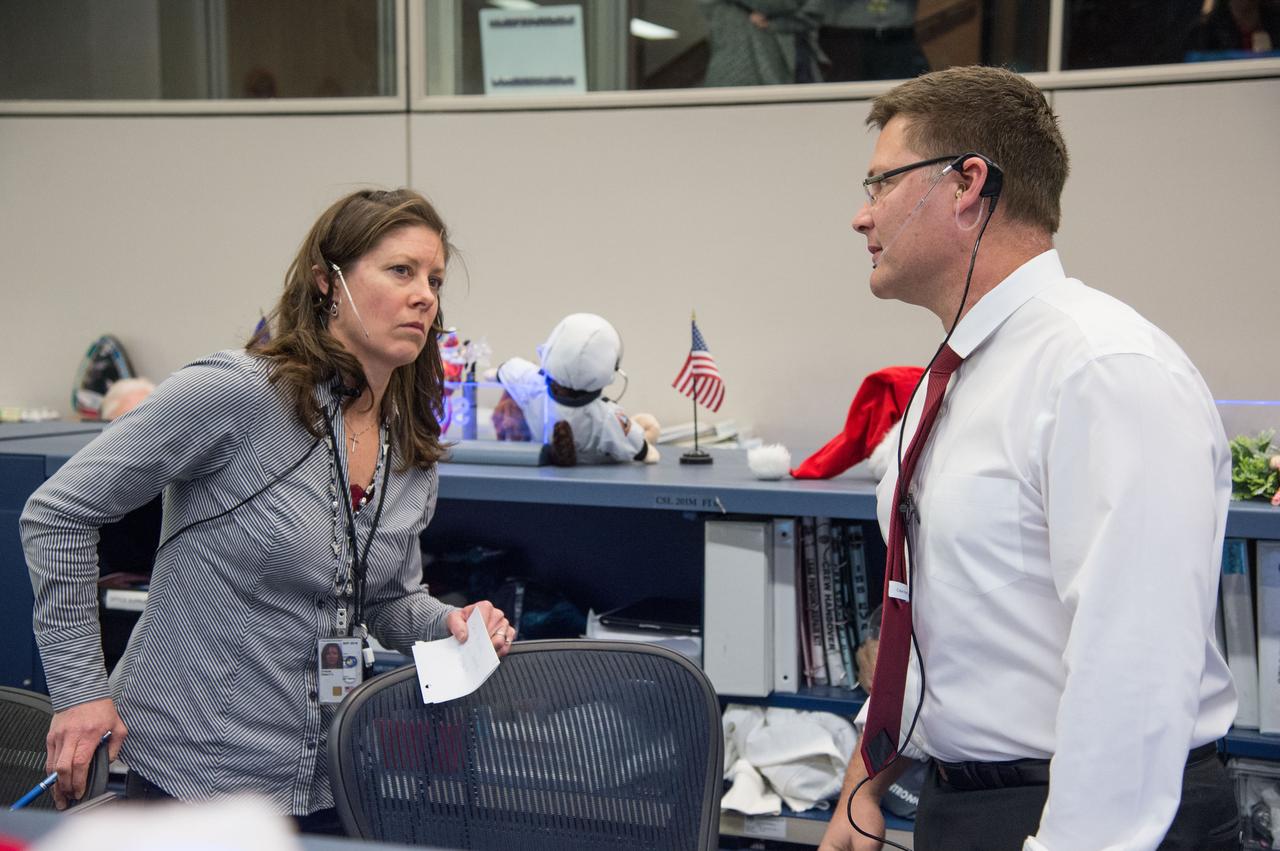
DATE: 12-24-13 LOCATION: Bldg. 30 - FCR-1 (30M/231) SUBJECT: ISS Flight Controllers during Expedition 38's 2nd Spacewalk to repair a faulty ISS Coolant pump with Astronauts Rick Mastracchio and Mike Hopkins. Flight Director: Dina Contella, Capcom's Doug Wheelock, Aki Hoshide, and Lead U.S. Spacewalk Officer Allison Bolinger. PHOTOGRAPHER: Lauren Harnett
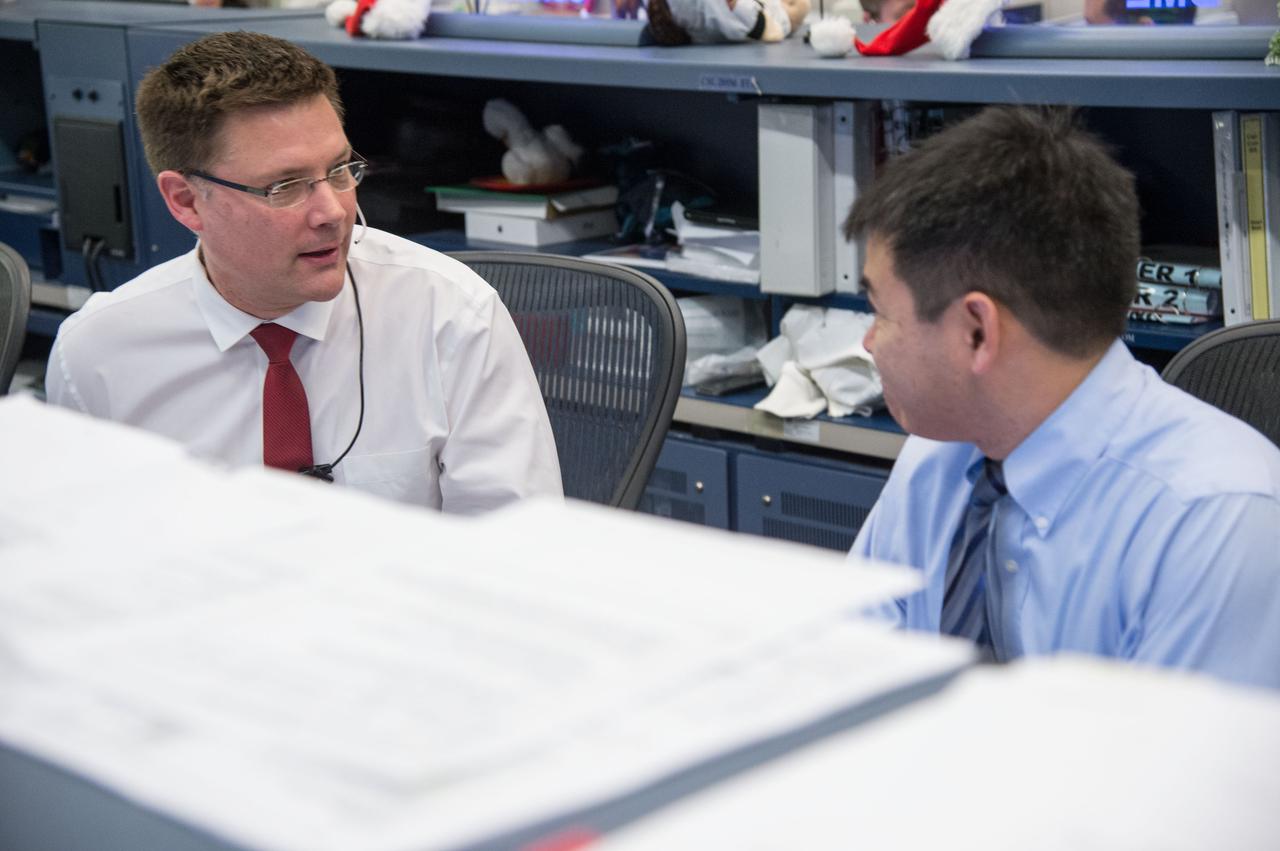
DATE: 12-24-13 LOCATION: Bldg. 30 - FCR-1 (30M/231) SUBJECT: ISS Flight Controllers during Expedition 38's 2nd Spacewalk to repair a faulty ISS Coolant pump with Astronauts Rick Mastracchio and Mike Hopkins. Flight Director: Dina Contella, Capcom's Doug Wheelock, Aki Hoshide, and Lead U.S. Spacewalk Officer Allison Bolinger. PHOTOGRAPHER: Lauren Harnett
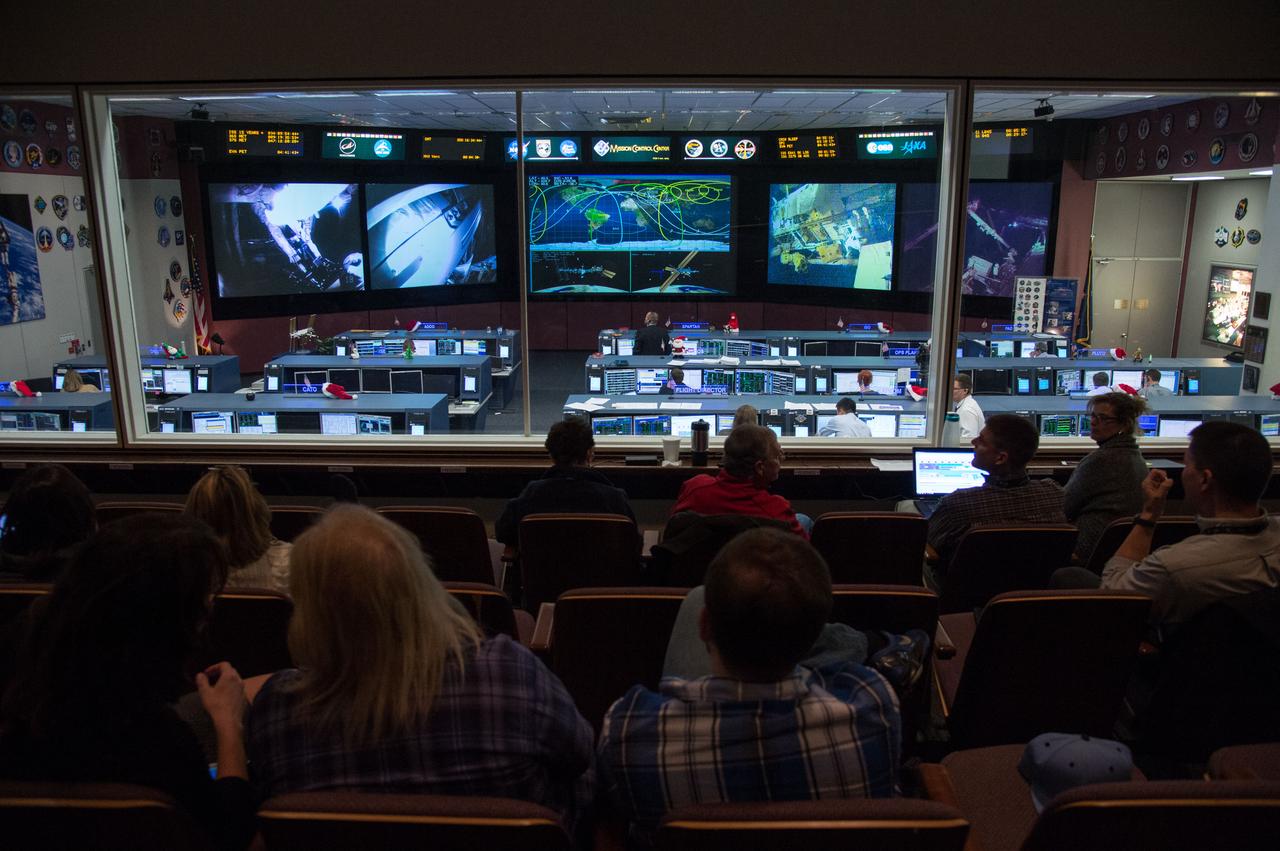
DATE: 12-24-13 LOCATION: Bldg. 30 - FCR-1 (30M/231) SUBJECT: ISS Flight Controllers during Expedition 38's 2nd Spacewalk to repair a faulty ISS Coolant pump with Astronauts Rick Mastracchio and Mike Hopkins. Flight Director: Dina Contella, Capcom's Doug Wheelock, Aki Hoshide, and Lead U.S. Spacewalk Officer Allison Bolinger. PHOTOGRAPHER: Lauren Harnett
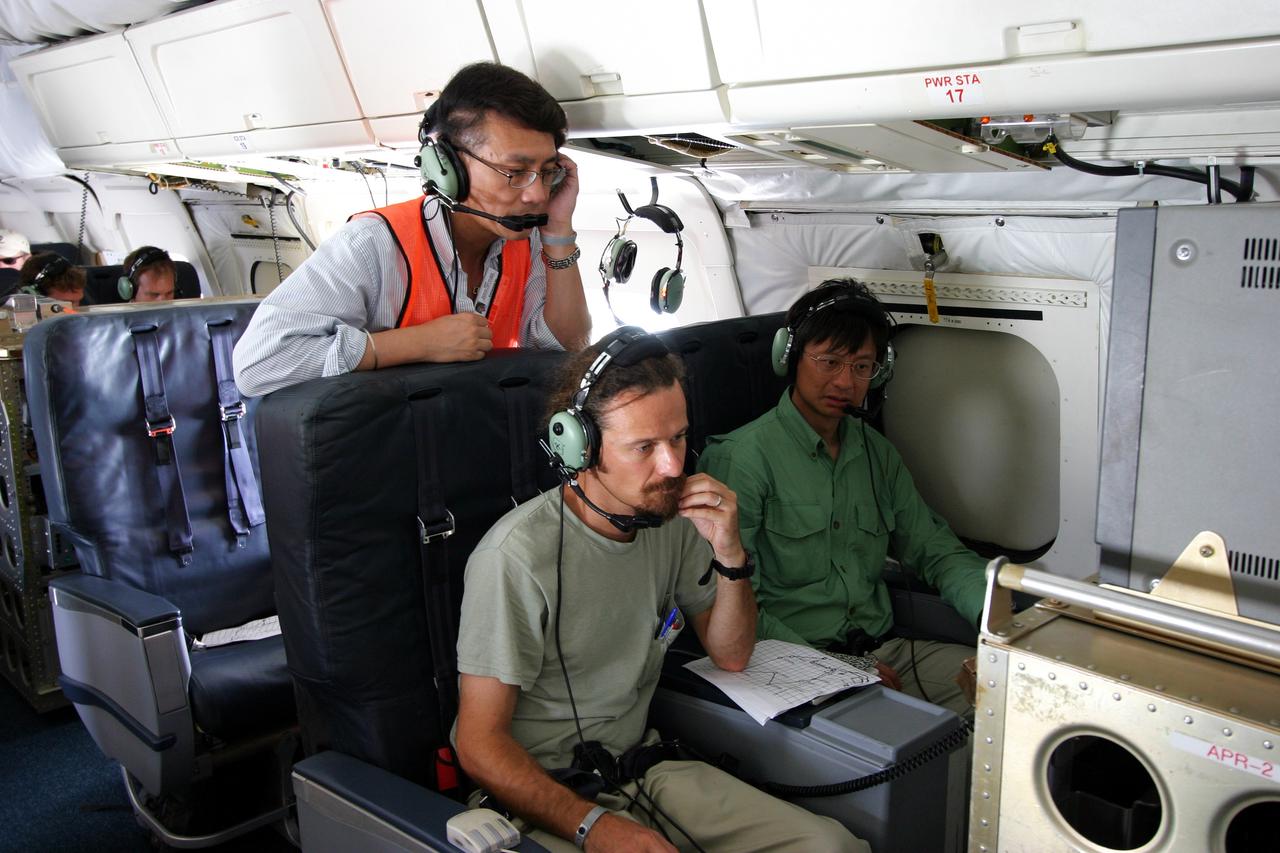
DC-8 NAMMA MISSION TO CAPE VERDE, AFRICA: Principlal investigator Eastwood Im (l), co-principal investigator Simone Tanelli (c )and RF Engineer William Chun (r) of JPL look at data coming off their APR-2 (Airborne 2nd Generation Precipitation Radar) instrument onboard NASA's DC-8 during a NAMMA science flight
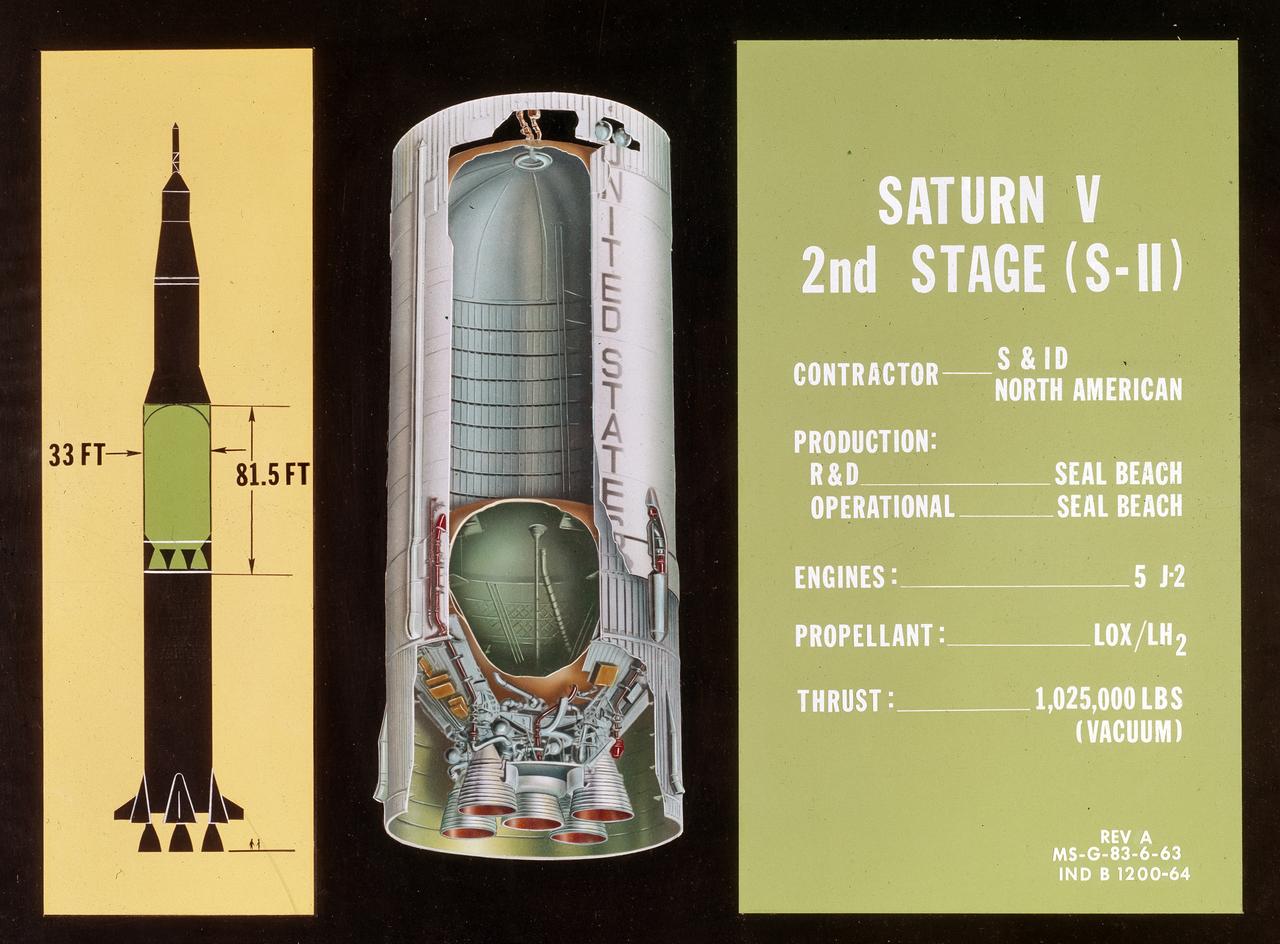
This illustration, with callouts, is of the Saturn V SII (2nd Stage) developed by the Space Division of North American Aviation under the direction of the Marshall Space Flight Center. The 82-foot-long and 33-foot-diameter S-II stage utilized five J-2 engines, each with a 200,000-pound thrust capability. The engine used liquid oxygen and liquid hydrogen as its propellants.
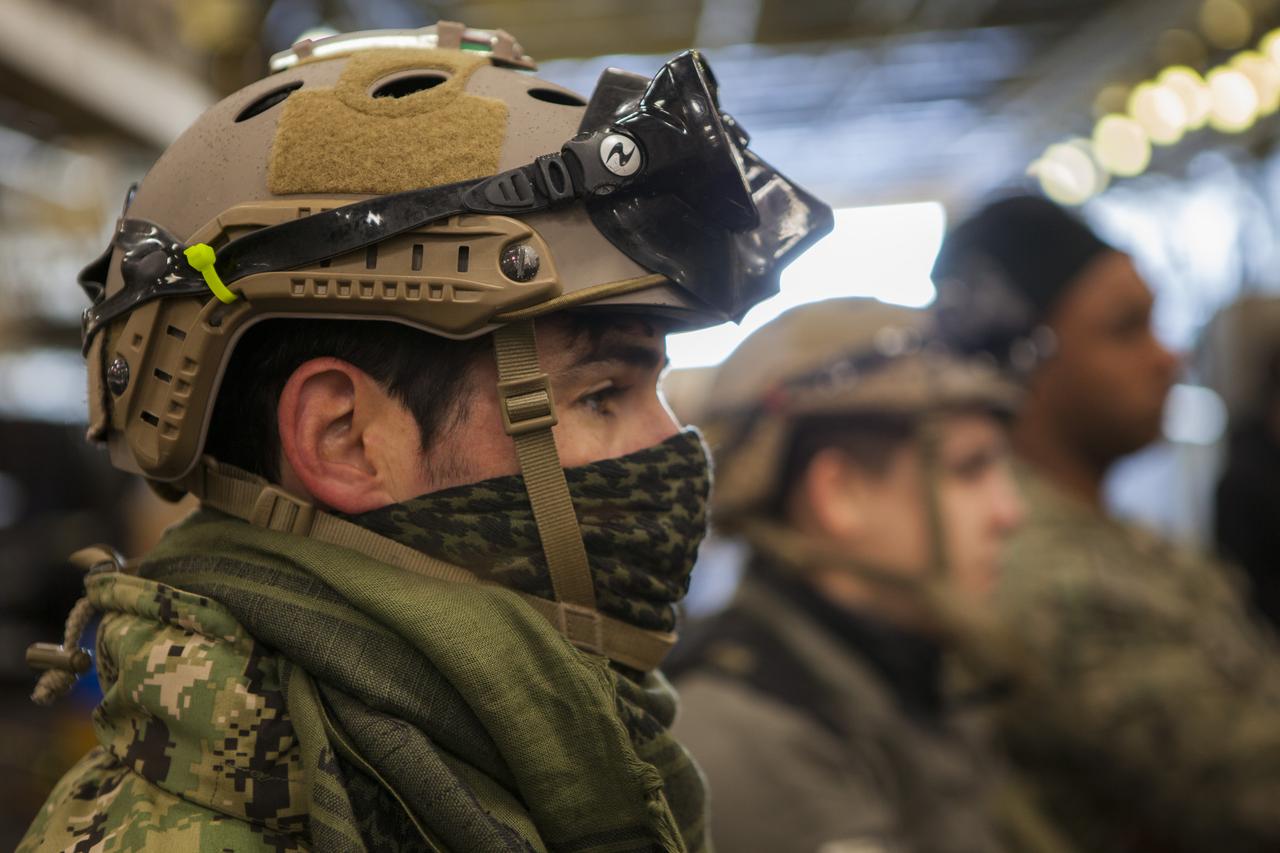
Navy Diver 2nd Class Laethem and his fellow divers get briefed before heading out to sea to recover the Orion test article during Underway Recovery Test 6 off the coast of San Diego. Kennedy Space Center’s NASA Recovery Team works with the U.S. Navy to improve recovery procedures and hardware ahead of Orion's next flight, Exploration Mission-1, when it splashes down in the Pacific Ocean.
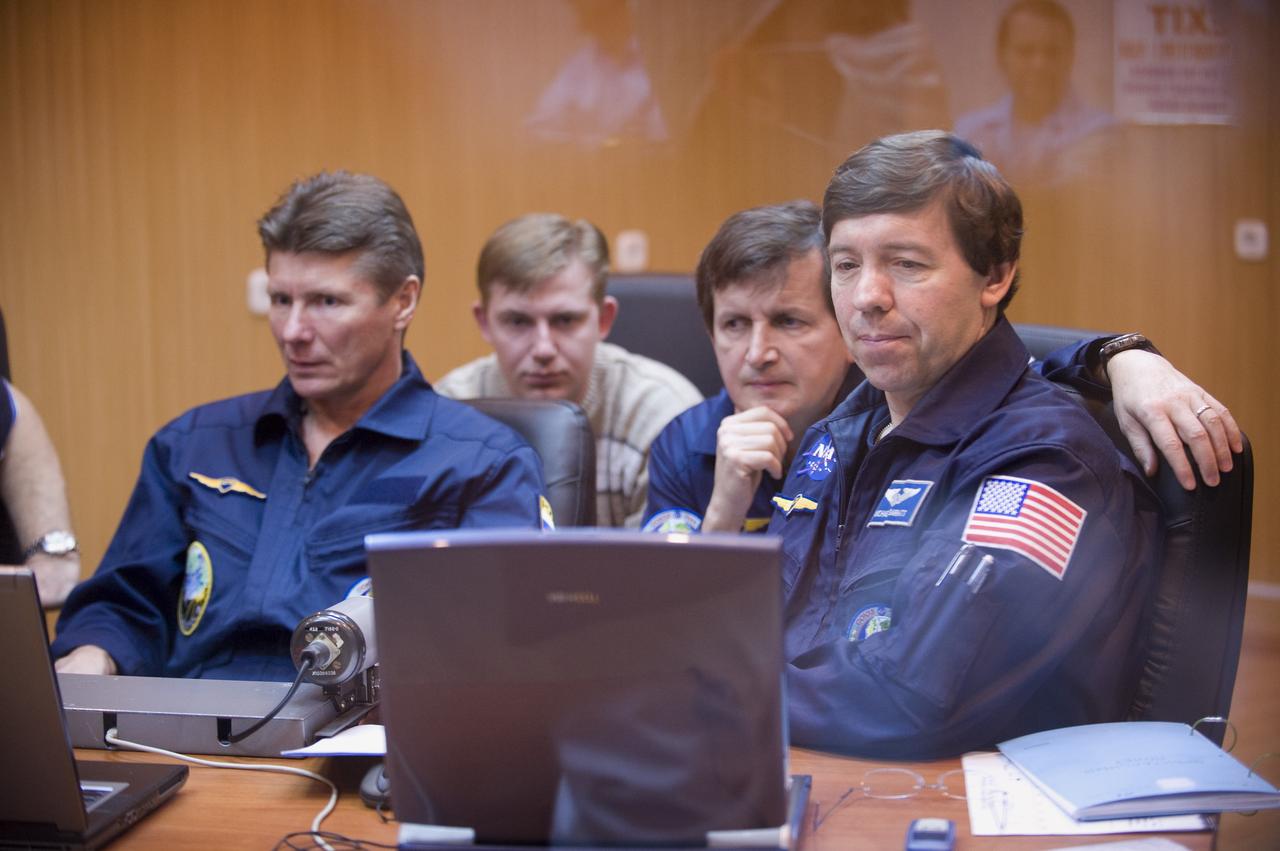
Expedition 19 Commander Gennady I. Padalka, left, Flight Engineer Michael R. Barratt, right, and Spaceflight Participant Charles Simonyi, 2nd row right, along with cosmonaut instructors are seen through a quarantine windowed room as they participate in Soyuz rendezvous and docking training at the Cosmonaut Hotel, Saturday, March 21, 2009 in Baikonur, Kazakhstan. (Photo Credit: NASA/Bill Ingalls)
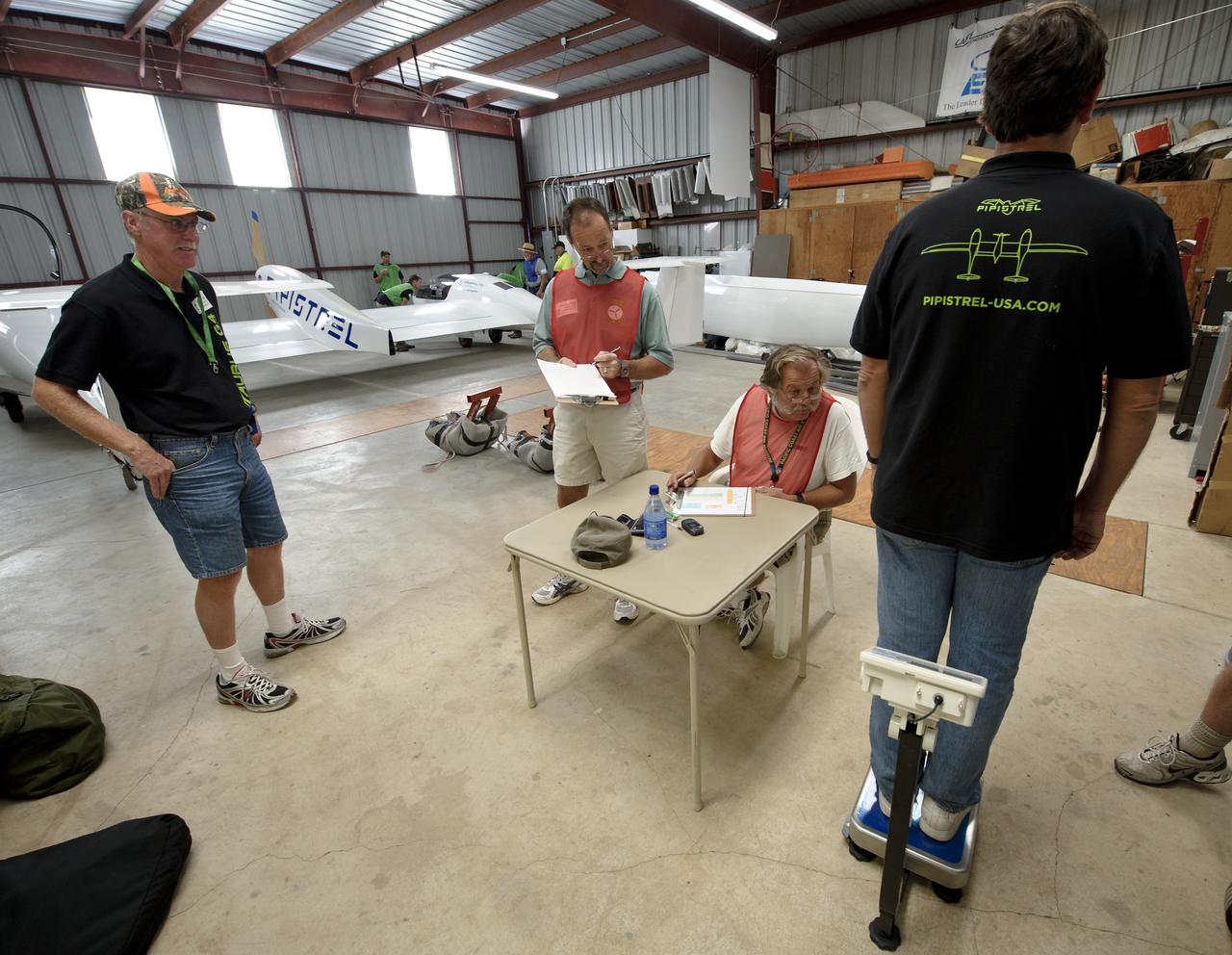
Pipistrel-USA Pilot David Morss, left, CAFE Foundation Weights Chief Wayne Cook, 2nd from left, and Weight crew member Ron Stout look on as Pipistrel-USA Pilot Robin Reid is weighed-in during the 2011 Green Flight Challenge, sponsored by Google, at the Charles M. Schulz Sonoma County Airport in Santa Rosa, Calif. on Monday, Sept. 26, 2011. NASA and the Comparative Aircraft Flight Efficiency (CAFE) Foundation are having the challenge with the goal to advance technologies in fuel efficiency and reduced emissions with cleaner renewable fuels and electric aircraft. Photo Credit: (NASA/Bill Ingalls)
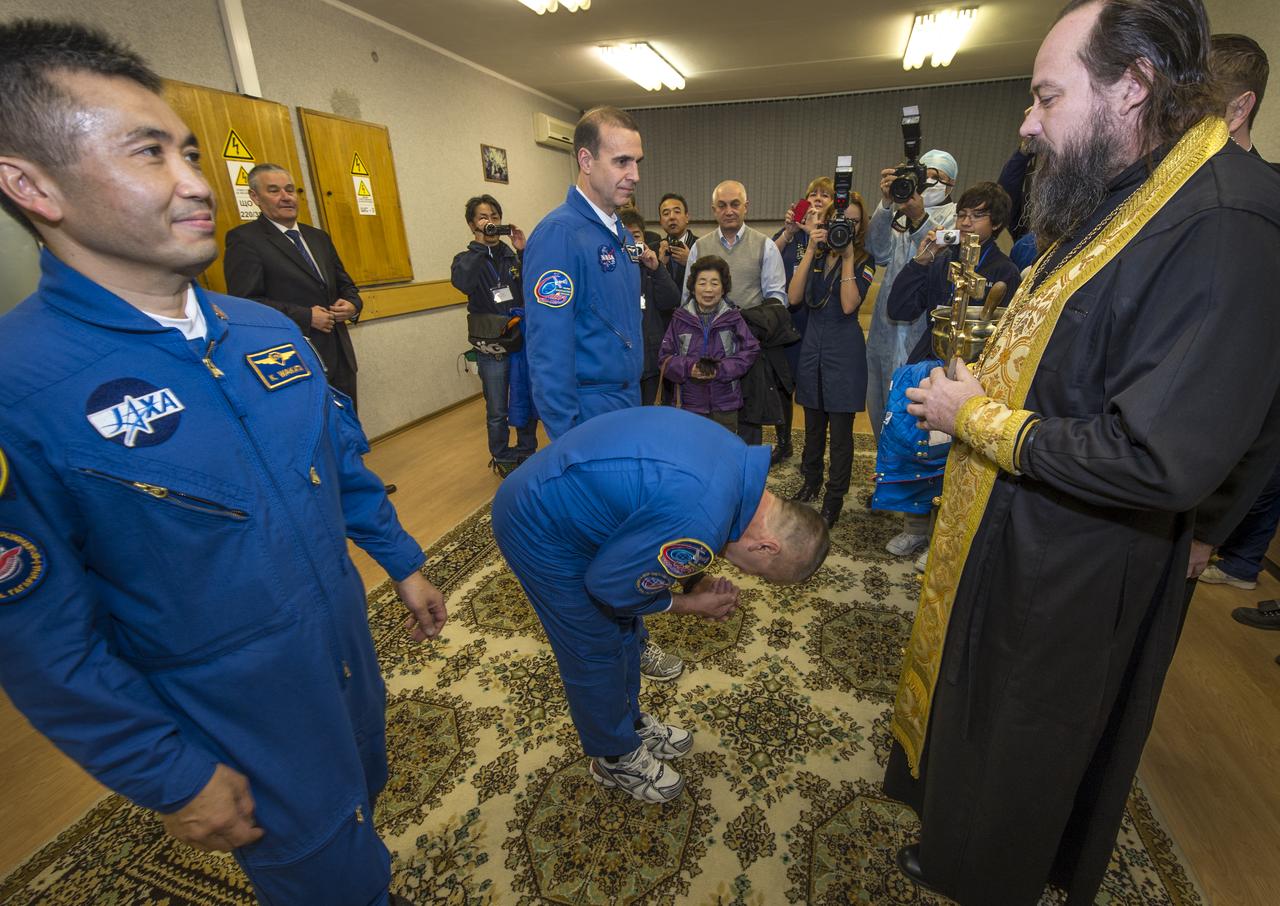
Expedition 38 Flight Engineer Koichi Wakata of the Japan Aerospace Exploration Agency, left, Soyuz Commander Mikhail Tyurin of Roscosmos, 2nd from left, and, Flight Engineer Rick Mastracchio of NASA, prepare to receive the traditional blessing from a Russian Orthodox priest at the Cosmonaut Hotel prior to their launch on the Soyuz rocket to the International Space Station, Thursday, Nov. 7, 2013, in Baikonur, Kazakhstan. Tyurin, Wakata, and, Mastracchio will launch in their Soyuz TMA-11M spacecraft to the International Space Station to begin a six-month mission. Photo Credit (NASA/Bill Ingalls)
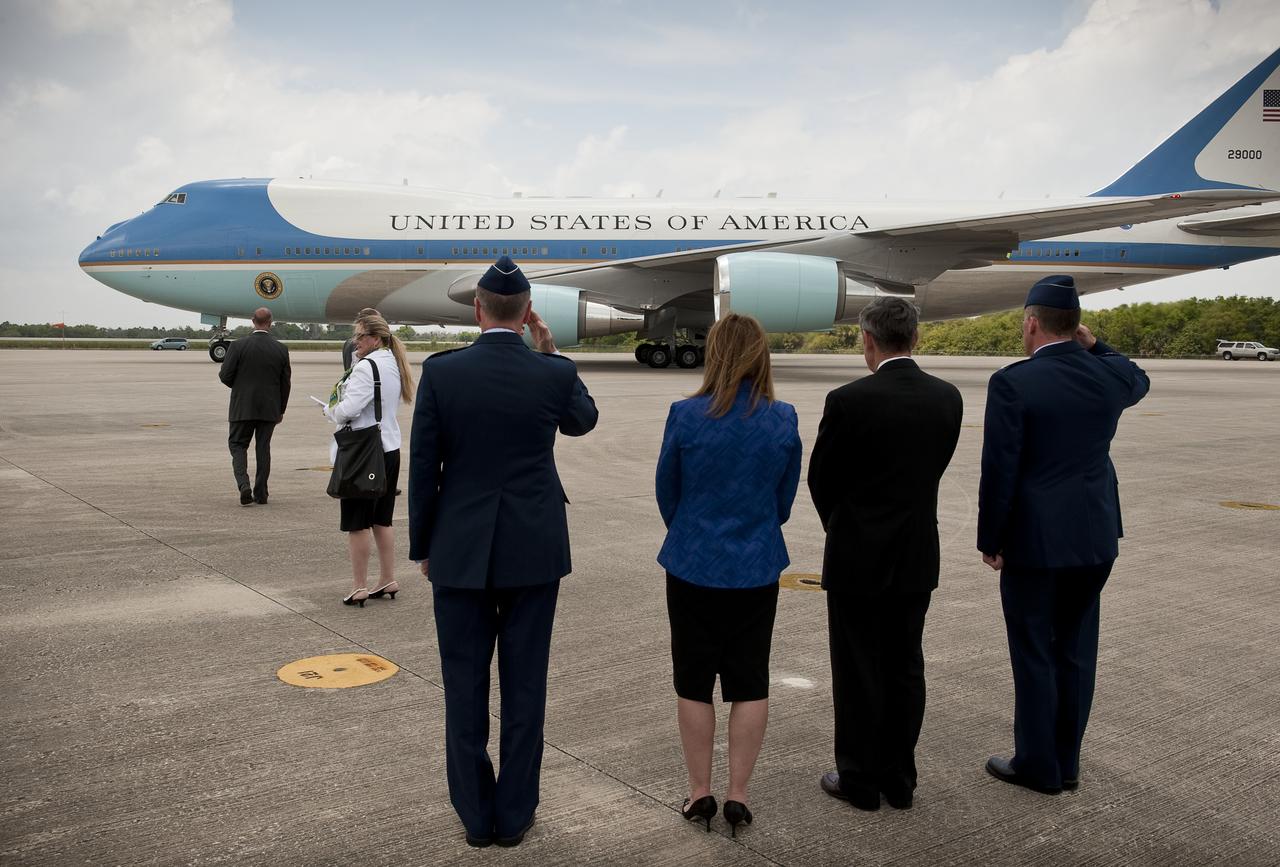
Gen. C. Robert Kehler, Commander, Air Force Space Command, left, NASA Deputy Administrator Lori Garver, 2nd from left, NASA Kennedy Space Center Director Bob Cabana, and Col. Burke E. Wilson is the Commander, 45th Space Wing, right, welcome the arrival of Air Force One and President Barack Obama to the NASA Kennedy Space Center in Cape Canaveral, Fla. on Thursday, April 15, 2010. Obama visited Kennedy to deliver remarks on the bold new course the administration is charting to maintain U.S. leadership in human space flight. Photo Credit: (NASA/Bill Ingalls)
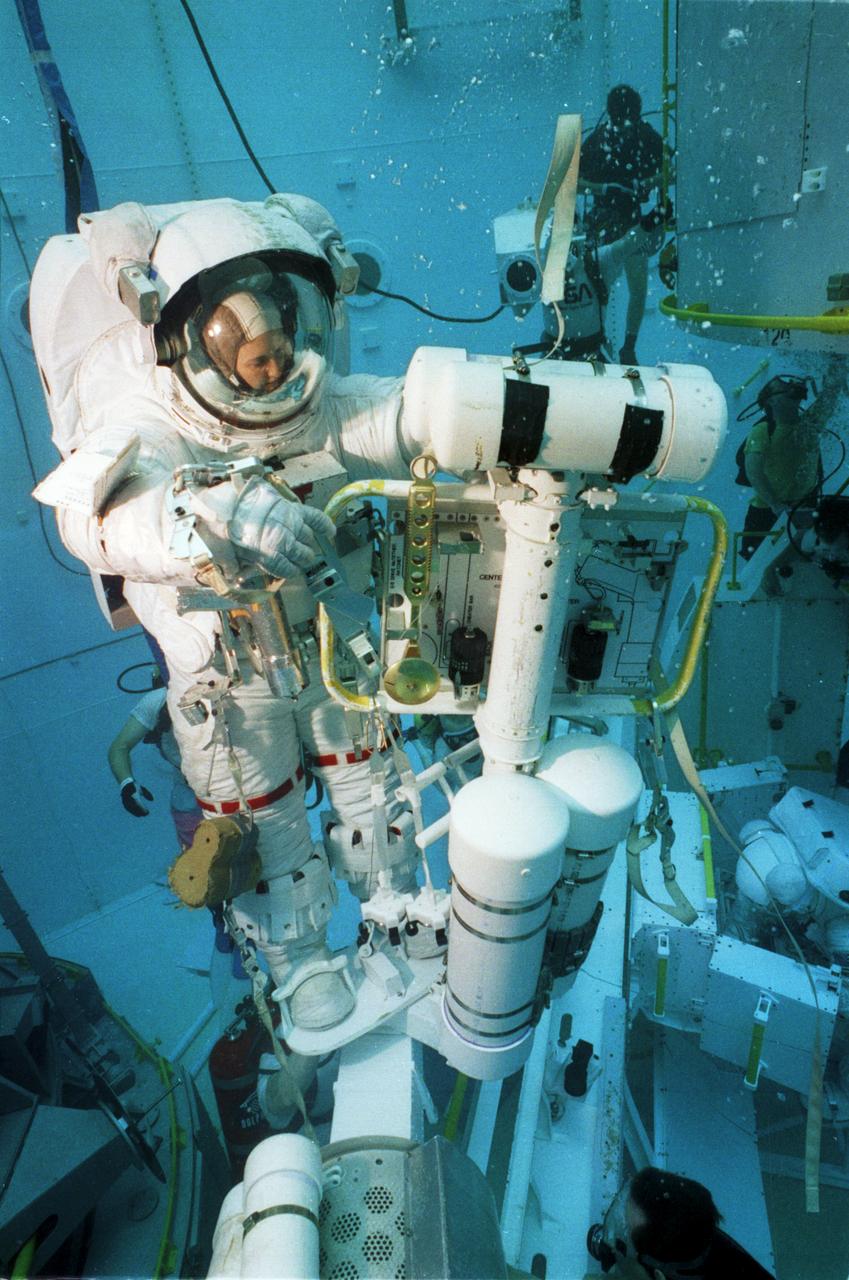
This close-up of astronaut and mission specialist, Kathryn Thornton, was captured under water in the Marshall Space Flight Center (MSFC) Neural Buoyancy Simulator (NBS) where she is participating in a training session for the STS-61 mission. The NBS provided the weightless environment encountered in space needed for testing and the practices of Extravehicular Activities (EVA). Launched on December 2, 1993 aboard the Space Shuttle Orbiter Endeavor, STS-61 was the first Hubble Space Telescope (HST) serving mission. During the 2nd EVA of the mission, Thornton, along with astronaut and mission specialist Thomas Akers, performed the task of replacing the solar arrays. The EVA lasted 6 hours and 35 minutes.
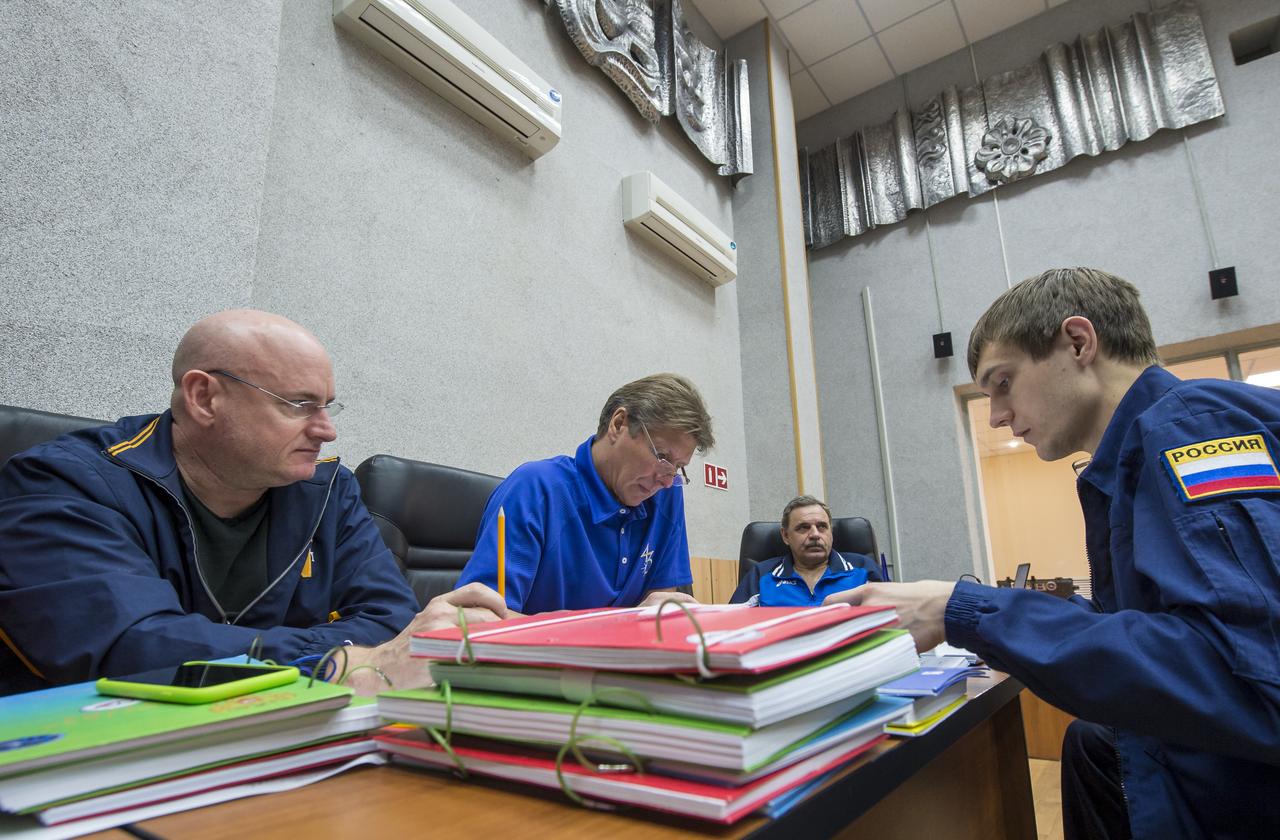
Expedition 43 NASA Astronaut Scott Kelly, left, Russian Cosmonauts Gennady Padalka, 2nd from left, and Mikhail Kornienko of the Russian Federal Space Agency (Roscosmos) attend a Soyuz TMA-16M Trajectory and Flight Plan briefing, Thursday, March 19, 2015 at Cosmonaut Hotel in Baikonur, Kazakhstan. Kelly, Padalka, and Kornienko of Roscosmos are preparing for launch to the International Space Station in their Soyuz TMA-16M spacecraft from the Baikonur Cosmodrome in Kazakhstan March 28, Kazakh time. As the one-year crew, Kelly and Kornienko will return to Earth on Soyuz TMA-18M in March 2016. Photo Credit: (NASA/Bill Ingalls)
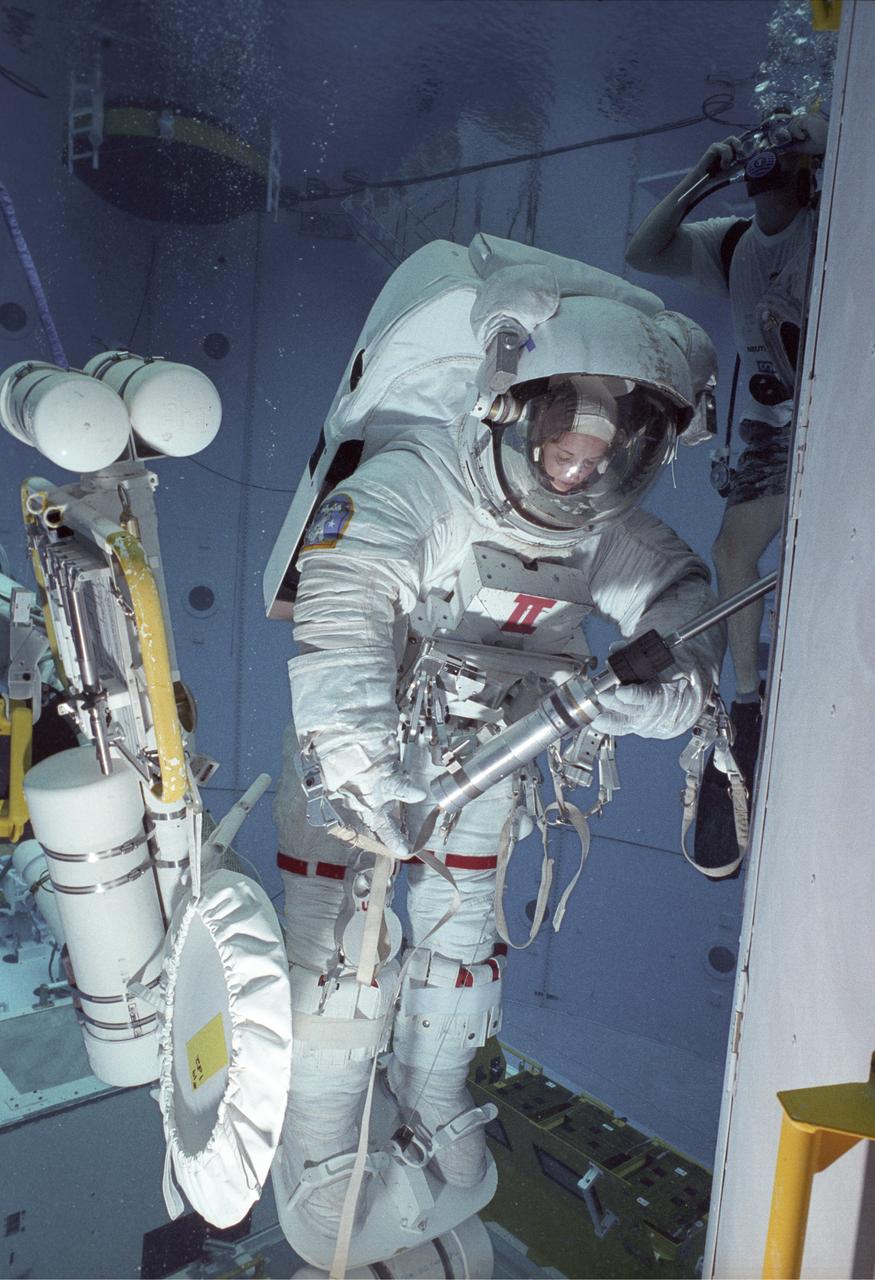
This close-up of astronaut and mission specialist Kathryn Thornton was captured under water in the Marshall Space Flight Center (MSFC) Neural Buoyancy Simulator (NBS) where she is participating in a training session for the STS-61 mission. The NBS provided the weightless environment encountered in space needed for testing and the practices of Extravehicular Activities (EVA). Launched on December 2, 1993 aboard the Space Shuttle Orbiter Endeavor, STS-61 was the first Hubble Space Telescope (HST) serving mission. During the 2nd EVA of the mission, Thornton, along with astronaut and mission specialist Thomas Akers, performed the task of replacing the solar arrays. The EVA lasted 6 hours and 35 minutes.

The Ohio State University President E. Gordon Gee, left, Apollo 11 Astronaut Neil Armstrong, 2nd from left, Former space shuttle astronaut and former Under Secretary of the Air Force Dr. Ron Sega, and Captain Mark Kelly, commander of the space shuttle Endeavour’s final mission and husband of retired U.S. Representative Gabrielle Giffords, right, talk prior to a reception at Ohio State University honoring the 50th anniversary of John Glenn's historic flight aboard Friendship 7 Monday, Feb. 20, 2012, in Columbus, Ohio. Glenn was the first American to orbit Earth. Photo Credit: (NASA/Bill Ingalls)

2187: At the Gagarin Cosmonaut Training Center in Star City, Russia, Expedition 41/42 Flight Engineer Barry Wilmore of NASA is introduced to the media Sept. 5 at a crew news conference. His crewmates, Soyuz Commander Alexander Samokutyaev of the Russian Federal Space Agency (Roscosmos, 2nd from right) and Elena Serova of Roscosmos (far right) look on. The trio will launch from the Baikonur Cosmodrome in Kazakhstan on Sept. 26, Kazakh time, in their Soyuz TMA-14M spacecraft for a 5 ½ month mission on the International Space Station. Serova will become the fourth Russian woman to fly in space and the first Russian woman to conduct a long duration mission on the station. NASA/Stephanie Stoll
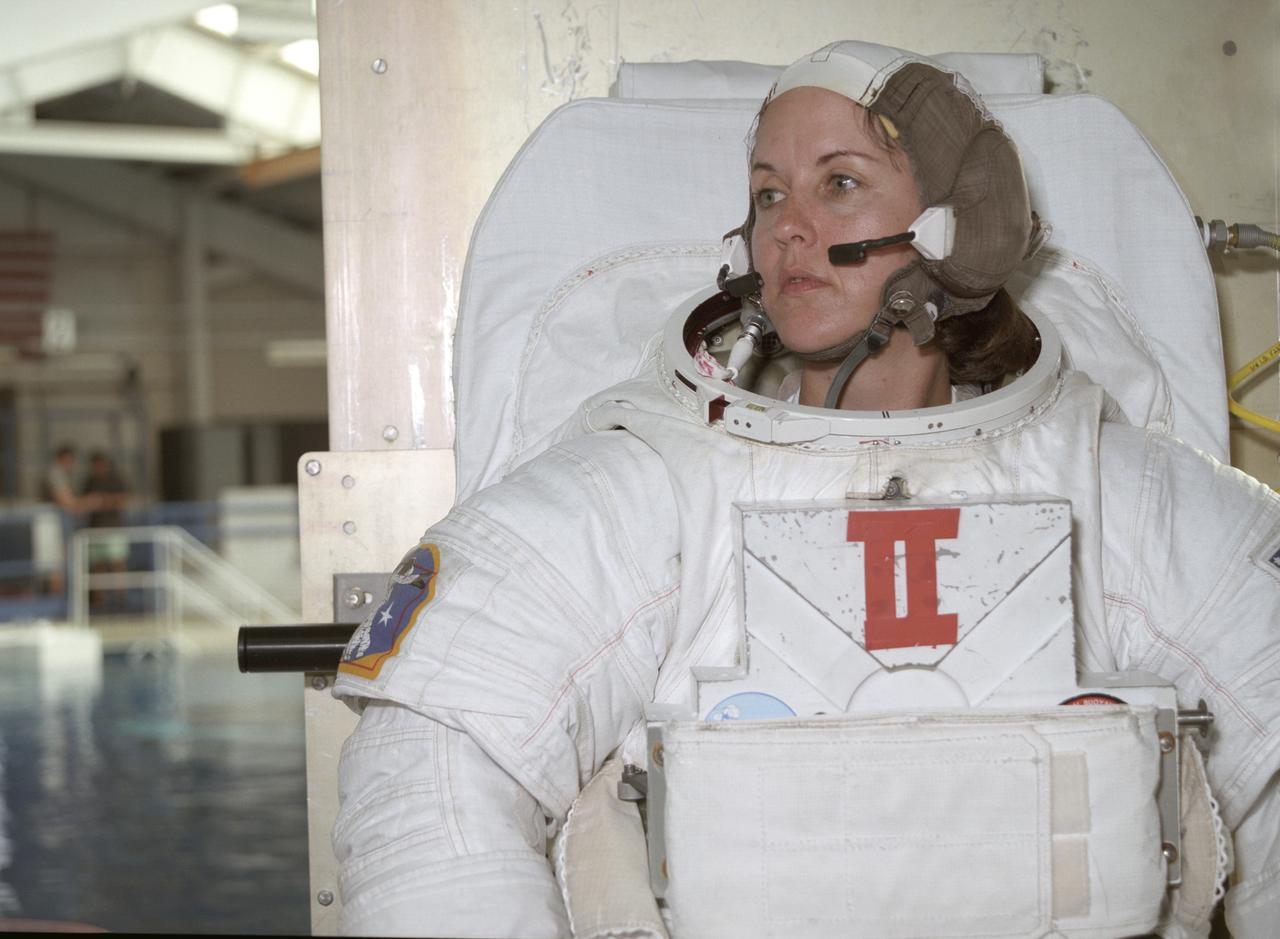
This close-up of astronaut and mission specialist Kathryn Thornton readies herself for submersion into the water in the Marshall Space Flight Center (MSFC) Neutral Buoyancy Simulator (NBS) where she is participating in a training session for the STS-61 mission. The NBS provided the weightless environment encountered in space needed for testing and the practices of Extravehicular Activities (EVA). Launched on December 2, 1993 aboard the Space Shuttle Orbiter Endeavor, STS-61 was the first Hubble Space Telescope (HST) serving mission. During the 2nd EVA of the mission, Thornton, along with astronaut and mission specialist Thomas Akers, performed the task of replacing the solar arrays. The EVA lasted 6 hours and 35 minutes.
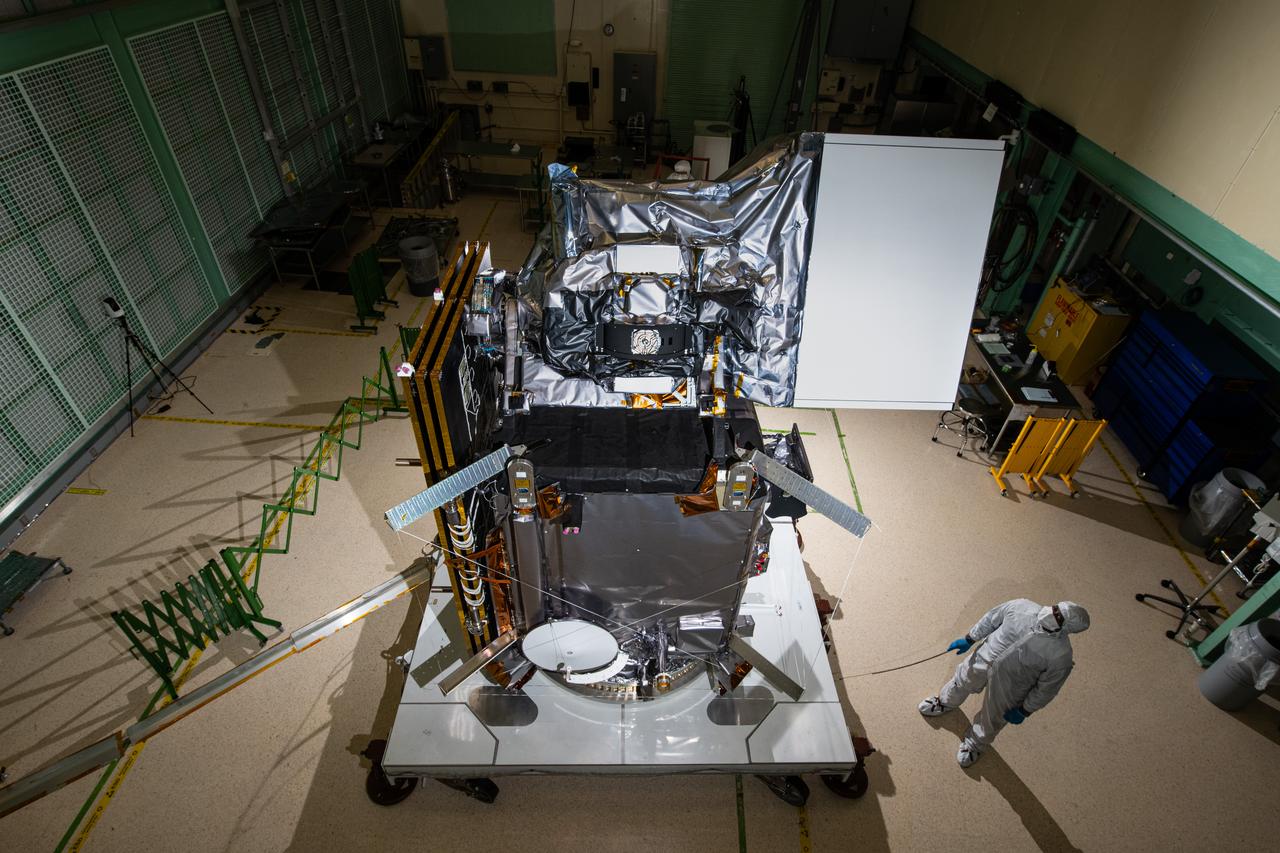
Quality Engineer Larry Morgan looks at the Plankton, Aerosol, Cloud, ocean Ecosystem (PACE) observatory in the cleanroom at NASA's Goddard Space Flight Center in Greenbelt, Maryland on November 2nd, 2023. PACE's unprecedented spectral coverage will provide the first-ever global measurements designed to identify phytoplankton community composition. The mission will make global ocean color measurements, using the Ocean Color Instrument (OCI), to provide extended data records on ocean ecology and global biogeochemistry along with polarimetry measurements, using the Spectro-polarimeter for Planetary Exploration (SPEXone) and the Hyper Angular Research Polarimeter (HARP2) to provide extended data records on clouds and aerosols. The Earth-observing satellite mission, built at Goddard Space Flight Center in Greenbelt, MD, will continue and advance observations of global ocean color, biogeochemistry, and ecology, as well as the carbon cycle, aerosols and clouds.
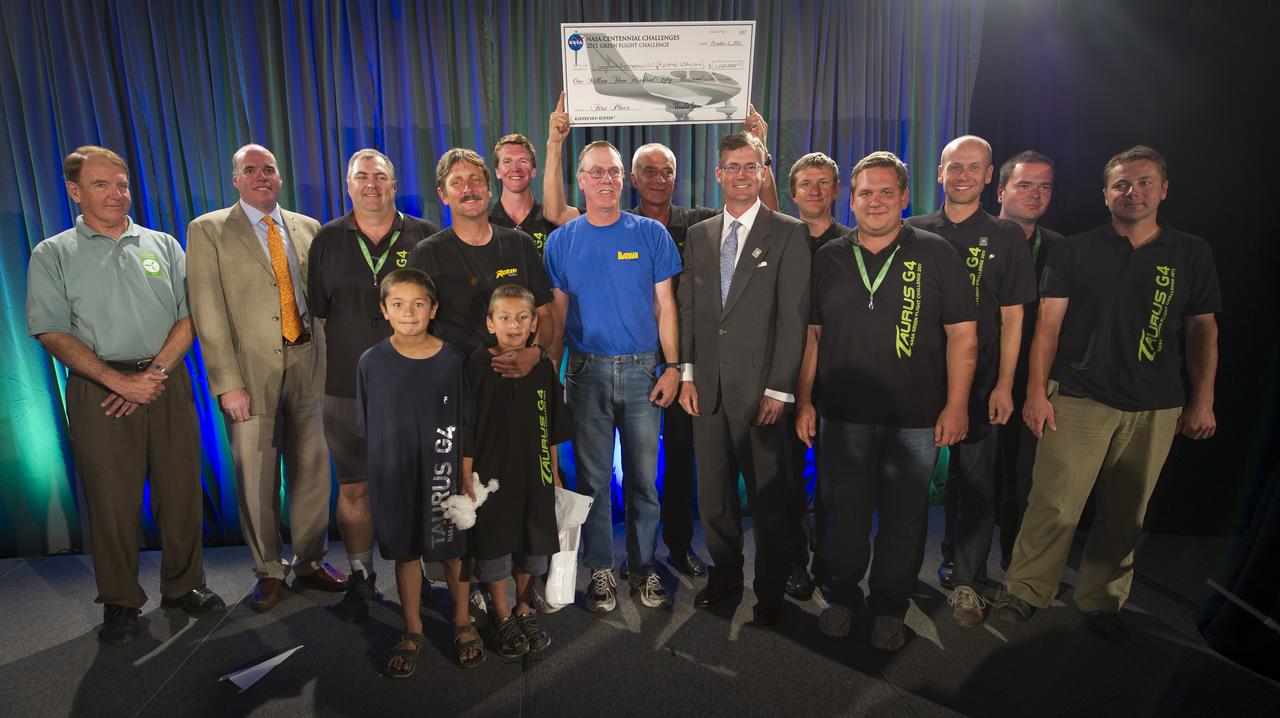
Comparative Aircraft Flight Efficiency (CAFE) Foundation President Brien A. Seeley M.D., left, NASA Acting Chief Technologist Joe Parrish, 2nd from left, and Pipistrel-USA Team Lead Jack Langelaan, center with suit, and the entire Pipistrel-USA, Taurus G4 aircraft team pose for a photograph shortly after winning the 2011 Green Flight Challenge, sponsored by Google, on Monday, Oct. 3, 2011 at the NASA Ames Research Center, Mountain View, Calif. The all electric Taurus G4 aircraft achieved the equivalency of more than 400 miles per gallon. NASA and CAFE held the challenge to advance technologies in fuel efficiency and reduced emissions with cleaner renewable fuels and electric aircraft. Photo Credit: (NASA/Bill Ingalls)
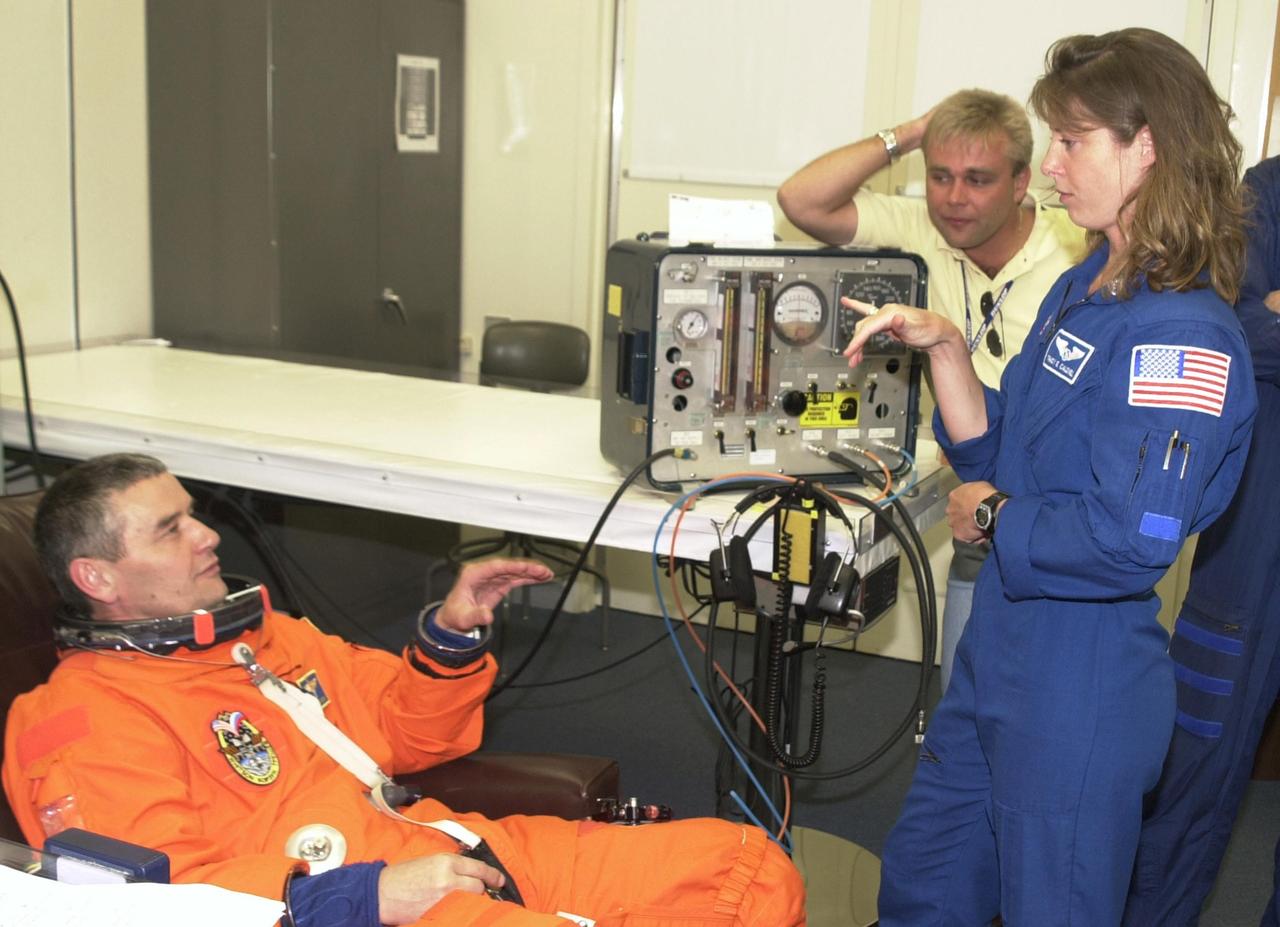
KENNEDY SPACE CENTER, FLA. -- Expedition 5 Commander Valeri Korzun (RSA), left, talks with astronaut Tracy Caldwell during suitup for the scheduled liftoff of Space Shuttle Endeavour at 7:44 p.m. EDT. This is Korzun's 2nd Shuttle flight. STS-111 is the second Utilization Flight to the International Space Station, carrying the Multi-Purpose Logistics Module Leonardo, the Mobile Base System (MBS), and a replacement wrist/roll joint for the Canadarm 2. The MBS will be installed on the Mobile Transporter to complete the Canadian Mobile Servicing System, or MSS. In addition, Expedition 5 is traveling on mission STS-111 to the International Space Station to replace the current resident crew, Expedition 4, who will return to Earth with the STS-111 crew
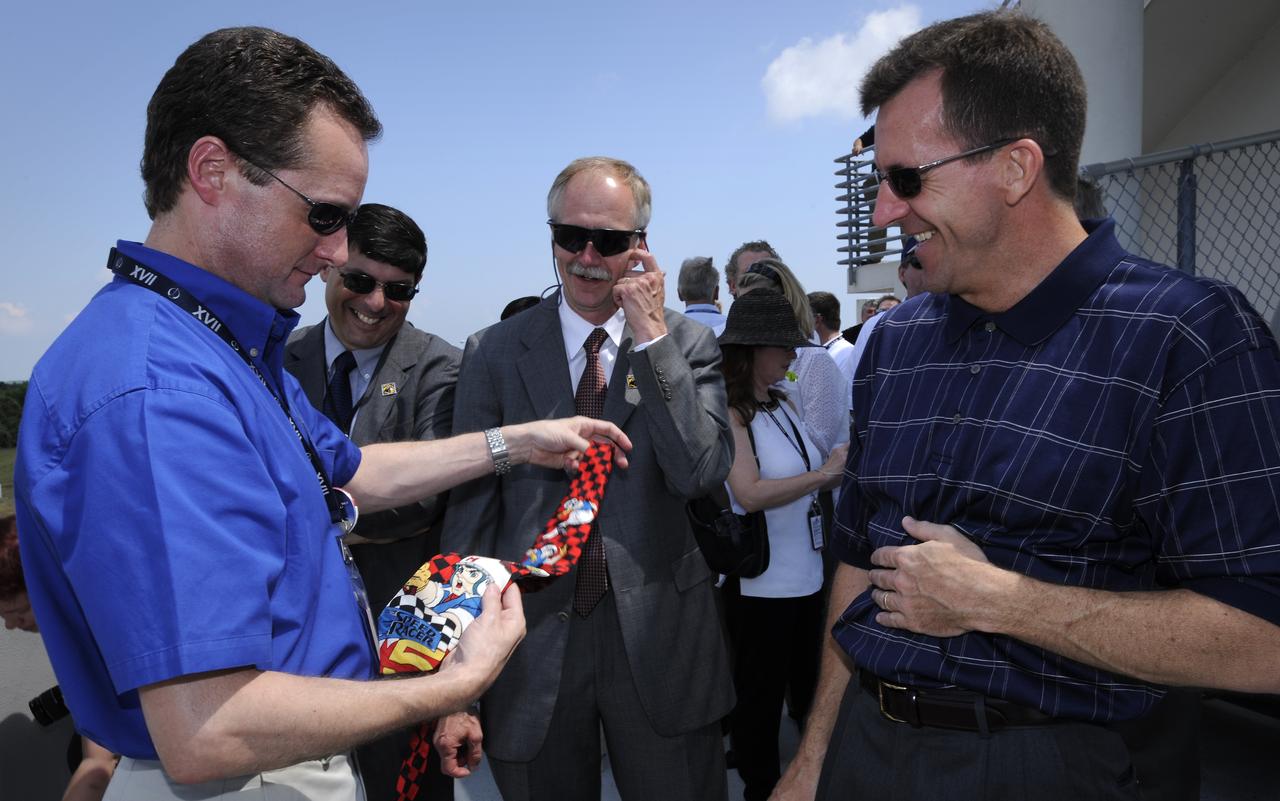
NASA Lead Shuttle Flight Director for STS-124 Matt Abbott, left, shows his lucky launch and landing tie to NASA Associate Administrator Chris Scolese, 2nd from left, NASA Associate Administrator for Space Operations Bill Gerstenmaier, 3rd from left, and NASA Deputy Shuttle Program Manager LeRoy Cain shortly after the space shuttle Discovery touched down at 11:15 a.m., Saturday, June 14, 2008, at the Kennedy Space Center in Cape Canaveral, Florida. During the 14-day STS-124 mission Discovery's crew installed the Japan Aerospace Exploration Agency's large Kibo laboratory and its remote manipulator system leaving a larger space station and one with increased science capabilities. Photo Credit: (NASA/Bill Ingalls)
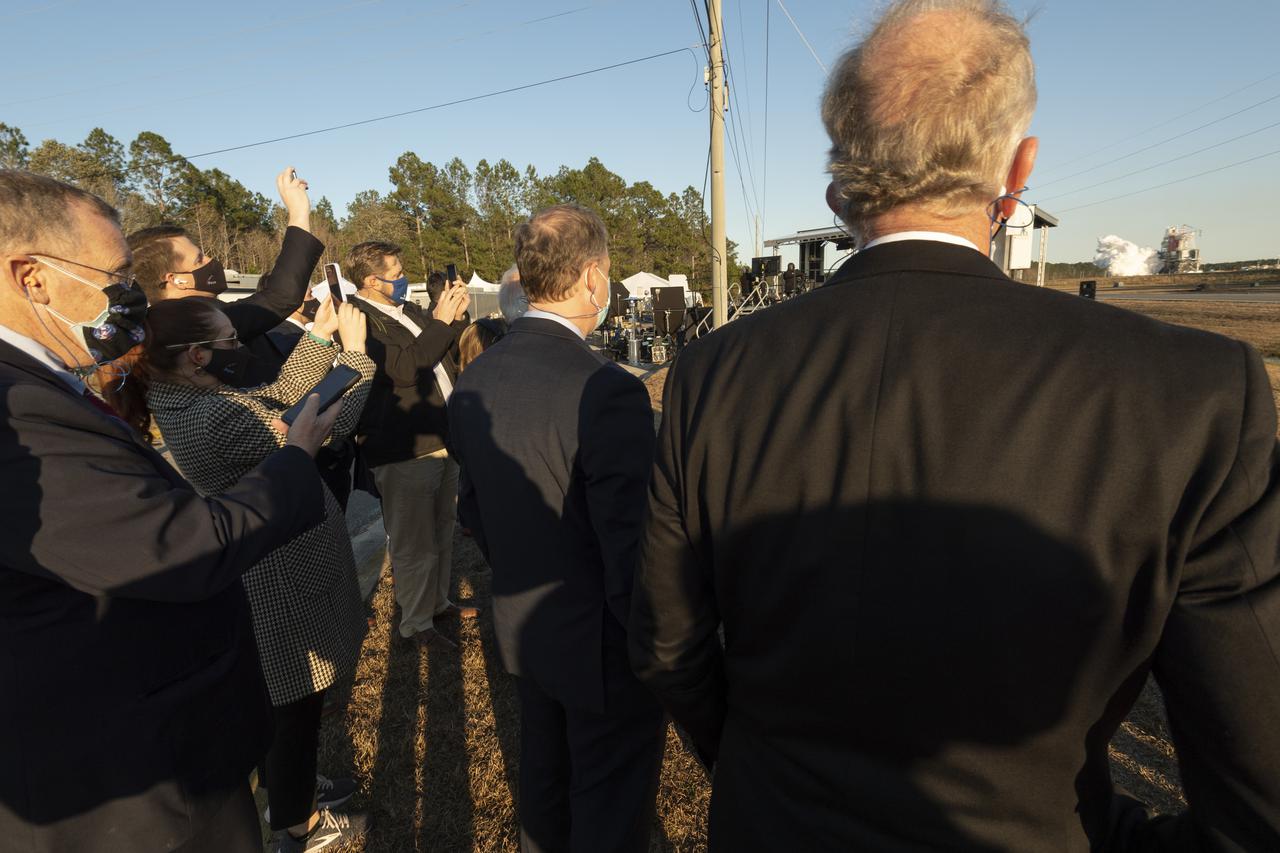
NASA Administrator Jim Bridenstine, 2nd from right, and NASA Deputy Administrator Jim Morhard, left, along with other guest watch as the core stage for the first flight of NASA’s Space Launch System rocket undergoes a scheduled eight minute duration hot fire test in the B-2 Test Stand, Saturday, Jan. 16, 2021, at NASA’s Stennis Space Center near Bay St. Louis, Mississippi. The four RS-25 engines fired for a little more than one minute and generated 1.6 million pounds of thrust. The hot fire is the final test of the Green Run test series, a comprehensive assessment of the Space Launch System’s core stage prior to launching the Artemis I mission to the Moon. Photo Credit: (NASA/Robert Markowitz)
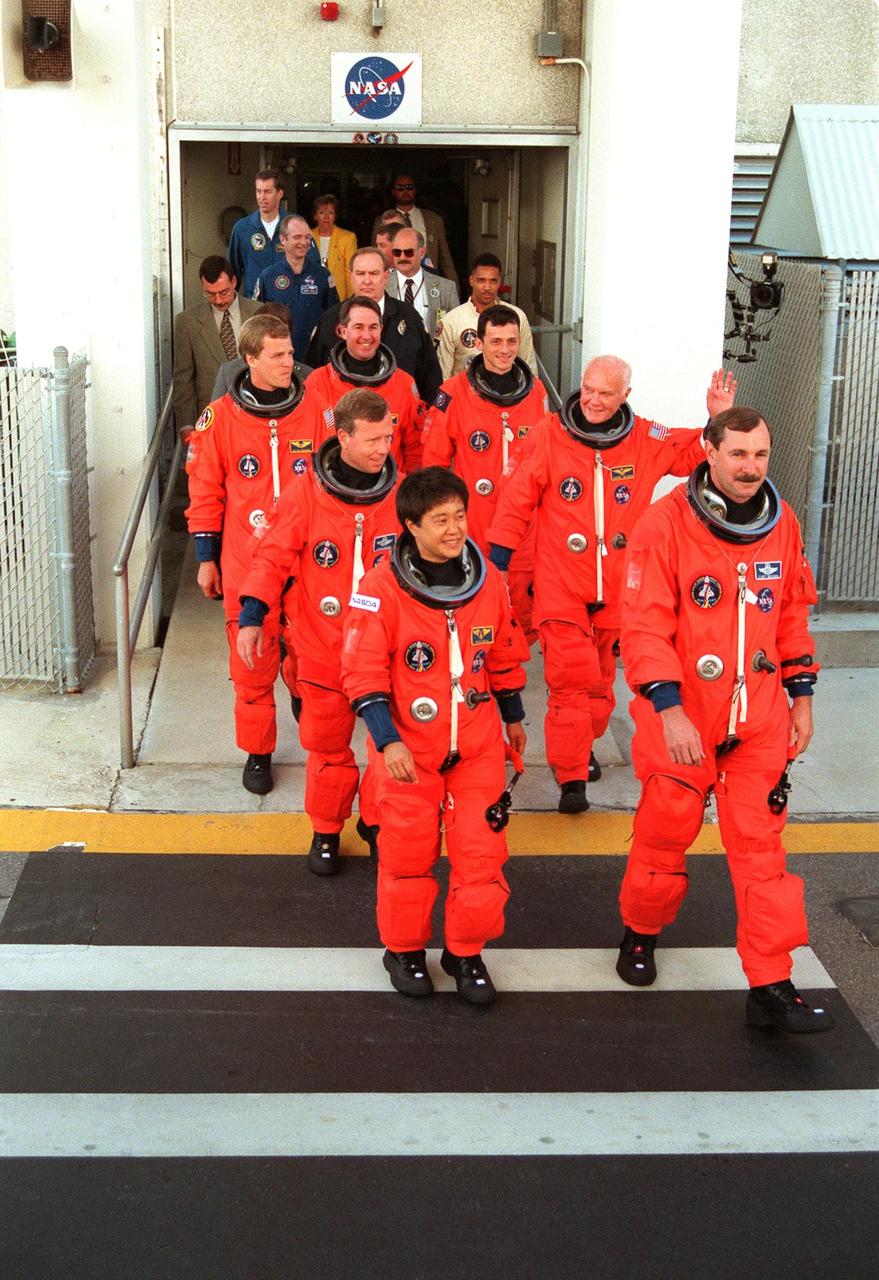
The STS-95 crew leave the Operations and Checkout Building in their flight suits for their trip to Launch Pad 39B. Leading the group to the Astrovan for the ride to Launch Pad 39B is Mission Commander Curtis L. Brown Jr. (far right) next to Payload Specialist Chiaki Mukai (left), with the National Space Development Agency of Japan (NASDA). Behind them are (2nd row) Pilot Steven W. Lindsey (left) and Payload Specialist John H. Glenn Jr. (right), senator from Ohio; (3rd row) Mission Specialists Scott E. Parazynski (left) and Pedro Duque of Spain (right), with the European Space Agency; and Mission Specialist Stephen K. Robinson at the rear. Targeted for launch at 2 p.m. EST on Oct. 29, the mission is expected to last 8 days, 21 hours and 49 minutes, and return to KSC at 11:49 a.m. EST on Nov. 7. The STS-95 mission includes research payloads such as the Spartan solar-observing deployable spacecraft, the Hubble Space Telescope Orbital Systems Test Platform, the International Extreme Ultraviolet Hitchhiker, as well as the SPACEHAB single module with experiments on space flight and the aging process
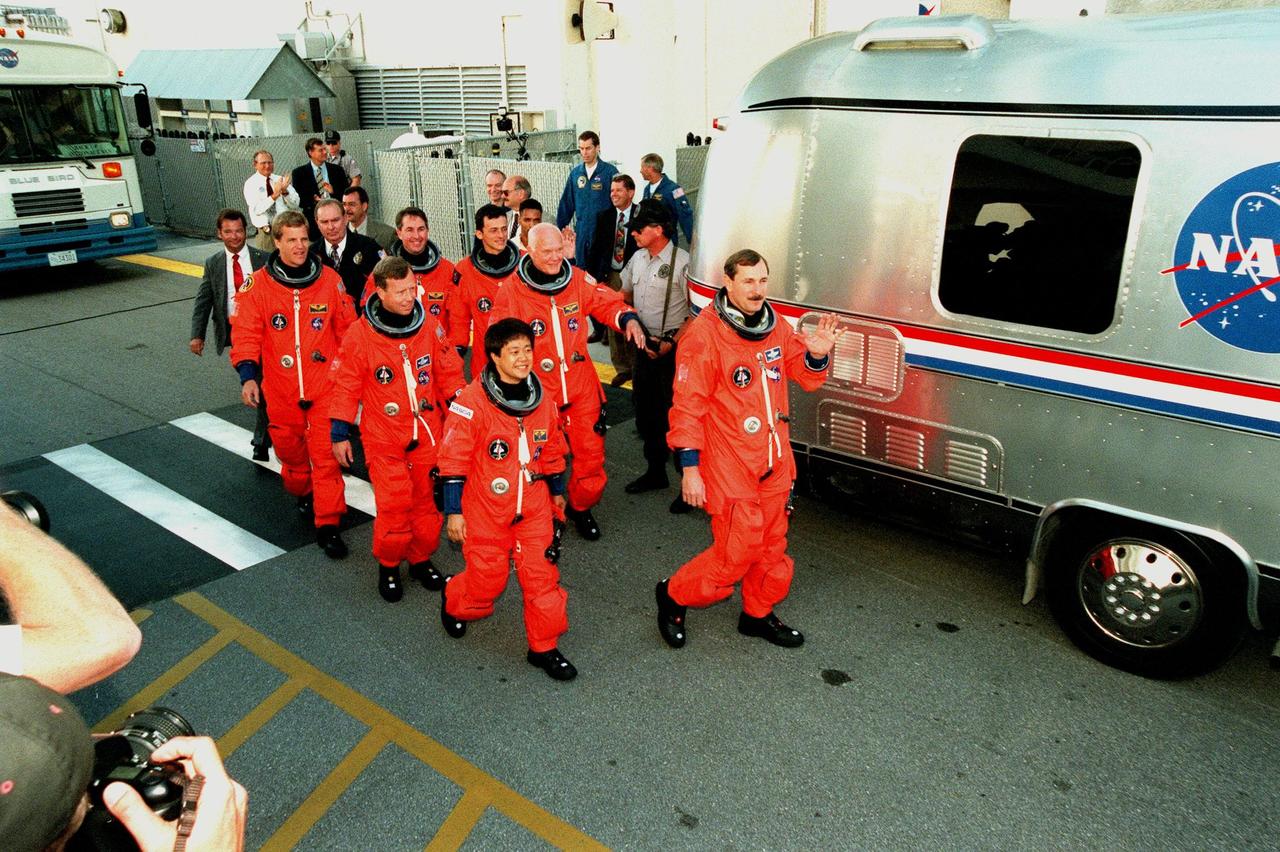
After leaving the Operations and Checkout Building, the STS-95 crew approach the Astrovan for their trip to Launch Pad 39B. Leading the group is Mission Commander Curtis L. Brown Jr. (far right), waving to the media and well-wishers; next him is Payload Specialist Chiaki Mukai (left), with the National Space Development Agency of Japan (NASDA). Behind them are (2nd row) Pilot Steven W. Lindsey (left) and Payload Specialist John H. Glenn Jr. (right), senator from Ohio; (3rd row) Mission Specialists Scott E. Parazynski , Stephen K. Robinson and Pedro Duque of Spain (right), with the European Space Agency. Targeted for launch at 2 p.m. EST on Oct. 29, the mission is expected to last 8 days, 21 hours and 49 minutes, and return to KSC at 11:49 a.m. EST on Nov. 7. The STS-95 mission includes research payloads such as the Spartan solar-observing deployable spacecraft, the Hubble Space Telescope Orbital Systems Test Platform, the International Extreme Ultraviolet Hitchhiker, as well as the SPACEHAB single module with experiments on space flight and the aging process
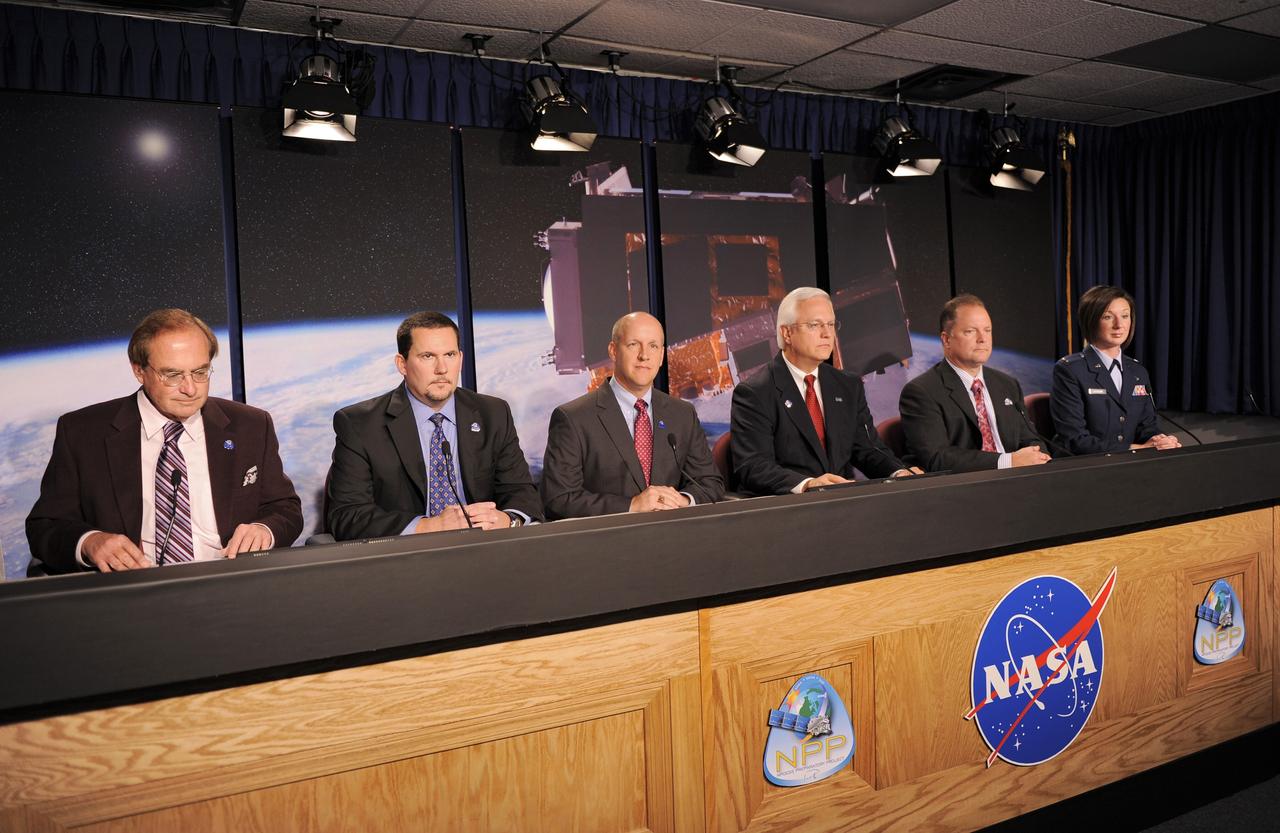
VANDENBERG AIR FORCE BASE, Calif. -- Participants in the prelaunch news conference for NASA’s National Polar-orbiting Operational Environmental Satellite System Preparatory Project (NPP) spacecraft prepare to address members of the news media gathered at Vandenberg Air Force Base, Calif. Panelists are, from left, George Diller, NASA launch commentator, Andrew Carson, NPP program executive, NASA Headquarters, Tim Dunn, NASA launch director, Kennedy Space Center, Vernon Thorp, program manager, NASA missions, United Launch Alliance, Ken Schwer, NPP project manager, Goddard Space Flight Center, and 2nd Lt. Lisa Cochran, launch weather officer, 30th Operations Support Squadron, Vandenberg Air Force Base, Calif. NPP represents a critical first step in building the next-generation of Earth-observing satellites. NPP will carry the first of the new sensors developed for this satellite fleet, now known as the Joint Polar Satellite System (JPSS), to be launched in 2016. NPP is the bridge between NASA's Earth Observing System (EOS) satellites and the forthcoming series of JPSS satellites. The mission will test key technologies and instruments for the JPSS missions. NPP is targeted to launch Oct. 28 from Space Launch Complex-2 aboard a United Launch Alliance Delta II rocket. For more information, visit http://www.nasa.gov/NPP. Photo credit: NASA/VAFB
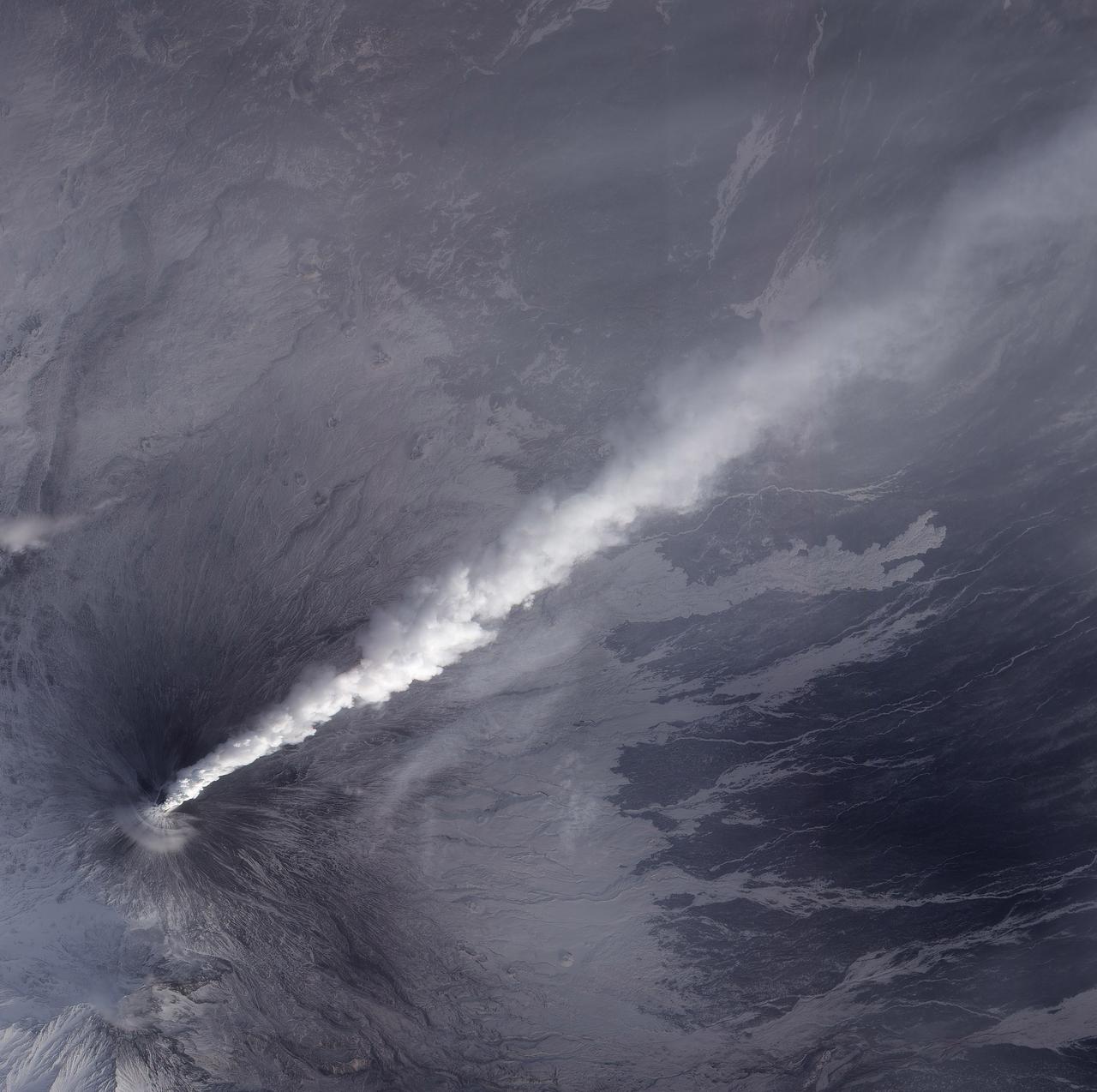
NASA image acquired December 4, 2010 After a respite of less than a month, Klyuchevskaya Volcano resumed erupting in late November 2010. The Global Volcanism Program reported several ash plumes that rose up to 7.9 kilometers (26,000 feet) above sea level from November 25–29. According to the Kamchatka Volcanic Eruption Response Team (KVERT) seismicity was “slightly above background levels” on November 26th and 27th, and they reported observations of strombolian activity on December 1st and 2nd. A plume of ash, steam, and other volcanic gases streamed from Klyuchevskaya on December 4, 2010, visible in this natural-color image acquired by the Advanced Land Imager (ALI) aboard the Earth Observing-1 (EO-1) satellite. In the large image, a much smaller plume is visible above neighboring Bezymianny Volcano. NASA Earth Observatory image by Jesse Allen & Robert Simmon, using ALI data from the NASA EO-1 team. Caption by Robert Simmon. Instrument: EO-1 - ALI Credit: <b><a href="http://www.earthobservatory.nasa.gov/" rel="nofollow"> NASA Earth Observatory</a></b> <b><a href="http://www.nasa.gov/centers/goddard/home/index.html" rel="nofollow">NASA Goddard Space Flight Center</a></b> enables NASA’s mission through four scientific endeavors: Earth Science, Heliophysics, Solar System Exploration, and Astrophysics. Goddard plays a leading role in NASA’s accomplishments by contributing compelling scientific knowledge to advance the Agency’s mission. <b>Follow us on <a href="http://twitter.com/NASA_GoddardPix" rel="nofollow">Twitter</a></b> <b>Join us on <a href="http://www.facebook.com/pages/Greenbelt-MD/NASA-Goddard/395013845897?ref=tsd" rel="nofollow">Facebook</a></b>
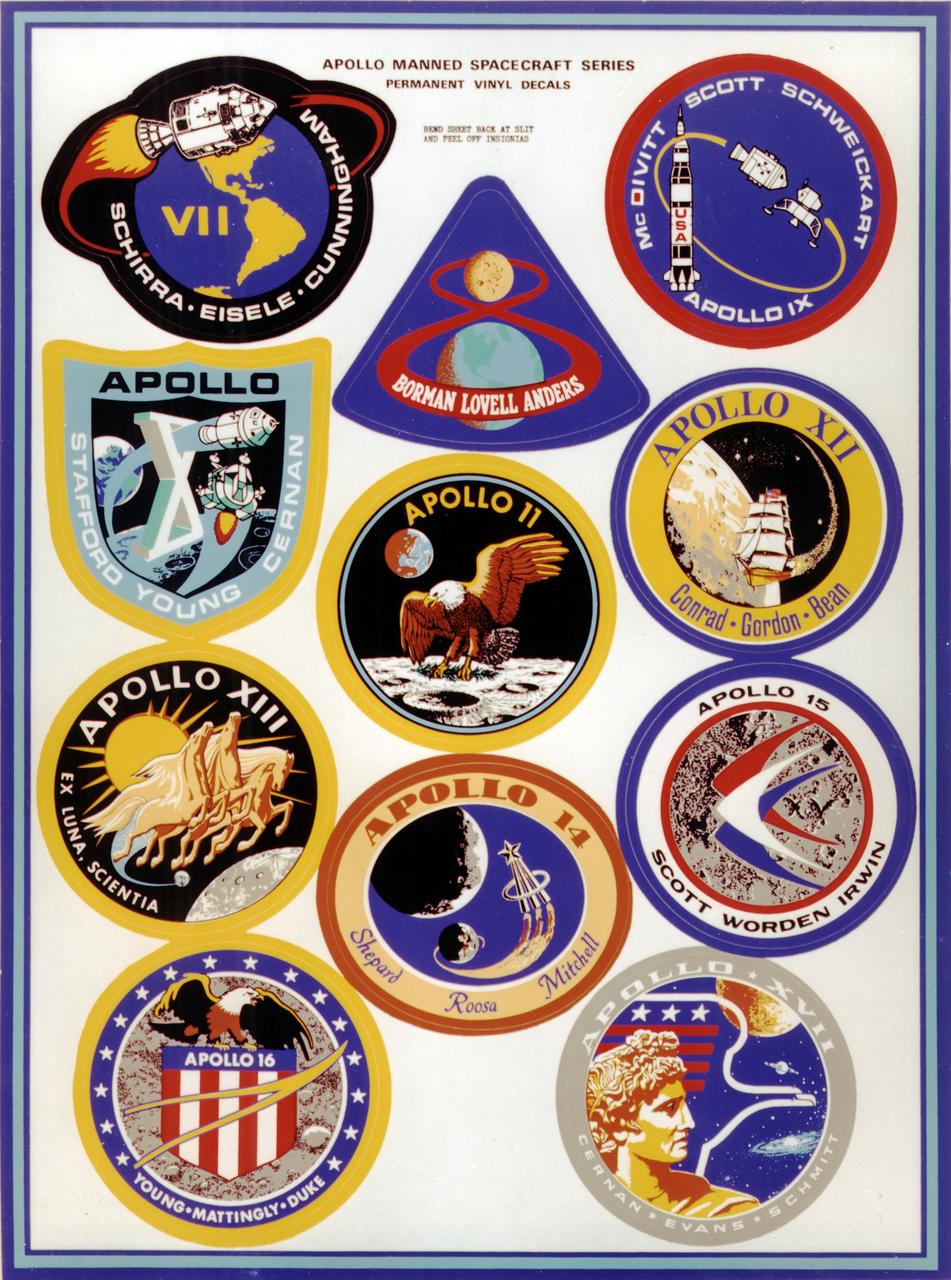
This montage depicts the flight crew patches for the manned Apollo 7 thru Apollo 17 missions. The Apollo 7 through 10 missions were basically manned test flights that paved the way for lunar landing missions. Primary objectives met included the demonstration of the Command Service Module (CSM) crew performance; crew/space vehicle/mission support facilities performance and testing during a manned CSM mission; CSM rendezvous capability; translunar injection demonstration; the first manned Apollo docking, the first Apollo Extra Vehicular Activity (EVA), performance of the first manned flight of the lunar module (LM); the CSM-LM docking in translunar trajectory, LM undocking in lunar orbit, LM staging in lunar orbit, and manned LM-CSM docking in lunar orbit. Apollo 11 through 17 were lunar landing missions with the exception of Apollo 13 which was forced to circle the moon without landing due to an onboard explosion. The craft was,however, able to return to Earth safely. Apollo 11 was the first manned lunar landing mission and performed the first lunar surface EVA. Landing site was the Sea of Tranquility. A message for mankind was delivered, the U.S. flag was planted, experiments were set up and 47 pounds of lunar surface material was collected for analysis back on Earth. Apollo 12, the 2nd manned lunar landing mission landed in the Ocean of Storms and retrieved parts of the unmanned Surveyor 3, which had landed on the Moon in April 1967. The Apollo Lunar Surface Experiments Package (ALSEP) was deployed, and 75 pounds of lunar material was gathered. Apollo 14, the 3rd lunar landing mission landed in Fra Mauro. ALSEP and other instruments were deployed, and 94 pounds of lunar materials were gathered, using a hand cart for first time to transport rocks. Apollo 15, the 4th lunar landing mission landed in the Hadley-Apennine region. With the first use of the Lunar Roving Vehicle (LRV), the crew was bale to gather 169 pounds of lunar material. Apollo 16, the 5th lunar landing mission, landed in the Descartes Highlands for the first study of highlands area. Selected surface experiments were deployed, the ultraviolet camera/spectrograph was used for first time on the Moon, and the LRV was used for second time for a collection of 213 pounds of lunar material. The Apollo program came to a close with Apollo 17, the 6th and final manned lunar landing mission that landed in the Taurus-Littrow highlands and valley area. This mission hosted the first scientist-astronaut, Schmitt, to land on the Moon. The 6th automated research station was set up, and 243 ponds of lunar material was gathered using the LRV.