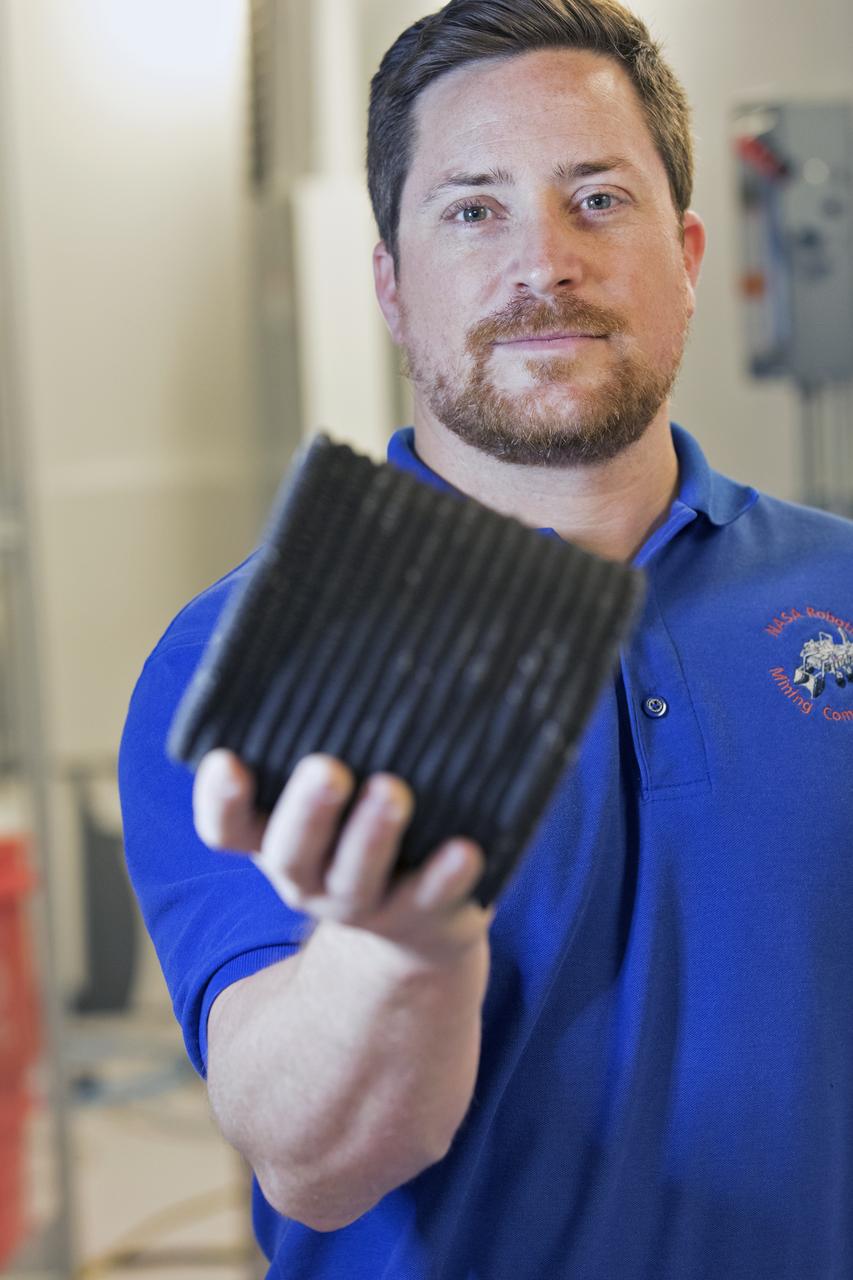
Nathan Gelino, a NASA research engineer at Kennedy Space Center in Florida displays a 3-D printed cylinder used for compression testing. Engineers at the center’s Swamp Works measured how much force it takes to break the structure before moving on to 3-D printing with a simulated lunar regolith, or dirt, and polymers. Next, Gelino and his group are working on a Zero Launch Mass 3-D printer that can be used for construction projects on the Moon and Mars, even for troops in remote locations here on Earth. Zero launch mass refers to the fact that the printer uses these pellets to prove that space explorers can use resources at their destination instead of taking everything with them, saving them launch mass and money. Gelino and his team are working with Marshall Space Flight Center in Huntsville, Alabama, and the U.S. Army Corps of Engineers to develop a system that can 3-D print barracks in remote locations on Earth, using the resources they have where they are.
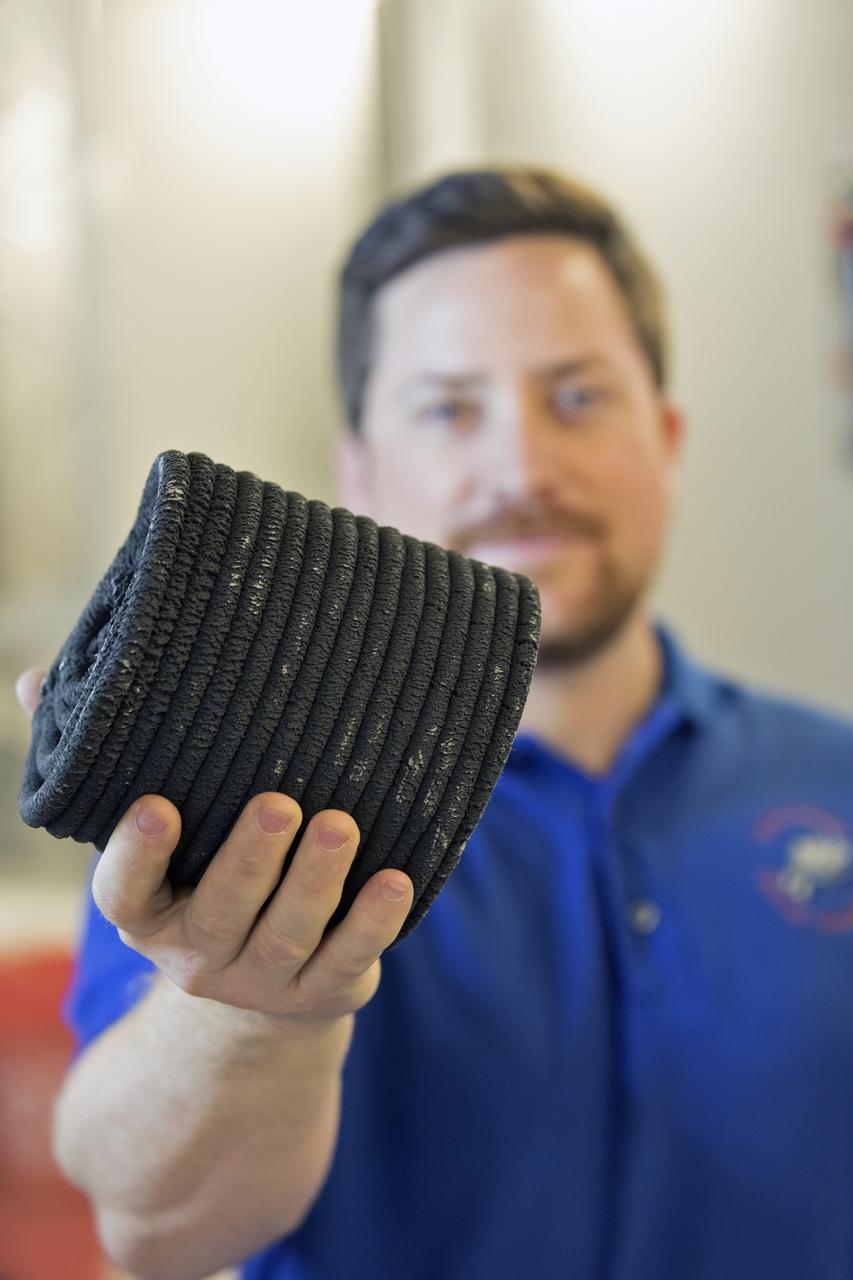
Nathan Gelino, a NASA research engineer at Kennedy Space Center in Florida displays a 3-D printed cylinder used for compression testing. Engineers at the center’s Swamp Works measured how much force it takes to break the structure before moving on to 3-D printing with a simulated lunar regolith, or dirt, and polymers. Next, Gelino and his group are working on a Zero Launch Mass 3-D printer that can be used for construction projects on the Moon and Mars, even for troops in remote locations here on Earth. Zero launch mass refers to the fact that the printer uses these pellets to prove that space explorers can use resources at their destination instead of taking everything with them, saving them launch mass and money. Gelino and his team are working with Marshall Space Flight Center in Huntsville, Alabama, and the U.S. Army Corps of Engineers to develop a system that can 3-D print barracks in remote locations on Earth, using the resources they have where they are.
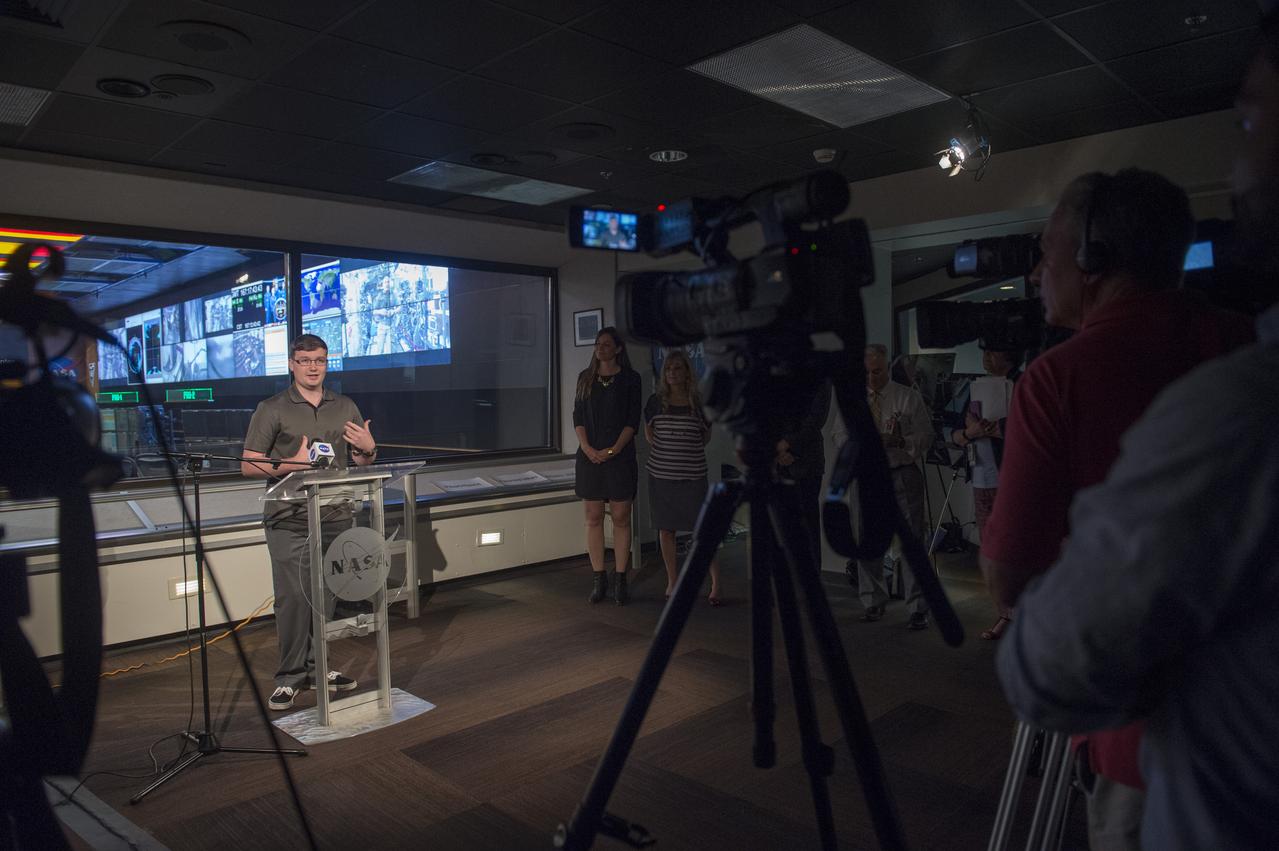
UAH ENGINEERING STUDENT ROBERT HILLAN TALKS TO SPACE STATION CREW MEMBERS ABOUT HIS WINNING 3-D PRINTED TOOL DESIGNED FOR USE ON ISS, AND IS INTERVIEWED BY LOCAL MEDIA
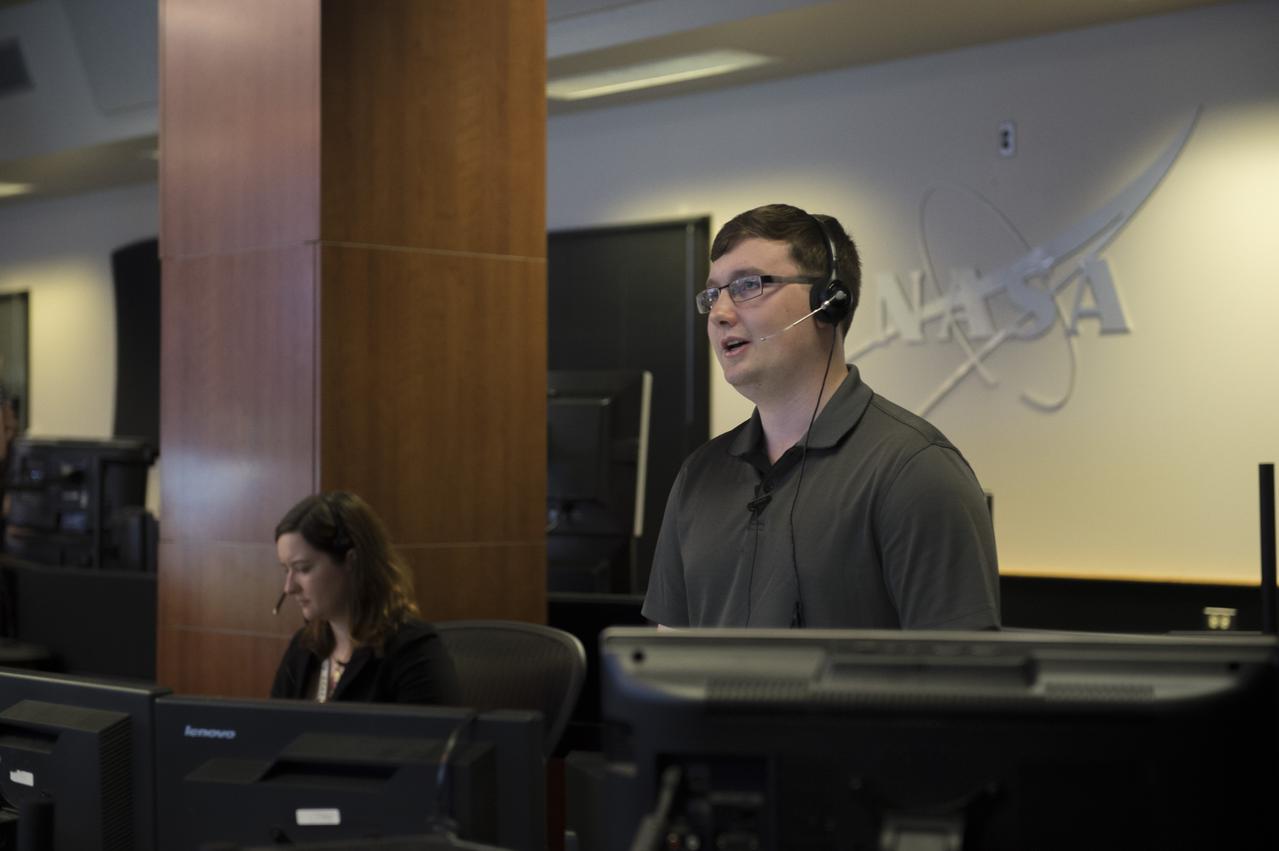
UAH ENGINEERING STUDENT ROBERT HILLAN TALKS TO SPACE STATION CREW MEMBERS ABOUT HIS WINNING 3-D PRINTED TOOL DESIGNED FOR USE ON ISS, AND IS INTERVIEWED BY LOCAL MEDIA
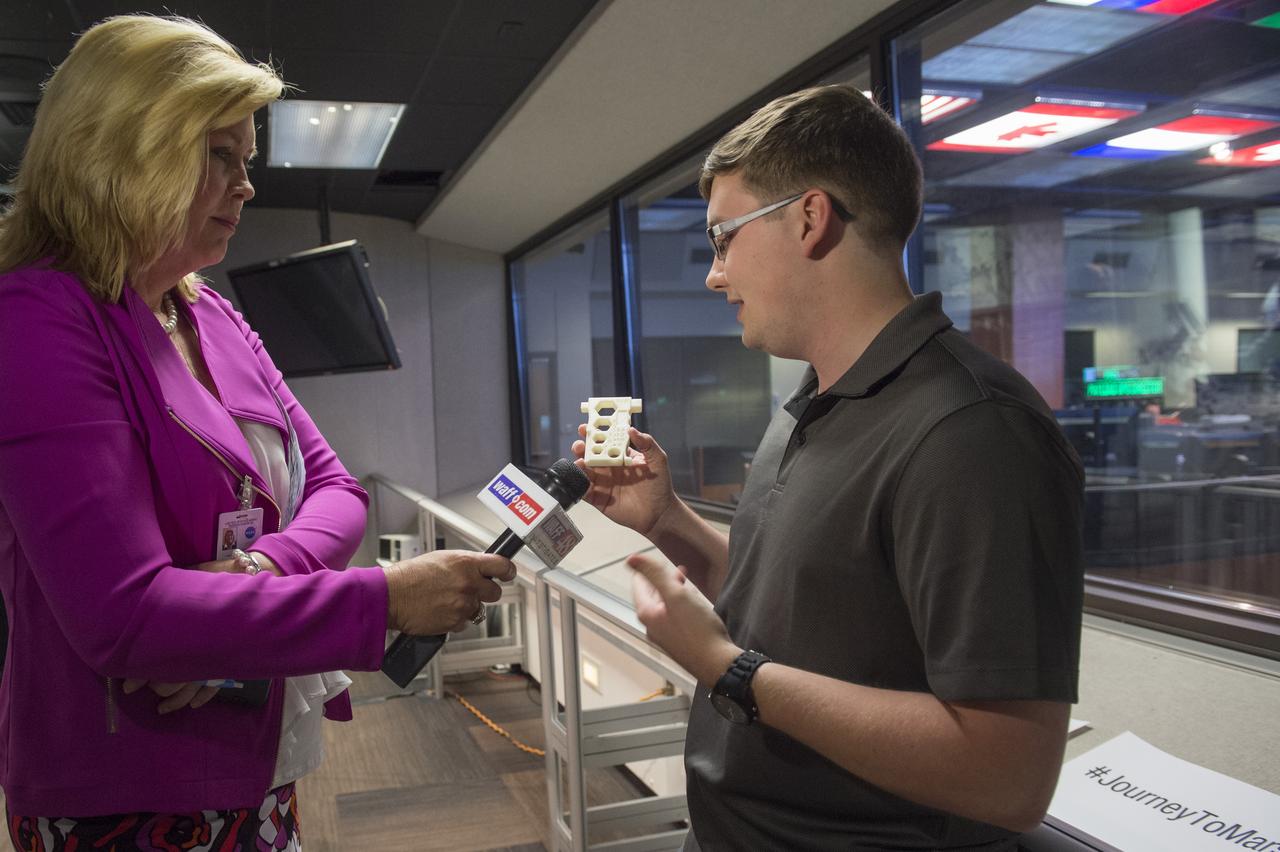
UAH ENGINEERING STUDENT ROBERT HILLAN TALKS TO SPACE STATION CREW MEMBERS ABOUT HIS WINNING 3-D PRINTED TOOL DESIGNED FOR USE ON ISS, AND IS INTERVIEWED BY LOCAL MEDIA
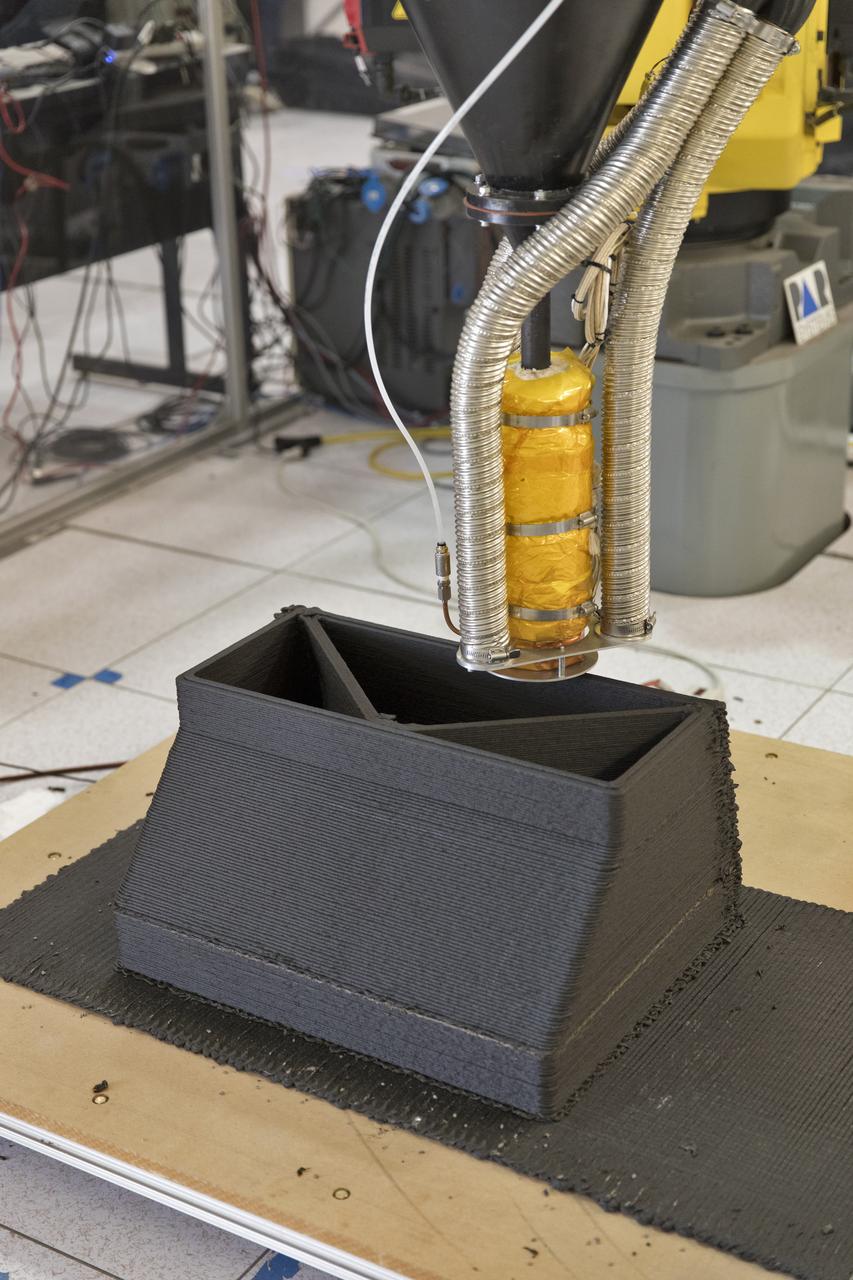
A Zero Launch Mass 3-D printer is being tested at the Swamp Works at NASA's Kennedy Space Center in Florida. The printer can be used for construction projects on the Moon and Mars. Zero launch mass refers to the fact that the printer uses pellets made from simulated lunar regolith, or dirt, and polymers. This will prove that space explorers can use resources at their destination instead of taking everything with them, saving them launch mass and money. The Kennedy team is working with Marshall Space Flight Center in Huntsville, Alabama, and the U.S. Army Corps of Engineers to develop a system that can 3-D print barracks in remote locations on Earth, using the resources they have where they are.
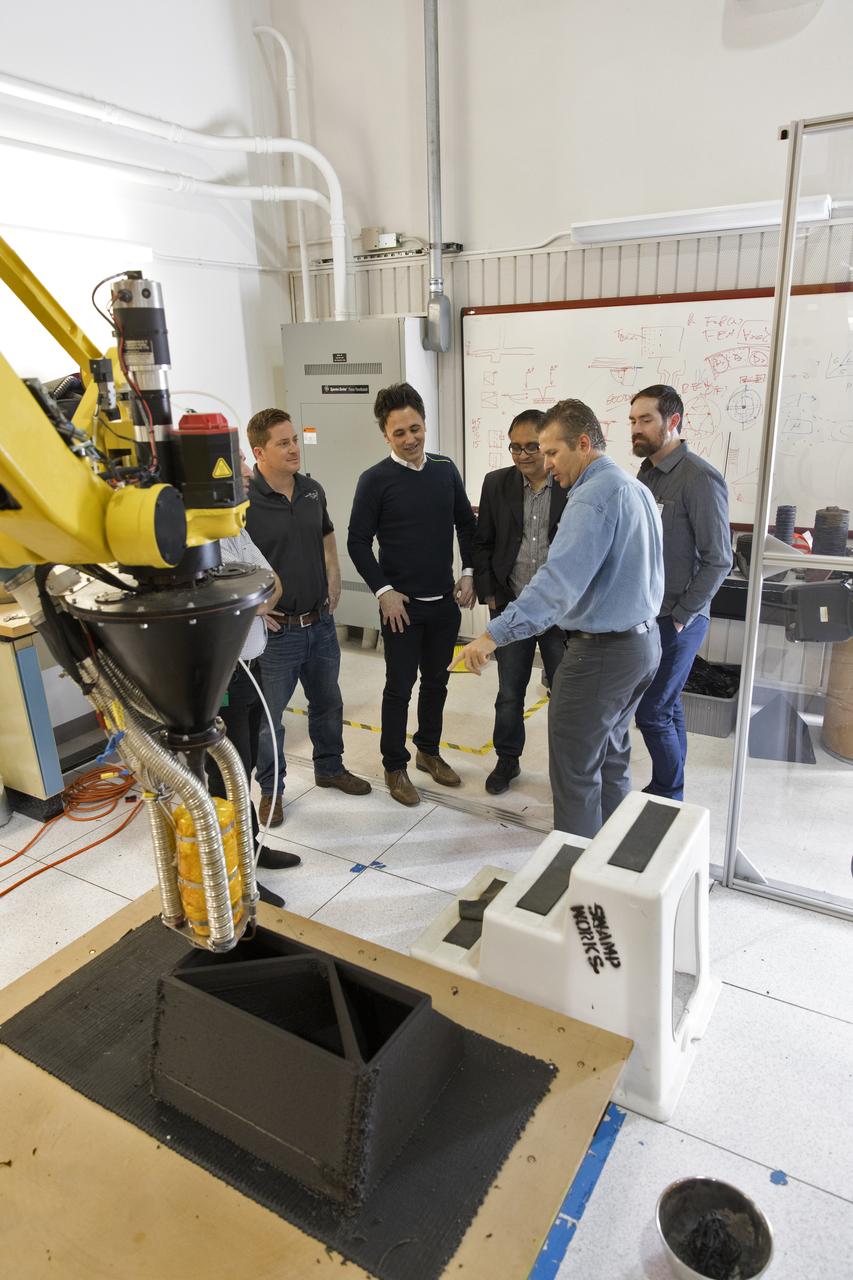
Researchers at NASA's Kennedy Space Center in Florida are developing a Zero Launch Mass 3-D printer at the center's Swamp Works. The printer can be used for construction projects on the Moon and Mars. Zero launch mass refers to the fact that the printer uses pellets made from simulated lunar regolith, or dirt, and polymers. This will prove that space explorers can use resources at their destination instead of taking everything with them, saving them launch mass and money. The Kennedy team is working with Marshall Space Flight Center in Huntsville, Alabama, and the U.S. Army Corps of Engineers to develop a system that can 3-D print barracks in remote locations on Earth, using the resources they have where they are.
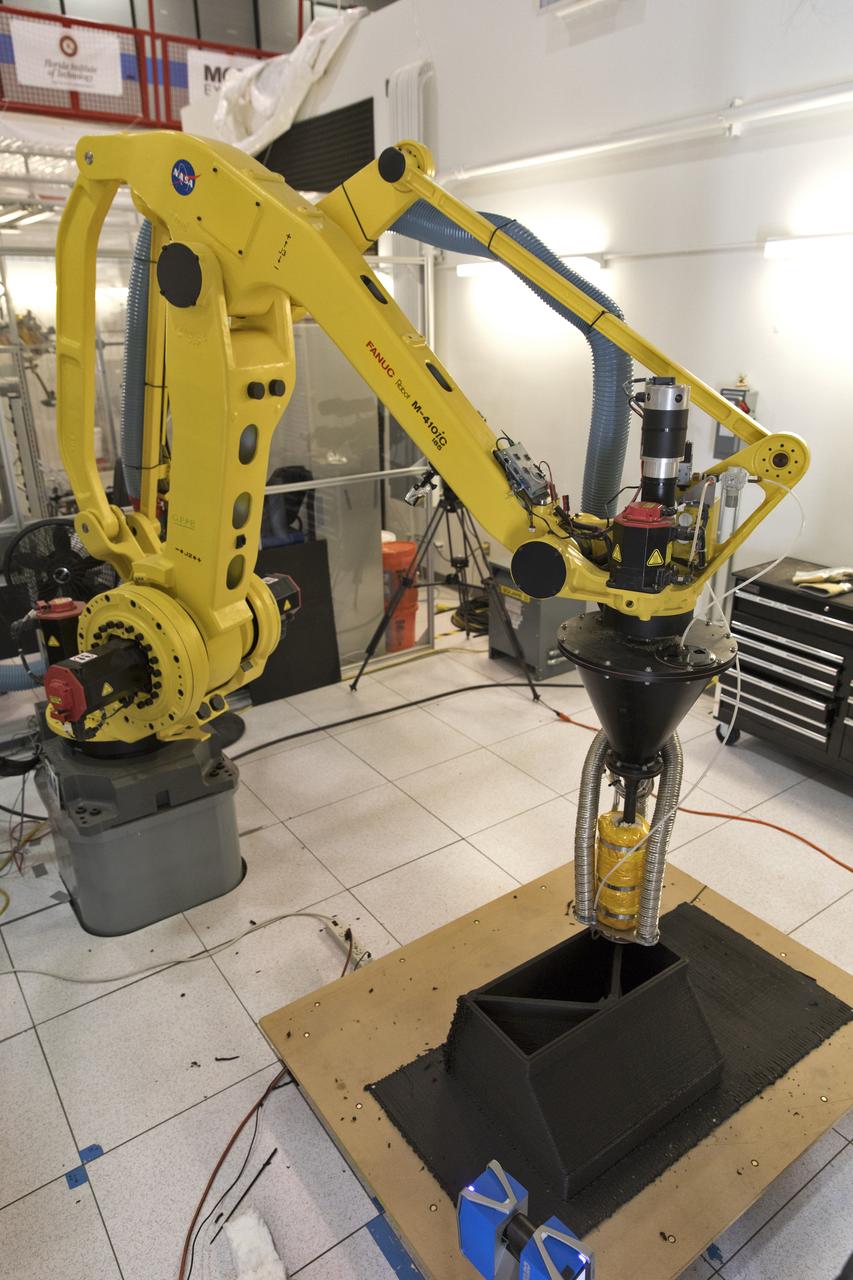
Researchers demonstrate a Zero Launch Mass 3-D printer in Swamp Works at NASA's Kennedy Space Center in Florida. The printer can be used for construction projects on the Moon and Mars. Zero launch mass refers to the fact that the printer uses pellets made from simulated lunar regolith, or dirt, and polymers. This will prove that space explorers can use resources at their destination instead of taking everything with them, saving them launch mass and money. The Kennedy team is working with Marshall Space Flight Center in Huntsville, Alabama, and the U.S. Army Corps of Engineers to develop a system that can 3-D print barracks in remote locations on Earth, using the resources they have where they are.
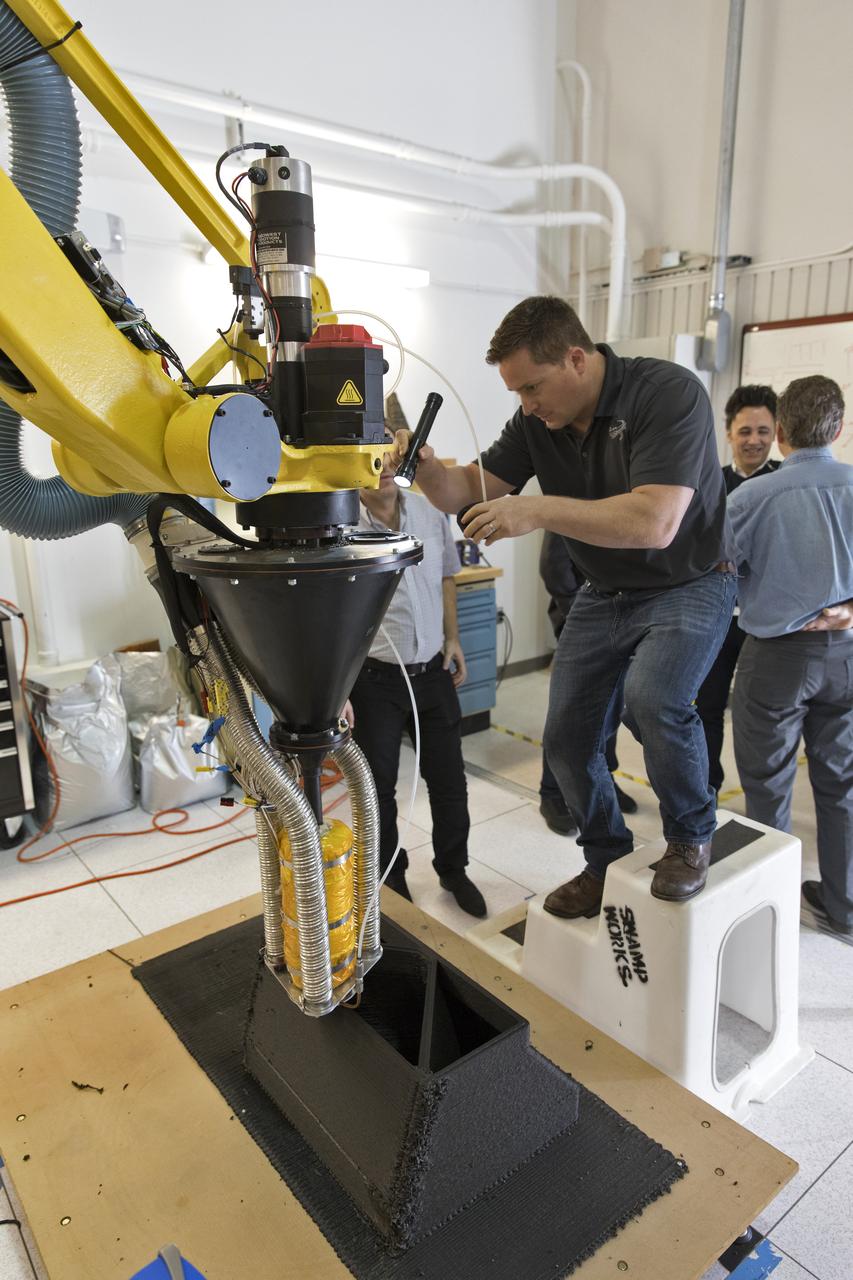
A Zero Launch Mass 3-D printer is being developed by researchers in Swamp Works at NASA's Kennedy Space Center in Florida. The printer can be used for construction projects on the Moon and Mars. Zero launch mass refers to the fact that the printer uses pellets made from simulated lunar regolith, or dirt, and polymers. This will prove that space explorers can use resources at their destination instead of taking everything with them, saving them launch mass and money. The Kennedy team is working with Marshall Space Flight Center in Huntsville, Alabama, and the U.S. Army Corps of Engineers to develop a system that can 3-D print barracks in remote locations on Earth, using the resources they have where they are.
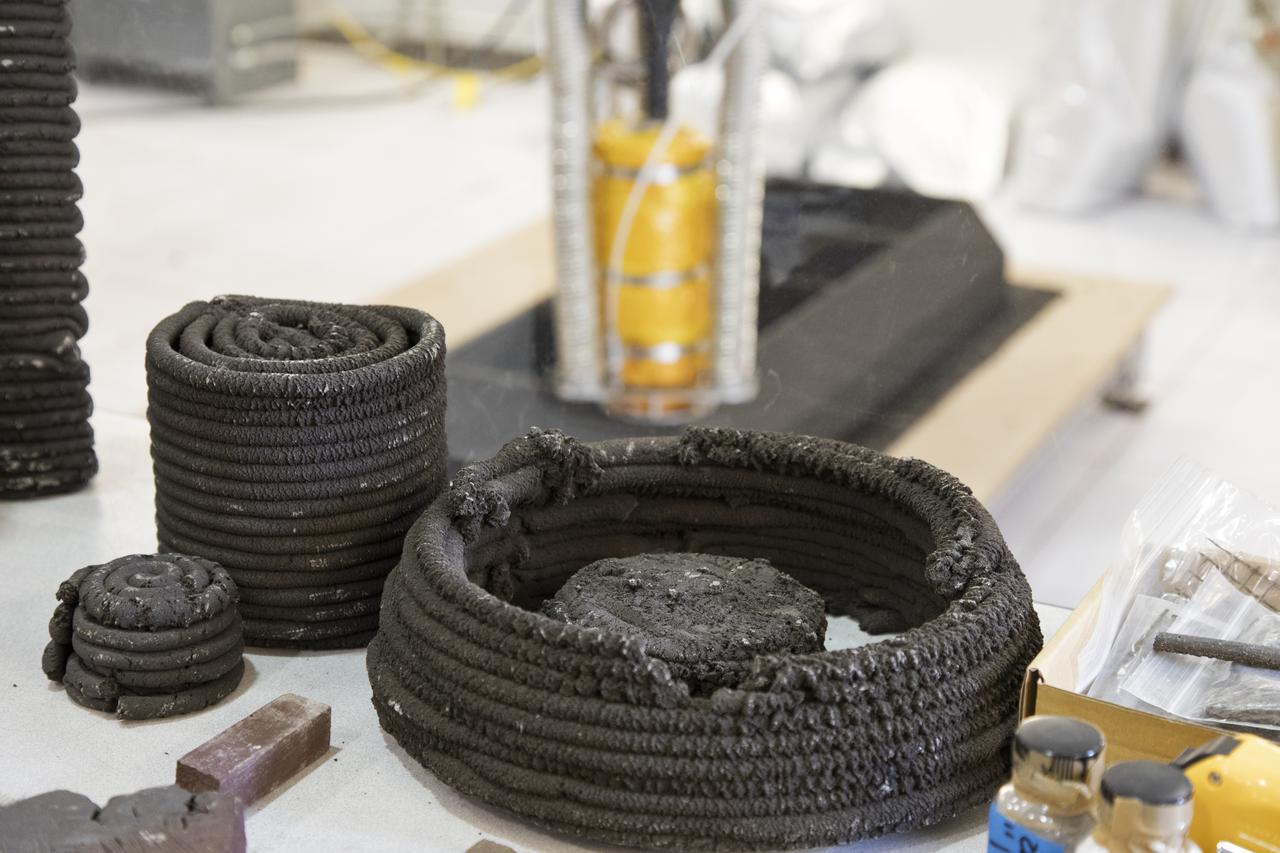
Pellets made from simulated lunar regolith, or dirt, and polymers are being used to test a Zero Launch Mass 3-D printer in the Swamp Works at NASA's Kennedy Space Center in Florida. The printer can be used for construction projects on the Moon and Mars, and even for troops in remote locations on Earth. Zero launch mass refers to the fact that the printer uses these pellets to prove that space explorers can use resources at their destination instead of taking everything with them, saving them launch mass and money. The group is working with Marshall Space Flight Center in Huntsville, Alabama, and the U.S. Army Corps of Engineers to develop a system that can 3-D print barracks in remote locations on Earth, using the resources they have where they are.
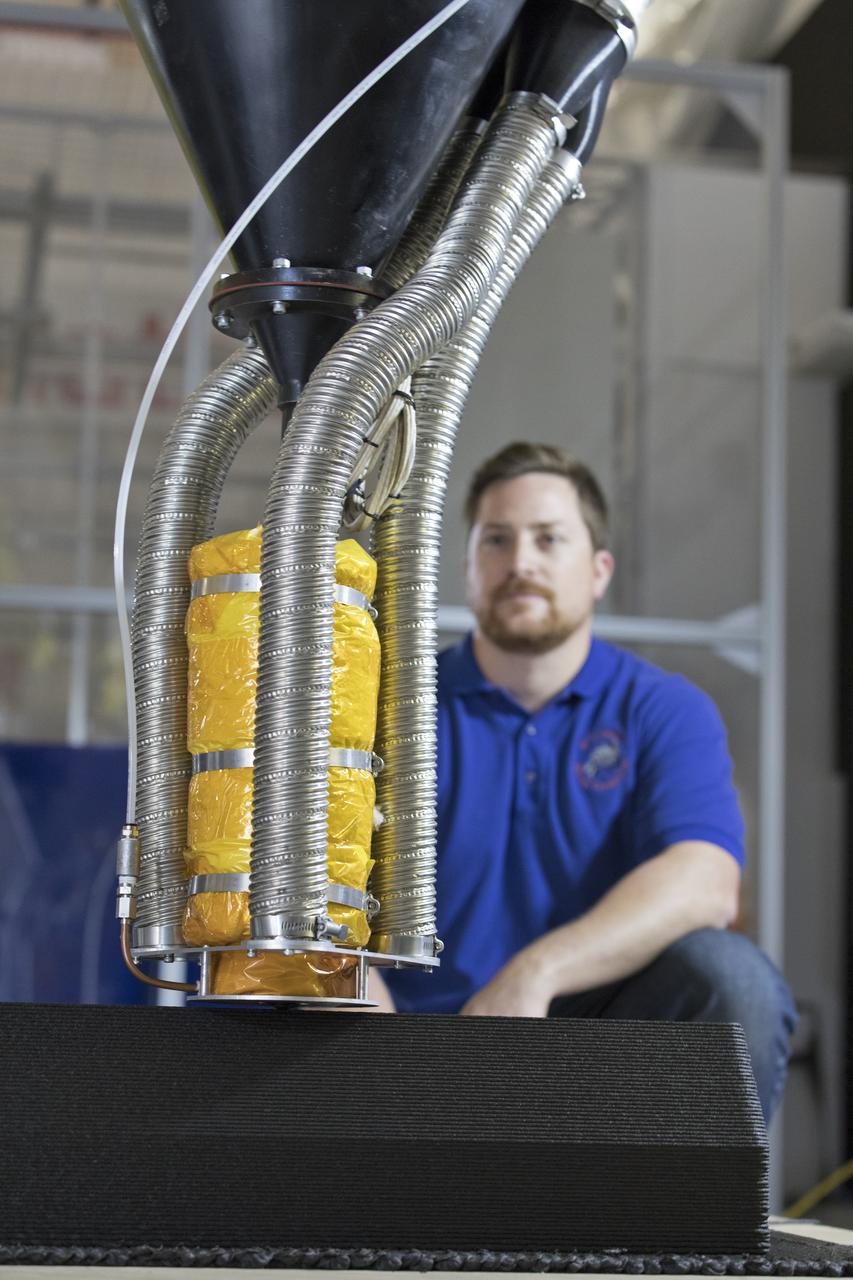
Nathan Gelino, a NASA research engineer at Kennedy Space Center in Florida, is working on a Zero Launch Mass 3-D printer in the center's Swamp Works that can be used for construction projects on the Moon and Mars, and even for troops in remote locations here on Earth. Zero launch mass refers to the fact that the printer uses pellets made from simulated lunar regolith, or dirt, and polymers to prove that space explorers can use resources at their destination instead of taking everything with them, saving them launch mass and money. Gelino and his team are working with Marshall Space Flight Center in Huntsville, Alabama, and the U.S. Army Corps of Engineers to develop a system that can 3-D print barracks in remote locations on Earth, using the resources they have where they are.
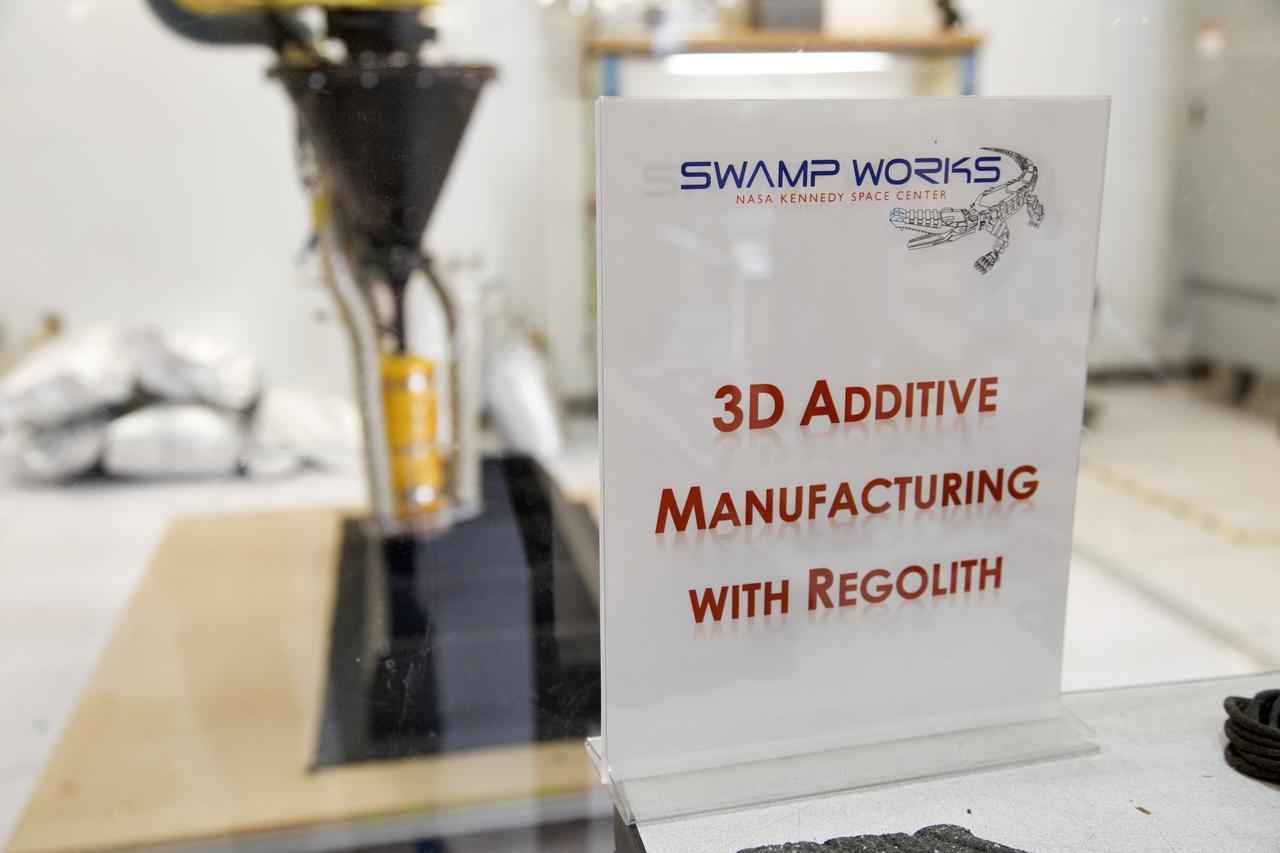
Research engineers at NASA's Kennedy Space Center in Florida are working on a Zero Launch Mass 3-D printer at the center's Swamp Works. The printer can be used for construction projects on the Moon and Mars, and even for troops in remote locations on Earth. Zero launch mass refers to the fact that the printer uses pellets made from simulated lunar regolith, or dirt, and polymers to prove that space explorers can use resources at their destination instead of taking everything with them, saving them launch mass and money. The group is working with Marshall Space Flight Center in Huntsville, Alabama, and the U.S. Army Corps of Engineers to develop a system that can 3-D print barracks in remote locations on Earth, using the resources they have where they are.
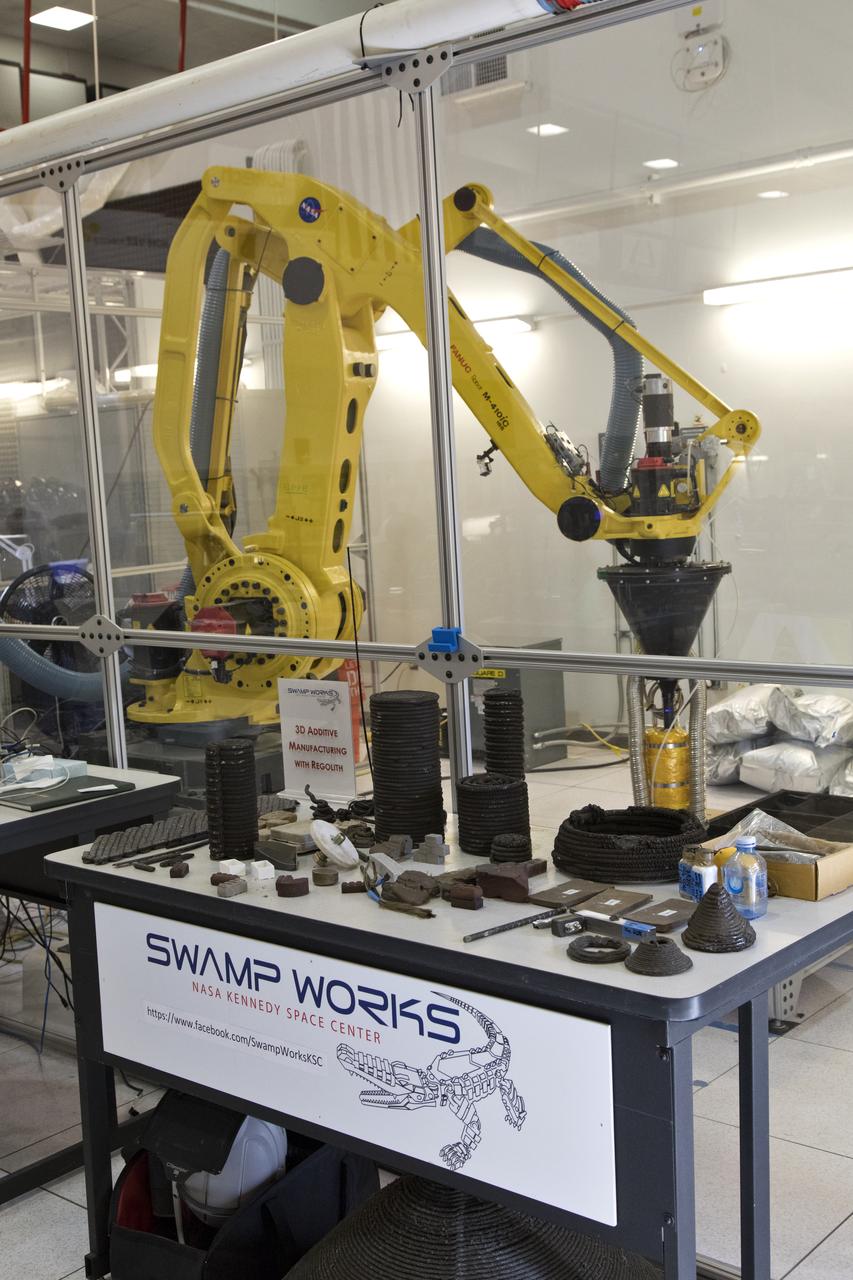
A Zero Launch Mass 3-D printer is being tested at the Swamp Works at NASA's Kennedy Space Center in Florida. The printer can be used for construction projects on the Moon and Mars, and even for troops in remote locations on Earth. Zero launch mass refers to the fact that the printer uses pellets made from simulated lunar regolith, or dirt, and polymers to prove that space explorers can use resources at their destination instead of taking everything with them, saving them launch mass and money. The group is working with Marshall Space Flight Center in Huntsville, Alabama, and the U.S. Army Corps of Engineers to develop a system that can 3-D print barracks in remote locations on Earth, using the resources they have where they are.
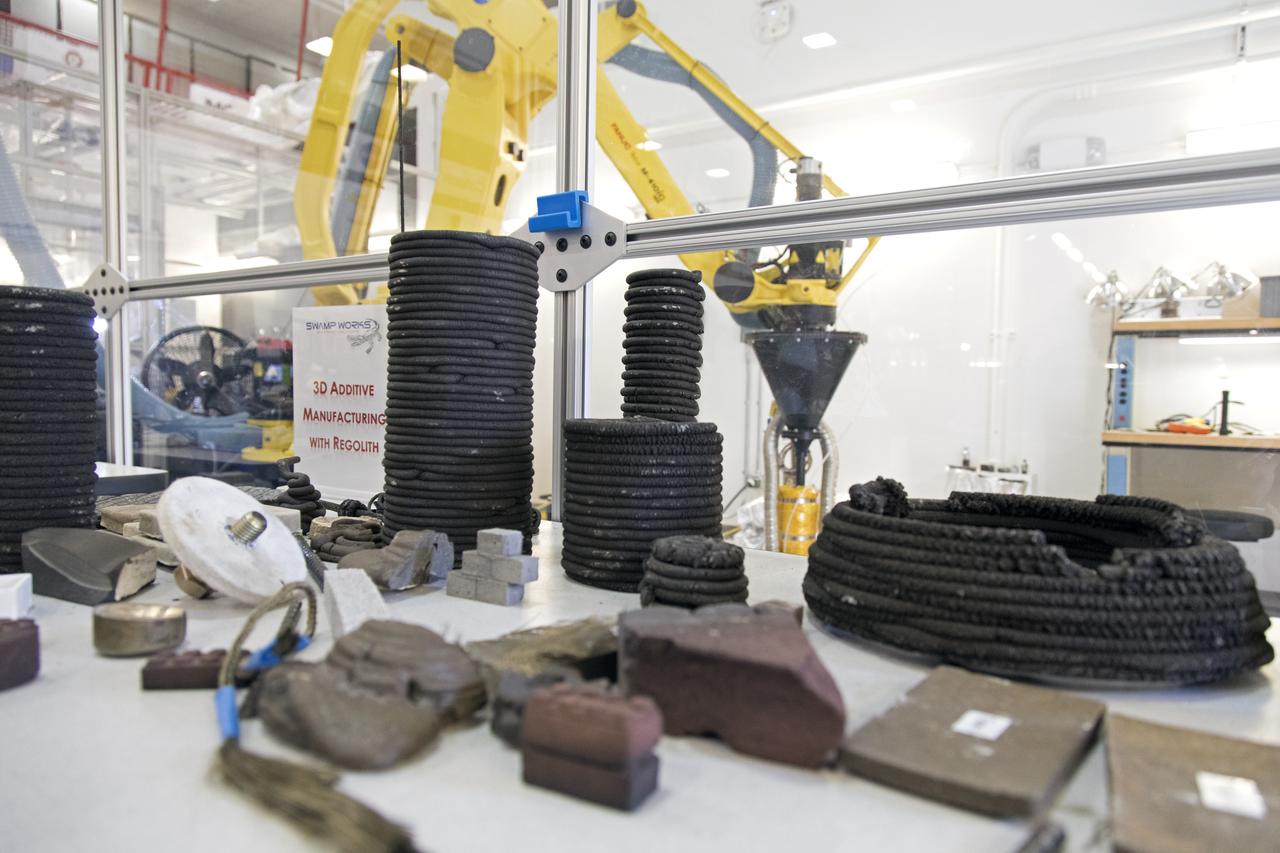
Research engineers at NASA's Kennedy Space Center in Florida are working on a Zero Launch Mass 3-D printer at the center's Swamp Works. The printer can be used for construction projects on the Moon and Mars, and even for troops in remote locations on Earth. Zero launch mass refers to the fact that the printer uses pellets made from simulated lunar regolith, or dirt, and polymers to prove that space explorers can use resources at their destination instead of taking everything with them, saving them launch mass and money. The group is working with Marshall Space Flight Center in Huntsville, Alabama, and the U.S. Army Corps of Engineers to develop a system that can 3-D print barracks in remote locations on Earth, using the resources they have where they are.
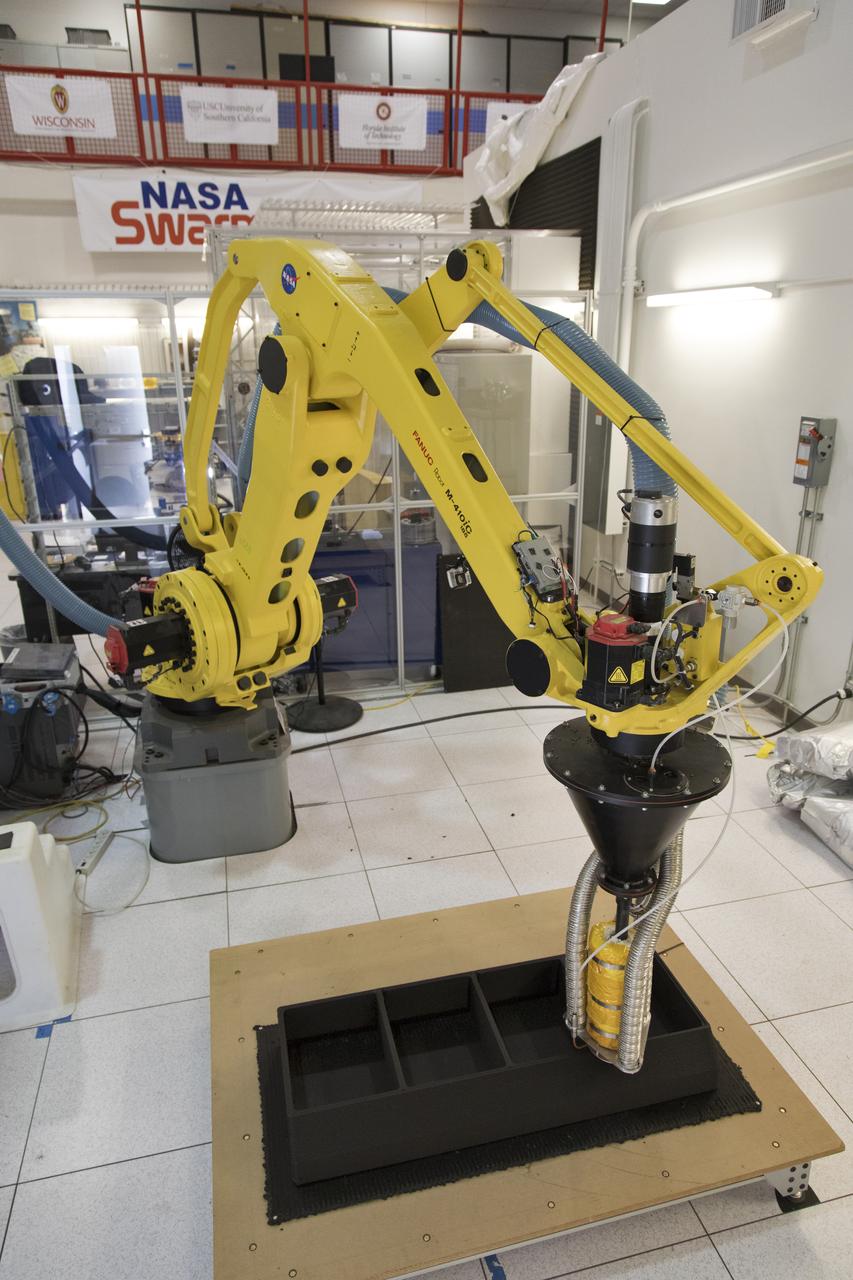
A Zero Launch Mass 3-D printer is being tested at the Swamp Works at NASA's Kennedy Space Center in Florida. The printer can be used for construction projects on the Moon and Mars, and even for troops in remote locations on Earth. Zero launch mass refers to the fact that the printer uses pellets made from simulated lunar regolith, or dirt, and polymers to prove that space explorers can use resources at their destination instead of taking everything with them, saving them launch mass and money. The group is working with Marshall Space Flight Center in Huntsville, Alabama, and the U.S. Army Corps of Engineers to develop a system that can 3-D print barracks in remote locations on Earth, using the resources they have where they are.

THE GAS GENERATOR TO AN F-1 ENGINE, THE MOST POWERFUL ROCKET ENGINE EVER BUILT, IS TEST-FIRED AT NASA'S MARSHALL SPACE FLIGHT CENTER IN HUNTSVILLE, ALABAMA, ON SEPT. 3. ALTHOUGH THE ENGINE WAS ORIGINALLY BUILT TO POWER THE SATURN V ROCKETS DURING AMERICA'S MISSIONS TO THE MOON, THIS TEST ARTICLE HAD NEW PARTS CREATED USING ADDITIVE MANUFACTURING, OR 3-D PRINTING, TO TEST THE VIABILITY OF THE TECHNOLOGY FOR BUILDING NEW ENGINE DESIGNS.

THE GAS GENERATOR TO AN F-1 ENGINE, THE MOST POWERFUL ROCKET ENGINE EVER BUILT, IS TEST-FIRED AT NASA'S MARSHALL SPACE FLIGHT CENTER IN HUNTSVILLE, ALABAMA, ON SEPT. 3. ALTHOUGH THE ENGINE WAS ORIGINALLY BUILT TO POWER THE SATURN V ROCKETS DURING AMERICA'S MISSIONS TO THE MOON, THIS TEST ARTICLE HAD NEW PARTS CREATED USING ADDITIVE MANUFACTURING, OR 3-D PRINTING, TO TEST THE VIABILITY OF THE TECHNOLOGY FOR BUILDING NEW ENGINE DESIGNS.

THE GAS GENERATOR TO AN F-1 ENGINE, THE MOST POWERFUL ROCKET ENGINE EVER BUILT, IS TEST-FIRED AT NASA'S MARSHALL SPACE FLIGHT CENTER IN HUNTSVILLE, ALABAMA, ON SEPT. 3. ALTHOUGH THE ENGINE WAS ORIGINALLY BUILT TO POWER THE SATURN V ROCKETS DURING AMERICA'S MISSIONS TO THE MOON, THIS TEST ARTICLE HAD NEW PARTS CREATED USING ADDITIVE MANUFACTURING, OR 3-D PRINTING, TO TEST THE VIABILITY OF THE TECHNOLOGY FOR BUILDING NEW ENGINE DESIGNS.
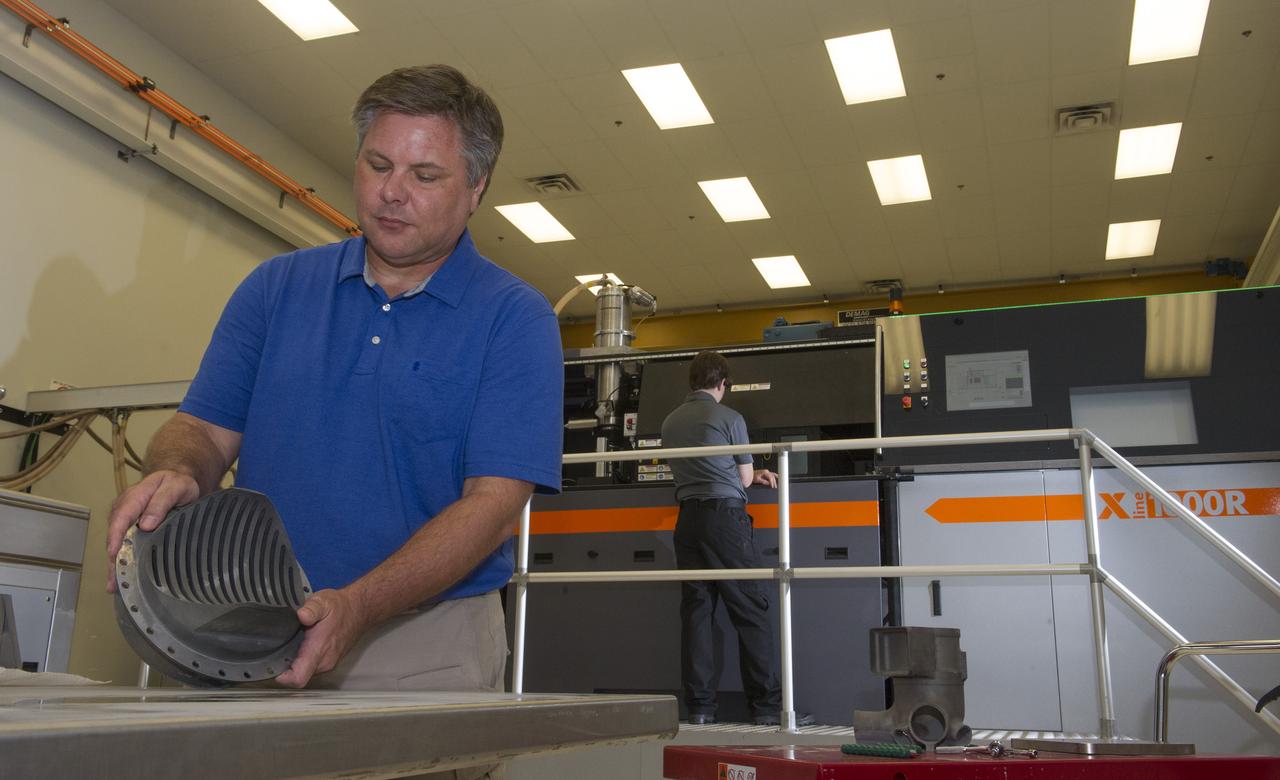
ANDY HARDIN, A PROPULSION ENGINEER AT NASA'S MARSHALL SPACE FLIGHT CENTER IN HUNTSVILLE, ALABAMA, SHOWS A 3-D PRINTED ROCKET PART MADE WITH A SELECTIVE LASER MELTING MACHINE. PARTS FOR THE SPACE LAUNCH SYSTEM'S RS-25 ROCKET ENGINE ARE BEING MADE WITH THE MACHINE IN THE BACKGROUND
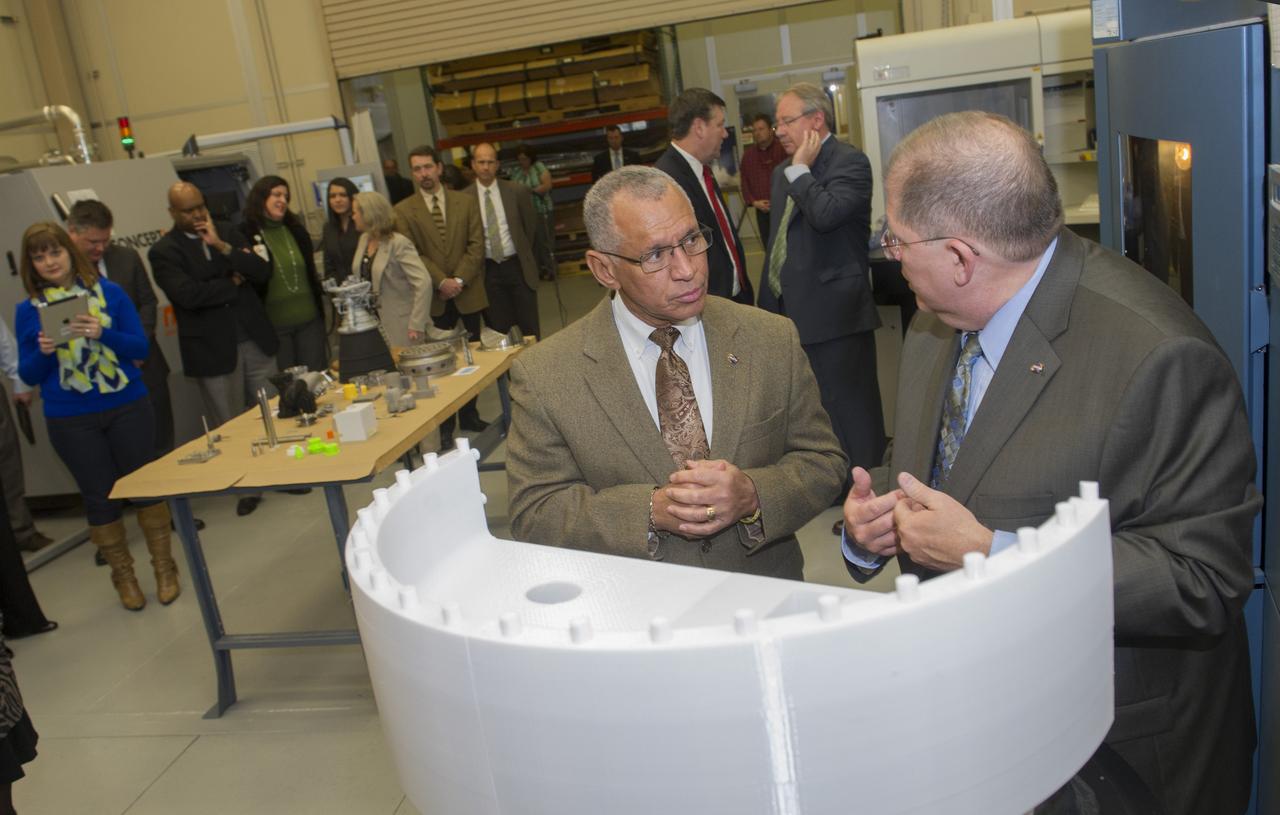
NASA ADMINISTRATOR CHARLES BOLDEN, LEFT, TALKS WITH FRANK LEDBETTER, CHIEF OF THE NONMETALLIC MATERIALS AND MANUFACTURING DIVISION AT MARSHALL, ABOUT A PART OF A PROTOTYPE FOR THE CORE STAGE-TO-BOOSTER ATTACH FITTING DURING BOLDEN'S FEB. 22 VISIT TO THE NATIONAL CENTER FOR ADVANCED MANUFACTURING RAPID PROTOTYPING FACILITY AT MARSHALL. DURING HIS TOUR, BOLDEN WATCHED RESEARCHERS EMPLOY A 3-D PRINTING PROCESS CALLED "SELECTIVE LASER MELTING" TO CREATE COMPLEX PARTS FOR THE J-2X AND RS-25 ROCKET ENGINES -- WITHOUT WELDING.
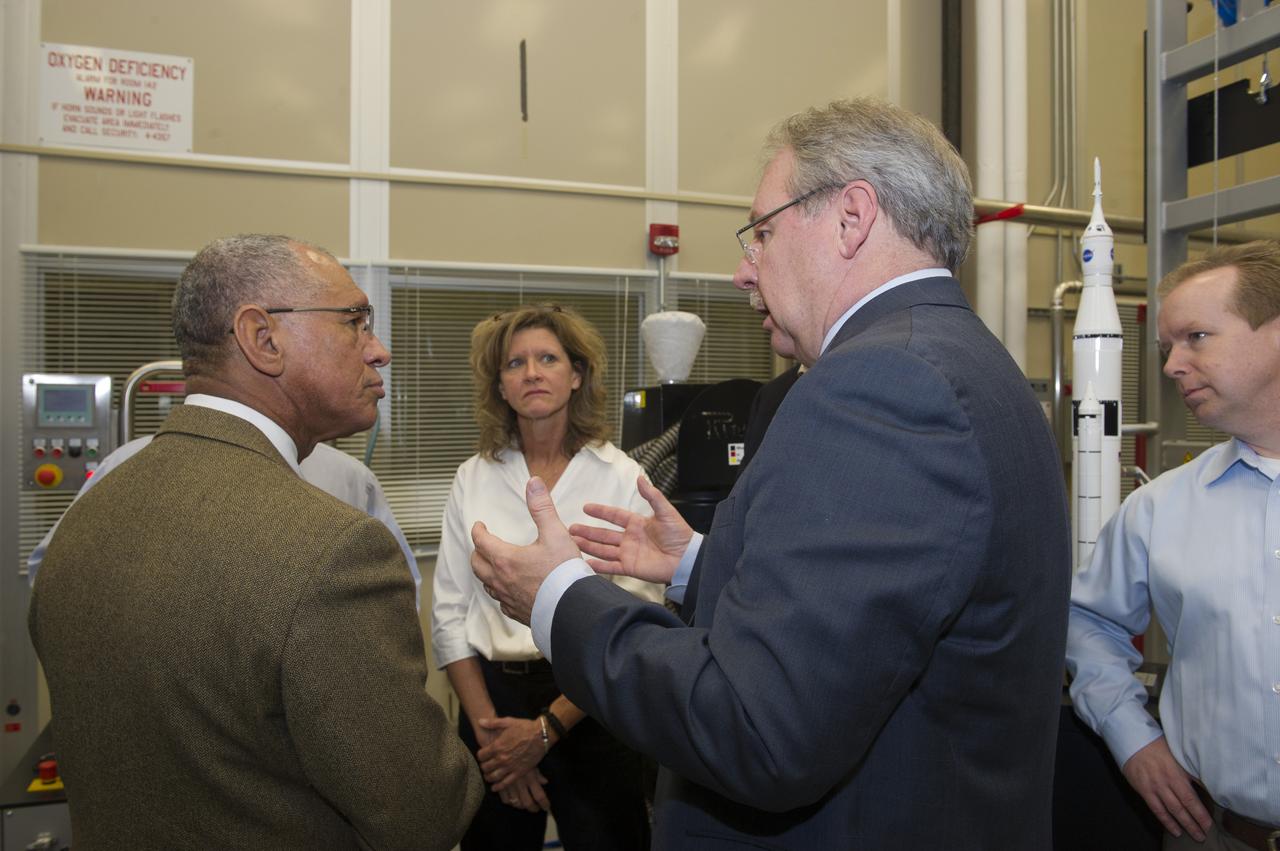
FROM LEFT, NASA ADMINISTRATOR CHARLES BOLDEN LISTENS TO MARSHALL MATERIALS ENGINEER NANCY TOLLIVER; JOHN VICKERS, MANAGER OF THE NATIONAL CENTER FOR ADVANCED MANUFACTURING; AND MARSHALL FLIGHT SYSTEMS DESIGN ENGINEER ROB BLACK AS THEY BRIEF HIM ON THE USE OF 3-D PRINTING AND PROTOTYPING TECHNOLOGY TO CREATE PARTS FOR THE SPACE LAUNCH SYSTEM
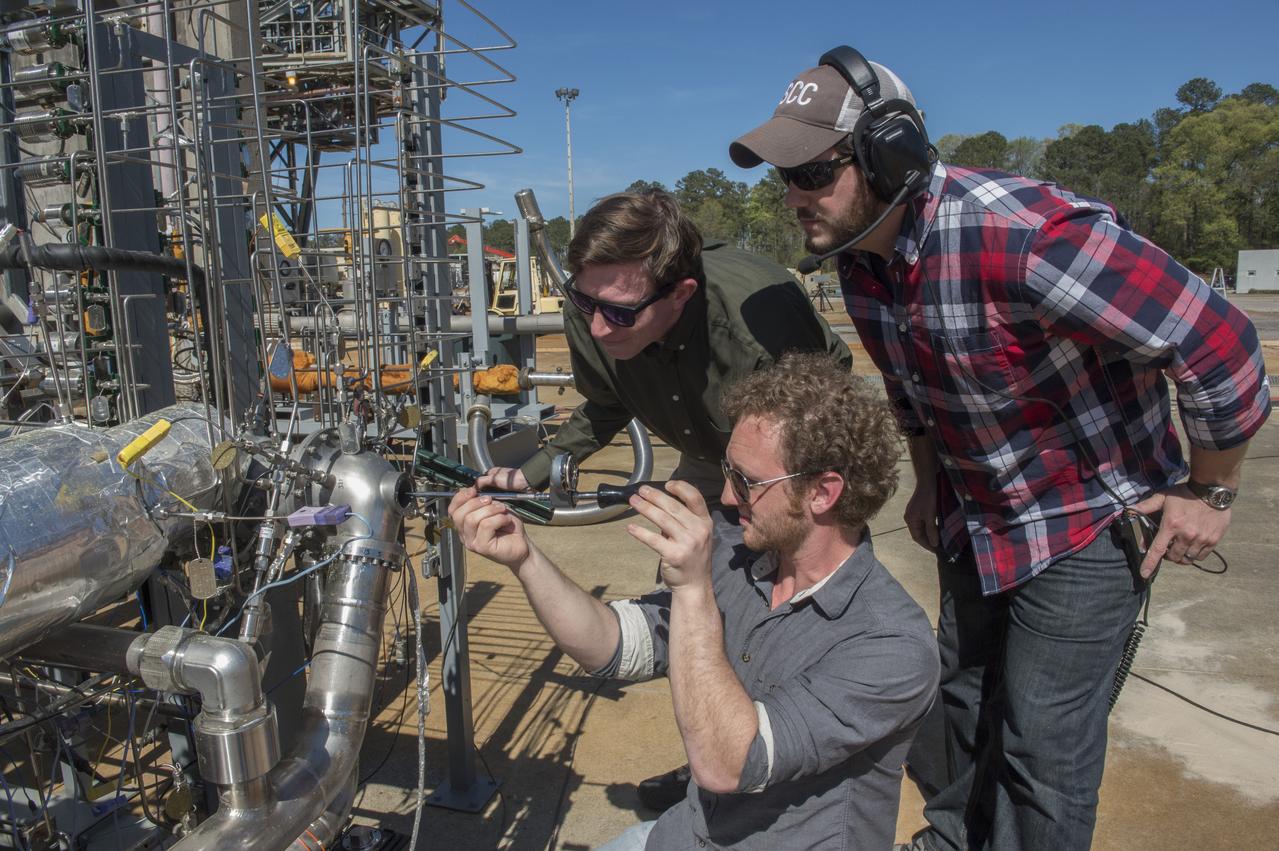
ENGINEERS PREPARE 3-D PRINTED TURBOPUMP FOR A TEST AT NASA’S MARSHALL SPACE FLIGHT CENTER IN HUNTSVILLE, ALABAMA. THE TURBOPUMP WAS TESTED AT FULL POWER, PUMPING 600 GALLONS OF LIQUID METHANE PER MINUTE, ENOUGH TO POWER AN ENGINE CAPABLE OF GENERATING 35,000 POUNDS OF THRUST…NICK CASE, (GREEN SHIRT), ANDREW HANKS, (PLAID SHIRT), MARTY CALVERT (KNEELING)
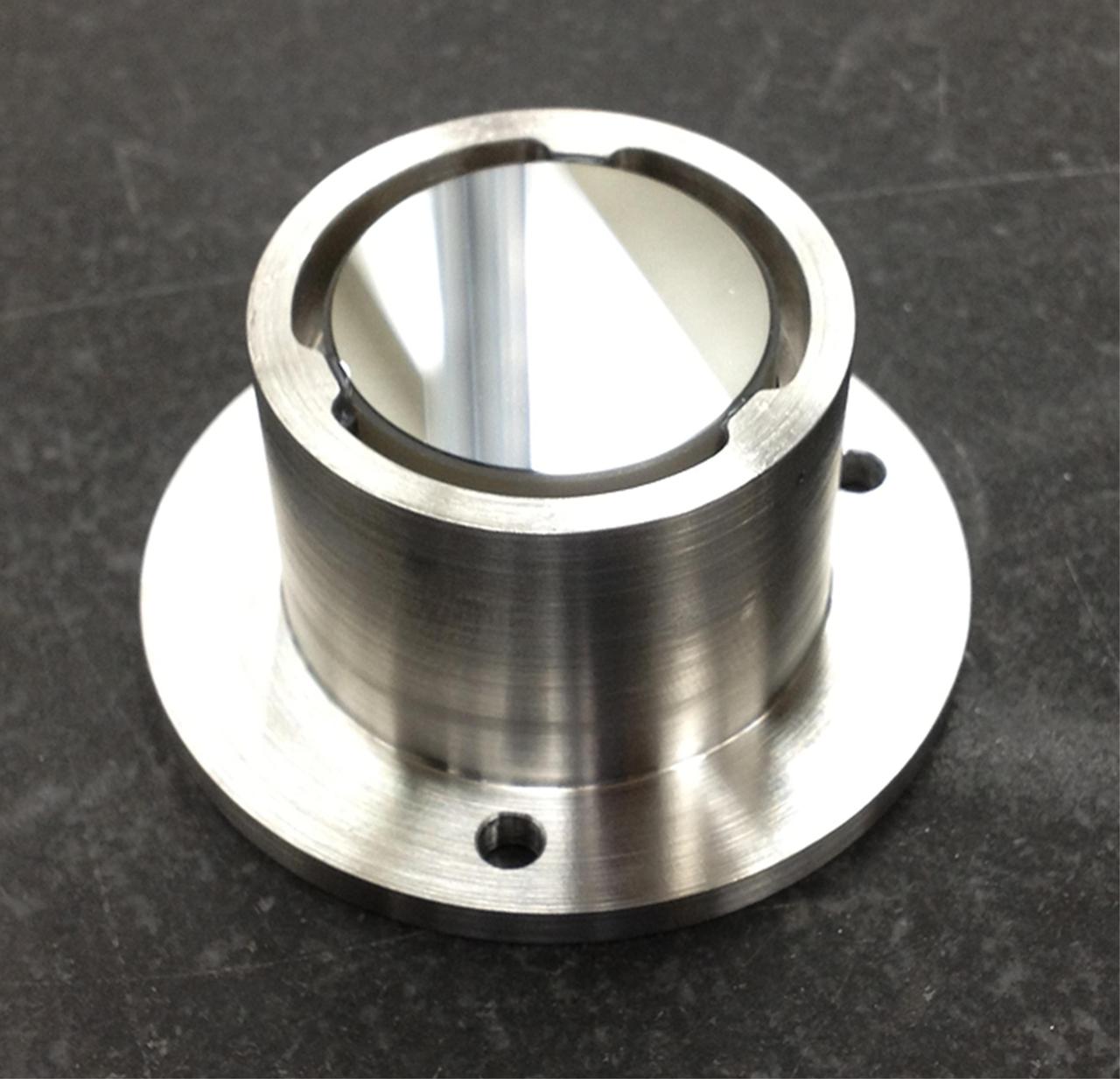
This is a prototype of a mirror mount that scientists made using a new 3-D printing technique at NASA Jet Propulsion Laboratory.
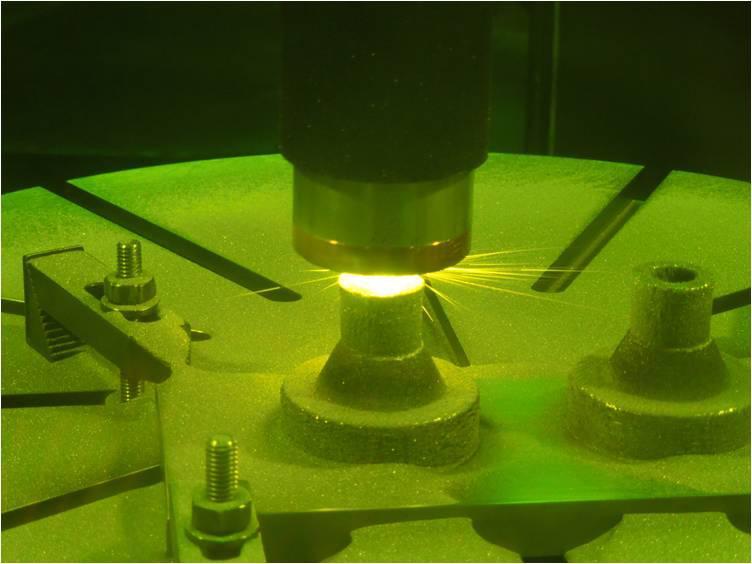
Scientists at NASA Jet Propulsion Laboratory make a rocket nozzle using a new 3-D printing technique that allows for multiple metallic properties in the same object.
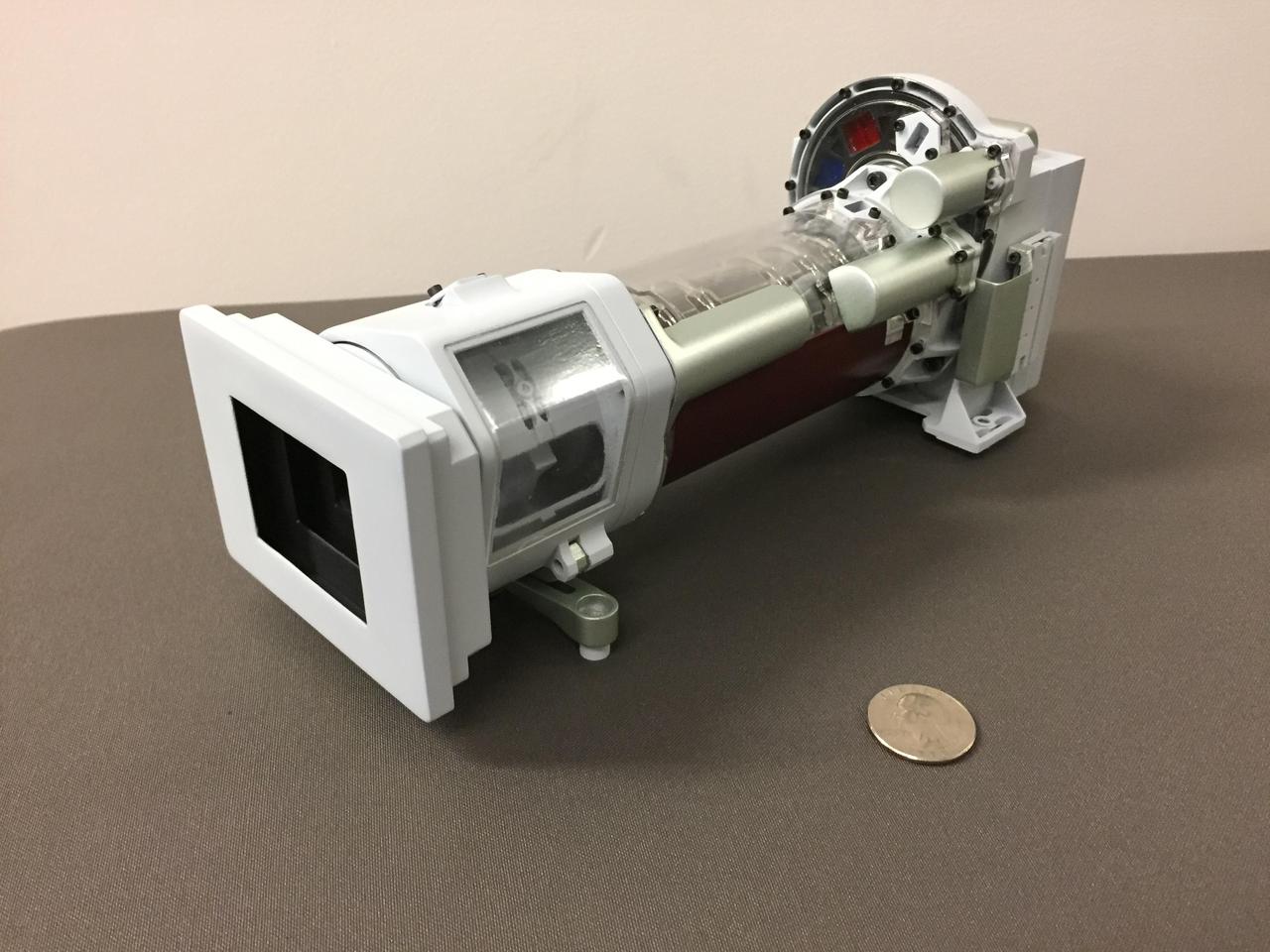
This image shows a 3-D printed model of Mastcam-Z, one of the science cameras on NASA's Mars 2020 rover. Mastcam-Z will include a 3:1 zoom lens. https://photojournal.jpl.nasa.gov/catalog/PIA22101
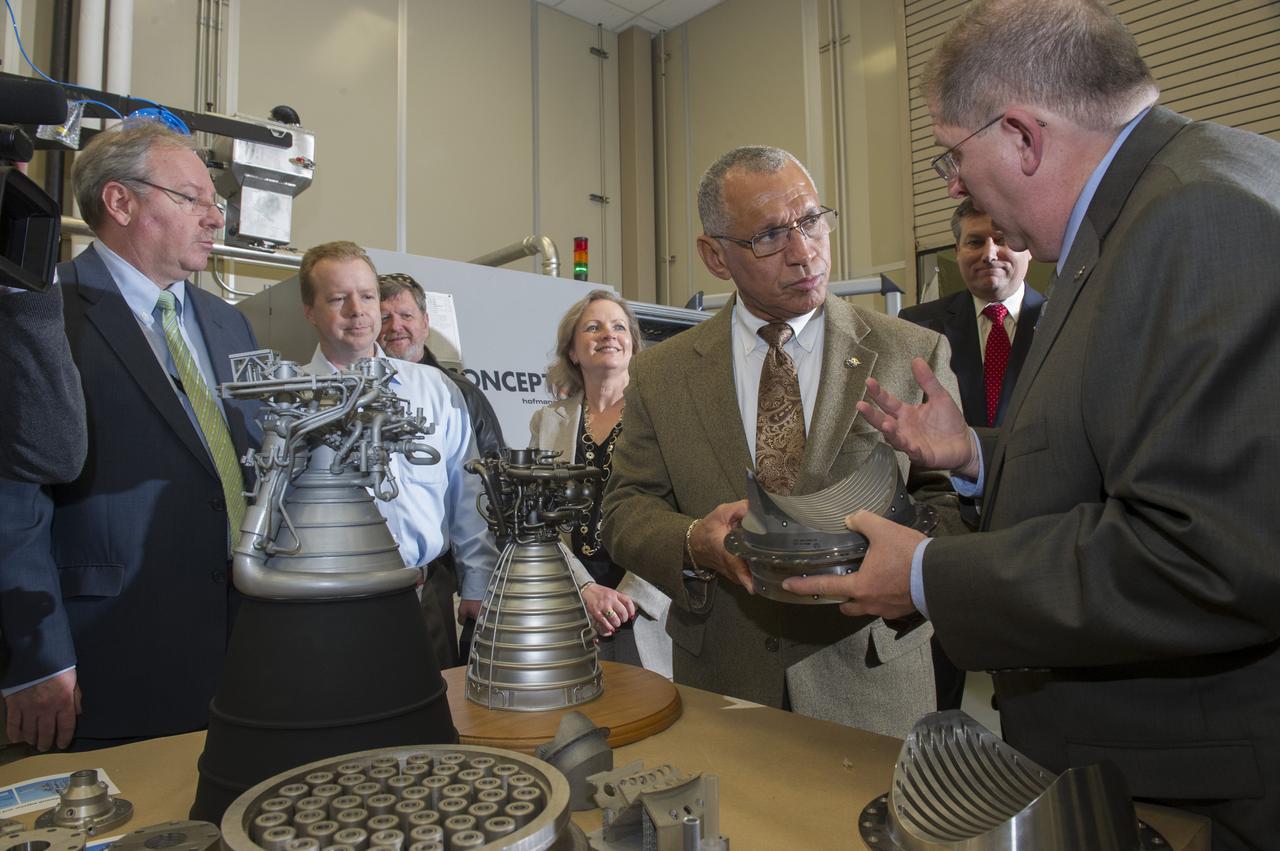
DURING HIS FEB. 22 VISIT TO THE NATIONAL CENTER FOR ADVANCED MANUFACTURING RAPID PROTOTYPING FACILITY AT NASA'S MARSHALL SPACE FLIGHT CENTER, NASA ADMINISTRATOR CHARLES BOLDEN, CENTER, TALKS WITH FRANK LEDBETTER, RIGHT, CHIEF OF THE NONMETALLIC MATERIALS AND MANUFACTURING DIVISION AT MARSHALL, ABOUT THE USE OF 3-D PRINTING AND PROTOTYPING TECHNOLOGY TO CREATE PARTS FOR THE SPACE LAUNCH SYSTEM. ALSO PARTICIPATING IN THE TOUR ARE, FROM BACK RIGHT, MARSHALL CENTER DIRECTOR PATRICK SCHEUERMANN; SHERRY KITTREDGE, DEPUTY MANAGER OF THE SLS LIQUID ENGINES OFFICE; MARSHALL FLIGHT SYSTEMS DESIGN ENGINEER ROB BLACK; AND JOHN VICKERS, MANAGER OF THE NATIONAL CENTER FOR ADVANCED MANUFACTURING.
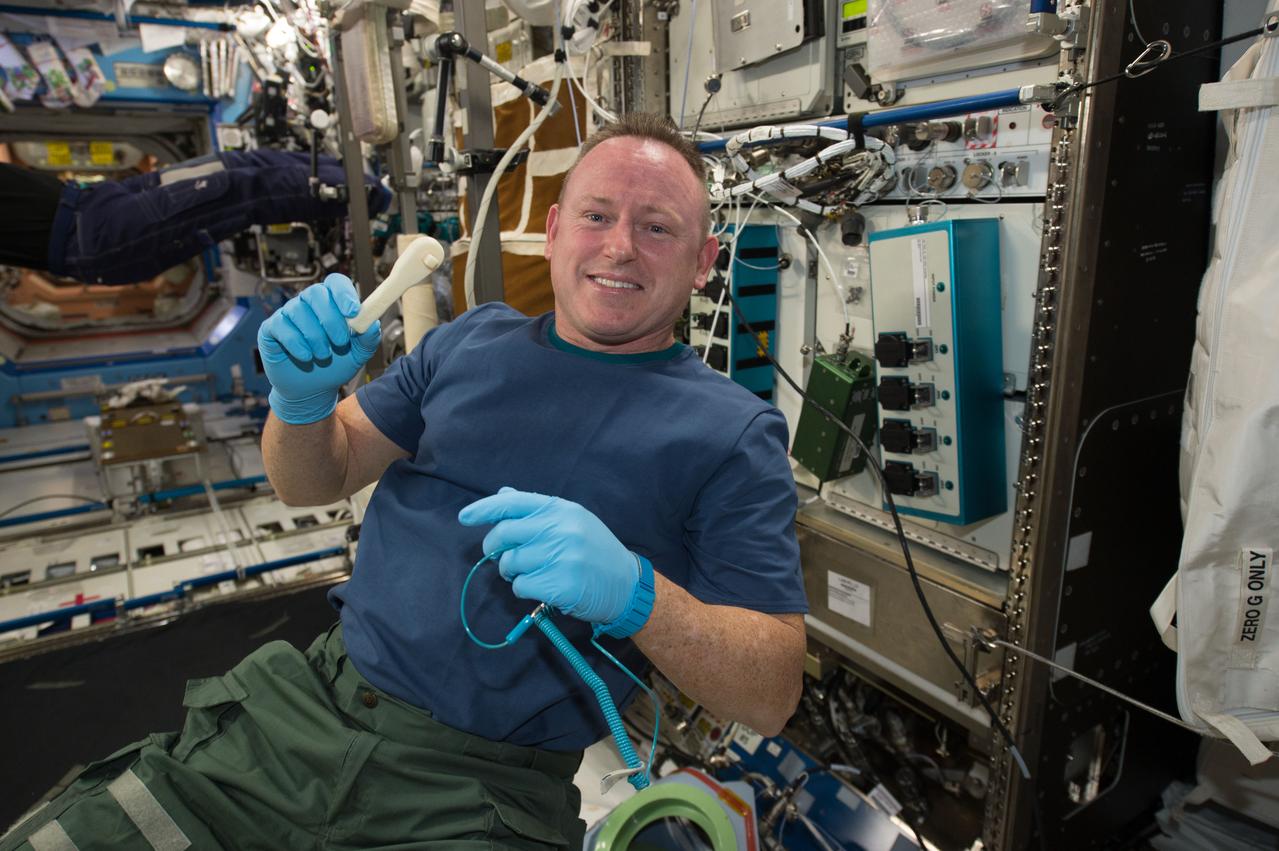
iss042e046048 (12/16/14) --- NASA Astronaut Barry (Butch) Wilmore holds a 3-D printed ratchet wrench from the new 3-D printer aboard the International Space Station. The printer completed the first phase of a NASA technology demonstration by printing a tool with a design file that was transmitted from the ground to the printer.
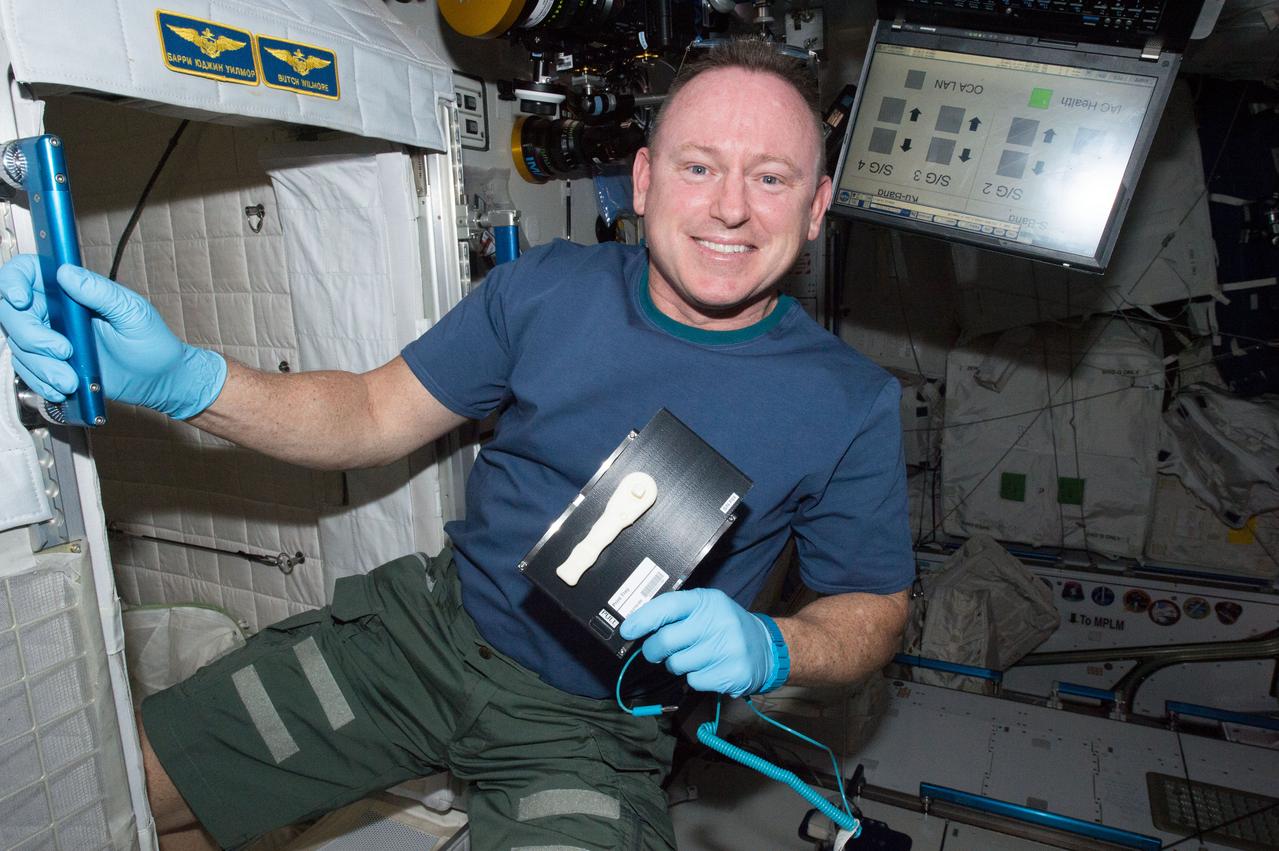
iss042e046041 (12/16/14) --- NASA Astronaut Barry (Butch) Wilmore holds a 3-D printed ratchet wrench and plate from the new 3-D printer aboard the International Space Station. The printer completed the first phase of a NASA technology demonstration by printing a tool with a design file that was transmitted from the ground to the printer.
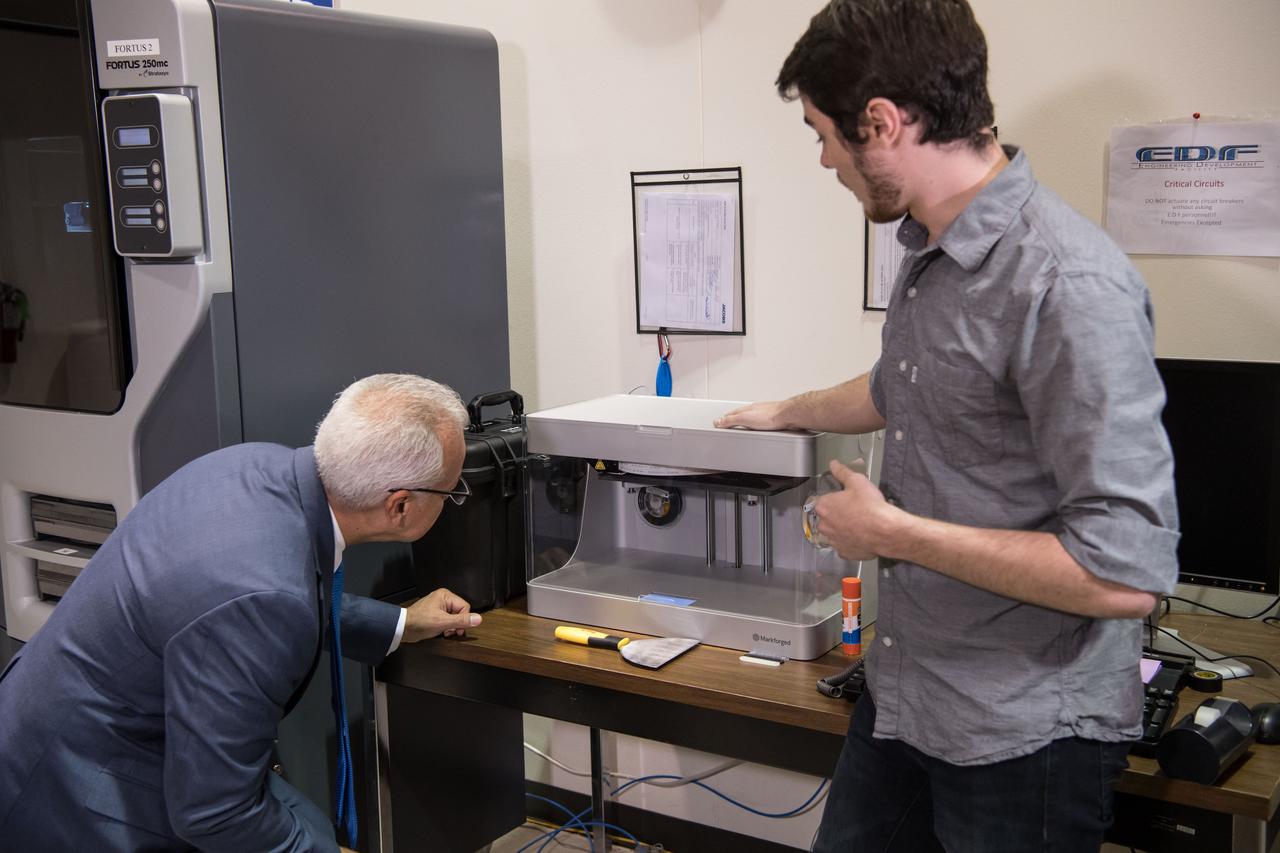
A Jacobs engineer shows NASA Chief Technologist Douglas Terrier how the company uses 3-D printers to create inexpensive physical models of new electronically designed hardware. Date: 08-10-2017 Location: B1 & Jacobs Engineering Subject: NASA Acting Chief Technology Officer Douglas Terrier Tours JSC and Jacobs Photographer: David DeHoyos
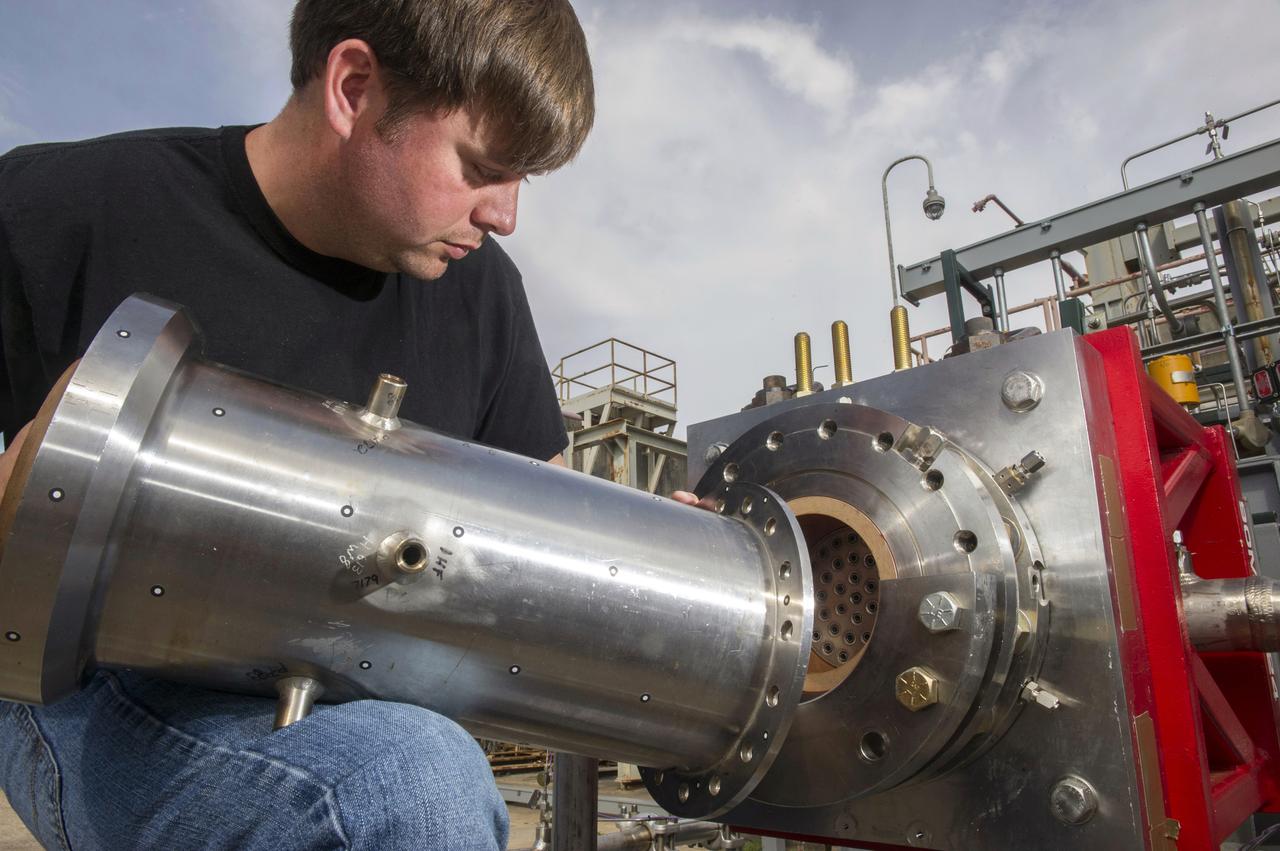
1. ENGINEERS AND TECHNICIANS PREPARE FOR AN UPCOMING HOT-FIRE TEST OF A ROCKET INJECTOR MANUFACTURED USING ADDITIVE MANUFACTURING, OR 3-D PRINTING…RANDALL MCALLISTER, INFOPRO TECHNICIAN, FITS NOZZLE TO ROCKET INJECTOR
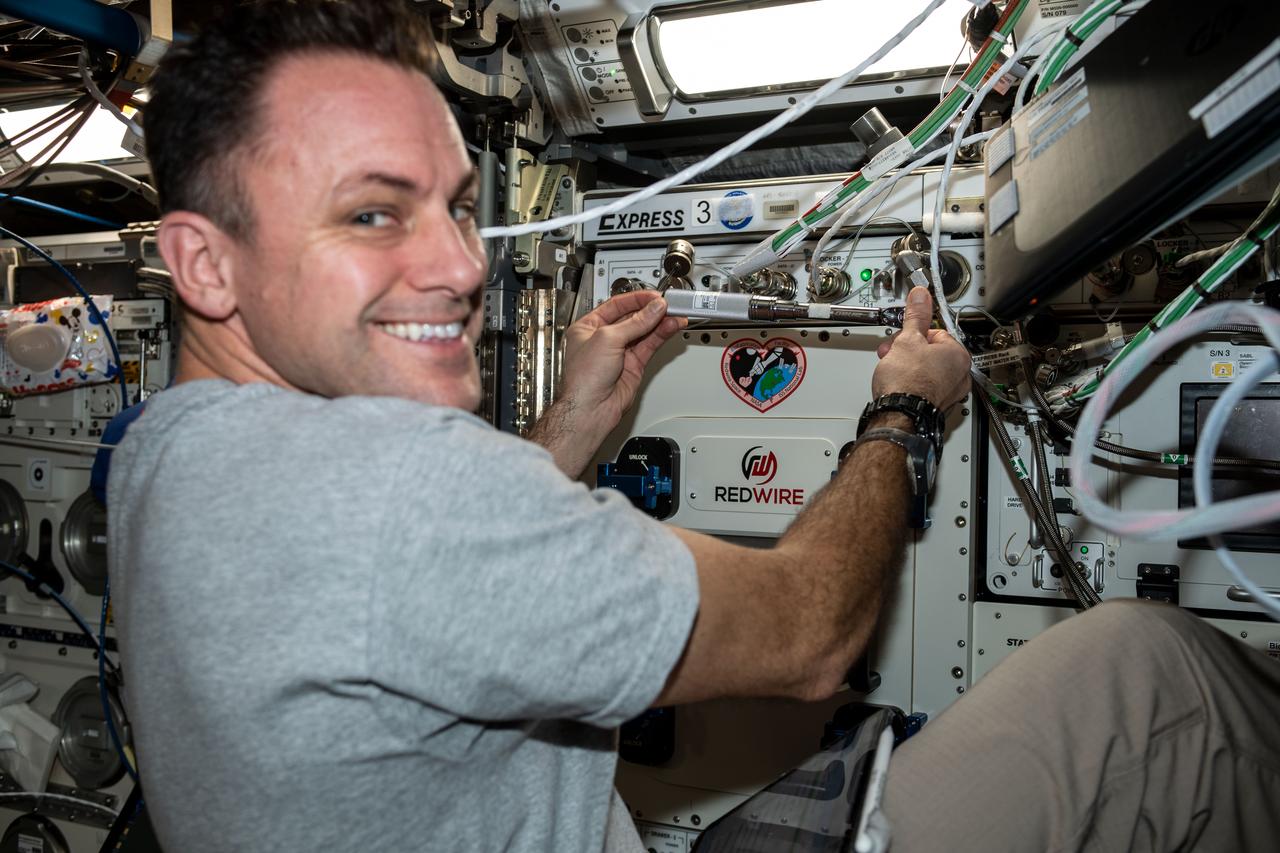
iss068e043943 (Jan. 31, 2023) --- NASA astronaut and Expedition 68 Flight Engineer Josh Cassada is pictured installing the BioFabrication Facility (BFF), a research device that will be used to investigate the 3-D printing of human organs in microgravity. The BFF is located inside the Columbus laboratory module's EXPRESS Rack 3 aboard the International Space Station.
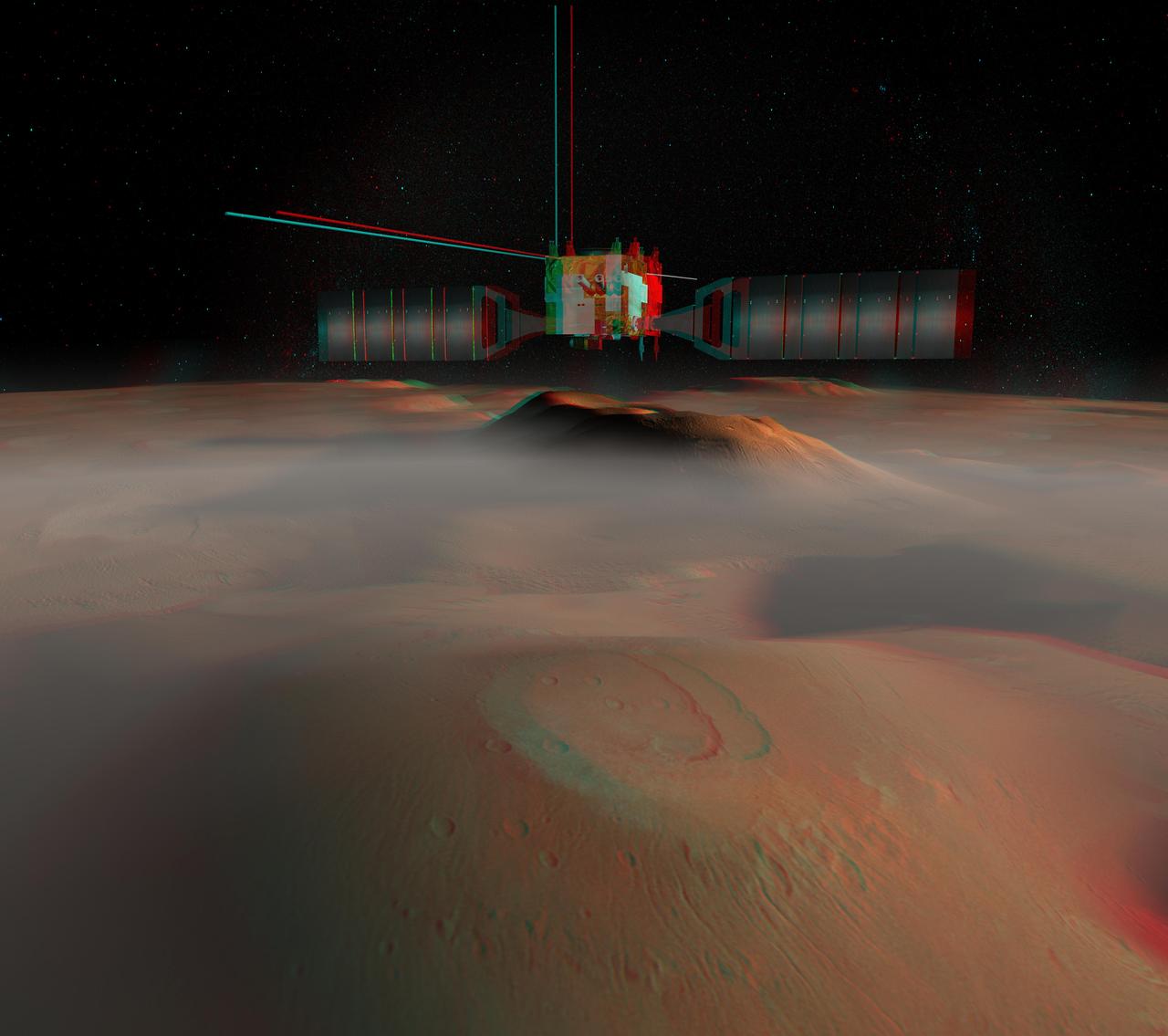
The European Space Agency's Mars Express spacecraft is depicted in orbit around Mars in this artist's concept stereo illustration. The spacecraft was launched June 2, 2003, from Baikonur, Kazakhstan, on a journey to arrive at Mars in December 2003. This red-blue anaglyph artwork can be viewed in 3-D on your computer monitor or in color print form by wearing red-blue (cyan) 3-D glasses. http://photojournal.jpl.nasa.gov/catalog/PIA04803
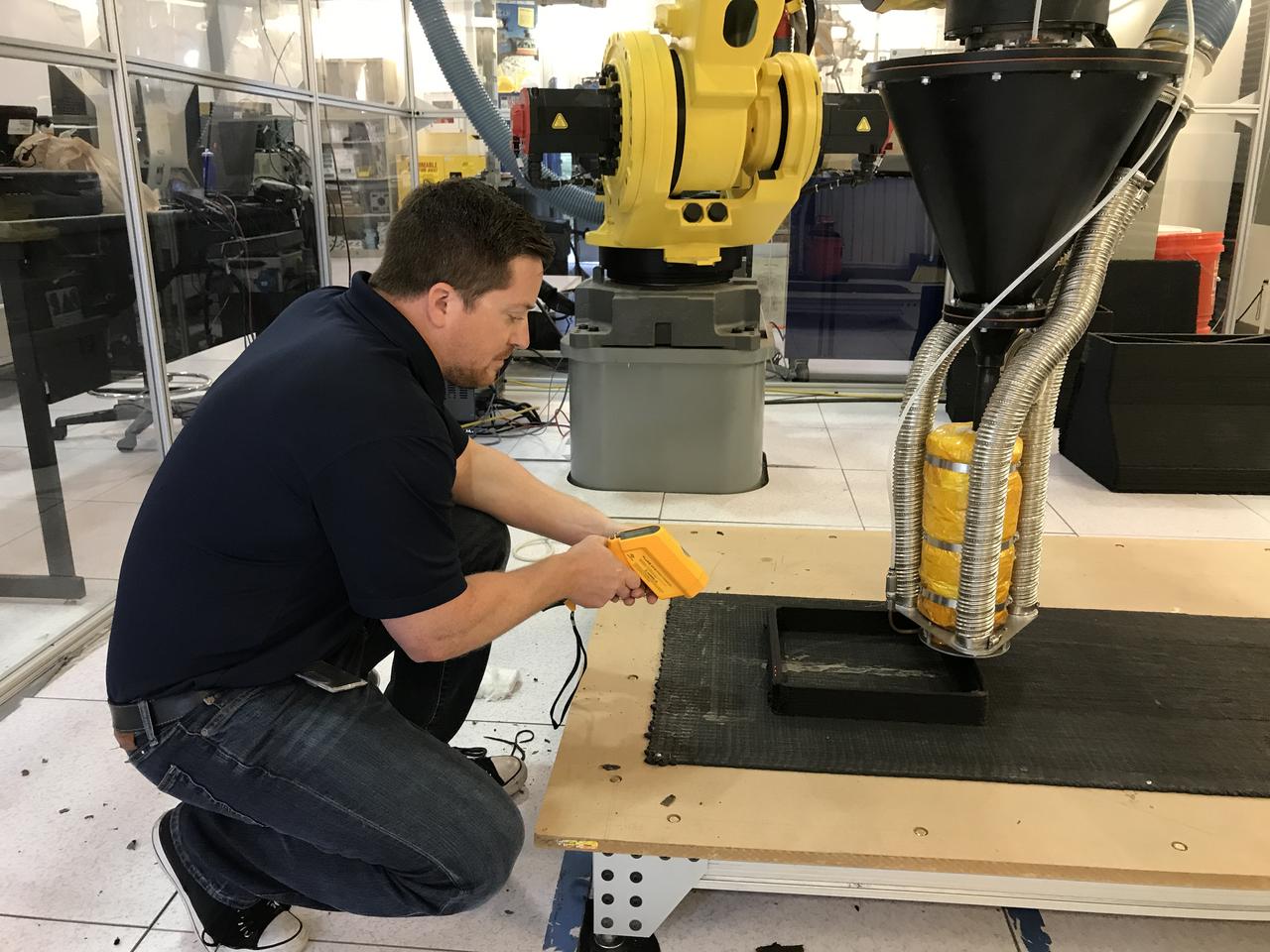
Packing light is the idea behind the Zero Launch Mass 3-D Printer. Instead of loading up on heavy building supplies, a large scale 3-D printer capable of using recycled plastic waste and dirt at the destination as construction material would save mass and money when launching robotic precursor missions to build infrastructure on the Moon or Mars in preparation for human habitation. To make this a reality, Nathan Gelino, a researcher engineer with NASA’s Swamp Works at Kennedy Space Center, measured the temperature of a test specimen from the 3-D printer Tuesday as an early step in characterizing printed material strength properties. Material temperature plays a large role in the strength of bonds between layers.
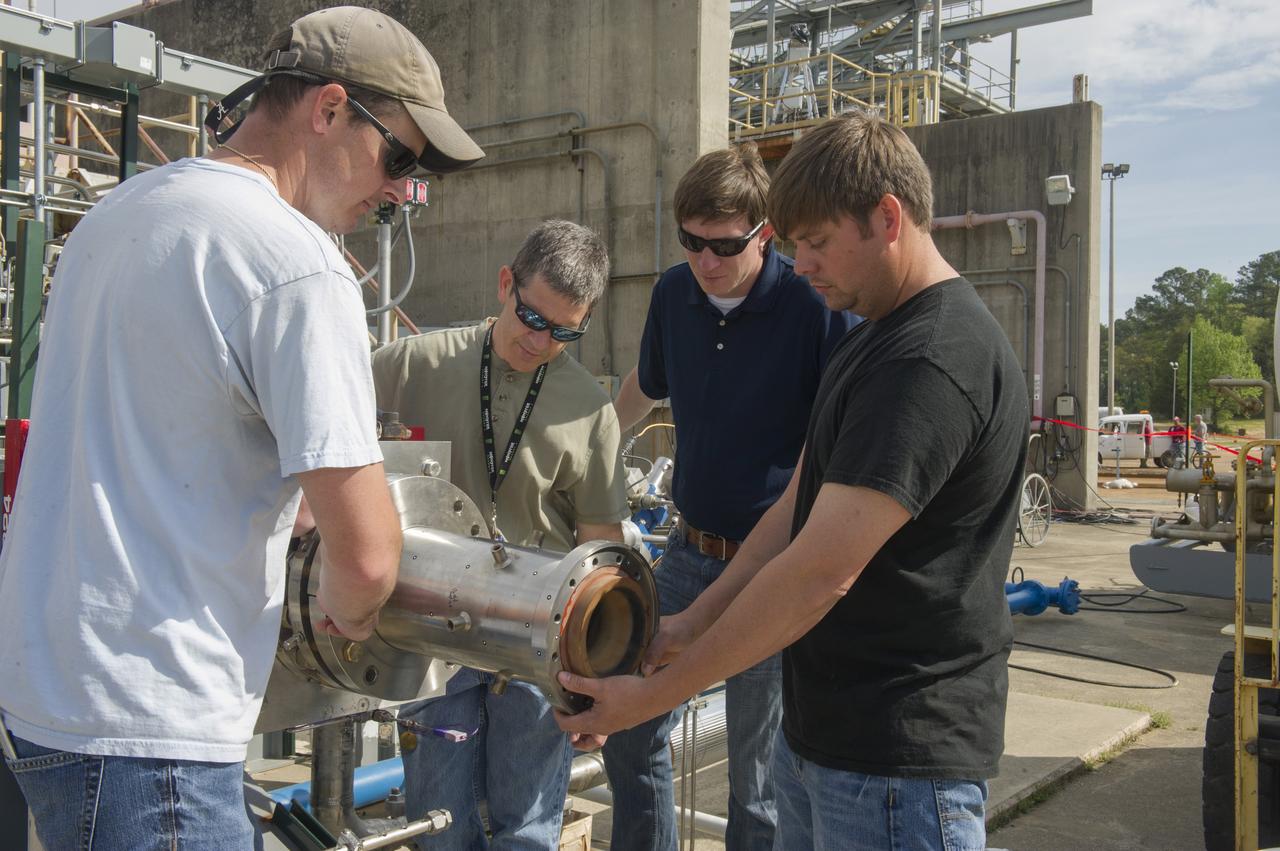
2. ENGINEERS AND TECHNICIANS PREPARE FOR AN UPCOMING HOT-FIRE TEST OF A ROCKET INJECTOR MANUFACTURED USING ADDITIVE MANUFACTURING, OR 3-D PRINTING…(L TO R) WILLIE PARKER, INFOPRO TECHNICIAN, BRAD BULLARD, NASA, NICK CASE, NASA, AND RANDALL MCALLISTER, INFOPRO TECHNICIAN
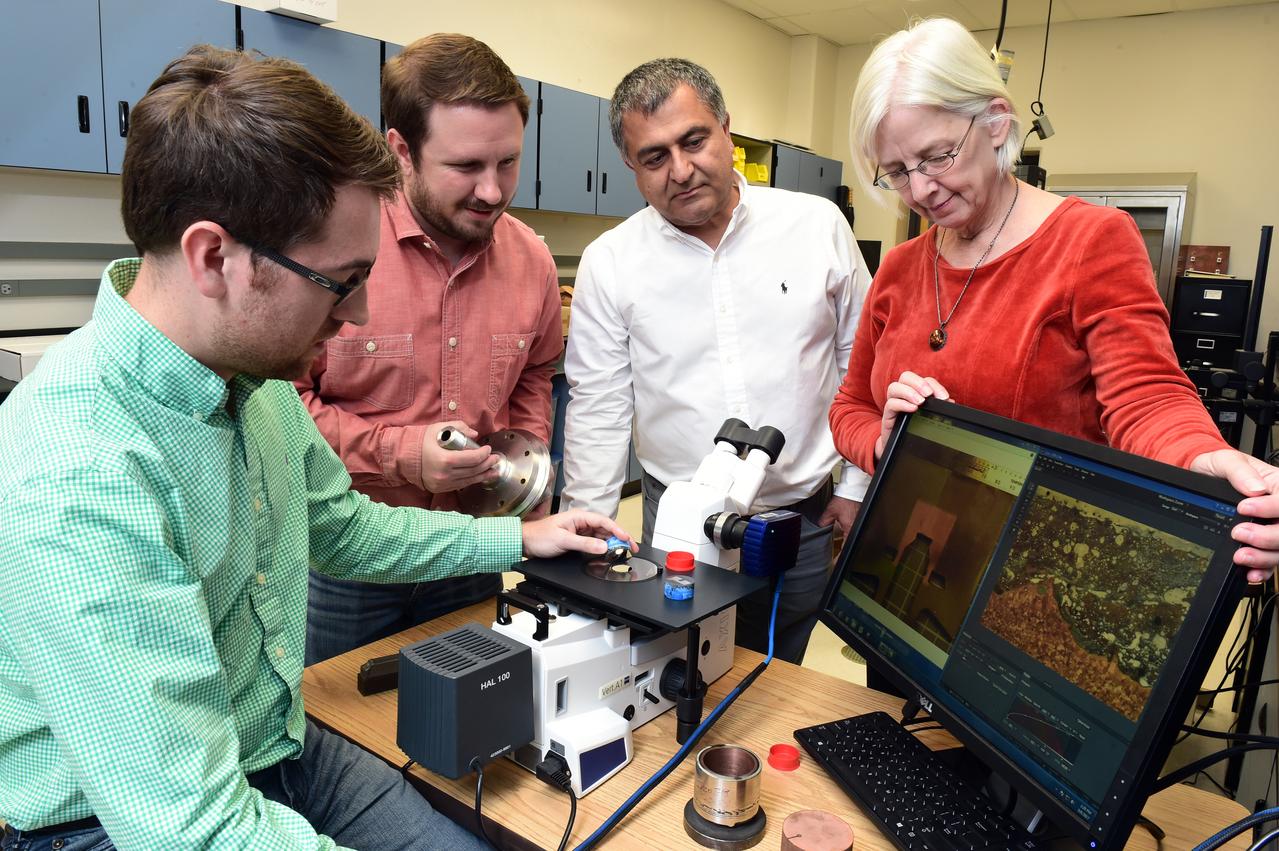
Majid Babai along with Dr. Judy Schneider, and graduate students Chris Hill and Ryan Anderson examine a cross section of the prototype rocket engine igniter created by an innovative bi-metallic 3-D printing advanced manufacturing process under a microscope.
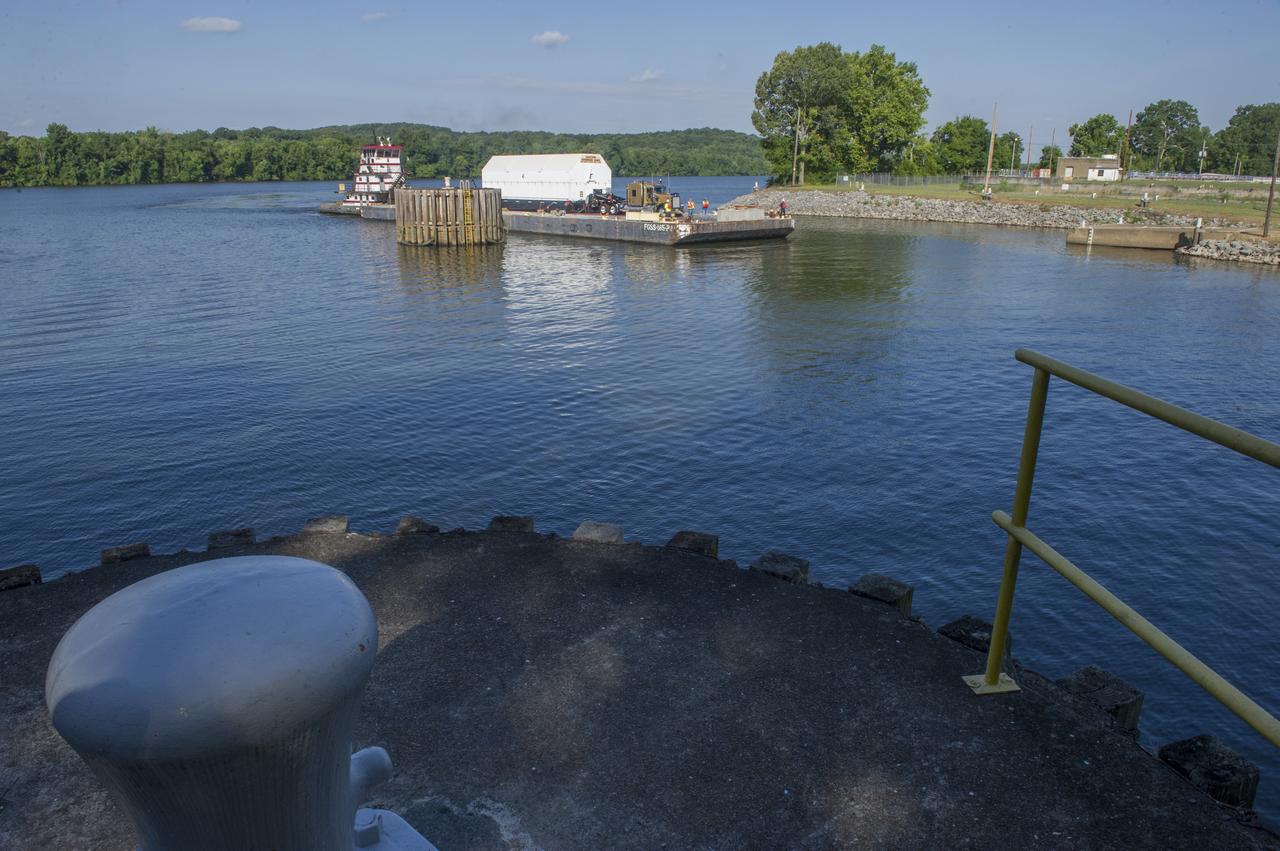
SLS INTERIM CRYOGENIC PROPULSION STAGE TEST ARTICLE ARRIVES AT WEST DOCK ON SHIELDS ROAD AND IS OFF LOADED FROM BARGEUAH ENGINEERING STUDENT ROBERT HILLAN TALKS TO SPACE STATION CREW MEMBERS ABOUT HIS WINNING 3-D PRINTED TOOL DESIGNED FOR USE ON ISS, AND IS INTERVIEWED BY LOCAL MEDIA
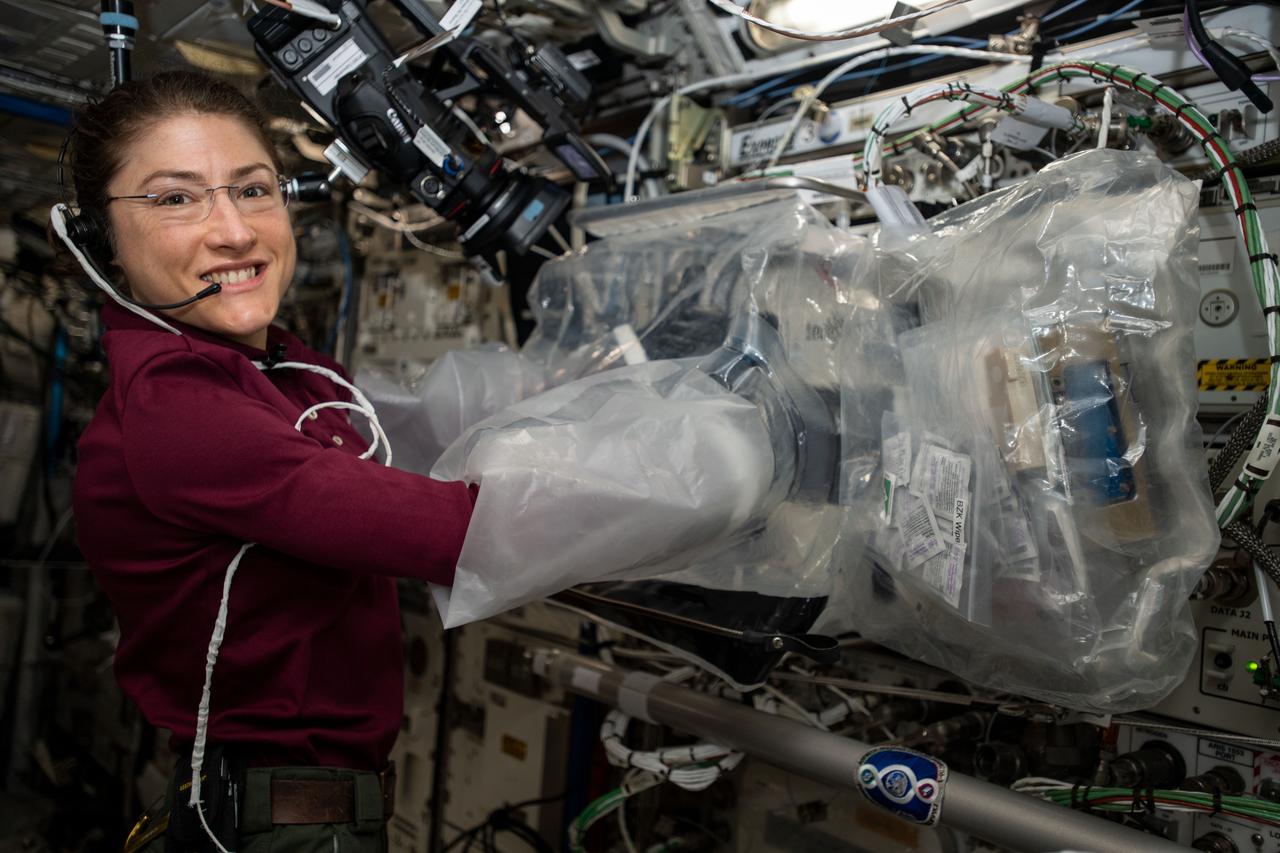
iss060e021175 (Aug. 2, 2019) --- Expedition 60 Flight Engineer Christina Koch of NASA activates the new BioFabrication Facility to test its ability to print cells. Researchers are exploring whether the weightless environment of space may support the fabrication of human organs in space. An incubator houses the tissue samples to promote cohesive cellular growth over several weeks. Earth’s gravity inhibits 3-D bioprinters and incubators from recreating and growing complex organic structures.
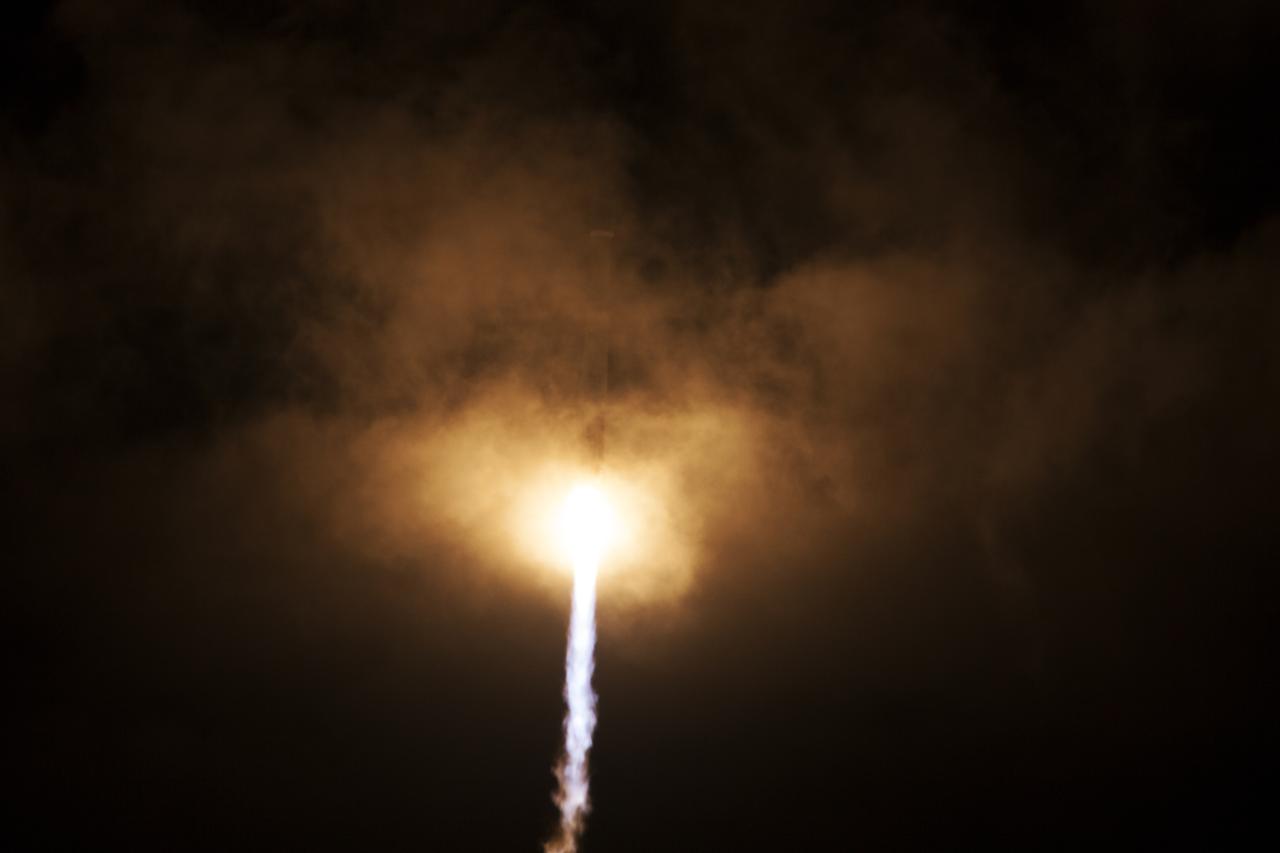
A United Launch Alliance Atlas V rocket lifts off from Space Launch Complex 41 at Cape Canaveral Air Force Station carrying an Orbital ATK Cygnus resupply spacecraft on a commercial resupply services mission to the International Space Station. Liftoff was at 11:05 p.m. EDT. Cygnus will deliver the second generation of a portable onboard printer to demonstrate 3-D printing, an instrument for first space-based observations of the chemical composition of meteors entering Earth’s atmosphere and an experiment to study how fires burn in microgravity.
A United Launch Alliance Atlas V rocket lifts off from Space Launch Complex 41 at Cape Canaveral Air Force Station carrying an Orbital ATK Cygnus resupply spacecraft on a commercial resupply services mission to the International Space Station. Liftoff was at 11:05 p.m. EDT. Cygnus will deliver the second generation of a portable onboard printer to demonstrate 3-D printing, an instrument for first space-based observations of the chemical composition of meteors entering Earth’s atmosphere and an experiment to study how fires burn in microgravity.
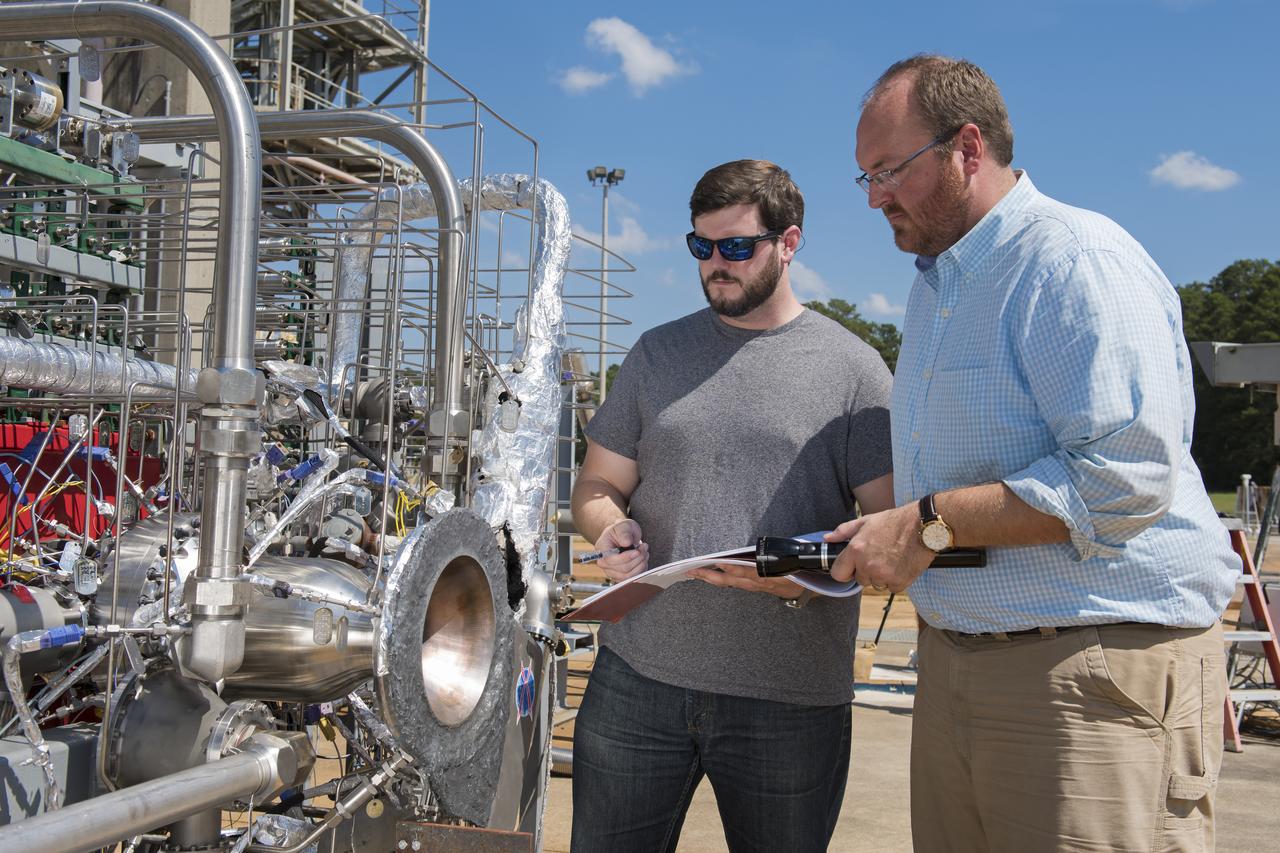
Graham Nelson, right, and Andrew Hanks examine a combustion chamber developed by engineers at NASA's Marshall Space Flight Center in Huntsville, Alabama, for an additively manufactured demonstration breadboard engine project. Nelson is project manager and Hanks is test lead for the project, in which engineers are designing components from scratch to be made entirely by 3-D printing.
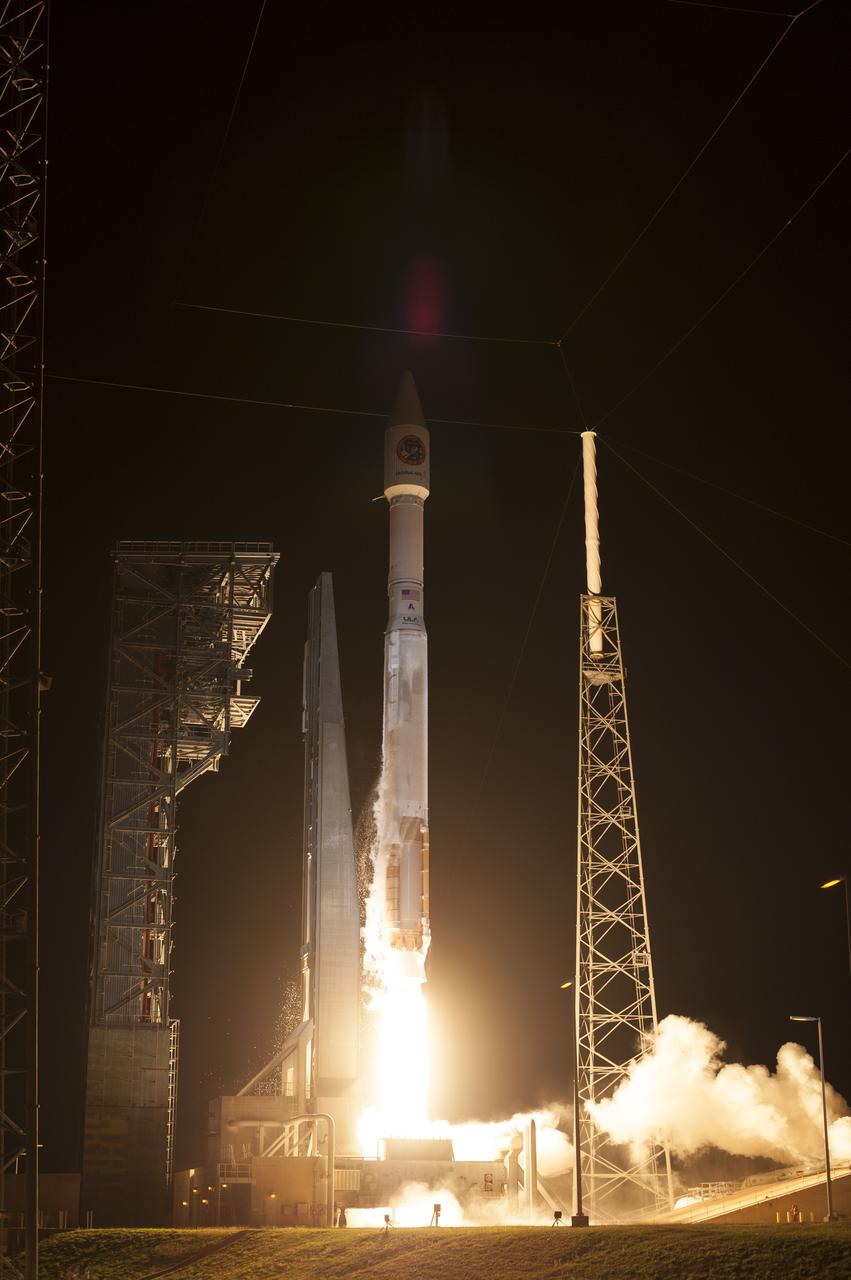
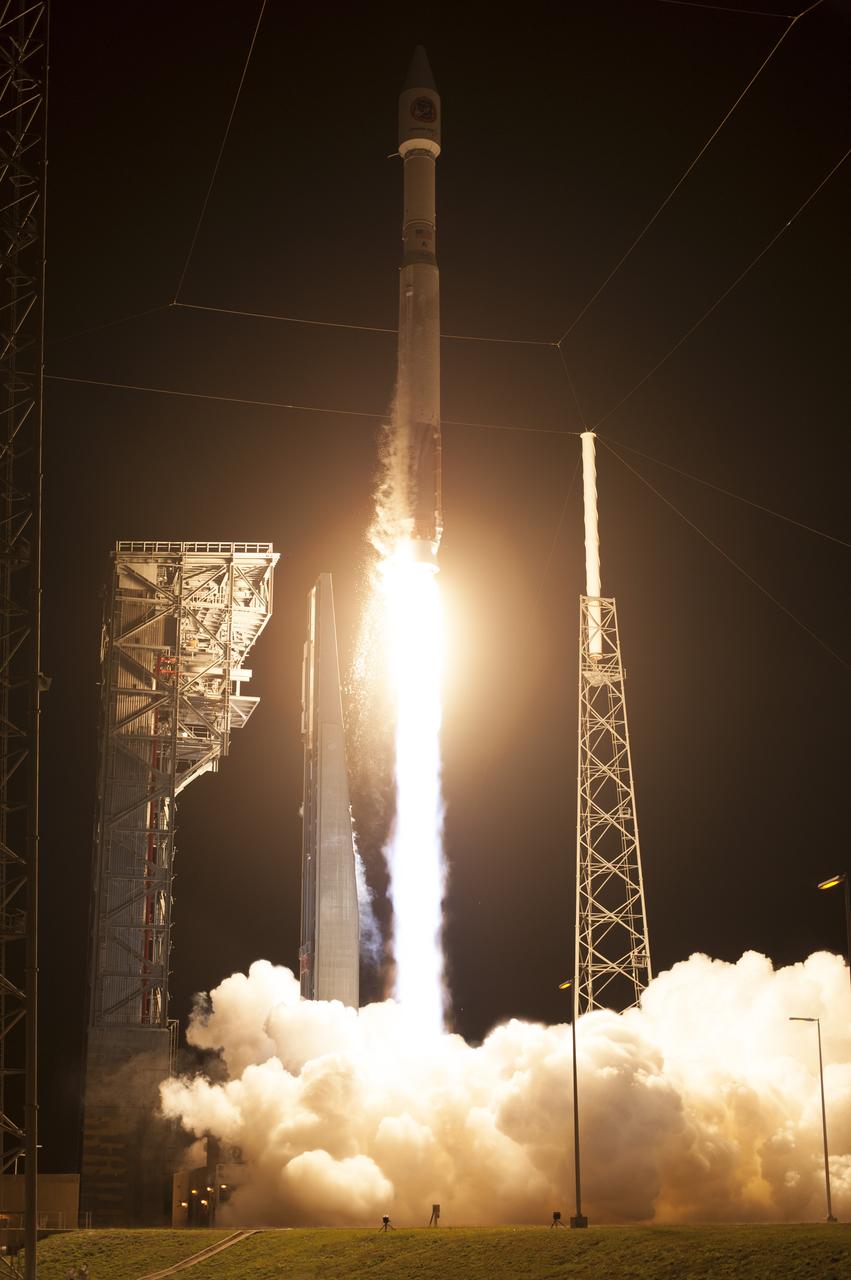
A United Launch Alliance Atlas V rocket lifts off from Space Launch Complex 41 at Cape Canaveral Air Force Station carrying an Orbital ATK Cygnus resupply spacecraft on a commercial resupply services mission to the International Space Station. Liftoff was at 11:05 p.m. EDT. Cygnus will deliver the second generation of a portable onboard printer to demonstrate 3-D printing, an instrument for first space-based observations of the chemical composition of meteors entering Earth’s atmosphere and an experiment to study how fires burn in microgravity.
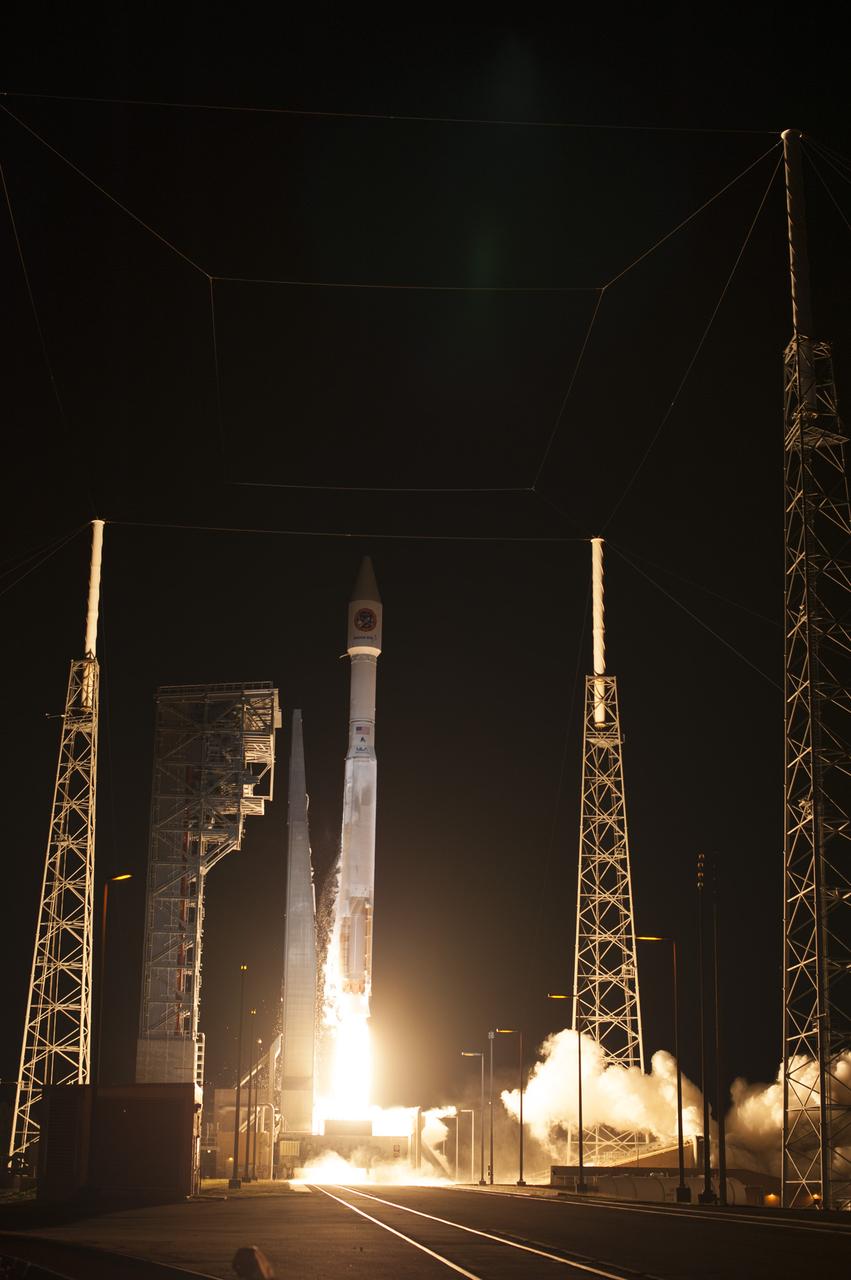
A United Launch Alliance Atlas V rocket lifts off from Space Launch Complex 41 at Cape Canaveral Air Force Station carrying an Orbital ATK Cygnus resupply spacecraft on a commercial resupply services mission to the International Space Station. Liftoff was at 11:05 p.m. EDT. Cygnus will deliver the second generation of a portable onboard printer to demonstrate 3-D printing, an instrument for first space-based observations of the chemical composition of meteors entering Earth’s atmosphere and an experiment to study how fires burn in microgravity.
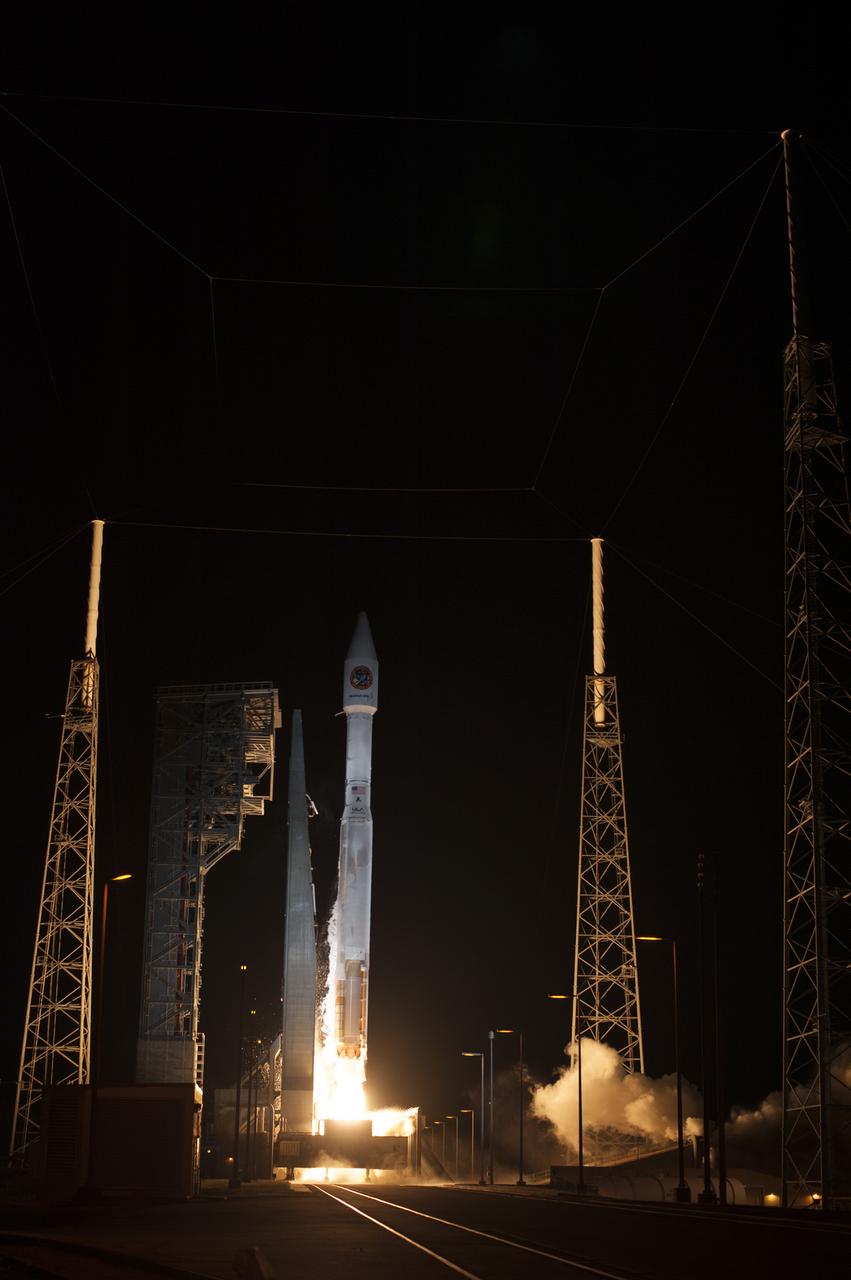
A United Launch Alliance Atlas V rocket lifts off from Space Launch Complex 41 at Cape Canaveral Air Force Station carrying an Orbital ATK Cygnus resupply spacecraft on a commercial resupply services mission to the International Space Station. Liftoff was at 11:05 p.m. EDT. Cygnus will deliver the second generation of a portable onboard printer to demonstrate 3-D printing, an instrument for first space-based observations of the chemical composition of meteors entering Earth’s atmosphere and an experiment to study how fires burn in microgravity.
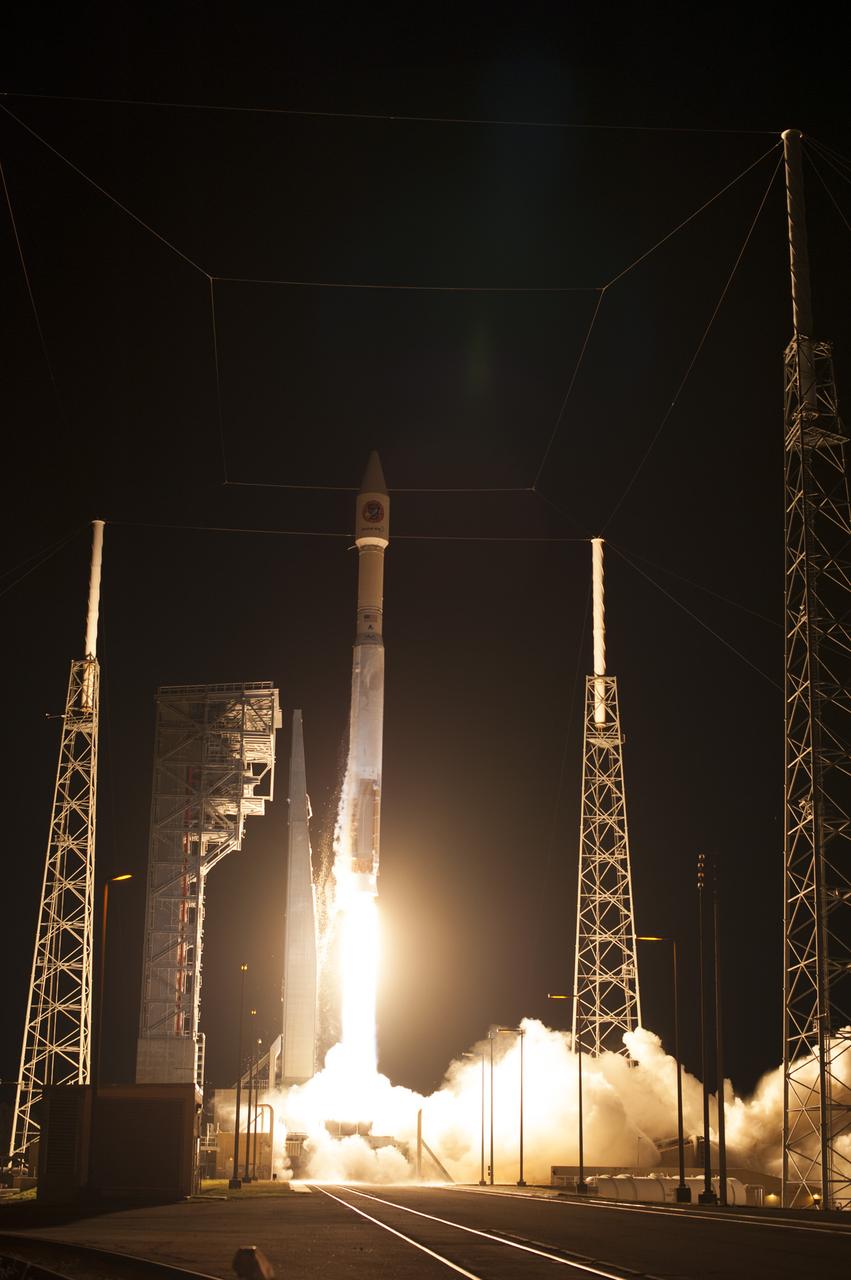
A United Launch Alliance Atlas V rocket lifts off from Space Launch Complex 41 at Cape Canaveral Air Force Station carrying an Orbital ATK Cygnus resupply spacecraft on a commercial resupply services mission to the International Space Station. Liftoff was at 11:05 p.m. EDT. Cygnus will deliver the second generation of a portable onboard printer to demonstrate 3-D printing, an instrument for first space-based observations of the chemical composition of meteors entering Earth’s atmosphere and an experiment to study how fires burn in microgravity.
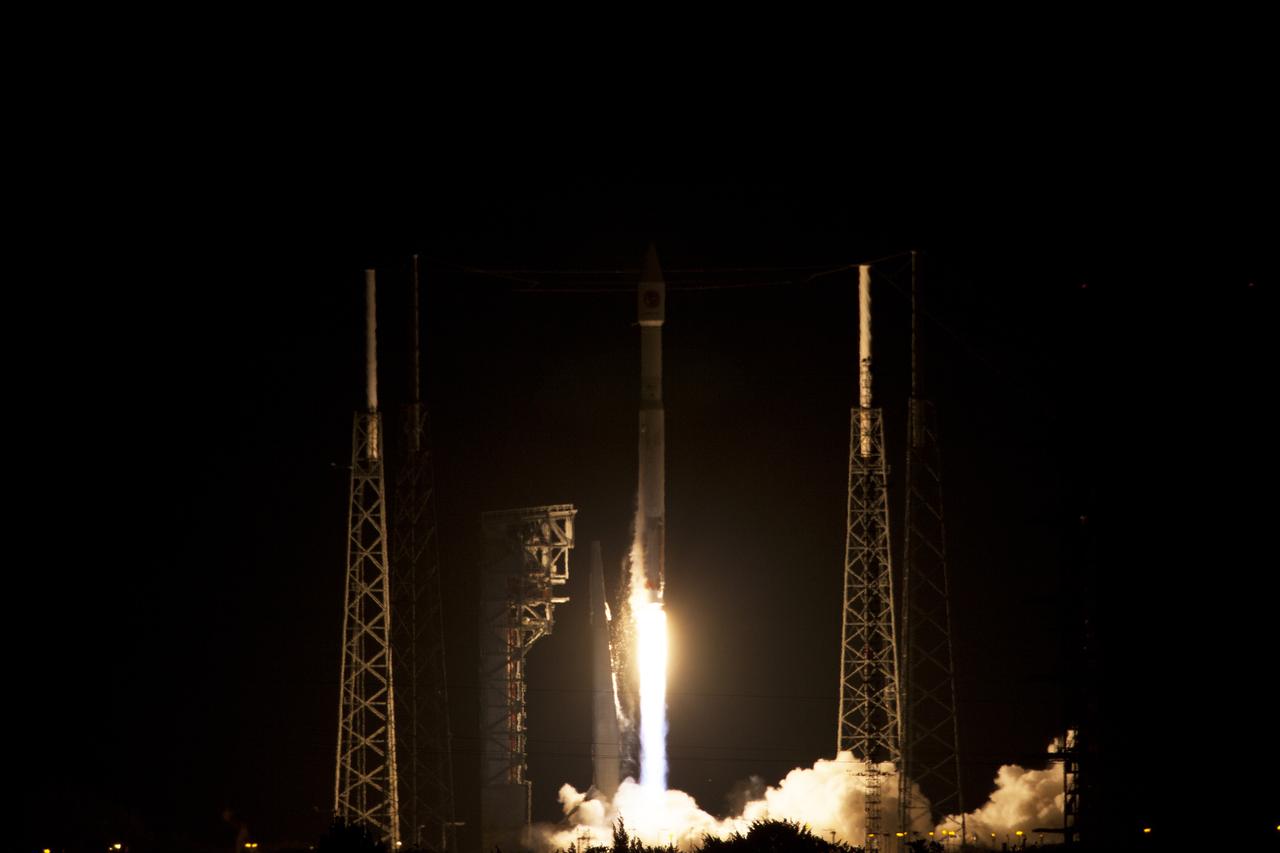
A United Launch Alliance Atlas V rocket lifts off from Space Launch Complex 41 at Cape Canaveral Air Force Station carrying an Orbital ATK Cygnus resupply spacecraft on a commercial resupply services mission to the International Space Station. Liftoff was at 11:05 p.m. EDT. Cygnus will deliver the second generation of a portable onboard printer to demonstrate 3-D printing, an instrument for first space-based observations of the chemical composition of meteors entering Earth’s atmosphere and an experiment to study how fires burn in microgravity.
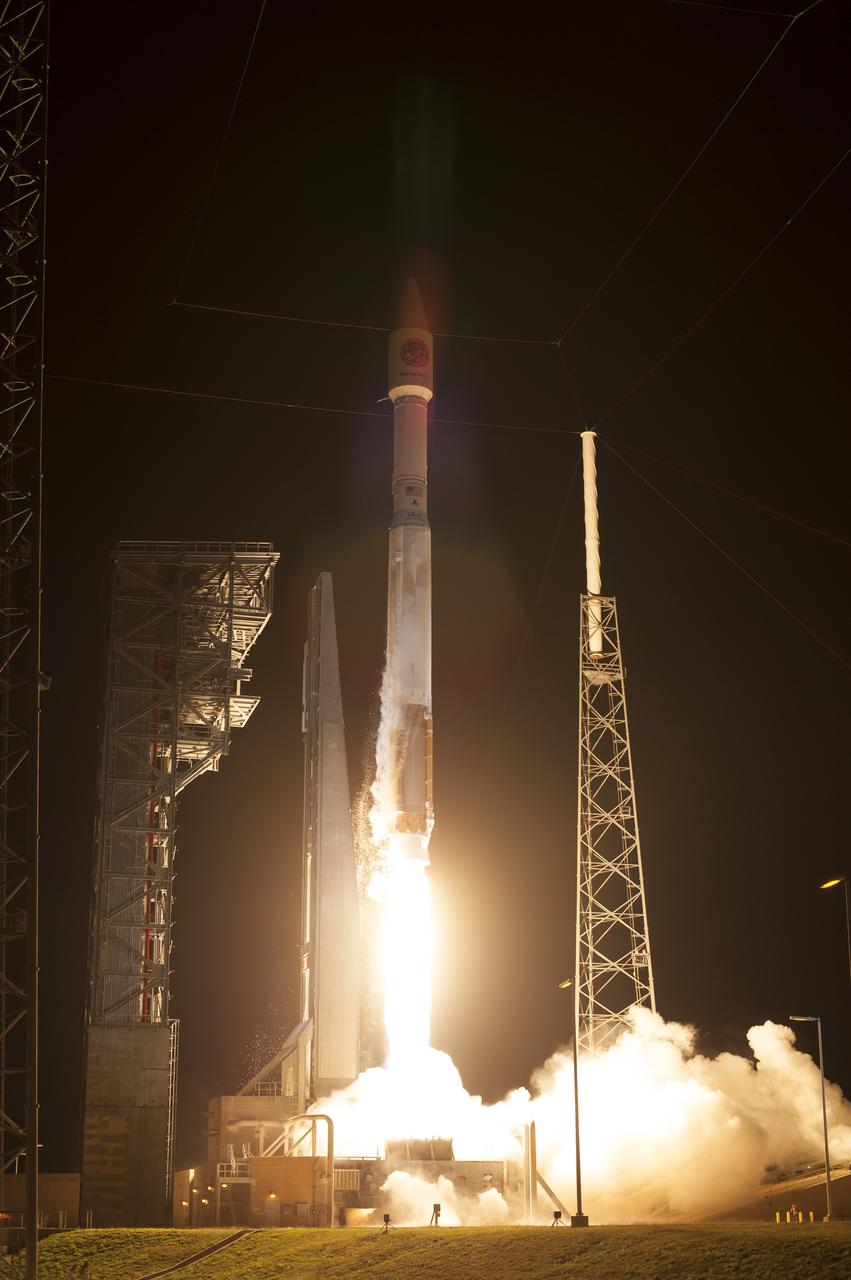
A United Launch Alliance Atlas V rocket lifts off from Space Launch Complex 41 at Cape Canaveral Air Force Station carrying an Orbital ATK Cygnus resupply spacecraft on a commercial resupply services mission to the International Space Station. Liftoff was at 11:05 p.m. EDT. Cygnus will deliver the second generation of a portable onboard printer to demonstrate 3-D printing, an instrument for first space-based observations of the chemical composition of meteors entering Earth’s atmosphere and an experiment to study how fires burn in microgravity.
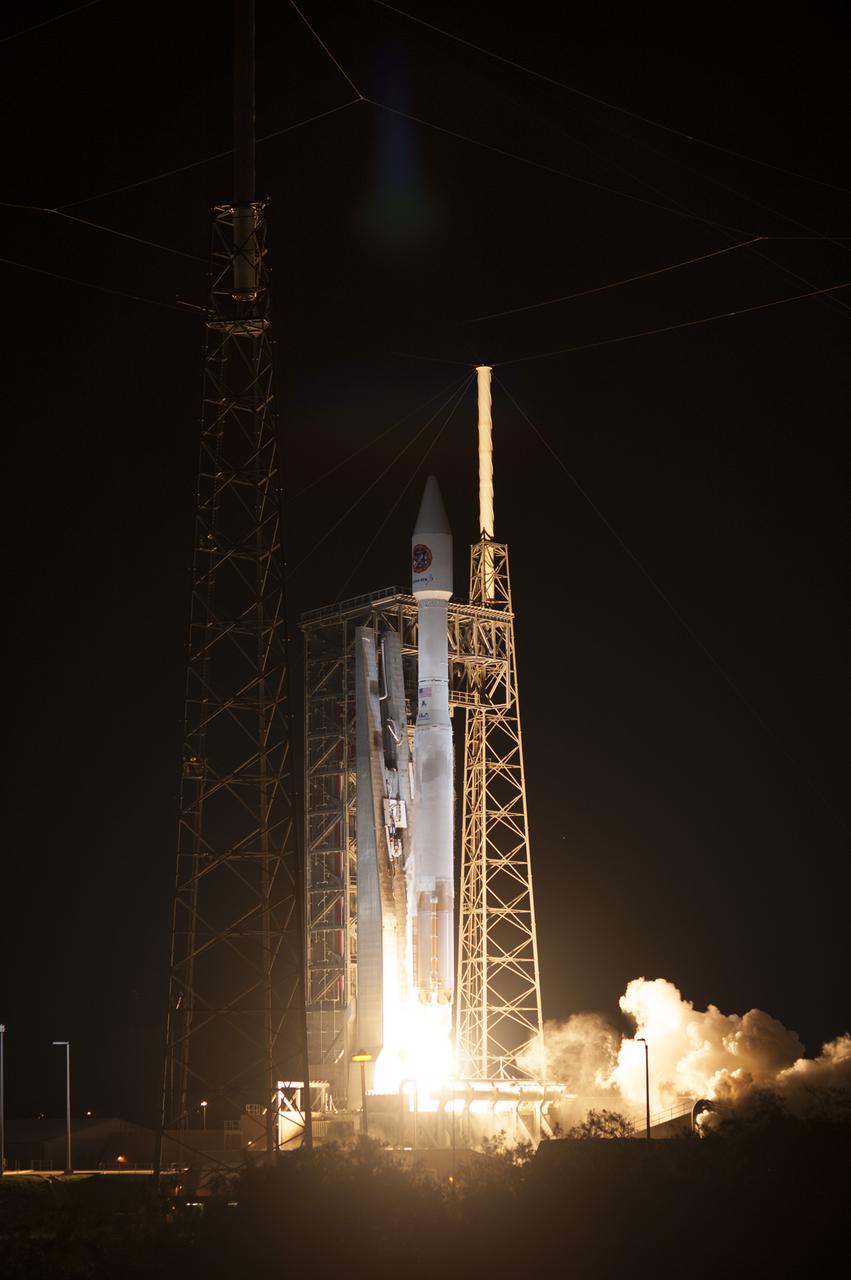
Cape Canaveral Air Force Station carrying an Orbital ATK Cygnus resupply spacecraft on a commercial resupply services mission to the International Space Station. Liftoff was at 11:05 p.m. EDT. Cygnus will deliver the second generation of a portable onboard printer to demonstrate 3-D printing, an instrument for first space-based observations of the chemical composition of meteors entering Earth’s atmosphere and an experiment to study how fires burn in microgravity.
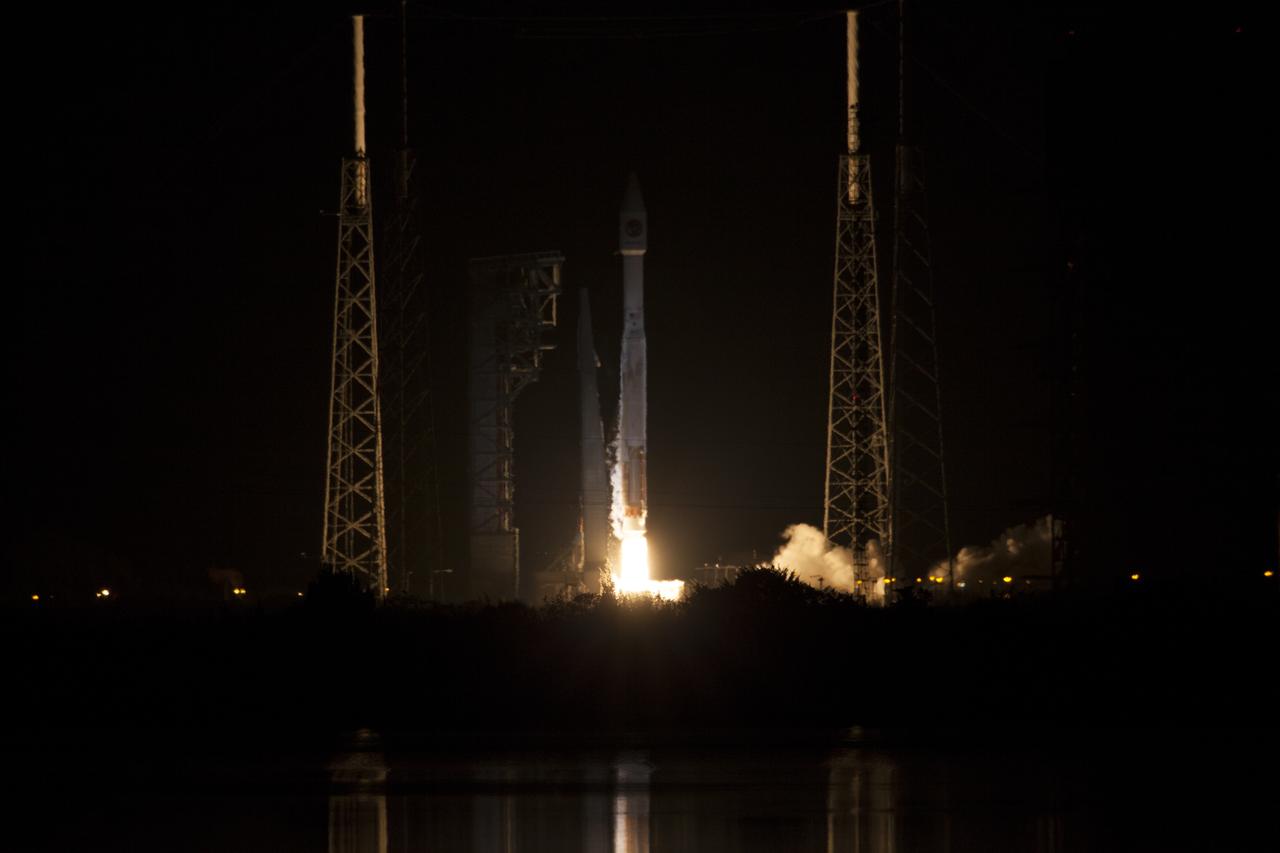
A United Launch Alliance Atlas V rocket lifts off from Space Launch Complex 41 at Cape Canaveral Air Force Station carrying an Orbital ATK Cygnus resupply spacecraft on a commercial resupply services mission to the International Space Station. Liftoff was at 11:05 p.m. EDT. Cygnus will deliver the second generation of a portable onboard printer to demonstrate 3-D printing, an instrument for first space-based observations of the chemical composition of meteors entering Earth’s atmosphere and an experiment to study how fires burn in microgravity.
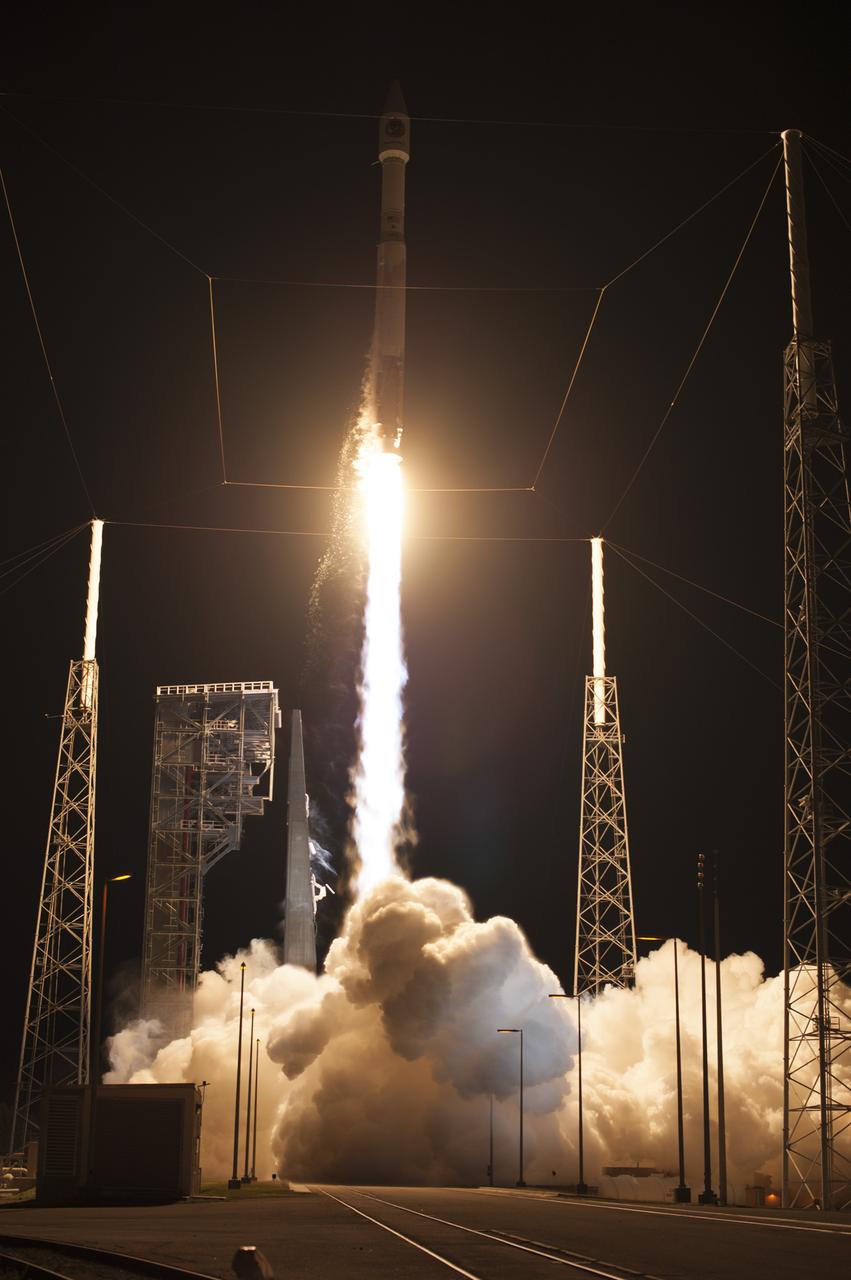
A United Launch Alliance Atlas V rocket lifts off from Space Launch Complex 41 at Cape Canaveral Air Force Station carrying an Orbital ATK Cygnus resupply spacecraft on a commercial resupply services mission to the International Space Station. Liftoff was at 11:05 p.m. EDT. Cygnus will deliver the second generation of a portable onboard printer to demonstrate 3-D printing, an instrument for first space-based observations of the chemical composition of meteors entering Earth’s atmosphere and an experiment to study how fires burn in microgravity.
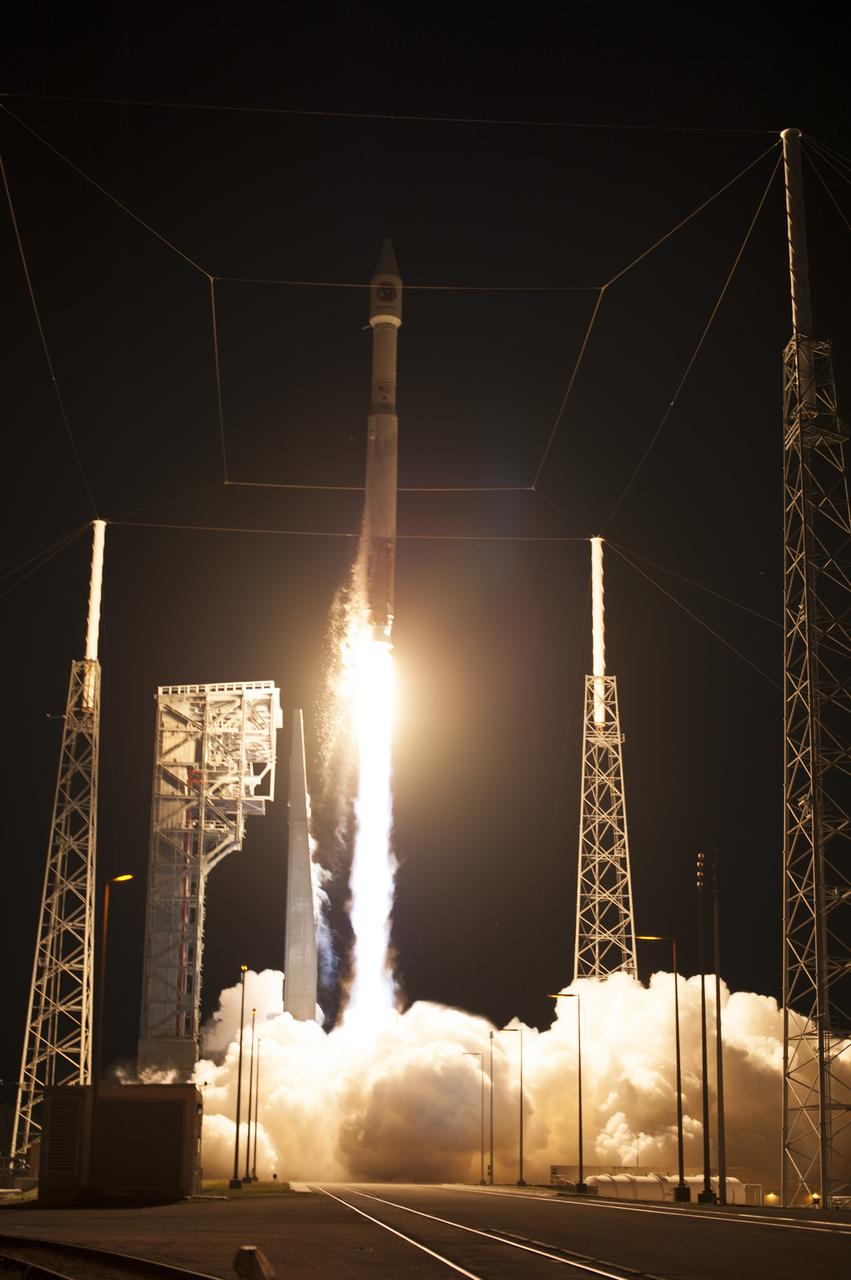
A United Launch Alliance Atlas V rocket lifts off from Space Launch Complex 41 at Cape Canaveral Air Force Station carrying an Orbital ATK Cygnus resupply spacecraft on a commercial resupply services mission to the International Space Station. Liftoff was at 11:05 p.m. EDT. Cygnus will deliver the second generation of a portable onboard printer to demonstrate 3-D printing, an instrument for first space-based observations of the chemical composition of meteors entering Earth’s atmosphere and an experiment to study how fires burn in microgravity.
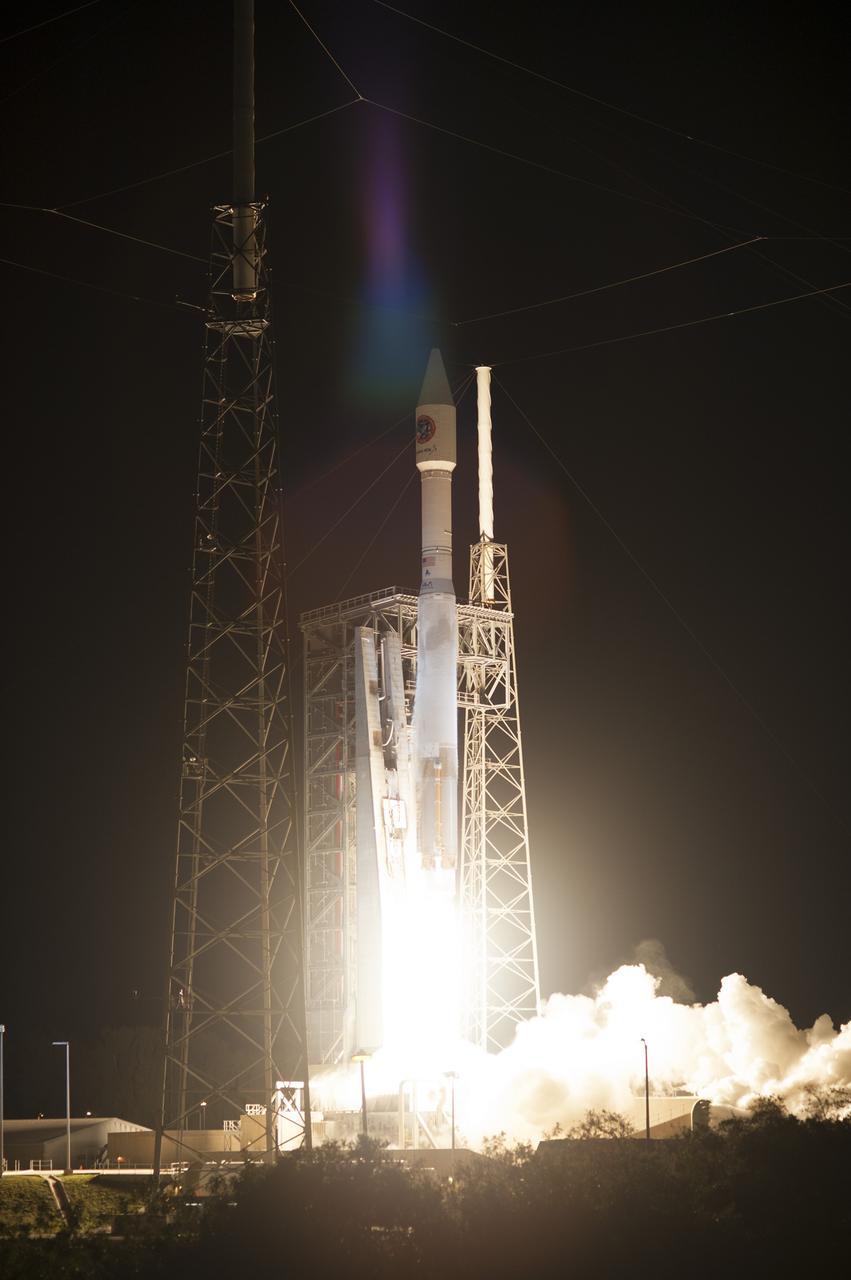
Cape Canaveral Air Force Station carrying an Orbital ATK Cygnus resupply spacecraft on a commercial resupply services mission to the International Space Station. Liftoff was at 11:05 p.m. EDT. Cygnus will deliver the second generation of a portable onboard printer to demonstrate 3-D printing, an instrument for first space-based observations of the chemical composition of meteors entering Earth’s atmosphere and an experiment to study how fires burn in microgravity.
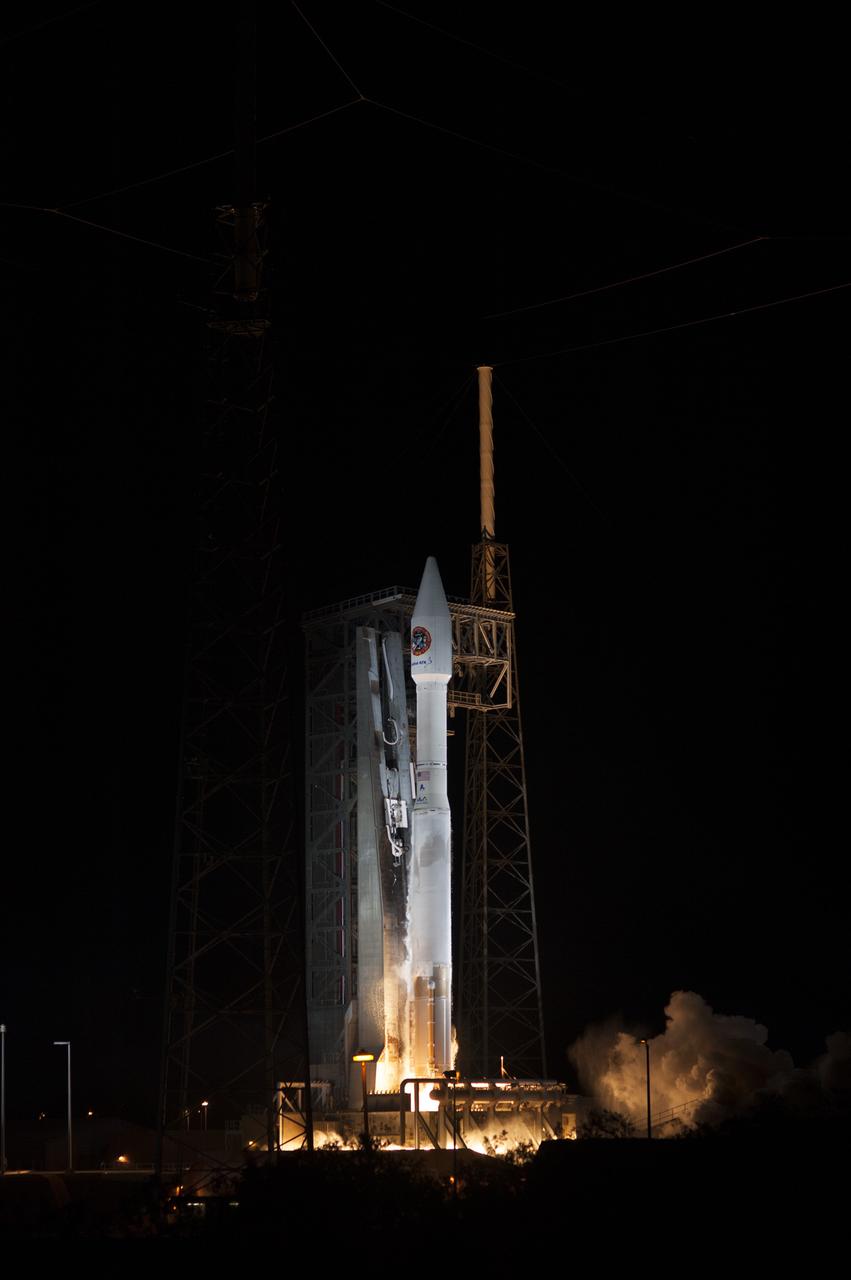
Cape Canaveral Air Force Station carrying an Orbital ATK Cygnus resupply spacecraft on a commercial resupply services mission to the International Space Station. Liftoff was at 11:05 p.m. EDT. Cygnus will deliver the second generation of a portable onboard printer to demonstrate 3-D printing, an instrument for first space-based observations of the chemical composition of meteors entering Earth’s atmosphere and an experiment to study how fires burn in microgravity.
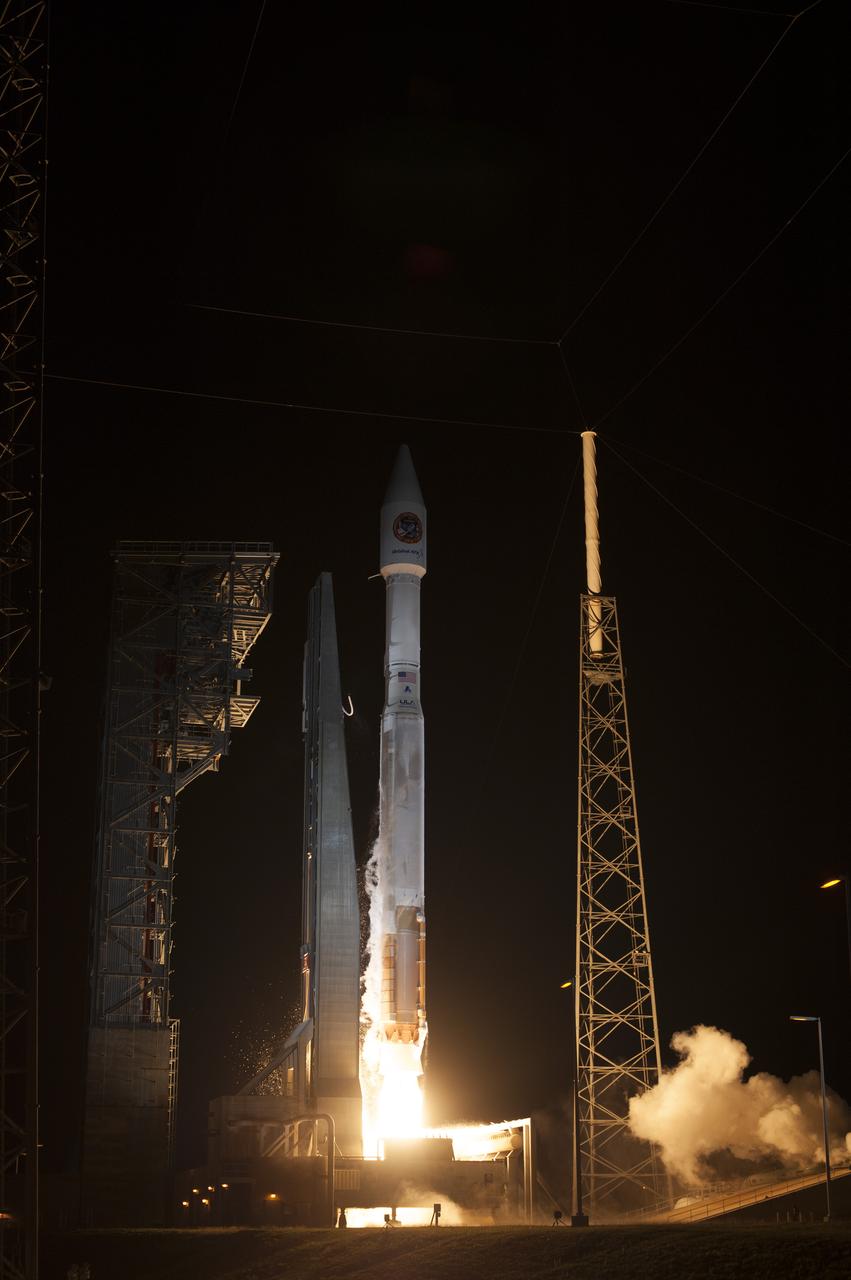
A United Launch Alliance Atlas V rocket lifts off from Space Launch Complex 41 at Cape Canaveral Air Force Station carrying an Orbital ATK Cygnus resupply spacecraft on a commercial resupply services mission to the International Space Station. Liftoff was at 11:05 p.m. EDT. Cygnus will deliver the second generation of a portable onboard printer to demonstrate 3-D printing, an instrument for first space-based observations of the chemical composition of meteors entering Earth’s atmosphere and an experiment to study how fires burn in microgravity.
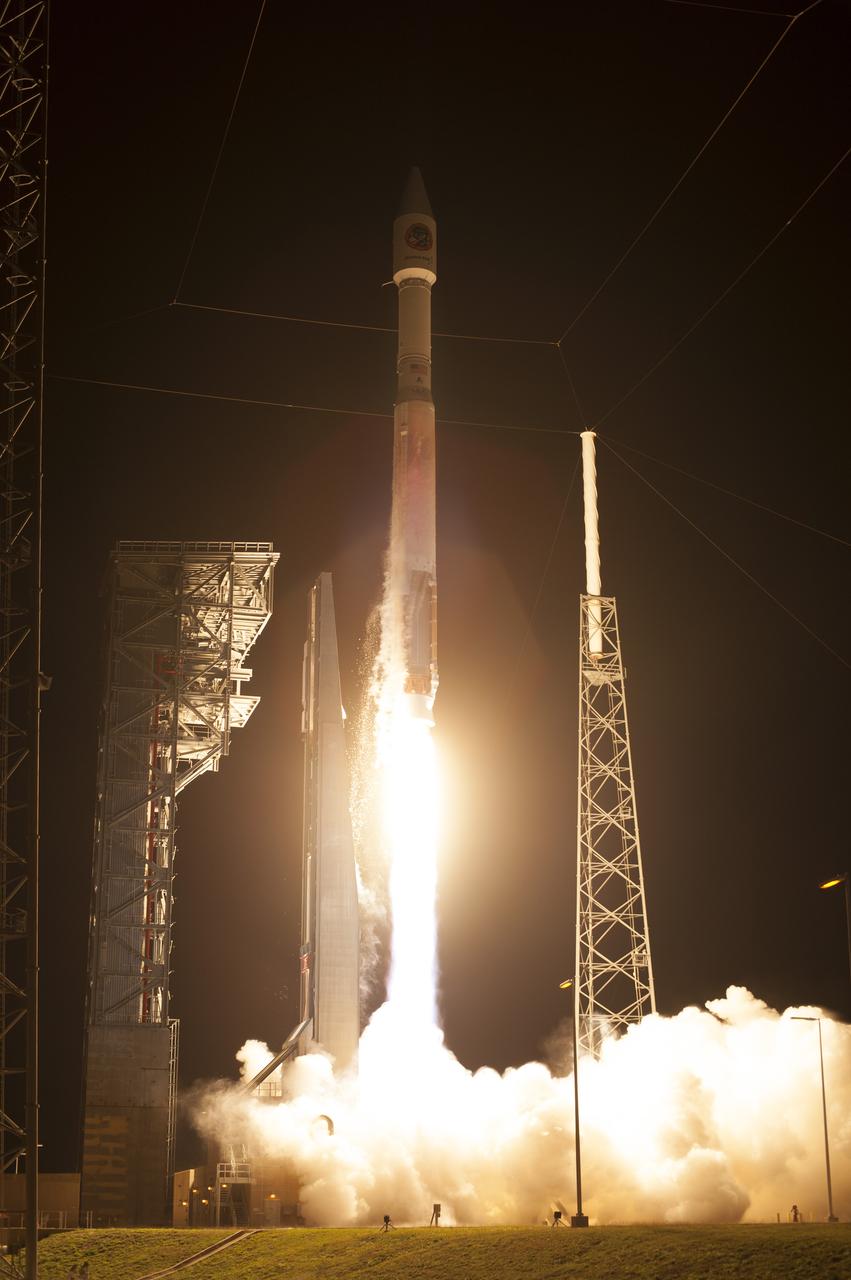
A United Launch Alliance Atlas V rocket lifts off from Space Launch Complex 41 at Cape Canaveral Air Force Station carrying an Orbital ATK Cygnus resupply spacecraft on a commercial resupply services mission to the International Space Station. Liftoff was at 11:05 p.m. EDT. Cygnus will deliver the second generation of a portable onboard printer to demonstrate 3-D printing, an instrument for first space-based observations of the chemical composition of meteors entering Earth’s atmosphere and an experiment to study how fires burn in microgravity.
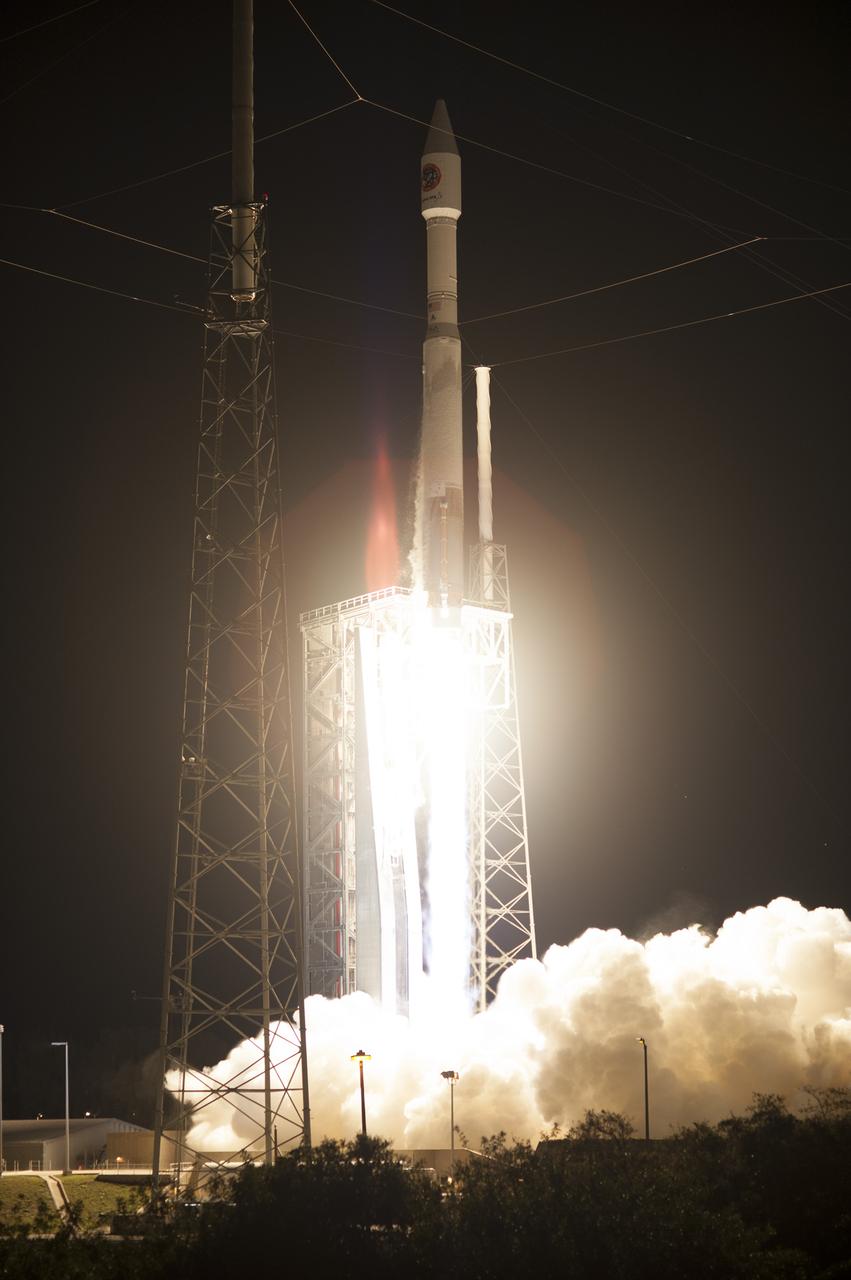
Cape Canaveral Air Force Station carrying an Orbital ATK Cygnus resupply spacecraft on a commercial resupply services mission to the International Space Station. Liftoff was at 11:05 p.m. EDT. Cygnus will deliver the second generation of a portable onboard printer to demonstrate 3-D printing, an instrument for first space-based observations of the chemical composition of meteors entering Earth’s atmosphere and an experiment to study how fires burn in microgravity.
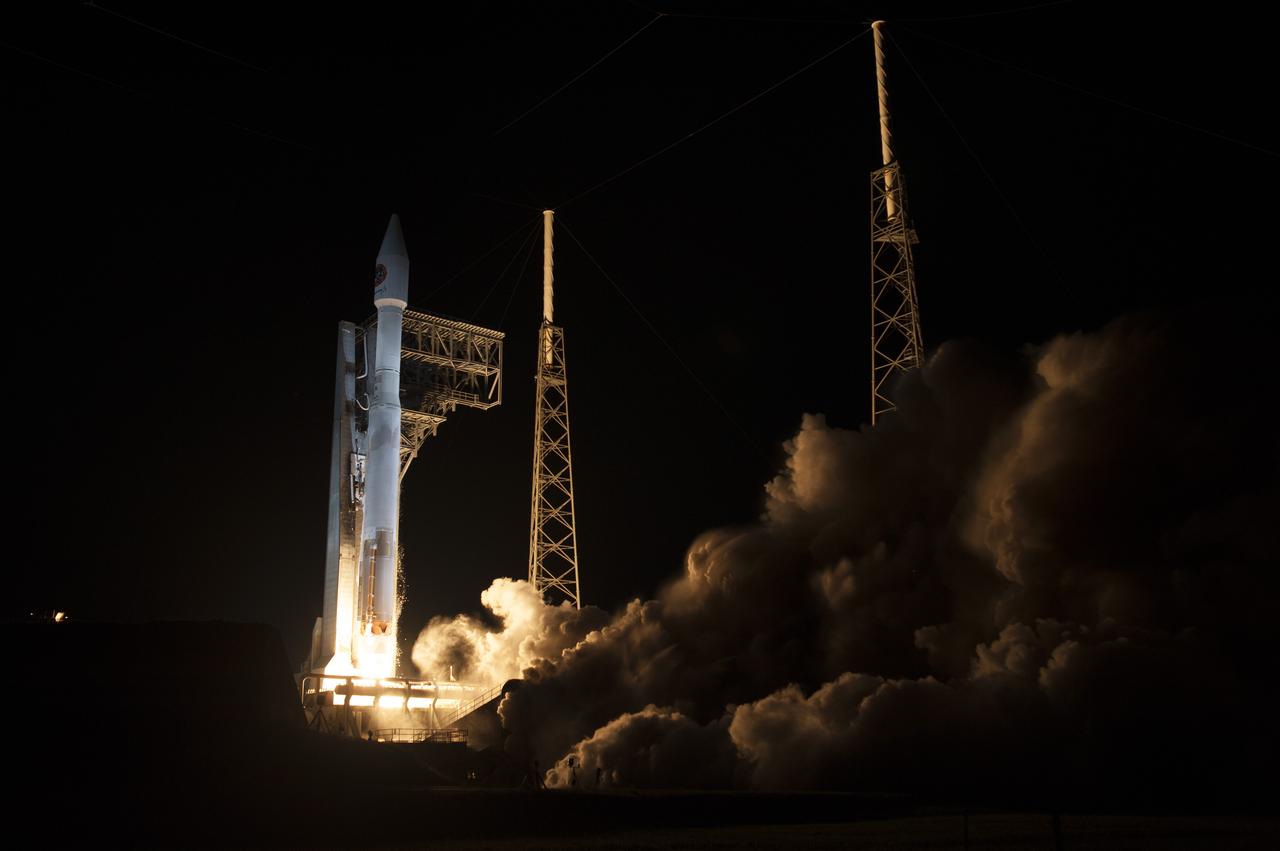
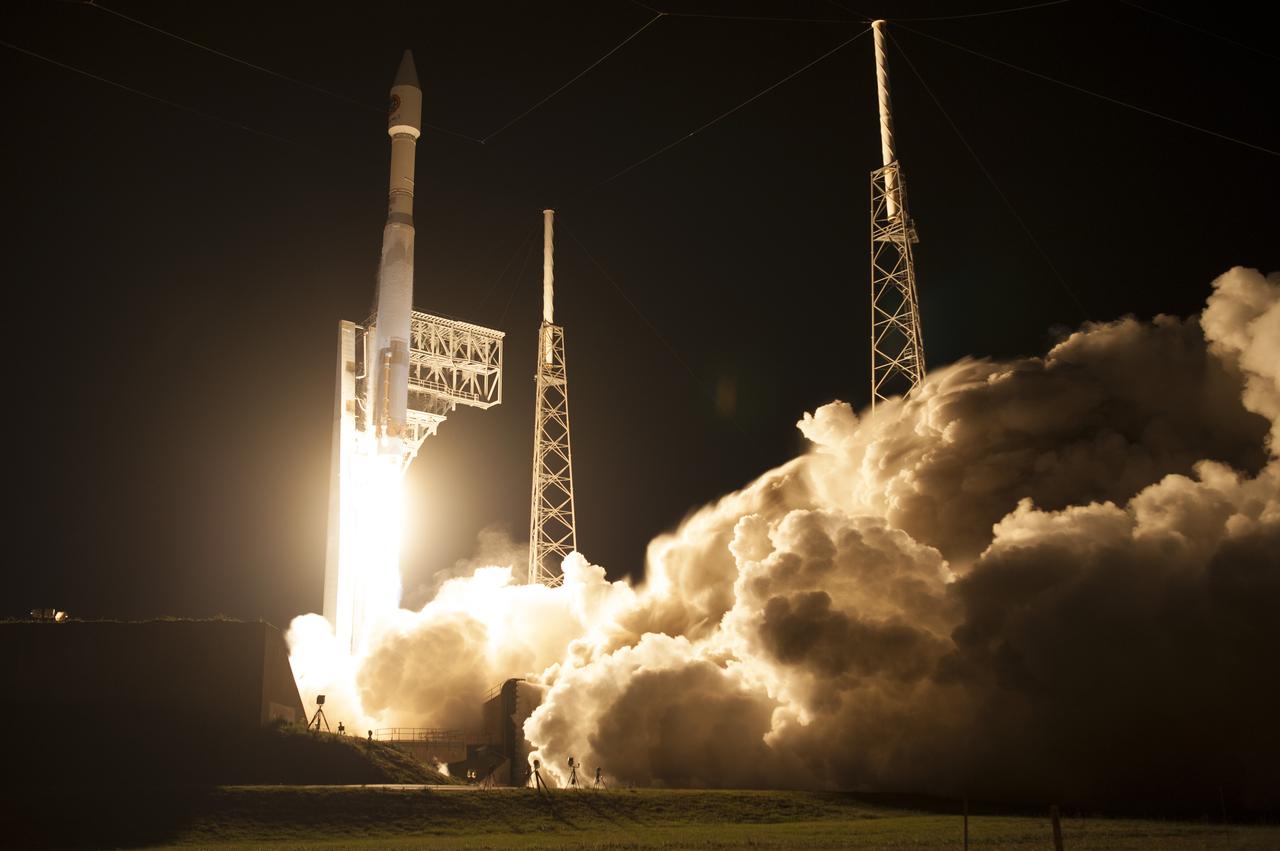
A United Launch Alliance Atlas V rocket lifts off from Space Launch Complex 41 at Cape Canaveral Air Force Station in Florida carrying an Orbital ATK Cygnus resupply spacecraft on a commercial resupply services mission to the International Space Station. Liftoff was at 11:05 p.m. EDT. Cygnus will deliver the second generation of a portable onboard printer to demonstrate 3-D printing, an instrument for first space-based observations of the chemical composition of meteors entering Earth’s atmosphere and an experiment to study how fires burn in microgravity.
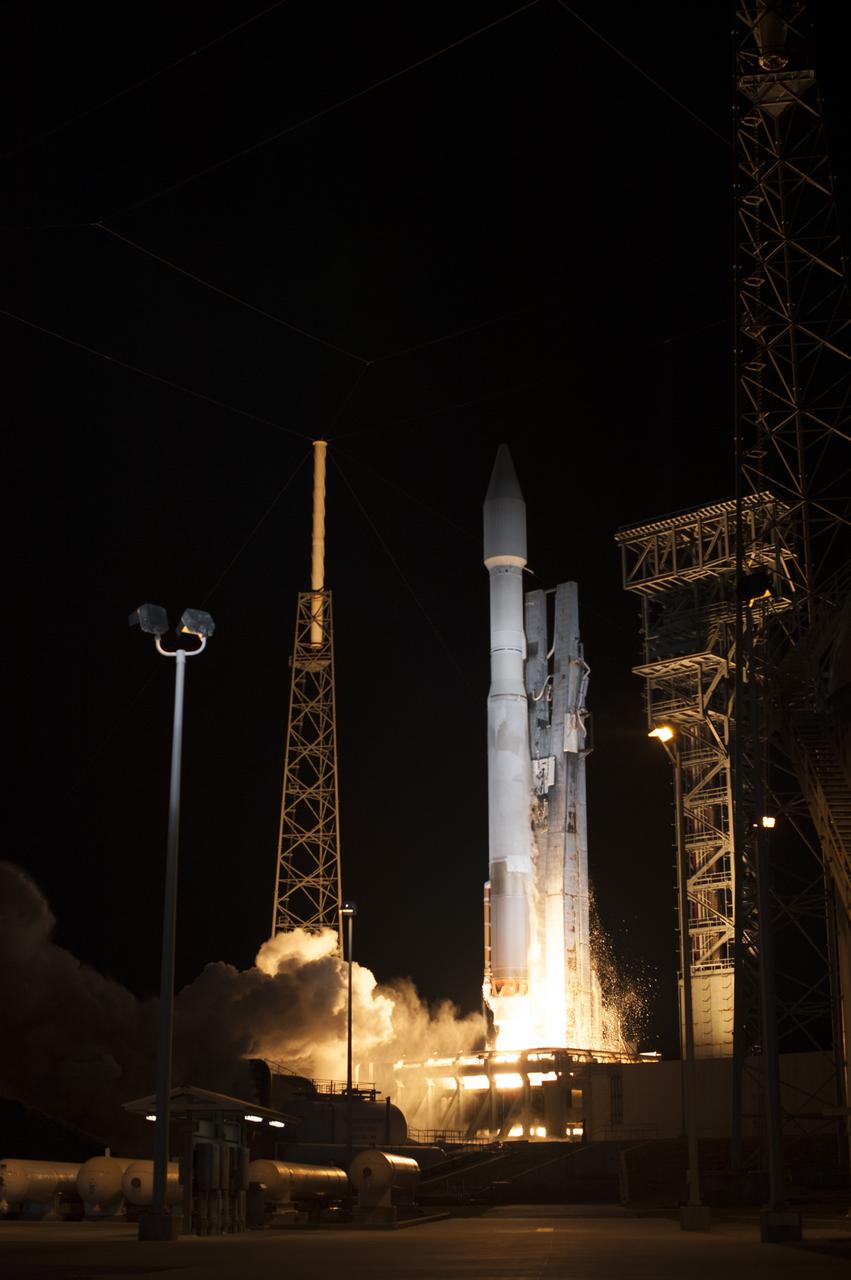
A United Launch Alliance Atlas V rocket lifts off from Space Launch Complex 41 at Cape Canaveral Air Force Station in Florida carrying an Orbital ATK Cygnus resupply spacecraft on a commercial resupply services mission to the International Space Station. Liftoff was at 11:05 p.m. EDT. Cygnus will deliver the second generation of a portable onboard printer to demonstrate 3-D printing, an instrument for first space-based observations of the chemical composition of meteors entering Earth’s atmosphere and an experiment to study how fires burn in microgravity.
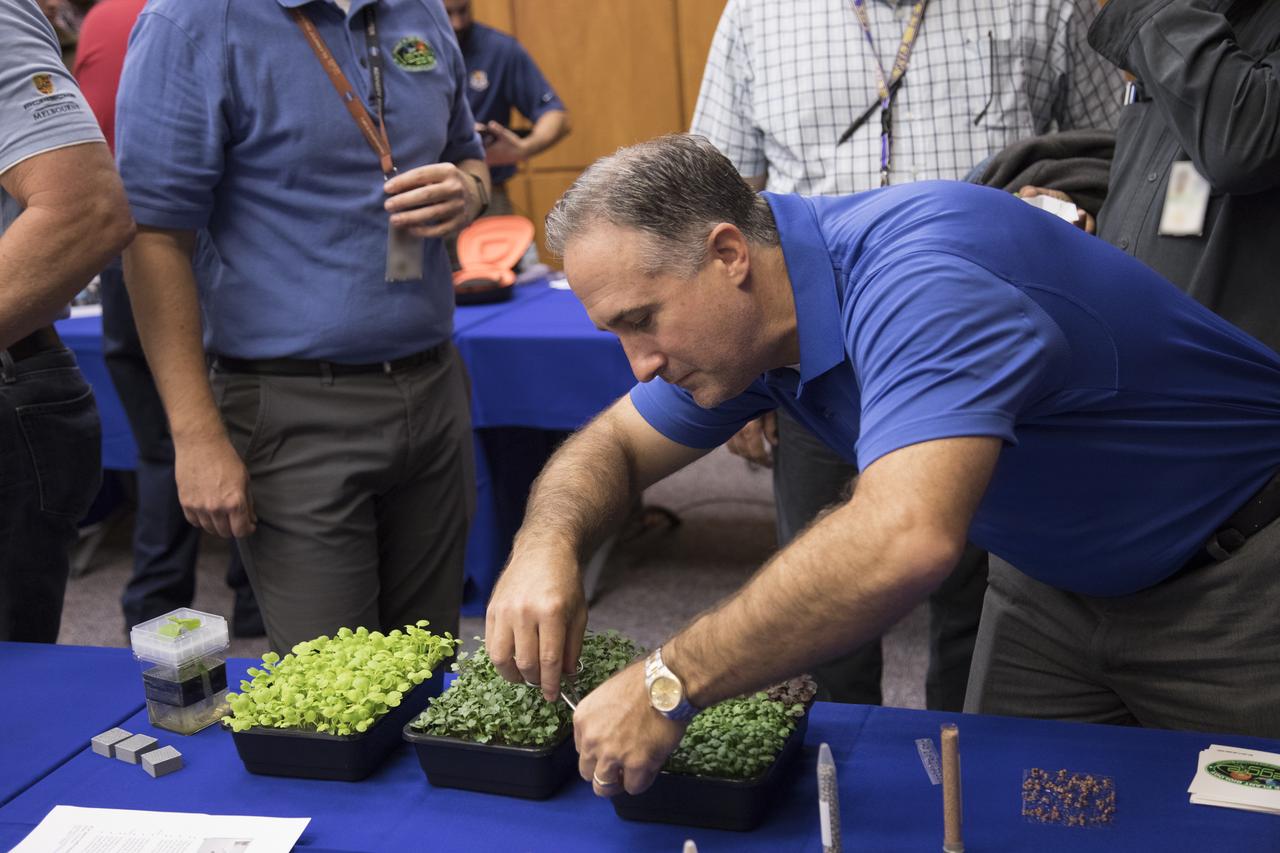
Trent Smith, a project manager in the ISS Exploration Research and Technology Program, displays microgreens grown in the same space dirt (arcillite) that is used in the plant pillows for the Veggie plant growth system on the International Space Station and in a 3-D-printed plastic matrix during the 2017 Innovation Expo showcase at NASA's Kennedy Space Center in Florida. The purpose of the annual two-day event is to help foster innovation and creativity among the Kennedy workforce. The event included several keynote speakers, training opportunities, an innovation showcase and the KSC Kickstart competition.
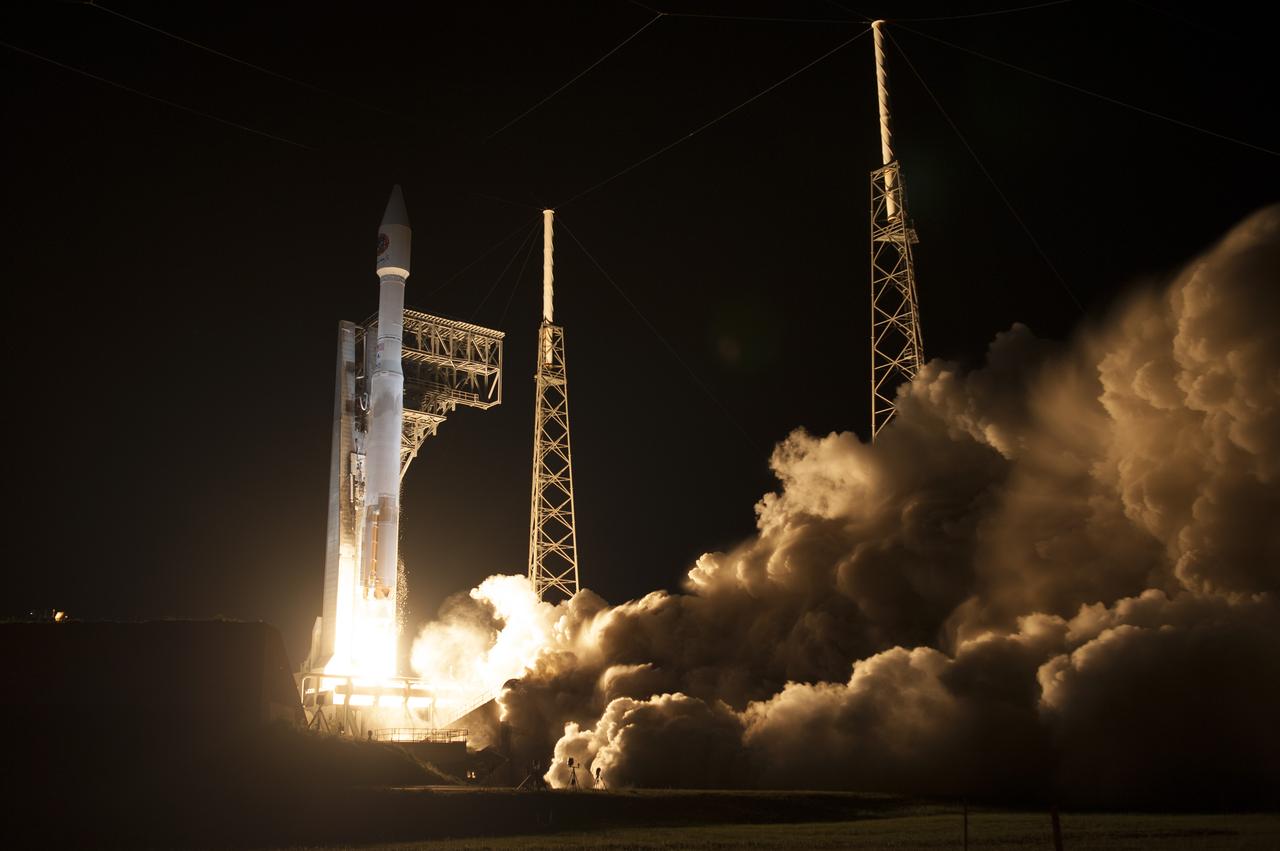
A United Launch Alliance Atlas V rocket lifts off from Space Launch Complex 41 at Cape Canaveral Air Force Station in Florida carrying an Orbital ATK Cygnus resupply spacecraft on a commercial resupply services mission to the International Space Station. Liftoff was at 11:05 p.m. EDT. Cygnus will deliver the second generation of a portable onboard printer to demonstrate 3-D printing, an instrument for first space-based observations of the chemical composition of meteors entering Earth’s atmosphere and an experiment to study how fires burn in microgravity.
A United Launch Alliance Atlas V rocket lifts off from Space Launch Complex 41 at Cape Canaveral Air Force Station in Florida carrying an Orbital ATK Cygnus resupply spacecraft on a commercial resupply services mission to the International Space Station. Liftoff was at 11:05 p.m. EDT. Cygnus will deliver the second generation of a portable onboard printer to demonstrate 3-D printing, an instrument for first space-based observations of the chemical composition of meteors entering Earth’s atmosphere and an experiment to study how fires burn in microgravity.
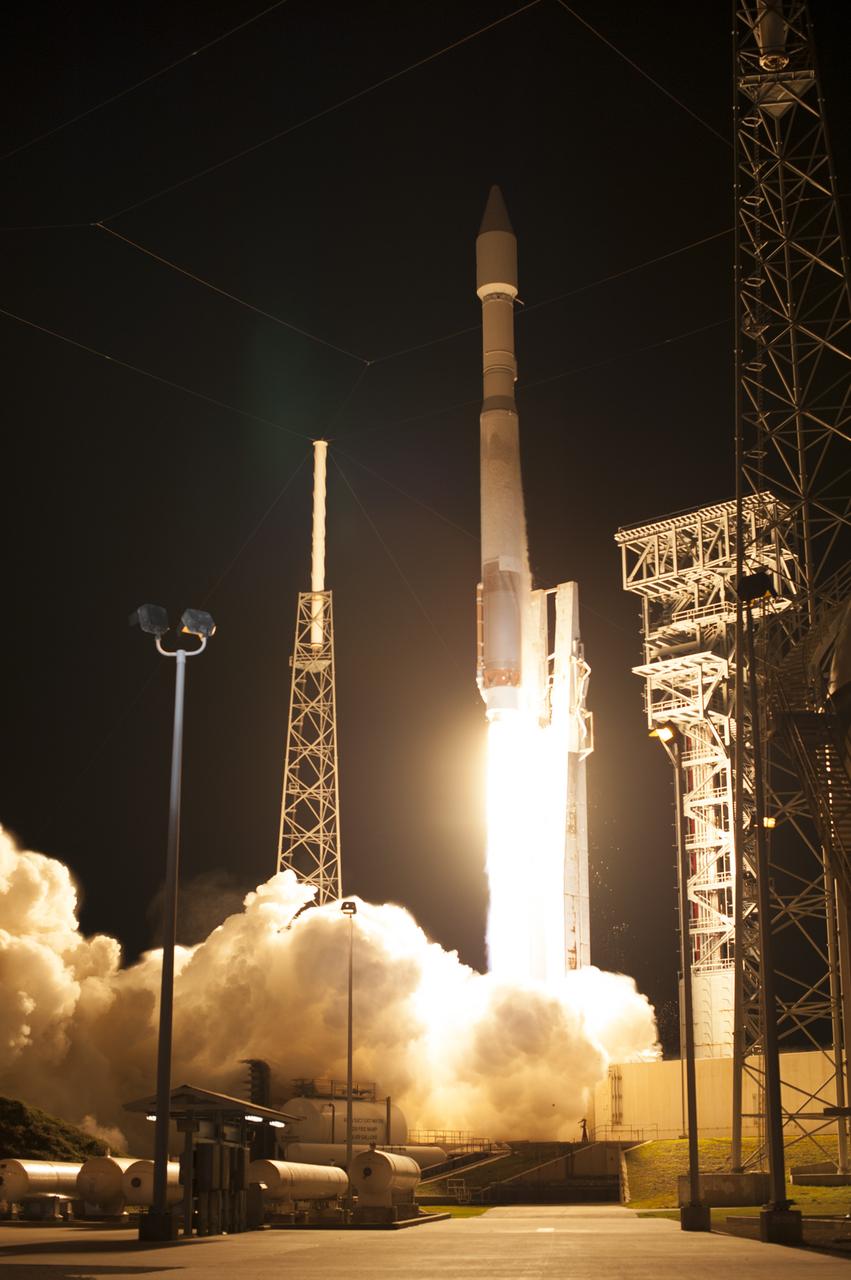
A United Launch Alliance Atlas V rocket lifts off from Space Launch Complex 41 at Cape Canaveral Air Force Station in Florida carrying an Orbital ATK Cygnus resupply spacecraft on a commercial resupply services mission to the International Space Station. Liftoff was at 11:05 p.m. EDT. Cygnus will deliver the second generation of a portable onboard printer to demonstrate 3-D printing, an instrument for first space-based observations of the chemical composition of meteors entering Earth’s atmosphere and an experiment to study how fires burn in microgravity.
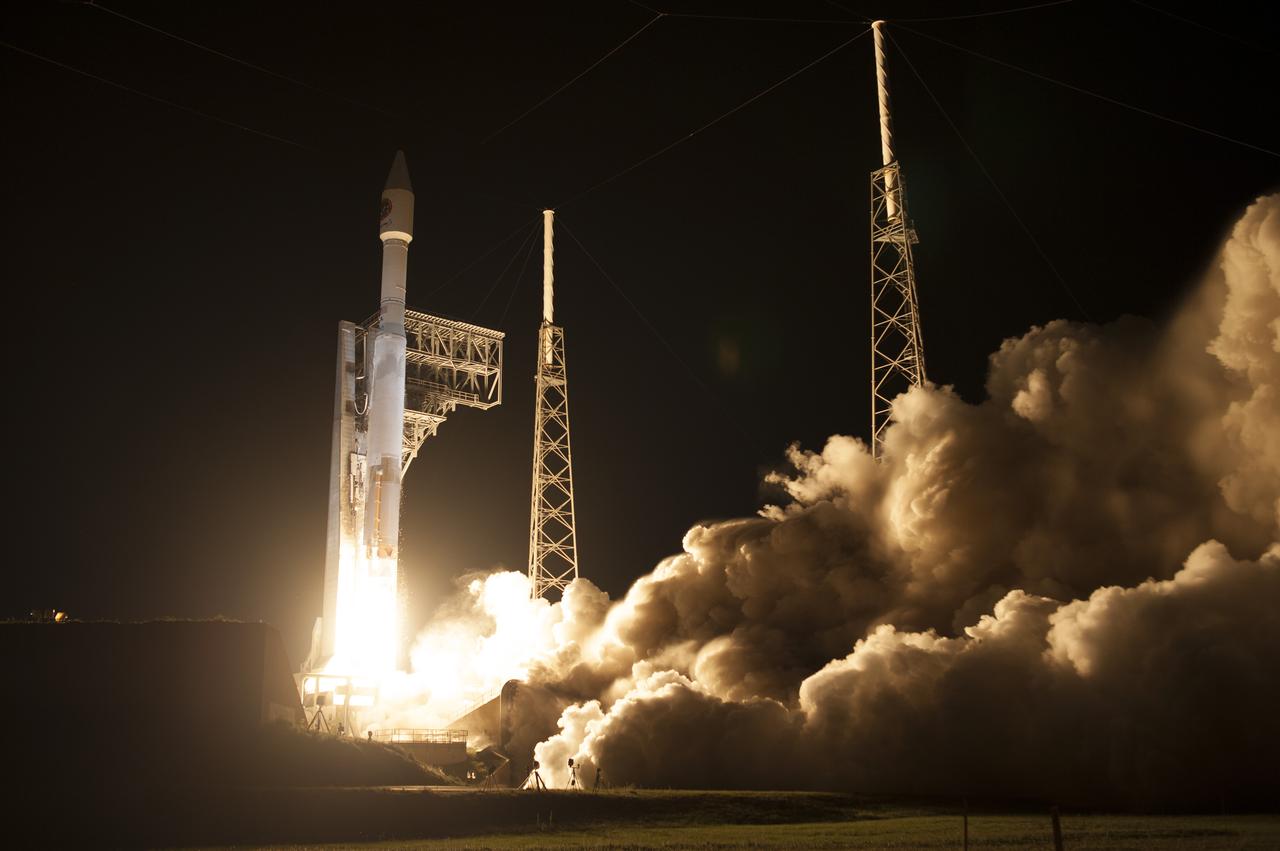
A United Launch Alliance Atlas V rocket lifts off from Space Launch Complex 41 at Cape Canaveral Air Force Station in Florida carrying an Orbital ATK Cygnus resupply spacecraft on a commercial resupply services mission to the International Space Station. Liftoff was at 11:05 p.m. EDT. Cygnus will deliver the second generation of a portable onboard printer to demonstrate 3-D printing, an instrument for first space-based observations of the chemical composition of meteors entering Earth’s atmosphere and an experiment to study how fires burn in microgravity.
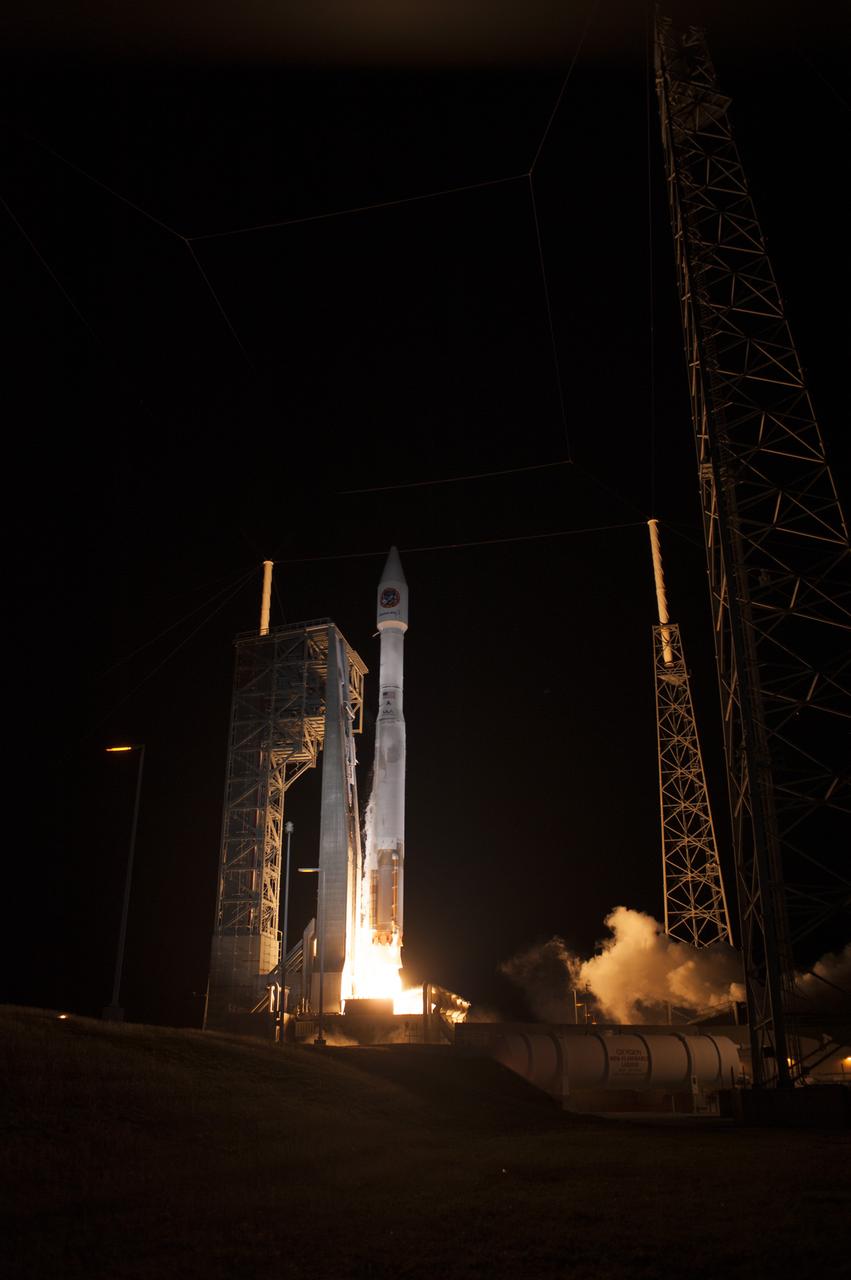
A United Launch Alliance Atlas V rocket lifts off from Space Launch Complex 41 at Cape Canaveral Air Force Station in Florida carrying an Orbital ATK Cygnus resupply spacecraft on a commercial resupply services mission to the International Space Station. Liftoff was at 11:05 p.m. EDT. Cygnus will deliver the second generation of a portable onboard printer to demonstrate 3-D printing, an instrument for first space-based observations of the chemical composition of meteors entering Earth’s atmosphere and an experiment to study how fires burn in microgravity.
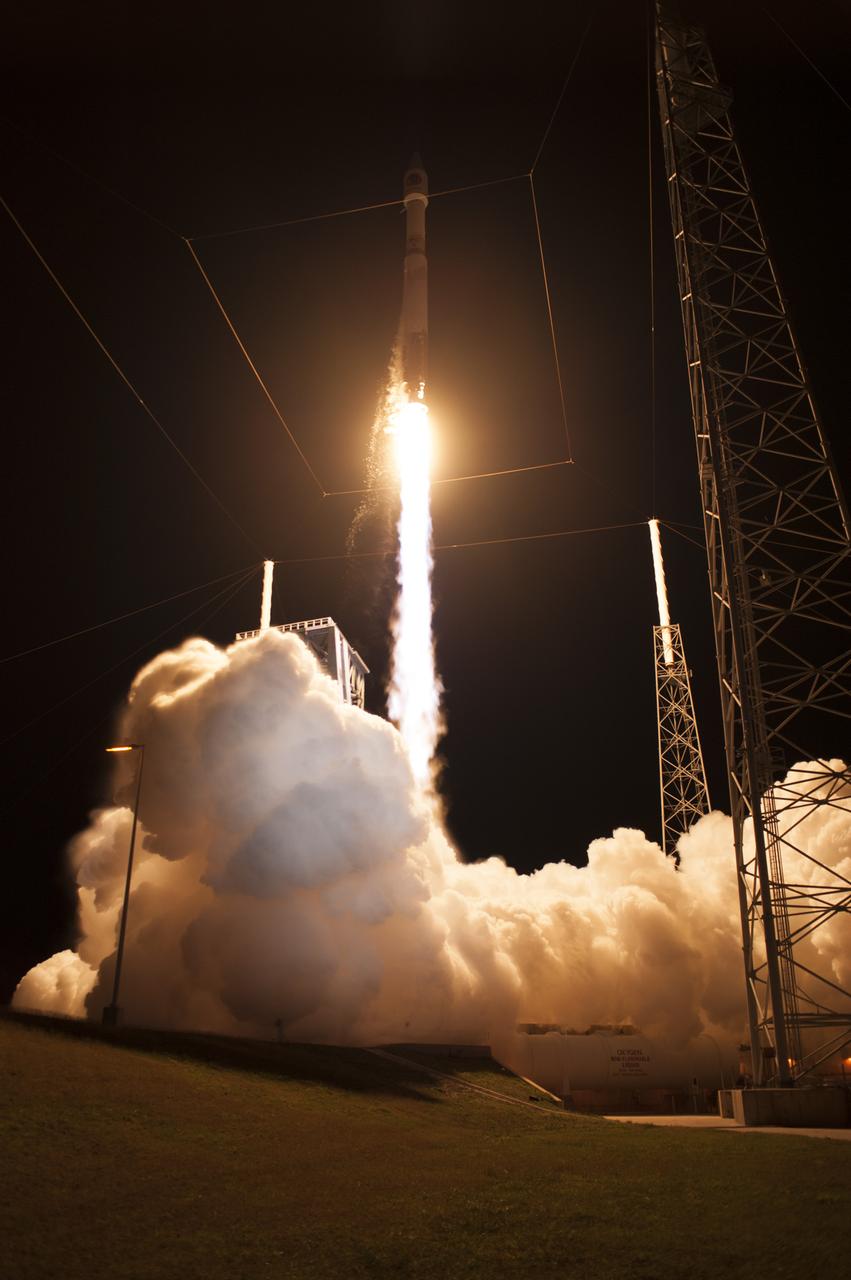
A United Launch Alliance Atlas V rocket lifts off from Space Launch Complex 41 at Cape Canaveral Air Force Station in Florida carrying an Orbital ATK Cygnus resupply spacecraft on a commercial resupply services mission to the International Space Station. Liftoff was at 11:05 p.m. EDT. Cygnus will deliver the second generation of a portable onboard printer to demonstrate 3-D printing, an instrument for first space-based observations of the chemical composition of meteors entering Earth’s atmosphere and an experiment to study how fires burn in microgravity.
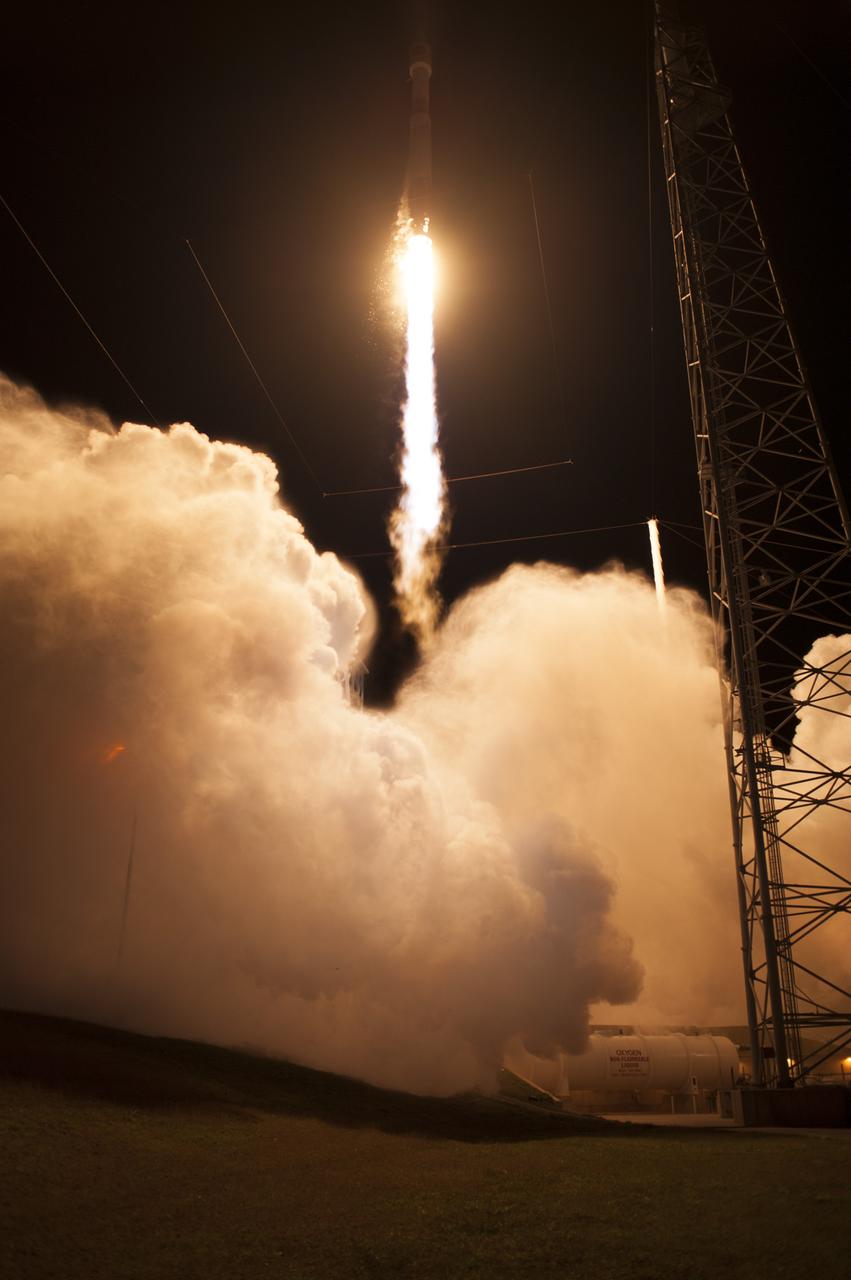
A United Launch Alliance Atlas V rocket lifts off from Space Launch Complex 41 at Cape Canaveral Air Force Station in Florida carrying an Orbital ATK Cygnus resupply spacecraft on a commercial resupply services mission to the International Space Station. Liftoff was at 11:05 p.m. EDT. Cygnus will deliver the second generation of a portable onboard printer to demonstrate 3-D printing, an instrument for first space-based observations of the chemical composition of meteors entering Earth’s atmosphere and an experiment to study how fires burn in microgravity.
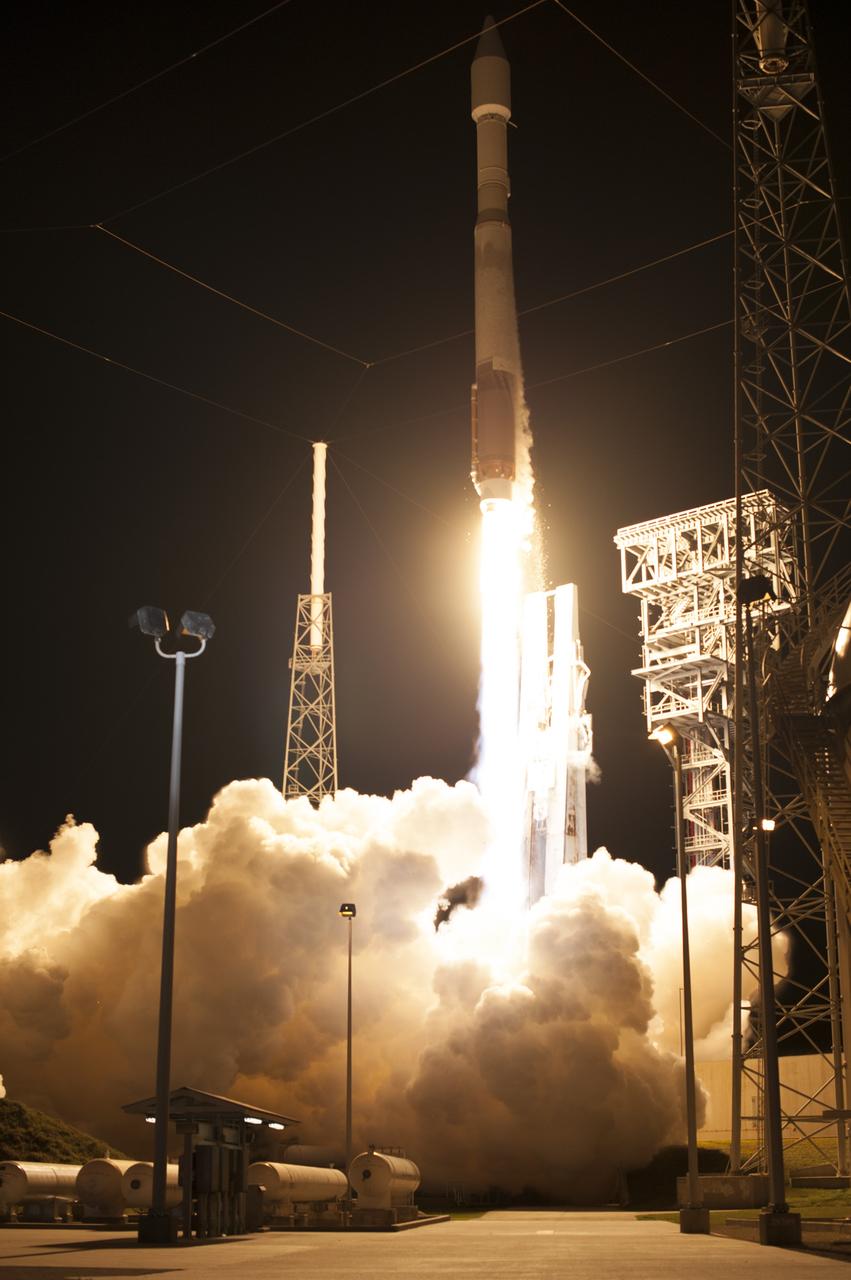
A United Launch Alliance Atlas V rocket lifts off from Space Launch Complex 41 at Cape Canaveral Air Force Station in Florida carrying an Orbital ATK Cygnus resupply spacecraft on a commercial resupply services mission to the International Space Station. Liftoff was at 11:05 p.m. EDT. Cygnus will deliver the second generation of a portable onboard printer to demonstrate 3-D printing, an instrument for first space-based observations of the chemical composition of meteors entering Earth’s atmosphere and an experiment to study how fires burn in microgravity.
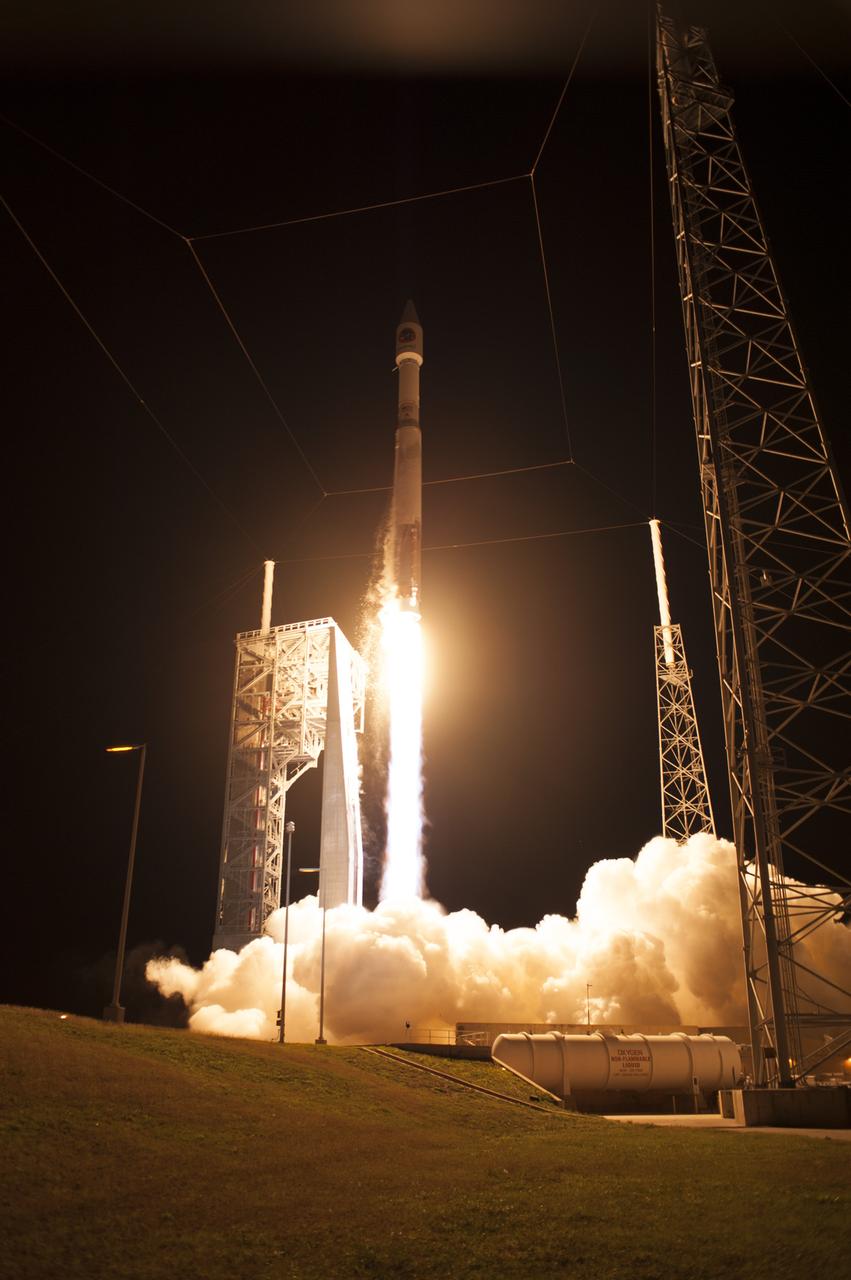
A United Launch Alliance Atlas V rocket lifts off from Space Launch Complex 41 at Cape Canaveral Air Force Station in Florida carrying an Orbital ATK Cygnus resupply spacecraft on a commercial resupply services mission to the International Space Station. Liftoff was at 11:05 p.m. EDT. Cygnus will deliver the second generation of a portable onboard printer to demonstrate 3-D printing, an instrument for first space-based observations of the chemical composition of meteors entering Earth’s atmosphere and an experiment to study how fires burn in microgravity.
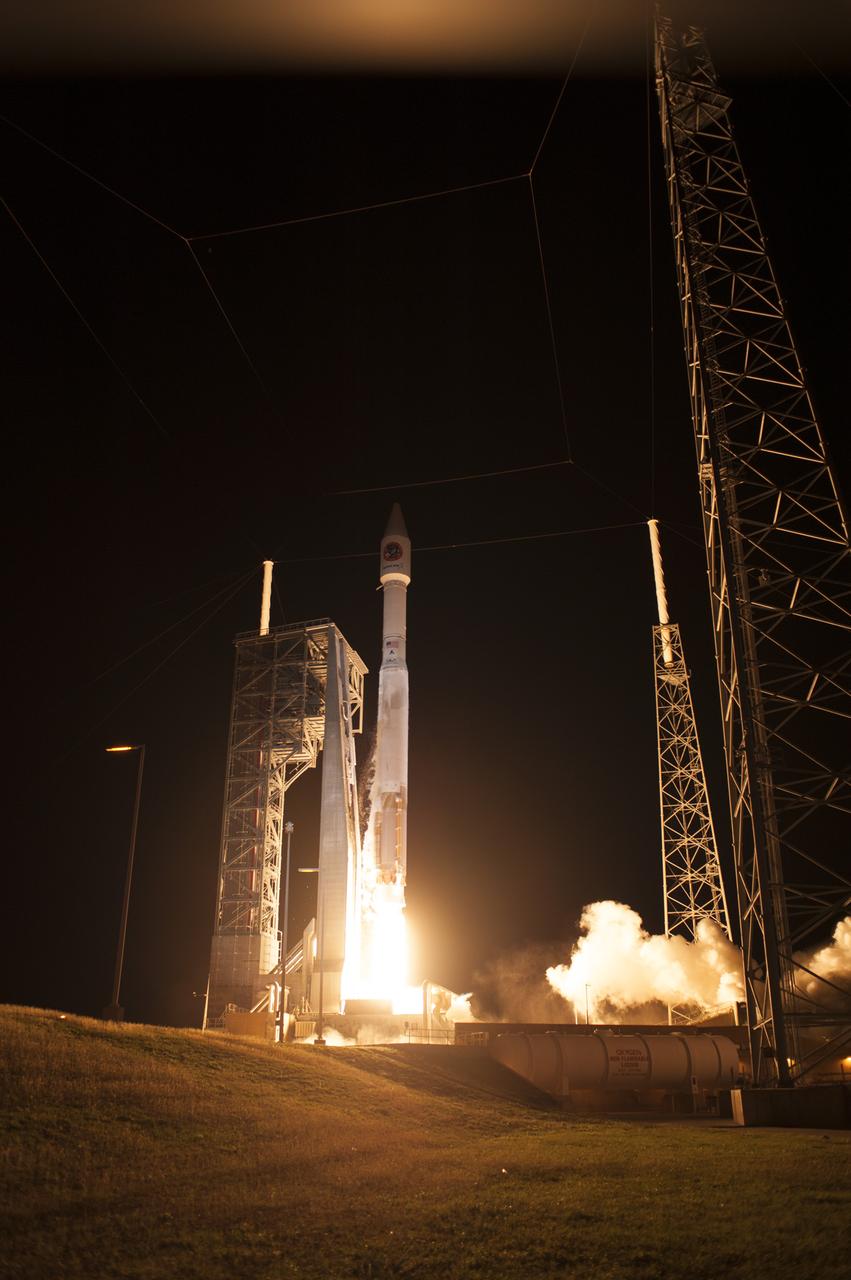
A United Launch Alliance Atlas V rocket lifts off from Space Launch Complex 41 at Cape Canaveral Air Force Station in Florida carrying an Orbital ATK Cygnus resupply spacecraft on a commercial resupply services mission to the International Space Station. Liftoff was at 11:05 p.m. EDT. Cygnus will deliver the second generation of a portable onboard printer to demonstrate 3-D printing, an instrument for first space-based observations of the chemical composition of meteors entering Earth’s atmosphere and an experiment to study how fires burn in microgravity.
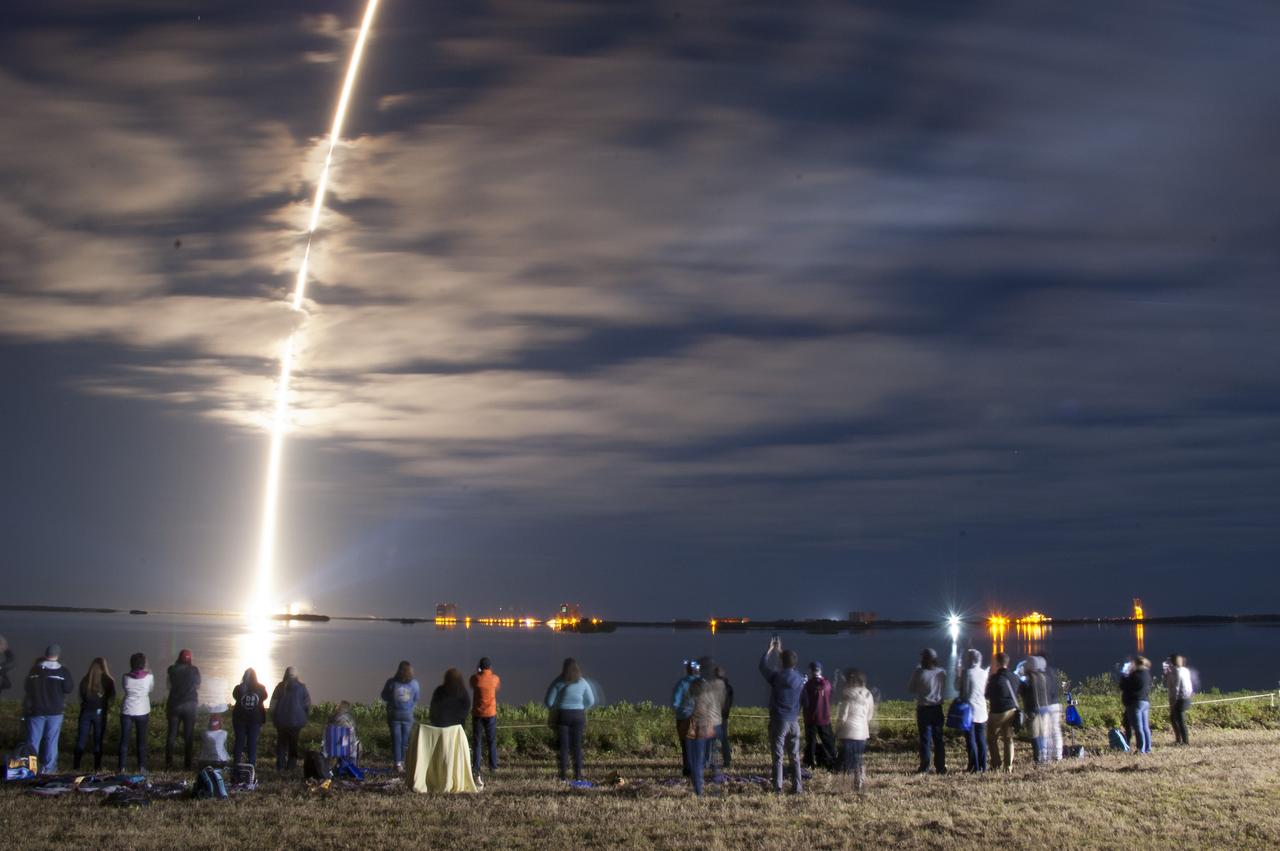
In a time-lapse exposure, a United Launch Alliance Atlas V rocket lifts off from Space Launch Complex 41 at Cape Canaveral Air Force Station carrying an Orbital ATK Cygnus resupply spacecraft on a commercial resupply services mission to the International Space Station. Liftoff was at 11:05 p.m. EDT. Cygnus will deliver the second generation of a portable onboard printer to demonstrate 3-D printing, an instrument for first space-based observations of the chemical composition of meteors entering Earth’s atmosphere and an experiment to study how fires burn in microgravity.
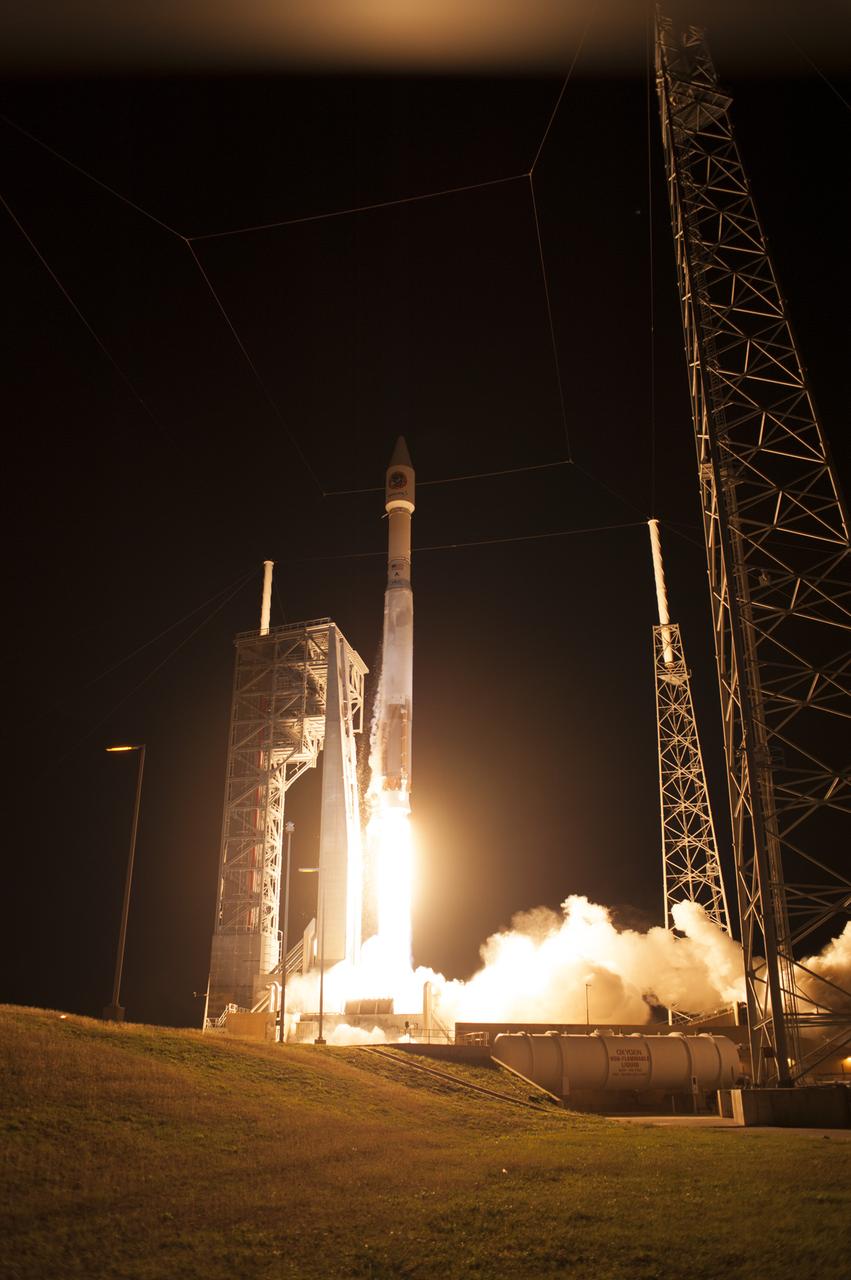
A United Launch Alliance Atlas V rocket lifts off from Space Launch Complex 41 at Cape Canaveral Air Force Station in Florida carrying an Orbital ATK Cygnus resupply spacecraft on a commercial resupply services mission to the International Space Station. Liftoff was at 11:05 p.m. EDT. Cygnus will deliver the second generation of a portable onboard printer to demonstrate 3-D printing, an instrument for first space-based observations of the chemical composition of meteors entering Earth’s atmosphere and an experiment to study how fires burn in microgravity.
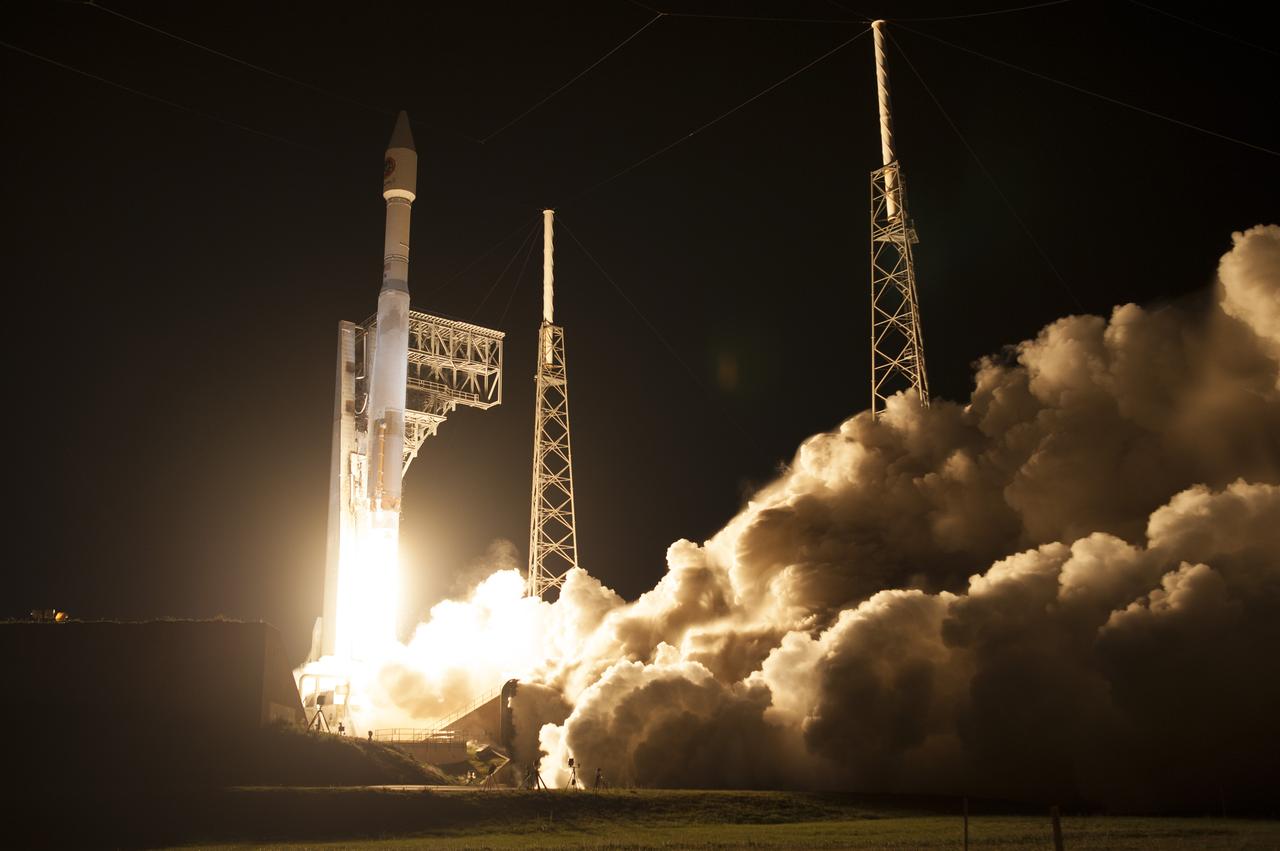
A United Launch Alliance Atlas V rocket lifts off from Space Launch Complex 41 at Cape Canaveral Air Force Station in Florida carrying an Orbital ATK Cygnus resupply spacecraft on a commercial resupply services mission to the International Space Station. Liftoff was at 11:05 p.m. EDT. Cygnus will deliver the second generation of a portable onboard printer to demonstrate 3-D printing, an instrument for first space-based observations of the chemical composition of meteors entering Earth’s atmosphere and an experiment to study how fires burn in microgravity.
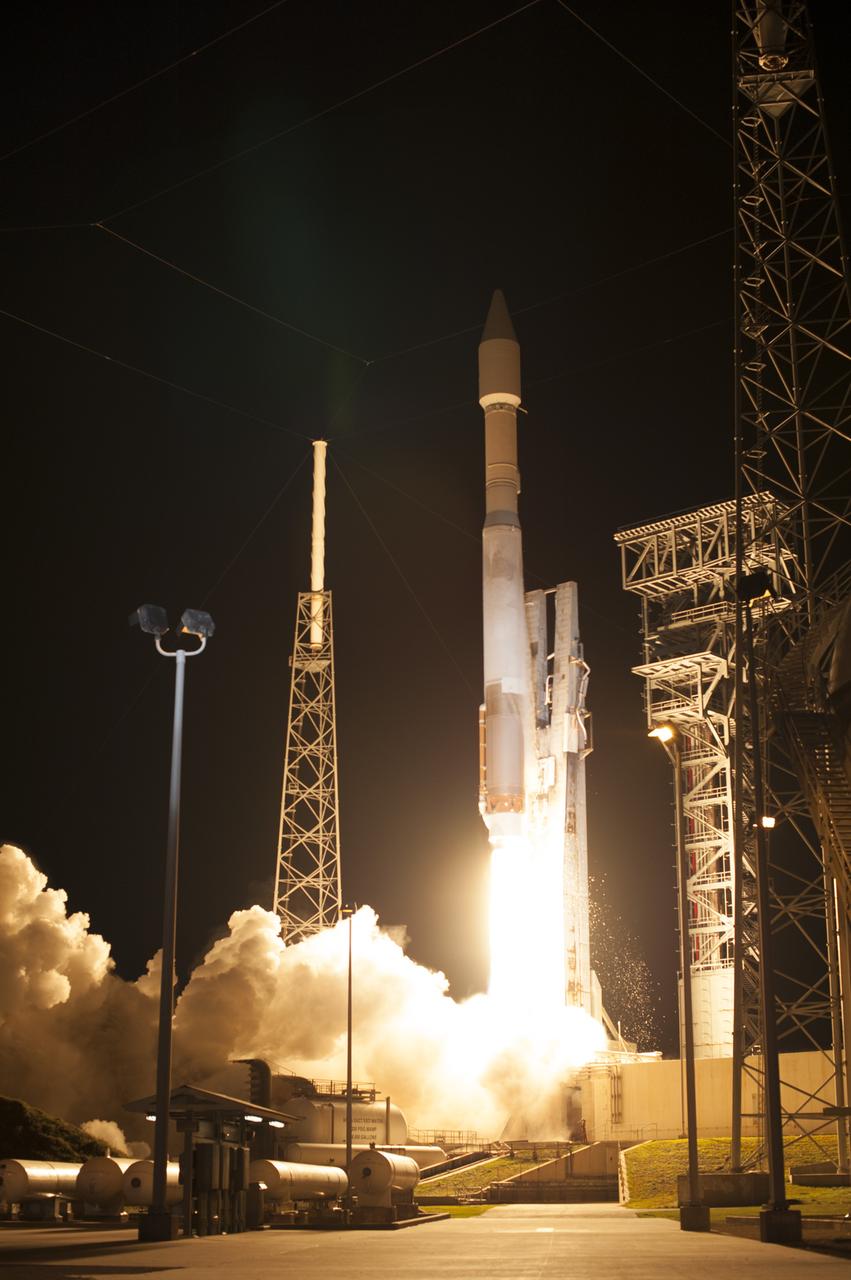
A United Launch Alliance Atlas V rocket lifts off from Space Launch Complex 41 at Cape Canaveral Air Force Station in Florida carrying an Orbital ATK Cygnus resupply spacecraft on a commercial resupply services mission to the International Space Station. Liftoff was at 11:05 p.m. EDT. Cygnus will deliver the second generation of a portable onboard printer to demonstrate 3-D printing, an instrument for first space-based observations of the chemical composition of meteors entering Earth’s atmosphere and an experiment to study how fires burn in microgravity.
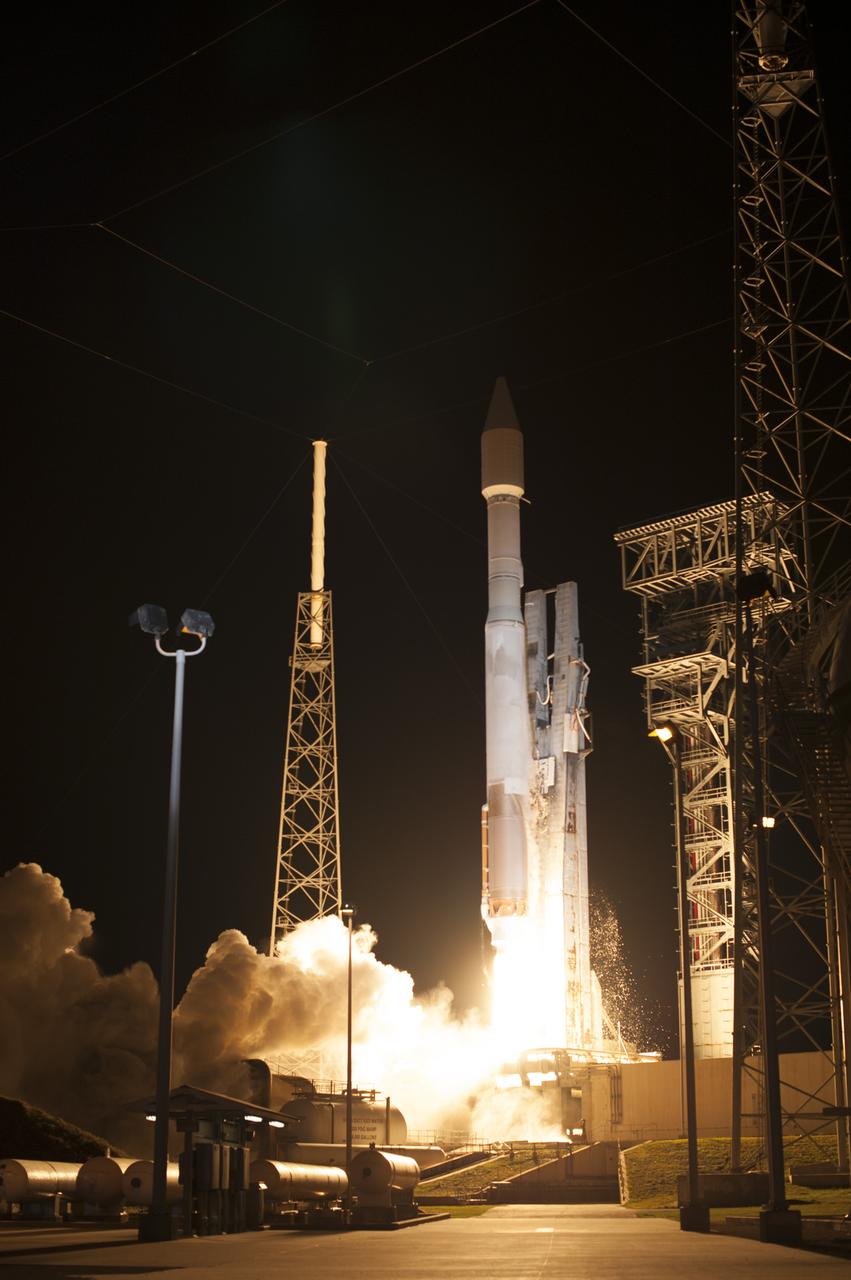
A United Launch Alliance Atlas V rocket lifts off from Space Launch Complex 41 at Cape Canaveral Air Force Station in Florida carrying an Orbital ATK Cygnus resupply spacecraft on a commercial resupply services mission to the International Space Station. Liftoff was at 11:05 p.m. EDT. Cygnus will deliver the second generation of a portable onboard printer to demonstrate 3-D printing, an instrument for first space-based observations of the chemical composition of meteors entering Earth’s atmosphere and an experiment to study how fires burn in microgravity.
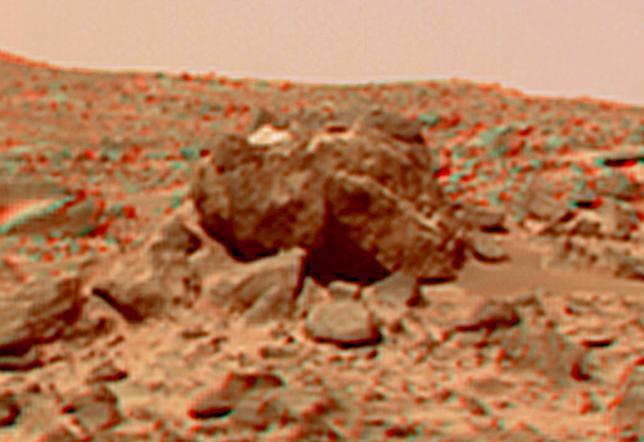
This view of the "Hippo," 25 meters to the west of the lander, was produced by combining the "Super Panorama" frames from the IMP camera. Super resolution was applied to help to address questions about the texture of this rock and what it might tell us about its mode of origin. The composite color frames that make up this anaglyph were produced for both the right and left eye of the IMP. These composites consist of more than 15 frames per eye (because multiple sequences covered the same area), taken with different color filters that were enlarged by 500% and then co-added using Adobe Photoshop to produce, in effect, a super-resolution panchromatic frame that is sharper than an individual frame would be. These panchromatic frames were then colorized with the red, green, and blue filtered images from the same sequence. The color balance was adjusted to approximate the true color of Mars. The anaglyph view was produced by combining the left with the right eye color composite frames by assigning the left eye composite view to the red color plane and the right eye composite view to the green and blue color planes (cyan), to produce a stereo anaglyph mosaic. This mosaic can be viewed in 3-D on your computer monitor or in color print form by wearing red-blue 3-D glasses. http://photojournal.jpl.nasa.gov/catalog/PIA01421

HOUSTON -- JSC-2013-E076046 -- Tony Castilleja, a mechanical engineer working on The Boeing Company's CST-100 endeavor, right, shows off a mock-up seat made from 3-D printing technology at the company's Houston Product Support Center near Johnson Space Center. Boeing showcased its work on a fully outfitted test version of the CST-100 spacecraft to NASA Administrator Charlie Bolden, not pictured, and Johnson management. Boeing's CST-100 is designed to transport a mix of crew and cargo to low-Earth-orbit destinations. Boeing is one of three aerospace industry partners working with NASA's Commercial Crew Program, or CCP, during the Commercial Crew Integrated Capability, or CCiCap, initiative, which is intended to make commercial human spaceflight services available for government and commercial customers. To learn more about CCP, visit www.nasa.gov/commercialcrew. Photo credit: NASA/James Blair
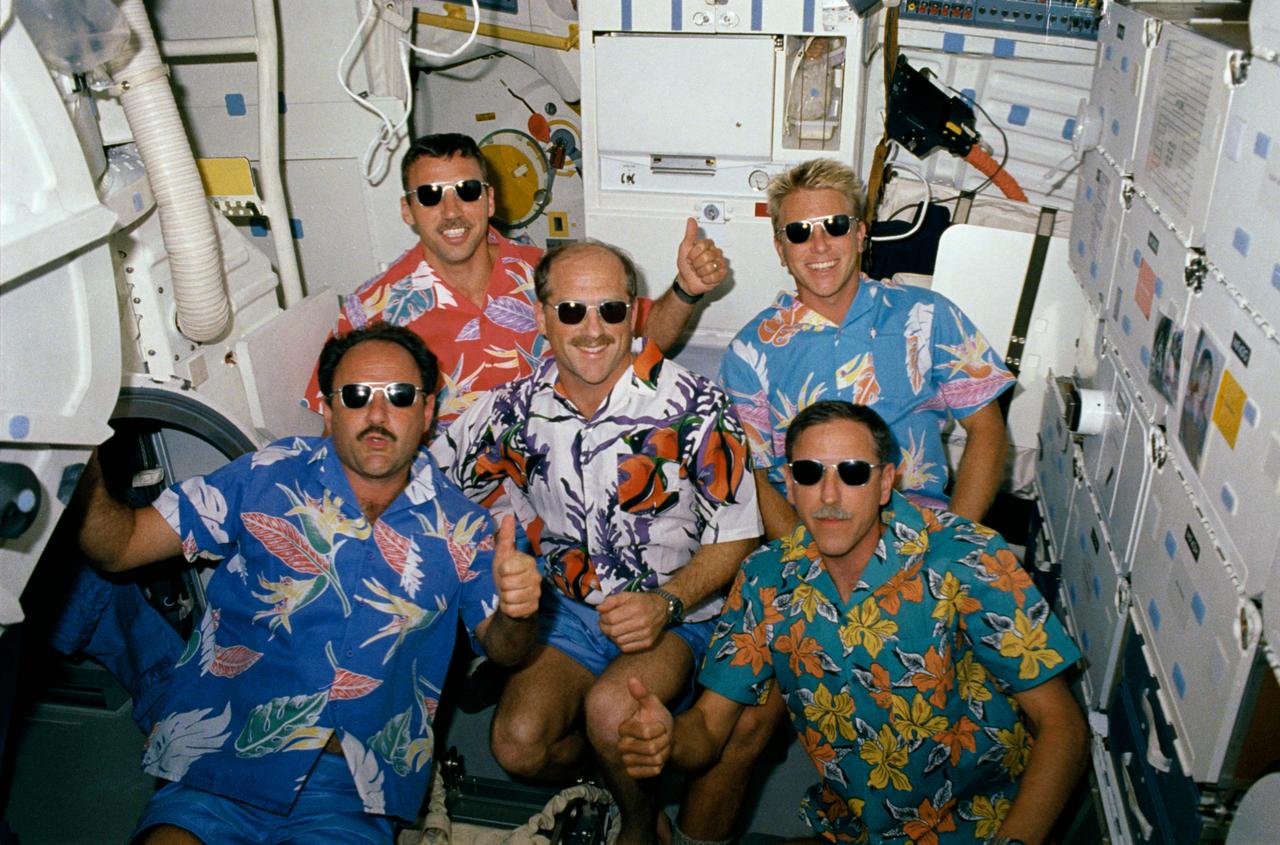
STS026-09-008 (3 Oct 1988) --- STS-26 crewmembers wear Hawaiian attire (brightly colored shirts with bold prints) and sunglasses while giving the "thumbs up" signal as they pay tribute to the Hawaii tracking station during an unscheduled television (TV) downlink. On Discovery's, Orbiter Vehicle (OV) 103's, middeck are (left to right) Mission Specialist (MS) John M. Lounge, holding onto open airlock hatch, MS David C. Hilmers, wearing red shirt, Commander Frederick H. Hauck, wearing white shirt and positioned in center of crew, MS George D. Nelson, and Pilot Richard O. Covey (lower right corner of the frame). The shirts were given to the crewmembers by the Kennedy Space Center (KSC) Loud and Proud Team.
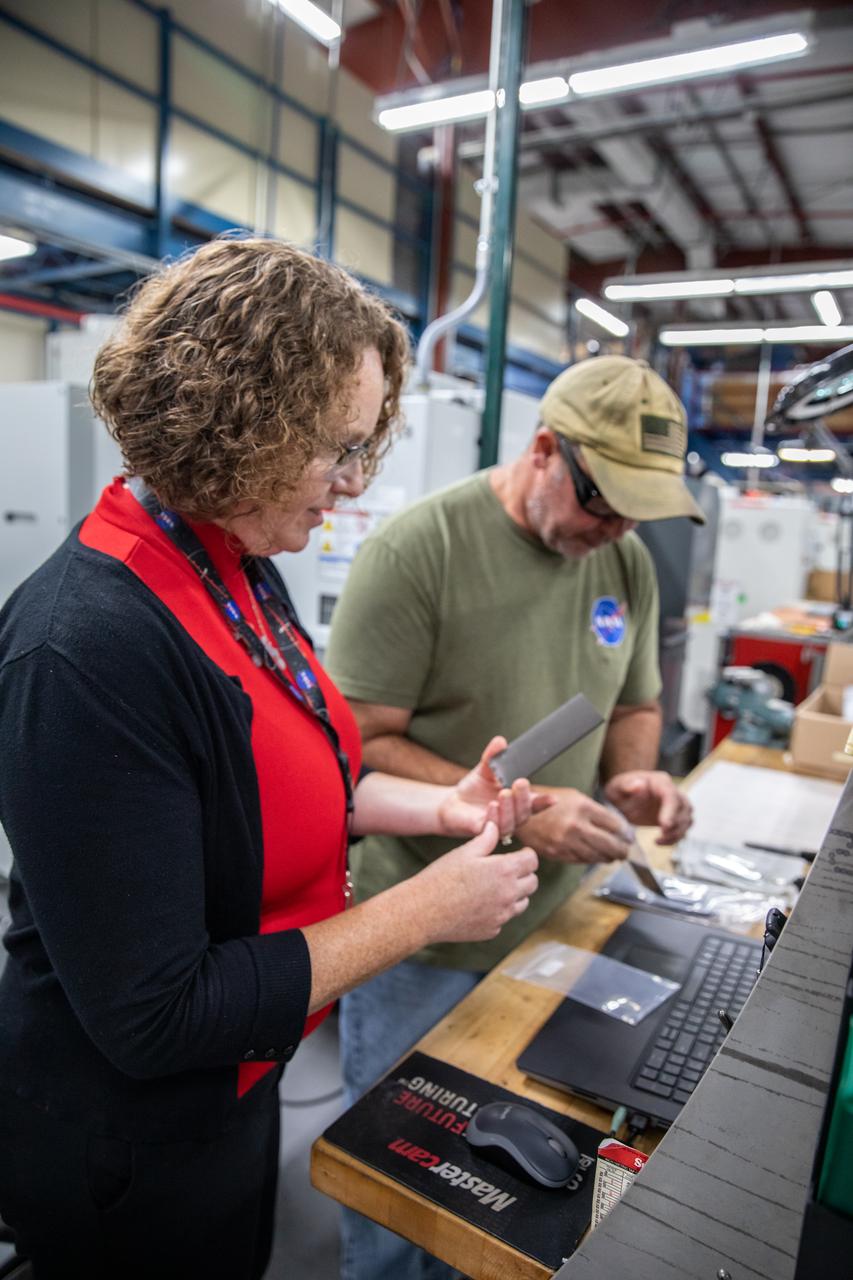
From left, Dr. Jennifer Williams, a NASA research chemical engineer, and Gerard Moscoso, a mechanical engineer technician, inspect specimens prepared forthe Plasma Rapid Oxidation Technique for Extending Component Tenability (PROTECT) experiment inside the Prototype Development Laboratory at NASA’s Kennedy Space Center in Florida on Nov. 2, 2022. Plasma electrolytic oxidation is a surface coating technology that produces oxide layers on the surface of light metals and their alloys to improve their performance characteristics. These coatings are tailored to provide a combination of characteristics such as corrosion protection, wear resistance, thermal management, extreme hardness, and fatigue performance. PROTECT is expected to demonstrate a 10 percent improved fatigue performance and a 70 percent improvement in corrosion characteristics on the interior of treated 3-D printed metallic parts when compared to non-treated parts. PROTECT could be applied used on spacecraft and launch vehicles.
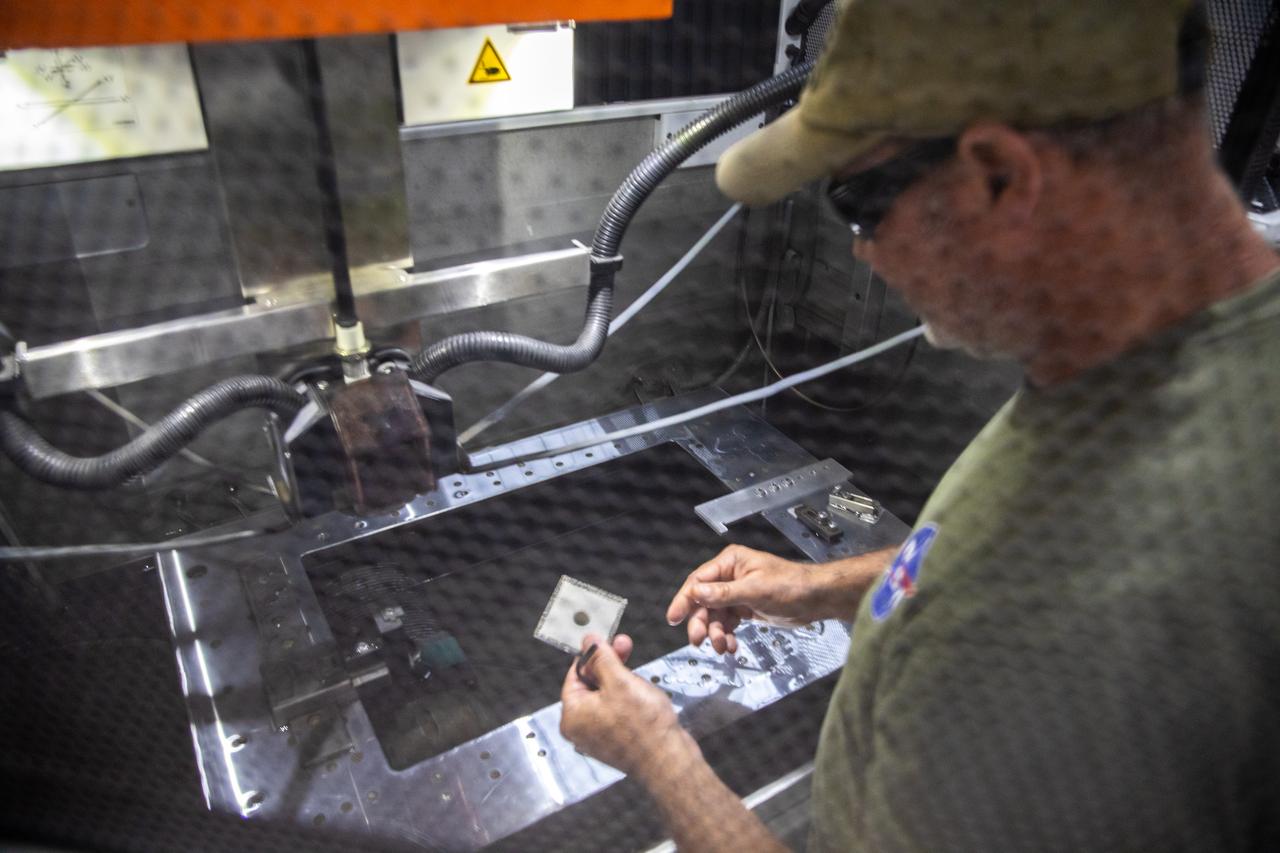
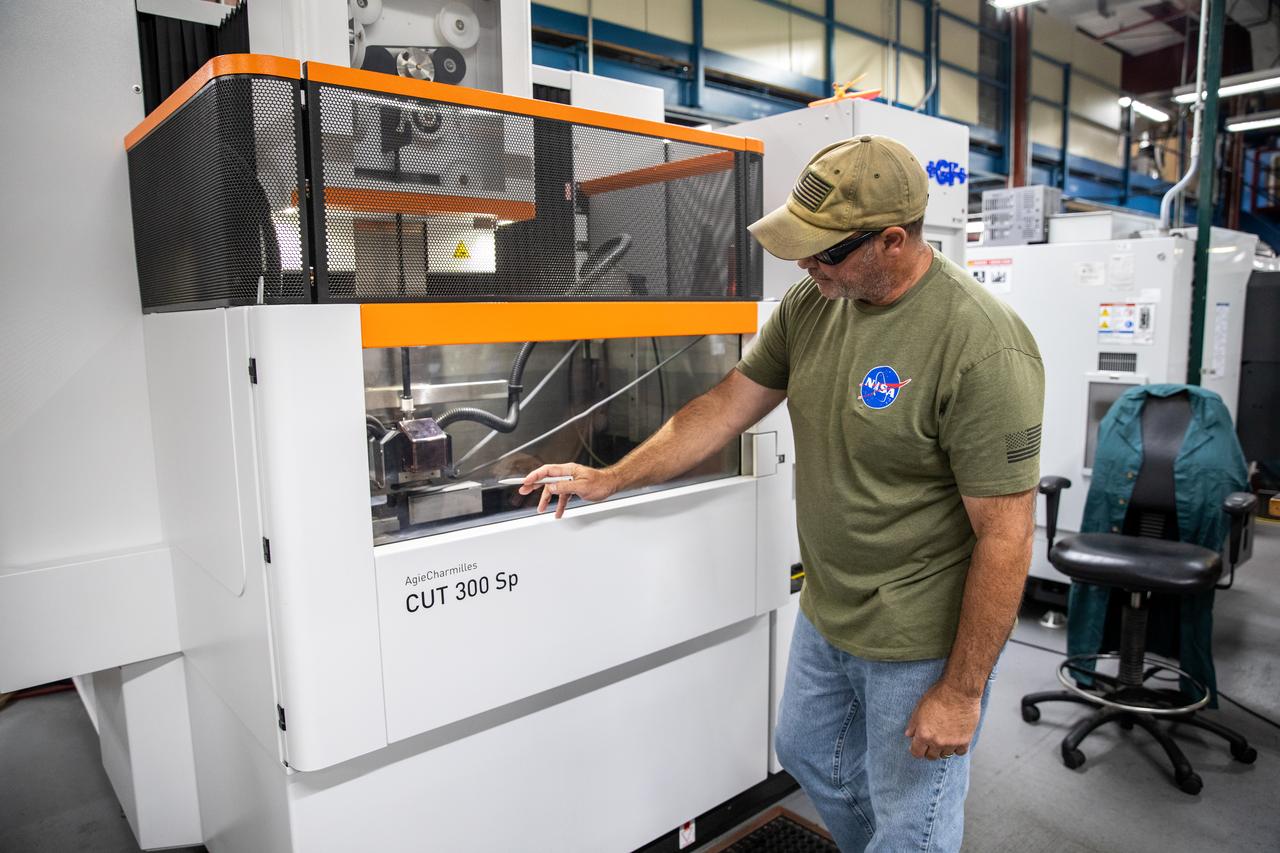
Gerard Moscoso, a mechanical engineer technician with NASA, prepares a sample for testing for the Plasma Rapid Oxidation Technique for Extending Component Tenability (PROTECT) project inside the Prototype Development Laboratory at NASA’s Kennedy Space Center in Florida on Nov. 2, 2022. Plasma electrolytic oxidation is a surface coating technology that produces oxide layers on the surface of light metals and their alloys to improve their performance characteristics. These coatings are tailored to provide a combination of characteristics such as corrosion protection, wear resistance, thermal management, extreme hardness, and fatigue performance. PROTECT is expected to demonstrate a 10 percent improved fatigue performance and a 70 percent improvement in corrosion characteristics on the interior of treated 3-D printed metallic parts when compared to non-treated parts. PROTECT could be applied on spacecraft and launch vehicles.
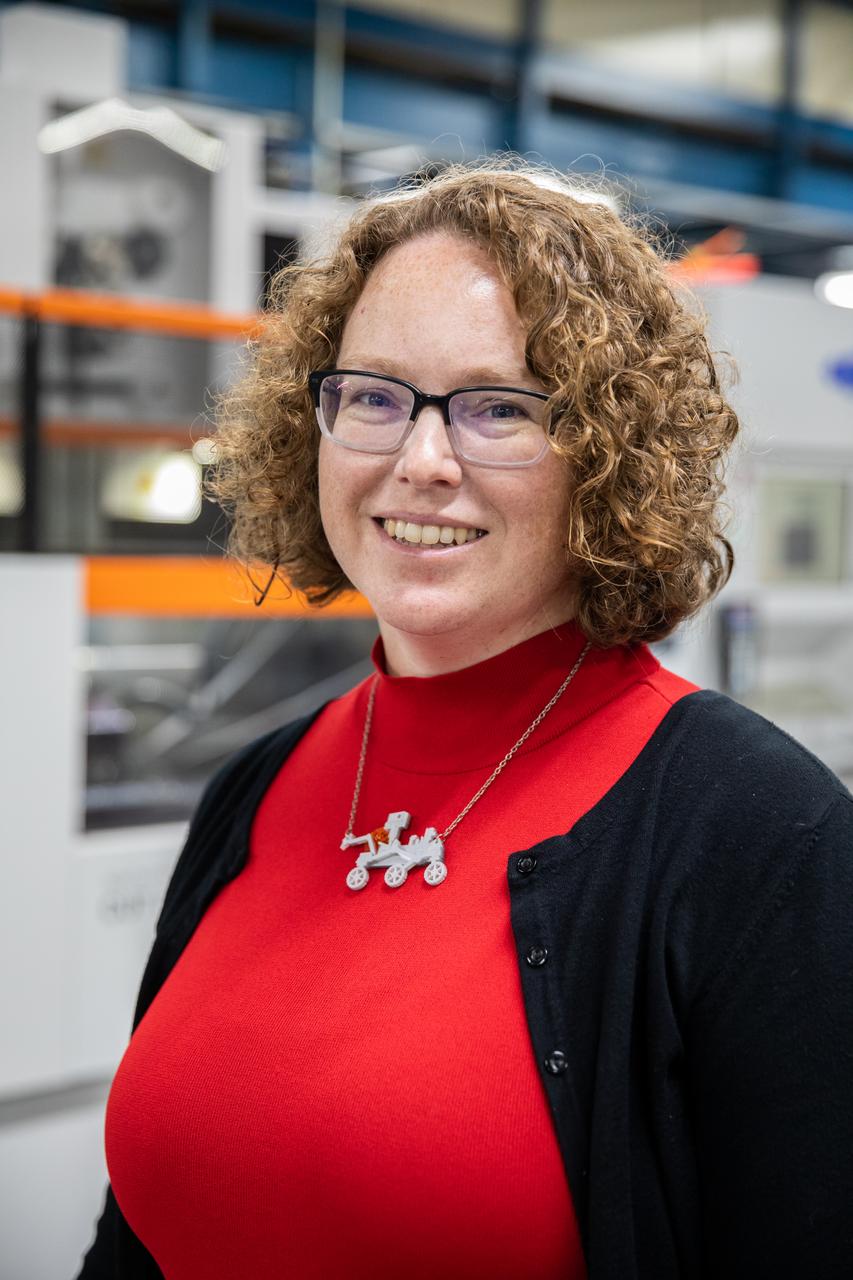
Dr. Jennifer Williams, a NASA research chemical engineer, is inside the Prototype Development Laboratory at NASA’s Kennedy Space Center in Florida to begin testing on the Plasma Rapid Oxidation Technique for Extending Component Tenability (PROTECT) project on Nov. 2, 2022. Plasma electrolytic oxidation is a surface coating technology that produces oxide layers on the surface of light metals and their alloys to improve their performance characteristics. These coatings are tailored to provide a combination of characteristics such as corrosion protection, wear resistance, thermal management, extreme hardness, and fatigue performance. PROTECT is expected to demonstrate a 10 percent improved fatigue performance and a 70 percent improvement in corrosion characteristics on the interior of treated 3-D printed metallic parts when compared to non-treated parts. PROTECT could be applied to spacecraft and launch vehicles.
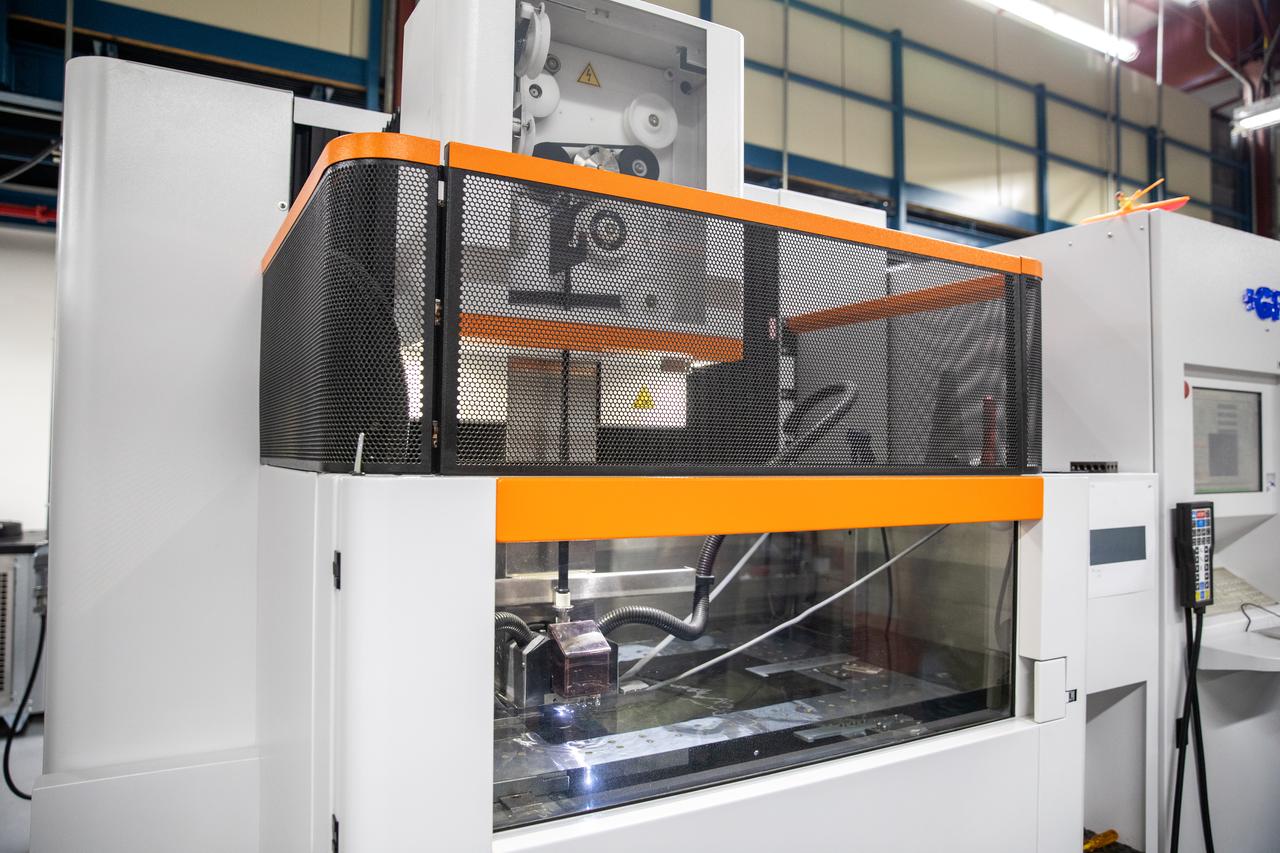
Testing of the Plasma Rapid Oxidation Technique for Extending Component Tenability (PROTECT) experiment is underway inside the Prototype Development Laboratory at NASA’s Kennedy Space Center in Florida on Nov. 2, 2022. Plasma electrolytic oxidation is a surface coating technology that produces oxide layers on the surface of light metals and their alloys to improve their performance characteristics. These coatings are tailored to provide a combination of characteristics such as corrosion protection, wear resistance, thermal management, extreme hardness, and fatigue performance. PROTECT is expected to demonstrate a ten percent improved fatigue performance and a 70 percent improvement in corrosion characteristics on the interior of treated 3-D printed metallic parts when compared to non-treated parts. PROTECT could be applied on spacecraft and launch vehicles.
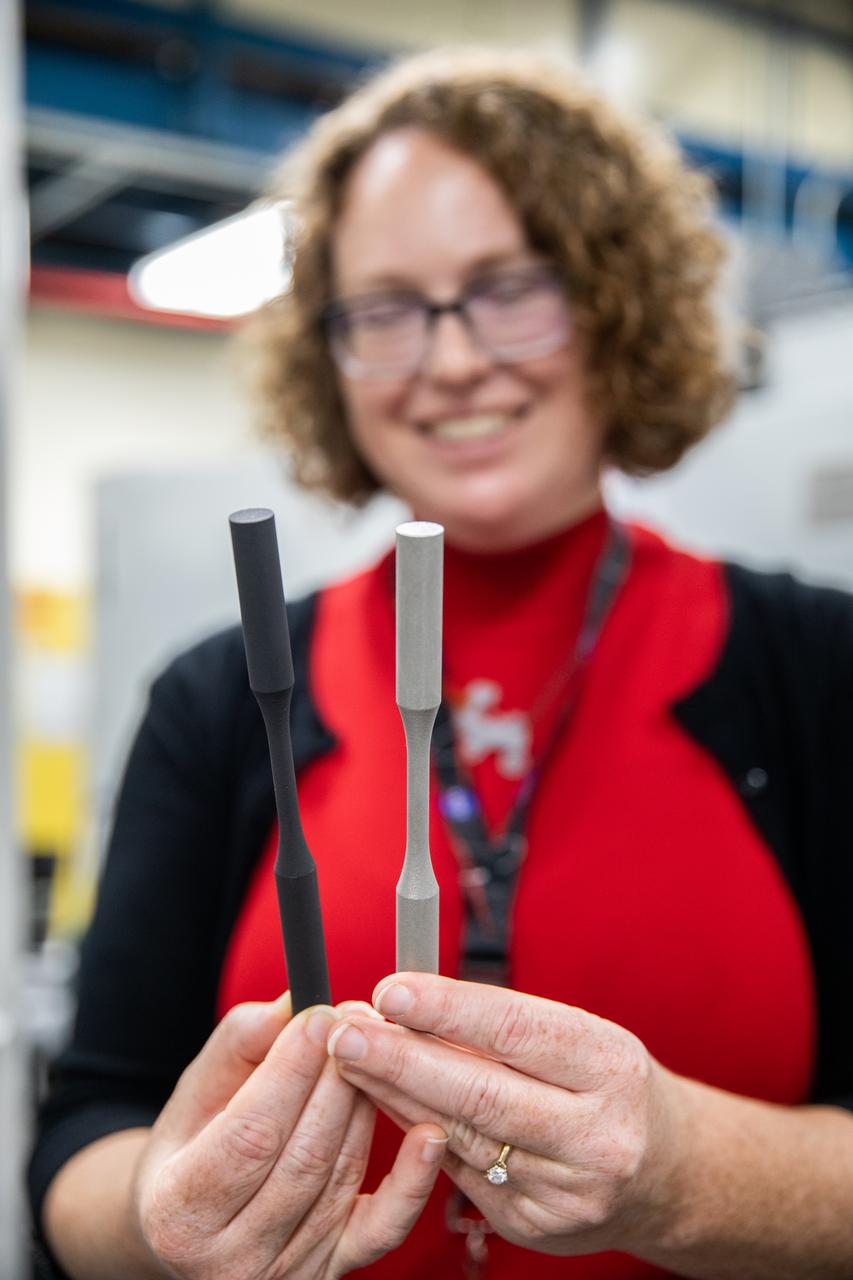
Dr. Jennifer Williams, a NASA research chemical engineer, displays two fatigue samples that will be tested in the Plasma Rapid Oxidation Technique for Extending Component Tenability (PROTECT) experiments inside the Prototype Laboratory at NASA’s Kennedy Space Center in Florida on Nov. 2, 2022. Plasma electrolytic oxidation is a surface coating technology that produces oxide layers on the surface of light metals and their alloys to improve their performance characteristics. These coatings are tailored to provide a combination of characteristics such as corrosion protection, wear resistance, thermal management, extreme hardness, and fatigue performance. PROTECT is expected to demonstrate a 10 percent improved fatigue performance and a 70 percent improvement in corrosion characteristics on the interior of treated 3-D printed metallic parts when compared to non-treated parts. PROTECT could be applied to spacecraft and launch vehicles.
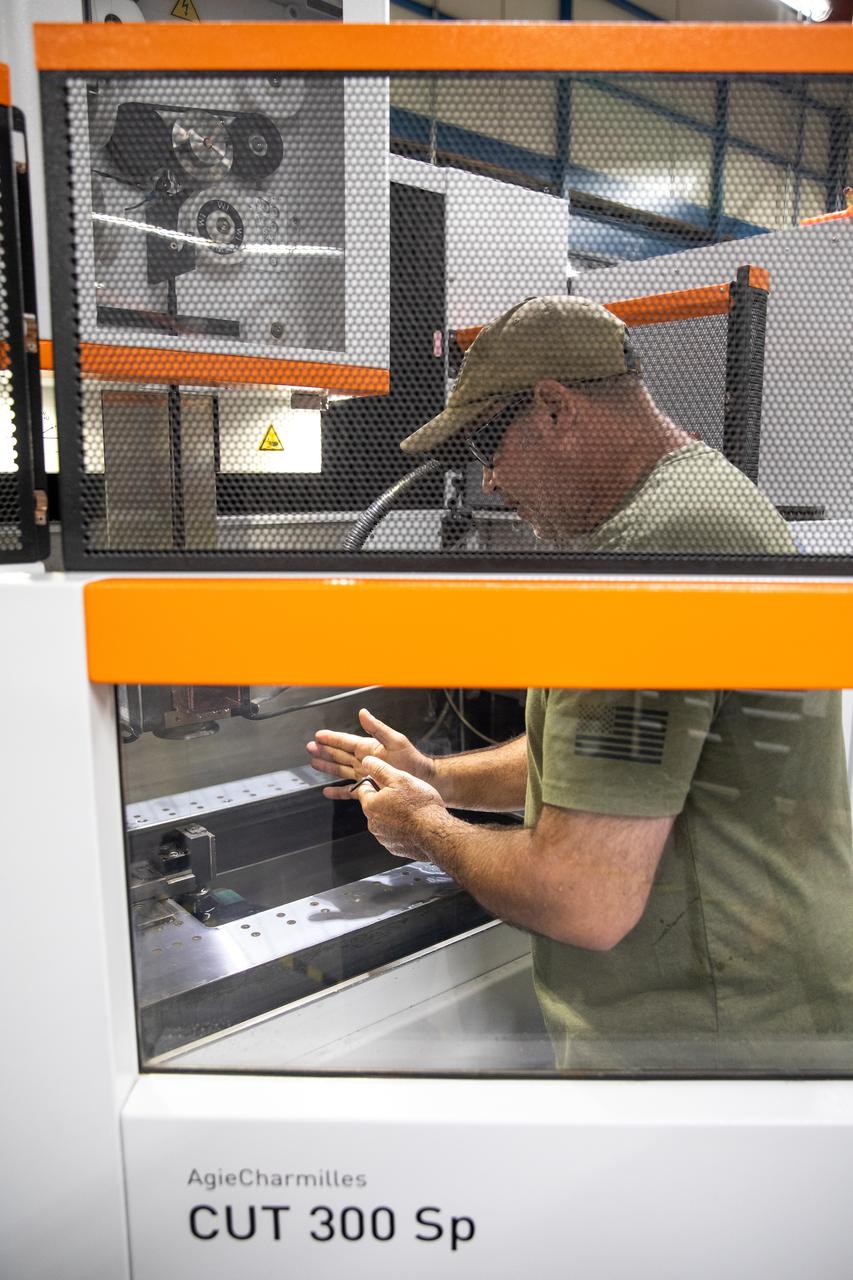
Gerard Moscoso, a mechanical engineer technician with NASA, handles a sample that is being prepared for fatigue and corrosion testing for the Plasma Rapid Oxidation Technique for Extending Component Tenability (PROTECT) project inside the Prototype Development Laboratory at NASA’s Kennedy Space Center in Florida on Nov. 2, 2022. Plasma electrolytic oxidation is a surface coating technology that produces oxide layers on the surface of light metals and their alloys to improve their performance characteristics. These coatings are tailored to provide a combination of characteristics such as corrosion protection, wear resistance, thermal management, extreme hardness, and fatigue performance. PROTECT is expected to demonstrate a ten percent improved fatigue performance and a 70 percent improvement in corrosion characteristics on the interior of treated 3-D printed metallic parts when compared to non-treated parts. PROTECT could be applied on spacecraft and launch vehicles.
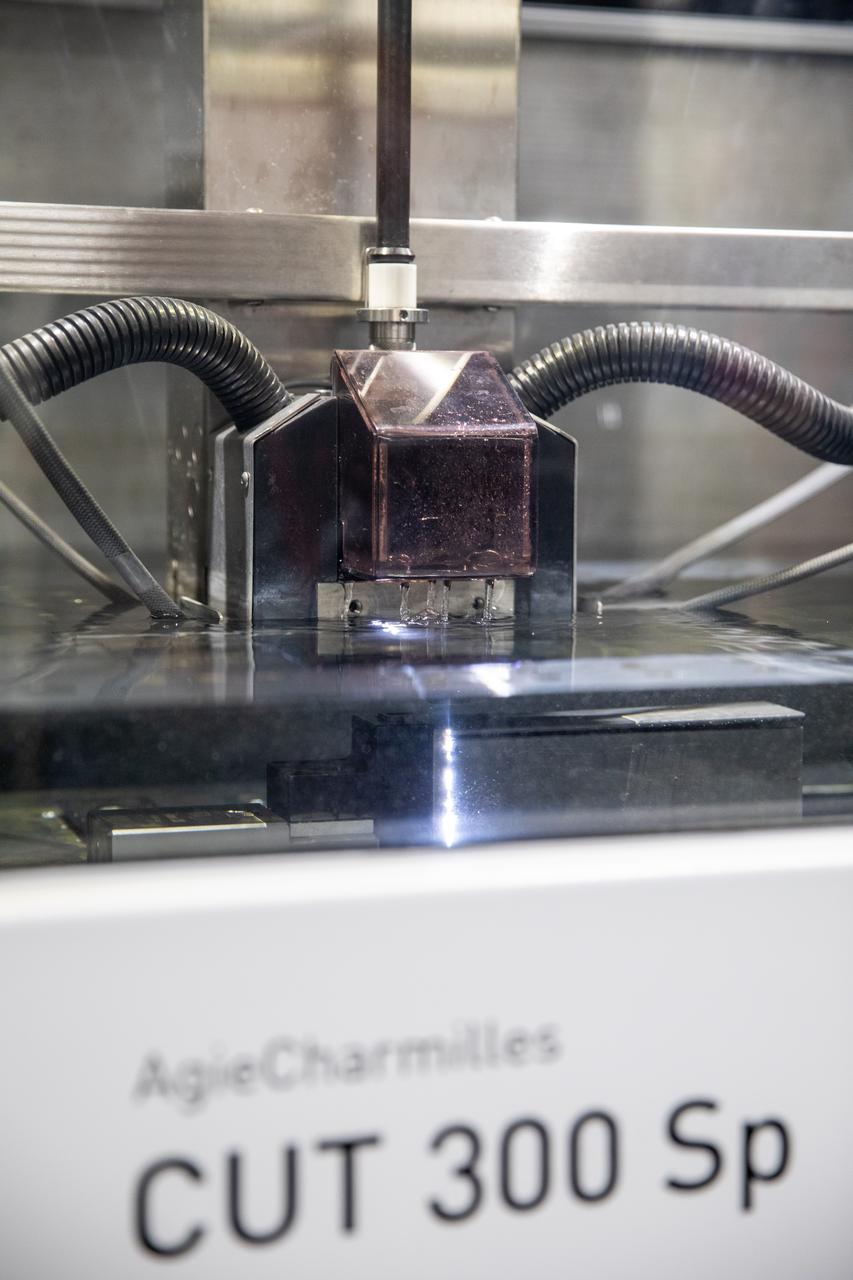
Testing of the Plasma Rapid Oxidation Technique for Extending Component Tenability (PROTECT) experiment is underway inside the Prototype Development Laboratory at NASA’s Kennedy Space Center in Florida on Nov. 2, 2022. Plasma electrolytic oxidation is a surface coating technology that produces oxide layers on the surface of light metals and their alloys to improve their performance characteristics. These coatings are tailored to provide a combination of characteristics such as corrosion protection, wear resistance, thermal management, extreme hardness, and fatigue performance. PROTECT is expected to demonstrate a 10 percent improved fatigue performance and a 70 percent improvement in corrosion characteristics on the interior of treated 3-D printed metallic parts when compared to non-treated parts. PROTECT could be applied on spacecraft and launch vehicles.
Gerard Moscoso, a mechanical engineer technician with NASA, prepares the Plasma Rapid Oxidation Technique for Extending Component Tenability (PROTECT) specimens for testing inside the Prototype Development Laboratory at NASA’s Kennedy Space Center in Florida on Nov. 2, 2022. Plasma electrolytic oxidation is a surface coating technology that produces oxide layers on the surface of light metals and their alloys to improve their performance characteristics. These coatings are tailored to provide a combination of characteristics such as corrosion protection, wear resistance, thermal management, extreme hardness, and fatigue performance. PROTECT is expected to demonstrate a 10 percent improved fatigue performance and a 70 percent improvement in corrosion characteristics on the interior of treated 3-D printed metallic parts when compared to non-treated parts. PROTECT could be applied on spacecraft and launch vehicles.
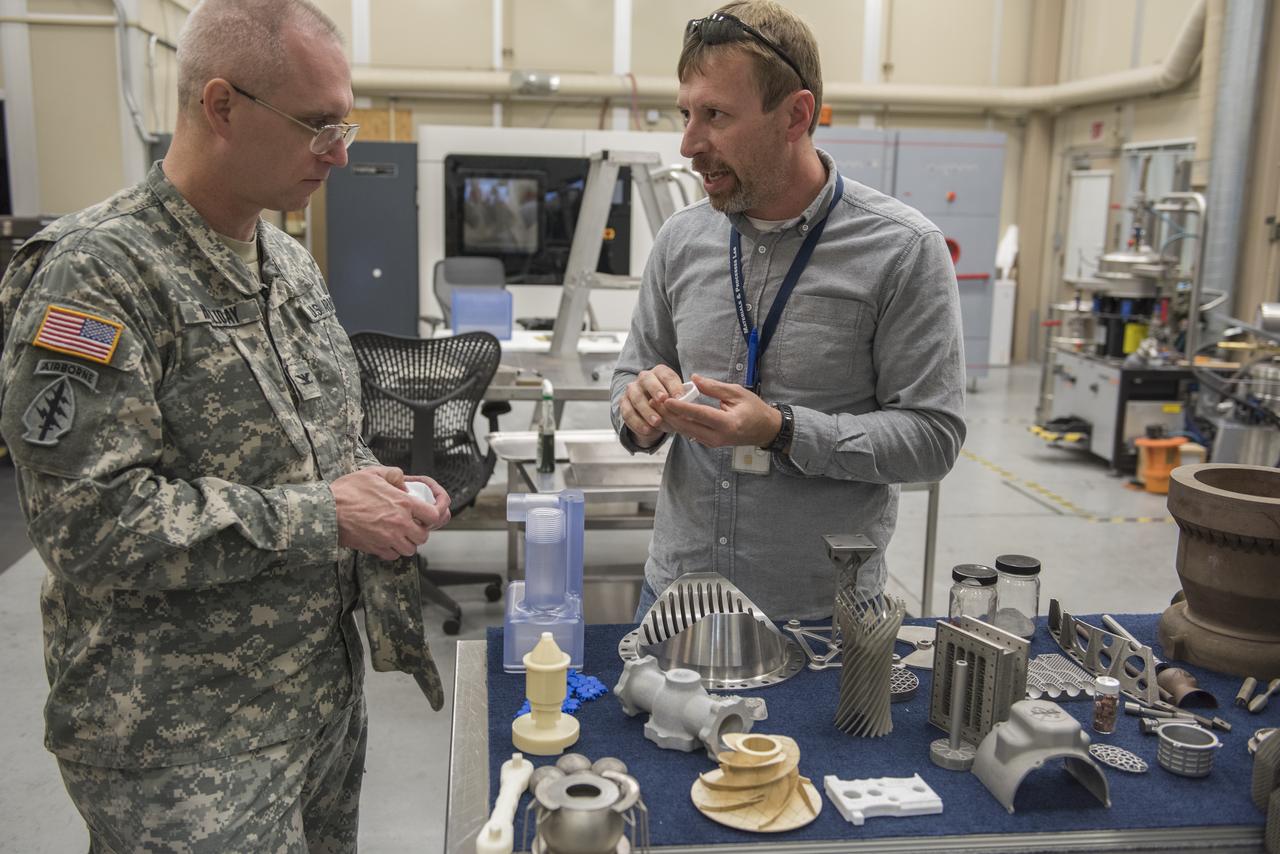
REDSTONE ARSENAL GARRISON COMMANDER COL. THOMAS "DOC" HOLLIDAY, LEFT, DISCUSSES THE PROCESSES AND HARDWARE USED IN NASA IN-SPACE MANUFACTURING TECHNIQUES WITH KEN COOPER, A STRUCTURAL MATERIALS ENGINEER AT NASA'S MARSHALL SPACE FLIGHT CENTER. COOPER, PART OF THE MARSHALL ENGINEERING DIRECTORATE'S ADVANCED MANUFACTURING AND DIGITAL SOLUTIONS TEAM, WAS AMONG NUMEROUS SUBJECT-MATTER EXPERTS WHO SHARED KEY MARSHALL CAPABILITIES DURING HOLLIDAY'S MARCH 3 MARSHALL TOUR. HOLLIDAY, A DECORATED OFFICER WHOSE MILITARY CAREER BEGAN IN 1992, GAINED FIRSTHAND INSIGHT INTO MARSHALL'S ADVANCED MANUFACTURING AND 3-D PRINTING TECHNIQUES; ROUND-THE-CLOCK INTERNATIONAL SPACE STATION SCIENCE AND COMMUNICATIONS SUPPORT BY THE PAYLOAD OPERATIONS INTEGRATION CENTER TEAM; AND THE LATEST UPGRADES TO MARSHALL TEST STANDS IN SUPPORT OF NEXT-GENERATION LAUNCH VEHICLE AND FLIGHT HARDWARE DEVELOPMENT. MARSHALL, A REDSTONE ARSENAL TENANT, ROUTINELY SHARES CUTTING-EDGE RESEARCH AND MANUFACTURING ADVANCES WITH ITS MILITARY AND FEDERAL AGENCY COUNTERPARTS, WORKING IN PARTNERSHIP TO ADVANCE NASA'S MISSION AND MAINTAIN THE NATION'S TECHNOLOGICAL LEADERSHIP.

"Barnacle Bill" is a small rock immediately west-northwest of the Mars Pathfinder lander and was the first rock visited by the Sojourner Rover's alpha proton X-ray spectrometer (APXS) instrument. This image shows super resolution techniques applied to the first APXS target rock, which was never imaged with the rover's forward cameras. Super resolution was applied to help to address questions about the texture of this rock and what it might tell us about its mode of origin. This view of Barnacle Bill was produced by combining the "Super Panorama" frames from the IMP camera. Super resolution was applied to help to address questions about the texture of these rocks and what it might tell us about their mode of origin. The composite color frames that make up this anaglyph were produced for both the right and left eye of the IMP. The composites consist of 7 frames in the right eye and 8 frames in the left eye, taken with different color filters that were enlarged by 500% and then co-added using Adobe Photoshop to produce, in effect, a super-resolution panchromatic frame that is sharper than an individual frame would be. These panchromatic frames were then colorized with the red, green, and blue filtered images from the same sequence. The color balance was adjusted to approximate the true color of Mars. The anaglyph view was produced by combining the left with the right eye color composite frames by assigning the left eye composite view to the red color plane and the right eye composite view to the green and blue color planes (cyan), to produce a stereo anaglyph mosaic. This mosaic can be viewed in 3-D on your computer monitor or in color print form by wearing red-blue 3-D glasses. http://photojournal.jpl.nasa.gov/catalog/PIA01409