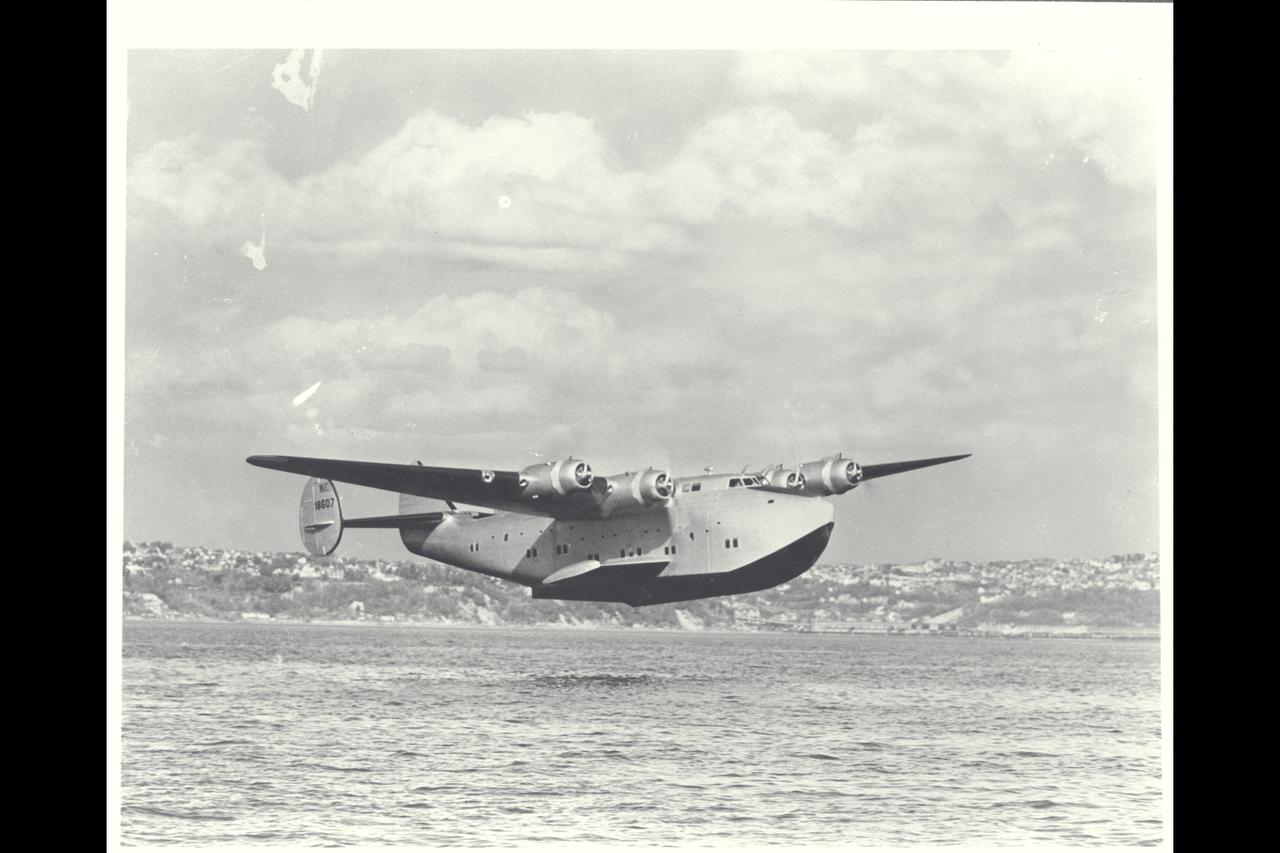
Boeing 314 Airplane
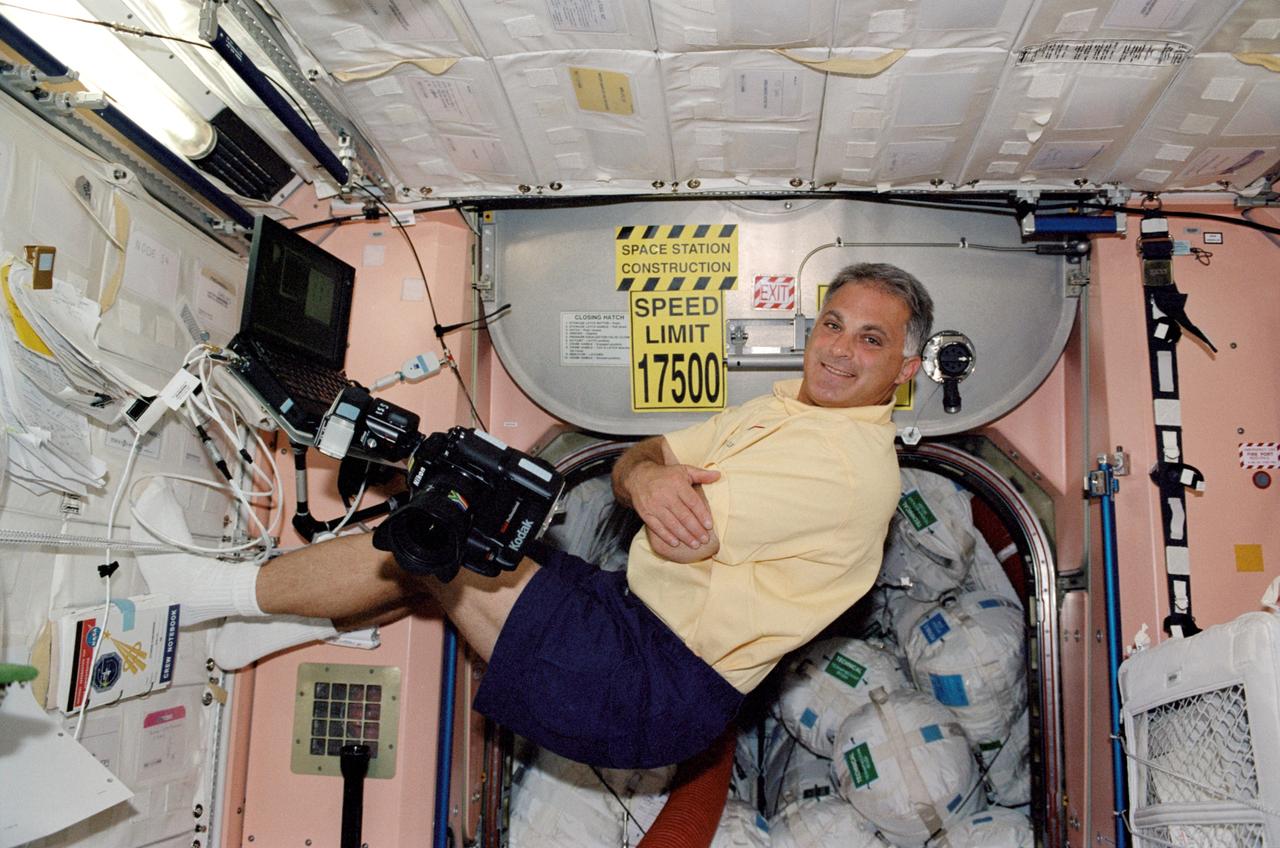
STS112-314-010 (7-18 October 2002) --- Astronaut David A. Wolf, STS-112 mission specialist, floats in the Unity node on the International Space Station (ISS).

STS112-314-029 (7-18 October 2002) --- Astronaut Pamela A. Melroy, STS-112 pilot, holds camera equipment as she floats in the Zvezda Service Module on the International Space Station (ISS).
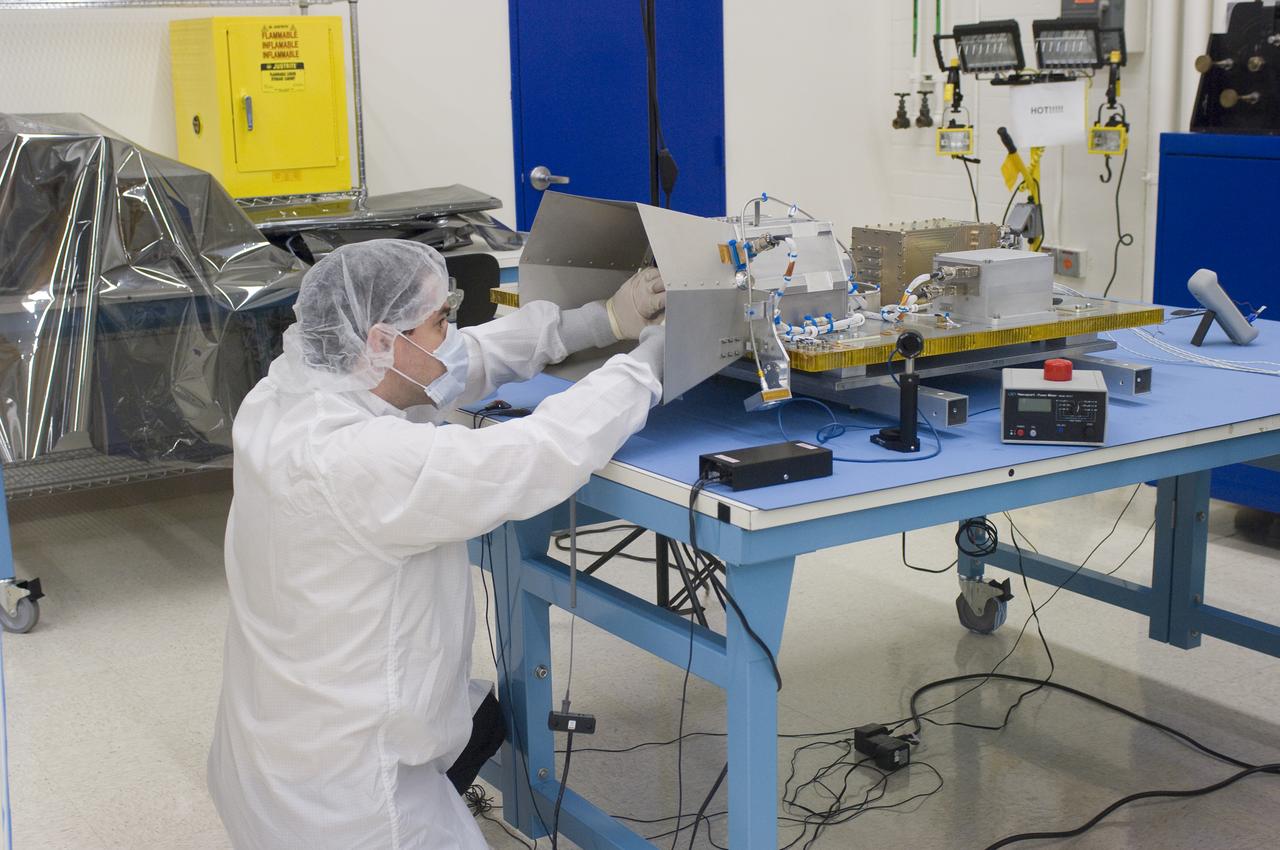
LCROSS in Ames clean room of N-240 - Tony Colaprete does some adjustment during calibration and camera check out
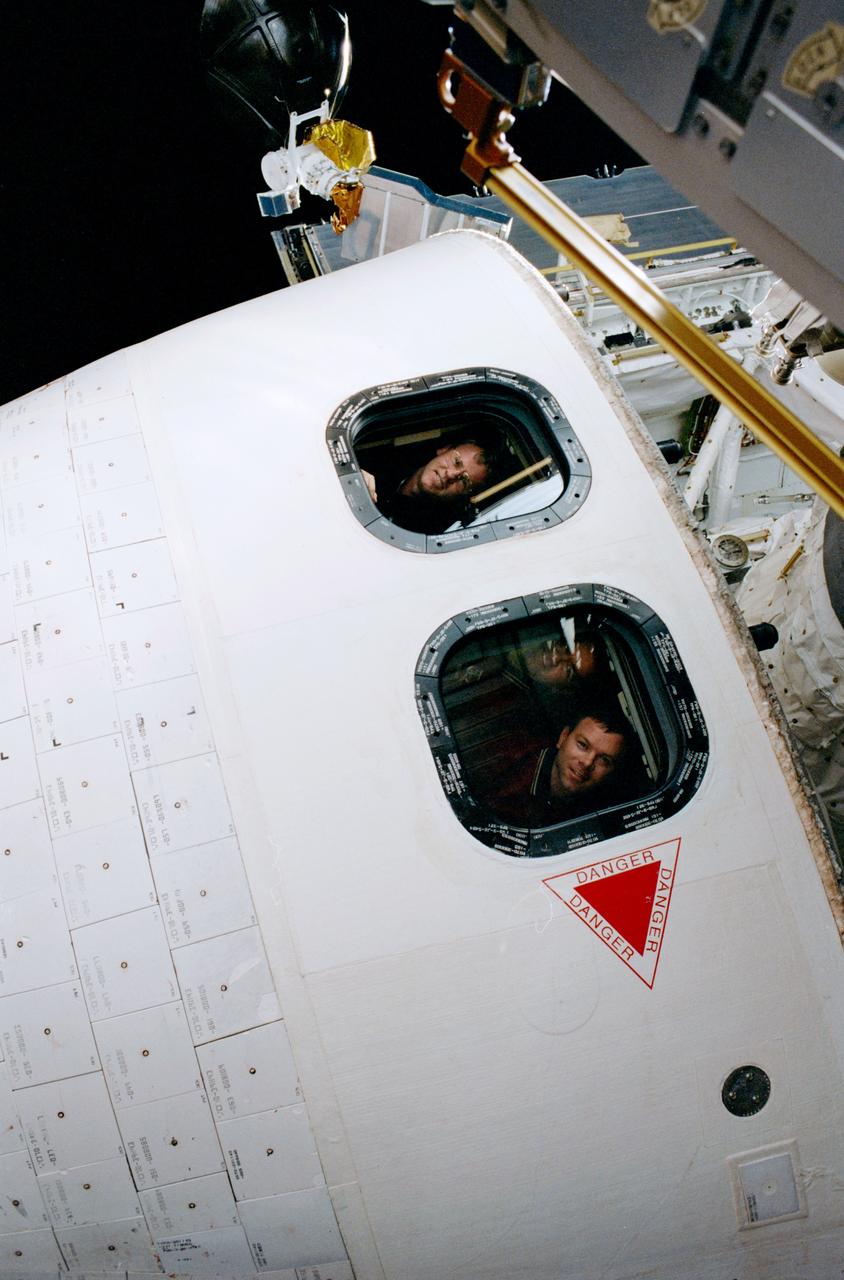
STS102-314-005 (8-21 March 2001) --- From the aft flight deck of the Space Shuttle Discovery, astronauts Andrew S. W. Thomas and Paul W. Richards, STS-102 mission specialists and James M. Kelly, STS-102 pilot look through overhead windows.
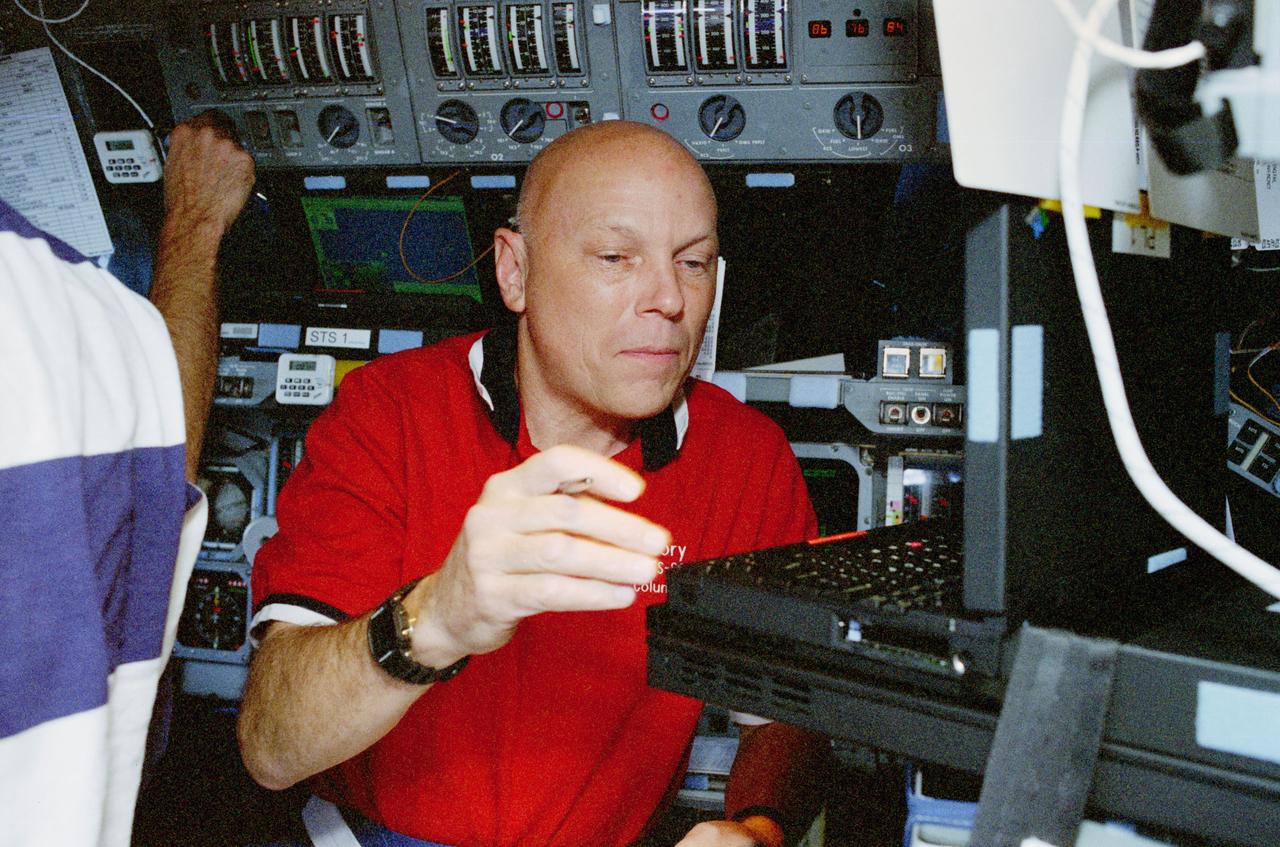
STS080-314-003 (19 Nov.-7 Dec. 1996) --- Astronaut Story Musgrave, STS-80 mission specialist, works with a pair of computers dedicated to Wake Shield Facility (WSF) operations onboard the space shuttle Columbia's flight deck. Musgrave marked his sixth appearance on a space shuttle flight during this duration record-setting space flight.
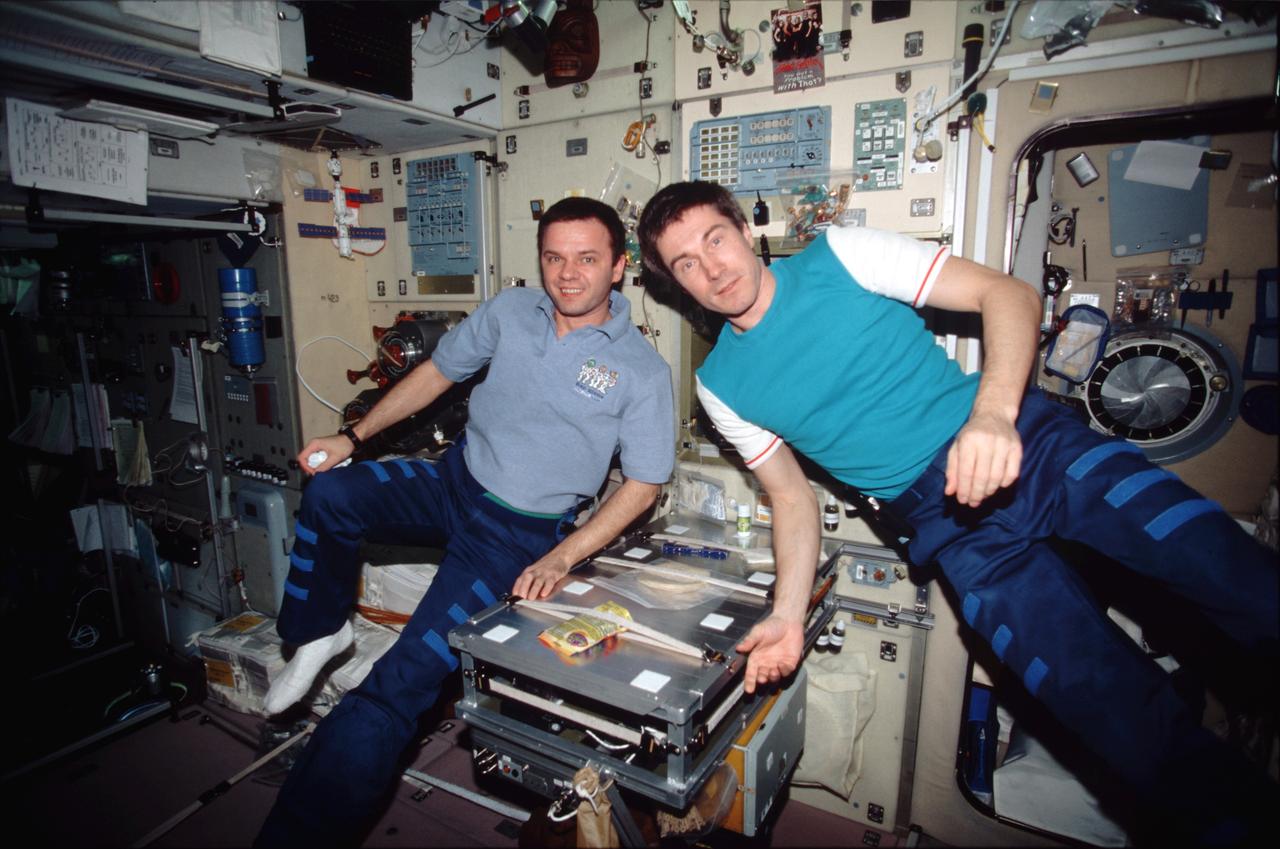
STS098-314-0017 (7-20 February 2001) --- Cosmonauts Yuri P. Gidzenko (left), Expedition One Soyuz commander; and Sergei K. Krikalev, flight engineer, are pictured in the Zvezda service module while hosting the STS-98 crew on the International Space Station (ISS). The two, who represent the Russian Aviation and Space Agency, along with astronaut William M. (Bill) Shepherd (out of frame), mission commander, have been on the outpost since early November 2000.
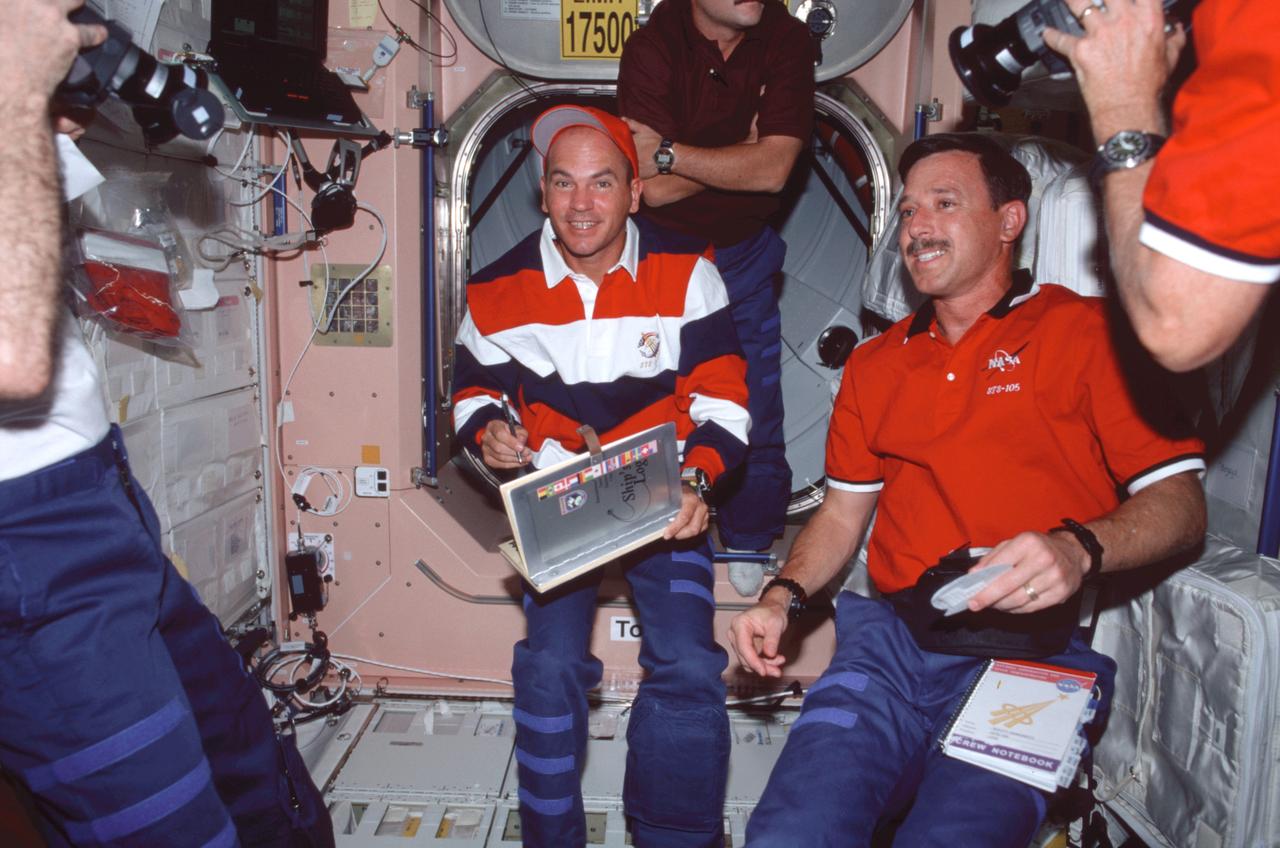
STS105-314-024 (10-22 August 2001) --- Astronaut Frederick W. (Rick) Sturckow (center), STS-105 pilot, is about to add his name to the log of visitors to the International Space Station (ISS) during a brief break in the orbital outpost's Unity node. Astronaut Scott J. Horowitz, STS-105 mission commander, is at right.
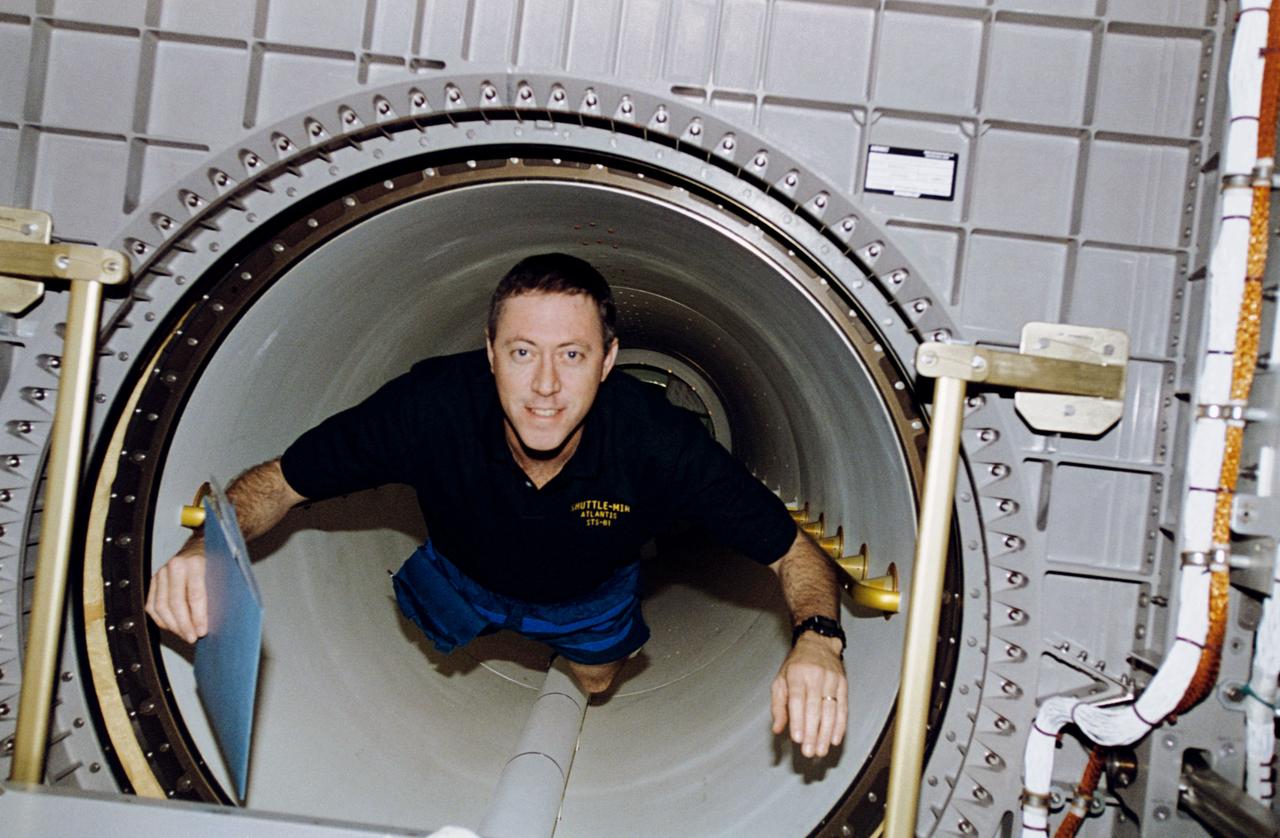
STS081-314-019 (12-22 Jan 1997) --- Astronaut Michael A. Baker, mission commander, floats through the tunnel leading from the Space Shuttle Atlantis mid-deck into Spacehab Double Module (DM). For a period of five days, seven astronauts and two Russian cosmonauts are sharing a variety of chores in space as the spacecraft from their respective nations are docked in Earth-orbit.
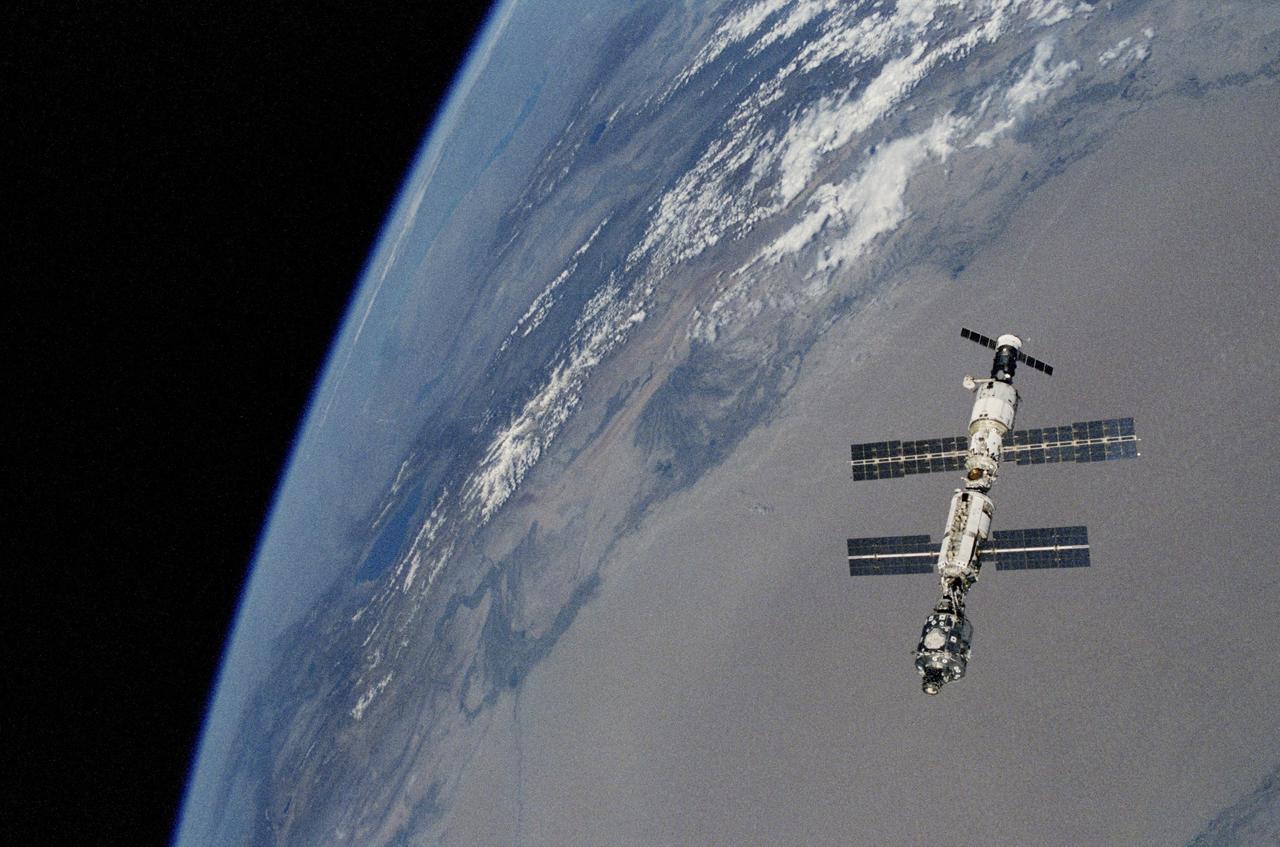
STS106-314-023 (17 September 2000) --- The International Space Station (ISS), backdropped over China’s Takla Makan desert and Earth’s horizon, is photographed after undocking with the Space Shuttle Atlantis. The 35mm frame was exposed by one of the STS-106 crew members onboard the shuttle. The undocking took place on September 17, 2000 at 10:46 p.m. (CDT).
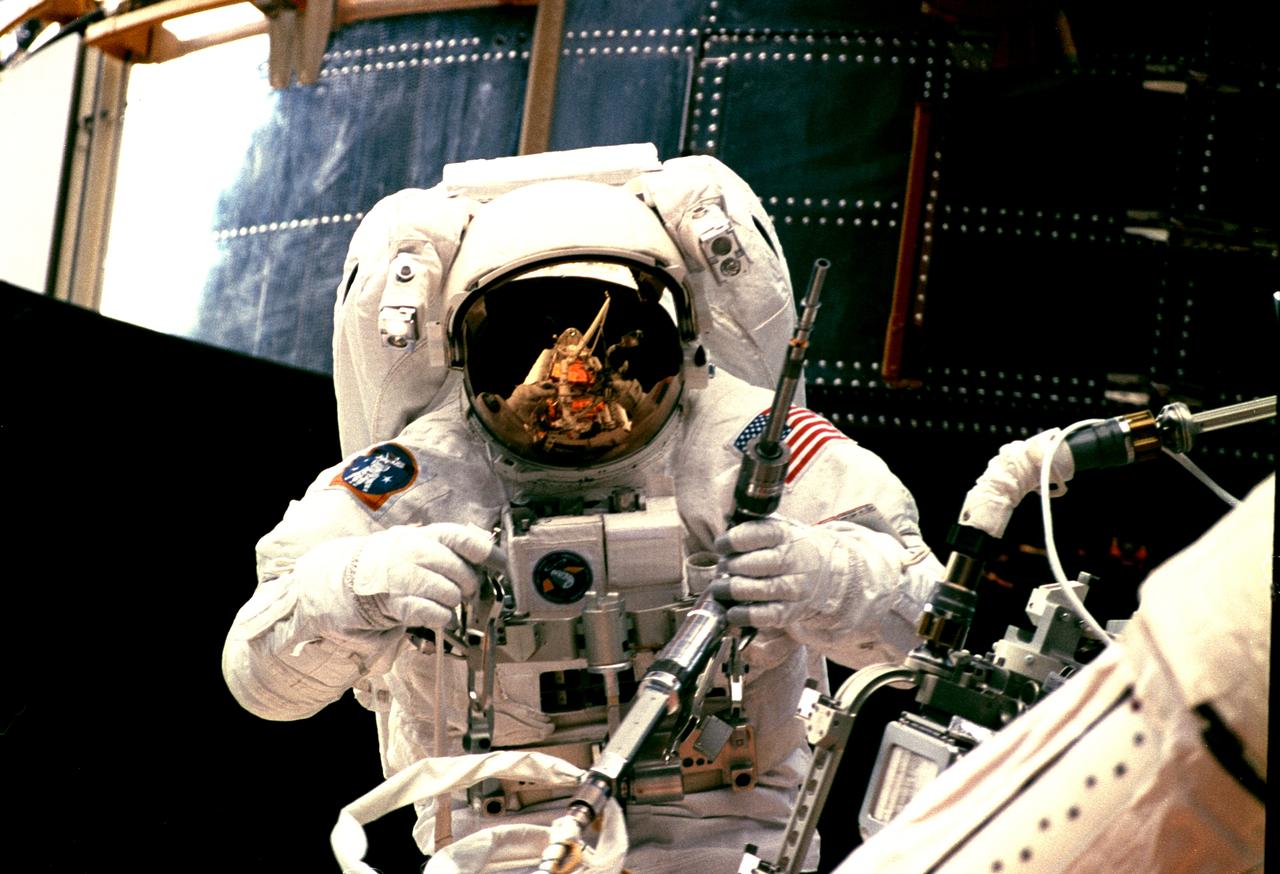
STS082-314-017 (13 Feb. 1997) --- Astronaut Steven L. Smith picks up a power ratchet tool as he prepares to join astronaut Mark C. Lee (out of frame) on the first space walk of the STS-82 mission to service the Hubble Space Telescope (HST), temporarily latched down in Discovery?s cargo bay (background).
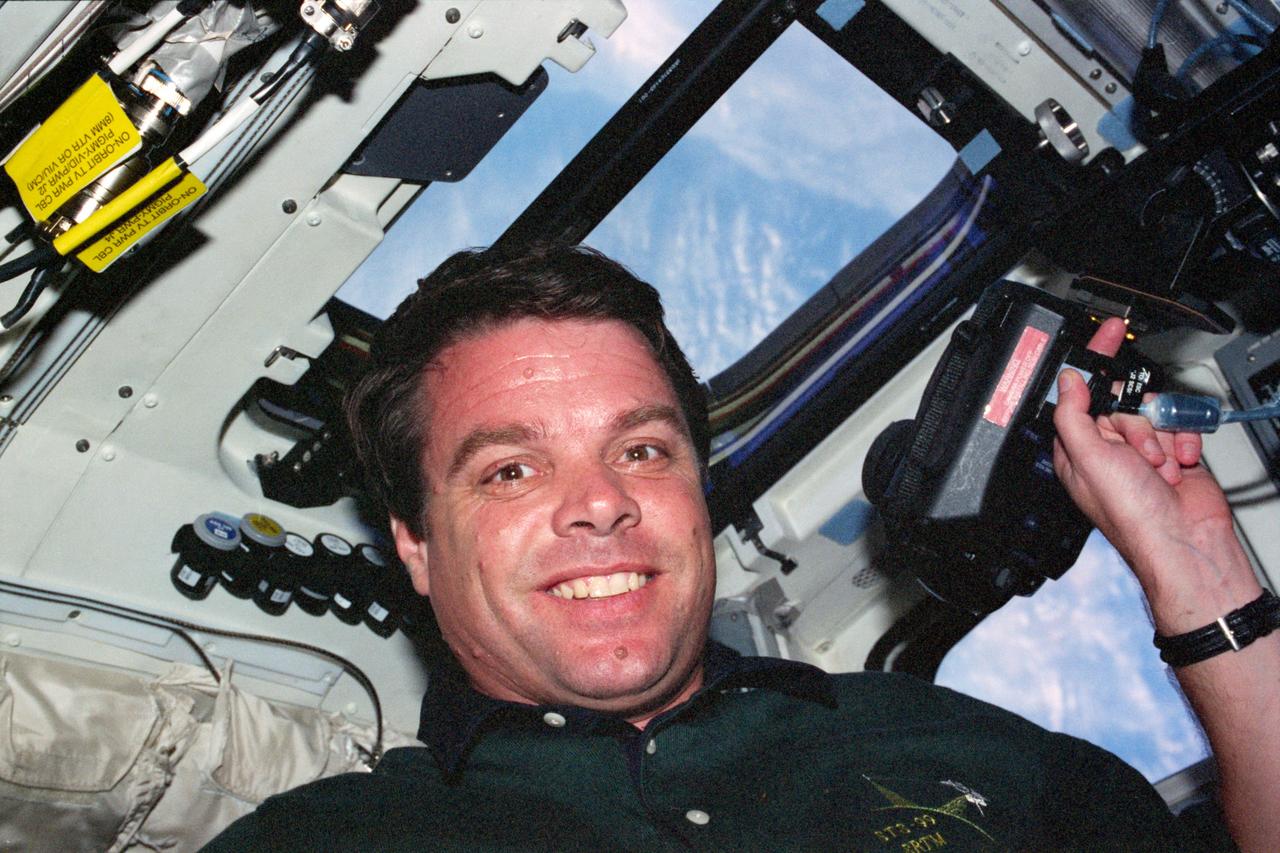
STS099-314-035 (11-22 February 2000) ---Astronaut Kevin R. Kregel, mission commander, works with camera equipment, which was used for the EarthKAM project. The camera stayed busy throughout the 11-day mission taking vertical imagery of the Earth points of opportunity for the project. Students across the United States and in France, Germany and Japan took photos throughout the STS-99 mission. And they are using these new photos, plus all the images already available in the EarthKAM system, to enhance their classroom learning in Earth and space science, social studies, geography, mathematics and more.
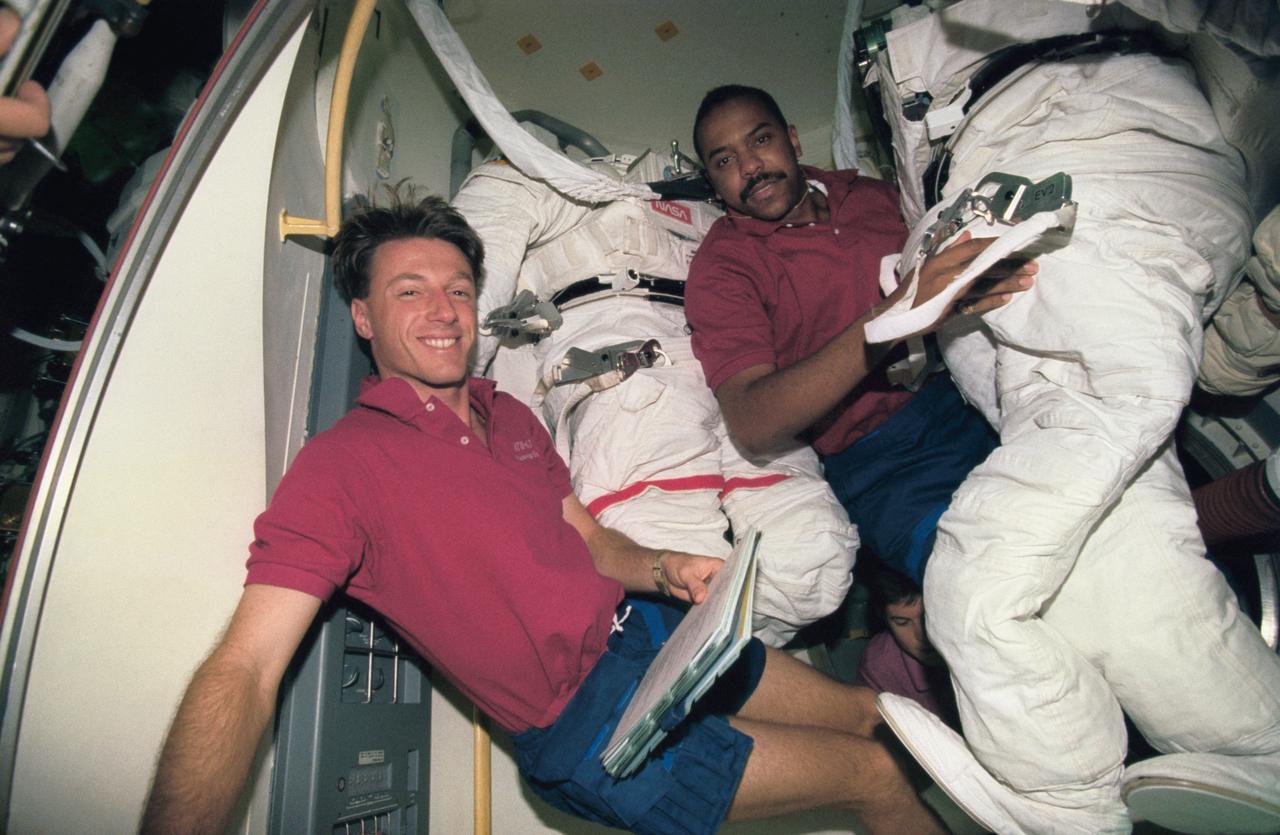
STS063-314-005 (9 Feb 1995) --- Astronaut's C. Michael Foale, mission specialist, (left) and Bernard A. Harris Jr., payload commander, prepare suits prior to their Extravehicular Activity (EVA). This is one of 16 still photographs released by the NASA Johnson Space Center (JSC) Public Affairs Office (PAO) on February 14, 1995. Others onboard the Space Shuttle Discovery were astronauts James D. Wetherbee, mission commander; Eileen M. Collins, pilot; mission specialists Janice E. Voss, and cosmonaut Vladimir G. Titov representing the Russian Space Agency (RSA).
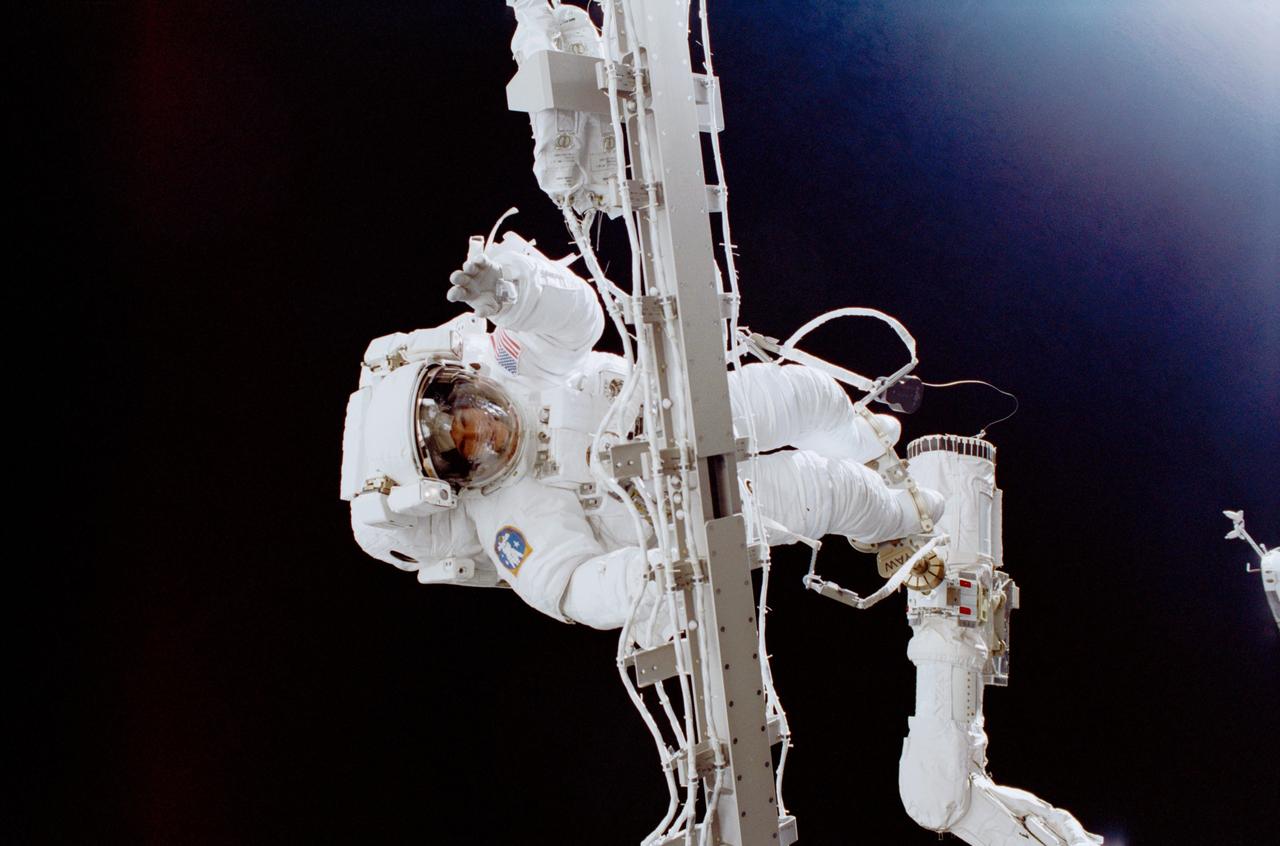
STS102-314-003 (11 March 2001) --- Astronaut Susan J. Helms works while holding onto a rigid umbilical and with her feet anchored to the remote manipulator system (RMS) robot arm on the Space Shuttle Discovery. This extravehicular activity (EVA), on which Helms was joined by astronaut James S. Voss (out of frame), was the first of two scheduled STS-102 space walks. The pair, destined to become members of the Expedition Two crew aboard the station later in the mission, rode aboard Discovery into orbit and at the time of this EVA were still regarded as STS-102 mission specialists.
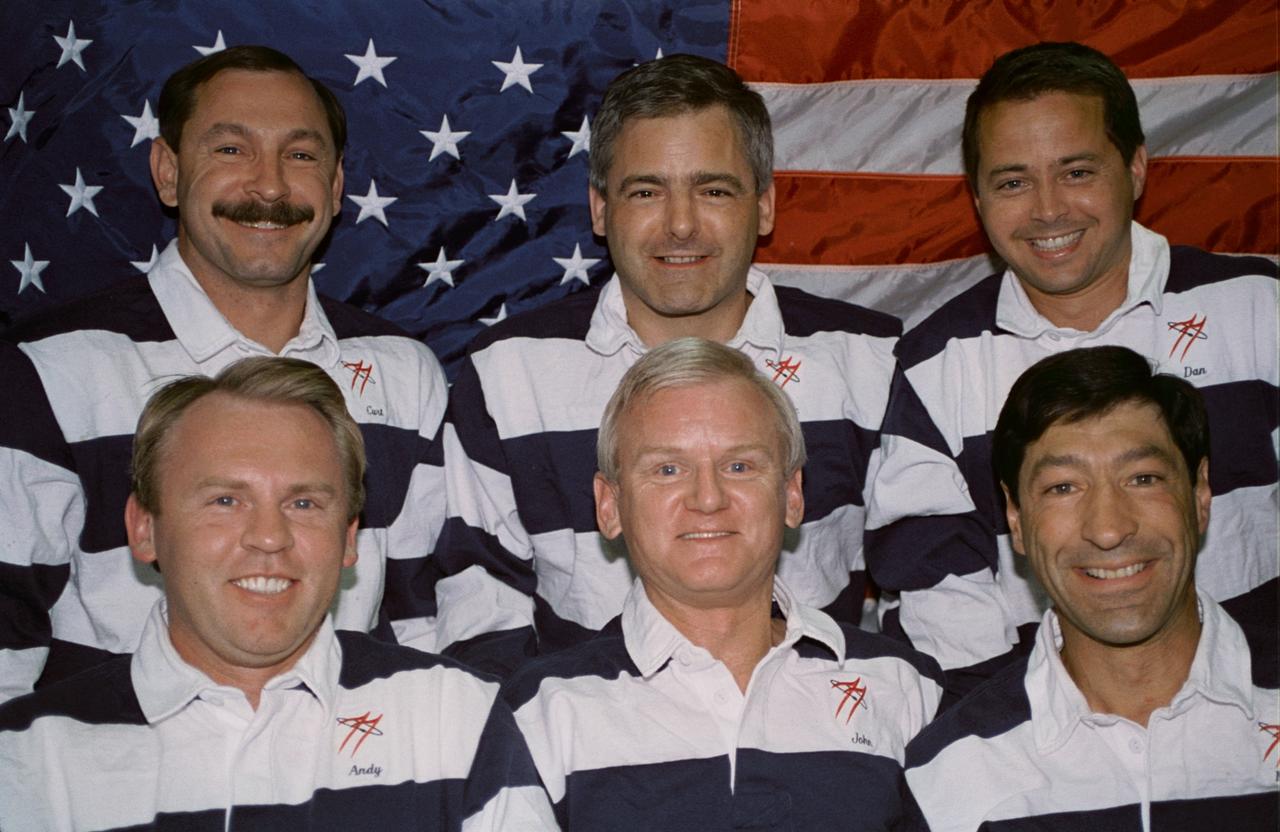
STS077-314-011 (19-29 May 1996) --- The six astronauts aboard the Space Shuttle Endeavour for NASA?s STS-77 mission pose for the traditional inflight portrait. Left to right, front, are astronauts Andrew S. W. Thomas, John H. Casper and Mario Runco, Jr. On the back row are astronauts Curtis L. Brown, Jr., Marc Garneau and Daniel W. Bursch. Casper is mission commander and Brown serves as pilot, with the rest of the crew functioning as mission specialists. Garneau represents the Canadian Space Agency (CSA).
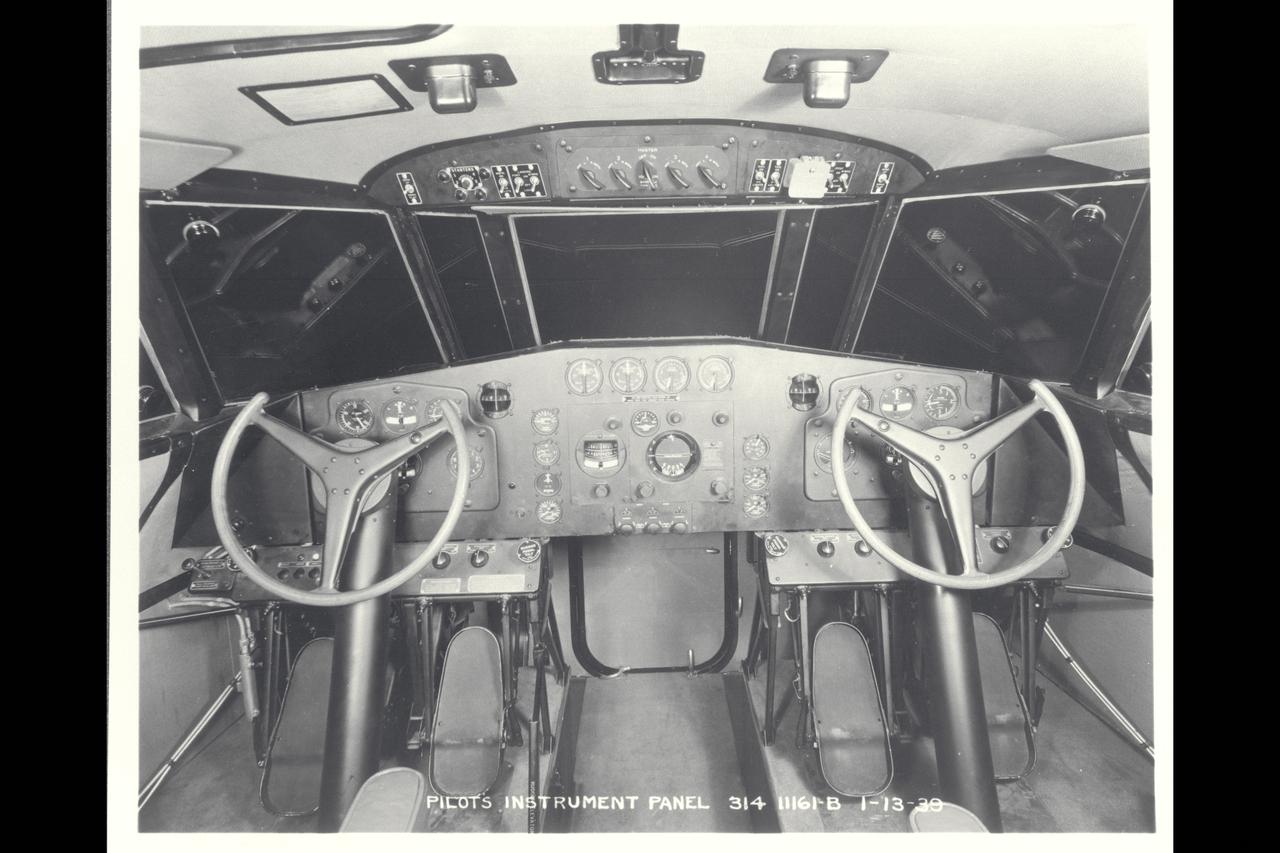
Boeing 314 Pilots Instrument Panel
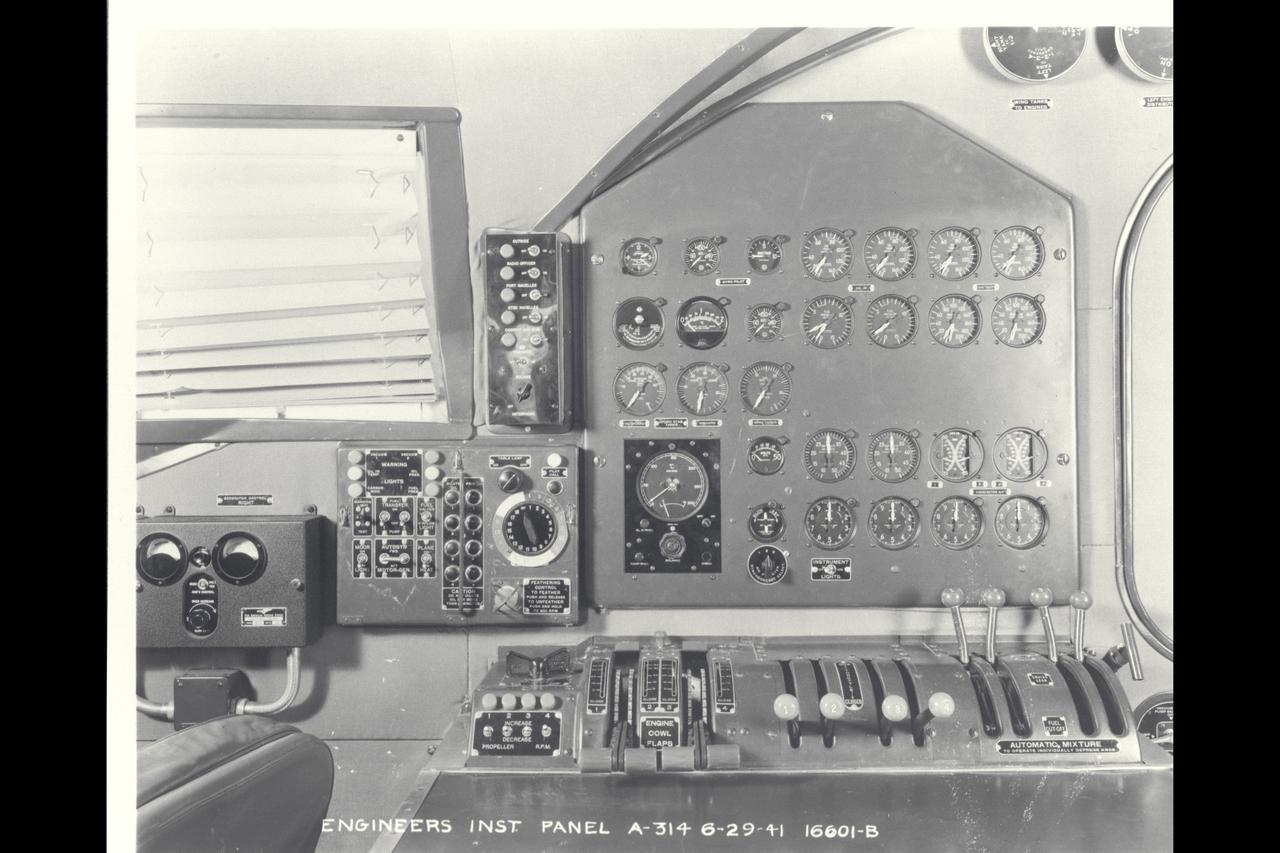
Boeing 314 Engineers Instrument Panel
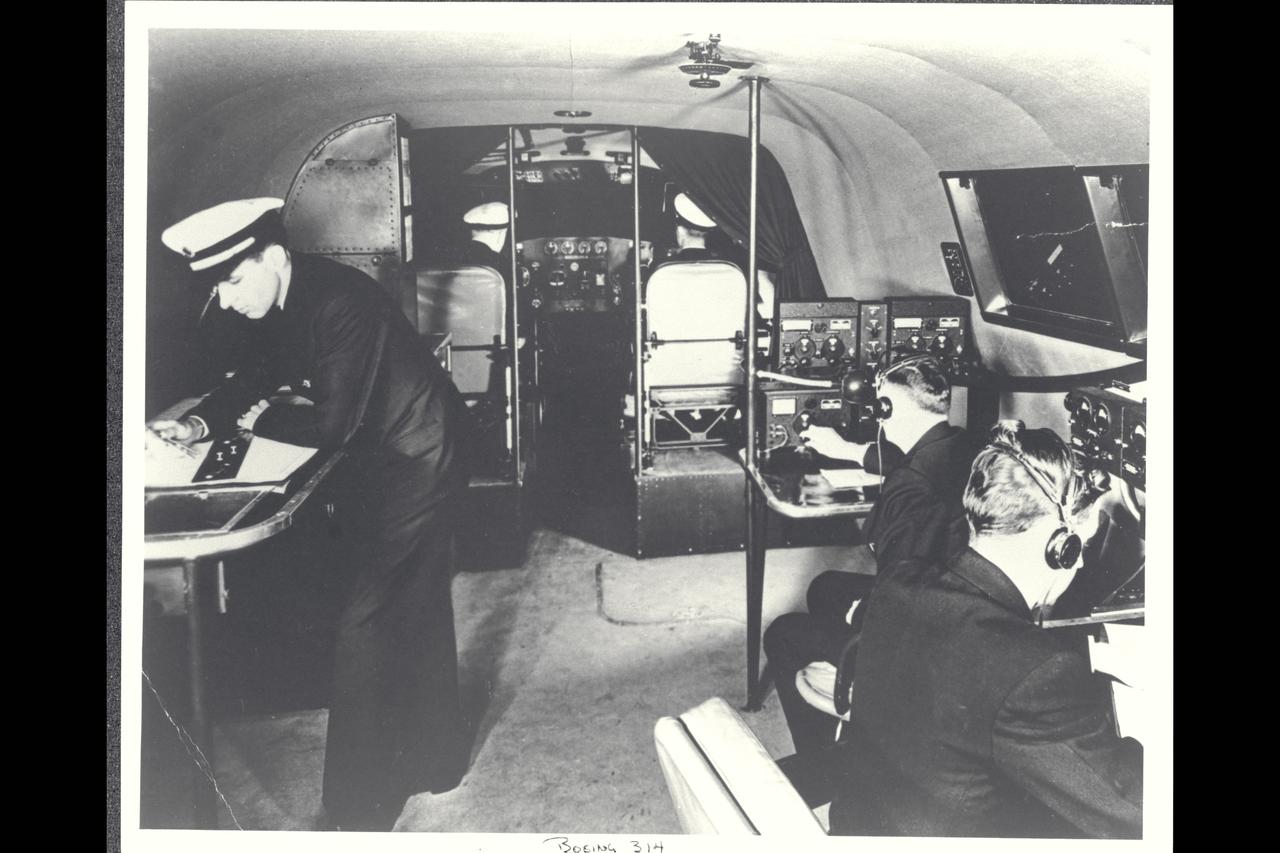
Boeing 314 'Yankee Clipper' Crew Station - Flying Boat
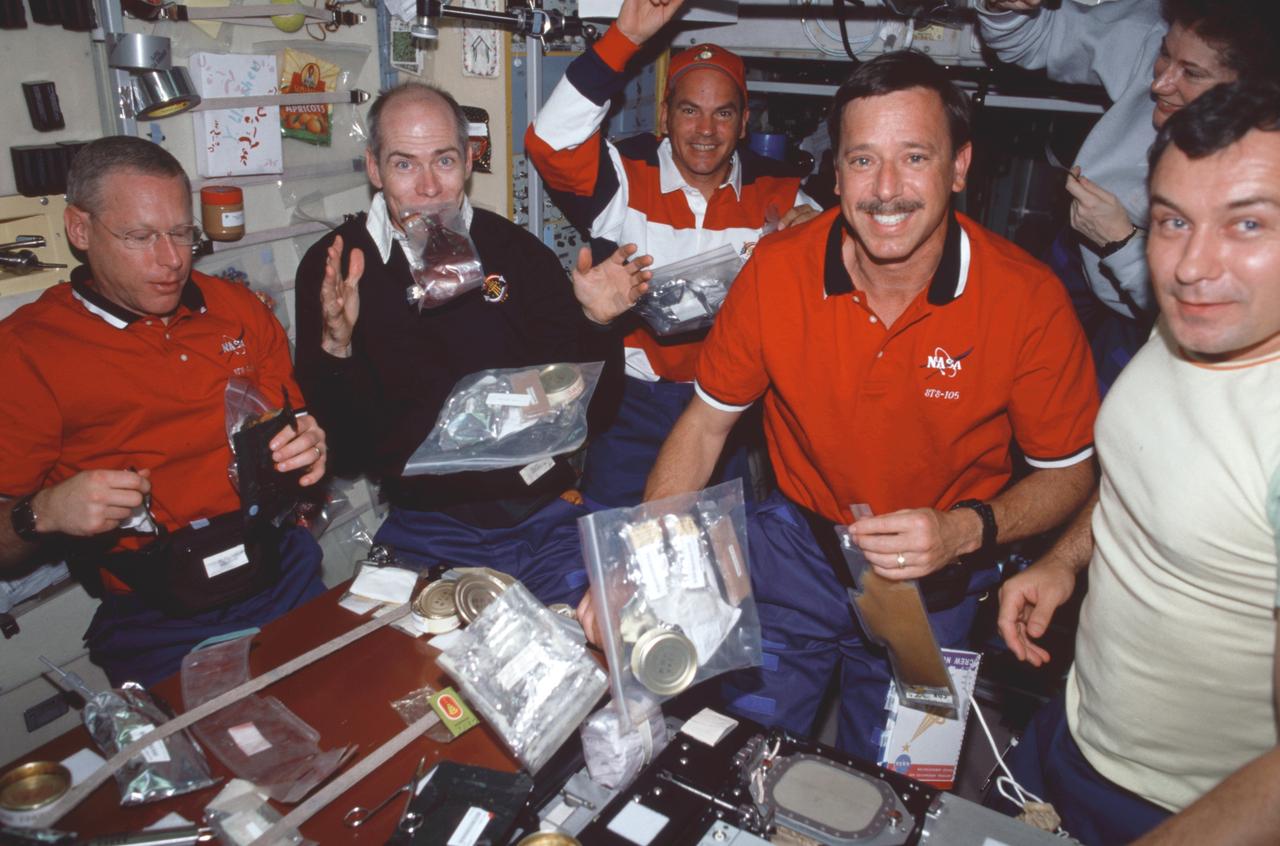
STS105-314-008 (10-22 August 2001) --- Astronauts and cosmonauts representing three different crews are just about to share a meal in the Zvezda Service Module on the International Space Station (ISS). From left to right are astronauts Patrick G. Forrester and Daniel T. Barry, both STS-105 mission specialists; Frederick W. (Rick) Sturckow, STS-105 pilot; Scott J. Horowitz, STS-105 mission commander; astronaut Susan J. Helms, Expedition Two flight engineer; and cosmonaut Vladimir N. Dezhurov, Expedition Three flight engineer. Not pictured are Frank L. Culbertson, Jr., and Mikhail Tyurin, Expedition Three commander and flight engineer, respectively; and Yury V. Usachev and James S. Voss, Expedition Two commander and flight engineer, respectively. Dezhurov, Tyurin and Usachev represent Rosaviakosmos.
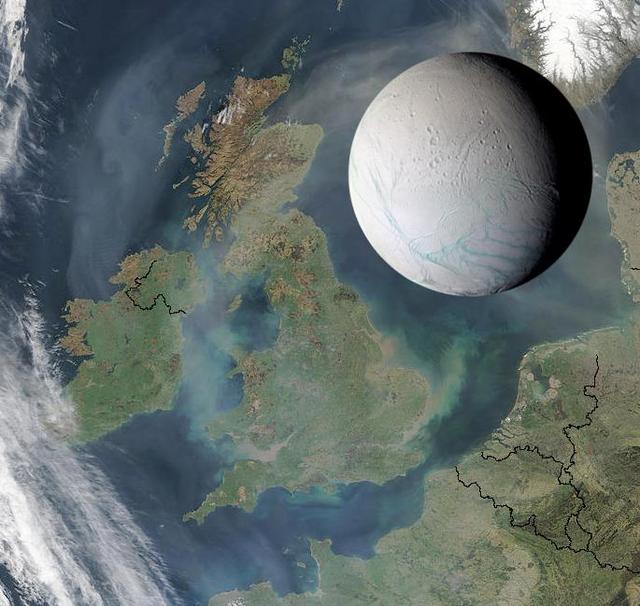
Saturn's moon Enceladus is only 505 kilometers (314 miles) across, small enough to fit within the length of the United Kingdom, as illustrated here. The intriguing icy moon also could fit comfortably within the states of Arizona or Colorado. http://photojournal.jpl.nasa.gov/catalog/PIA07724
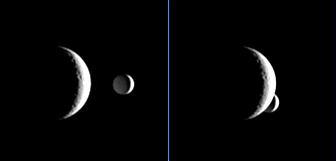
Enceladus briefly passes behind the crescent of Rhea in these images, which are part of a "mutual event" sequence taken by Cassini. These sequences help scientists refine our understanding of the orbits of Saturn's moons. The images were taken one minute apart as smaller Enceladus (505 kilometers, or 314 miles across) darted behind Rhea (1,528 kilometers, or 949 miles across) as seen from the Cassini spacecraft's point of view. The images were taken in visible light with the Cassini spacecraft narrow-angle camera on April 14, 2006, at a distance of approximately 3.4 million kilometers (2.1 million miles) from Rhea and 4.1 million kilometers (2.5 million miles) from Enceladus. The image scale is 20 kilometers (13 miles) per pixel on Rhea and 24 kilometers (15 miles) per pixel on Enceladus. http://photojournal.jpl.nasa.gov/catalog/PIA08180
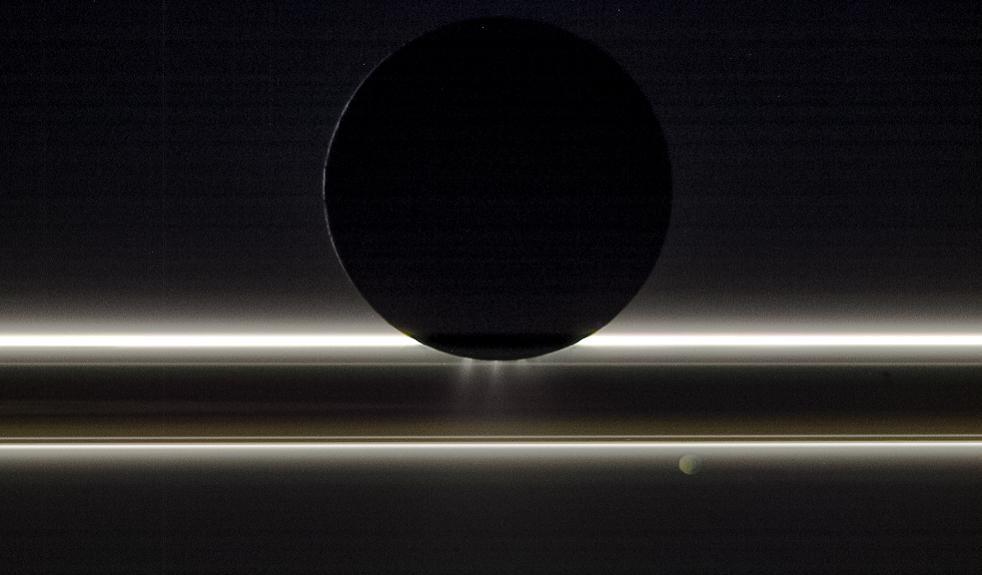
Saturn's moon Enceladus drifts before the rings and the tiny moon Pandora in this view captured by NASA's Cassini spacecraft on Nov. 1, 2009. The entire scene is backlit by the Sun, providing striking illumination for the icy particles that make up both the rings and the jets emanating from the south pole of Enceladus, which is about 314 miles (505 km) across. Pandora, which is about (52 miles, 84 kilometers) wide, was on the opposite side of the rings from Cassini and Enceladus when the image was taken. This view looks toward the night side on Pandora as well, which is lit by dim golden light reflected from Saturn. This natural-color image was taken in visible light with the Cassini spacecraft's narrow-angle camera at a distance of approximately 149,600 miles (240,800 kilometers) from Enceladus and 352,200 miles (566,800 kilometers) from Pandora. The Cassini spacecraft ended its mission on Sept. 15, 2017. https://photojournal.jpl.nasa.gov/catalog/PIA17144
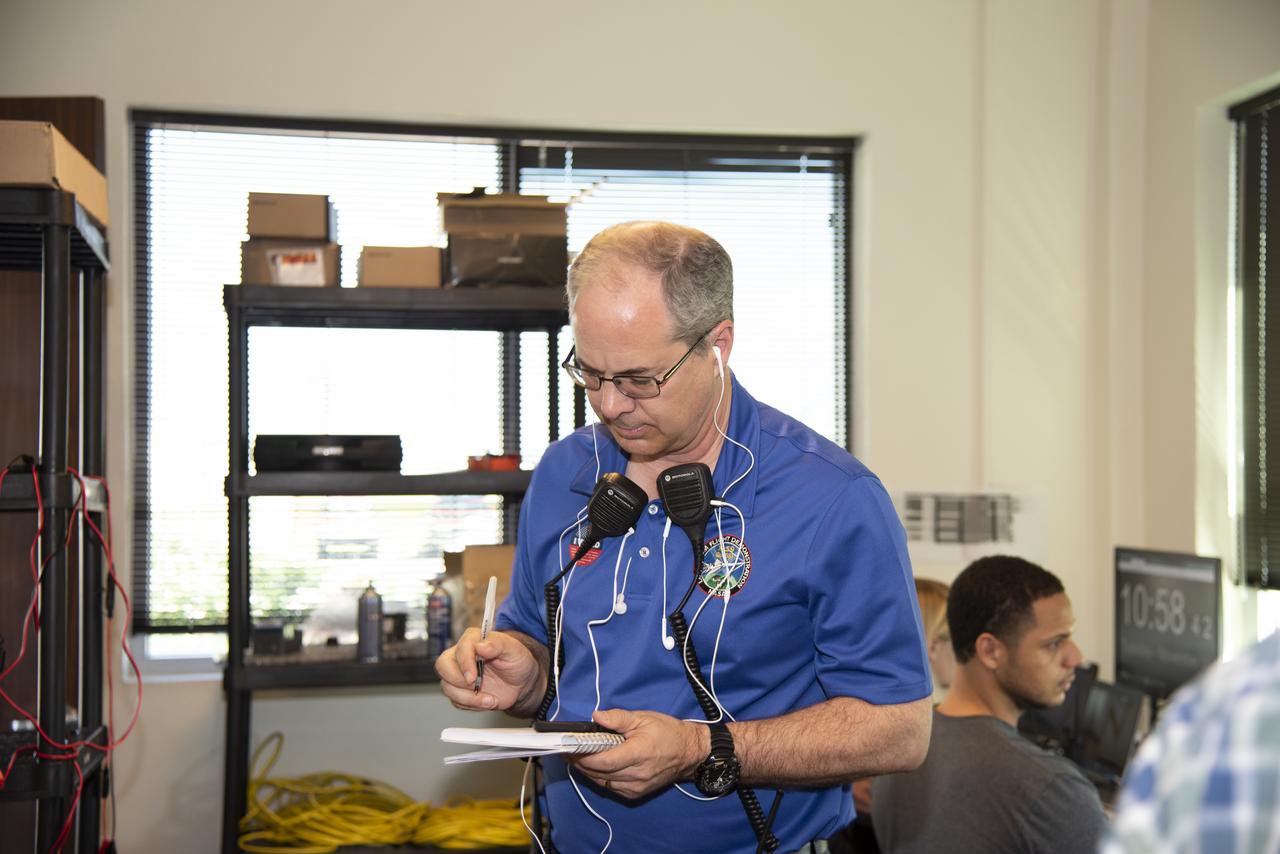
While NASA’s F/A-18 goes supersonic off the coast, a team of researchers monitor the flight and operate multiple sound monitor stations around Galveston and its surrounding area. This allows NASA to obtain accurate sound level data, which gets matched to community response data.
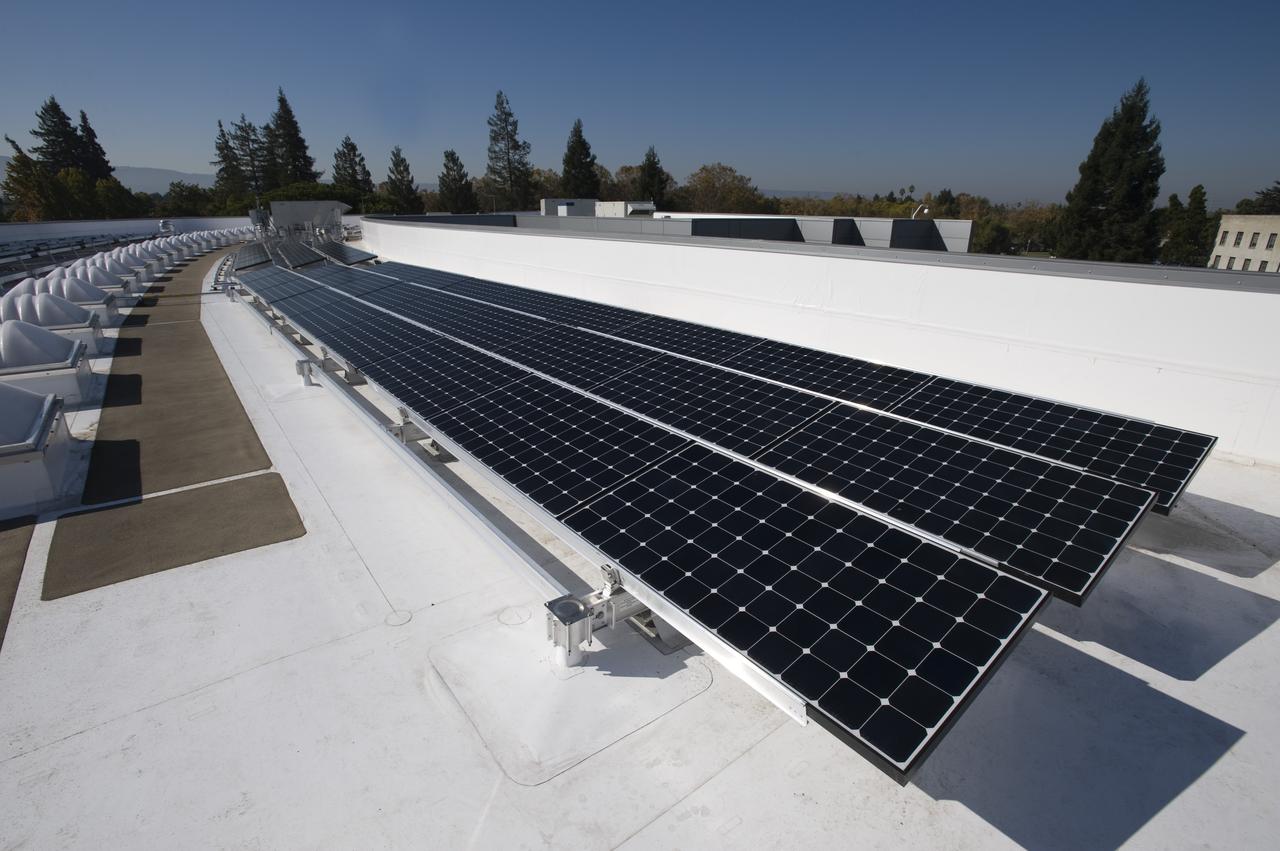
Construction of the new NASA Ames Green Building dubbed Sustainability Base located on the Ames Research Center campus at Moffett Field, CA. Roof, skylights and solor panels
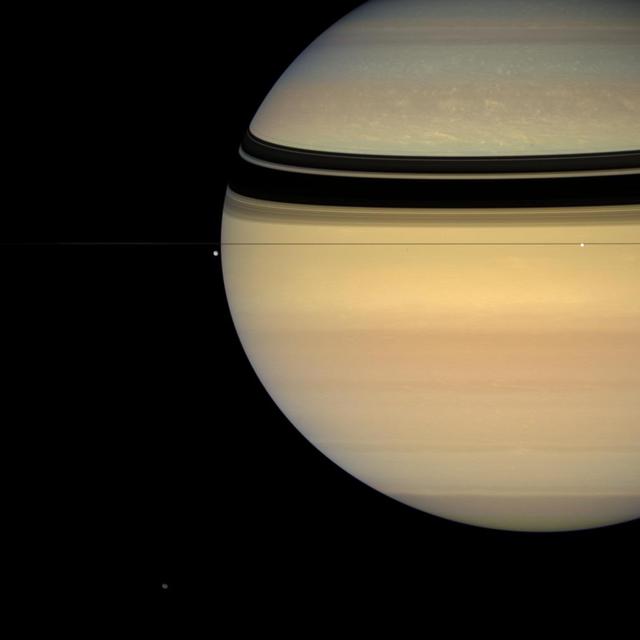
This colorful view, taken from edge-on with the ringplane, contains four of Saturn's attendant moons. Tethys (1,071 kilometers, 665 miles across) is seen against the black sky to the left of the gas giant's limb. Brilliant Enceladus (505 kilometers, 314 miles across) sits against the planet near right. Irregular Hyperion (280 kilometers, 174 miles across) is at the bottom of the image, near left. Much smaller Epimetheus (116 kilometers, 72 miles across) is a speck below the rings directly between Tethys and Enceladus. Epimetheus casts an equally tiny shadow onto the blue northern hemisphere, just above the thin shadow of the F ring. Images taken using red, green and blue spectral filters were combined to create this natural color view. The images were acquired with the Cassini spacecraft wide-angle camera on July 24, 2007 at a distance of approximately 2 million kilometers (1.2 million miles) from Saturn. Image scale is 116 kilometers (72 miles) per pixel on Saturn. http://photojournal.jpl.nasa.gov/catalog/PIA08394
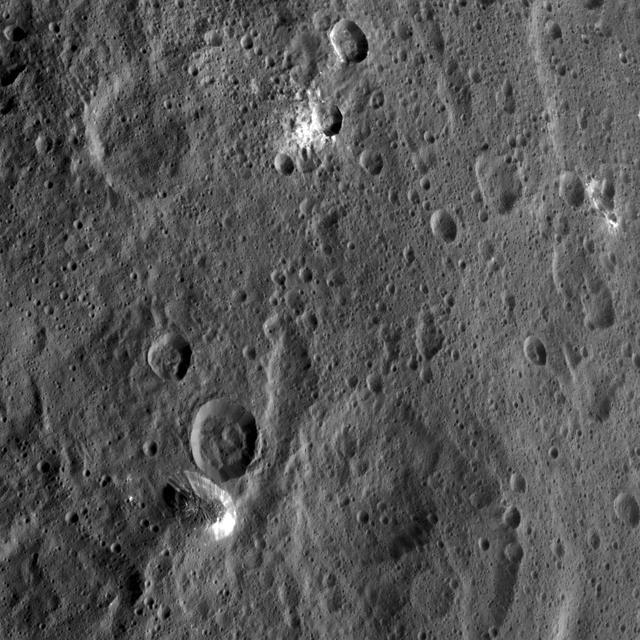
Xevioso Crater is the small (5.3 miles, 8.5 kilometers in diameter) crater associated with bright ejecta toward the top of this image, taken by NASA's Dawn spacecraft. It is one of the newly named craters on Ceres. Xevioso is located in the vicinity of Ahuna Mons, the tall, lonely mountain seen toward the bottom of the picture. Given that the small impact that formed Xevioso was able to excavate bright material, scientists suspect the material may be found at shallow depth. Its nature and relationship to other bright regions on Ceres is under analysis. The asymmetrical distribution of this bright ejecta indicates Xevioso formed via an oblique impact. Another view of Xevioso can be found here. Xevioso is named for the Fon god of thunder and fertility from the Kingdom of Dahomey, which was located in a region that is now the west African country of Benin. Dawn acquired this picture on October 15, 2015, from its high altitude mapping orbit at about 915 miles (1,470 kilometers) above the surface. The center coordinates of this image are 3.8 degrees south latitude, 314 degrees east longitude, and its resolution is 450 feet (140 meters) per pixel. https://photojournal.jpl.nasa.gov/catalog/PIA21907

These images show how the team rolled out the completed core stage for NASA’s Space Launch System rocket from NASA’s Michoud Assembly Facility in New Orleans. Crews moved the flight hardware for the first Artemis mission to NASA’s Pegasus barge on Jan. 8 in preparation for the core stage Green Run test series at NASA’s Stennis Space Center near Bay St. Louis, Mississippi. Pegasus, which was modified to ferry SLS rocket hardware, will transport the core stage from Michoud to Stennis for the comprehensive core stage Green Run test series. Once at Stennis, the Artemis rocket stage will be loaded into the B-2 Test Stand for the core stage Green Run test series. The comprehensive test campaign will progressively bring the entire core stage, including its avionics and engines, to life for the first time to verify the stage is fit for flight ahead of the launch of Artemis I. Assembly and integration of the core stage and its four RS-25 engines has been a collaborative, multistep process for NASA and its partners Boeing, the core stage lead contractor, and Aerojet Rocketdyne, the RS-25 engines lead contractor. Together with four RS-25 engines, the rocket’s massive 212-foot-tall core stage — the largest stage NASA has ever built — and its twin solid rocket boosters will produce 8.8 million pounds of thrust to send NASA’s Orion spacecraft, astronauts and supplies beyond Earth’s orbit to the Moon and, ultimately, Mars. Offering more payload mass, volume capability and energy to speed missions through space, the SLS rocket, along with NASA’s Gateway in lunar orbit and Orion, is part of NASA’s backbone for deep space exploration and the Artemis lunar program.
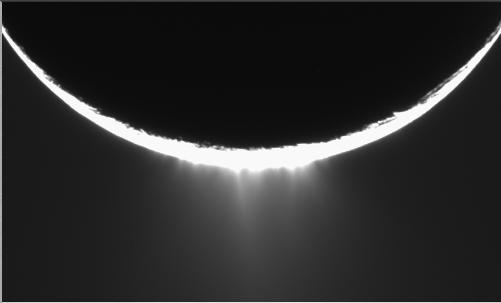
Jets of icy particles burst from Saturn’s moon Enceladus in this brief movie sequence of four images taken on Nov. 27, 2005. The sensational discovery of active eruptions on a third outer solar system body (Io and Triton are the others) is surely one of the great highlights of the Cassini mission. Imaging scientists, as reported in the journal Science on March 10, 2006, believe that the jets are geysers erupting from pressurized subsurface reservoirs of liquid water above 273 degrees Kelvin (0 degrees Celsius). Images taken in January 2005 appeared to show the plume emanating from the fractured south polar region of Enceladus, but the visible plume was only slightly brighter than the background noise in the image, because the lighting geometry was not suitable to reveal the true details of the feature. This potential sighting, in addition to the detection of the icy particles in the plume by other Cassini instruments, prompted imaging scientists to target Enceladus again with exposures designed to confirm the validity of the earlier plume sighting. The new views show individual jets, or plume sources, that contribute to the plume with much greater visibility than the earlier images. The full plume towers over the 505-kilometer-wide (314-mile) moon and is at least as tall as the moon's diameter. The four 10-second exposures were taken over the course of about 36 minutes at approximately 12 minute intervals. Enceladus rotates about 7.5 degrees in longitude over the course of the frames, and most of the observed changes in the appearances of the jets is likely attributable to changes in the viewing geometry. However, some of the changes may be due to actual variation in the flow from the jets on a time scale of tens of minutes. Additionally, the shift of the sources seen here should provide information about their location in front of and behind the visible limb (edge) of Enceladus. These images were obtained using the Cassini spacecraft narrow-angle camera at distances between 144,350 and 149,520 kilometers (89,695 and 92,907 miles) from Enceladus and at a phase angle of about 161 degrees. Image scale is about 900 meters (2,950 feet) per pixel on Enceladus. A movie is available at http://photojournal.jpl.nasa.gov/catalog/PIA07762