
Hazes near Jupiter Limb 60 degrees North, 315 degrees West
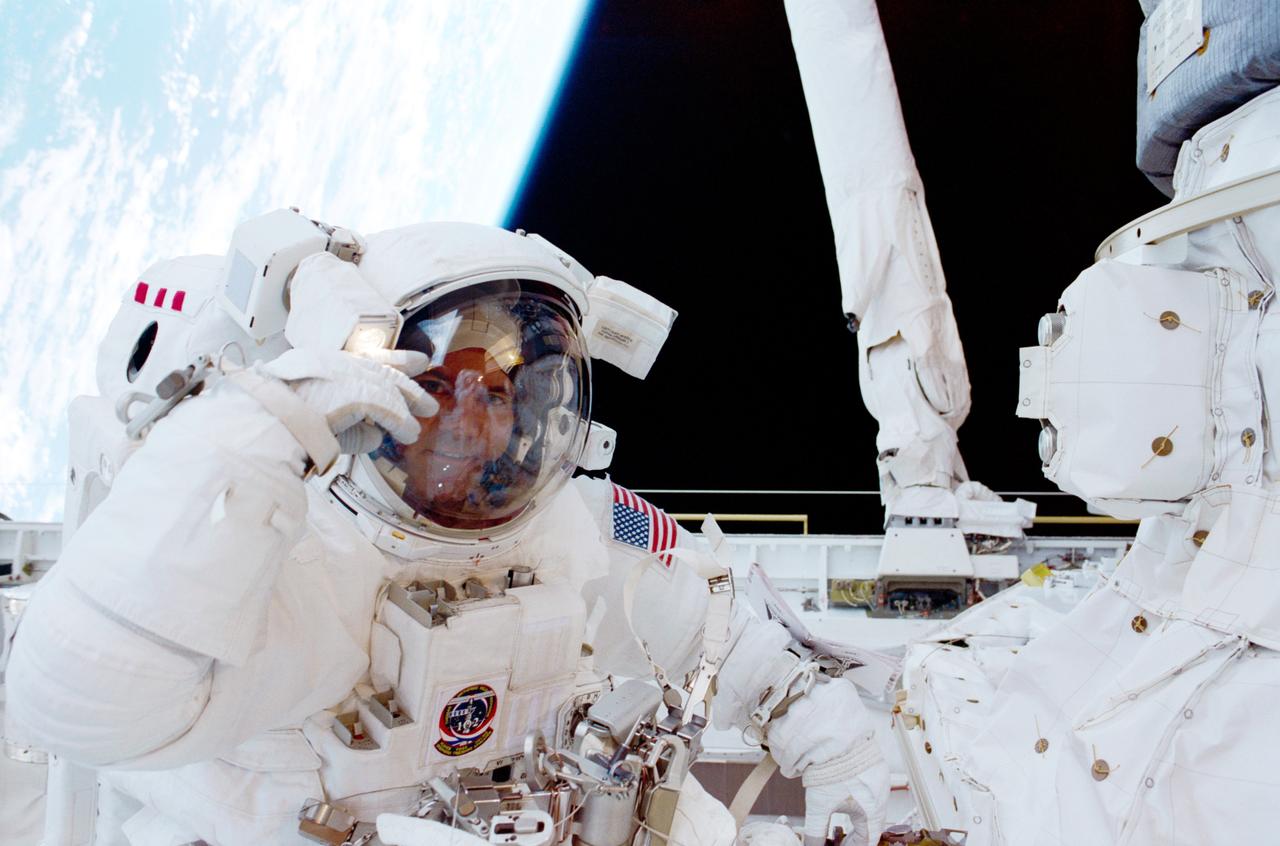
STS102-315-031 (13 March 2001) --- Astronaut Paul W. Richards, STS-102 mission specialist, works in the cargo bay of the Space Shuttle Discovery during the second of two scheduled STS-102 space walks.
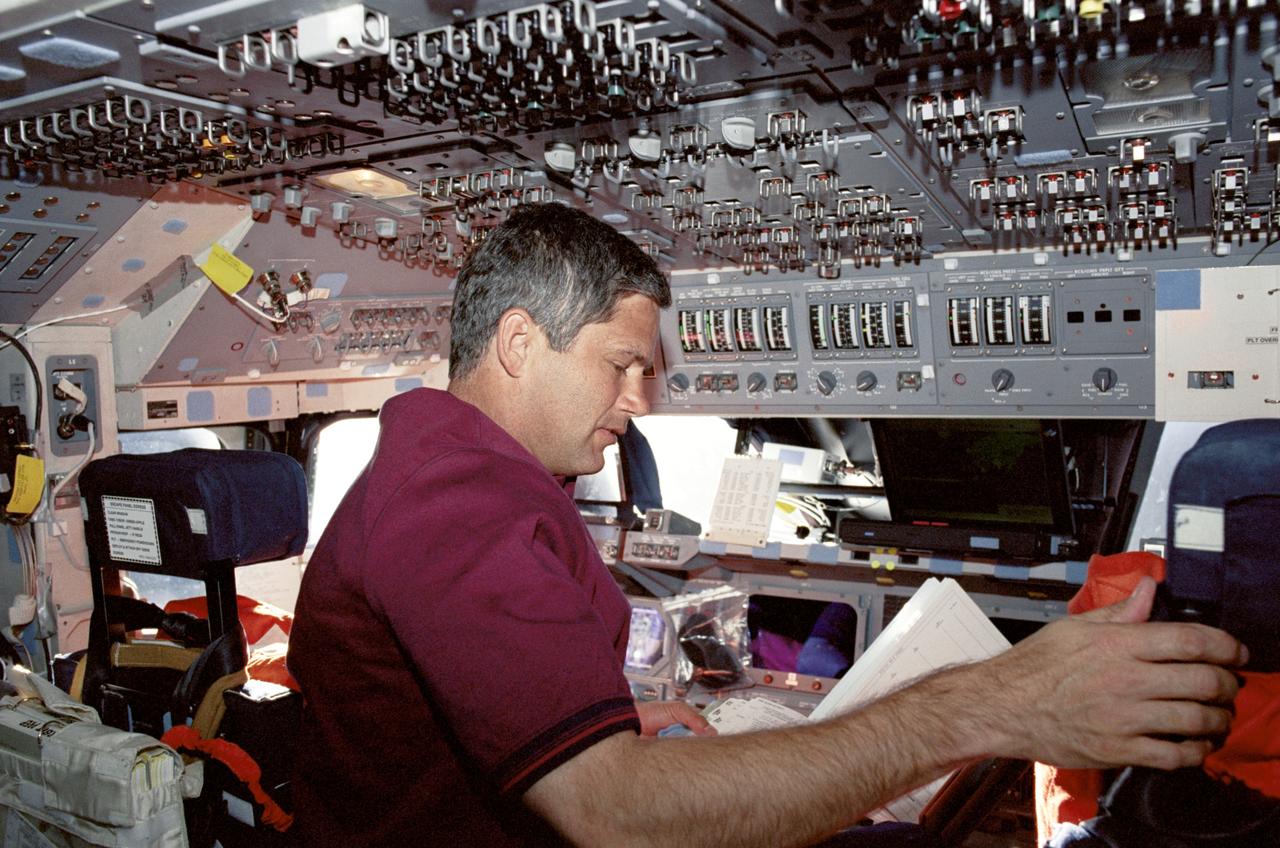
STS111-315-010 (5-19 June 2002) --- Astronaut Paul S. Lockhart, pilot, looks over a checklist while performing a task at the commander's station on the forward flight deck of the Space Shuttle Endeavour.
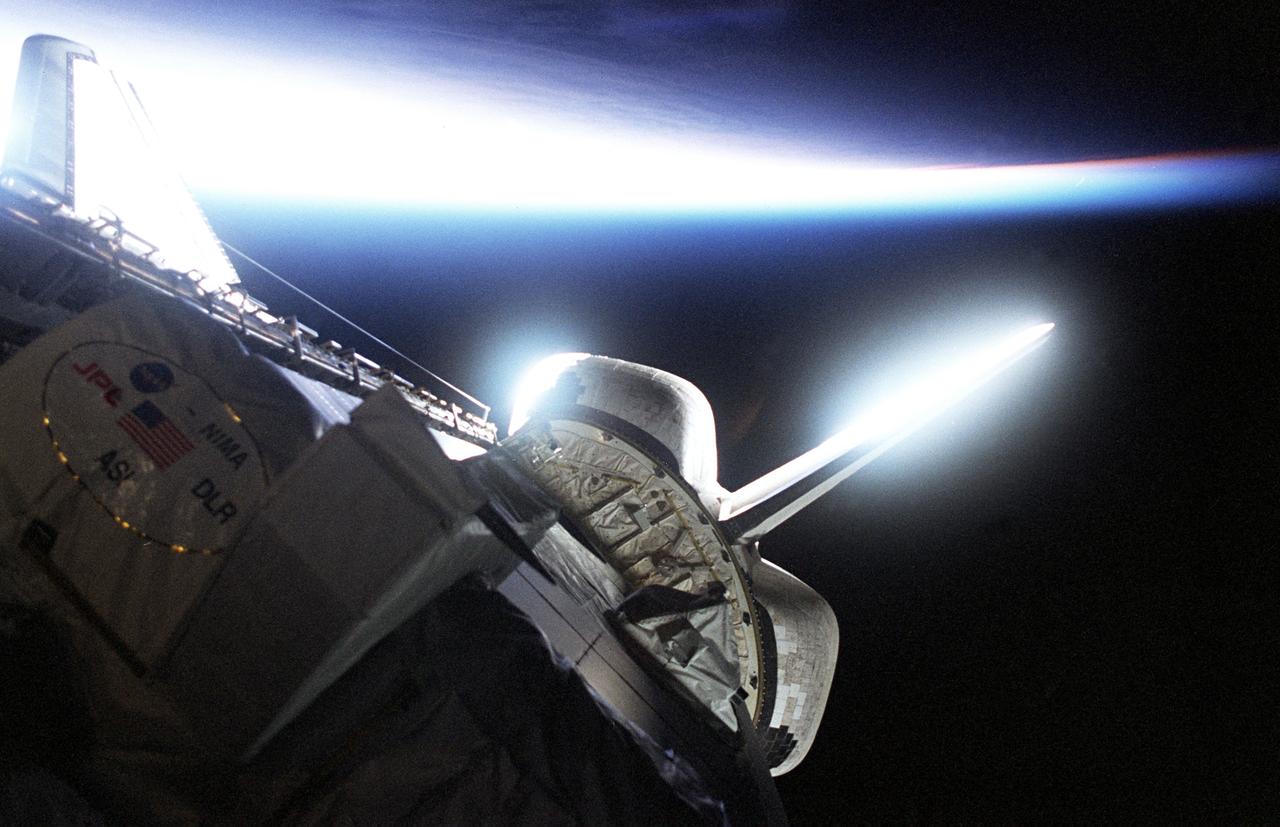
STS099-315-031 (11-22 February 2000) --- The Space Shuttle Endeavour orbits Earth with its lengthy SRTM mast at work (out of frame). Part of the SRTM payload is silhouetted in the cargo bay. Airglow effect of Earth's atmosphere makes for interesting light and color display.
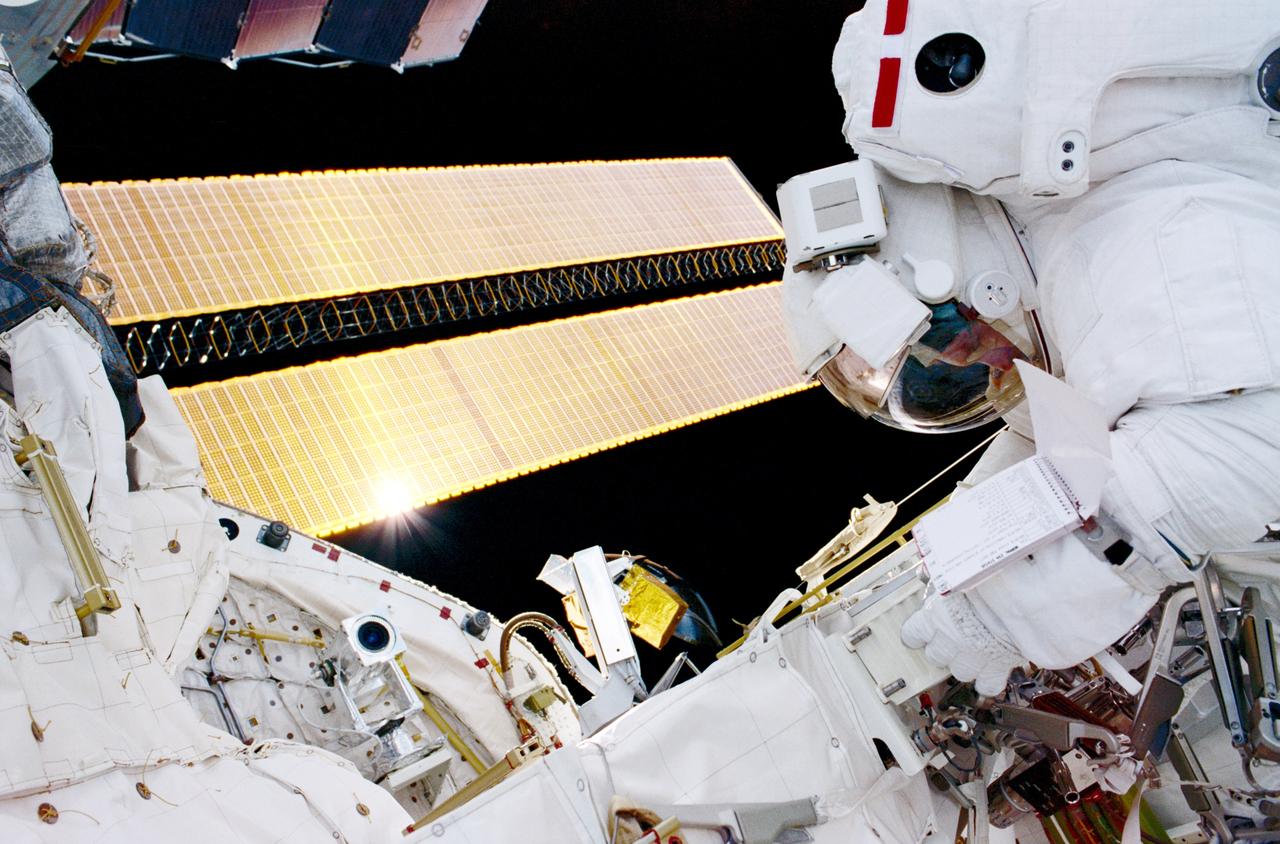
STS102-315-027 (8-21 March 2001)--- Astronaut Andrew S. W. Thomas, mission specialist, is photographed by astronaut Paul W. Richards, mission specialist, while in the cargo bay of the Earth-orbiting Space Shuttle Discovery during the second space walk. Sunglint on the solar array for the P6 Truss is seen in the background.
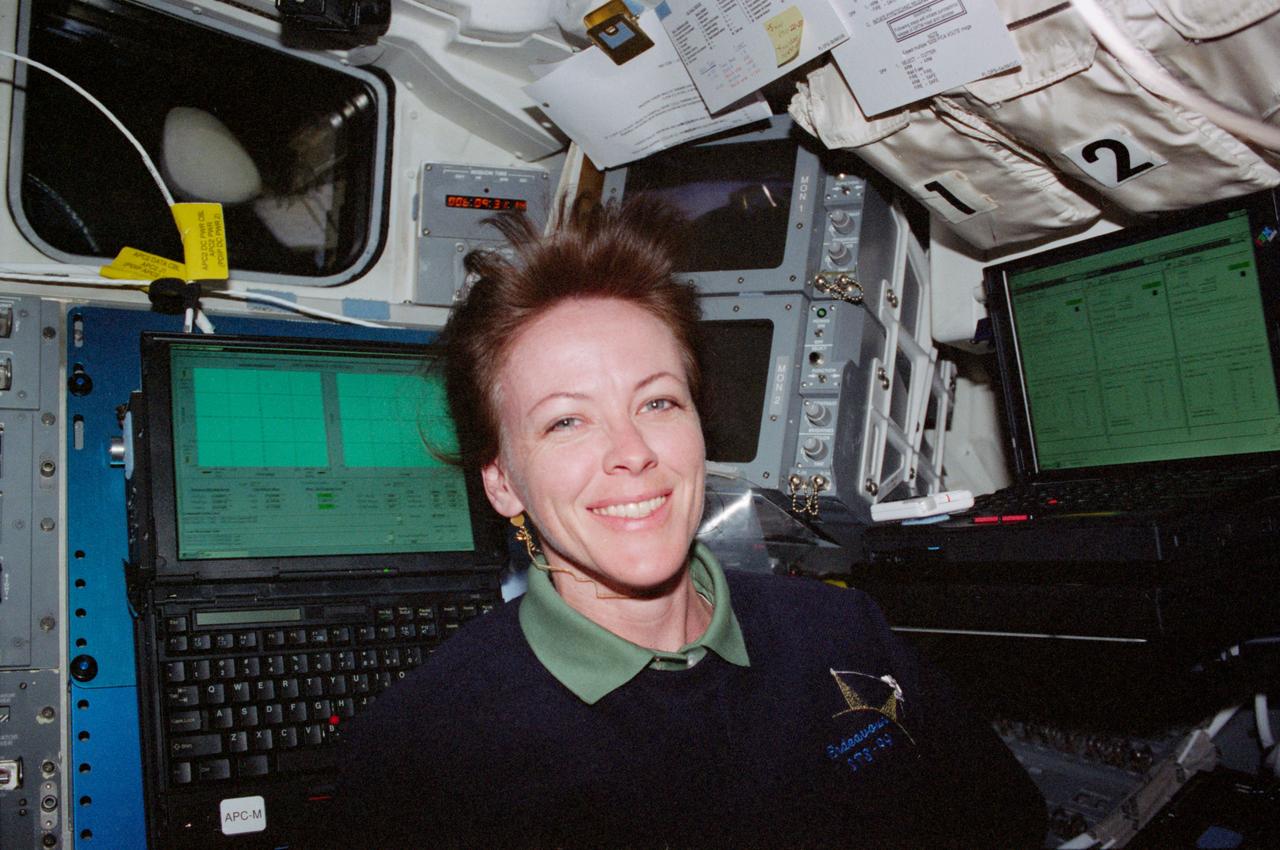
STS099-315-008 (11-22 February 2000) ---Astronaut Janet L. Kavandi, mission specialist, is photographed near the Payload General Support Computers (PGSC) dealing with the Shuttle Radar Topography Mission (SRTM) on the middeck of the Space Shuttle Endeavour.
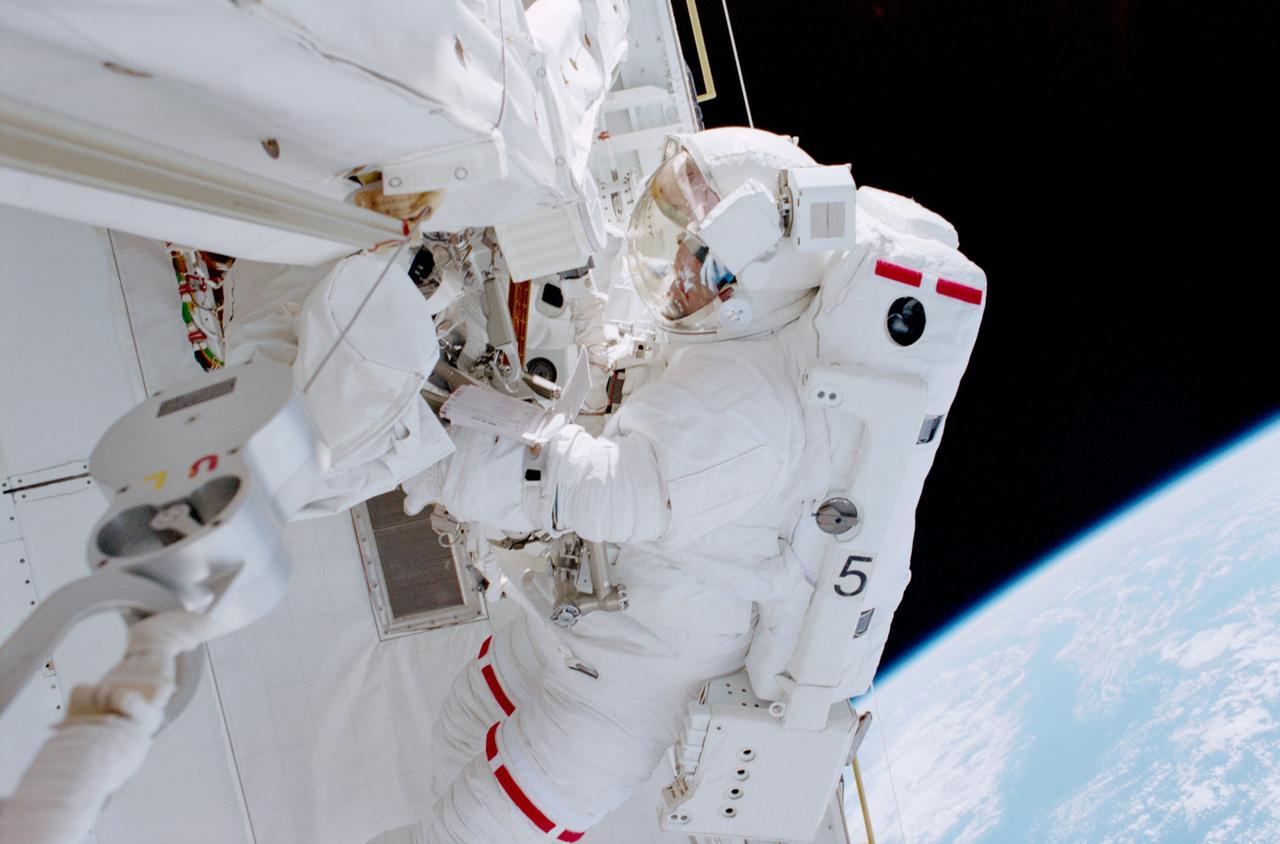
STS102-315-025 (8-21 March 2001)--- Astronaut Andrew S. W. Thomas, mission specialist, was captured on film by astronaut Paul W. Richards, mission specialist, while in the cargo bay of the Earth-orbiting Space Shuttle Discovery during the second space walk of the STS-102 mission.
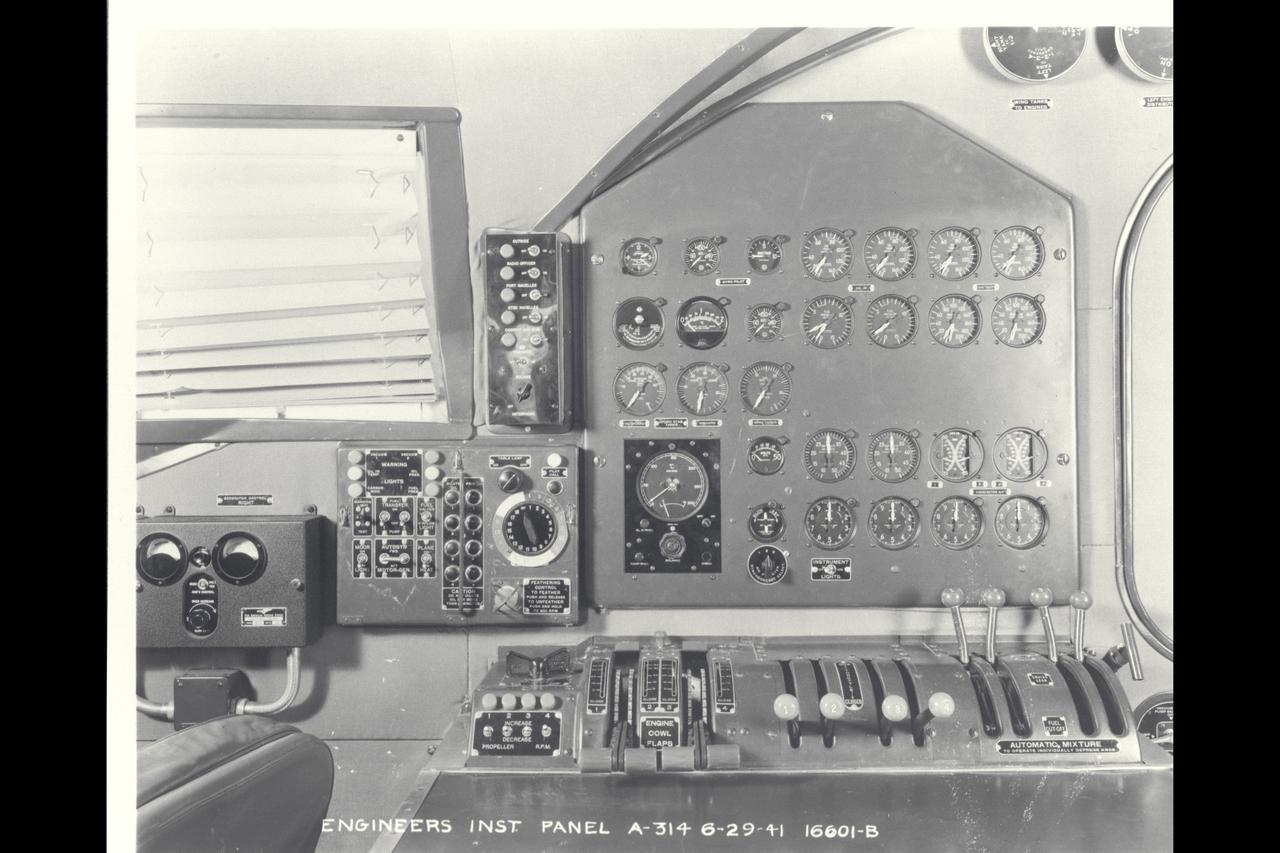
Boeing 314 Engineers Instrument Panel
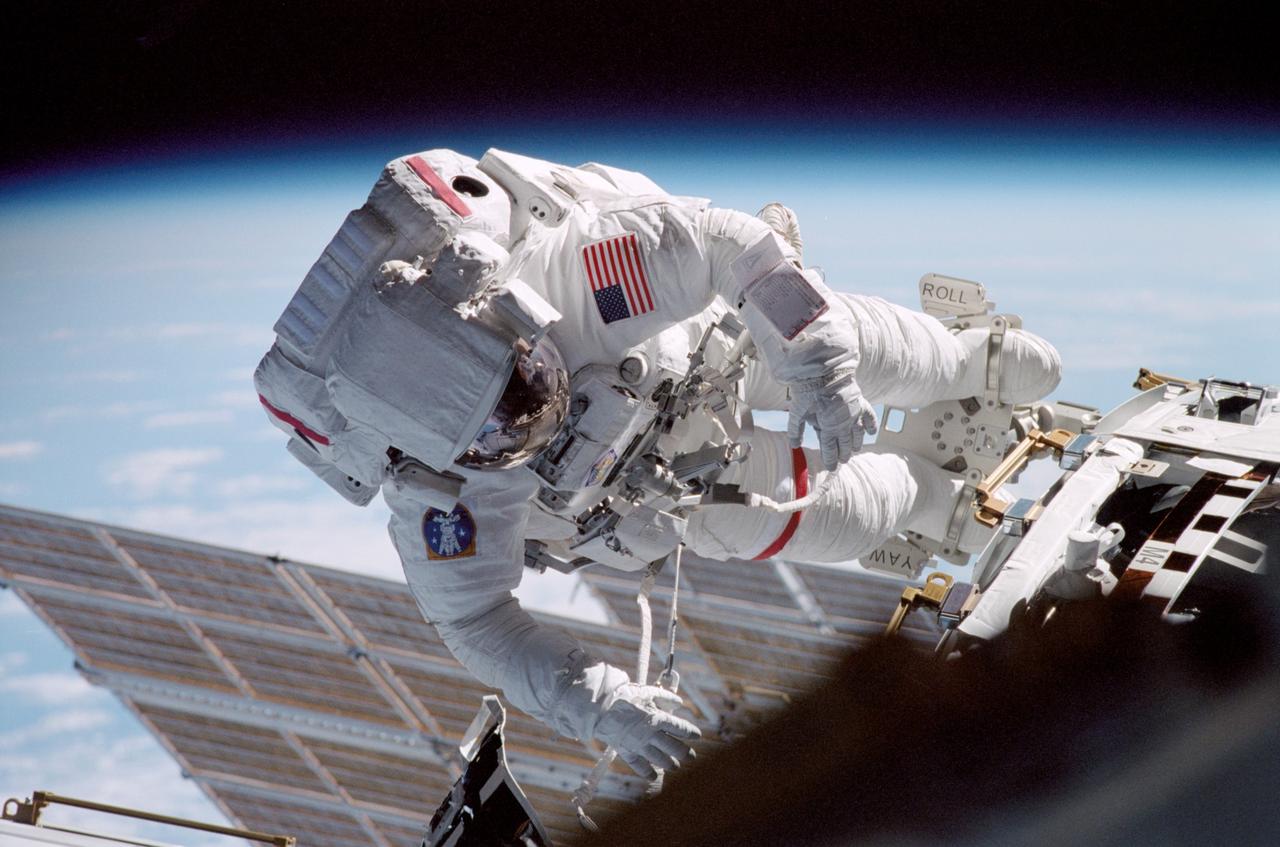
STS104-315-005 (12-24 July 2001) --- With Earth's horizon in the background, astronaut Michael L. Gernhardt, STS-104 mission specialist, participates in one of three space walks aimed toward wrapping up the completion of work on the second phase of the International Space Station (ISS). Gernhardt was joined on the extravehicular activity (EVA) by astronaut James F. Reilly.
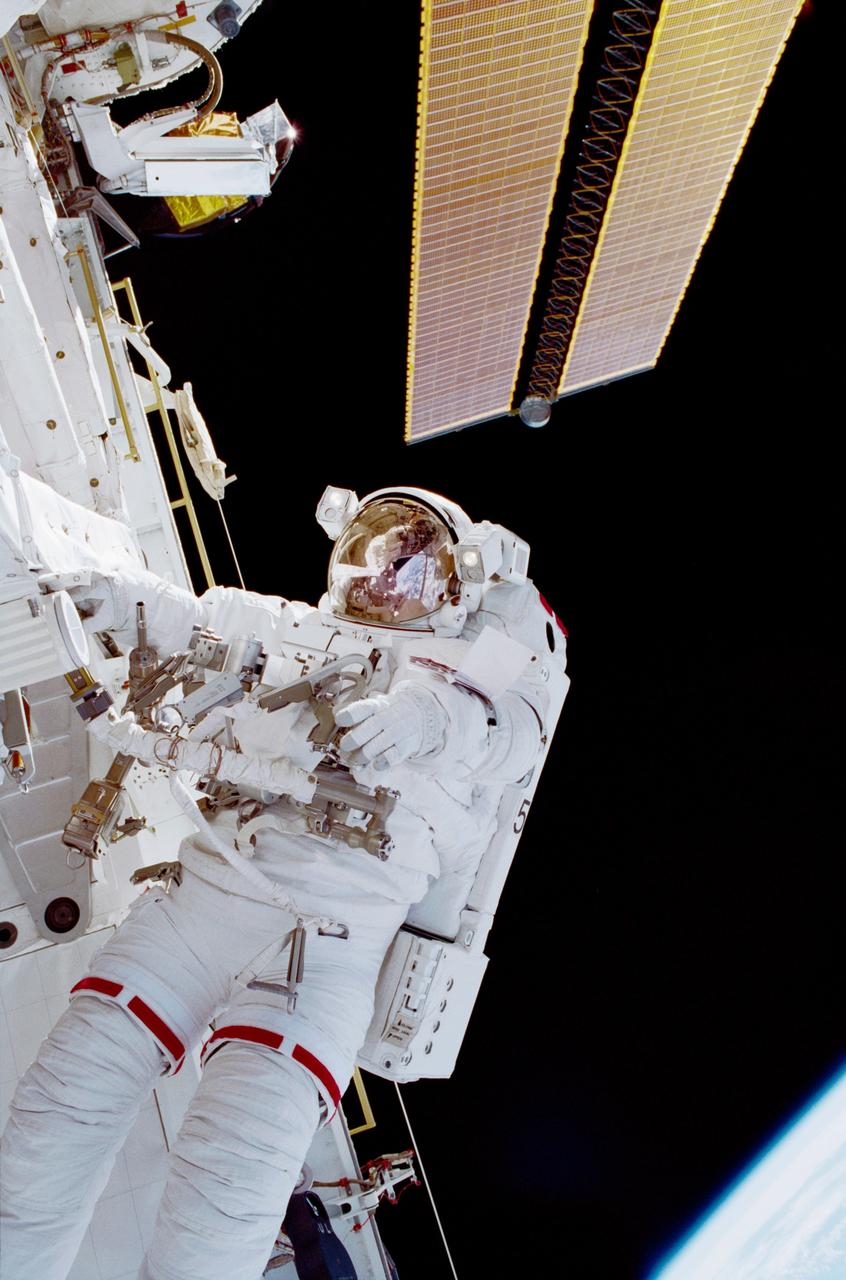
STS102-315-035 (13 March 2001) --- Astronaut Andrew S.W. Thomas, STS-102 mission specialist works in the cargo bay of the Space Shuttle Discovery while the spacecraft was docked with the International Space Station (ISS). Astronauts Thomas and Paul W. Richards (out of frame) teamed up for the second of two STS-102 space walks.
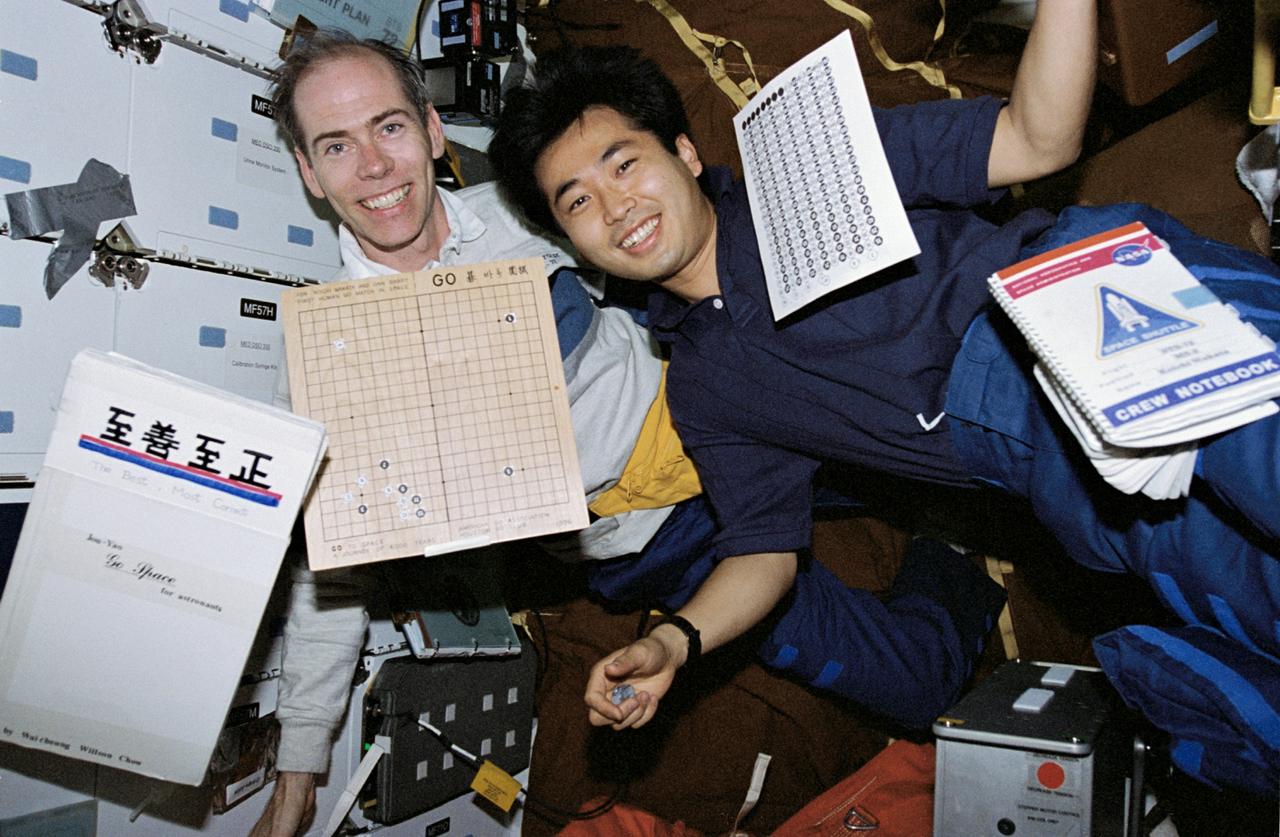
STS072-315-034 (11-20 Jan. 1996) --- During off-duty time aboard the Space Shuttle Endeavour, astronauts Daniel T. Barry (left) and Koichi Wakata join on the middeck for an in-space version of a Japanese game called "Go". Because of microgravity, the usual rock-like pieces that are moved about on the board by each player had to give way to tiny stick-on pieces. Wakata represents Japan's National Space Development Agency (NASDA).
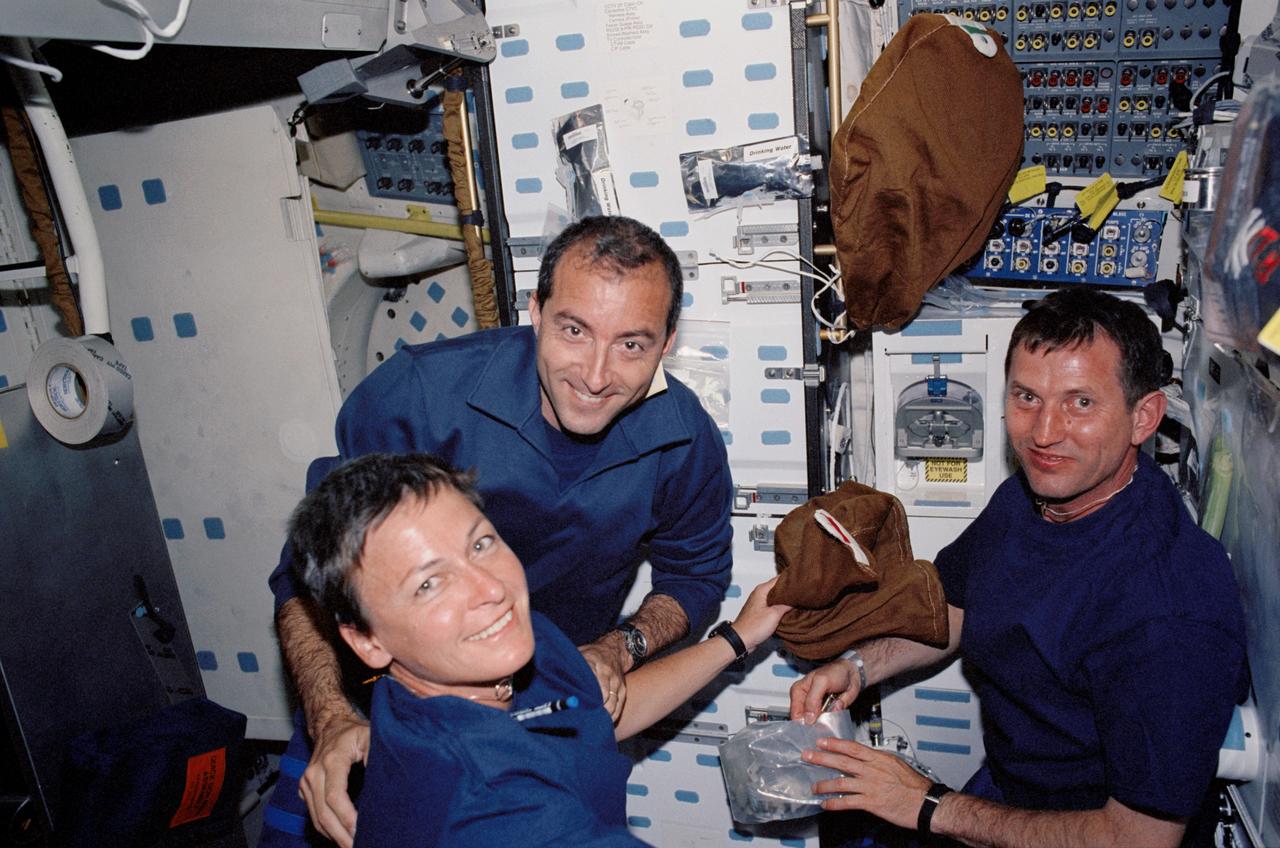
STS111-315-013 (5-19 June 2002) --- Astronauts Peggy A. Whitson (foreground), Expedition Five flight engineer; Philippe Perrin, STS-111 mission specialist; and cosmonaut Sergei Y. Treschev, Expedition Five flight engineer, are photographed on the middeck of the Space Shuttle Endeavour. Perrin represents CNES, the French Space Agency, and Treschev represent Rosaviakosmos.
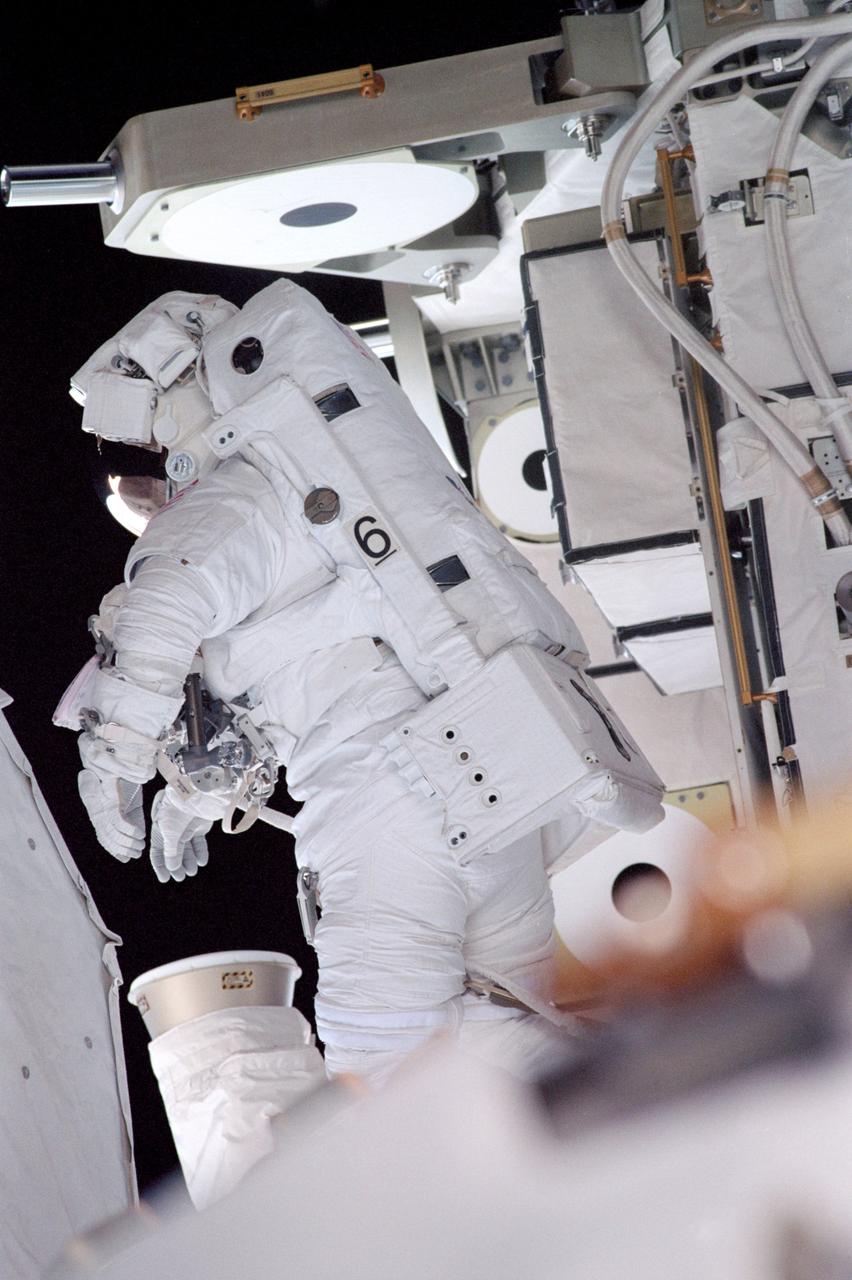
STS104-315-007 (12-24 July 2001) --- Astronaut James F. Reilly, STS-104 mission specialist, participates in one of three space walks aimed toward wrapping up the completion of work on the second phase of the International Space Station (ISS). Reilly was joined on the extravehicular activity (EVA) by astronaut Michael L. Gernhardt.
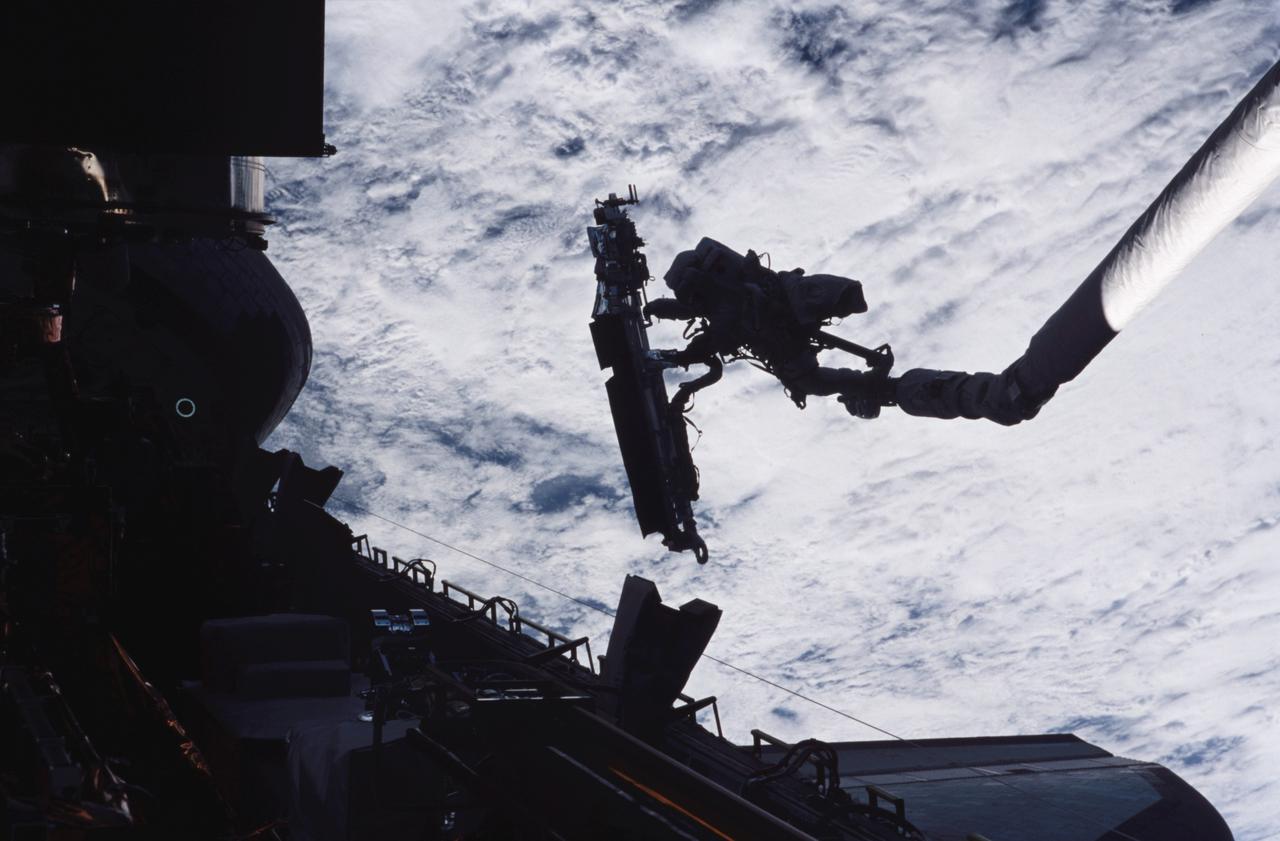
STS109-315-007 (8 March 2002) --- Astronaut John M. Grunsfeld, STS-109 payload commander, anchored on the end of the Space Shuttle Columbia’s Remote Manipulator System (RMS) robotic arm, moves toward the giant Hubble Space Telescope (HST) temporarily hosted in the orbiter’s cargo bay. Astronaut Richard M. Linnehan (out of frame) works in tandem with Grunsfeld during this fifth and final session of extravehicular activity (EVA). Activities for the space walk centered around the Near-Infrared Camera and Multi-Object Spectrometer (NICMOS) to install a Cryogenic Cooler and its Cooling System Radiator.
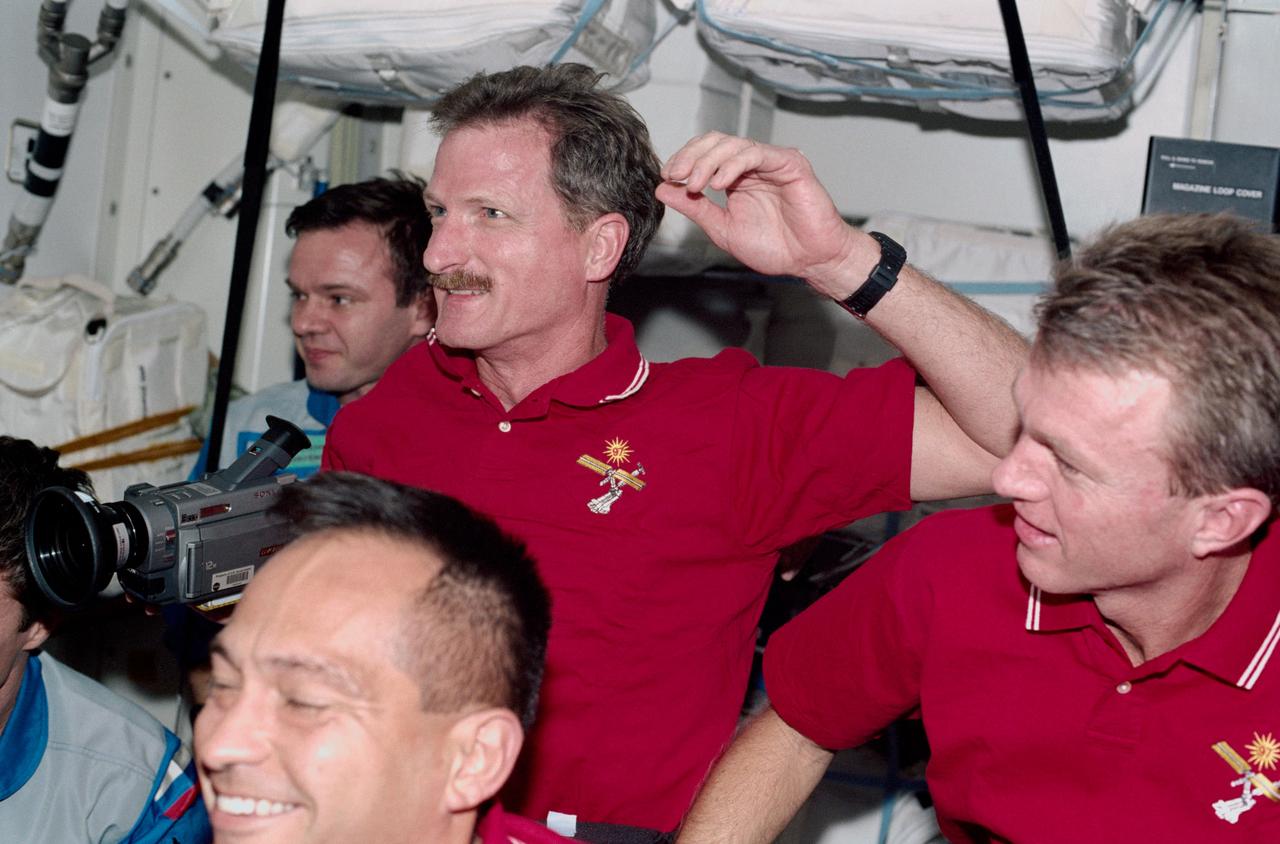
STS097-315-004 (30 Nov. - 11 Dec. 2000) Three STS-97 astronauts reunite with Expedition One crew members in the appropriately-named Unity node aboard the International Space Station (ISS), temporarily docked to the Space Shuttle Endeavour. Dressed in blue flight suits on left side of the frame are cosmonauts Sergei Krikalev (partially out of frame), Expedition One flight engineer; and Yuri P. Gidzenko, Soyuz commander for Expedition One. The visitors are (from left) astronauts Carlos I. Noriega and Joseph R. Tanner, both STS-97 mission specialists, along with Brent W. Jett, Jr., mission commander.
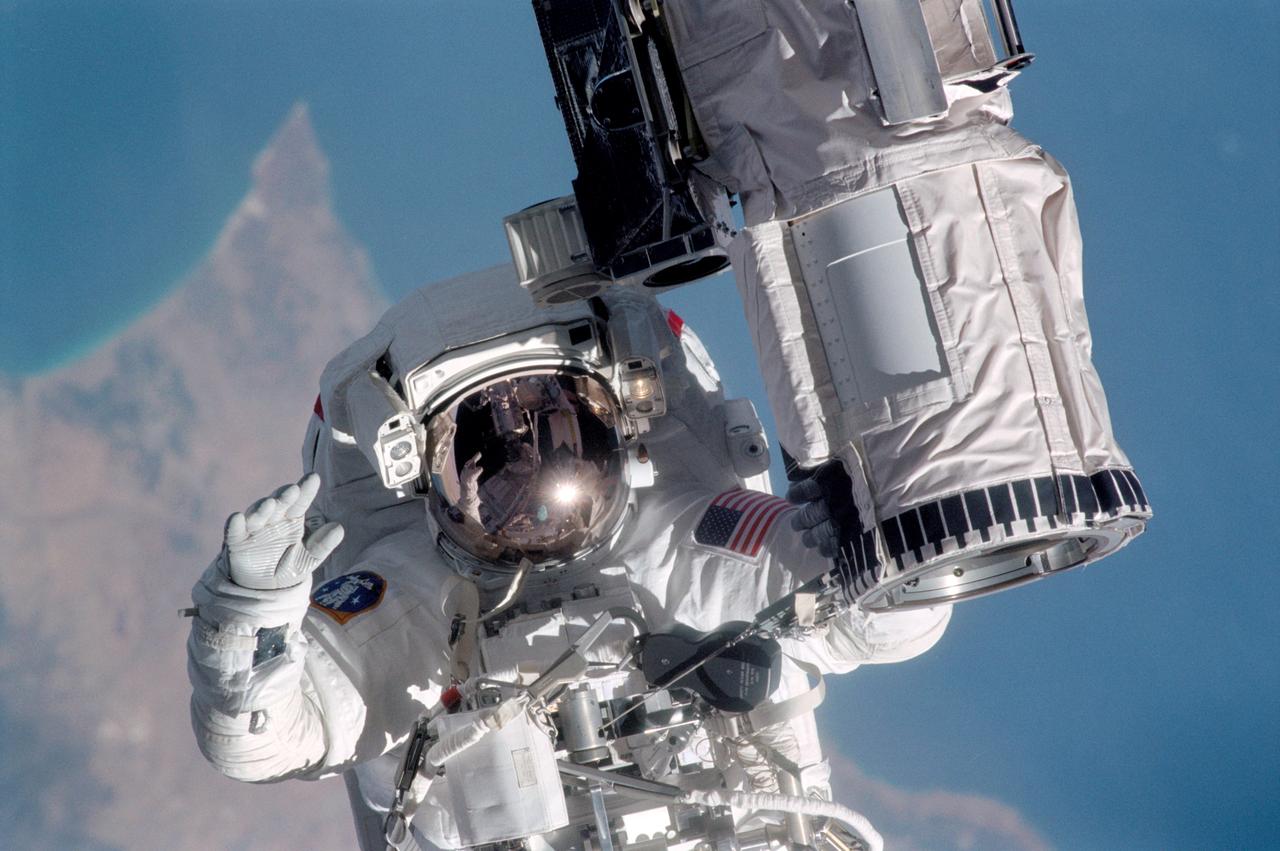
STS104-315-013 (12-24 July 2001) --- Holding onto the end effector of the Canadarm on the Space Shuttle Atlantis, astronaut Michael L. Gernhardt, STS-104 mission specialist, participates in one of three STS-104 space walks. The extravehicular activity (EVA) was designed to help wrap up the completion of work on the second phase of the International Space Station (ISS). Gernhardt was joined on the extravehicular activity (EVA) by astronaut James F. Reilly. The jutting peninsula in the background is Cape Kormakiti on the north central coast of Cyprus and the water body to the left of the cape is Morphu Bay.

STS082-315-015 (11-21 Feb. 1997) --- On Discovery's aft flight deck, the STS-82 astronauts pose for the traditional inflight crew portrait. The Hubble Space Telescope (HST), latched down in the shuttle's cargo bay, is partially visible in the background. A total of five days of Extravehicular Activity (EVA) were used to service the orbiting observatory. Front row, left to right, are astronauts Scott J. Horowitz, pilot; Kenneth D. Bowersox, commander; and Steven A. Hawley, mission specialist. On the back row are the other mission specialists Steven L. Smith, Gregory J. Harbaugh, Mark C. Lee (payload commander) and Joseph R. Tanner.
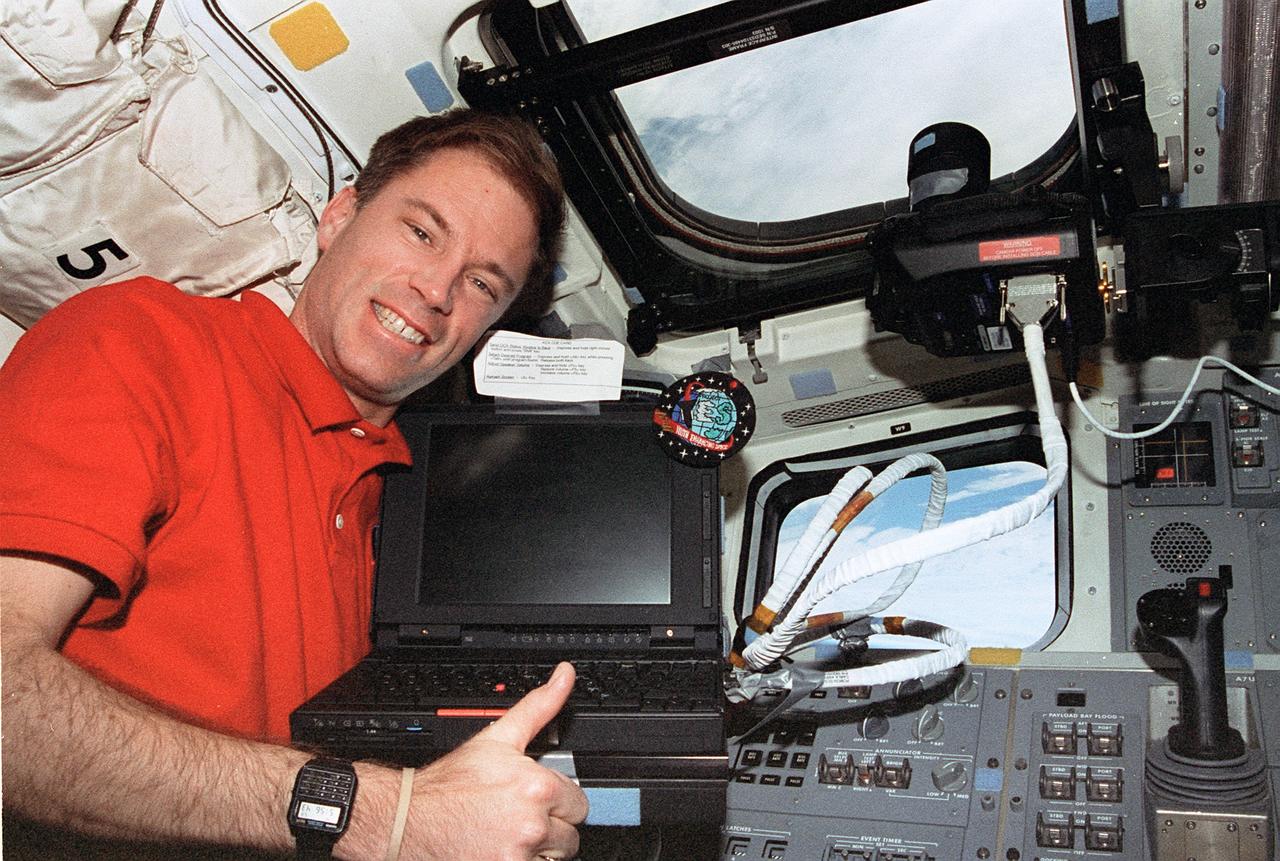
STS076-315-003 (22-31 March 1996) --- Onboard the aft flight deck of the Earth-orbiting space shuttle Atlantis, astronaut Richard A. Searfoss, pilot, signals approval of progress with the KidSat Project - a three year pilot program making its first flight in space. KidSat is to fly on the Space Shuttle once a year. An Electronic Still Camera (ESC) (upper right), aimed at Earth below, was controlled by students on the ground during the flight. A video camera (out of frame) was also utilized. The downlinked images are to be used as a basis for a broad scope of curriculum disciplines.
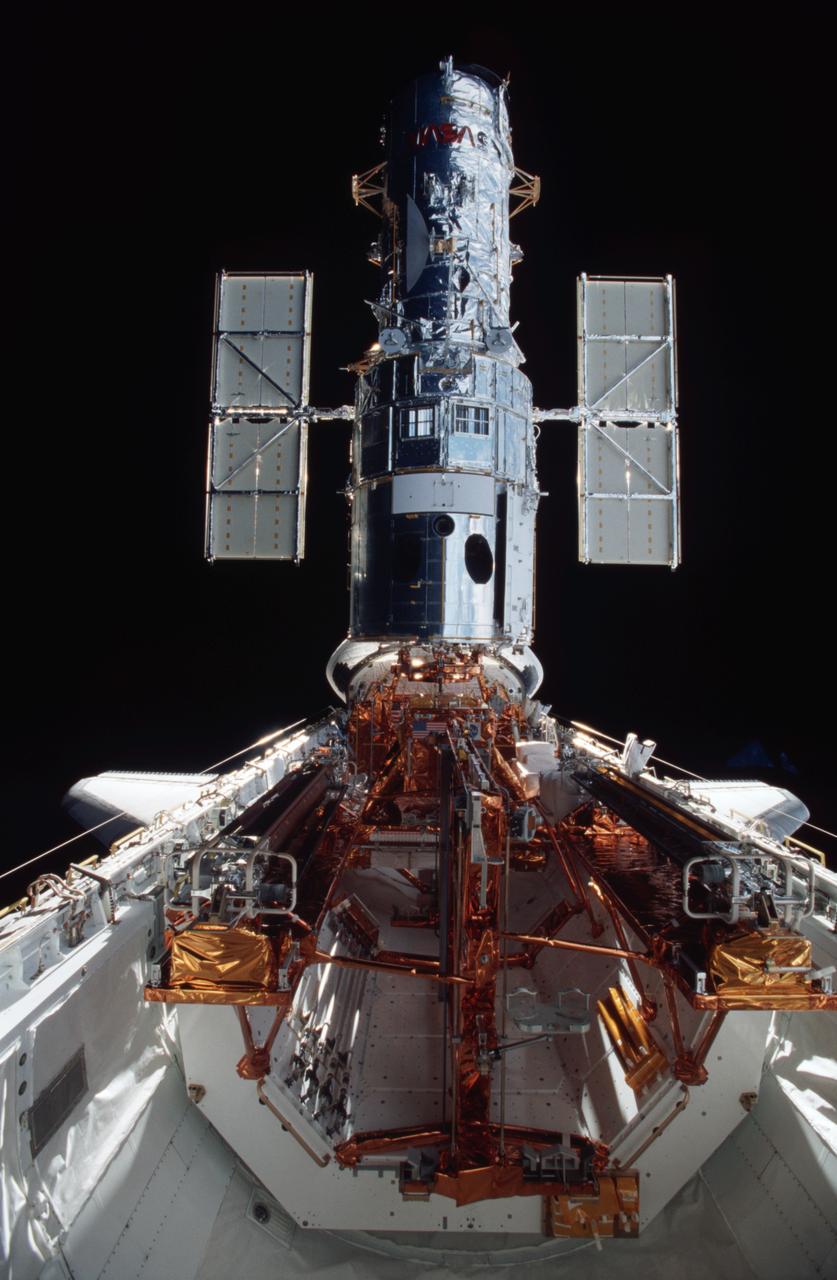
STS109-315-016 (8 March 2002) --- With five days of service and upgrade work on the Hubble Space Telescope (HST) behind them, the STS-109 crew members on board the Space Shuttle Columbia took an overall snapshot of the giant telescope in the shuttle's cargo bay. The seven-member crew completed the last of its five ambitious space walks early on March 8, 2002, with the successful installation of an experimental cooling system for Hubble;s Near-Infrared Camera and Multi-Object Spectrometer (NICMOS). The NICMOS has been dormant since January 1999 when its original coolant ran out. The telescope received new solar array panels, markedly different in appearance from the replaced pair, on the mission's first two space walks earlier in the week.
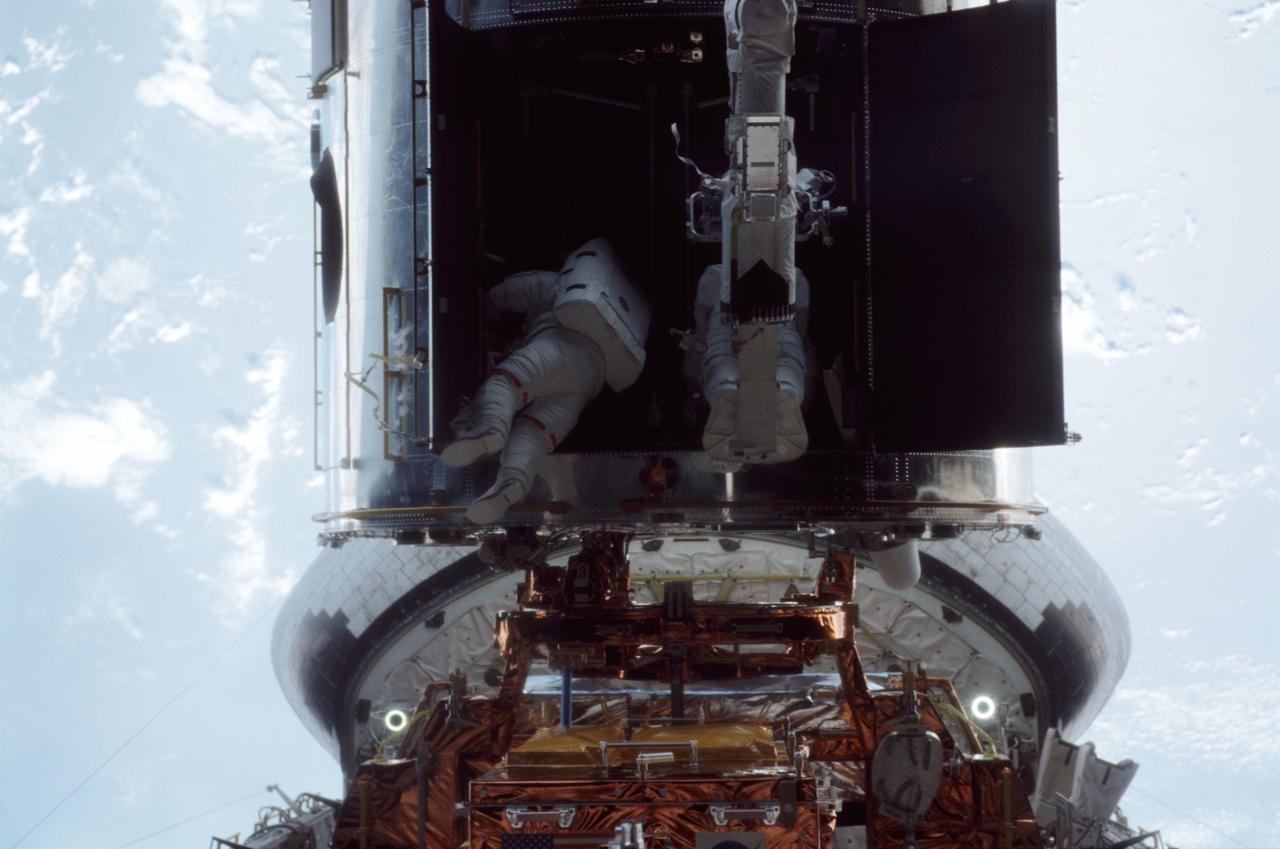
STS109-315-005 (8 March 2002) --- Barely visible within the Hubble Space Telescope's heavily shadowed shroud doors, astronauts John M. Grunsfeld (left) and Richard M. Linnehan participate in the final space walk of the STS-109 mission. The crew of the space shuttle Columbia completed the last of its five ambitious space walks early on March 8, 2002, with the successful installation of an experimental cooling system for Hubble’s Near-Infrared Camera and Multi-Object Spectrometer (NICMOS). The NICMOS has been dormant since January 1999 when its original coolant ran out. Astronauts Grunsfeld and Linnehan began their third spacewalk of the mission at 2:46 a.m. CST. Linnehan was given a ride on the shuttle’s robotic arm to the aft shroud doors by astronaut Nancy J. Currie, working from the aft flight deck of Columbia. After the shroud doors were open, Linnehan was moved back to Columbia’s payload bay to remove the NICMOS cryocooler from its carrier. Grunsfeld and Linnehan then installed the cryocooler inside the aft shroud and connected cables from its Electronics Support Module (ESM). That module was installed on March 7 during a spacewalk by astronauts James H. Newman and Michael J. Massimino.
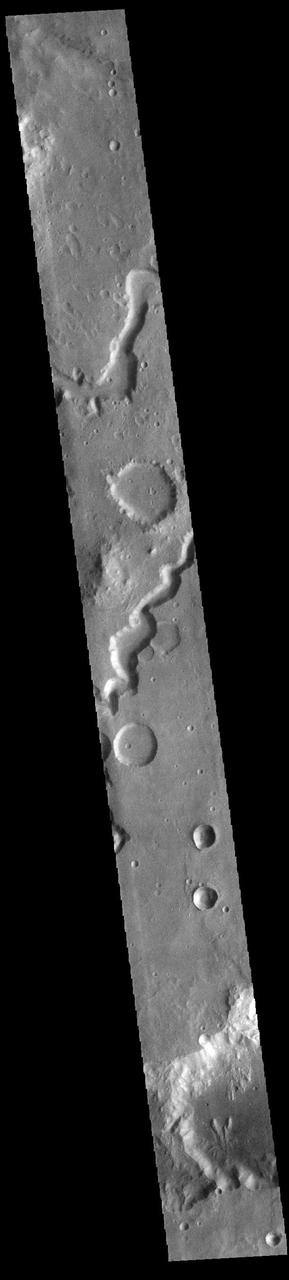
This VIS image shows part of Nanedi Valles. Located In Xanthe Terra, the channel system is 508 km (315 miles) long. Nanedi Valles contains two large channels that join together as the elevation drops near Chryse Planitia. Both sections of channel are visible in this image. Orbit Number: 89747 Latitude: 6.03809 Longitude: 312.054 Instrument: VIS Captured: 2022-03-09 01:48 https://photojournal.jpl.nasa.gov/catalog/PIA25460
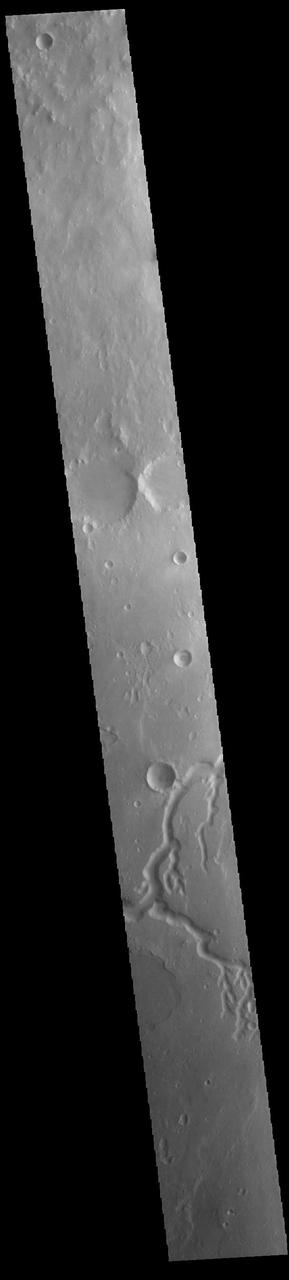
This VIS image shows a section of Nanedi Valles (bottom half of image). Located In Xanthe Terra, the channel system is 508 km (315 miles) long. Nanedi Valles contains two large channels that join together as the elevation drops near Chryse Planitia. Orbit Number: 85392 Latitude: 6.00615 Longitude: 310.665 Instrument: VIS Captured: 2021-03-15 11:42 https://photojournal.jpl.nasa.gov/catalog/PIA24780
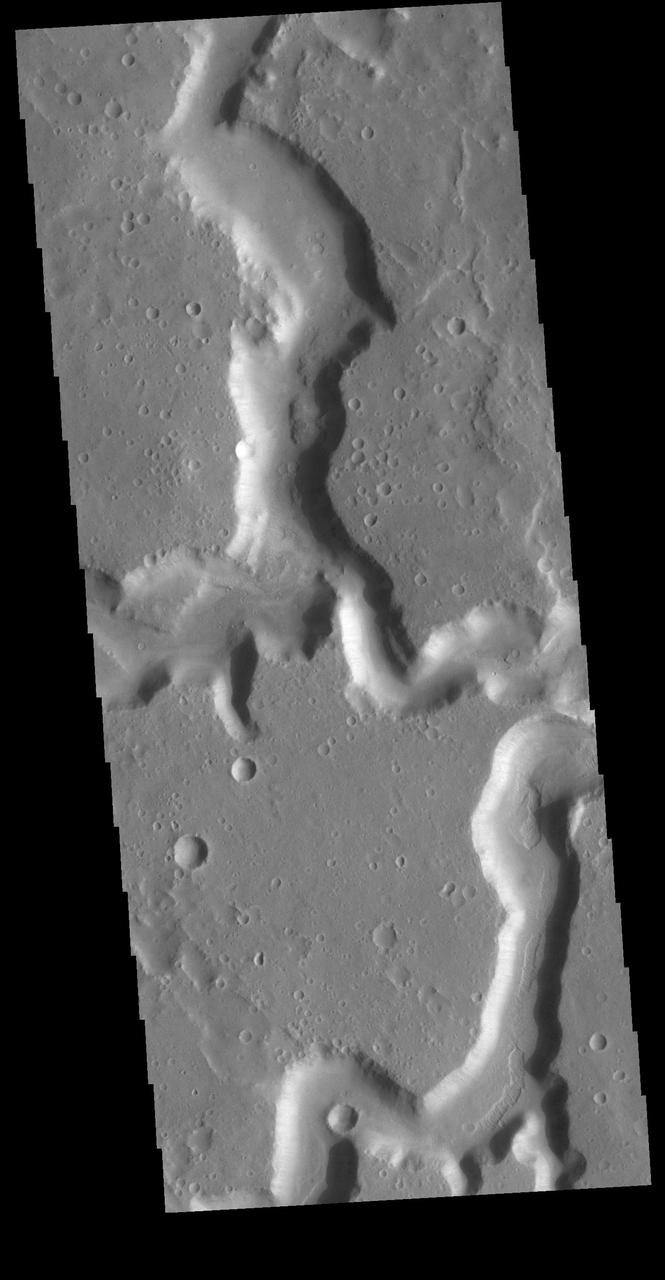
This VIS image shows the confluence of the two main channels of Nanedi Valles. Nanedi Valles is 508 km long (315 miles) and is located in Xanthe Terra. Orbit Number: 81224 Latitude: 6.88707 Longitude: 312.284 Instrument: VIS Captured: 2020-04-06 07:16 https://photojournal.jpl.nasa.gov/catalog/PIA23947
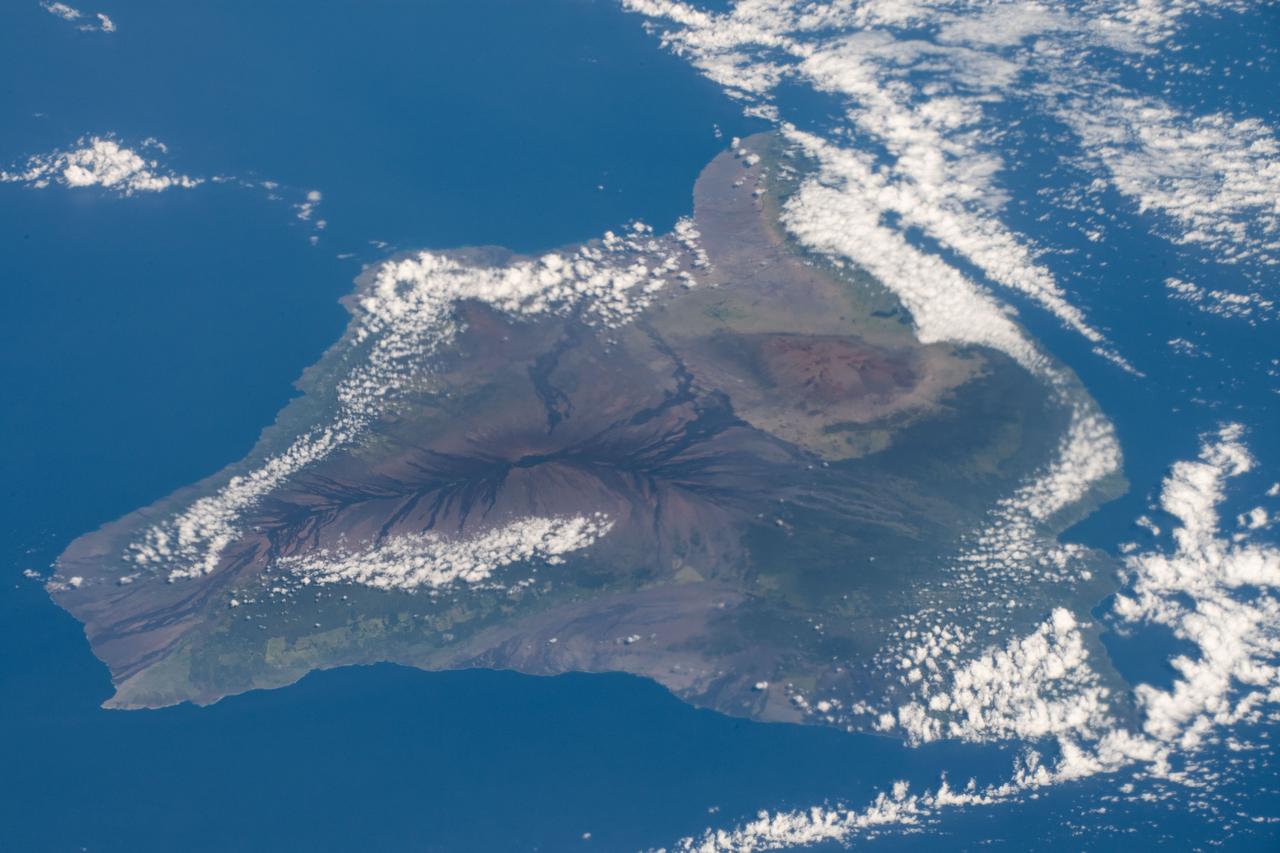
iss063e105782 (Oct. 8, 2020) --- The big island of Hawaii and its two prominent mountains Mauna Loa, an active volcano, and Mauna Kea, a dormant volcano, were pictured as the International Space Station orbited about 315 miles southeast above the Pacific Ocean.

This image covers part of the 150 kilometer (90 mile) wide, 1 to 1.5 kilometer (0.6 to 0.9 mile) deep valley, Devana Chasma. The image is a composite of the first two orbits recorded by NASA's Magellan spacecraft in August 1990 superimposed on Pioneer Venus topography. This image is located at the intersection of Devana Chasma and the Phoebe Regio upland. It covers a region approximately 525 by 525 kilometers (315 by 315 miles), centered 288 degrees east longitude on the equator. Devana Chasma consists of radar bright lineaments, interpreted to be fault scarps, oriented in a north-northeast direction. This part of the planet is thought to be an area where the crust is being stretched and pulled apart producing a rift valley, similar to the East African rift. http://photojournal.jpl.nasa.gov/catalog/PIA00464
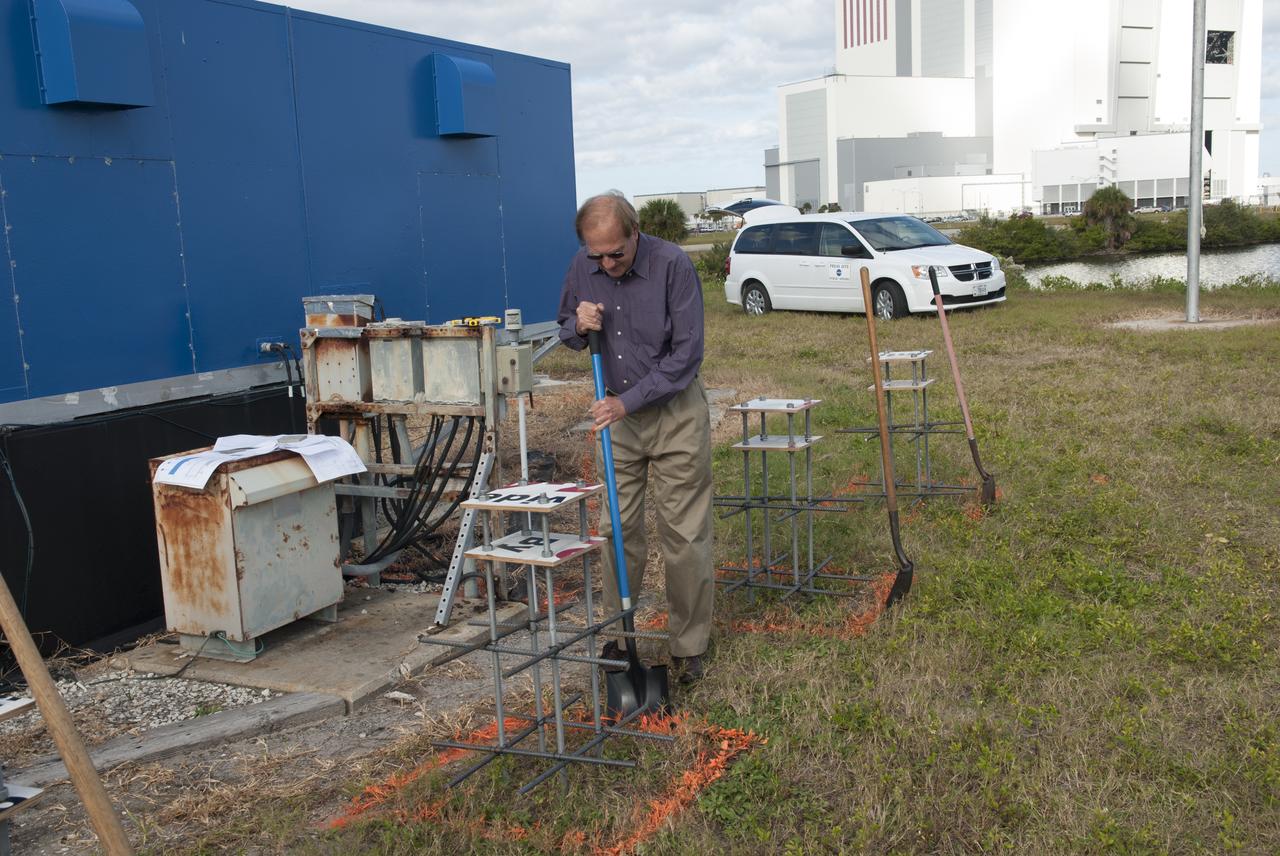
At NASA's Kennedy Space Center in Florida, Public Affairs Officer George Diller digs in behind the current countdown clock during the groundbreaking ceremony for the new countdown clock. The old timepiece was designed by Kennedy engineers and built by Kennedy technicians in 1969. Not including the triangular concrete and aluminum base, the famous landmark is nearly 6 feet 70 inches high, 26 feet 315 inches wide and 3 feet deep. The new display will be similar in size, with the screen being nearly 26 feet wide by 7 feet high.
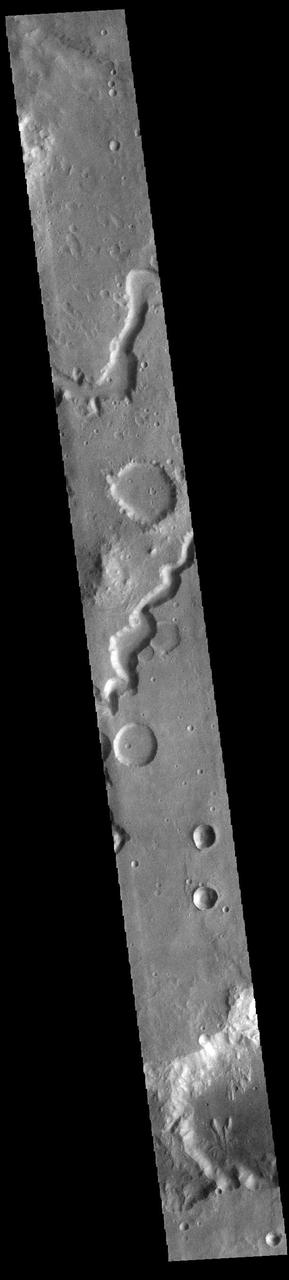
This VIS image shows the two sections of Nanedi Valles. Located In Xanthe Terra, the channel system is 508 km (315 miles) long. Nanedi Valles contains two large channels that join together as the elevation drops near Chryse Planitia. Orbit Number: 89747 Latitude: 6.03809 Longitude: 312.054 Instrument: VIS Captured: 2022-03-09 01:48 https://photojournal.jpl.nasa.gov/catalog/PIA25393
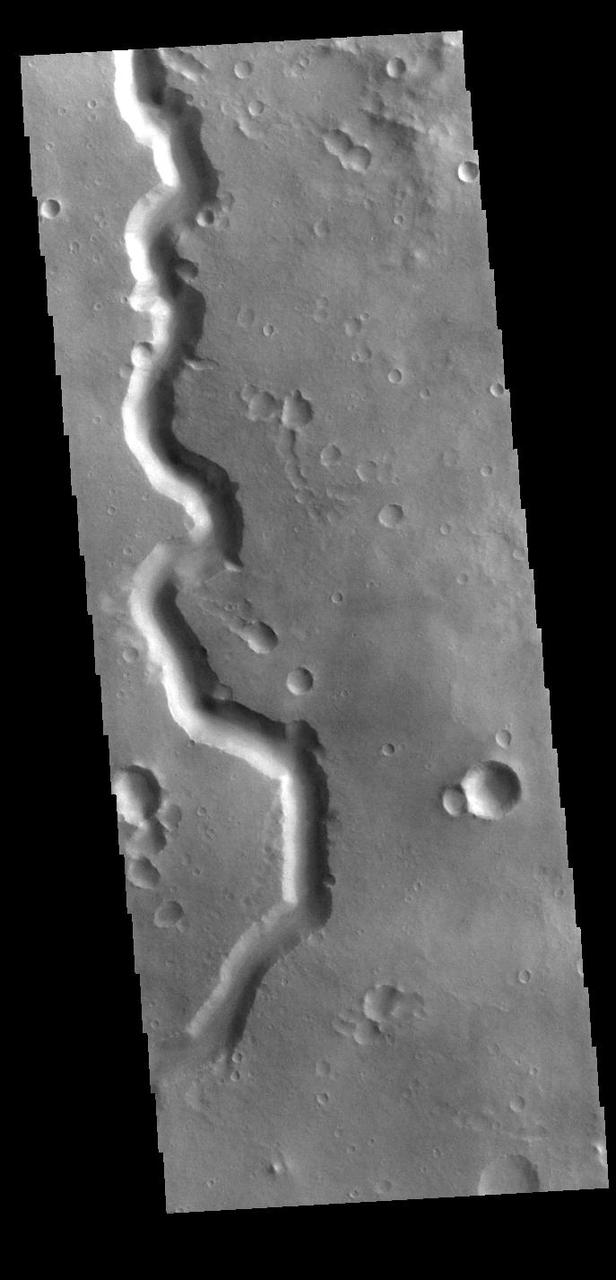
This VIS image shows a section of Nanedi Valles. Located In Xanthe Terra, the channel system is 508 km (315 miles) long. Nanedi Valles contains two large channels that join together as the elevation drops near Chryse Planitia. Orbit Number: 87763 Latitude: 1.08634 Longitude: 310.73 Instrument: VIS Captured: 2021-09-26 17:02 https://photojournal.jpl.nasa.gov/catalog/PIA25268
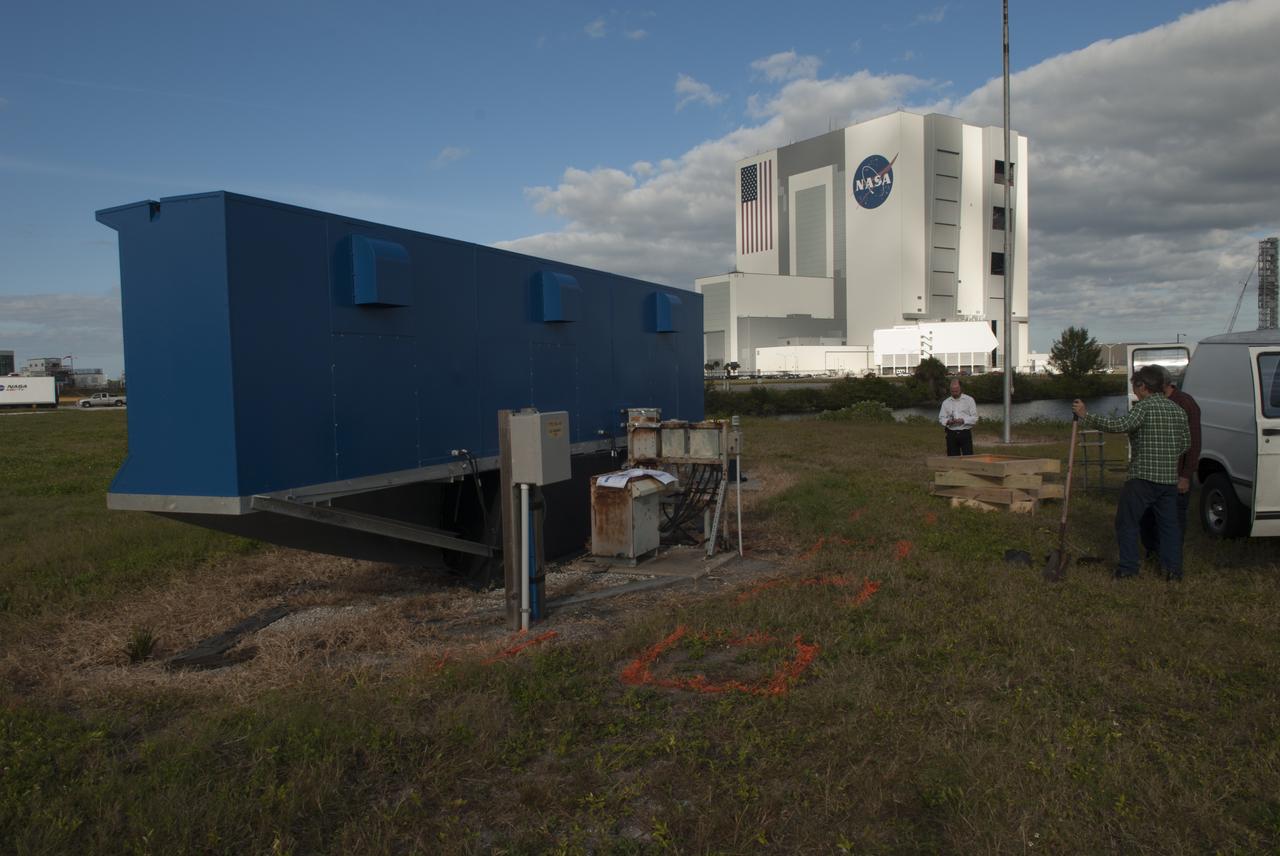
At NASA's Kennedy Space Center in Florida, Kennedy TV senior systems engineer Ronald Gonser, left, Jeff Pratt and Frank Morse with Abacus Technology prep the area behind the current countdown clock for the groundbreaking ceremony for the new countdown clock. The old timepiece was designed by Kennedy engineers and built by Kennedy technicians in 1969. Not including the triangular concrete and aluminum base, the famous landmark is nearly 6 feet 70 inches high, 26 feet 315 inches wide and 3 feet deep. The new display will be similar in size, with the screen being nearly 26 feet wide by 7 feet high.
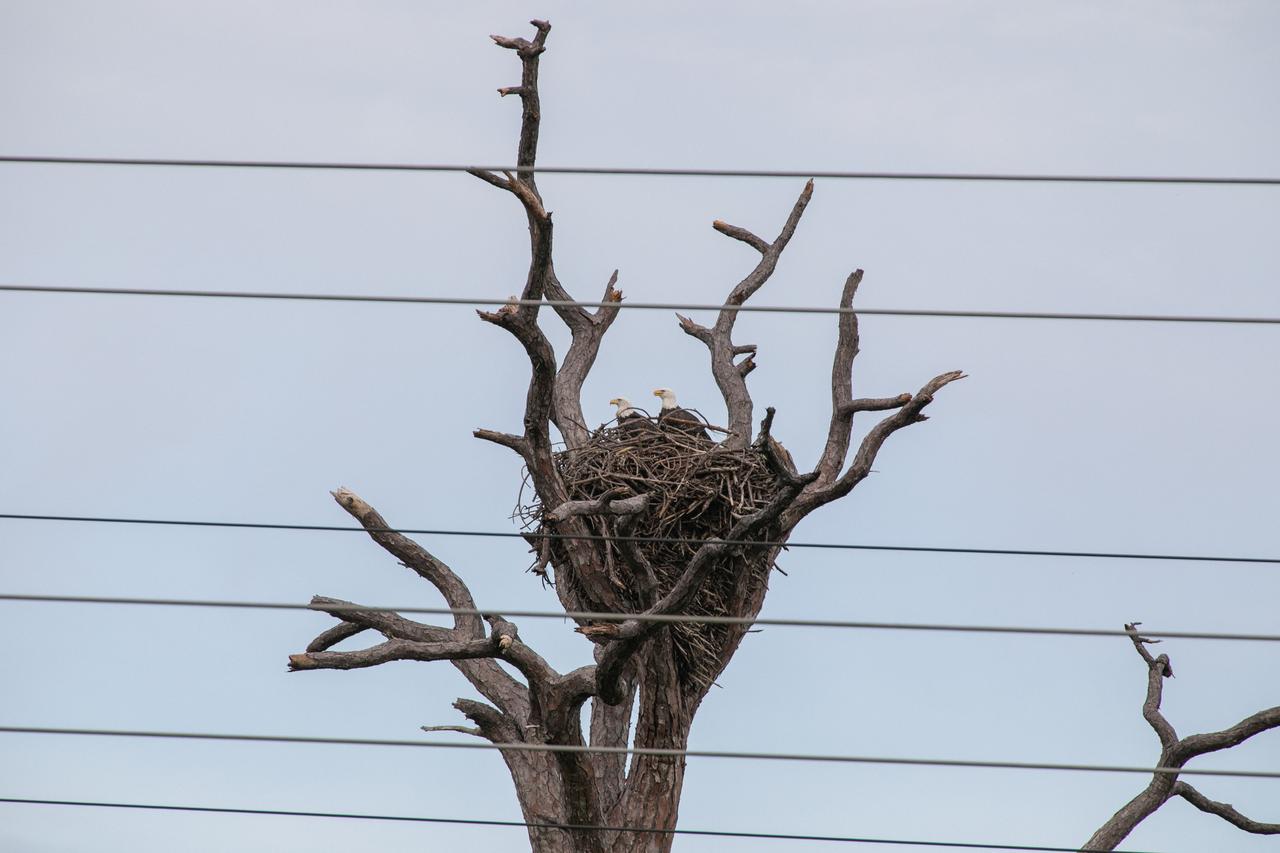
A pair of American bald eagles occupy a large nest on Kennedy Space Center property in Florida on Sept. 14, 2020. Eagles reuse the same nests each season for several years; once a nest is unusable, the majestic birds will select another tree. The nest shown has been used for approximately 30 years. Kennedy shares boundaries with the Merritt Island National Wildlife Refuge, which covers approximately 144,000 acres and is home to more than 315 native and migratory bird species, 25 mammal species, and 65 amphibian and reptile species.
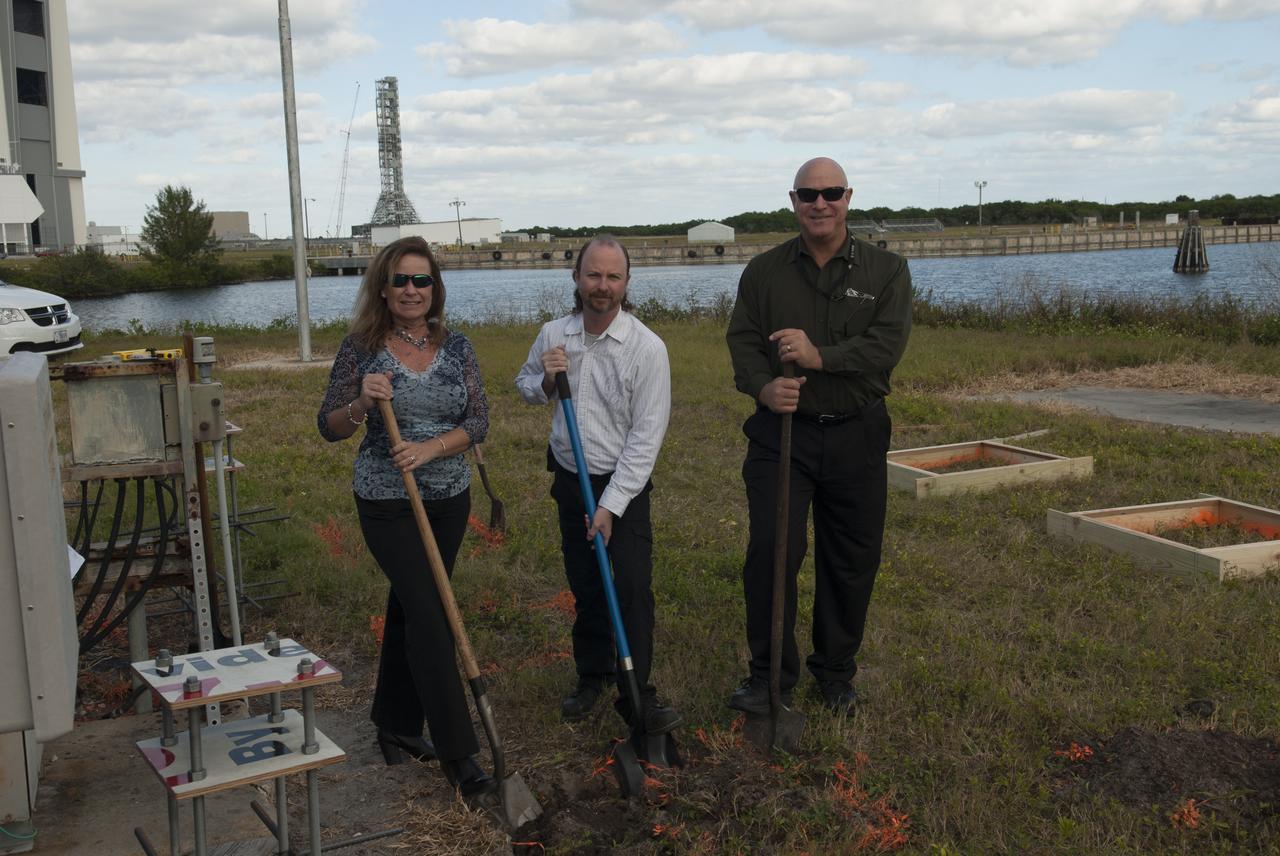
At NASA's Kennedy Space Center in Florida, Project Manager Sonja Hernandez, Kennedy TV senior systems engineer Ronald Gonser and Kennedy/IMCS senior manager Jeff Van Pelt dig in behind the current countdown clock during the groundbreaking ceremony for the new countdown clock. The old timepiece was designed by Kennedy engineers and built by Kennedy technicians in 1969. Not including the triangular concrete and aluminum base, the famous landmark is nearly 6 feet 70 inches high, 26 feet 315 inches wide and 3 feet deep. The new display will be similar in size, with the screen being nearly 26 feet wide by 7 feet high.
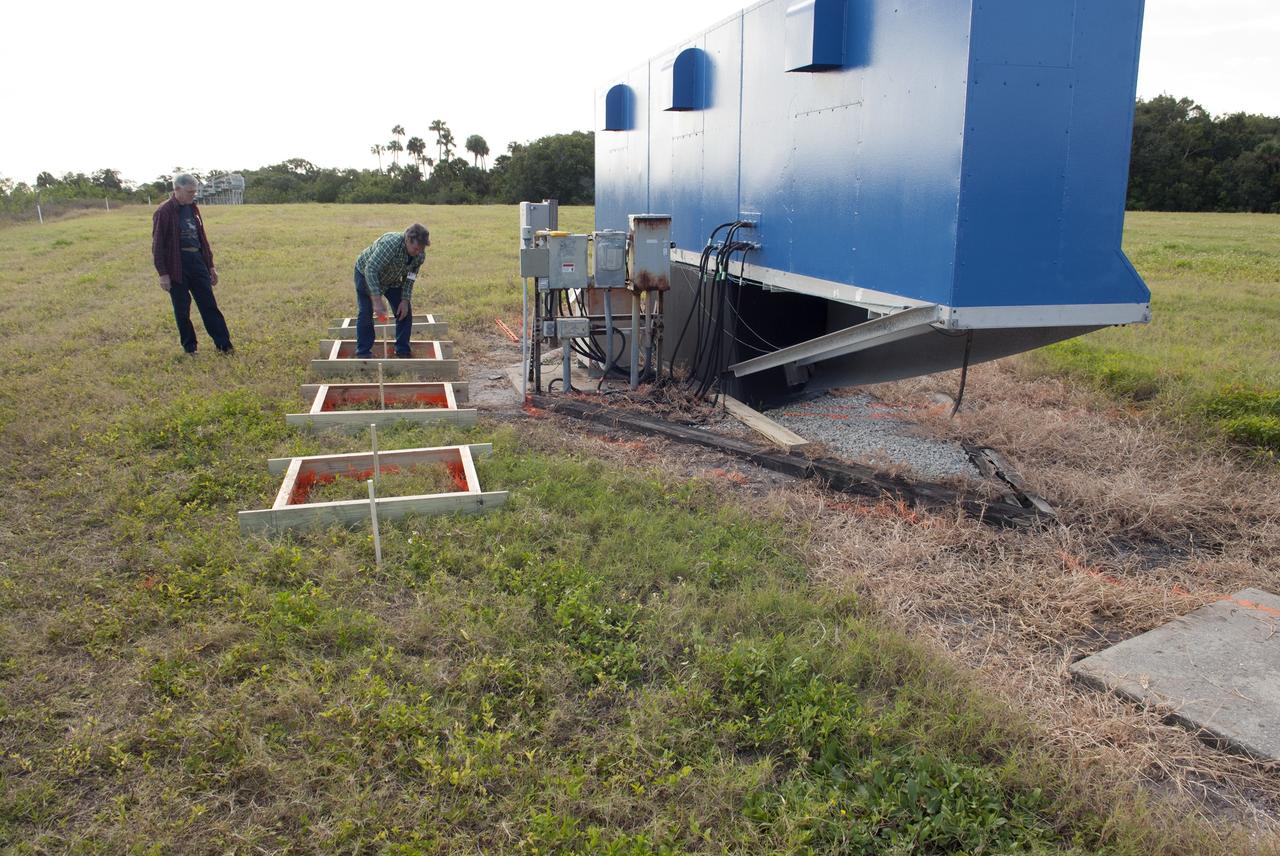
CAPE CANAVERAL, Fla. -- At NASA's Kennedy Space Center in Florida, Jeff Pratt and Frank Morse with Abacus Technology prep the area behind the current countdown clock for the groundbreaking ceremony for the new countdown clock. The old timepiece was designed by Kennedy engineers and built by Kennedy technicians in 1969. Not including the triangular concrete and aluminum base, the famous landmark is nearly 6 feet 70 inches high, 26 feet 315 inches wide and 3 feet deep. The new display will be similar in size, with the screen being nearly 26 feet wide by 7 feet high. For more information on the countdown clock, go to http://go.nasa.gov/10Zku10. Photo credit: NASA/Jim Grossmann
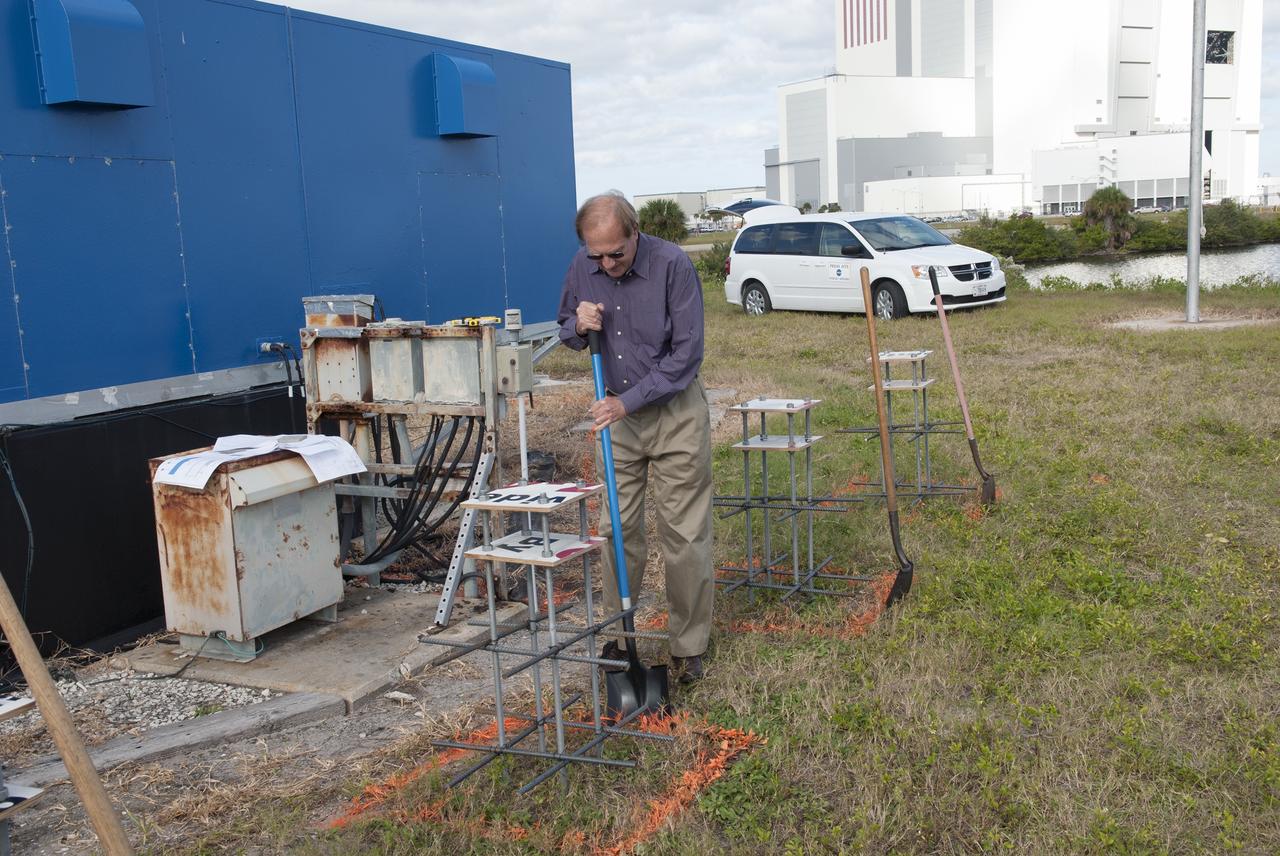
CAPE CANAVERAL, Fla. -- At NASA's Kennedy Space Center in Florida, Public Affairs Officer George Diller digs in behind the current countdown clock during the groundbreaking ceremony for the new countdown clock. The old timepiece was designed by Kennedy engineers and built by Kennedy technicians in 1969. Not including the triangular concrete and aluminum base, the famous landmark is nearly 6 feet 70 inches high, 26 feet 315 inches wide and 3 feet deep. The new display will be similar in size, with the screen being nearly 26 feet wide by 7 feet high. For more information on the countdown clock, go to http://go.nasa.gov/10Zku10. Photo credit: NASA/Jim Grossmann
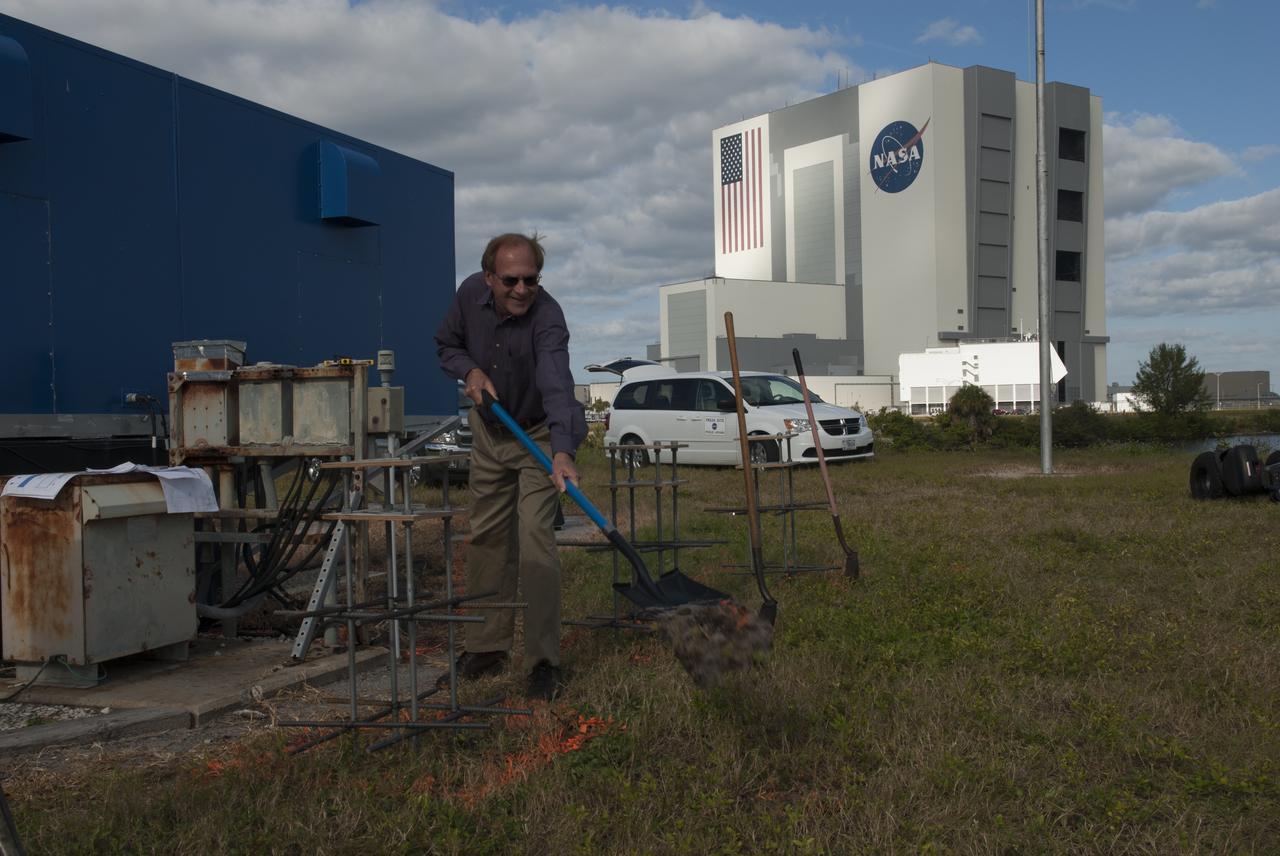
At NASA's Kennedy Space Center in Florida, Public Affairs Officer George Diller shovels the first scoop of soil behind the current countdown clock during the groundbreaking ceremony for the new countdown clock. The old timepiece was designed by Kennedy engineers and built by Kennedy technicians in 1969. Not including the triangular concrete and aluminum base, the famous landmark is nearly 6 feet 70 inches high, 26 feet 315 inches wide and 3 feet deep. The new display will be similar in size, with the screen being nearly 26 feet wide by 7 feet high.
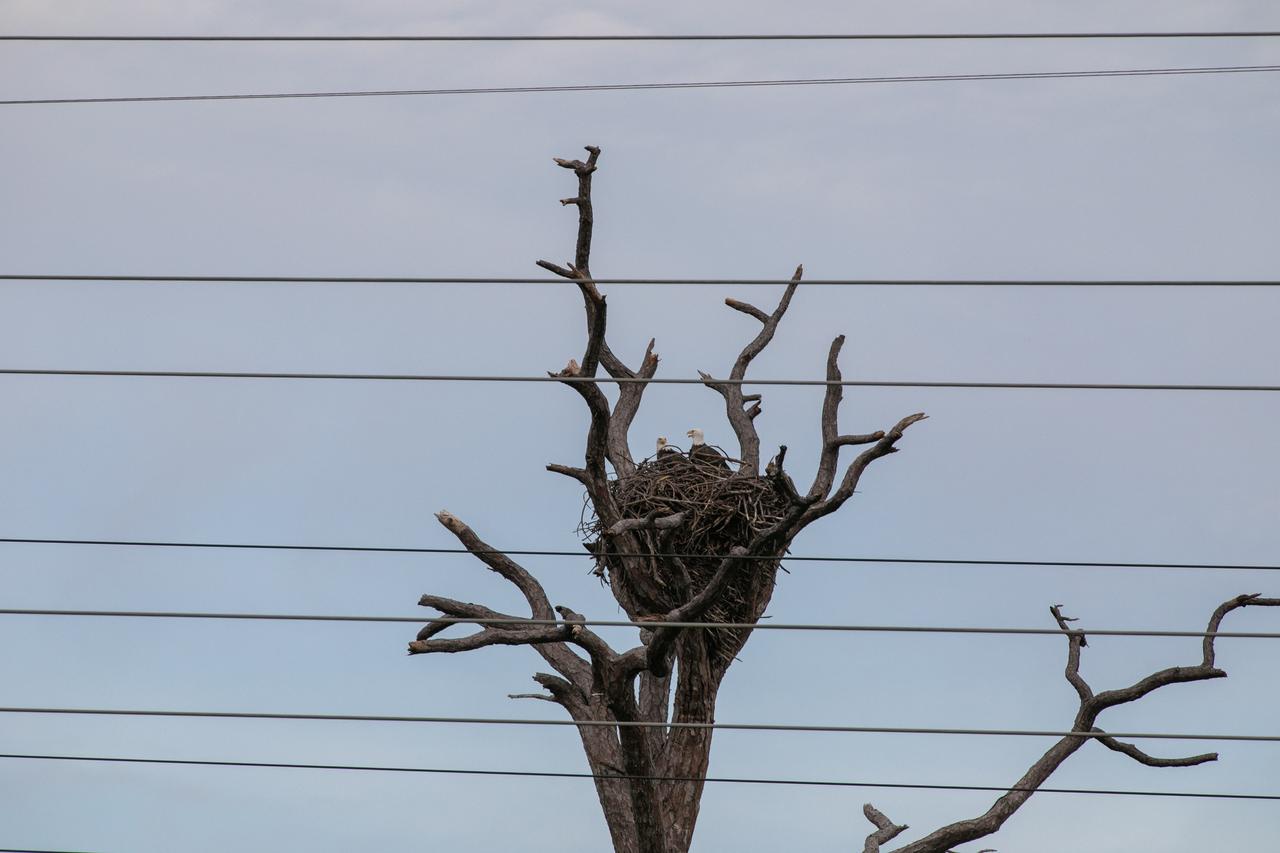
A pair of American bald eagles occupy a large nest on Kennedy Space Center property in Florida on Sept. 14, 2020. Eagles reuse the same nests each season for several years; once a nest is unusable, the majestic birds will select another tree. The nest shown has been used for approximately 30 years. Kennedy shares boundaries with the Merritt Island National Wildlife Refuge, which covers approximately 144,000 acres and is home to more than 315 native and migratory bird species, 25 mammal species, and 65 amphibian and reptile species.
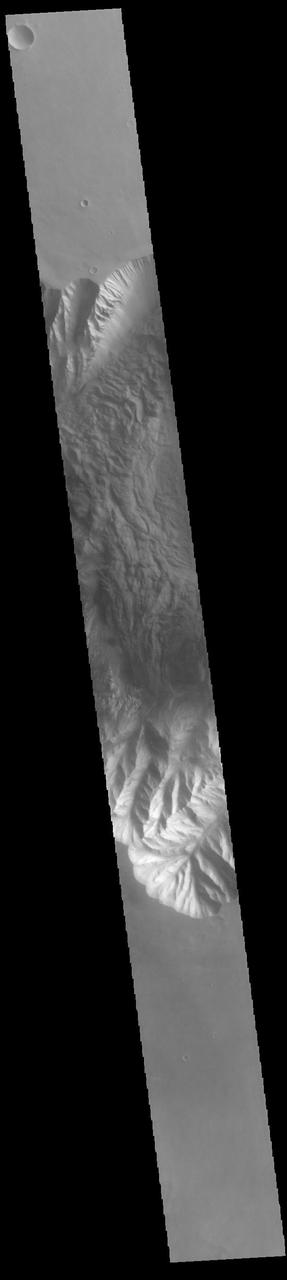
Today's VIS image shows part of eastern Hebes Chasma. The floor of the chasma is covered with chaotic materials, some from landslides and other layered deposits of unknown origin. Hebes Chasma is a closed basin north of Valles Marineris. It measures 126km wide north/south (78 miles), 315 km long east/west (196 miles), and 8 km (5 miles) at its deepest point. Orbit Number: 88001 Latitude: -1.32567 Longitude: 284.971 Instrument: VIS Captured: 2021-10-16 07:20 https://photojournal.jpl.nasa.gov/catalog/PIA25105
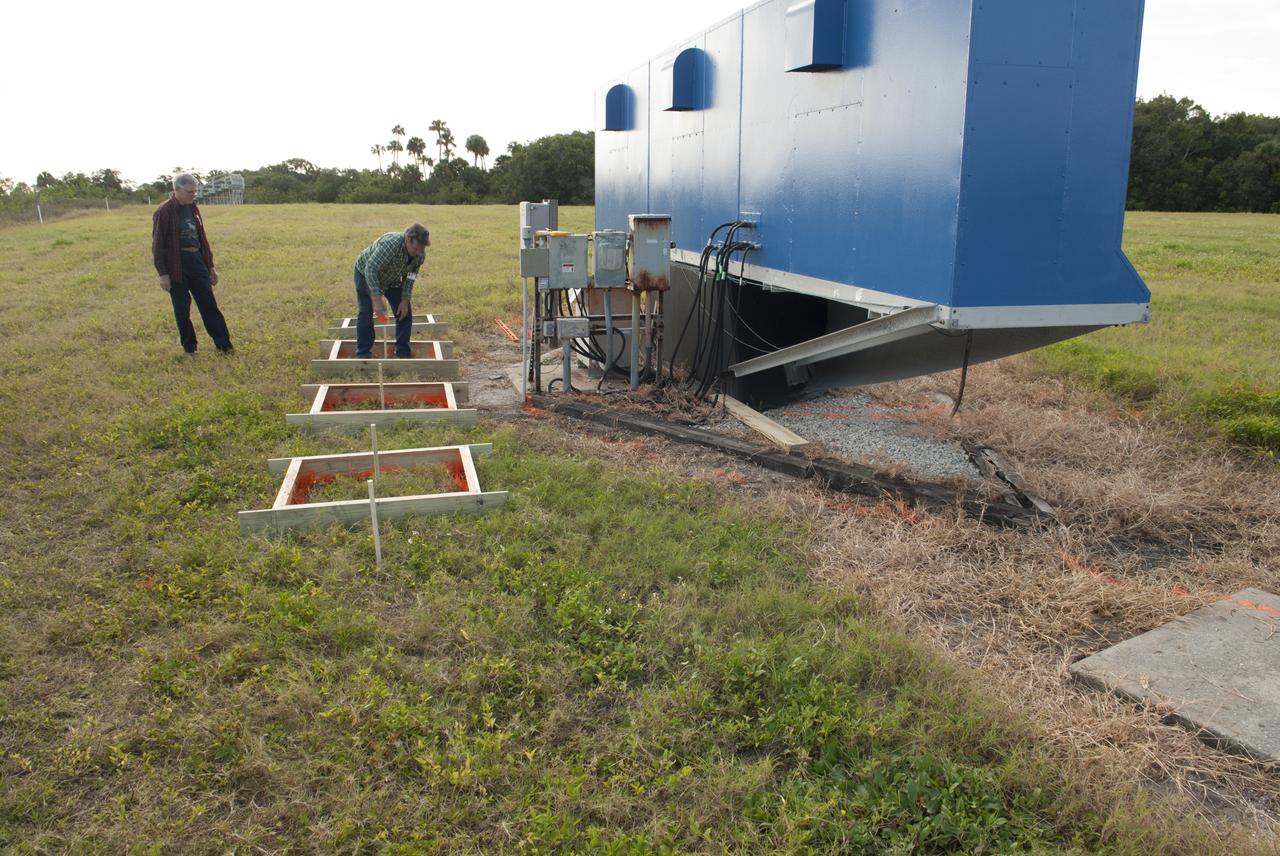
At NASA's Kennedy Space Center in Florida, Jeff Pratt and Frank Morse with Abacus Technology prep the area behind the current countdown clock for the groundbreaking ceremony for the new countdown clock. The old timepiece was designed by Kennedy engineers and built by Kennedy technicians in 1969. Not including the triangular concrete and aluminum base, the famous landmark is nearly 6 feet 70 inches high, 26 feet 315 inches wide and 3 feet deep. The new display will be similar in size, with the screen being nearly 26 feet wide by 7 feet high.
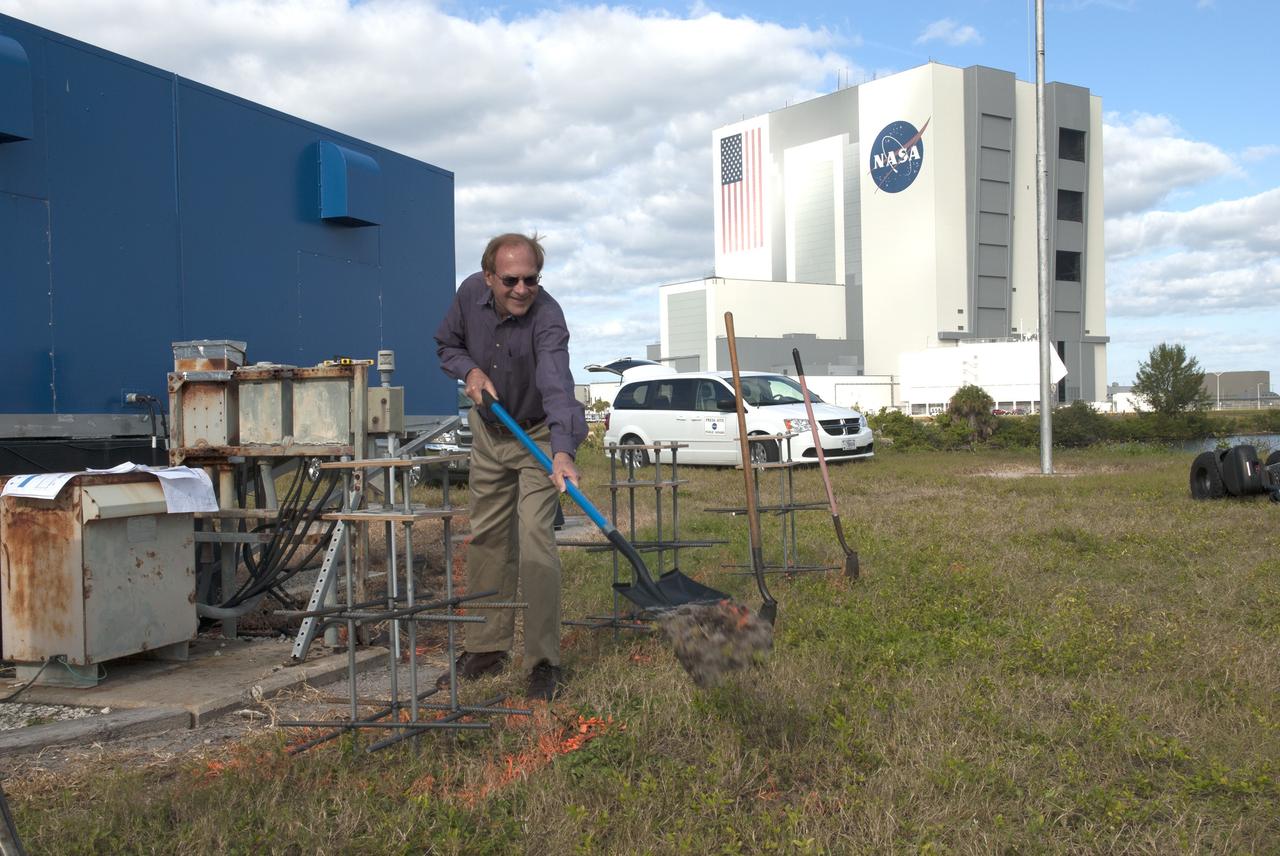
CAPE CANAVERAL, Fla. -- At NASA's Kennedy Space Center in Florida, Public Affairs Officer George Diller shovels the first scoop of soil behind the current countdown clock during the groundbreaking ceremony for the new countdown clock. The old timepiece was designed by Kennedy engineers and built by Kennedy technicians in 1969. Not including the triangular concrete and aluminum base, the famous landmark is nearly 6 feet 70 inches high, 26 feet 315 inches wide and 3 feet deep. The new display will be similar in size, with the screen being nearly 26 feet wide by 7 feet high. For more information on the countdown clock, go to http://go.nasa.gov/10Zku10. Photo credit: NASA/Jim Grossmann
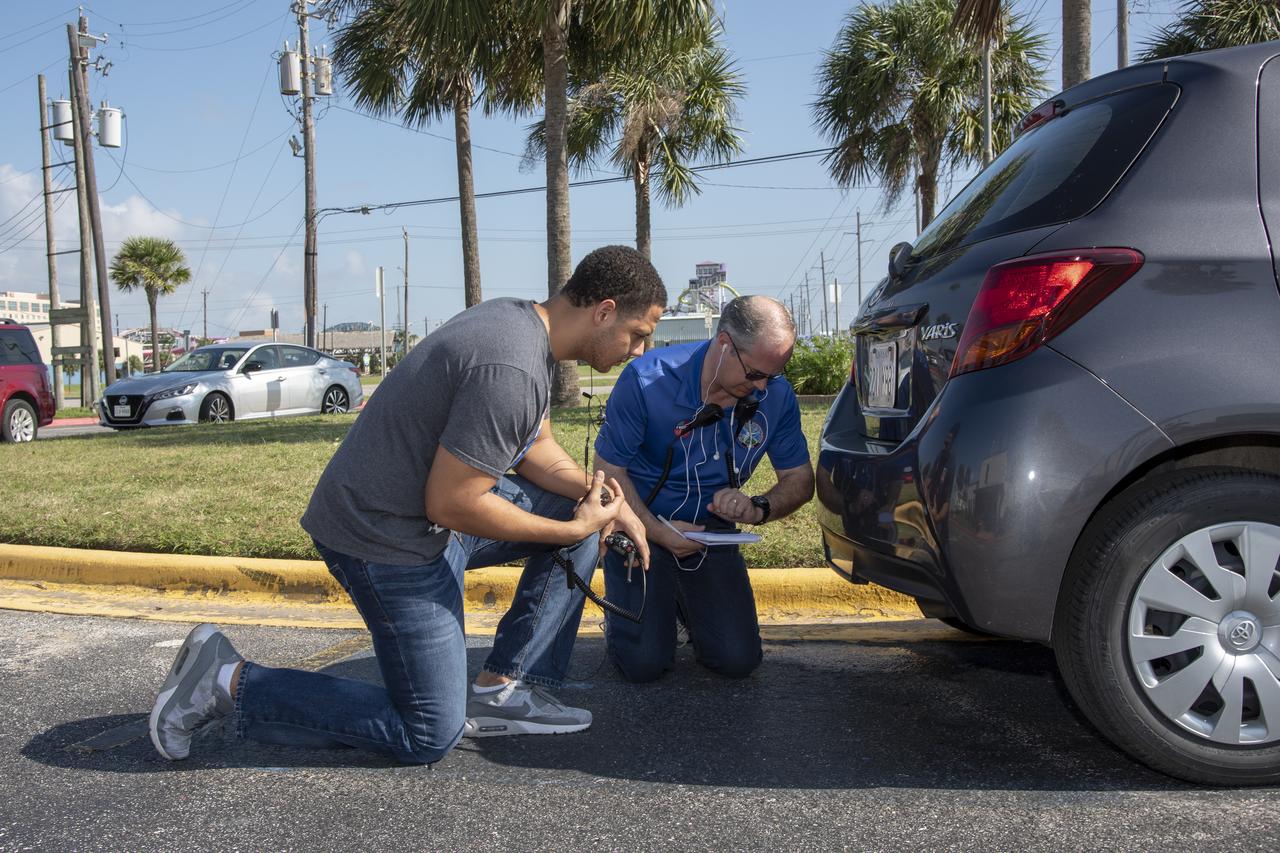
While NASA’s F/A-18 goes supersonic off the coast, a team of researchers monitor the flight and operate multiple sound monitor stations around Galveston and its surrounding area. This allows NASA to obtain accurate sound level data, which gets matched to community response data.
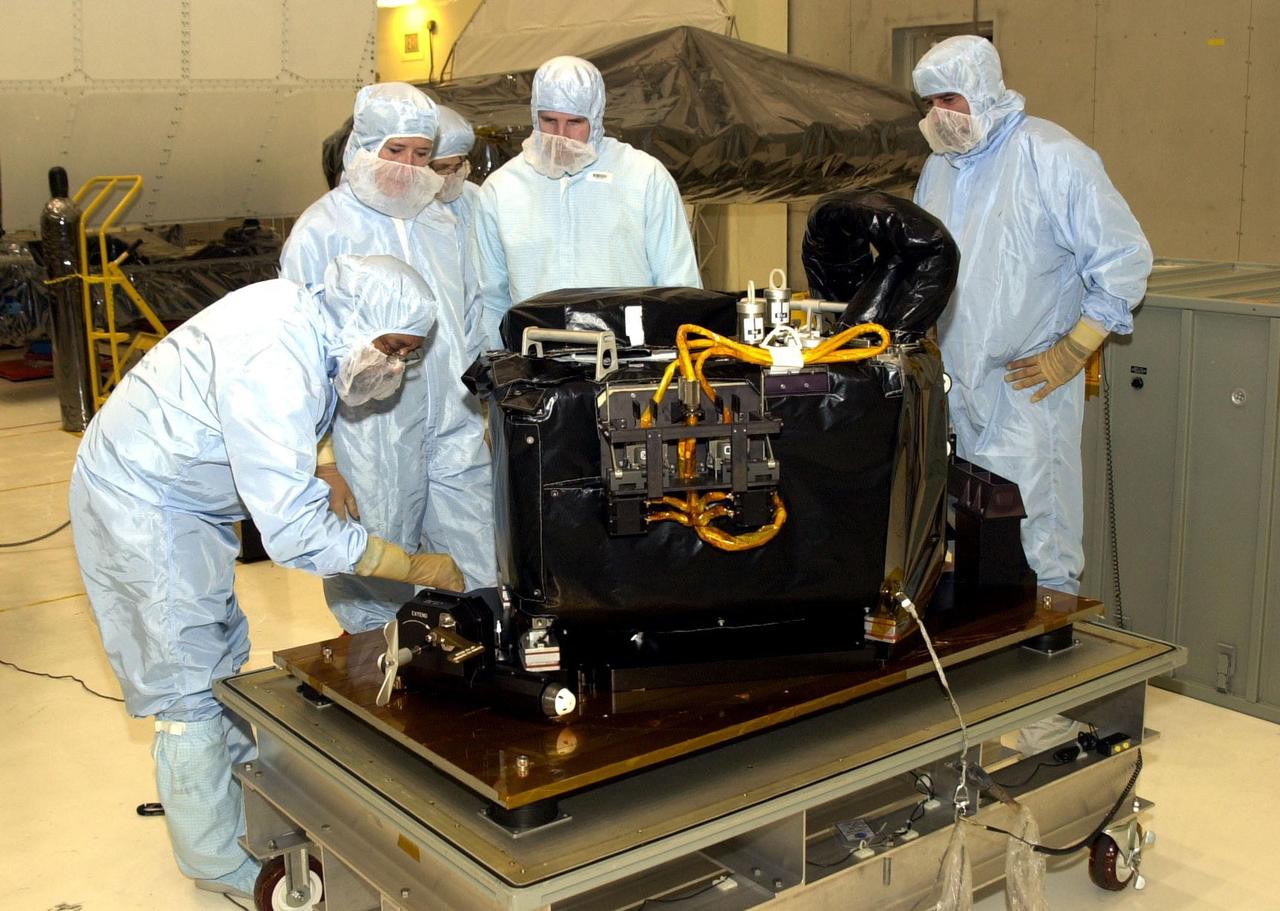
KENNEDY SPACE CENTER, FLA. -- Workers in the Vertical Processing Facility look over the Near Infrared Camera and Multi-Object Spectrometer (NICMOS) Cooling System, part of the payload on mission STS-109, the Hubble Servicing Telescope Mission. NICMOS is a new experimental cooling system consisting of a compressor and tiny turbines. With the experimental cryogenic system, NASA hopes to re-cool the infrared detectors to below -315 degrees F (-193 degrees Celsius). NICMOS II was previously tested aboard STS-95 in 1998. It could extend the life of the Hubble Space Telescope by several years. Astronauts aboard Columbia on mission STS-109 will be replacing the original NICMOS with the newer version. Launch of mission STS-109 is scheduled for Feb. 28, 2002
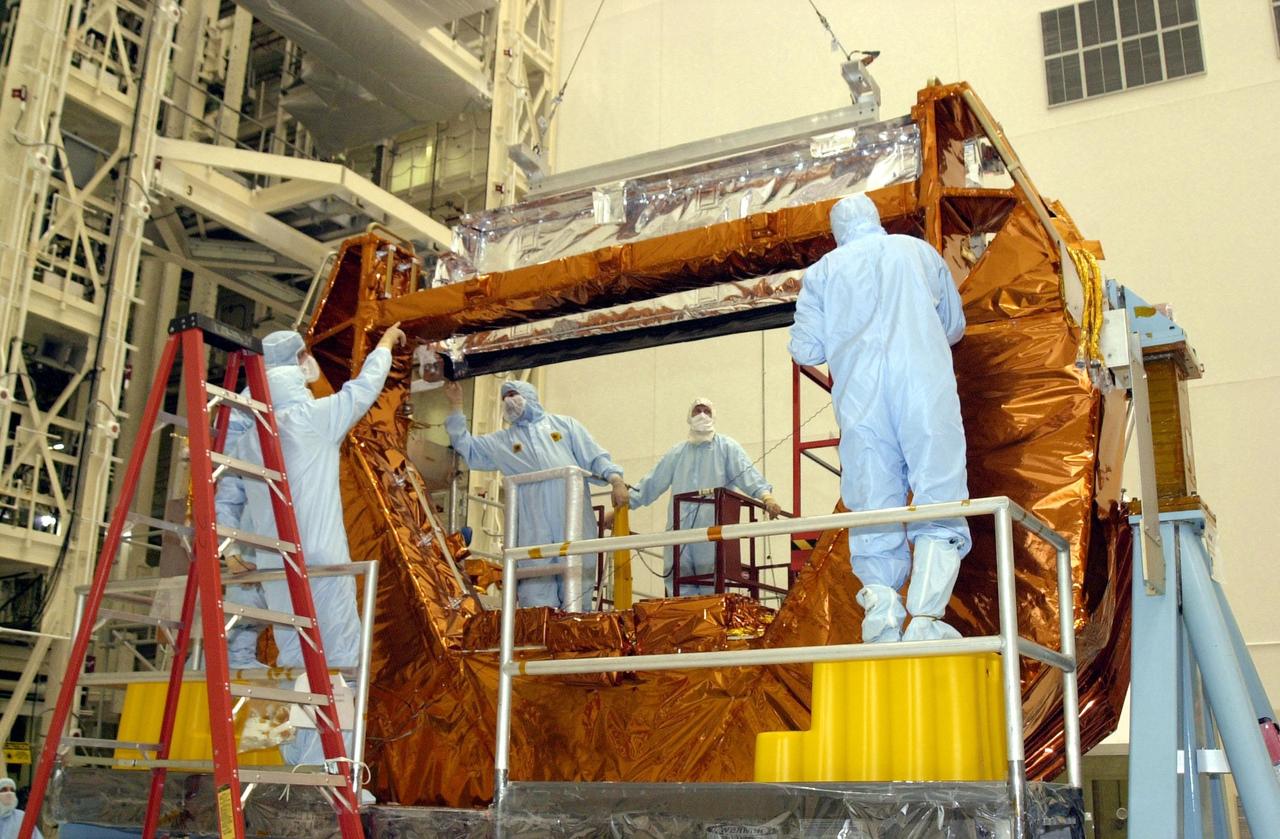
KENNEDY SPACE CENTER, FLA. -- Workers in the Vertical Processing Facility oversee the installation of the NICMOS radiator onto the MULE (Multi-Use Lightweight Equipment) carrier. Part of the payload on mission STS-109, the Near Infrared Camera and Multi-Object Spectrometer (NICMOS) is a new experimental cooling system consisting of a compressor and tiny turbines. With the experimental cryogenic system, NASA hopes to re-cool the infrared detectors to below -315 degrees F (-193 degrees Celsius). NICMOS II was previously tested aboard STS-95 in 1998. NICMOS could extend the life of the Hubble Space Telescope by several years. Astronauts aboard Columbia on mission STS-109 will be replacing the original NICMOS with the newer version. Launch of Columbia on mission STS-109 is scheduled Feb. 28, 2002
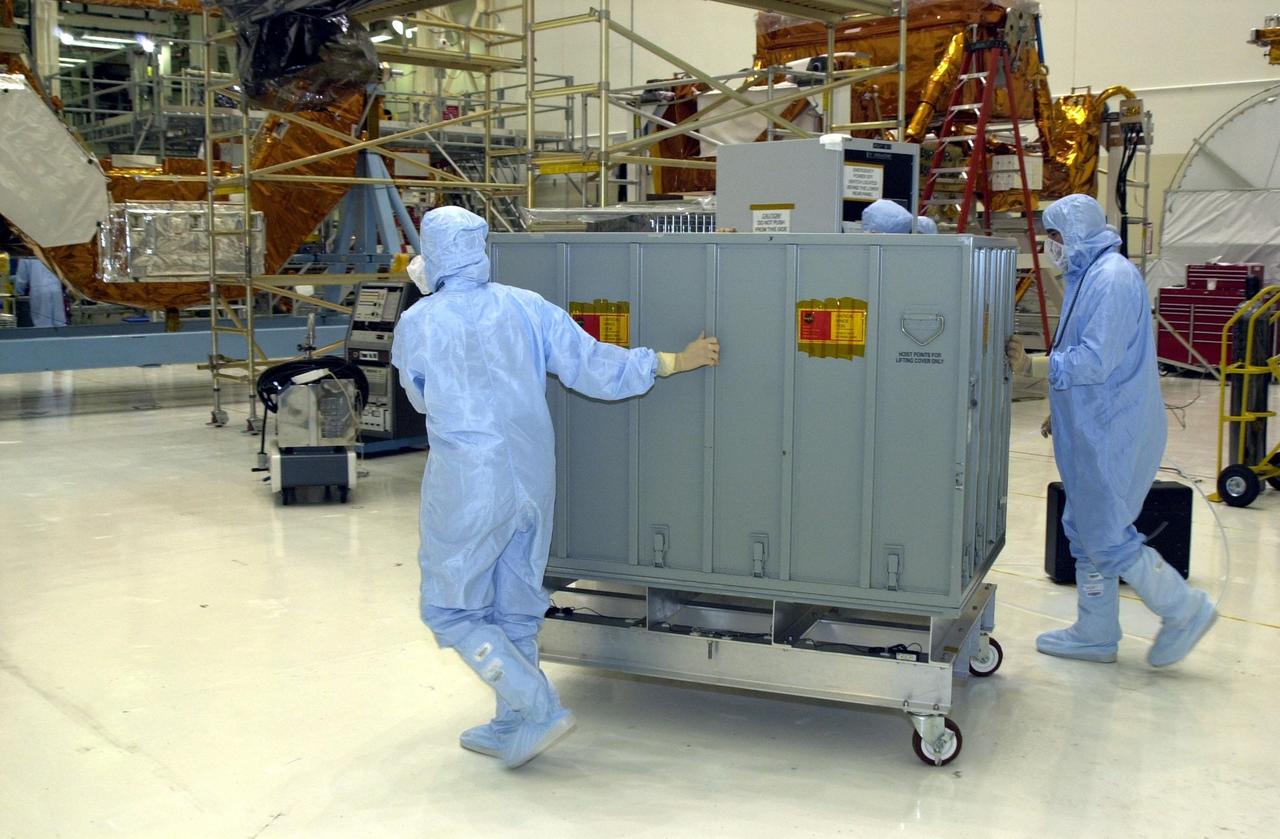
KENNEDY SPACE CENTER, FLA. -- Workers in the Vertical Processing Facility wheel a container with the NICMOS II across the floor. The Near Infrared Camera and Multi-Object Spectrometer (NICMOS) Cooling System is part of the payload on mission STS-109, the Hubble Servicing Telescope Mission. NICMOS is a new experimental cooling system consisting of a compressor and tiny turbines. With the experimental cryogenic system, NASA hopes to re-cool the infrared detectors to below -315 degrees F (-193 degrees Celsius). NICMOS II was previously tested aboard STS-95 in 1998. It could extend the life of the Hubble Space Telescope by several years. Astronauts aboard Columbia on mission STS-109 will be replacing the original NICMOS with the newer version. Launch of mission STS-109 is scheduled for Feb. 28, 2002
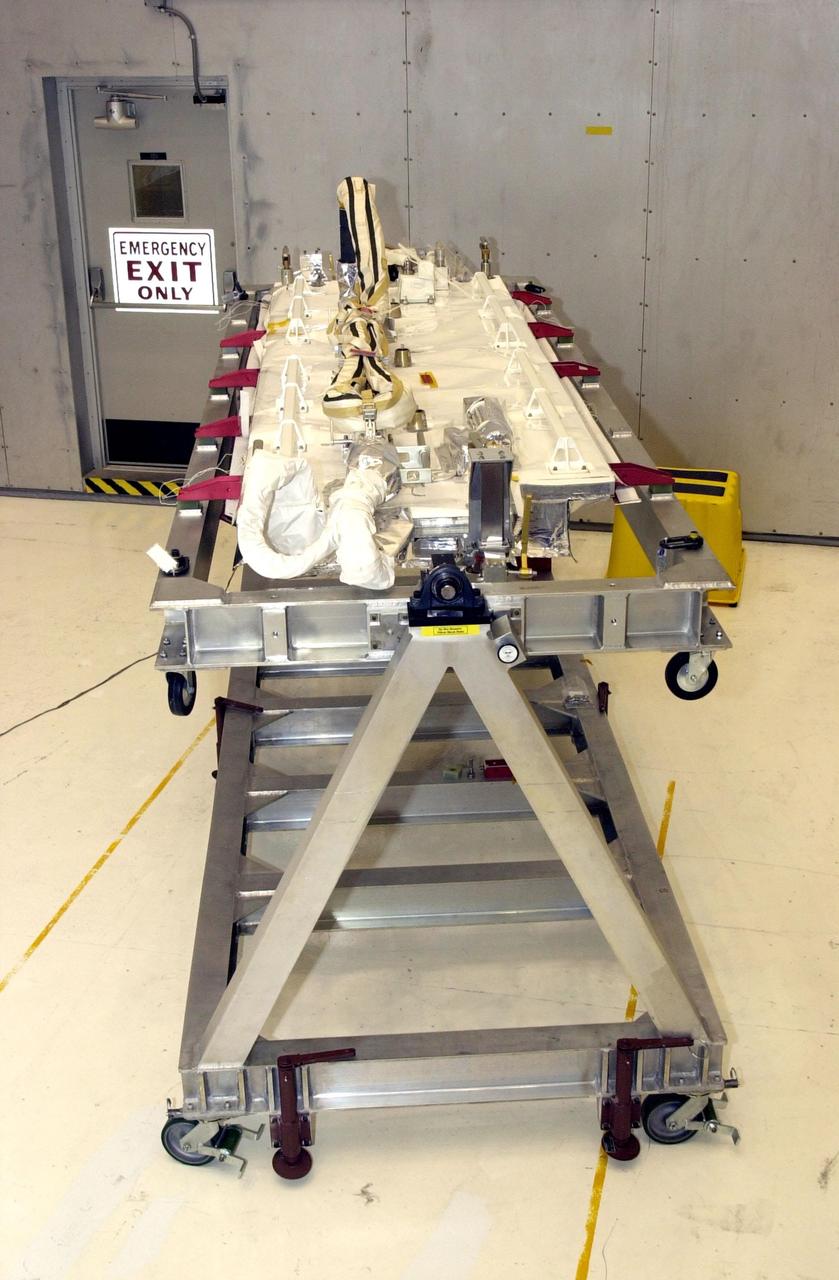
KENNEDY SPACE CENTER, FLA. -- The NICMOS II radiator is ready for checkout in the Vertical Processing Facility. The Near Infrared Camera and Multi-Object Spectrometer (NICMOS) Cooling System is part of the payload on mission STS-109, the Hubble Servicing Telescope mission. NICMOS is a new experimental cooling system consisting of a compressor and tiny turbines. With the experimental cryogenic system, NASA hopes to re-cool the infrared detectors to below -315 degrees F (-193 degrees Celsius). NICMOS II was previously tested aboard STS-95 in 1998. NICMOS could extend the life of the Hubble Space Telescope by several years. Astronauts aboard Columbia on mission STS-109 will be replacing the original NICMOS with the newer version. Launch of Columbia is scheduled Feb. 28, 2002
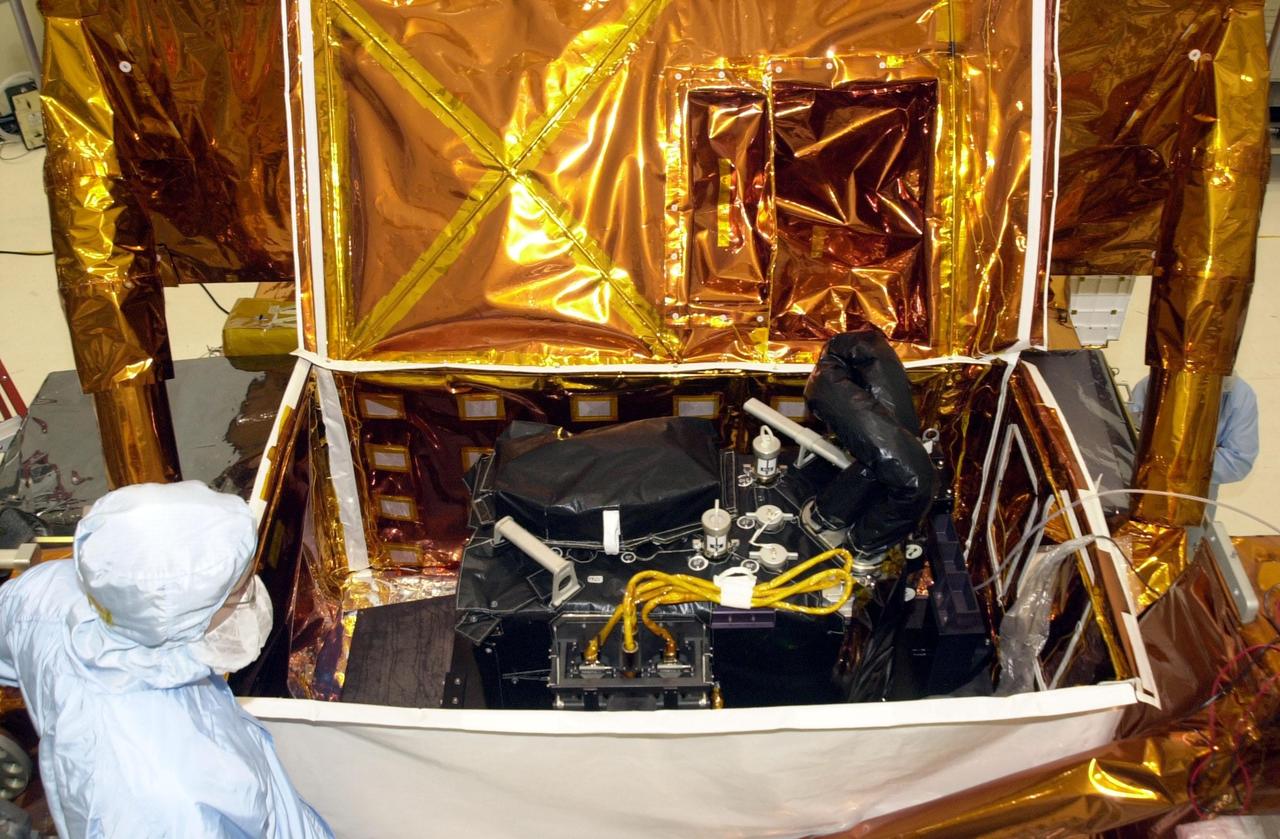
KENNEDY SPACE CENTER, FLA. -- The Near Infrared Camera and Multi-Object Spectrometer (NICMOS) Cooling System rests inside a protective enclosure on a payload carrier. NICMOS II is part of the payload on mission STS-109, the Hubble Servicing Telescope Mission. It is a new experimental cooling system consisting of a compressor and tiny turbines. With the experimental cryogenic system, NASA hopes to re-cool the infrared detectors to below -315 degrees F (-193 degrees Celsius). NICMOS II was previously tested aboard STS-95 in 1998. It could extend the life of the Hubble Space Telescope by several years. Astronauts aboard Columbia on mission STS-109 will be replacing the original NICMOS with the newer version. Launch of mission STS-109 is scheduled for Feb. 28, 2002
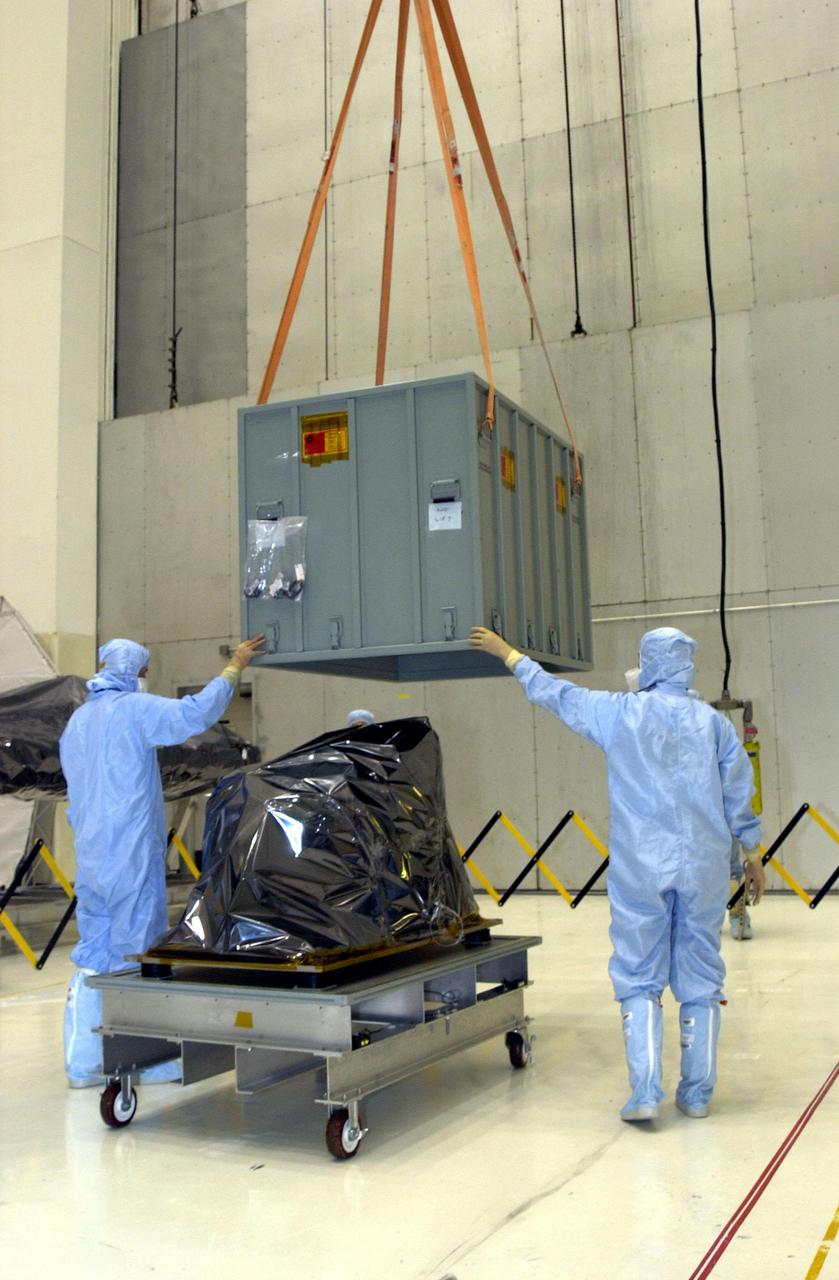
KENNEDY SPACE CENTER, FLA. -- An overhead crane in the Vertical Processing Facility lifts the shipping container from the Near Infrared Camera and Multi-Object Spectrometer (NICMOS) Cooling System, part of the payload on mission STS-109, the Hubble Servicing Telescope Mission. NICMOS is a new experimental cooling system consisting of a compressor and tiny turbines. With the experimental cryogenic system, NASA hopes to re-cool the infrared detectors to below -315 degrees F (-193 degrees Celsius). NICMOS II was previously tested aboard STS-95 in 1998. It could extend the life of the Hubble Space Telescope by several years. Astronauts aboard Columbia on mission STS-109 will be replacing the original NICMOS with the newer version. Launch of mission STS-109 is scheduled for Feb. 28, 2002
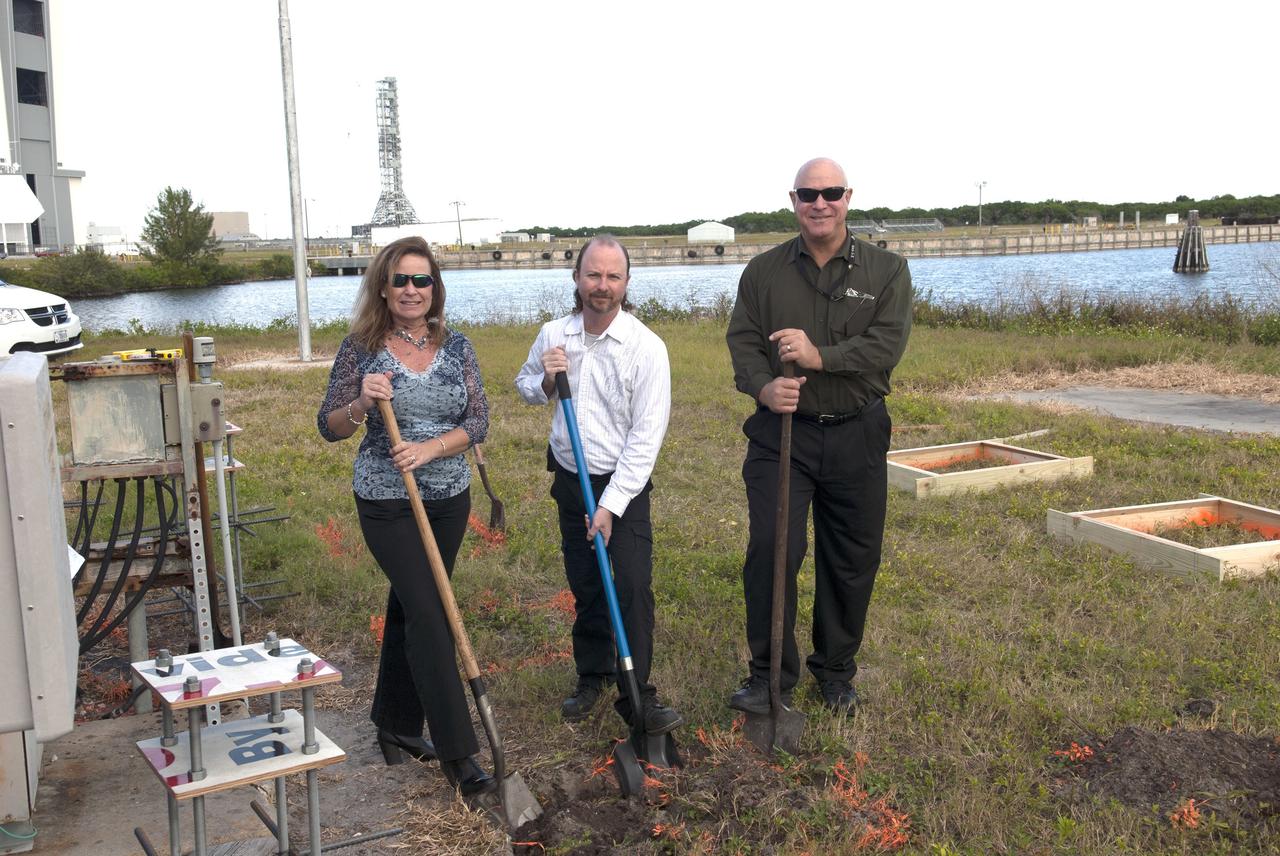
CAPE CANAVERAL, Fla. -- At NASA's Kennedy Space Center in Florida, Project Manager Sonja Hernandez, Kennedy TV senior systems engineer Ronald Gonser and Kennedy/IMCS senior manager Jeff Van Pelt dig in behind the current countdown clock during the groundbreaking ceremony for the new countdown clock. The old timepiece was designed by Kennedy engineers and built by Kennedy technicians in 1969. Not including the triangular concrete and aluminum base, the famous landmark is nearly 6 feet 70 inches high, 26 feet 315 inches wide and 3 feet deep. The new display will be similar in size, with the screen being nearly 26 feet wide by 7 feet high. For more information on the countdown clock, go to http://go.nasa.gov/10Zku10. Photo credit: NASA/Jim Grossmann
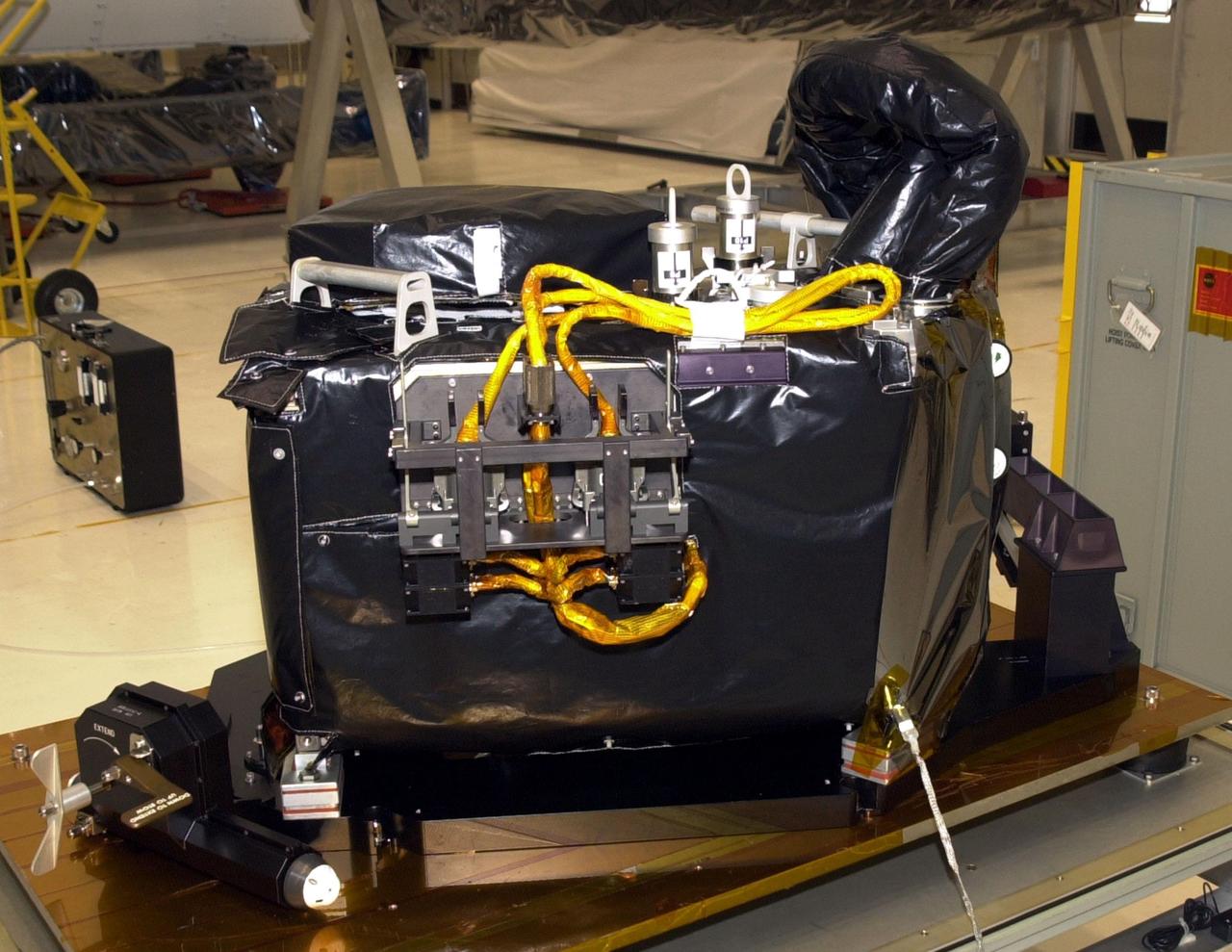
KENNEDY SPACE CENTER, FLA. -- A closeup view of the Near Infrared Camera and Multi-Object Spectrometer (NICMOS) Cooling System, part of the payload on mission STS-109, the Hubble Servicing Telescope Mission. NICMOS II is a new experimental cooling system consisting of a compressor and tiny turbines. With the experimental cryogenic system, NASA hopes to re-cool the infrared detectors to below -315 degrees F (-193 degrees Celsius). NICMOS II was previously tested aboard STS-95 in 1998. It could extend the life of the Hubble Space Telescope by several years. Astronauts aboard Columbia on mission STS-109 will be replacing the original NICMOS with the newer version. Launch of mission STS-109 is scheduled for Feb. 28, 2002

KENNEDY SPACE CENTER, FLA. -- Workers in the Vertical Processing Facility test the Near Infrared Camera and Multi-Object Spectrometer (NICMOS) Cooling System, part of the payload on mission STS-109, the Hubble Servicing Telescope Mission. The worker at right is using a black light. NICMOS II is a new experimental cooling system consisting of a compressor and tiny turbines. With the experimental cryogenic system, NASA hopes to re-cool the infrared detectors to below -315 degrees F (-193 degrees Celsius). NICMOS II was previously tested aboard STS-95 in 1998. It could extend the life of the Hubble Space Telescope by several years. Astronauts aboard Columbia on mission STS-109 will be replacing the original NICMOS with the newer version. Launch of mission STS-109 is scheduled for Feb. 28, 2002
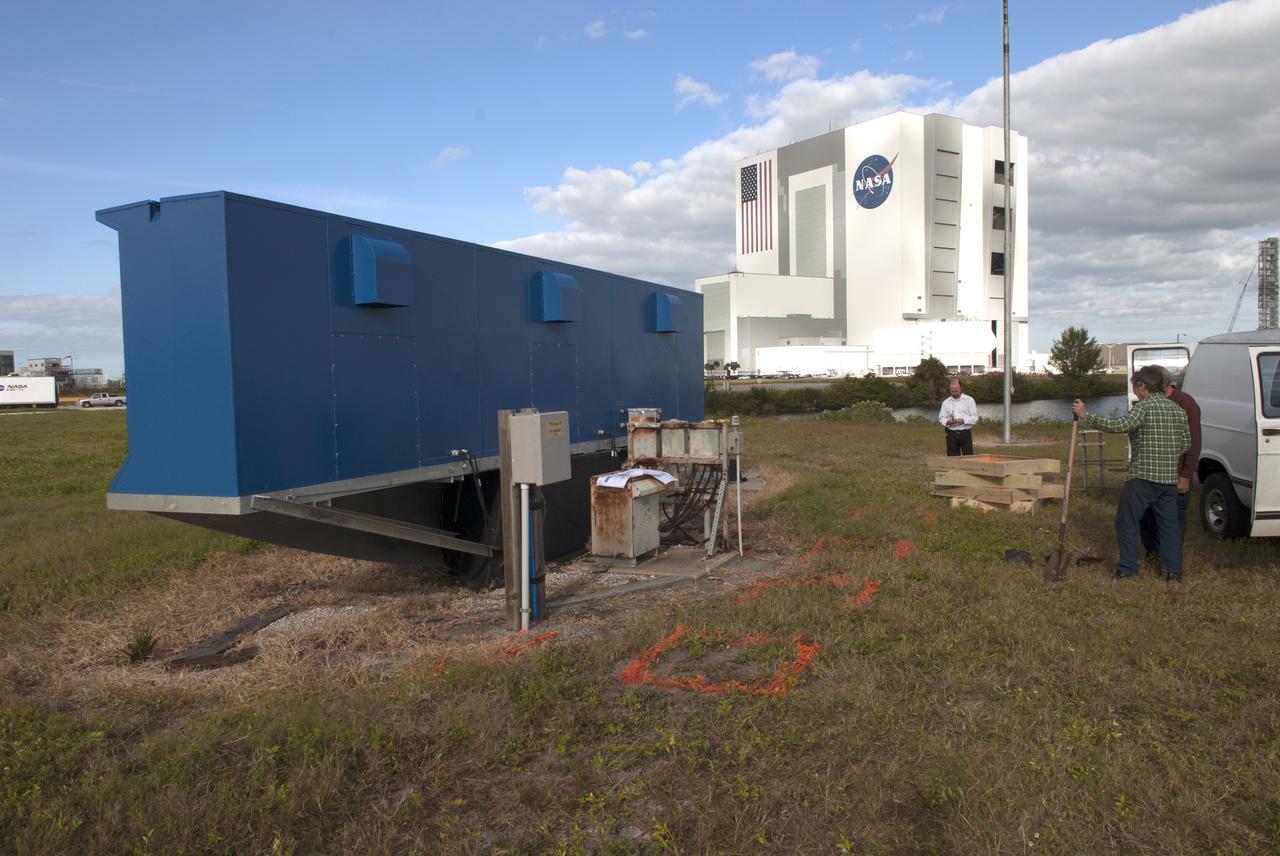
CAPE CANAVERAL, Fla. -- At NASA's Kennedy Space Center in Florida, Kennedy TV senior systems engineer Ronald Gonser, left, Jeff Pratt and Frank Morse with Abacus Technology prep the area behind the current countdown clock for the groundbreaking ceremony for the new countdown clock. The old timepiece was designed by Kennedy engineers and built by Kennedy technicians in 1969. Not including the triangular concrete and aluminum base, the famous landmark is nearly 6 feet 70 inches high, 26 feet 315 inches wide and 3 feet deep. The new display will be similar in size, with the screen being nearly 26 feet wide by 7 feet high. For more information on the countdown clock, go to http://go.nasa.gov/10Zku10. Photo credit: NASA/Jim Grossmann
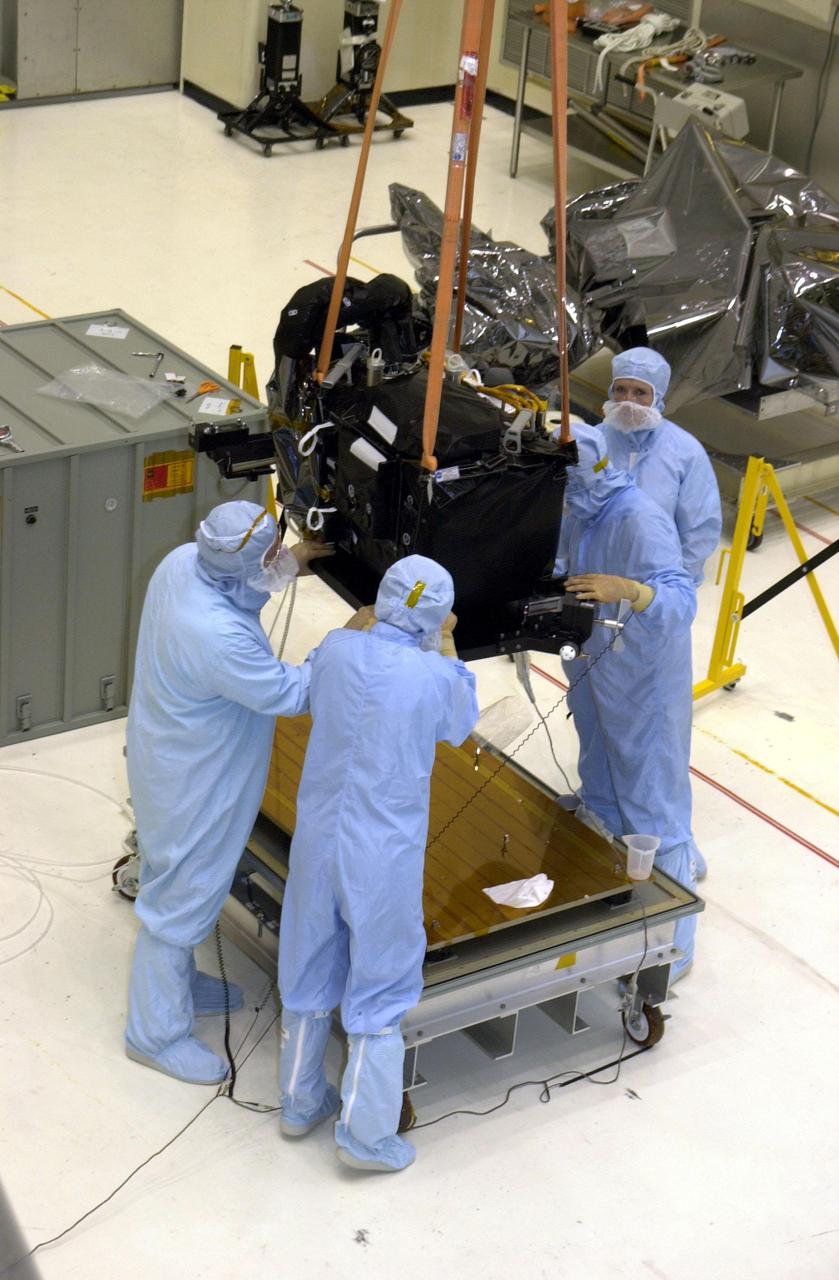
KENNEDY SPACE CENTER, FLA. - A crane in the Vertical Processing Facility lifts the Near Infrared Camera and Multi-Object Spectrometer (NICMOS) Cooling System off the workstand. NICMOS II is part of the payload on mission STS-109, the Hubble Servicing Telescope Mission. It is a new experimental cooling system consisting of a compressor and tiny turbines. With the experimental cryogenic system, NASA hopes to re-cool the infrared detectors to below -315 degrees F (-193 degrees Celsius). NICMOS II was previously tested aboard STS-95 in 1998. It could extend the life of the Hubble Space Telescope by several years. Astronauts aboard Columbia on mission STS-109 will be replacing the original NICMOS with the newer version. Launch of mission STS-109 is scheduled for Feb. 28, 2002
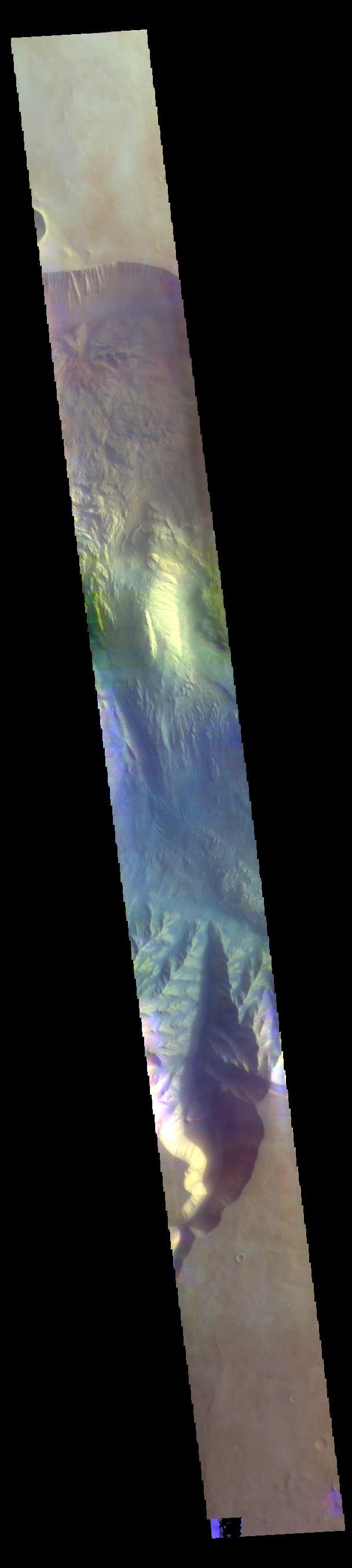
The THEMIS VIS camera contains 5 filters. The data from different filters can be combined in multiple ways to create a false color image. These false color images may reveal subtle variations of the surface not easily identified in a single band image. Today's false color image shows a cross section of Hebes Chasma. Hebes Chasma is a closed basin located north of Valles Marineris. It measures 126km wide north/south (78 miles), 315 km long east/west (196 miles), and 8 km (5 miles) at its deepest point. Orbit Number: 69810 Latitude: -1.17427 Longitude: 284.446 Instrument: VIS Captured: 2017-09-09 05:33 https://photojournal.jpl.nasa.gov/catalog/PIA24455
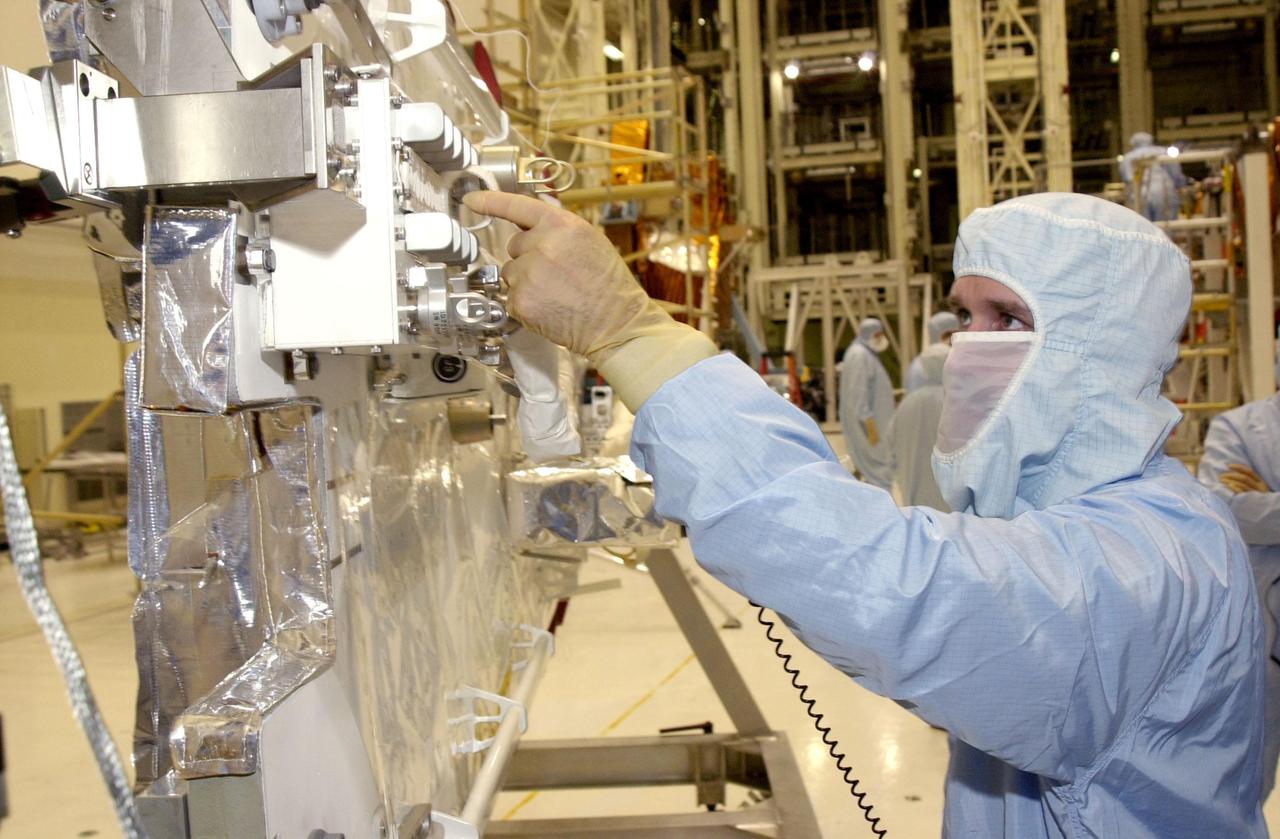
KENNEDY SPACE CENTER, FLA. - In the Vertical Processing Facility, STS-109 Payload Commander John Grunsfeld checks out the NICMOS radiator during crew familiarization activities. Part of the payload on mission STS-109, the Near Infrared Camera and Multi-Object Spectrometer (NICMOS) is a new experimental cooling system consisting of a compressor and tiny turbines. With the experimental cryogenic system, NASA hopes to re-cool the infrared detectors to below -315 degrees F (-193 degrees Celsius). NICMOS II was previously tested aboard STS-95 in 1998. NICMOS could extend the life of the Hubble Space Telescope by several years. Astronauts aboard Columbia on mission STS-109 will be replacing the original NICMOS with the newer version. Launch of Columbia is scheduled Feb. 28, 2002
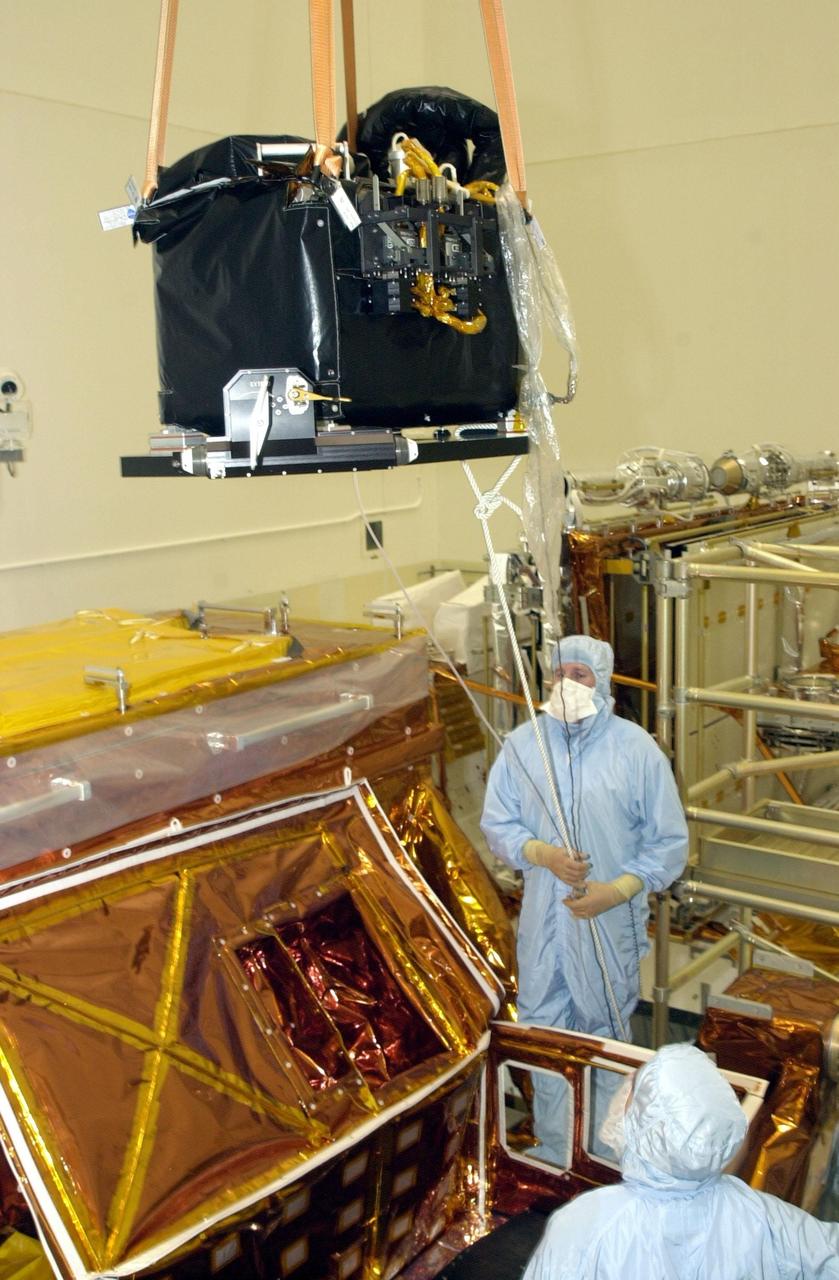
KENNEDY SPACE CENTER, FLA. -- Workers in the Vertical Processing Facility help guide the Near Infrared Camera and Multi-Object Spectrometer (NICMOS) Cooling System onto a payload carrier. NICMOS II is part of the payload on mission STS-109, the Hubble Servicing Telescope Mission. It is a new experimental cooling system consisting of a compressor and tiny turbines. With the experimental cryogenic system, NASA hopes to re-cool the infrared detectors to below -315 degrees F (-193 degrees Celsius). NICMOS II was previously tested aboard STS-95 in 1998. It could extend the life of the Hubble Space Telescope by several years. Astronauts aboard Columbia on mission STS-109 will be replacing the original NICMOS with the newer version. Launch of mission STS-109 is scheduled for Feb. 28, 2002
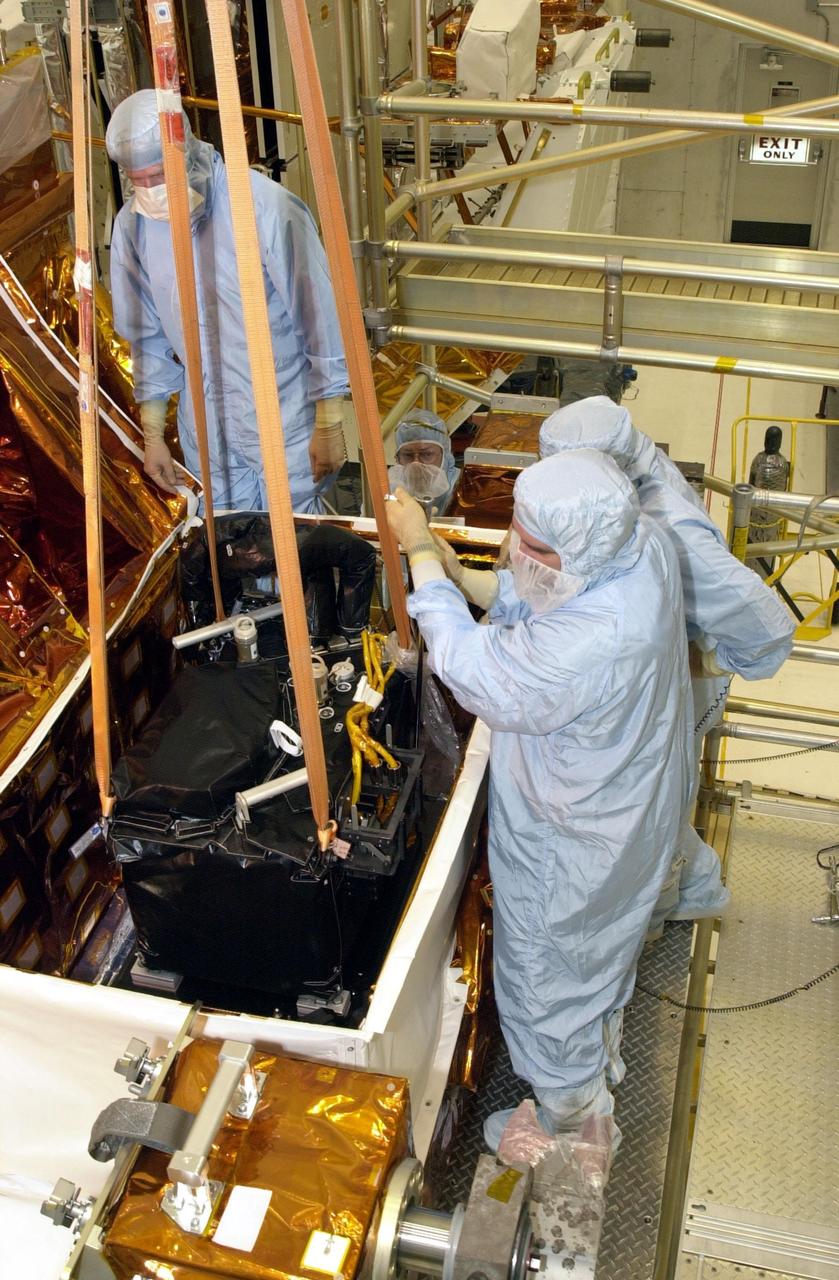
KENNEDY SPACE CENTER, FLA. -- In the Vertical Processing Facility, workers help guide the Near Infrared Camera and Multi-Object Spectrometer (NICMOS) Cooling System into an protective enclosure on a payload carrier. NICMOS II is part of the payload on mission STS-109, the Hubble Servicing Telescope Mission. It is a new experimental cooling system consisting of a compressor and tiny turbines. With the experimental cryogenic system, NASA hopes to re-cool the infrared detectors to below -315 degrees F (-193 degrees Celsius). NICMOS II was previously tested aboard STS-95 in 1998. It could extend the life of the Hubble Space Telescope by several years. Astronauts aboard Columbia on mission STS-109 will be replacing the original NICMOS with the newer version. Launch of mission STS-109 is scheduled for Feb. 28, 2002

Image acquired February 19, 2010: Tropical Cyclone Gelane had sustained winds of 125 knots (230 kilometers per hour) and gusts up to 150 knots (275 kilometers per hour), according to a report from the U.S. Navy’s Joint Typhoon Warning Center (JTWC) on February 19, 2010. The JTWC reported that Gelane was roughly 315 nautical miles (585 kilometers) east-northeast of Port Louis, Mauritius, and was forecast to travel toward the southwest, weakening slightly as it moved. The Moderate Resolution Imaging Spectroradiometer (MODIS) on NASA’s Aqua satellite captured this true-color image on February 19, 2010. Gelane’s spiral arms span hundreds of kilometers over the open ocean. Credit: NASA image by Jeff Schmaltz, MODIS Rapid Response Team, Goddard Space Flight Center. Caption by Michon Scott. Instrument: Aqua - MODIS..For more details and a higher res file of this image go to: <a href="http://earthobservatory.nasa.gov/NaturalHazards/view.php?id=42767" rel="nofollow">earthobservatory.nasa.gov/NaturalHazards/view.php?id=42767</a>
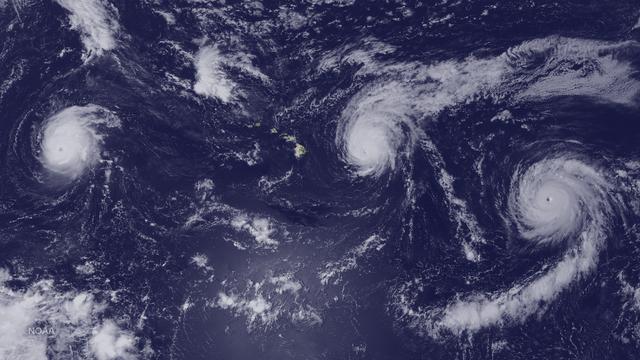
Major Hurricane Kilo is located around 1220 miles west of Honolulu, Hurricane Ignacio is located around 315 miles east of Hilo and Major Hurricane Jimena is located around 1425 miles east of Hilo, Hawaii. This image was taken by GOES West on August 31, 2015. Credit: NASA/NOAA via <b><a href="www.nnvl.noaa.gov/" rel="nofollow"> NOAA Environmental Visualization Laboratory</a></b> <b><a href="http://www.nasa.gov/audience/formedia/features/MP_Photo_Guidelines.html" rel="nofollow">NASA image use policy.</a></b> <b><a href="http://www.nasa.gov/centers/goddard/home/index.html" rel="nofollow">NASA Goddard Space Flight Center</a></b> enables NASA’s mission through four scientific endeavors: Earth Science, Heliophysics, Solar System Exploration, and Astrophysics. Goddard plays a leading role in NASA’s accomplishments by contributing compelling scientific knowledge to advance the Agency’s mission. <b>Follow us on <a href="http://twitter.com/NASAGoddardPix" rel="nofollow">Twitter</a></b> <b>Like us on <a href="http://www.facebook.com/pages/Greenbelt-MD/NASA-Goddard/395013845897?ref=tsd" rel="nofollow">Facebook</a></b> <b>Find us on <a href="http://instagrid.me/nasagoddard/?vm=grid" rel="nofollow">Instagram</a></b>
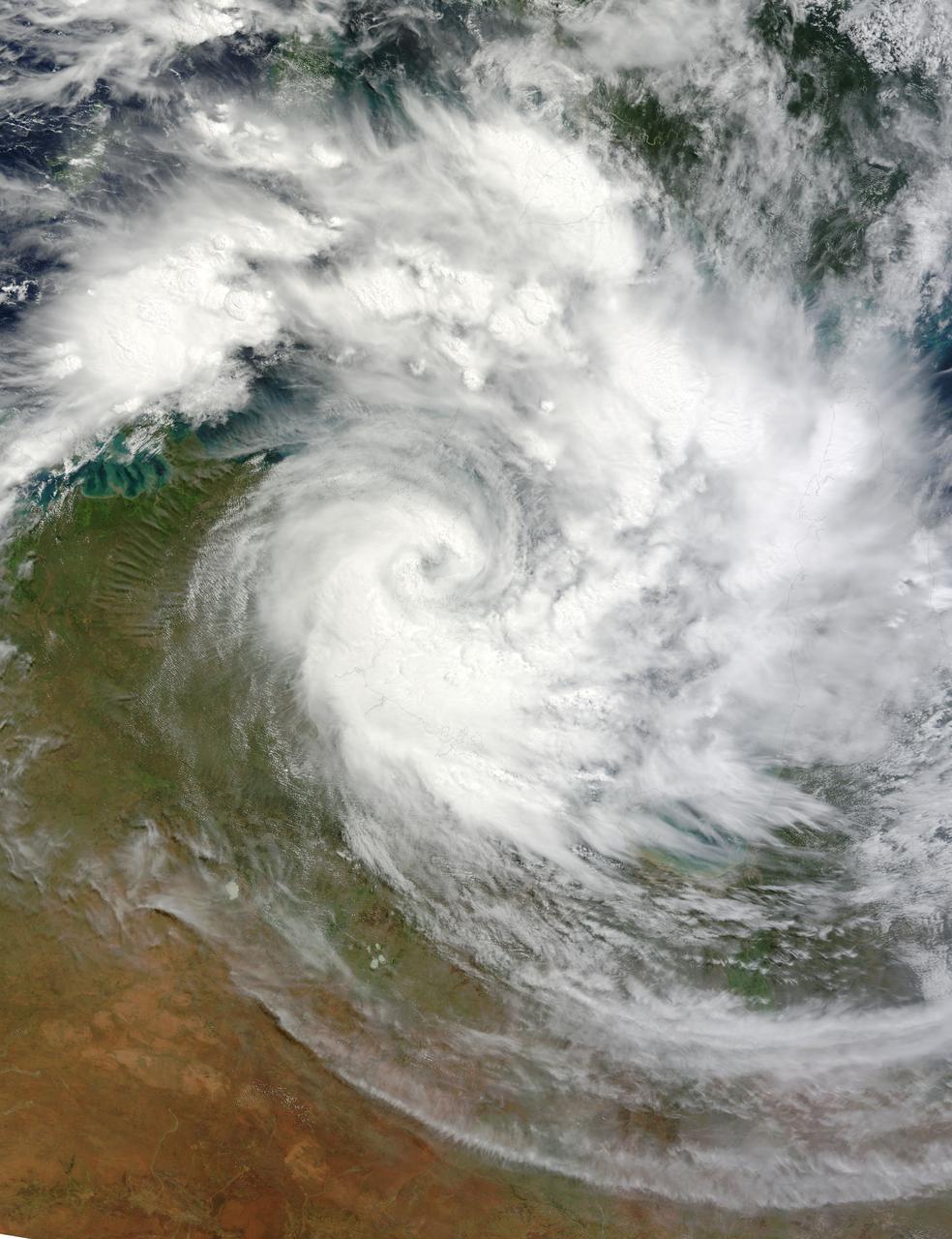
NASA image March 29, 2010 Tropical Cyclone Paul spanned the ocean waters between Australia and New Guinea on March 29, 2010. The MODIS on NASA’s Terra satellite captured this natural-color image the same day. The center of the cyclone is along the coast of Northern Territory’s Arnhem Land. Clouds run counter-clockwise across the Gulf of Carpentaria and Cape York Peninsula, over New Guinea’s Pulau Dolok, and over the Arafura Sea. On March 29, 2010, the U.S. Navy’s Joint Typhoon Warning Center (JTWC) reported that Tropical Cyclone Paul storm had maximum sustained winds of 60 knots (110 kilometers per hour) and gusts up to 75 knots (140 kilometers per hour). The storm was located roughly 315 nautical miles (585 kilometers) east of Darwin. The storm had moved slowly toward the southwest over the previous several hours. The JTWC forecast that the storm would likely maintain its current intensity for several more hours before slowly dissipating over land. Credit: NASA/GSFC/Jeff Schmaltz/MODIS To learn more about this image go to: <a href="http://modis.gsfc.nasa.gov/gallery/individual.php?db_date=2010-03-30" rel="nofollow">modis.gsfc.nasa.gov/gallery/individual.php?db_date=2010-0...</a> <b><a href="http://www.nasa.gov/centers/goddard/home/index.html" rel="nofollow">NASA Goddard Space Flight Center</a></b> is home to the nation's largest organization of combined scientists, engineers and technologists that build spacecraft, instruments and new technology to study the Earth, the sun, our solar system, and the universe.
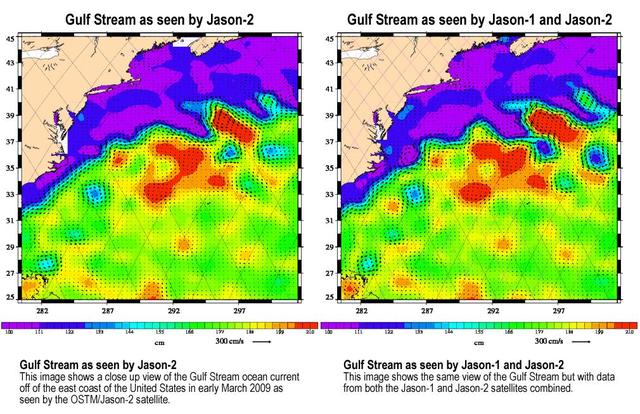
Created with altimeter data from NASA's Ocean Surface Topography Mission (OSTM)/Jason-2 satellite and the Jason-1 satellite, this image shows a portion of the Gulf Stream off the east coast of the United States. It demonstrates how much more detail is visible in the ocean surface when measured by two satellites than by one alone. The image on the left was created with data from OSTM/Jason-2. The image on the right is the same region but made with combined data from OSTM/Jason-2 and Jason-1.It shows the Gulf Stream's eddies and rings much more clearly. This image is a product of the new interleaved tandem mission of the Jason-1 and Ocean Surface Topography Mission (OSTM)/Jason-2 satellites. (The first global map from this tandem mission is available at PIA11859.) In January 2009, Jason-1 was maneuvered into orbit on the opposite side of Earth from its successor, OSTM/Jason-2 satellite. It takes 10 days for the satellites to cover the globe and return to any one place over the ocean. So, in this new tandem configuration, Jason-1 flies over the same region of the ocean that OSTM/Jason-2 flew over five days earlier. Its ground tracks fall mid-way between those of Jason-2, which are about 315 kilometers (195 miles) apart at the equator. Working together, the two spacecraft measure the surface topography of the ocean twice as often as would be possible with one satellite, and over a 10-day period, they return twice the amount of detailed measurements. Combining data from the two satellites makes it possible to map smaller, more rapidly changing features than one satellite could alone. These images show sea-level anomaly data from the first 14 days of the interleaved orbit of Jason-1 and OSTM/Jason-2, the period beginning on Feb. 20, 2009. An anomaly is a departure from a value averaged over a long period of time. Red and yellow are regions where sea levels are higher than normal. Purple and dark blue show where sea levels are lower. A higher-than-normal sea surface is usually a sign of warm waters below, while lower sea levels indicate cooler than normal temperatures. http://photojournal.jpl.nasa.gov/catalog/PIA11997