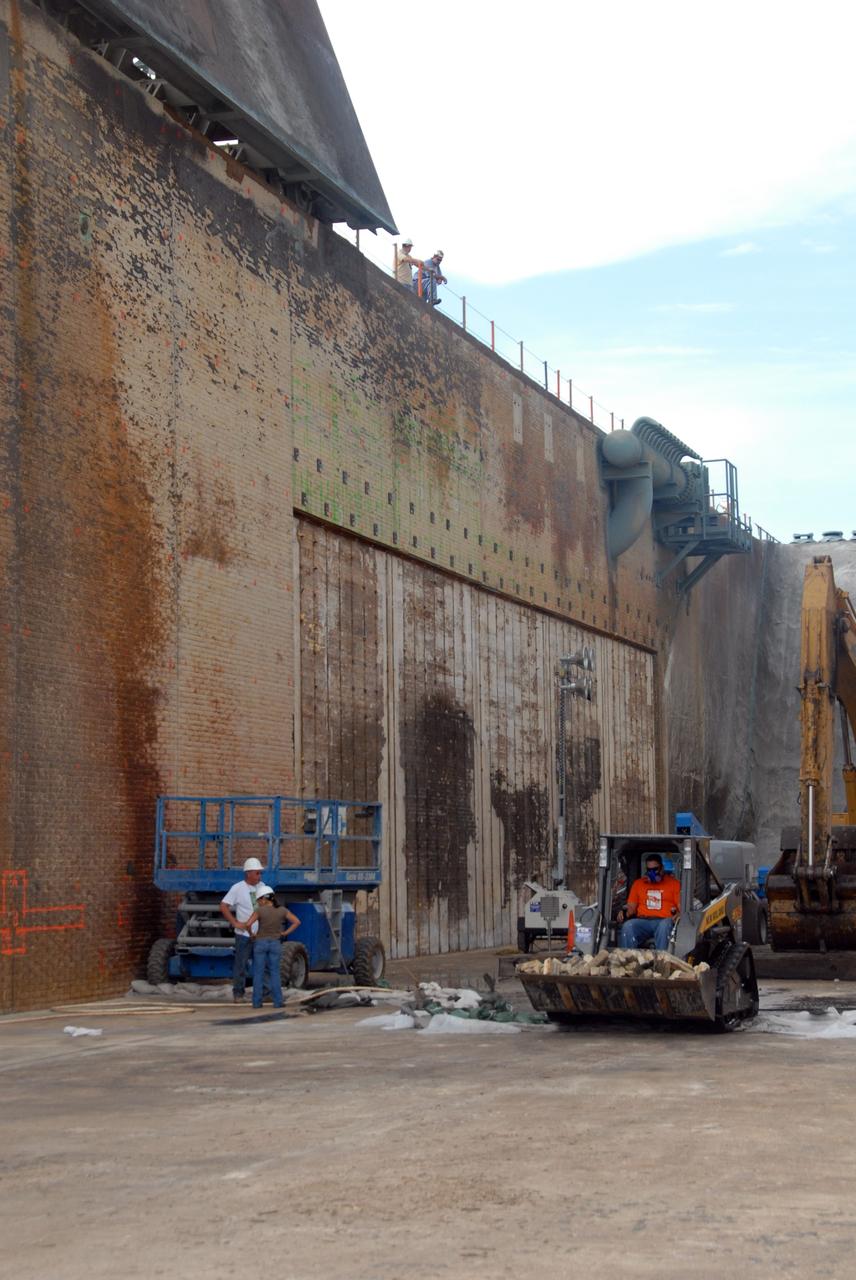
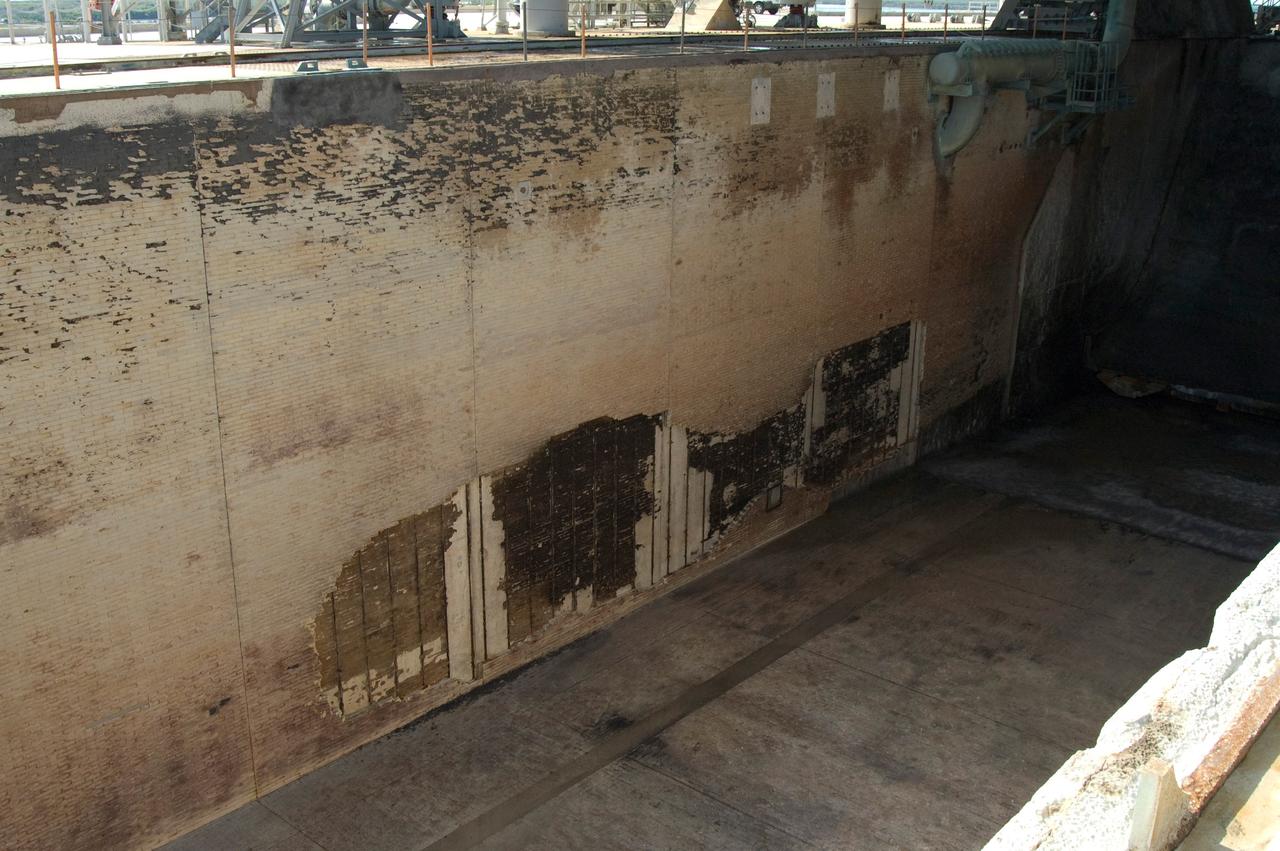
CAPE CANAVERAL, Fla. – Crews remove bricks from the damaged walls of the flame trench on Launch Pad 39A at NASA's Kennedy Space Center. Damage to the trench occurred during the launch of Discovery on the STS-124 mission. A 75- by 20-foot section of the east wall was destroyed and debris scattered as far as the pad perimeter fence. Repairs are expected to be completed before the targeted Oct. 8 launch of Atlantis on the STS-125 mission. Photo credit: NASA/Jack Pfaller
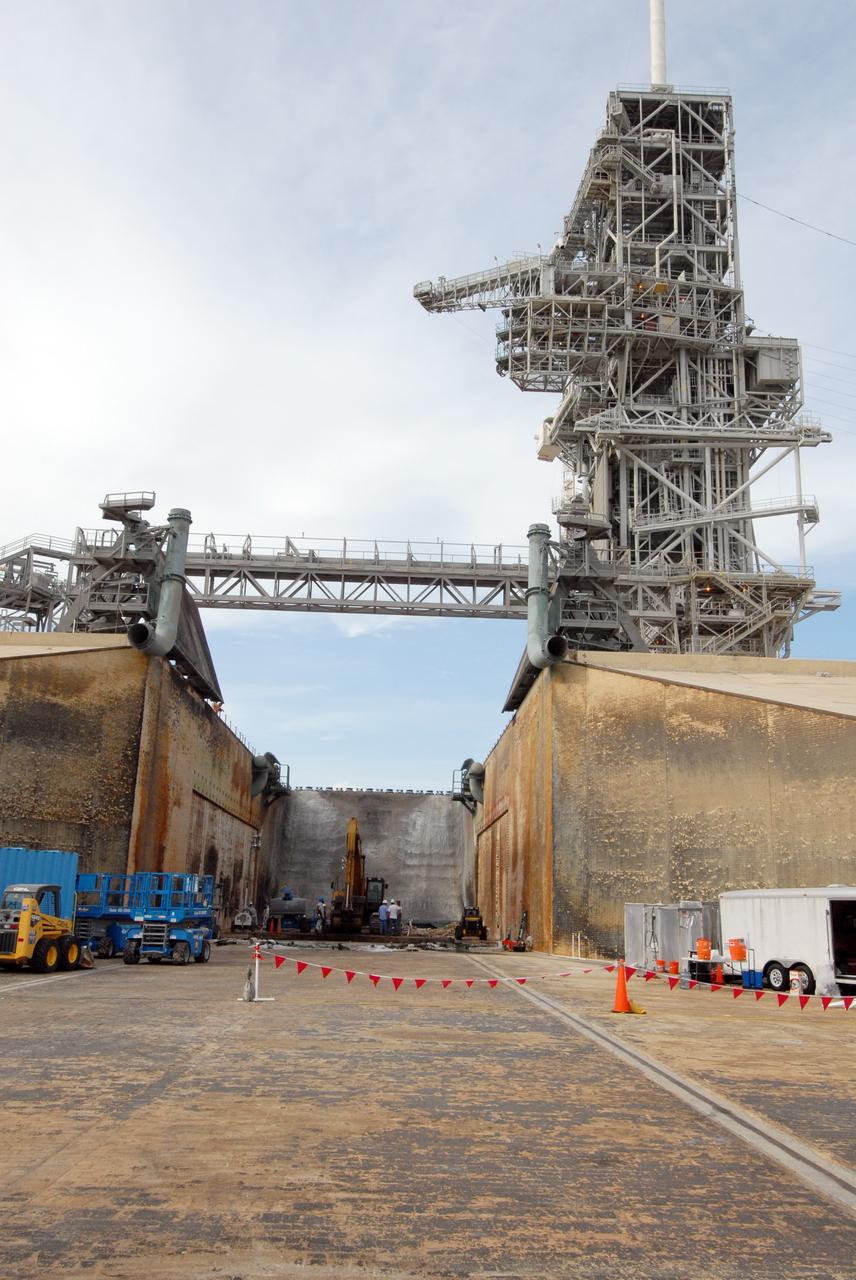
CAPE CANAVERAL, Fla. – Crews remove bricks from the damaged walls of the flame trench on Launch Pad 39A at NASA's Kennedy Space Center. Damage to the trench occurred during the launch of Discovery on the STS-124 mission. A 75- by 20-foot section of the east wall was destroyed and debris scattered as far as the pad perimeter fence. Repairs are expected to be completed before the targeted Oct. 8 launch of Atlantis on the STS-125 mission. Photo credit: NASA/Jack Pfaller
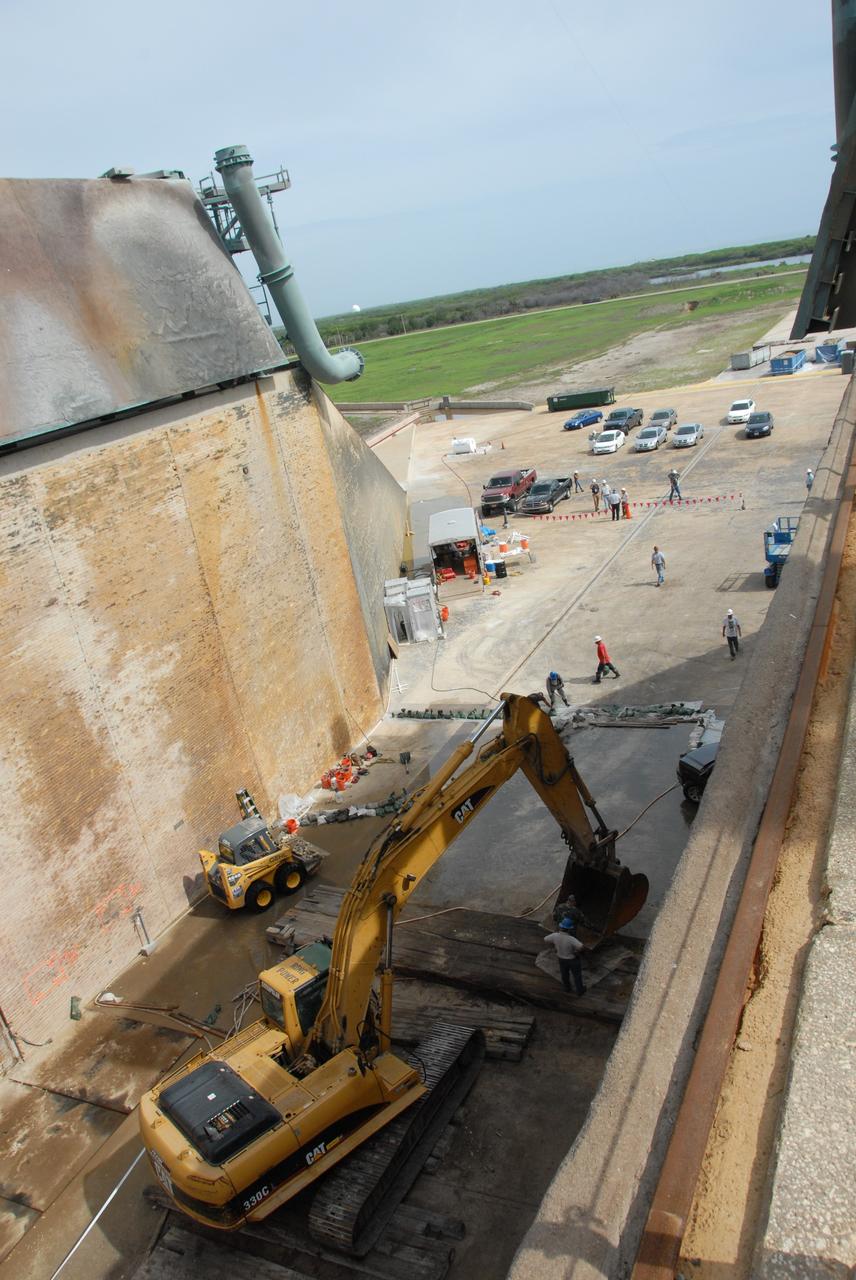
CAPE CANAVERAL, Fla. – A backhoe is being used during repair work under way on the flame trench on Launch Pad 39A at NASA's Kennedy Space Center. Damage to the trench occurred during the launch of Discovery on the STS-124 mission. A 75- by 20-foot section of the east wall was destroyed and debris scattered as far as the pad perimeter fence. Repairs are expected to be completed before the targeted Oct. 8 launch of Atlantis on the STS-125 mission. Photo credit: NASA/Jack Pfaller
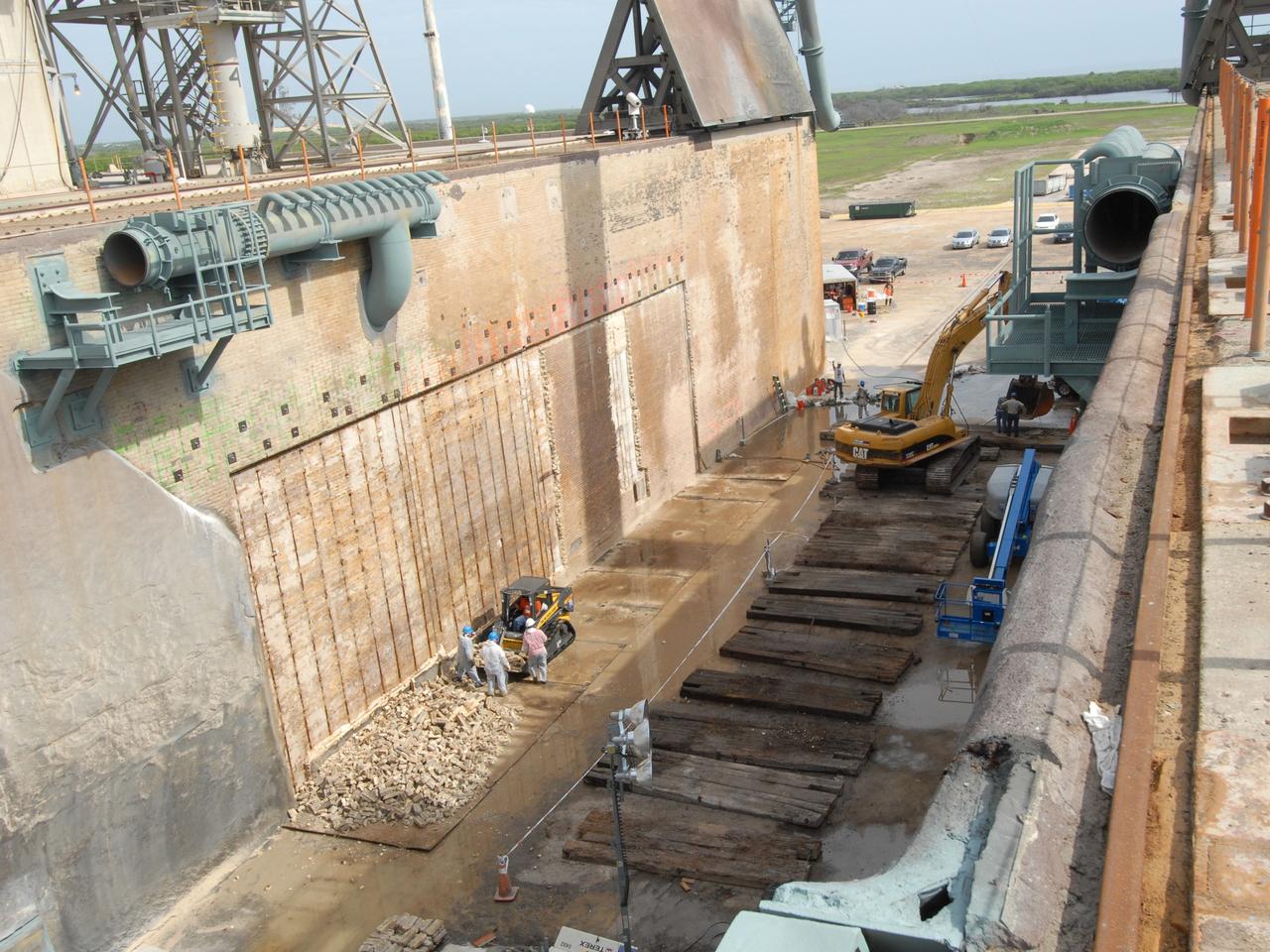
CAPE CANAVERAL, Fla. – A view into the flame trench on Launch Pad 39A at NASA's Kennedy Space Center shows more repair work under way. Damage to the trench occurred during the launch of Discovery on the STS-124 mission. A 75- by 20-foot section of the east wall was destroyed and debris scattered as far as the pad perimeter fence. Repairs are expected to be completed before the targeted Oct. 8 launch of Atlantis on the STS-125 mission. Photo credit: NASA/Jack Pfaller
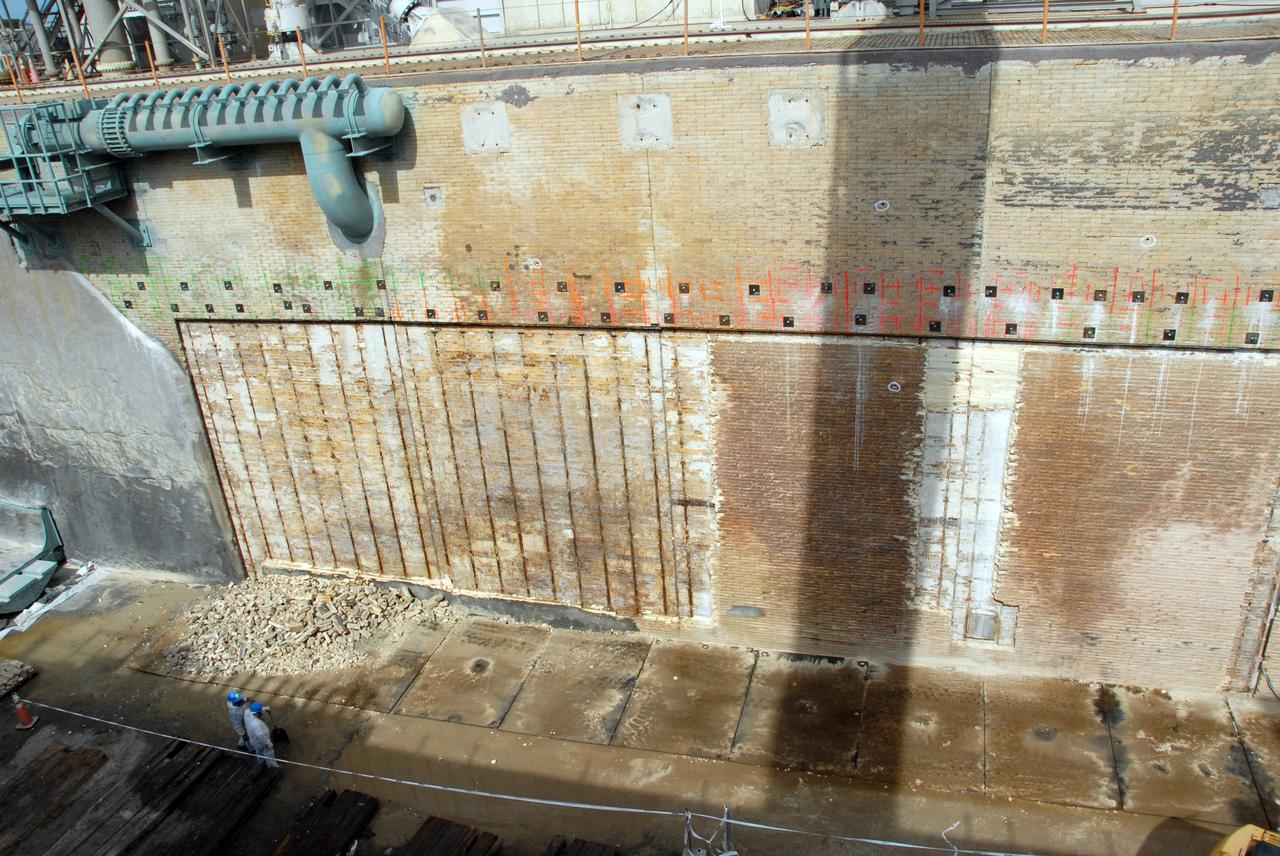
CAPE CANAVERAL, Fla. – A close-up of repair work under way on the flame trench on Launch Pad 39A at NASA's Kennedy Space Center. Damage to the trench occurred during the launch of Discovery on the STS-124 mission. A 75- by 20-foot section of the east wall was destroyed and debris scattered as far as the pad perimeter fence. Repairs are expected to be completed before the targeted Oct. 8 launch of Atlantis on the STS-125 mission. Photo credit: NASA/Jack Pfaller
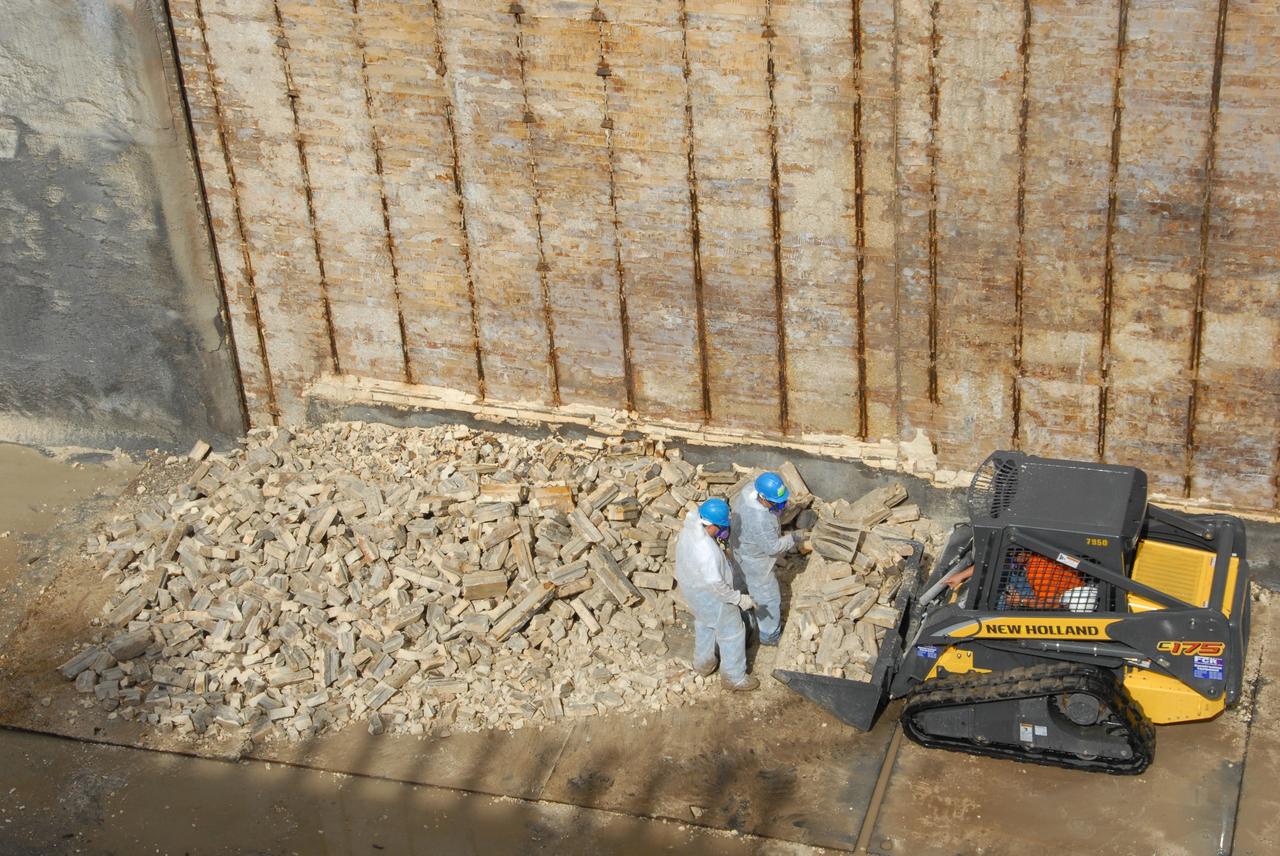
CAPE CANAVERAL, Fla. – A close-up of repair work under way on the flame trench on Launch Pad 39A at NASA's Kennedy Space Center. Damage to the trench occurred during the launch of Discovery on the STS-124 mission. A 75- by 20-foot section of the east wall was destroyed and debris scattered as far as the pad perimeter fence. Repairs are expected to be completed before the targeted Oct. 8 launch of Atlantis on the STS-125 mission. Photo credit: NASA/Jack Pfaller
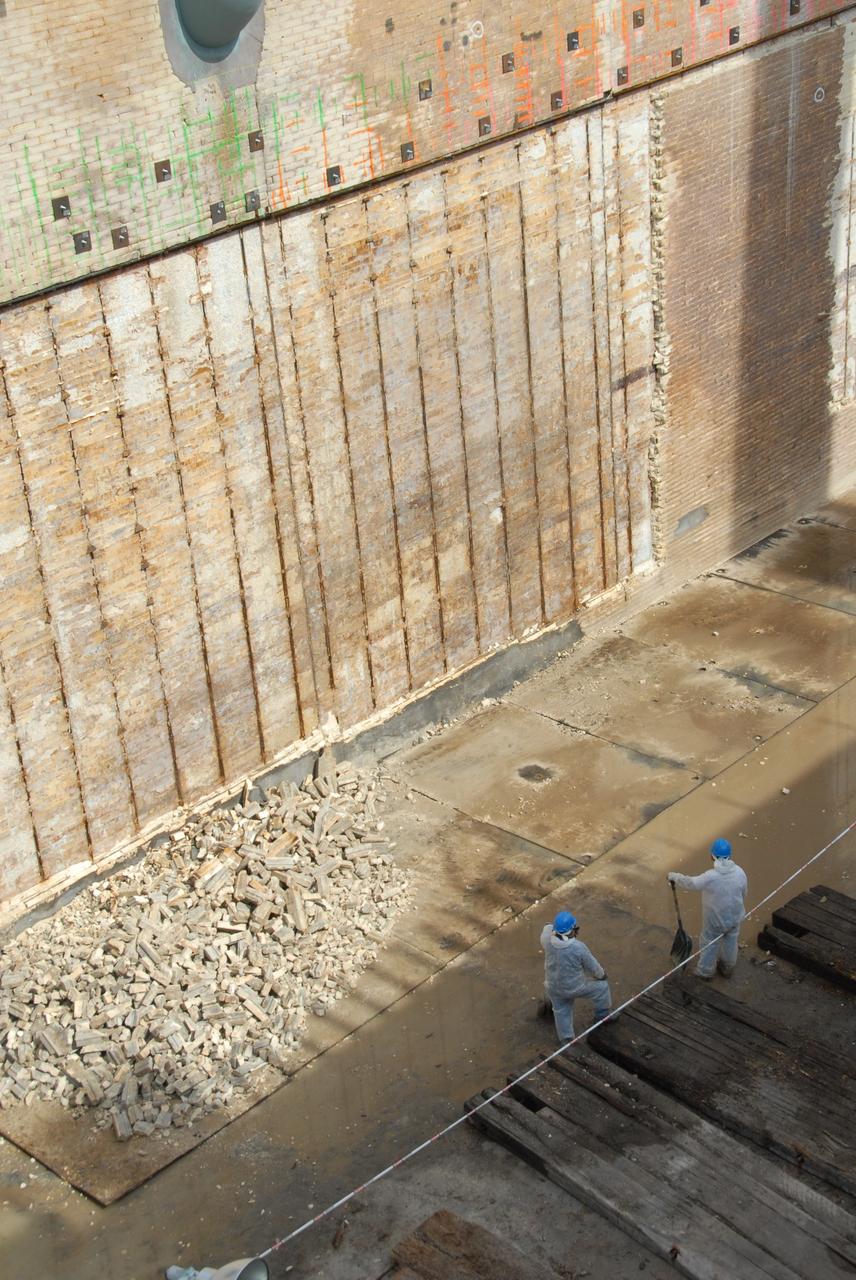
CAPE CANAVERAL, Fla. – A close-up of repair work under way on the flame trench on Launch Pad 39A at NASA's Kennedy Space Center. Damage to the trench occurred during the launch of Discovery on the STS-124 mission. A 75- by 20-foot section of the east wall was destroyed and debris scattered as far as the pad perimeter fence. Repairs are expected to be completed before the targeted Oct. 8 launch of Atlantis on the STS-125 mission. Photo credit: NASA/Jack Pfaller
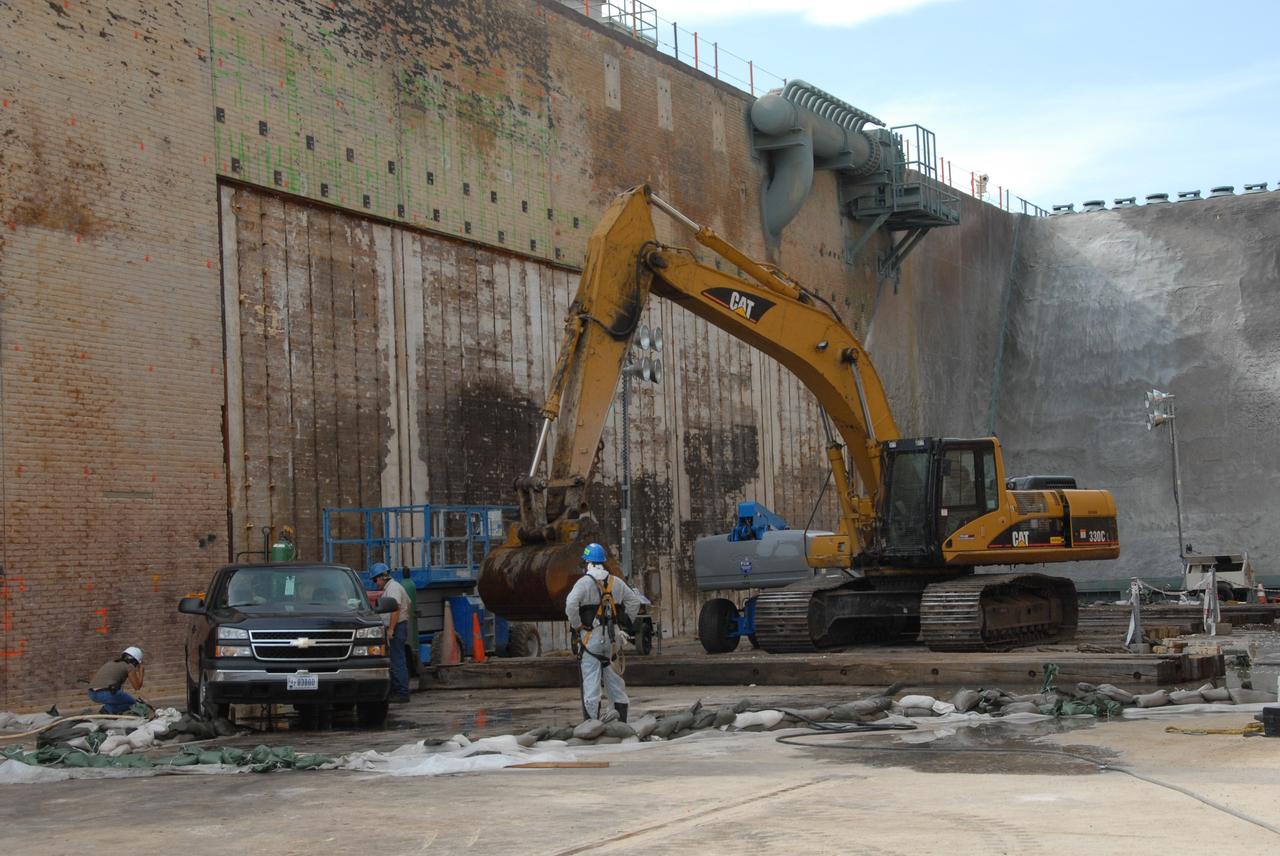
CAPE CANAVERAL, Fla. – Repairs are ongoing in the flame trench on Launch Pad 39A at NASA's Kennedy Space Center. Damage to the trench occurred during the launch of Discovery on the STS-124 mission. A 75- by 20-foot section of the east wall was destroyed and debris scattered as far as the pad perimeter fence. Repairs are expected to be completed before the targeted Oct. 8 launch of Atlantis on the STS-125 mission. Photo credit: NASA/Jack Pfaller
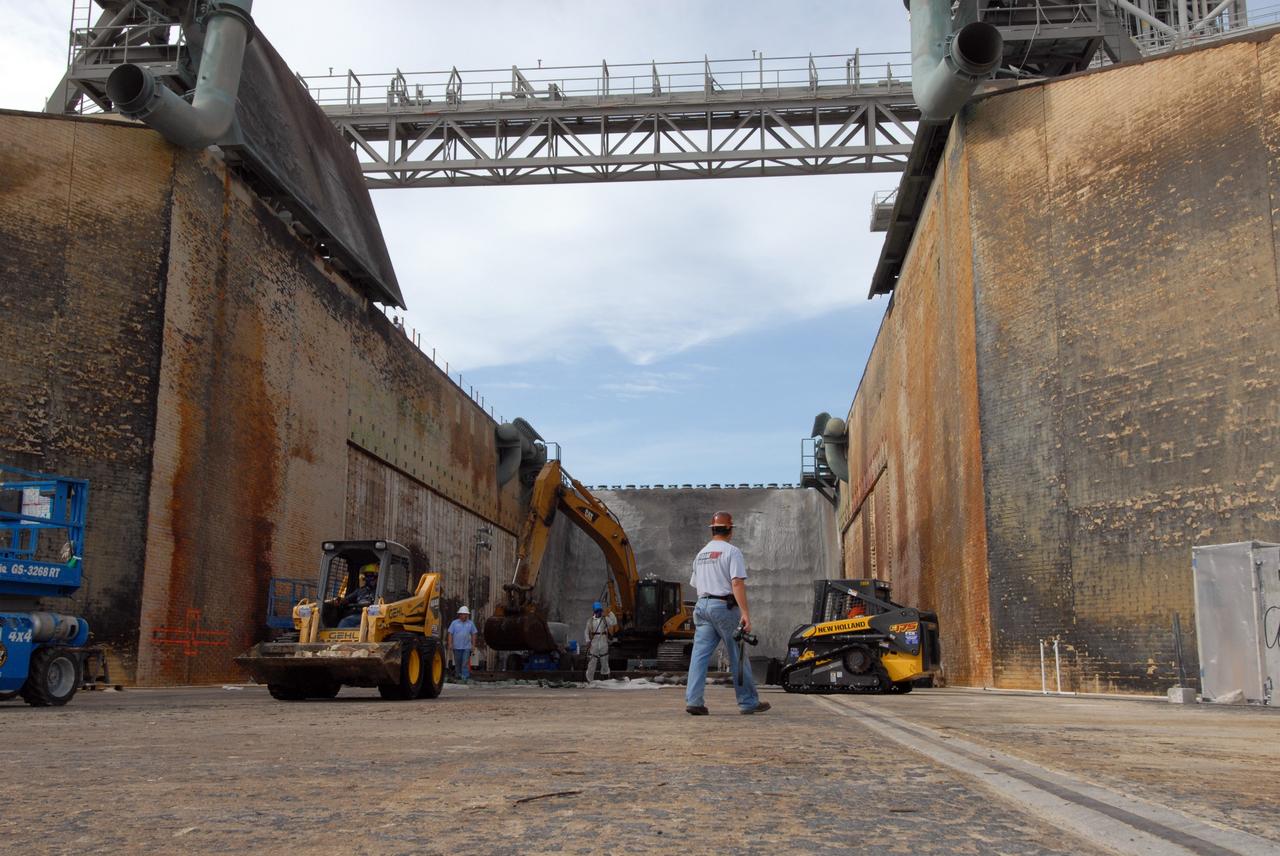
CAPE CANAVERAL, Fla. – Repairs are ongoing in the flame trench on Launch Pad 39A at NASA's Kennedy Space Center. Damage to the trench occurred during the launch of Discovery on the STS-124 mission. A 75- by 20-foot section of the east wall was destroyed and debris scattered as far as the pad perimeter fence. Repairs are expected to be completed before the targeted Oct. 8 launch of Atlantis on the STS-125 mission. Photo credit: NASA/Jack Pfaller
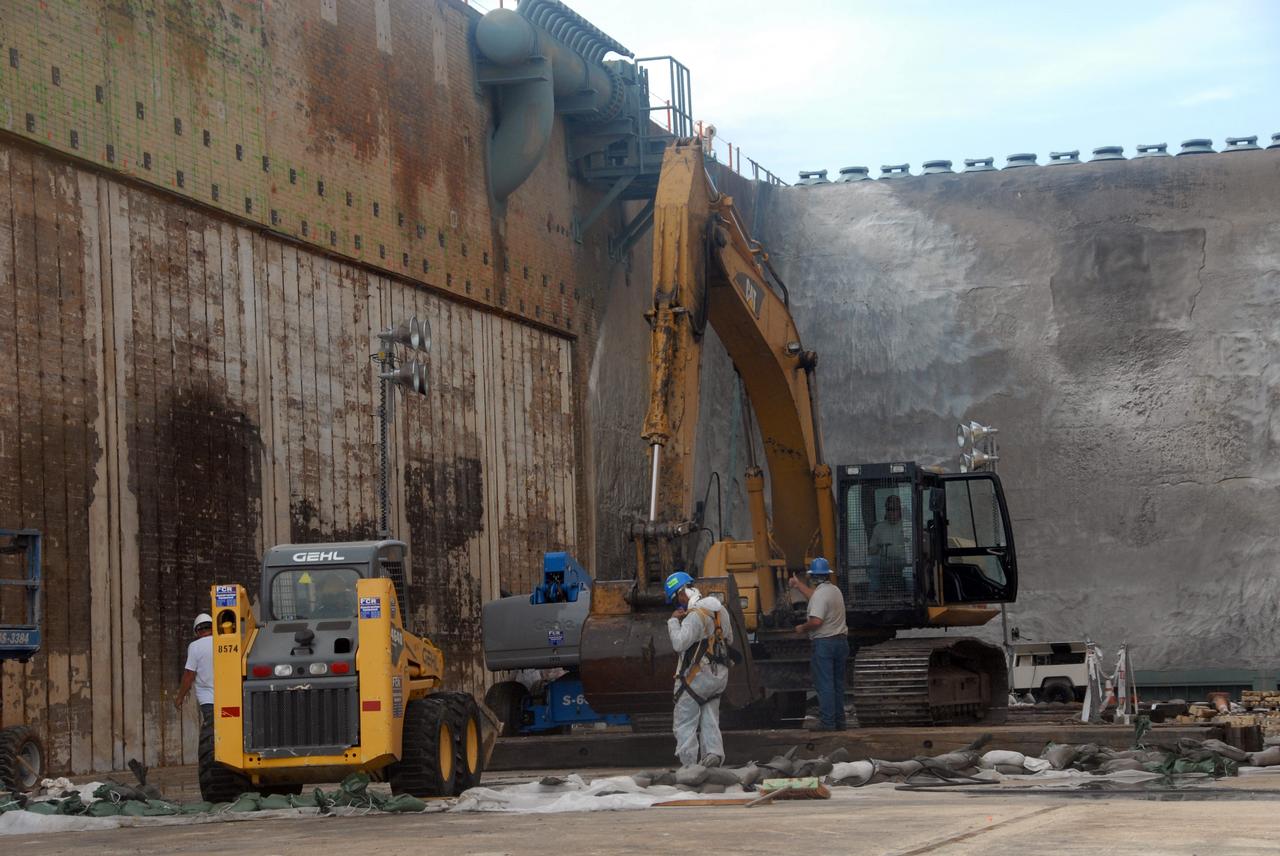
CAPE CANAVERAL, Fla. – This photos shows a close view of the area of repair in the flame trench on Launch Pad 39A at NASA's Kennedy Space Center. Damage to the trench occurred during the launch of Discovery on the STS-124 mission. A 75- by 20-foot section of the east wall was destroyed and debris scattered as far as the pad perimeter fence. Repairs are expected to be completed before the targeted Oct. 8 launch of Atlantis on the STS-125 mission. Photo credit: NASA/Jack Pfaller
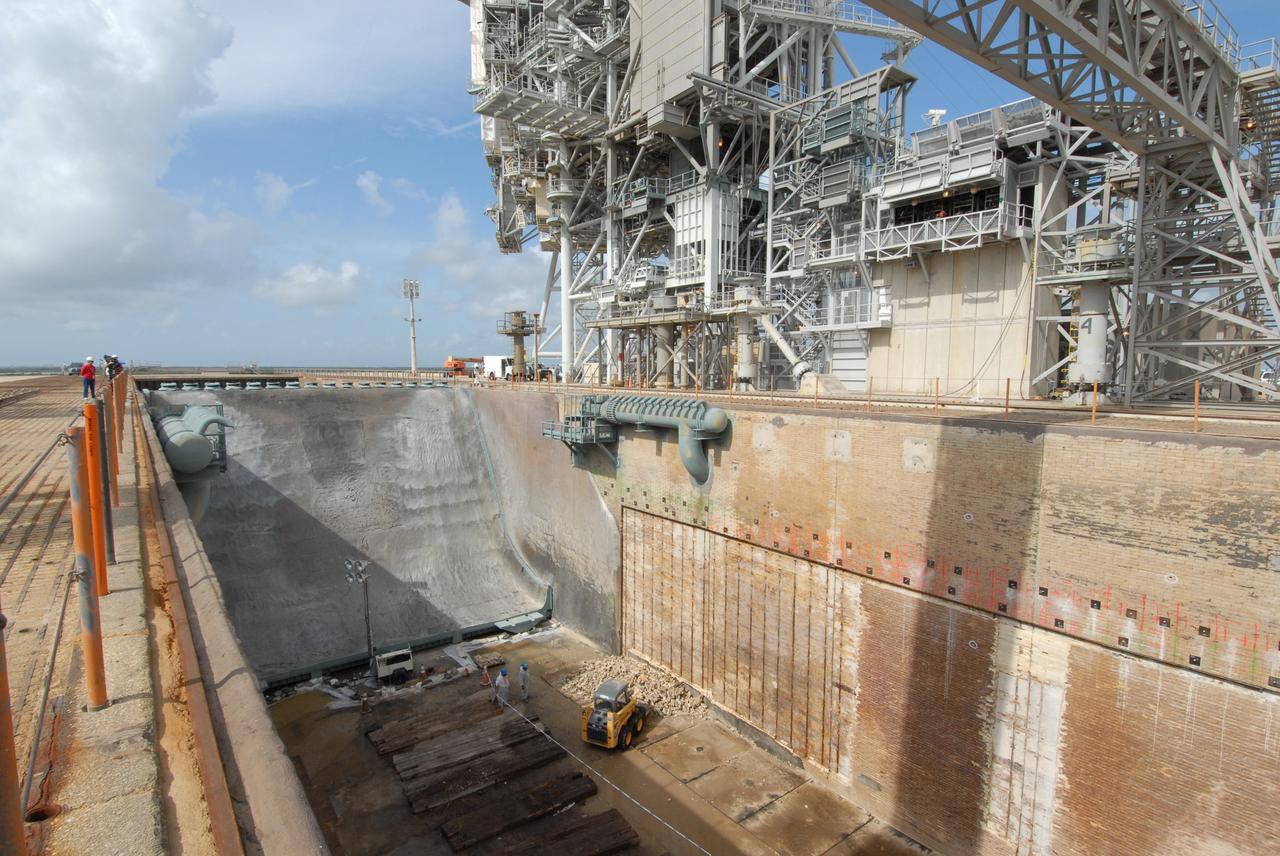
CAPE CANAVERAL, Fla. – A view from above the flame trench on Launch Pad 39A at NASA's Kennedy Space Center shows more repair work under way. The mobile launcher platform, with the space shuttle on top, straddles the trench during launch. Damage to the trench occurred during the launch of Discovery on the STS-124 mission. A 75- by 20-foot section of the east wall was destroyed and debris scattered as far as the pad perimeter fence. Repairs are expected to be completed before the targeted Oct. 8 launch of Atlantis on the STS-125 mission. Photo credit: NASA/Jack Pfaller
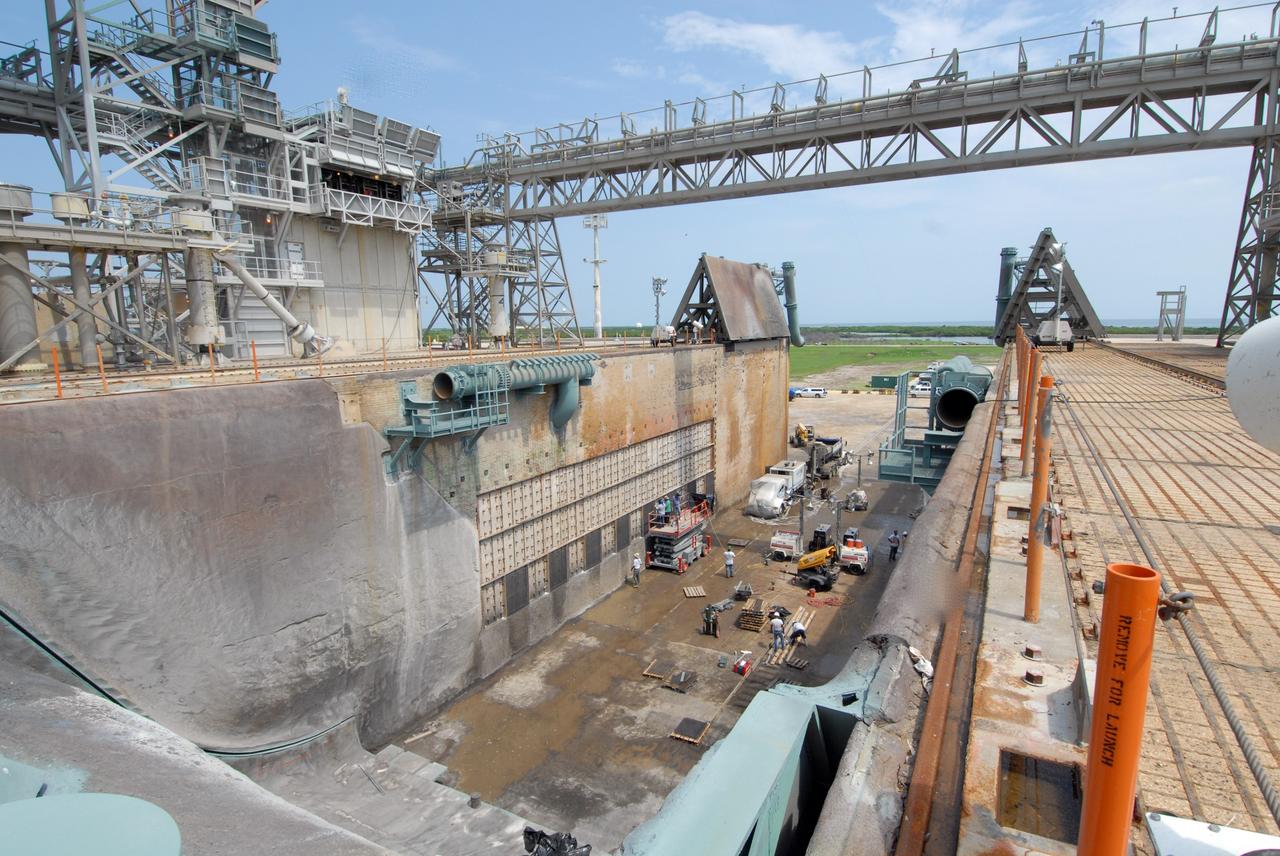
CAPE CANAVERAL, Fla. – This elevated view shows workers on a platform welding a steel grid structure to the wall of the flame trench on Launch Pad 39A at NASA's Kennedy Space Center. Damage to the trench occurred during the launch of Discovery on the STS-124 mission. A 75- by 20-foot section of the east wall was destroyed and debris scattered as far as the pad perimeter fence. Repairs are expected to be completed before the targeted Oct. 8 launch of Atlantis on the NASA Hubble Space Telescope servicing mission. Photo credit: NASA/Jack Pfaller
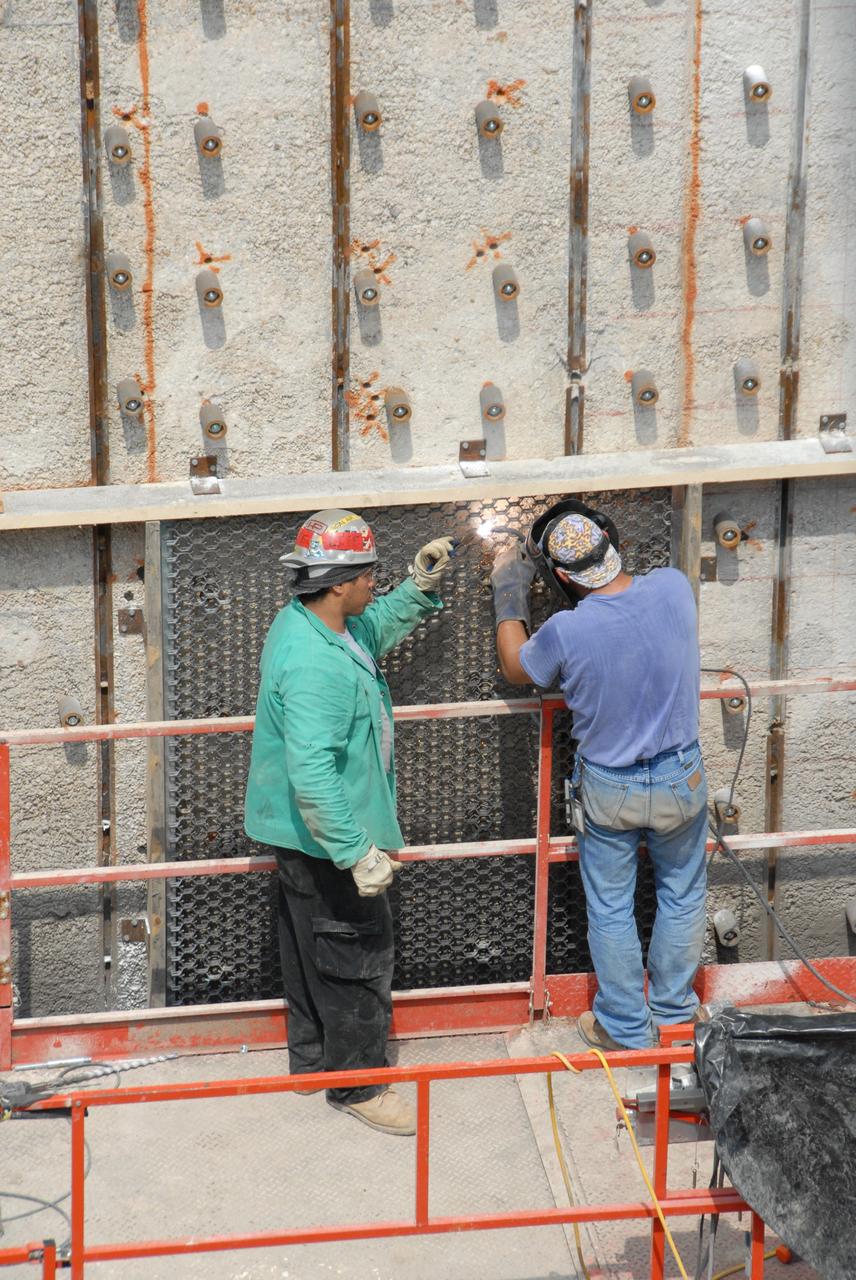
CAPE CANAVERAL, Fla. – Workers weld a steel grid structure to the wall of the flame trench on Launch Pad 39A at NASA's Kennedy Space Center. Damage to the trench occurred during the launch of Discovery on the STS-124 mission. A 75- by 20-foot section of the east wall was destroyed and debris scattered as far as the pad perimeter fence. Repairs are expected to be completed before the targeted Oct. 8 launch of Atlantis on the NASA Hubble Space Telescope servicing mission. Photo credit: NASA/Jack Pfaller
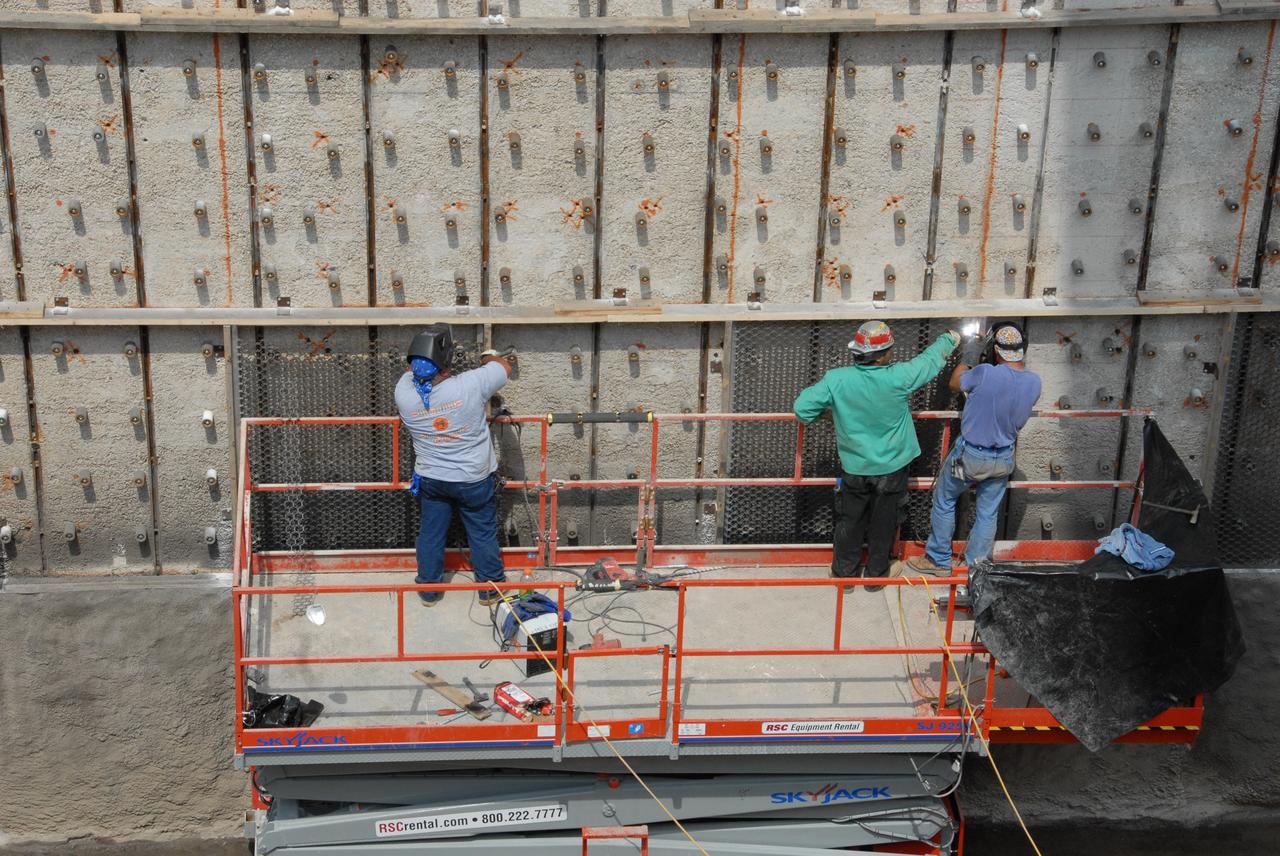
CAPE CANAVERAL, Fla. – Workers weld a steel grid structure to the wall of the flame trench on Launch Pad 39A at NASA's Kennedy Space Center. Damage to the trench occurred during the launch of Discovery on the STS-124 mission. A 75- by 20-foot section of the east wall was destroyed and debris scattered as far as the pad perimeter fence. Repairs are expected to be completed before the targeted Oct. 8 launch of Atlantis on the NASA Hubble Space Telescope servicing mission. Photo credit: NASA/Jack Pfaller
CAPE CANAVERAL, Fla. – Workers prepare to weld a steel grid structure to the wall of the flame trench on Launch Pad 39A at NASA's Kennedy Space Center. Damage to the trench occurred during the launch of Discovery on the STS-124 mission. A 75- by 20-foot section of the east wall was destroyed and debris scattered as far as the pad perimeter fence. Repairs are expected to be completed before the targeted Oct. 8 launch of Atlantis on the NASA Hubble Space Telescope servicing mission. Photo credit: NASA/Jack Pfaller
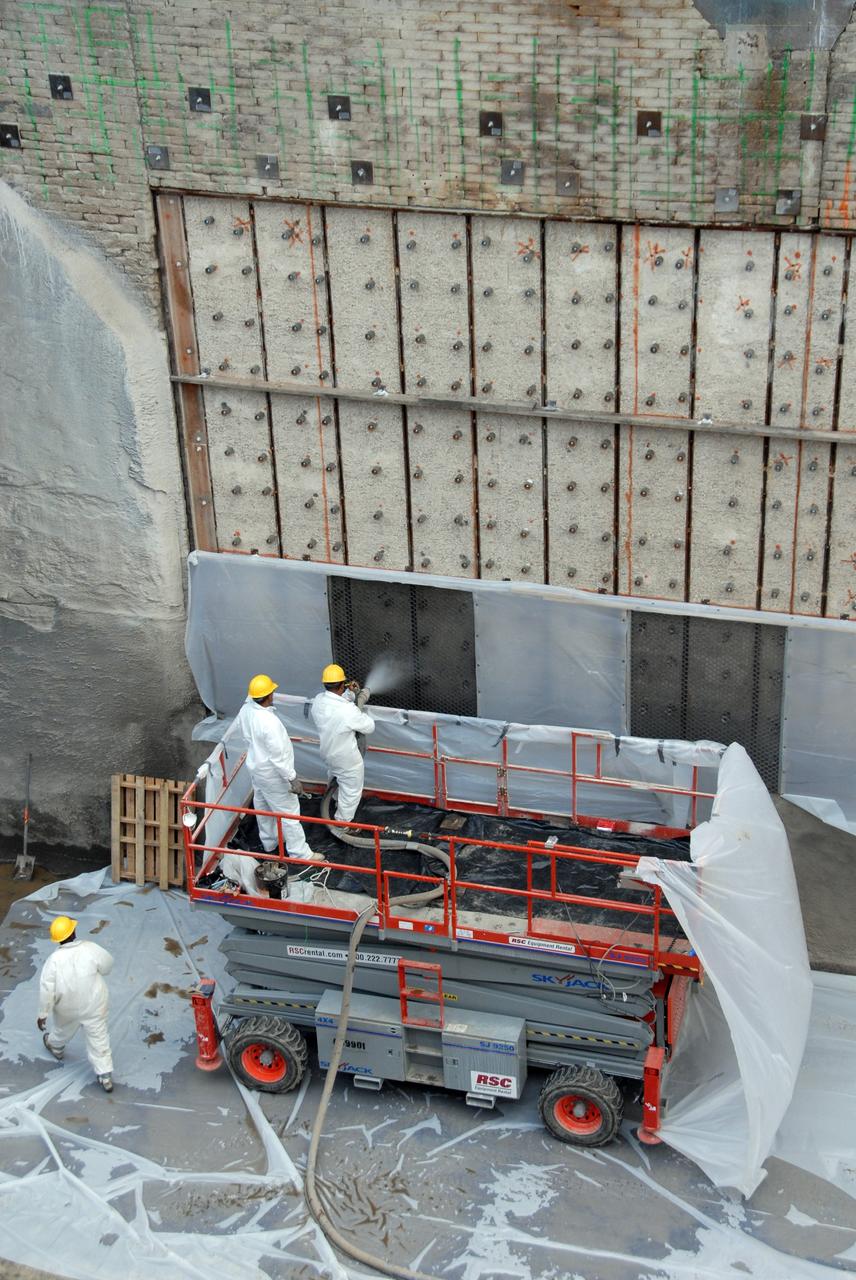
CAPE CANAVERAL, Fla. – This elevated view of Launch Pad 39A at NASA's Kennedy Space Center shows workers filling steel grid structures, welded to the wall of the flame trench, with a heat-resistant concrete called Fondue Fyre, developed during NASA's Apollo lunar program. Damage to the trench occurred during the May 31 launch of Discovery on the STS-124 mission. A 75- by 20-foot section of the east wall was destroyed and debris scattered as far as the pad perimeter fence. Repairs are expected to be completed before the targeted Oct. 8 launch of Atlantis on the NASA Hubble Space Telescope servicing mission. Photo credit: NASA/Jack Pfaller
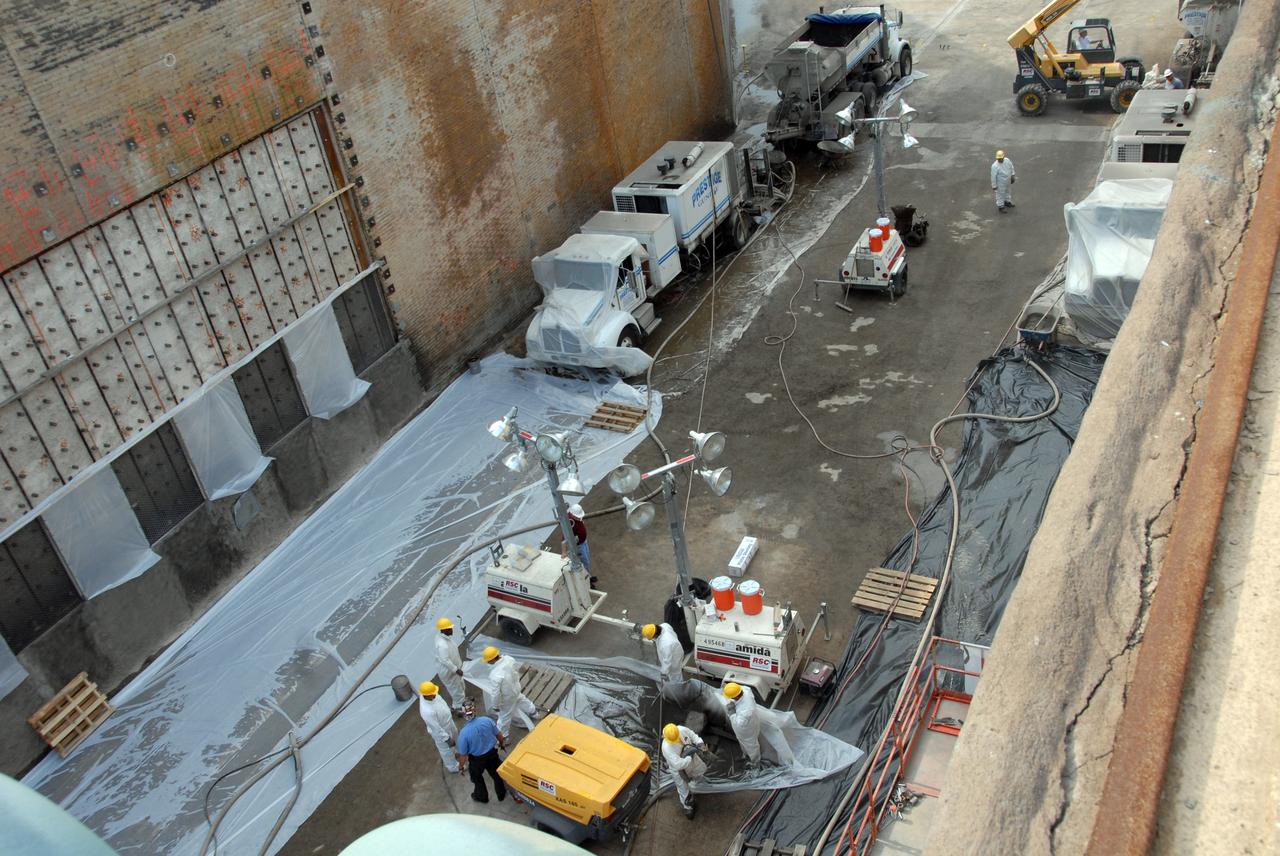
CAPE CANAVERAL, Fla. – This elevated view of Launch Pad 39A at NASA's Kennedy Space Center shows the steel grid structures, welded to the wall of the flame trench, which workers will be filling with a heat-resistant concrete called Fondue Fyre, developed during NASA's Apollo lunar program. Damage to the trench occurred during the May 31 launch of Discovery on the STS-124 mission. A 75- by 20-foot section of the east wall was destroyed and debris scattered as far as the pad perimeter fence. Repairs are expected to be completed before the targeted Oct. 8 launch of Atlantis on the NASA Hubble Space Telescope servicing mission. Photo credit: NASA/Jack Pfaller
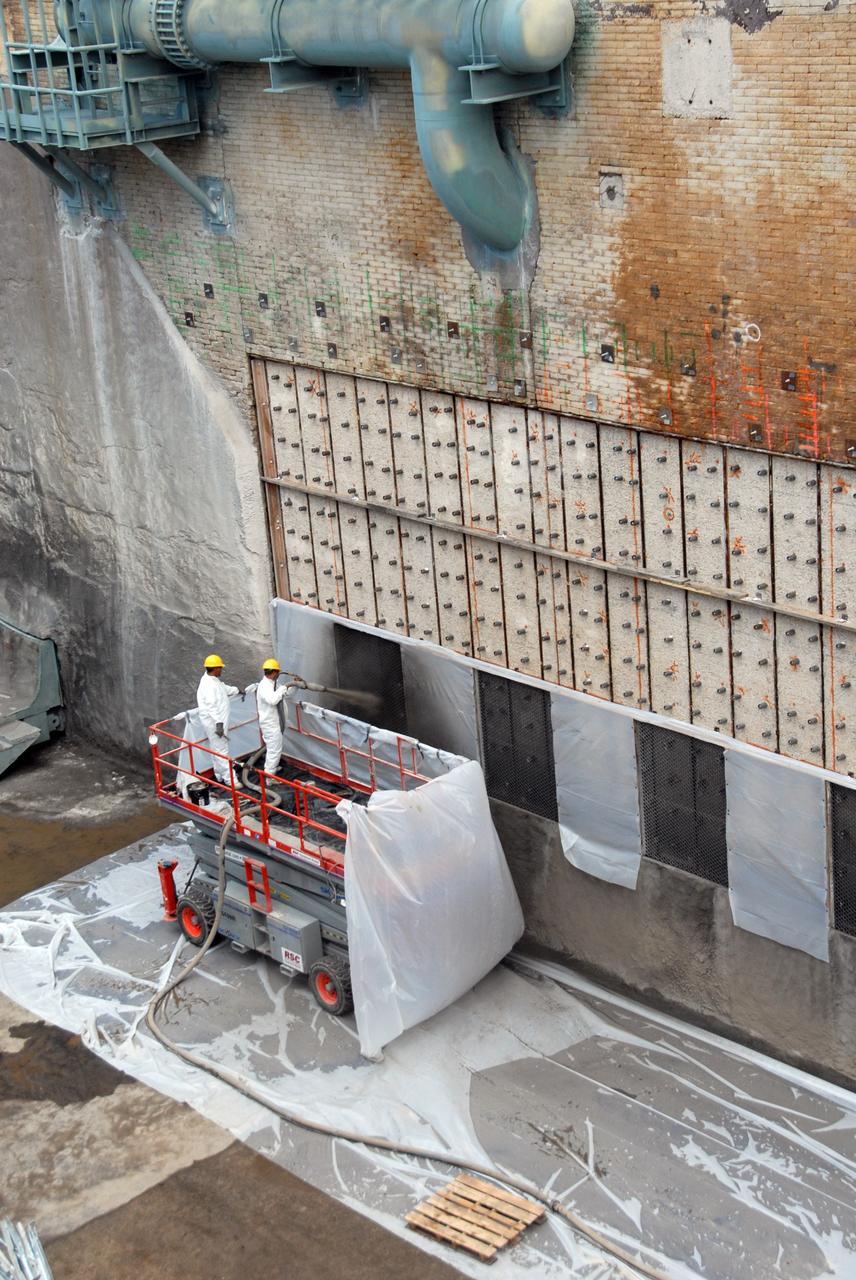
CAPE CANAVERAL, Fla. – At Launch Pad 39A at NASA's Kennedy Space Center, workers on a platform spray a heat-resistant concrete called Fondue Fyre into steel grid structures, welded to the wall of the flame trench. Fondue Fyre was developed during NASA's Apollo lunar program. Damage to the trench occurred during the May 31 launch of Discovery on the STS-124 mission. A 75- by 20-foot section of the east wall was destroyed and debris scattered as far as the pad perimeter fence. Repairs are expected to be completed before the targeted Oct. 8 launch of Atlantis on the NASA Hubble Space Telescope servicing mission. Photo credit: NASA/Jack Pfaller
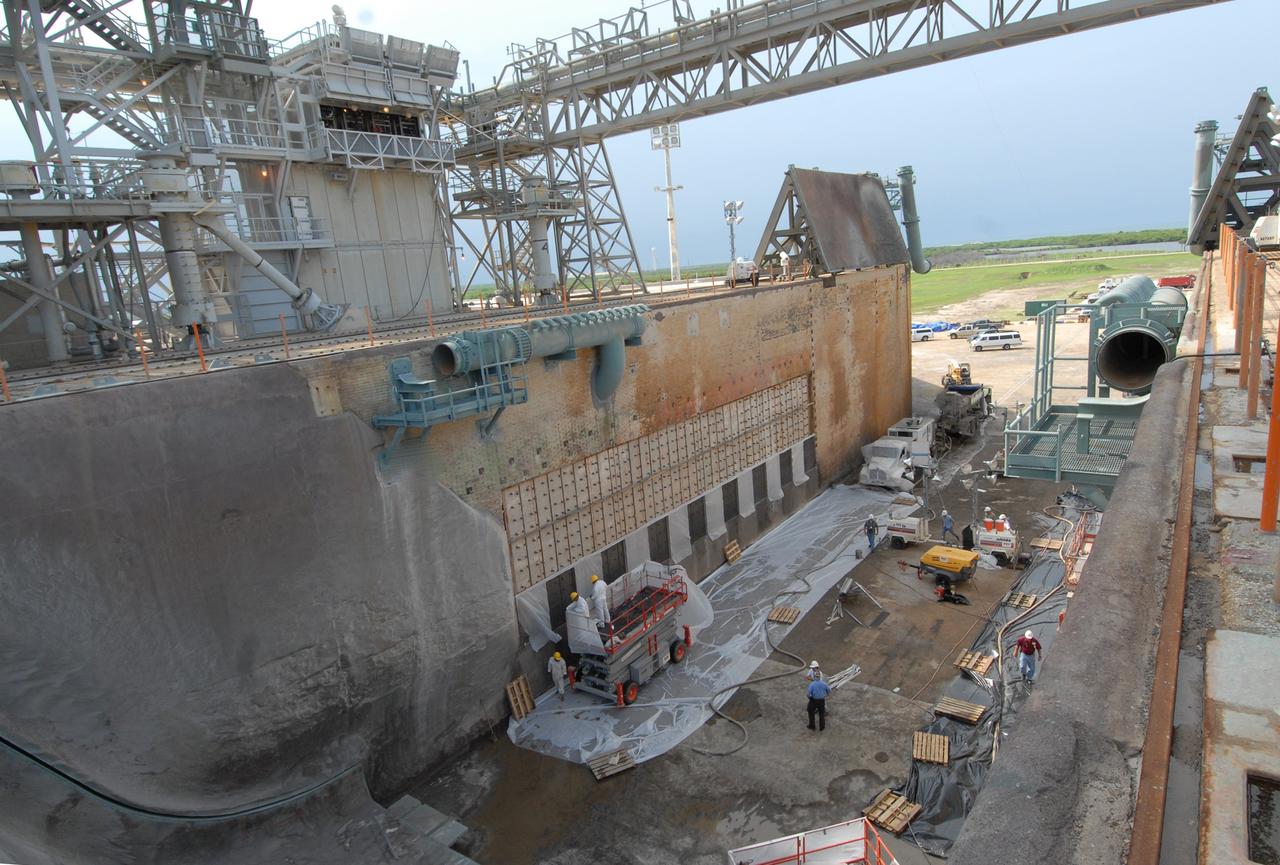
CAPE CANAVERAL, Fla. – This elevated view of Launch Pad 39A at NASA's Kennedy Space Center shows workers preparing to fill steel grid structures, welded to the wall of the flame trench, with a heat-resistant concrete called Fondue Fyre, developed during NASA's Apollo lunar program. Damage to the trench occurred during the May 31 launch of Discovery on the STS-124 mission. A 75- by 20-foot section of the east wall was destroyed and debris scattered as far as the pad perimeter fence. Repairs are expected to be completed before the targeted Oct. 8 launch of Atlantis on the NASA Hubble Space Telescope servicing mission. Photo credit: NASA/Jack Pfaller
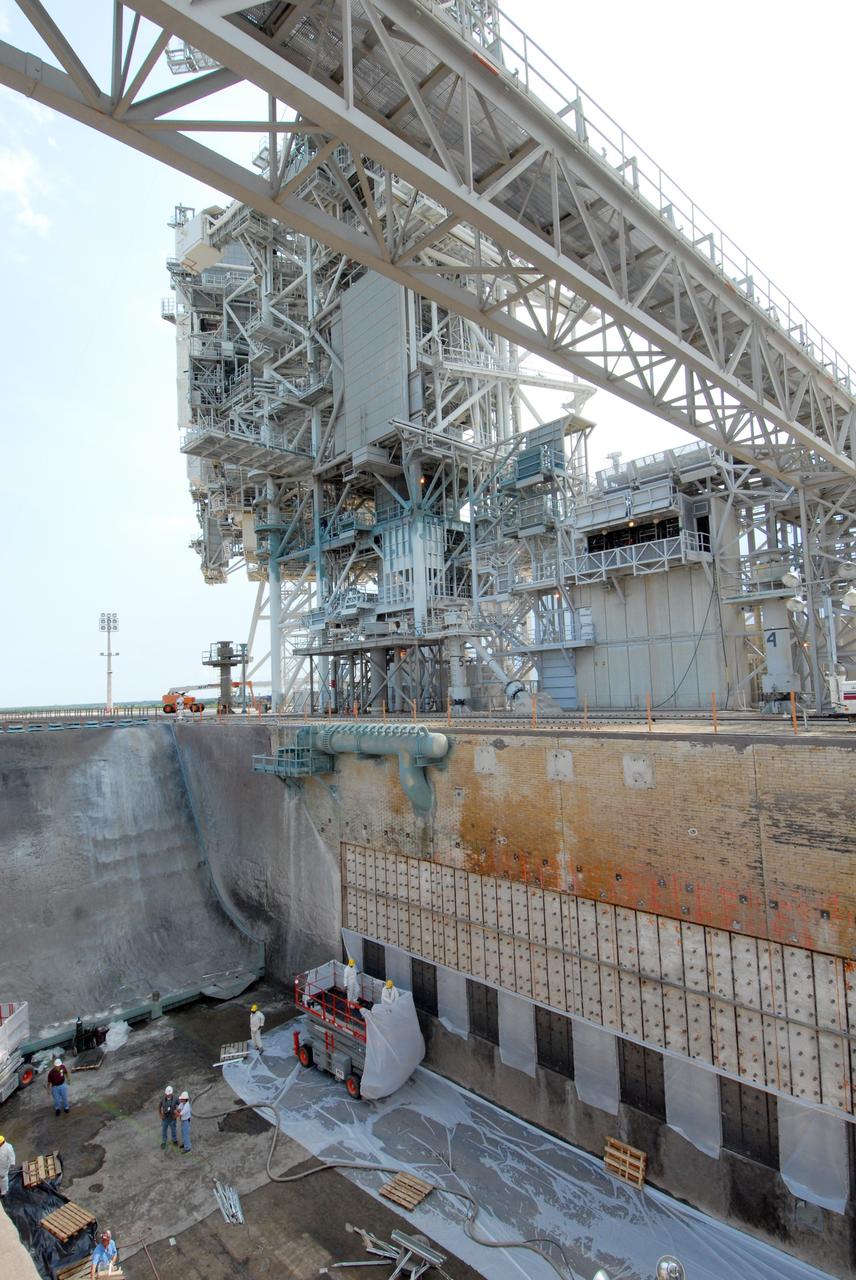
CAPE CANAVERAL, Fla. – This elevated view of Launch Pad 39A at NASA's Kennedy Space Center shows workers preparing to fill steel grid structures, welded to the wall of the flame trench, with a heat-resistant concrete called Fondue Fyre, developed during NASA's Apollo lunar program. Damage to the trench occurred during the May 31 launch of Discovery on the STS-124 mission. A 75- by 20-foot section of the east wall was destroyed and debris scattered as far as the pad perimeter fence. Repairs are expected to be completed before the targeted Oct. 8 launch of Atlantis on the NASA Hubble Space Telescope servicing mission. Photo credit: NASA/Jack Pfaller
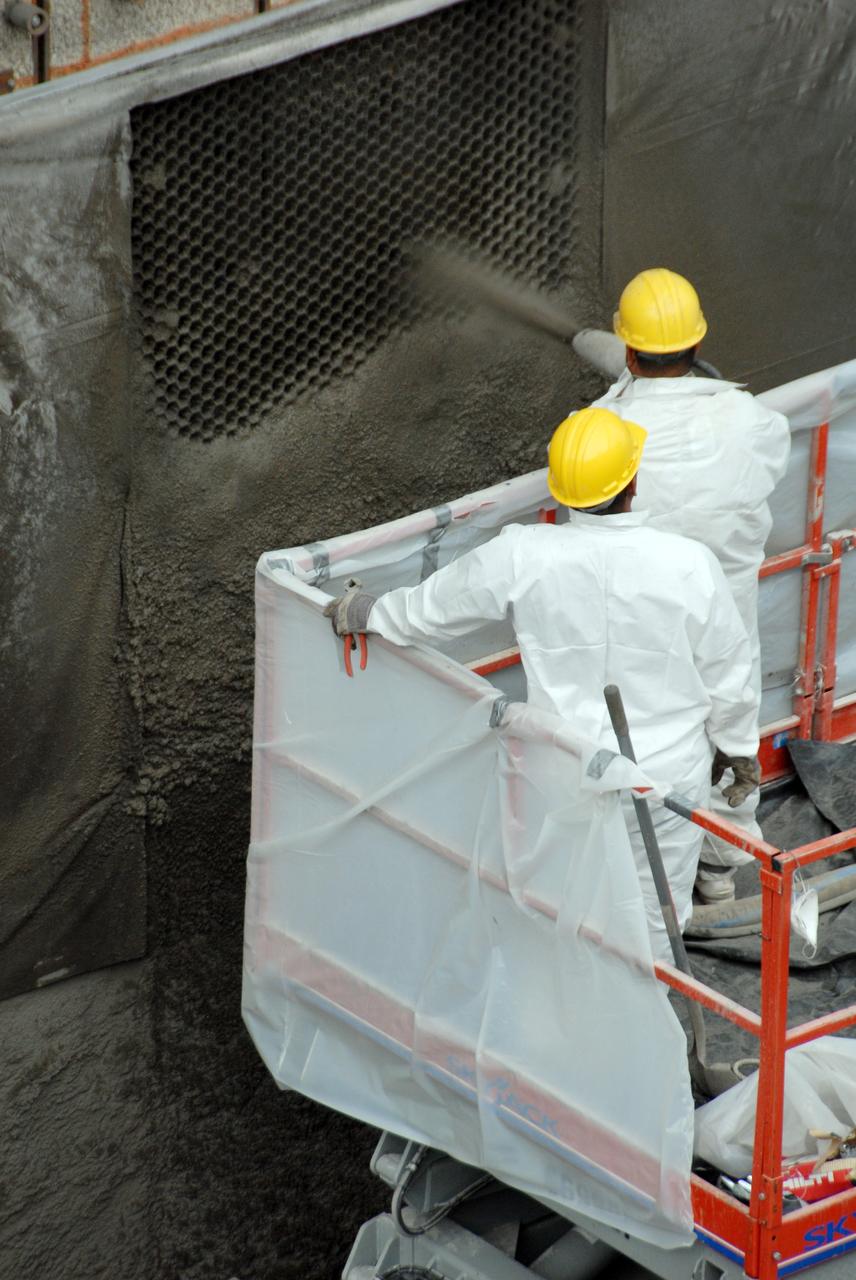
CAPE CANAVERAL, Fla. – At Launch Pad 39A at NASA's Kennedy Space Center, workers spray a heat-resistant concrete called Fondue Fyre into steel grid structures, welded to the wall of the flame trench. Fondue Fyre was developed during NASA's Apollo lunar program. Damage to the trench occurred during the May 31 launch of Discovery on the STS-124 mission. A 75- by 20-foot section of the east wall was destroyed and debris scattered as far as the pad perimeter fence. Repairs are expected to be completed before the targeted Oct. 8 launch of Atlantis on the NASA Hubble Space Telescope servicing mission. Photo credit: NASA/Jack Pfaller
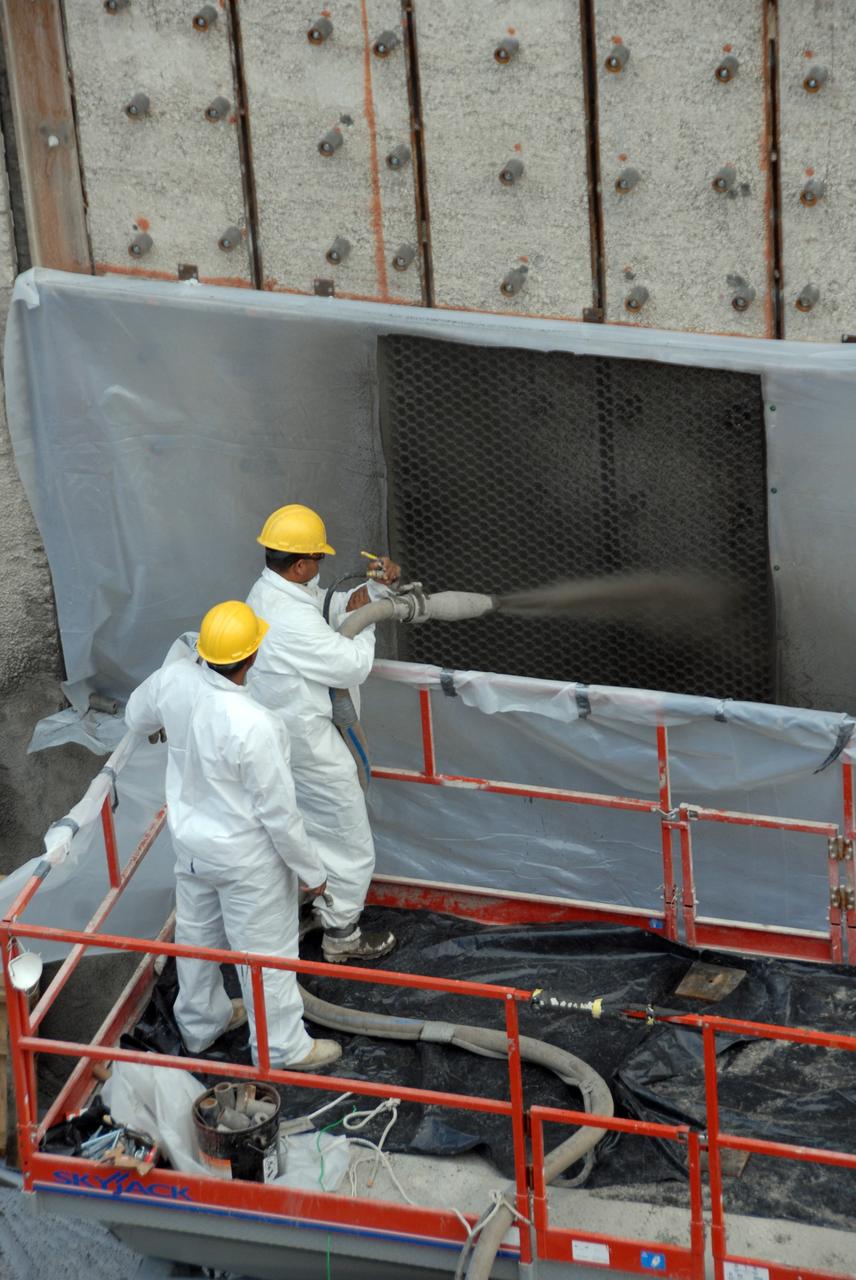
CAPE CANAVERAL, Fla. – At Launch Pad 39A at NASA's Kennedy Space Center, workers spray a heat-resistant concrete called Fondue Fyre into steel grid structures, welded to the wall of the flame trench. Fondue Fyre was developed during NASA's Apollo lunar program. Damage to the trench occurred during the May 31 launch of Discovery on the STS-124 mission. A 75- by 20-foot section of the east wall was destroyed and debris scattered as far as the pad perimeter fence. Repairs are expected to be completed before the targeted Oct. 8 launch of Atlantis on the NASA Hubble Space Telescope servicing mission. Photo credit: NASA/Jack Pfaller
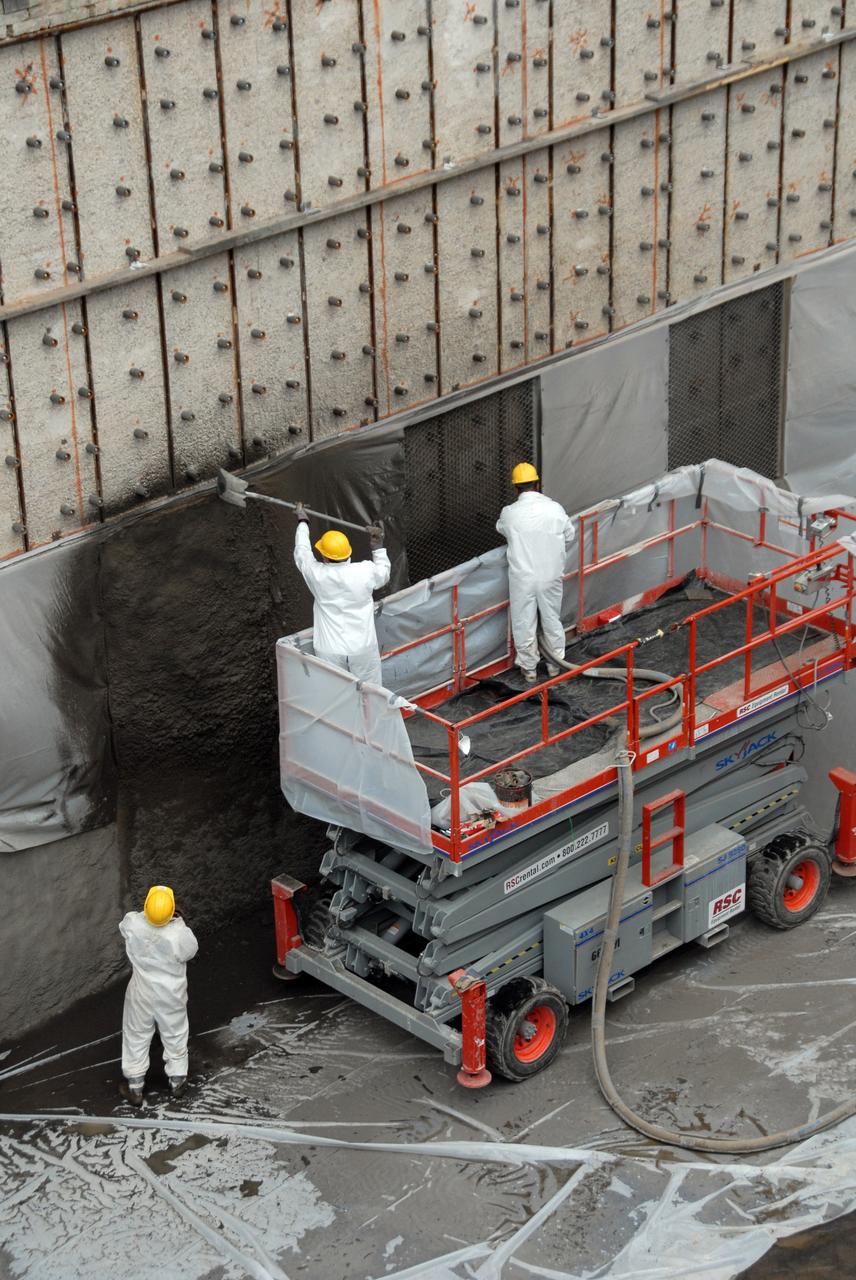
CAPE CANAVERAL, Fla. – At Launch Pad 39A at NASA's Kennedy Space Center, workers pack a heat-resistant concrete called Fondue Fyre into steel grid structures, welded to the wall of the flame trench. Fondue Fyre was developed during NASA's Apollo lunar program. Damage to the trench occurred during the May 31 launch of Discovery on the STS-124 mission. A 75- by 20-foot section of the east wall was destroyed and debris scattered as far as the pad perimeter fence. Repairs are expected to be completed before the targeted Oct. 8 launch of Atlantis on the NASA Hubble Space Telescope servicing mission. Photo credit: NASA/Jack Pfaller
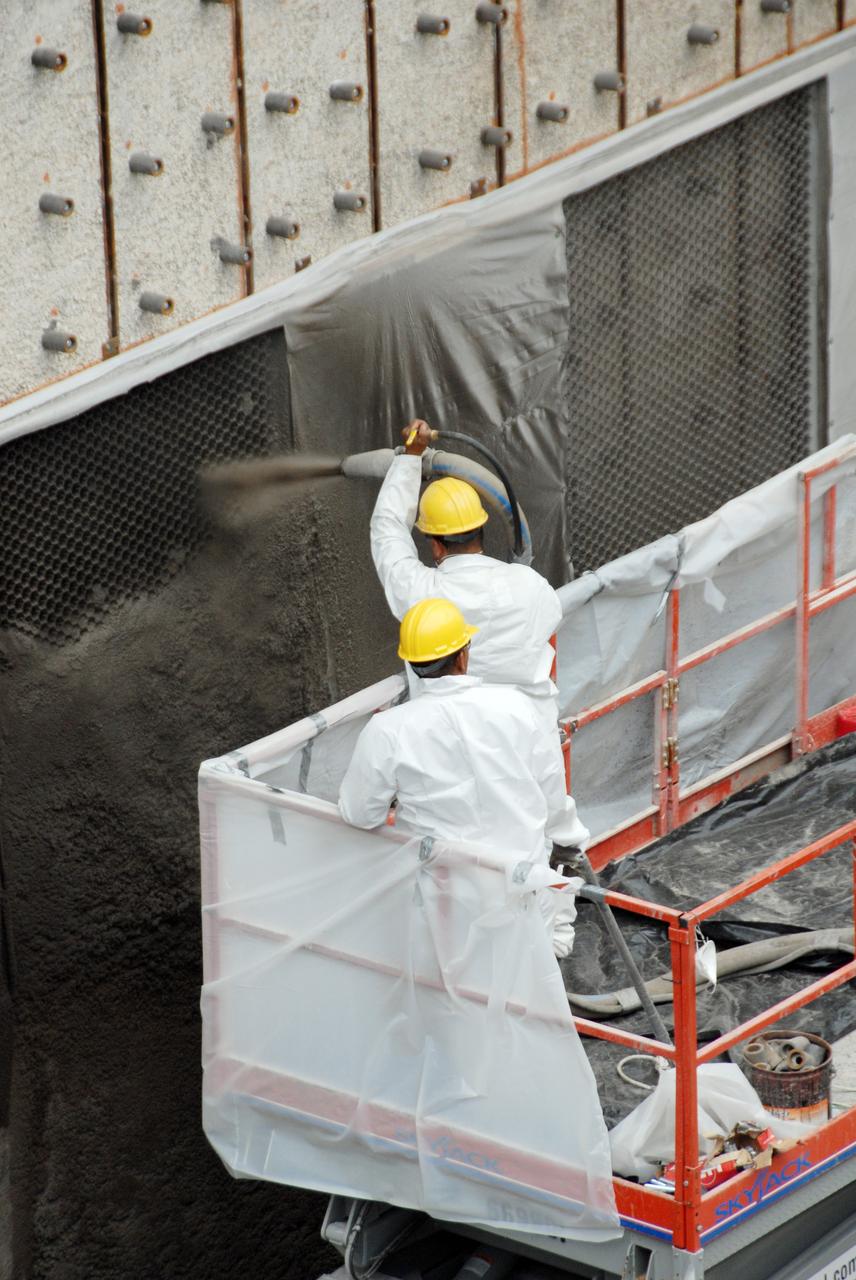
CAPE CANAVERAL, Fla. – At Launch Pad 39A at NASA's Kennedy Space Center, workers spray a heat-resistant concrete called Fondue Fyre into steel grid structures, welded to the wall of the flame trench. Fondue Fyre was developed during NASA's Apollo lunar program. Damage to the trench occurred during the May 31 launch of Discovery on the STS-124 mission. A 75- by 20-foot section of the east wall was destroyed and debris scattered as far as the pad perimeter fence. Repairs are expected to be completed before the targeted Oct. 8 launch of Atlantis on the NASA Hubble Space Telescope servicing mission. Photo credit: NASA/Jack Pfaller
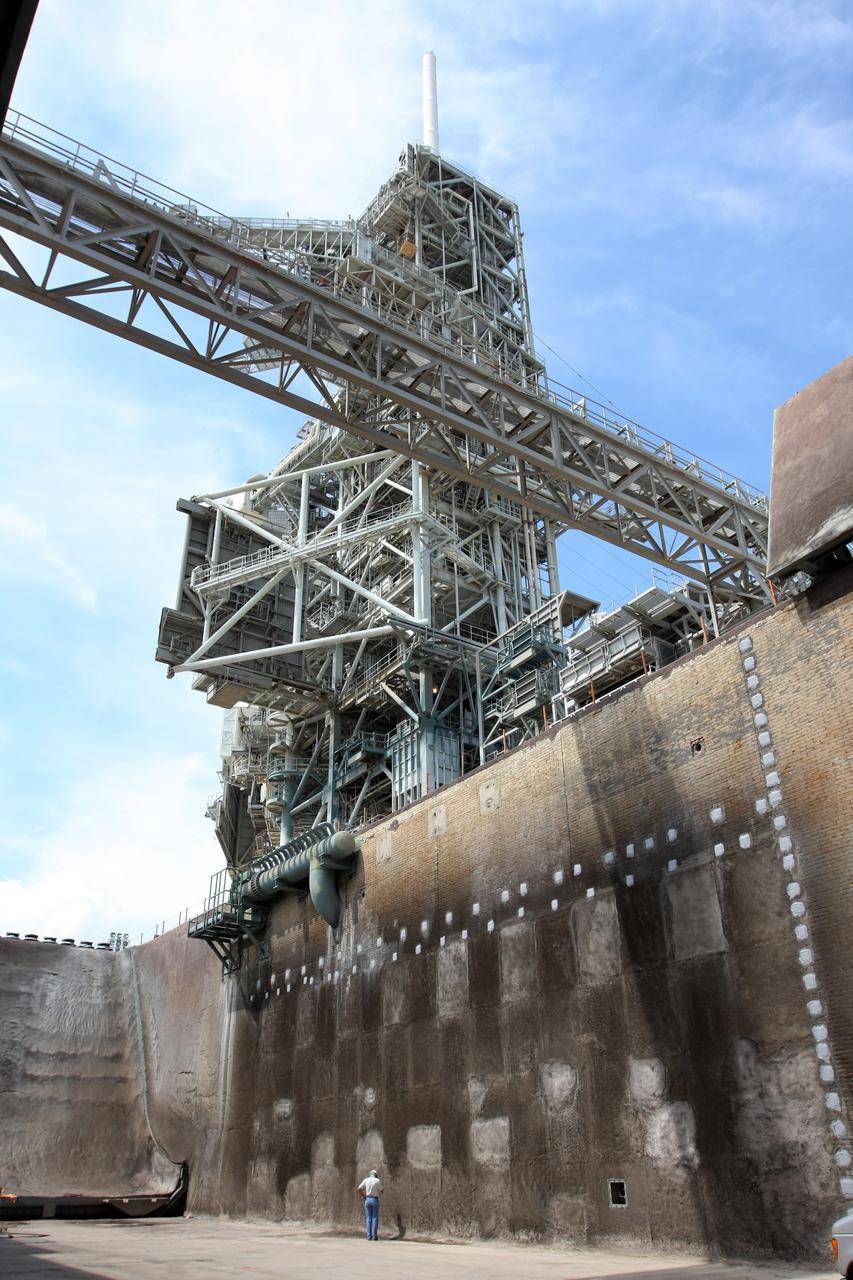
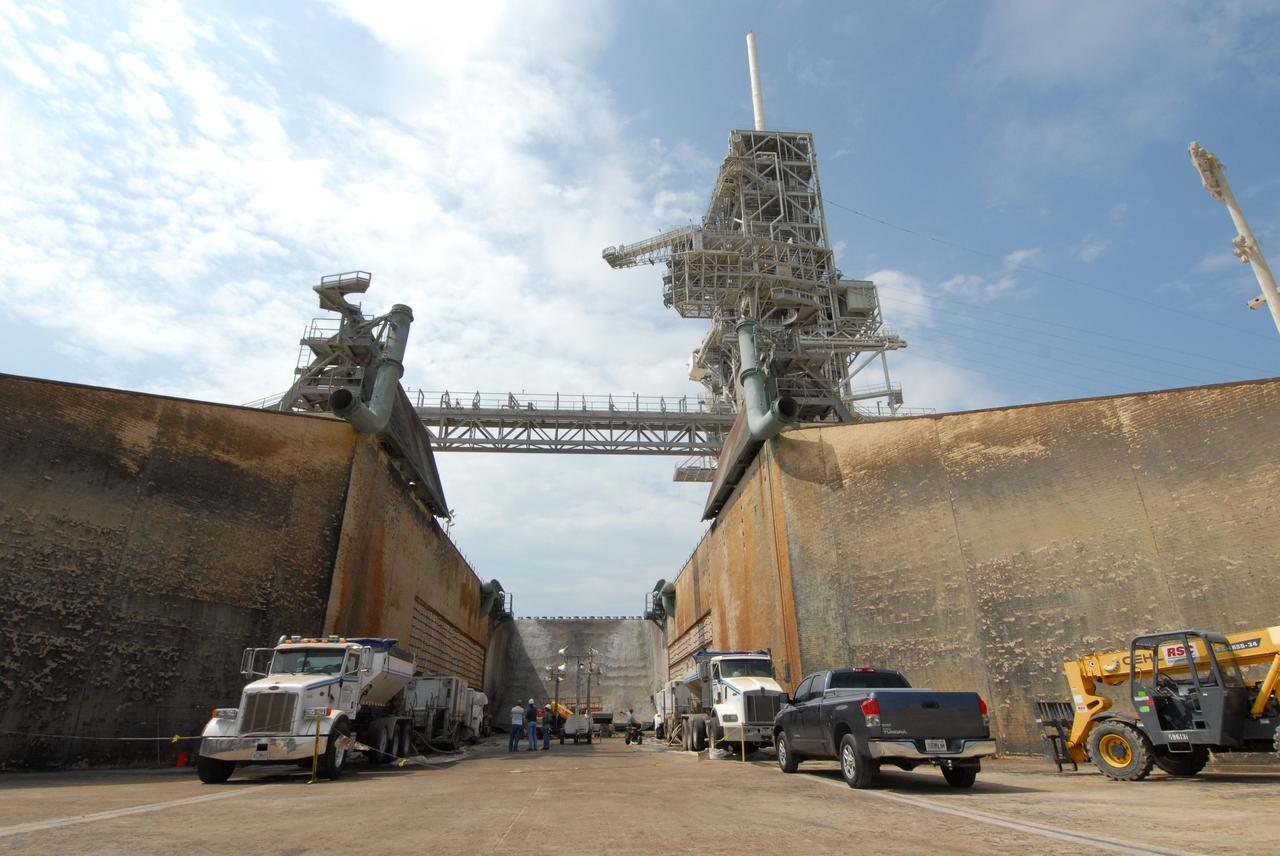
CAPE CANAVERAL, Fla. – An inspector stands in the Launch Pad 39A flame trench at NASA's Kennedy Space Center after tests of the repairs on the wall. Workers sprayed a heat-resistant concrete called Fondue Fyre into steel grid structures, welded to the wall of the flame trench. Fondue Fyre was developed during NASA's Apollo lunar program. Damage to the trench occurred during the launch of space shuttle Discovery on the STS-124 mission. A 75-foot by 20-foot section of the east wall was destroyed and debris scattered as far as the pad perimeter fence. Repairs being completed before the targeted Oct. 8 launch of Atlantis on the NASA Hubble Space Telescope servicing mission. Photo credit: NASA/Dimitri Gerondidakis
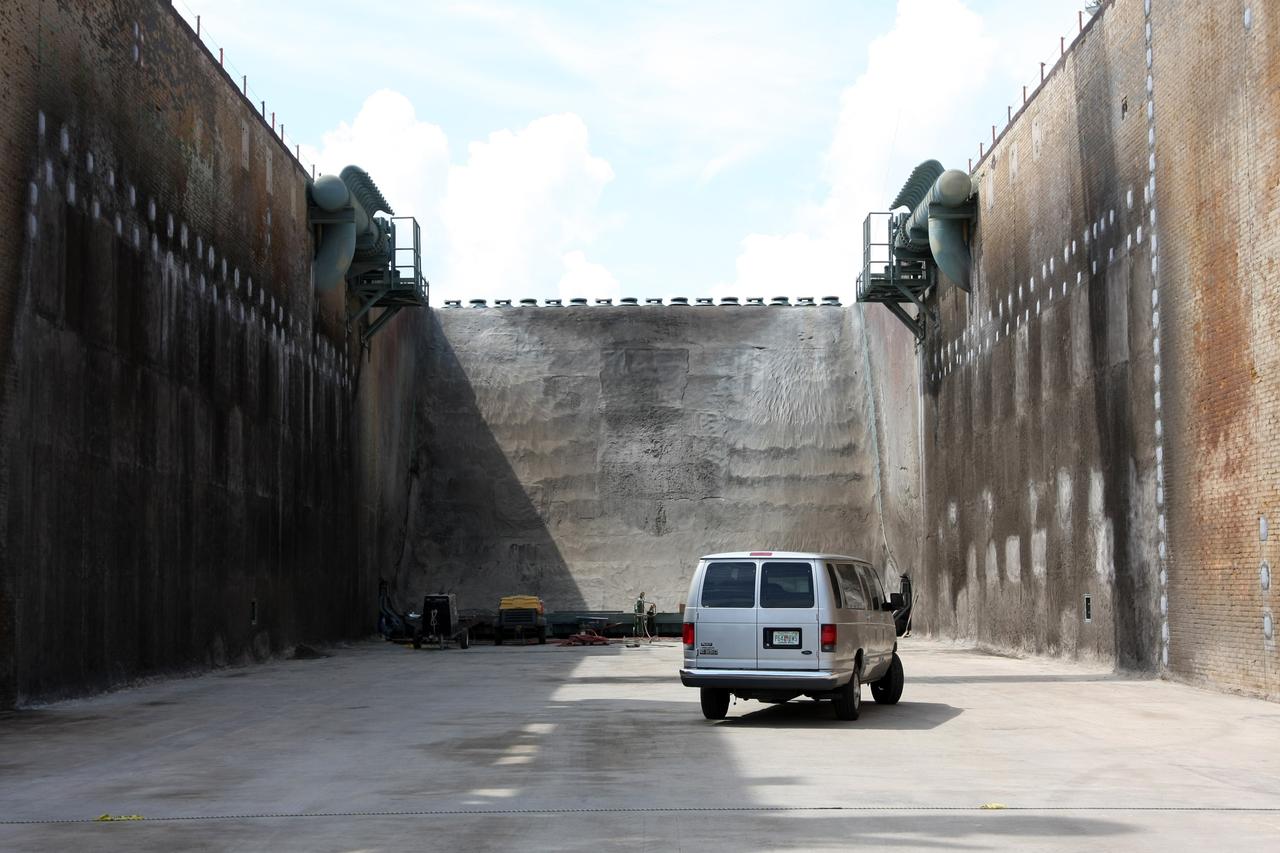
CAPE CANAVERAL, Fla. – A van travels the width of the Launch Pad 39A flame trench at NASA's Kennedy Space Center after tests of the repairs on the wall. Workers sprayed a heat-resistant concrete called Fondue Fyre into steel grid structures, welded to the wall of the flame trench. Fondue Fyre was developed during NASA's Apollo lunar program. Damage to the trench occurred during the launch of space shuttle Discovery on the STS-124 mission. A 75-foot by 20-foot section of the east wall was destroyed and debris scattered as far as the pad perimeter fence. Repairs being completed before the targeted Oct. 8 launch of Atlantis on the NASA Hubble Space Telescope servicing mission. Photo credit: NASA/Dimitri Gerondidakis
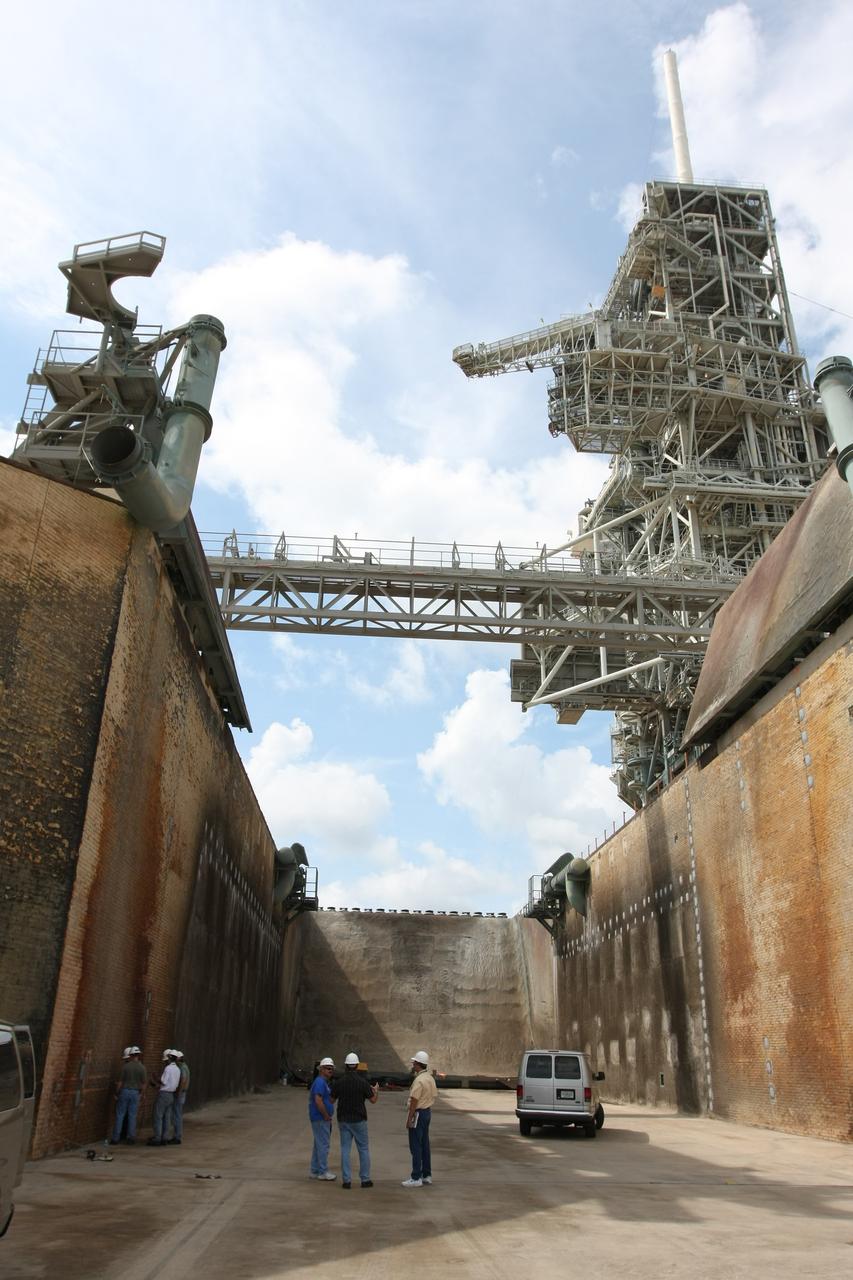
CAPE CANAVERAL, Fla. – This view of the Launch Pad 39A flame trench at NASA's Kennedy Space Center shows the areas on the walls recently repaired. Workers sprayed a heat-resistant concrete called Fondue Fyre into steel grid structures, welded to the wall of the flame trench. Fondue Fyre was developed during NASA's Apollo lunar program. Damage to the trench occurred during the launch of space shuttle Discovery on the STS-124 mission. A 75-foot by 20-foot section of the east wall was destroyed and debris scattered as far as the pad perimeter fence. Repairs being completed before the targeted Oct. 8 launch of Atlantis on the NASA Hubble Space Telescope servicing mission. Photo credit: NASA/Dimitri Gerondidakis
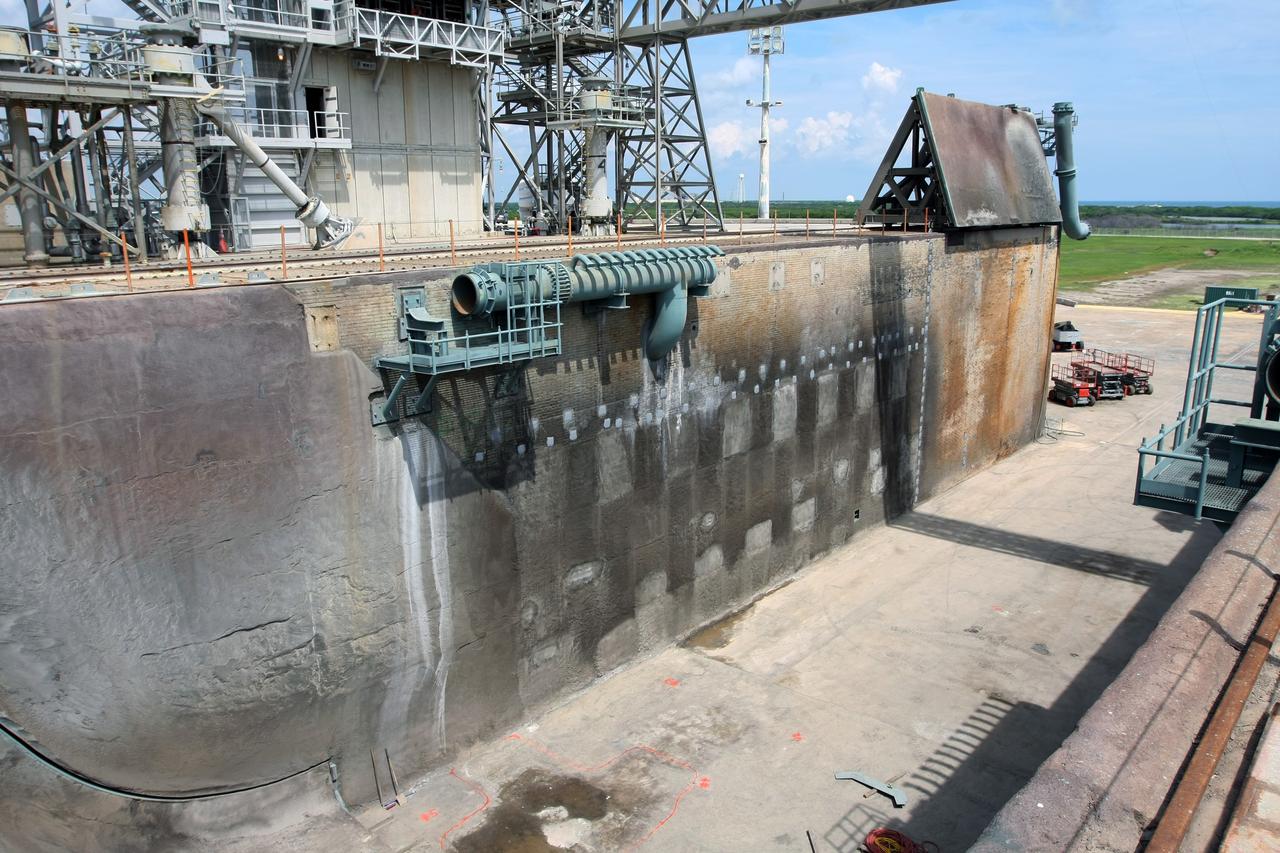
CAPE CANAVERAL, Fla. – A view from above of repairs made to the walls of the Launch Pad 39A flame trench at NASA's Kennedy Space Center. Workers sprayed a heat-resistant concrete called Fondue Fyre into steel grid structures, welded to the wall of the flame trench. Fondue Fyre was developed during NASA's Apollo lunar program. Damage to the trench occurred during the launch of space shuttle Discovery on the STS-124 mission. A 75-foot by 20-foot section of the east wall was destroyed and debris scattered as far as the pad perimeter fence. Repairs being completed before the targeted Oct. 8 launch of Atlantis on the NASA Hubble Space Telescope servicing mission. Photo credit: NASA/Dimitri Gerondidakis
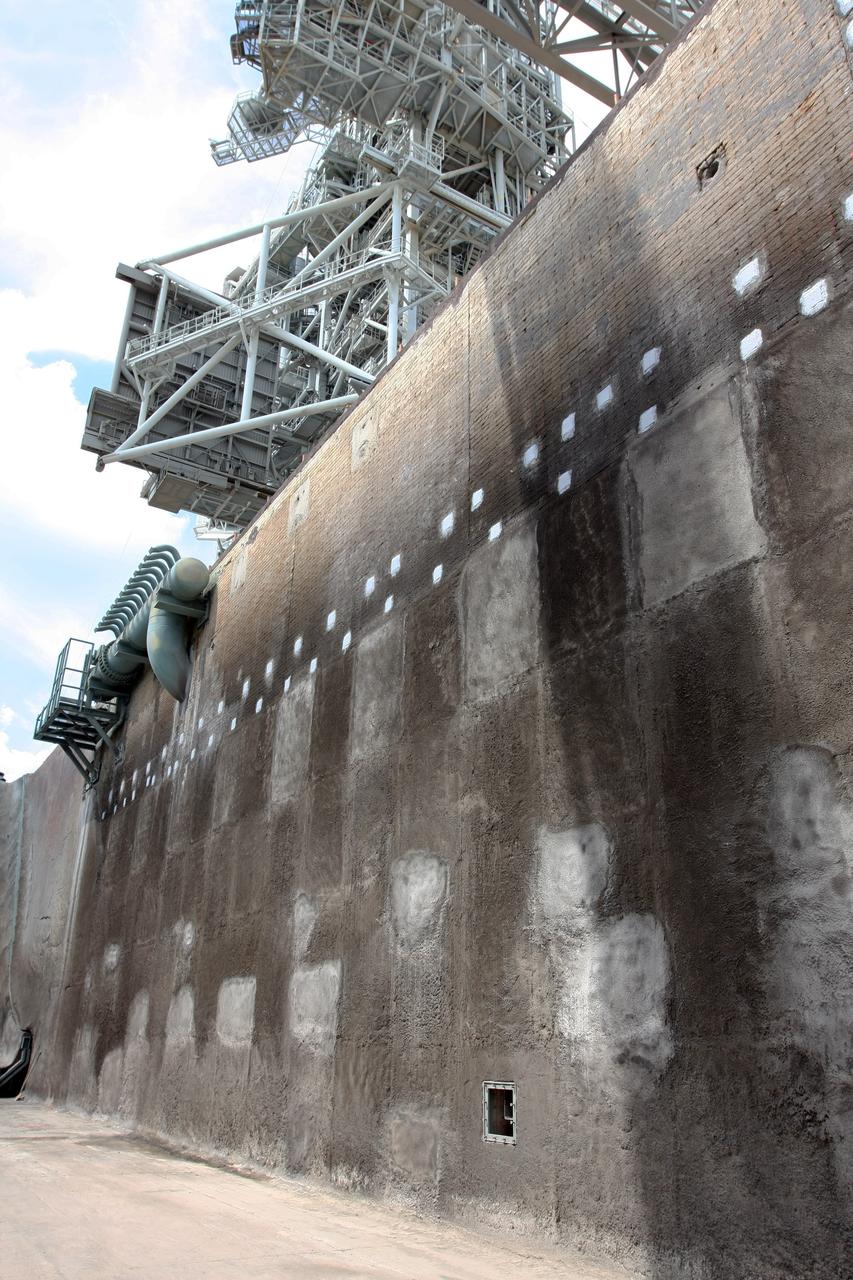
CAPE CANAVERAL, Fla. – A closeup of the wall in the Launch Pad 39A flame trench at NASA's Kennedy Space Center after repairs were made. Workers sprayed a heat-resistant concrete called Fondue Fyre into steel grid structures, welded to the wall of the flame trench. Fondue Fyre was developed during NASA's Apollo lunar program. Damage to the trench occurred during the launch of space shuttle Discovery on the STS-124 mission. A 75-foot by 20-foot section of the east wall was destroyed and debris scattered as far as the pad perimeter fence. Repairs being completed before the targeted Oct. 8 launch of Atlantis on the NASA Hubble Space Telescope servicing mission. Photo credit: NASA/Dimitri Gerondidakis
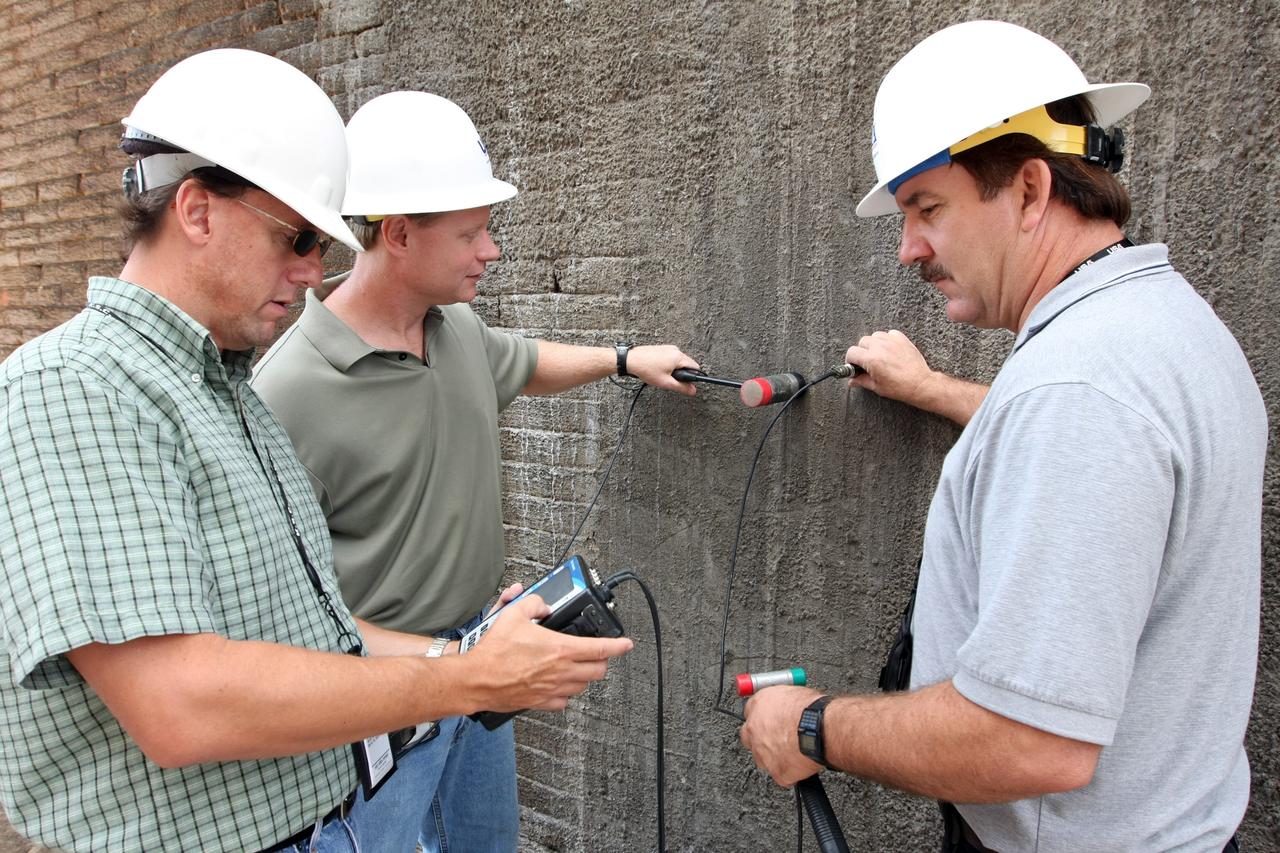
CAPE CANAVERAL, Fla. – In the Launch Pad 39A flame trench at NASA's Kennedy Space Center, inspectors test the repairs on the wall. Workers sprayed a heat-resistant concrete called Fondue Fyre into steel grid structures, welded to the wall of the flame trench. Fondue Fyre was developed during NASA's Apollo lunar program. Damage to the trench occurred during the launch of space shuttle Discovery on the STS-124 mission. A 75-foot by 20-foot section of the east wall was destroyed and debris scattered as far as the pad perimeter fence. Repairs being completed before the targeted Oct. 8 launch of Atlantis on the NASA Hubble Space Telescope servicing mission. Photo credit: NASA/Dimitri Gerondidakis
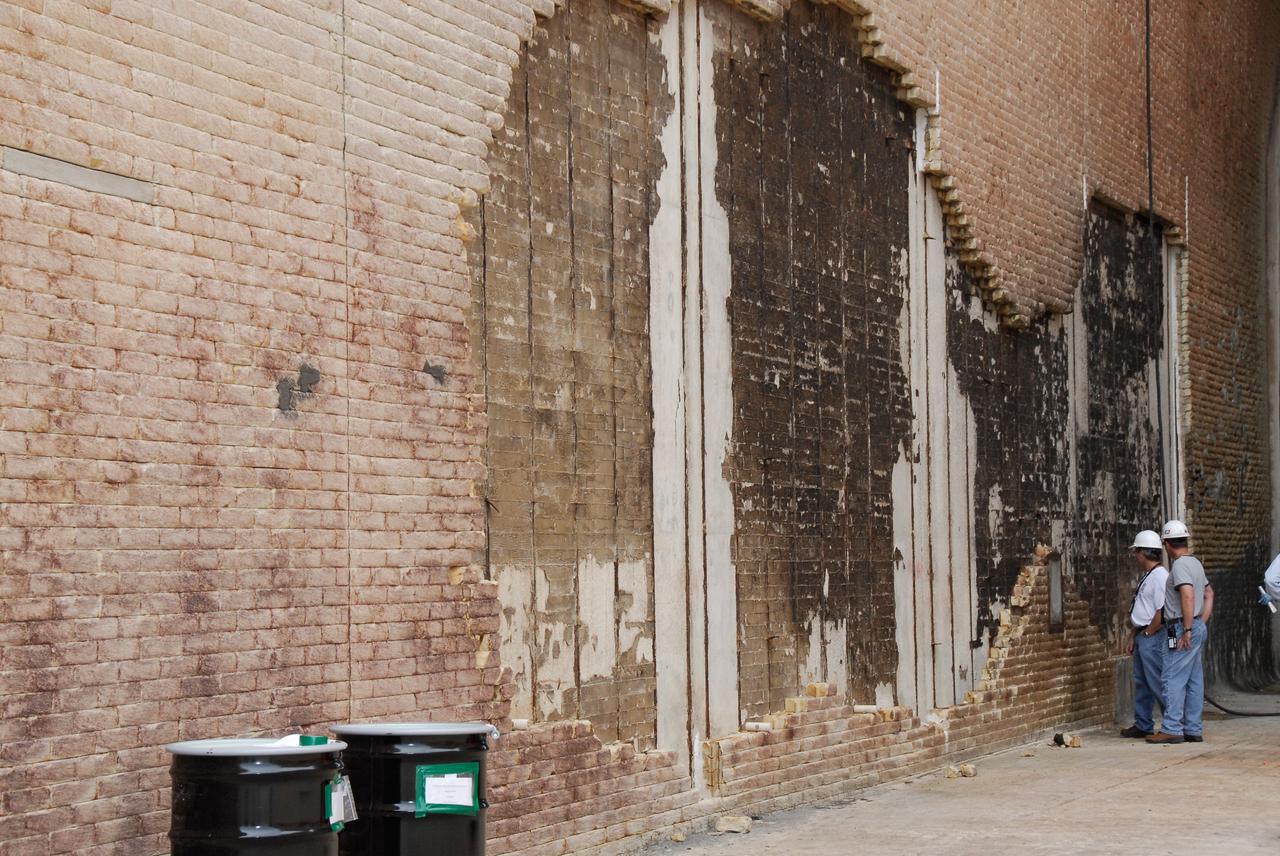
CAPE CANAVERAL, Fla. – Workers examine some of the damage to the wall of the flame trench on Launch Pad 39A at NASA's Kennedy Space Center where damage occurred during the May 31 launch of space shuttle Discovery. Repairs are expected to be completed in time for space shuttle Atlantis' STS-125 mission to NASA's Hubble Space Telescope targeted for Oct. 8. Photo credit: NASA/Kim Shiflett
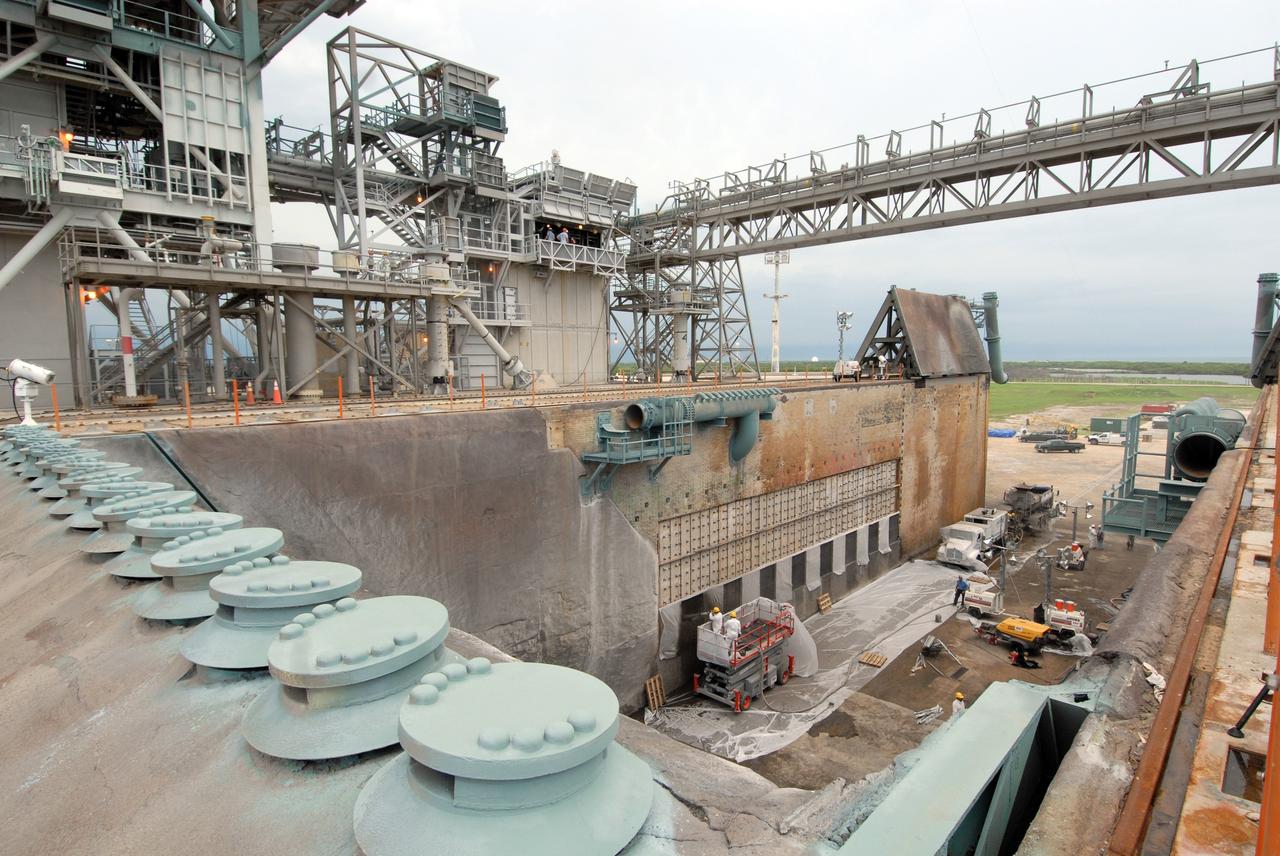
CAPE CANAVERAL, Fla. – This elevated view of Launch Pad 39A at NASA's Kennedy Space Center shows workers filling steel grid structures, welded to the wall of the flame trench, with a heat-resistant concrete called Fondue Fyre, developed during NASA's Apollo lunar program. At left are the pad's "rainbirds." These nozzles are part of the pad sound suppression system which protects the orbiter and its payloads from being damaged by acoustical energy reflected from the mobile launcher platform during liftoff. Damage to the trench occurred during the May 31 launch of Discovery on the STS-124 mission. A 75- by 20-foot section of the east wall was destroyed and debris scattered as far as the pad perimeter fence. Repairs are expected to be completed before the targeted Oct. 8 launch of Atlantis on the NASA Hubble Space Telescope servicing mission. Photo credit: NASA/Jack Pfaller
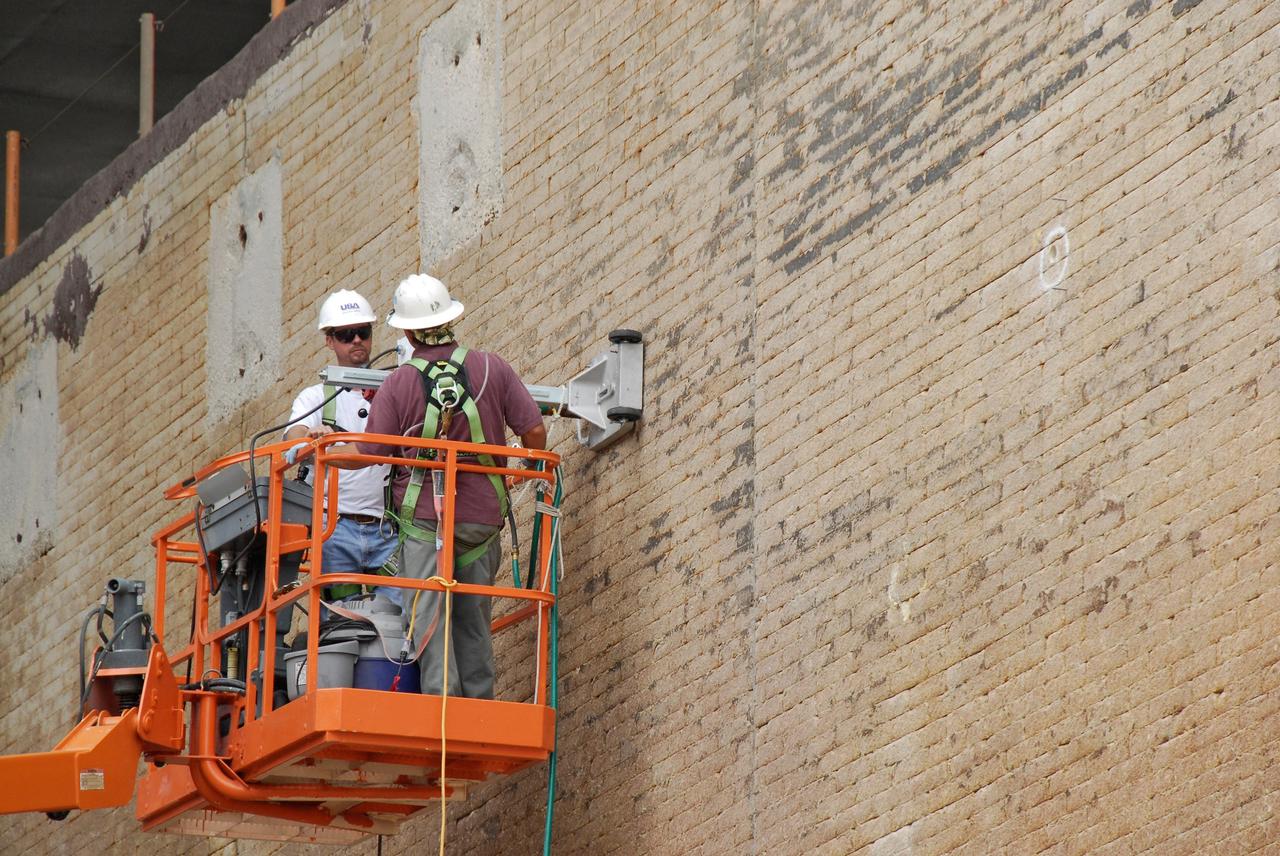
CAPE CANAVERAL, Fla. – Workers test the stability of the wall of the flame trench on Launch Pad 39A at NASA's Kennedy Space Center where damage occurred during the May 31 launch of space shuttle Discovery. Repairs are expected to be completed in time for space shuttle Atlantis' STS-125 mission to NASA's Hubble Space Telescope targeted for Oct. 8. Photo credit: NASA/Kim Shiflett
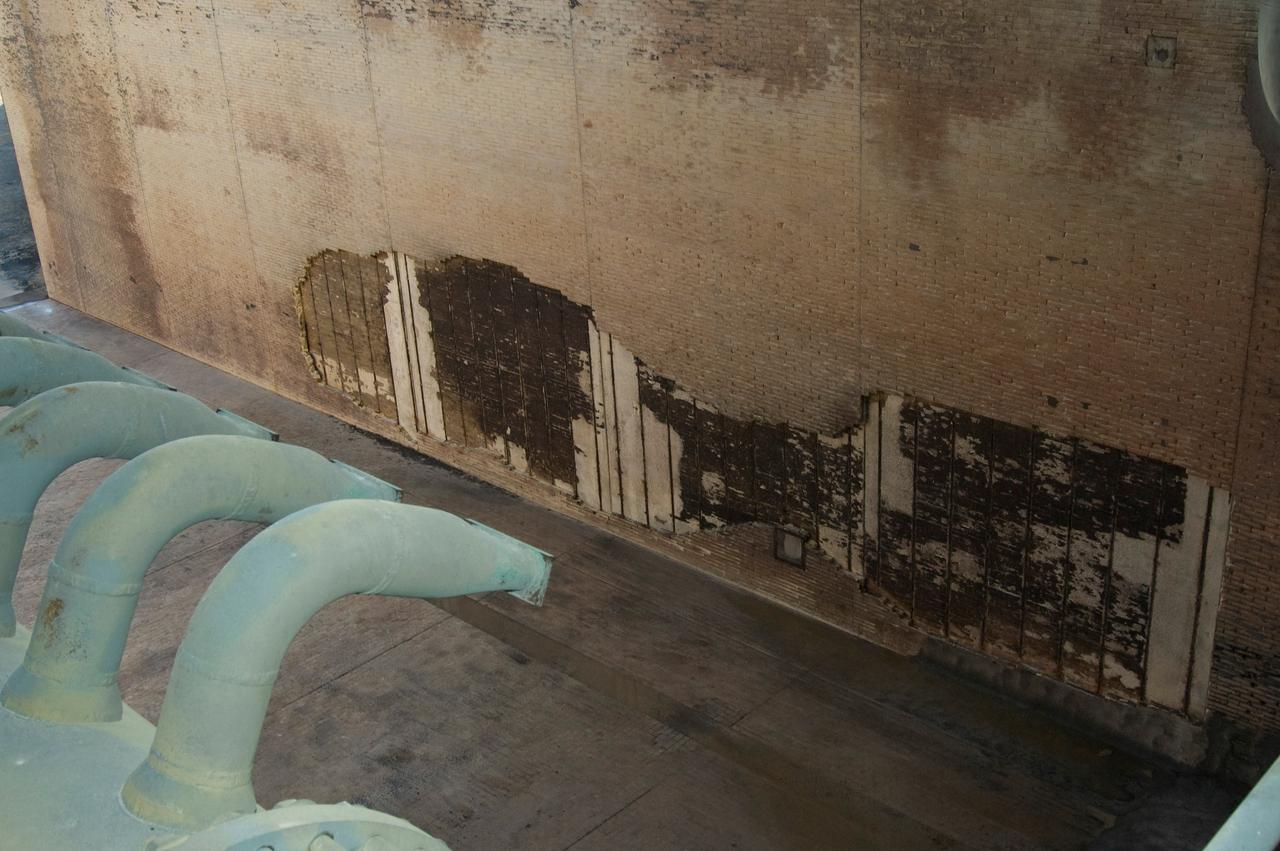
CAPE CANAVERAL, Fla. -- During the post-launch walk down of Launch Pad 39A at NASA's Kennedy Space Center, observers noted severe launch damage on a 100’ X 20’ section of the east wall of the north flame trench (seen here). Broken sections of the flame trench wall were scattered from the flame trench to the pad perimeter fence. NASA is forming an investigation board. The flame trench transecting the pad's mound at ground level is 490 feet long, 58 feet wide and 40 feet high. It is made of concrete and refractory brick. The top of the solid rocket booster flame deflector abuts with that of the orbiter flame deflector to form a flattened, inverted V-shaped structure beneath the mobile launcher platform's three exhaust holes. The orbiter flame deflector is fixed and is 38 feet high, 72 feet long and 57.6 feet wide. The deflector weighs 1.3 million pounds. The solid rocket booster deflector is 42.5 feet high, 42 feet long and 57 feet wide. The structure weighs 1.1 million pounds. The deflectors are built of steel and covered with a high-temperature concrete surface with an average thickness of 5 inches. There are two movable solid rocket booster side flame deflectors, one located on each side of the flame trench. They are 19.5 feet high, 44 feet long and 17.5 feet wide. Photo credit: NASA/Jim Grossmann
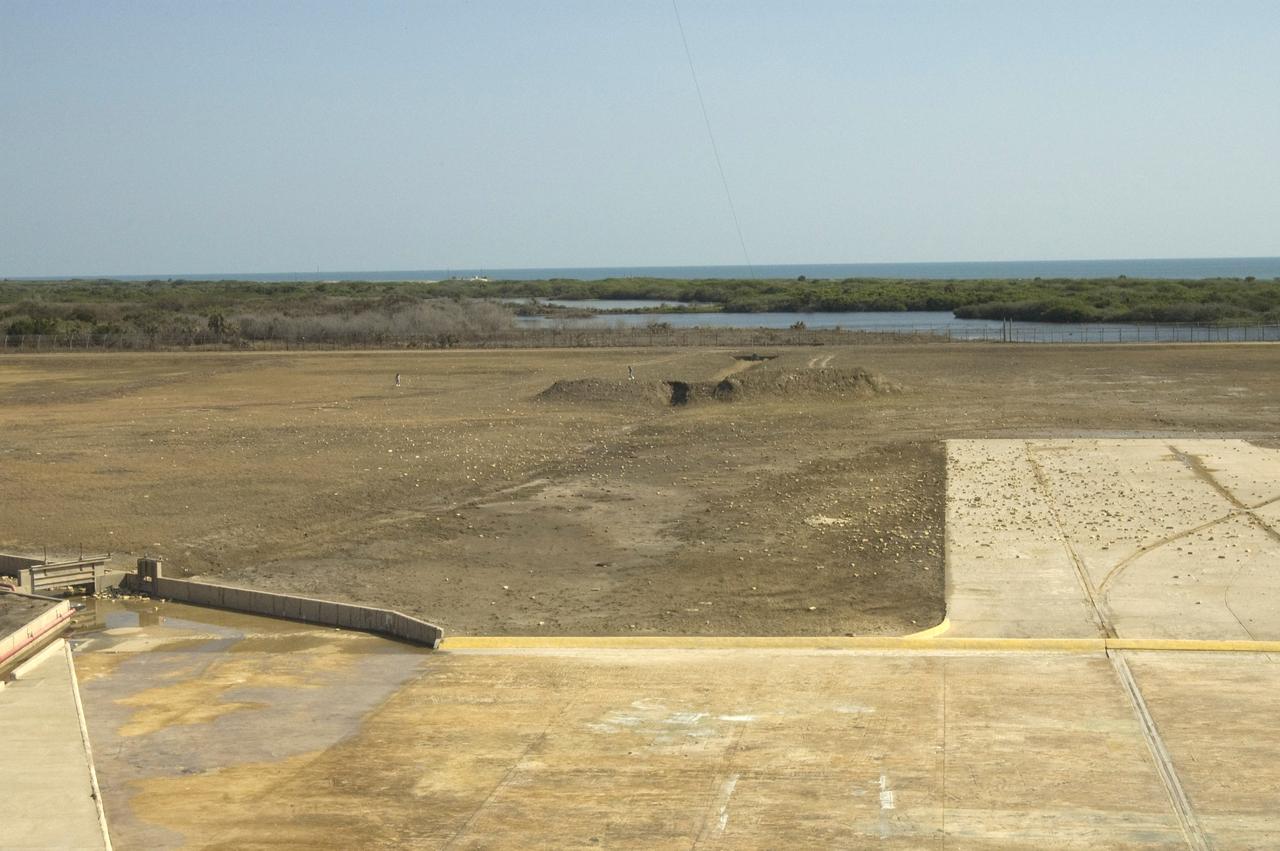
CAPE CANAVERAL, Fla. -- Debris is scattered across Launch Pad 39A at NASA's Kennedy Space Center following launch of space shuttle Discovery on its STS-124 mission. During the post-launch walk down, the pad team noted severe launch damage on a 100’ X 20’ section of the east wall of the north flame trench. Broken sections of the flame trench wall were scattered from the flame trench to the pad perimeter fence. NASA is forming an investigation board. The flame trench transecting the pad's mound at ground level is 490 feet long, 58 feet wide and 40 feet high. It is made of concrete and refractory brick. The top of the solid rocket booster flame deflector abuts with that of the orbiter flame deflector to form a flattened, inverted V-shaped structure beneath the mobile launcher platform's three exhaust holes. The orbiter flame deflector is fixed and is 38 feet high, 72 feet long and 57.6 feet wide. The deflector weighs 1.3 million pounds. The solid rocket booster deflector is 42.5 feet high, 42 feet long and 57 feet wide. The structure weighs 1.1 million pounds. The deflectors are built of steel and covered with a high-temperature concrete surface with an average thickness of 5 inches. There are two movable solid rocket booster side flame deflectors, one located on each side of the flame trench. They are 19.5 feet high, 44 feet long and 17.5 feet wide. Photo credit: NASA/Jim Grossmann
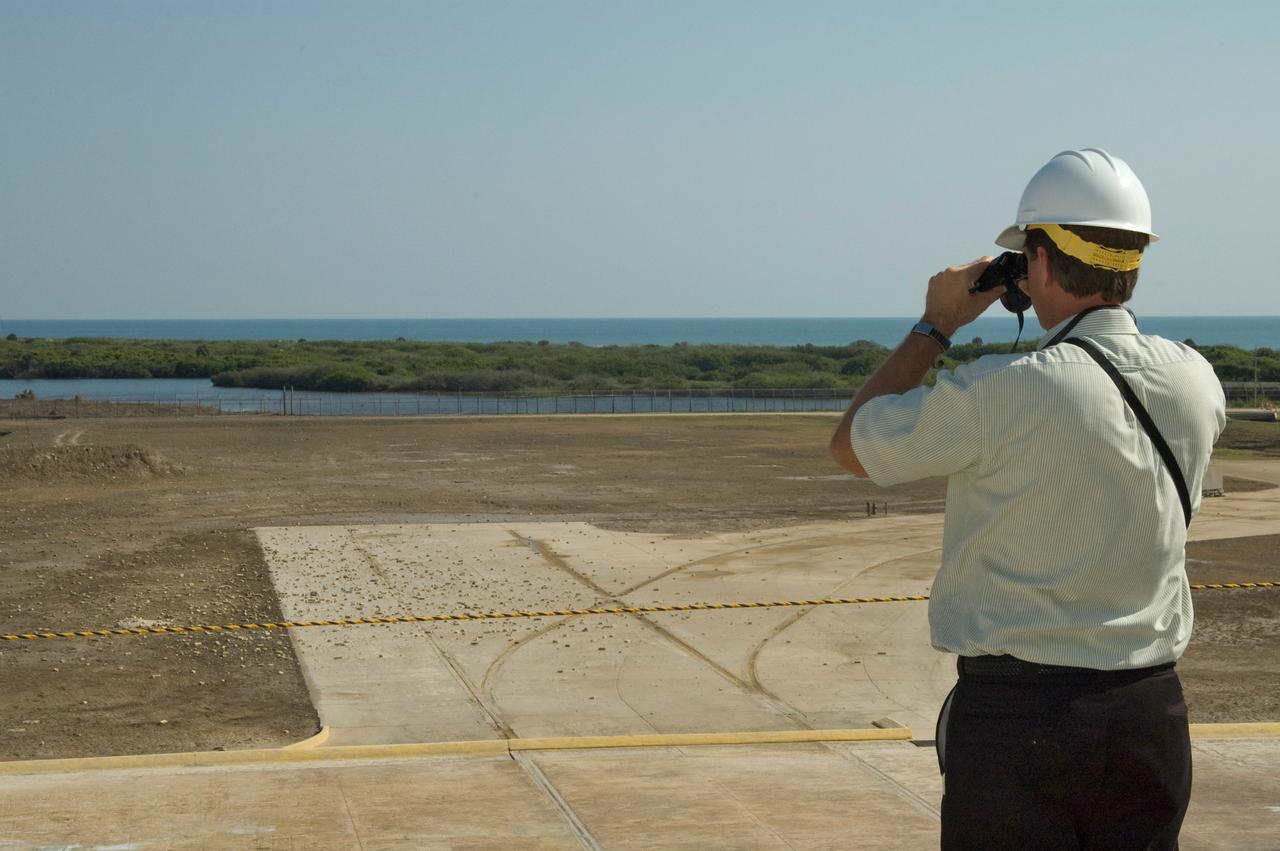
CAPE CANAVERAL, Fla. -- A member of the walk-down team takes a close look at debris scattered across Launch Pad 39A at NASA's Kennedy Space Center following launch of space shuttle Discovery on its STS-124 mission. During the post-launch walk down, the pad team noted severe launch damage on a 100’ X 20’ section of the east wall of the north flame trench. Broken sections of the flame trench wall were scattered from the flame trench to the pad perimeter fence. NASA is forming an investigation board. The flame trench transecting the pad's mound at ground level is 490 feet long, 58 feet wide and 40 feet high. It is made of concrete and refractory brick. The top of the solid rocket booster flame deflector abuts with that of the orbiter flame deflector to form a flattened, inverted V-shaped structure beneath the mobile launcher platform's three exhaust holes. The orbiter flame deflector is fixed and is 38 feet high, 72 feet long and 57.6 feet wide. The deflector weighs 1.3 million pounds. The solid rocket booster deflector is 42.5 feet high, 42 feet long and 57 feet wide. The structure weighs 1.1 million pounds. The deflectors are built of steel and covered with a high-temperature concrete surface with an average thickness of 5 inches. There are two movable solid rocket booster side flame deflectors, one located on each side of the flame trench. They are 19.5 feet high, 44 feet long and 17.5 feet wide. Photo credit: NASA/Jim Grossmann
CAPE CANAVERAL, Fla. -- During the post-launch walk down of Launch Pad 39A at NASA's Kennedy Space Center, the pad team noted severe launch damage on a 100’ X 20’ section of the east wall of the north flame trench (seen here). Broken sections of the flame trench wall were scattered from the flame trench to the pad perimeter fence. NASA is forming an investigation board. The flame trench transecting the pad's mound at ground level is 490 feet long, 58 feet wide and 40 feet high. It is made of concrete and refractory brick. The top of the solid rocket booster flame deflector abuts with that of the orbiter flame deflector to form a flattened, inverted V-shaped structure beneath the mobile launcher platform's three exhaust holes. The orbiter flame deflector is fixed and is 38 feet high, 72 feet long and 57.6 feet wide. The deflector weighs 1.3 million pounds. The solid rocket booster deflector is 42.5 feet high, 42 feet long and 57 feet wide. The structure weighs 1.1 million pounds. The deflectors are built of steel and covered with a high-temperature concrete surface with an average thickness of 5 inches. There are two movable solid rocket booster side flame deflectors, one located on each side of the flame trench. They are 19.5 feet high, 44 feet long and 17.5 feet wide. Photo credit: NASA/Jim Grossmann