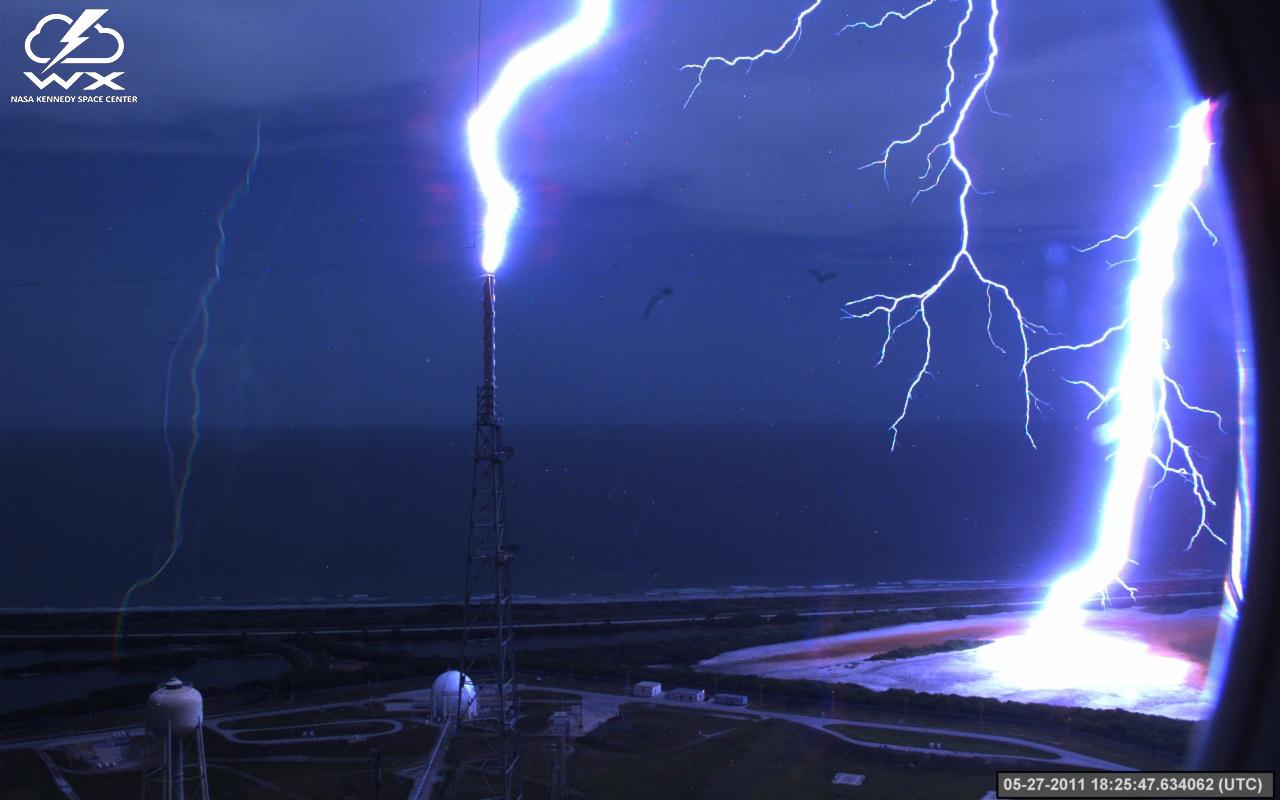
A lightning strike is recorded at Launch Complex 39B at NASA’s Kennedy Space Center in Florida in May 2011. The event was captured by high-speed cameras stationed at the pad and mobile launcher. At pad 39B, there are three, 600-foot-tall masts with overhead wires used to transmit electrical energy around the perimeter of the pad to provide lightning protection for launch vehicles as they are processed and launched from the pad.
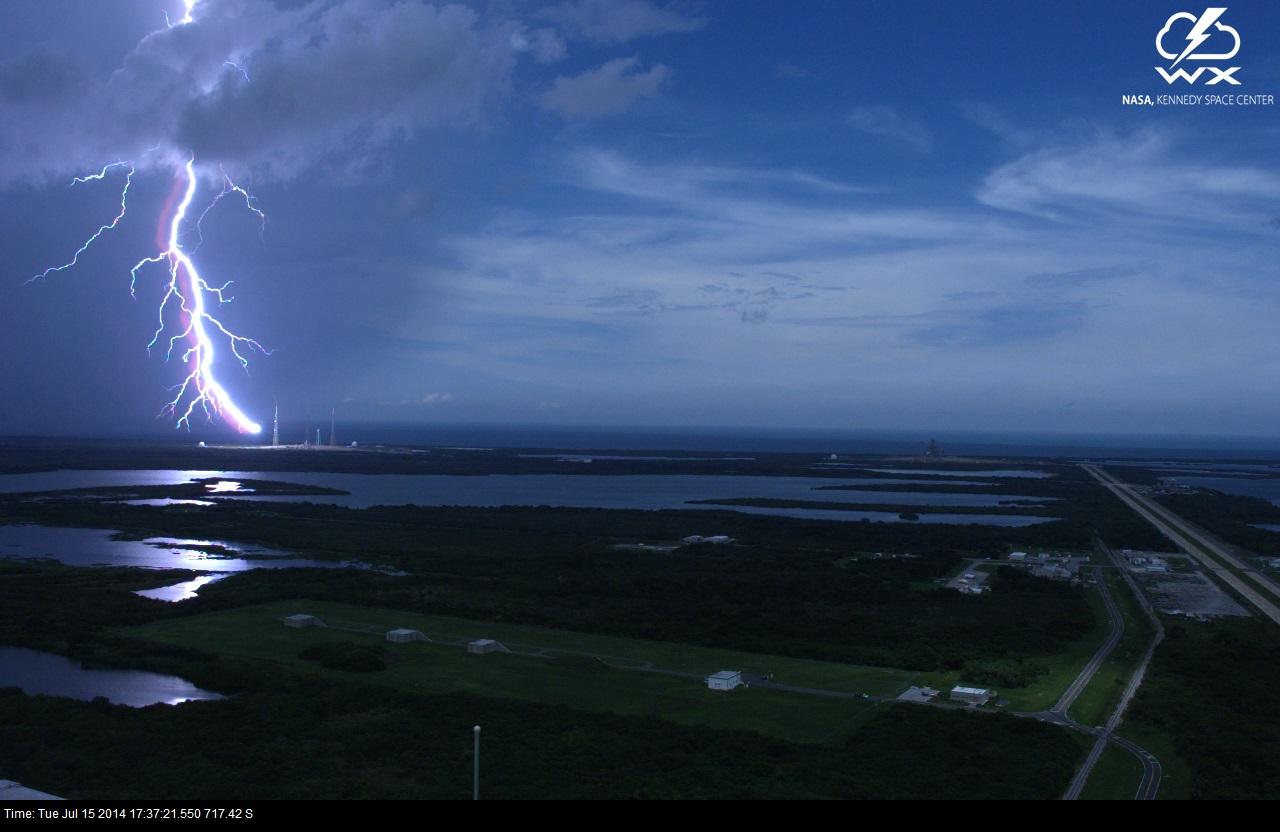
A lightning strike is recorded at Launch Complex 39B at NASA’s Kennedy Space Center in Florida in July 2014. The event was captured by high-speed camera from the iconic Vehicle Assembly Building. At pad 39B, there are three, 600-foot-tall masts with overhead wires used to transmit electrical energy around the perimeter of the pad to provide lightning protection for launch vehicles as they are processed and launched from the pad.
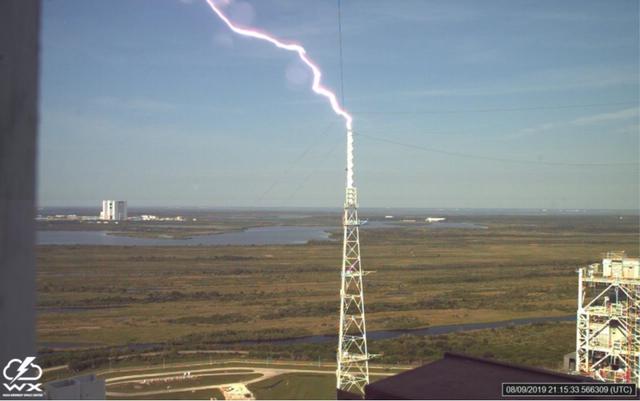
A lightning strike is recorded at Launch Complex 39B at NASA’s Kennedy Space Center in Florida in August 2019. The event was captured by high-speed cameras stationed at the pad and mobile launcher using a special filter called a “clear day frame,” which provides an overlay of the raw frame on a reference image. At pad 39B, there are three, 600-foot-tall masts with overhead wires used to transmit electrical energy around the perimeter of the pad to provide lightning protection for launch vehicles as they are processed and launched from the pad.
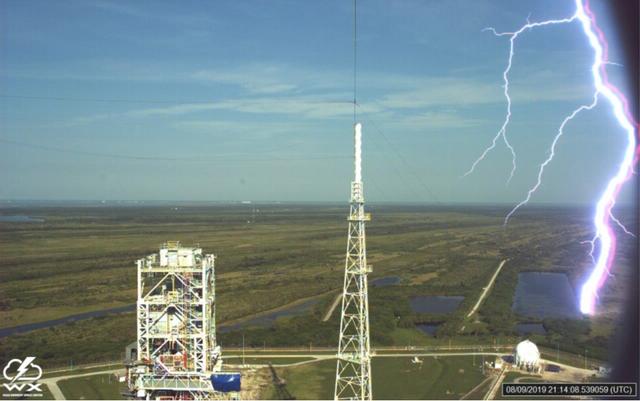
A lightning strike is recorded at Launch Complex 39B at NASA’s Kennedy Space Center in Florida in August 2019. The event was captured by high-speed cameras stationed at the pad and mobile launcher using a special filter called a “clear day frame,” which provides an overlay of the raw frame on a reference image. At pad 39B, there are three, 600-foot-tall masts with overhead wires used to transmit electrical energy around the perimeter of the pad to provide lightning protection for launch vehicles as they are processed and launched from the pad.
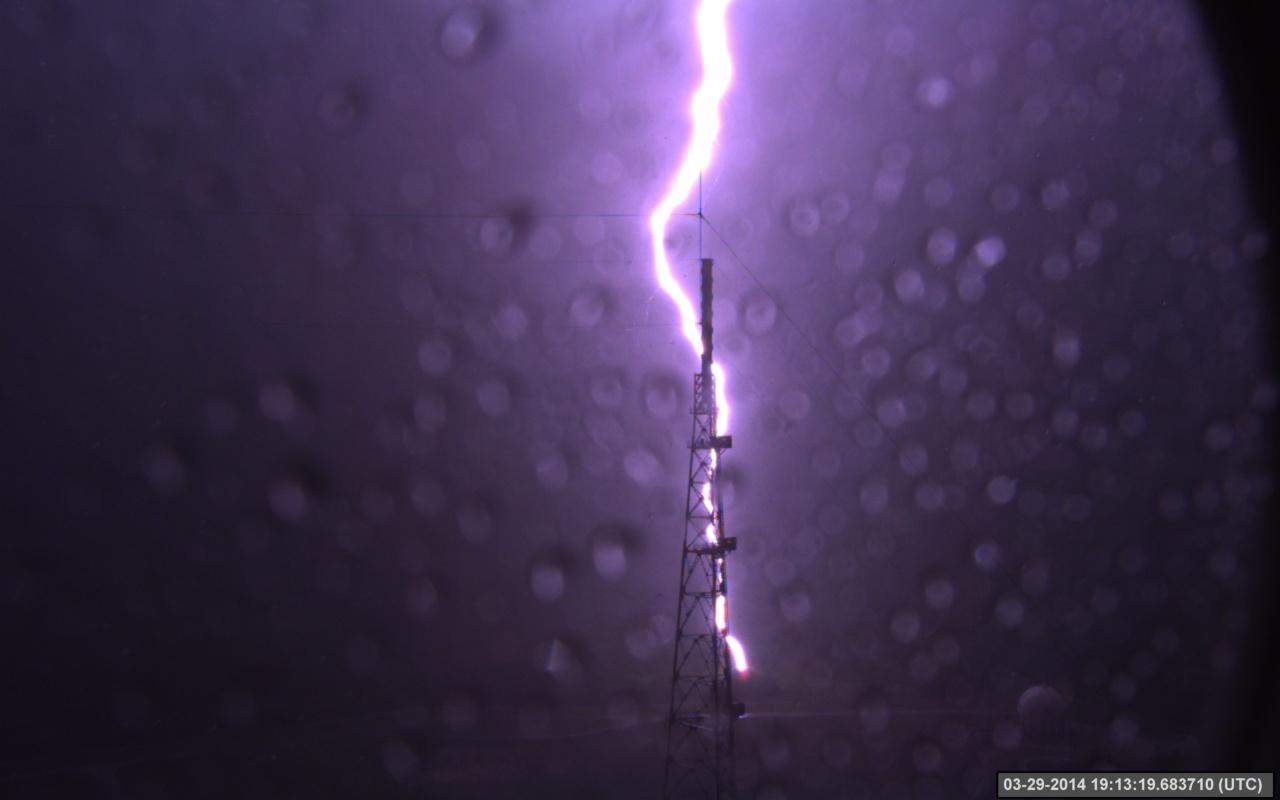
A lightning strike is recorded at Launch Complex 39B at NASA’s Kennedy Space Center in Florida in March 2014. The event was captured by high-speed cameras stationed at the pad and mobile launcher. At pad 39B, there are three, 600-foot-tall masts with overhead wires used to transmit electrical energy around the perimeter of the pad to provide lightning protection for launch vehicles as they are processed and launched from the pad.
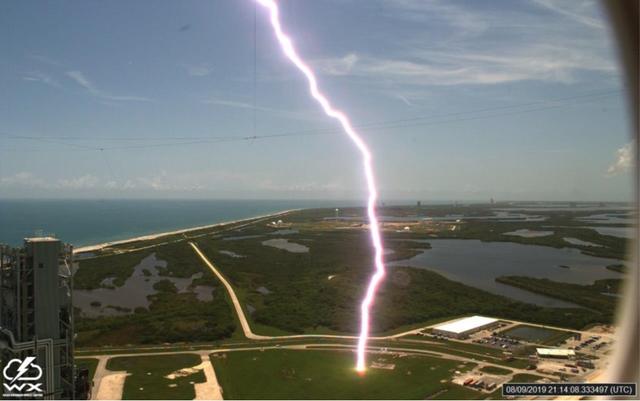
A lightning strike is recorded at Launch Complex 39B at NASA’s Kennedy Space Center in Florida in August 2019. The event was captured by high-speed cameras stationed at the pad and mobile launcher using a special filter called a “clear day frame,” which provides an overlay of the raw frame on a reference image. At pad 39B, there are three, 600-foot-tall masts with overhead wires used to transmit electrical energy around the perimeter of the pad to provide lightning protection for launch vehicles as they are processed and launched from the pad.
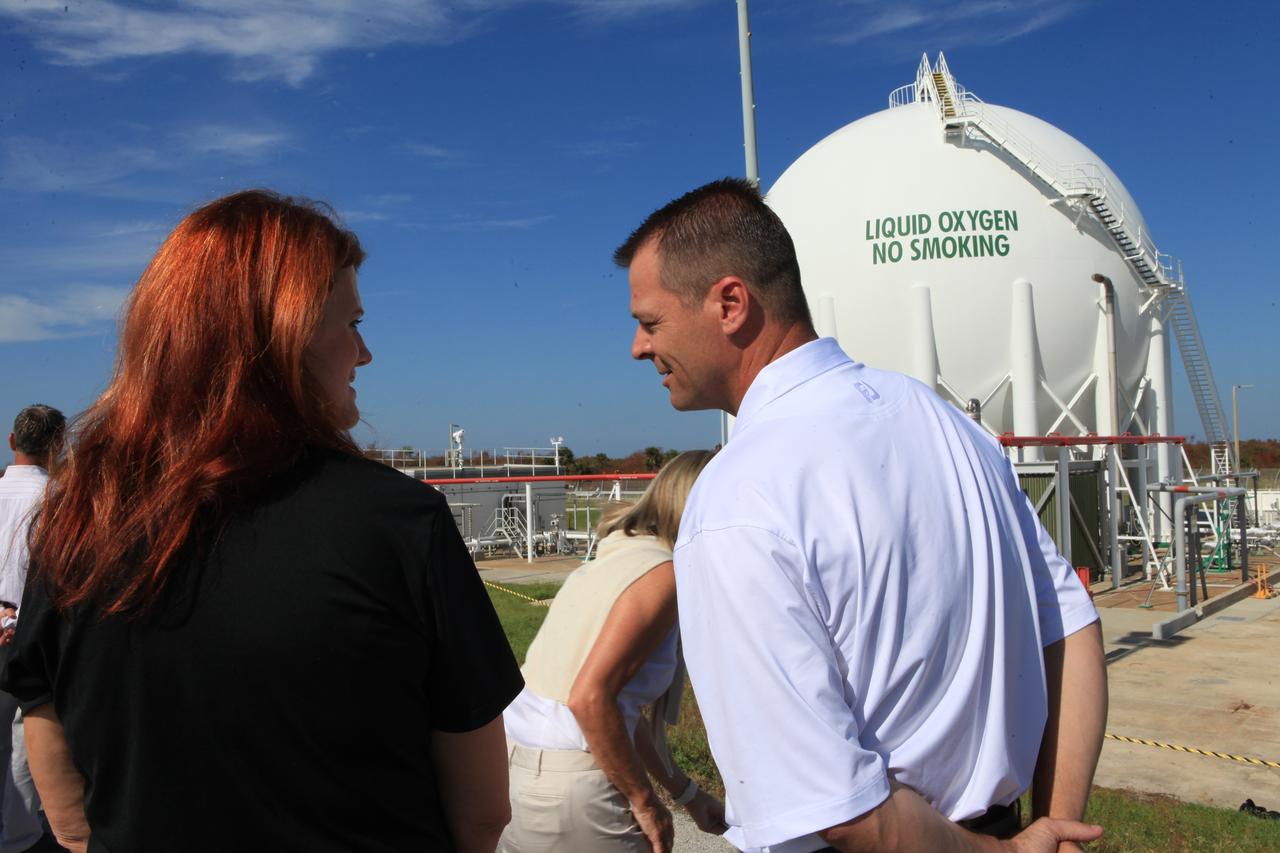
Liquid Oxygen filled in the Cryo tank of Pad 39B in support of the SLS rocket.
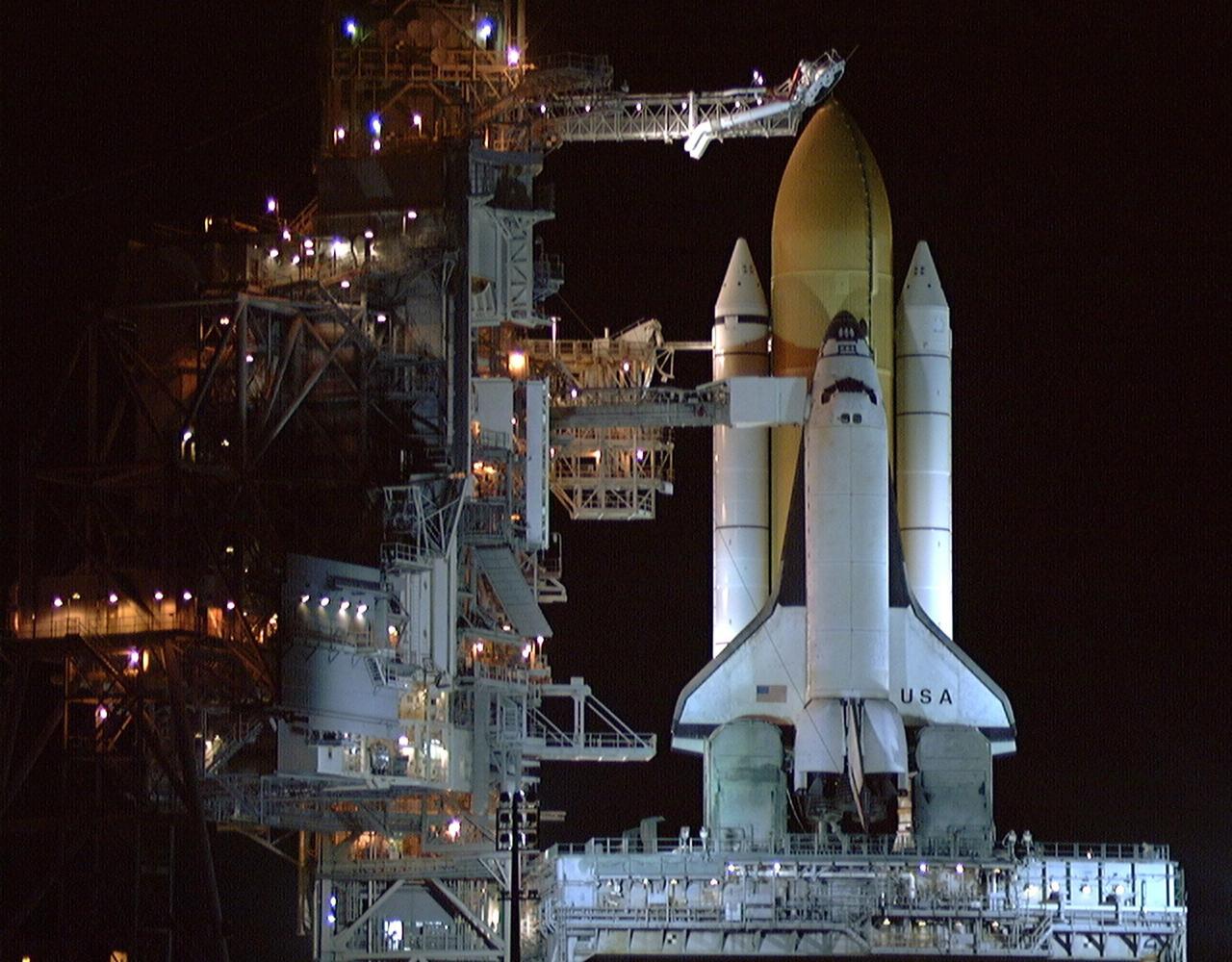
With the Rotating Service Structure (RSS) rolled back, at left, the Space Shuttle Columbia is nearly ready for launch of STS-90. Rollback of the RSS is a major preflight milestone, typically occurring during the T-11-hour hold on L-1 (the day before launch). The scheduled launch of Columbia on Apr. 16 from Launch Pad 39B was postponed 24 hours due to difficulty with network signal processor No. 2 on the orbiter. This device formats data and voice communications between the ground and the Space Shuttle. The unit, which is located in the orbiter's mid-deck, will be removed and replaced. Prior to launch, one of the final steps will be to load the external tank with approximately 500,000 gallons of liquid hydrogen and liquid oxygen for fueling the orbiters three main engines. Tanking had not yet begun when the launch scheduled for Apr. 16 was scrubbed. STS-90 is slated to be the launch of Neurolab, a nearly 17-day mission to examine the effects of spaceflight on the brain, spinal cord, peripheral nerves and sensory organs in the human body
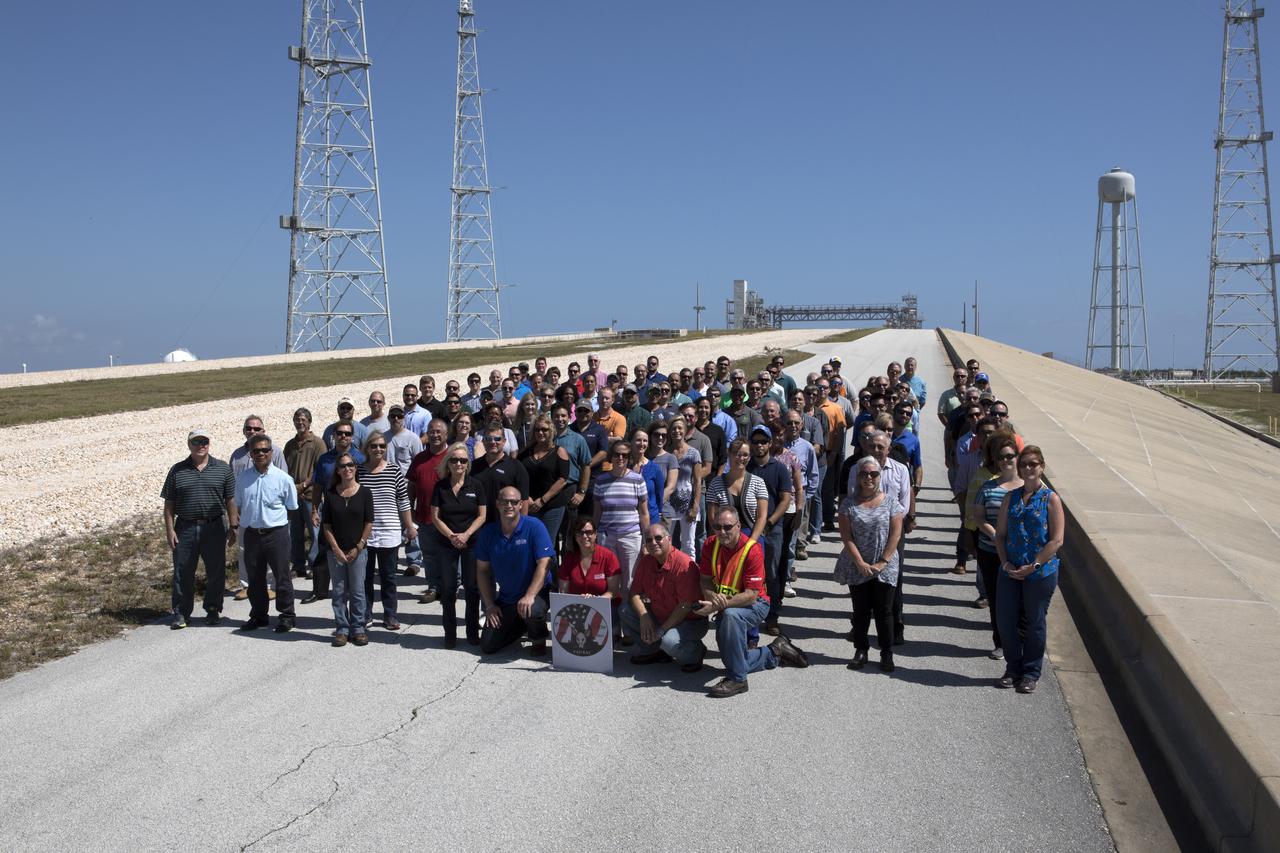
Launch Complex 39B current and past NASA and contractor workers gathered at pad B to mark the 50th anniversary of the launch complex at NASA's Kennedy Space Center in Florida. Upgrades to the surface of pad B, as well as the systems below and surrounding the pad will support the new processing and launch requirements for NASA's Space Launch System (SLS) and the Orion spacecraft for deep-space missions, including the journey to Mars. The modifications and improvements to processing and launch facilities will support Kennedy as a multi-user spaceport for government and commercial launches for years to come. The Ground Systems Development and Operations Program is overseeing upgrades and modifications to Pad 39B.
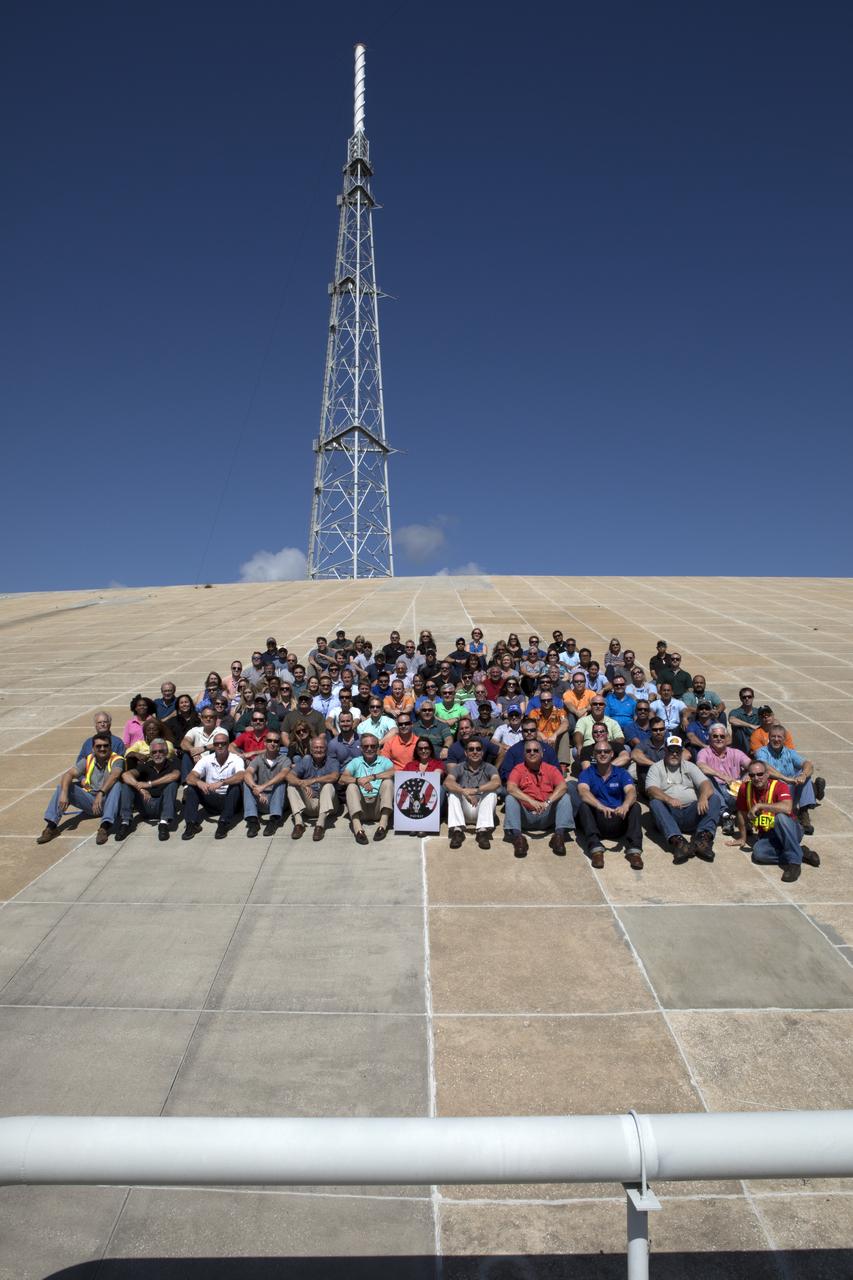
Launch Complex 39B current and past NASA and contractor workers gathered at pad B to mark the 50th anniversary of the launch complex at NASA's Kennedy Space Center in Florida. Upgrades to the surface of pad B, as well as the systems below and surrounding the pad will support the new processing and launch requirements for NASA's Space Launch System (SLS) and the Orion spacecraft for deep-space missions, including the journey to Mars. The modifications and improvements to processing and launch facilities will support Kennedy as a multi-user spaceport for government and commercial launches for years to come. The Ground Systems Development and Operations Program is overseeing upgrades and modifications to Pad 39B.

Launch Complex 39B current and past NASA and contractor workers gathered at pad B to mark the 50th anniversary of the launch complex at NASA's Kennedy Space Center in Florida. Upgrades to the surface of pad B, as well as the systems below and surrounding the pad will support the new processing and launch requirements for NASA's Space Launch System (SLS) and the Orion spacecraft for deep-space missions, including the journey to Mars. The modifications and improvements to processing and launch facilities will support Kennedy as a multi-user spaceport for government and commercial launches for years to come. The Ground Systems Development and Operations Program is overseeing upgrades and modifications to Pad 39B.
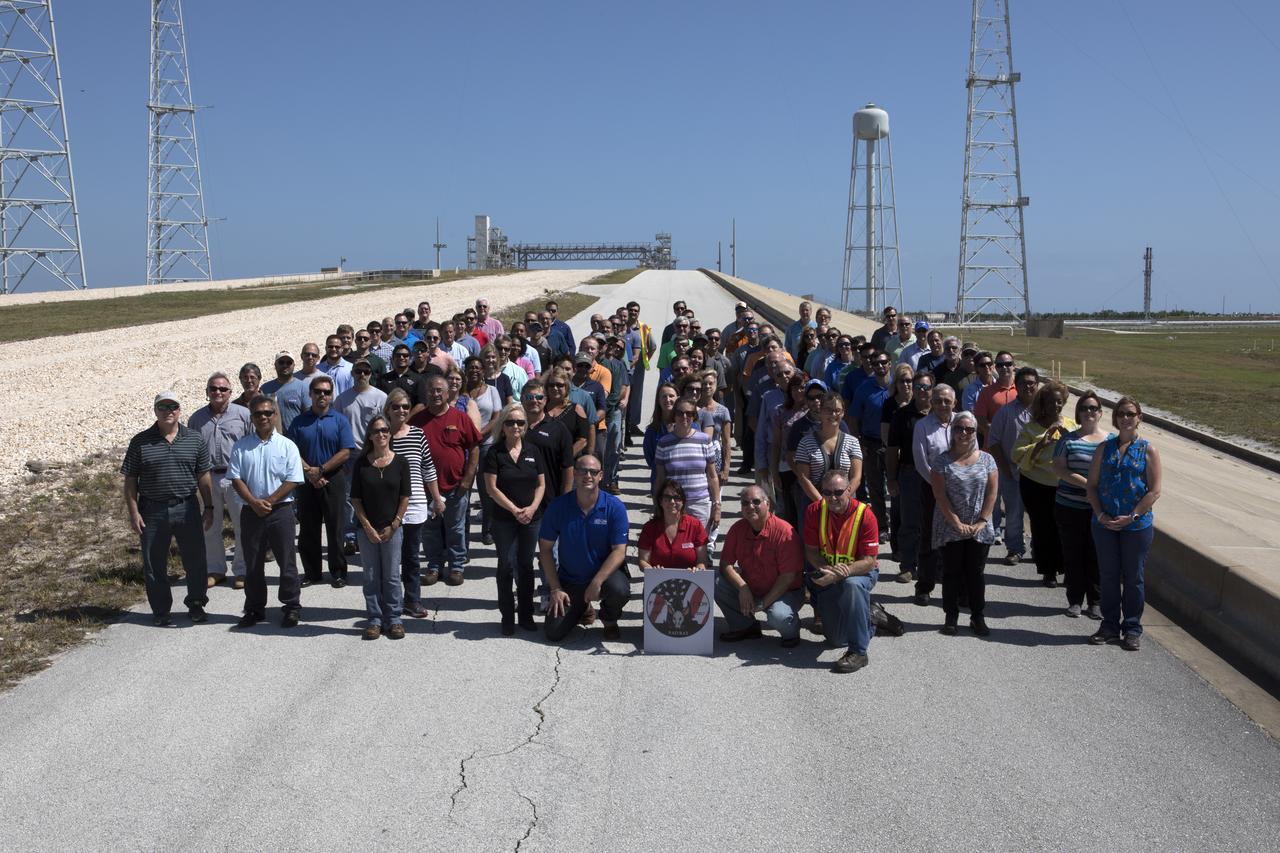
Launch Complex 39B current and past NASA and contractor workers gathered at pad B to mark the 50th anniversary of the launch complex at NASA's Kennedy Space Center in Florida. Upgrades to the surface of pad B, as well as the systems below and surrounding the pad will support the new processing and launch requirements for NASA's Space Launch System (SLS) and the Orion spacecraft for deep-space missions, including the journey to Mars. The modifications and improvements to processing and launch facilities will support Kennedy as a multi-user spaceport for government and commercial launches for years to come. The Ground Systems Development and Operations Program is overseeing upgrades and modifications to Pad 39B.
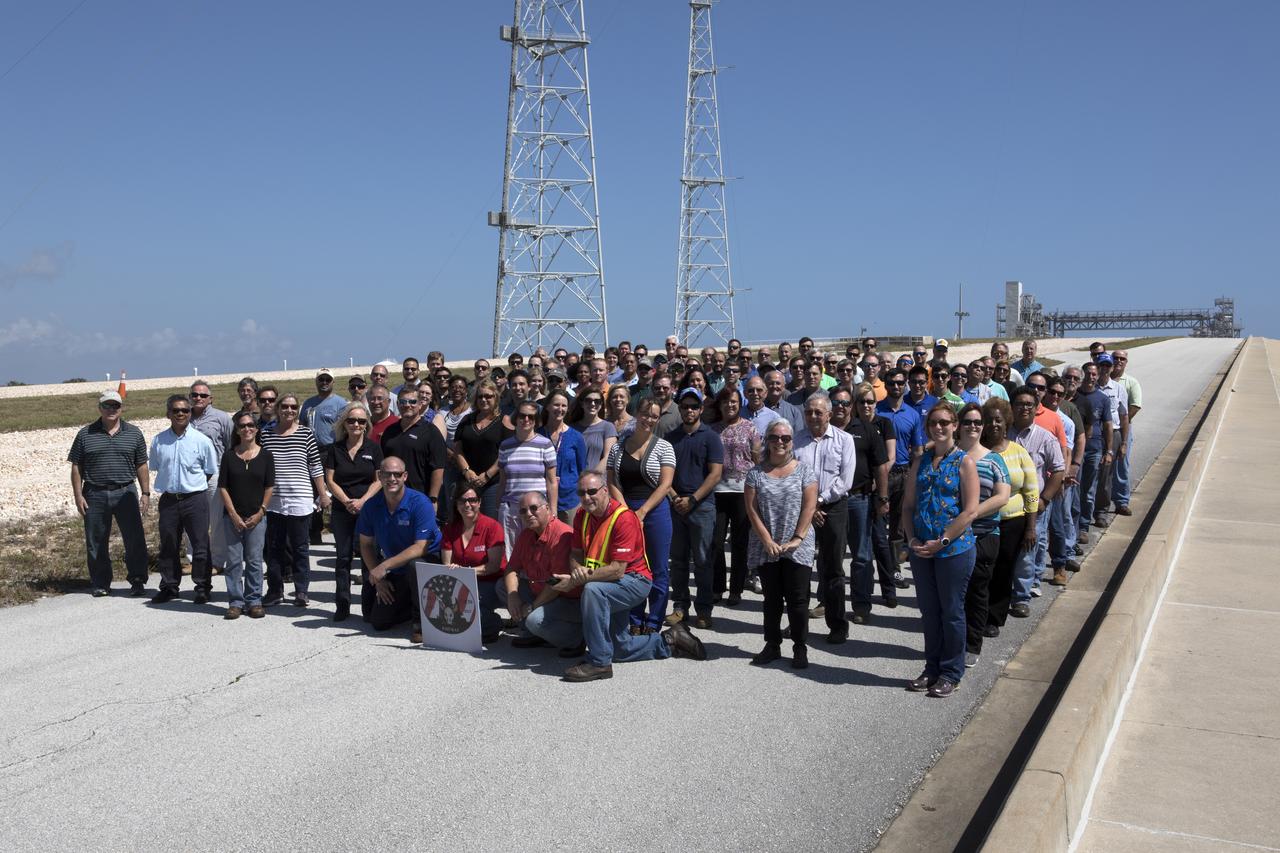
Launch Complex 39B current and past NASA and contractor workers gathered at pad B to mark the 50th anniversary of the launch complex at NASA's Kennedy Space Center in Florida. Upgrades to the surface of pad B, as well as the systems below and surrounding the pad will support the new processing and launch requirements for NASA's Space Launch System (SLS) and the Orion spacecraft for deep-space missions, including the journey to Mars. The modifications and improvements to processing and launch facilities will support Kennedy as a multi-user spaceport for government and commercial launches for years to come. The Ground Systems Development and Operations Program is overseeing upgrades and modifications to Pad 39B.
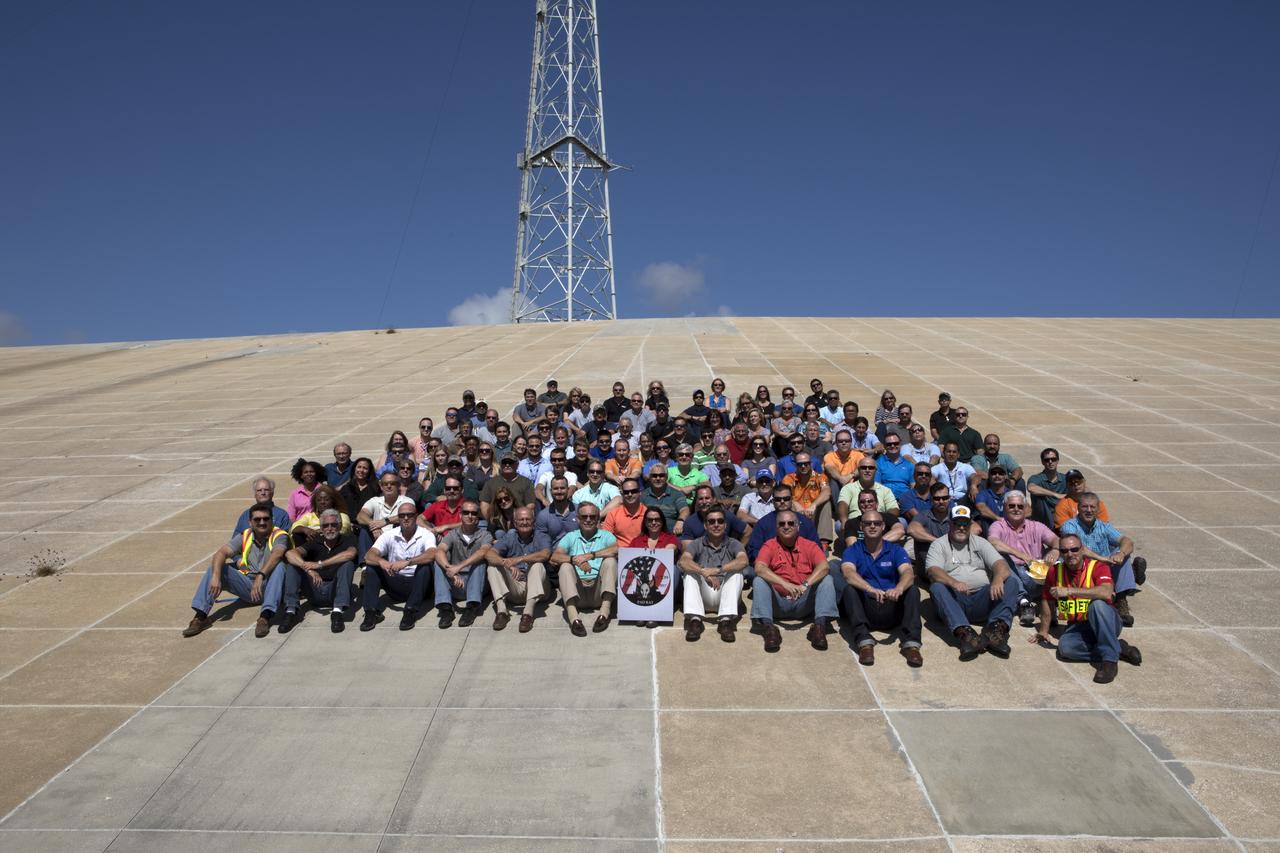
Launch Complex 39B current and past NASA and contractor workers gathered at pad B to mark the 50th anniversary of the launch complex at NASA's Kennedy Space Center in Florida. Upgrades to the surface of pad B, as well as the systems below and surrounding the pad will support the new processing and launch requirements for NASA's Space Launch System (SLS) and the Orion spacecraft for deep-space missions, including the journey to Mars. The modifications and improvements to processing and launch facilities will support Kennedy as a multi-user spaceport for government and commercial launches for years to come. The Ground Systems Development and Operations Program is overseeing upgrades and modifications to Pad 39B.
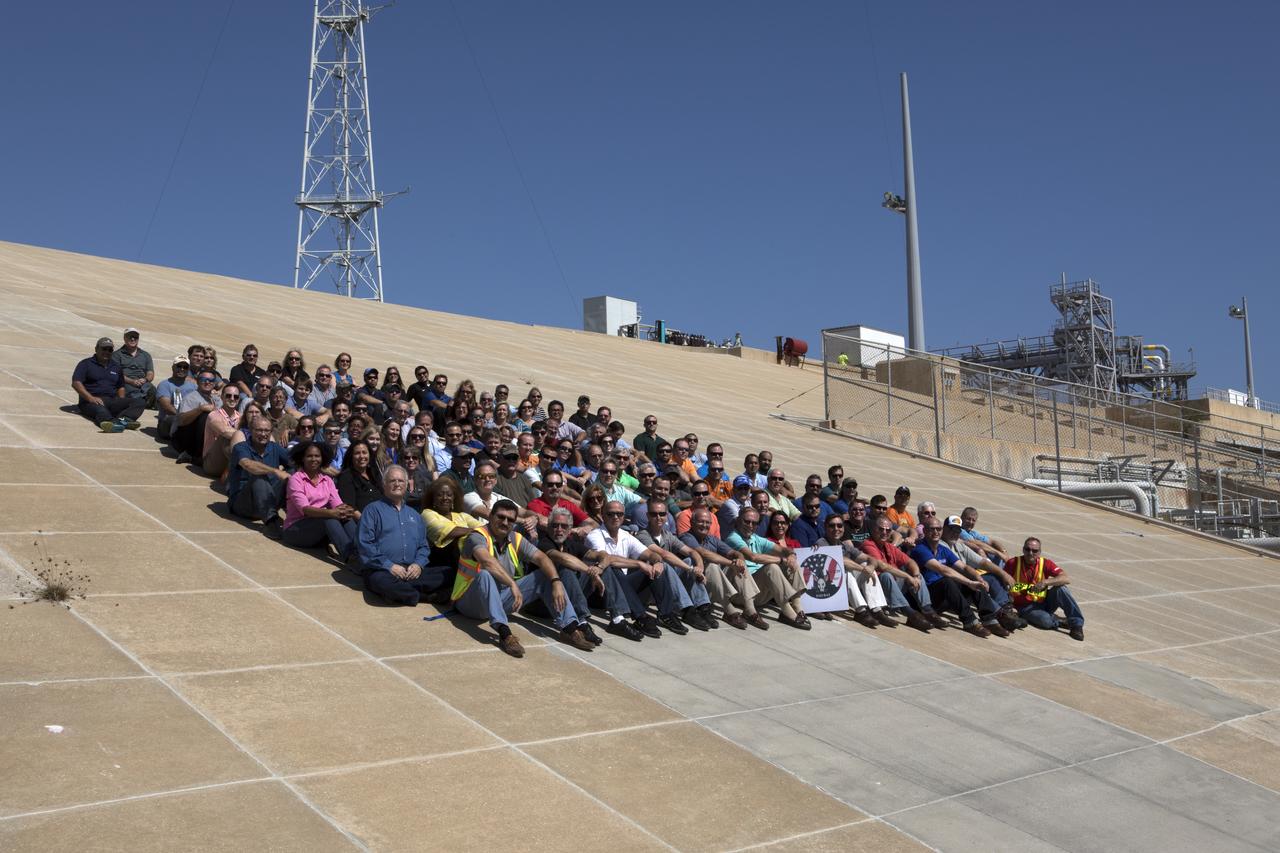
Launch Complex 39B current and past NASA and contractor workers gathered at pad B to mark the 50th anniversary of the launch complex at NASA's Kennedy Space Center in Florida. Upgrades to the surface of pad B, as well as the systems below and surrounding the pad will support the new processing and launch requirements for NASA's Space Launch System (SLS) and the Orion spacecraft for deep-space missions, including the journey to Mars. The modifications and improvements to processing and launch facilities will support Kennedy as a multi-user spaceport for government and commercial launches for years to come. The Ground Systems Development and Operations Program is overseeing upgrades and modifications to Pad 39B.
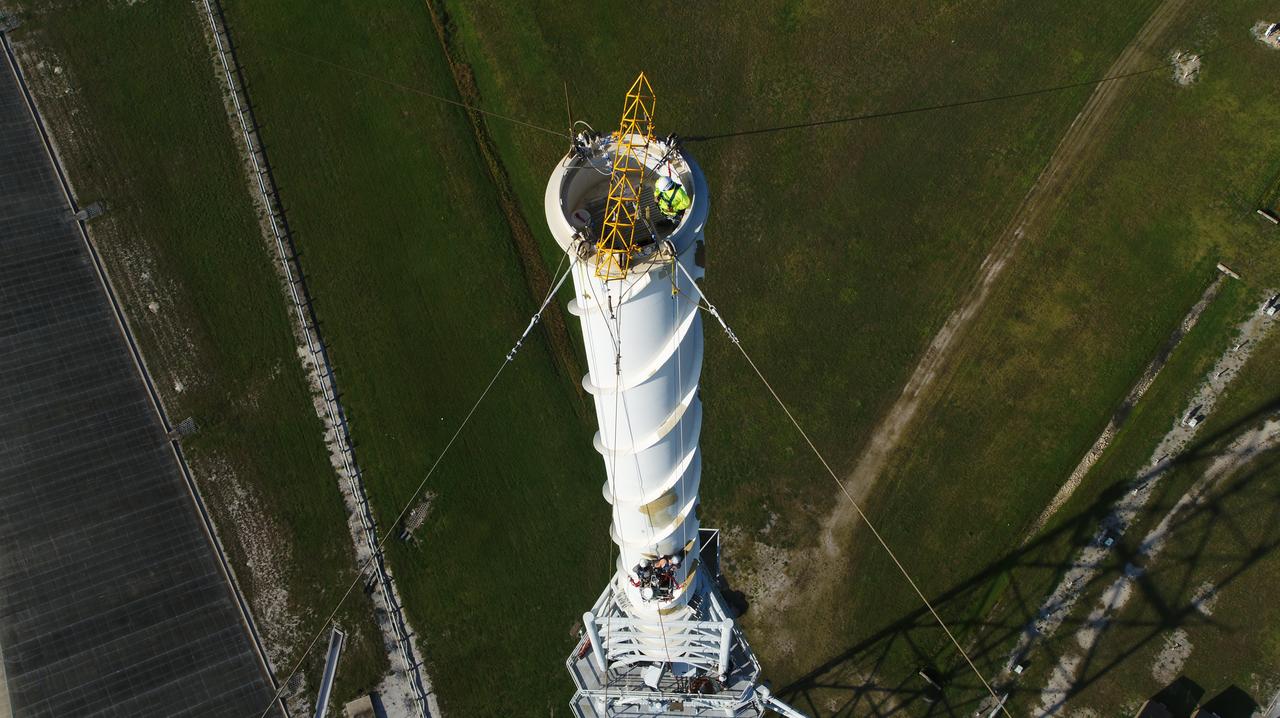
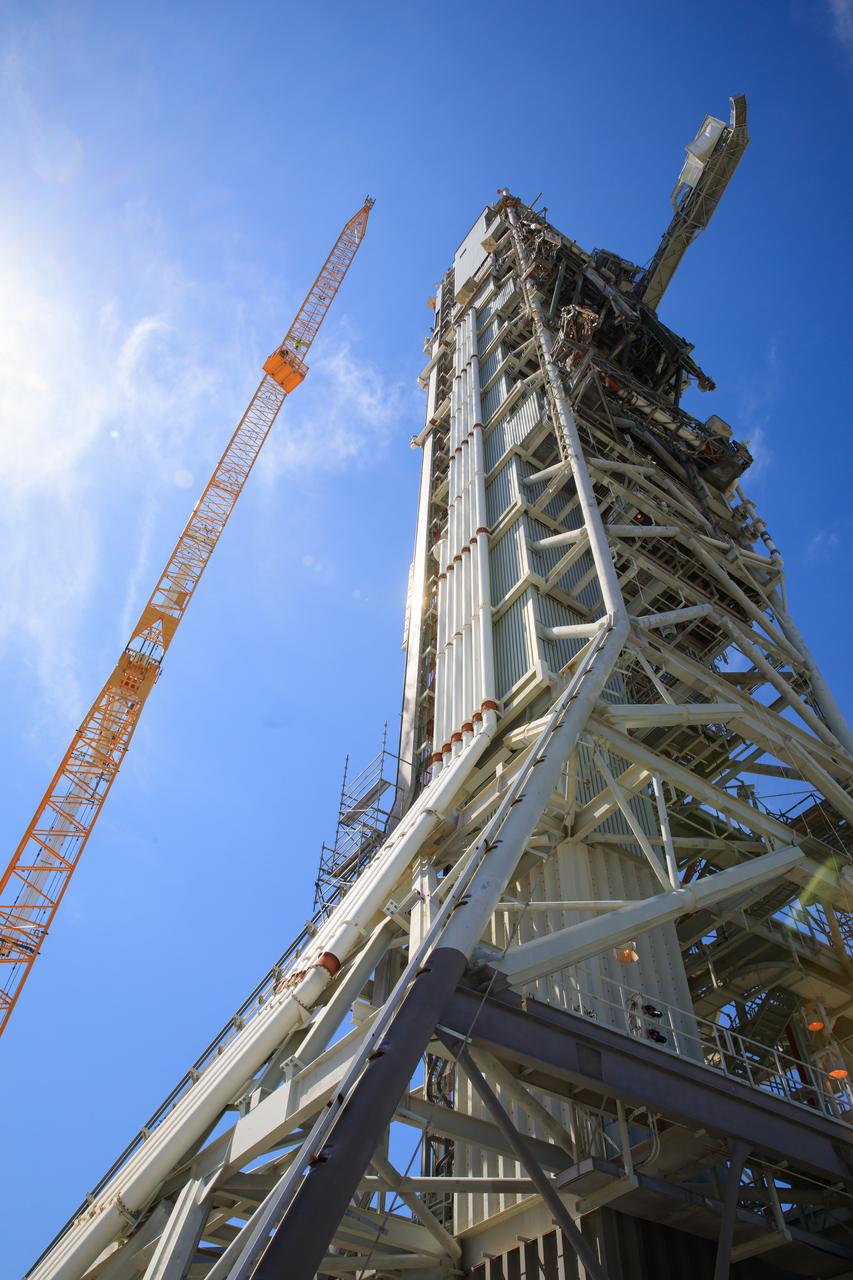
An aerial view shows workers preparing the surface of one of the three lightning protection system towers for painting at Exploration Ground Systems’ Launch Complex 39B at NASA’s Kennedy Space Center in Florida on May 30, 2019. The old paint was removed by the most recent hurricane. Pad 39B is the site of future launches of the agency’s Space Launch System rocket with the Orion spacecraft on Artemis missions. The 600-foot-tall lightning towers will help prevent lightning strikes at the pad during prelaunch and launch activities.
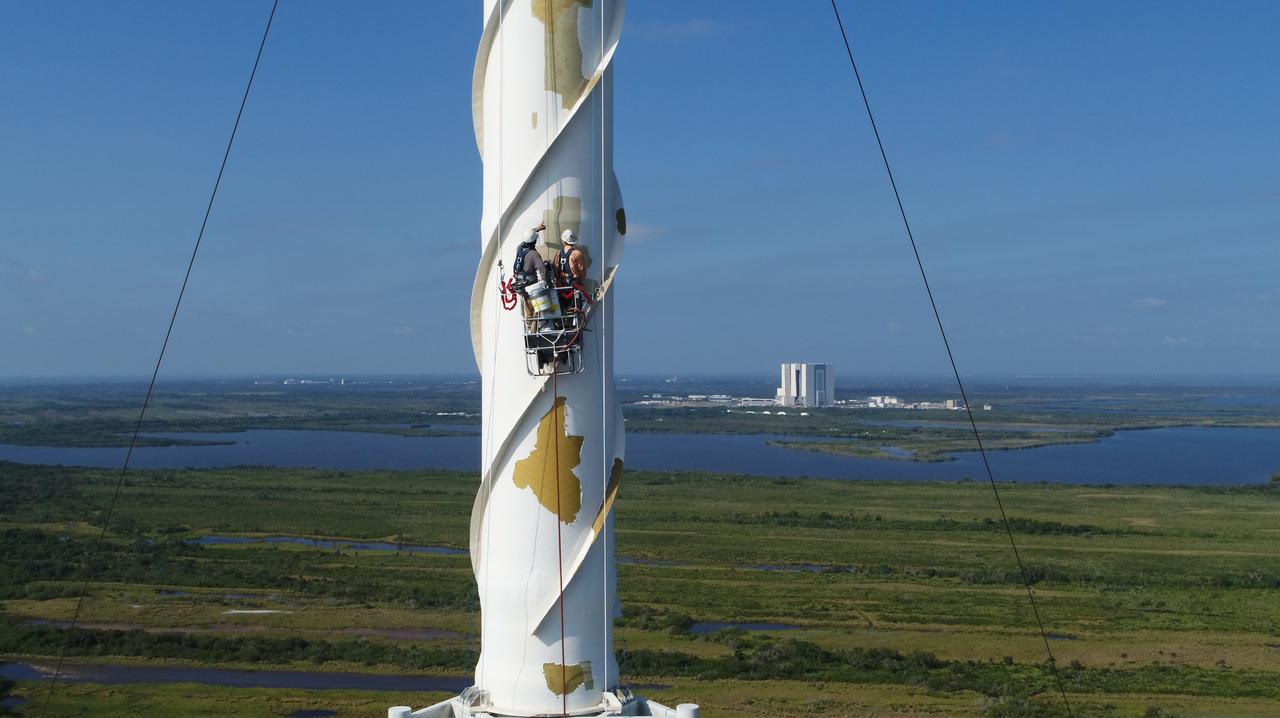
An aerial view shows workers preparing the surface of one of the three lightning protection system towers for painting at Exploration Ground Systems’ Launch Complex 39B at NASA’s Kennedy Space Center in Florida on May 30, 2019. The old paint was removed by the most recent hurricane. Pad 39B is the site of future launches of the agency’s Space Launch System rocket with the Orion spacecraft on Artemis missions. The 600-foot-tall lightning towers will help prevent lightning strikes at the pad during prelaunch and launch activities.
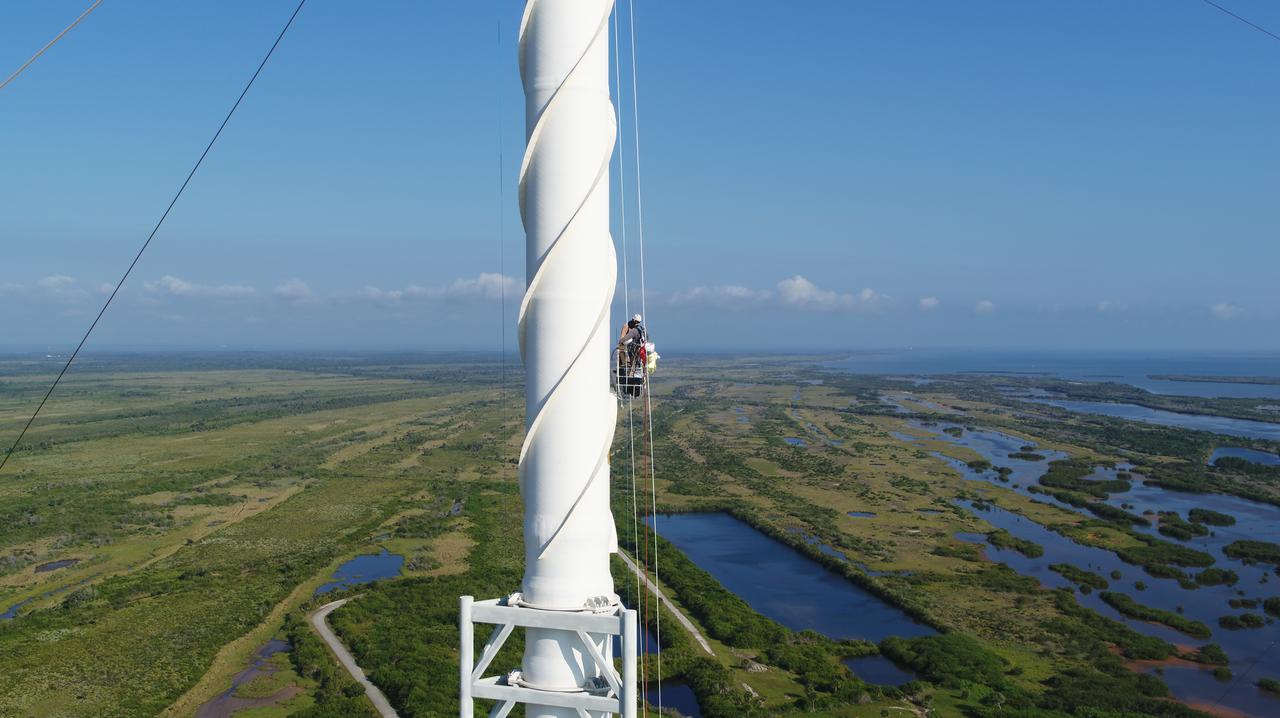
Workers prepare the surface of one of the three lightning protection system towers for painting at Exploration Ground Systems’ Launch Complex 39B at NASA’s Kennedy Space Center in Florida on May 30, 2019. The old paint was removed by the most recent hurricane. Pad 39B is the site of future launches of the agency’s Space Launch System rocket with the Orion spacecraft on Artemis missions. The 600-foot-tall lightning towers will help prevent lightning strikes at the pad during prelaunch and launch activities.
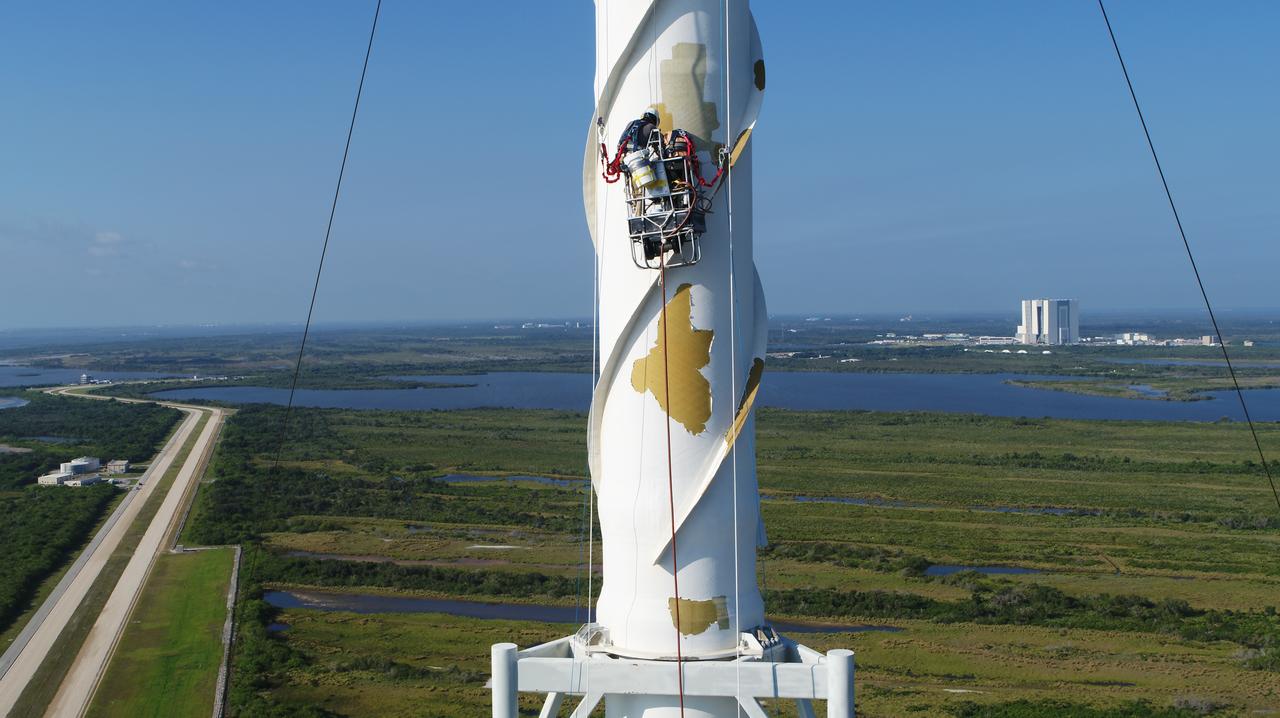
Workers prepare the surface of one of the three lightning protection system towers for painting at Exploration Ground Systems’ Launch Complex 39B at NASA’s Kennedy Space Center in Florida on May 30, 2019. The old paint was removed by the most recent hurricane. Pad 39B is the site of future launches of the agency’s Space Launch System rocket with the Orion spacecraft on Artemis missions. The 600-foot-tall lightning towers will help prevent lightning strikes at the pad during prelaunch and launch activities.
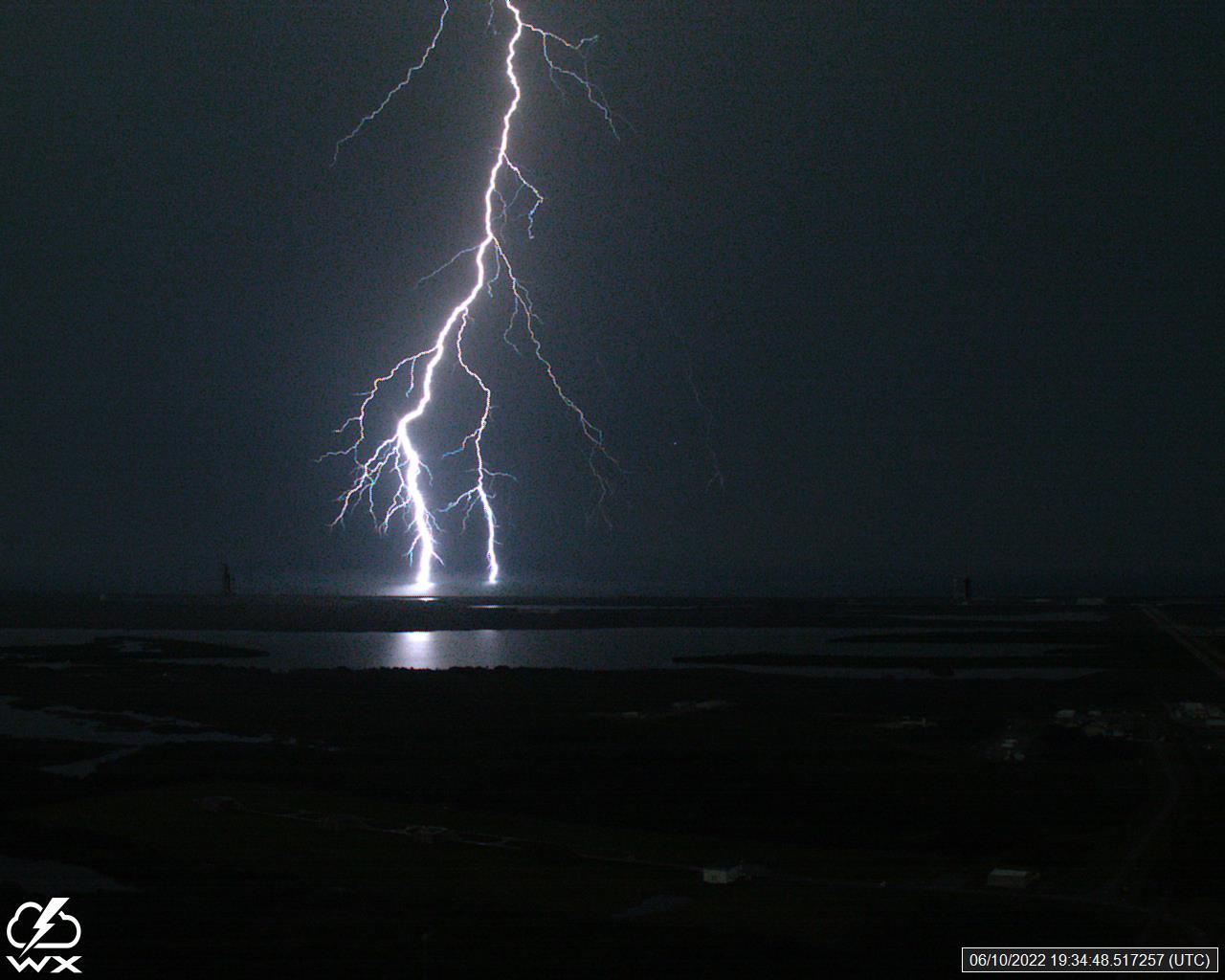
A lightning strike was recorded at Launch Complex 39B at NASA’s Kennedy Space Center in Florida on June 10, 2022. NASA’s Space Launch System (SLS) and Orion spacecraft atop the mobile launcher are on the launch pad in preparation for the Artemis I mission. The lightning strike was recorded by cameras stationed at the pad and mobile launcher using a special filter called a “clear day frame,” which provides an overlay of the raw frame on a reference image. Artemis I will be the first integrated test of the SLS and Orion spacecraft. In later missions, NASA will land the first woman and the first woman of color on the surface of the Moon, paving the way for a long-term lunar presence and serving as a steppingstone on the way to Mars.
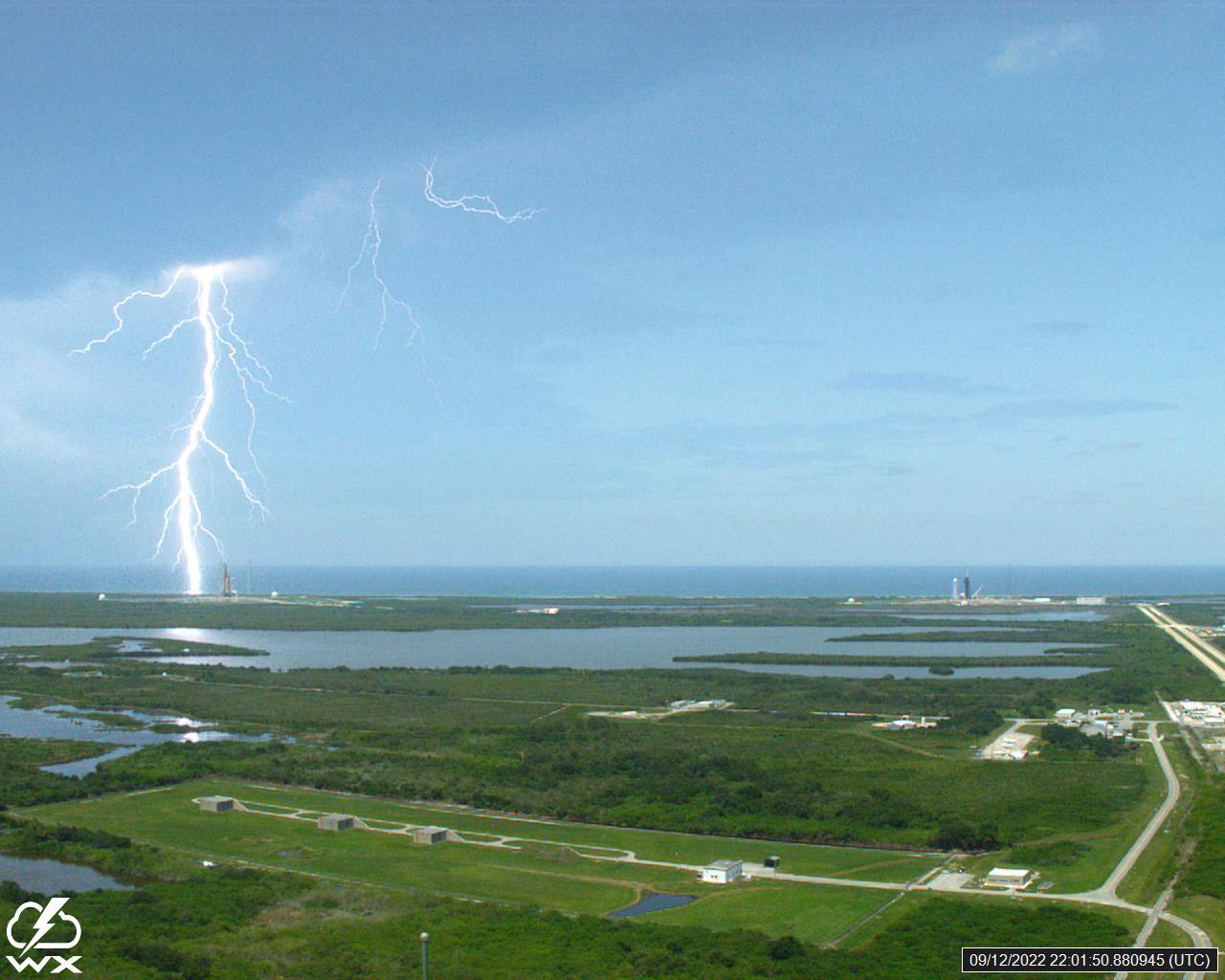
A lightning strike was recorded at Launch Complex 39B at NASA’s Kennedy Space Center in Florida on Sept. 12, 2022. NASA’s Space Launch System (SLS) and Orion spacecraft atop the mobile launcher are on the launch pad in preparation for the Artemis I mission. The lightning strike was recorded by cameras stationed at the pad and mobile launcher using a special filter called a “clear day frame,” which provides an overlay of the raw frame on a reference image. Artemis I will be the first integrated test of the SLS and Orion spacecraft. In later missions, NASA will land the first woman and the first woman of color on the surface of the Moon, paving the way for a long-term lunar presence and serving as a steppingstone on the way to Mars.
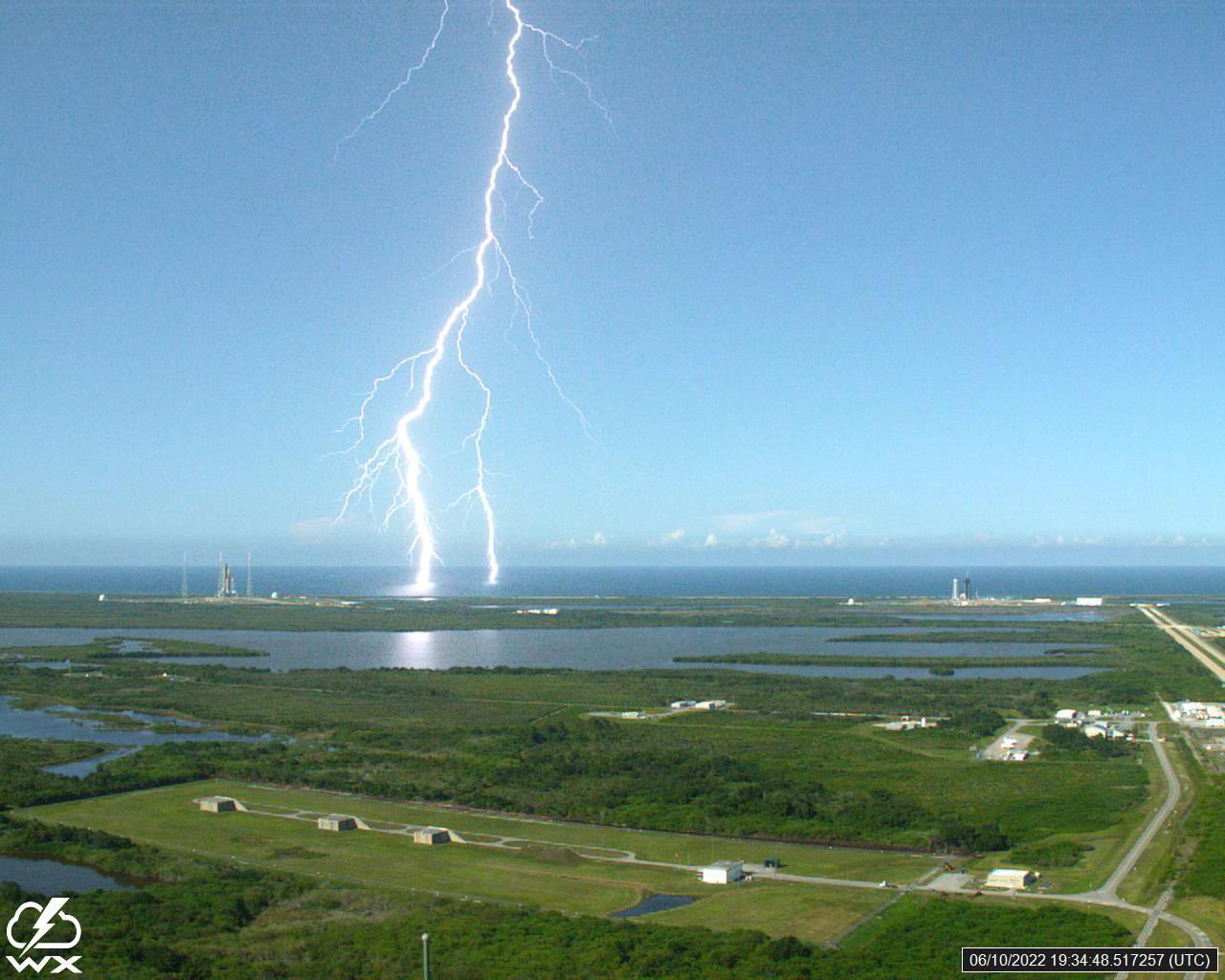
A lightning strike was recorded at Launch Complex 39B at NASA’s Kennedy Space Center in Florida on June 10, 2022. NASA’s Space Launch System (SLS) and Orion spacecraft atop the mobile launcher are on the launch pad in preparation for the Artemis I mission. The lightning strike was recorded by cameras stationed at the pad and mobile launcher using a special filter called a “clear day frame,” which provides an overlay of the raw frame on a reference image. Artemis I will be the first integrated test of the SLS and Orion spacecraft. In later missions, NASA will land the first woman and the first woman of color on the surface of the Moon, paving the way for a long-term lunar presence and serving as a steppingstone on the way to Mars.
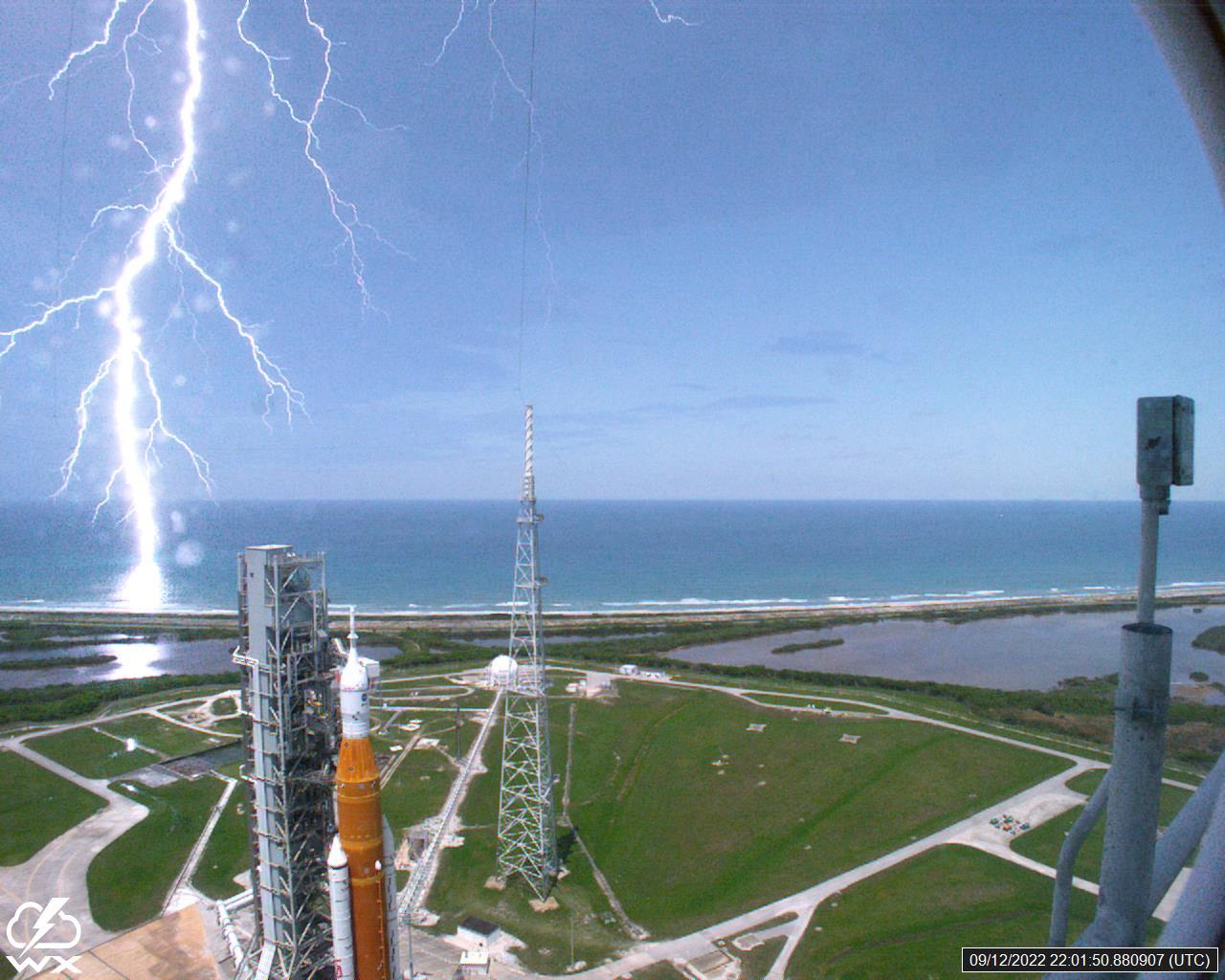
A lightning strike was recorded at Launch Complex 39B at NASA’s Kennedy Space Center in Florida on Sept. 12, 2022. NASA’s Space Launch System (SLS) and Orion spacecraft atop the mobile launcher are in view on the launch pad in preparation for the Artemis I mission. The lightning strike was recorded by cameras stationed at the pad and mobile launcher using a special filter called a “clear day frame,” which provides an overlay of the raw frame on a reference image. Artemis I will be the first integrated test of the SLS and Orion spacecraft. In later missions, NASA will land the first woman and the first woman of color on the surface of the Moon, paving the way for a long-term lunar presence and serving as a steppingstone on the way to Mars.
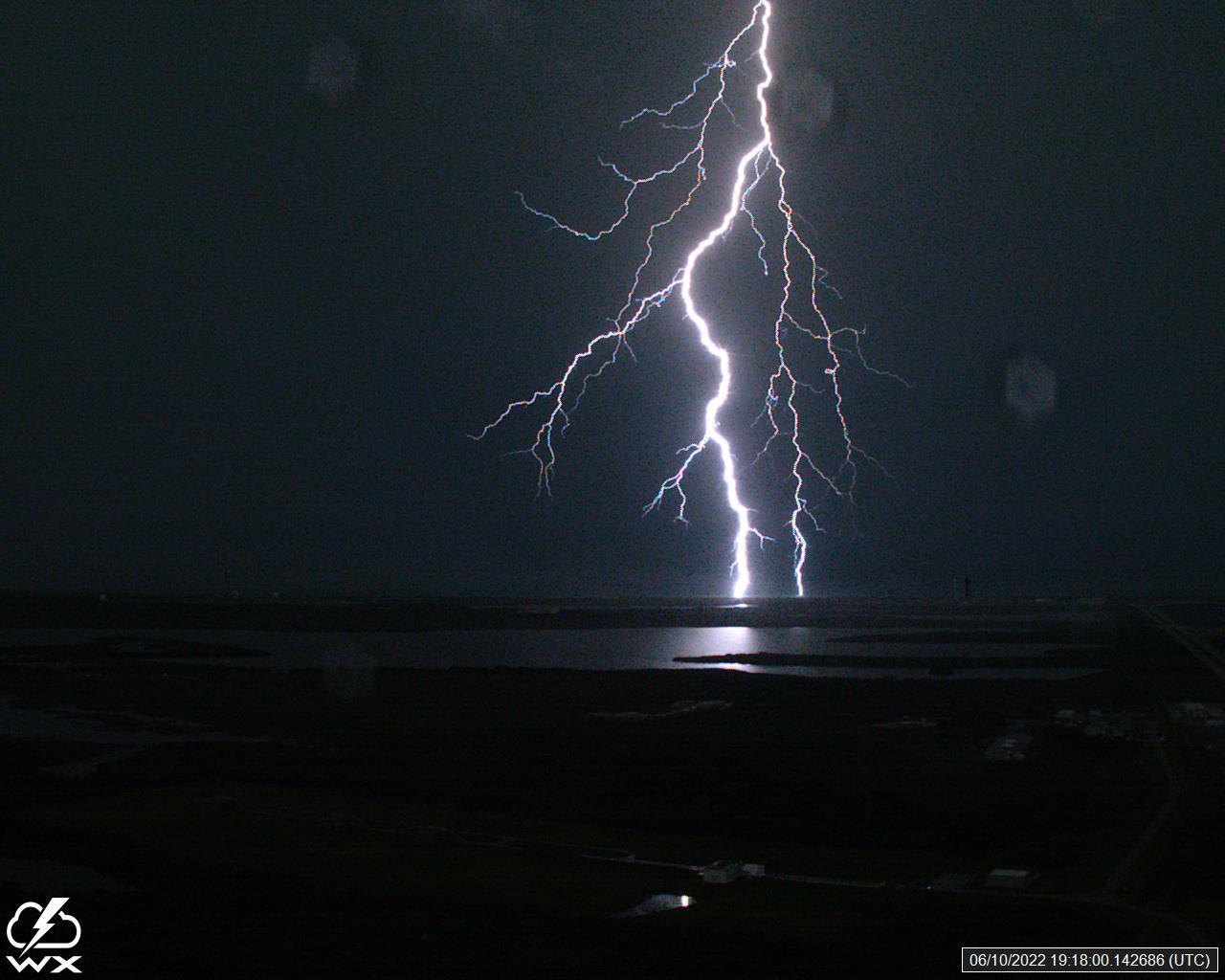
A lightning strike was recorded at Launch Complex 39B at NASA’s Kennedy Space Center in Florida on June 10, 2022. NASA’s Space Launch System (SLS) and Orion spacecraft atop the mobile launcher are on the launch pad in preparation for the Artemis I mission. The lightning strike was recorded by cameras stationed at the pad and mobile launcher using a special filter called a “clear day frame,” which provides an overlay of the raw frame on a reference image. Artemis I will be the first integrated test of the SLS and Orion spacecraft. In later missions, NASA will land the first woman and the first woman of color on the surface of the Moon, paving the way for a long-term lunar presence and serving as a steppingstone on the way to Mars.
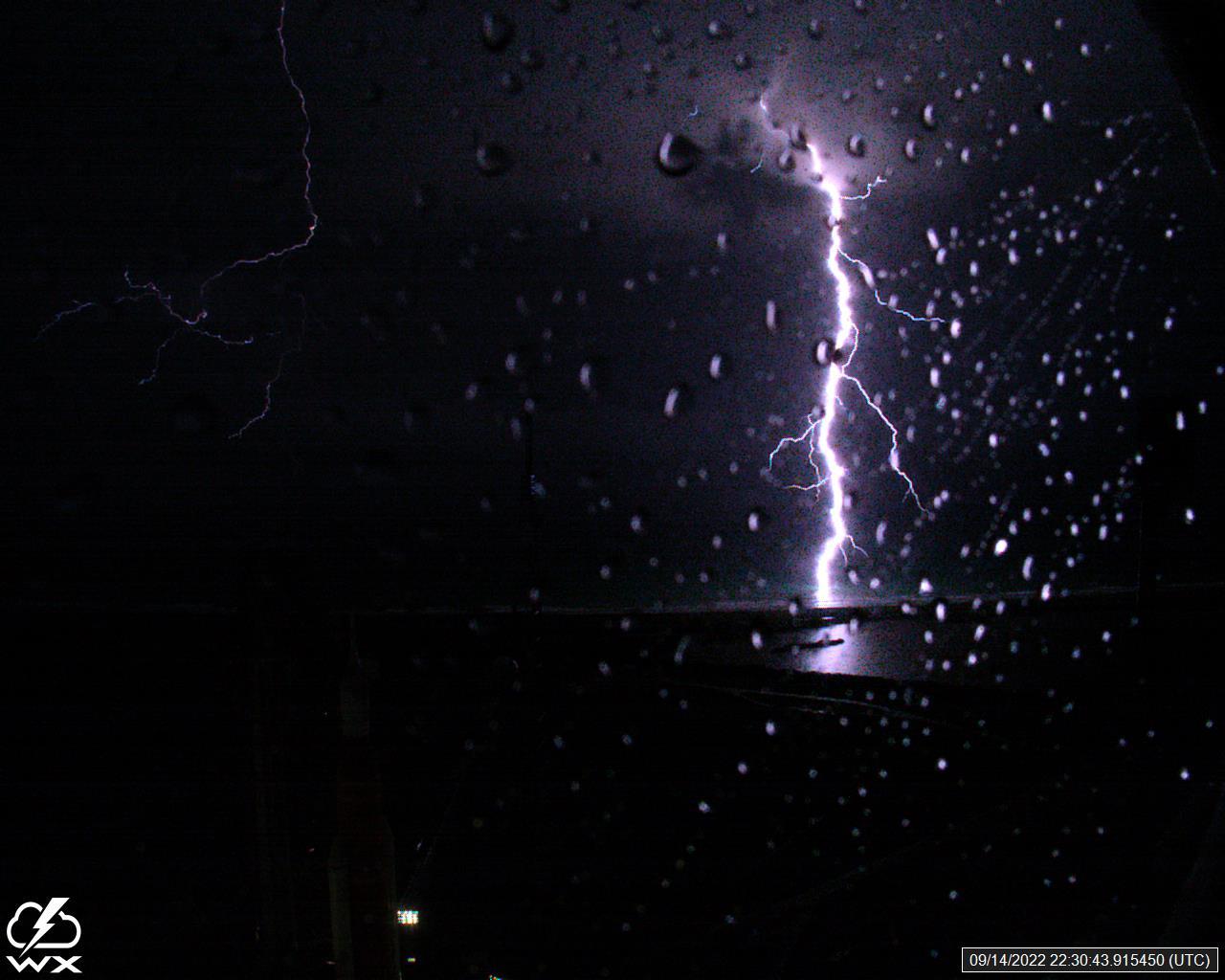
A lightning strike was recorded at Launch Complex 39B at NASA’s Kennedy Space Center in Florida on Sept. 14, 2022. NASA’s Space Launch System (SLS) and Orion spacecraft atop the mobile launcher are on the launch pad in preparation for the Artemis I mission. The lightning strike was recorded by cameras stationed at the pad and mobile launcher using a special filter called a “clear day frame,” which provides an overlay of the raw frame on a reference image. Artemis I will be the first integrated test of the SLS and Orion spacecraft. In later missions, NASA will land the first woman and the first woman of color on the surface of the Moon, paving the way for a long-term lunar presence and serving as a steppingstone on the way to Mars.
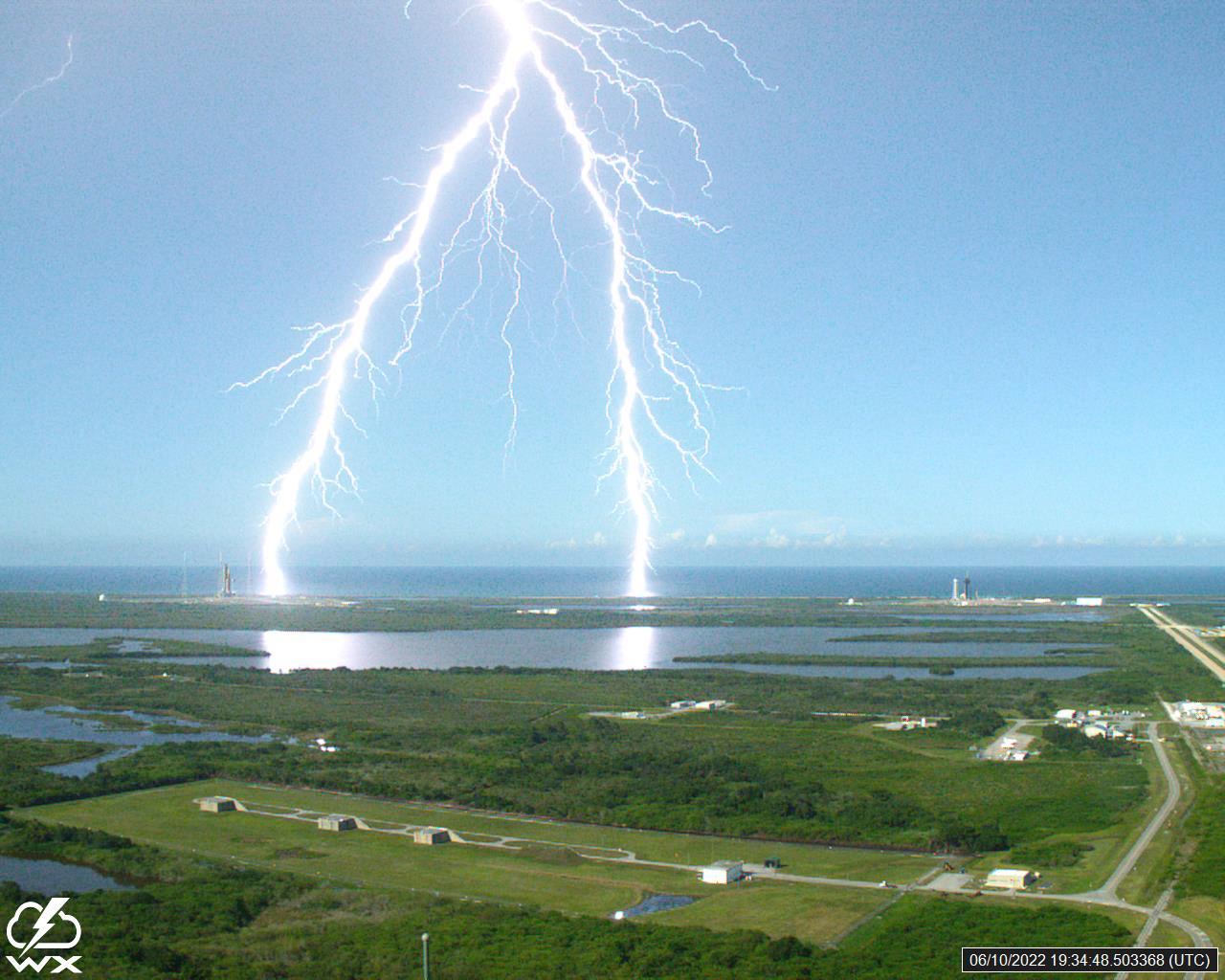
A lightning strike was recorded at Launch Complex 39B at NASA’s Kennedy Space Center in Florida on June 10, 2022. NASA’s Space Launch System (SLS) and Orion spacecraft atop the mobile launcher are on the launch pad in preparation for the Artemis I mission. The lightning strike was recorded by cameras stationed at the pad and mobile launcher using a special filter called a “clear day frame,” which provides an overlay of the raw frame on a reference image. Artemis I will be the first integrated test of the SLS and Orion spacecraft. In later missions, NASA will land the first woman and the first woman of color on the surface of the Moon, paving the way for a long-term lunar presence and serving as a steppingstone on the way to Mars.

A lightning strike was recorded at Launch Complex 39B at NASA’s Kennedy Space Center in Florida on Sept. 14, 2022. NASA’s Space Launch System (SLS) and Orion spacecraft atop the mobile launcher are on the launch pad in preparation for the Artemis I mission. The lightning strike was recorded by cameras stationed at the pad and mobile launcher using a special filter called a “clear day frame,” which provides an overlay of the raw frame on a reference image. Artemis I will be the first integrated test of the SLS and Orion spacecraft. In later missions, NASA will land the first woman and the first woman of color on the surface of the Moon, paving the way for a long-term lunar presence and serving as a steppingstone on the way to Mars.
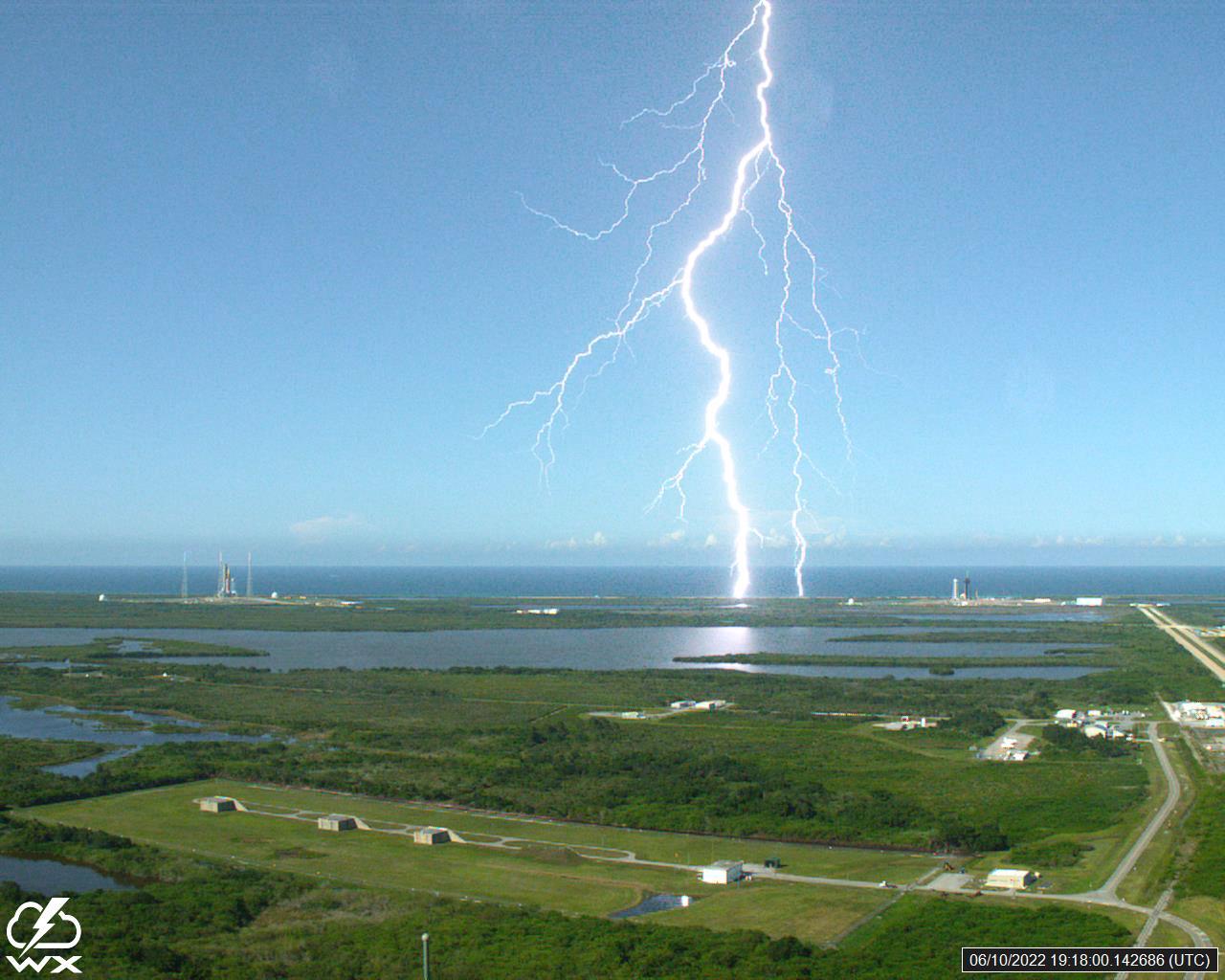
A lightning strike was recorded at Launch Complex 39B at NASA’s Kennedy Space Center in Florida on June 10, 2022. NASA’s Space Launch System (SLS) and Orion spacecraft atop the mobile launcher are on the launch pad in preparation for the Artemis I mission. The lightning strike was recorded by cameras stationed at the pad and mobile launcher using a special filter called a “clear day frame,” which provides an overlay of the raw frame on a reference image. Artemis I will be the first integrated test of the SLS and Orion spacecraft. In later missions, NASA will land the first woman and the first woman of color on the surface of the Moon, paving the way for a long-term lunar presence and serving as a steppingstone on the way to Mars.
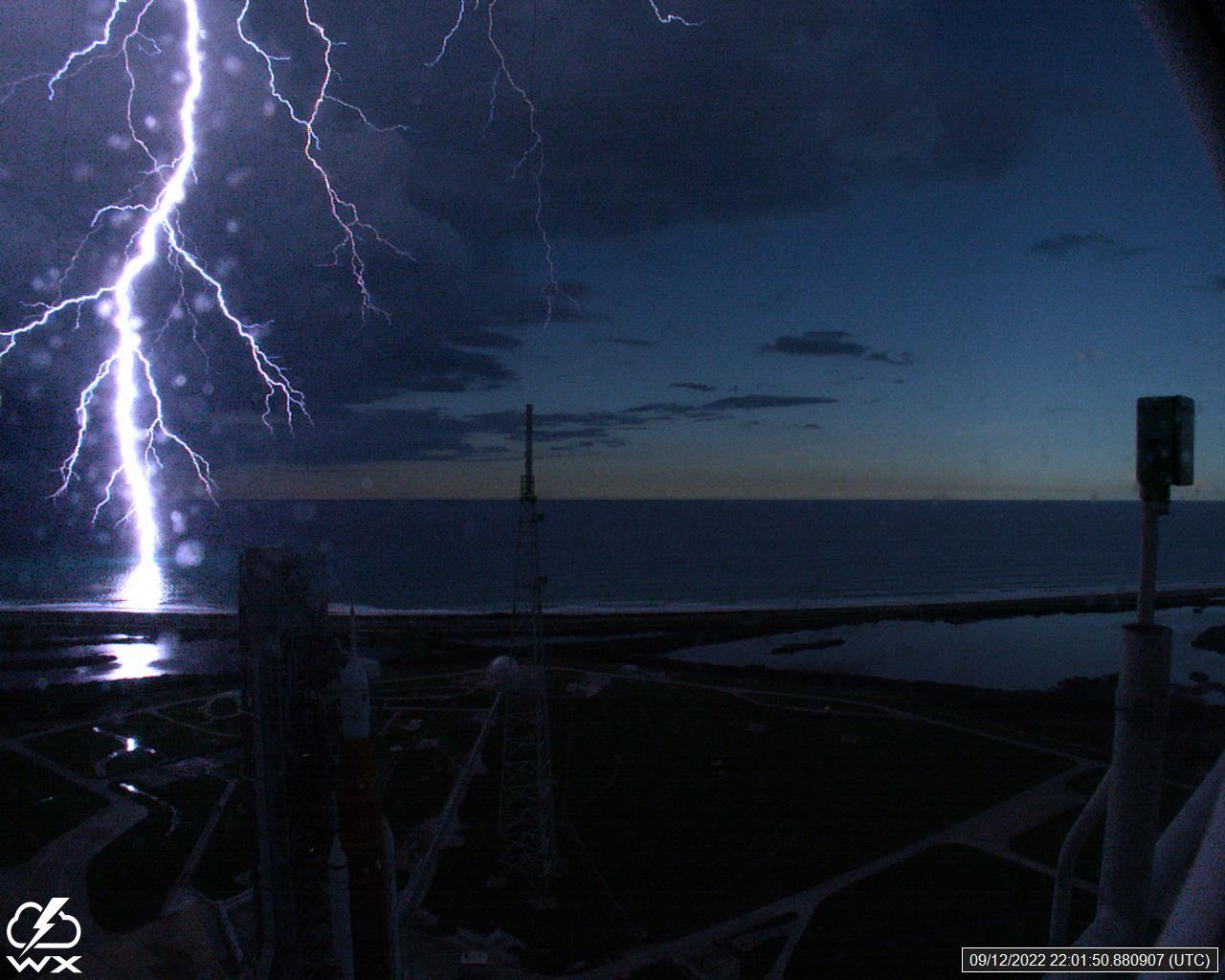
A lightning strike was recorded at Launch Complex 39B at NASA’s Kennedy Space Center in Florida on Sept. 12, 2022. NASA’s Space Launch System (SLS) and Orion spacecraft atop the mobile launcher are on the launch pad in preparation for the Artemis I mission. The lightning strike was recorded by cameras stationed at the pad and mobile launcher using a special filter called a “clear day frame,” which provides an overlay of the raw frame on a reference image. Artemis I will be the first integrated test of the SLS and Orion spacecraft. In later missions, NASA will land the first woman and the first woman of color on the surface of the Moon, paving the way for a long-term lunar presence and serving as a steppingstone on the way to Mars.
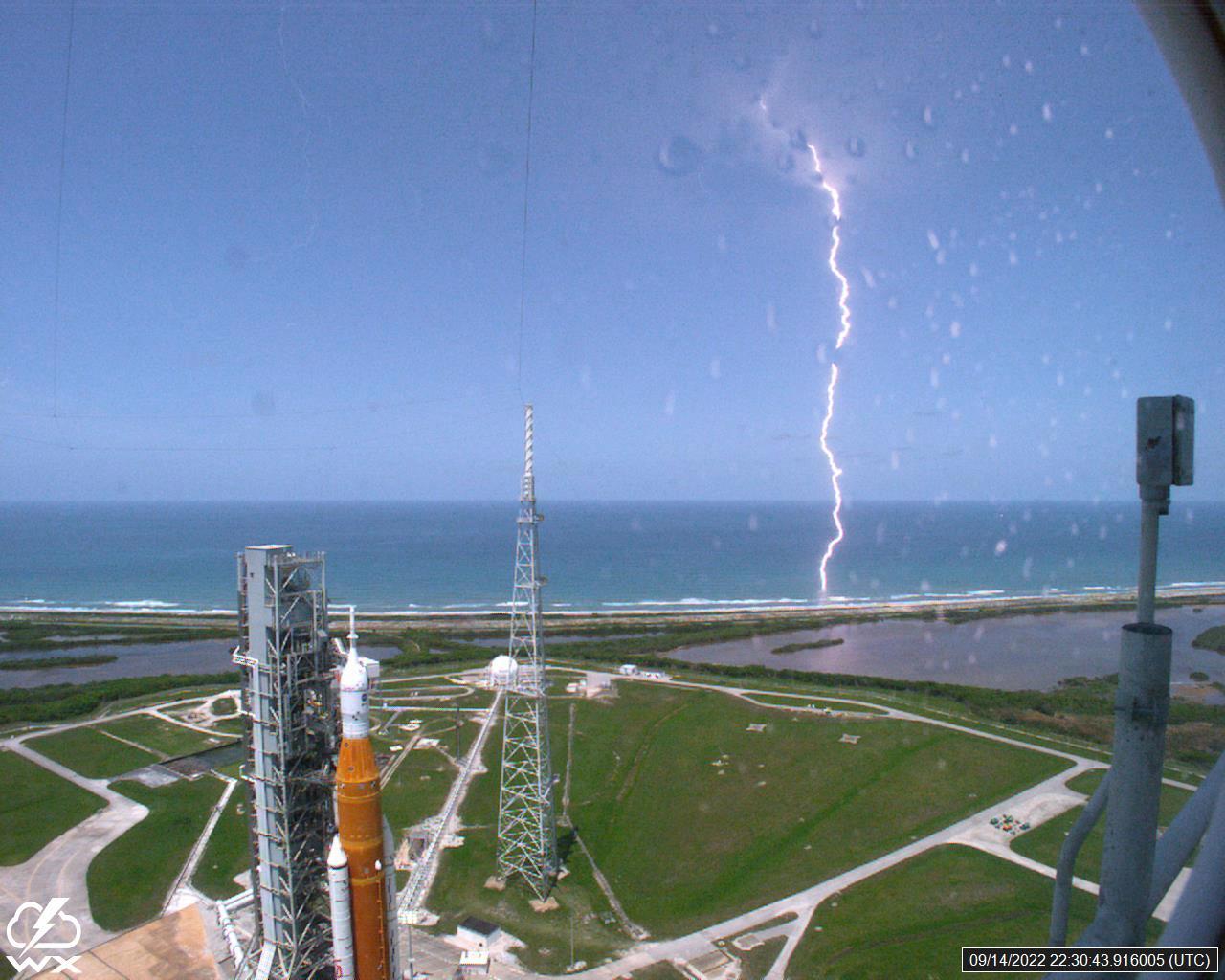
A lightning strike was recorded at Launch Complex 39B at NASA’s Kennedy Space Center in Florida on Sept. 14, 2022. NASA’s Space Launch System (SLS) and Orion spacecraft atop the mobile launcher are in view on the launch pad in preparation for the Artemis I mission. The lightning strike was recorded by cameras stationed at the pad and mobile launcher using a special filter called a “clear day frame,” which provides an overlay of the raw frame on a reference image. Artemis I will be the first integrated test of the SLS and Orion spacecraft. In later missions, NASA will land the first woman and the first woman of color on the surface of the Moon, paving the way for a long-term lunar presence and serving as a steppingstone on the way to Mars.
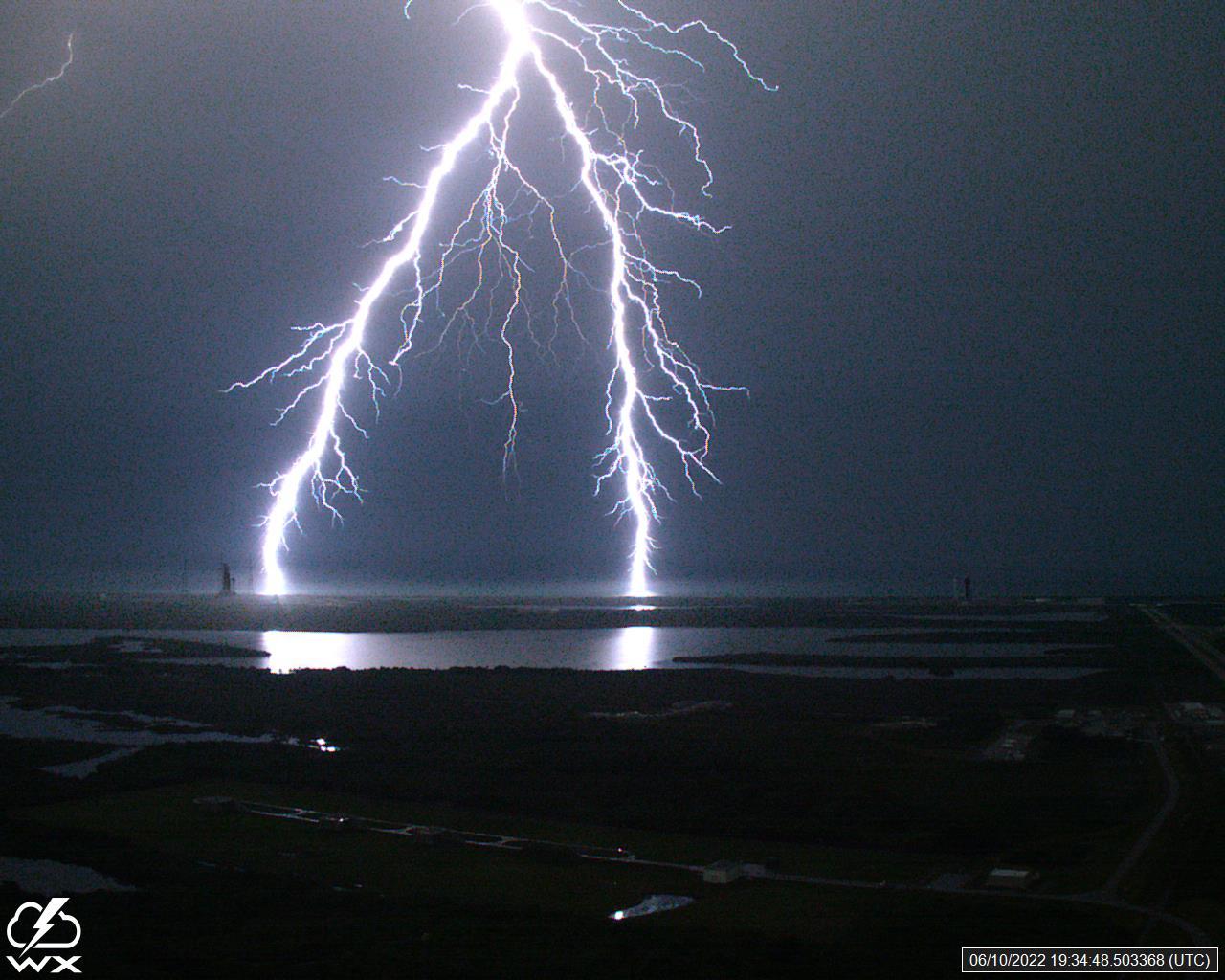
A lightning strike was recorded at Launch Complex 39B at NASA’s Kennedy Space Center in Florida on June 10, 2022. NASA’s Space Launch System (SLS) and Orion spacecraft atop the mobile launcher are on the launch pad in preparation for the Artemis I mission. The lightning strike was recorded by cameras stationed at the pad and mobile launcher using a special filter called a “clear day frame,” which provides an overlay of the raw frame on a reference image. Artemis I will be the first integrated test of the SLS and Orion spacecraft. In later missions, NASA will land the first woman and the first woman of color on the surface of the Moon, paving the way for a long-term lunar presence and serving as a steppingstone on the way to Mars.
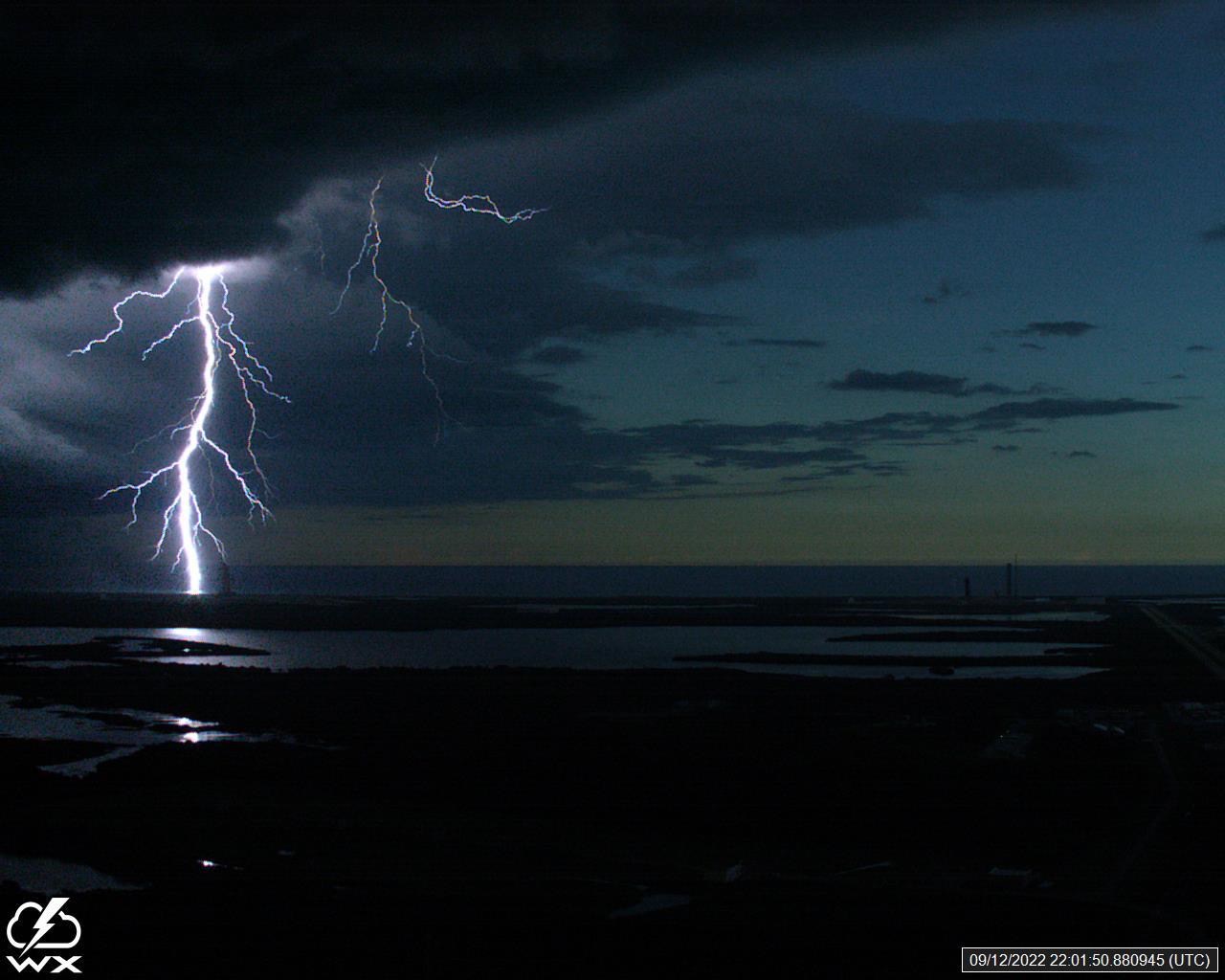
A lightning strike was recorded at Launch Complex 39B at NASA’s Kennedy Space Center in Florida on Sept. 12, 2022. NASA’s Space Launch System (SLS) and Orion spacecraft atop the mobile launcher are on the launch pad in preparation for the Artemis I mission. The lightning strike was recorded by cameras stationed at the pad and mobile launcher using a special filter called a “clear day frame,” which provides an overlay of the raw frame on a reference image. Artemis I will be the first integrated test of the SLS and Orion spacecraft. In later missions, NASA will land the first woman and the first woman of color on the surface of the Moon, paving the way for a long-term lunar presence and serving as a steppingstone on the way to Mars.

A lightning strike was recorded at Launch Complex 39B at NASA’s Kennedy Space Center in Florida on June 10, 2022. NASA’s Space Launch System (SLS) and Orion spacecraft atop the mobile launcher are on the launch pad in preparation for the Artemis I mission. The lightning strike was recorded by cameras stationed at the pad and mobile launcher using a special filter called a “clear day frame,” which provides an overlay of the raw frame on a reference image. Artemis I will be the first integrated test of the SLS and Orion spacecraft. In later missions, NASA will land the first woman and the first woman of color on the surface of the Moon, paving the way for a long-term lunar presence and serving as a steppingstone on the way to Mars.
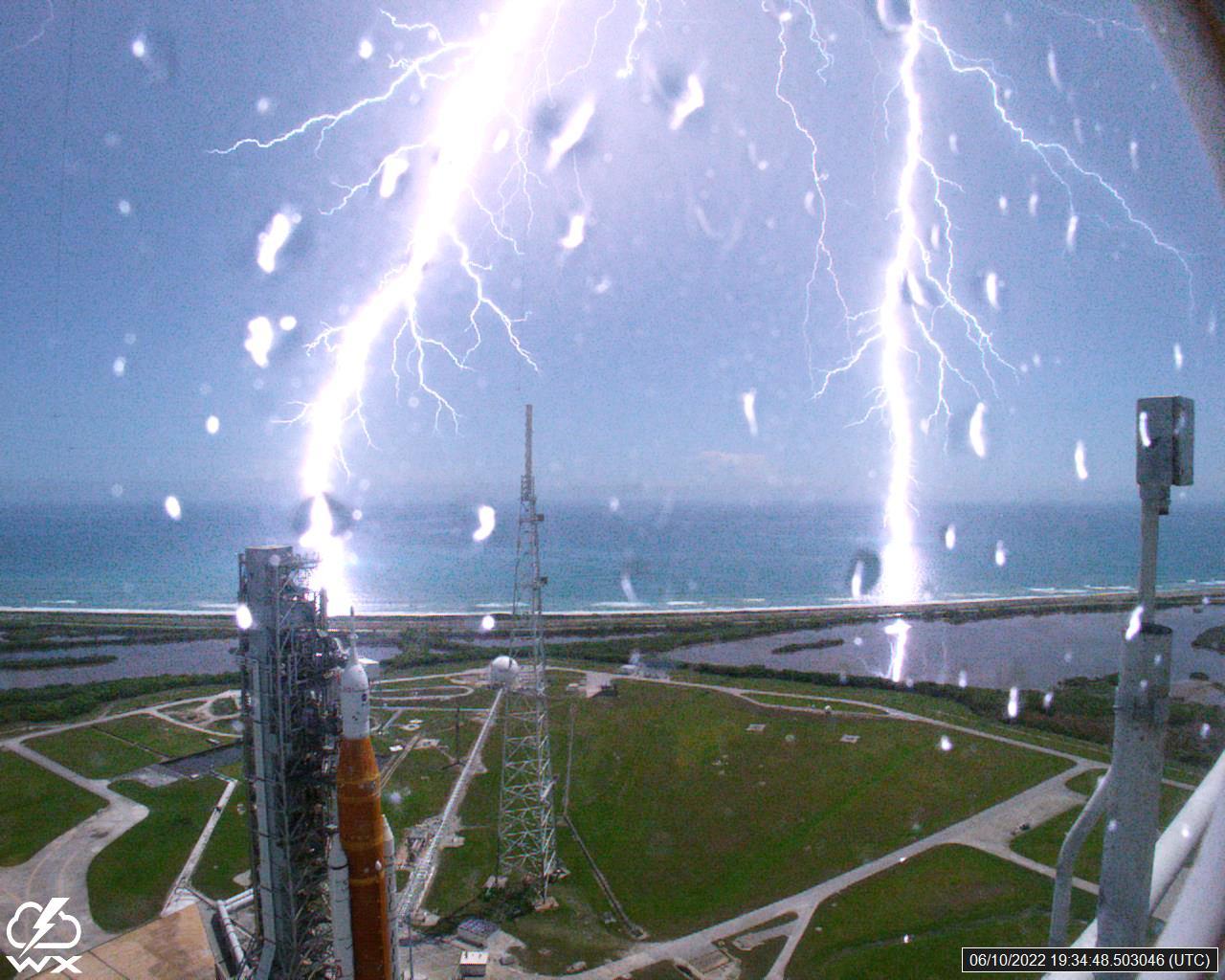
Lightning strikes were recorded at Launch Complex 39B at NASA’s Kennedy Space Center in Florida on June 10, 2022. NASA’s Space Launch System (SLS) and Orion spacecraft atop the mobile launcher are in view on the launch pad in preparation for the Artemis I mission. The lightning strike was recorded by cameras stationed at the pad and mobile launcher using a special filter called a “clear day frame,” which provides an overlay of the raw frame on a reference image. Artemis I will be the first integrated test of the SLS and Orion spacecraft. In later missions, NASA will land the first woman and the first woman of color on the surface of the Moon, paving the way for a long-term lunar presence and serving as a steppingstone on the way to Mars.
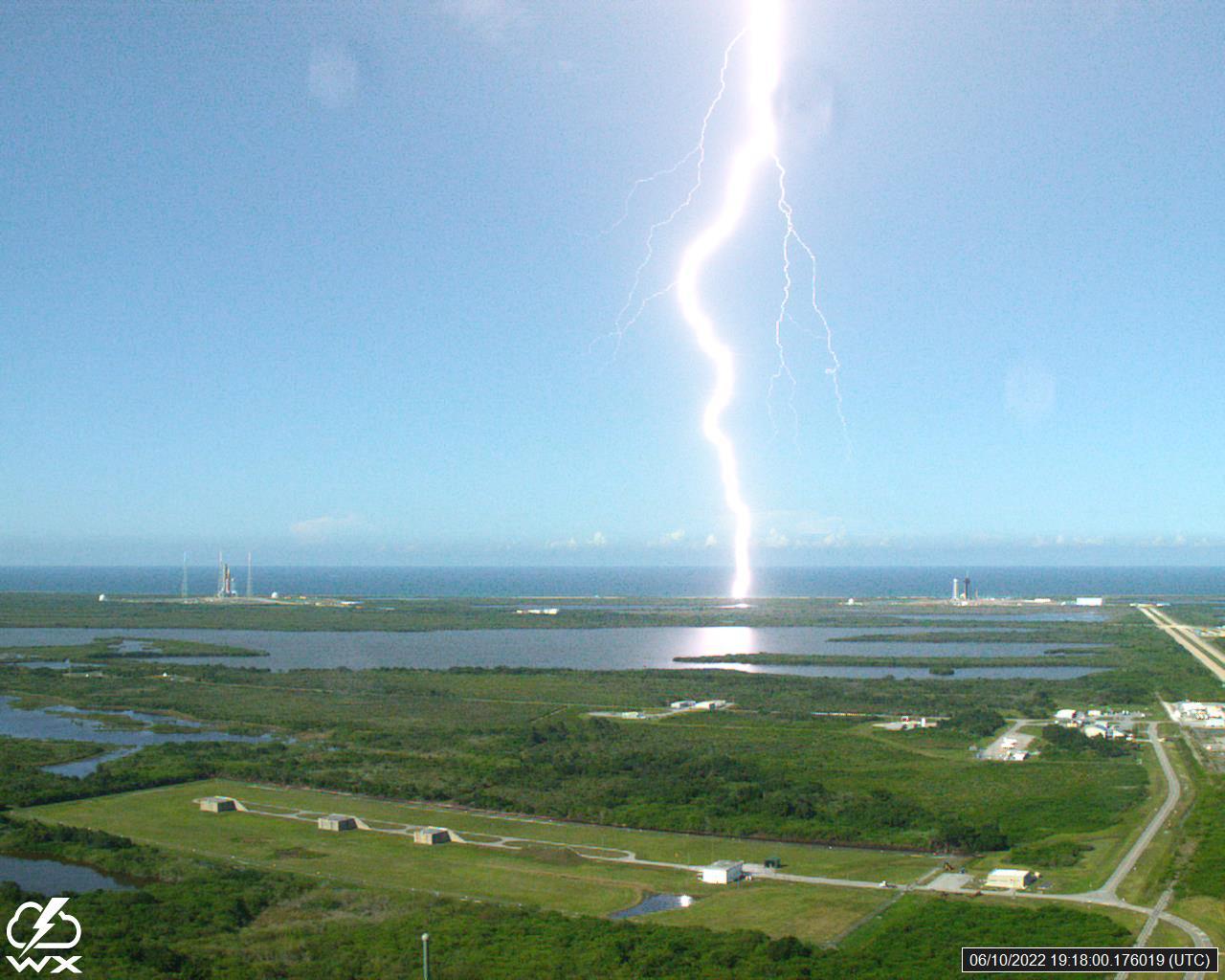
A lightning strike was recorded at Launch Complex 39B at NASA’s Kennedy Space Center in Florida on June 10, 2022. NASA’s Space Launch System (SLS) and Orion spacecraft atop the mobile launcher are on the launch pad in preparation for the Artemis I mission. The lightning strike was recorded by cameras stationed at the pad and mobile launcher using a special filter called a “clear day frame,” which provides an overlay of the raw frame on a reference image. Artemis I will be the first integrated test of the SLS and Orion spacecraft. In later missions, NASA will land the first woman and the first woman of color on the surface of the Moon, paving the way for a long-term lunar presence and serving as a steppingstone on the way to Mars.
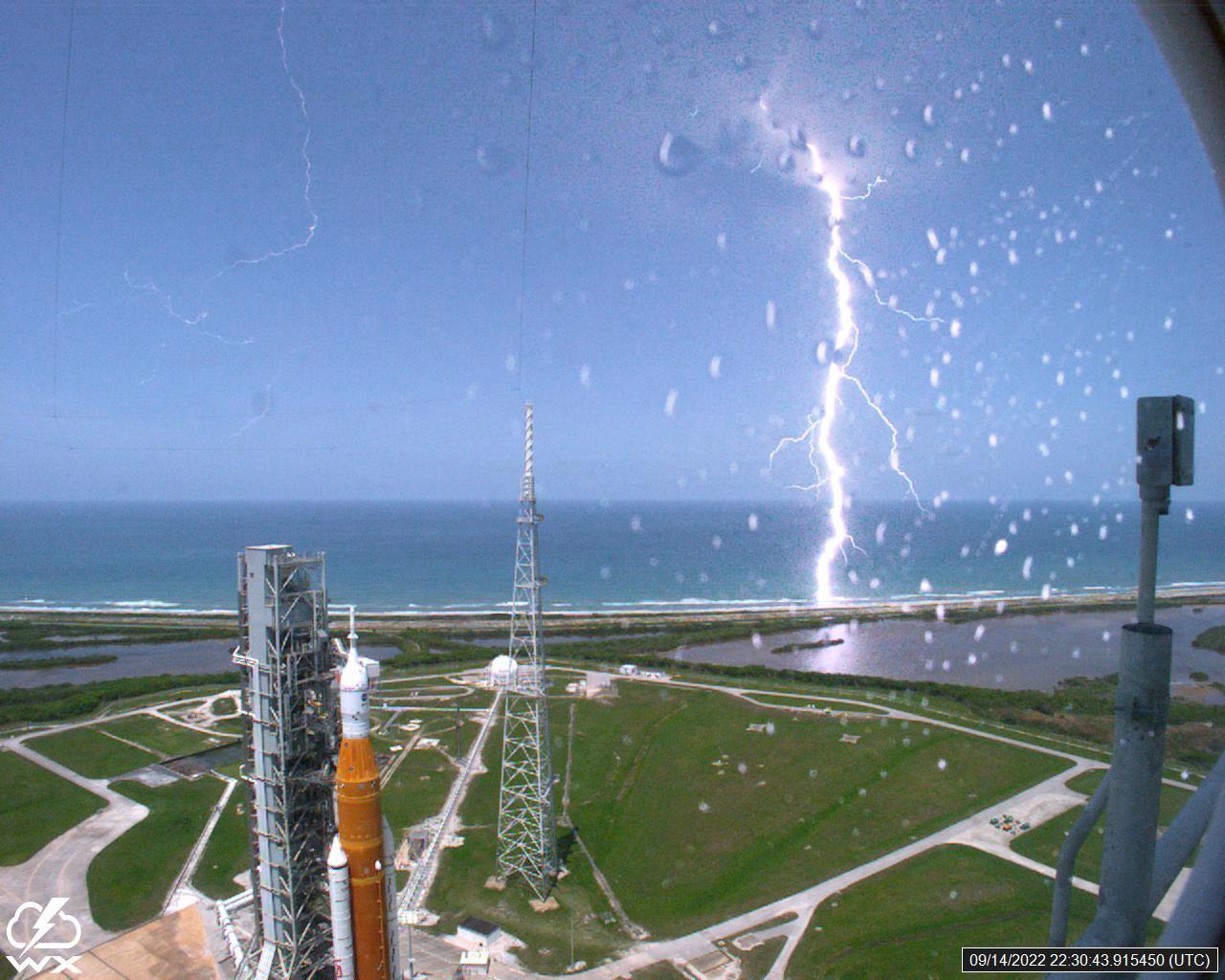
A lightning strike was recorded at Launch Complex 39B at NASA’s Kennedy Space Center in Florida on Sept. 14, 2022. NASA’s Space Launch System (SLS) and Orion spacecraft atop the mobile launcher are in view on the launch pad in preparation for the Artemis I mission. The lightning strike was recorded by cameras stationed at the pad and mobile launcher using a special filter called a “clear day frame,” which provides an overlay of the raw frame on a reference image. Artemis I will be the first integrated test of the SLS and Orion spacecraft. In later missions, NASA will land the first woman and the first woman of color on the surface of the Moon, paving the way for a long-term lunar presence and serving as a steppingstone on the way to Mars.

Teams with Exploration Ground Systems at NASA’s Kennedy Space Center in Florida continue to work the upgrades and repairs on mobile launcher 1 and Launch Pad 39B on June 13, 2023, ahead of the first critical ground testing for Artemis II. New pavement markings indicate the direction of the emergency egress system terminus from Launch Complex 39B. The team has nearly completed the terminus area, where the emergency egress baskets carrying the astronauts and flight crew will arrive following their safe exit from the mobile launcher. Artemis II will be the first Artemis mission flying crew aboard Orion.
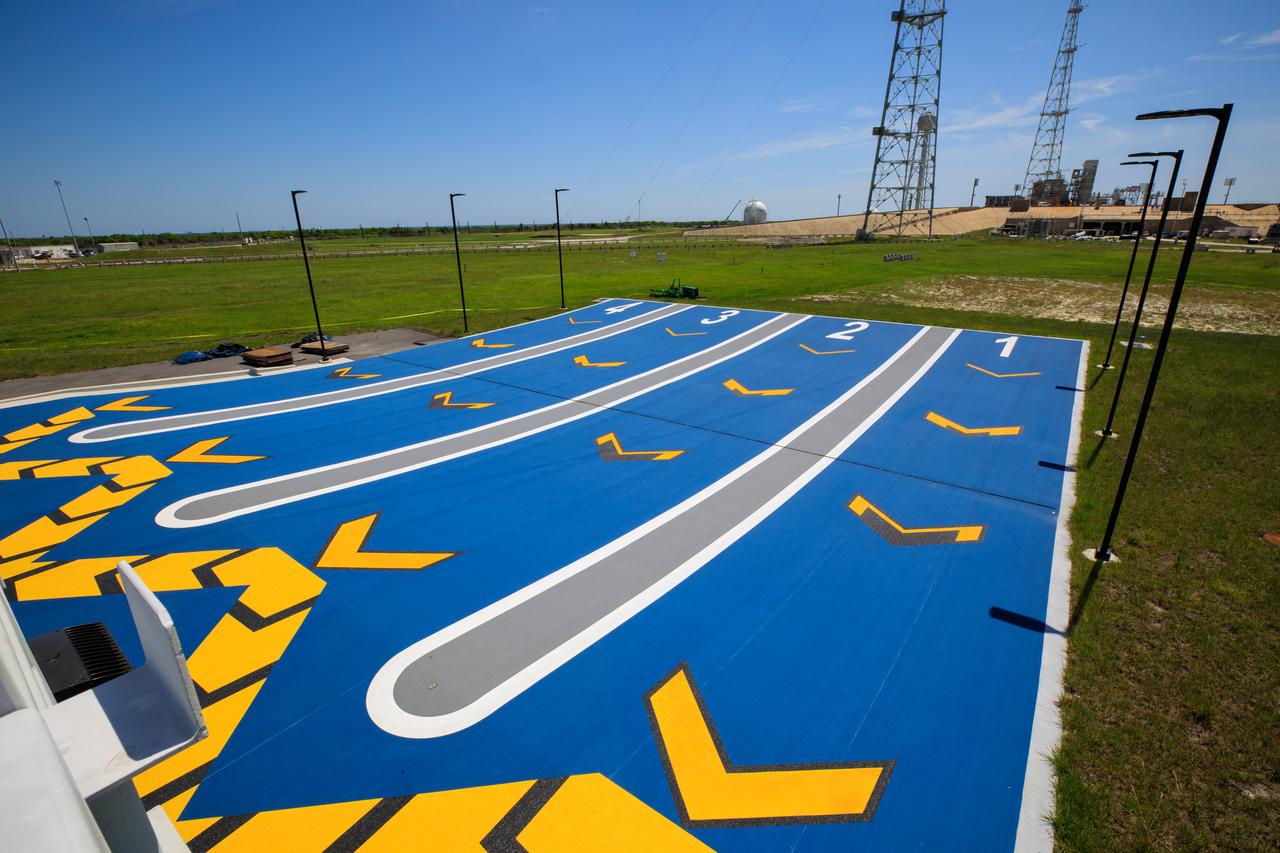
Teams with Exploration Ground Systems at NASA’s Kennedy Space Center in Florida continue to work the upgrades and repairs on mobile launcher 1 and Launch Pad 39B on June 13, 2023, ahead of the first critical ground testing for Artemis II. New pavement markings indicate the direction of the emergency egress system terminus from Launch Complex 39B. The team has nearly completed the terminus area, where the emergency egress baskets carrying the astronauts and flight crew will arrive following their safe exit from the mobile launcher. Artemis II will be the first Artemis mission flying crew aboard Orion.

Teams with Exploration Ground Systems at NASA’s Kennedy Space Center in Florida continue to work the upgrades and repairs on mobile launcher 1 and Launch Pad 39B on June 13, 2023, ahead of the first critical ground testing for Artemis II. New pavement markings indicate the direction of the emergency egress system terminus from Launch Complex 39B. The team has nearly completed the terminus area, where the emergency egress baskets carrying the astronauts and flight crew will arrive following their safe exit from the mobile launcher. Artemis II will be the first Artemis mission flying crew aboard Orion.
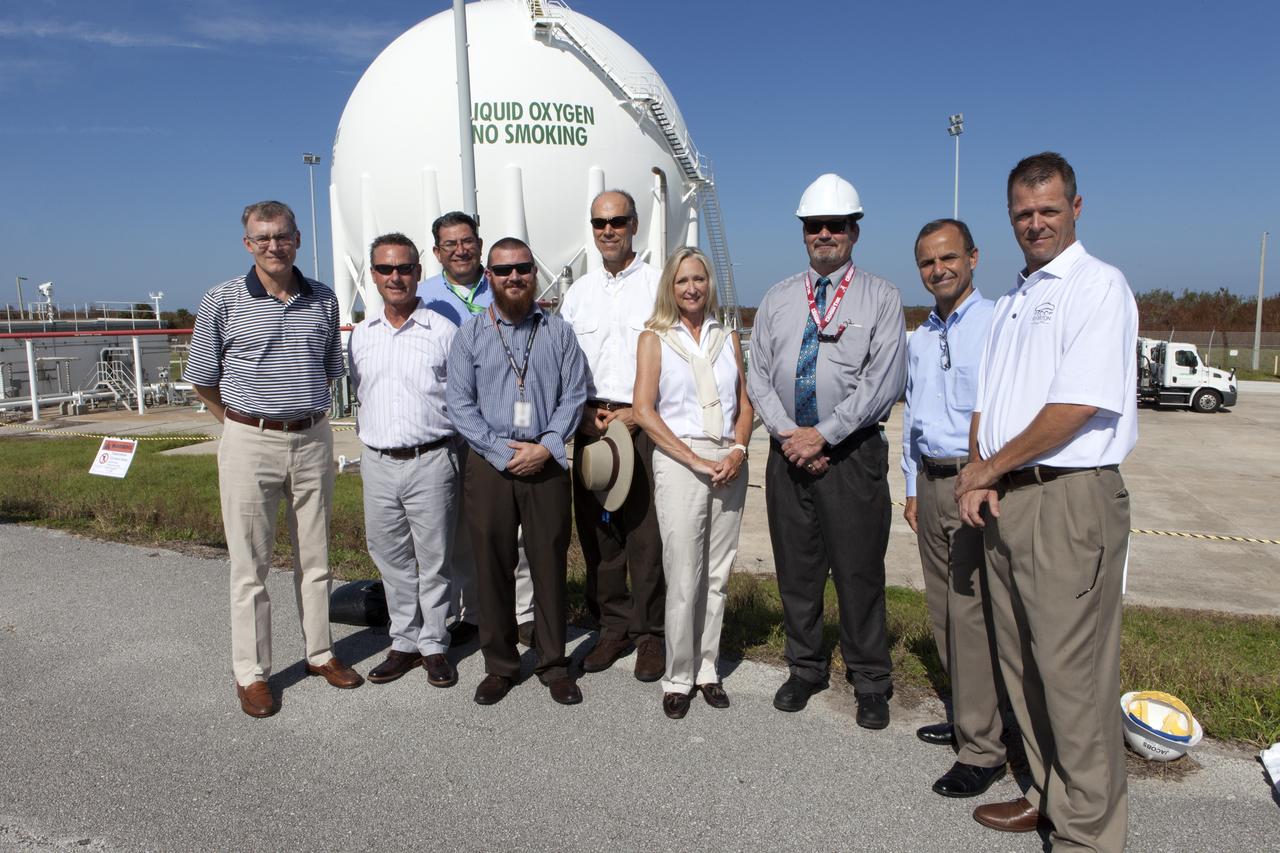
Liquid Oxygen filled in the Cryo tank of Pad 39B in support of the SLS rocket.
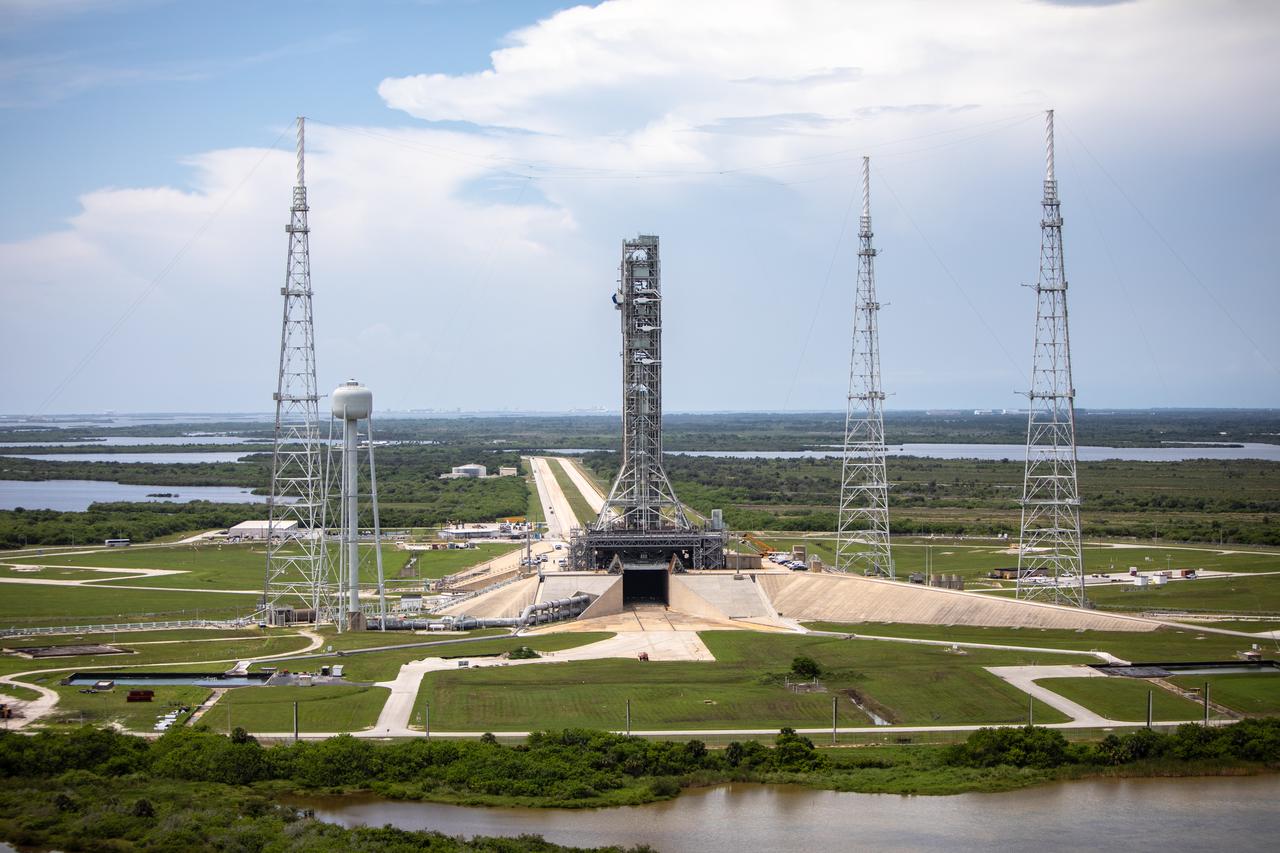
An aerial view of Launch Complex 39B with Exploration Ground Systems’ mobile launcher for the Artemis 1 mission on the pad. The mobile launcher, atop crawler-transporter 2, made its final solo trek from the Vehicle Assembly Building on June 27, 2019, and arrived on the surface of pad B on June 28, 2019, at NASA’s Kennedy Space Center in Florida. The mobile launcher will remain at the pad over the summer, undergoing final testing and checkouts. Its next roll to the pad will be with the agency’s Space Launch System rocket and Orion spacecraft in preparation for the launch of Artemis 1.
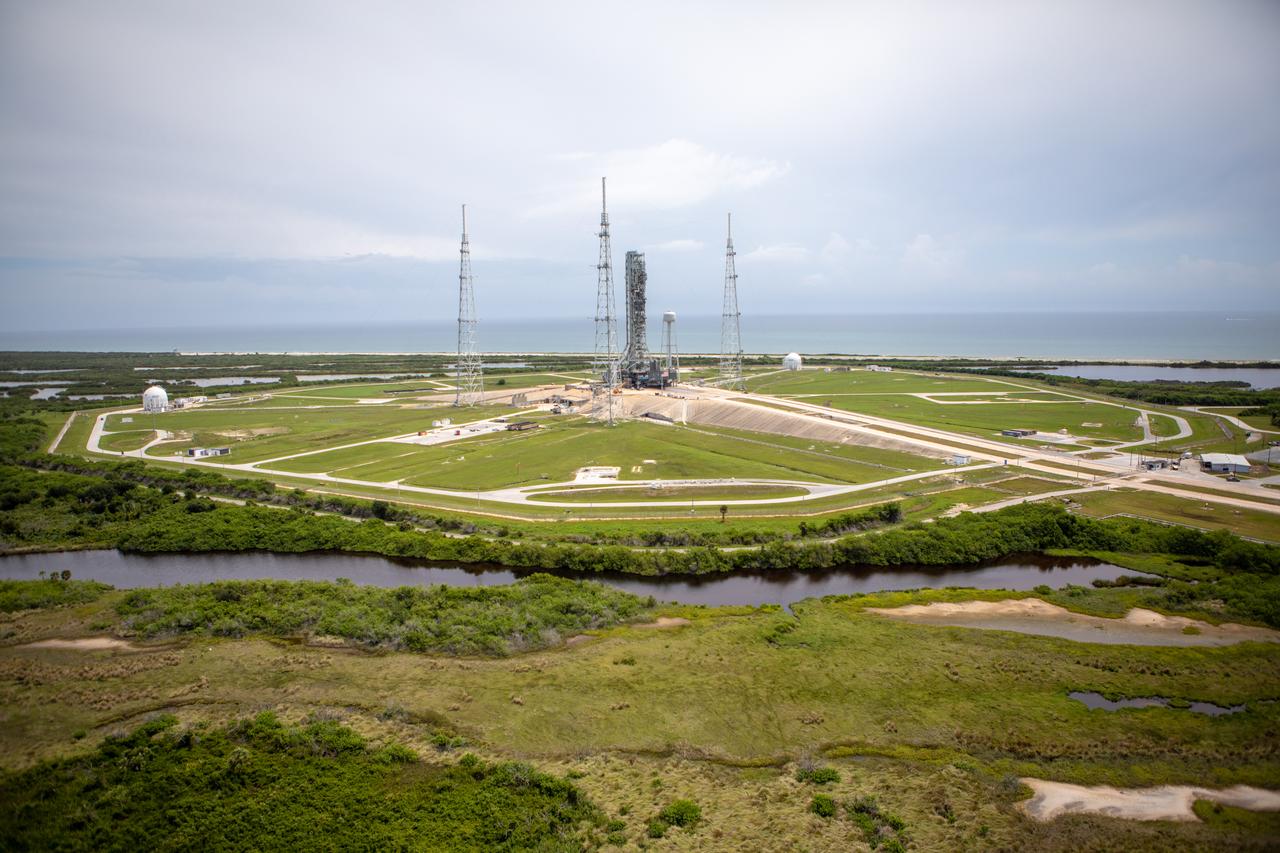
An aerial view of Launch Complex 39B with Exploration Ground Systems’ mobile launcher for the Artemis 1 mission on the pad. The mobile launcher, atop crawler-transporter 2, made its final solo trek from the Vehicle Assembly Building on June 27, 2019, and arrived on the surface of pad B on June 28, 2019, at NASA’s Kennedy Space Center in Florida. The mobile launcher will remain at the pad over the summer, undergoing final testing and checkouts. Its next roll to the pad will be with the agency’s Space Launch System rocket and Orion spacecraft in preparation for the launch of Artemis 1.
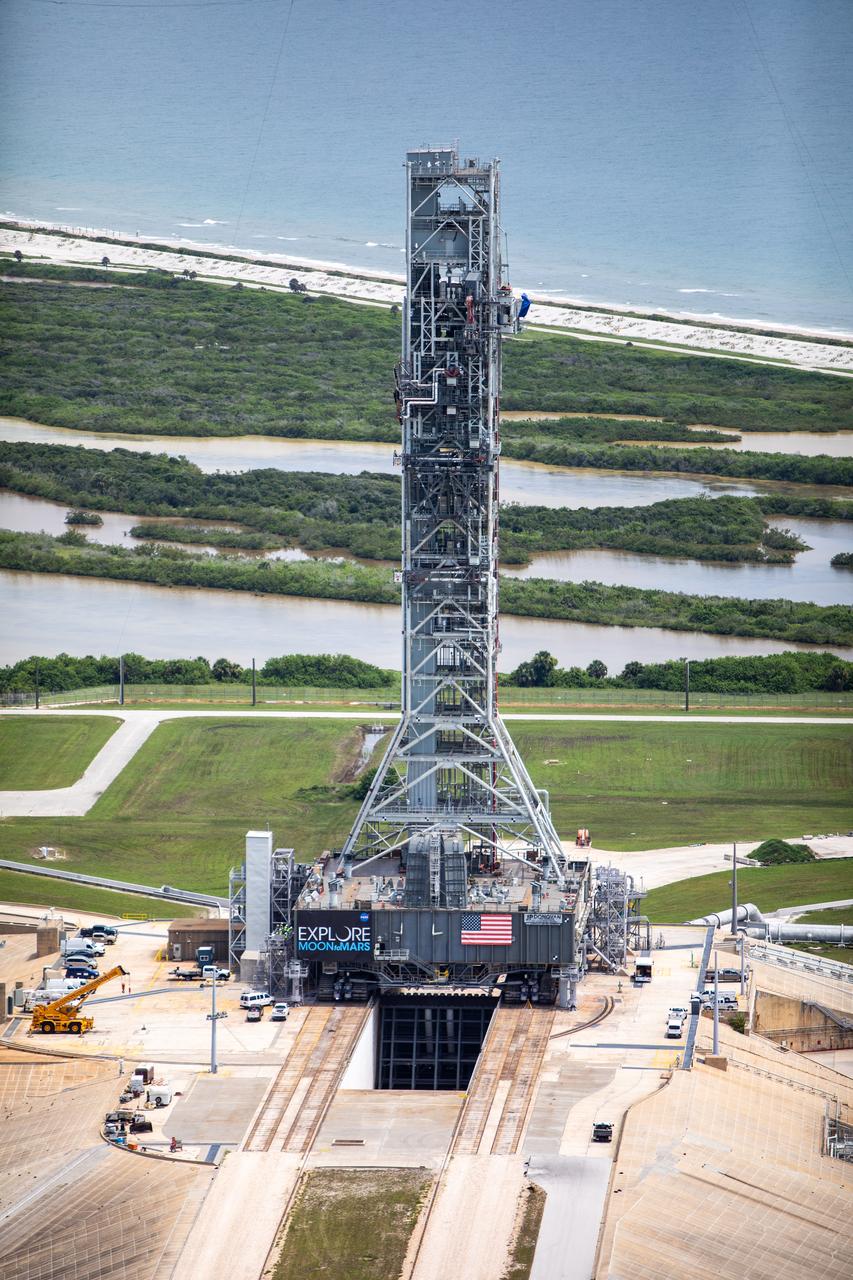
An aerial view of Launch Complex 39B with Exploration Ground Systems’ mobile launcher for the Artemis 1 mission on the pad. The mobile launcher, atop crawler-transporter 2, made its final solo trek from the Vehicle Assembly Building on June 27, 2019, and arrived on the surface of pad B on June 28, 2019, at NASA’s Kennedy Space Center in Florida. The mobile launcher will remain at the pad over the summer, undergoing final testing and checkouts. Its next roll to the pad will be with the agency’s Space Launch System rocket and Orion spacecraft in preparation for the launch of Artemis 1.
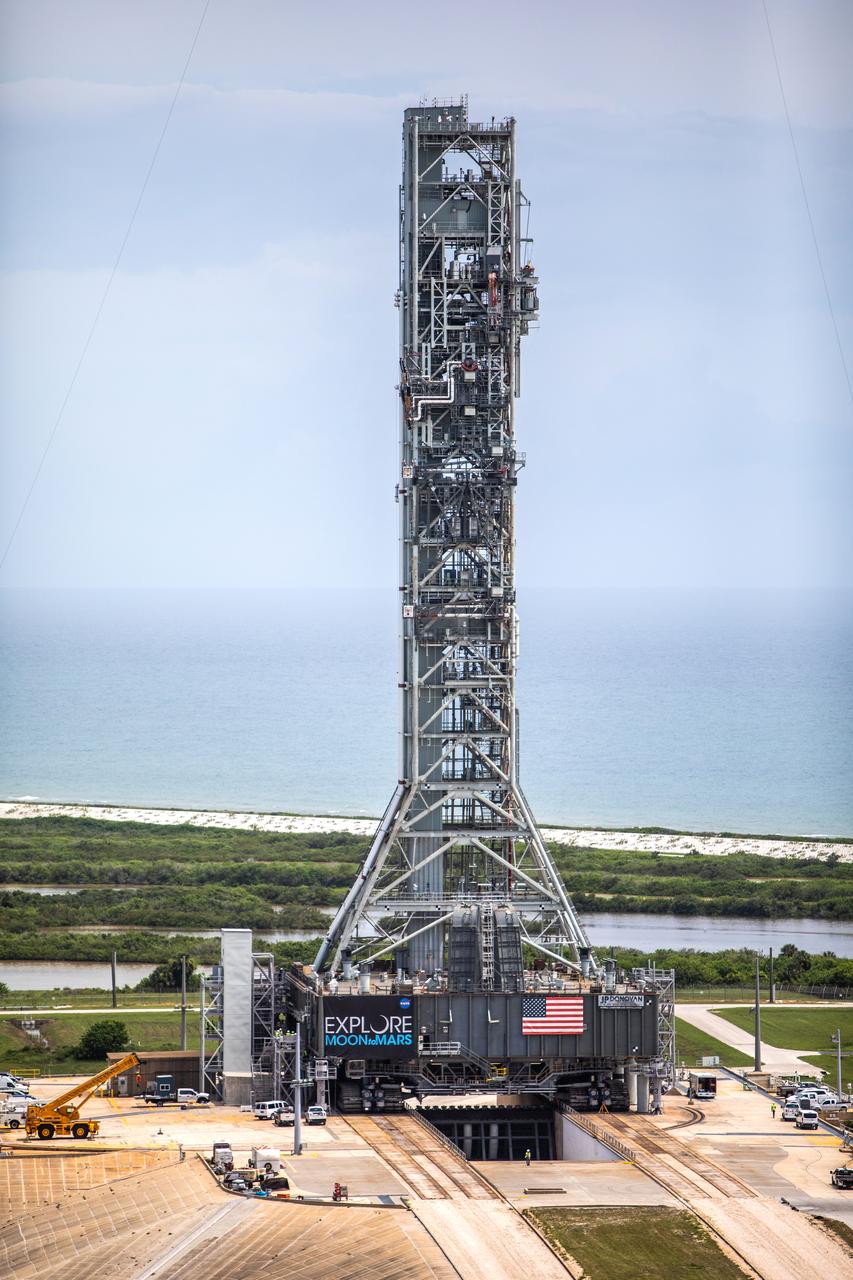
A close-up aerial view of Launch Complex 39B with Exploration Ground Systems’ mobile launcher for the Artemis 1 mission on the pad. The mobile launcher, atop crawler-transporter 2, made its final solo trek from the Vehicle Assembly Building on June 27, 2019, and arrived on the surface of pad B on June 28, 2019, at NASA’s Kennedy Space Center in Florida. The mobile launcher will remain at the pad over the summer, undergoing final testing and checkouts. Its next roll to the pad will be with the agency’s Space Launch System rocket and Orion spacecraft in preparation for the launch of Artemis 1.

An aerial view of Launch Complex 39B with Exploration Ground Systems’ mobile launcher for the Artemis 1 mission on the pad. The mobile launcher, atop crawler-transporter 2, made its final solo trek from the Vehicle Assembly Building on June 27, 2019, and arrived on the surface of pad B on June 28, 2019, at NASA’s Kennedy Space Center in Florida. The mobile launcher will remain at the pad over the summer, undergoing final testing and checkouts. Its next roll to the pad will be with the agency’s Space Launch System rocket and Orion spacecraft in preparation for the launch of Artemis 1.
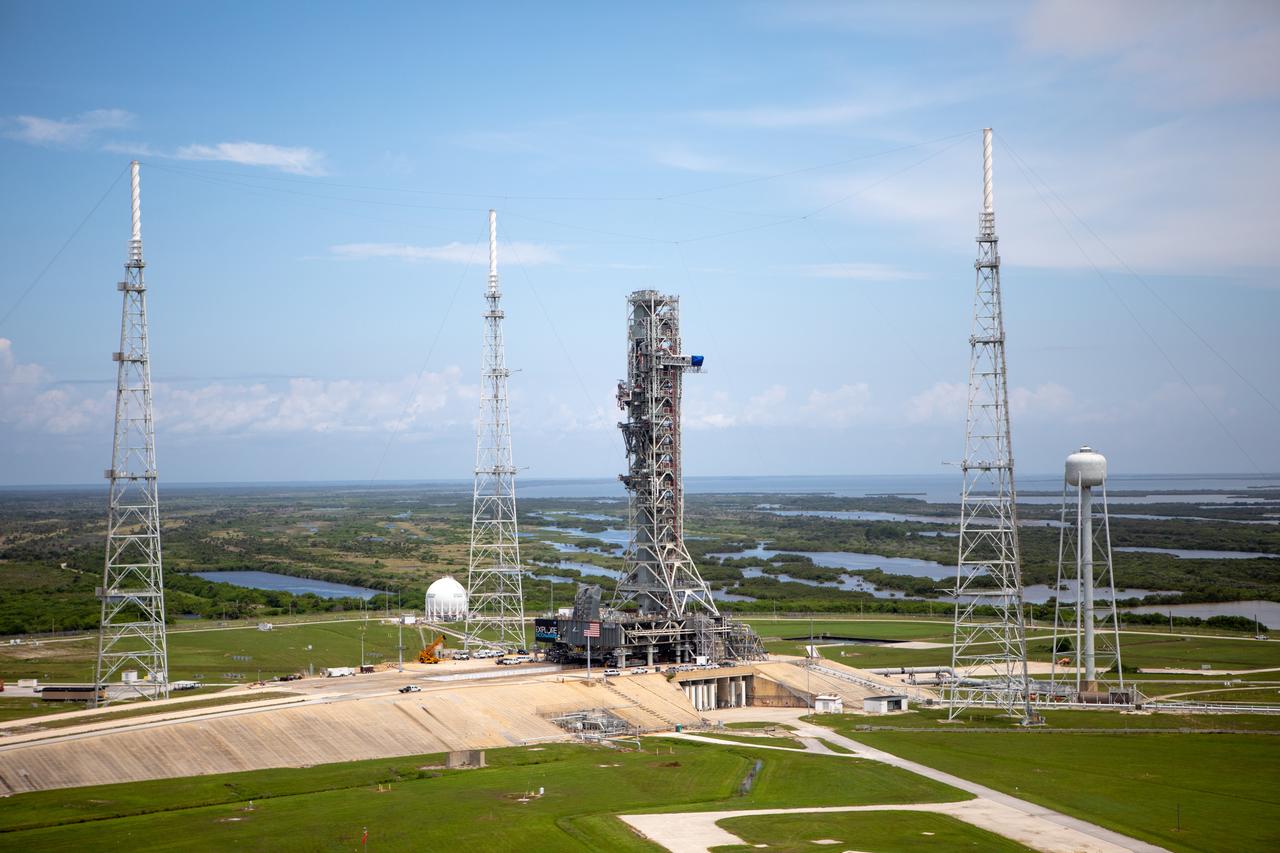
An aerial view of Launch Complex 39B with Exploration Ground Systems’ mobile launcher for the Artemis 1 mission on the pad. The mobile launcher, atop crawler-transporter 2, made its final solo trek from the Vehicle Assembly Building on June 27, 2019, and arrived on the surface of pad B on June 28, 2019, at NASA’s Kennedy Space Center in Florida. The mobile launcher will remain at the pad over the summer, undergoing final testing and checkouts. Its next roll to the pad will be with the agency’s Space Launch System rocket and Orion spacecraft in preparation for the launch of Artemis 1.
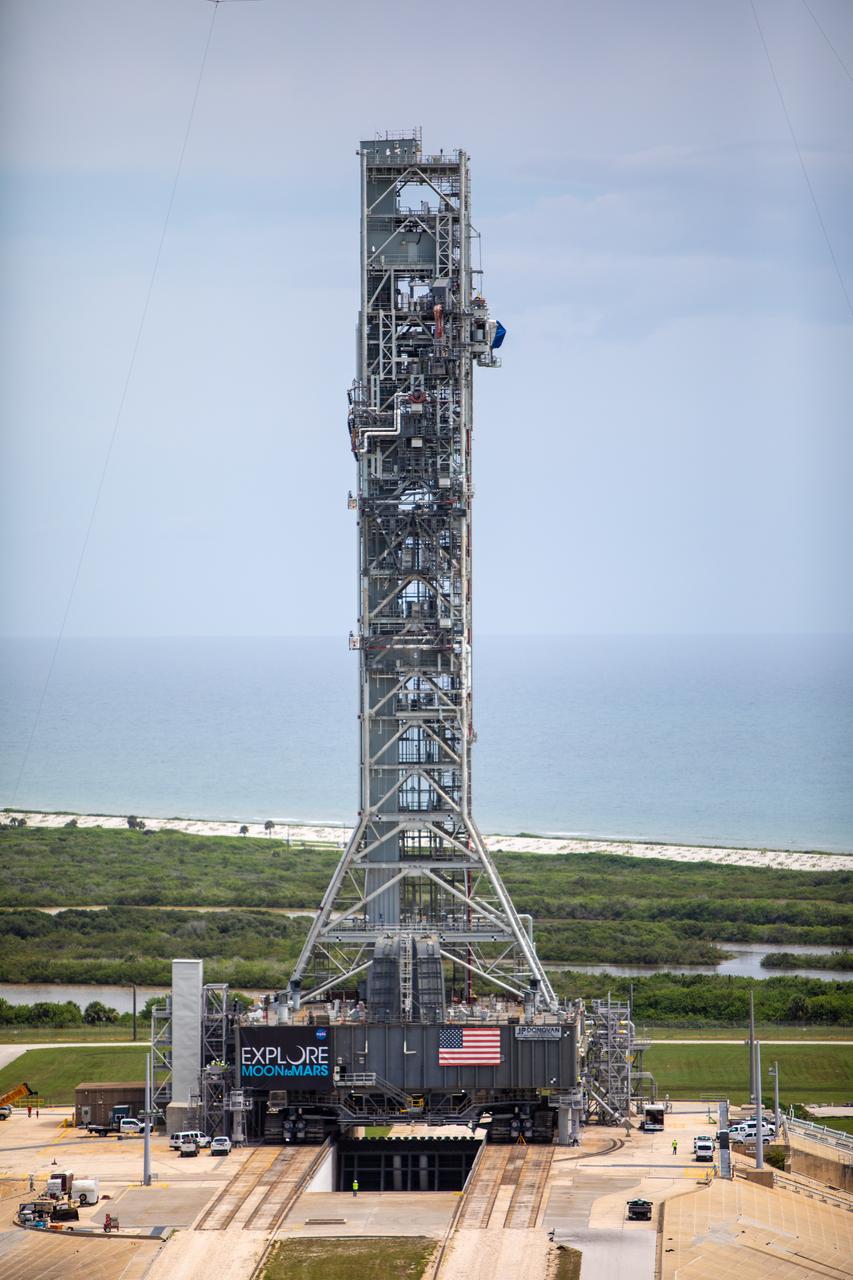
A close-up aerial view of Launch Complex 39B with Exploration Ground Systems’ mobile launcher for the Artemis 1 mission on the pad. The mobile launcher, atop crawler-transporter 2, made its final solo trek from the Vehicle Assembly Building on June 27, 2019, and arrived on the surface of pad B on June 28, 2019, at NASA’s Kennedy Space Center in Florida. The mobile launcher will remain at the pad over the summer, undergoing final testing and checkouts. Its next roll to the pad will be with the agency’s Space Launch System rocket and Orion spacecraft in preparation for the launch of Artemis 1.
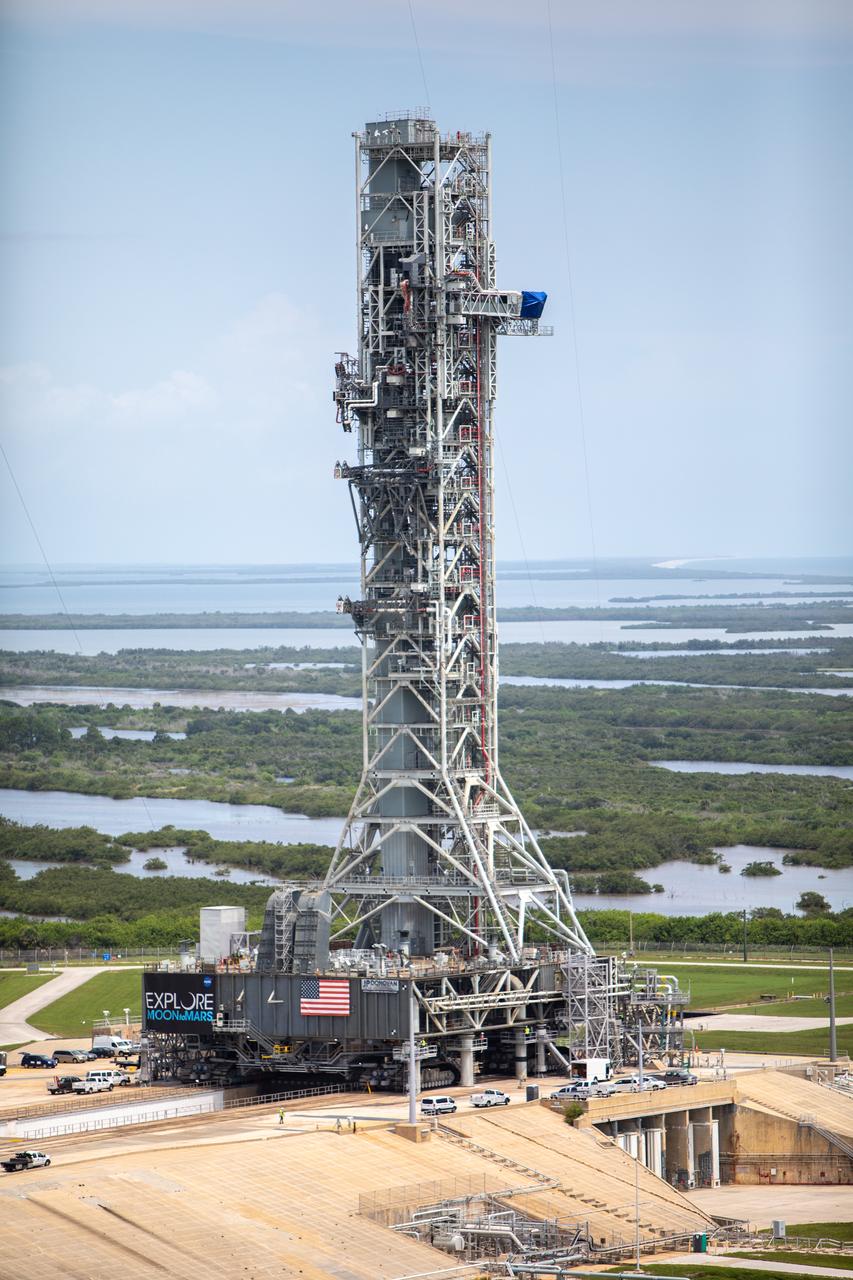
A close-up aerial view of Launch Complex 39B with Exploration Ground Systems’ mobile launcher for the Artemis 1 mission on the pad. The mobile launcher, atop crawler-transporter 2, made its final solo trek from the Vehicle Assembly Building on June 27, 2019, and arrived on the surface of pad B on June 28, 2019, at NASA’s Kennedy Space Center in Florida. The mobile launcher will remain at the pad over the summer, undergoing final testing and checkouts. Its next roll to the pad will be with the agency’s Space Launch System rocket and Orion spacecraft in preparation for the launch of Artemis 1.
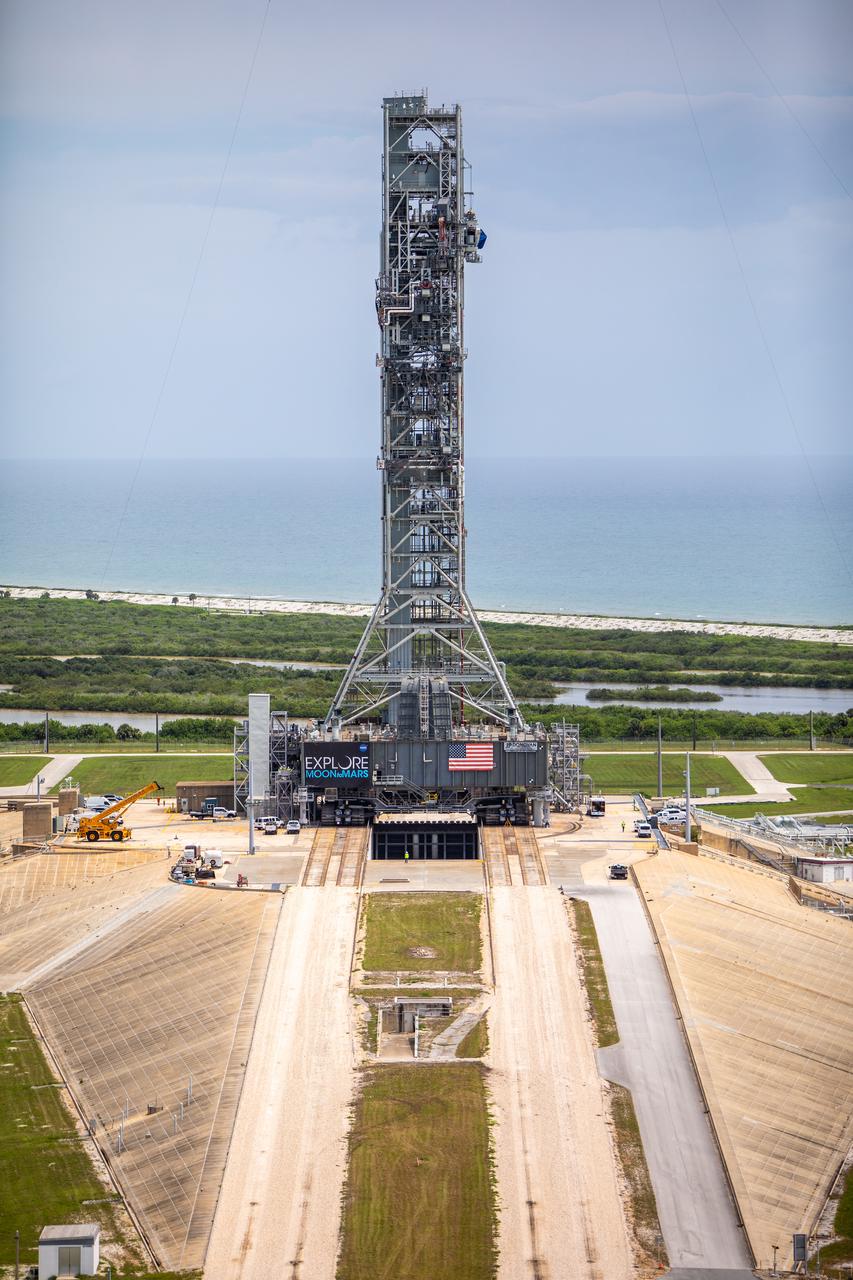
A close-up aerial view of Launch Complex 39B with Exploration Ground Systems’ mobile launcher for the Artemis 1 mission on the pad. The mobile launcher, atop crawler-transporter 2, made its final solo trek from the Vehicle Assembly Building on June 27, 2019, and arrived on the surface of pad B on June 28, 2019, at NASA’s Kennedy Space Center in Florida. The mobile launcher will remain at the pad over the summer, undergoing final testing and checkouts. Its next roll to the pad will be with the agency’s Space Launch System rocket and Orion spacecraft in preparation for the launch of Artemis 1.
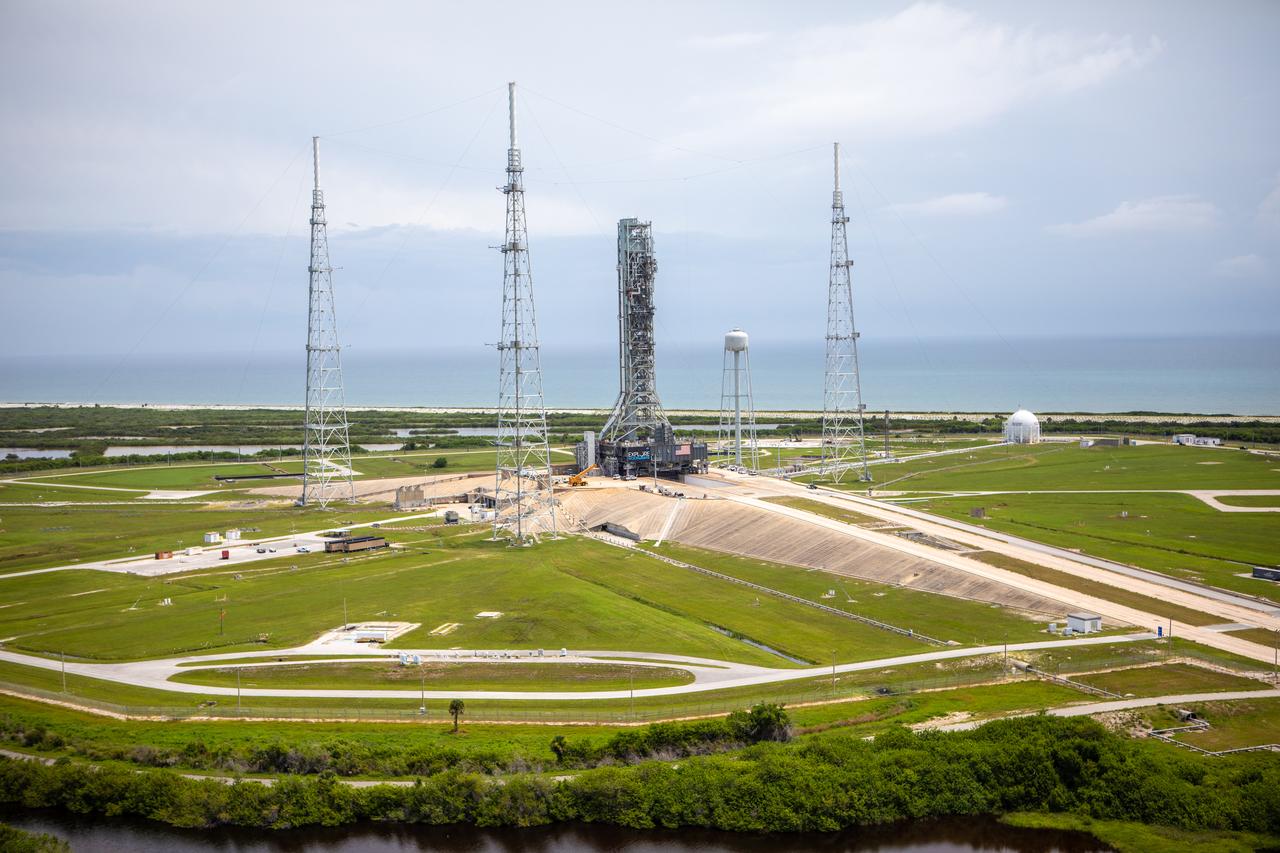
An aerial view of Launch Complex 39B with Exploration Ground Systems’ mobile launcher for the Artemis 1 mission on the pad. The mobile launcher, atop crawler-transporter 2, made its final solo trek from the Vehicle Assembly Building on June 27, 2019, and arrived on the surface of pad B on June 28, 2019, at NASA’s Kennedy Space Center in Florida. The mobile launcher will remain at the pad over the summer, undergoing final testing and checkouts. Its next roll to the pad will be with the agency’s Space Launch System rocket and Orion spacecraft in preparation for the launch of Artemis 1.

A close-up aerial view of Launch Complex 39B with Exploration Ground Systems’ mobile launcher for the Artemis 1 mission on the pad. The mobile launcher, atop crawler-transporter 2, made its final solo trek from the Vehicle Assembly Building on June 27, 2019, and arrived on the surface of pad B on June 28, 2019, at NASA’s Kennedy Space Center in Florida. The mobile launcher will remain at the pad over the summer, undergoing final testing and checkouts. Its next roll to the pad will be with the agency’s Space Launch System rocket and Orion spacecraft in preparation for the launch of Artemis 1.
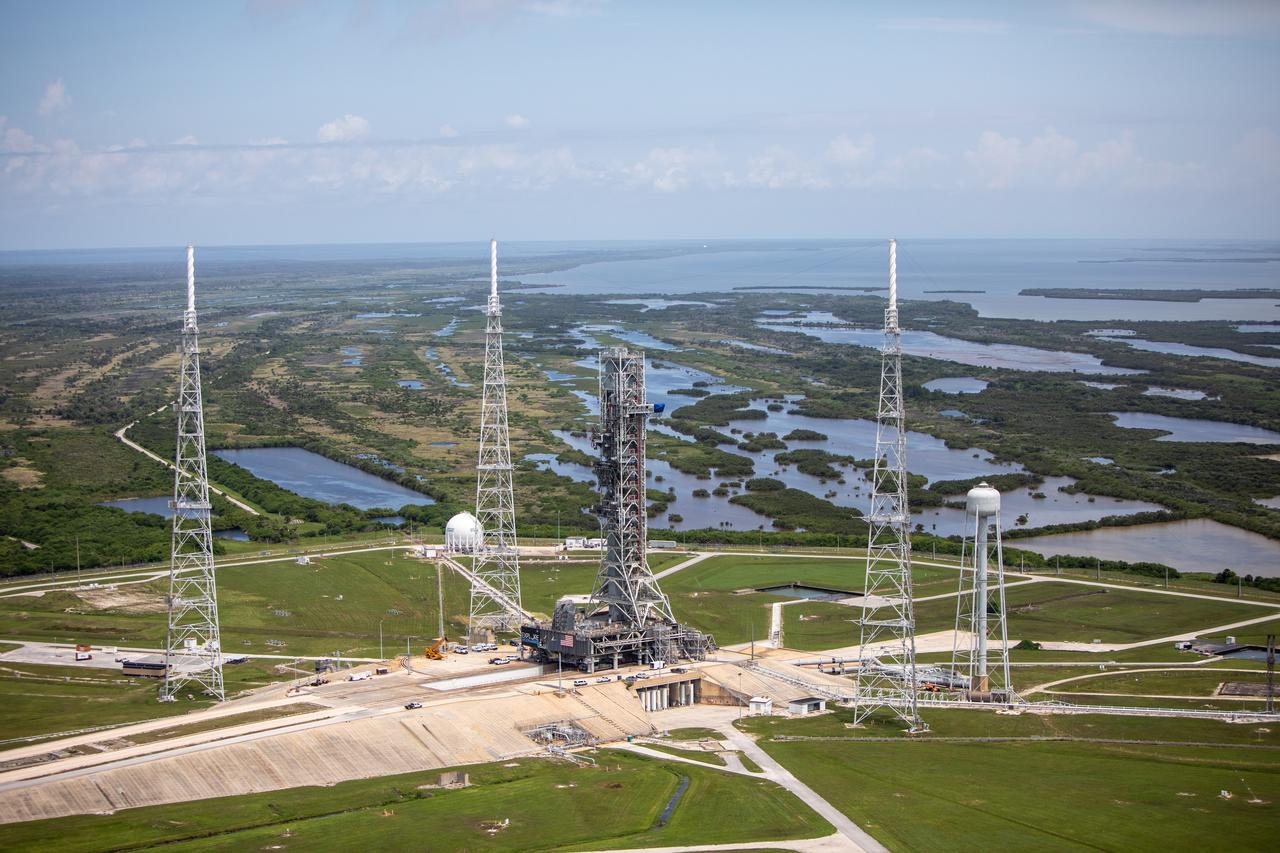
An aerial view of Launch Complex 39B with Exploration Ground Systems’ mobile launcher for the Artemis 1 mission on the pad. The mobile launcher, atop crawler-transporter 2, made its final solo trek from the Vehicle Assembly Building on June 27, 2019, and arrived on the surface of pad B on June 28, 2019, at NASA’s Kennedy Space Center in Florida. The mobile launcher will remain at the pad over the summer, undergoing final testing and checkouts. Its next roll to the pad will be with the agency’s Space Launch System rocket and Orion spacecraft in preparation for the launch of Artemis 1.
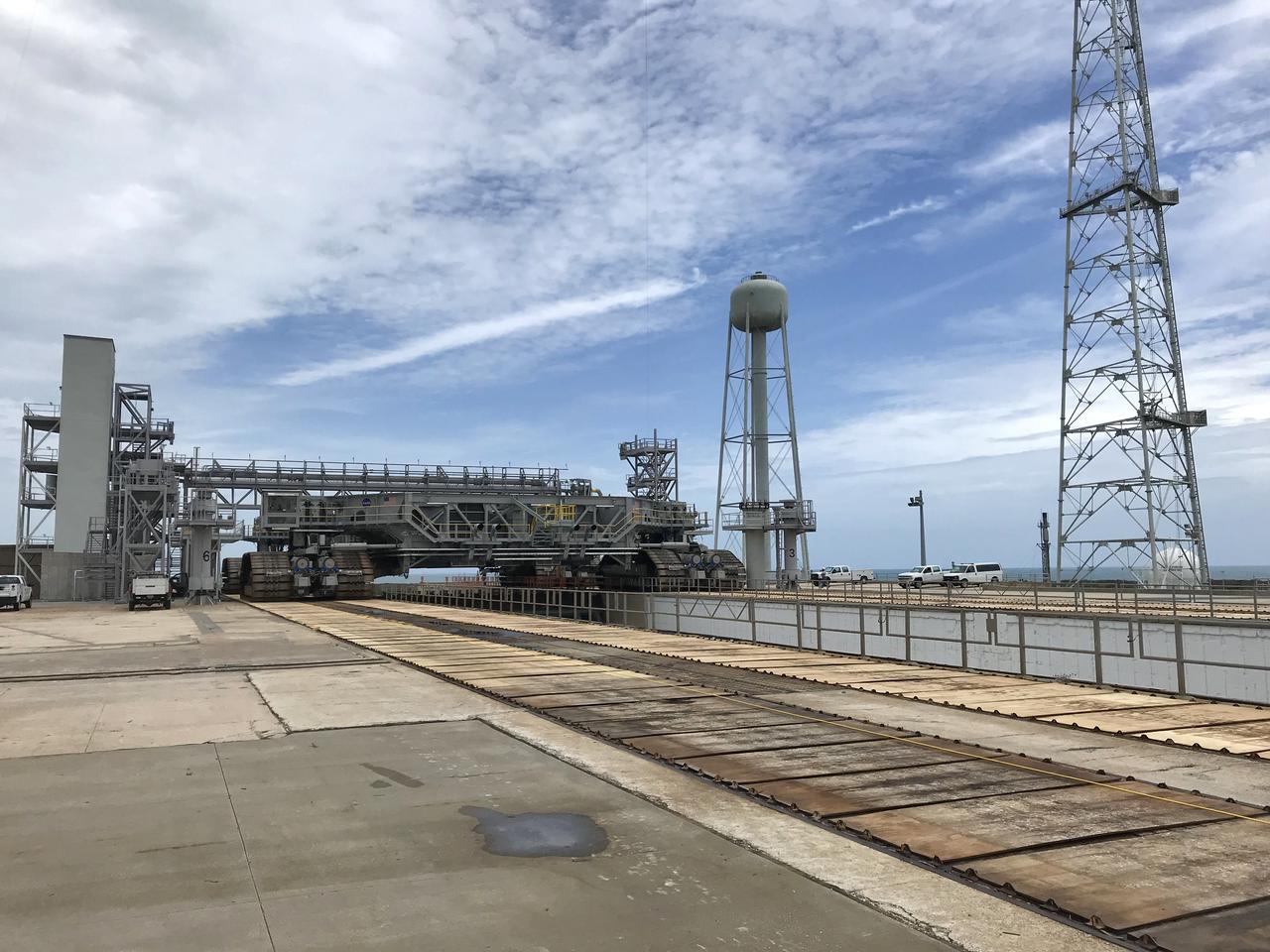
Crawler-transporter 2 (CT-2) arrives on the surface of Launch Pad 39B for a fit check on May 22, 2018, at NASA's Kennedy Space Center in Florida. The test drive to the pad confirms that all of the recent modifications to CT-2 and Pad 39B are operational to support the launch of the agency's Space Launch System rocket and Orion spacecraft on Exploration Mission-1. In view, at right, is one of three lightning protection towers positioned around Pad 39B. Exploration Ground Systems managed the modifications and upgrades to CT-2 and Pad 39B to prepare for EM-1 and deep space exploration missions.
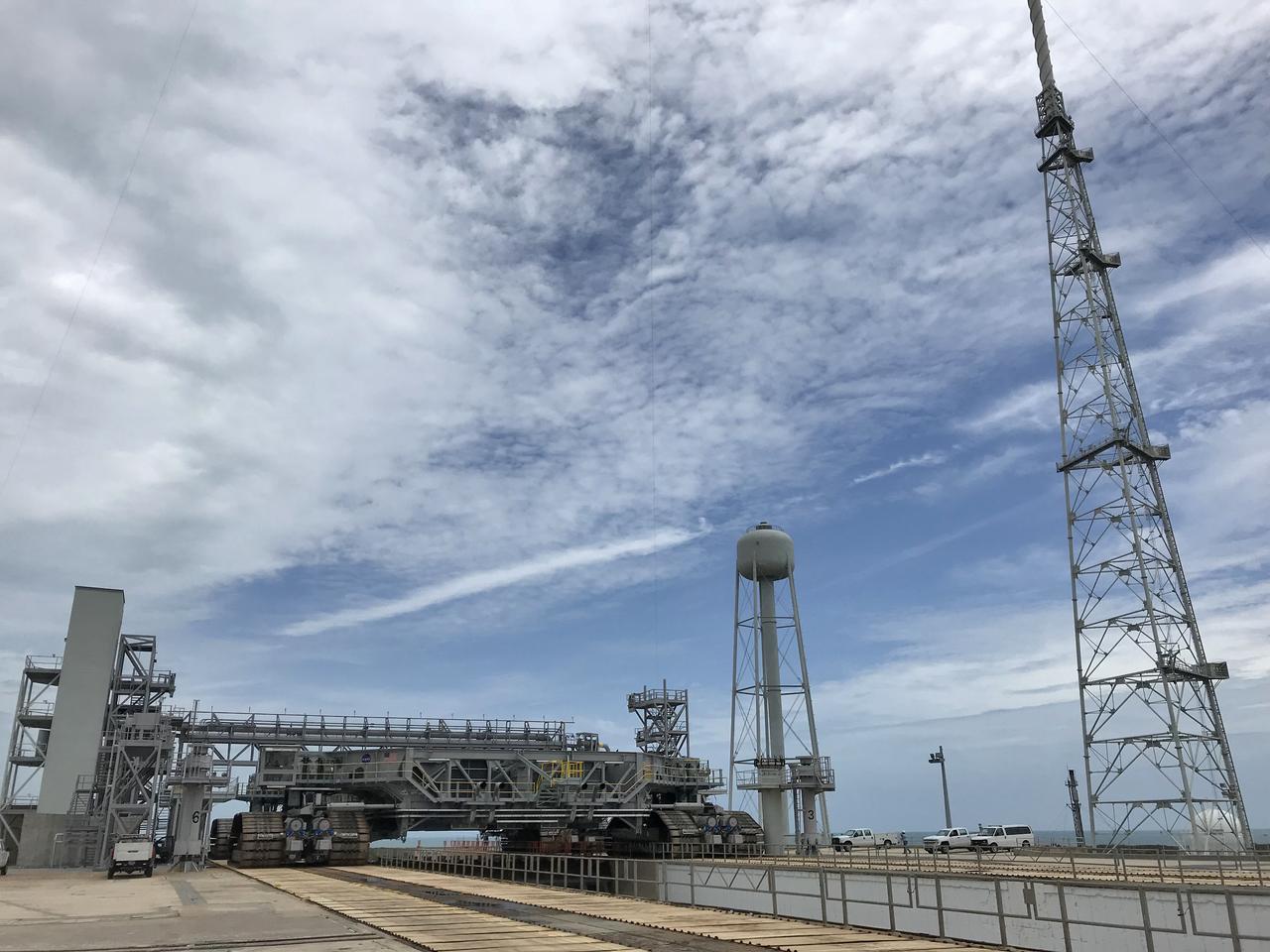
Crawler-transporter 2 (CT-2) arrives on the surface of Launch Pad 39B for a fit check on May 22, 2018, at NASA's Kennedy Space Center in Florida. The test drive to the pad confirms that all of the recent modifications to CT-2 and Pad 39B are operational to support the launch of the agency's Space Launch System rocket and Orion spacecraft on Exploration Mission-1. In view, at right, is one of three lightning protection towers positioned around Pad 39B. Exploration Ground Systems managed the modifications and upgrades to CT-2 and Pad 39B to prepare for EM-1 and deep space exploration missions.
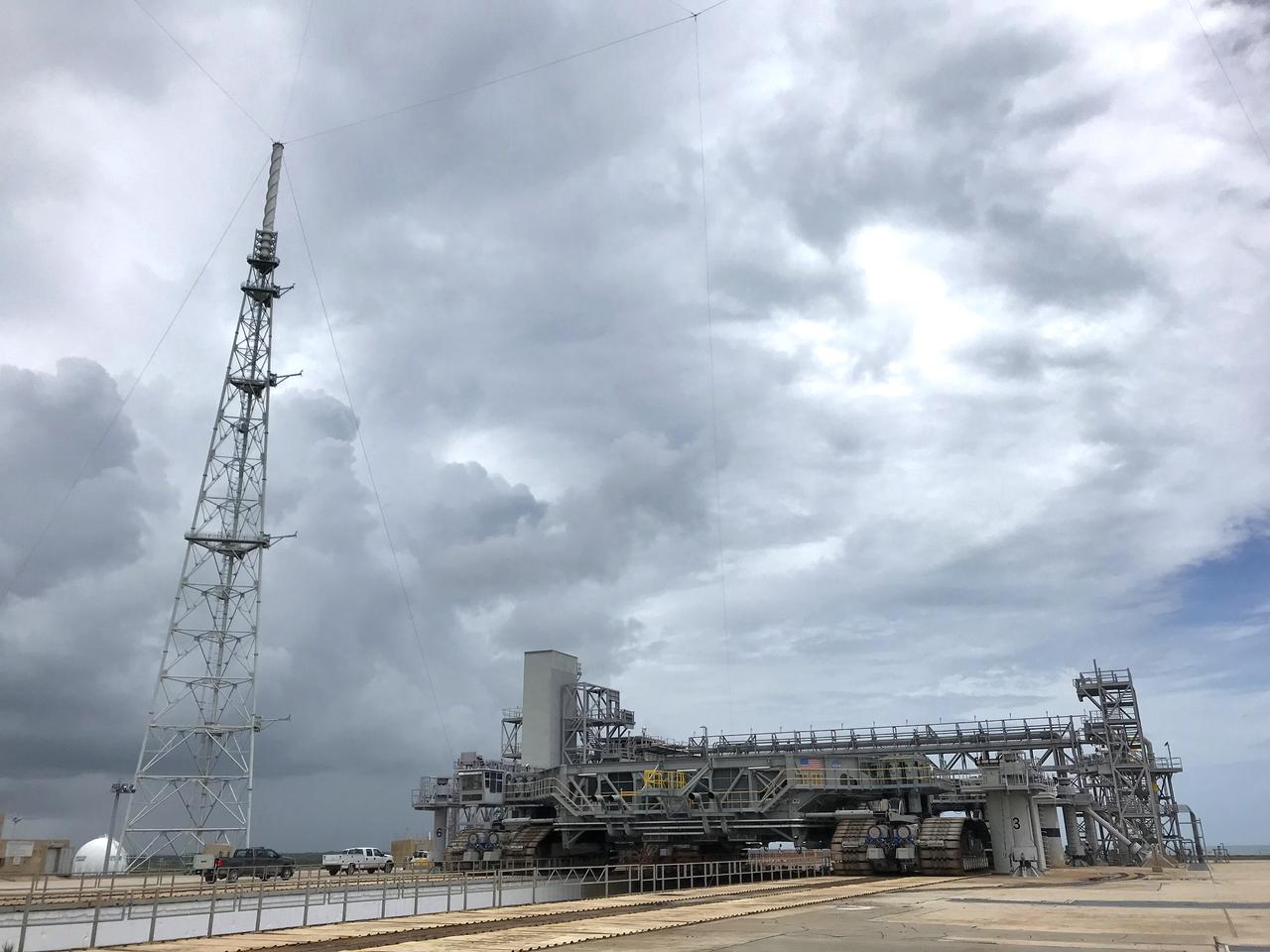
Crawler-transporter 2 (CT-2) arrives on the surface of Launch Pad 39B for a fit check on May 22, 2018, at NASA's Kennedy Space Center in Florida. The test drive to the pad confirms that all of the recent modifications to CT-2 and Pad 39B are operational to support the launch of the agency's Space Launch System rocket and Orion spacecraft on Exploration Mission-1. In view, at left, is one of three lightning protection towers positioned around Pad 39B. Exploration Ground Systems managed the modifications and upgrades to CT-2 and Pad 39B to prepare for EM-1 and deep space exploration missions.
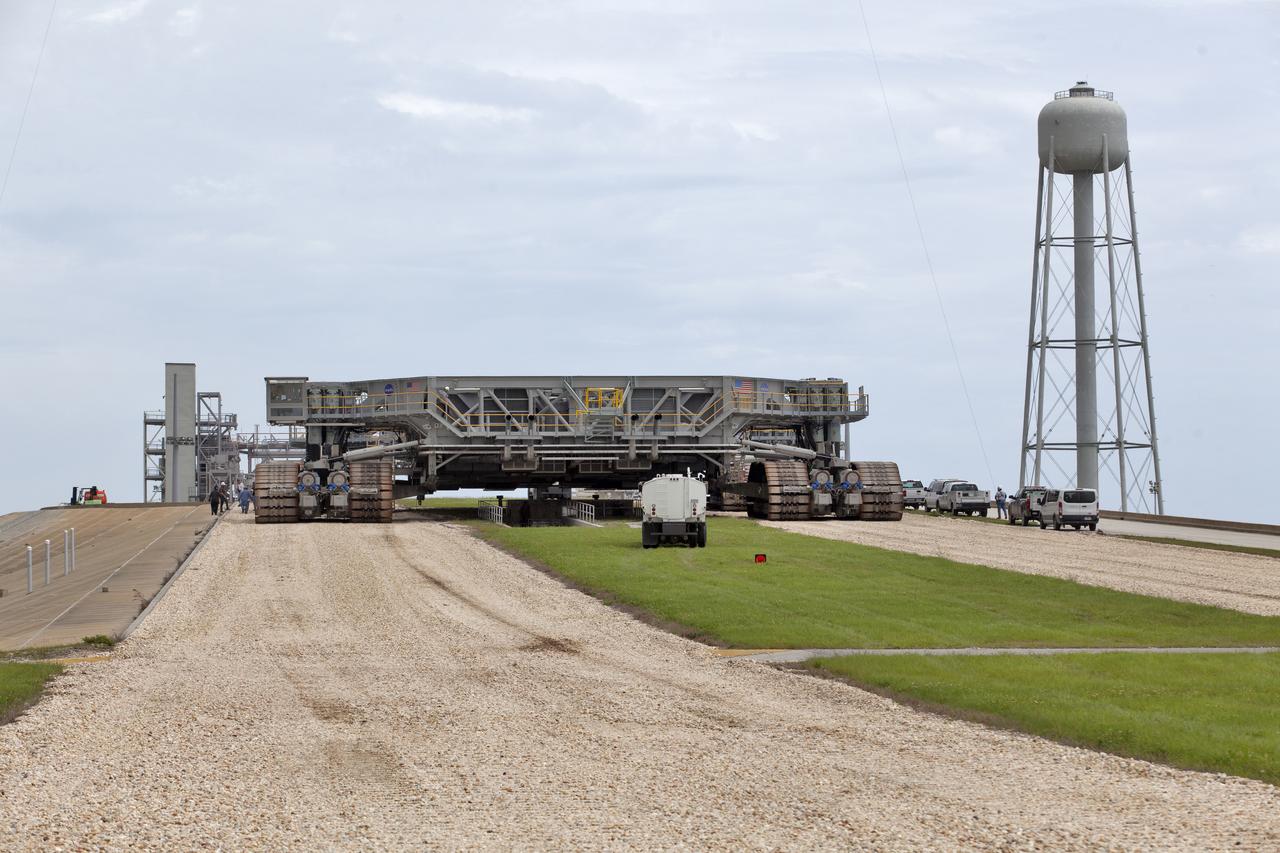
Crawler-transporter 2 (CT-2) moves slowly up the ramp to the surface of Launch Pad 39B for a fit check on May 22, 2018, at NASA's Kennedy Space Center in Florida. The test drive to the pad confirms that all of the recent modifications to CT-2 and Pad 39B are operational to support the launch of the agency's Space Launch System rocket and Orion spacecraft on Exploration Mission-1. Exploration Ground Systems managed the modifications and upgrades to CT-2 and Pad 39B to prepare for EM-1 and deep space exploration missions.
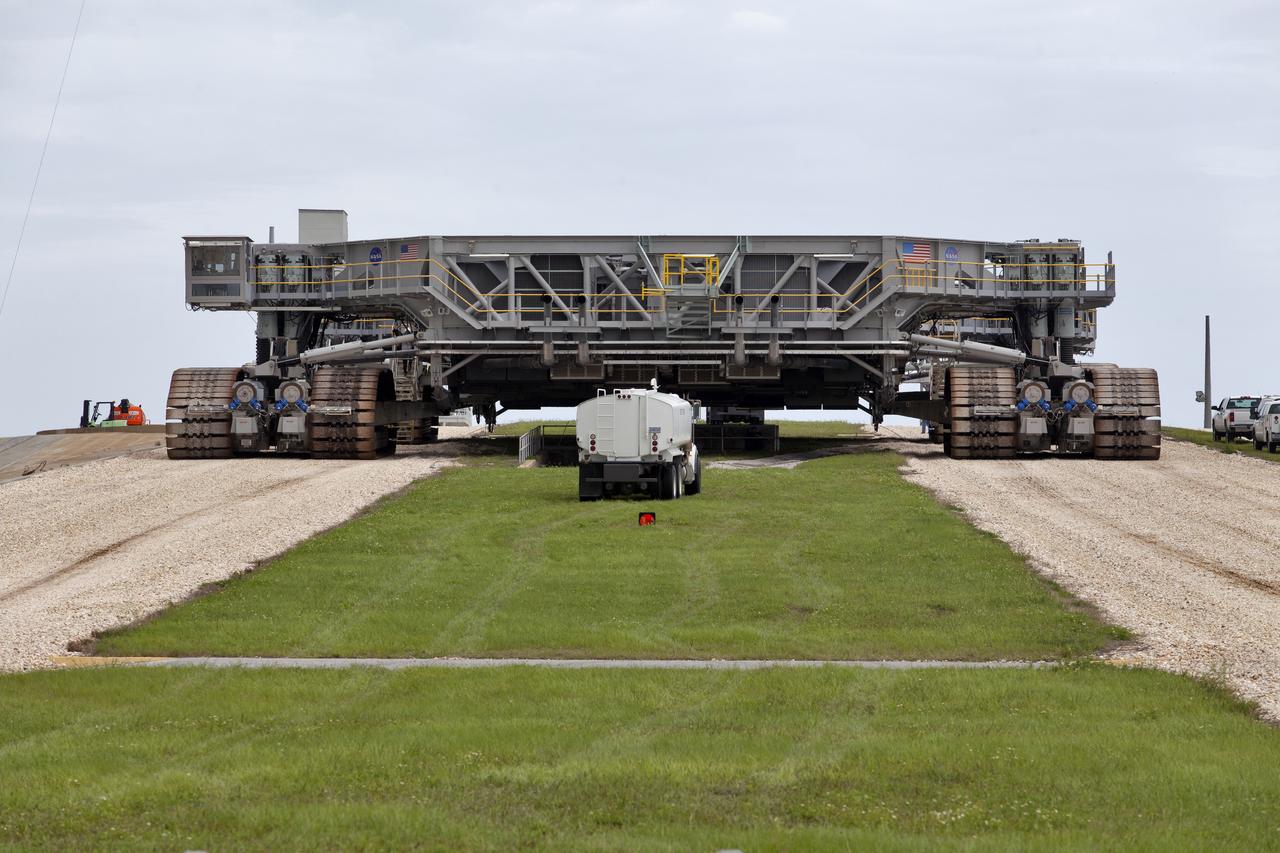
Crawler-transporter 2 (CT-2) moves slowly up the ramp to the surface of Launch Pad 39B for a fit check on May 22, 2018, at NASA's Kennedy Space Center in Florida. The test drive to the pad confirms that all of the recent modifications to CT-2 and Pad 39B are operational to support the launch of the agency's Space Launch System rocket and Orion spacecraft on Exploration Mission-1. Exploration Ground Systems managed the modifications and upgrades to CT-2 and Pad 39B to prepare for EM-1 and deep space exploration missions.
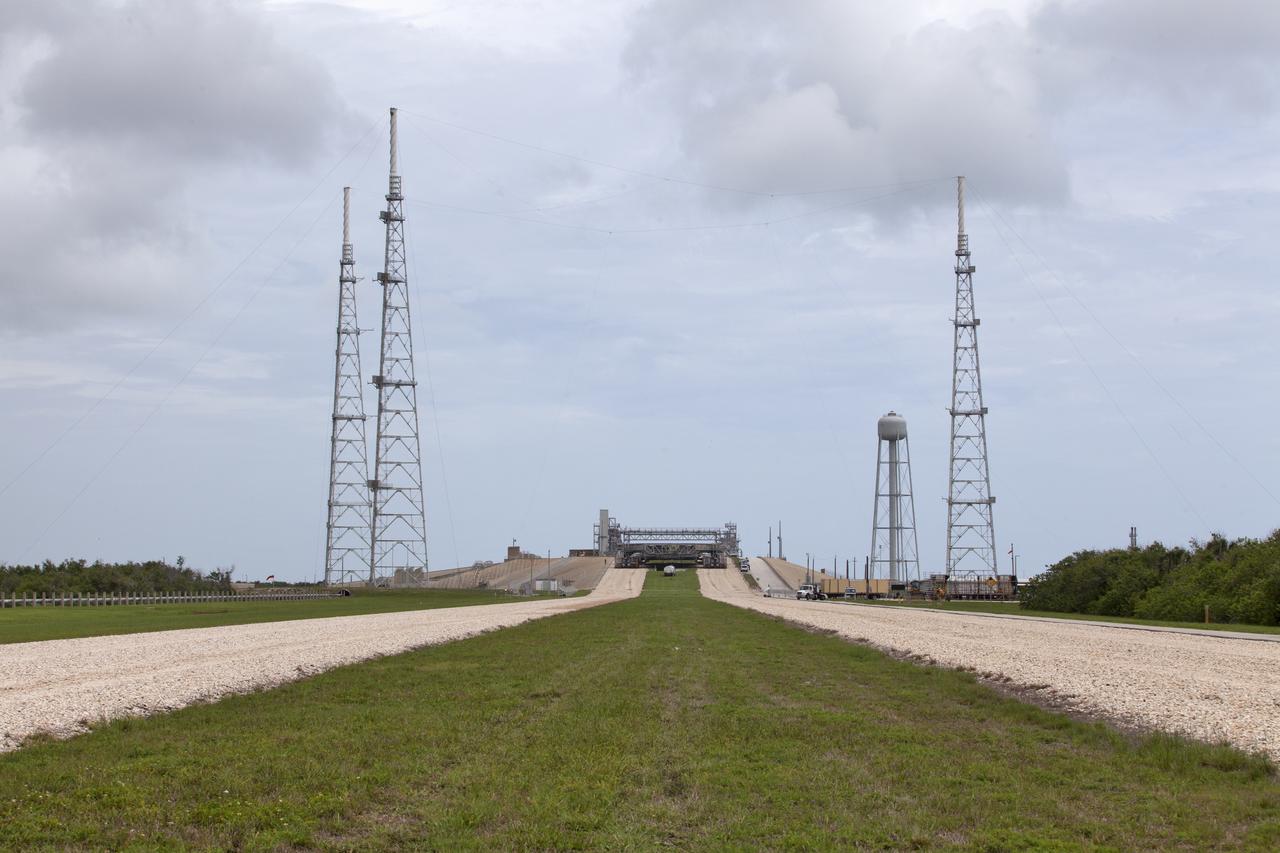
Crawler-transporter 2 (CT-2) moves slowly up the ramp to the surface of Launch Pad 39B for a fit check on May 22, 2018, at NASA's Kennedy Space Center in Florida. The test drive to the pad confirms that all of the recent modifications to CT-2 and Pad 39B are operational to support the launch of the agency's Space Launch System rocket and Orion spacecraft on Exploration Mission-1. Exploration Ground Systems managed the modifications and upgrades to CT-2 and Pad 39B to prepare for EM-1 and deep space exploration missions.
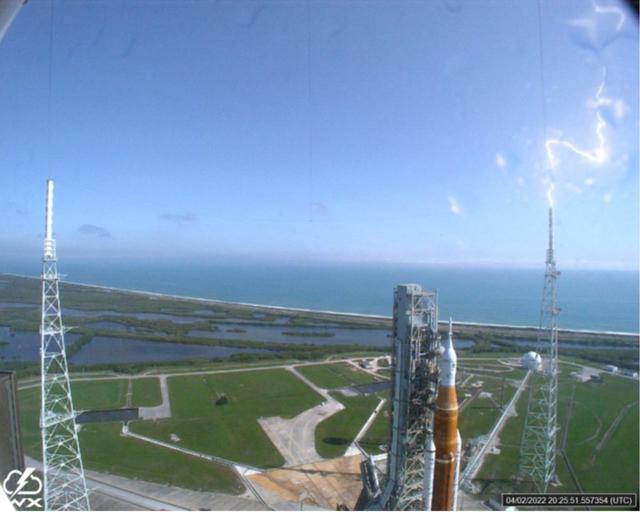
A lightning strike was recorded at Launch Complex 39B at NASA’s Kennedy Space Center in Florida during the evening of April 2, 2022. NASA’s Space Launch System (SLS) and Orion spacecraft were undergoing a prelaunch test called a wet dress rehearsal at the pad for the Artemis I mission. The lightning strike was recorded by cameras stationed at the pad and mobile launcher using a special filter called a “clear day frame,” which provides an overlay of the raw frame on a reference image. Artemis I will be the first integrated test of the SLS and Orion spacecraft. In later missions, NASA will land the first woman and the first woman of color on the surface of the Moon, paving the way for a long-term lunar presence and serving as a steppingstone on the way to Mars.
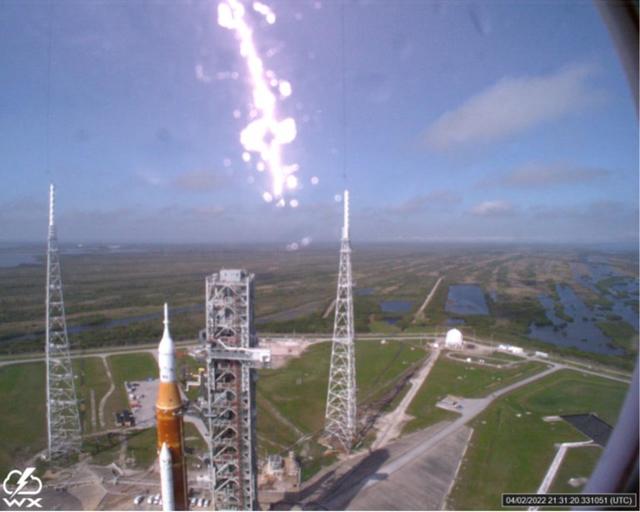
A lightning strike was recorded at Launch Complex 39B at NASA’s Kennedy Space Center in Florida during the evening of April 2, 2022. NASA’s Space Launch System (SLS) and Orion spacecraft were undergoing a prelaunch test called a wet dress rehearsal at the pad for the Artemis I mission. The lightning strike was recorded by cameras stationed at the pad and mobile launcher using a special filter called a “clear day frame,” which provides an overlay of the raw frame on a reference image. Artemis I will be the first integrated test of the SLS and Orion spacecraft. In later missions, NASA will land the first woman and the first woman of color on the surface of the Moon, paving the way for a long-term lunar presence and serving as a steppingstone on the way to Mars.
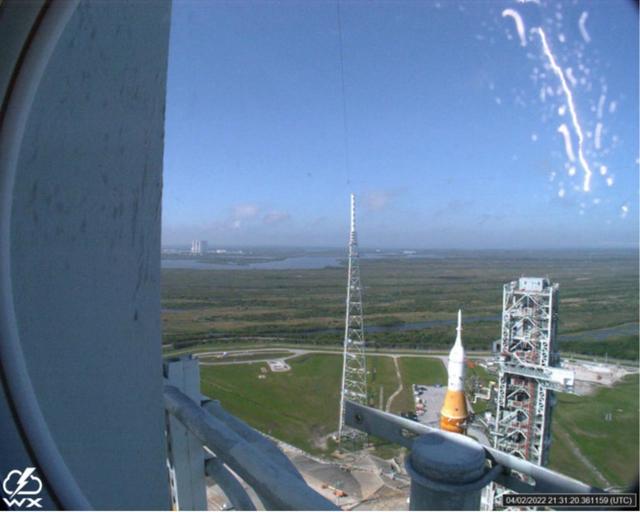
A lightning strike was recorded at Launch Complex 39B at NASA’s Kennedy Space Center in Florida during the evening of April 2, 2022. NASA’s Space Launch System (SLS) and Orion spacecraft were undergoing a prelaunch test called a wet dress rehearsal at the pad for the Artemis I mission. The lightning strike was recorded by cameras stationed at the pad and mobile launcher using a special filter called a “clear day frame,” which provides an overlay of the raw frame on a reference image. Artemis I will be the first integrated test of the SLS and Orion spacecraft. In later missions, NASA will land the first woman and the first woman of color on the surface of the Moon, paving the way for a long-term lunar presence and serving as a steppingstone on the way to Mars.
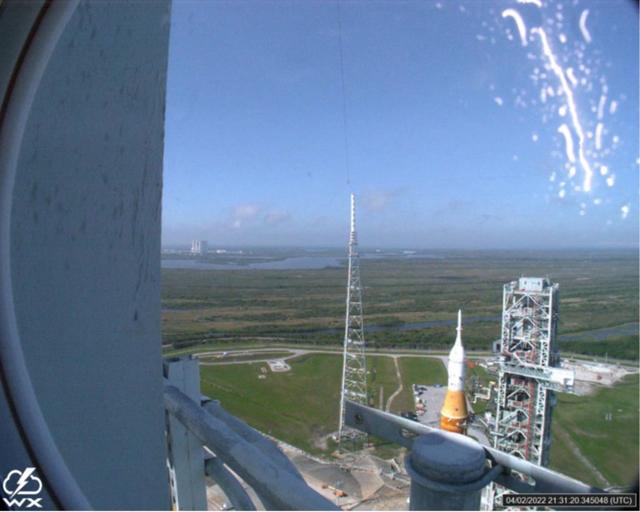
A lightning strike was recorded at Launch Complex 39B at NASA’s Kennedy Space Center in Florida during the evening of April 2, 2022. NASA’s Space Launch System (SLS) and Orion spacecraft were undergoing a prelaunch test called a wet dress rehearsal at the pad for the Artemis I mission. The lightning strike was recorded by cameras stationed at the pad and mobile launcher using a special filter called a “clear day frame,” which provides an overlay of the raw frame on a reference image. Artemis I will be the first integrated test of the SLS and Orion spacecraft. In later missions, NASA will land the first woman and the first woman of color on the surface of the Moon, paving the way for a long-term lunar presence and serving as a steppingstone on the way to Mars.
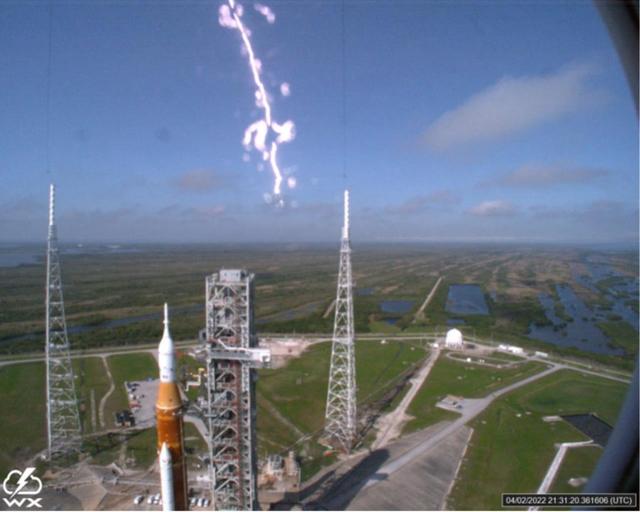
A lightning strike was recorded at Launch Complex 39B at NASA’s Kennedy Space Center in Florida during the evening of April 2, 2022. NASA’s Space Launch System (SLS) and Orion spacecraft were undergoing a prelaunch test called a wet dress rehearsal at the pad for the Artemis I mission. The lightning strike was recorded by cameras stationed at the pad and mobile launcher using a special filter called a “clear day frame,” which provides an overlay of the raw frame on a reference image. Artemis I will be the first integrated test of the SLS and Orion spacecraft. In later missions, NASA will land the first woman and the first woman of color on the surface of the Moon, paving the way for a long-term lunar presence and serving as a steppingstone on the way to Mars.
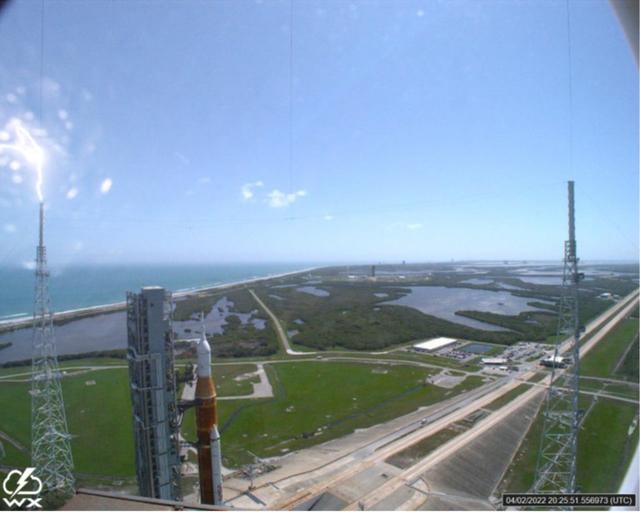
A lightning strike was recorded at Launch Complex 39B at NASA’s Kennedy Space Center in Florida during the evening of April 2, 2022. NASA’s Space Launch System (SLS) and Orion spacecraft were undergoing a prelaunch test called a wet dress rehearsal at the pad for the Artemis I mission. The lightning strike was recorded by cameras stationed at the pad and mobile launcher using a special filter called a “clear day frame,” which provides an overlay of the raw frame on a reference image. Artemis I will be the first integrated test of the SLS and Orion spacecraft. In later missions, NASA will land the first woman and the first woman of color on the surface of the Moon, paving the way for a long-term lunar presence and serving as a steppingstone on the way to Mars.
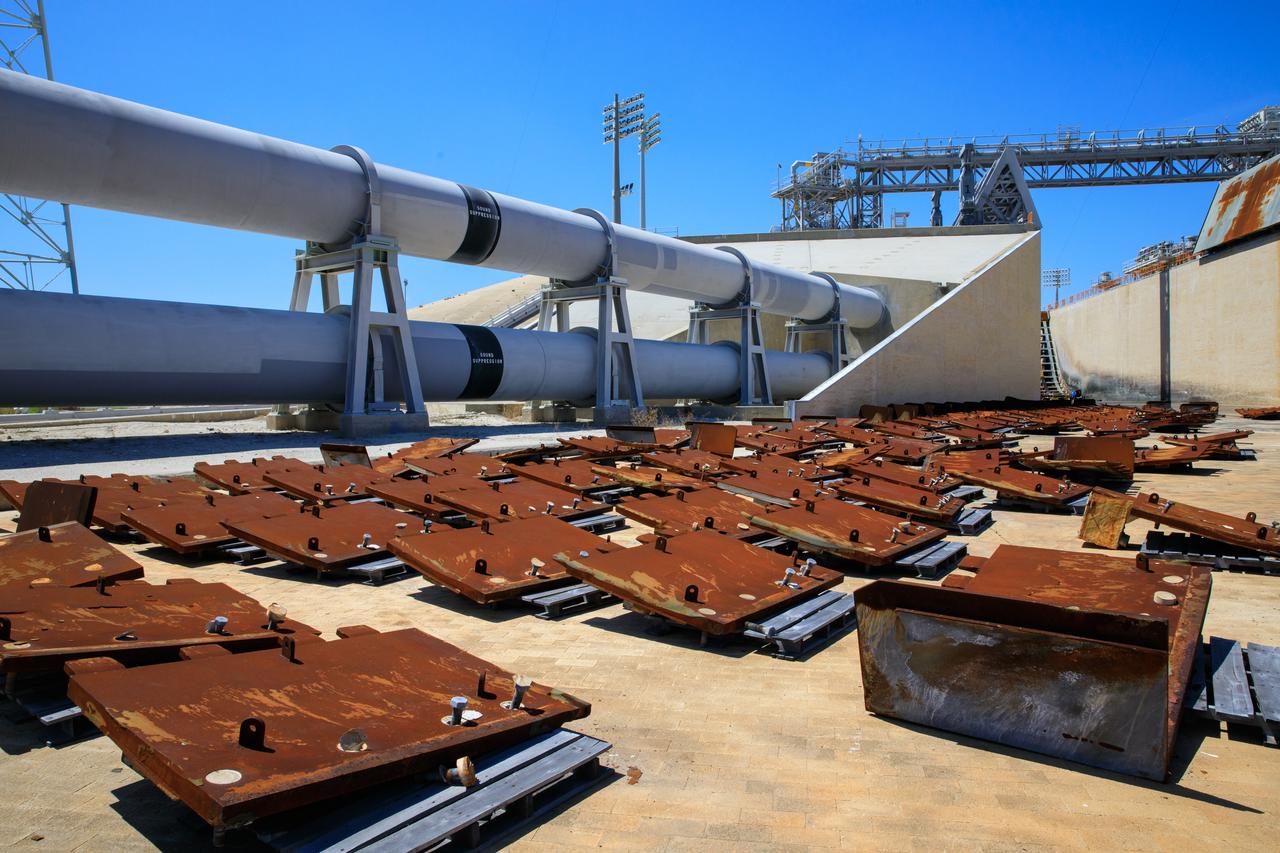
Teams with Exploration Ground Systems at NASA’s Kennedy Space Center in Florida continue to work the upgrades and repairs on mobile launcher 1 and Launch Pad 39B on June 13, 2023, ahead of the first critical ground testing for Artemis II. Teams are re-designing the panels on the flame deflector in the flame trench that withstood damage observed after launch of Artemis I. Artemis II will be the first Artemis mission flying crew aboard Orion.
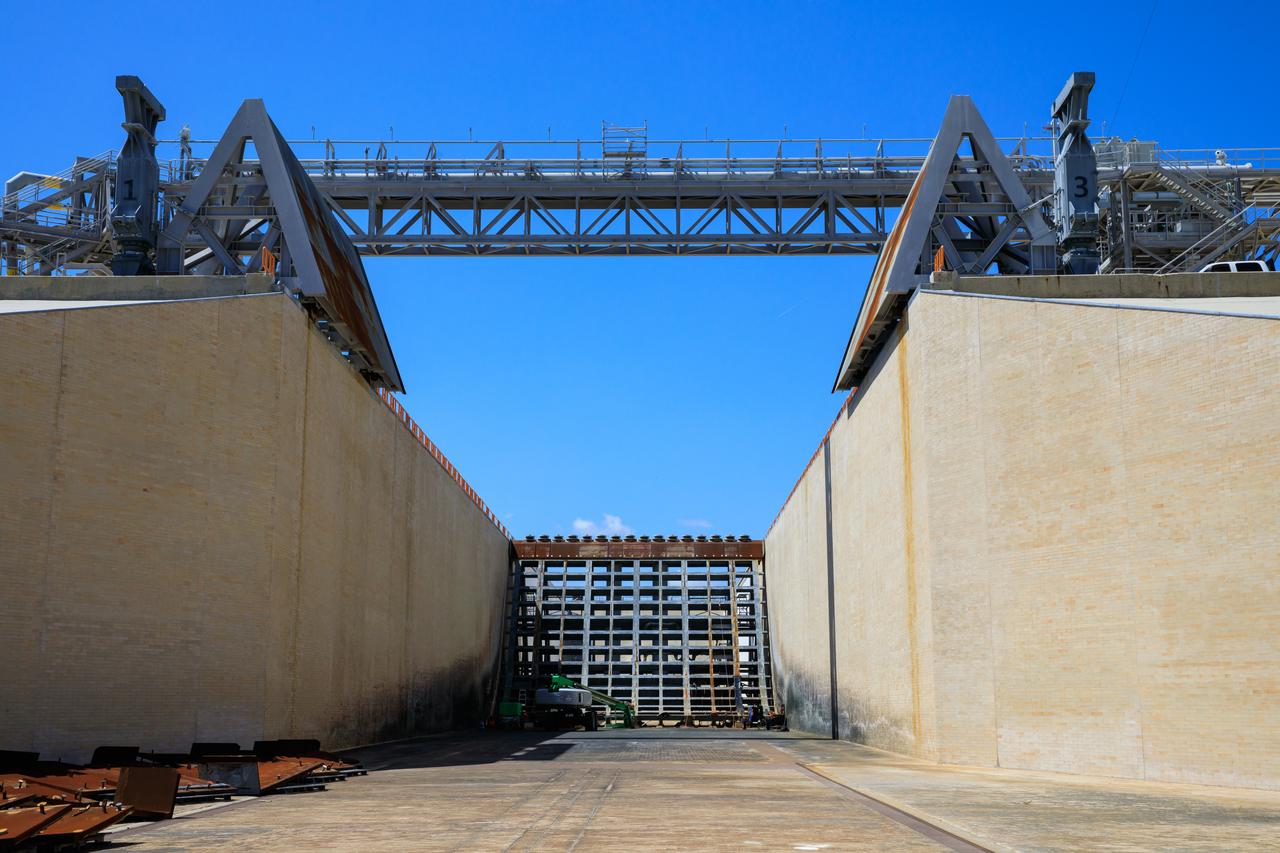
Teams with Exploration Ground Systems at NASA’s Kennedy Space Center in Florida continue to work the upgrades and repairs on mobile launcher 1 and Launch Pad 39B on June 13, 2023, ahead of the first critical ground testing for Artemis II. Teams are re-designing the panels on the flame deflector in the flame trench that withstood damage observed after launch of Artemis I. Artemis II will be the first Artemis mission flying crew aboard Orion.
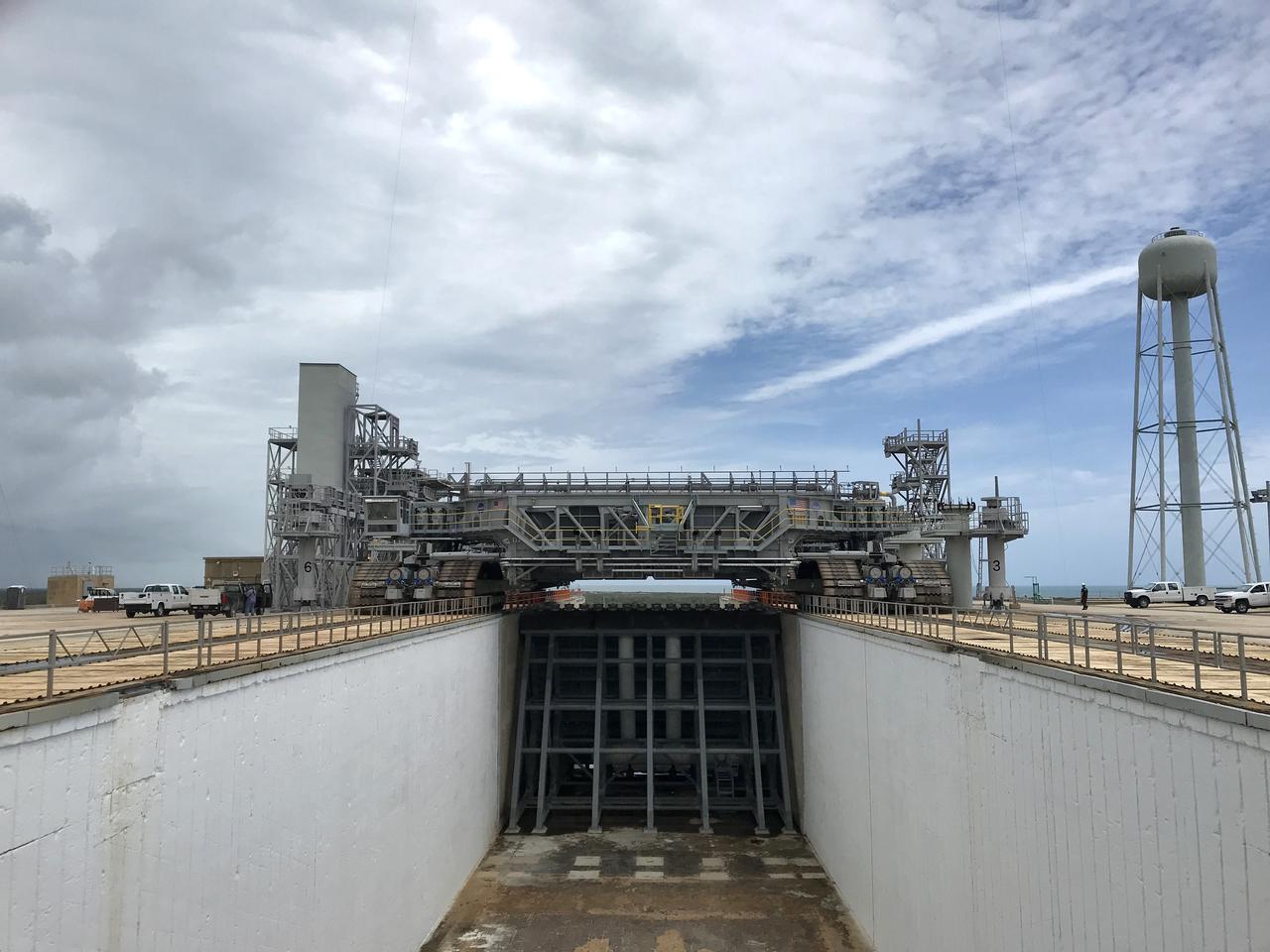
Crawler-transporter 2 (CT-2) arrives on the surface of Launch Pad 39B for a fit check on May 22, 2018, at NASA's Kennedy Space Center in Florida. The test drive to the pad confirms that all of the recent modifications to CT-2 and Pad 39B are operational to support the launch of the agency's Space Launch System rocket and Orion spacecraft on Exploration Mission-1. In view is the south side of the flame trench and the south side of the recently installed new main flame deflector. Exploration Ground Systems managed the modifications and upgrades to CT-2 and Pad 39B to prepare for EM-1 and deep space exploration missions.
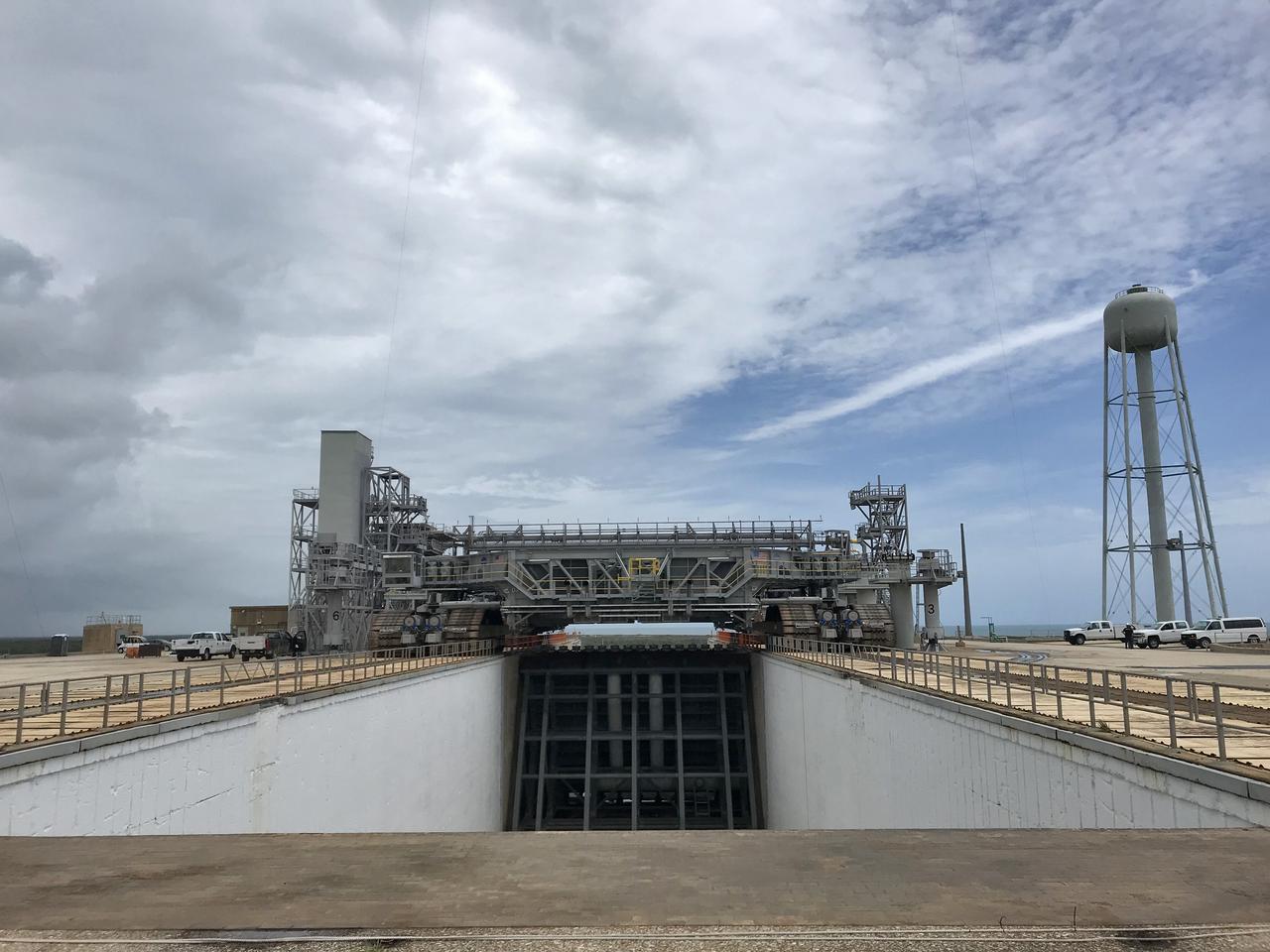
Crawler-transporter 2 (CT-2) arrives on the surface of Launch Pad 39B for a fit check on May 22, 2018, at NASA's Kennedy Space Center in Florida. The test drive to the pad confirms that all of the recent modifications to CT-2 and Pad 39B are operational to support the launch of the agency's Space Launch System rocket and Orion spacecraft on Exploration Mission-1. In view is the south side of the flame trench and the south side of the recently installed new main flame deflector. Exploration Ground Systems managed the modifications and upgrades to CT-2 and Pad 39B to prepare for EM-1 and deep space exploration missions.
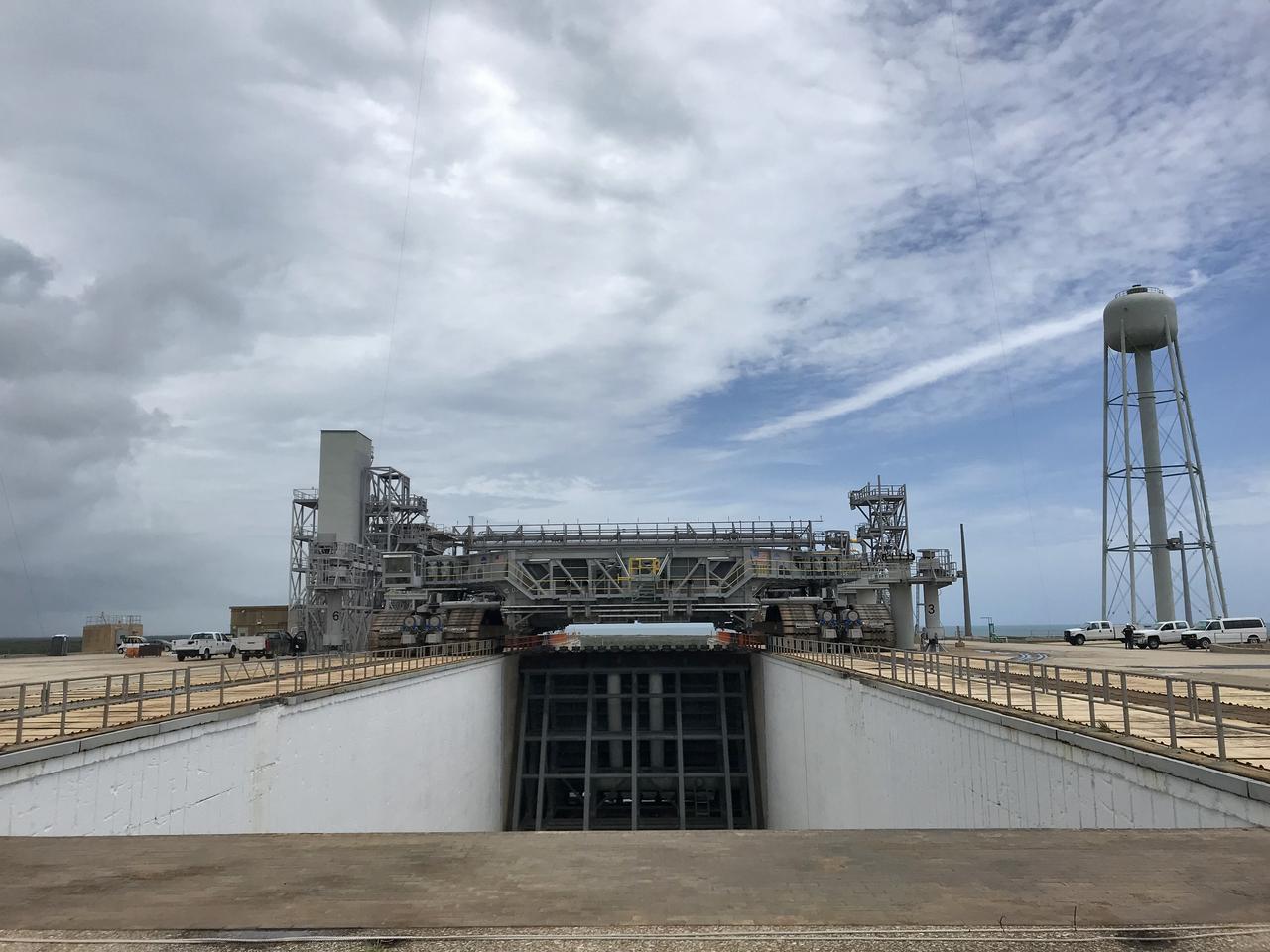
Crawler-transporter 2 (CT-2) arrives on the surface of Launch Pad 39B for a fit check on May 22, 2018, at NASA's Kennedy Space Center in Florida. The test drive to the pad confirms that all of the recent modifications to CT-2 and Pad 39B are operational to support the launch of the agency's Space Launch System rocket and Orion spacecraft on Exploration Mission-1. In view is the south side of the flame trench and the south side of the recently installed new main flame deflector. Exploration Ground Systems managed the modifications and upgrades to CT-2 and Pad 39B to prepare for EM-1 and deep space exploration missions.
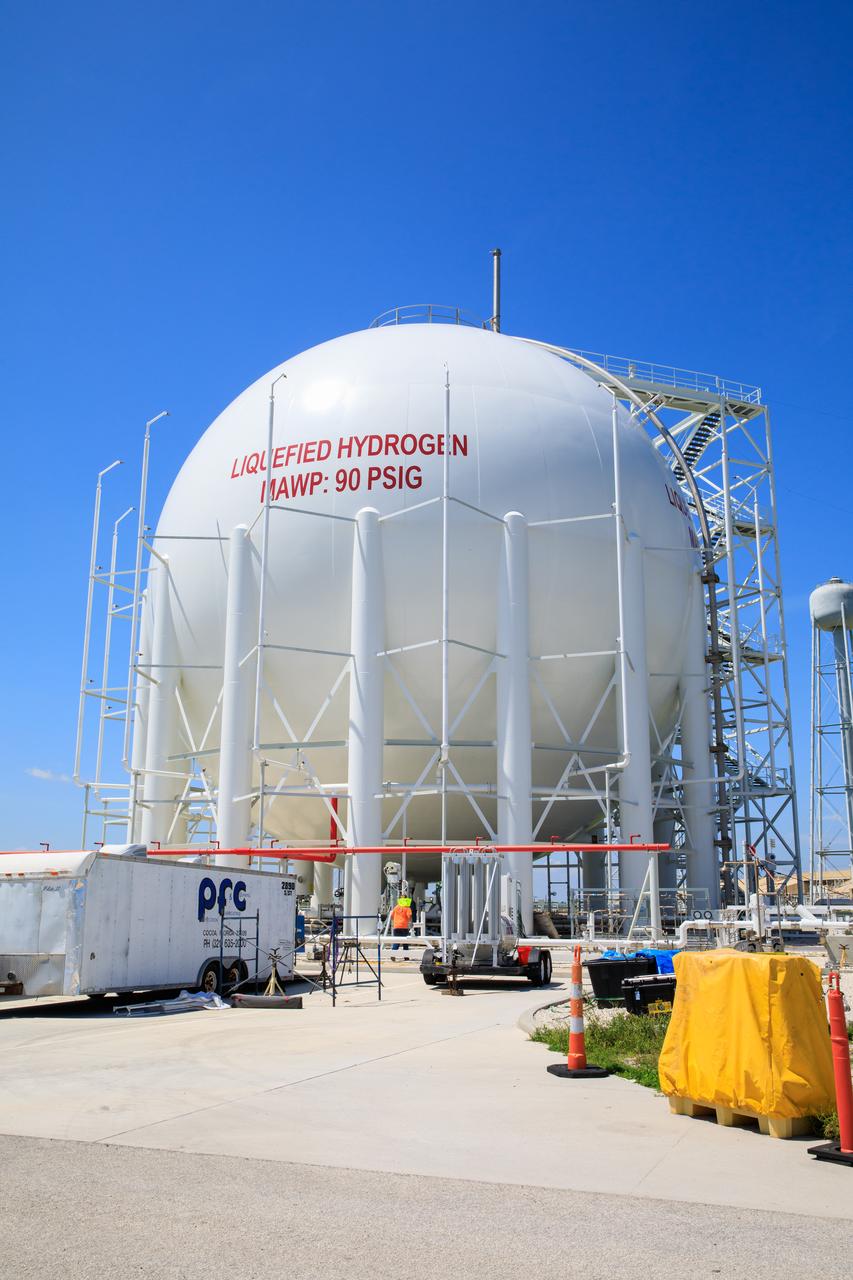
Teams with Exploration Ground Systems at NASA’s Kennedy Space Center in Florida continue to work the upgrades and repairs on mobile launcher 1 and Launch Pad 39B on June 13, 2023, ahead of the first critical ground testing for Artemis II. Construction is nearly complete on the additional 1.4-million-gallon liquid hydrogen sphere used for propellant loading. Having two liquid hydrogen spheres at the pad allows teams to minimize time between launch attempts for resupplying liquid hydrogen. When completed, workers will test the new tank as part of the verification and validation testing. Artemis II will be the first Artemis mission flying crew aboard Orion.
Teams with Exploration Ground Systems at NASA’s Kennedy Space Center in Florida continue to work the upgrades and repairs on mobile launcher 1 and Launch Pad 39B on June 13, 2023, ahead of the first critical ground testing for Artemis II. The crew access arm (CAA) has been extended in this view of the mobile launcher. The CAA is the entry and exit point astronauts will use for access to the Orion spacecraft. Tests will be conducted to ensure the arm and supporting mobile launcher systems are certified to support crewed missions. Artemis II will be the first Artemis mission flying crew aboard Orion.
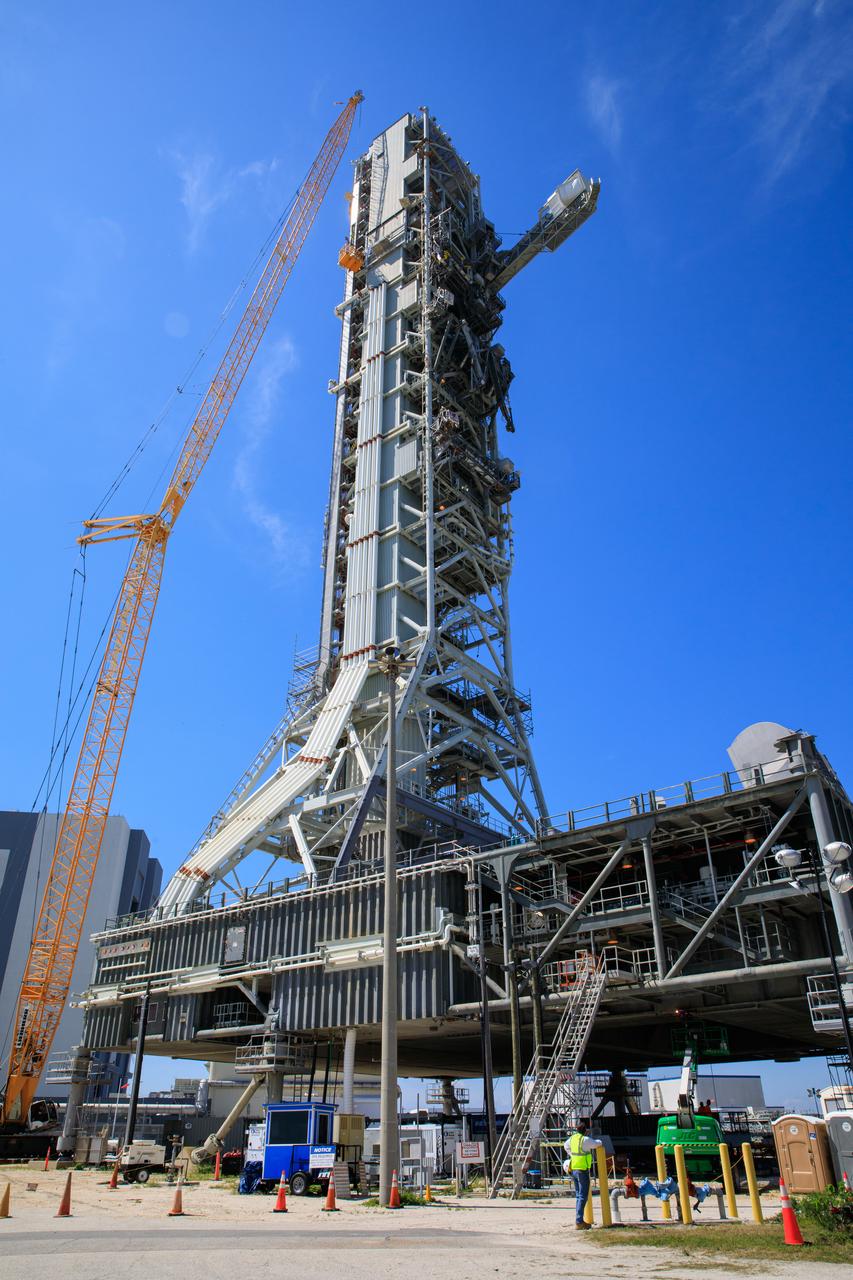
Teams with Exploration Ground Systems at NASA’s Kennedy Space Center in Florida continue to work the upgrades and repairs on mobile launcher 1 and Launch Pad 39B on June 13, 2023, ahead of the first critical ground testing for Artemis II. The crew access arm (CAA) has been extended in this view of the mobile launcher. The CAA is the entry and exit point astronauts will use for access to the Orion spacecraft. Tests will be conducted to ensure the arm and supporting mobile launcher systems are certified to support crewed missions. Artemis II will be the first Artemis mission flying crew aboard Orion.
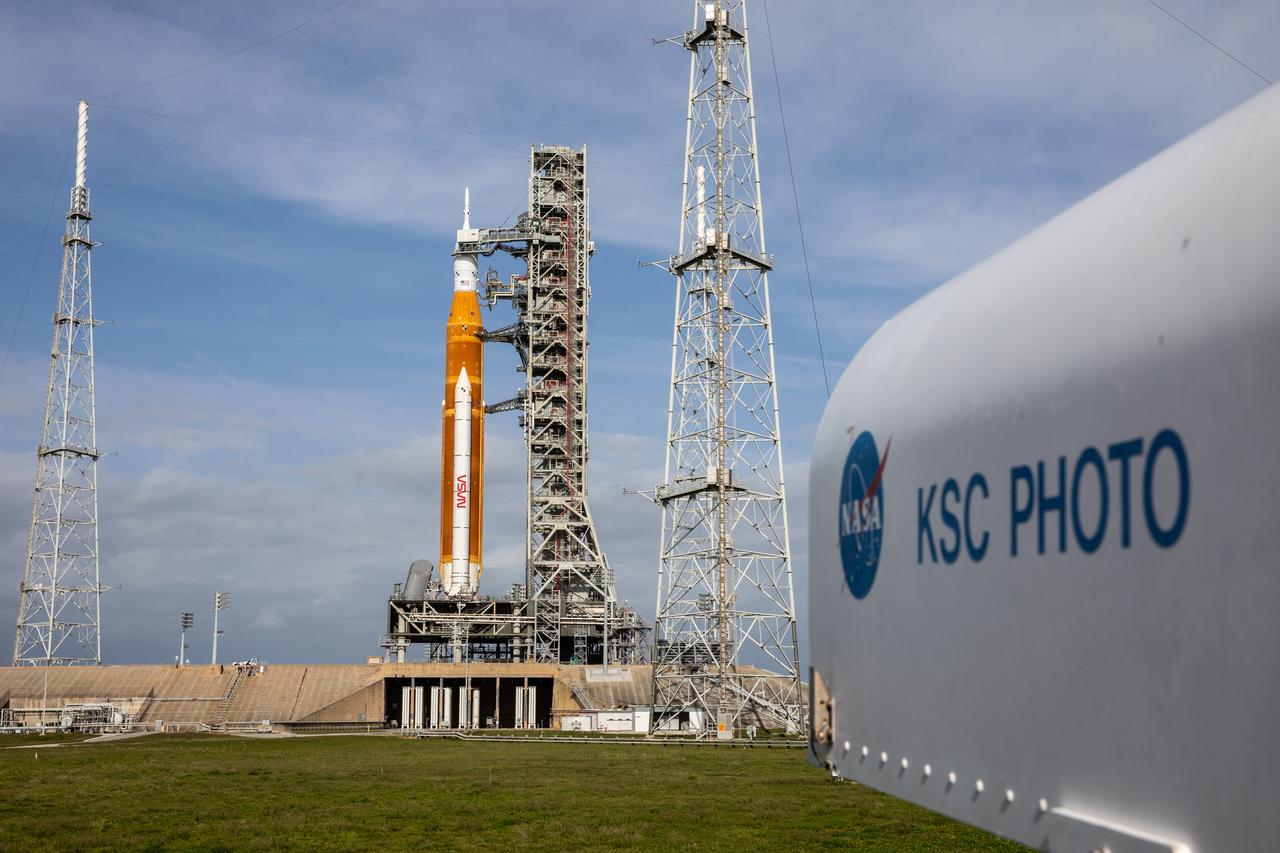
A view of the Artemis I Space Launch System (SLS) and Orion spacecraft on Launch Pad 39B at NASA’s Kennedy Space Center in Florida on April 21, 2022. Also in view are two of three lightning protection towers. The SLS and Orion atop the mobile launcher were transported to the pad on crawler-transporter 2 for a prelaunch test called a wet dress rehearsal. Artemis I will be the first integrated test of the SLS and Orion spacecraft. In future Artemis missions, NASA will land the first woman and the first person of color on the surface of the Moon, paving the way for a long-term lunar presence and serving as a steppingstone on the way to Mars.
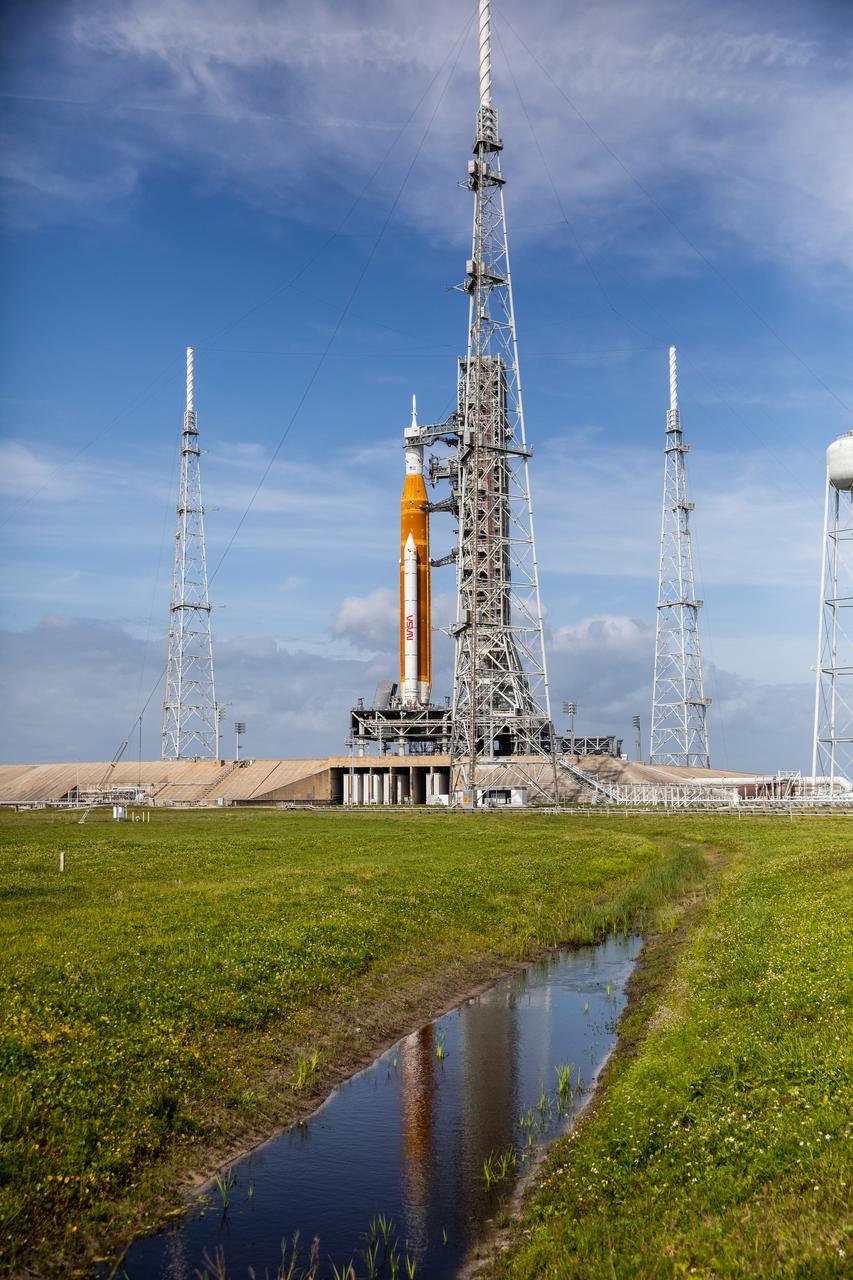
A view of the Artemis I Space Launch System (SLS) and Orion spacecraft atop the mobile launcher on Launch Pad 39B at NASA’s Kennedy Space Center in Florida on April 21, 2022. Also in view are the three lightning protection towers and water tower. The SLS and Orion atop the mobile launcher were transported to the pad on crawler-transporter 2 for a prelaunch test called a wet dress rehearsal. Artemis I will be the first integrated test of the SLS and Orion spacecraft. In future Artemis missions, NASA will land the first woman and the first person of color on the surface of the Moon, paving the way for a long-term lunar presence and serving as a steppingstone on the way to Mars.
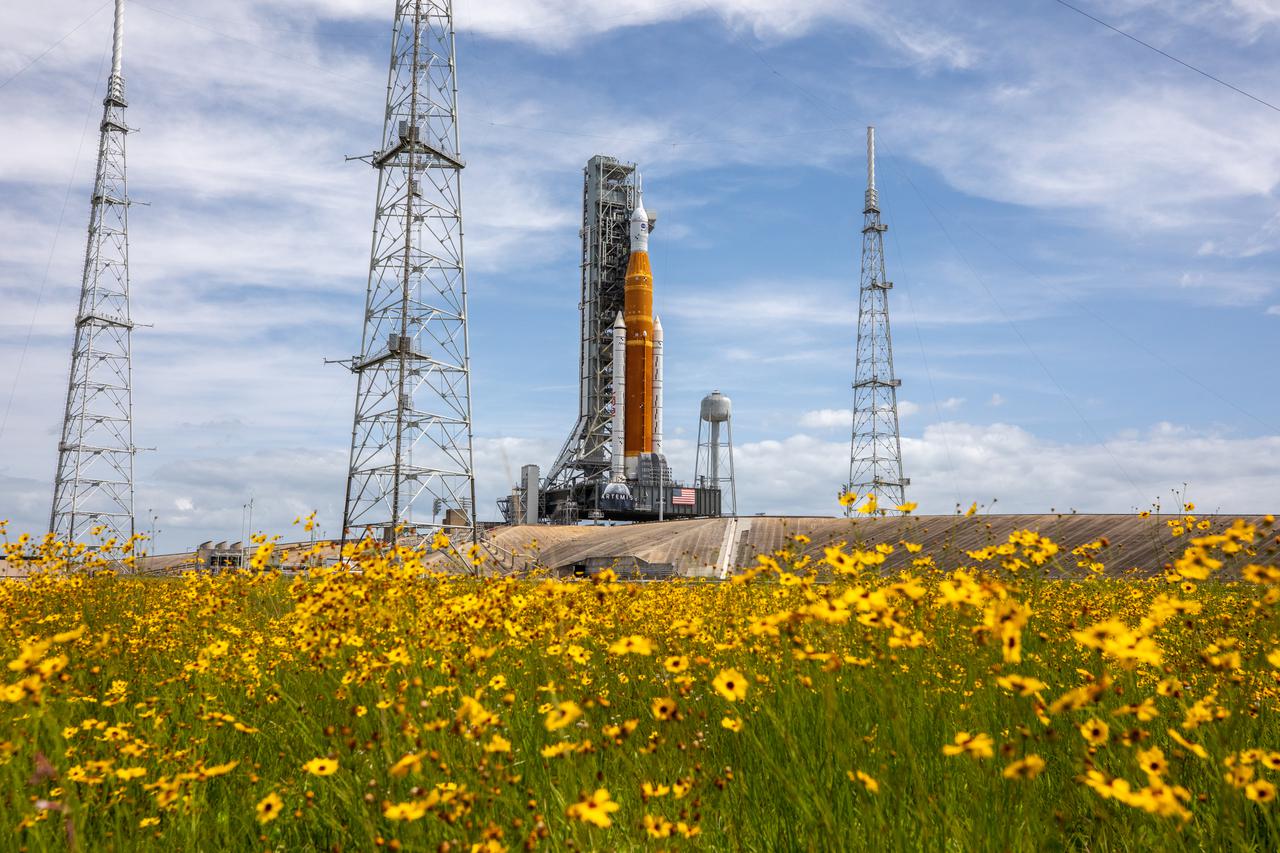
Wildflowers frame a view of the Artemis I Space Launch System (SLS) and Orion spacecraft on Launch Pad 39B at NASA’s Kennedy Space Center in Florida on April 21, 2022. Also in view are the three lightning protection towers and the water tower. The SLS and Orion atop the mobile launcher were transported to the pad on crawler-transporter 2 for a prelaunch test called a wet dress rehearsal. Artemis I will be the first integrated test of the SLS and Orion spacecraft. In future Artemis missions, NASA will land the first woman and the first person of color on the surface of the Moon, paving the way for a long-term lunar presence and serving as a steppingstone on the way to Mars.
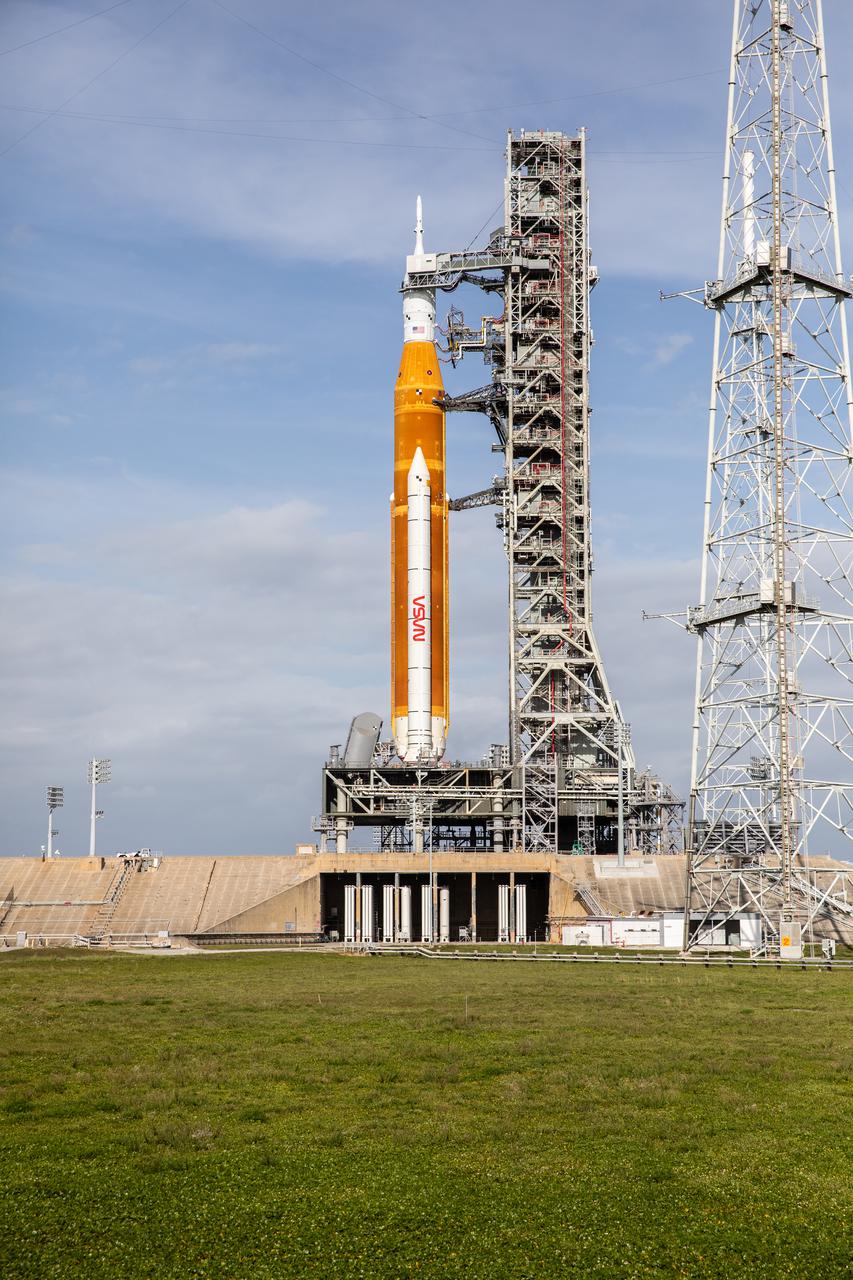
A view of the Artemis I Space Launch System (SLS) and Orion spacecraft on Launch Pad 39B at NASA’s Kennedy Space Center in Florida on April 21, 2022. Also in view is one of three lightning protection towers. The SLS and Orion atop the mobile launcher were transported to the pad on crawler-transporter 2 for a prelaunch test called a wet dress rehearsal. Artemis I will be the first integrated test of the SLS and Orion spacecraft. In future Artemis missions, NASA will land the first woman and the first person of color on the surface of the Moon, paving the way for a long-term lunar presence and serving as a steppingstone on the way to Mars.
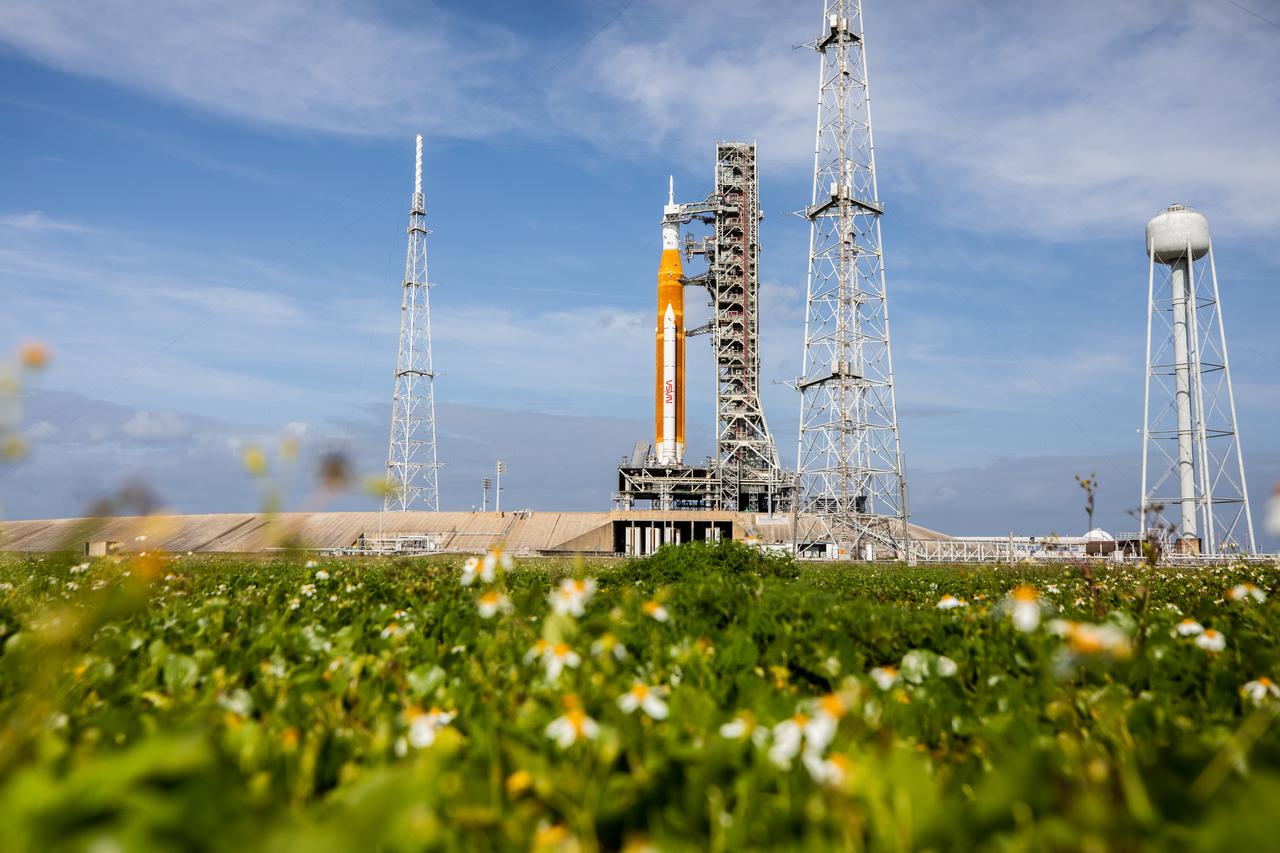
A view of the Artemis I Space Launch System (SLS) and Orion spacecraft on Launch Pad 39B at NASA’s Kennedy Space Center in Florida on April 21, 2022. The SLS and Orion atop the mobile launcher were transported to the pad on crawler-transporter 2 for a prelaunch test called a wet dress rehearsal. Artemis I will be the first integrated test of the SLS and Orion spacecraft. In future Artemis missions, NASA will land the first woman and the first person of color on the surface of the Moon, paving the way for a long-term lunar presence and serving as a steppingstone on the way to Mars.
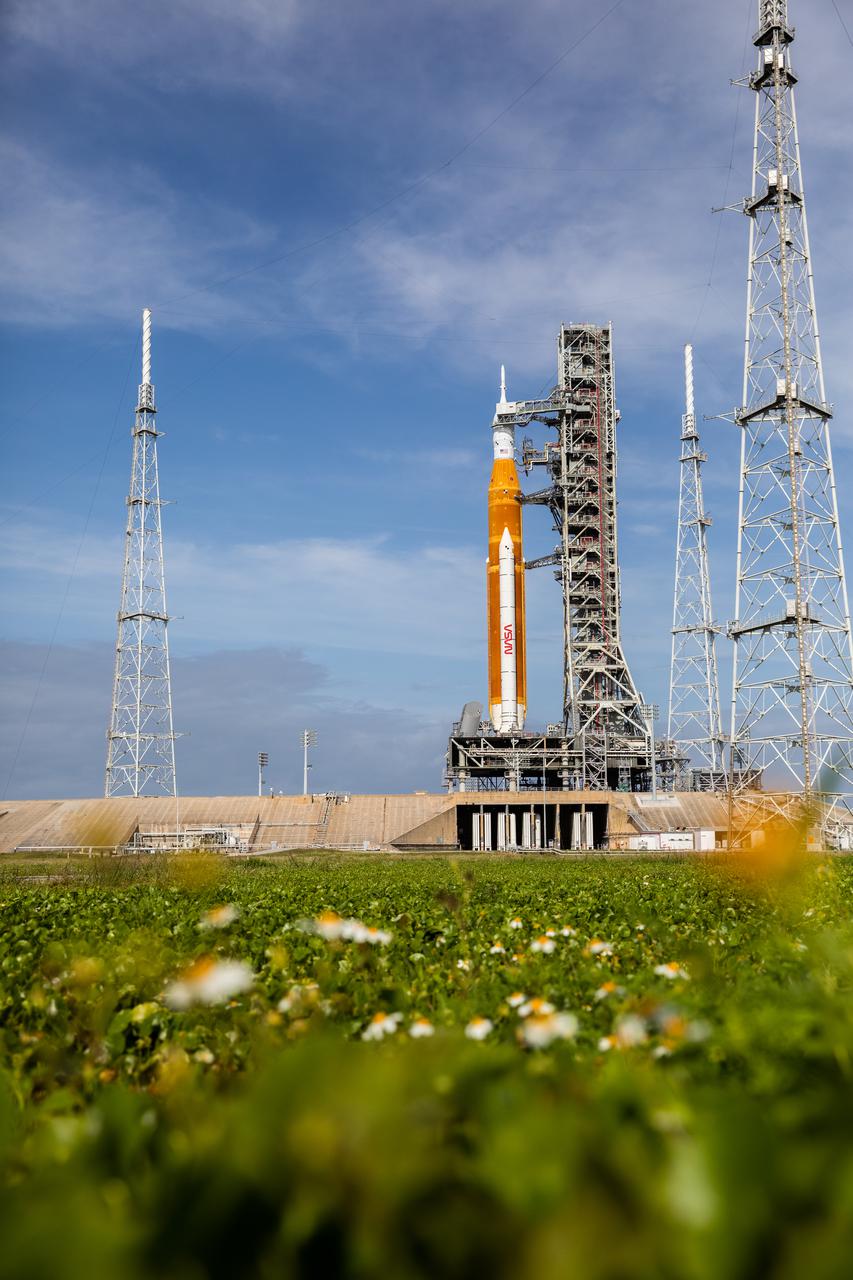
A view of the Artemis I Space Launch System (SLS) and Orion spacecraft atop the mobile launcher on Launch Pad 39B at NASA’s Kennedy Space Center in Florida on April 21, 2022. Also in view are the three lightning protection towers. The SLS and Orion atop the mobile launcher were transported to the pad on crawler-transporter 2 for a prelaunch test called a wet dress rehearsal. Artemis I will be the first integrated test of the SLS and Orion spacecraft. In future Artemis missions, NASA will land the first woman and the first person of color on the surface of the Moon, paving the way for a long-term lunar presence and serving as a steppingstone on the way to Mars.
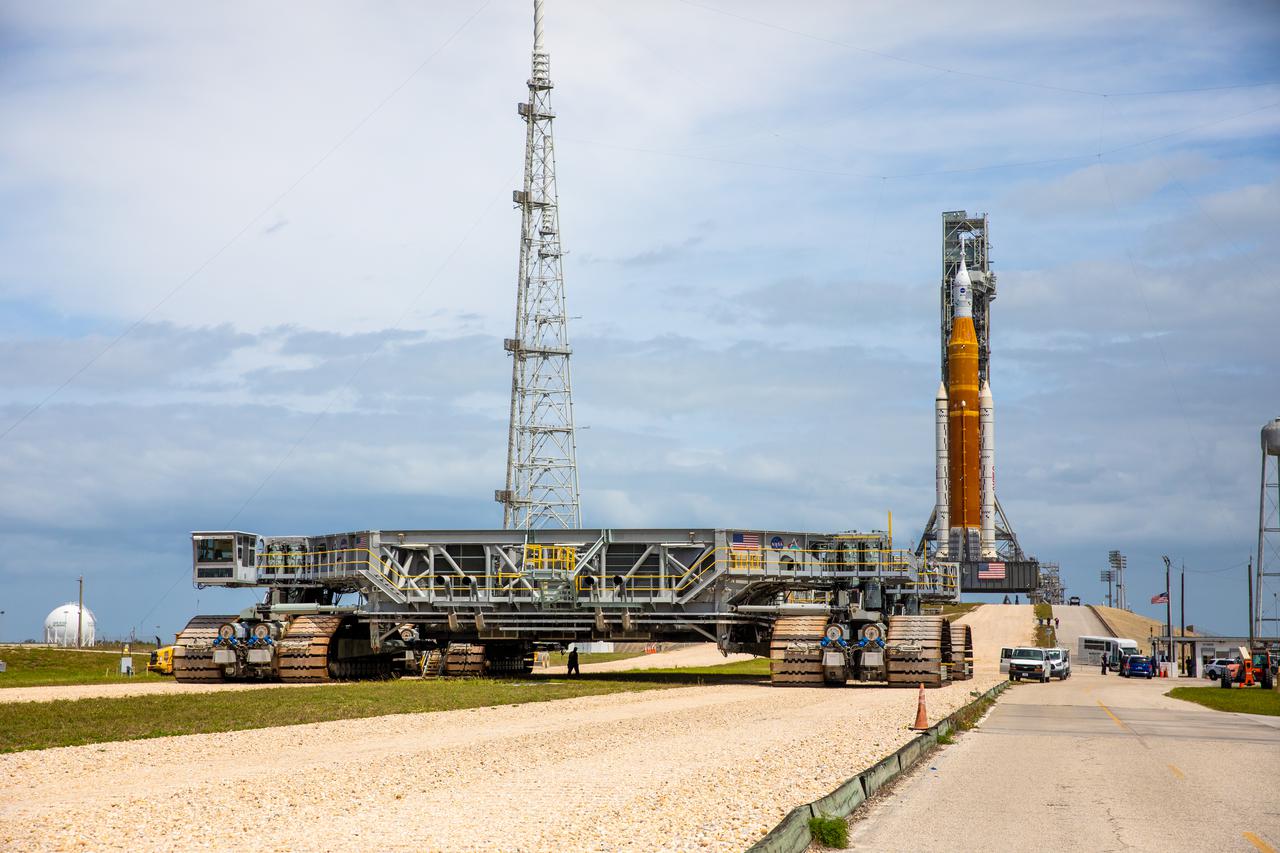
Crawler-transporter 2 (CT-2) makes its way along the crawlerway to Launch Complex 39B at NASA’s Kennedy Space Center in Florida on April 21, 2022. In view atop the mobile launcher on the pad are the Artemis I Space Launch System (SLS) and Orion spacecraft. The SLS and Orion atop the mobile launcher were transported to the pad on CT-2 for a prelaunch test called a wet dress rehearsal. Artemis I will be the first integrated test of the SLS and Orion spacecraft. In future Artemis missions, NASA will land the first woman and the first person of color on the surface of the Moon, paving the way for a long-term lunar presence and serving as a steppingstone on the way to Mars.
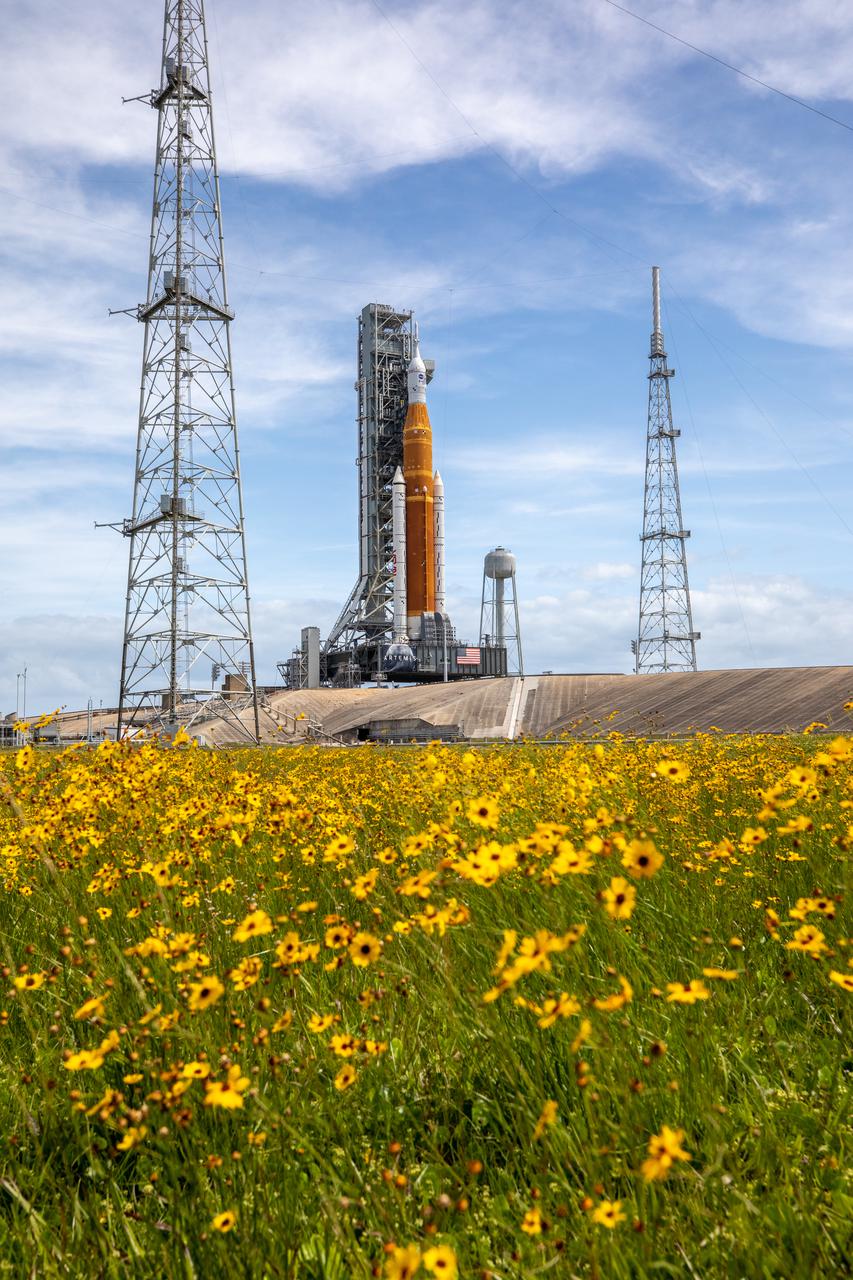
Wildflowers frame a view of the Artemis I Space Launch System (SLS) and Orion spacecraft on Launch Pad 39B at NASA’s Kennedy Space Center in Florida on April 21, 2022. Also in view are two of the three lightning protection towers and the water tower. The SLS and Orion atop the mobile launcher were transported to the pad on crawler-transporter 2 for a prelaunch test called a wet dress rehearsal. Artemis I will be the first integrated test of the SLS and Orion spacecraft. In future Artemis missions, NASA will land the first woman and the first person of color on the surface of the Moon, paving the way for a long-term lunar presence and serving as a steppingstone on the way to Mars.
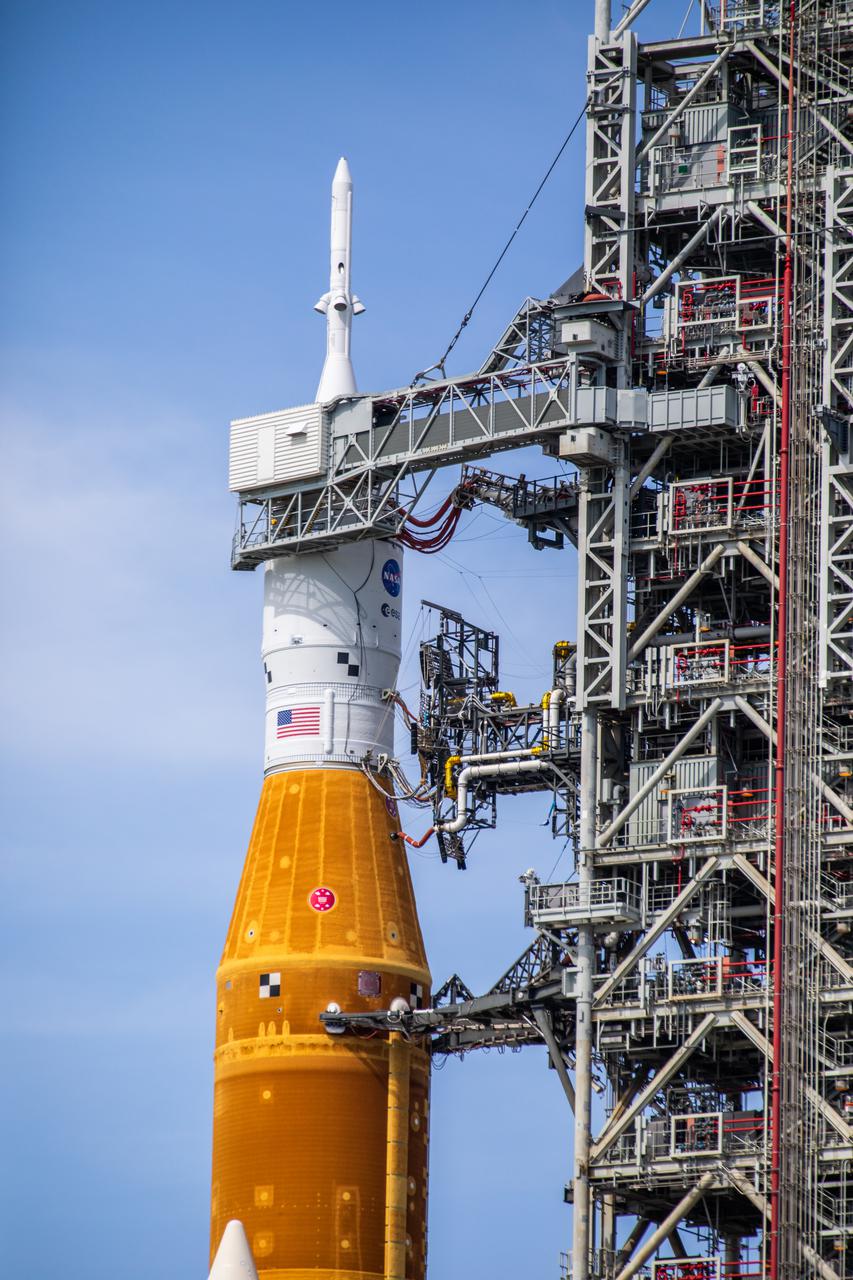
A close-up view of the Artemis I Space Launch System (SLS) and Orion spacecraft on Launch Pad 39B at NASA’s Kennedy Space Center in Florida on April 21, 2022. A portion of the mobile launcher and umbilical connections are in view, as well as the crew access arm. The SLS and Orion atop the mobile launcher were transported to the pad on crawler-transporter 2 for a prelaunch test called a wet dress rehearsal. Artemis I will be the first integrated test of the SLS and Orion spacecraft. In future Artemis missions, NASA will land the first woman and the first person of color on the surface of the Moon, paving the way for a long-term lunar presence and serving as a steppingstone on the way to Mars.

A view of the Artemis I Space Launch System (SLS) and Orion spacecraft on Launch Pad 39B at NASA’s Kennedy Space Center in Florida on April 21, 2022. Also in view are two of three lightning protection towers. The SLS and Orion atop the mobile launcher were transported to the pad on crawler-transporter 2 for a prelaunch test called a wet dress rehearsal. Artemis I will be the first integrated test of the SLS and Orion spacecraft. In future Artemis missions, NASA will land the first woman and the first person of color on the surface of the Moon, paving the way for a long-term lunar presence and serving as a steppingstone on the way to Mars.
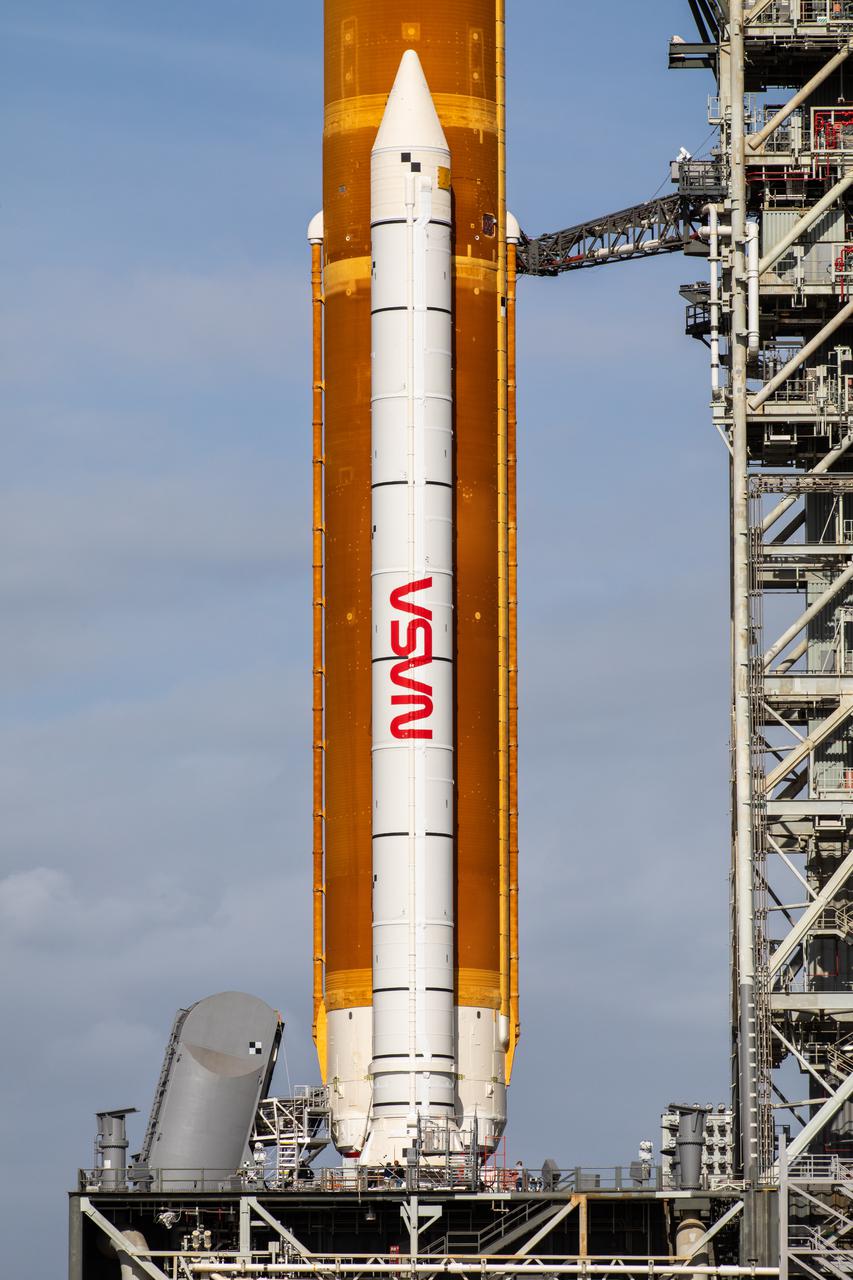
A close-up view of the Artemis I Space Launch System (SLS) and one of two solid rocket boosters on Launch Pad 39B at NASA’s Kennedy Space Center in Florida on April 21, 2022. A portion of the mobile launcher and one umbilical connection also is in view. The SLS and Orion atop the mobile launcher were transported to the pad on crawler-transporter 2 for a prelaunch test called a wet dress rehearsal. Artemis I will be the first integrated test of the SLS and Orion spacecraft. In future Artemis missions, NASA will land the first woman and the first person of color on the surface of the Moon, paving the way for a long-term lunar presence and serving as a steppingstone on the way to Mars.
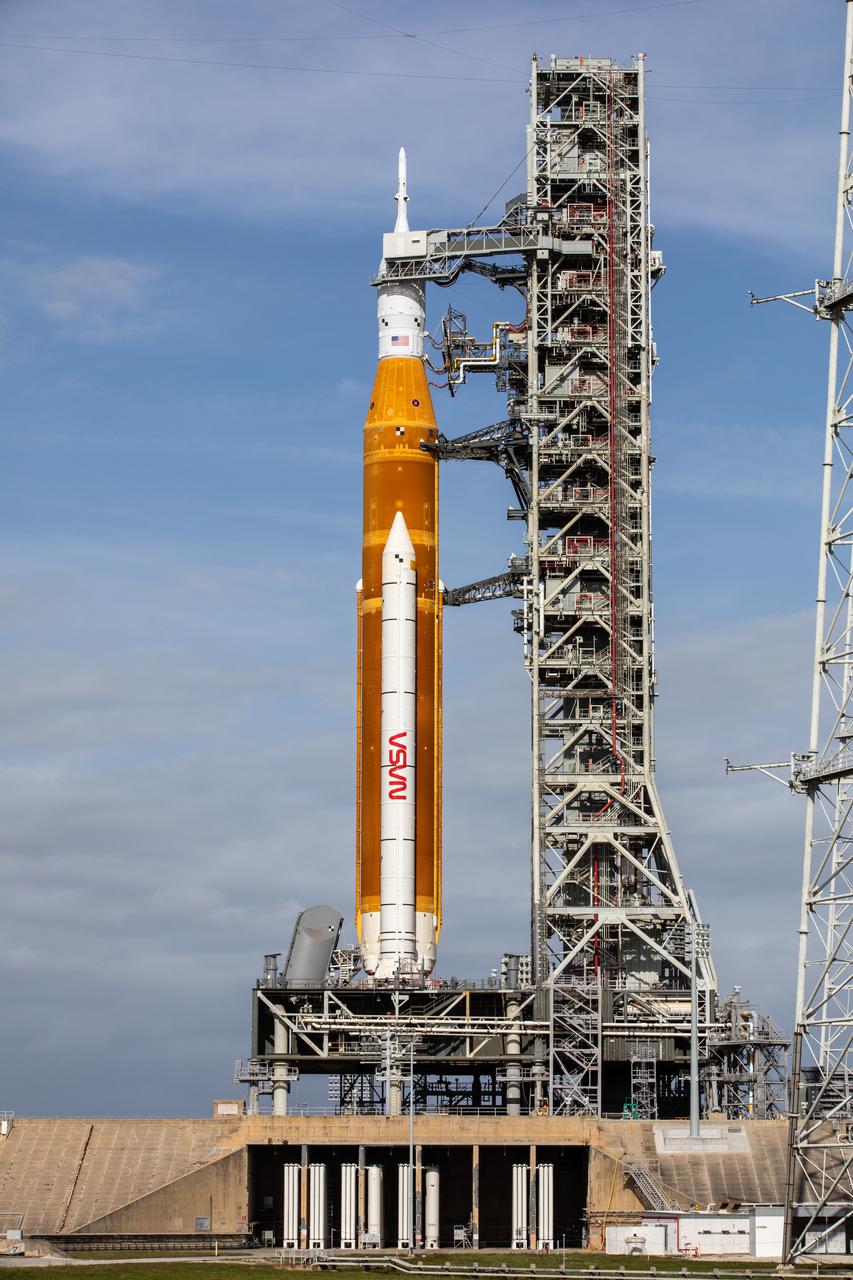
A view of the Artemis I Space Launch System (SLS) and Orion spacecraft atop the mobile launcher (ML) on Launch Pad 39B at NASA’s Kennedy Space Center in Florida on April 21, 2022. Also in view are several of the umbilical connections from the ML to the rocket. The SLS and Orion atop the mobile launcher were transported to the pad on crawler-transporter 2 for a prelaunch test called a wet dress rehearsal. Artemis I will be the first integrated test of the SLS and Orion spacecraft. In future Artemis missions, NASA will land the first woman and the first person of color on the surface of the Moon, paving the way for a long-term lunar presence and serving as a steppingstone on the way to Mars.
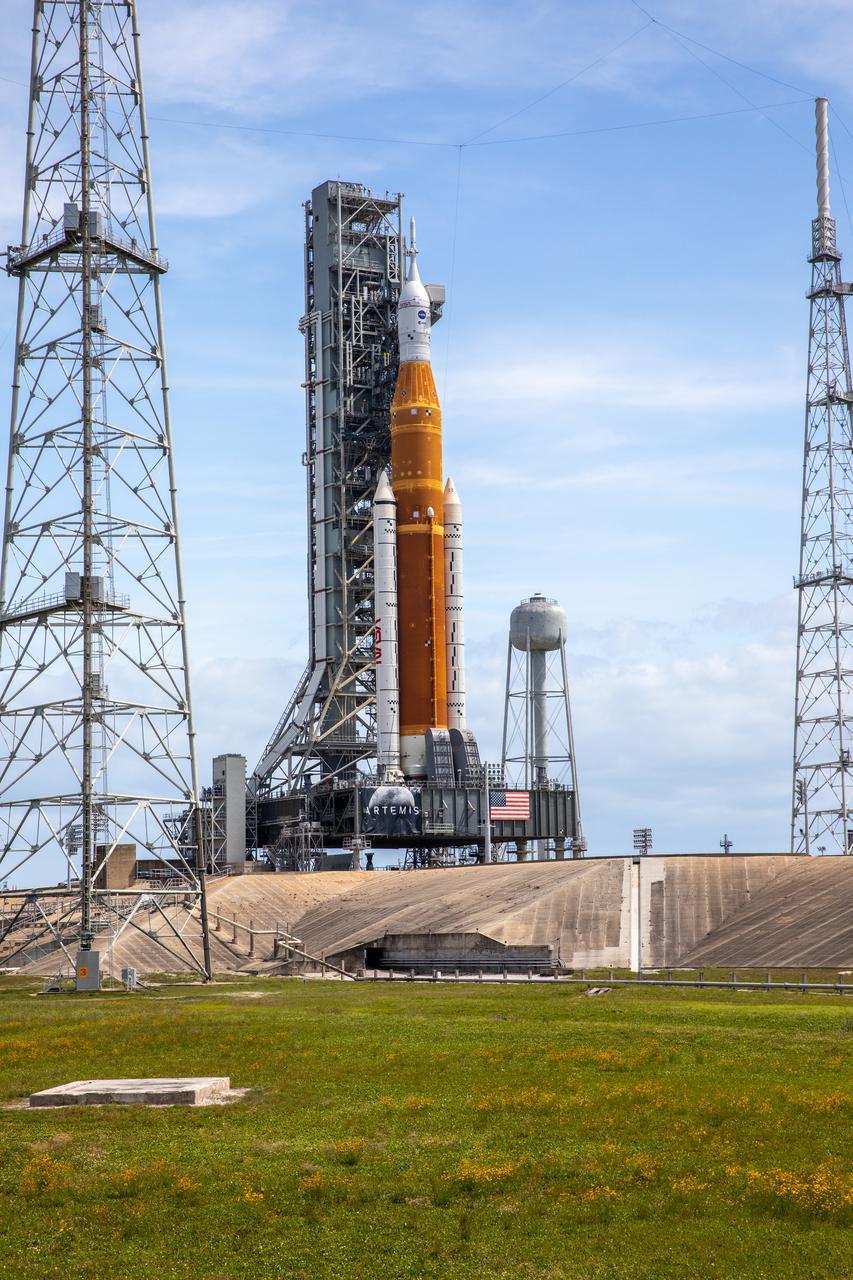
A view of the Artemis I Space Launch System (SLS) and Orion spacecraft on Launch Pad 39B at NASA’s Kennedy Space Center in Florida on April 21, 2022. Also in view are two of the three lightning protection towers and the water tower. The SLS and Orion atop the mobile launcher were transported to the pad on crawler-transporter 2 for a prelaunch test called a wet dress rehearsal. Artemis I will be the first integrated test of the SLS and Orion spacecraft. In future Artemis missions, NASA will land the first woman and the first person of color on the surface of the Moon, paving the way for a long-term lunar presence and serving as a steppingstone on the way to Mars.
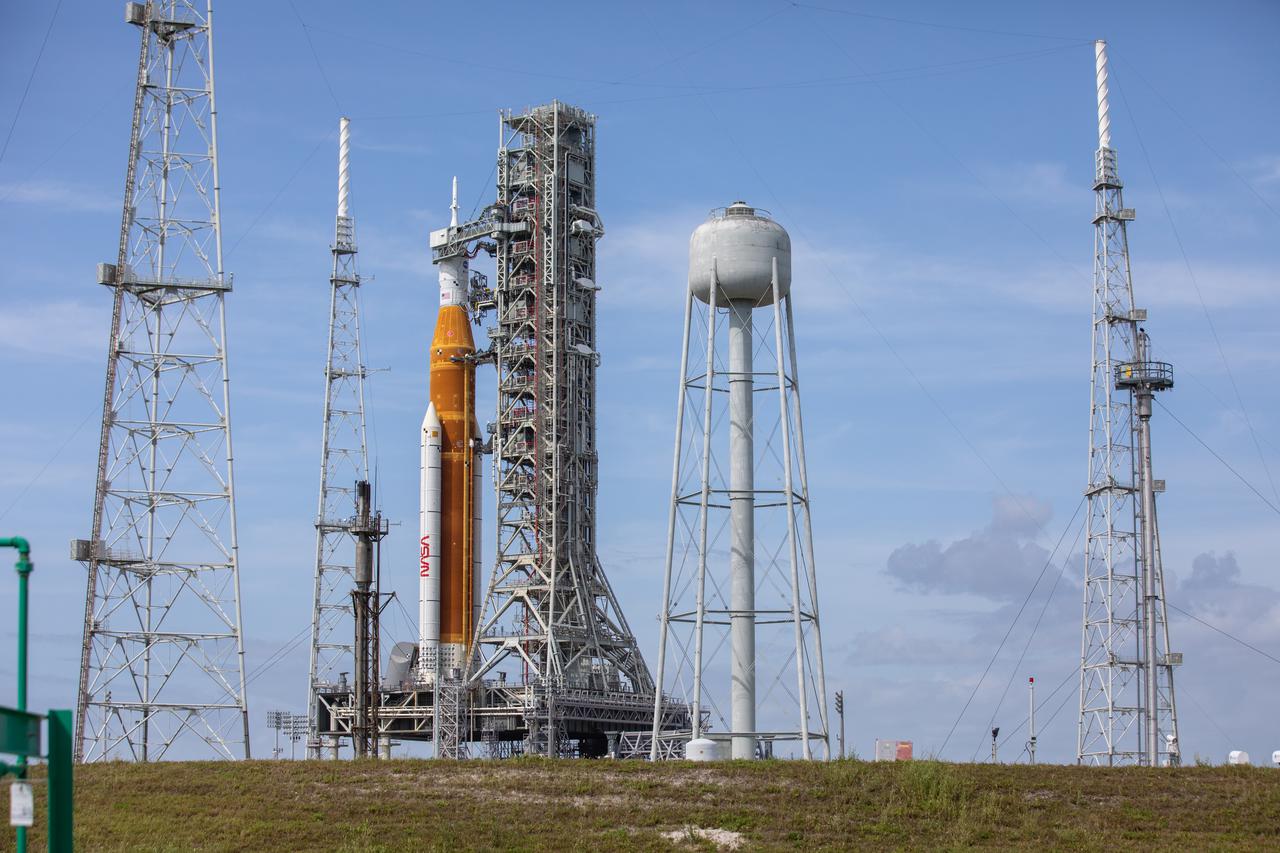
A view of the Artemis I Space Launch System (SLS) and Orion spacecraft on Launch Pad 39B at NASA’s Kennedy Space Center in Florida on April 21, 2022. Also in view are the three lightning protection towers and water tower. The SLS and Orion atop the mobile launcher were transported to the pad on crawler-transporter 2 for a prelaunch test called a wet dress rehearsal. Artemis I will be the first integrated test of the SLS and Orion spacecraft. In future Artemis missions, NASA will land the first woman and the first person of color on the surface of the Moon, paving the way for a long-term lunar presence and serving as a steppingstone on the way to Mars.
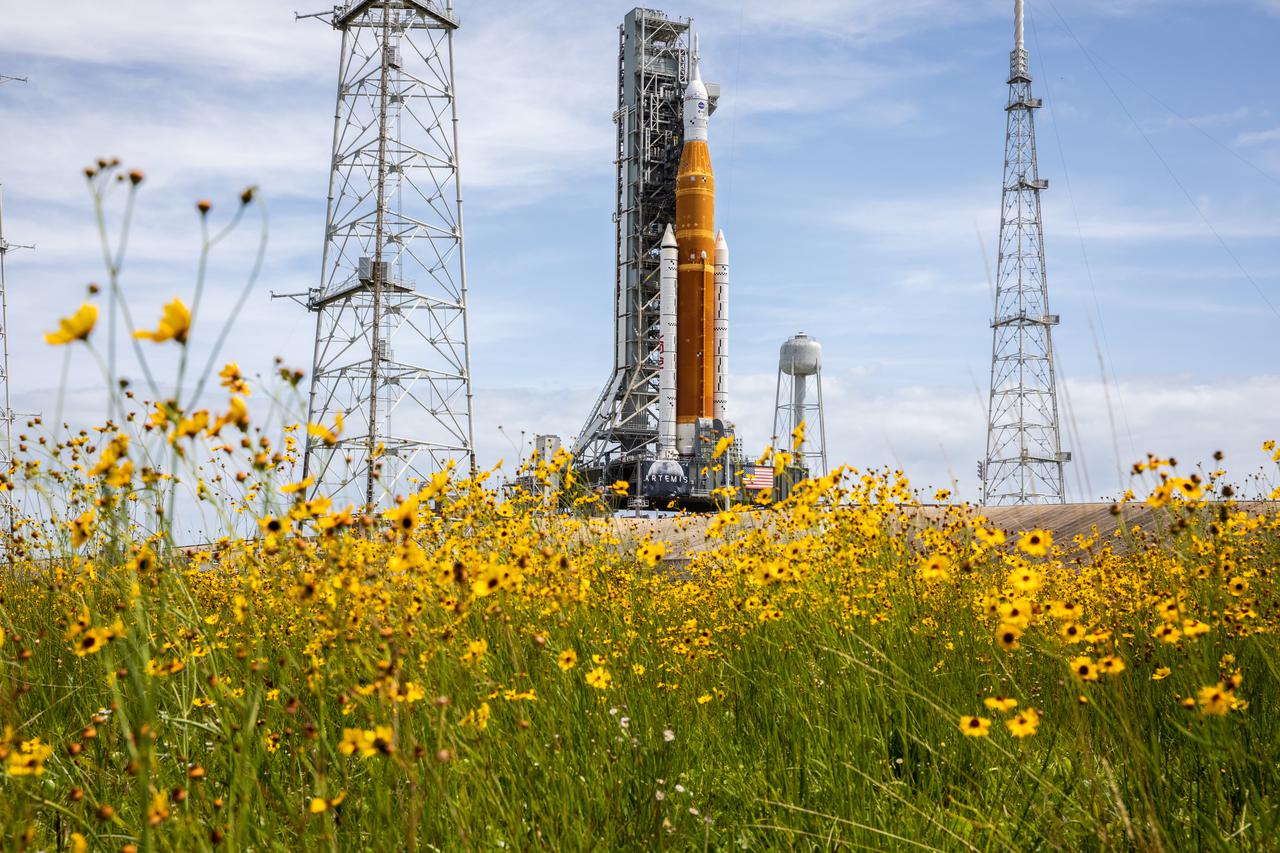
Wildflowers frame a view of the Artemis I Space Launch System (SLS) and Orion spacecraft on Launch Pad 39B at NASA’s Kennedy Space Center in Florida on April 21, 2022. Also in view are two of the three lightning protection towers and the water tower. The SLS and Orion atop the mobile launcher were transported to the pad on crawler-transporter 2 for a prelaunch test called a wet dress rehearsal. Artemis I will be the first integrated test of the SLS and Orion spacecraft. In future Artemis missions, NASA will land the first woman and the first person of color on the surface of the Moon, paving the way for a long-term lunar presence and serving as a steppingstone on the way to Mars.
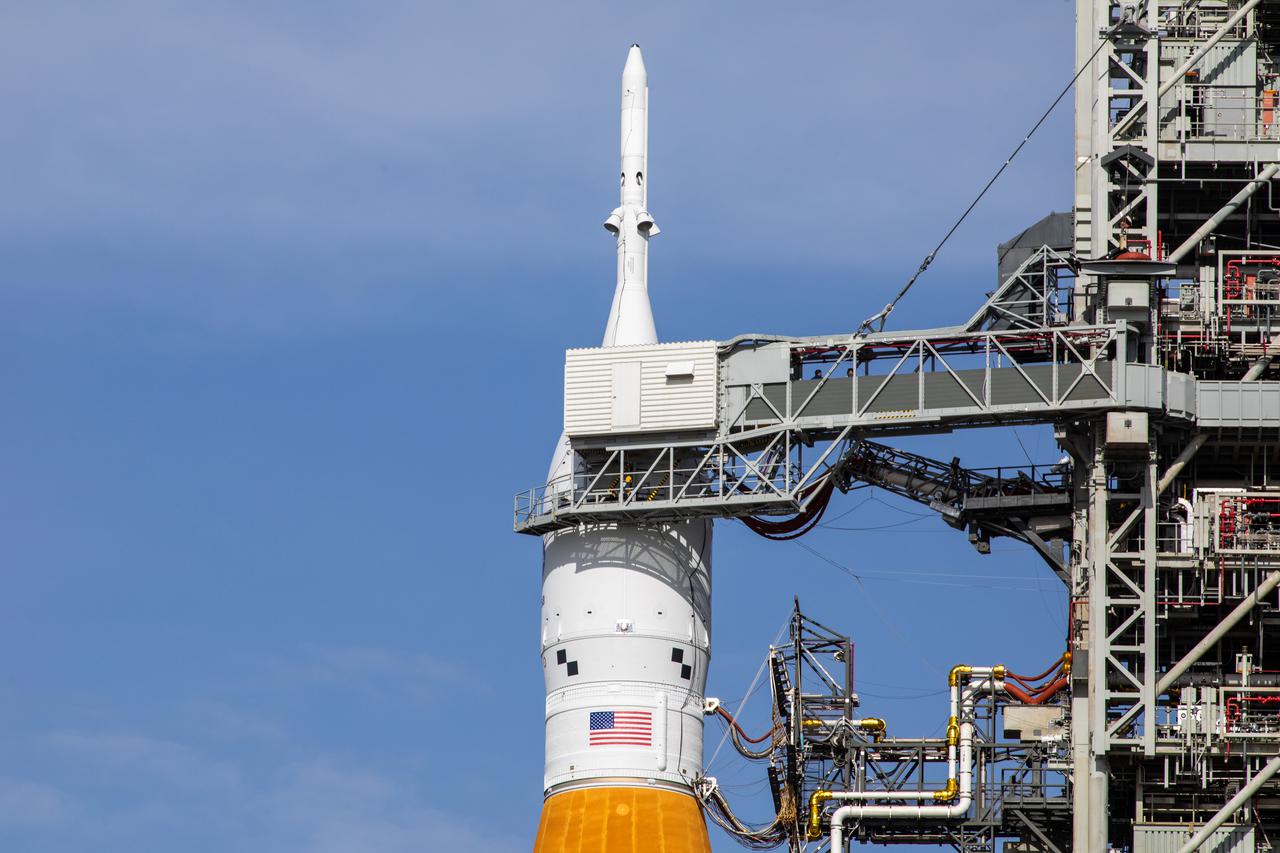
A close-up view of the Artemis I Orion spacecraft, secured inside the Launch Abort System atop the Space Launch System (SLS) on Launch Pad 39B at NASA’s Kennedy Space Center in Florida on April 21, 2022. A portion of the mobile launcher and the crew access arm also is in view. The SLS and Orion atop the mobile launcher were transported to the pad on crawler-transporter 2 for a prelaunch test called a wet dress rehearsal. Artemis I will be the first integrated test of the SLS and Orion spacecraft. In future Artemis missions, NASA will land the first woman and the first person of color on the surface of the Moon, paving the way for a long-term lunar presence and serving as a steppingstone on the way to Mars.
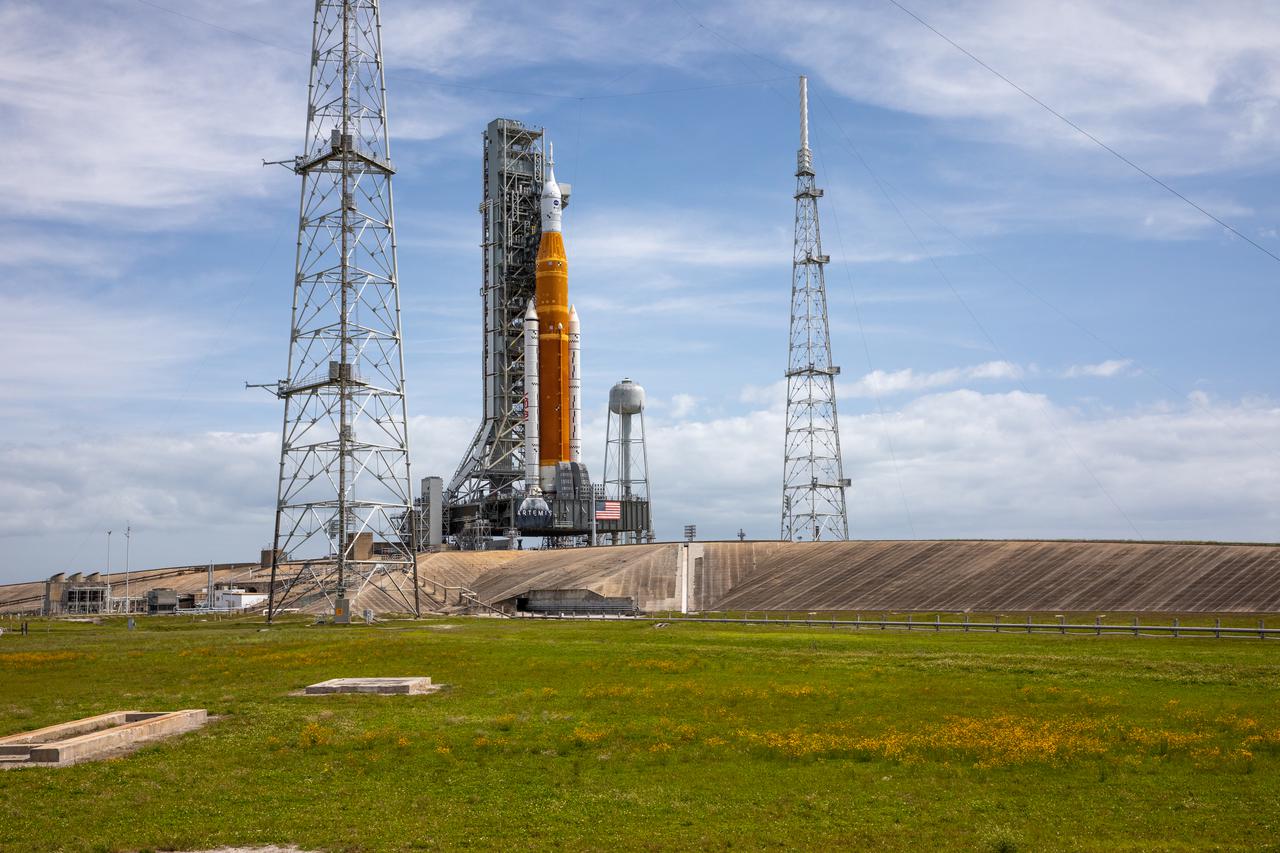
A view of the Artemis I Space Launch System (SLS) and Orion spacecraft on Launch Pad 39B at NASA’s Kennedy Space Center in Florida on April 21, 2022. Also in view are two of the three lightning protection towers and the water tower. The SLS and Orion atop the mobile launcher were transported to the pad on crawler-transporter 2 for a prelaunch test called a wet dress rehearsal. Artemis I will be the first integrated test of the SLS and Orion spacecraft. In future Artemis missions, NASA will land the first woman and the first person of color on the surface of the Moon, paving the way for a long-term lunar presence and serving as a steppingstone on the way to Mars.
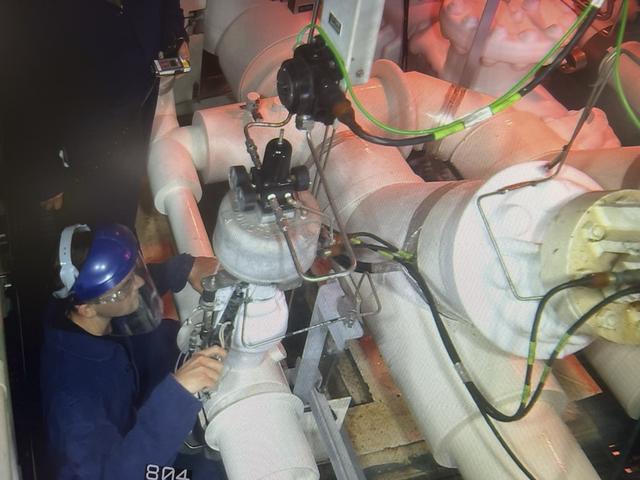
Members of the “red crew” perform work at the mobile launcher during the launch countdown for Artemis I at NASA’s Kennedy Space Center in Florida on Nov. 15, 2022. The team of technicians are part of the personnel specially trained to conduct operations at the launch pad during cryogenic loading operations. Prior to the launch of Artemis I, the red crew entered the zero deck, or base, of the mobile launcher and tightened several bolts to troubleshoot a valve used to replenish the core stage with liquid hydrogen which showed a leak with readings above limits. NASA has historically sent teams to the pad to conduct inspections during active launch operations as needed. Artemis I launched successfully at 1:47 a.m. on Nov. 16, from Kennedy’s Launch Pad 39B.
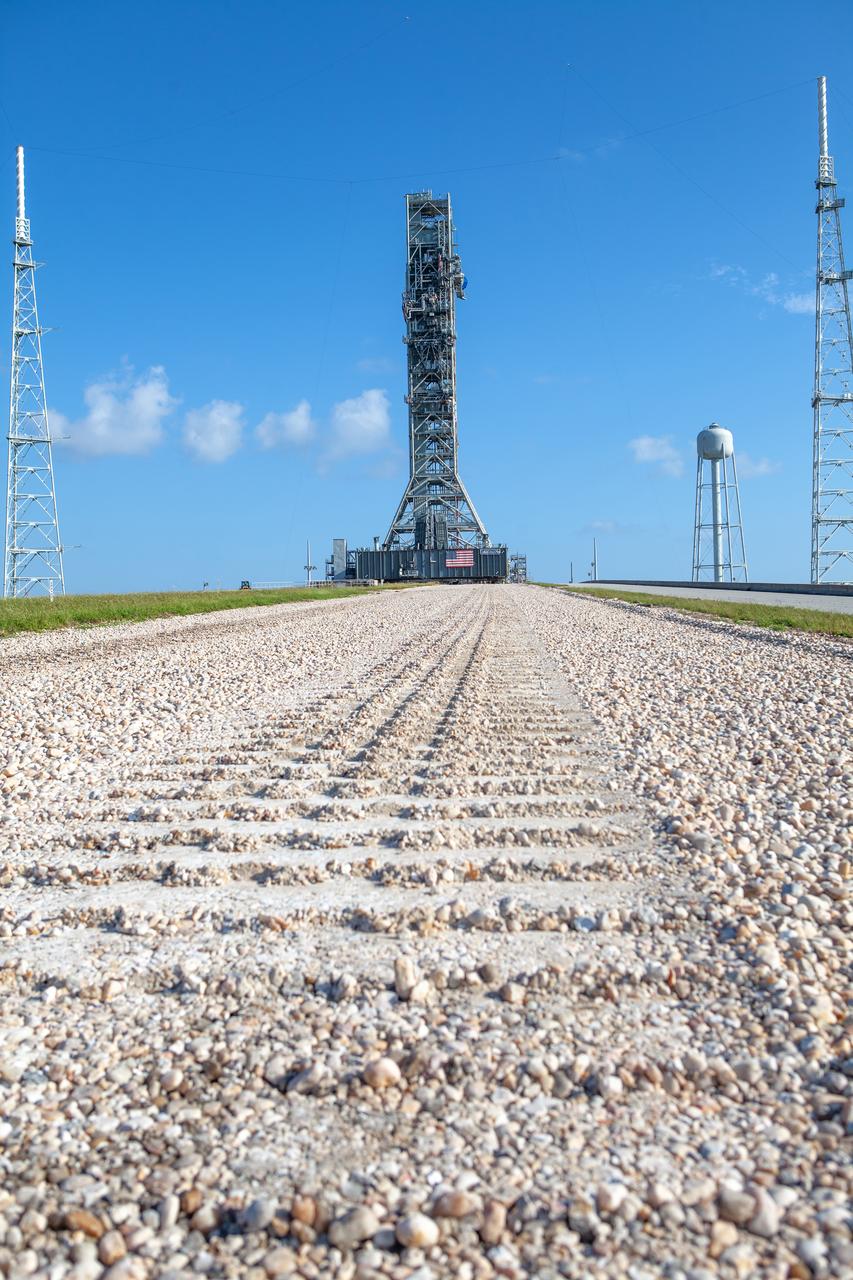
The mobile launcher for Artemis missions is at Launch Pad 39B on Sept. 11, 2019, at NASA’s Kennedy Space Center in Florida, after spending a week and a half inside the Vehicle Assembly Building (VAB) due to the approach of Hurricane Dorian. The nearly 400-foot-tall structure was moved from Launch Pad 39B to the VAB for safekeeping on Aug. 30. The storm passed about 70 miles east of the spaceport during the overnight hours Tuesday, Sept. 3, and Wednesday, Sept. 4. NASA’s Exploration Ground Systems is moving the mobile launcher back to the launch pad, where teams will complete testing and checkout on the launcher in the coming weeks for the Artemis I mission.
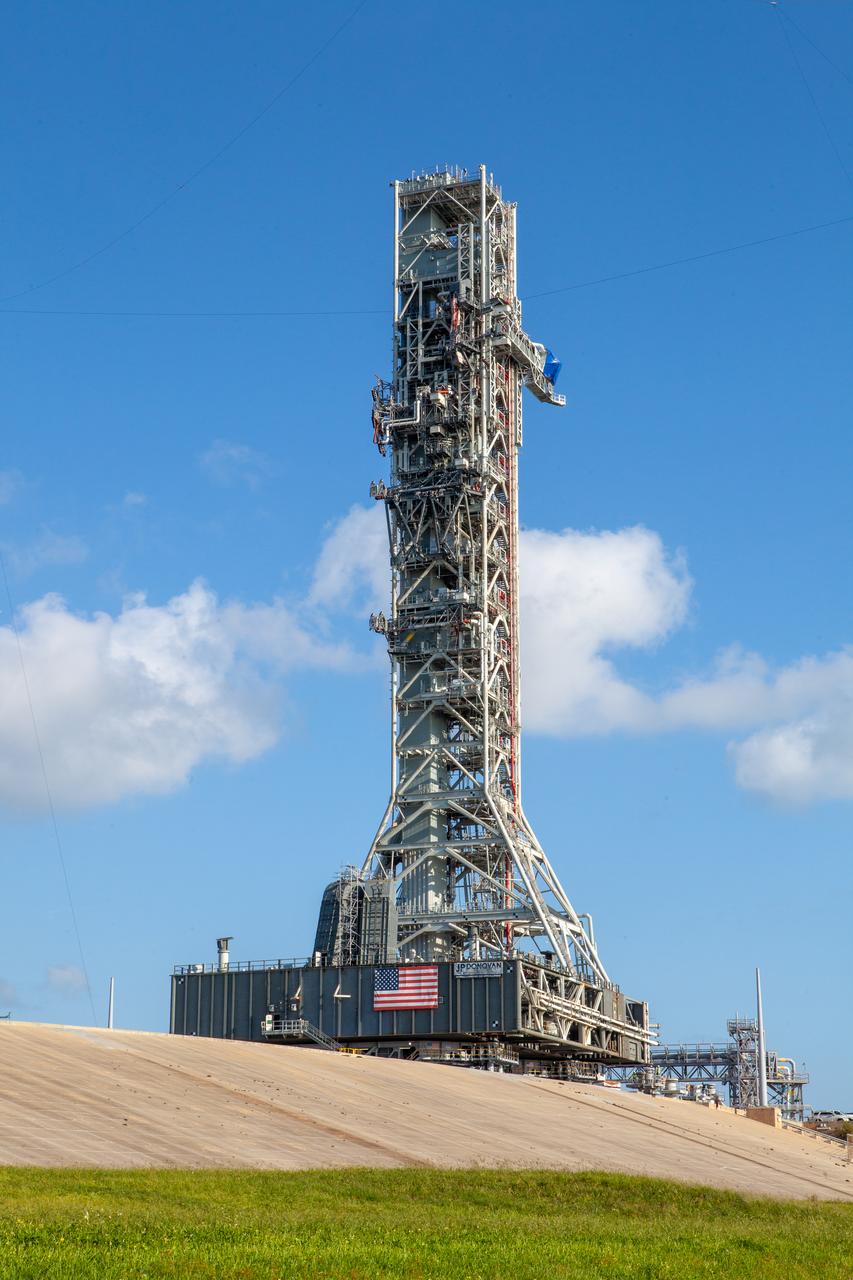
The mobile launcher for Artemis missions is at Launch Pad 39B on Sept. 11, 2019, at NASA’s Kennedy Space Center in Florida, after spending a week and a half inside the Vehicle Assembly Building (VAB) due to the approach of Hurricane Dorian. The nearly 400-foot-tall structure was moved from Launch Pad 39B to the VAB for safekeeping on Aug. 30. The storm passed about 70 miles east of the spaceport during the overnight hours Tuesday, Sept. 3, and Wednesday, Sept. 4. NASA’s Exploration Ground Systems moved the mobile launcher back to the launch pad, where teams will complete testing and checkout on the launcher in the coming weeks for the Artemis I mission.
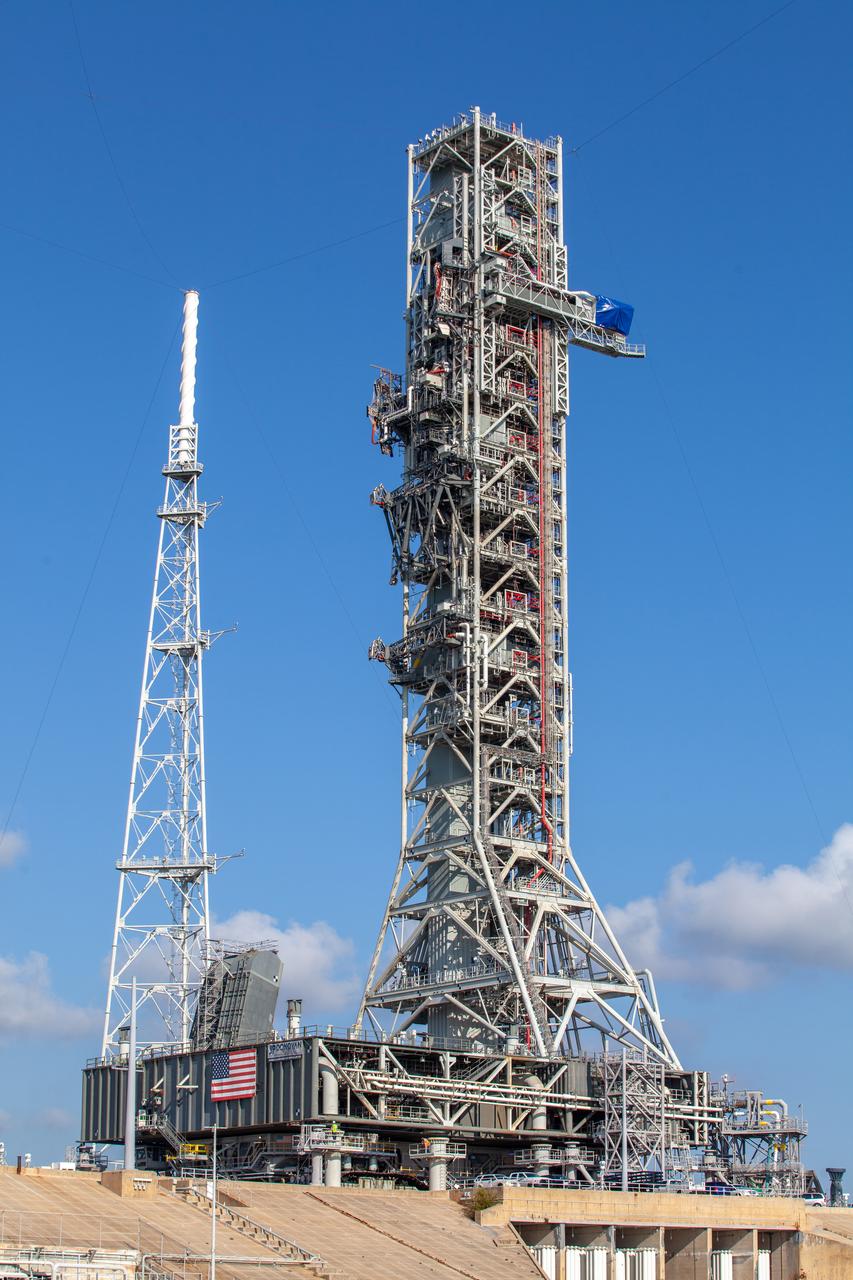
The mobile launcher for Artemis missions is at Launch Pad 39B on Sept. 11, 2019, at NASA’s Kennedy Space Center in Florida, after spending a week and a half inside the Vehicle Assembly Building (VAB) due to the approach of Hurricane Dorian. The nearly 400-foot-tall structure was moved from Launch Pad 39B to the VAB for safekeeping on Aug. 30. The storm passed about 70 miles east of the spaceport during the overnight hours Tuesday, Sept. 3, and Wednesday, Sept. 4. NASA’s Exploration Ground Systems moved the mobile launcher back to the launch pad, where teams will complete testing and checkout on the launcher in the coming weeks for the Artemis I mission.
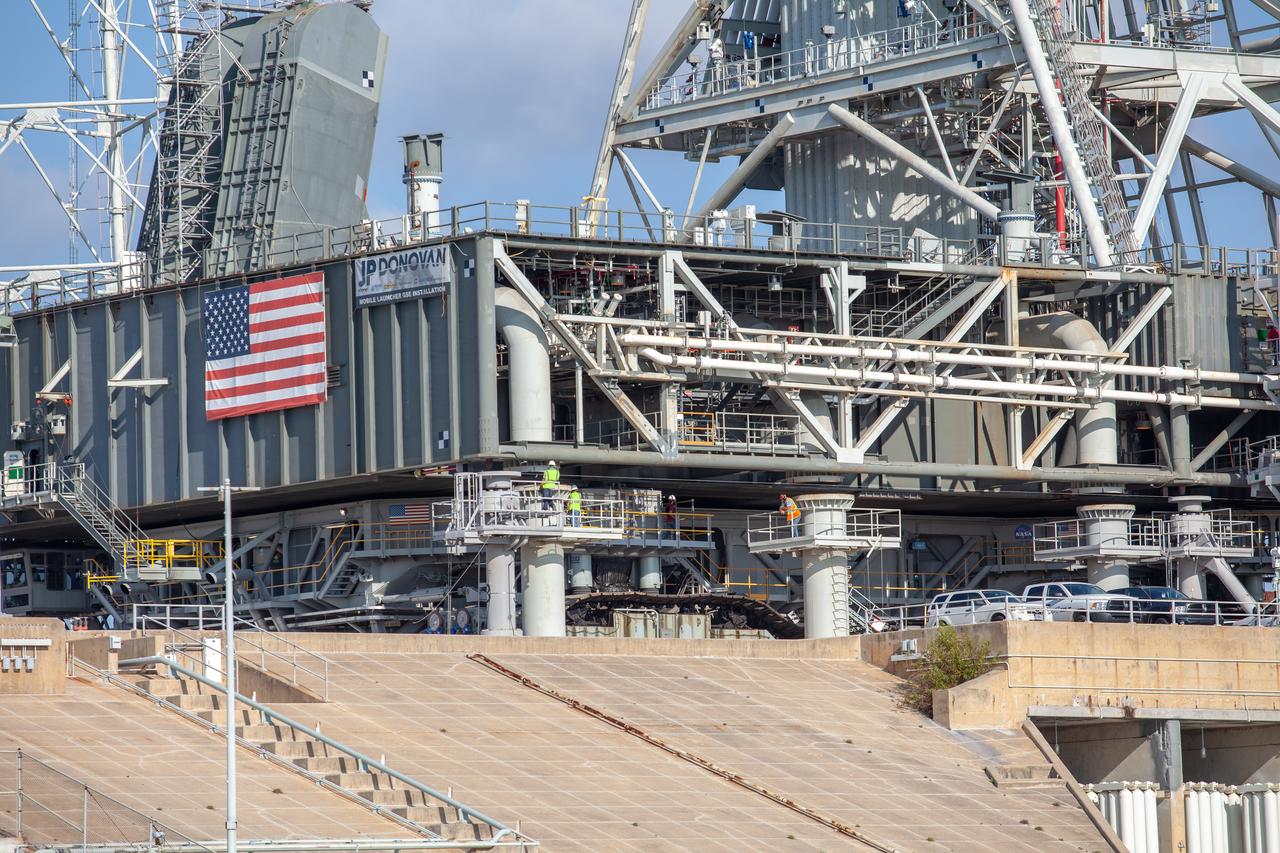
The mobile launcher for Artemis missions is at Launch Pad 39B on Sept. 11, 2019, at NASA’s Kennedy Space Center in Florida, after spending a week and a half inside the Vehicle Assembly Building (VAB) due to the approach of Hurricane Dorian. The nearly 400-foot-tall structure was moved from Launch Pad 39B to the VAB for safekeeping on Aug. 30. The storm passed about 70 miles east of the spaceport during the overnight hours Tuesday, Sept. 3, and Wednesday, Sept. 4. NASA’s Exploration Ground Systems moved the mobile launcher back to the launch pad, where teams will complete testing and checkout on the launcher in the coming weeks for the Artemis I mission.

The mobile launcher for Artemis missions is at Launch Pad 39B at NASA’s Kennedy Space Center in Florida on Sept. 11, 2019, after spending a week and a half inside the Vehicle Assembly Building (VAB) due to the approach of Hurricane Dorian. The nearly 400-foot-tall structure was moved from Launch Pad 39B to the VAB for safekeeping on Aug. 30. The storm passed about 70 miles east of the spaceport during the overnight hours Tuesday, Sept. 3, and Wednesday, Sept. 4. NASA’s Exploration Ground Systems moved the mobile launcher back to the launch pad, where teams will complete testing and checkout on the launcher in the coming weeks for the Artemis I mission.
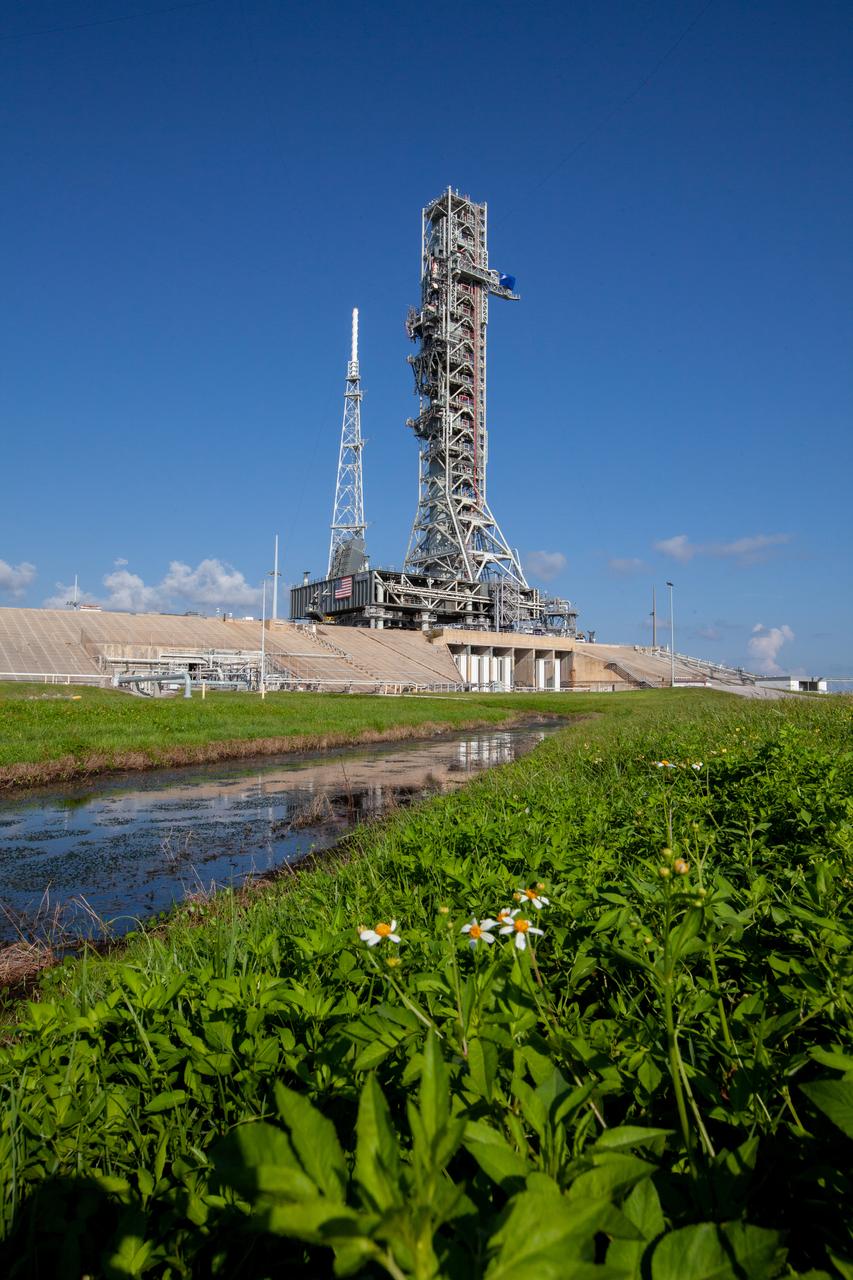
The mobile launcher for Artemis missions is at Launch Pad 39B on Sept. 11, 2019, at NASA’s Kennedy Space Center in Florida, after spending a week and a half inside the Vehicle Assembly Building (VAB) due to the approach of Hurricane Dorian. The nearly 400-foot-tall structure was moved from Launch Pad 39B to the VAB for safekeeping on Aug. 30. The storm passed about 70 miles east of the spaceport during the overnight hours Tuesday, Sept. 3, and Wednesday, Sept. 4. NASA’s Exploration Ground Systems moved the mobile launcher back to the launch pad, where teams will complete testing and checkout on the launcher in the coming weeks for the Artemis I mission.
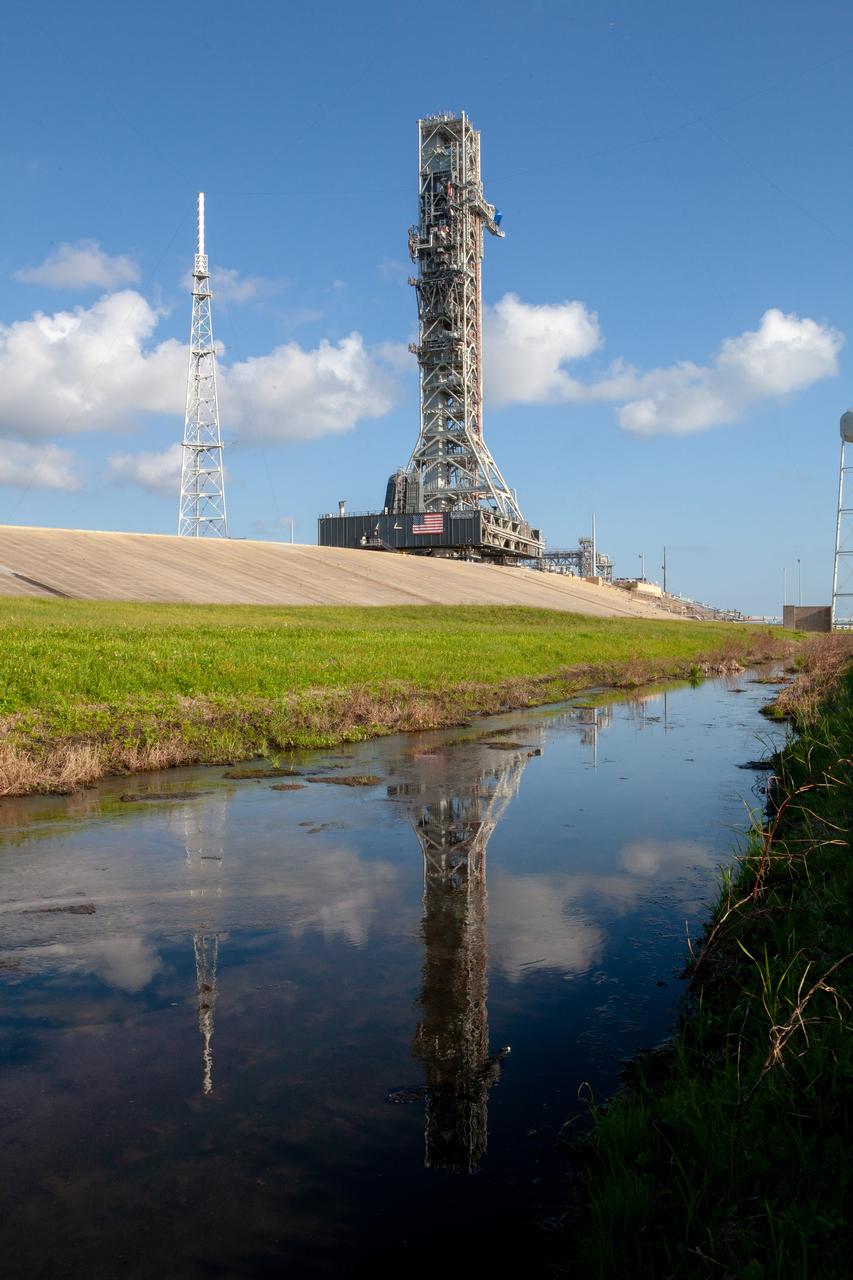
The mobile launcher for Artemis missions is at Launch Pad 39B on Sept. 11, 2019, at NASA’s Kennedy Space Center in Florida, after spending a week and a half inside the Vehicle Assembly Building (VAB) due to the approach of Hurricane Dorian. The nearly 400-foot-tall structure was moved from Launch Pad 39B to the VAB for safekeeping on Aug. 30. The storm passed about 70 miles east of the spaceport during the overnight hours Tuesday, Sept. 3, and Wednesday, Sept. 4. NASA’s Exploration Ground Systems moved the mobile launcher back to the launch pad, where teams will complete testing and checkout on the launcher in the coming weeks for the Artemis I mission.
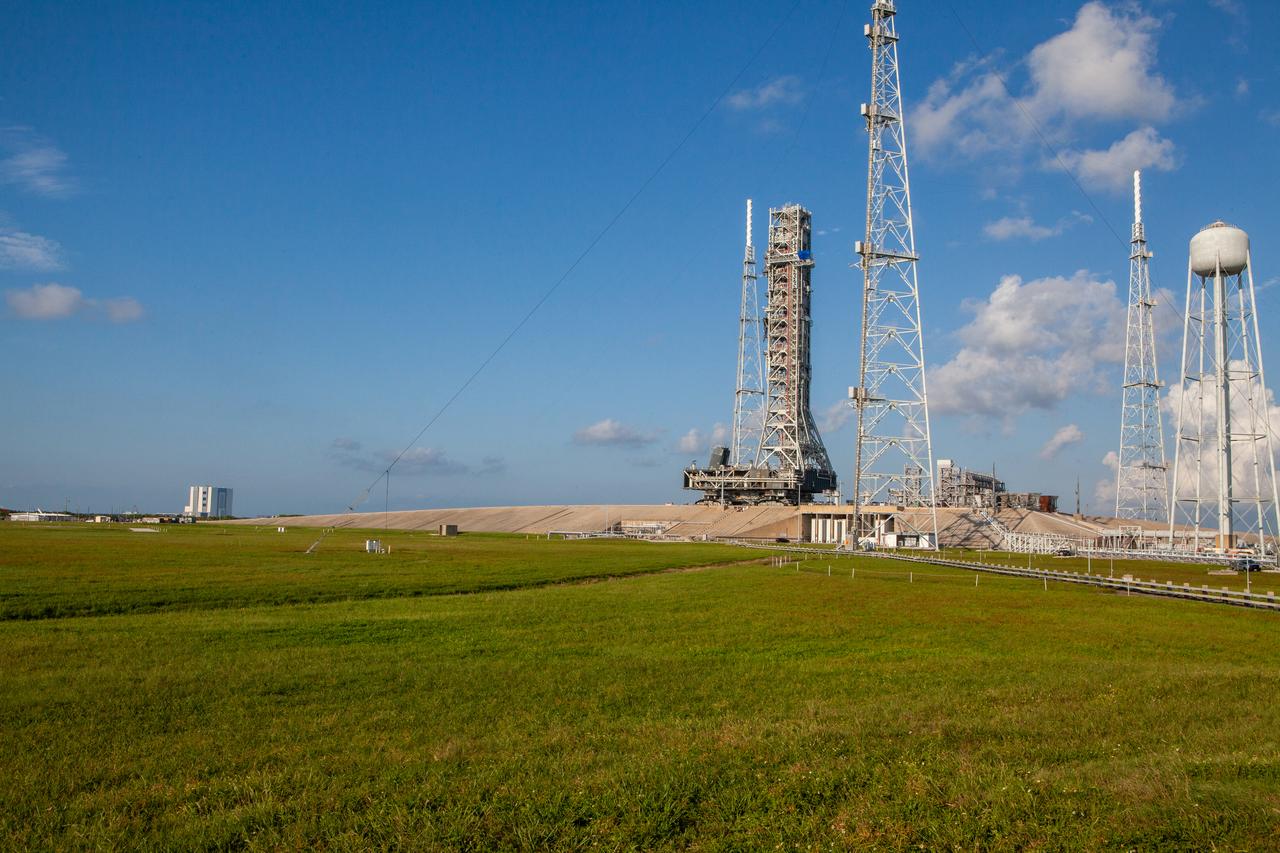
The mobile launcher for Artemis missions is at Launch Pad 39B on Sept. 11, 2019, at NASA’s Kennedy Space Center in Florida, after spending a week and a half inside the Vehicle Assembly Building (VAB) due to the approach of Hurricane Dorian. The nearly 400-foot-tall structure was moved from Launch Pad 39B to the VAB for safekeeping on Aug. 30. The storm passed about 70 miles east of the spaceport during the overnight hours Tuesday, Sept. 3, and Wednesday, Sept. 4. NASA’s Exploration Ground Systems is moved the mobile launcher back to the launch pad, where teams will complete testing and checkout on the launcher in the coming weeks for the Artemis I mission.
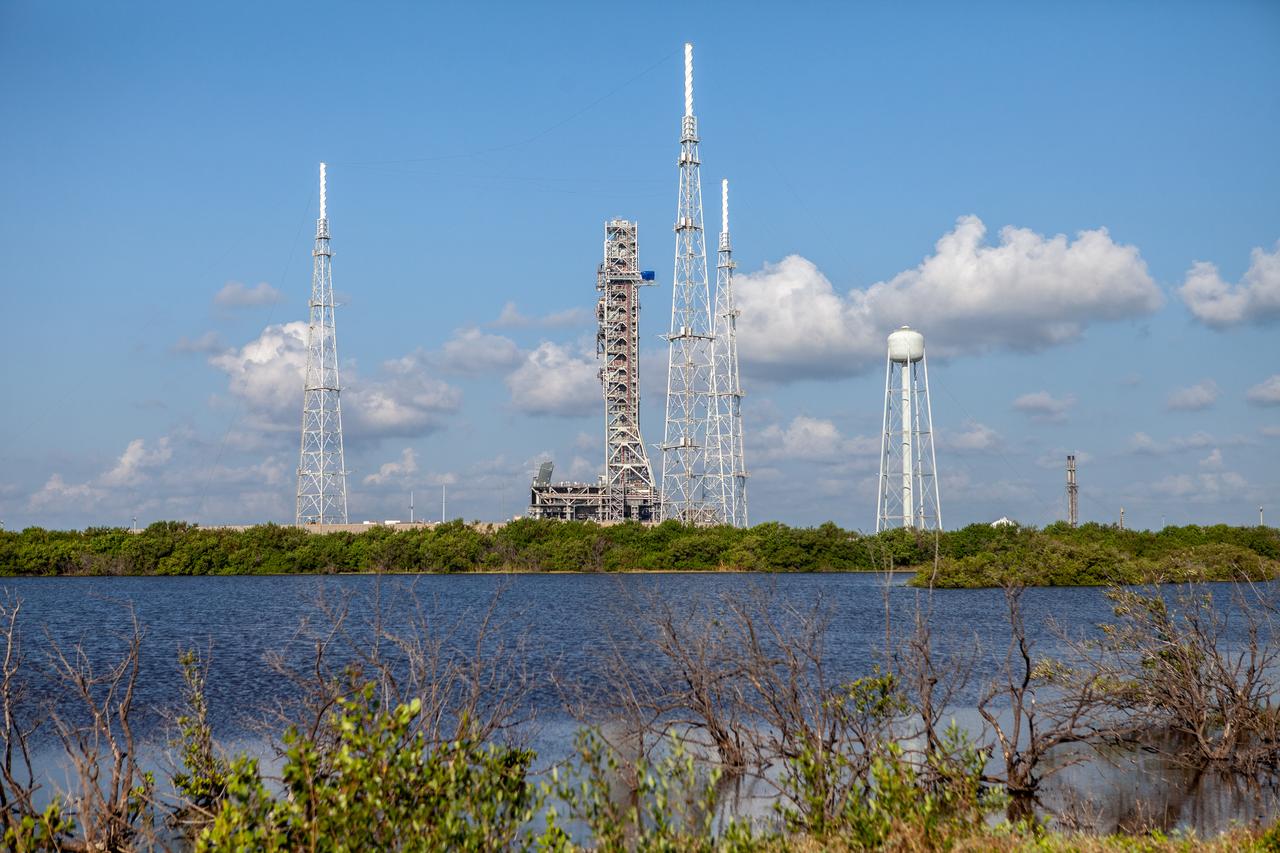
The mobile launcher for Artemis missions is at Launch Pad 39B at NASA’s Kennedy Space Center in Florida on Sept. 11, 2019, after spending a week and a half inside the Vehicle Assembly Building (VAB) due to the approach of Hurricane Dorian. The nearly 400-foot-tall structure was moved from Launch Pad 39B to the VAB for safekeeping on Aug. 30. The storm passed about 70 miles east of the spaceport during the overnight hours Tuesday, Sept. 3, and Wednesday, Sept. 4. NASA’s Exploration Ground Systems moved the mobile launcher back to the launch pad, where teams will complete testing and checkout on the launcher in the coming weeks for the Artemis I mission.
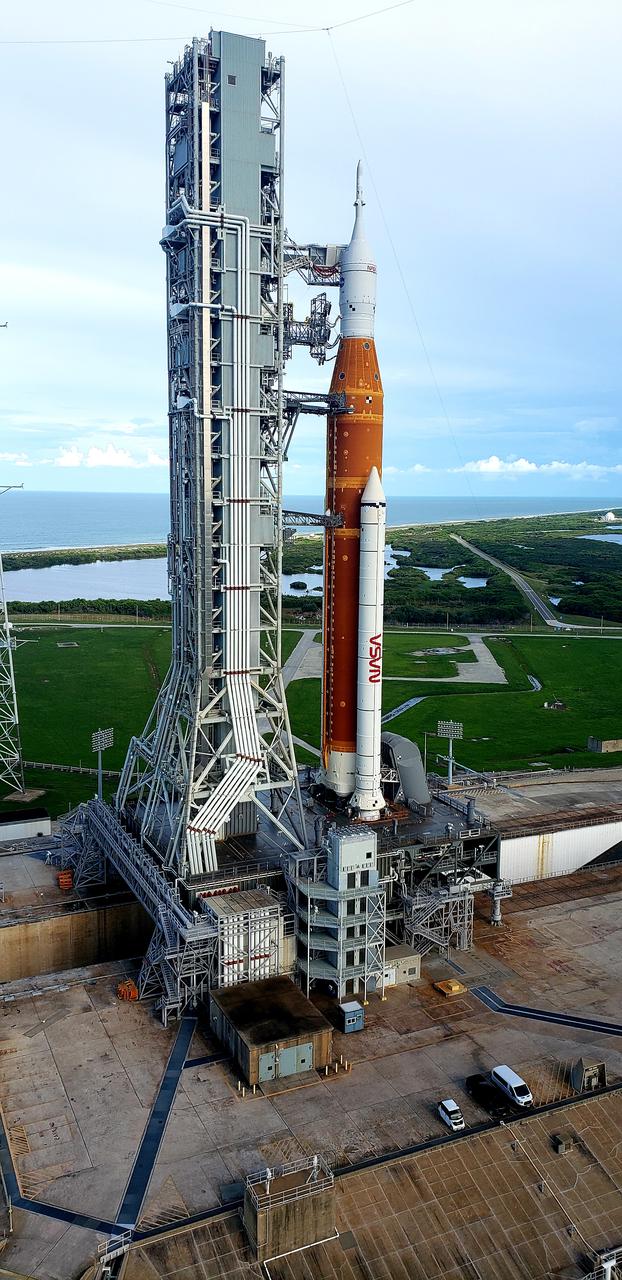
A close-up view of the Artemis I Space Launch System (SLS) and Orion spacecraft atop the mobile launcher on Launch Pad 39B at NASA’s Kennedy Space Center in Florida on Sept. 15, 2022. A portion of the umbilical connections are in view, as well as the crew access arm. Artemis I is the first integrated test of the SLS and Orion spacecraft. In future Artemis missions, NASA will land the first woman and the first person of color on the surface of the Moon, paving the way for a long-term lunar presence and serving as a steppingstone on the way to Mars.