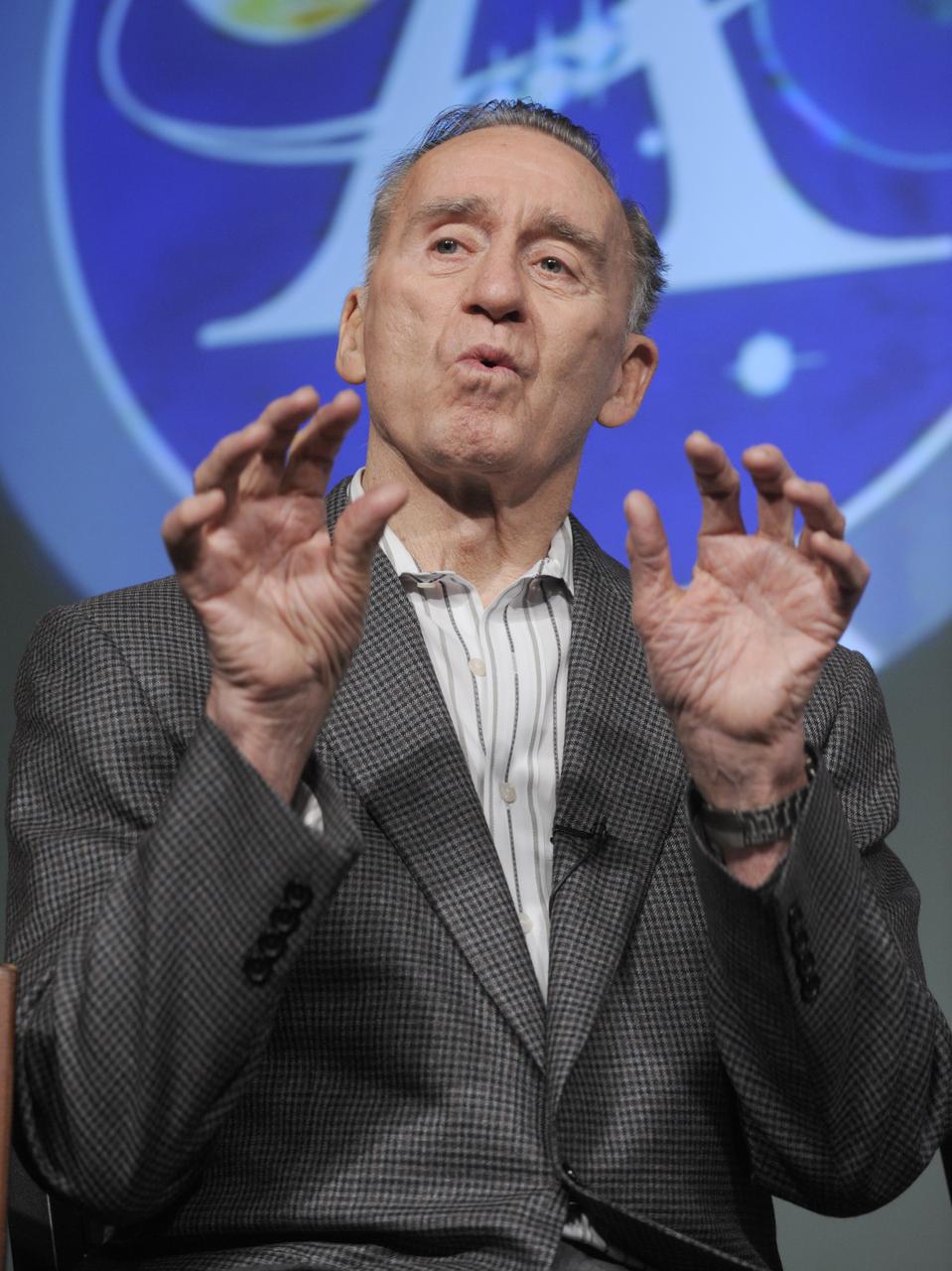
Walt Cunningham (Apollo 7) speaks during the 40th anniversary of the Apollo 11 mission and the walk on the moon press conference, Monday, July 20, 2009, at NASA Headquarters in Washington. Photo Credit: (NASA/Paul E. Alers)
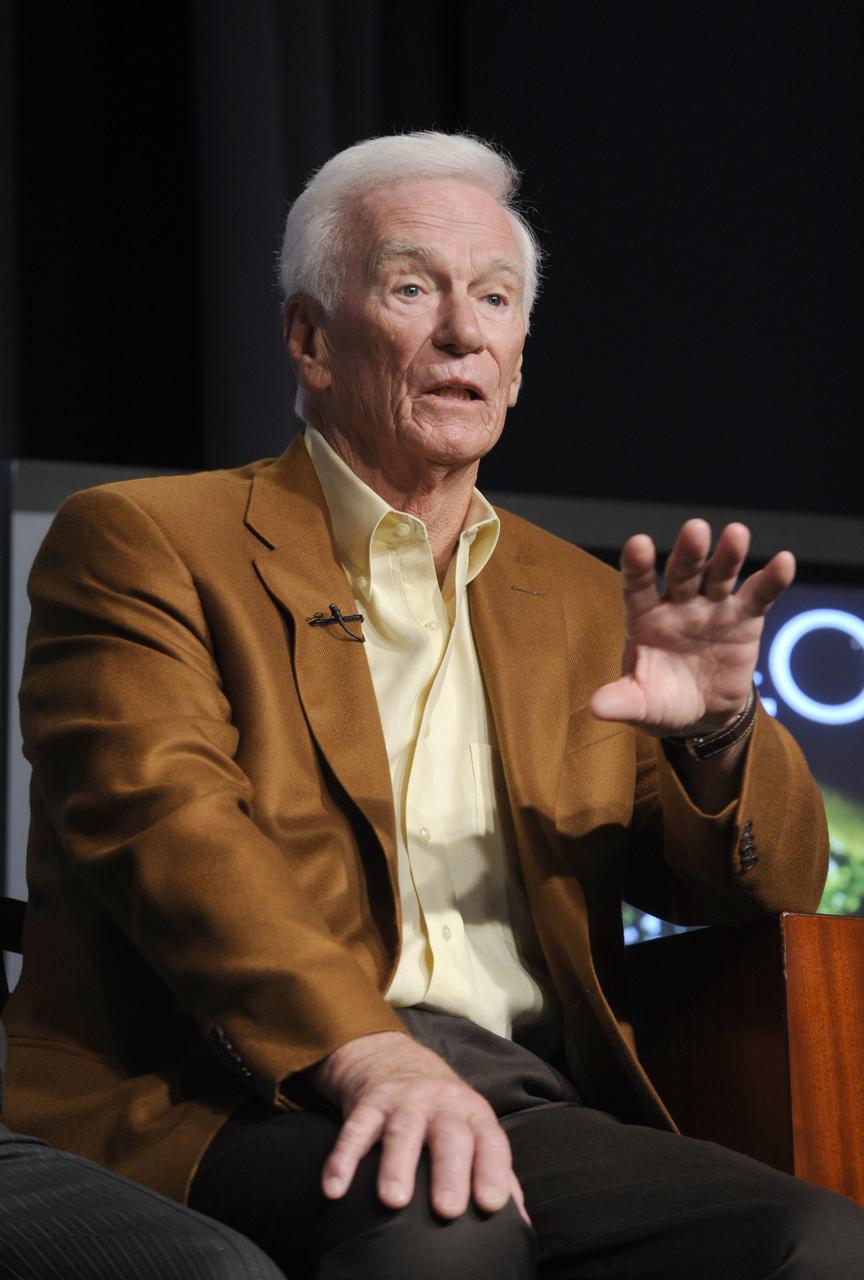
Eugene Cernan (Apollo 17) speaks during the 40th anniversary of the Apollo 11 mission and the walk on the moon press conference, Monday, July 20, 2009, at NASA Headquarters in Washington. Photo Credit: (NASA/Paul E. Alers)

A space shuttle main engine test April 21, 2006, at NASA Stennis Space Center marked the 40th anniversary of the first rocket engine test at the site. The firing also marked the 25th anniversary of NASA's STS-1, the first space shuttle mission. Then called the Mississippi Test Facility, the center conducted its first test on April 23, 1966. That historic test was on an S-II (second) stage, a cluster of five J-2 engines that powered the Saturn V rockets that took America's Apollo missions to the moon.
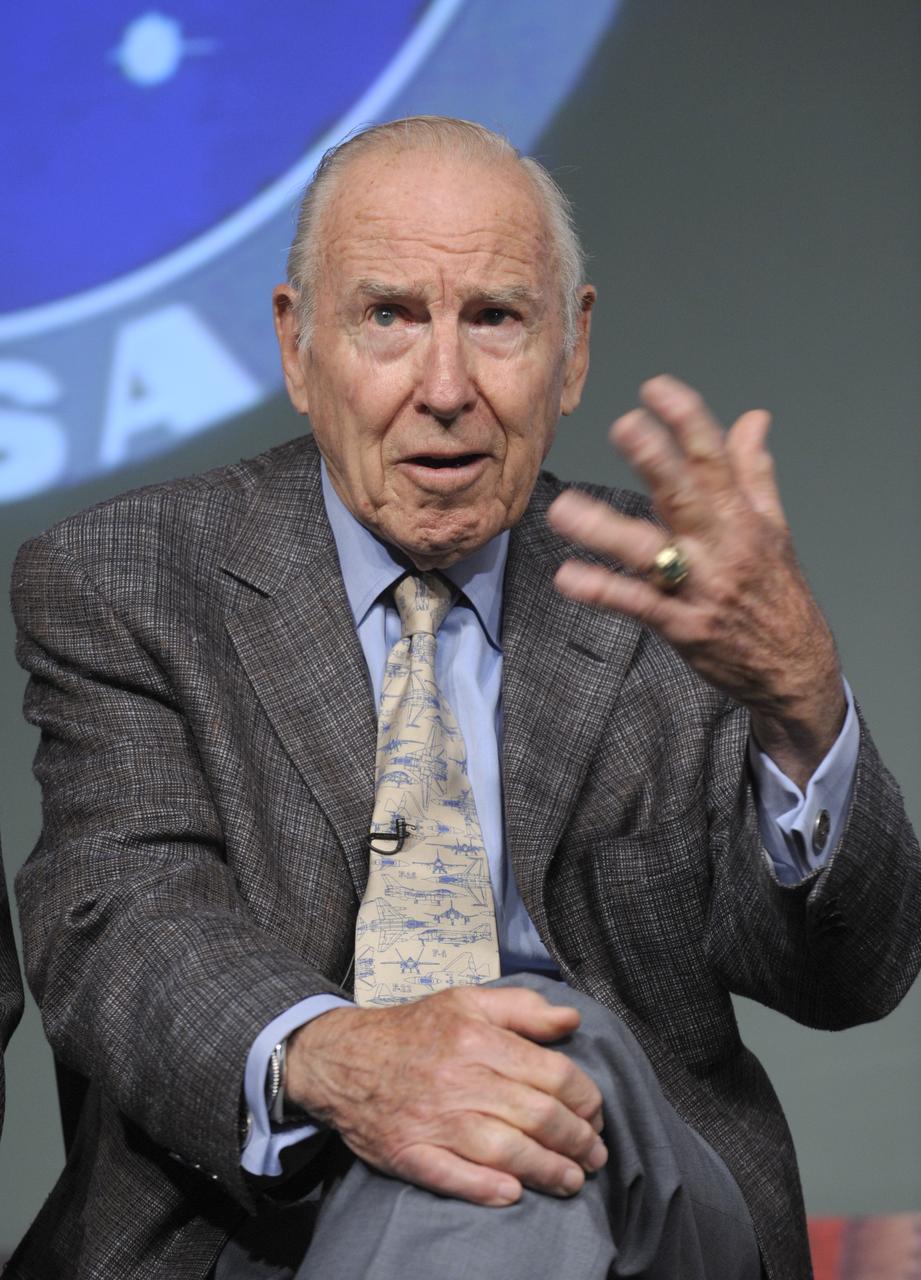
Astronaut James Lovell (Apollo 8 Apollo 13) gestures during the 40th anniversary of the Apollo 11 mission and the walk on the moon press conference, Monday, July 20, 2009, at NASA Headquarters in Washington. Photo Credit: (NASA/Paul E. Alers)
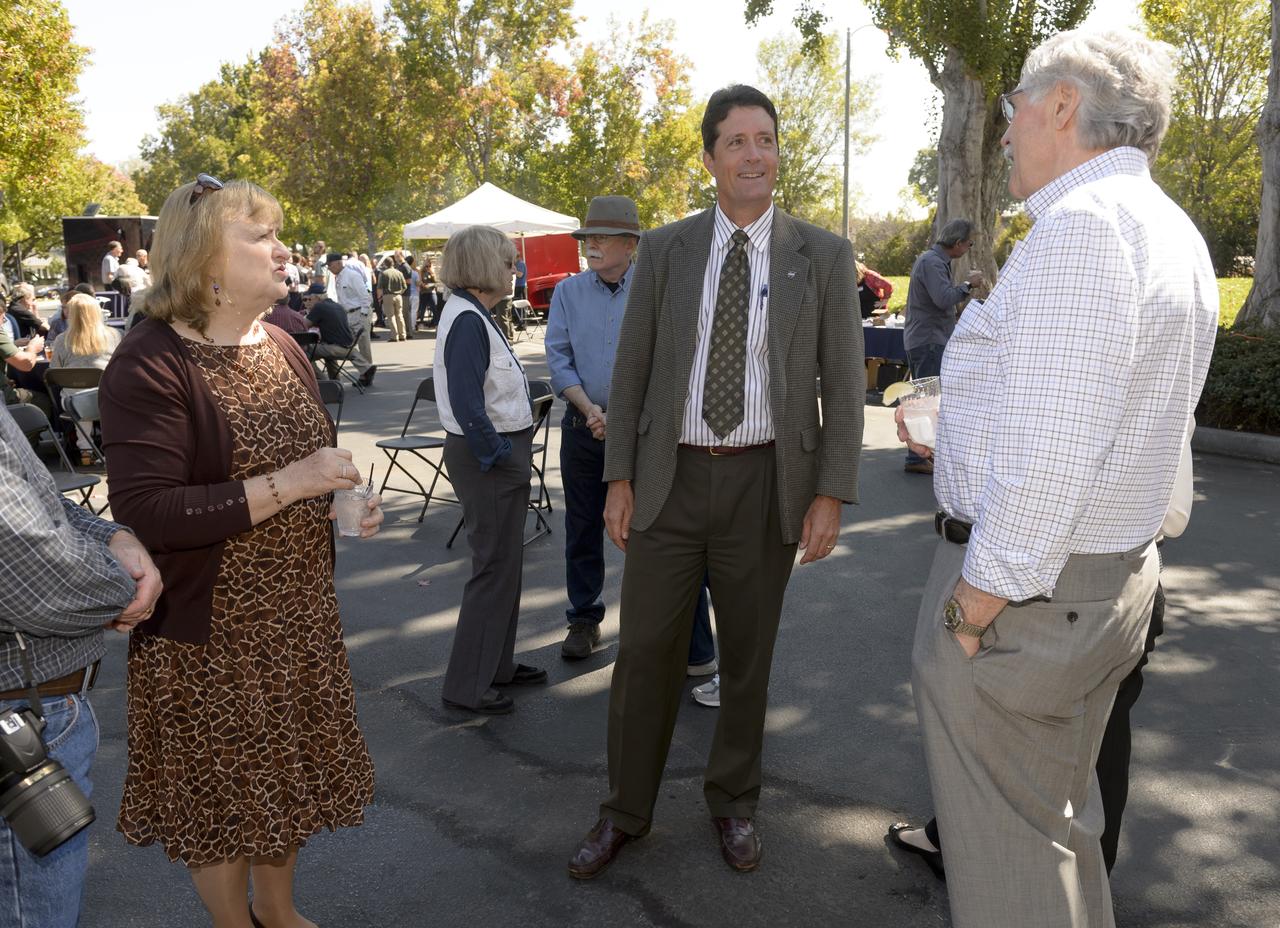
Avation Safety Reporting System (ASRS) 40th Anniversary lunch and open house at the Sunnyvale office. Linda J. Connell, ASRS Program Director (Left); Thomas A Edwards, Deputy Center Director NASA Ames; Dr. John Lauber, Resident Scientist and pioneer of the ASRS at Ames from 1972-1985 (Right).
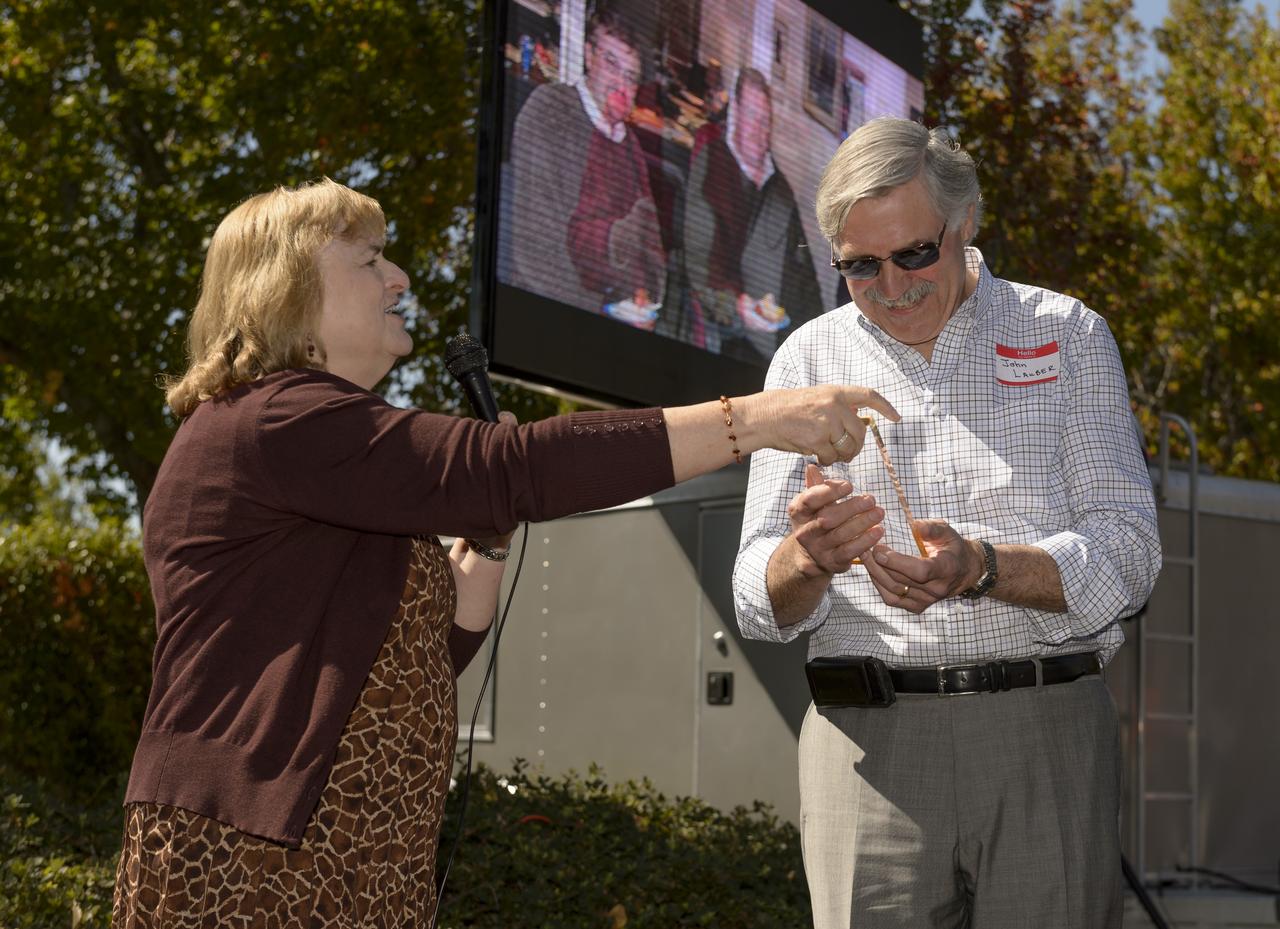
Avation Safety Reporting System (ASRS) 40th Anniversary lunch and open house at the Sunnyvale office. Linda J. Connell, ASRS Program Director (left); Dr. John Lauber, Resident Scientist and early pioneer of the ASRS at Ames, 1972-1985 (Right).
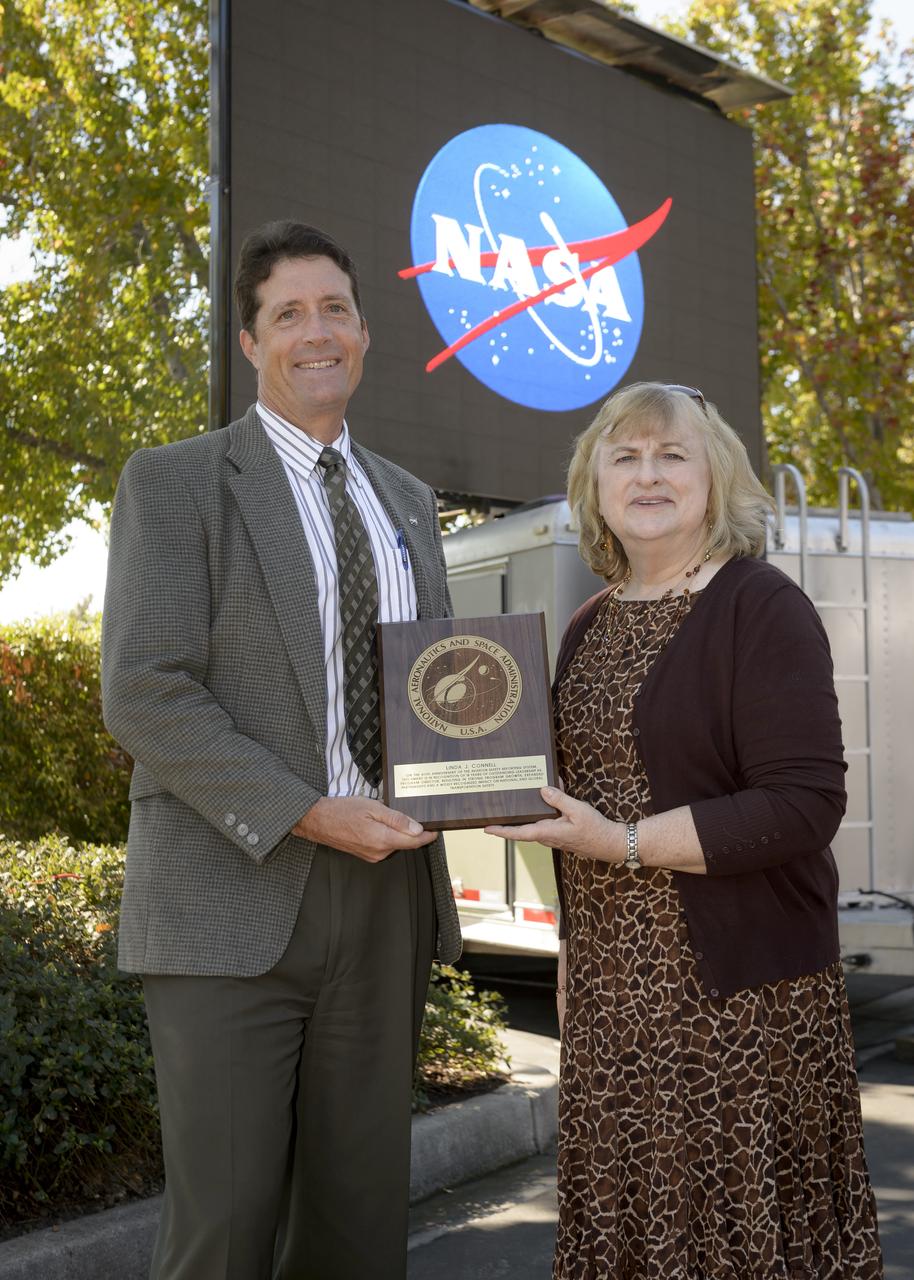
Avation Safety Reporting System (ASRS) 40th Anniversary lunch and open house at the Sunnyvale office. Thomas A Edwards, Deputy Center Director NASA Ames (Left), presents a plaque On the anniversary of the aviation safety reporting system, this award is in recognition of 18 years of outstanding leadership as Program Director, resulting in strong program growth, expanded partnership and a widely recognized impact on National and Global transportation safety. Presented to Linda J. Connell, ASRS Program Director (Right)
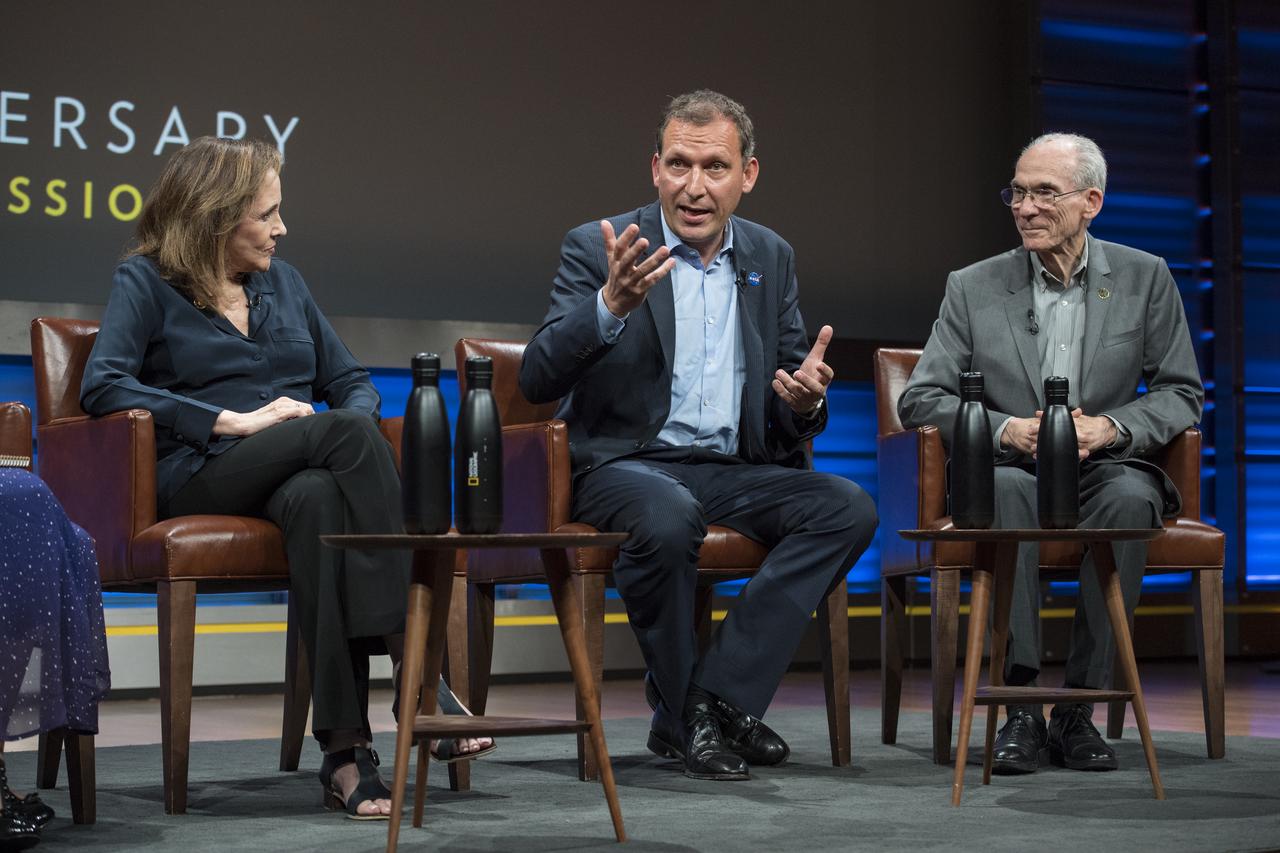
Thomas Zurbuchen, NASA associate administrator, Science Mission Directorate, speaks on a panel at an event to celebrate the 40th Anniversary of the launch of the Voyager 1 and 2 missions, Tuesday, September 5, 2017 at National Geographic Society Headquarters in Washington. Voyager 1 was launched September 5, 1977, with a mission to study Jupiter and Saturn, but now the twin Voyager spacecrafts are on a journey into interstellar space to search for the heliopause, a region never reached by any other spacecraft. Photo Credit: (NASA/Aubrey Gemignani)

Ann Druyan, writer/producer and golden record visionary, speaks on a panel at an event to celebrate the 40th Anniversary of the launch of the Voyager 1 and 2 missions, Tuesday, September 5, 2017 at National Geographic Society Headquarters in Washington. Voyager 1 was launched September 5, 1977, with a mission to study Jupiter and Saturn, but now the twin Voyager spacecrafts are on a journey into interstellar space to search for the heliopause, a region never reached by any other spacecraft. Photo Credit: (NASA/Aubrey Gemignani)

Gary Knell, President and CEO of National Geographic Society, gives opening remarks at an event to celebrate the 40th Anniversary of the launch of the Voyager 1 and 2 missions, Tuesday, September 5, 2017 at National Geographic Society Headquarters in Washington. Voyager 1 was launched September 5, 1977, with a mission to study Jupiter and Saturn, but now the twin Voyager spacecrafts are on a journey into interstellar space to search for the heliopause, a region never reached by any other spacecraft. Photo Credit: (NASA/Aubrey Gemignani)
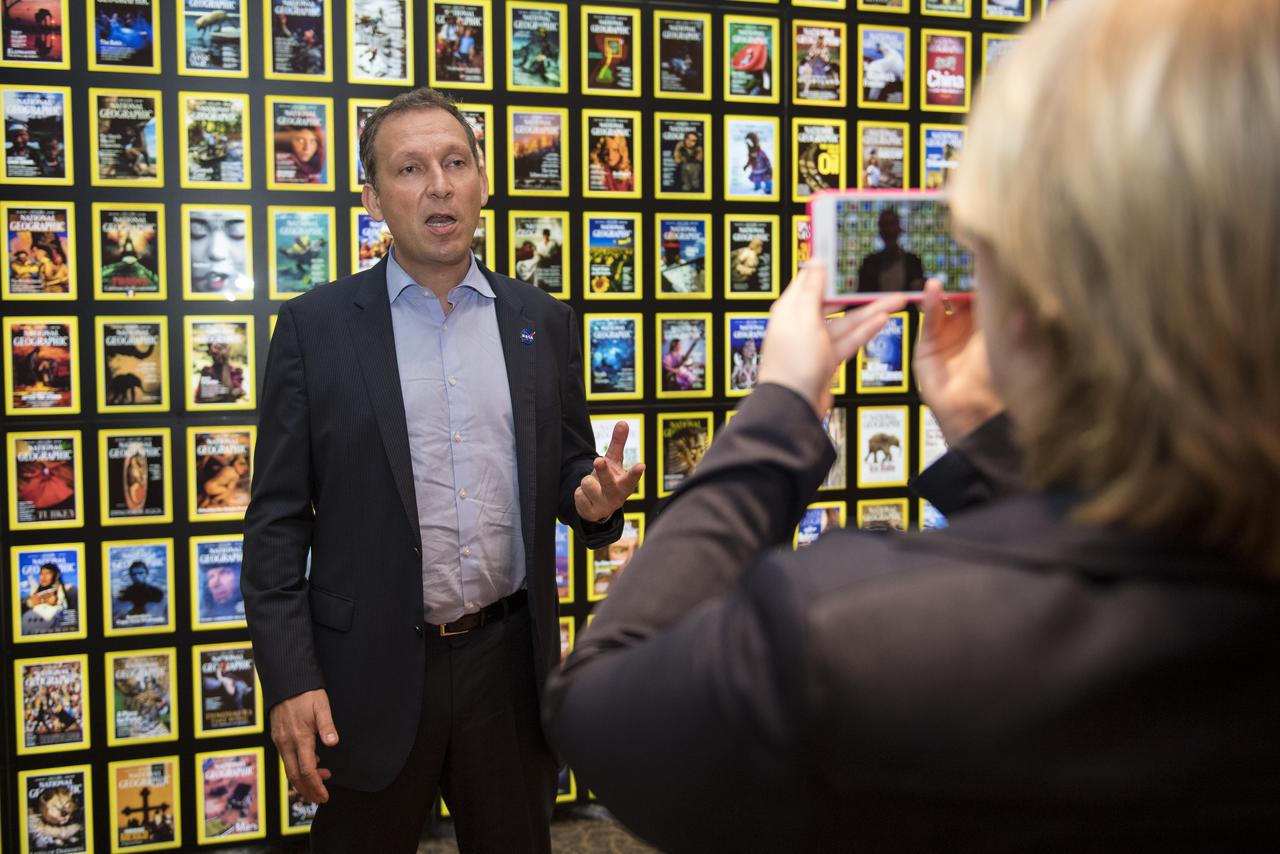
Thomas Zurbuchen, NASA associate administrator, Science Mission Directorate, is interviewed prior to serving on a panel at an event to celebrate the 40th Anniversary of the launch of the Voyager 1 and 2 missions, Tuesday, September 5, 2017 at National Geographic Society Headquarters in Washington. Voyager 1 was launched September 5, 1977, with a mission to study Jupiter and Saturn, but now the twin Voyager spacecrafts are on a journey into interstellar space to search for the heliopause, a region never reached by any other spacecraft. Photo Credit: (NASA/Aubrey Gemignani)
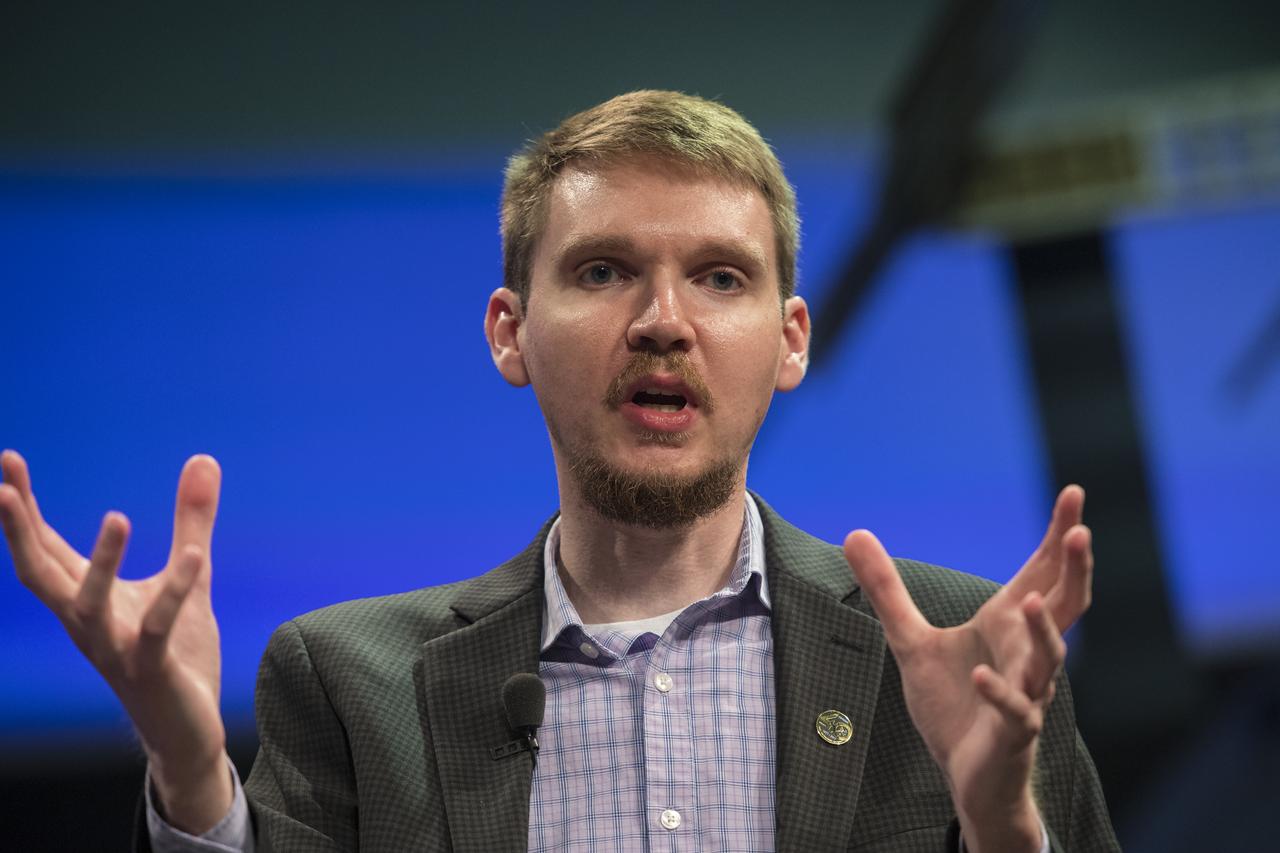
Eric Zirnstein, researcher, Princeton University, speaks at an event to celebrate the 40th Anniversary of the launch of the Voyager 1 and 2 missions, Tuesday, September 5, 2017 at Smithsonian's National Air and Space Museum in Washington. Voyager 1 was launched September 5, 1977, with a mission to study Jupiter and Saturn, but now the twin Voyager spacecrafts are on a journey into interstellar space to search for the heliopause, a region never reached by any other spacecraft. Photo Credit: (NASA/Aubrey
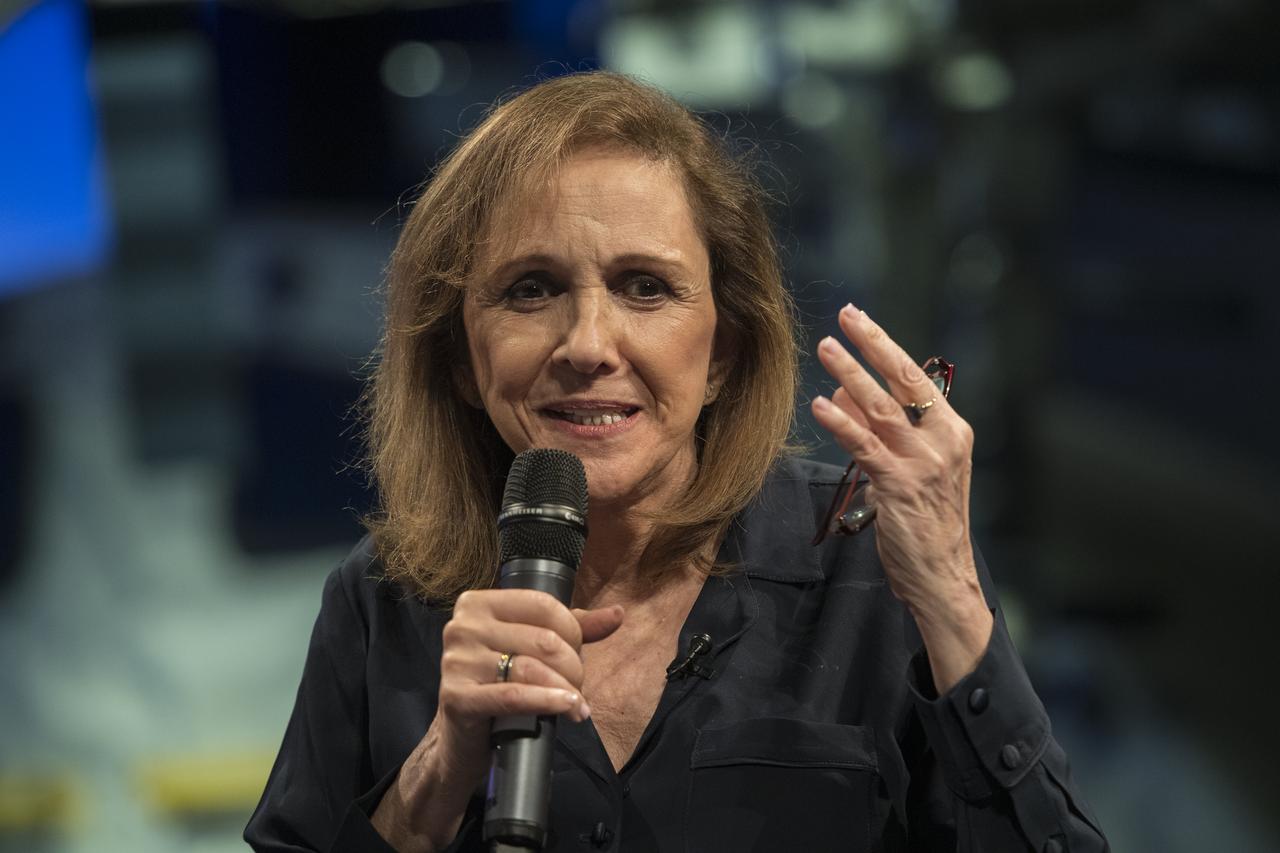
Ann Druyan, writer/producer and golden record visionary, speaks at an event to celebrate the 40th Anniversary of the launch of the Voyager 1 and 2 missions, Tuesday, September 5, 2017 at Smithsonian's National Air and Space Museum in Washington. Voyager 1 was launched September 5, 1977, with a mission to study Jupiter and Saturn, but now the twin Voyager spacecrafts are on a journey into interstellar space to search for the heliopause, a region never reached by any other spacecraft. Photo Credit: (NASA/Aubrey
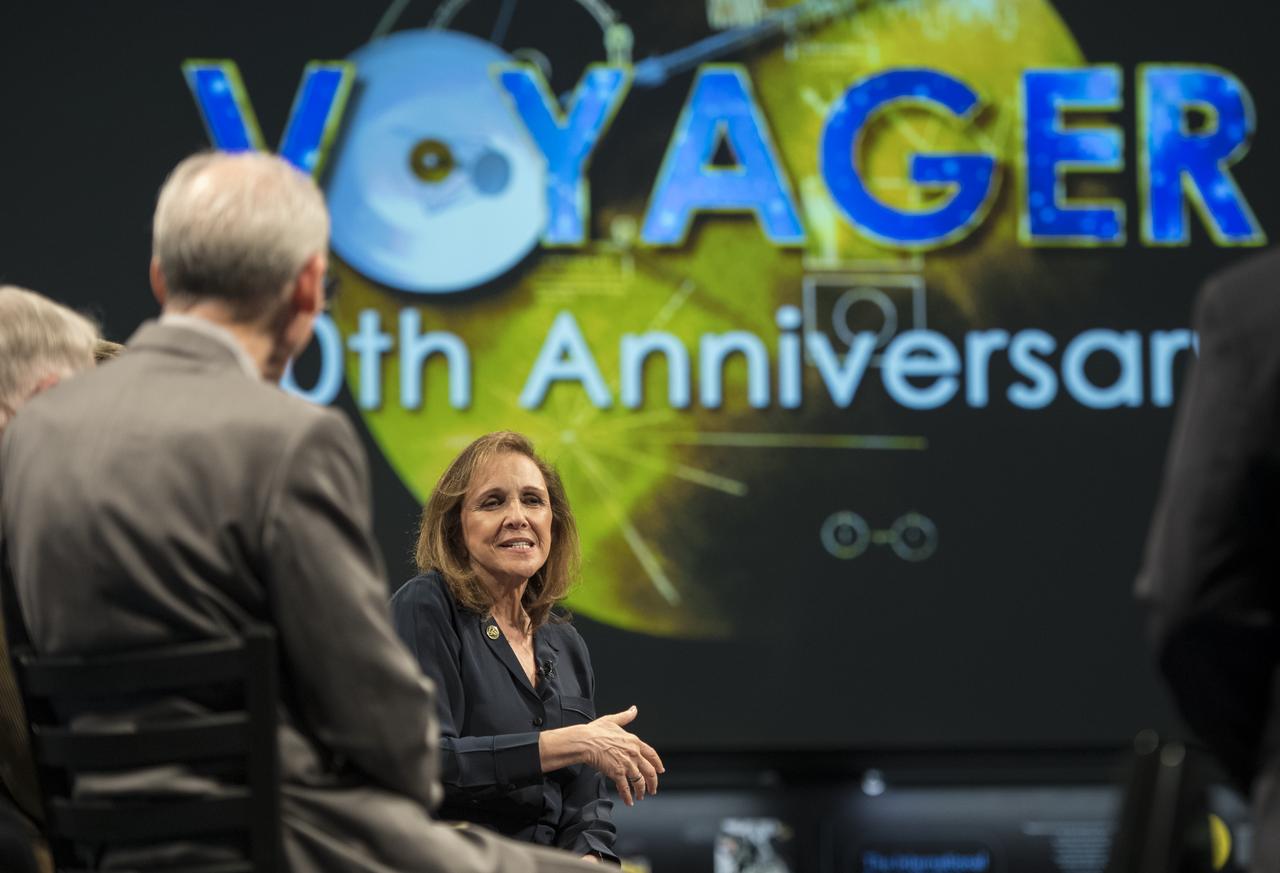
Ann Druyan, writer/producer and golden record visionary, speaks at an event to celebrate the 40th Anniversary of the launch of the Voyager 1 and 2 missions, Tuesday, September 5, 2017 at Smithsonian's National Air and Space Museum in Washington. Voyager 1 was launched September 5, 1977, with a mission to study Jupiter and Saturn, but now the twin Voyager spacecrafts are on a journey into interstellar space to search for the heliopause, a region never reached by any other spacecraft. Photo Credit: (NASA/Aubrey
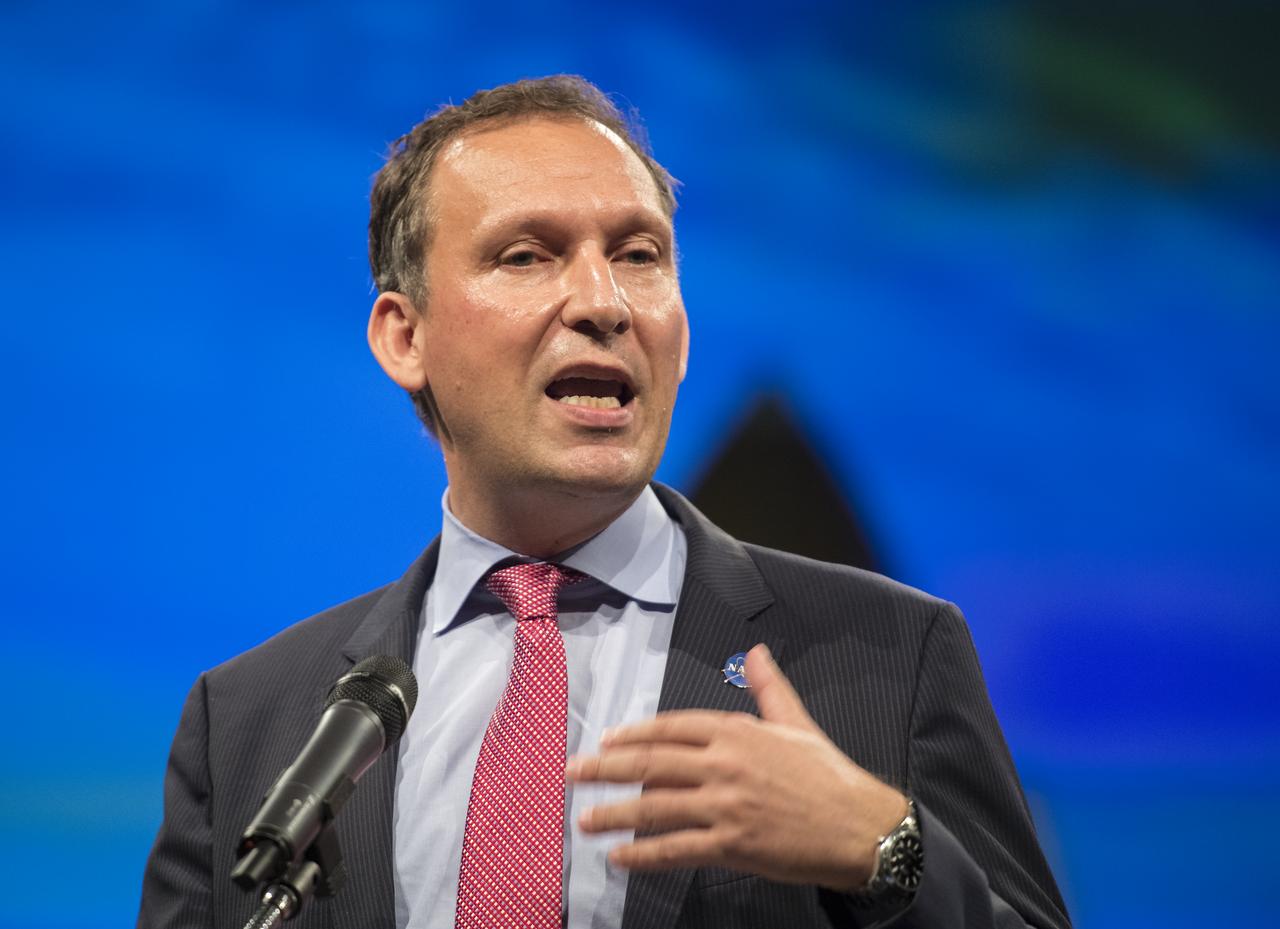
Thomas Zurbuchen, NASA associate administrator, Science Mission Directorate, gives opening remarks at an event to celebrate the 40th Anniversary of the launch of the Voyager 1 and 2 missions, Tuesday, September 5, 2017 at Smithsonian's National Air and Space Museum in Washington. Voyager 1 was launched September 5, 1977, with a mission to study Jupiter and Saturn, but now the twin Voyager spacecrafts are on a journey into interstellar space to search for the heliopause, a region never reached by any other spacecraft. Photo Credit: (NASA/Aubrey Gemignani)
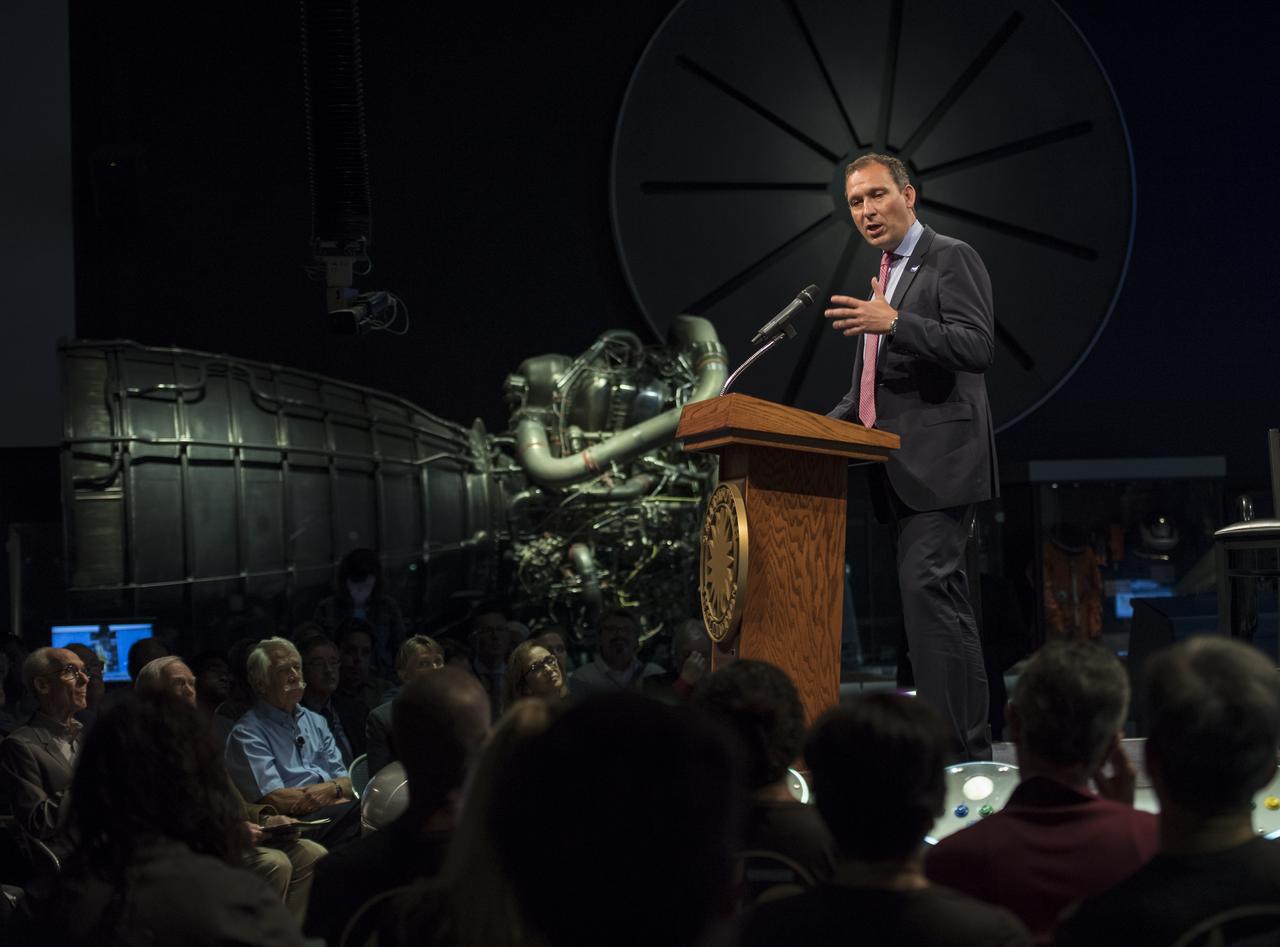
Thomas Zurbuchen, NASA associate administrator, Science Mission Directorate, gives opening remarks at an event to celebrate the 40th Anniversary of the launch of the Voyager 1 and 2 missions, Tuesday, September 5, 2017 at Smithsonian's National Air and Space Museum in Washington. Voyager 1 was launched September 5, 1977, with a mission to study Jupiter and Saturn, but now the twin Voyager spacecrafts are on a journey into interstellar space to search for the heliopause, a region never reached by any other spacecraft. Photo Credit: (NASA/Aubrey Gemignani)
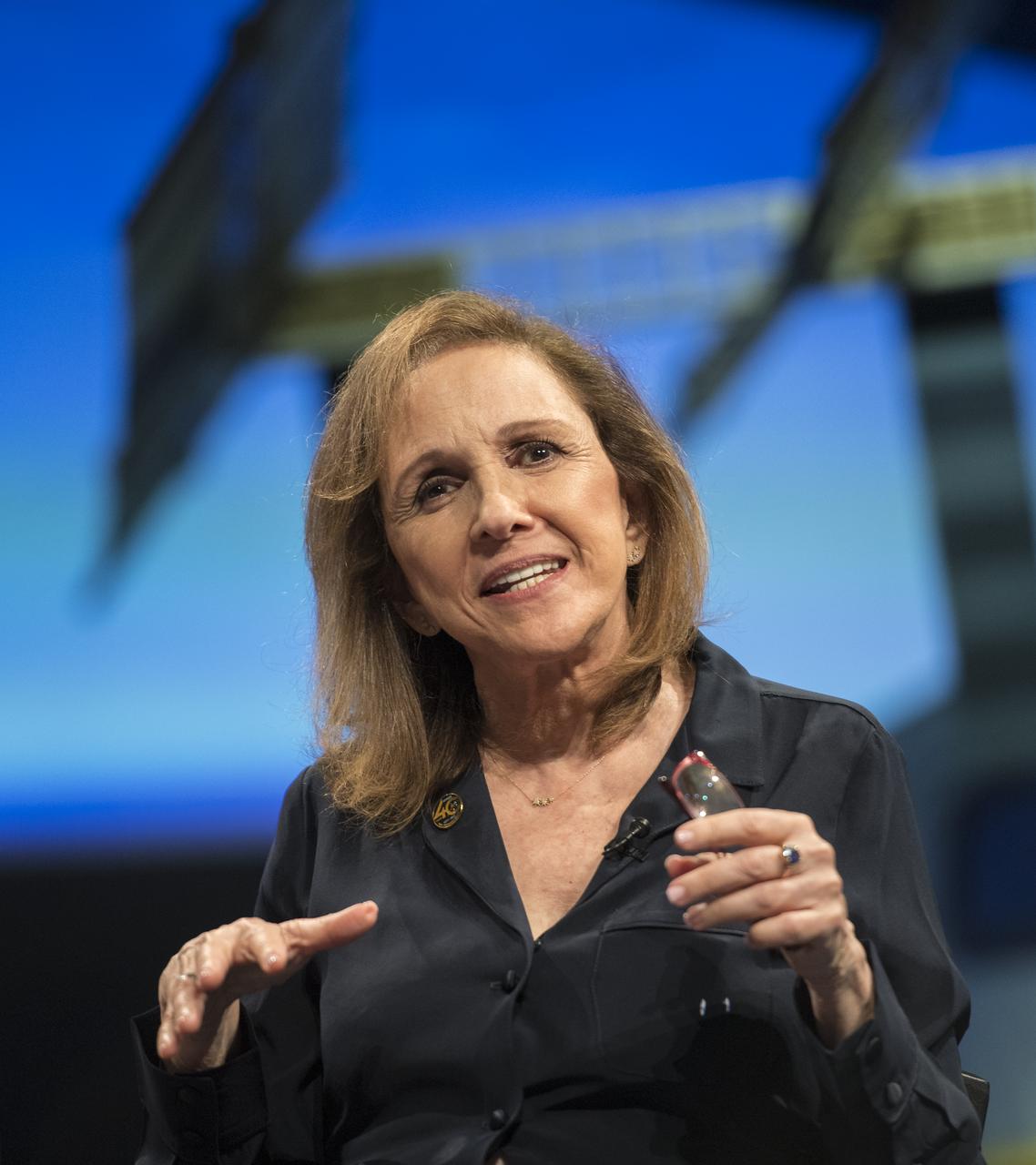
Ann Druyan, writer/producer and golden record visionary, speaks at an event to celebrate the 40th Anniversary of the launch of the Voyager 1 and 2 missions, Tuesday, September 5, 2017 at Smithsonian's National Air and Space Museum in Washington. Voyager 1 was launched September 5, 1977, with a mission to study Jupiter and Saturn, but now the twin Voyager spacecrafts are on a journey into interstellar space to search for the heliopause, a region never reached by any other spacecraft. Photo Credit: (NASA/Aubrey
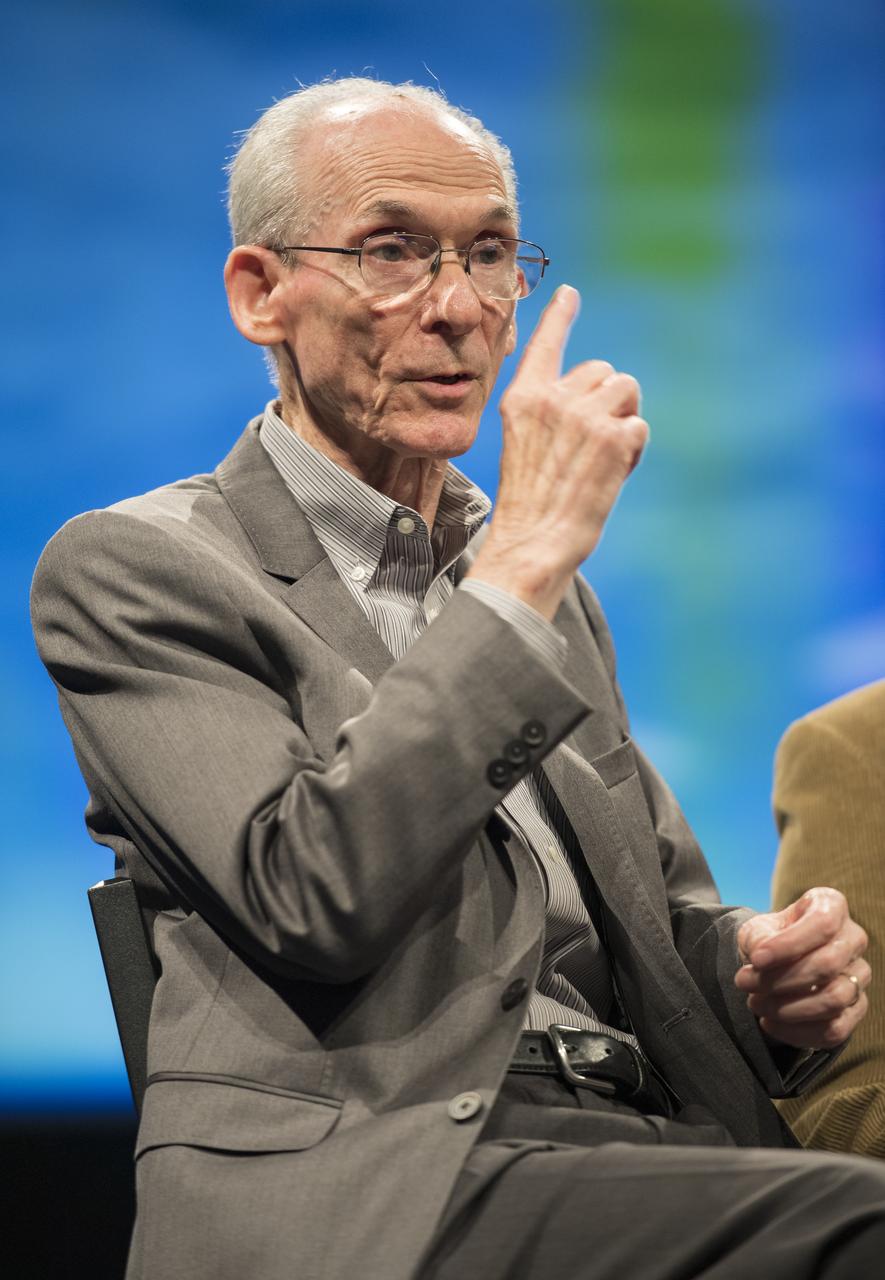
Ed Stone, Voyager project scientist, speaks at an event to celebrate the 40th Anniversary of the launch of the Voyager 1 and 2 missions, Tuesday, September 5, 2017 at Smithsonian's National Air and Space Museum in Washington. Voyager 1 was launched September 5, 1977, with a mission to study Jupiter and Saturn, but now the twin Voyager spacecrafts are on a journey into interstellar space to search for the heliopause, a region never reached by any other spacecraft. Photo Credit: (NASA/Aubrey Gemignani)
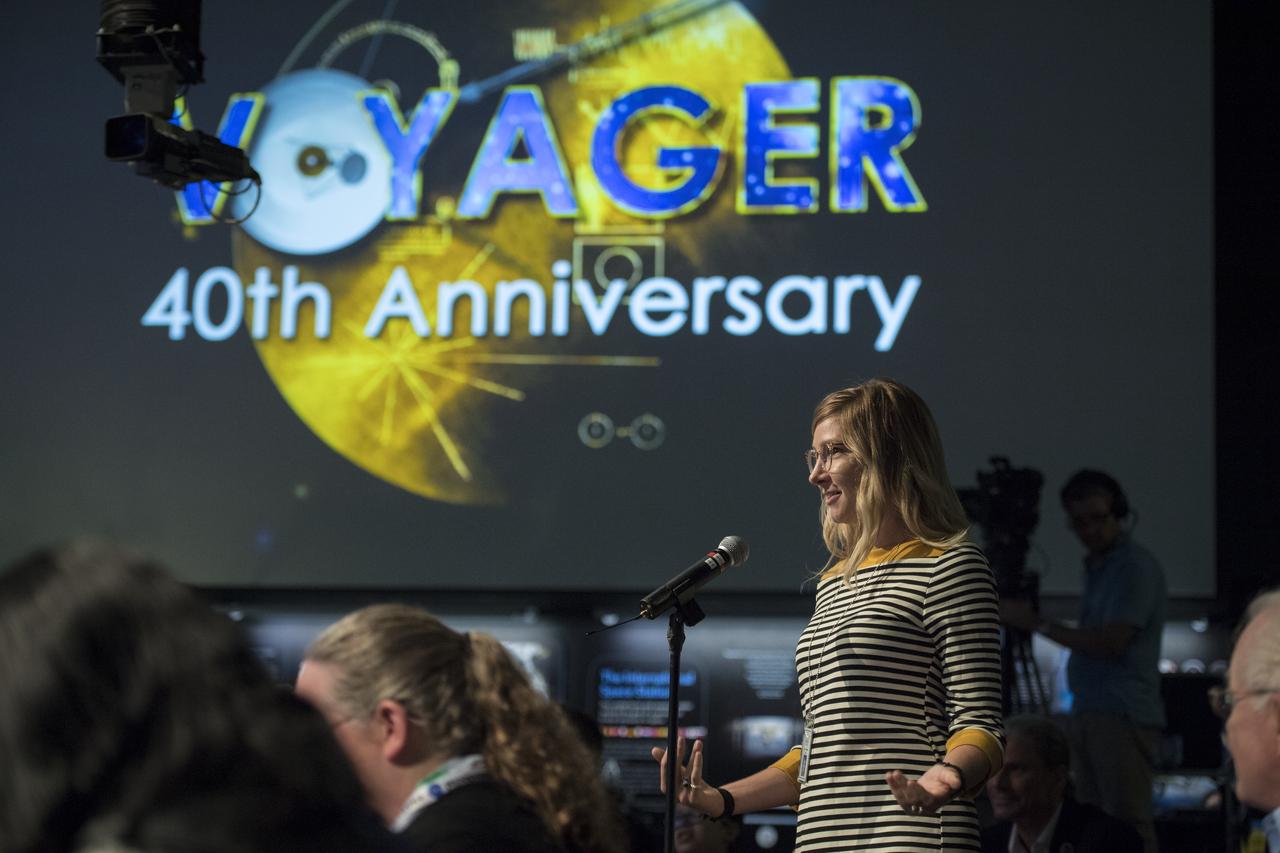
An audience member asks a question at an event to celebrate the 40th Anniversary of the launch of the Voyager 1 and 2 missions, Tuesday, September 5, 2017 at Smithsonian's National Air and Space Museum in Washington. Voyager 1 was launched September 5, 1977, with a mission to study Jupiter and Saturn, but now the twin Voyager spacecrafts are on a journey into interstellar space to search for the heliopause, a region never reached by any other spacecraft. Photo Credit: (NASA/Aubrey
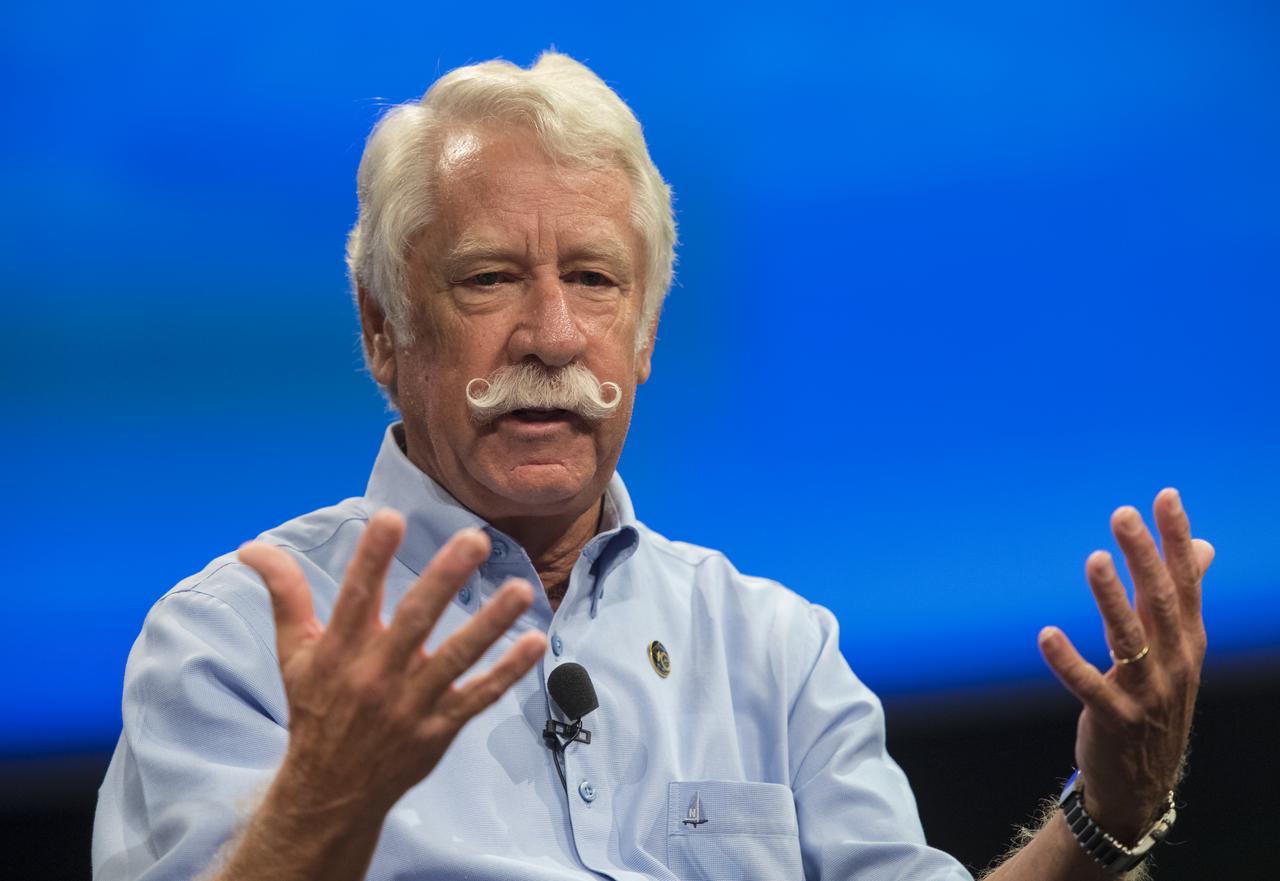
Alan Cummings, Voyager researcher, Caltech, speaks at an event to celebrate the 40th Anniversary of the launch of the Voyager 1 and 2 missions, Tuesday, September 5, 2017 at Smithsonian's National Air and Space Museum in Washington. Voyager 1 was launched September 5, 1977, with a mission to study Jupiter and Saturn, but now the twin Voyager spacecrafts are on a journey into interstellar space to search for the heliopause, a region never reached by any other spacecraft. Photo Credit: (NASA/Aubrey Gemignani)
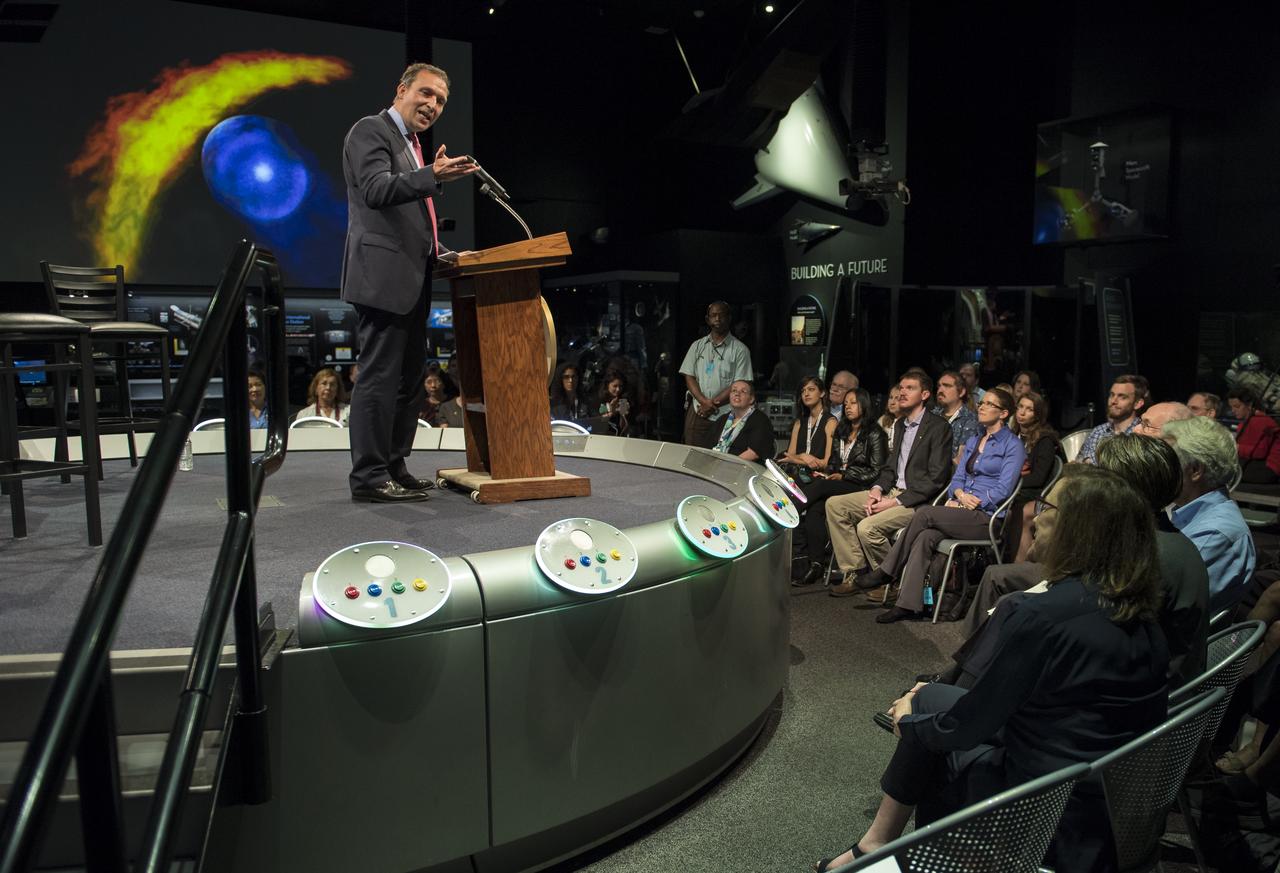
Thomas Zurbuchen, NASA associate administrator, Science Mission Directorate, gives opening remarks at an event to celebrate the 40th Anniversary of the launch of the Voyager 1 and 2 missions, Tuesday, September 5, 2017 at Smithsonian's National Air and Space Museum in Washington. Voyager 1 was launched September 5, 1977, with a mission to study Jupiter and Saturn, but now the twin Voyager spacecrafts are on a journey into interstellar space to search for the heliopause, a region never reached by any other spacecraft. Photo Credit: (NASA/Aubrey Gemignani)
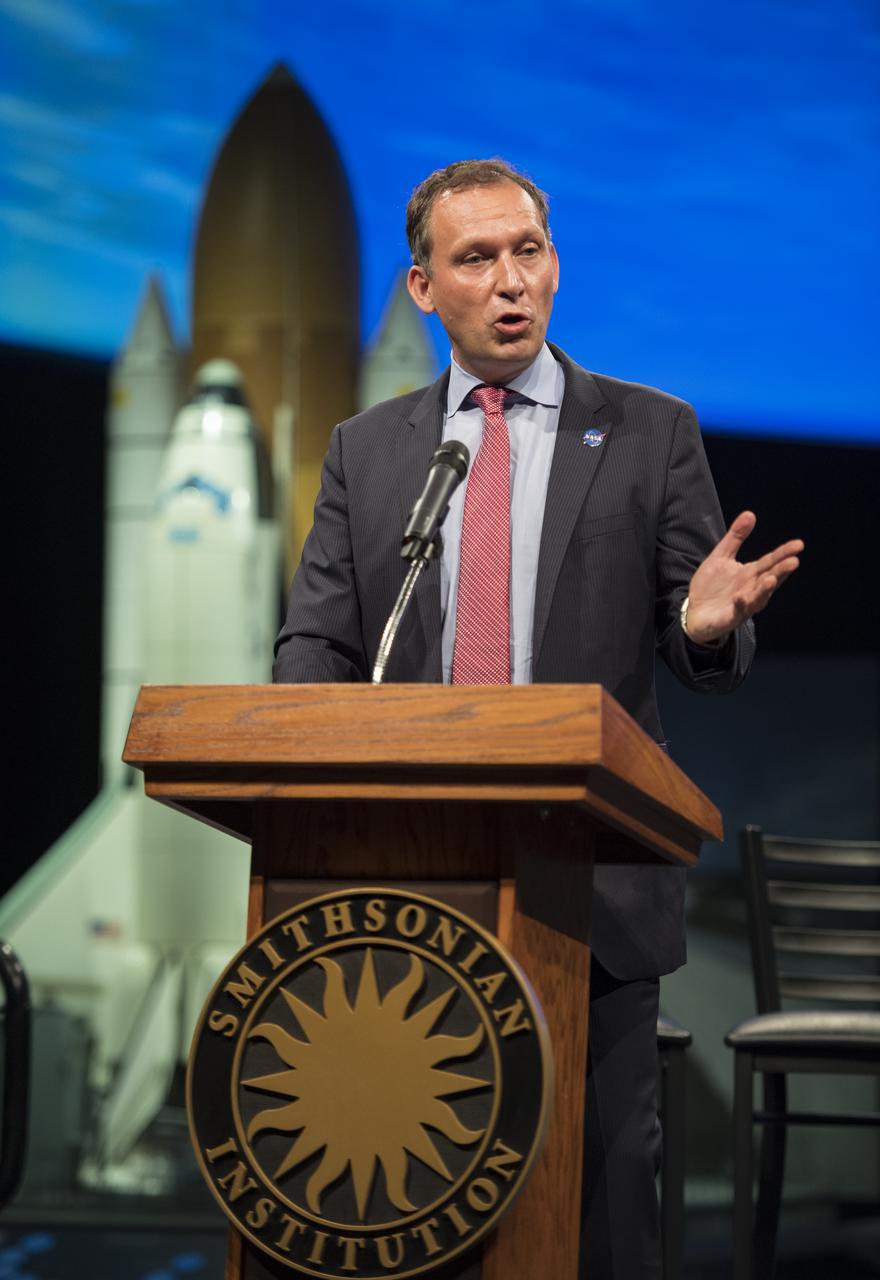
Thomas Zurbuchen, NASA associate administrator, Science Mission Directorate, gives opening remarks at an event to celebrate the 40th Anniversary of the launch of the Voyager 1 and 2 missions, Tuesday, September 5, 2017 at Smithsonian's National Air and Space Museum in Washington. Voyager 1 was launched September 5, 1977, with a mission to study Jupiter and Saturn, but now the twin Voyager spacecrafts are on a journey into interstellar space to search for the heliopause, a region never reached by any other spacecraft. Photo Credit: (NASA/Aubrey Gemignani)
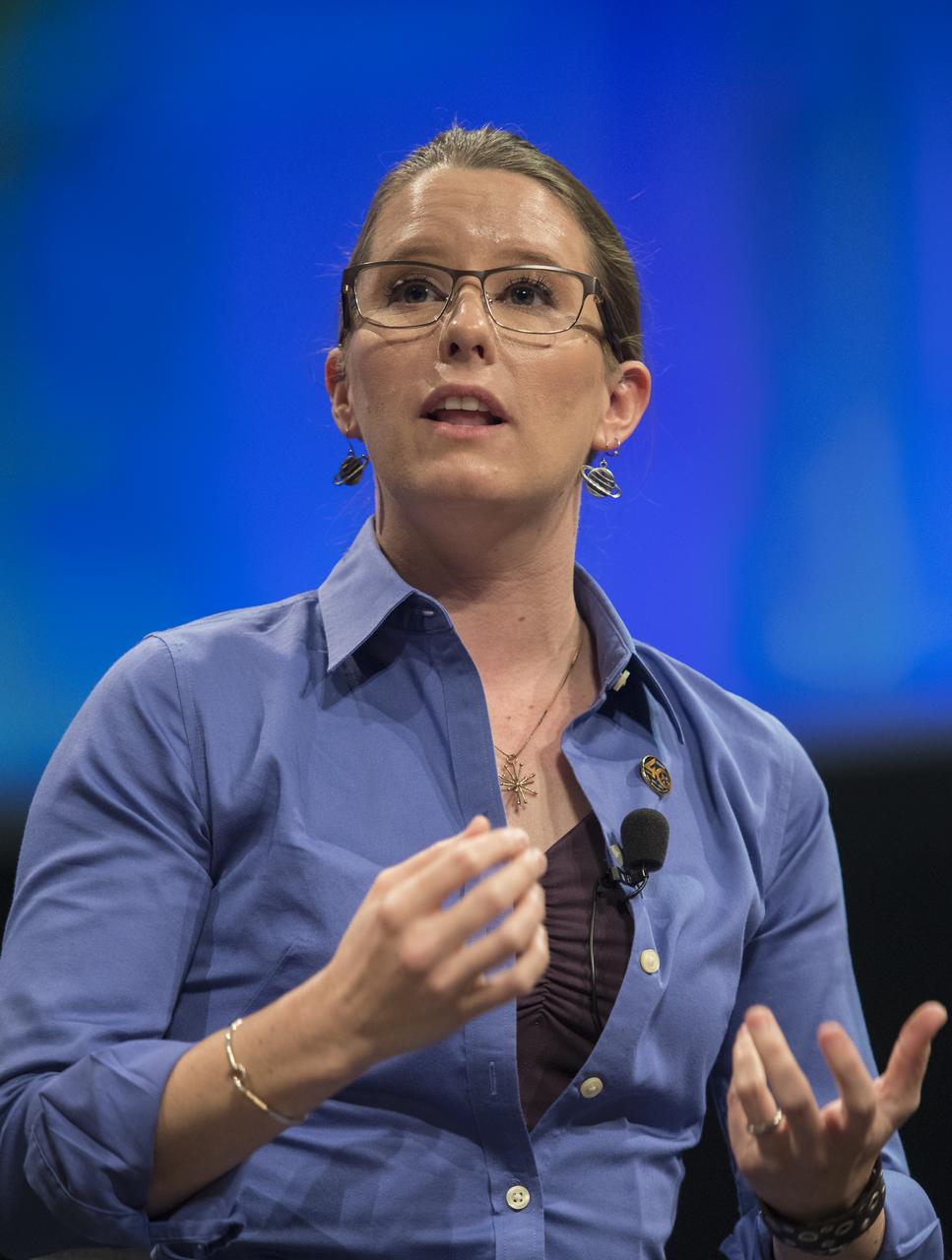
Morgan Cable, researcher, NASA's Jet Propulsion Laboratory, speaks at an event to celebrate the 40th Anniversary of the launch of the Voyager 1 and 2 missions, Tuesday, September 5, 2017 at Smithsonian's National Air and Space Museum in Washington. Voyager 1 was launched September 5, 1977, with a mission to study Jupiter and Saturn, but now the twin Voyager spacecrafts are on a journey into interstellar space to search for the heliopause, a region never reached by any other spacecraft. Photo Credit: (NASA/Aubrey
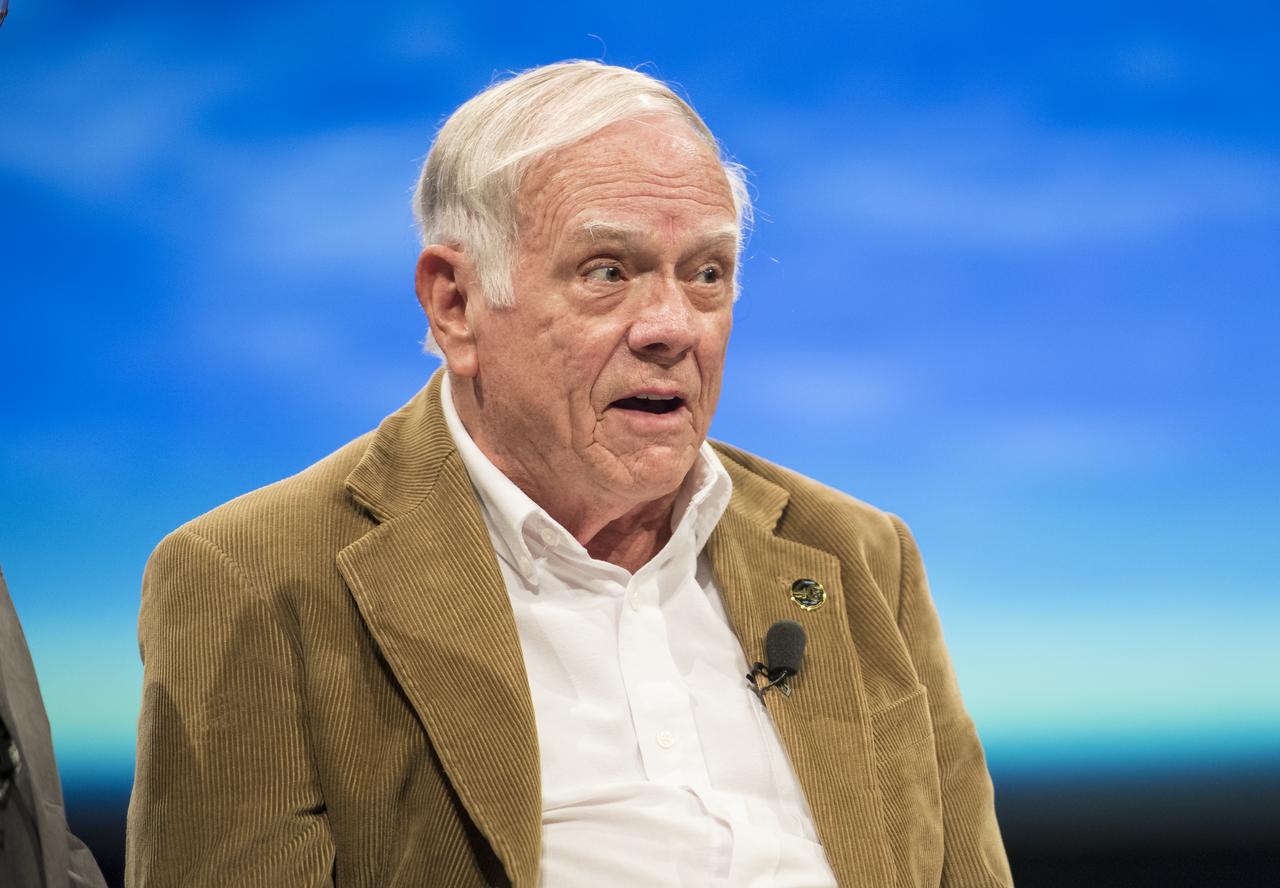
Gary Flandro, Voyager mission grand tour creator, speaks at an event to celebrate the 40th Anniversary of the launch of the Voyager 1 and 2 missions, Tuesday, September 5, 2017 at Smithsonian's National Air and Space Museum in Washington. Voyager 1 was launched September 5, 1977, with a mission to study Jupiter and Saturn, but now the twin Voyager spacecrafts are on a journey into interstellar space to search for the heliopause, a region never reached by any other spacecraft. Photo Credit: (NASA/Aubrey
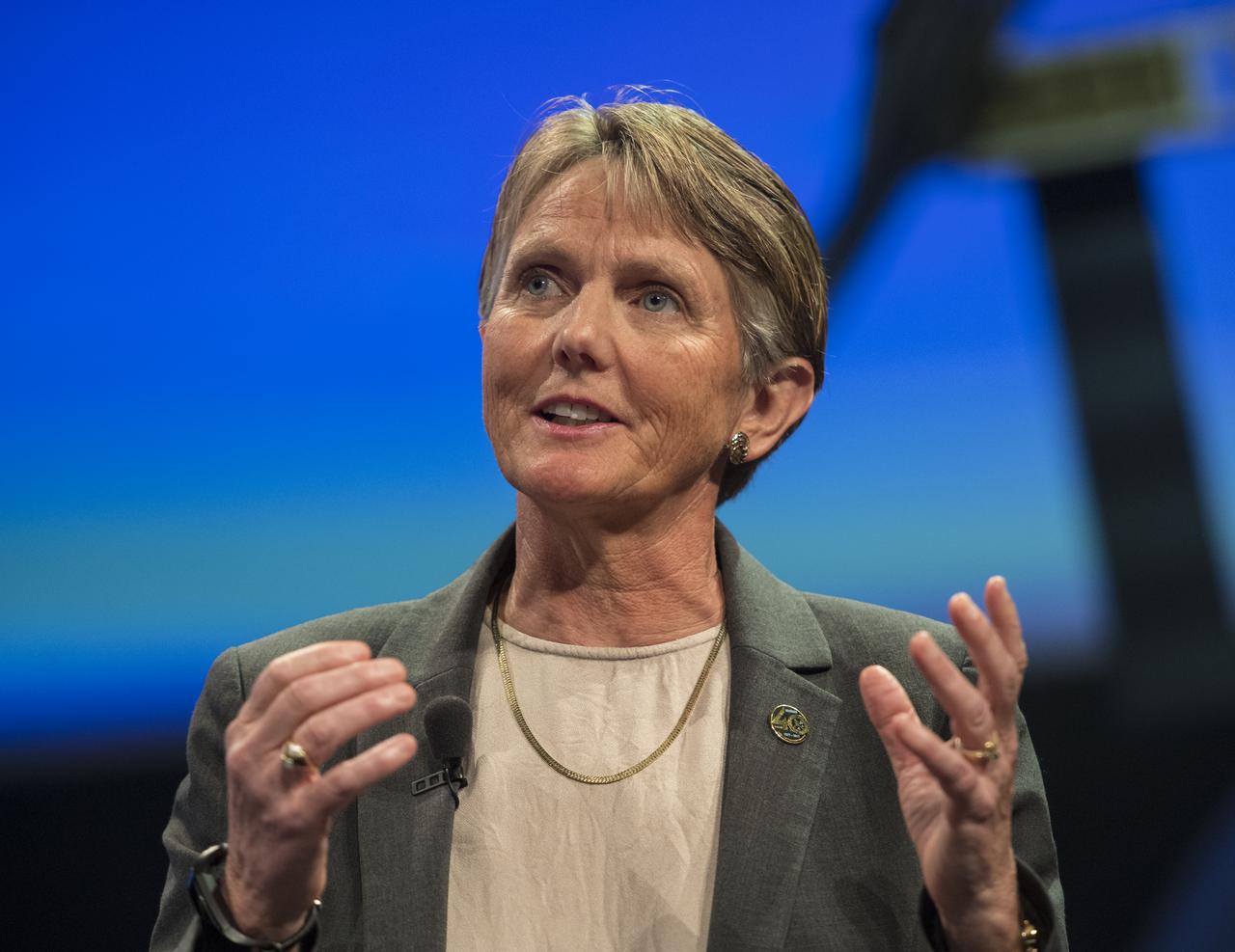
Suzy Dodd, Voyager project manager, NASA's Jet Propulsion Laboratory, speaks at an event to celebrate the 40th Anniversary of the launch of the Voyager 1 and 2 missions, Tuesday, September 5, 2017 at Smithsonian's National Air and Space Museum in Washington. Voyager 1 was launched September 5, 1977, with a mission to study Jupiter and Saturn, but now the twin Voyager spacecrafts are on a journey into interstellar space to search for the heliopause, a region never reached by any other spacecraft. Photo Credit: (NASA/Aubrey Gemignani)
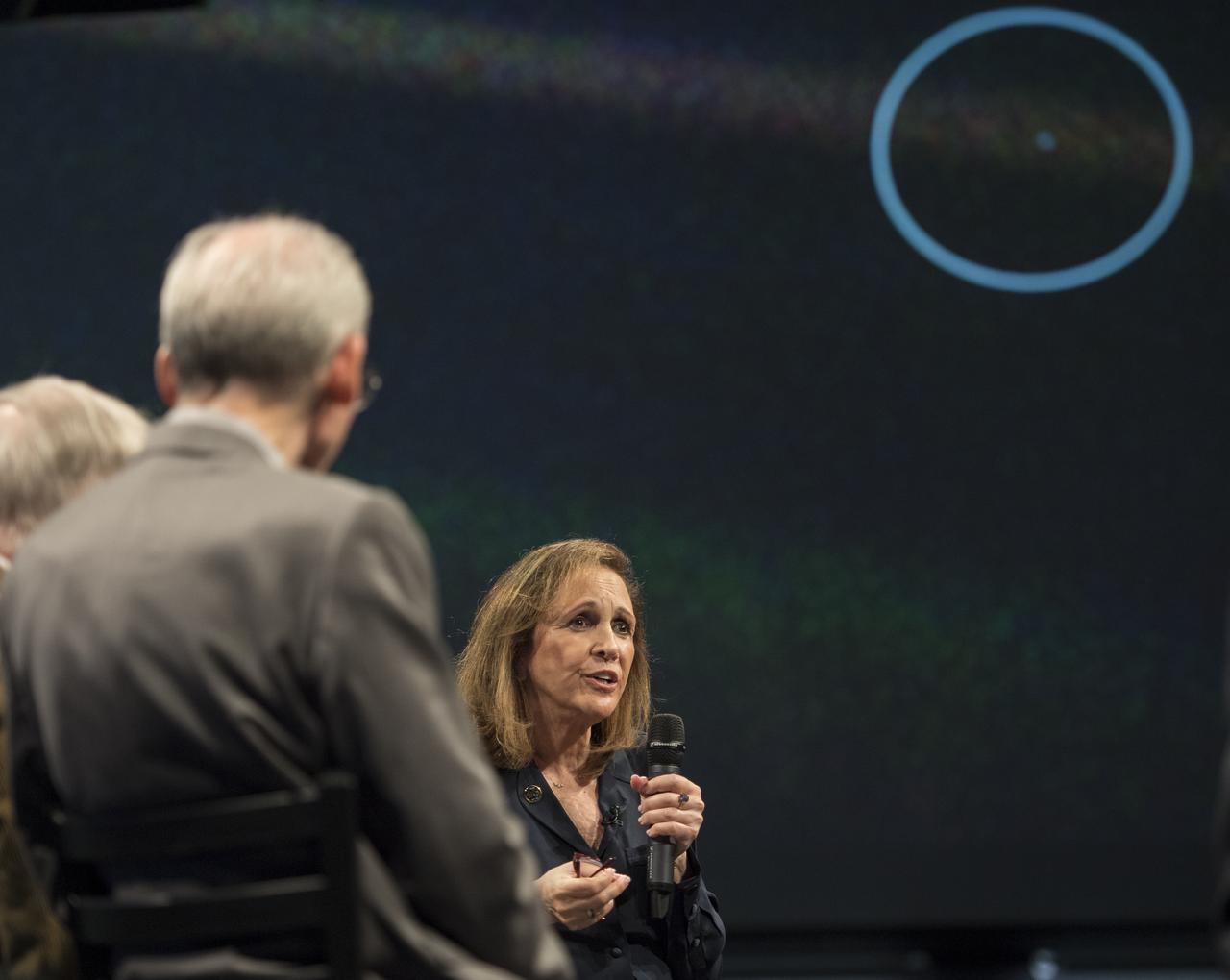
Ann Druyan, writer/producer and golden record visionary, speaks about the last image of Earth from the Voyager spacecraft, at an event to celebrate the 40th Anniversary of the launch of the Voyager 1 and 2 missions, Tuesday, September 5, 2017 at Smithsonian's National Air and Space Museum in Washington. Voyager 1 was launched September 5, 1977, with a mission to study Jupiter and Saturn, but now the twin Voyager spacecrafts are on a journey into interstellar space to search for the heliopause, a region never reached by any other spacecraft. Photo Credit: (NASA/Aubrey
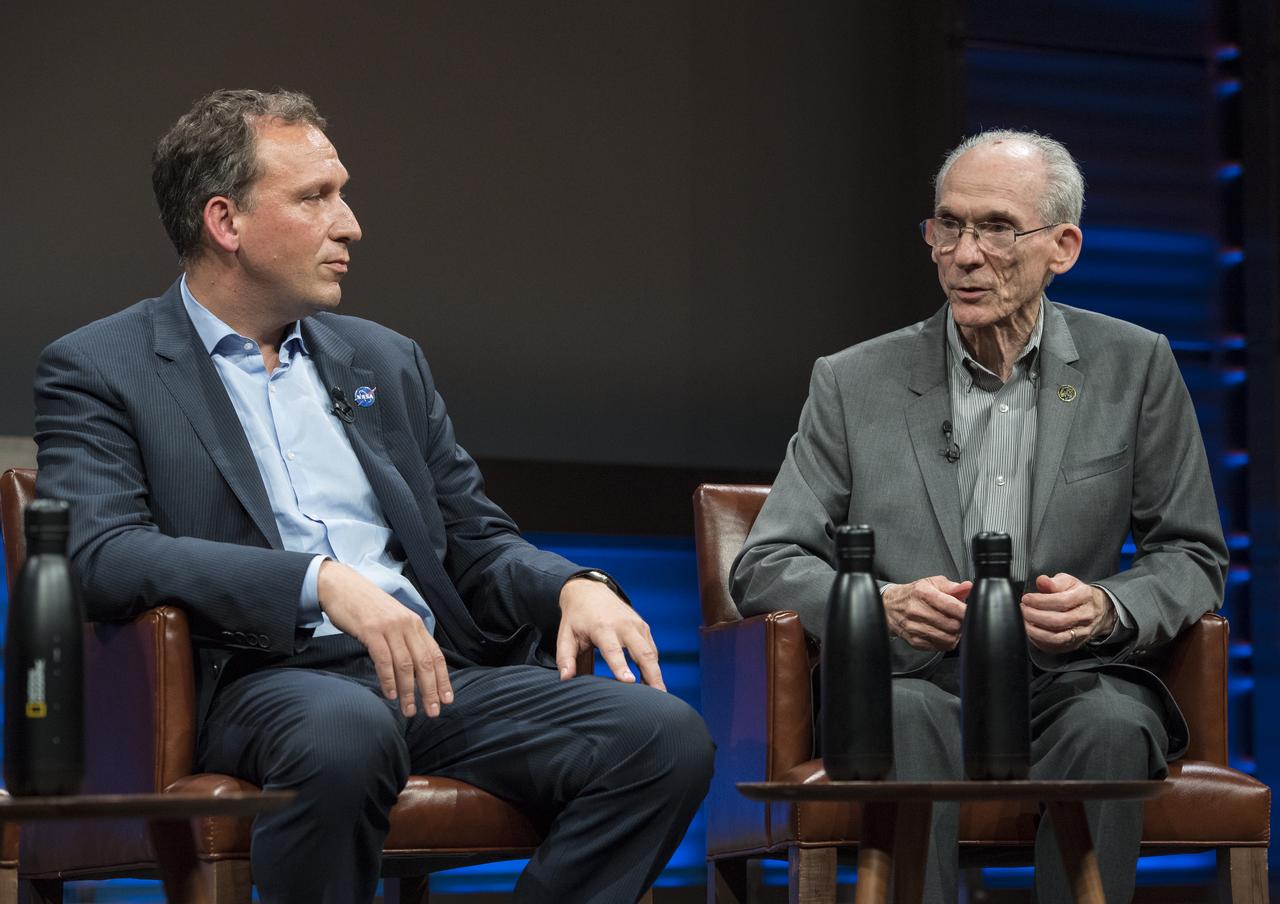
Ed Stone, Voyager project scientist, right, speaks on a panel with Thomas Zurbuchen, NASA associate administrator, Science Mission Directorate, left, at an event to celebrate the 40th Anniversary of the launch of the Voyager 1 and 2 missions, Tuesday, September 5, 2017 at National Geographic Society Headquarters in Washington. Voyager 1 was launched September 5, 1977, with a mission to study Jupiter and Saturn, but now the twin Voyager spacecrafts are on a journey into interstellar space to search for the heliopause, a region never reached by any other spacecraft. Photo Credit: (NASA/Aubrey Gemignani)
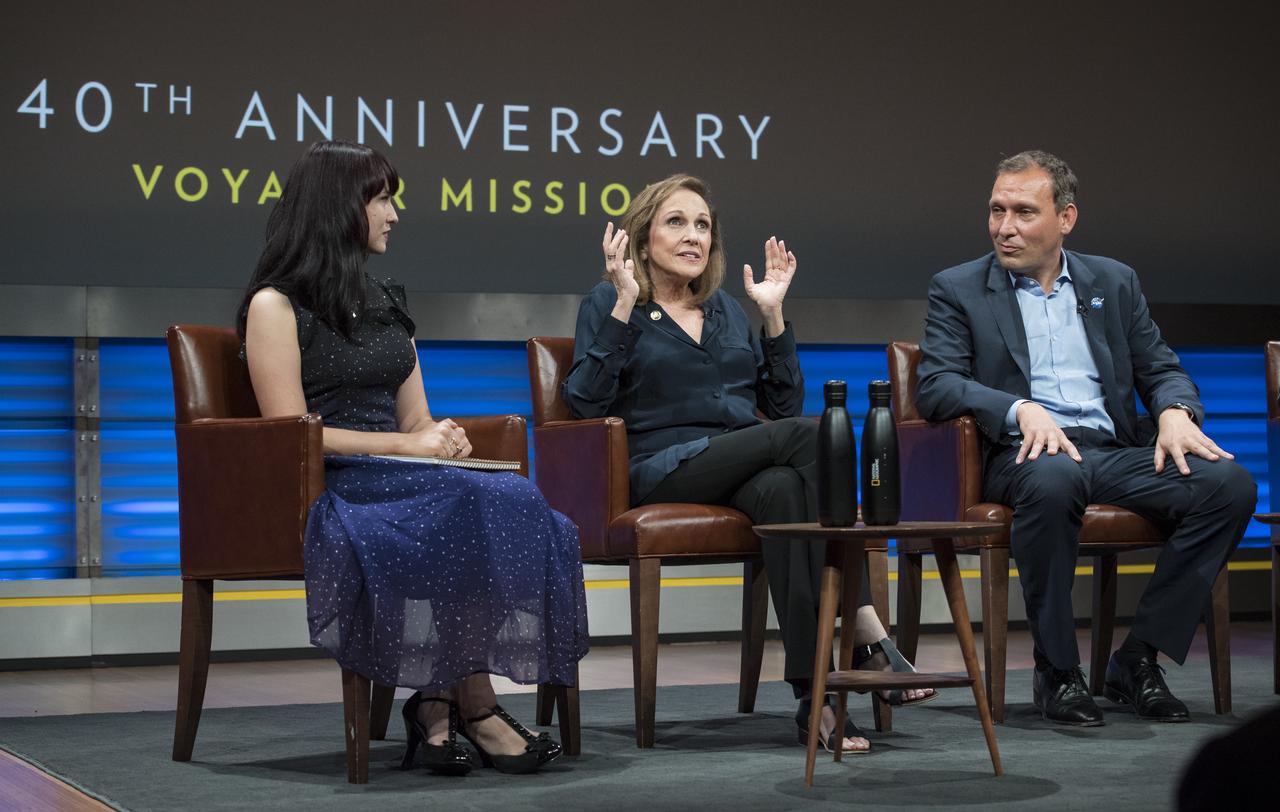
Ann Druyan, writer/producer and golden record visionary, speaks on a panel with moderator Victoria Jaggard, National Geographic Magazine science editor, left, Thomas Zurbuchen, associate administrator for NASA's Science Mission Directorate, right; and Ed Stone, Voyager project scientist, not pictured, at an event to celebrate the 40th Anniversary of the launch of the Voyager 1 and 2 missions, Tuesday, September 5, 2017 at National Geographic Society Headquarters in Washington. Voyager 1 was launched September 5, 1977, with a mission to study Jupiter and Saturn, but now the twin Voyager spacecrafts are on a journey into interstellar space to search for the heliopause, a region never reached by any other spacecraft. Photo Credit: (NASA/Aubrey Gemignani)
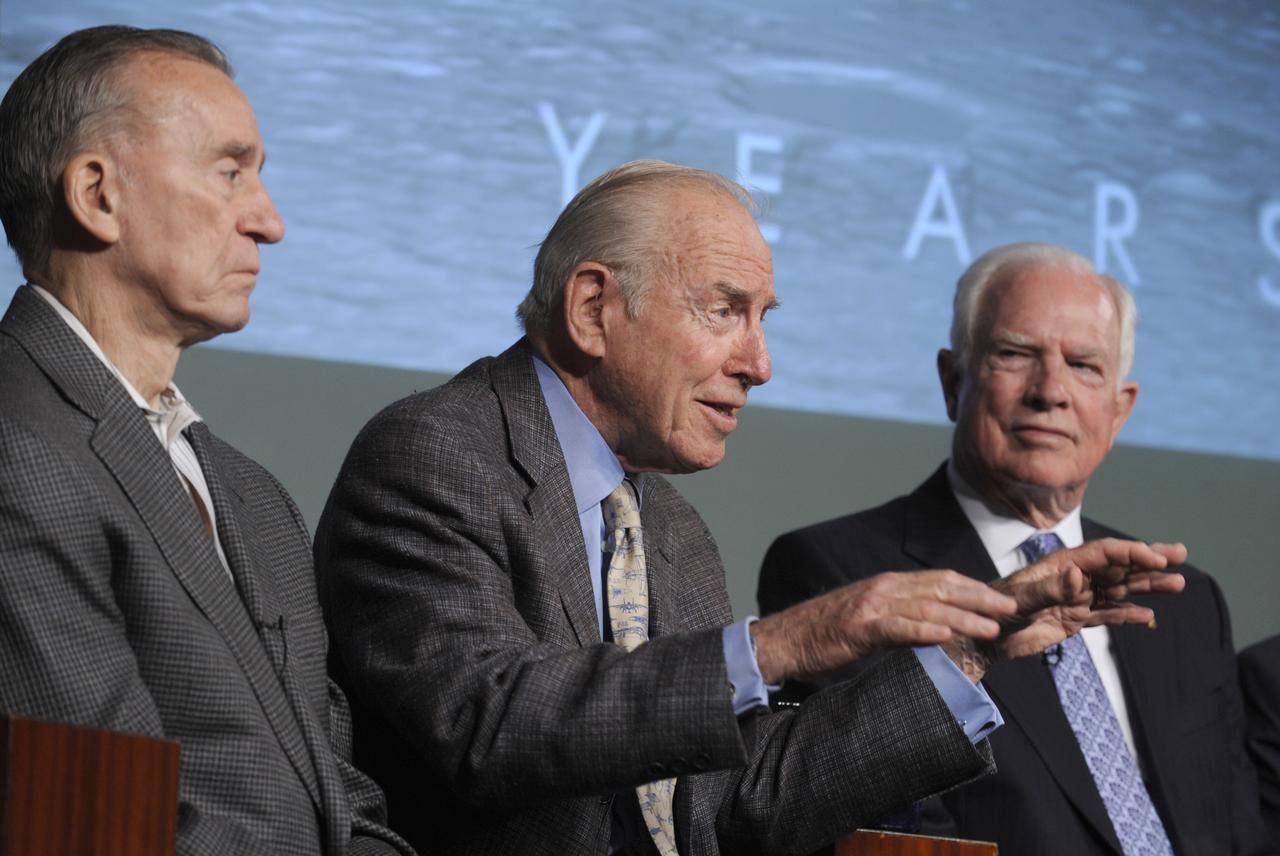
Astronaut James Lovell (Apollo 8 Apollo 13), center, flanked by Walt Cunningham (Apollo 7), left, and David Scott (Apollo 9 Apollo 15) responds during the 40th anniversary of the Apollo 11 mission and the walk on the moon press conference, Monday, July 20, 2009, at NASA Headquarters in Washington. Photo Credit: (NASA/Paul E. Alers)
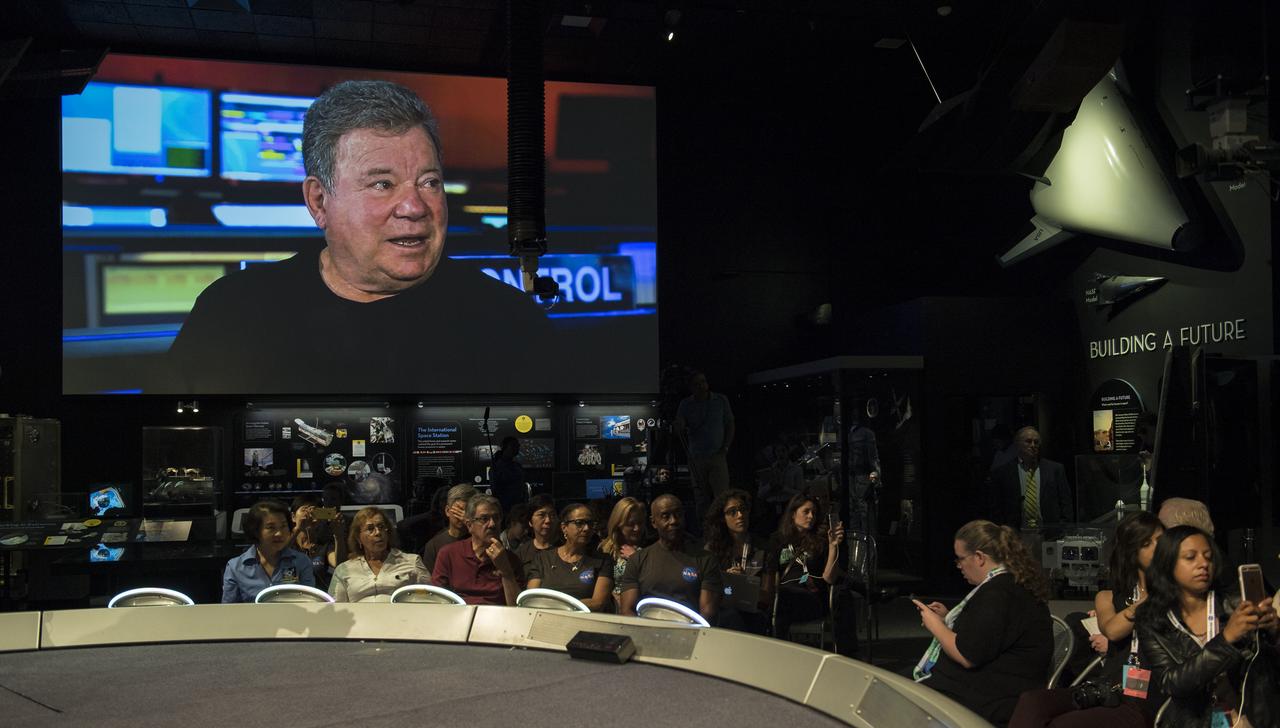
William Shatner of Star Trek, is seen on a live feed from NASA's Jet Propulsion Laboratory, giving the order to send a message into deep space, during an event to celebrate the 40th Anniversary of the launch of the Voyager 1 and 2 missions, Tuesday, September 5, 2017 at Smithsonian's National Air and Space Museum in Washington. Voyager 1 was launched September 5, 1977, with a mission to study Jupiter and Saturn, but now the twin Voyager spacecrafts are on a journey into interstellar space to search for the heliopause, a region never reached by any other spacecraft. Photo Credit: (NASA/Aubrey
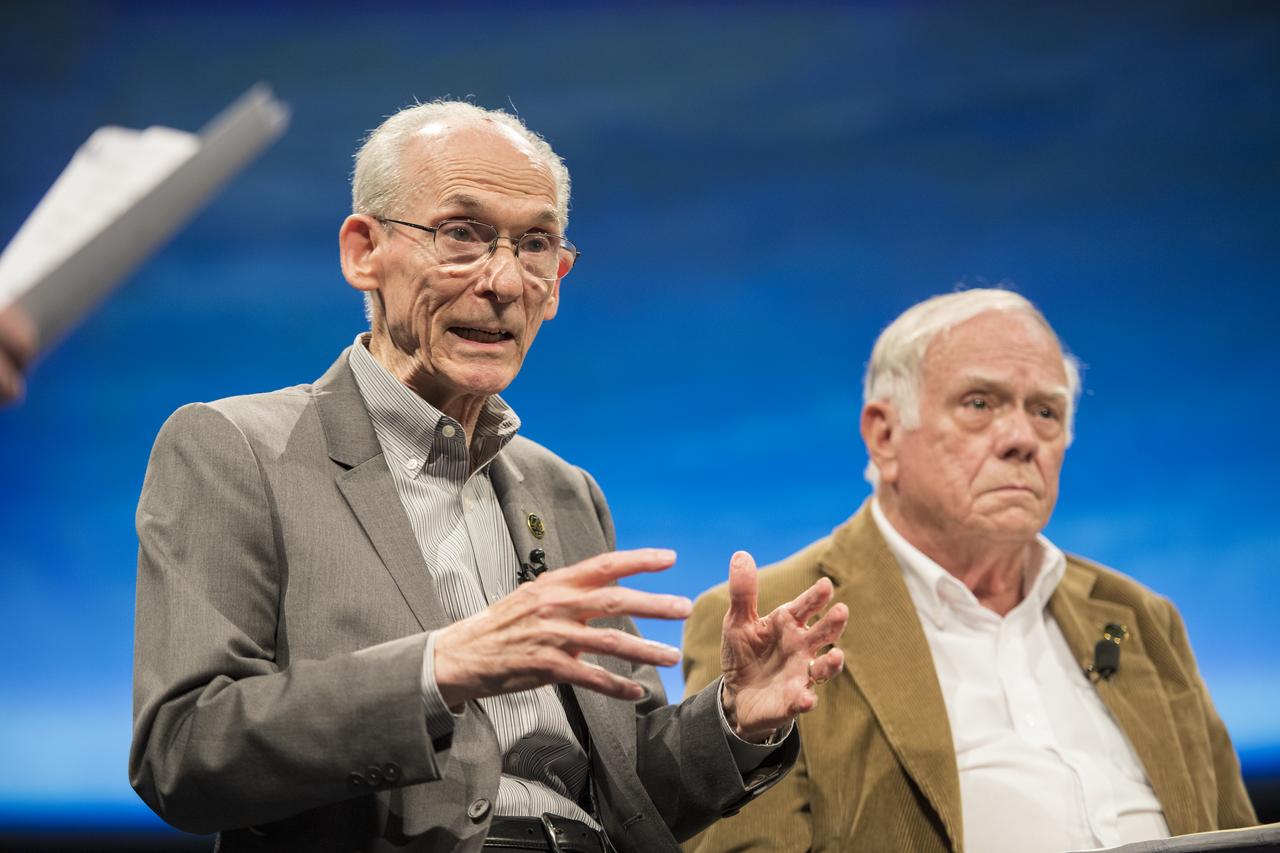
Ed Stone, Voyager project scientist, speaks at an event to celebrate the 40th Anniversary of the launch of the Voyager 1 and 2 missions, Tuesday, September 5, 2017 at Smithsonian's National Air and Space Museum in Washington. Voyager 1 was launched September 5, 1977, with a mission to study Jupiter and Saturn, but now the twin Voyager spacecrafts are on a journey into interstellar space to search for the heliopause, a region never reached by any other spacecraft. Photo Credit: (NASA/Aubrey Gemignani)
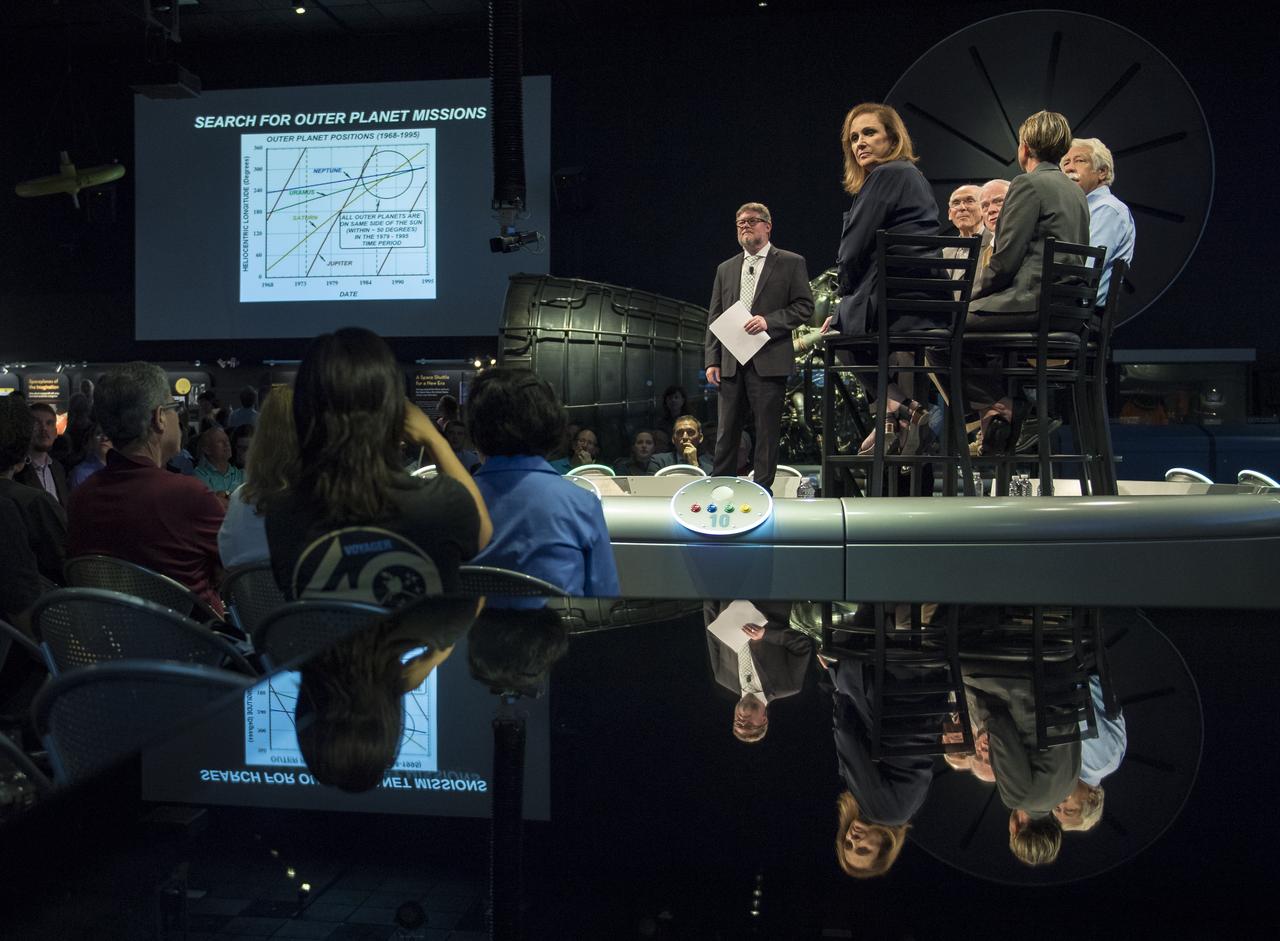
Gary Flandro, Voyager mission grand tour creator, speaks on a panel at an event to celebrate the 40th Anniversary of the launch of the Voyager 1 and 2 missions, Tuesday, September 5, 2017 at Smithsonian's National Air and Space Museum in Washington. Voyager 1 was launched September 5, 1977, with a mission to study Jupiter and Saturn, but now the twin Voyager spacecrafts are on a journey into interstellar space to search for the heliopause, a region never reached by any other spacecraft. Photo Credit: (NASA/Aubrey Gemignani)
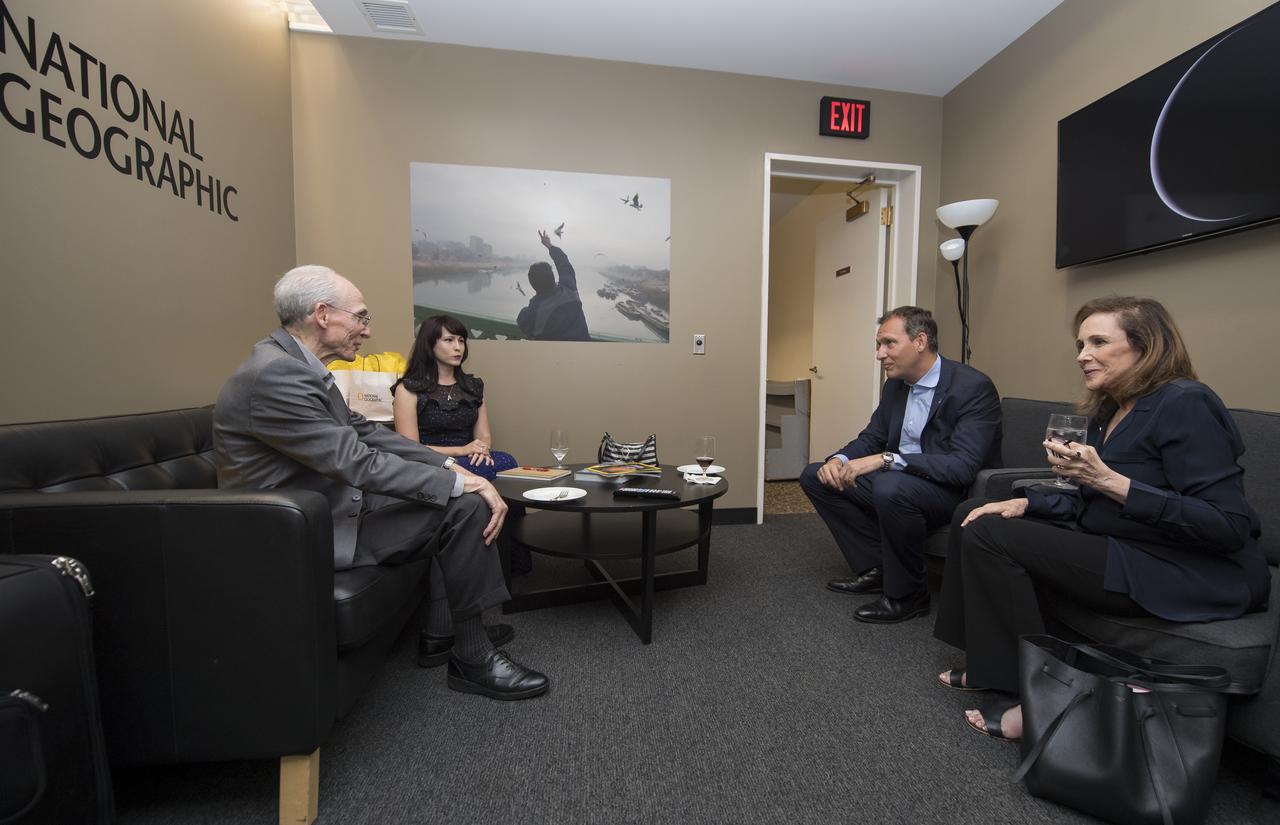
Panelists, from left to right, Ed Stone, Voyager project scientist; Victoria Jaggard, National Geographic Magazine science editor and moderator for the panel; Thomas Zurbuchen, associate administrator for NASA's Science Mission Directorate; and Ann Druyan, writer/producer and golden record visionary, visit in the green room before speaking at an event to celebrate the 40th Anniversary of the launch of the Voyager 1 and 2 missions, Tuesday, September 5, 2017 at National Geographic Society Headquarters in Washington. Voyager 1 was launched September 5, 1977, with a mission to study Jupiter and Saturn, but now the twin Voyager spacecrafts are on a journey into interstellar space to search for the heliopause, a region never reached by any other spacecraft. Photo Credit: (NASA/Aubrey Gemignani)
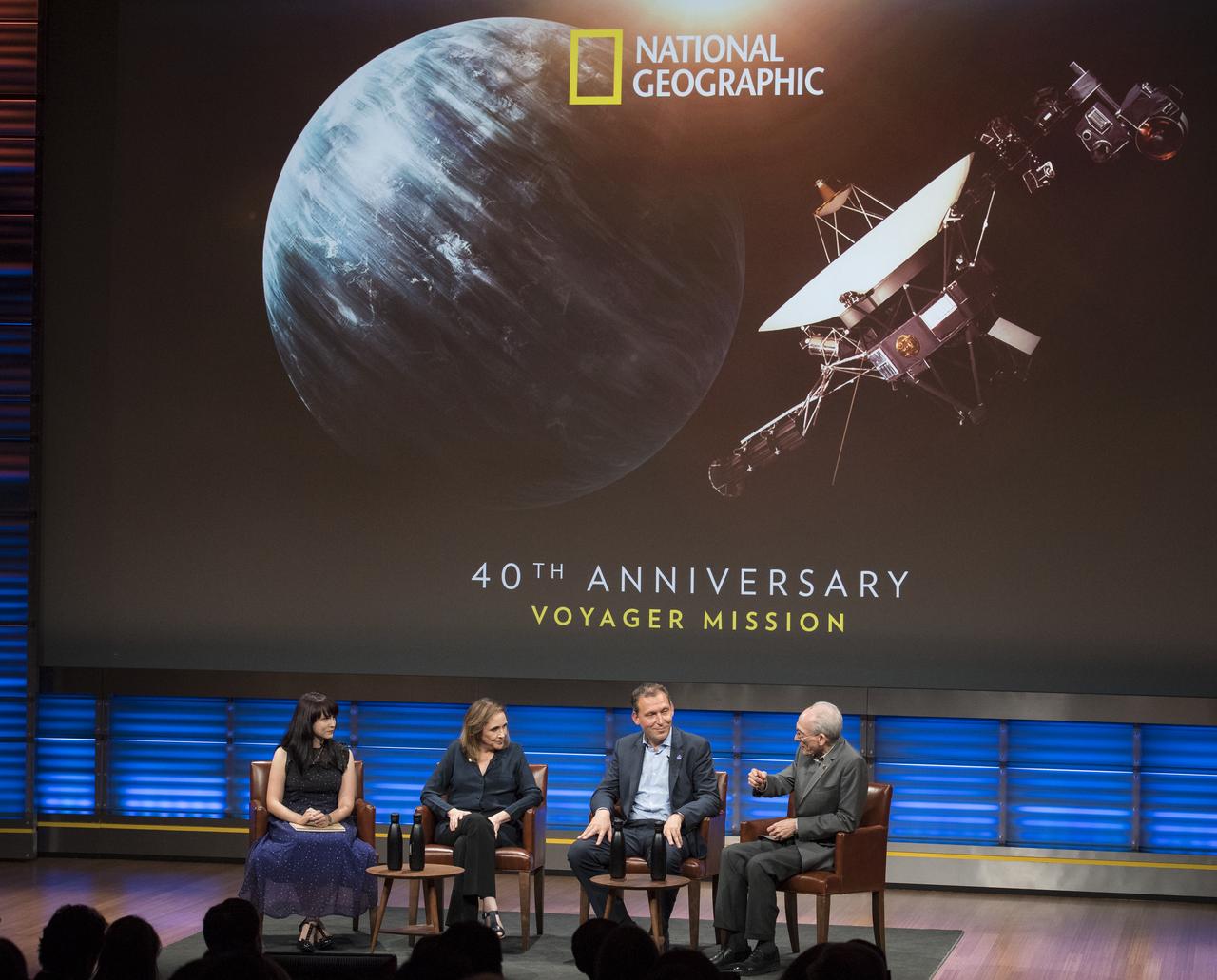
Victoria Jaggard, National Geographic Magazine science editor, left, moderates a panel discussion with, Ann Druyan, writer/producer and golden record visionary, second from left; Thomas Zurbuchen, associate administrator for NASA's Science Mission Directorate, second from right; and Ed Stone, Voyager project scientist, right, at an event to celebrate the 40th Anniversary of the launch of the Voyager 1 and 2 missions, Tuesday, September 5, 2017 at National Geographic Society Headquarters in Washington. Voyager 1 was launched September 5, 1977, with a mission to study Jupiter and Saturn, but now the twin Voyager spacecrafts are on a journey into interstellar space to search for the heliopause, a region never reached by any other spacecraft. Photo Credit: (NASA/Aubrey Gemignani)
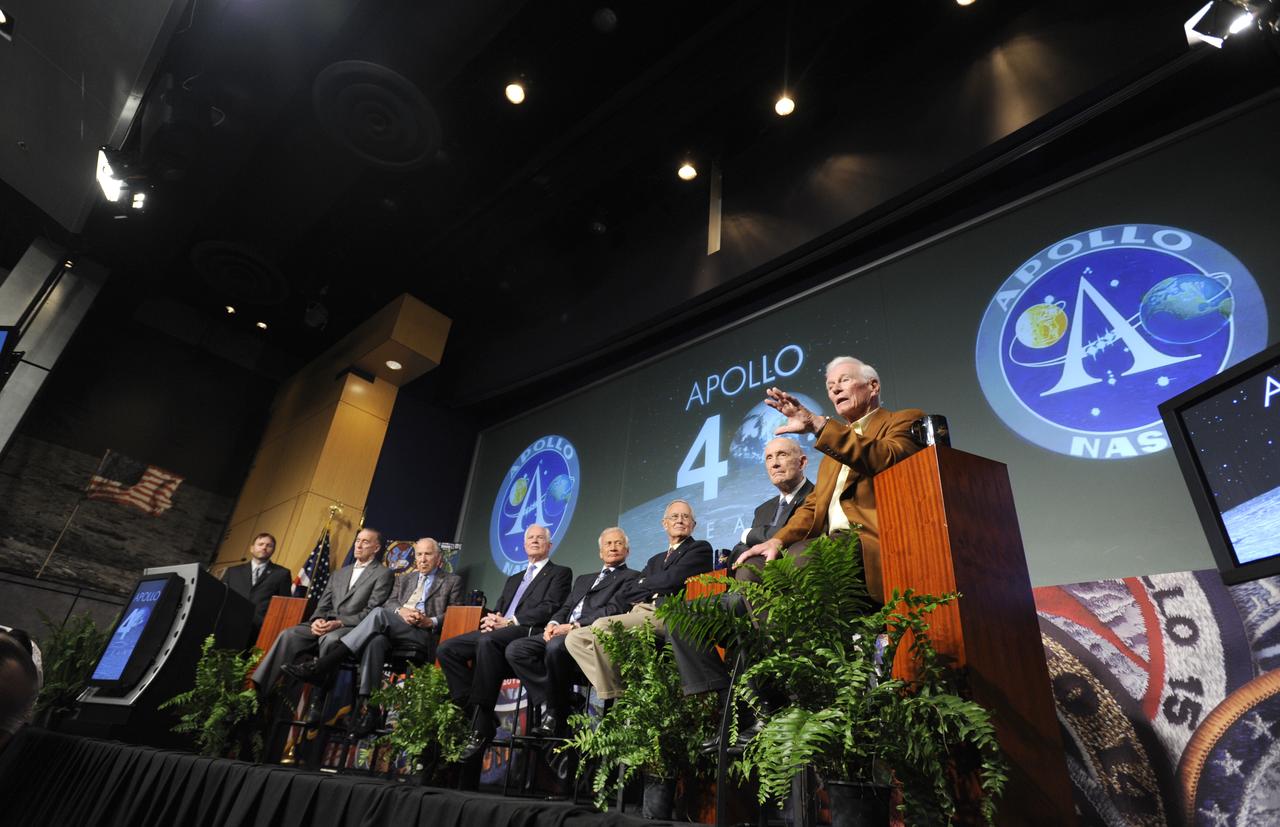
Apollo astronauts from left, Walt Cunningham (Apollo 17), James Lovell (Apollo 8 Apollo 13), David Scott (Apollo 9 Apollo 15), Buzz Aldrin (Apollo 11), Charles Duke (Apollo 16), Thomas Stafford (Apollo 10) and Eugene Cernan (Apollo 17) are seen during the 40th anniversary of the Apollo 11 mission and the walk on the moon press conference, Monday, July 20, 2009, at NASA Headquarters in Washington. Photo Credit: (NASA/Paul E. Alers)
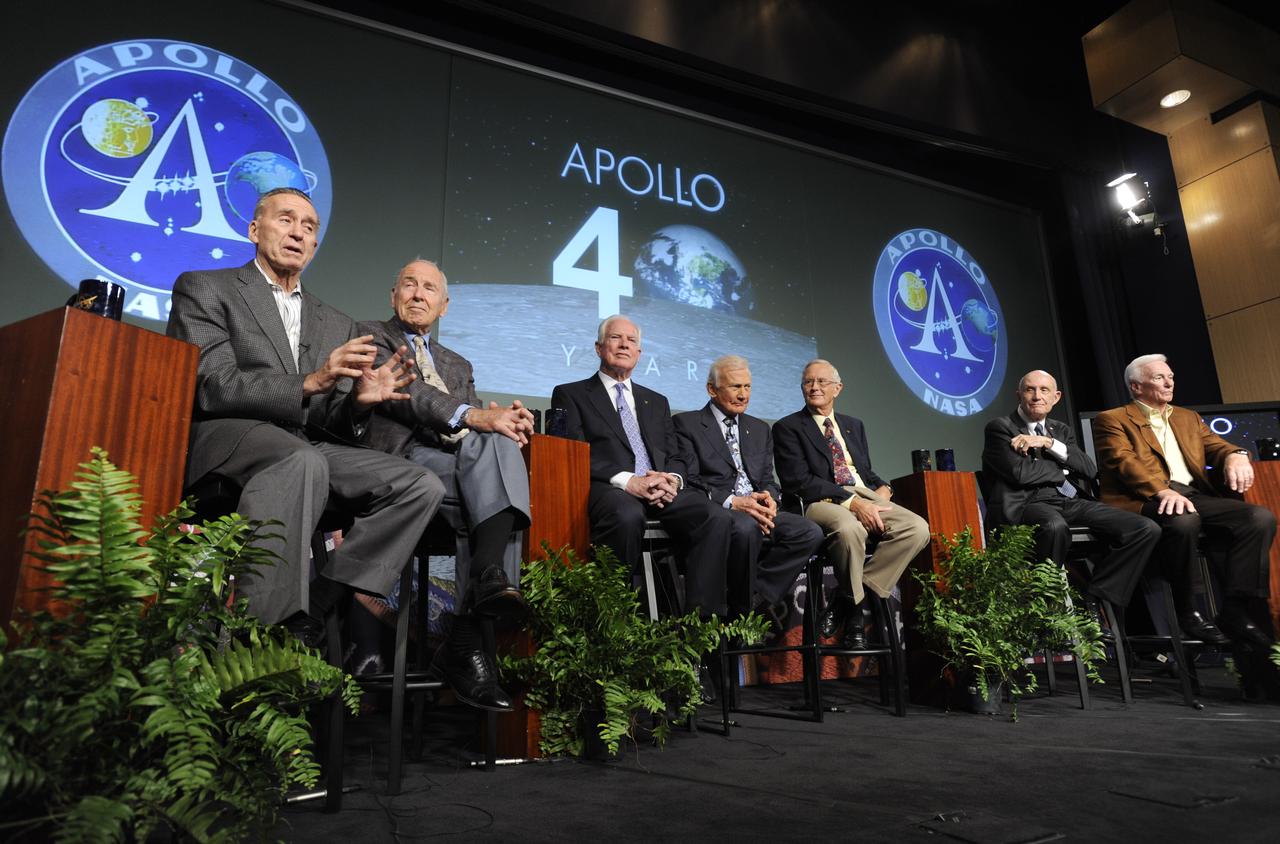
Apollo astronauts from left, Walt Cunningham (Apollo 17), James Lovell (Apollo 8 Apollo 13), David Scott (Apollo 9 Apollo 15), Buzz Aldrin (Apollo 11), Charles Duke (Apollo 16), Thomas Stafford (Apollo 10) and Eugene Cernan (Apollo 17) are seen during the 40th anniversary of the Apollo 11 mission and the walk on the moon press conference, Monday, July 20, 2009, at NASA Headquarters in Washington. Photo Credit: (NASA/Paul E. Alers)

Apollo astronauts from left, Walt Cunningham (Apollo 17), James Lovell (Apollo 8 Apollo 13), David Scott (Apollo 9 Apollo 15), Buzz Aldrin (Apollo 11), Charles Duke (Apollo 16), Thomas Stafford (Apollo 10) and Eugene Cernan (Apollo 17) are seen during the 40th anniversary of the Apollo 11 mission and the walk on the moon press conference, Monday, July 20, 2009, at NASA Headquarters in Washington. Photo Credit: (NASA/Paul E. Alers)
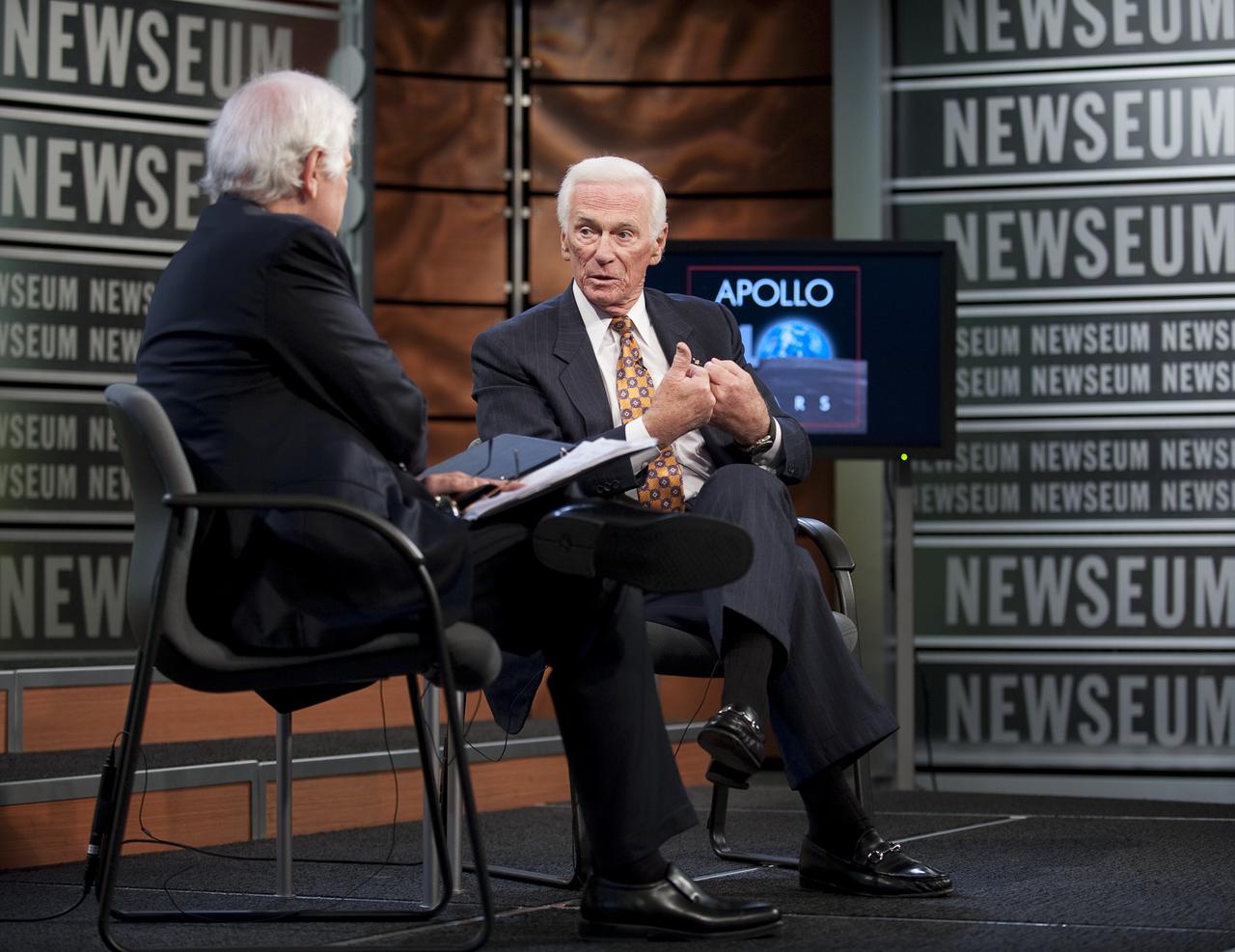
NASA Apollo 10 Astronaut Gene Cernan, right, answers questions from the Newseum's distinguished journalist-in-residence, Nick Clooney during a Newseum TV program celebrating the 40th anniversary of Apollo 10, Monday, May 18, 2009, in Washington. Photo Credit (NASA/Bill Ingalls)
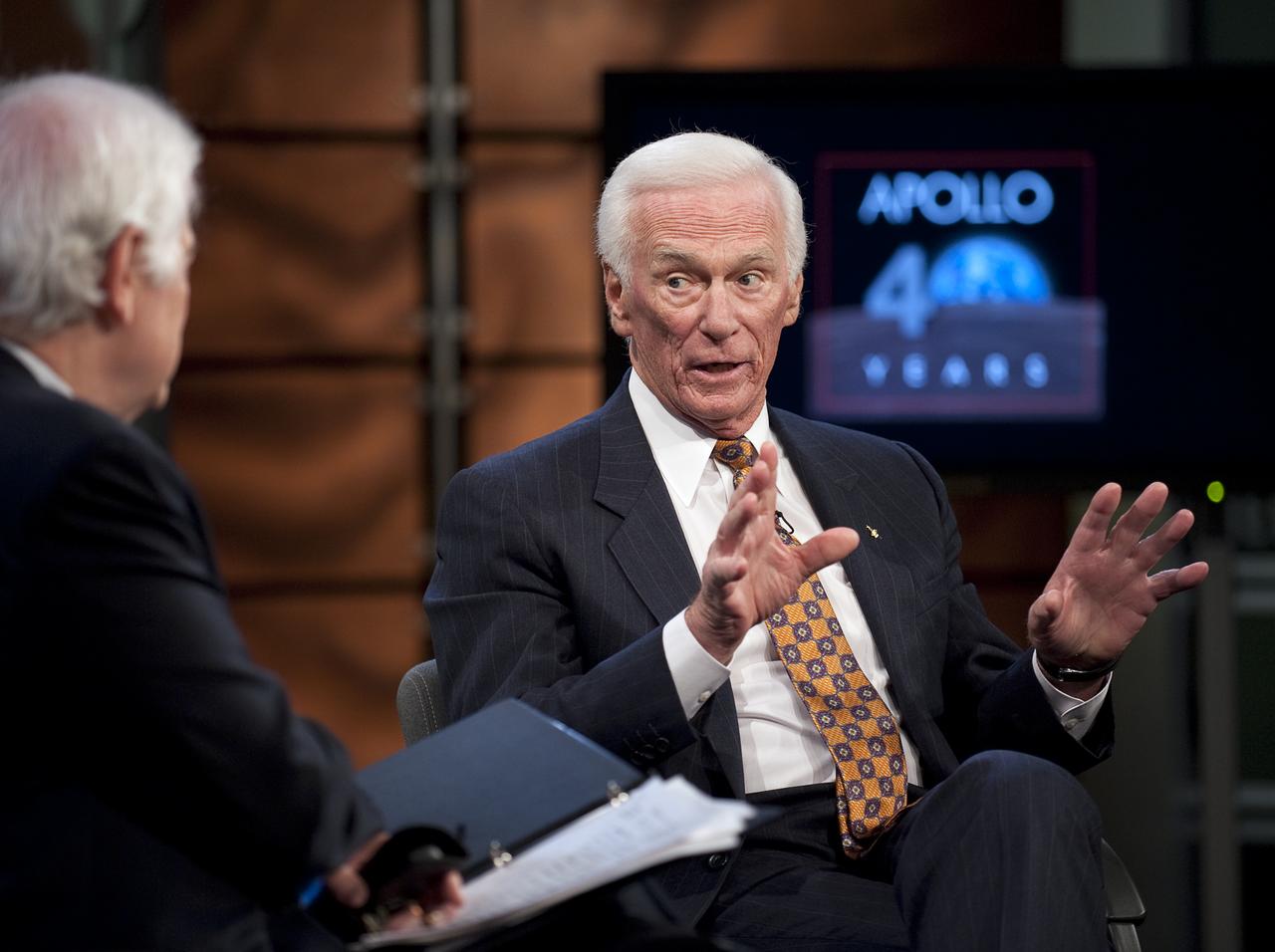
NASA Apollo 10 Astronaut Gene Cernan, right, answers questions from the Newseum's distinguished journalist-in-residence, Nick Clooney during a Newseum TV program celebrating the 40th anniversary of Apollo 10, Monday, May 18, 2009, in Washington. Photo Credit (NASA/Bill Ingalls)

NASA Apollo 10 Astronaut Gene Cernan, right, answers questions from the Newseum's distinguished journalist-in-residence, Nick Clooney during a Newseum TV program celebrating the 40th anniversary of Apollo 10, Monday, May 18, 2009, in Washington. Photo Credit (NASA/Bill Ingalls)
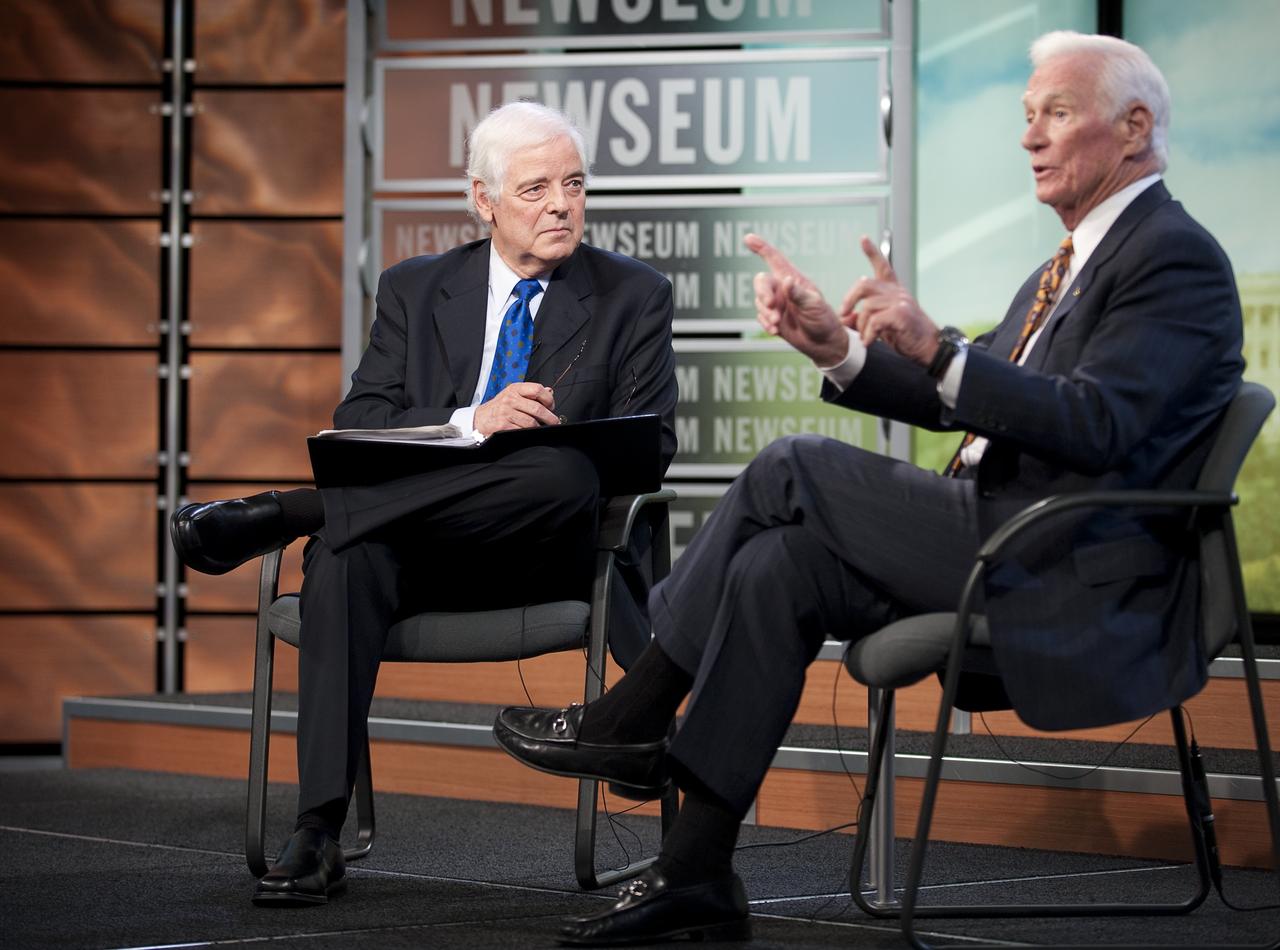
NASA Apollo 10 Astronaut Gene Cernan, right, answers questions from the Newseum's distinguished journalist-in-residence, Nick Clooney during a Newseum TV program celebrating the 40th anniversary of Apollo 10, Monday, May 18, 2009, in Washington. Photo Credit (NASA/Bill Ingalls)
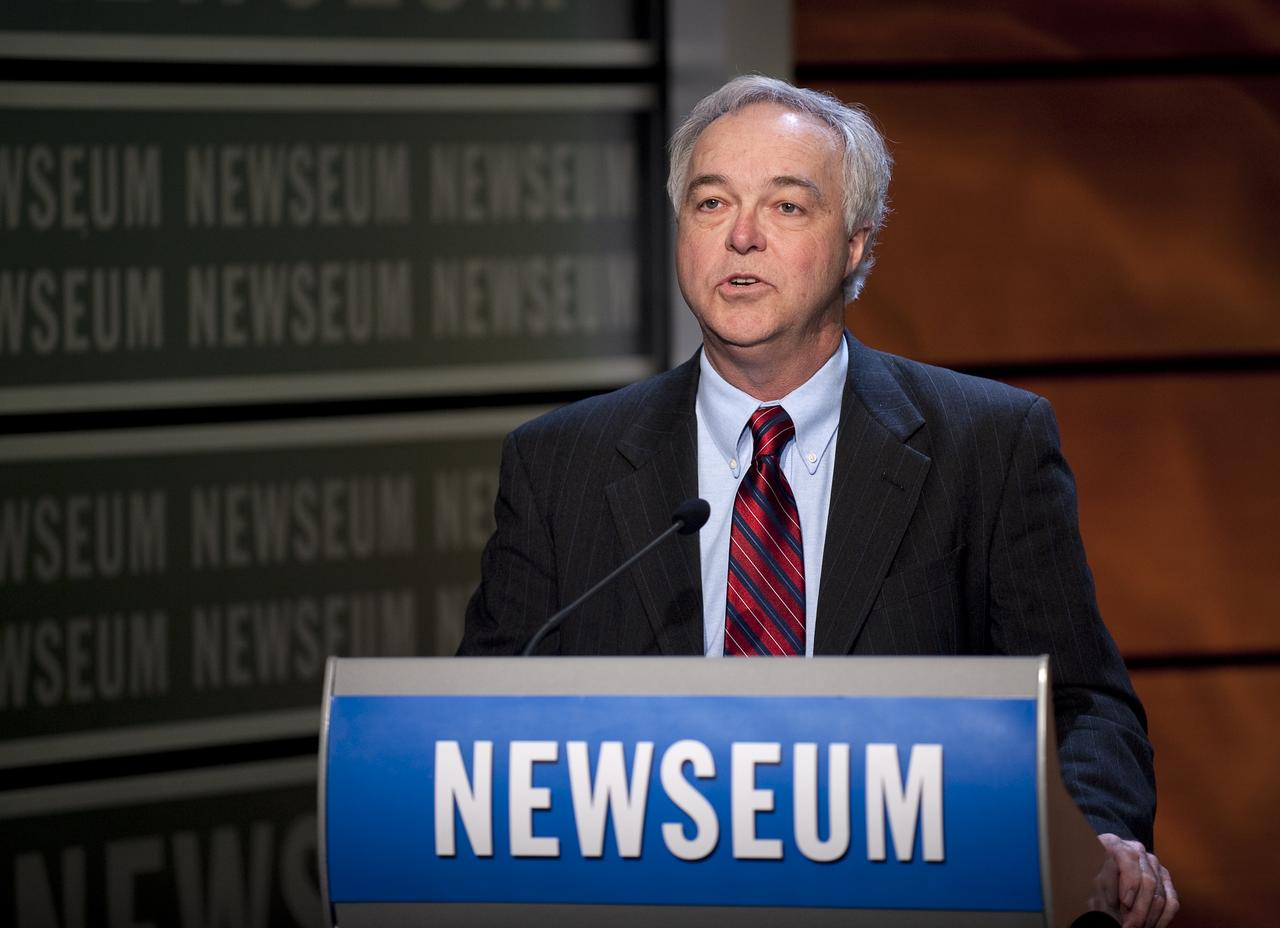
President and Chief Operating Officer of the Newseum, Kenneth Paulson, introduces the Newseum's distinguished journalist-in-residence, Nick Clooney and NASA Apollo 10 Astronaut Gene Cernan during a Newseum TV program celebrating the 40th anniversary of Apollo 10, Monday, May 18, 2009, in Washington. Photo Credit (NASA/Bill Ingalls)
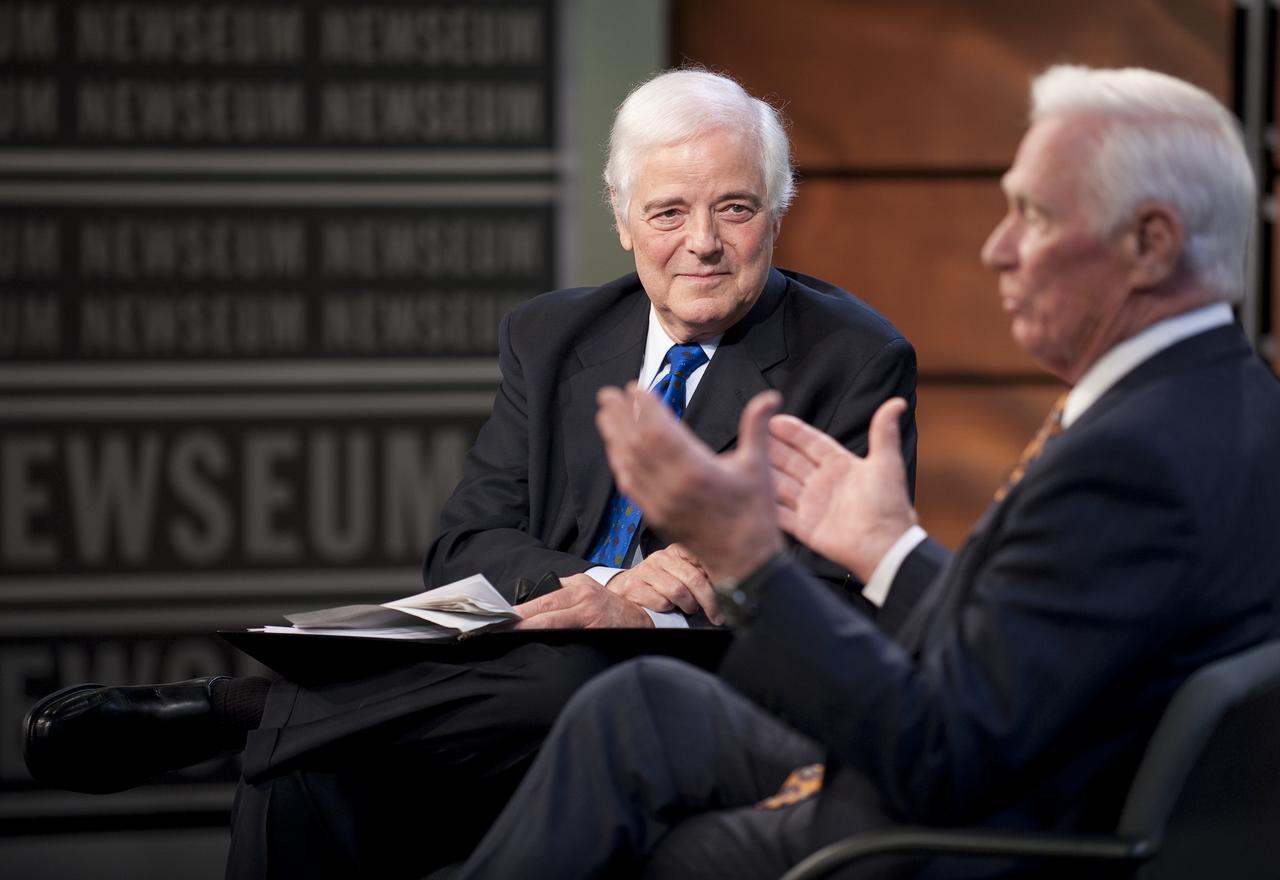
NASA Apollo 10 Astronaut Gene Cernan, right, answers questions from the Newseum's distinguished journalist-in-residence, Nick Clooney during a Newseum TV program celebrating the 40th anniversary of Apollo 10, Monday, May 18, 2009, in Washington. Photo Credit (NASA/Bill Ingalls)
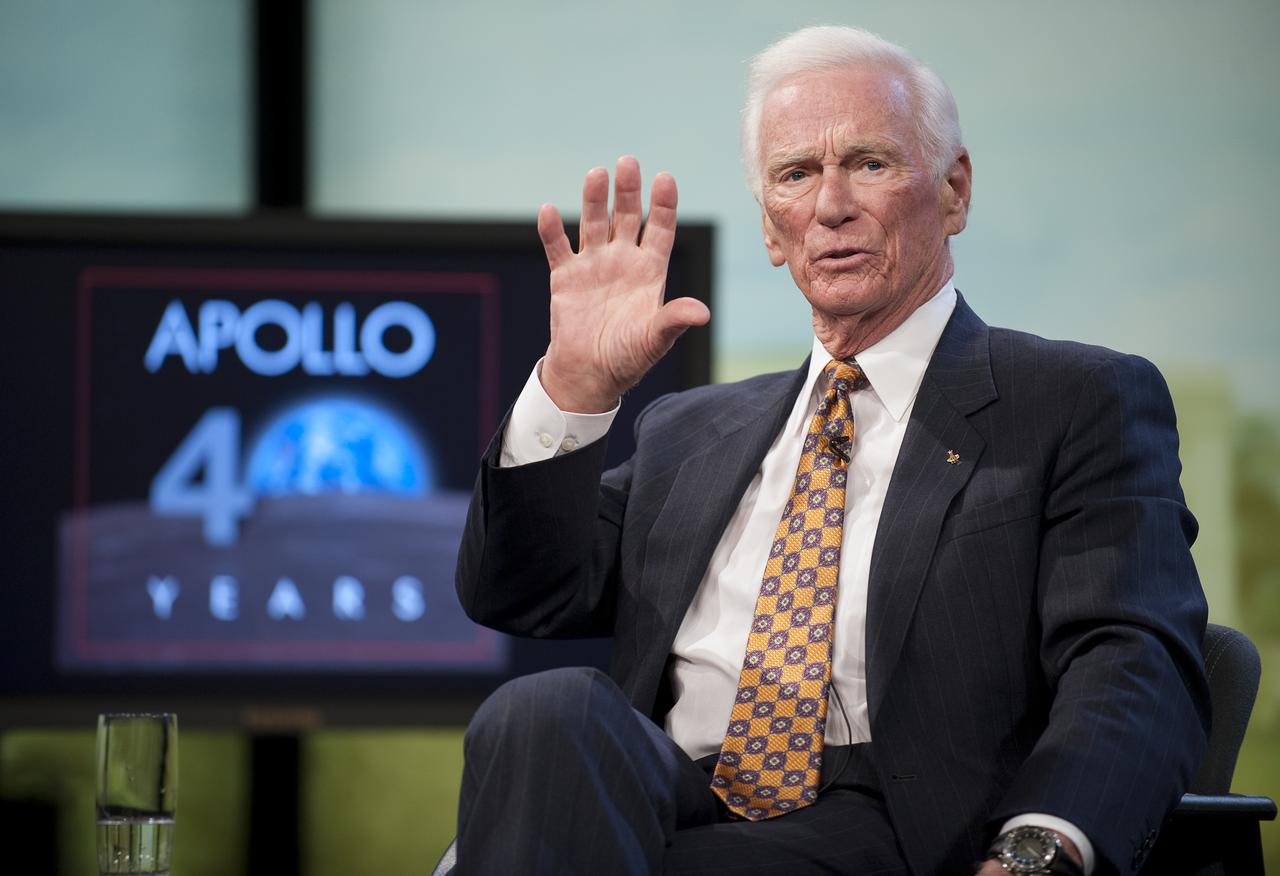
NASA Apollo 10 Astronaut Gene Cernan explains how wonderful the Earth looked from the Moon during a Newseum TV program celebrating the 40th anniversary of Apollo 10, Monday, May 18, 2009, in Washington. Photo Credit (NASA/Bill Ingalls)
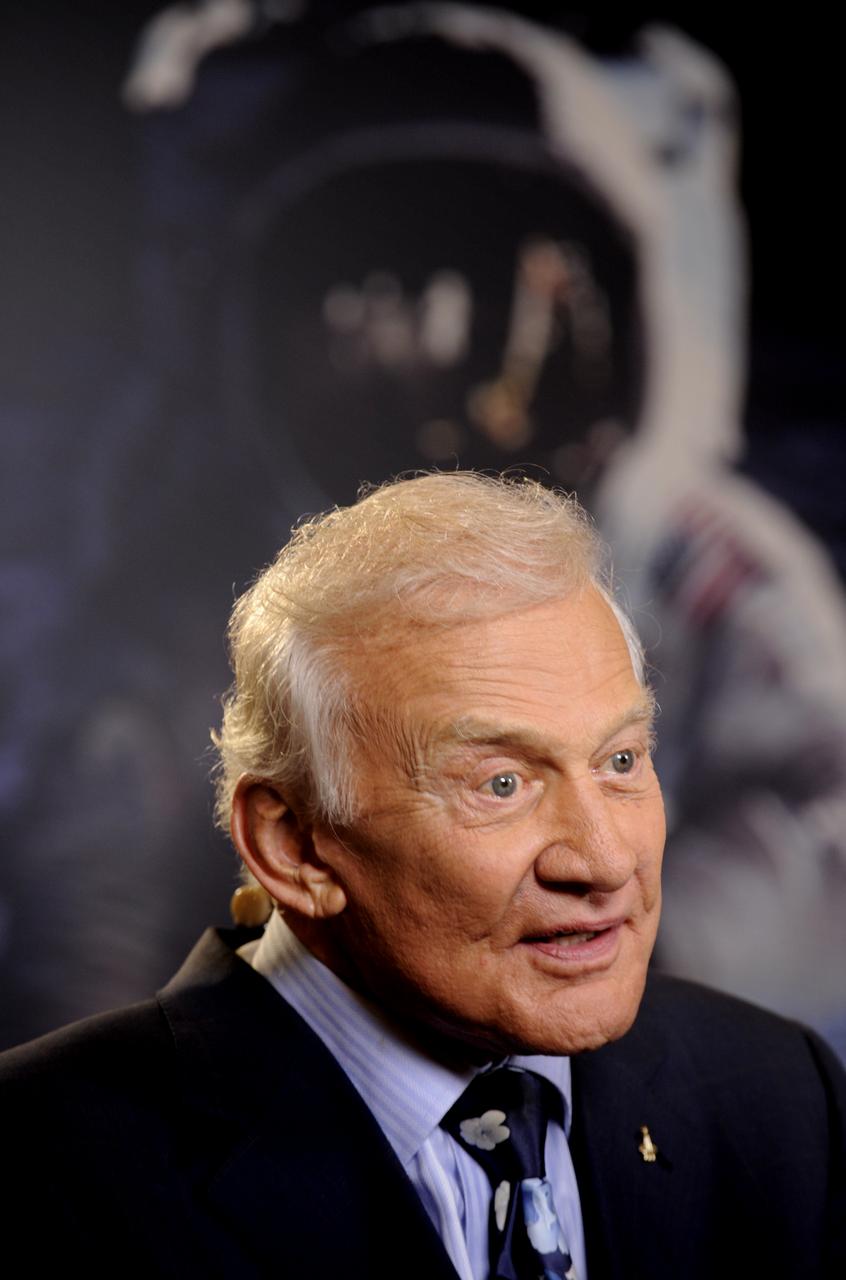
Apollo 11 astronaut Buzz Aldrin, the second man to walk on the Moon, responds to a question during a live television interview on Monday, July 20, 2009, at NASA Headquarters in Washington. Monday marked the 40th Anniversary of the historic landing. Photo Credit: (NASA/Paul E. Alers)
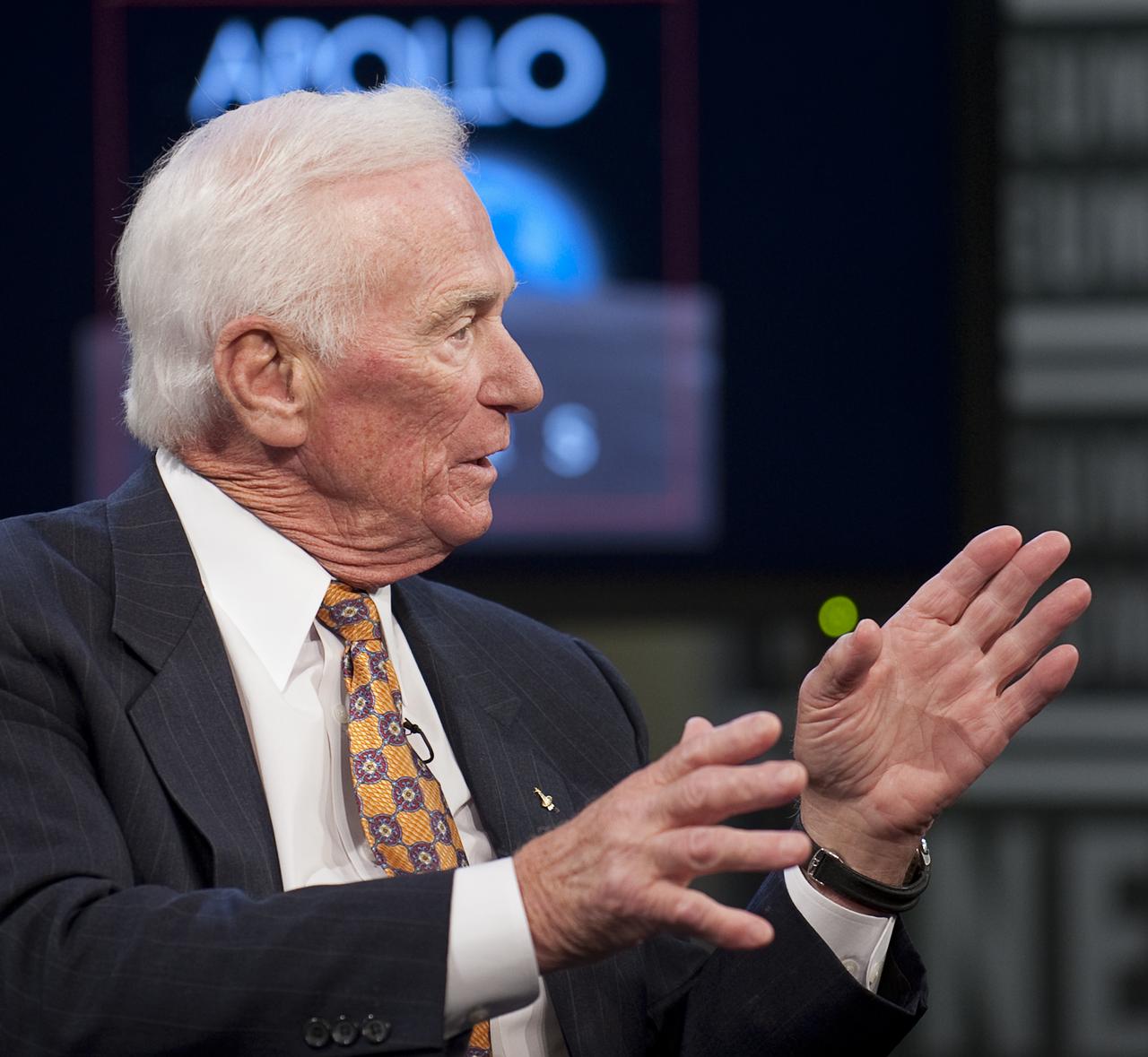
NASA Apollo 10 Astronaut Gene Cernan explains the importance of the nations space program for future generations during a Newseum TV program celebrating the 40th anniversary of Apollo 10, Monday, May 18, 2009, in Washington. Photo Credit (NASA/Bill Ingalls)
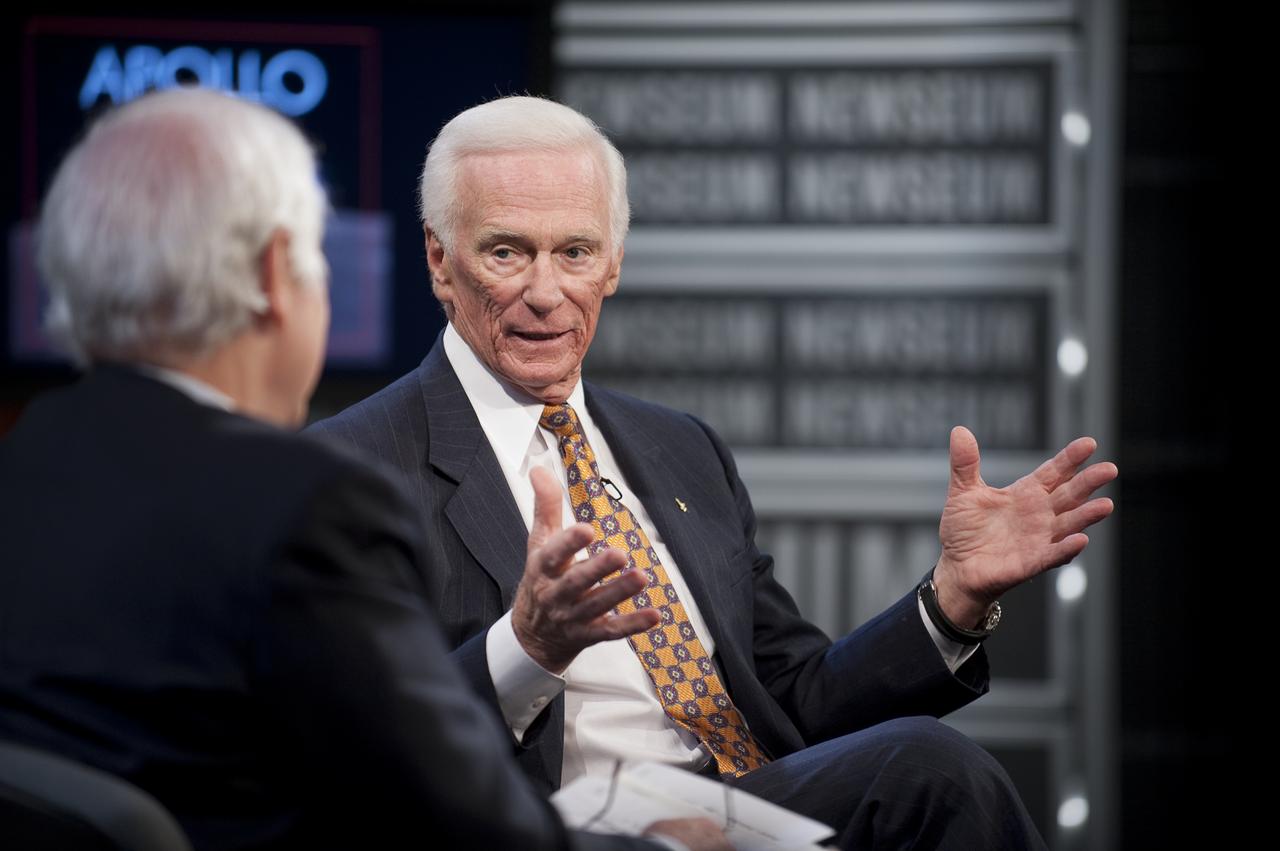
NASA Apollo 10 Astronaut Gene Cernan, right, answers questions from the Newseum's distinguished journalist-in-residence, Nick Clooney during a Newseum TV program celebrating the 40th anniversary of Apollo 10, Monday, May 18, 2009, in Washington. Photo Credit (NASA/Bill Ingalls)
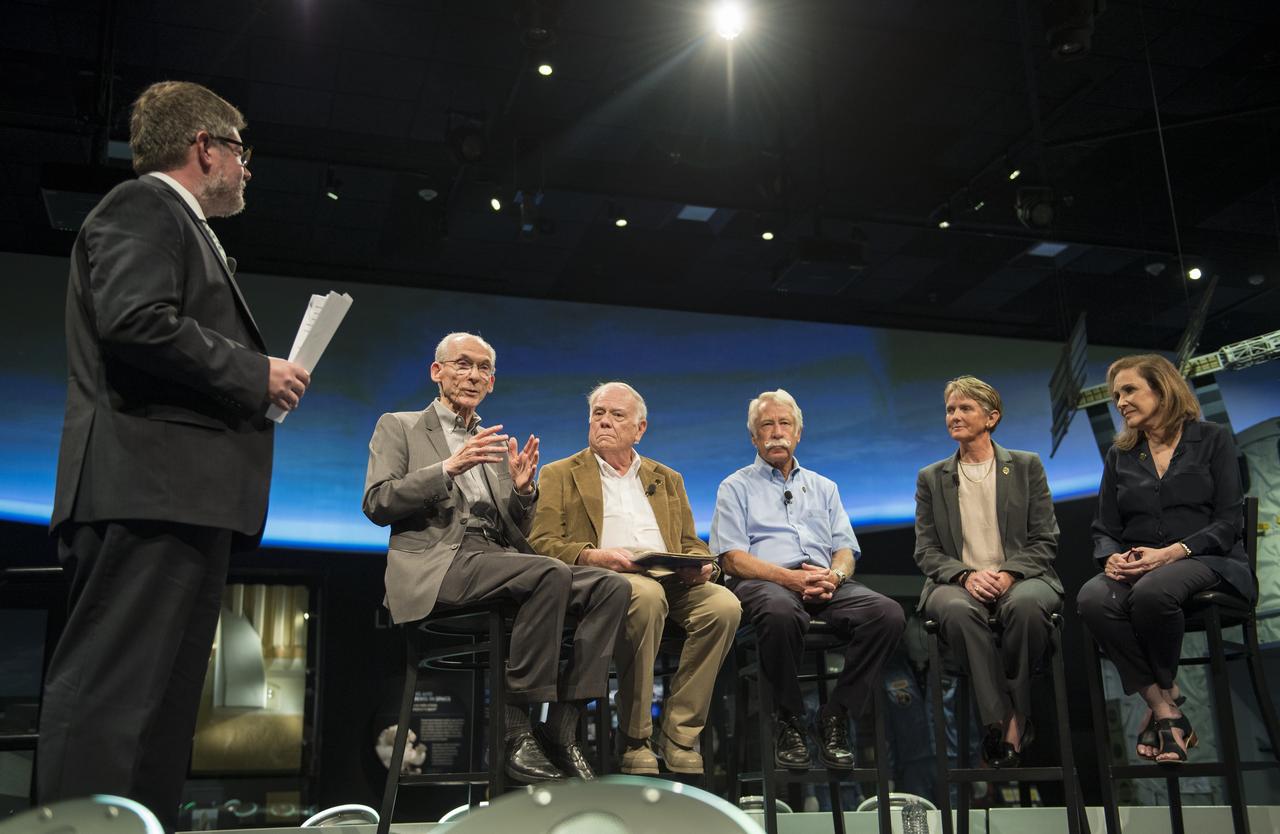
Matthew Shindell, curator, Smithsonian National Air and Space Museum (NASM), far left, moderates a panel including, from left to right, Ed Stone, Voyager project scientist; Gary Flandro, Voyager mission grand tour creator; Alan Cummings, Voyager researcher; Suzy Dodd, Voyager project manager, NASA's Jet Propulsion Laboratory; and Ann Druyan, writer/producer, Golden Record Visionary during a celebration of the 40th Anniversary of the launch of the Voyager 1 and 2 missions, Tuesday, September 5, 2017 at NASM in Washington. Voyager 1 was launched September 5, 1977, with a mission to study Jupiter and Saturn, but now the twin Voyager spacecrafts are on a journey into interstellar space to search for the heliopause, a region never reached by any other spacecraft. Photo Credit: (NASA/Aubrey Gemignani)
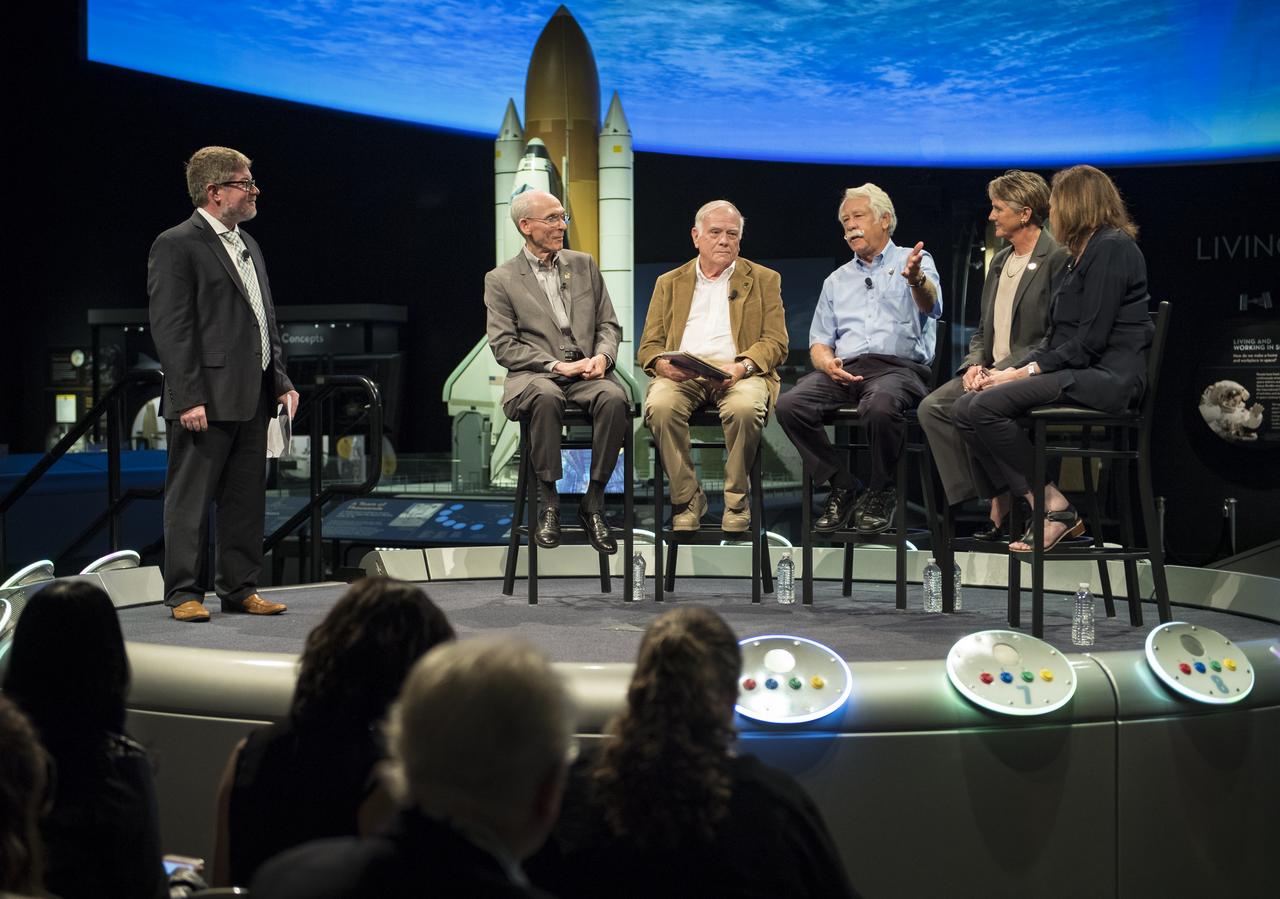
Matthew Shindell, curator, Smithsonian National Air and Space Museum (NASM), far left, moderates a panel including, from left to right, Ed Stone, Voyager project scientist; Gary Flandro, Voyager mission grand tour creator; Alan Cummings, Voyager researcher; Suzy Dodd, Voyager project manager, NASA's Jet Propulsion Laboratory; and Ann Druyan, writer/producer, Golden Record Visionary during a celebration of the 40th Anniversary of the launch of the Voyager 1 and 2 missions, Tuesday, September 5, 2017 at NASM in Washington. Voyager 1 was launched September 5, 1977, with a mission to study Jupiter and Saturn, but now the twin Voyager spacecrafts are on a journey into interstellar space to search for the heliopause, a region never reached by any other spacecraft. Photo Credit: (NASA/Aubrey Gemignani)
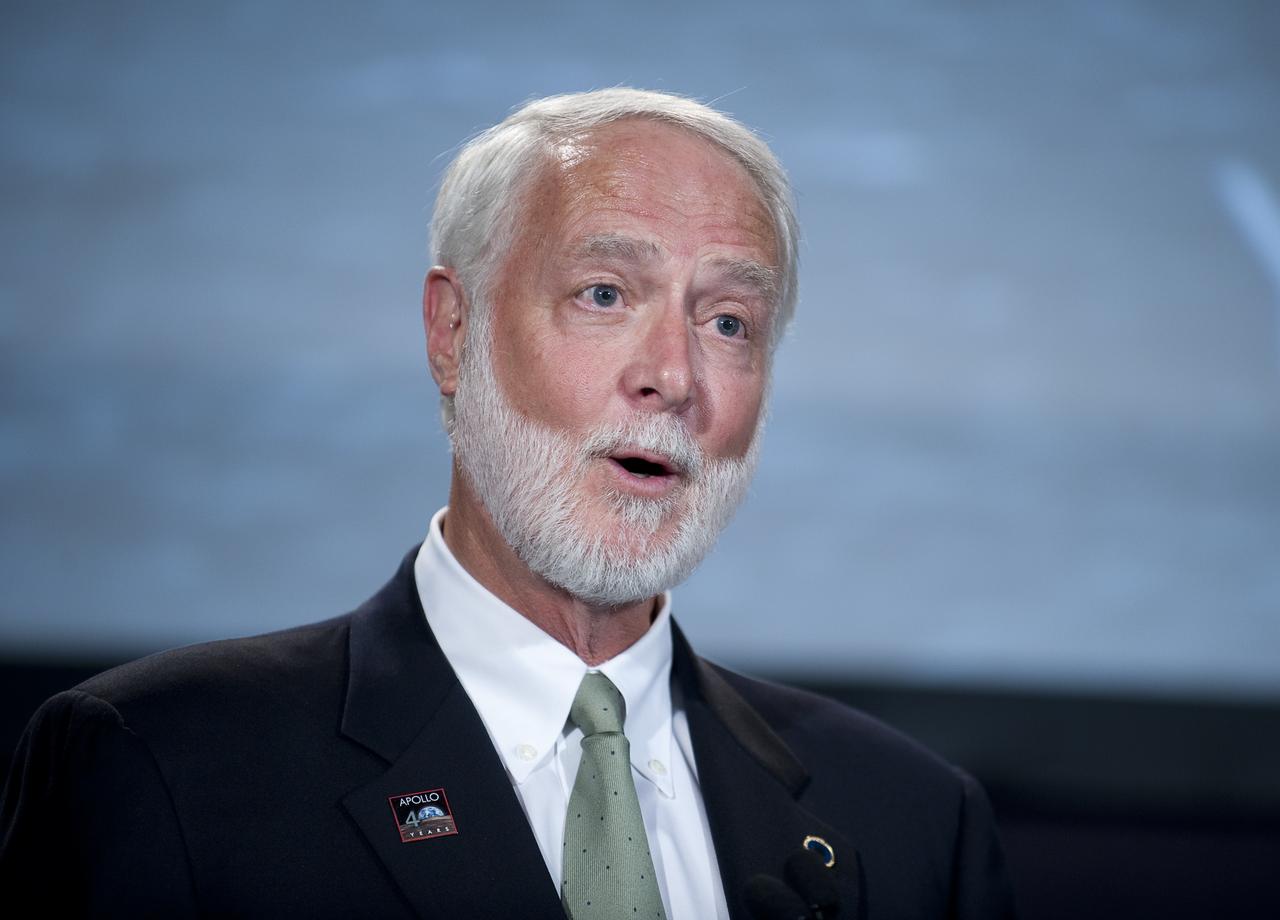
Secretary of the Smithsonian Institution Wayne Clough speaks at the Apollo 40th anniversary celebration held at the National Air and Space Museum, Monday, July 20, 2009 in Washington. Photo Credit: (NASA/Bill Ingalls)
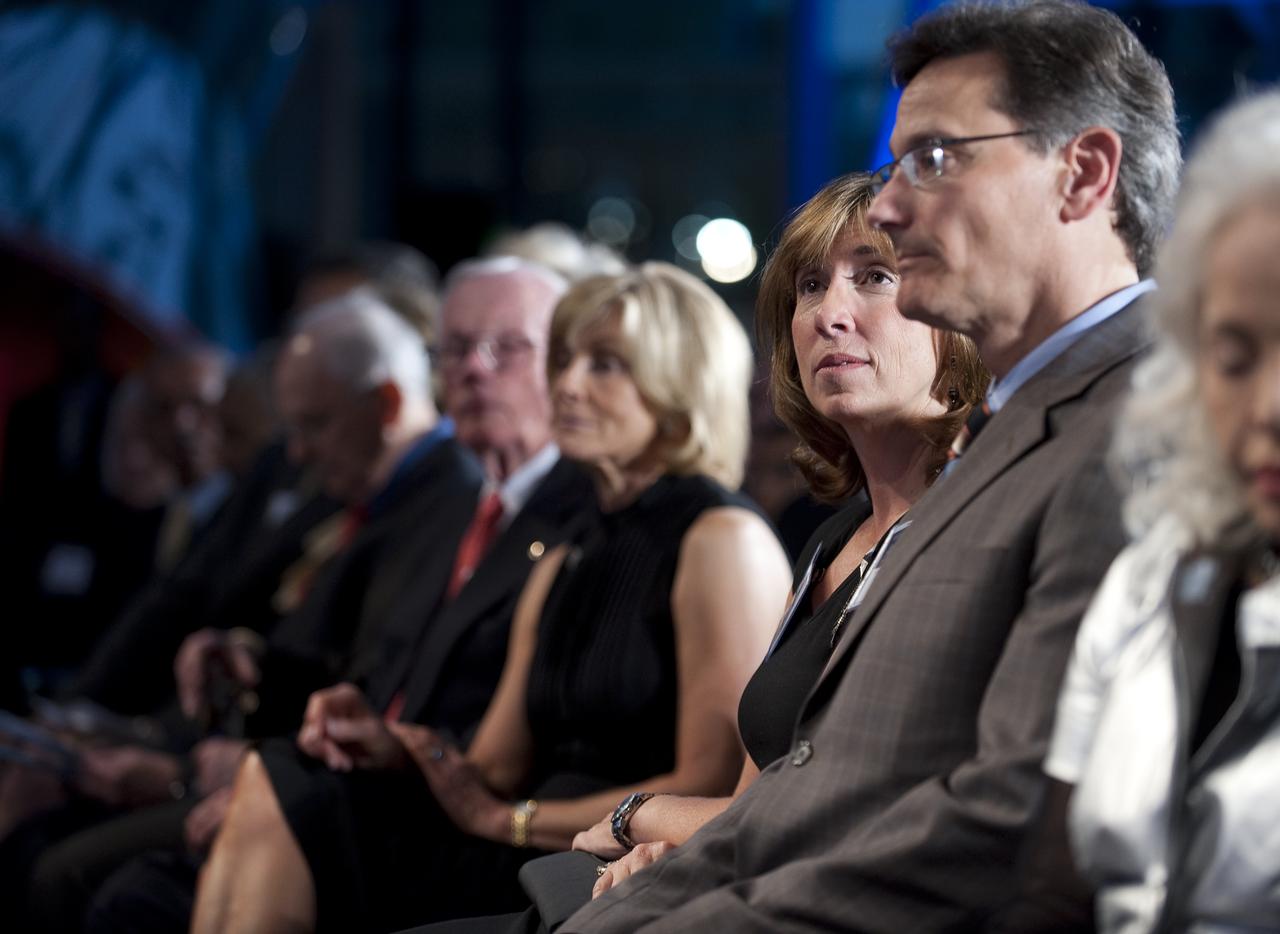
NASA Deputy Administrator Lori Garver listens during the Apollo 40th anniversary celebration held at the National Air and Space Museum, Monday, July 20, 2009 in Washington. Photo Credit: (NASA/Bill Ingalls)
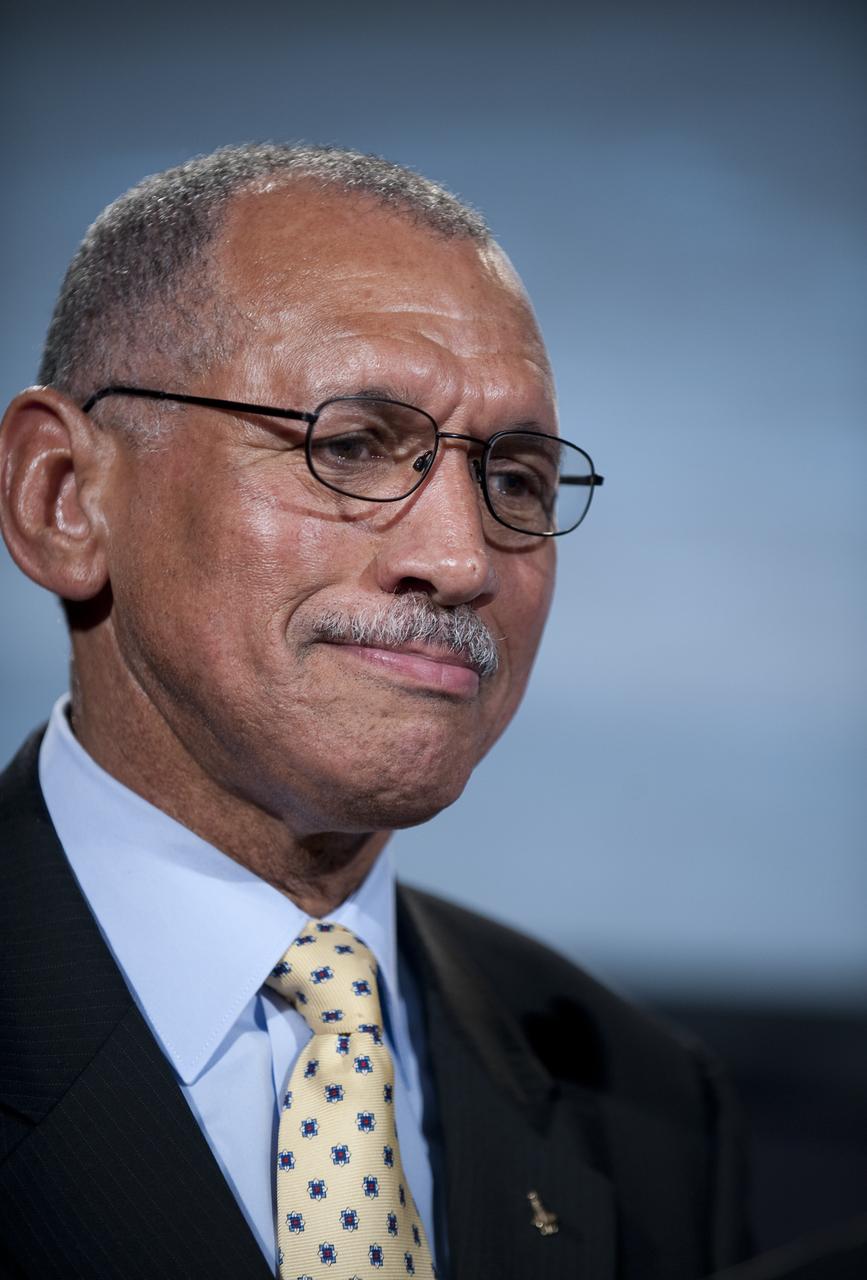
NASA Administrator Charles F. Bolden, Jr. speaks at the Apollo 40th anniversary celebration held at the National Air and Space Museum, Monday, July 20, 2009 in Washington. Photo Credit: (NASA/Bill Ingalls)
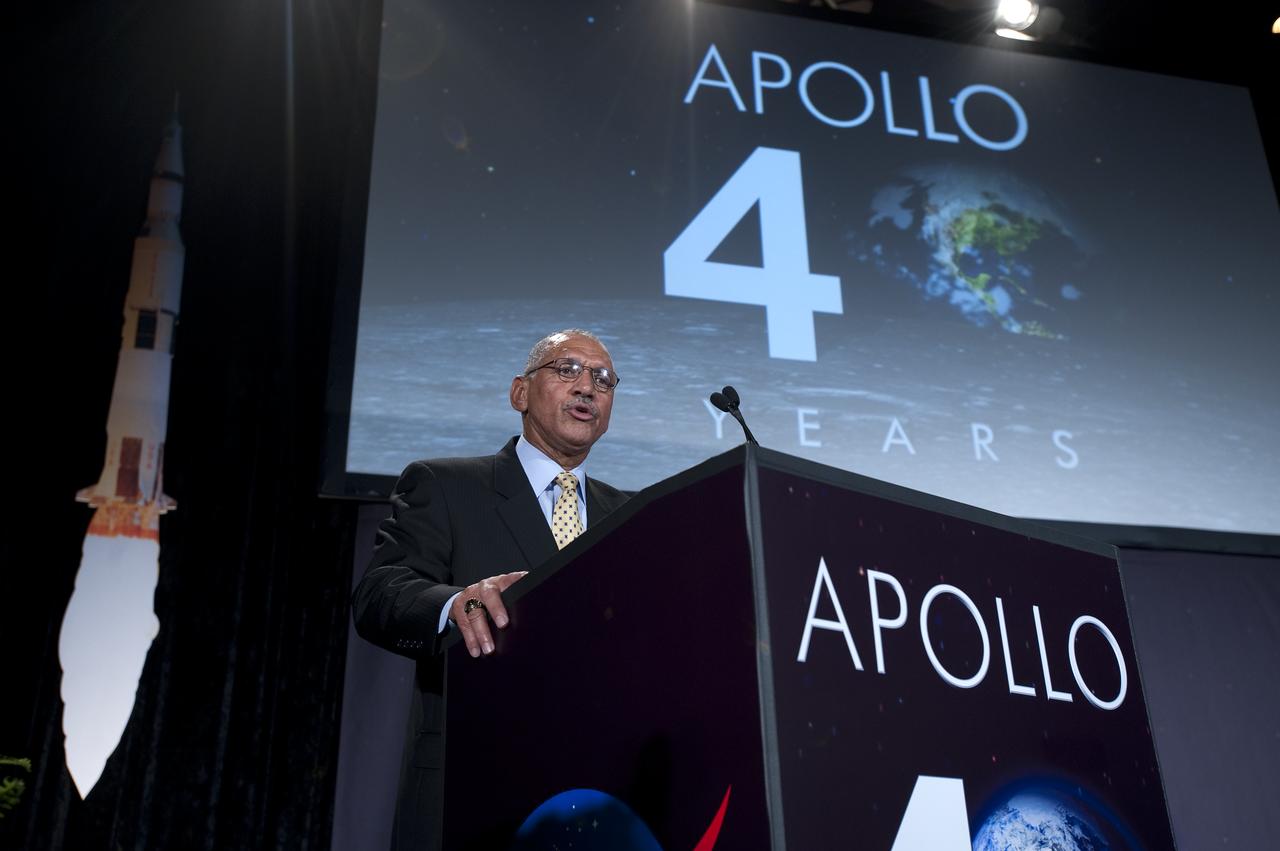
NASA Administrator Charles F. Bolden, Jr. speaks at the Apollo 40th anniversary celebration held at the National Air and Space Museum, Monday, July 20, 2009 in Washington. Photo Credit: (NASA/Bill Ingalls)
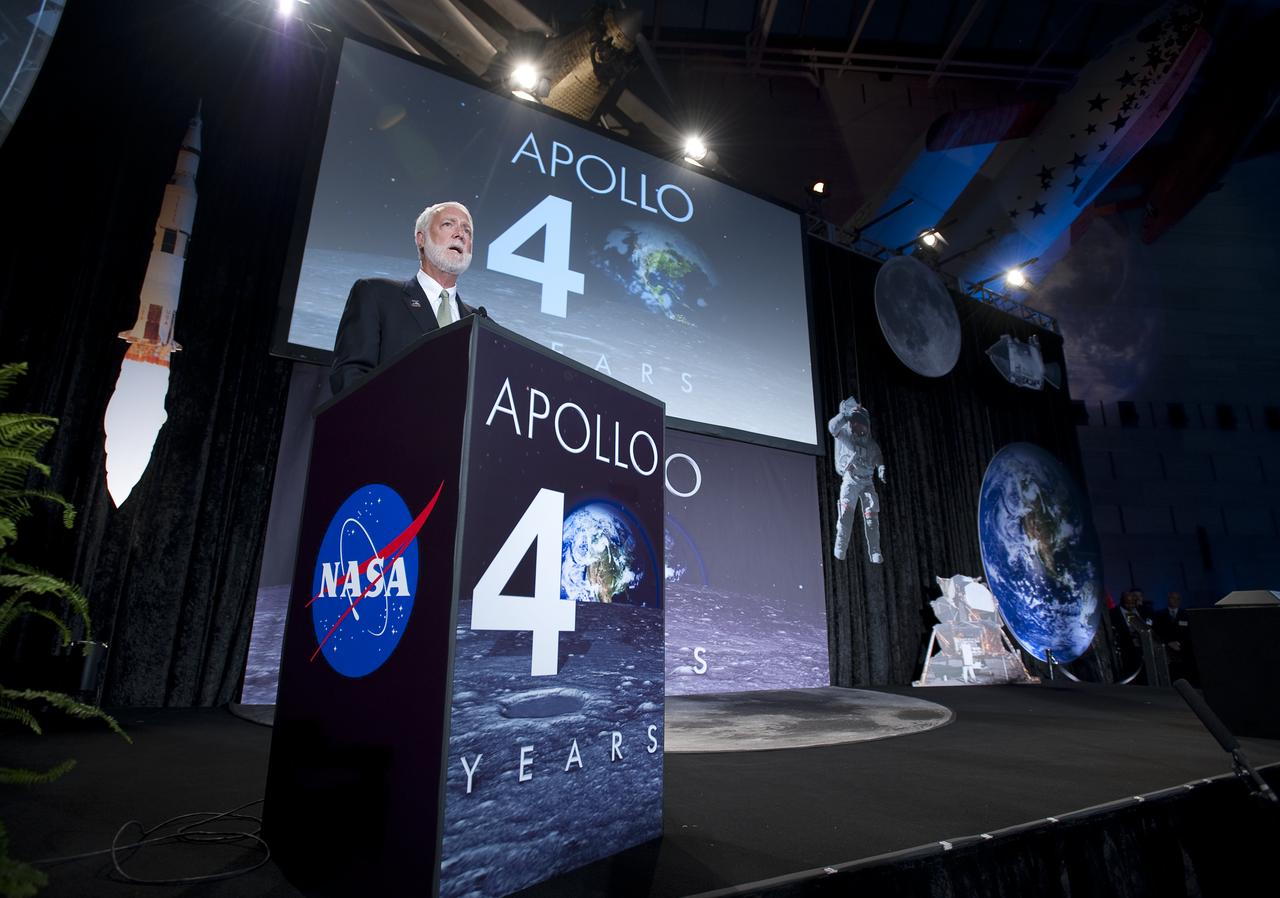
Secretary of the Smithsonian Institution Wayne Clough speaks at the Apollo 40th anniversary celebration held at the National Air and Space Museum, Monday, July 20, 2009 in Washington. Photo Credit: (NASA/Bill Ingalls)

Apollo astronaut Alan Bean, center, laughs at a comment made by Apollo astronaut Charles Duke, right, as Apollo astronaut Buzz Aldrin, left, looks on during a live television interview on Monday, July 20, 2009, at NASA Headquarters in Washington. Monday marked the 40th Anniversary of the historic landing of Apollo 11 on the Moon. Photo Credit: (NASA/Paul E. Alers)
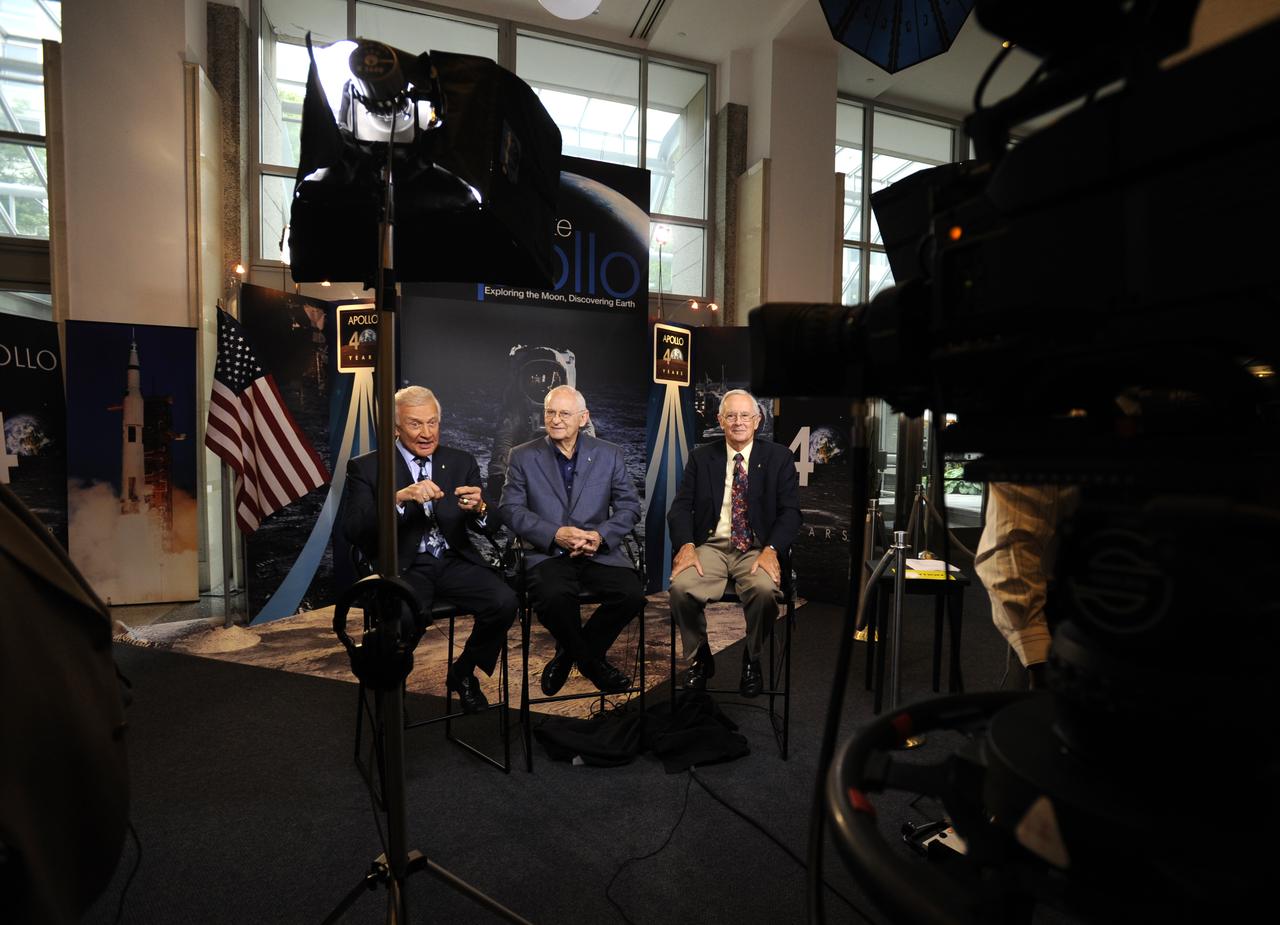
Apollo 11 astronaut Buzz Aldrin, the second man to walk on the Moon, seated left, responds to a question during a live television interview on Monday, July 20, 2009, at NASA Headquarters in Washington as Apollo 12 astronaut Alan Bean and Apollo 16 astronaut Charles Duke, right look on. The three sat in for interviews with morning talks shows covering the 40th Anniversary of the Apollo 11 landing on the Moon. Photo Credit: (NASA/Paul E. Alers)
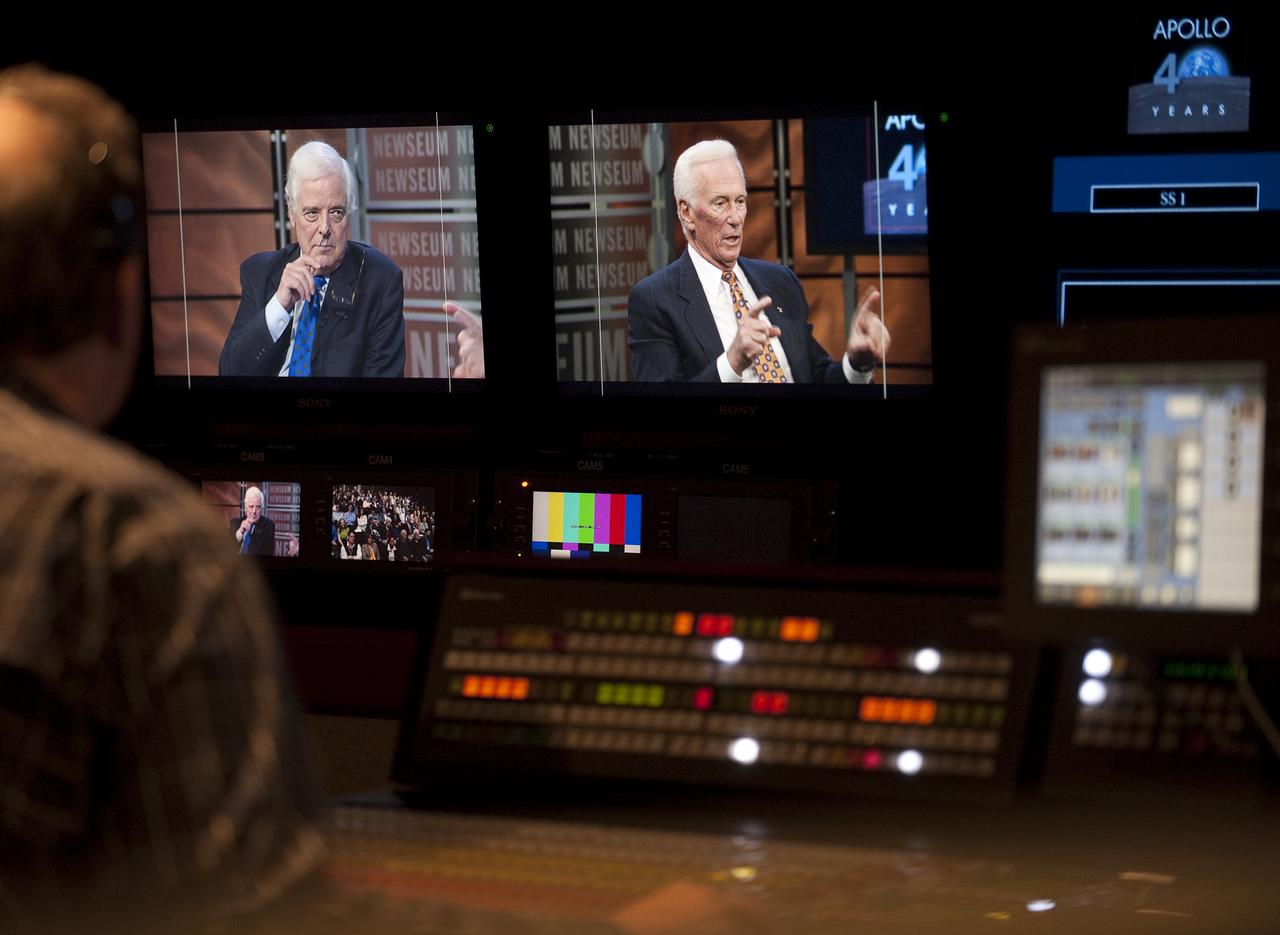
In this image made inside the TV production studio of the Newseum, NASA Apollo 10 Astronaut Gene Cernan, right monitor, answers questions from the Newseum's distinguished journalist-in-residence, Nick Clooney, left monitor, during a Newseum TV program celebrating the 40th anniversary of Apollo 10, Monday, May 18, 2009, in Washington. Photo Credit (NASA/Bill Ingalls)
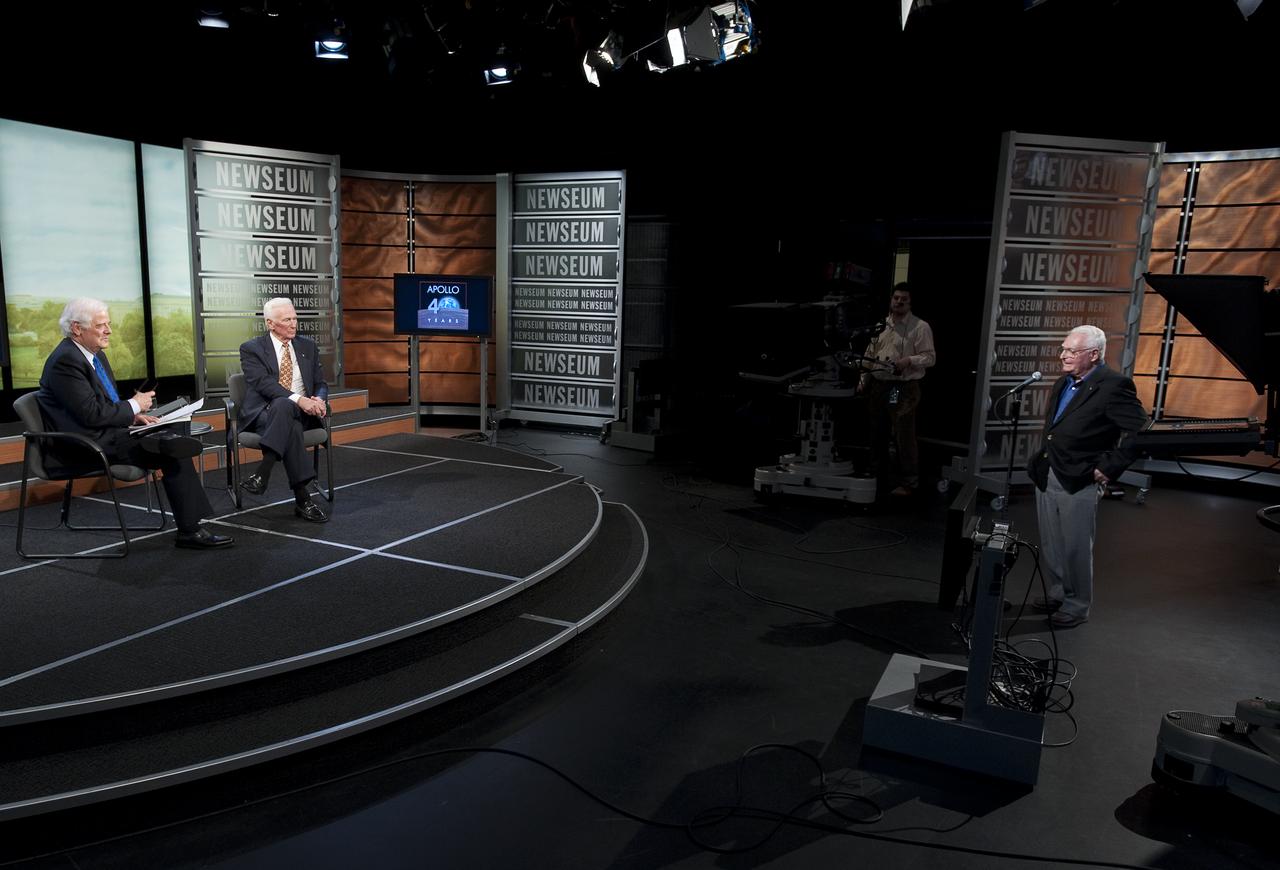
NASA Apollo 10 Astronaut Gene Cernan, on stage, right, and the Newseum's distinguished journalist-in-residence, Nick Clooney, on stage, left, talk with a Stan LeBar, Program Manager of the Apollo TV Lunar Camera who helped see that Apollo 10 was the first mission to broadcast in color from the moon during a Newseum TV program celebrating the 40th anniversary of Apollo 10, Monday, May 18, 2009, in Washington. Photo Credit (NASA/Bill Ingalls)
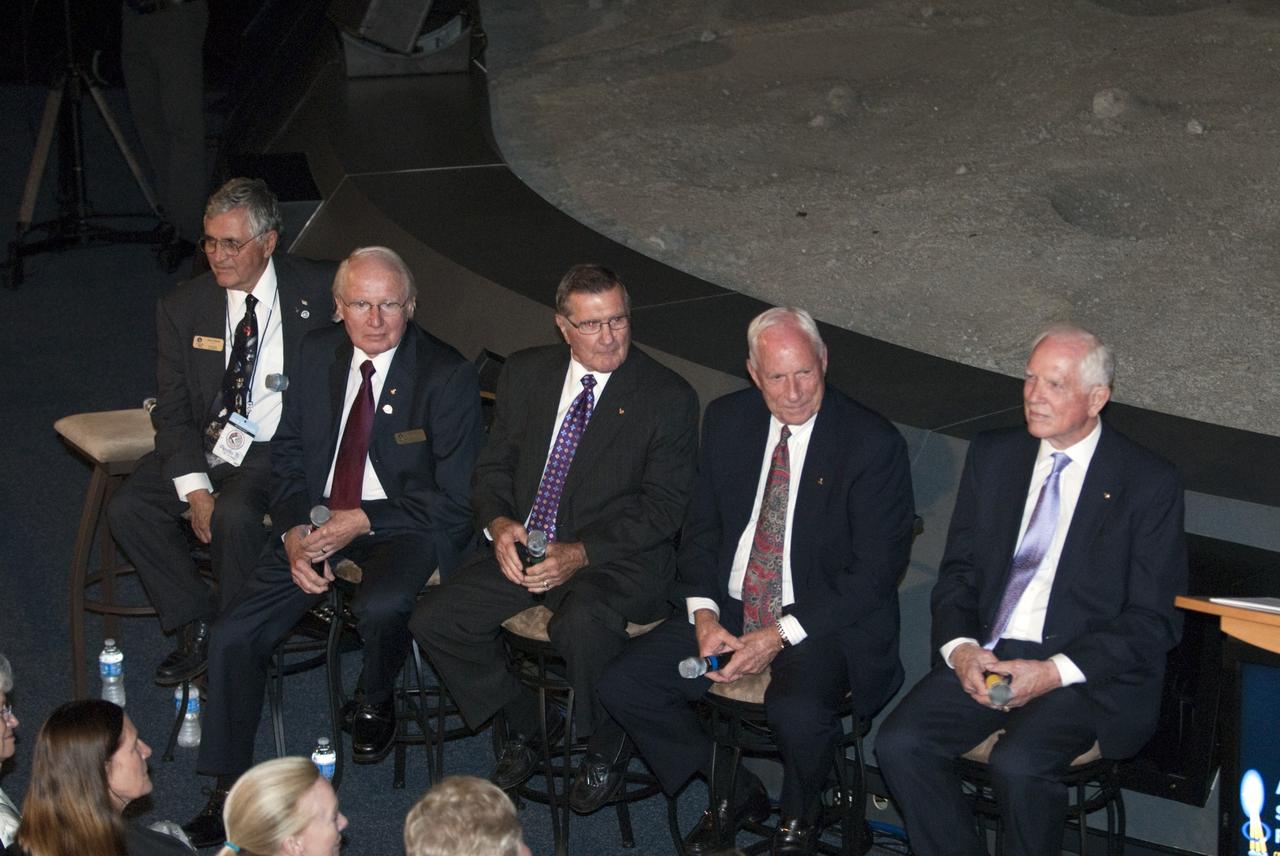
CAPE CANAVERAL, Fla. -- The Apollo/Saturn V Center at NASA's Kennedy Space Center in Florida hosted a celebration on the 40th anniversary of NASA's Apollo 15 mission. Apollo 15 Commander Dave Scott and Command Module Pilot Al Worden and an elite gathering of Apollo-era astronauts were on hand for the event and panel discussion. Seen here are Apollo 15 astronaut backup support crew members, Jack Schmitt (left), Vance Brand and Dick Gordon; Al Worden and Dave Scott. Worden circled the moon while Scott and the late Jim Irwin, the Lunar Module commander, made history when they became the first humans to drive a vehicle on the surface of the moon. They also provided extensive descriptions and photographic documentation of geologic features in the vicinity of the Hadley Rille landing site during their three days on the lunar surface. Photo credit: NASA/Kim Shiflett
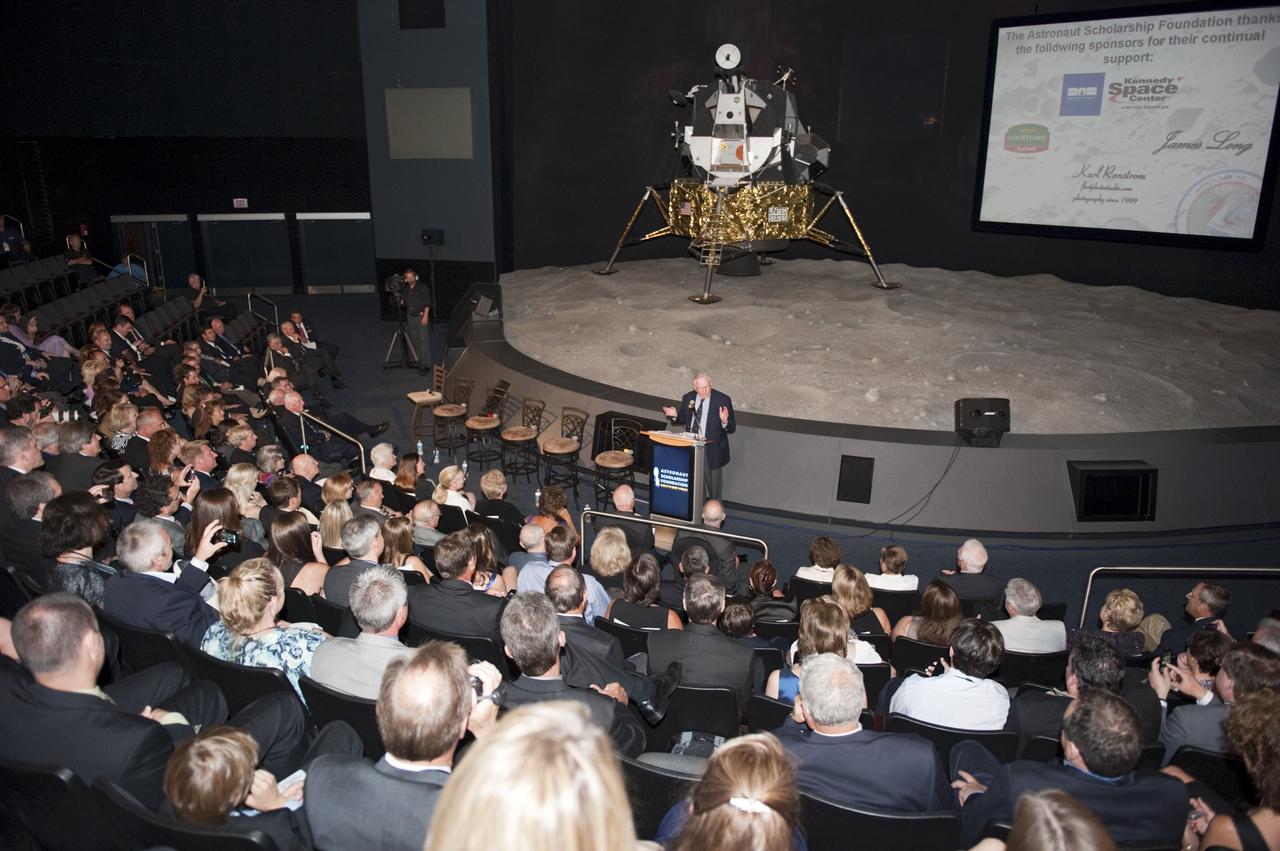
CAPE CANAVERAL, Fla. -- The Apollo/Saturn V Center at NASA's Kennedy Space Center in Florida hosted a celebration on the 40th anniversary of NASA's Apollo 15 mission. Apollo 15 Commander Dave Scott and Command Module Pilot Al Worden and an elite gathering of Apollo-era astronauts were on hand for the event and panel discussion. Here, Apollo 11 Commander Neil Armstrong speaks to the invited guests. In the background is a model of the Lunar Module, part of the lander portion of the Apollo spacecraft. Worden circled the moon while Scott and the late Jim Irwin, the Lunar Module commander, made history when they became the first humans to drive a vehicle on the surface of the moon. They also provided extensive descriptions and photographic documentation of geologic features in the vicinity of the Hadley Rille landing site during their three days on the lunar surface. Photo credit: NASA/Kim Shiflett
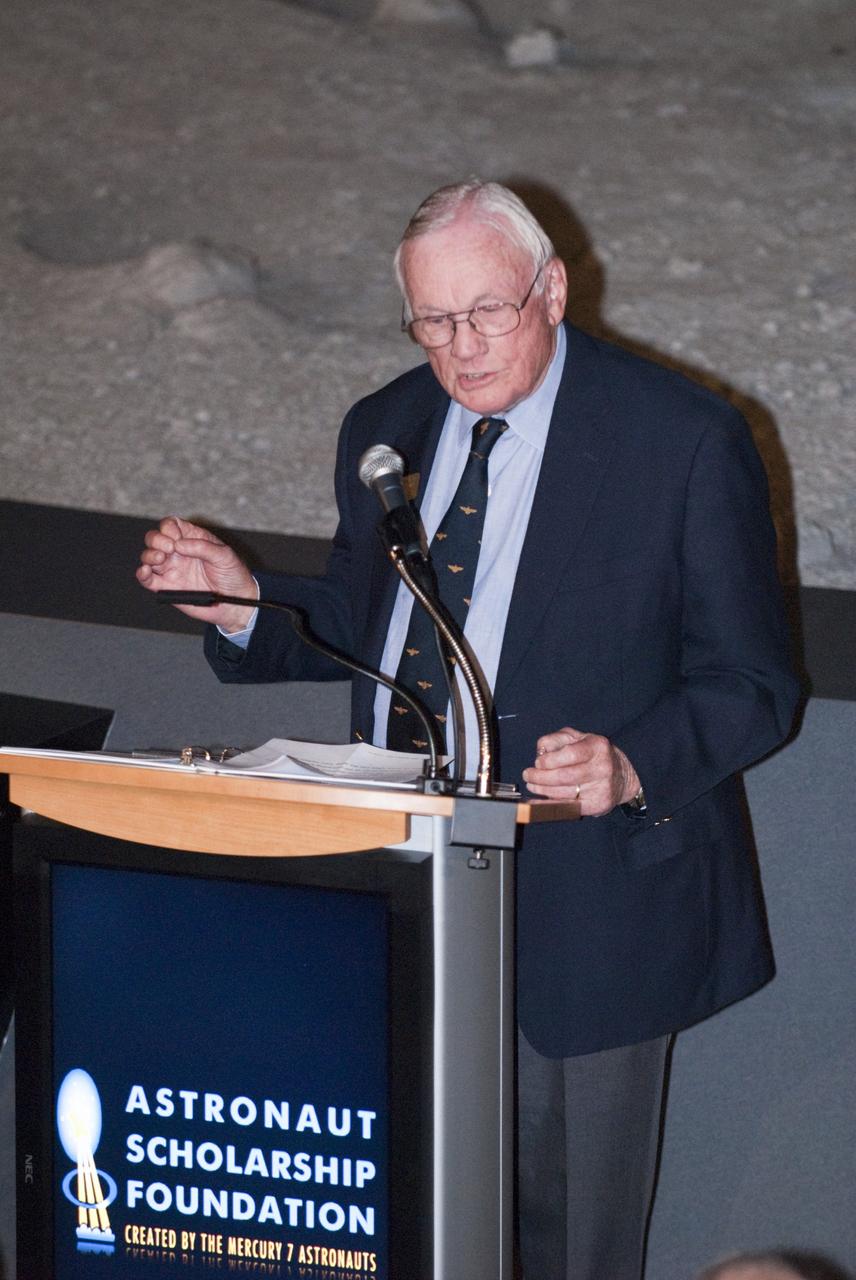
CAPE CANAVERAL, Fla. -- The Apollo/Saturn V Center at NASA's Kennedy Space Center in Florida hosted a celebration on the 40th anniversary of NASA's Apollo 15 mission. Apollo 15 Commander Dave Scott, Command Module Pilot Al Worden and an elite gathering of Apollo-era astronauts were on hand for the event and panel discussion. Here, Apollo 11 Commander Neil Armstrong speaks to the invited guests. Worden circled the moon while Scott and the late Jim Irwin, the Lunar Module commander, made history when they became the first humans to drive a vehicle on the surface of the moon. They also provided extensive descriptions and photographic documentation of geologic features in the vicinity of the Hadley Rille landing site during their three days on the lunar surface. Photo credit: NASA/Kim Shiflett
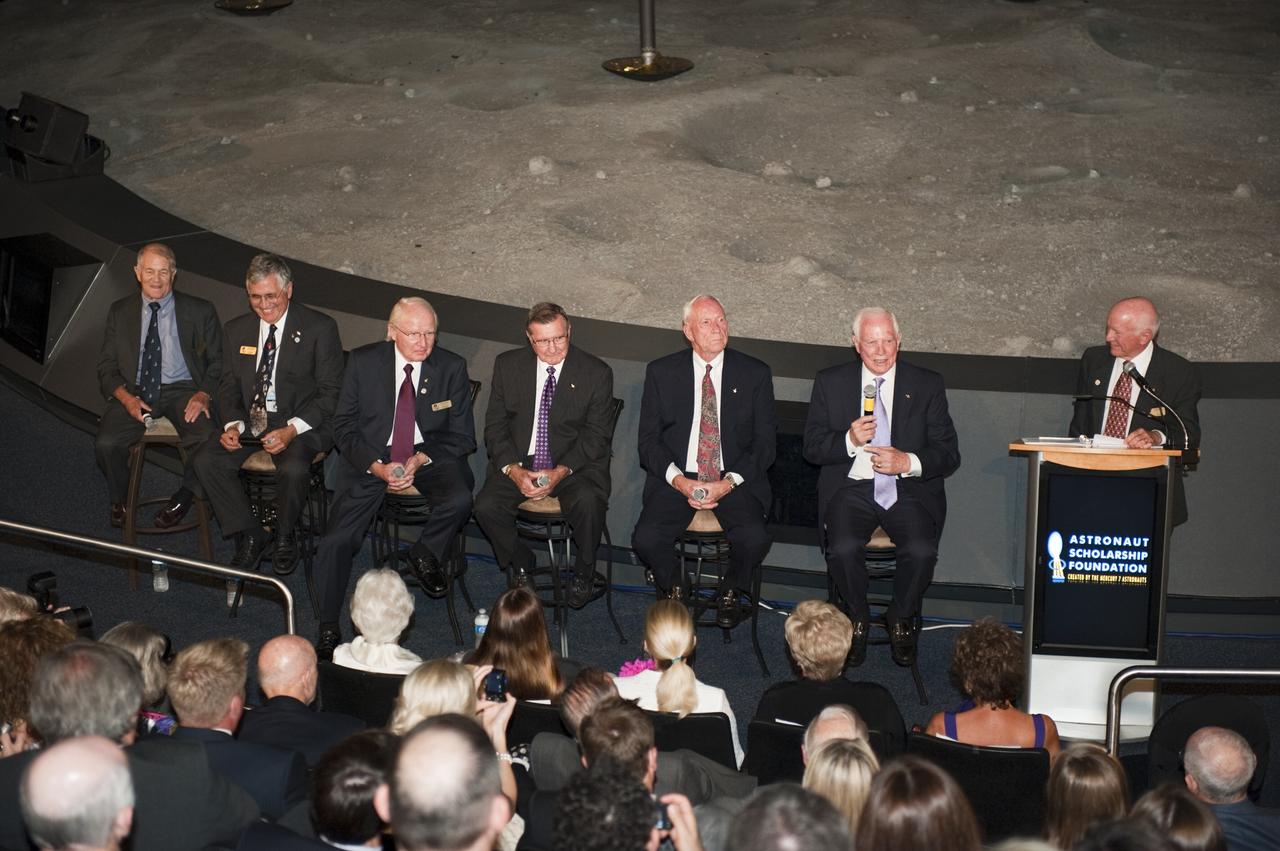
CAPE CANAVERAL, Fla. -- The Apollo/Saturn V Center at NASA's Kennedy Space Center in Florida hosted a celebration on the 40th anniversary of NASA's Apollo 15 mission. An elite gathering of Apollo-era astronauts were on hand for the event and panel discussion. Gerry Griffin, Apollo 15 flight director moderates the question-and-answer period with the panel. From left are: Apollo 15 astronaut backup support crew members, Joe Allen, Jack Schmitt, Vance Brand and Dick Gordon; Al Worden and Dave Scott. Worden circled the moon while Scott and the late Jim Irwin, the Lunar Module commander, made history when they became the first humans to drive a vehicle on the surface of the moon. They also provided extensive descriptions and photographic documentation of geologic features in the vicinity of the Hadley Rille landing site during their three days on the lunar surface. Photo credit: NASA/Kim Shiflett

CAPE CANAVERAL, Fla. -- The Apollo/Saturn V Center at NASA's Kennedy Space Center in Florida hosted a celebration on the 40th anniversary of NASA's Apollo 15 mission. Apollo 15 Commander Dave Scott and Command Module Pilot Al Worden and an elite gathering of Apollo-era astronauts were on hand for the event and panel discussion. Here, Al Worden with microphone in hand, speaks to the invited guests. Worden circled the moon while Scott and the late Jim Irwin, the Lunar Module commander, made history when they became the first humans to drive a vehicle on the surface of the moon. They also provided extensive descriptions and photographic documentation of geologic features in the vicinity of the Hadley Rille landing site during their three days on the lunar surface. Photo credit: NASA/Kim Shiflett
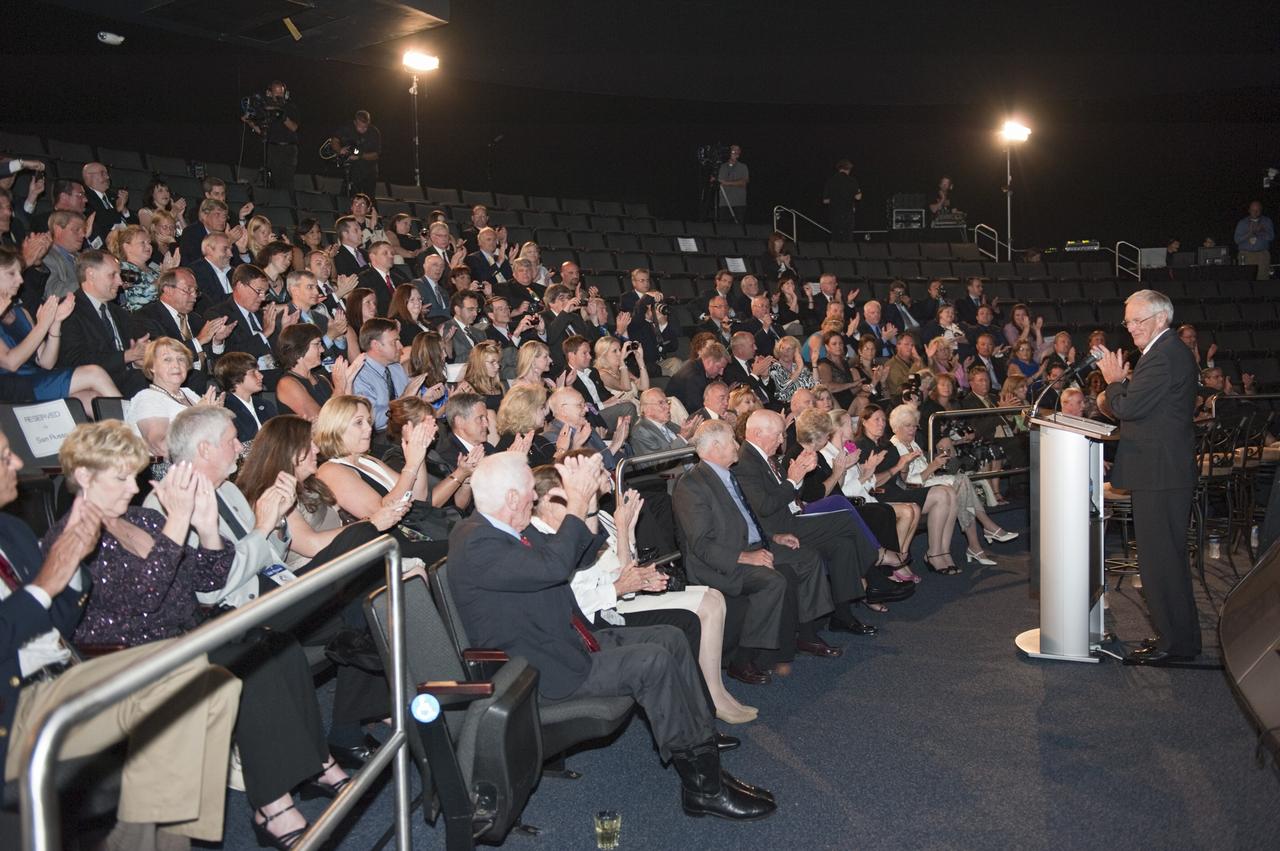
CAPE CANAVERAL, Fla. -- The Apollo/Saturn V Center at NASA's Kennedy Space Center in Florida hosted a celebration on the 40th anniversary of NASA's Apollo 15 mission. Apollo 15 Commander Dave Scott (right) and Command Module Pilot Al Worden and an elite gathering of Apollo-era astronauts were on hand for the event and panel discussion. Worden circled the moon while Scott and the late Jim Irwin, the Lunar Module commander, made history when they became the first humans to drive a vehicle on the surface of the moon. They also provided extensive descriptions and photographic documentation of geologic features in the vicinity of the Hadley Rille landing site during their three days on the lunar surface. Photo credit: NASA/Kim Shiflett
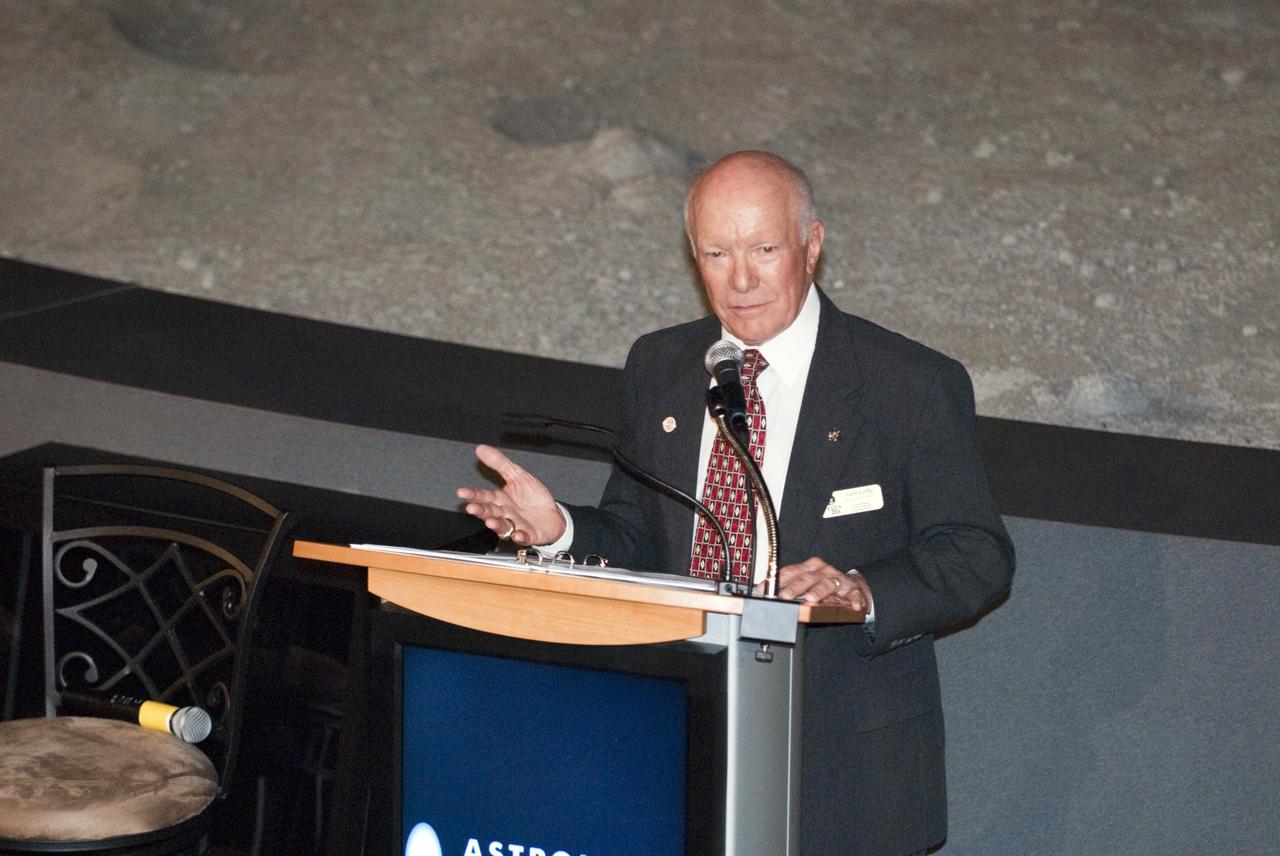
CAPE CANAVERAL, Fla. -- The Apollo/Saturn V Center at NASA's Kennedy Space Center in Florida hosted a celebration on the 40th anniversary of NASA's Apollo 15 mission. Apollo 15 Commander Dave Scott, Command Module Pilot Al Worden and an elite gathering of Apollo-era astronauts were on hand for the event and panel discussion. Here, Apollo 16 Lunar Module Pilot Charlie Duke welcomes the invited guests and introduces the guests of honor. Worden circled the moon while Scott and the late Jim Irwin, the Lunar Module commander, made history when they became the first humans to drive a vehicle on the surface of the moon. They also provided extensive descriptions and photographic documentation of geologic features in the vicinity of the Hadley Rille landing site during their three days on the lunar surface. Photo credit: NASA/Kim Shiflett
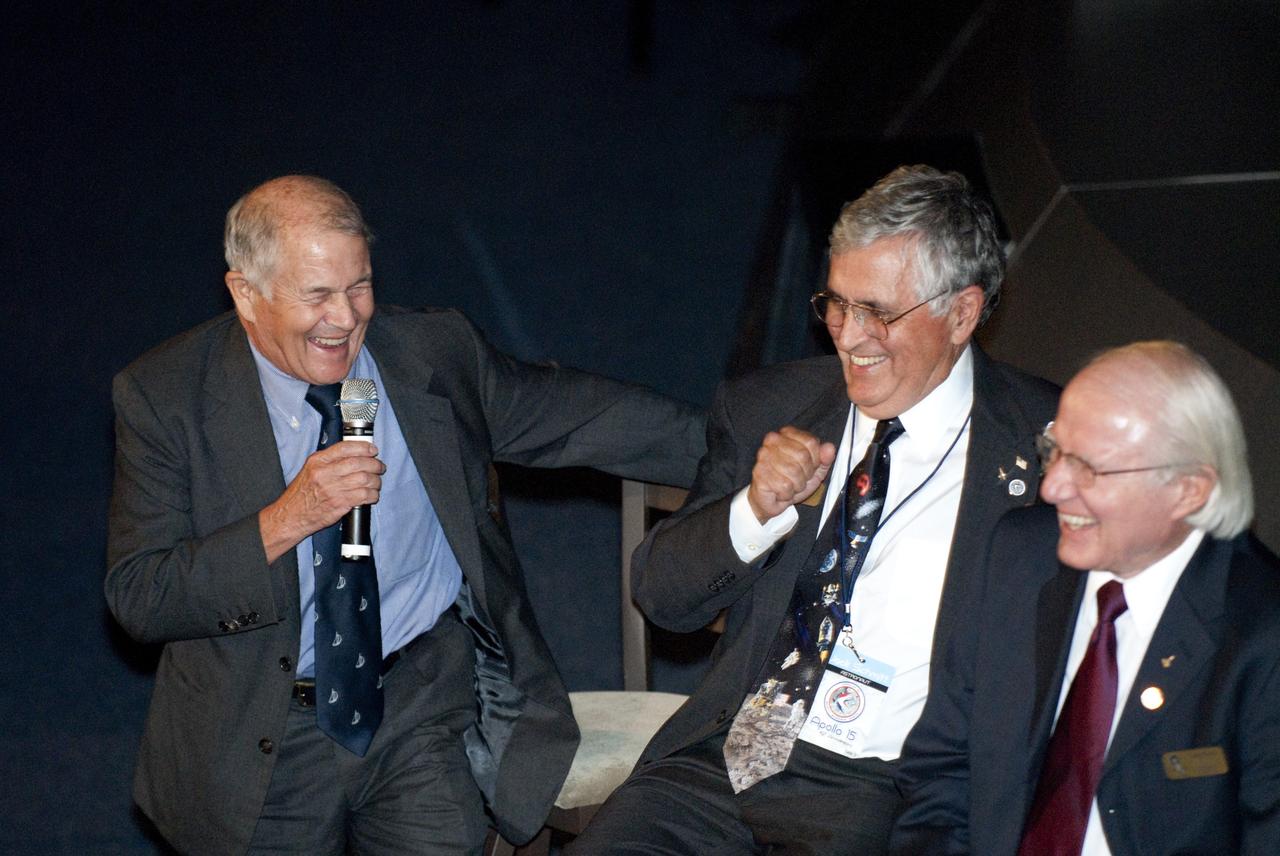
CAPE CANAVERAL, Fla. -- The Apollo/Saturn V Center at NASA's Kennedy Space Center in Florida hosted a celebration on the 40th anniversary of NASA's Apollo 15 mission. Apollo 15 Commander Dave Scott and Command Module Pilot Al Worden and an elite gathering of Apollo-era astronauts were on hand for the event and panel discussion. Here, Gerry Griffin, Apollo 15 flight director, speaks to the invited guests. Worden circled the moon while Scott and the late Jim Irwin, the Lunar Module commander, made history when they became the first humans to drive a vehicle on the surface of the moon. They also provided extensive descriptions and photographic documentation of geologic features in the vicinity of the Hadley Rille landing site during their three days on the lunar surface. Photo credit: NASA/Kim Shiflett
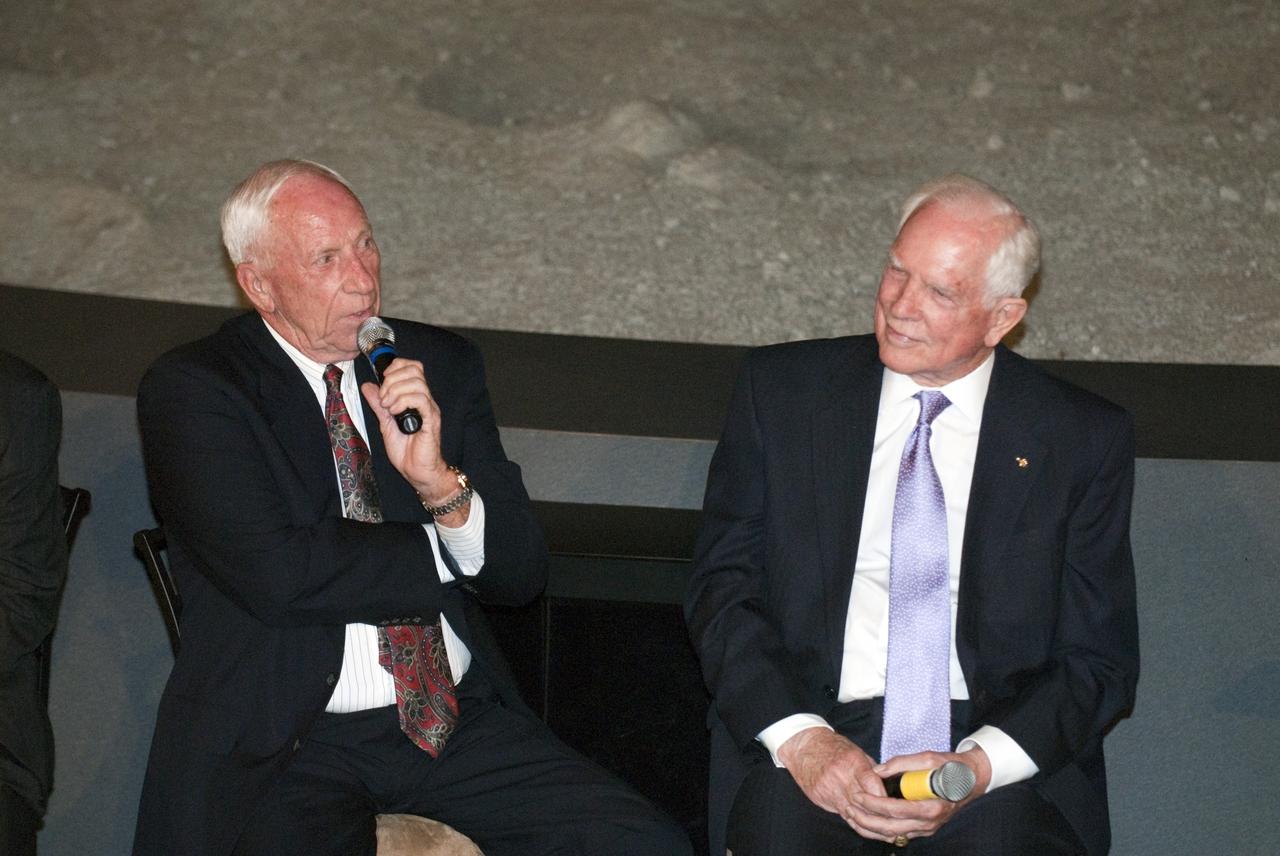
CAPE CANAVERAL, Fla. -- The Apollo/Saturn V Center at NASA's Kennedy Space Center in Florida hosted a celebration on the 40th anniversary of NASA's Apollo 15 mission. Apollo 15 Commander Dave Scott and Command Module Pilot Al Worden and an elite gathering of Apollo-era astronauts were on hand for the event and panel discussion. Here, sharing a light moment are from left, Apollo 15 astronaut support crew members, Joe Allen, Jack Schmitt and Vance Brand. Worden circled the moon while Scott and the late Jim Irwin, the Lunar Module commander, made history when they became the first humans to drive a vehicle on the surface of the moon. They also provided extensive descriptions and photographic documentation of geologic features in the vicinity of the Hadley Rille landing site during their three days on the lunar surface. Photo credit: NASA/Kim Shiflett
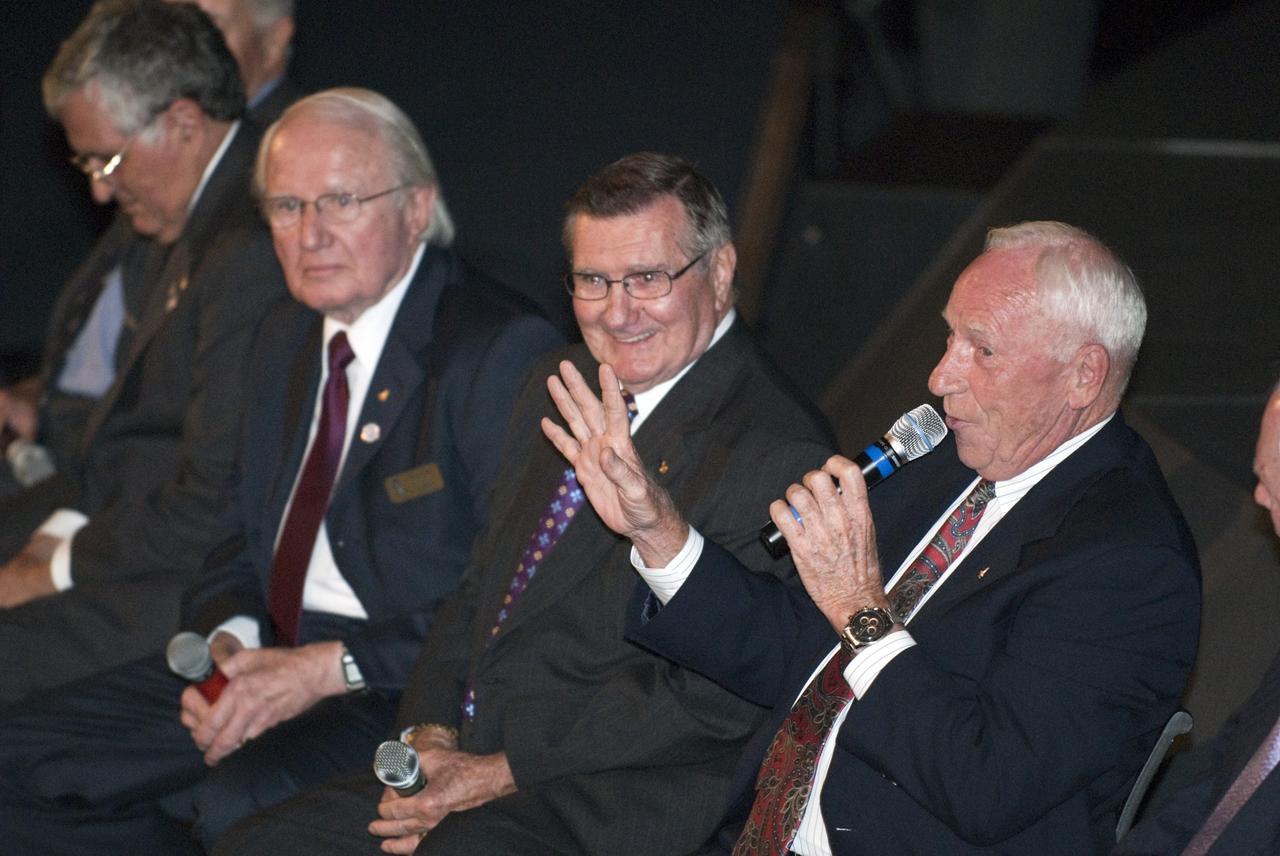
CAPE CANAVERAL, Fla. -- The Apollo/Saturn V Center at NASA's Kennedy Space Center in Florida hosted a celebration on the 40th anniversary of NASA's Apollo 15 mission. Apollo 15 Commander Dave Scott and Command Module Pilot Al Worden and an elite gathering of Apollo-era astronauts were on hand for the event and panel discussion. Seen here are Al Worden (right), and Apollo 15 astronaut backup support crew members, Dick Gordon, Vance Brand and Jack Schmitt. Worden circled the moon while Scott and the late Jim Irwin, the Lunar Module commander, made history when they became the first humans to drive a vehicle on the surface of the moon. They also provided extensive descriptions and photographic documentation of geologic features in the vicinity of the Hadley Rille landing site during their three days on the lunar surface. Photo credit: NASA/Kim Shiflett
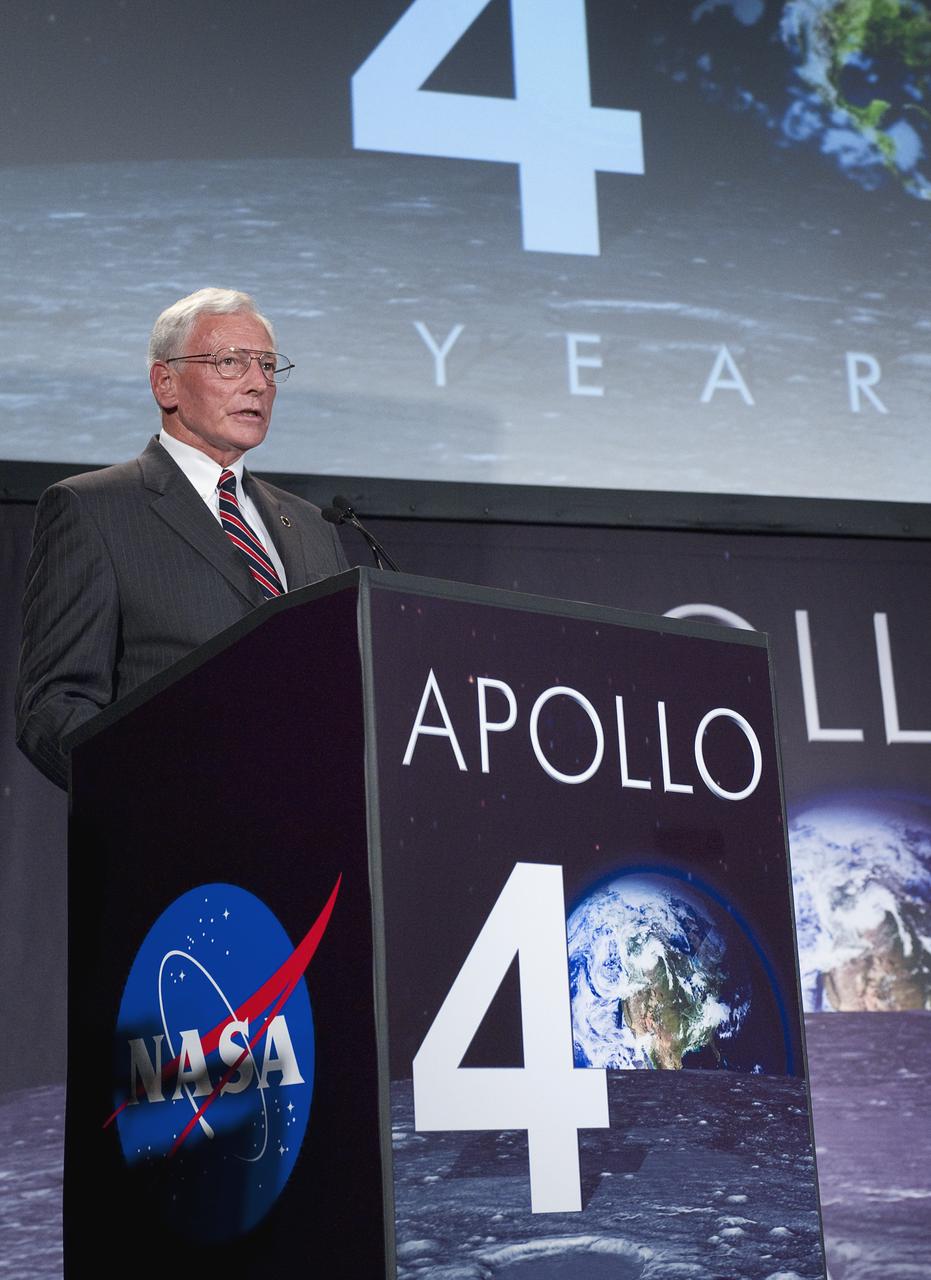
Director of the Smithsonian's National Air and Space Museum Gen. John R. "Jack" Dailey gives his opening remarks at the Apollo 40th anniversary celebration held at the National Air and Space Museum, Monday, July 20, 2009 in Washington. Photo Credit: (NASA/Bill Ingalls)
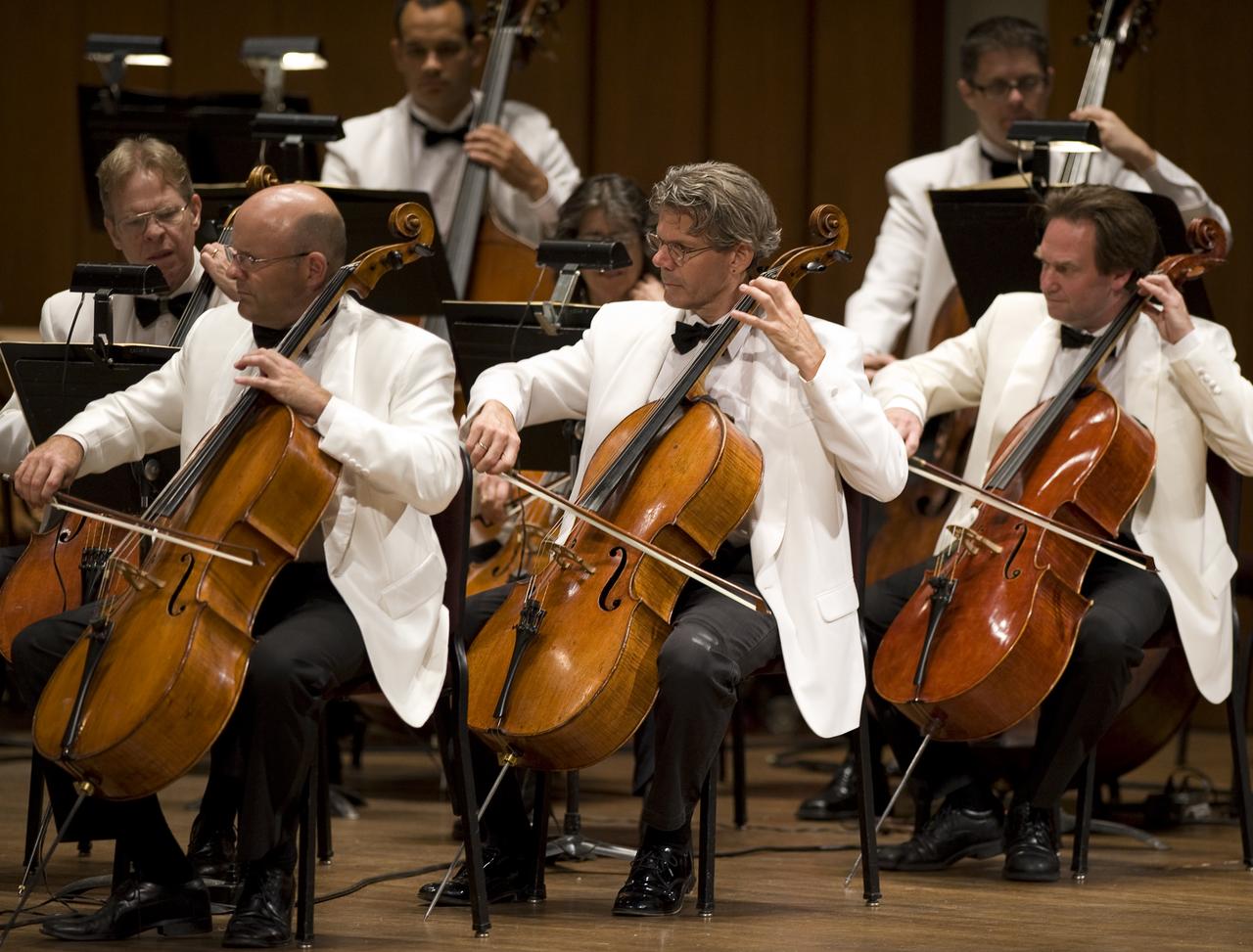
Members of the National Symphony Orchestra, under Conductor Emil de Cou, perform during the "Salute to Apollo" ceremony at the Kennedy Center for the Performing Arts, Saturday, July 18, 2009 in Washington. The event was part of NASA's week long celebration of the Apollo 40th Anniversary. Photo Credit: (NASA/Bill Ingalls)
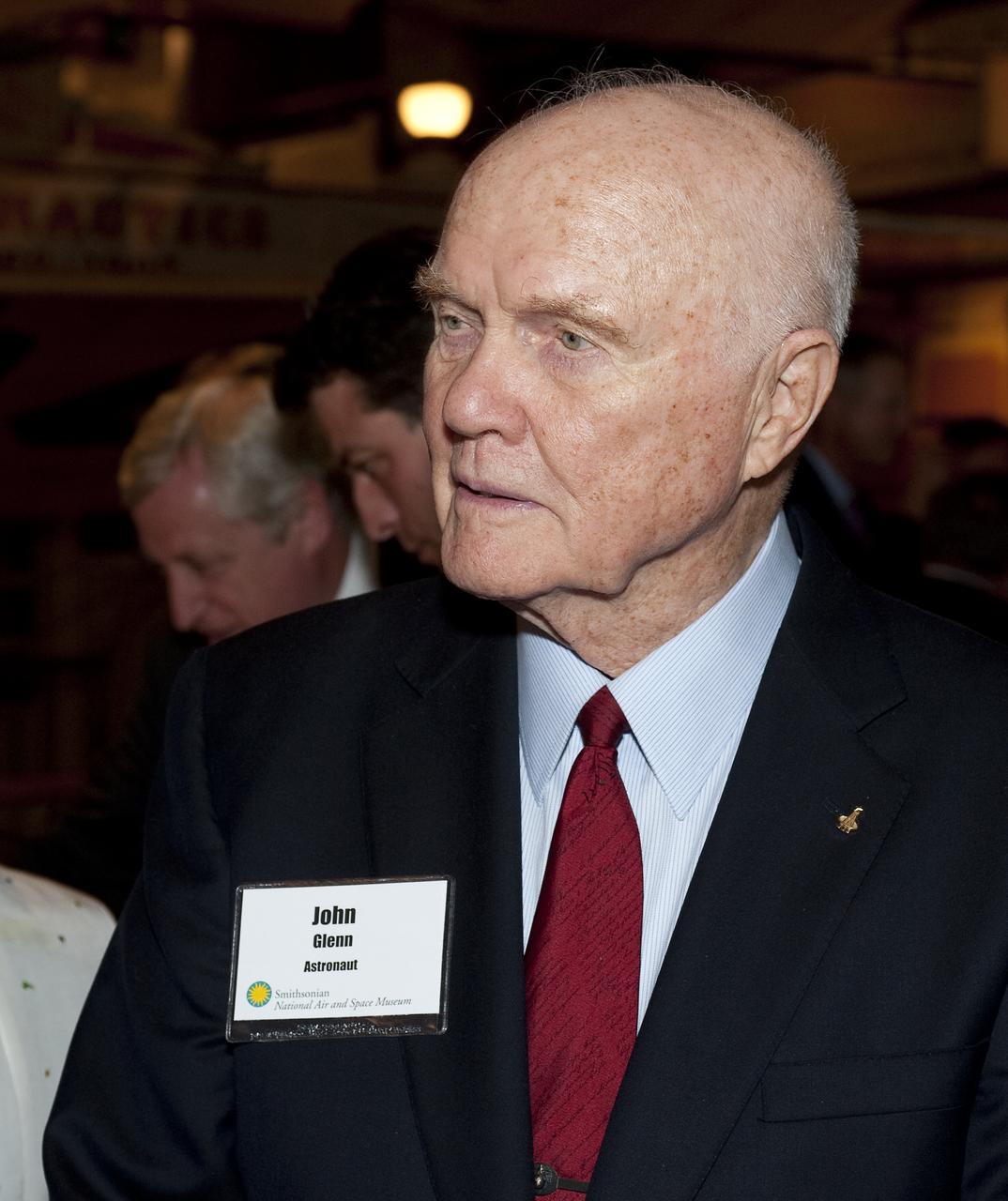
Former NASA Astronaut and U.S. Senator John Glenn is seen at the opening of the exhibit "Alan Bean: Painting Apollo, First Artist on Another World" at the National Air and Space Museum, Monday, July 20, 2009 in Washington. The show opening coincided with the 40th anniversary celebration of Apollo. Photo Credit: (NASA/Carla Cioffi)
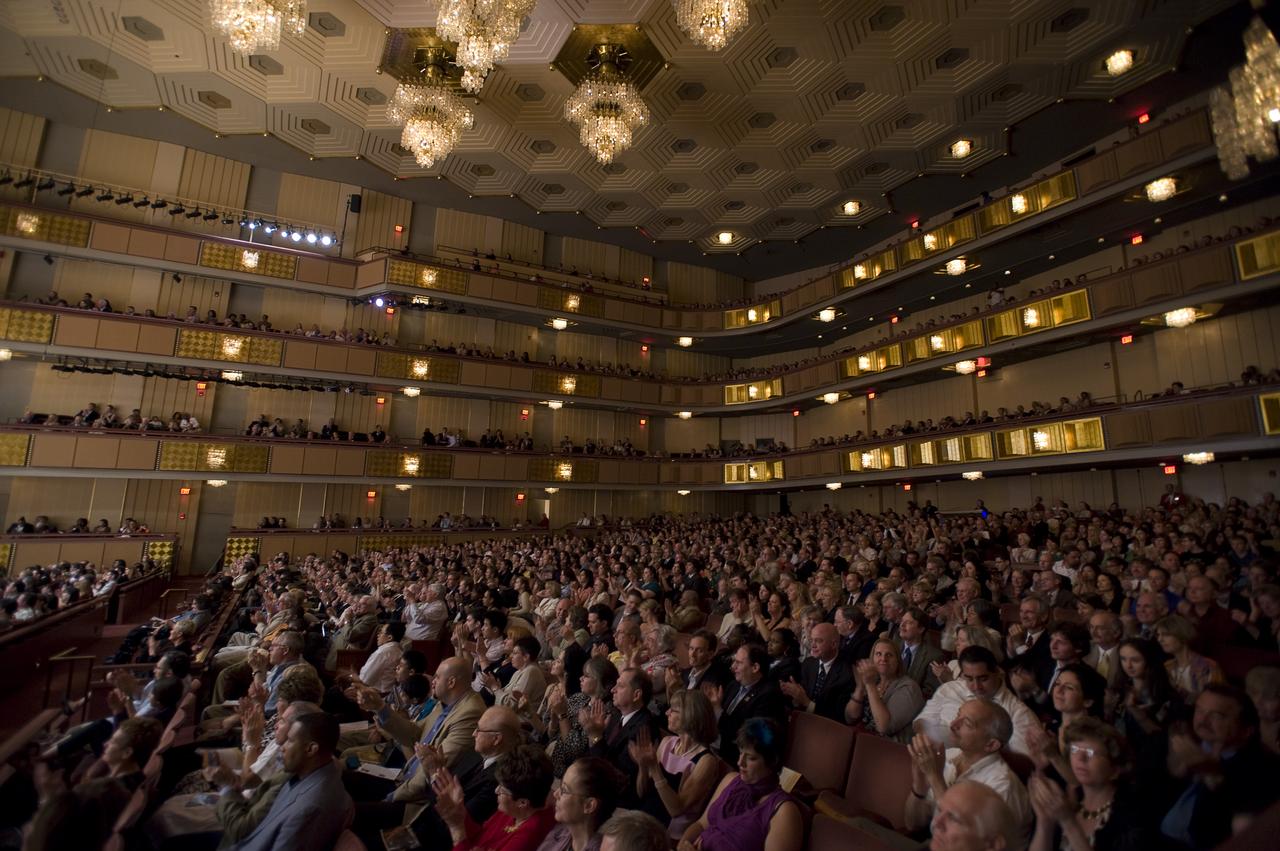
The audience applauds during the "Salute to Apollo" ceremony at the Kennedy Center for the Performing Arts, Saturday, July 18, 2009 in Washington. The event was part of NASA's week long celebration of the Apollo 40th Anniversary. Photo Credit: (NASA/Bill Ingalls)
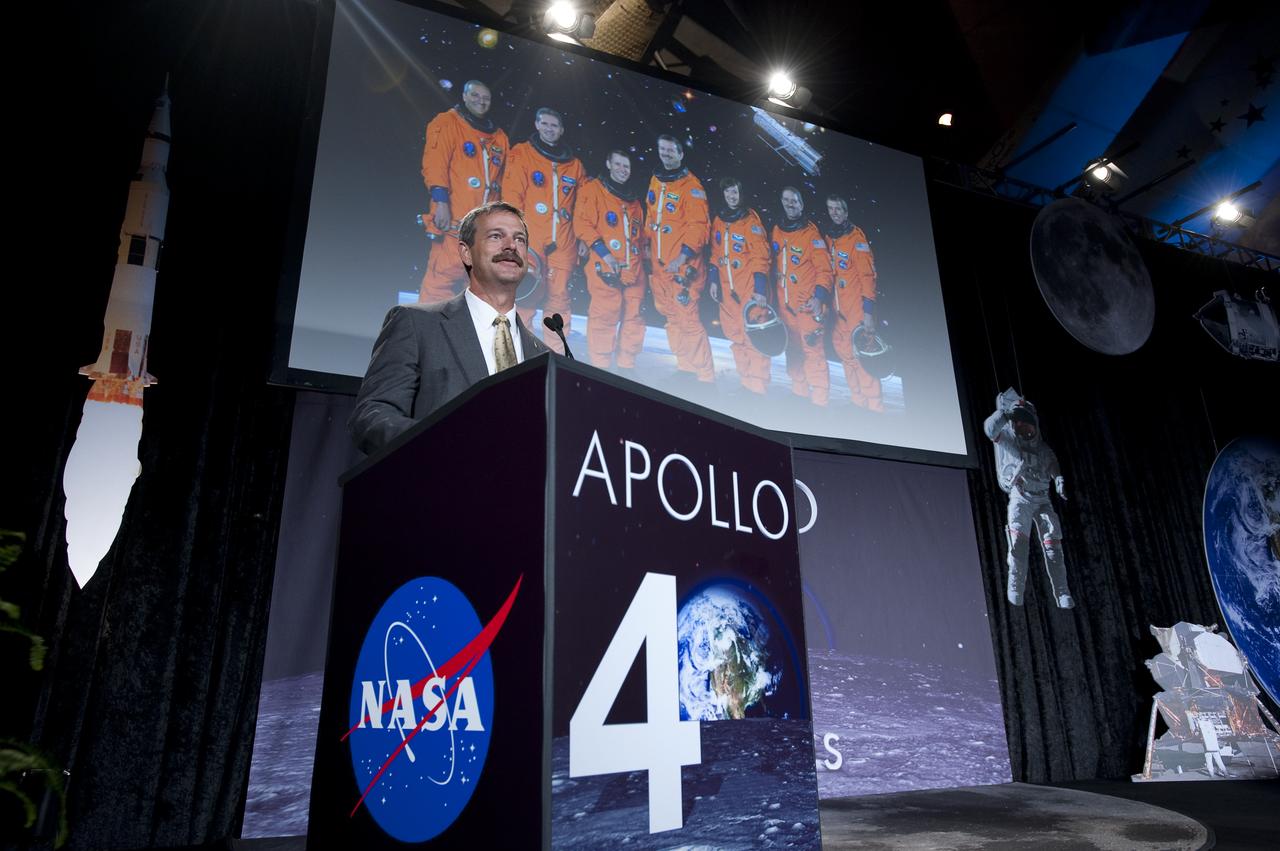
NASA STS-125 Mission Commander Scott Altman speaks at the Apollo 40th anniversary celebration held at the National Air and Space Museum, Monday, July 20, 2009 in Washington. Photo Credit: (NASA/Bill Ingalls)
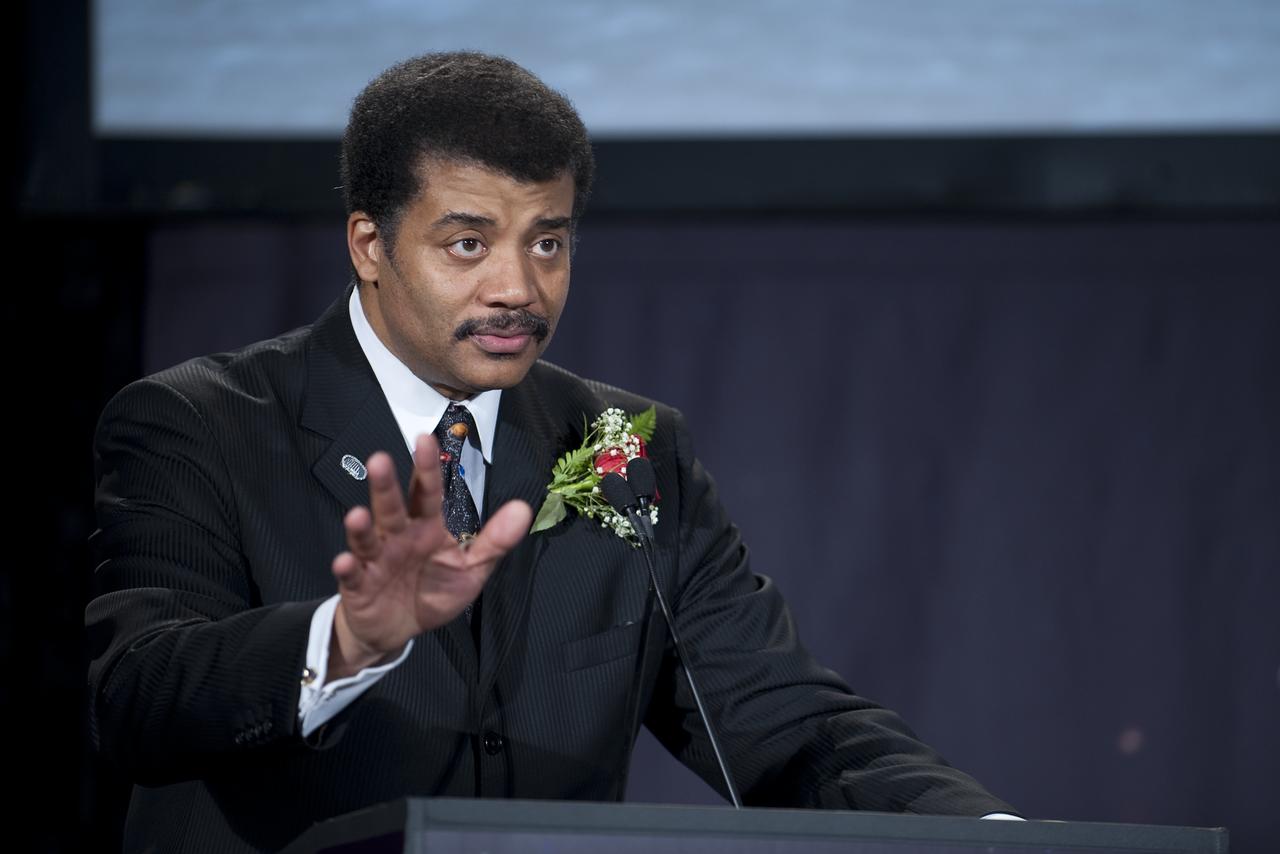
Director of the Hayden Planetarium Neil deGrasse Tyson speaks as host of the Apollo 40th anniversary celebration held at the National Air and Space Museum, Monday, July 20, 2009 in Washington. Photo Credit: (NASA/Bill Ingalls)
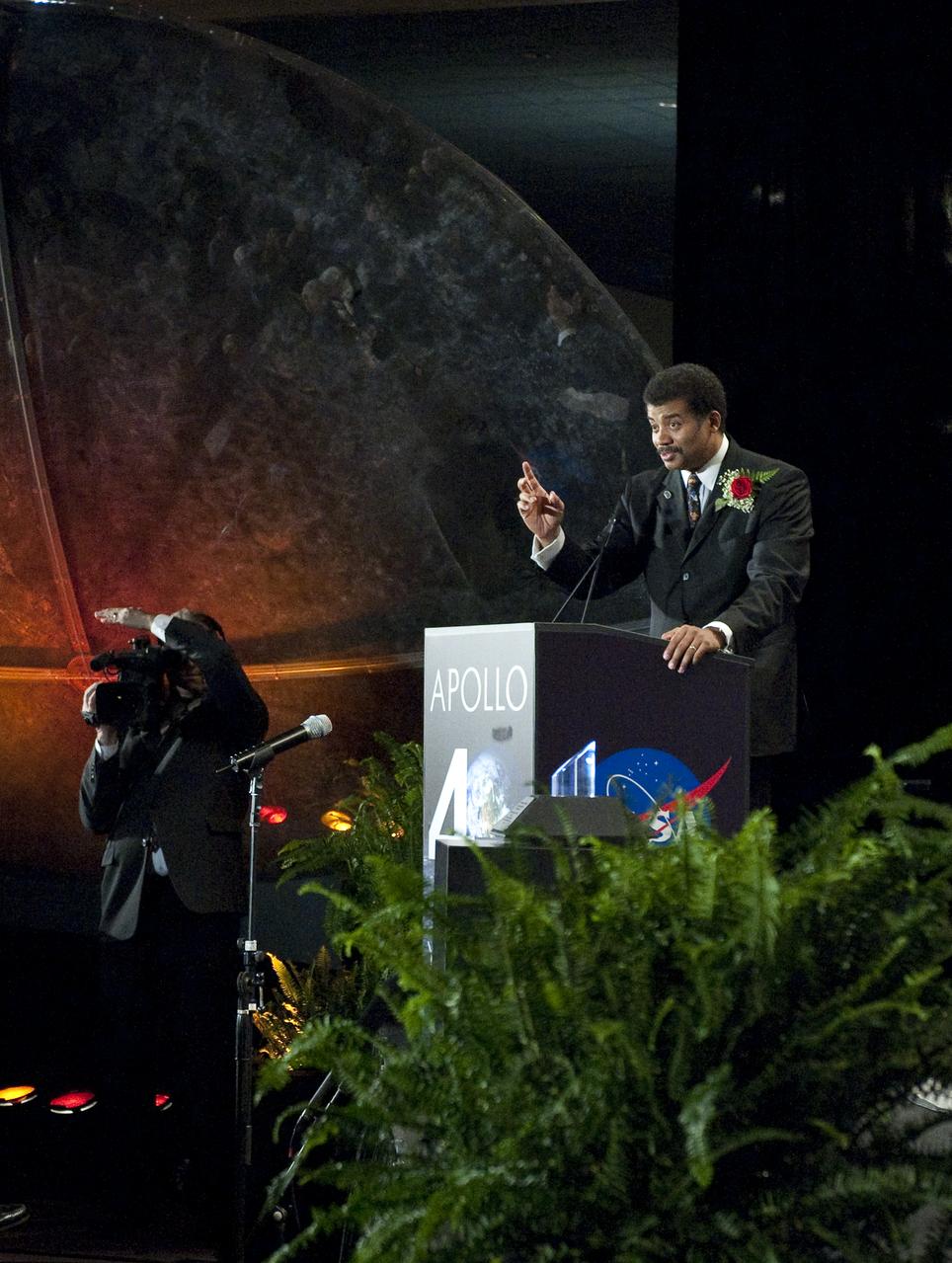
Director of the Hayden Planetarium Neil deGrasse Tyson speaks as host of the Apollo 40th anniversary celebration held at the National Air and Space Museum, Monday, July 20, 2009 in Washington. Photo Credit: (NASA/Carla Cioffi)
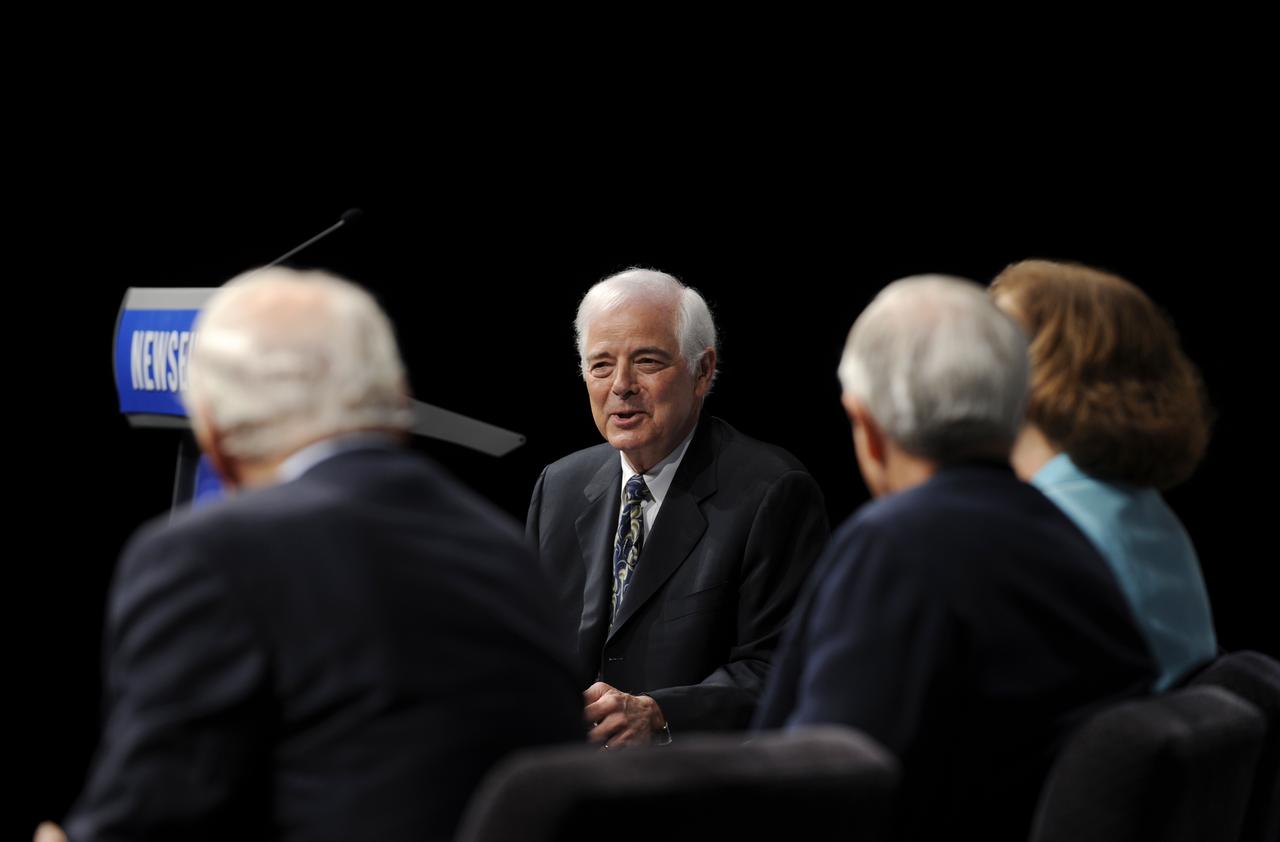
Veteran journalist Nick Clooney, center, moderated a panel discussion with Apollo 11 astronaut Buzz Aldrin, far right, Charlie Duke of Apollo 16, John Grunsfeld, of the recent Hubble mission, not seen, and Goddard Space Flight Center deputy director Laurie Leshin, Monday, July 20, 2009, at the Newseum in Washington as part of the commemoration of the 40th Anniversary of the Apollo 11 moon landing. Photo Credit: (NASA/Bill Ingalls)
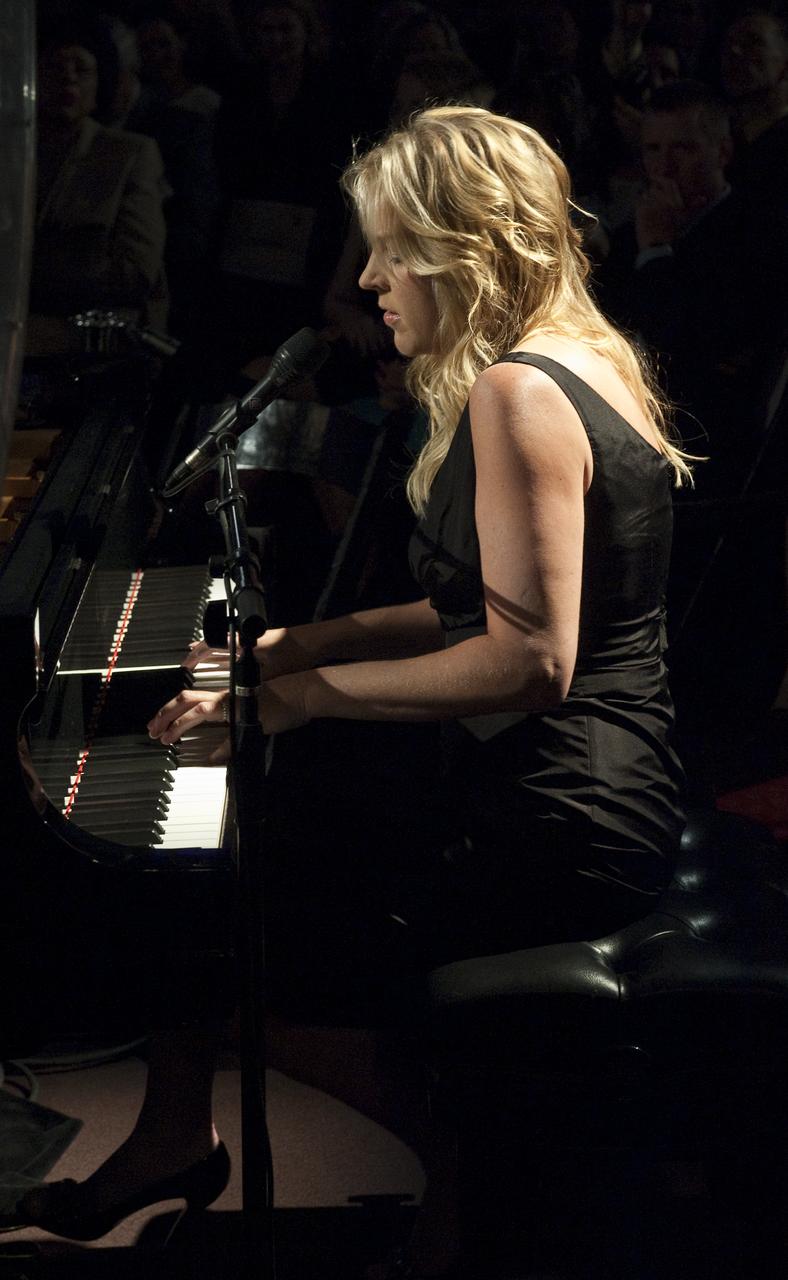
Jazz pianist and singer Diana Krall performs at the Apollo 40th anniversary celebration held at the National Air and Space Museum, Monday, July 20, 2009 in Washington. Diana Krall talked about her love of space flight and showed off her temporary tattoo that honors Canadian Astronaut Bob Thirsk who is currently onboard the International Space Station. Photo Credit: (NASA/Carla Cioffi)
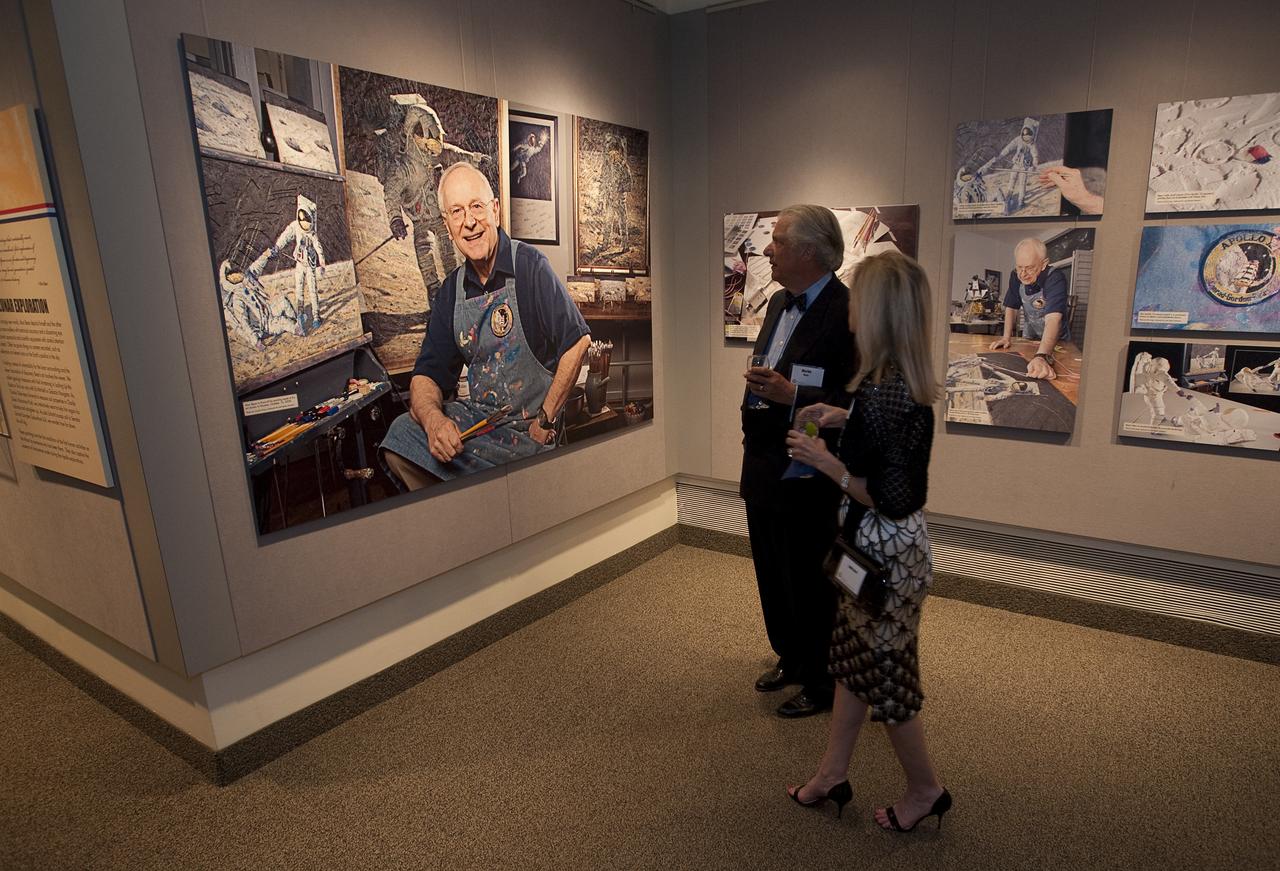
Guest view works of art by NASA Apollo 12 Astronaut and Artist Alan Bean during the opening of the show "Alan Bean: Painting Apollo, First Artist on Another World" at the National Air and Space Museum, Monday, July 20, 2009 in Washington. The show opening coincided with the 40th anniversary celebration of Apollo. Photo Credit: (NASA/Bill Ingalls)

Jazz pianist and singer Diana Krall performs at the Apollo 40th anniversary celebration held at the National Air and Space Museum, Monday, July 20, 2009 in Washington. Diana Krall talked about her love of space flight and showed off her temporary tattoo that honors Canadian Astronaut Bob Thirsk who is currently onboard the International Space Station. Photo Credit: (NASA/Bill Ingalls)
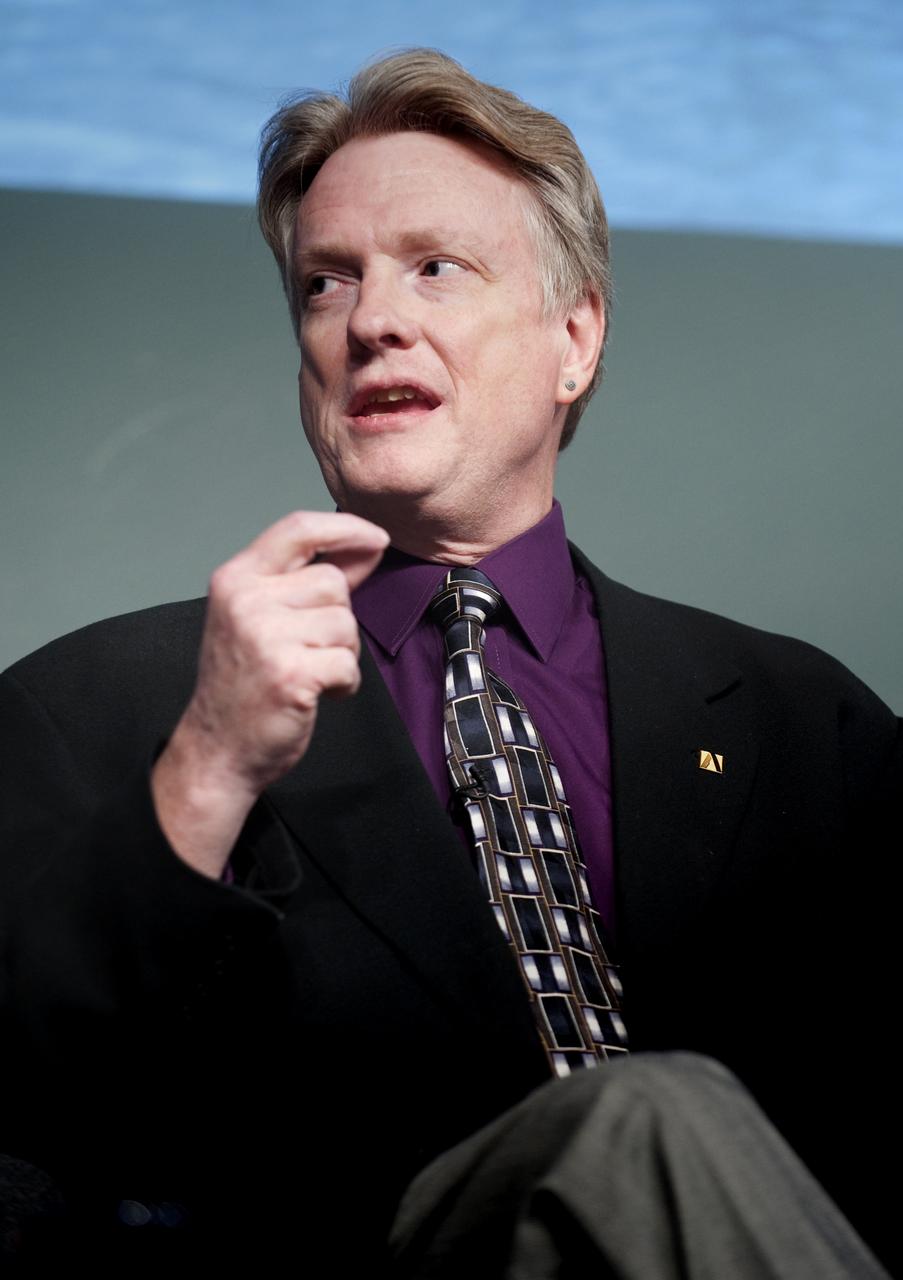
Roger Launius, senior curator in space history at the National Air and Space Museum makes a point during an Apollo History and Legacy roundtable discussion, Thursday, July 16, 2009, at NASA Headquarters in Washington. Photo Credit: (NASA/Paul E. Alers)
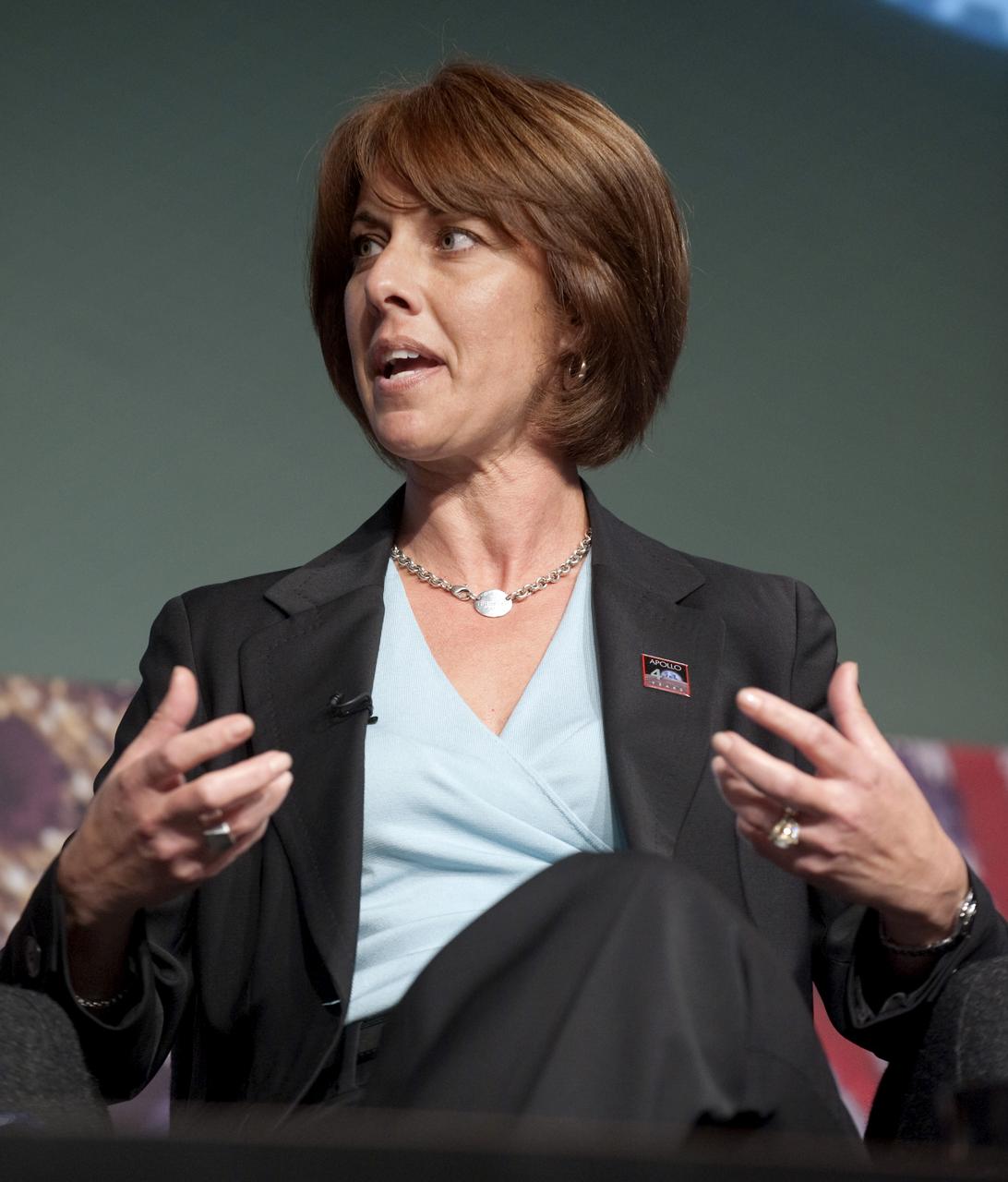
Cristina Guidi, deputy director, Constellation Systems Division, Exploration Systems Mission Directorate, NASA Headquarters, speaks during an Apollo History and Legacy roundtable discussion, Thursday, July 16, 2009, at NASA Headquarters in Washington. Photo Credit: (NASA/Paul E. Alers)
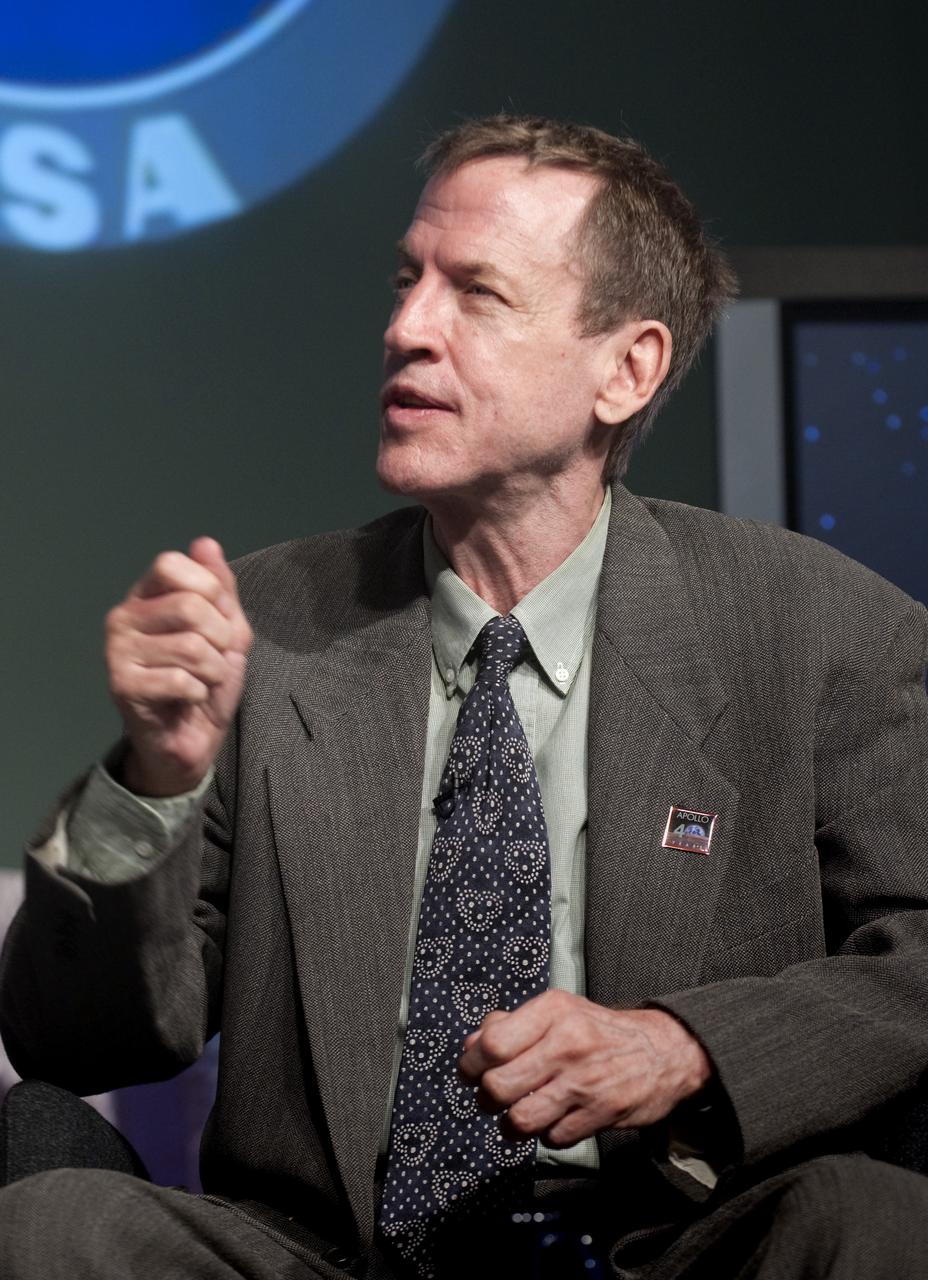
Craig Nelson, author of "Rocket Men: The Epic Story of the First Men on the Moon" speaks during an Apollo History and Legacy roundtable discussion, Thursday, July 16, 2009, at NASA Headquarters in Washington. Photo Credit: (NASA/Paul E. Alers)
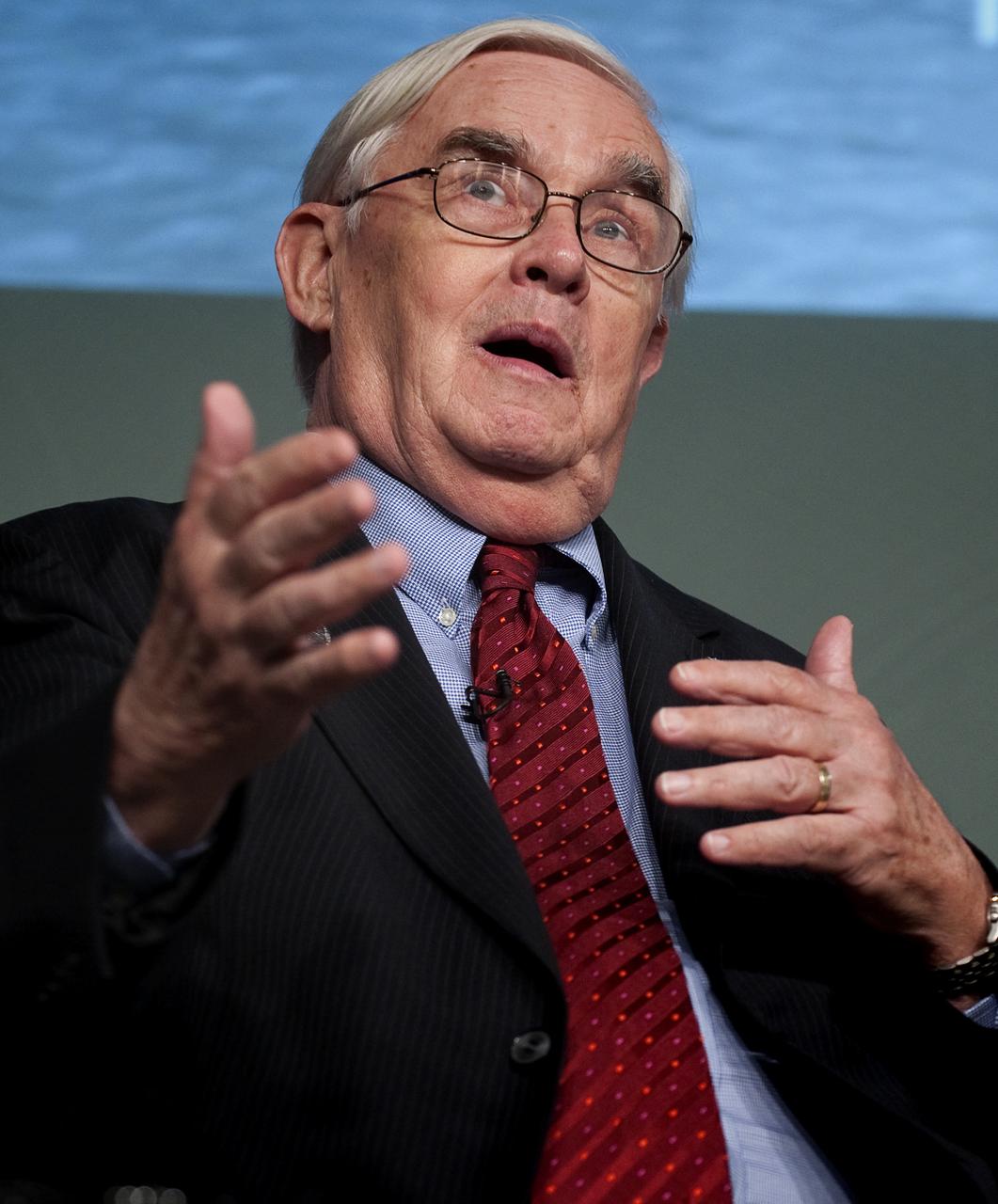
John Logsdon, Charles A. Lindbergh chair in aerospace history at the Smithsonian, emphasizes a point during an Apollo History and Legacy roundtable discussion, Thursday, July 16, 2009, at NASA Headquarters in Washington. Photo Credit: (NASA/Paul E. Alers)
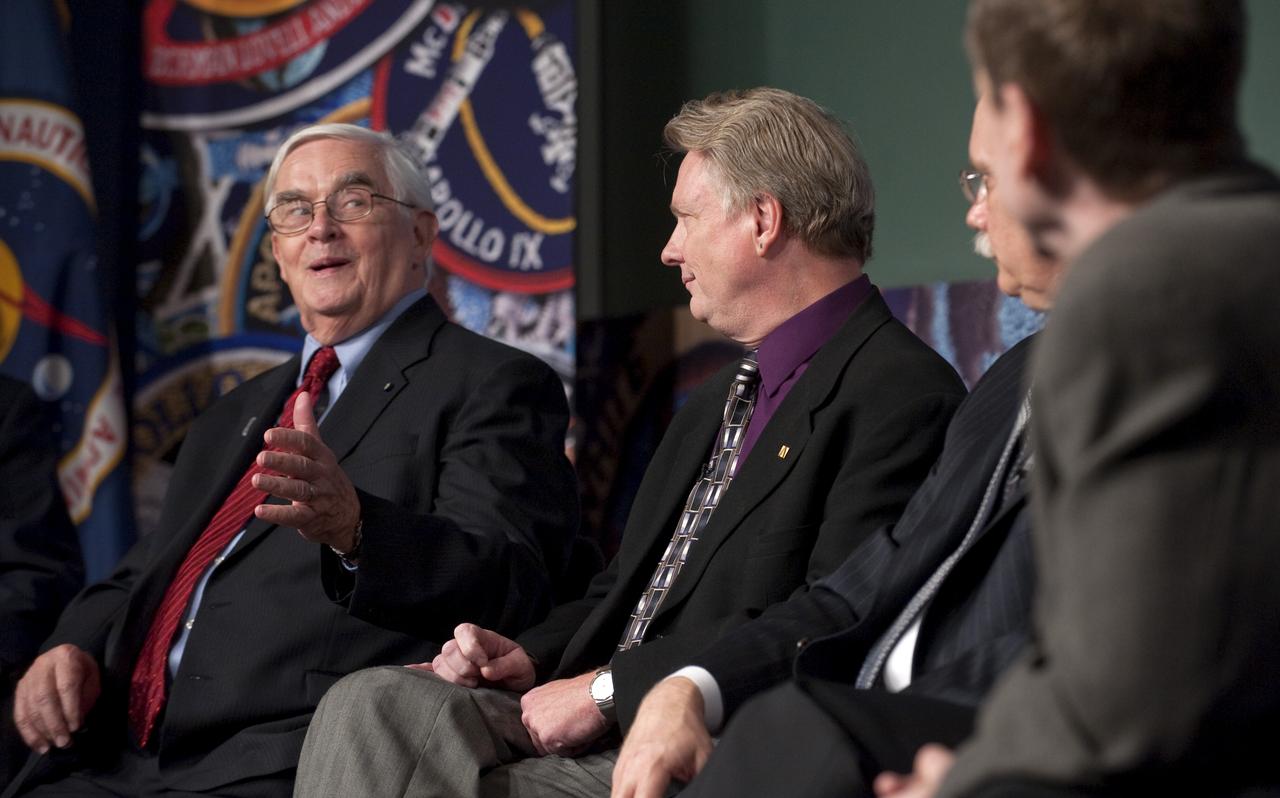
John Logsdon, Charles A. Lindbergh chair in aerospace history at the Smithsonianan, left, speaks as other panelists look on during an Apollo History and Legacy roundtable discussion, Thursday, July 16, 2009, at NASA Headquarters in Washington. Photo Credit: (NASA/Paul E. Alers)
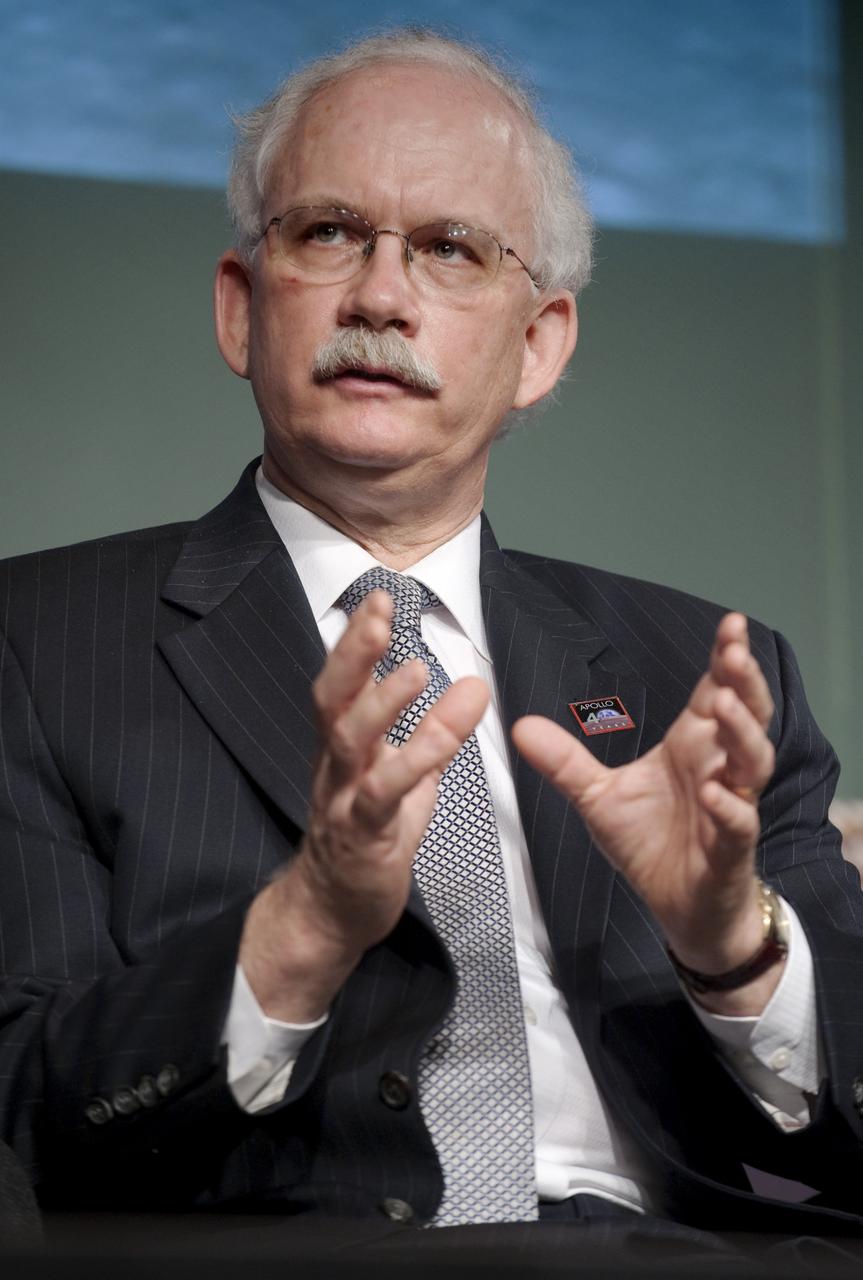
Michael Neufeld, chair of the division of space history at the National Air and Space Museum, speaks during an Apollo History and Legacy roundtable discussion, Thursday, July 16, 2009, at NASA Headquarters in Washington. Photo Credit: (NASA/Paul E. Alers)
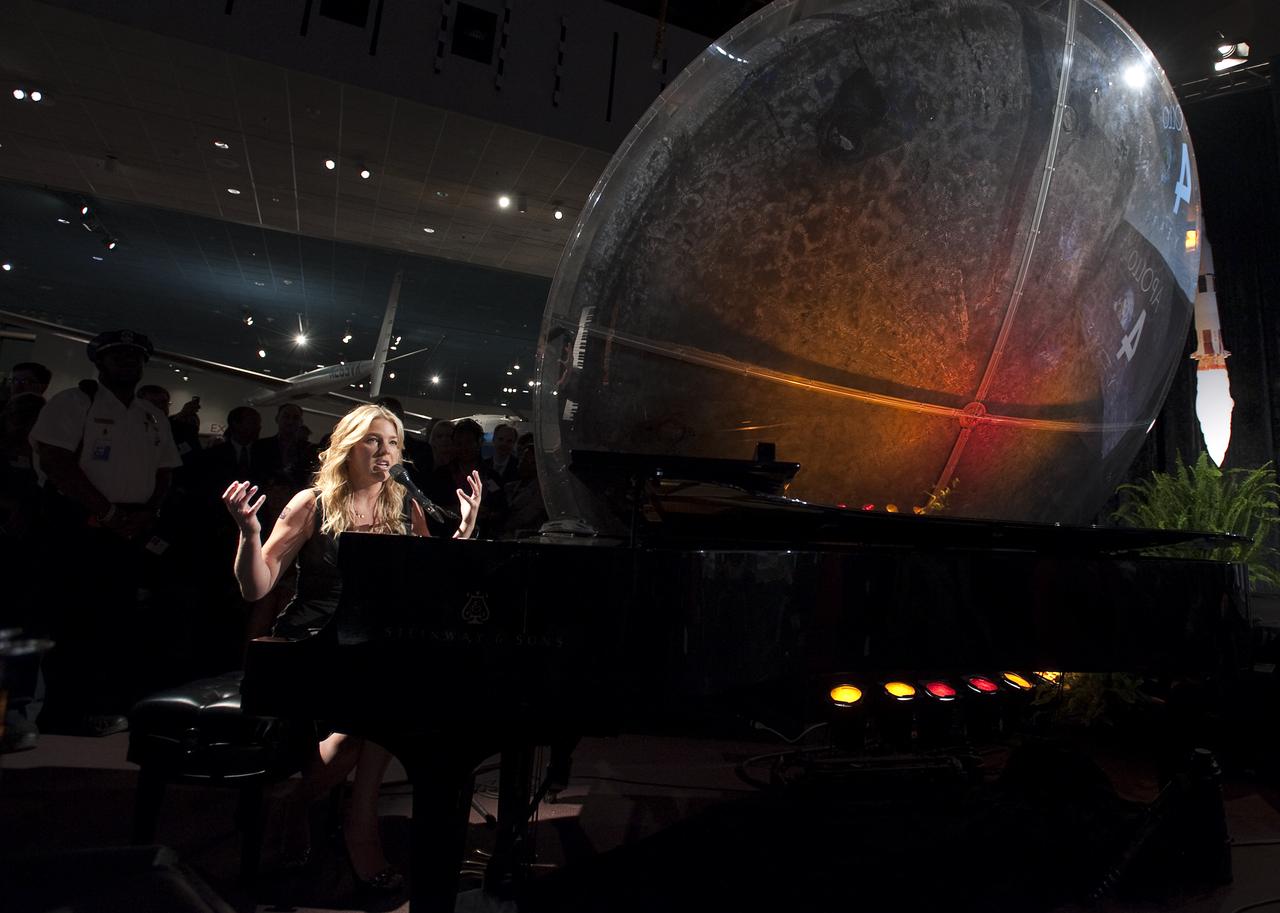
Jazz pianist and singer Diana Krall gives an introduction prior to her performance at the Apollo 40th anniversary celebration held at the National Air and Space Museum, Monday, July 20, 2009 in Washington. Ms. Krall's piano was staged right next to the Apollo 11 Command Capsule. Photo Credit: (NASA/Bill Ingalls)

Opera singer Denyce Graves sings during the "Salute to Apollo" ceremony at the Kennedy Center for the Performing Arts, Saturday, July 18, 2009 in Washington. The event was part of NASA's week long celebration of the Apollo 40th Anniversary. Photo Credit: (NASA/Bill Ingalls)
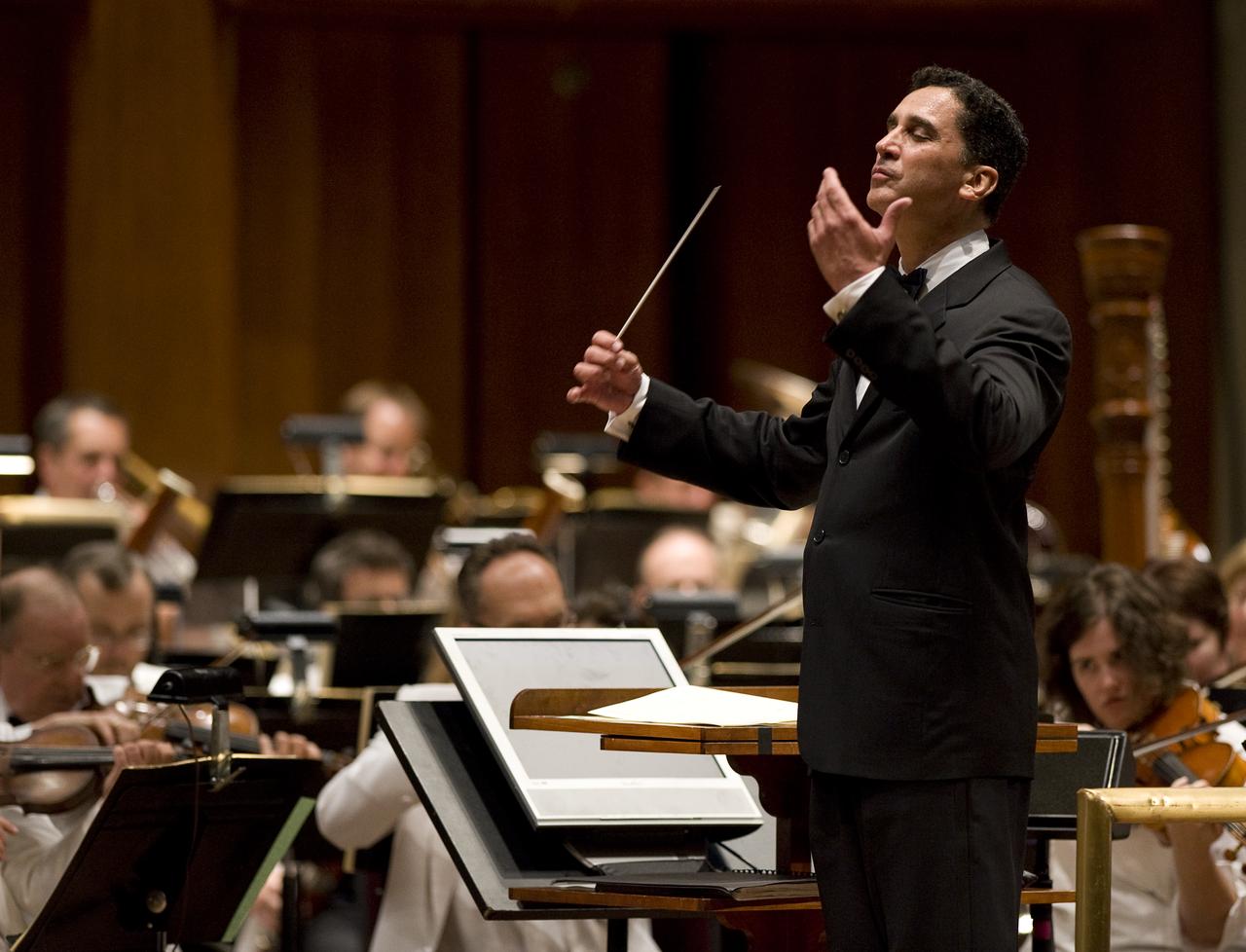
Emil de Cou conducts the National Symphony Orchestra during the "Salute to Apollo" ceremony at the Kennedy Center for the Performing Arts, Saturday, July 18, 2009 in Washington. The event was part of NASA's week long celebration of the Apollo 40th Anniversary. Photo Credit: (NASA/Bill Ingalls)
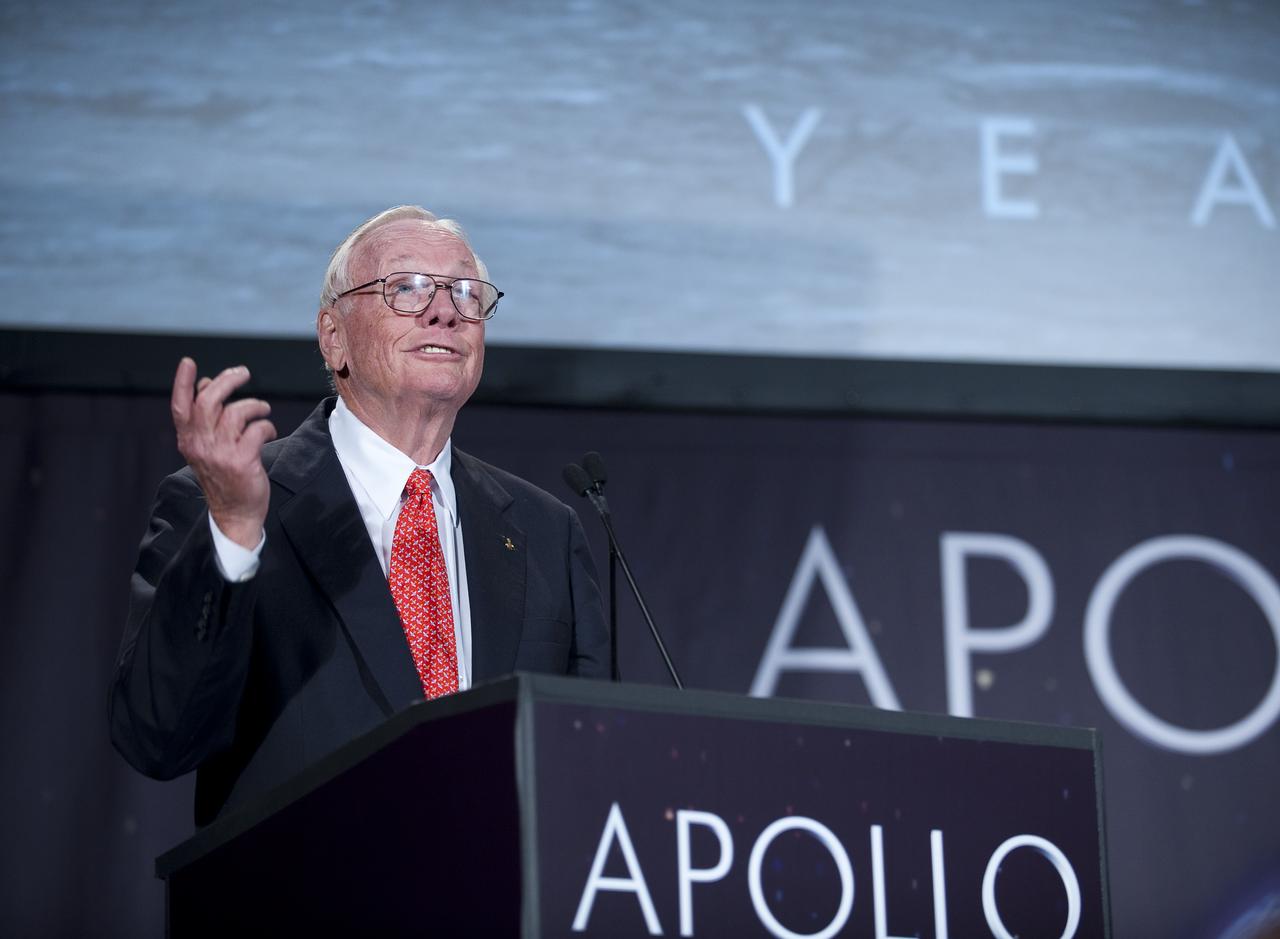
NASA Apollo 11 Mission Commander and first man to set foot on the Moon, Neil Armstrong speaks at the Apollo 40th anniversary celebration held at the National Air and Space Museum, Monday, July 20, 2009 in Washington. Photo Credit: (NASA/Bill Ingalls)
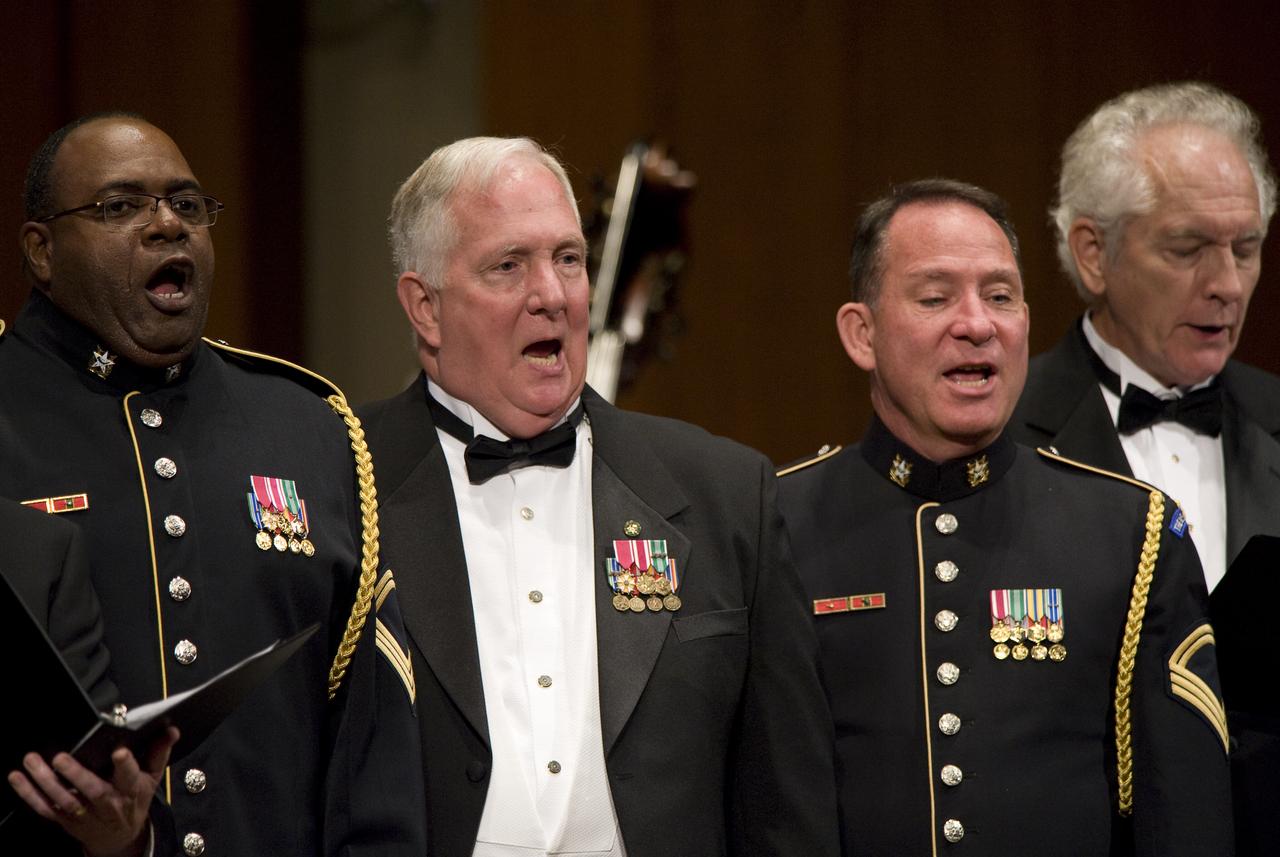
Members of the U.S. Army Chorus and Alumni sing during the "Salute to Apollo" ceremony at the Kennedy Center for the Performing Arts, Saturday, July 18, 2009 in Washington. The event was part of NASA's week long celebration of the Apollo 40th Anniversary. Photo Credit: (NASA/Bill Ingalls)
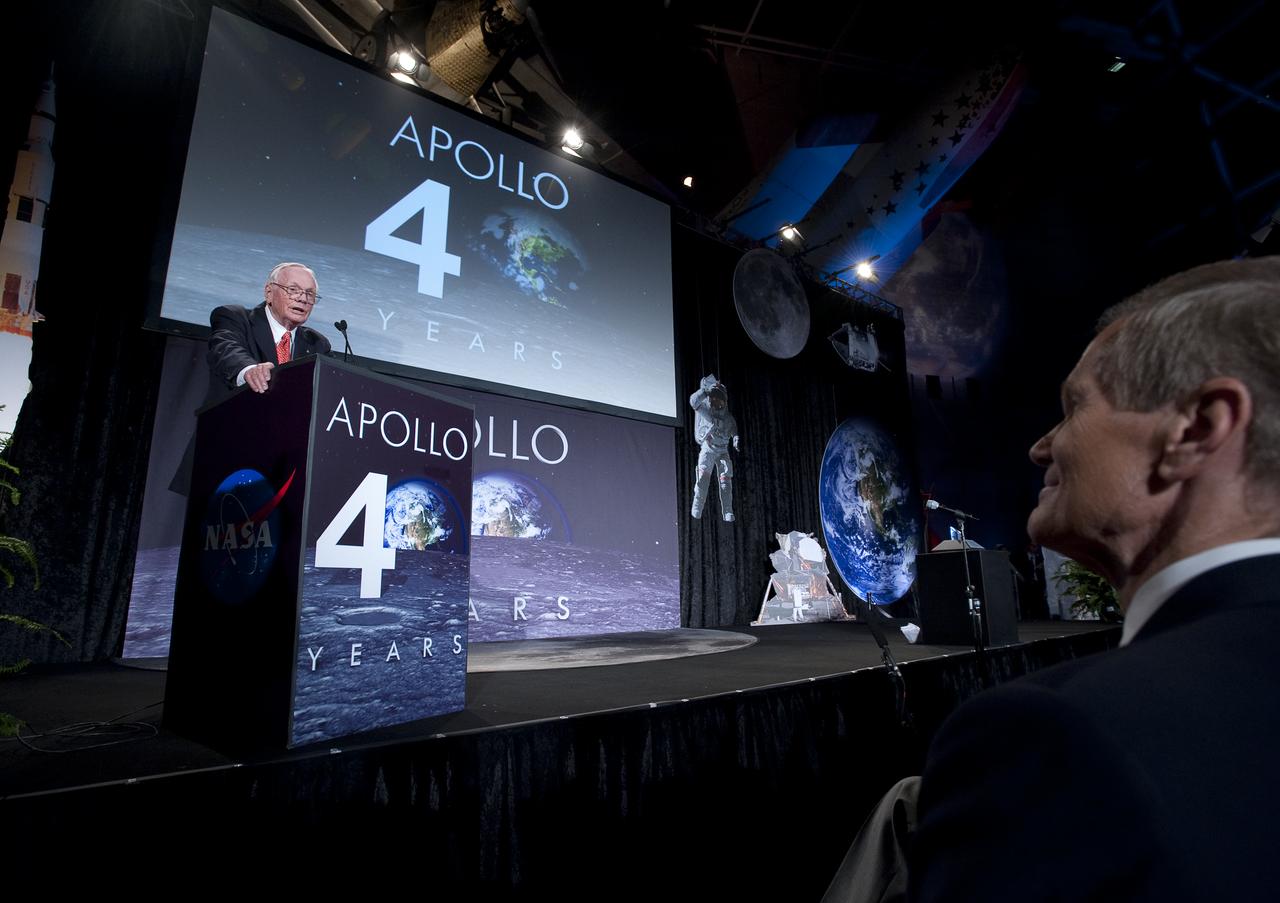
NASA Apollo 11 Mission Commander and first man to set foot on the Moon, Neil Armstrong speaks at the Apollo 40th anniversary celebration held at the National Air and Space Museum, Monday, July 20, 2009 in Washington. Photo Credit: (NASA/Bill Ingalls)

NASA Apollo 11 Mission Commander and first man to set foot on the Moon, Neil Armstrong speaks at the Apollo 40th anniversary celebration held at the National Air and Space Museum, Monday, July 20, 2009 in Washington. Photo Credit: (NASA/Bill Ingalls)
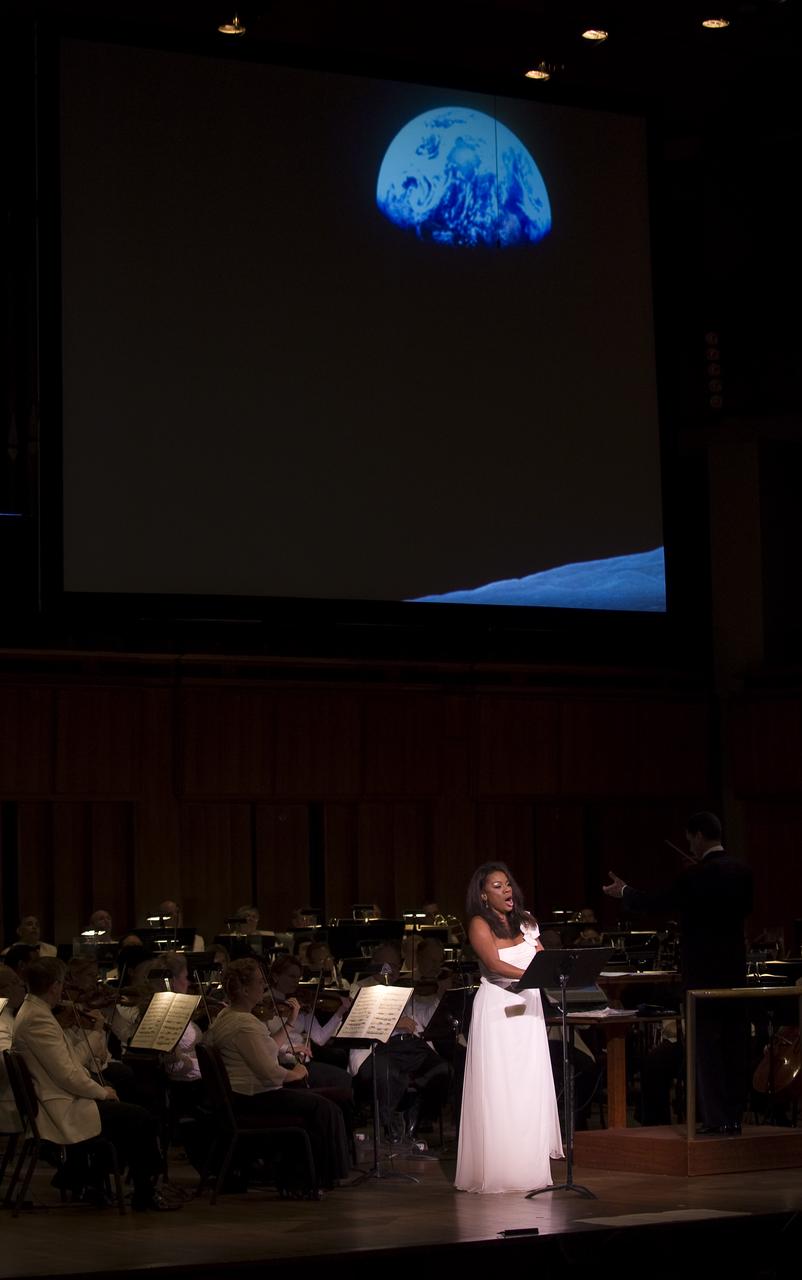
Opera singer Denyce Graves sings during the "Salute to Apollo" ceremony at the Kennedy Center for the Performing Arts, Saturday, July 18, 2009 in Washington. The event was part of NASA's week long celebration of the Apollo 40th Anniversary. Photo Credit: (NASA/Bill Ingalls)
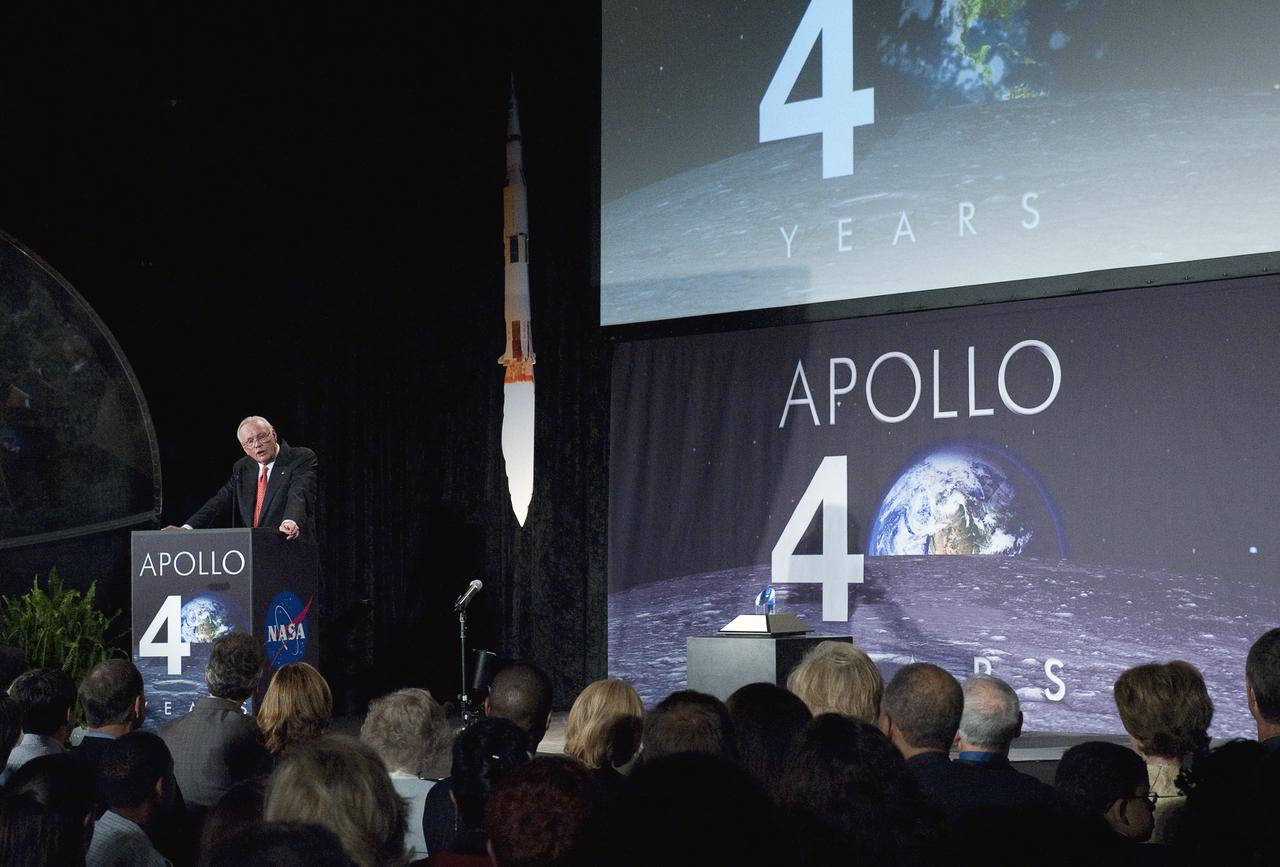
NASA Apollo 11 Mission Commander and first man to set foot on the Moon, Neil Armstrong speaks at the Apollo 40th anniversary celebration held at the National Air and Space Museum, Monday, July 20, 2009 in Washington. Photo Credit: (NASA/Carla Cioffi)
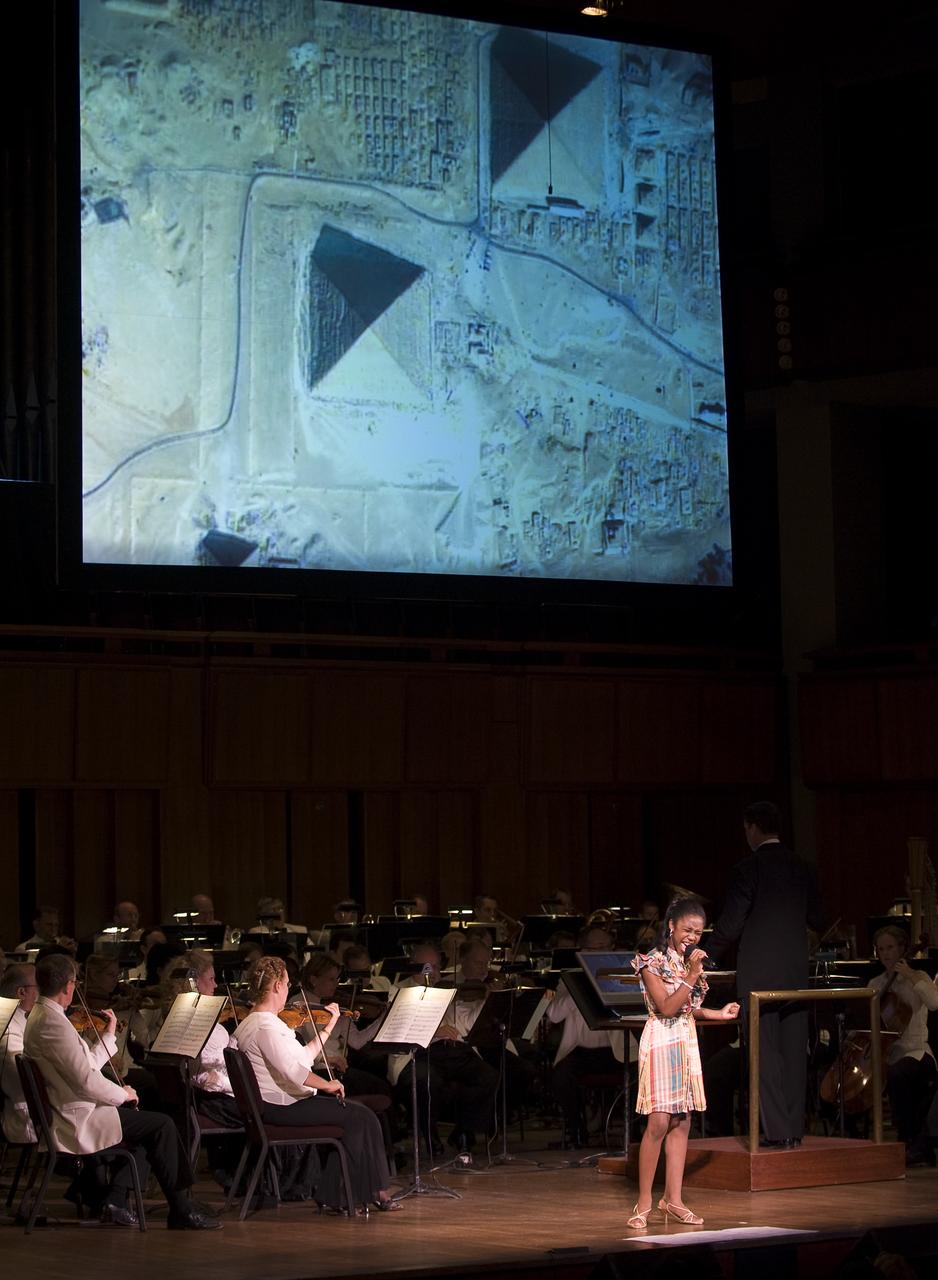
12 year old singer Jamia Nash performs during the "Salute to Apollo" ceremony at the Kennedy Center for the Performing Arts, Saturday, July 18, 2009 in Washington. The event was part of NASA's week long celebration of the Apollo 40th Anniversary. Photo Credit: (NASA/Bill Ingalls)
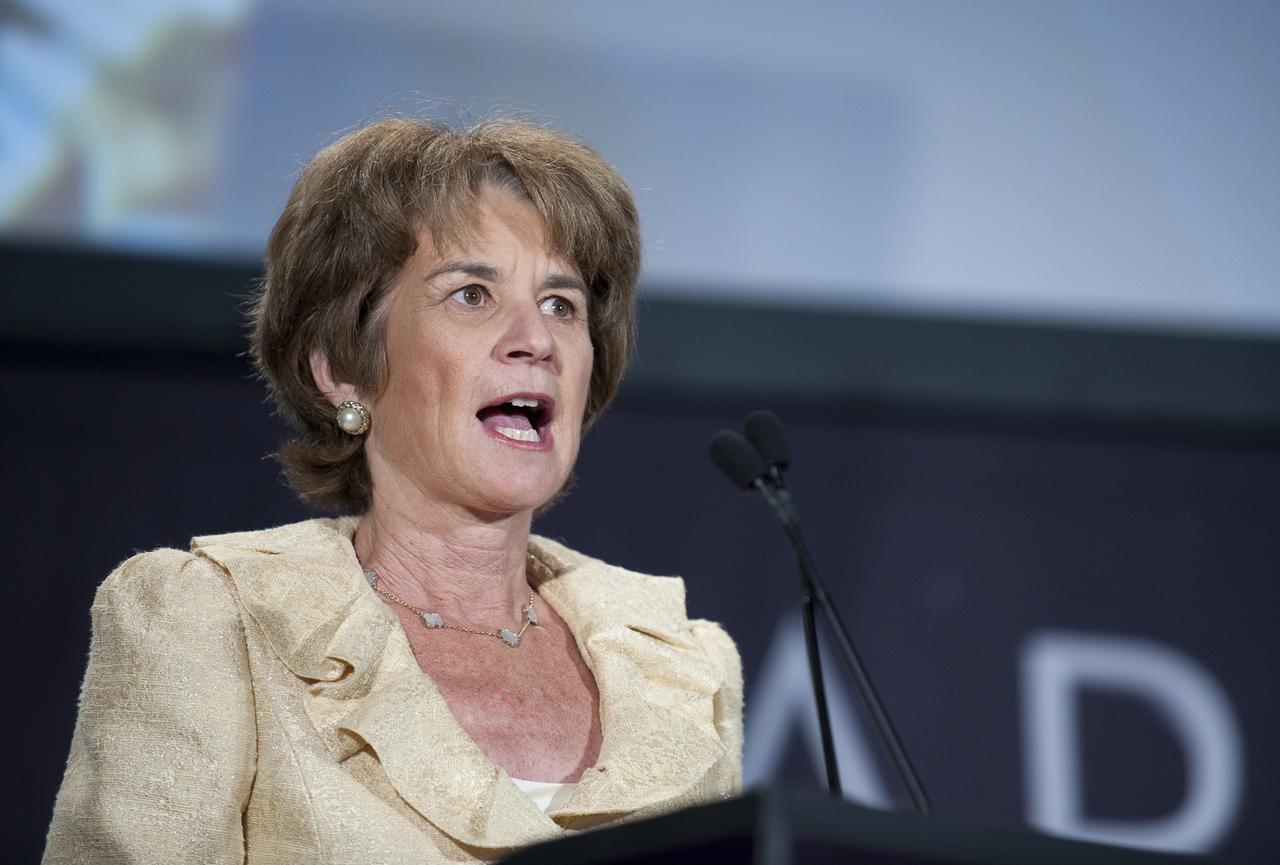
Former Maryland Lieutenant Governor and niece of President John F. Kennedy, Kathleen Kennedy Townsend speaks at the Apollo 40th anniversary celebration held at the National Air and Space Museum, Monday, July 20, 2009 in Washington. Photo Credit: (NASA/Bill Ingalls)
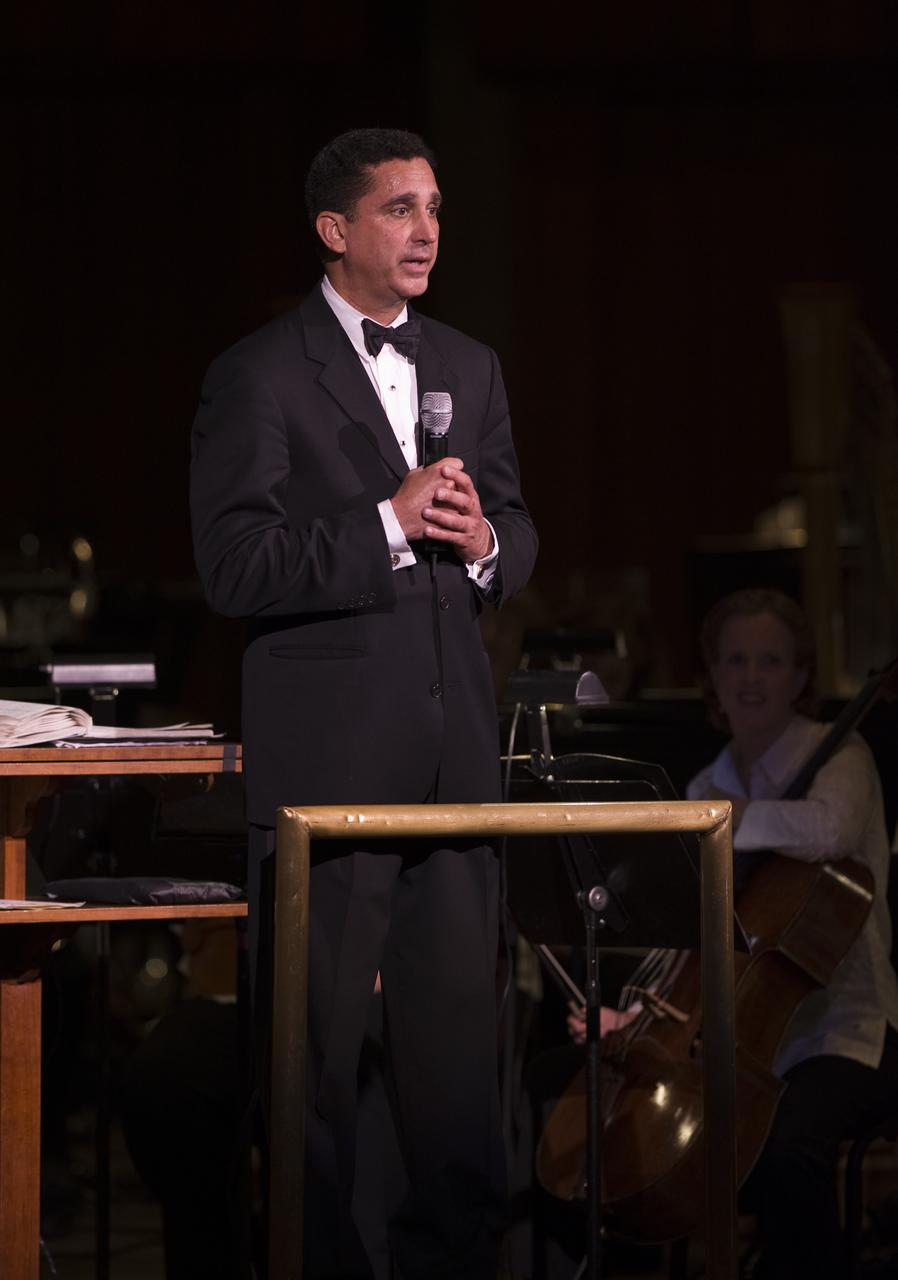
Emil de Cou, Conductor of the National Symphony Orchestra, talks to the audience during the "Salute to Apollo" ceremony at the Kennedy Center for the Performing Arts, Saturday, July 18, 2009 in Washington. The event was part of NASA's week long celebration of the Apollo 40th Anniversary. Photo Credit: (NASA/Bill Ingalls)
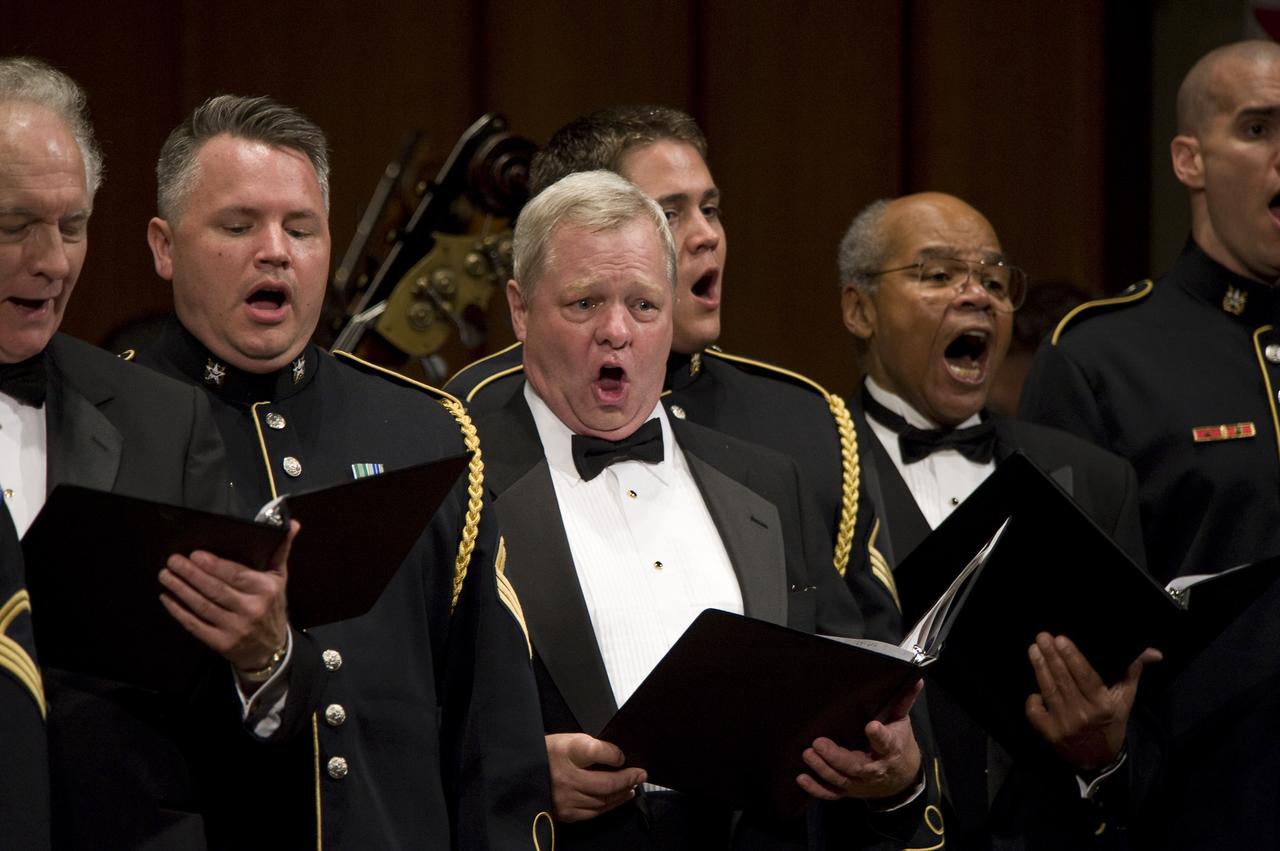
Members of the U.S. Army Chorus and Alumni sing during the "Salute to Apollo" ceremony at the Kennedy Center for the Performing Arts, Saturday, July 18, 2009 in Washington. The event was part of NASA's week long celebration of the Apollo 40th Anniversary. Photo Credit: (NASA/Bill Ingalls)
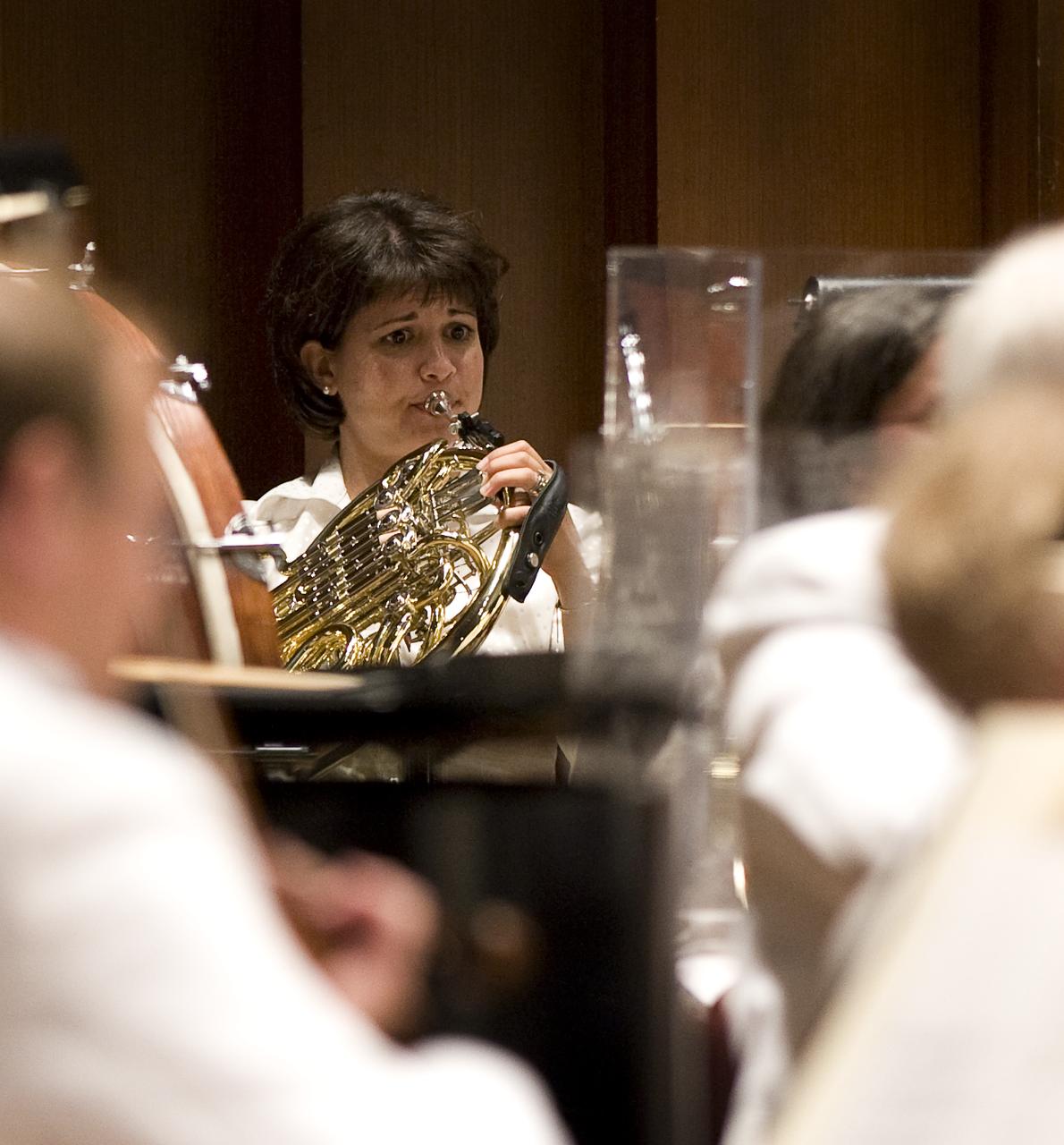
Members of the National Symphony Orchestra, under Conductor Emil de Cou, perform during the "Salute to Apollo" ceremony at the Kennedy Center for the Performing Arts, Saturday, July 18, 2009 in Washington. The event was part of NASA's week long celebration of the Apollo 40th Anniversary. Photo Credit: (NASA/Bill Ingalls)
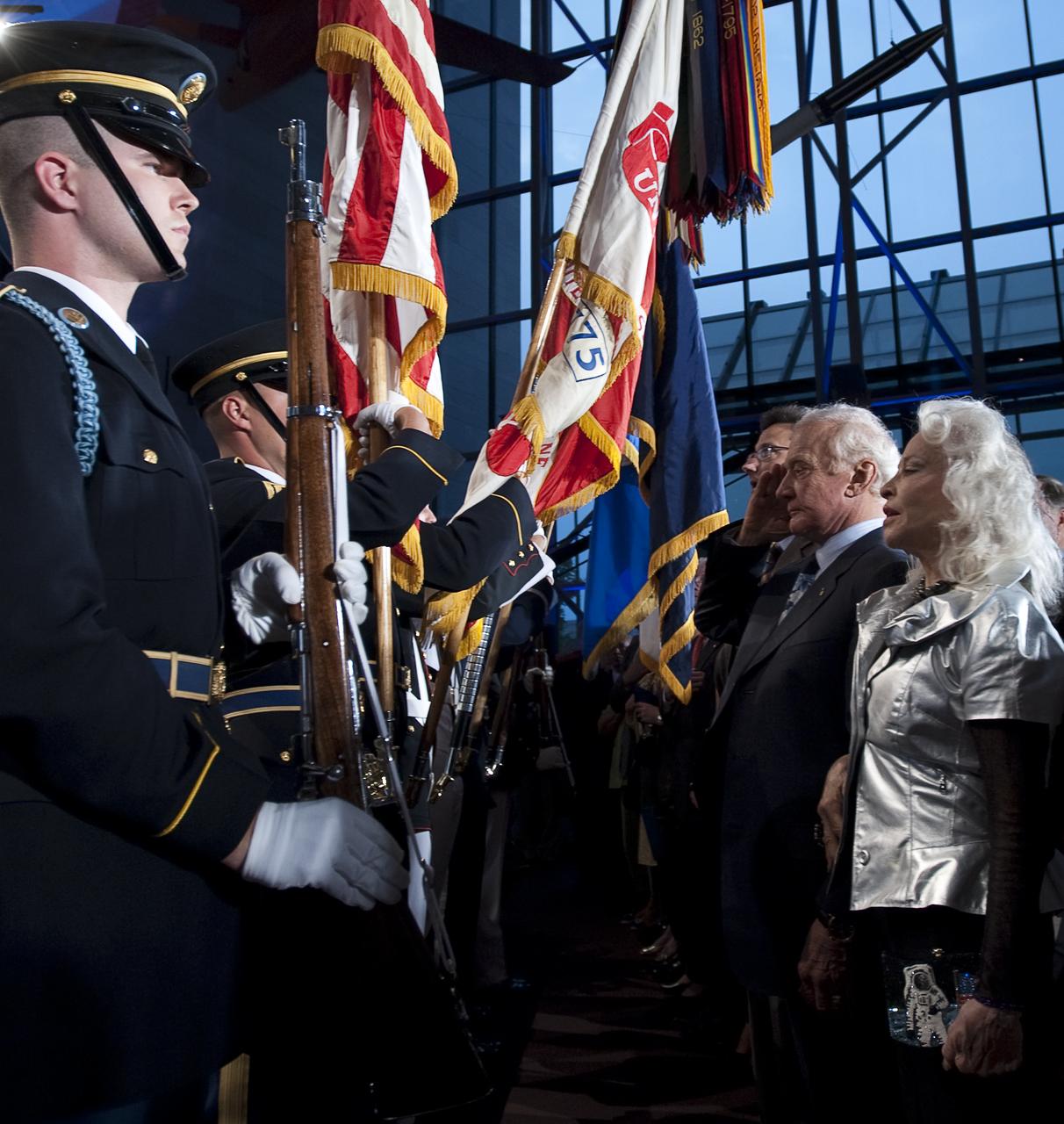
NASA Apollo 11 Astronaut Buzz Aldrin, right, and his wife Lois stand at attention in front of the color guard during the opening of the Apollo 40th anniversary celebration held at the National Air and Space Museum, Monday, July 20, 2009 in Washington. Photo Credit: (NASA/Bill Ingalls)