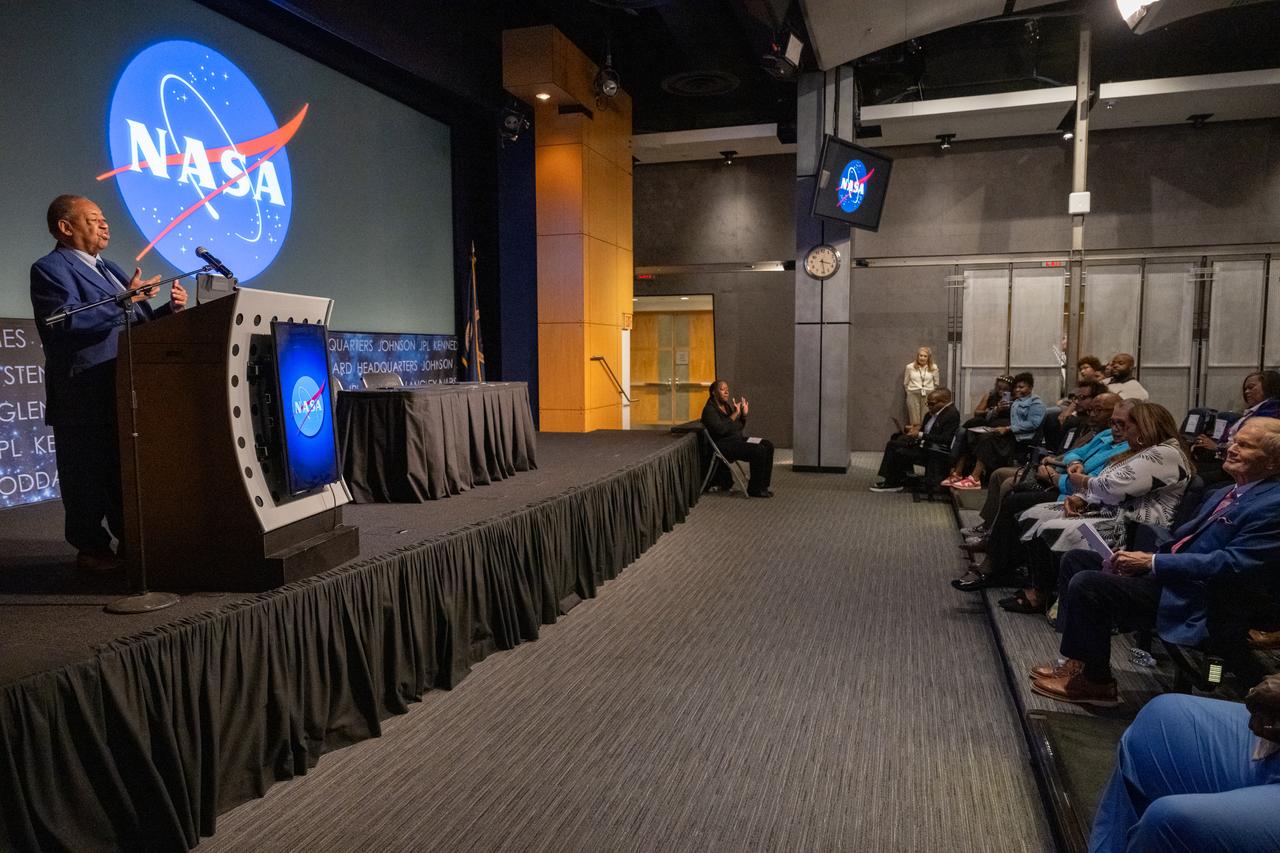
NAACP Board Chair Leon Russell delivers remarks during a 5th Annual Hidden Figures Street Naming Anniversary event Thursday, Sept. 19, 2024, at the Mary W. Jackson NASA Headquarters building in Washington. Photo Credit: (NASA/Keegan Barber)
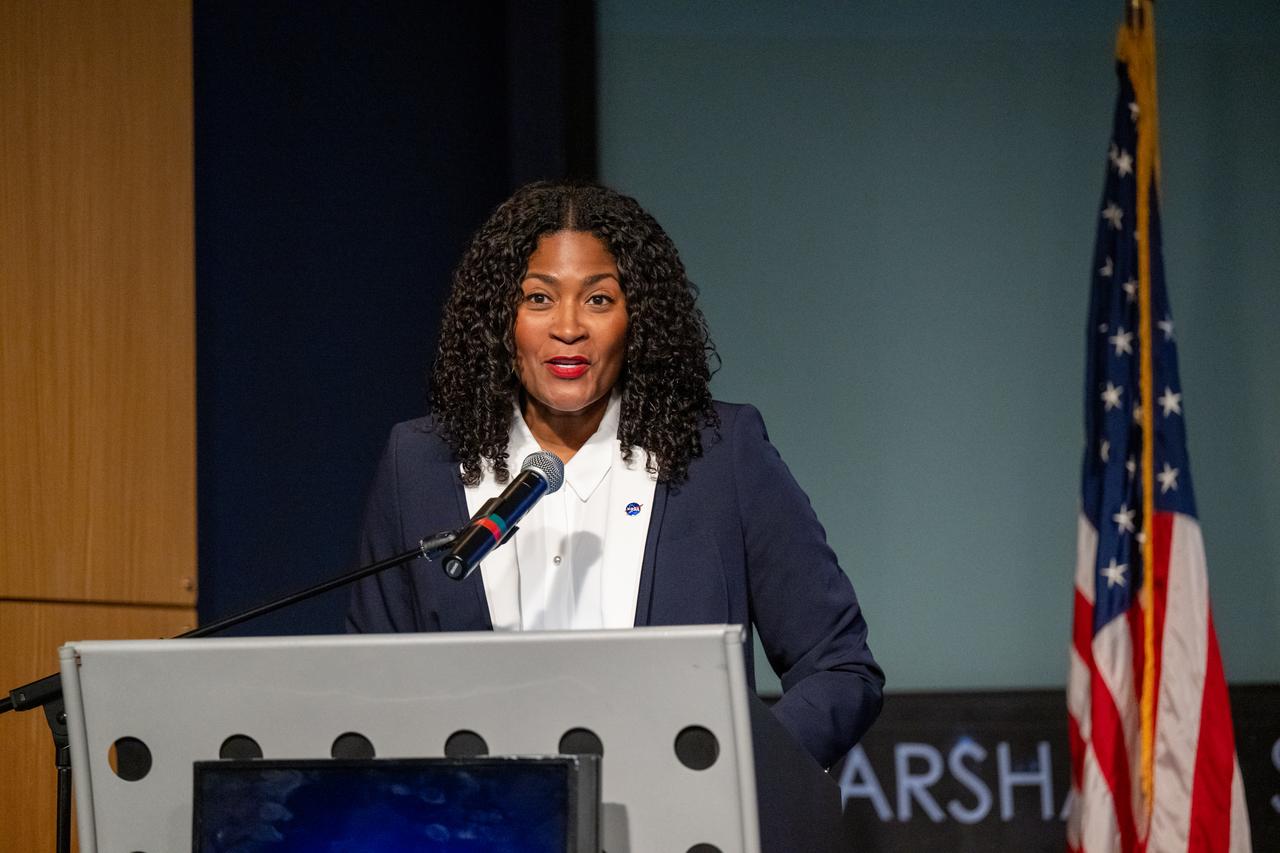
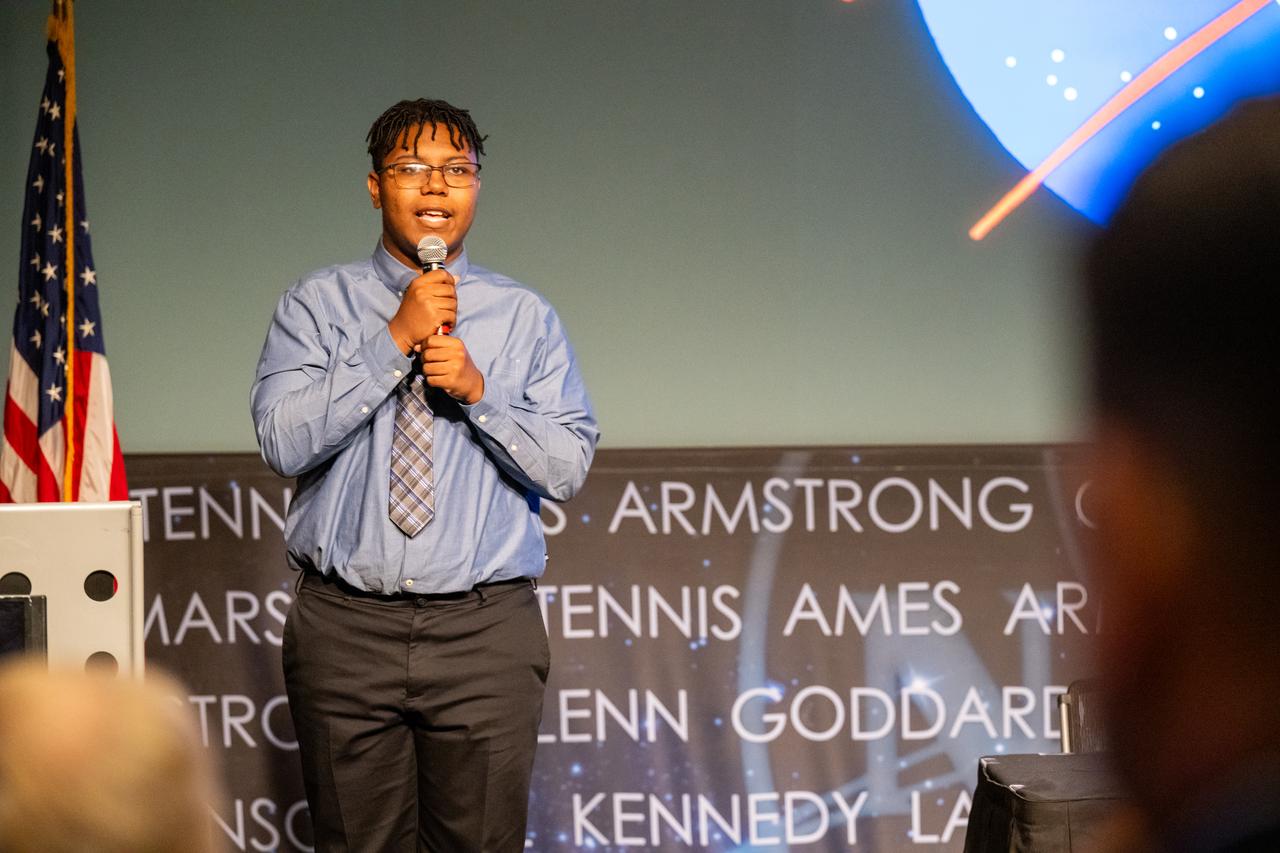
NASA Office of Communications Director of Engagement Aya Collins delivers remarks during a 5th Annual Hidden Figures Street Naming Anniversary event Thursday, Sept. 19, 2024, at the Mary W. Jackson NASA Headquarters building in Washington. Photo Credit: (NASA/Keegan Barber)
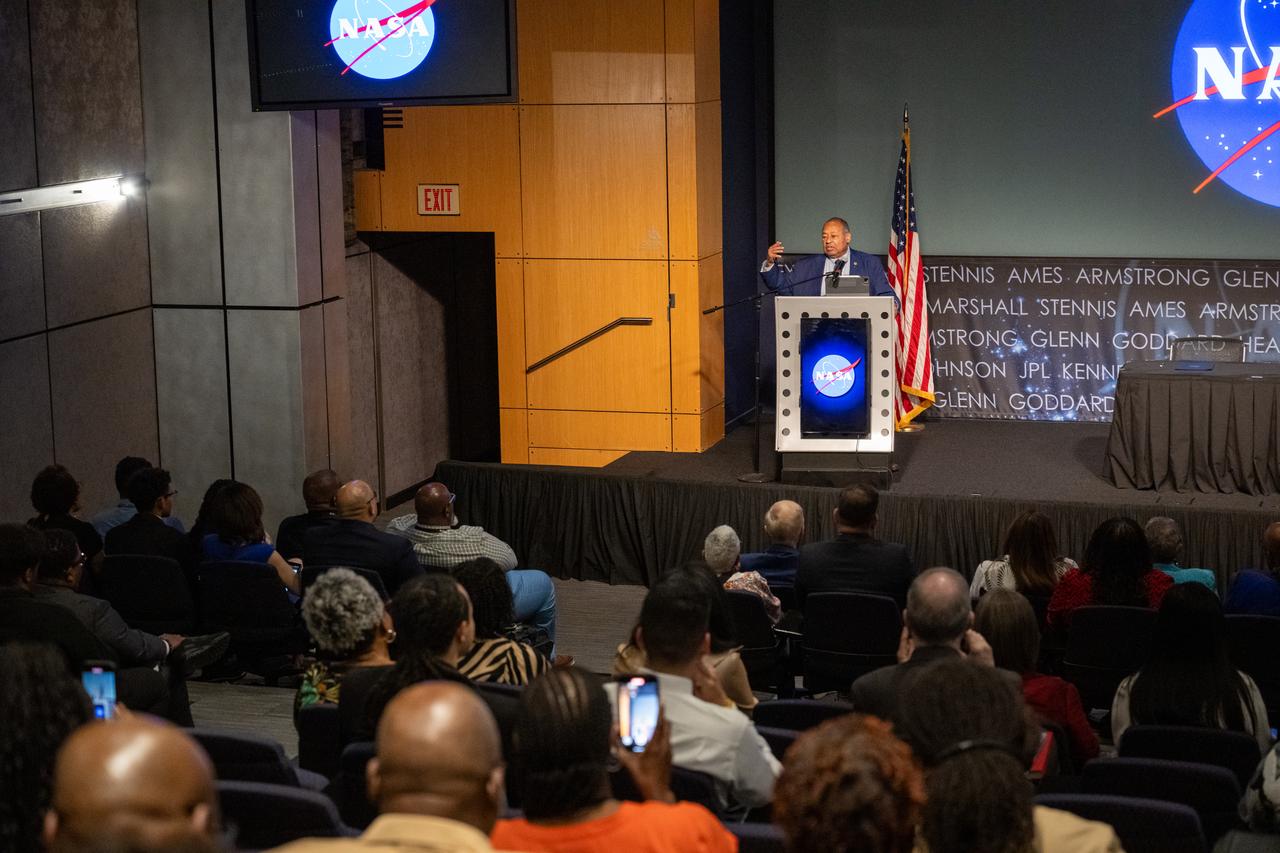
NAACP Board Chair Leon Russell delivers remarks during a 5th Annual Hidden Figures Street Naming Anniversary event Thursday, Sept. 19, 2024, at the Mary W. Jackson NASA Headquarters building in Washington. Photo Credit: (NASA/Keegan Barber)
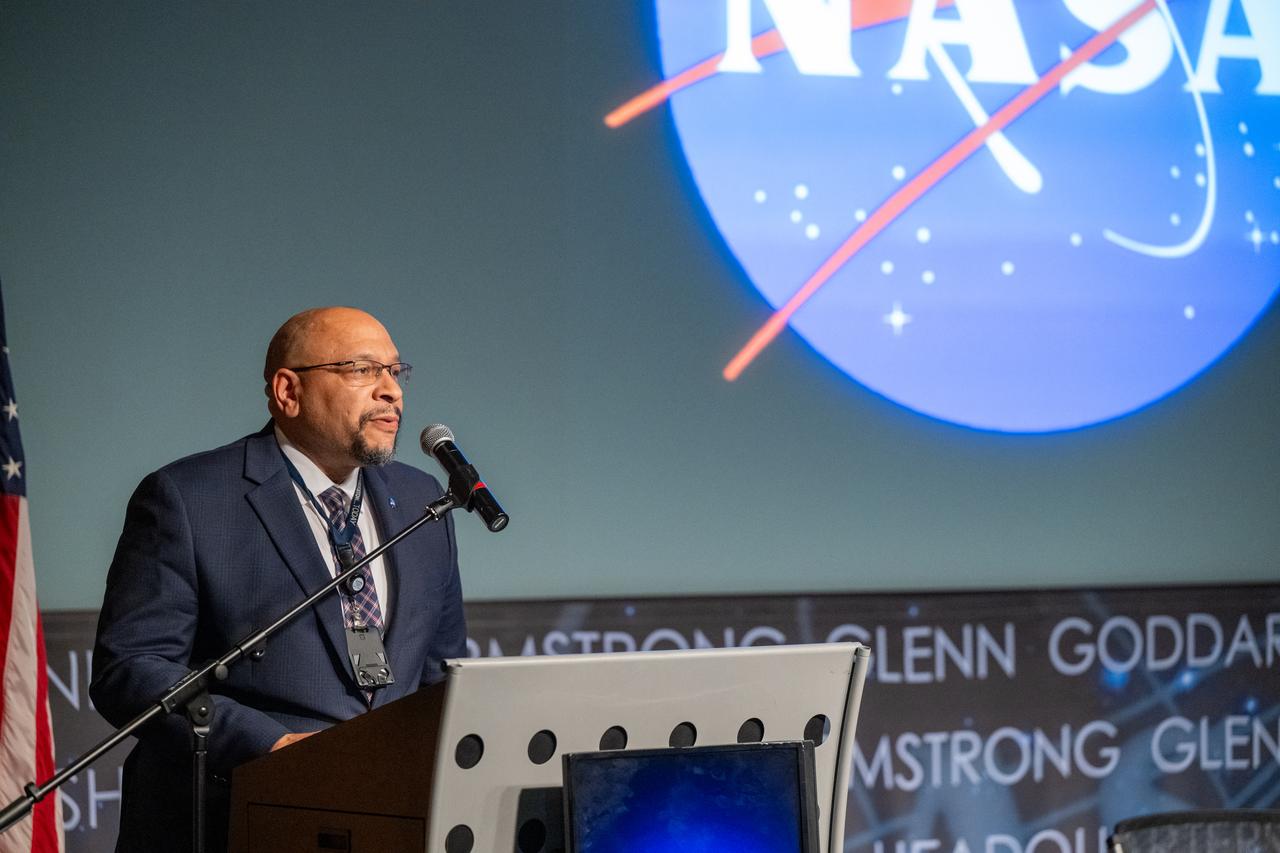
NASA Office of STEM Engagement Deputy Associate Administrator Torry Johnson delivers remarks during a 5th Annual Hidden Figures Street Naming Anniversary event Thursday, Sept. 19, 2024, at the Mary W. Jackson NASA Headquarters building in Washington. Photo Credit: (NASA/Keegan Barber)
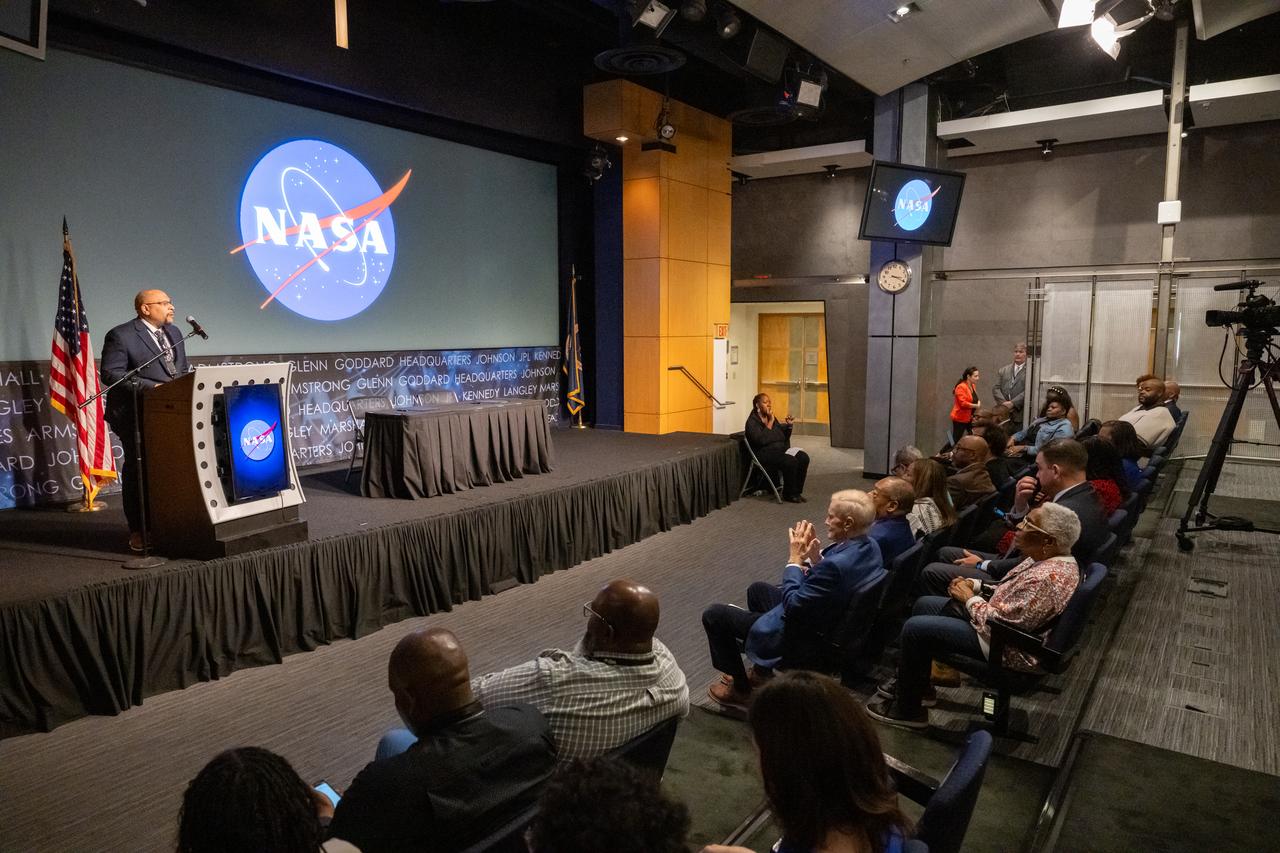
NASA Office of STEM Engagement Deputy Associate Administrator Torry Johnson delivers remarks during a 5th Annual Hidden Figures Street Naming Anniversary event Thursday, Sept. 19, 2024, at the Mary W. Jackson NASA Headquarters building in Washington. Photo Credit: (NASA/Keegan Barber)
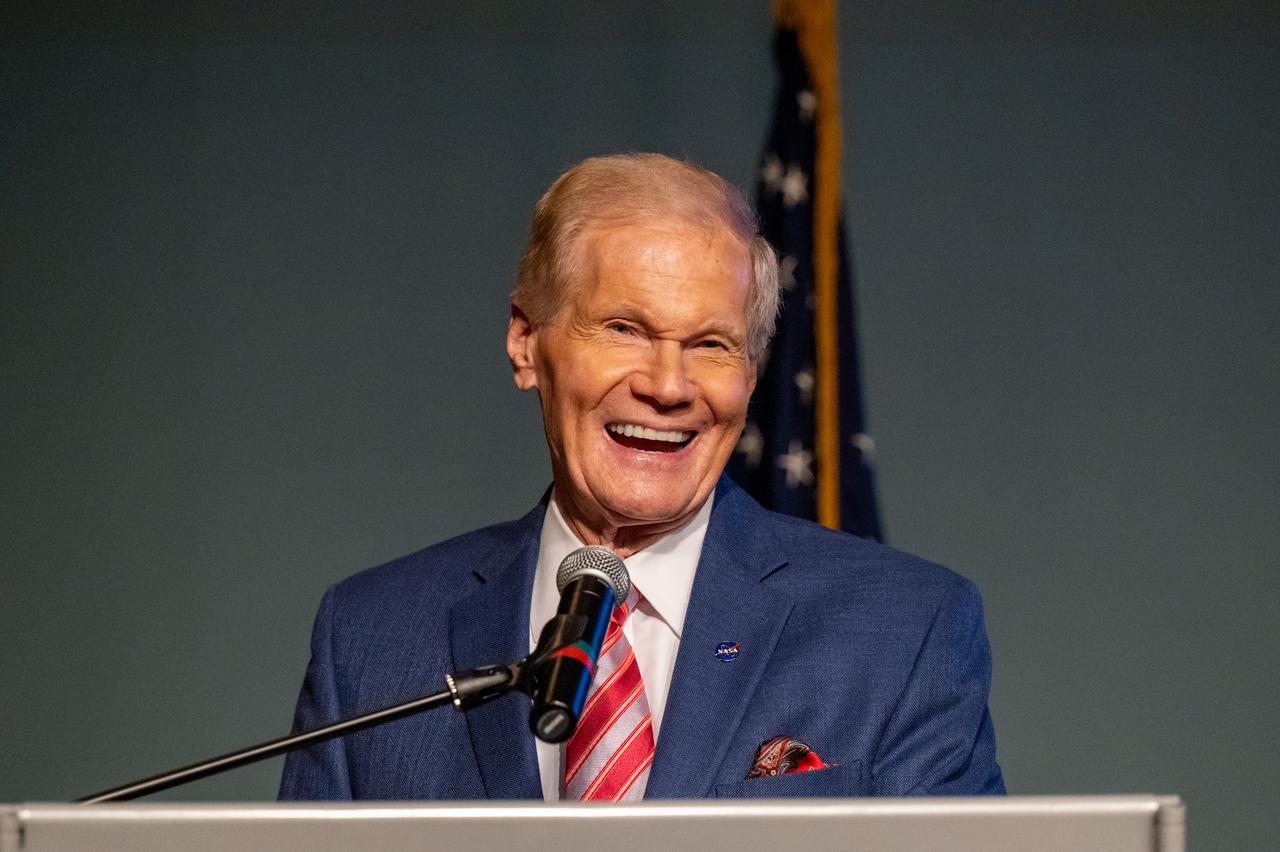
NASA Administrator Bill Nelson delivers remarks during a 5th Annual Hidden Figures Street Naming Anniversary event Thursday, Sept. 19, 2024, at the Mary W. Jackson NASA Headquarters building in Washington. Photo Credit: (NASA/Keegan Barber)
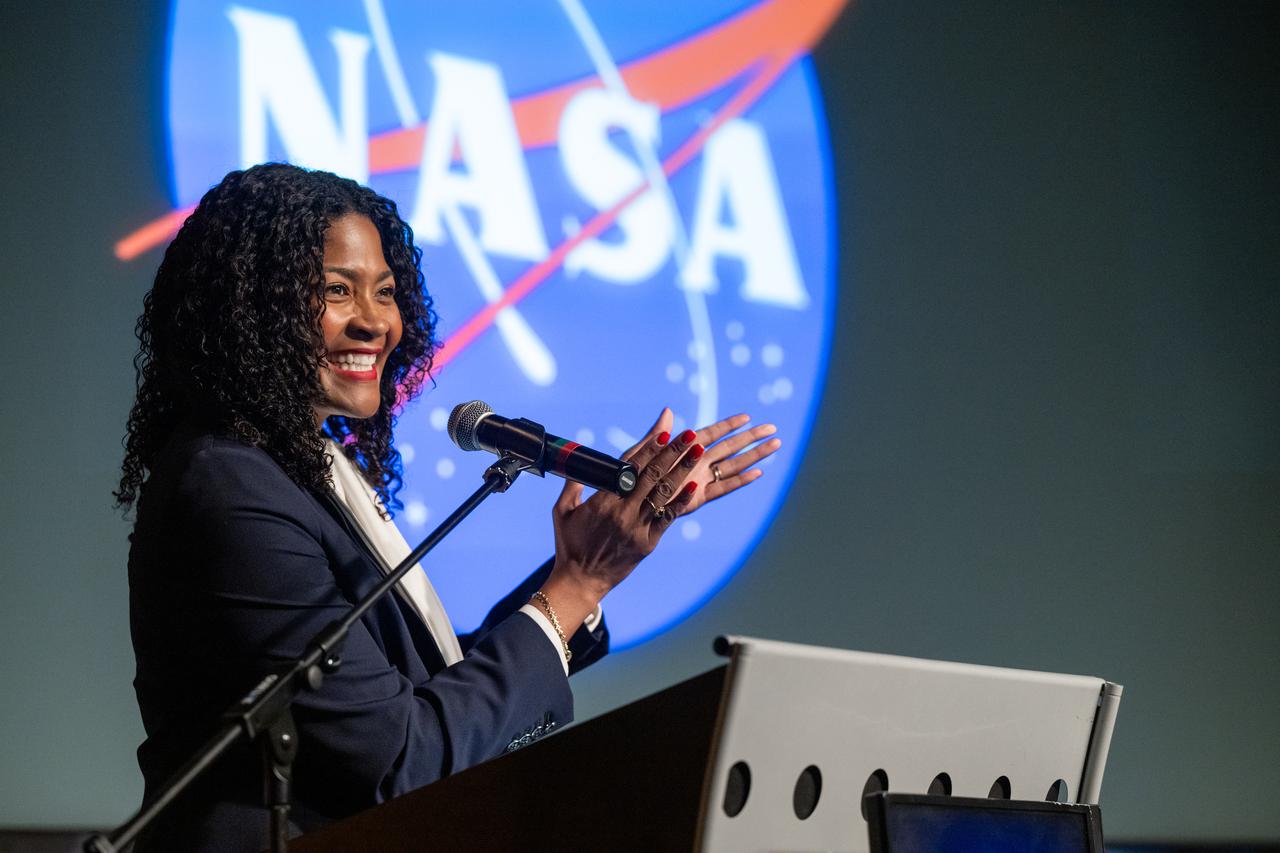
NASA Office of Communications Director of Engagement Aya Collins delivers remarks during a 5th Annual Hidden Figures Street Naming Anniversary event Thursday, Sept. 19, 2024, at the Mary W. Jackson NASA Headquarters building in Washington. Photo Credit: (NASA/Keegan Barber)

Brainy Akpala recites her poem “Sitting Upon Flames” during a 5th Annual Hidden Figures Street Naming Anniversary event Thursday, Sept. 19, 2024, at the Mary W. Jackson NASA Headquarters building in Washington. Photo Credit: (NASA/Keegan Barber)
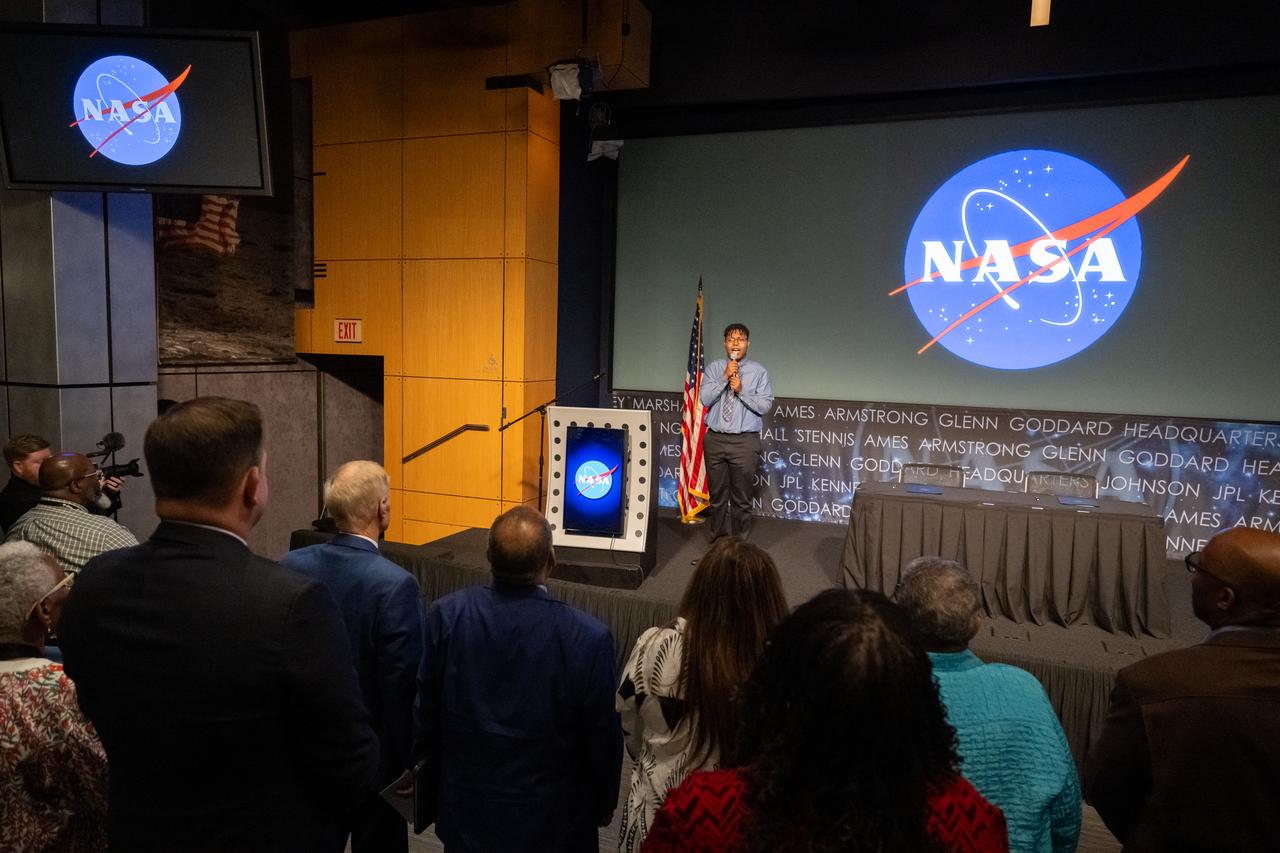
Soloist Craig Martin performs an anthem during a 5th Annual Hidden Figures Street Naming Anniversary event Thursday, Sept. 19, 2024, at the Mary W. Jackson NASA Headquarters building in Washington. Photo Credit: (NASA/Keegan Barber)

NASA Office of STEM Engagement Associate Administrator Elaine Ho delivers remarks during a 5th Annual Hidden Figures Street Naming Anniversary event Thursday, Sept. 19, 2024, at the Mary W. Jackson NASA Headquarters building in Washington. Photo Credit: (NASA/Keegan Barber)
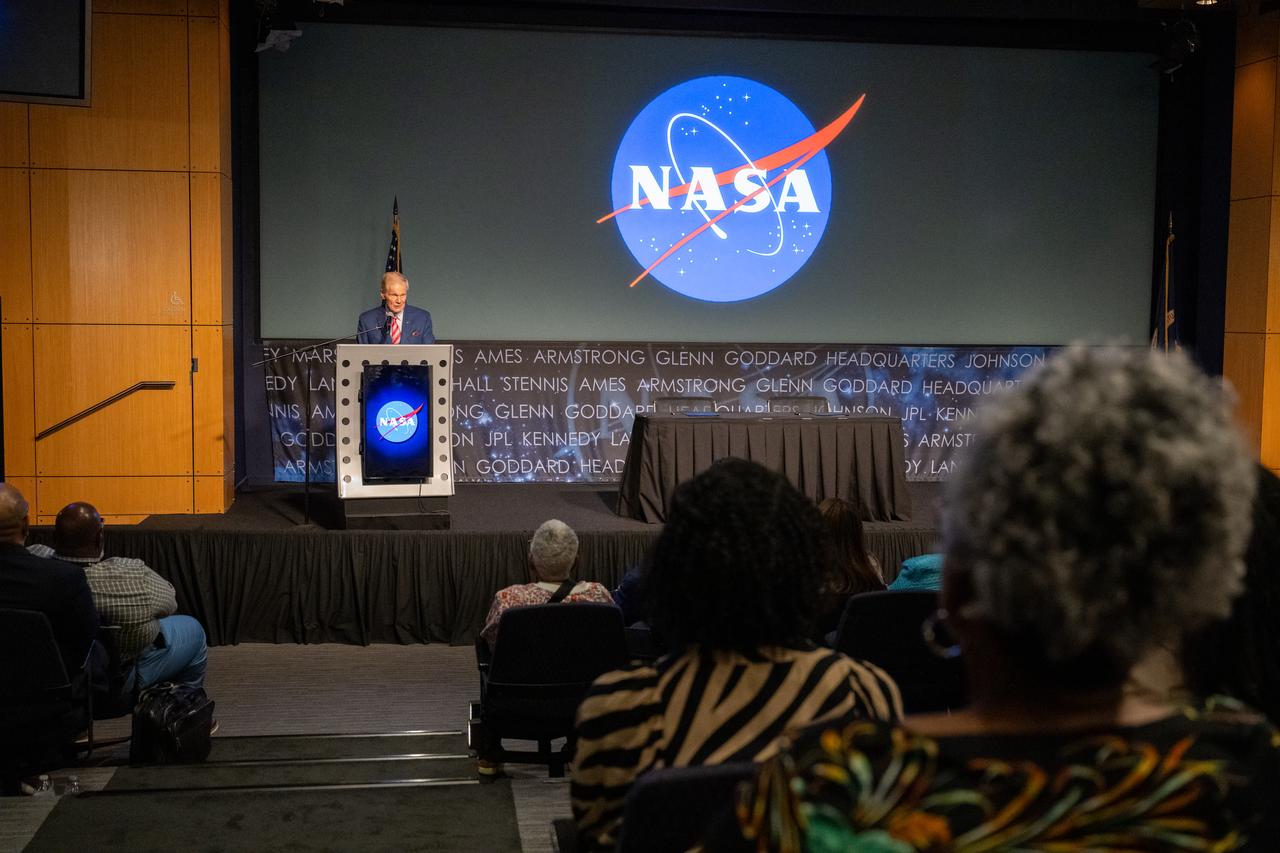
NASA Administrator Bill Nelson delivers remarks during a 5th Annual Hidden Figures Street Naming Anniversary event Thursday, Sept. 19, 2024, at the Mary W. Jackson NASA Headquarters building in Washington. Photo Credit: (NASA/Keegan Barber)
Soloist Craig Martin performs an anthem during a 5th Annual Hidden Figures Street Naming Anniversary event Thursday, Sept. 19, 2024, at the Mary W. Jackson NASA Headquarters building in Washington. Photo Credit: (NASA/Keegan Barber)

NAACP Board Chair Leon Russell delivers remarks during a 5th Annual Hidden Figures Street Naming Anniversary event Thursday, Sept. 19, 2024, at the Mary W. Jackson NASA Headquarters building in Washington. Photo Credit: (NASA/Keegan Barber)
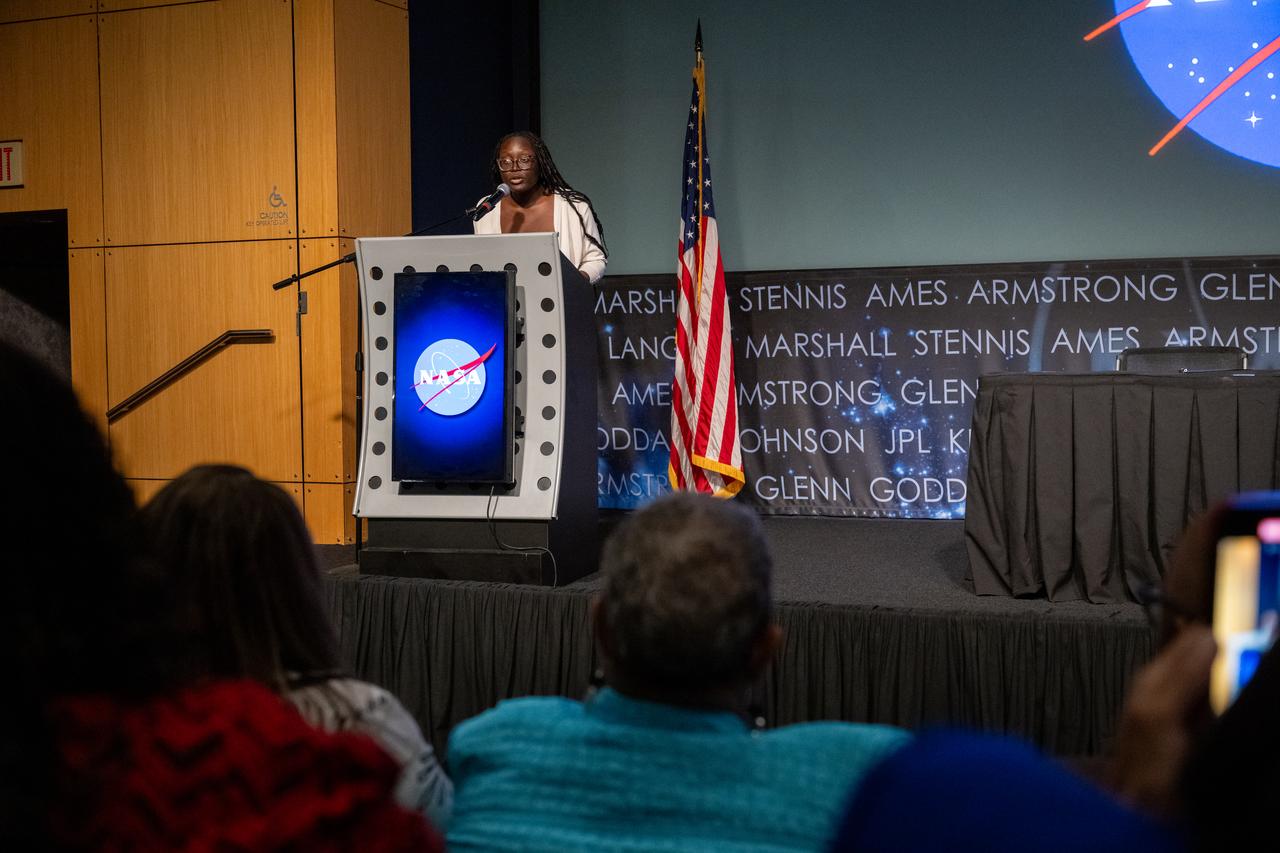
Brainy Akpala recites her poem “Sitting Upon Flames” during a 5th Annual Hidden Figures Street Naming Anniversary event Thursday, Sept. 19, 2024, at the Mary W. Jackson NASA Headquarters building in Washington. Photo Credit: (NASA/Keegan Barber)
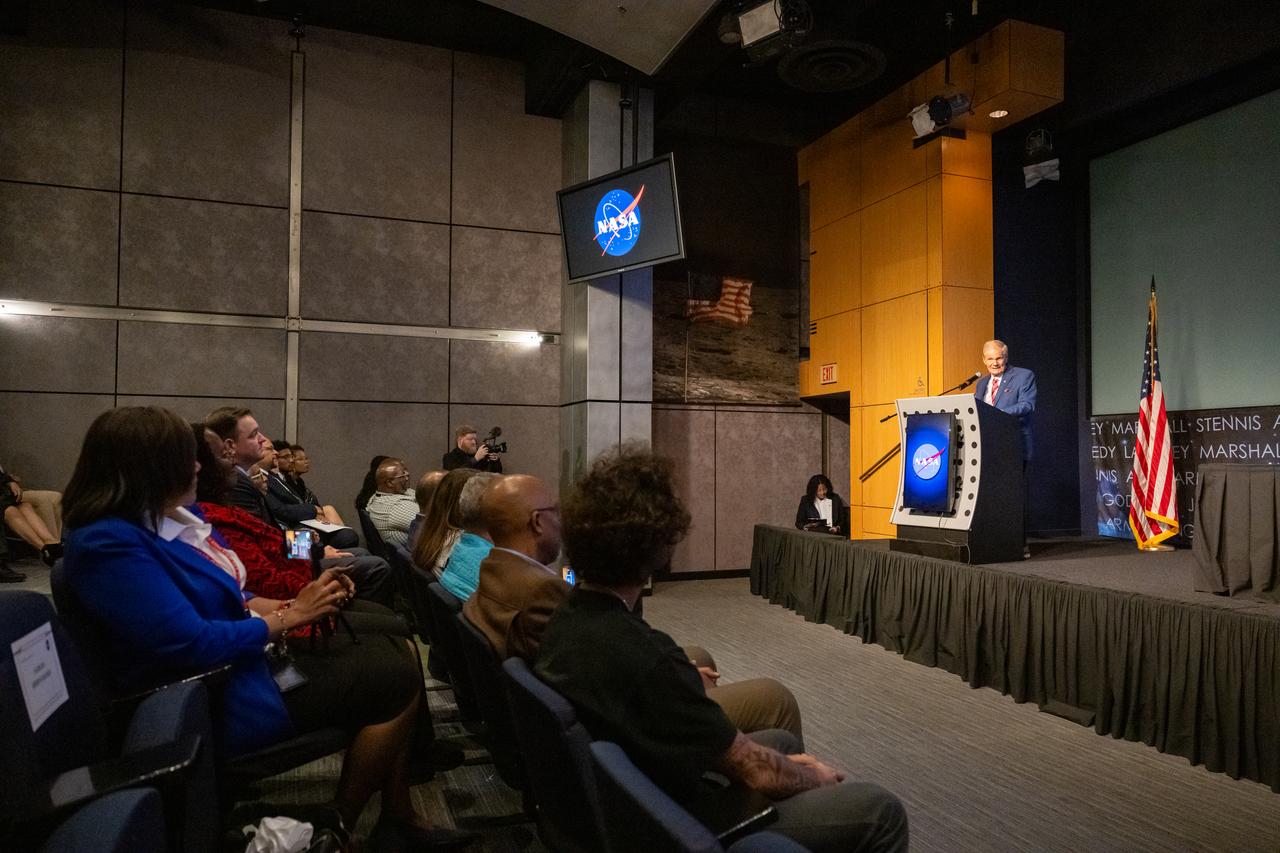
NASA Administrator Bill Nelson delivers remarks during a 5th Annual Hidden Figures Street Naming Anniversary event Thursday, Sept. 19, 2024, at the Mary W. Jackson NASA Headquarters building in Washington. Photo Credit: (NASA/Keegan Barber)
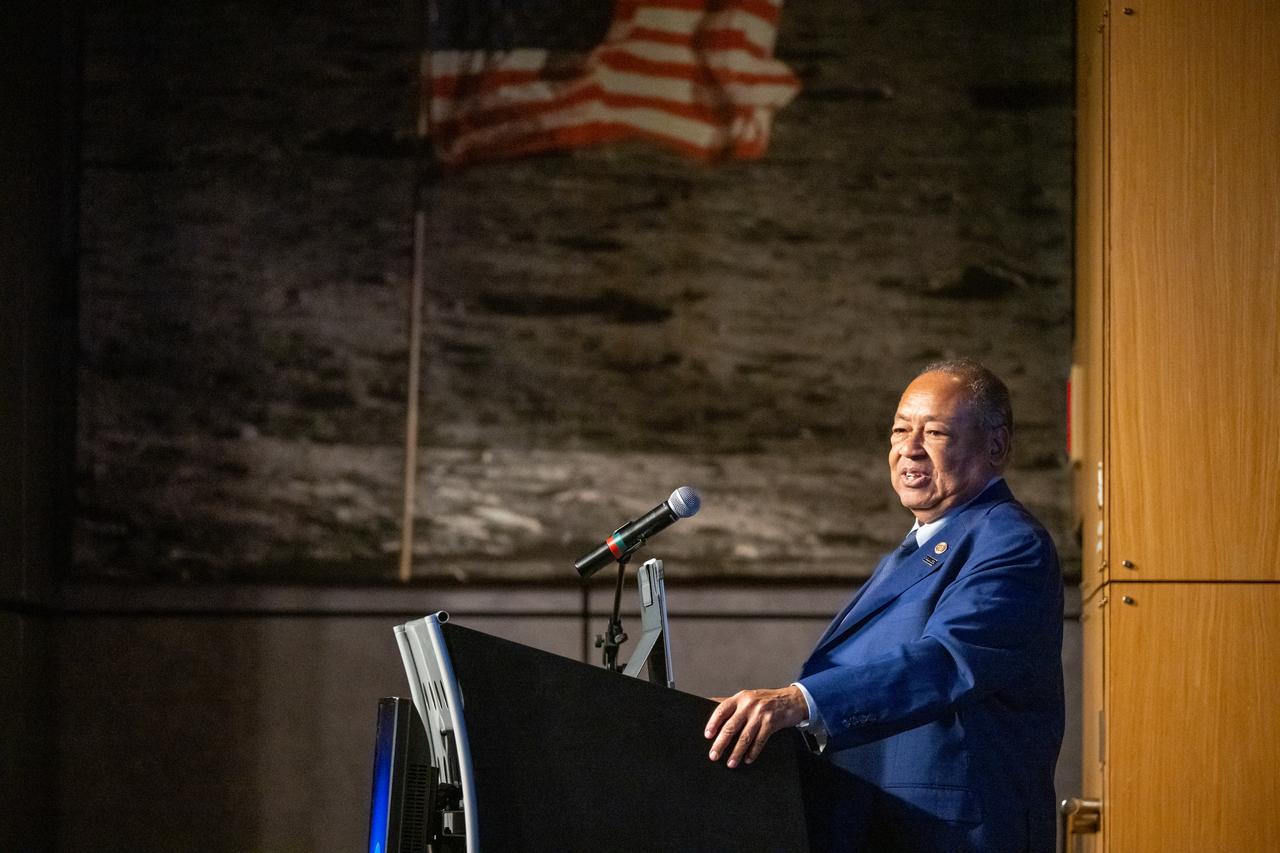
NAACP Board Chair Leon Russell delivers remarks during a 5th Annual Hidden Figures Street Naming Anniversary event Thursday, Sept. 19, 2024, at the Mary W. Jackson NASA Headquarters building in Washington. Photo Credit: (NASA/Keegan Barber)

Soloist Craig Martin performs an anthem during a 5th Annual Hidden Figures Street Naming Anniversary event Thursday, Sept. 19, 2024, at the Mary W. Jackson NASA Headquarters building in Washington. Photo Credit: (NASA/Keegan Barber)
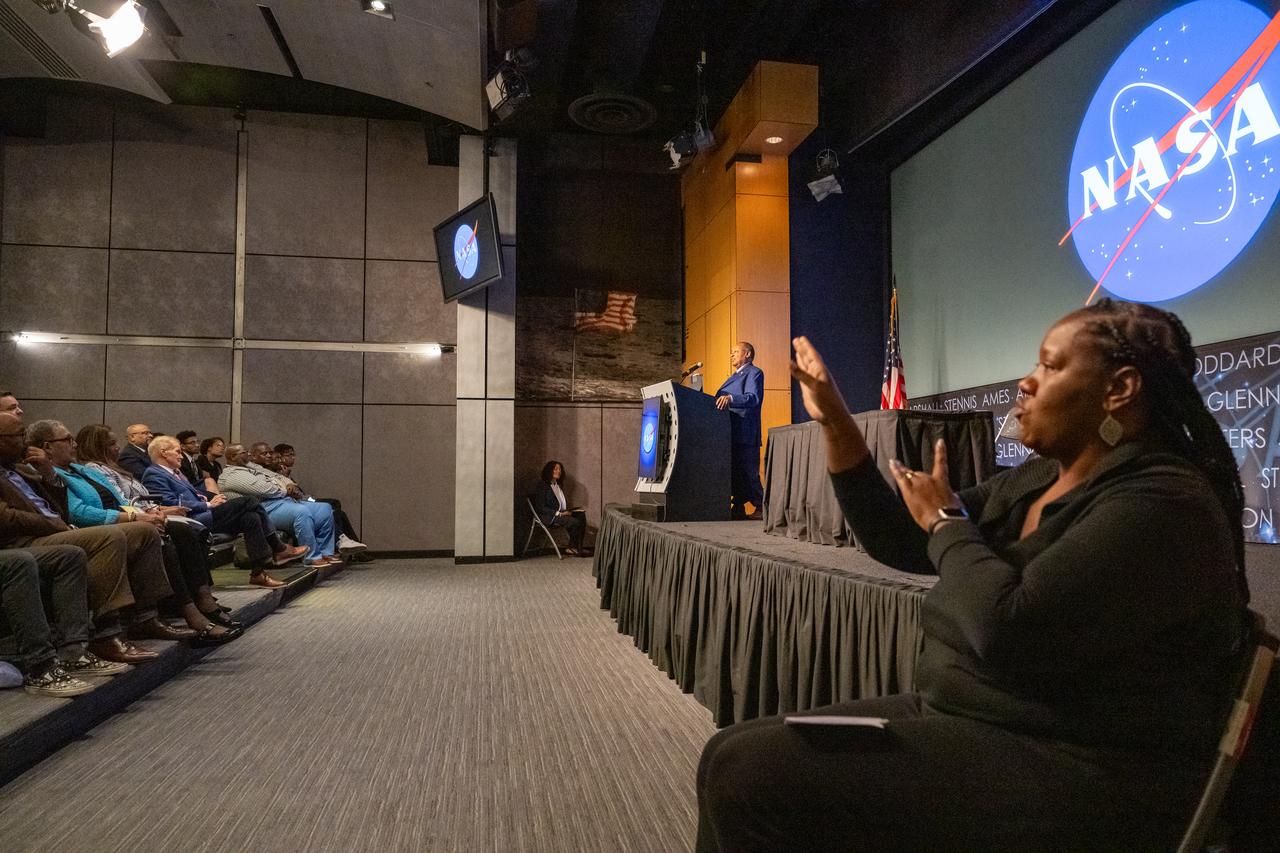
NAACP Board Chair Leon Russell delivers remarks during a 5th Annual Hidden Figures Street Naming Anniversary event Thursday, Sept. 19, 2024, at the Mary W. Jackson NASA Headquarters building in Washington. Photo Credit: (NASA/Keegan Barber)
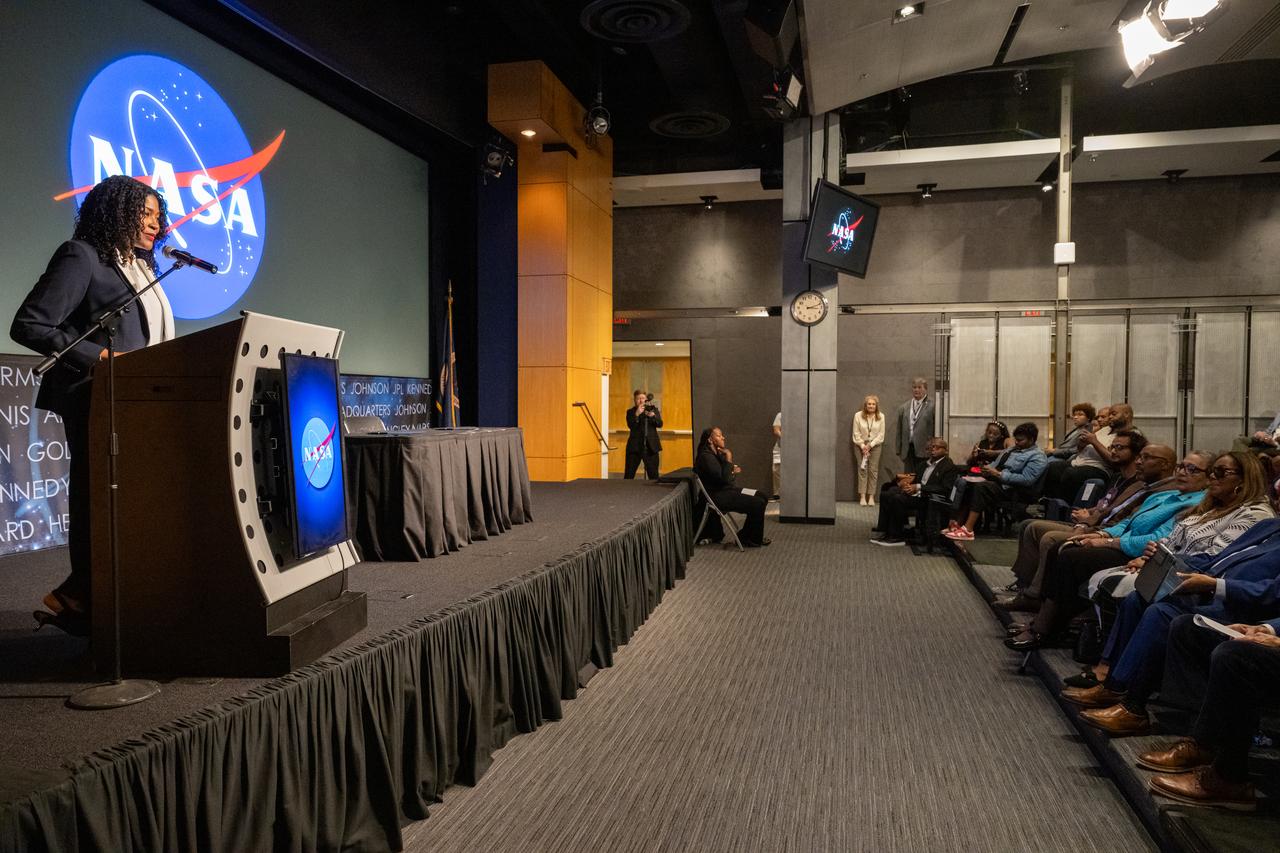
NASA Office of Communications Director of Engagement Aya Collins delivers remarks during a 5th Annual Hidden Figures Street Naming Anniversary event Thursday, Sept. 19, 2024, at the Mary W. Jackson NASA Headquarters building in Washington. Photo Credit: (NASA/Keegan Barber)
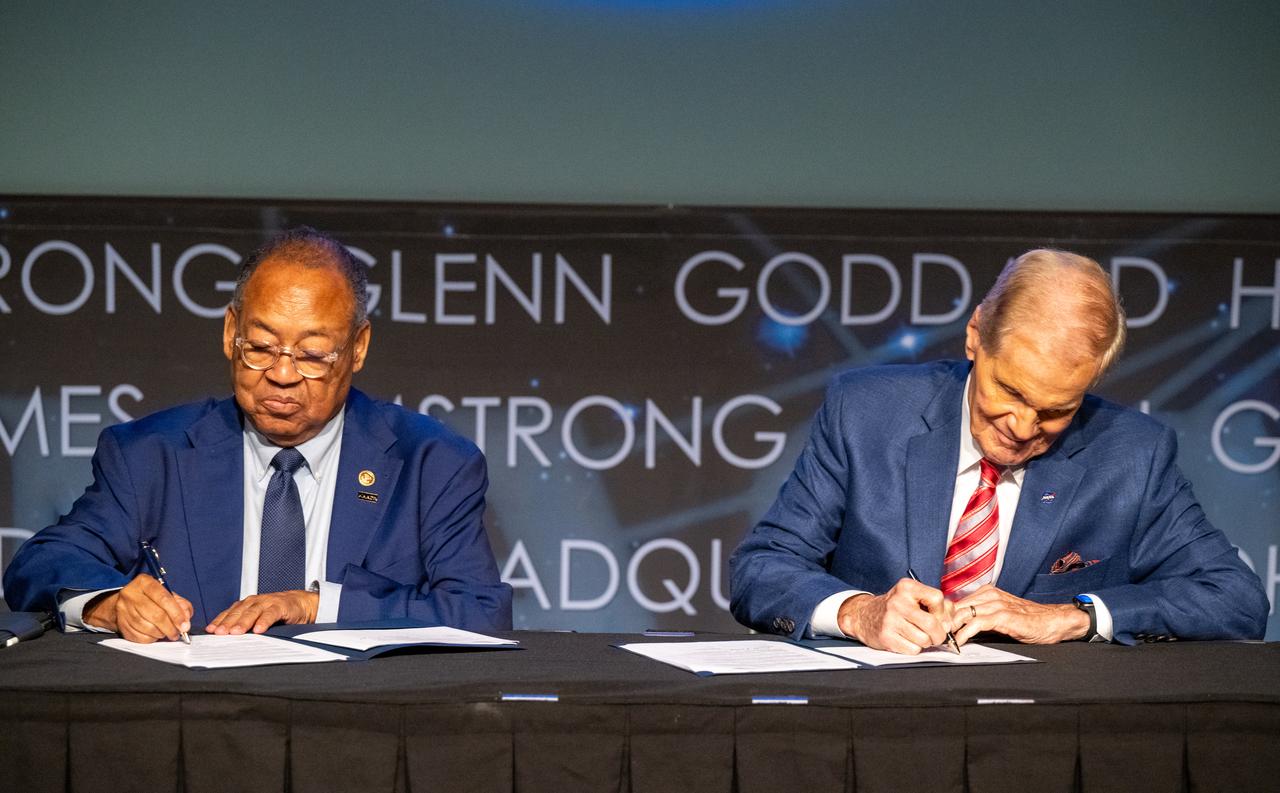
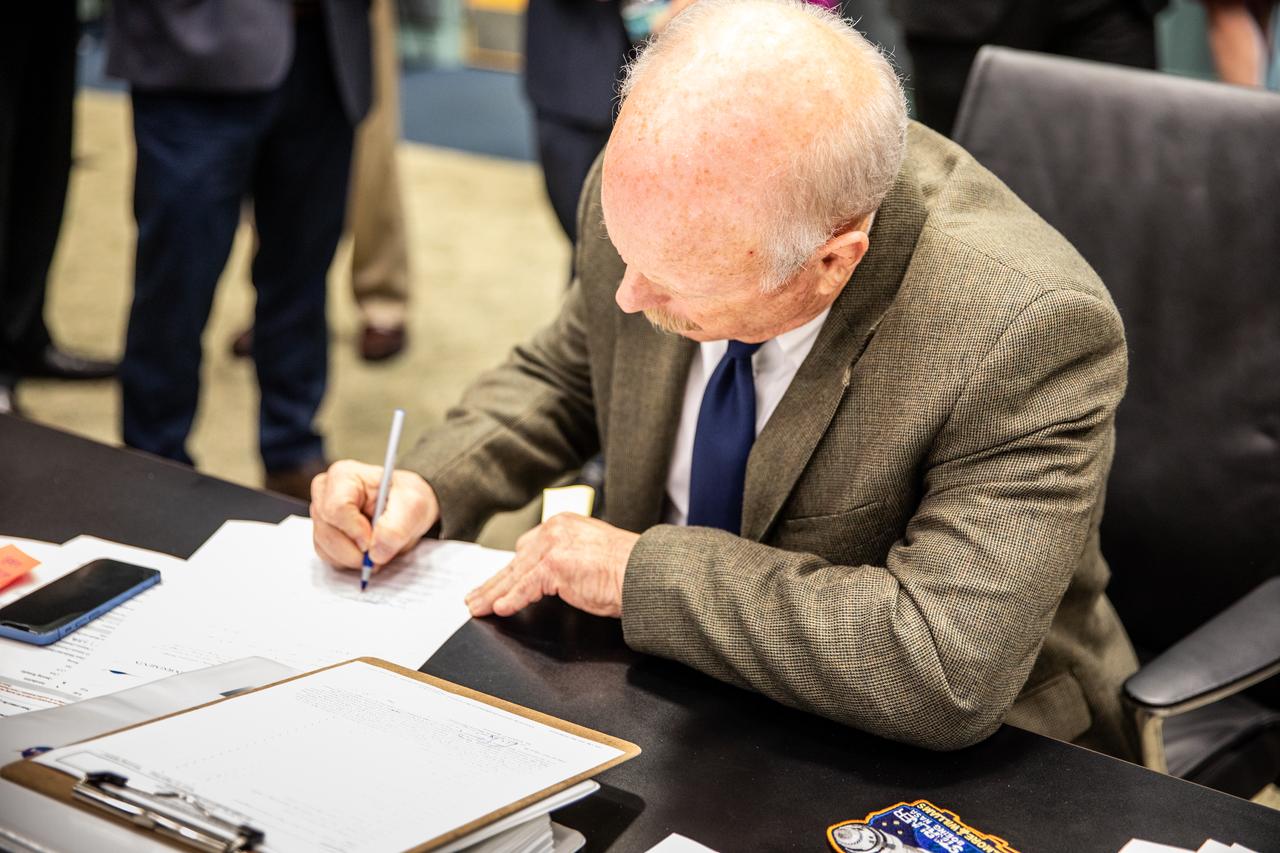
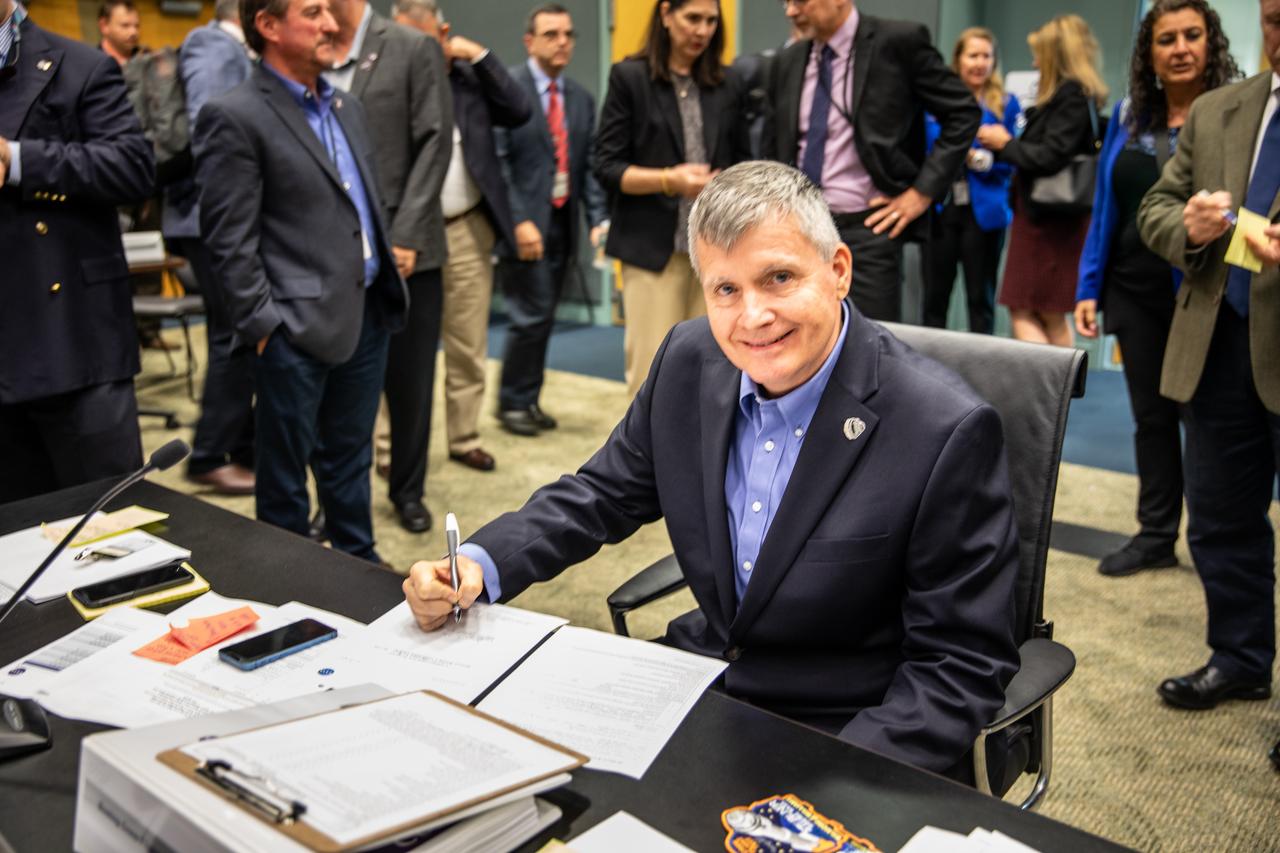
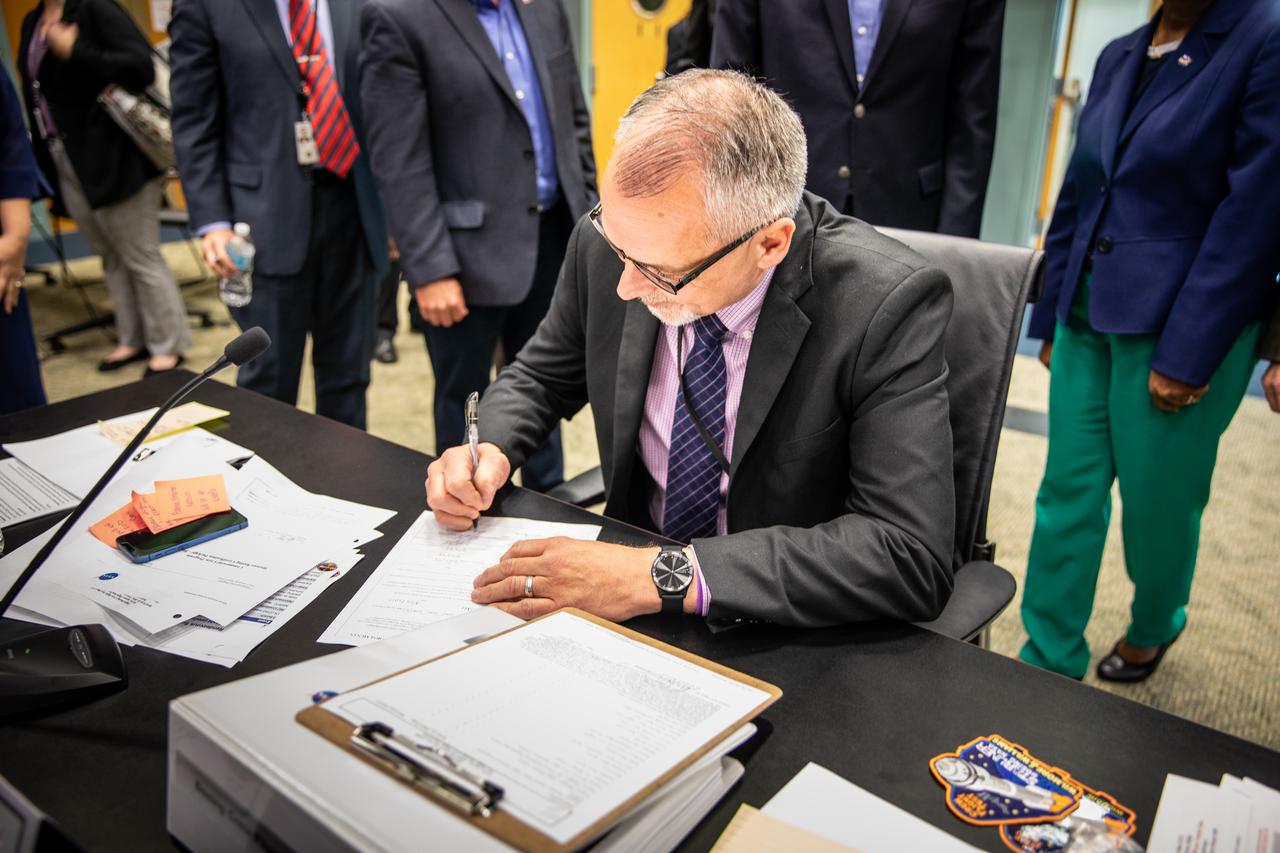
NAACP Board Chair Leon Russell, left, and NASA Administrator Bill Nelson, right, sign a Space Act Agreement between NASA and the NAACP during a 5th Annual Hidden Figures Street Naming Anniversary event Thursday, Sept. 19, 2024, at the Mary W. Jackson NASA Headquarters building in Washington. Photo Credit: (NASA/Keegan Barber)
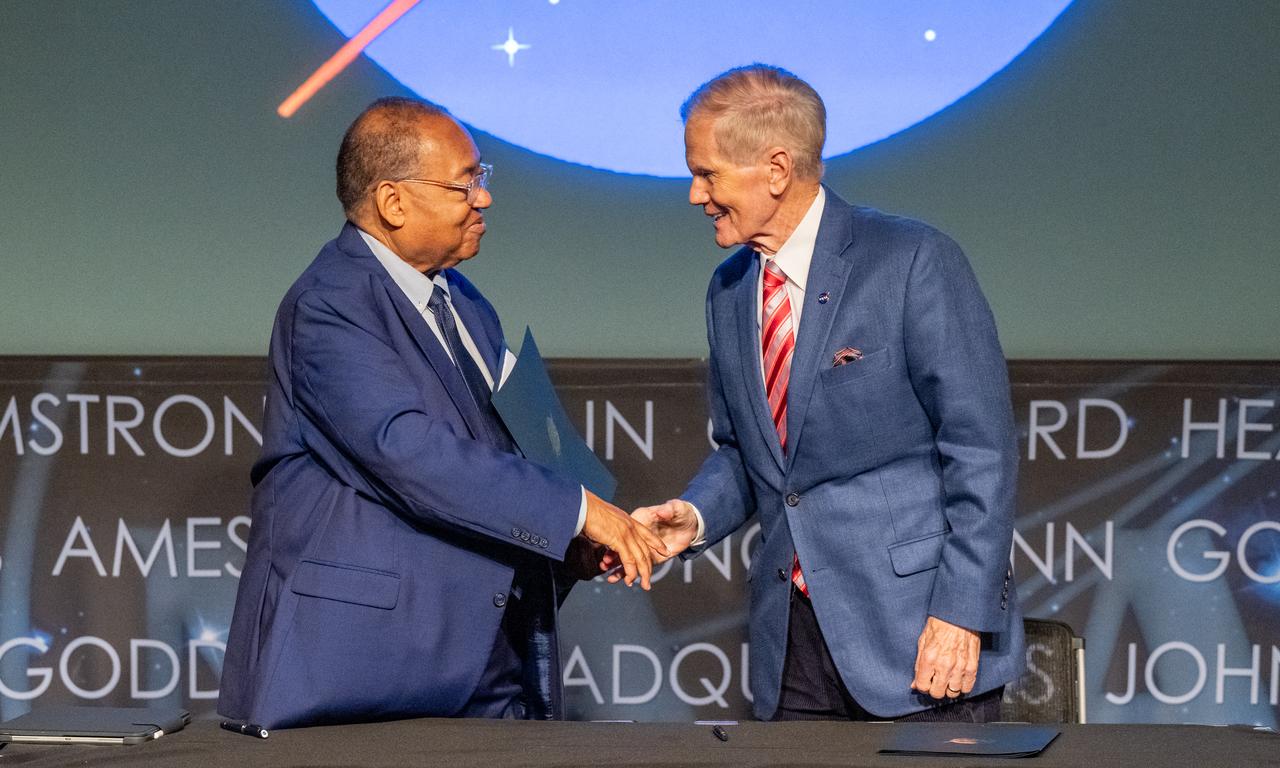
NAACP Board Chair Leon Russell, left, and NASA Administrator Bill Nelson, right, shake hands after signing a Space Act Agreement between NASA and the NAACP during a 5th Annual Hidden Figures Street Naming Anniversary event Thursday, Sept. 19, 2024, at the Mary W. Jackson NASA Headquarters building in Washington. Photo Credit: (NASA/Keegan Barber)
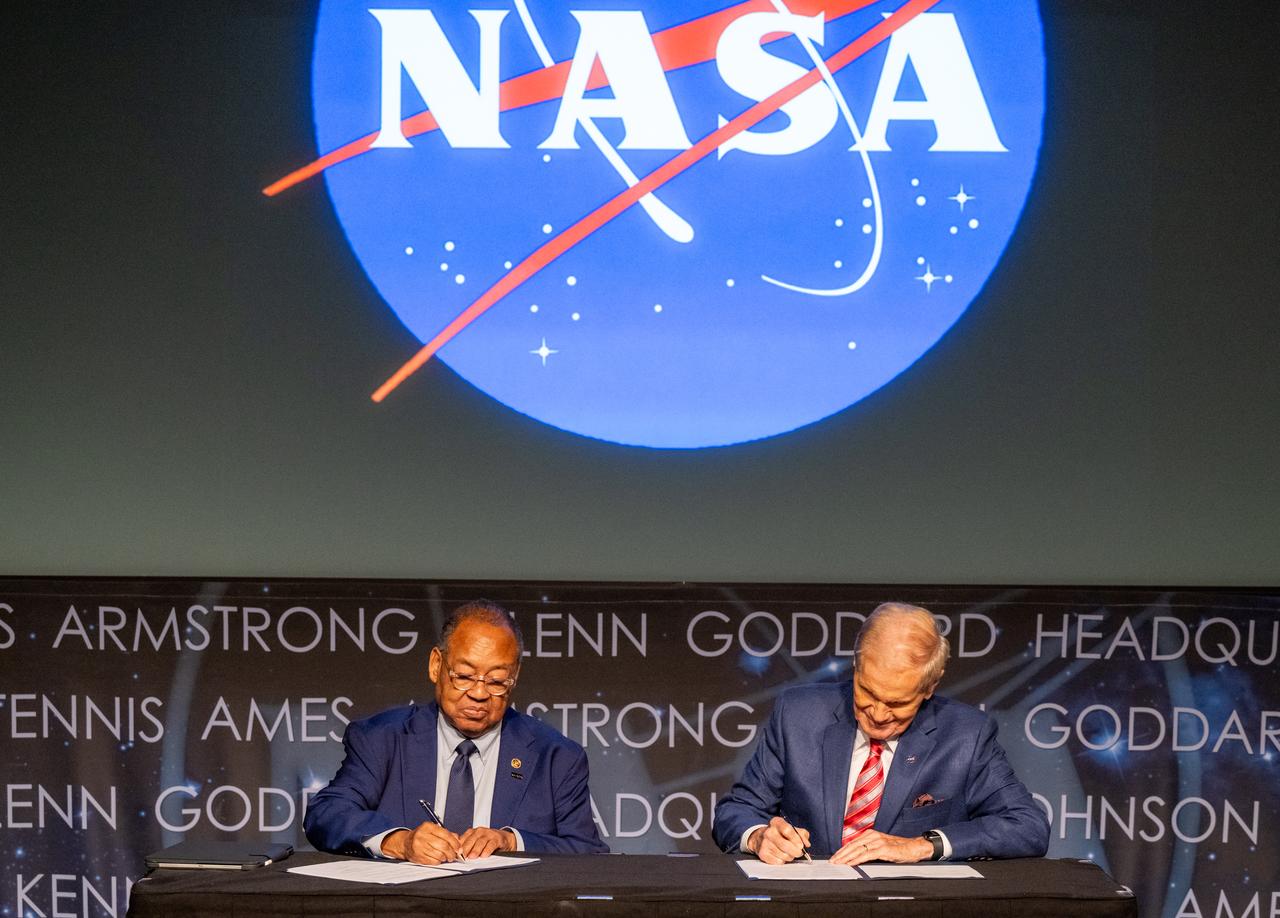
NAACP Board Chair Leon Russell, left, and NASA Administrator Bill Nelson, right, sign a Space Act Agreement between NASA and the NAACP during a 5th Annual Hidden Figures Street Naming Anniversary event Thursday, Sept. 19, 2024, at the Mary W. Jackson NASA Headquarters building in Washington. Photo Credit: (NASA/Keegan Barber)
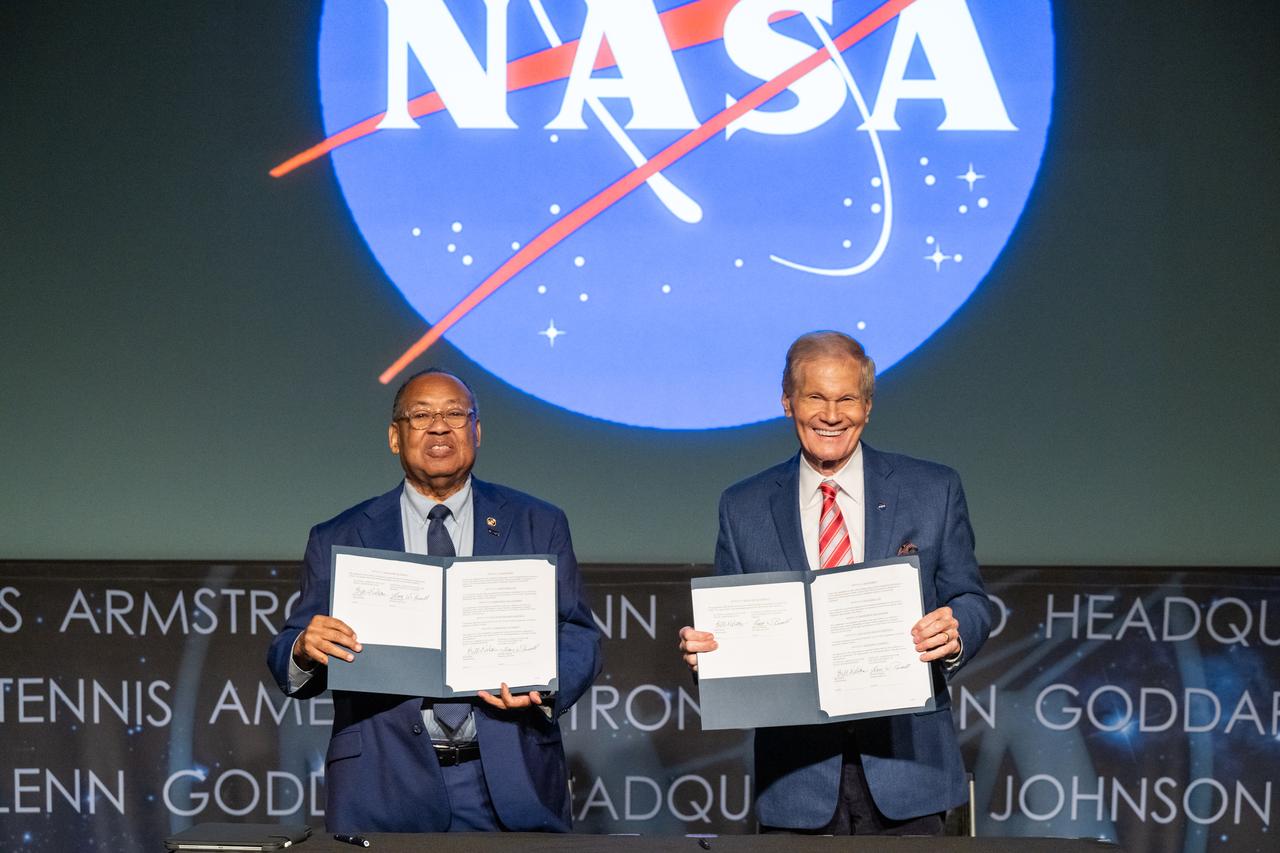
NAACP Board Chair Leon Russell, left, and NASA Administrator Bill Nelson, right, sign a Space Act Agreement between NASA and the NAACP during a 5th Annual Hidden Figures Street Naming Anniversary event Thursday, Sept. 19, 2024, at the Mary W. Jackson NASA Headquarters building in Washington. Photo Credit: (NASA/Keegan Barber)
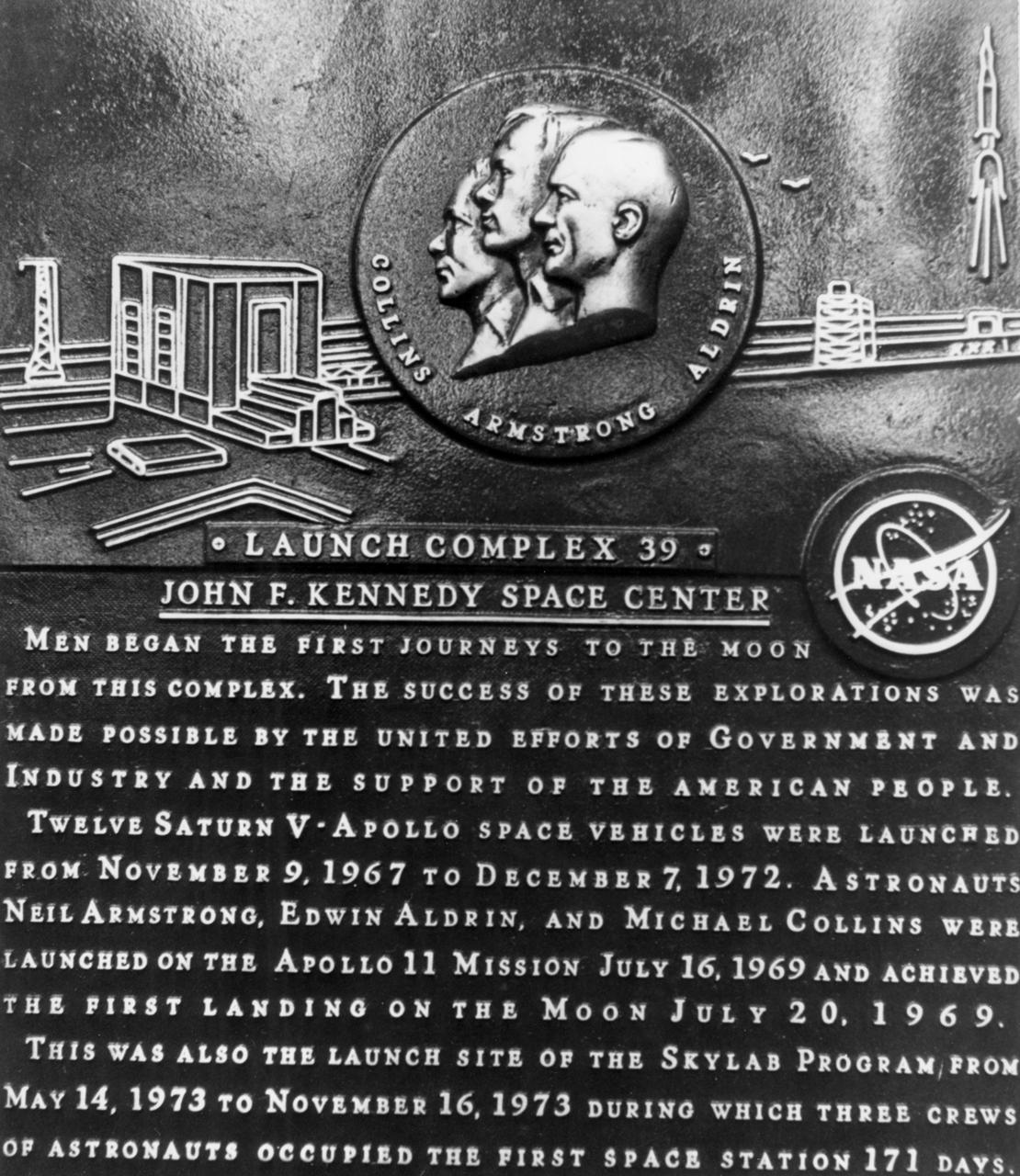
On July 3, 1974 NASA commemorated the 5th anniversary of the Apollo 11, first lunar landing mission, at the Kennedy Space Center (KSC). Launch Pad 39, from which astronauts Neil Armstrong, Edwin Aldrin, and Michael Collins first embarked on their historic journey to the Moon, was dedicated as a national landmark. Apollo 11 was launched at 9:32 am on July 16, 1969 and made the first successful lunar landing July 20th. During the 45 minute ceremony, the three Apollo 11 astronauts unveiled this plaque which was placed at the launch site. Other participating dignitaries included Dr. James Fletcher and Dr. George H. Low, NASA Administrator and Deputy Administrator respectively; Florida Governor Rubin Askew; Senator frank E. Moss; Congressman Olin E. Teague, and Kurt Debus, KSC Director. Apollo 11 launched from the Kennedy Space Center, Florida via a Saturn V launch which was developed by the Marshall Space Flight Center (MSFC) under the direction of Dr. Wernher von Braun.
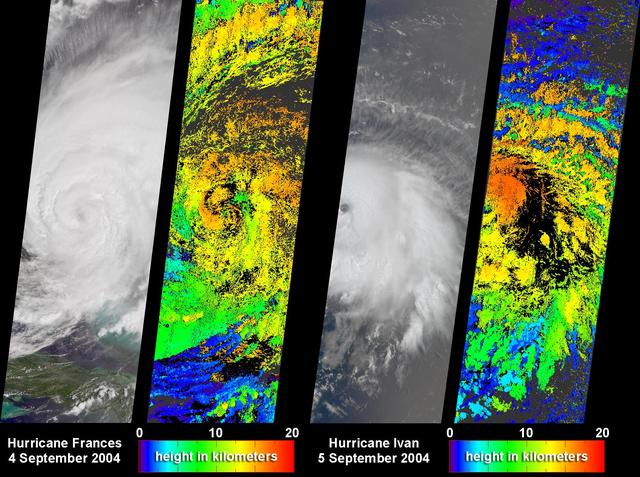
NASA Terra spacecraft captured these images and cloud-top height retrievals of Hurricane Frances on September 4, 2004, when the eye sat just off the coast of eastern Florida, and Hurricane Ivan on September 5th.
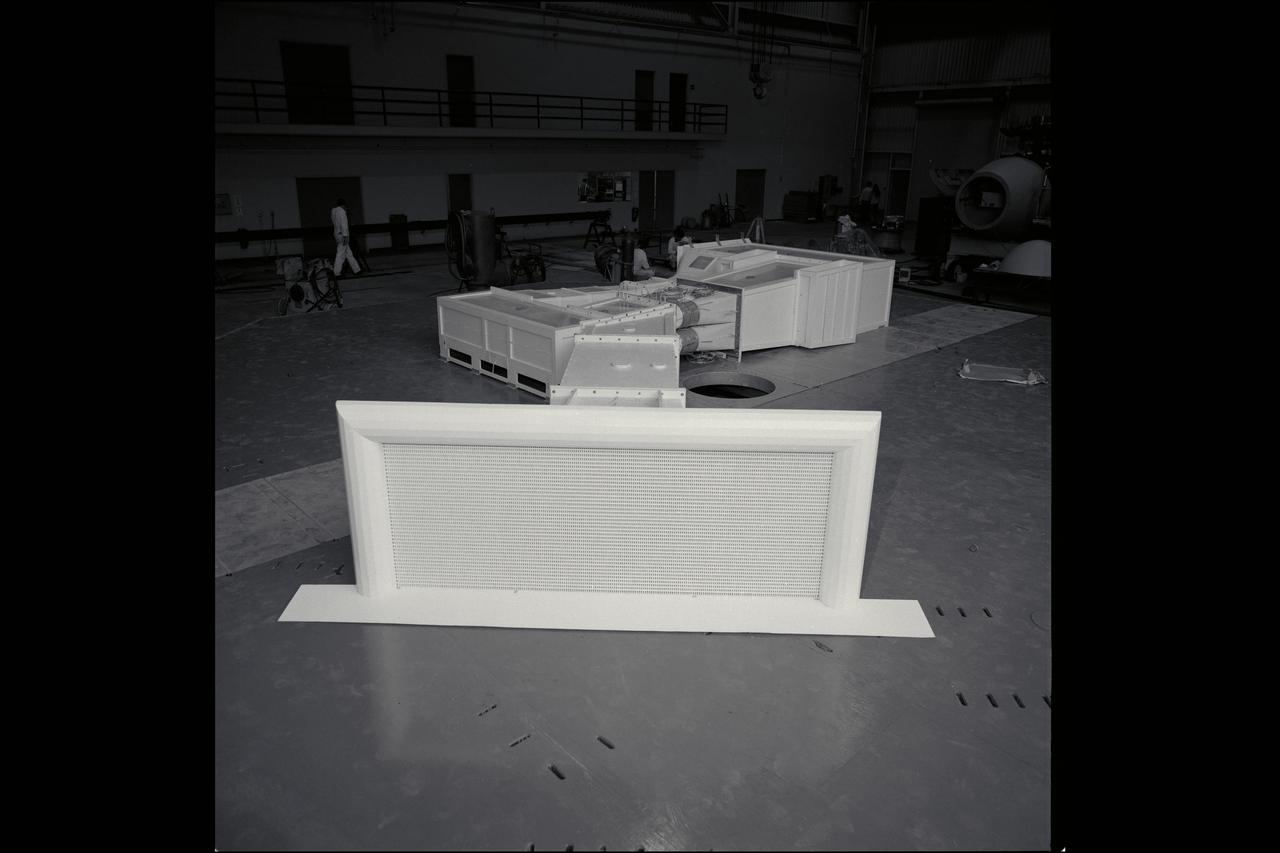
1/5th scale model of the 80x120ft w.t. in N-246
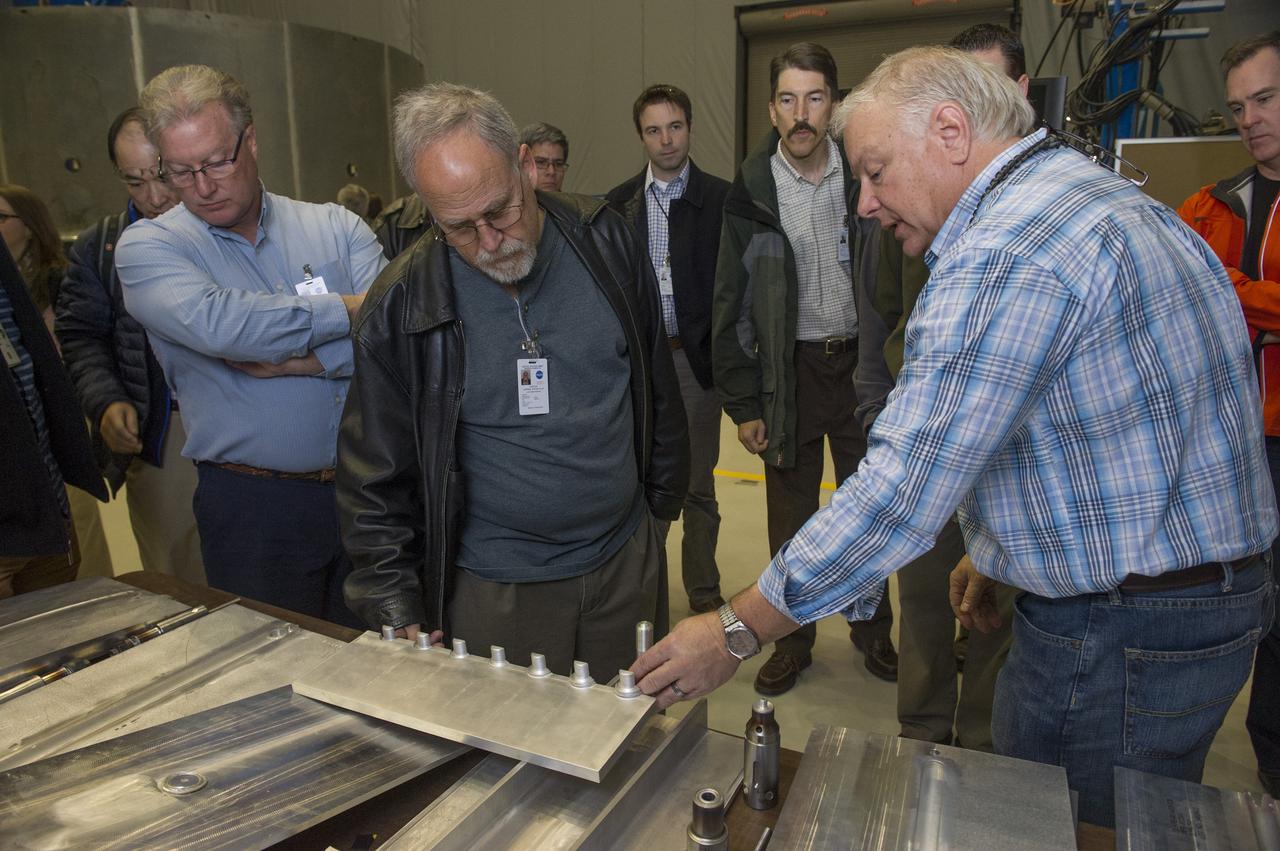
5TH SBKF (SHELL BUCKLE KNOCKDOWN FACTOR) WORKSHOP, MSFC, FEB. 3-4, 2015
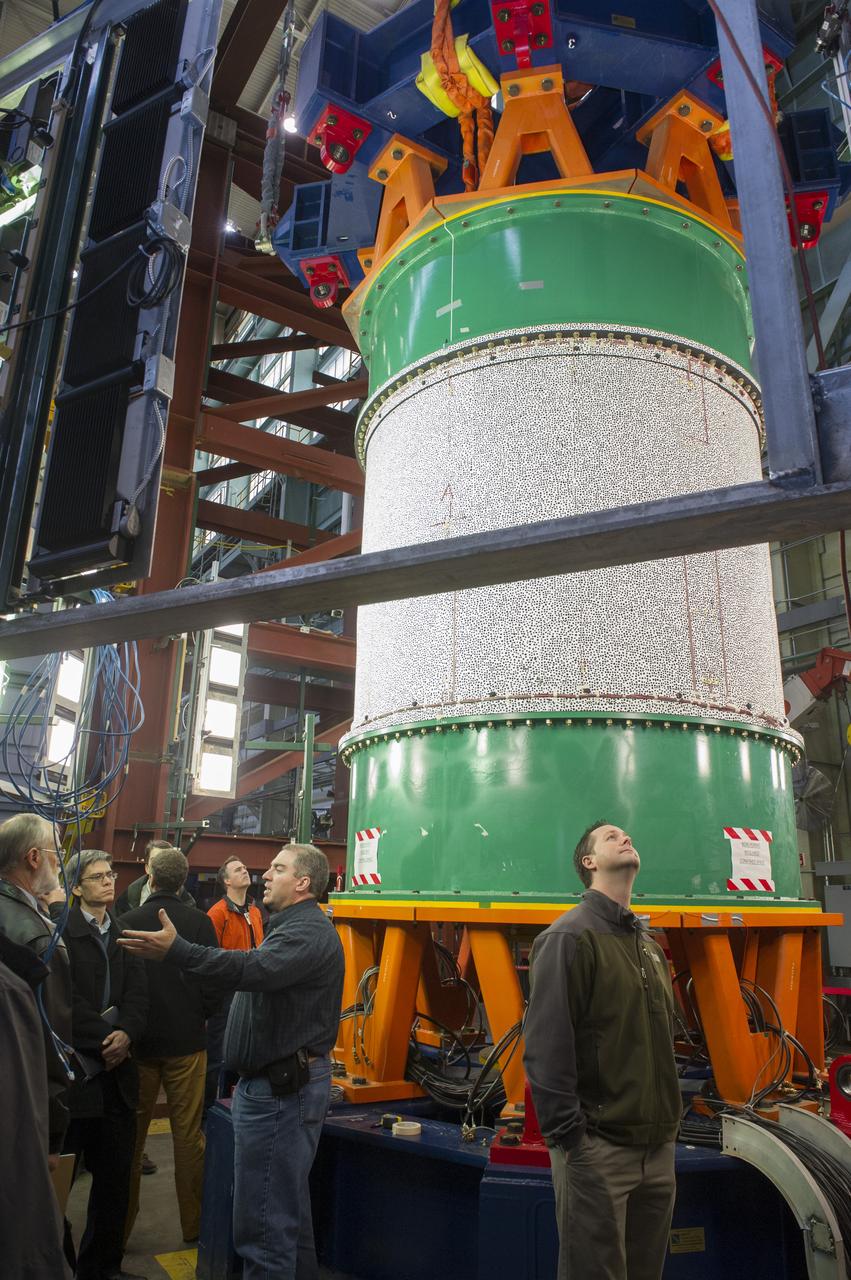
5TH SBKF (SHELL BUCKLE KNOCKDOWN FACTOR) WORKSHOP, MSFC, FEB. 3-4, 2015
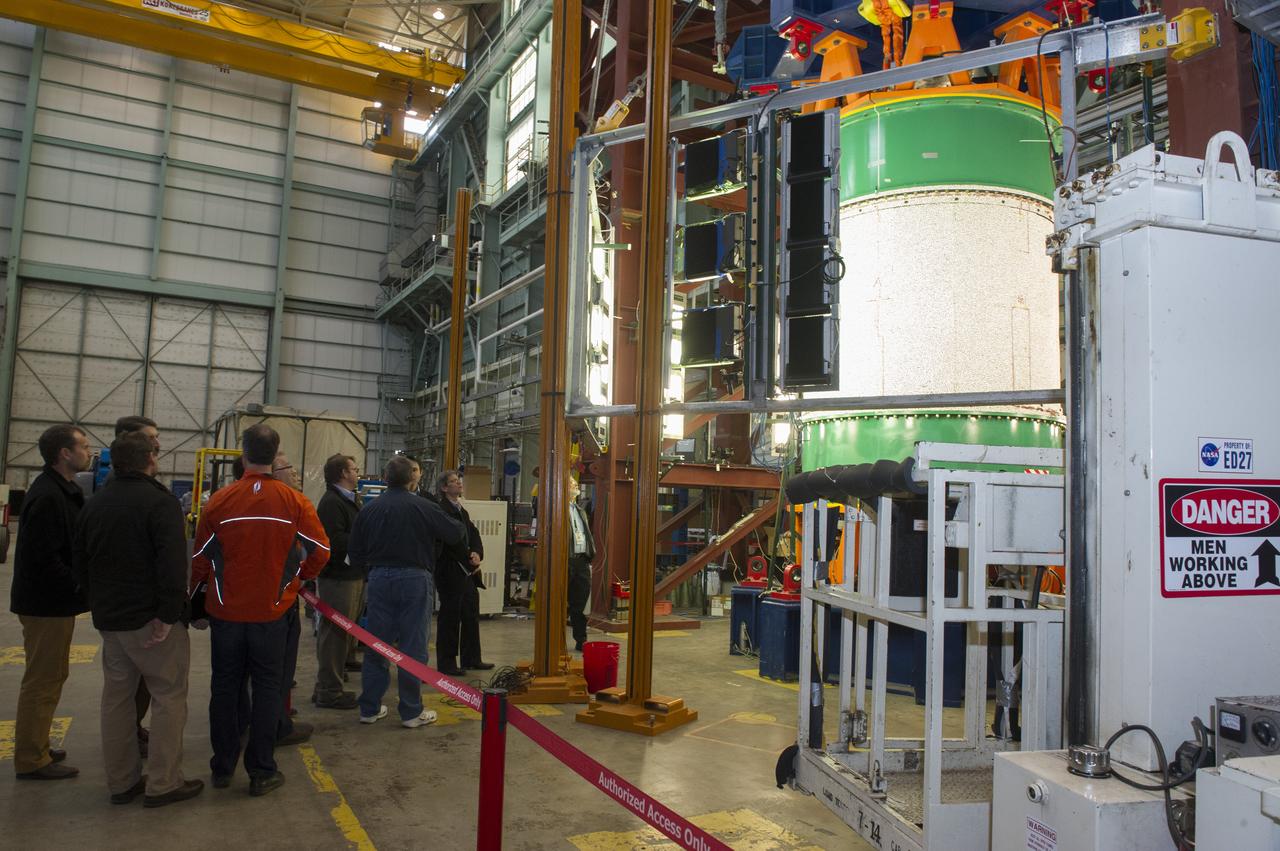
5TH SBKF (SHELL BUCKLE KNOCKDOWN FACTOR) WORKSHOP, MSFC, FEB. 3-4, 2015
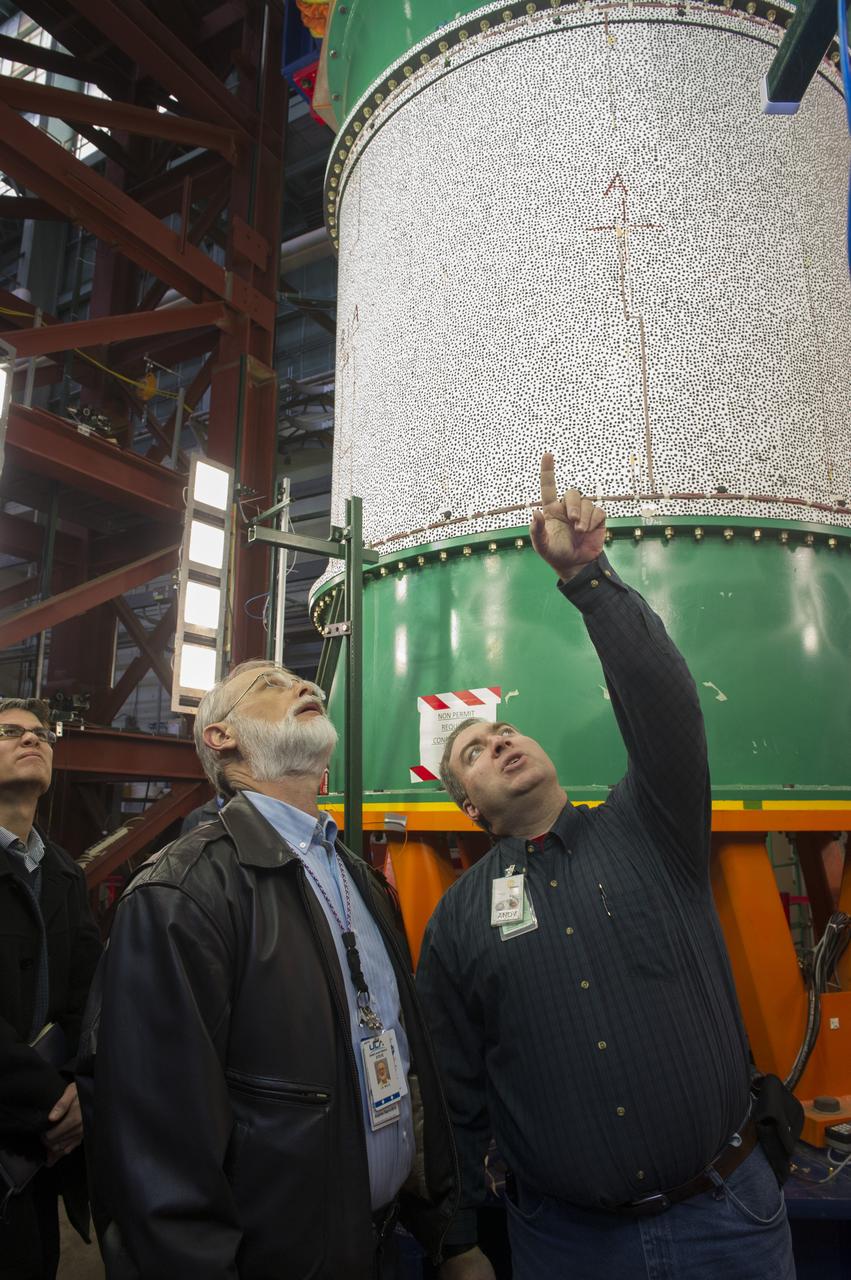
5TH SBKF (SHELL BUCKLE KNOCKDOWN FACTOR) WORKSHOP, MSFC, FEB. 3-4, 2015
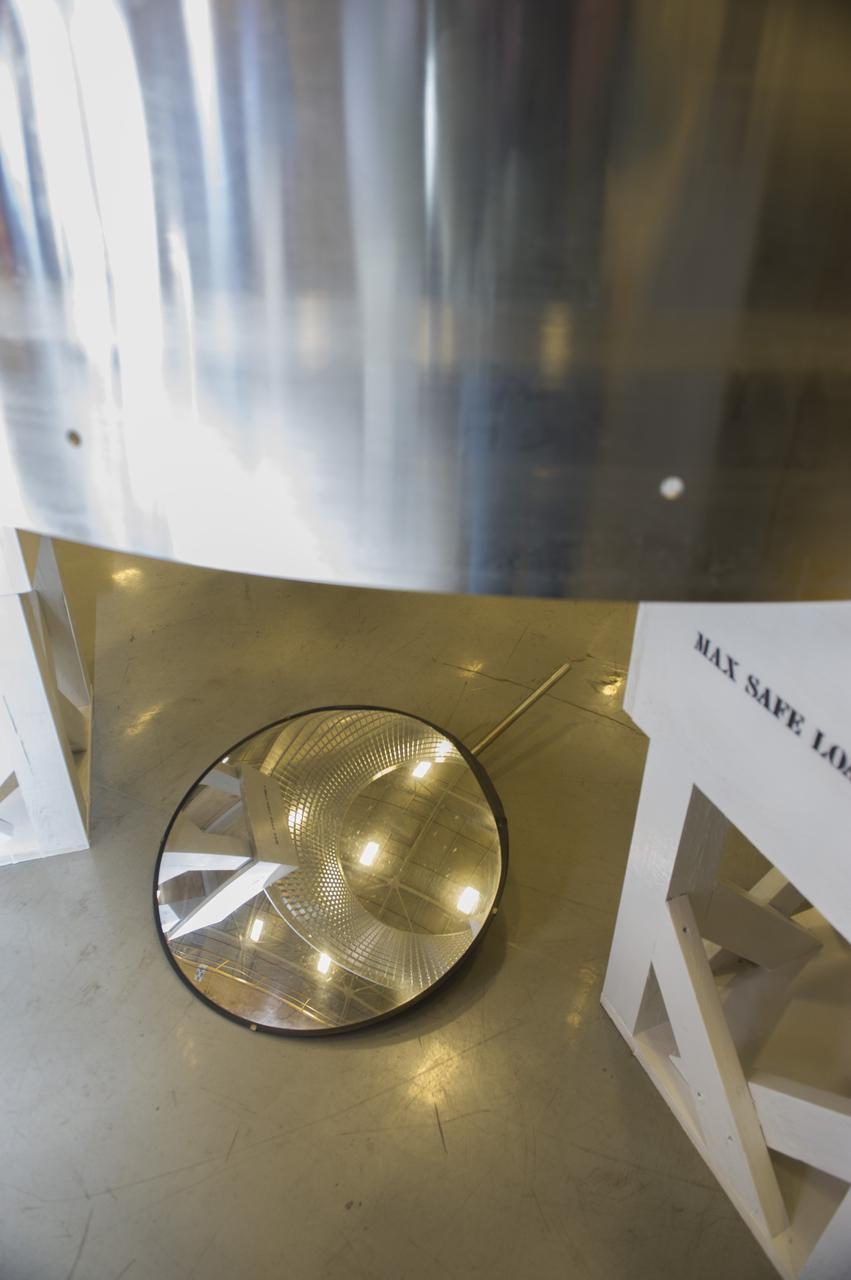
5TH SBKF (SHELL BUCKLE KNOCKDOWN FACTOR) WORKSHOP, MSFC, FEB. 3-4, 2015
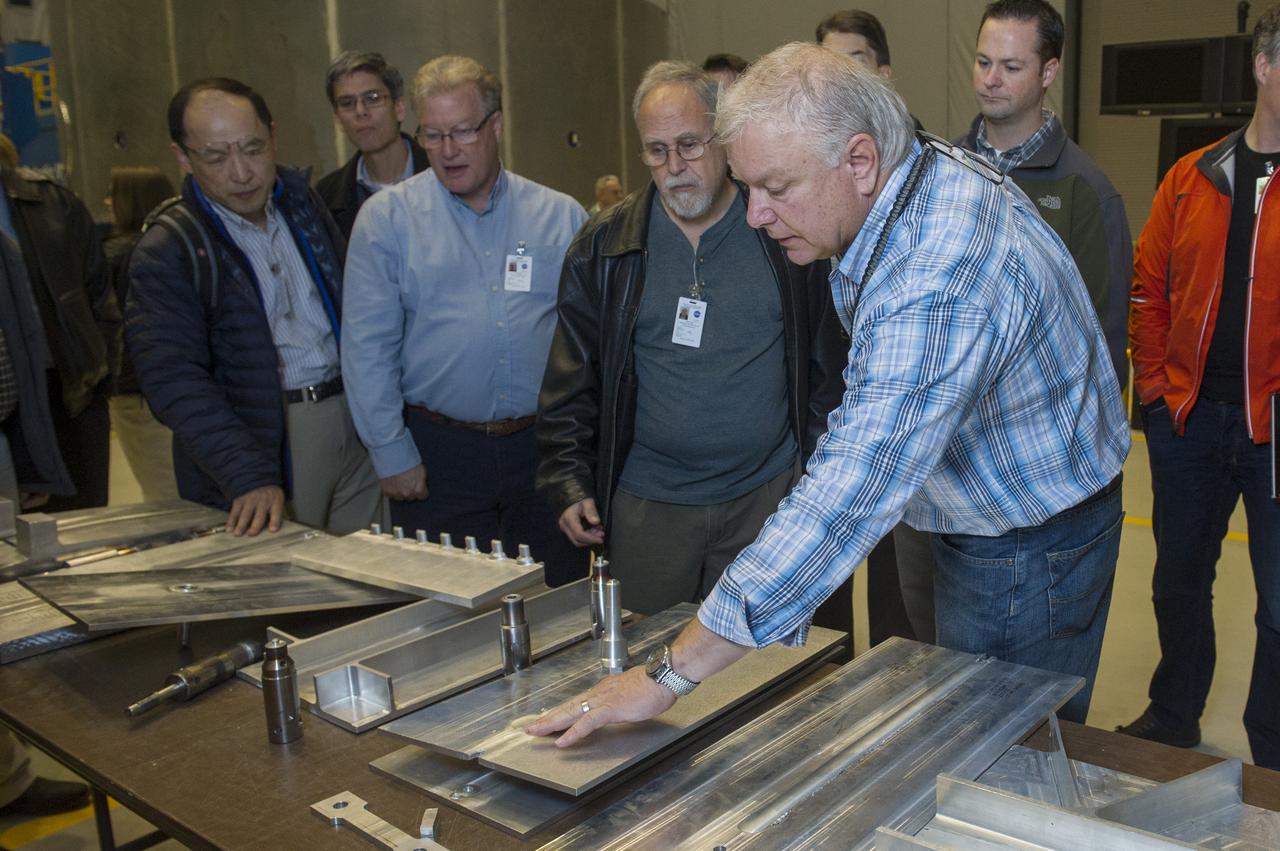
5TH SBKF (SHELL BUCKLE KNOCKDOWN FACTOR) WORKSHOP, MSFC, FEB 3-4, 2015
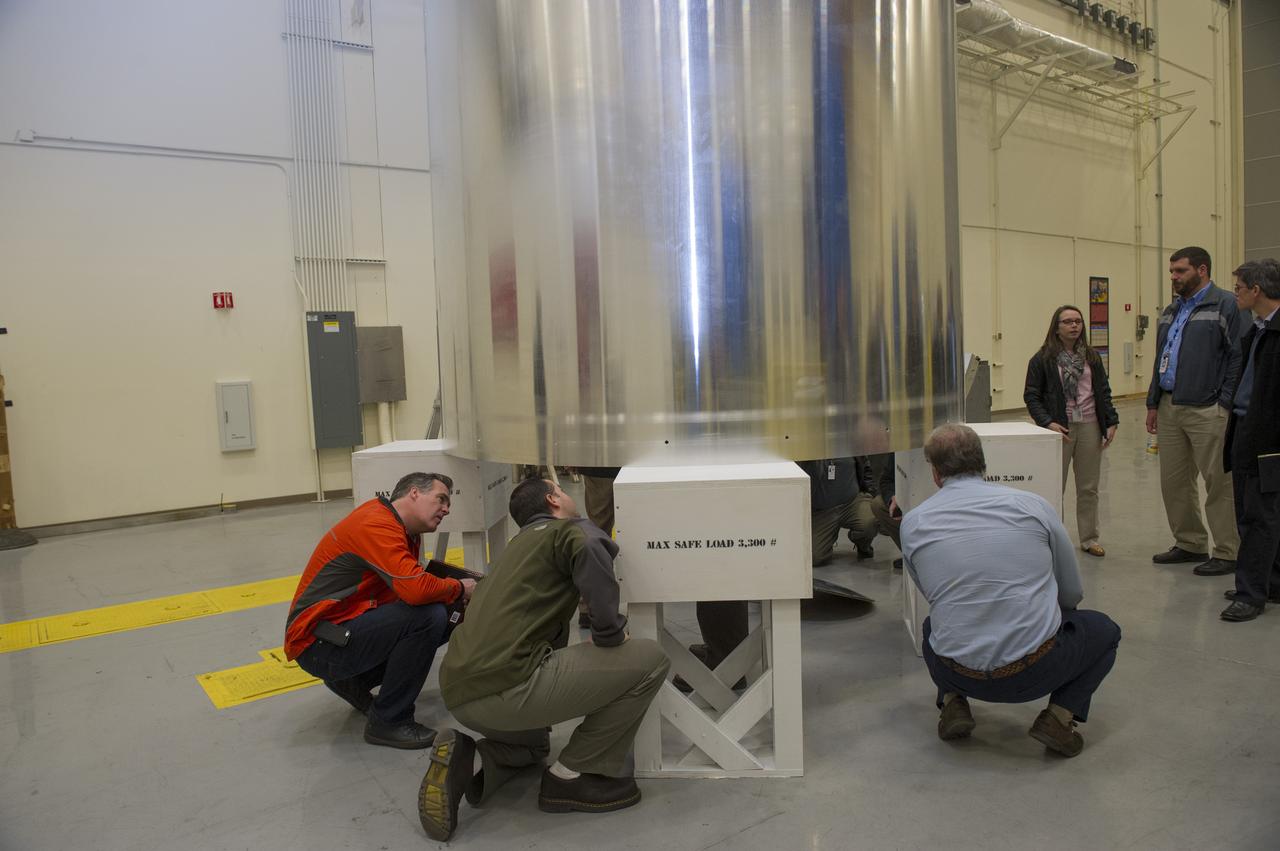
5TH SBKF (SHELL BUCKLE KNOCKDOWN FACTOR) WORKSHOP, MSFC, FEB. 3-4, 2015
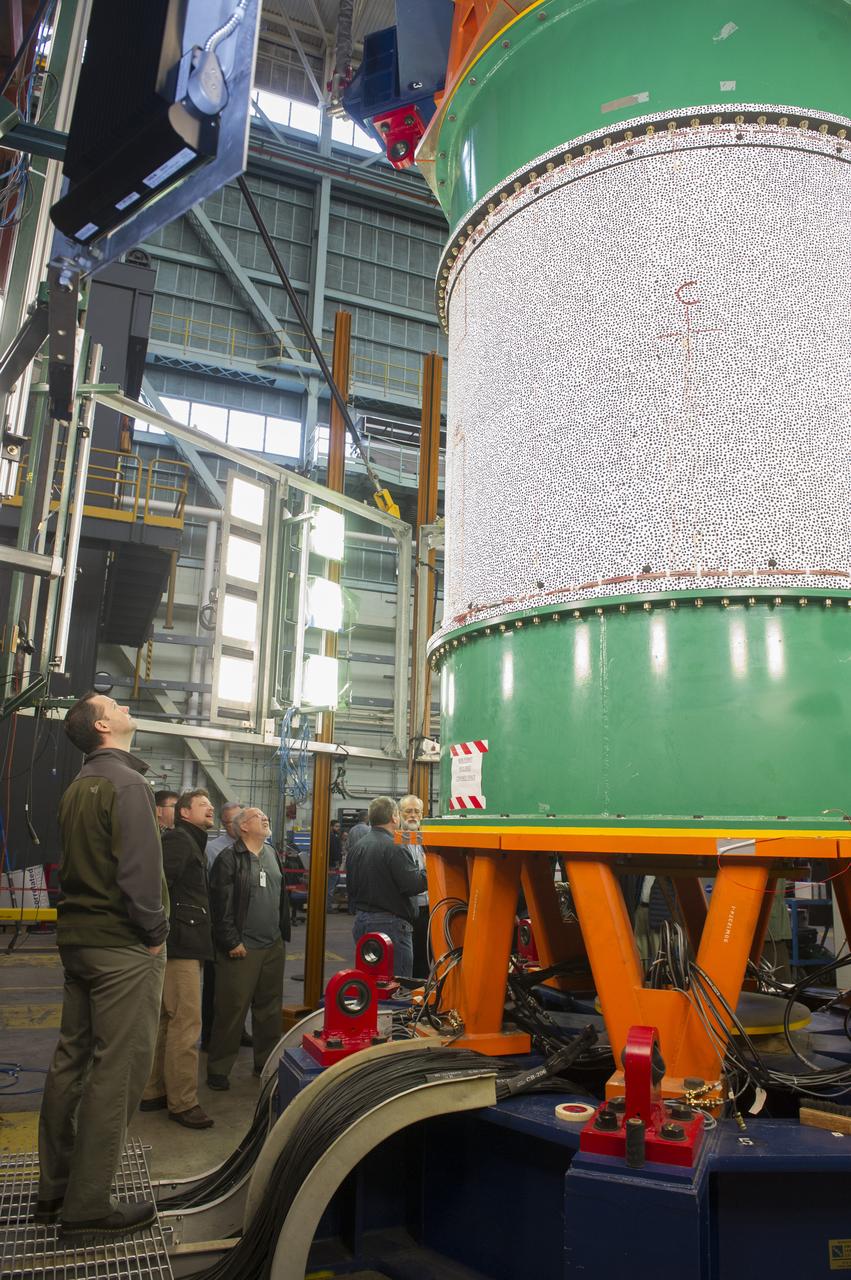
5TH SBKF (SHELL BUCKLE KNOCKDOWN FACTOR) WORKSHOP, MSFC, FEB. 3-4, 2015
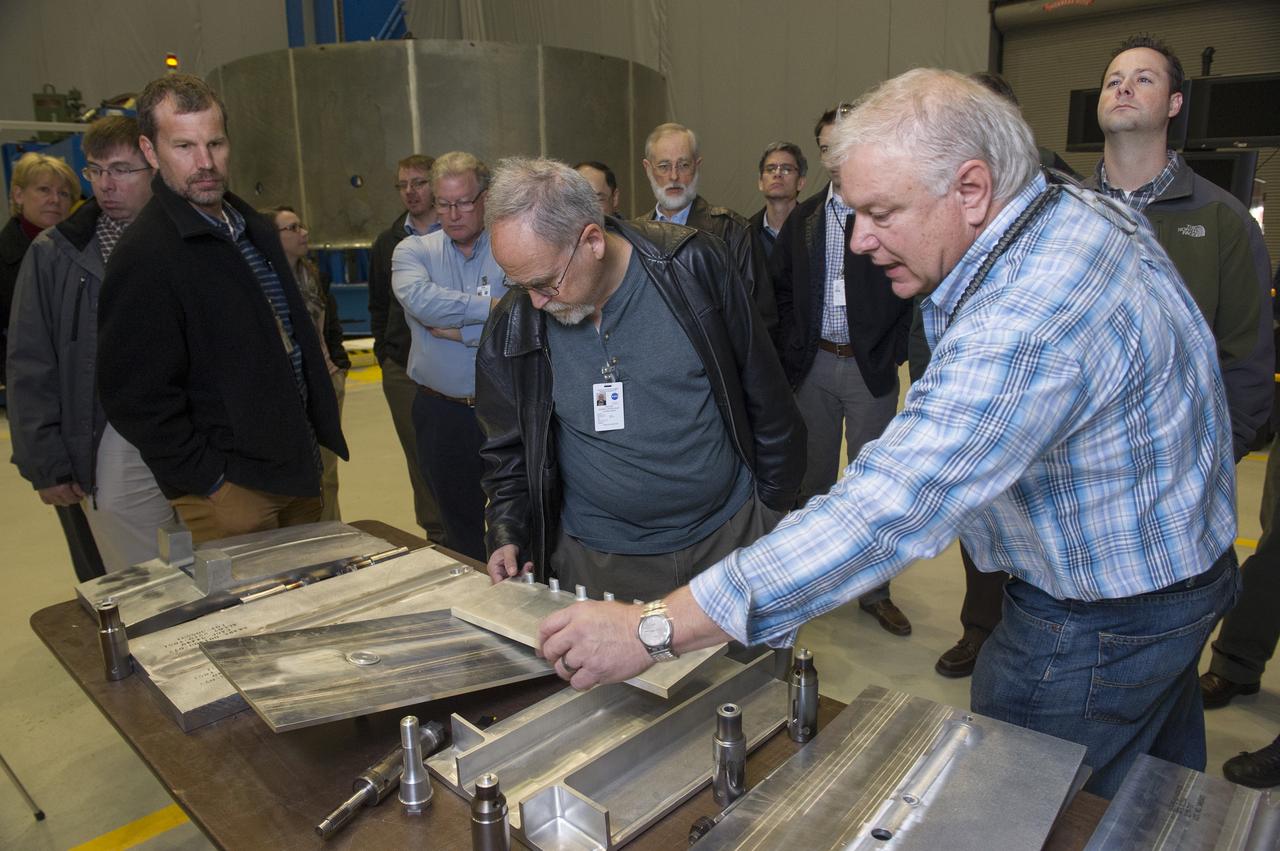
5TH SBKF (SHELL BUCKLE KNOCKDOWN FACTOR) WORKSHOP, MSFC, FEB. 3-4, 2015
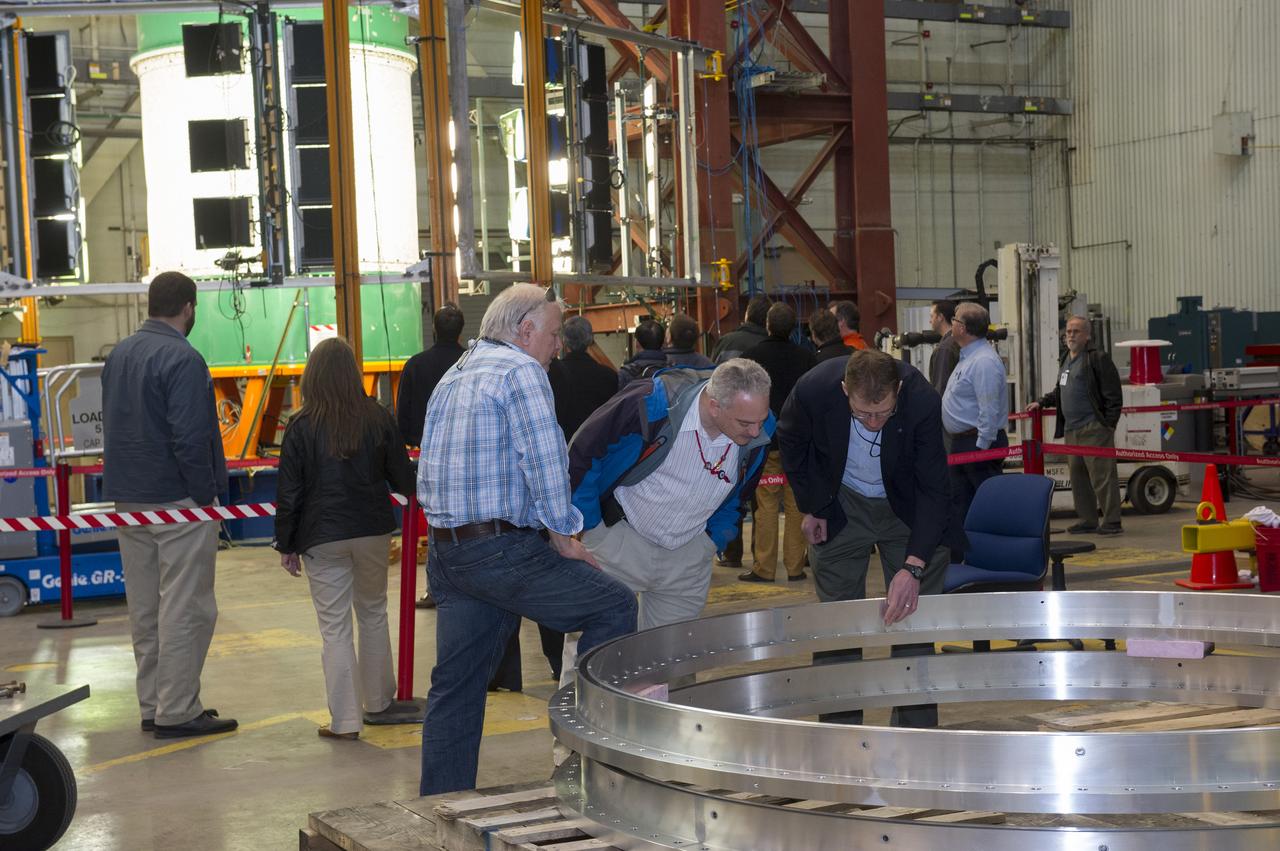
5TH SBKF (SHELL BUCKLE KNOCKDOWN FACTOR) WORKSHOP, MSFC, FEB. 3-4, 2015
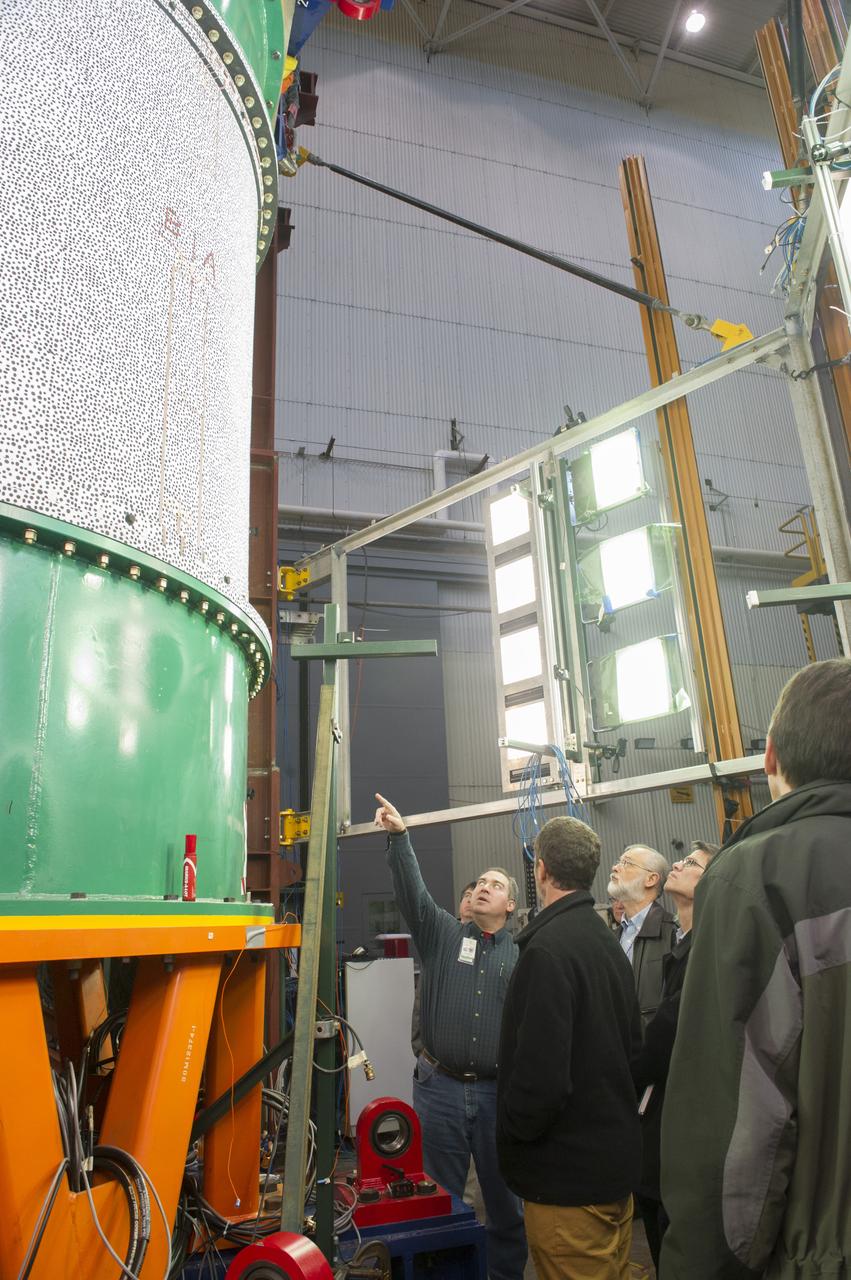
5TH SBKF (SHELL BUCKLE KNOCKDOWN FACTOR) WORKSHOP, MSFC, FEB. 3-4, 2015
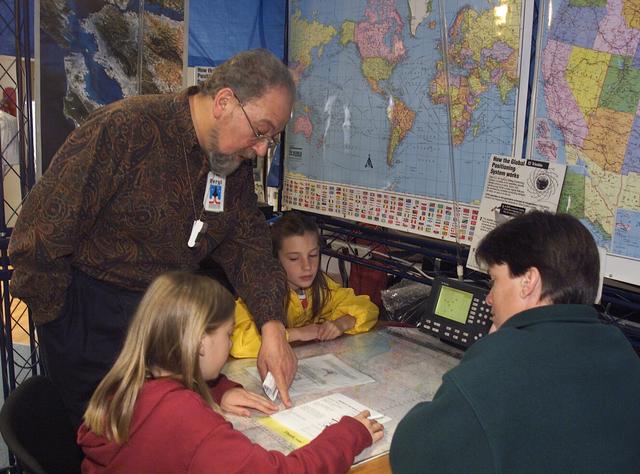
Oak Knoll School, Menlo Park, CA 5th grade class at Ames Aerospace Encounter (AAE)
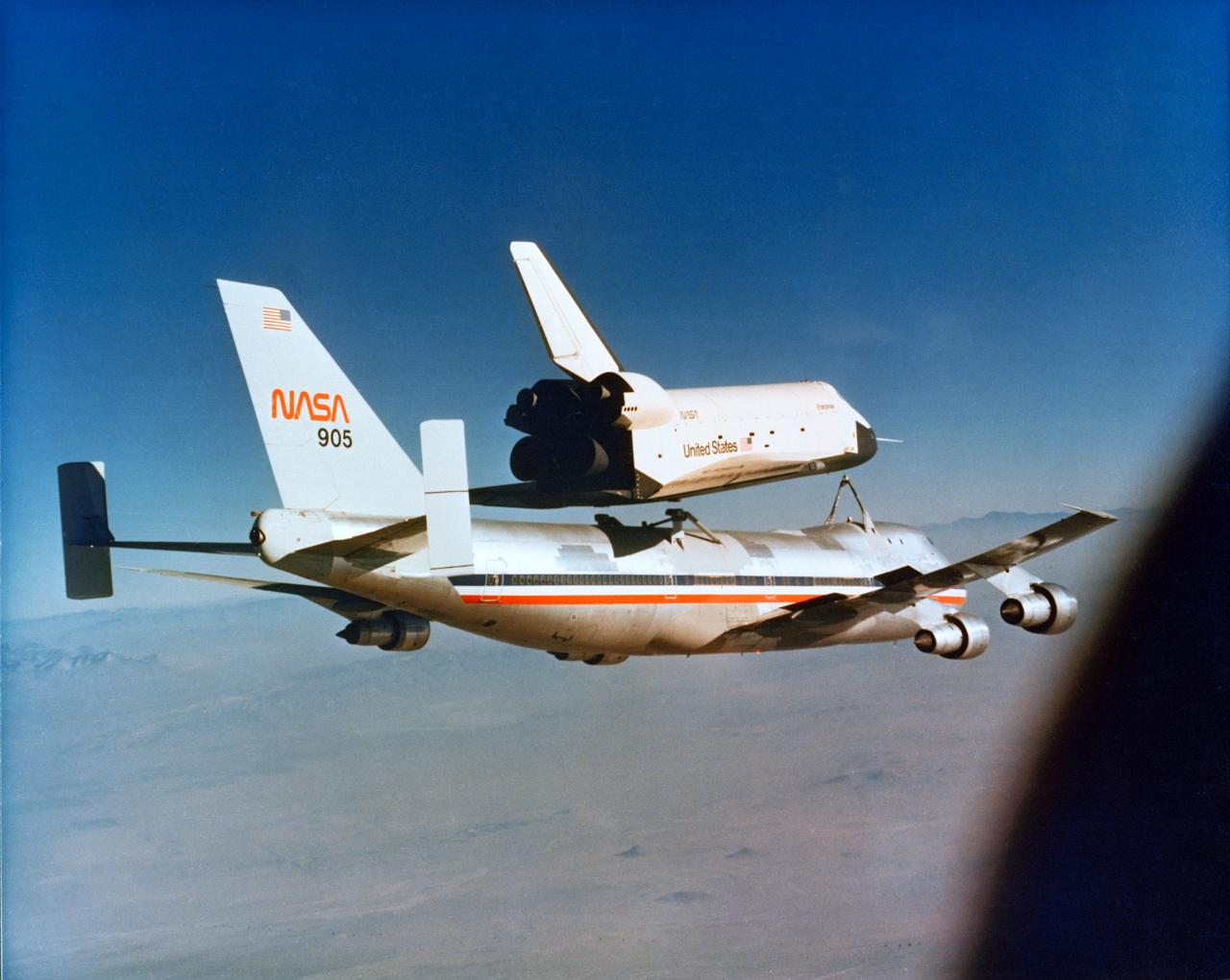
PAO news release material for the 5th and final FF of the ALT series. Precise moment of separation captured by camera from a T-38 chase plane.
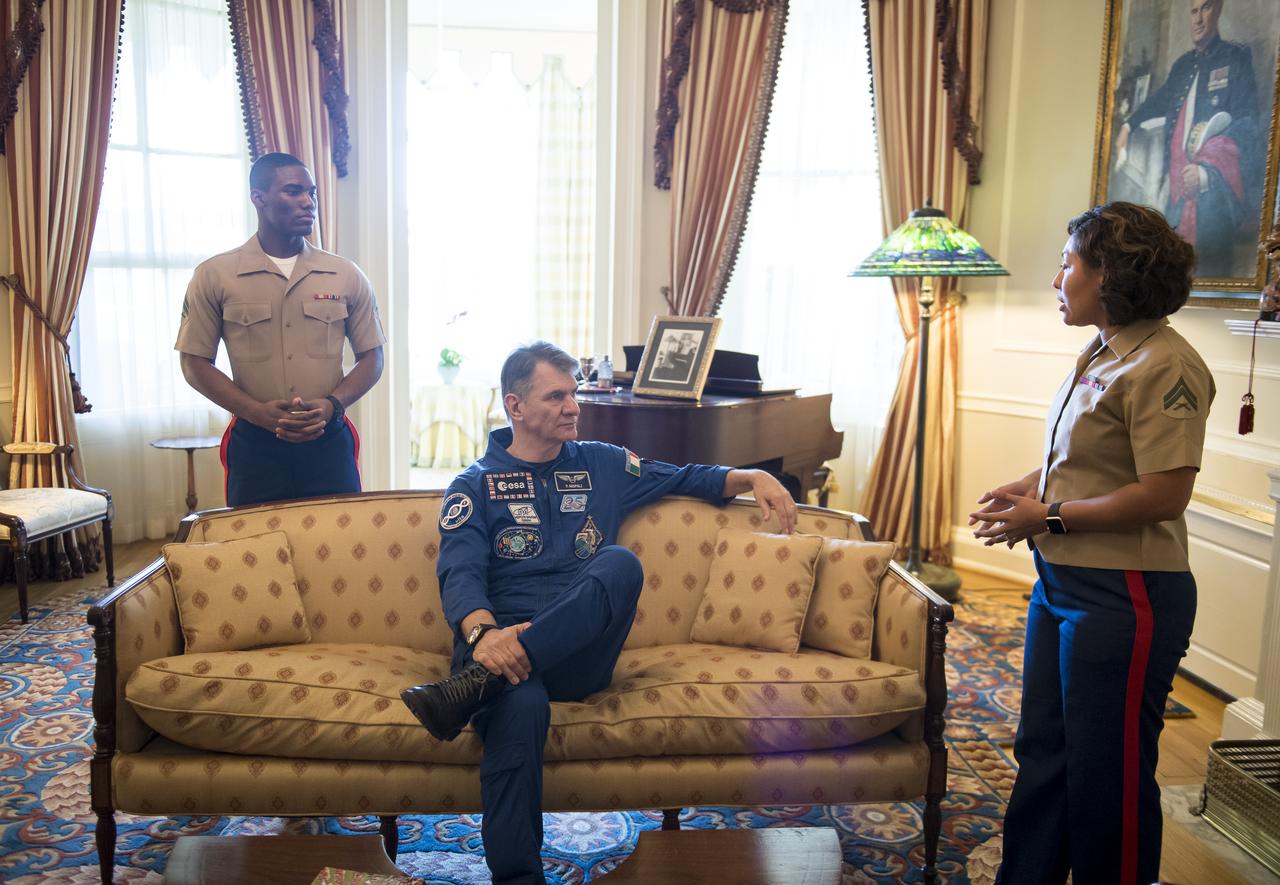
ESA astronaut Paolo Nespoli sits on a couch where Archibald Henderson, the 5th Commandant of the Marine Corps passed away in 1859, during a tour of the Home of the Commandants, Monday, May 7, 2018 in Washington. Photo Credit: (NASA/Aubrey Gemignani)
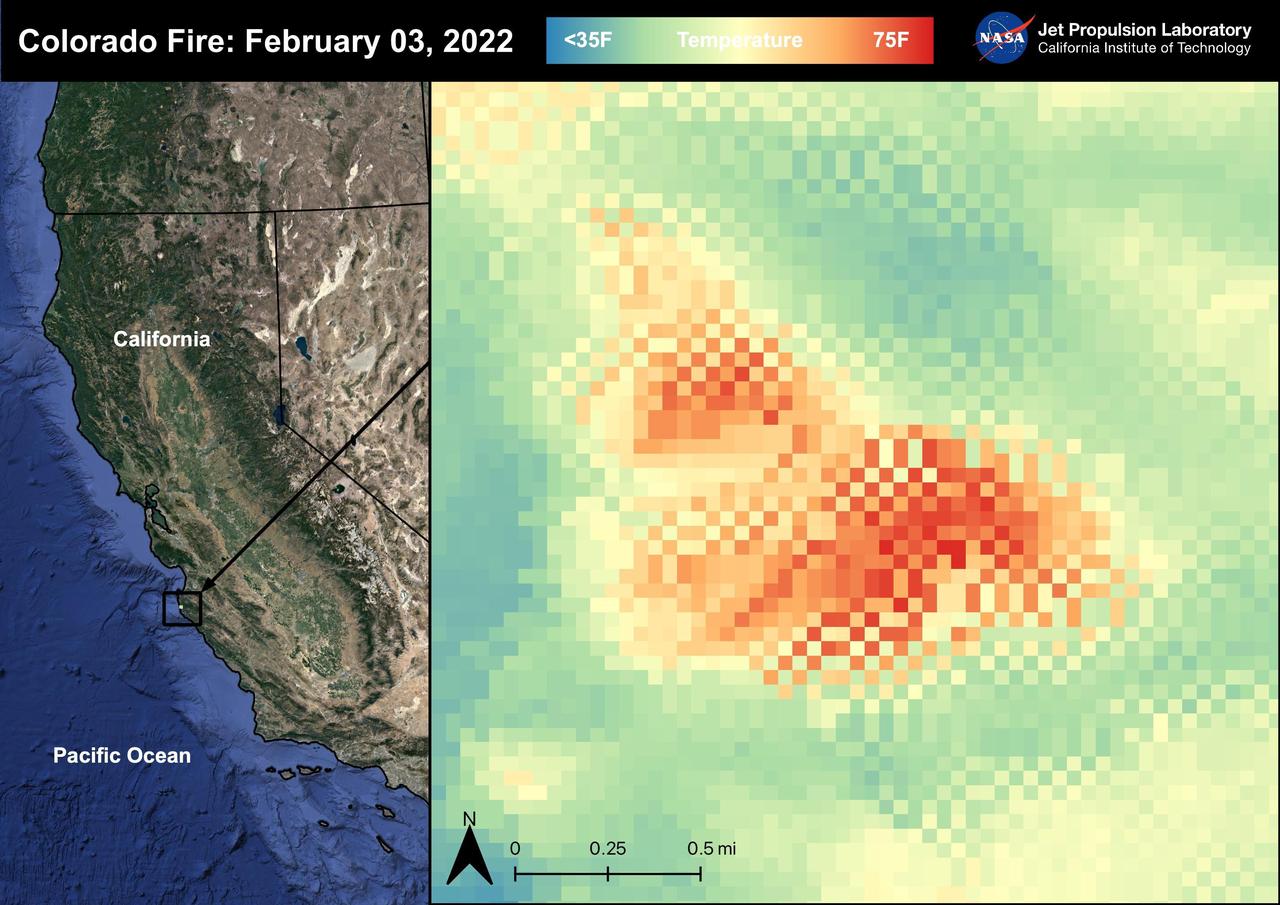
The Colorado Fire began on January 21st, 2022 was started by an escaped fire by the Palo Colorado Road. The wildfire burned 687 acres between Carmel-by-the-Sea and Big Sur. The Colorado Fire was driven towards the coast by strong winds leading to the shut down of the Bixby Bridge and a section of Highway 1. The fire was completely contained as of February 5th, 2022. No injuries or causalities have been reported; one structure was destroyed. The image above shows the fire captured in a Land Surface Temperature image from ECOSTRESS on February 3rd, 2022 at 01:11 PM PDT. As California is currently in a drought, there are concerns that 2022 will see a severe wildfire season; ECOSTRESS allows for the monitoring of the drought and of wildfires. ECOSTRESS is a thermal instrument on the International Space Station that measures the temperature of the ground, which is hotter than the air temperature during the day. It was launched to the space station in 2018. Its primary mission is to identify critical thresholds of water use and water stress in plants and to detect the timing, location, and predictive factors leading to plant water uptake decline and/or cessation. The nature of the high-resolution data provided by ECOSTRESS allows it to record heat related phenomena such as heat waves, droughts and wildfires. https://photojournal.jpl.nasa.gov/catalog/PIA25280
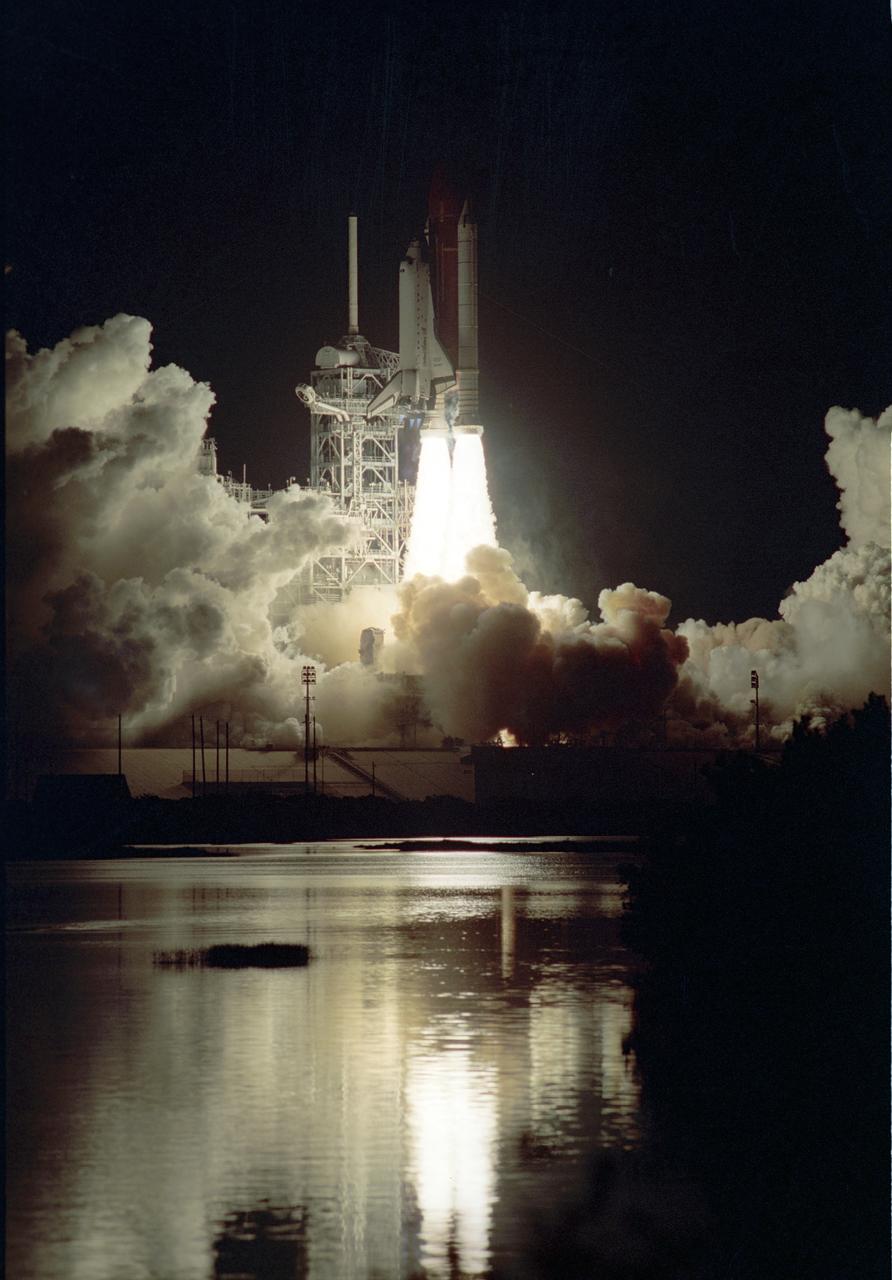
On November 22, 1989, at 7:23:30pm (EST), five astronauts were launched into space aboard the Space Shuttle Orbiter Discovery for the 5th Department of Defense (DOD) mission, STS-33. Crew members included Frederick D. Gregory, commander; John E. Blaha, pilot; and mission specialists Kathryn C. Thornton, Manley L. (Sonny) Carter, and F. Story Musgrave.
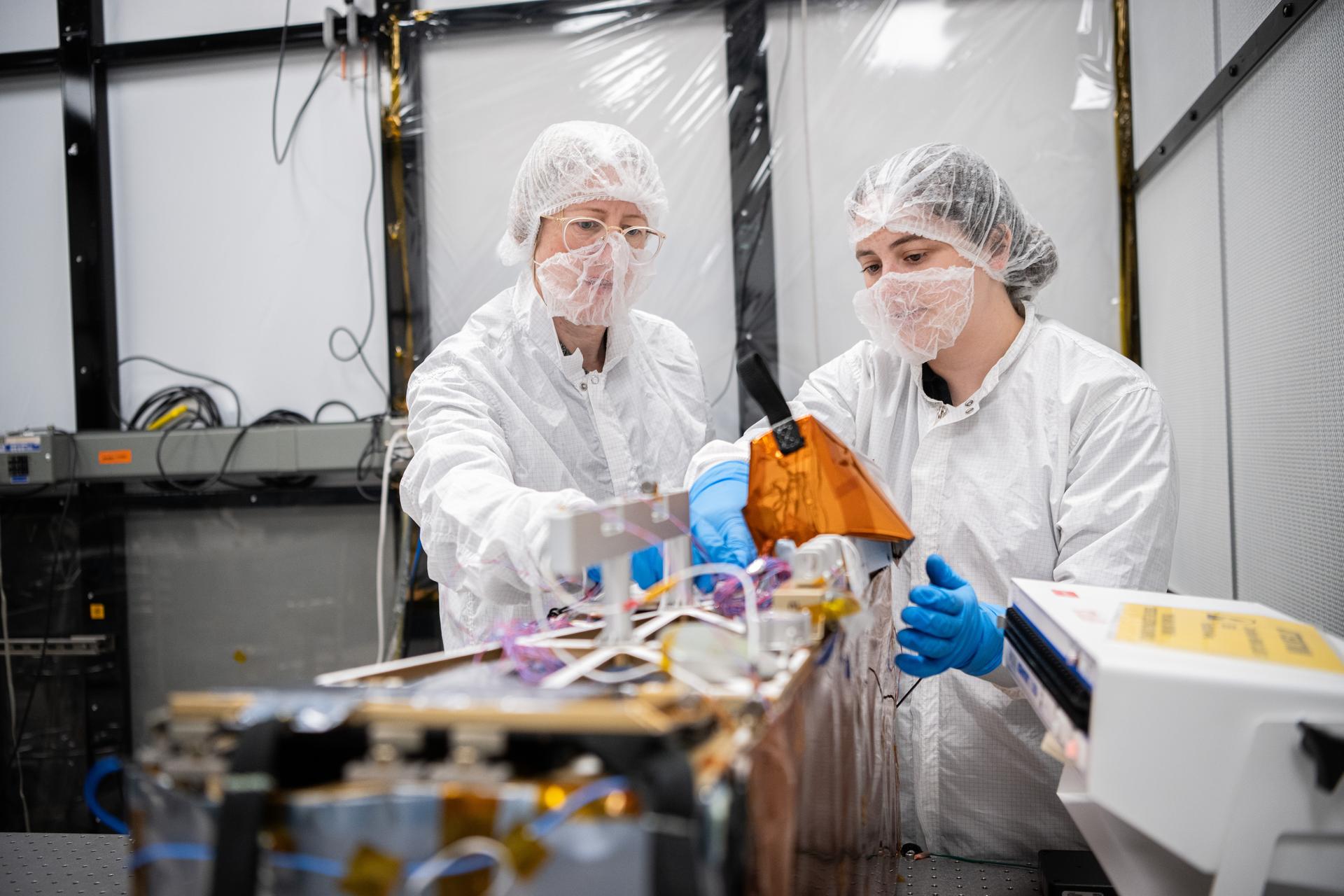
Naoma McCall (Left), Science Co-Investigator and deployment lead and Mechanical Engineer Brie Ludwig inspect the Lunar Environment Monitoring Station (LEMS) instrument in the cleanroom at Goddard Space Flight Center in Greenbelt Md. on February 5th, 2026. LEMS is a compact, autonomous, and self-sustaining seismometer suite designed to carry out continuous, long-term, monitoring of the lunar seismic environment at the South Polar region. Photo Credit: NASA/Denny Henry
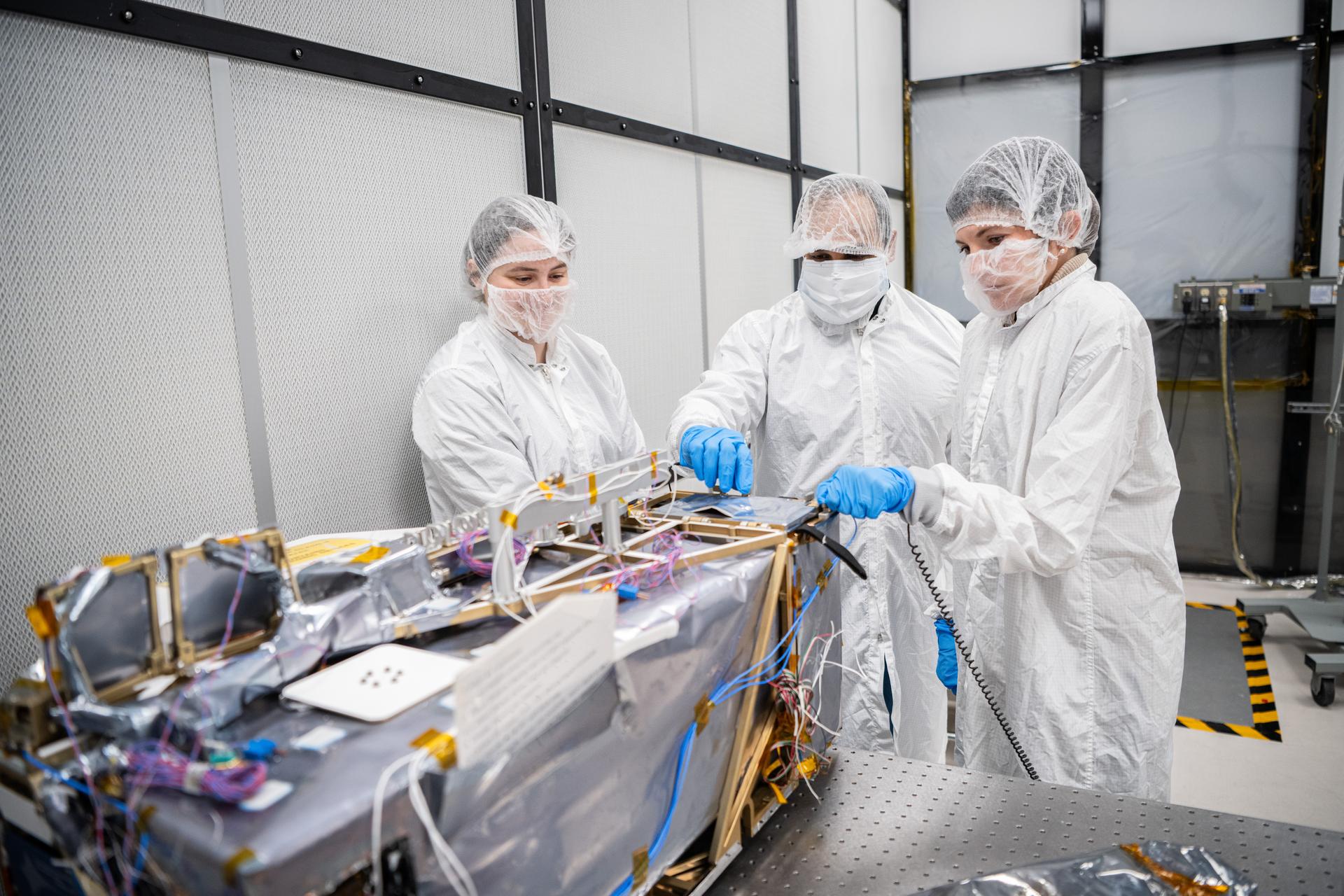
(L-R) Mechanical Engineer Brie Ludwig, Project Manager Neerav Shah and Deputy Project Manager Stephanie Vidal inspect the Lunar Environment Monitoring Station (LEMS) instrument in the cleanroom at Goddard Space Flight Center in Greenbelt Md. on February 5th, 2026. LEMS is a compact, autonomous, and self-sustaining seismometer suite designed to carry out continuous, long-term, monitoring of the lunar seismic environment at the South Polar region. Photo Credit: NASA/Denny Henry
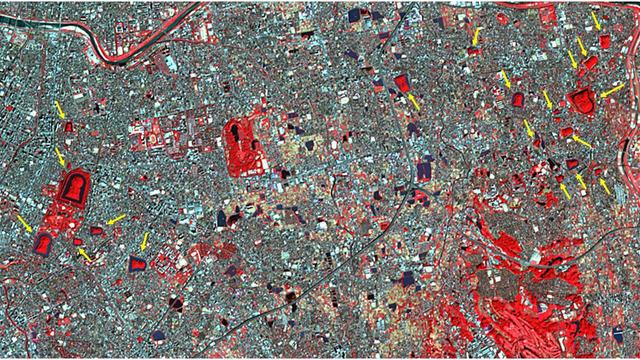
The Mozu Tombs are a group of megalithic tombs in Sakai, Japan, in the Osaka Plain. The largest tomb, the Daisenryo Kofun, was thought to have been built in the 5th century for the Emperor Nintoku. It is keyhole-shaped, surrounded by a moat, and is 840 meters long. Nineteen other tombs are marked on the image. It was acquired October 27, 2011, covers an area of 7.8 by 13.9 km, and is located at 34.6 degrees north, 135.5 degrees east. https://photojournal.jpl.nasa.gov/catalog/PIA23460
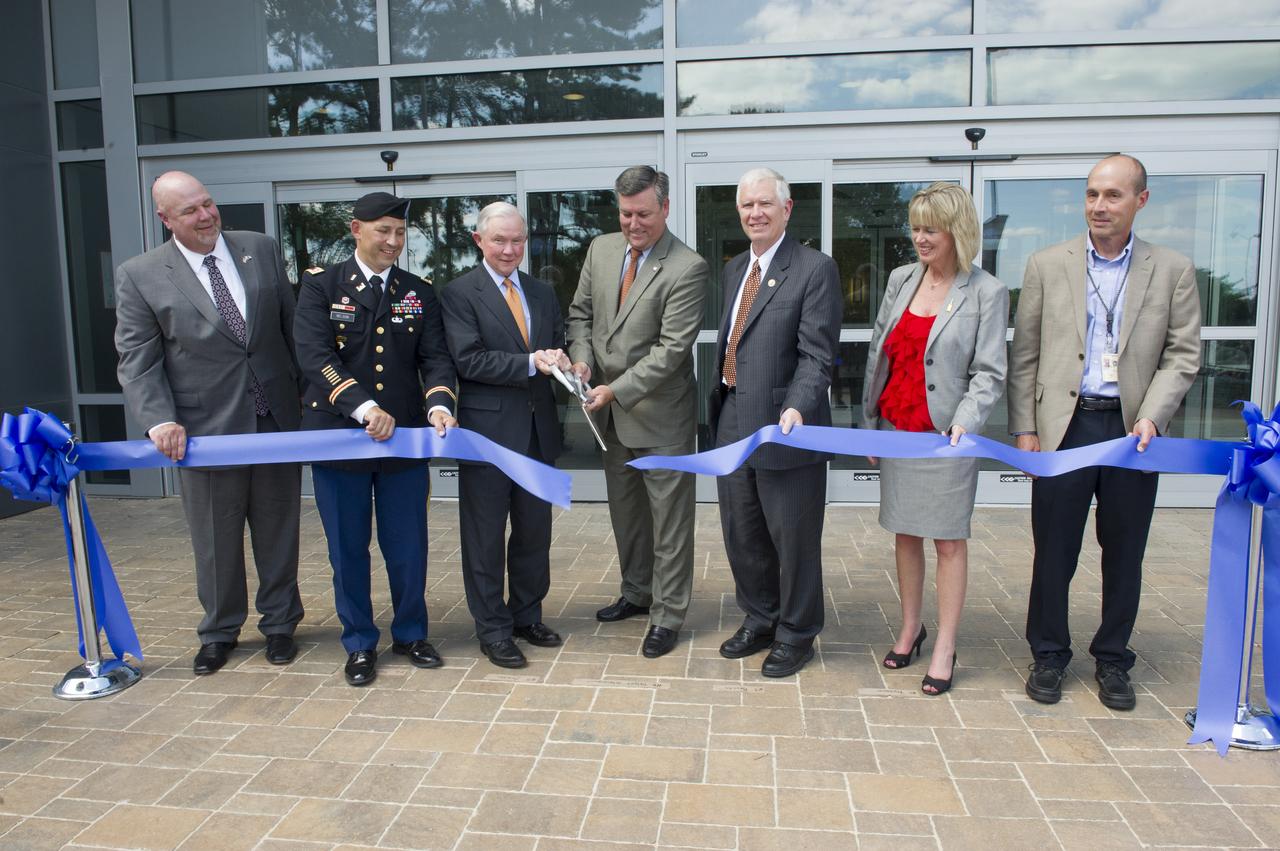
AIDING IN THE OFFICIAL BUILDING 4220 RIBBON-CUTTING ARE, FROM LEFT, JOHN HONEYCUTT, DEPUTY MANAGER OF THE SPACE LAUNCH SYSTEM PROGRAM OFFICE; LT. COL. TOM NELSON, DEPUTY COMMANDER OF THE U.S. ARMY CORPS OF ENGINEERS-MOBILE DISTRICT; U.S. SEN. JEFF SESSIONS OF ALABAMA; MARSHALL CENTER DIRECTOR PATRICK SCHEUERMANN; U.S. REP. MO BROOKS OF ALABAMA'S 5TH DISTRICT; MARSHALL DEPUTY DIRECTOR TERESA VANHOOSER; AND MARSHALL ENGINEER DAVID SKRIDULIS, TEAM LEAD FOR THE FACILITIES MANAGEMENT OFFICE'S CIVIL STRUCTURAL GROUP.
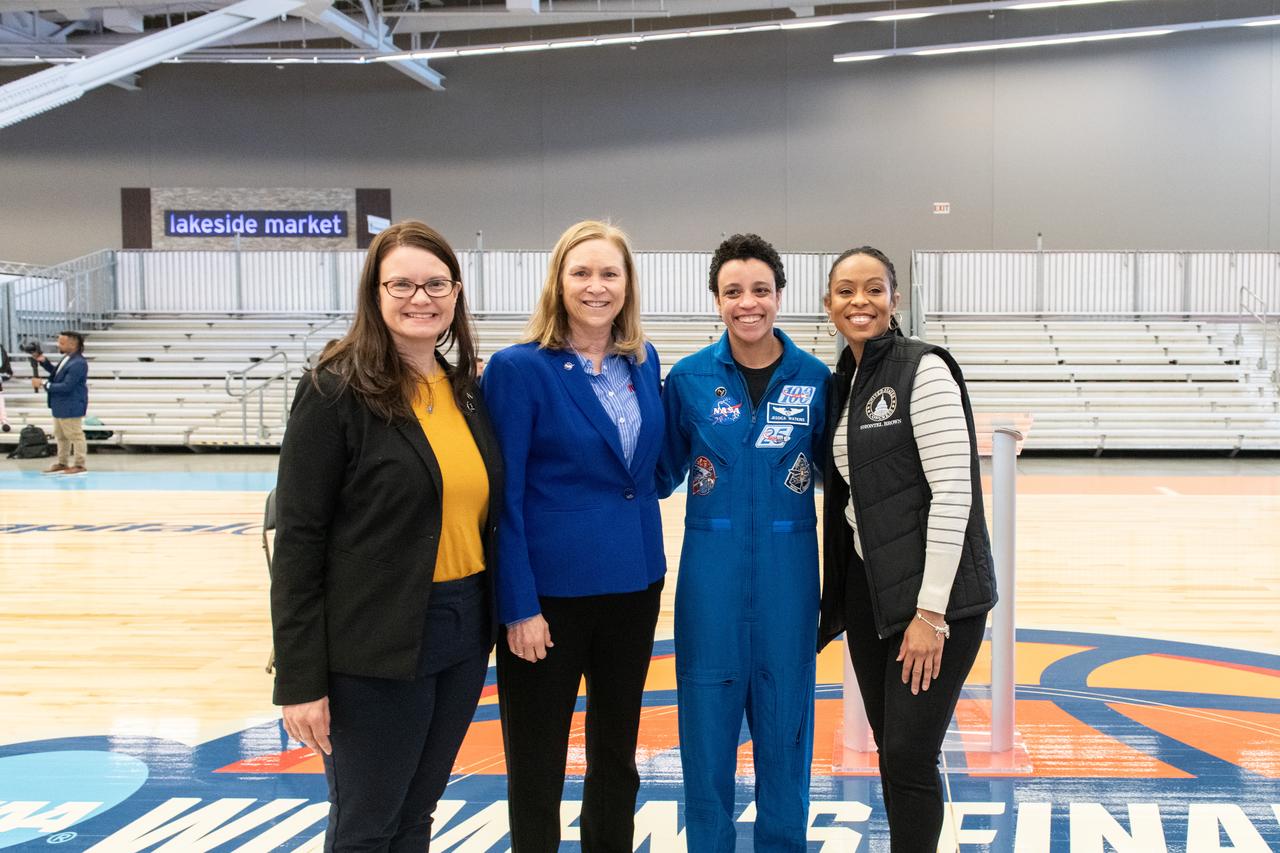
Astrophysicist Dr. Kelly Korreck, Kennedy Space Center Director Janet Petro, Astonaut Jessica Watkins and Representative Shontel Brown pose for a photo at the Read to the Final Four Event in Cleveland Ohio on April 5th 2024. A total solar eclipse swept across a narrow portion of the North American continent from Mexico’s Pacific coast to the Atlantic coast of Newfoundland, Canada. A partial solar eclipse was visible across the entire North American continent along with parts of Central America and Europe.
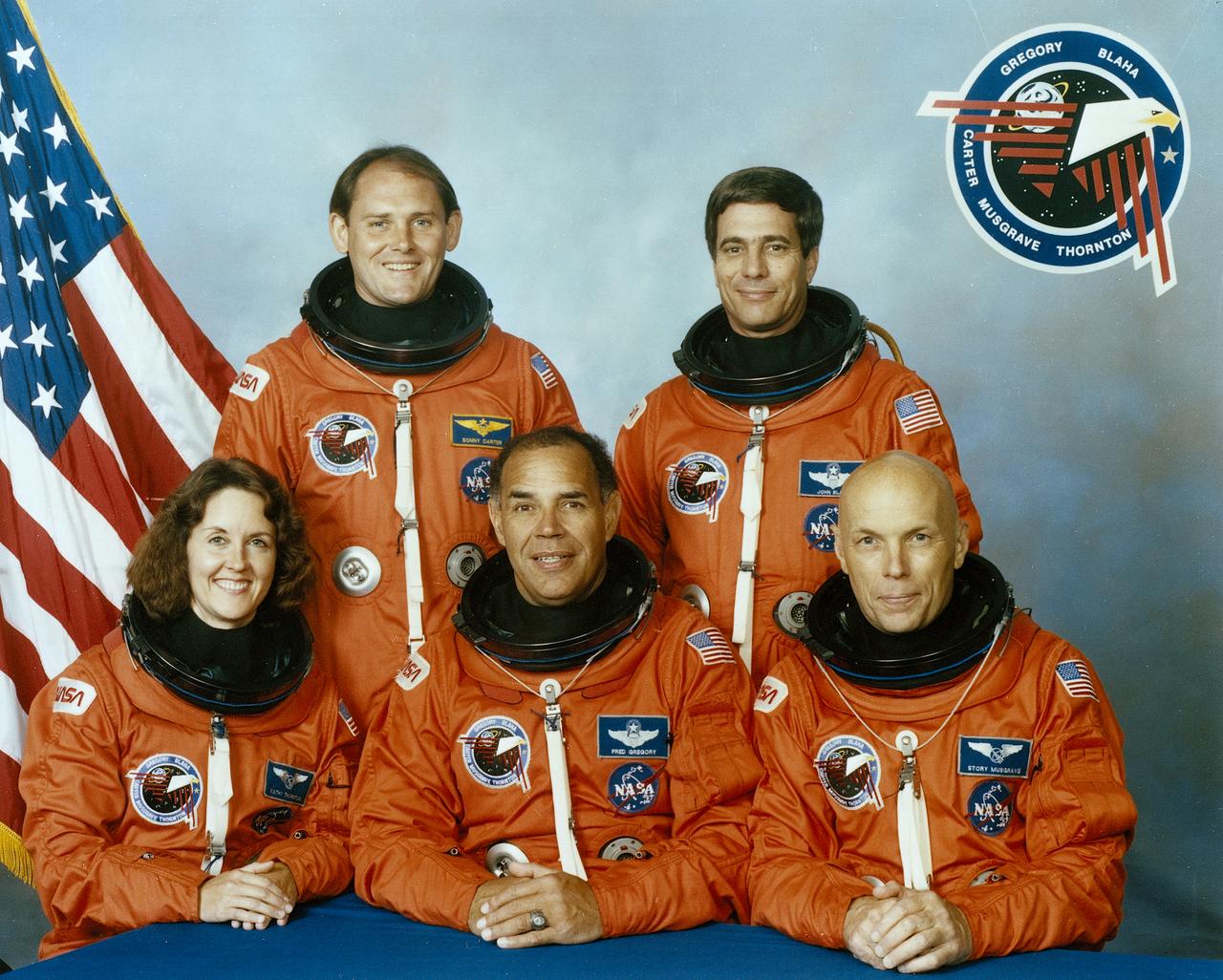
On November 22, 1989, at 7:23:30pm (EST), 5 astronauts were launched into space aboard the Space Shuttle Orbiter Discovery for the 5th Department of Defense mission, STS-33. Photographed from left to right are Kathryn C. Thornton, mission specialist 3; Manley L. (Sonny) Carter, mission specialist 2; Frederick D. Gregory, commander; John E. Blaha, pilot; and F. Story Musgrave, mission specialist 1.
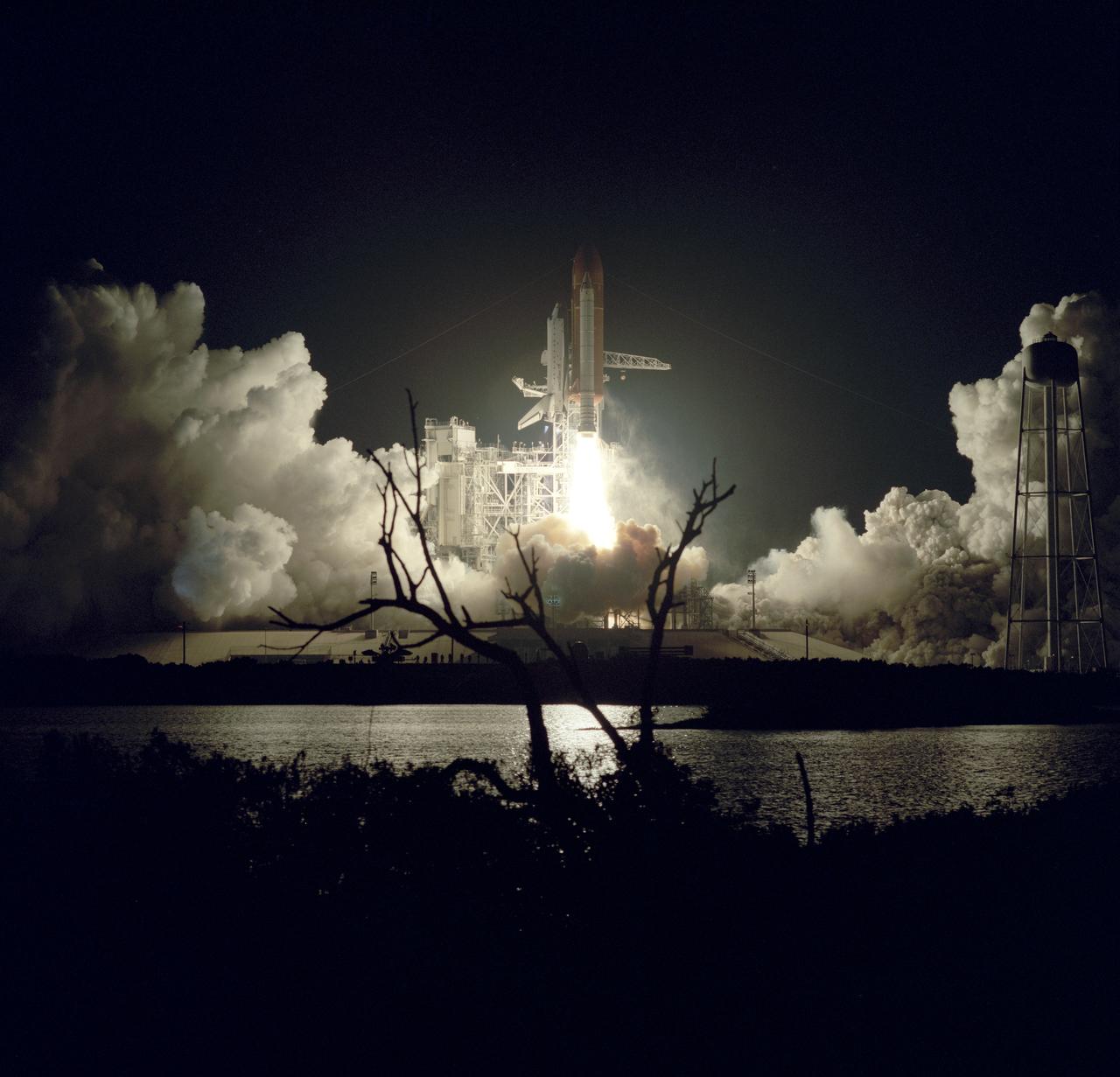
On November 22, 1989, at 7:23:30pm (EST), five astronauts were launched into space aboard the Space Shuttle Orbiter Discovery for the 5th Department of Defense (DOD) mission, STS-33. Crew members included Frederick D. Gregory, commander; John E. Blaha, pilot; and mission specialists Kathryn C. Thornton, Manley L. (Sonny) Carter, and F. Story Musgrave.
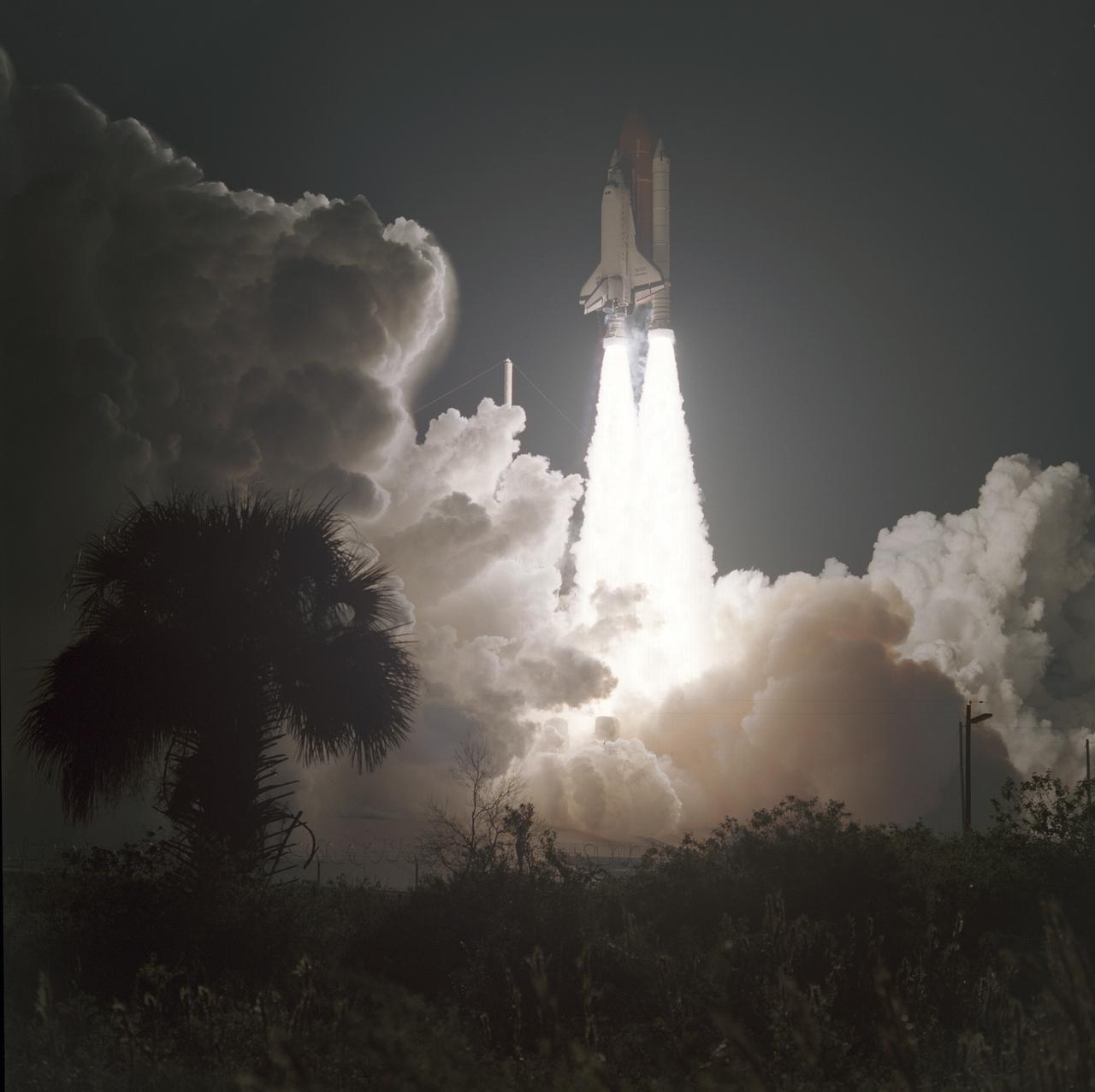
On November 22, 1989, at 7:23:30pm (EST), five astronauts were launched into space aboard the Space Shuttle Orbiter Discovery for the 5th Department of Defense (DOD) mission, STS-33. Crew members included Frederick D. Gregory, commander; John E. Blaha, pilot; and mission specialists Kathryn C. Thornton, Manley L. (Sonny) Carter, and F. Story Musgrave.
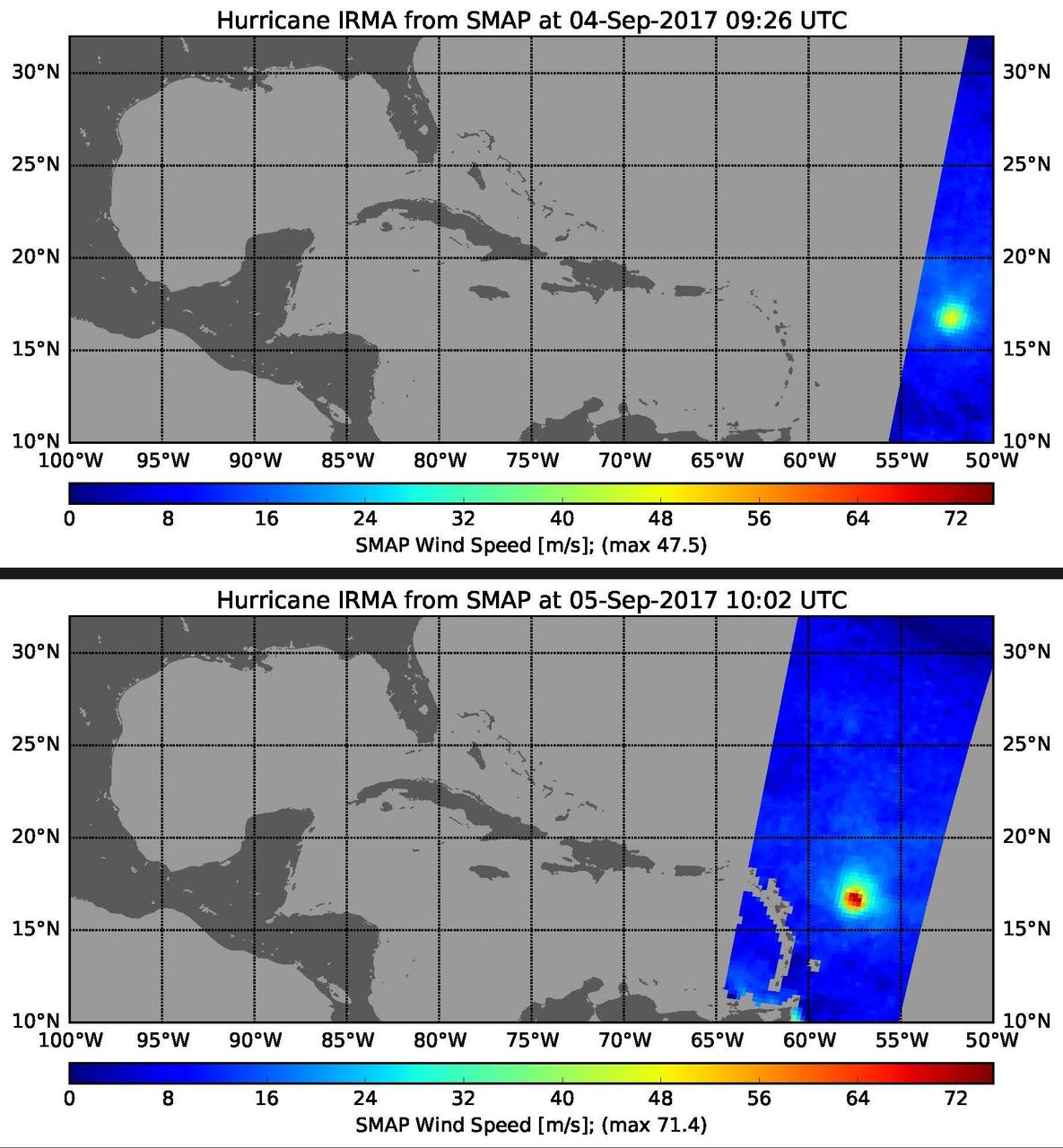
This pair of images shows ocean surface wind speeds for Hurricane Irma as observed at 5:26 a.m. EDT on Sept. 4, 2017 (top) and 24.5 hours later at 6:02 a.m. EDT on September 5th (bottom) by the radiometer instrument on NASA's Soil Moisture Active Passive (SMAP) satellite. Color indicates wind speed, with red being highest and blue lowest. Irma intensified from a Category 2 hurricane on Sept. 4 with observed wind speed of 106 miles per hour (47.5 meters per second) to a Category 5 hurricane on Sept. 5 with a maximum observed wind speed of 160 miles per hour (71.4 meters per second). https://photojournal.jpl.nasa.gov/catalog/PIA21939
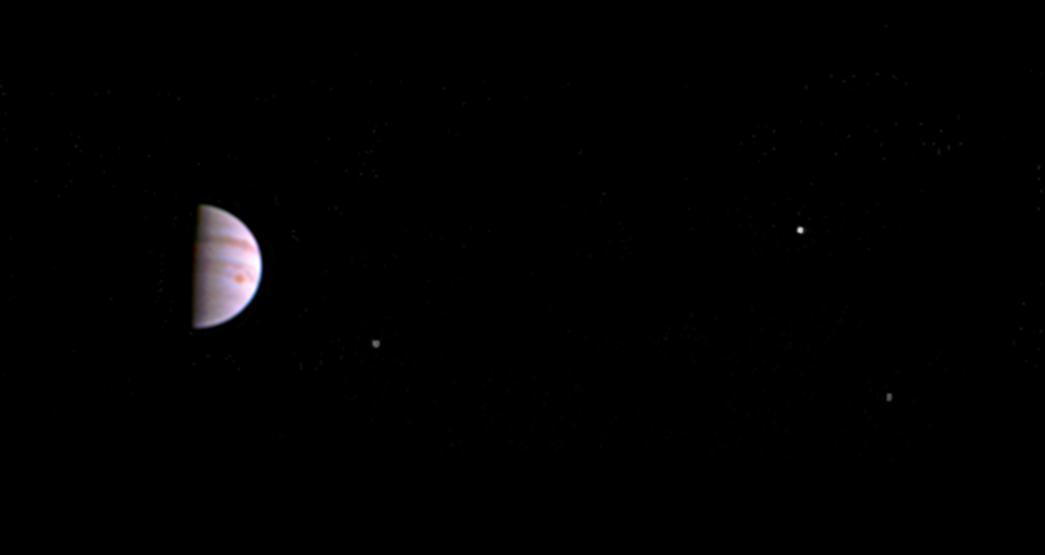
This color view from NASA's Juno spacecraft is made from some of the first images taken by JunoCam after the spacecraft entered orbit around Jupiter on July 5th (UTC). The view shows that JunoCam survived its first pass through Jupiter's extreme radiation environment, and is ready to collect images of the giant planet as Juno begins its mission. The image was taken on July 10, 2016 at 5:30 UTC, when the spacecraft was 2.7 million miles (4.3 million kilometers) from Jupiter on the outbound leg of its initial 53.5-day capture orbit. The image shows atmospheric features on Jupiter, including the Great Red Spot, and three of Jupiter's four largest moons. JunoCam will continue to image Jupiter during Juno's capture orbits. The first high-resolution images of the planet will be taken on August 27 when the Juno spacecraft makes its next close pass to Jupiter. http://photojournal.jpl.nasa.gov/catalog/PIA20707
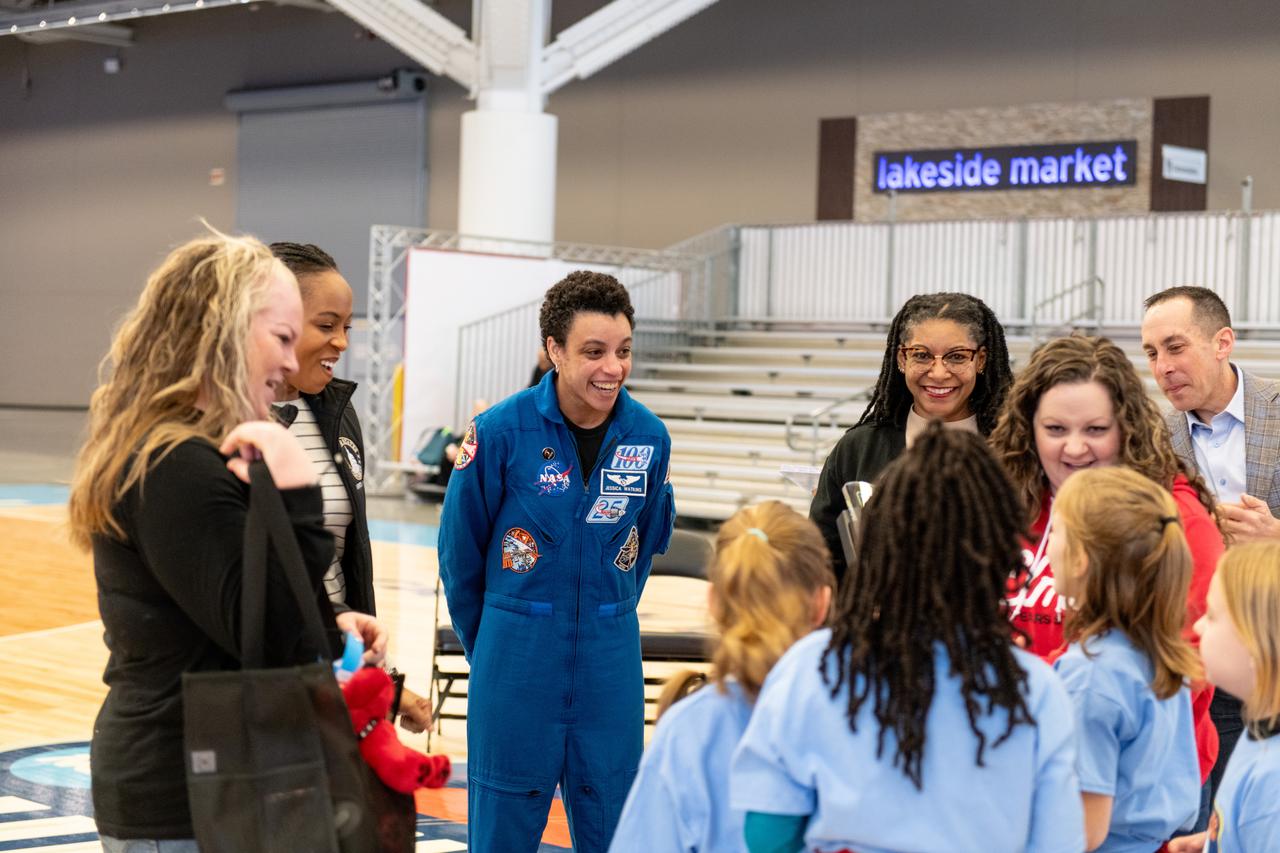
Astronaut Jessica Watkins congratulates the winning students from Our Lady of the Elms School at the Read to the Final Four event In Cleveland, OH on April 5th, 2024. The NCAA, Women’s Final Four and the Cleveland Local Organizing Committee have teamed up to help third graders across the state develop their abilities as part of a nine-week program designed to leave a lasting impact on students throughout Ohio. From January to April 2024, local elementary students are encouraged to track their reading minutes leading up to the Women’s Final Four. Participating students and leading classrooms will receive awards at Tourney Town to celebrate their accomplishments.
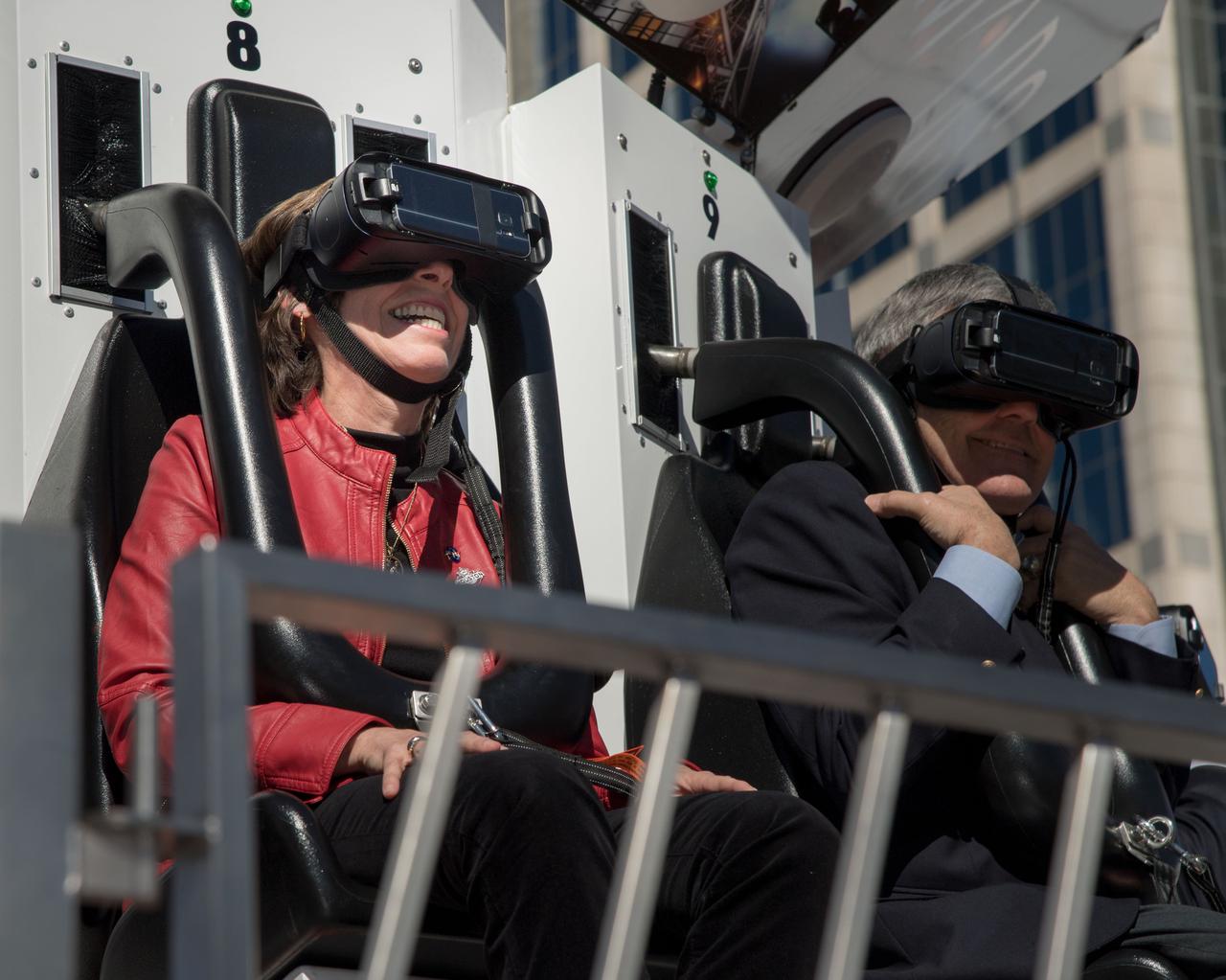
jsc2017e011384 (01/30/2017) --- With virtual reality googles in place, Johnson Space Center Director Ellen Ochoa and Kennedy Space Center Director Robert Cabana prepare for the Journey to Mars ride that will pull the Orion capsule up 90 feet and suddenly drop them, while they experience a virtual trip to Mars and back. The Houston Texas Super Bowl Live event at Discovery Green lasts through the 5th of February and has an estimated 100,000 visitors each day. The Mars ride is but one of the many attractions that NASA has provided in their Future Flight area. NASA PHOTOGRAPHER Bill Stafford
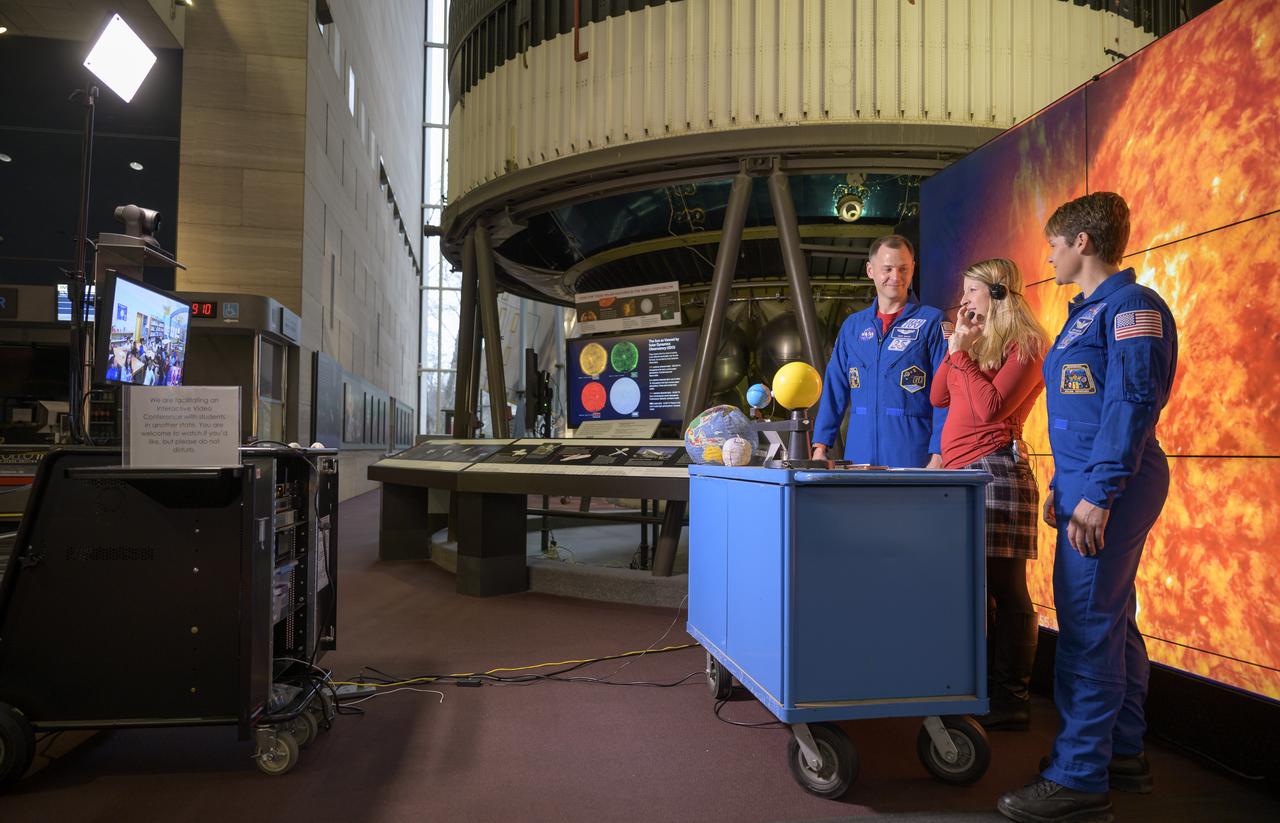
NASA astronauts Nick Hague, left, and Anne McClain, right, join Bevin James of the Smithsonian Air and Space Museum as she hosts an interactive video teleconference with 5th graders at the John P Parker school located in Cincinnati, Ohio, Tuesday, Jan. 14, 2020, from the Smithsonian National Air and Space Museum in Washington. Hague most recently spent 203 days living and working onboard the International Space Station as part of Expeditions 59 and 60. McClain most recently spent 204 days living and working onboard the International Space Station as part of Expeditions 58 and 59. Photo Credit: (NASA/Bill Ingalls)

Charleston is the largest city in South Carolina, with almost 1 million people. It was founded in 1670 by the English. By 1690, it was the 5th largest city in North America. The 1699 earthquake and fire destroyed 1/3 of town. Malaria and yellow fever were endemic. The location attracted pirates. In 1860, South Carolina became the first state to declare secession from US. In 1886 a major earthquake damaged 2000 bldgs. More recently, in 1989 Hurricane Hugo devastated ¾ of homes in the historic district. The image was acquired August 15, 2023, covers an area of 18.1 by 18.6 km, and is located at 32.8 degrees north, 79.9 degrees west. https://photojournal.jpl.nasa.gov/catalog/PIA26507
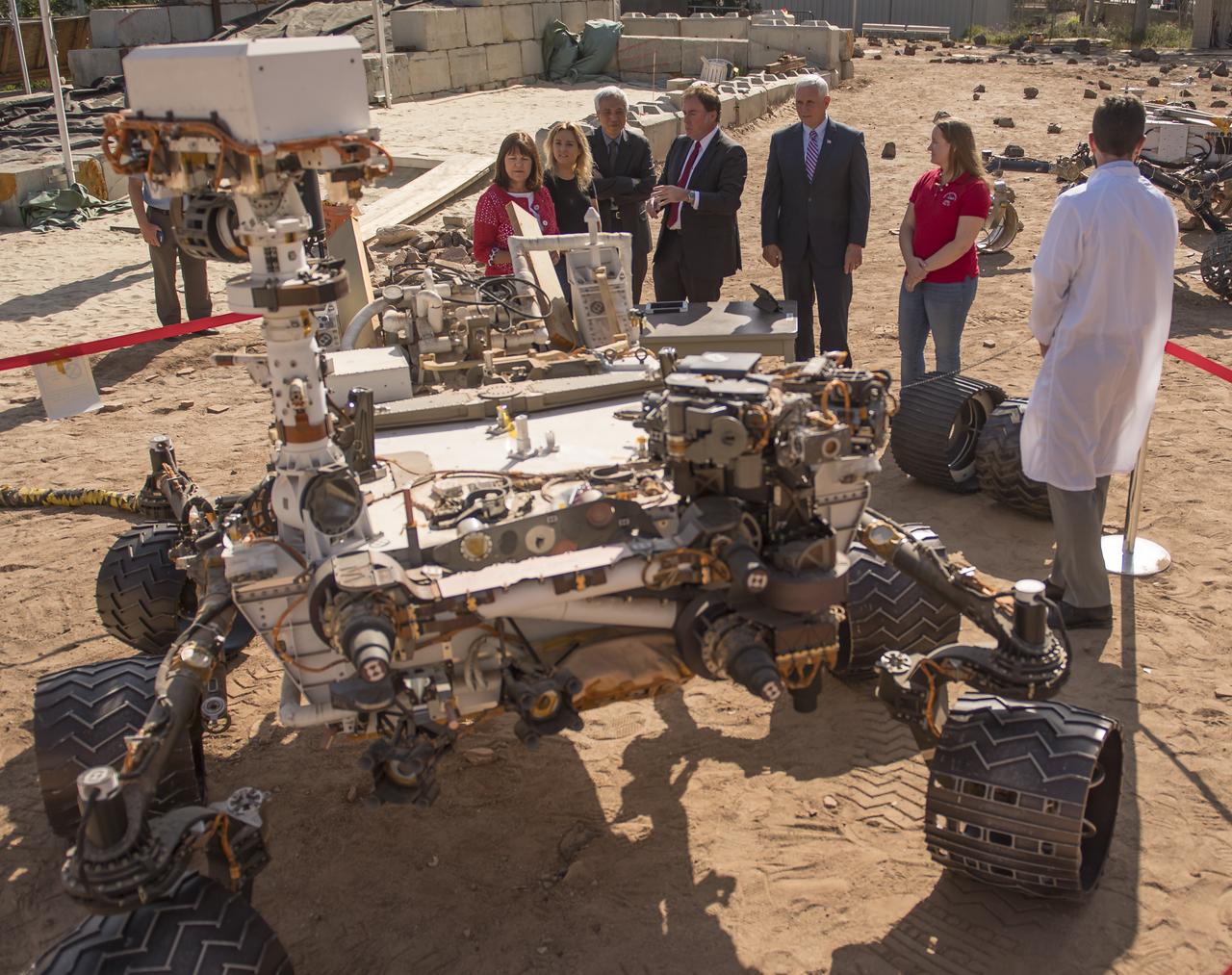
U.S. Vice President Mike Pence, 5th from left, joined by his wife Karen Pence, left, and daughter Charlotte Pence. 2nd from left, view the Vehicle System Test Bed (VSTB) rover in the Mars Yard during a tour of NASA's Jet Propulsion Laboratory, Saturday, April 28, 2018 in Pasadena, California. NASA Mars Exploration Manager Li Fuk, 2nd from left, JPL Director Michael Watkins, Mars Curiosity Engineering Operations Team Chief Megan Lin, and MSL Engineer Sean McGill, right, helped explain to the Vice President and his family how they use these test rovers. Photo Credit: (NASA/Bill Ingalls)
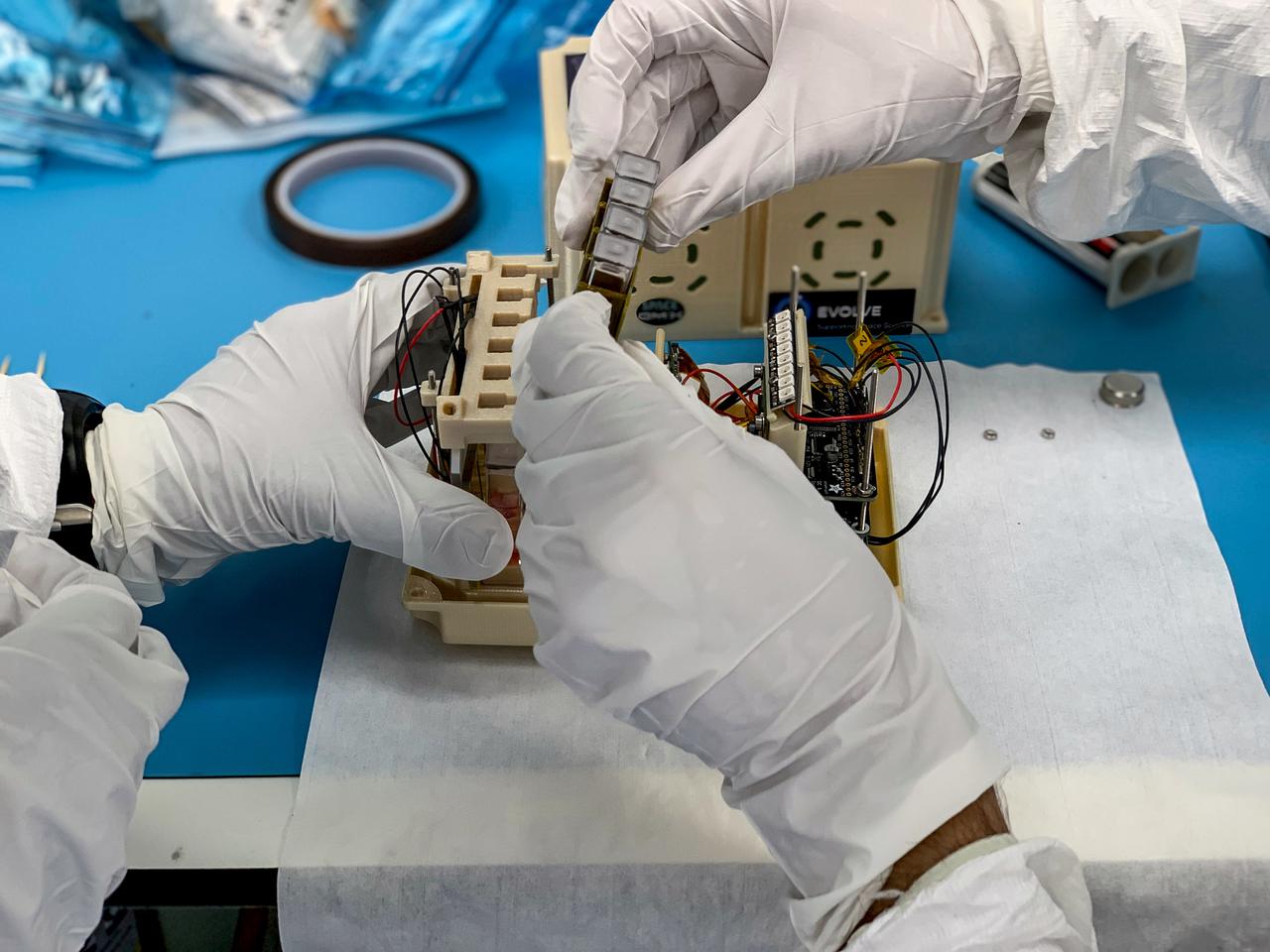
jsc2021e037896 (8/12/2021) --- A preflight imagevshows integration of 2nd to 5th sample cuvettes to fit between the first and last samples cuvettes. The sample cuvettes are securely fastened in place using tools and under strict clean room preparations. The Ice Cubes #9 – Project Maleth (Space Omics Analysis of the Skin Microbiome of Diabetic Foot Ulcers, or SpaceOMIX) investigation that studies Diabetes Mellitus Type 2 and Diabetic Foot Ulcers (DFU) using genetics and space biosciences is new and innovative research. Image courtesy Space Applications Services.
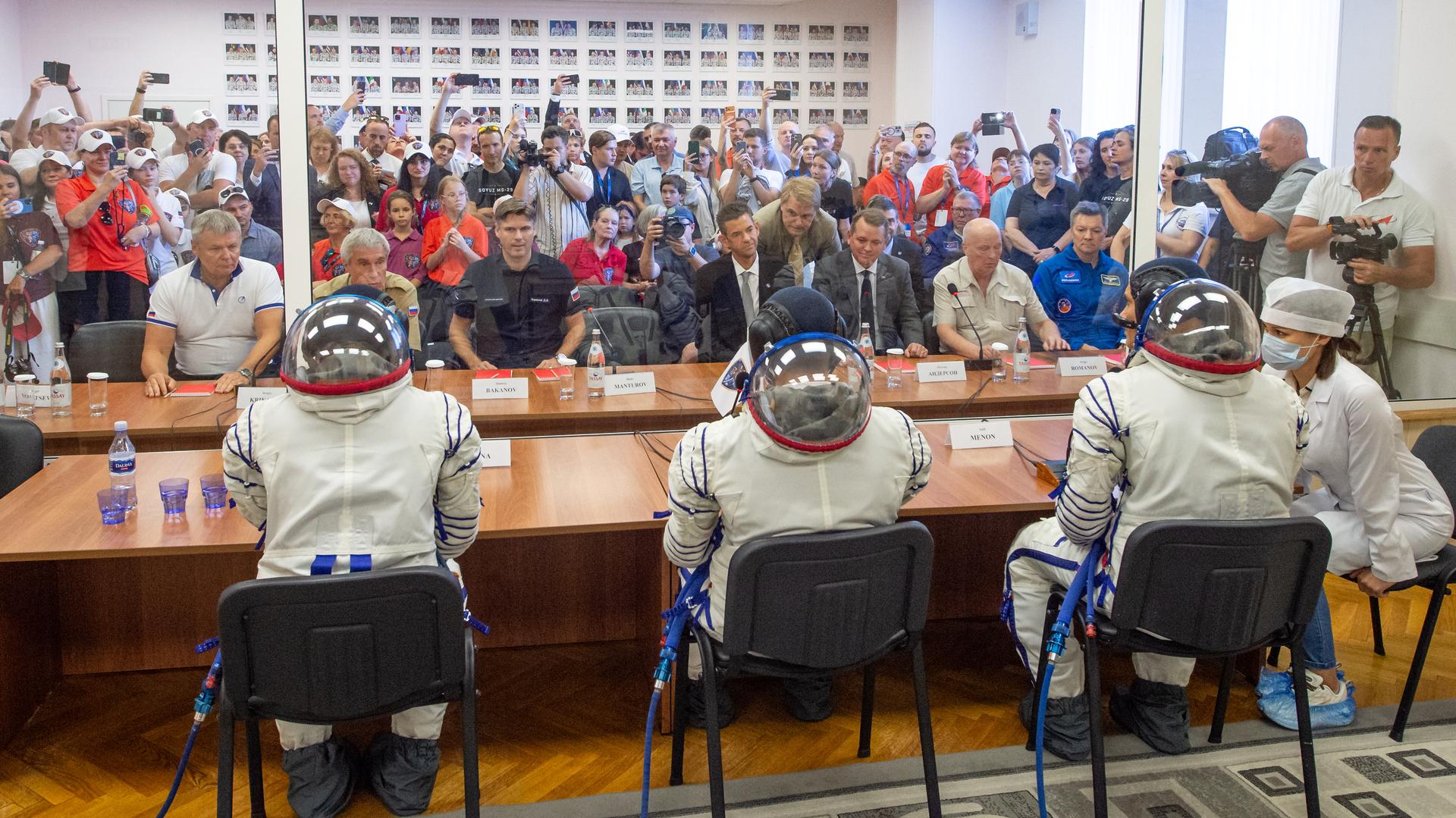
Expedition 75 Roscosmos cosmonaut Anna Kikina, left, Roscosmos cosmonaut Pyotr Dubrov, and NASA astronaut Anil Menon, right, talk with Roscosmos Director of Human Spaceflight Programs Sergei Krikalev, seated 2nd from left, Roscosmos Director General Dmitry Bakanov, seated 3rd from left, NASA Administrator Jared Isaacman, and NASA Deputy Administrator Matt Anderson, 5th from left, after having their Russian Sokol suits pressure checked as they prepare for their Soyuz launch to the International Space Station Tuesday, July 14, 2026 in Baikonur, Kazakhstan. Photo Credit: (NASA/GCTC/Pavel Shvets)
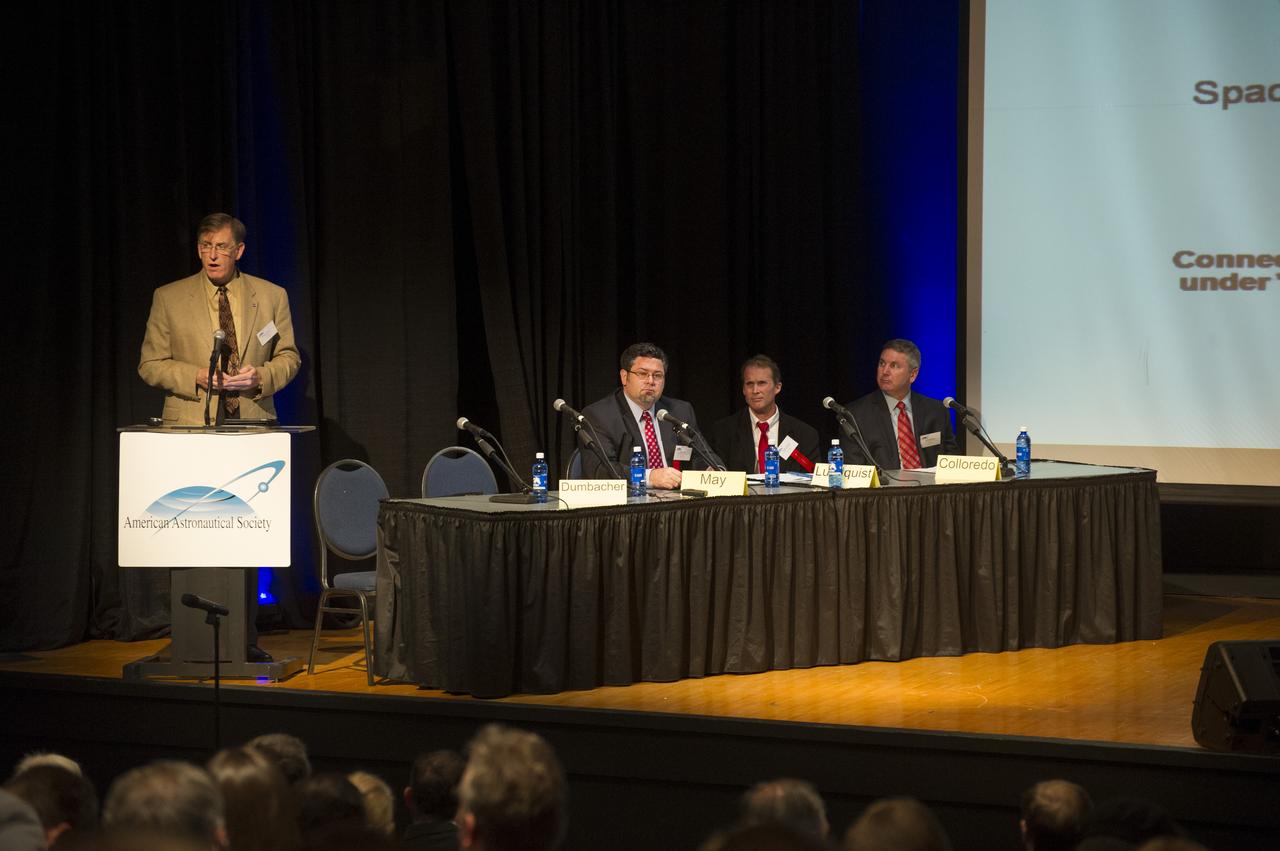
DAN DUMBACHER, LEFT, NASA'S DEPUTY ASSOCIATE ADMINISTRATOR FOR EXPLORATION SYSTEMS DEVELOPMENT, MODERATES A PANEL TITLED "NASA HUMAN SPACE EXPLORATION PLANS AND UPDATE" AT THE 5TH VON BRAUN MEMORIAL SYMPOSIUM AT THE UNIVERSITY OF ALABAMA IN HUNTSVILLE ON OCT. 16. FEATURED PANELISTS INCLUDED, SEATED FROM LEFT, SPACE LAUNCH SYSTEM PROGRAM MANAGER TODD MAY FROM THE MARSHALL SPACE FLIGHT CENTER, ORION CREW AND SERVICE MODULE MANAGER CHARLIE LUNDQUIST FROM THE JOHNSON SPACE CENTER, AND CHIEF ARCHITECT OF THE GROUND SYSTEMS DEVELOPMENT AND OPERATIONS PROGRAM SCOTT COLLOREDO FROM THE KENNEDYSPACE CENTER.
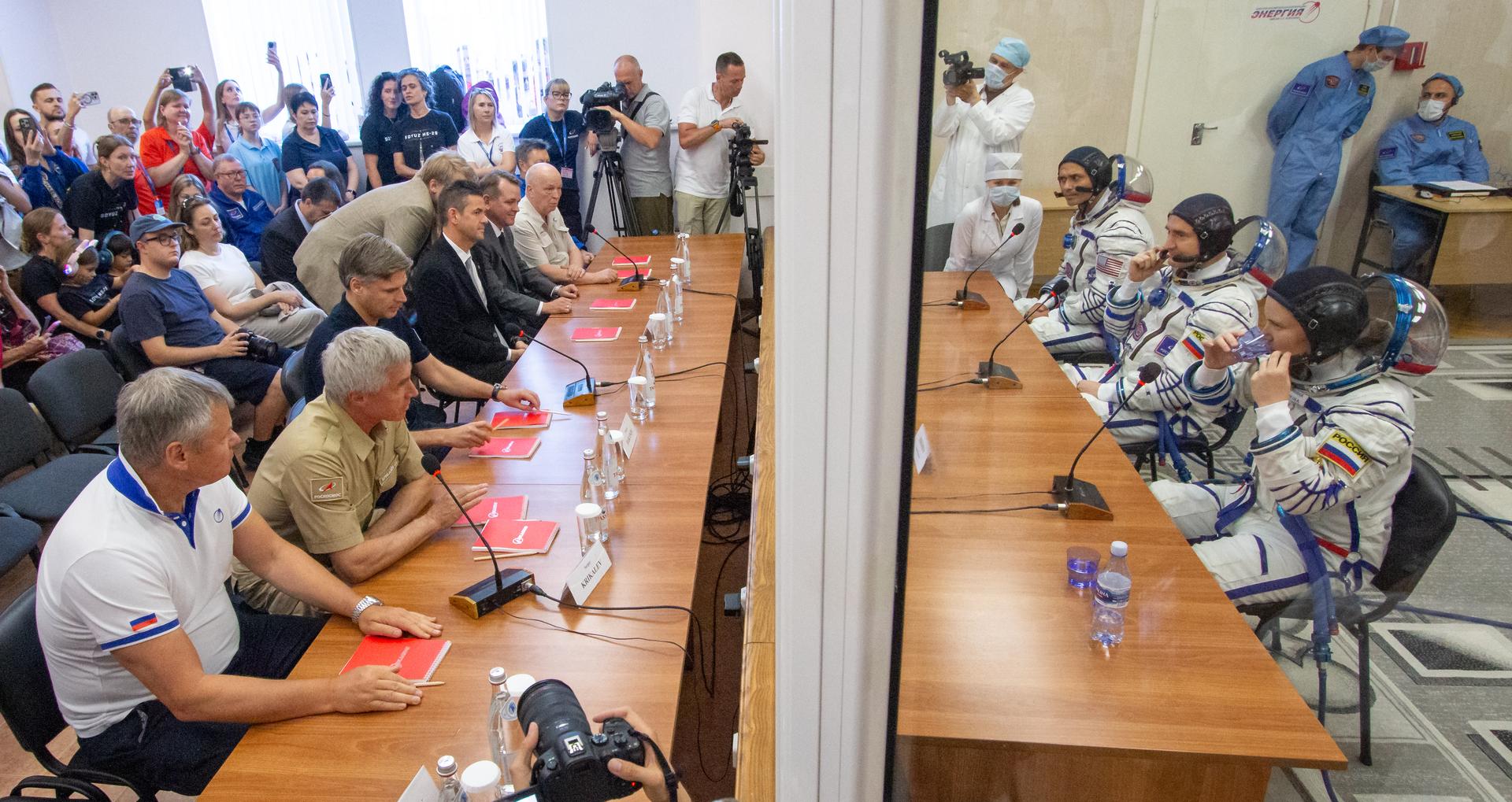
Expedition 75 Roscosmos cosmonaut Anna Kikina, foreground left, Roscosmos cosmonaut Pyotr Dubrov, and NASA astronaut Anil Menon, background right, talk with Roscosmos Director of Human Spaceflight Programs Sergei Krikalev, seated 2nd from left, Roscosmos Director General Dmitry Bakanov, seated 3rd from left, NASA Administrator Jared Isaacman, and NASA Deputy Administrator Matt Anderson, 5th from left, after having their Russian Sokol suits pressure checked as they prepare for their Soyuz launch to the International Space Station Tuesday, July 14, 2026 in Baikonur, Kazakhstan. Photo Credit: (NASA/Victor Zelentsov)
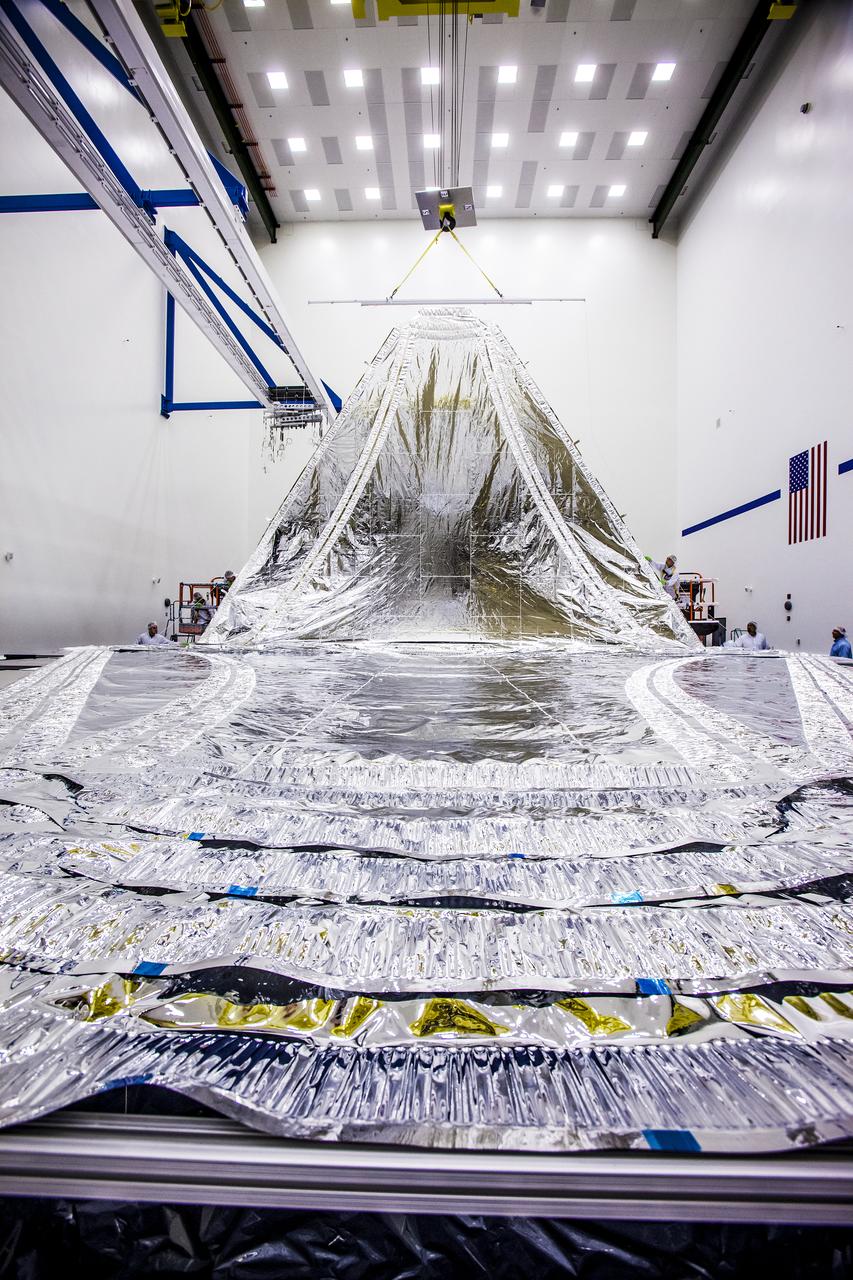
This shiny silver "waterfall" is actually the five layers of the full-scale engineering model of NASA's James Webb Space Telescope sunshield being laid out by technicians at the Northrop Grumman Aerospace Systems Space Park facility in Redondo Beach, Calif. who are conducting endurance tests on them. For more information, visit: jwst.nasa.gov Credit: Northrop Grumman <b><a href="http://www.nasa.gov/audience/formedia/features/MP_Photo_Guidelines.html" rel="nofollow">NASA image use policy.</a></b> <b><a href="http://www.nasa.gov/centers/goddard/home/index.html" rel="nofollow">NASA Goddard Space Flight Center</a></b> enables NASA’s mission through four scientific endeavors: Earth Science, Heliophysics, Solar System Exploration, and Astrophysics. Goddard plays a leading role in NASA’s accomplishments by contributing compelling scientific knowledge to advance the Agency’s mission. <b>Follow us on <a href="http://twitter.com/NASA_GoddardPix" rel="nofollow">Twitter</a></b> <b>Like us on <a href="http://www.facebook.com/pages/Greenbelt-MD/NASA-Goddard/395013845897?ref=tsd" rel="nofollow">Facebook</a></b> <b>Find us on <a href="http://instagram.com/nasagoddard?vm=grid" rel="nofollow">Instagram</a></b>
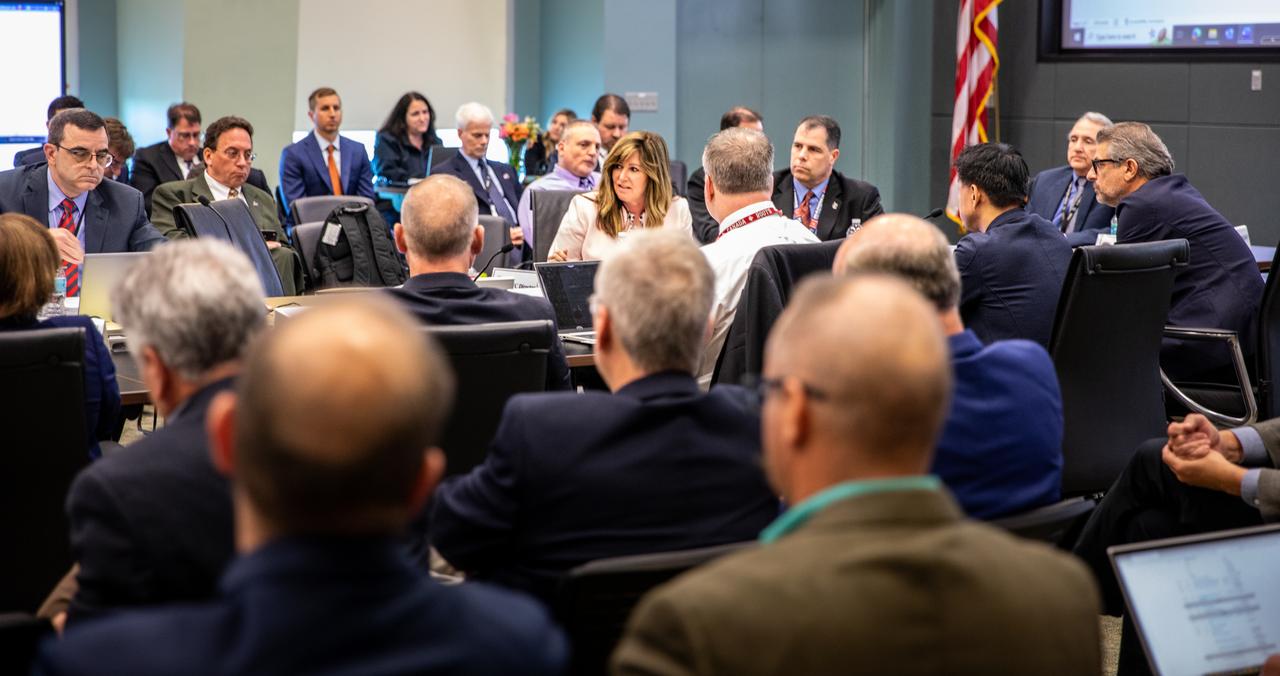
Mission managers with NASA, Boeing, and United Launch Alliance gather on Thursday, April 25, 2024, at the agency’s Kennedy Space Center in Florida to complete a Flight Test Readiness Review for NASA’s Boeing Crew Flight Test. As part of the agency’s Commercial Crew Program, NASA astronauts Butch Wilmore and Suni Williams are the first to launch to the International Space Station aboard Boeing’s Starliner spacecraft atop an Atlas V rocket from Space Launch Complex-41 at Cape Canaveral Space Force Station in Florida. Liftoff is scheduled for 10:34 p.m. ET on Monday, May 6.
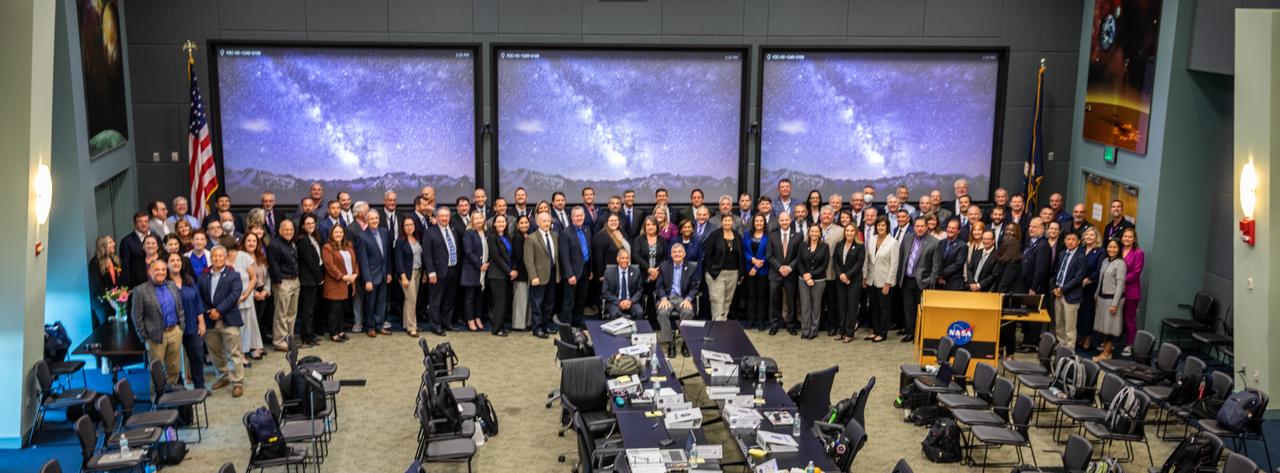
NASA, Boeing, and United Launch Alliance leadership gather for a group photo on Thursday, April 25, 2024, at the agency’s Kennedy Space Center in Florida on the second and final day of a Flight Test Readiness Review for the agency’s Boeing Crew Flight Test to the International Space Station. As part of the agency’s Commercial Crew Program, NASA astronauts Butch Wilmore and Suni Williams are the first to launch aboard Boeing’s Starliner spacecraft atop an Atlas V rocket from Space Launch Complex-41 at Cape Canaveral Space Force Station in Florida. Liftoff is scheduled for 10:34 p.m. ET on Monday, May 6.
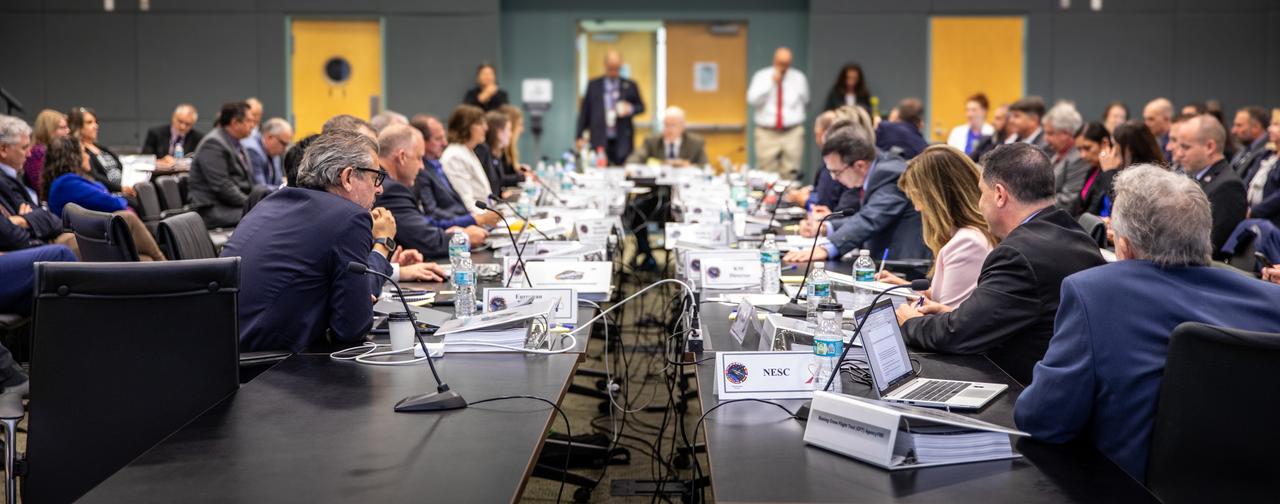
Mission managers with NASA, Boeing, and United Launch Alliance gather on Thursday, April 25, 2024, at the agency’s Kennedy Space Center in Florida to complete a Flight Test Readiness Review for NASA’s Boeing Crew Flight Test. As part of the agency’s Commercial Crew Program, NASA astronauts Butch Wilmore and Suni Williams are the first to launch to the International Space Station aboard Boeing’s Starliner spacecraft atop an Atlas V rocket from Space Launch Complex-41 at Cape Canaveral Space Force Station in Florida. Liftoff is scheduled for 10:34 p.m. ET on Monday, May 6.
Steve Stich, manager, NASA’s Commercial Crew Program participates in a Flight Test Readiness Review for NASA’s Boeing Crew Flight Test at the agency’s Kennedy Space Center in Florida on Thursday, April 25, 2024. As part of the agency’s Commercial Crew Program, NASA astronauts Butch Wilmore and Suni Williams are the first to launch to the International Space Station aboard Boeing’s Starliner spacecraft atop a United Launch Alliance Atlas V rocket from Space Launch Complex-41 at Cape Canaveral Space Force Station in Florida. Liftoff is scheduled for 10:34 p.m. ET on Monday, May 6.
Jim Free, NASA associate administrator participates in a Flight Test Readiness Review for NASA’s Boeing Crew Flight Test at the agency’s Kennedy Space Center in Florida on Thursday, April 24, 2024. As part of the agency’s Commercial Crew Program, NASA astronauts Butch Wilmore and Suni Williams are the first to launch to the International Space Station aboard Boeing’s Starliner spacecraft atop a United Launch Alliance Atlas V rocket from Space Launch Complex-41 at Cape Canaveral Space Force Station in Florida. Liftoff is scheduled for 10:34 p.m. ET on Monday, May 6.

Technicians at the Airbus facility in Bremen, Germany weigh the European Service Module on Oct. 31, 2018 ahead of shipment to Kennedy Space Center. The service module will depart Germany on November 5th, 2018 and will arrive in the U.S. on November 6...For the first time, NASA will use a European-built system as a critical element to power an American spacecraft, extending the international cooperation of the International Space Station into deep space. The European Service Module is a unique collaboration across space agencies and industry including ESA’s prime contractor, Airbus, and 10 European countries. The completion of service module work in Europe and shipment to Kennedy signifies a major milestone toward NASA’s human deep space exploration missions to the Moon and beyond.
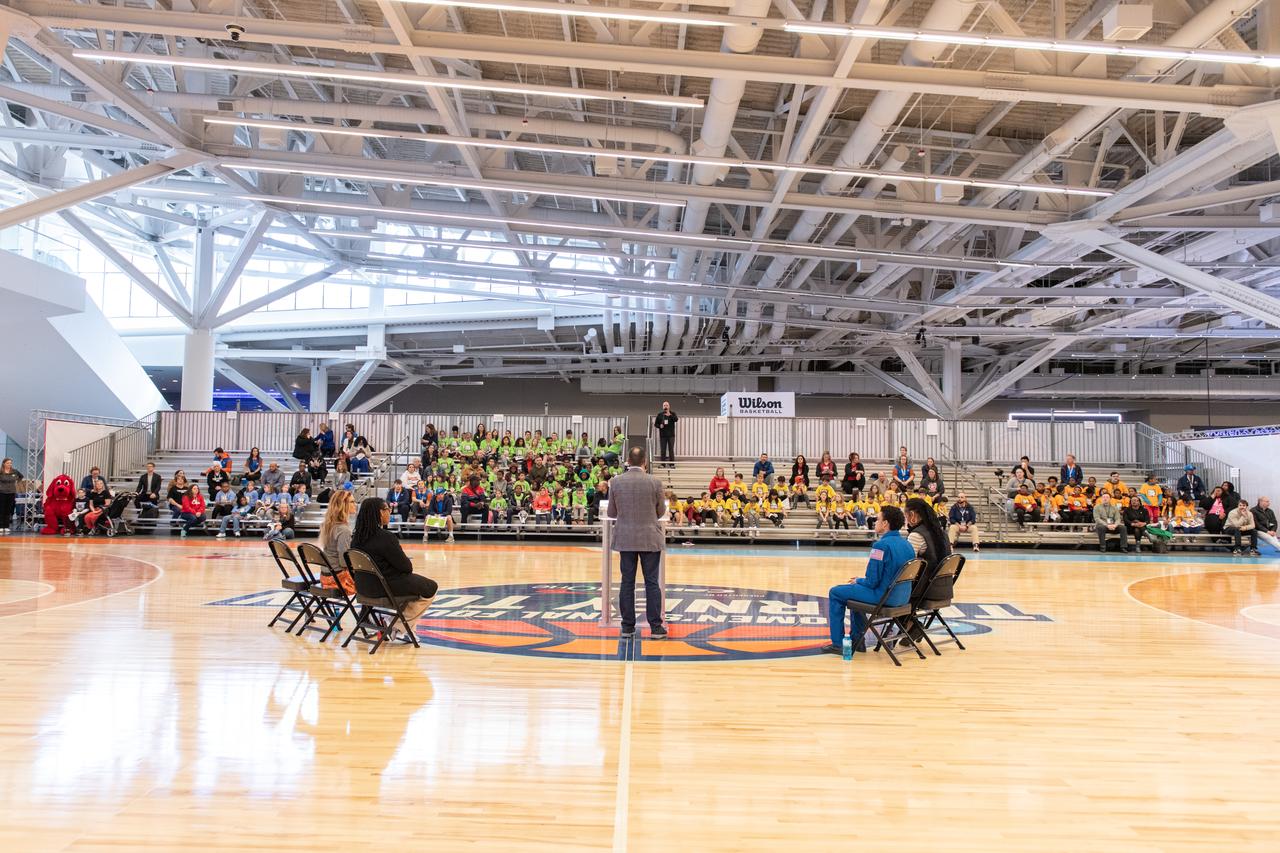
Astronaut Jessica Watkins, Representative Shontel Brown, the Greater Cleveland Sports Commission and Destination Cleveland CEO David Gilbert speak to students about the importrance of reading in their lives a the Read to the Final Four event on April 5th 2024 In Cleveland, OH. The NCAA, Women’s Final Four and the Cleveland Local Organizing Committee have teamed up to help third graders across the state develop their abilities as part of a nine-week program designed to leave a lasting impact on students throughout Ohio. From January to April 2024, local elementary students are encouraged to track their reading minutes leading up to the Women’s Final Four. Participating students and leading classrooms will receive awards at Tourney Town to celebrate their accomplishments.
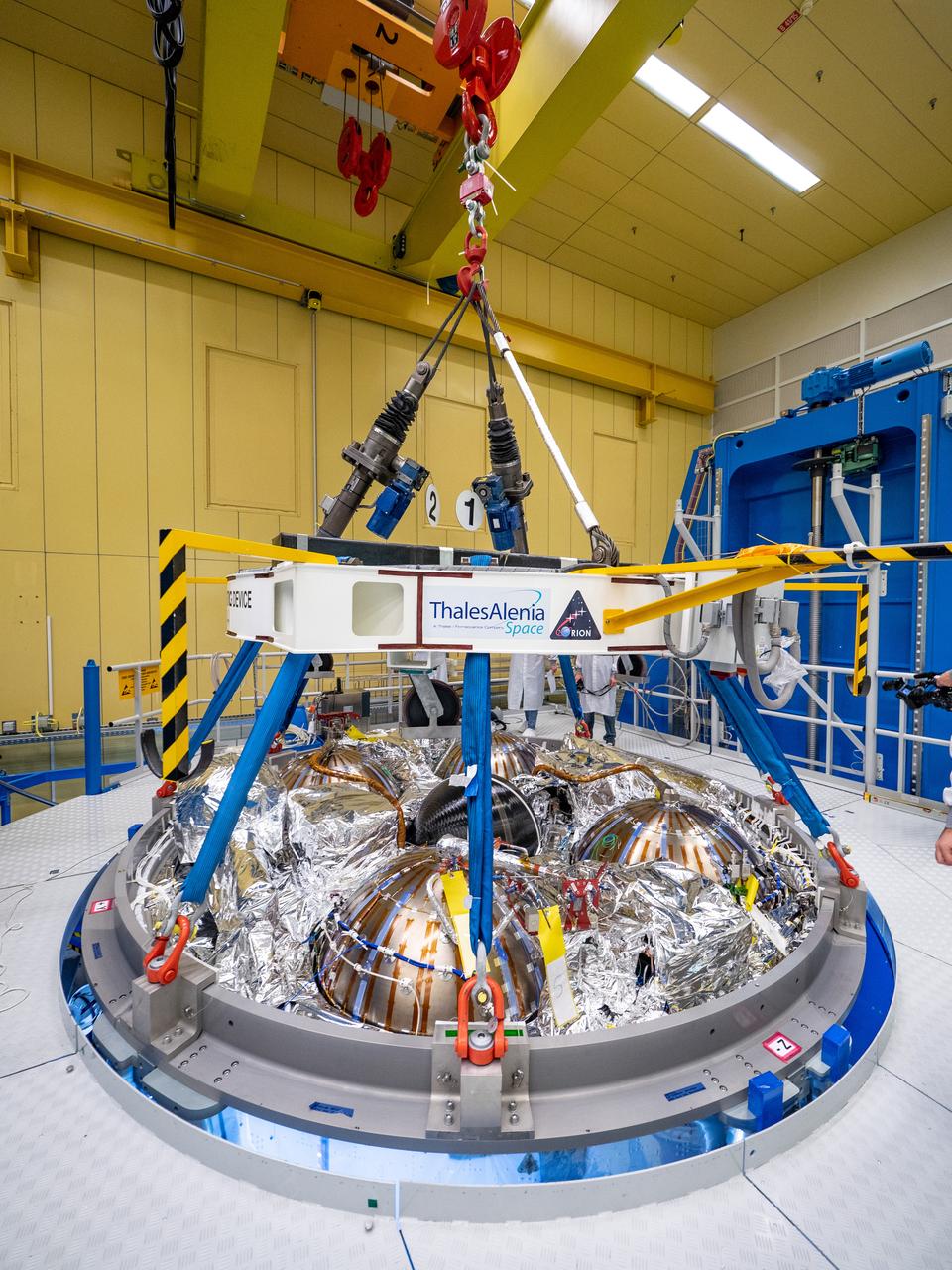
Technicians at the Airbus facility in Bremen, Germany weigh the European Service Module on Oct. 31, 2018 ahead of shipment to Kennedy Space Center. The service module will depart Germany on November 5th, 2018 and will arrive in the U.S. on November 6...For the first time, NASA will use a European-built system as a critical element to power an American spacecraft, extending the international cooperation of the International Space Station into deep space. The European Service Module is a unique collaboration across space agencies and industry including ESA’s prime contractor, Airbus, and 10 European countries. The completion of service module work in Europe and shipment to Kennedy signifies a major milestone toward NASA’s human deep space exploration missions to the Moon and beyond.
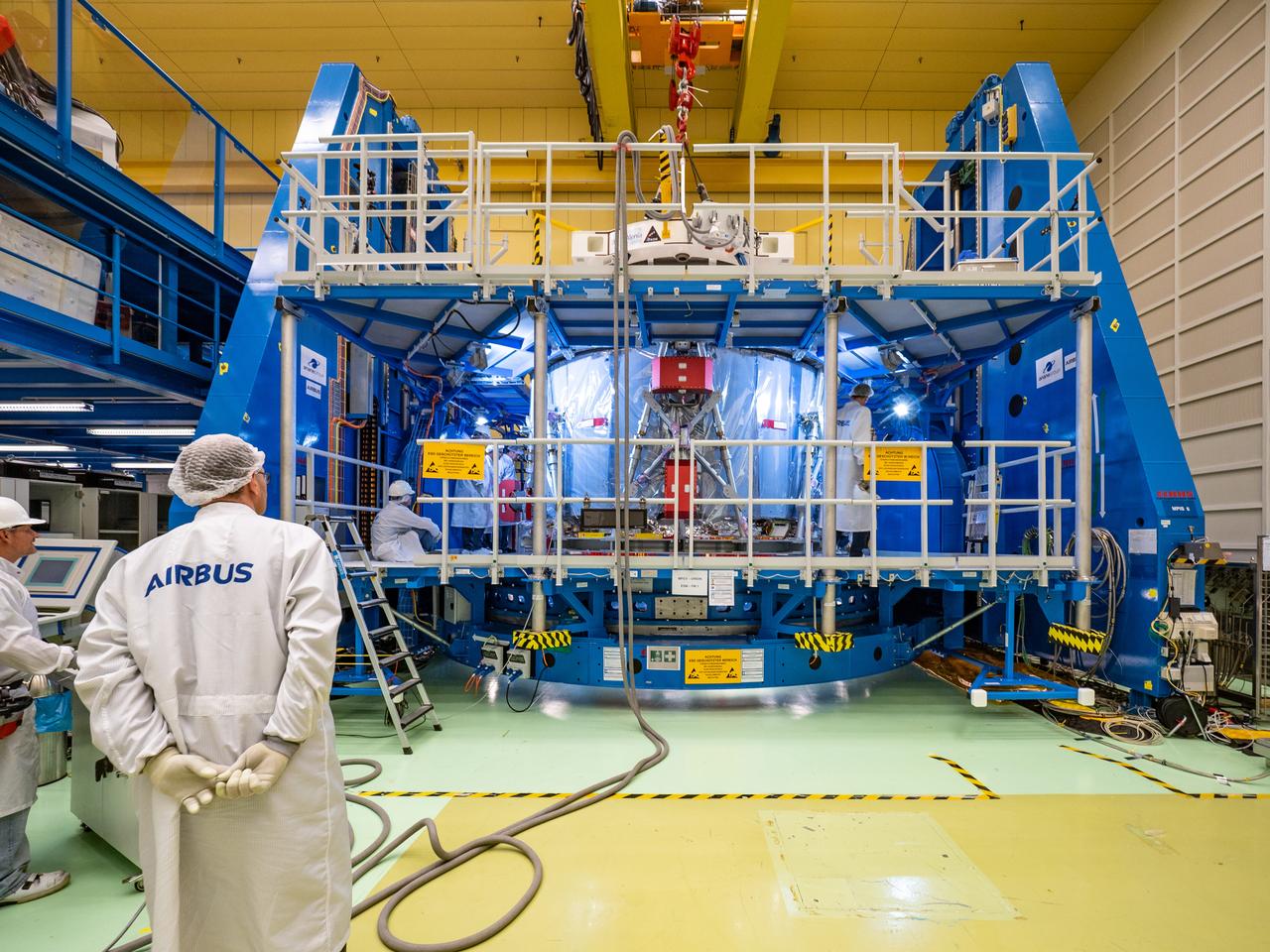
Technicians at the Airbus facility in Bremen, Germany weigh the European Service Module on Oct. 31, 2018 ahead of shipment to Kennedy Space Center. The service module will depart Germany on November 5th, 2018 and will arrive in the U.S. on November 6...For the first time, NASA will use a European-built system as a critical element to power an American spacecraft, extending the international cooperation of the International Space Station into deep space. The European Service Module is a unique collaboration across space agencies and industry including ESA’s prime contractor, Airbus, and 10 European countries. The completion of service module work in Europe and shipment to Kennedy signifies a major milestone toward NASA’s human deep space exploration missions to the Moon and beyond.
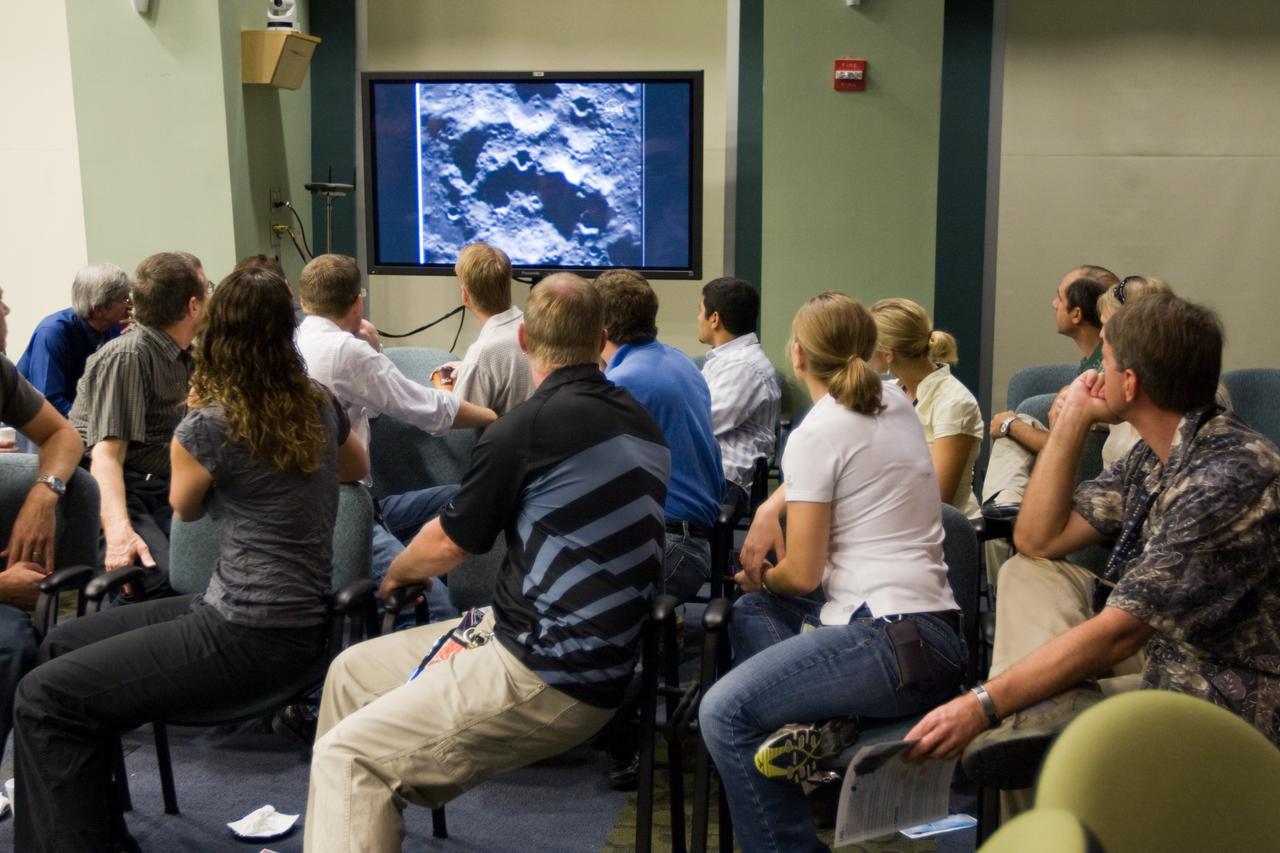
CAPE CANAVERAL, Fla. – Employees at NASA's Kennedy Space Center view live on NASA Television the impact of the Lunar Crater Observation and Sensing Satellite, or LCROSS, and its spent Centaur upper stage on the moon. The employees seen here are in the 5th Floor Conference Room of Operations Support Building II; another group of employees viewed the impact on screens in the Operations and Checkout Building's Mission Briefing Room. The employee event was sponsored by the NASA Exchange, the External Relations Directorate and KSC Launching Leaders. The goal of the LCROSS mission is to search for water ice on the moon, in support of future human lunar exploration. For additional information on the LCROSS mission, visit http://www.nasa.gov/LCROSS. Photo credit: NASA/Dimitri Gerondidakis
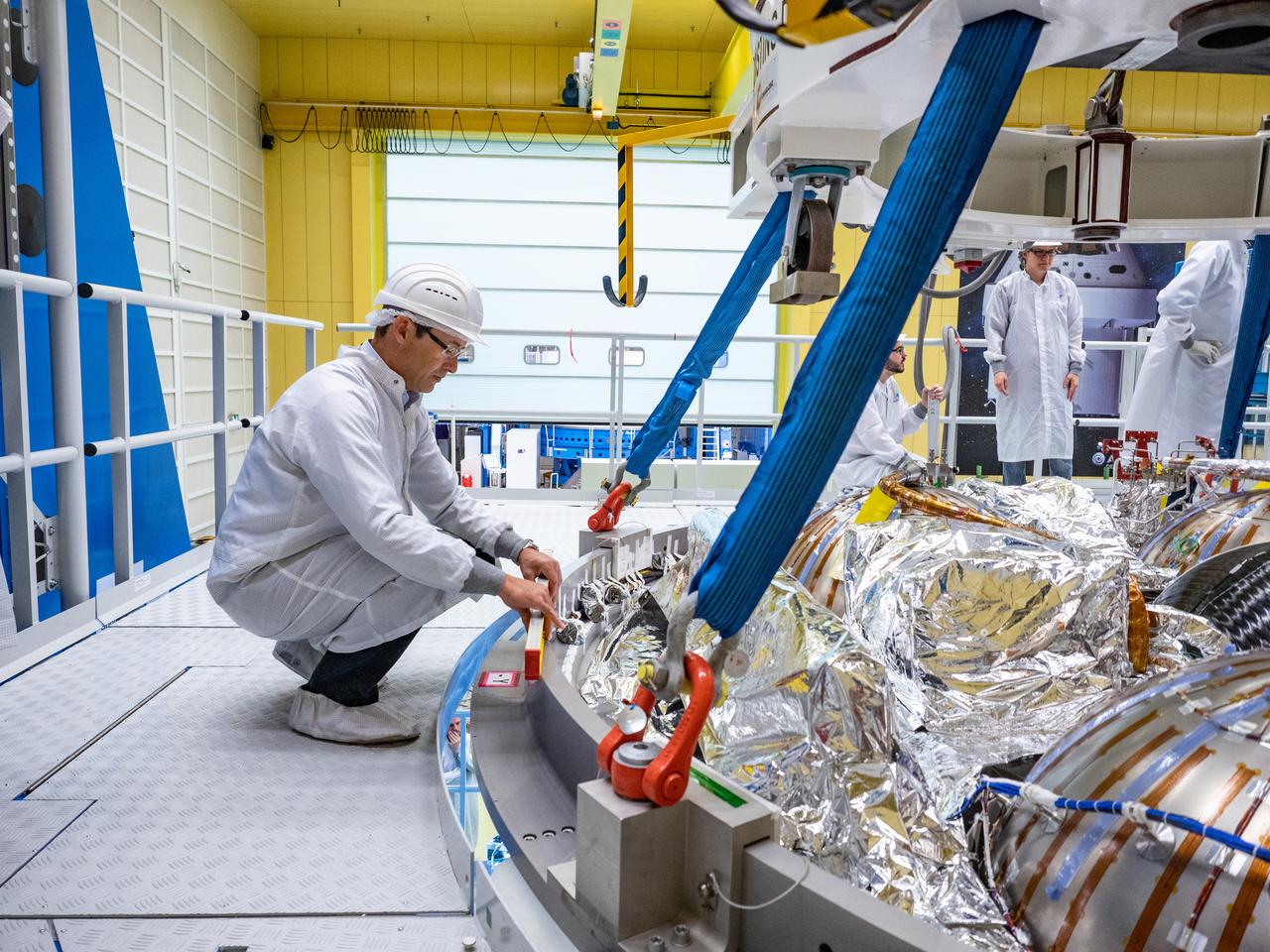
Technicians at the Airbus facility in Bremen, Germany weigh the European Service Module on Oct. 31, 2018 ahead of shipment to Kennedy Space Center. The service module will depart Germany on November 5th, 2018 and will arrive in the U.S. on November 6...For the first time, NASA will use a European-built system as a critical element to power an American spacecraft, extending the international cooperation of the International Space Station into deep space. The European Service Module is a unique collaboration across space agencies and industry including ESA’s prime contractor, Airbus, and 10 European countries. The completion of service module work in Europe and shipment to Kennedy signifies a major milestone toward NASA’s human deep space exploration missions to the Moon and beyond.
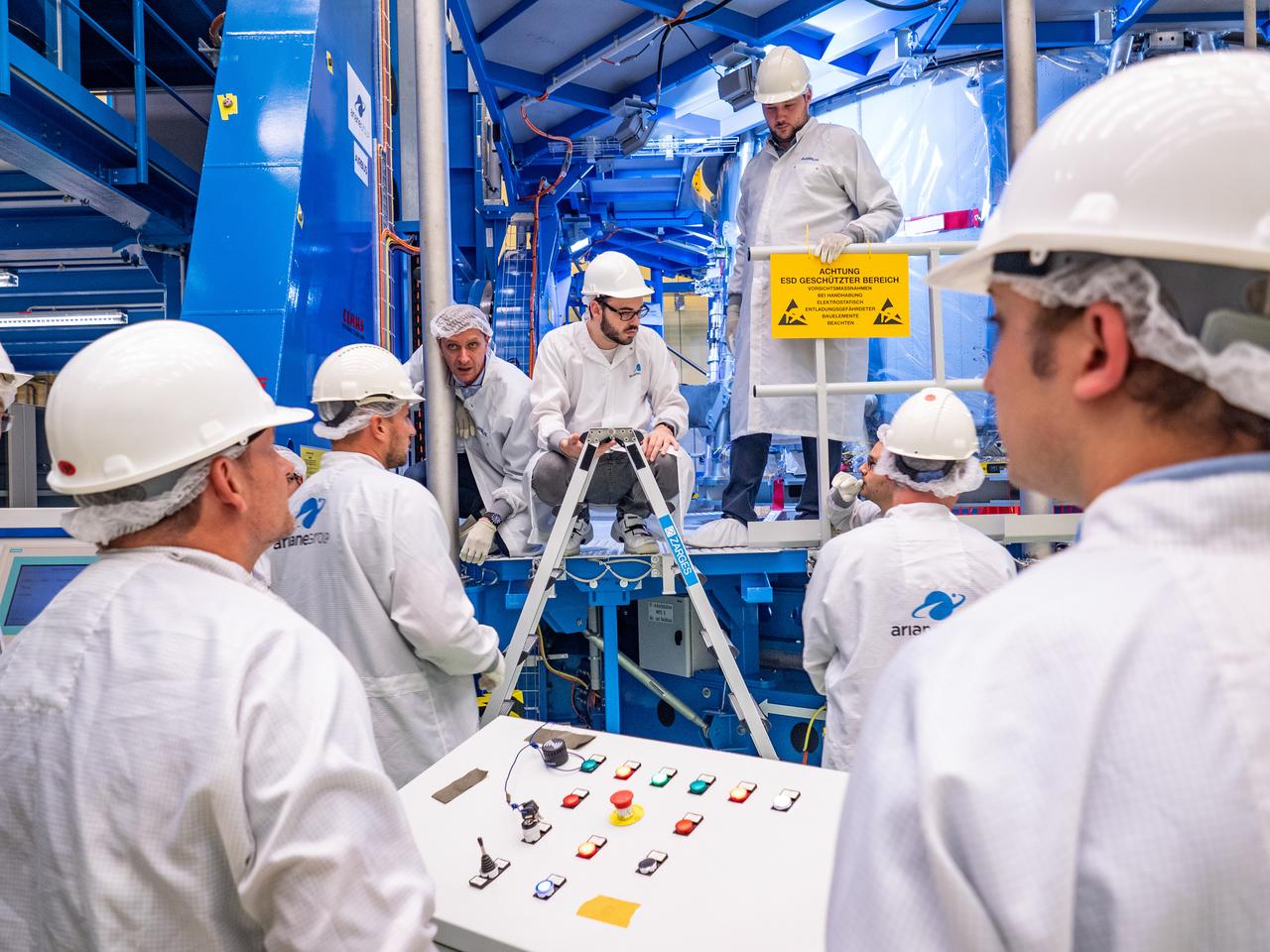
Technicians at the Airbus facility in Bremen, Germany weigh the European Service Module on Oct. 31, 2018 ahead of shipment to Kennedy Space Center. The service module will depart Germany on November 5th, 2018 and will arrive in the U.S. on November 6...For the first time, NASA will use a European-built system as a critical element to power an American spacecraft, extending the international cooperation of the International Space Station into deep space. The European Service Module is a unique collaboration across space agencies and industry including ESA’s prime contractor, Airbus, and 10 European countries. The completion of service module work in Europe and shipment to Kennedy signifies a major milestone toward NASA’s human deep space exploration missions to the Moon and beyond.
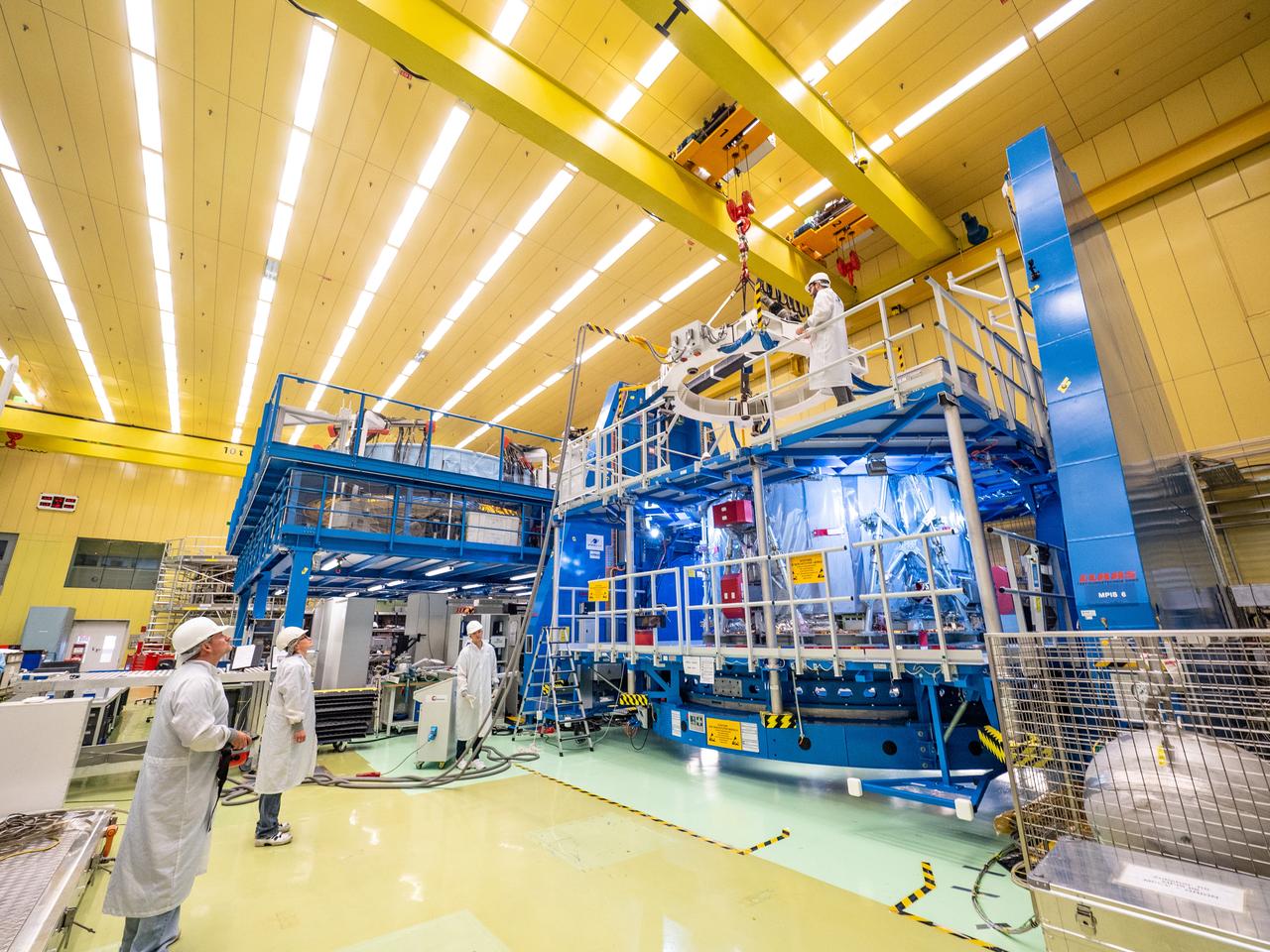
Technicians at the Airbus facility in Bremen, Germany weigh the European Service Module on Oct. 31, 2018 ahead of shipment to Kennedy Space Center. The service module will depart Germany on November 5th, 2018 and will arrive in the U.S. on November 6...For the first time, NASA will use a European-built system as a critical element to power an American spacecraft, extending the international cooperation of the International Space Station into deep space. The European Service Module is a unique collaboration across space agencies and industry including ESA’s prime contractor, Airbus, and 10 European countries. The completion of service module work in Europe and shipment to Kennedy signifies a major milestone toward NASA’s human deep space exploration missions to the Moon and beyond.
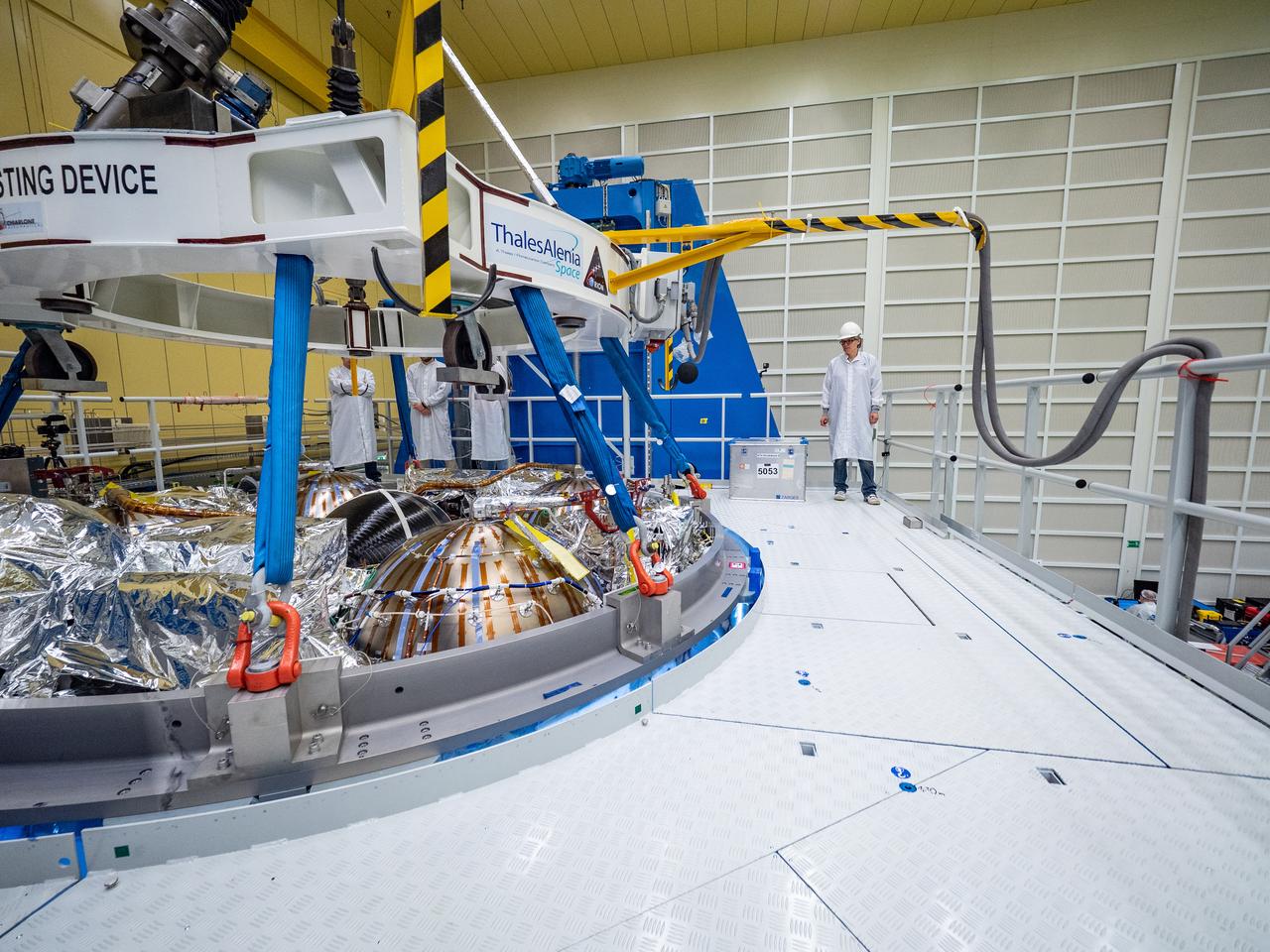
Technicians at the Airbus facility in Bremen, Germany weigh the European Service Module on Oct. 31, 2018 ahead of shipment to Kennedy Space Center. The service module will depart Germany on November 5th, 2018 and will arrive in the U.S. on November 6...For the first time, NASA will use a European-built system as a critical element to power an American spacecraft, extending the international cooperation of the International Space Station into deep space. The European Service Module is a unique collaboration across space agencies and industry including ESA’s prime contractor, Airbus, and 10 European countries. The completion of service module work in Europe and shipment to Kennedy signifies a major milestone toward NASA’s human deep space exploration missions to the Moon and beyond.
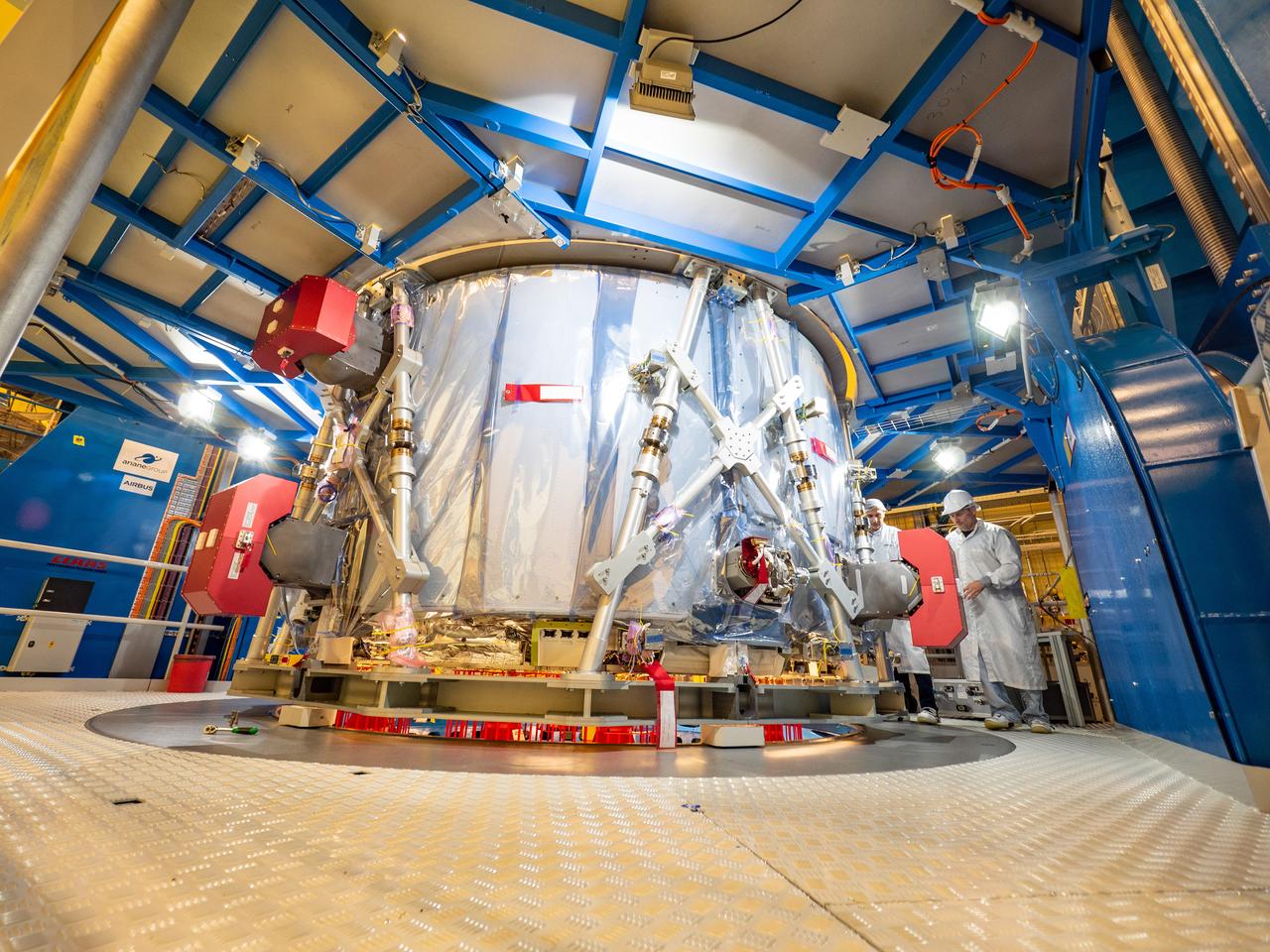
Technicians at the Airbus facility in Bremen, Germany weigh the European Service Module on Oct. 31, 2018 ahead of shipment to Kennedy Space Center. The service module will depart Germany on November 5th, 2018 and will arrive in the U.S. on November 6...For the first time, NASA will use a European-built system as a critical element to power an American spacecraft, extending the international cooperation of the International Space Station into deep space. The European Service Module is a unique collaboration across space agencies and industry including ESA’s prime contractor, Airbus, and 10 European countries. The completion of service module work in Europe and shipment to Kennedy signifies a major milestone toward NASA’s human deep space exploration missions to the Moon and beyond.
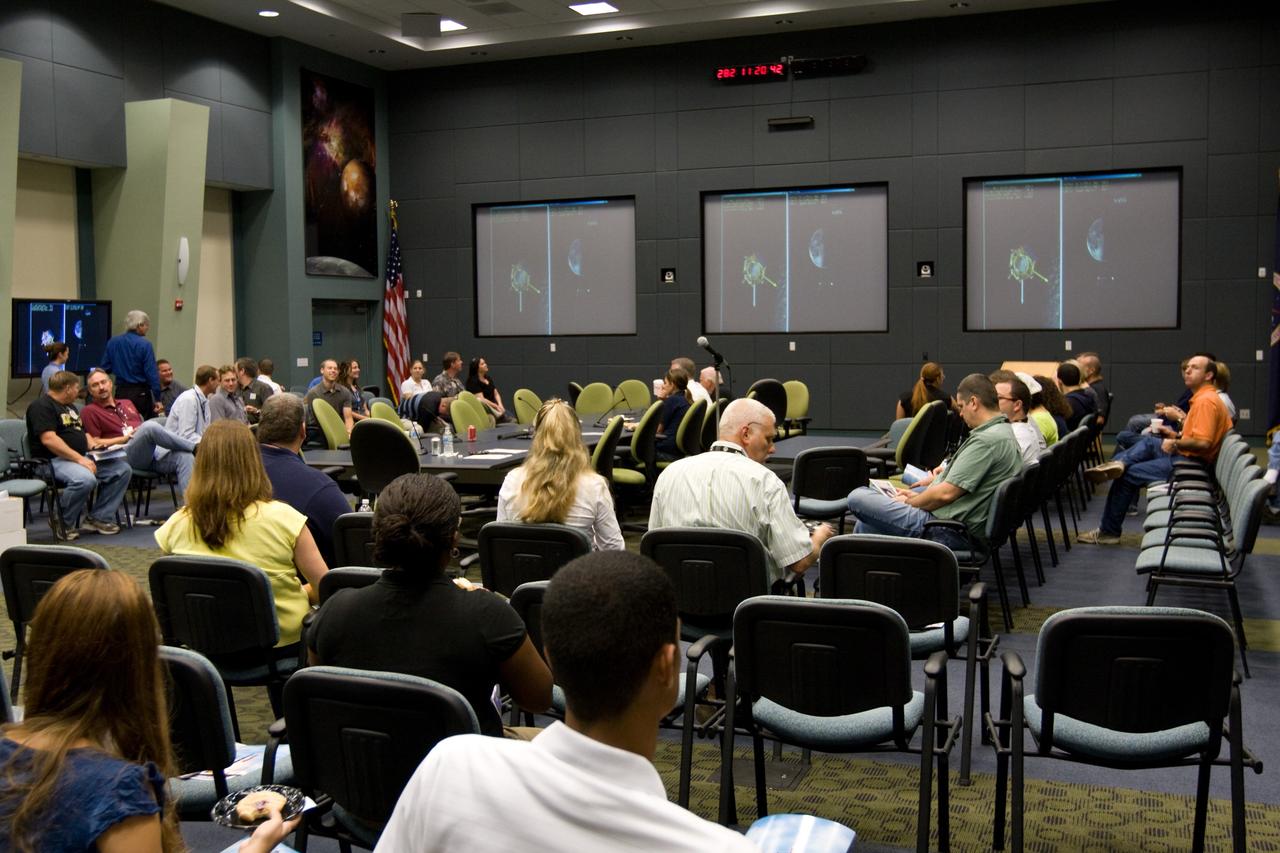
CAPE CANAVERAL, Fla. – Employees at NASA's Kennedy Space Center take advantage of an early morning opportunity to watch the Lunar Crater Observation and Sensing Satellite, or LCROSS, and its spent Centaur upper stage impact the lunar surface live on NASA Television. The employees seen here are in the 5th Floor Conference Room of Operations Support Building II; another group of employees viewed the impact on screens in the Operations and Checkout Building's Mission Briefing Room. The employee event was sponsored by the NASA Exchange, the External Relations Directorate and KSC Launching Leaders. The goal of the LCROSS mission is to search for water ice on the moon, in support of future human lunar exploration. For additional information on the LCROSS mission, visit http://www.nasa.gov/LCROSS. Photo credit: NASA/Dimitri Gerondidakis
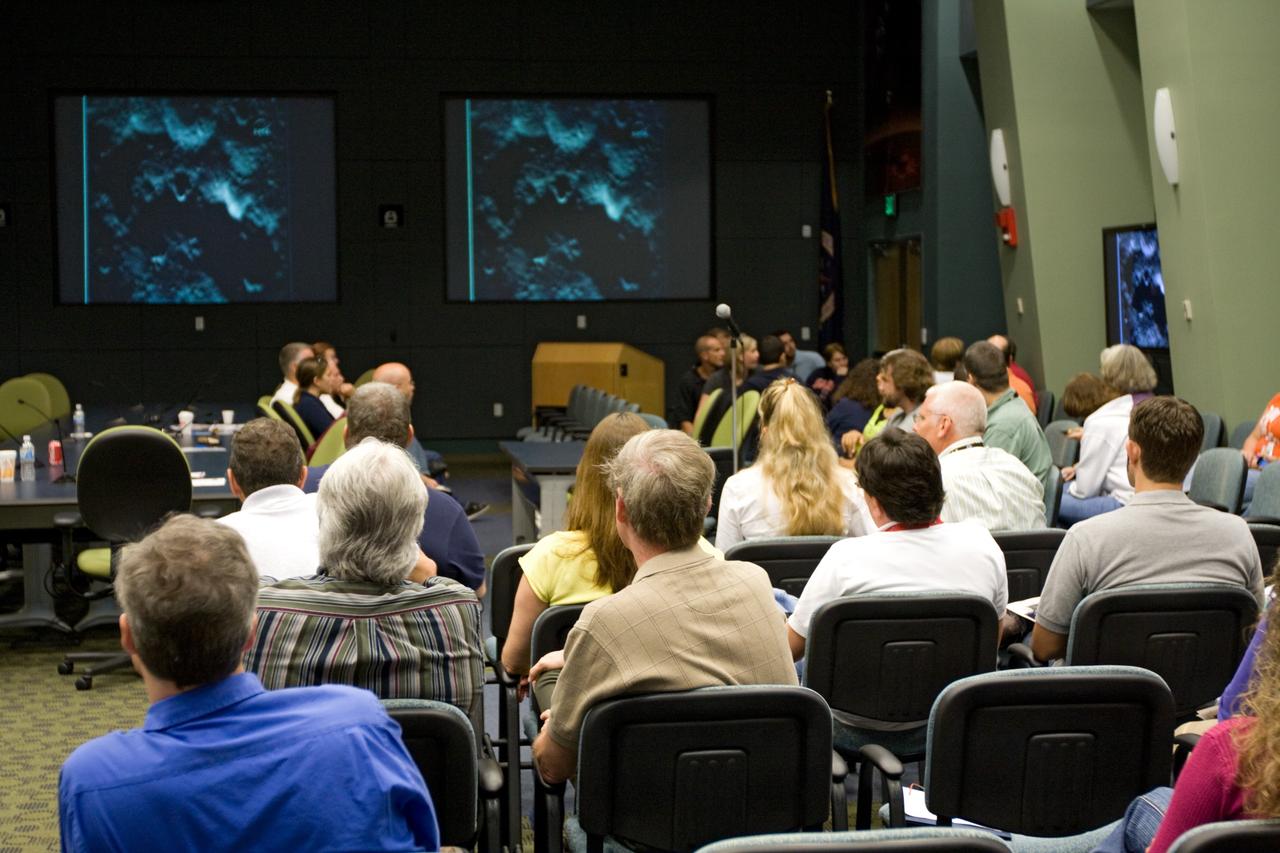
CAPE CANAVERAL, Fla. – Large screens are tuned to NASA Television to allow employees at NASA's Kennedy Space Center a live view of the impact of the Lunar Crater Observation and Sensing Satellite, or LCROSS, and its spent Centaur upper stage on the moon. The employees seen here are in the 5th Floor Conference Room of Operations Support Building II; another group of employees viewed the impact on screens in the Operations and Checkout Building's Mission Briefing Room. The employee event was sponsored by the NASA Exchange, the External Relations Directorate and KSC Launching Leaders. The goal of the LCROSS mission is to search for water ice on the moon, in support of future human lunar exploration. For additional information on the LCROSS mission, visit http://www.nasa.gov/LCROSS. Photo credit: NASA/Dimitri Gerondidakis
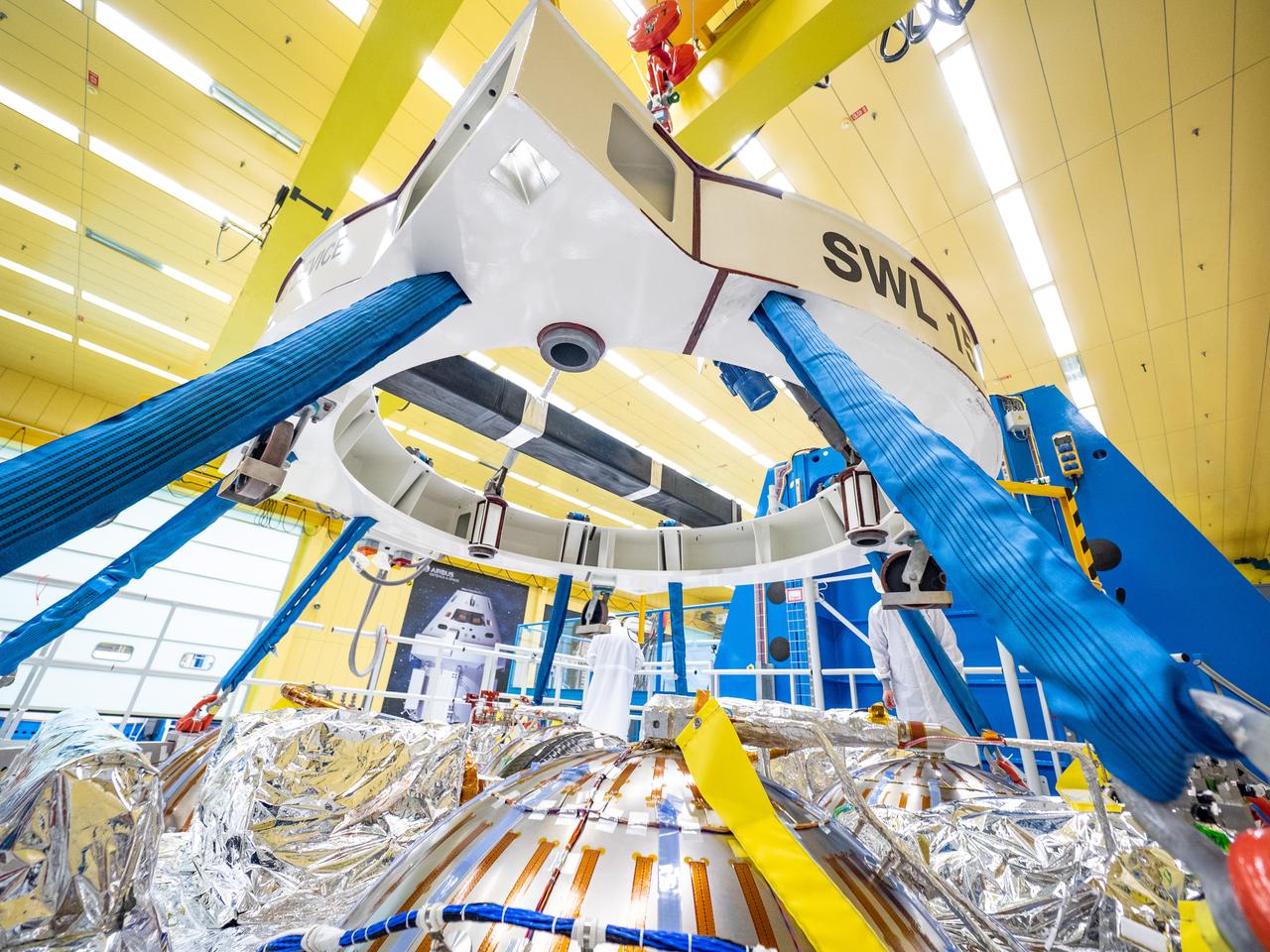
Technicians at the Airbus facility in Bremen, Germany weigh the European Service Module on Oct. 31, 2018 ahead of shipment to Kennedy Space Center. The service module will depart Germany on November 5th, 2018 and will arrive in the U.S. on November 6...For the first time, NASA will use a European-built system as a critical element to power an American spacecraft, extending the international cooperation of the International Space Station into deep space. The European Service Module is a unique collaboration across space agencies and industry including ESA’s prime contractor, Airbus, and 10 European countries. The completion of service module work in Europe and shipment to Kennedy signifies a major milestone toward NASA’s human deep space exploration missions to the Moon and beyond.
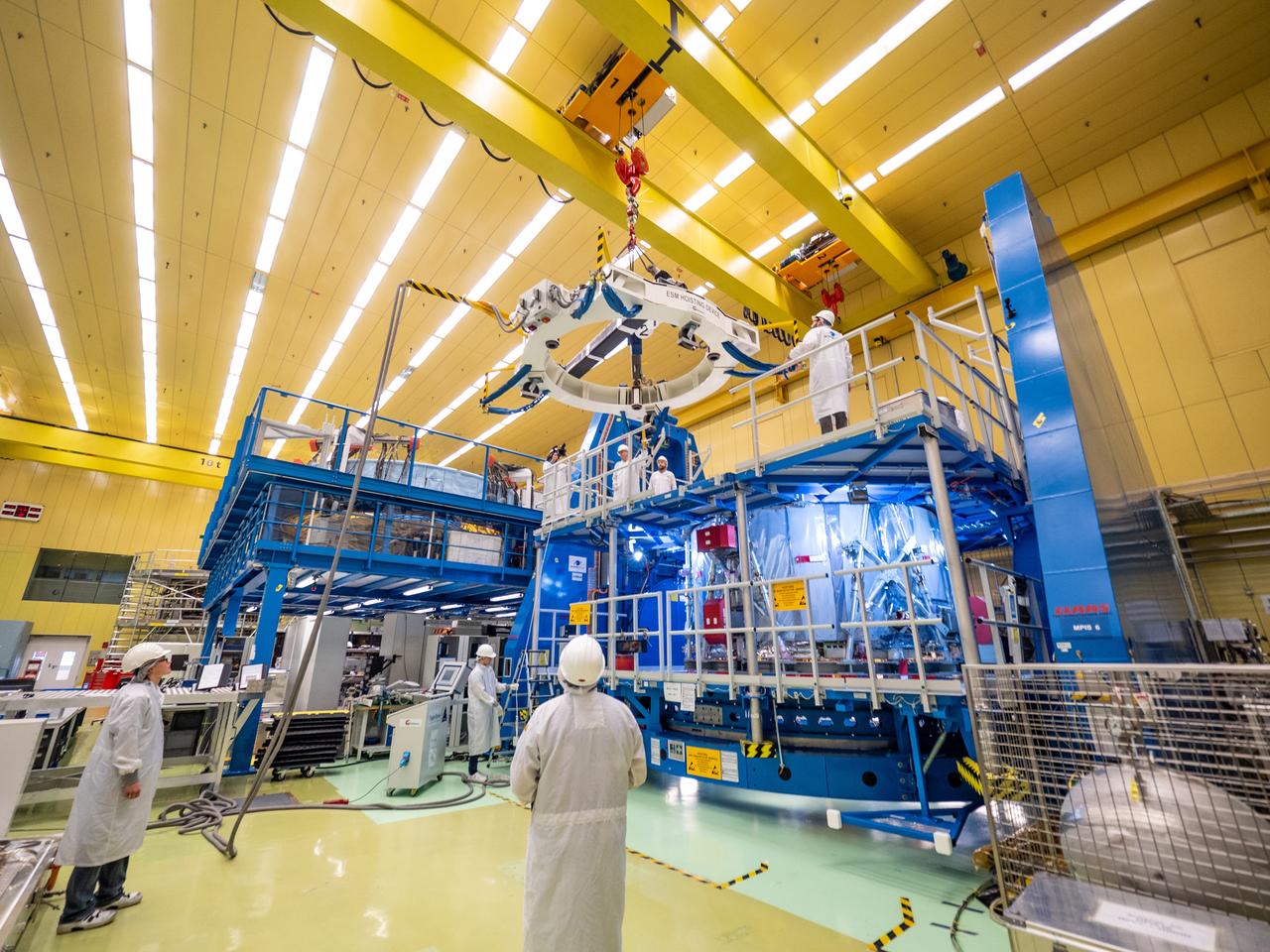
Technicians at the Airbus facility in Bremen, Germany weigh the European Service Module on Oct. 31, 2018 ahead of shipment to Kennedy Space Center. The service module will depart Germany on November 5th, 2018 and will arrive in the U.S. on November 6...For the first time, NASA will use a European-built system as a critical element to power an American spacecraft, extending the international cooperation of the International Space Station into deep space. The European Service Module is a unique collaboration across space agencies and industry including ESA’s prime contractor, Airbus, and 10 European countries. The completion of service module work in Europe and shipment to Kennedy signifies a major milestone toward NASA’s human deep space exploration missions to the Moon and beyond.
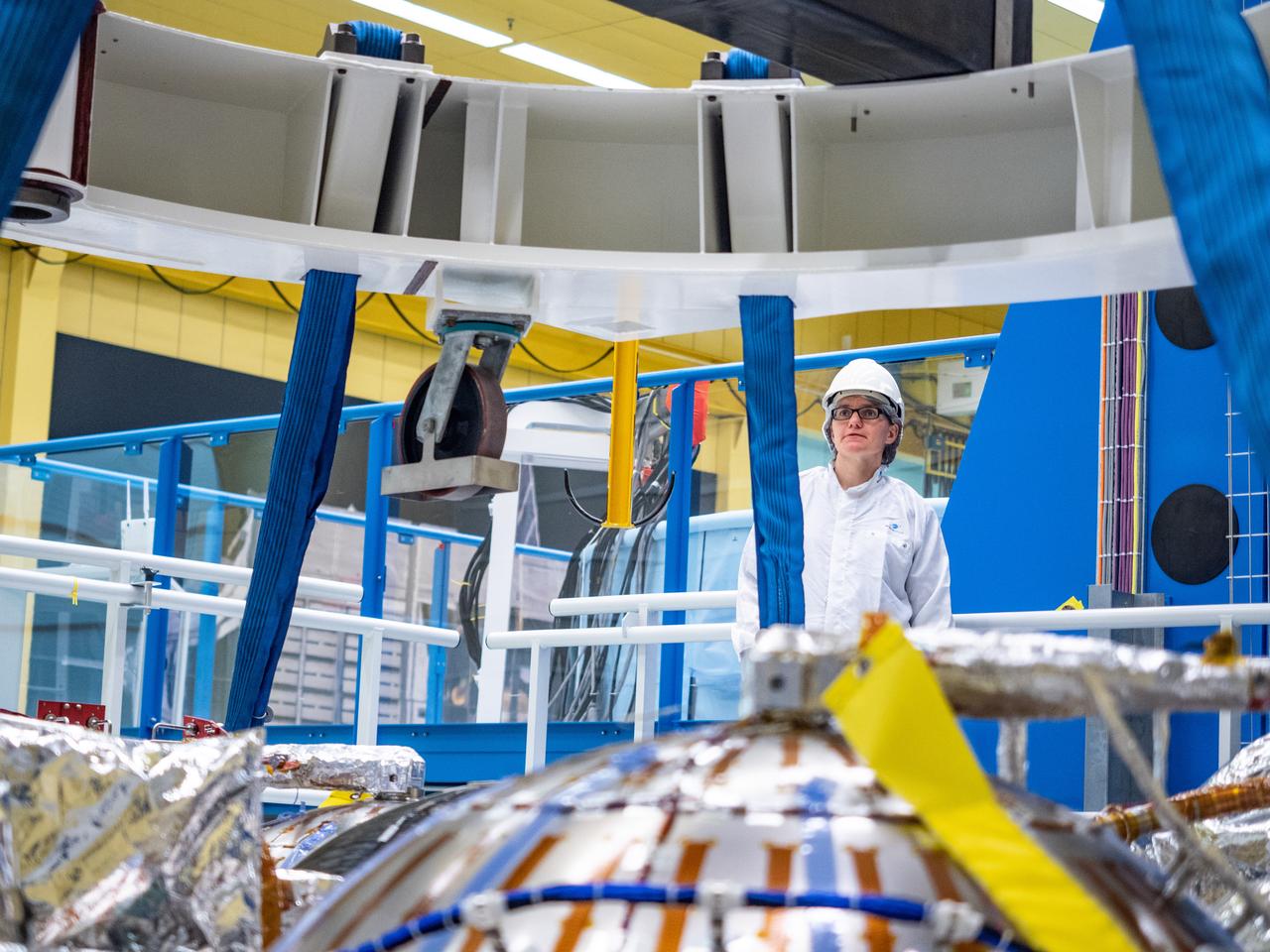
Technicians at the Airbus facility in Bremen, Germany weigh the European Service Module on Oct. 31, 2018 ahead of shipment to Kennedy Space Center. The service module will depart Germany on November 5th, 2018 and will arrive in the U.S. on November 6...For the first time, NASA will use a European-built system as a critical element to power an American spacecraft, extending the international cooperation of the International Space Station into deep space. The European Service Module is a unique collaboration across space agencies and industry including ESA’s prime contractor, Airbus, and 10 European countries. The completion of service module work in Europe and shipment to Kennedy signifies a major milestone toward NASA’s human deep space exploration missions to the Moon and beyond.
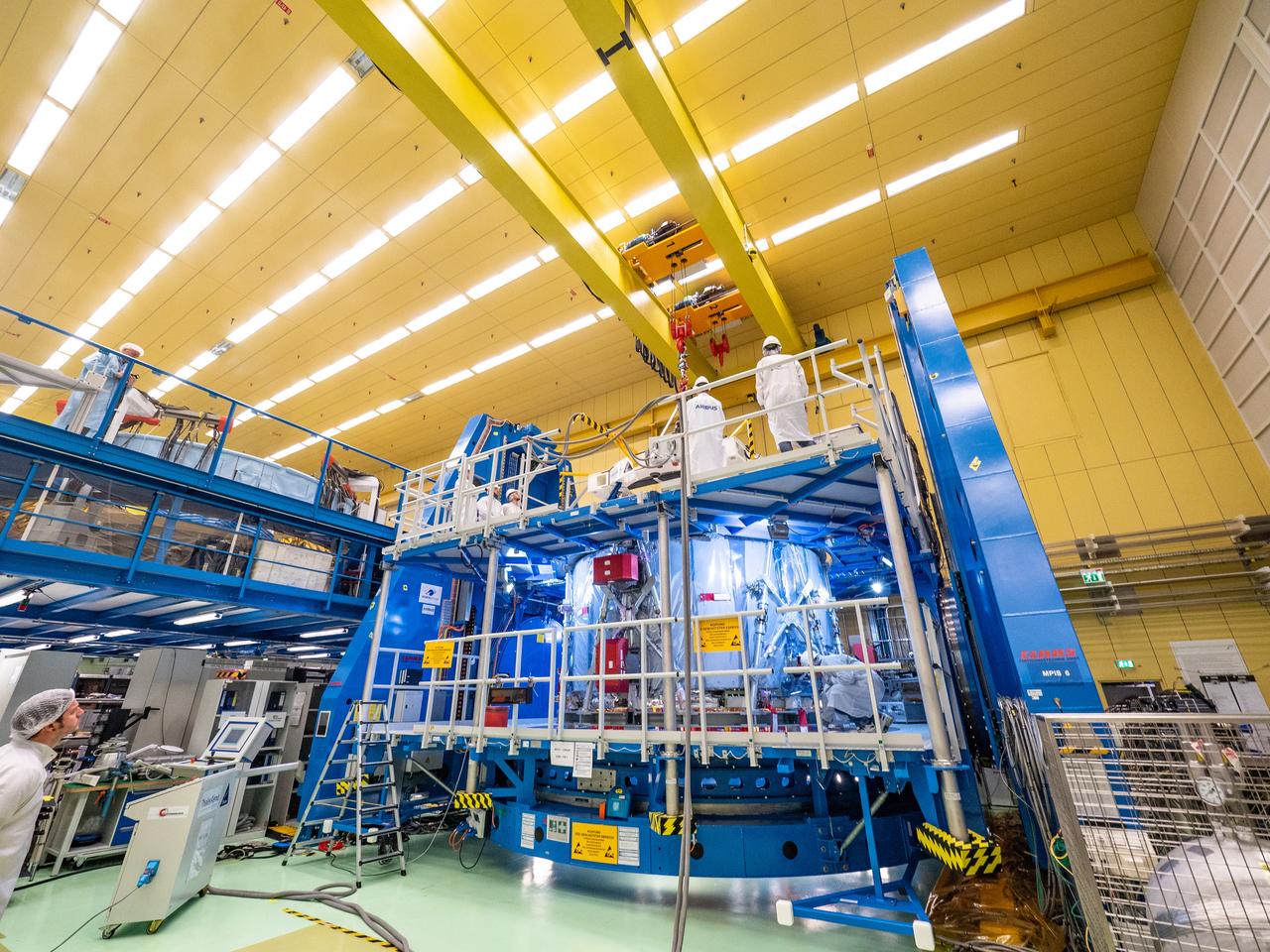
Technicians at the Airbus facility in Bremen, Germany weigh the European Service Module on Oct. 31, 2018 ahead of shipment to Kennedy Space Center. The service module will depart Germany on November 5th, 2018 and will arrive in the U.S. on November 6...For the first time, NASA will use a European-built system as a critical element to power an American spacecraft, extending the international cooperation of the International Space Station into deep space. The European Service Module is a unique collaboration across space agencies and industry including ESA’s prime contractor, Airbus, and 10 European countries. The completion of service module work in Europe and shipment to Kennedy signifies a major milestone toward NASA’s human deep space exploration missions to the Moon and beyond.
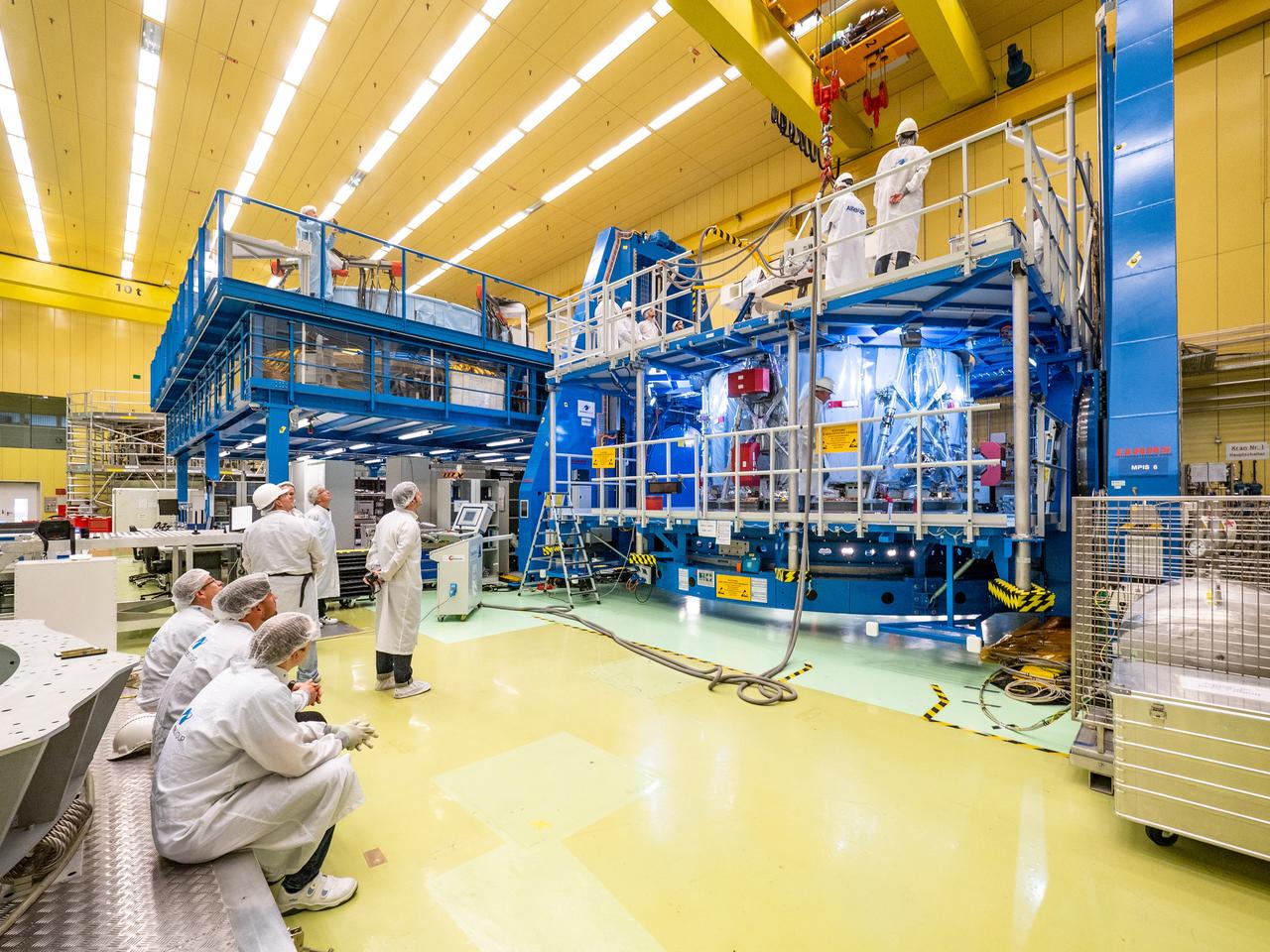
Technicians at the Airbus facility in Bremen, Germany weigh the European Service Module on Oct. 31, 2018 ahead of shipment to Kennedy Space Center. The service module will depart Germany on November 5th, 2018 and will arrive in the U.S. on November 6...For the first time, NASA will use a European-built system as a critical element to power an American spacecraft, extending the international cooperation of the International Space Station into deep space. The European Service Module is a unique collaboration across space agencies and industry including ESA’s prime contractor, Airbus, and 10 European countries. The completion of service module work in Europe and shipment to Kennedy signifies a major milestone toward NASA’s human deep space exploration missions to the Moon and beyond.
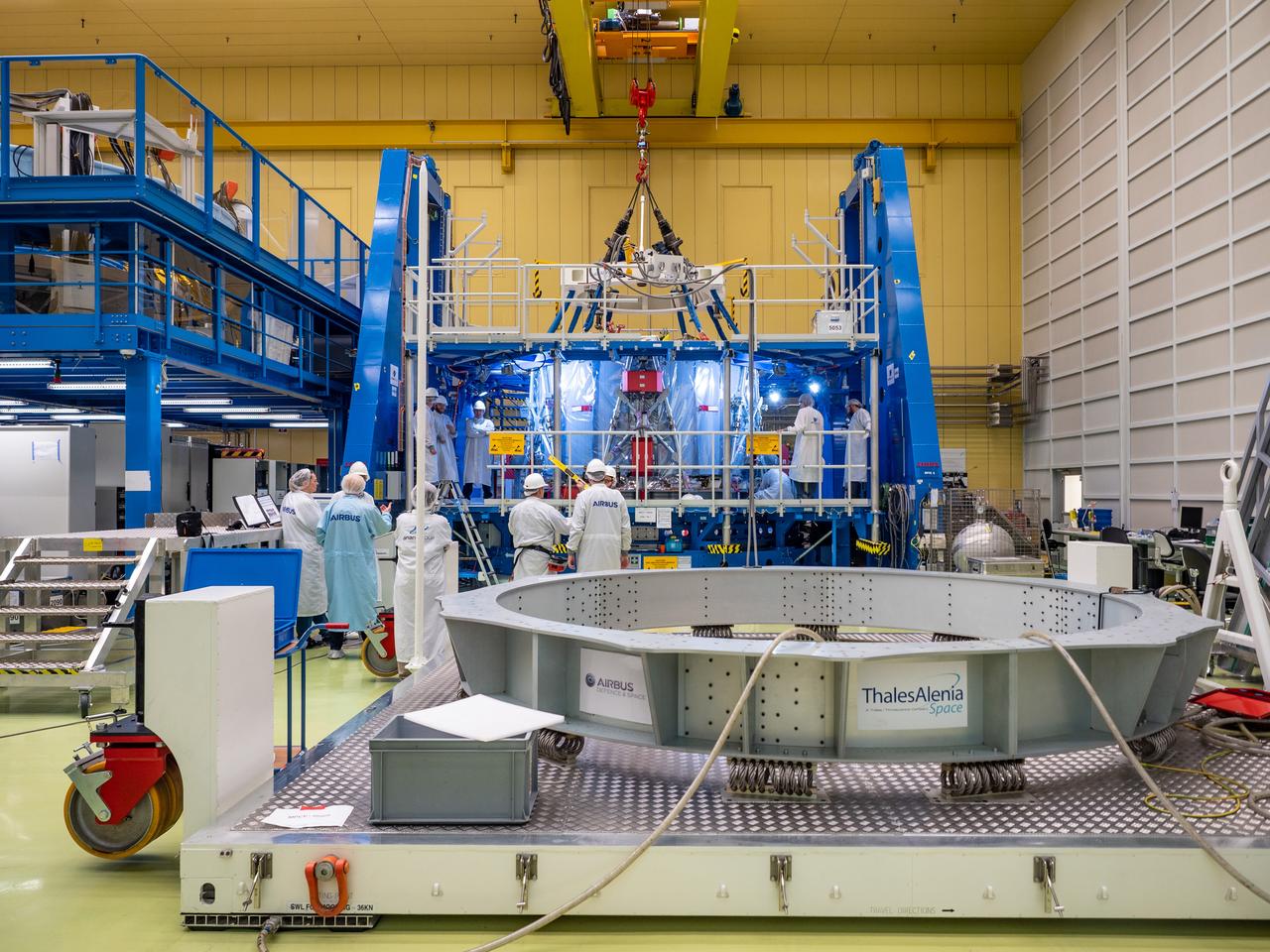
Technicians at the Airbus facility in Bremen, Germany weigh the European Service Module on Oct. 31, 2018 ahead of shipment to Kennedy Space Center. The service module will depart Germany on November 5th, 2018 and will arrive in the U.S. on November 6...For the first time, NASA will use a European-built system as a critical element to power an American spacecraft, extending the international cooperation of the International Space Station into deep space. The European Service Module is a unique collaboration across space agencies and industry including ESA’s prime contractor, Airbus, and 10 European countries. The completion of service module work in Europe and shipment to Kennedy signifies a major milestone toward NASA’s human deep space exploration missions to the Moon and beyond.

Technicians at the Airbus facility in Bremen, Germany weigh the European Service Module on Oct. 31, 2018 ahead of shipment to Kennedy Space Center. The service module will depart Germany on November 5th, 2018 and will arrive in the U.S. on November 6...For the first time, NASA will use a European-built system as a critical element to power an American spacecraft, extending the international cooperation of the International Space Station into deep space. The European Service Module is a unique collaboration across space agencies and industry including ESA’s prime contractor, Airbus, and 10 European countries. The completion of service module work in Europe and shipment to Kennedy signifies a major milestone toward NASA’s human deep space exploration missions to the Moon and beyond.
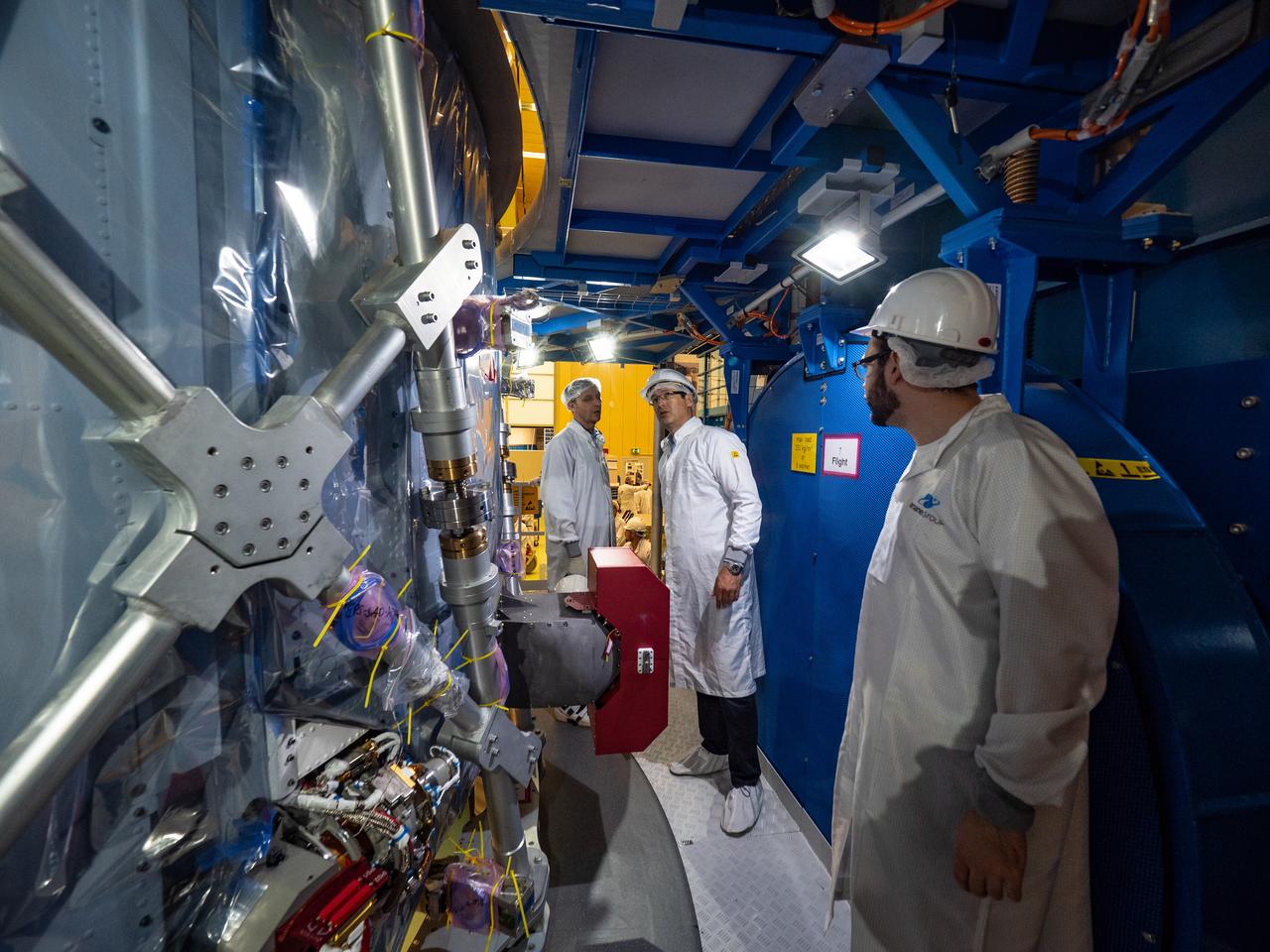
Technicians at the Airbus facility in Bremen, Germany weigh the European Service Module on Oct. 31, 2018 ahead of shipment to Kennedy Space Center. The service module will depart Germany on November 5th, 2018 and will arrive in the U.S. on November 6...For the first time, NASA will use a European-built system as a critical element to power an American spacecraft, extending the international cooperation of the International Space Station into deep space. The European Service Module is a unique collaboration across space agencies and industry including ESA’s prime contractor, Airbus, and 10 European countries. The completion of service module work in Europe and shipment to Kennedy signifies a major milestone toward NASA’s human deep space exploration missions to the Moon and beyond.
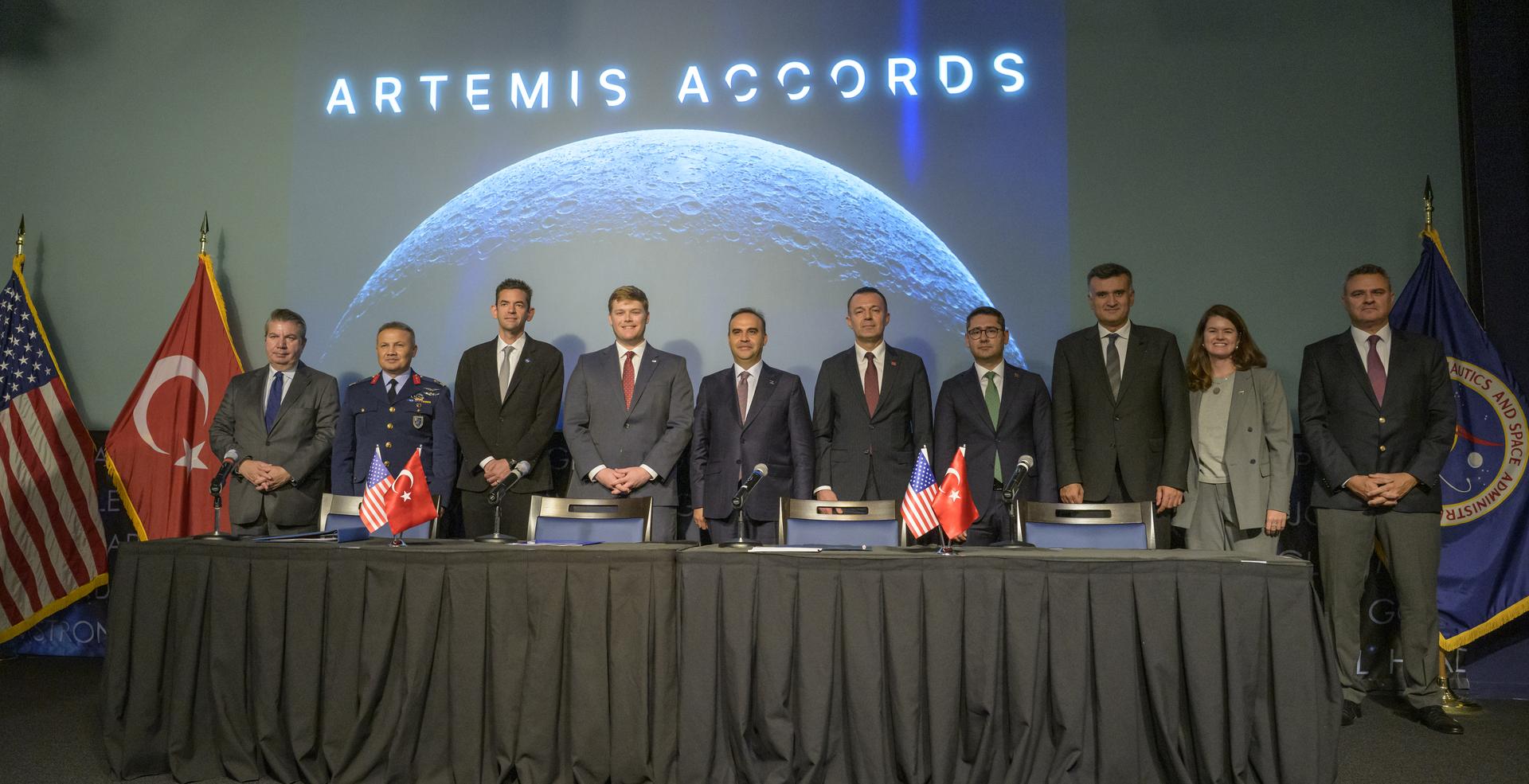
NASA Administrator Jared Isaacman, 3rd from left, U.S. Deputy Assistant Secretary of State for Space and Environment Connor Tomlinson, 4th from left, Turkish Minister of Industry and Technology, Mehmet Fatih Kacır, 5th from left, Turkish Space Agency President, Yusuf Kıraç, 6th from left, and other dignitaries, pose for a group photograph after the signing of the Artemis Accords with the Republic of Türkiye, Monday, August 31, 2026, at the Mary W. Jackson NASA Headquarters building in Washington. Türkiye is the 71st country to sign the Artemis Accords, which establish a practical set of principles to guide space exploration cooperation among nations participating in NASA’s Artemis program. Photo Credit: (NASA/Bill Ingalls)
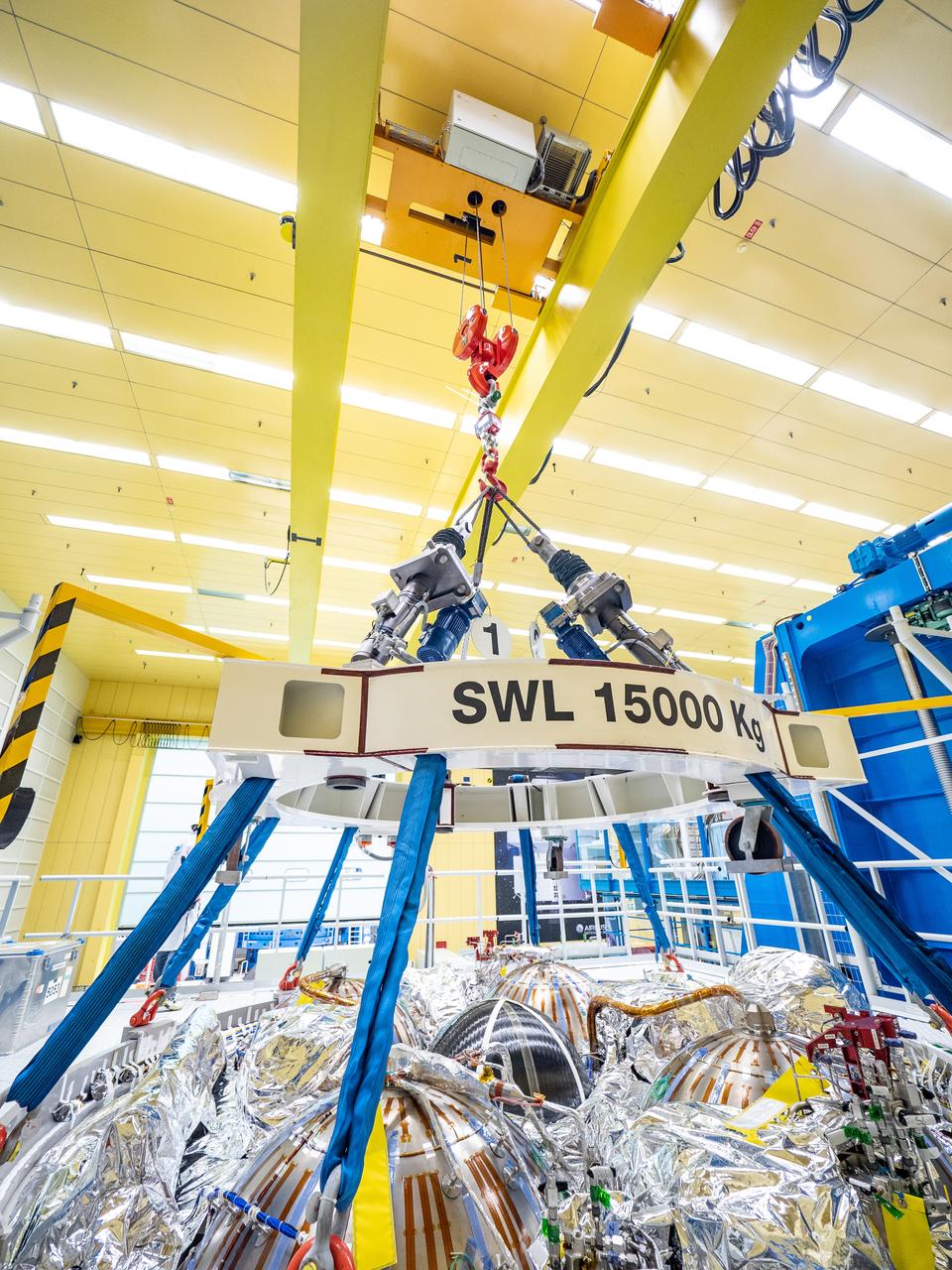
Technicians at the Airbus facility in Bremen, Germany weigh the European Service Module on Oct. 31, 2018 ahead of shipment to Kennedy Space Center. The service module will depart Germany on November 5th, 2018 and will arrive in the U.S. on November 6...For the first time, NASA will use a European-built system as a critical element to power an American spacecraft, extending the international cooperation of the International Space Station into deep space. The European Service Module is a unique collaboration across space agencies and industry including ESA’s prime contractor, Airbus, and 10 European countries. The completion of service module work in Europe and shipment to Kennedy signifies a major milestone toward NASA’s human deep space exploration missions to the Moon and beyond.
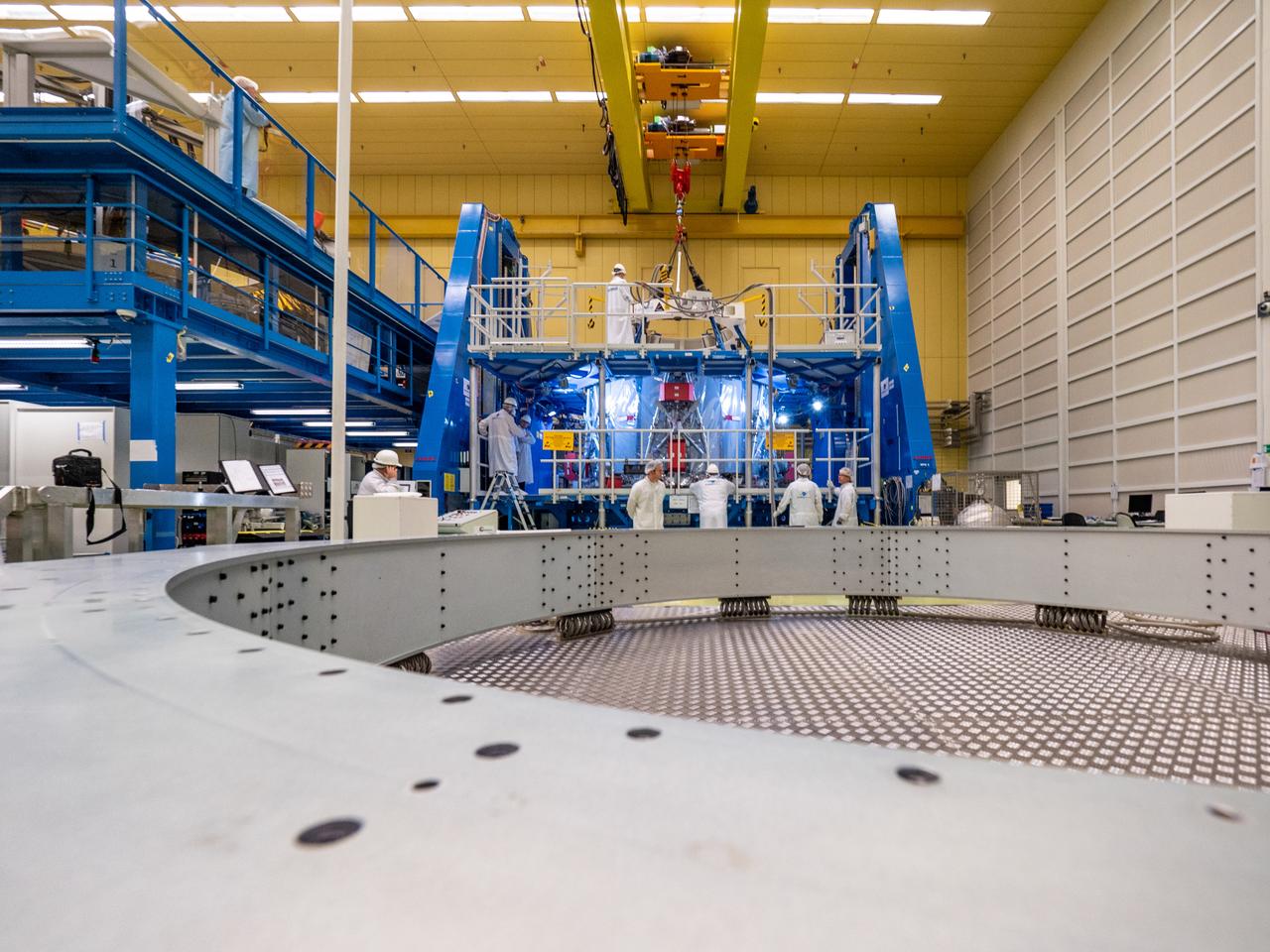
Technicians at the Airbus facility in Bremen, Germany weigh the European Service Module on Oct. 31, 2018 ahead of shipment to Kennedy Space Center. The service module will depart Germany on November 5th, 2018 and will arrive in the U.S. on November 6...For the first time, NASA will use a European-built system as a critical element to power an American spacecraft, extending the international cooperation of the International Space Station into deep space. The European Service Module is a unique collaboration across space agencies and industry including ESA’s prime contractor, Airbus, and 10 European countries. The completion of service module work in Europe and shipment to Kennedy signifies a major milestone toward NASA’s human deep space exploration missions to the Moon and beyond.
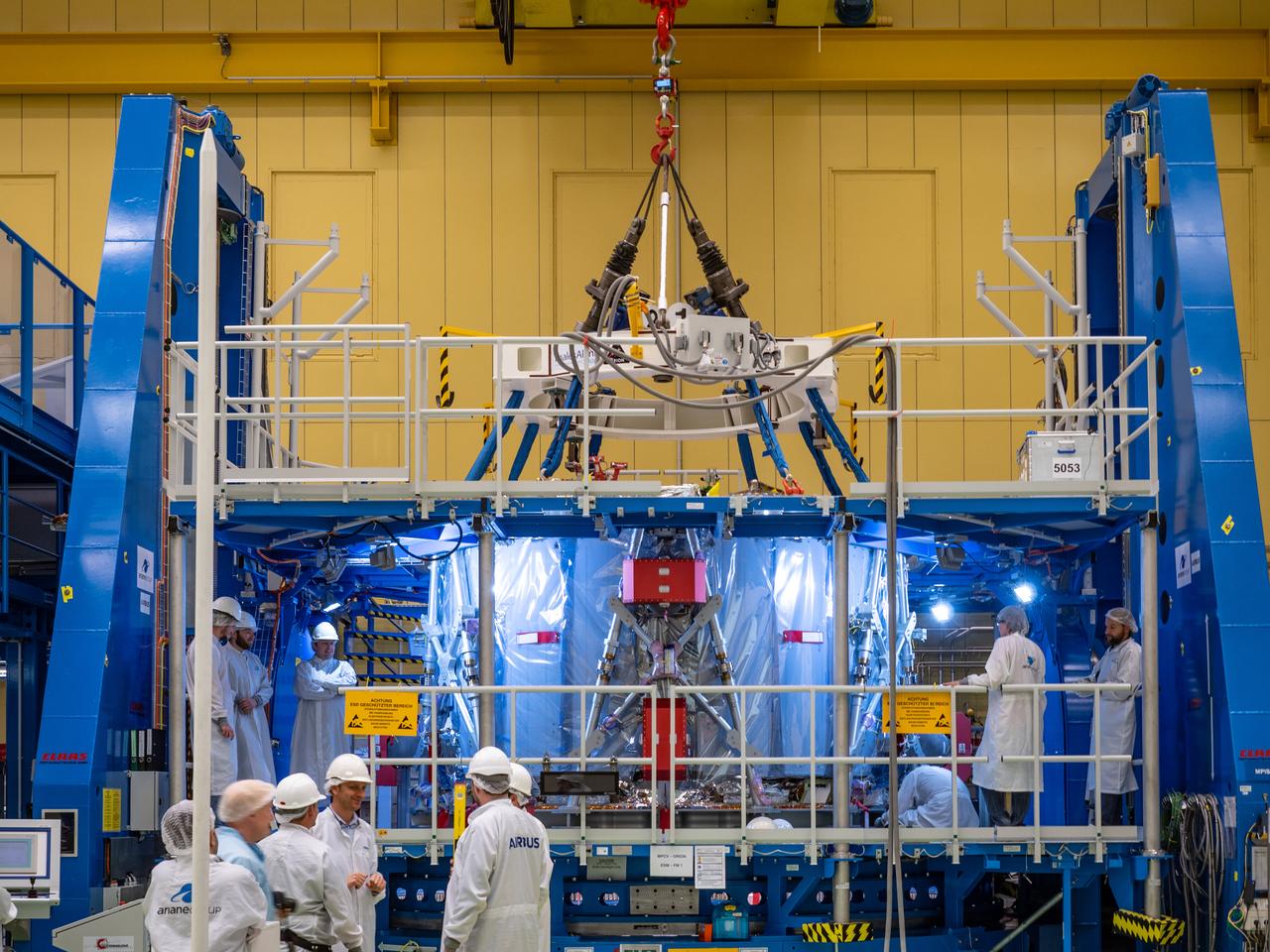
Technicians at the Airbus facility in Bremen, Germany weigh the European Service Module on Oct. 31, 2018 ahead of shipment to Kennedy Space Center. The service module will depart Germany on November 5th, 2018 and will arrive in the U.S. on November 6...For the first time, NASA will use a European-built system as a critical element to power an American spacecraft, extending the international cooperation of the International Space Station into deep space. The European Service Module is a unique collaboration across space agencies and industry including ESA’s prime contractor, Airbus, and 10 European countries. The completion of service module work in Europe and shipment to Kennedy signifies a major milestone toward NASA’s human deep space exploration missions to the Moon and beyond.
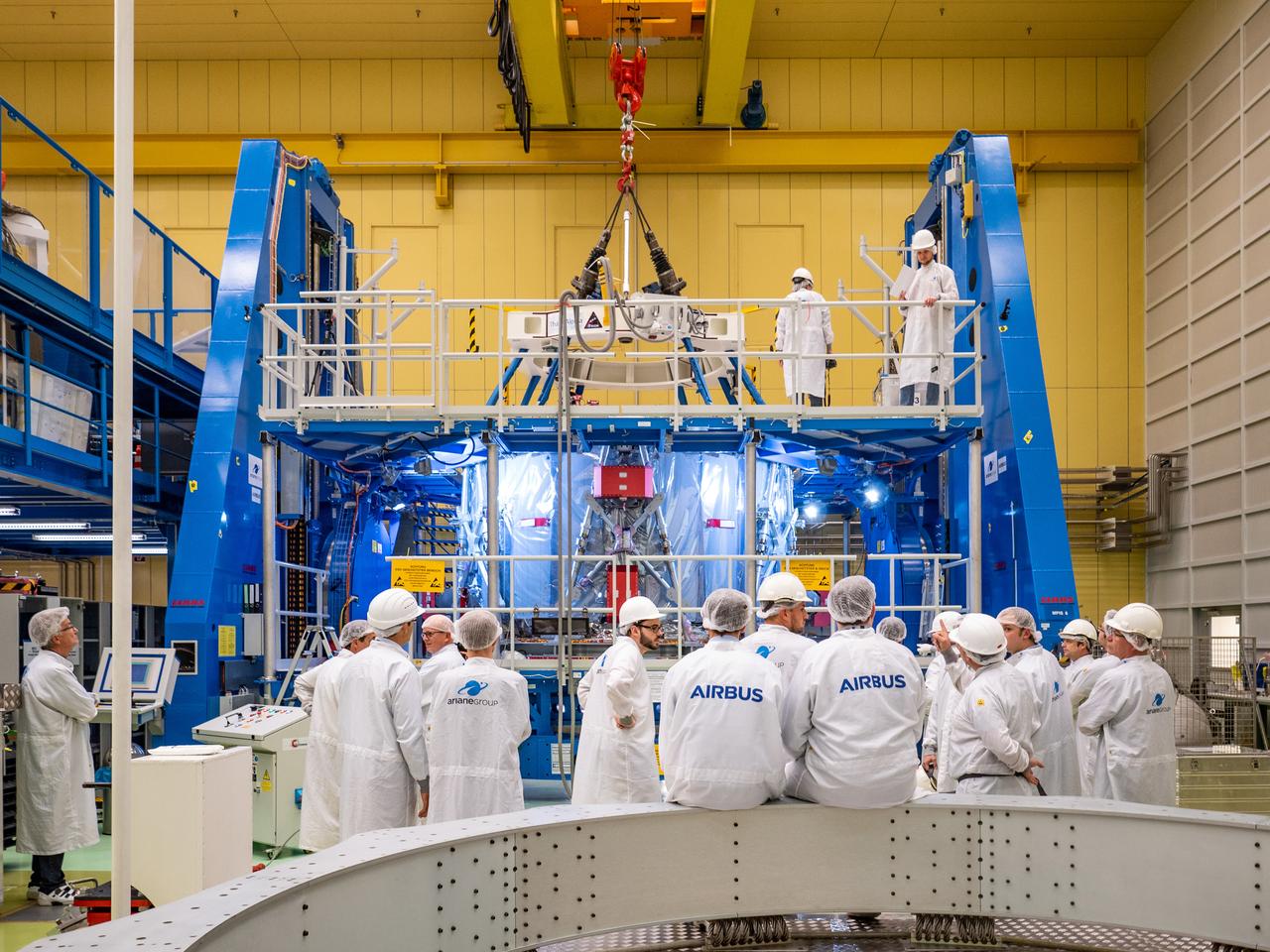
Technicians at the Airbus facility in Bremen, Germany weigh the European Service Module on Oct. 31, 2018 ahead of shipment to Kennedy Space Center. The service module will depart Germany on November 5th, 2018 and will arrive in the U.S. on November 6...For the first time, NASA will use a European-built system as a critical element to power an American spacecraft, extending the international cooperation of the International Space Station into deep space. The European Service Module is a unique collaboration across space agencies and industry including ESA’s prime contractor, Airbus, and 10 European countries. The completion of service module work in Europe and shipment to Kennedy signifies a major milestone toward NASA’s human deep space exploration missions to the Moon and beyond.
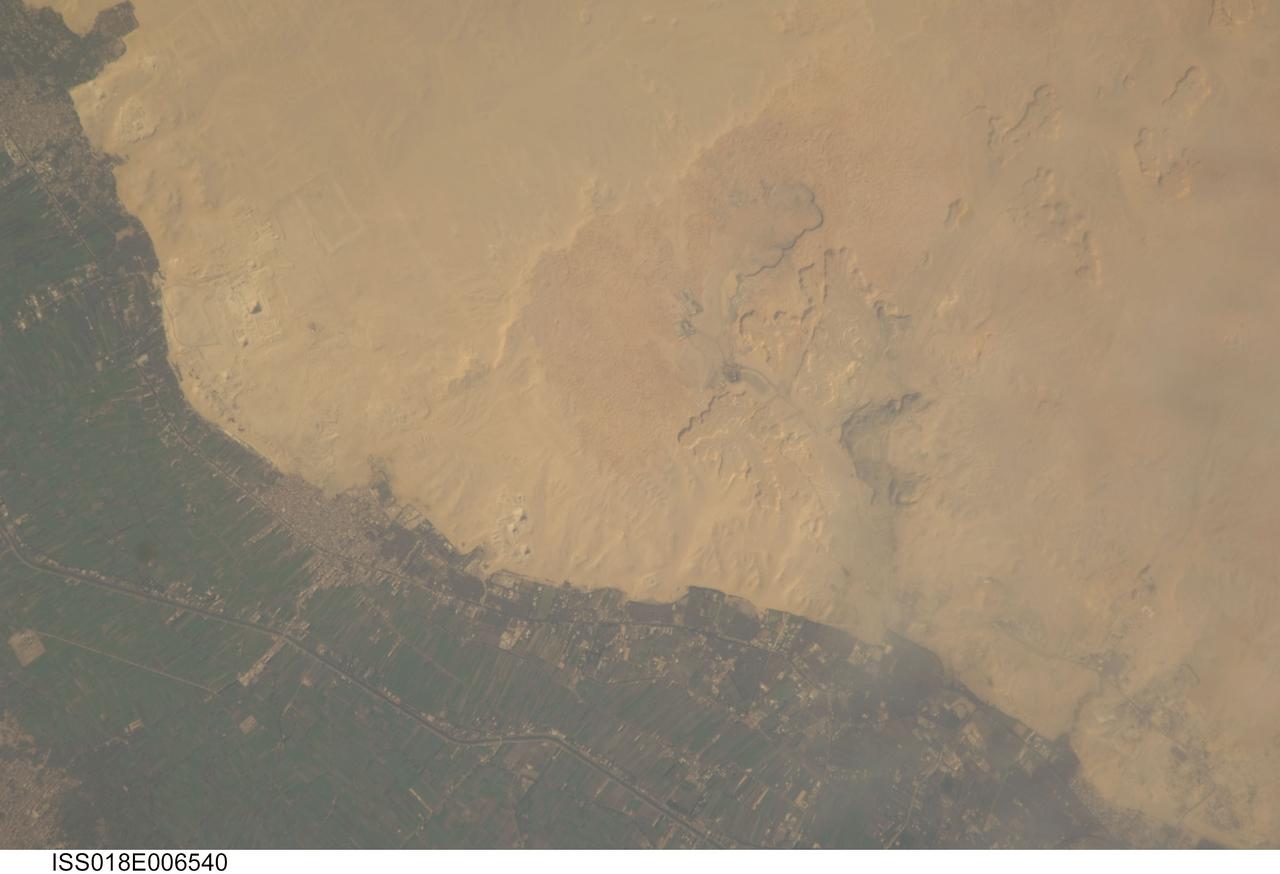
ISS018-E-006540 (31 Oct. 2008) --- Cities of the Dead and the Nile River Delta in Egypt are featured in this image photographed by an Expedition 18 crewmember on the International Space Station. The ancient pharaohs (kings) and queens of Egypt established several royal cemeteries, or necropoli (cities of the dead) along the Nile River valley. On the western bank, these cities of the dead were built on a gravelly desert plateau formed of limestone and clay overlooking the river -- several scarps are visible at upper right. The most widely recognized features of royal Egyptian necropoli are pyramids, which frequently served as both tombs and monuments for their occupants. This detailed photograph illustrates a portion of the Nile Delta that includes two royal cemetery complexes, Abusir and Saqqara-North. The present day village of Abusir is clearly visible as a grey-white irregular patch of urban materials that contrasts with adjacent green agricultural fields of the Delta and tan desert sands and gravels to the west. The historical necropolis of Abusir is located to the northwest of the village at bottom center. Three pyramids are readily visible in the image, all built by kings of the 5th Dynasty (2465--2323 BC): Sahure, Niuserre and Neferirkare. The site of Abusir was likely chosen due to the existence of a lake -- now dry -- that facilitated transport of building materials for the pyramids and other structures. The northern portion of the large necropolis of Saqqara is also visible to the south-southwest of the village of Abusir. The largest pyramid in this complex is that of Djoser, a king of the 3rd Dynasty (2650--2575 BC). Other readily visible pyramids include that of Userkaf (5th Dynasty) and Teti (6th Dynasty: 2323--2150 BC), attesting to the long history of use of the Saqqara necropolis.
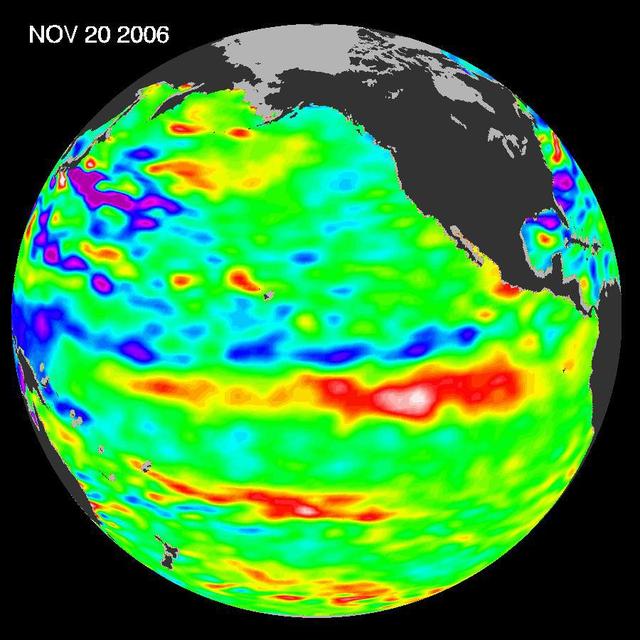
Recent sea-level height data from NASA Jason-1 altimetric satellite show that continuing weaker-than-normal trade winds in the western and central equatorial Pacific have triggered another strong, eastward moving, warm Kelvin wave.
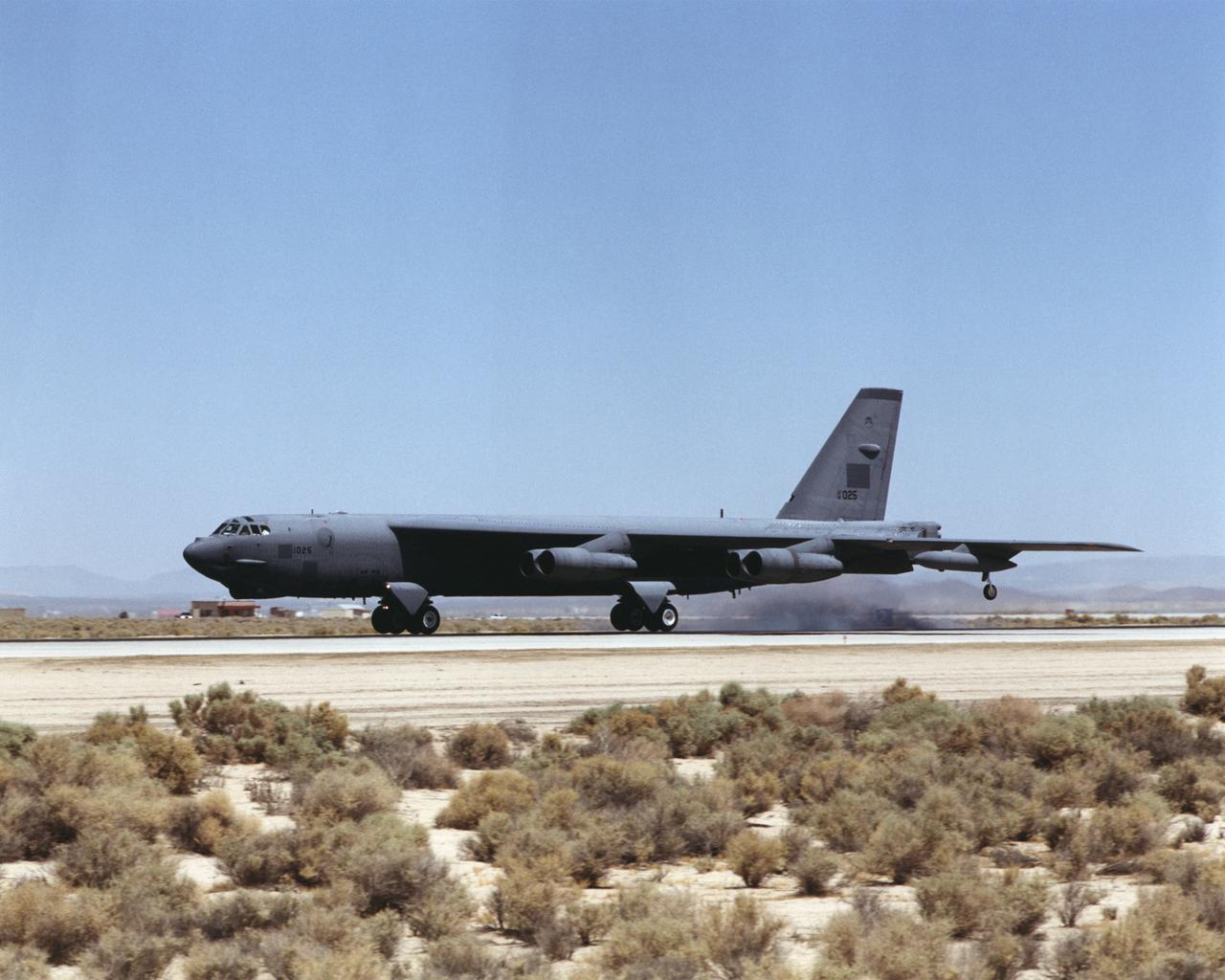
A B-52 "H" model, on loan to NASA Dryden from the U.S. Air Force, touches down at Edwards Air Force Base, California, July 30, 2001.
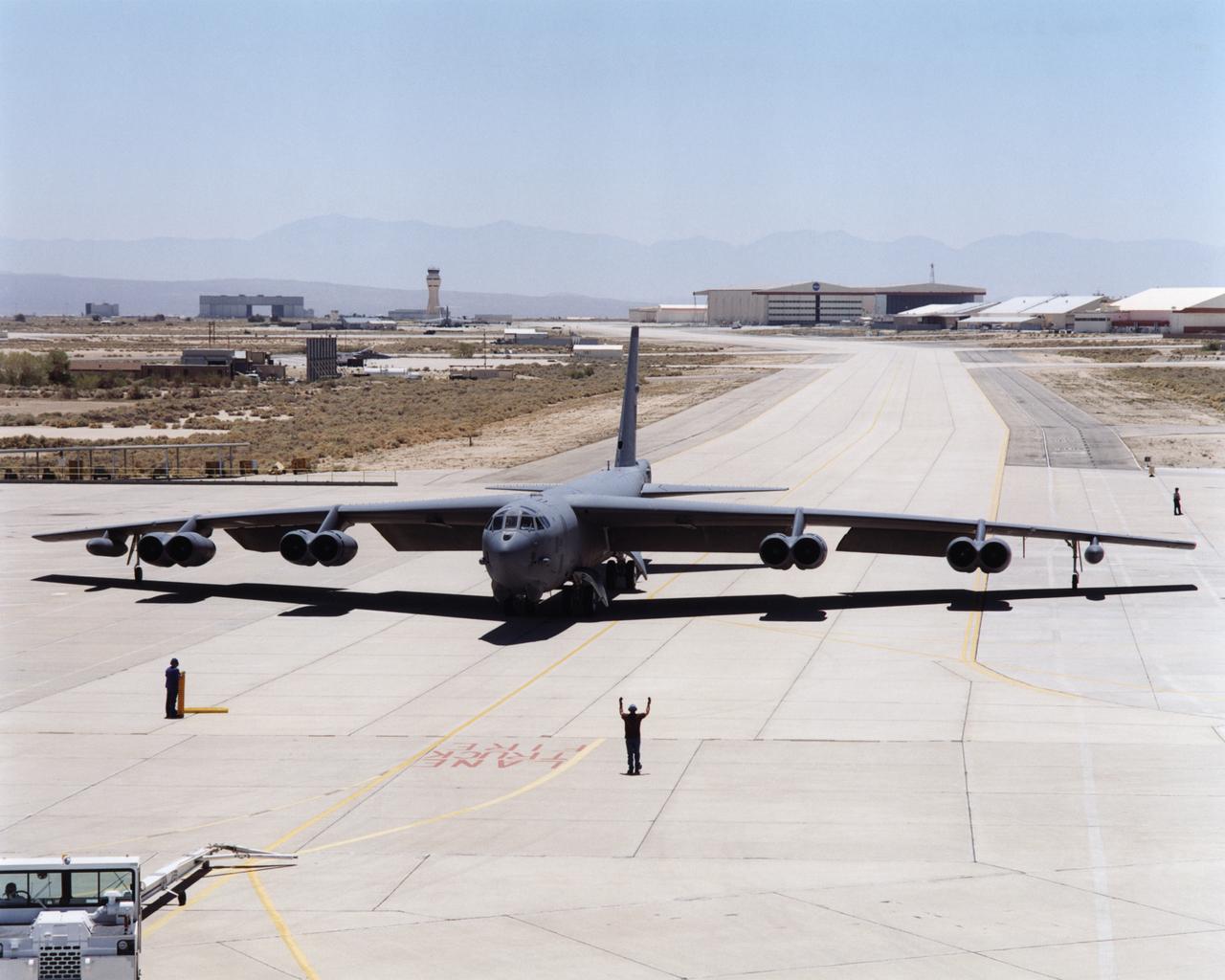
A B-52H, tail number 61-0025, arrives at NASA's Dryden Flight Research Center after landing July 30, 2001.
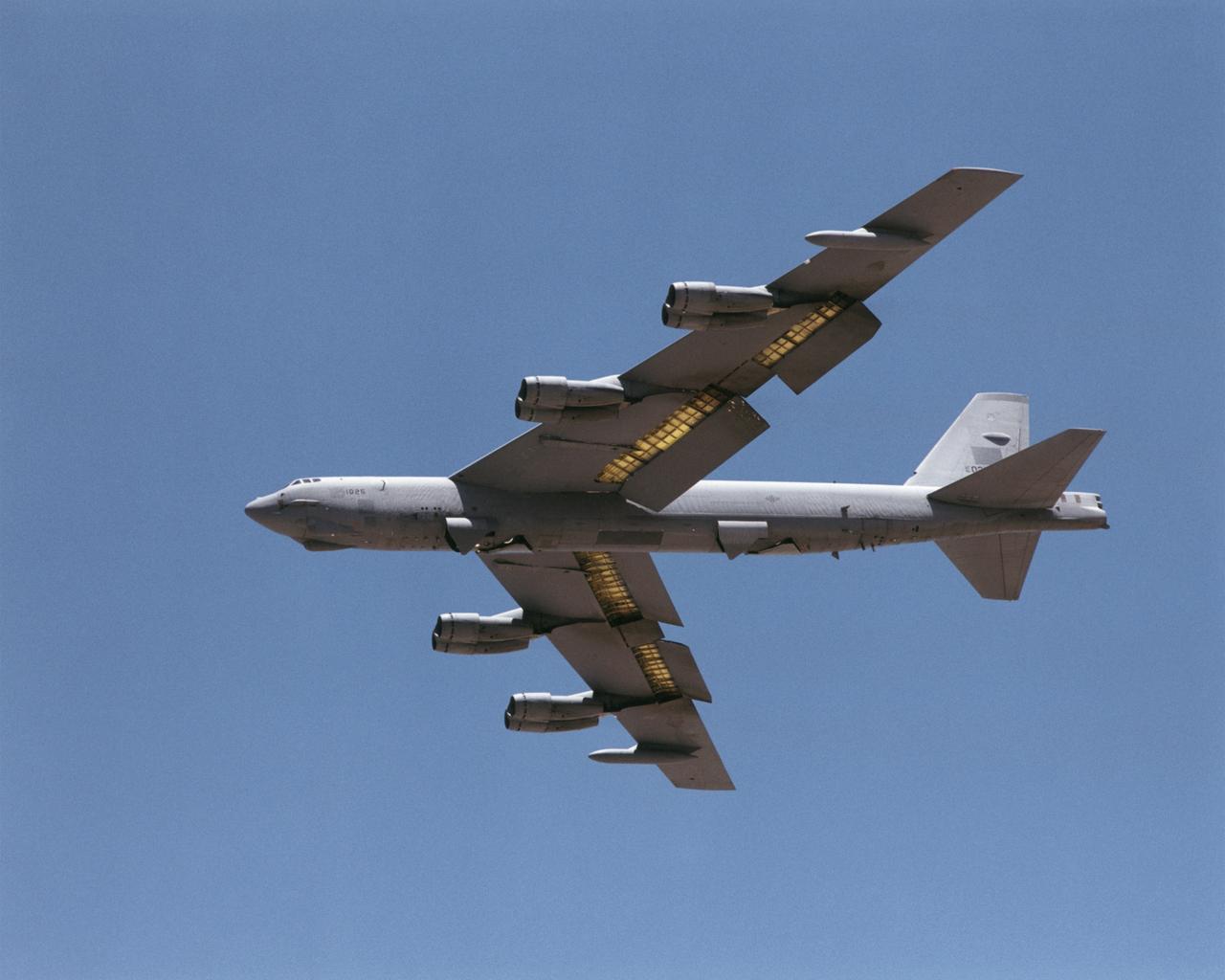
A B-52H, on loan to NASA's Dryden Flight Research Center, makes a pass down the runway prior to landing at Edwards Air Force Base, California.

ISS021-E-023475 (11 Nov. 2009) --- Lake Ilopango, El Salvador is featured in this image photographed by an Expedition 21 crew member on the International Space Station. The Central American country of El Salvador occupies a land area nearly the same as the US State of Massachusetts, and includes numerous historically active volcanoes. This detailed photograph highlights the Ilopango Caldera that is located approximately 16 kilometers to the east of the capital city of San Salvador. Calderas are the geologic record of powerful volcanic eruptions that empty out a volcano?s magma chamber ? following the eruption, the overlying volcanic structure collapses into the newly-formed void, leaving a large crater-like feature (the caldera). The last caldera-forming eruption at Ilopango occurred during the 5th century AD; it was a powerful event that produced pyroclastic flows that destroyed early Mayan cities in the region. Later volcanic activity included the formation of several lava domes within the lake-filled caldera and near the shoreline. The only historical eruption at Ilopango took place in 1879-80. This activity resulted in the formation of a lava dome in the center of Lake Ilopango, the summit of which forms small islets today known as Islas Quemadas. The city of Ilopango borders the lake to the west (left) while green vegetated hillslopes ring the rest of the shoreline. White patchy cumulus clouds are also visible in the image (center and upper left).
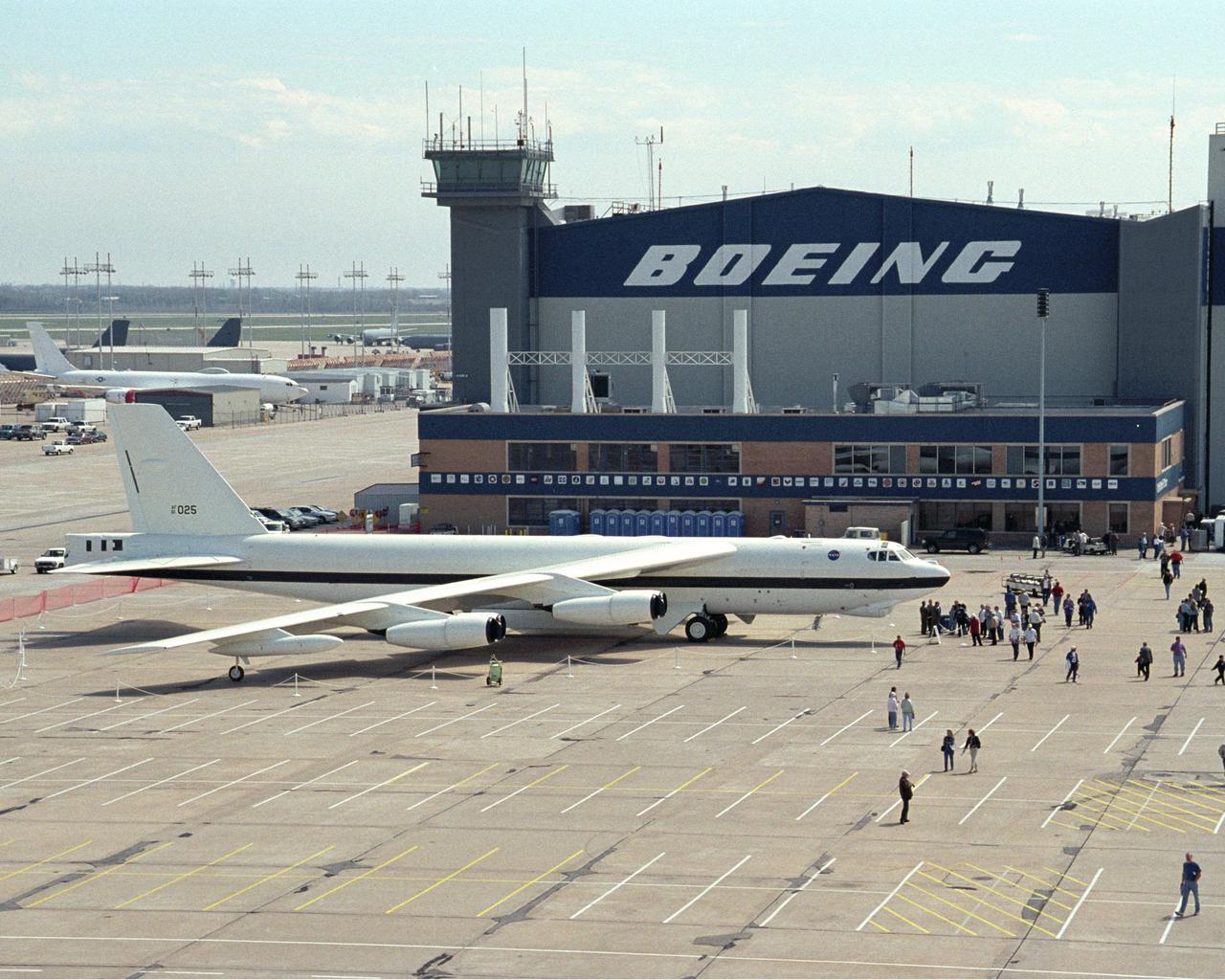
NASA's new white B-52H, destined to join a veteran B-52B mother ship at NASA's Dryden Flight Research Center, was exhibited at the Boeing plant in Wichita, Kansas, April 12, 2002 during the 50th anniversary commemoration of the B-52 series of aircraft.