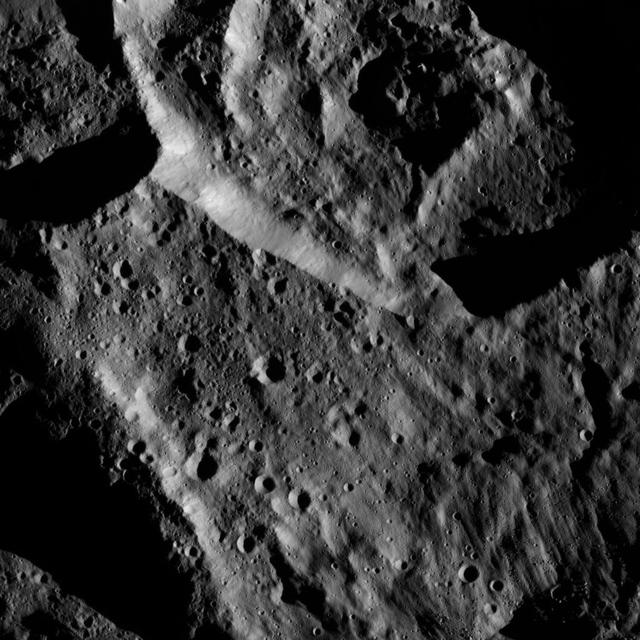
This image was obtained by NASA's Dawn spacecraft on July 16, 2018 from an altitude of about 67 miles (107 kilometers).  The center of this picture is located at about 22.3 degrees north latitude and 240.3 degrees east longitude.  https://photojournal.jpl.nasa.gov/catalog/PIA22642
Lobate Flows on Occator Crater's Floor
This image from NASA's Dawn spacecraft shows an area within the large crater Mondamin (78 miles, 126 kilometers wide) on Ceres. The image is centered at 67 degrees south latitude, 348 degrees east longitude.  Dawn took this image on June 6, 2016, from its low-altitude mapping orbit, at a distance of about 240 miles (385 kilometers) above the surface. The image resolution is 120 feet (35 meters) per pixel.  http://photojournal.jpl.nasa.gov/catalog/PIA20953
Dawn LAMO Image 191
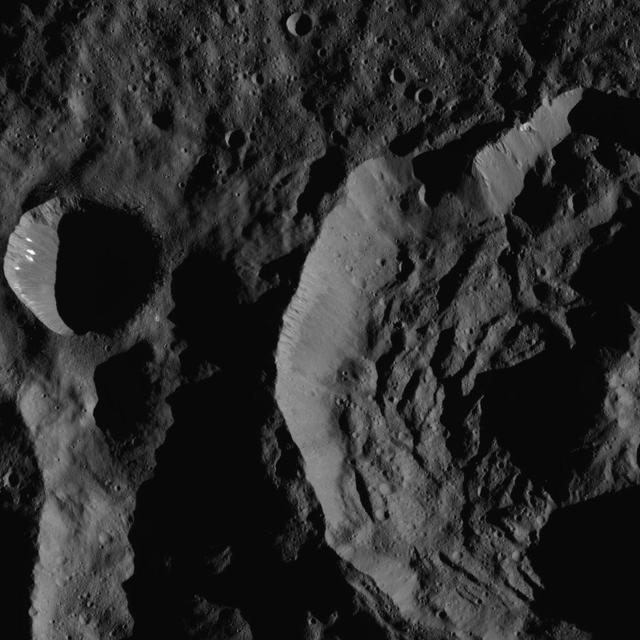
This image shows Sekhet Crater, at right, in a shadowy scene from Ceres. Sekhet is 25 miles wide 41 kilometers wide. NASA Dawn spacecraft took this image on June 15, 2016. A smooth plain surrounds the smaller crater at left. A smooth plain surrounds the smaller crater at left. A different view of this crater can be found at PIA20390.  Dawn took this image from its low-altitude mapping orbit, at a distance of about 240 miles (385 kilometers) above the surface. The image resolution is 120 feet (35 meters) per pixel. This view is centered at approximately 67 degrees south latitude, 249 degrees east longitude.  http://photojournal.jpl.nasa.gov/catalog/PIA20828
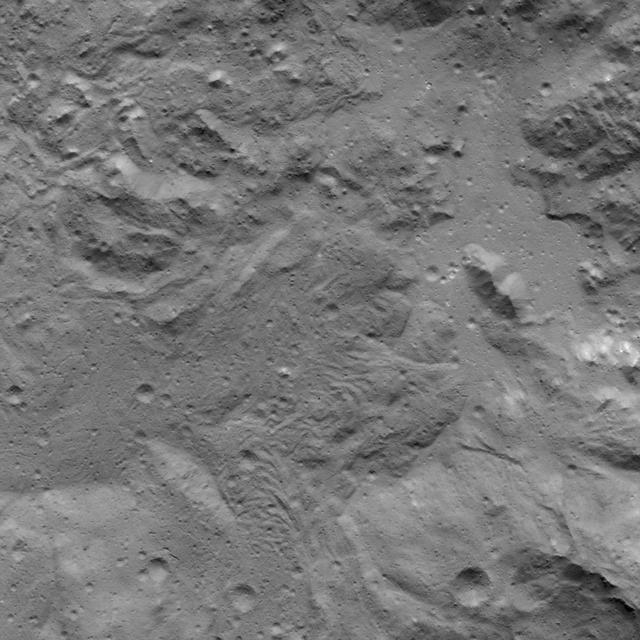
Dawn LAMO Image 128
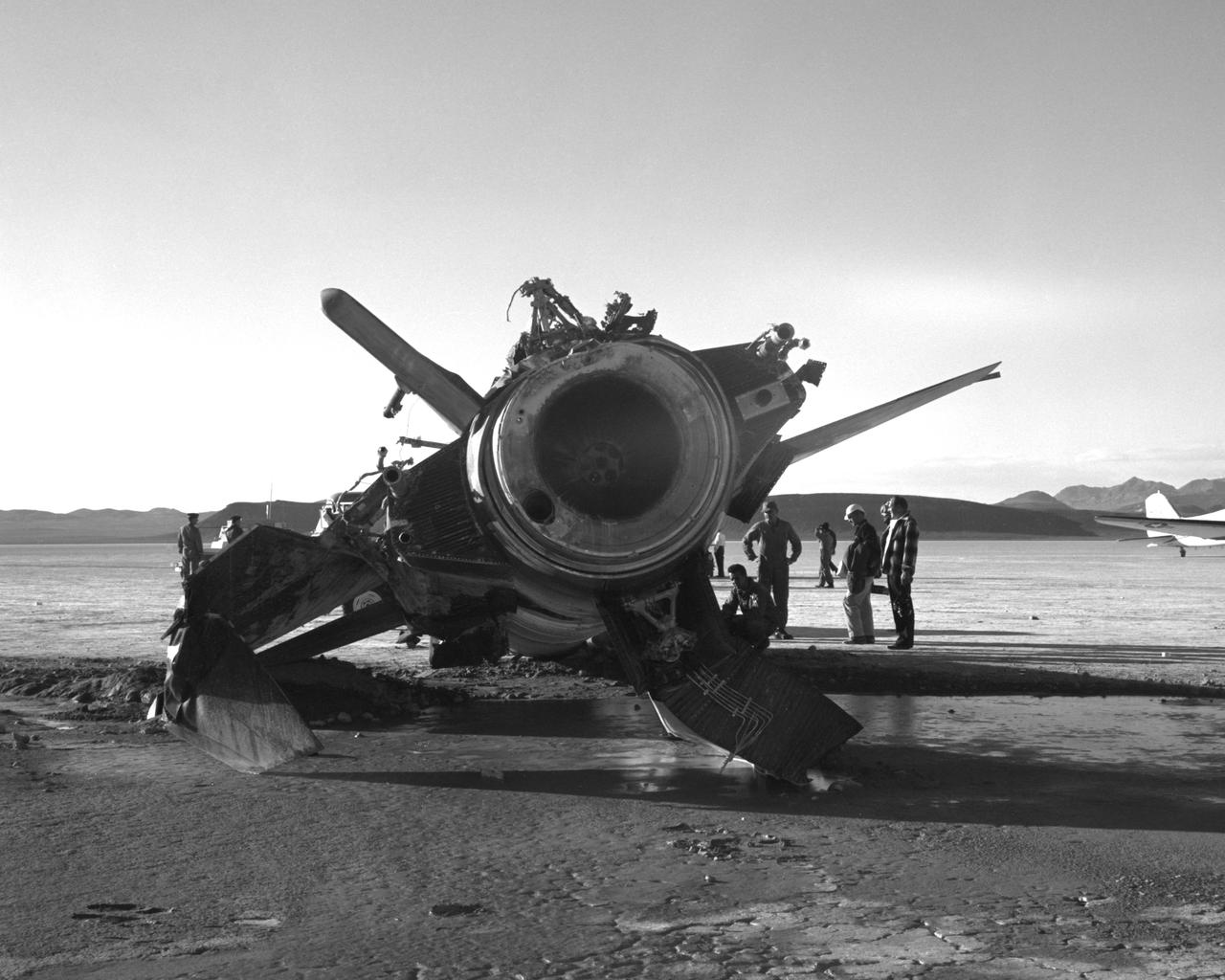
NASA research pilot Jack McKay was injured in a crash landing of the X-15 #2 on November 9, 1962. Following the launch from the B-52 to begin flight 2-31-52, he started the X-15's rocket engine, only to discover that it produced just 30 percent of its maximum thrust. He had to make a high-speed emergency landing on Mud Lake, NV, without flaps but with a significant amount of fuel still in the aircraft. As the X-15 slid across the lakebed, the left skid collapsed; the aircraft turned sideways and flipped onto its back. McKay suffered back injuries but was eventually able to resume X-15 pilot duties, making 22 more flights. The X-15 was sent back to North American Aviation and rebuilt into the X-15A-2.
X-15 #2 landing accident at Mud Lake, Nevada on November 9, 1962 after flight 2-31-52
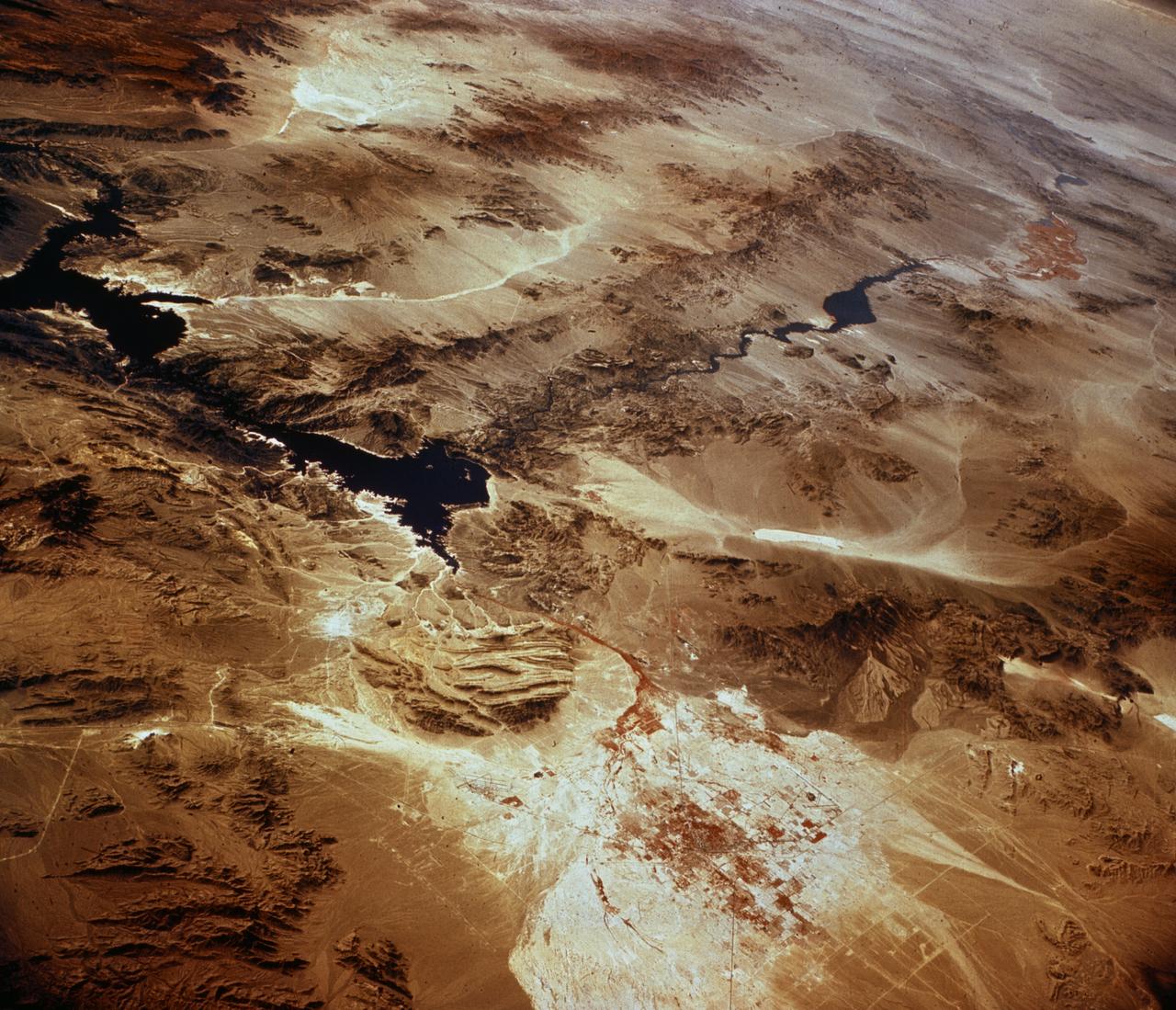
Southwestern US, with Las Vegas, NV in foreground, taken by X-15 Hycon HR-236 Camera during flt. 2-39-70 on June 27, 1965.
Southwestern US, with Las Vegas, NV in foreground, taken by X-15 Hycon HR-236 Camera during flt. 2-39-70 on June 27, 1965
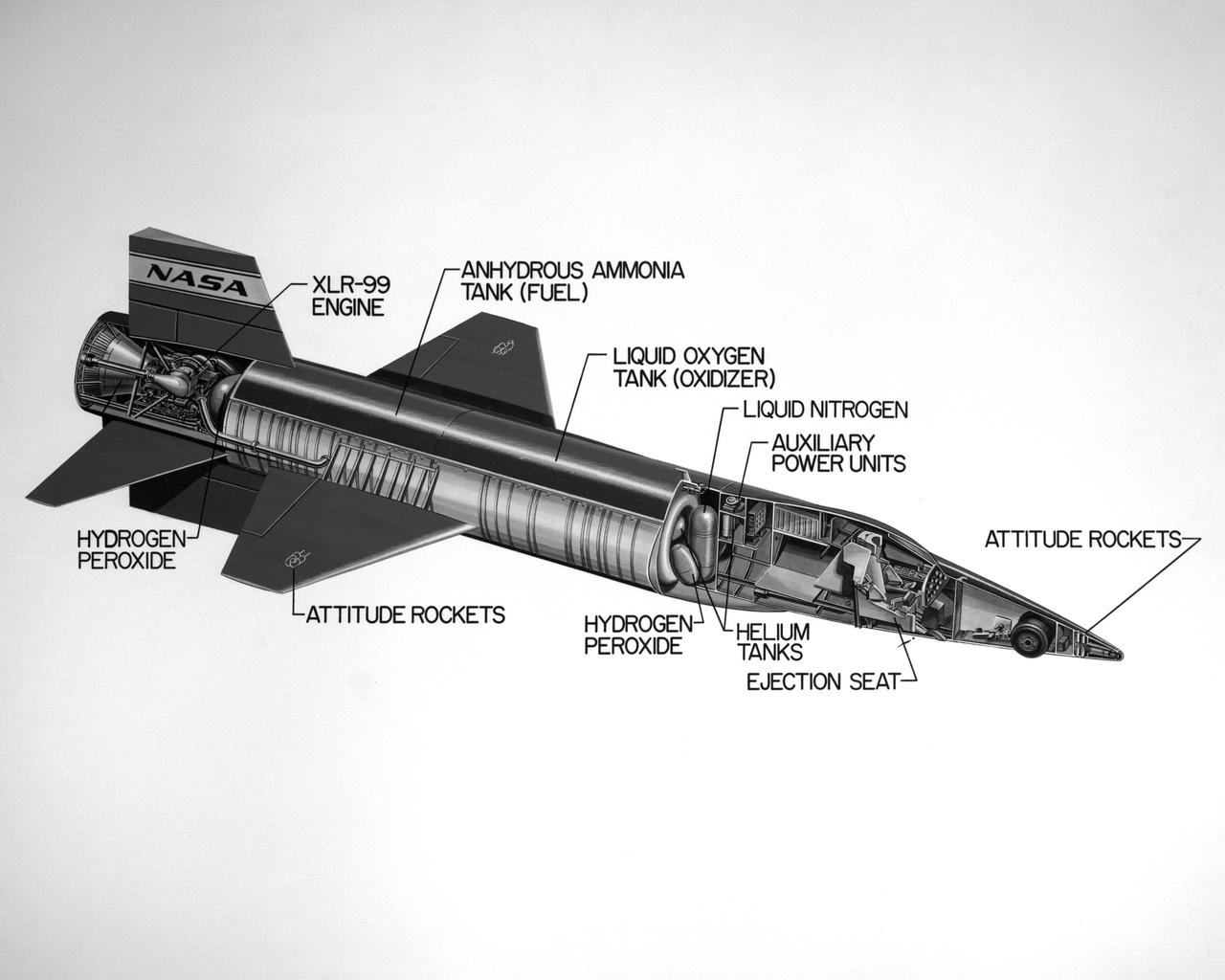
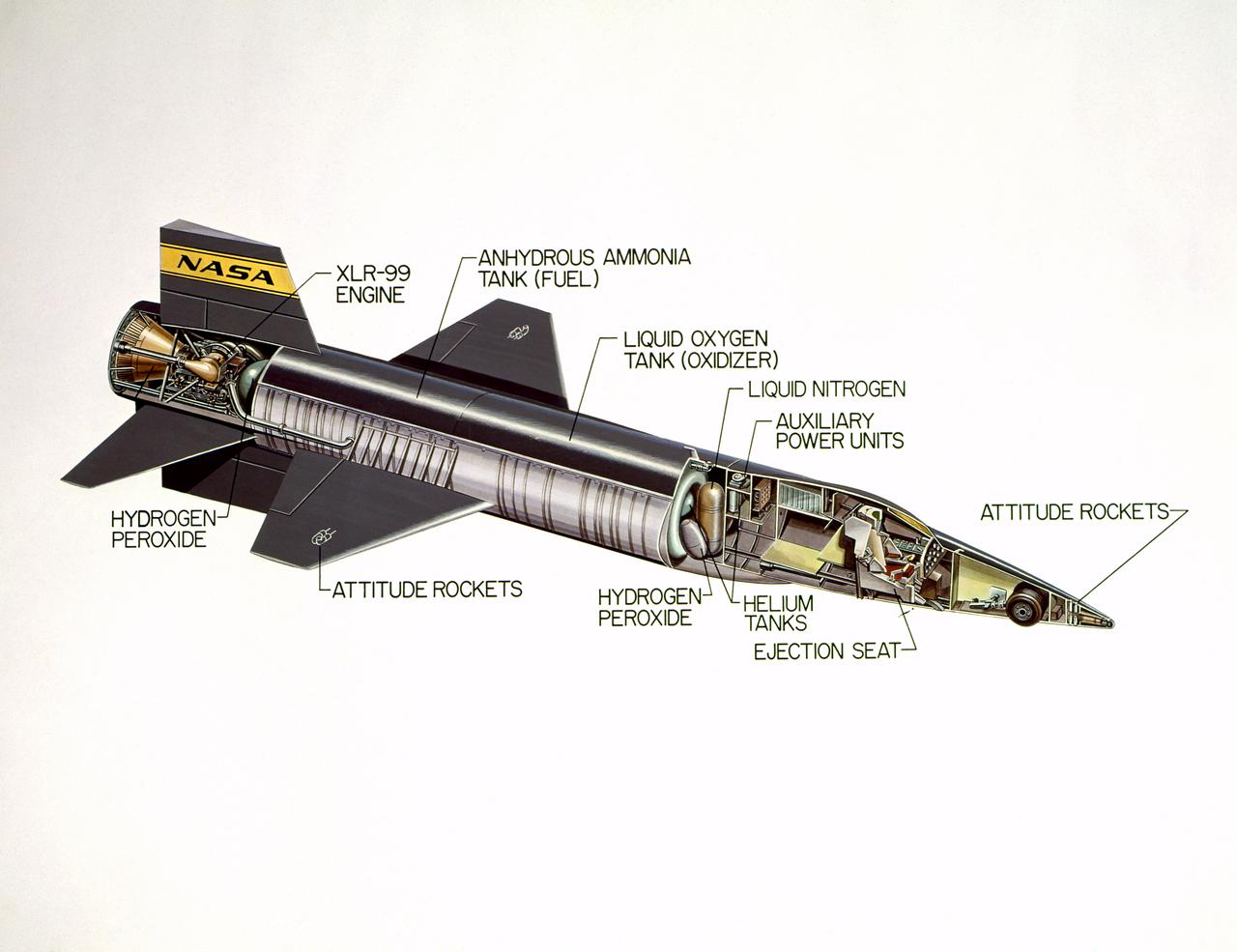
Cutaway drawing of the North American X-15.
Cutaway drawing of the North American X-15
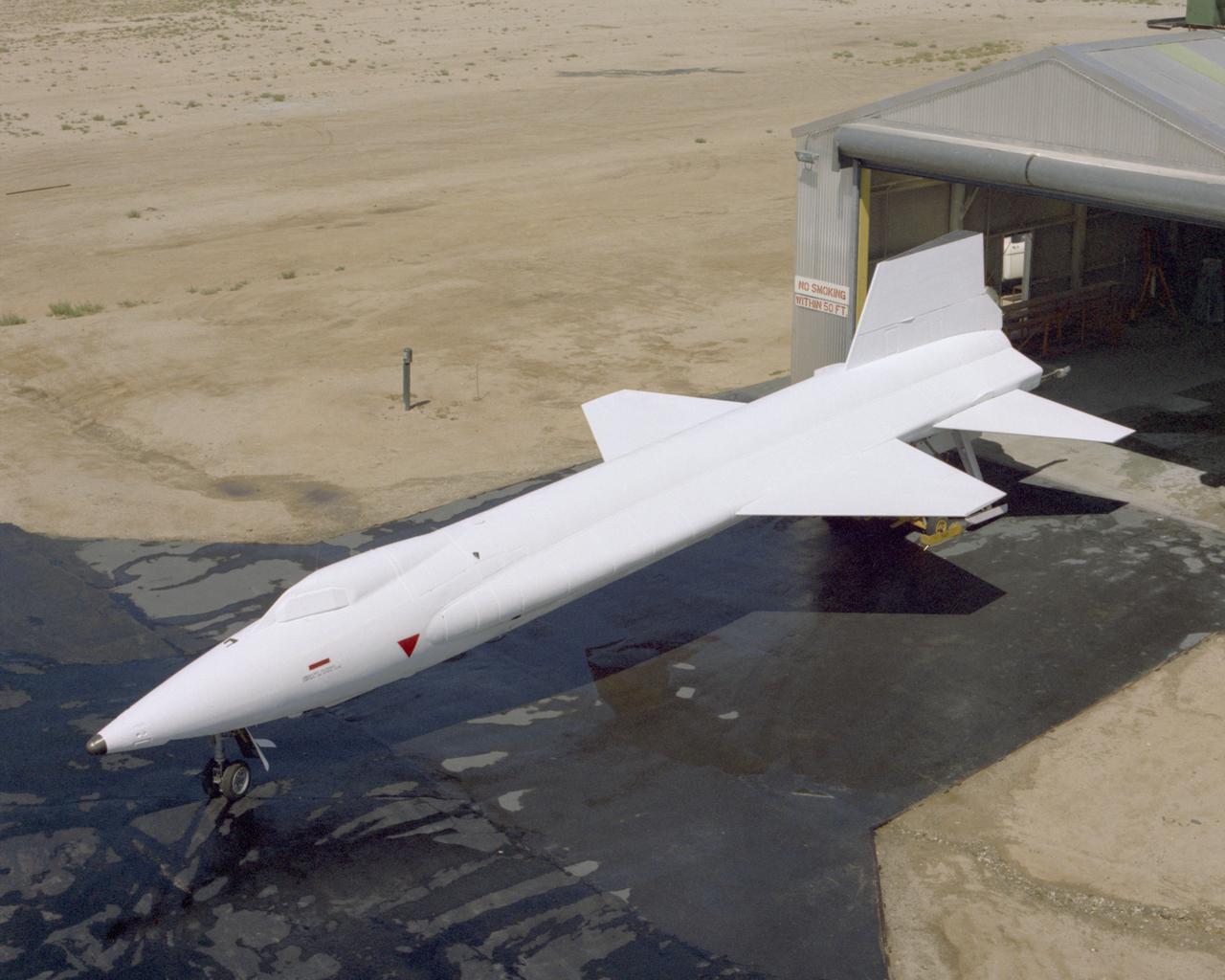
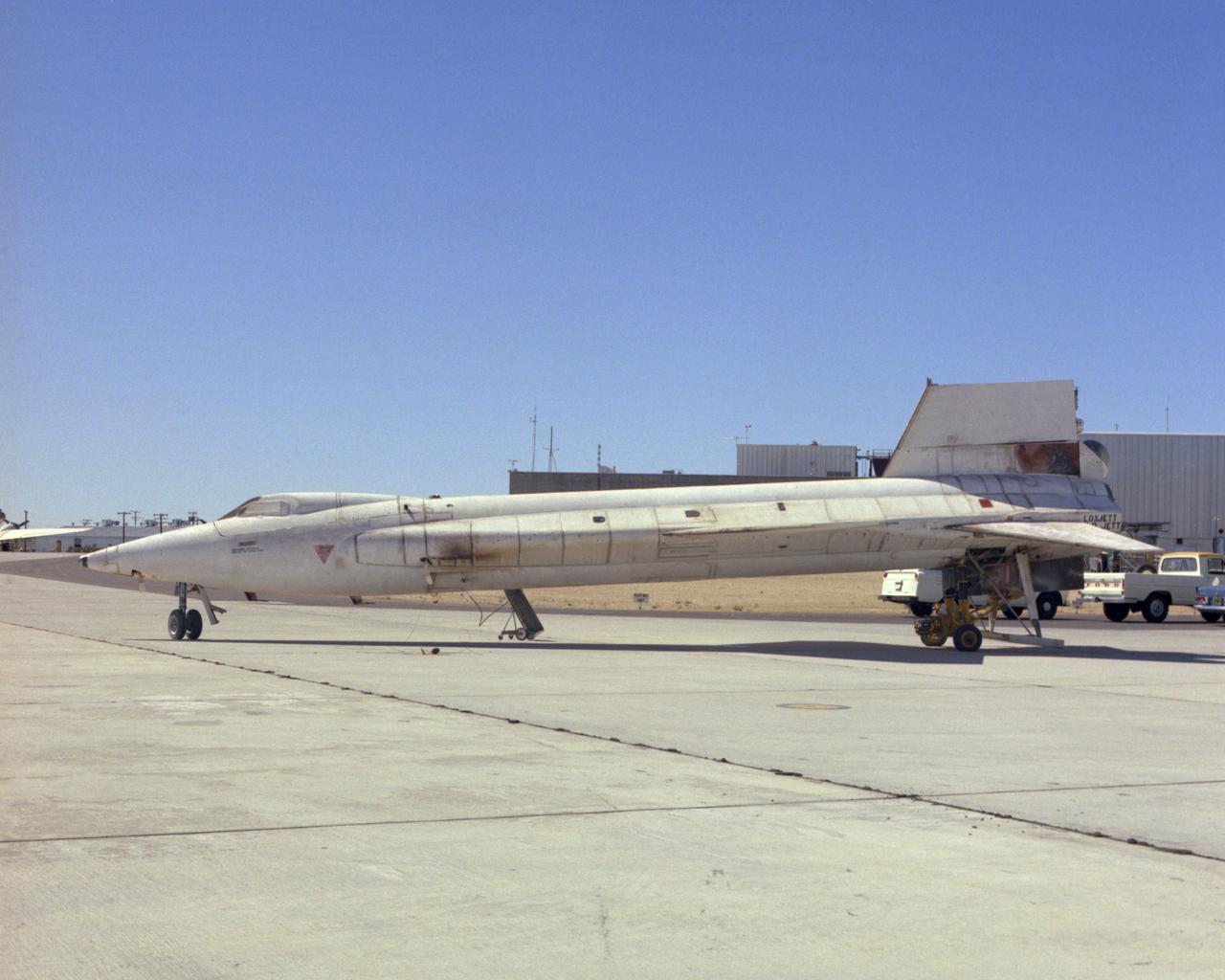
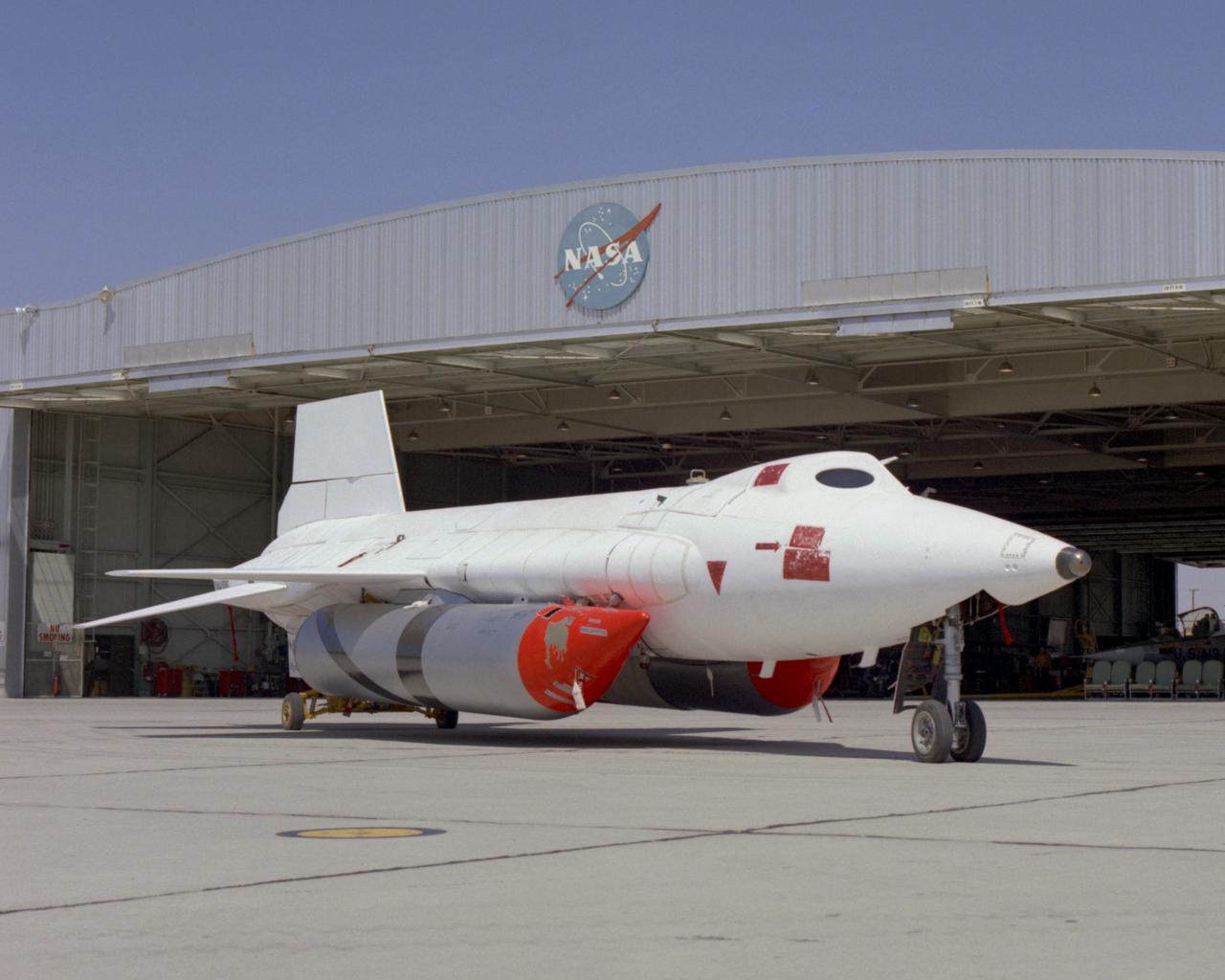
X-15A-2 with full scale ablative and external tanks installed parked in front of hangar. In June 1967, the X-15A-2 rocket-powered research aircraft received a full-scale ablative coating to protect the craft from the high temperatures associated with hypersonic flight (above Mach 5). This pink eraser-like substance, applied to the X-15A-2 aircraft (56-6671), was then covered with a white sealant coat before flight. This coating would help the #2 aircraft reach the record speed of 4,520 mph (Mach 6.7).
X-15A-2 with full scale ablative and external tanks installed parked in front of hangar
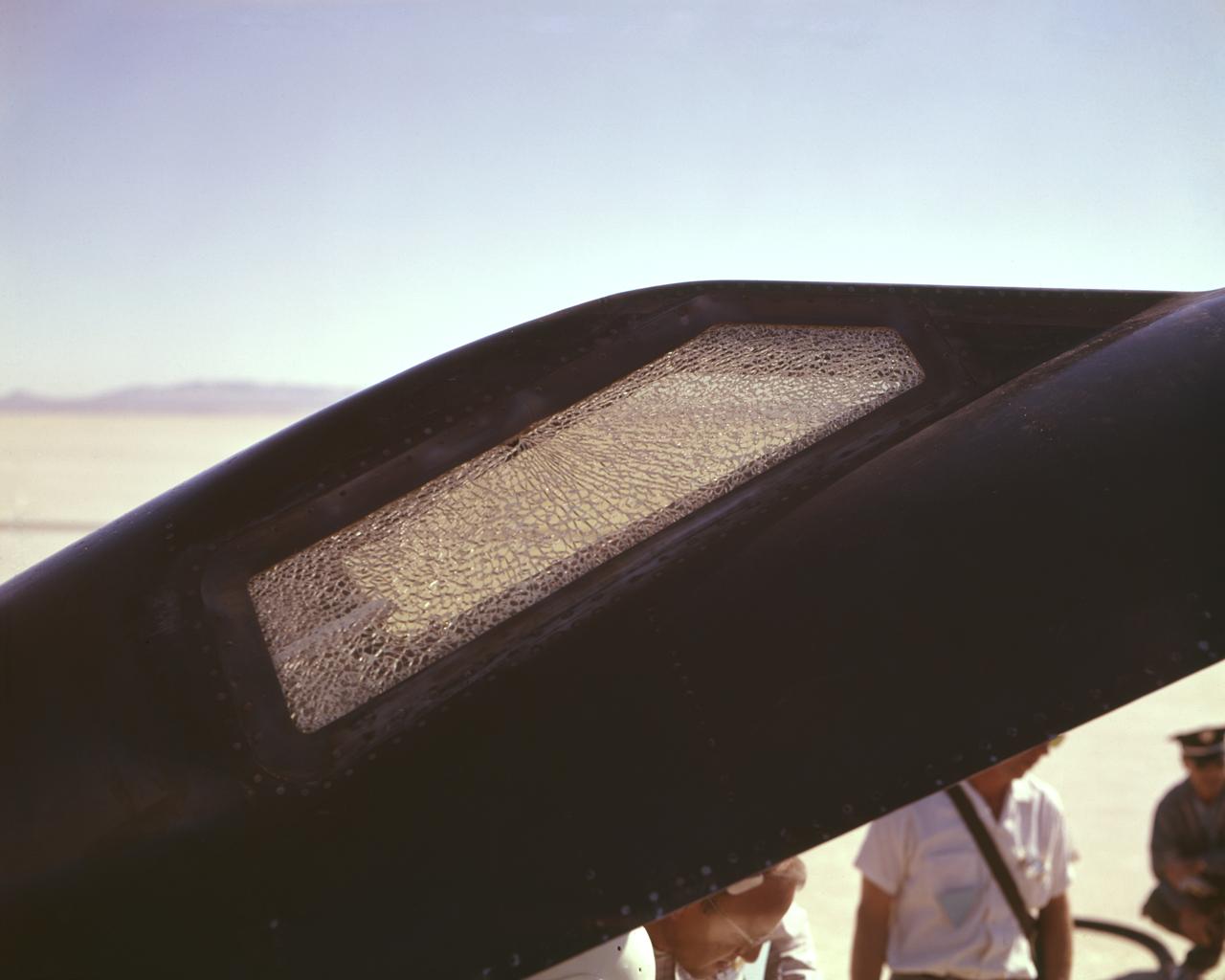
Cracked canopy glass on right side of X-15 #2 after flt. 2-21-37 on Nov. 9 1961. Robert White-pilot. First flight to mach 6.
Cracked canopy glass on right side of X-15 #2 after flt. 2-21-37 on Nov. 9 1961. Robert White-pilot. First flight to mach 6
Cutaway drawing of the North American X-15.
Cutaway drawing of the North American X-15
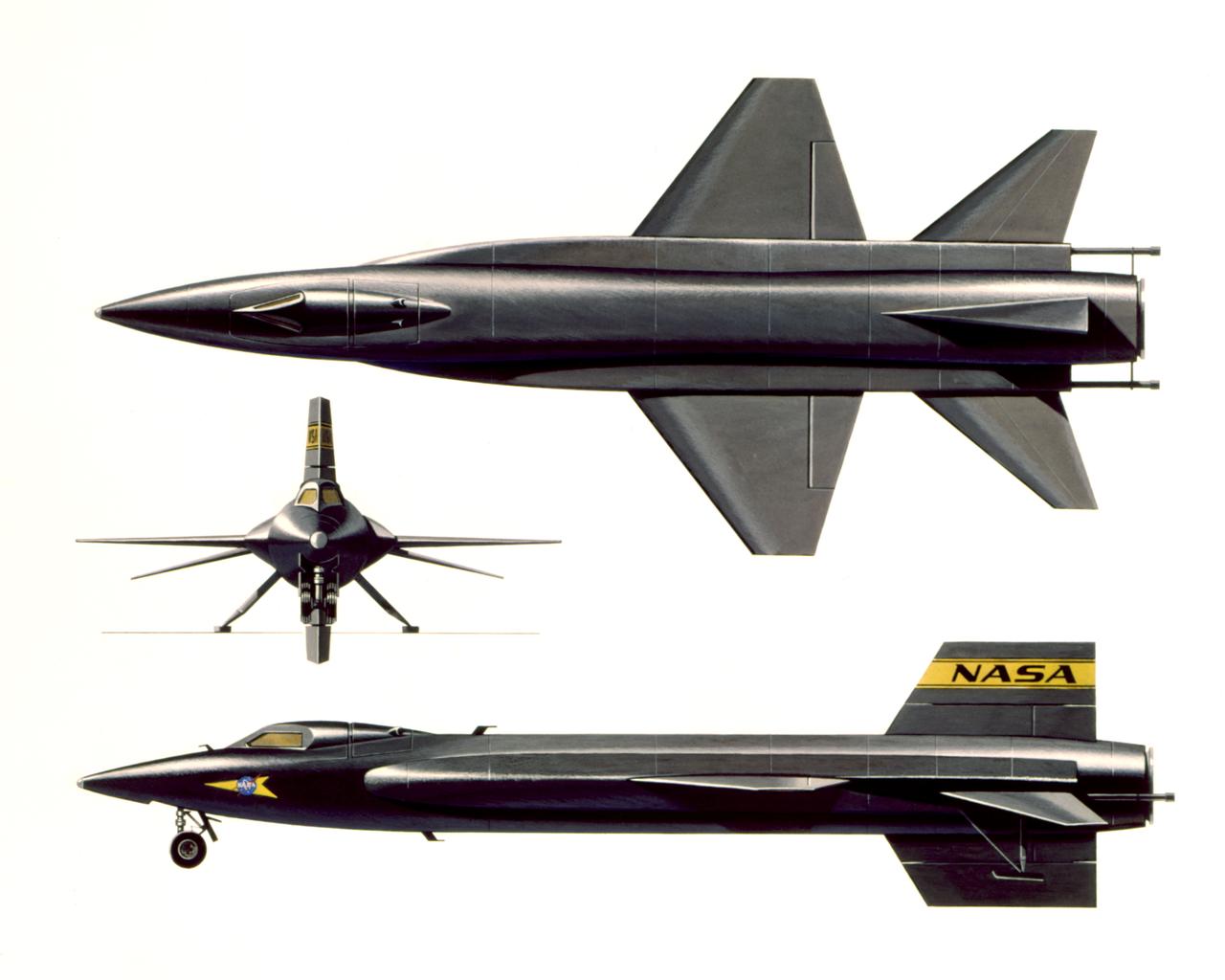
Three view art of the North American X-15.
Three view art of the North American X-15
X-15A-2 is rolled out of the paint shop after having the full scale ablative applied. In June 1967, the X-15A-2 rocket-powered research aircraft received a full-scale ablative coating to protect the craft from the high temperatures associated with hypersonic flight (above Mach 5). This pink eraser-like substance, applied to the X-15A-2 aircraft (56-6671), was then covered with a white sealant coat before flight. This coating would help the #2 aircraft reach the record speed of 4,520 mph (Mach 6.7).
X-15A-2 is rolled out of the paint shop after having the full scale ablative applied
X-15A-2 post flight photo showing heat damage from Mach 6.7 flight on 3 Oct 67. Flt. 2-53-97; pilot-Pete Knight.
X-15A-2 post flight photo showing heat damage from Mach 6.7 flight on 3 Oct 67. Flt. 2-53-97; pilot-Pete Knight