
Astronaut Alan B. Shepard, one of the original seven astronauts for Mercury Project selected by NASA on April 27, 1959. The Freedom 7 spacecraft boosted by Mercury-Redstone vehicle for the MR-3 mission made the first marned suborbital flight and Astronaut Shepard became the first American in space.

Astronaut Virgil I. "Gus" Grissom, one of the original seven astronauts for Mercury Project selected by NASA on April 27, 1959. The MR-4 mission, boosted by the Mercury-Redstone vehicle, made the second marned suborbital flight. The capsule, Liberty Bell 7, sank into the sea after the splashdown.

Astronaut Walter M. "Wally" Schirra, one of the original seven astronauts for Mercury Project selected by NASA on April 27, 1959. The MA-8 (Mercury-Atlas) mission with Sigma 7 spacecraft was the third marned orbital flight by the United States, and made the six orbits in 9-1/4 hours.

Astronaut L. Gordon Cooper, Jr., one of the original seven astronauts for Mercury Project selected by NASA on April 27, 1959. The MA-9 mission, boosted by the Mercury-Atlas launch vehicle, was the last flight of the Mercury Project. The Faith 7 spacecraft orbited the Earth 22 times in 1-1/2 days.
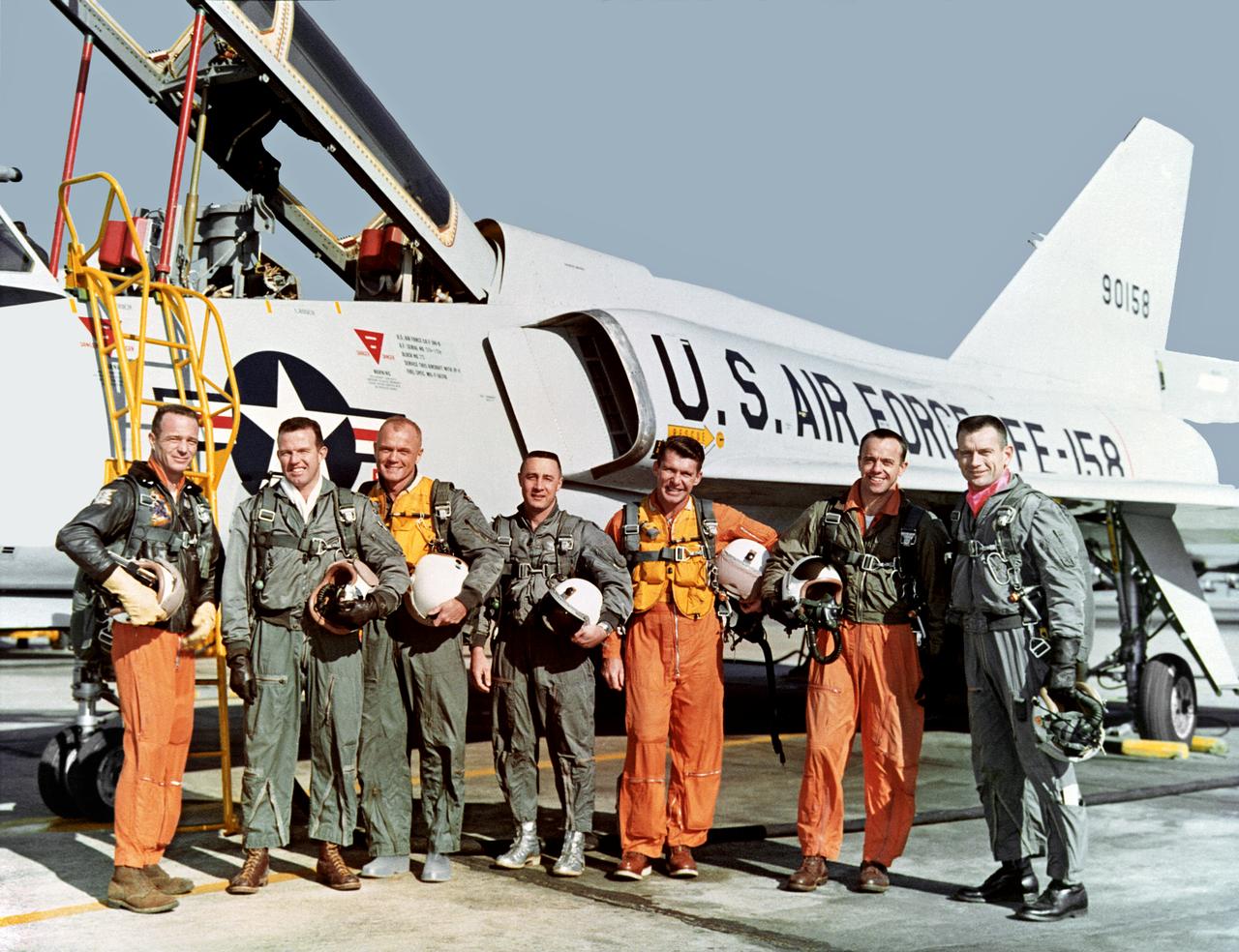
The original seven Mercury astronauts during training at NASA Langley Research Center Project Mercury. The original seven astronauts trained at NASA Langley Research Center. Chosen from among hundreds of applicants, the seven men were all test pilots. Standing in front of the U.S. Air Force Convair F-106B aircraft, the astronauts are, from left, Lt. M. Scott Carpenter, Capt. Gordon Cooper, Col. John H. Glenn Jr., Capt. Virgil "Gus" Grissom, Lt. Comdr. Walter Schirra, Lt. Comdr. Alan B. Shepard Jr. and Capt. Donald K. "Deke" Slayton. While familiarizing the astronauts with the Mercury set-up, Langley employees helped them to specialize in the technical areas crucial to the overall success of Project Mercury. Langley people also guided and monitored the astronauts activities through the many spaceflight simulators and other training devices built at the Center expressly for the manned space program. In less than three years, Project Mercury proved that men could be sent into space and returned safely to Earth, setting the stage for the longer duration Gemini flights and the Apollo lunar landings. This photograph was originally taken on 01/20/1961 and is published in Spaceflight Revolution NASA Langley Research Center from Sputnik to Apollo, NASA SP-4308, by James R. Hansen, 1995, page 40.
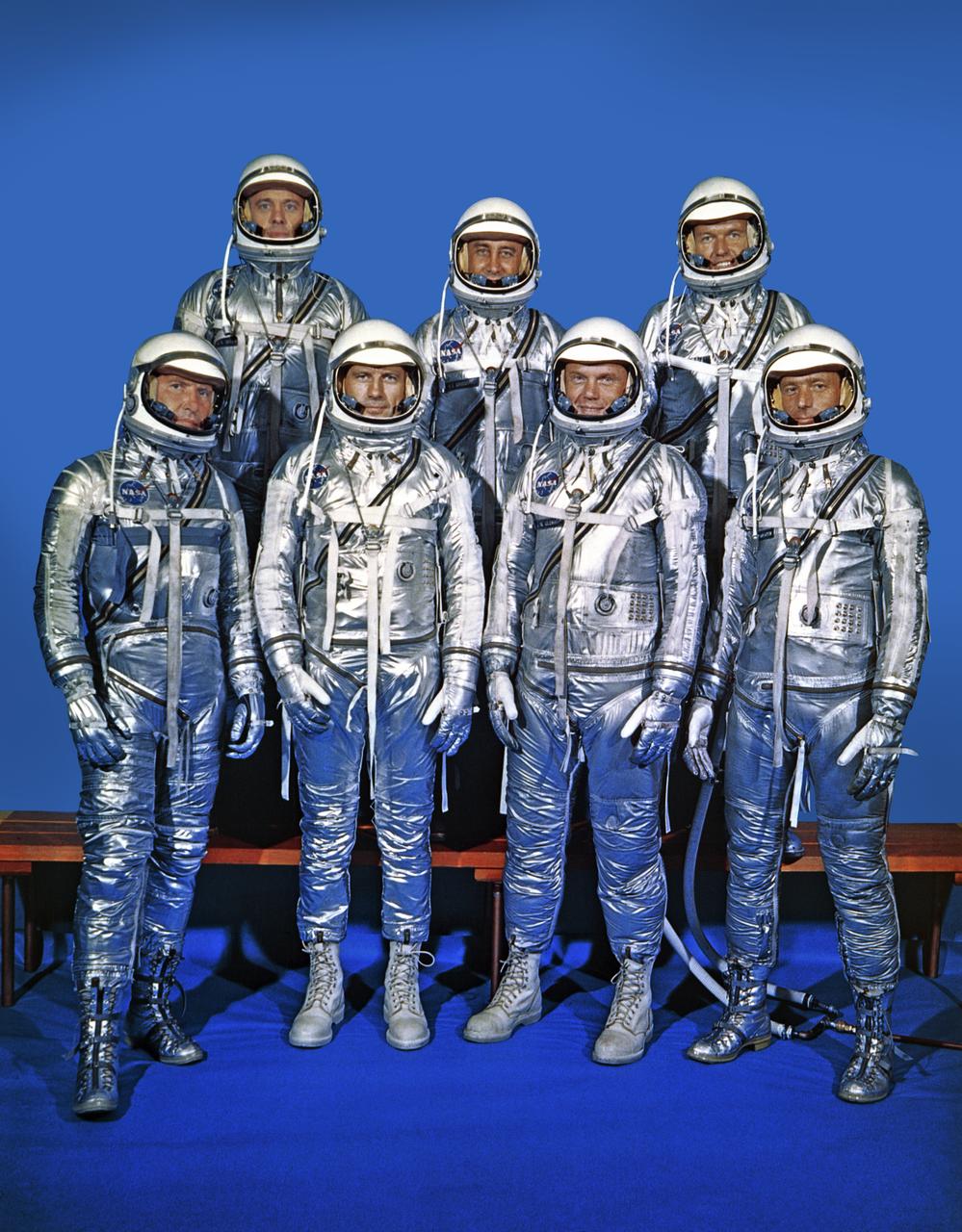
Press release information, September 13, 1968: "FIRST ASTRONAUT TEAM: Project Mercury Astronauts, whose selection was announced on April 9, 1959, only six months after the National Aeronautics and Space Administration was formally established on Oct. 1, 1958, Included: Front row, left to right, Walter M. Schirra, Jr., Donald K. Slayton, John H. Glenn, Jr., and M. Scott Carpenter; back row, Alan B. Shepard, Jr., Virgil I. "Gus" Grissom and L. Gordon Cooper. (1962), *89-361 Also in B&W. This copy of original negative was edited without shadows in the background. Photo taken at NASA Langley Research Center by Life Magazine photographer and negative copied for other centers.

Astronaut John H. Glenn, one of the original seven astronauts for Mercury Project selected by NASA on April 27, 1959. The MA-6 mission, boosted by the Mercury-Atlas vehicle, was the first manned orbital launch by the United States, and carried Astronaut Glenn aboard the Friendship 7 spacecraft to orbit the Earth.
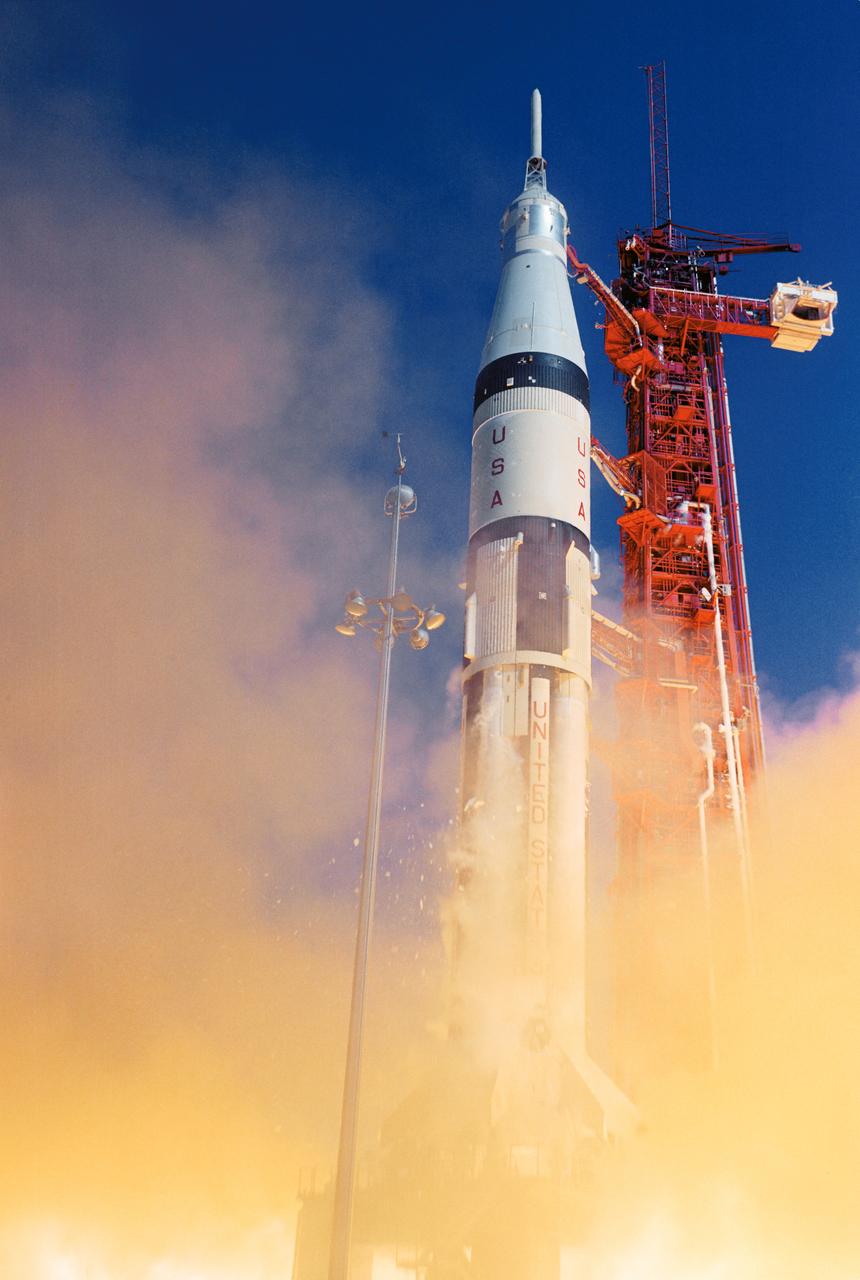
Apollo 7 lifts off from Cape Kennedy Launch Complex 34 at 11:03 A.M., EDT. The astronauts aboard, for the first manned lunar orbital mission, are Astronauts Walter M. Schirra,Jr. Commander; Donn F. Eisele, Command Module Pilot; and Walter Cunningham, Lunar Module Pilot. Original photo number was KSC-68PC-185.
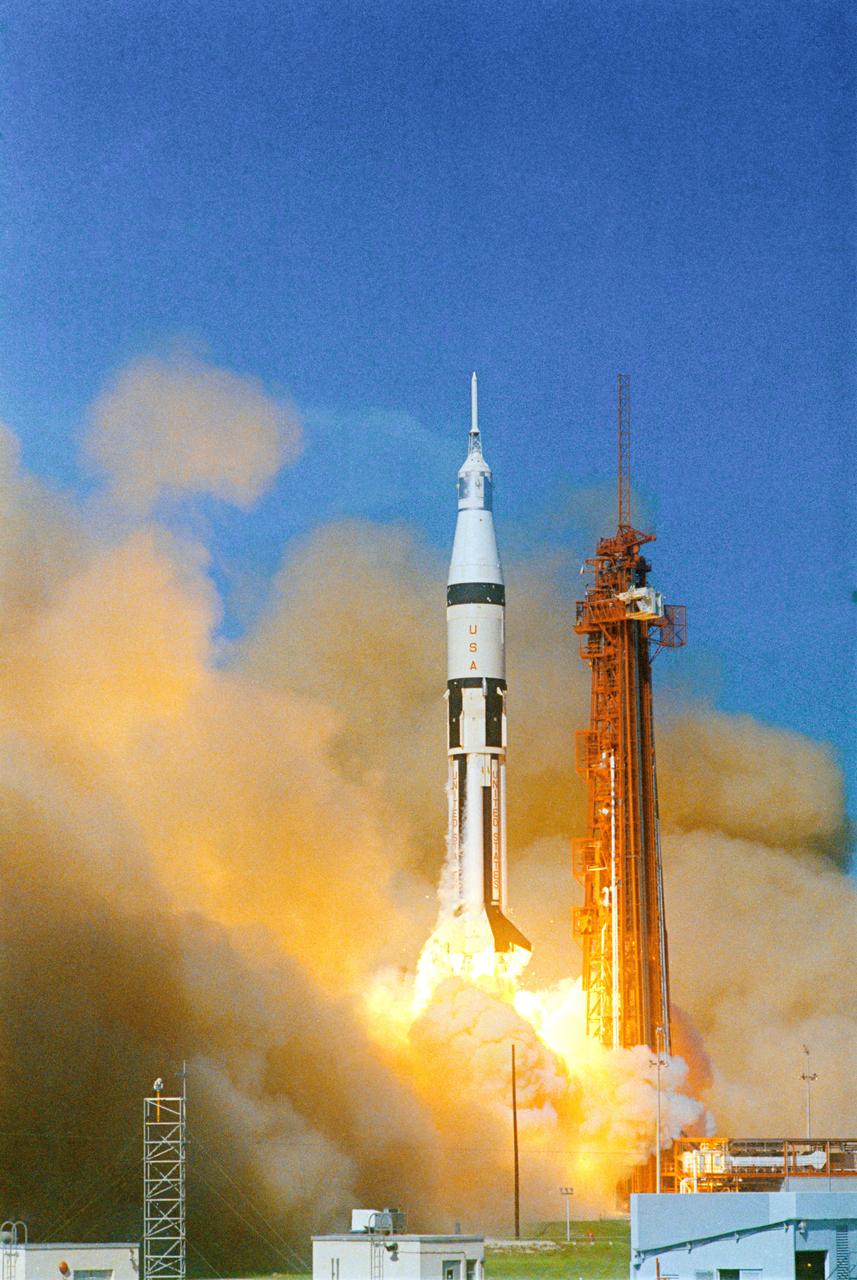
Apollo 7 lifts off from Cape Kennedy Launch Complex 34 at 11:03 A.M., EDT. The astronauts aboard, for the first manned lunar orbital mission, are Astronauts Walter M. Schirra,Jr. Commander; Donn F. Eisele, Command Module Pilot; and Walter Cunningham, Lunar Module Pilot. Original photo number was KSC-68PC-182.
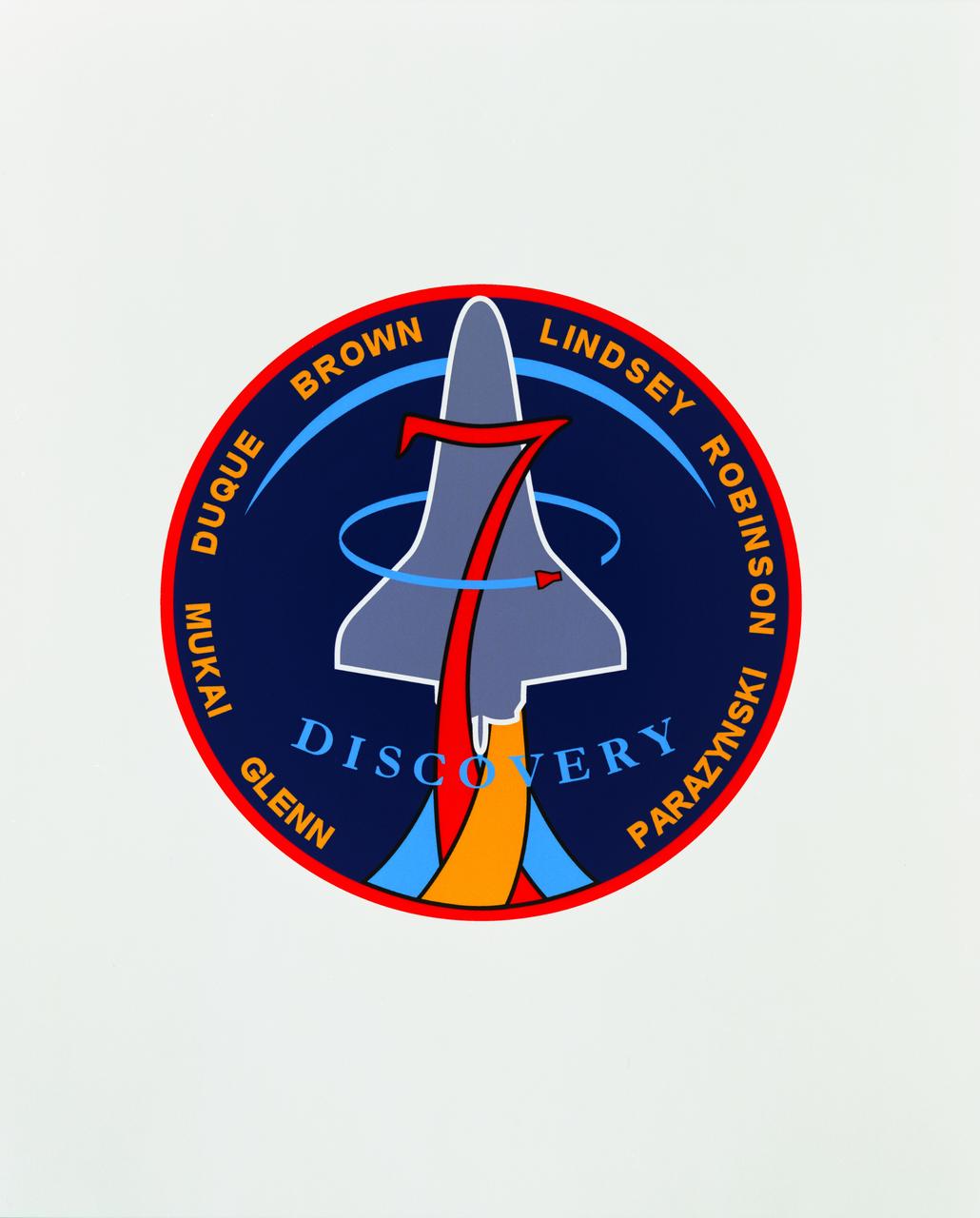
The STS-95 patch, designed by the crew, is intended to reflect the scientific, engineering, and historic elements of the mission. The Space Shuttle Discovery is shown rising over the sunlit Earth limb, representing the global benefits of the mission science and the solar science objectives of the Spartan Satellite. The bold number '7' signifies the seven members of Discovery's crew and also represents a historical link to the original seven Mercury astronauts. The STS-95 crew member John Glenn's first orbital flight is represented by the Friendship 7 capsule. The rocket plumes symbolize the three major fields of science represented by the mission payloads: microgravity material science, medical research for humans on Earth and in space, and astronomy.
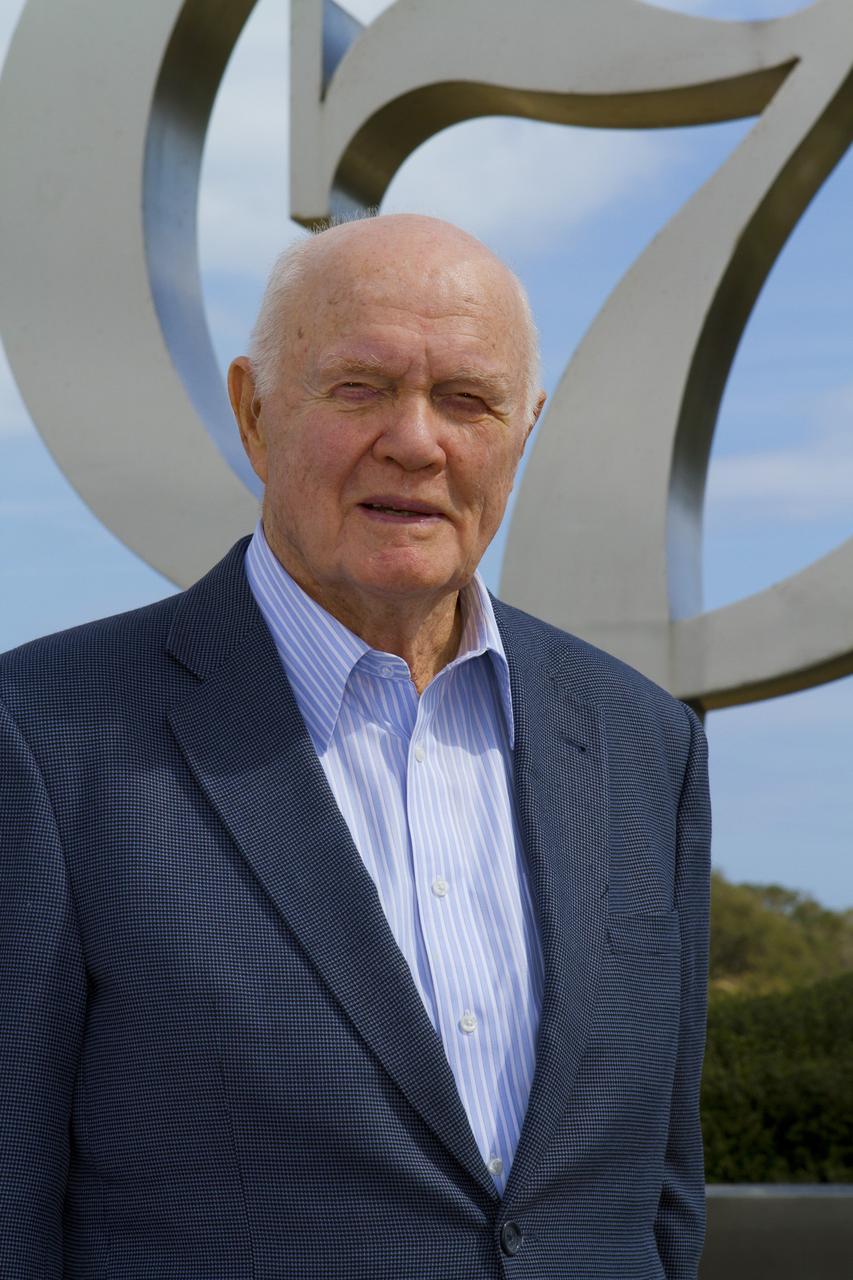
CAPE CANAVERAL, Fla. -- Mercury astronaut John Glenn poses for a photo in front of the Project Mercury monument at Launch Complex-14 LC-14 at Cape Canaveral Air Force Station in Florida. During events at the Cape and NASA's Kennedy Space Center, Glenn is marking the 50th anniversary of being the first American astronaut to orbit the Earth inside the Friendship 7 capsule on Feb. 20, 1962. Glenn's launch aboard an Atlas rocket took with it the hopes of an entire nation and ushered in a new era of space travel that eventually led to Americans walking on the moon by the end of the 1960s. Glenn soon was followed into orbit by Scott Carpenter, Walter Schirra and Gordon Cooper. Their fellow Mercury astronauts Alan Shepard and Virgil "Gus" Grissom flew earlier suborbital flights. Deke Slayton, a member of NASA's original Mercury 7 astronauts, was grounded by a medical condition until the Apollo-Soyuz Test Project in 1975. Photo credit: Kim Shiflett
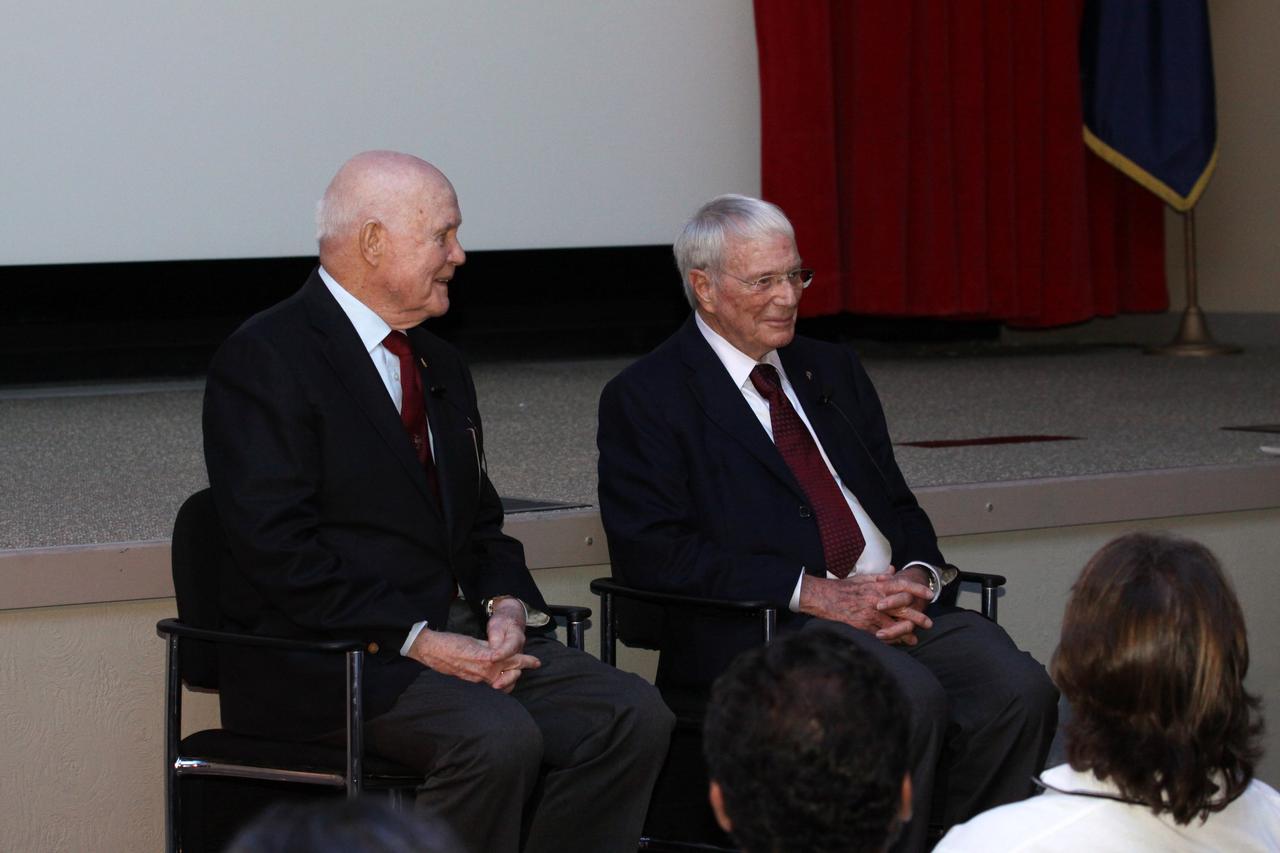
CAPE CANAVERAL, Fla. -- Mercury astronauts, John Glenn, left, and Scott Carpenter, talk to Mercury Project workers and other guests in the Astronaut Encounter Theater at the Kennedy Space Center Visitor Complex in Florida. The pair participated in 50th anniversary events at the launch site of Glenn's first orbital flight aboard NASA's Friendship 7 capsule, which launched Feb. 20, 1962, aboard an Atlas rocket. Glenn's launch aboard an Atlas rocket took with it the hopes of an entire nation and ushered in a new era of space travel that eventually led to Americans walking on the moon by the end of the 1960s. Glenn soon was followed into orbit by Carpenter, Walter Schirra and Gordon Cooper. Their fellow Mercury astronauts Alan Shepard and Virgil "Gus" Grissom flew earlier suborbital flights. Deke Slayton, a member of NASA's original Mercury 7 astronauts, was grounded by a medical condition until the Apollo-Soyuz Test Project in 1975. Photo credit: Kim Shiflett
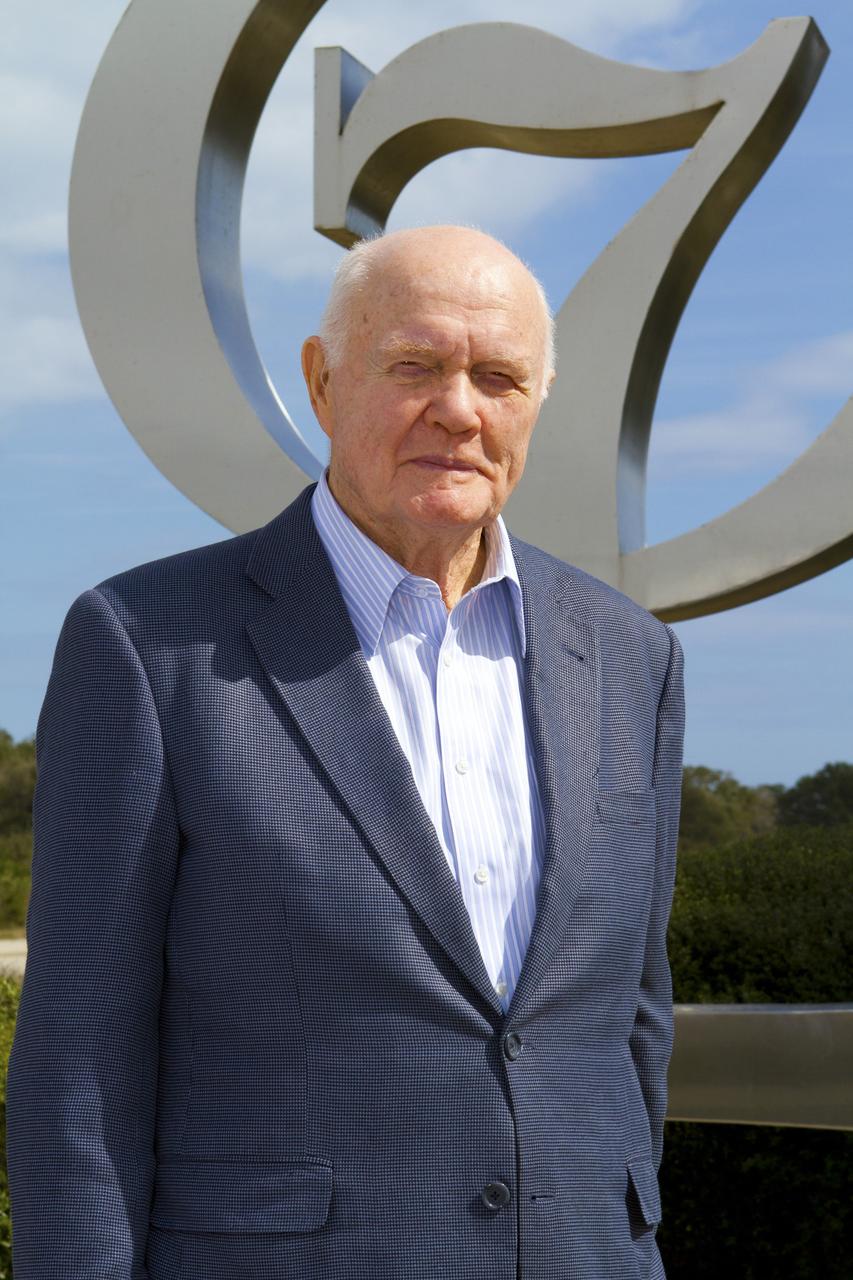
CAPE CANAVERAL, Fla. -- Mercury astronaut John Glenn poses for a photo in front of the Project Mercury monument at Launch Complex-14 LC-14 at Cape Canaveral Air Force Station in Florida. During events at the Cape and NASA's Kennedy Space Center, Glenn is marking the 50th anniversary of being the first American astronaut to orbit the Earth inside the Friendship 7 capsule on Feb. 20, 1962. Glenn's launch aboard an Atlas rocket took with it the hopes of an entire nation and ushered in a new era of space travel that eventually led to Americans walking on the moon by the end of the 1960s. Glenn soon was followed into orbit by Scott Carpenter, Walter Schirra and Gordon Cooper. Their fellow Mercury astronauts Alan Shepard and Virgil "Gus" Grissom flew earlier suborbital flights. Deke Slayton, a member of NASA's original Mercury 7 astronauts, was grounded by a medical condition until the Apollo-Soyuz Test Project in 1975. Photo credit: Kim Shiflett
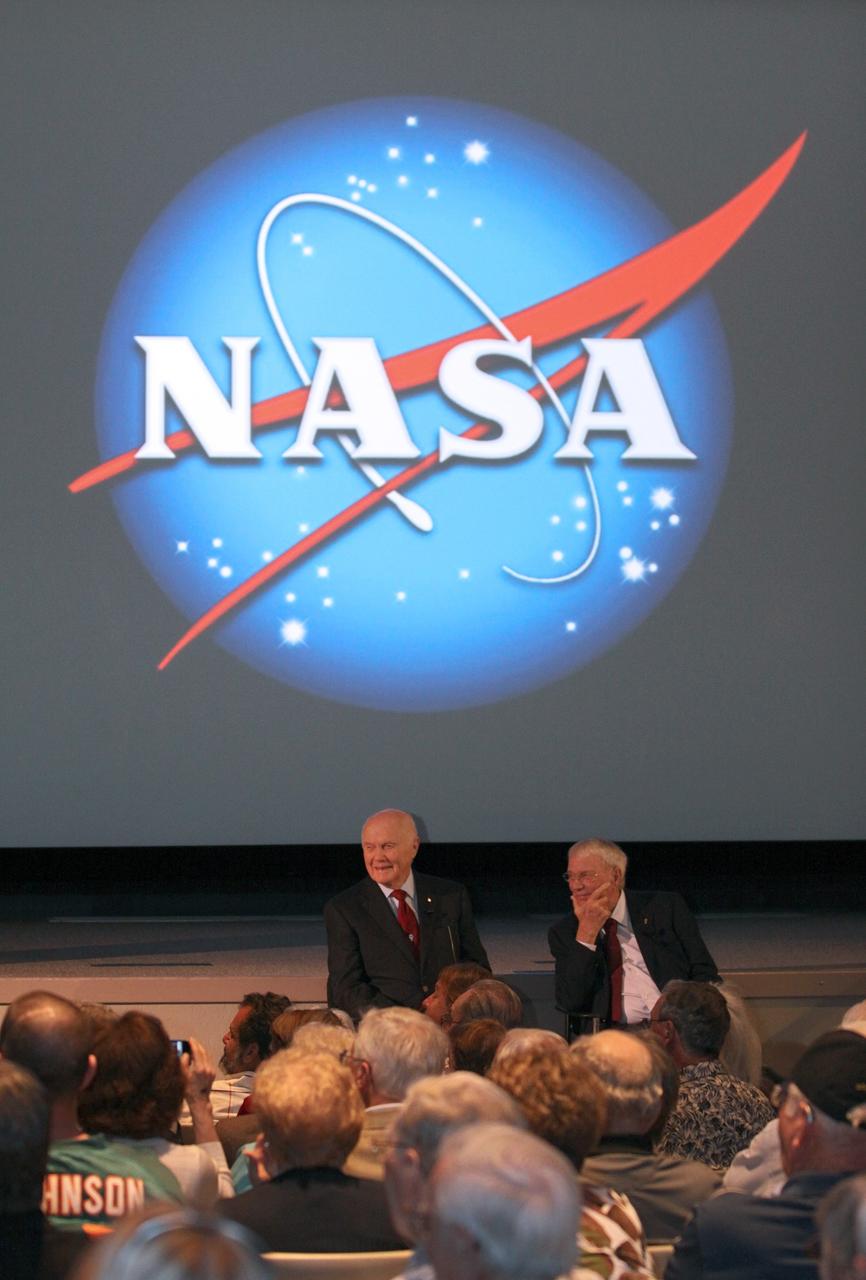
CAPE CANAVERAL, Fla. -- Mercury astronauts, John Glenn, left, and Scott Carpenter, talk to Mercury Project workers and other guests in the Astronaut Encounter Theater at the Kennedy Space Center Visitor Complex in Florida. The pair participated in 50th anniversary events at the launch site of Glenn's first orbital flight aboard NASA's Friendship 7 capsule, which launched Feb. 20, 1962, aboard an Atlas rocket. Glenn's launch aboard an Atlas rocket took with it the hopes of an entire nation and ushered in a new era of space travel that eventually led to Americans walking on the moon by the end of the 1960s. Glenn soon was followed into orbit by Carpenter, Walter Schirra and Gordon Cooper. Their fellow Mercury astronauts Alan Shepard and Virgil "Gus" Grissom flew earlier suborbital flights. Deke Slayton, a member of NASA's original Mercury 7 astronauts, was grounded by a medical condition until the Apollo-Soyuz Test Project in 1975. Photo credit: Kim Shiflett
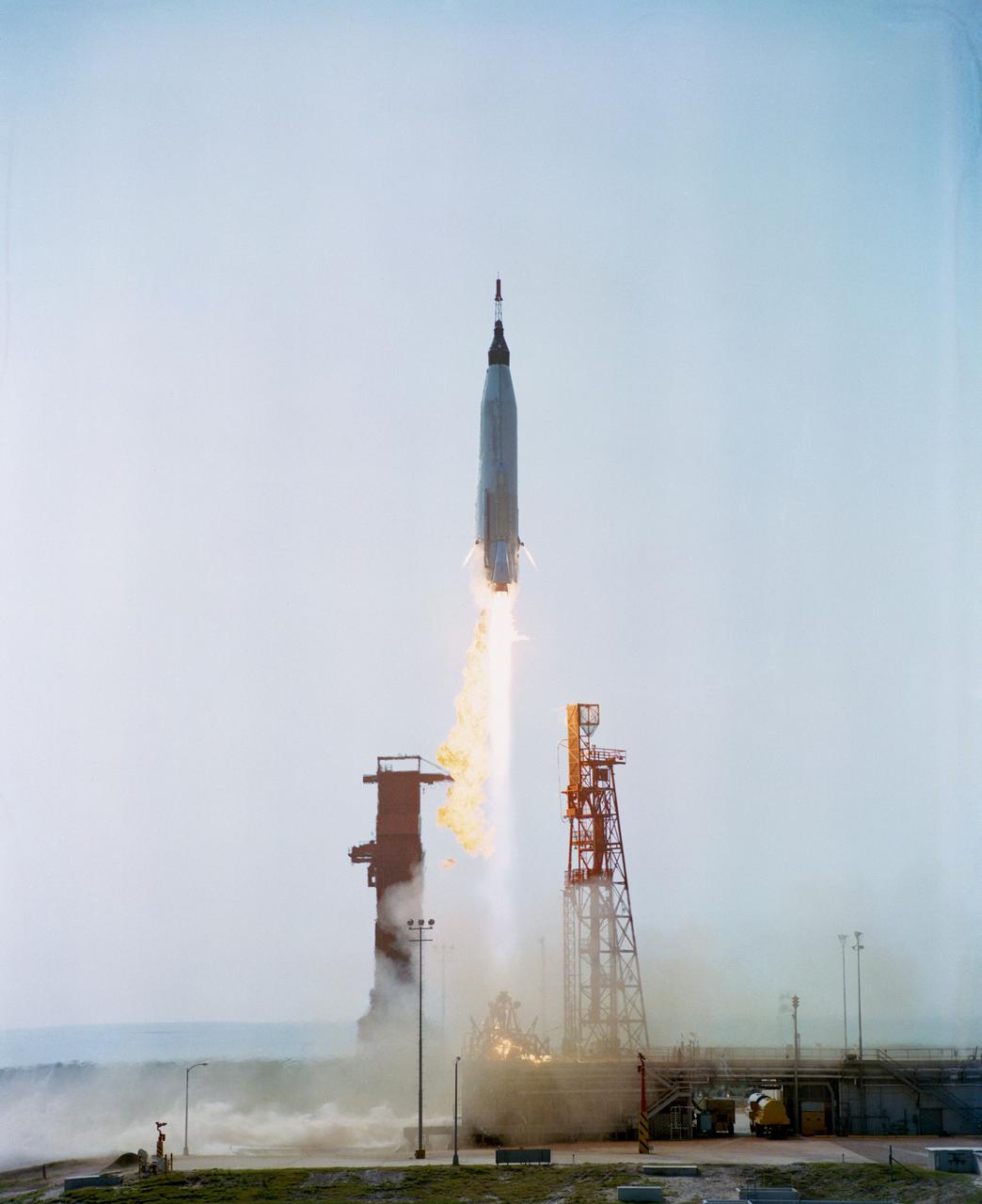
S63-07135 (16 May 1963) --- This was the Nation?s sixth manned orbital space flight, and the ?Faith 7? spacecraft was piloted by astronaut L. Gordon Cooper Jr. The launch was originally scheduled for May 14, 1963, but due to a malfunction in the radar tracking system at Bermuda. The launch was ?scrubbed? 12 minutes before countdown would have been completed. At midnight, May 15, 1963, countdown was resumed and liftoff occurred at 8:04 a.m. (EST), May 16, 1963. Astronaut L. Gordon Cooper Jr., completed a total of 22.9 orbits and spent 34 hours, 20 minutes in space flight. The launch and recovery was highly successful and was the last of the Mercury flights.
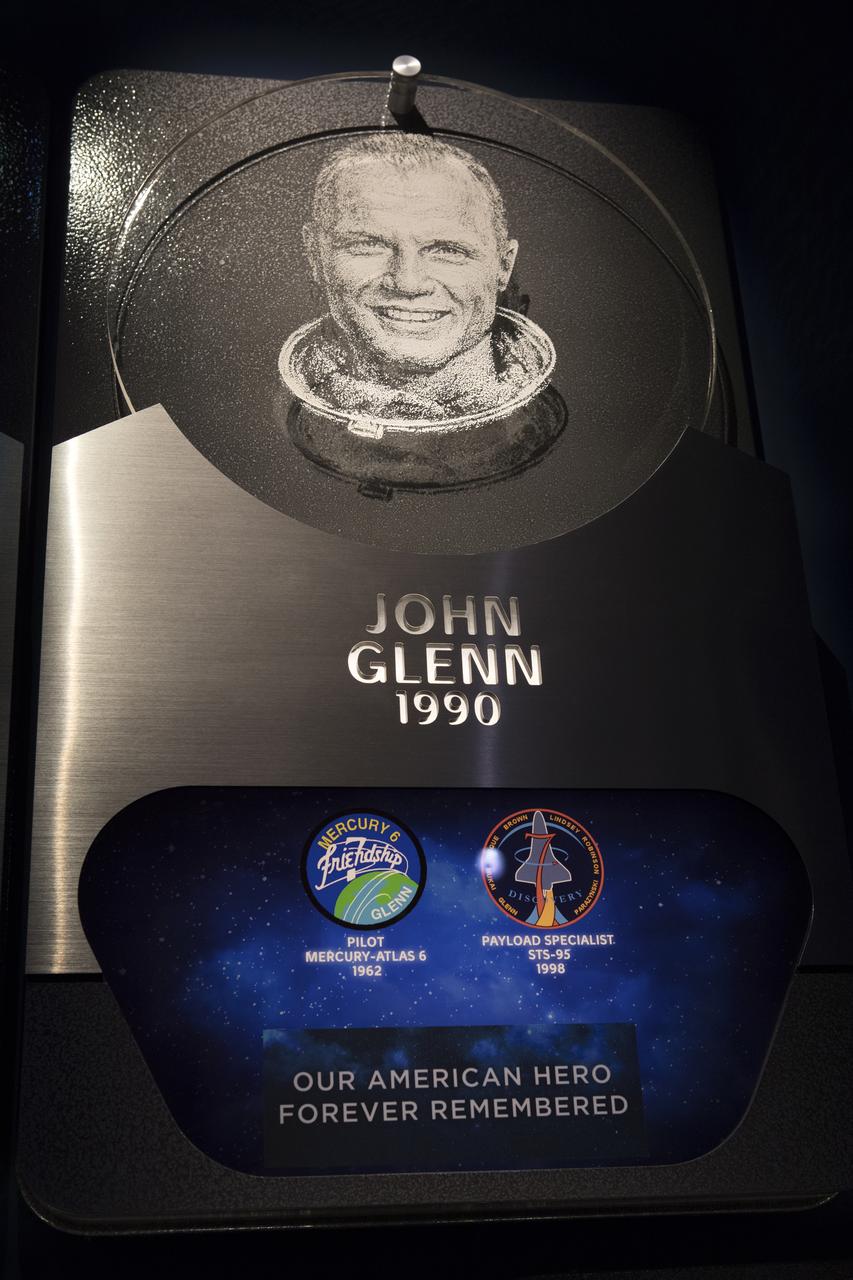
A plaque inside the Heroes and Legends exhibit hall at the Kennedy Space Center Visitor Complex shows astronaut Sen. John Glenn, along with his mission insignias for Friendship 7 and STS-95, the two flights he made into space. Glenn, who passed away Dec. 8, 2016 at age 95, was the last surviving member of NASA's original astronaut class. He gained worldwide acclaim during his Mercury mission that made him the first American to orbit the Earth. He flew again in 1998 aboard space shuttle Discovery at age 77.
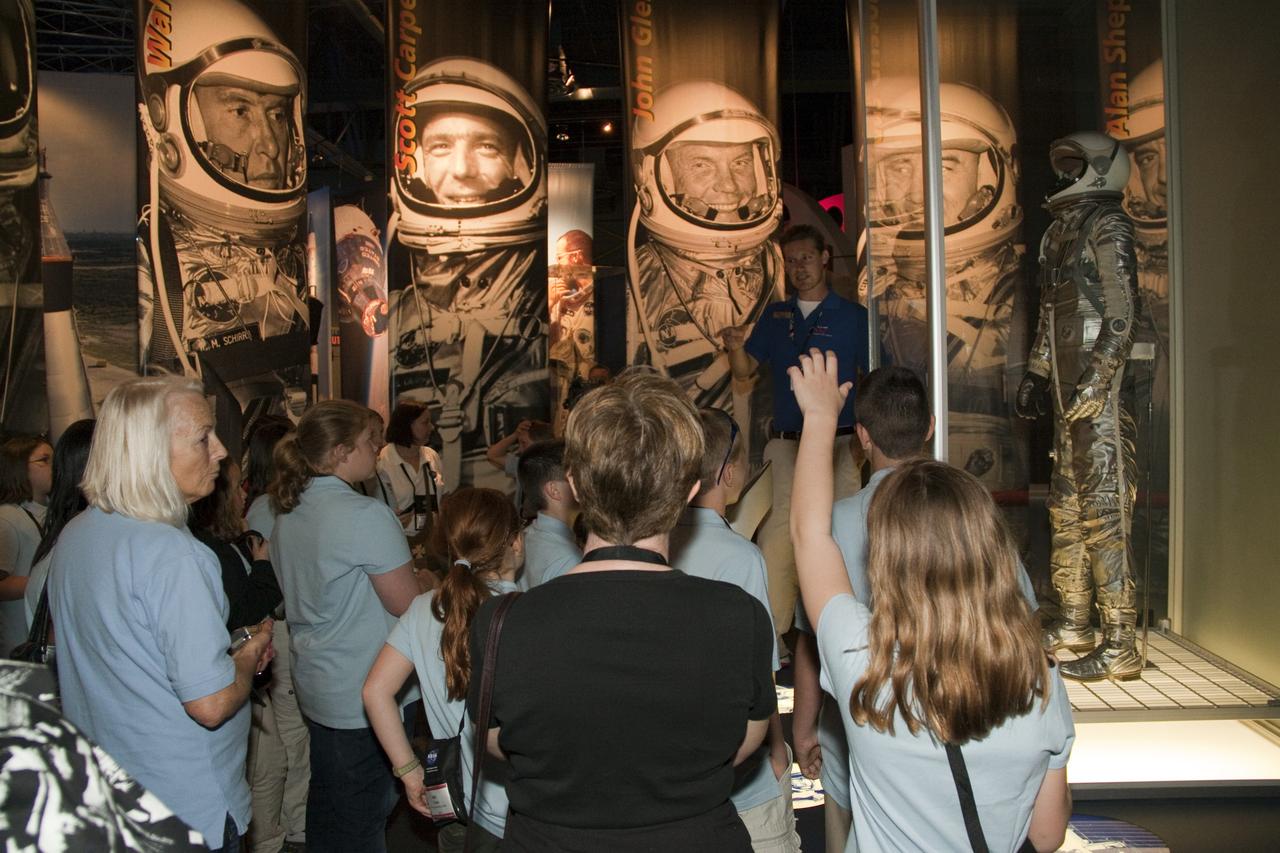
CAPE CANAVERAL, Fla. -- During the NASA Explorer Schools Symposium at Kennedy Space Center in Florida, students and teachers tour the U.S. Astronaut Hall of Fame. About 60 fourth- through 12-grade students from across the nation are at the center May 4-7 participating in tours of processing and launch facilities, as well as several educational activities and a career panel question-and-answer session. About 30 teachers will receive professional development opportunities during the symposium. The participants were competitively selected after they completed an original investigation focused on existing NASA missions or research interests. Photo Credit: NASA/Jack Pfaller
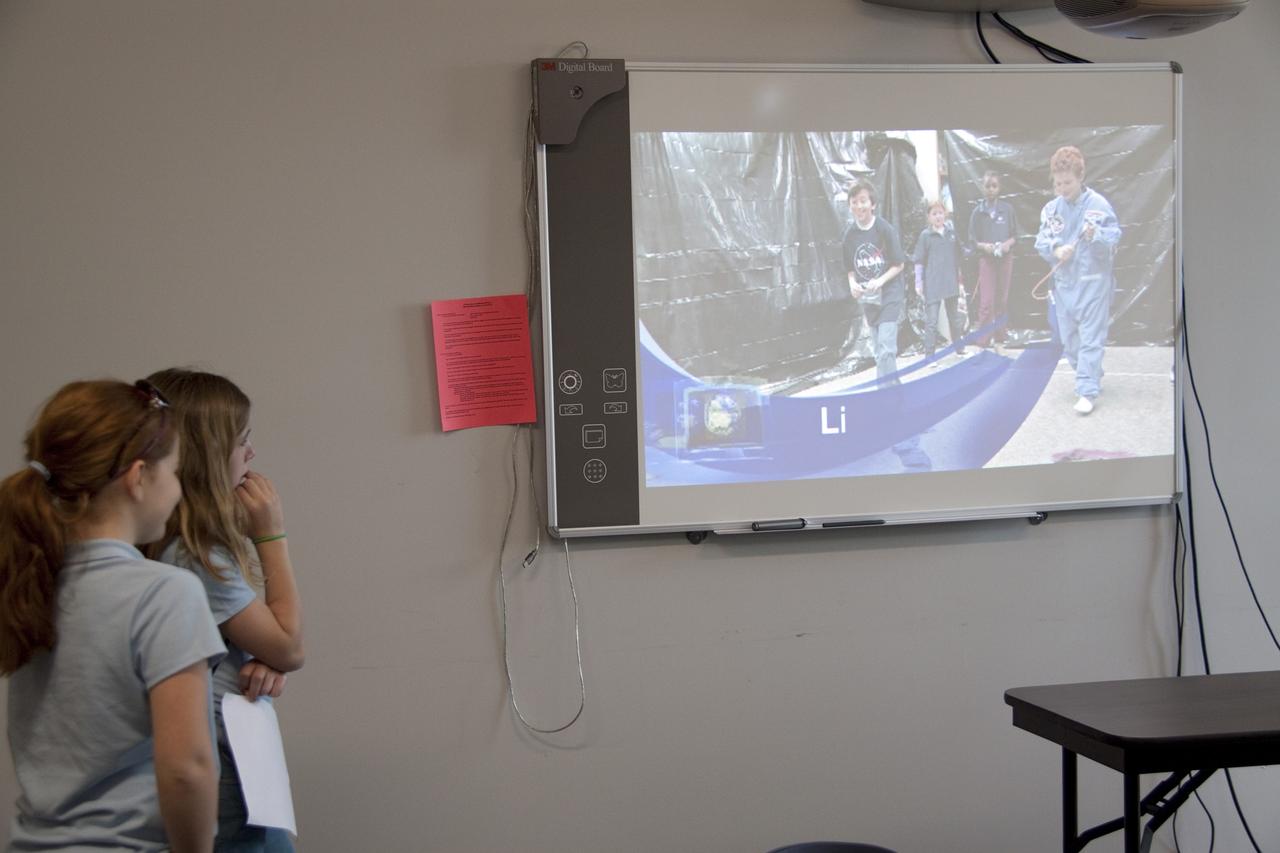
CAPE CANAVERAL, Fla. -- Students present their investigation project to their peers, scientists, engineers and education specialists during the NASA Explorer Schools Symposium at Kennedy Space Center in Florida. About 60 fourth- through 12-grade students from across the nation are at the center May 4-7 participating in tours of processing and launch facilities and the U.S. Astronaut Hall of Fame, as well as several educational activities and a career panel question-and-answer session. About 30 teachers will receive professional development opportunities during the symposium. The participants were competitively selected after they completed an original investigation focused on existing NASA missions or research interests. Photo Credit: NASA/Jack Pfaller
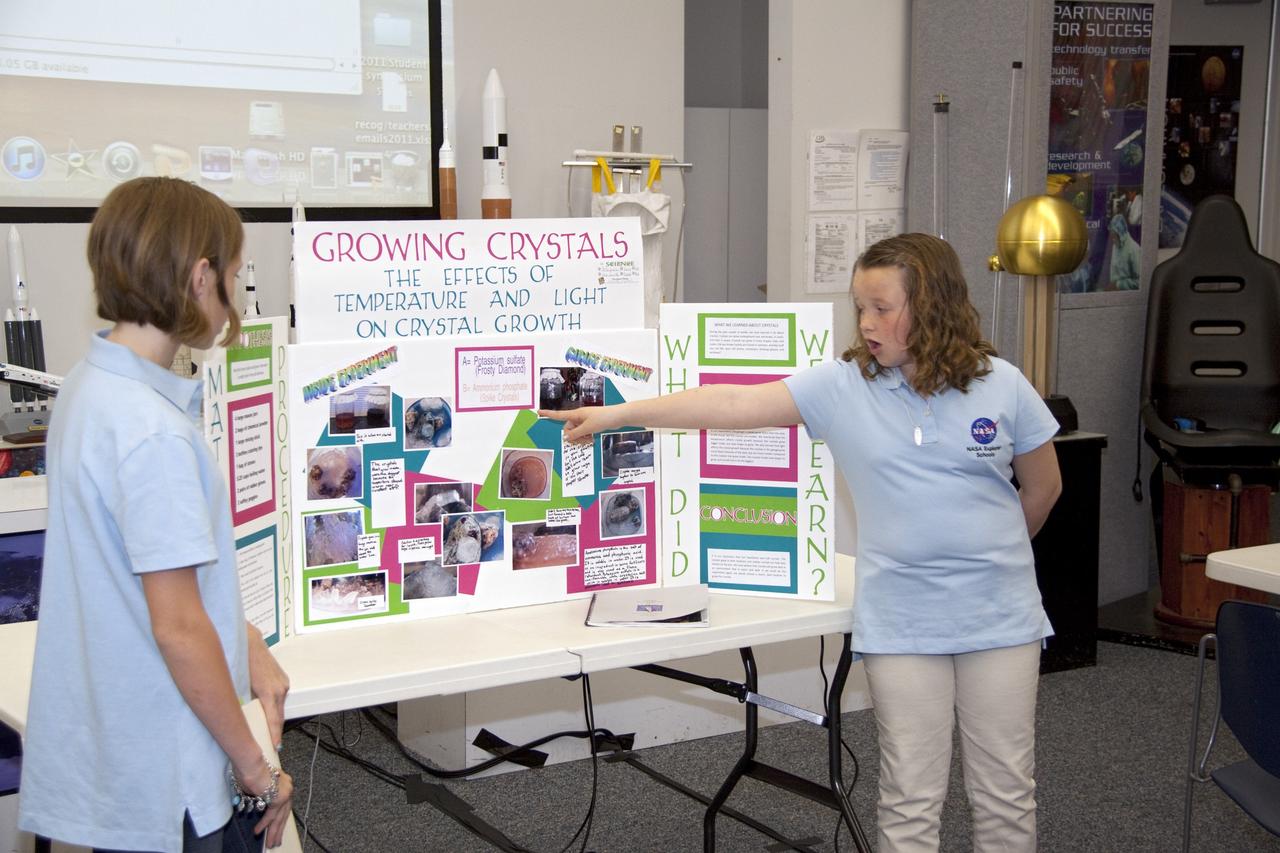
CAPE CANAVERAL, Fla. -- Students present their investigation project to their peers, scientists, engineers and education specialists during the NASA Explorer Schools Symposium at Kennedy Space Center in Florida. About 60 fourth- through 12-grade students from across the nation are at the center May 4-7 participating in tours of processing and launch facilities and the U.S. Astronaut Hall of Fame, as well as several educational activities and a career panel question-and-answer session. About 30 teachers will receive professional development opportunities during the symposium. The participants were competitively selected after they completed an original investigation focused on existing NASA missions or research interests. Photo Credit: NASA/Jack Pfaller
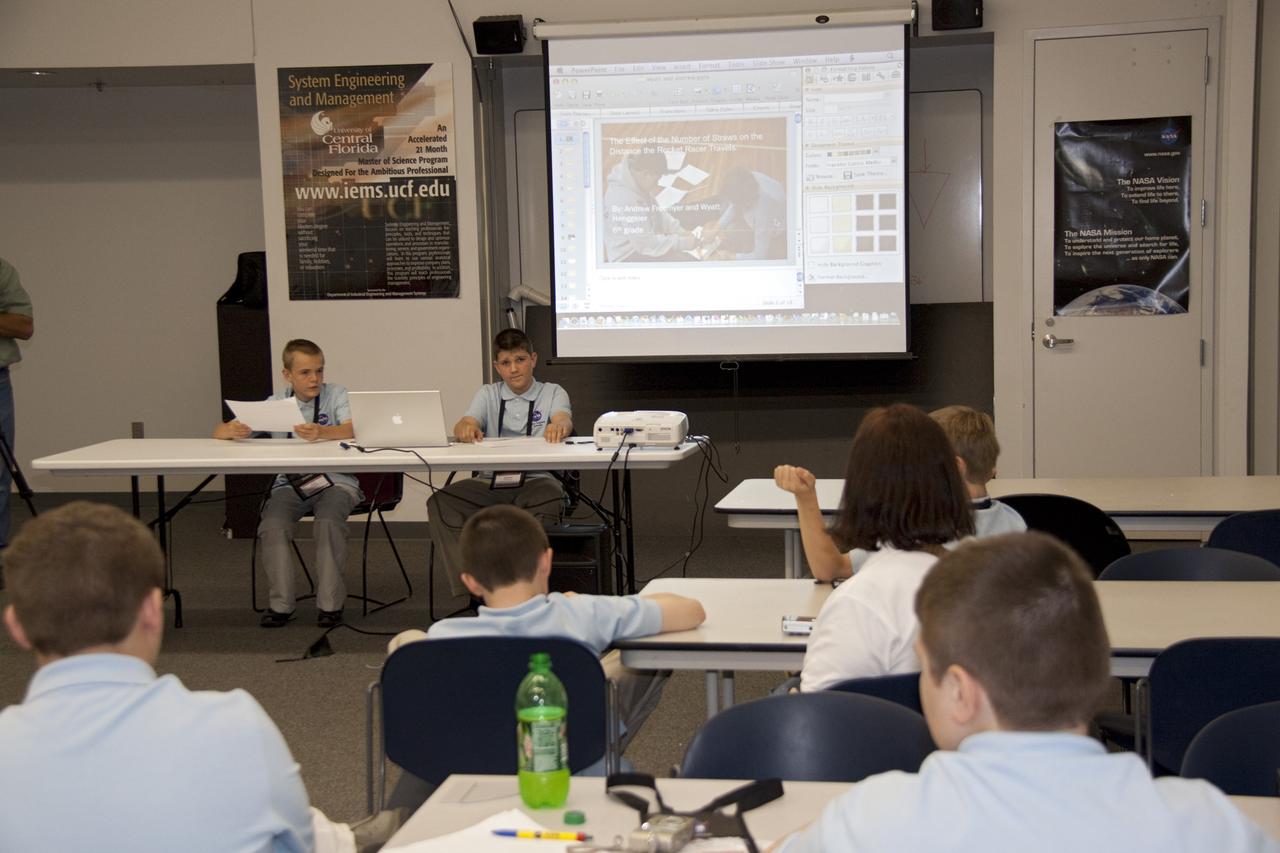
CAPE CANAVERAL, Fla. -- Students present their investigation project to their peers, scientists, engineers and education specialists during the NASA Explorer Schools Symposium at Kennedy Space Center in Florida. About 60 fourth- through 12-grade students from across the nation are at the center May 4-7 participating in tours of processing and launch facilities and the U.S. Astronaut Hall of Fame, as well as several educational activities and a career panel question-and-answer session. About 30 teachers will receive professional development opportunities during the symposium. The participants were competitively selected after they completed an original investigation focused on existing NASA missions or research interests. Photo Credit: NASA/Jack Pfaller
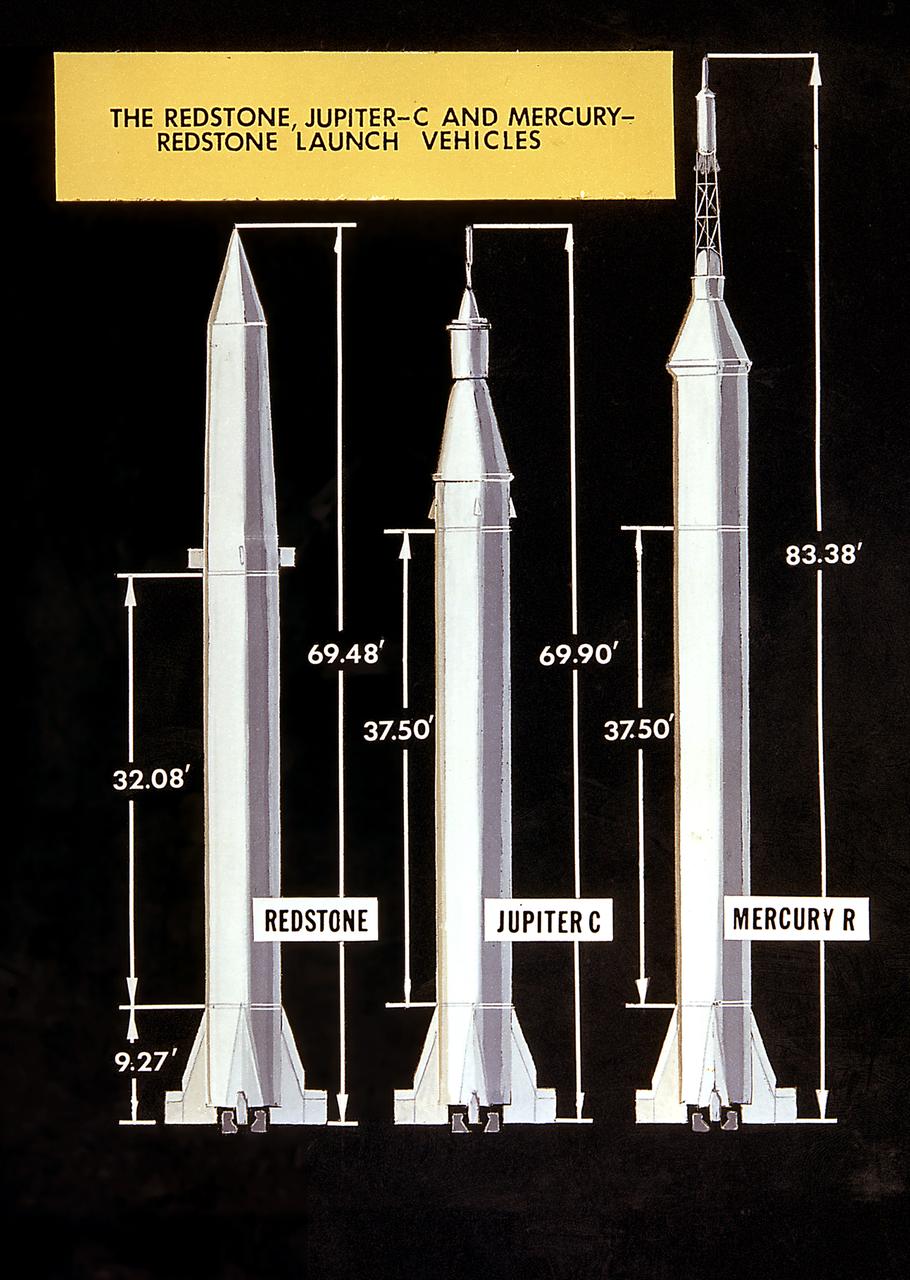
This is a comparison illustration of the Redstone, Jupiter-C, and Mercury Redstone launch vehicles. The Redstone ballistic missile was a high-accuracy, liquid-propelled, surface-to-surface missile. Originally developed as a nose cone re-entry test vehicle for the Jupiter intermediate range ballistic missile, the Jupiter-C was a modification of the Redstone missile and successfully launched the first American Satellite, Explorer-1, in orbit on January 31, 1958. The Mercury Redstone lifted off carrying the first American, astronaut Alan Shepard, in his Mercury spacecraft Freedom 7, on May 5, 1961.
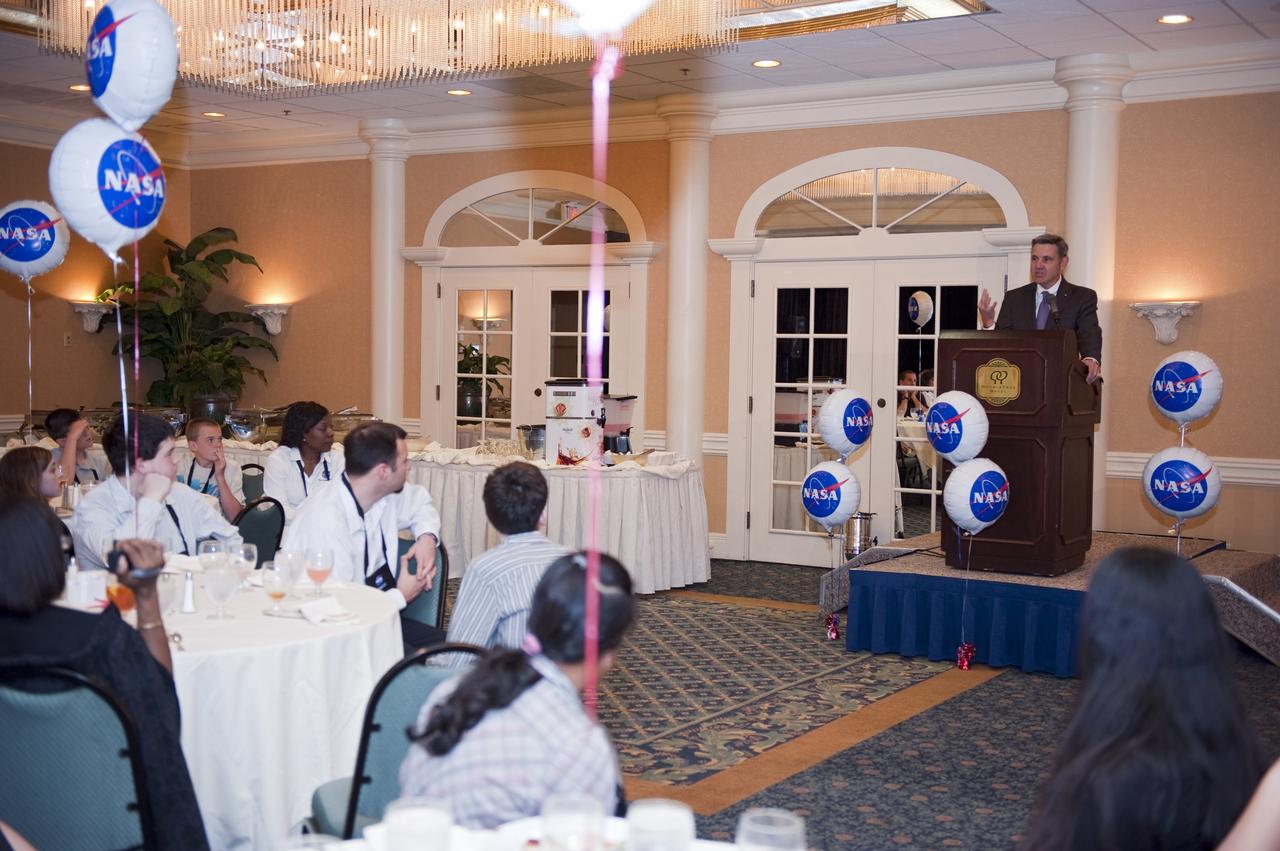
COCOA BEACH, Fla. -- NASA Kennedy Space Center Director Bob Cabana encourages fourth- through 12-grade students and their teachers from across the nation to "dream big" during the NASA Explorer Schools Symposium in Florida. During the event, May 4-7, about 60 students will tour Kennedy, the U.S. Astronaut Hall of Fame, and participate in several educational activities and a career panel question-and-answer session. The symposium also offers professional development opportunities for about 30 teachers. The participants were competitively selected after they completed an original investigation focused on existing NASA missions or research interests. Photo Credit: NASA/Kim Shiflett
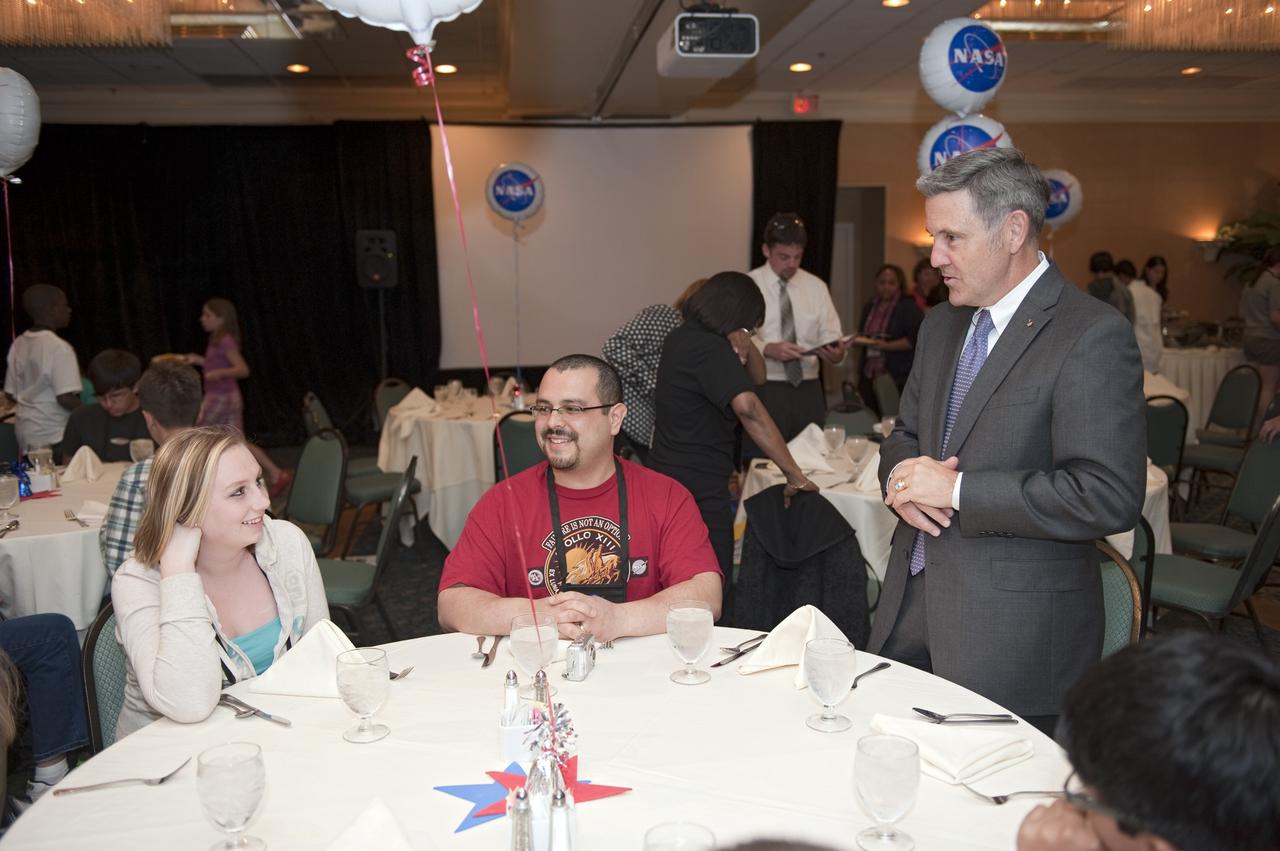
COCOA BEACH, Fla. -- NASA Kennedy Space Center Director Bob Cabana encourages fourth- through 12-grade students and their teachers from across the nation to "dream big" during the NASA Explorer Schools Symposium in Florida. During the event, May 4-7, about 60 students will tour Kennedy, the U.S. Astronaut Hall of Fame, and participate in several educational activities and a career panel question-and-answer session. The symposium also offers professional development opportunities for about 30 teachers. The participants were competitively selected after they completed an original investigation focused on existing NASA missions or research interests. Photo Credit: NASA/Kim Shiflett
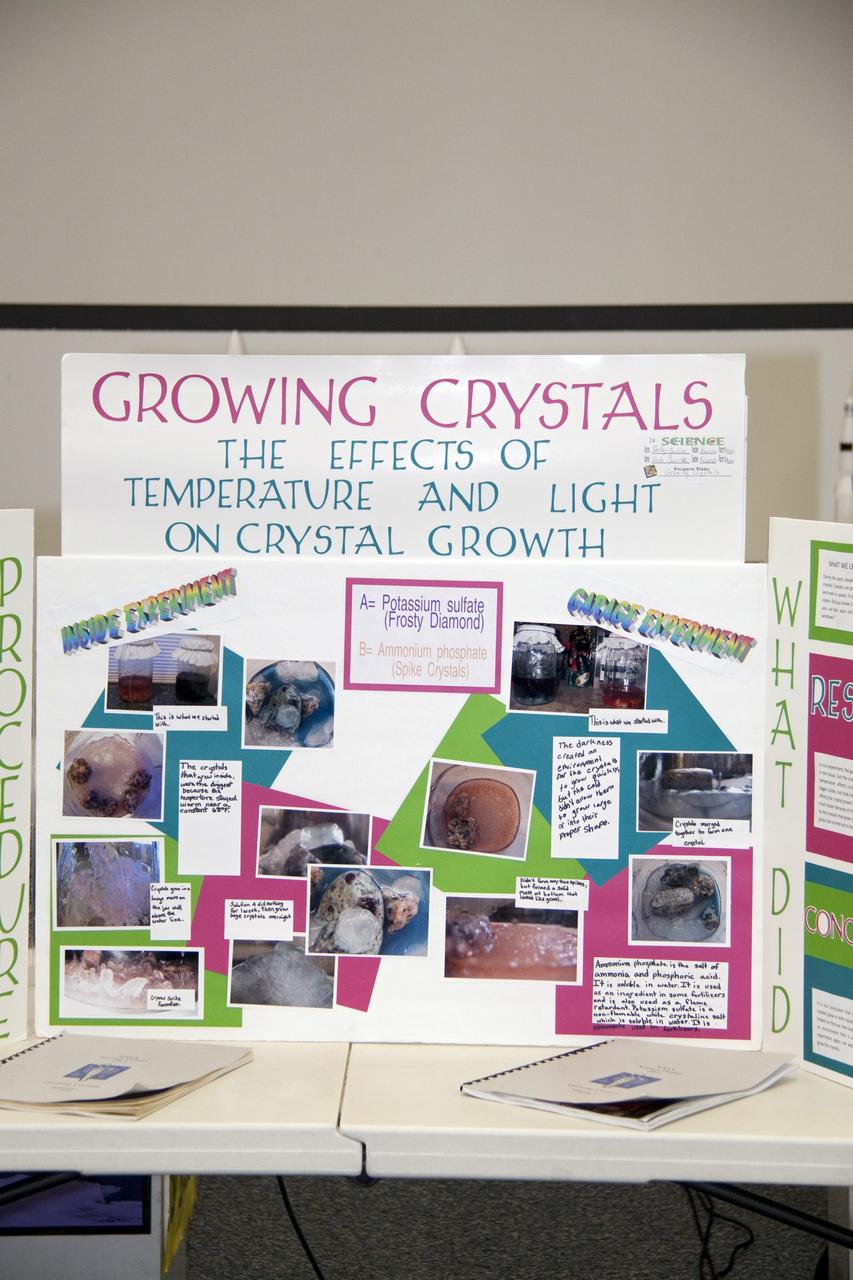
CAPE CANAVERAL, Fla. -- A student investigation project is on display during the NASA Explorer Schools Symposium at Kennedy Space Center in Florida. About 60 fourth- through 12-grade students from across the nation are at the center May 4-7 participating in tours of processing and launch facilities and the U.S. Astronaut Hall of Fame, as well as several educational activities and a career panel question-and-answer session. About 30 teachers will receive professional development opportunities during the symposium. The participants were competitively selected after they completed an original investigation focused on existing NASA missions or research interests. Photo Credit: NASA/Jack Pfaller
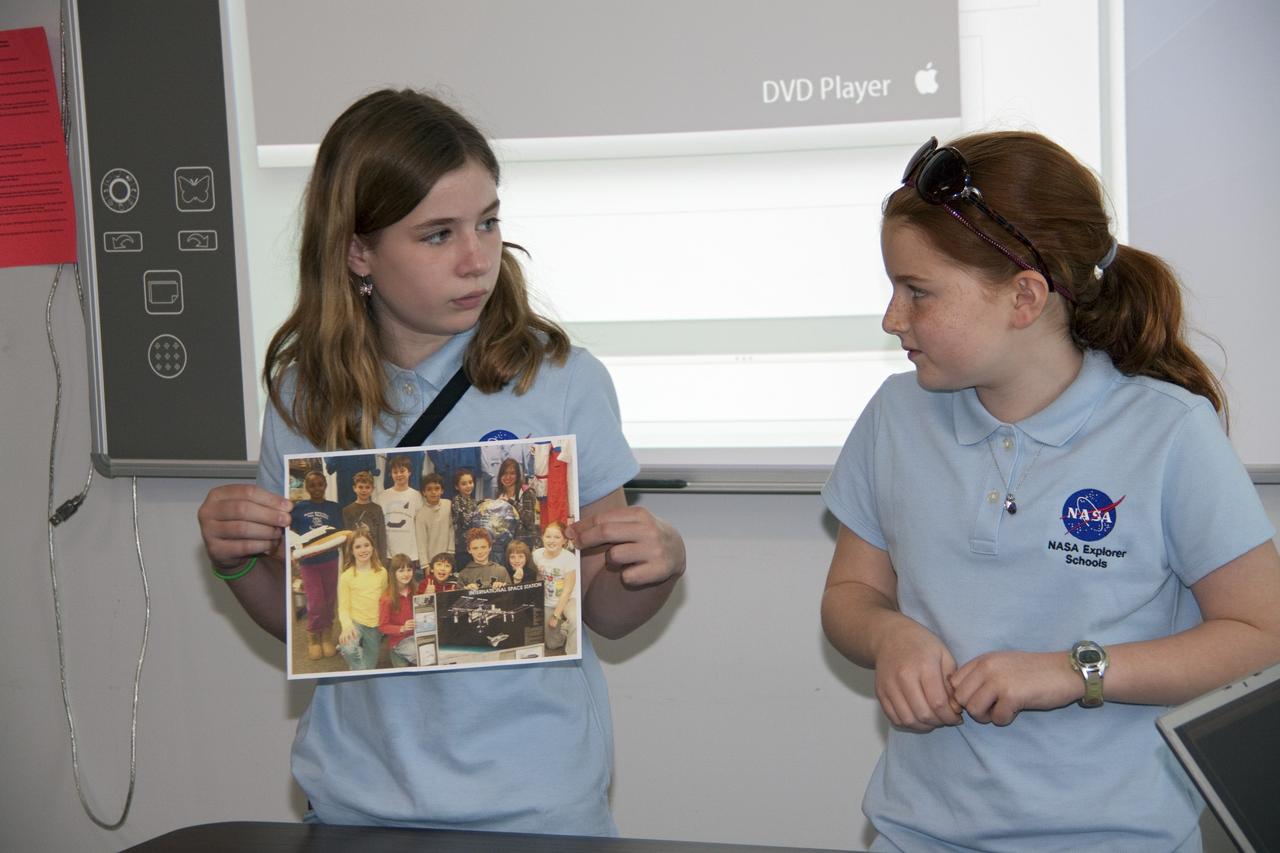
CAPE CANAVERAL, Fla. -- Students present their investigation project to their peers, scientists, engineers and education specialists during the NASA Explorer Schools Symposium at Kennedy Space Center in Florida. About 60 fourth- through 12-grade students from across the nation are at the center May 4-7 participating in tours of processing and launch facilities and the U.S. Astronaut Hall of Fame, as well as several educational activities and a career panel question-and-answer session. About 30 teachers will receive professional development opportunities during the symposium. The participants were competitively selected after they completed an original investigation focused on existing NASA missions or research interests. Photo Credit: NASA/Jack Pfaller
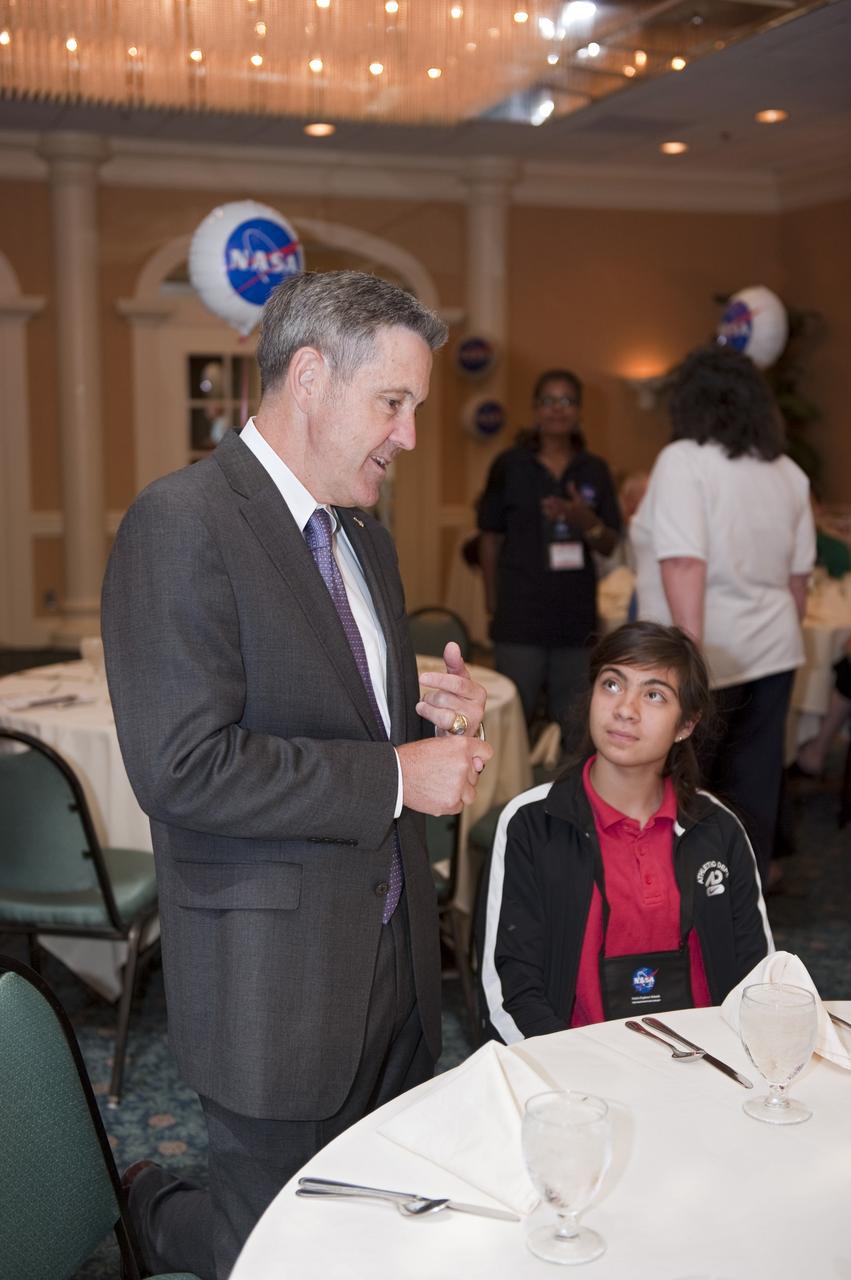
COCOA BEACH, Fla. -- NASA Kennedy Space Center Director Bob Cabana encourages fourth- through 12-grade students and their teachers from across the nation to "dream big" during the NASA Explorer Schools Symposium in Florida. During the event, May 4-7, about 60 students will tour Kennedy, the U.S. Astronaut Hall of Fame, and participate in several educational activities and a career panel question-and-answer session. The symposium also offers professional development opportunities for about 30 teachers. The participants were competitively selected after they completed an original investigation focused on existing NASA missions or research interests. Photo Credit: NASA/Kim Shiflett
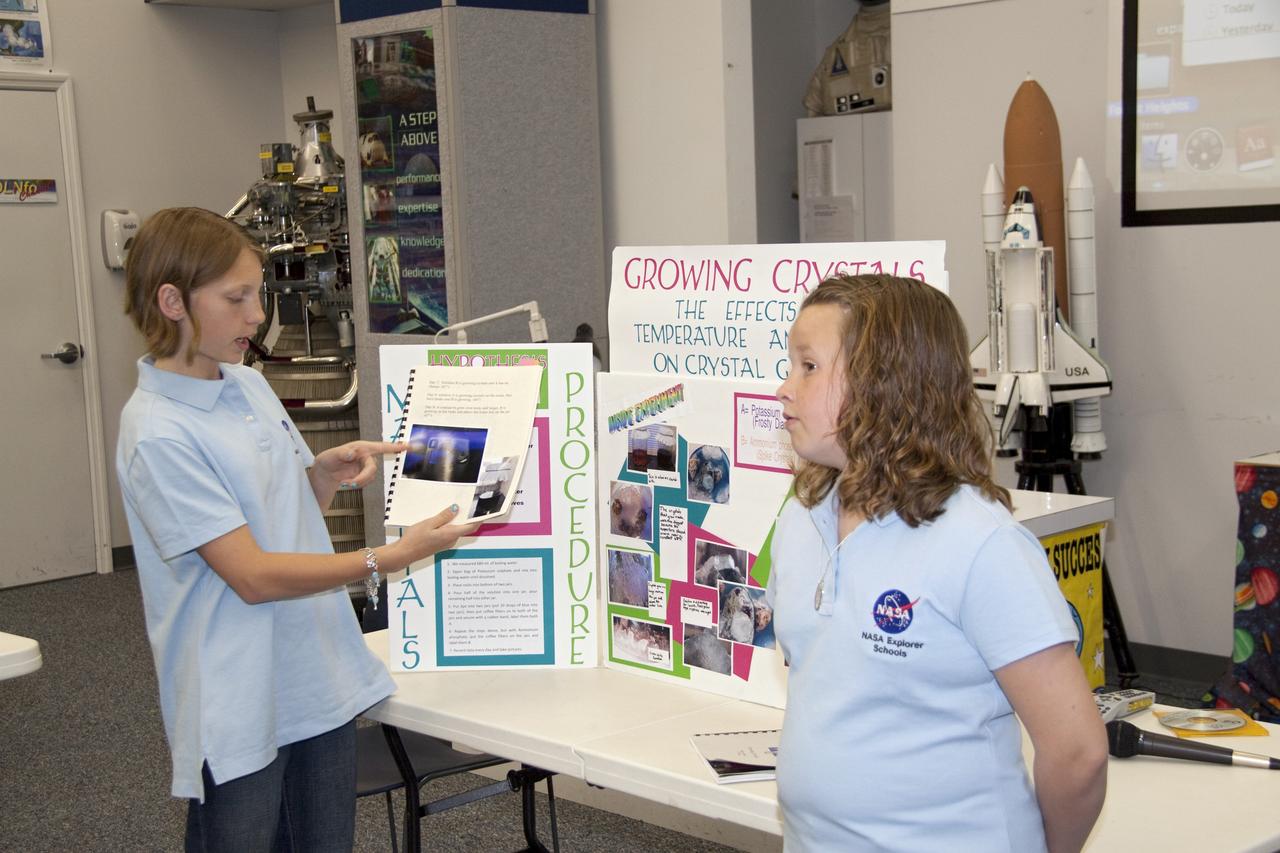
CAPE CANAVERAL, Fla. -- Students present their investigation project to their peers, scientists, engineers and education specialists during the NASA Explorer Schools Symposium at Kennedy Space Center in Florida. About 60 fourth- through 12-grade students from across the nation are at the center May 4-7 participating in tours of processing and launch facilities and the U.S. Astronaut Hall of Fame, as well as several educational activities and a career panel question-and-answer session. About 30 teachers will receive professional development opportunities during the symposium. The participants were competitively selected after they completed an original investigation focused on existing NASA missions or research interests. Photo Credit: NASA/Jack Pfaller
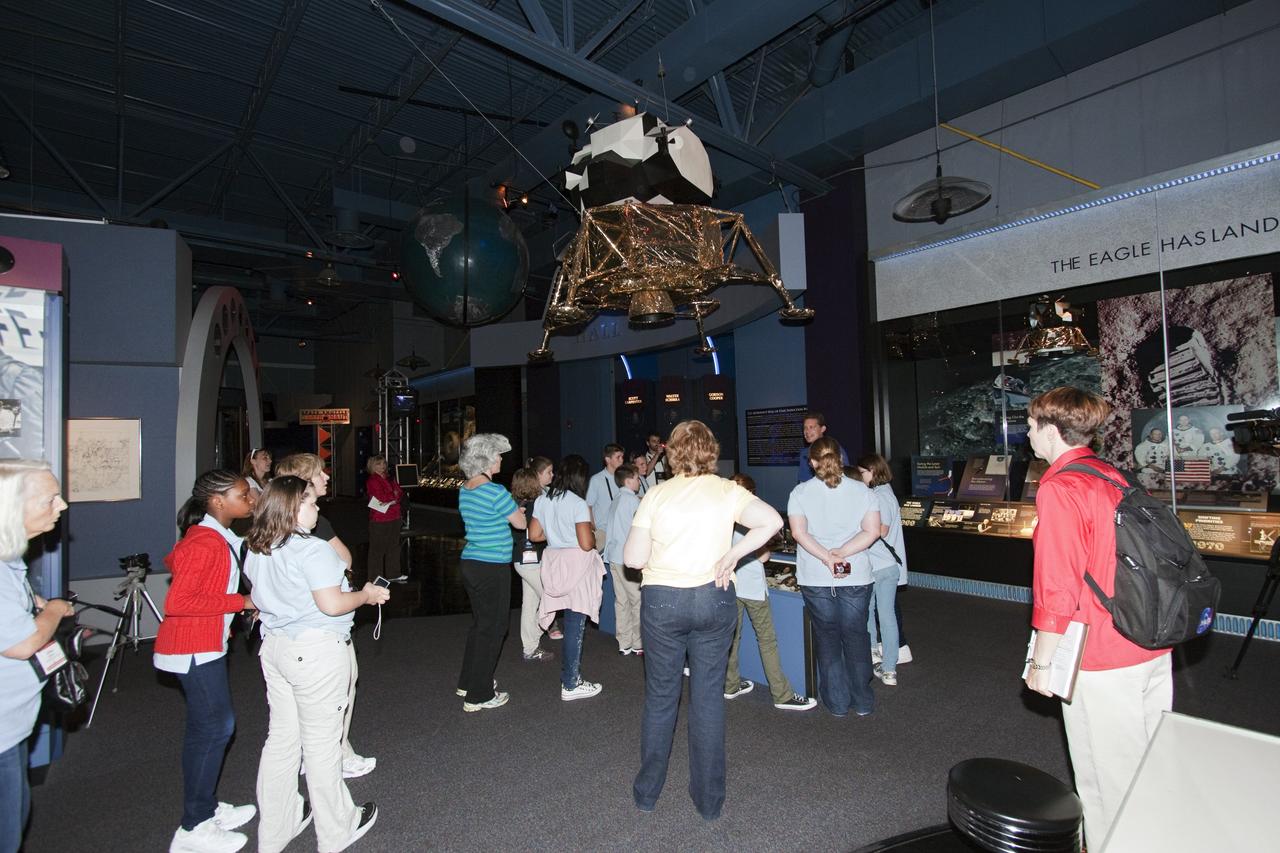
CAPE CANAVERAL, Fla. -- During the NASA Explorer Schools Symposium at Kennedy Space Center in Florida, students and teachers tour the U.S. Astronaut Hall of Fame. About 60 fourth- through 12-grade students from across the nation are at the center May 4-7 participating in tours of processing and launch facilities, as well as several educational activities and a career panel question-and-answer session. About 30 teachers will receive professional development opportunities during the symposium. The participants were competitively selected after they completed an original investigation focused on existing NASA missions or research interests. Photo Credit: NASA/Jack Pfaller
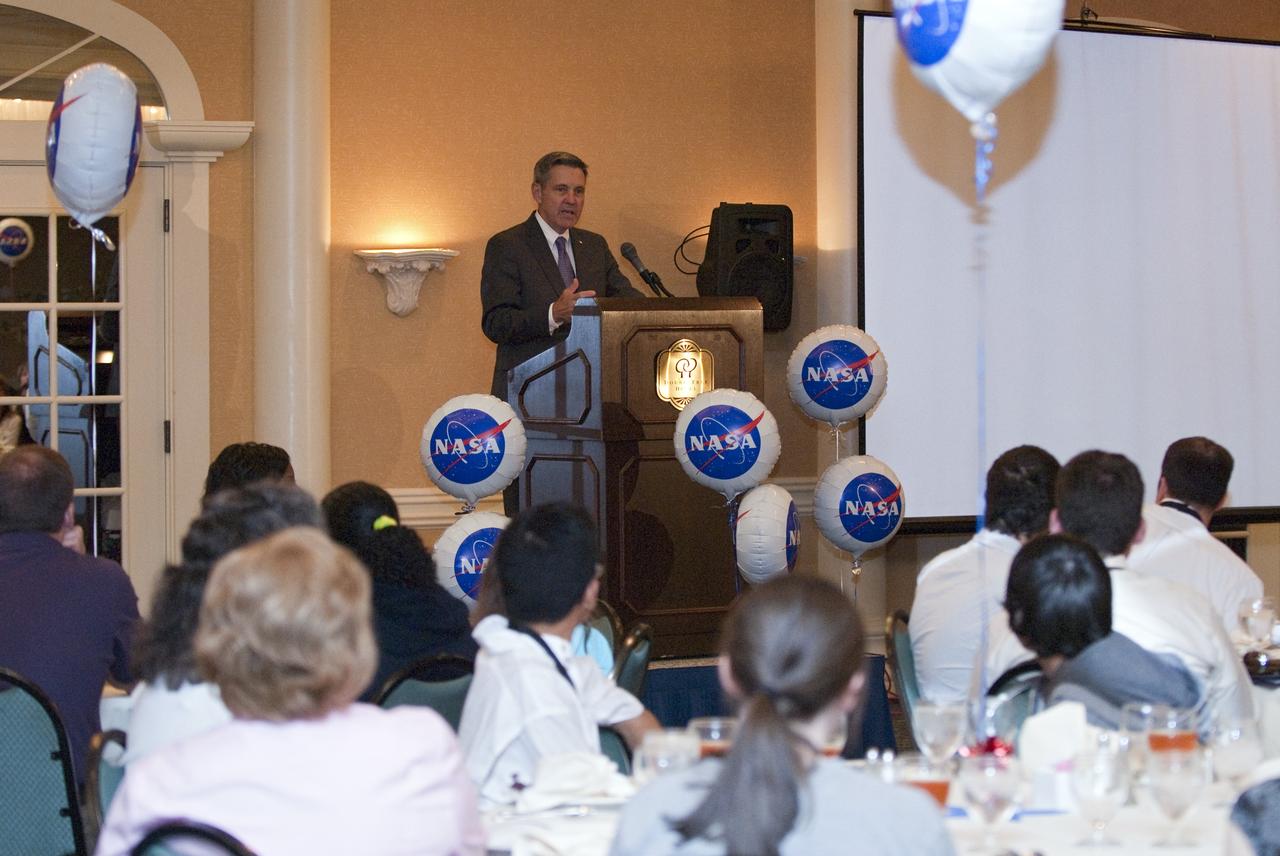
COCOA BEACH, Fla. -- NASA Kennedy Space Center Director Bob Cabana talks to fourth- through 12-grade students and their teachers from across the nation during the NASA Explorer Schools Symposium in Florida. During the event, May 4-7, about 60 students will tour Kennedy, the U.S. Astronaut Hall of Fame, and participate in several educational activities and a career panel question-and-answer session. The symposium also offers professional development opportunities for about 30 teachers. The participants were competitively selected after they completed an original investigation focused on existing NASA missions or research interests. Photo Credit: NASA/Kim Shiflett
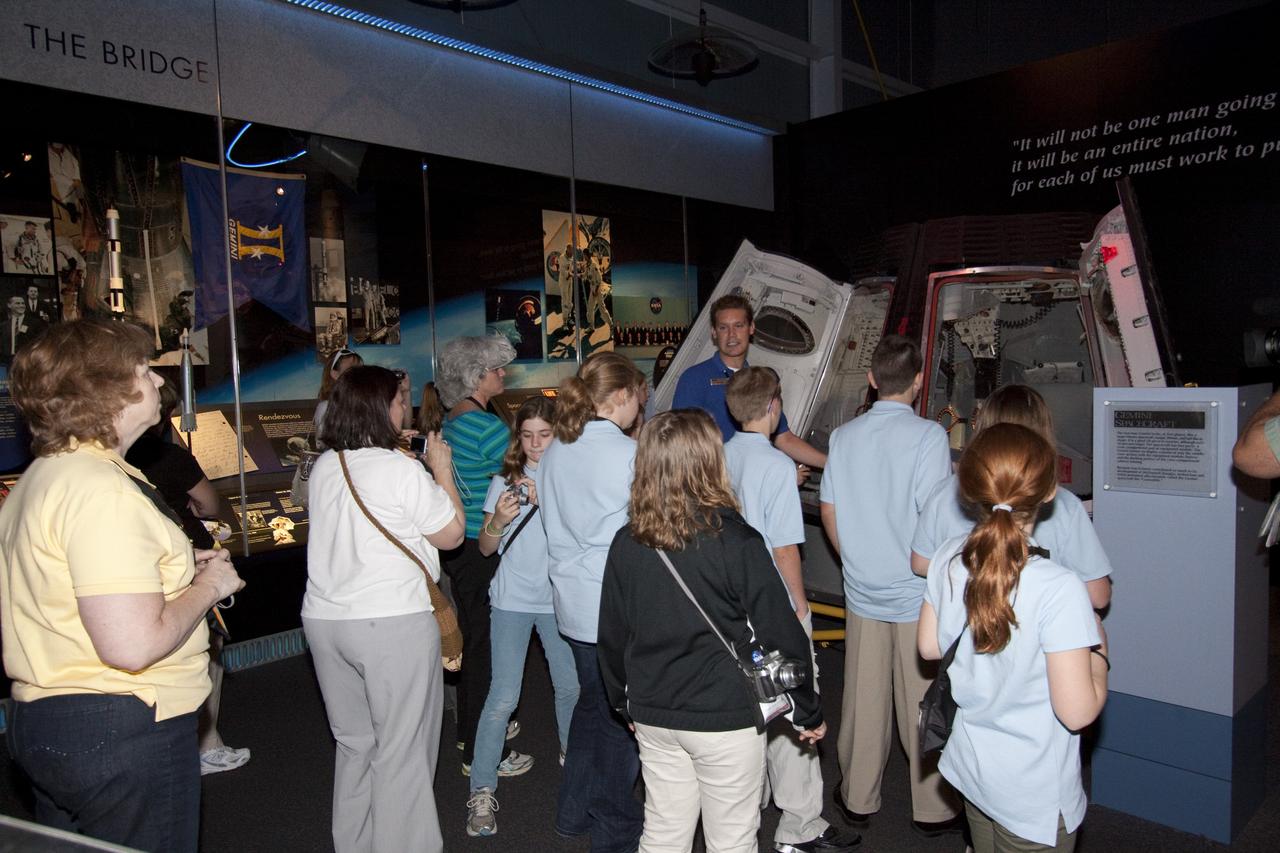
CAPE CANAVERAL, Fla. -- During the NASA Explorer Schools Symposium at Kennedy Space Center in Florida, students and teachers tour the U.S. Astronaut Hall of Fame. About 60 fourth- through 12-grade students from across the nation are at the center May 4-7 participating in tours of processing and launch facilities, as well as several educational activities and a career panel question-and-answer session. About 30 teachers will receive professional development opportunities during the symposium. The participants were competitively selected after they completed an original investigation focused on existing NASA missions or research interests. Photo Credit: NASA/Jack Pfaller
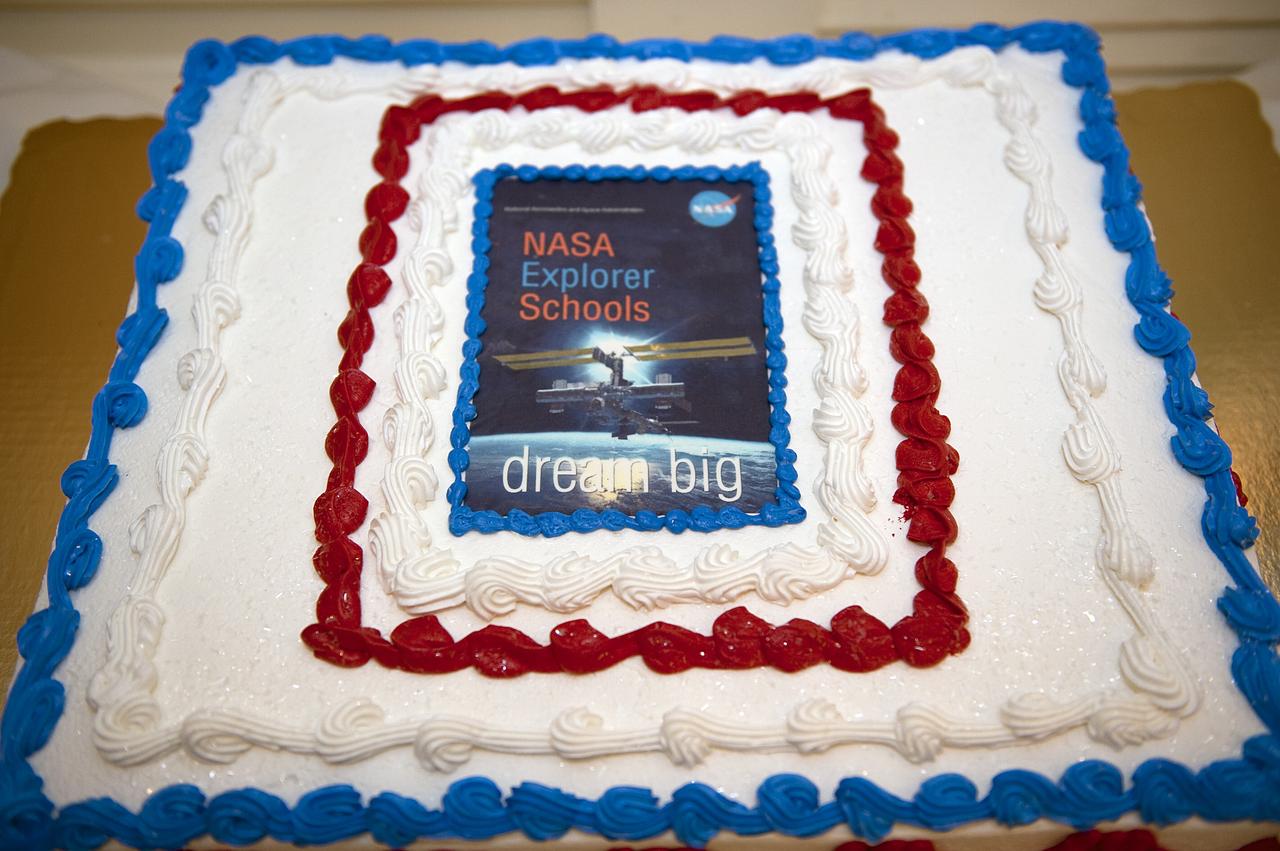
COCOA BEACH, Fla. -- A cake encourages fourth- through 12-grade students and their teachers from across the nation to "dream big" during the NASA Explorer Schools Symposium in Florida. During the event, May 4-7, about 60 students will tour NASA's Kennedy Space Center, the U.S. Astronaut Hall of Fame, and participate in several educational activities and a career panel question-and-answer session. The symposium also offers professional development opportunities for about 30 teachers. The participants were competitively selected after they completed an original investigation focused on existing NASA missions or research interests. Photo Credit: NASA/Kim Shiflett
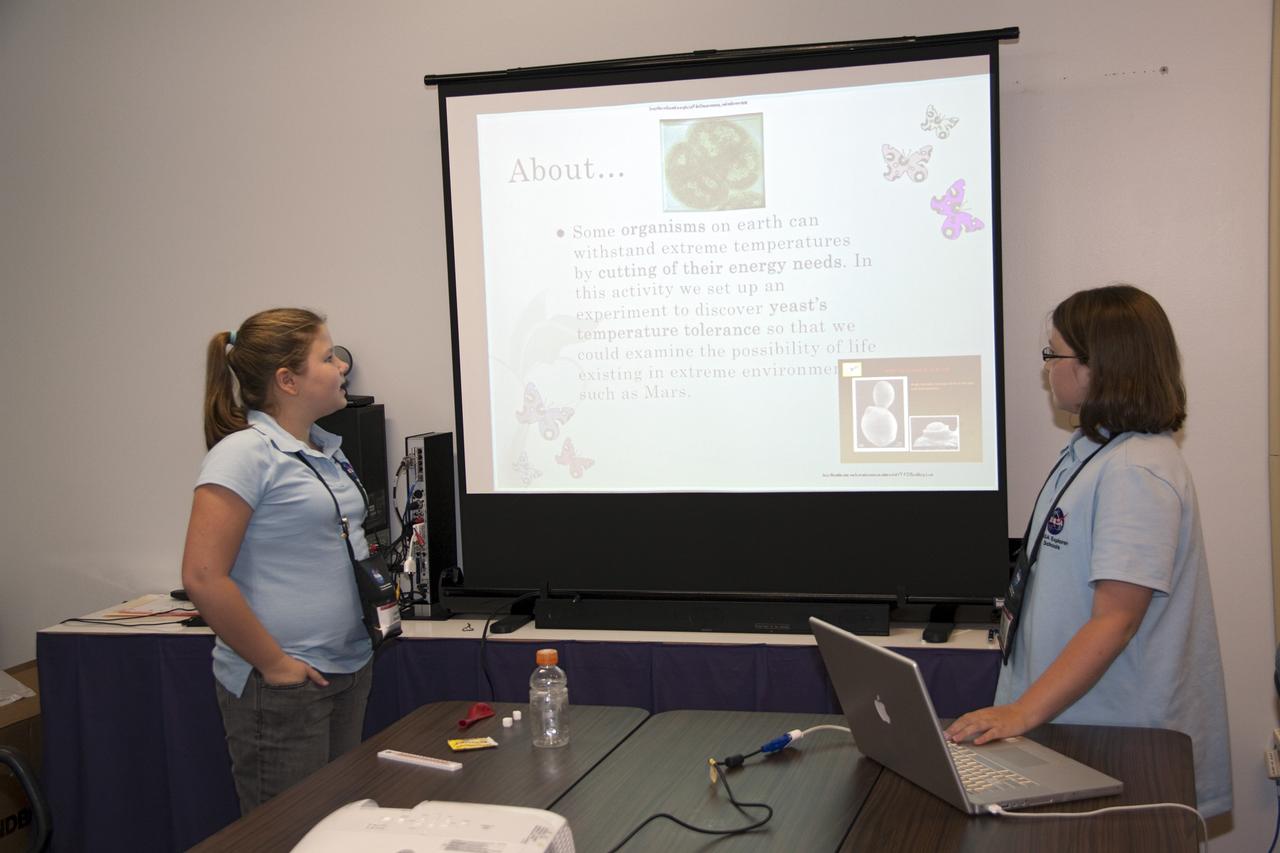
CAPE CANAVERAL, Fla. -- Students present their investigation project to their peers, scientists, engineers and education specialists during the NASA Explorer Schools Symposium at Kennedy Space Center in Florida. About 60 fourth- through 12-grade students from across the nation are at the center May 4-7 participating in tours of processing and launch facilities and the U.S. Astronaut Hall of Fame, as well as several educational activities and a career panel question-and-answer session. About 30 teachers will receive professional development opportunities during the symposium. The participants were competitively selected after they completed an original investigation focused on existing NASA missions or research interests. Photo Credit: NASA/Jack Pfaller
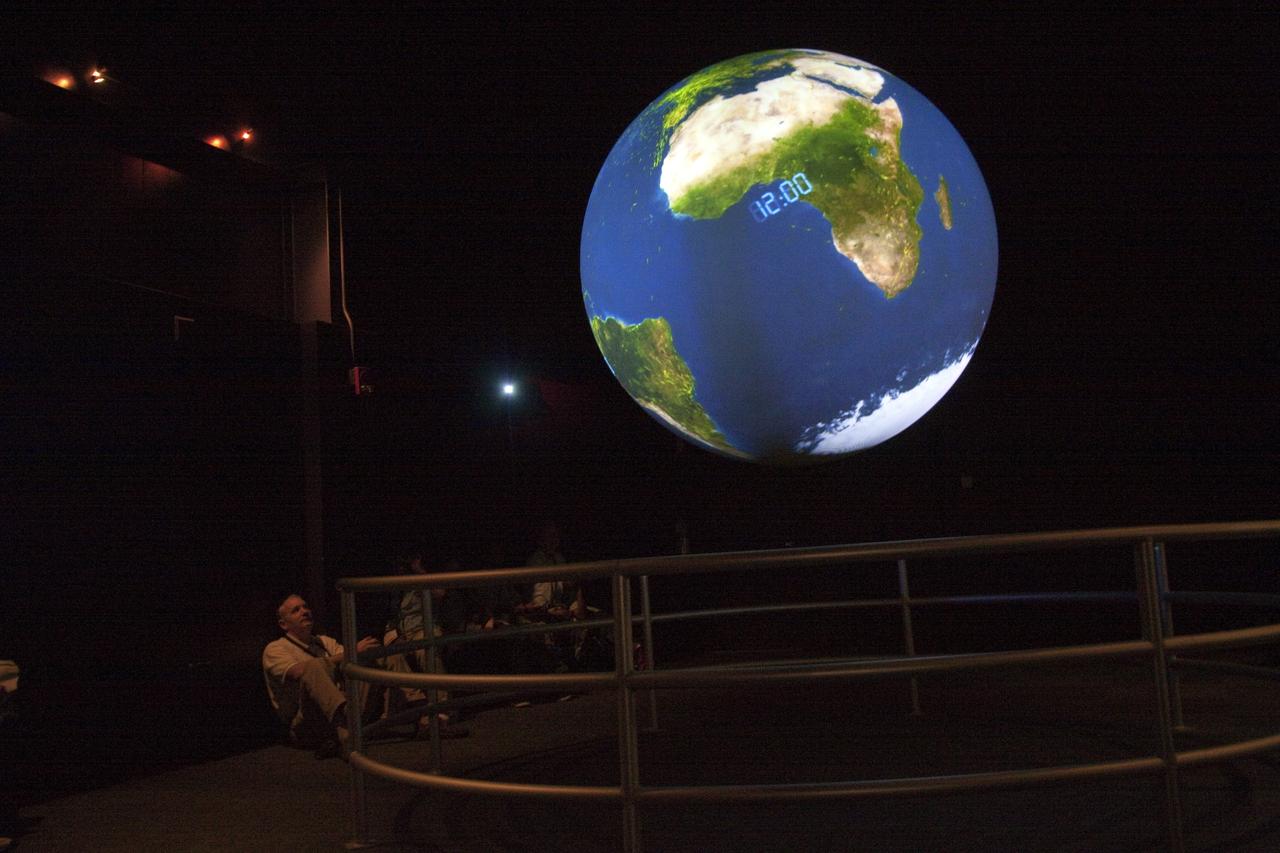
CAPE CANAVERAL, Fla. -- During the NASA Explorer Schools Symposium at Kennedy Space Center in Florida, students and teachers check out the Science on a Sphere system at the U.S. Astronaut Hall of Fame. About 60 fourth- through 12-grade students from across the nation are at the center May 4-7 participating in tours of processing and launch facilities, as well as several educational activities and a career panel question-and-answer session. About 30 teachers will receive professional development opportunities during the symposium. The participants were competitively selected after they completed an original investigation focused on existing NASA missions or research interests. Photo Credit: NASA/Jack Pfaller
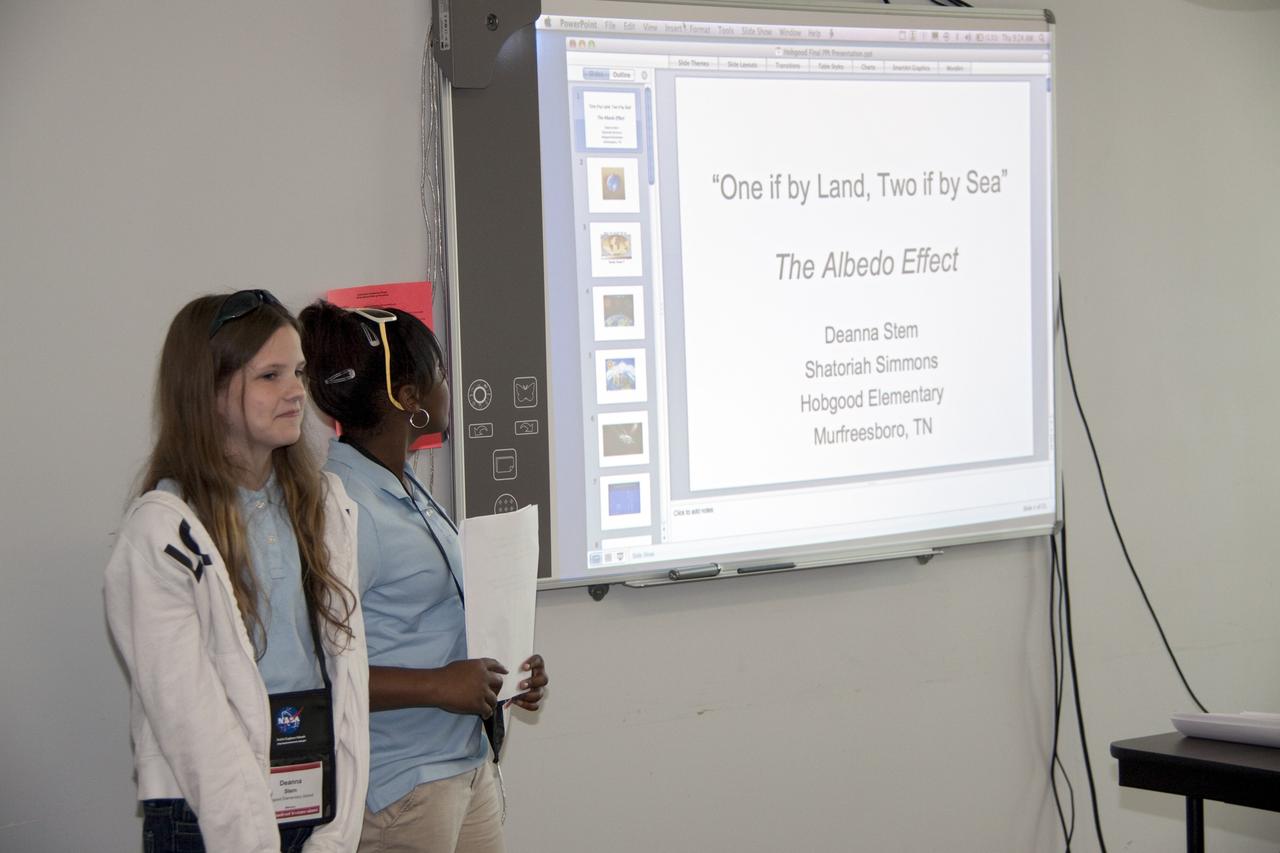
CAPE CANAVERAL, Fla. -- Students present their investigation project to their peers, scientists, engineers and education specialists during the NASA Explorer Schools Symposium at Kennedy Space Center in Florida. About 60 fourth- through 12-grade students from across the nation are at the center May 4-7 participating in tours of processing and launch facilities and the U.S. Astronaut Hall of Fame, as well as several educational activities and a career panel question-and-answer session. About 30 teachers will receive professional development opportunities during the symposium. The participants were competitively selected after they completed an original investigation focused on existing NASA missions or research interests. Photo Credit: NASA/Jack Pfaller
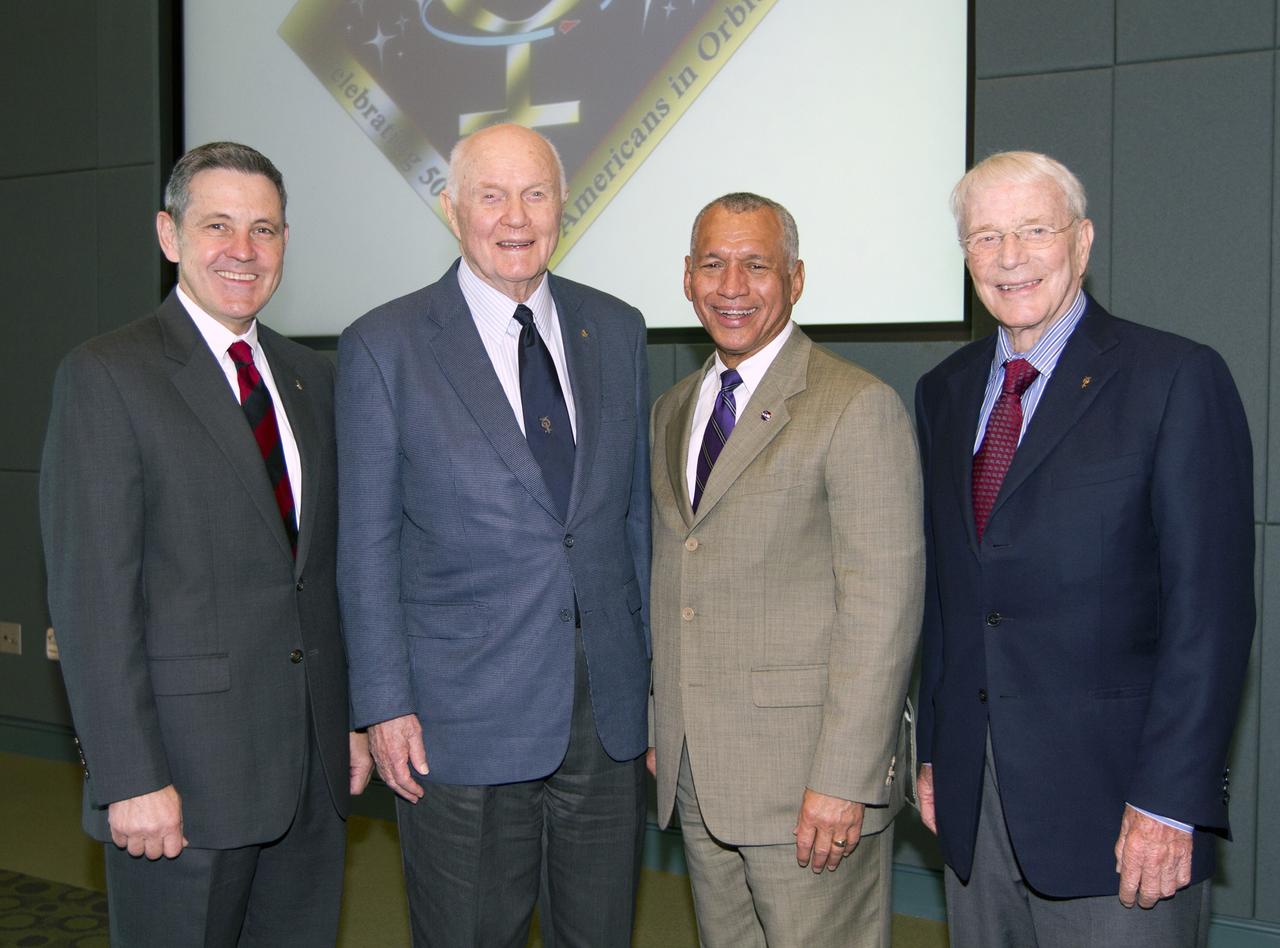
CAPE CANAVERAL, Fla. - Kennedy Space Center Director Bob Cabana, from left, Mercury astronaut John Glenn, NASA Administrator Charles Bolden and Mercury astronaut Scott Carpenter pose during a luncheon Feb. 17, 2012, celebrating 50 years of Americans in orbit, an era which began with Glenn's Mercury mission MA-6, on Feb. 20, 1962. Glenn's launch aboard an Atlas rocket took with it the hopes of an entire nation and ushered in a new era of space travel that eventually led to Americans walking on the moon by the end of the 1960s. Glenn soon was followed into orbit by Scott Carpenter, Walter Schirra and Gordon Cooper. Their fellow Mercury astronauts Alan Shepard and Virgil "Gus" Grissom flew earlier suborbital flights. Deke Slayton, a member of NASA's original Mercury 7 astronauts, was grounded by a medical condition until the Apollo-Soyuz Test Project in 1975. Photo credit: NASA/Kim Shiflett
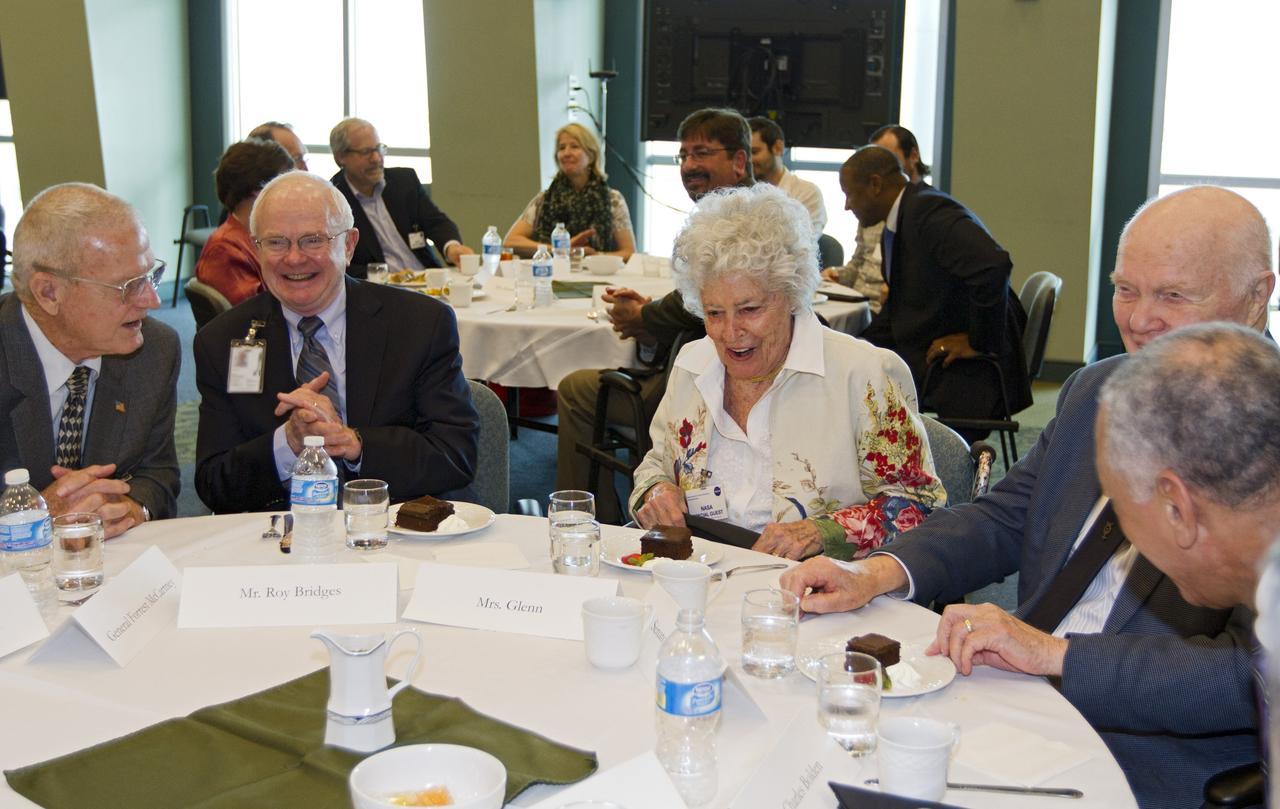
CAPE CANAVERAL, Fla. - Former Kennedy Space Center directors Forrest McCartney and Roy Bridges join Annie Glenn, astronaut John Glenn and NASA Administrator Charles Bolden during a luncheon Feb. 17, 2012, celebrating 50 years of Americans in orbit, an era which began with Glenn's Mercury mission MA-6, on Feb. 20, 1962. Glenn's launch aboard an Atlas rocket took with it the hopes of an entire nation and ushered in a new era of space travel that eventually led to Americans walking on the moon by the end of the 1960s. Glenn soon was followed into orbit by Scott Carpenter, Walter Schirra and Gordon Cooper. Their fellow Mercury astronauts Alan Shepard and Virgil "Gus" Grissom flew earlier suborbital flights. Deke Slayton, a member of NASA's original Mercury 7 astronauts, was grounded by a medical condition until the Apollo-Soyuz Test Project in 1975. Photo credit: NASA/Kim Shiflett
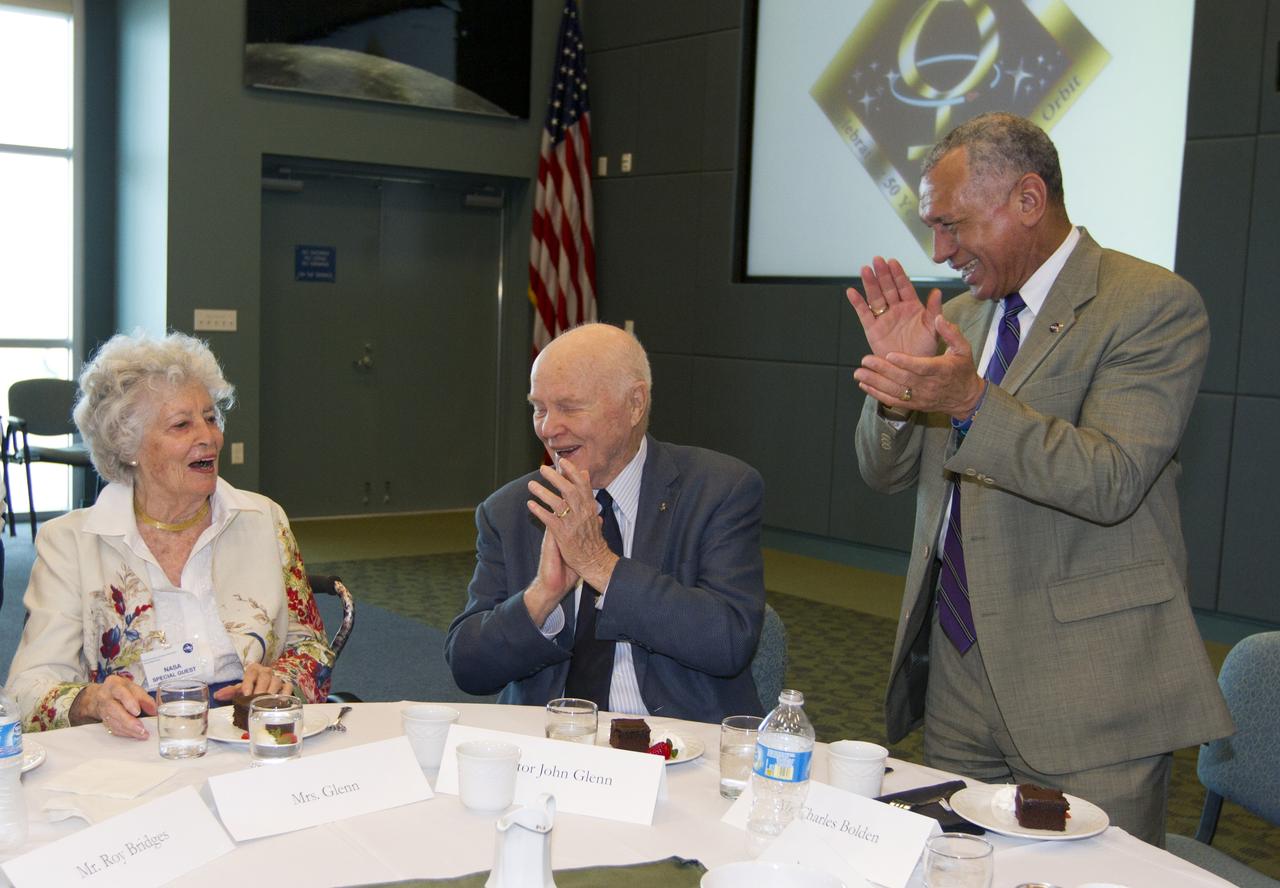
CAPE CANAVERAL, Fla. -Annie Glenn, left, astronaut John Glenn and NASA Administrator Charles Bolden take part in a luncheon Feb. 17, 2012, celebrating 50 years of Americans in orbit, an era which began with Glenn's Mercury mission MA-6, on Feb. 20, 1962. Glenn's launch aboard an Atlas rocket took with it the hopes of an entire nation and ushered in a new era of space travel that eventually led to Americans walking on the moon by the end of the 1960s. Glenn soon was followed into orbit by Scott Carpenter, Walter Schirra and Gordon Cooper. Their fellow Mercury astronauts Alan Shepard and Virgil "Gus" Grissom flew earlier suborbital flights. Deke Slayton, a member of NASA's original Mercury 7 astronauts, was grounded by a medical condition until the Apollo-Soyuz Test Project in 1975. Photo credit: NASA/Kim Shiflett
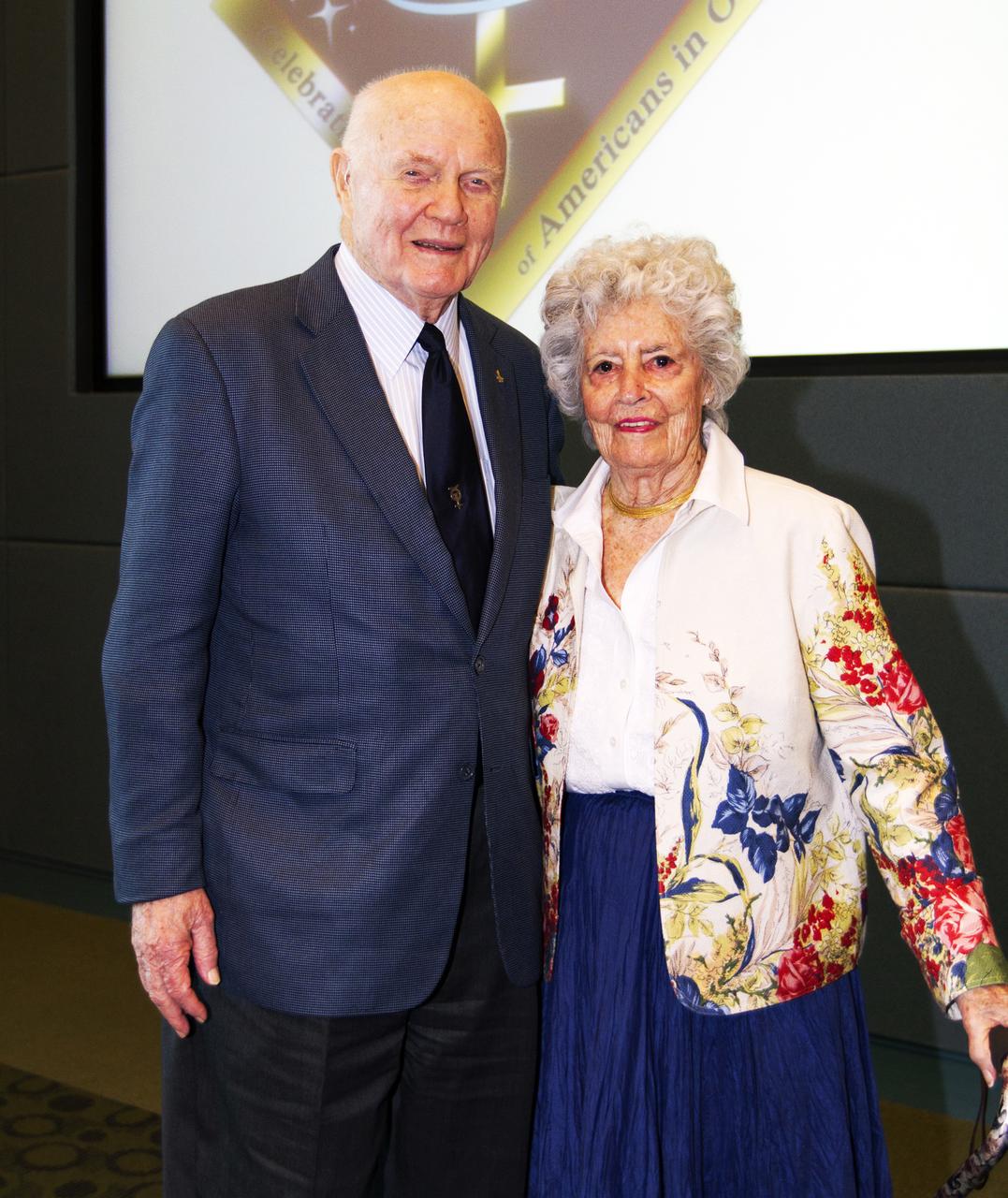
Mercury astronaut John Glenn and his wife, Annie, pose during a luncheon Feb. 17, 2012, celebrating 50 years of Americans in orbit, an era which began with Glenn's Mercury mission MA-6, on Feb. 20, 1962. Glenn's launch aboard an Atlas rocket took with it the hopes of an entire nation and ushered in a new era of space travel that eventually led to Americans walking on the moon by the end of the 1960s. Glenn soon was followed into orbit by Scott Carpenter, Walter Schirra and Gordon Cooper. Their fellow Mercury astronauts Alan Shepard and Virgil "Gus" Grissom flew earlier suborbital flights. Deke Slayton, a member of NASA's original Mercury 7 astronauts, was grounded by a medical condition until the Apollo-Soyuz Test Project in 1975.
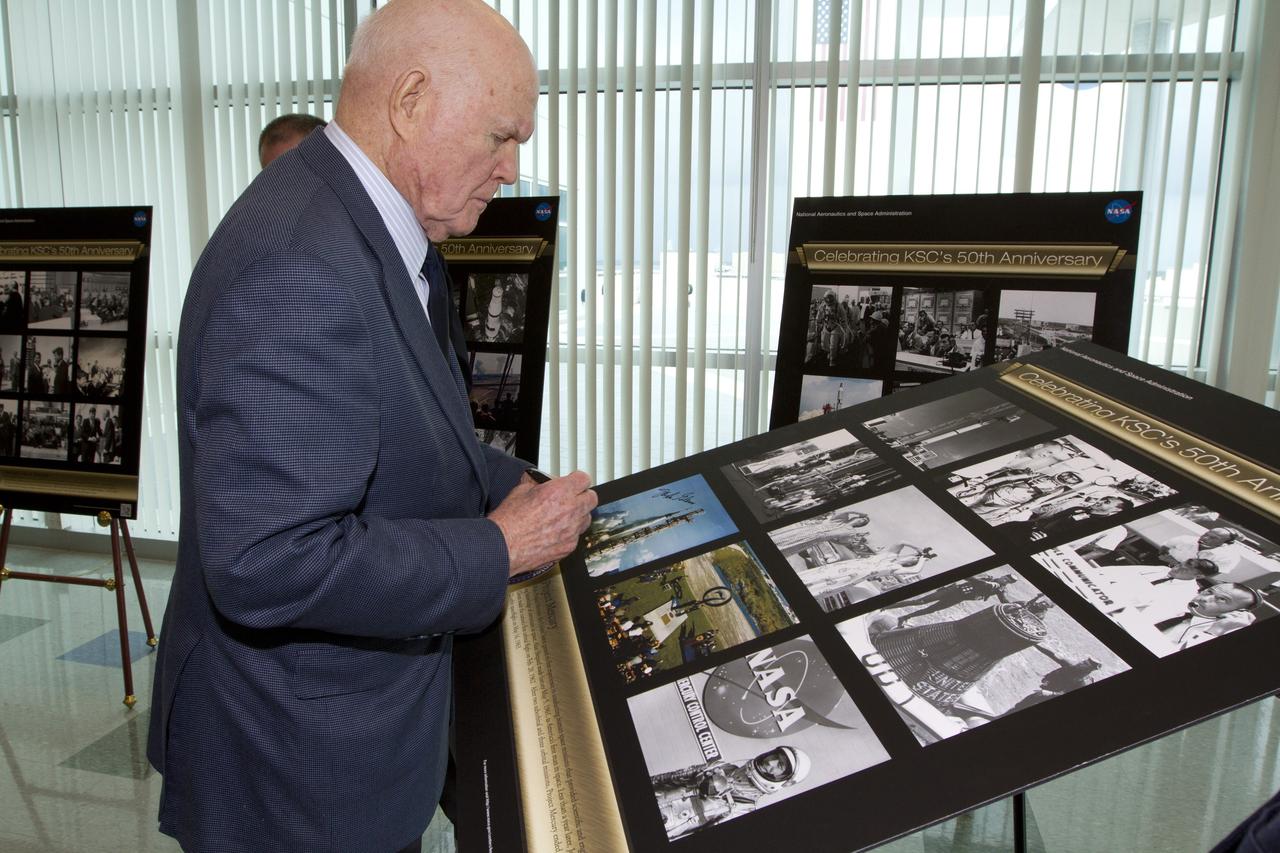
CAPE CANAVERAL, Fla. - Mercury astronaut John Glenn signs a poster celebrating 50 years of Americans in orbit, an era which began with Glenn's Mercury mission MA-6, on Feb. 20, 1962. Glenn's launch aboard an Atlas rocket took with it the hopes of an entire nation and ushered in a new era of space travel that eventually led to Americans walking on the moon by the end of the 1960s. Glenn soon was followed into orbit by Scott Carpenter, Walter Schirra and Gordon Cooper. Their fellow Mercury astronauts Alan Shepard and Virgil "Gus" Grissom flew earlier suborbital flights. Deke Slayton, a member of NASA's original Mercury 7 astronauts, was grounded by a medical condition until the Apollo-Soyuz Test Project in 1975. Photo credit: NASA/Kim Shiflett
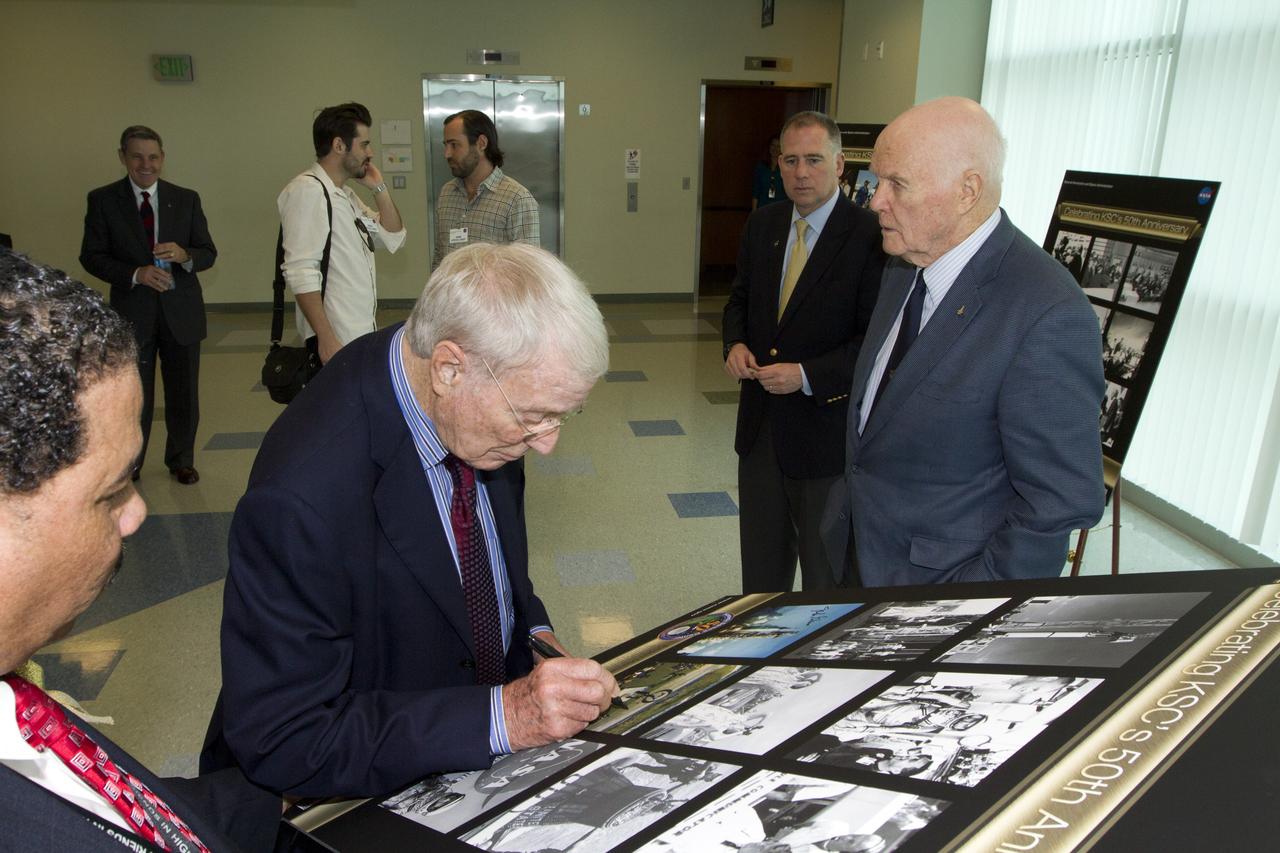
CAPE CANAVERAL, Fla. - Mercury astronaut Scott Carpenter signs a poster celebrating 50 years of Americans in orbit, an era which began with Glenn's Mercury mission MA-6, on Feb. 20, 1962. Glenn's launch aboard an Atlas rocket took with it the hopes of an entire nation and ushered in a new era of space travel that eventually led to Americans walking on the moon by the end of the 1960s. Glenn soon was followed into orbit by Scott Carpenter, Walter Schirra and Gordon Cooper. Their fellow Mercury astronauts Alan Shepard and Virgil "Gus" Grissom flew earlier suborbital flights. Deke Slayton, a member of NASA's original Mercury 7 astronauts, was grounded by a medical condition until the Apollo-Soyuz Test Project in 1975. Photo credit: NASA/Kim Shiflett
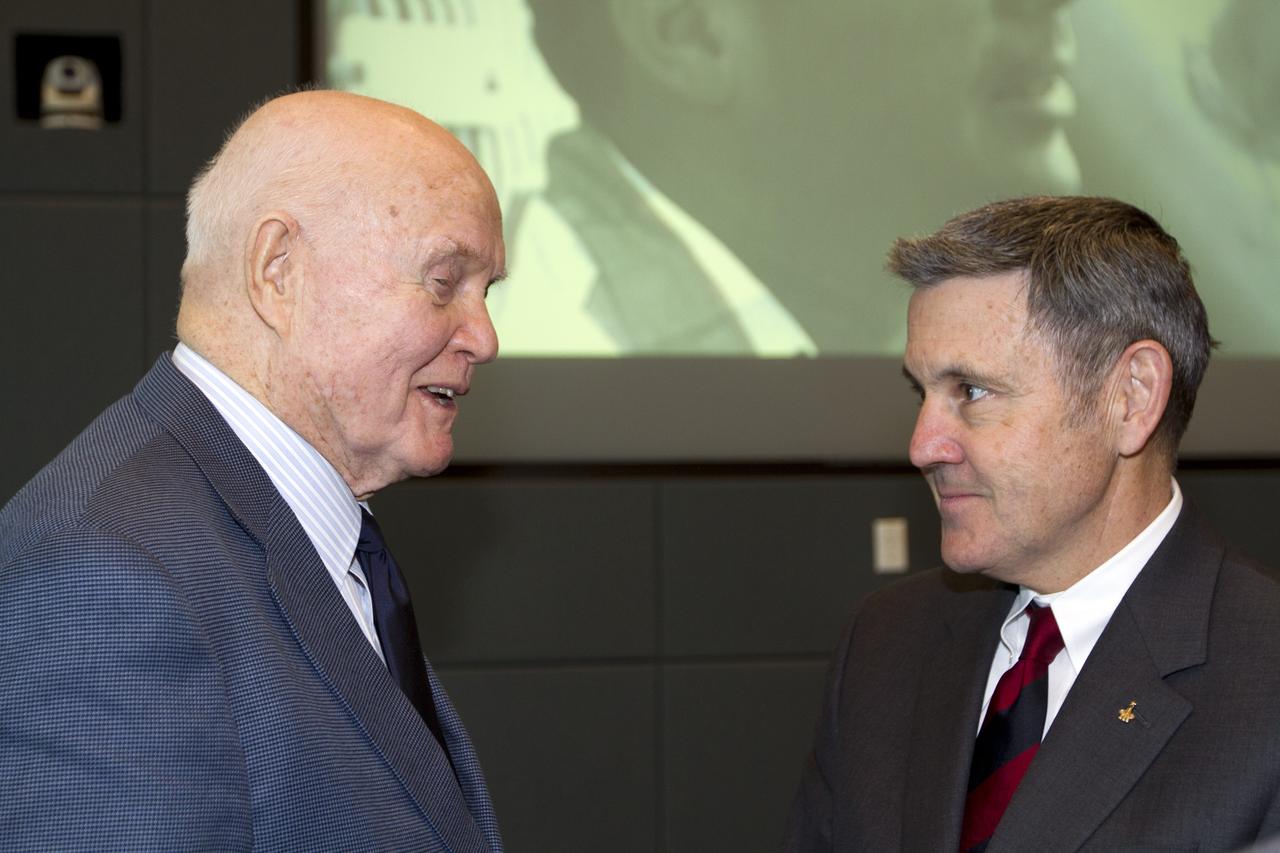
CAPE CANAVERAL, Fla. - Mercury astronaut John Glenn, left, talks with Kennedy Space Center Director Bob Cabana during a luncheon Feb. 17, 2012, celebrating 50 years of Americans in orbit, an era which began with Glenn's Mercury mission MA-6, on Feb. 20, 1962. Glenn's launch aboard an Atlas rocket took with it the hopes of an entire nation and ushered in a new era of space travel that eventually led to Americans walking on the moon by the end of the 1960s. Glenn soon was followed into orbit by Scott Carpenter, Walter Schirra and Gordon Cooper. Their fellow Mercury astronauts Alan Shepard and Virgil "Gus" Grissom flew earlier suborbital flights. Deke Slayton, a member of NASA's original Mercury 7 astronauts, was grounded by a medical condition until the Apollo-Soyuz Test Project in 1975. Photo credit: NASA/Kim Shiflett
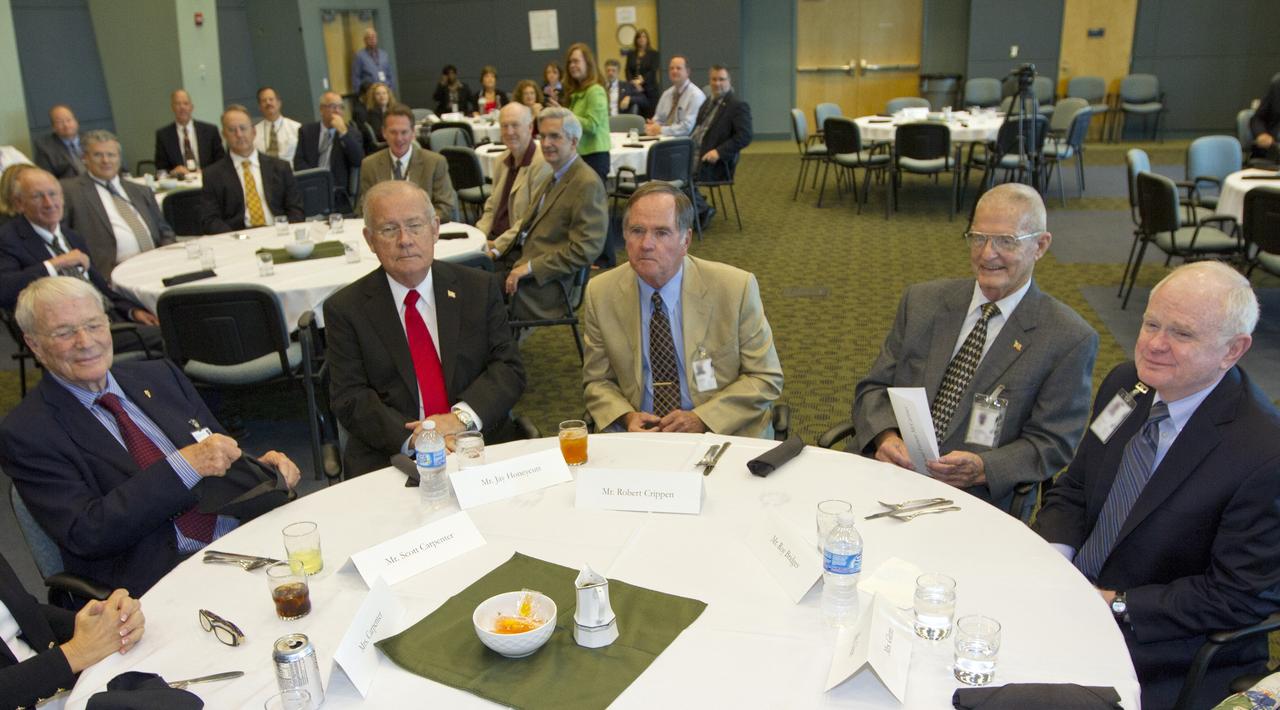
CAPE CANAVERAL, Fla. - Former Mercury astronaut Scott Carpenter, left, and former Kennedy Space Center directors Jay Honeycutt, Bob Crippen, Forrest McCartney and Roy Bridges listen during a luncheon Feb. 17, 2012, celebrating 50 years of Americans in orbit, an era which began with Glenn's Mercury mission MA-6, on Feb. 20, 1962. Glenn's launch aboard an Atlas rocket took with it the hopes of an entire nation and ushered in a new era of space travel that eventually led to Americans walking on the moon by the end of the 1960s. Glenn soon was followed into orbit by Scott Carpenter, Walter Schirra and Gordon Cooper. Their fellow Mercury astronauts Alan Shepard and Virgil "Gus" Grissom flew earlier suborbital flights. Deke Slayton, a member of NASA's original Mercury 7 astronauts, was grounded by a medical condition until the Apollo-Soyuz Test Project in 1975. Photo credit: NASA/Kim Shiflett
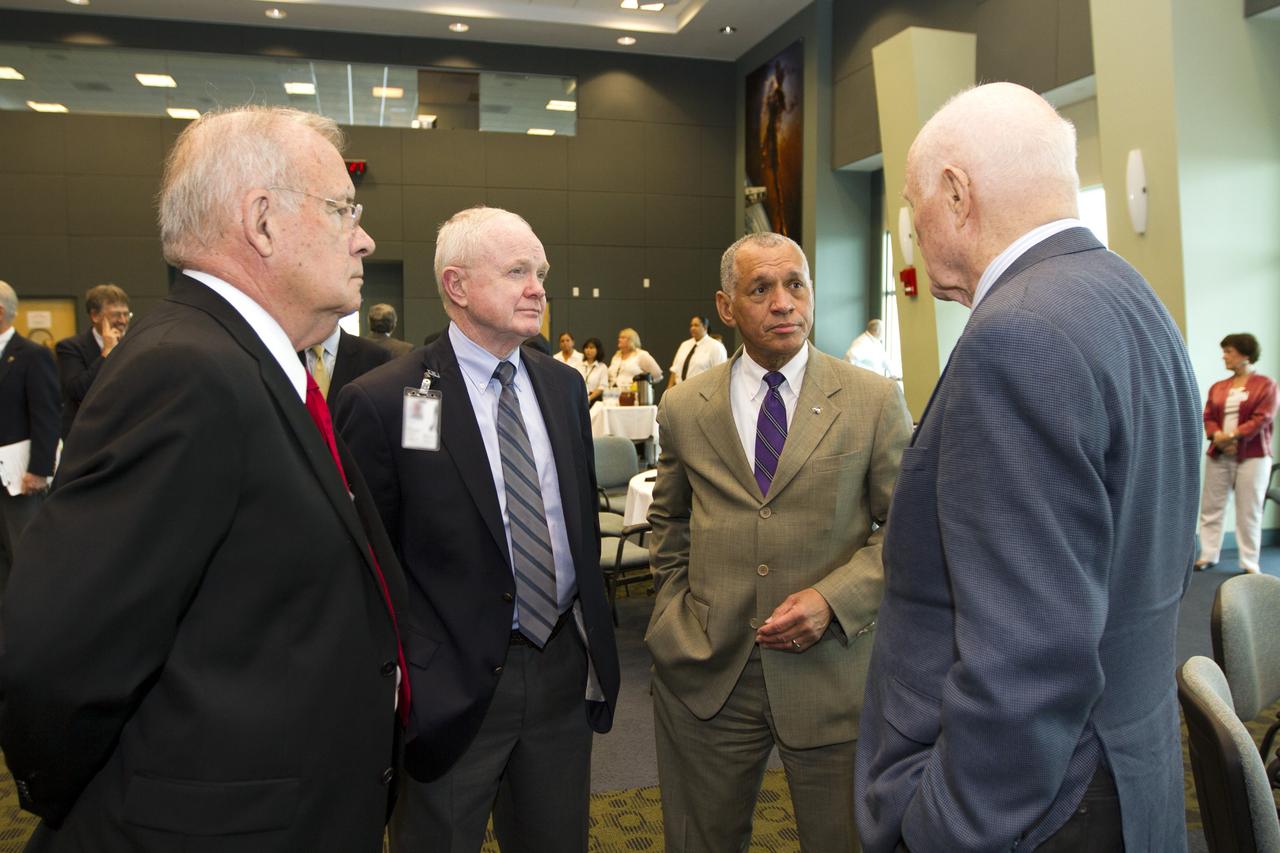
CAPE CANAVERAL, Fla. - Former Kennedy Space Center directors Jay Honeycutt, left, Roy Bridges and NASA Administrator Charles Bolden talk with astronaut John Glenn before a luncheon Feb. 17, 2012 celebrating 50 years of Americans in orbit, an era which began with Glenn's Mercury mission MA-6, on Feb. 20, 1962. Glenn's launch aboard an Atlas rocket took with it the hopes of an entire nation and ushered in a new era of space travel that eventually led to Americans walking on the moon by the end of the 1960s. Glenn soon was followed into orbit by Scott Carpenter, Walter Schirra and Gordon Cooper. Their fellow Mercury astronauts Alan Shepard and Virgil "Gus" Grissom flew earlier suborbital flights. Deke Slayton, a member of NASA's original Mercury 7 astronauts, was grounded by a medical condition until the Apollo-Soyuz Test Project in 1975. Photo credit: NASA/Kim Shiflett
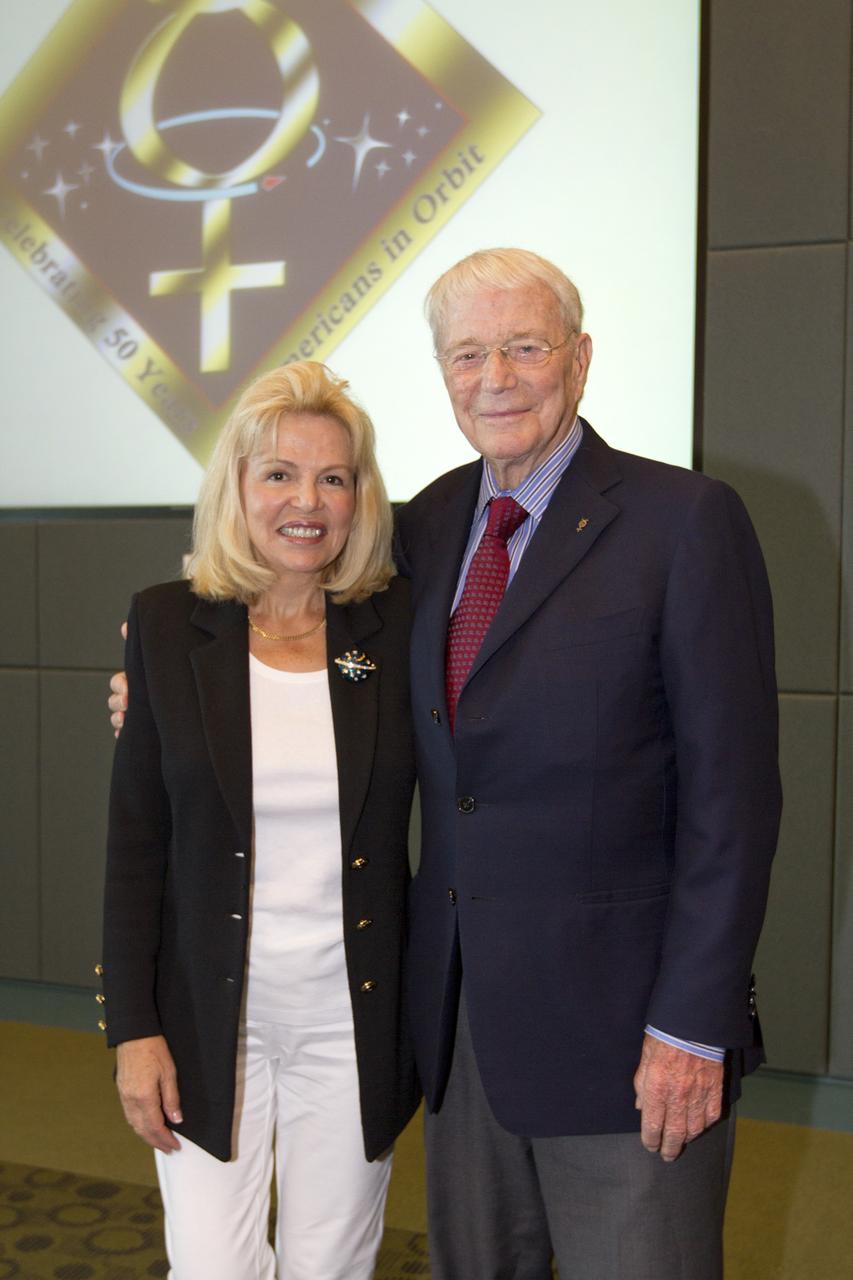
CAPE CANAVERAL, Fla. - Mercury astronaut Scott Carpenter and his wife, Patricia, pose during a luncheon Feb. 17, 2012, celebrating 50 years of Americans in orbit, an era which began with John Glenn's Mercury mission MA-6, on Feb. 20, 1962. Glenn's launch aboard an Atlas rocket took with it the hopes of an entire nation and ushered in a new era of space travel that eventually led to Americans walking on the moon by the end of the 1960s. Glenn soon was followed into orbit by Carpenter, Walter Schirra and Gordon Cooper. Their fellow Mercury astronauts Alan Shepard and Virgil "Gus" Grissom flew earlier suborbital flights. Deke Slayton, a member of NASA's original Mercury 7 astronauts, was grounded by a medical condition until the Apollo-Soyuz Test Project in 1975. Photo credit: NASA/Kim Shiflett
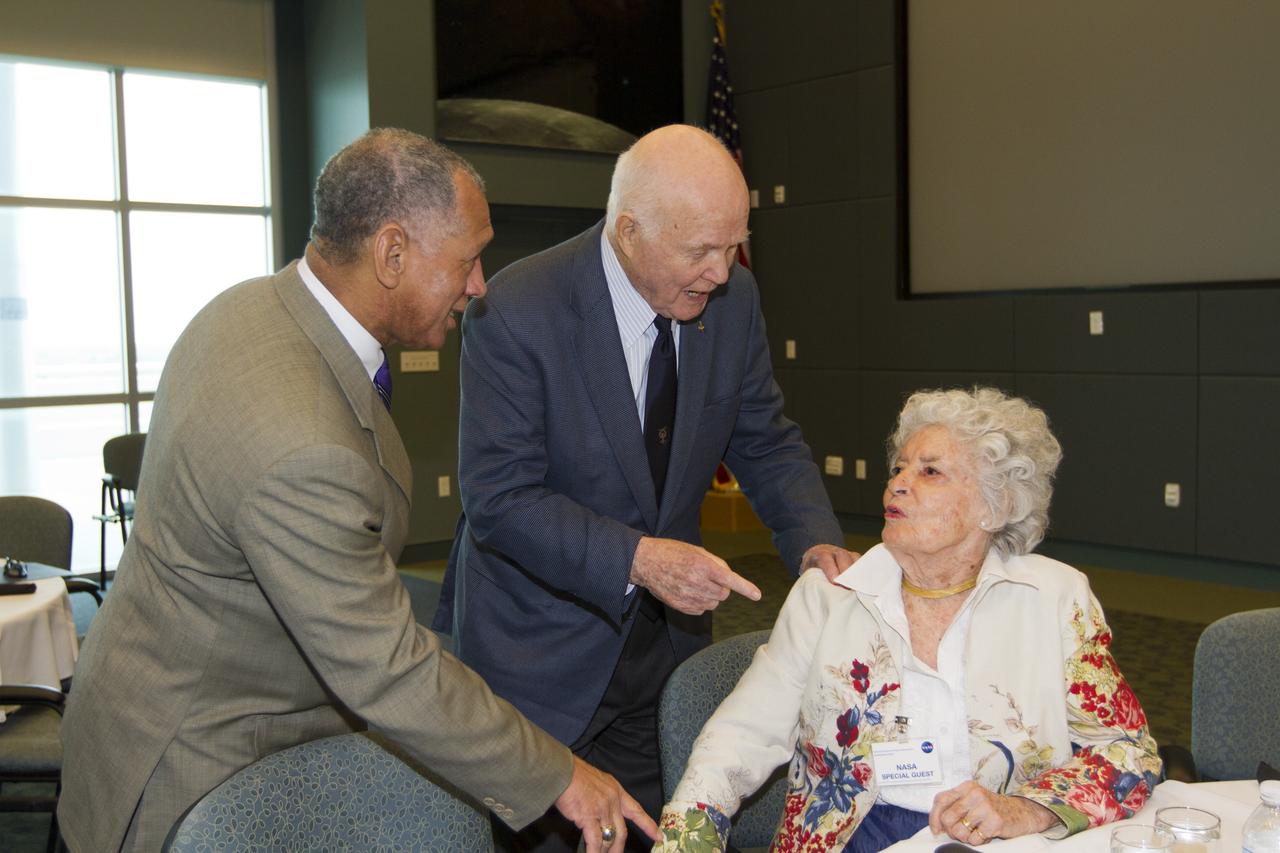
CAPE CANAVERAL, Fla. - NASA Administrator Charles Bolden, left, talks with astronaut John Glenn and his wife, Annie Glenn, before a luncheon Feb. 17, 2012, celebrating 50 years of Americans in orbit, an era which began with Glenn's Mercury mission MA-6, on Feb. 20, 1962. Glenn's launch aboard an Atlas rocket took with it the hopes of an entire nation and ushered in a new era of space travel that eventually led to Americans walking on the moon by the end of the 1960s. Glenn soon was followed into orbit by Scott Carpenter, Walter Schirra and Gordon Cooper. Their fellow Mercury astronauts Alan Shepard and Virgil "Gus" Grissom flew earlier suborbital flights. Deke Slayton, a member of NASA's original Mercury 7 astronauts, was grounded by a medical condition until the Apollo-Soyuz Test Project in 1975. Photo credit: NASA/Kim Shiflett
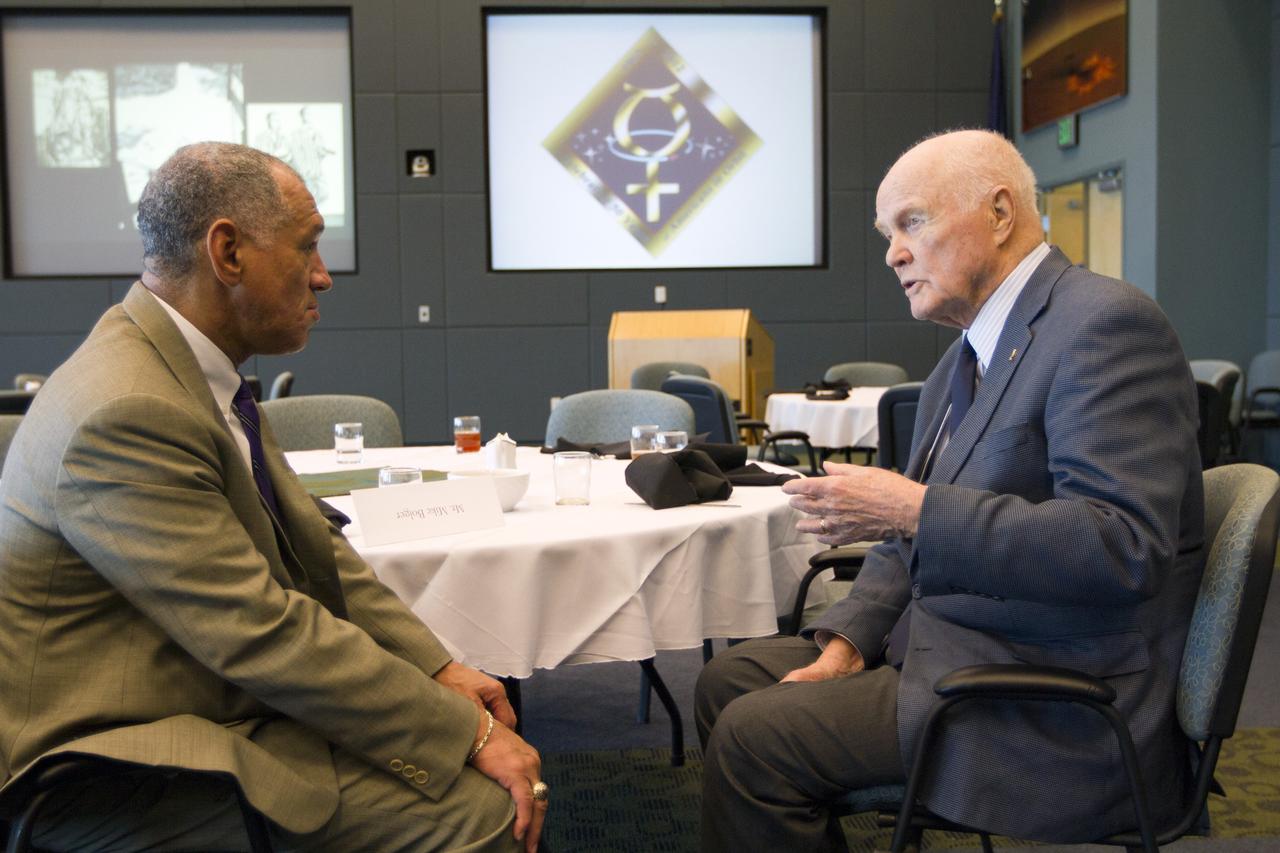
CAPE CANAVERAL, Fla. -NASA Administrator Charles Bolden, left, talks with astronaut John Glenn following a luncheon Feb. 17, 2012, celebrating 50 years of Americans in orbit, an era which began with Glenn's Mercury mission MA-6, on Feb. 20, 1962. Glenn's launch aboard an Atlas rocket took with it the hopes of an entire nation and ushered in a new era of space travel that eventually led to Americans walking on the moon by the end of the 1960s. Glenn soon was followed into orbit by Scott Carpenter, Walter Schirra and Gordon Cooper. Their fellow Mercury astronauts Alan Shepard and Virgil "Gus" Grissom flew earlier suborbital flights. Deke Slayton, a member of NASA's original Mercury 7 astronauts, was grounded by a medical condition until the Apollo-Soyuz Test Project in 1975. Photo credit: NASA/Kim Shiflett
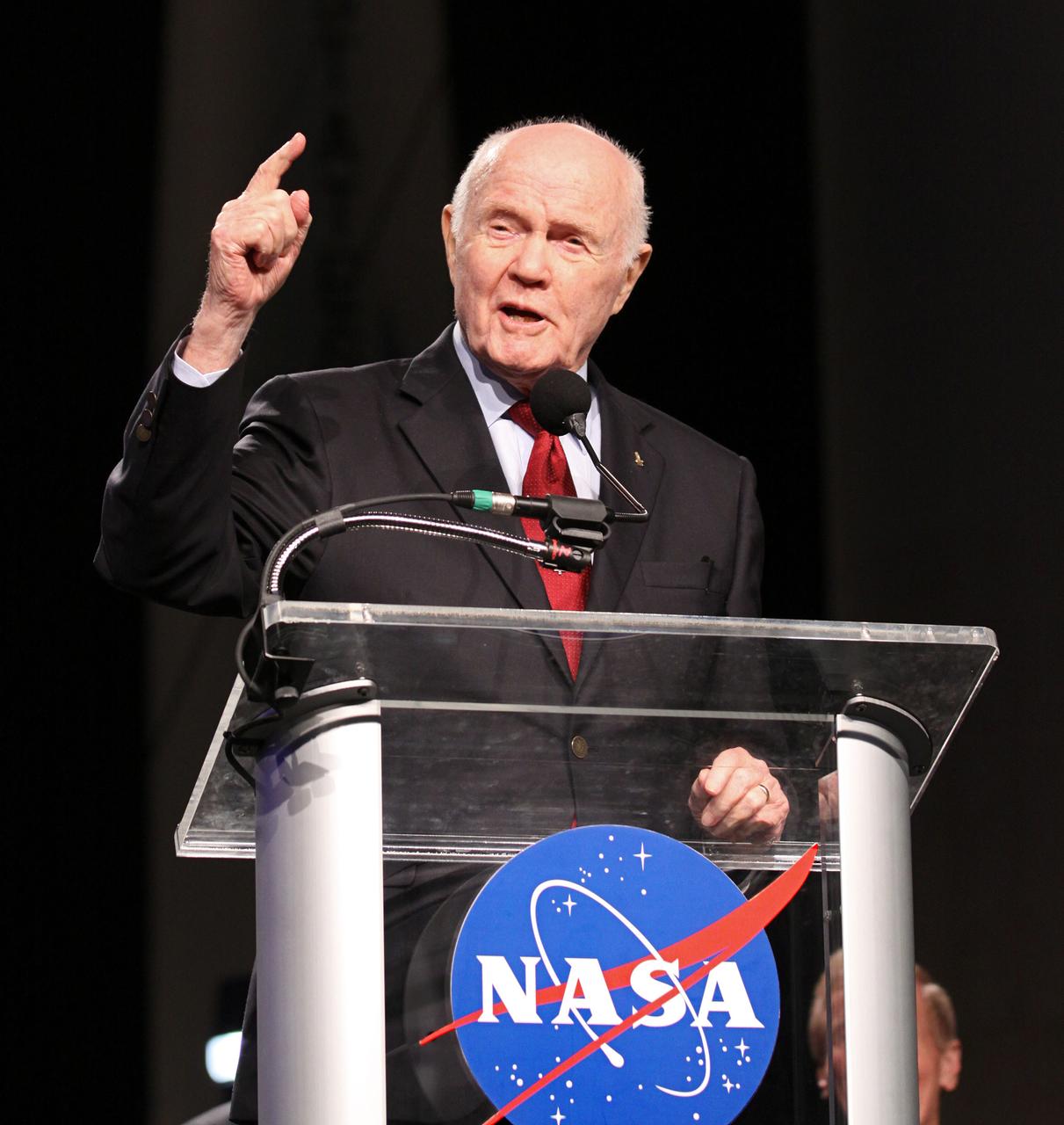
Mercury astronaut John Glenn speaks during the "On Shoulders of Giants" program celebrating 50 years of Americans in orbit, an era which began with Glenn's MA-6 mission on Feb. 20, 1962. The event was conducted in the Rocket Garden at the Kennedy Space Center Visitor Complex in Florida a few miles from the launch pad where Glenn and Scott Carpenter took flight in Mercury spacecraft. Glenn's launch aboard an Atlas rocket took with it the hopes of an entire nation and ushered in a new era of space travel that eventually led to Americans walking on the moon by the end of the 1960s. Glenn soon was followed into orbit by Scott Carpenter, Walter Schirra and Gordon Cooper. Their fellow Mercury astronauts Alan Shepard and Virgil "Gus" Grissom flew earlier suborbital flights. Deke Slayton, a member of NASA's original Mercury 7 astronauts, was grounded by a medical condition until the Apollo-Soyuz Test Project in 1975.
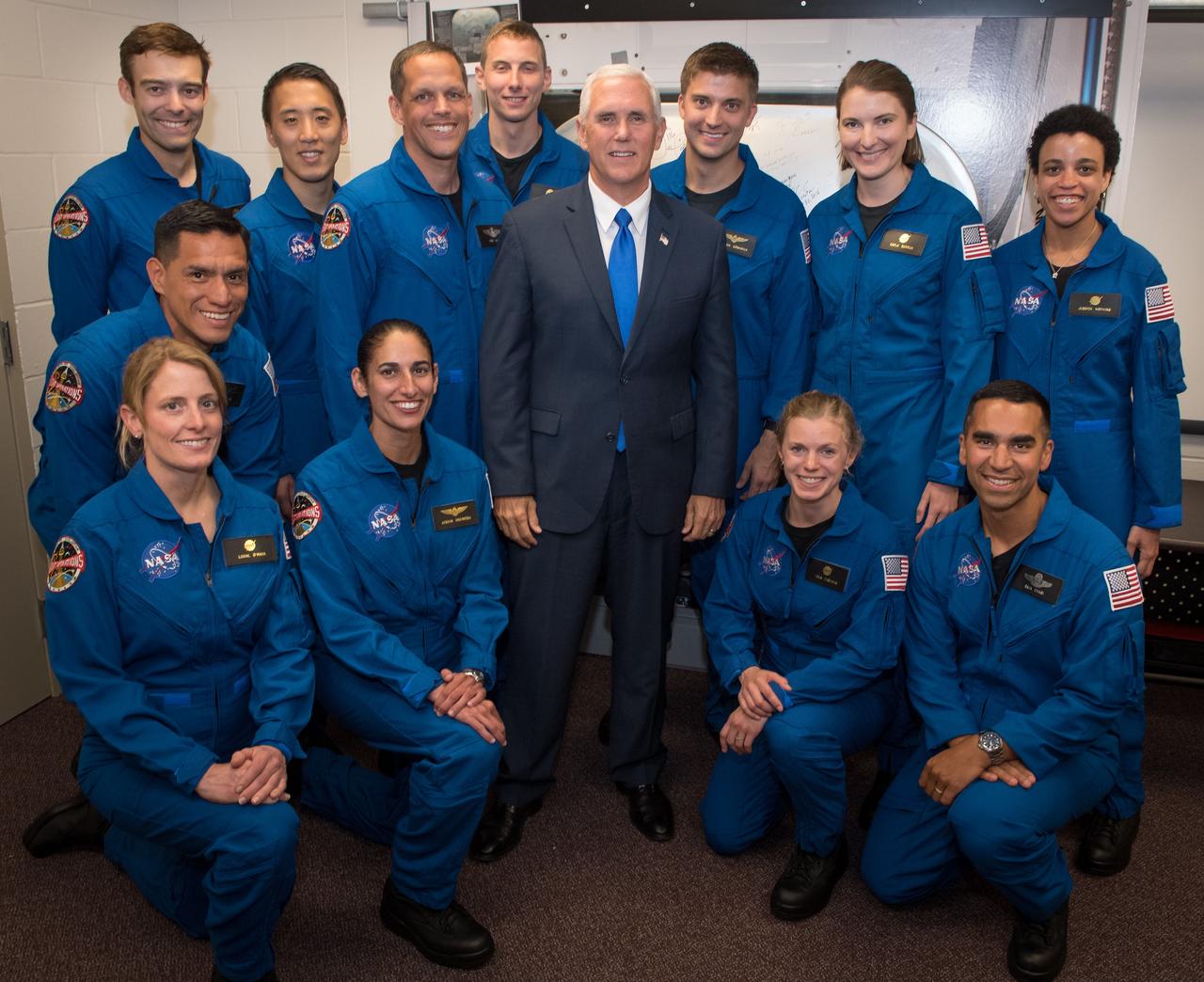
nhq201706070004 (06/07/2017) --- Vice President Mike Pence poses for a group photograph with NASA's 12 new astronaut candidates, Wednesday, June 7, 2017 at NASA’s Johnson Space Center in Houston, Texas. NASA astronaut candidates, standing from left, Robb Kulin, Jonathan Kim, Robert Hines, Warren Hoburg, Matthew Dominick, Kayla Barron, Jessica Watkins, from left kneeling, Francisco Rubio, Loral O’Hara, Jasmin Moghbeli, Zena Cardman, and Raja Chari. After completing two years of training, the new astronaut candidates could be assigned to missions performing research on the International Space Station, launching from American soil on spacecraft built by commercial companies, and launching on deep space missions on NASA’s new Orion spacecraft and Space Launch System rocket. Photo Credit: (NASA/Bill Ingalls) Original Filename
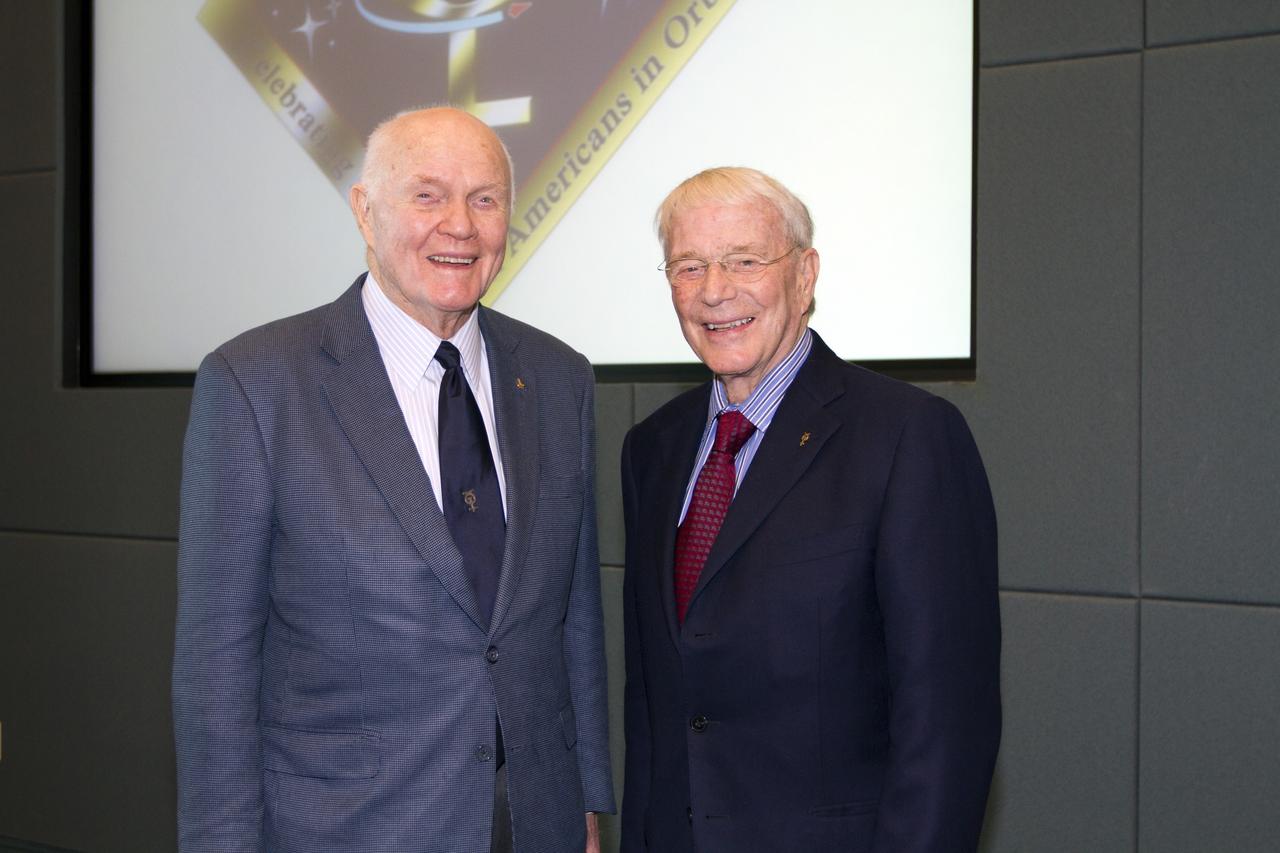
CAPE CANAVERAL, Fla. - Mercury astronauts John Glenn, left, and Scott Carpenter pose during a luncheon Feb. 17, 2012, celebrating 50 years of Americans in orbit, an era which began with Glenn's Mercury mission MA-6, on Feb. 20, 1962. Glenn's launch aboard an Atlas rocket took with it the hopes of an entire nation and ushered in a new era of space travel that eventually led to Americans walking on the moon by the end of the 1960s. Glenn soon was followed into orbit by Scott Carpenter, Walter Schirra and Gordon Cooper. Their fellow Mercury astronauts Alan Shepard and Virgil "Gus" Grissom flew earlier suborbital flights. Deke Slayton, a member of NASA's original Mercury 7 astronauts, was grounded by a medical condition until the Apollo-Soyuz Test Project in 1975. Photo credit: NASA/Kim Shiflett
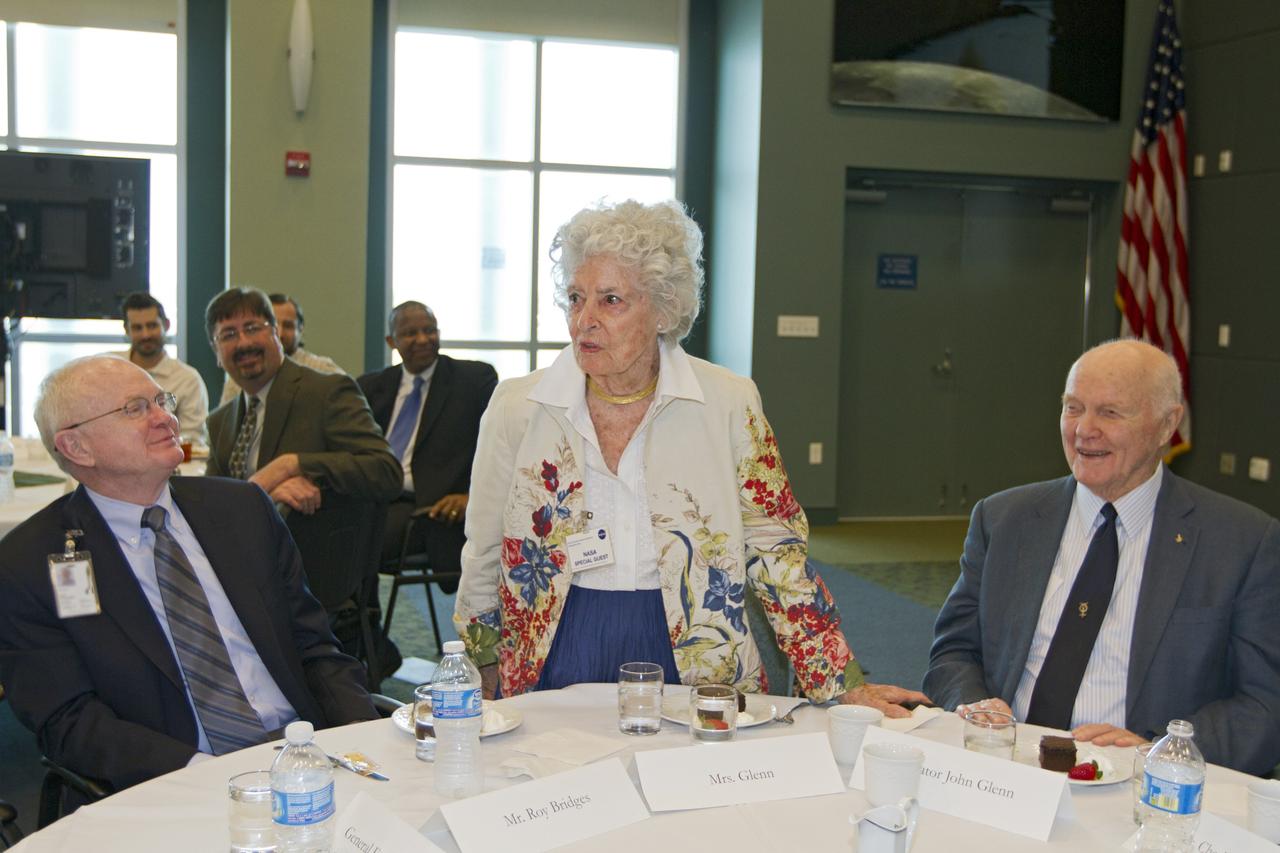
CAPE CANAVERAL, Fla. - Annie Glenn, center, speaks as former Kennedy Space Center director Roy Bridges, left, and astronaut John Glenn look on during a luncheon Feb. 17, 2012, celebrating 50 years of Americans in orbit, an era which began with Glenn's Mercury mission MA-6, on Feb. 20, 1962. Glenn's launch aboard an Atlas rocket took with it the hopes of an entire nation and ushered in a new era of space travel that eventually led to Americans walking on the moon by the end of the 1960s. Glenn soon was followed into orbit by Scott Carpenter, Walter Schirra and Gordon Cooper. Their fellow Mercury astronauts Alan Shepard and Virgil "Gus" Grissom flew earlier suborbital flights. Deke Slayton, a member of NASA's original Mercury 7 astronauts, was grounded by a medical condition until the Apollo-Soyuz Test Project in 1975. Photo credit: NASA/Kim Shiflett
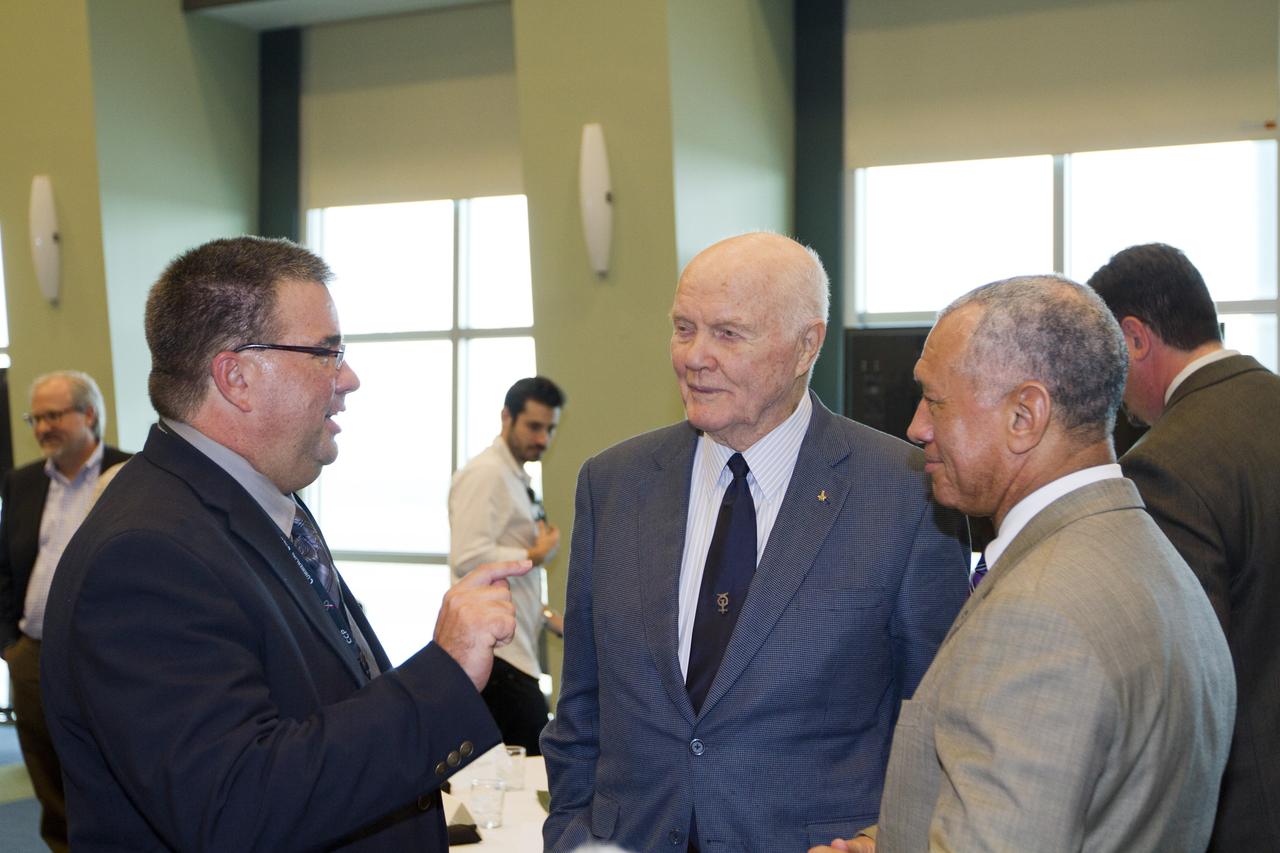
CAPE CANAVERAL, Fla. - Ed Mango, program manager of NASA's Commercial Crew Program, left, talks with astronaut John Glenn, center and NASA Administrator Charles Bolden before a luncheon Feb. 17, 2012, celebrating 50 years of Americans in orbit, an era which began with Glenn's Mercury mission MA-6, on Feb. 20, 1962. Glenn's launch aboard an Atlas rocket took with it the hopes of an entire nation and ushered in a new era of space travel that eventually led to Americans walking on the moon by the end of the 1960s. Glenn soon was followed into orbit by Scott Carpenter, Walter Schirra and Gordon Cooper. Their fellow Mercury astronauts Alan Shepard and Virgil "Gus" Grissom flew earlier suborbital flights. Deke Slayton, a member of NASA's original Mercury 7 astronauts, was grounded by a medical condition until the Apollo-Soyuz Test Project in 1975. Photo credit: NASA/Kim Shiflett
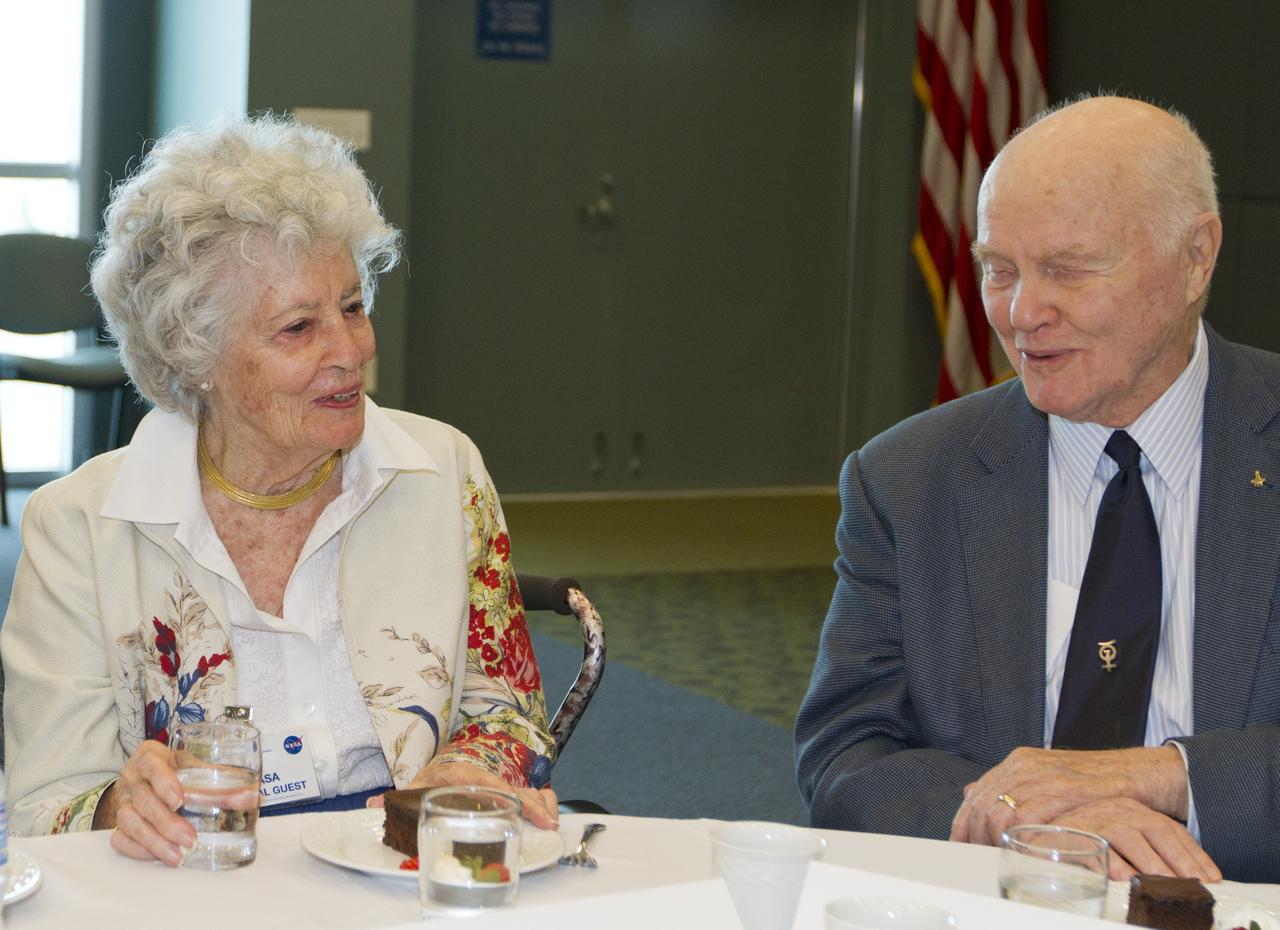
CAPE CANAVERAL, Fla. -Annie Glenn and astronaut John Glenn listen during a luncheon Feb. 17, 2012, celebrating 50 years of Americans in orbit, an era which began with Glenn's Mercury mission MA-6, on Feb. 20, 1962. Glenn's launch aboard an Atlas rocket took with it the hopes of an entire nation and ushered in a new era of space travel that eventually led to Americans walking on the moon by the end of the 1960s. Glenn soon was followed into orbit by Scott Carpenter, Walter Schirra and Gordon Cooper. Their fellow Mercury astronauts Alan Shepard and Virgil "Gus" Grissom flew earlier suborbital flights. Deke Slayton, a member of NASA's original Mercury 7 astronauts, was grounded by a medical condition until the Apollo-Soyuz Test Project in 1975. Photo credit: NASA/Kim Shiflett
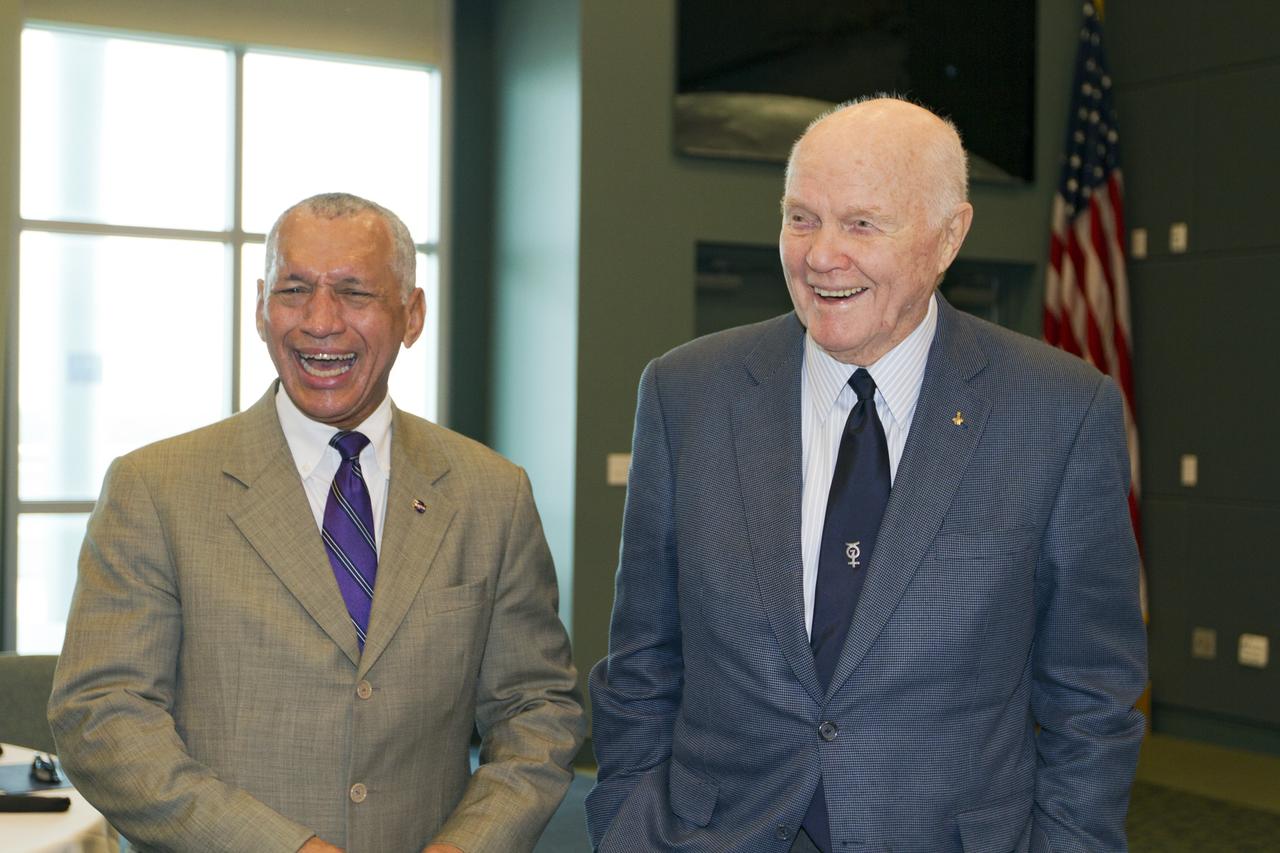
CAPE CANAVERAL, Fla. - NASA Administrator Charles Bolden, left, shares a laugh with astronaut John Glenn before a luncheon Feb. 17, 2012, celebrating 50 years of Americans in orbit, an era which began with Glenn's Mercury mission MA-6, on Feb. 20, 1962. Glenn's launch aboard an Atlas rocket took with it the hopes of an entire nation and ushered in a new era of space travel that eventually led to Americans walking on the moon by the end of the 1960s. Glenn soon was followed into orbit by Scott Carpenter, Walter Schirra and Gordon Cooper. Their fellow Mercury astronauts Alan Shepard and Virgil "Gus" Grissom flew earlier suborbital flights. Deke Slayton, a member of NASA's original Mercury 7 astronauts, was grounded by a medical condition until the Apollo-Soyuz Test Project in 1975. Photo credit: NASA/Kim Shiflett
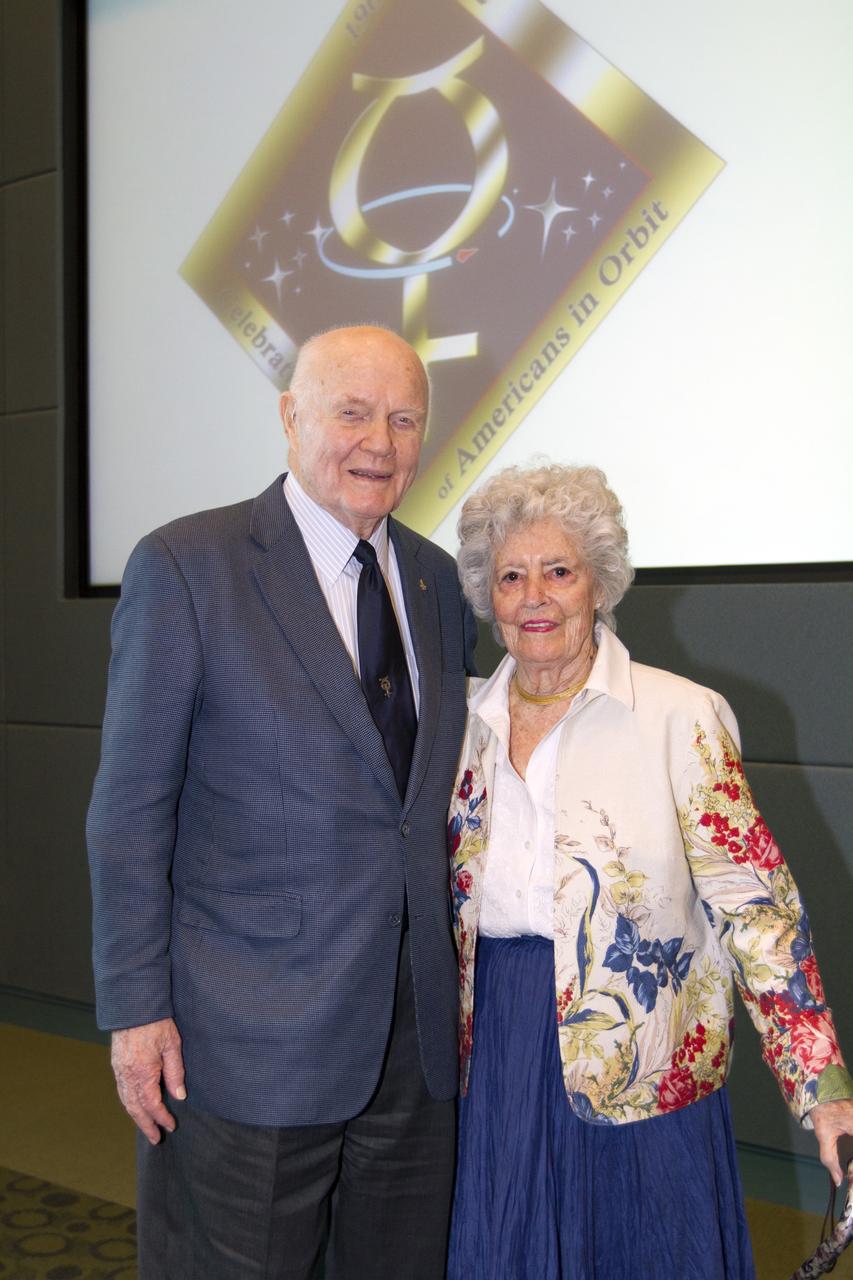
CAPE CANAVERAL, Fla. - Mercury astronaut John Glenn and his wife, Annie, pose during a luncheon Feb. 17, 2012, celebrating 50 years of Americans in orbit, an era which began with Glenn's Mercury mission MA-6, on Feb. 20, 1962. Glenn's launch aboard an Atlas rocket took with it the hopes of an entire nation and ushered in a new era of space travel that eventually led to Americans walking on the moon by the end of the 1960s. Glenn soon was followed into orbit by Scott Carpenter, Walter Schirra and Gordon Cooper. Their fellow Mercury astronauts Alan Shepard and Virgil "Gus" Grissom flew earlier suborbital flights. Deke Slayton, a member of NASA's original Mercury 7 astronauts, was grounded by a medical condition until the Apollo-Soyuz Test Project in 1975. Photo credit: NASA/Kim Shiflett
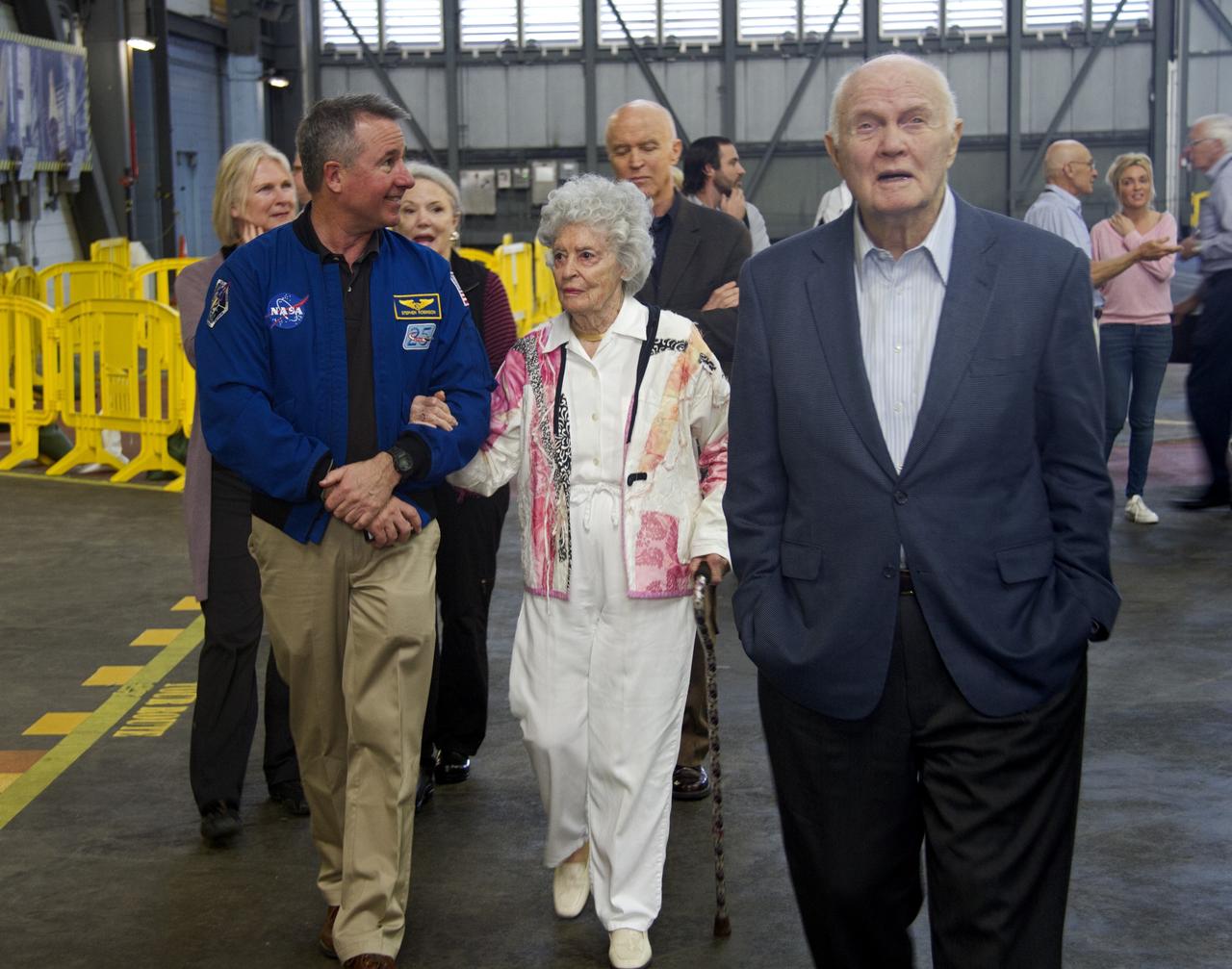
CAPE CANAVERAL, Fla. -- John Glenn and his wife, Annie, and NASA astronaut Stephen Robinson tour the Vehicle Assembly Building at NASA's Kennedy Space Center in Florida. Glenn is at the space center to mark the 50th anniversary of being the first American astronaut to orbit the Earth inside the NASA Mercury Project's Friendship 7 capsule on Feb. 20, 1962. Glenn later returned to space in October 1998 as a payload specialist aboard space shuttle Discovery's STS-95 mission. Robinson was the payload commander of STS-95. Glenn's launch aboard an Atlas rocket took with it the hopes of an entire nation and ushered in a new era of space travel that eventually led to Americans walking on the moon by the end of the 1960s. Glenn soon was followed into orbit by Scott Carpenter, Walter Schirra and Gordon Cooper. Their fellow Mercury astronauts Alan Shepard and Virgil "Gus" Grissom flew earlier suborbital flights. Deke Slayton, a member of NASA's original Mercury 7 astronauts, was grounded by a medical condition until the Apollo-Soyuz Test Project in 1975. Photo credit: Cory Huston
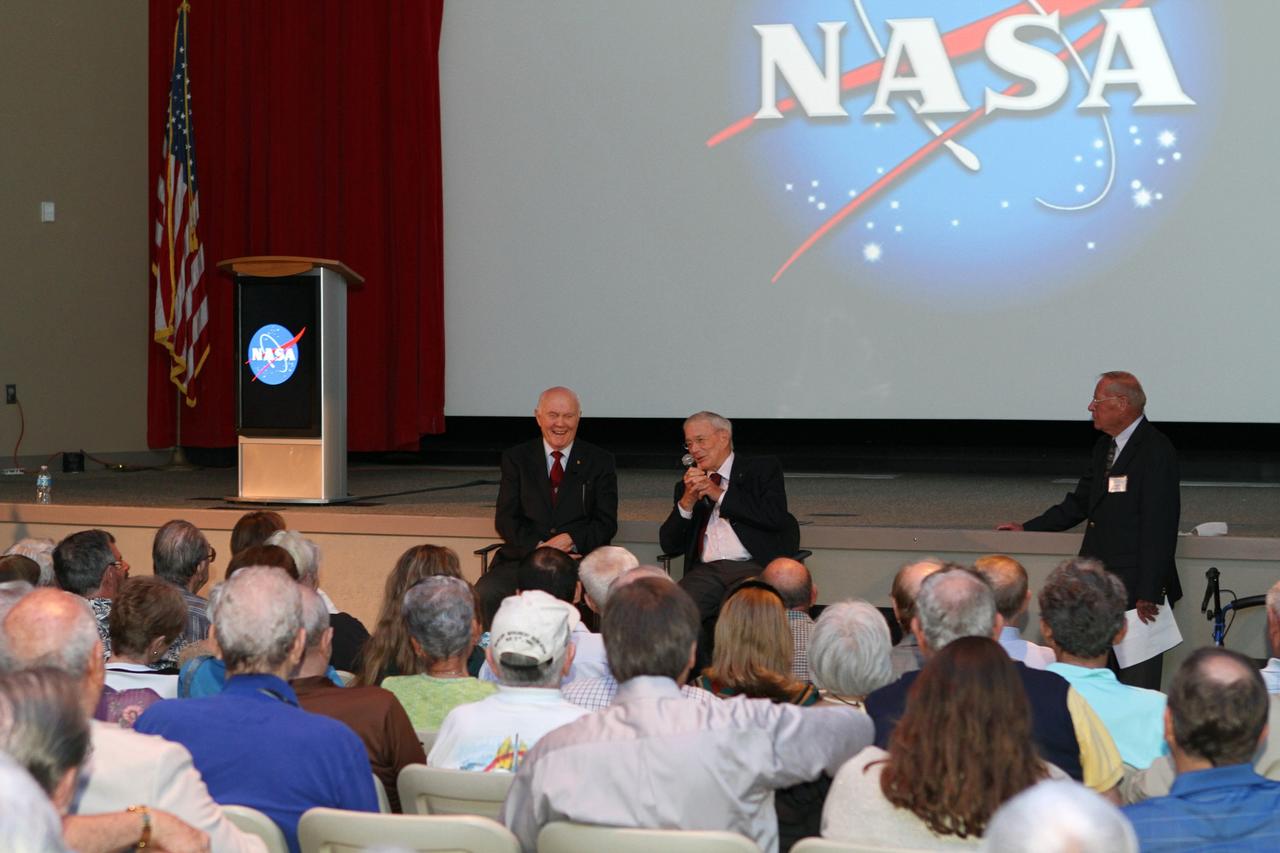
CAPE CANAVERAL, Fla. -- Mercury astronauts, John Glenn, left, and Scott Carpenter, talk to Mercury Project workers and other guests in the Astronaut Encounter Theater at the Kennedy Space Center Visitor Complex in Florida. The pair participated in 50th anniversary events at the launch site of Glenn's first orbital flight aboard NASA's Friendship 7 capsule, which launched Feb. 20, 1962, aboard an Atlas rocket. At right, is Jack King, who was chief of Kennedy's Public Information Office during Project Mercury. Glenn's launch aboard an Atlas rocket took with it the hopes of an entire nation and ushered in a new era of space travel that eventually led to Americans walking on the moon by the end of the 1960s. Glenn soon was followed into orbit by Carpenter, Walter Schirra and Gordon Cooper. Their fellow Mercury astronauts Alan Shepard and Virgil "Gus" Grissom flew earlier suborbital flights. Deke Slayton, a member of NASA's original Mercury 7 astronauts, was grounded by a medical condition until the Apollo-Soyuz Test Project in 1975. Photo credit: Kim Shiflett
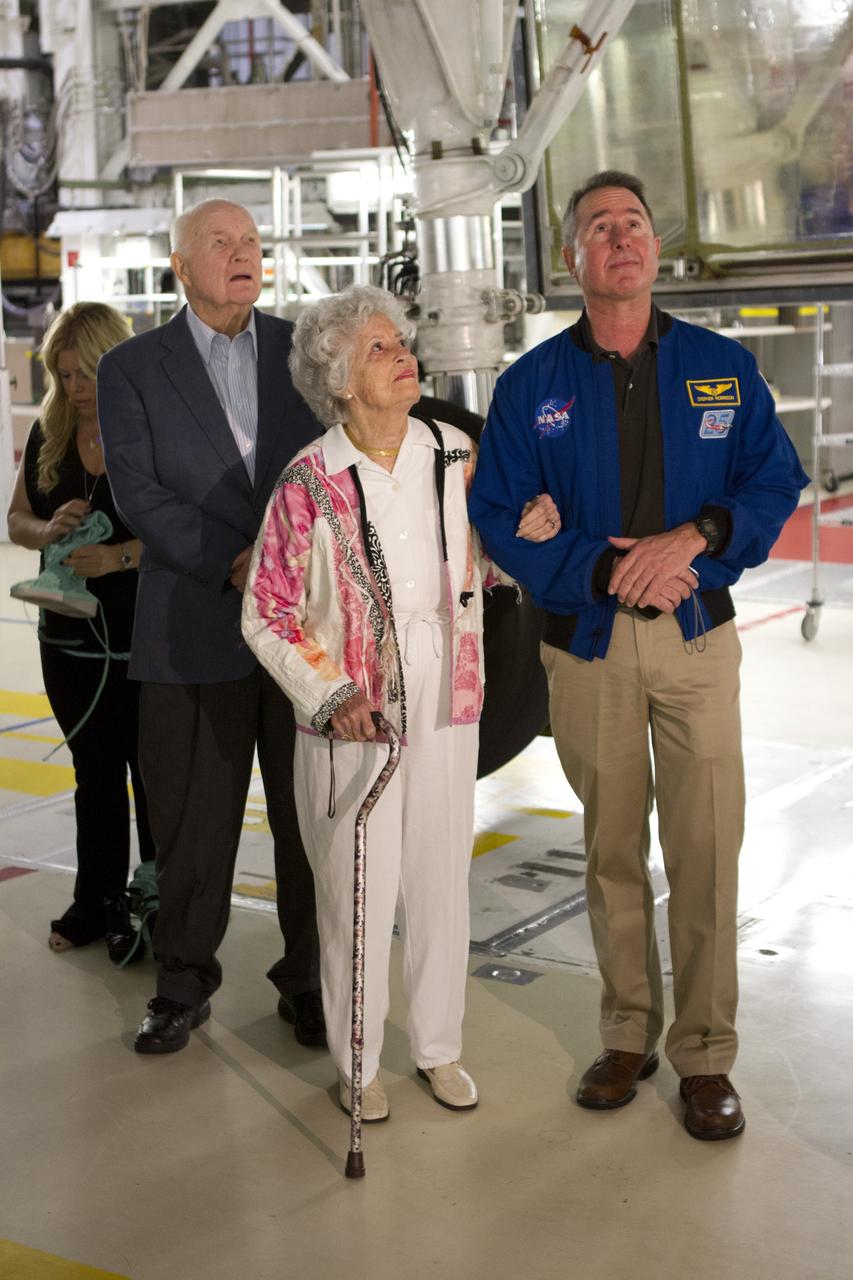
CAPE CANAVERAL, Fla. -- John Glenn and his wife, Annie, and NASA astronaut Stephen Robinson stand under space shuttle Discovery in Orbiter Processing Facility-1 OPF-1 at NASA's Kennedy Space Center in Florida. Glenn is at the space center to mark the 50th anniversary of being the first American astronaut to orbit the Earth inside the NASA Mercury Project's Friendship 7 capsule on Feb. 20, 1962. Glenn later returned to space in October 1998 as a payload specialist aboard Discovery's STS-95 mission. Robinson was the payload commander of STS-95. Glenn's launch aboard an Atlas rocket took with it the hopes of an entire nation and ushered in a new era of space travel that eventually led to Americans walking on the moon by the end of the 1960s. Glenn soon was followed into orbit by Scott Carpenter, Walter Schirra and Gordon Cooper. Their fellow Mercury astronauts Alan Shepard and Virgil "Gus" Grissom flew earlier suborbital flights. Deke Slayton, a member of NASA's original Mercury 7 astronauts, was grounded by a medical condition until the Apollo-Soyuz Test Project in 1975. Shuttle Discovery currently is being prepared for display at Smithsonian’s National Air and Space Museum, Steven F. Udvar-Hazy Center in Chantilly, Va. Photo credit: Cory Huston
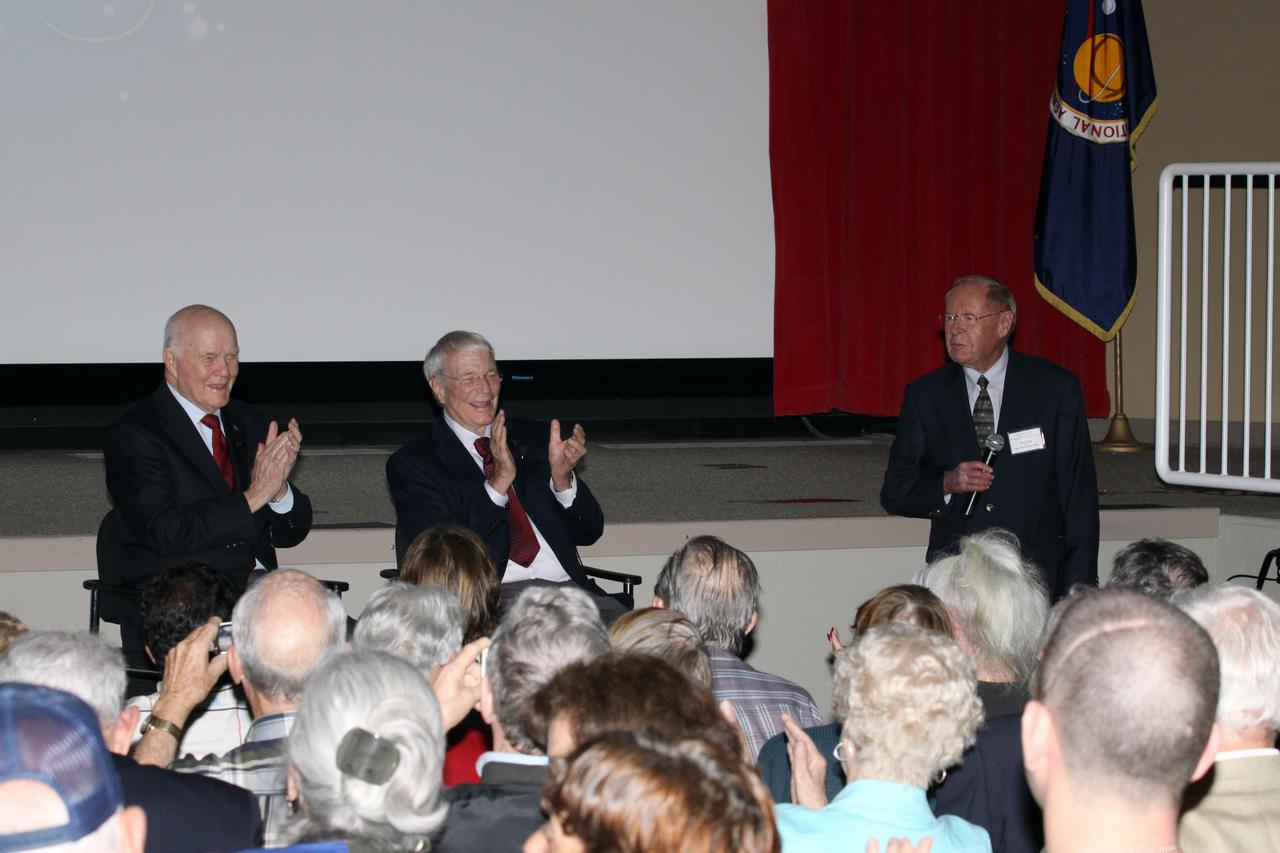
CAPE CANAVERAL, Fla. -- Mercury astronauts, John Glenn, left, and Scott Carpenter, talk to Mercury Project workers and other guests in the Astronaut Encounter Theater at the Kennedy Space Center Visitor Complex in Florida. The pair participated in 50th anniversary events at the launch site of Glenn's first orbital flight aboard NASA's Friendship 7 capsule, which launched Feb. 20, 1962, aboard an Atlas rocket. At right, is Jack King, who was chief of Kennedy's Public Information Office during Project Mercury. Glenn's launch aboard an Atlas rocket took with it the hopes of an entire nation and ushered in a new era of space travel that eventually led to Americans walking on the moon by the end of the 1960s. Glenn soon was followed into orbit by Carpenter, Walter Schirra and Gordon Cooper. Their fellow Mercury astronauts Alan Shepard and Virgil "Gus" Grissom flew earlier suborbital flights. Deke Slayton, a member of NASA's original Mercury 7 astronauts, was grounded by a medical condition until the Apollo-Soyuz Test Project in 1975. Photo credit: Kim Shiflett
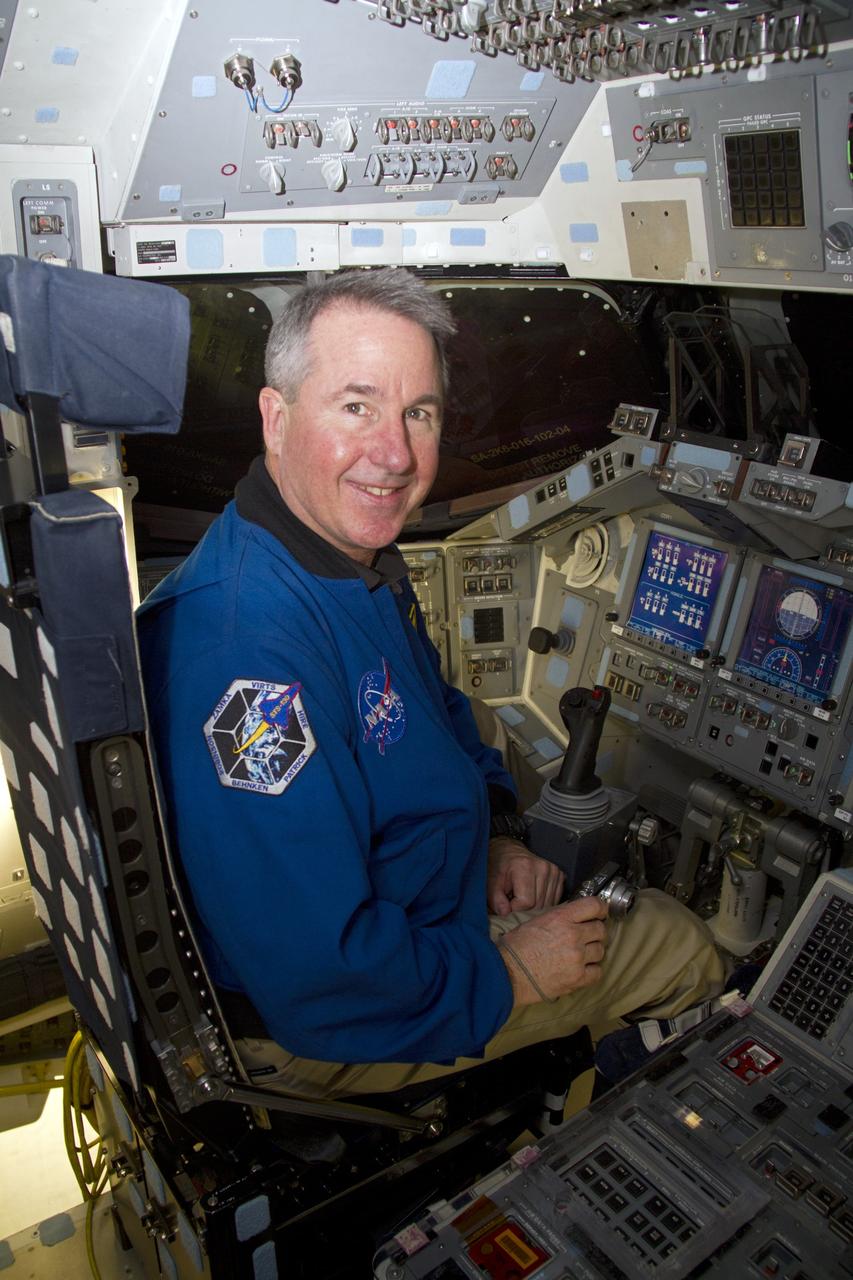
CAPE CANAVERAL, Fla. -- NASA astronaut Stephen Robinson sits at the controls in the flight deck of space shuttle Discovery in Orbiter Processing Facility-1 OPF-1 at NASA's Kennedy Space Center in Florida. Robinson is helping John Glenn mark the 50th anniversary of being the first American astronaut to orbit the Earth inside the NASA Mercury Project's Friendship 7 capsule on Feb. 20, 1962. Glenn later returned to space in October 1998 as a payload specialist aboard Discovery's STS-95 mission. Robinson was the payload commander of STS-95. Glenn's launch aboard an Atlas rocket took with it the hopes of an entire nation and ushered in a new era of space travel that eventually led to Americans walking on the moon by the end of the 1960s. Glenn soon was followed into orbit by Scott Carpenter, Walter Schirra and Gordon Cooper. Their fellow Mercury astronauts Alan Shepard and Virgil "Gus" Grissom flew earlier suborbital flights. Deke Slayton, a member of NASA's original Mercury 7 astronauts, was grounded by a medical condition until the Apollo-Soyuz Test Project in 1975. Shuttle Discovery currently is being prepared for display at Smithsonian’s National Air and Space Museum, Steven F. Udvar-Hazy Center in Chantilly, Va. Photo credit: Cory Huston
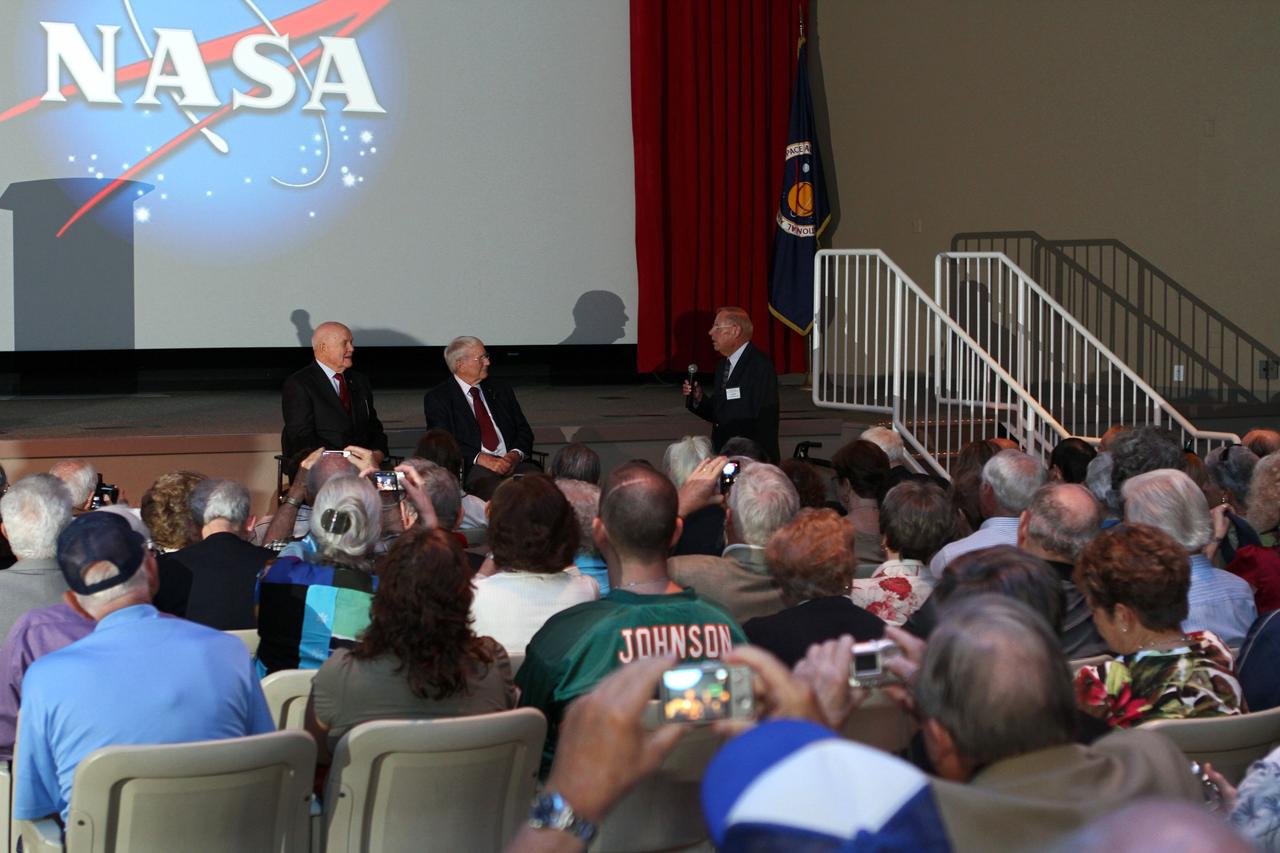
CAPE CANAVERAL, Fla. -- Mercury astronauts, John Glenn, left, and Scott Carpenter, talk to Mercury Project workers and other guests in the Astronaut Encounter Theater at the Kennedy Space Center Visitor Complex in Florida. The pair participated in 50th anniversary events at the launch site of Glenn's first orbital flight aboard NASA's Friendship 7 capsule, which launched Feb. 20, 1962, aboard an Atlas rocket. At right, is Jack King, who was chief of Kennedy's Public Information Office during Project Mercury. Glenn's launch aboard an Atlas rocket took with it the hopes of an entire nation and ushered in a new era of space travel that eventually led to Americans walking on the moon by the end of the 1960s. Glenn soon was followed into orbit by Carpenter, Walter Schirra and Gordon Cooper. Their fellow Mercury astronauts Alan Shepard and Virgil "Gus" Grissom flew earlier suborbital flights. Deke Slayton, a member of NASA's original Mercury 7 astronauts, was grounded by a medical condition until the Apollo-Soyuz Test Project in 1975. Photo credit: Kim Shiflett
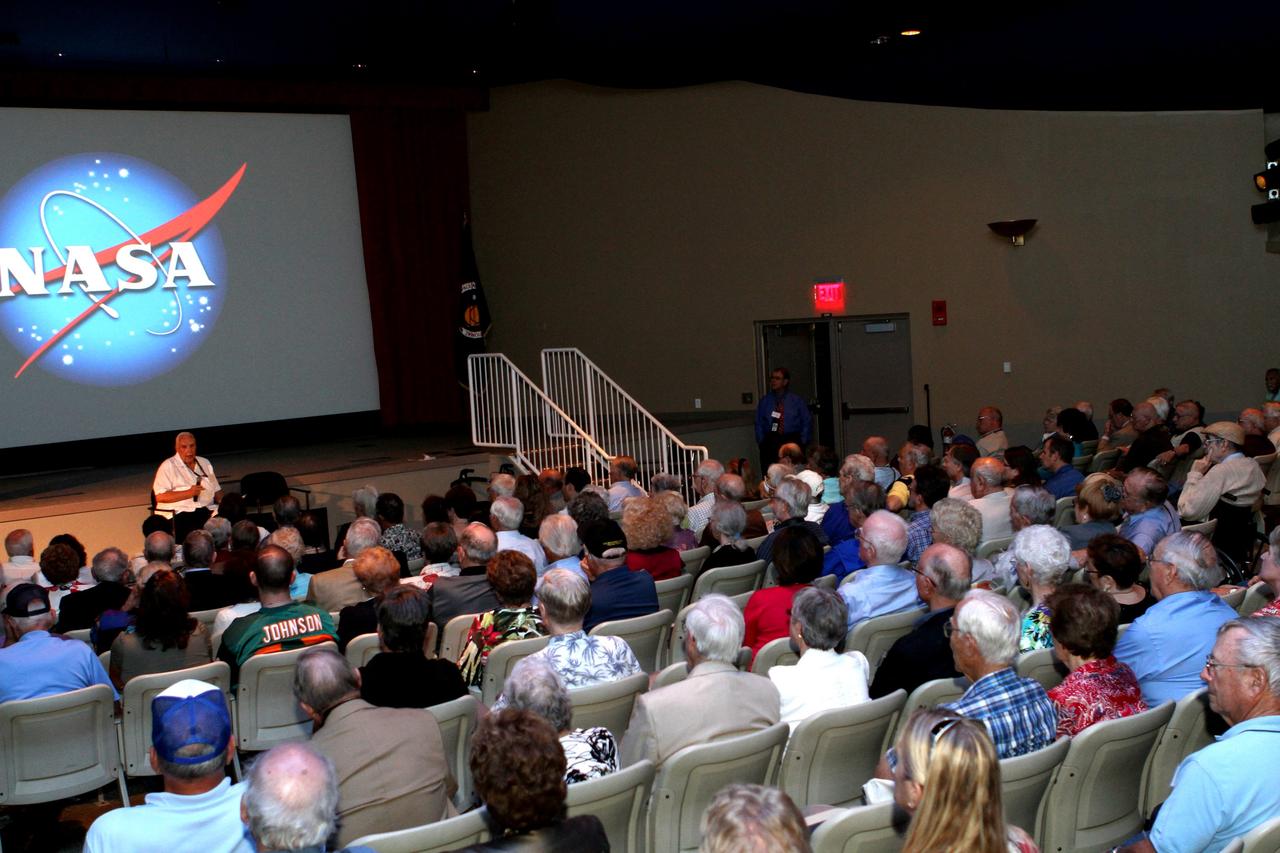
CAPE CANAVERAL, Fla. -- Hugh Harris, the former director of Public Affairs at NASA's Kennedy Space Center in Florida, talks to Mercury Project workers and other guests in the Astronaut Encounter Theater at the Kennedy Space Center Visitor Complex in Florida. Harris is helping Mercury astronauts, John Glenn and Scott Carpenter, mark the 50th anniversary of Glenn being the first American to orbit the Earth inside the NASA Mercury Project's Friendship 7 capsule on Feb. 20, 1962. Glenn's launch aboard an Atlas rocket took with it the hopes of an entire nation and ushered in a new era of space travel that eventually led to Americans walking on the moon by the end of the 1960s. Glenn soon was followed into orbit by Carpenter, Walter Schirra and Gordon Cooper. Their fellow Mercury astronauts Alan Shepard and Virgil "Gus" Grissom flew earlier suborbital flights. Deke Slayton, a member of NASA's original Mercury 7 astronauts, was grounded by a medical condition until the Apollo-Soyuz Test Project in 1975. Photo credit: Kim Shiflett
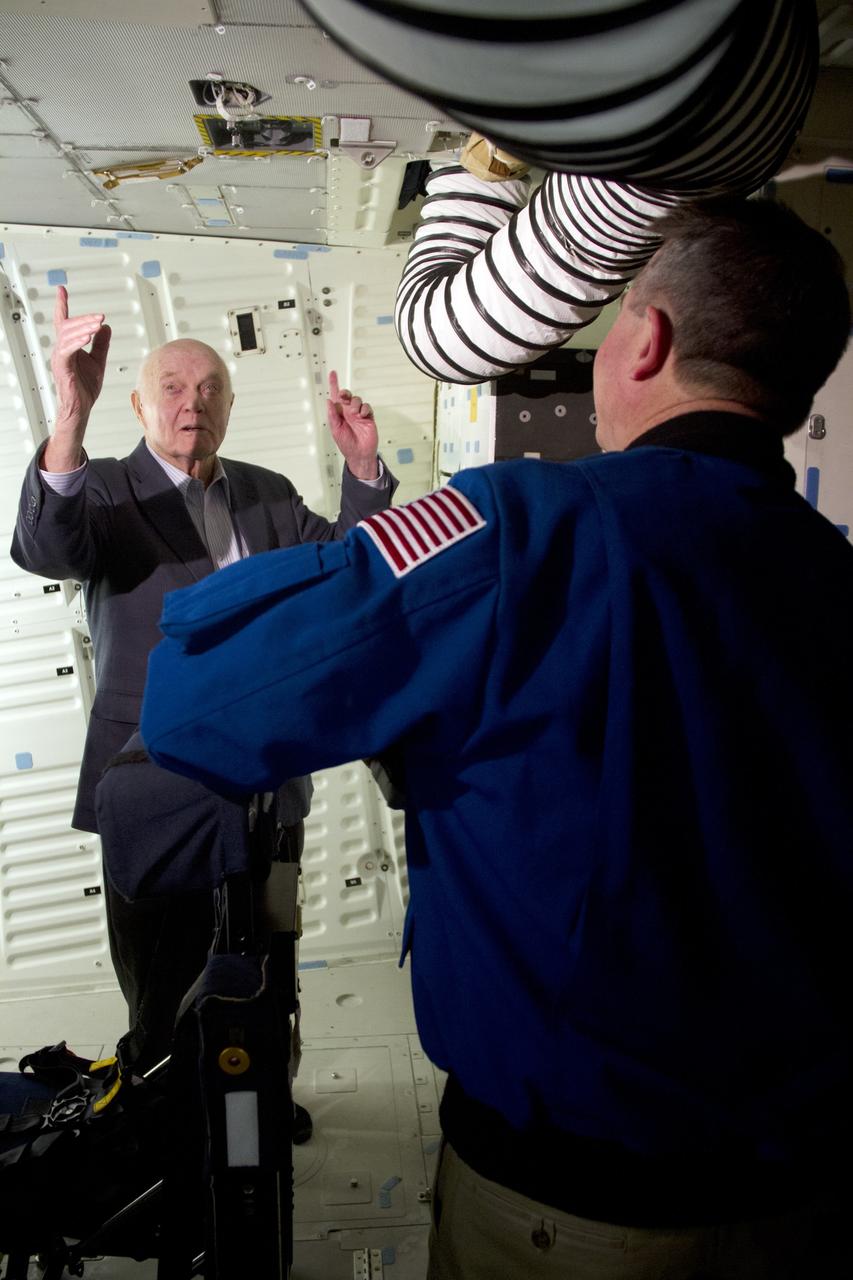
CAPE CANAVERAL, Fla. -- John Glenn and NASA astronaut Stephen Robinson stand in the middeck of space shuttle Discovery in Orbiter Processing Facility-1 OPF-1 at NASA's Kennedy Space Center in Florida. Glenn is at the space center to mark the 50th anniversary of being the first American astronaut to orbit the Earth inside the NASA Mercury Project's Friendship 7 capsule on Feb. 20, 1962. Glenn later returned to space in October 1998 as a payload specialist aboard Discovery's STS-95 mission. Robinson was the payload commander of STS-95. Glenn's launch aboard an Atlas rocket took with it the hopes of an entire nation and ushered in a new era of space travel that eventually led to Americans walking on the moon by the end of the 1960s. Glenn soon was followed into orbit by Scott Carpenter, Walter Schirra and Gordon Cooper. Their fellow Mercury astronauts Alan Shepard and Virgil "Gus" Grissom flew earlier suborbital flights. Deke Slayton, a member of NASA's original Mercury 7 astronauts, was grounded by a medical condition until the Apollo-Soyuz Test Project in 1975. Shuttle Discovery currently is being prepared for display at Smithsonian’s National Air and Space Museum, Steven F. Udvar-Hazy Center in Chantilly, Va. Photo credit: Cory Huston
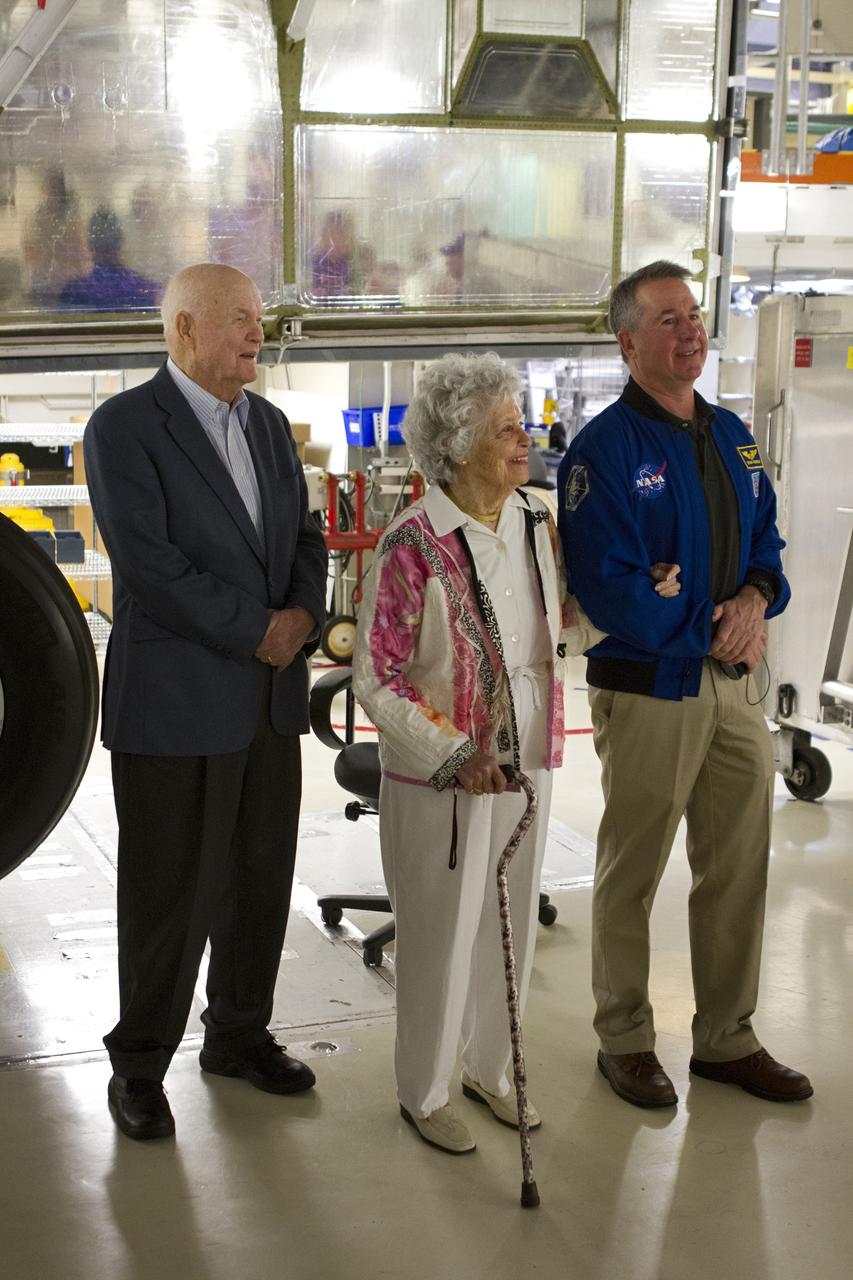
CAPE CANAVERAL, Fla. -- John Glenn and his wife, Annie, and NASA astronaut Stephen Robinson stand beside the wheel of space shuttle Discovery in Orbiter Processing Facility-1 OPF-1 at NASA's Kennedy Space Center in Florida. Glenn is at the space center to mark the 50th anniversary of being the first American astronaut to orbit the Earth inside the NASA Mercury Project's Friendship 7 capsule on Feb. 20, 1962. Glenn later returned to space in October 1998 as a payload specialist aboard Discovery's STS-95 mission. Robinson was the payload commander of STS-95. Glenn's launch aboard an Atlas rocket took with it the hopes of an entire nation and ushered in a new era of space travel that eventually led to Americans walking on the moon by the end of the 1960s. Glenn soon was followed into orbit by Scott Carpenter, Walter Schirra and Gordon Cooper. Their fellow Mercury astronauts Alan Shepard and Virgil "Gus" Grissom flew earlier suborbital flights. Deke Slayton, a member of NASA's original Mercury 7 astronauts, was grounded by a medical condition until the Apollo-Soyuz Test Project in 1975. Shuttle Discovery currently is being prepared for display at Smithsonian’s National Air and Space Museum, Steven F. Udvar-Hazy Center in Chantilly, Va. Photo credit: Cory Huston
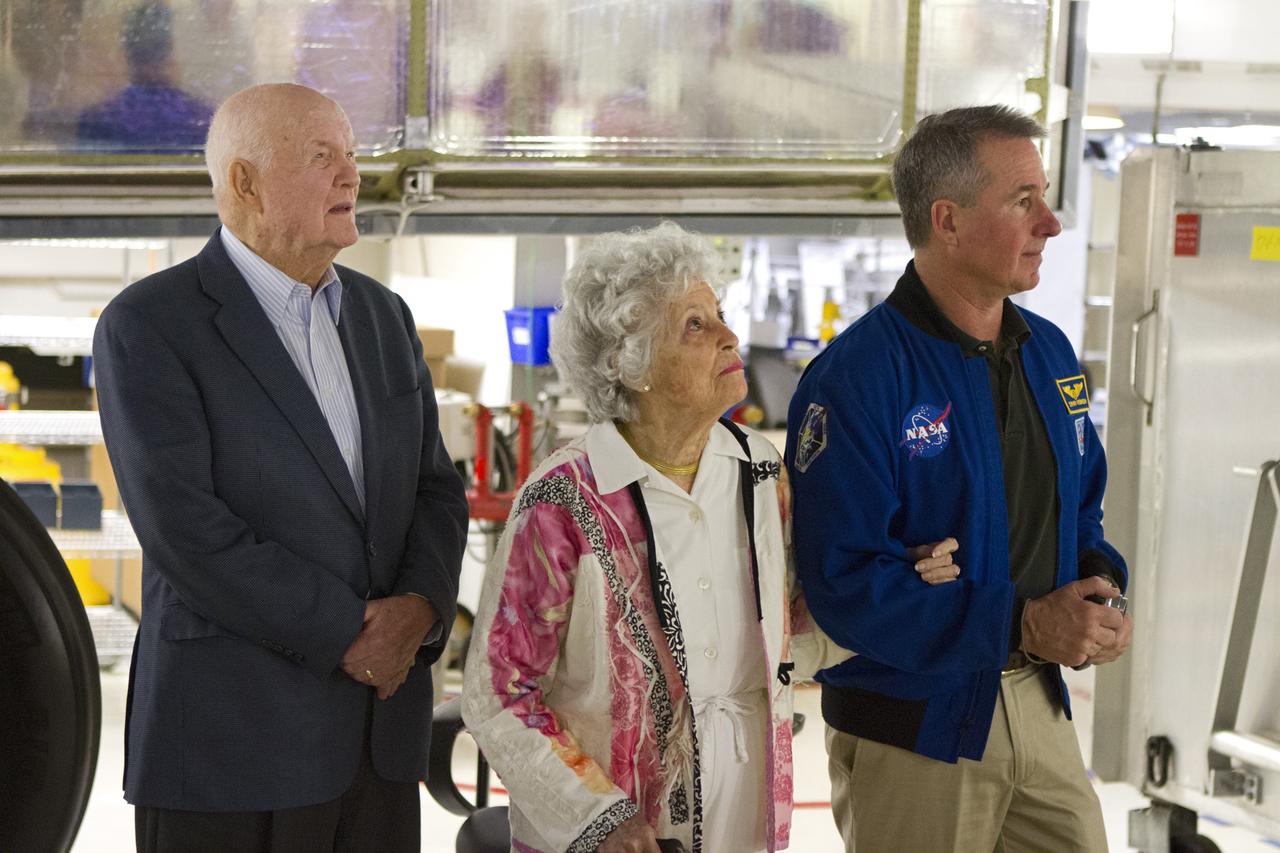
CAPE CANAVERAL, Fla. -- John Glenn and his wife, Annie, and NASA astronaut Stephen Robinson stand under space shuttle Discovery in Orbiter Processing Facility-1 OPF-1 at NASA's Kennedy Space Center in Florida. Glenn is at the space center to mark the 50th anniversary of being the first American astronaut to orbit the Earth inside the NASA Mercury Project's Friendship 7 capsule on Feb. 20, 1962. Glenn later returned to space in October 1998 as a payload specialist aboard Discovery's STS-95 mission. Robinson was the payload commander of STS-95. Glenn's launch aboard an Atlas rocket took with it the hopes of an entire nation and ushered in a new era of space travel that eventually led to Americans walking on the moon by the end of the 1960s. Glenn soon was followed into orbit by Scott Carpenter, Walter Schirra and Gordon Cooper. Their fellow Mercury astronauts Alan Shepard and Virgil "Gus" Grissom flew earlier suborbital flights. Deke Slayton, a member of NASA's original Mercury 7 astronauts, was grounded by a medical condition until the Apollo-Soyuz Test Project in 1975. Shuttle Discovery currently is being prepared for display at Smithsonian’s National Air and Space Museum, Steven F. Udvar-Hazy Center in Chantilly, Va. Photo credit: Cory Huston
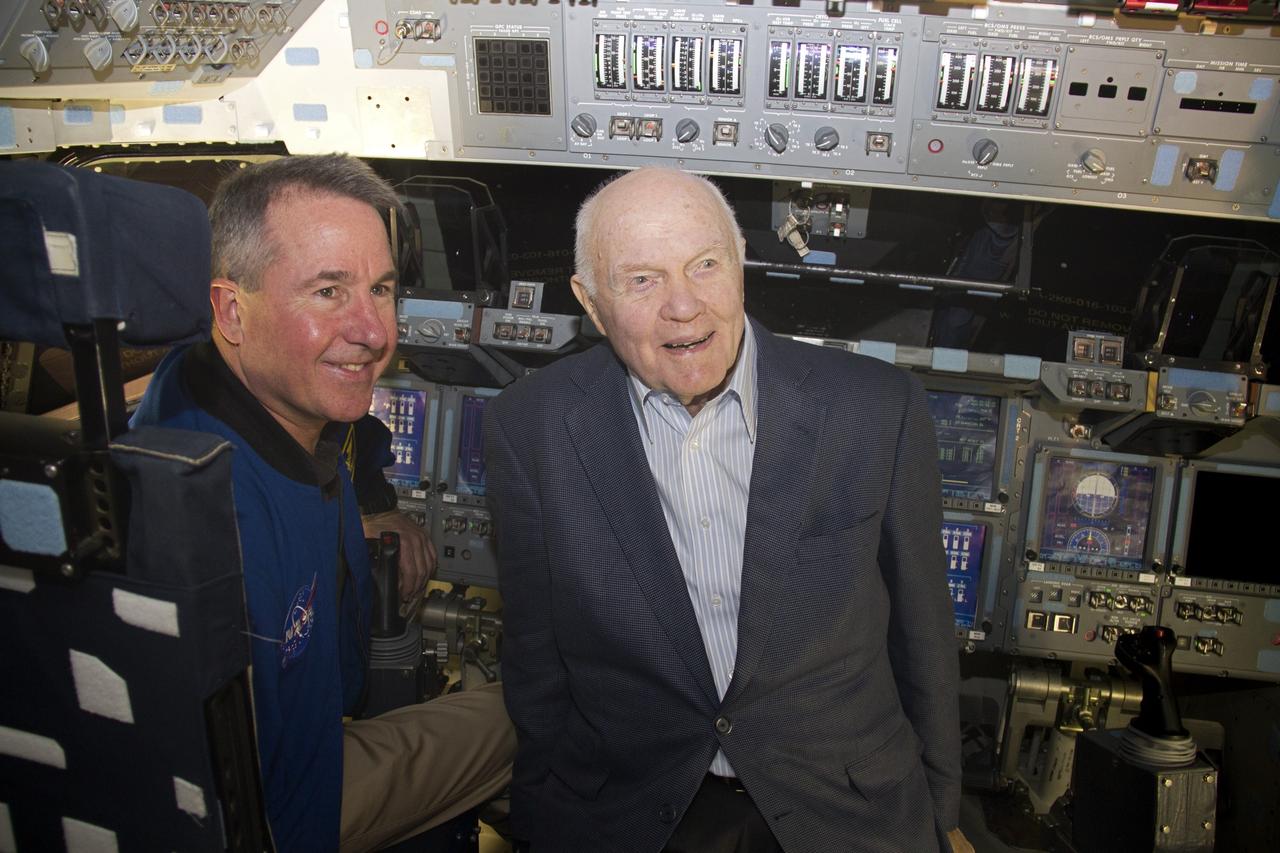
CAPE CANAVERAL, Fla. -- John Glenn and NASA astronaut Stephen Robinson sit in the flight deck of space shuttle Discovery in Orbiter Processing Facility-1 OPF-1 at NASA's Kennedy Space Center in Florida. Glenn is at the space center to mark the 50th anniversary of being the first American astronaut to orbit the Earth inside the NASA Mercury Project's Friendship 7 capsule on Feb. 20, 1962. Glenn later returned to space in October 1998 as a payload specialist aboard Discovery's STS-95 mission. Robinson was the payload commander of STS-95. Glenn's launch aboard an Atlas rocket took with it the hopes of an entire nation and ushered in a new era of space travel that eventually led to Americans walking on the moon by the end of the 1960s. Glenn soon was followed into orbit by Scott Carpenter, Walter Schirra and Gordon Cooper. Their fellow Mercury astronauts Alan Shepard and Virgil "Gus" Grissom flew earlier suborbital flights. Deke Slayton, a member of NASA's original Mercury 7 astronauts, was grounded by a medical condition until the Apollo-Soyuz Test Project in 1975. Shuttle Discovery currently is being prepared for display at Smithsonian’s National Air and Space Museum, Steven F. Udvar-Hazy Center in Chantilly, Va. Photo credit: Cory Huston
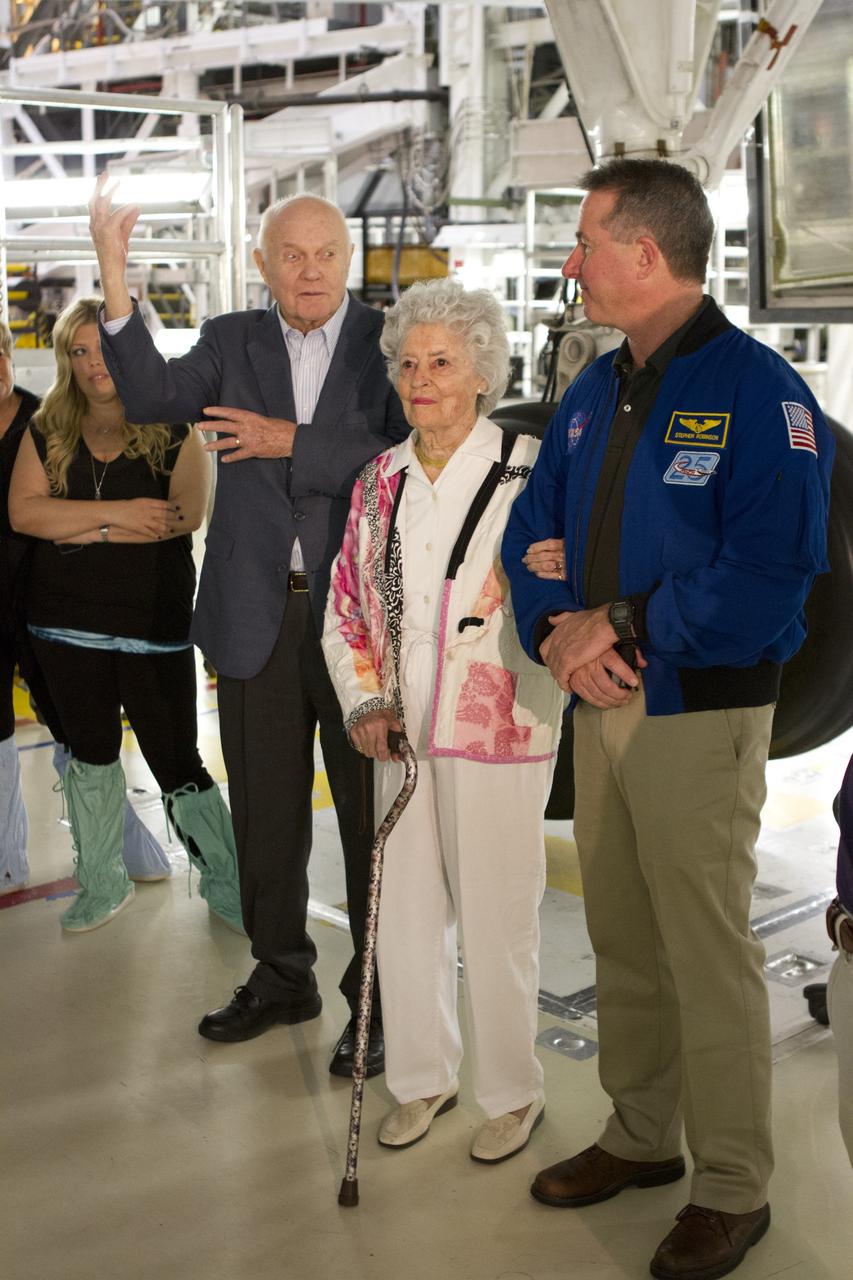
CAPE CANAVERAL, Fla. -- John Glenn and his wife, Annie, and NASA astronaut Stephen Robinson stand under space shuttle Discovery in Orbiter Processing Facility-1 OPF-1 at NASA's Kennedy Space Center in Florida. Glenn is at the space center to mark the 50th anniversary of being the first American astronaut to orbit the Earth inside the NASA Mercury Project's Friendship 7 capsule on Feb. 20, 1962. Glenn later returned to space in October 1998 as a payload specialist aboard Discovery's STS-95 mission. Robinson was the payload commander of STS-95. Glenn's launch aboard an Atlas rocket took with it the hopes of an entire nation and ushered in a new era of space travel that eventually led to Americans walking on the moon by the end of the 1960s. Glenn soon was followed into orbit by Scott Carpenter, Walter Schirra and Gordon Cooper. Their fellow Mercury astronauts Alan Shepard and Virgil "Gus" Grissom flew earlier suborbital flights. Deke Slayton, a member of NASA's original Mercury 7 astronauts, was grounded by a medical condition until the Apollo-Soyuz Test Project in 1975. Shuttle Discovery currently is being prepared for display at Smithsonian’s National Air and Space Museum, Steven F. Udvar-Hazy Center in Chantilly, Va. Photo credit: Cory Huston
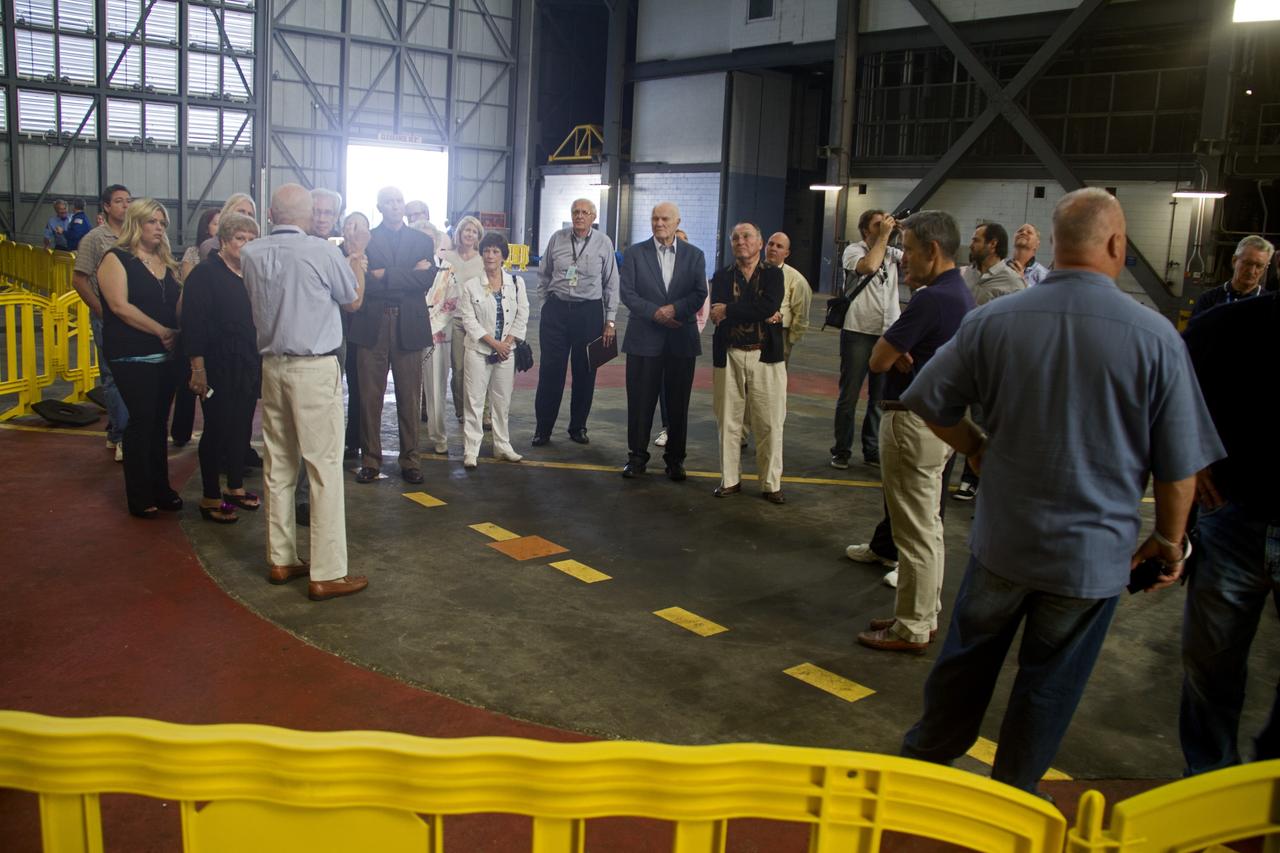
CAPE CANAVERAL, Fla. -- Former space shuttle launch director, Bob Sieck, left, talks to guests in the Vehicle Assembly Building at NASA's Kennedy Space Center in Florida. Sieck is helping John Glenn mark the 50th anniversary of being the first American astronaut to orbit the Earth inside the NASA Mercury Project's Friendship 7 capsule on Feb. 20, 1962. Glenn later returned to space in October 1998 as a payload specialist aboard space shuttle Discovery's STS-95 mission. Glenn's launch aboard an Atlas rocket took with it the hopes of an entire nation and ushered in a new era of space travel that eventually led to Americans walking on the moon by the end of the 1960s. Glenn soon was followed into orbit by Scott Carpenter, Walter Schirra and Gordon Cooper. Their fellow Mercury astronauts Alan Shepard and Virgil "Gus" Grissom flew earlier suborbital flights. Deke Slayton, a member of NASA's original Mercury 7 astronauts, was grounded by a medical condition until the Apollo-Soyuz Test Project in 1975. Photo credit: Cory Huston
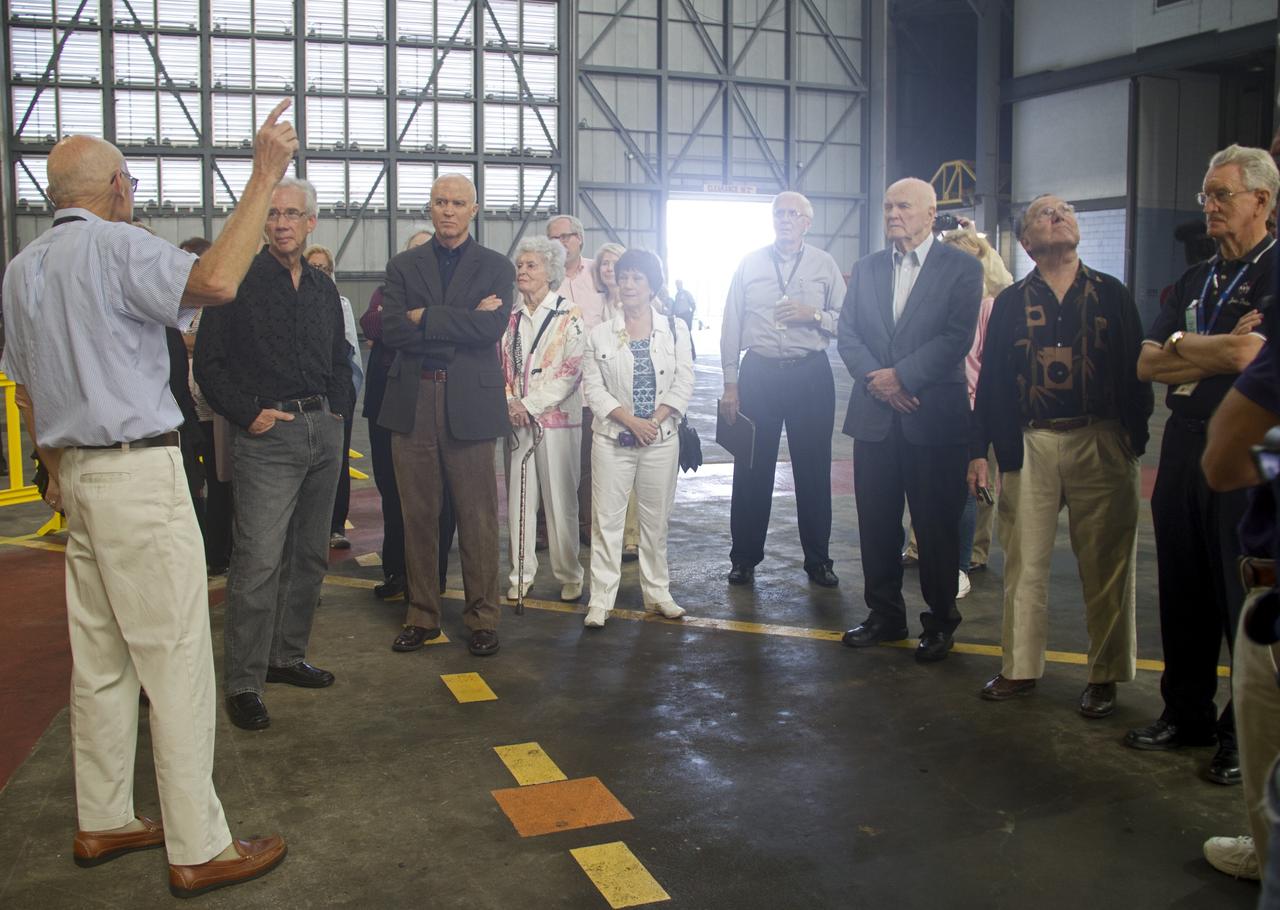
CAPE CANAVERAL, Fla. -- Former space shuttle launch director, Bob Sieck, left, talks to guests in the Vehicle Assembly Building at NASA's Kennedy Space Center in Florida. Sieck is helping John Glenn mark the 50th anniversary of being the first American astronaut to orbit the Earth inside the NASA Mercury Project's Friendship 7 capsule on Feb. 20, 1962. Glenn later returned to space in October 1998 as a payload specialist aboard space shuttle Discovery's STS-95 mission. Glenn's launch aboard an Atlas rocket took with it the hopes of an entire nation and ushered in a new era of space travel that eventually led to Americans walking on the moon by the end of the 1960s. Glenn soon was followed into orbit by Scott Carpenter, Walter Schirra and Gordon Cooper. Their fellow Mercury astronauts Alan Shepard and Virgil "Gus" Grissom flew earlier suborbital flights. Deke Slayton, a member of NASA's original Mercury 7 astronauts, was grounded by a medical condition until the Apollo-Soyuz Test Project in 1975. Photo credit: Cory Huston
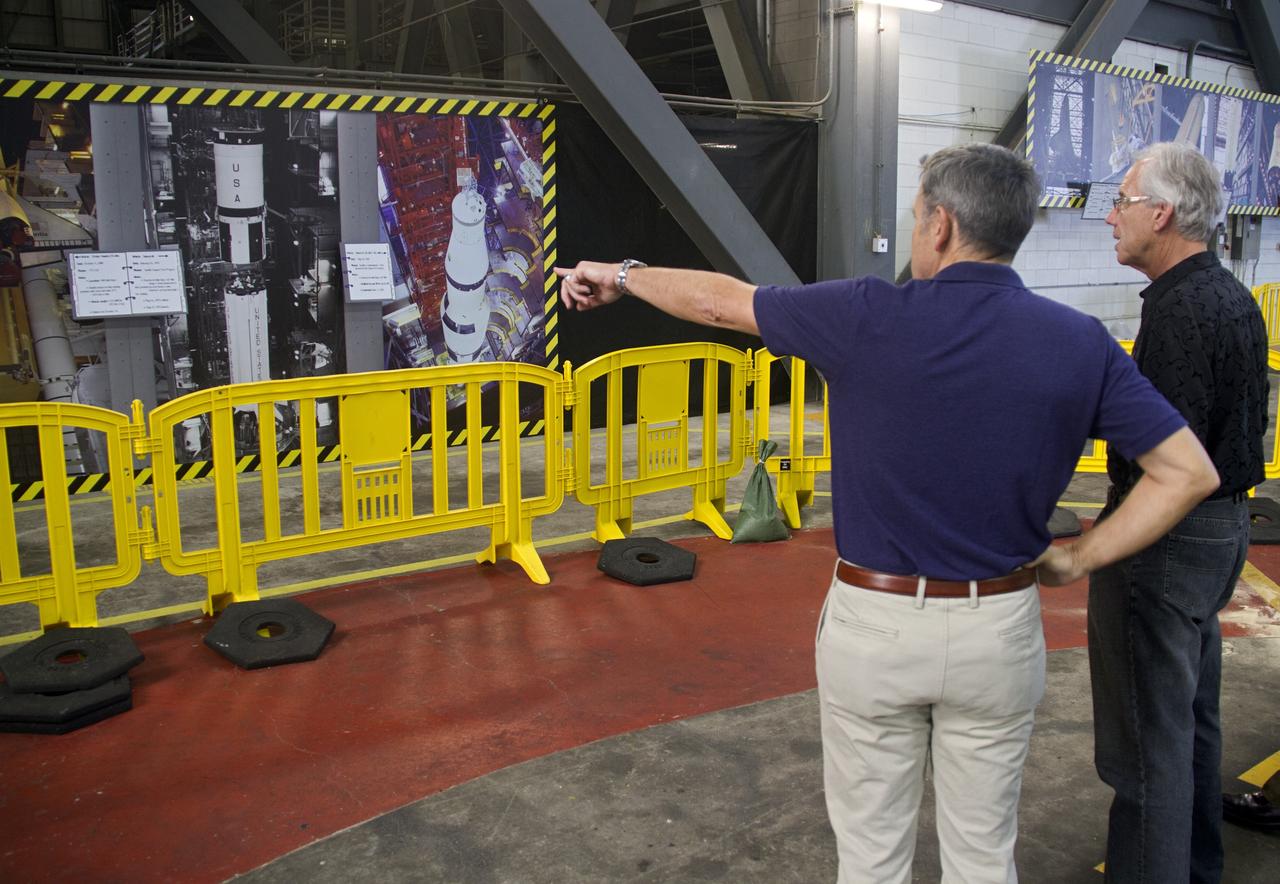
CAPE CANAVERAL, Fla. -- NASA Kennedy Space Center Bob Cabana talks to a guest about the Mercury Project's Atlas rocket in the Vehicle Assembly Building. At the space center in Florida, Cabana is helping John Glenn mark the 50th anniversary of being the first American astronaut to orbit the Earth inside the NASA Mercury Project's Friendship 7 capsule on Feb. 20, 1962. Glenn later returned to space in October 1998 as a payload specialist aboard space shuttle Discovery's STS-95 mission. Glenn's launch aboard an Atlas rocket took with it the hopes of an entire nation and ushered in a new era of space travel that eventually led to Americans walking on the moon by the end of the 1960s. Glenn soon was followed into orbit by Scott Carpenter, Walter Schirra and Gordon Cooper. Their fellow Mercury astronauts Alan Shepard and Virgil "Gus" Grissom flew earlier suborbital flights. Deke Slayton, a member of NASA's original Mercury 7 astronauts, was grounded by a medical condition until the Apollo-Soyuz Test Project in 1975. Photo credit: Cory Huston
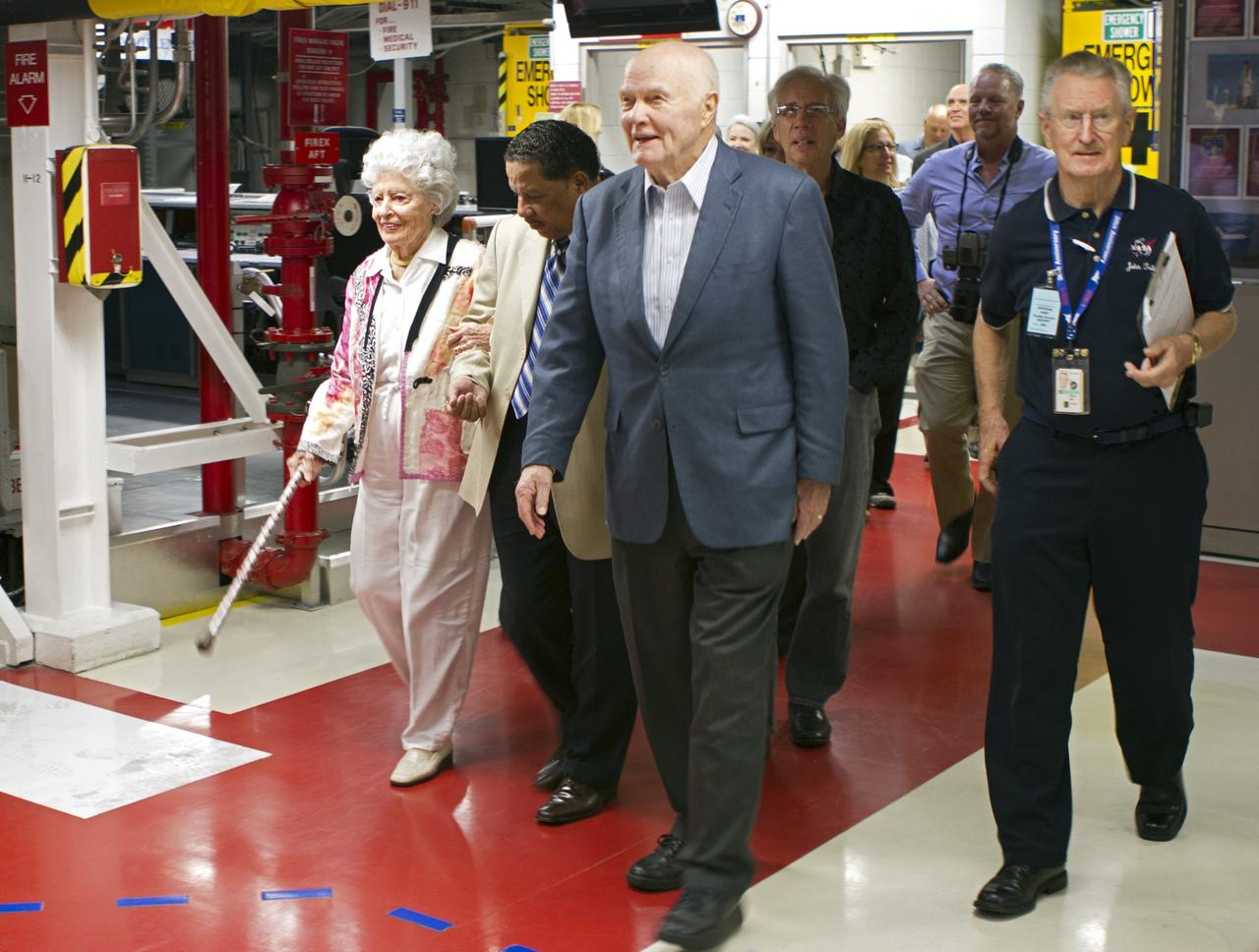
CAPE CANAVERAL, Fla. -- John Glenn and his wife, Annie, left, enter Orbiter Processing Facility-1 OPF-1 at NASA's Kennedy Space Center in Florida where space shuttle Discovery is being prepared for public display. Glenn is at the space center to mark the 50th anniversary of being the first American astronaut to orbit the Earth inside the NASA Mercury Project's Friendship 7 capsule on Feb. 20, 1962. Glenn later returned to space in October 1998 as a payload specialist aboard Discovery's STS-95 mission. Glenn's launch aboard an Atlas rocket took with it the hopes of an entire nation and ushered in a new era of space travel that eventually led to Americans walking on the moon by the end of the 1960s. Glenn soon was followed into orbit by Scott Carpenter, Walter Schirra and Gordon Cooper. Their fellow Mercury astronauts Alan Shepard and Virgil "Gus" Grissom flew earlier suborbital flights. Deke Slayton, a member of NASA's original Mercury 7 astronauts, was grounded by a medical condition until the Apollo-Soyuz Test Project in 1975. Shuttle Discovery currently is being prepared for display at Smithsonian’s National Air and Space Museum, Steven F. Udvar-Hazy Center in Chantilly, Va. Photo credit: Cory Huston
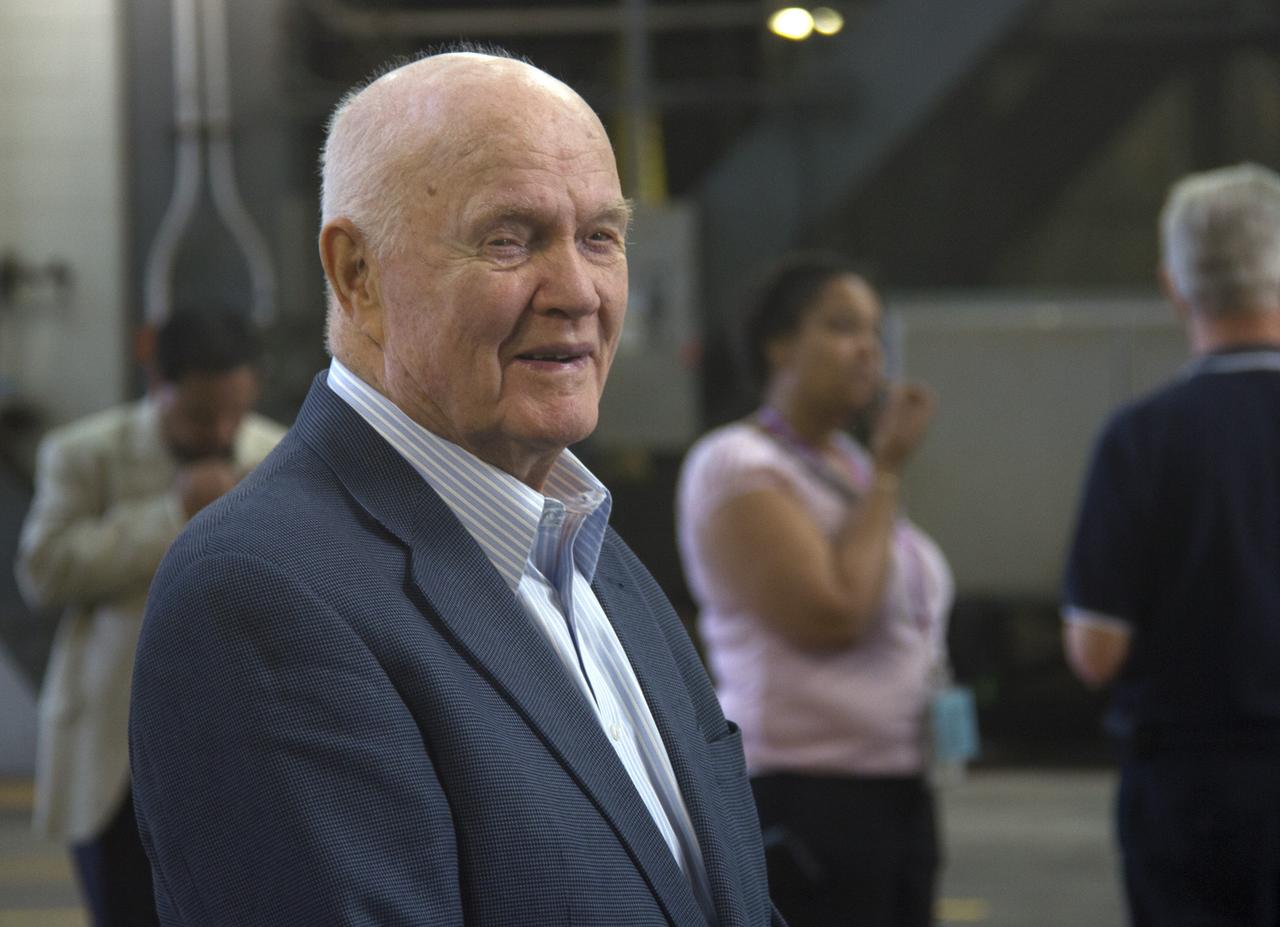
CAPE CANAVERAL, Fla. -- John Glenn tours the Vehicle Assembly Building at NASA's Kennedy Space Center in Florida. Glenn is at the space center to mark the 50th anniversary of being the first American astronaut to orbit the Earth inside the NASA Mercury Project's Friendship 7 capsule on Feb. 20, 1962. Glenn later returned to space in October 1998 as a payload specialist aboard space shuttle Discovery's STS-95 mission. Glenn's launch aboard an Atlas rocket took with it the hopes of an entire nation and ushered in a new era of space travel that eventually led to Americans walking on the moon by the end of the 1960s. Glenn soon was followed into orbit by Scott Carpenter, Walter Schirra and Gordon Cooper. Their fellow Mercury astronauts Alan Shepard and Virgil "Gus" Grissom flew earlier suborbital flights. Deke Slayton, a member of NASA's original Mercury 7 astronauts, was grounded by a medical condition until the Apollo-Soyuz Test Project in 1975. Photo credit: Cory Huston
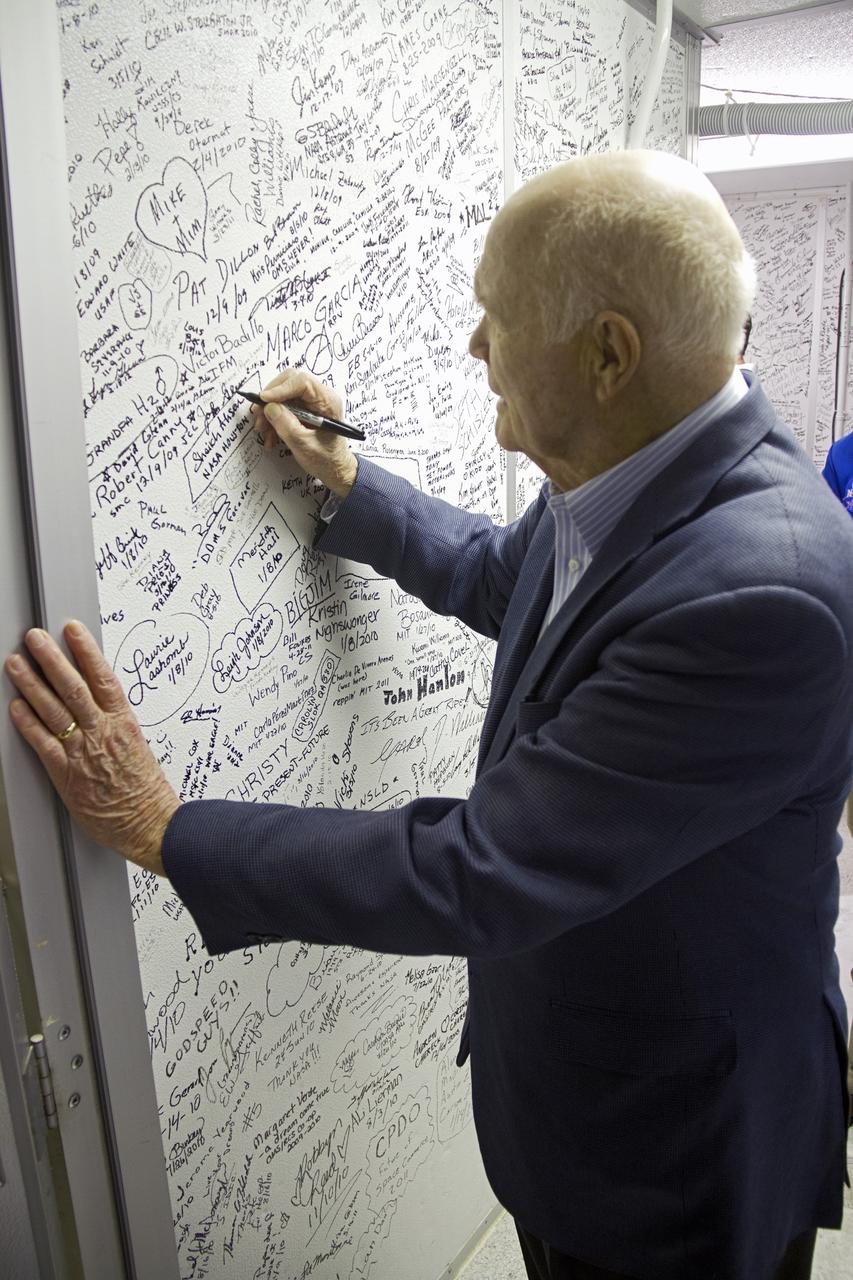
CAPE CANAVERAL, Fla. -- John Glenn signs the wall of the clean room leading into space shuttle Discovery in Orbiter Processing Facility-1 OPF-1 at NASA's Kennedy Space Center in Florida. Glenn is at the space center to mark the 50th anniversary of being the first American astronaut to orbit the Earth inside the NASA Mercury Project's Friendship 7 capsule on Feb. 20, 1962. Glenn later returned to space in October 1998 as a payload specialist aboard Discovery's STS-95 mission. Glenn's launch aboard an Atlas rocket took with it the hopes of an entire nation and ushered in a new era of space travel that eventually led to Americans walking on the moon by the end of the 1960s. Glenn soon was followed into orbit by Scott Carpenter, Walter Schirra and Gordon Cooper. Their fellow Mercury astronauts Alan Shepard and Virgil "Gus" Grissom flew earlier suborbital flights. Deke Slayton, a member of NASA's original Mercury 7 astronauts, was grounded by a medical condition until the Apollo-Soyuz Test Project in 1975. Shuttle Discovery currently is being prepared for display at Smithsonian’s National Air and Space Museum, Steven F. Udvar-Hazy Center in Chantilly, Va. Photo credit: Cory Huston
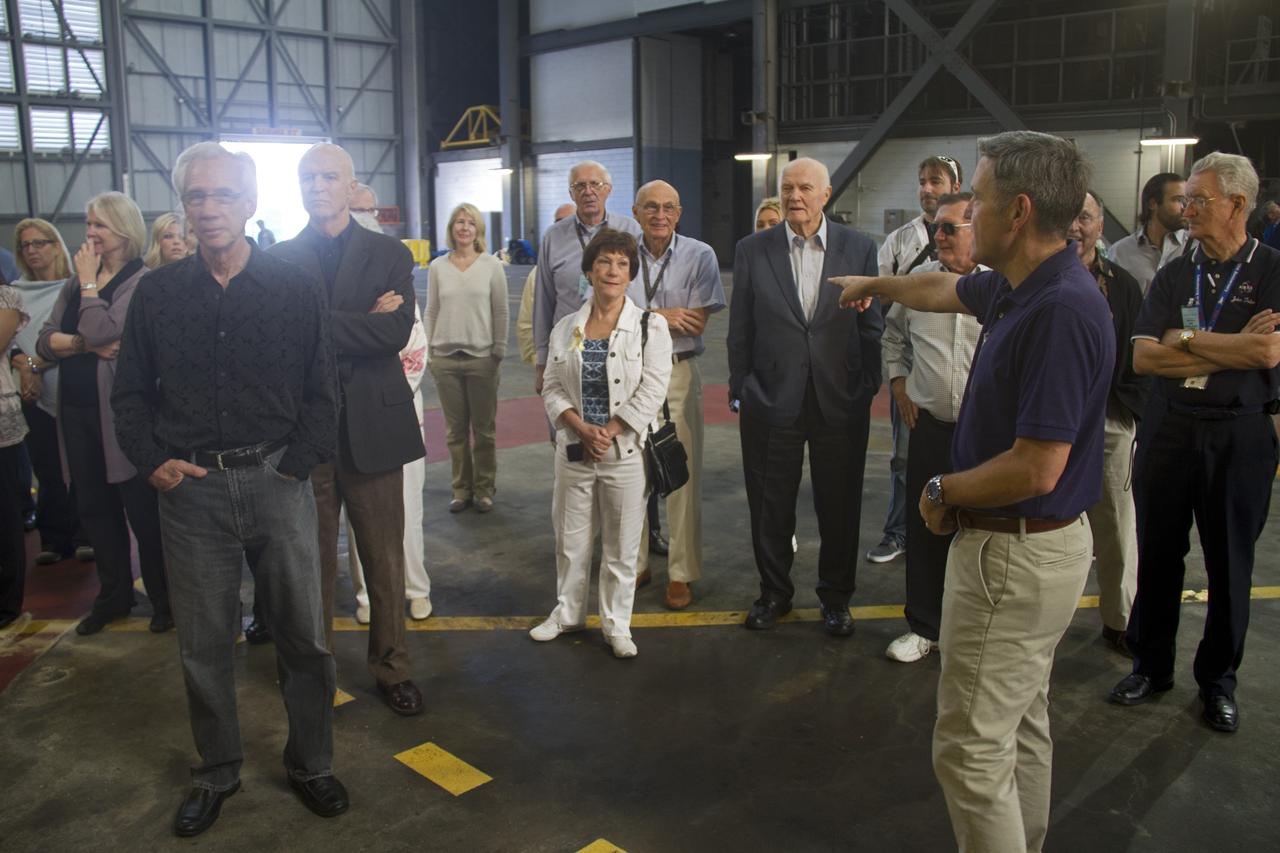
CAPE CANAVERAL, Fla. -- NASA Kennedy Space Center Bob Cabana talks to guests about the Mercury Project's Atlas rocket in the Vehicle Assembly Building. At the space center in Florida, Cabana is helping John Glenn mark the 50th anniversary of being the first American astronaut to orbit the Earth inside the NASA Mercury Project's Friendship 7 capsule on Feb. 20, 1962. Glenn later returned to space in October 1998 as a payload specialist aboard space shuttle Discovery's STS-95 mission. Glenn's launch aboard an Atlas rocket took with it the hopes of an entire nation and ushered in a new era of space travel that eventually led to Americans walking on the moon by the end of the 1960s. Glenn soon was followed into orbit by Scott Carpenter, Walter Schirra and Gordon Cooper. Their fellow Mercury astronauts Alan Shepard and Virgil "Gus" Grissom flew earlier suborbital flights. Deke Slayton, a member of NASA's original Mercury 7 astronauts, was grounded by a medical condition until the Apollo-Soyuz Test Project in 1975. Photo credit: Cory Huston
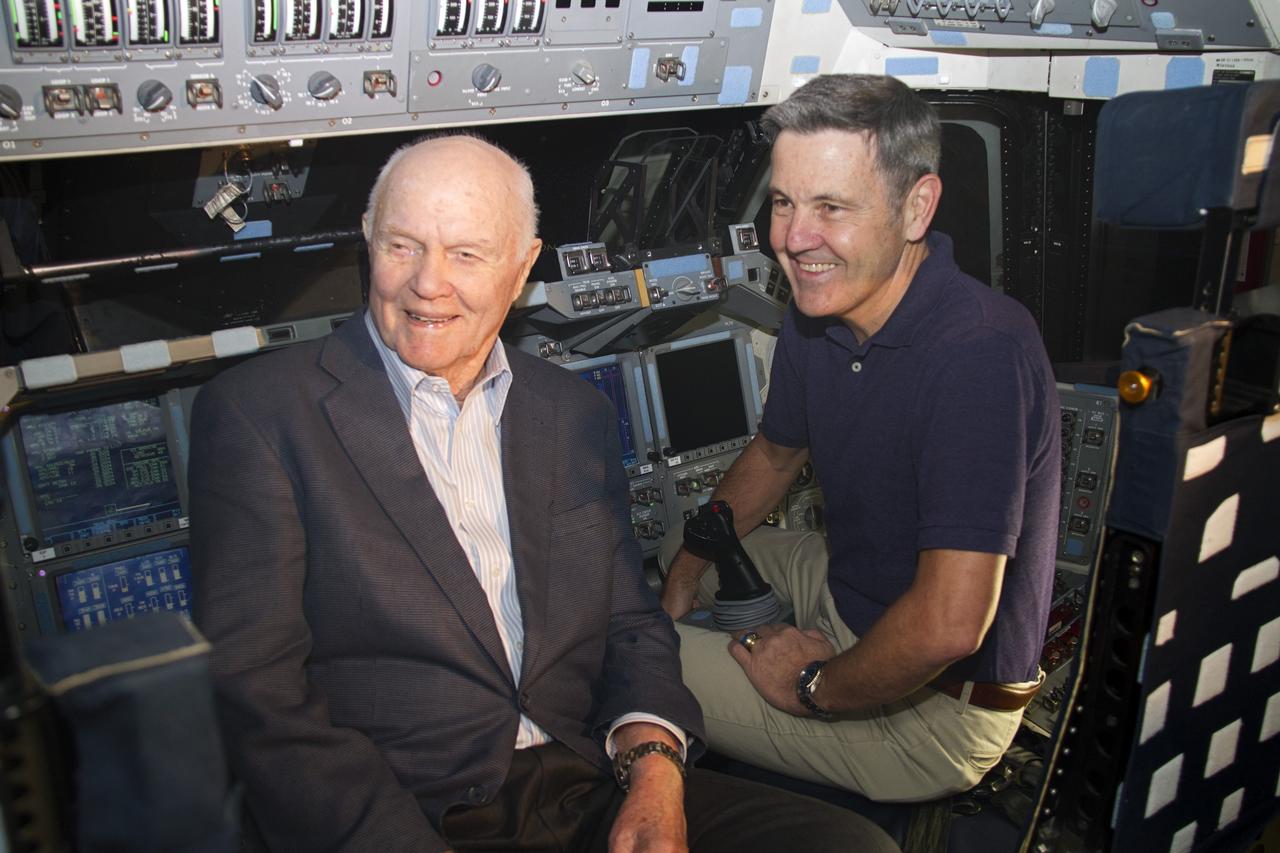
CAPE CANAVERAL, Fla. -- John Glenn and NASA Kennedy Space Center Director Bob Cabana sit in the flight deck of space shuttle Discovery in Orbiter Processing Facility-1 OPF-1. Glenn is at the space center to mark the 50th anniversary of being the first American astronaut to orbit the Earth inside the NASA Mercury Project's Friendship 7 capsule on Feb. 20, 1962. Glenn later returned to space in October 1998 as a payload specialist aboard Discovery's STS-95 mission. Glenn's launch aboard an Atlas rocket took with it the hopes of an entire nation and ushered in a new era of space travel that eventually led to Americans walking on the moon by the end of the 1960s. Glenn soon was followed into orbit by Scott Carpenter, Walter Schirra and Gordon Cooper. Their fellow Mercury astronauts Alan Shepard and Virgil "Gus" Grissom flew earlier suborbital flights. Deke Slayton, a member of NASA's original Mercury 7 astronauts, was grounded by a medical condition until the Apollo-Soyuz Test Project in 1975. Shuttle Discovery currently is being prepared for display at Smithsonian’s National Air and Space Museum, Steven F. Udvar-Hazy Center in Chantilly, Va. Photo credit: Cory Huston
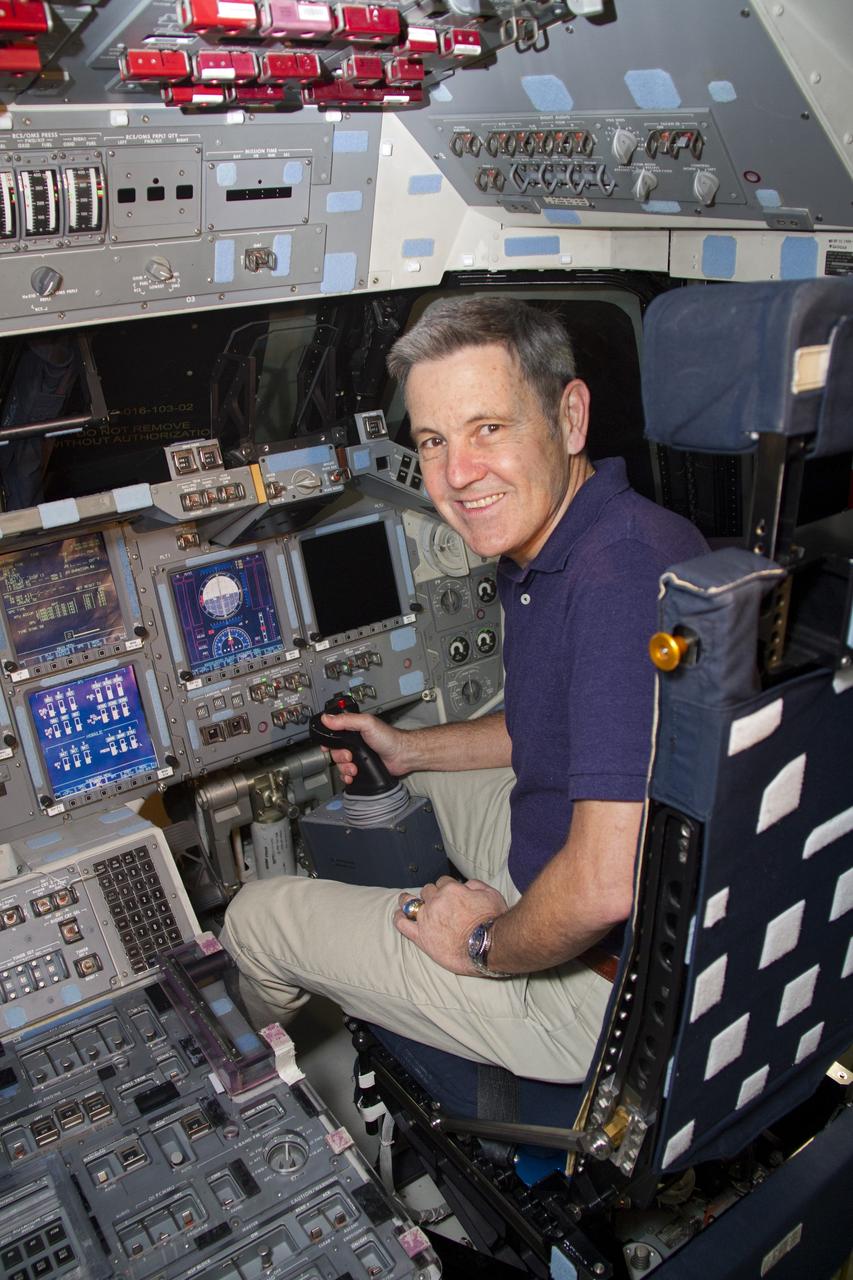
CAPE CANAVERAL, Fla. -- NASA Kennedy Space Center Director Bob Cabana sits at the controls in the flight deck of space shuttle Discovery in Orbiter Processing Facility-1 OPF-1. At the space center in Florida, Cabana is helping John Glenn mark the 50th anniversary of being the first American astronaut to orbit the Earth inside the NASA Mercury Project's Friendship 7 capsule on Feb. 20, 1962. Glenn later returned to space in October 1998 as a payload specialist aboard Discovery's STS-95 mission. Glenn's launch aboard an Atlas rocket took with it the hopes of an entire nation and ushered in a new era of space travel that eventually led to Americans walking on the moon by the end of the 1960s. Glenn soon was followed into orbit by Scott Carpenter, Walter Schirra and Gordon Cooper. Their fellow Mercury astronauts Alan Shepard and Virgil "Gus" Grissom flew earlier suborbital flights. Deke Slayton, a member of NASA's original Mercury 7 astronauts, was grounded by a medical condition until the Apollo-Soyuz Test Project in 1975. Shuttle Discovery currently is being prepared for display at Smithsonian’s National Air and Space Museum, Steven F. Udvar-Hazy Center in Chantilly, Va. Photo credit: Cory Huston
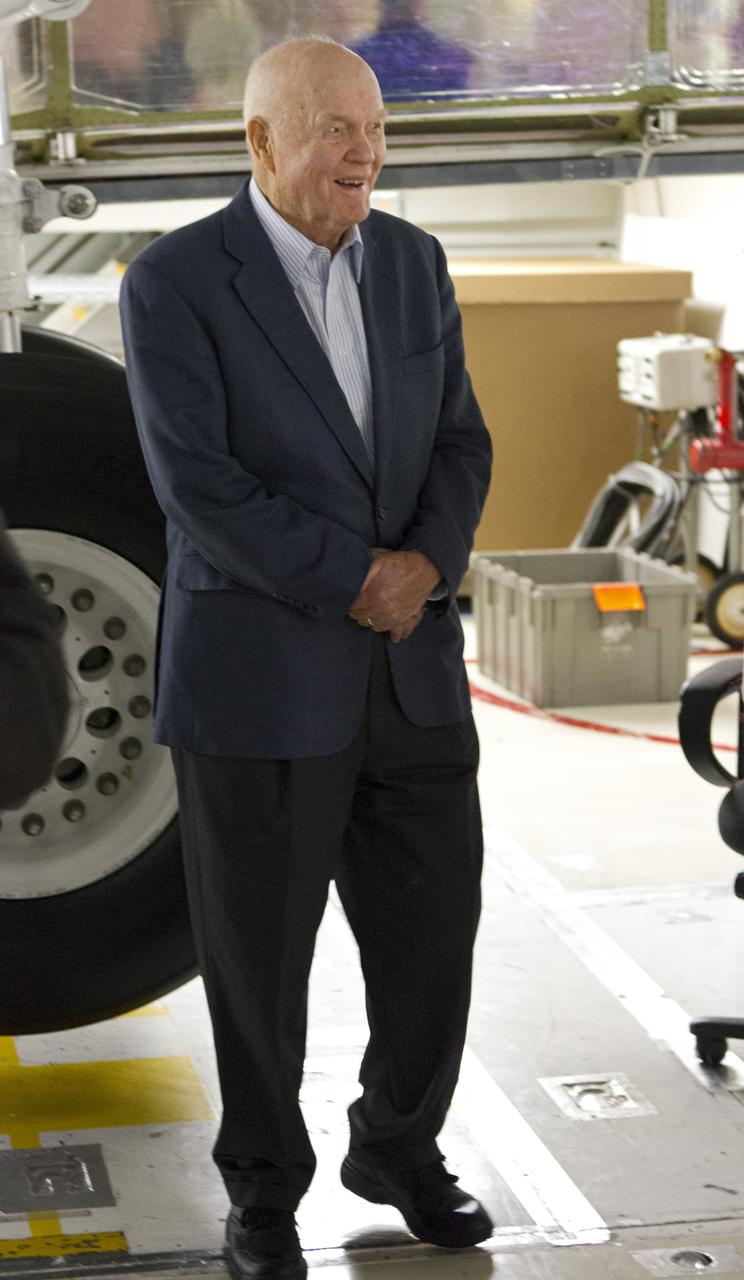
CAPE CANAVERAL, Fla. -- John Glenn stands beside the wheel of space shuttle Discovery in Orbiter Processing Facility-1 OPF-1 at NASA's Kennedy Space Center in Florida. Glenn is at the space center to mark the 50th anniversary of being the first American astronaut to orbit the Earth inside the NASA Mercury Project's Friendship 7 capsule on Feb. 20, 1962. Glenn later returned to space in October 1998 as a payload specialist aboard Discovery's STS-95 mission. Glenn's launch aboard an Atlas rocket took with it the hopes of an entire nation and ushered in a new era of space travel that eventually led to Americans walking on the moon by the end of the 1960s. Glenn soon was followed into orbit by Scott Carpenter, Walter Schirra and Gordon Cooper. Their fellow Mercury astronauts Alan Shepard and Virgil "Gus" Grissom flew earlier suborbital flights. Deke Slayton, a member of NASA's original Mercury 7 astronauts, was grounded by a medical condition until the Apollo-Soyuz Test Project in 1975. Shuttle Discovery currently is being prepared for display at Smithsonian’s National Air and Space Museum, Steven F. Udvar-Hazy Center in Chantilly, Va. Photo credit: Cory Huston
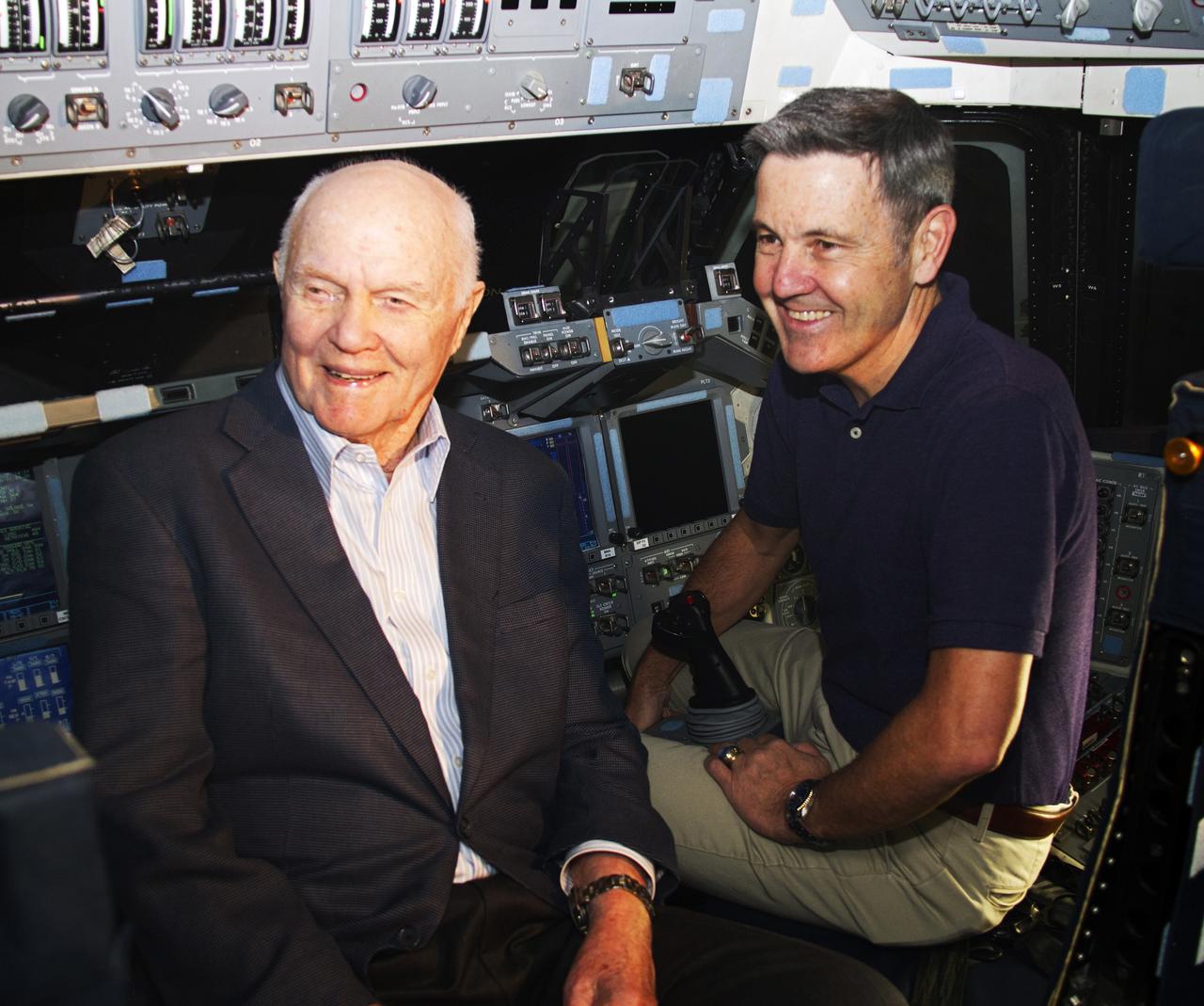
John Glenn and NASA Kennedy Space Center Director Bob Cabana sit in the flight deck of space shuttle Discovery in Bay 1 of the Orbiter Processing Facility at NASA's Kennedy Space Center in Florida. Glenn is at the space center to mark the 50th anniversary of being the first American astronaut to orbit the Earth inside the NASA Mercury Project's Friendship 7 capsule on Feb. 20, 1962. Glenn later returned to space in October 1998 as a payload specialist aboard Discovery's STS-95 mission. Glenn's launch aboard an Atlas rocket took with it the hopes of an entire nation and ushered in a new era of space travel that eventually led to Americans walking on the moon by the end of the 1960s. Glenn soon was followed into orbit by Scott Carpenter, Walter Schirra and Gordon Cooper. Their fellow Mercury astronauts Alan Shepard and Virgil "Gus" Grissom flew earlier suborbital flights. Deke Slayton, a member of NASA's original Mercury 7 astronauts, was grounded by a medical condition until the Apollo-Soyuz Test Project in 1975. Shuttle Discovery currently is being prepared for display at Smithsonian’s National Air and Space Museum, Steven F. Udvar-Hazy Center in Chantilly, Virginia.
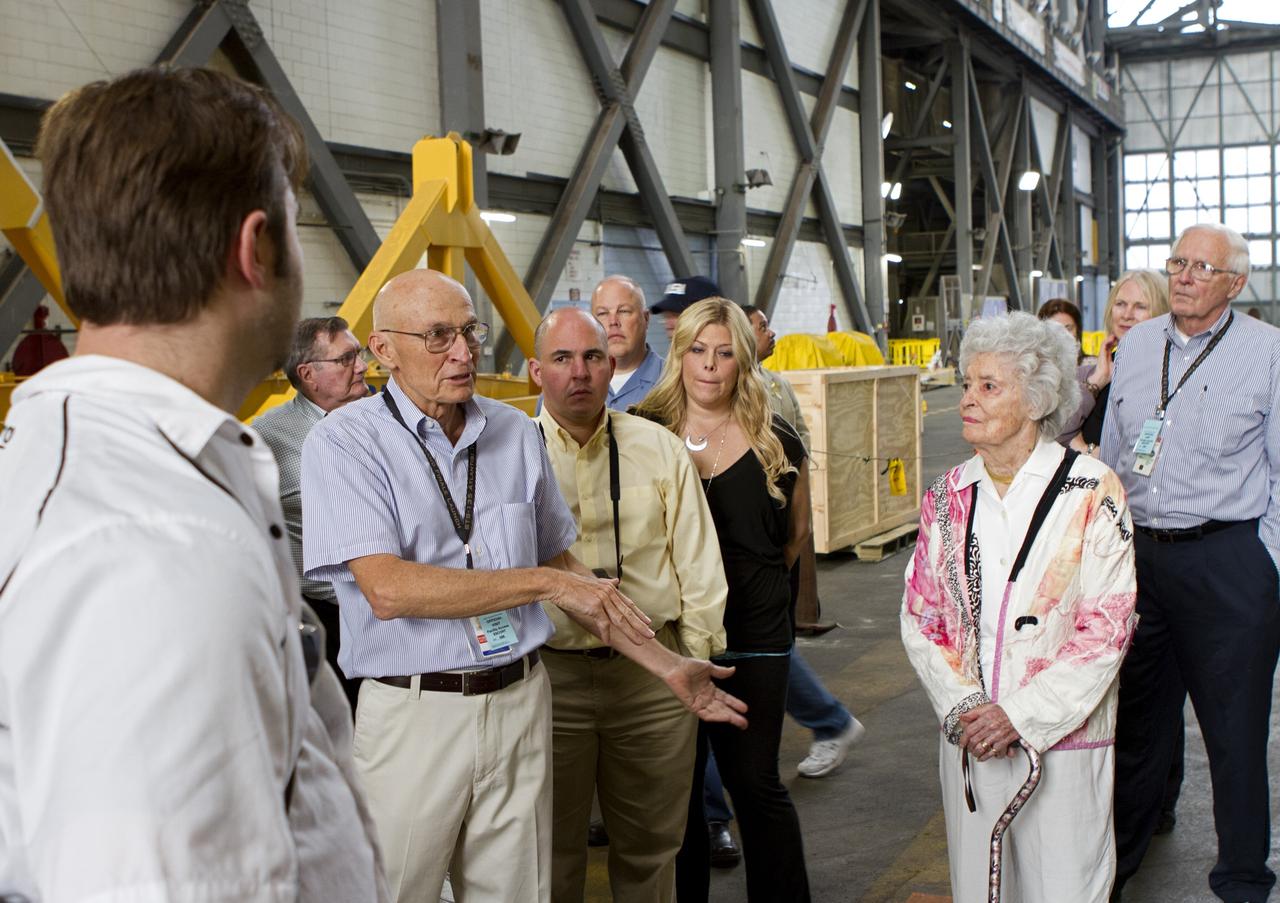
CAPE CANAVERAL, Fla. -- Former space shuttle launch director, Bob Sieck, talks to guests in the Vehicle Assembly Building at NASA's Kennedy Space Center in Florida. Sieck is helping John Glenn mark the 50th anniversary of being the first American astronaut to orbit the Earth inside the NASA Mercury Project's Friendship 7 capsule on Feb. 20, 1962. Glenn later returned to space in October 1998 as a payload specialist aboard space shuttle Discovery's STS-95 mission. Glenn's launch aboard an Atlas rocket took with it the hopes of an entire nation and ushered in a new era of space travel that eventually led to Americans walking on the moon by the end of the 1960s. Glenn soon was followed into orbit by Scott Carpenter, Walter Schirra and Gordon Cooper. Their fellow Mercury astronauts Alan Shepard and Virgil "Gus" Grissom flew earlier suborbital flights. Deke Slayton, a member of NASA's original Mercury 7 astronauts, was grounded by a medical condition until the Apollo-Soyuz Test Project in 1975. Photo credit: Cory Huston

CAPE CANAVERAL, Fla. -- NASA Kennedy Space Center Director Bob Cabana talks to guests in Orbiter Processing Facility-1 OPF-1 where space shuttle Discovery is being prepared for public display during a 50th anniversary celebration of the first orbital flight of an American. The astronaut who made that first flight, John Glenn, is at the space center to commemorate that achievement. Glenn orbited the Earth three times in the NASA Mercury Project's Friendship 7 capsule on Feb. 20, 1962. He later returned to space in October 1998 as a payload specialist aboard Discovery's STS-95 mission. Glenn's launch aboard an Atlas rocket took with it the hopes of an entire nation and ushered in a new era of space travel that eventually led to Americans walking on the moon by the end of the 1960s. Glenn soon was followed into orbit by Scott Carpenter, Walter Schirra and Gordon Cooper. Their fellow Mercury astronauts Alan Shepard and Virgil "Gus" Grissom flew earlier suborbital flights. Deke Slayton, a member of NASA's original Mercury 7 astronauts, was grounded by a medical condition until the Apollo-Soyuz Test Project in 1975. Shuttle Discovery currently is being prepared for display at Smithsonian’s National Air and Space Museum, Steven F. Udvar-Hazy Center in Chantilly, Va. Photo credit: Cory Huston
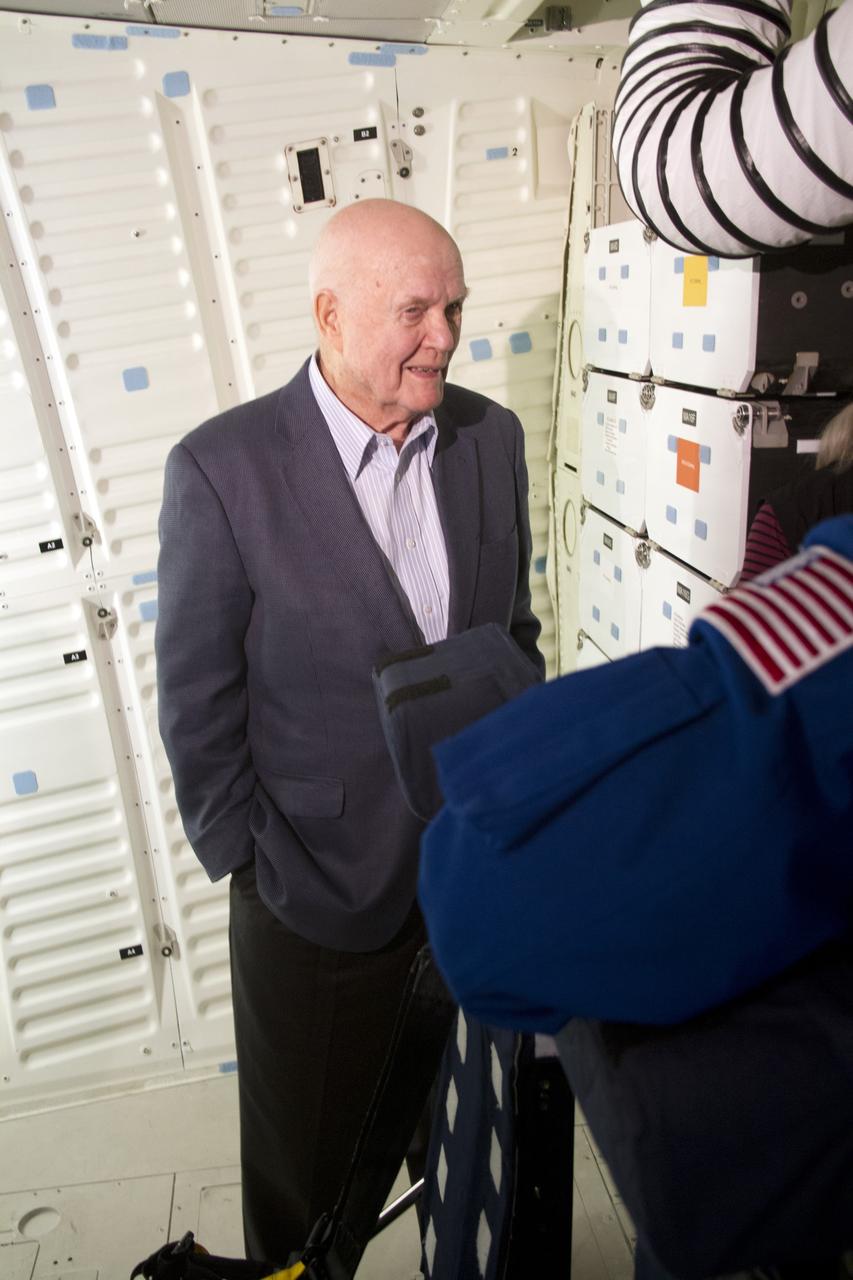
CAPE CANAVERAL, Fla. -- John Glenn stands in the middeck of space shuttle Discovery in Orbiter Processing Facility-1 OPF-1 at NASA's Kennedy Space Center in Florida. Glenn is at the space center to mark the 50th anniversary of being the first American astronaut to orbit the Earth inside the NASA Mercury Project's Friendship 7 capsule on Feb. 20, 1962. Glenn later returned to space in October 1998 as a payload specialist aboard Discovery's STS-95 mission. Glenn's launch aboard an Atlas rocket took with it the hopes of an entire nation and ushered in a new era of space travel that eventually led to Americans walking on the moon by the end of the 1960s. Glenn soon was followed into orbit by Scott Carpenter, Walter Schirra and Gordon Cooper. Their fellow Mercury astronauts Alan Shepard and Virgil "Gus" Grissom flew earlier suborbital flights. Deke Slayton, a member of NASA's original Mercury 7 astronauts, was grounded by a medical condition until the Apollo-Soyuz Test Project in 1975. Shuttle Discovery currently is being prepared for display at Smithsonian’s National Air and Space Museum, Steven F. Udvar-Hazy Center in Chantilly, Va. Photo credit: Cory Huston
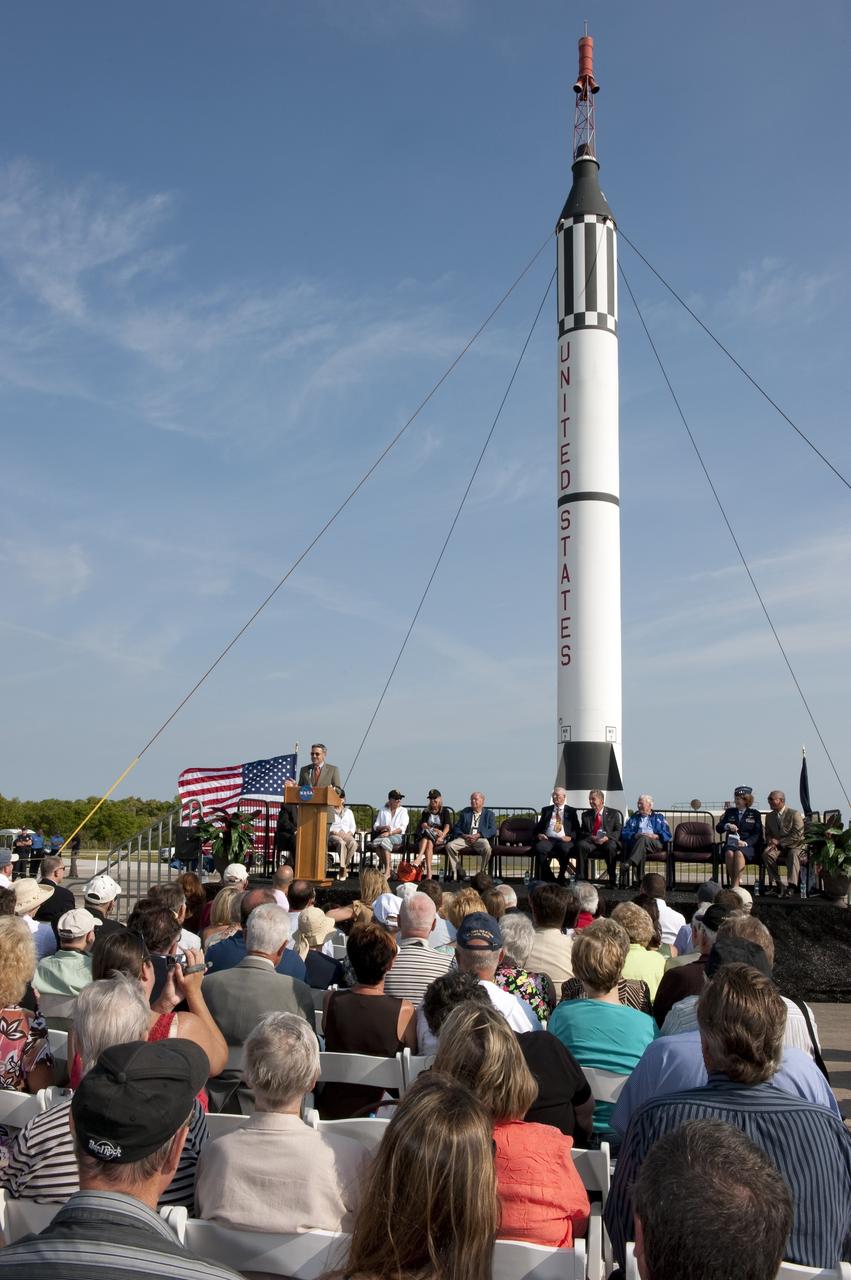
CAPE CANAVERAL, Fla. -- Kennedy Space Center Director and former astronaut Bob Cabana addresses the audience at a celebration at Complex 5/6 on Cape Canaveral Air Force Station in Florida. The celebration was held at the launch site of the first U.S. manned spaceflight May 5, 1961, to mark the 50th anniversary of the flight. Fifty years ago, astronaut Alan Shepard lifted off inside the Mercury capsule, "Freedom 7," atop an 82-foot-tall Mercury-Redstone rocket at 9:34 a.m. EST, sending him on a remarkably successful, 15-minute suborbital flight. The event was attended by more than 200 workers from the original Mercury program and included a re-creation of Shepard's flight and recovery, as well as a tribute to his contributions as a moonwalker on the Apollo 14 lunar mission. For more information, visit www.nasa.gov/topics/history/milestones/index.html. Photo credit: NASA/Kim Shiflett
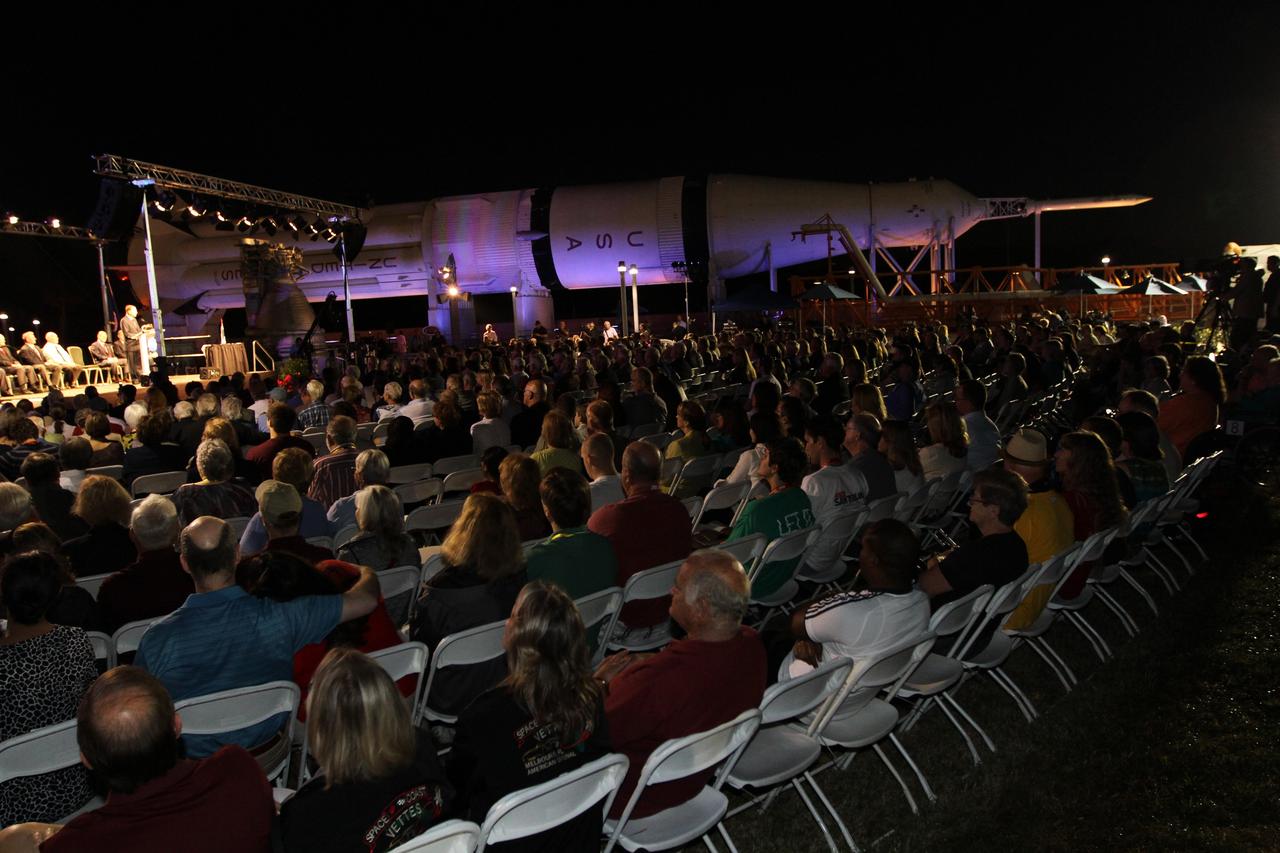
CAPE CANAVERAL, Fla. -- A crowd looks on during the "On Shoulders of Giants" program celebrating 50 years of Americans in orbit, an era which began with John Glenn's MA-6 mission on Feb. 20, 1962. The event was conducted in the Rocket Garden at the Kennedy Space Center Visitor Complex in Florida a few miles from the launch pad where Glenn and Scott Carpenter took flight in Mercury spacecraft. Glenn's launch aboard an Atlas rocket took with it the hopes of an entire nation and ushered in a new era of space travel that eventually led to Americans walking on the moon by the end of the 1960s. Glenn soon was followed into orbit by Scott Carpenter, Walter Schirra and Gordon Cooper. Their fellow Mercury astronauts Alan Shepard and Virgil "Gus" Grissom flew earlier suborbital flights. Deke Slayton, a member of NASA's original Mercury 7 astronauts, was grounded by a medical condition until the Apollo-Soyuz Test Project in 1975. Photo credit: Kim Shiflett
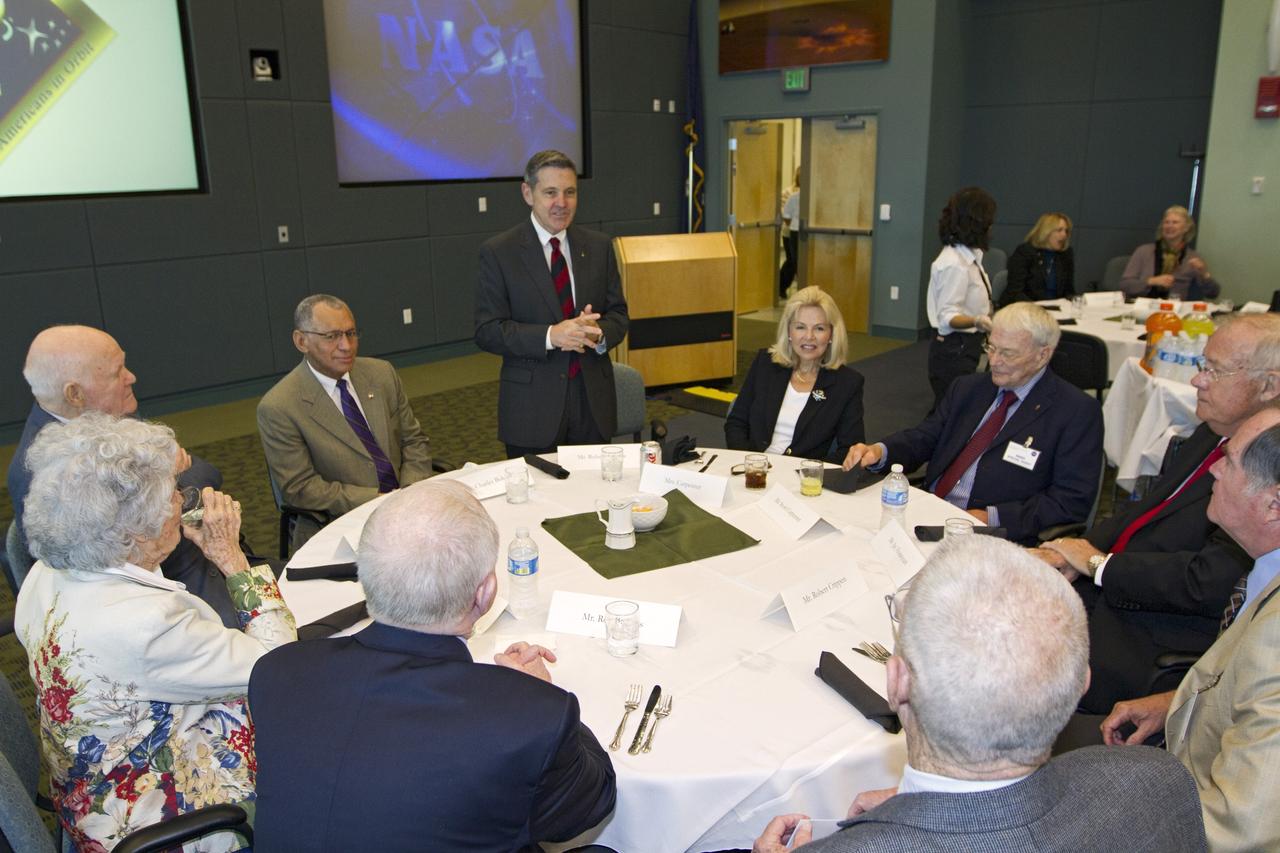
CAPE CANAVERAL, Fla. - Kennedy Space Center Director Bob Cabana, standing, speaks during a luncheon Feb. 17, 2012, celebrating 50 years of Americans in orbit, an era which began with Glenn's Mercury mission MA-6, on Feb. 20, 1962. Glenn's launch aboard an Atlas rocket took with it the hopes of an entire nation and ushered in a new era of space travel that eventually led to Americans walking on the moon by the end of the 1960s. Glenn soon was followed into orbit by Scott Carpenter, Walter Schirra and Gordon Cooper. Their fellow Mercury astronauts Alan Shepard and Virgil "Gus" Grissom flew earlier suborbital flights. Deke Slayton, a member of NASA's original Mercury 7 astronauts, was grounded by a medical condition until the Apollo-Soyuz Test Project in 1975. Photo credit: NASA/Kim Shiflett

KENNEDY SPACE CENTER, FLA. -- In this closeup viewed from above, former Apollo astronauts (seated, left to right) Neil A. Armstrong and Edwin "Buzz" Aldrin who flew on Apollo 11, the launch to the moon; Gene Cernan, who flew on Apollo 10 and 17; and Walt Cunningham, who flew on Apollo 7, answer questions from the media during a press conference in the Apollo/Saturn V Center. At left is Lisa Malone, chief of KSC's Media Services branch, who monitored the session. In the background are the original computer consoles used in the firing room during the Apollo program. They are now part of the reenactment of the Apollo launches in the exhibit at the center. The four astronauts were at KSC for the 30th anniversary of the Apollo 11 launch and moon landing, July 16 and July 20, 1969
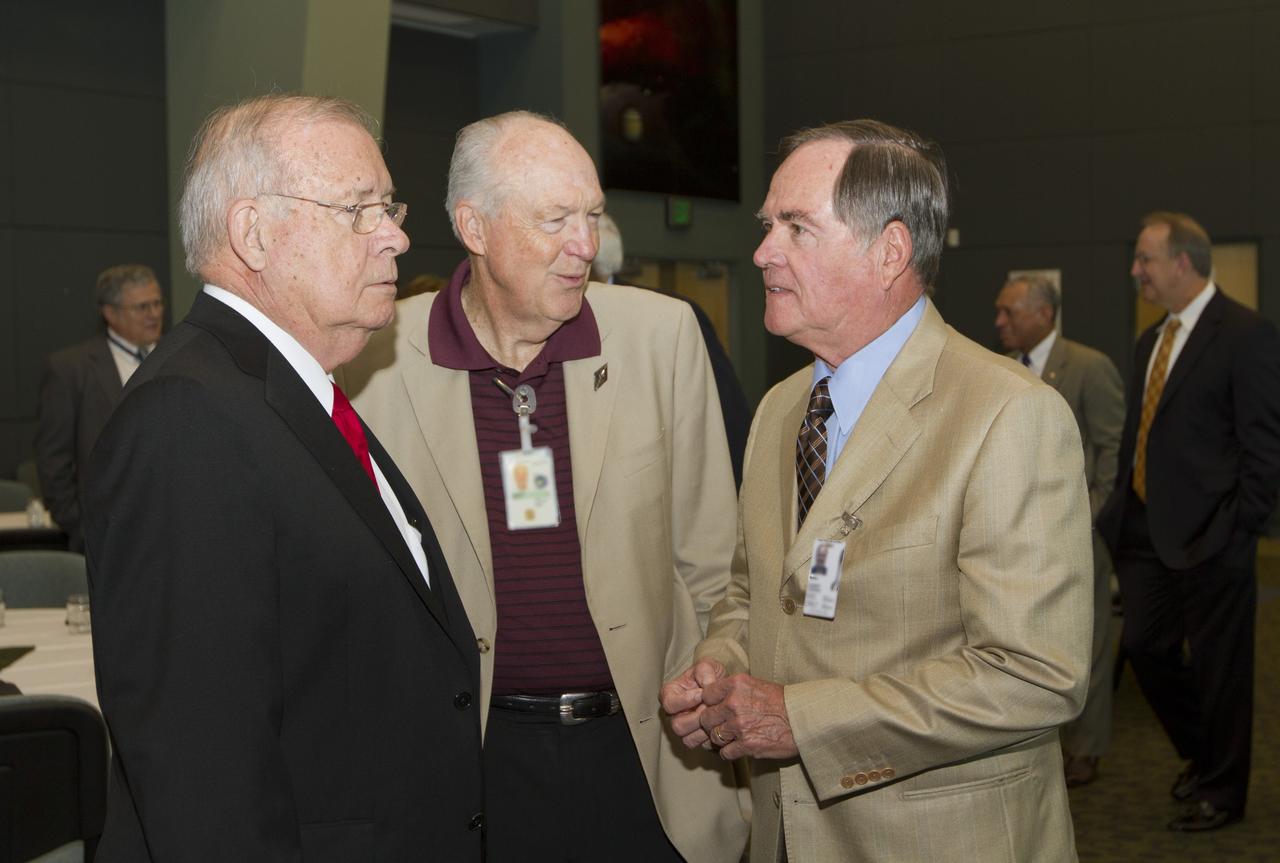
CAPE CANAVERAL, Fla. - Former Kennedy Space Center directors Jay Honeycutt, left, and Bob Crippen, right, talk during a luncheon Feb. 17, 2012, celebrating 50 years of Americans in orbit, an era which began with Glenn's Mercury mission MA-6, on Feb. 20, 1962. Glenn's launch aboard an Atlas rocket took with it the hopes of an entire nation and ushered in a new era of space travel that eventually led to Americans walking on the moon by the end of the 1960s. Glenn soon was followed into orbit by Scott Carpenter, Walter Schirra and Gordon Cooper. Their fellow Mercury astronauts Alan Shepard and Virgil "Gus" Grissom flew earlier suborbital flights. Deke Slayton, a member of NASA's original Mercury 7 astronauts, was grounded by a medical condition until the Apollo-Soyuz Test Project in 1975. Photo credit: NASA/Kim Shiflett
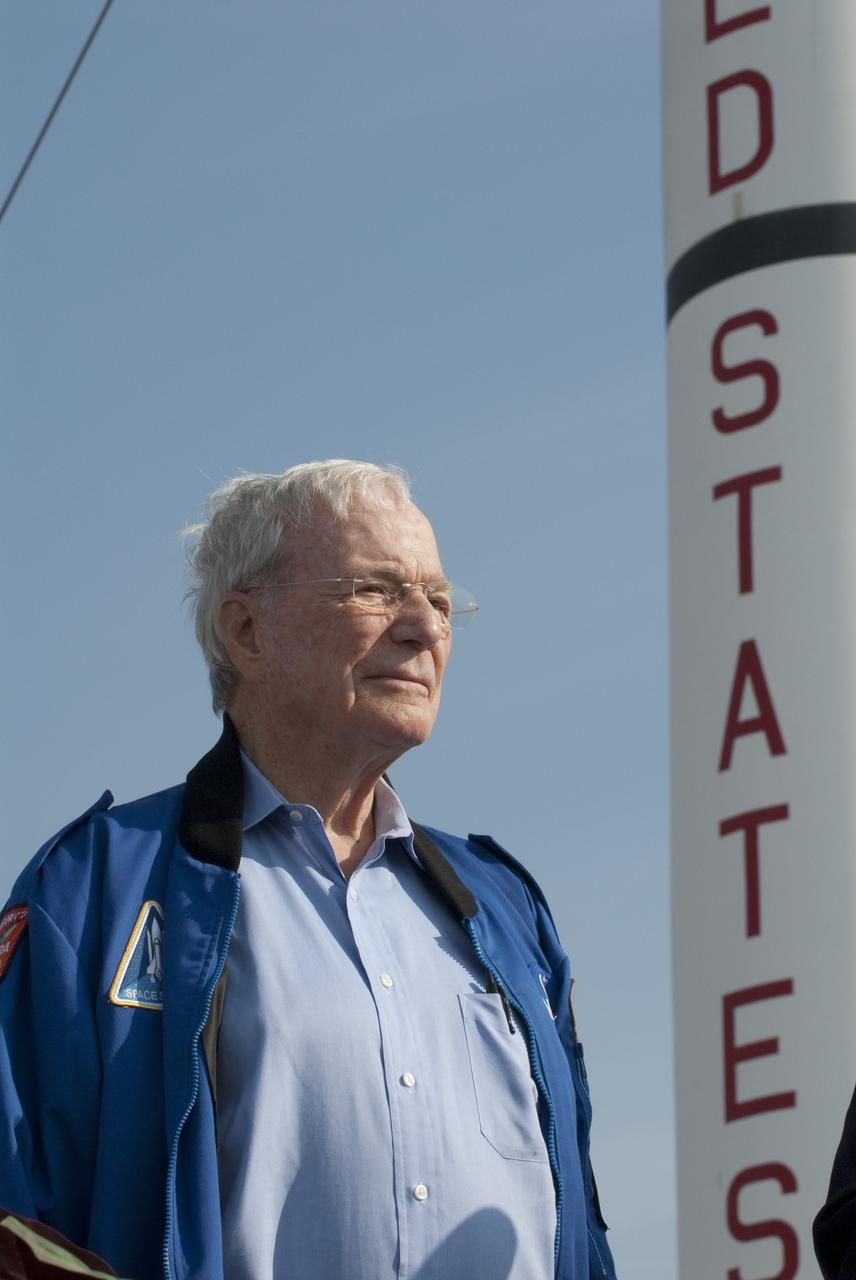
CAPE CANAVERAL, Fla. -- Mercury astronaut Scott Carpenter participates in a celebration at Complex 5/6 on Cape Canaveral Air Force Station in Florida. The celebration was held at the launch site of the first U.S. manned spaceflight May 5, 1961, to mark the 50th anniversary of the flight. Fifty years ago, astronaut Alan Shepard lifted off inside the Mercury capsule, "Freedom 7," atop an 82-foot-tall Mercury-Redstone rocket at 9:34 a.m. EST, sending him on a remarkably successful, 15-minute suborbital flight. The event was attended by more than 200 workers from the original Mercury program and included a re-creation of Shepard's flight and recovery, as well as a tribute to his contributions as a moonwalker on the Apollo 14 lunar mission. For more information, visit www.nasa.gov/topics/history/milestones/index.html. Photo credit: NASA/Kim Shiflett

CAPE CANAVERAL, Fla. -- Lieutenant General Susan J. Helms, commander of the 14th Air Force and former astronaut, addresses the audience at a celebration at Complex 5/6 on Cape Canaveral Air Force Station in Florida. The celebration was held at the launch site of the first U.S. manned spaceflight May 5, 1961, to mark the 50th anniversary of the flight. Fifty years ago, astronaut Alan Shepard lifted off inside the Mercury capsule, "Freedom 7," atop an 82-foot-tall Mercury-Redstone rocket at 9:34 a.m. EST, sending him on a remarkably successful, 15-minute suborbital flight. The event was attended by more than 200 workers from the original Mercury program and included a re-creation of Shepard's flight and recovery, as well as a tribute to his contributions as a moonwalker on the Apollo 14 lunar mission. For more information, visit www.nasa.gov/topics/history/milestones/index.html. Photo credit: NASA/Kim Shiflett
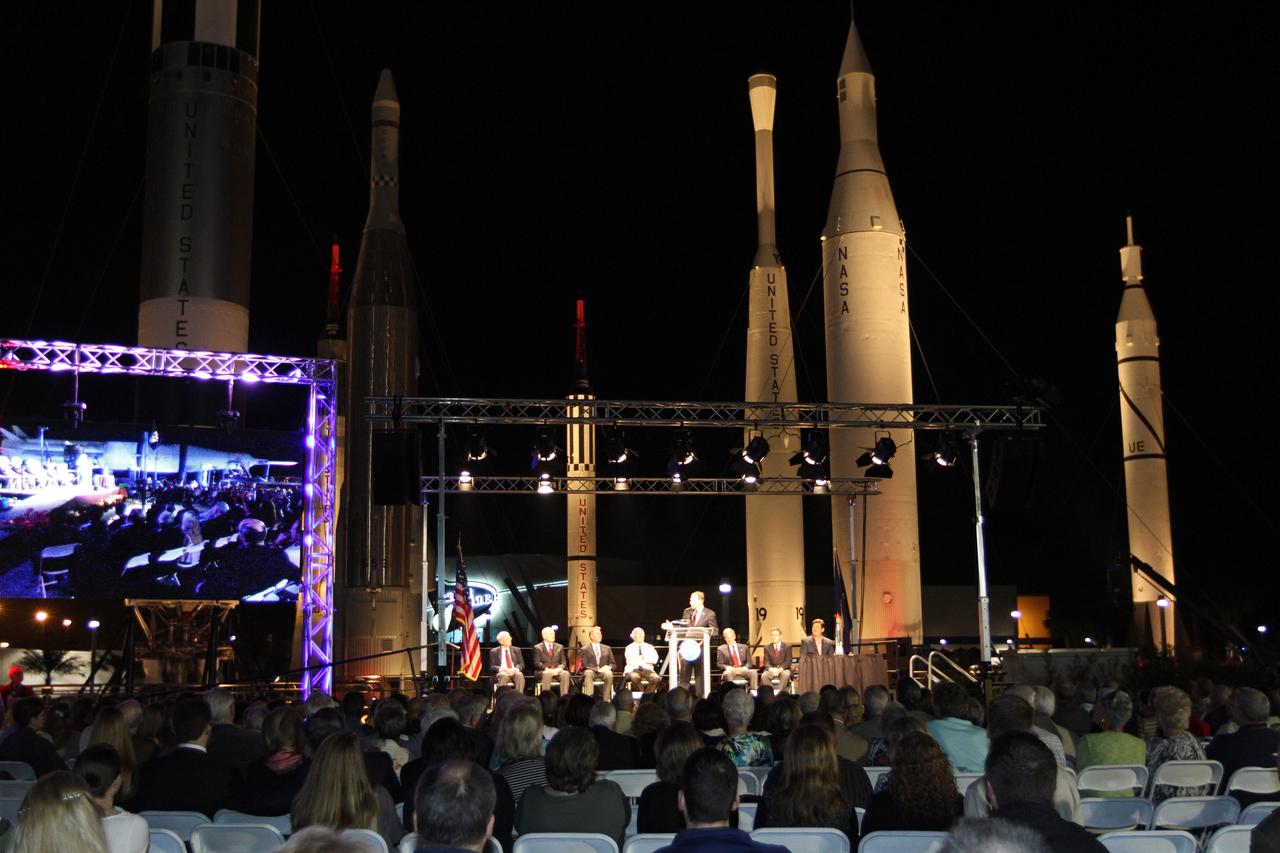
CAPE CANAVERAL, Fla. --A crowd looks on during the "On Shoulders of Giants" program celebrating 50 years of Americans in orbit, an era which began with John Glenn's MA-6 mission on Feb. 20, 1962. The event was conducted in the Rocket Garden at the Kennedy Space Center Visitor Complex in Florida a few miles from the launch pad where Glenn and Scott Carpenter took flight in Mercury spacecraft. Glenn's launch aboard an Atlas rocket took with it the hopes of an entire nation and ushered in a new era of space travel that eventually led to Americans walking on the moon by the end of the 1960s. Glenn soon was followed into orbit by Scott Carpenter, Walter Schirra and Gordon Cooper. Their fellow Mercury astronauts Alan Shepard and Virgil "Gus" Grissom flew earlier suborbital flights. Deke Slayton, a member of NASA's original Mercury 7 astronauts, was grounded by a medical condition until the Apollo-Soyuz Test Project in 1975. Photo credit: Kim Shiflett
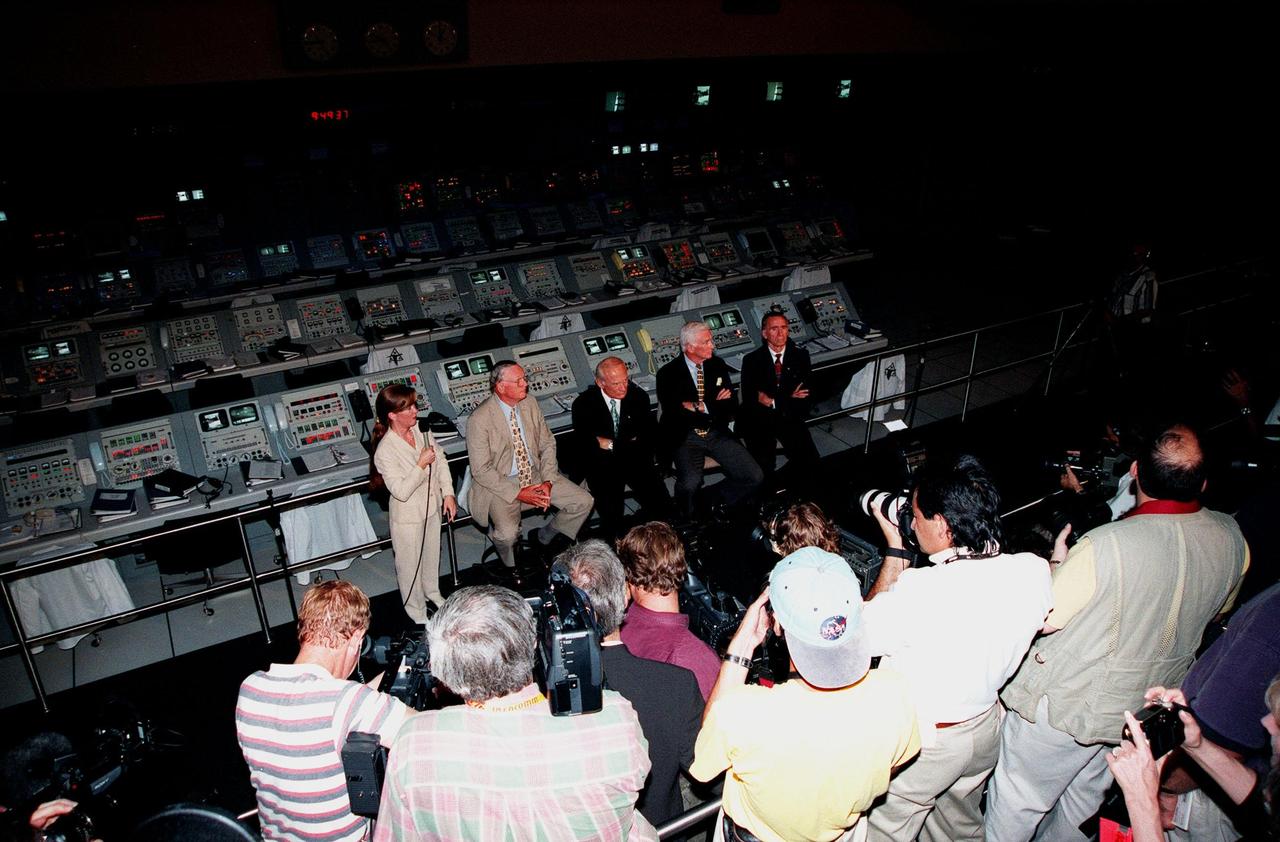
KENNEDY SPACE CENTER, FLA. -- Viewed from above, former Apollo astronauts (seated, left to right) Neil A. Armstrong and Edwin "Buzz" Aldrin who flew on Apollo 11, the launch to the moon; Gene Cernan, who flew on Apollo 10 and 17; and Walt Cunningham, who flew on Apollo 7, answer questions from the media during a press conference in the Apollo/Saturn V Center. At left is Lisa Malone, chief of KSC's Media Services branch, who monitored the session. In the background are the original computer consoles used in the firing room during the Apollo program. They are now part of the reenactment of the Apollo launches in the exhibit at the center. The four astronauts were at KSC for the 30th anniversary of the Apollo 11 launch and moon landing, July 16 and July 20, 1969

CAPE CANAVERAL, Fla. - Former Kennedy Space Center directors Forrest McCartney, left, and Roy Bridges, center, listen with Annie Glenn during a luncheon Feb. 17, 2012, celebrating 50 years of Americans in orbit, an era which began with Glenn's Mercury mission MA-6, on Feb. 20, 1962. Glenn's launch aboard an Atlas rocket took with it the hopes of an entire nation and ushered in a new era of space travel that eventually led to Americans walking on the moon by the end of the 1960s. Glenn soon was followed into orbit by Scott Carpenter, Walter Schirra and Gordon Cooper. Their fellow Mercury astronauts Alan Shepard and Virgil "Gus" Grissom flew earlier suborbital flights. Deke Slayton, a member of NASA's original Mercury 7 astronauts, was grounded by a medical condition until the Apollo-Soyuz Test Project in 1975. Photo credit: NASA/Kim Shiflett
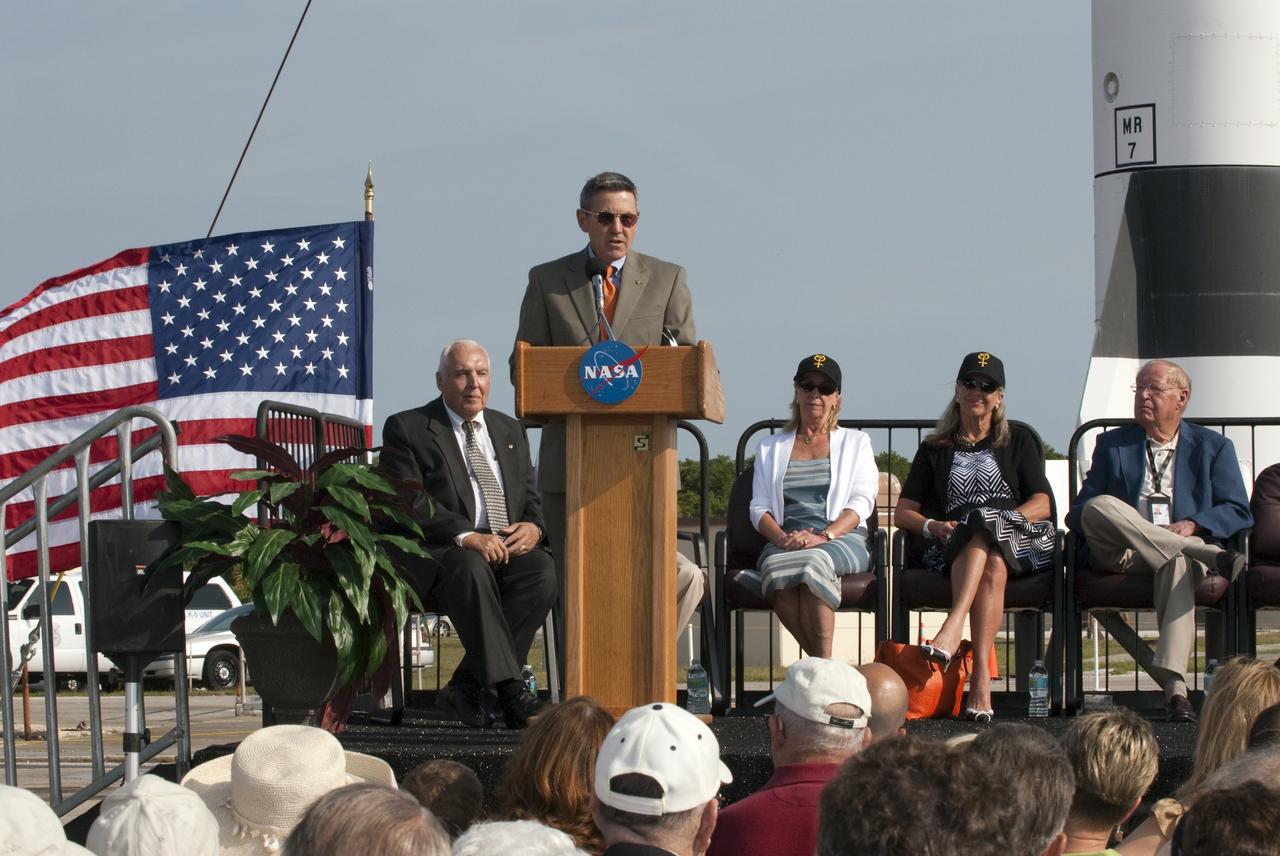
CAPE CANAVERAL, Fla. -- Kennedy Space Center Director and former astronaut Bob Cabana addresses the audience at a celebration at Complex 5/6 on Cape Canaveral Air Force Station in Florida. The celebration was held at the launch site of the first U.S. manned spaceflight May 5, 1961, to mark the 50th anniversary of the flight. Fifty years ago, astronaut Alan Shepard lifted off inside the Mercury capsule, "Freedom 7," atop an 82-foot-tall Mercury-Redstone rocket at 9:34 a.m. EST, sending him on a remarkably successful, 15-minute suborbital flight. The event was attended by more than 200 workers from the original Mercury program and included a re-creation of Shepard's flight and recovery, as well as a tribute to his contributions as a moonwalker on the Apollo 14 lunar mission. For more information, visit www.nasa.gov/topics/history/milestones/index.html. Photo credit: NASA/Kim Shiflett
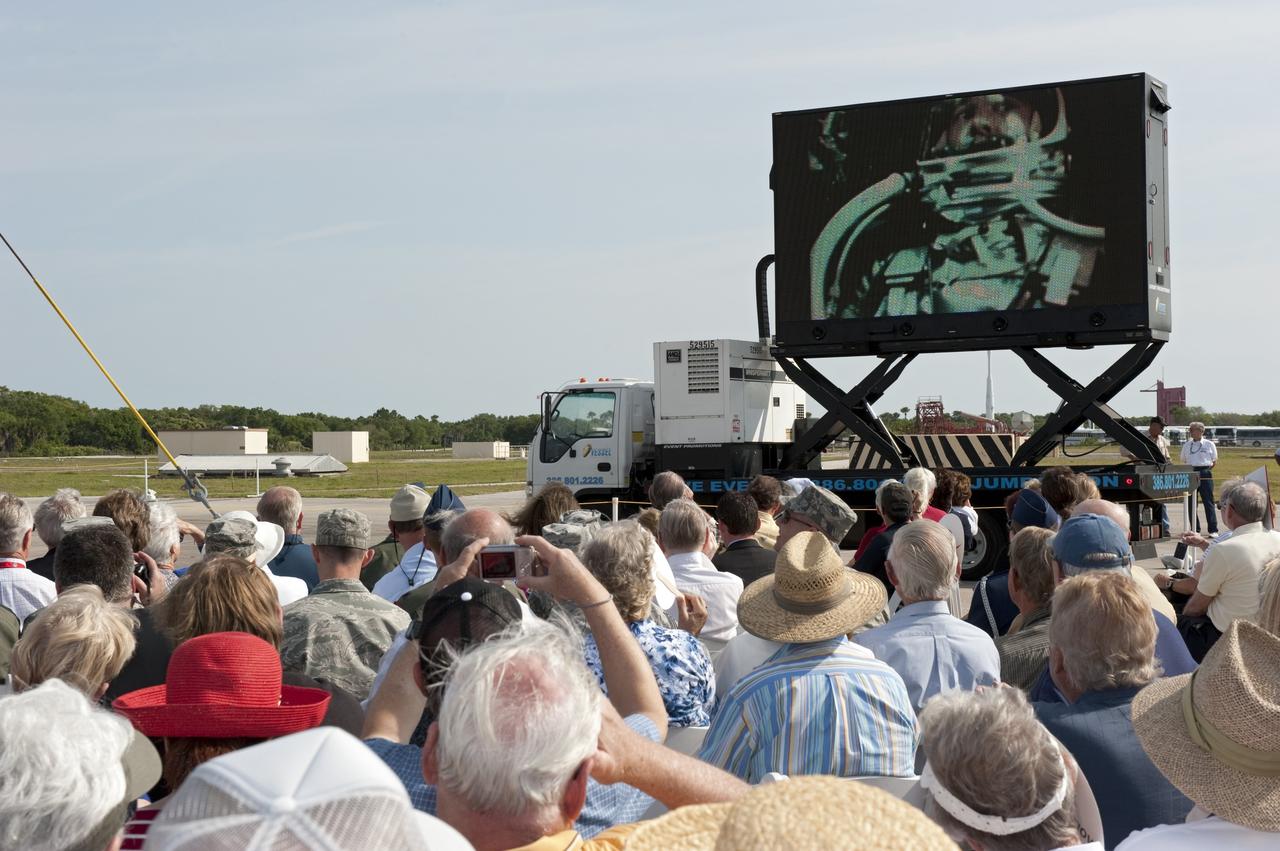
CAPE CANAVERAL, Fla. -- Invited guests enjoy a tribute to astronaut Alan Shepard during a celebration at Complex 5/6 on Cape Canaveral Air Force Station in Florida. The celebration was held at the launch site of the first U.S. manned spaceflight May 5, 1961, to mark the 50th anniversary of the flight. Fifty years ago, astronaut Alan Shepard lifted off inside the Mercury capsule, "Freedom 7," atop an 82-foot-tall Mercury-Redstone rocket at 9:34 a.m. EST, sending him on a remarkably successful, 15-minute suborbital flight. The event was attended by more than 200 workers from the original Mercury program and included a re-creation of Shepard's flight and recovery, as well as a tribute to his contributions as a moonwalker on the Apollo 14 lunar mission. For more information, visit www.nasa.gov/topics/history/milestones/index.html. Photo credit: NASA/Kim Shiflett
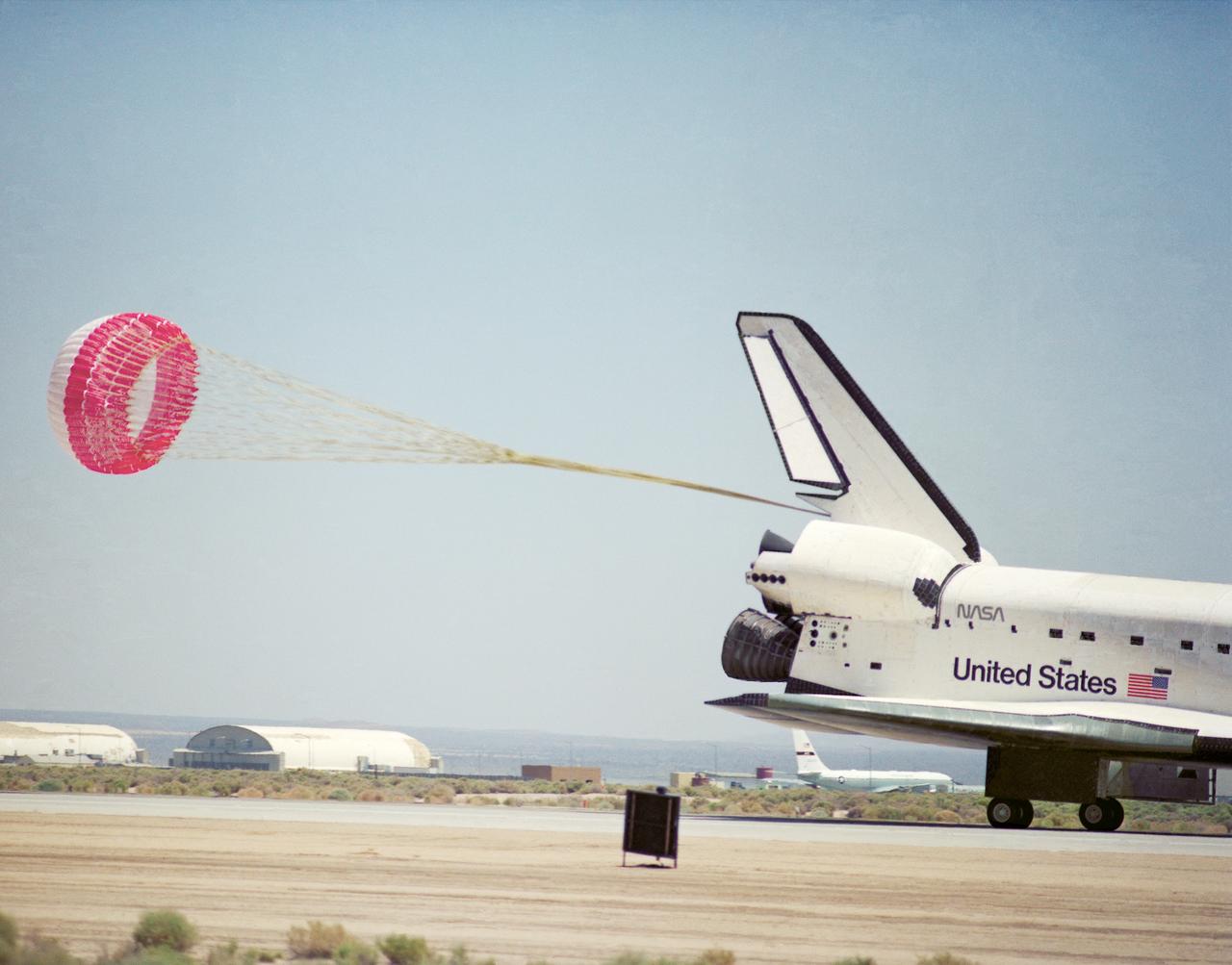
The Space Shuttle Endeavour concludes mission STS-49 at NASA's Ames-Dryden Flight Research Facility (later redesignated Dryden Flight Research Center), Edwards, California, with a 1:57 p.m. (PDT) landing 16 May on Edward's concrete runway 22. The planned 7-day mission, which began with a launch from Kennedy Space Center, Florida, at 4:41 p.m. (PFT), 7 May, was extended two days to allow extra time to rescue the Intelsat VI satellite and complete Space Station assembly techniques originally planned. After a perfect rendezvous in orbit and numerous attempts to grab the satellite, space walking astronauts Pierre Thuot, Rick Hieb and Tom Akers successfully rescued it by hand on the third space walk with the support of mission specialists Kathy Thornton and Bruce Melnick. The three astronauts, on a record space walk, took hold of the satellite and directed it to the shuttle where a booster motor was attached to launch it to its proper orbit. Commander Dan Brandenstein and Pilot Kevin Chilton brought Endeavours's record setting maiden voyage to a perfect landing at Edwards AFB with the first deployment of a drag chute on a shuttle mission.
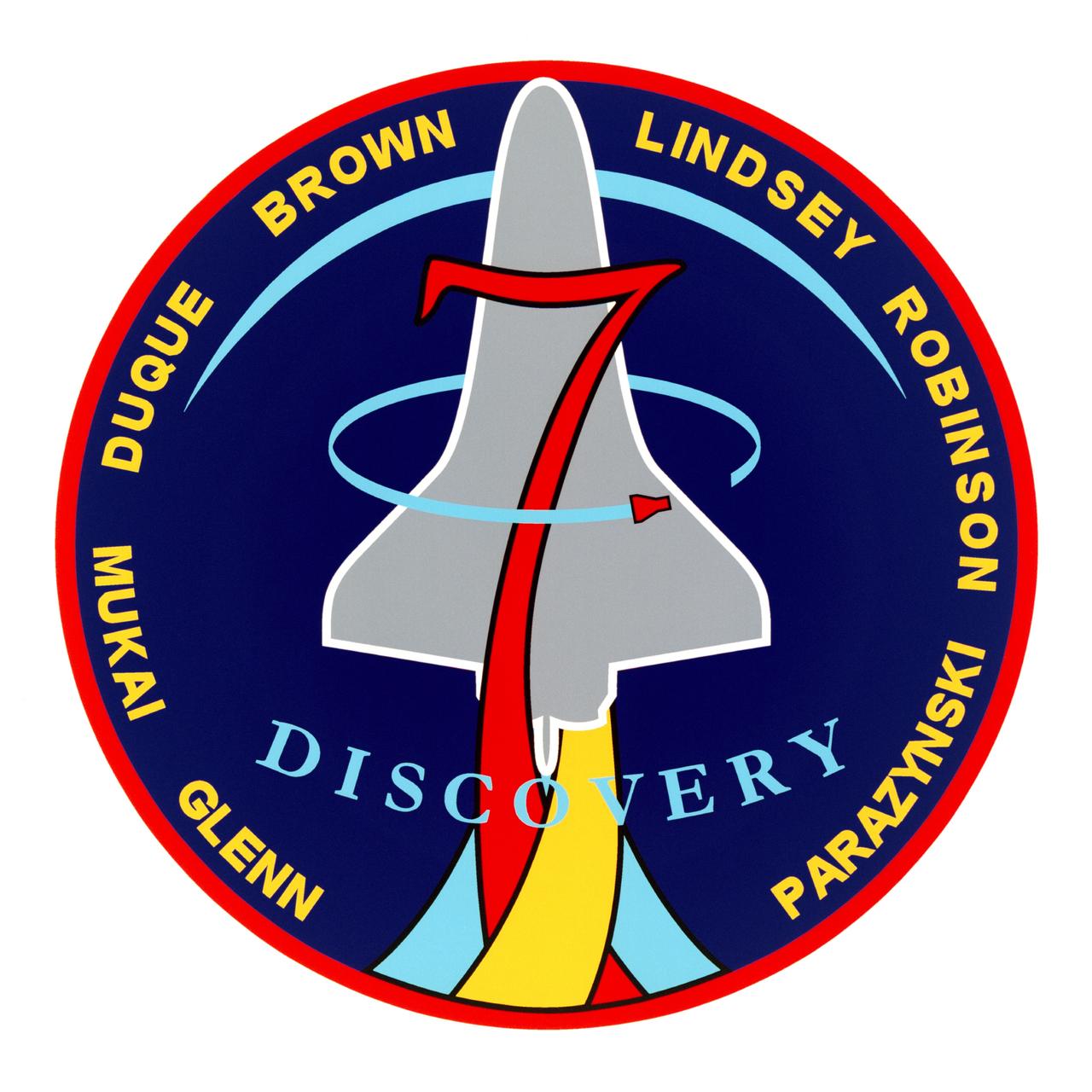
STS095-S-001 (June 1998) --- The STS-95 patch, designed by the crew, is intended to reflect the scientific, engineering, and historic elements of the mission. The space shuttle Discovery is shown rising over the sunlit Earth limb, representing the global benefits of the mission science and the solar science objectives of the Spartan Satellite. The bold number "7" signifies the seven members of Discovery's crew and also represents a historical link to the original seven Mercury astronauts. The STS-95 crew member John Glenn's first orbital flight is represnted by the Friendship 7 capsule. The rocket plumes symbolize the three major fields of science represented by the mission payloads: microgravity material science, medical research for humans on Earth and in space, and astronomy. The NASA insignia design for space shuttle flights is reserved for use by the astronauts and for other official use as the NASA Administrator may authorize. Public availability has been approved only in the forms of illustrations by the various news media. When and if there is any change in this policy, which is not anticipated, the change will be publicly announced. Photo credit: NASA
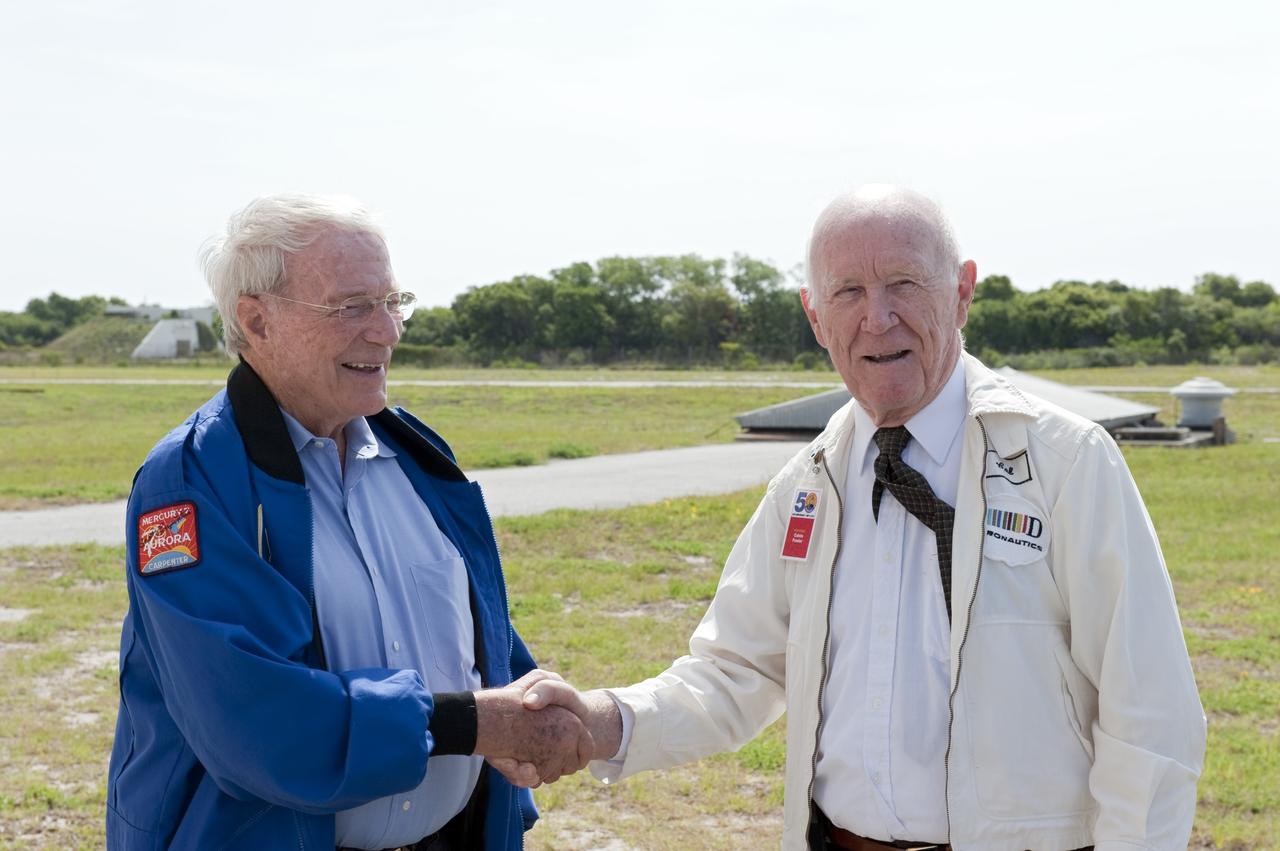
CAPE CANAVERAL, Fla. -- During a celebration at Complex 5/6 on Cape Canaveral Air Force Station in Florida, Mercury astronaut Scott Carpenter greets Calvin Fowler, the launch conductor for Carpenter's Mercury-Atlas 7 mission on May 24, 1962. The celebration was held at the launch site of the first U.S. manned spaceflight May 5, 1961, to mark the 50th anniversary of the flight. Fifty years ago, astronaut Alan Shepard lifted off inside the Mercury capsule, "Freedom 7," atop an 82-foot-tall Mercury-Redstone rocket at 9:34 a.m. EST, sending him on a remarkably successful, 15-minute suborbital flight. The event was attended by more than 200 workers from the original Mercury program and included a re-creation of Shepard's flight and recovery, as well as a tribute to his contributions as a moonwalker on the Apollo 14 lunar mission. For more information, visit www.nasa.gov/topics/history/milestones/index.html. Photo credit: NASA/Kim Shiflett
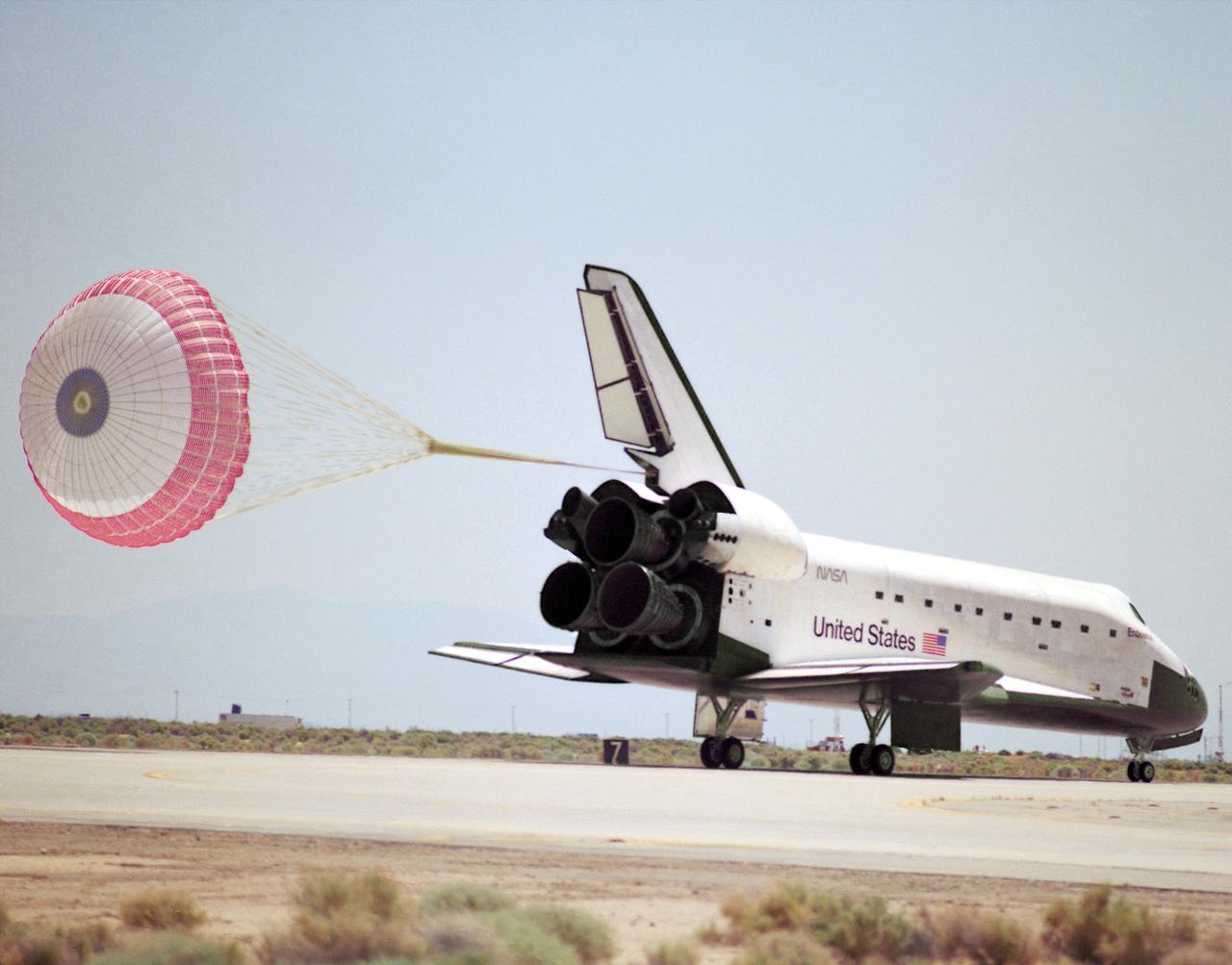
The Space Shuttle Endeavour concludes mission STS-49 at NASA's Ames-Dryden Flight Research Facility (later redesignated Dryden Flight Research Center), Edwards, California, with a 1:57 p.m. (PDT) landing May 16 on Edward's concrete runway 22. The planned 7-day mission, which began with a launch from Kennedy Space Center, Florida, at 4:41 p.m. (PFT), 7 May, was extended two days to allow extra time to rescue the Intelsat VI satellite and complete Space Station assembly techniques originally planned. After a perfect rendezvous in orbit and numerous attempts to grab the satellite, space walking astronauts Pierre Thuot, Rick Hieb and Tom Akers successfully rescued it by hand on the third space walk with the support of mission specialists Kathy Thornton and Bruce Melnick. The three astronauts, on a record space walk, took hold of the satellite and directed it to the shuttle where a booster motor was attached to launch it to its proper orbit. Commander Dan Brandenstein and Pilot Kevin Chilton brought Endeavours's record setting maiden voyage to a perfect landing at Edwards with the first deployment of a drag chute on a shuttle mission.
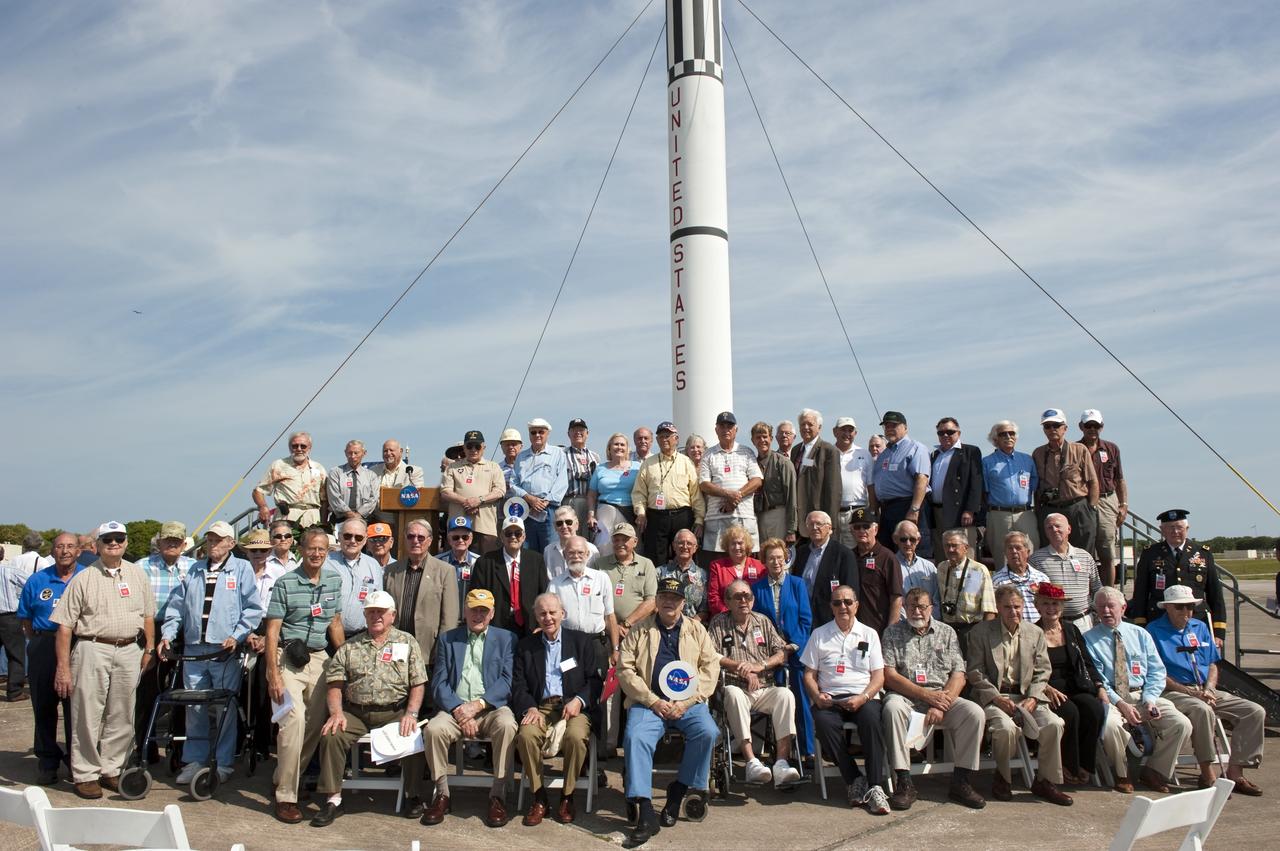
CAPE CANAVERAL, Fla. -- More than 200 workers from the original Mercury program pose for a group photo in front of a replica of a Mercury-Redstone rocket during a celebration at Complex 5/6 on Cape Canaveral Air Force Station in Florida. The celebration was held at the launch site of the first U.S. manned spaceflight May 5, 1961, to mark the 50th anniversary of the flight. Fifty years ago, astronaut Alan Shepard lifted off inside the Mercury capsule, "Freedom 7," atop an 82-foot-tall Mercury-Redstone rocket at 9:34 a.m. EST, sending him on a remarkably successful, 15-minute suborbital flight. The event was attended by more than 200 workers from the original Mercury program and included a re-creation of Shepard's flight and recovery, as well as a tribute to his contributions as a moonwalker on the Apollo 14 lunar mission. For more information, visit www.nasa.gov/topics/history/milestones/index.html. Photo credit: NASA/Kim Shiflett
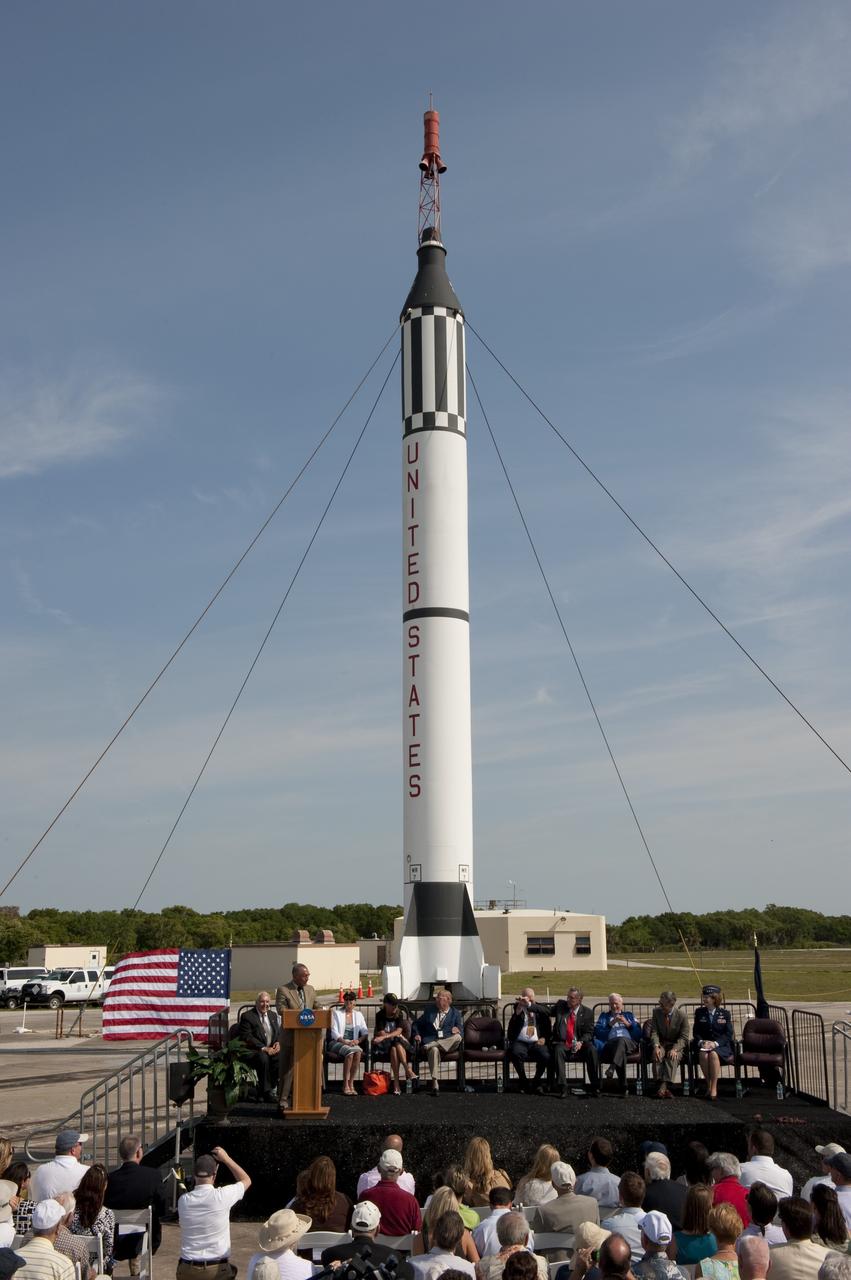
CAPE CANAVERAL, Fla. -- NASA Administrator Charlie Bolden addresses the audience during a celebration at Complex 5/6 on Cape Canaveral Air Force Station in Florida. The celebration was held at the launch site of the first U.S. manned spaceflight May 5, 1961, to mark the 50th anniversary of the flight. Fifty years ago, astronaut Alan Shepard lifted off inside the Mercury capsule, "Freedom 7," atop an 82-foot-tall Mercury-Redstone rocket at 9:34 a.m. EST, sending him on a remarkably successful, 15-minute suborbital flight. The event was attended by more than 200 workers from the original Mercury program and included a re-creation of Shepard's flight and recovery, as well as a tribute to his contributions as a moonwalker on the Apollo 14 lunar mission. For more information, visit www.nasa.gov/topics/history/milestones/index.html. Photo credit: NASA/Kim Shiflett
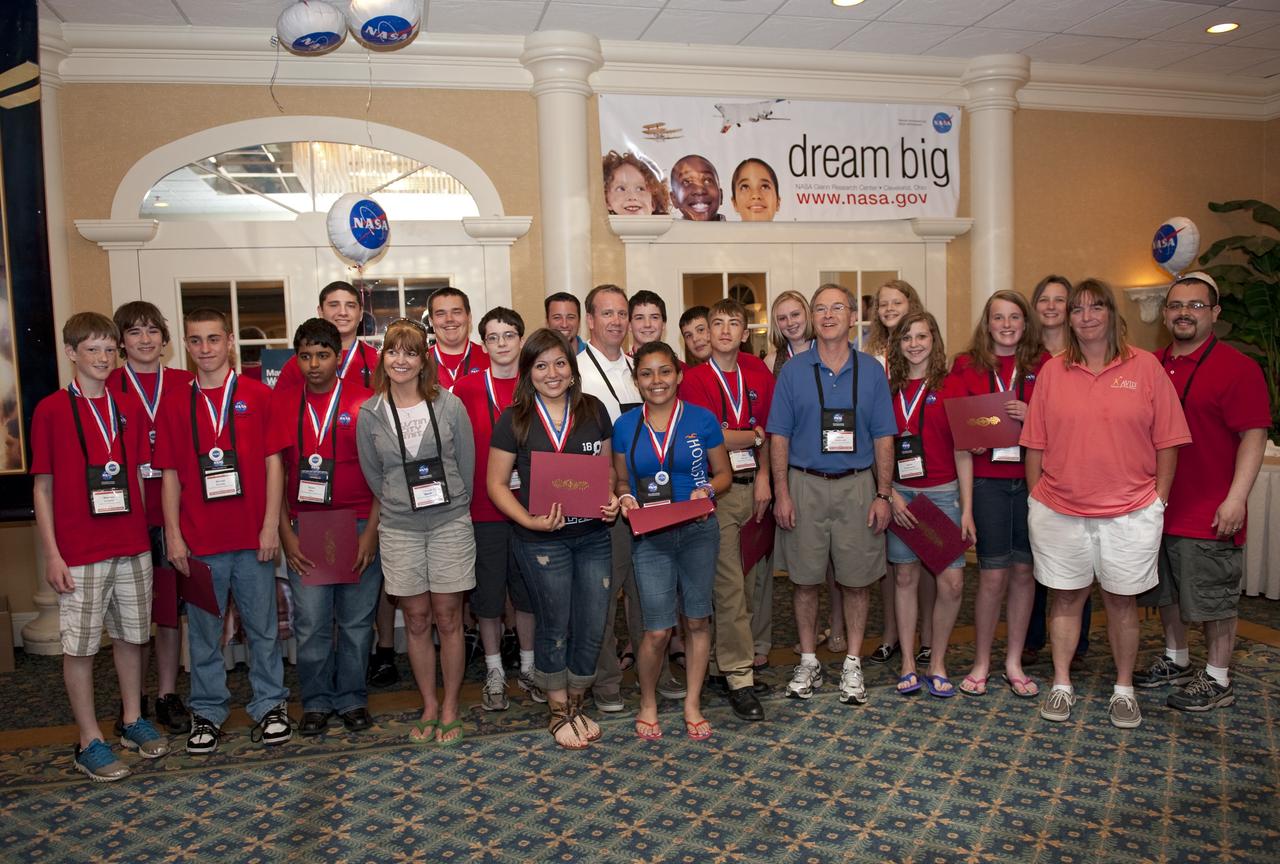
Cape Canaveral, Fla. -- Students and teachers from across the nation gathered for a photo opportunity during closing events of the NASA Explorer Schools (NES) symposium. During the NES gathering, students presented their investigation project to their peers, scientists, engineers and education specialists. About 60 fourth- through 12-grade students nationwide are at the center May 4-7 participating in tours of processing and launch facilities and the U.S. Astronaut Hall of Fame, as well as several educational activities and a career panel question-and-answer session. About 30 teachers will receive professional development opportunities during the symposium. The participants were competitively selected after they completed an original investigation focused on existing NASA missions or research interests. Photo Credit: NASA/Kim Shiflett
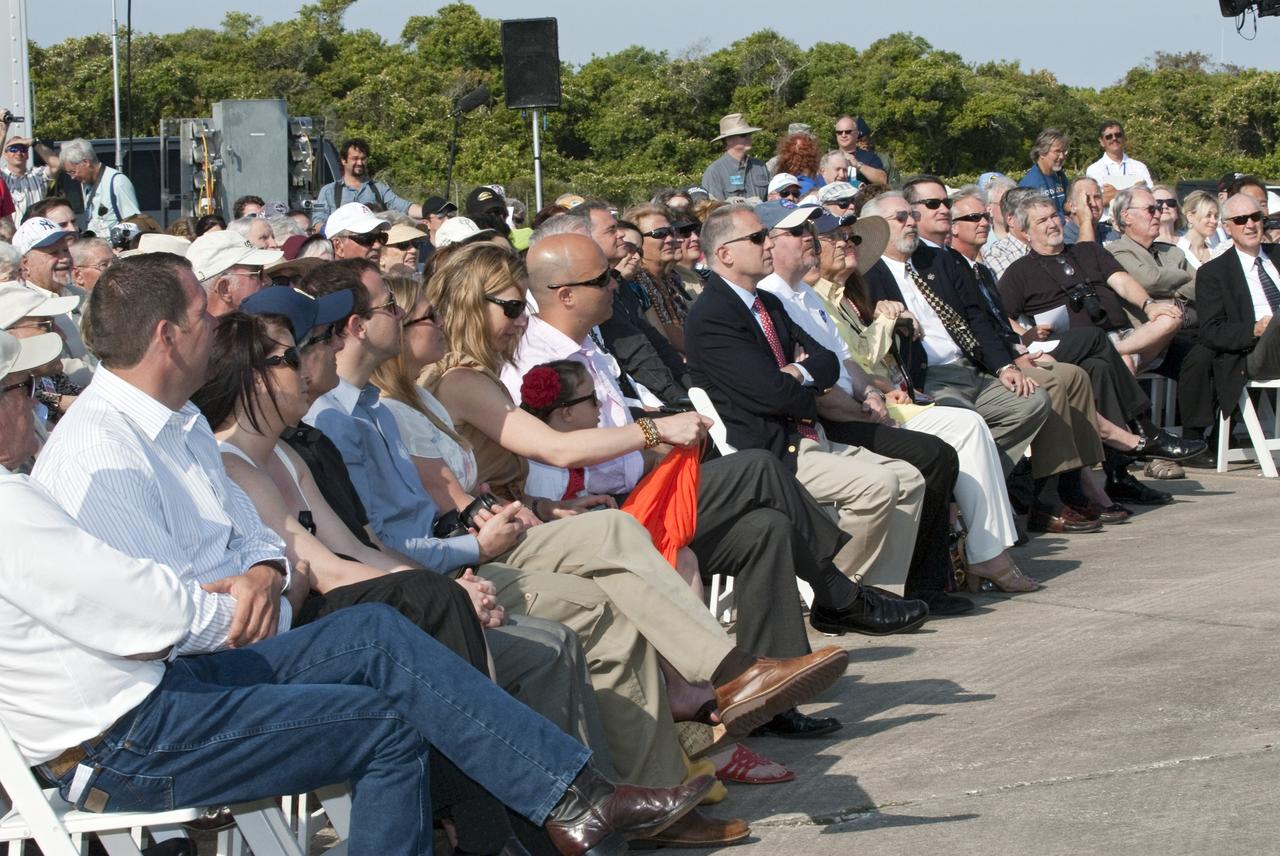
CAPE CANAVERAL, Fla. -- Invited guests attend a celebration at Complex 5/6 on Cape Canaveral Air Force Station in Florida. The celebration was held at the launch site of the first U.S. manned spaceflight May 5, 1961, to mark the 50th anniversary of the flight. Fifty years ago, astronaut Alan Shepard lifted off inside the Mercury capsule, "Freedom 7," atop an 82-foot-tall Mercury-Redstone rocket at 9:34 a.m. EST, sending him on a remarkably successful, 15-minute suborbital flight. The event was attended by more than 200 workers from the original Mercury program and included a re-creation of Shepard's flight and recovery, as well as a tribute to his contributions as a moonwalker on the Apollo 14 lunar mission. For more information, visit www.nasa.gov/topics/history/milestones/index.html. Photo credit: NASA/Kim Shiflett