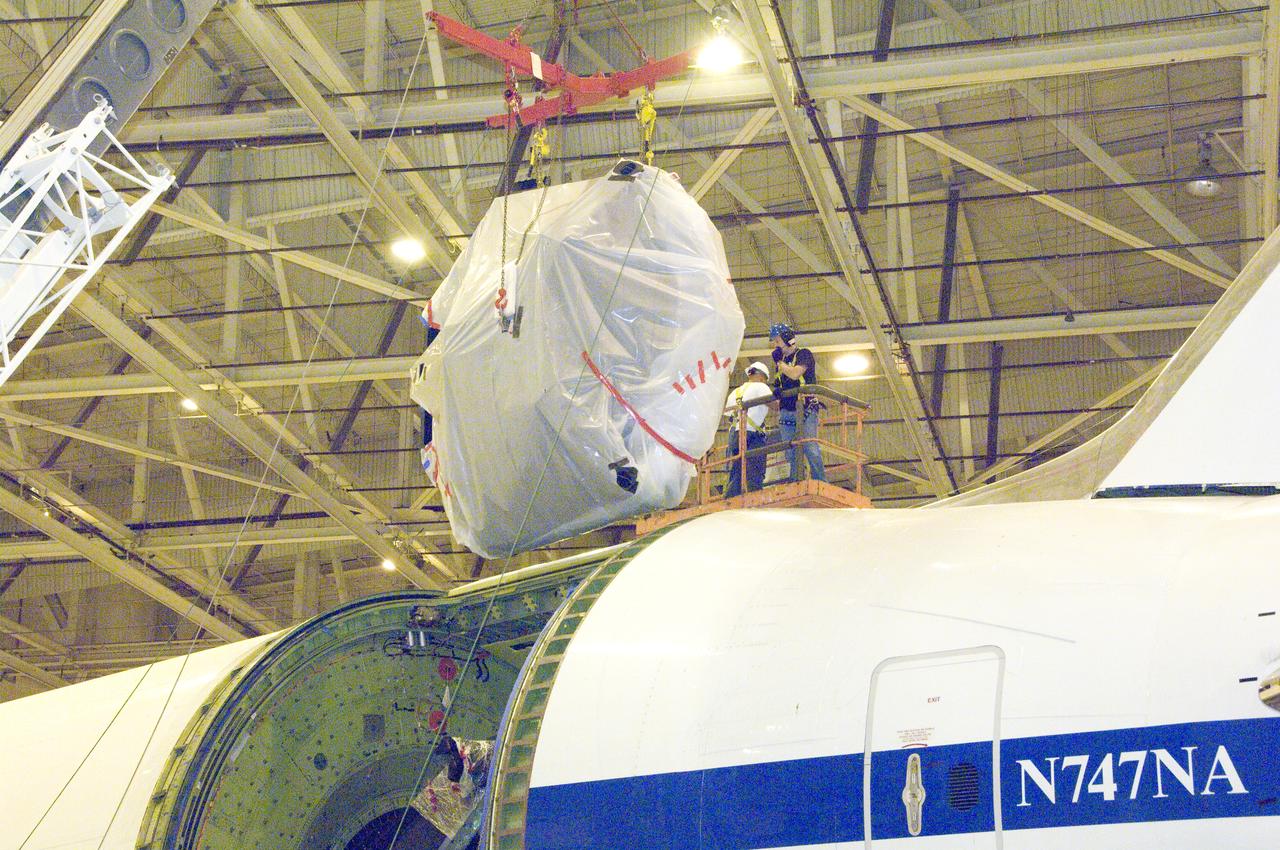
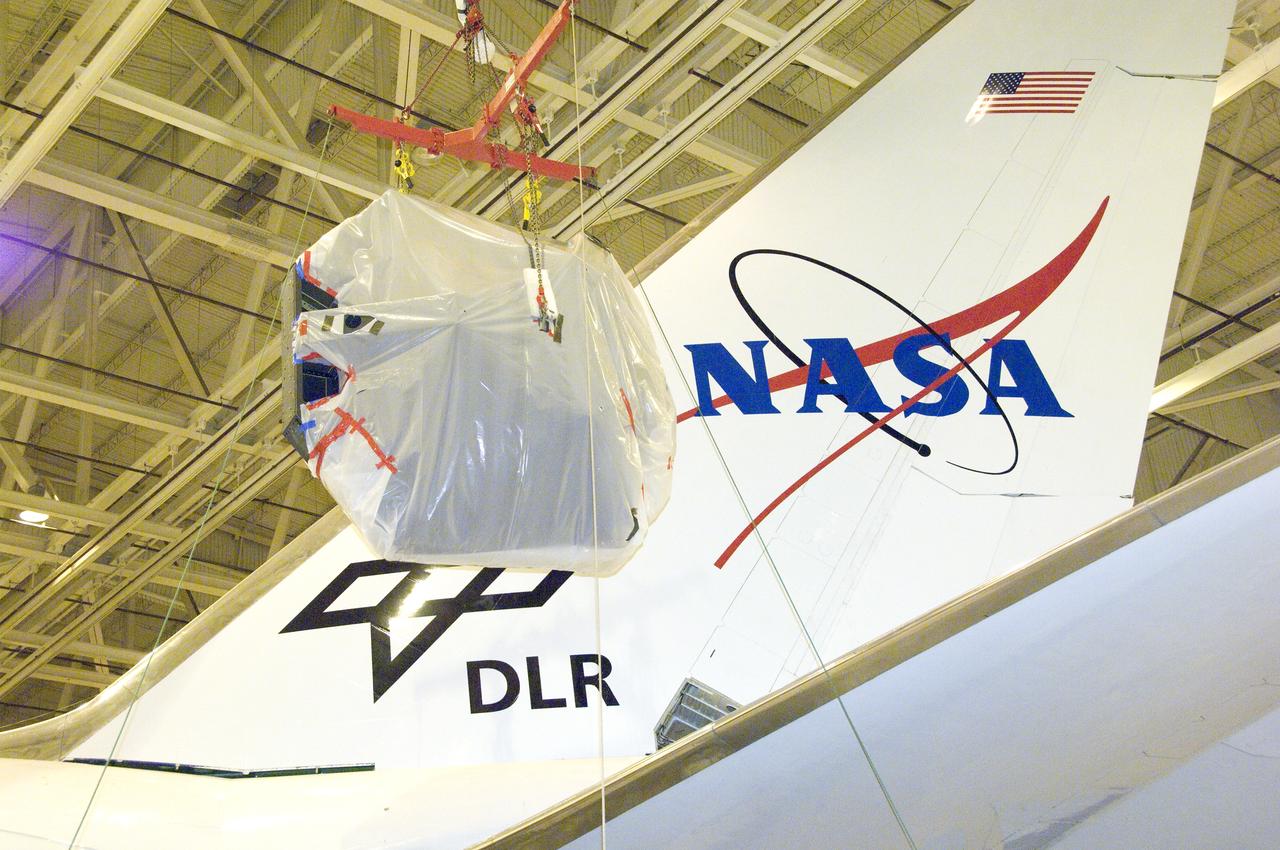
SOFIA's primary mirror assembly is lifted above wing level prior to its reinstallation in the telescope cavity of NASA's 747 airborne observatory Oct. 8, 2008.
SOFIA's primary mirror assembly is lifted above wing level prior to its reinstallation in the telescope cavity of NASA's 747 airborne observatory Oct. 8, 2008
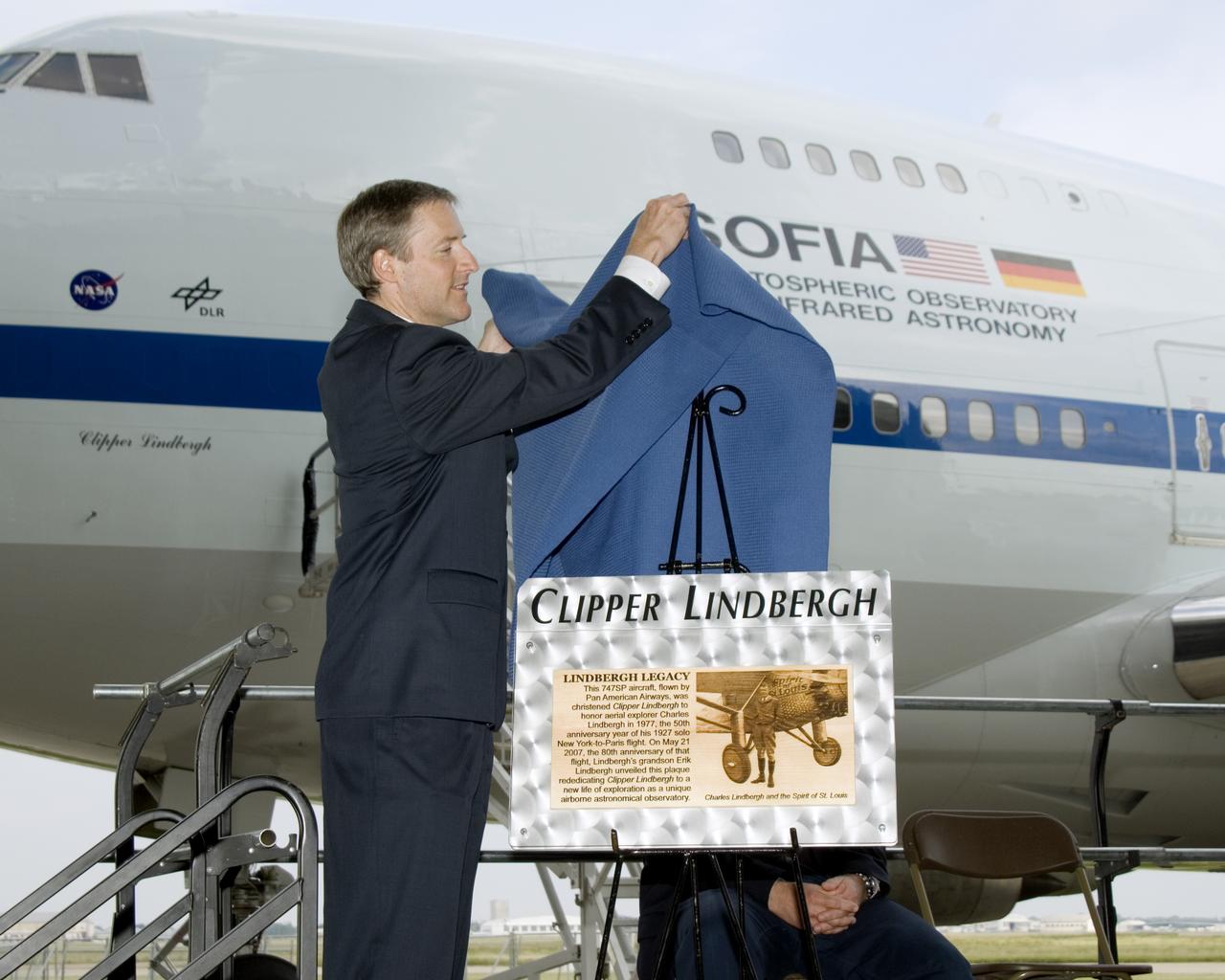
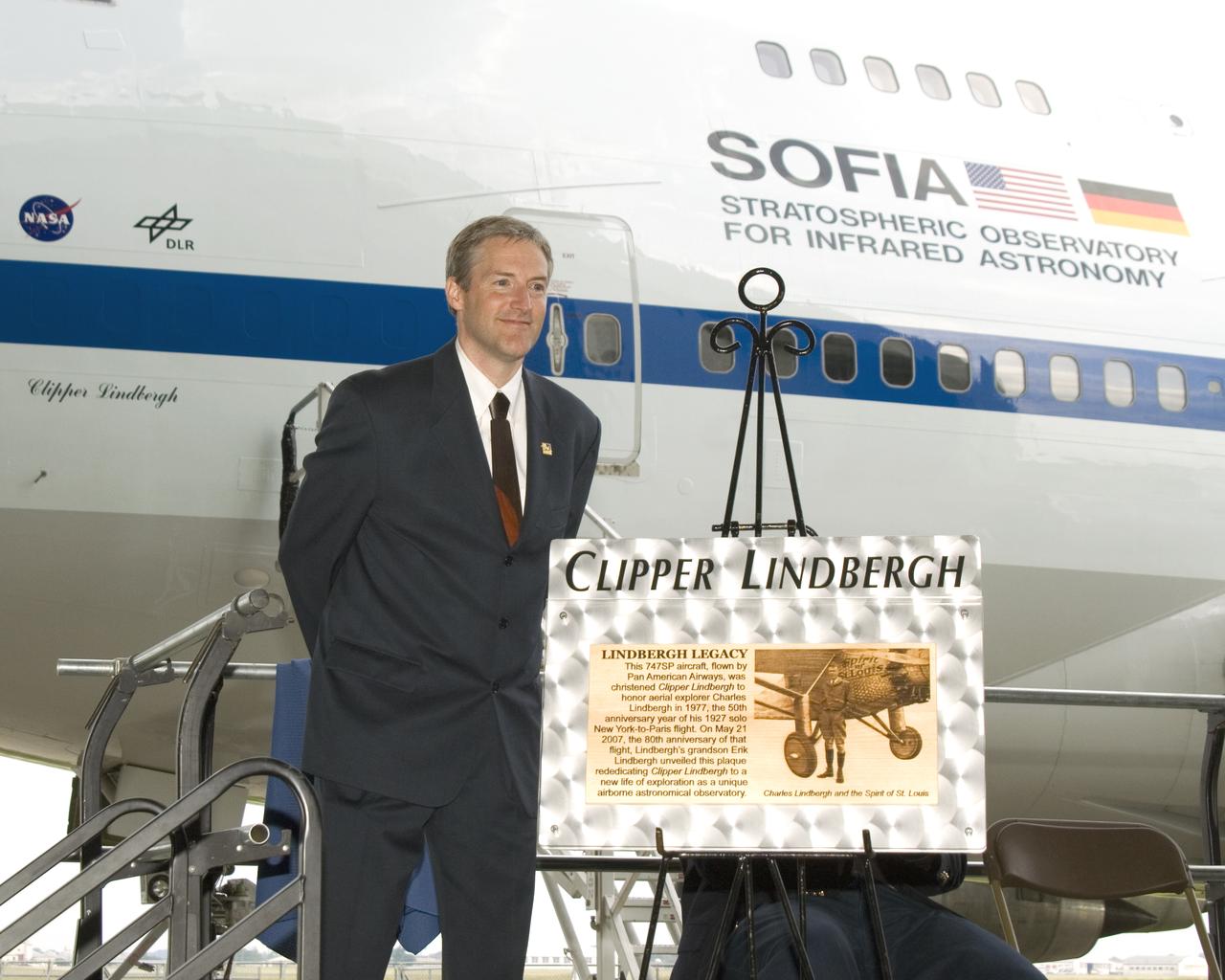
Erik Lindbergh, grandson of aviator Charles Lindbergh, unveiled a plaque commemorating his grandfather on the 80th anniversary of Charles Lindbergh's transatlantic flight. The event was a dedication of the 747 Clipper Lindbergh, a NASA airborne infrared observatory that is beginning test flights in preparation for conducting world-class airborne astronomy. The project is known as the Stratospheric Observatory for Infrared Astronomy, or SOFIA.
Erik Lindbergh unveils a plaque commemorating his grandfather to dedicate the 747 Clipper Lindbergh, a NASA airborne infrared observatory known as SOFIA
Erik Lindbergh, grandson of aviator Charles Lindbergh, unveiled a plaque commemorating his grandfather on the 80th anniversary of Charles Lindbergh's transatlantic flight. The event was a dedication of the 747 Clipper Lindbergh, a NASA airborne infrared observatory that is beginning test flights in preparation for conducting world-class airborne astronomy. The project is known as the Stratospheric Observatory for Infrared Astronomy, or SOFIA.
Erik Lindbergh unveils a plaque commemorating his grandfather to dedicate the 747 Clipper Lindbergh, a NASA airborne infrared observatory known as SOFIA
echnicians lift SOFIA's primary mirror assembly above NASA's 747SP airborne astronomy aircraft just prior to installation in the telescope cavity.
echnicians lift SOFIA's primary mirror assembly above NASA's 747SP airborne astronomy aircraft just prior to installation in the telescope cavity
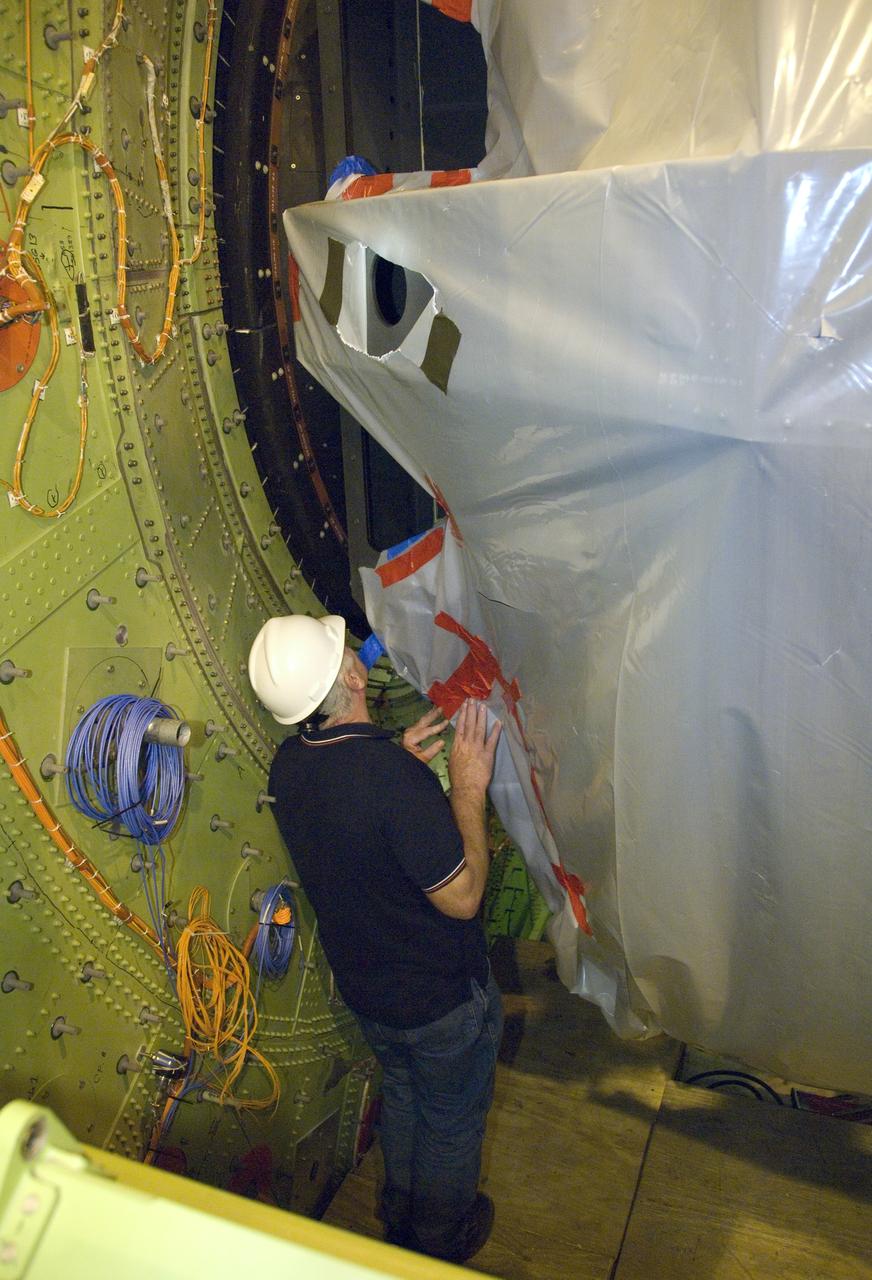
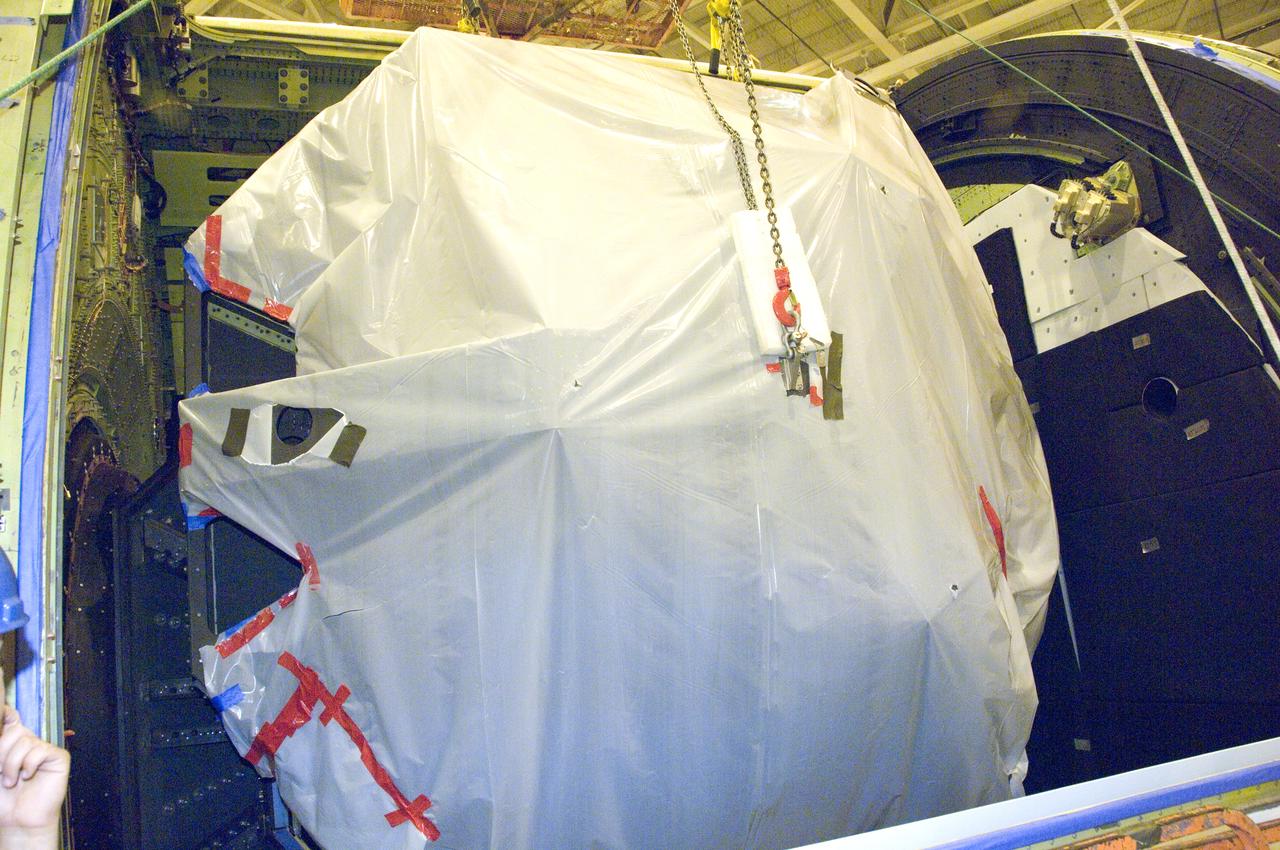
A technician guides SOFIA's primary mirror assembly into the aircraft's telescope cavity completing the mirror reinstallation following its initial coating.
A technician guides SOFIA's primary mirror assembly into the aircraft's telescope cavity completing the mirror reinstallation following its initial coating
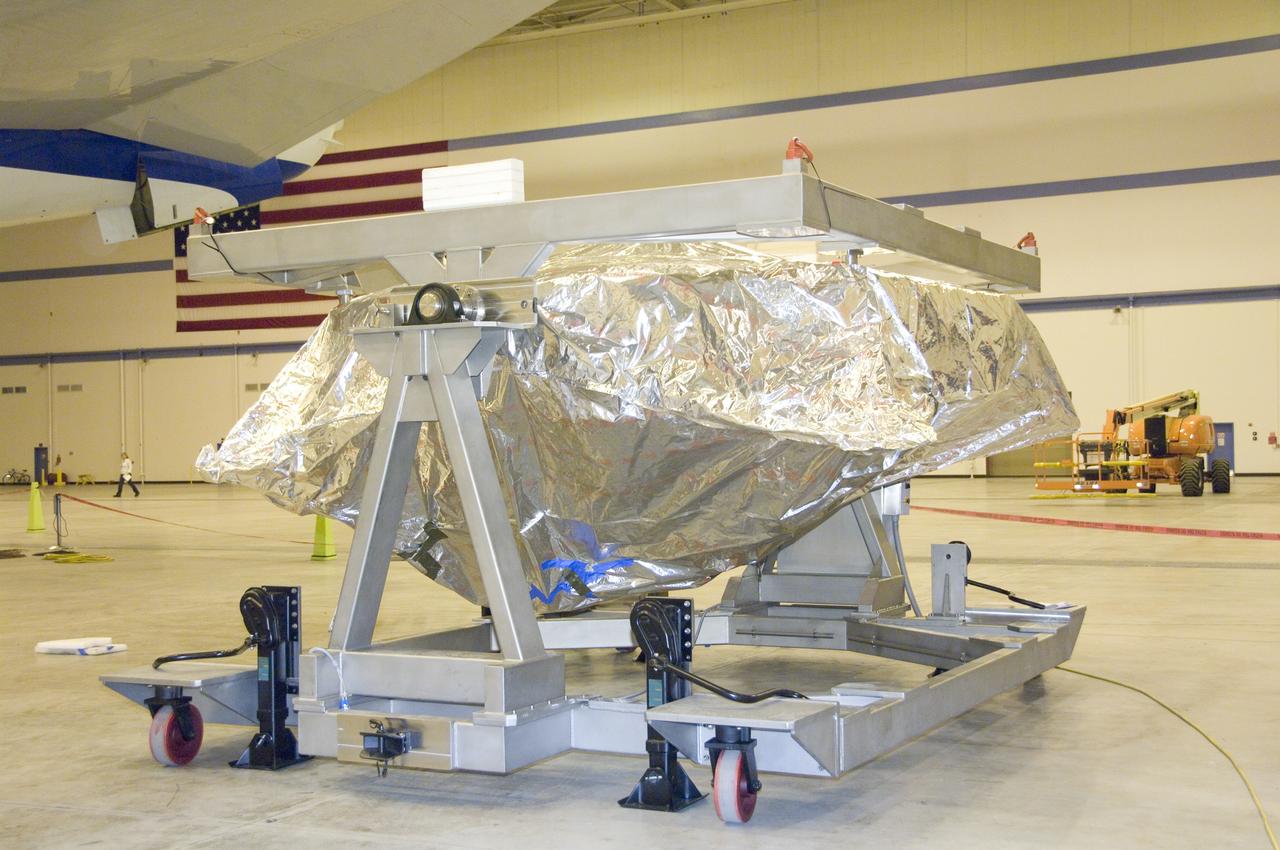
SOFIA's primary mirror assembly rests in its transportation cradle prior to reinstallation in NASA's airborne laboratory on Oct. 8, 2008.
SOFIA's primary mirror assembly rests in its transportation cradle prior to reinstallation in NASA's airborne laboratory on Oct. 8, 2008
SOFIA's primary mirror is placed in the telescope cavity for reinstallation prior to telescope adjustments preparing SOFIA for first science.
SOFIA's primary mirror is placed in the telescope cavity for reinstallation prior to telescope adjustments preparing SOFIA for first science
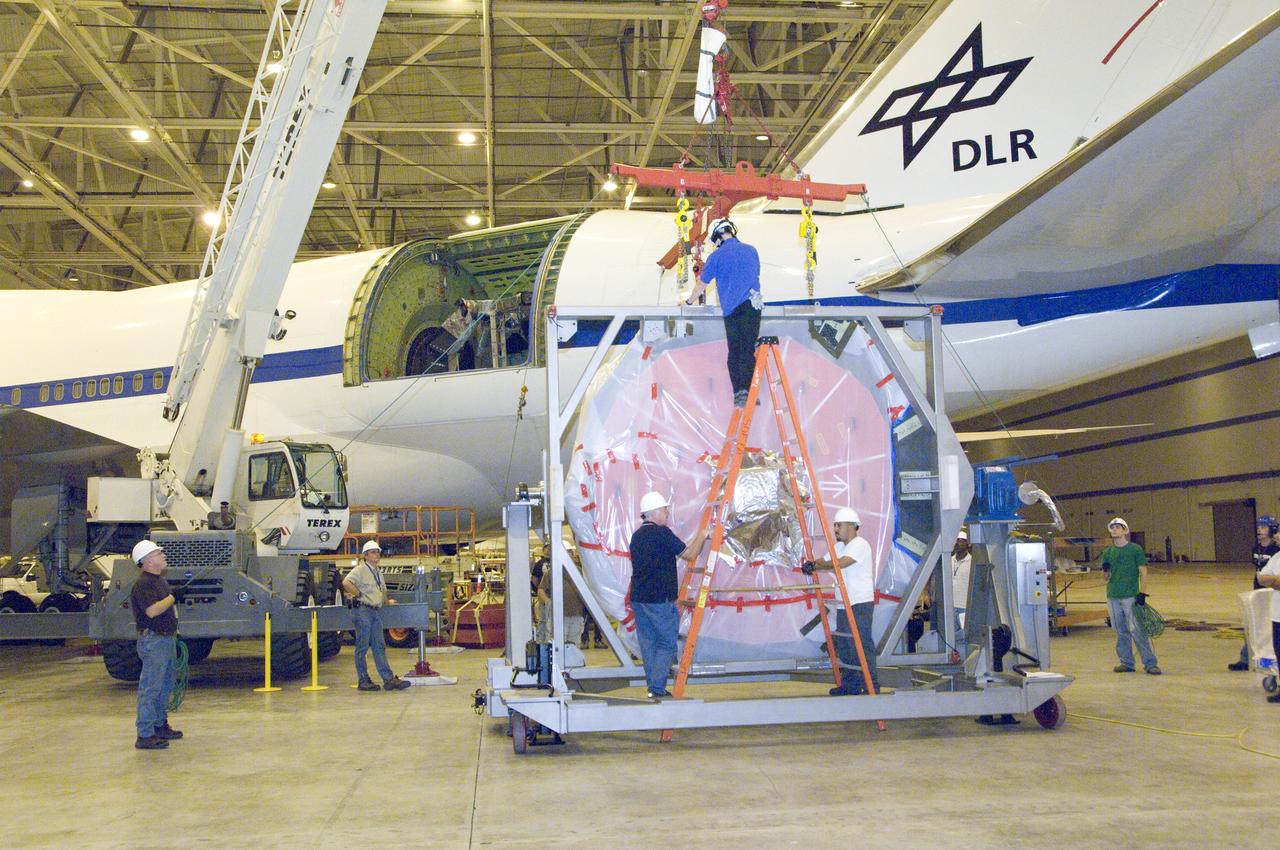
Engineers and technicians prepare SOFIA's German-built primary mirror assembly for reinstallation into NASA's 747SP airborne observatory.
Engineers and technicians prepare SOFIA's German-built primary mirror assembly for reinstallation into NASA's 747SP airborne observatory
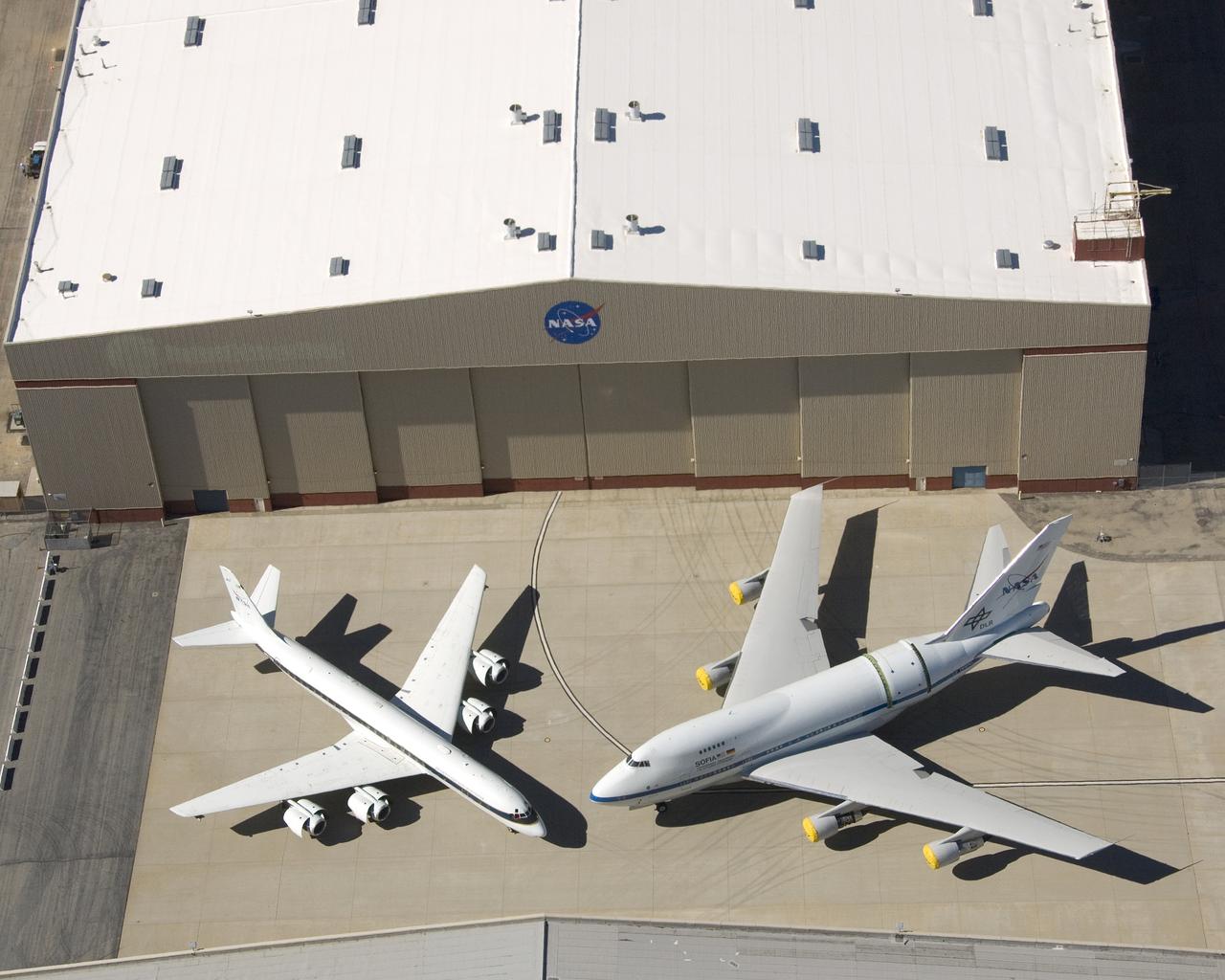
Dryden Aircraft Operations Facility - aircraft fleet on ramp
ED08-0292-2
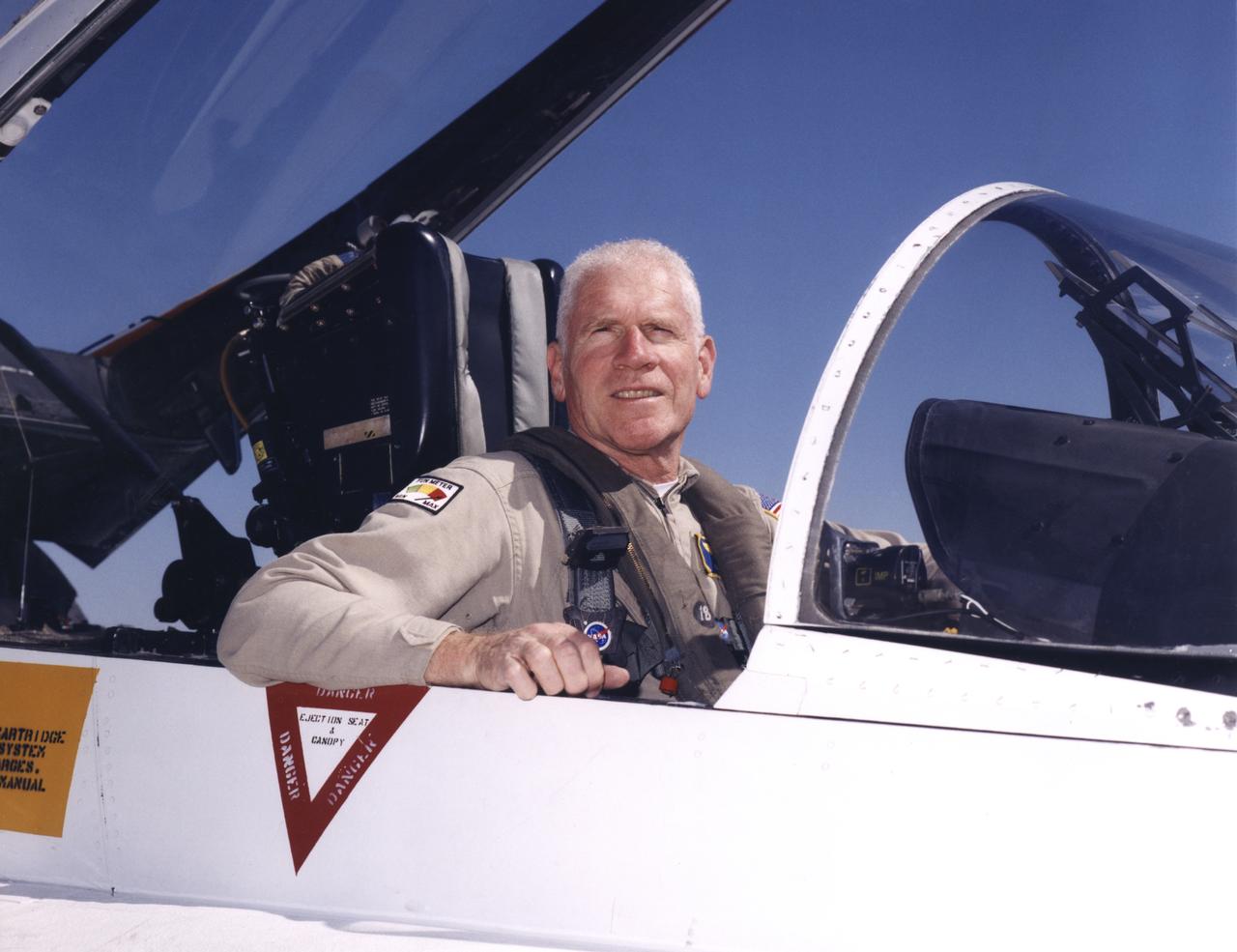
Edwin W. Lewis Jr. is a research pilot in the Airborne Science program, Flight Crew Branch, Dryden Flight Research Center, Edwards, California. He currently flies the DC-8, F/A-18, Lear Jet 24, King Air, and T-34C in support of Dryden's flight operations and is mentor pilot for the King Air and the Lear Jet.  Prior to accepting this assignment Lewis was a pilot for eight years at NASA's Ames Research Center, Moffett Field, California, flying 10 different aircraft C-130B, DC-8-72, UH-1, SH-3, King Air, Lear 24, T-38A, T-39G and YO-3A in support of NASA flight missions. Lewis also flew the Kuiper Airborne Observatory (a modified civilian version of the Lockheed C-141 Starlifter). He was project pilot for Ames' 747 and T-38 programs.  Lewis was born in New York City on May 19, 1936, and began flight training as a Civil Air Patrol cadet in 1951, ultimately earning his commercial pilot's certificate in 1958. He received a bachelor of arts degree in biology from Hobart College, Geneva, N.Y., and entered the U.S. Air Force through the Reserve Officer Training Corps. Following pilot training he was assigned to Moody Air Force Base, Ga., as an instructor pilot, for both the T-33 and T-37 aircraft. He served in Vietnam in 1965 and 1966, where he was a forward air controller, instructor and standardization/evaluation pilot, flying more than 1,000 hours in the O-1 "Bird Dog."  Lewis separated from the regular Air Force and joined Pan American World Airways and the 129th Air Commando Group, California Air National Guard (ANG) based in Hayward, California. During his 18-year career with the California ANG he flew the U-6, U-10, C-119, HC-130 aircraft and the HH-3 helicopter. He retired as commander, 129th Air Rescue and Recovery Group, a composite combat rescue group, in the grade of colonel. During his 22 years as an airline pilot, he flew the Boeing 707, 727 and 747. He took early retirement from Pan American in 1989 to become a pilot with NASA.
Edwin W. Lewis, Jr.