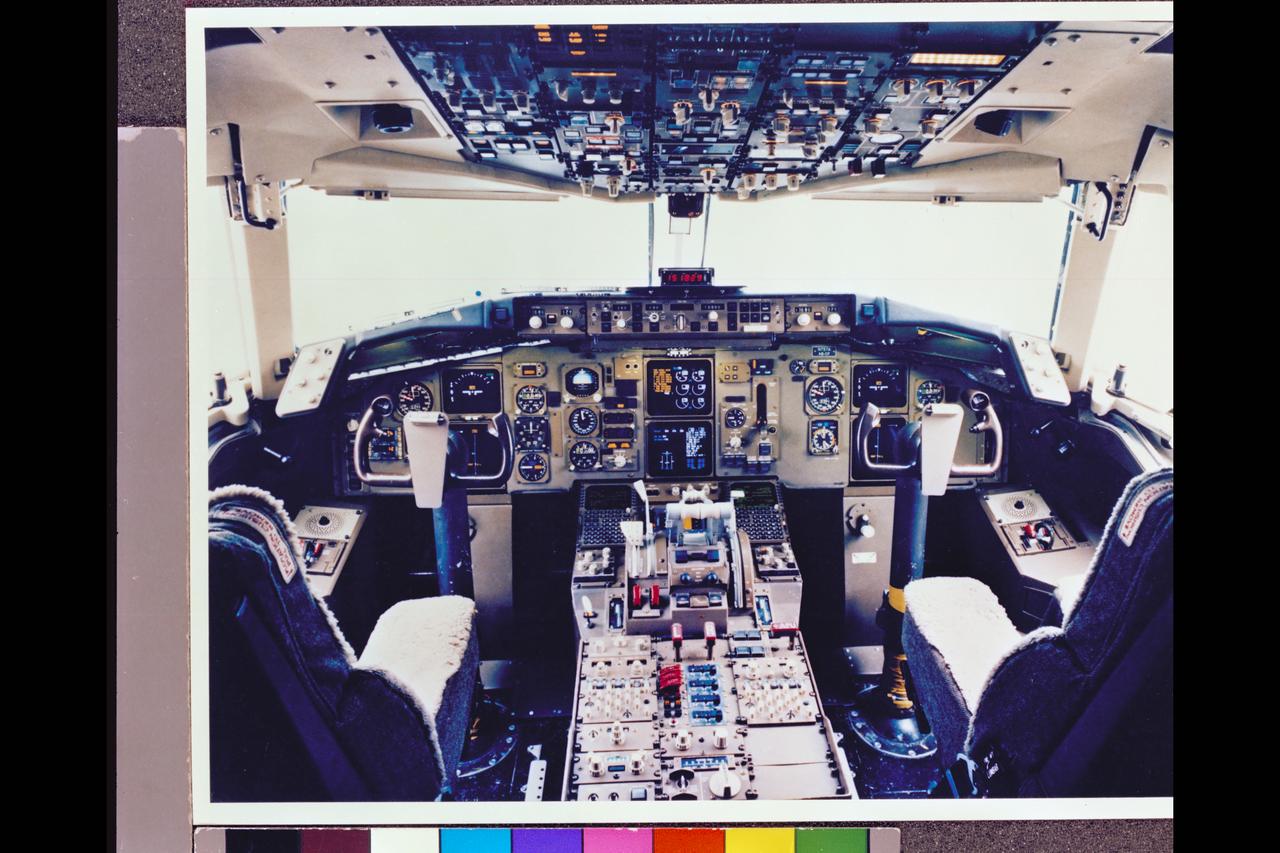
Boeing 767 - 757 'Two Man' Cockpit
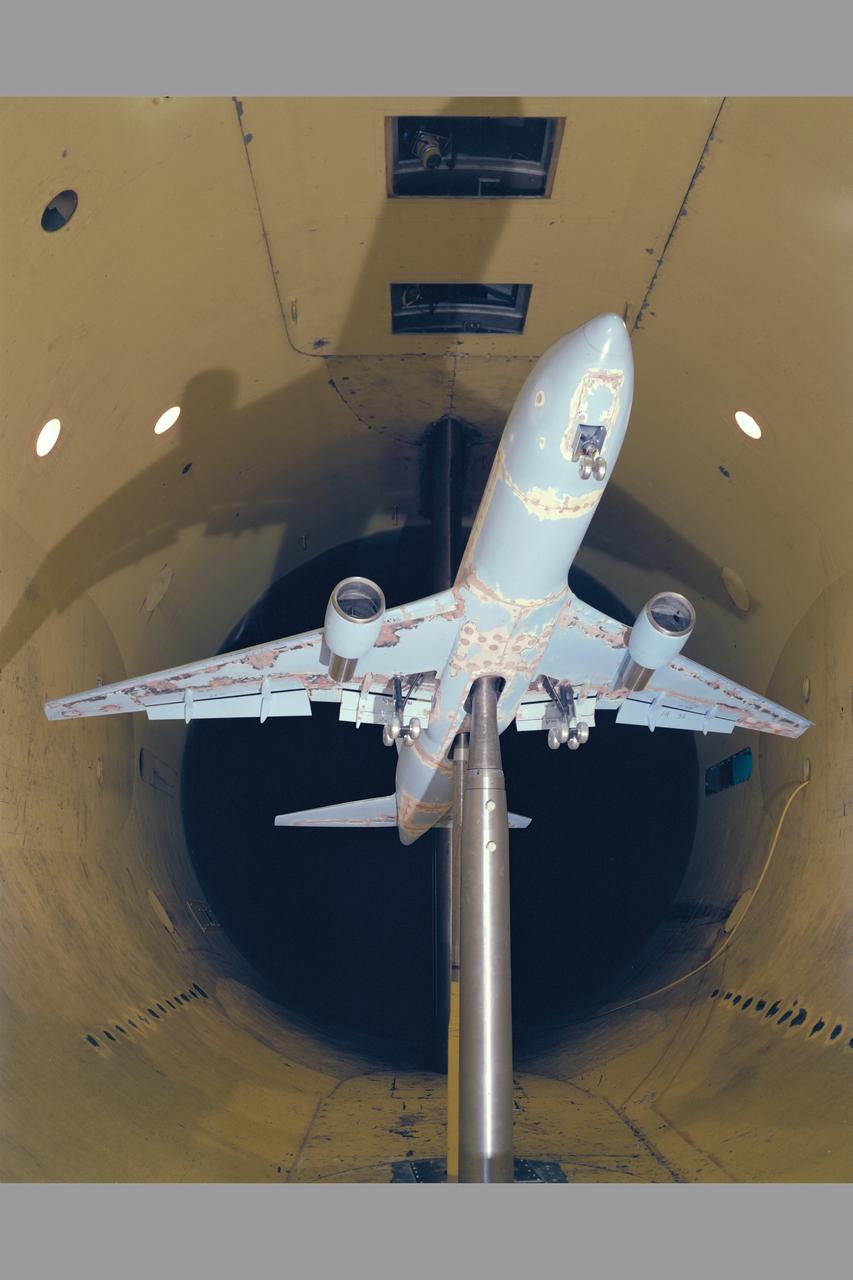
Boeing 767 Model in 12 Ft. W. T. Test -363
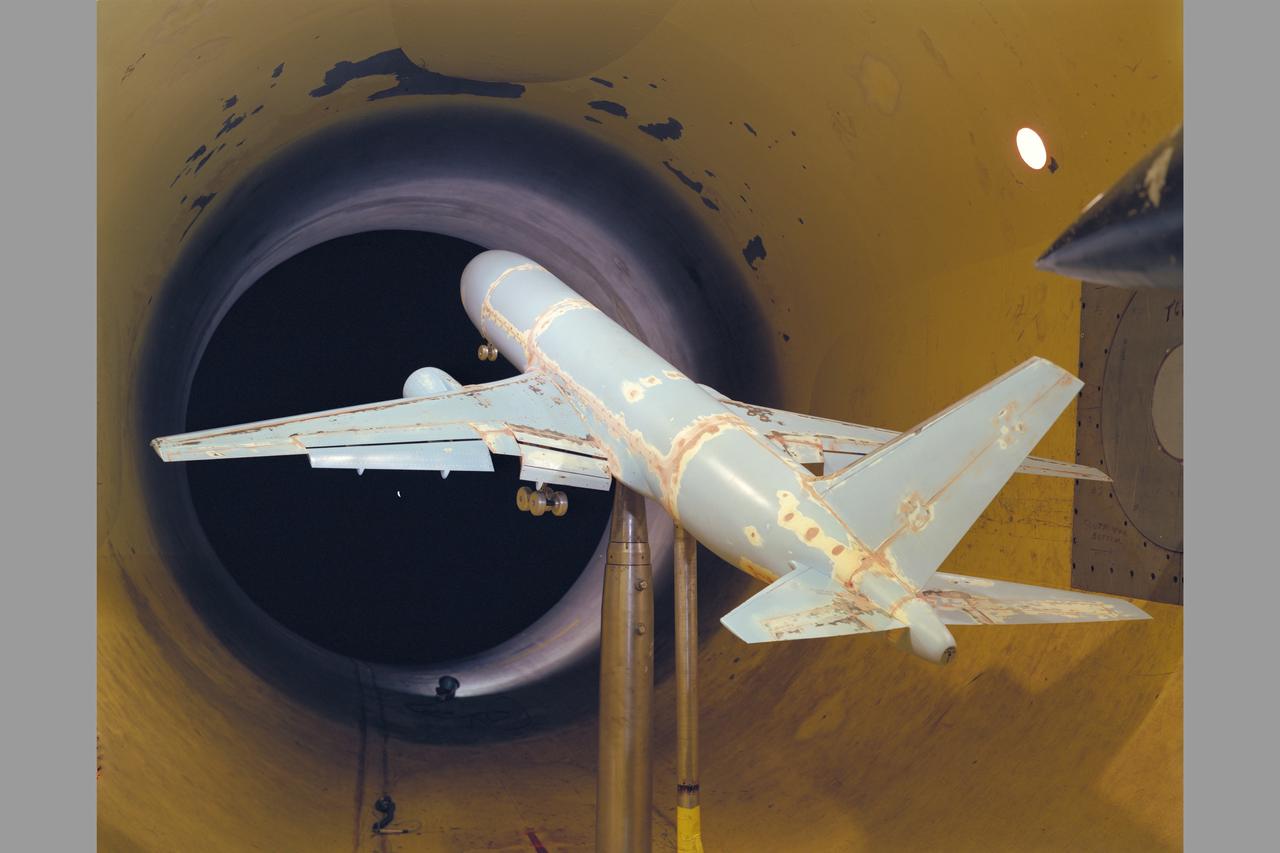
Boeing 767 Model in 12 Ft. W. T. Test -363
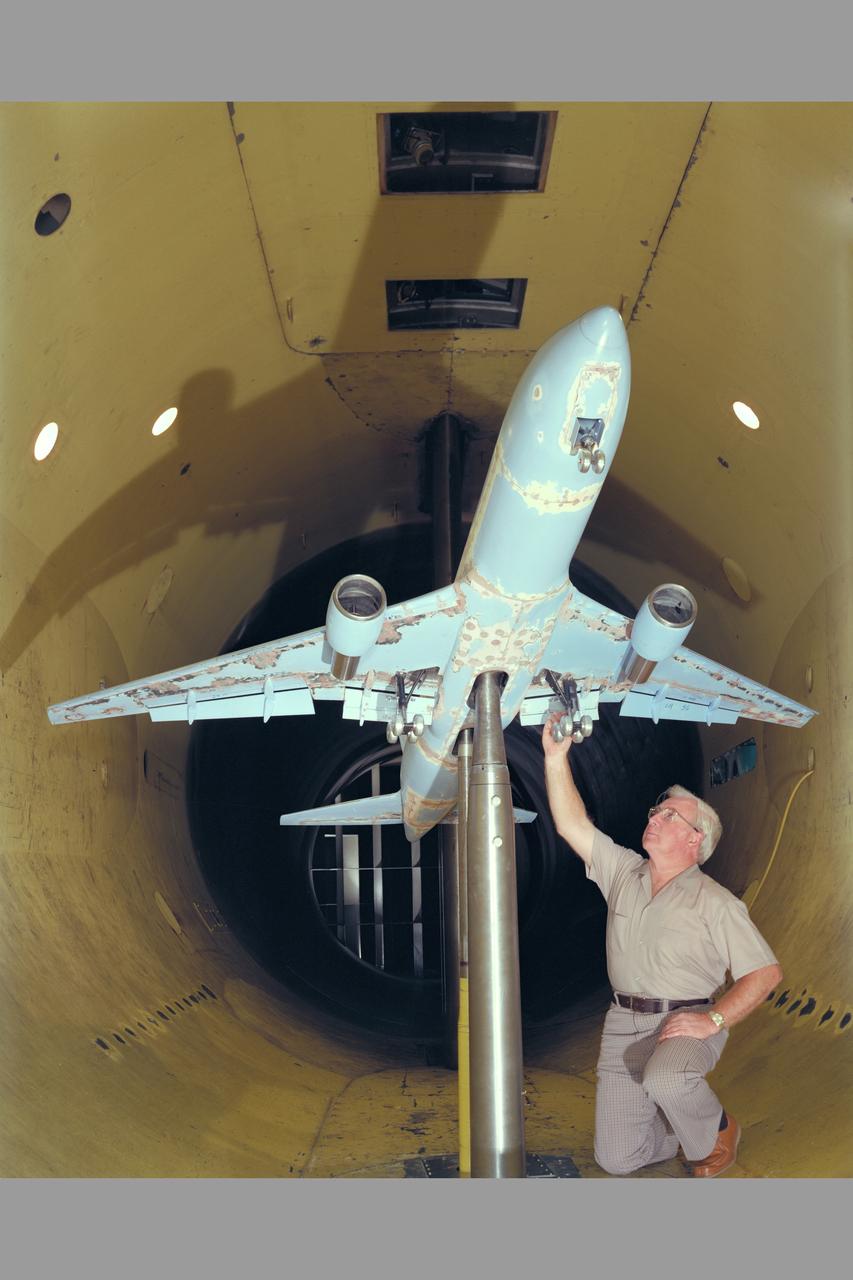
Boeing 767 Model in 12 Ft. W. T. Test -363 with R. De Conti
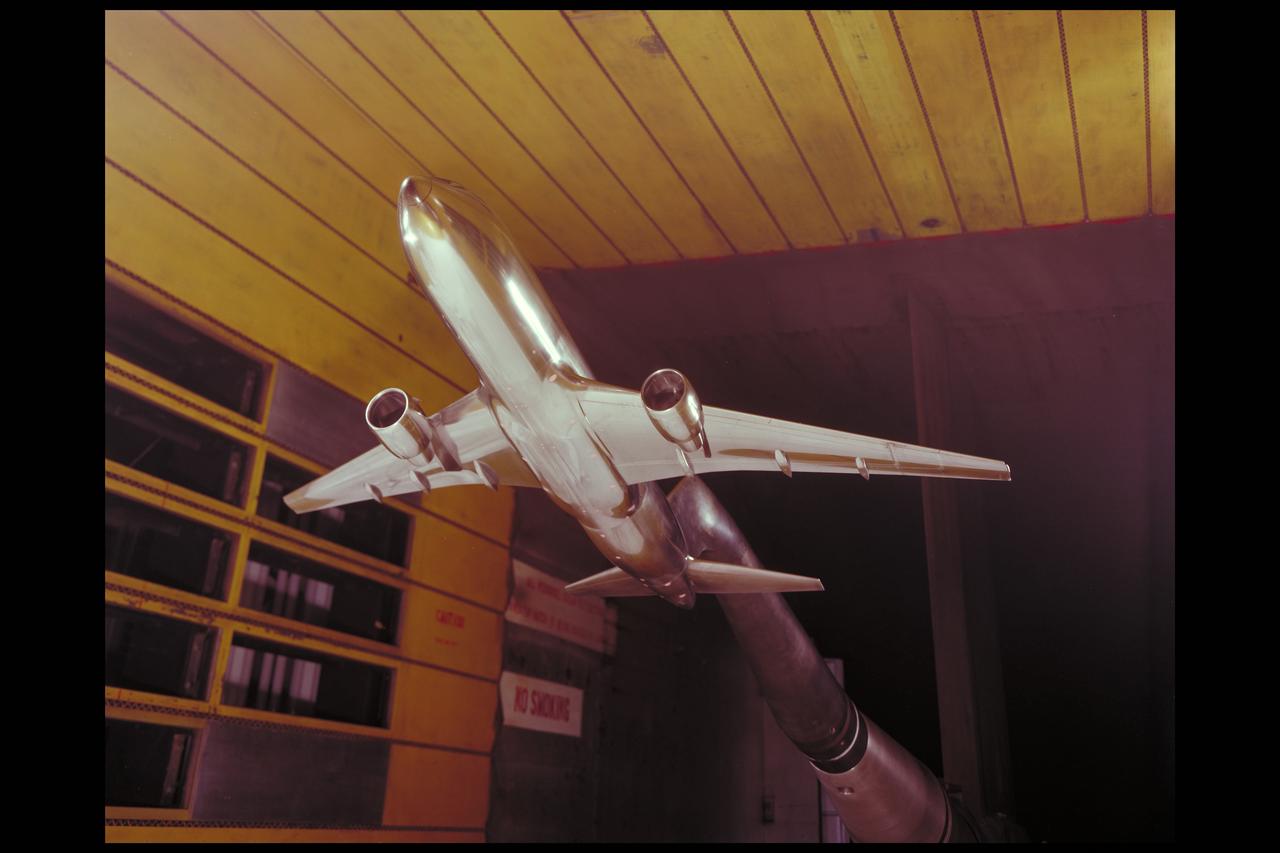
Boeing 767 NTF correlation test-611 11ft. w.t.
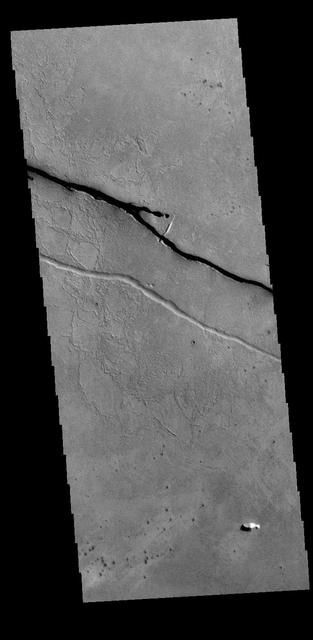
The linear depressions in this VIS image are part of the Cerberus Fossae fracture system. The system is made up of parallel graben created by tectonic forces pulling the crust apart. The entire system is 1235km long (767 miles). Orbit Number: 79270 Latitude: 8.68461 Longitude: 163.521 Instrument: VIS Captured: 2019-10-28 09:53 https://photojournal.jpl.nasa.gov/catalog/PIA23653
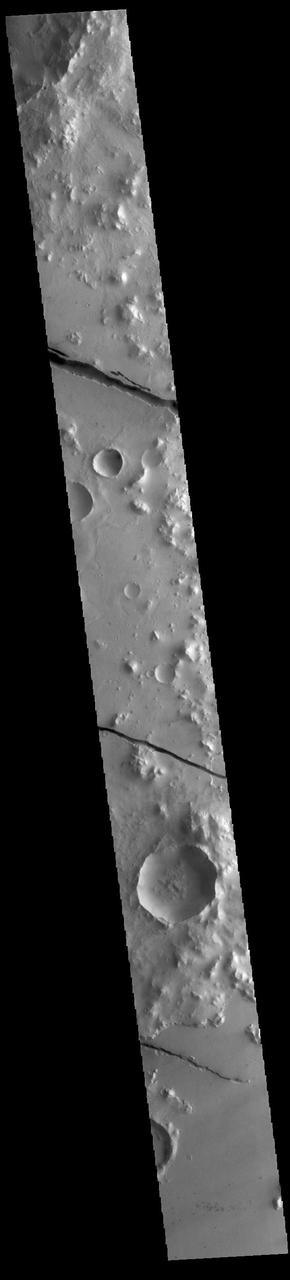
The linear depressions in today's VIS image are part of Cerberus Fossae. The features are termed grabens, and are formed by extensional tectonic forces. As the regional fractures move apart, blocks of material subside between paired faults. The straight sides and uniform depths are indications that this is tectonic feature rather than a channel caused by fluid erosion. The fossae stretch for 1235km (767 miles). Orbit Number: 85522 Latitude: 9.58809 Longitude: 159.803 Instrument: VIS Captured: 2021-03-26 04:37 https://photojournal.jpl.nasa.gov/catalog/PIA24828
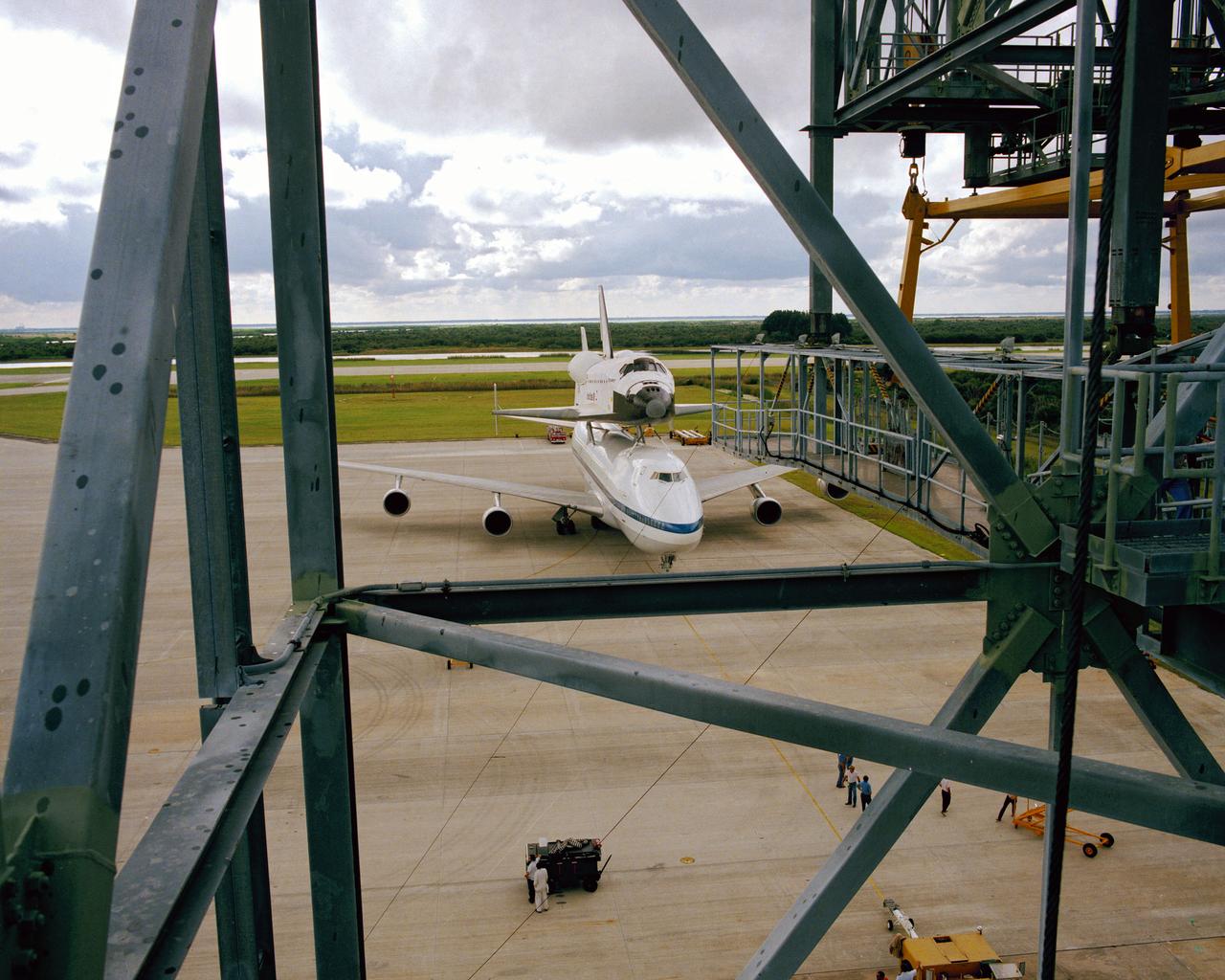
NASA's newest bird, the space shuttle orbiter Discovery, is perched on the 747/shuttle carrier aircraft awaiting positioning at the Mate-Demate Facility at Kennedy Space Center.
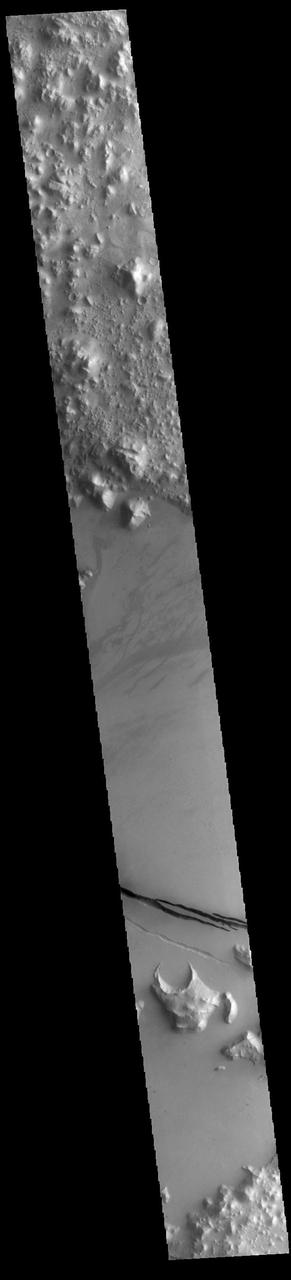
Today's VIS image shows a section of Cerberus Fossae. Cerberus Fossae are located in Elysium Planitia, southeast of the Elysium Mons volcanic complex. The linear features in the image are tectonic graben. Graben are formed by extension of the crust and faulting. When large amounts of pressure or tension are applied to rocks on timescales that are fast enough that the rock cannot respond by deforming, the rock breaks along faults. In the case of a graben, two parallel faults are formed by extension of the crust and the rock in between the faults drops downward into the space created by the extension. Several sets of graben are visible in this THEMIS image, trending from west-northwest to east-southeast. Because the faults defining the graben are formed perpendicular to the direction of the applied stress, we know that extensional forces were pulling the crust apart in the north-northeast/south-southwest direction. The Cerberus Fossae graben are sources of both channels and significant volcanic flows. Cerberus Fossae cuts across features such as hills, indicating the relative youth of the tectonic activity. The Cerberus Fossae system is 1235km (767 miles) long. Orbit Number: 94232 Latitude: 10.1207 Longitude: 161.626 Instrument: VIS Captured: 2023-03-13 08:52 https://photojournal.jpl.nasa.gov/catalog/PIA25999
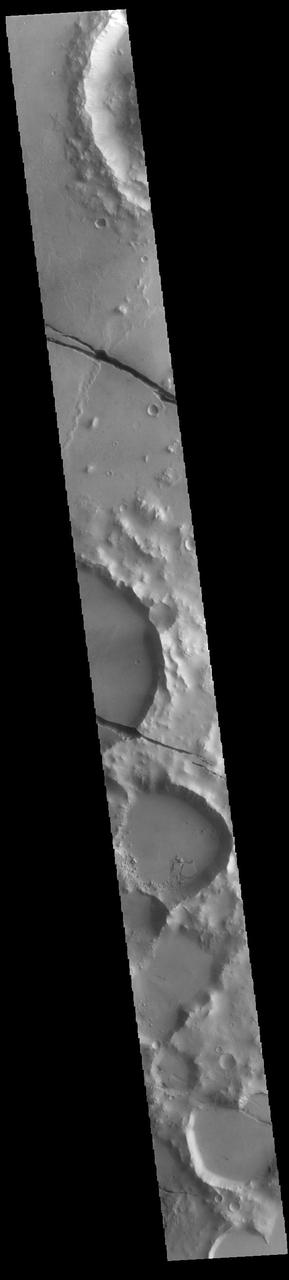
Today's VIS image shows a section of Cerberus Fossae. Cerberus Fossae are located in Elysium Planitia, southeast of the Elysium Mons volcanic complex. The linear features in the image are tectonic graben. Graben are formed by extension of the crust and faulting. When large amounts of pressure or tension are applied to rocks on timescales that are fast enough that the rock cannot respond by deforming, the rock breaks along faults. In the case of a graben, two parallel faults are formed by extension of the crust and the rock in between the faults drops downward into the space created by the extension. Numerous sets of graben are visible in this THEMIS image, trending from north-northwest to south-southeast. Because the faults defining the graben are formed perpendicular to the direction of the applied stress, we know that extensional forces were pulling the crust apart in the east-northeast/west-southwest direction. The Cerberus Fossae graben are sources of both channels and significant volcanic flows. Cerberus Fossae cuts across features such as hills, indicating the relative youth of the tectonic activity. The Cerberus Fossae system is 1235km (767 miles) long. Orbit Number: 94282 Latitude: 9.86336 Longitude: 159.223 Instrument: VIS Captured: 2023-03-17 11:40 https://photojournal.jpl.nasa.gov/catalog/PIA26000