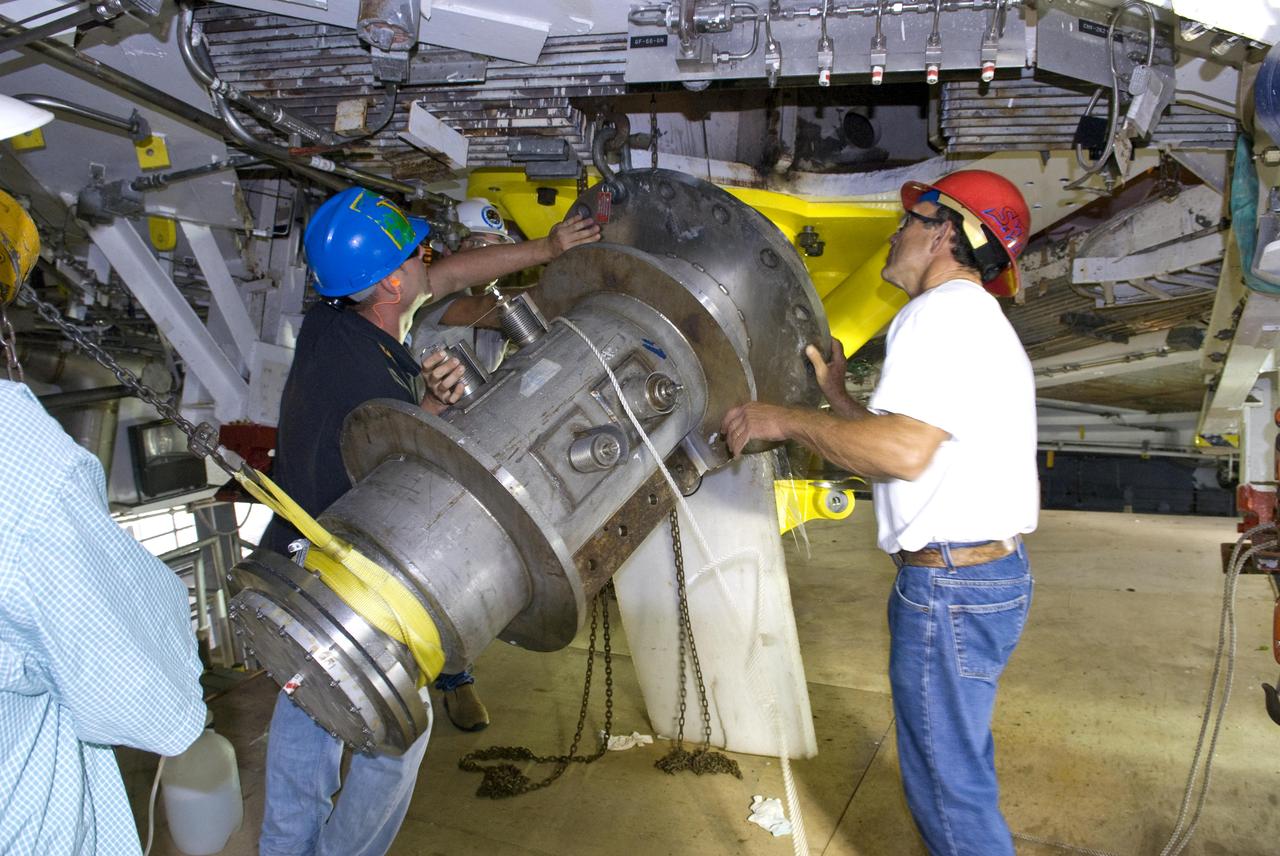
John C. Stennis Space Center employees remove space shuttle main engine run ducts from the A-2 Test Stand engine deck Oct. 25, 2010. Testing of space shuttle main engines concluded in July 2009. Stennis is preparing the A-2 Test Stand for testing the next-generation J-2X rocket engine being developed. Testing of the new engine is scheduled to begin in 2011.
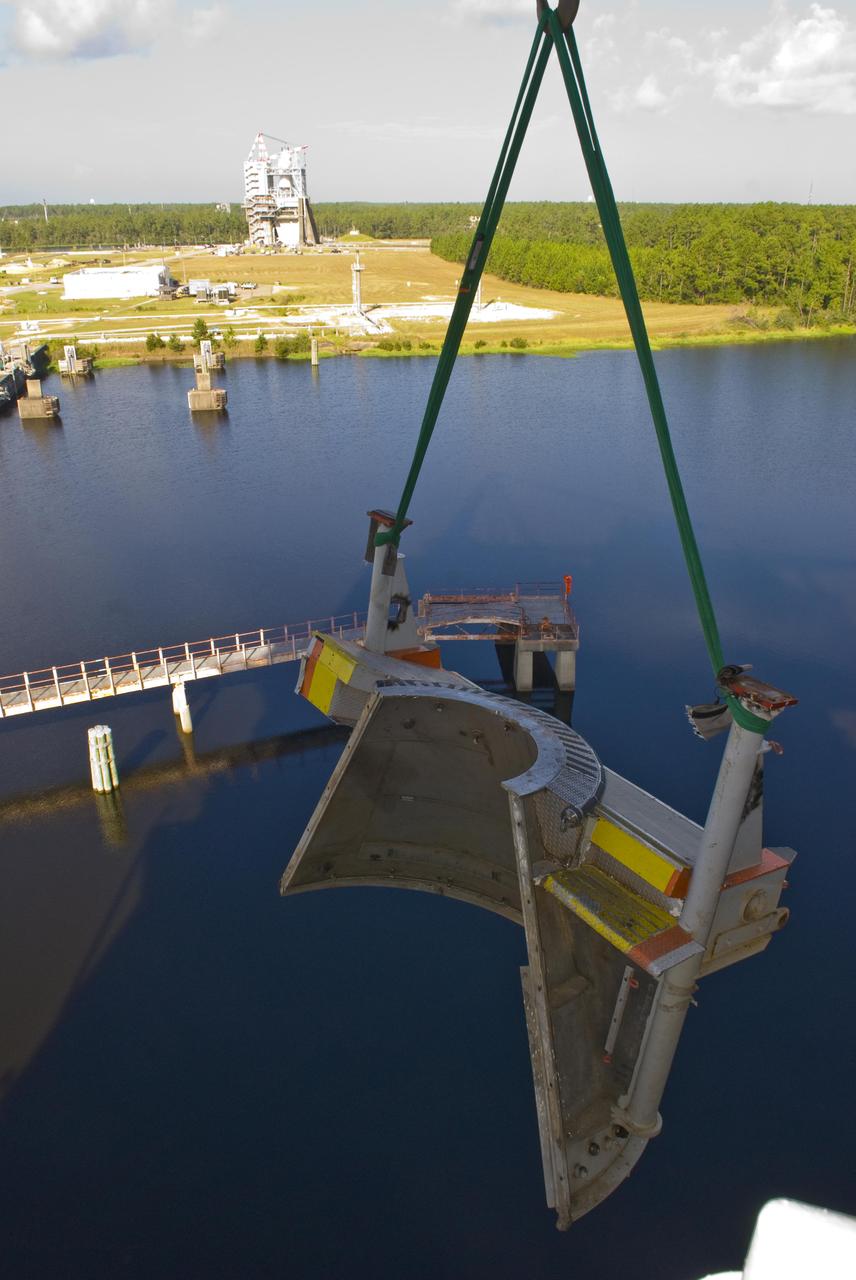
John C. Stennis Space Center employees remove one-half of the A-2 Test Stand clamshell used for testing space shuttle main engines. Space shuttle main engine testing concluded July 2009; the A-2 stand now is being prepared for testing the next-generation J-2X rocket engine in development. Testing of the J-2X engine is scheduled to begin in 2011.
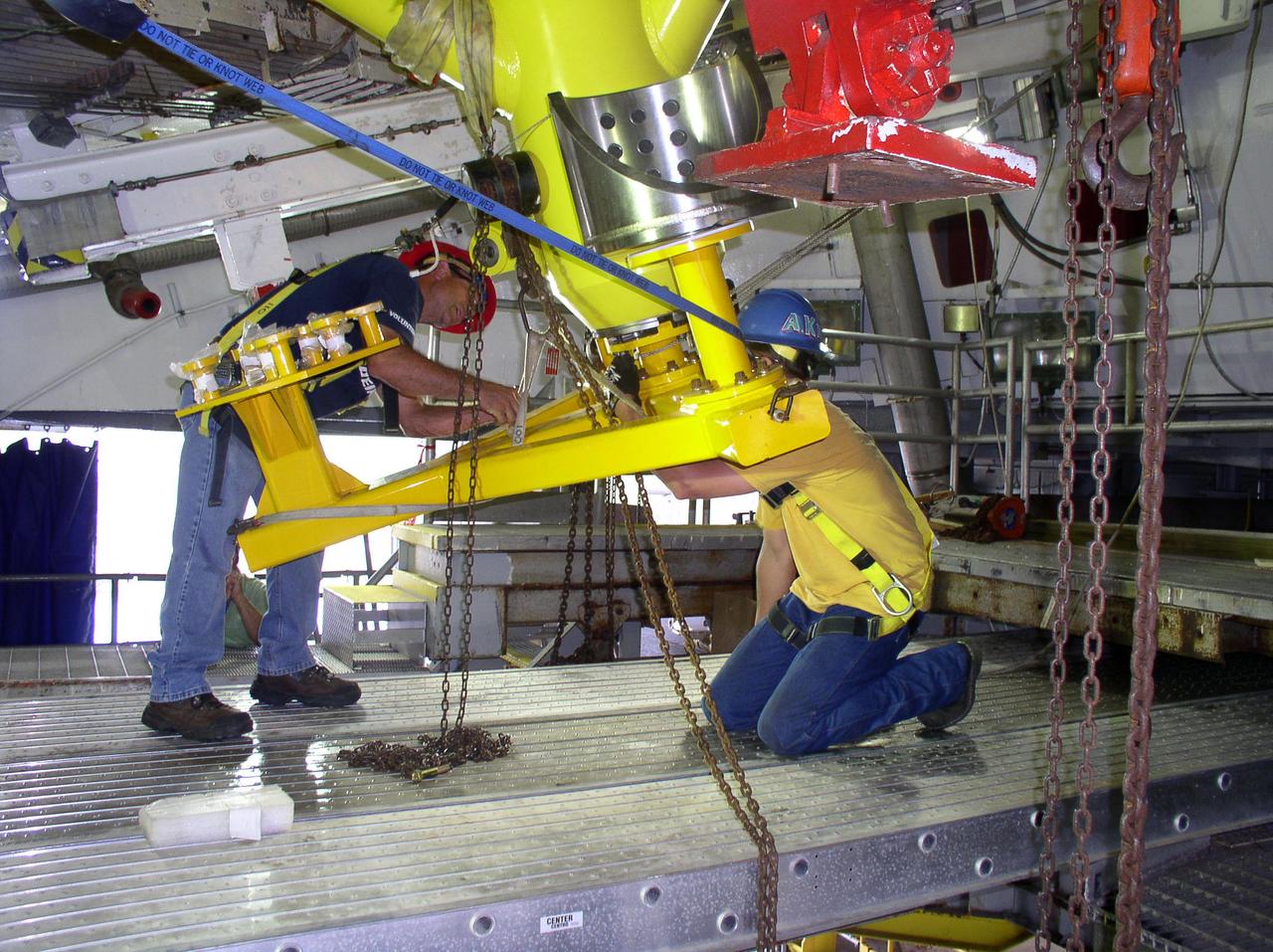
John C. Stennis Space Center employees install a new master interface tool on the A-2 Test Stand on Oct. 27, 2010. Until July 2009, the stand had been used for testing space shuttle main engines. With that test series complete, employees are preparing the stand for testing the next-generation J-2X rocket engine being developed. Testing of the new engine is scheduled to begin in 2011.
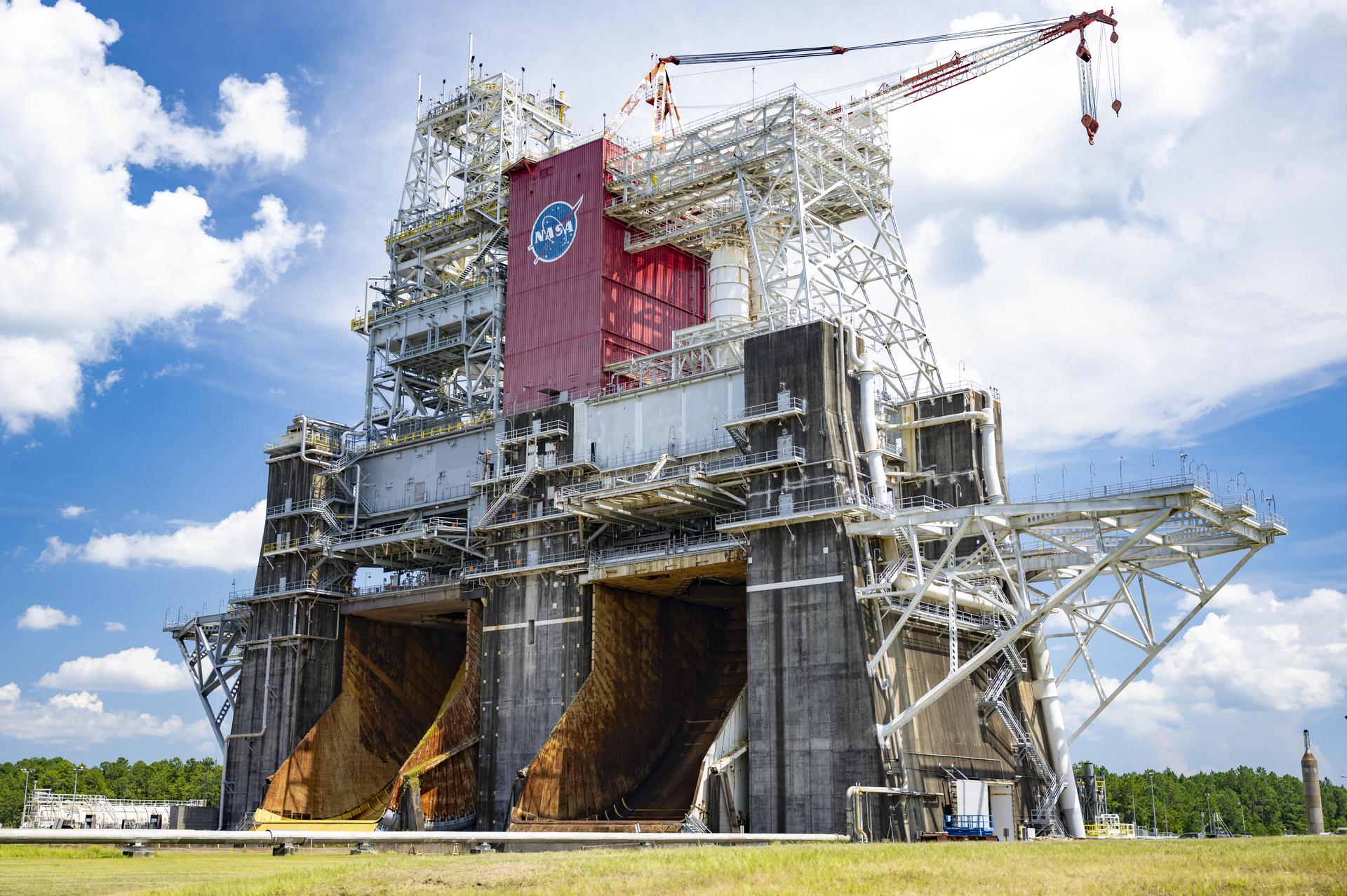
An image shows the Thad Cochran Test Stand (B-1/B-2) at NASA’s Stennis Space Center near Bay St. Louis, Mississippi, on July 7. The test stand features dual, vertical firing positions built in the 1960s to test Saturn V rocket stages that carried humans to the Moon during the Apollo program. The B 1 position, right, is equipped for single engine tests, while the B 2 position is designed to test full rocket stages.
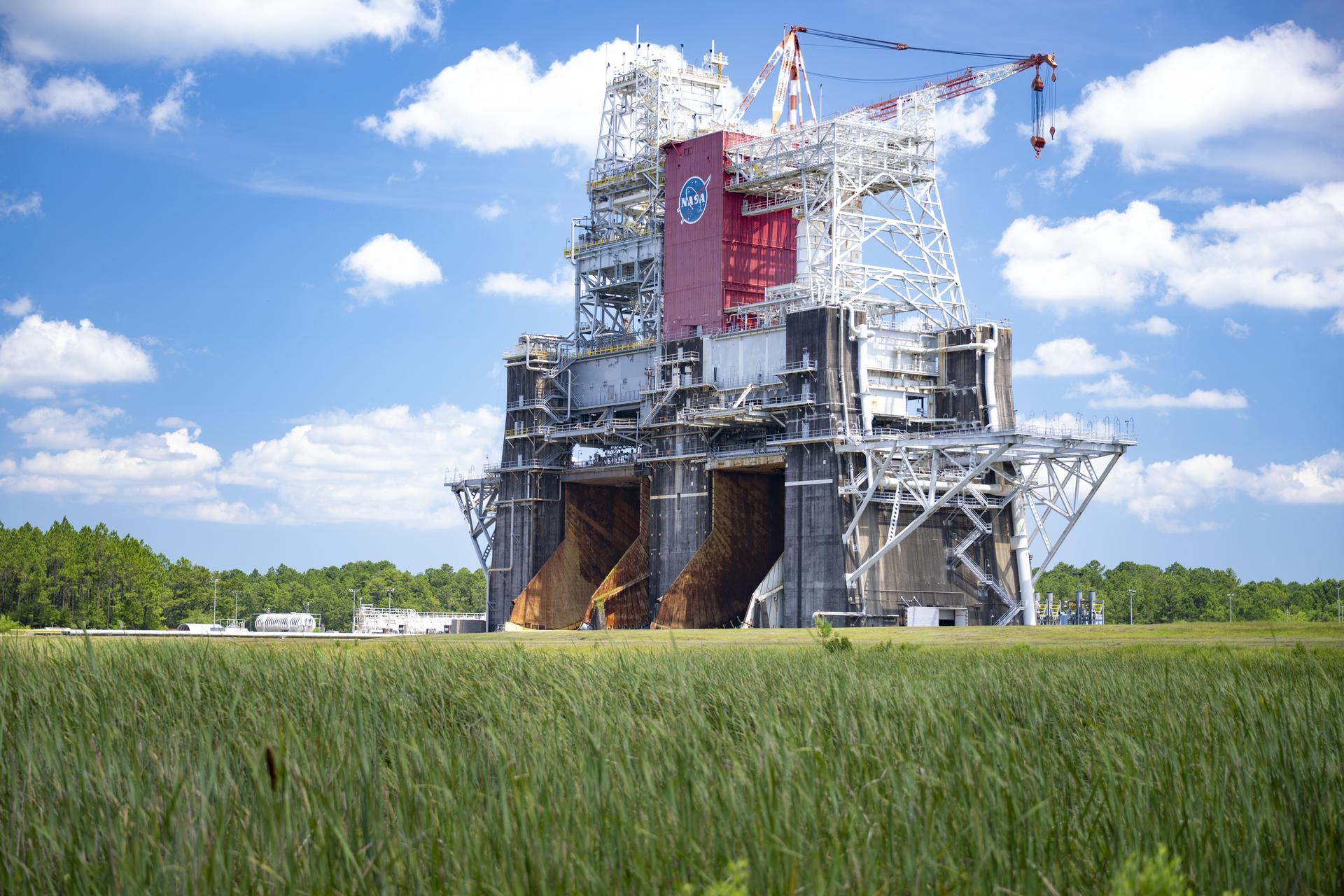
An image shows the Thad Cochran Test Stand (B-1/B-2) at NASA’s Stennis Space Center near Bay St. Louis, Mississippi, on July 7. The test stand features dual, vertical firing positions built in the 1960s to test Saturn V rocket stages that carried humans to the Moon during the Apollo program. The B 1 position, right, is equipped for single engine tests, while the B 2 position is designed to test full rocket stages.
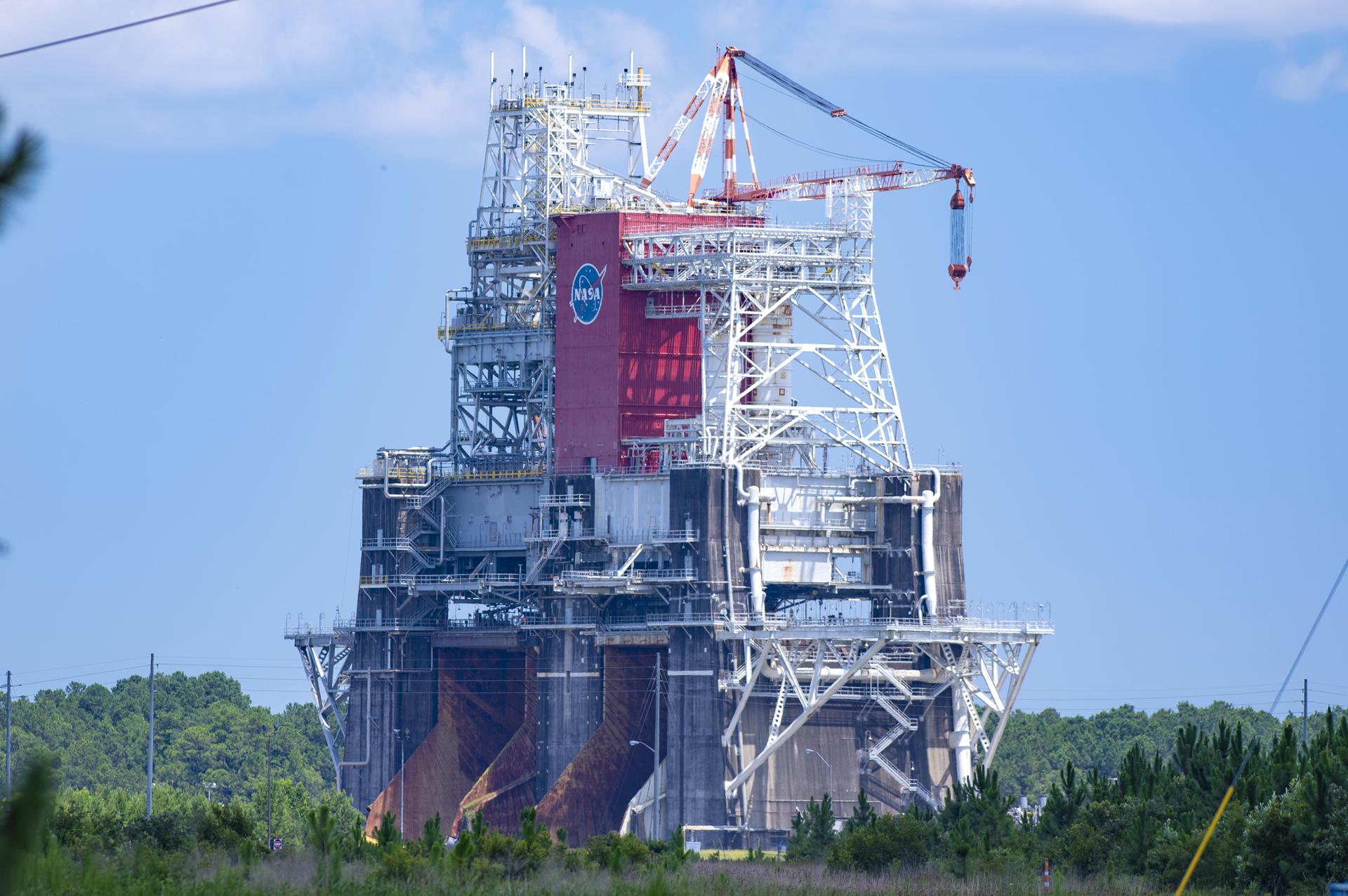
An image shows the Thad Cochran Test Stand (B-1/B-2) at NASA’s Stennis Space Center near Bay St. Louis, Mississippi, on July 7. The test stand features dual, vertical firing positions built in the 1960s to test Saturn V rocket stages that carried humans to the Moon during the Apollo program. The B 1 position, right, is equipped for single engine tests, while the B 2 position is designed to test full rocket stages.
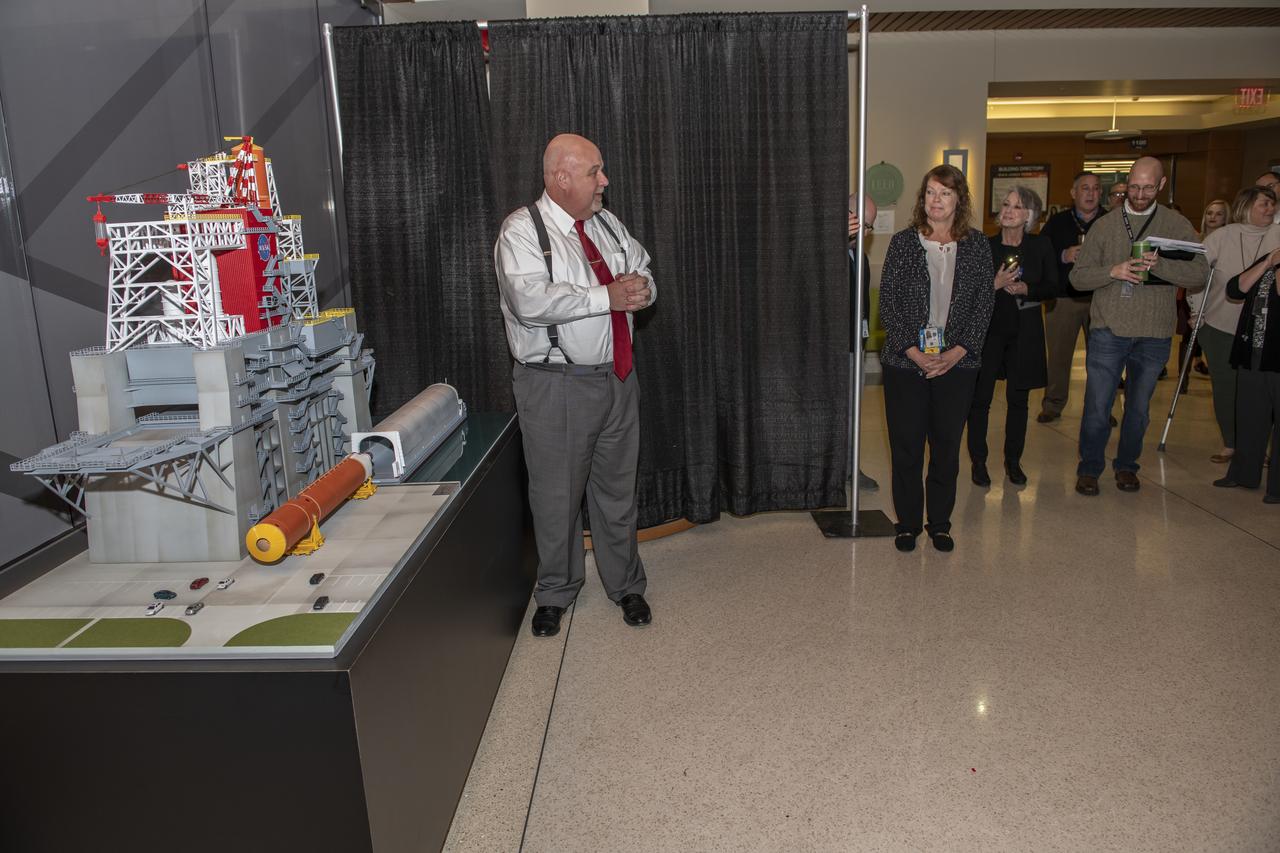
The unveiling of the B-2 Test Stand model for the SLS management team and employees in building 4220. Taking part was John Honeycutt and Julie Bassler.
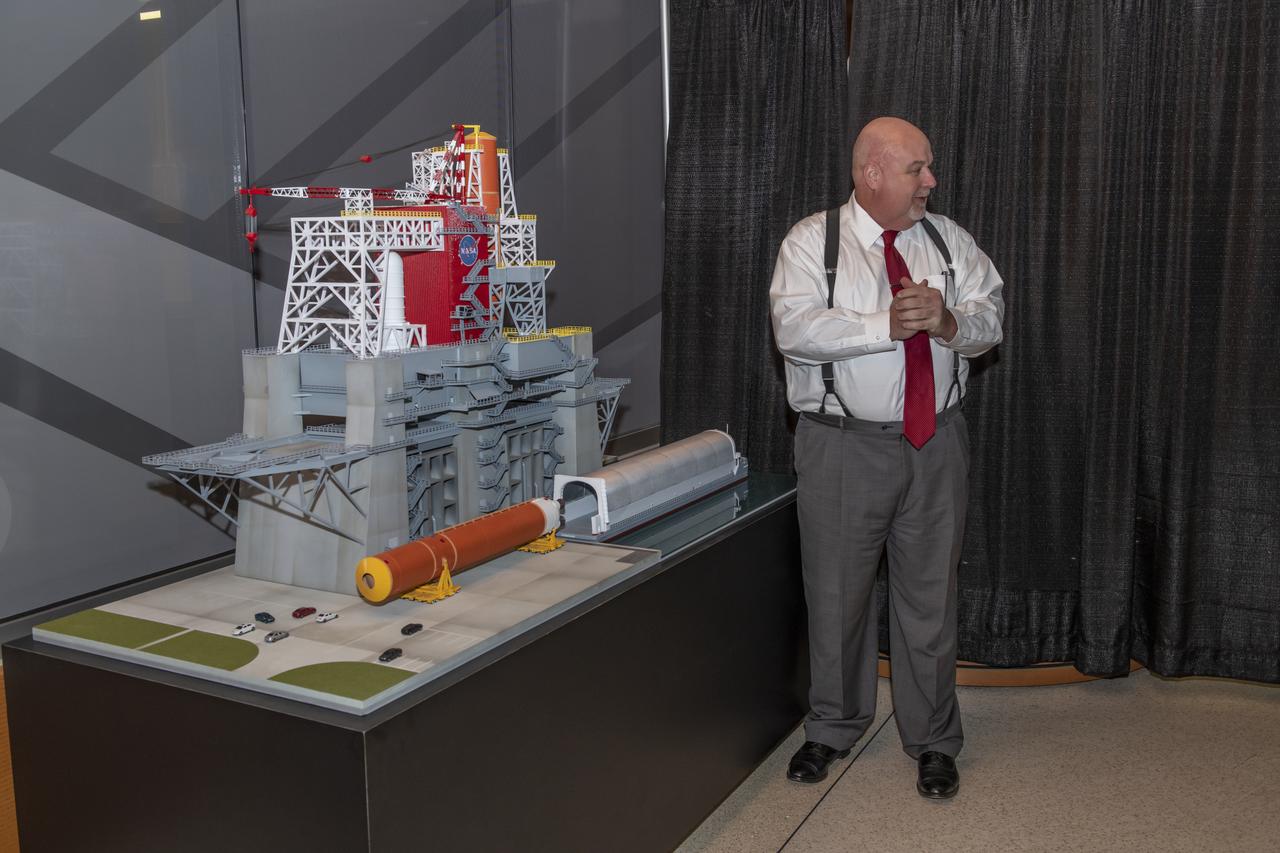
The unveiling of the B-2 Test Stand model for the SLS management team and employees in building 4220. Taking part was John Honeycutt and Julie Bassler.
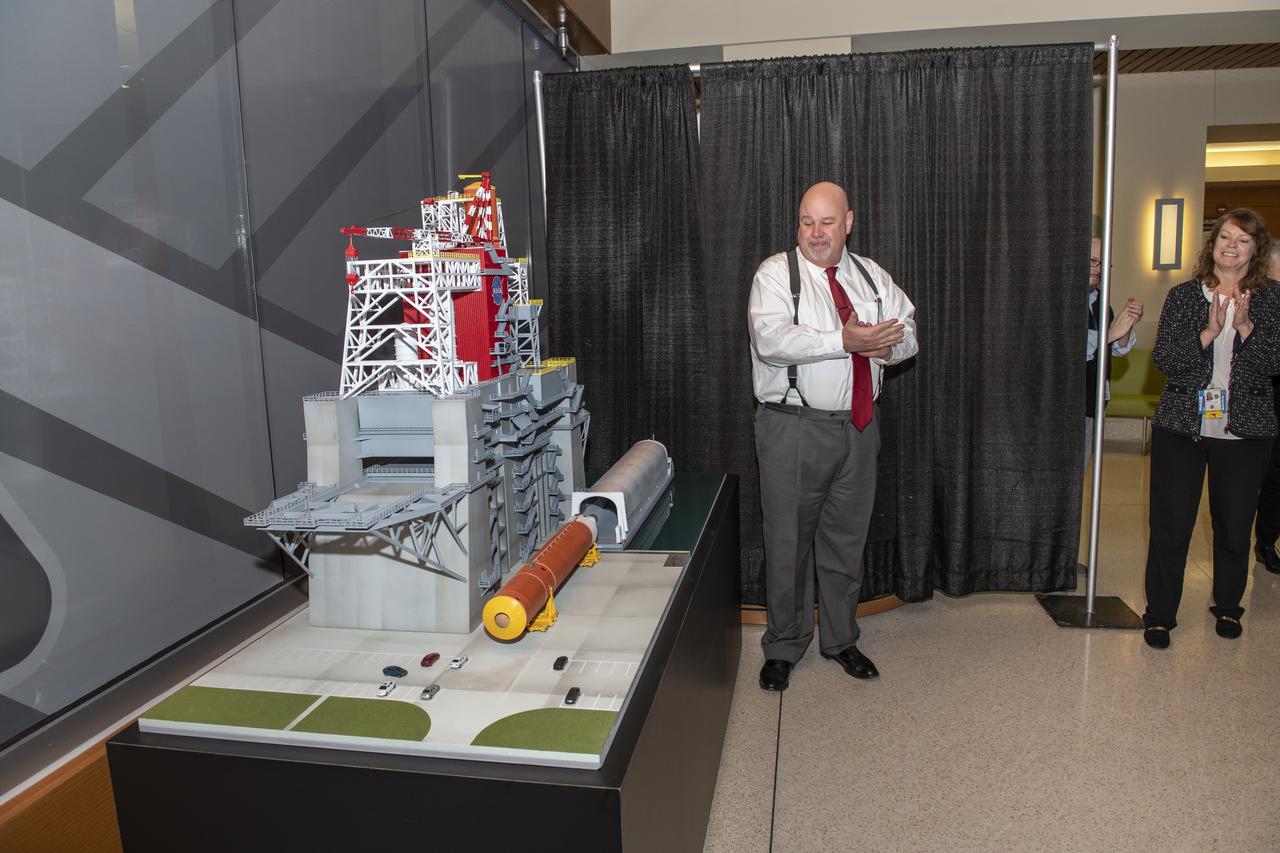
The unveiling of the B-2 Test Stand model for the SLS management team and employees in building 4220. Taking part was John Honeycutt and Julie Bassler.
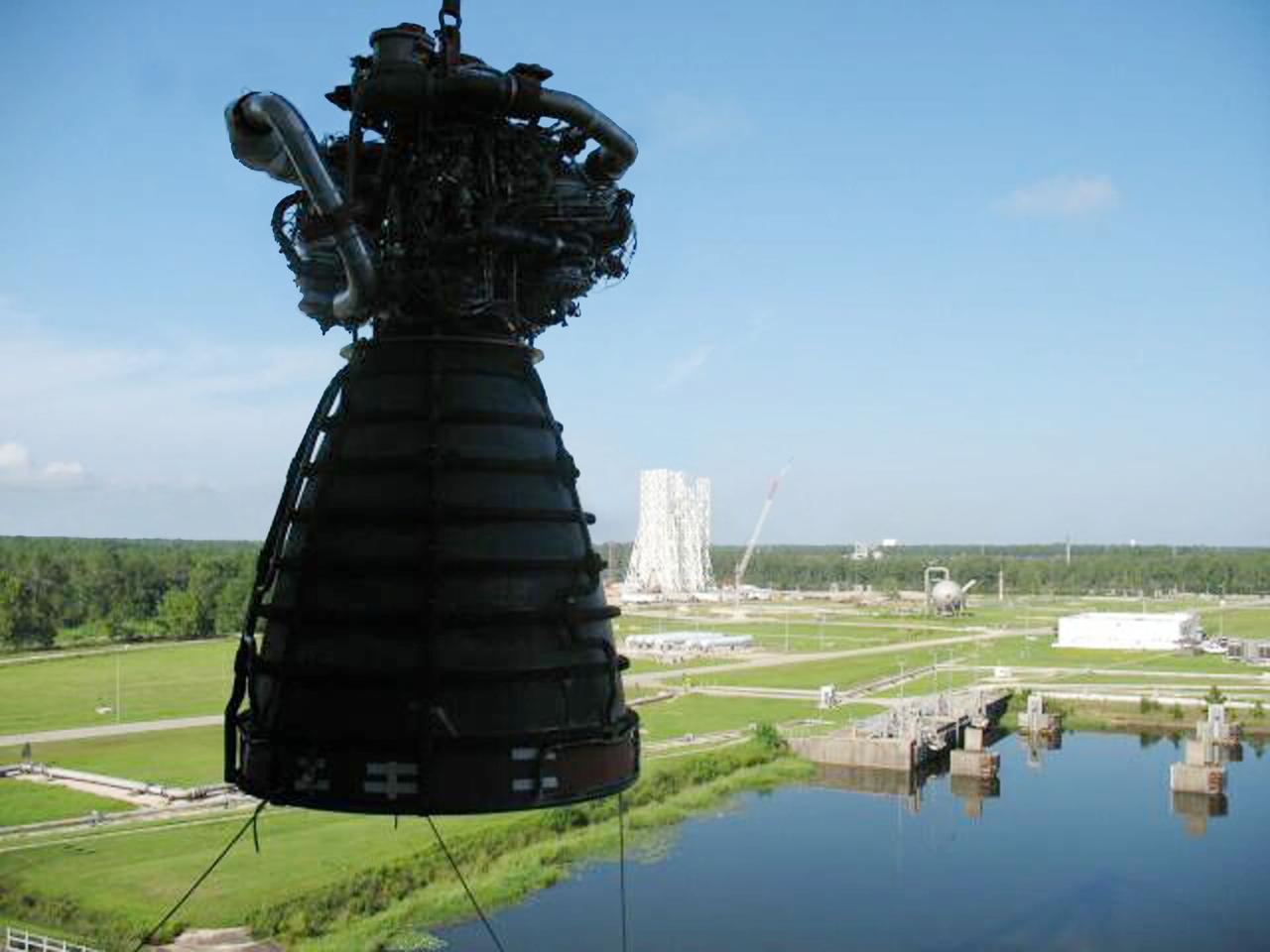
Space shuttle main engine No. 0525 is lifted from the A-2 Test Stand at Stennis Space Center against the backdrop of the new A-3 Test Stand under construction, offering a glimpse of the past and future in the nation's space exploration program. With the shuttle program set to end in 2010, Stennis conducted the last planned space shuttle main engine test on July 29 and now is deactivating the A-2 Test Stand to a safe 'standby' status.
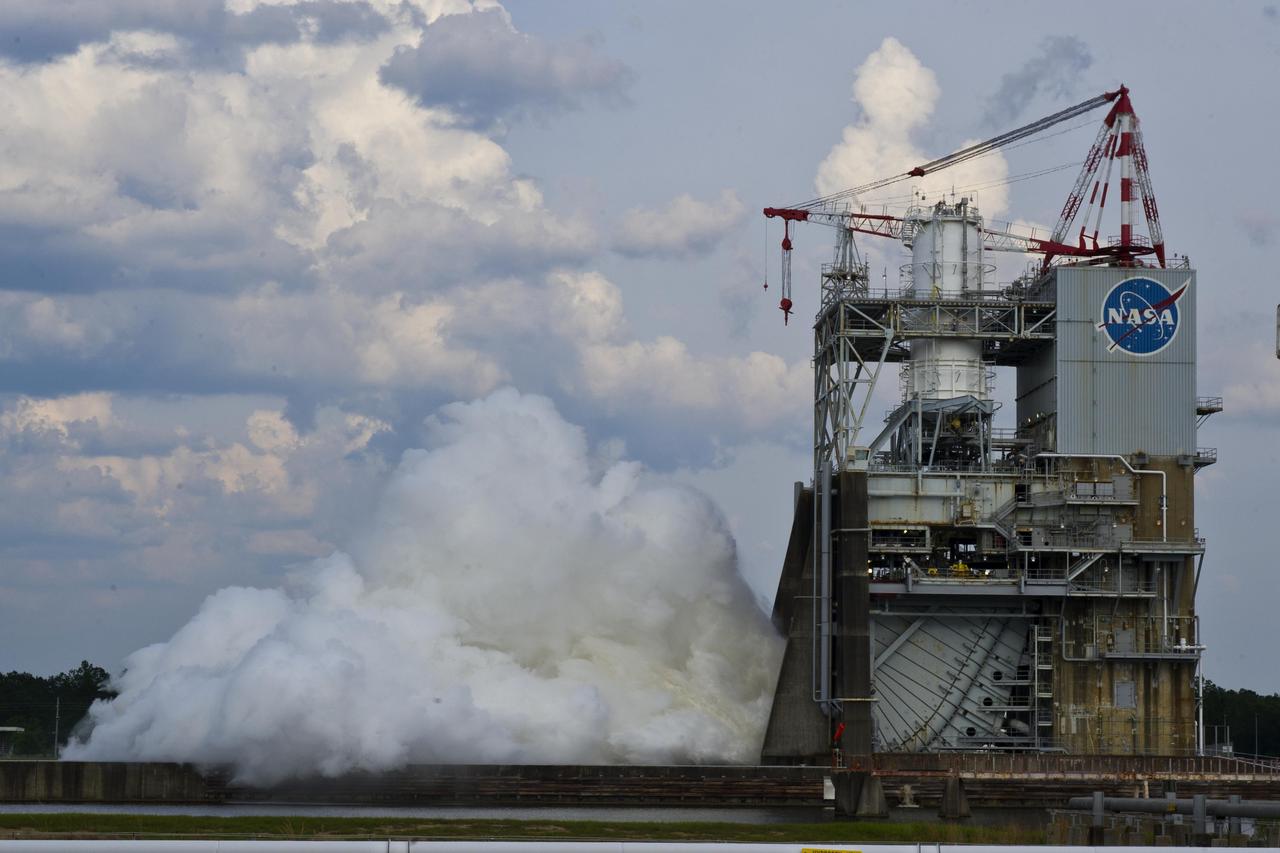
NASA conducted a successful seven-second test of the next-generation J-2X rocket engine on the A-2 Test Stand at Stennis Space Center on May 16, 2012. The J-2X is being developed for NASA by Pratt & Whitney Rocketdyne.
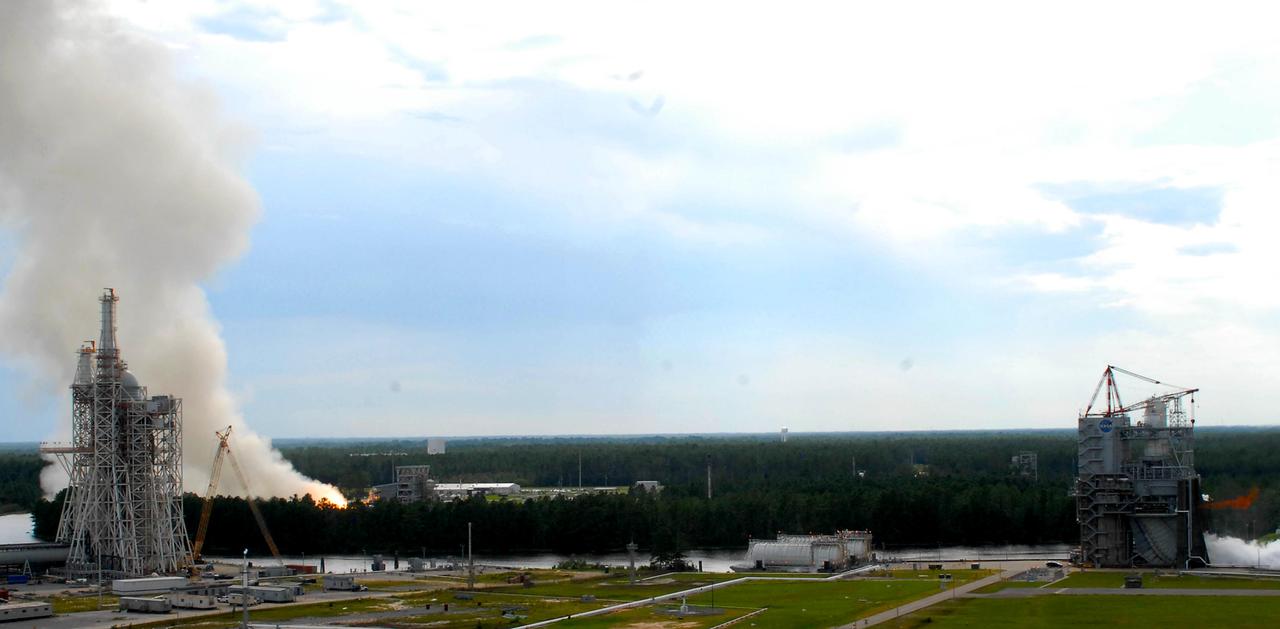
Two large-engine tests were conducted simultaneously for the first time at Stennis Space Center on Aug. 16. A plume on the left indicates a test on the facility's E-1 Test Stand. On the right, a finger of fire indicates a test under way on the A-1 Test Stand. In another first, both tests were conducted by female engineers. The image was taken from atop the facility's A-2 Test Stand, offering a panoramic view that includes the new A-3 Test Stand under construction to the left.
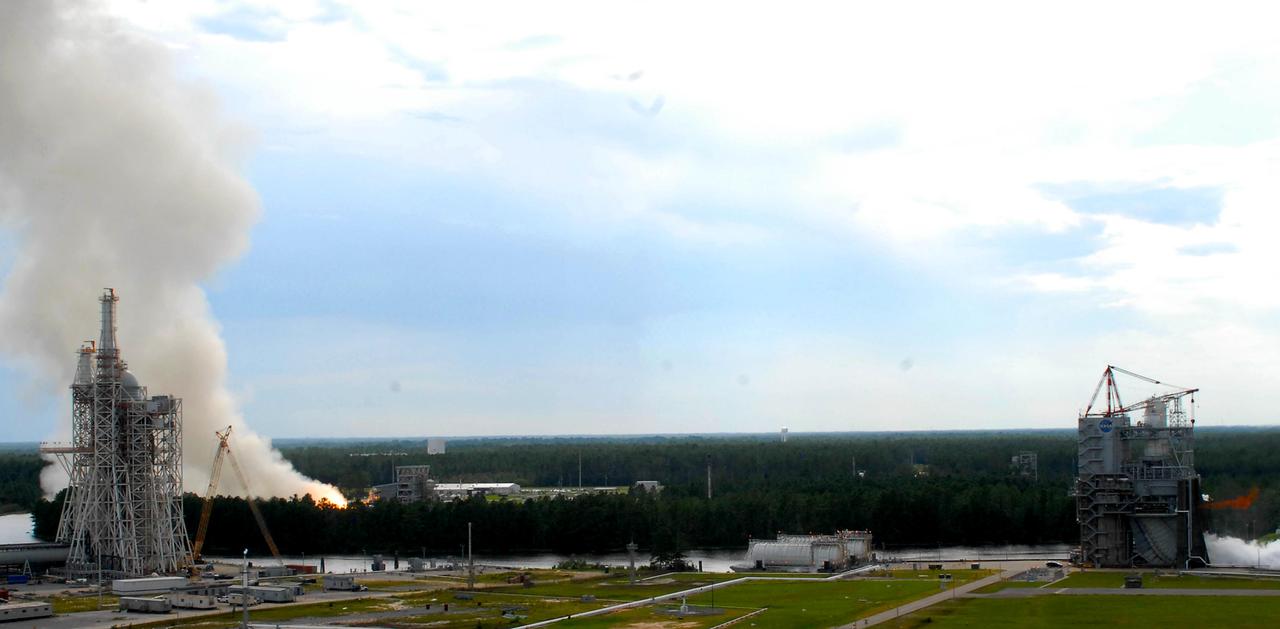
Two large-engine tests were conducted simultaneously for the first time at Stennis Space Center on Aug. 16. A plume on the left indicates a test on the facility's E-1 Test Stand. On the right, a finger of fire indicates a test under way on the A-1 Test Stand. In another first, both tests were conducted by female engineers. The image was taken from atop the facility's A-2 Test Stand, offering a panoramic view that includes the new A-3 Test Stand under construction to the left.
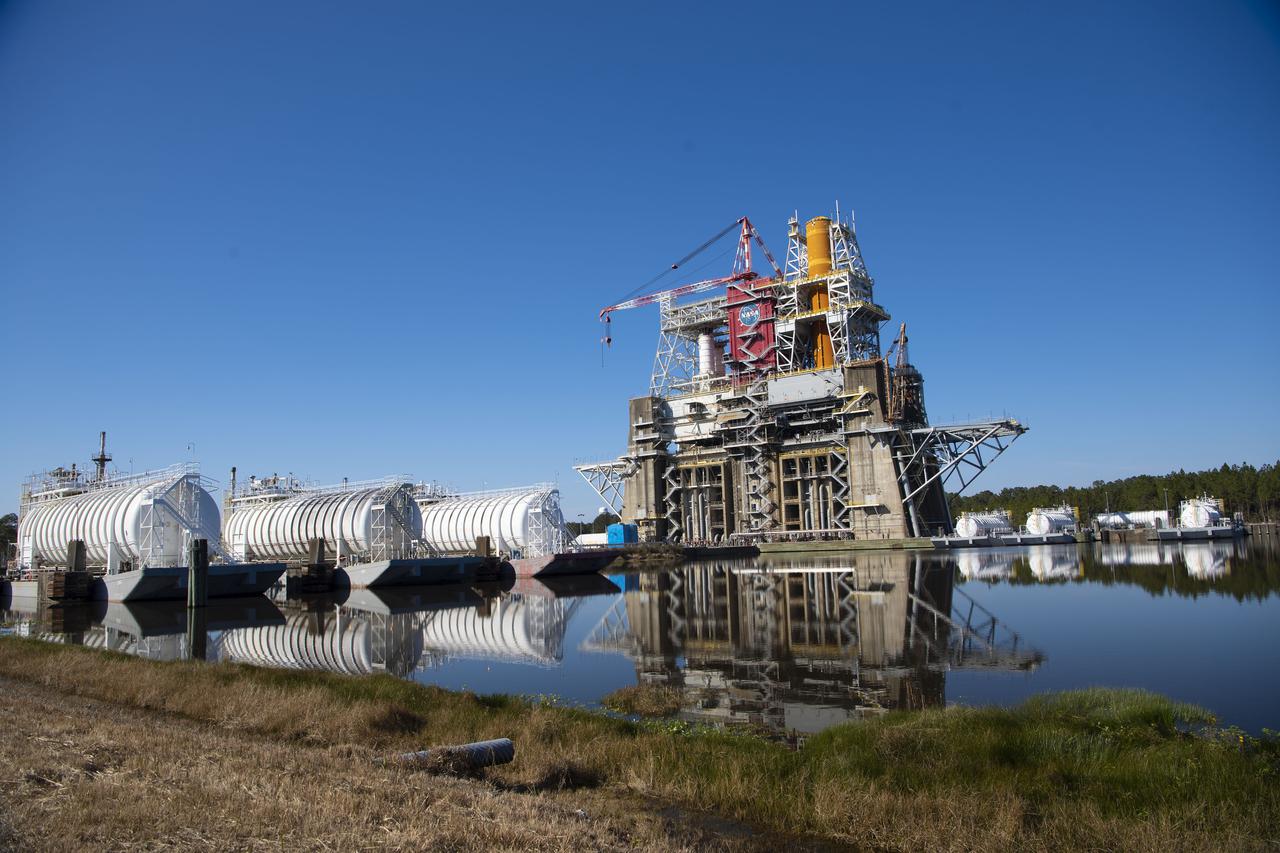
Propellant barges are docked at the B-2 Test Stand at NASA’s Stennis Space Center near Bay St. Louis, Mississippi, prior the hot fire test of the core stage for the agency’s Space Launch System rocket. The hot fire test Jan. 16, 2021 of the stage’s four RS-25 engines generated a combined 1.6 million pounds of thrust, just as will occur during an actual launch. The hot fire is the final test of the Green Run test series, a comprehensive assessment of the SLS core stage prior to launching the Artemis I mission to the Moon.
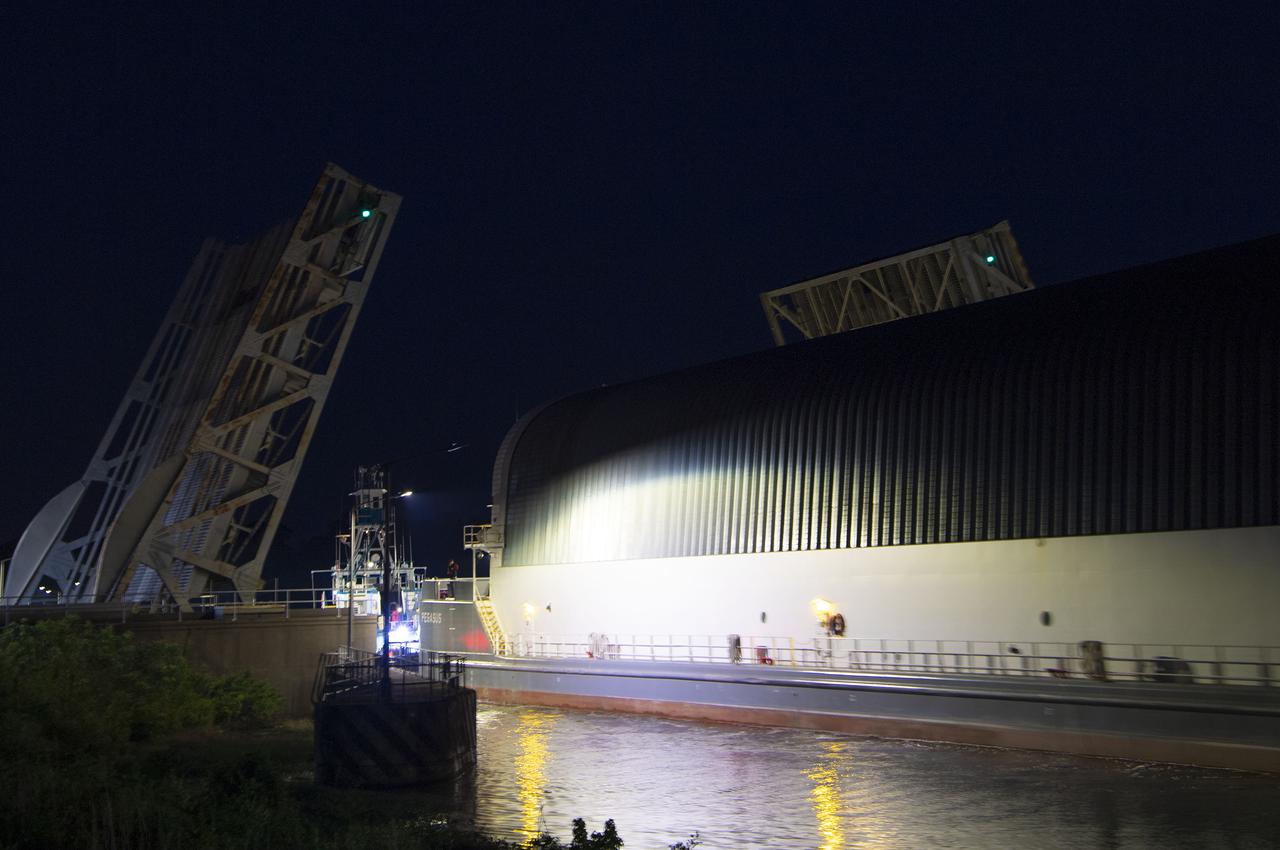
The first core stage of NASA’s Space Launch System (SLS) rocket, loaded onto the agency’s Pegasus barge, departs Stennis Space Center near Bay St. Louis, Mississippi, headed to Kennedy Space Center in Florida. The departure of the core stage in mid-April 2021 followed completion of a Green Run test series of the stage systems in preparation for its launch on the Artemis I mission. The Green Run series concluded with a March 18 hot fire of the stage’s four RS-25 engines on the B-2 Test Stand at Stennis, just as during an actual launch. Following refurbishment work, the stage was removed from the B-2 stand and loaded onto the Pegasus barge for transport. Once at Kennedy, the will be integrated with the rest of SLS rocket and prepared for the launch of the Artemis I mission to the Moon. Photo Credit: NASA
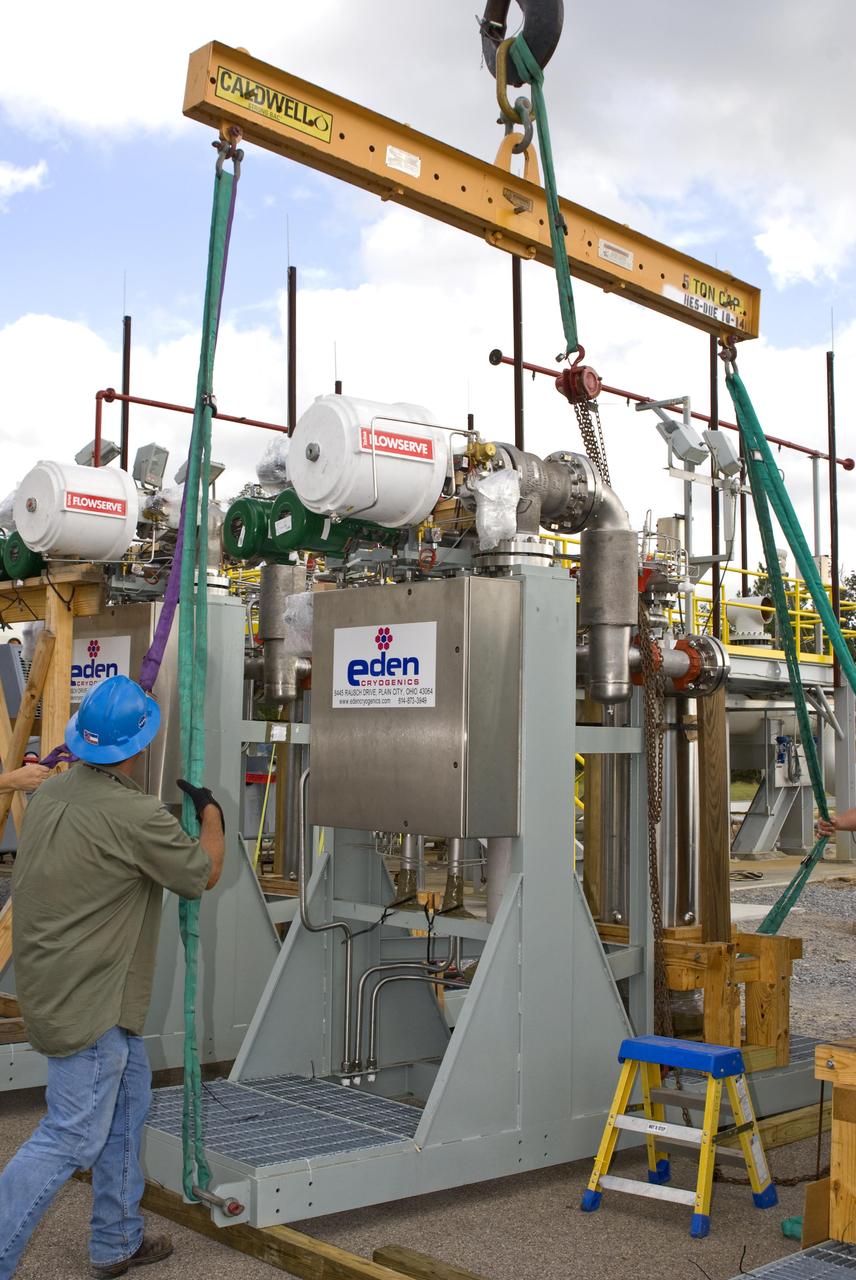
The first of nine chemical steam generator (CSG) units that will be used on the A-3 Test Stand is prepared for installation Oct. 24, 2010, at John C. Stennis Space Center. The unit was installed at the E-2 Test Stand for verification and validation testing before it is moved to the A-3 stand. Steam generated by the nine CSG units that will be installed on the A-3 stand will create a vacuum that allows Stennis operators to test next-generation rocket engines at simulated altitudes up to 100,000 feet.
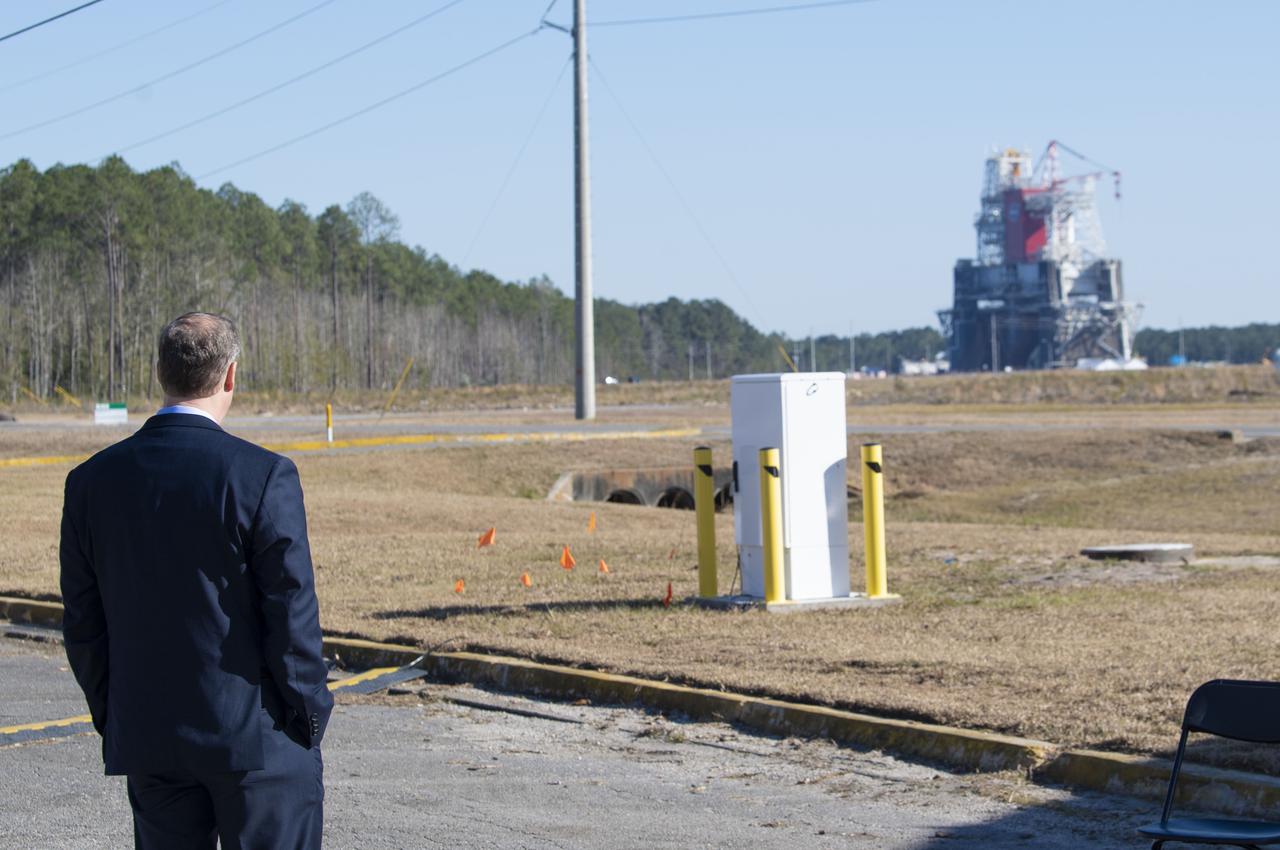
Outgoing NASA Administrator Jim Bridenstine peers at the B-2 Test Stand at Stennis Space Center near Bay St. Louis, Mississippi, prior to a hot fire test Jan. 16, 2021, of the core stage for the agency’s Space Launch System rocket. The hot fire test of the stage’s four RS-25 engines generated a combined 1.6 million pounds of thrust, just as will occur during an actual launch. The hot fire at the B-2 Test Stand culminated a series of eight Green Run tests on the core stage and its integrated systems. The core stage now will be prepared and transported to Kennedy Space Center to be joined with the rest of the SLS rocket for launch on the Artemis I test mission.
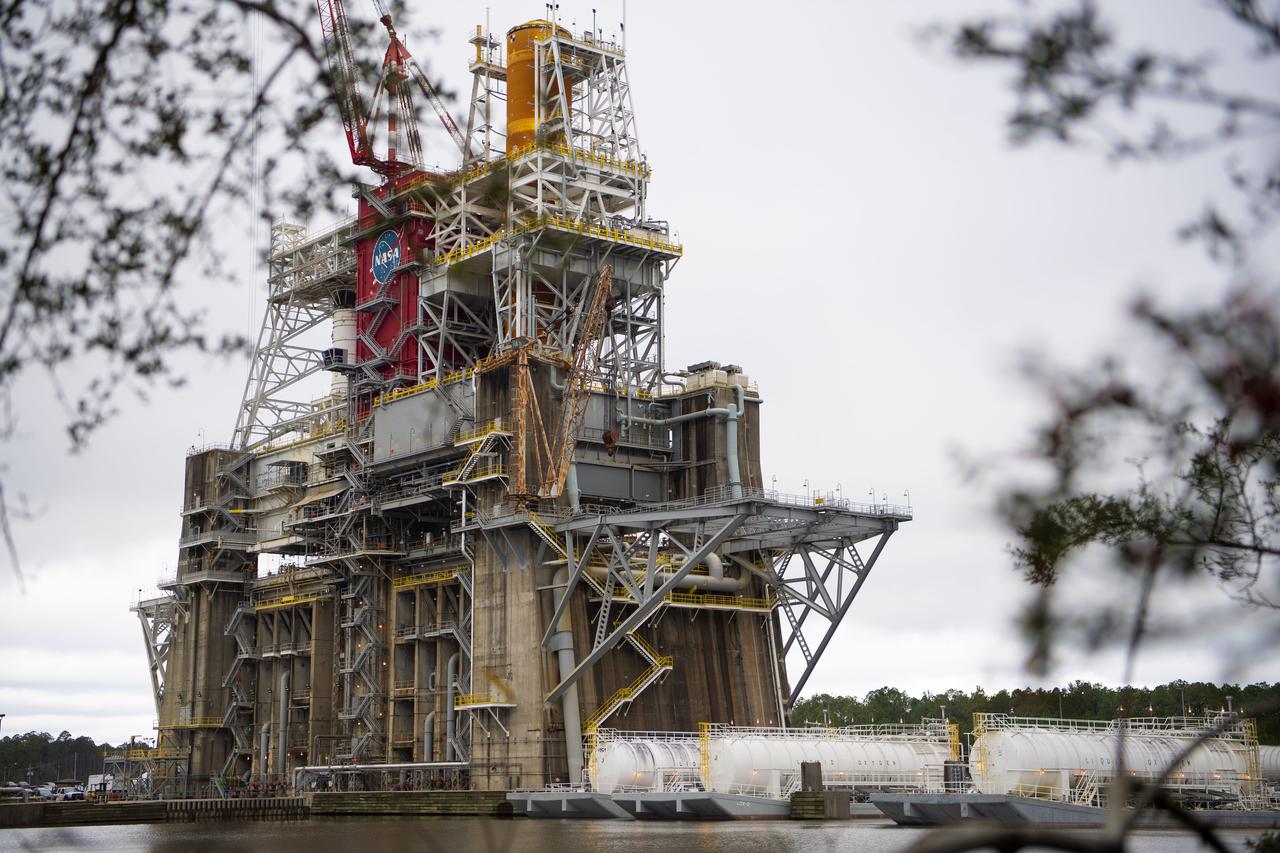
Barges are docked at the B-2 Test Stand at Stennis Space Center on Dec. 4, 2020, in preparation for upcoming Green Run test activities. Teams at the center have been performing Green Run tests of NASA’s Space Launch System core stage and its integrated systems throughout 2020. In mid-December, teams performed the seventh test of the Green Run series – a wet dress rehearsal of a countdown to hot fire. It marked the first time the stage tanks had been loaded with liquid oxygen and liquid hydrogen propellants supplied by the docked barges.
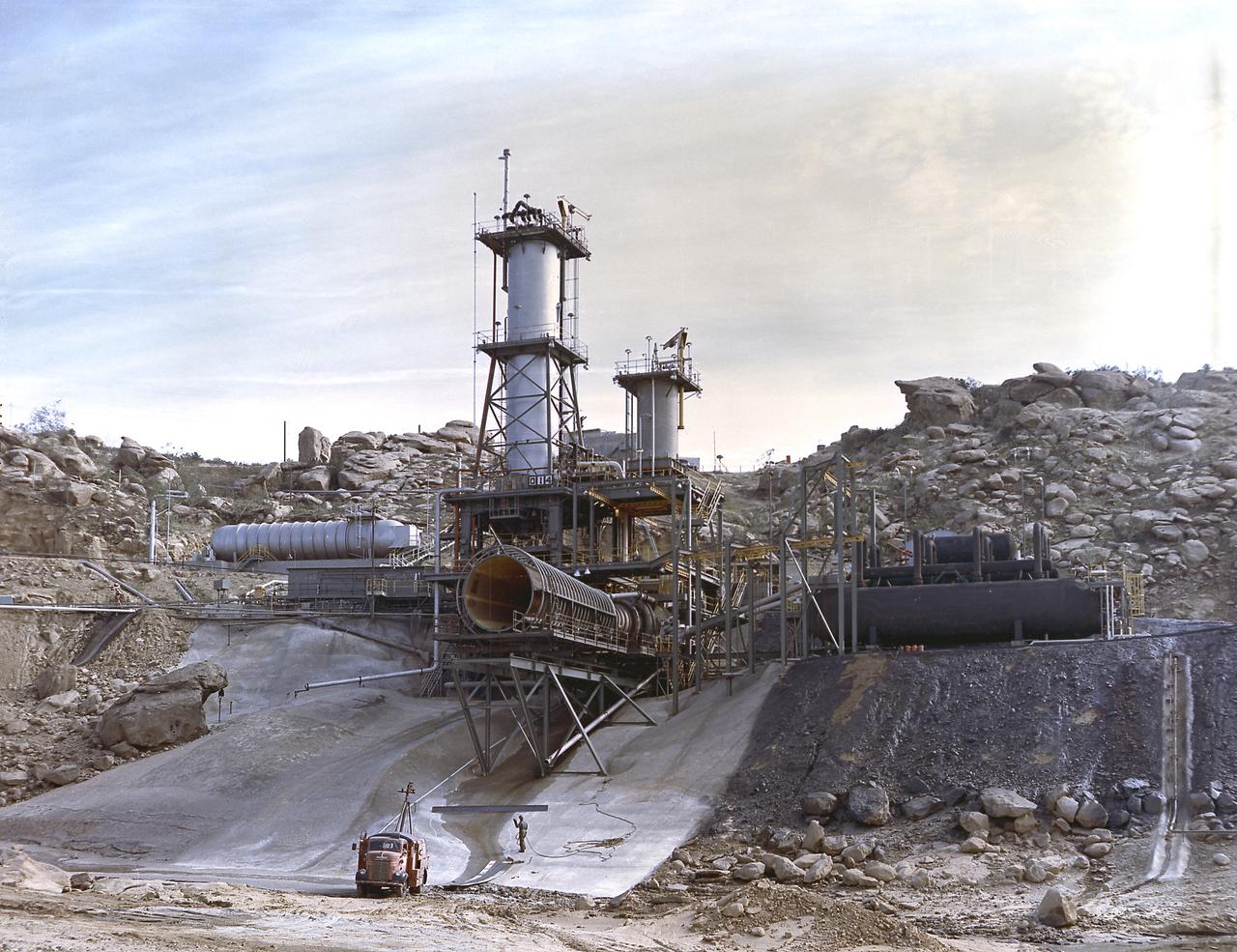
This image depicts an overall view of the vertical test stand for testing the J-2 engine at Rocketdyne's Propulsion Field Laboratory, in the Santa Susana Mountains, near Canoga Park, California. The J-2 engines were assembled and tested at Rocketdyne under the direction of the Marshall Space Flight Center.
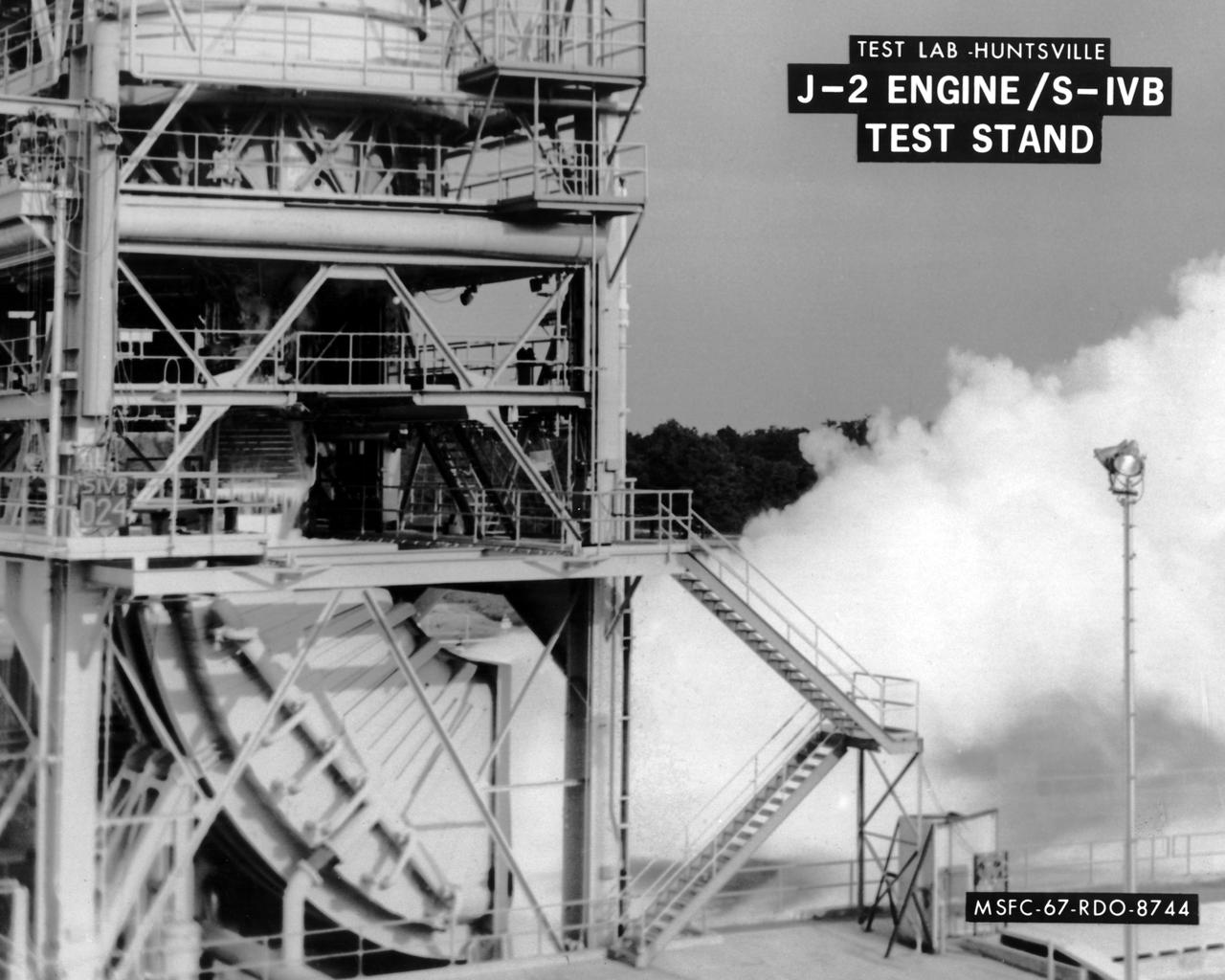
This image depicts the test firing of a J-2 engine in the S-IVB Test Stand at the Marshall Space Flight Center (MSFC). The J-2, developed by Rocketdyne under the direction of MSFC, was propelled by liquid hydrogen and liquid oxygen. A single J-2 was utilized in the S-IVB stage (the second stage for the Saturn IB and third stage for the Saturn V) and in a cluster of five for the second stage (S-II) of the Saturn V. Initially rated at 200,000 pounds of thrust, the engine was later upgraded in the Saturn V program to 230,000 pounds.
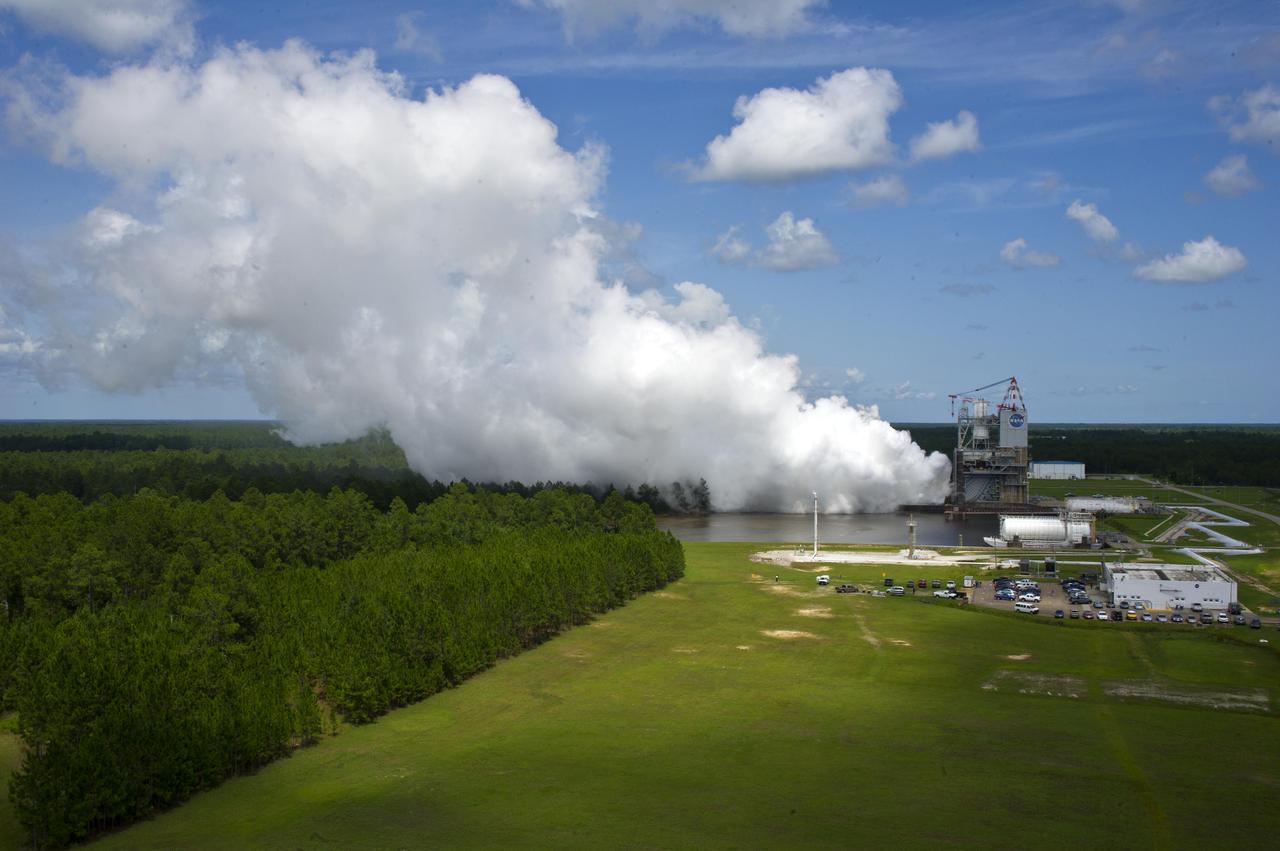
NASA's test of the J-2X rocket engine on the A-2 Test Stand at Stennis Space Center on July 13 was picture perfect in more ways than one. Not only did the test provide a breathtaking view from atop the nearby A-1 Test Stand, and with the center's B-1/B-2 Test Stand in the background, but it achieved its target of 550 seconds. The test continued a series of firings to gather critical data for engine development.
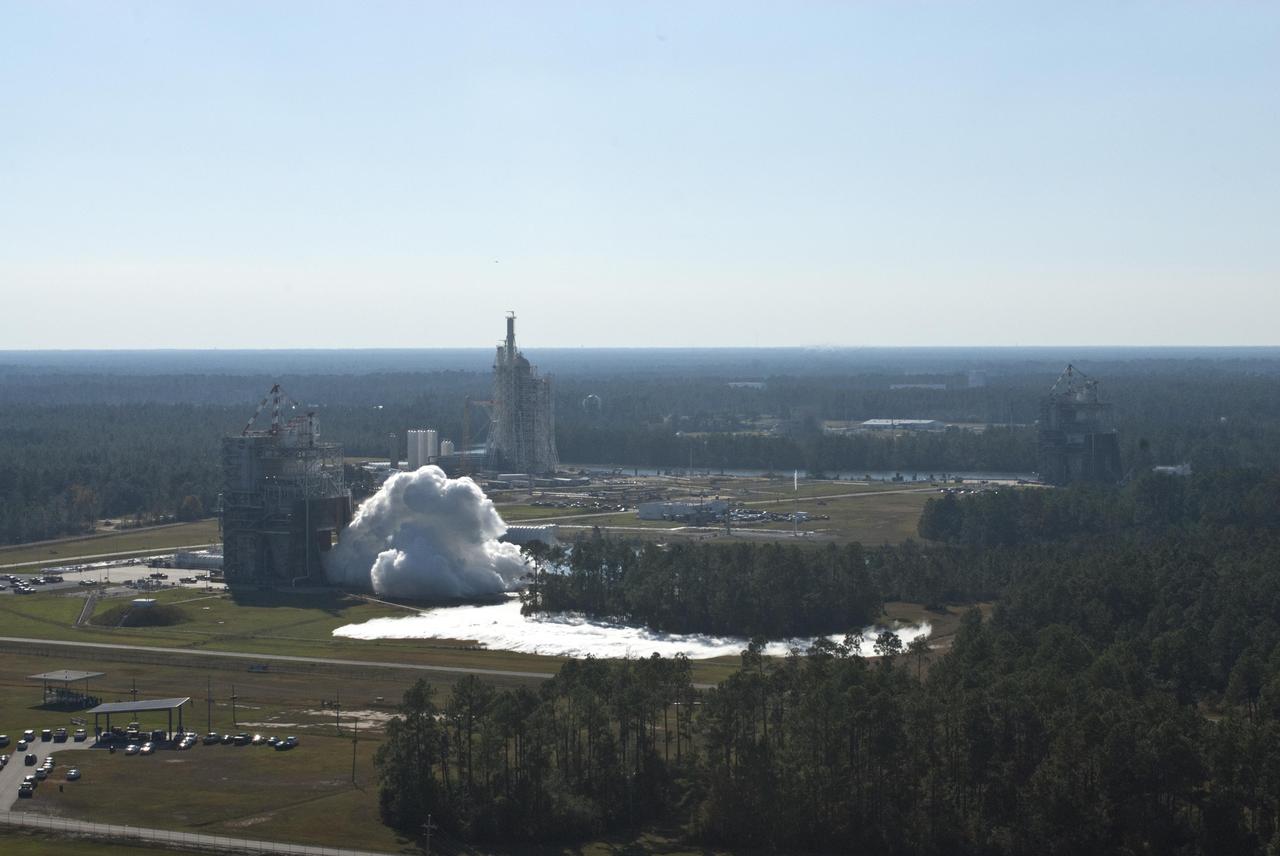
A photograph of a J-2X rocket engine on the A-2 Test Stand from atop the B Test Stand at Stennis Space Center offers a panoramic view of the A Test Complex. The J-2X engine is being developed for NASA by Pratt & Whitney Rocketdyne to carry humans deeper into space than ever before.
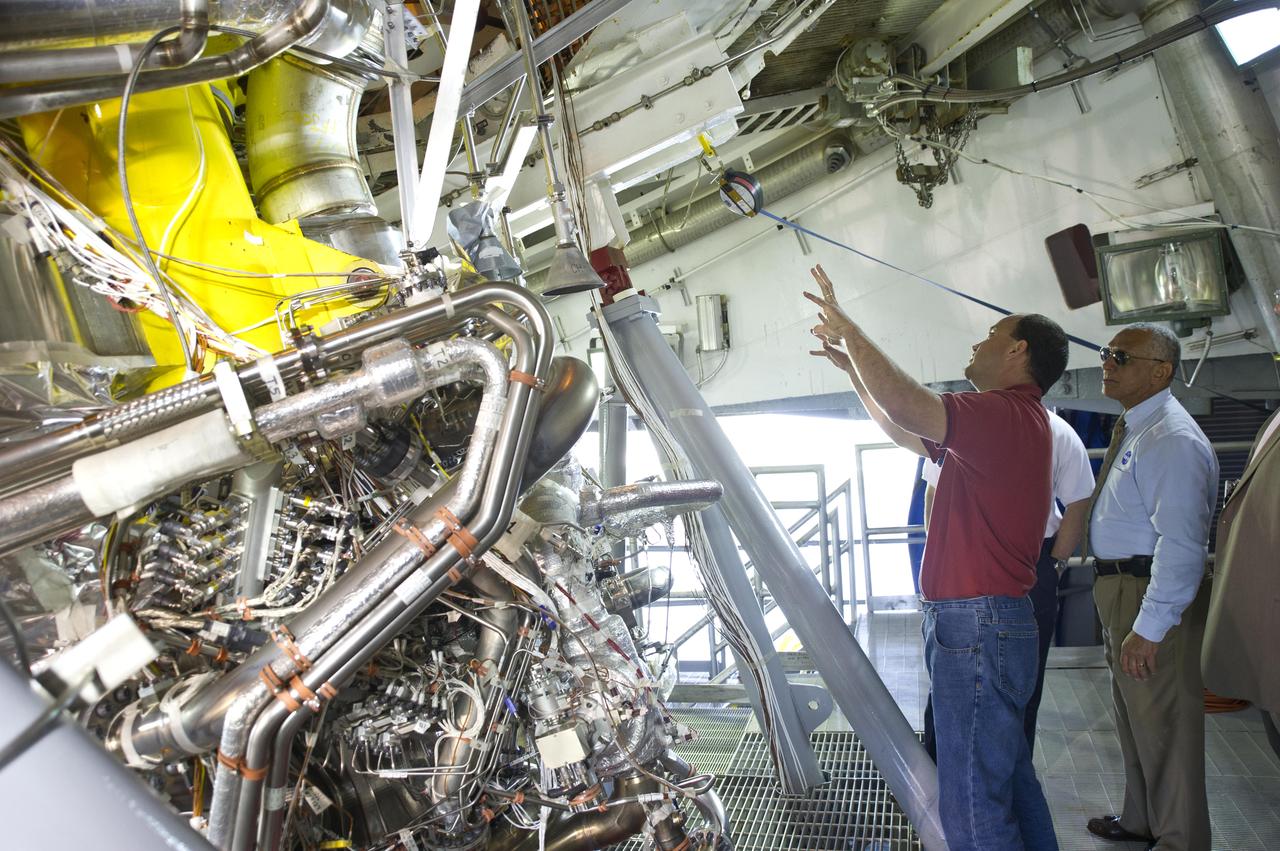
NASA Administrator Charles Bolden (r) takes an up-close look at the first development J-2X rocket engine on the A-2 Test Stand at Stennis Space Center during an April 20, 2012, visit. Pictured with Bolden is A-2 Test Stand Director Skip Roberts. The J-2X engine i s being developed for NASA by Pratt & Whitney Rocketdyne.
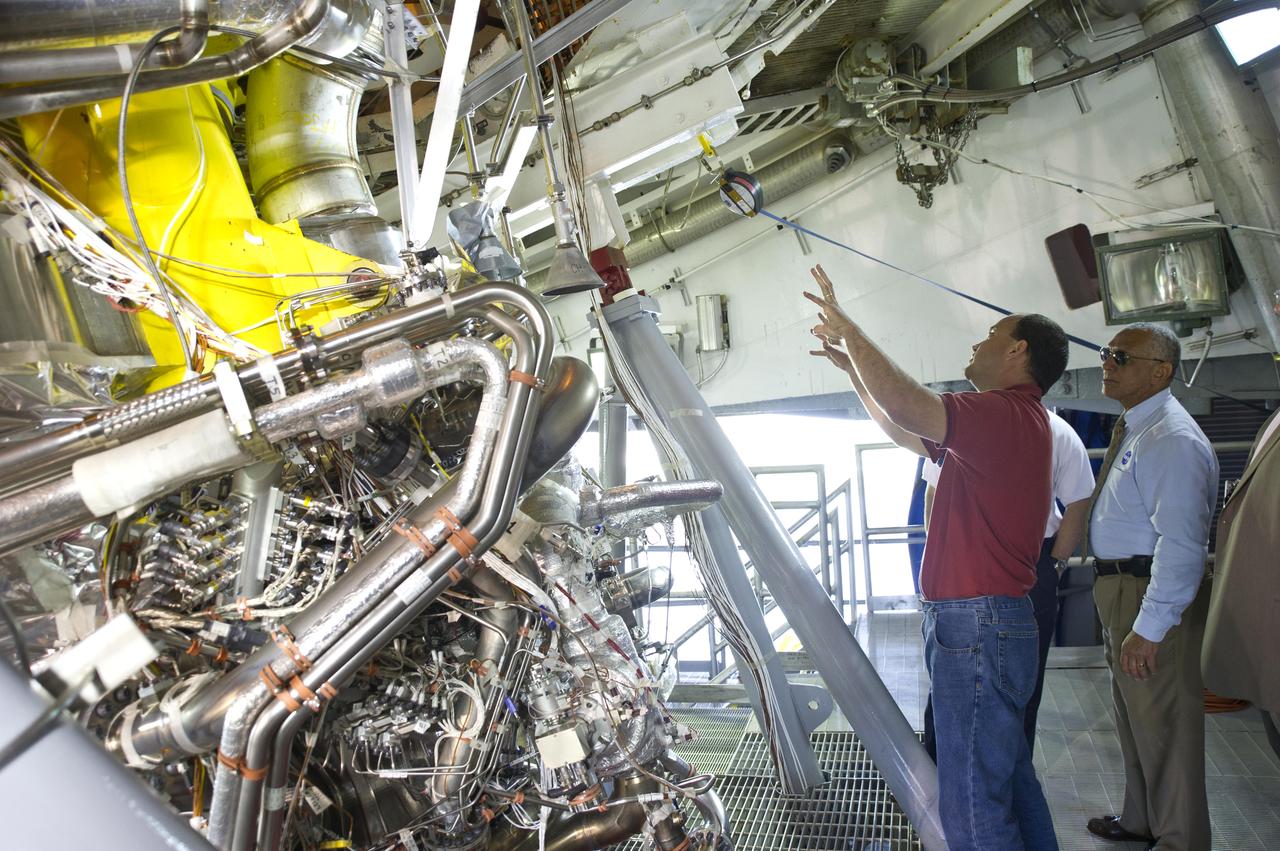
NASA Administrator Charles Bolden (r) takes an up-close look at the first development J-2X rocket engine on the A-2 Test Stand at Stennis Space Center during an April 20, 2012, visit. Pictured with Bolden is A-2 Test Stand Director Skip Roberts. The J-2X engine is being developed for NASA by Pratt & Whitney Rocketdyne.
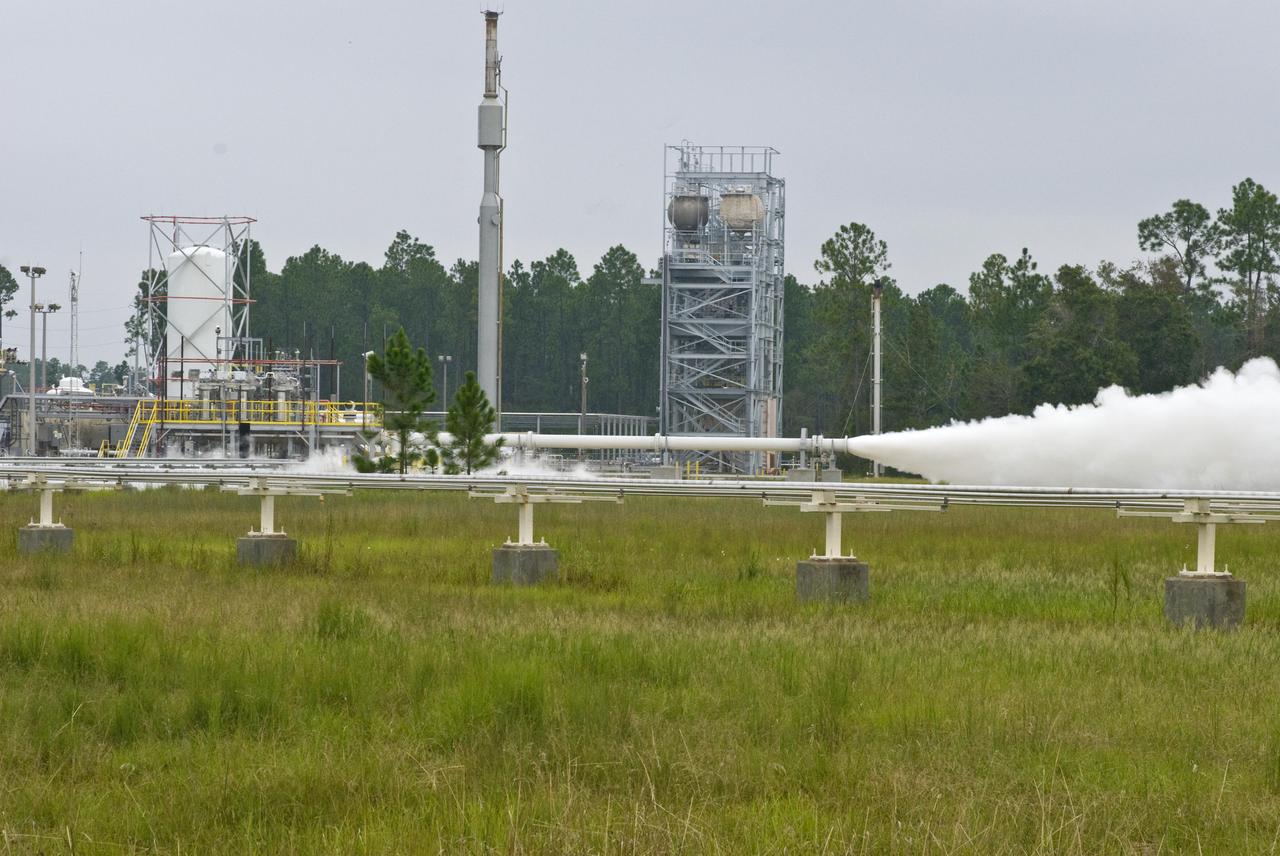
E-2 Test Stand team members at Stennis Space Center conducted their first series of tests on a three-module chemical steam generator unit Sept. 15. All three modules successfully fired during the tests. The chemical steam generator is a critical component for the A-3 Test Stand under construction at Stennis.
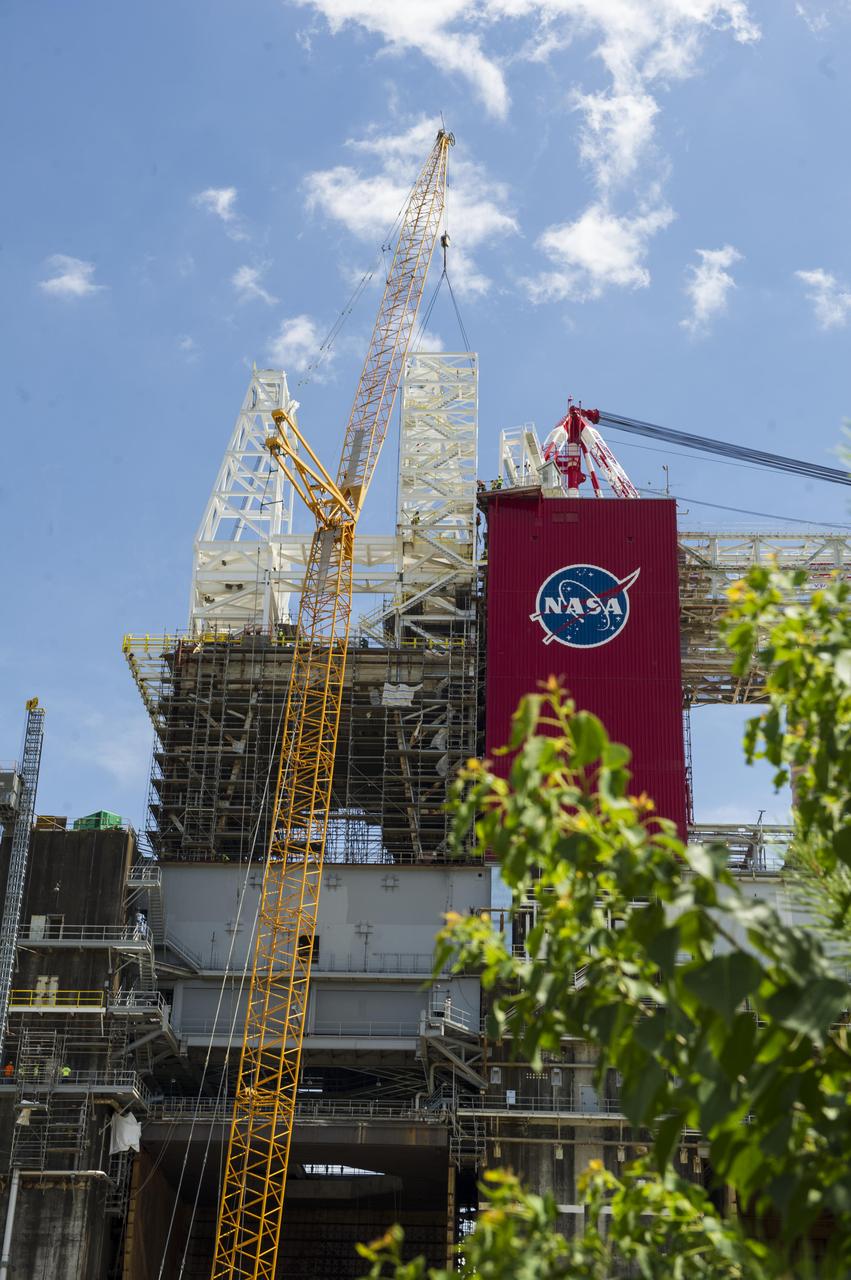
A structural steel section is lifted into place atop the B-2 Test Stand at NASA’s Stennis Space Center as part of modification work to prepare for testing the core stage of NASA’s new Space Launch System. The section is part of the Main Propulsion Test Article (MPTA) framework, which will support the SLS core stage for testing. The existing framework was installed on the stand in the late 1970s to test the shuttle MPTA. However, that framework had to be repositioned and modified to accommodate the larger SLS stage. About 1 million pounds of structural steel has been added, extending the framework about 100 feet higher and providing a new look to the Stennis skyline. Stennis will test the actual flight core stage for the first uncrewed SLS mission, Exploration Mission-1.
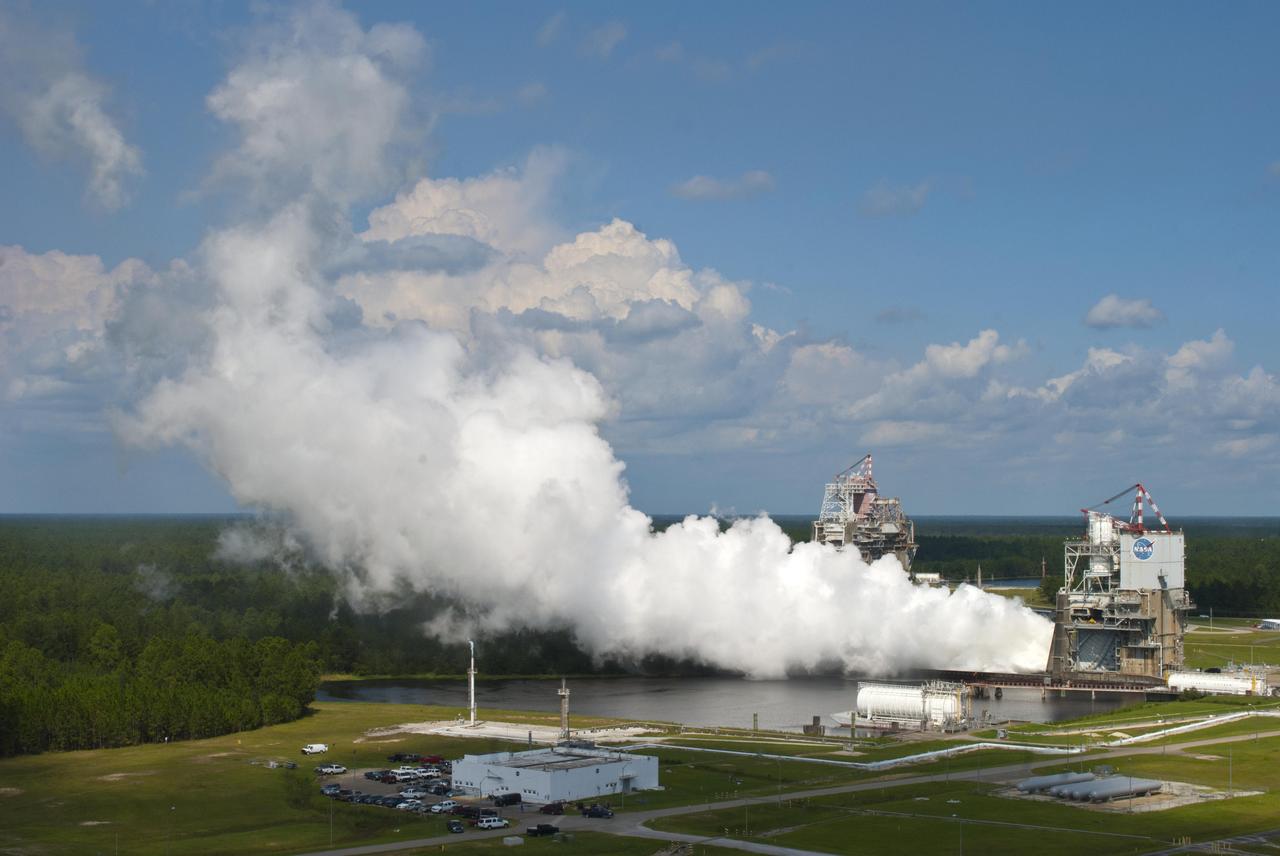
NASA engineers continued testing the next-generation J-2X rocket engine at Stennis Space Center with a 250-second test on Sept. 7. The test was the first conducted after the arrival of Hurricane Isaac forced closure of the Stennis facility for three days in late August. The est was conducted on the A-2 Test Stand at Stennis. The facility's B-1/B-2 Test Stand can be seen in the left background.
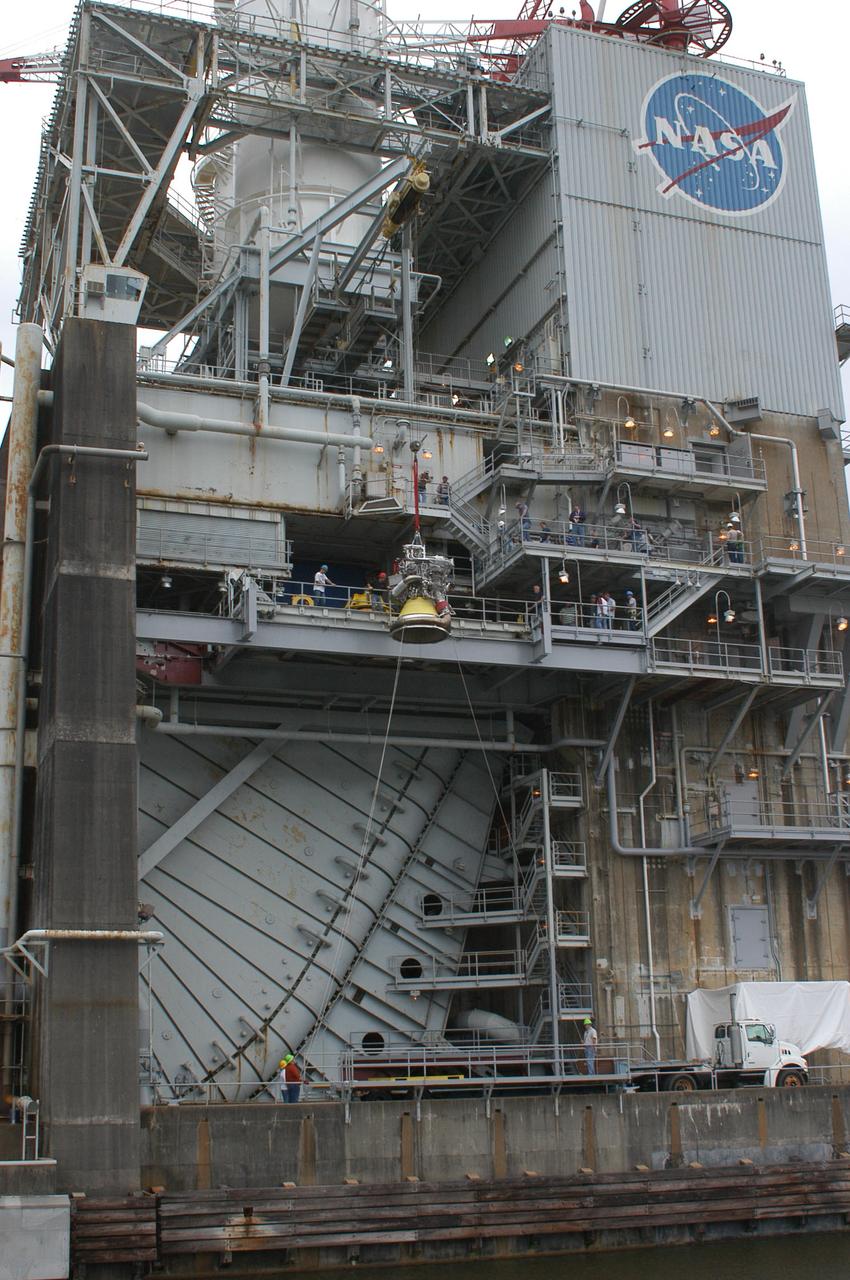
J-2X engine No. 10001 is returned March 8, 2012, to the A-2 Test Stand at Stennis Space Center for its second round of tests. The developmental engine underwent an initial series of tests last year. The J-2X engine is being built for NASA by Pratt & Whitney Rocketdyne.
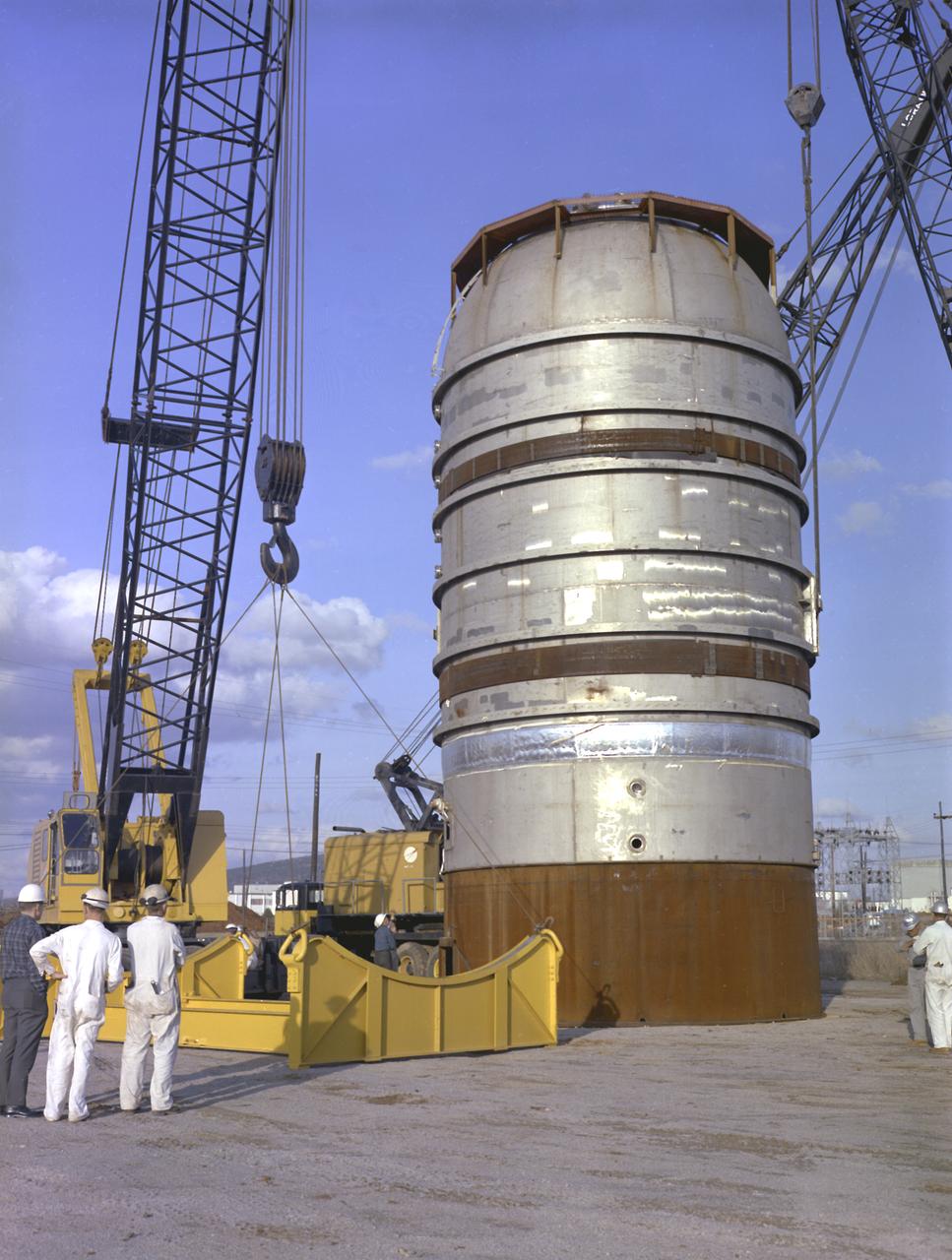
Workers at the Marshall Space Flight Center (MSFC) move a facility test version of the Saturn IB launch vehicle's second stage, the S-IVB, to the J-2 test stand on February 10, 1965. Also known as a "battleship" because of its heavy, rugged construction, the non-flight, stainless-steel model was used to check out testing facilities at MSFC.
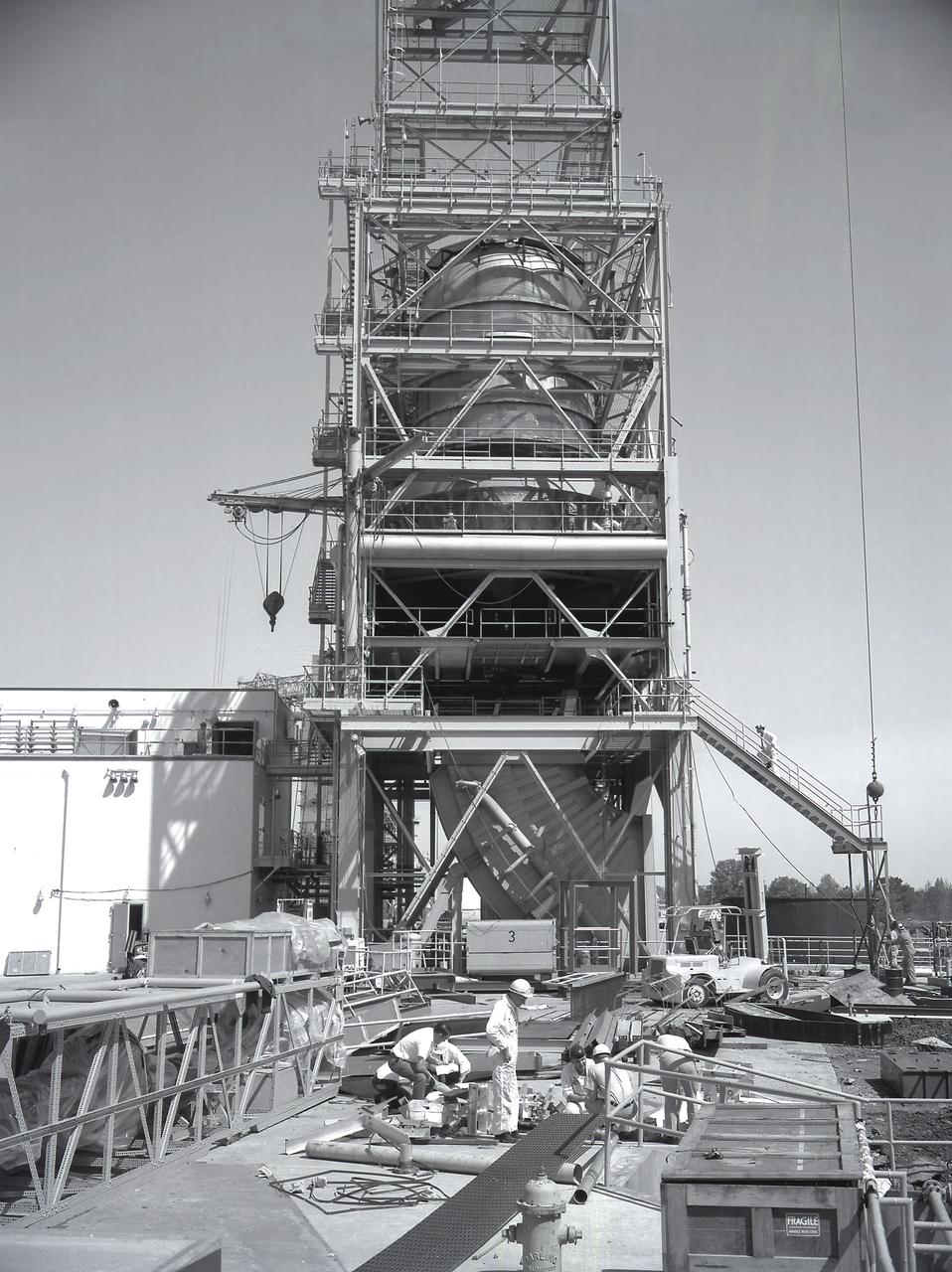
A facility test version of the S-IVB, the second stage of the Saturn IB launch vehicle, sits in the Marshall Space Flight Center (MSFC) J-2 test stand on February 10, 1965. Also known as a "battleship" because of its heavy, rugged construction, the non-flight, stainless-steel model was used to check out testing facilities at MSFC.
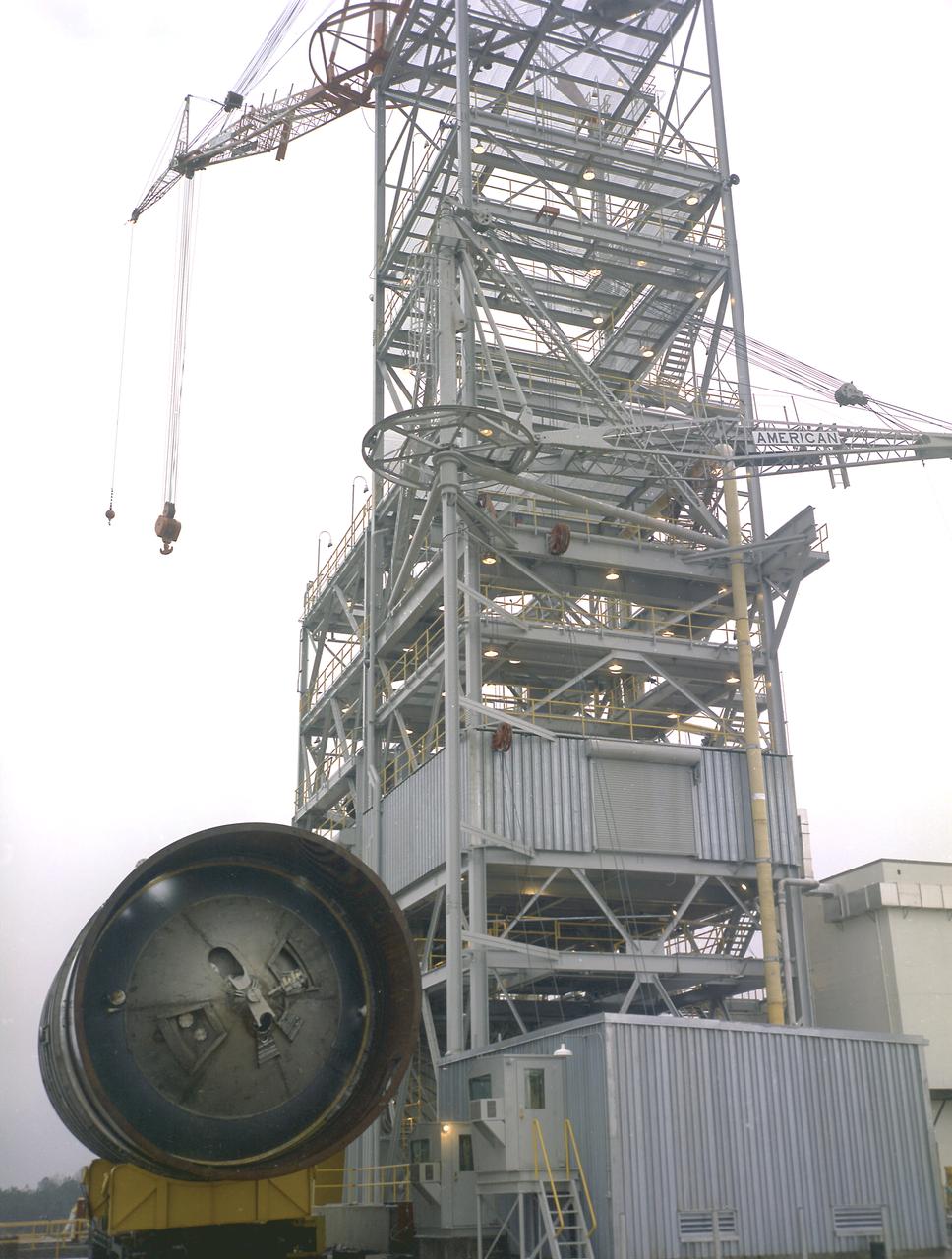
Workers at the Marshall Space Flight Center (MSFC) move a facility test version of the Saturn IB launch vehicle's second stage, the S-IVB, to the J-2 test stand on February 10, 1965. Also known as a "battleship" because of its heavy, rugged construction, the non-flight, stainless-steel model was used to check out testing facilities at MSFC.
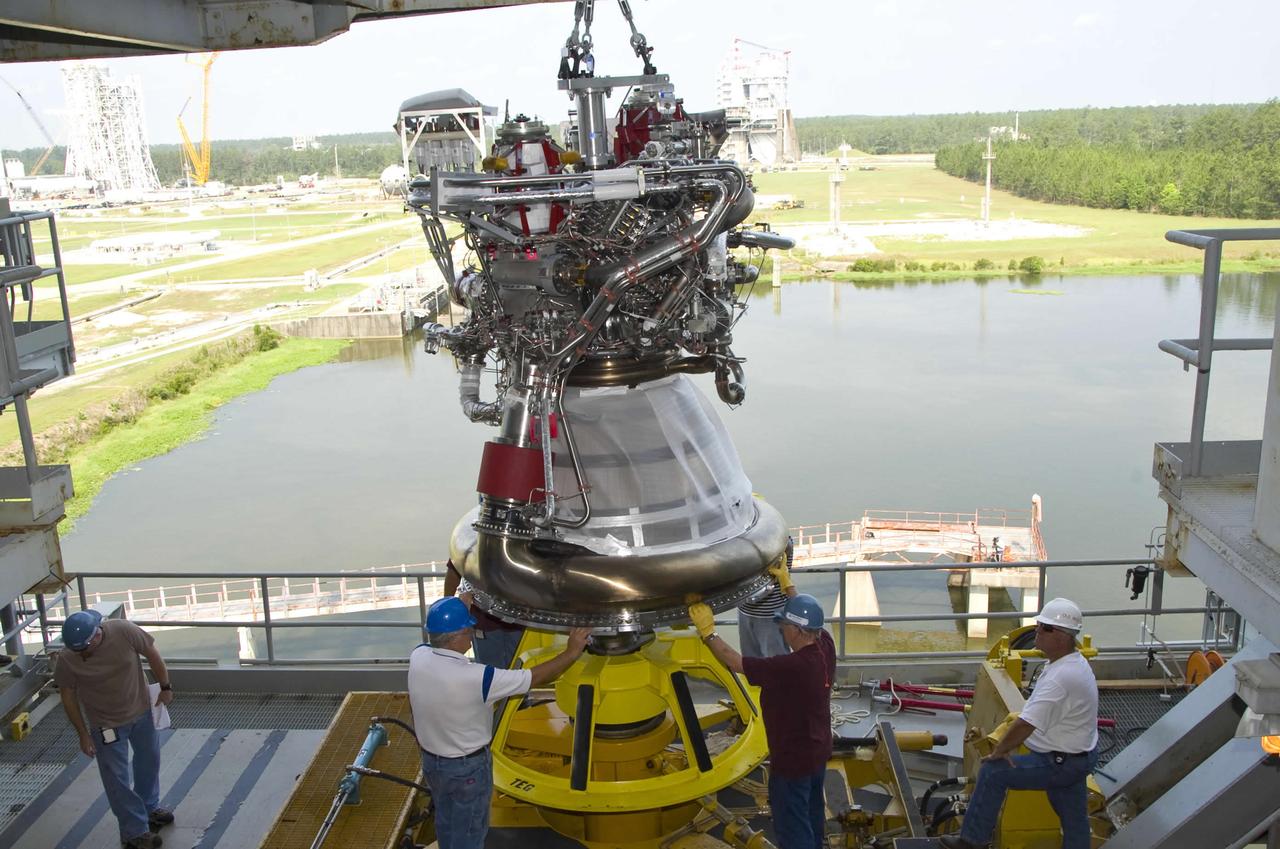
A J-2X next-generation rocket engine is lifted onto the A-2 Test Stand at Stennis Space Center. Testing of the engine began the following month. The engine is being developed for NASA by Pratt & Whitney Rocketdyne and could help carry humans beyond low-Earth orbit into deep space once more.
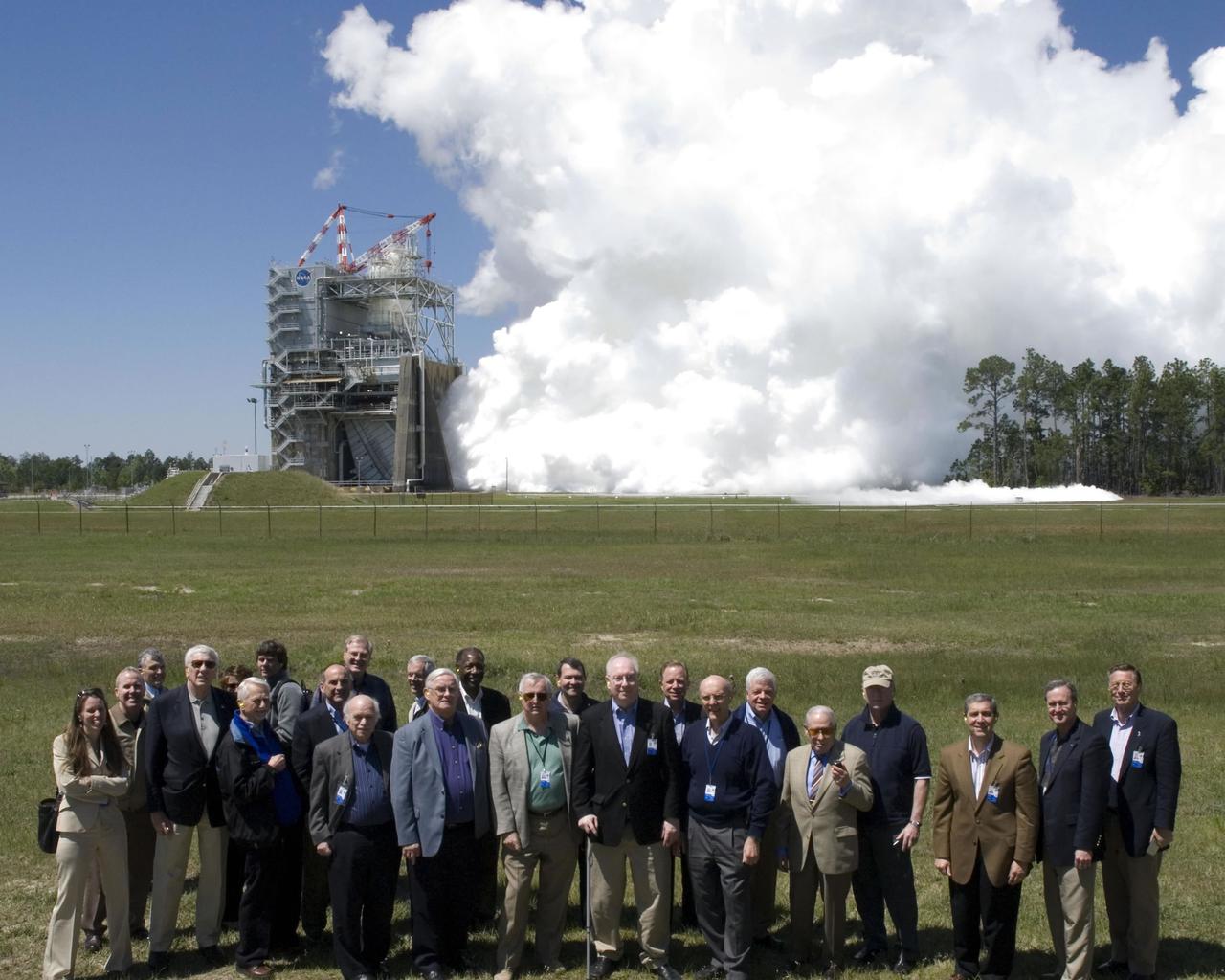
NASA Advisory Council members visited Stennis Space Center April 15 and 16, touring facilities and participating in various presentations. They also viewed a space shuttle main engine test on the A-2 Test Stand. The council of accomplished citizens advises NASA on major policy and program issues. The council includes former Apollo 17 astronaut Harrison Hagan Schmitt as chair, as well as former astronaut Eileen Collins, the first woman to command a space shuttle mission.
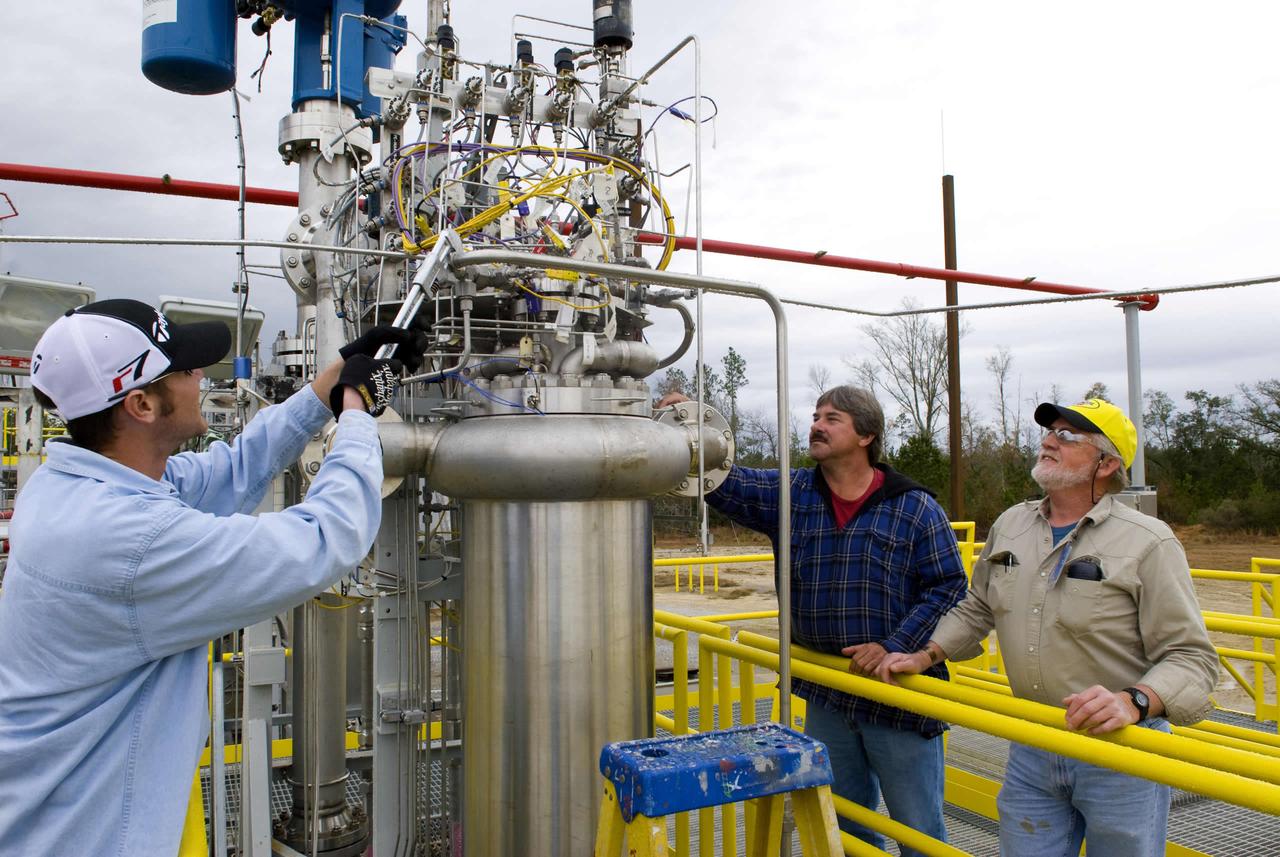
Kanaly Slade, Pat Guidry and Danny Tarter, all of Jacobs NTOG, make adjustments to the chemical steam generator installed on the E-2 Test Stand.
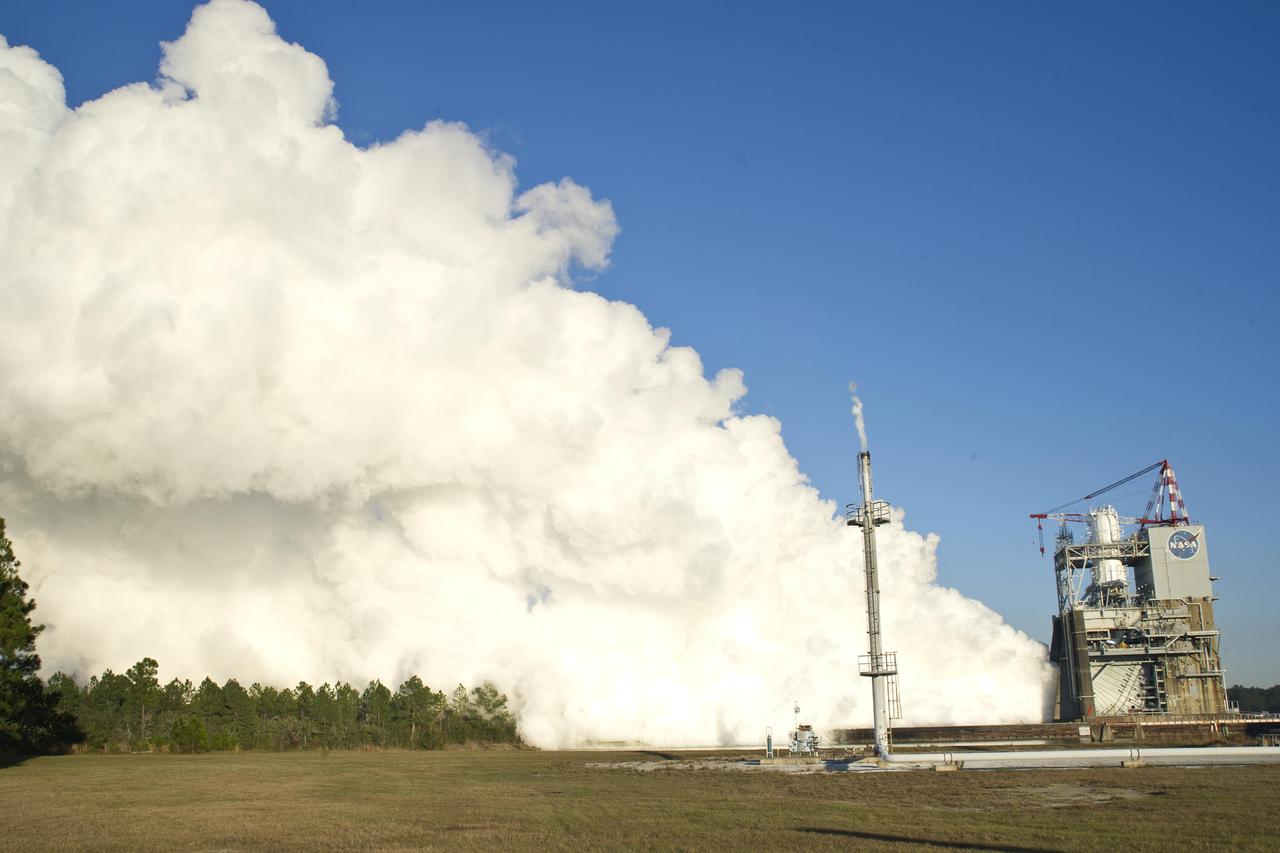
NASA conducted a key stability test firing of the J-2X rocket engine on the A-2 Test Stand at Stennis Space Center on Dec. 1, marking another step forward in development of the upper-stage engine that will carry humans deeper into space than ever before. The J-2X will provide upper-stage power for NASA's new Space Launch System.
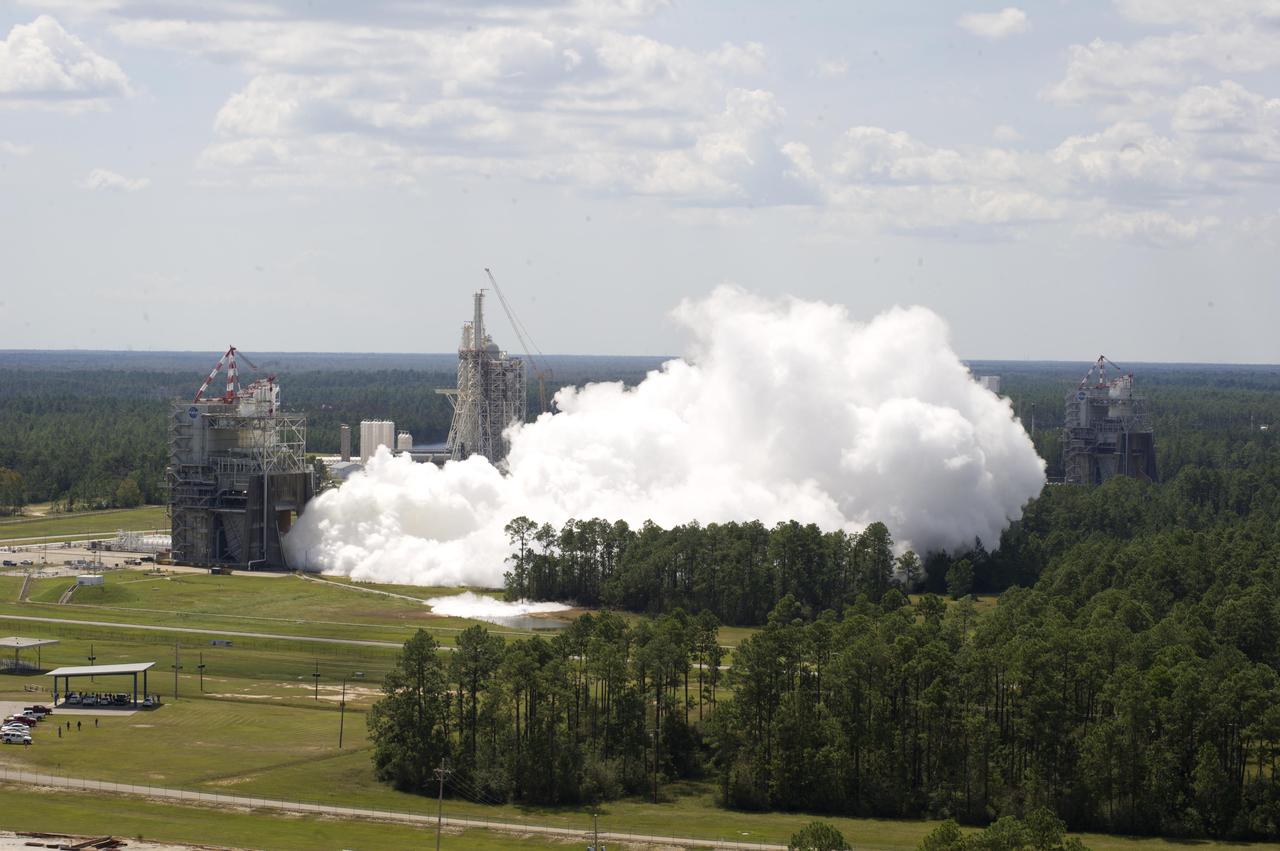
NASA engineers continued to collect test performance data on the new J-2X rocket engine at Stennis Space Center with a 250-second test Sept. 14. The test on the A-2 Test Stand was the 19th in a series of firings to gather critical data for continued development of the engine. The J-2X is being developed by Pratt and Whitney Rocketdyne for NASA's Marshall Space Flight Center in Huntsville, Ala. It is the first liquid oxygen and liquid hydrogen rocket engine rated to carry humans into space to be developed in 40 years.
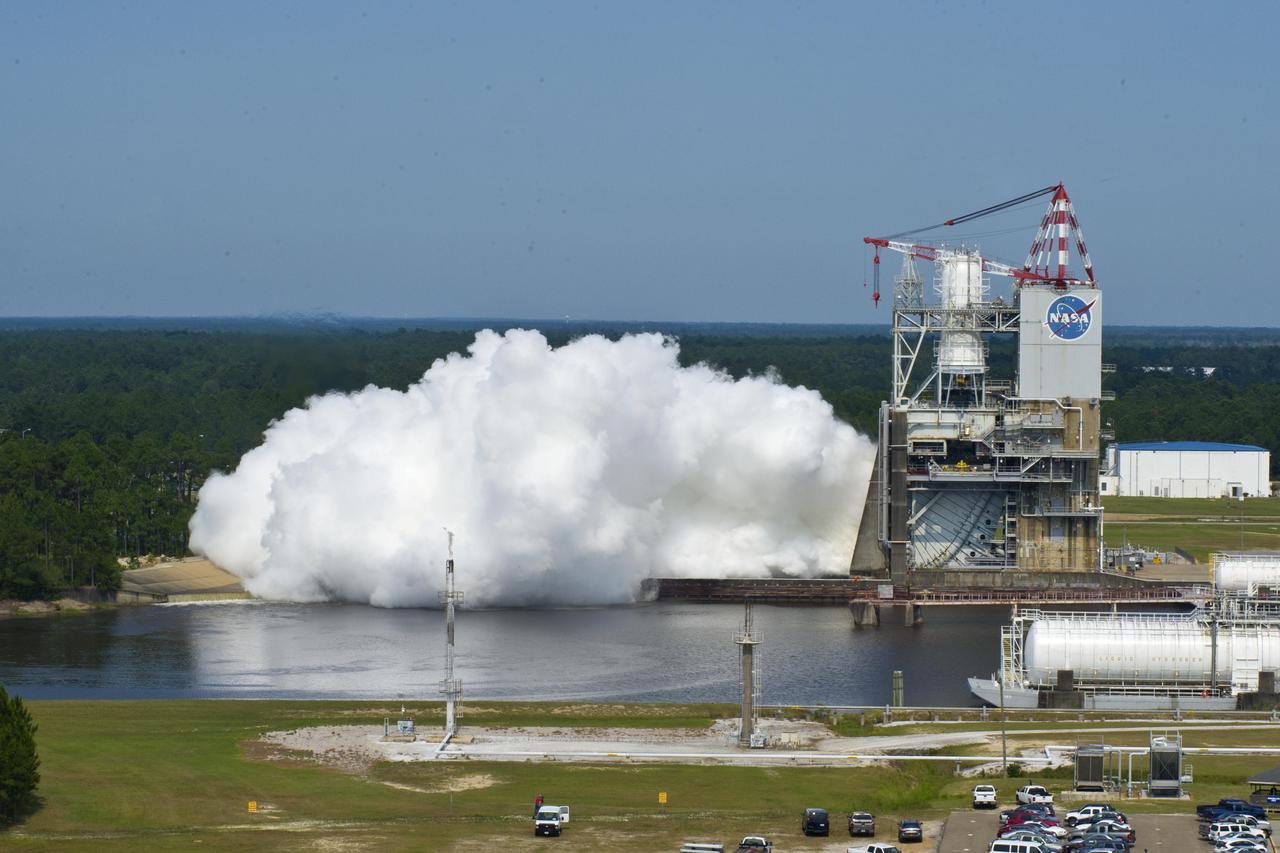
On May 25, 2012, NASA recorded another first during a 40-second test of the next-generation J-2X engine on the A-2 Test Stand at Stennis Space Center. Test conductors fired the J-2X in both the secondary and primary modes of operation. Previous tests were run in one mode only; combining the two allowed operators to collect critical data on engine performance.
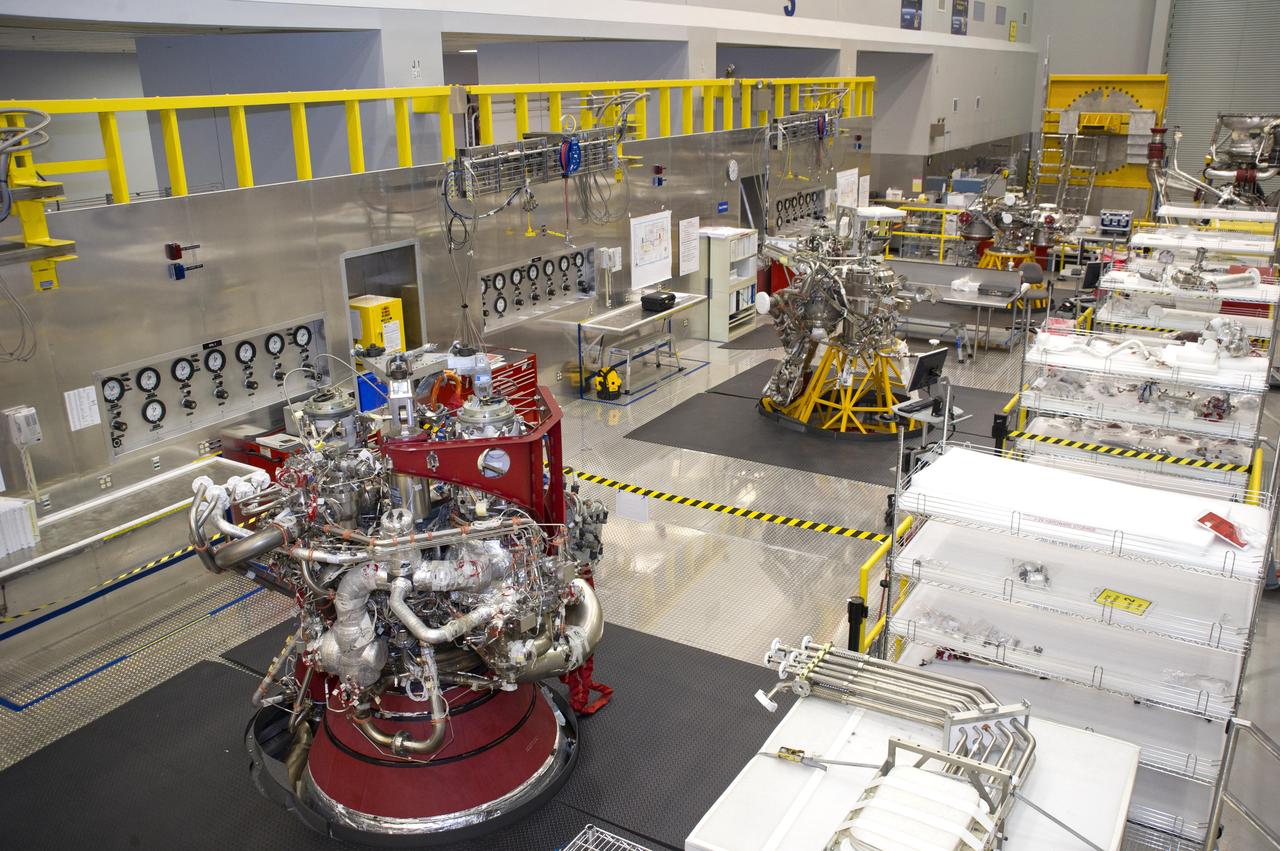
Two J-2X engines and a powerpack, developed for NASA by Pratt and Whitney Rocketdyne, sit side-by-side Oct. 11 at Stennis Space Center as work continues on the Space Launch System. Engine 10001 (far left) has been removed from the A-2 Test Stand after being hot-fire tested 21 times, for a total of 2,697 seconds. The engine is now undergoing a series of post-test inspections. A J-2X powerpack (center) has been removed from the A-1 Test Stand to receive additional instrumentation. So far, the powerpack been hot-fire tested 10 times, for a total of 4,162 seconds. Meanwhile, assembly on the second J-2X engine, known as Engine 10002 and located to the far right, has begun in earnest, with engine completion scheduled for this November. Engine 10002 is about 15 percent complete.
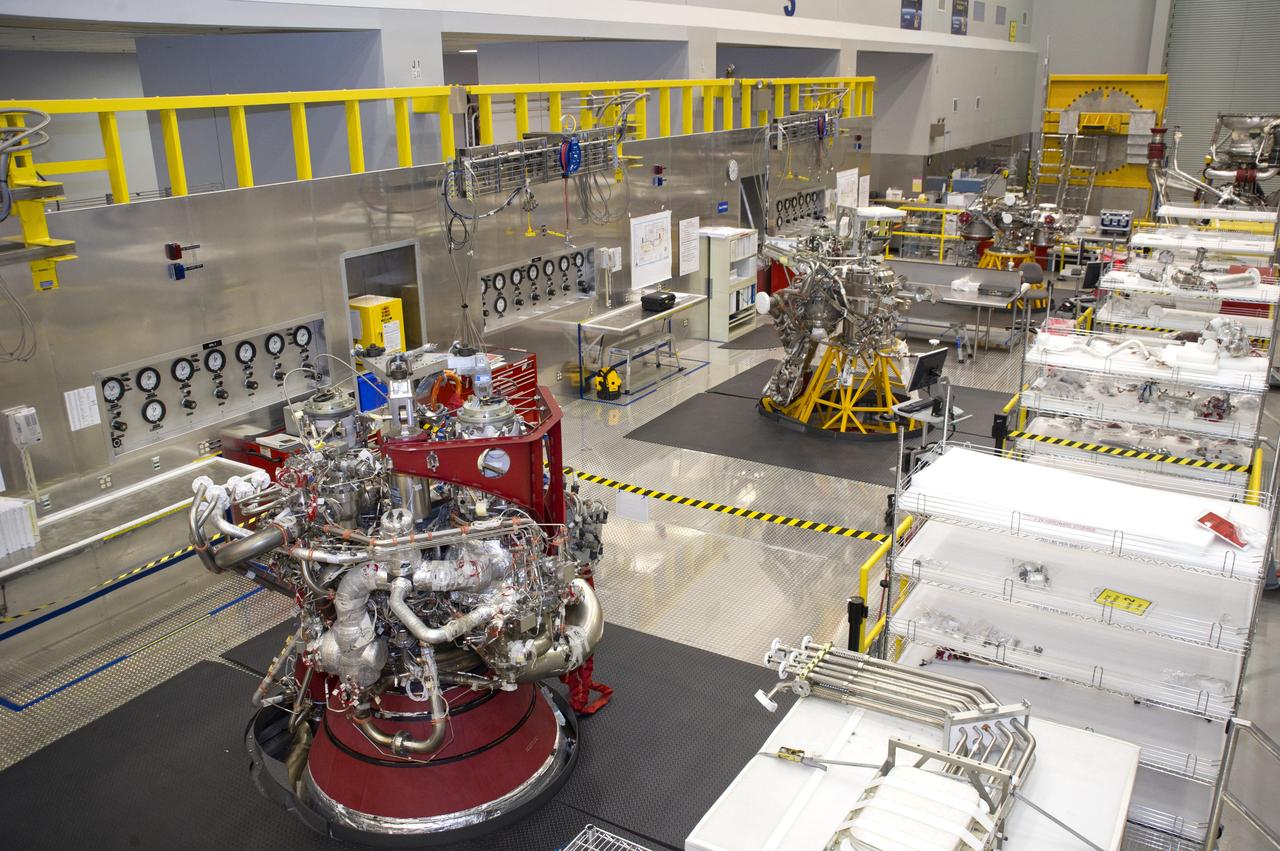
Two J-2X engines and a powerpack, developed for NASA by Pratt and Whitney Rocketdyne, sit side-by-side Oct. 11 at Stennis Space Center as work continues on the Space Launch System. Engine 10001 (far left) has been removed from the A-2 Test Stand after being hot-fire tested 21 times, for a total of 2,697 seconds. The engine is now undergoing a series of post-test inspections. A J-2X powerpack (center) has been removed from the A-1 Test Stand to receive additional instrumentation. So far, the powerpack been hot-fire tested 10 times, for a total of 4,162 seconds. Meanwhile, assembly on the second J-2X engine, known as Engine 10002 and located to the far right, has begun in earnest, with engine completion scheduled for this November. Engine 10002 is about 15 percent complete.
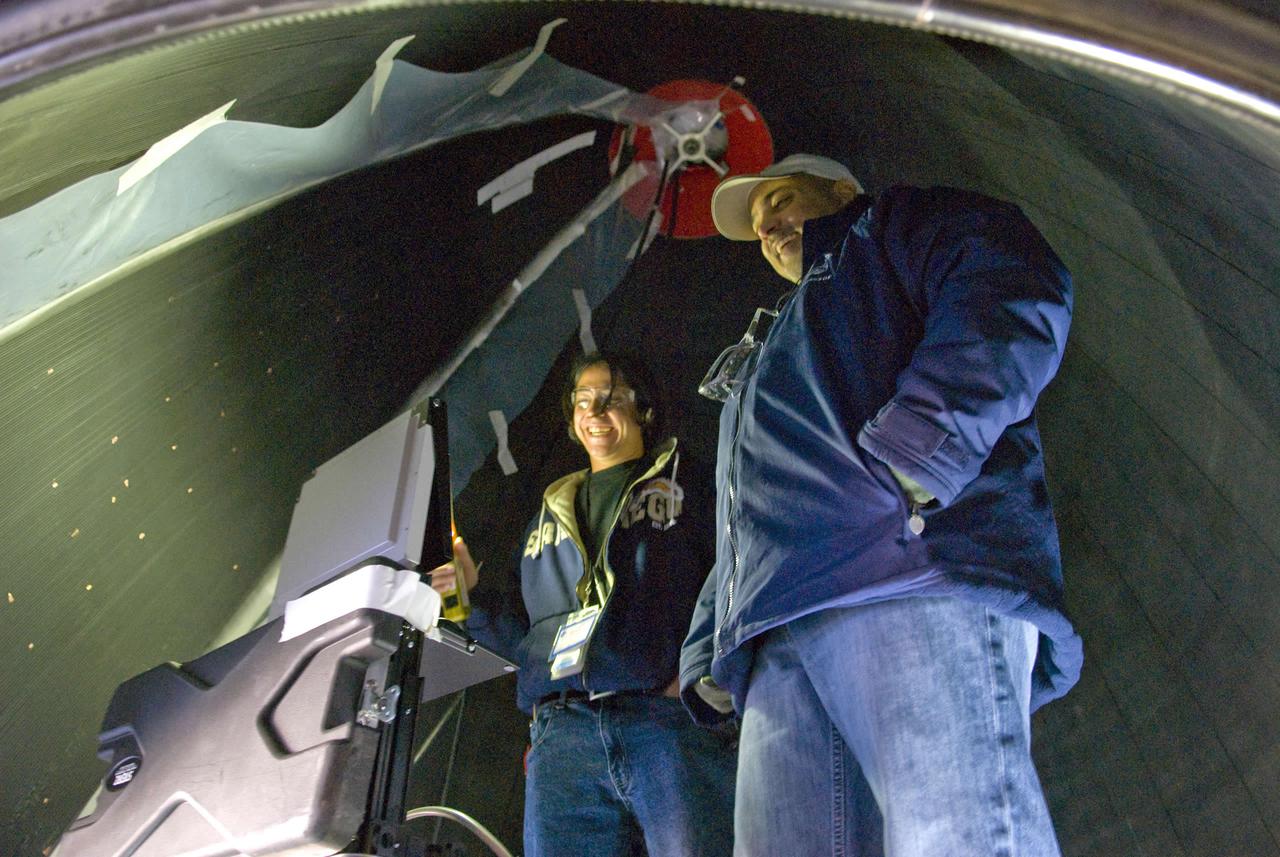
Joel Perez (left) and Jay Labat, both of Pratt & Whitney Rocketdyne, are in close quarters as they check for leaks inside the nozzle of a space shuttle main engine mounted on the A-2 Test Stand.
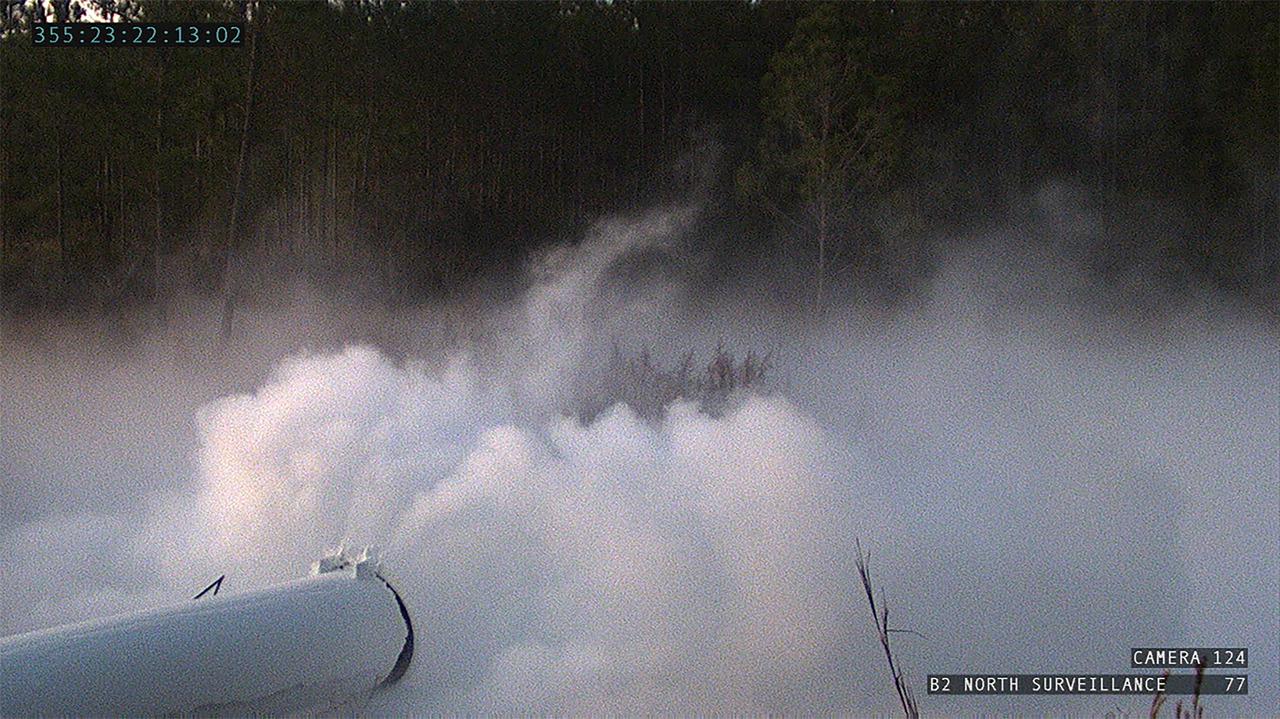
Operators at the B-2 Test Stand at Stennis Space Center near Bay St. Louis, Mississippi, conducted a wet dress rehearsal for the hot fire test of the core stage of NASA’s Space Launch System on Dec. 21, 2020. In this image, liquid oxygen can be seen venting from B-2 Test Stand piping. Following the wet dress rehearsal, operators will conduct a full hot fire test of the core stage and its four RS-25 engines. The hot fire will conclude a series of eight Green Run tests of all core stage systems before it is transported to Kennedy Space Center for launch on the Artemis I mission.
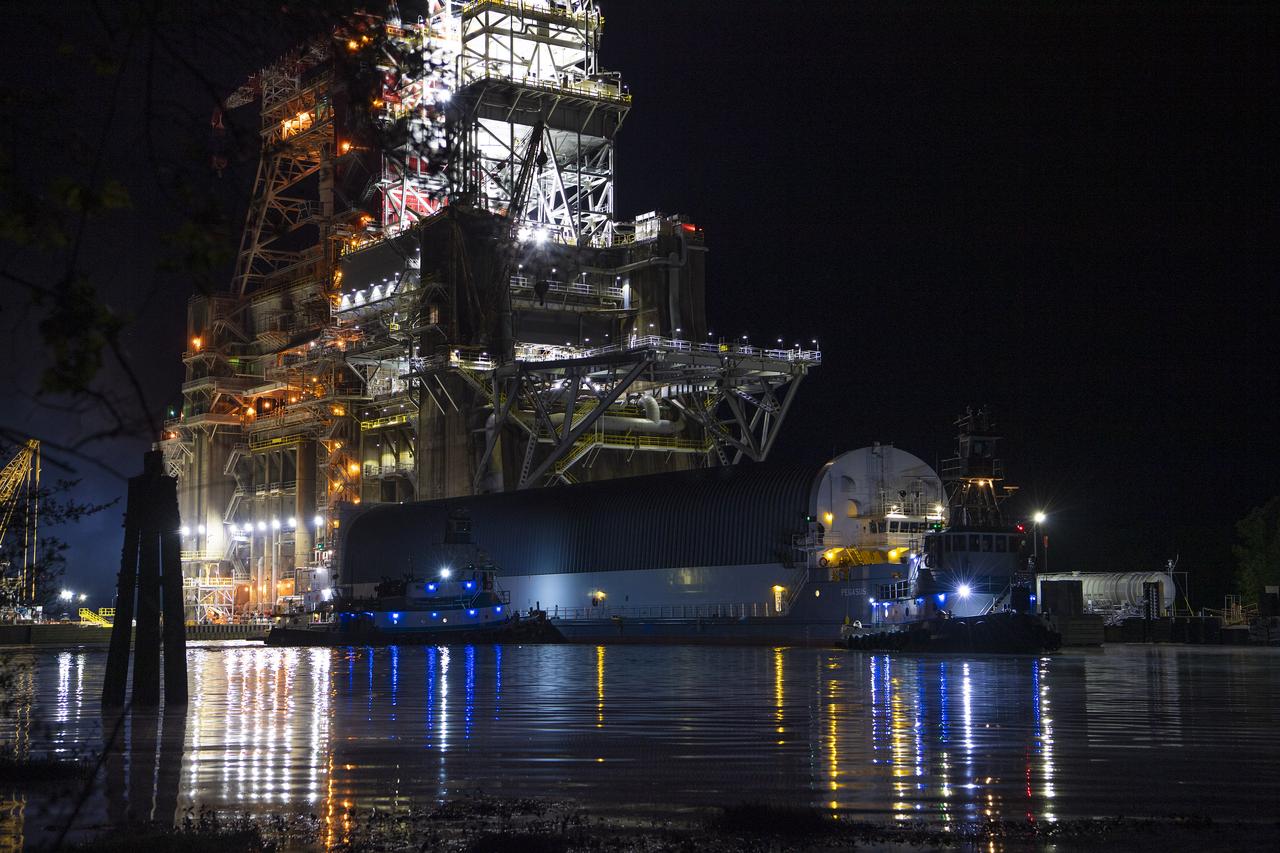
After a series of successful tests conducted the B-2 Test Stand at Stennis Space Center, NASA’s Space Launch System (SLS) core stage was loaded on the Pegasus barge and departed the test stand in the early morning hours of April 22, 2021, beginning its journey to Kennedy Space Center.
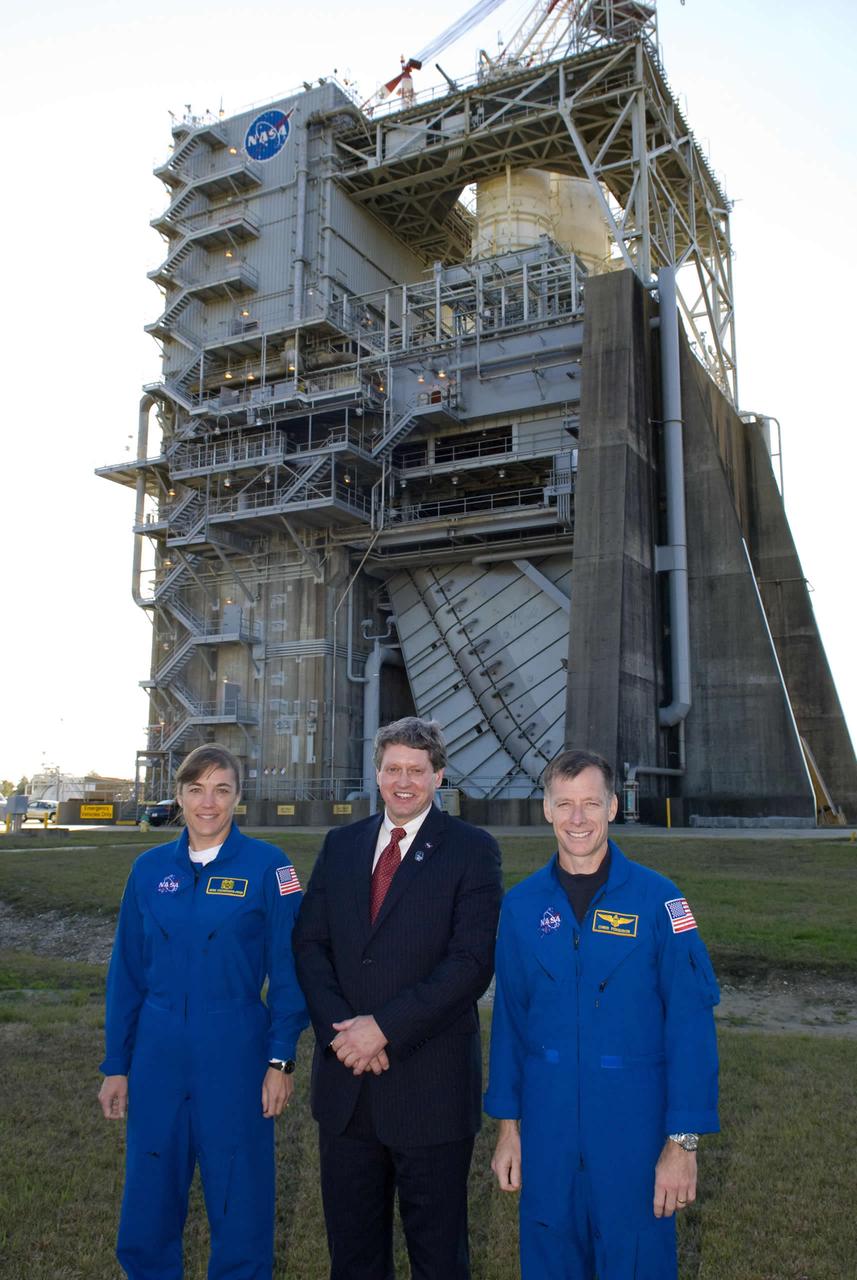
Stennis Space Center Director Gene Goldman (center) stands with astronauts Christopher Ferguson (right) and Heidemarie Stefanyshyn-Piper in front of the A-2 Test Stand during the space shuttle crew members' visit to NASA's rocket engine testing facility Jan. 13. During their visit, Ferguson and Stefanyshyn-Piper reported on the STS-126 space shuttle delivery and servicing mission to the International Space Station. Ferguson served as commander of the mission. Stefanyshyn-Piper served as a mission specialist.
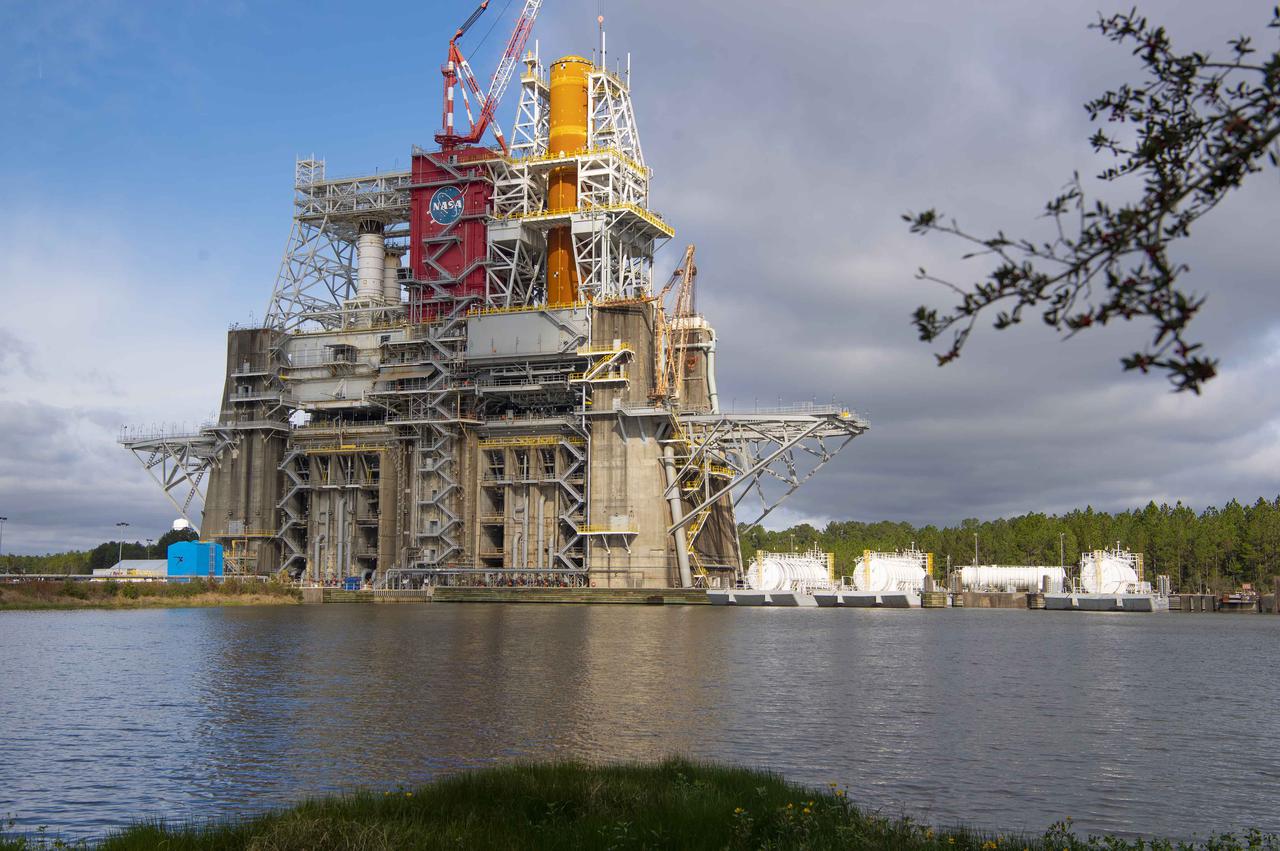
Barges are docked at the B-2 Test Stand at Stennis Space Center near Bay St. Louis, Mississippi, during preparations for a wet dress rehearsal exercise with the core stage of NASA’s Space Launch System rocket. During the wet dress rehearsal, operators will fully load the core stage’s propellant tanks for the first time and countdown just shy of engine ignition. The wet dress rehearsal is the seventh in a series of eight Green Run tests of the core stage’s integrated systems prior to its transport to Kennedy Space Center and launch on the Artemis I mission.
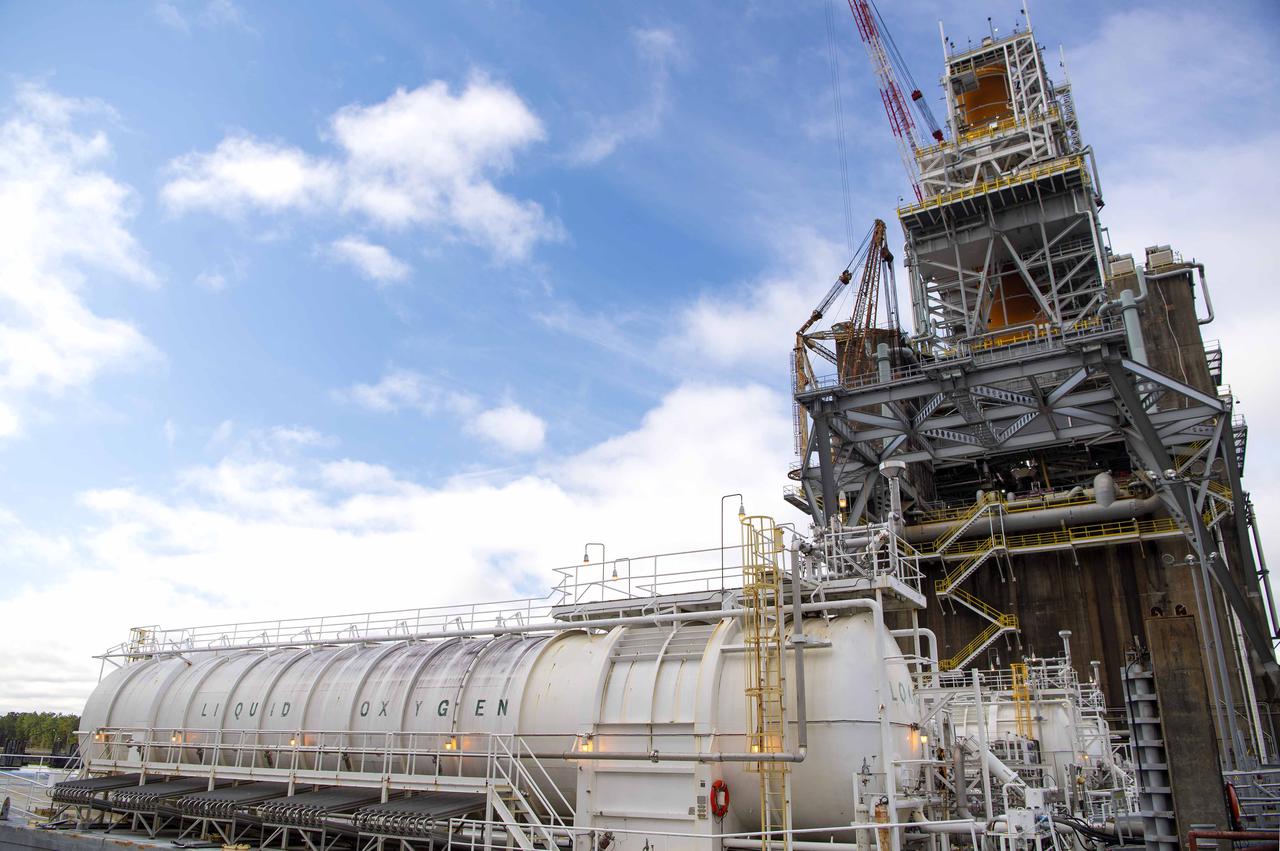
Barges are docked at the B-2 Test Stand at Stennis Space Center near Bay St. Louis, Mississippi, during preparations for a wet dress rehearsal exercise with the core stage of NASA’s Space Launch System rocket. During the wet dress rehearsal, operators will fully load the core stage’s propellant tanks for the first time and countdown just shy of engine ignition. The wet dress rehearsal is the seventh in a series of eight Green Run tests of the core stage’s integrated systems prior to its transport to Kennedy Space Center and launch on the Artemis I mission.
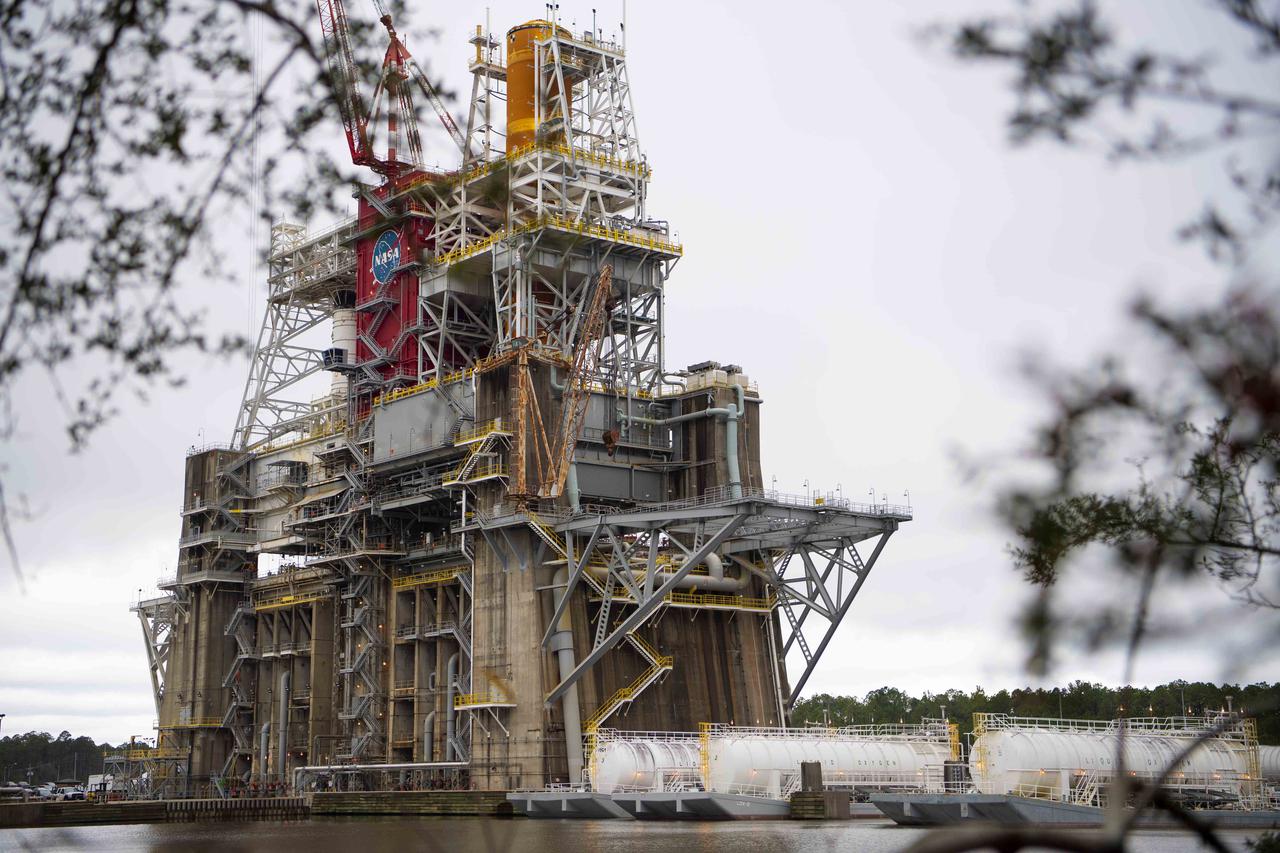
Barges are docked at the B-2 Test Stand at Stennis Space Center near Bay St. Louis, Mississippi, during preparations for a wet dress rehearsal exercise with the core stage of NASA’s Space Launch System rocket. During the wet dress rehearsal, operators will fully load the core stage’s propellant tanks for the first time and countdown just shy of engine ignition. The wet dress rehearsal is the seventh in a series of eight Green Run tests of the core stage’s integrated systems prior to its transport to Kennedy Space Center and launch on the Artemis I mission.
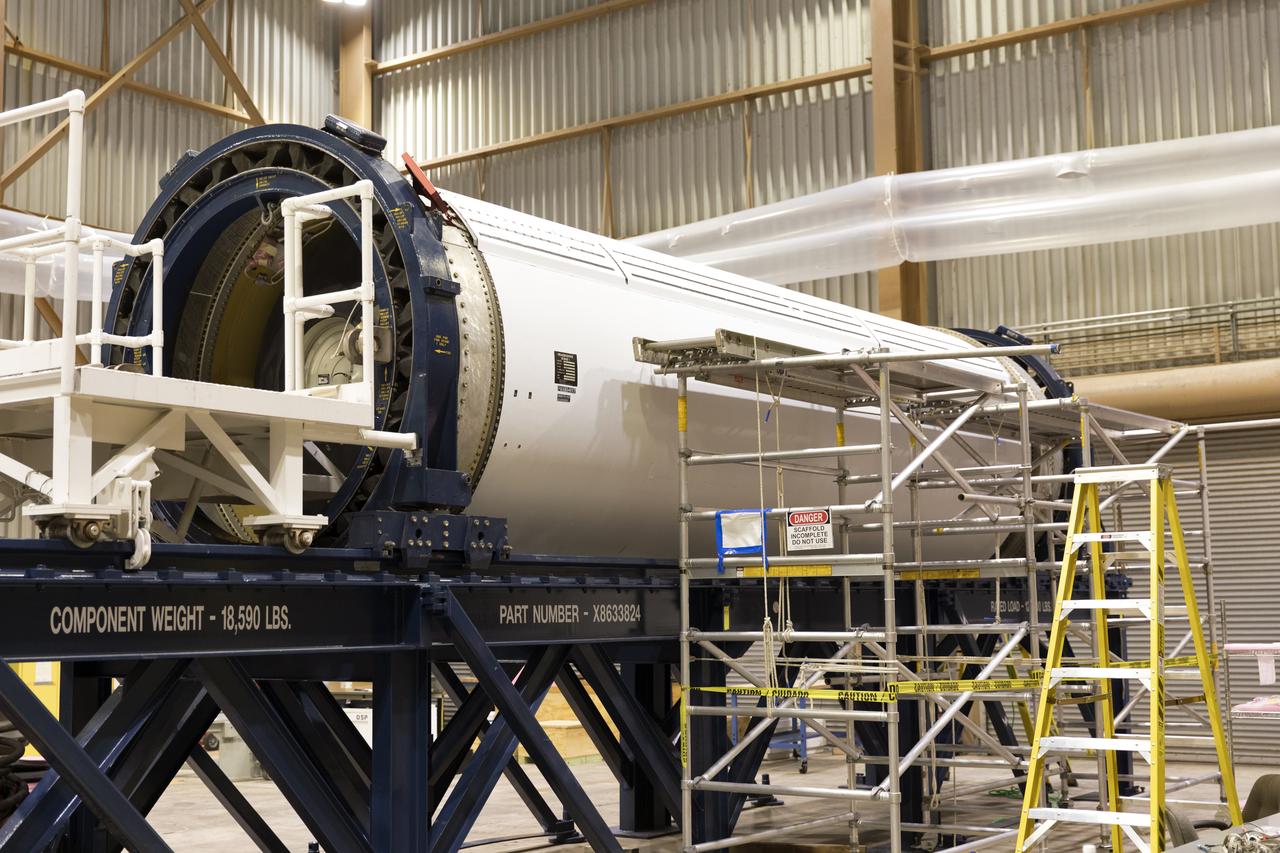
The ground test motor for Orion's Launch Abort System (LAS) is secured on a work stand inside the Rotation, Processing and Surge Facility on July 31, 2018, at NASA's Kennedy Space Center in Florida. It will be inspected and prepared for transport to Space Launch Complex 46 (SLC-46) at Cape Canaveral Air Force Station for mechanical fit testing. This inert motor will not be used for flight, but will be used to certify flight hardware assembly in preparation for a full-stress test of the LAS, called Ascent Abort-2 (AA-2) flight test, scheduled for April 2019. During the test, the booster will launch from SLC 46, carrying a fully functional LAS and a 22,000-pound Orion test vehicle to an altitude of 31,000 feet and traveling at more than 1,000 miles an hour. The test will verify the LAS can steer the crew module and astronauts aboard to safety in the event of an issue with the Space Launch System (SLS) rocket when the spacecraft is under the highest aerodynamic loads it will experience during a rapid climb into space. NASA's Orion and Exploration Ground Systems programs and their contractors from Jacob's and Northrup Grumman in conjunction with the Air Force Space and Missile Center's Launch Operations branch are performing the pathfinding exercises and flight operations for AA-2.
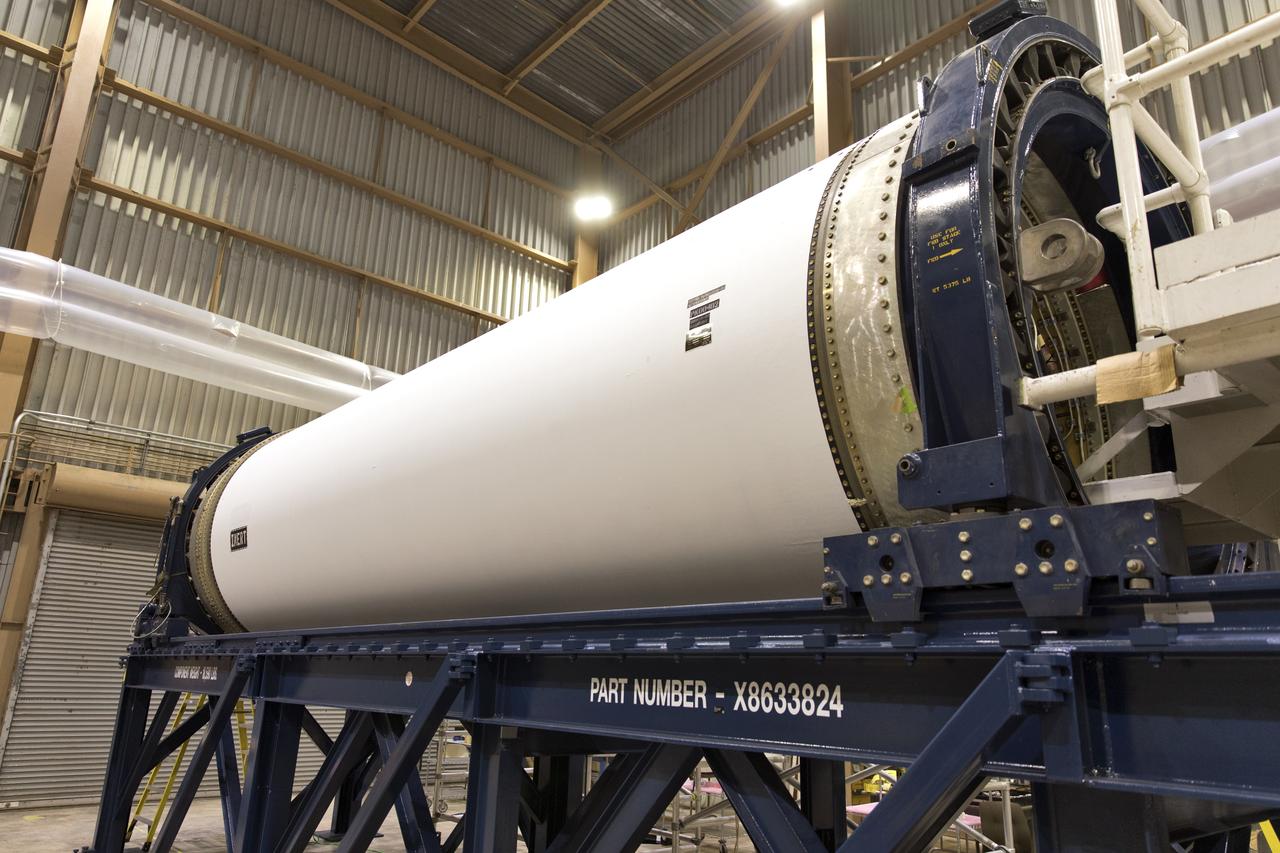
The ground test motor for Orion's Launch Abort System (LAS) is secured on a work stand inside the Rotation, Processing and Surge Facility on July 31, 2018, at NASA's Kennedy Space Center in Florida. It will be inspected and prepared for transport to Space Launch Complex 46 (SLC-46) at Cape Canaveral Air Force Station for mechanical fit testing. This inert motor will not be used for flight, but will be used to certify flight hardware assembly in preparation for a full-stress test of the LAS, called Ascent Abort-2 (AA-2) flight test, scheduled for April 2019. During the test, the booster will launch from SLC 46, carrying a fully functional LAS and a 22,000-pound Orion test vehicle to an altitude of 31,000 feet and traveling at more than 1,000 miles an hour. The test will verify the LAS can steer the crew module and astronauts aboard to safety in the event of an issue with the Space Launch System (SLS) rocket when the spacecraft is under the highest aerodynamic loads it will experience during a rapid climb into space. NASA's Orion and Exploration Ground Systems programs and their contractors from Jacob's and Northrup Grumman in conjunction with the Air Force Space and Missile Center's Launch Operations branch are performing the pathfinding exercises and flight operations for AA-2.
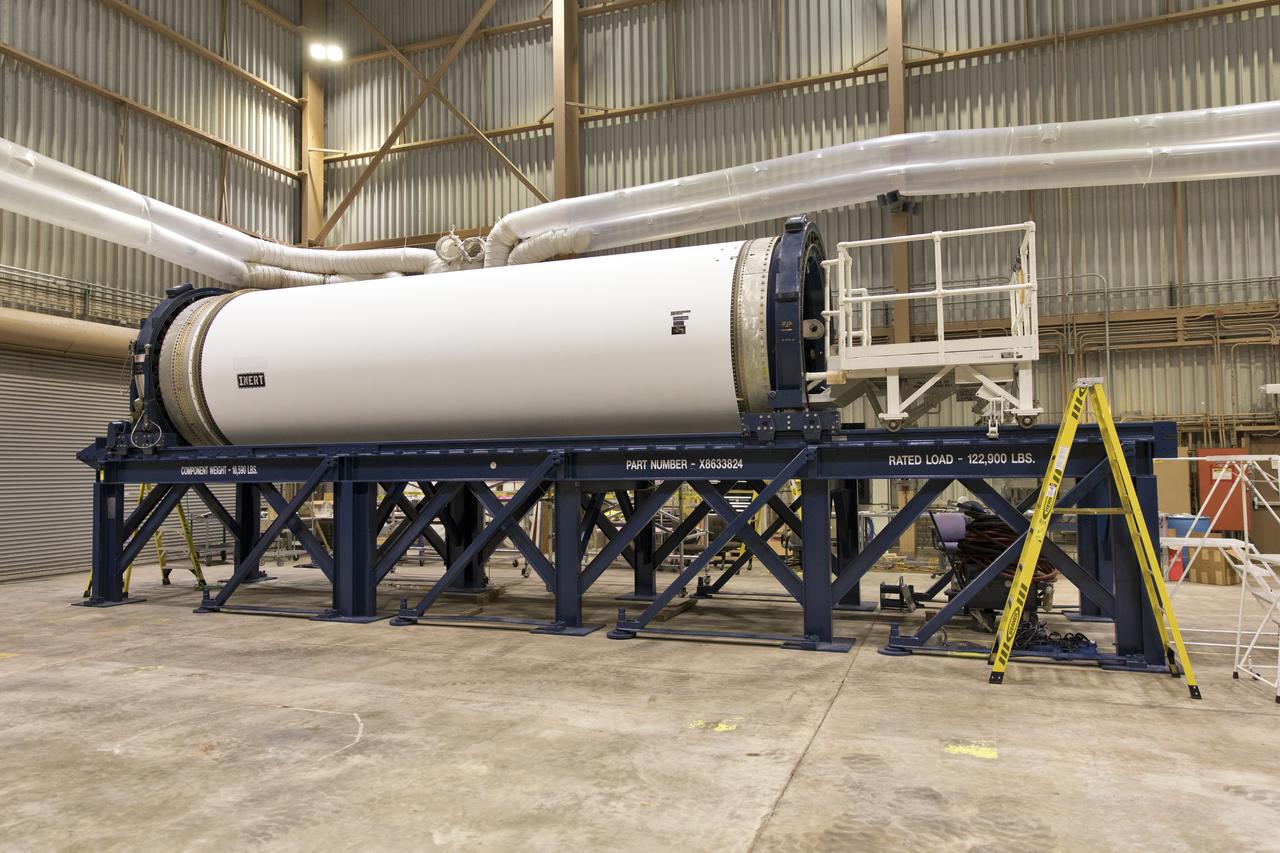
The ground test motor for Orion's Launch Abort System (LAS) is secured on a work stand inside the Rotation, Processing and Surge Facility on July 31, 2018, at NASA's Kennedy Space Center in Florida. It will be inspected and prepared for transport to Space Launch Complex 46 (SLC-46) at Cape Canaveral Air Force Station for mechanical fit testing. This inert motor will not be used for flight, but will be used to certify flight hardware assembly in preparation for a full-stress test of the LAS, called Ascent Abort-2 (AA-2) flight test, scheduled for April 2019. During the test, the booster will launch from SLC 46, carrying a fully functional LAS and a 22,000-pound Orion test vehicle to an altitude of 31,000 feet and traveling at more than 1,000 miles an hour. The test will verify the LAS can steer the crew module and astronauts aboard to safety in the event of an issue with the Space Launch System (SLS) rocket when the spacecraft is under the highest aerodynamic loads it will experience during a rapid climb into space. NASA's Orion and Exploration Ground Systems programs and their contractors from Jacob's and Northrup Grumman in conjunction with the Air Force Space and Missile Center's Launch Operations branch are performing the pathfinding exercises and flight operations for AA-2.
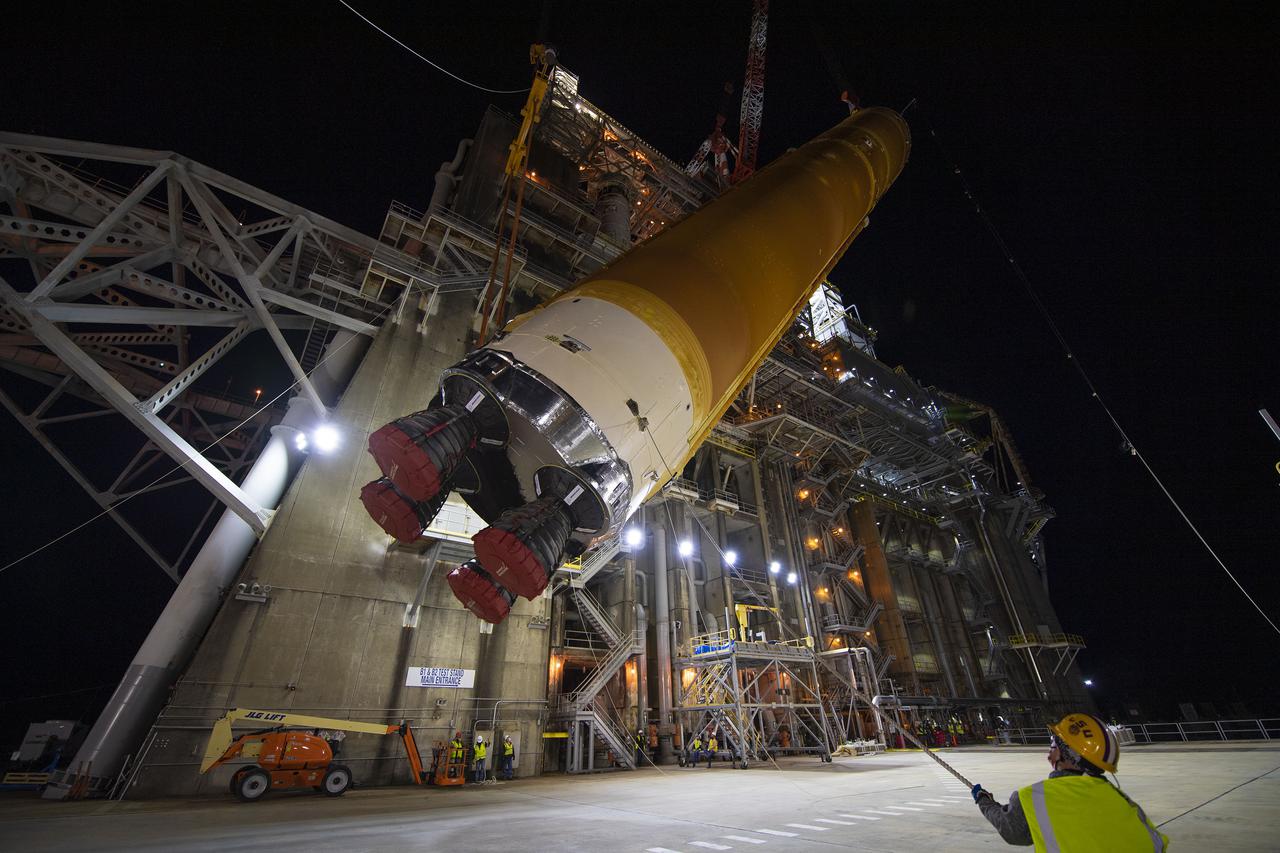
Following a successful Green Run hot fire at NASA’s Stennis Space Center near Bay St. Louis, Mississippi, on March 18, members of a blended team work April 19-20 to remove the first core stage of the agency’s Space Launch System (SLS) rocket from the B-2 Test Stand. The work required crews to lift the core stage from its vertical placement in the stand and lower it to a horizontal position on the B-2 Test Stand tarmac. The stage now will be loaded on NASA’s Pegasus barge for transport to Kennedy, where it will be prepared for launch of the Artemis I mission. Removal of the largest rocket stage ever built by NASA followed completion of a series of eight Green Run tests over the past year. During the Green Run series, teams performed a comprehensive test of the stand’s sophisticated and integrated systems. Photo Credit: NASA
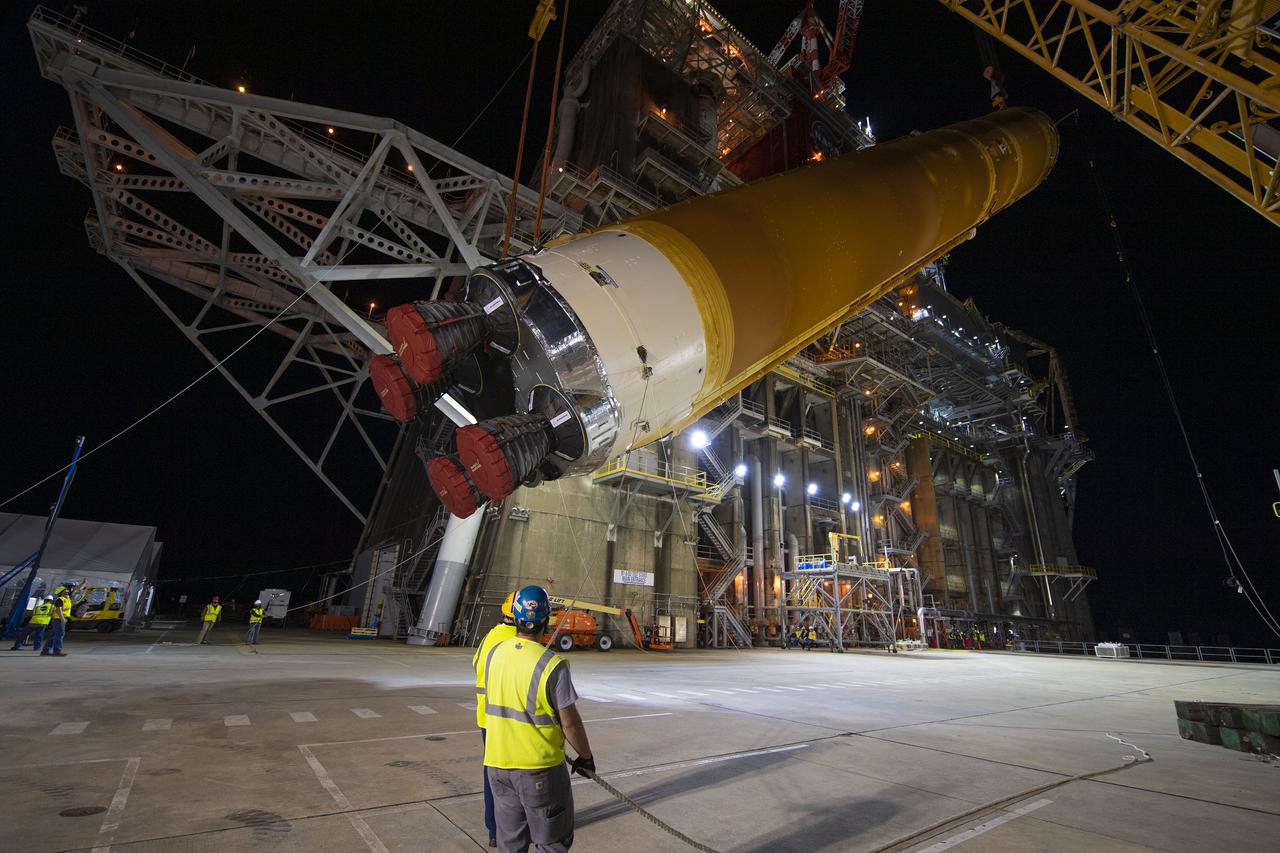
Following a successful Green Run hot fire at NASA’s Stennis Space Center near Bay St. Louis, Mississippi, on March 18, members of a blended team work April 19-20 to remove the first core stage of the agency’s Space Launch System (SLS) rocket from the B-2 Test Stand. The work required crews to lift the core stage from its vertical placement in the stand and lower it to a horizontal position on the B-2 Test Stand tarmac. The stage now will be loaded on NASA’s Pegasus barge for transport to Kennedy, where it will be prepared for launch of the Artemis I mission. Removal of the largest rocket stage ever built by NASA followed completion of a series of eight Green Run tests over the past year. During the Green Run series, teams performed a comprehensive test of the stand’s sophisticated and integrated systems. Photo Credit: NASA
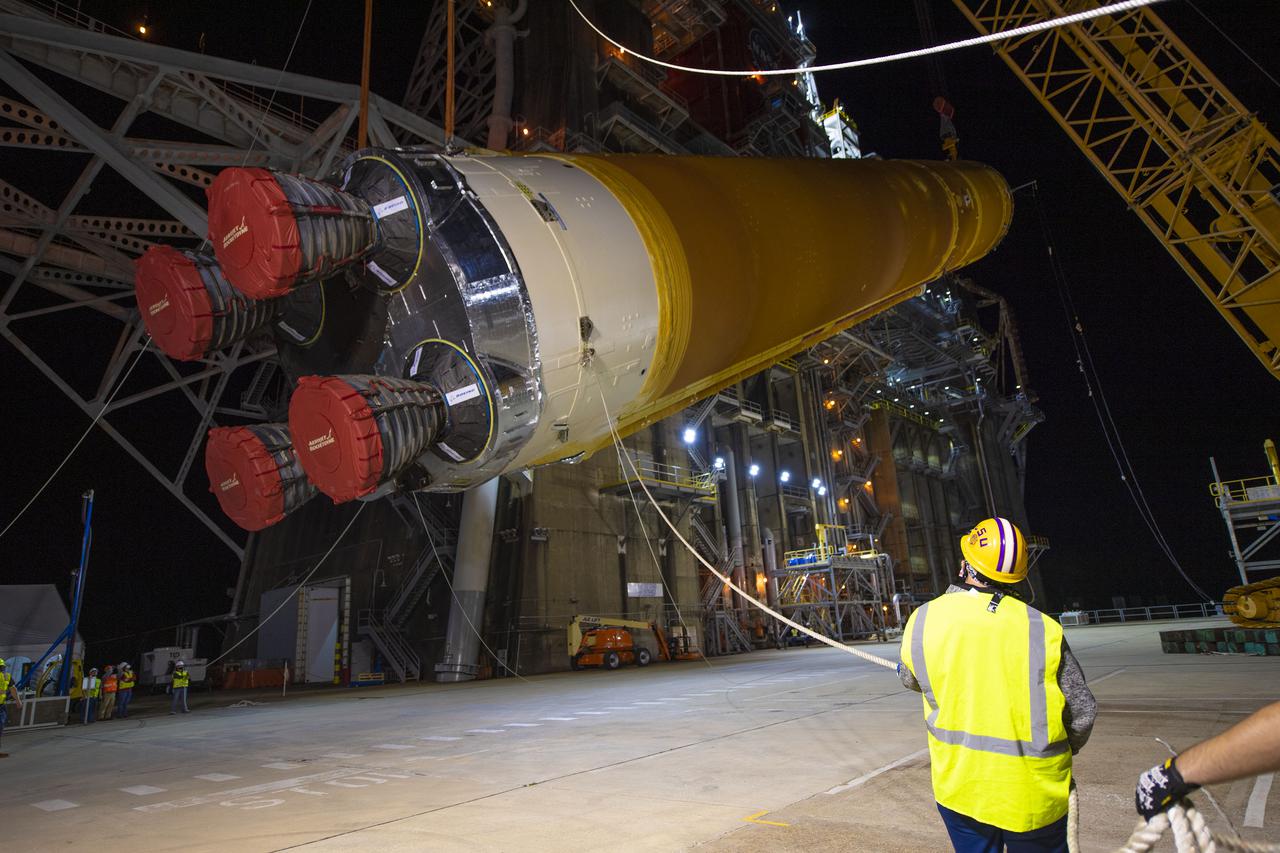
Following a successful Green Run hot fire at NASA’s Stennis Space Center near Bay St. Louis, Mississippi, on March 18, members of a blended team work April 19-20 to remove the first core stage of the agency’s Space Launch System (SLS) rocket from the B-2 Test Stand. The work required crews to lift the core stage from its vertical placement in the stand and lower it to a horizontal position on the B-2 Test Stand tarmac. The stage now will be loaded on NASA’s Pegasus barge for transport to Kennedy, where it will be prepared for launch of the Artemis I mission. Removal of the largest rocket stage ever built by NASA followed completion of a series of eight Green Run tests over the past year. During the Green Run series, teams performed a comprehensive test of the stand’s sophisticated and integrated systems. Photo Credit: NASA
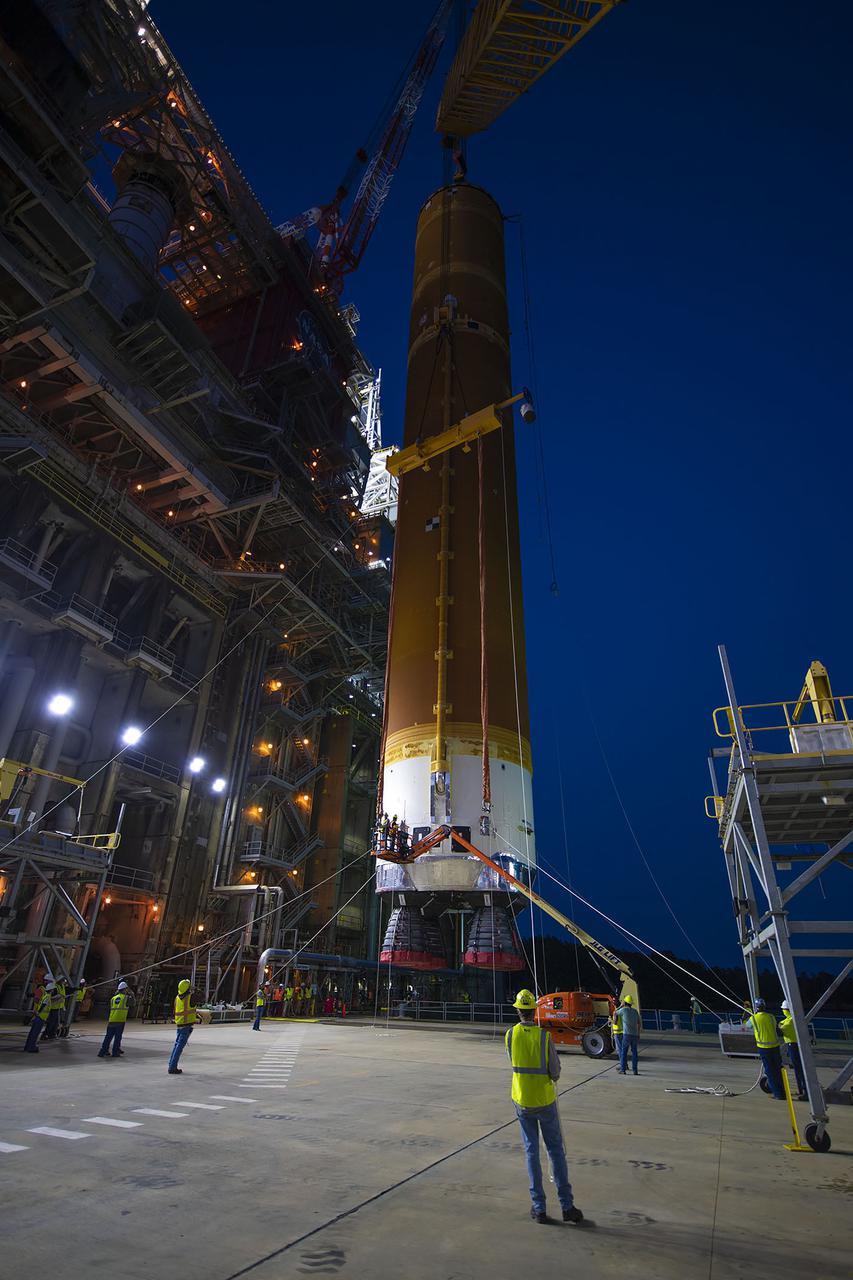
Following a successful Green Run hot fire at NASA’s Stennis Space Center near Bay St. Louis, Mississippi, on March 18, members of a blended team work April 19-20 to remove the first core stage of the agency’s Space Launch System (SLS) rocket from the B-2 Test Stand. The work required crews to lift the core stage from its vertical placement in the stand and lower it to a horizontal position on the B-2 Test Stand tarmac. The stage now will be loaded on NASA’s Pegasus barge for transport to Kennedy, where it will be prepared for launch of the Artemis I mission. Removal of the largest rocket stage ever built by NASA followed completion of a series of eight Green Run tests over the past year. During the Green Run series, teams performed a comprehensive test of the stand’s sophisticated and integrated systems. Photo Credit: NASA
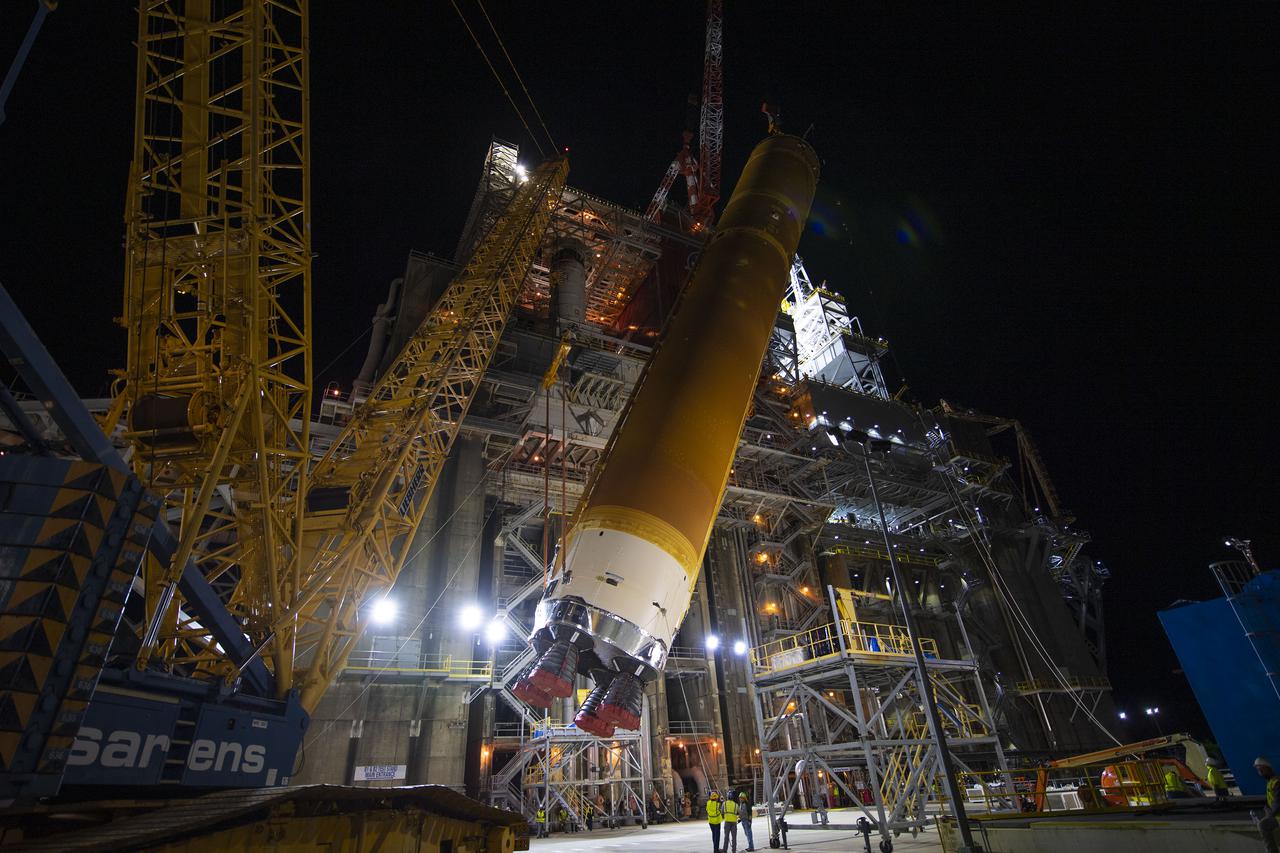
Following a successful Green Run hot fire at NASA’s Stennis Space Center near Bay St. Louis, Mississippi, on March 18, members of a blended team work April 19-20 to remove the first core stage of the agency’s Space Launch System (SLS) rocket from the B-2 Test Stand. The work required crews to lift the core stage from its vertical placement in the stand and lower it to a horizontal position on the B-2 Test Stand tarmac. The stage now will be loaded on NASA’s Pegasus barge for transport to Kennedy, where it will be prepared for launch of the Artemis I mission. Removal of the largest rocket stage ever built by NASA followed completion of a series of eight Green Run tests over the past year. During the Green Run series, teams performed a comprehensive test of the stand’s sophisticated and integrated systems. Photo Credit: NASA
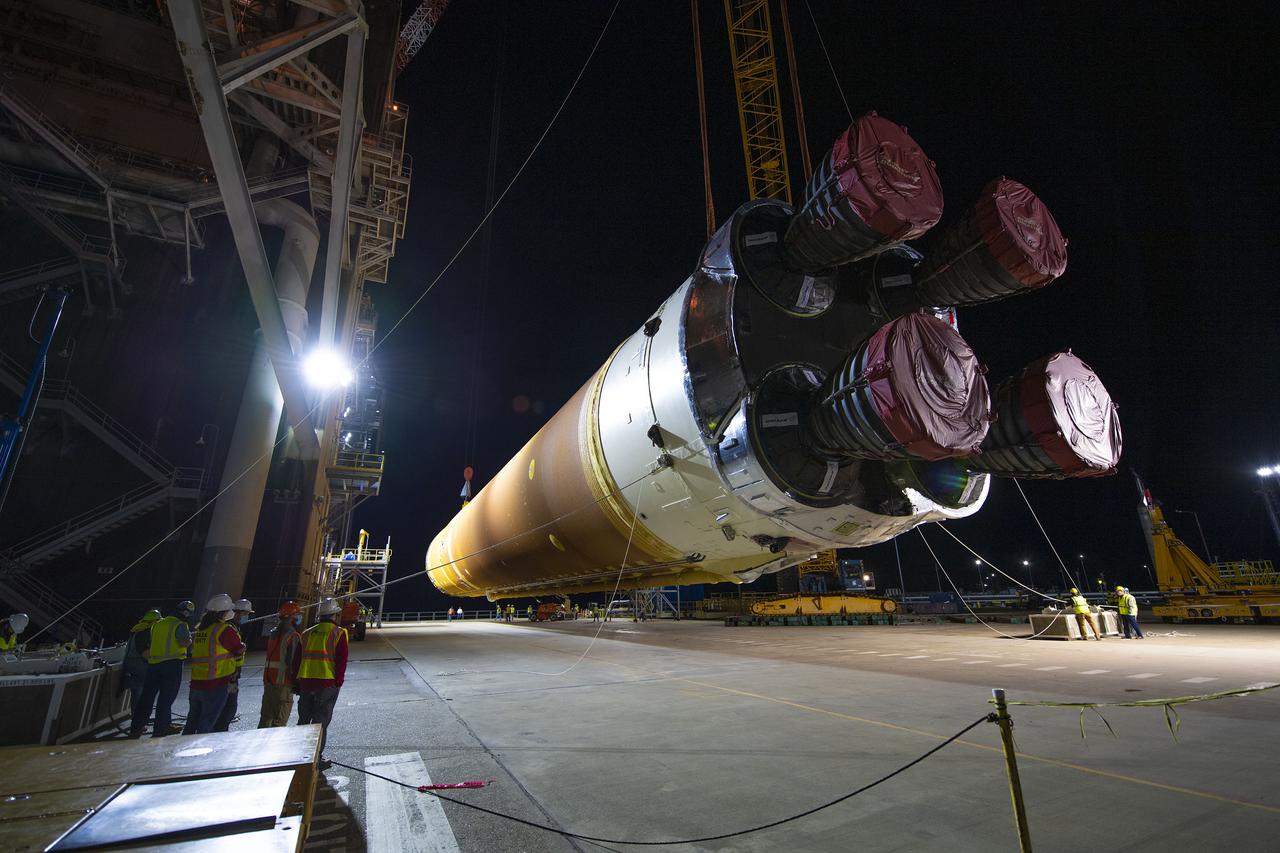
Following a successful Green Run hot fire at NASA’s Stennis Space Center near Bay St. Louis, Mississippi, on March 18, members of a blended team work April 19-20 to remove the first core stage of the agency’s Space Launch System (SLS) rocket from the B-2 Test Stand. The work required crews to lift the core stage from its vertical placement in the stand and lower it to a horizontal position on the B-2 Test Stand tarmac. The stage now will be loaded on NASA’s Pegasus barge for transport to Kennedy, where it will be prepared for launch of the Artemis I mission. Removal of the largest rocket stage ever built by NASA followed completion of a series of eight Green Run tests over the past year. During the Green Run series, teams performed a comprehensive test of the stand’s sophisticated and integrated systems. Photo Credit: NASA

Following a successful Green Run hot fire at NASA’s Stennis Space Center near Bay St. Louis, Mississippi, on March 18, members of a blended team work April 19-20 to remove the first core stage of the agency’s Space Launch System (SLS) rocket from the B-2 Test Stand. The work required crews to lift the core stage from its vertical placement in the stand and lower it to a horizontal position on the B-2 Test Stand tarmac. The stage now will be loaded on NASA’s Pegasus barge for transport to Kennedy, where it will be prepared for launch of the Artemis I mission. Removal of the largest rocket stage ever built by NASA followed completion of a series of eight Green Run tests over the past year. During the Green Run series, teams performed a comprehensive test of the stand’s sophisticated and integrated systems. Photo Credit: NASA
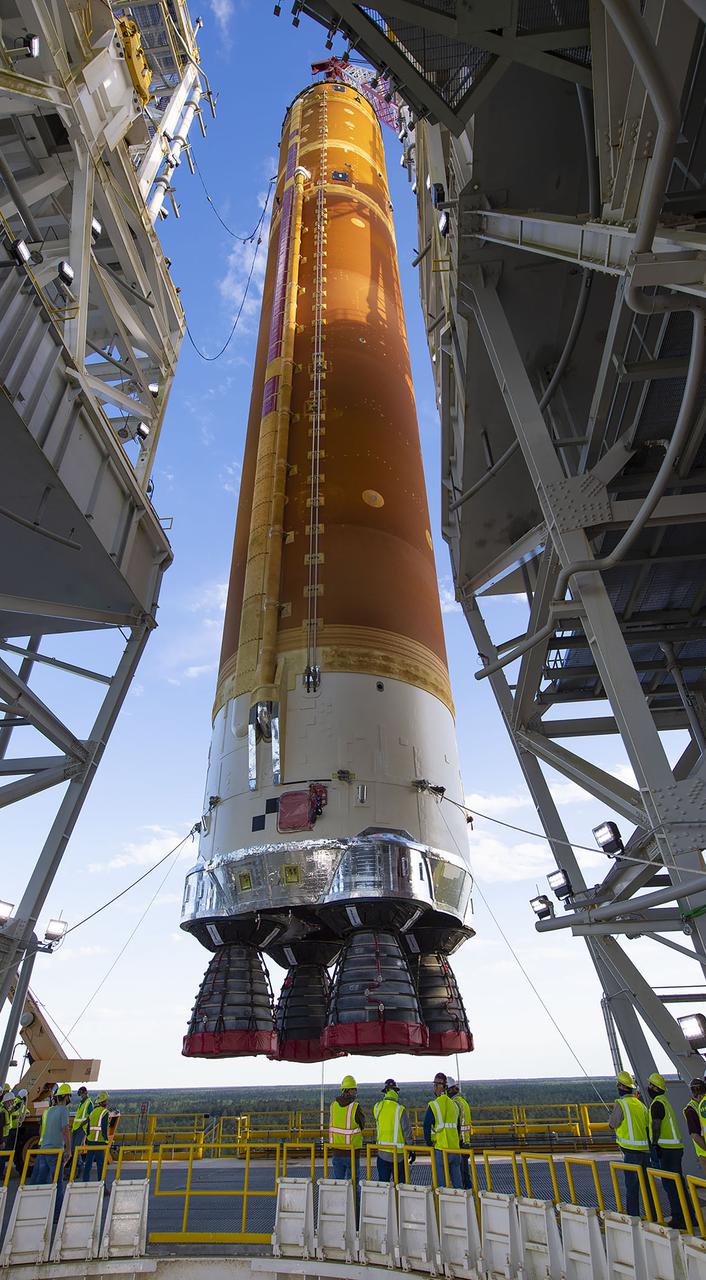
Following a successful Green Run hot fire at NASA’s Stennis Space Center near Bay St. Louis, Mississippi, on March 18, members of a blended team work April 19-20 to remove the first core stage of the agency’s Space Launch System (SLS) rocket from the B-2 Test Stand. The work required crews to lift the core stage from its vertical placement in the stand and lower it to a horizontal position on the B-2 Test Stand tarmac. The stage now will be loaded on NASA’s Pegasus barge for transport to Kennedy, where it will be prepared for launch of the Artemis I mission. Removal of the largest rocket stage ever built by NASA followed completion of a series of eight Green Run tests over the past year. During the Green Run series, teams performed a comprehensive test of the stand’s sophisticated and integrated systems. Photo Credit: NASA
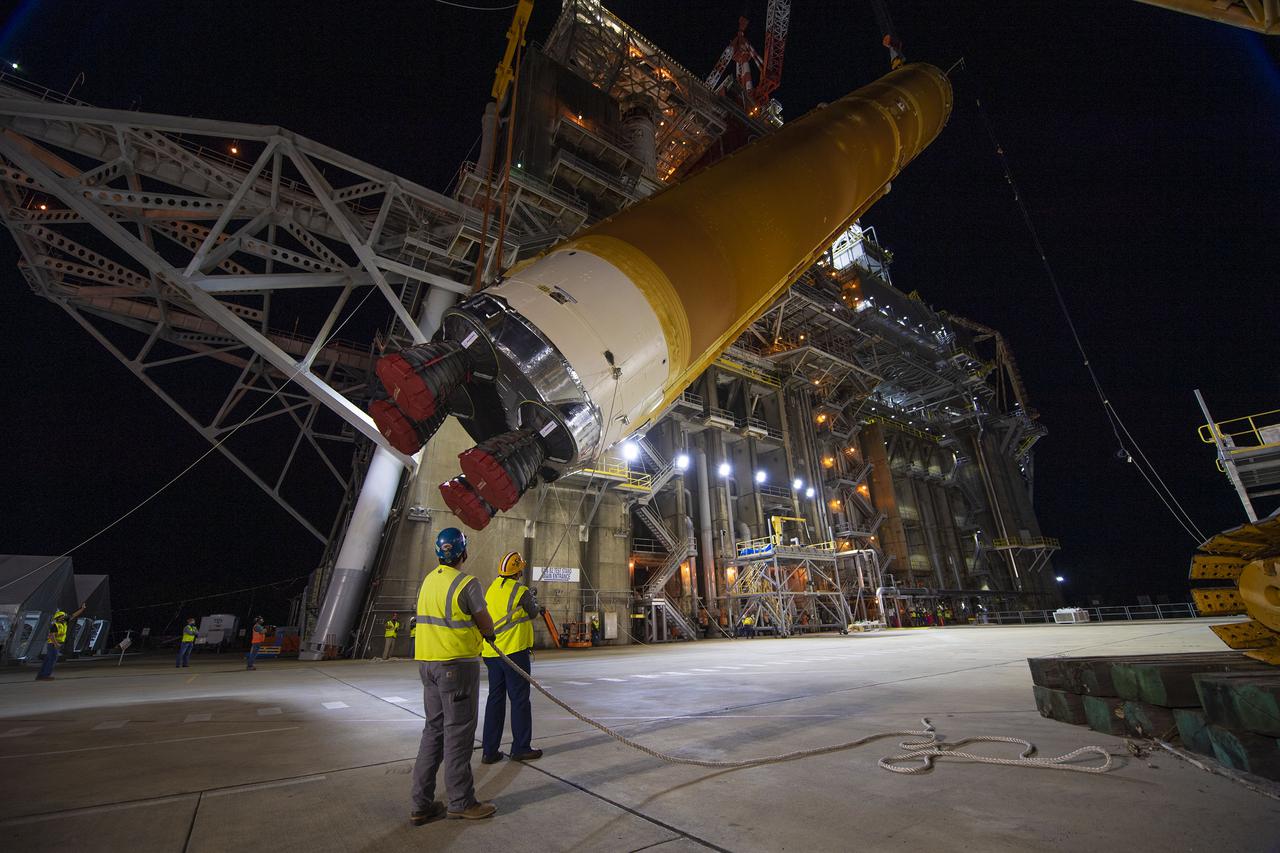
Following a successful Green Run hot fire at NASA’s Stennis Space Center near Bay St. Louis, Mississippi, on March 18, members of a blended team work April 19-20 to remove the first core stage of the agency’s Space Launch System (SLS) rocket from the B-2 Test Stand. The work required crews to lift the core stage from its vertical placement in the stand and lower it to a horizontal position on the B-2 Test Stand tarmac. The stage now will be loaded on NASA’s Pegasus barge for transport to Kennedy, where it will be prepared for launch of the Artemis I mission. Removal of the largest rocket stage ever built by NASA followed completion of a series of eight Green Run tests over the past year. During the Green Run series, teams performed a comprehensive test of the stand’s sophisticated and integrated systems. Photo Credit: NASA
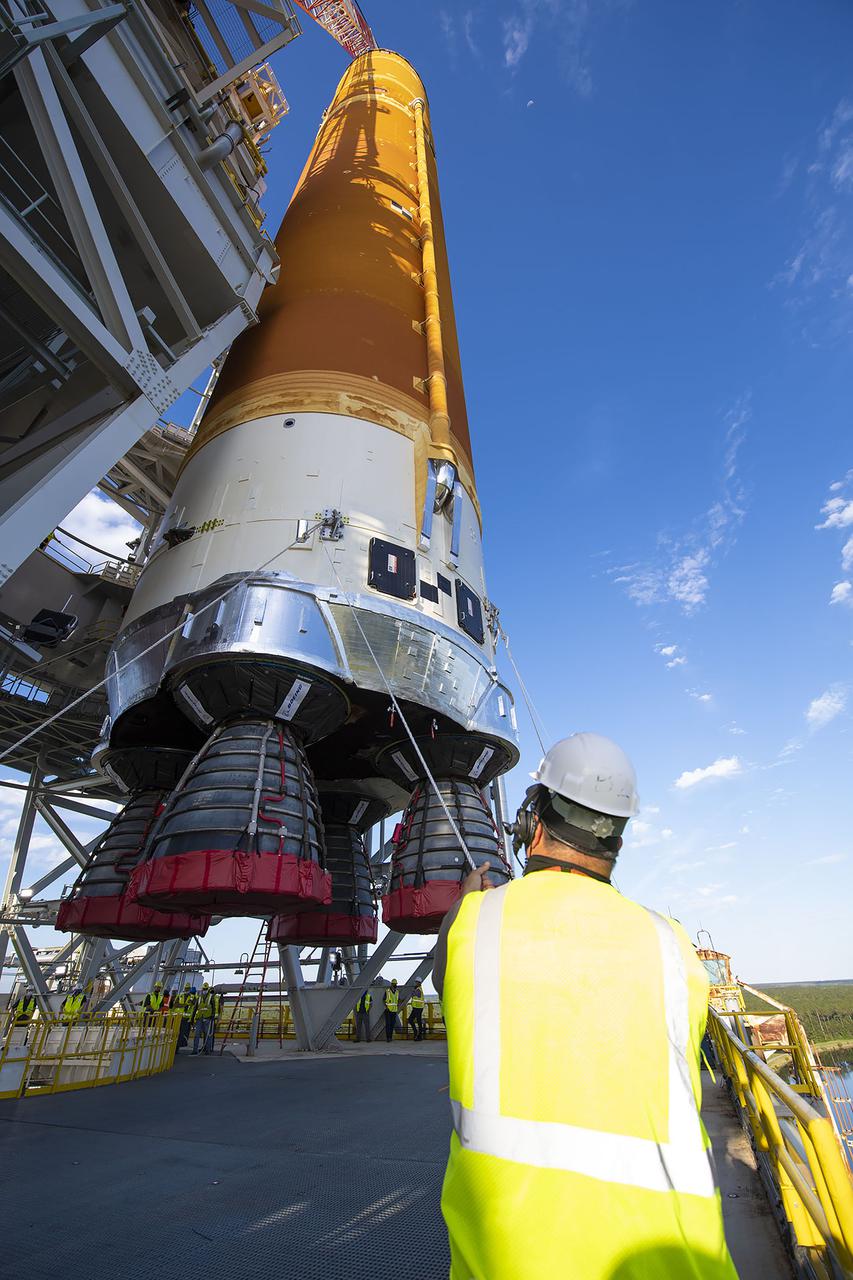
Following a successful Green Run hot fire at NASA’s Stennis Space Center near Bay St. Louis, Mississippi, on March 18, members of a blended team work April 19-20 to remove the first core stage of the agency’s Space Launch System (SLS) rocket from the B-2 Test Stand. The work required crews to lift the core stage from its vertical placement in the stand and lower it to a horizontal position on the B-2 Test Stand tarmac. The stage now will be loaded on NASA’s Pegasus barge for transport to Kennedy, where it will be prepared for launch of the Artemis I mission. Removal of the largest rocket stage ever built by NASA followed completion of a series of eight Green Run tests over the past year. During the Green Run series, teams performed a comprehensive test of the stand’s sophisticated and integrated systems. Photo Credit: NASA
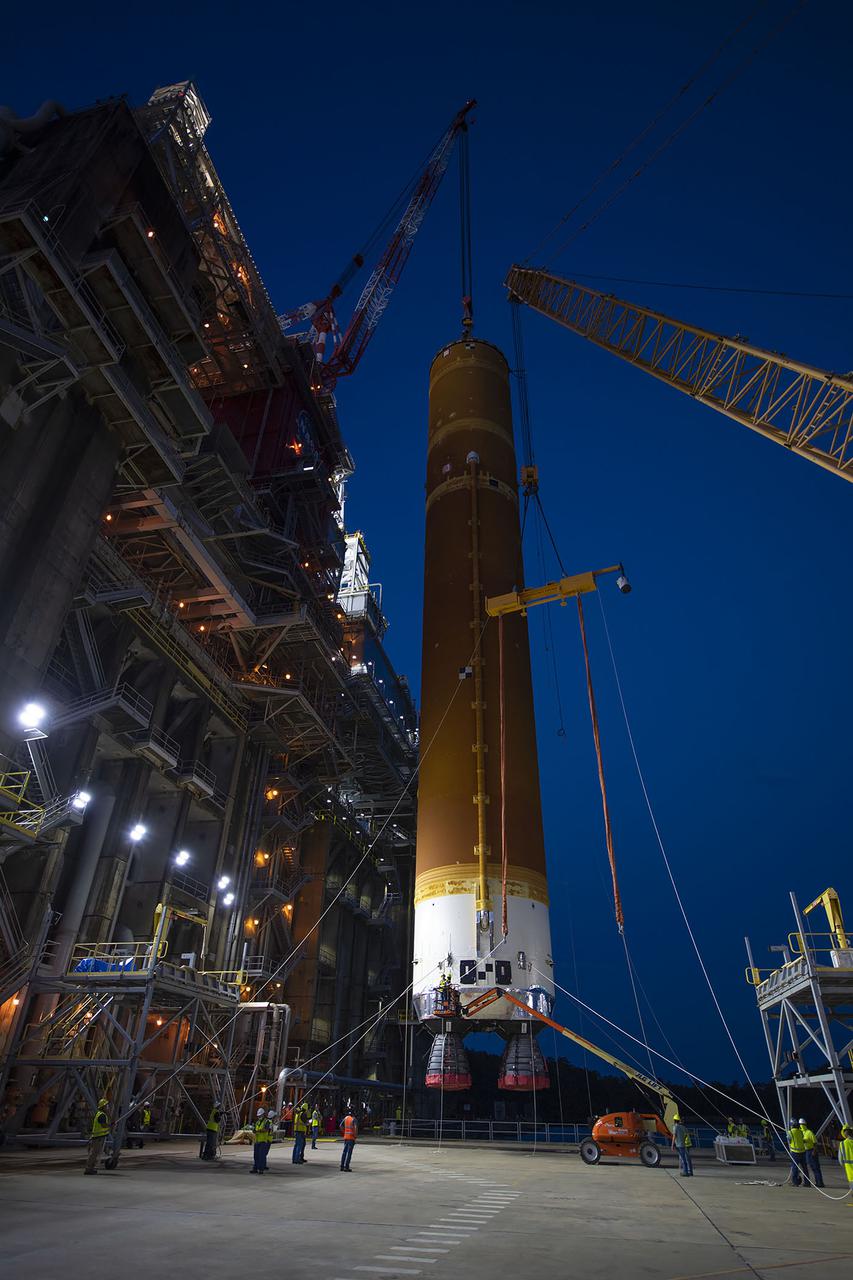
Following a successful Green Run hot fire at NASA’s Stennis Space Center near Bay St. Louis, Mississippi, on March 18, members of a blended team work April 19-20 to remove the first core stage of the agency’s Space Launch System (SLS) rocket from the B-2 Test Stand. The work required crews to lift the core stage from its vertical placement in the stand and lower it to a horizontal position on the B-2 Test Stand tarmac. The stage now will be loaded on NASA’s Pegasus barge for transport to Kennedy, where it will be prepared for launch of the Artemis I mission. Removal of the largest rocket stage ever built by NASA followed completion of a series of eight Green Run tests over the past year. During the Green Run series, teams performed a comprehensive test of the stand’s sophisticated and integrated systems. Photo Credit: NASA
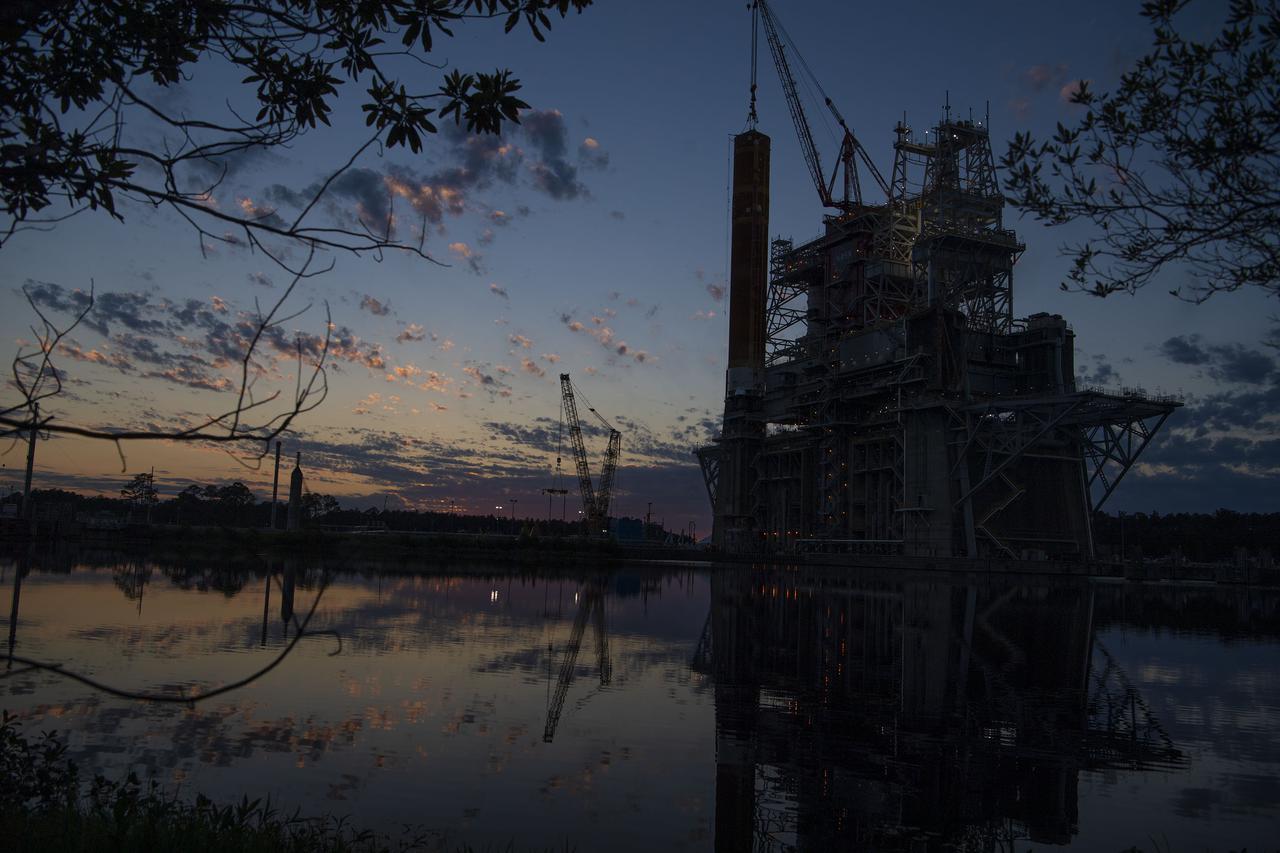
Following a successful Green Run hot fire at NASA’s Stennis Space Center near Bay St. Louis, Mississippi, on March 18, members of a blended team work April 19-20 to remove the first core stage of the agency’s Space Launch System (SLS) rocket from the B-2 Test Stand. The work required crews to lift the core stage from its vertical placement in the stand and lower it to a horizontal position on the B-2 Test Stand tarmac. The stage now will be loaded on NASA’s Pegasus barge for transport to Kennedy, where it will be prepared for launch of the Artemis I mission. Removal of the largest rocket stage ever built by NASA followed completion of a series of eight Green Run tests over the past year. During the Green Run series, teams performed a comprehensive test of the stand’s sophisticated and integrated systems. Photo Credit: NASA

Following a successful Green Run hot fire at NASA’s Stennis Space Center near Bay St. Louis, Mississippi, on March 18, members of a blended team work April 19-20 to remove the first core stage of the agency’s Space Launch System (SLS) rocket from the B-2 Test Stand. The work required crews to lift the core stage from its vertical placement in the stand and lower it to a horizontal position on the B-2 Test Stand tarmac. The stage now will be loaded on NASA’s Pegasus barge for transport to Kennedy, where it will be prepared for launch of the Artemis I mission. Removal of the largest rocket stage ever built by NASA followed completion of a series of eight Green Run tests over the past year. During the Green Run series, teams performed a comprehensive test of the stand’s sophisticated and integrated systems. Photo Credit: NASA
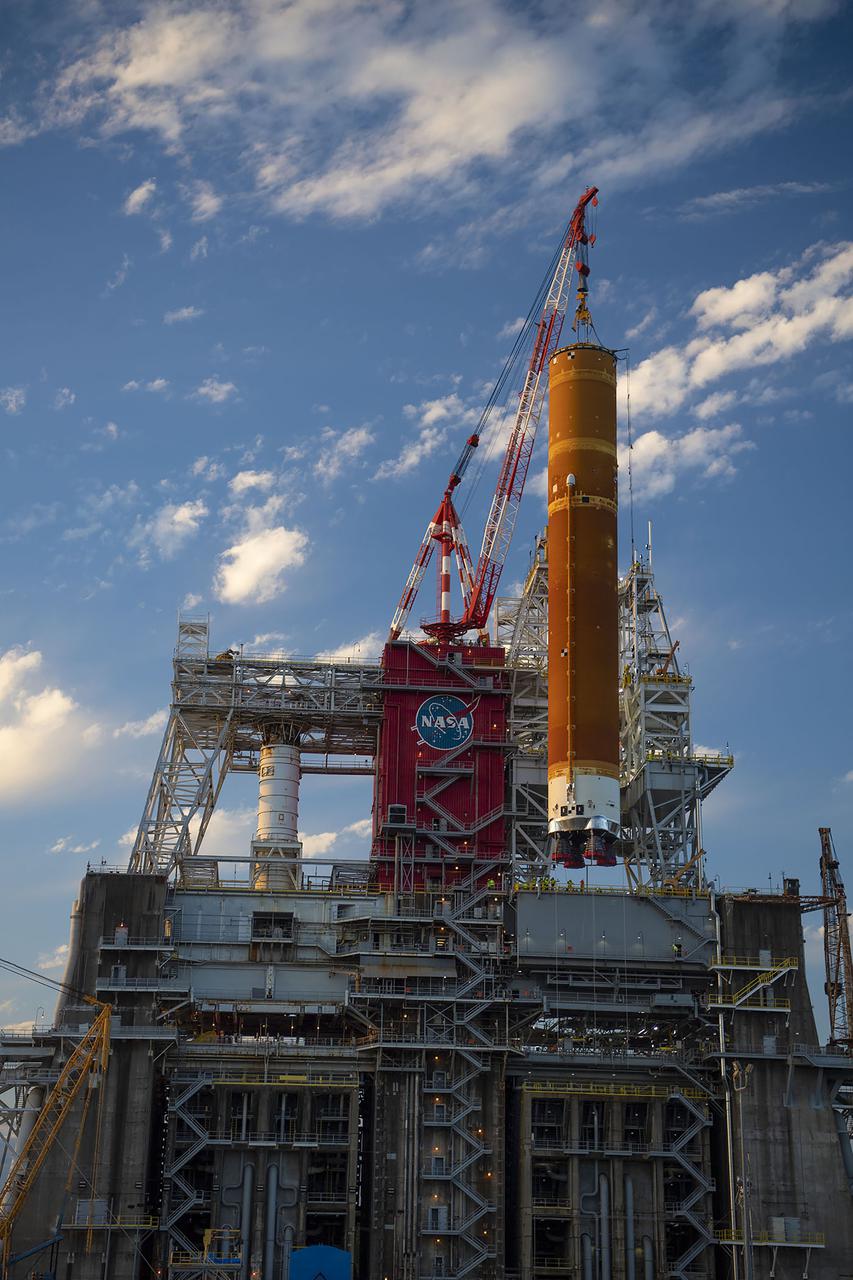
Following a successful Green Run hot fire at NASA’s Stennis Space Center near Bay St. Louis, Mississippi, on March 18, members of a blended team work April 19-20 to remove the first core stage of the agency’s Space Launch System (SLS) rocket from the B-2 Test Stand. The work required crews to lift the core stage from its vertical placement in the stand and lower it to a horizontal position on the B-2 Test Stand tarmac. The stage now will be loaded on NASA’s Pegasus barge for transport to Kennedy, where it will be prepared for launch of the Artemis I mission. Removal of the largest rocket stage ever built by NASA followed completion of a series of eight Green Run tests over the past year. During the Green Run series, teams performed a comprehensive test of the stand’s sophisticated and integrated systems. Photo Credit: NASA
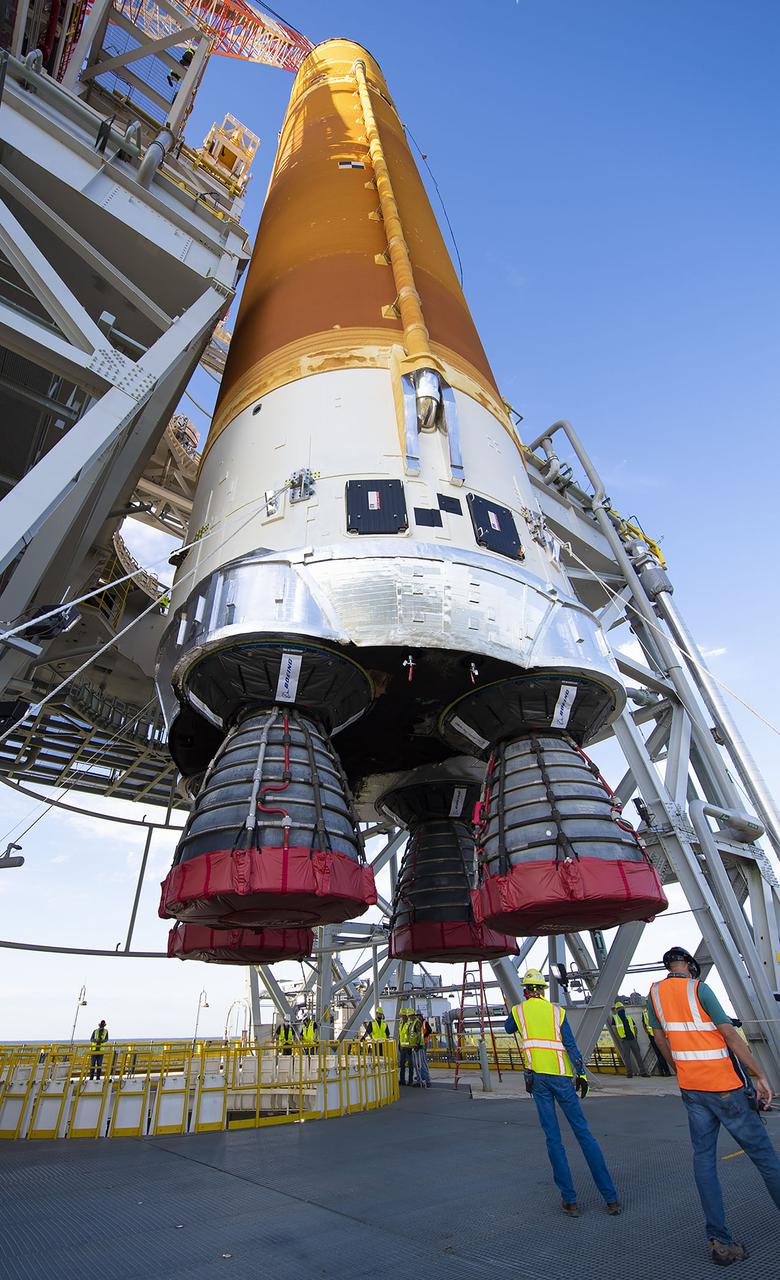
Following a successful Green Run hot fire at NASA’s Stennis Space Center near Bay St. Louis, Mississippi, on March 18, members of a blended team work April 19-20 to remove the first core stage of the agency’s Space Launch System (SLS) rocket from the B-2 Test Stand. The work required crews to lift the core stage from its vertical placement in the stand and lower it to a horizontal position on the B-2 Test Stand tarmac. The stage now will be loaded on NASA’s Pegasus barge for transport to Kennedy, where it will be prepared for launch of the Artemis I mission. Removal of the largest rocket stage ever built by NASA followed completion of a series of eight Green Run tests over the past year. During the Green Run series, teams performed a comprehensive test of the stand’s sophisticated and integrated systems. Photo Credit: NASA
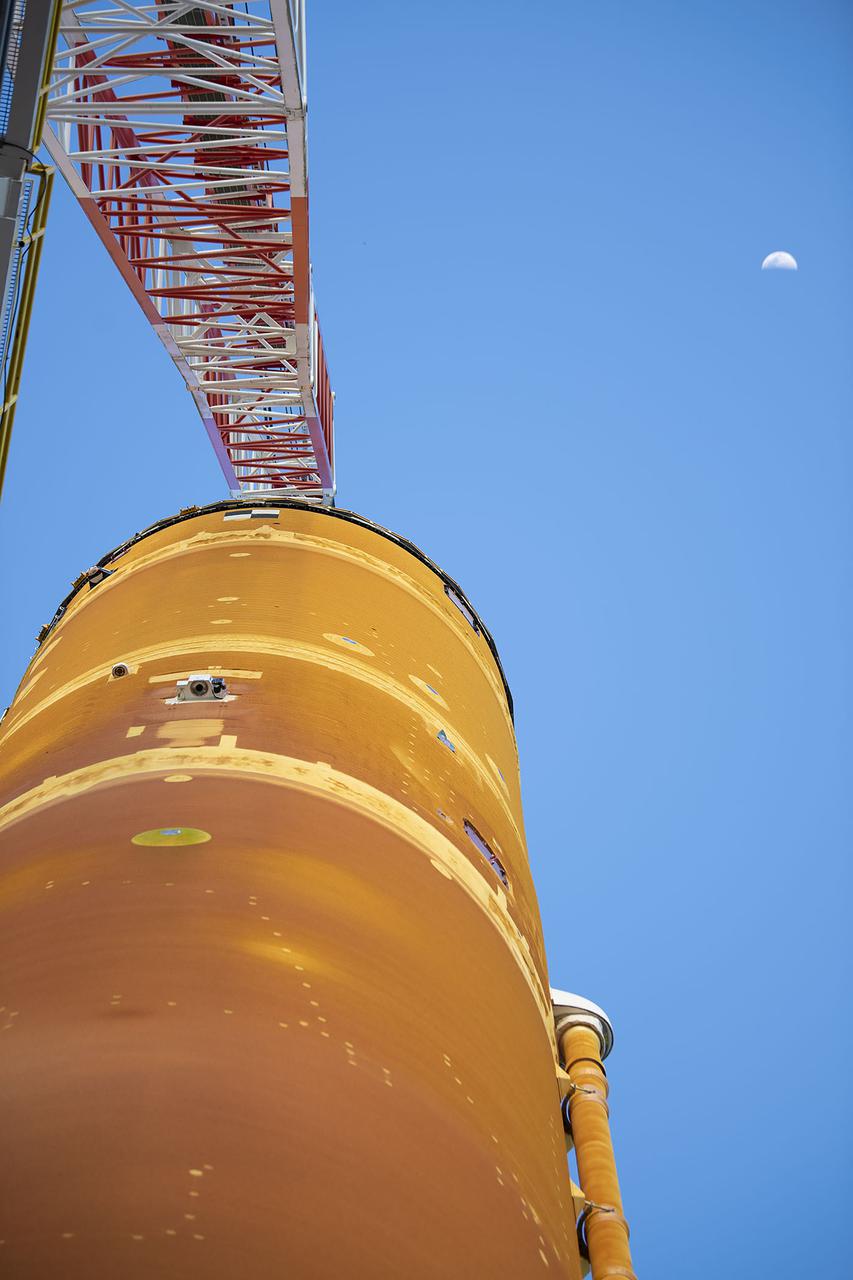
Following a successful Green Run hot fire at NASA’s Stennis Space Center near Bay St. Louis, Mississippi, on March 18, members of a blended team work April 19-20 to remove the first core stage of the agency’s Space Launch System (SLS) rocket from the B-2 Test Stand. The work required crews to lift the core stage from its vertical placement in the stand and lower it to a horizontal position on the B-2 Test Stand tarmac. The stage now will be loaded on NASA’s Pegasus barge for transport to Kennedy, where it will be prepared for launch of the Artemis I mission. Removal of the largest rocket stage ever built by NASA followed completion of a series of eight Green Run tests over the past year. During the Green Run series, teams performed a comprehensive test of the stand’s sophisticated and integrated systems. Photo Credit: NASA
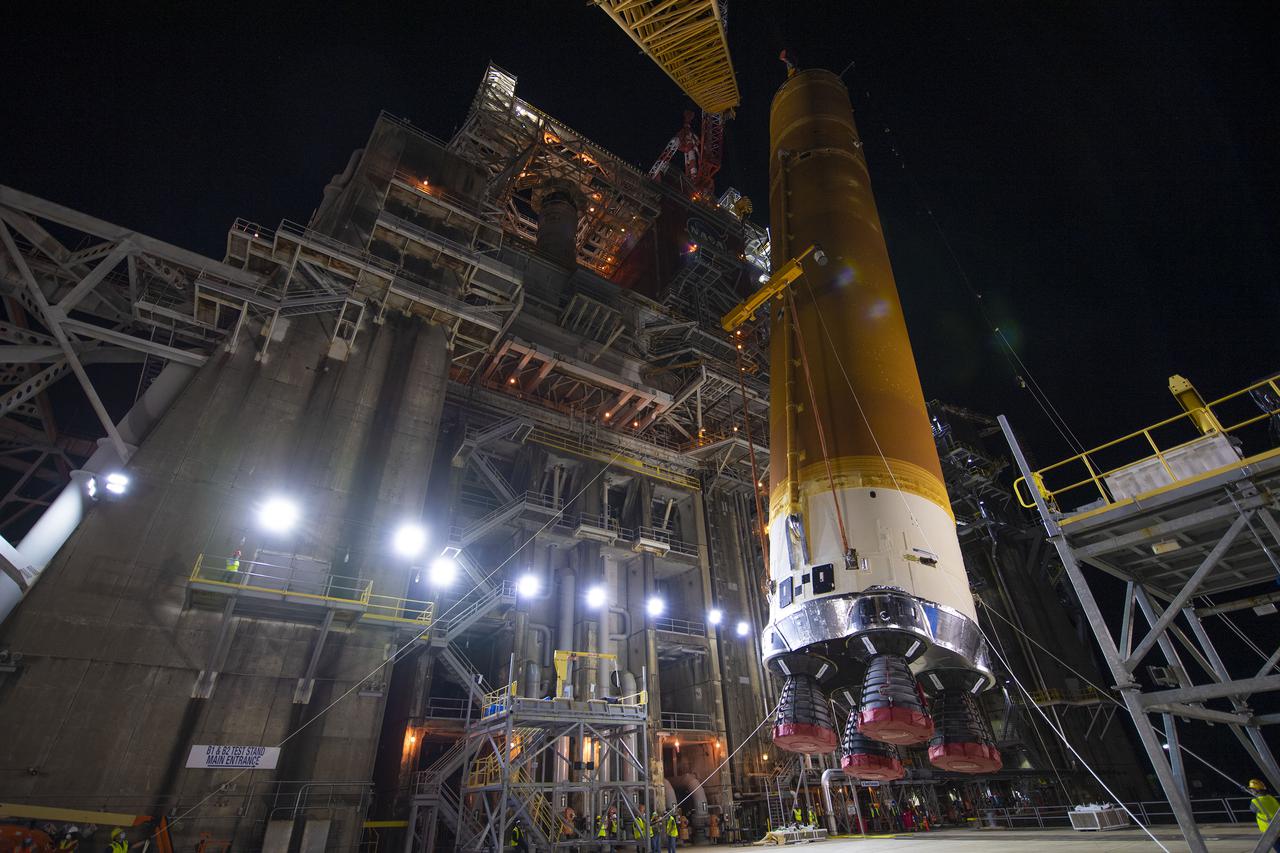
Following a successful Green Run hot fire at NASA’s Stennis Space Center near Bay St. Louis, Mississippi, on March 18, members of a blended team work April 19-20 to remove the first core stage of the agency’s Space Launch System (SLS) rocket from the B-2 Test Stand. The work required crews to lift the core stage from its vertical placement in the stand and lower it to a horizontal position on the B-2 Test Stand tarmac. The stage now will be loaded on NASA’s Pegasus barge for transport to Kennedy, where it will be prepared for launch of the Artemis I mission. Removal of the largest rocket stage ever built by NASA followed completion of a series of eight Green Run tests over the past year. During the Green Run series, teams performed a comprehensive test of the stand’s sophisticated and integrated systems. Photo Credit: NASA
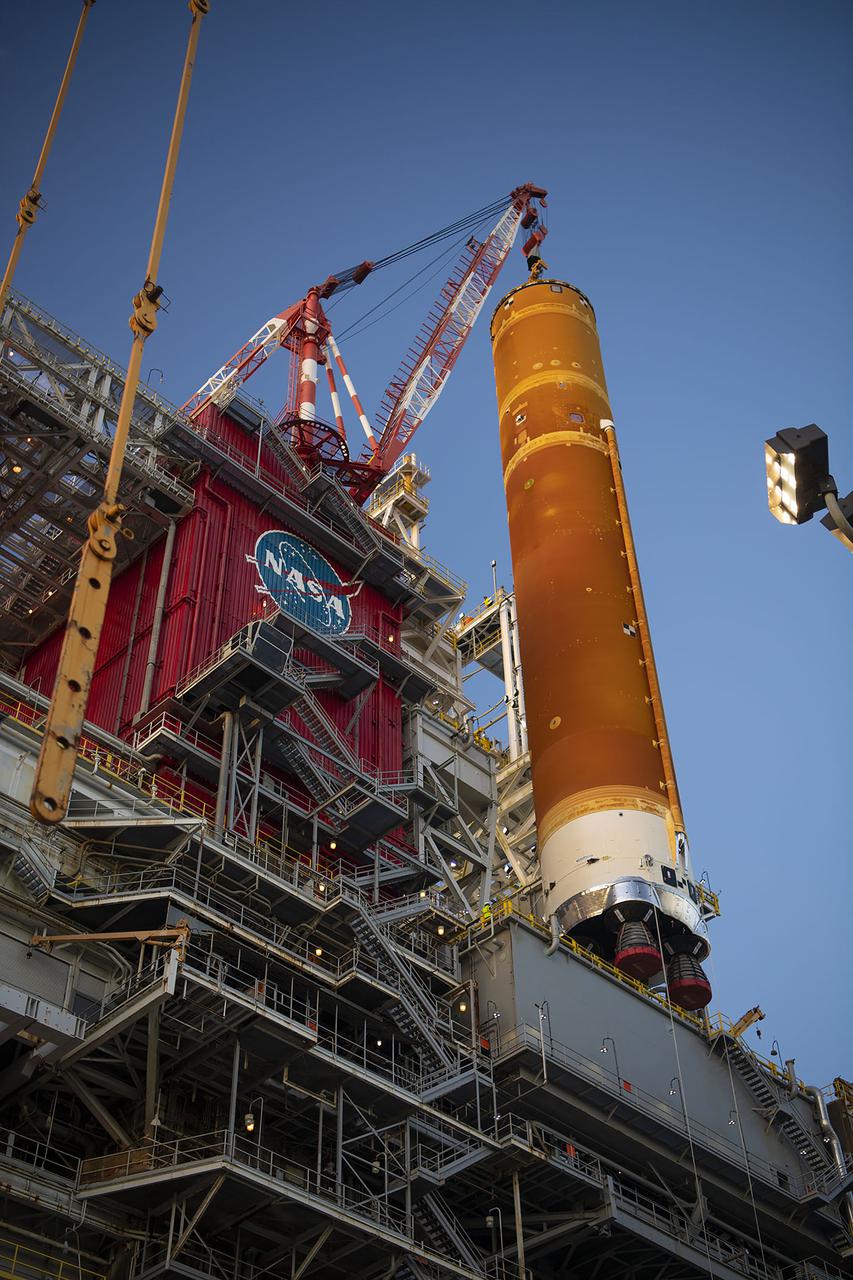
Following a successful Green Run hot fire at NASA’s Stennis Space Center near Bay St. Louis, Mississippi, on March 18, members of a blended team work April 19-20 to remove the first core stage of the agency’s Space Launch System (SLS) rocket from the B-2 Test Stand. The work required crews to lift the core stage from its vertical placement in the stand and lower it to a horizontal position on the B-2 Test Stand tarmac. The stage now will be loaded on NASA’s Pegasus barge for transport to Kennedy, where it will be prepared for launch of the Artemis I mission. Removal of the largest rocket stage ever built by NASA followed completion of a series of eight Green Run tests over the past year. During the Green Run series, teams performed a comprehensive test of the stand’s sophisticated and integrated systems. Photo Credit: NASA
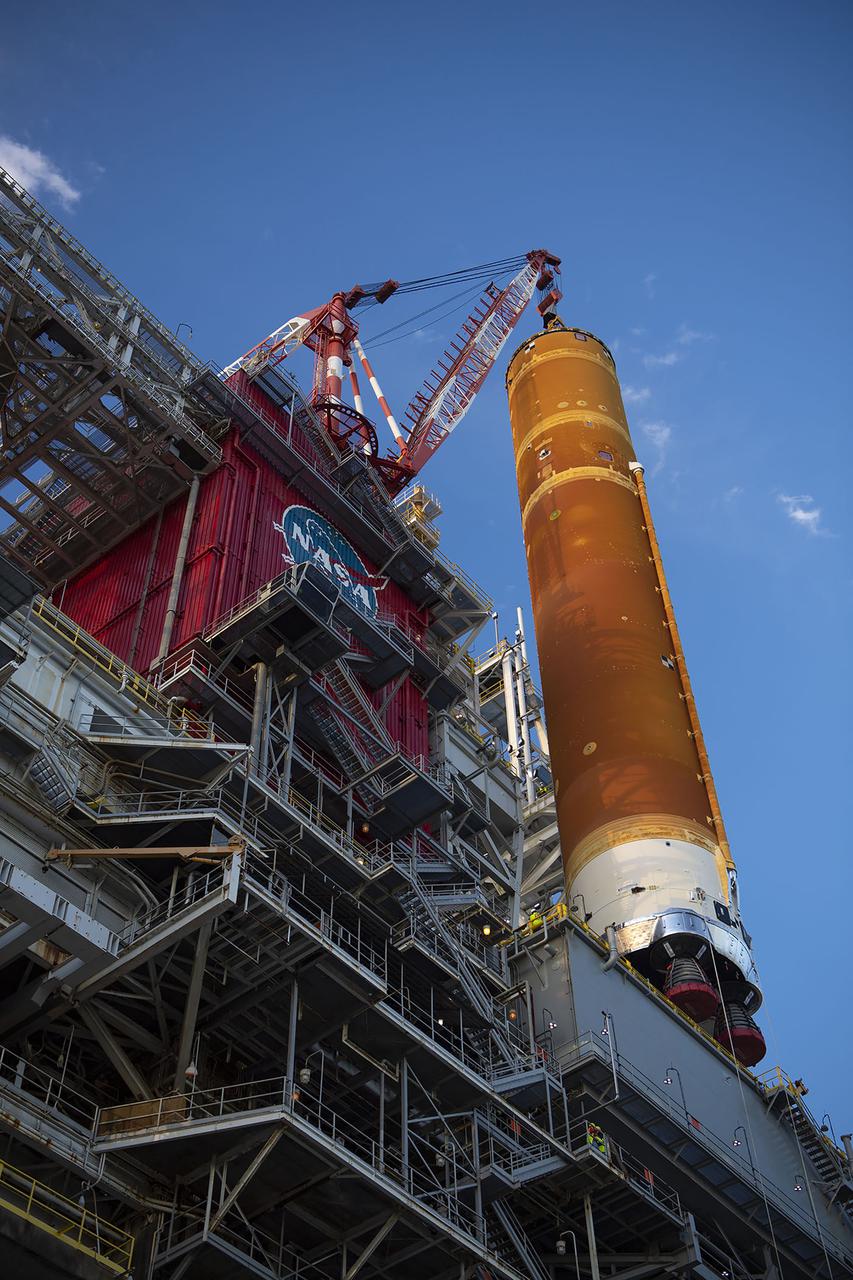
Following a successful Green Run hot fire at NASA’s Stennis Space Center near Bay St. Louis, Mississippi, on March 18, members of a blended team work April 19-20 to remove the first core stage of the agency’s Space Launch System (SLS) rocket from the B-2 Test Stand. The work required crews to lift the core stage from its vertical placement in the stand and lower it to a horizontal position on the B-2 Test Stand tarmac. The stage now will be loaded on NASA’s Pegasus barge for transport to Kennedy, where it will be prepared for launch of the Artemis I mission. Removal of the largest rocket stage ever built by NASA followed completion of a series of eight Green Run tests over the past year. During the Green Run series, teams performed a comprehensive test of the stand’s sophisticated and integrated systems. Photo Credit: NASA
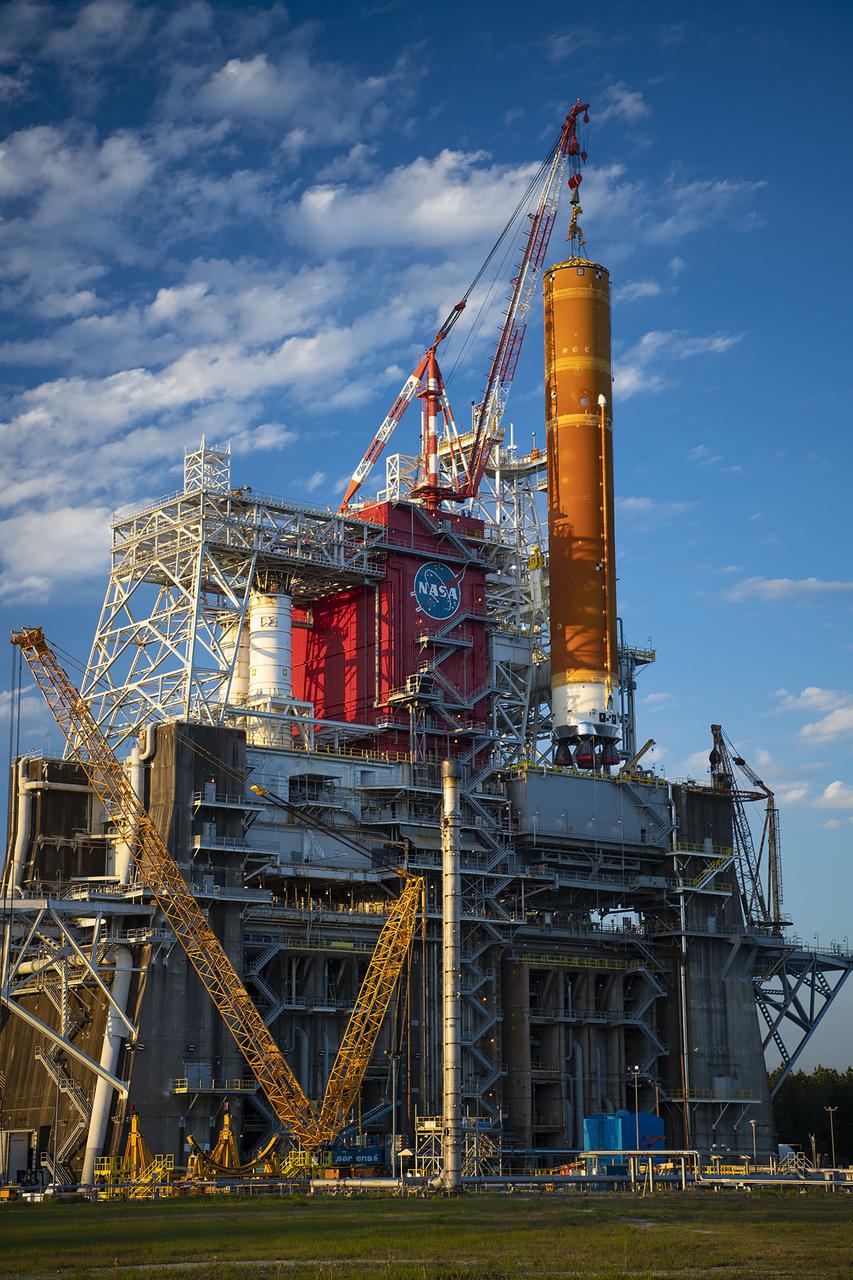
Following a successful Green Run hot fire at NASA’s Stennis Space Center near Bay St. Louis, Mississippi, on March 18, members of a blended team work April 19-20 to remove the first core stage of the agency’s Space Launch System (SLS) rocket from the B-2 Test Stand. The work required crews to lift the core stage from its vertical placement in the stand and lower it to a horizontal position on the B-2 Test Stand tarmac. The stage now will be loaded on NASA’s Pegasus barge for transport to Kennedy, where it will be prepared for launch of the Artemis I mission. Removal of the largest rocket stage ever built by NASA followed completion of a series of eight Green Run tests over the past year. During the Green Run series, teams performed a comprehensive test of the stand’s sophisticated and integrated systems. Photo Credit: NASA
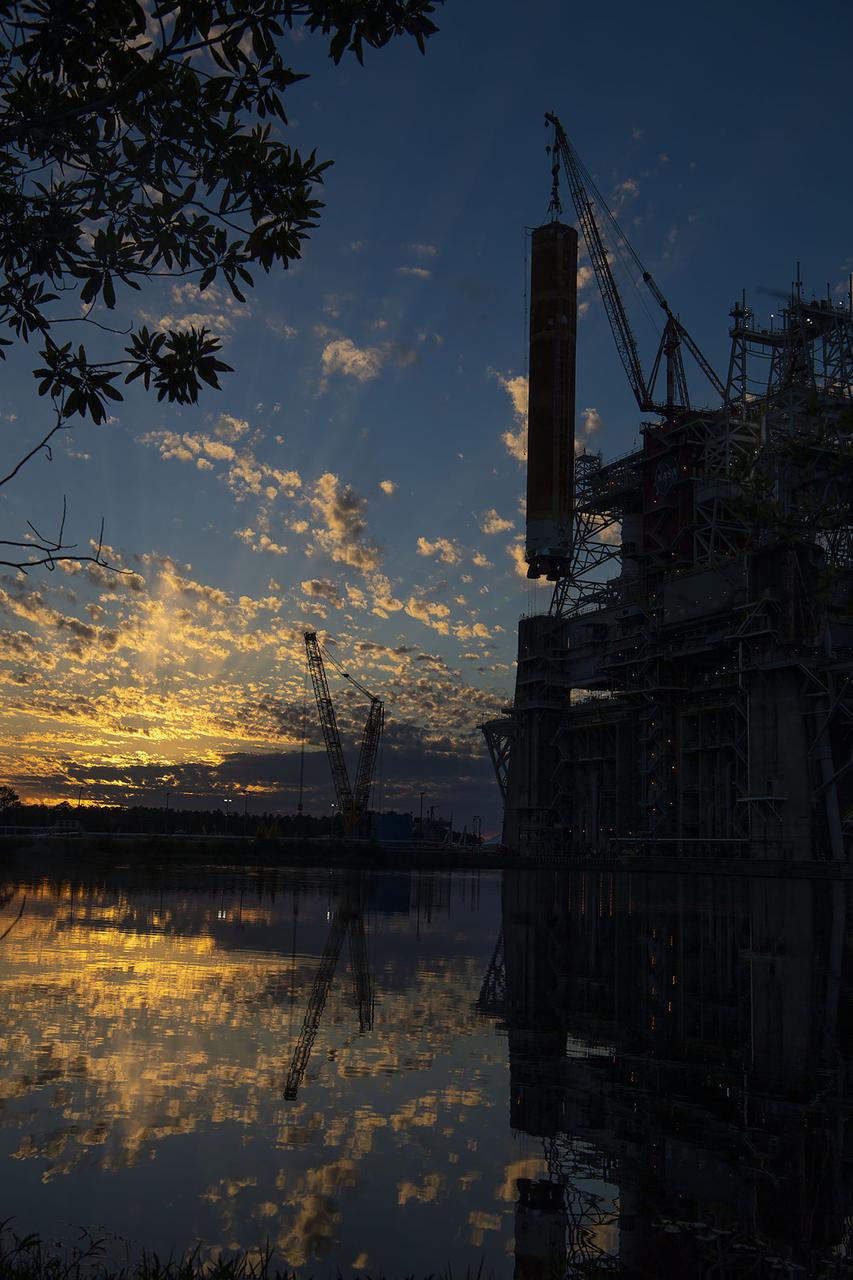
Following a successful Green Run hot fire at NASA’s Stennis Space Center near Bay St. Louis, Mississippi, on March 18, members of a blended team work April 19-20 to remove the first core stage of the agency’s Space Launch System (SLS) rocket from the B-2 Test Stand. The work required crews to lift the core stage from its vertical placement in the stand and lower it to a horizontal position on the B-2 Test Stand tarmac. The stage now will be loaded on NASA’s Pegasus barge for transport to Kennedy, where it will be prepared for launch of the Artemis I mission. Removal of the largest rocket stage ever built by NASA followed completion of a series of eight Green Run tests over the past year. During the Green Run series, teams performed a comprehensive test of the stand’s sophisticated and integrated systems. Photo Credit: NASA
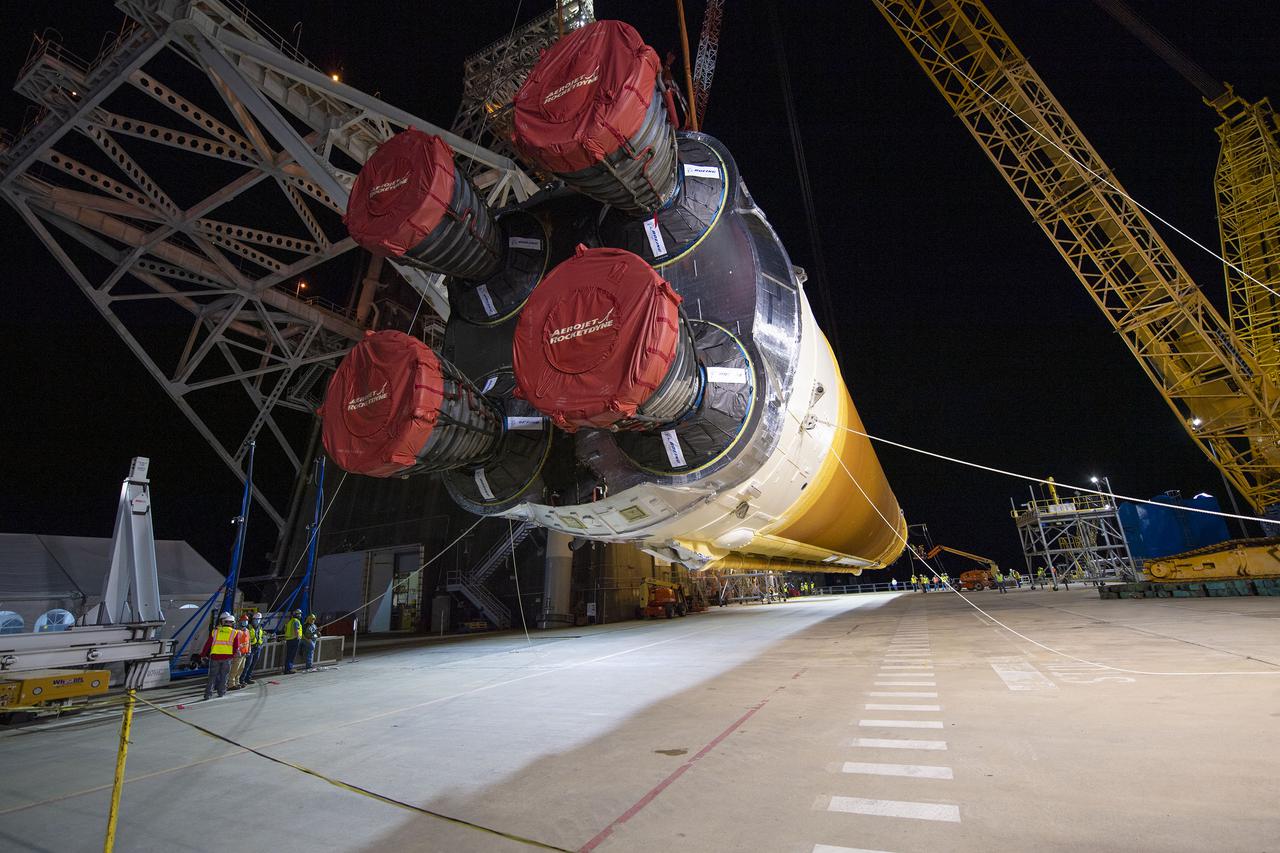
Following a successful Green Run hot fire at NASA’s Stennis Space Center near Bay St. Louis, Mississippi, on March 18, members of a blended team work April 19-20 to remove the first core stage of the agency’s Space Launch System (SLS) rocket from the B-2 Test Stand. The work required crews to lift the core stage from its vertical placement in the stand and lower it to a horizontal position on the B-2 Test Stand tarmac. The stage now will be loaded on NASA’s Pegasus barge for transport to Kennedy, where it will be prepared for launch of the Artemis I mission. Removal of the largest rocket stage ever built by NASA followed completion of a series of eight Green Run tests over the past year. During the Green Run series, teams performed a comprehensive test of the stand’s sophisticated and integrated systems. Photo Credit: NASA
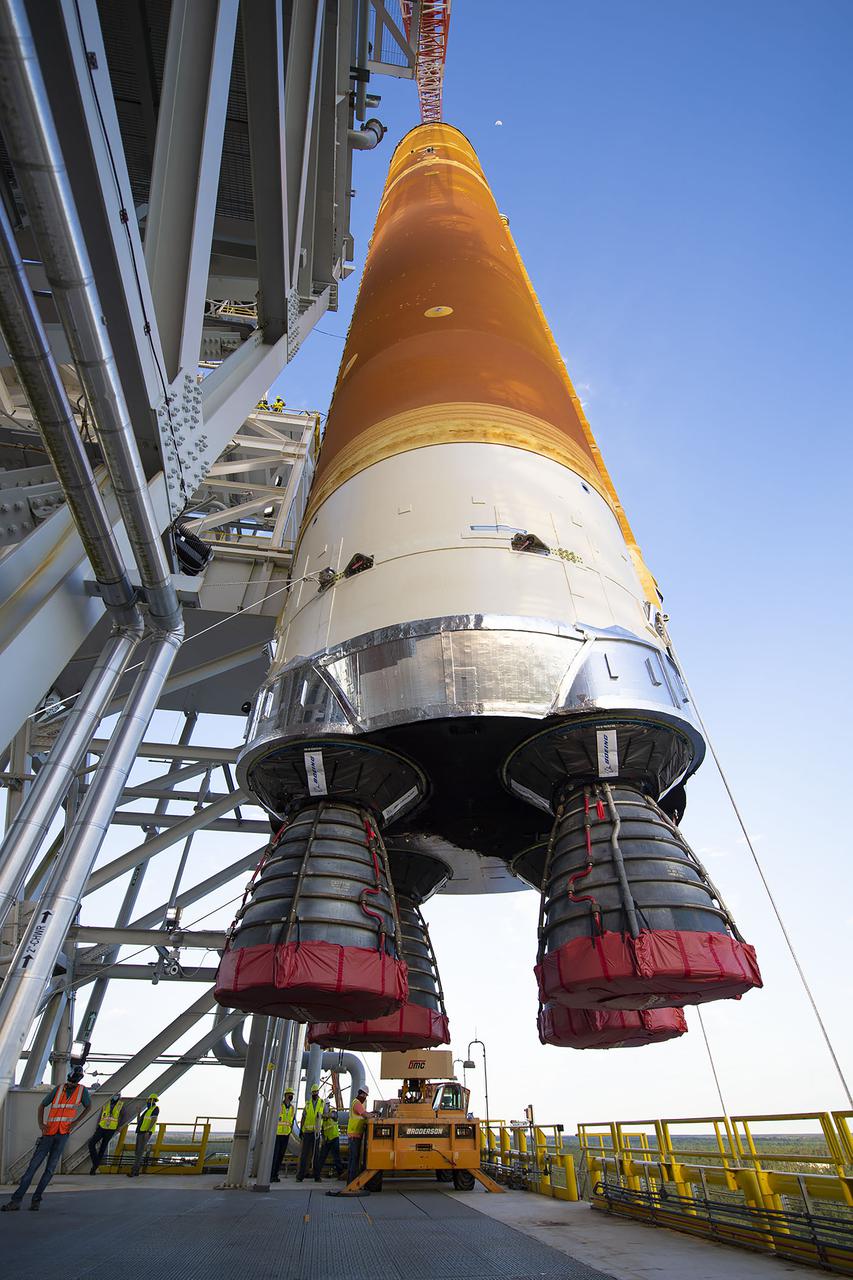
Following a successful Green Run hot fire at NASA’s Stennis Space Center near Bay St. Louis, Mississippi, on March 18, members of a blended team work April 19-20 to remove the first core stage of the agency’s Space Launch System (SLS) rocket from the B-2 Test Stand. The work required crews to lift the core stage from its vertical placement in the stand and lower it to a horizontal position on the B-2 Test Stand tarmac. The stage now will be loaded on NASA’s Pegasus barge for transport to Kennedy, where it will be prepared for launch of the Artemis I mission. Removal of the largest rocket stage ever built by NASA followed completion of a series of eight Green Run tests over the past year. During the Green Run series, teams performed a comprehensive test of the stand’s sophisticated and integrated systems. Photo Credit: NASA

Following a successful Green Run hot fire at NASA’s Stennis Space Center near Bay St. Louis, Mississippi, on March 18, members of a blended team work April 19-20 to remove the first core stage of the agency’s Space Launch System (SLS) rocket from the B-2 Test Stand. The work required crews to lift the core stage from its vertical placement in the stand and lower it to a horizontal position on the B-2 Test Stand tarmac. The stage now will be loaded on NASA’s Pegasus barge for transport to Kennedy, where it will be prepared for launch of the Artemis I mission. Removal of the largest rocket stage ever built by NASA followed completion of a series of eight Green Run tests over the past year. During the Green Run series, teams performed a comprehensive test of the stand’s sophisticated and integrated systems. Photo Credit: NASA
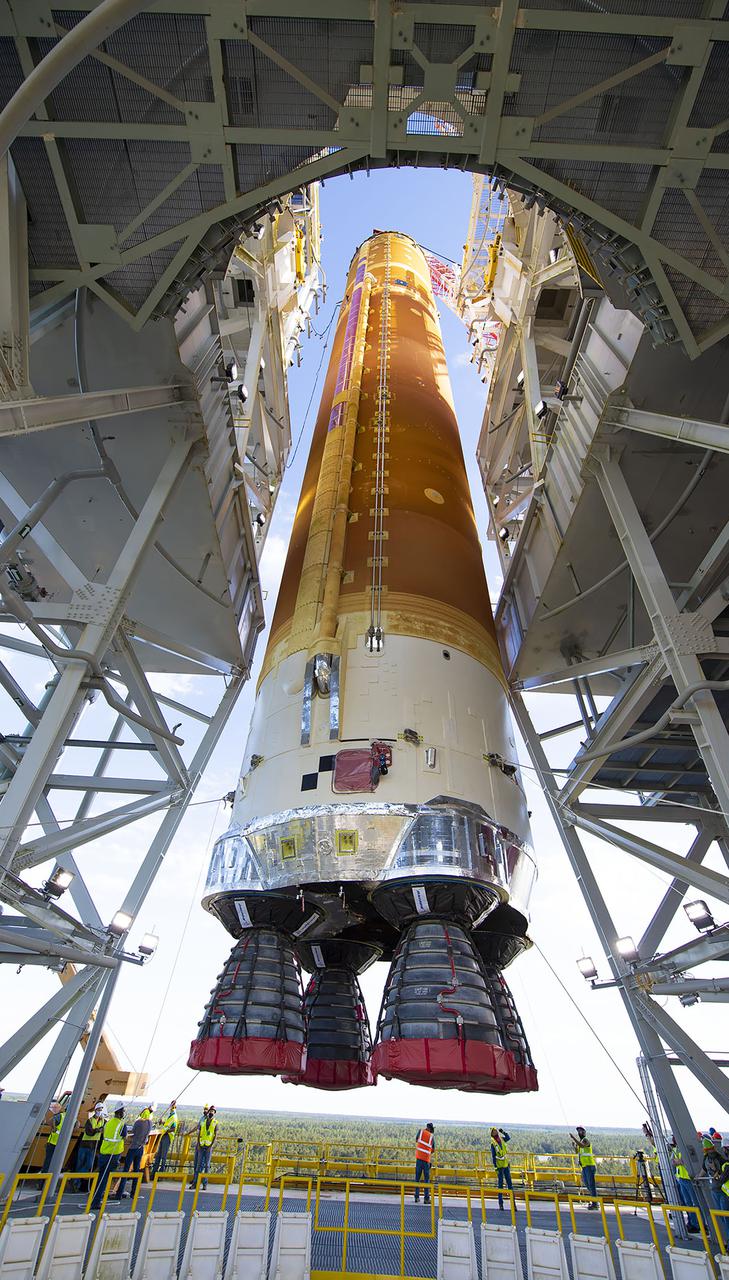
Following a successful Green Run hot fire at NASA’s Stennis Space Center near Bay St. Louis, Mississippi, on March 18, members of a blended team work April 19-20 to remove the first core stage of the agency’s Space Launch System (SLS) rocket from the B-2 Test Stand. The work required crews to lift the core stage from its vertical placement in the stand and lower it to a horizontal position on the B-2 Test Stand tarmac. The stage now will be loaded on NASA’s Pegasus barge for transport to Kennedy, where it will be prepared for launch of the Artemis I mission. Removal of the largest rocket stage ever built by NASA followed completion of a series of eight Green Run tests over the past year. During the Green Run series, teams performed a comprehensive test of the stand’s sophisticated and integrated systems. Photo Credit: NASA
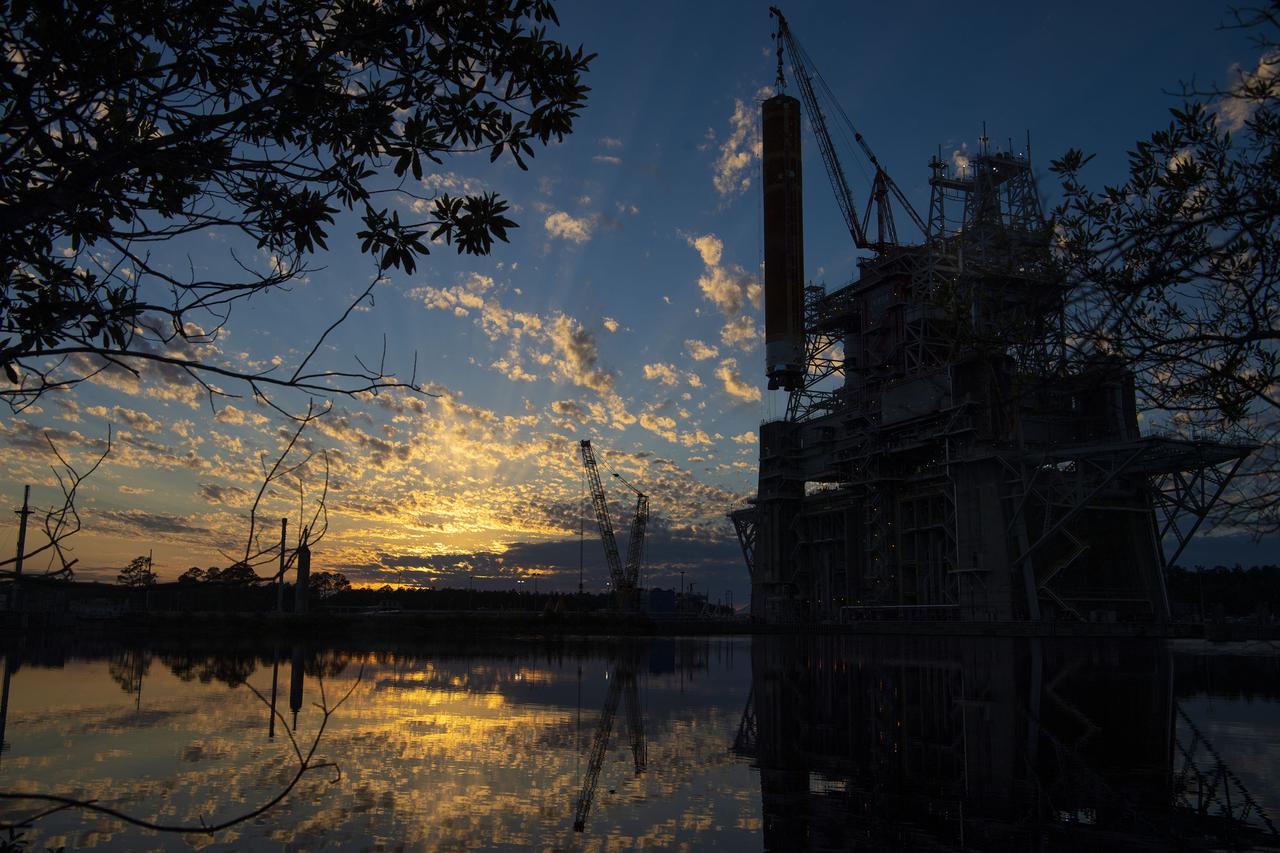
Following a successful Green Run hot fire at NASA’s Stennis Space Center near Bay St. Louis, Mississippi, on March 18, members of a blended team work April 19-20 to remove the first core stage of the agency’s Space Launch System (SLS) rocket from the B-2 Test Stand. The work required crews to lift the core stage from its vertical placement in the stand and lower it to a horizontal position on the B-2 Test Stand tarmac. The stage now will be loaded on NASA’s Pegasus barge for transport to Kennedy, where it will be prepared for launch of the Artemis I mission. Removal of the largest rocket stage ever built by NASA followed completion of a series of eight Green Run tests over the past year. During the Green Run series, teams performed a comprehensive test of the stand’s sophisticated and integrated systems. Photo Credit: NASA
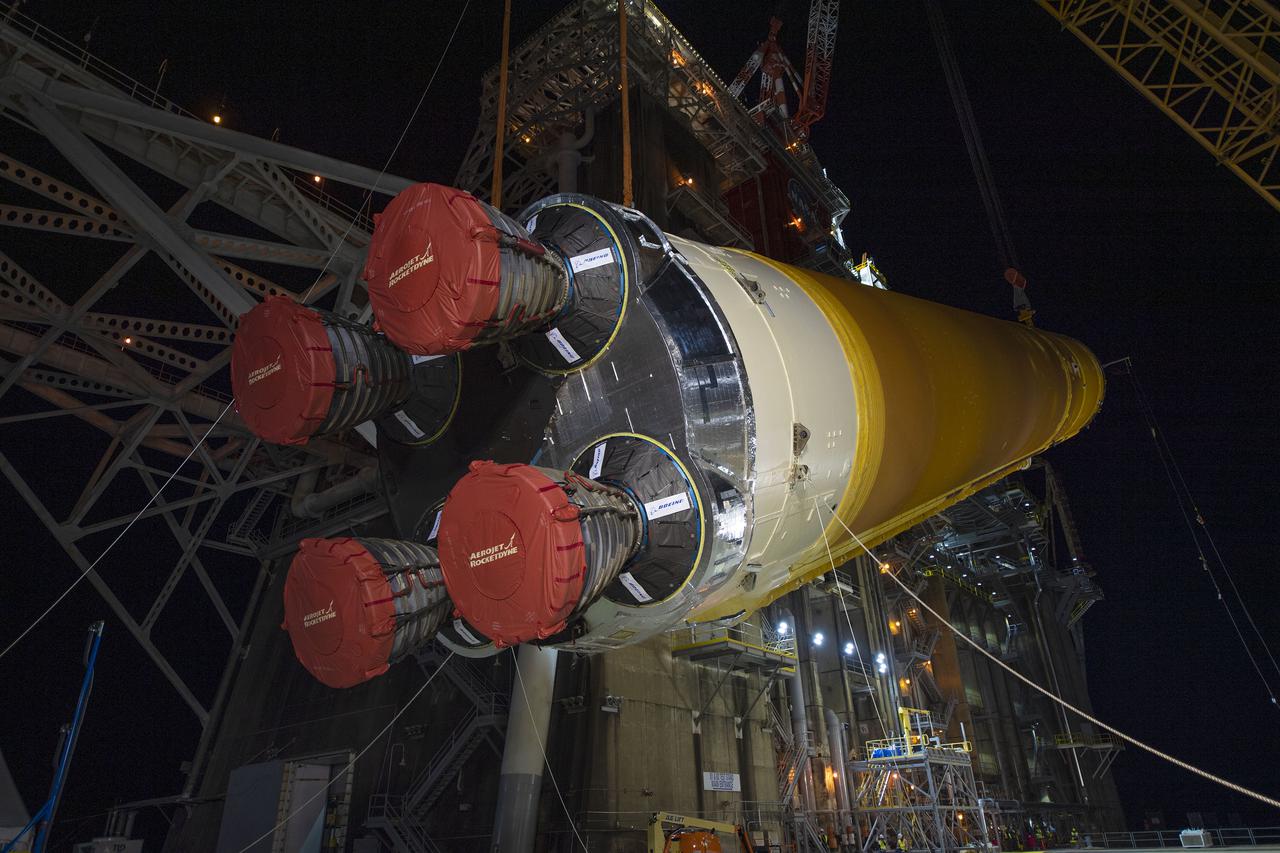
Following a successful Green Run hot fire at NASA’s Stennis Space Center near Bay St. Louis, Mississippi, on March 18, members of a blended team work April 19-20 to remove the first core stage of the agency’s Space Launch System (SLS) rocket from the B-2 Test Stand. The work required crews to lift the core stage from its vertical placement in the stand and lower it to a horizontal position on the B-2 Test Stand tarmac. The stage now will be loaded on NASA’s Pegasus barge for transport to Kennedy, where it will be prepared for launch of the Artemis I mission. Removal of the largest rocket stage ever built by NASA followed completion of a series of eight Green Run tests over the past year. During the Green Run series, teams performed a comprehensive test of the stand’s sophisticated and integrated systems. Photo Credit: NASA
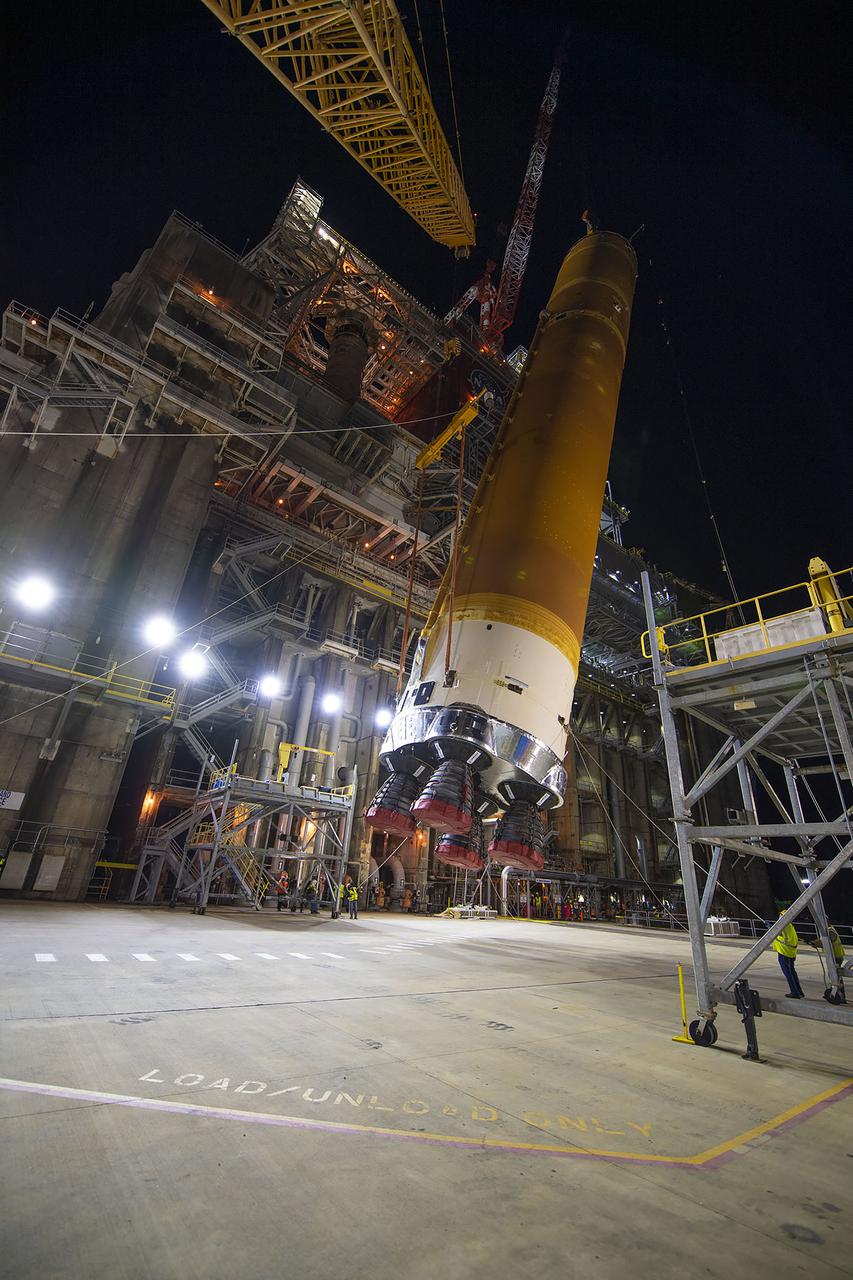
Following a successful Green Run hot fire at NASA’s Stennis Space Center near Bay St. Louis, Mississippi, on March 18, members of a blended team work April 19-20 to remove the first core stage of the agency’s Space Launch System (SLS) rocket from the B-2 Test Stand. The work required crews to lift the core stage from its vertical placement in the stand and lower it to a horizontal position on the B-2 Test Stand tarmac. The stage now will be loaded on NASA’s Pegasus barge for transport to Kennedy, where it will be prepared for launch of the Artemis I mission. Removal of the largest rocket stage ever built by NASA followed completion of a series of eight Green Run tests over the past year. During the Green Run series, teams performed a comprehensive test of the stand’s sophisticated and integrated systems. Photo Credit: NASA
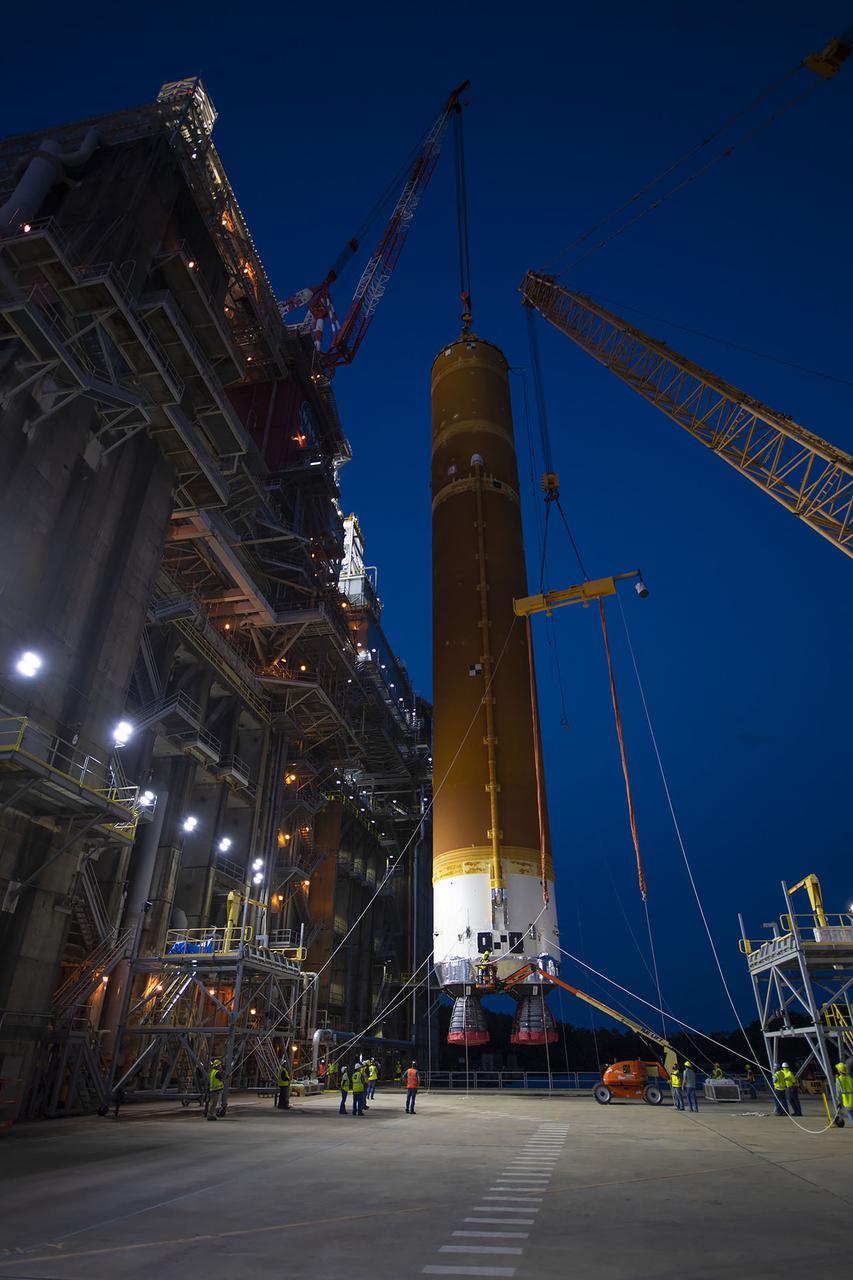
Following a successful Green Run hot fire at NASA’s Stennis Space Center near Bay St. Louis, Mississippi, on March 18, members of a blended team work April 19-20 to remove the first core stage of the agency’s Space Launch System (SLS) rocket from the B-2 Test Stand. The work required crews to lift the core stage from its vertical placement in the stand and lower it to a horizontal position on the B-2 Test Stand tarmac. The stage now will be loaded on NASA’s Pegasus barge for transport to Kennedy, where it will be prepared for launch of the Artemis I mission. Removal of the largest rocket stage ever built by NASA followed completion of a series of eight Green Run tests over the past year. During the Green Run series, teams performed a comprehensive test of the stand’s sophisticated and integrated systems. Photo Credit: NASA
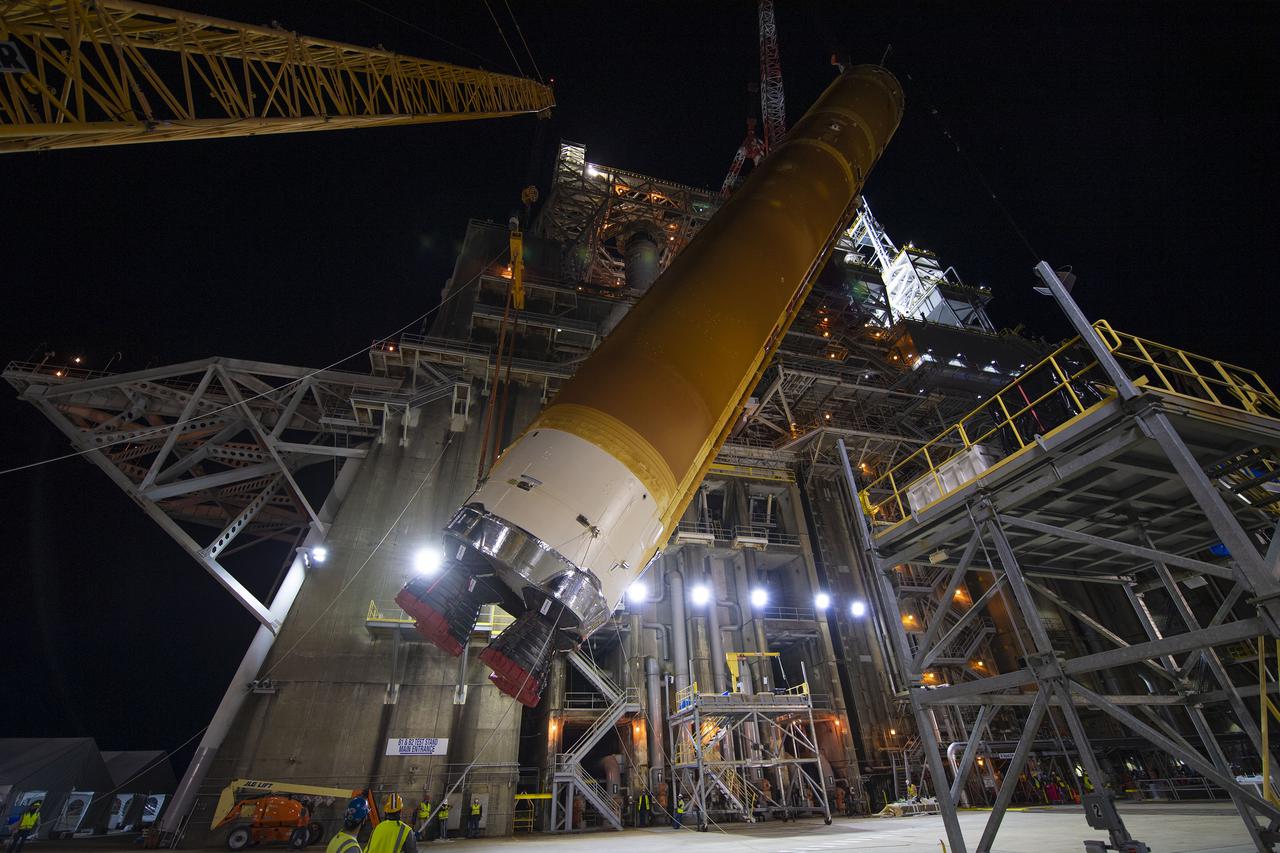
Following a successful Green Run hot fire at NASA’s Stennis Space Center near Bay St. Louis, Mississippi, on March 18, members of a blended team work April 19-20 to remove the first core stage of the agency’s Space Launch System (SLS) rocket from the B-2 Test Stand. The work required crews to lift the core stage from its vertical placement in the stand and lower it to a horizontal position on the B-2 Test Stand tarmac. The stage now will be loaded on NASA’s Pegasus barge for transport to Kennedy, where it will be prepared for launch of the Artemis I mission. Removal of the largest rocket stage ever built by NASA followed completion of a series of eight Green Run tests over the past year. During the Green Run series, teams performed a comprehensive test of the stand’s sophisticated and integrated systems. Photo Credit: NASA
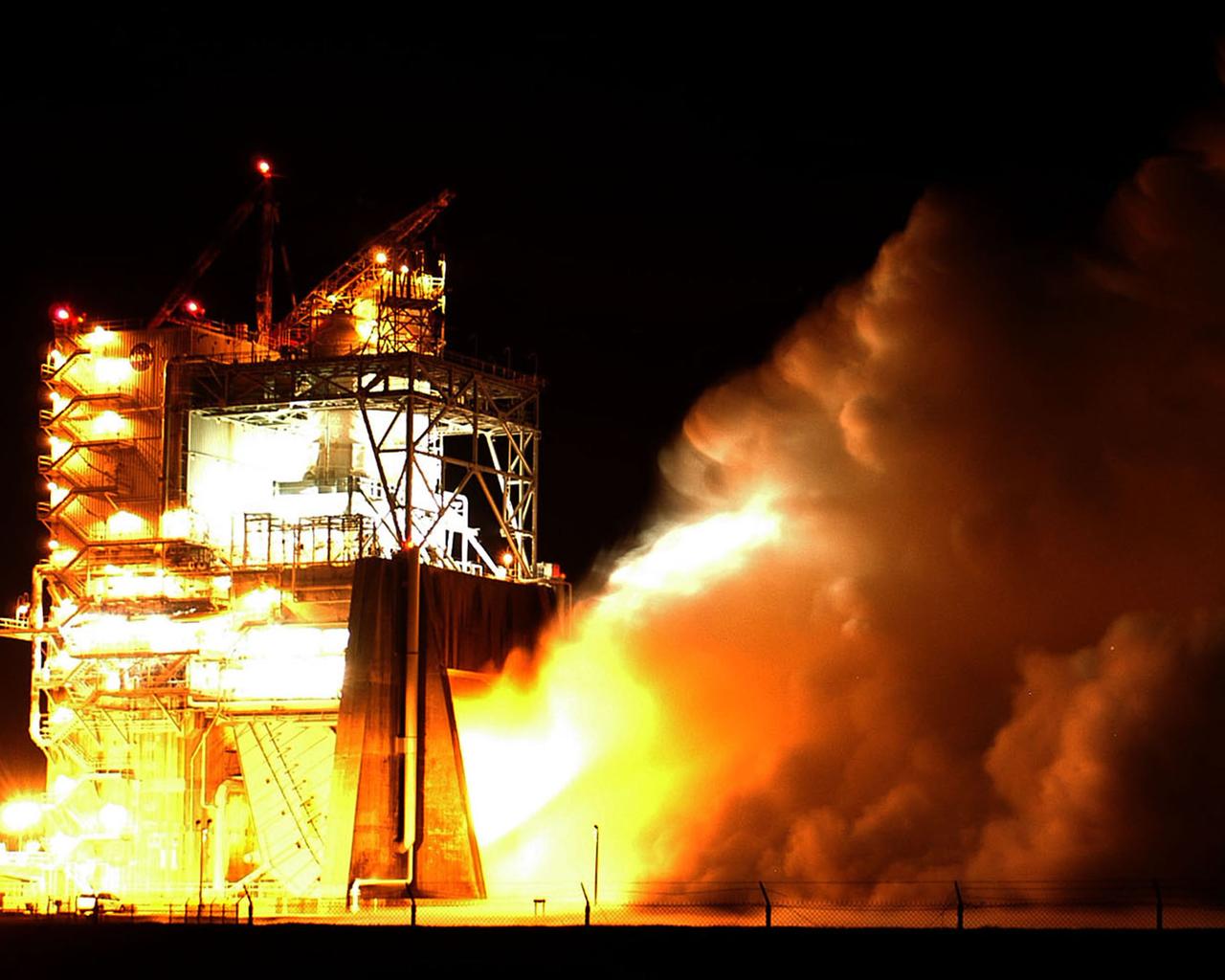
Water vapor surges from the flame deflector of the A-2 Test Stand at NASA's Stennis Space Center on Jan. 9 during the first space shuttle main engine test of the year. The test was an engine acceptance test of flight engine 2058. It's the first space shuttle main engine to be completely assembled at Kennedy Space Center. Objectives also included first-time (green run) tests of a high-pressure oxidizer turbo pump and an Advanced Health System Monitor engine controller. The test ran for the planned duration of 520 seconds.
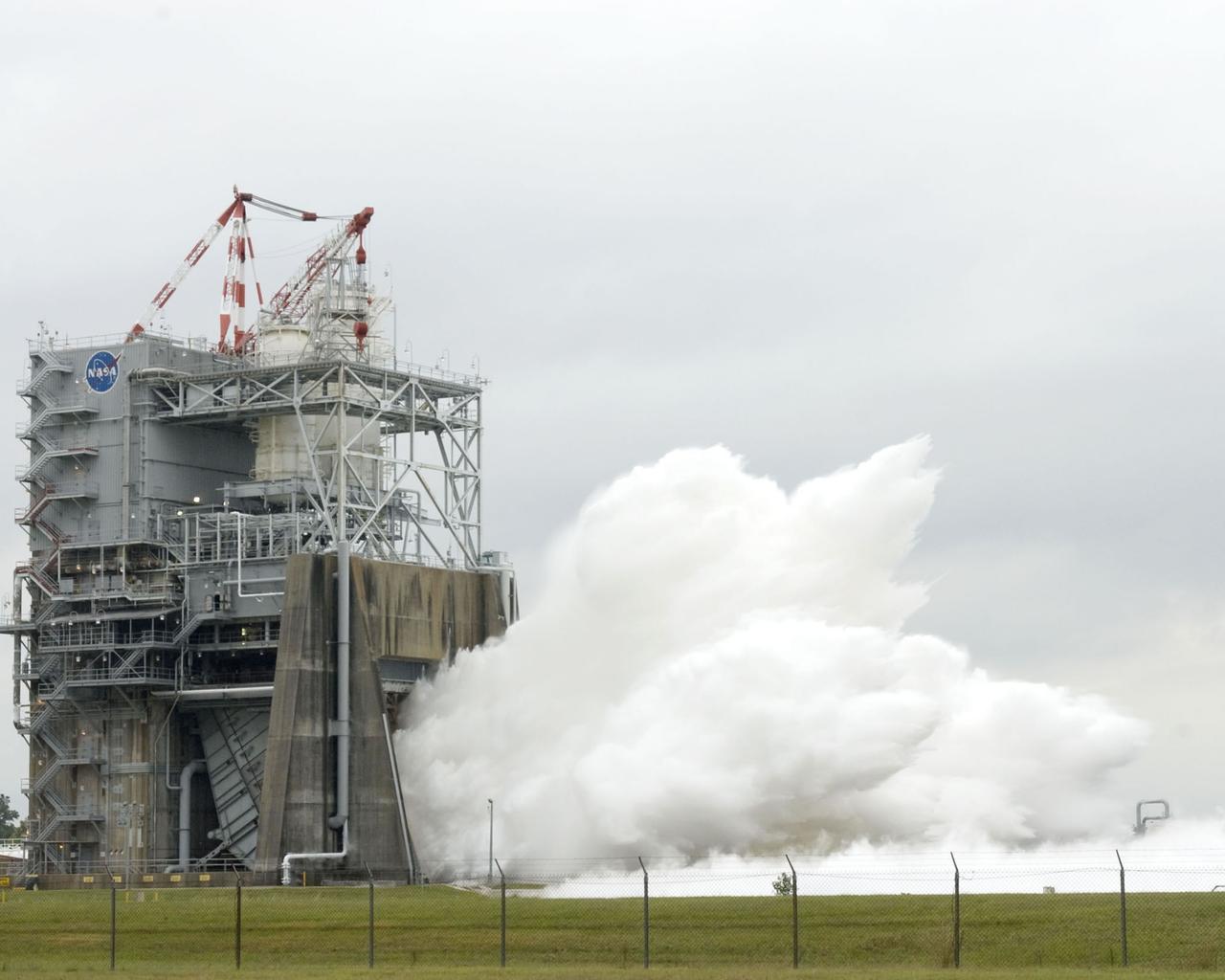
Steam blasts out of the A-2 Test Stand at Stennis Space Center on Oct. 22 as engineers begin a certification test on engine 2061, the last space shuttle main flight engine scheduled to be built. Since 1975, Stennis has tested every space shuttle main engine used in the program - about 50 engines in all. Those engines have powered more than 120 shuttle missions - and no mission has failed as a result of engine malfunction. For the remainder of 2008 and throughout 2009, Stennis will continue testing of various space shuttle main engine components.
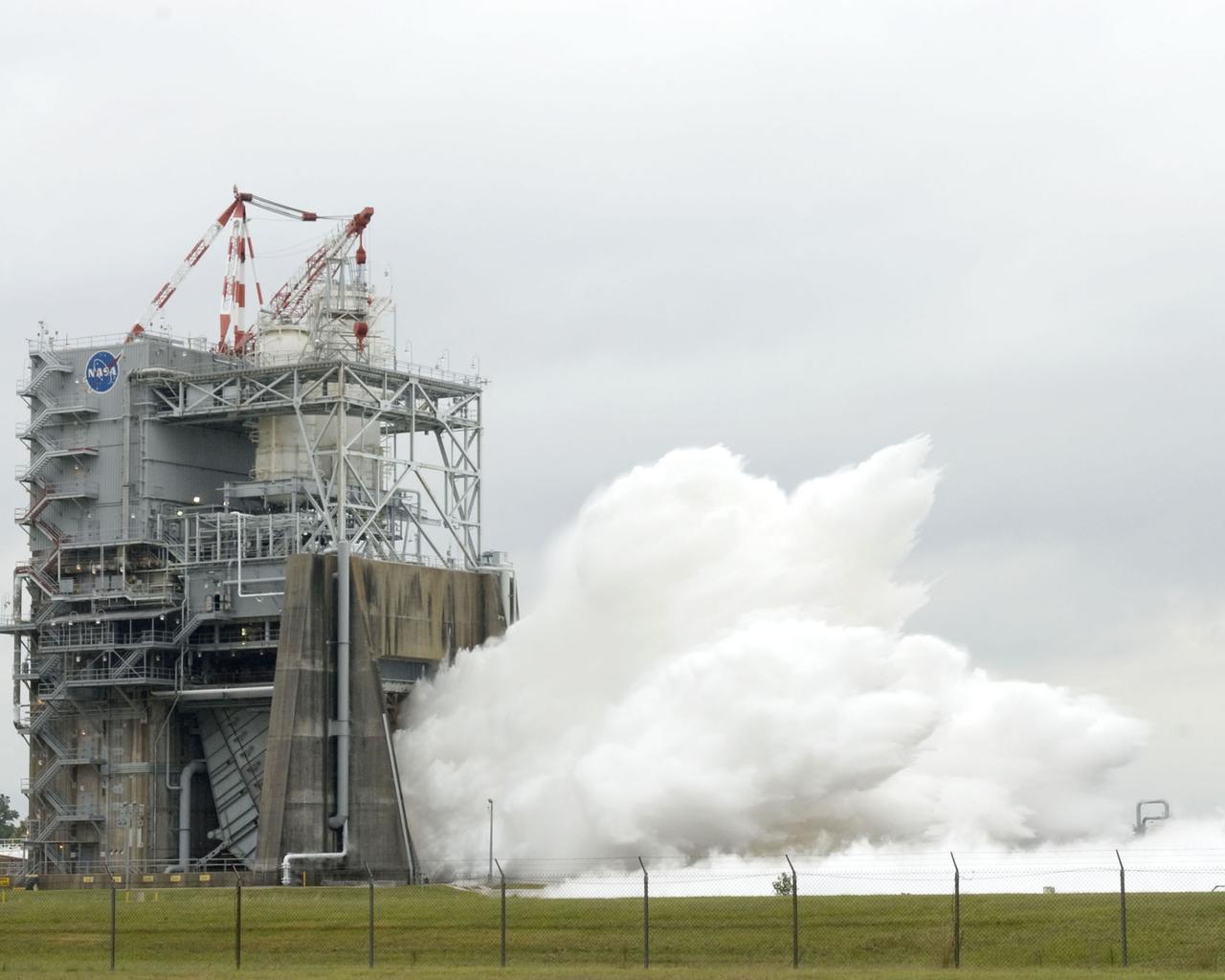
Steam blasts out of the A-2 Test Stand at Stennis Space Center on Oct. 22 as engineers begin a certification test on engine 2061, the last space shuttle main flight engine scheduled to be built. Since 1975, Stennis has tested every space shuttle main engine used in the program - about 50 engines in all. Those engines have powered more than 120 shuttle missions - and no mission has failed as a result of engine malfunction. For the remainder of 2008 and throughout 2009, Stennis will continue testing of various space shuttle main engine components.
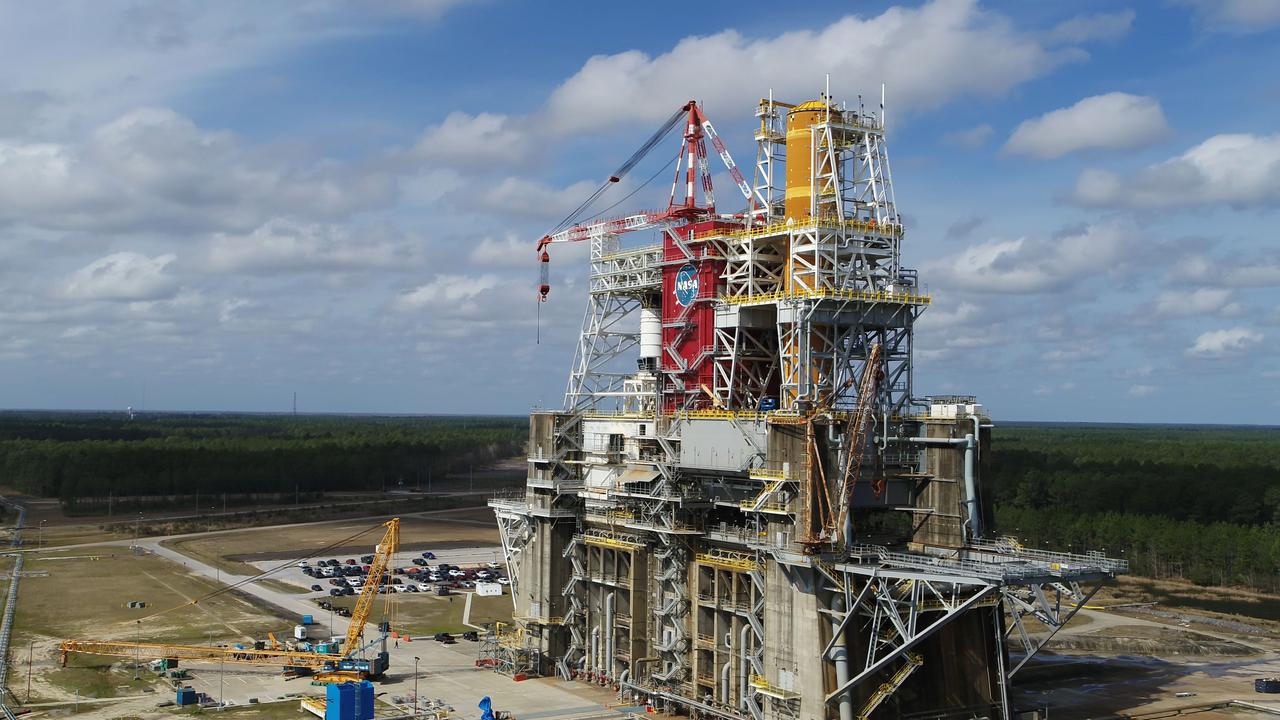
A NASA drone photo offers a bird’s-eye view of the B-2 Test Stand at NASA’s Stennis Space Center with the first flight core stage for NASA’s new Space Launch System (SLS) installed for Green Run testing. The SLS core stage is undergoing a series of tests on its integrated systems prior to its use on the Artemis I mission. NASA is building SLS to return humans, including the first woman, to the Moon as part of the Artemis program and to prepare for eventual missions to Mars. The Green Run series at Stennis culminates with a hot fire of the core stage’s four RS-25 engines, just as during an actual launch.
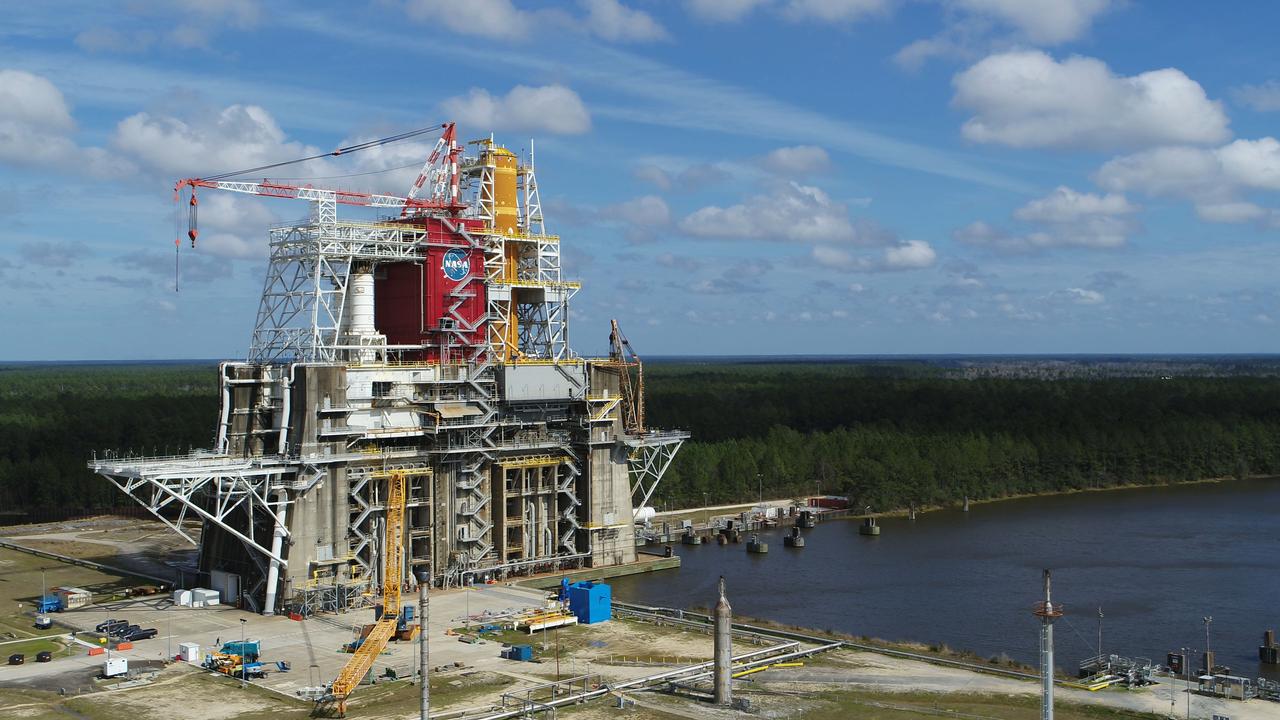
A NASA drone photo offers a bird’s-eye view of the B-2 Test Stand at NASA’s Stennis Space Center with the first flight core stage for NASA’s new Space Launch System (SLS) installed for Green Run testing. The SLS core stage is undergoing a series of tests on its integrated systems prior to its use on the Artemis I mission. NASA is building SLS to return humans, including the first woman, to the Moon as part of the Artemis program and to prepare for eventual missions to Mars. The Green Run series at Stennis culminates with a hot fire of the core stage’s four RS-25 engines, just as during an actual launch.
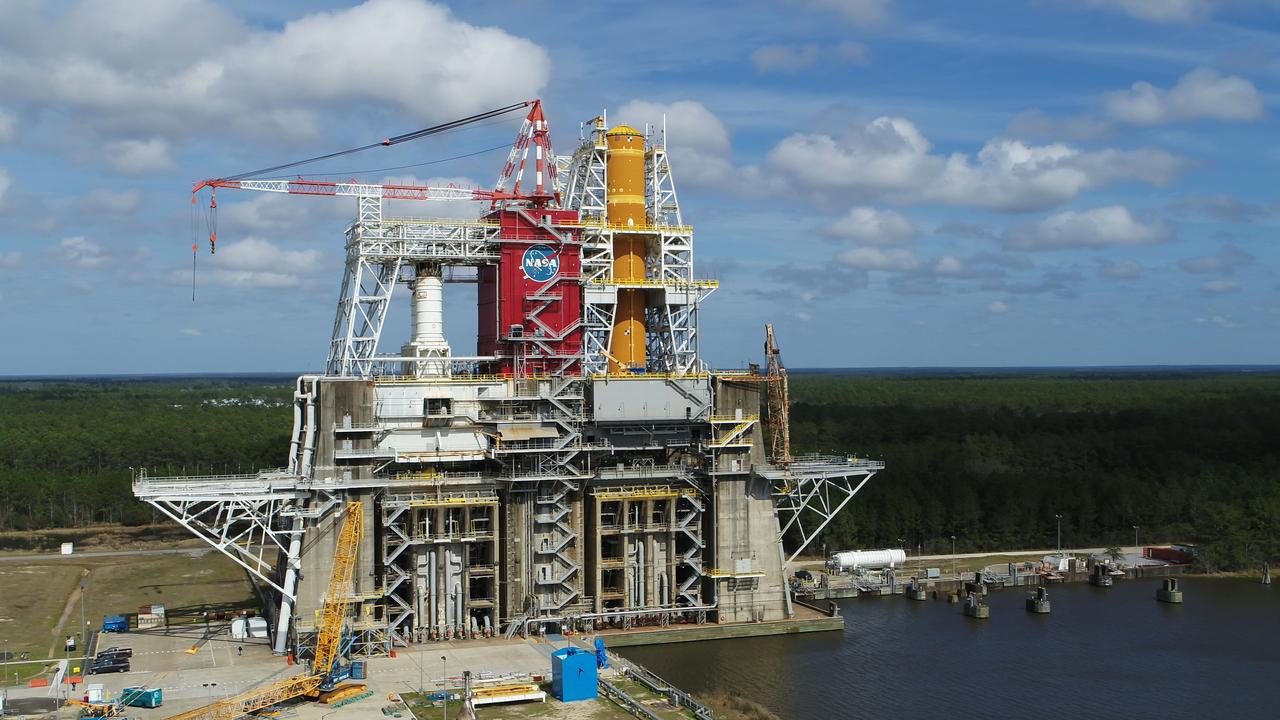
A NASA drone photo offers a bird’s-eye view of the B-2 Test Stand at NASA’s Stennis Space Center with the first flight core stage for NASA’s new Space Launch System (SLS) installed for Green Run testing. The SLS core stage is undergoing a series of tests on its integrated systems prior to its use on the Artemis I mission. NASA is building SLS to return humans, including the first woman, to the Moon as part of the Artemis program and to prepare for eventual missions to Mars. The Green Run series at Stennis culminates with a hot fire of the core stage’s four RS-25 engines, just as during an actual launch.
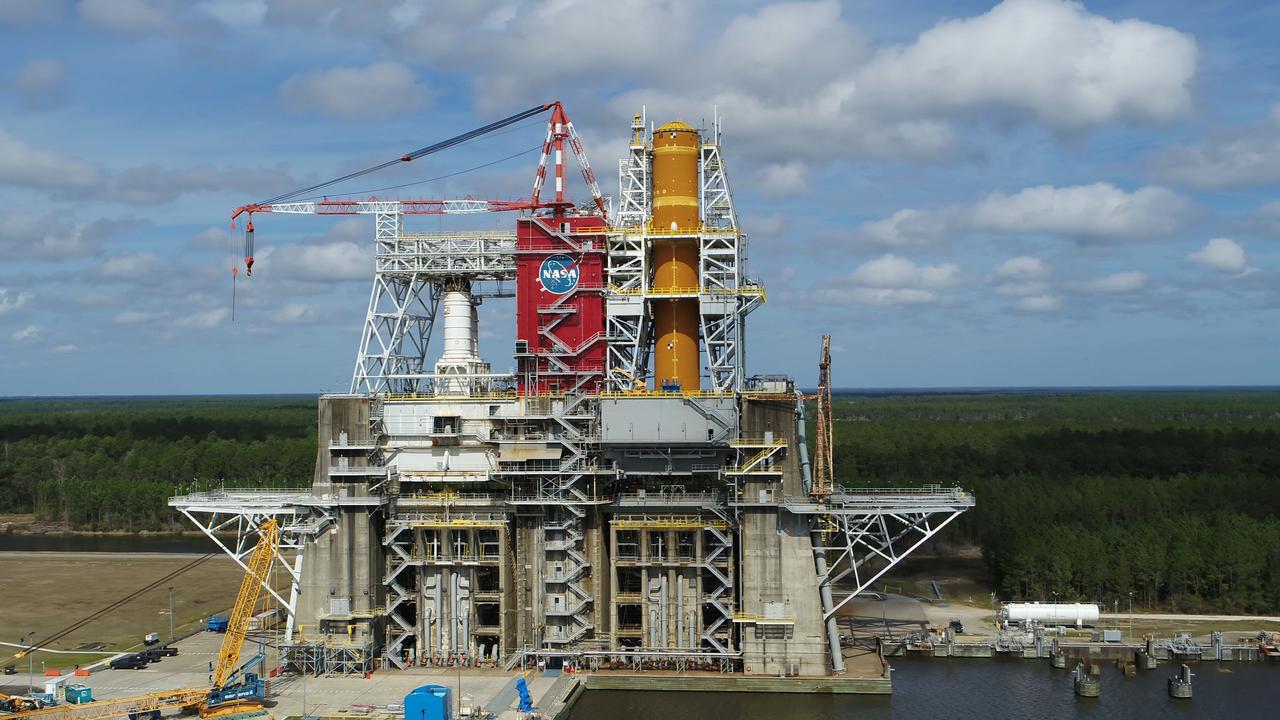
A NASA drone photo offers a bird’s-eye view of the B-2 Test Stand at NASA’s Stennis Space Center with the first flight core stage for NASA’s new Space Launch System (SLS) installed for Green Run testing. The SLS core stage is undergoing a series of tests on its integrated systems prior to its use on the Artemis I mission. NASA is building SLS to return humans, including the first woman, to the Moon as part of the Artemis program and to prepare for eventual missions to Mars. The Green Run series at Stennis culminates with a hot fire of the core stage’s four RS-25 engines, just as during an actual launch.
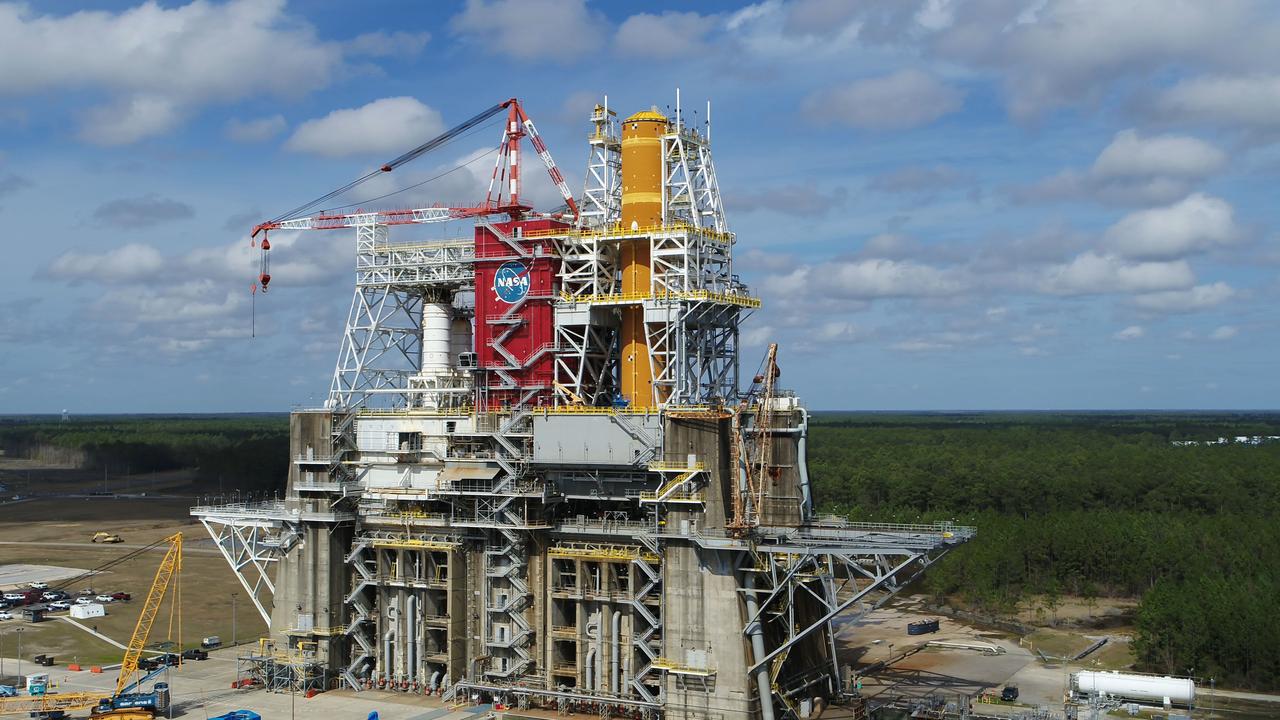
A NASA drone photo offers a bird’s-eye view of the B-2 Test Stand at NASA’s Stennis Space Center with the first flight core stage for NASA’s new Space Launch System (SLS) installed for Green Run testing. The SLS core stage is undergoing a series of tests on its integrated systems prior to its use on the Artemis I mission. NASA is building SLS to return humans, including the first woman, to the Moon as part of the Artemis program and to prepare for eventual missions to Mars. The Green Run series at Stennis culminates with a hot fire of the core stage’s four RS-25 engines, just as during an actual launch.
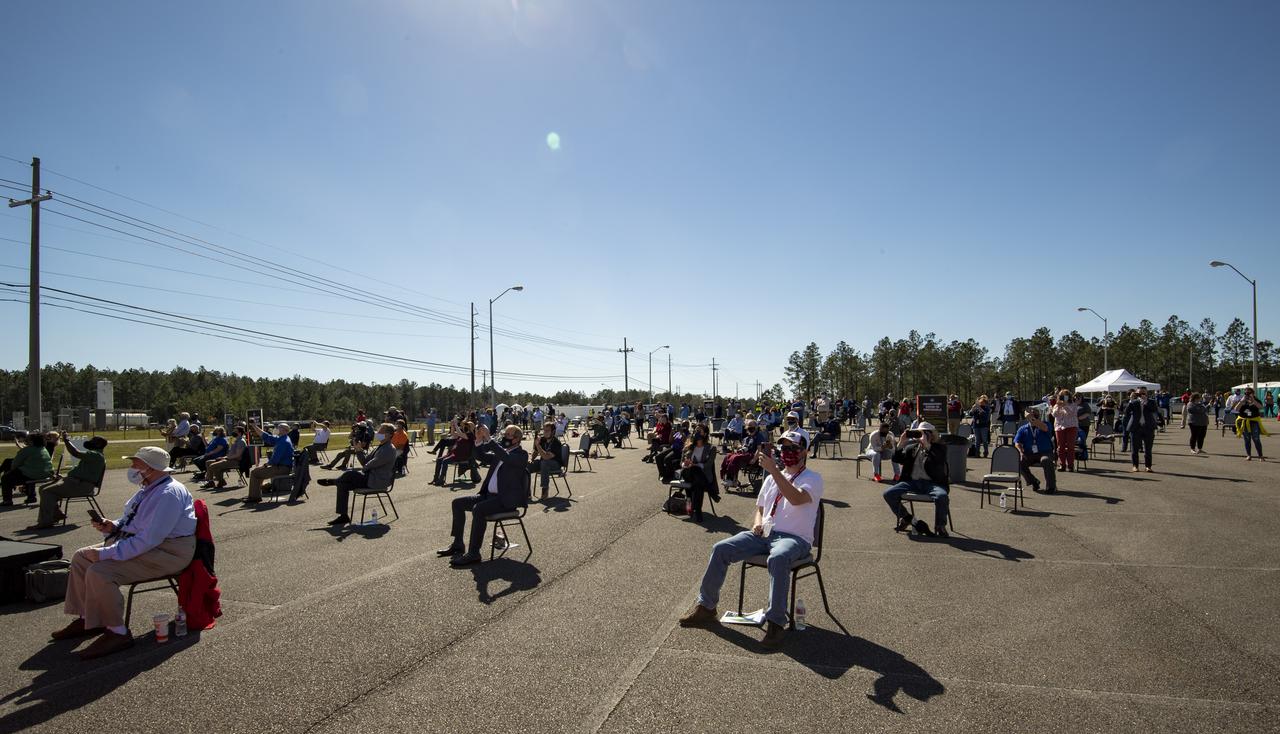
Invited guests watch as the core stage for the first flight of NASA’s Space Launch System rocket undergoes a second hot fire test in the B-2 Test Stand, Thursday, March 18, 2021, at NASA’s Stennis Space Center near Bay St. Louis, Mississippi. The four RS-25 engines fired for the full-duration of 8 minutes during the test and generated 1.6 million pounds of thrust. The hot fire test is the final stage of the Green Run test series, a comprehensive assessment of the Space Launch System’s core stage prior to launching the Artemis I mission to the Moon. Photo Credit: (NASA/Robert Markowitz)
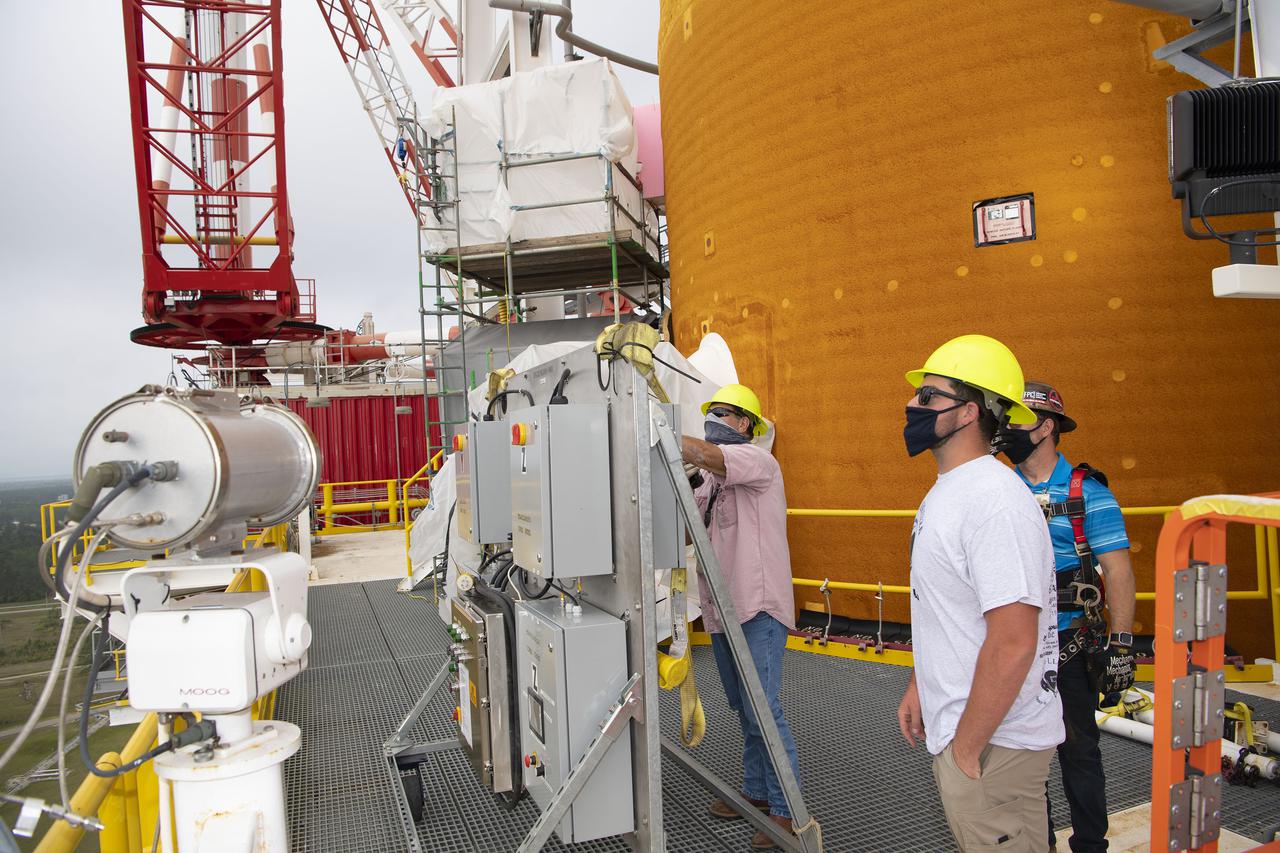
Team members at NASA’s Stennis Space Center near Bay St. Louis, Mississippi, complete refurbishment work on the first core stage of the agency’s Space Launch System (SLS) rocket. The work followed a successful hot fire of the stage and its four RS-25 engines March 18. The hot fire marked the culmination of a yearlong Green Run series of tests of the stage and its integrated systems. Following refurbishment work, the core stage will be removed from the test stand and transported to Kennedy Space Center in Florida, aboard NASA’s Pegasus barge, shown delivering equipment to the B-2 Test Stand. At Kennedy, the core stage will be integrated with the rest of SLS rocket and prepared for the launch of the Artemis I mission to the Moon. Photo Credit: NASA
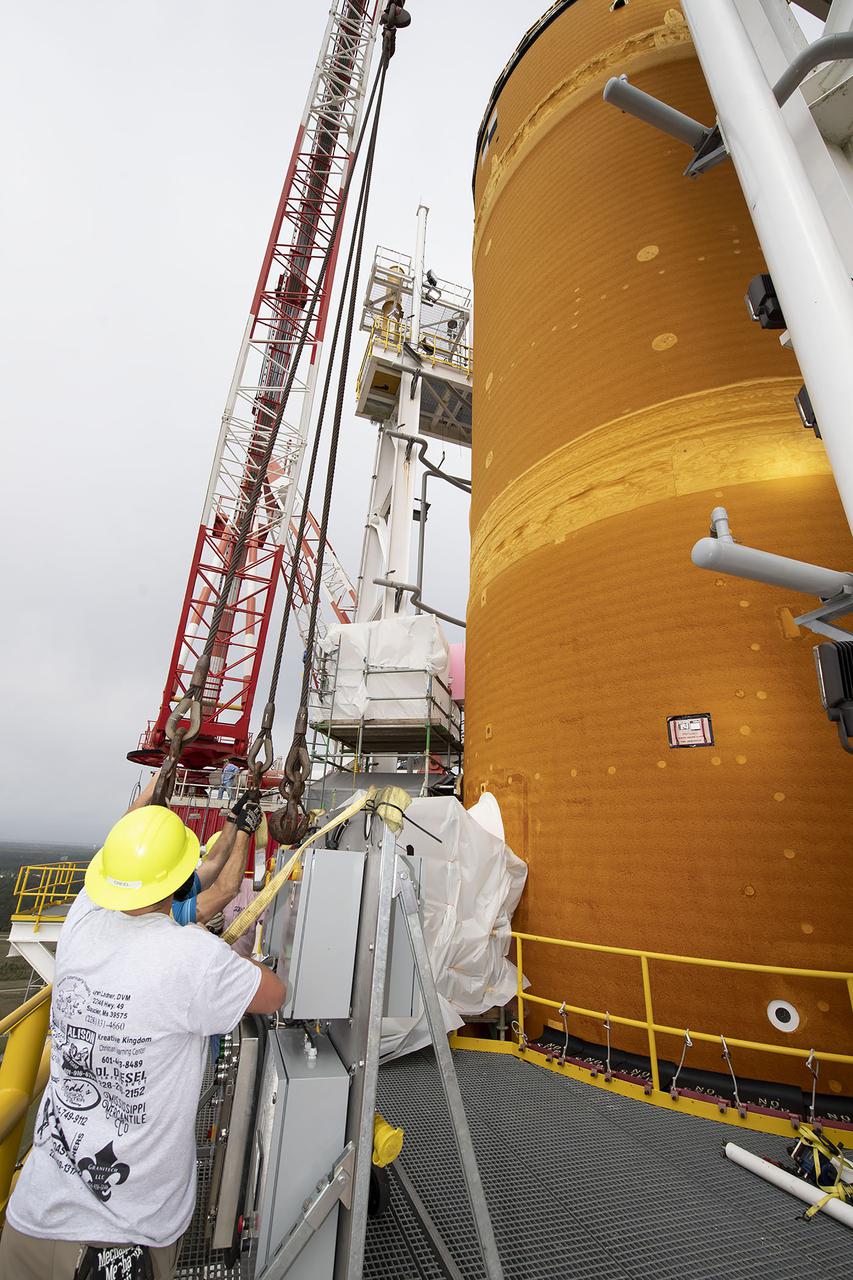
Team members at NASA’s Stennis Space Center near Bay St. Louis, Mississippi, complete refurbishment work on the first core stage of the agency’s Space Launch System (SLS) rocket. The work followed a successful hot fire of the stage and its four RS-25 engines March 18. The hot fire marked the culmination of a yearlong Green Run series of tests of the stage and its integrated systems. Following refurbishment work, the core stage will be removed from the test stand and transported to Kennedy Space Center in Florida, aboard NASA’s Pegasus barge, shown delivering equipment to the B-2 Test Stand. At Kennedy, the core stage will be integrated with the rest of SLS rocket and prepared for the launch of the Artemis I mission to the Moon. Photo Credit: NASA
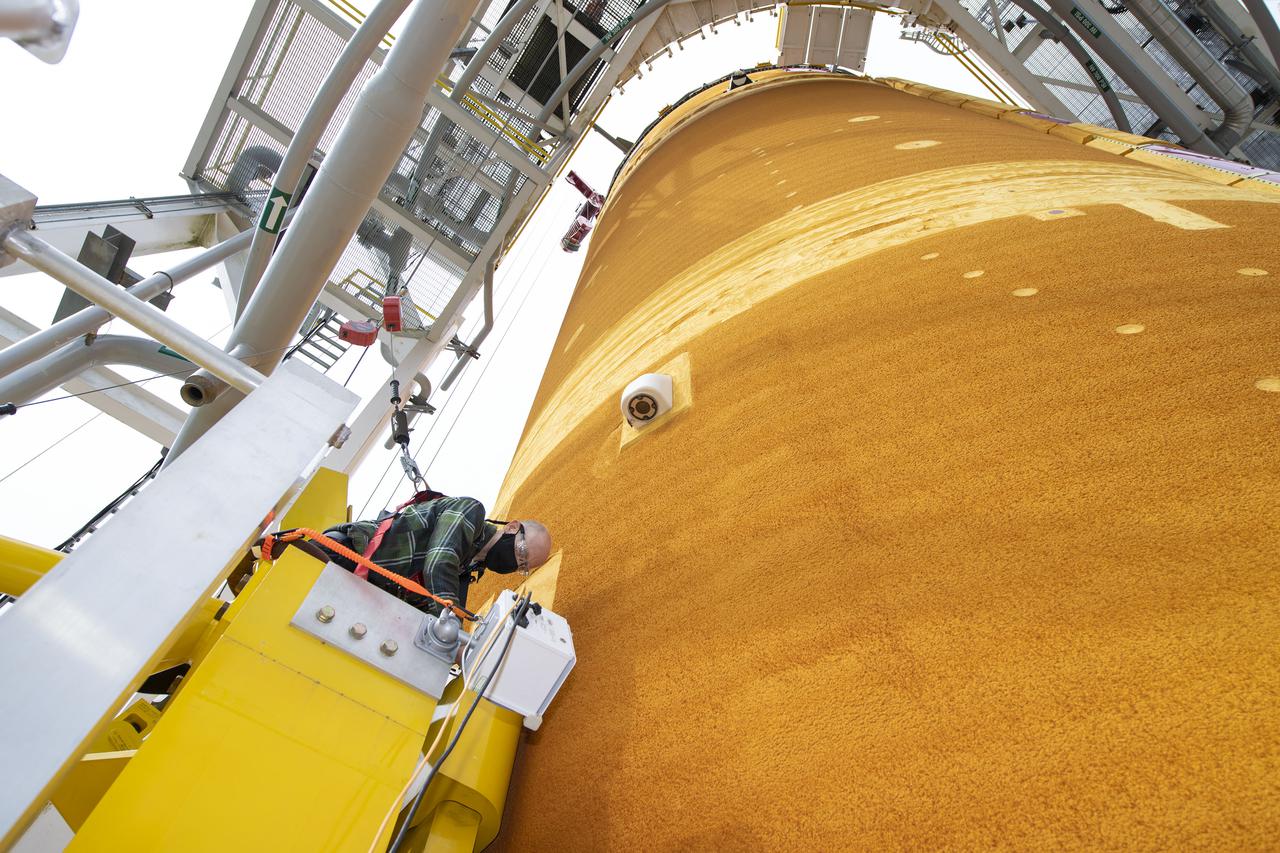
Team members at NASA’s Stennis Space Center near Bay St. Louis, Mississippi, complete refurbishment work on the first core stage of the agency’s Space Launch System (SLS) rocket. The work followed a successful hot fire of the stage and its four RS-25 engines March 18. The hot fire marked the culmination of a yearlong Green Run series of tests of the stage and its integrated systems. Following refurbishment work, the core stage will be removed from the test stand and transported to Kennedy Space Center in Florida, aboard NASA’s Pegasus barge, shown delivering equipment to the B-2 Test Stand. At Kennedy, the core stage will be integrated with the rest of SLS rocket and prepared for the launch of the Artemis I mission to the Moon. Photo Credit: NASA
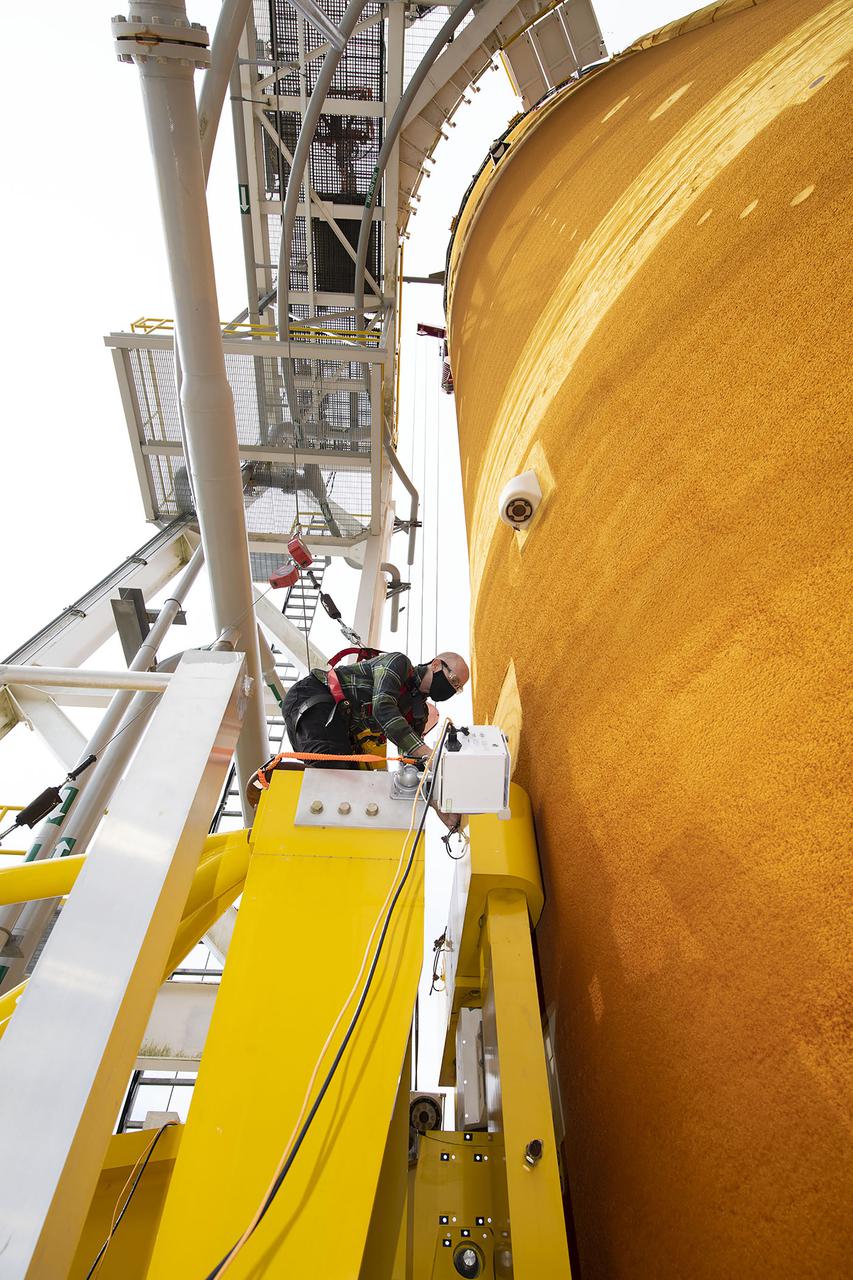
Team members at NASA’s Stennis Space Center near Bay St. Louis, Mississippi, complete refurbishment work on the first core stage of the agency’s Space Launch System (SLS) rocket. The work followed a successful hot fire of the stage and its four RS-25 engines March 18. The hot fire marked the culmination of a yearlong Green Run series of tests of the stage and its integrated systems. Following refurbishment work, the core stage will be removed from the test stand and transported to Kennedy Space Center in Florida, aboard NASA’s Pegasus barge, shown delivering equipment to the B-2 Test Stand. At Kennedy, the core stage will be integrated with the rest of SLS rocket and prepared for the launch of the Artemis I mission to the Moon. Photo Credit: NASA
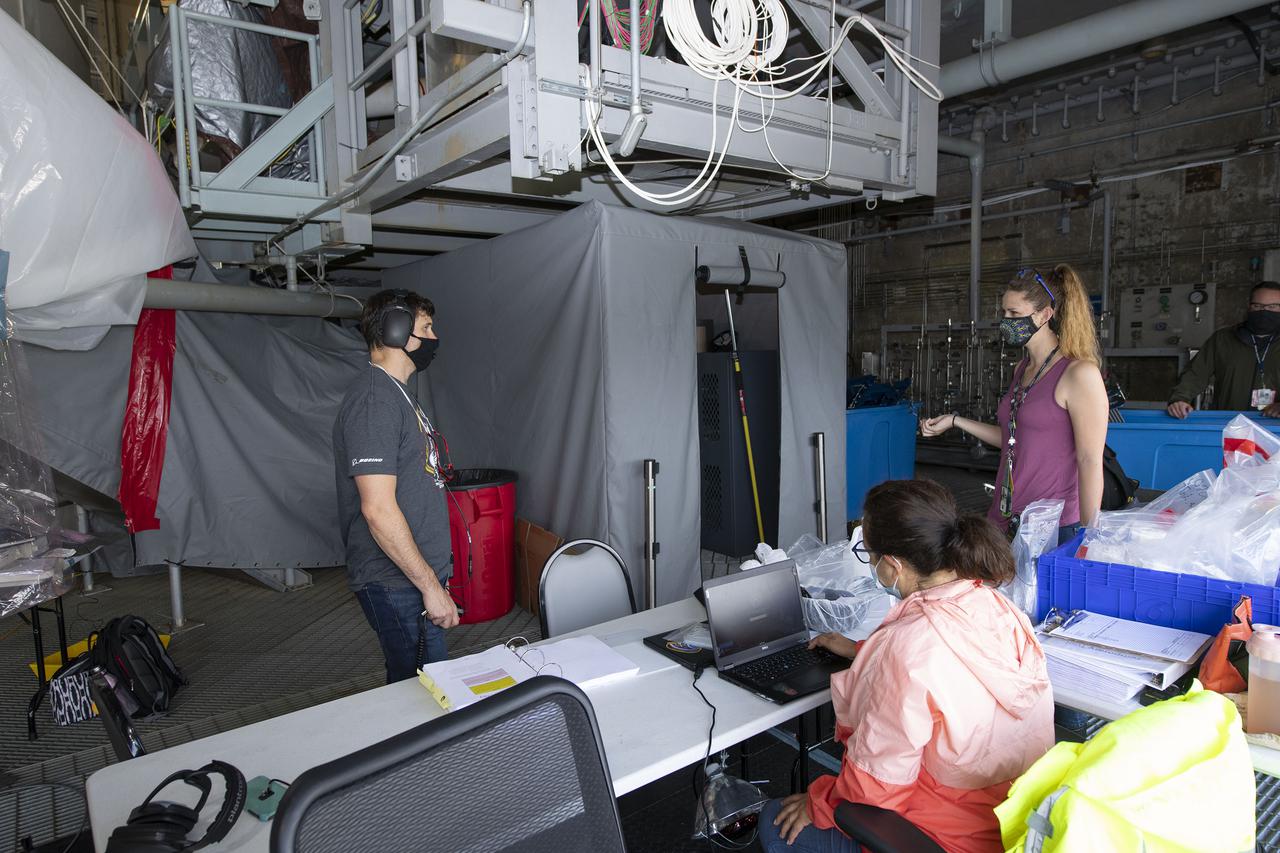
Team members at NASA’s Stennis Space Center near Bay St. Louis, Mississippi, complete refurbishment work on the first core stage of the agency’s Space Launch System (SLS) rocket. The work followed a successful hot fire of the stage and its four RS-25 engines March 18. The hot fire marked the culmination of a yearlong Green Run series of tests of the stage and its integrated systems. Following refurbishment work, the core stage will be removed from the test stand and transported to Kennedy Space Center in Florida, aboard NASA’s Pegasus barge, shown delivering equipment to the B-2 Test Stand. At Kennedy, the core stage will be integrated with the rest of SLS rocket and prepared for the launch of the Artemis I mission to the Moon. Photo Credit: NASA
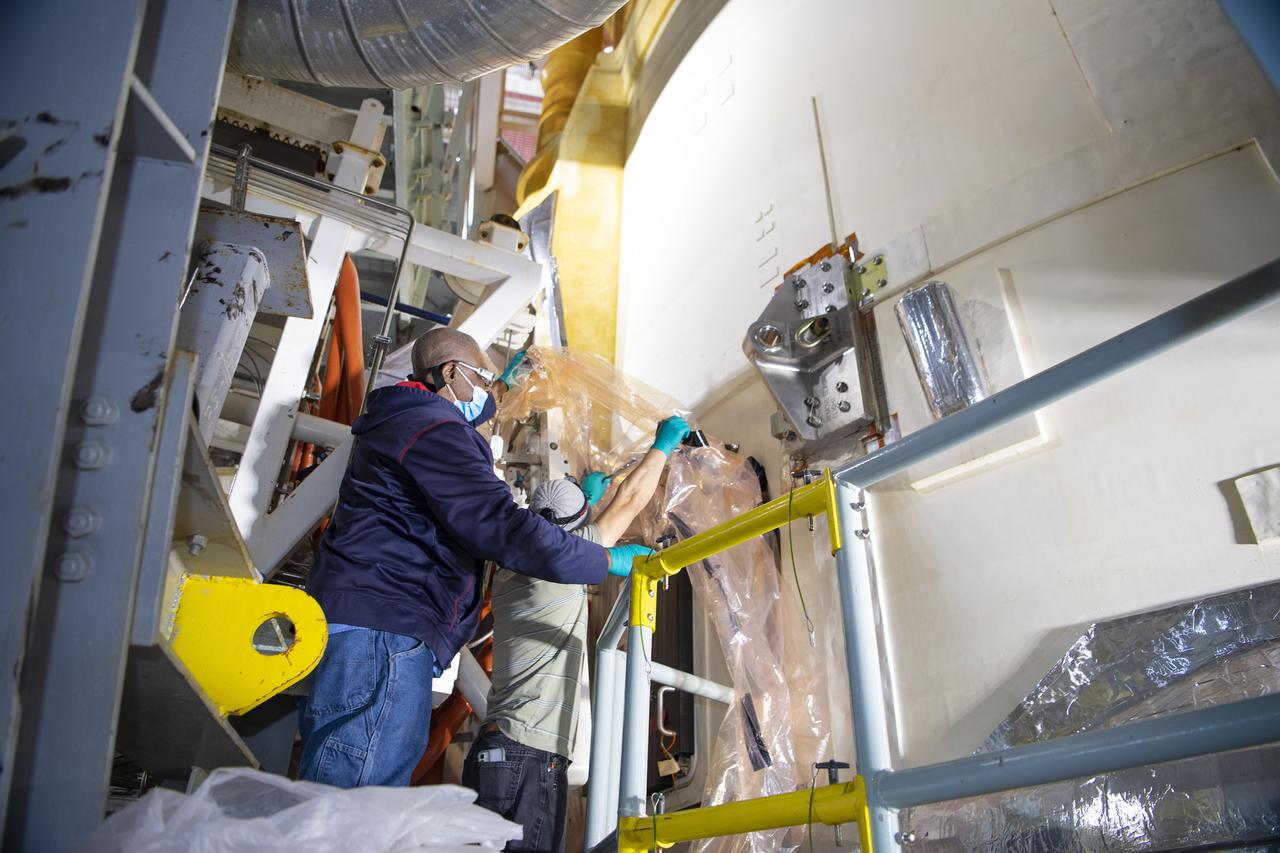
Team members at NASA’s Stennis Space Center near Bay St. Louis, Mississippi, complete refurbishment work on the first core stage of the agency’s Space Launch System (SLS) rocket. The work followed a successful hot fire of the stage and its four RS-25 engines March 18. The hot fire marked the culmination of a yearlong Green Run series of tests of the stage and its integrated systems. Following refurbishment work, the core stage will be removed from the test stand and transported to Kennedy Space Center in Florida, aboard NASA’s Pegasus barge, shown delivering equipment to the B-2 Test Stand. At Kennedy, the core stage will be integrated with the rest of SLS rocket and prepared for the launch of the Artemis I mission to the Moon. Photo Credit: NASA
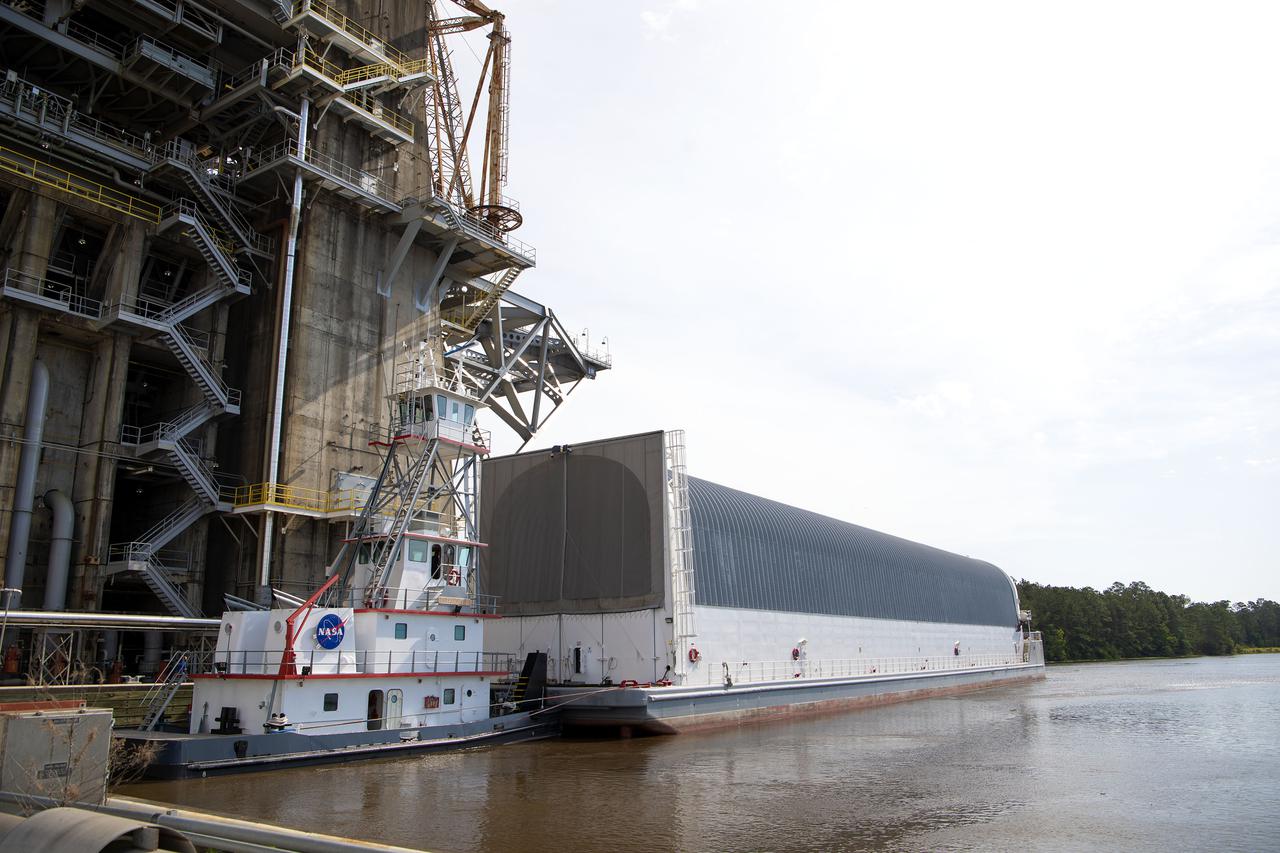
Team members at NASA’s Stennis Space Center near Bay St. Louis, Mississippi, complete refurbishment work on the first core stage of the agency’s Space Launch System (SLS) rocket. The work followed a successful hot fire of the stage and its four RS-25 engines March 18. The hot fire marked the culmination of a yearlong Green Run series of tests of the stage and its integrated systems. Following refurbishment work, the core stage will be removed from the test stand and transported to Kennedy Space Center in Florida, aboard NASA’s Pegasus barge, shown delivering equipment to the B-2 Test Stand. At Kennedy, the core stage will be integrated with the rest of SLS rocket and prepared for the launch of the Artemis I mission to the Moon. Photo Credit: NASA
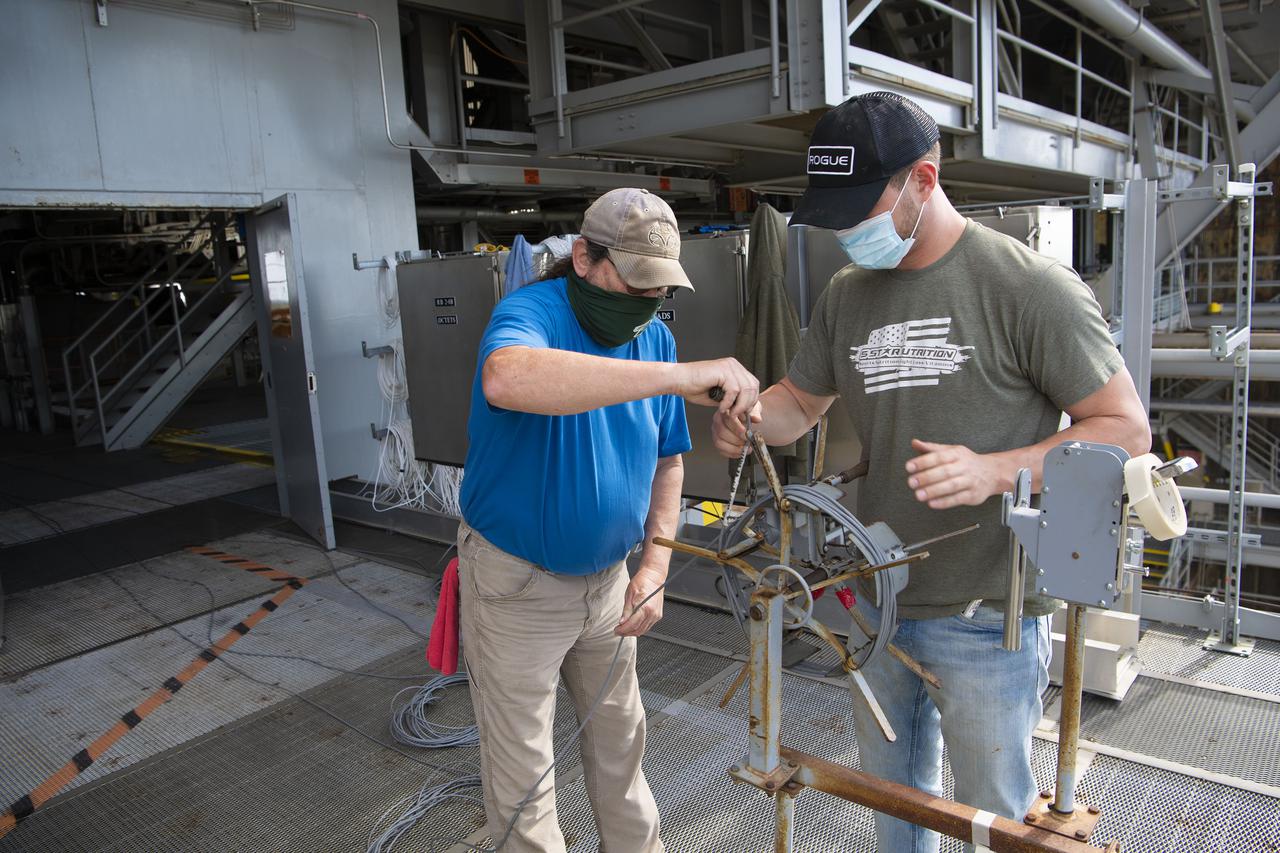
Team members at NASA’s Stennis Space Center near Bay St. Louis, Mississippi, complete refurbishment work on the first core stage of the agency’s Space Launch System (SLS) rocket. The work followed a successful hot fire of the stage and its four RS-25 engines March 18. The hot fire marked the culmination of a yearlong Green Run series of tests of the stage and its integrated systems. Following refurbishment work, the core stage will be removed from the test stand and transported to Kennedy Space Center in Florida, aboard NASA’s Pegasus barge, shown delivering equipment to the B-2 Test Stand. At Kennedy, the core stage will be integrated with the rest of SLS rocket and prepared for the launch of the Artemis I mission to the Moon. Photo Credit: NASA
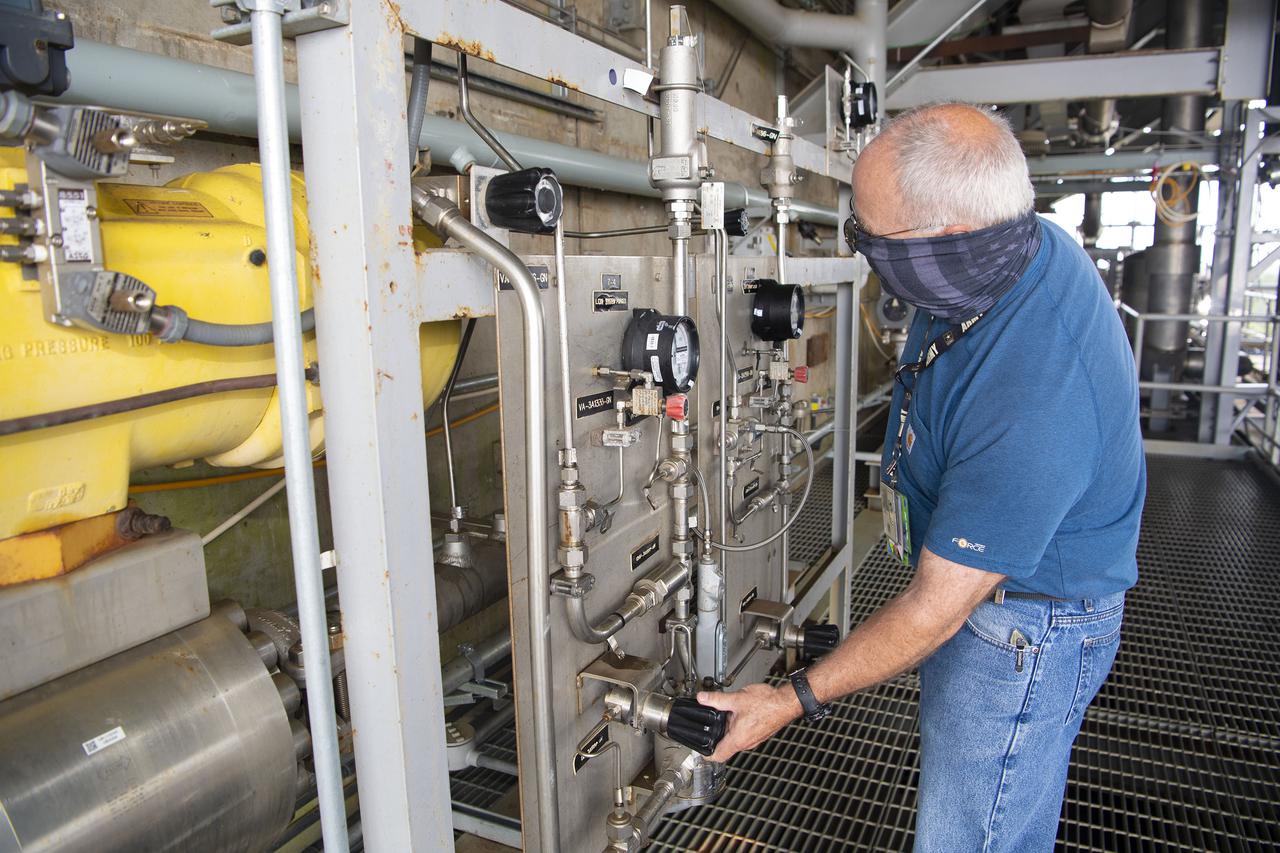
Team members at NASA’s Stennis Space Center near Bay St. Louis, Mississippi, complete refurbishment work on the first core stage of the agency’s Space Launch System (SLS) rocket. The work followed a successful hot fire of the stage and its four RS-25 engines March 18. The hot fire marked the culmination of a yearlong Green Run series of tests of the stage and its integrated systems. Following refurbishment work, the core stage will be removed from the test stand and transported to Kennedy Space Center in Florida, aboard NASA’s Pegasus barge, shown delivering equipment to the B-2 Test Stand. At Kennedy, the core stage will be integrated with the rest of SLS rocket and prepared for the launch of the Artemis I mission to the Moon. Photo Credit: NASA

Team members at NASA’s Stennis Space Center near Bay St. Louis, Mississippi, complete refurbishment work on the first core stage of the agency’s Space Launch System (SLS) rocket. The work followed a successful hot fire of the stage and its four RS-25 engines March 18. The hot fire marked the culmination of a yearlong Green Run series of tests of the stage and its integrated systems. Following refurbishment work, the core stage will be removed from the test stand and transported to Kennedy Space Center in Florida, aboard NASA’s Pegasus barge, shown delivering equipment to the B-2 Test Stand. At Kennedy, the core stage will be integrated with the rest of SLS rocket and prepared for the launch of the Artemis I mission to the Moon. Photo Credit: NASA
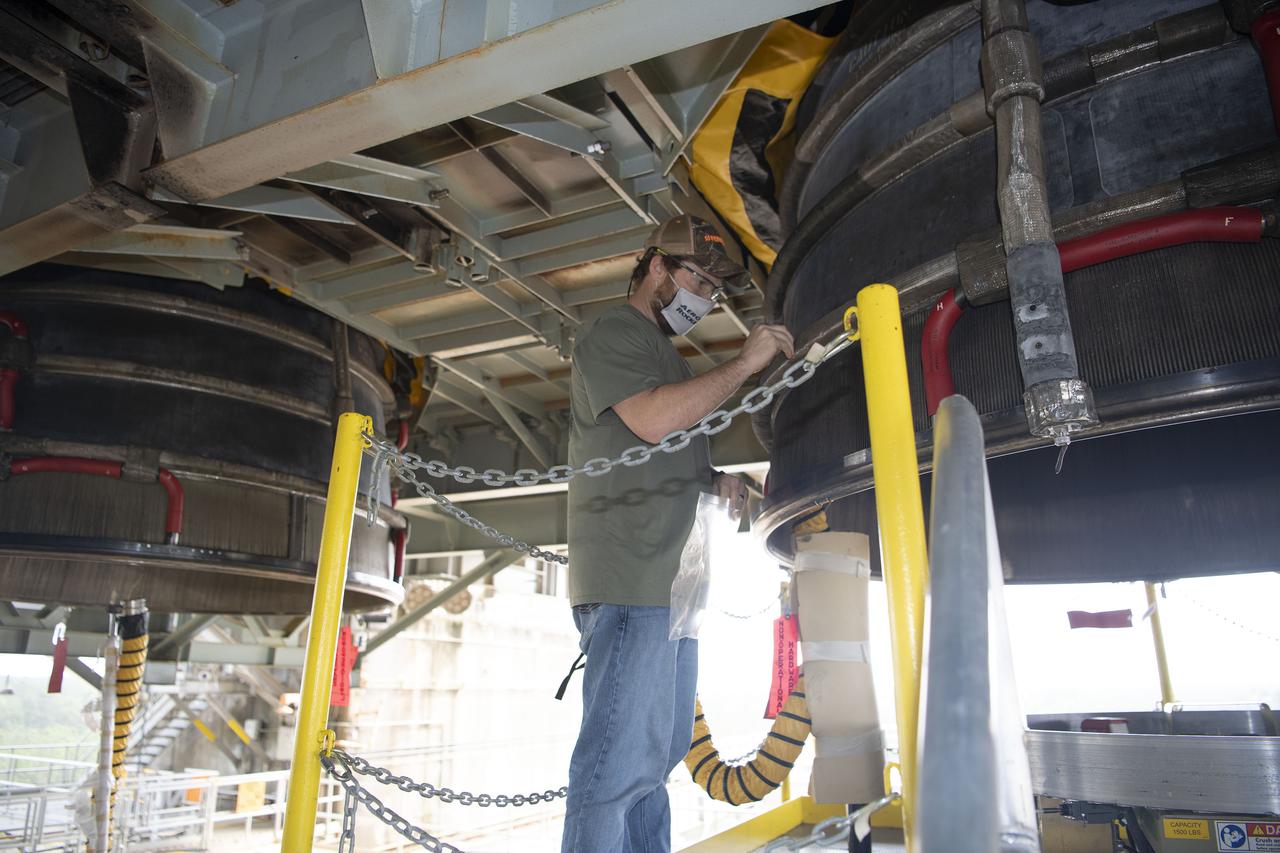
Team members at NASA’s Stennis Space Center near Bay St. Louis, Mississippi, complete refurbishment work on the first core stage of the agency’s Space Launch System (SLS) rocket. The work followed a successful hot fire of the stage and its four RS-25 engines March 18. The hot fire marked the culmination of a yearlong Green Run series of tests of the stage and its integrated systems. Following refurbishment work, the core stage will be removed from the test stand and transported to Kennedy Space Center in Florida, aboard NASA’s Pegasus barge, shown delivering equipment to the B-2 Test Stand. At Kennedy, the core stage will be integrated with the rest of SLS rocket and prepared for the launch of the Artemis I mission to the Moon. Photo Credit: NASA
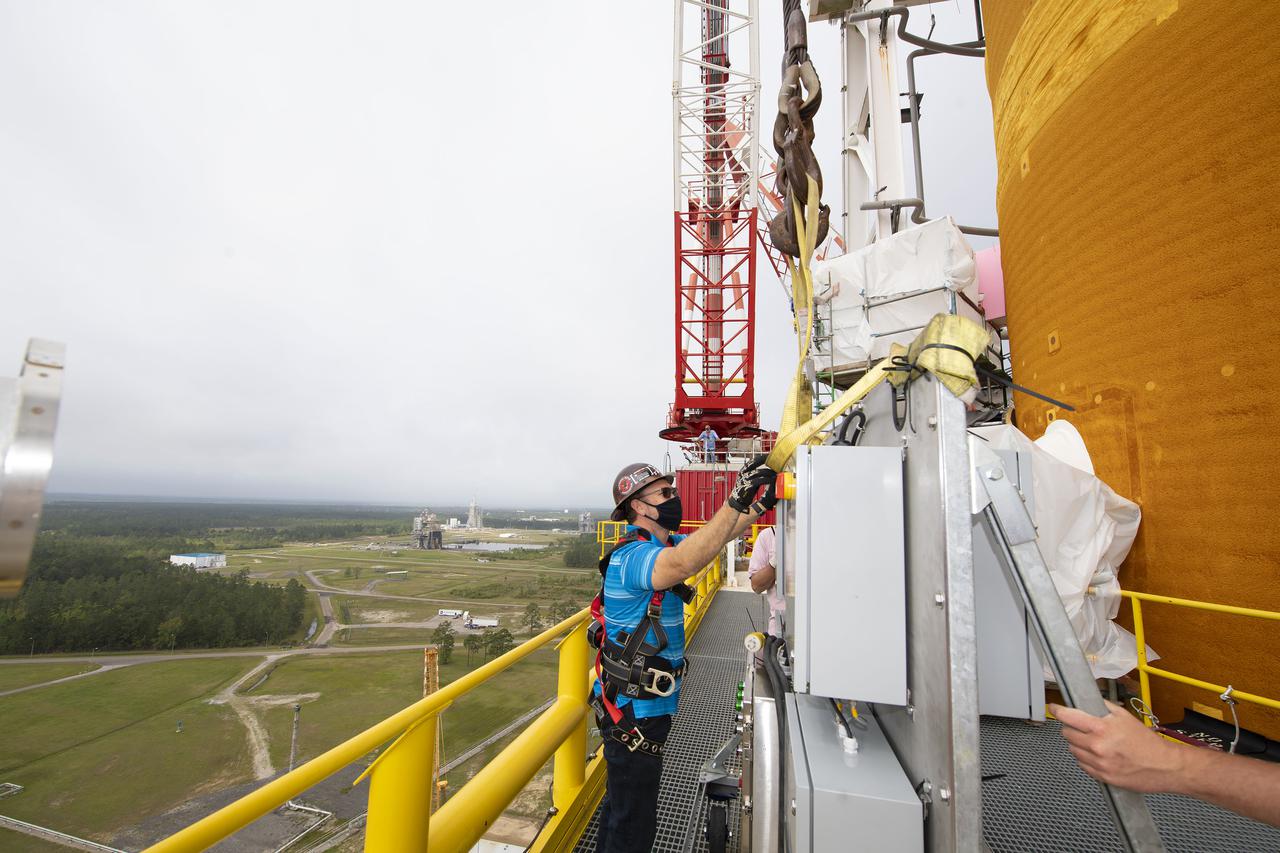
Team members at NASA’s Stennis Space Center near Bay St. Louis, Mississippi, complete refurbishment work on the first core stage of the agency’s Space Launch System (SLS) rocket. The work followed a successful hot fire of the stage and its four RS-25 engines March 18. The hot fire marked the culmination of a yearlong Green Run series of tests of the stage and its integrated systems. Following refurbishment work, the core stage will be removed from the test stand and transported to Kennedy Space Center in Florida, aboard NASA’s Pegasus barge, shown delivering equipment to the B-2 Test Stand. At Kennedy, the core stage will be integrated with the rest of SLS rocket and prepared for the launch of the Artemis I mission to the Moon. Photo Credit: NASA