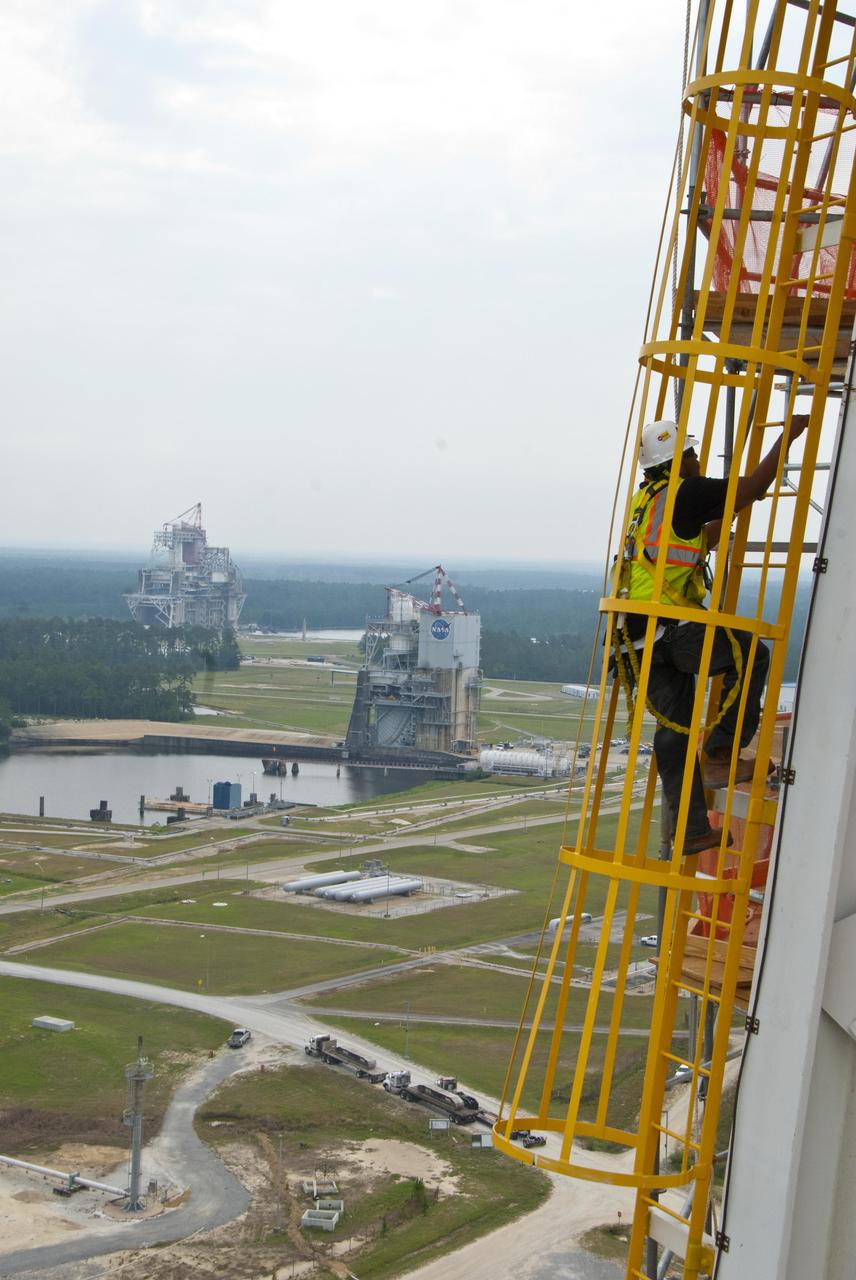
A tethered Stennis Space Center employee climbs an A-3 Test Stand ladder June 8, 2012, against the backdrop of the A-2 and B-1/B-2 stands. The new A-3 Test Stand will enable simulated high-altitude testing of next-generation rocket engines.
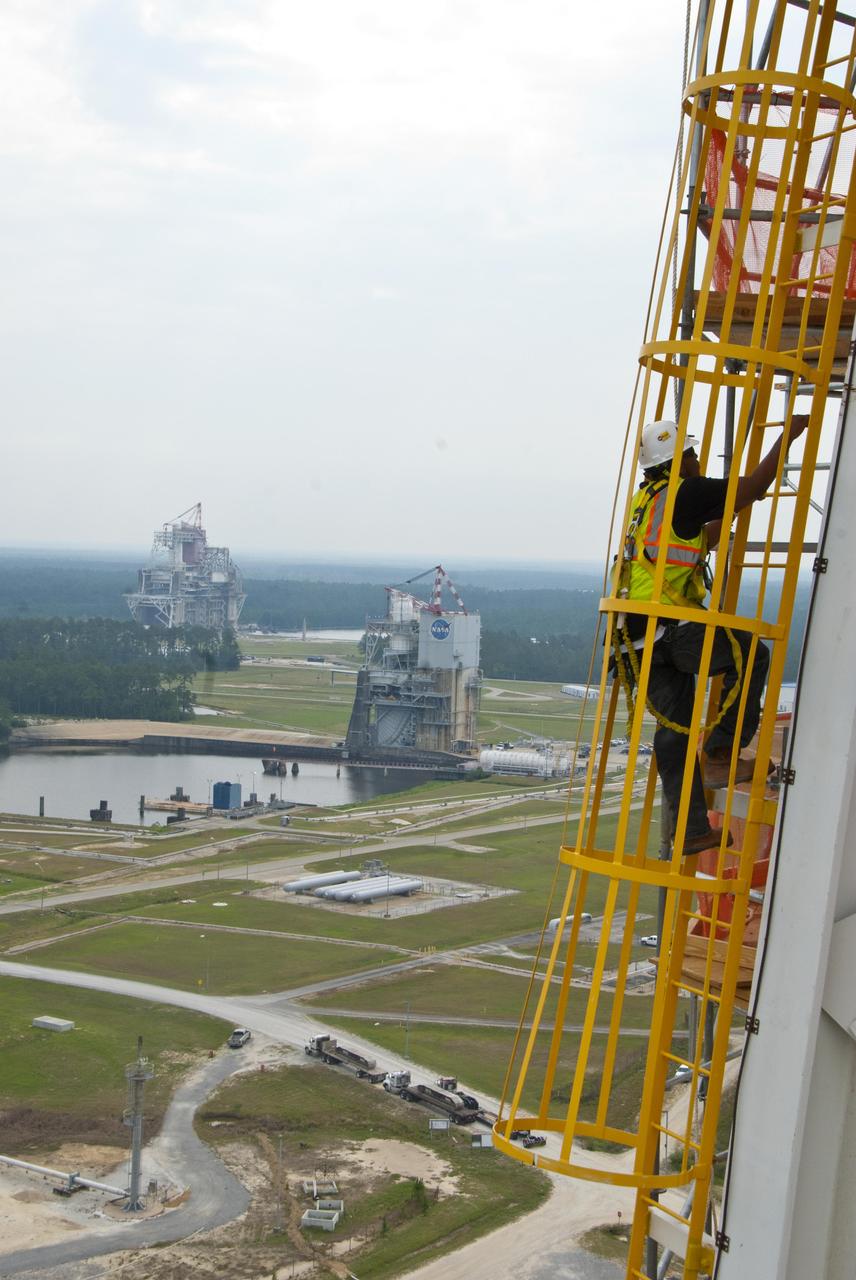
A tethered Stennis Space Center employee climbs an A-3 Test Stand ladded June 8, 2012, against the backdrop of the A-2 and B-1/B-2 stands. The new A-3 Test Stand will enable simulated high-altitude testing of next-generation rocket engines.
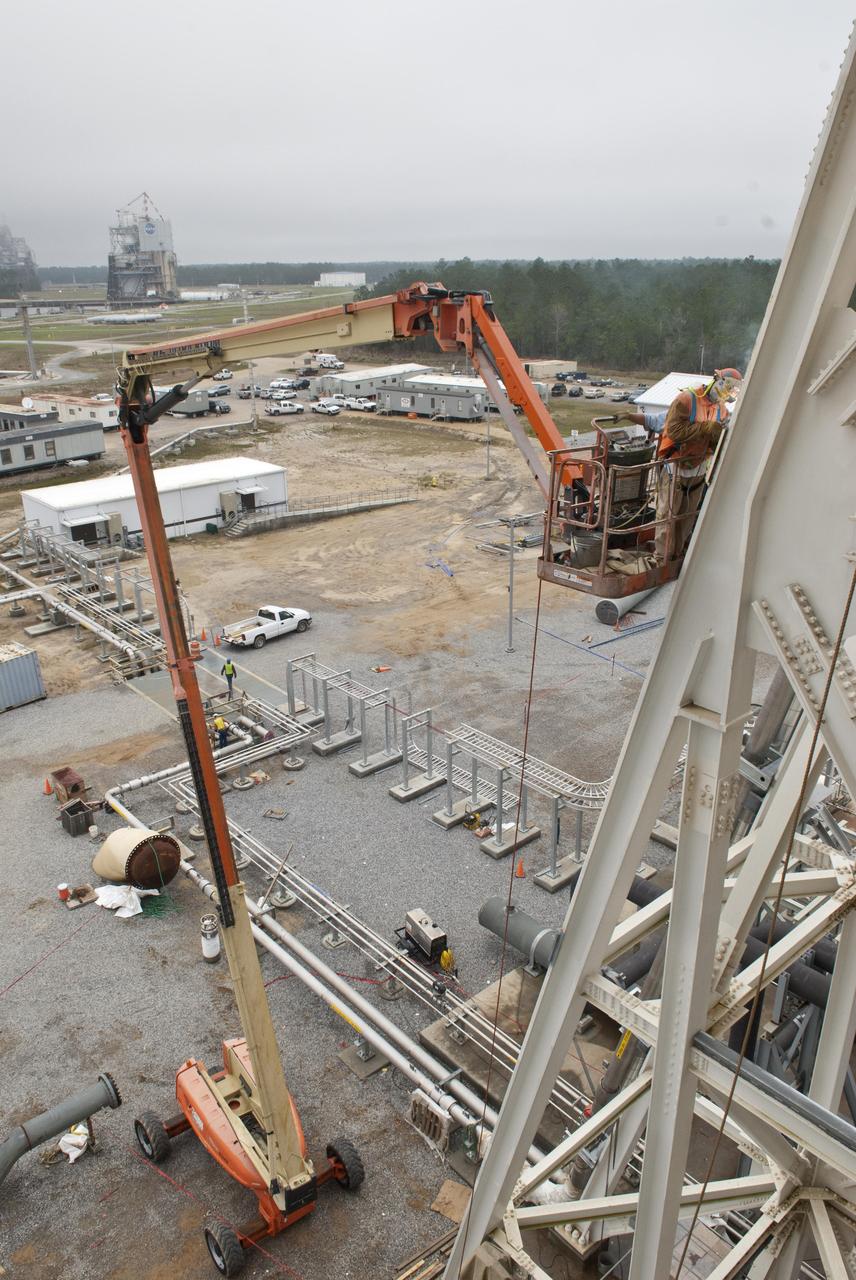
A Stennis Space Center employee works March 2, 2012, to further construction of the A-3 Test Stand, which will enable simulated high-altitude testing of next-generation rocket engines.
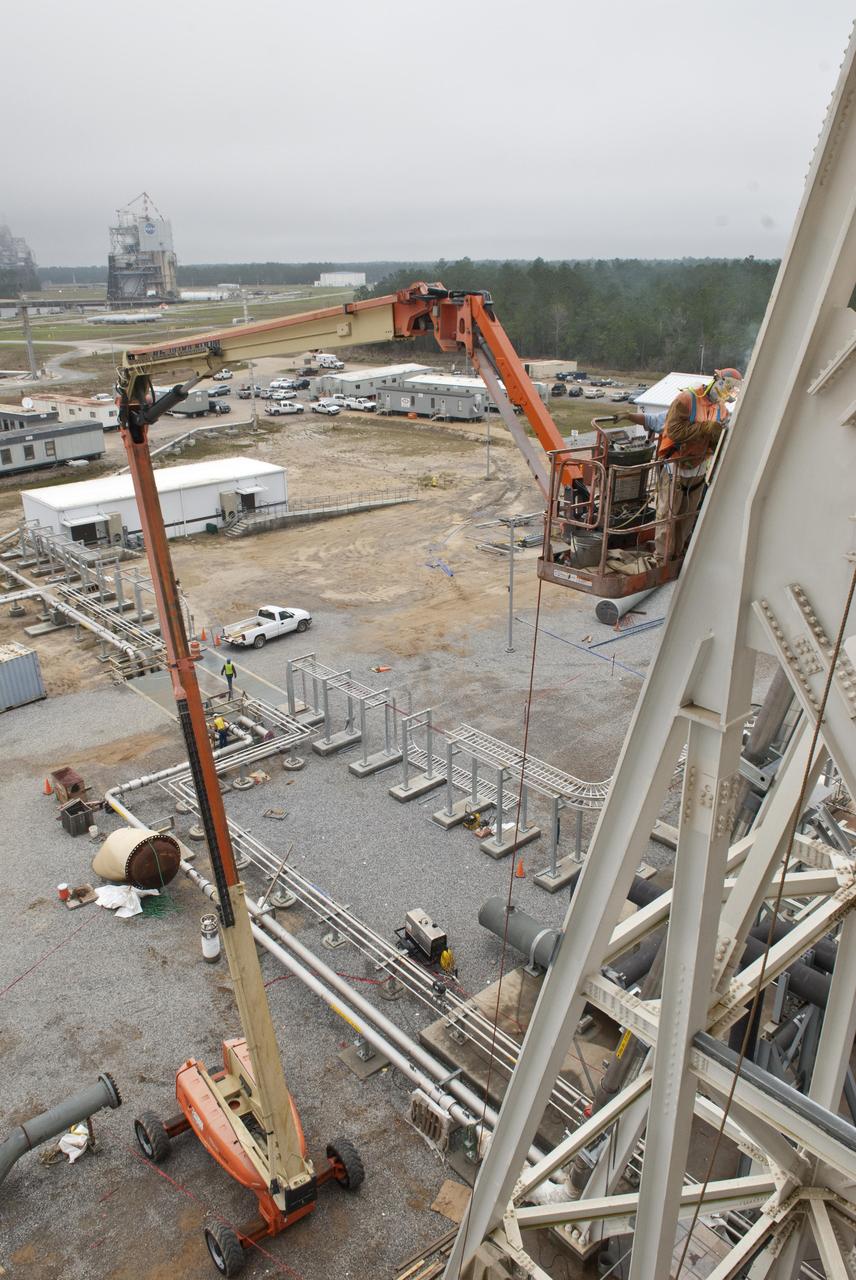
A Stennis Space Center employee works March 2, 2012, to further construction of the A-3 Test Stand, which will enable simulated high-altitude testing of next-generation rocket engines.
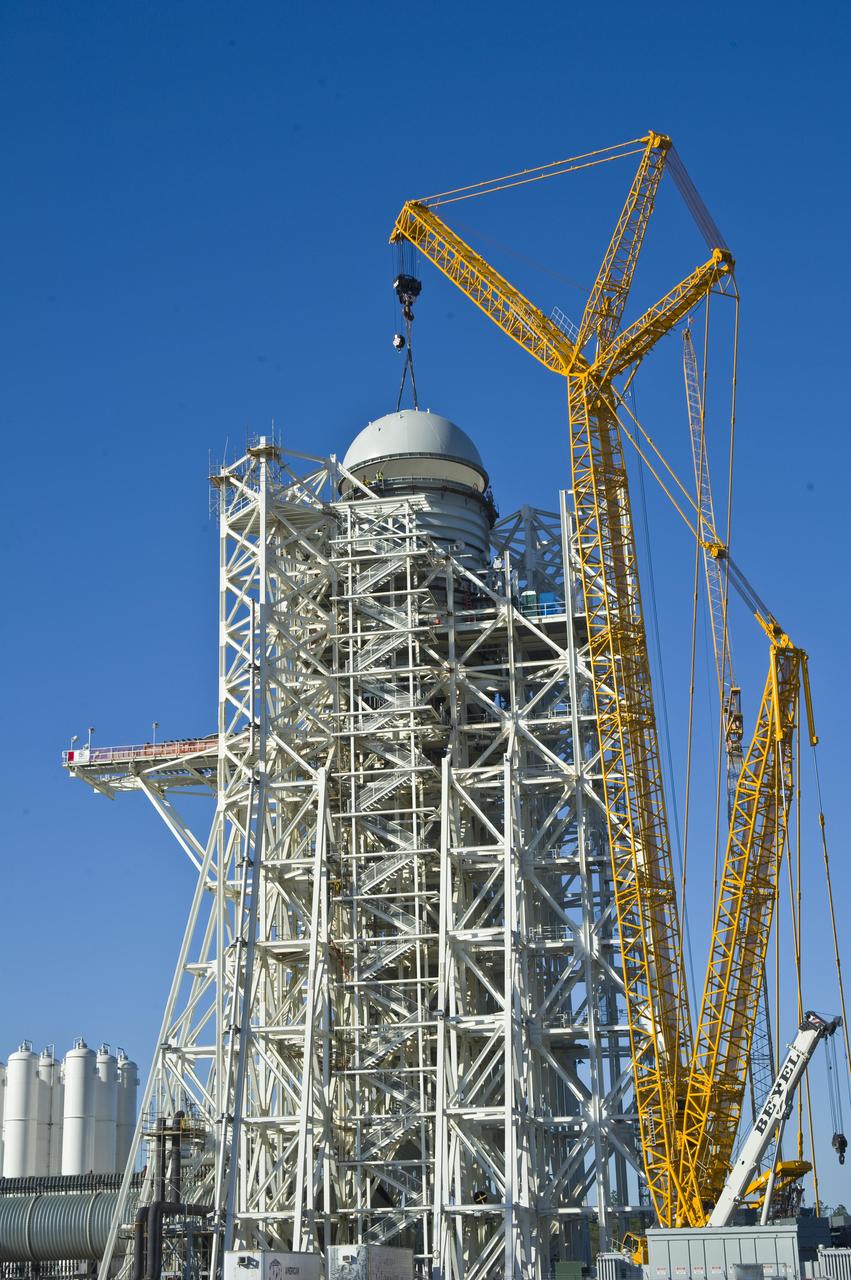
A construction 'topping out' milestone was reached April 13 with placement of the test cell dome atop NASA's new A-3 Test Stand at Stennis Space Center. NASA broke ground in 2007 for the new stand, which is being built to provide simulated high-altitude testing for next-generation rocket engines that could carry humans into deep space.
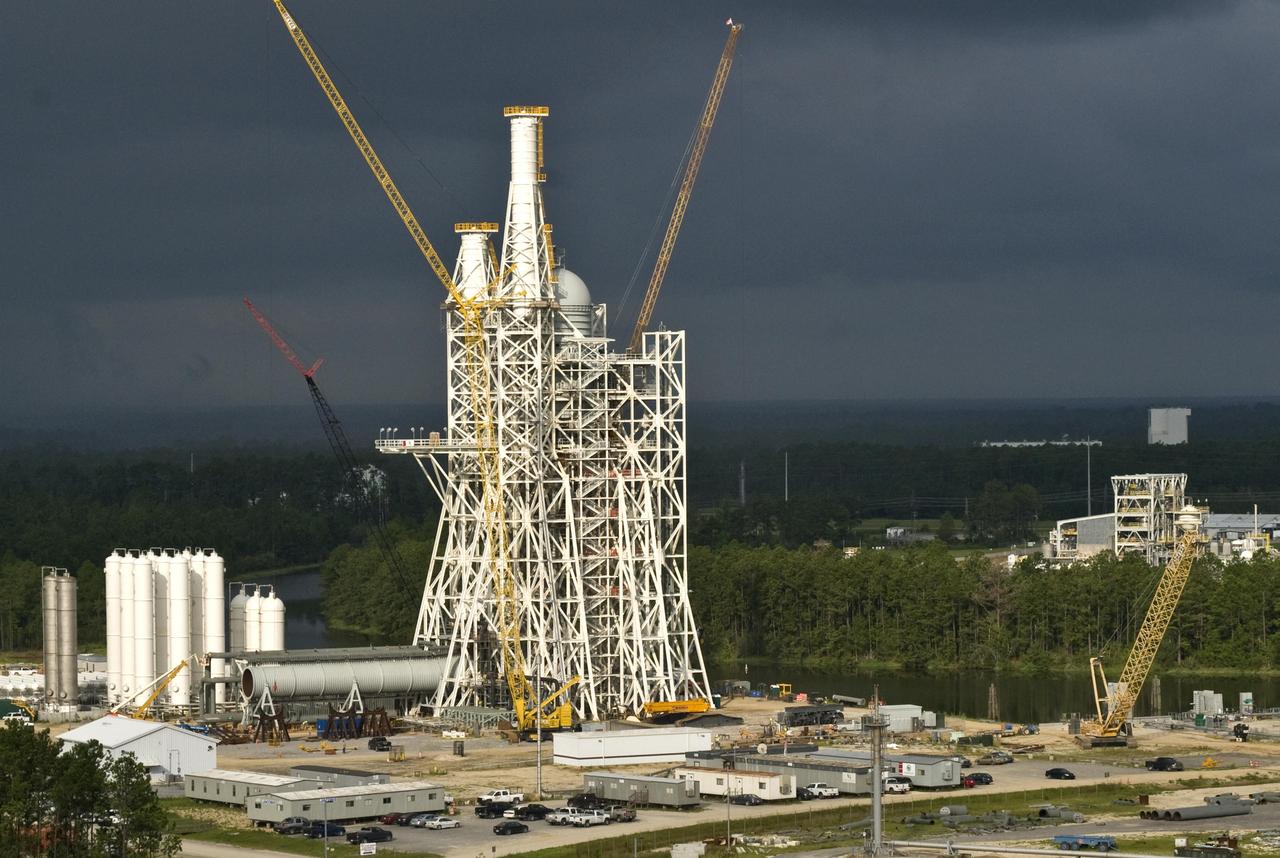
Stennis Space Center employees have installed liquid oxygen and liquid hydrogen tanks atop the A-3 Test Stand, raising the structure to its full 300-foot height. The stand is being built to test next-generation rocket engines that could carry humans beyond low-Earth orbit into deep space. The A-3 Test Stand is scheduled for completion and activation in 2013.
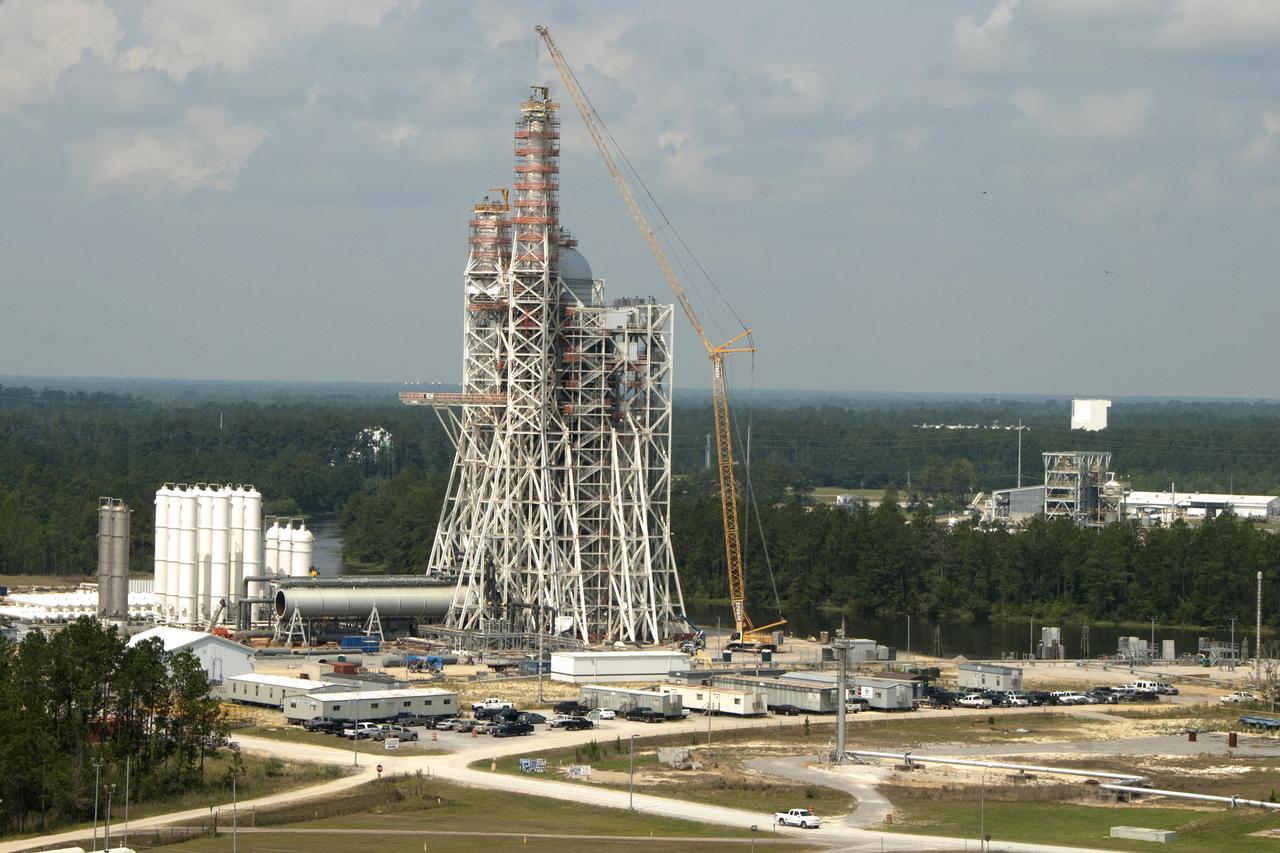
Construction on the new A-3 Test Stand continues at NASA's Stennis Space Center. The stand is the first large test structure built at the NASA facility since the 1960s.
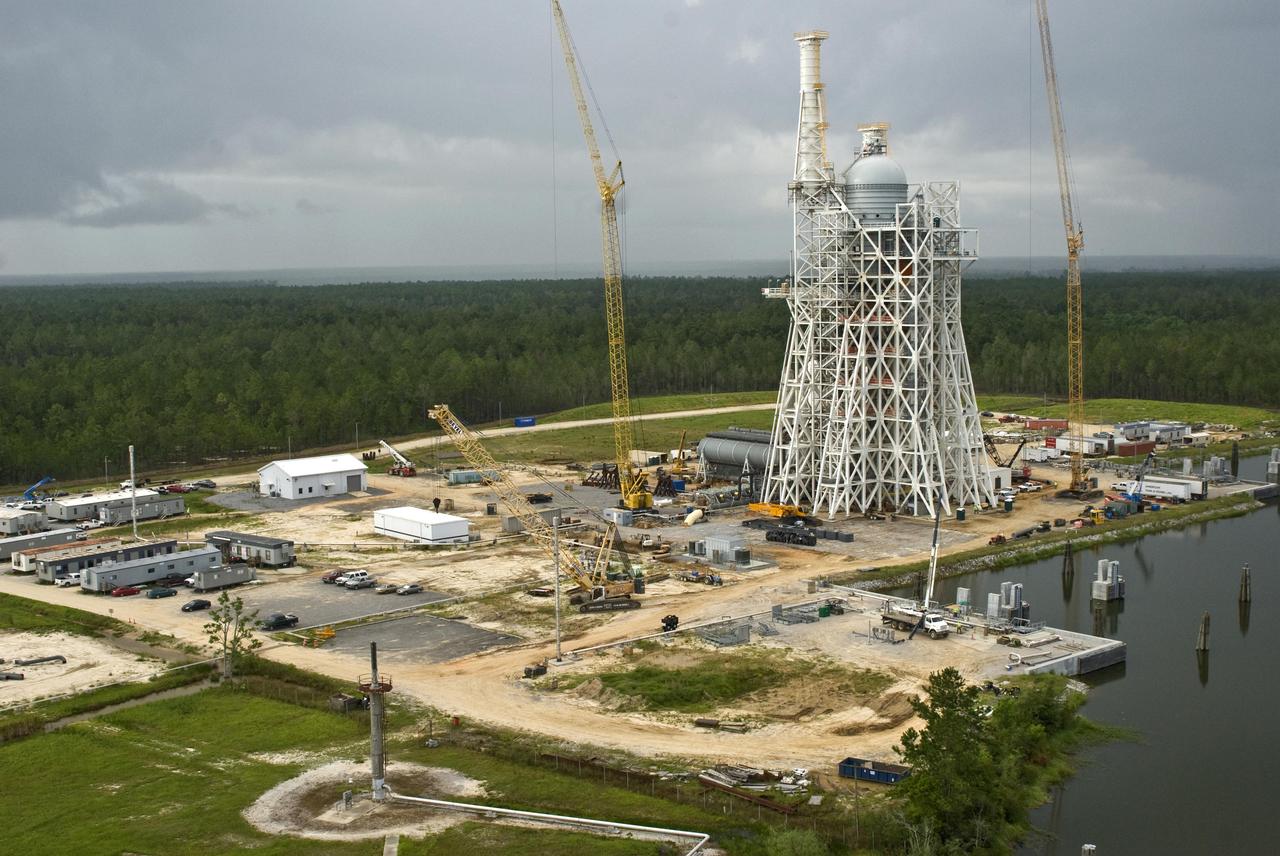
Work continues on the A-3 Test Stand at Stennis Space Center. The new stand will allow operators to test next-generation rocket engines at simulated altitudes up to 100,000 feet. The test stand is scheduled for completion and activation in 2013.
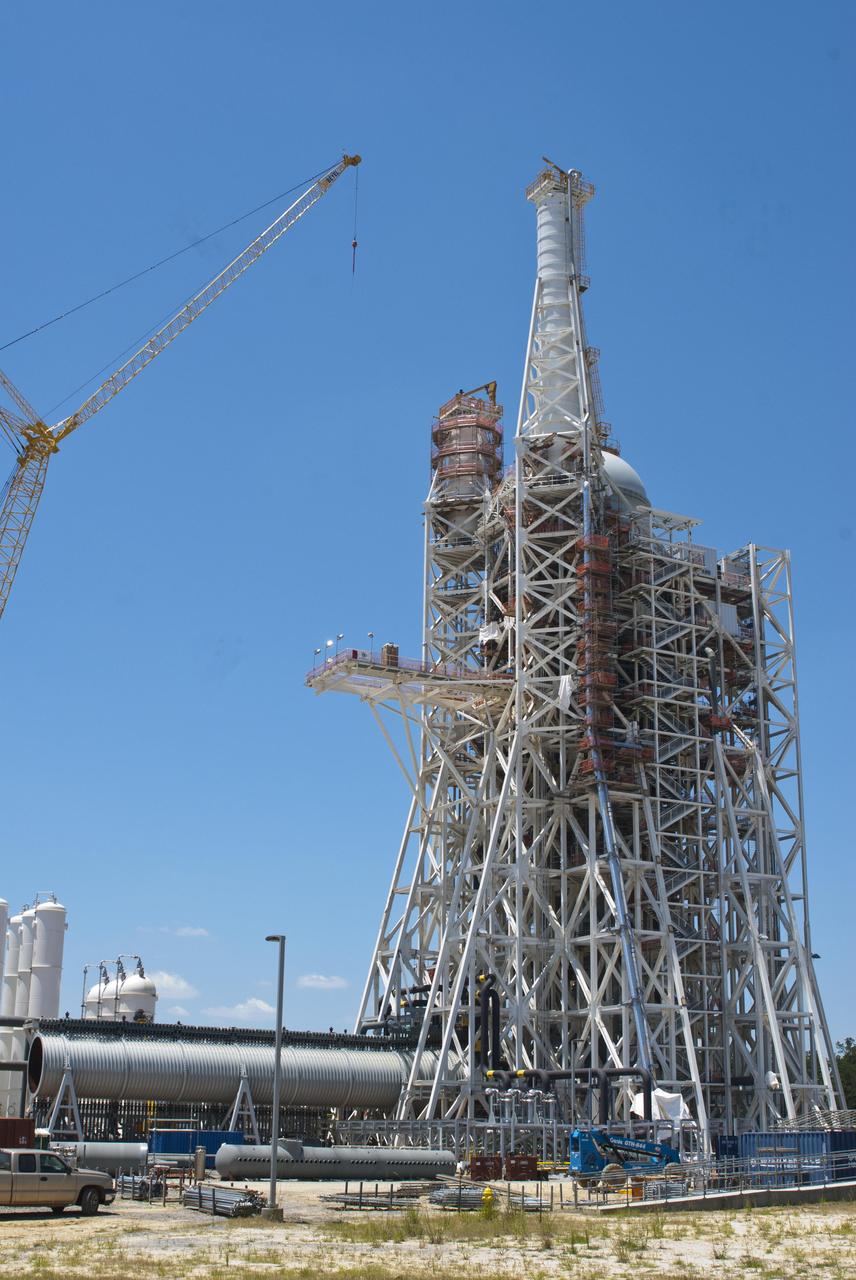
Construction continues on NASA's A-3 Test Stand at Stennis Space Center. The stand is the first large test structure built at the south Mississippi facility since the 1960s.
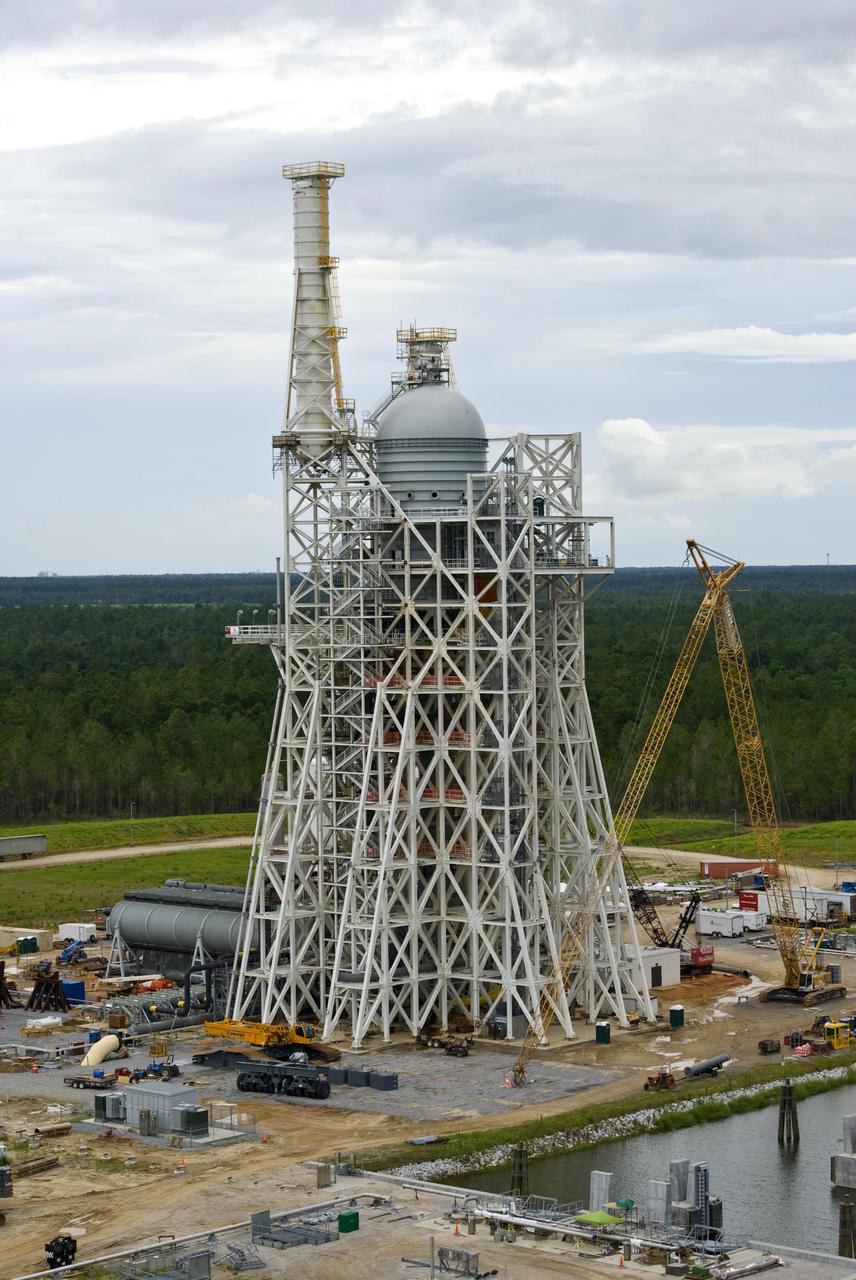
Rocket engine propellant tanks and cell dome top the A-3 Test Stand under construction at Stennis Space Center. The stand will test next-generation rocket engines that could carry humans beyond low-Earth orbit into deep space once more.
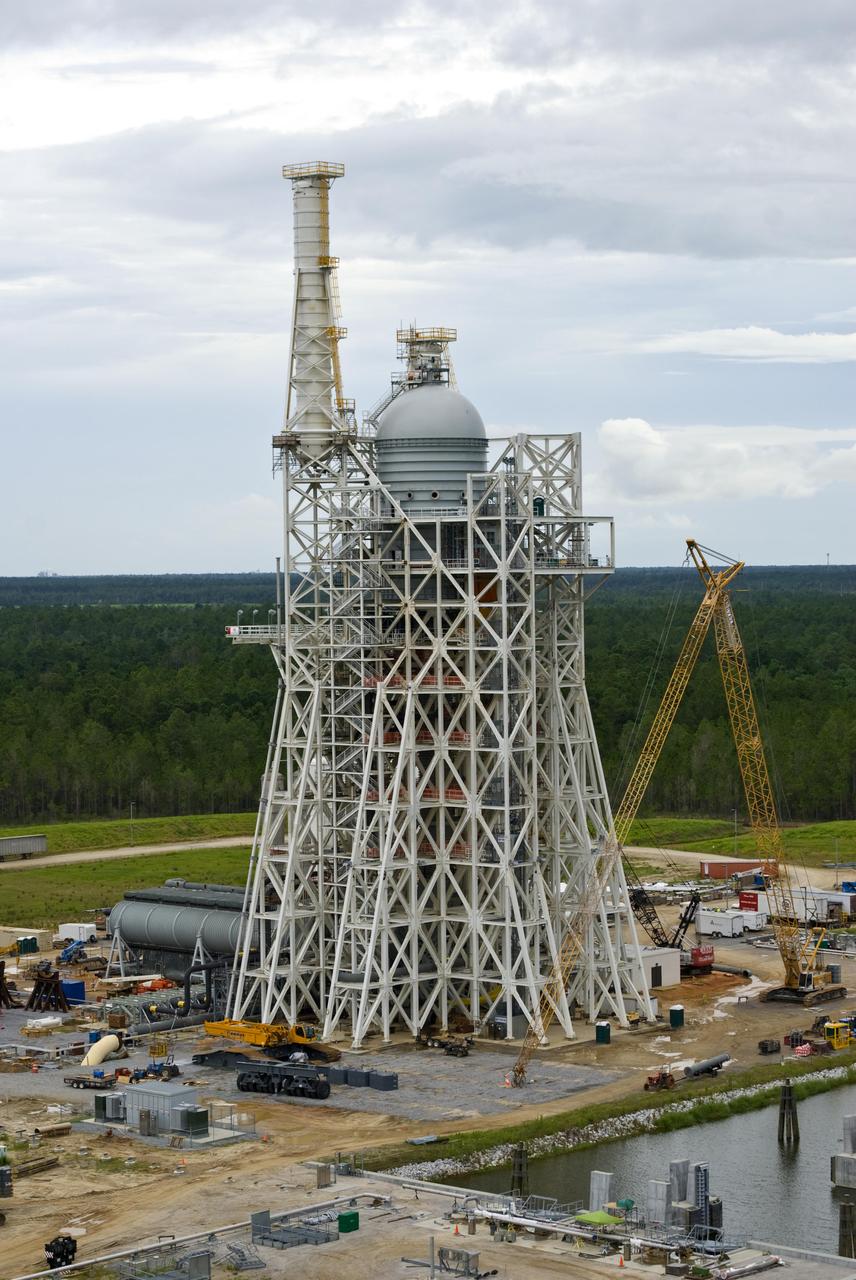
Rocket engine propellant tanks and cell dome top the A-3 Test Stand under construction at Stennis Space Center. The stand will test next-generation rocket engines that could carry humans beyond low-Earth orbit into deep space once more.
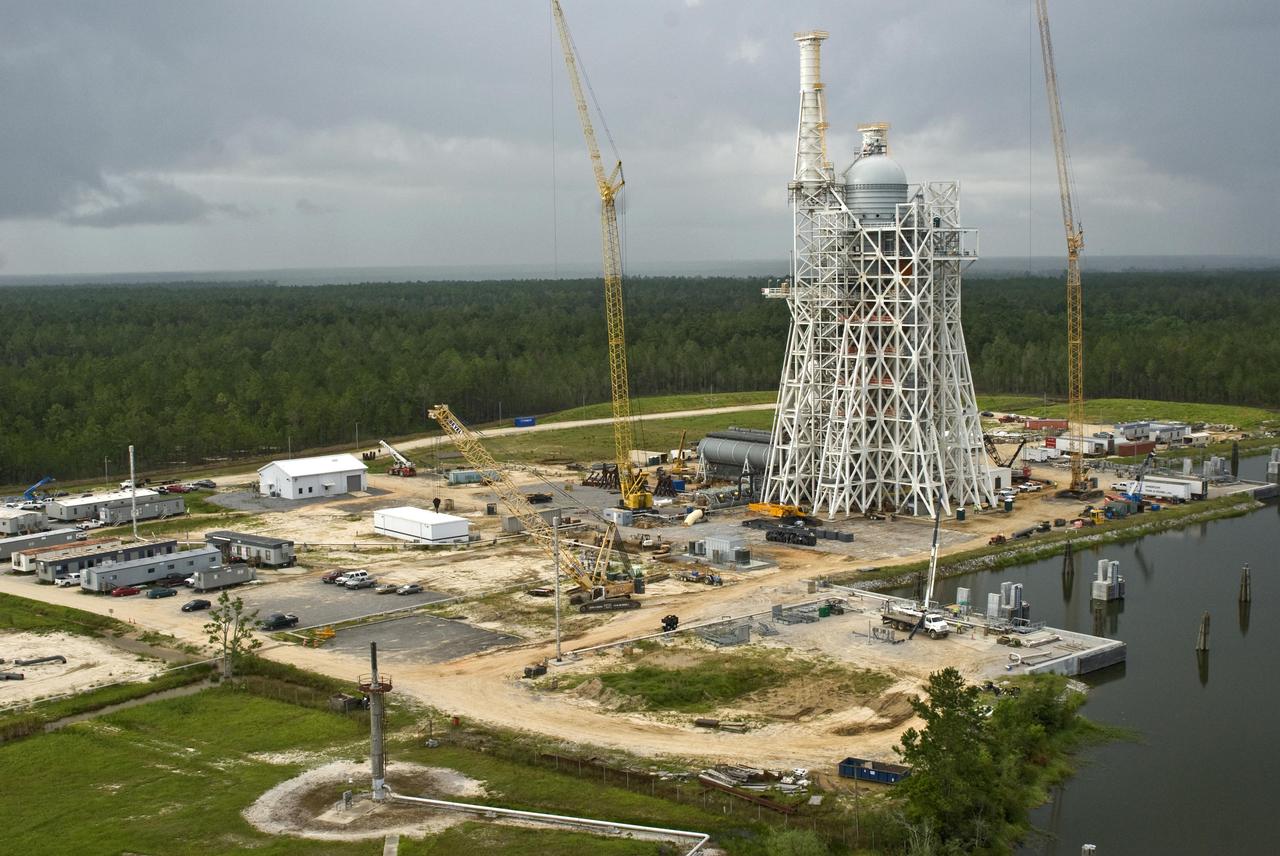
Work continues on the A-3 Test Stand at Stennis Space Center. The new stand will allow operators to test next-generation rocket engines at simulated altitudes up to 100,000 feet. The test stand is scheduled for completion and activation in 2013.
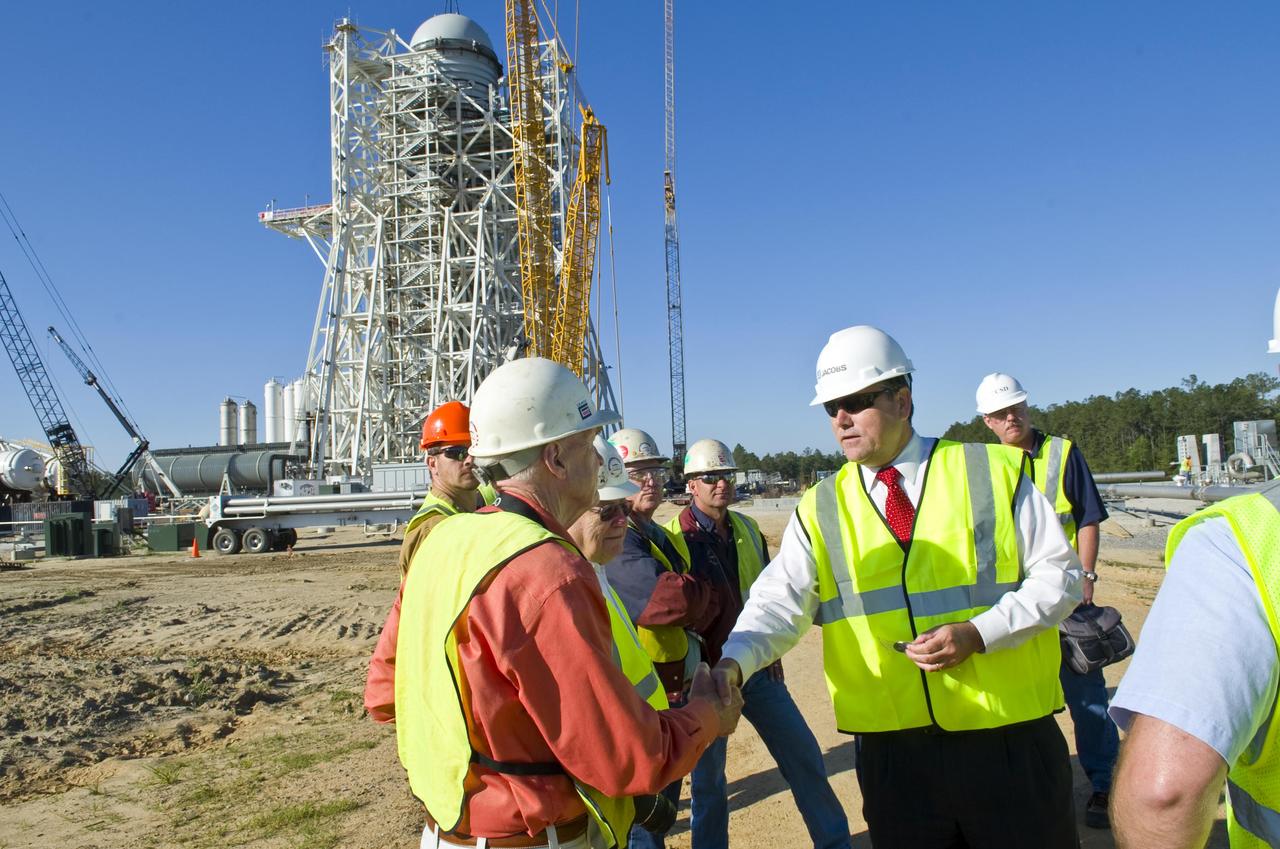
Stennis Space Center Director Patrick Scheuermann presents center director coins to employees following the 'topping out' of the A-3 Test Stand with placement of test cell dome on April 13. The stand is the first large test structure built at Stennis since the 1960s.
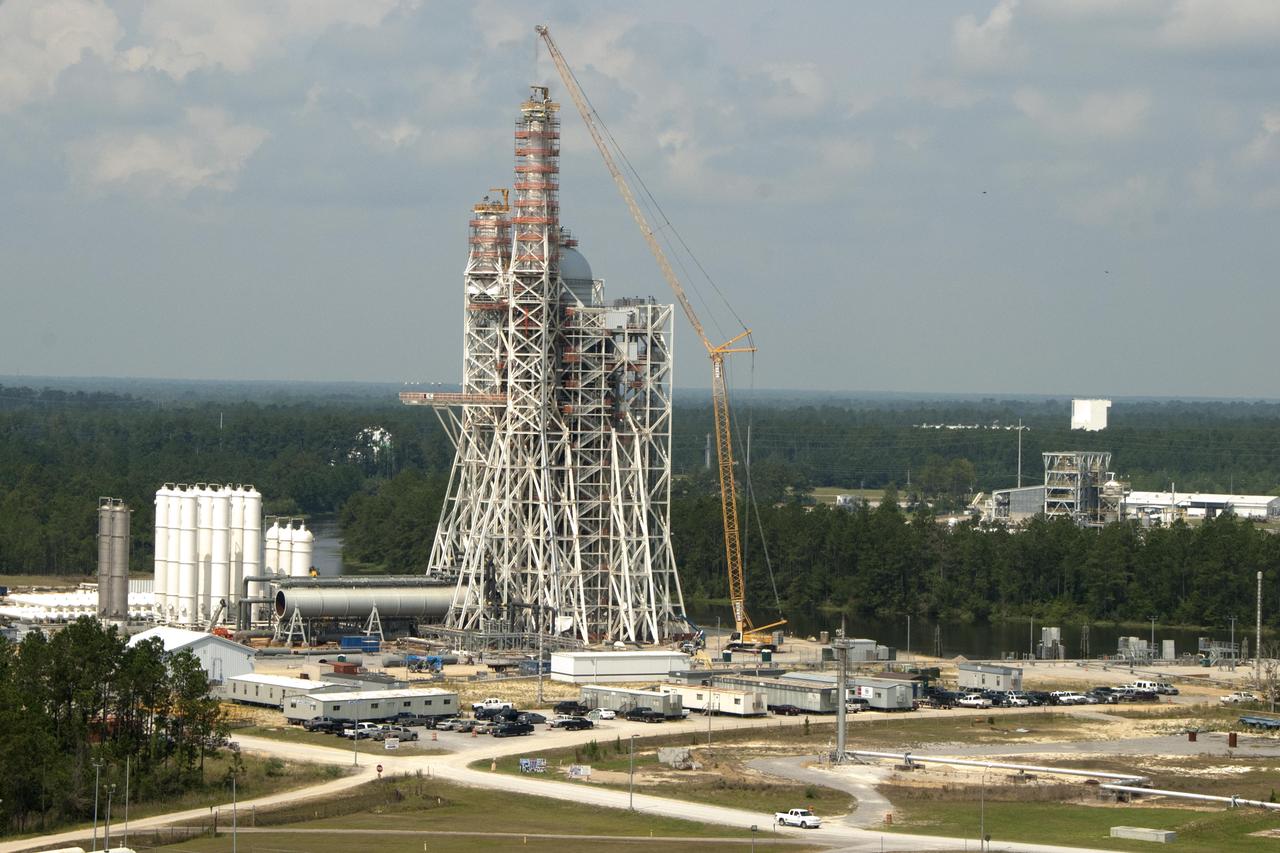
Construction on the new A-3 Test Stand continues at NASA's Stennis Space Center. The stand is the first large test structure built at the NASA facility since the 1960s.
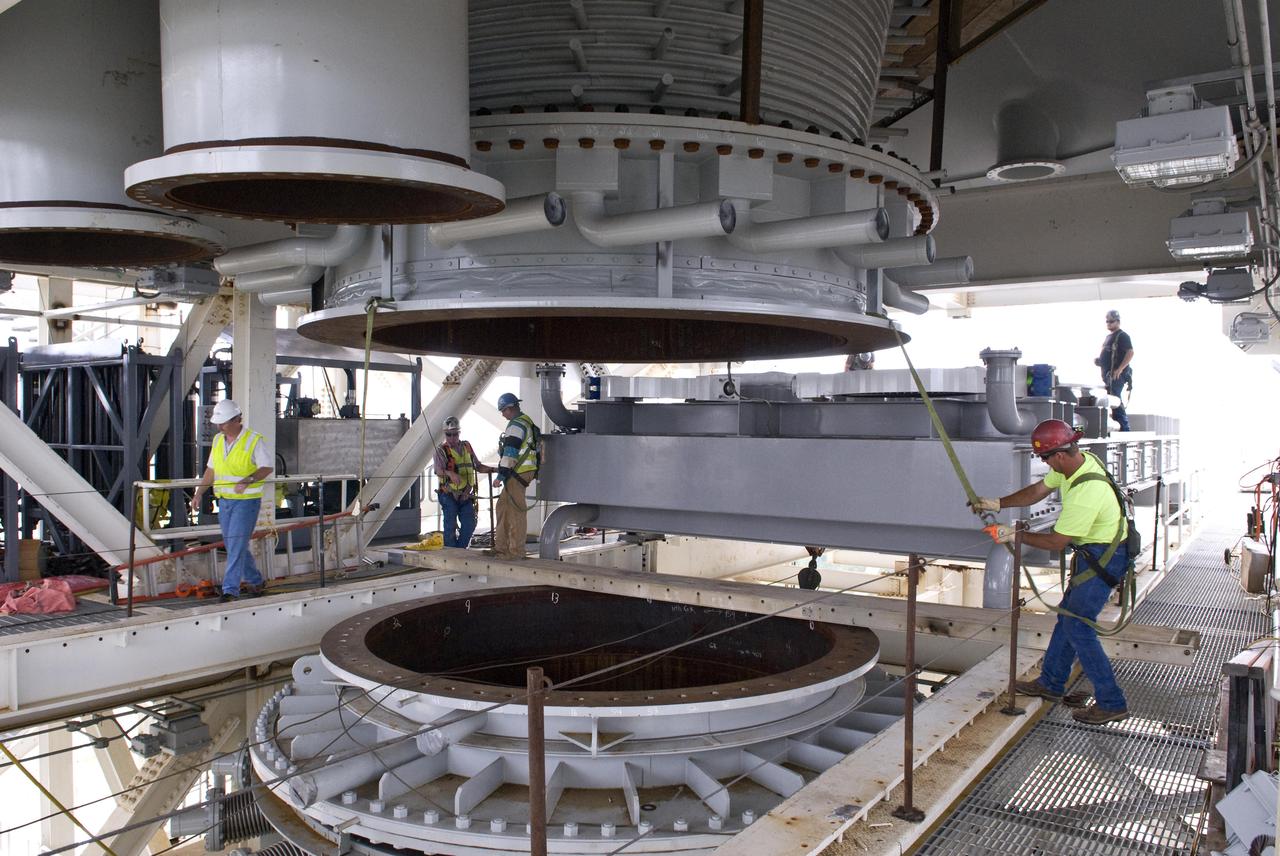
Stennis Space Center employees continue work on the A-3 Test Stand test cell. The stand is being built to test next-generation rocket engines that could carry humans beyond low-Earth orbit into deep space.
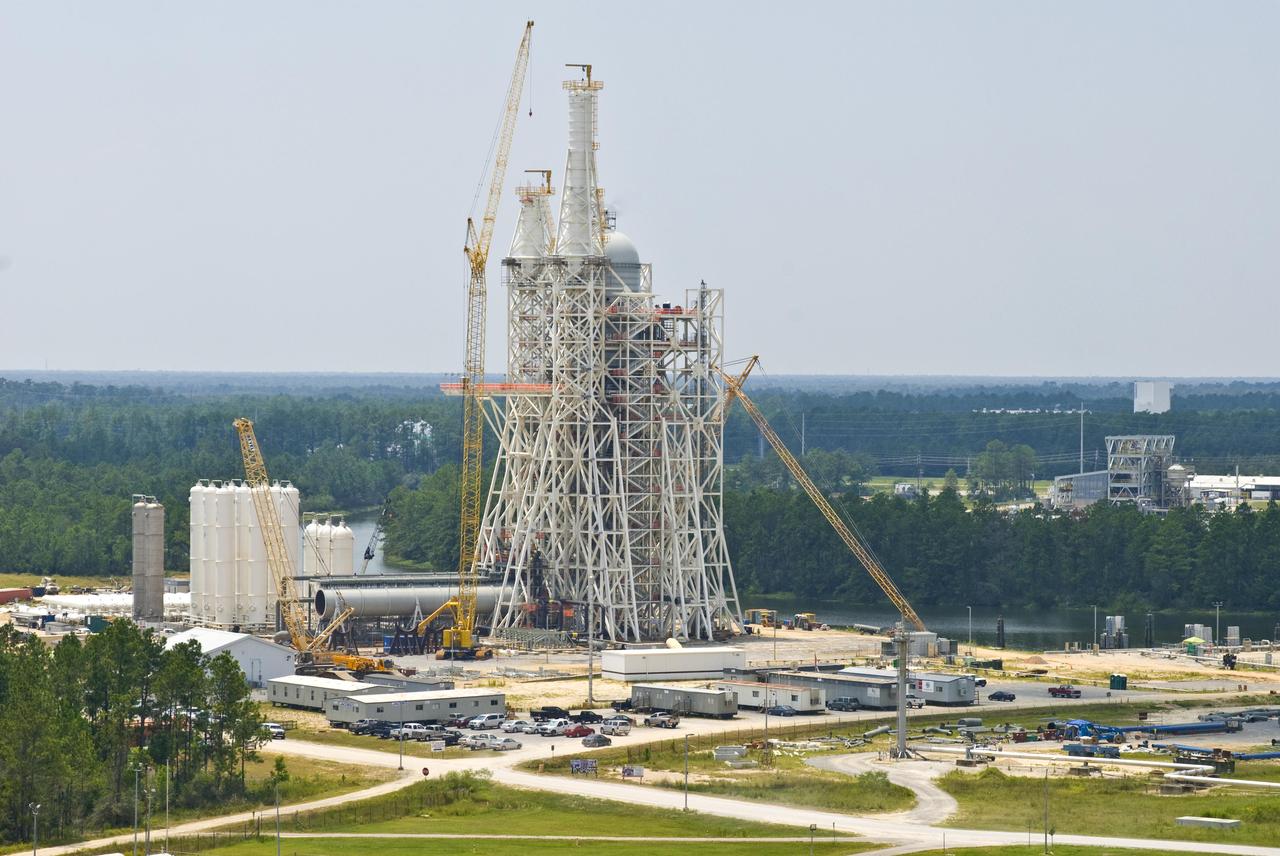
The A-3 Test Stand under construction at Stennis Space Center is set for completion and activation in 2013. It will allow operators to conduct simulated high-altitude testing on the next-generation J-2X rocket engine.
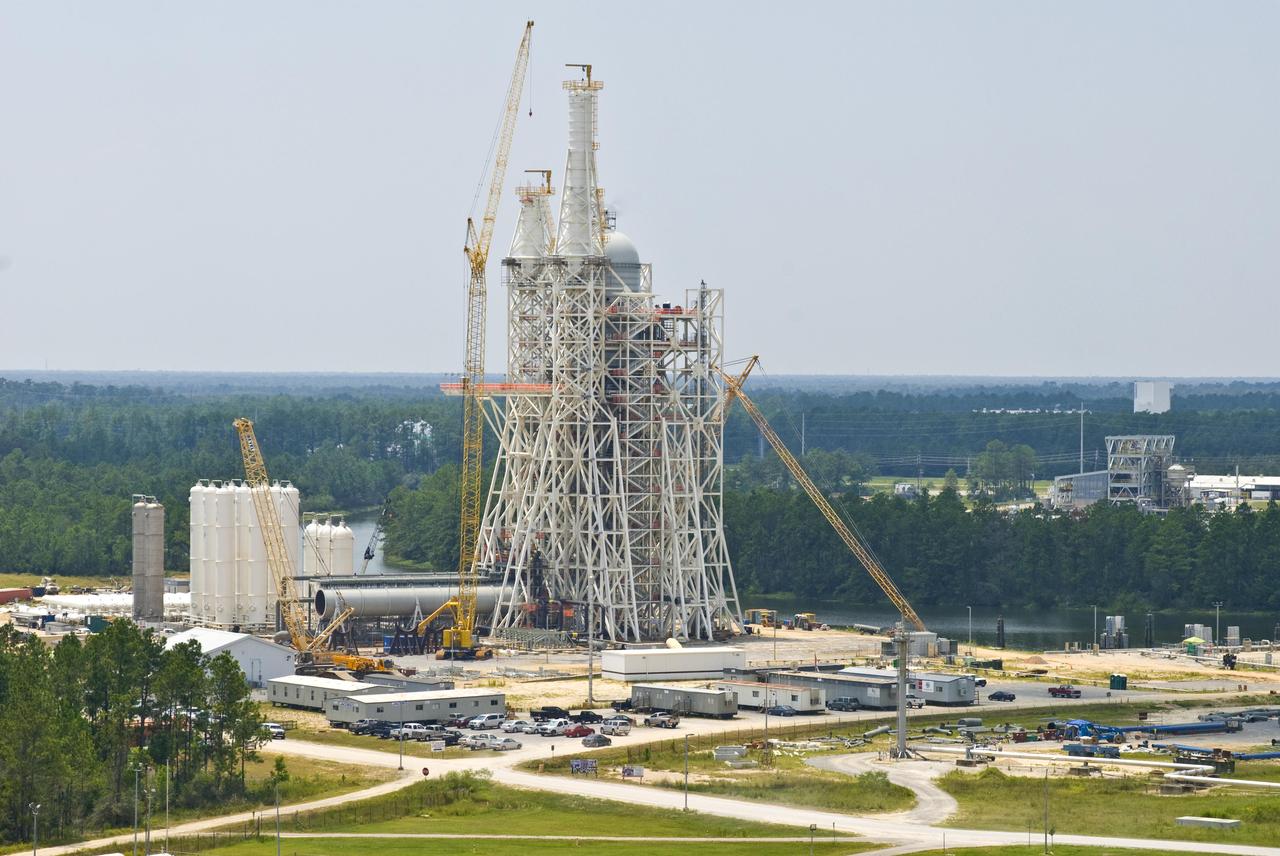
The A-3 Test Stand under construction at Stennis Space Center is set for completion and activation in 2013. It will allow operators to conduct simulated high-altitude testing on the next-generation J-2X rocket engine.
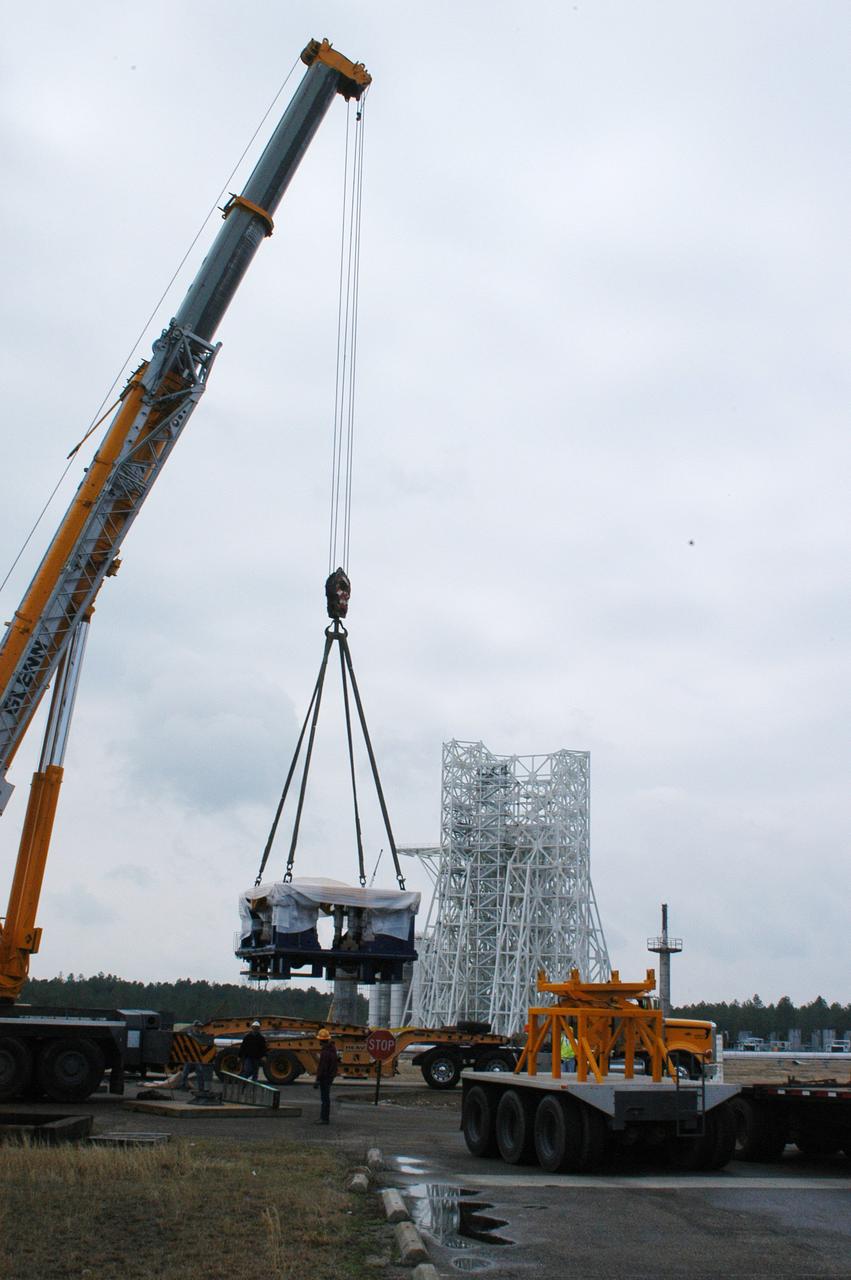
A state-of-the-art thrust measurement system for the A-3 Test Stand under construction at NASA's John C. Stennis Space Center was delivered March 17. Once completed, the A-3 stand (seen in background) will allow simulated high-altitude testing on the next generation of rocket engines for America's space program. Work on the stand began in 2007, with activation scheduled for 2012. The stand is the first major test structure to be built at Stennis since the 1960s. The recently delivered TMS was fabricated by Thrust Measurement Systems in Illinois. It is an advanced calibration system capable of measuring vertical and horizontal thrust loads with an accuracy within 0.15 percent at 225,000 pounds.
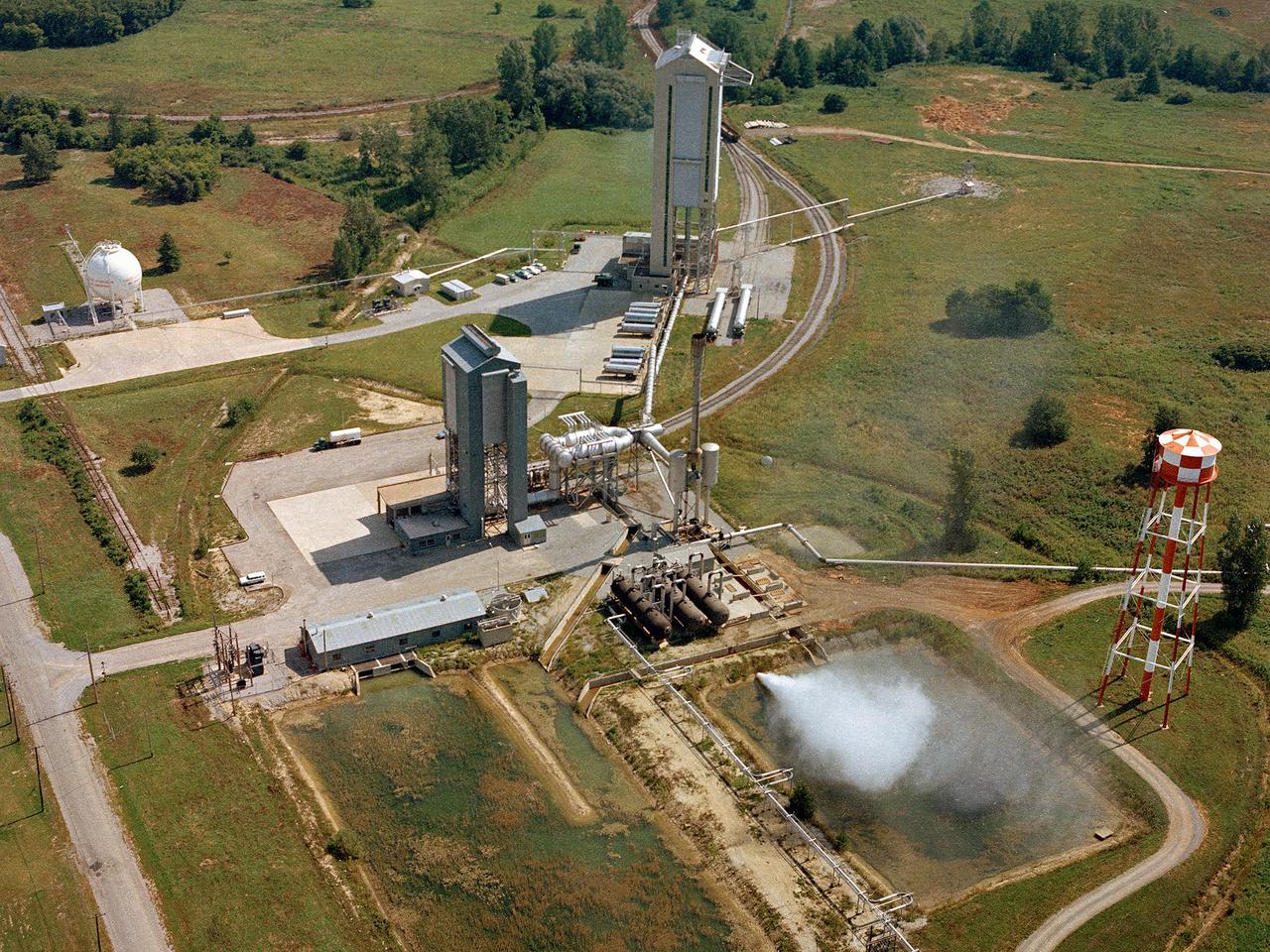
Operation of the High Energy Rocket Engine Research Facility (B-1), left, and Nuclear Rocket Dynamics and Control Facility (B-3) at the National Aeronautics and Space Administration’s (NASA) Plum Brook Station in Sandusky, Ohio. The test stands were constructed in the early 1960s to test full-scale liquid hydrogen fuel systems in simulated altitude conditions. Over the next decade each stand was used for two major series of liquid hydrogen rocket tests: the Nuclear Engine for Rocket Vehicle Application (NERVA) and the Centaur second-stage rocket program. The different components of these rocket engines could be studied under flight conditions and adjusted without having to fire the engine. Once the preliminary studies were complete, the entire engine could be fired in larger facilities. The test stands were vertical towers with cryogenic fuel and steam ejector systems. B-1 was 135 feet tall, and B-3 was 210 feet tall. Each test stand had several levels, a test section, and ground floor shop areas. The test stands relied on an array of support buildings to conduct their tests, including a control building, steam exhaust system, and fuel storage and pumping facilities. A large steam-powered altitude exhaust system reduced the pressure at the exhaust nozzle exit of each test stand. This allowed B-1 and B-3 to test turbopump performance in conditions that matched the altitudes of space.
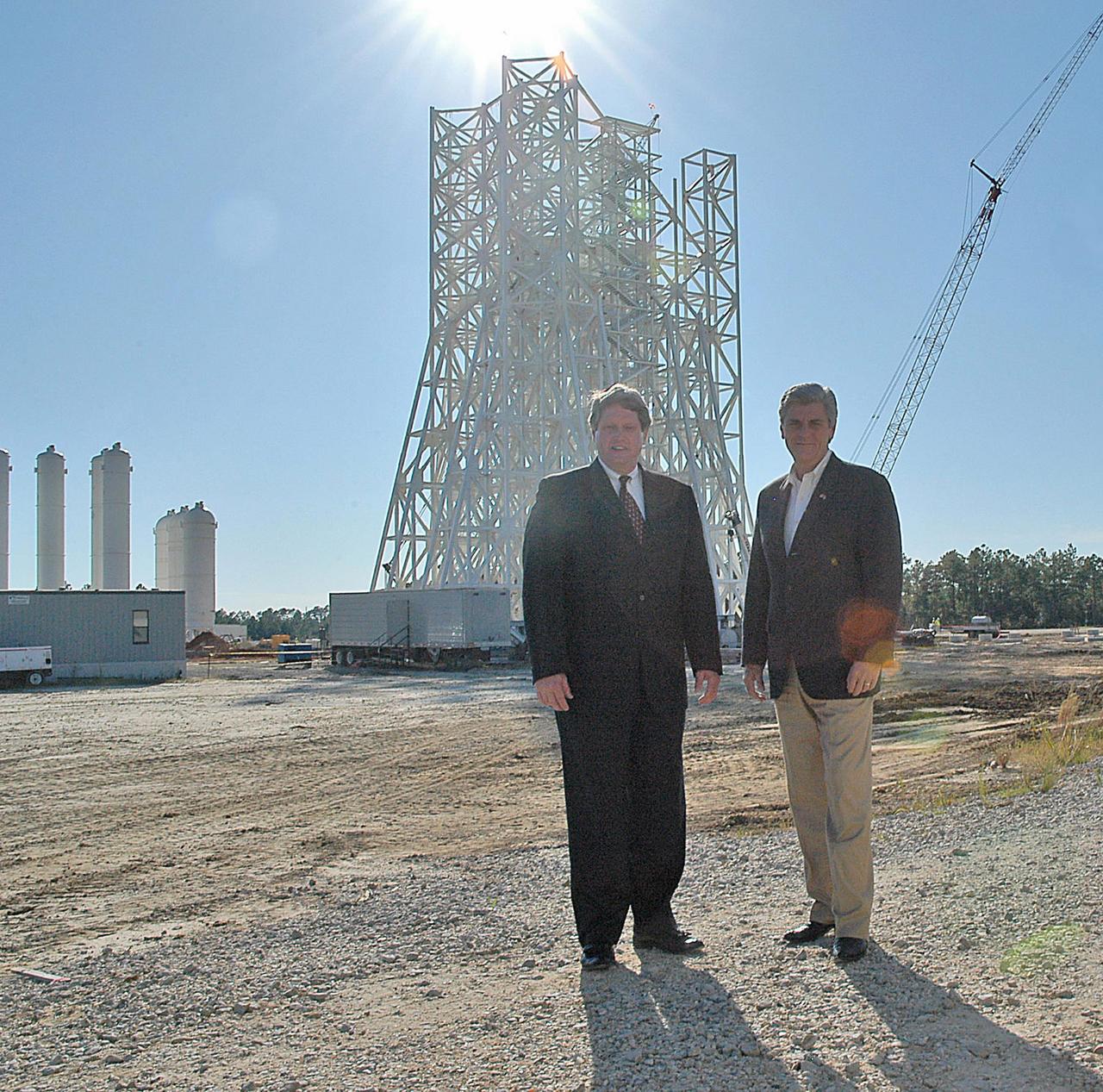
Stennis Space Center Director Gene Goldman (left) stands with Mississippi Lt. Gov. Phil Bryant at the A-3 Test Stand construction site during an Oct. 1 visit by the state official. During his tour, Bryant was updated on construction of the first large test stand at Stennis since the 1960s. The A-3 stand will be used to conduct simulated high-altitude testing on the next generation of rocket engines that will take humans back to the moon and possibly beyond. In addition to touring Stennis facilities, Bryant visited the INFINITY Science Center construction site, where he was updated on work under way to construct a 72,000-square-foot facility that will showcase the science underpinning the missions of NASA and resident agencies at Stennis.