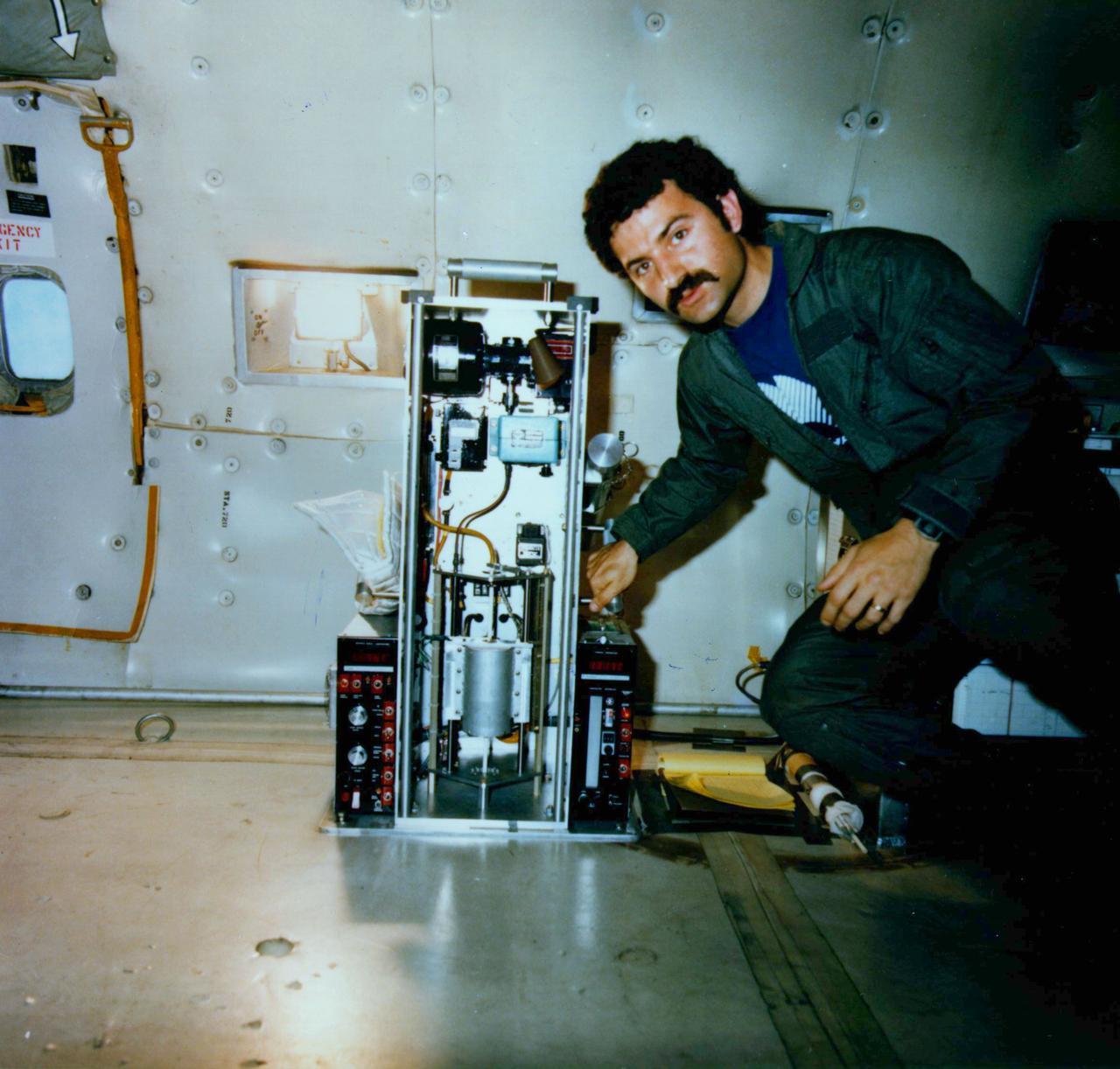
Peter Curerri with KC-135 experiment hardware, a prototype aircraft version of Advanced Automated Directional Solidification Furnace (AADSF).

Test Engineer, Ron Cantrell loads the sample in the (AADSF) Advanced Automated Directional Solidification Furnace.
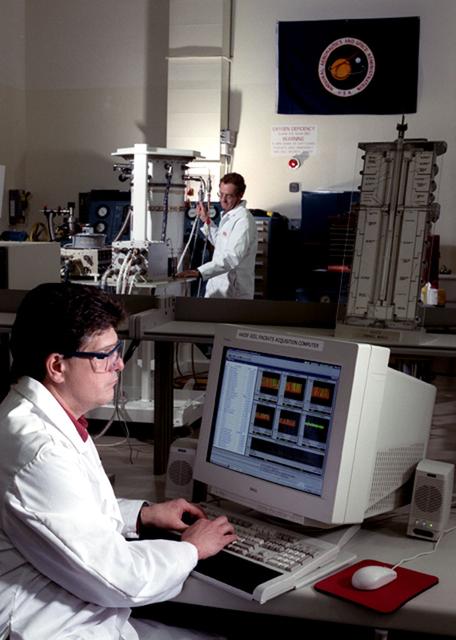
Advanced Automated Directional Solidification Furnace (AADSF) G-Cel with Fred Flack and Wayne Gandy in the Microgravity Development Laboratory clean room.
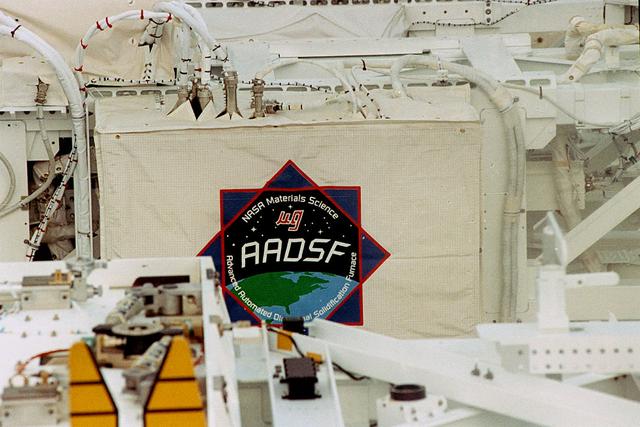
The purpose of the experiments for the Advanced Automated Directional Solidification Furnace (AADSF) is to determine how gravity-driven convection affects the composition and properties of alloys (mixtures of two or more materials, usually metal). During the USMP-4 mission, the AADSF will solidify crystals of lead tin telluride and mercury cadmium telluride, alloys of compound semiconductor materials used to make infrared detectors and lasers, as experiment samples. Although these materials are used for the same type application their properties and compositional uniformity are affected differently during the solidification process.
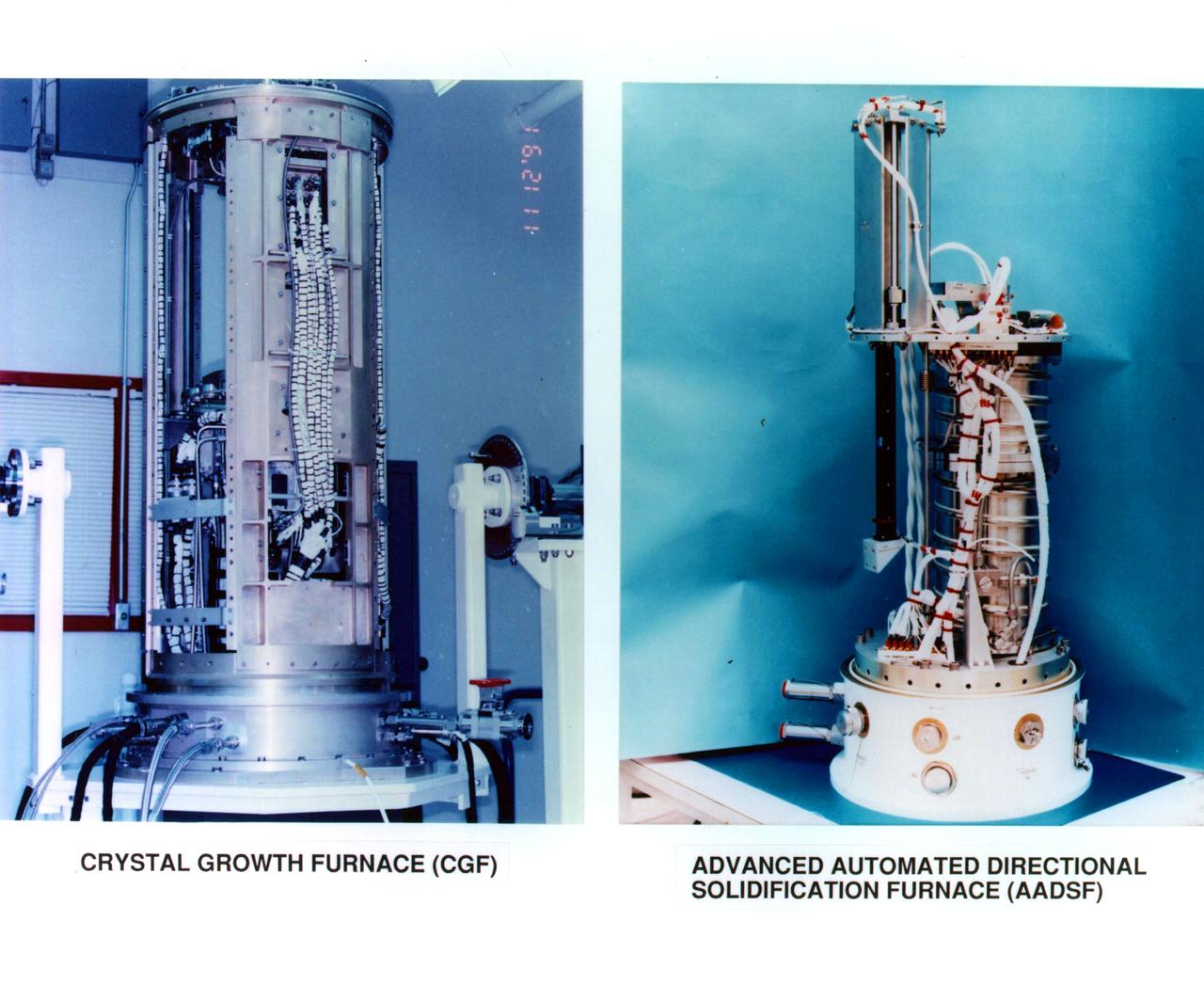
Evolution of Furnaces for Crystal Growth. Left view: Crystal Growth Furnace (CGF) Right view: Advanced Automated Directional Solidification Furnace (AADSF)
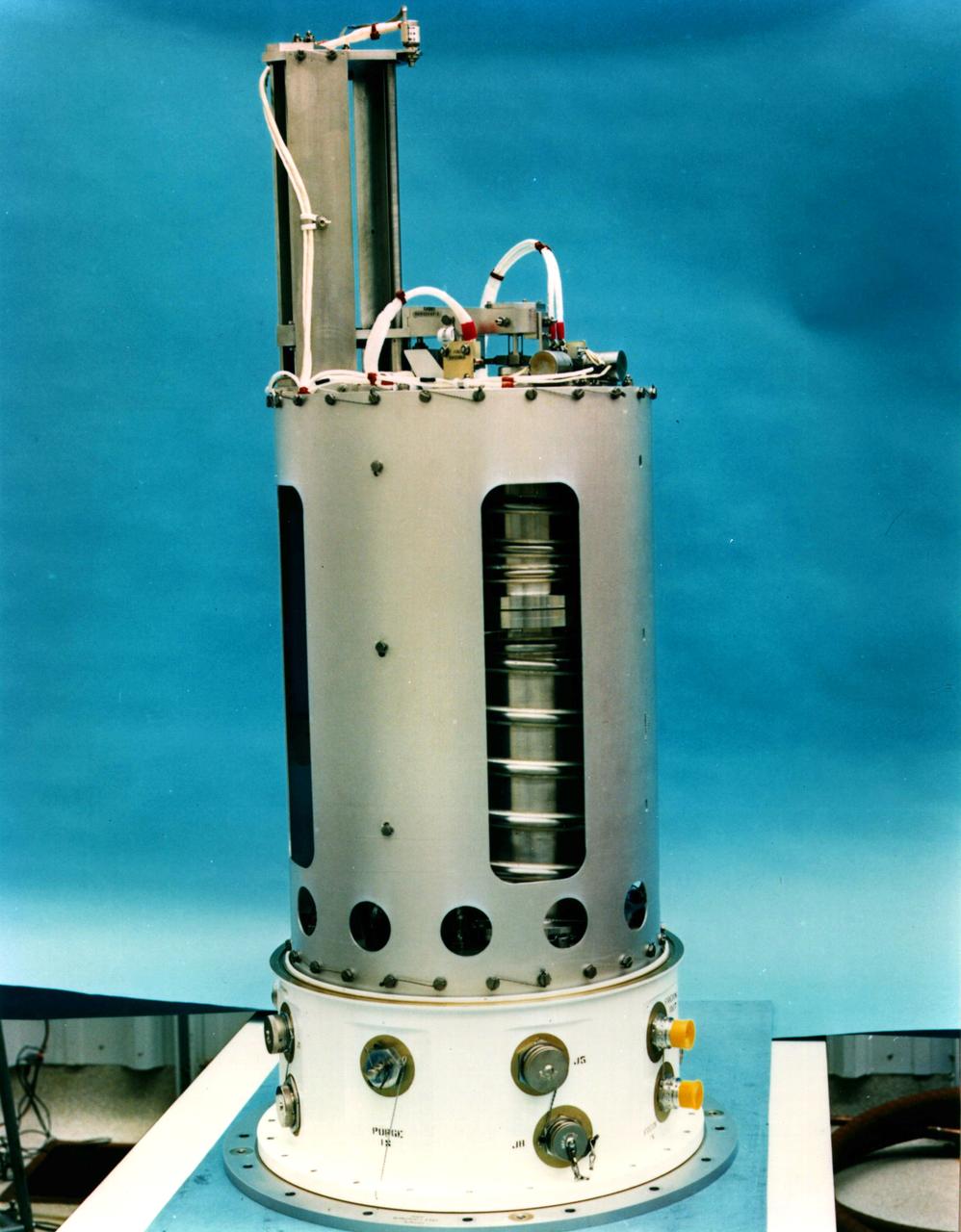
The Advanced Automated Directional Solidification Furnace (AADSF) with the Experimental Apparatus Container (EAC) removed flew during the USMP-2 mission. During USMP-2, the AADSF was used to study the growth of mercury cadmium telluride crystals in microgravity by directional solidification, a process commonly used on earth to process metals and grow crystals. The furnace is tubular and has three independently controlled temperature zones . The sample travels from the hot zone of the furnace (1600 degrees F) where the material solidifies as it cools. The solidification region, known as the solid/liquid interface, moves from one end of the sample to the other at a controlled rate, thus the term directional solidification.
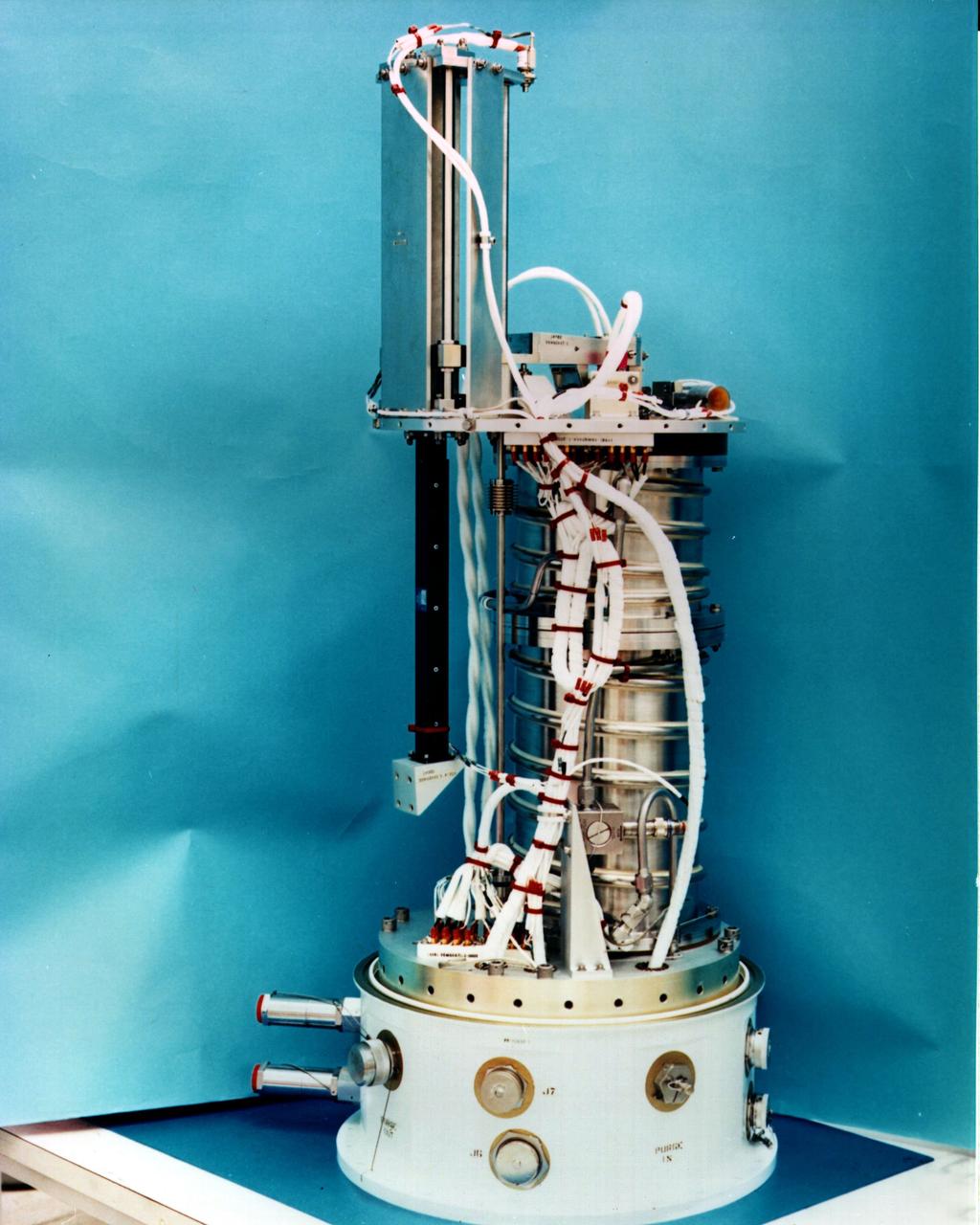
The Advanced Automated Directional Solidification Furnace (AADSF) flew during the USMP-2 mission. During USMP-2, the AADSF was used to study the growth of mercury cadmium telluride crystals in microgravity by directional solidification, a process commonly used on earth to process metals and grow crystals. The furnace is tubular and has three independently controlled temperature zones. The sample travels from the hot zone of the furnace (1600 degrees F) where the material solidifies as it cools. The solidification region, known as the solid/liquid interface, moves from one end of the sample to the other at a controlled rate, thus the term directional solidification.
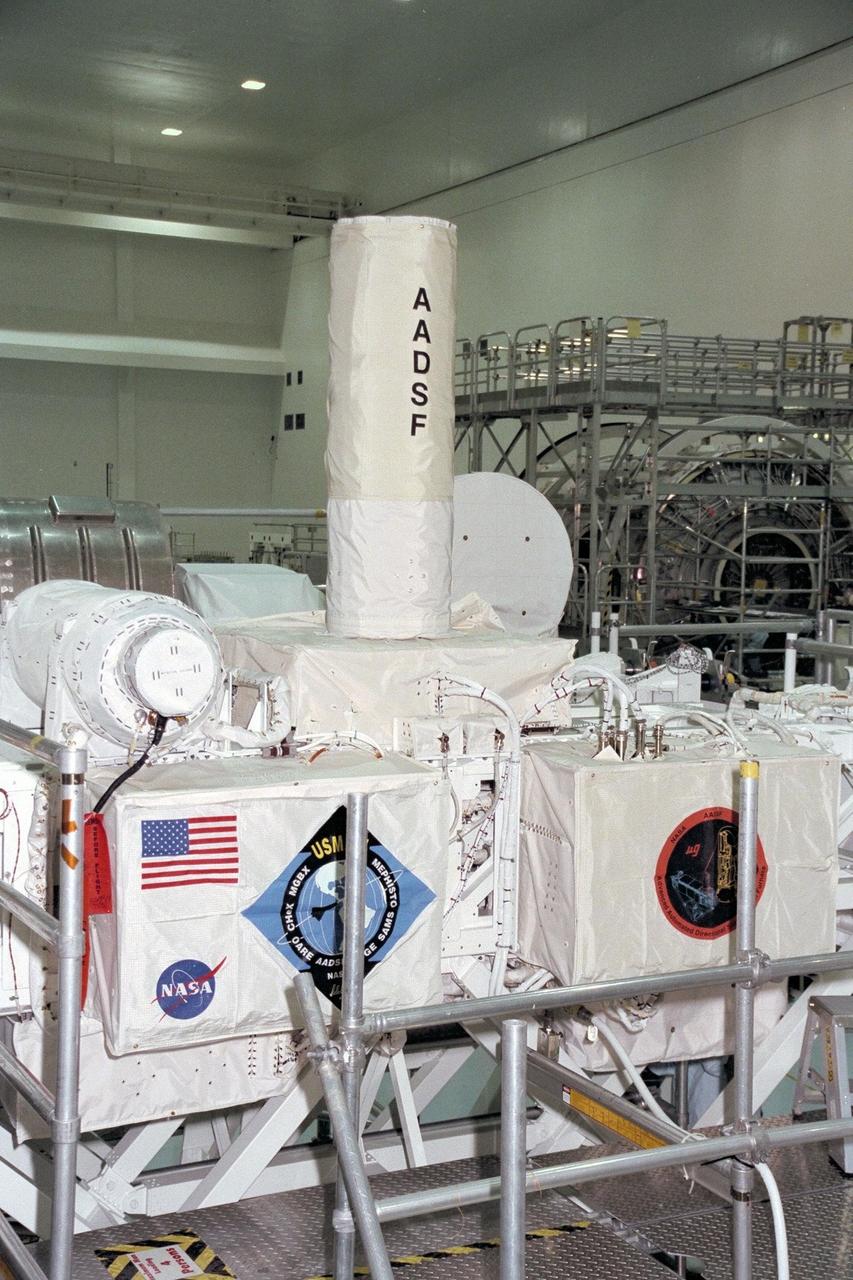
United States Microgravity Payload-4 (USMP-4) experiments are prepared to be flown on Space Shuttle mission STS-87 in the Space Station Processing Facility at Kennedy Space Center (KSC). The large white vertical cylinder in the center of the photo is the Advanced Automated Directional Solidification Furnace (AADSF) and the horizontal tube to the left of it is MEPHISTO, a French acronym for a cooperative American-French investigation of the fundamentals of crystal growth. Seen at right behind the AADSF in the circular white cover is the Isothermal Dendritic Growth Experiment (IDGE), which will be used to study the dendritic solidification of molten materials in the microgravity environment. Under the multi-layer insulation with the American flag and mission logo is the Space Acceleration Measurement System, or SAMS, which measures the microgravity conditions in which the experiments are conducted. All of these experiments are scheduled for launch aboard STS-87 on Nov. 19 from KSC
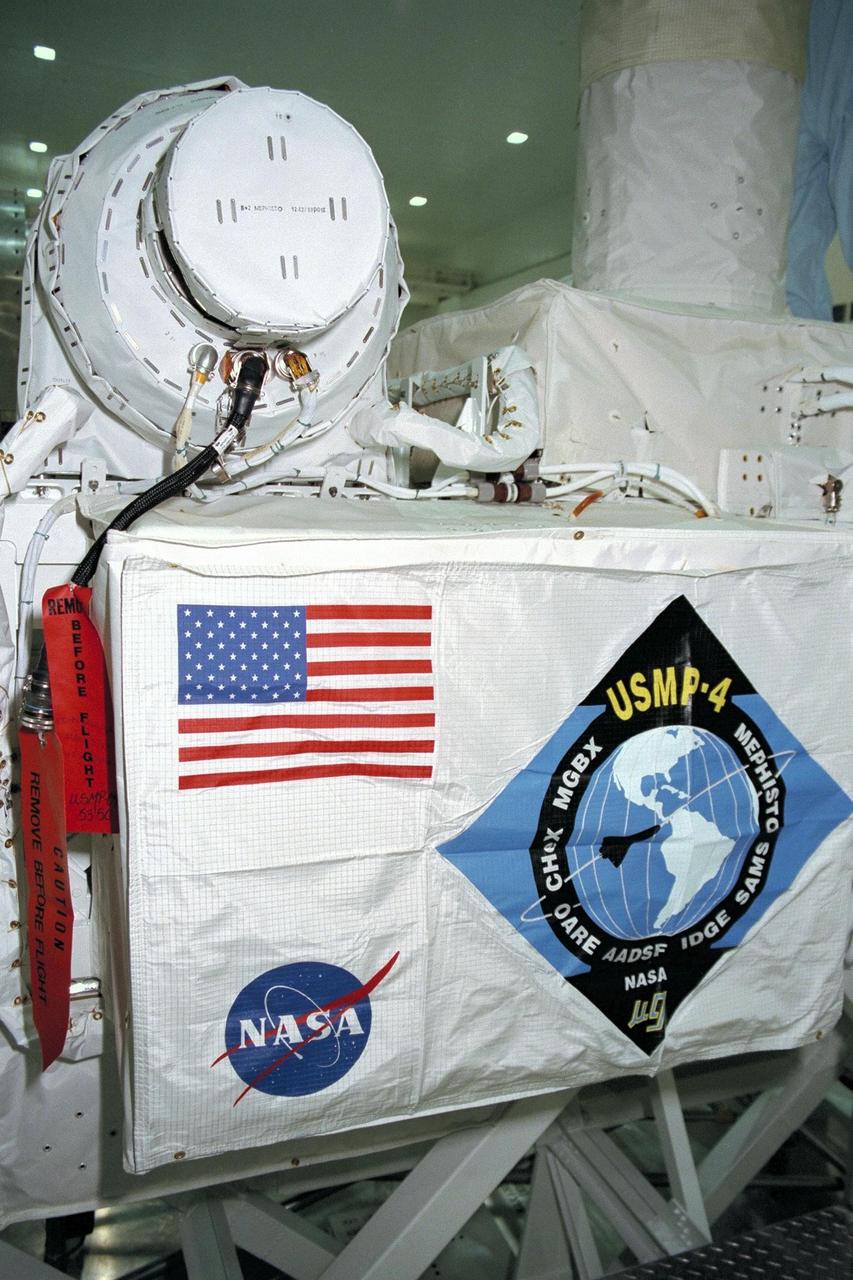
United States Microgravity Payload-4 (USMP-4) experiments are prepared to be flown on Space Shuttle mission STS-87 in the Space Station Processing Facility at Kennedy Space Center (KSC). The large white vertical cylinder in the middle of the photo is the Advanced Automated Directional Solidification Furnace (AADSF) and the horizontal tube to its left is MEPHISTO, the French acronym for a cooperative American-French investigation of the fundamentals of crystal growth. Seen to the right of the AADSF is the Isothermal Dendritic Growth Experiment (IDGE), which will be used to study the dendritic solidification of molten materials in the microgravity environment. Under the multi-layer insulation with the American flag and mission logo is the Space Acceleration Measurement System, or SAMS, which measures the microgravity conditions in which the experiments are conducted. All of these experiments are scheduled for launch aboard STS-87 on Nov. 19 from KSC
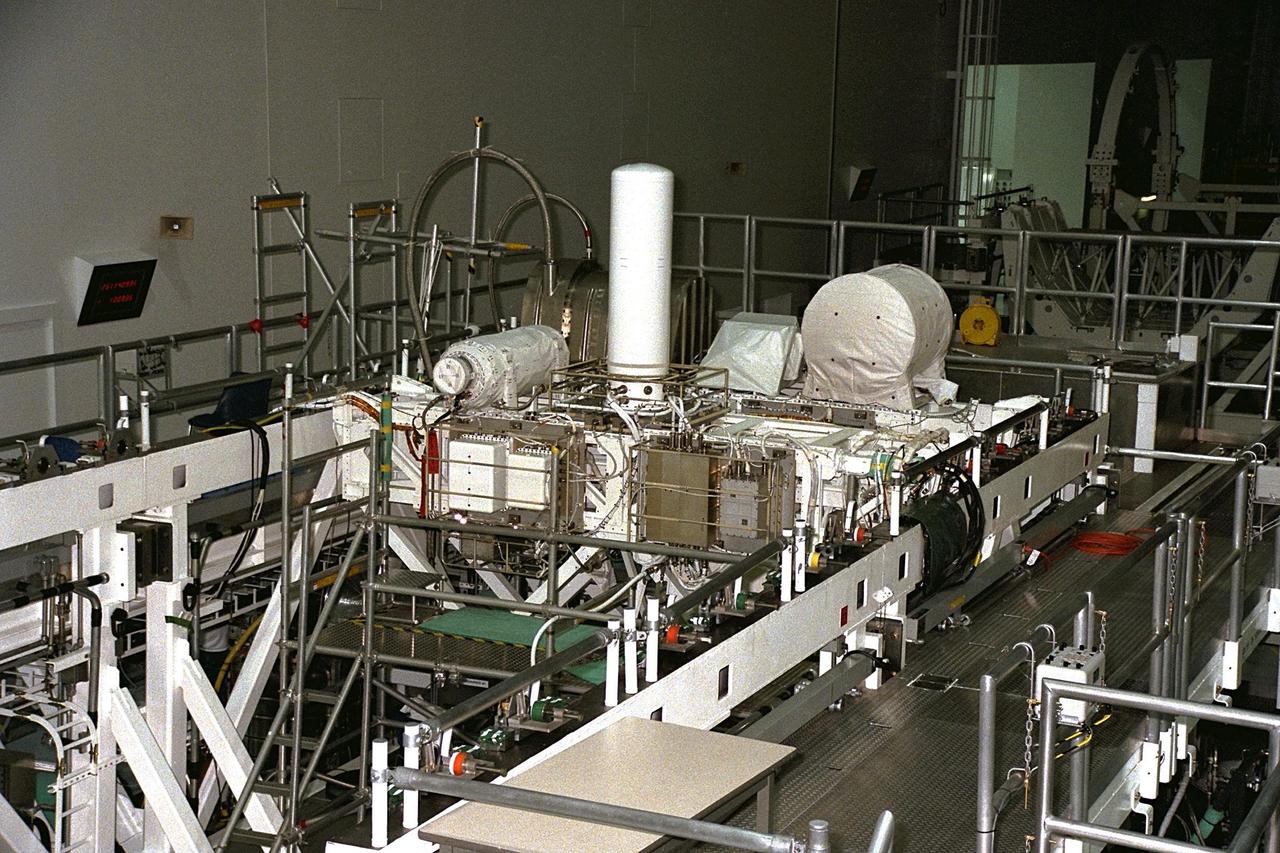
United States Microgravity Payload-4 (USMP-4) experiments are prepared to be flown on Space Shuttle mission STS-87 in the Space Station Processing Facility at Kennedy Space Center (KSC). Seen at right in the circular white cover is the Isothermal Dendritic Growth Experiment (IDGE), which will be used to study the dendritic solidification of molten materials in the microgravity environment. The large white vertical cylinder in the center of the photo is the Advanced Automated Directional Solidification Furnace (AADSF) and the horizontal tube to the left of it is MEPHISTO, a French acronym for a cooperative American-French investigation of the fundamentals of crystal growth. Just below MEPHISTO is the Space Acceleration Measurement System, or SAMS, which measures the microgravity conditions in which the experiments are conducted. The The metallic breadbox-like structure behind the AADSF is the Confined Helium Experiment (CHeX) that will study one of the basic influences on the behavior and properties of materials by using liquid helium confined between solid surfaces and microgravity. All of these experiments are scheduled for launch aboard STS-87 on Nov. 19 from KSC
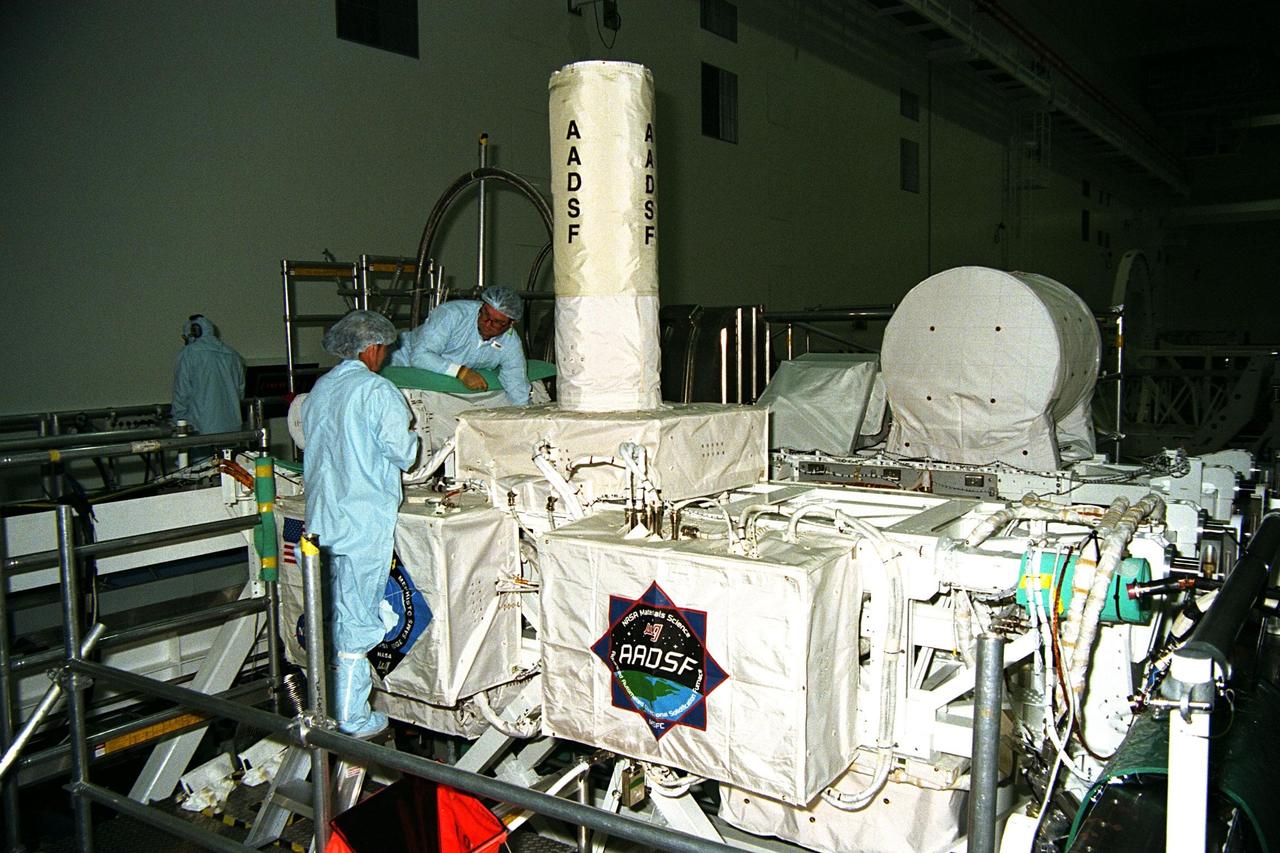
Technicians are monitoring experiments on the United States Microgravity Payload-4 (USMP-4) in preparation for its scheduled launch aboard STS-87 on Nov. 19 from Kennedy Space Center (KSC). USMP-4 experiments are prepared in the Space Station Processing Facility at KSC. The large white vertical cylinder in the center of the photo is the Advanced Automated Directional Solidification Furnace (AADSF), which is a sophisticated materials science facility used for studying a common method of processing semiconductor crystals called directional solidification. The white horizontal tube to the right is the Isothermal Dendritic Growth Experiment (IDGE), which will be used to study the dendritic solidification of molten materials in the microgravity environment
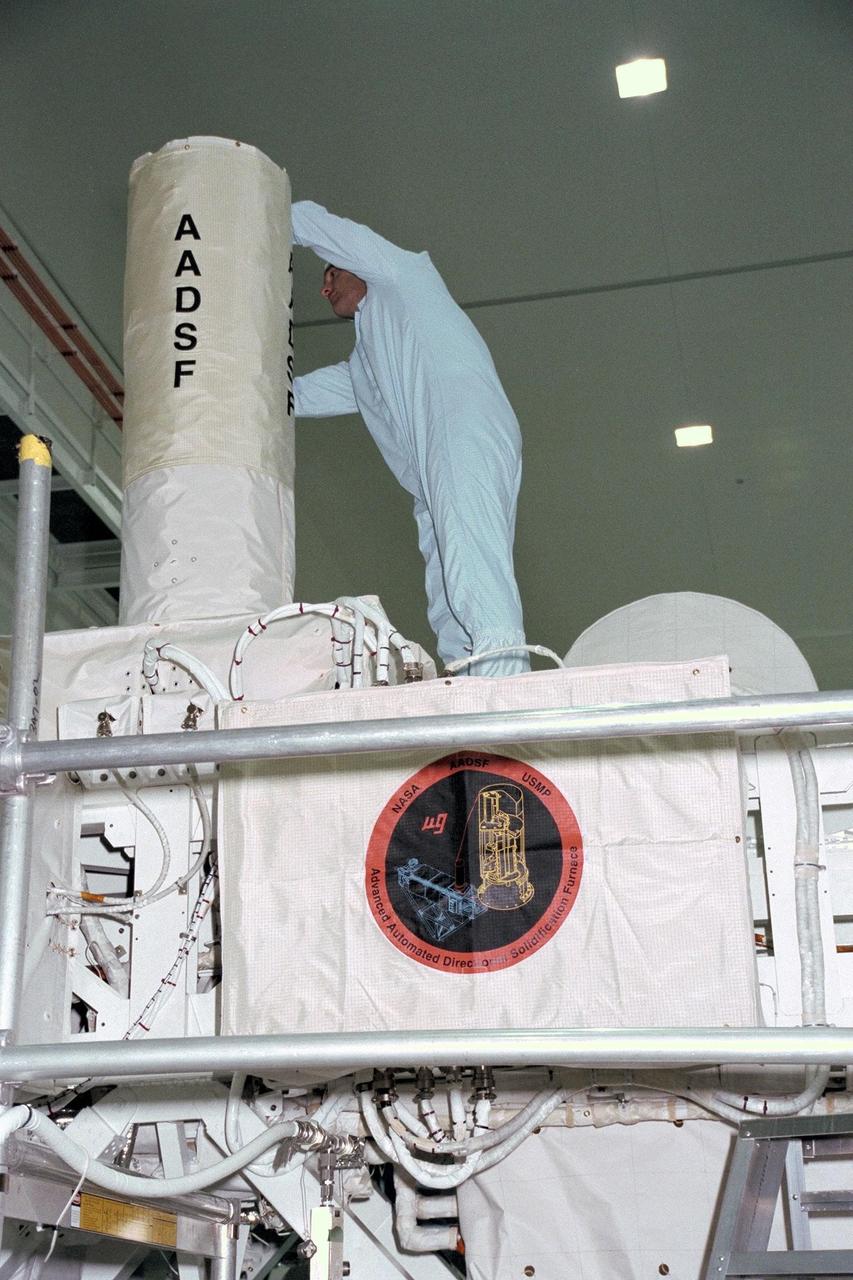
United States Microgravity Payload-4 (USMP-4) experiments are prepared to be flown on Space Shuttle mission STS-87 in the Space Station Processing Facility at Kennedy Space Center (KSC). A technician is working on the Advanced Automated Directional Solidification Furnace (AADSF), which will be used by researchers to study the solidification of semiconductor materials in microgravity. Scientists will be able to better understand how microgravity influences the solidification process of these materials and develop better methods for controlling that process during future Space flights and Earth-based production. All STS-87 experiments are scheduled for launch on Nov. 19 from KSC
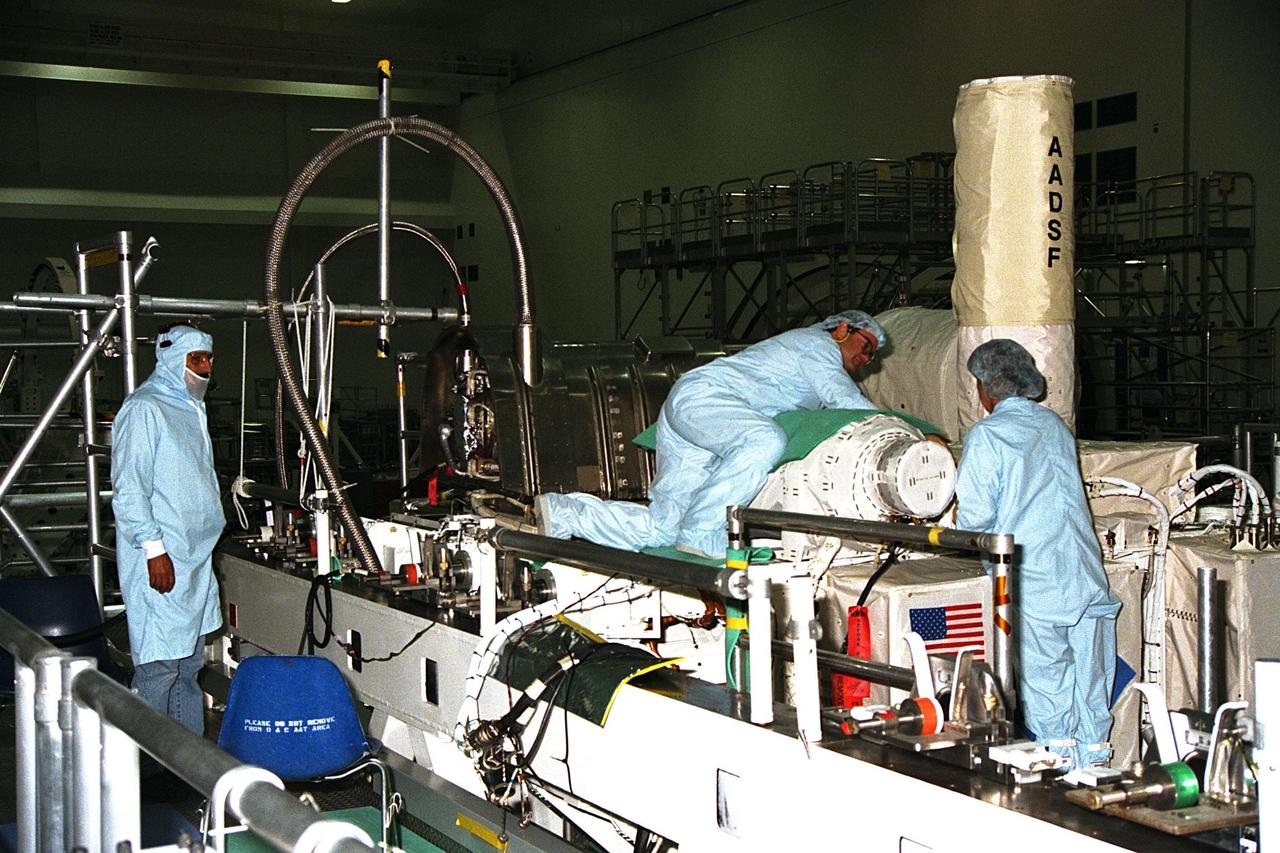
Technicians are monitoring experiments on the United States Microgravity Payload-4 (USMP-4) in preparation for its scheduled launch aboard STS-87 on Nov. 19 from Kennedy Space Center (KSC). USMP-4 experiments are prepared in the Space Station Processing Facility at KSC. The large white vertical cylinder at the right of the photo is the Advanced Automated Directional Solidification Furnace (AADSF ), which is a sophisticated materials science facility used for studying a common method of processing semiconductor crystals called directional solidification. The technician in the middle of the photo is leaning over MEPHISTO, a cooperative American-French investigation of the fundamentals of crystal growth
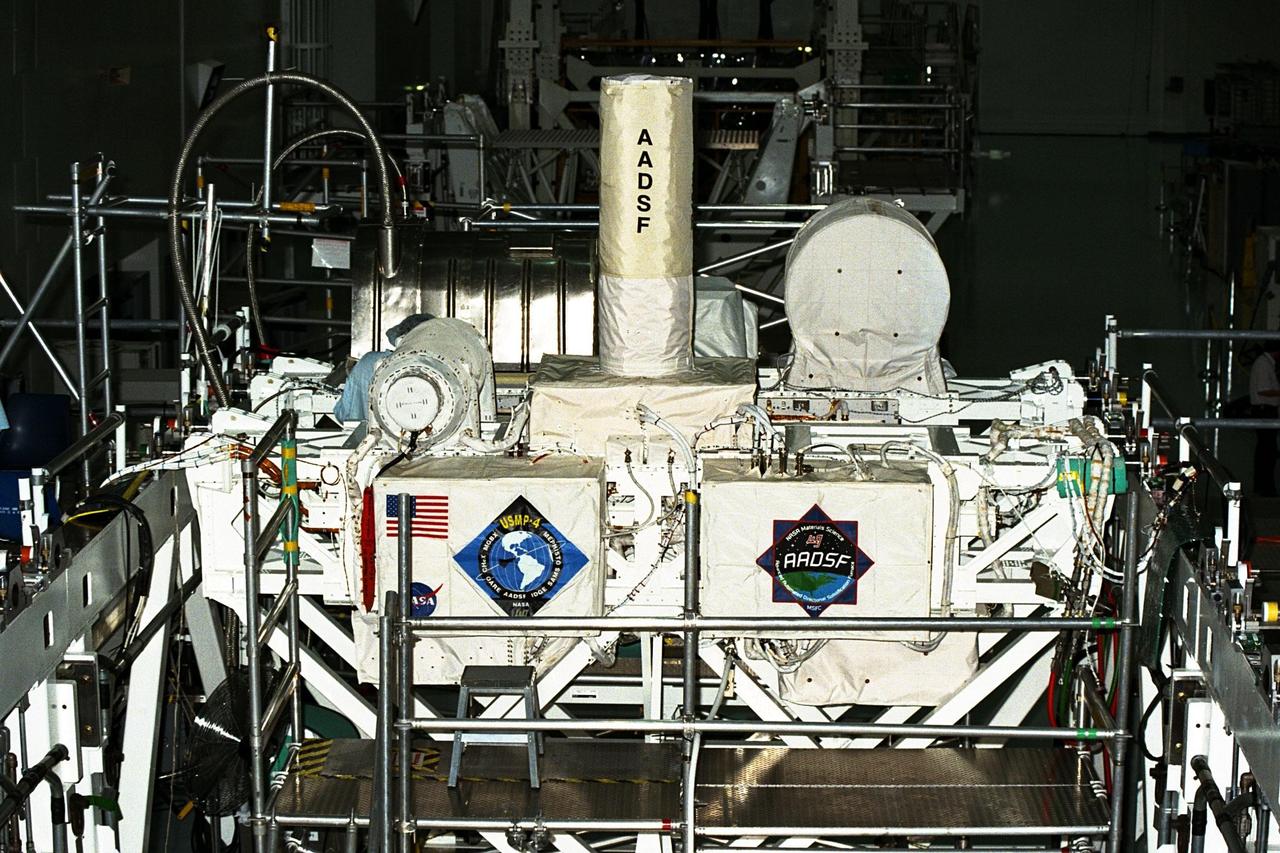
United States Microgravity Payload-4 (USMP-4) experiments are prepared to be flown on Space Shuttle mission STS-87 in the Space Station Processing Facility at Kennedy Space Center (KSC). Seen in the foreground at left is the USMP-4 logo with the acronyms of its experiments. Above the American flag at left is the MEPHISTO experiment, a cooperative American and French investigation of the fundamentals of crystal growth. The large white vertical cylinder in the center of the photo is the Advanced Automated Directional Solidification Furnace (AADSF), which is a sophisticated materials science facility used for studying a common method of processing semiconductor crystals called directional solidification. The white horizontal tube to the right is the Isothermal Dendritic Growth Experiment (IDGE), which will be used to study the dendritic solidification of molten materials in the microgravity environment. All USMP-4 experiments are scheduled for launch aboard STS-87 on Nov. 19 from KSC
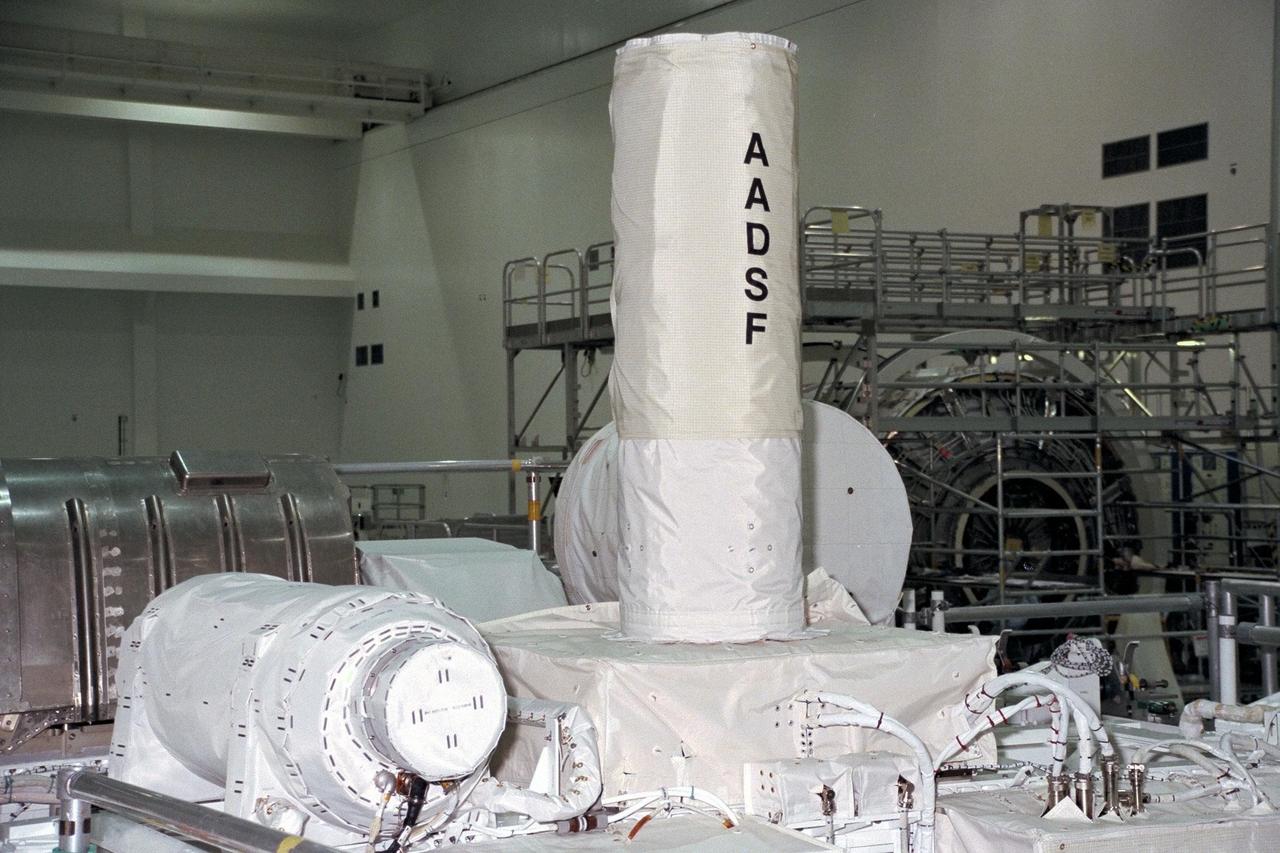
United States Microgravity Payload-4 (USMP-4) experiments are prepared to be flown on Space Shuttle mission STS-87 in the Space Station Processing Facility at Kennedy Space Center (KSC). The vertical tube in the center of the photo is the Advanced Automated Directional Solidification Furnace (AADSF), which will be used by researchers to study the solidification of semiconductor materials in microgravity. Scientists will be able to better understand how microgravity influences the solidification process of these materials and develop better methods for controlling that process during future Space flights and Earth-based production. To its left is MEPHISTO, the French acronym for a cooperative American-French investigation of the fundamentals of crystal growth. All STS-87 experiments are scheduled for launch on Nov. 19 from KSC
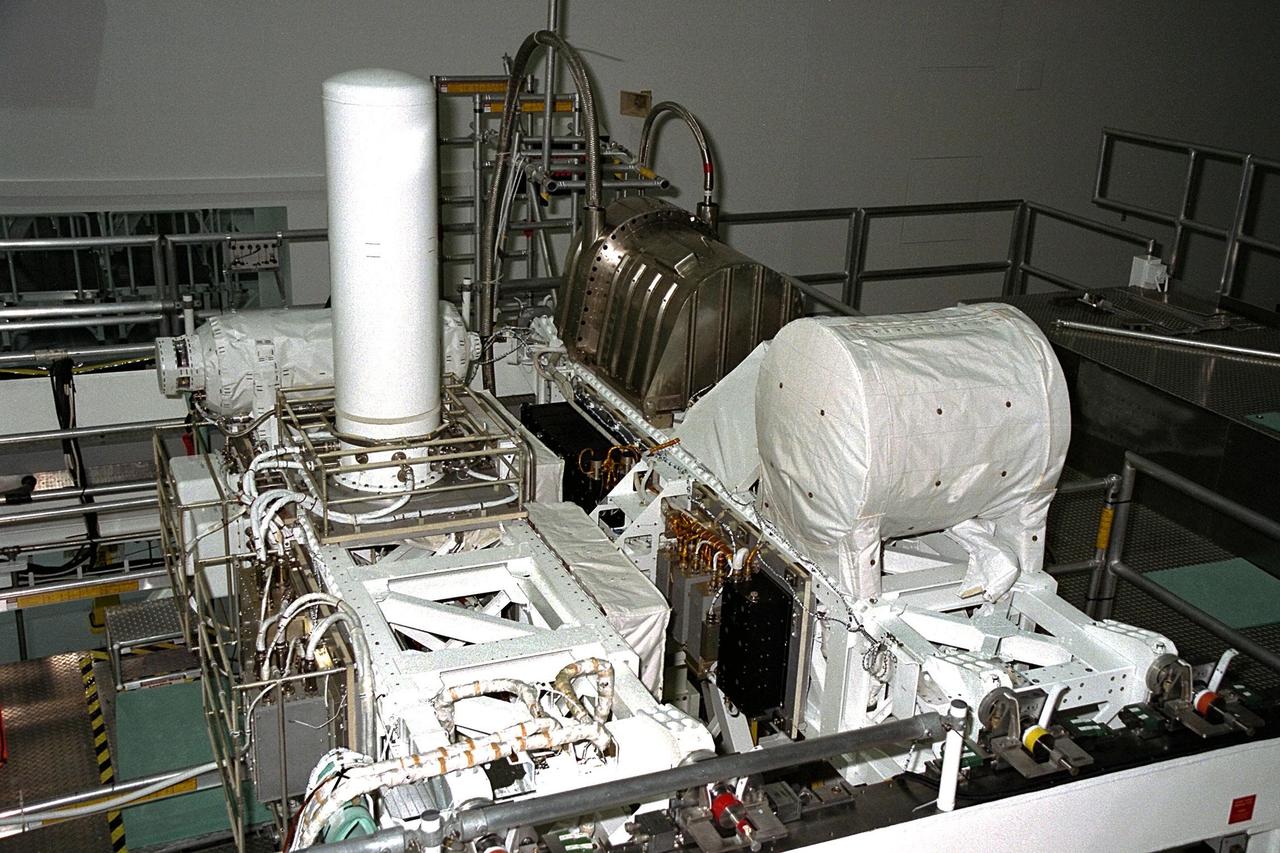
United States Microgravity Payload-4 (USMP-4) experiments are prepared to be flown on Space Shuttle mission STS-87 in the Space Station Processing Facility at Kennedy Space Center (KSC). Seen in the foreground at right is the Isothermal Dendritic Growth Experiment (IDGE), which will be used to study the dendritic solidification of molten materials in the microgravity environment. The metallic breadbox-like structure behind the IDGE is the Confined Helium Experiment (CHeX) that will study one of the basic influences on the behavior and properties of materials by using liquid helium confined between solid surfaces and microgravity. The large white vertical cylinder at left is the Advanced Automated Directional Solidification Furnace (AADSF) and the horizontal tube behind it is MEPHISTO, the French acronym for a cooperative American-French investigation of the fundamentals of crystal growth. Just below the left end of MEPHISTO is the Space Acceleration Measurement System, or SAMS, which measures the microgravity conditions in which the experiments are conducted. All of these experiments are scheduled for launch aboard STS-87 on Nov. 19 from KSC