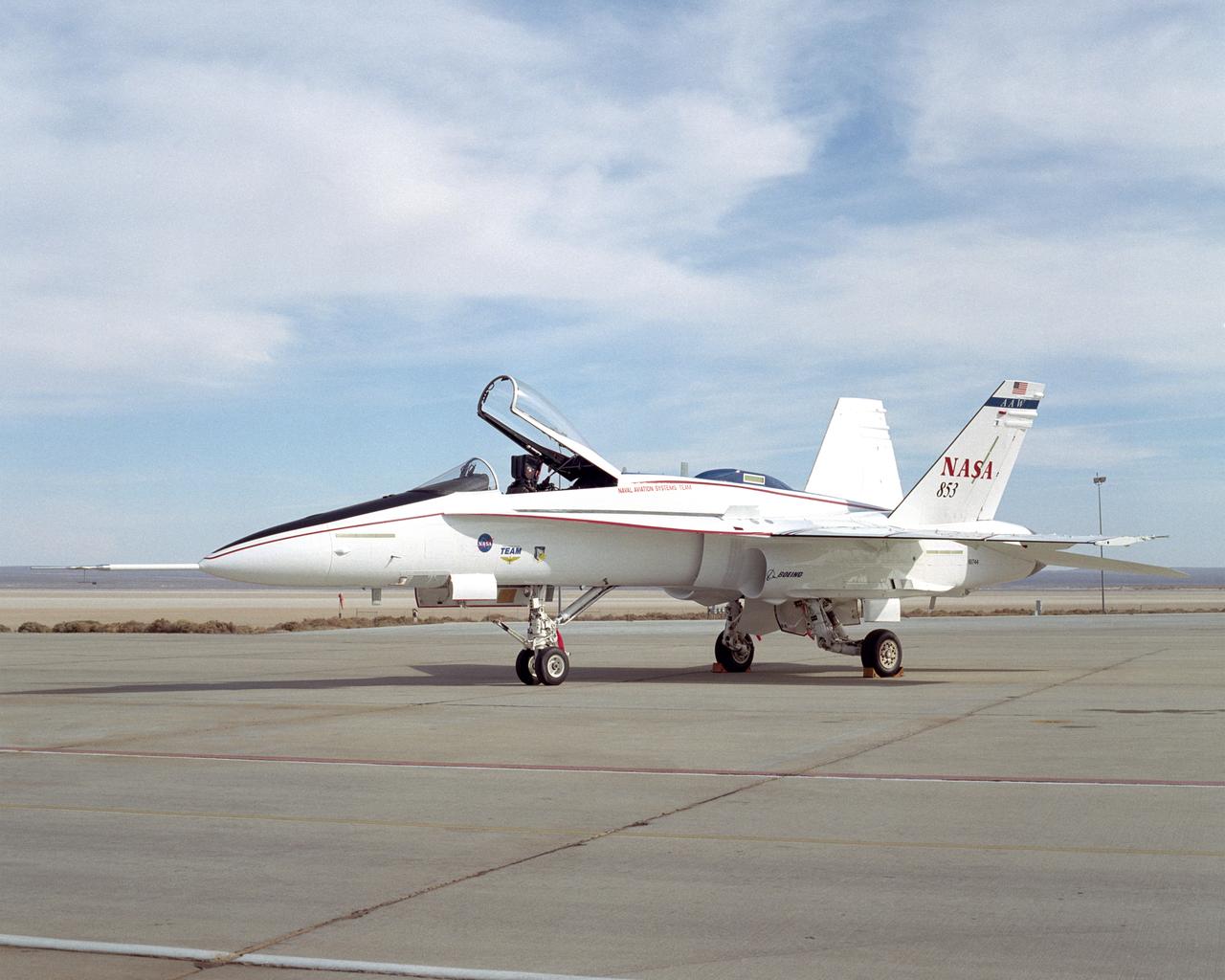
This modified F/A-18A is the test aircraft for the Active Aeroelastic Wing (AAW) project at NASA's Dryden Flight Research Center, Edwards, California.
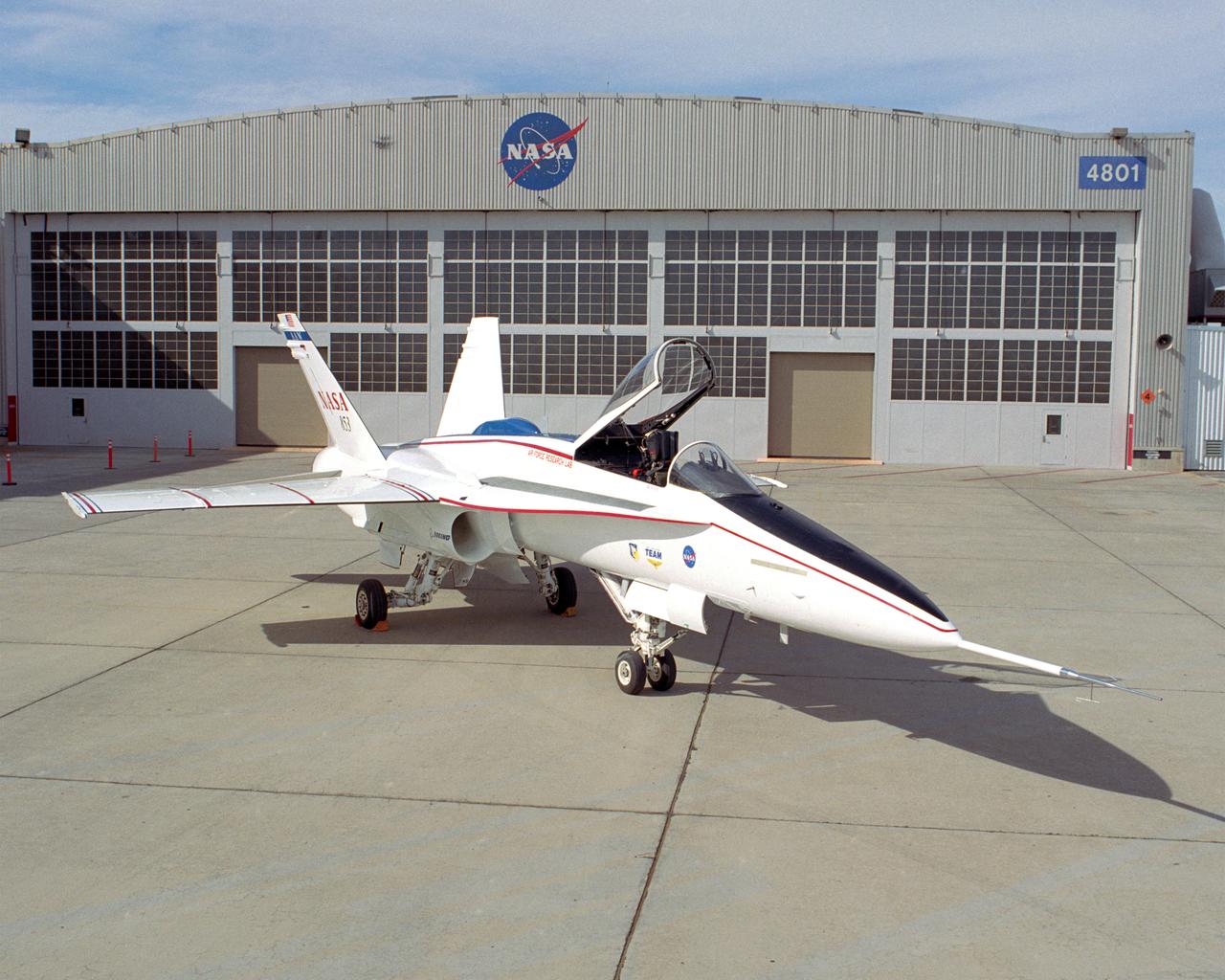
This modified F/A-18A is the test aircraft for the Active Aeroelastic Wing (AAW) project at NASA's Dryden Flight Research Center, Edwards, California.
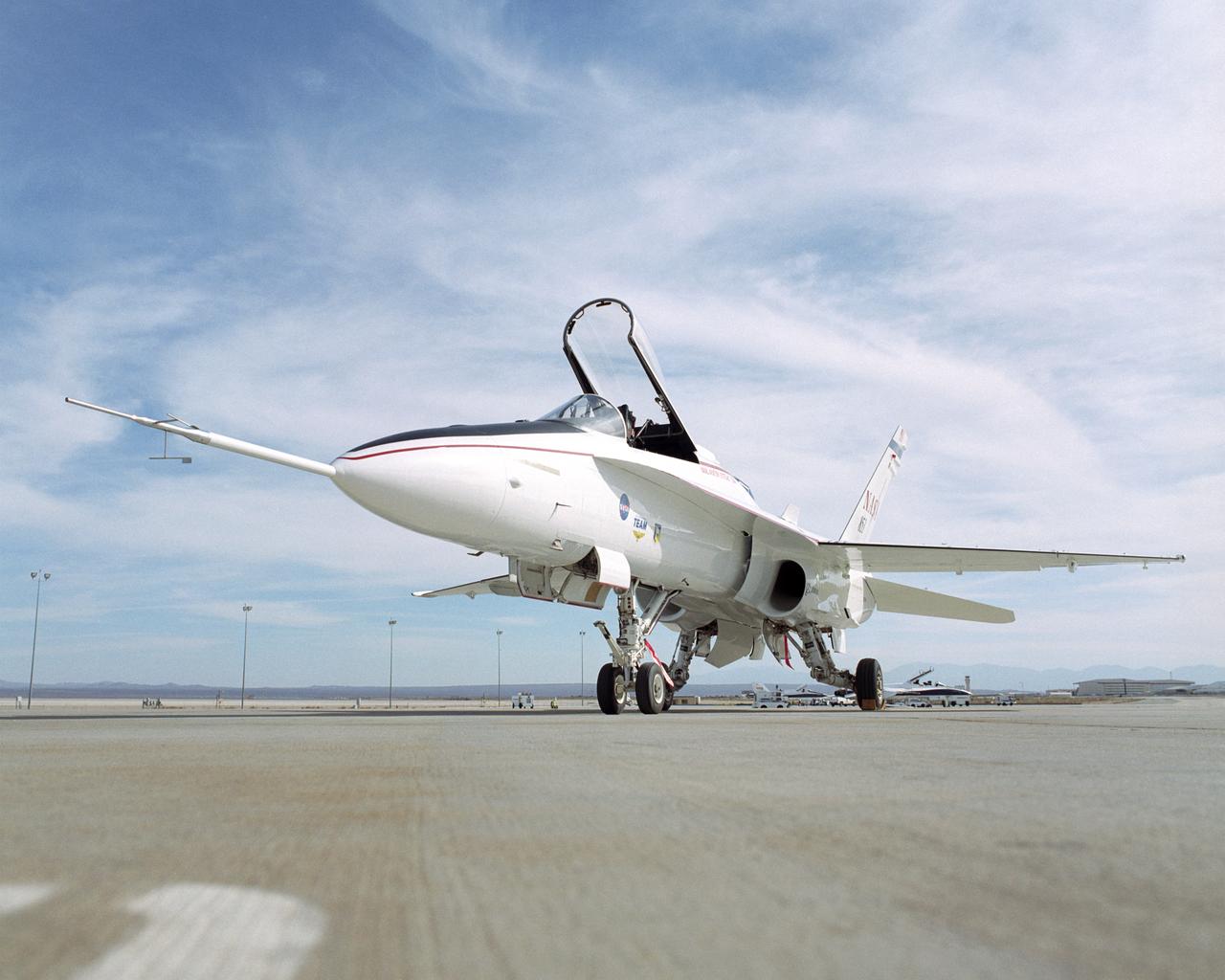
This modified F/A-18A is the test aircraft for the Active Aeroelastic Wing (AAW) project at NASA's Dryden Flight Research Center, Edwards, California.
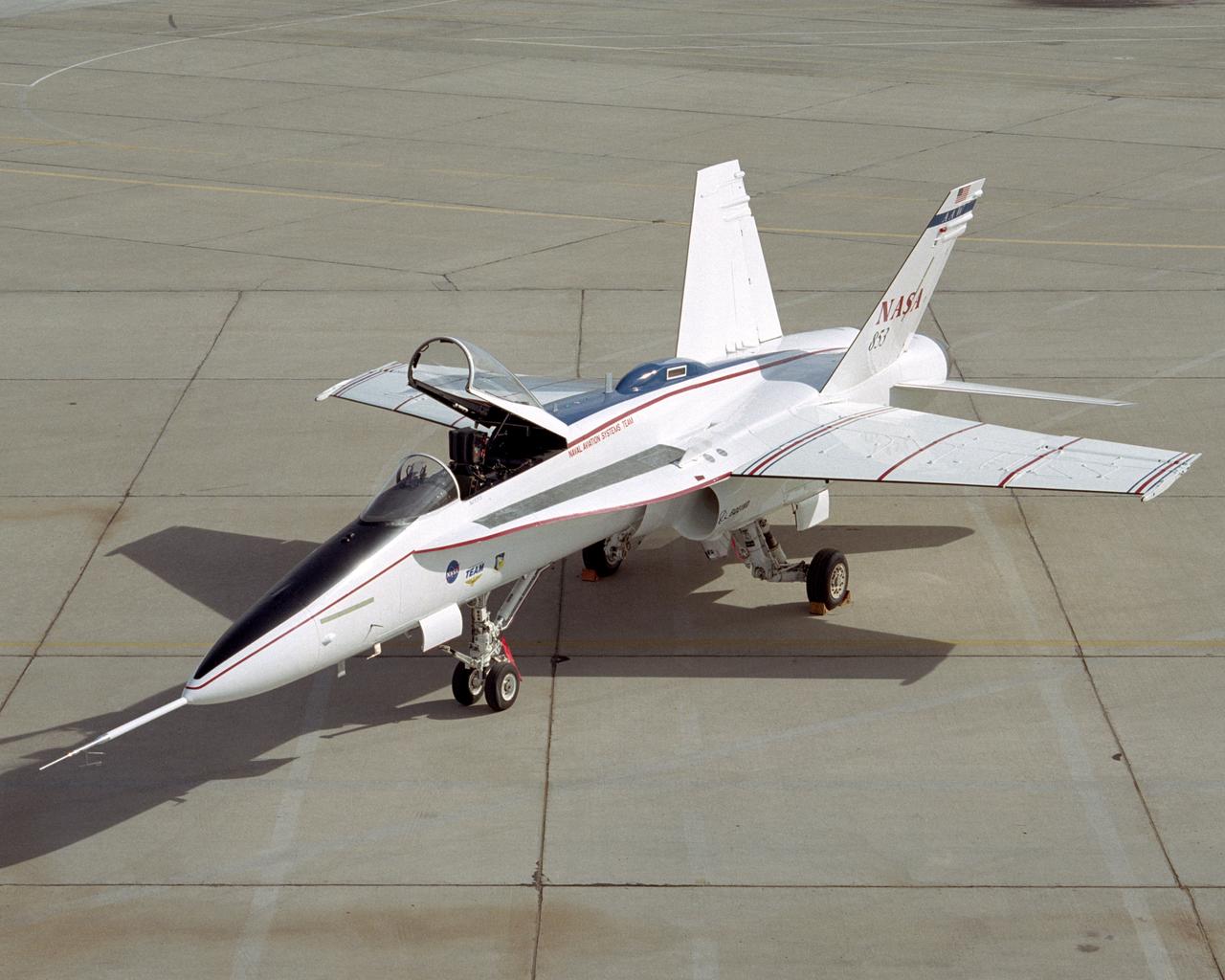
This modified F/A-18A is the test aircraft for the Active Aeroelastic Wing (AAW) project at NASA's Dryden Flight Research Center, Edwards, California.
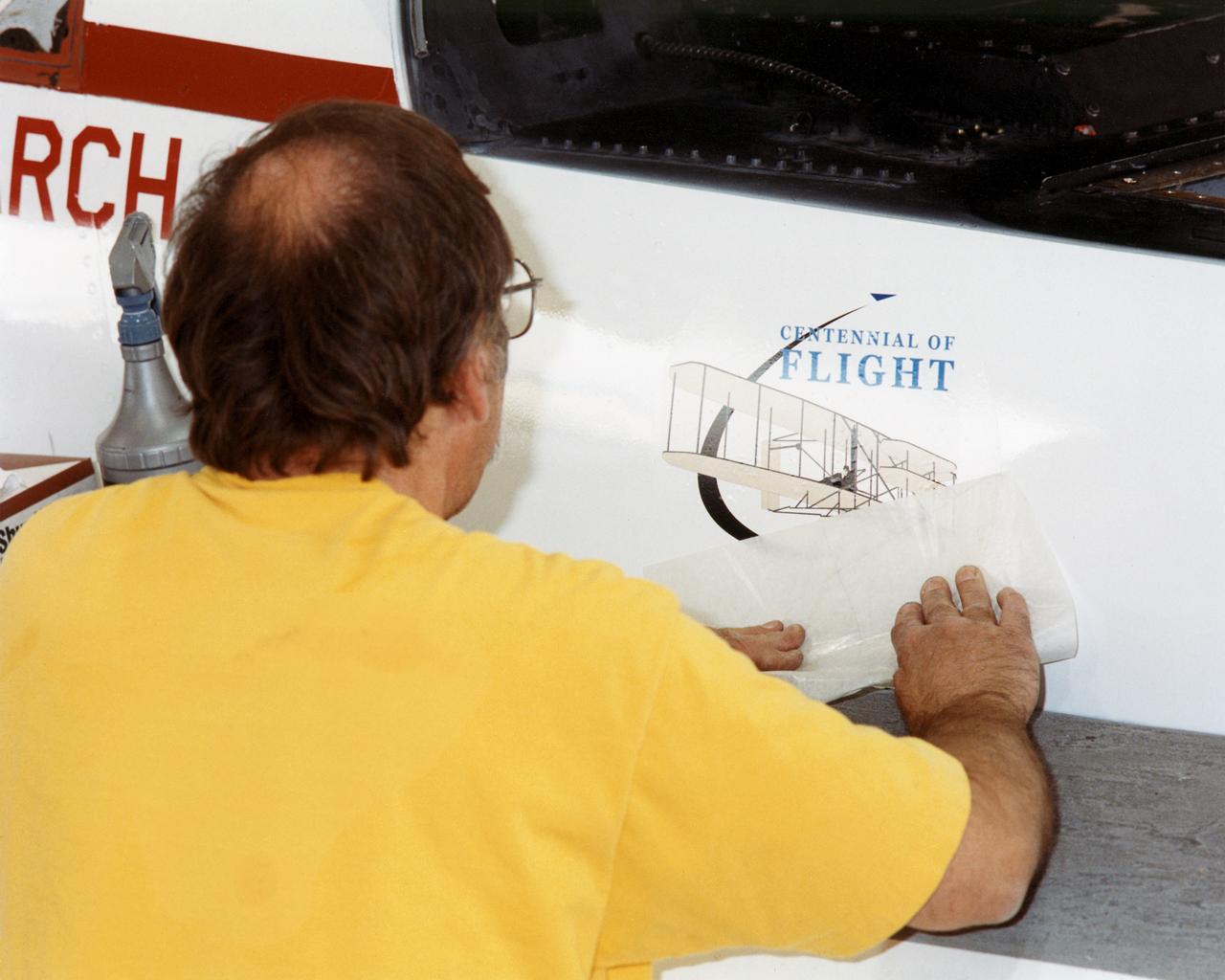
NASA aircraft technician Don Herman completes placement of the first official U.S. Centennial of Flight Commission logo on an aircraft, Dryden's Active Aeroelastic Wing (AAW) F/A-18.
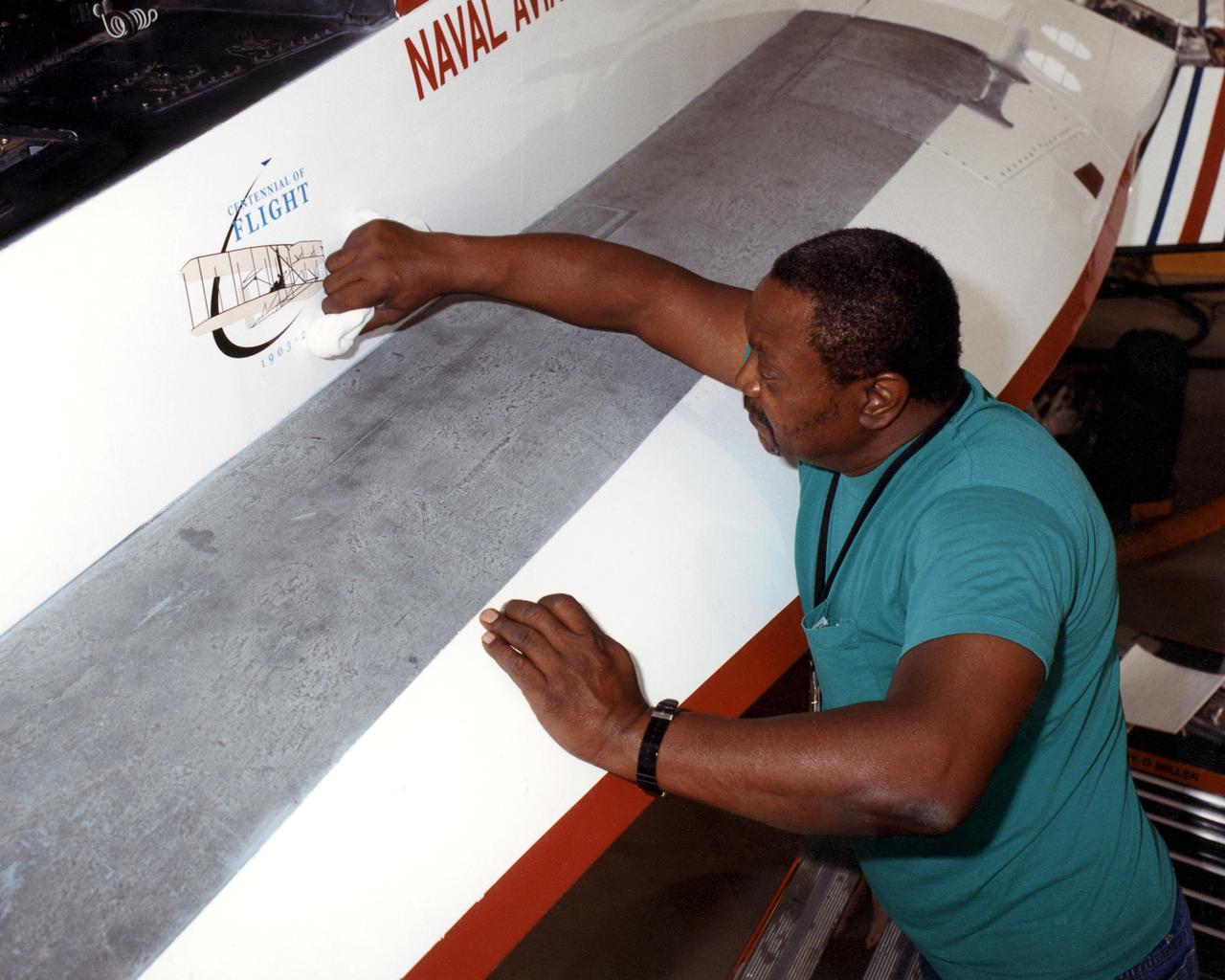
NASA aircraft technician Donte Warren completes placement of the first official U.S. Centennial of Flight Commission logo on an aircraft, Dryden's Active Aeroelastic Wing (AAW) F/A-18.
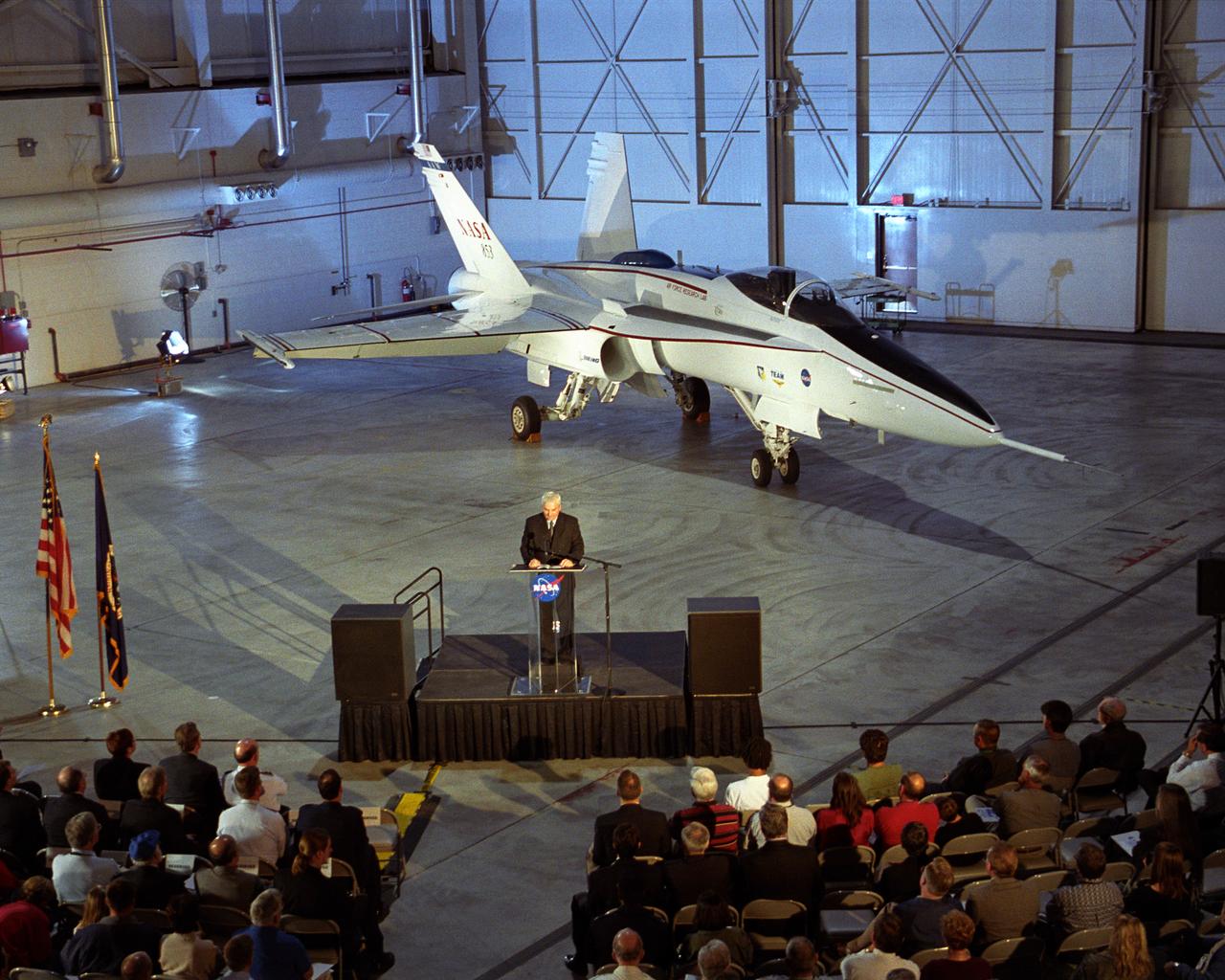
With the modified F/A-18 showcased behind him, Kevin Petersen, director of NASA Dryden Flight Research Center, addressed the audience attending the rollout ceremonies for the Active Aeroelastic Wing flight research project.
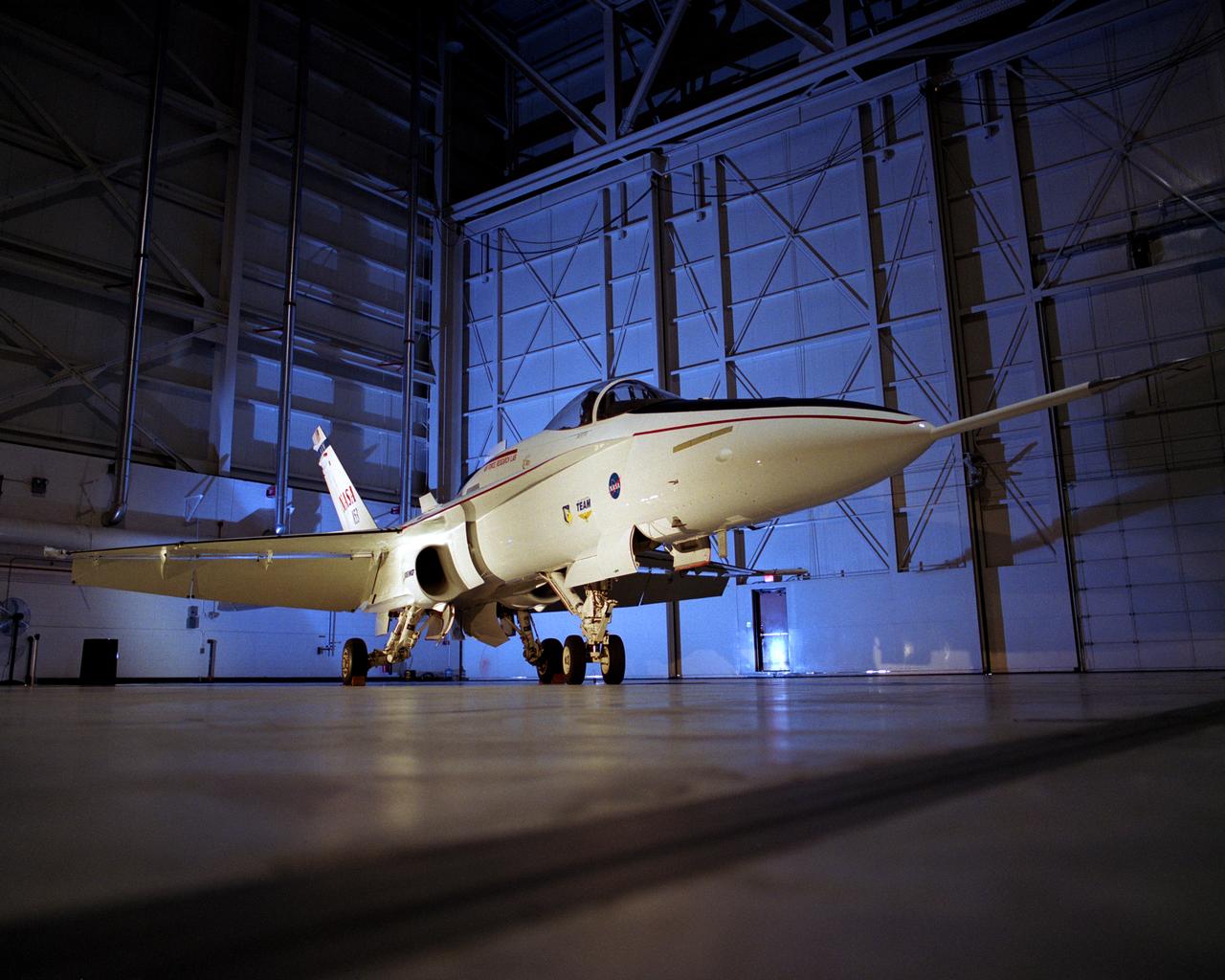
A modified F/A-18 in a distinctive red, white and blue paint scheme was showcased during formal rollout ceremonies for the Active Aeroelastic Wing flight research program.
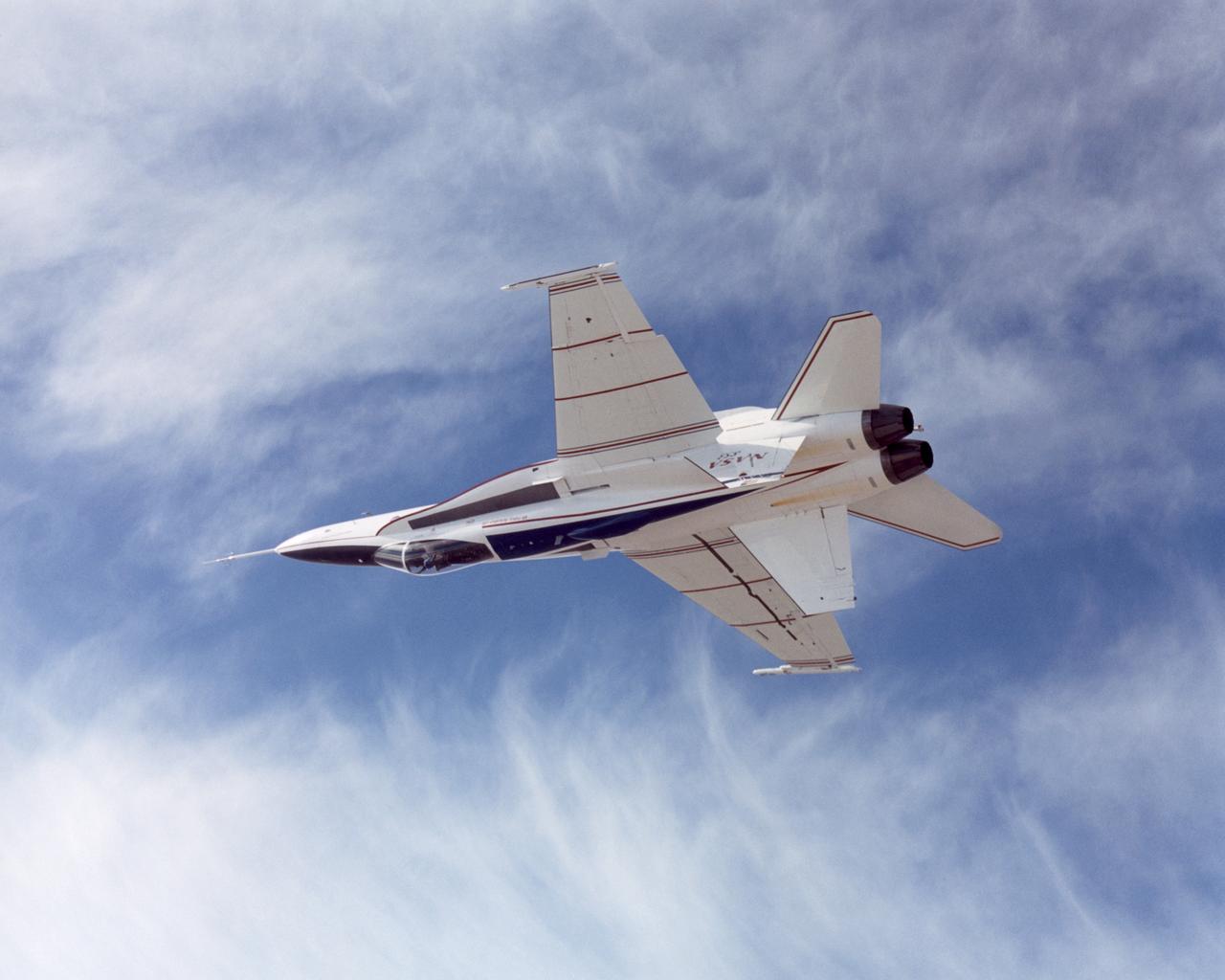
NASA's Active Aeroelastic Wing F/A-18A research aircraft rolls upside down during a 360-degree aileron roll on a test mission.

How differential deflection of the inboard and outboard leading-edge flaps affected the handling qualities of this modified F/A-18A was evaluated during the first check flight in the Active Aeroelastic Wing program at NASA's Dryden Flight Research Center.
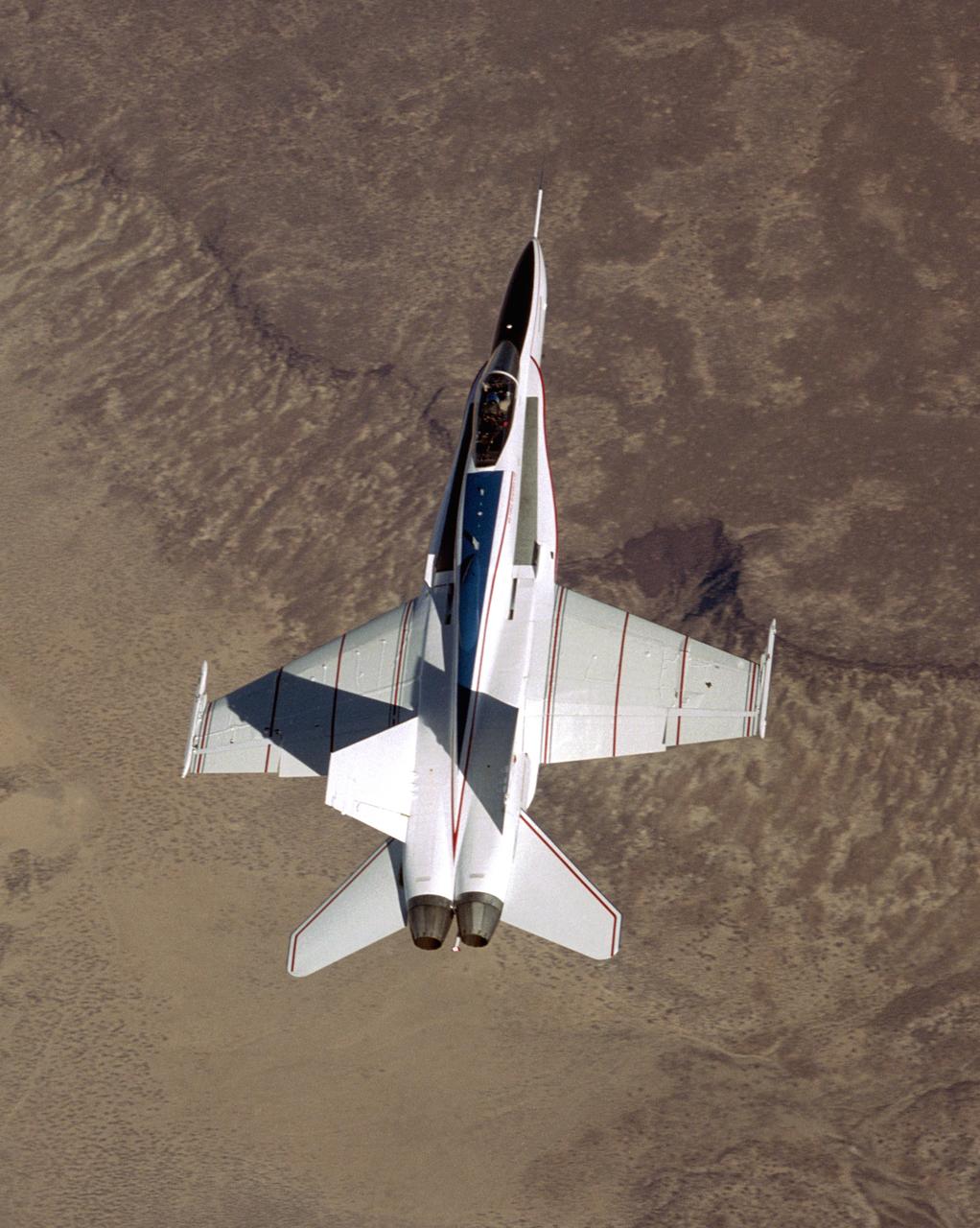
The modified F/A-18 being flown in the joint NASA/Air Force Active Aeroelastic Wing research program shows off its colors during its first checkout flight from NASA's Dryden Flight Research Center.
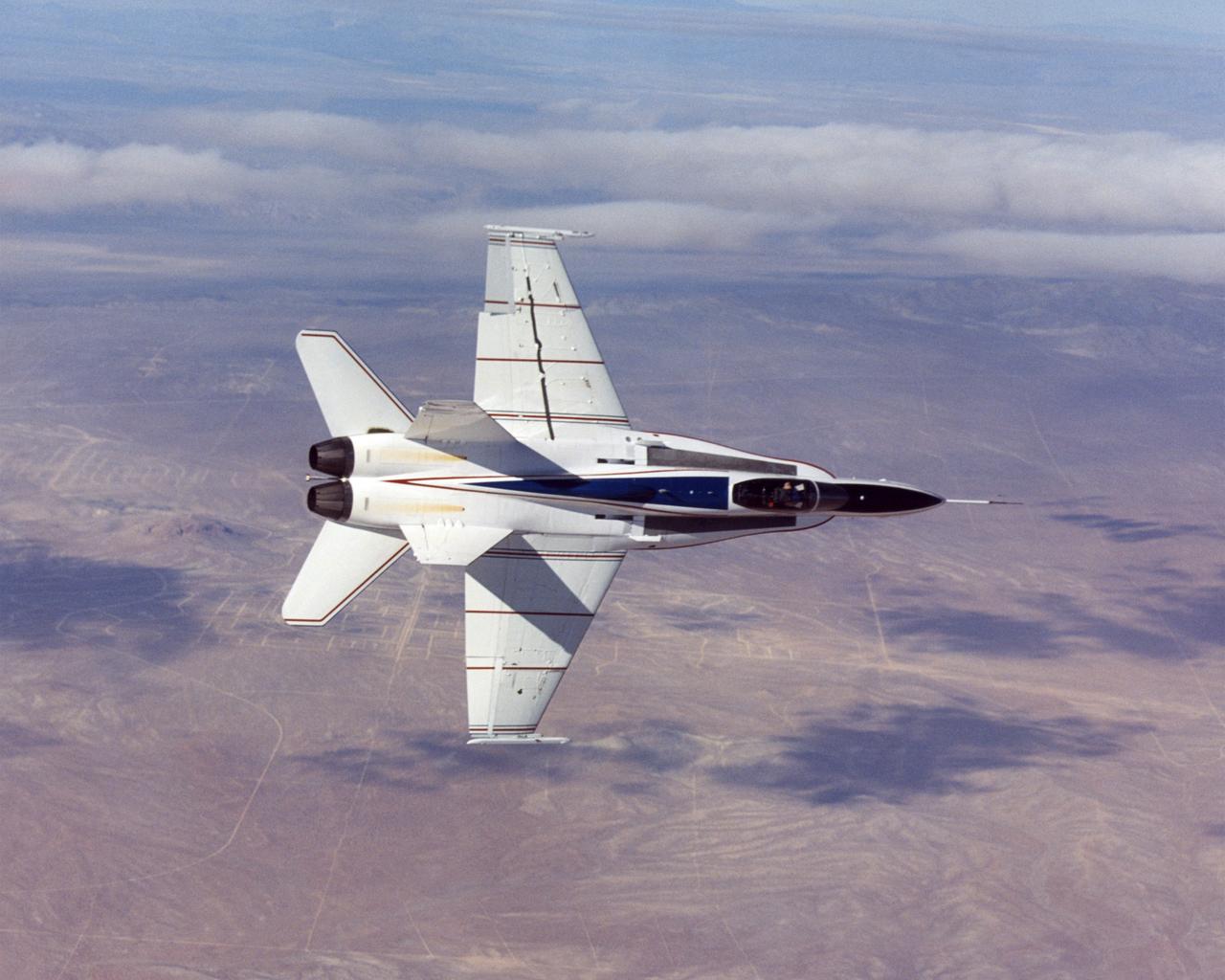
NASA Dryden's highly-modified Active Aeroelastic Wing F/A-18A shows off its form during a 360-degree aileron roll during a research flight.
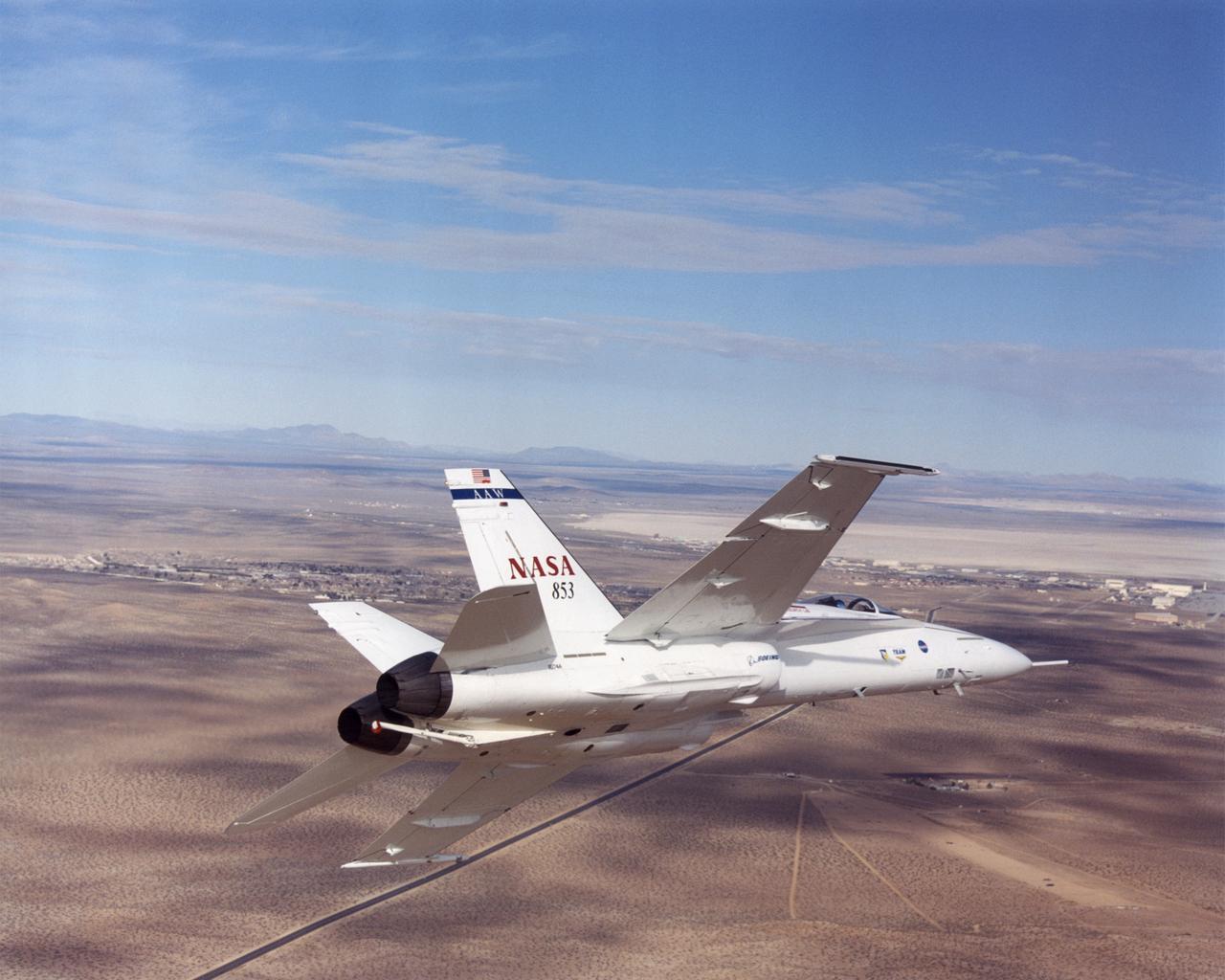
NASA 853, a modified former Navy F/A-18A fighter plane, is now performing research duties in the Active Aeroelastic Wing project at NASA Dryden Flight Research Center, Edwards AFB, California.
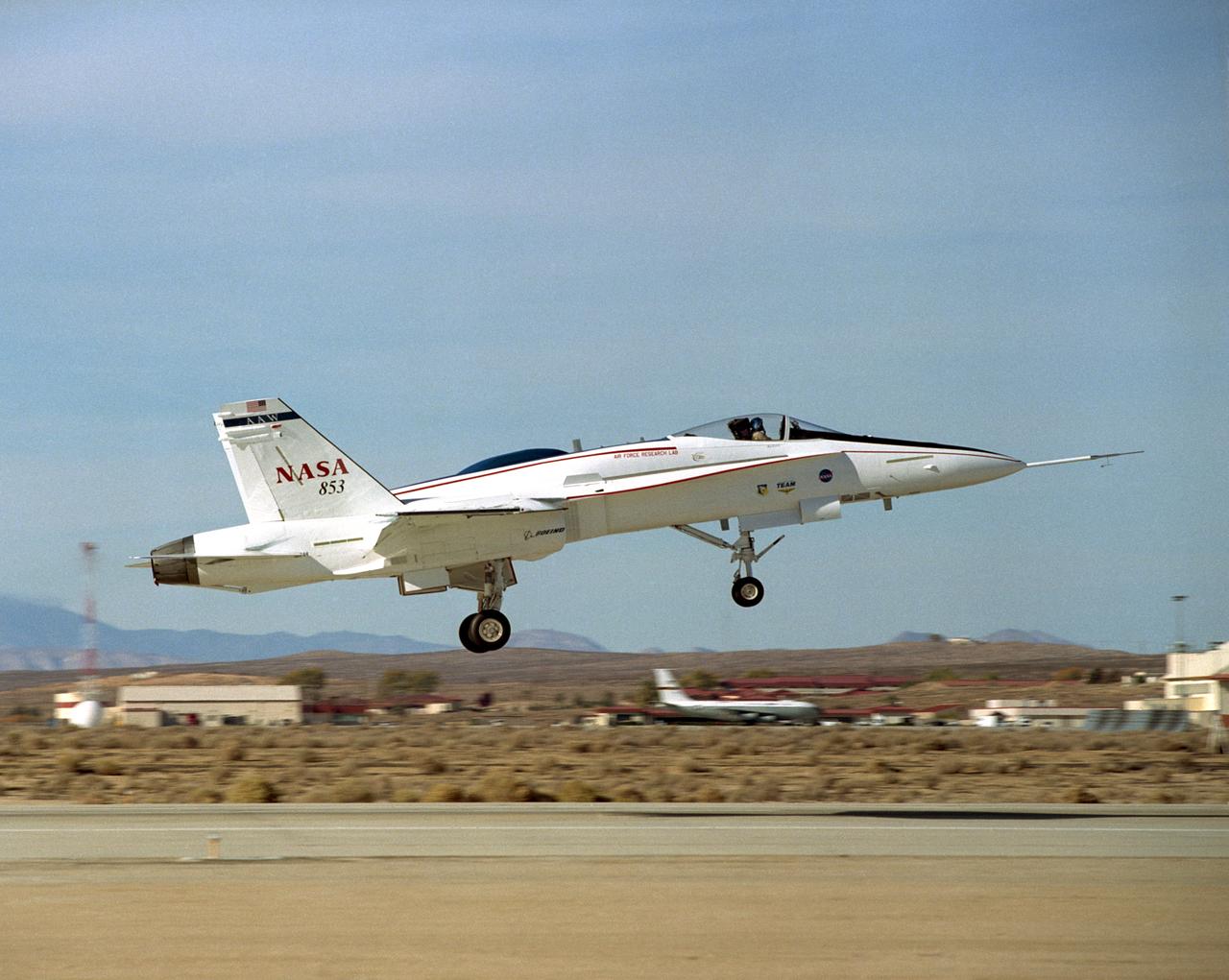
The Active Aeroelastic Wing F-18A lifts off on its first checkout flight November 15, 2002, from NASA's Dryden Flight Research Center at Edwards Air Force Base, Calif. The checkout flight initiated a two-phase NASA--Air Force flight research program that will investigate the potential of aerodynamically twisting flexible wings to improve maneuverability of high-performance aircraft at transonic and supersonic speeds.
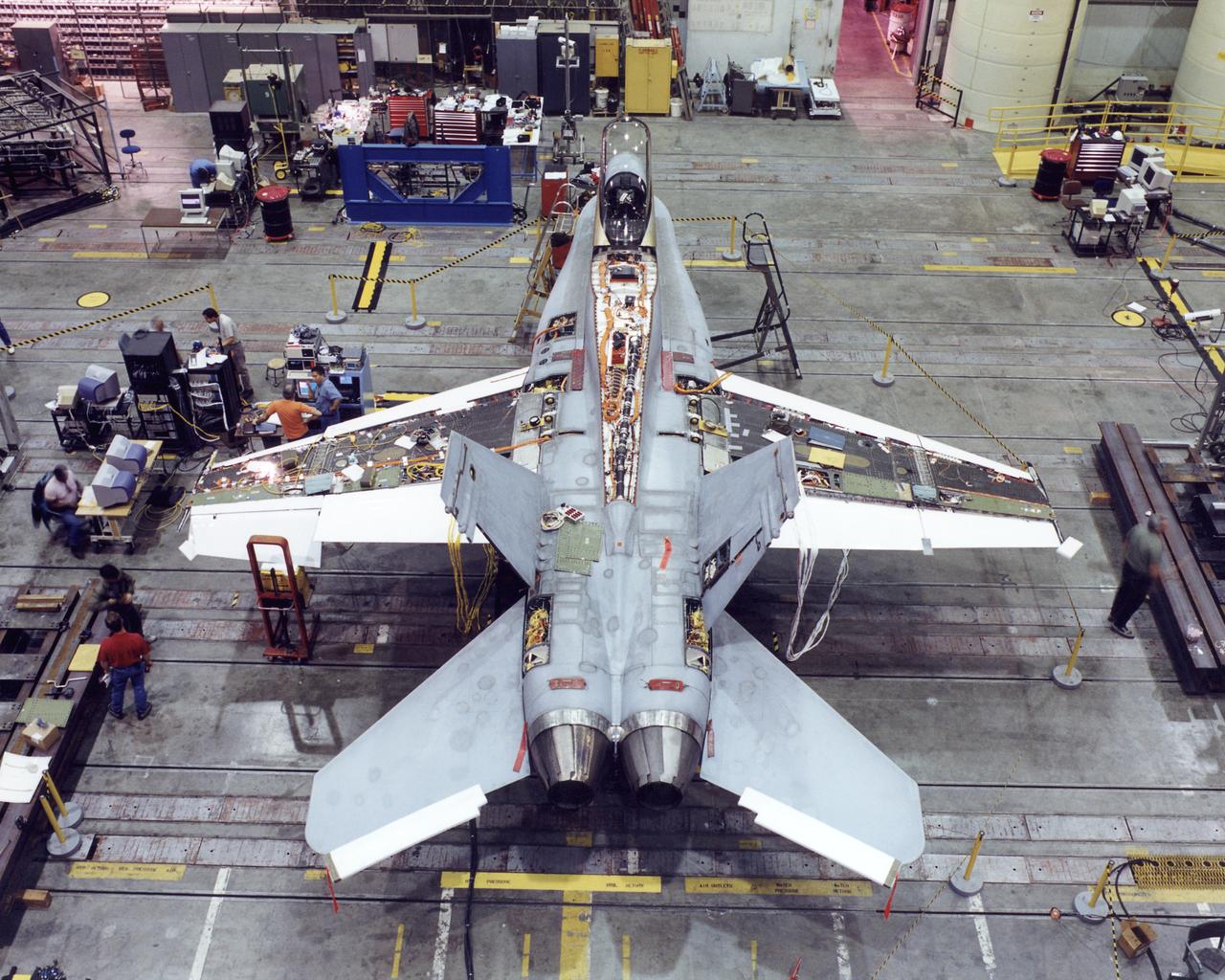
Structural loads testing on the Active Aeroelastic Wing F-18 in the Flight Loads Laboratory at NASA's Dryden flight Research Center, Edwards, California
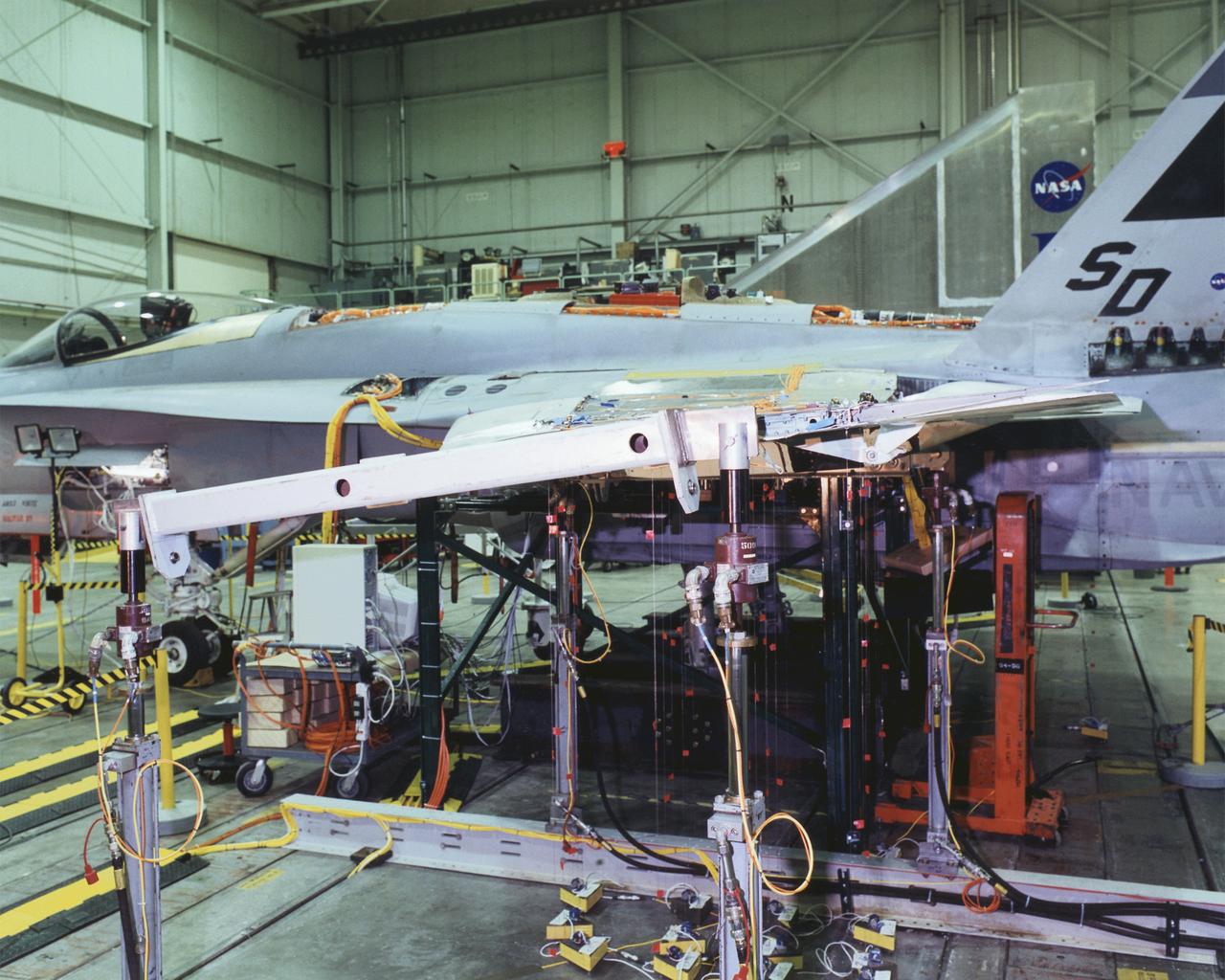
A modified F/A-18A undergoes wing torsion testing in the Flight Dynamics Laboratory at NASA's Dryden Flight Research Center, Edwards, California
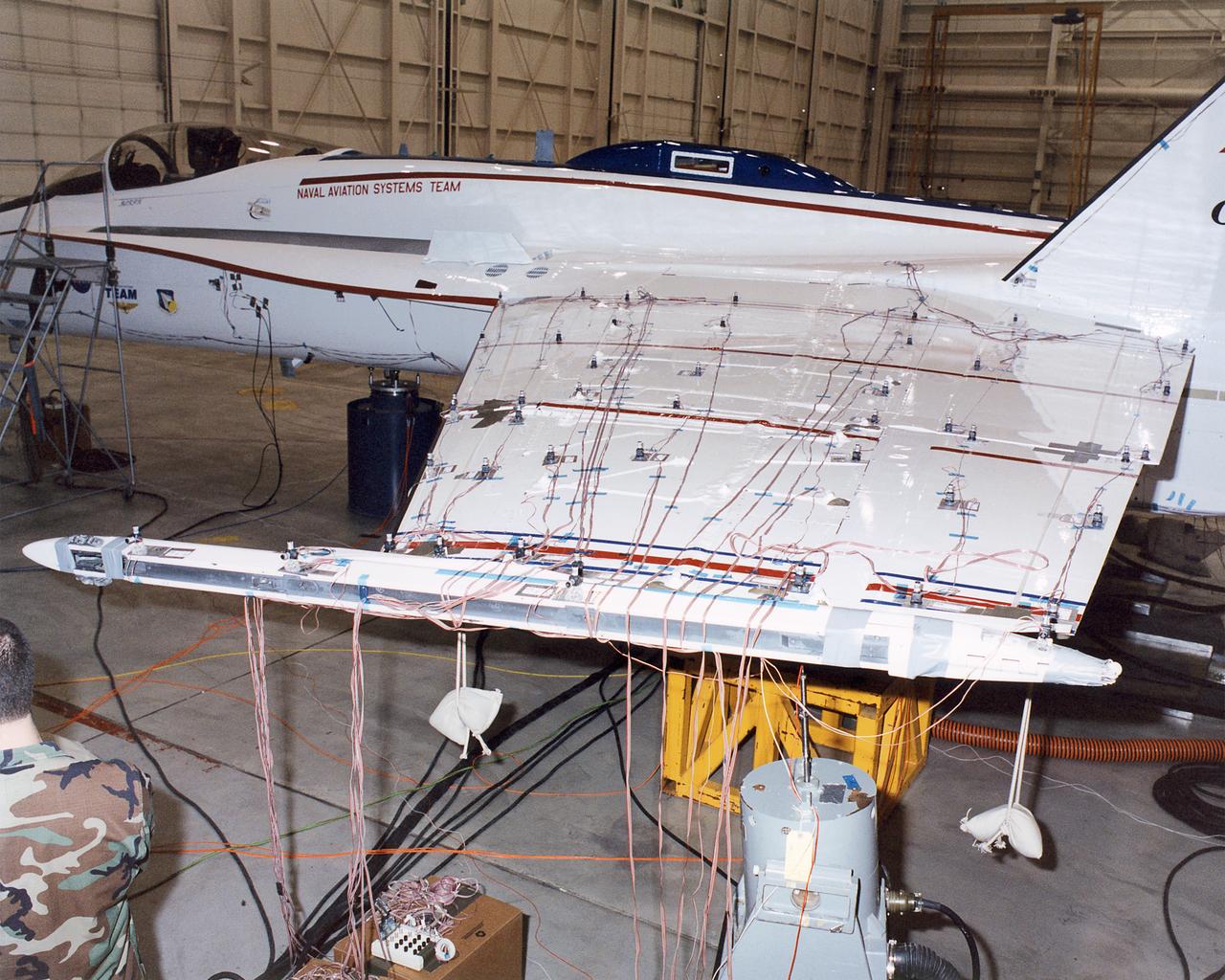
The upper wing surfaces of the Active Aeroelastic Wing F/A-18 test aircraft are covered with accelerometers and other sensors during ground vibration tests at NASA Dryden Flight Research Center.
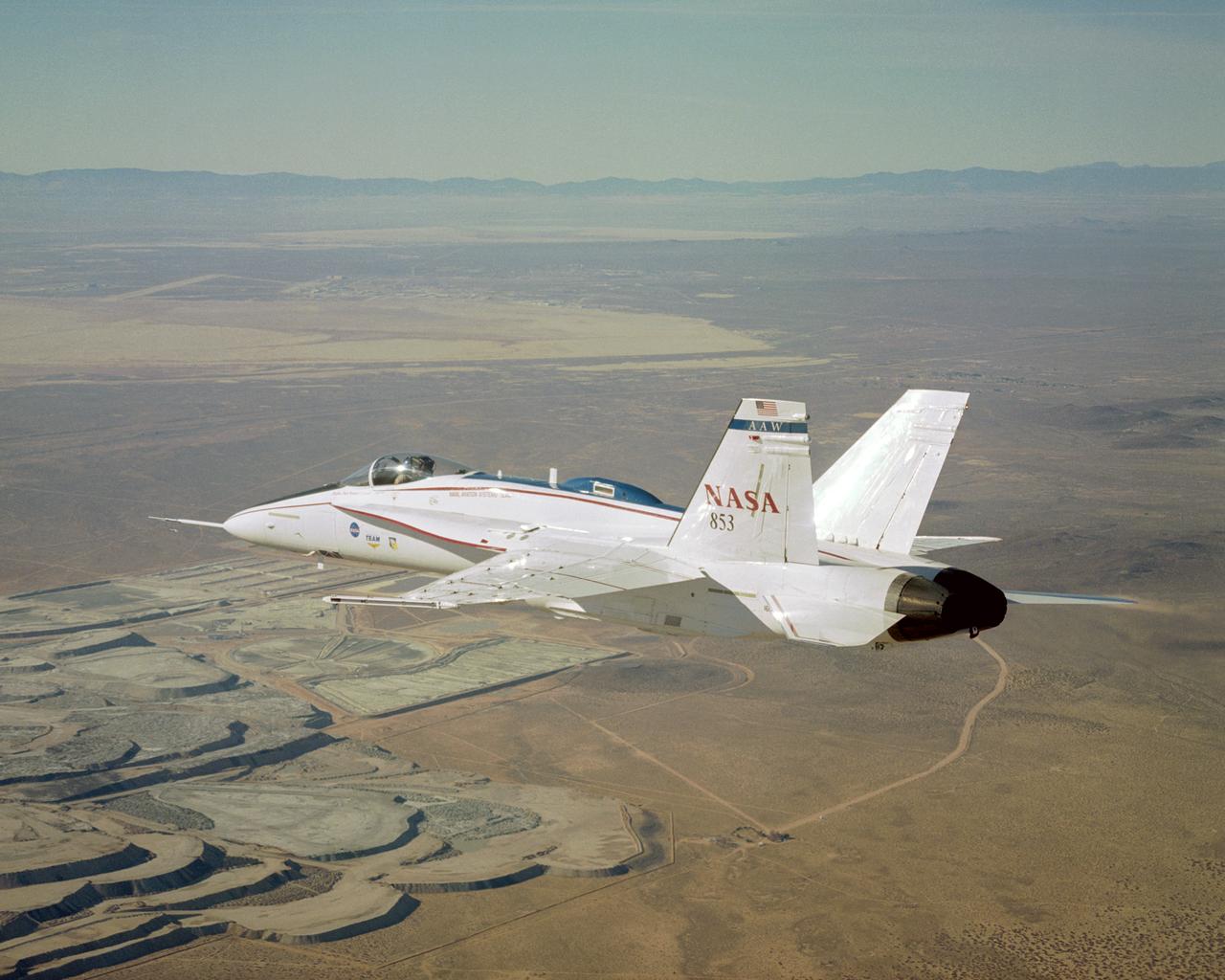
NASA's modified Active Aeroelastic Wing F/A-18 skims over portions of the U.S. Borax mine during a recent mission from the Dryden Flight Research Center.
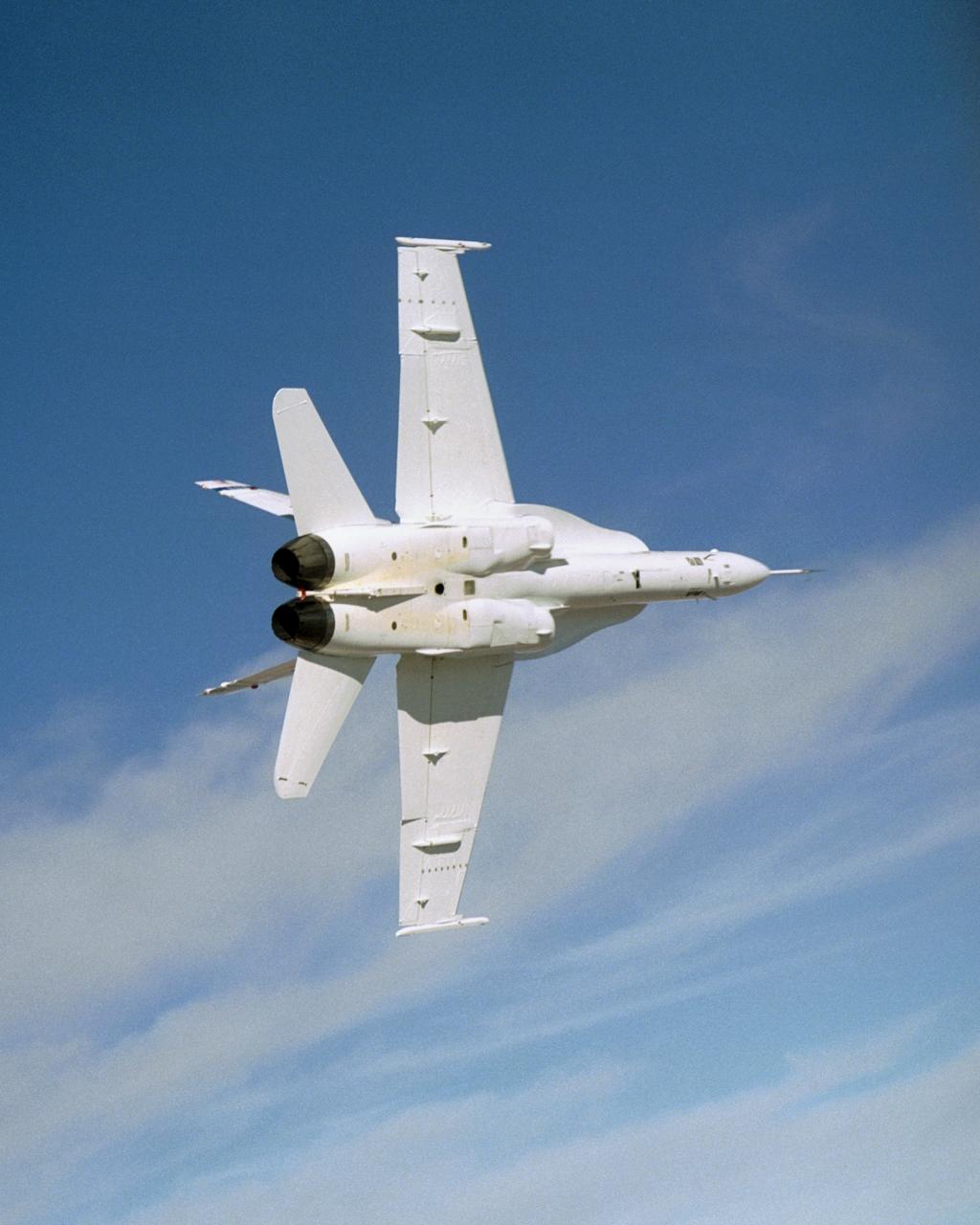
NASA's Active Aeroelastic Wing F/A-18 rolls into a hard left turn during a research flight in early December 2004 from the Dryden Flight Research Center.
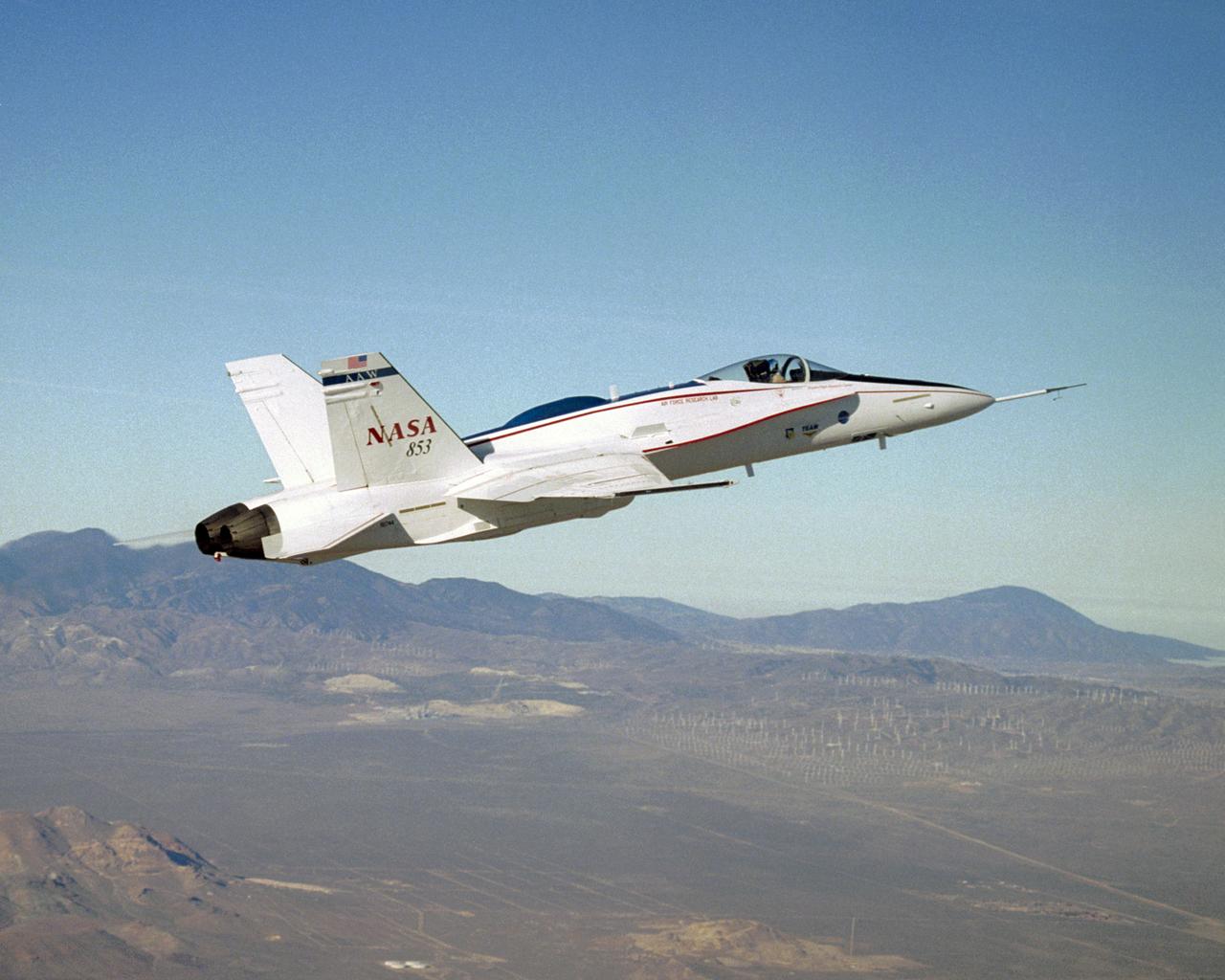
NASA's Active Aeroelastic Wing F/A-18 resumed flight tests in the second phase of the program at the Dryden Flight Research Center in early December 2004.
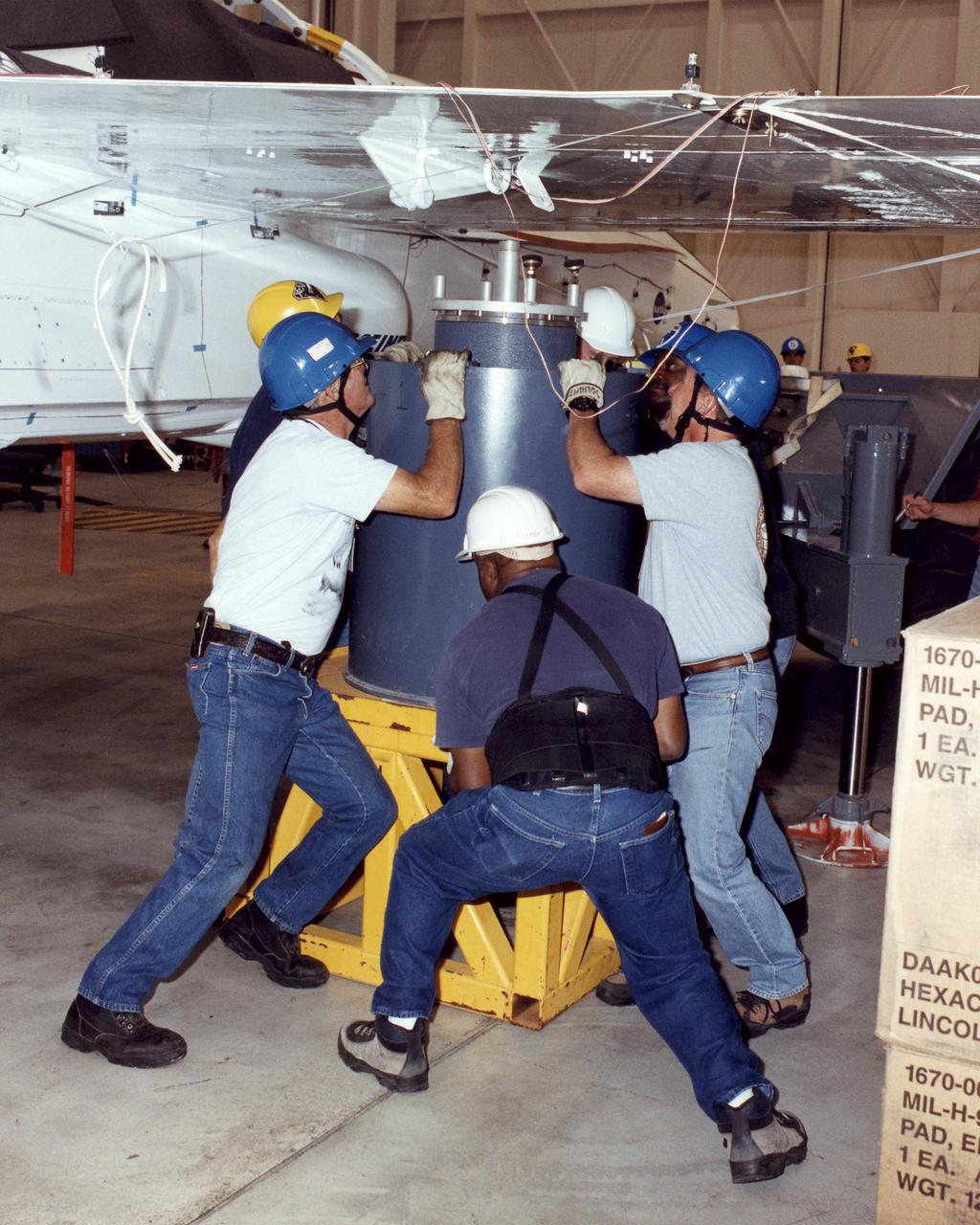
NASA Dryden technicians (Dave Dennis, Freddy Green and Jeff Doughty) position a support cylinder under the right wing of the Active Aeroelastic Wing F/A-18 test aircraft prior to ground vibration tests.