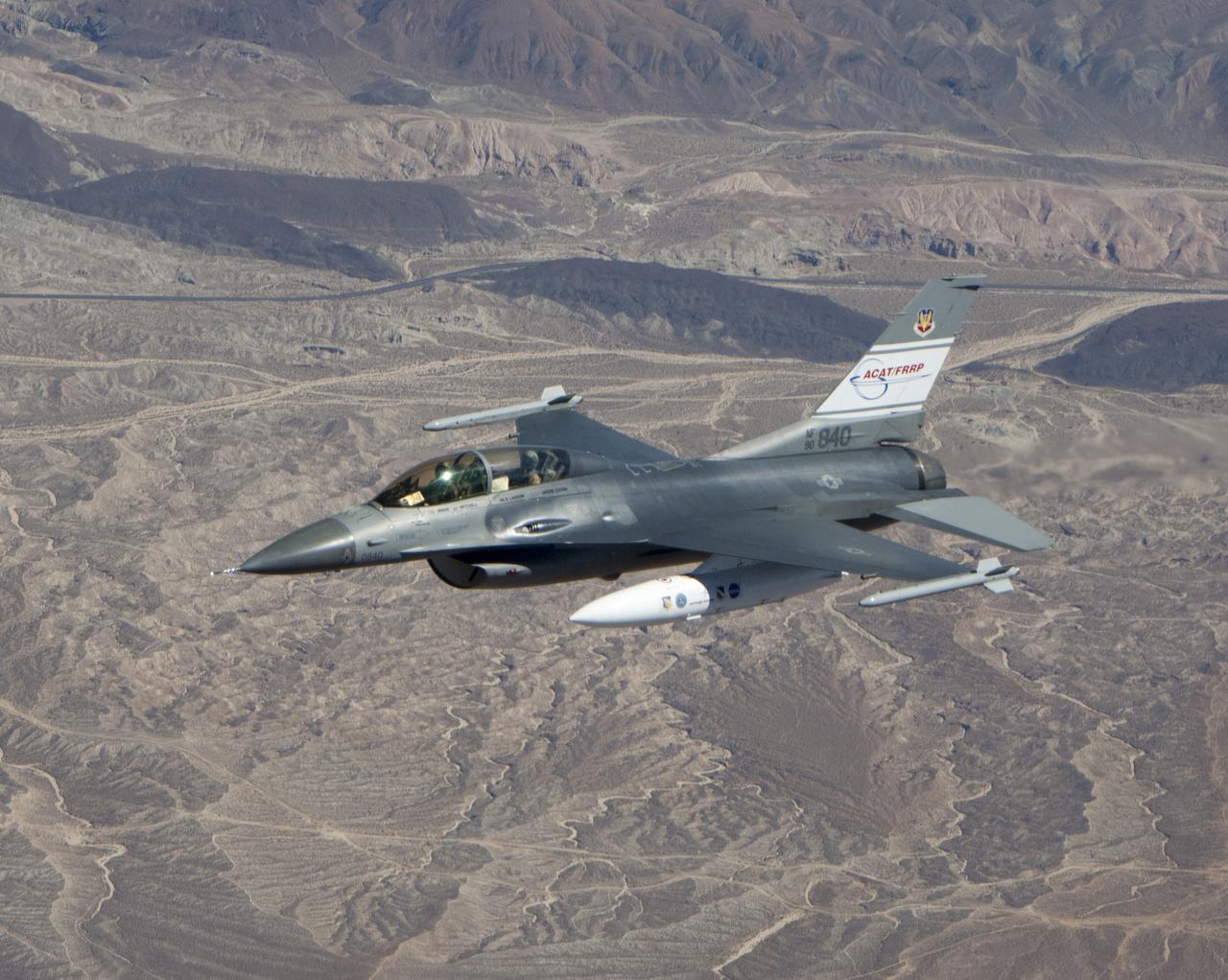
The U.S. Air Force's F-16D Automatic Collision Avoidance Technology, or ACAT, aircraft was used by NASA's Armstrong Flight Research Center and the Air Force Research Laboratory to develop and test collision avoidance technologies.
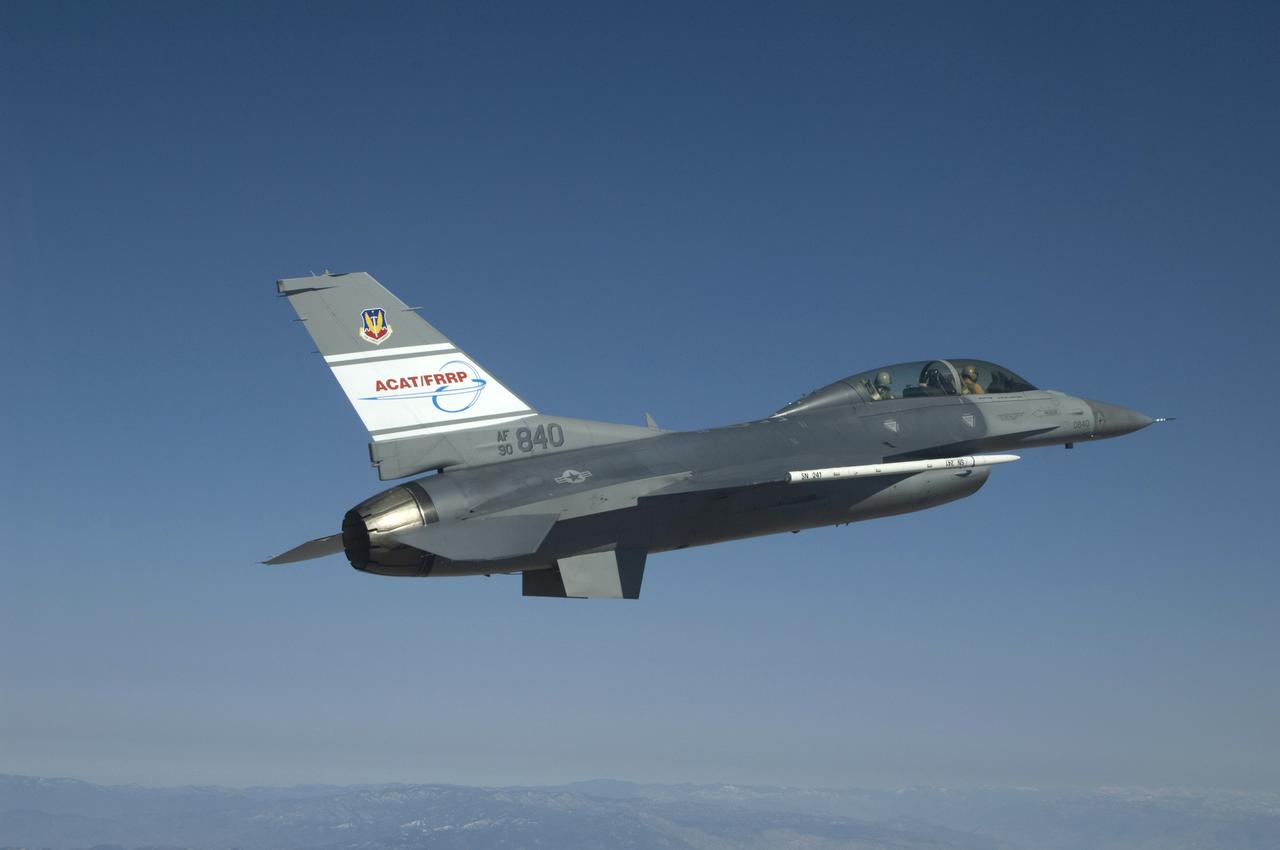
The U.S. Air Force's F-16D Automatic Collision Avoidance Technology (ACAT) aircraft cruises during a flight originating from NASA's Dryden Flight Research Center. NASA Dryden worked with the Air Force Research Laboratory in the ACAT Fighter Risk Reduction Project to develop collision avoidance technologies for fighter/attack aircraft that would reduce the risk of ground and mid-air collisions.
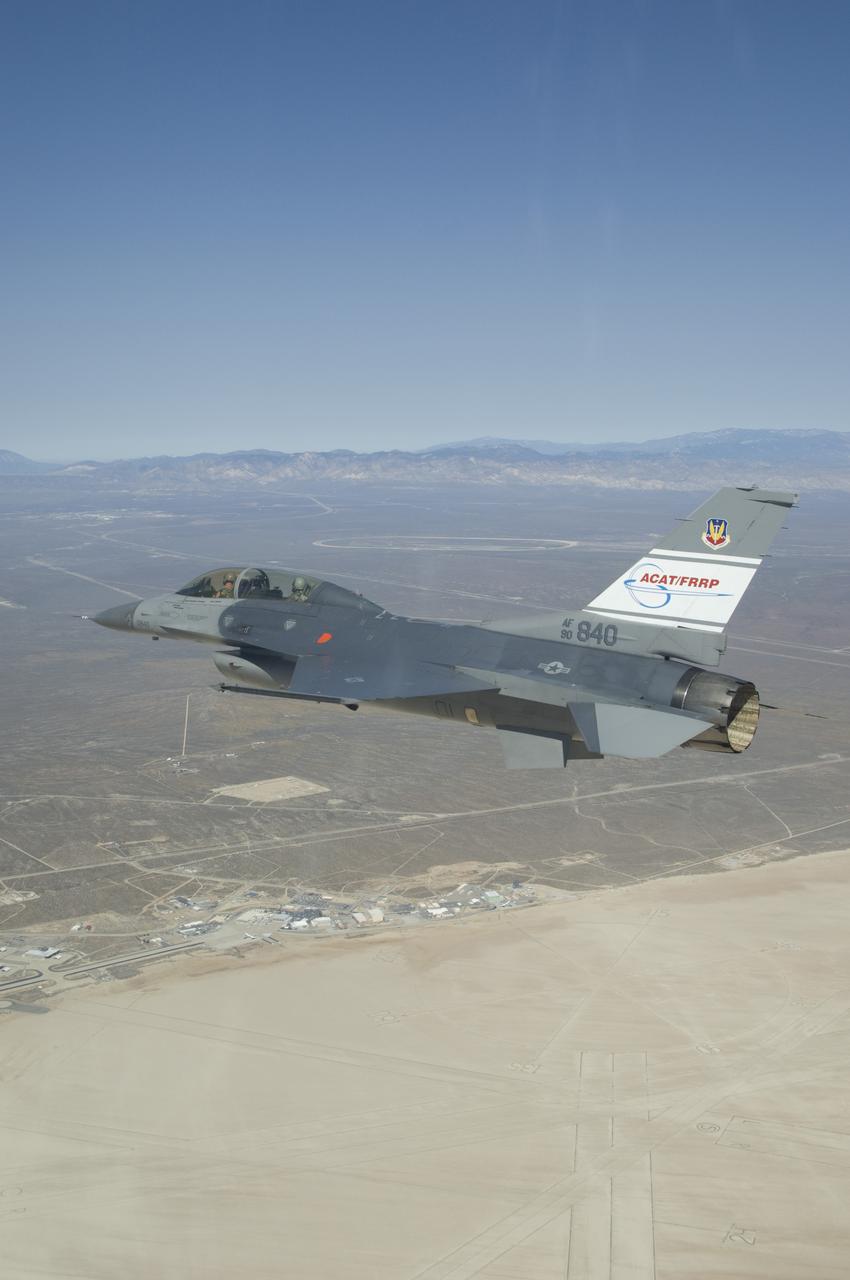
The U.S. Air Force's F-16D Automatic Collision Avoidance Technology (ACAT) aircraft flies over Rogers Dry Lake at Edwards Air Force Base, CA. NASA's Dryden Flight Research Center worked with the Air Force Research Laboratory in the ACAT Fighter Risk Reduction Project to develop collision avoidance technologies for fighter/attack aircraft that would reduce the risk of ground and mid-air collisions.

The U.S. Air Force's F-16D Automatic Collision Avoidance Technology (ACAT) aircraft banks over NASA's Dryden Flight Research Center during a flight in March 2009. NASA Dryden worked with the Air Force Research Laboratory in the ACAT Fighter Risk Reduction Project to develop collision avoidance technologies for fighter/attack aircraft that would reduce the risk of ground and mid-air collisions.
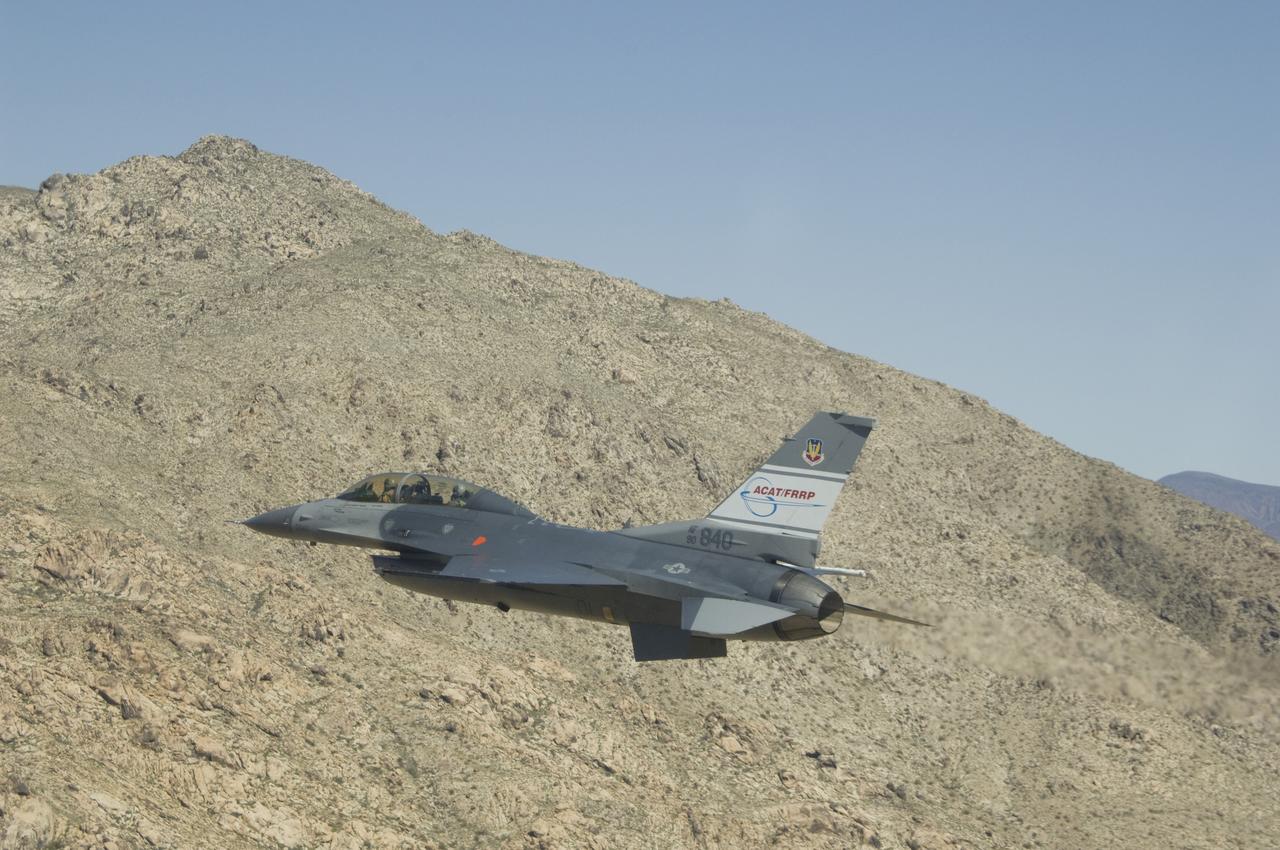
The U.S. Air Force's F-16D Automatic Collision Avoidance Technology (ACAT) aircraft crew takes a close look at a Mojave Desert hill during a March 2009 flight. NASA's Dryden Flight Research Center worked with the Air Force Research Laboratory in the ACAT Fighter Risk Reduction Project to develop collision avoidance technologies for fighter/attack aircraft that would reduce the risk of ground and mid-air collisions.
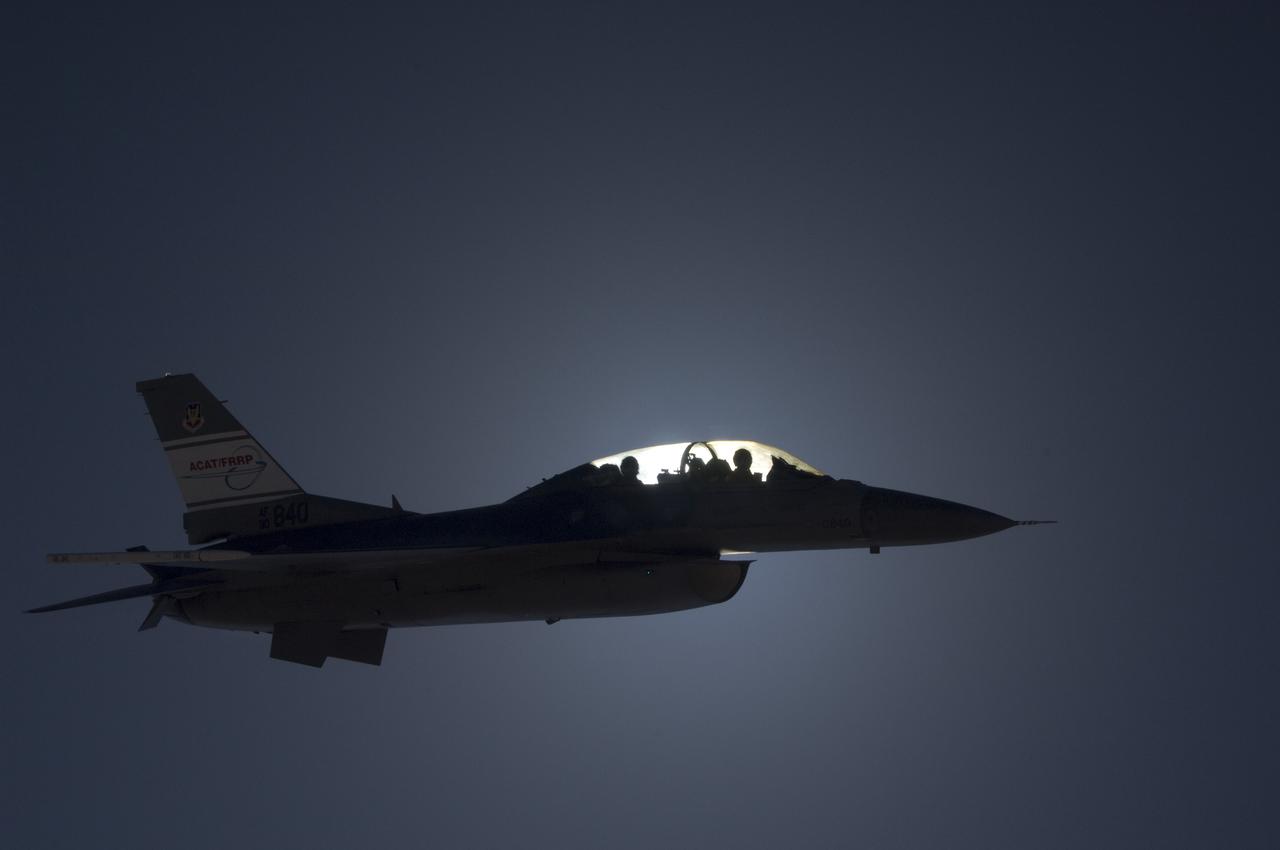
The U.S. Air Force's F-16D Automatic Collision Avoidance Technology (ACAT) aircraft eclipsed the sun during a flight in March 2009. NASA's Dryden Flight Research Center worked with the Air Force Research Laboratory in the ACAT Fighter Risk Reduction Project to develop collision avoidance technologies for fighter/attack aircraft that would reduce the risk of ground and mid-air collisions.
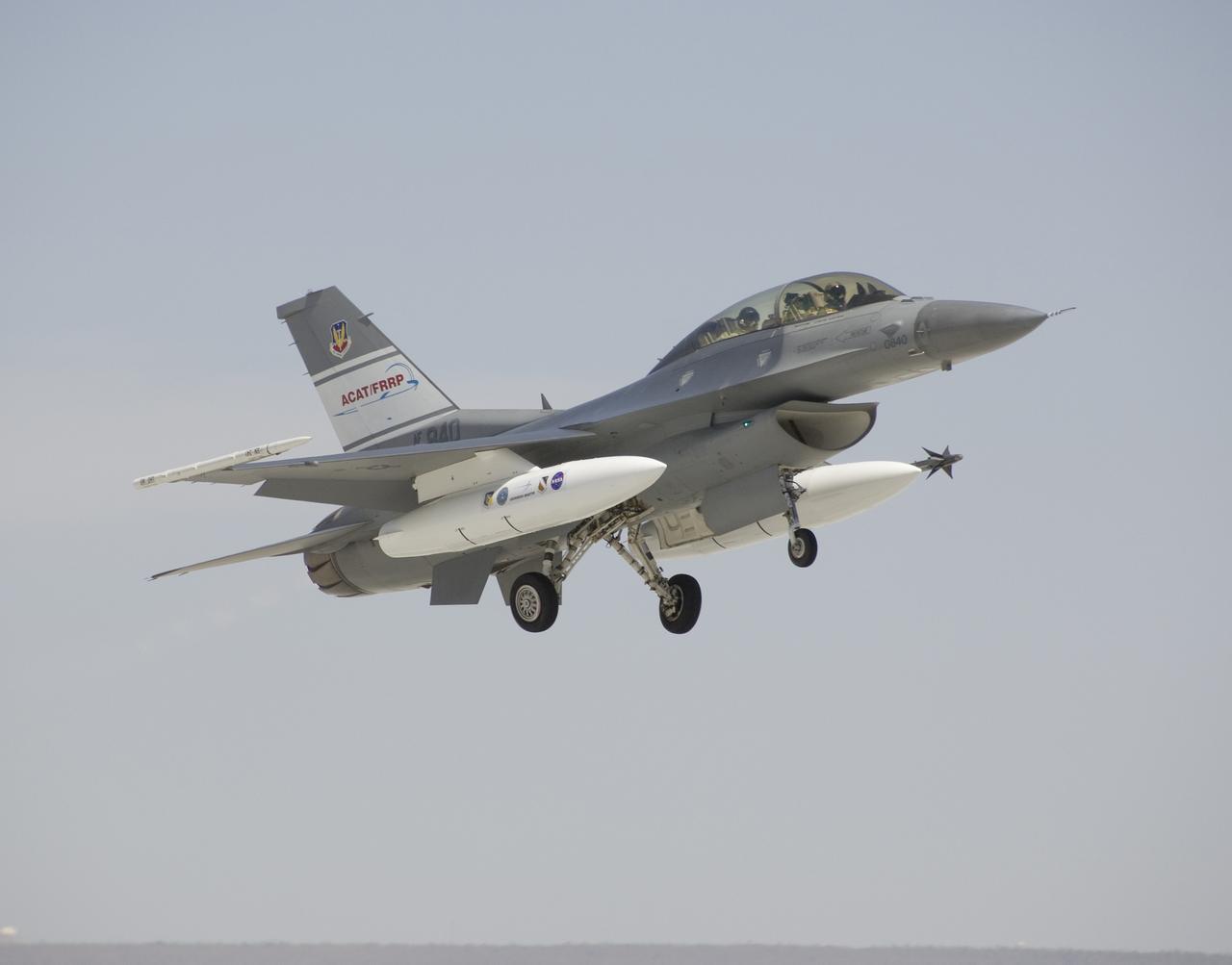
The U.S. Air Force's F-16D Automatic Collision Avoidance Technology (ACAT) aircraft takes off from Edwards Air Force Base on a flight originating from NASA's Dryden Flight Research Center. NASA Dryden worked with the Air Force Research Laboratory in the ACAT Fighter Risk Reduction Project to develop collision avoidance technologies for fighter/attack aircraft that would reduce the risk of ground and mid-air collisions.
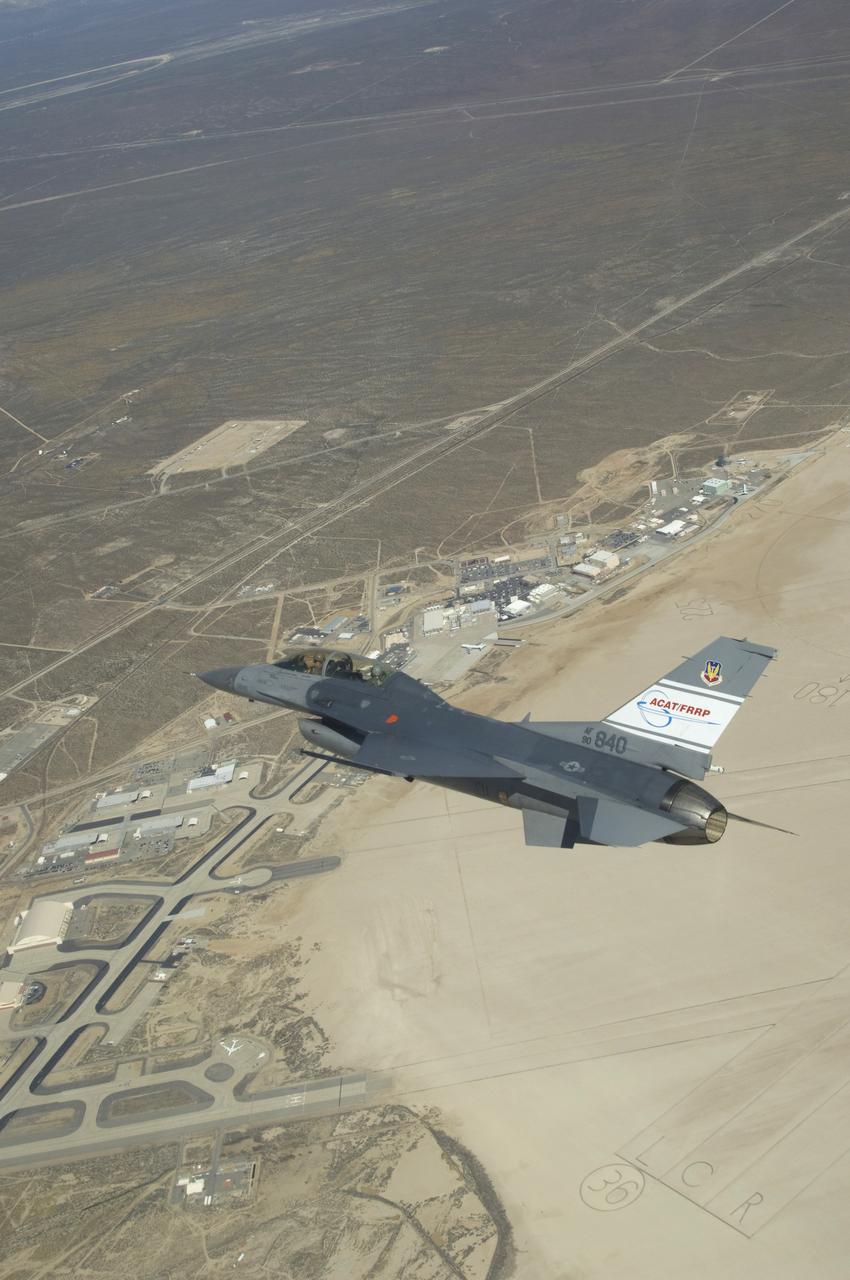
The U.S. Air Force's F-16D Automatic Collision Avoidance Technology (ACAT) aircraft banks over NASA's Dryden Flight Research Center during a March 2009 flight. NASA Dryden worked with the Air Force Research Laboratory in the ACAT Fighter Risk Reduction Project to develop collision avoidance technologies for fighter/attack aircraft that would reduce the risk of ground and mid-air collisions.
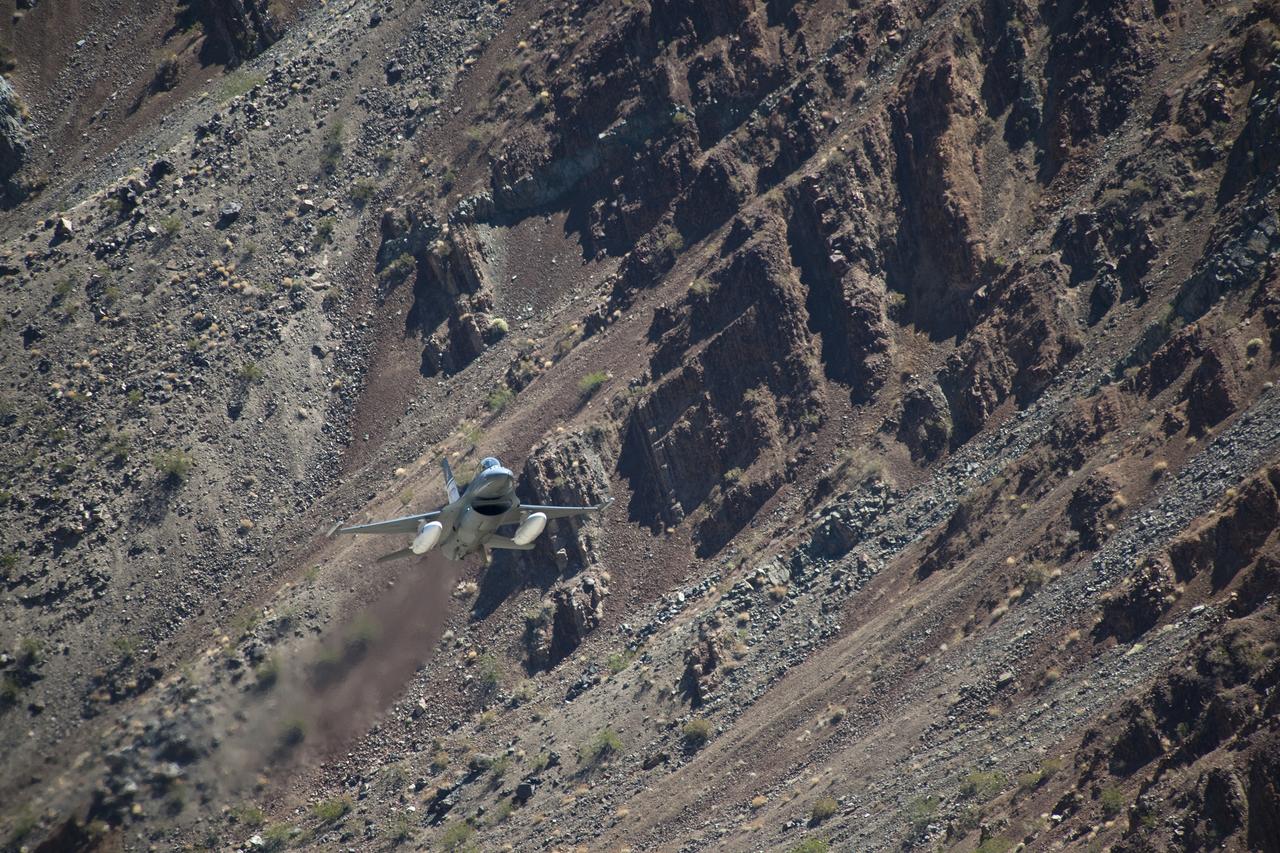
The Air Force F-16D Automatic Collision Avoidance Technology aircraft flew at low levels above the Sierra Nevada Mountains to test the ACAT Fighter Risk Reduction Project to develop collision avoidance technologies for aircraft, to reduce the risk of ground collisions.
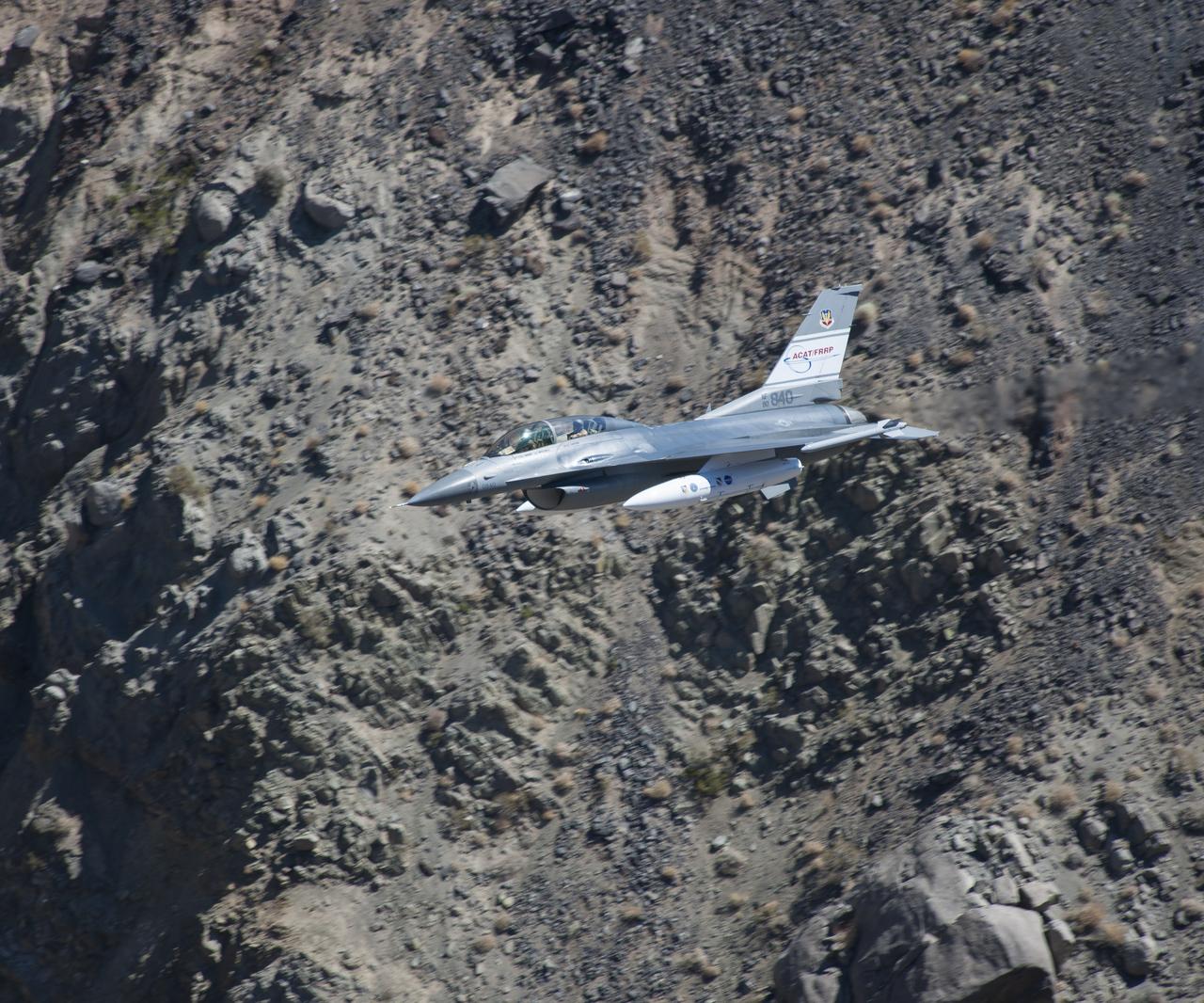
The U.S. Air Force F-16D Automatic Collision Avoidance Technology aircraft flew at low levels above the Sierra Nevada Mountains to test the ACAT Fighter Risk Reduction project. The goal was to develop collision avoidance technologies for aircraft to reduce the risk of ground collisions. Such systems on U.S. Air Force aircraft have resulted in saving eight lives and seven aircraft.
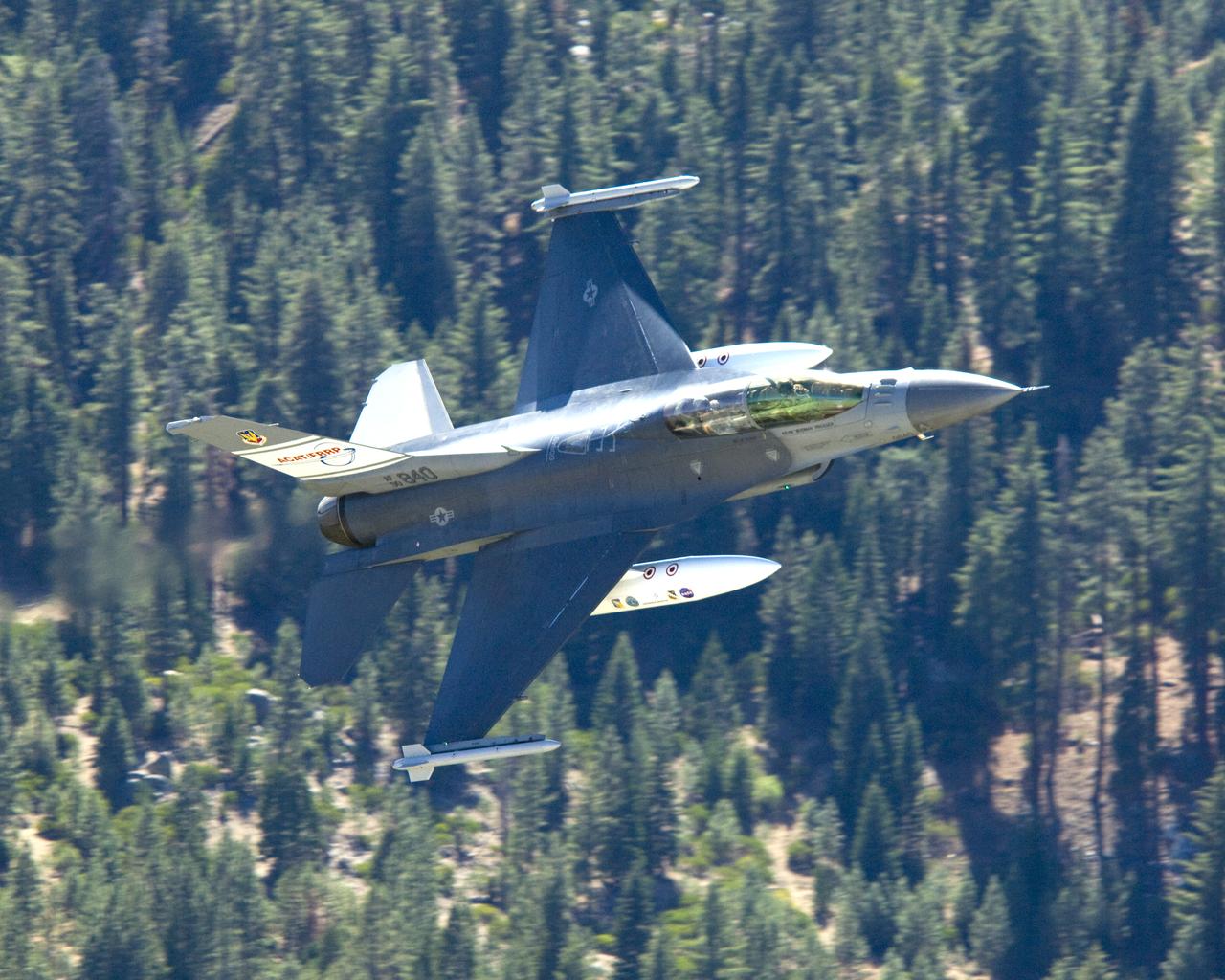
The F-16D Automatic Collision Avoidance Technology aircraft tests of the Automatic Ground Collision Avoidance System, or Auto-GCAS, included flights in areas of potentially hazardous terrain, including canyons and mountains.

NASA pilot Nils Larson checks out the NASA F-15B aircraft before he climbs into the cockpit.
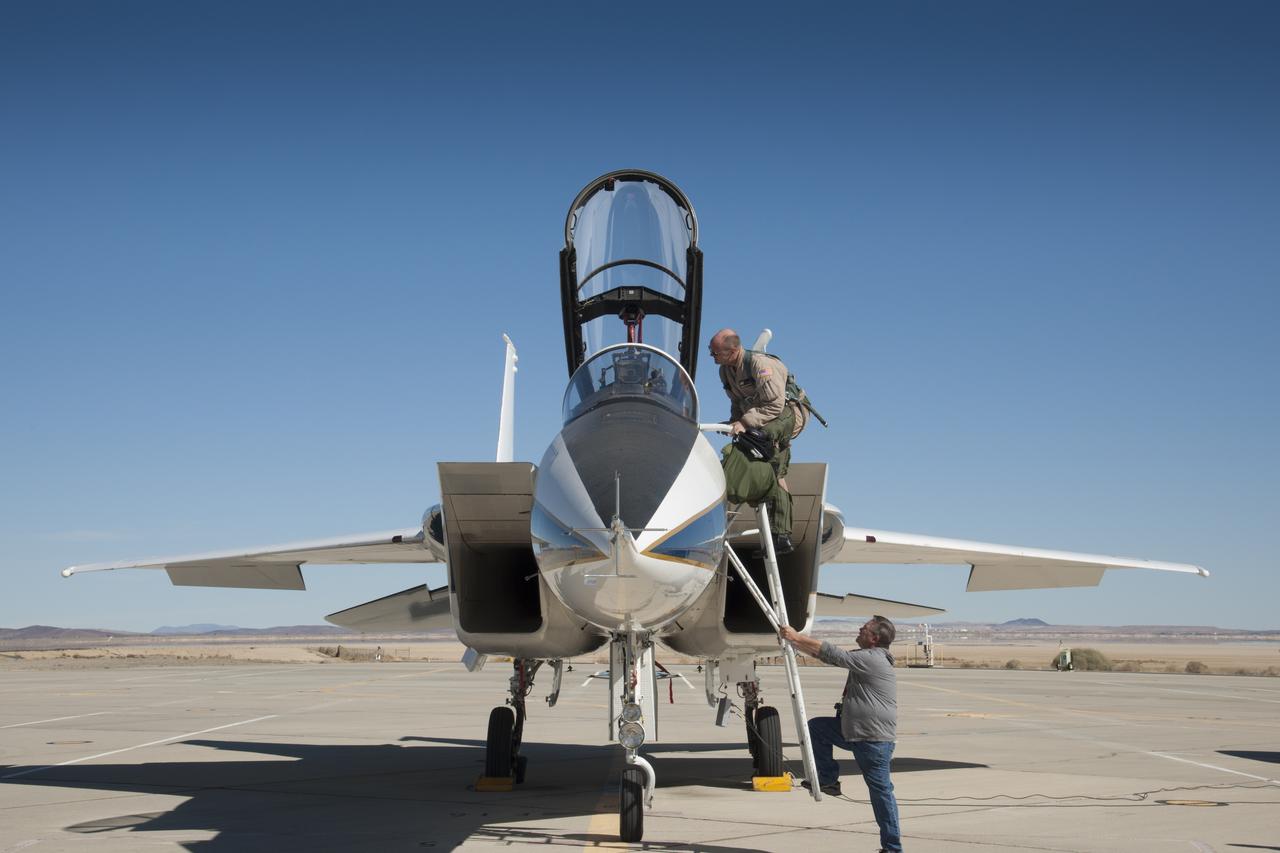
After climbing the stairs, NASA pilot Nils Larson sits in a NASA F-15B aircraft and begins preflight procedures.
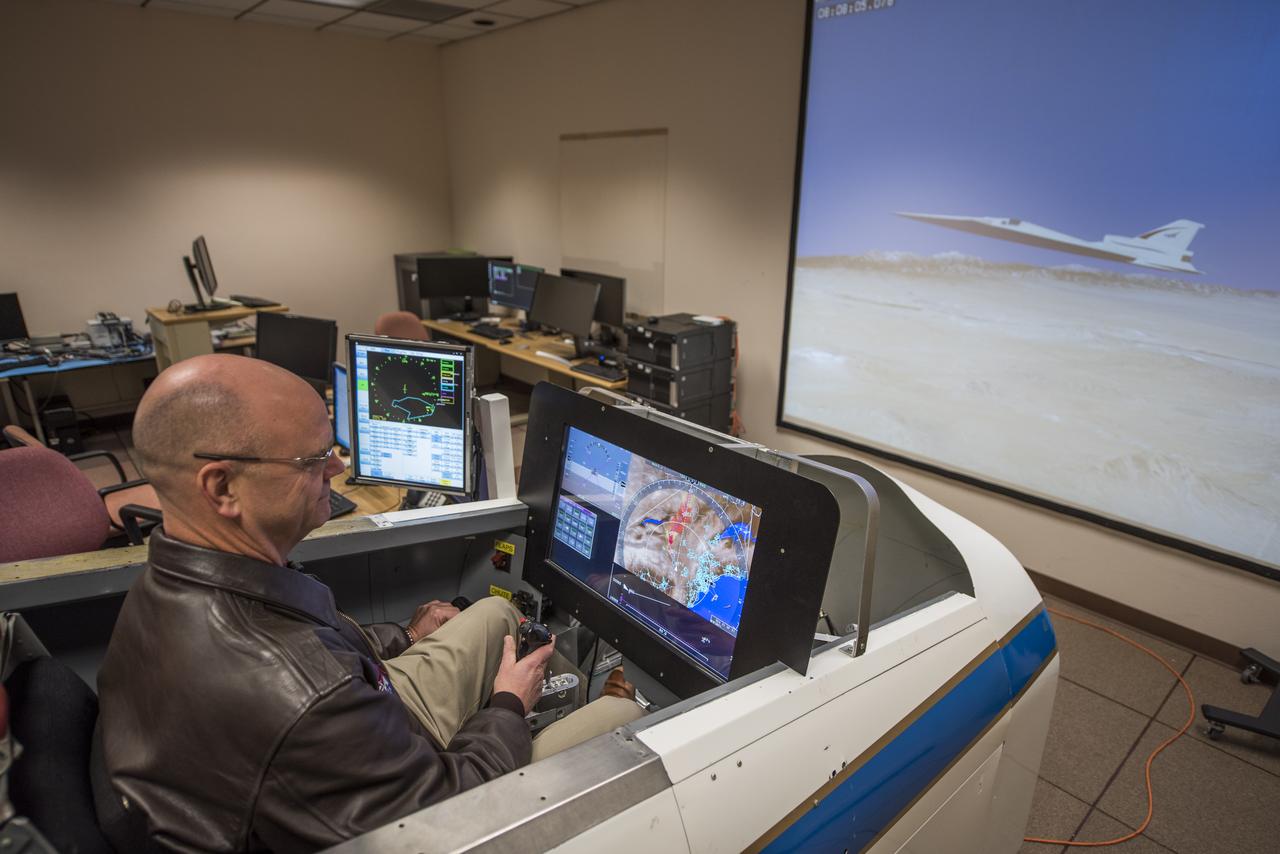
NASA pilot Nils Larson evaluates software in the X-59 simulator that could predict where sonic booms would be felt on the ground and the intensity.