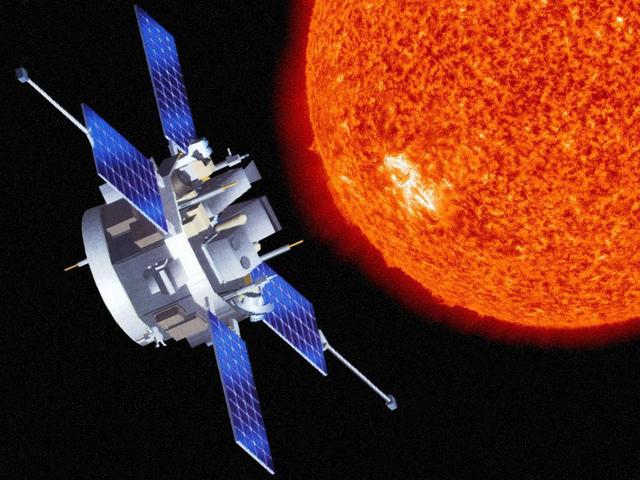
Artist rendition of the Advanced Composition Explorer ACE spacecraft.
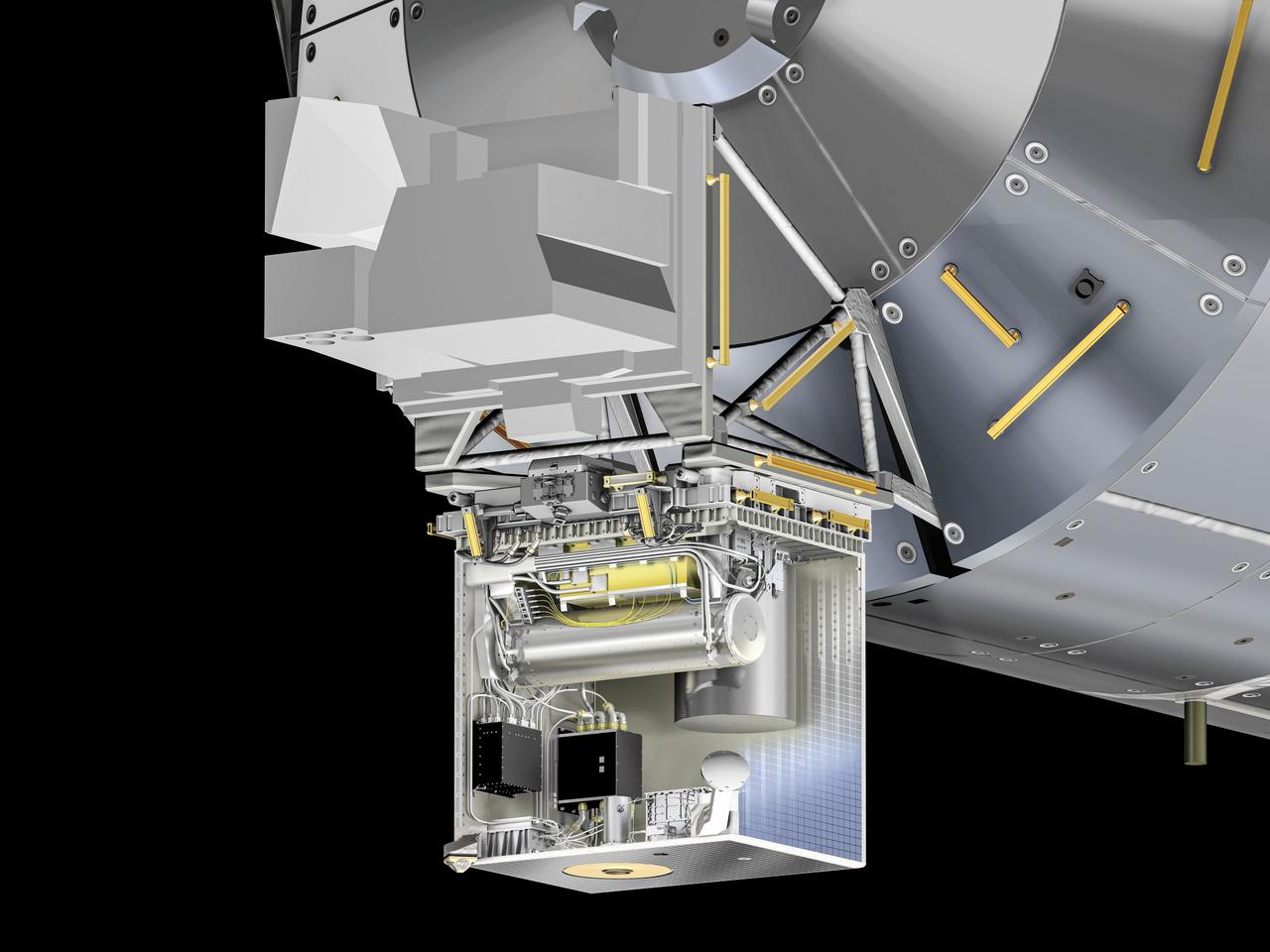
jsc2025e015681 (3/6/2025) --- The Atomic Clock Ensemble in Space (ACES) facility attached to the exterior of ESA's Columbus facility on the International Space Station. By creating a "network of clocks", this European facility can link its own highly precise timepieces with the most accurate clocks on Earth and compare them to measure the flow of time. ACES includes two cutting-edge clocks: Project d'Horloge Atomique par Refroidissement d'Atomes en Orbit (PHARAO) and Space Hydrogen Maser (SHM). The excellent stability of SHM over a one hour period, combined with the long-term stability and accuracy of PHARAO, provide timekeeping for ACES with a precision of one second over 300 million years. Once in space, a robotic arm positions ACES onto the Columbus module, where it will remain for 30 months to collect data. ACES aims to record continuous data over at least ten sessions of 25 days each. By comparing clocks in space and on Earth, ACES can provide scientists with precise measurements to test Einstein’s gravitational time dilation effect, search for time variations of fundamental constants of physics, and hunt for dark matter. ACES is fully assembled at Airbus in Friedrichshafen, Germany. Image courtesy of D. Ducros (ESA).
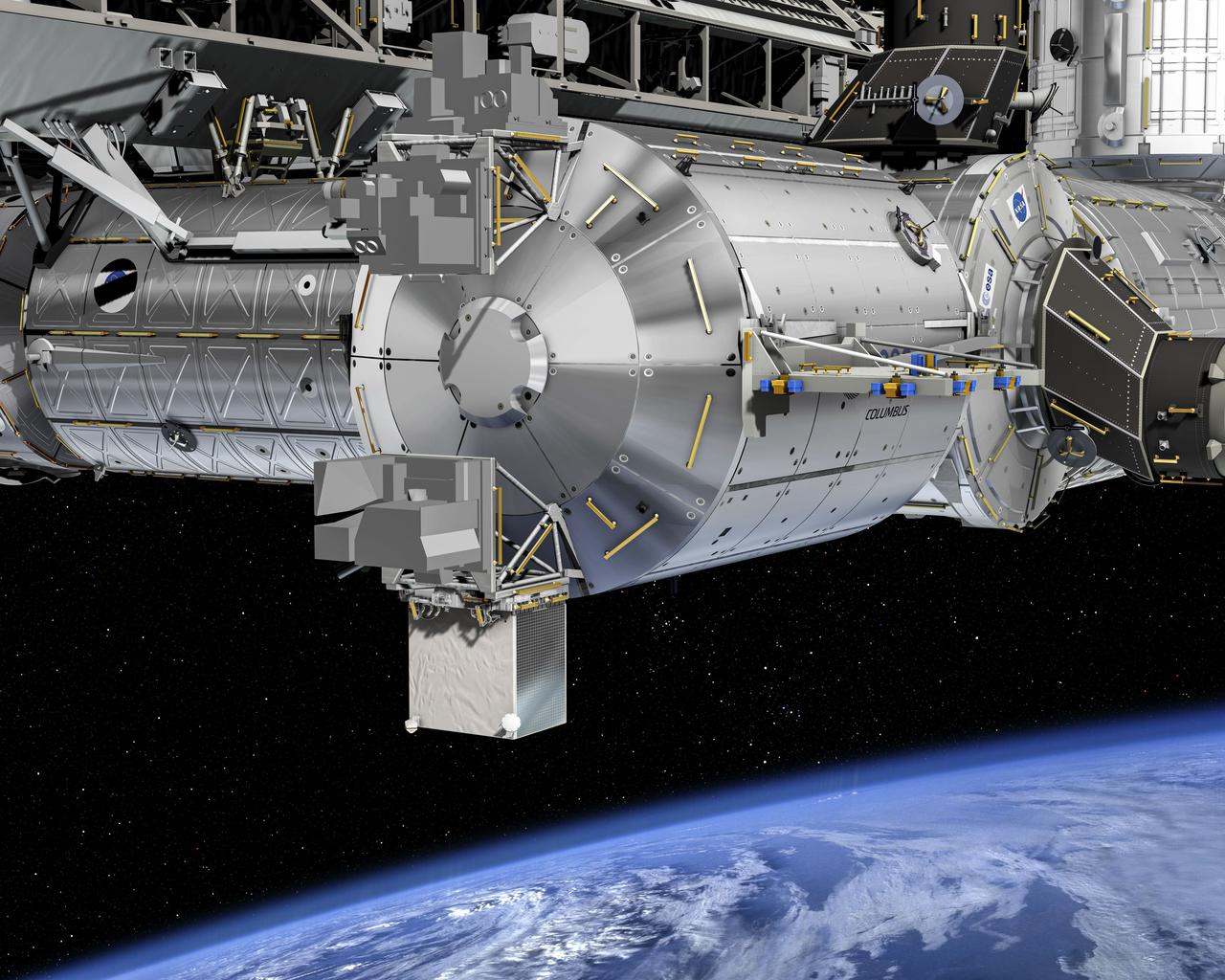
jsc2025e015676 (3/6/2025) --- The Atomic Clock Ensemble in Space (ACES) facility attached to the exterior of ESA's Columbus facility on the International Space Station. By creating a "network of clocks", this European facility can link its own highly precise timepieces with the most accurate clocks on Earth and compare them to measure the flow of time. ACES includes two cutting-edge clocks: Project d'Horloge Atomique par Refroidissement d'Atomes en Orbit (PHARAO) and Space Hydrogen Maser (SHM). The excellent stability of SHM over a one hour period, combined with the long-term stability and accuracy of PHARAO, provide timekeeping for ACES with a precision of one second over 300 million years. Once in space, a robotic arm positions ACES onto the Columbus module, where it will remain for 30 months to collect data. ACES aims to record continuous data over at least ten sessions of 25 days each. By comparing clocks in space and on Earth, ACES can provide scientists with precise measurements to test Einstein’s gravitational time dilation effect, search for time variations of fundamental constants of physics, and hunt for dark matter. ACES is fully assembled at Airbus in Friedrichshafen, Germany. Image courtesy of D. Ducros (ESA).
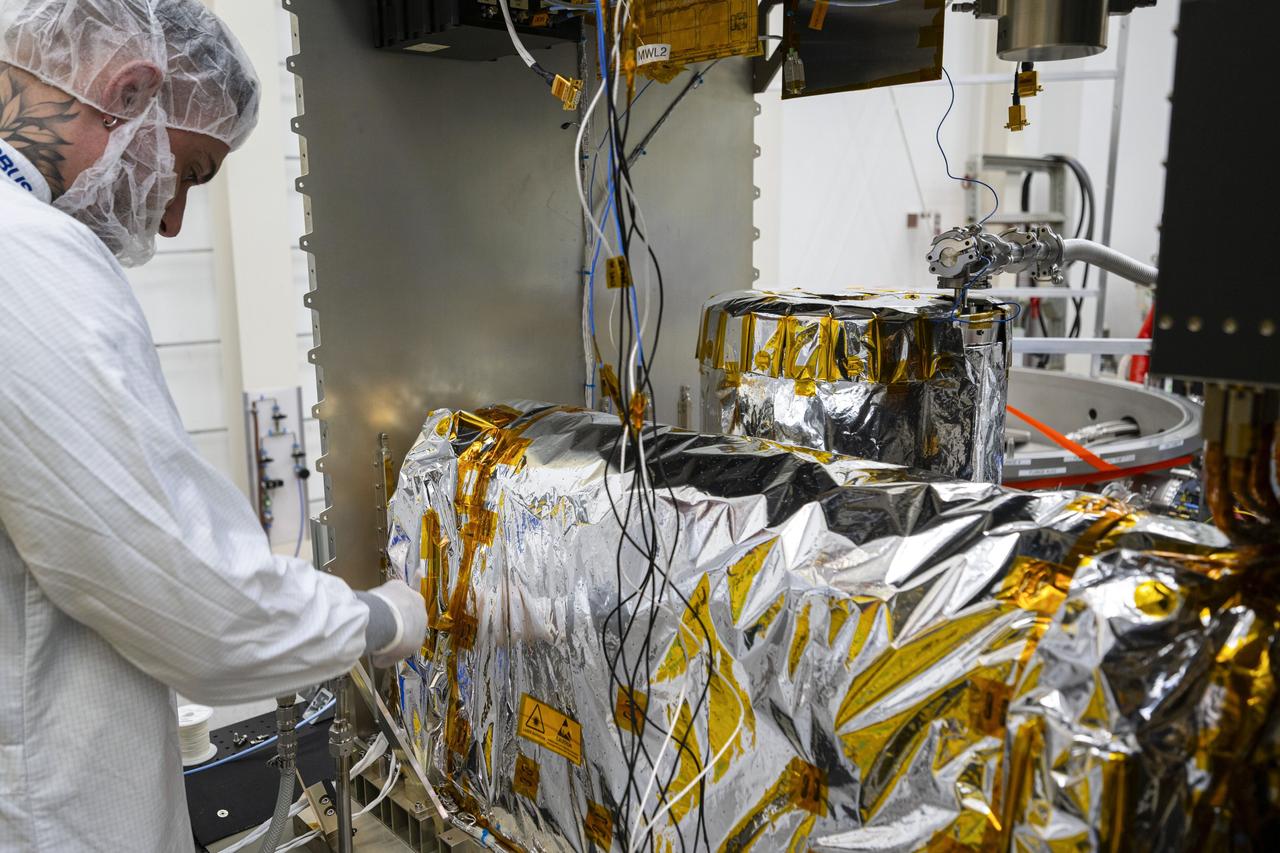
jsc2025e015677 (3/6/2025) --- The closure of the instrument panel of the Atomic Clock Ensemble in Space (ACES) has taken place at Airbus Friedrichshafen, Germany. ACES is an ESA instrument that tests fundamental physics, such as Einstein’s theory of general relativity, from the International Space Station. According to this theory, gravity affects the passing of time—time flies faster at the top of Mount Everest than at sea level. This effect has been proven in experiments on Earth, and ACES will make more precise measurements of this phenomenon and other fundamental physics such as the standard model of particle physics, as it flies 400 km high on the space station. ACES contains two clocks: PHARAO, a caesium atomic clock developed by the French Space Agency CNES, and the Space Hydrogen Maser developed by Spectratime, which uses hydrogen atoms as a frequency reference. The payload will be externally mounted to ESA’s Columbus laboratory on the space station. Image courtesy of S. Corvaja (ESA).
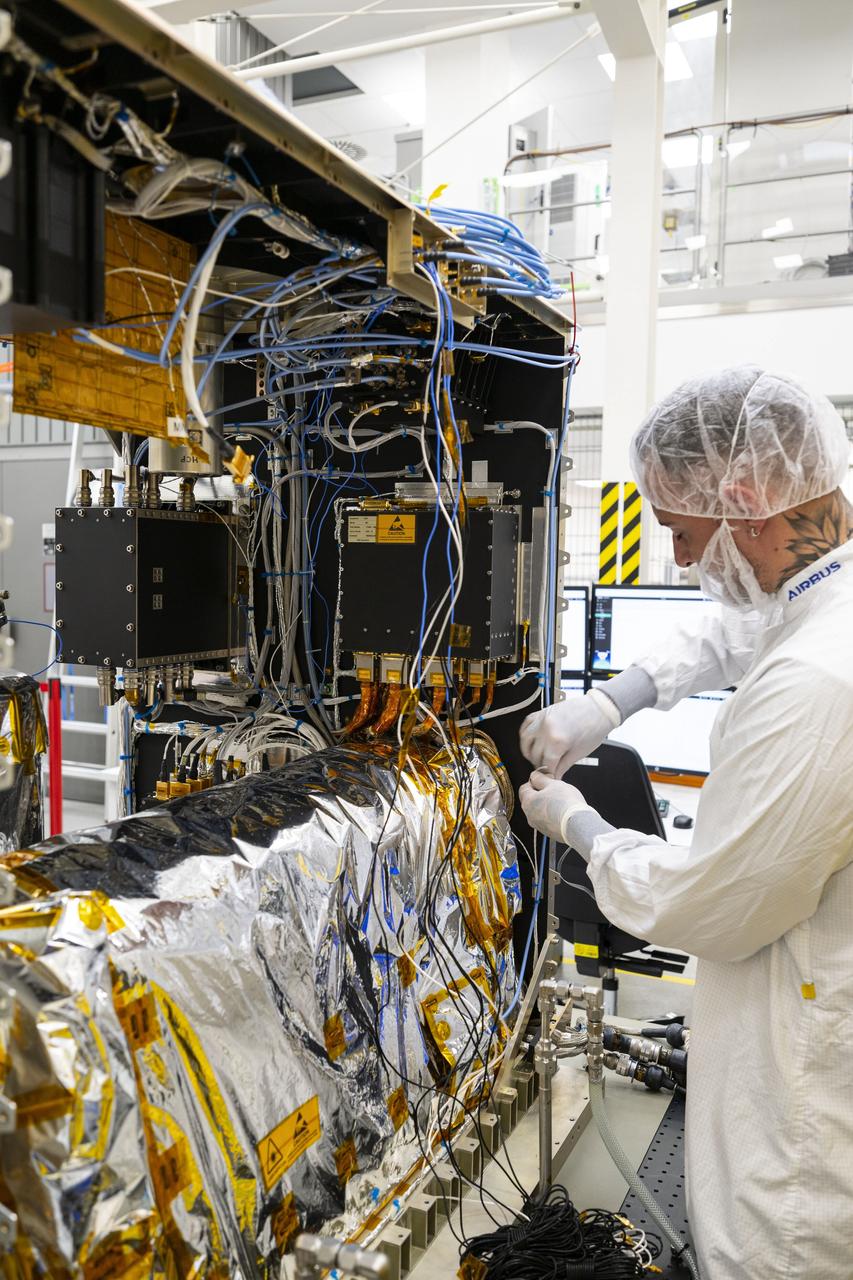
jsc2025e015678 (3/6/2025) --- The closure of the instrument panel of the Atomic Clock Ensemble in Space (ACES) has taken place at Airbus Friedrichshafen, Germany. ACES is an ESA instrument that tests fundamental physics, such as Einstein’s theory of general relativity, from the International Space Station. According to this theory, gravity affects the passing of time—time flies faster at the top of Mount Everest than at sea level. This effect has been proven in experiments on Earth, and ACES will make more precise measurements of this phenomenon and other fundamental physics such as the standard model of particle physics, as it flies 400 km high on the space station. ACES contains two clocks: PHARAO, a caesium atomic clock developed by the French Space Agency CNES, and the Space Hydrogen Maser developed by Spectratime, which uses hydrogen atoms as a frequency reference. The payload will be externally mounted to ESA’s Columbus laboratory on the space station. Image courtesy of S. Corvaja (ESA).
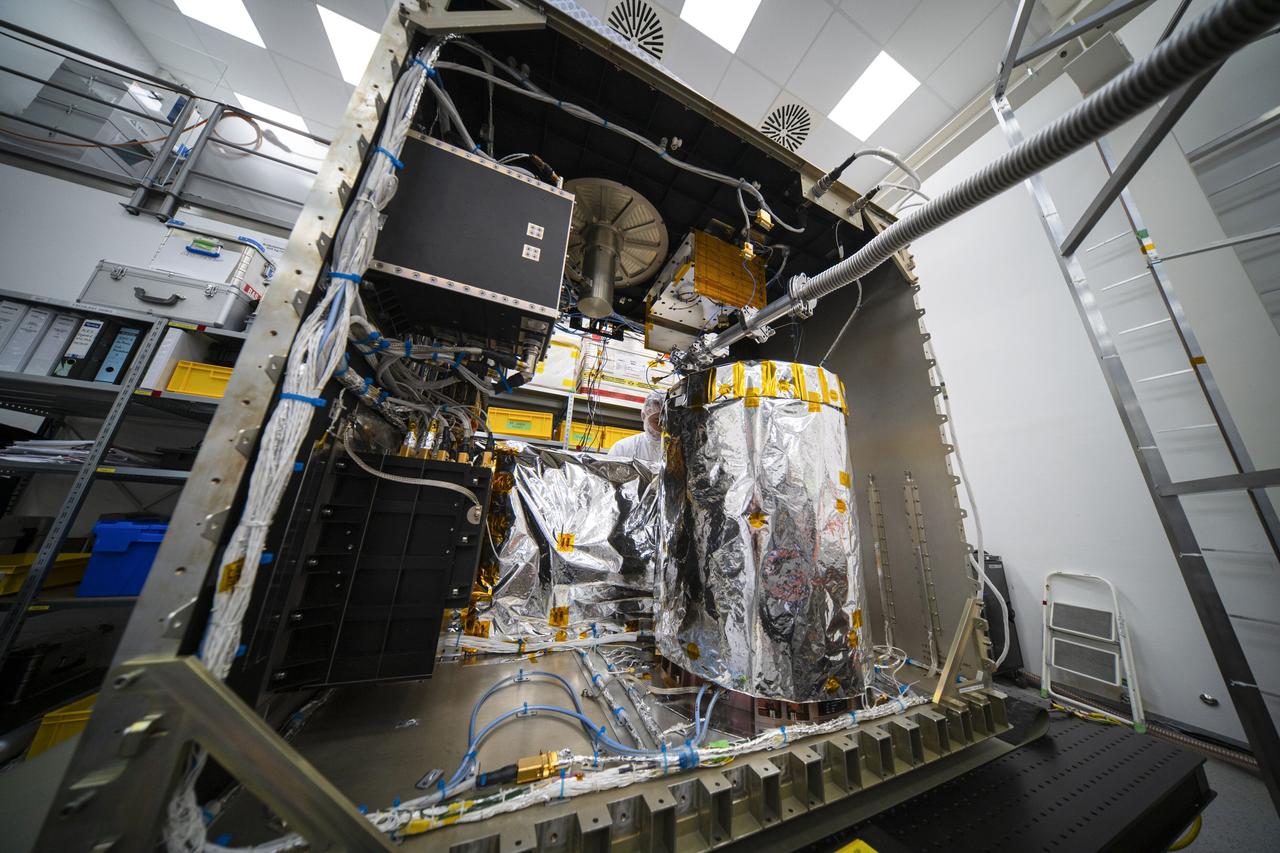
jsc2025e015680 (3/6/2025) --- The closure of the instrument panel of the Atomic Clock Ensemble in Space (ACES) has taken place at Airbus Friedrichshafen, Germany. ACES is an ESA instrument that tests fundamental physics, such as Einstein’s theory of general relativity, from the International Space Station. According to this theory, gravity affects the passing of time—time flies faster at the top of Mount Everest than at sea level. This effect has been proven in experiments on Earth, and ACES will make more precise measurements of this phenomenon and other fundamental physics such as the standard model of particle physics, as it flies 400 km high on the space station. ACES contains two clocks: PHARAO, a caesium atomic clock developed by the French Space Agency CNES, and the Space Hydrogen Maser developed by Spectratime, which uses hydrogen atoms as a frequency reference. The payload will be externally mounted to ESA’s Columbus laboratory on the space station. Image courtesy of S. Corvaja (ESA).
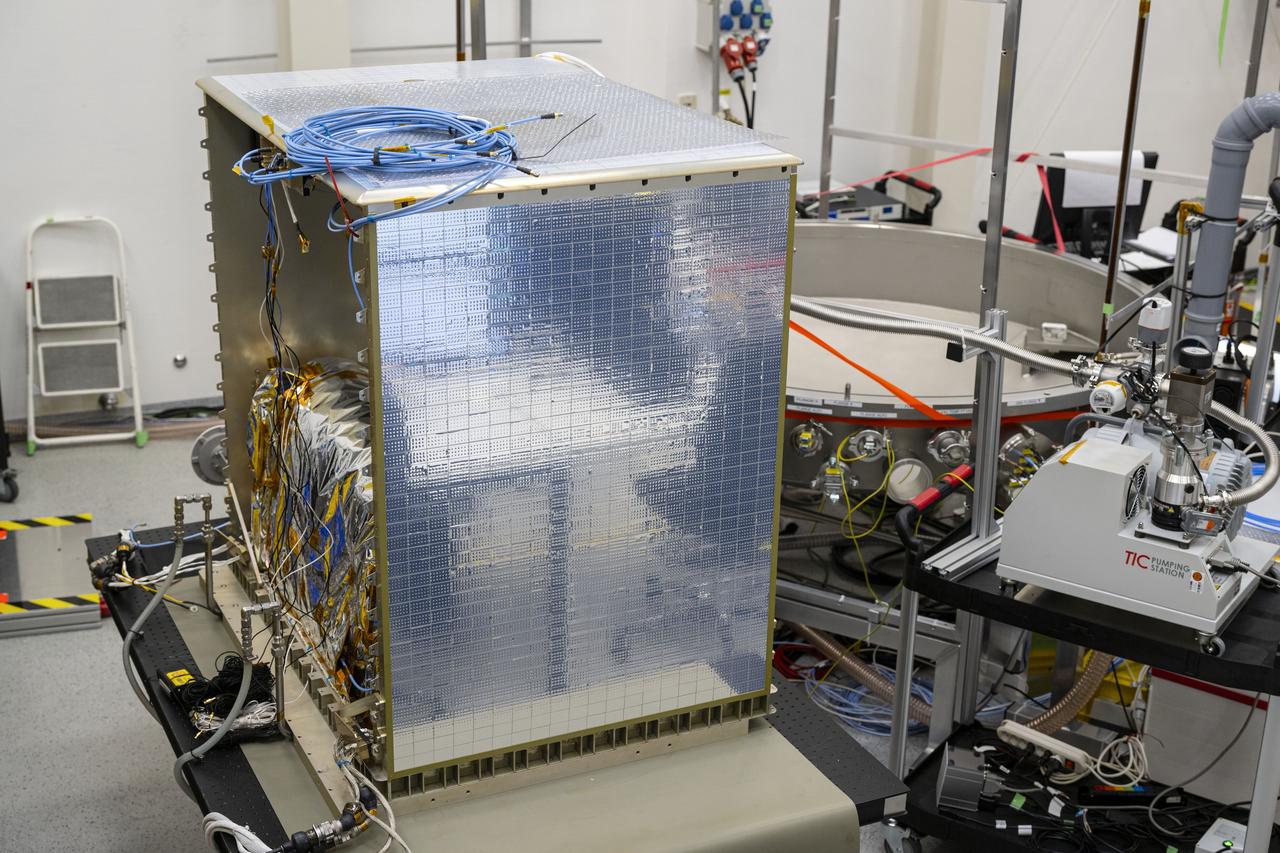
jsc2025e015679 (3/6/2025) --- The closure of the instrument panel of the Atomic Clock Ensemble in Space (ACES) has taken place at Airbus Friedrichshafen, Germany. ACES is an ESA instrument that tests fundamental physics, such as Einstein’s theory of general relativity, from the International Space Station. According to this theory, gravity affects the passing of time—time flies faster at the top of Mount Everest than at sea level. This effect has been proven in experiments on Earth, and ACES will make more precise measurements of this phenomenon and other fundamental physics such as the standard model of particle physics, as it flies 400 km high on the space station. ACES contains two clocks: PHARAO, a caesium atomic clock developed by the French Space Agency CNES, and the Space Hydrogen Maser developed by Spectratime, which uses hydrogen atoms as a frequency reference. The payload will be externally mounted to ESA’s Columbus laboratory on the space station. Image courtesy of S. Corvaja (ESA).
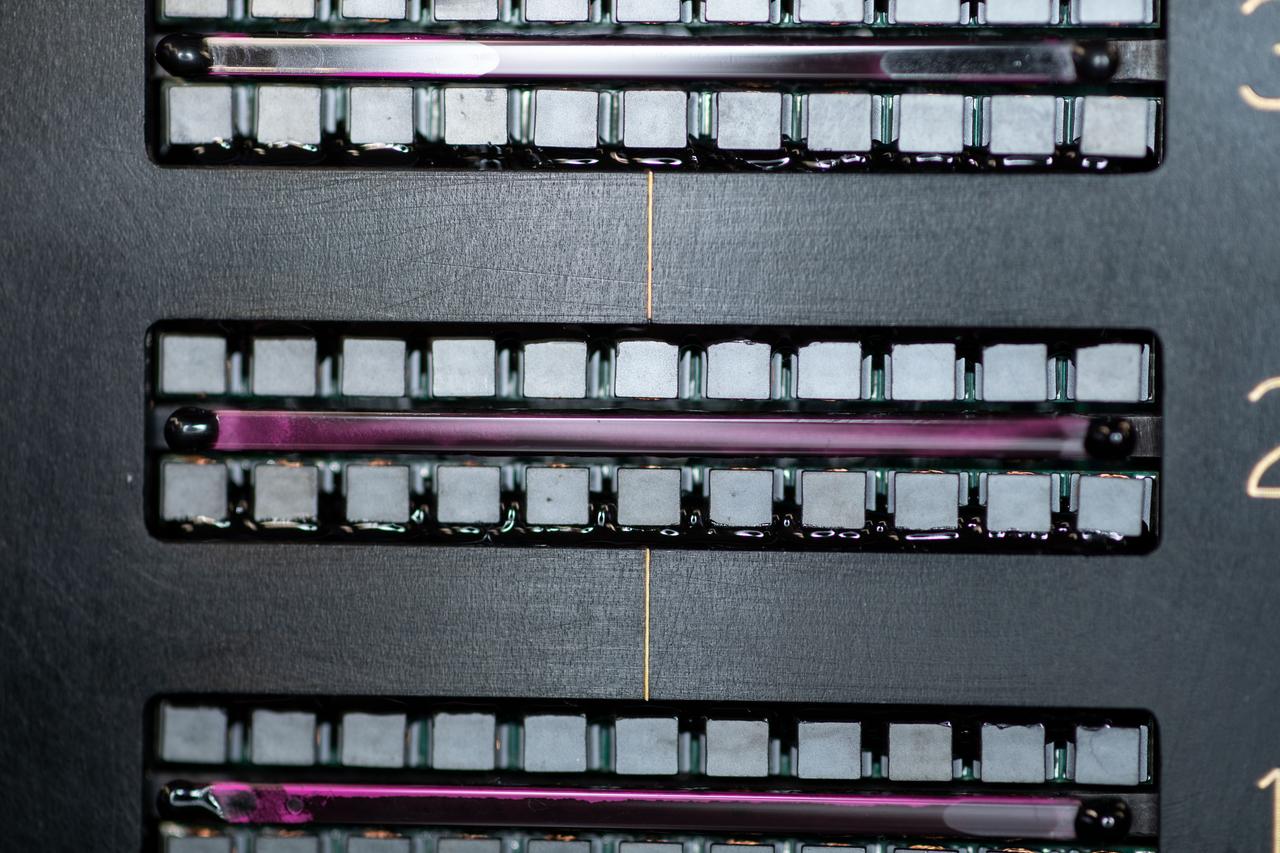
iss059e061932 (5/17/2019) --- Photo documentation onboard the International Space Station (ISS) of the ACE Modules taken during the ACE-T12 Module Configuration. The Advanced Colloids Experiment-Nanoparticle Haloing (ACE-T-12) involves design and assembly of complex three-dimensional (3D) structures from colloids, or particles of different sizes suspended in a fluid. It employs a recently discovered technique, Nanoparticle Haloing (NPH), which uses highly charged nanoparticles to stabilize much larger, non-charged particles. Allowing these structures to form in microgravity provides insight into the relationship between shape, surface charge, and concentration of particles and particle interactions.
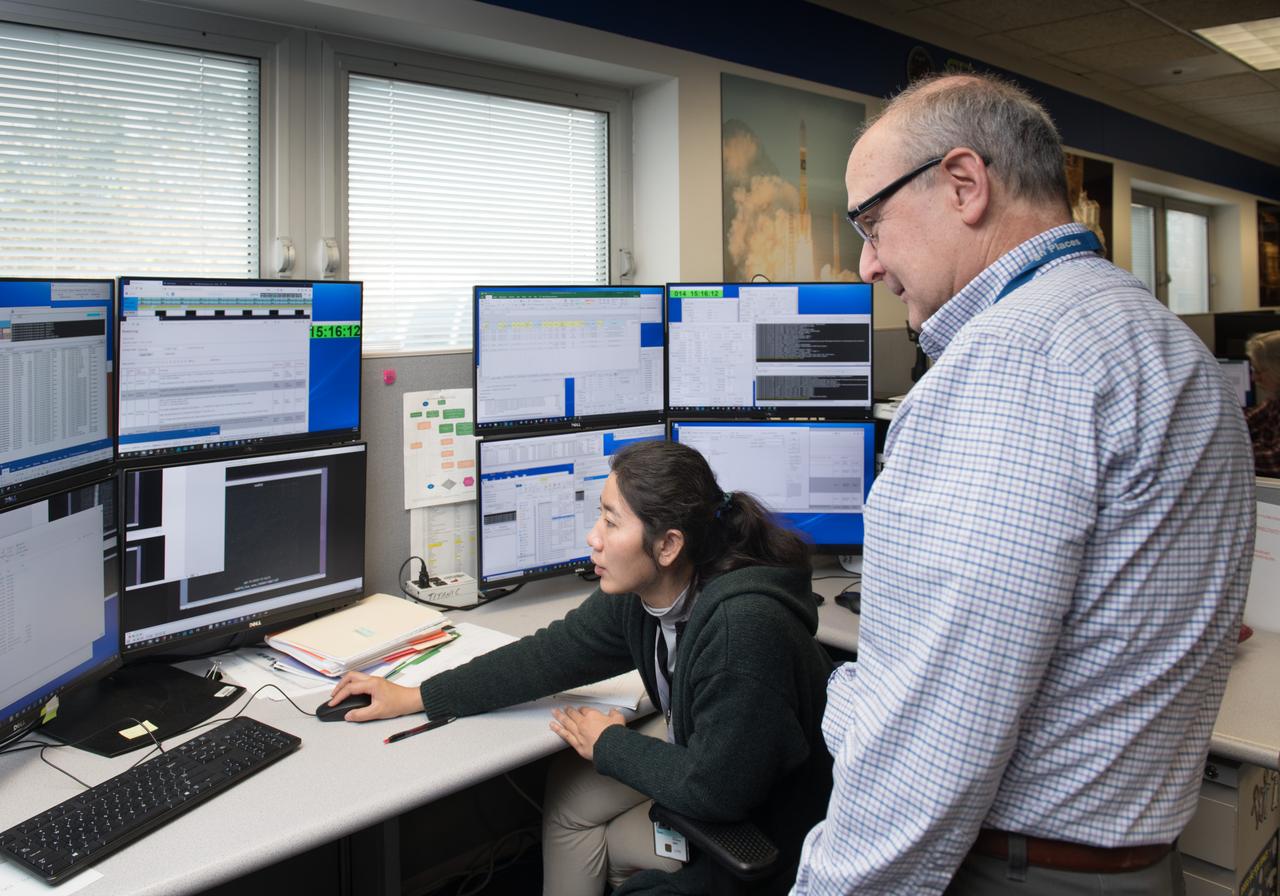
Advanced Colloids Experiment, Thermal 5-2, ACE T5-2 International Space Station, ISS, Fluids Integrated Rack, FIR Operations in the Telescience Support Center, TSC
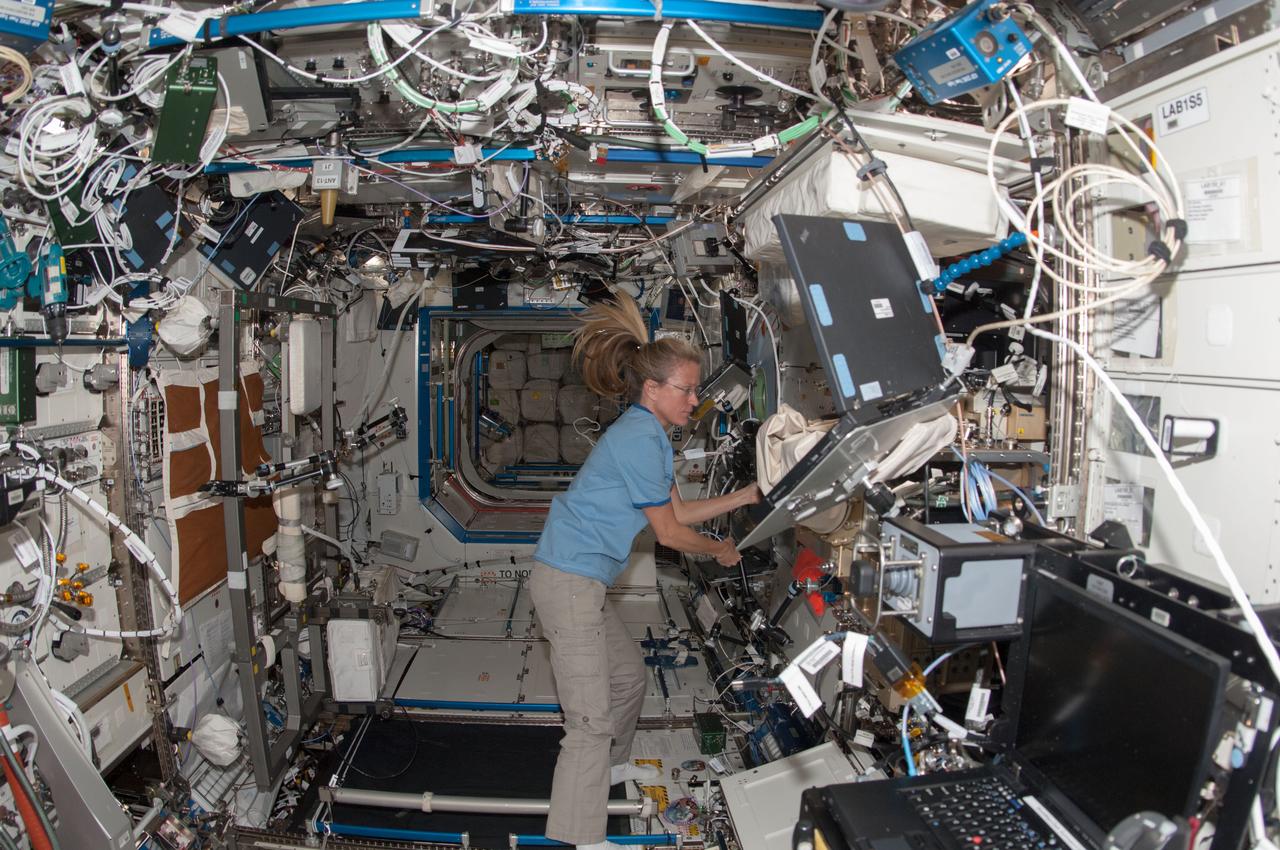
In the International Space Stations Destiny laboratory,NASA astronaut Karen Nyberg,Expedition 36 flight engineer,speaks into a microphone while conducting a session with the Advanced Colloids Experiment (ACE)-1 sample preparation at the Light Microscopy Module (LMM) in the Fluids Integrated Rack / Fluids Combustion Facility (FIR/FCF). ACE-1 is a series of microscopic imaging investigations that uses the microgravity environment to examine flow characteristics and the evolution and ordering effects within a group of colloidal materials.
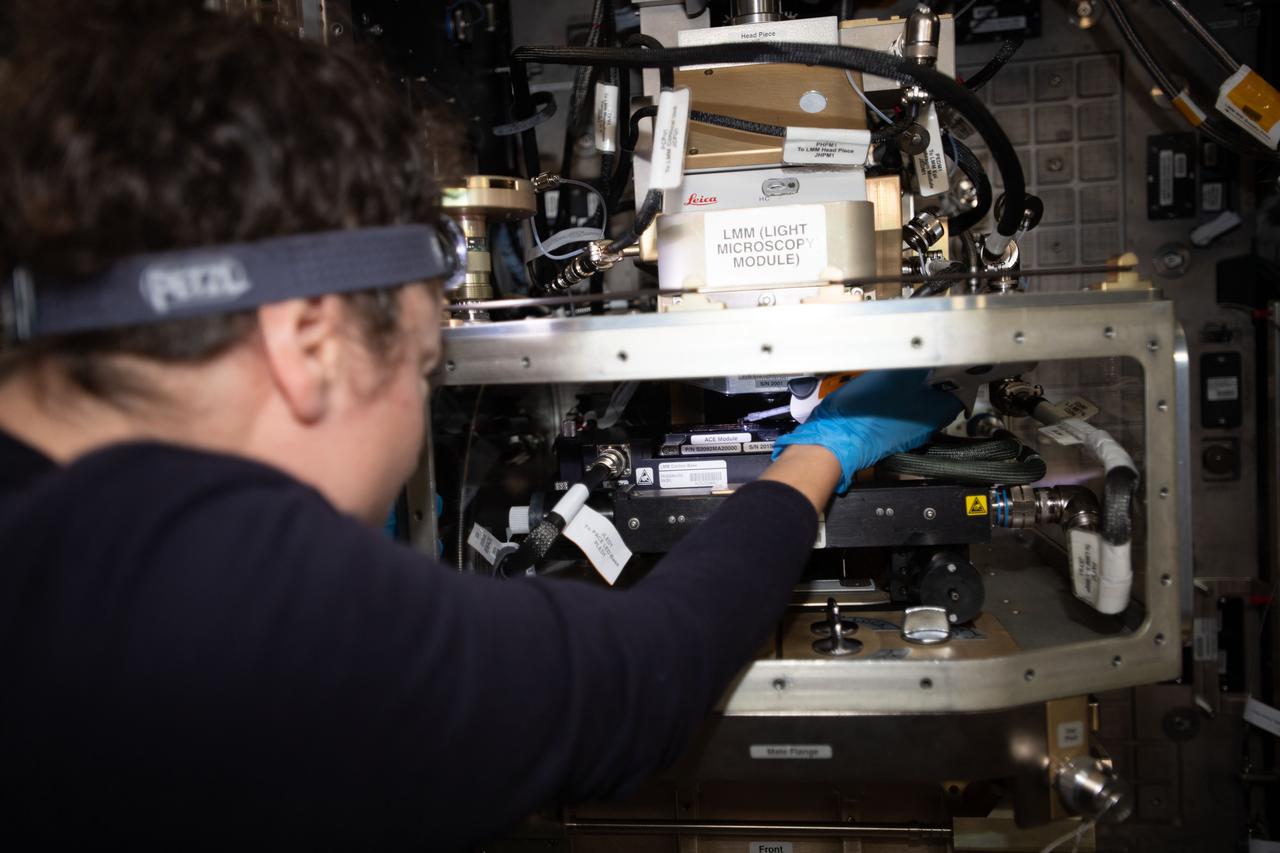
iss062e014345 (2-16-2020) --- A view of NASA astronaut Jessica Meir configuring the Light Microscopy Module (LMM) for the Advanced Colloids Experiment-Temperature-4 (ACE-T-4) science run in the Destiny module aboard the International Space Station (ISS). Introducing disorder to a crystalline system in a controlled way can form glass. Advanced Colloids Experiment-Temperature-4 (ACE-T-4) examines the transition of an ordered crystal to a disordered glass to determine how increasing disorder affects structural and dynamic properties
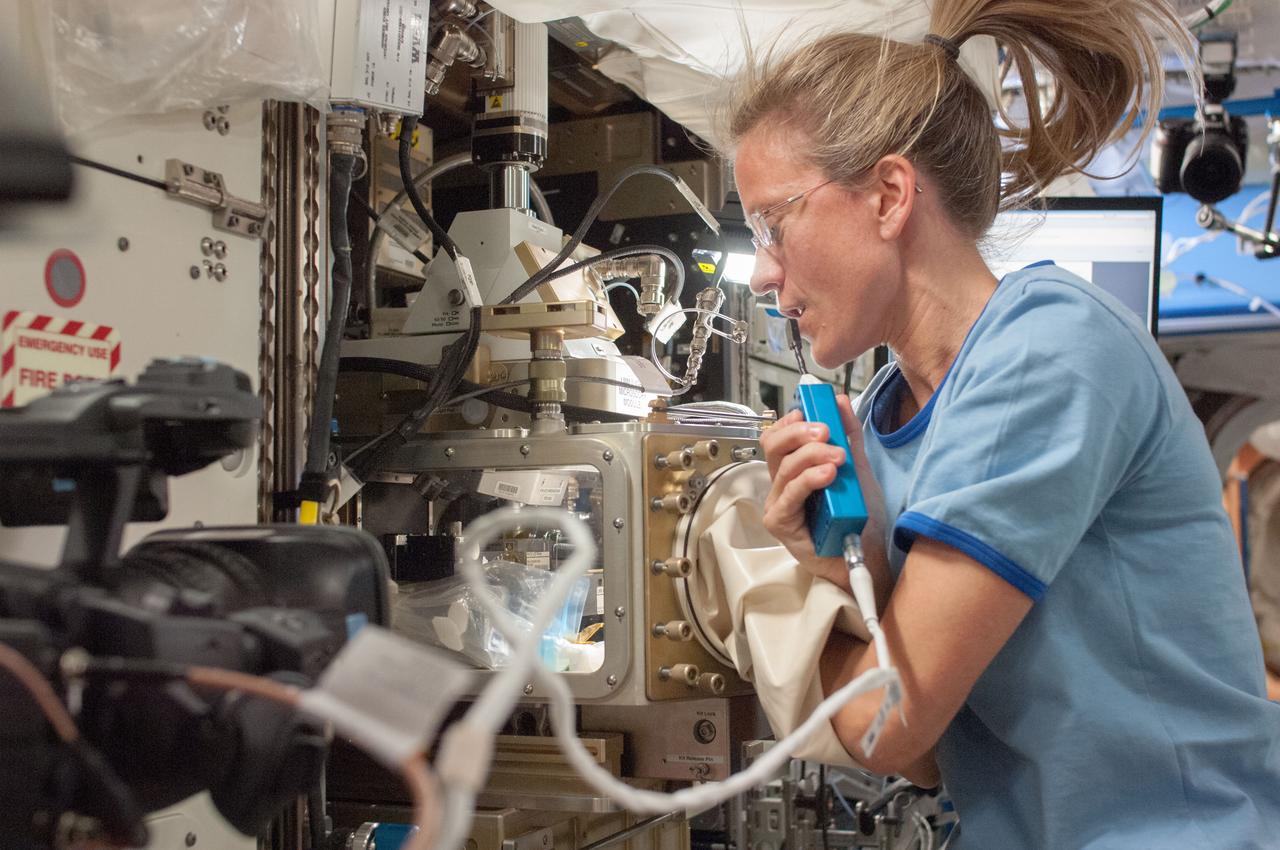
ISS036-E-019830 (24 June 2013) --- In the International Space Station’s Destiny laboratory, NASA astronaut Karen Nyberg, Expedition 36 flight engineer, speaks into a microphone while conducting a session with the Advanced Colloids Experiment (ACE)-1 sample preparation at the Light Microscopy Module (LMM) in the Fluids Integrated Rack / Fluids Combustion Facility (FIR/FCF). ACE-1 is a series of microscopic imaging investigations that uses the microgravity environment to examine flow characteristics and the evolution and ordering effects within a group of colloidal materials.
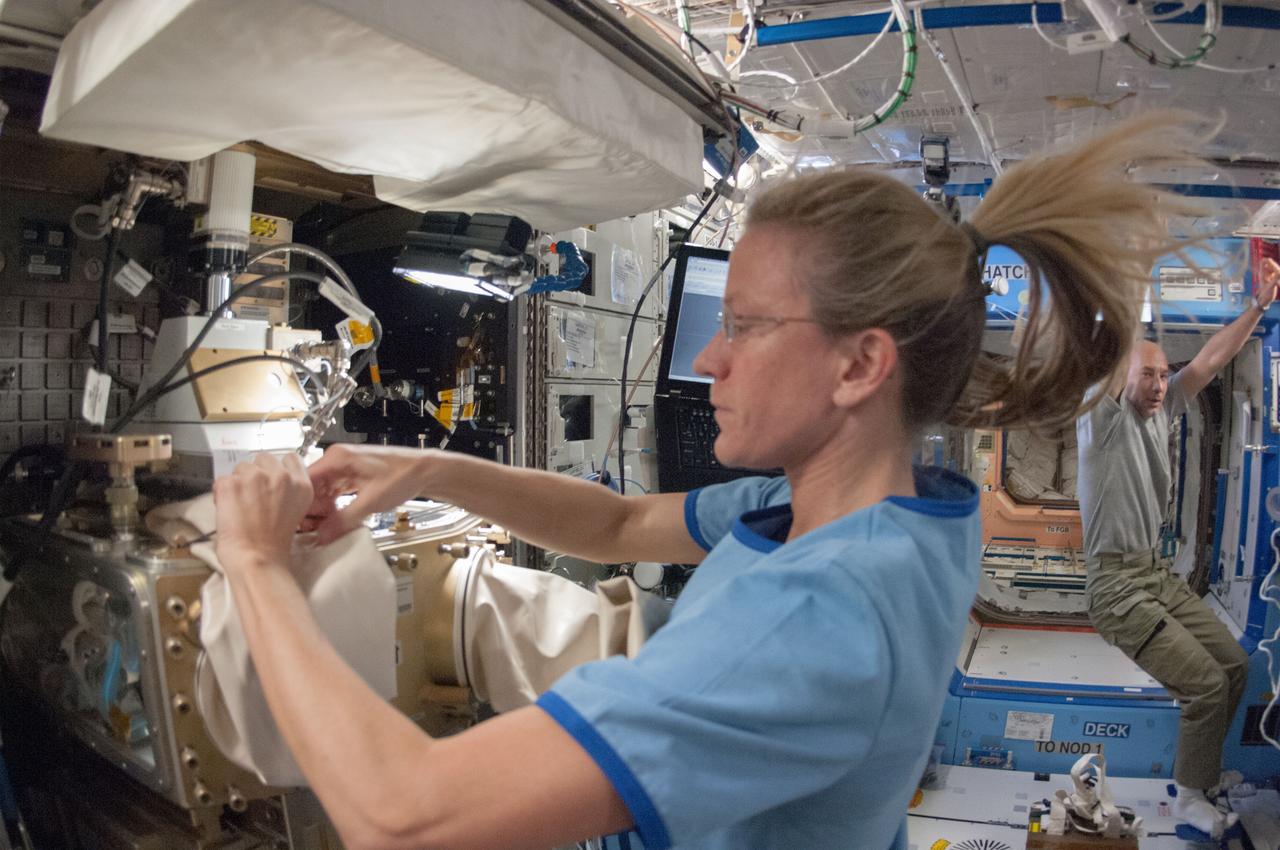
ISS036-E-019760 (24 June 2013) --- In the International Space Station’s Destiny laboratory, NASA astronaut Karen Nyberg, Expedition 36 flight engineer, conducts a session with the Advanced Colloids Experiment (ACE)-1 sample preparation at the Light Microscopy Module (LMM) in the Fluids Integrated Rack / Fluids Combustion Facility (FIR/FCF). ACE-1 is a series of microscopic imaging investigations that uses the microgravity environment to examine flow characteristics and the evolution and ordering effects within a group of colloidal materials.
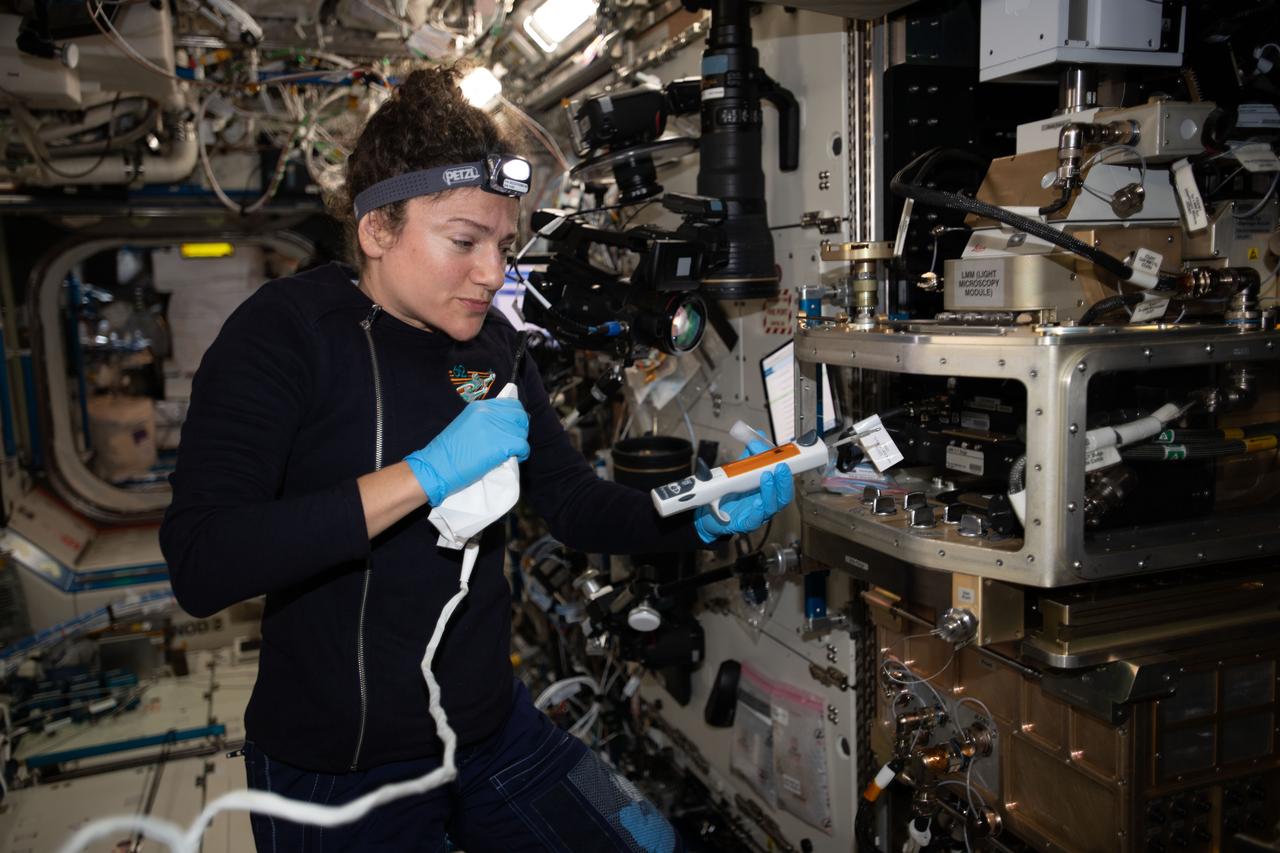
iss062e014349 (Feb. 16, 2020) --- A view of NASA astronaut Jessica Meir configuring the Light Microscopy Module (LMM) for the Advanced Colloids Experiment-Temperature-4 (ACE-T-4) science in the Destiny module aboard the International Space Station (ISS). Introducing disorder to a crystalline system in a controlled way can form glass. Advanced Colloids Experiment-Temperature-4 (ACE-T-4) examines the transition of an ordered crystal to a disordered glass to determine how increasing disorder affects structural and dynamic properties.
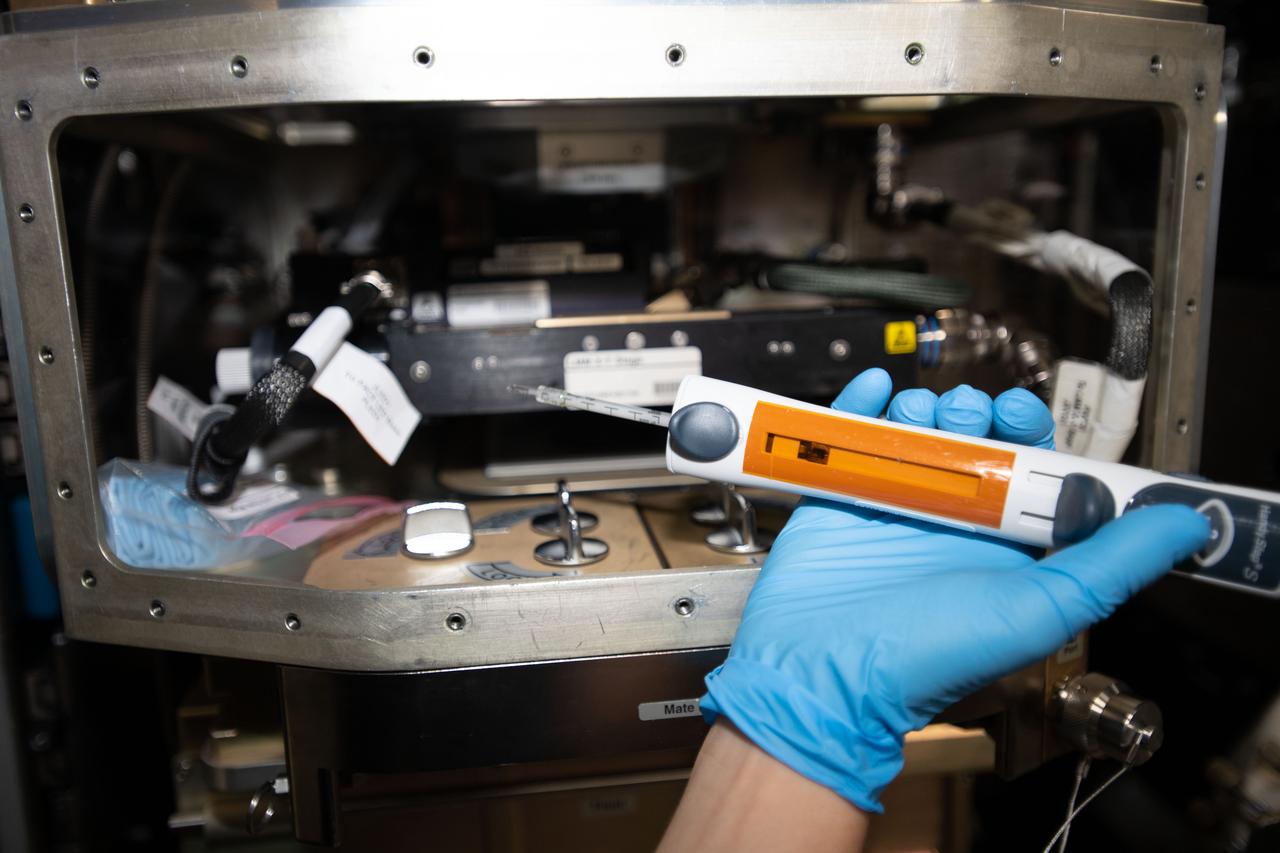
iss062e014342 (2-16-2020) --- A view of NASA astronaut Jessica Meir configuring the Light Microscopy Module (LMM) for the Advanced Colloids Experiment-Temperature-4 (ACE-T-4) science run in the Destiny module aboard the International Space Station (ISS). Introducing disorder to a crystalline system in a controlled way can form glass. Advanced Colloids Experiment-Temperature-4 (ACE-T-4) examines the transition of an ordered crystal to a disordered glass to determine how increasing disorder affects structural and dynamic properties
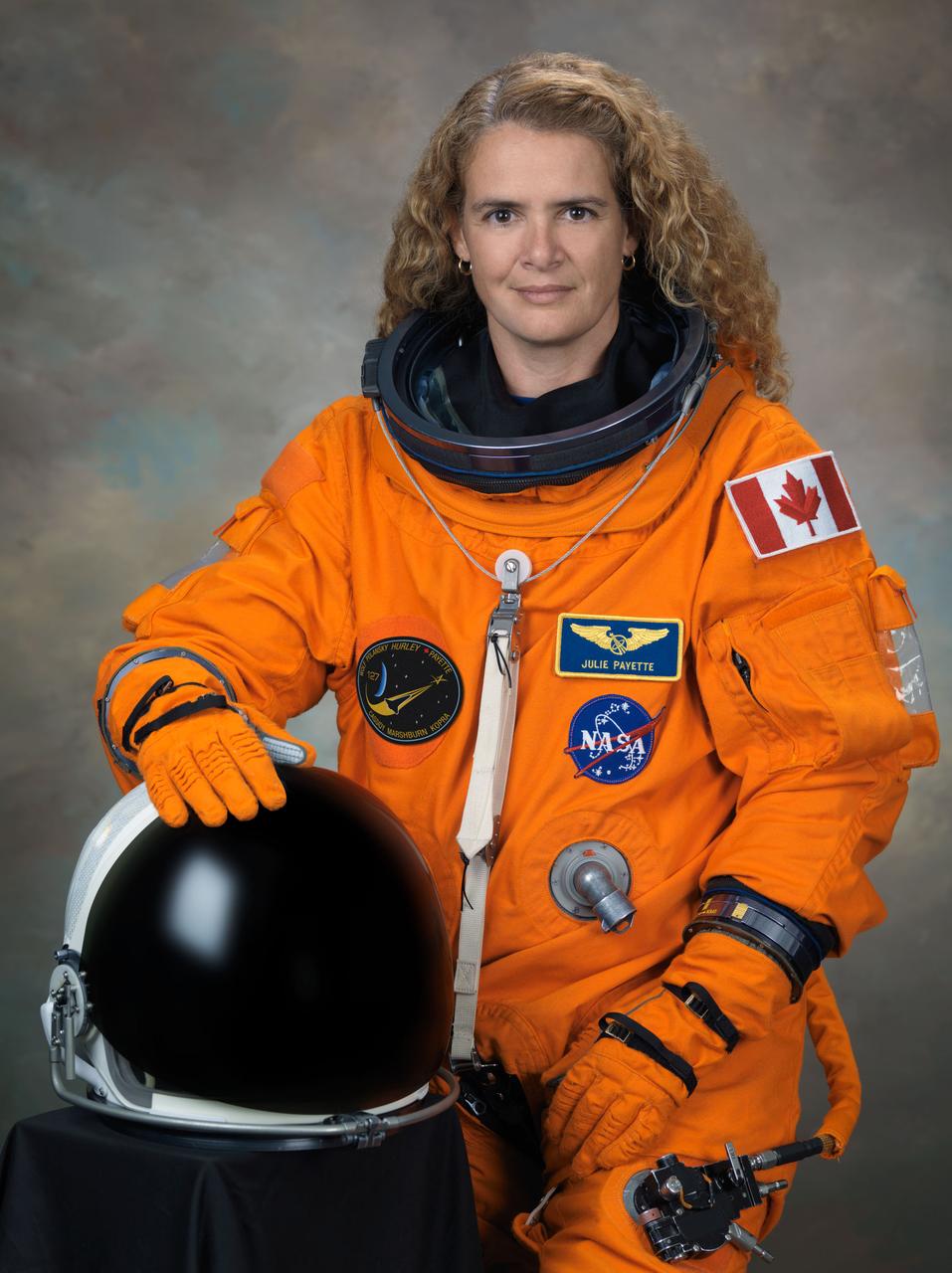
Official ACES Suit Astronaut Portrait for Julie Payette
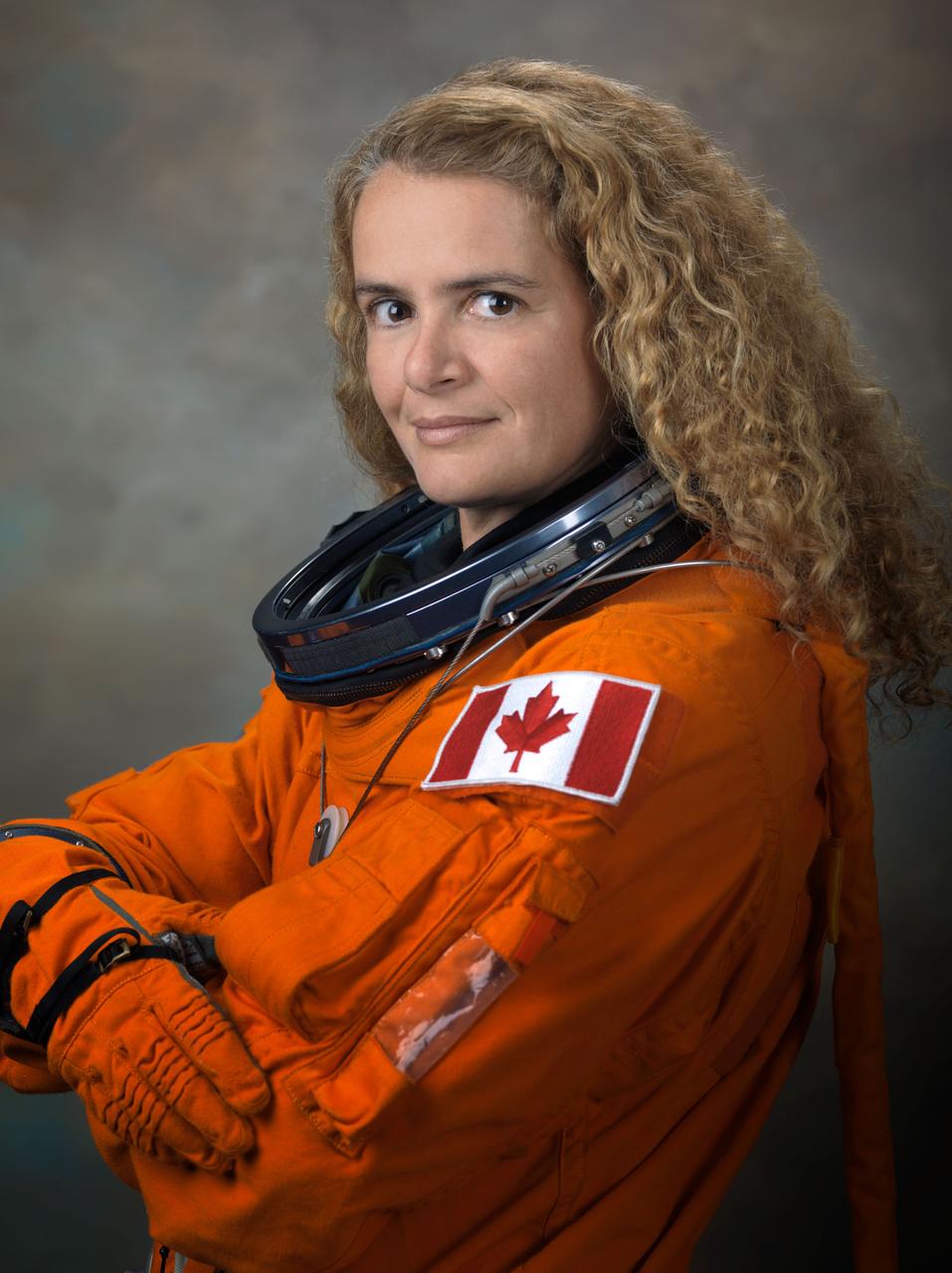
Alternate ACES Suit Astronaut Portrait for Julie Payette
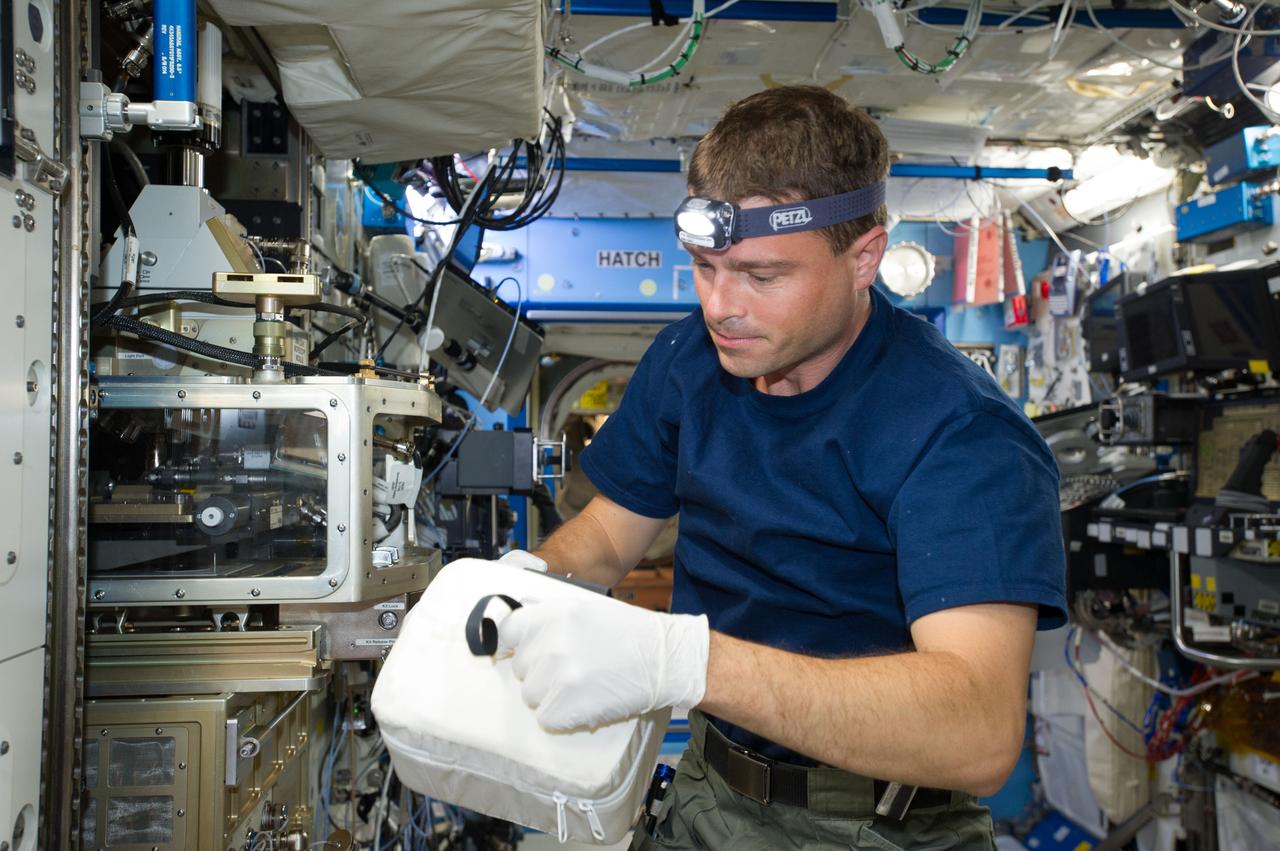
ISS040-E-007368 (5 June 2014) --- NASA astronaut Reid Wiseman, Expedition 40 flight engineer, works with Advanced Colloids Experiment (ACE) samples in the Destiny laboratory of the International Space Station.
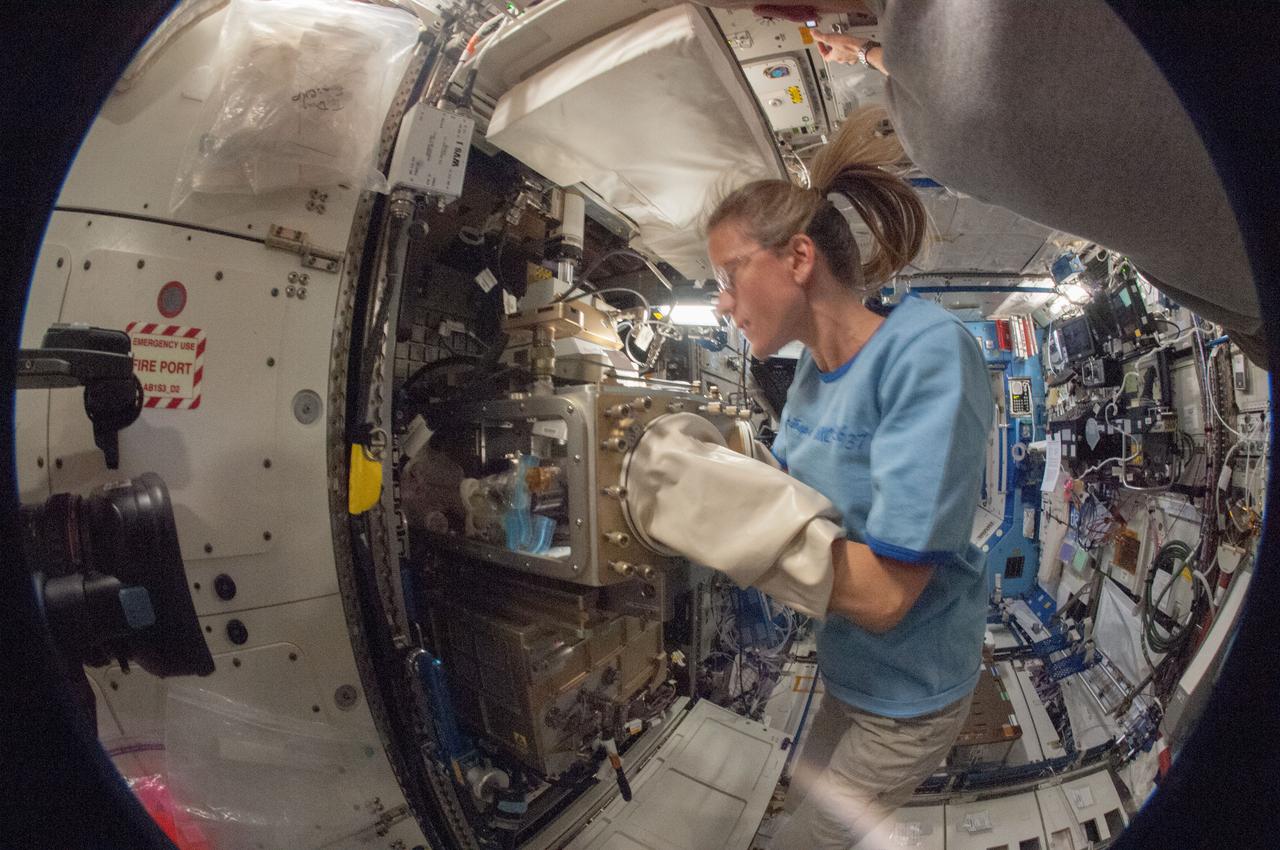
ISS036-E-019783 (24 June 2013) --- In the International Space Station’s Destiny laboratory, a fisheye lens attached to an electronic still camera was used to capture this image of NASA astronaut Karen Nyberg, Expedition 36 flight engineer, as she conducts a session with the Advanced Colloids Experiment (ACE)-1 sample preparation at the Light Microscopy Module (LMM) in the Fluids Integrated Rack / Fluids Combustion Facility (FIR/FCF). ACE-1 is a series of microscopic imaging investigations that uses the microgravity environment to examine flow characteristics and the evolution and ordering effects within a group of colloidal materials.
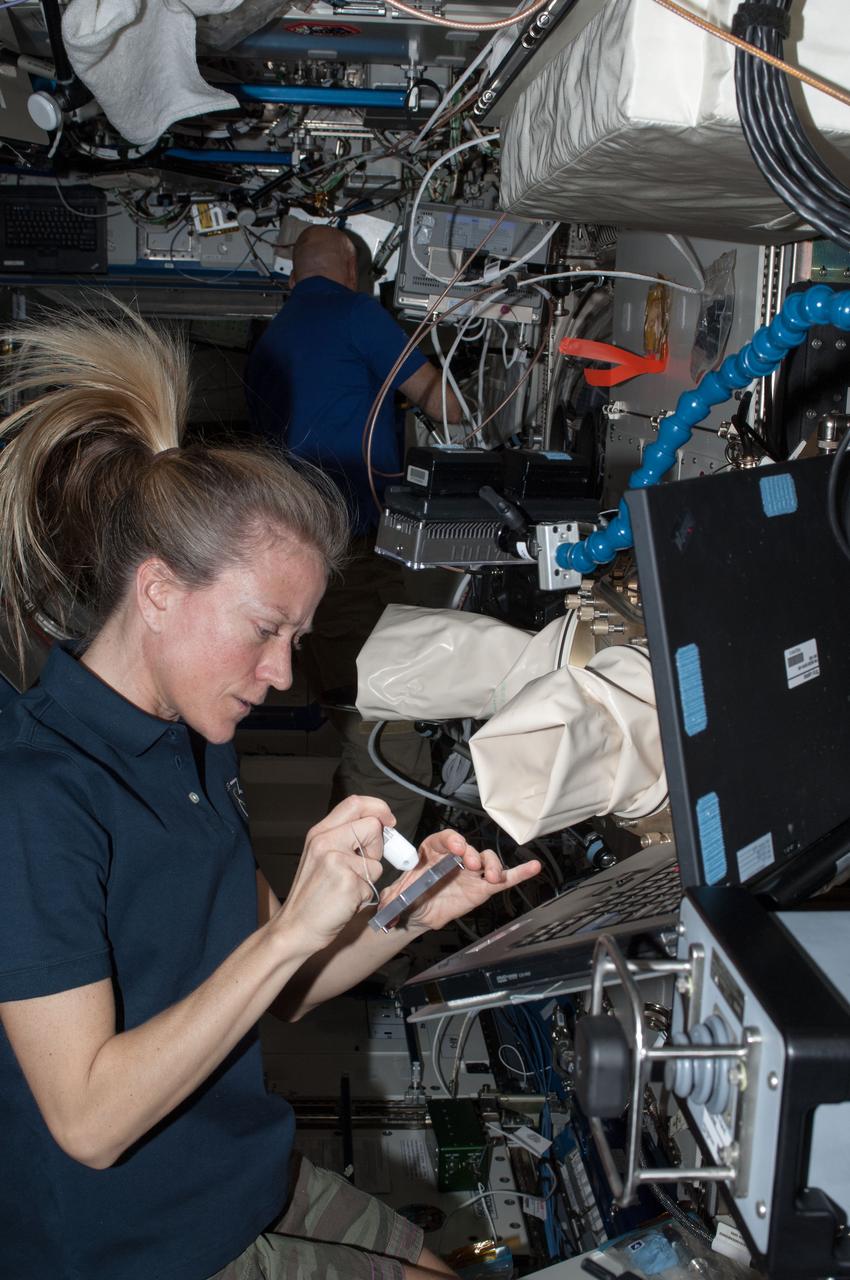
ISS036-E-035770 (18 Aug. 2013) --- NASA astronaut Karen Nyberg, Expedition 36 flight engineer, works with new test samples for the Advanced Colloids Experiment, or ACE, housed in the Light Microscopy Module (LMM) inside the Fluids Integrated Rack of the International Space Station?s Destiny laboratory. Results from ACE will help researchers understand how to optimize stabilizers to extend the shelf life of products like laundry detergent, paint, ketchup and even salad dressing.
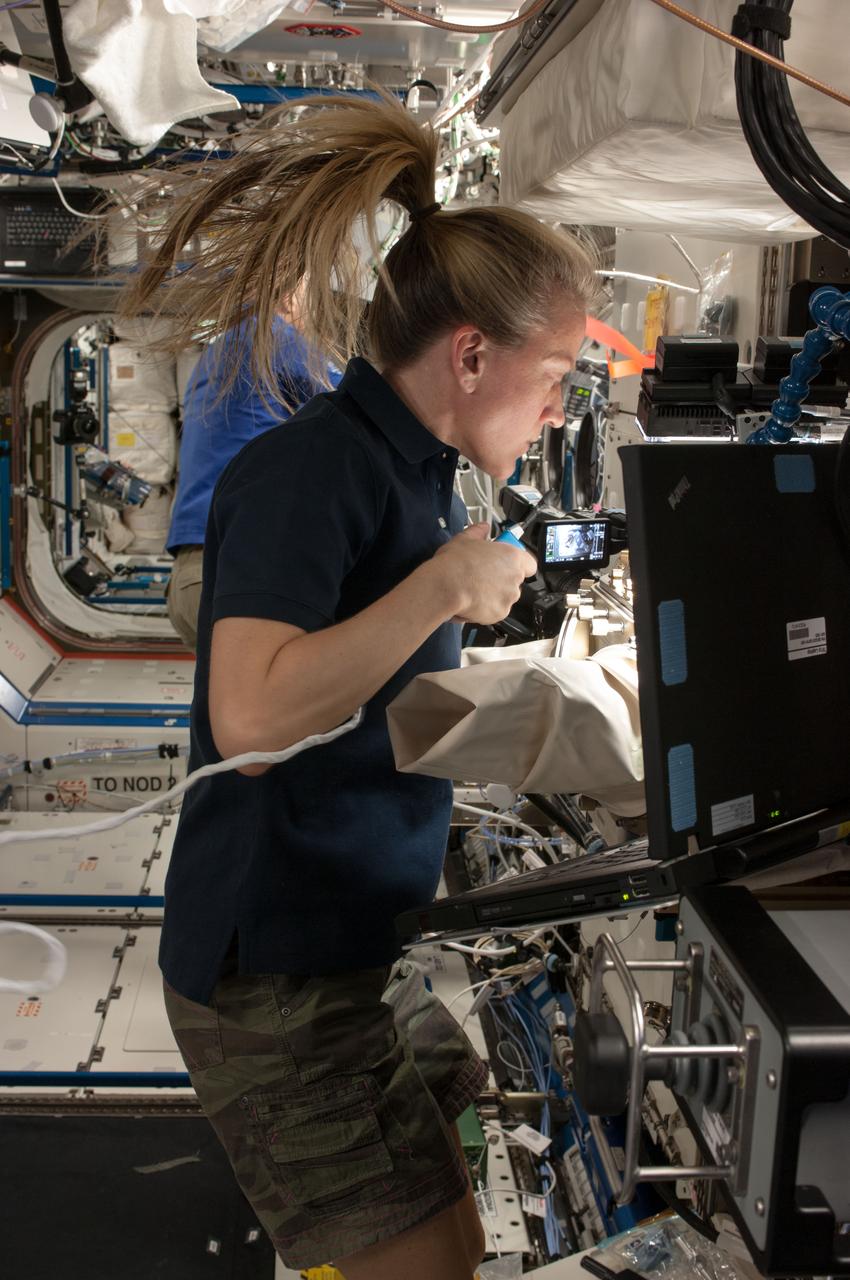
ISS036-E-035780 (18 Aug. 2013) --- NASA astronaut Karen Nyberg, Expedition 36 flight engineer, works with new test samples for the Advanced Colloids Experiment, or ACE, housed in the Light Microscopy Module (LMM) inside the Fluids Integrated Rack of the International Space Station?s Destiny laboratory. Results from ACE will help researchers understand how to optimize stabilizers to extend the shelf life of products like laundry detergent, paint, ketchup and even salad dressing.
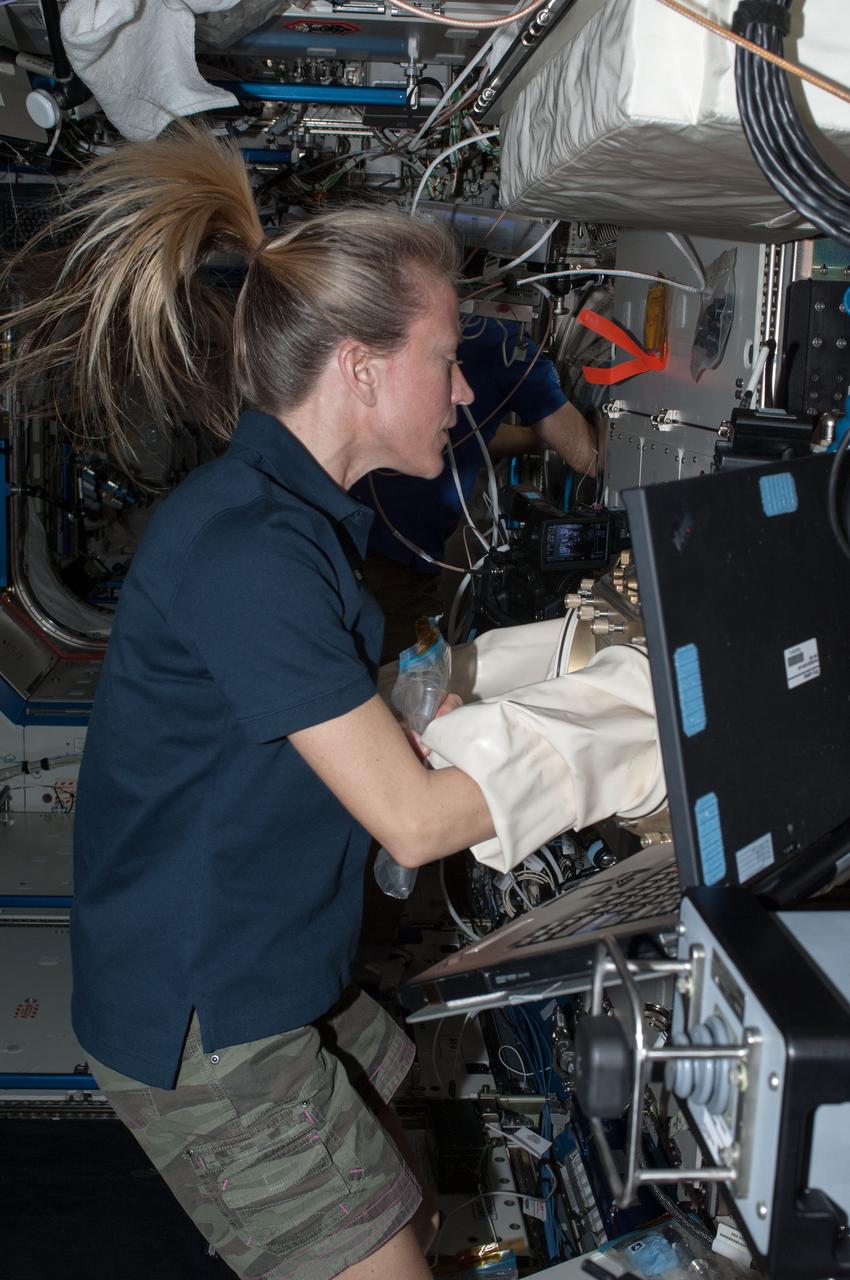
ISS036-E-035767 (18 Aug. 2013) --- NASA astronaut Karen Nyberg, Expedition 36 flight engineer, works with new test samples for the Advanced Colloids Experiment, or ACE, housed in the Light Microscopy Module (LMM) inside the Fluids Integrated Rack of the International Space Station?s Destiny laboratory. Results from ACE will help researchers understand how to optimize stabilizers to extend the shelf life of products like laundry detergent, paint, ketchup and even salad dressing.
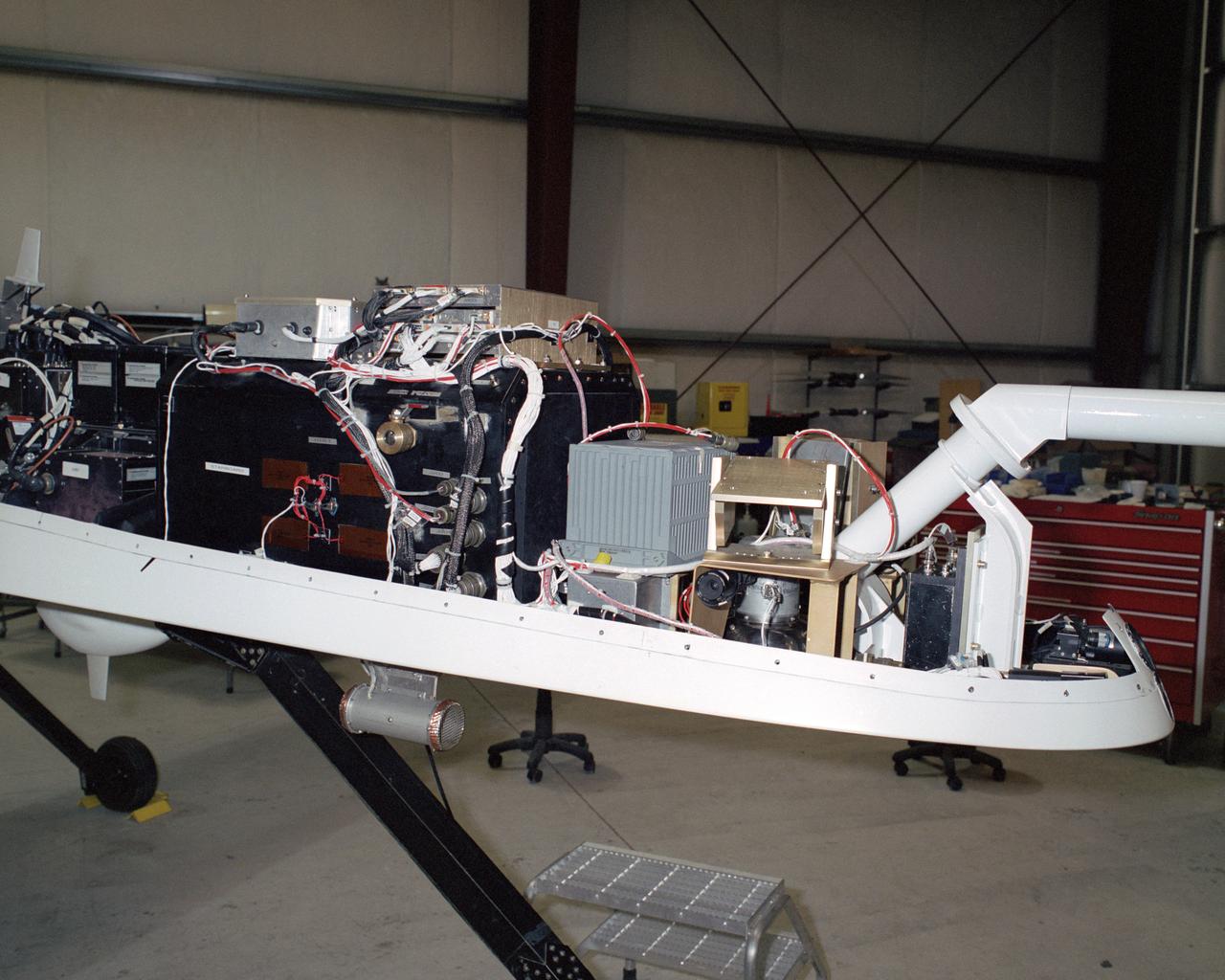
A NASA team studying the causes of electrical storms and their effects on our home planet achieved a milestone on August 21, 2002, completing the study's longest-duration research flight and monitoring four thunderstorms in succession. Based at the Naval Air Station Key West, Florida, researchers with the Altus Cumulus Electrification Study (ACES) used the Altus II remotely-piloted aircraft to study thunderstorms in the Atlantic Ocean off Key West and the west of the Everglades. Using special equipment aboard the Altus II, scientists in ACES will gather electric, magnetic, and optical measurements of the thunderstorms, gauging elements such as lightning activity and the electrical environment in and around the storms. With dual goals of gathering weather data safely and testing the adaptability of the uninhabited aircraft, the ACES study is a collaboration among the Marshall Space Flight Center, the University of Alabama in Huntsville, NASA's Goddard Space Flight Center in Greenbelt, Maryland, Pernsylvania State University in University Park, and General Atomics Aeronautical Systems, Inc.
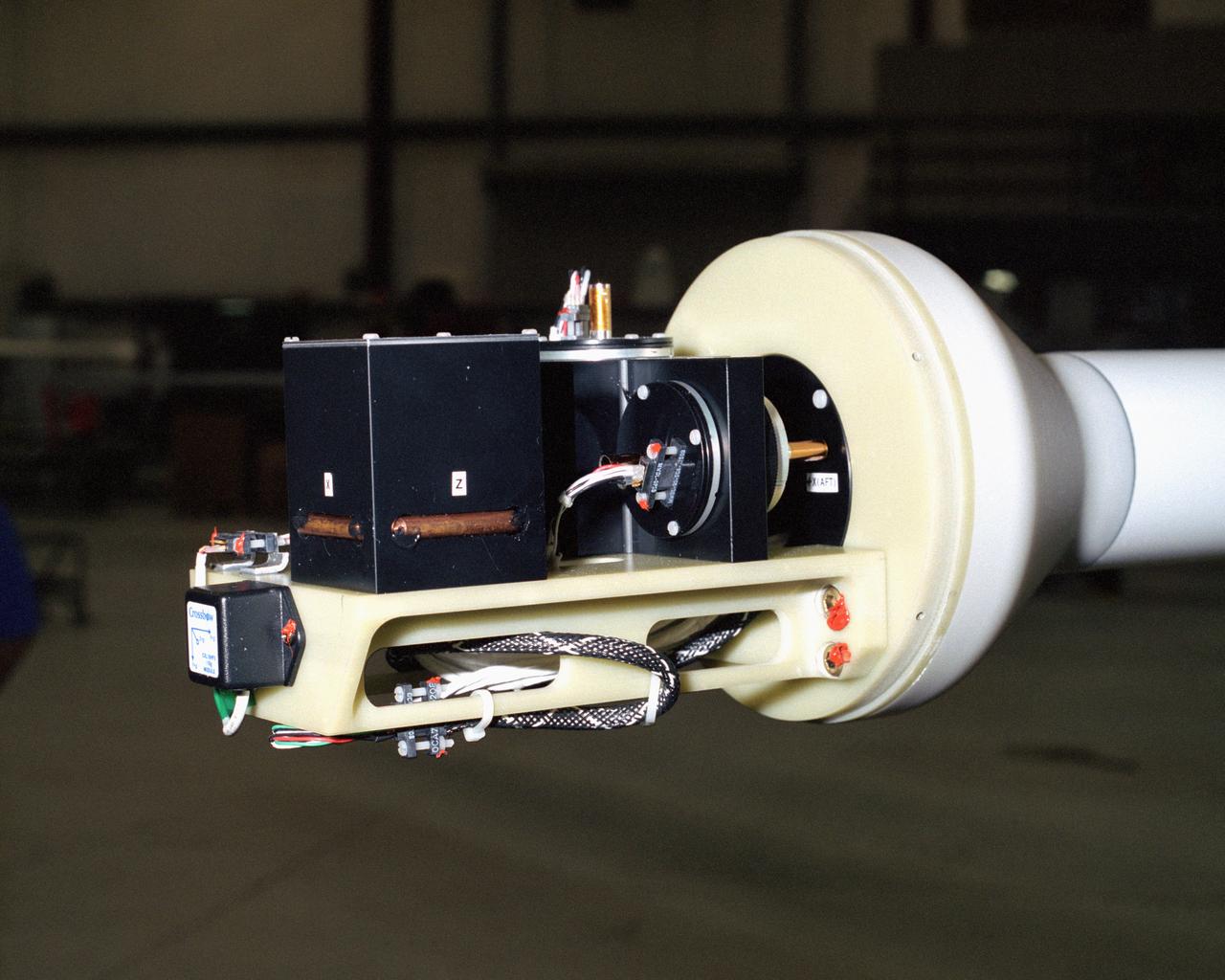
A NASA team studying the causes of electrical storms and their effects on our home planet achieved a milestone on August 21, 2002, completing the study's longest-duration research flight and monitoring four thunderstorms in succession. Based at the Naval Air Station Key West, Florida, researchers with the Altus Cumulus Electrification Study (ACES) used the Altus II remotely-piloted aircraft to study thunderstorms in the Atlantic Ocean off Key West and the west of the Everglades. Data obtained through sensors mounted to the aircraft will allow researchers in ACES to gauge elements such as lightning activity and the electrical environment in and around storms. By learning more about individual storms, scientists hope to better understand the global water and energy cycle, as well as climate variability. Contained in one portion of the aircraft is a three-axis magnetic search coil, which measures the AC magnetic field; a three-axis electric field change sensor; an accelerometer; and a three-axis magnetometer, which measures the DC magnetic field. With dual goals of gathering weather data safely and testing the adaptability of the uninhabited aircraft, the ACES study is a collaboration among the Marshall Space Flight Center, the University of Alabama in Huntsville, NASA's Goddard Space Flight Center in Greenbelt, Maryland, Pernsylvania State University in University Park, and General Atomics Aeronautical Systems, Inc.
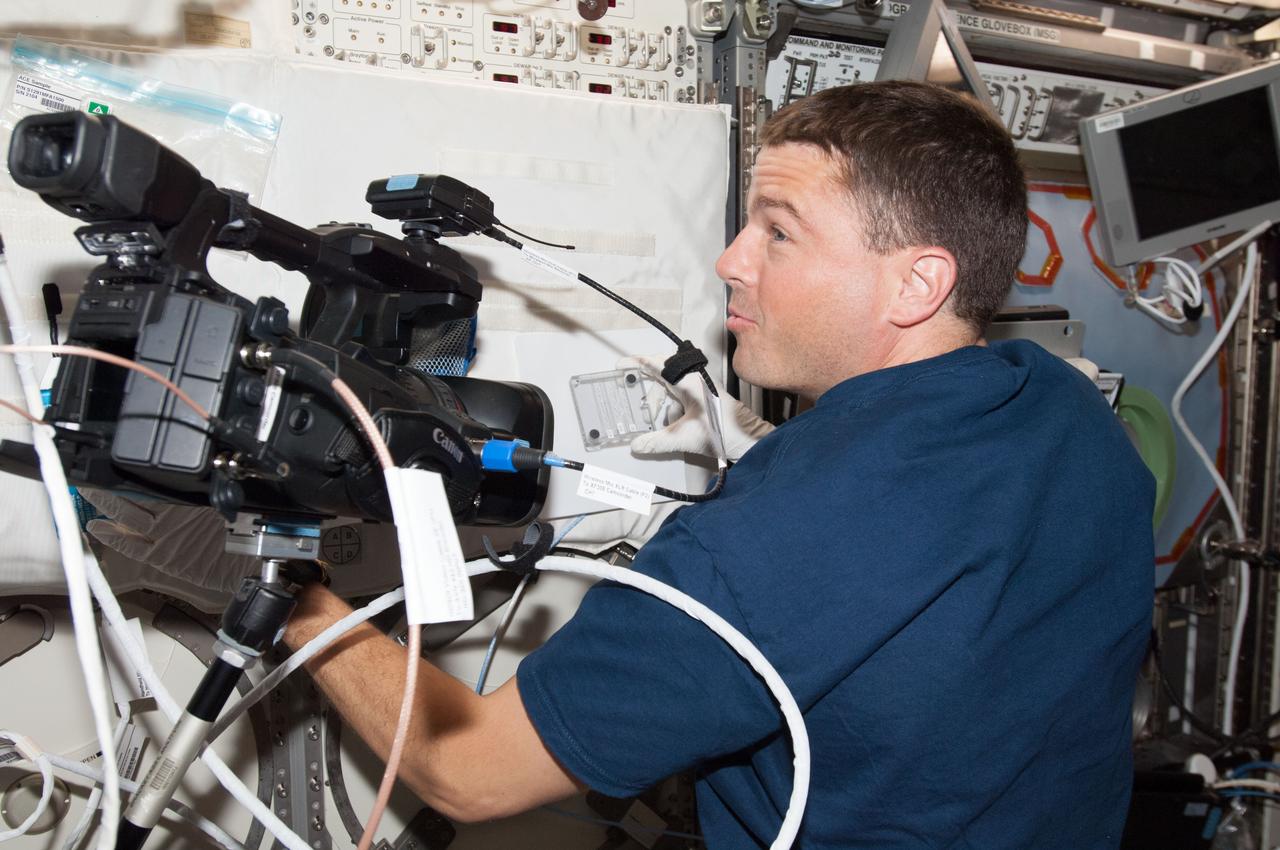
ISS040-E-006569 (2 June 2014) --- NASA astronaut Reid Wiseman, Expedition 40 flight engineer, performs an Advanced Colloids Experiment (ACE) sample 40-minute mixing activity in the Destiny laboratory of the International Space Station.
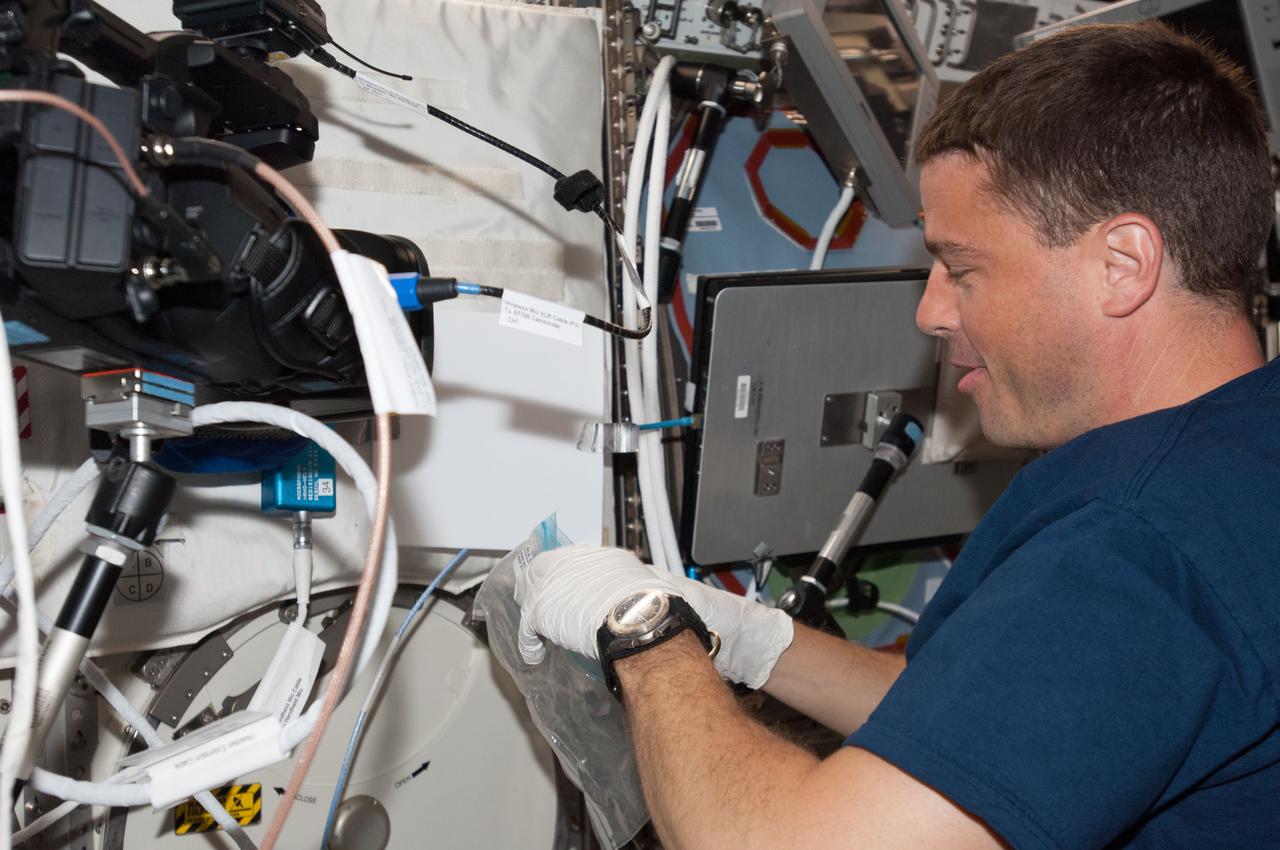
ISS040-E-006567 (2 June 2014) --- NASA astronaut Reid Wiseman, Expedition 40 flight engineer, performs an Advanced Colloids Experiment (ACE) sample 40-minute mixing activity in the Destiny laboratory of the International Space Station.
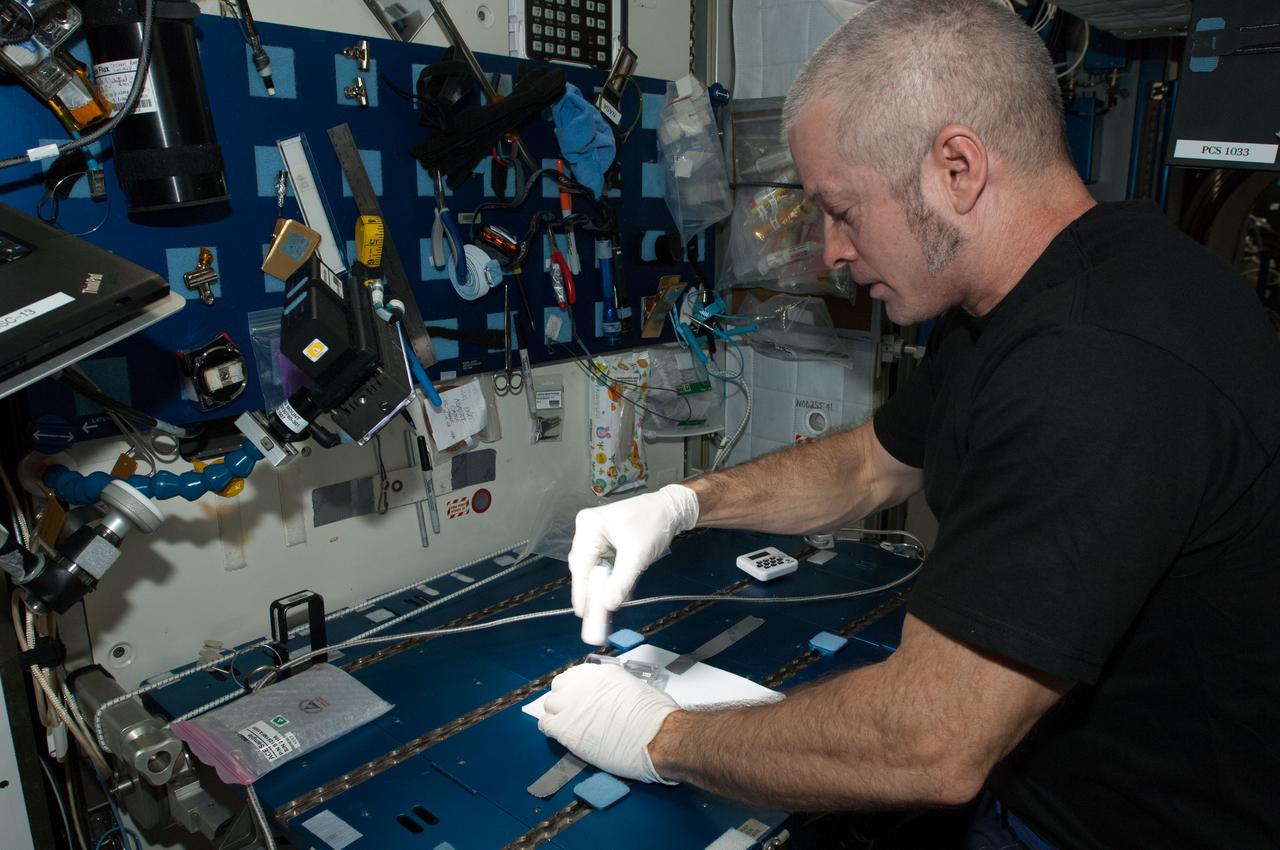
ISS040-E-060673 (14 July 2014) --- NASA astronaut Steve Swanson, Expedition 40 commander, works with test samples for the Advanced Colloids Experiment (ACE) at a work station in the Harmony node of the International Space Station.

ACE-TR Operations at GRC-TSC, Advanced Colloids Experiment with Temperature control for the Research, Engineering, and Mission Integration Services, REMIS (JSC) contract
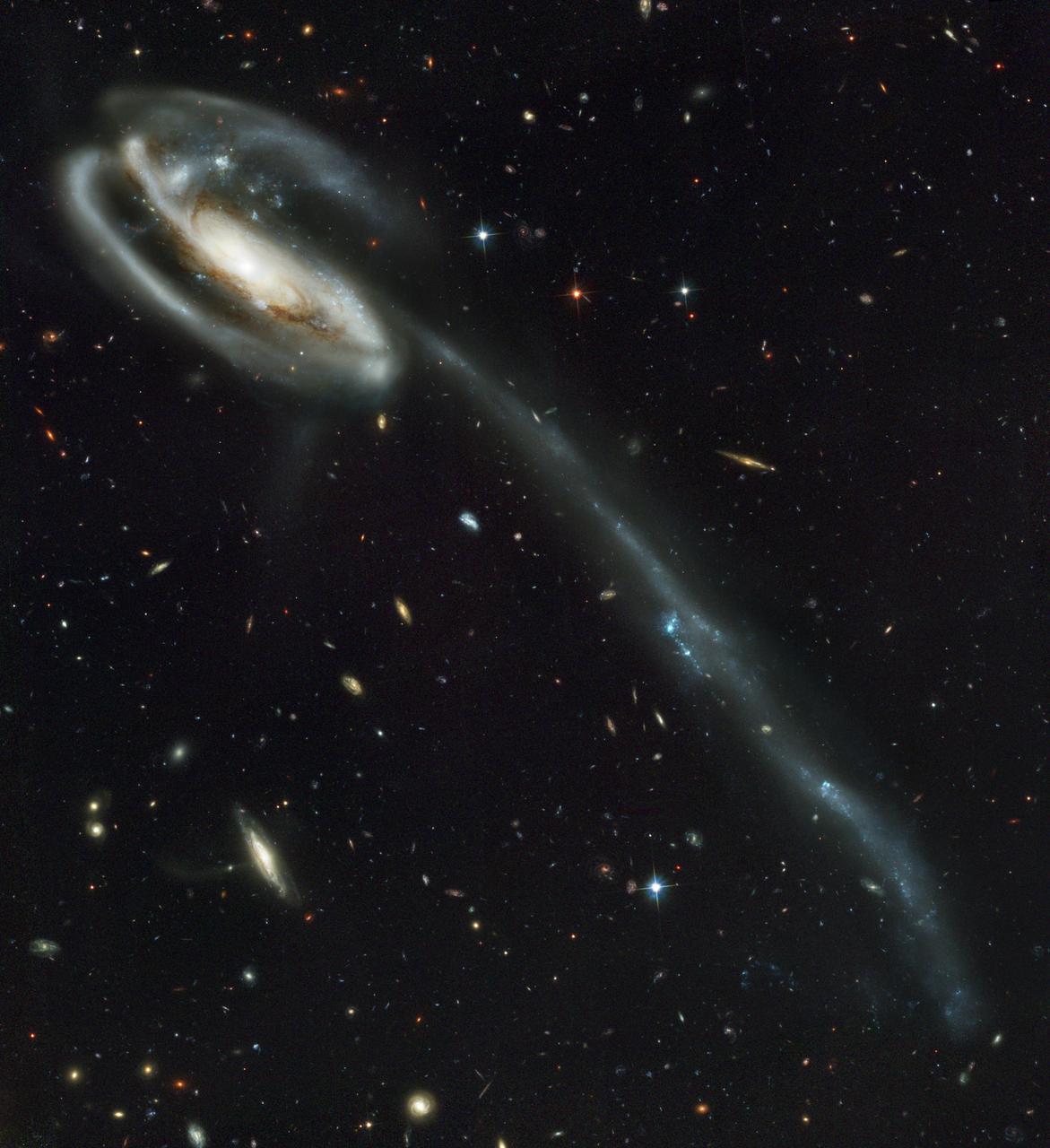
This picture of the galaxy UGC 10214 was was taken by the Advanced Camera for Surveys (ACS), which was installed aboard the Hubble Space Telescope (HST) in March 2002 during HST Servicing Mission 3B (STS-109 mission). Dubbed the "Tadpole," this spiral galaxy is unlike the textbook images of stately galaxies. Its distorted shape was caused by a small interloper, a very blue, compact galaxy visible in the upper left corner of the more massive Tadpole. The Tadpole resides about 420 million light-years away in the constellation Draco. Seen shining through the Tadpole's disk, the tiny intruder is likely a hit-and-run galaxy that is now leaving the scene of the accident. Strong gravitational forces from the interaction created the long tail of debris, consisting of stars and gas that stretch our more than 280,000 light-years. The galactic carnage and torrent of star birth are playing out against a spectacular backdrop: a "wallpaper pattern" of 6,000 galaxies. These galaxies represent twice the number of those discovered in the legendary Hubble Deep Field, the orbiting observatory's "deepest" view of the heavens, taken in 1995 by the Wide Field and planetary camera 2. The ACS picture, however, was taken in one-twelfth of the time it took to observe the original HST Deep Field. In blue light, ACS sees even fainter objects than were seen in the "deep field." The galaxies in the ACS picture, like those in the deep field, stretch back to nearly the begirning of time. Credit: NASA, H. Ford (JHU), G. Illingworth (USCS/LO), M. Clampin (STScI), G. Hartig (STScI), the ACS Science Team, and ESA.
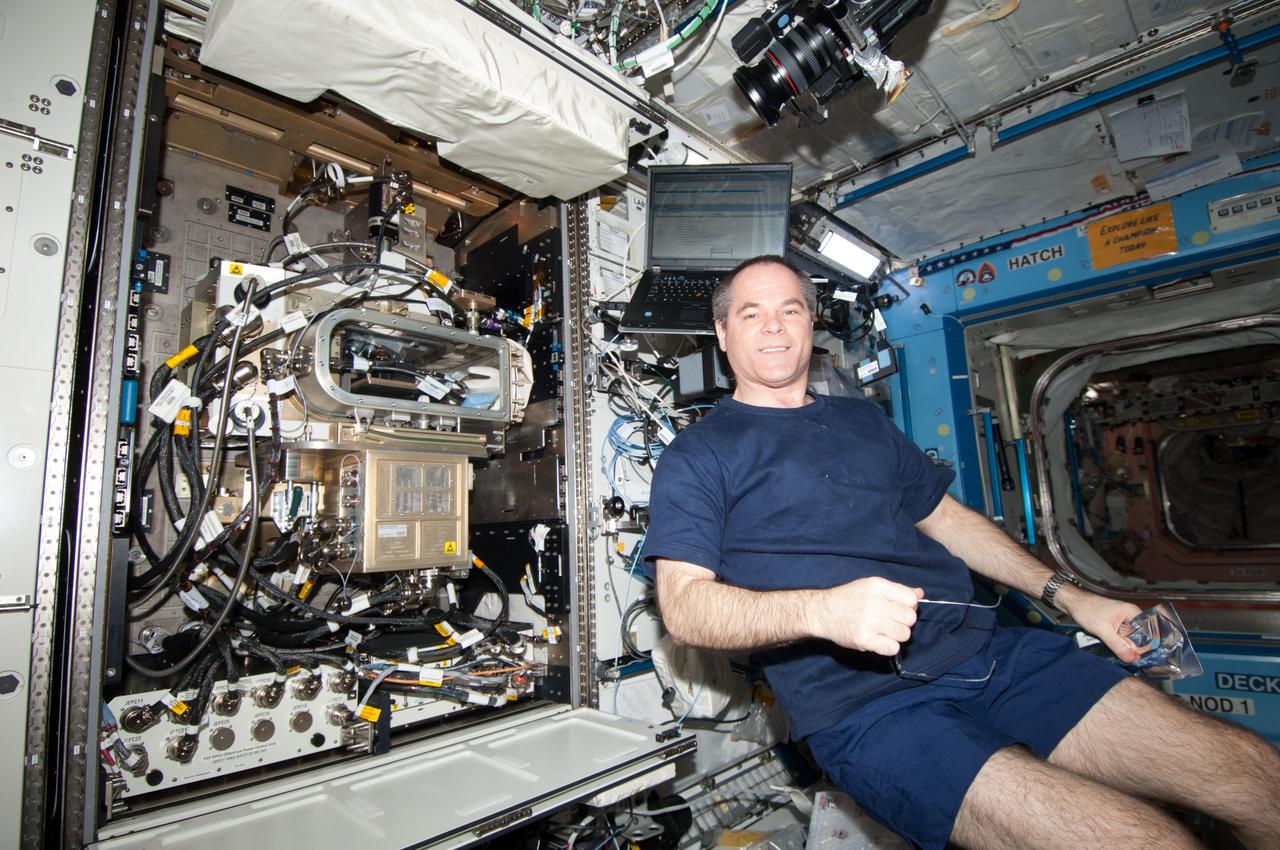
ISS034-E-056144 (21 Feb. 2013) --- Inside the U.S. Laboratory (Destiny) aboard the Earth-orbiting International Space Statio, NASA astronaut Kevin Ford, Expedition 34 commander, is seen with the Fluids Integration Rack (FIR)/Light Microscopy Module (LMM)/Advanced Colloids Experiment (ACE). ACE samples, which produce microscopic images of materials containing small colloidal particles, are scheduled for arrival on SpaceX-2 in the first week of March.
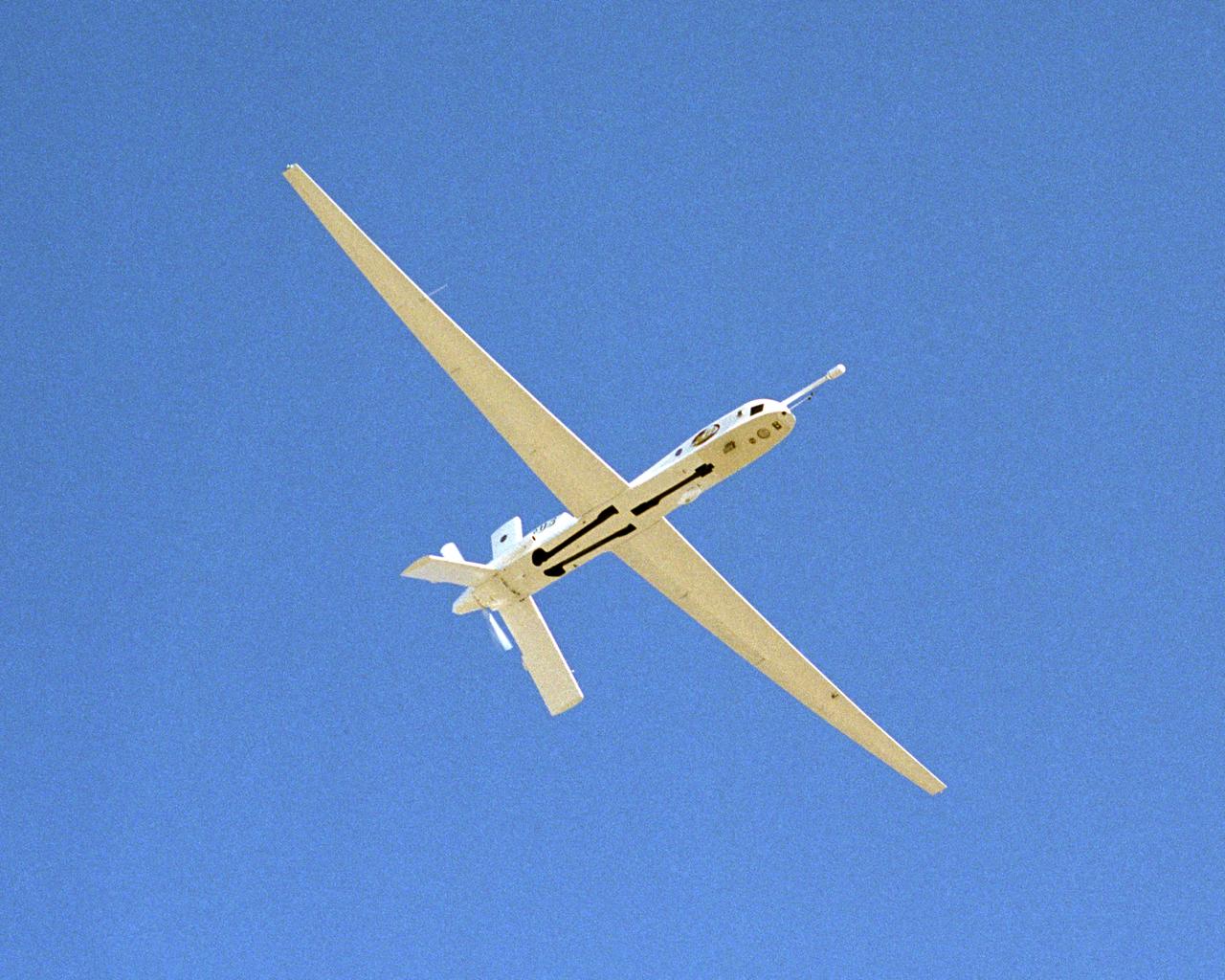
A NASA team studying the causes of electrical storms and their effects on our home planet achieved a milestone on August 21, 2002, completing the study's longest-duration research flight and monitoring four thunderstorms in succession. Based at the Naval Air Station Key West, Florida, researchers with the Altus Cumulus Electrification Study (ACES) used the Altus II remotely piloted aircraft to study thunderstorms in the Atlantic Ocean off Key West and the west of the Everglades. The ACES lightning study used the Altus II twin turbo uninhabited aerial vehicle, built by General Atomics Aeronautical Systems, Inc. of San Diego. The Altus II was chosen for its slow flight speed of 75 to 100 knots (80 to 115 mph), long endurance, and high-altitude flight (up to 65,000 feet). These qualities gave the Altus II the ability to fly near and around thunderstorms for long periods of time, allowing investigations to be conducted over the entire life cycle of storms. The vehicle has a wing span of 55 feet and a payload capacity of over 300 lbs. With dual goals of gathering weather data safely and testing the adaptability of the uninhabited aircraft, the ACES study is a collaboration among the Marshall Space Flight Center, the University of Alabama in Huntsville, NASA's Goddard Space Flight Center in Greenbelt, Maryland, Pernsylvania State University in University Park, and General Atomics Aeronautical Systems, Inc.
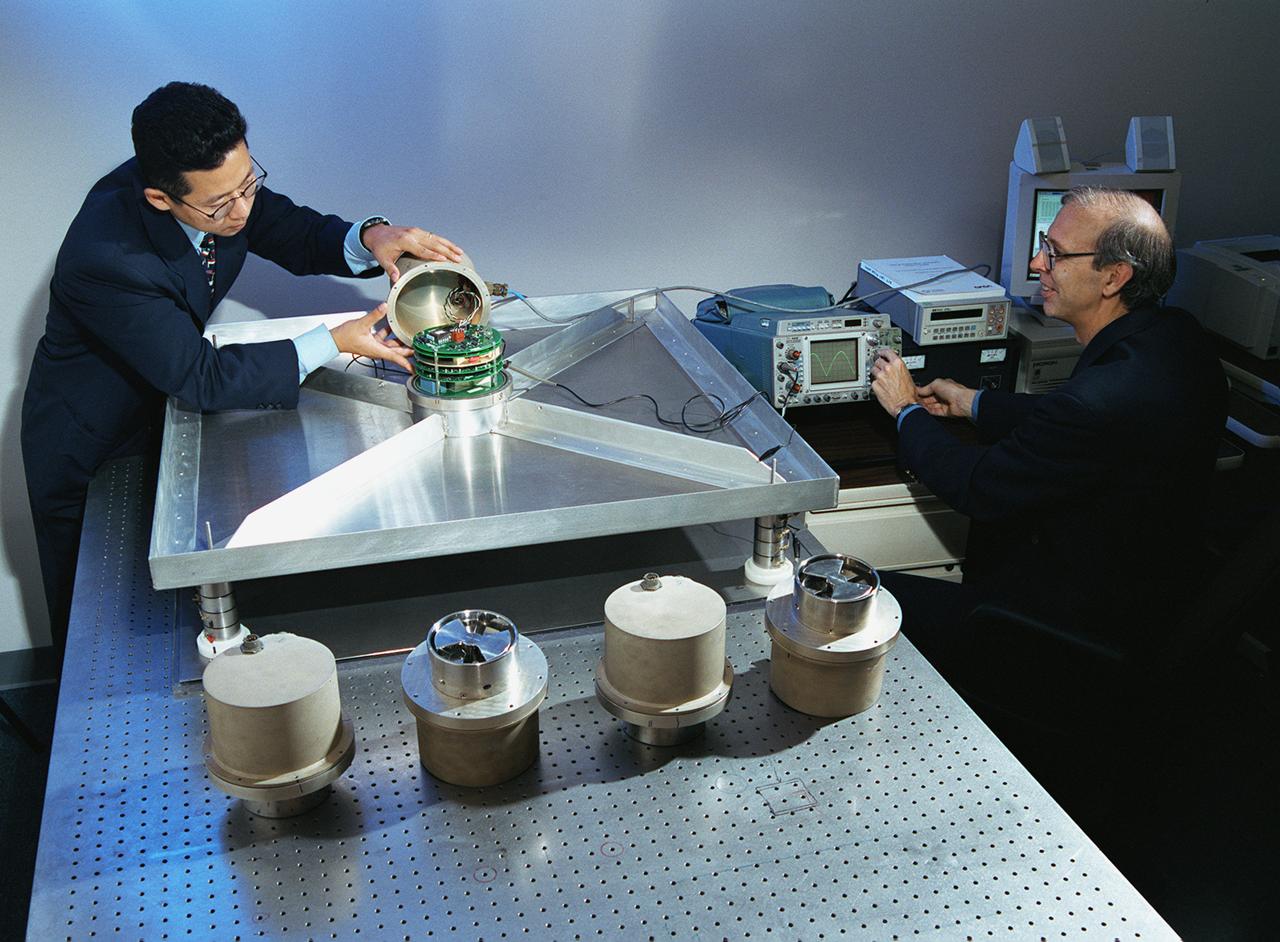
A NASA team studying the causes of electrical storms and their effects on our home planet achieved a milestone on August 21, 2002, completing the study's longest-duration research flight and monitoring four thunderstorms in succession. Radio news media can talk with Dr. Richard Blakeslee, the project's principal investigator, and Tony Kim, project manager at the Marshall Space Flight Center (MSFC), about their results and how their work will help improve future weather forecasting ability. Based at the Naval Air Station Key West, Florida, researchers with the Altus Cumulus Electrification Study (ACES) used the Altus II remotely- piloted aircraft to study a thunderstorm in the Atlantic Ocean off Key West, two storms at the western edge of the Everglades, and a large storm over the northwestern corner of the Everglades. This photograph shows Tony Kim And Dr. Richard Blakeslee of MSFC testing aircraft sensors that would be used to measure the electric fields produced by thunderstorm as part of NASA's ACES. With dual goals of gathering weather data safely and testing the adaptability of the uninhabited aircraft, the ACES study is a collaboration among the MSFC, the University of Alabama in Huntsville, NASA's Goddard Space Flight Center in Greenbelt, Maryland, Pernsylvania State University in University Park, and General Atomics Aeronautical Systems, Inc.
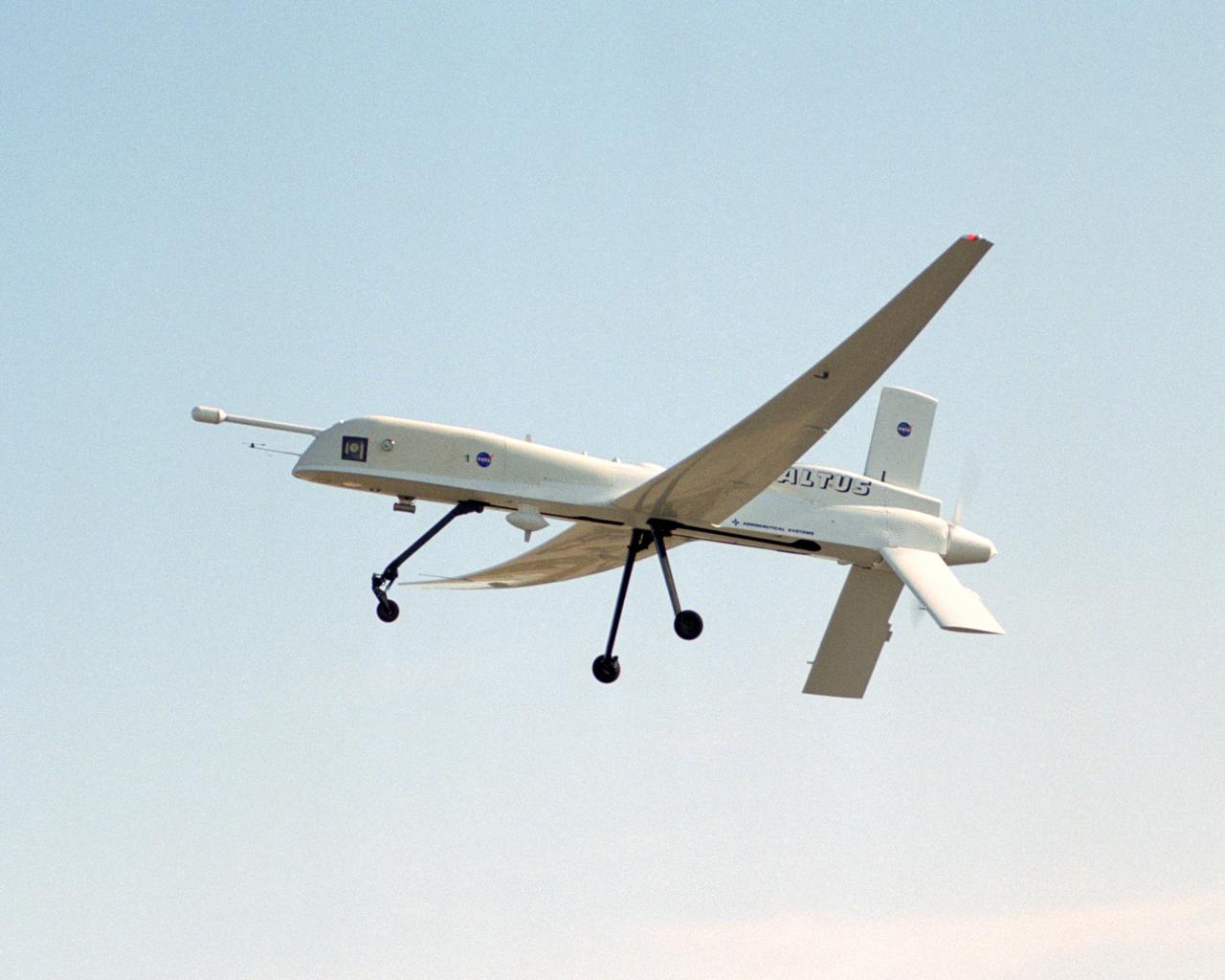
A NASA team studying the causes of electrical storms and their effects on our home planet achieved a milestone on August 21, 2002, completing the study's longest-duration research flight and monitoring four thunderstorms in succession. Based at the Naval Air Station Key West, Florida, researchers with the Altus Cumulus Electrification Study (ACES) used the Altus II remotely-piloted aircraft to study thunderstorms in the Atlantic Ocean off Key West and the west of the Everglades. The ACES lightning study used the Altus II twin turbo uninhabited aerial vehicle, built by General Atomics Aeronautical Systems, Inc. of San Diego. The Altus II was chosen for its slow flight speed of 75 to 100 knots (80 to 115 mph), long endurance, and high-altitude flight (up to 65,000 feet). These qualities gave the Altus II the ability to fly near and around thunderstorms for long periods of time, allowing investigations to be to be conducted over the entire life cycle of storms. The vehicle has a wing span of 55 feet and a payload capacity of over 300 lbs. With dual goals of gathering weather data safely and testing the adaptability of the uninhabited aircraft, the ACES study is a collaboration among the Marshall Space Flight Center, the University of Alabama in Huntsville, NASA,s Goddard Space Flight Center in Greenbelt, Maryland, Pernsylvania State University in University Park, and General Atomics Aeronautical Systems, Inc.

Advanced Colloids Experiment, Thermal 5-2, ACE T5-2 International Space Station, ISS, Fluids Integrated Rack, FIR Operations in the Telescience Support Center, TSC
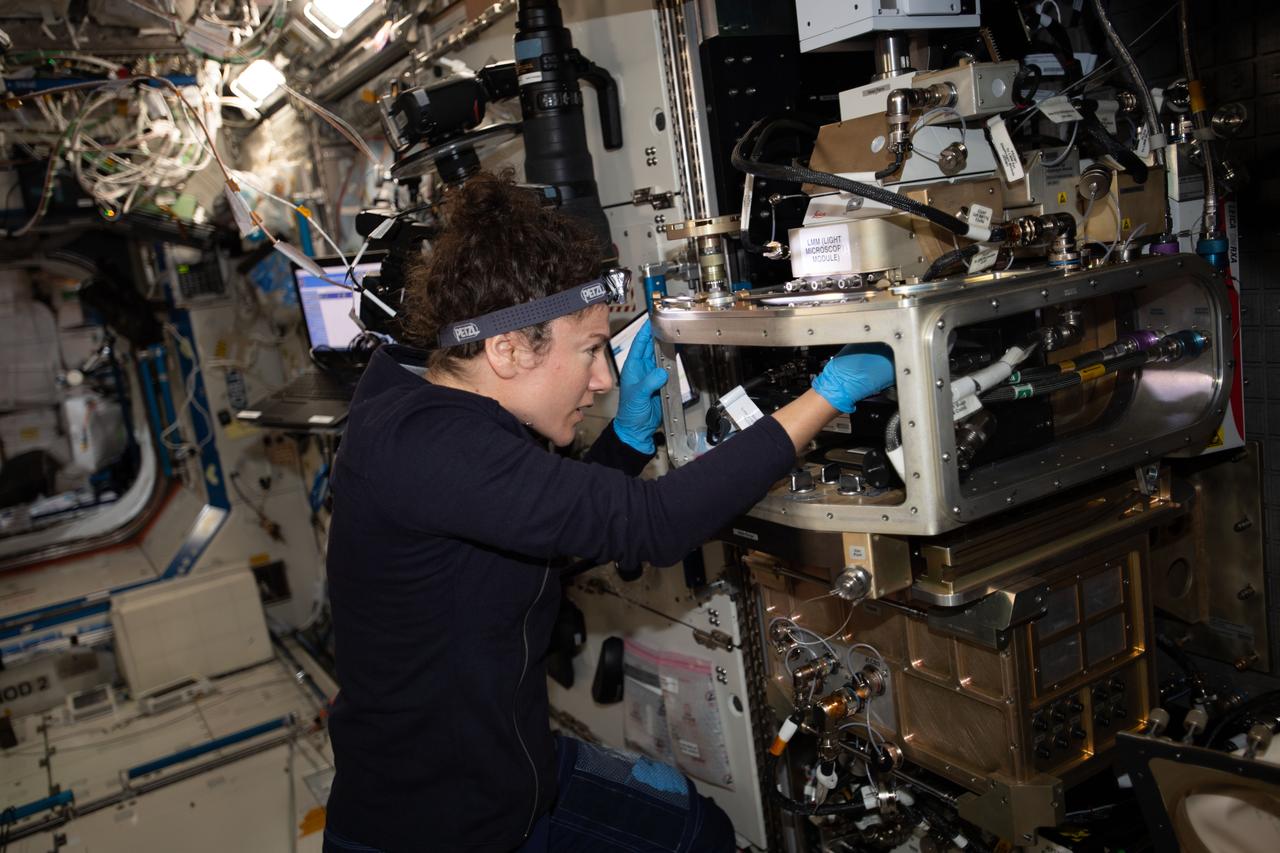
iss062e014339 (Feb. 16, 2020) --- NASA astronaut and Expedition 62 Flight Engineer Jessica Meir configures the Light Microscopy Module inside the Fluids Integrated Rack. The specialized microscope is being readied to examine the transition of an ordered crystal to a disordered glass to determine how increasing disorder affects structural and dynamic properties. The Advanced Colloids Experiment-Temperature-4 (ACE-T-4) investigation controls disorder by controlling temperature in a series of samples and observes the microscopic transition in three dimensions.
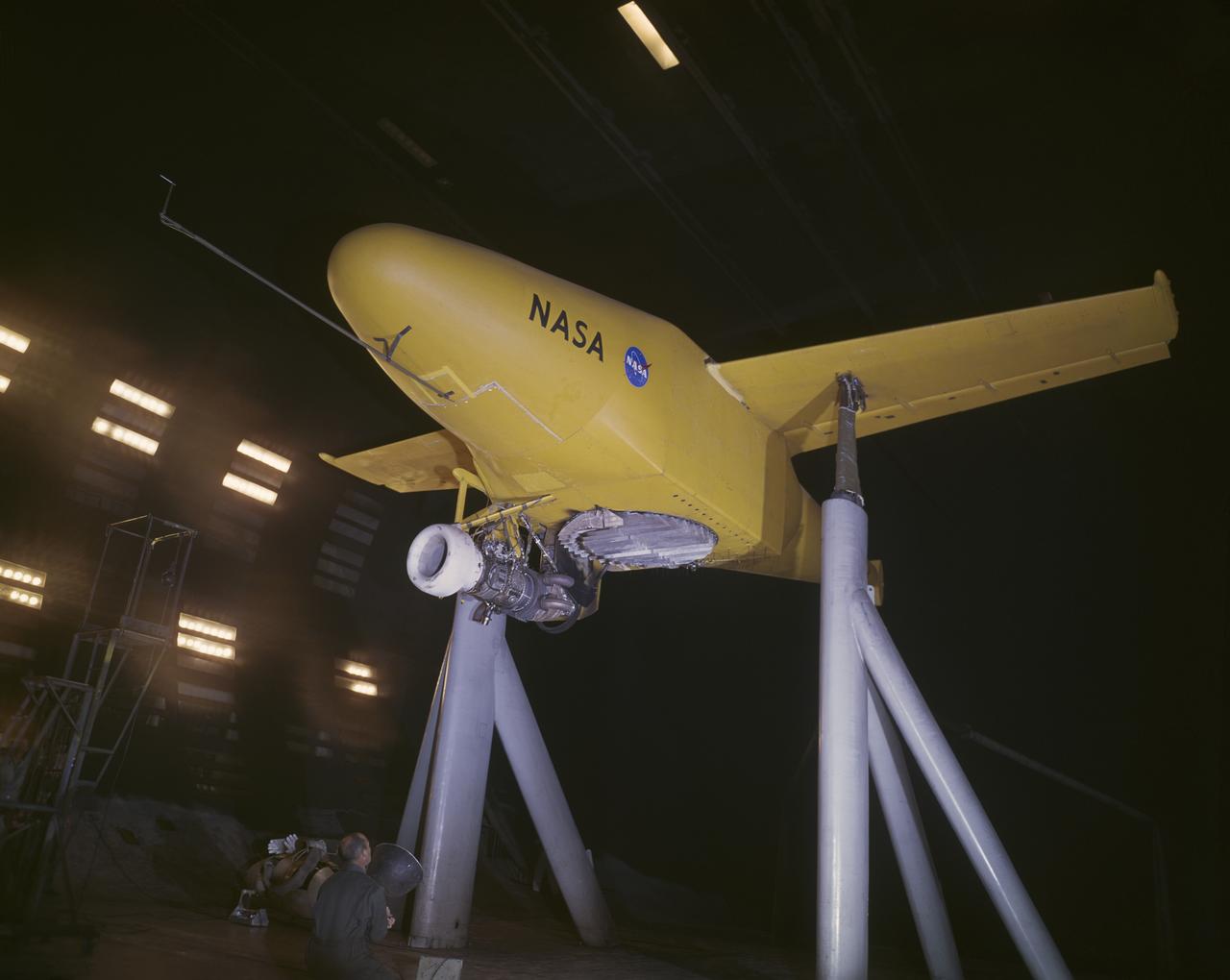
3/4 Low front view of fuselage and fan. Showing jet engine hanging below. Lift fan powered by jet exhaust.
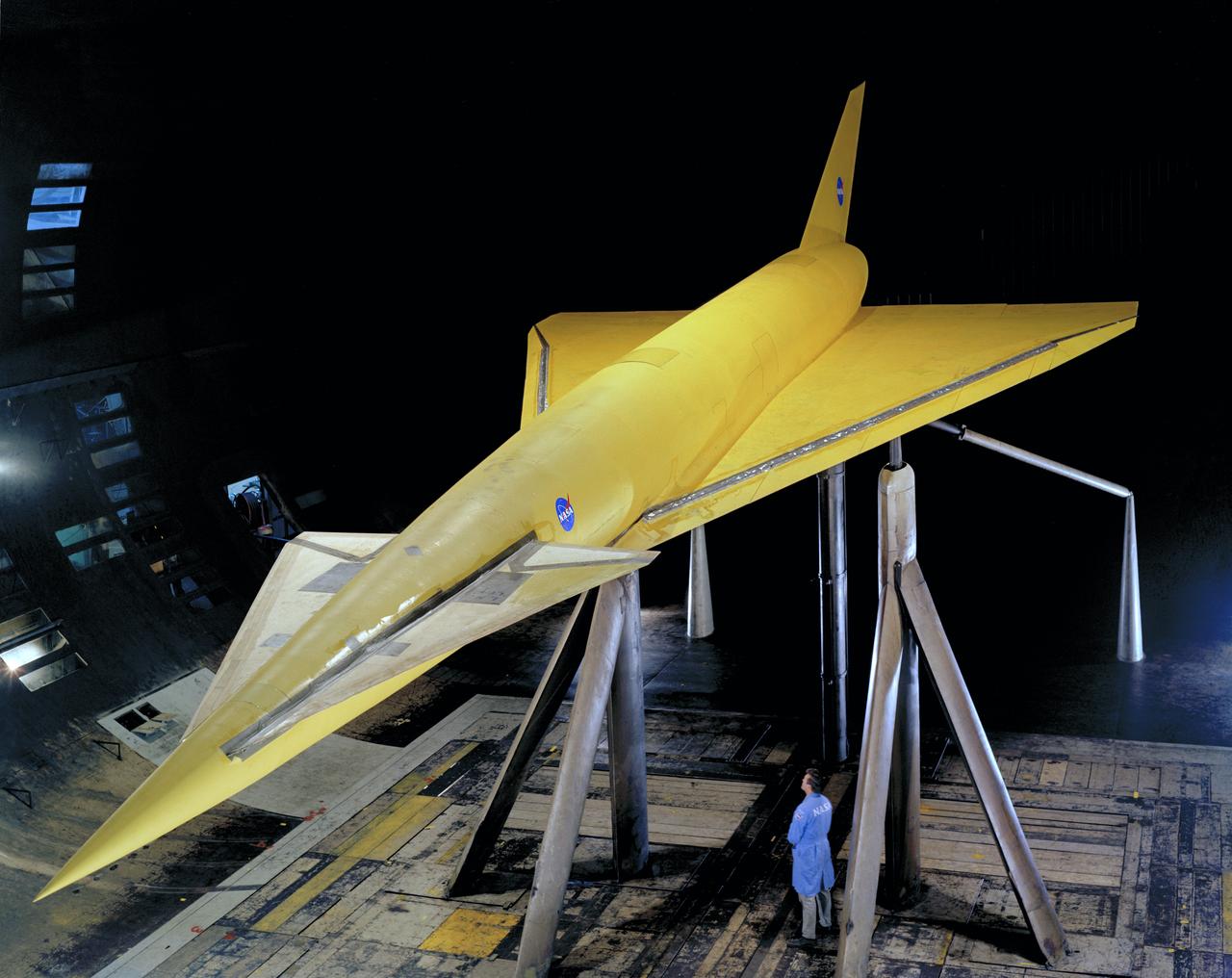
High 3/4 top front view of model in Ames 40x80 foot wind tunnel. Bob Bishop in lower right. Delta Wing with Conard.
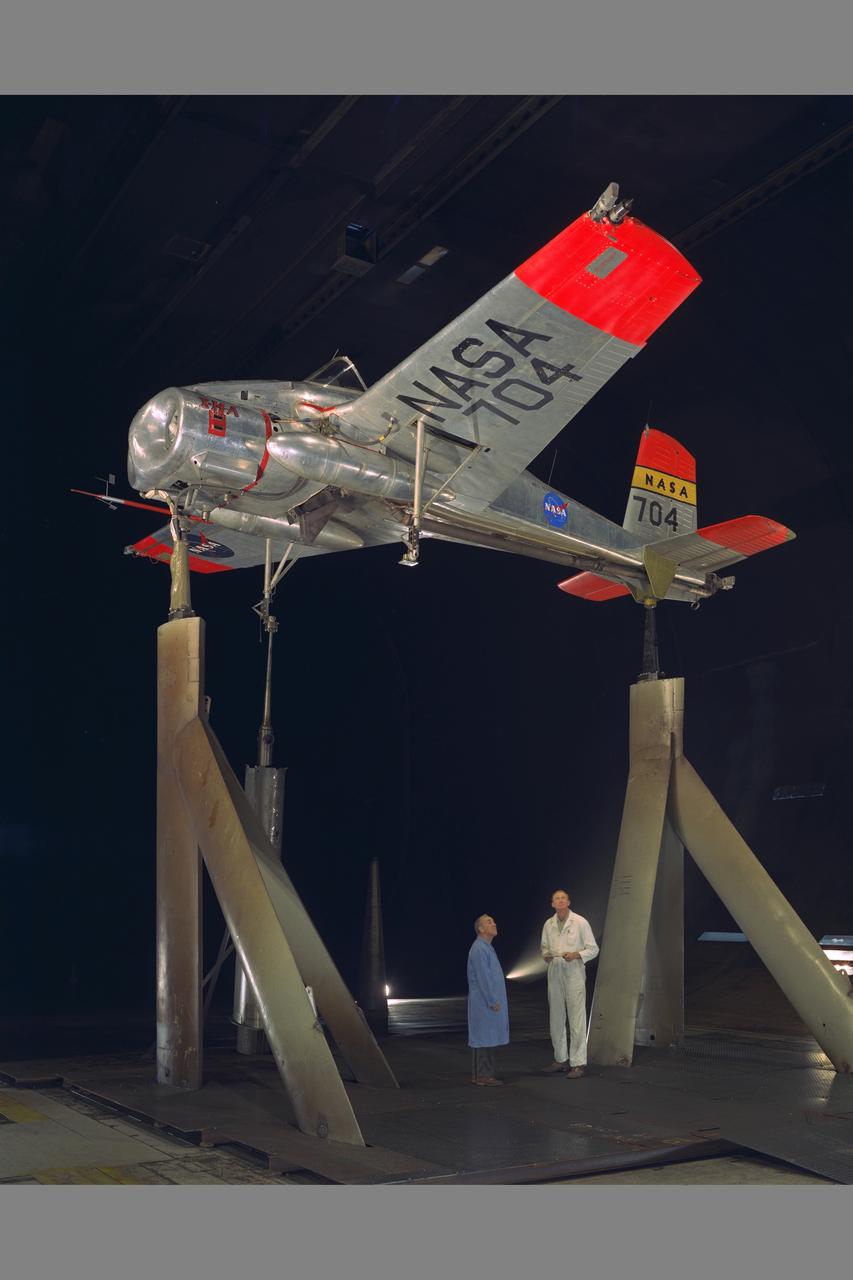
X-14 NASA 704 Full Scale Airplane tests in 40x80ft. Subsonic Wind Tunnel (NORMAL MOUNTING) with Sy Sewell, NASA (left) and Ed Varette, Army (right)
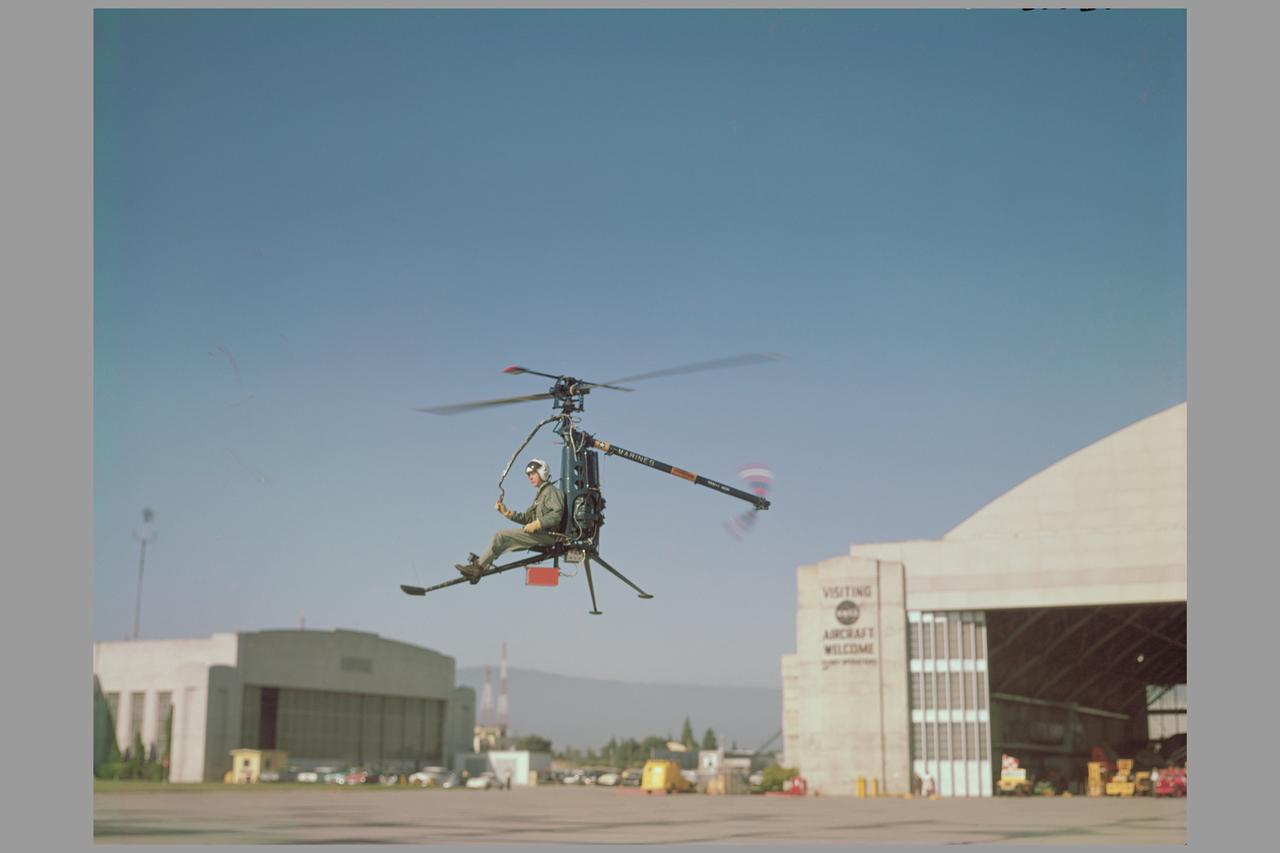
Ames aerodynamicists tested a wide variety of VTOL aircraft and helicopters during the 1960's. Here the Hiller rotorcycle YROE-1, made by Hiller Helicopter in nearby PaloAlto, California, hovers in front of the Ames Hangar. (4020, 4021, 4024) Published in NASA SP Flight Research at Ames: 57 Years of Development and Validation of Aeronautical Technology and Ames 60yr History Atmosphere of Freedom.
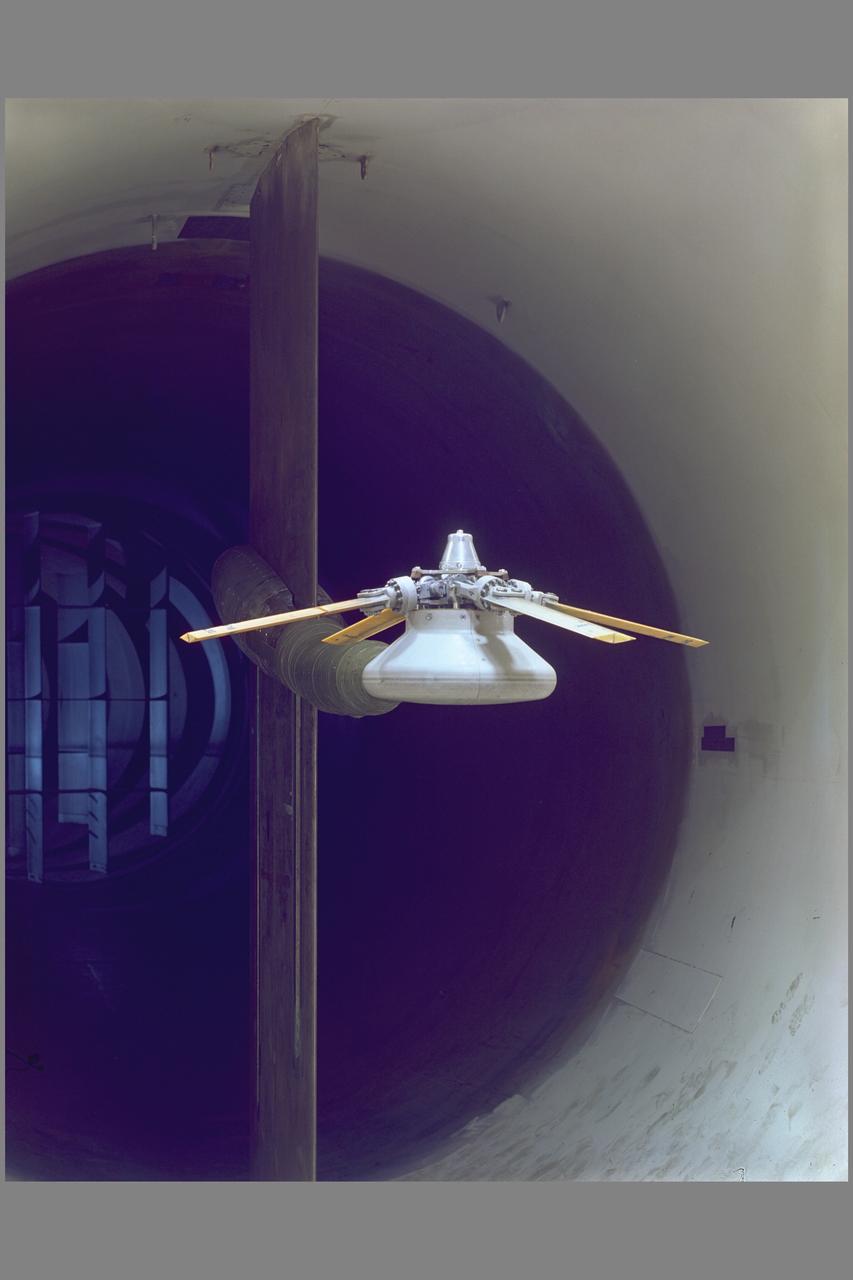
Rotor Entry Vehicle 12ft w.t.
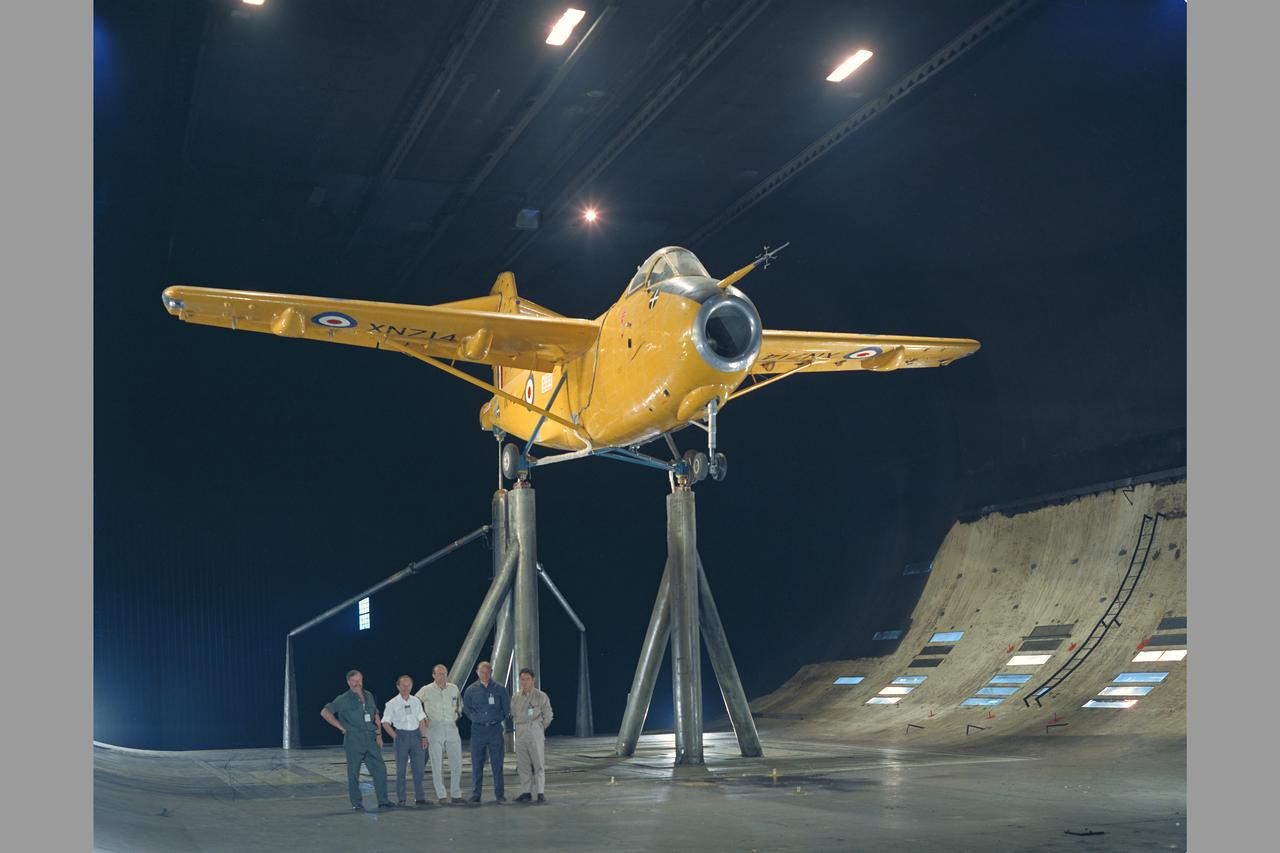
H-126 (Hunting) Jet Flap Aircraft: 40 x 80 ft. Wind Tunnel Test Program, B. Reuben.
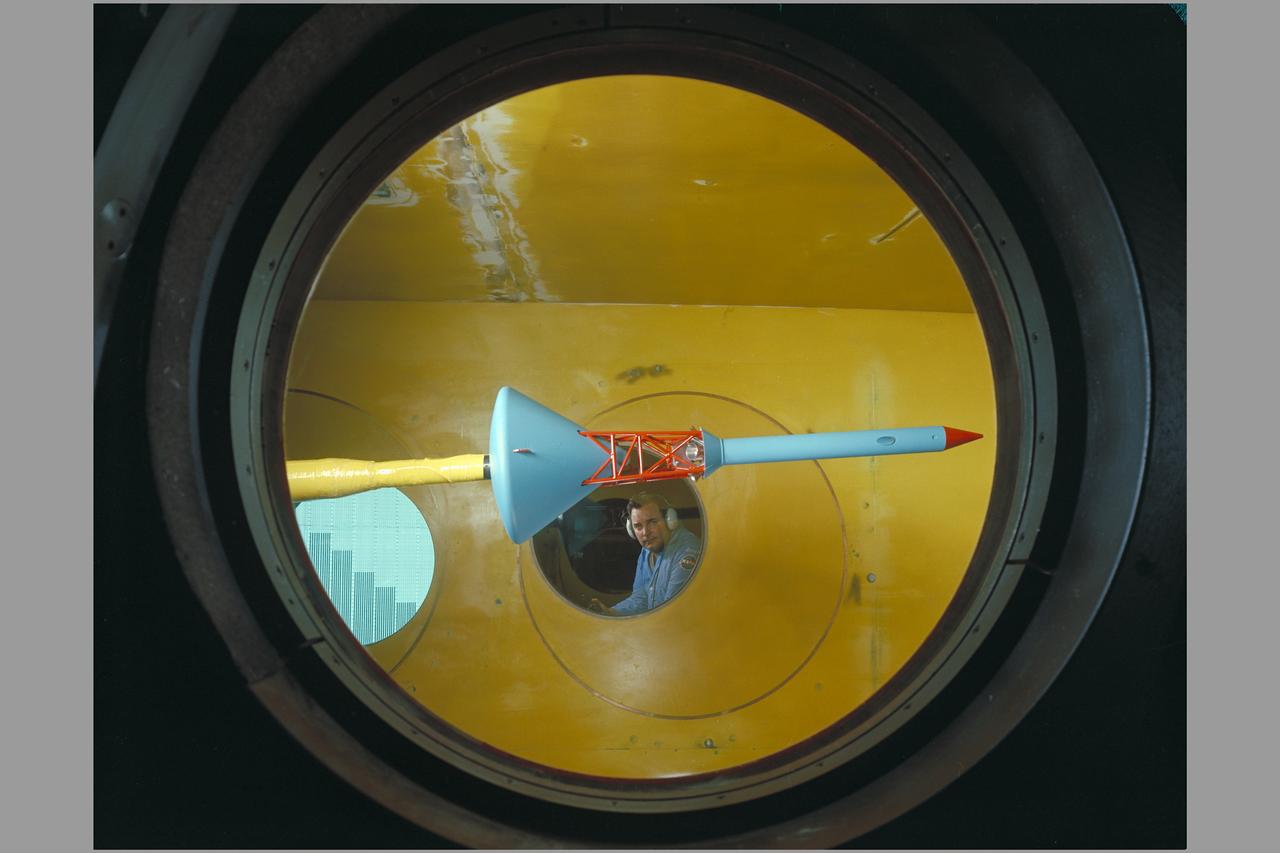
Side view of assembled command module, tower with flap & launch-escape rocket. Apollo FS-2 in 9 x 7 ft. SupersonicWind Tunnel.
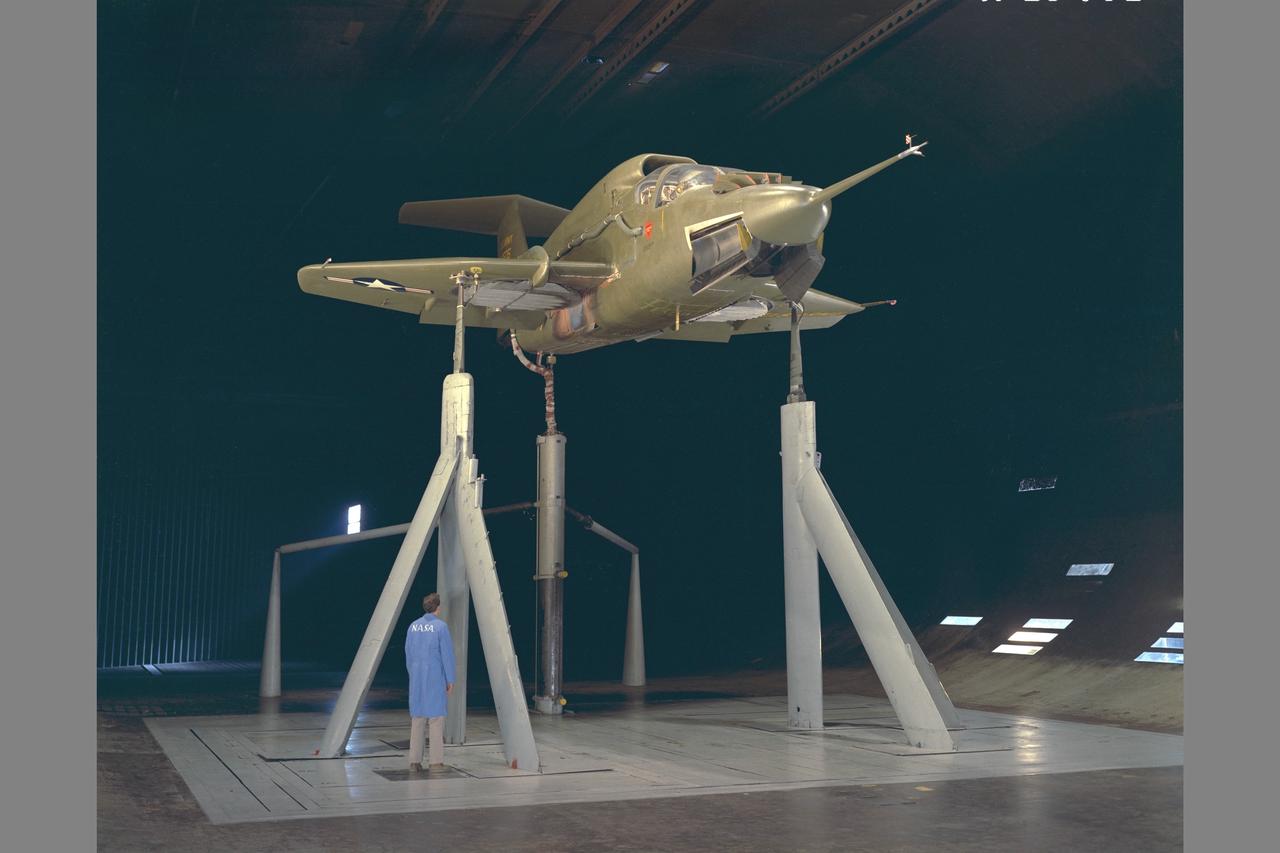
XV-5A airplane installed in 40x80ft Subsonic Wind Tunnel at NASA Ames Research Center with Tom Mills. The propulsive lift system was tested to determine power-on performance characteristics in preparation for flight tests. Used in Memoiors of an Aeronautical Engineer, Flight Tests at Ames Research Center 1940-1970 NASA-SP-2002-4526 (Seth B. Anderson)
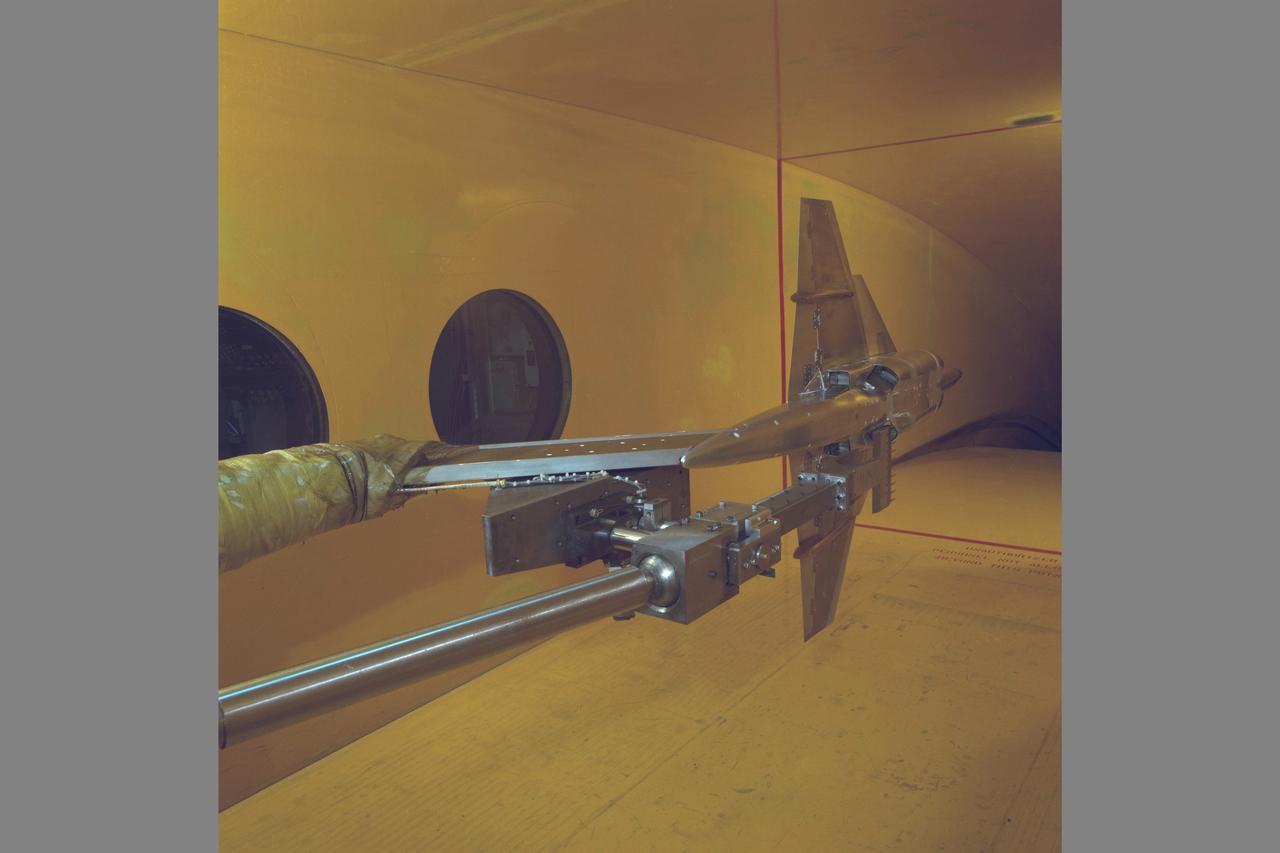
6 degree V/STOL Control Systems Research All Axes, Simulator (simulator pilot: Richard K Greif) at the Ames Research Center, Moffett Field, CA Note: Used in publication in Flight Research at Ames; 57 Years of Development and Validation of Aeronautical Technology NASA SP-1998-3300 fig. 113
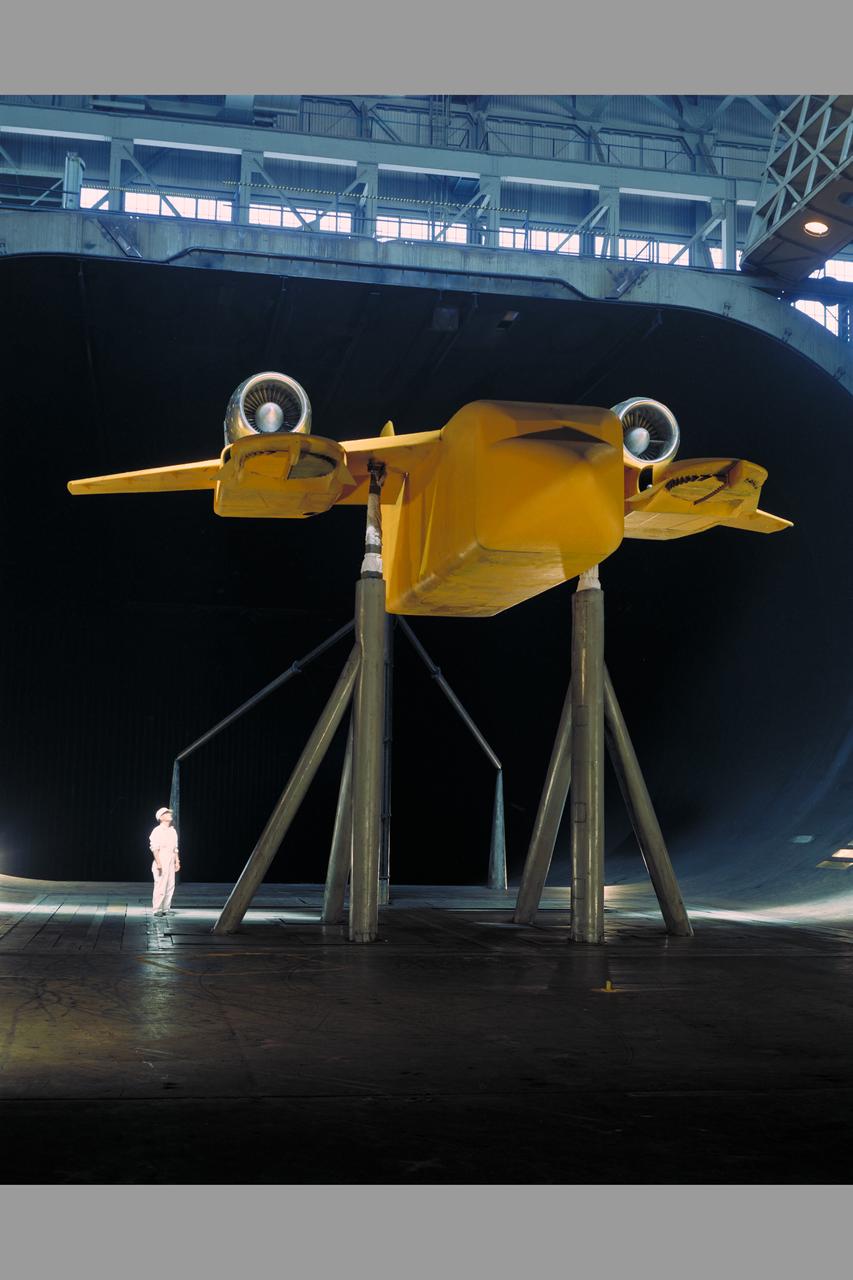
V/STOL Lift -cruise fan transport with Stan Dickenson in 40 x 80 ft. W. T.
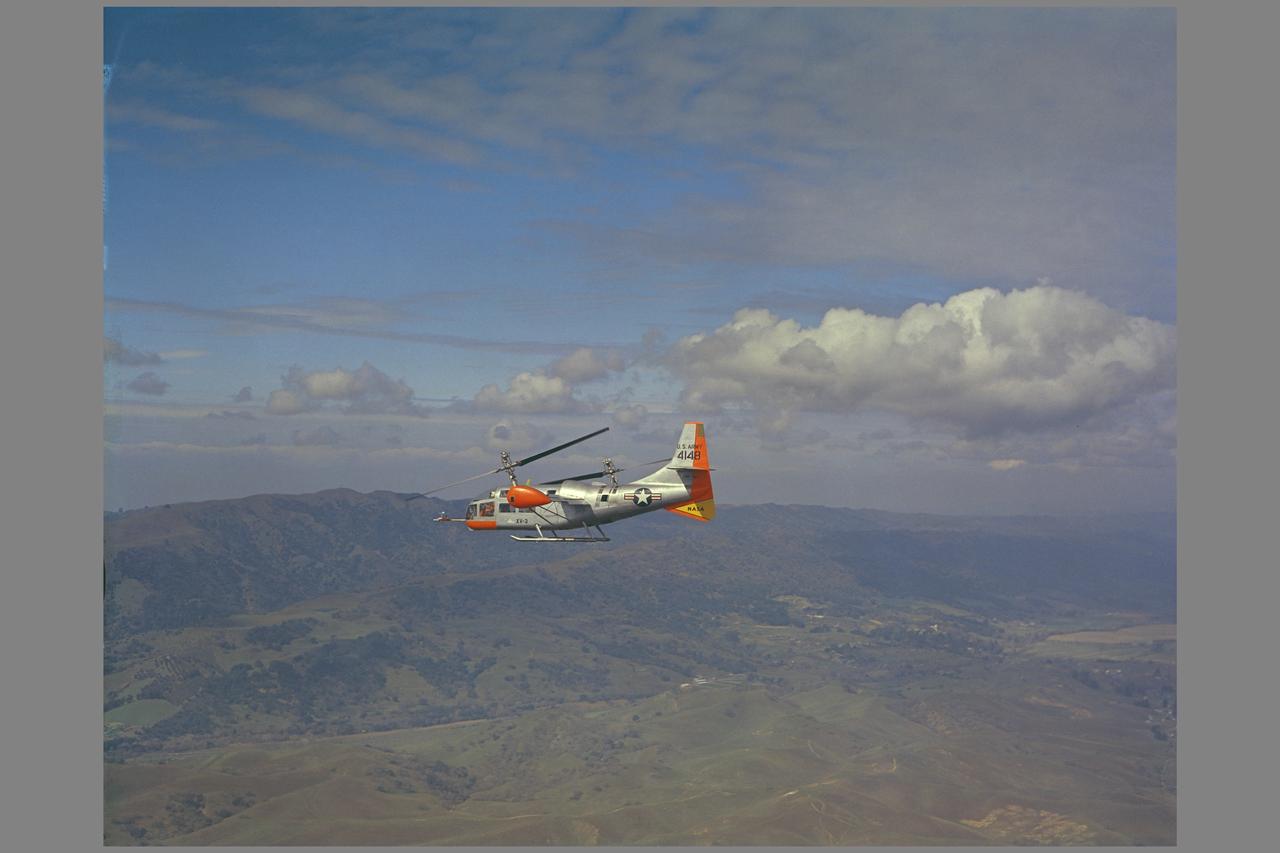
BELL XV-3 (AF54-148) Convertiplane (experimental tilt rotor) IN FLIGHT Note: Used in publication in Flight Research at Ames; 57 Years of Development and Validation of Aeronautical Technology NASA SP-1998-3300 fig. 121
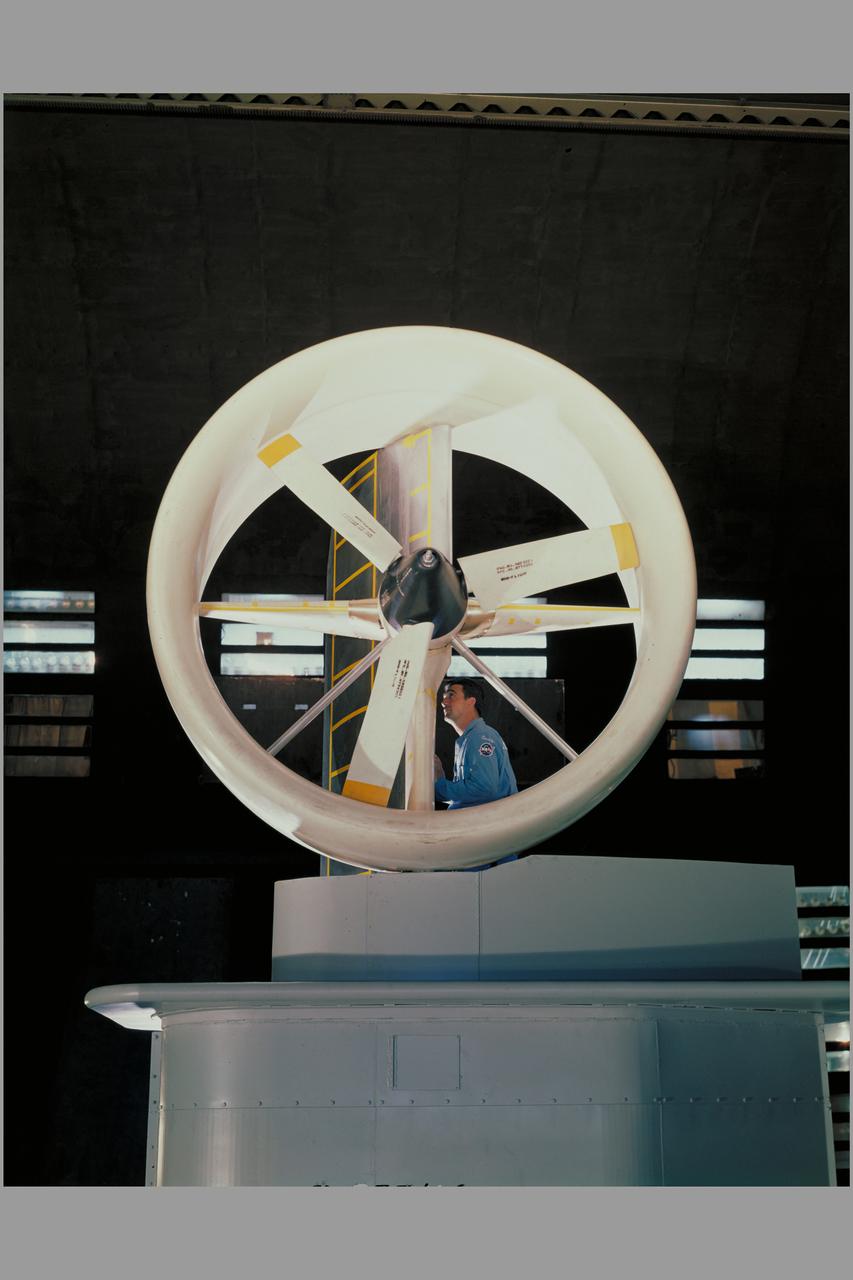
3/4 front view offull scale X-22A ducted fan model. Chuck Greco
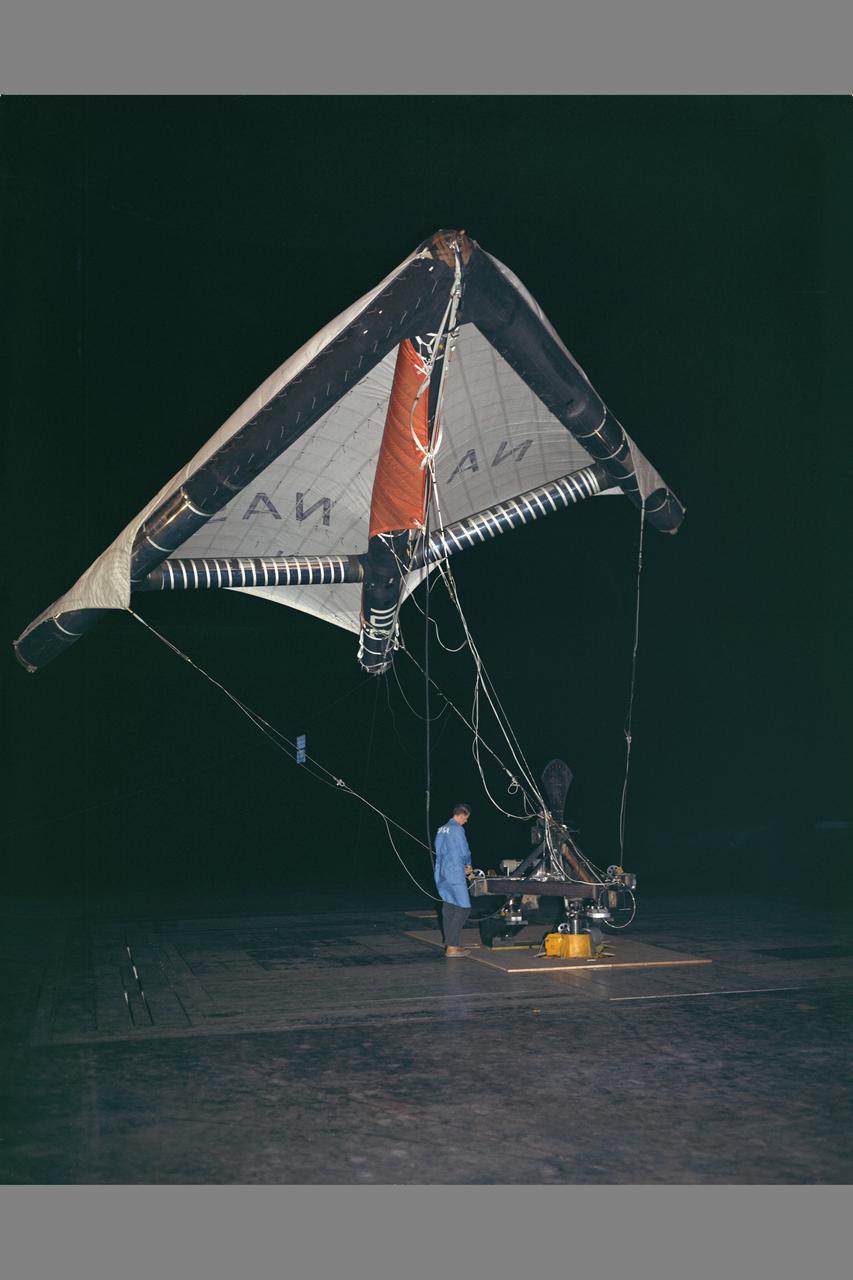
Paraglider Test in 40x80ft W.T.
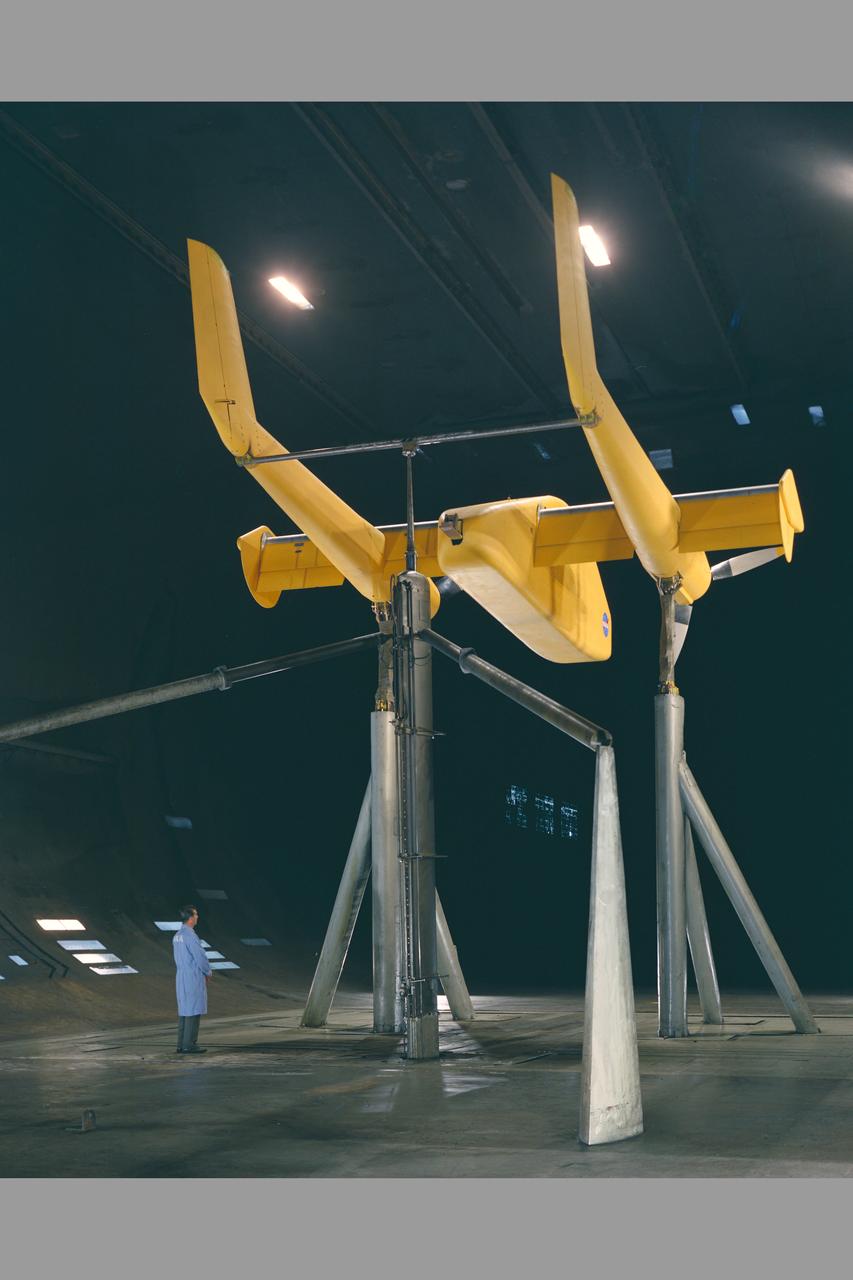
2-Prop. R.C.F. (Rotating Cylinder Flap) in 40 x 80ft. wind tunnel. - rear view with Chuck Greco.
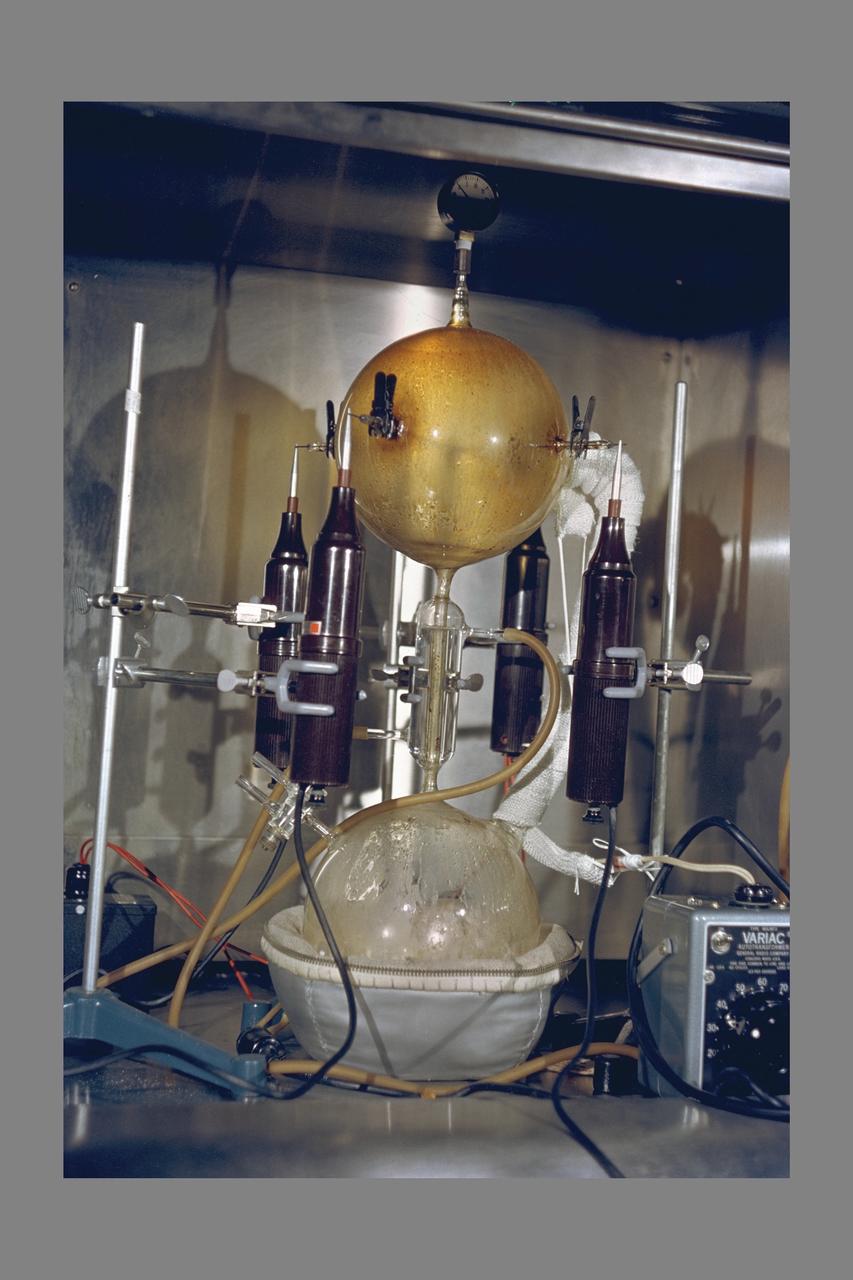
Ames Photographer: Zebow Electric Discharge Apparatus used on the studies of the origin of life
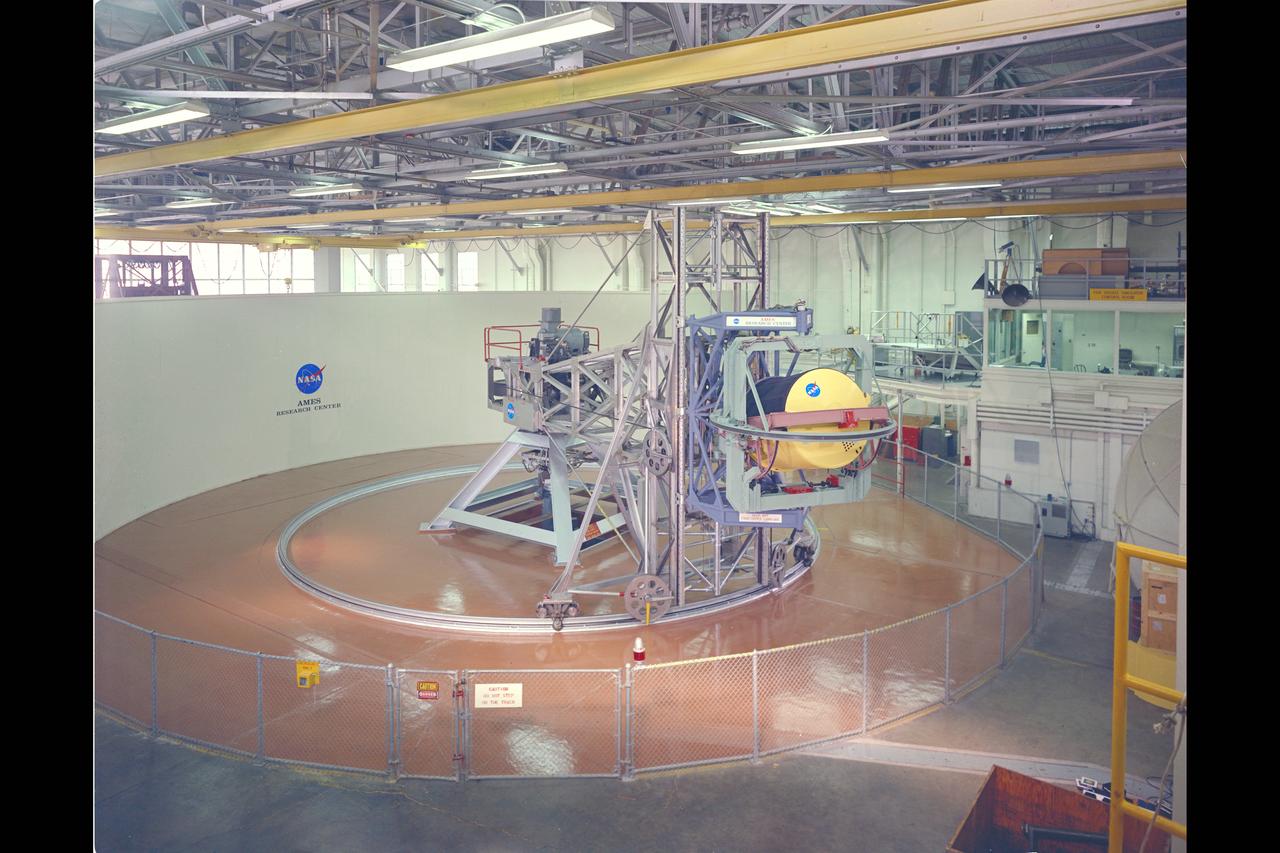
5 Degree of Freedom - Manned Flight Simulator
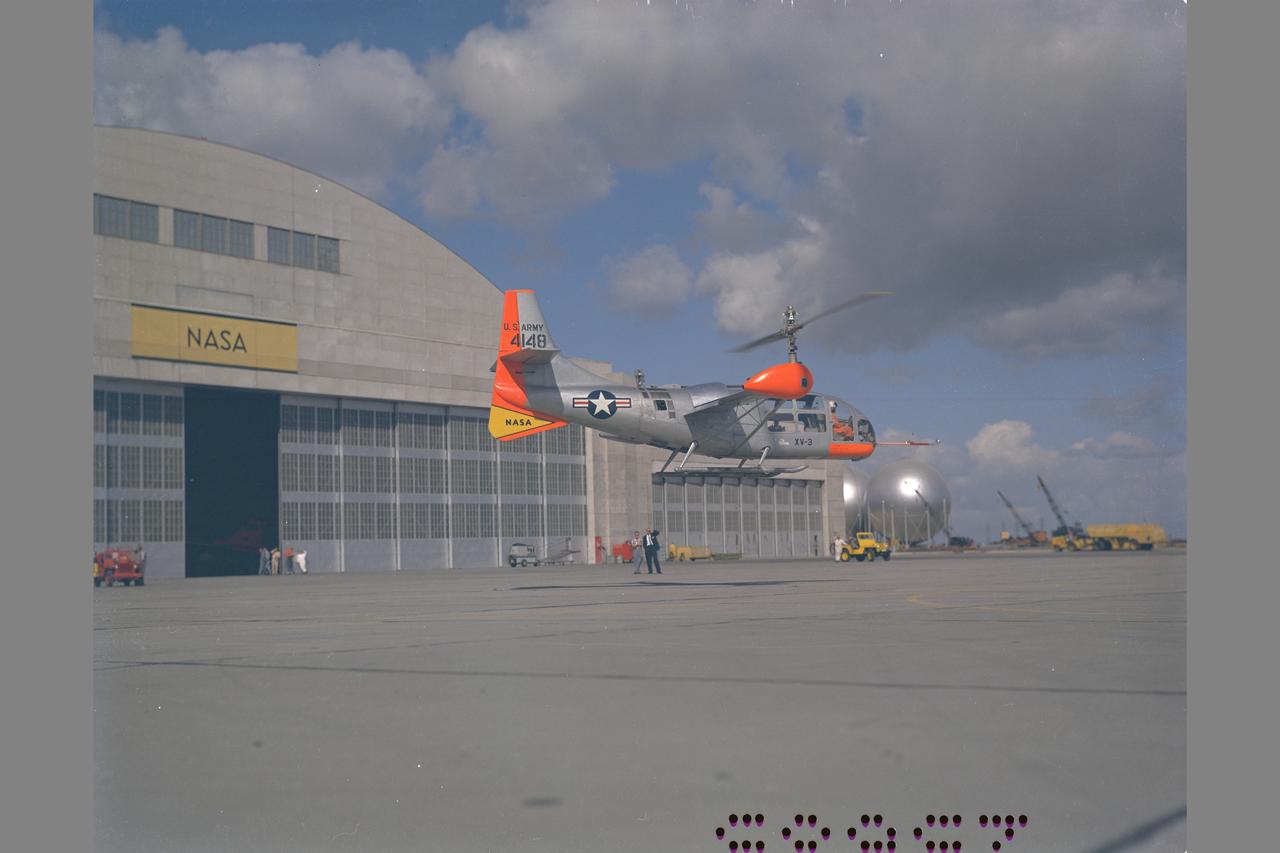
XV-3 HOVERING ON RAMP. Flight Test of Bell XV-3 Convertiplane. Bell VTOL tilt-rotor aircraft hovering in front of building N-211 at Moffett Field. The XV-3 design combined a helicopter rotor and a wing. A 450 horsepower Pratt & Whitney piston engine drove the two rotors. The XV-3, first flown in 1955 , was the first tilt-rotor to achieve 100% tilting of rotors. The vehicle was underpowered, however, and could not hover out of ground effect. Note the large ventral fin, which was added to imrpove directional stability in cruse (Oct 1962)
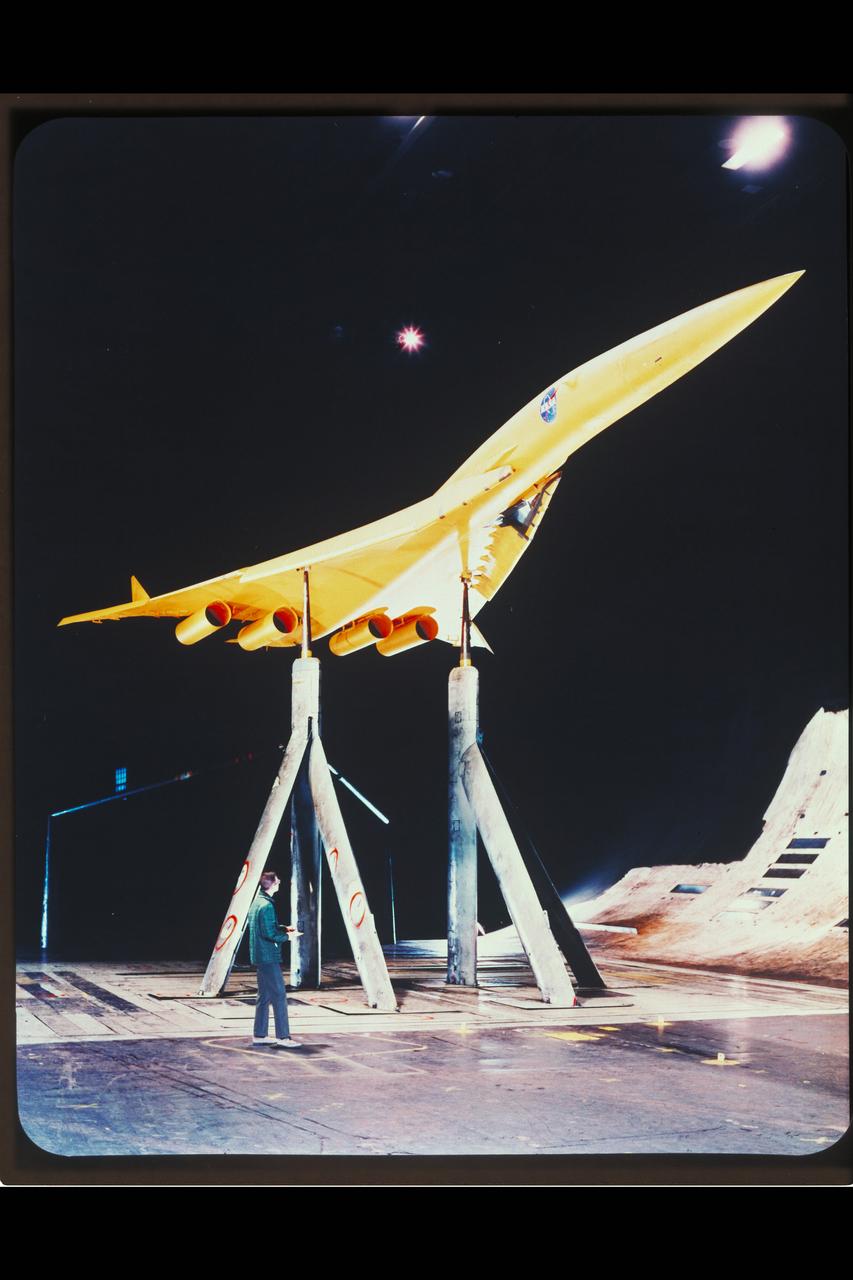
SCAT (Supersonic Commercial Air Transport) 15F, Test-332 in 40x80ft. Wind Tunnel
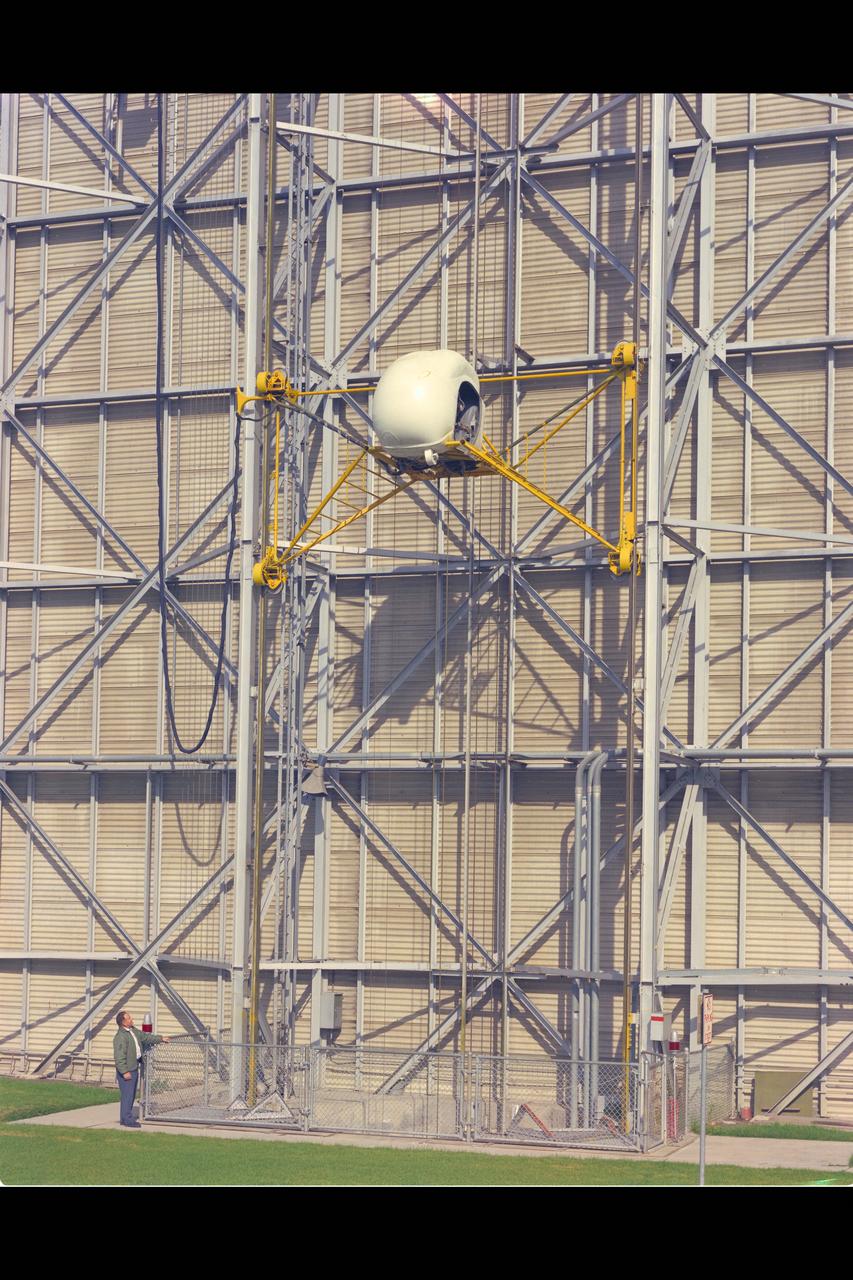
Height-Control Test Apparatus (HICONTA) Simulator mounted to the exterior of the 40x80ft W.T. Building N-221B and provided extensive vertical motion simulating airplanes, helicopter and V/STOL aircraft
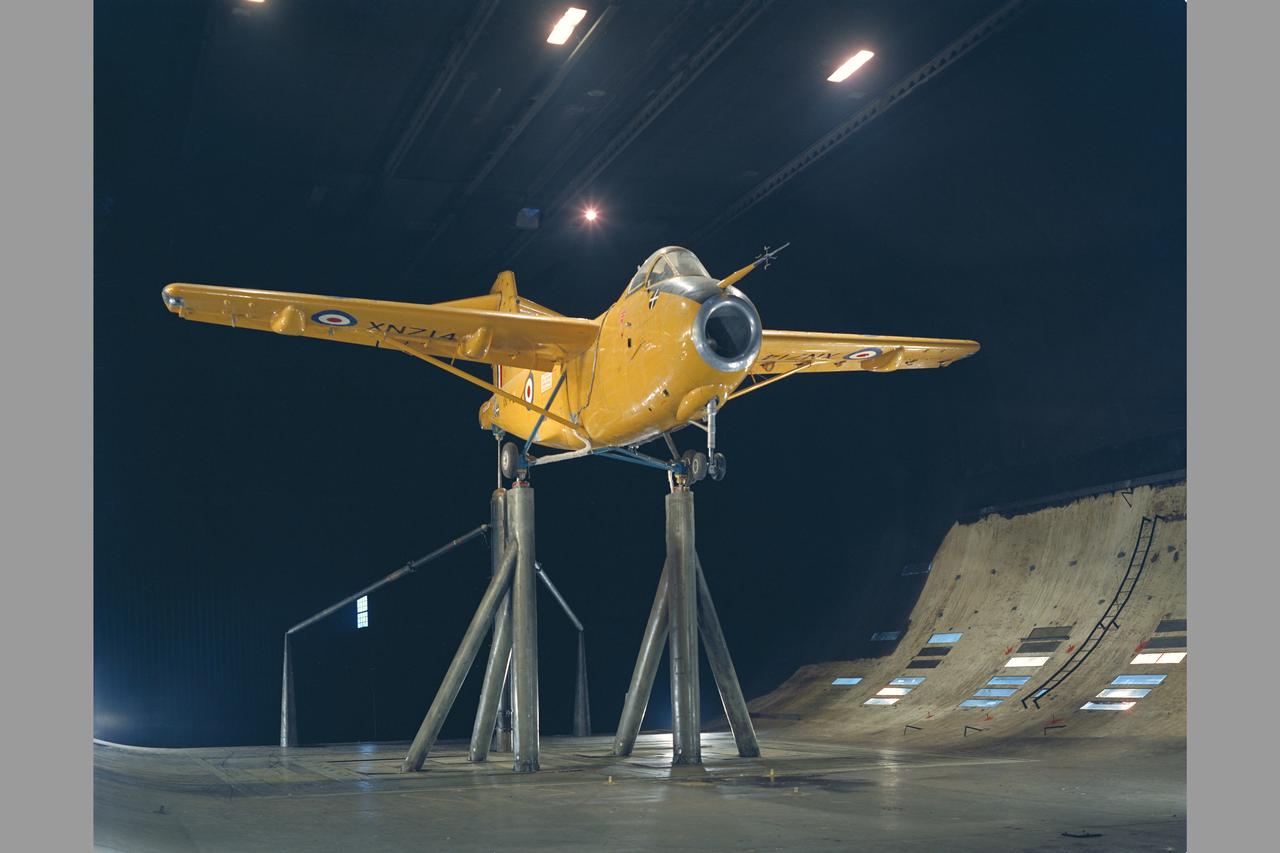
H-126 (Hunting) Jet Flap Aircraft: 40 x 80 ft. Wind Tunnel Test Program, B. Reuben.
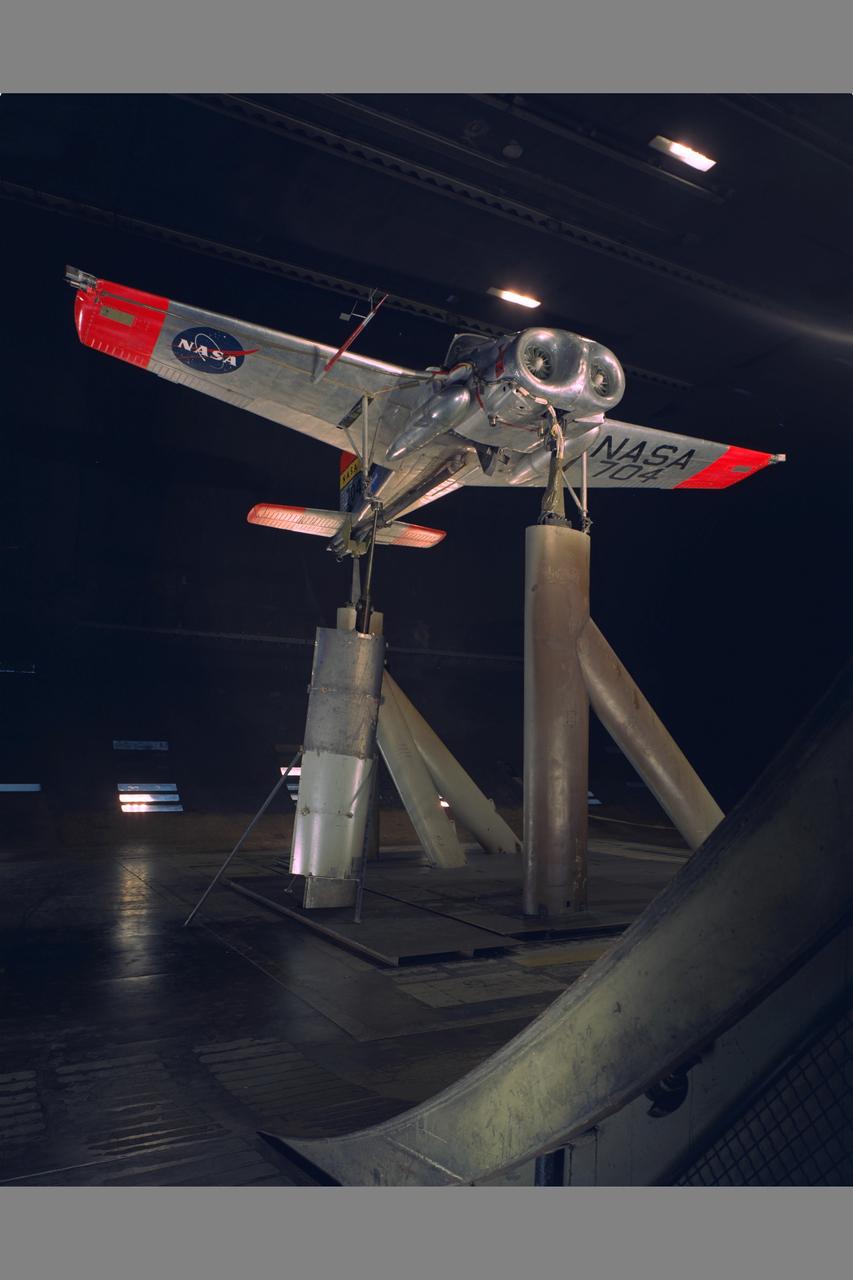
X-14 NASA 704 Full Scale Airplane tests in 40x80ft. Wind Tunnel (NORMAL MOUNTING) with Sy Sewell, NASA (left) and Ed Varette, Army (right)
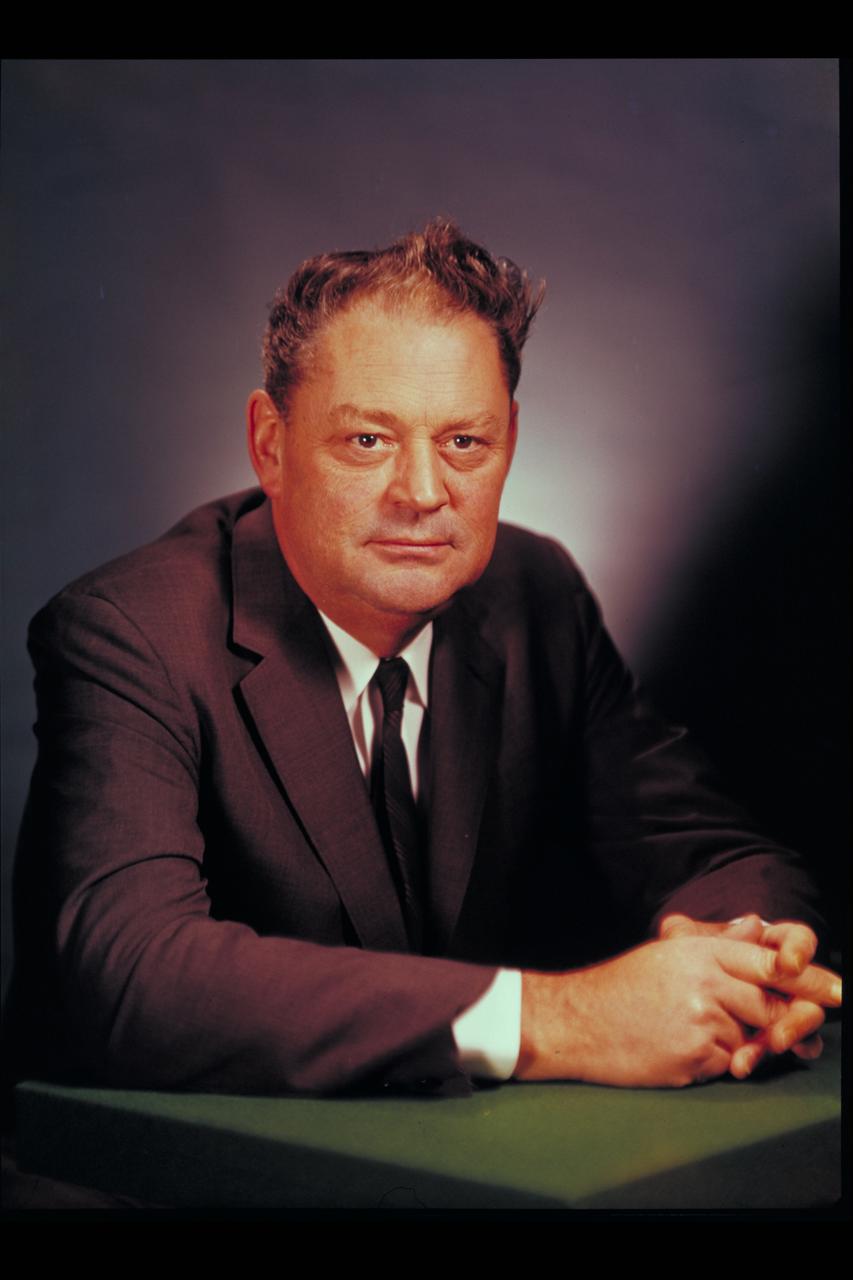
Portrait: Ames Director H Julian Allen (1965 - 1969)

XV-5A airplane installed in 40x80ft Subsonic Wind Tunnel at NASA Ames Research Center with Tom Mills. The propulsive lift system was tested to determine power-on performance characteristics in preparation for flight tests.
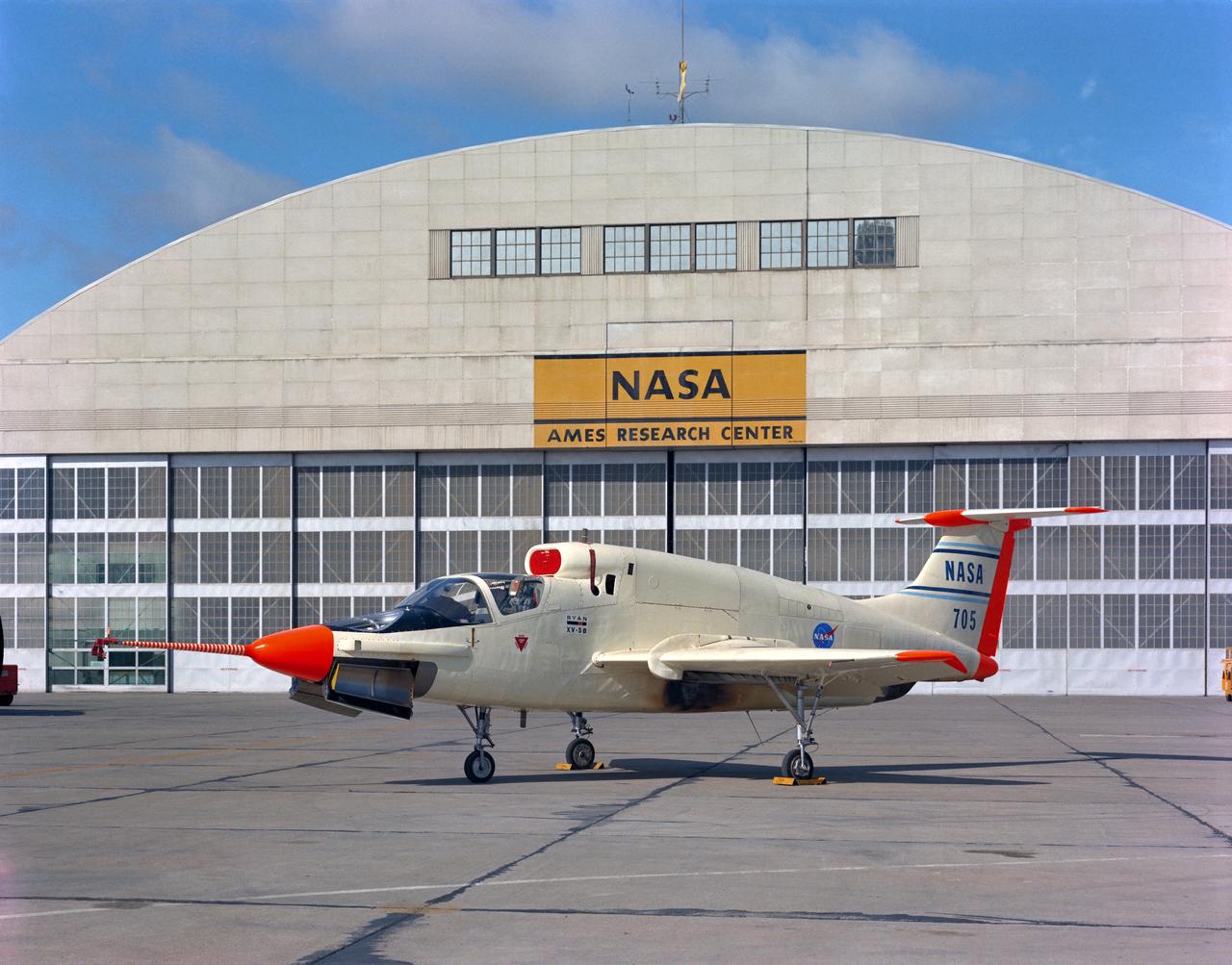
XV-5B (NASA-705) on Flight Line at Ames Research Center with hangar in the background.
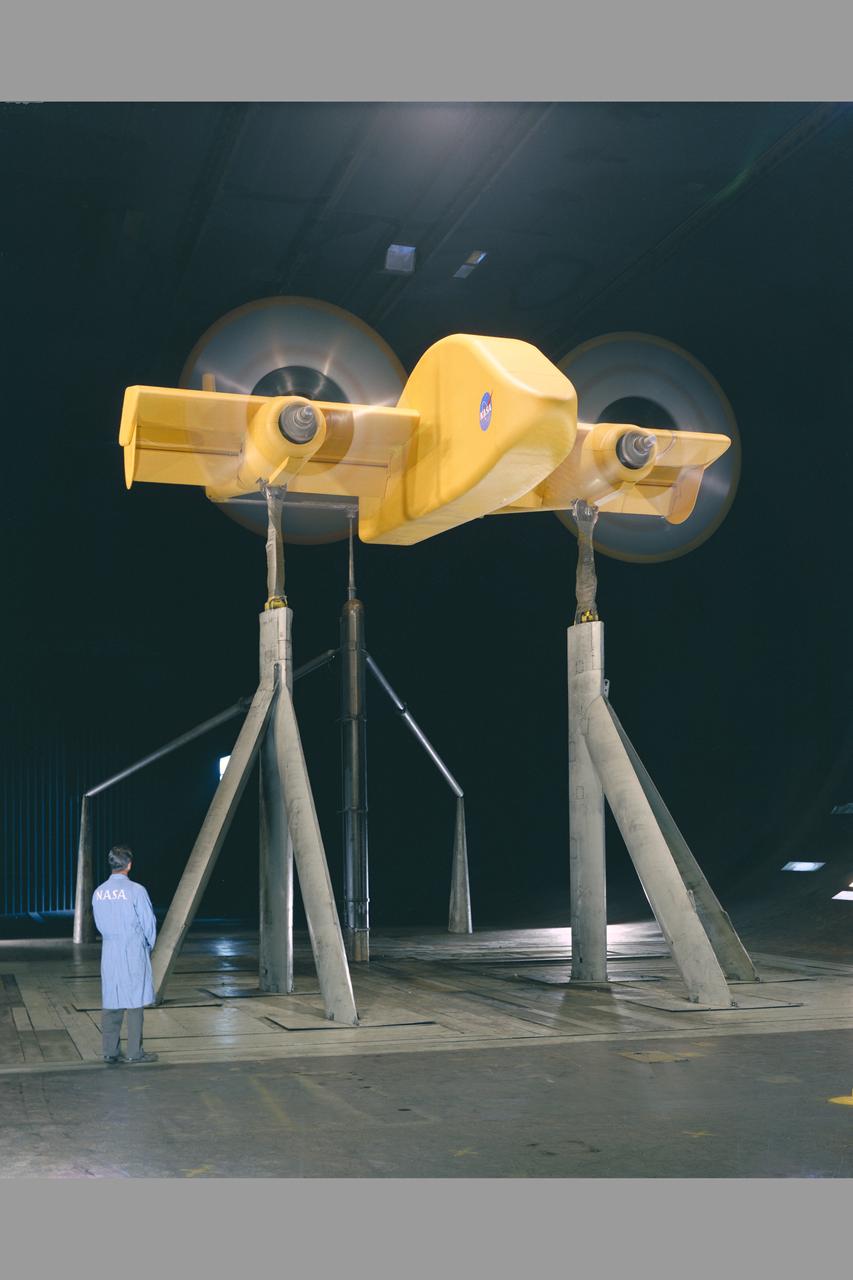
2-Prop. R.C.F. (Rotating Cylinder Flap) in 40 x 80ft. wind tunnel. 3/4 front view propeller spinning with Chuck Greco.
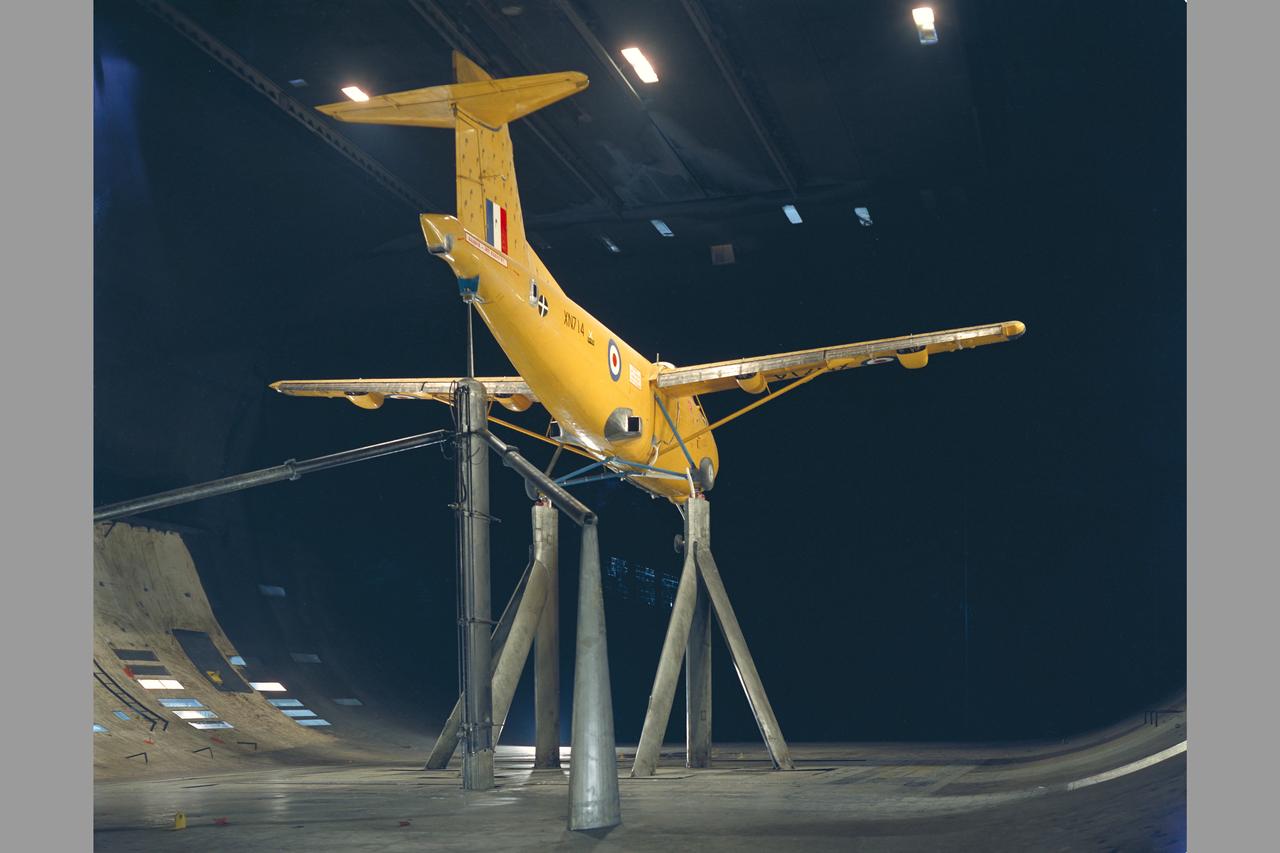
H-126 (Hunting) Jet Flap Aircraft: 40 x 80 ft. Wind Tunnel Test Program, B. Reuben.
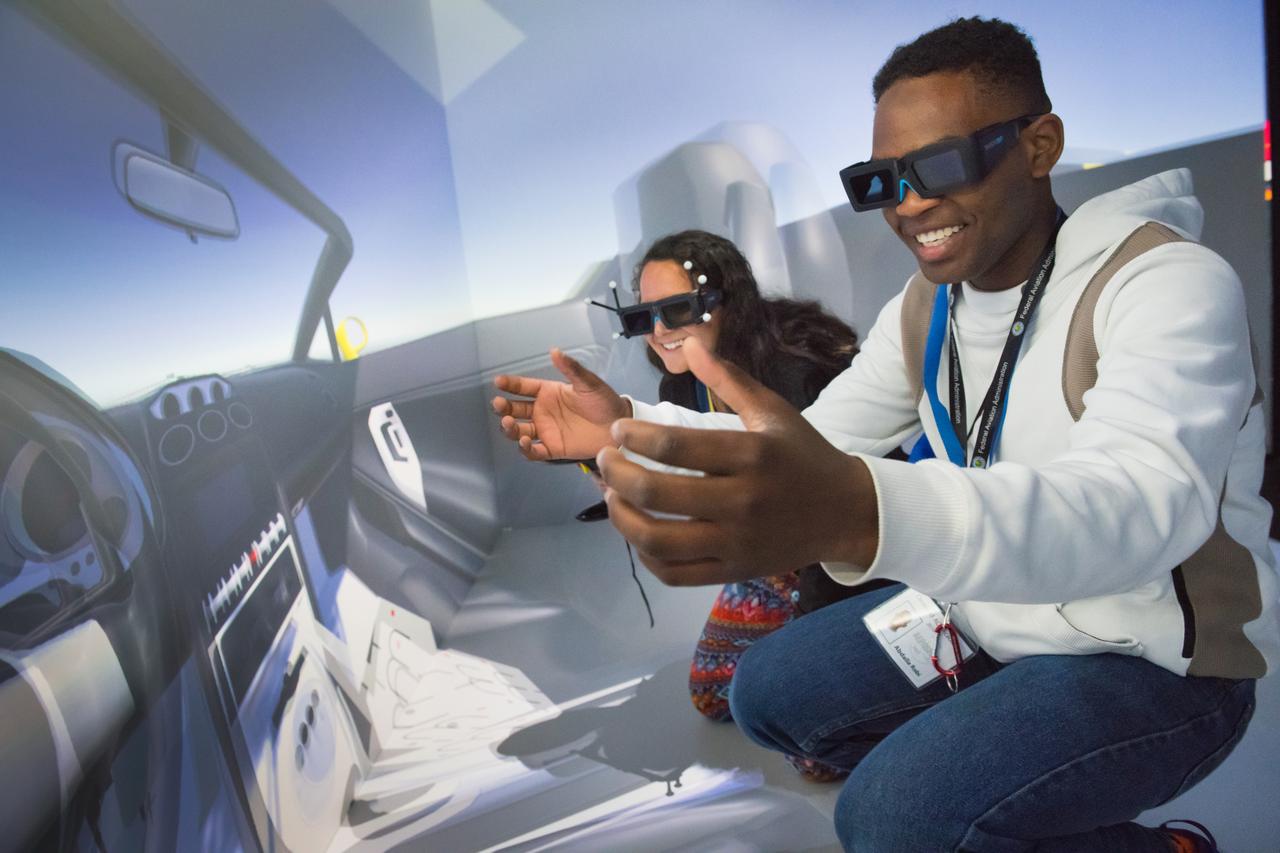
Aerospace Career Education, Organization of Black Aerospace Professionals, OBAP Cleveland ACE Academy Day
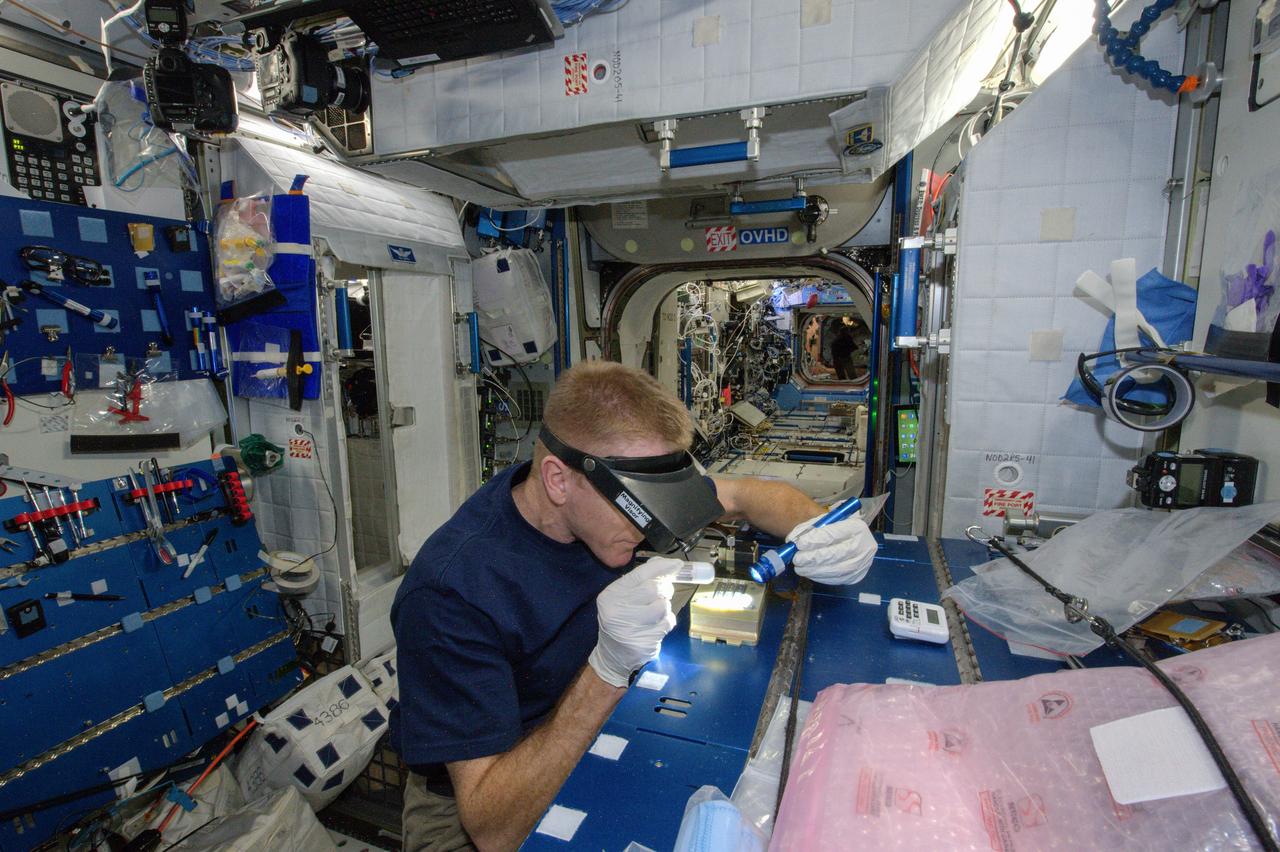
ISS046e005678 (01/04/2016) ---- ESA (European Space Agency) astronaut Tim Peake works on the Advanced Colloids Experiment 2 (ACE H2) Hardware Configuration and Mix Part 1. Peake sent out a Twitter message with this image: Stirring samples using a bar magnet to turn a tiny metal rod - preparing for today's @ISS_Research. #Principia".
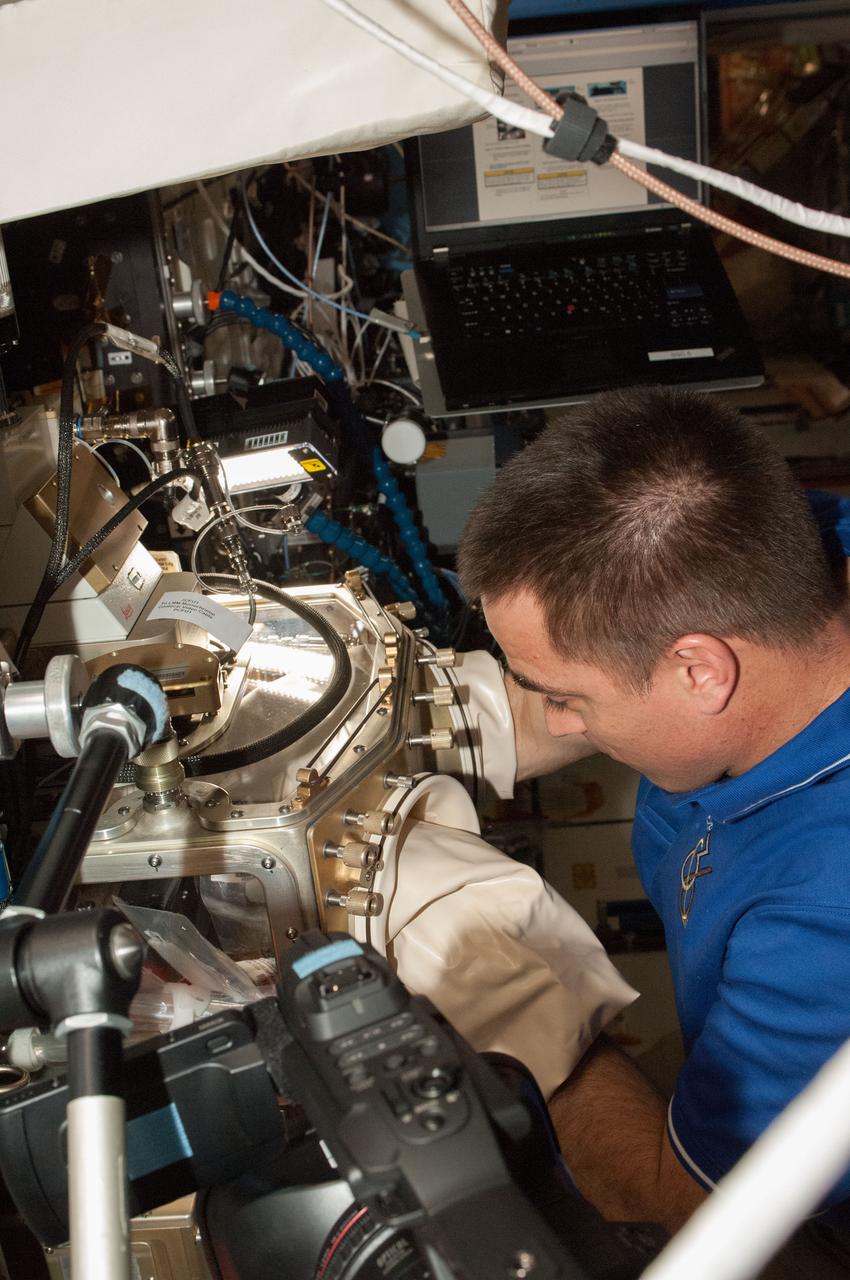
ISS036-E-023770 (22 July 2013) --- NASA astronaut Chris Cassidy, Expedition 36 flight engineer, conducts science work with the ongoing experiment Advanced Colloids Experiment-1 (ACE-1) inside the Fluids Integrated Rack. The experiment observes colloids, microscopic particles evenly dispersed throughout materials, with the potential for manufacturing improved materials and products on Earth. Cassidy is working at the Light Microscopy Module (LMM) in the Destiny laboratory of the International Space Station.
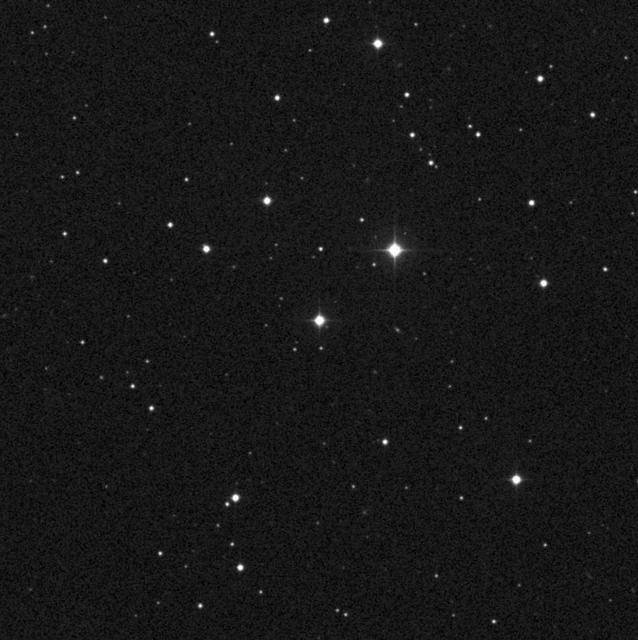
The image taken by the Oschin Schmidt Telescope, shows the star AC +79 3888, also known as Gliese 445. NASA Voyager 1 spacecraft, which is on a trajectory out of our solar system, is headed toward an encounter with AC +79 3888 circled in red.
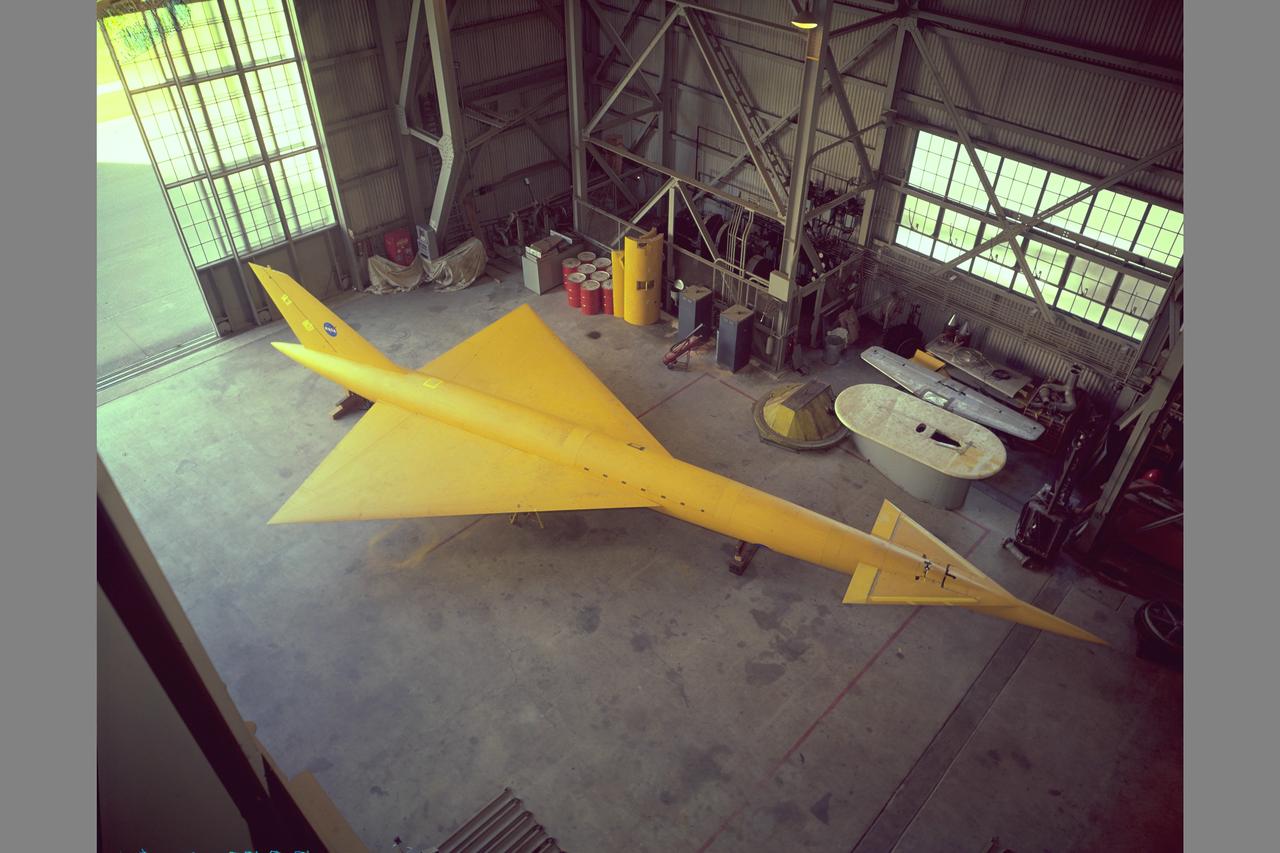
Supersonic Transport being installed in 40x80ft w.t.
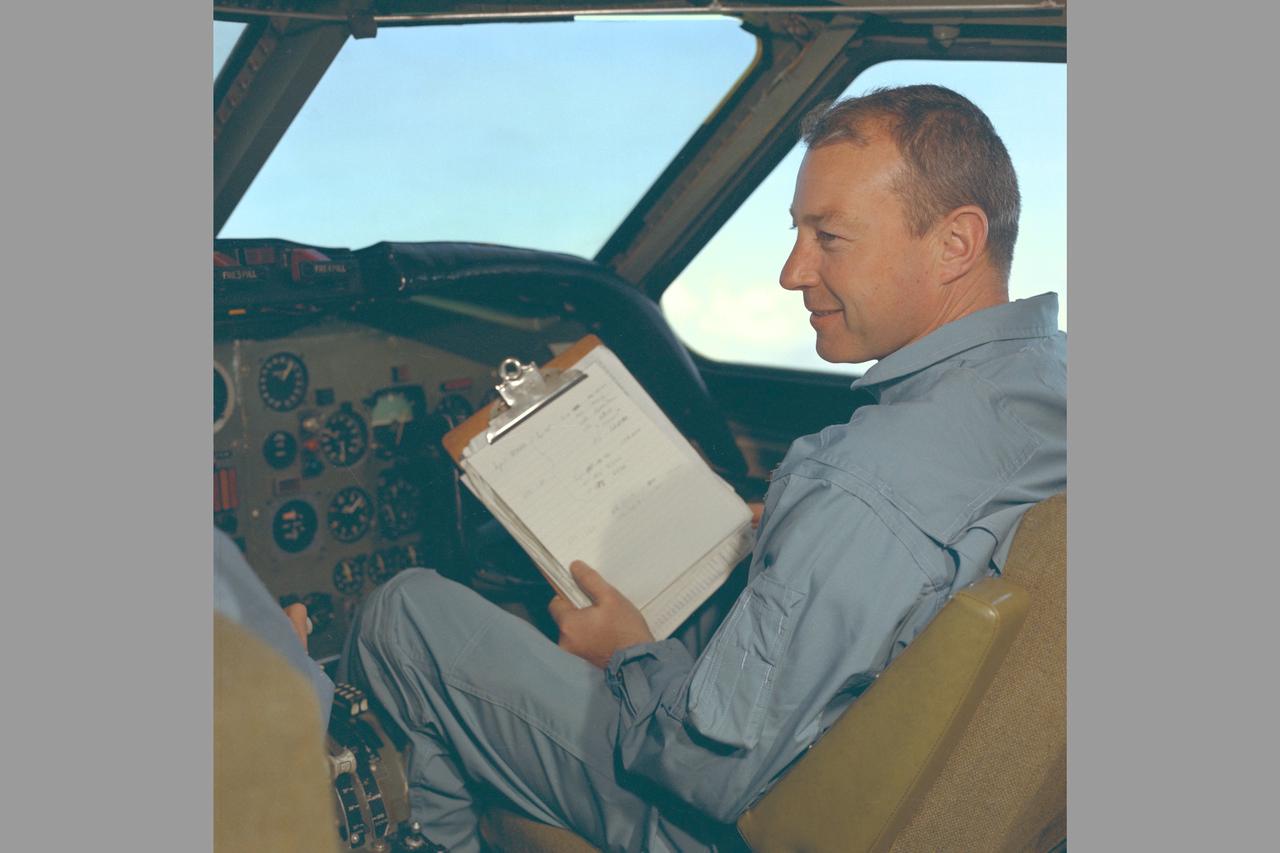
Pilot Bob Innis in cockpit of CV-990
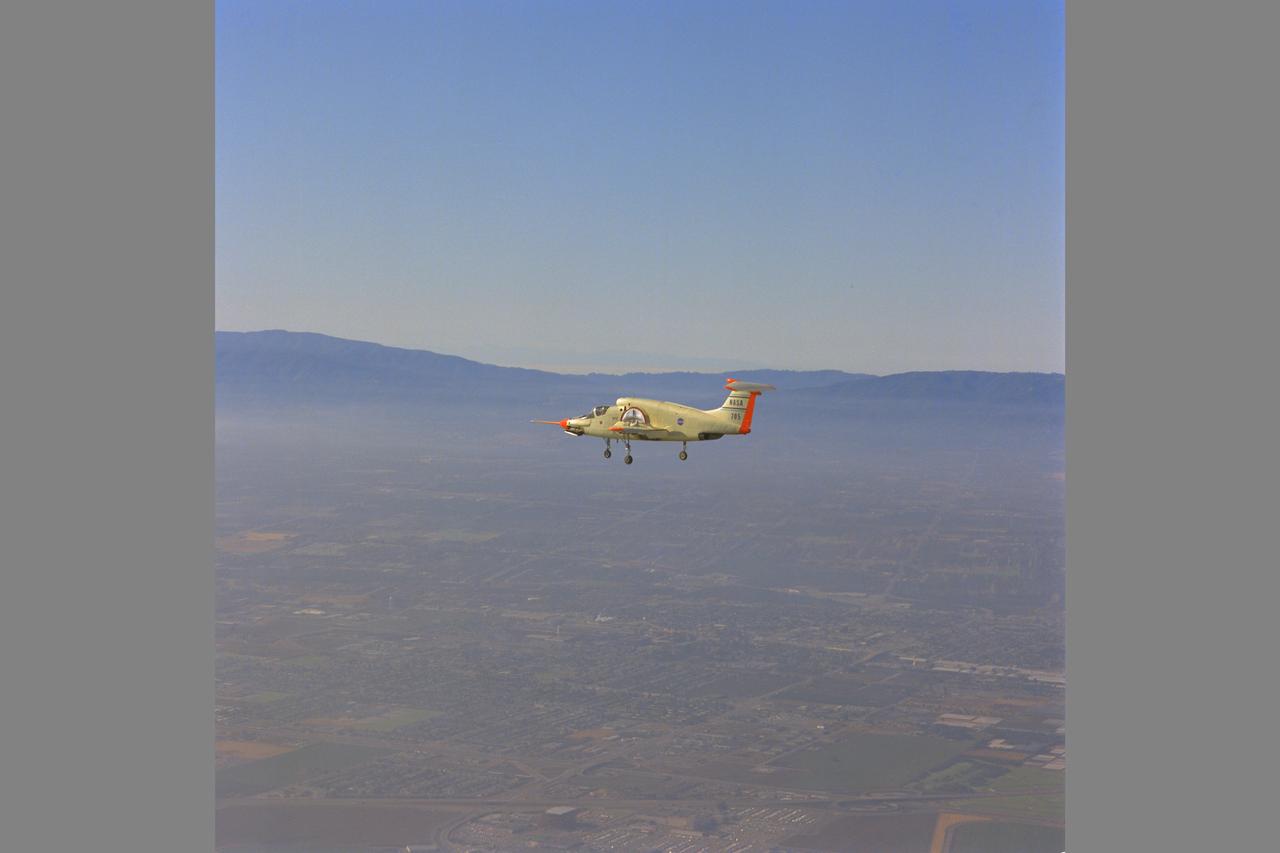
Ryan XV-5B V/STOL aircraft
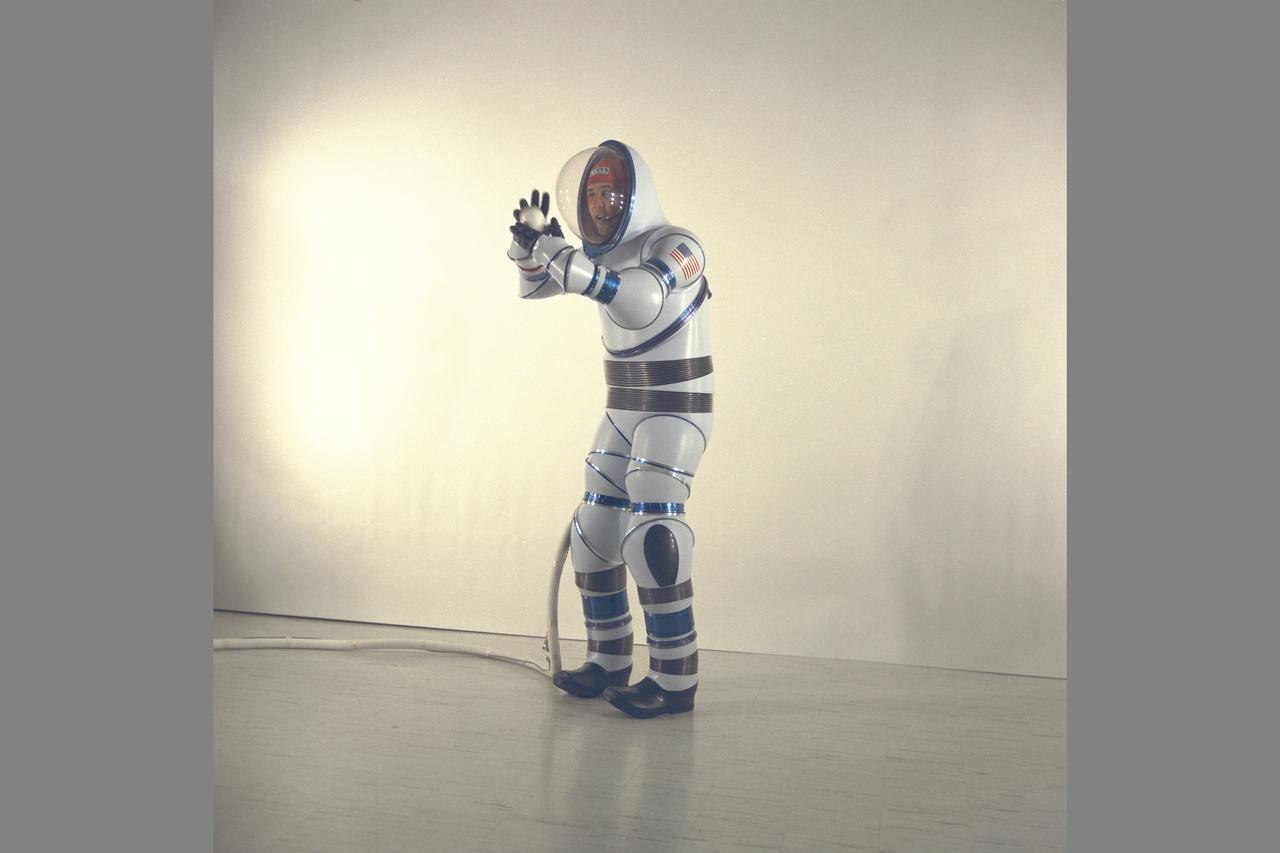
AX-2 Hard Space Suit with Vic Vykukal getting ready to pitch a baseball. Vykukal is the principal investigator of the AX space suit series.
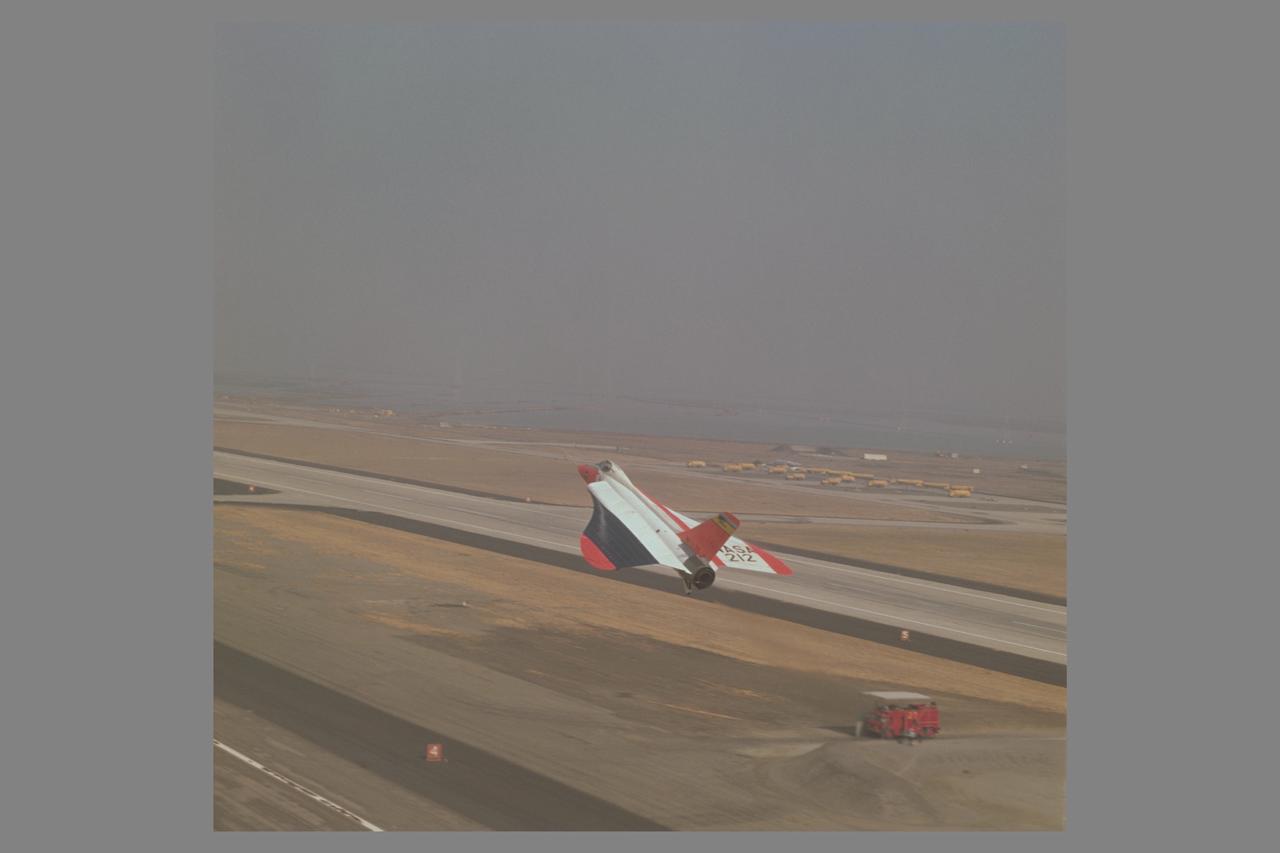
ON LANDING. OGEE Wing Plan Form on F5D-1 Airplane FLight Tests. 'Flow Visualization Photographs'.
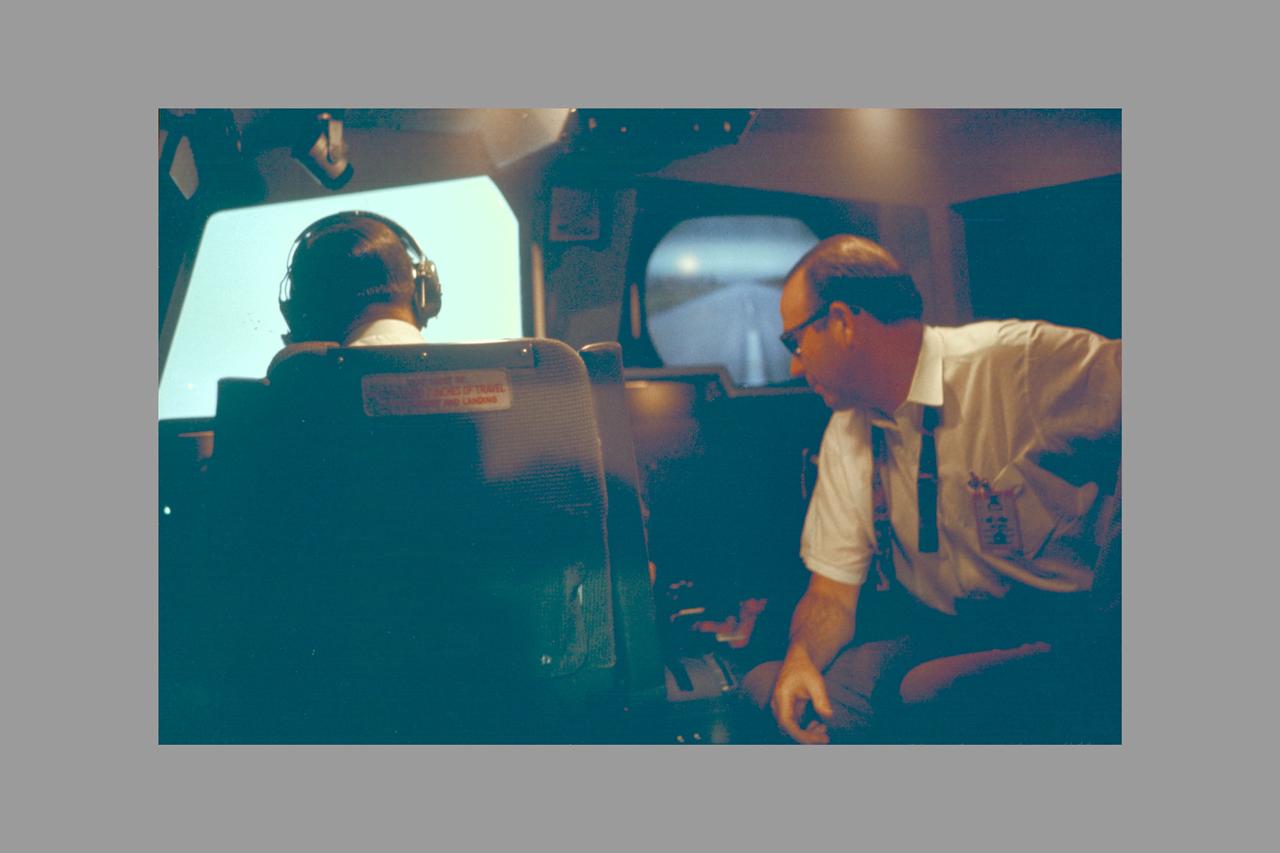
Flight Simulator for Advanced Aircraft (FSAA) S.10 (Inside: Cab Pilot and Monitor - R S. Bray and G.R. Holden)
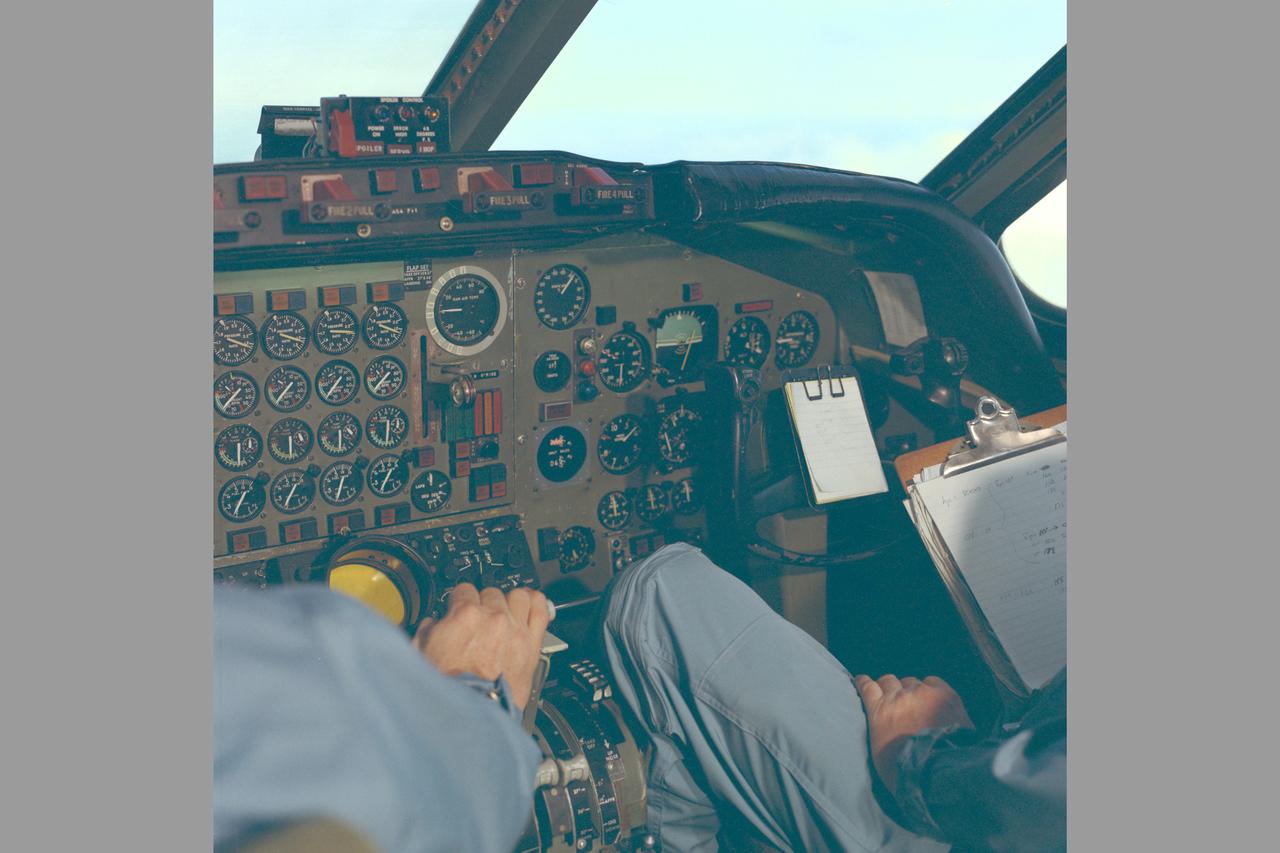
Pilots in cockpit of CV-990
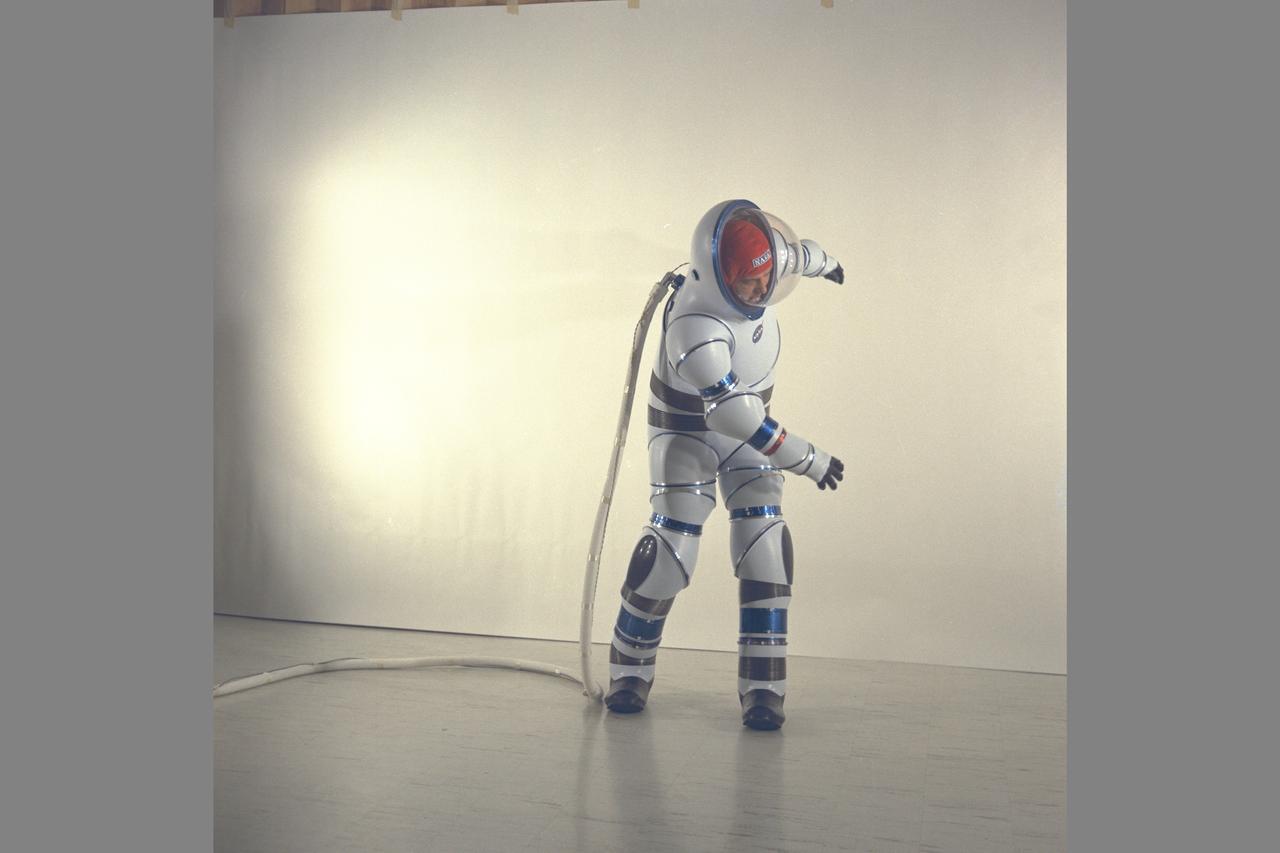
AX-2 Hard Space Suit with Vic Vykukal. Vykukal is the principal investigator of the AX space suit series.

DURING APPROACH. OGEE Wing Planform on modified F5D-1 SkylancerAirplane Flight Tests. 'Flow Visualization Photographs'. In landing approach trials at Moffett Field, vapor trails are generated by low pressure in votex flow near wing leading edge on upper wing surface. Studies were undertaken in efforts to determine if there were adverse effects of vortex flow on the dynamic stability of the aircraft.
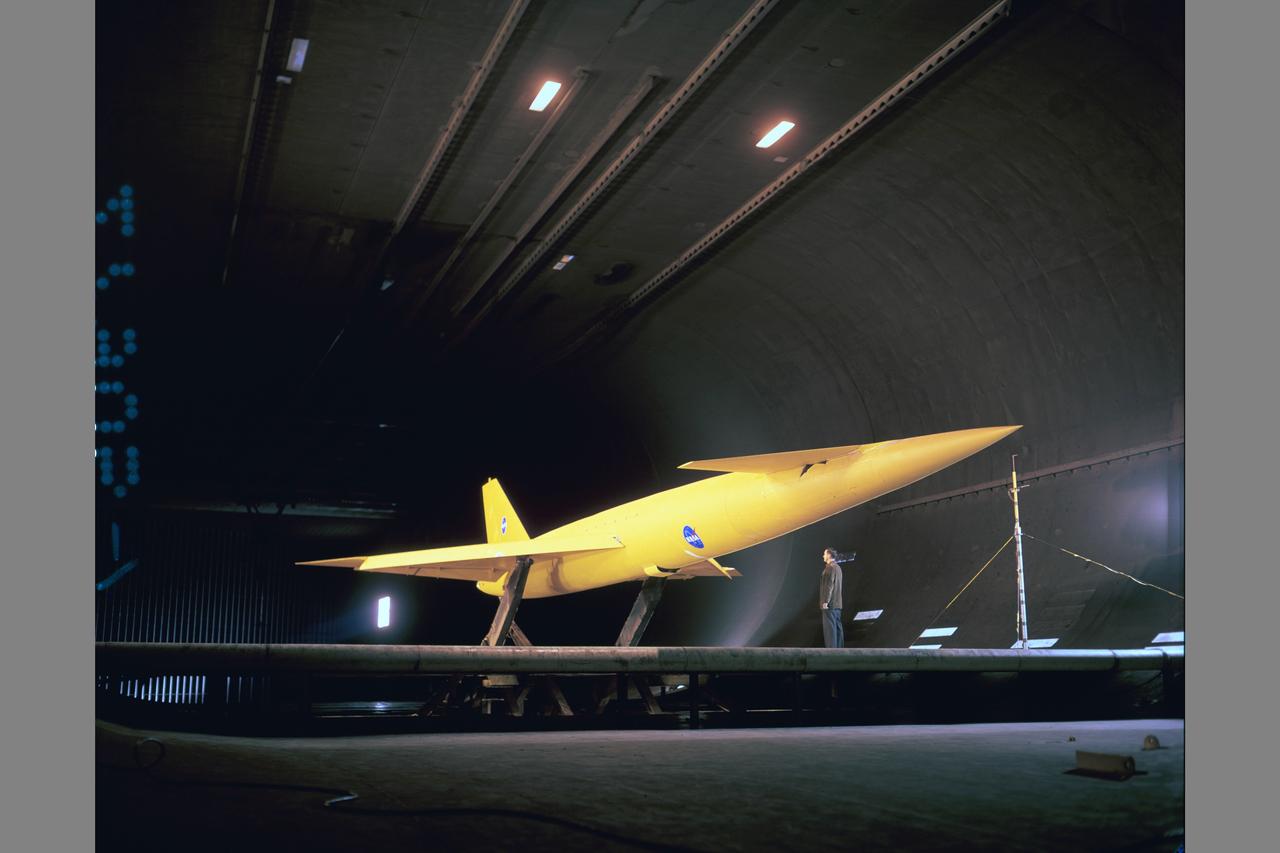
Supersonic Transport installed in 40x80ft w.t.
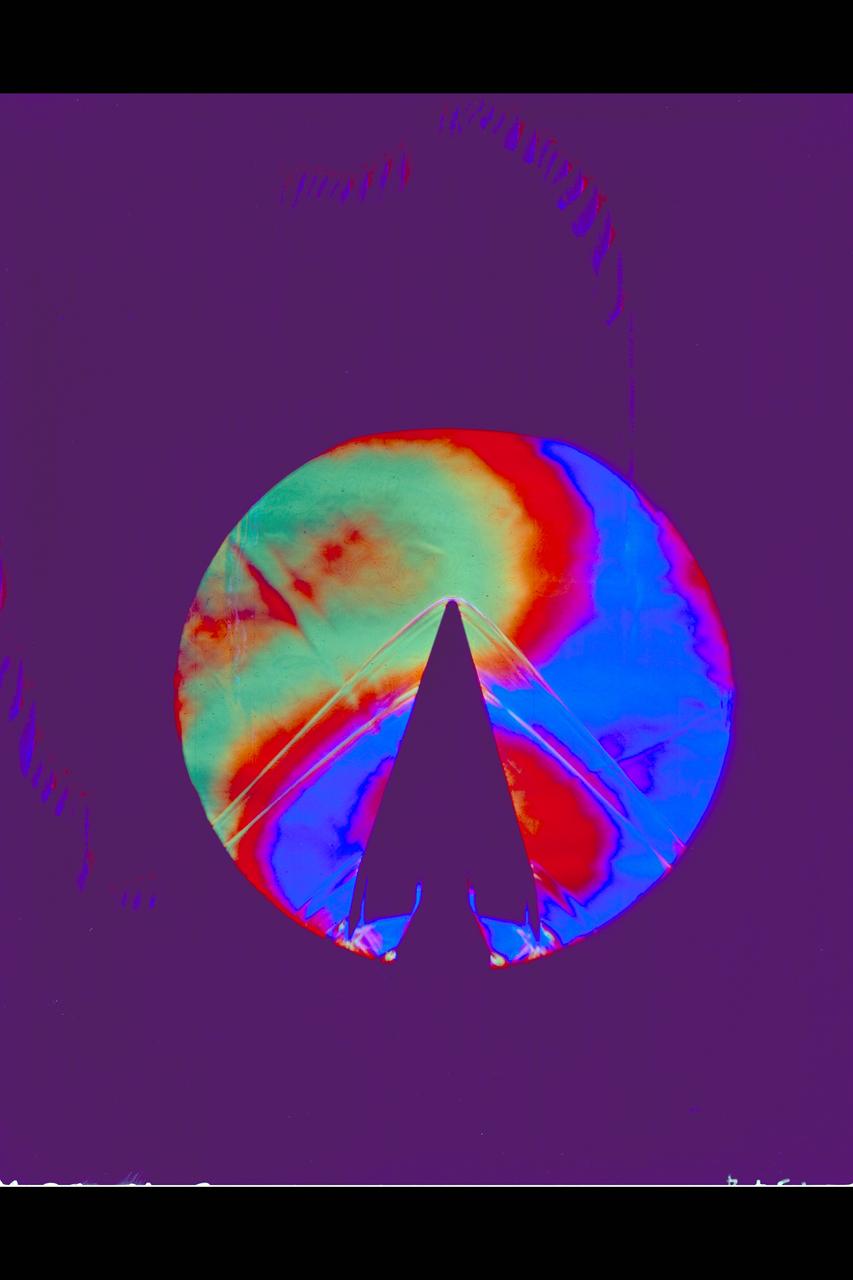
Schlieren of X-20 Dyna Soar mounted on 624-A Titan III Booster
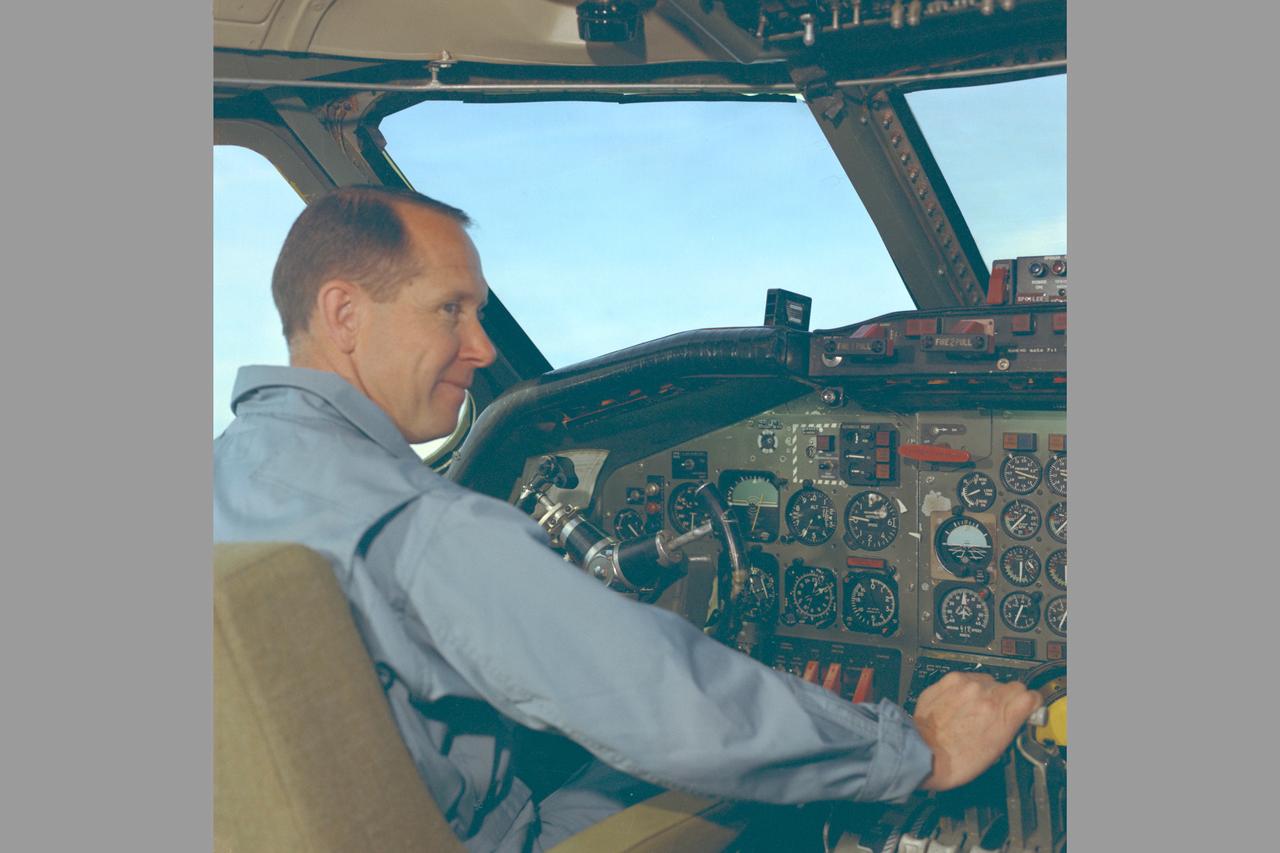
Pilot Fred Drinkwater in cockpit of CV-990
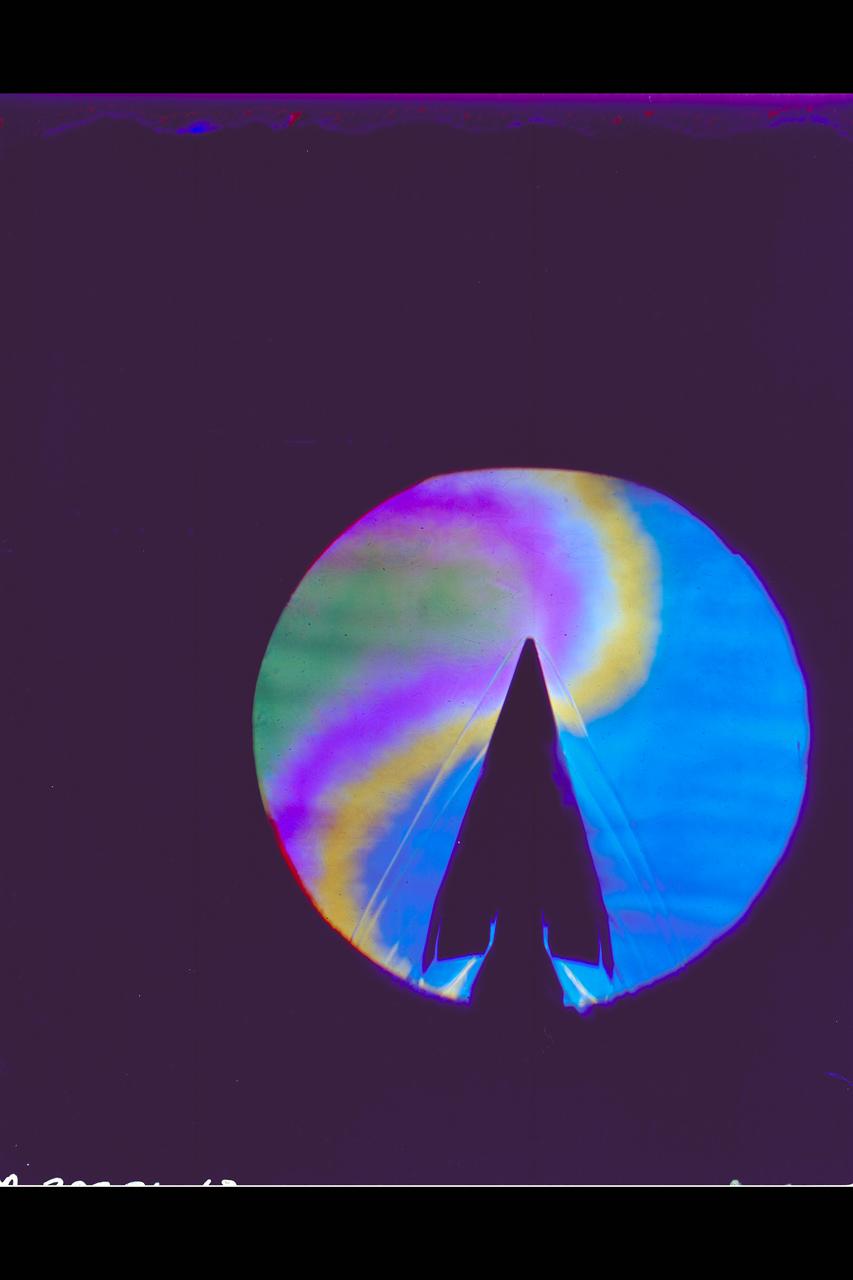
X-20 Dyna Soar on 624-A Titan III Booster: Schlieren
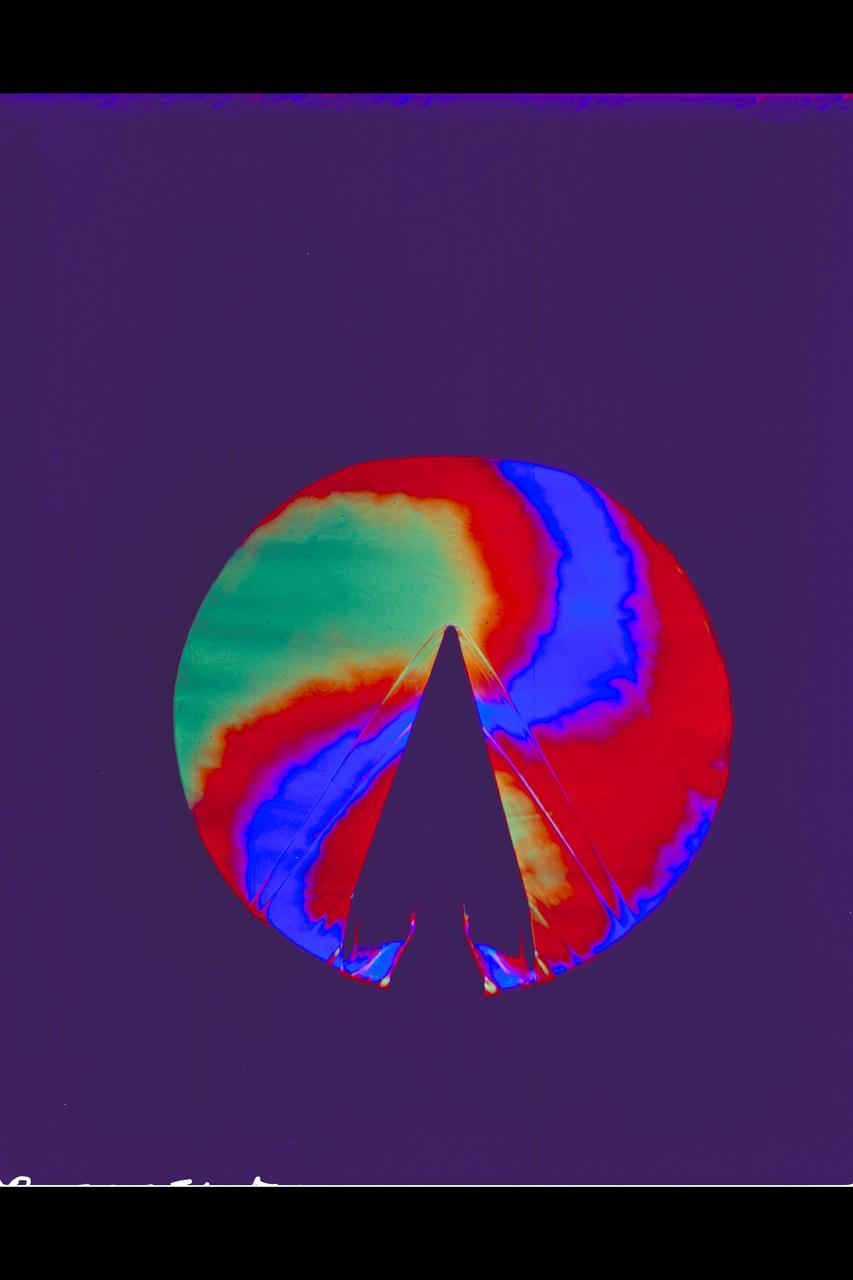
X-20 Dyna Soar on 624-A Titan III Booster: Schlieren
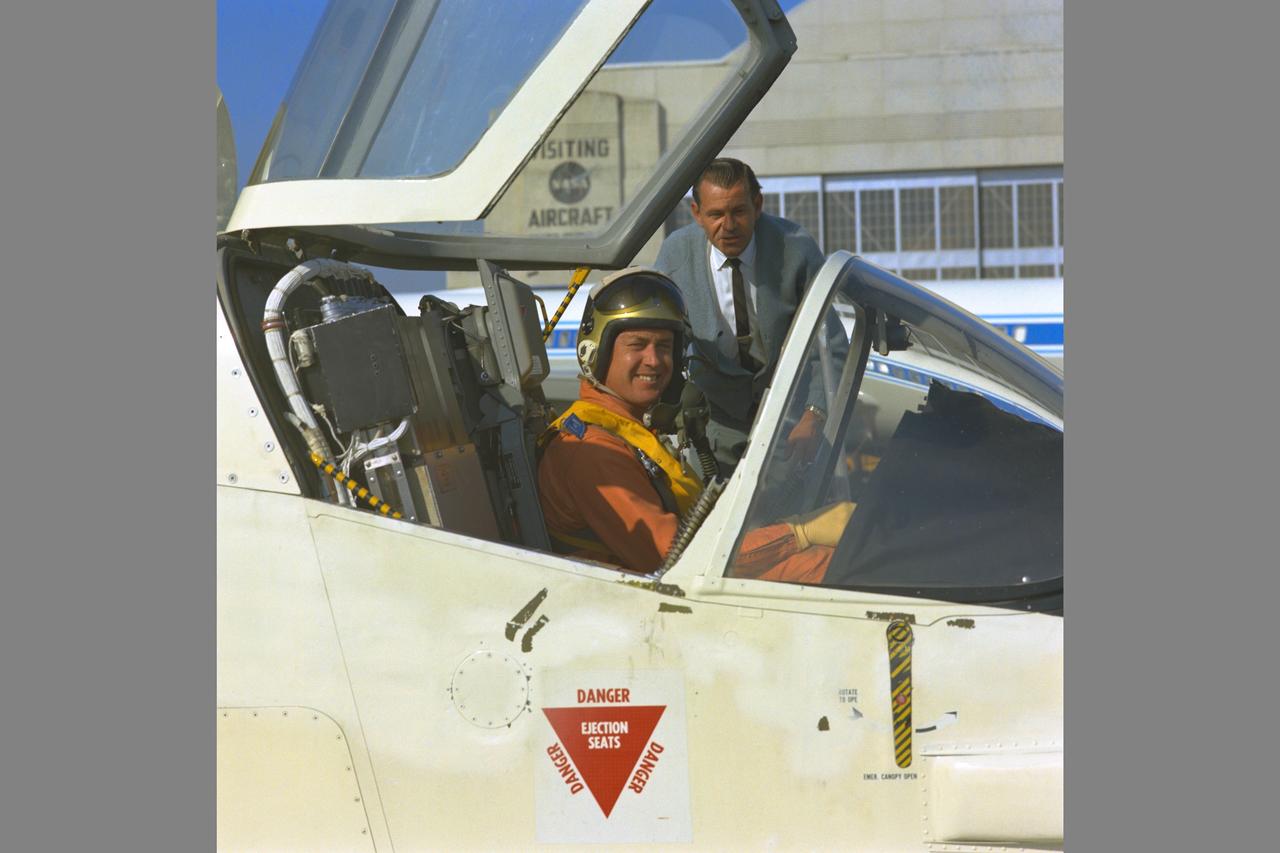
Ryan XV-5B V/STOL aircraft with pilot
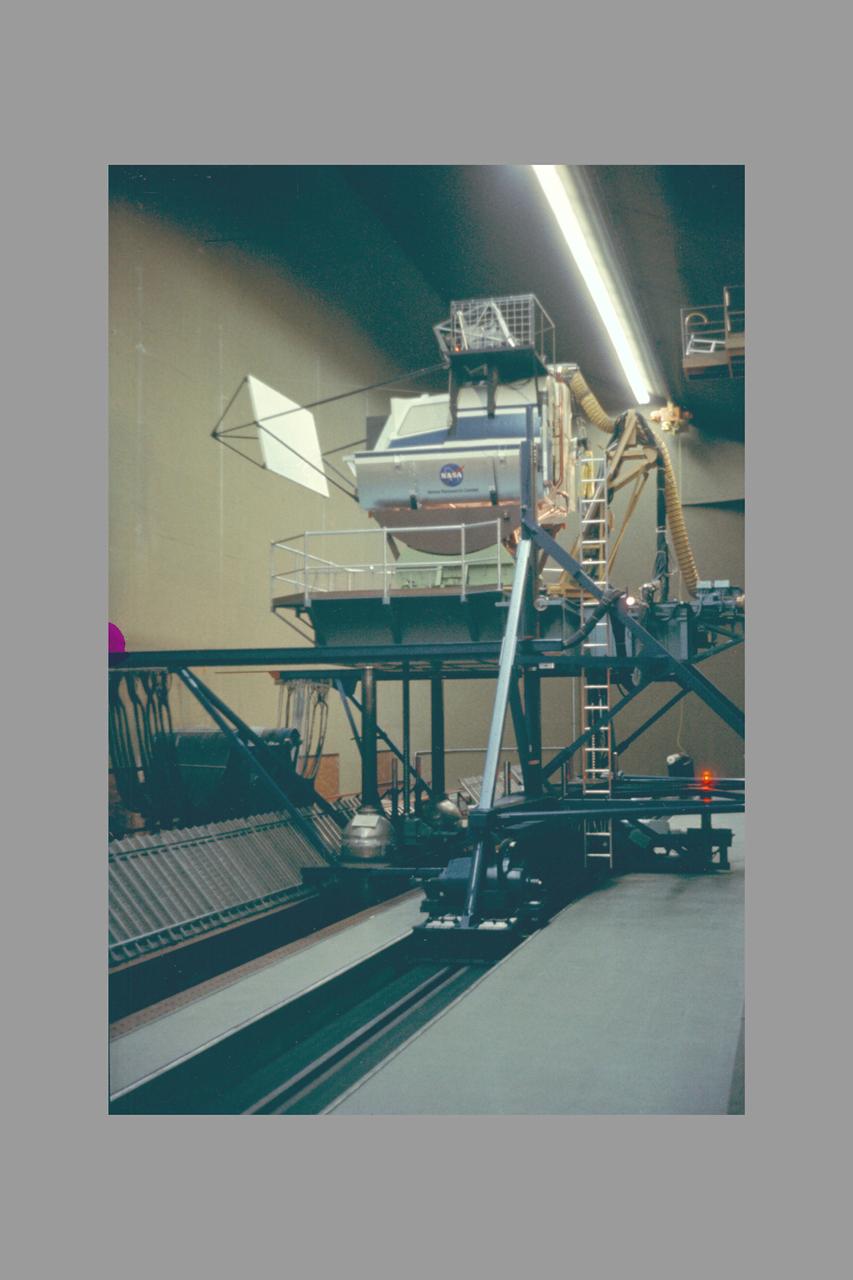
Flight Simulator forAdvanced Aircraft (FSAA) S.10 after painting (IC position from last end)

AX-2 Hard Space Suit with Vic Vykukal. Vykukal is the principal investigator of the AX space suit series.
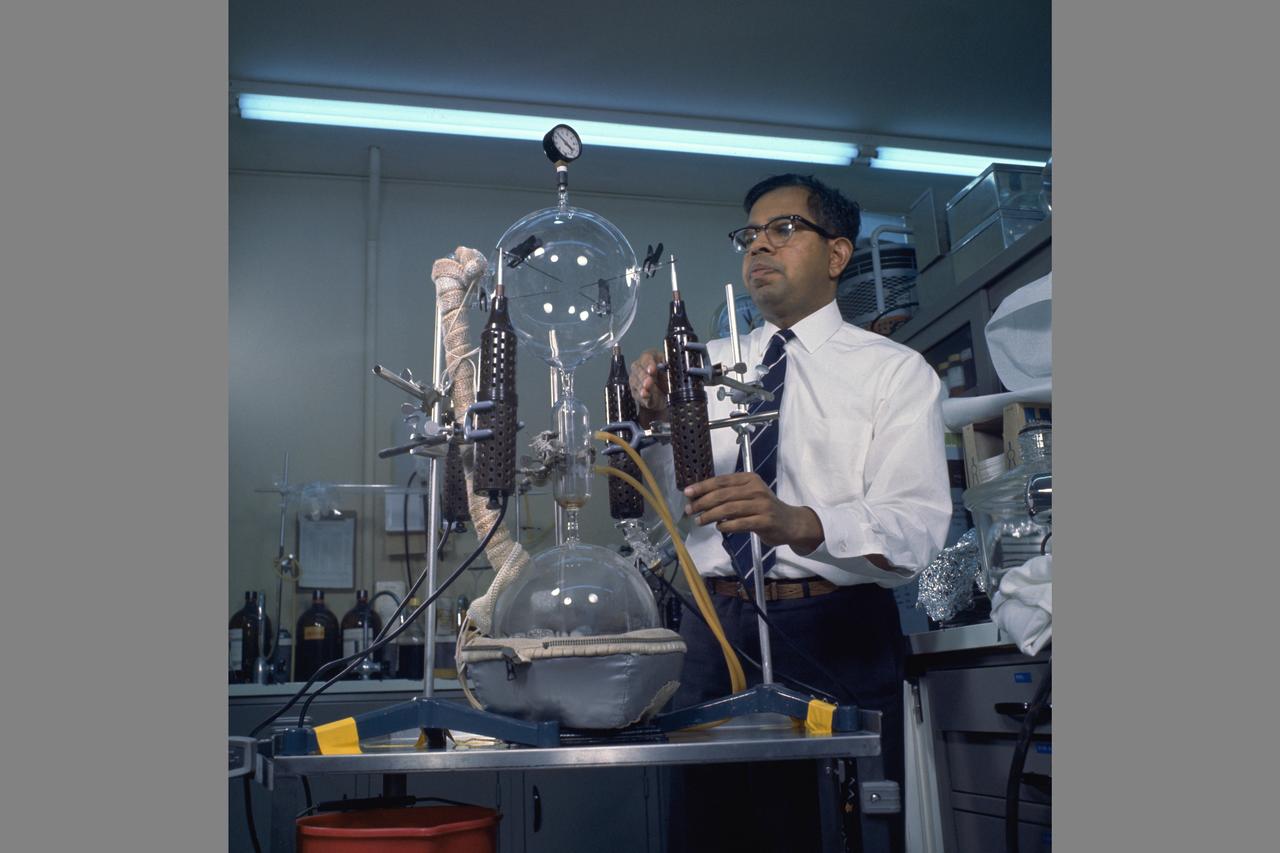
Dr. Cyril A. Ponnamperuma in Lab (Chemical Evolution Branch). Origin of Life studies
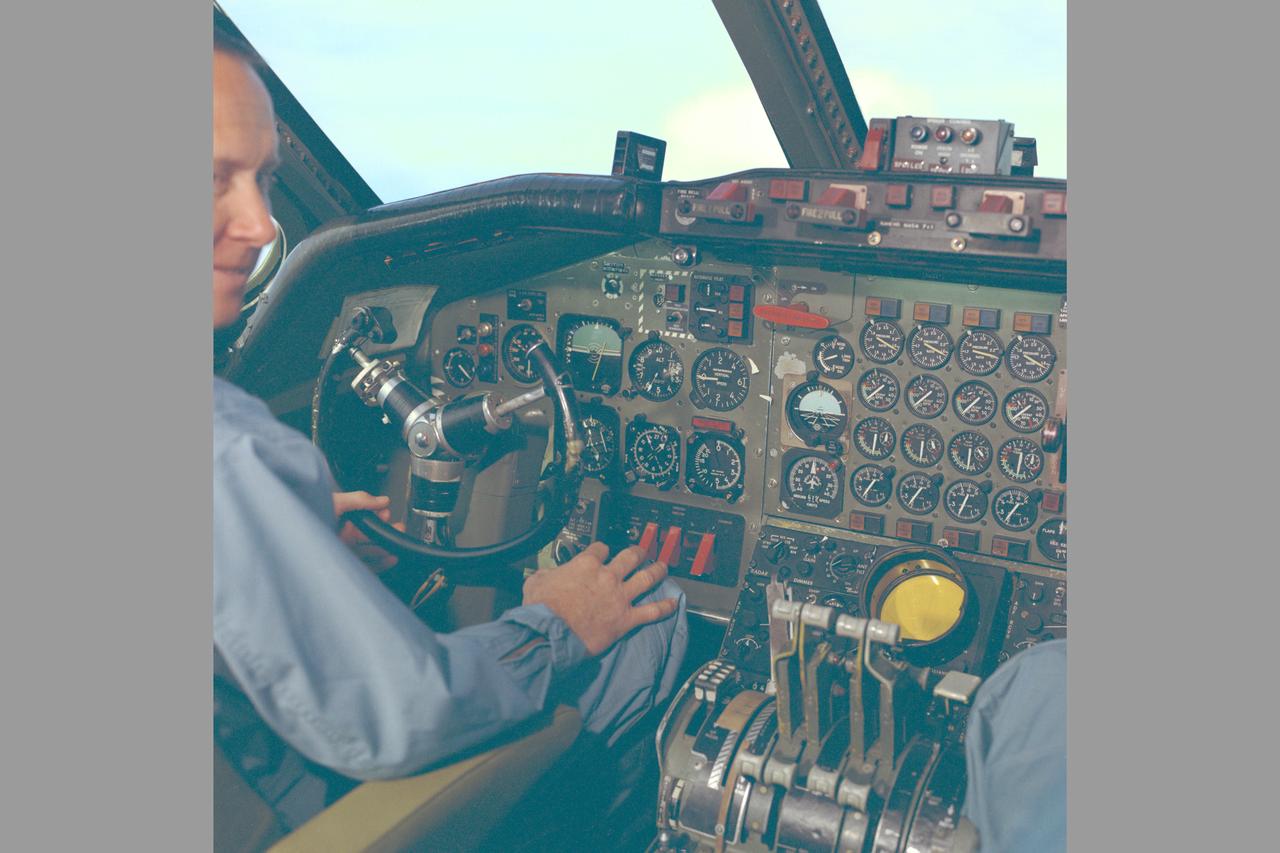
Pilot in cockpit of CV-990
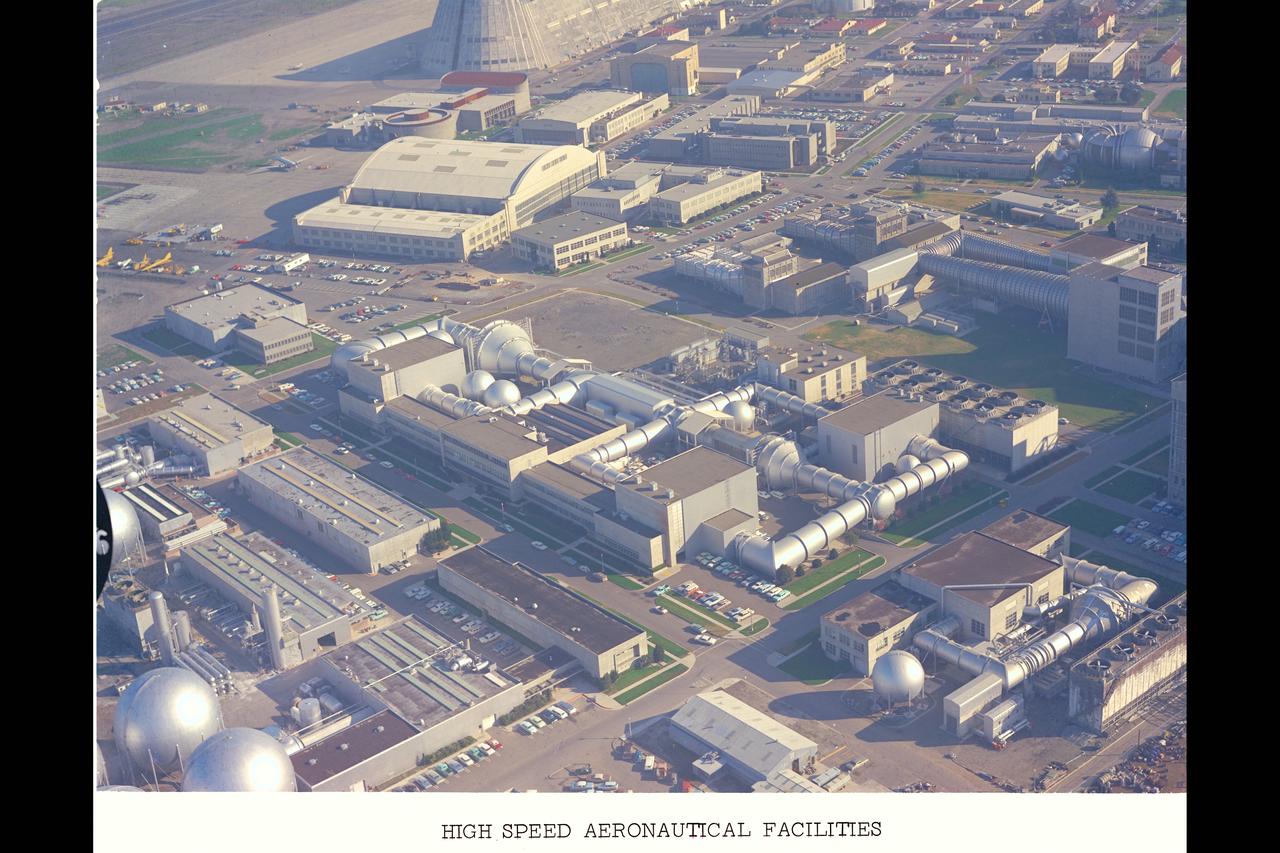
Aerial Survey of Ames Research Center centered on the Unitary Plan Wind Tunnel Complex and High Speed Aerodynamic Facilities (used in Bicentennial)
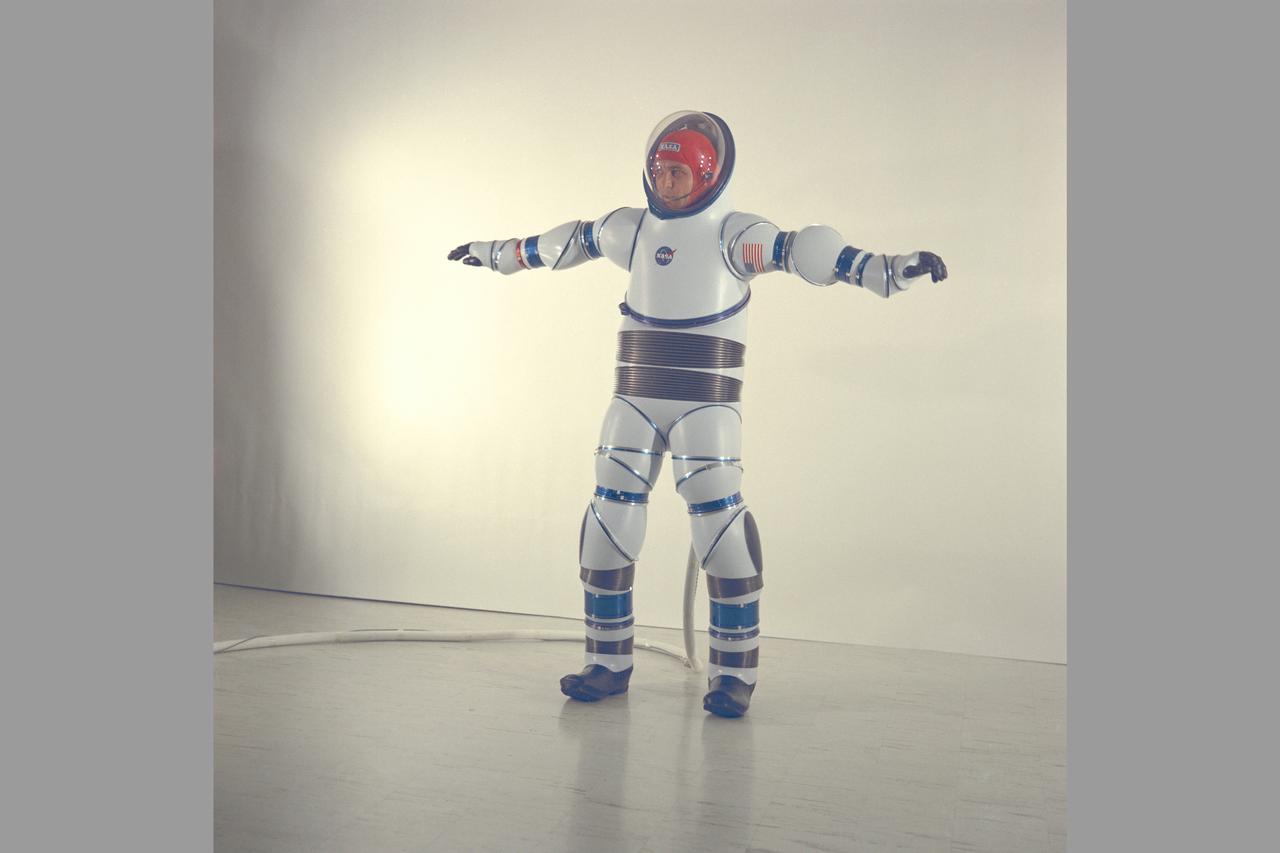
AX-2 Hard Space Suit with Vic Vykukal. Vykukal is the principal investigator of the AX space suit series.
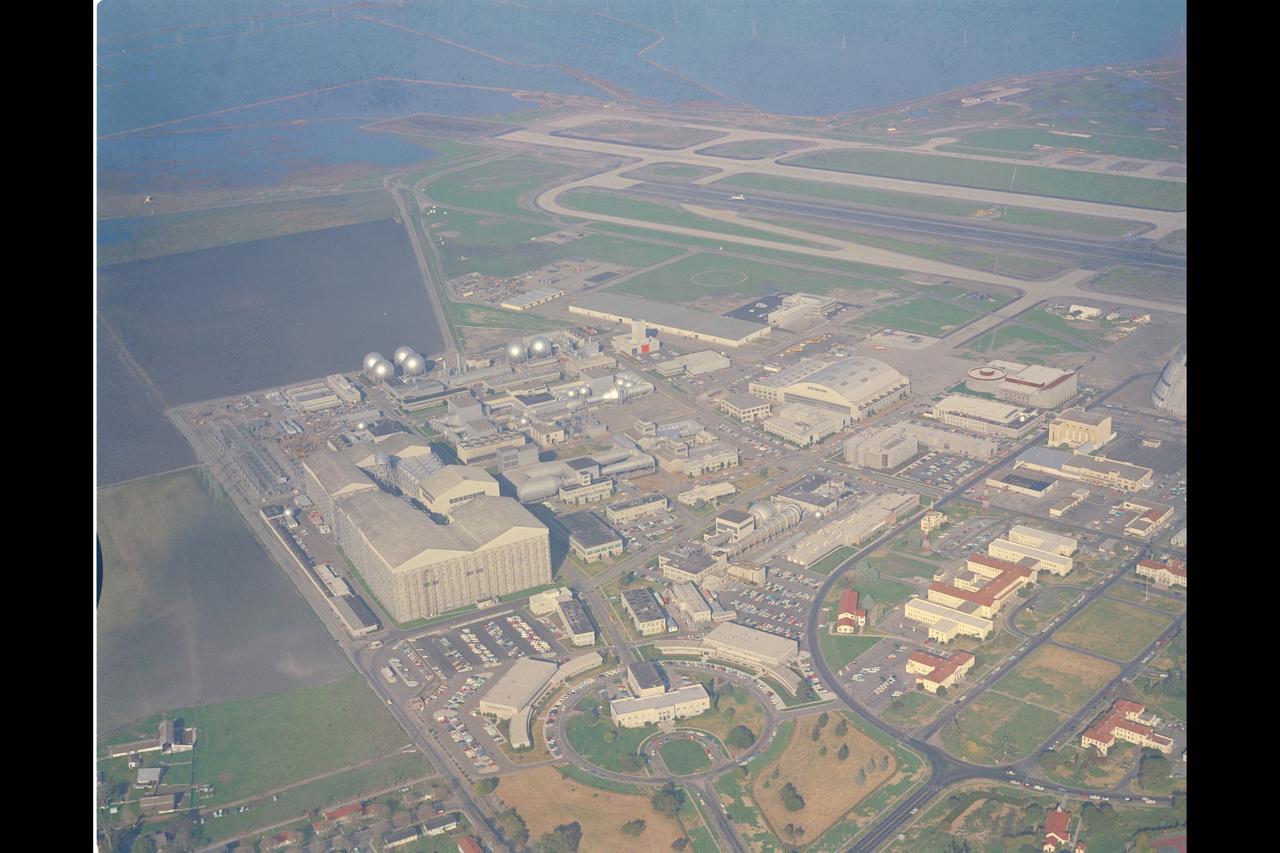
Aerial Survey of Ames Research Center (Used in NASA/AMES publication 'Adventures in Research' A history of Ames Research Center 1940 - 1965 by Edwin P. Hartman - SP-4302)
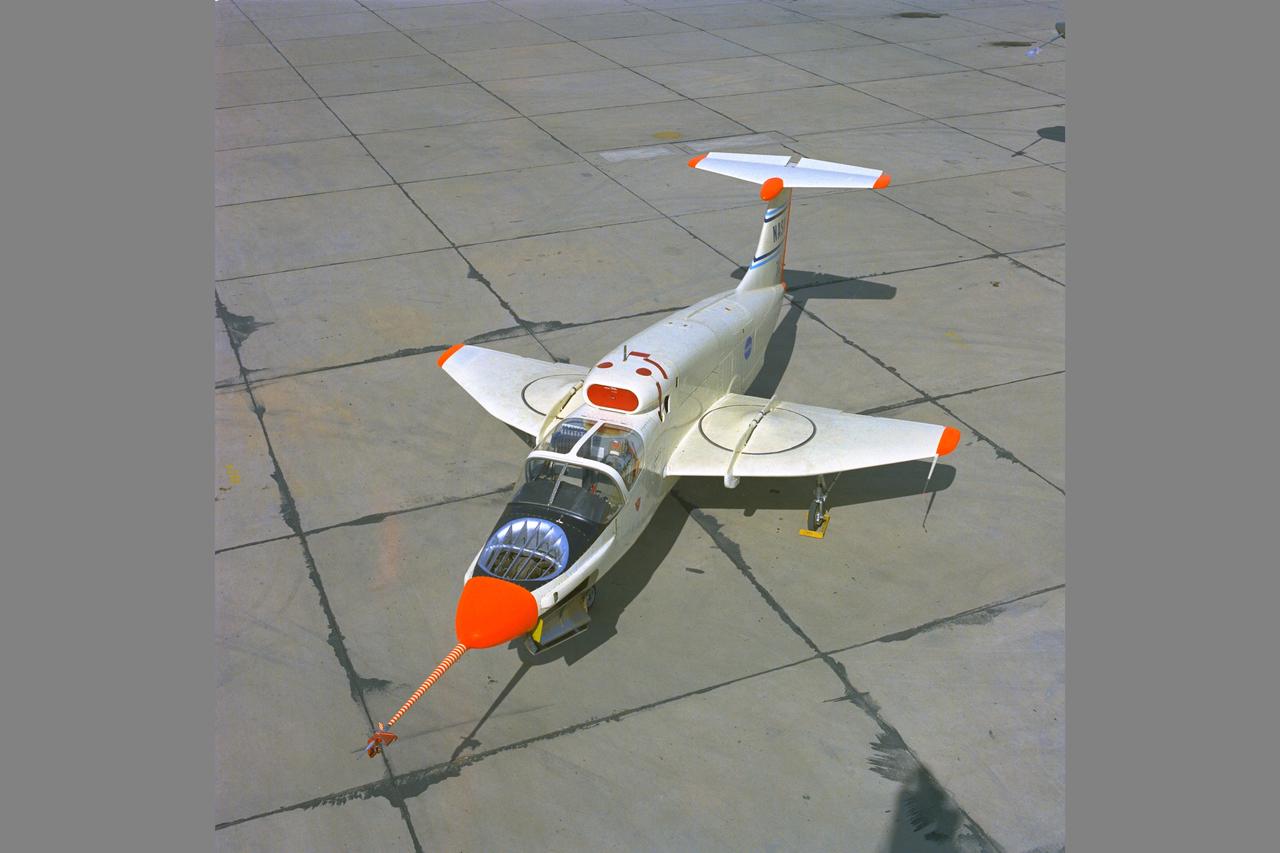
NASA Photographe Ryan XV-5B V/STOL aircraft
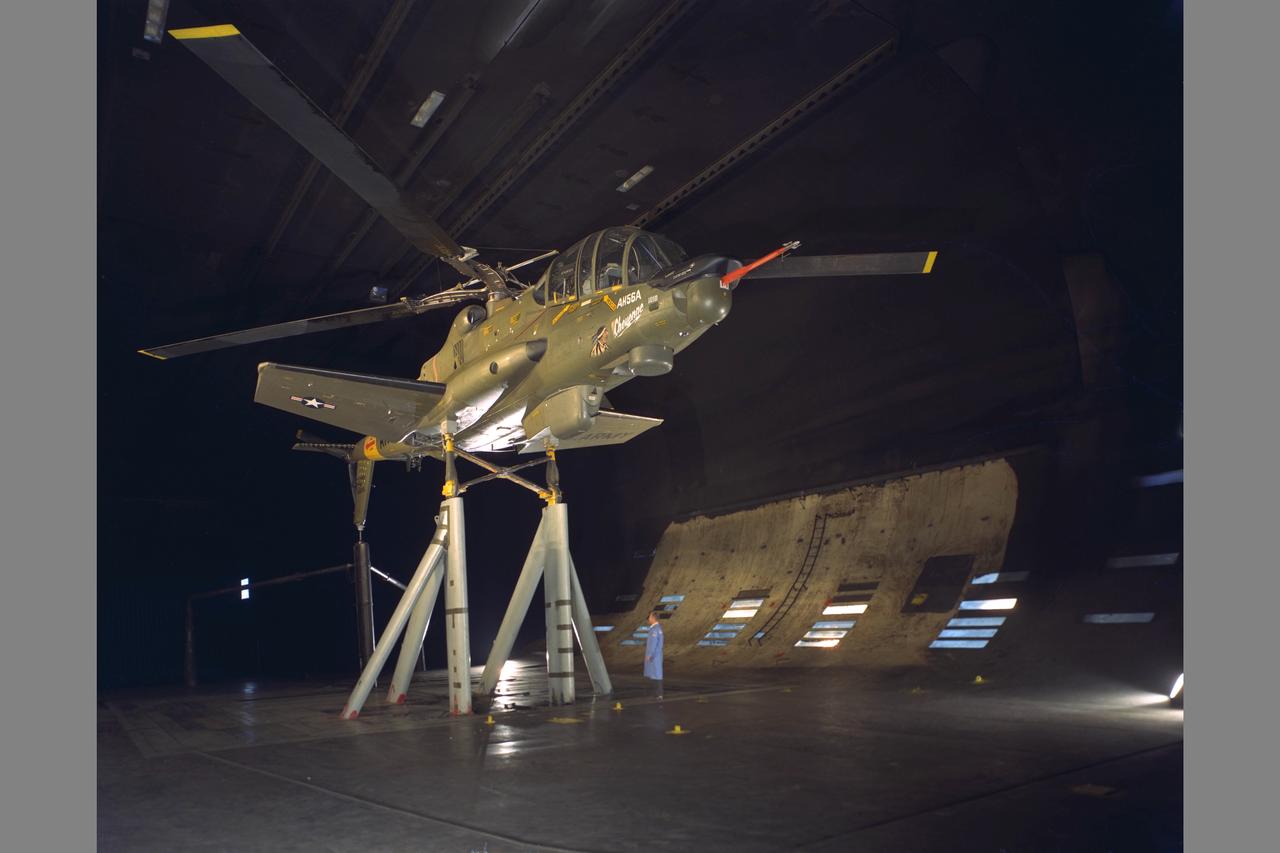
Lockheed AH-56 Helicopter; Cheyenne, 40 x 80 ft. Wind Tunnel. (3/4 front view)
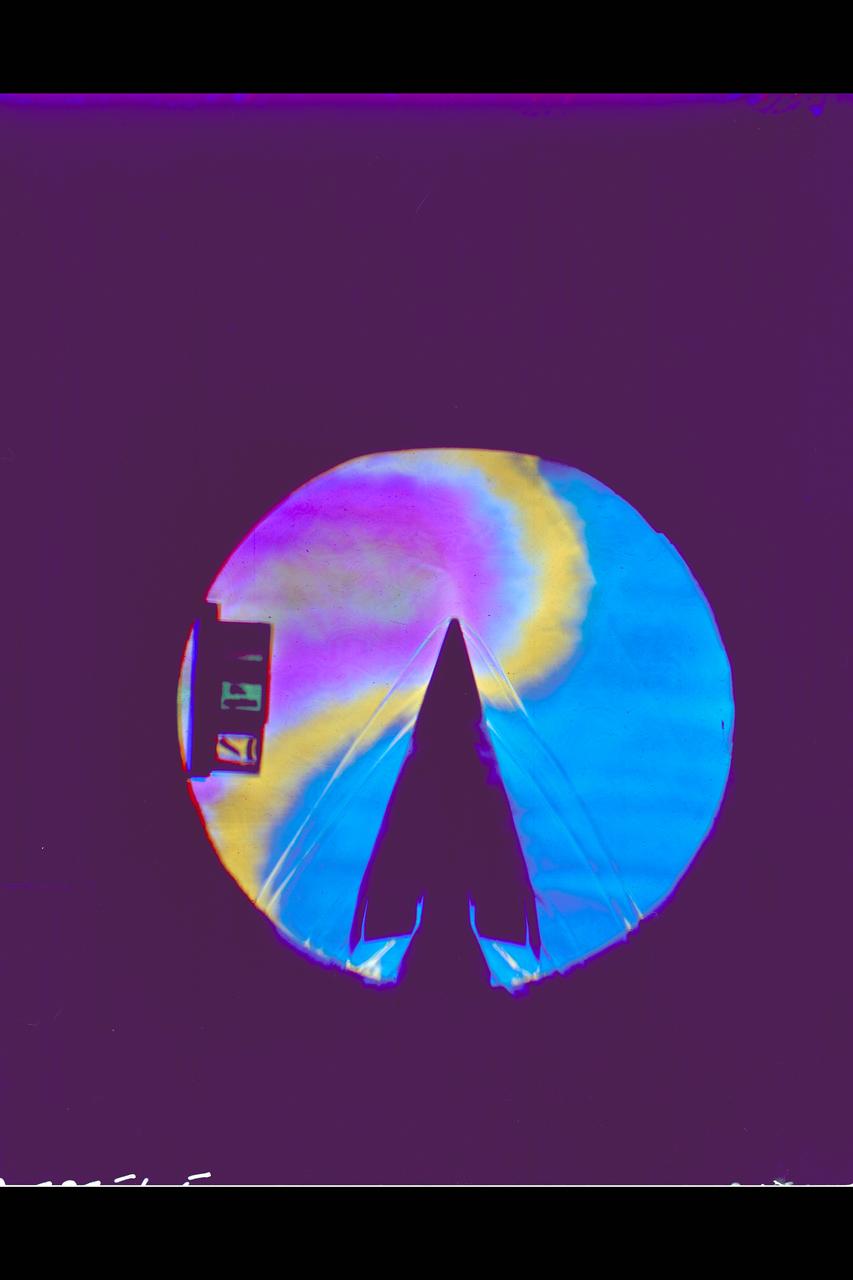
X-20 Dyna Soar on 624-A Titan III Booster: Schlieren
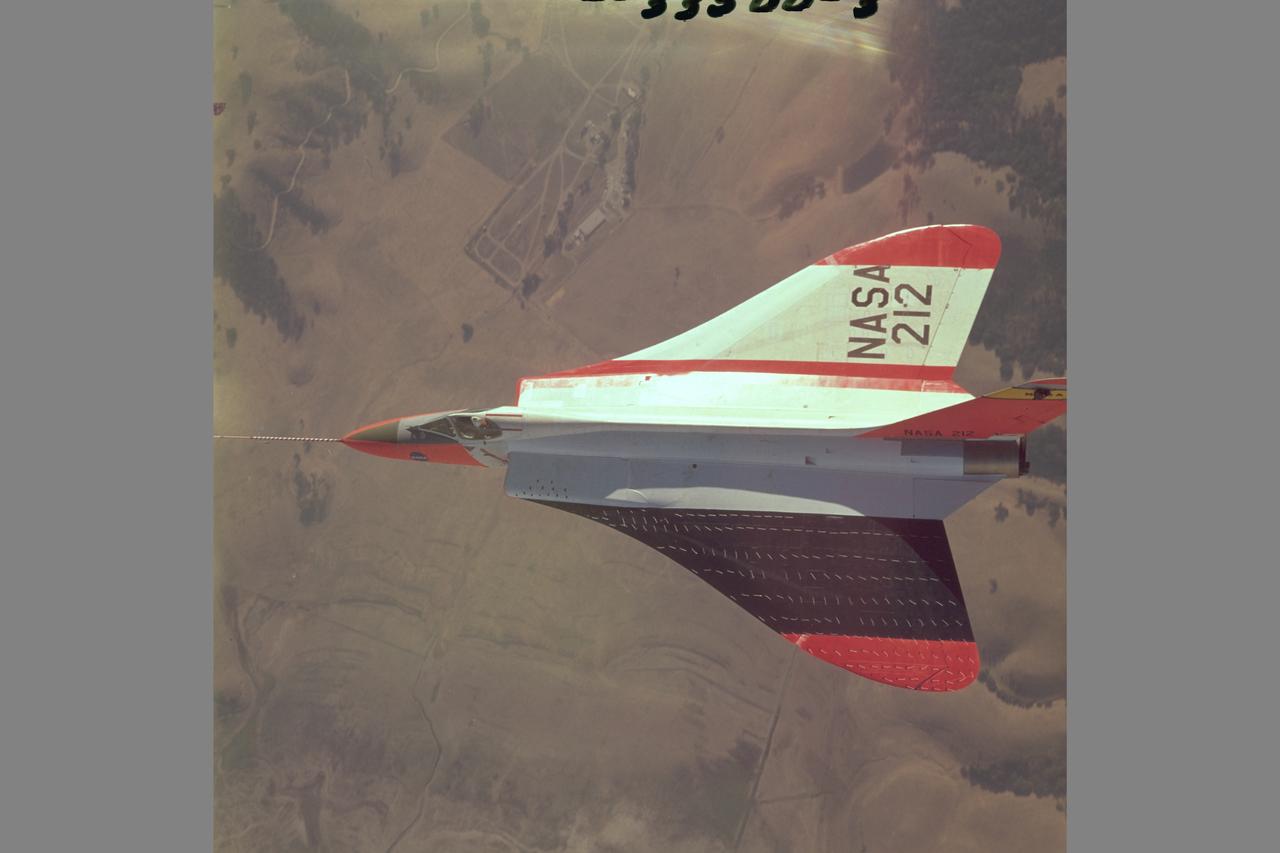
Douglas F5D Skylancer fighter modified with ogee wing planform designed for Mach 2 flight. Shown is the effect of vortex flow on wing tuft alignment in low-speed, high angle-of-attack flight.
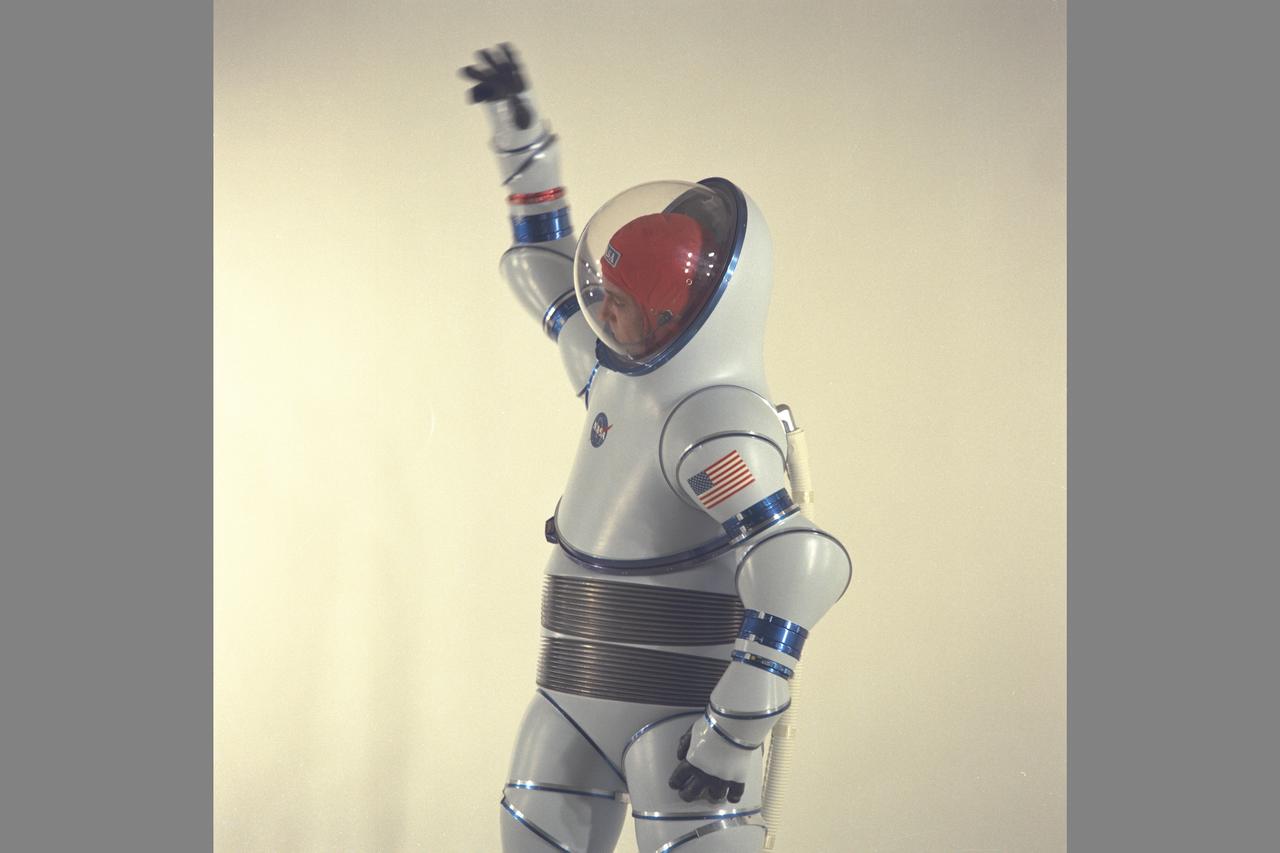
AX-2 Hard Space Suit with Vic Vykukal. Vykukal is the principal investigator of the AX space suit series.
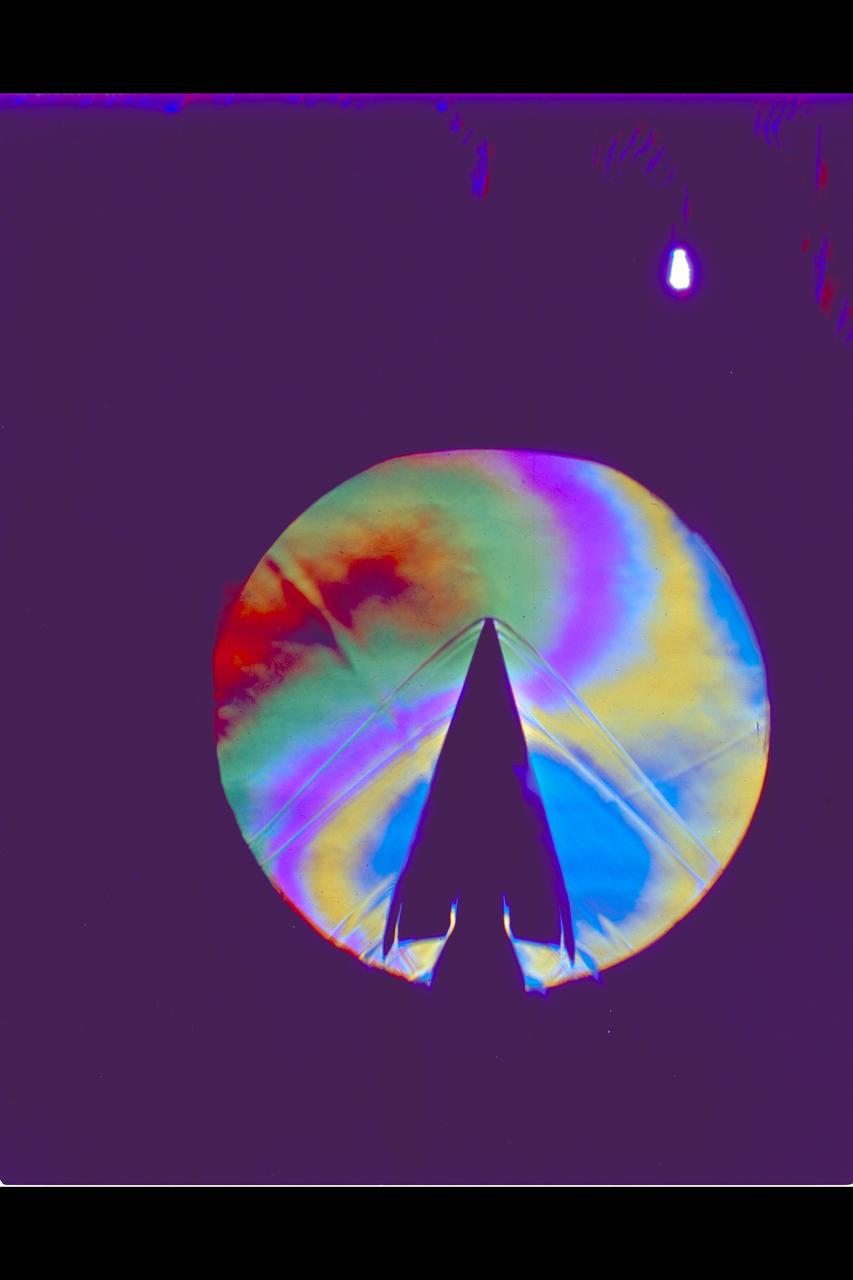
X-20 Dyna Soar on 624-A Titan III Booster: Schlieren
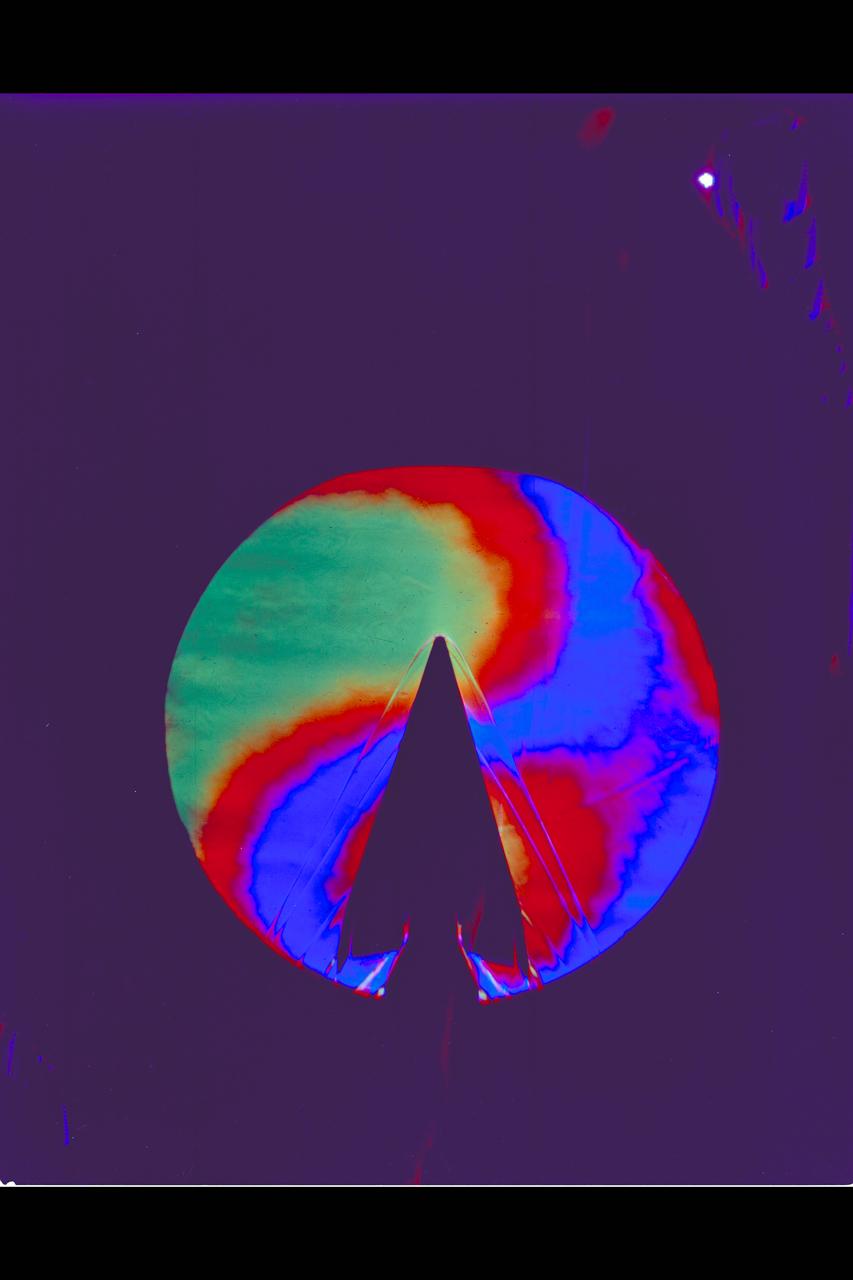
X-20 Dyna Soar on 624-A Titan III Booster: Schlieren

X-20 Dyna Soar on 624-A Titan III Booster: Schlieren
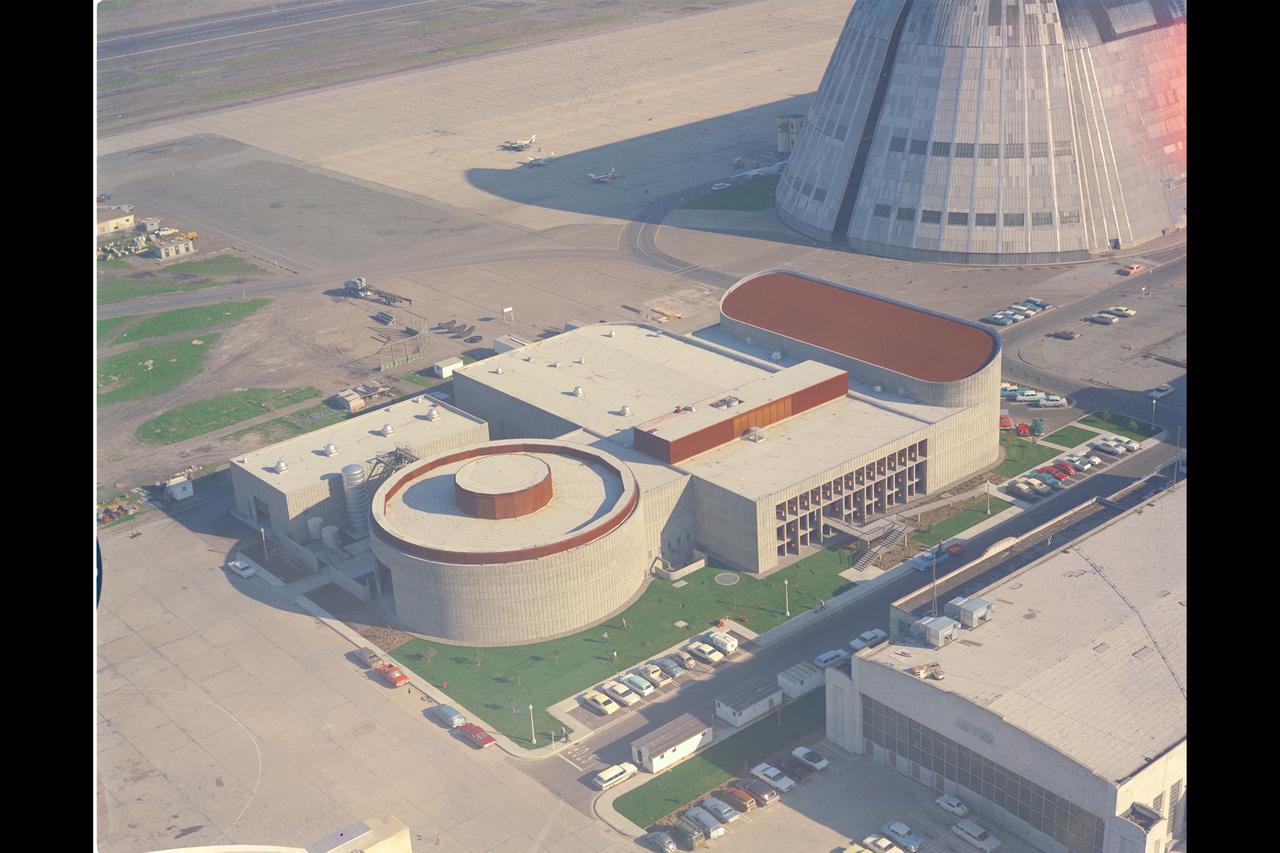
Aerial Survey of Ames Research Center - Flight Simulation Complex' Flight simulators create an authentic aircraft environment by generating the appropriate physical cues that provide the sensations of flight.
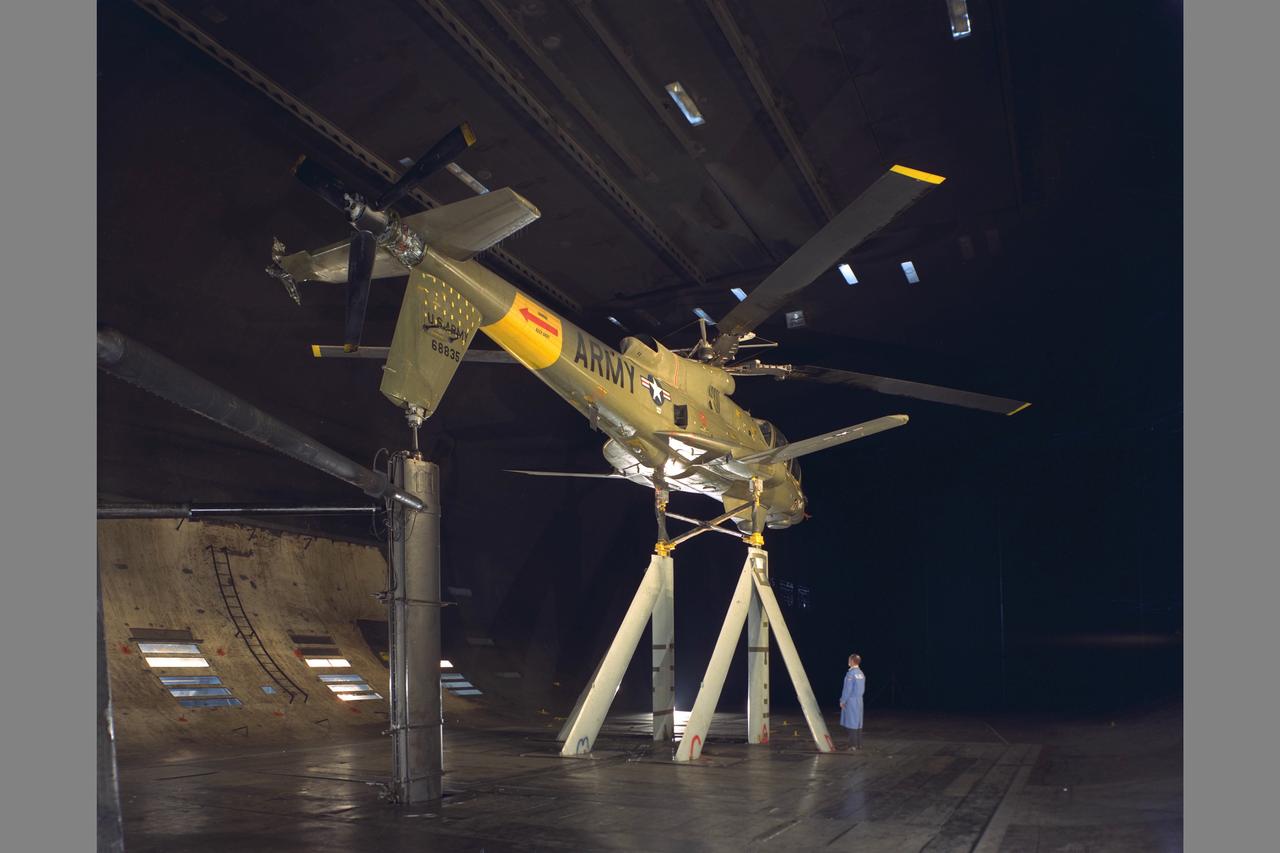
Lockheed AH-56 Helicopter; Cheyenne, 40 x 80 ft. Wind Tunnel. (3/4 rear view)
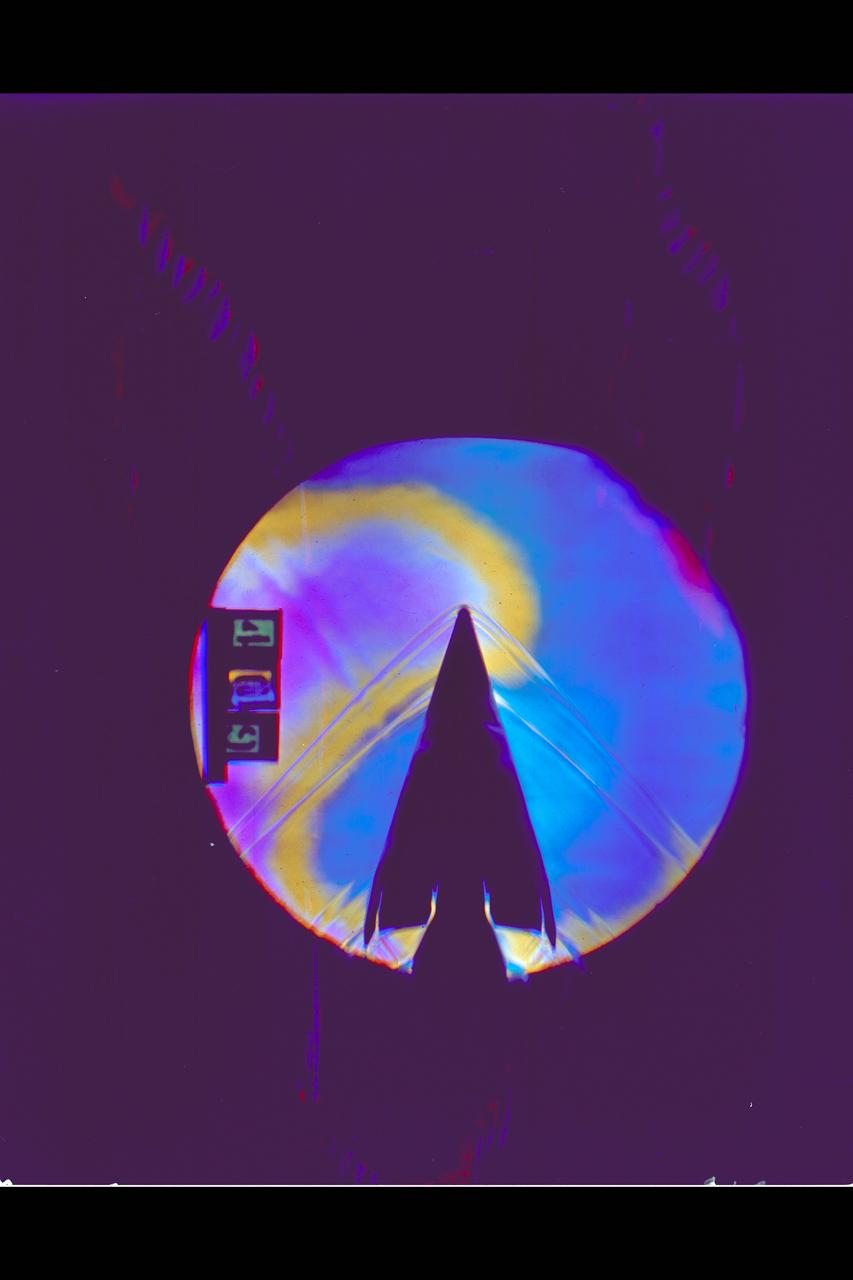
Schlieren of X-20 Dyna Soar mounted on 624-A Titan III Booster
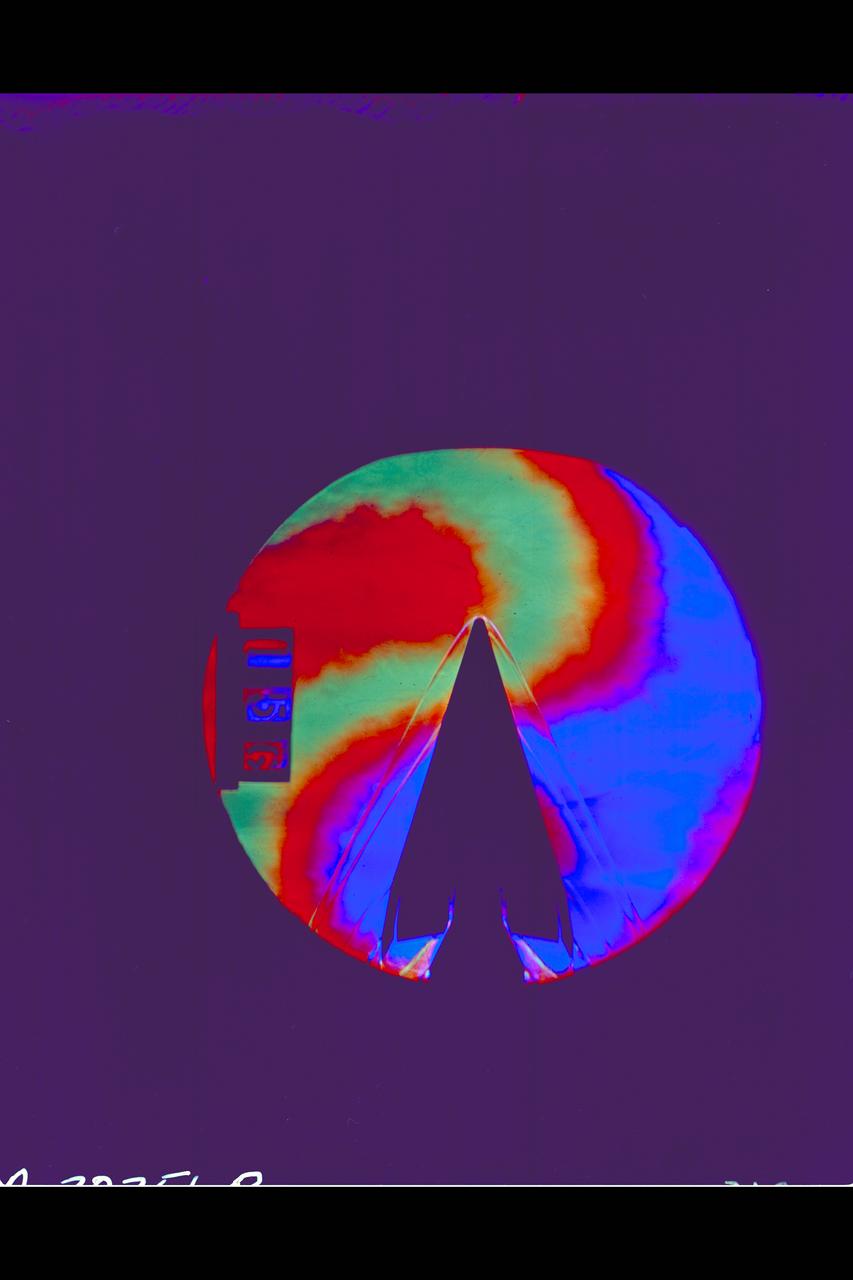
X-20 Dyna Soar on 624-A Titan III Booster: Schlieren
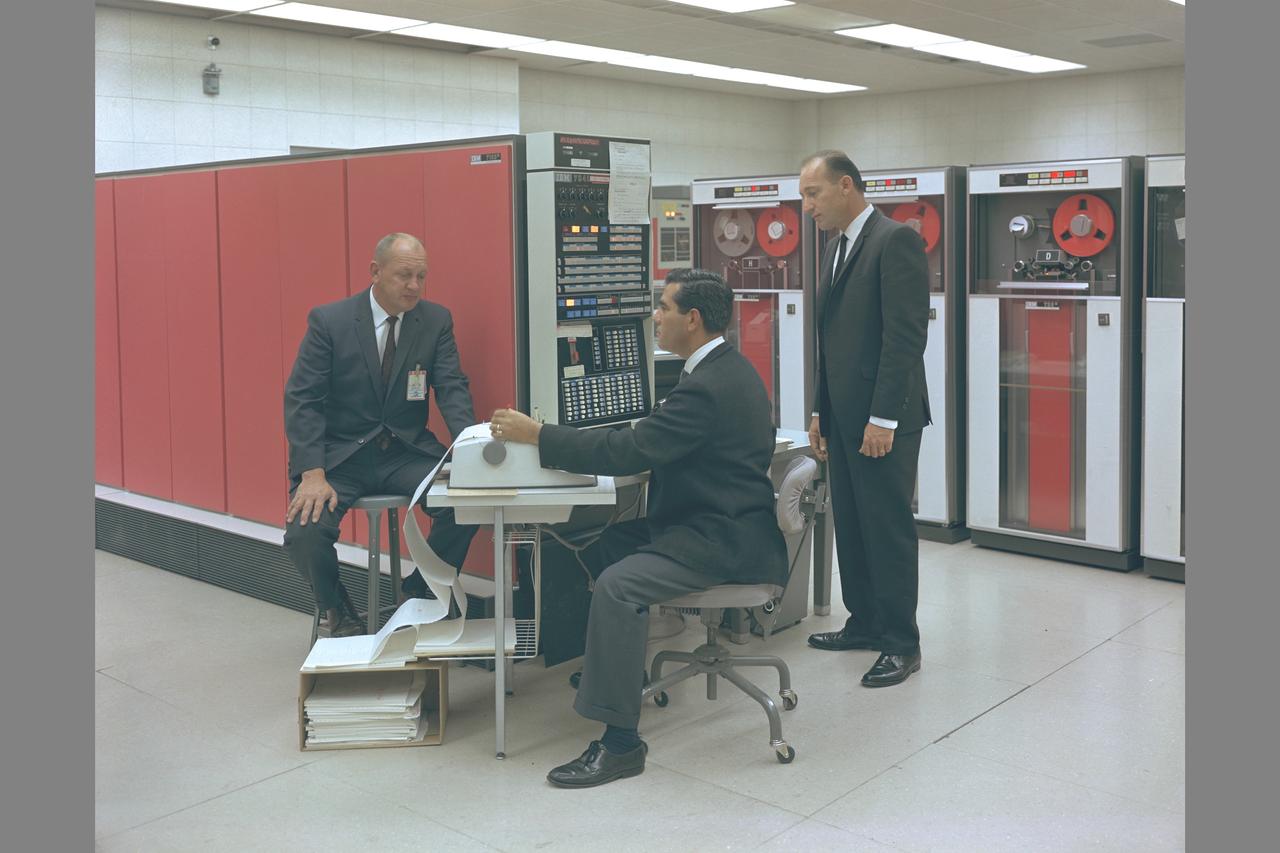
MR. A. NATWICK, MR. T. GONZALES, MR. F. GIALLANZA, AT WORK IN THE 7094 COMPUTER ROOM OF THE PIONEER TAPE PROCESSING STATION AT NASA AMES RESEARCH CENTER. Pioneer Off-Line Data Processing System.