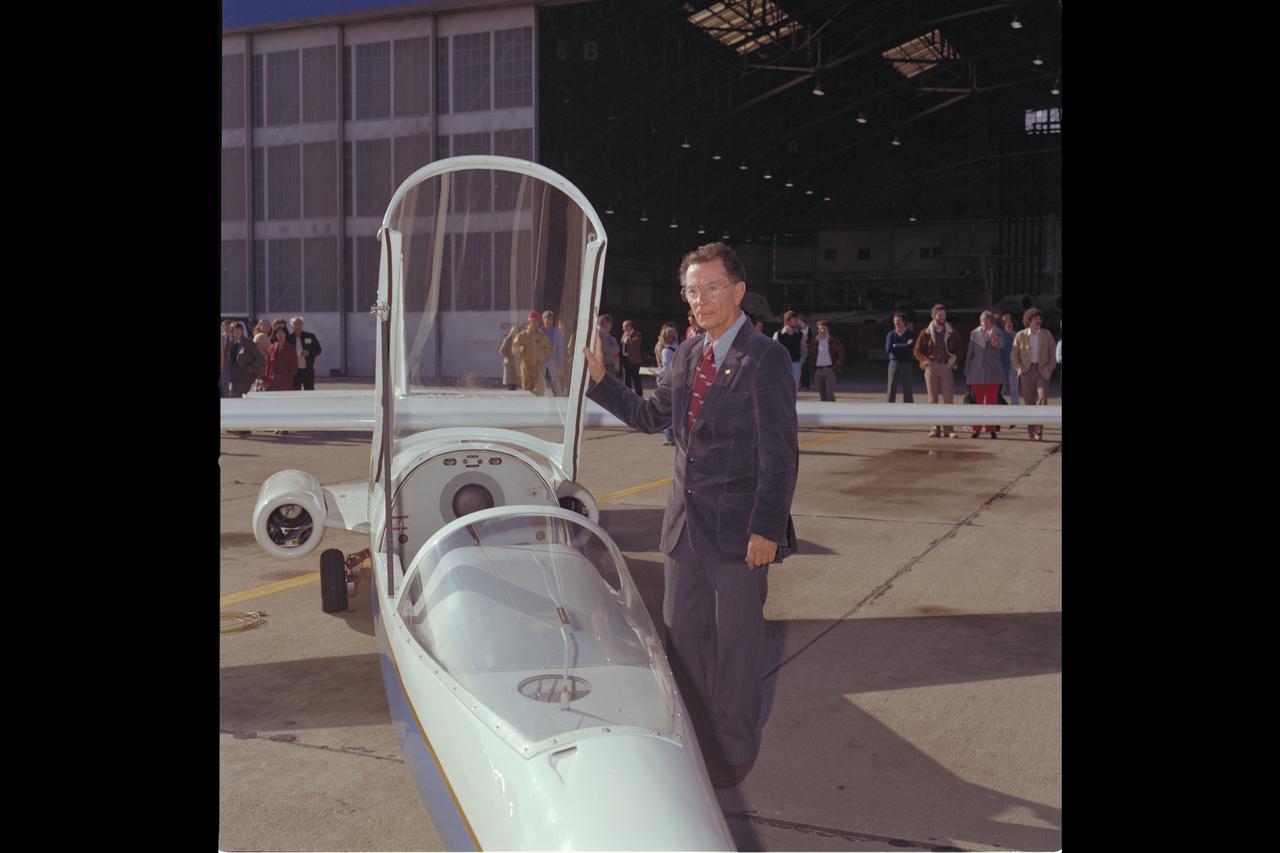
AD-1 (NASA 805) R.T. Jones during maiden visit to Ames.
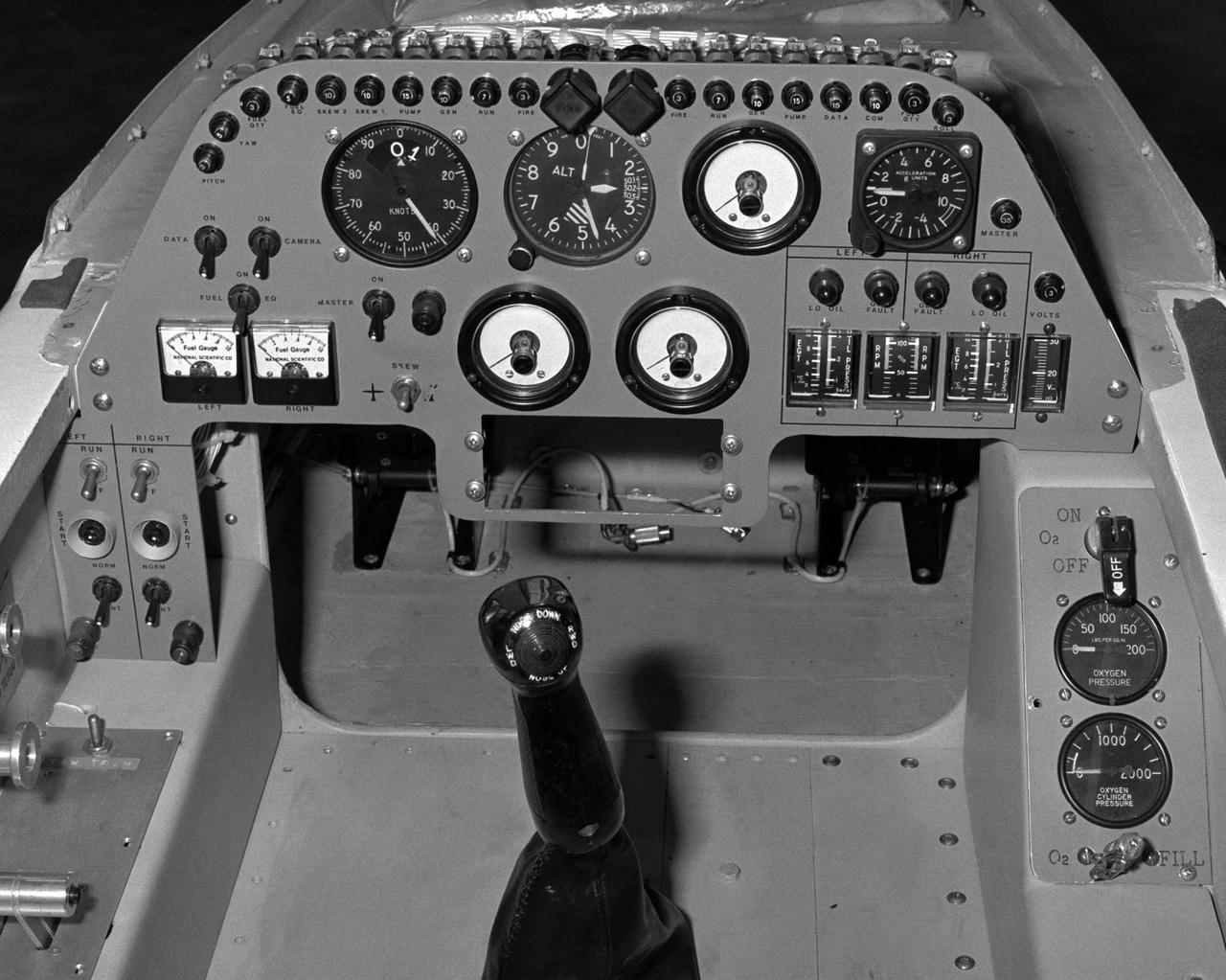
The cockpit and instrument panel of the AD-1 aircraft. Due to the small size of the AD-1, instrumentation was limited and the cockpit was cramped.
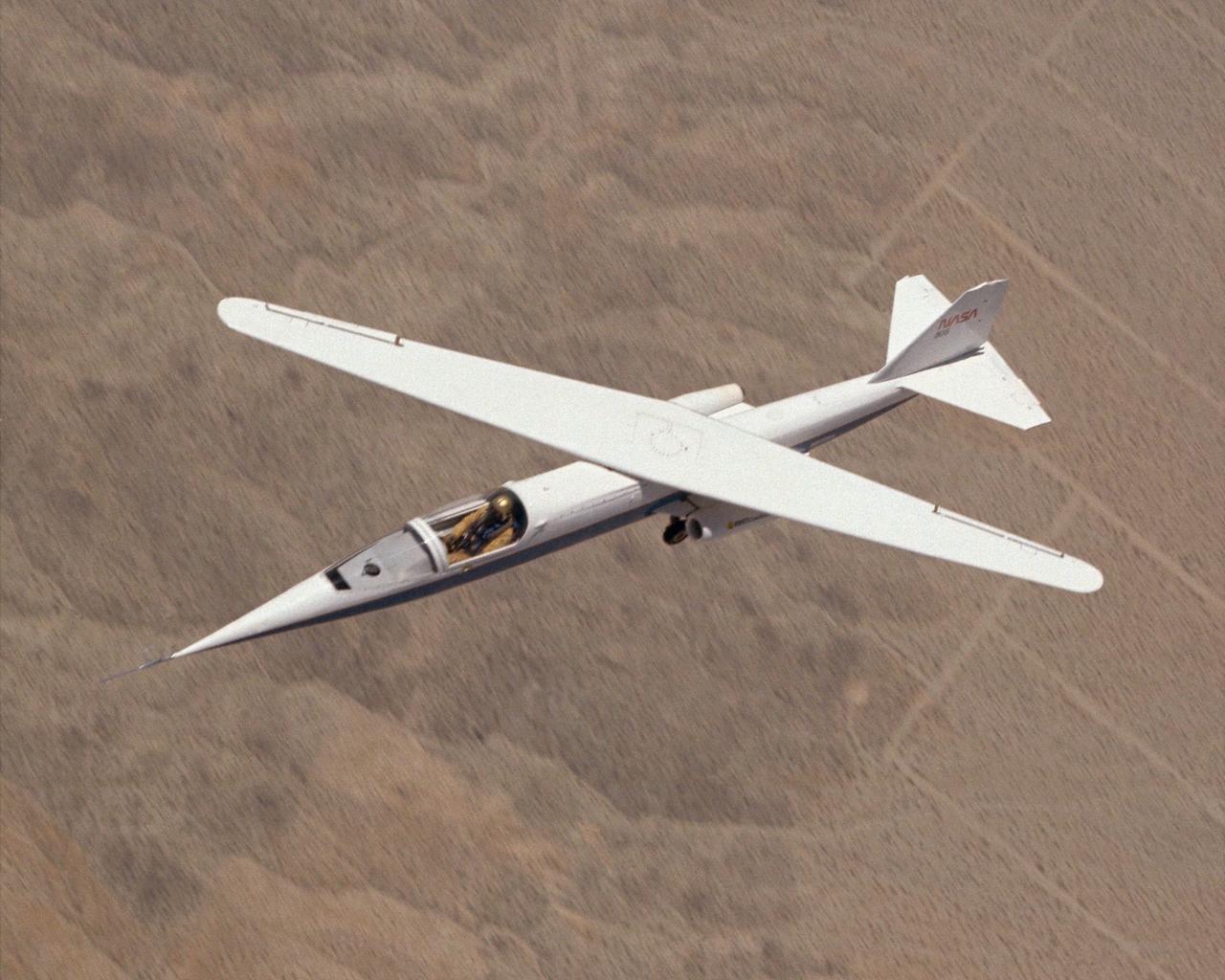
AD-1 in flight. Flight #30. The AD-1 aircraft in flight with its wing swept at 60 degrees, the maximum sweep angle.
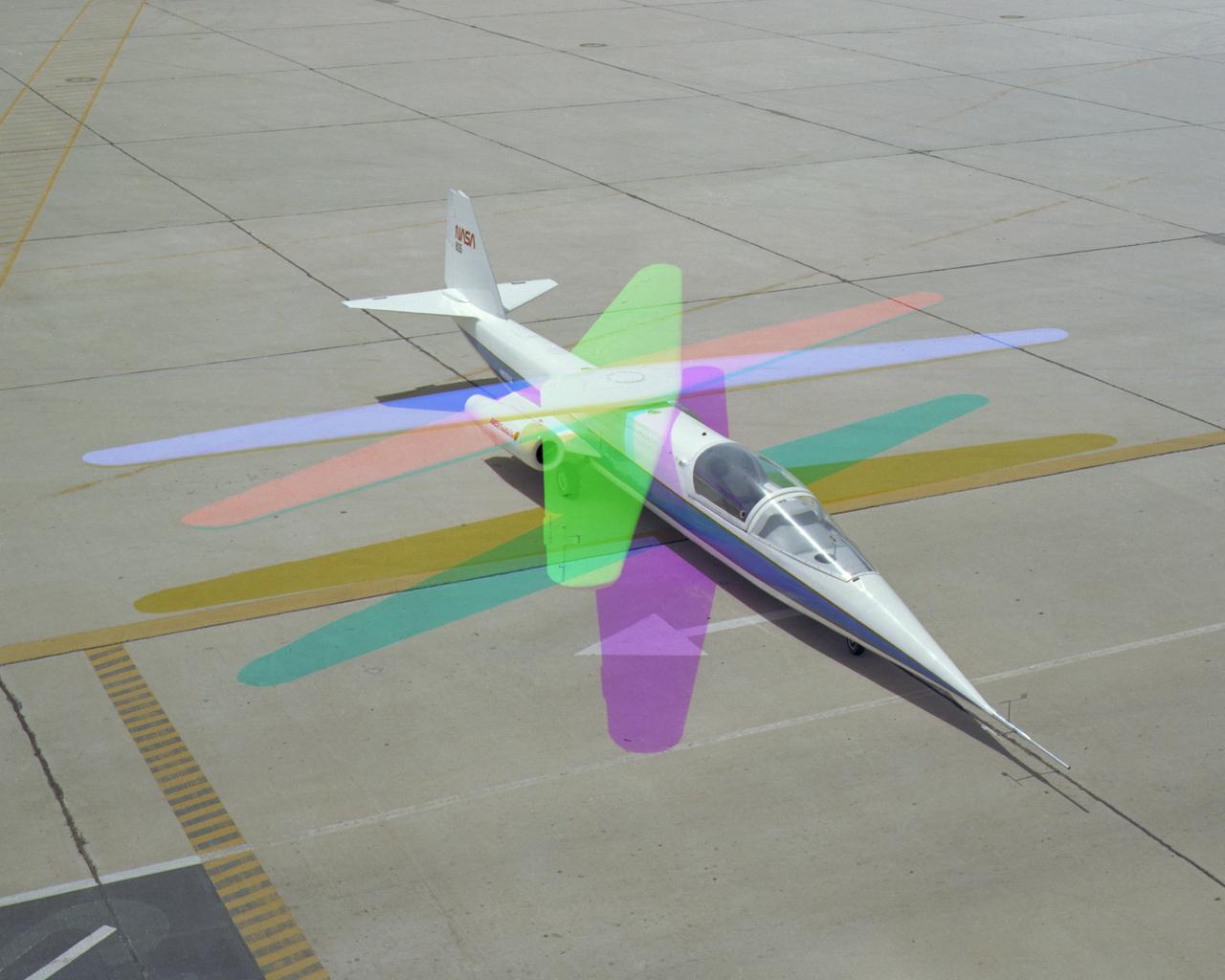
Multiple exposure image showing wing movement on AD-1.
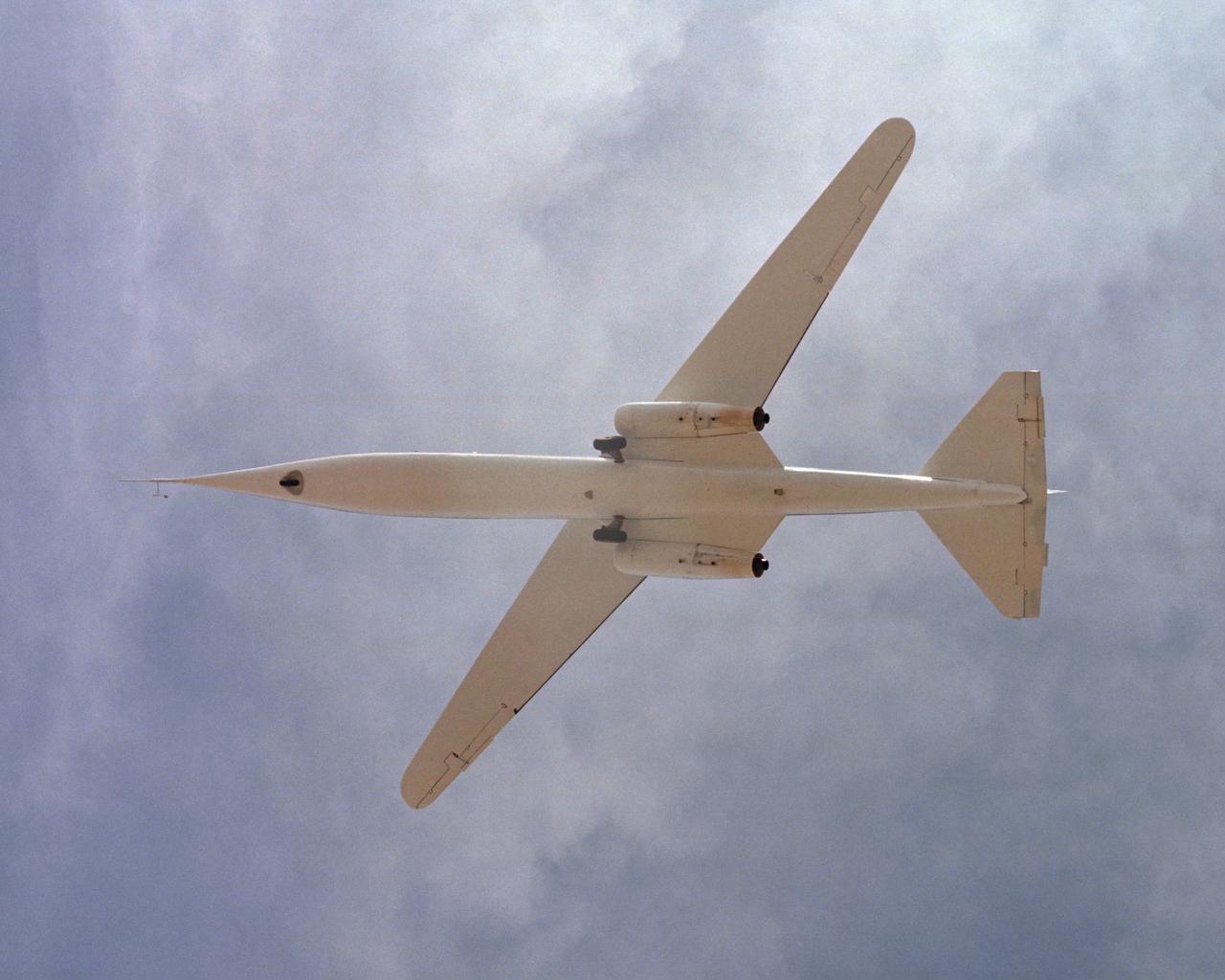
The AD-1 aircraft with its wing swept. Visible are the twin jet engines that powered the aircraft and the fixed landing gear.
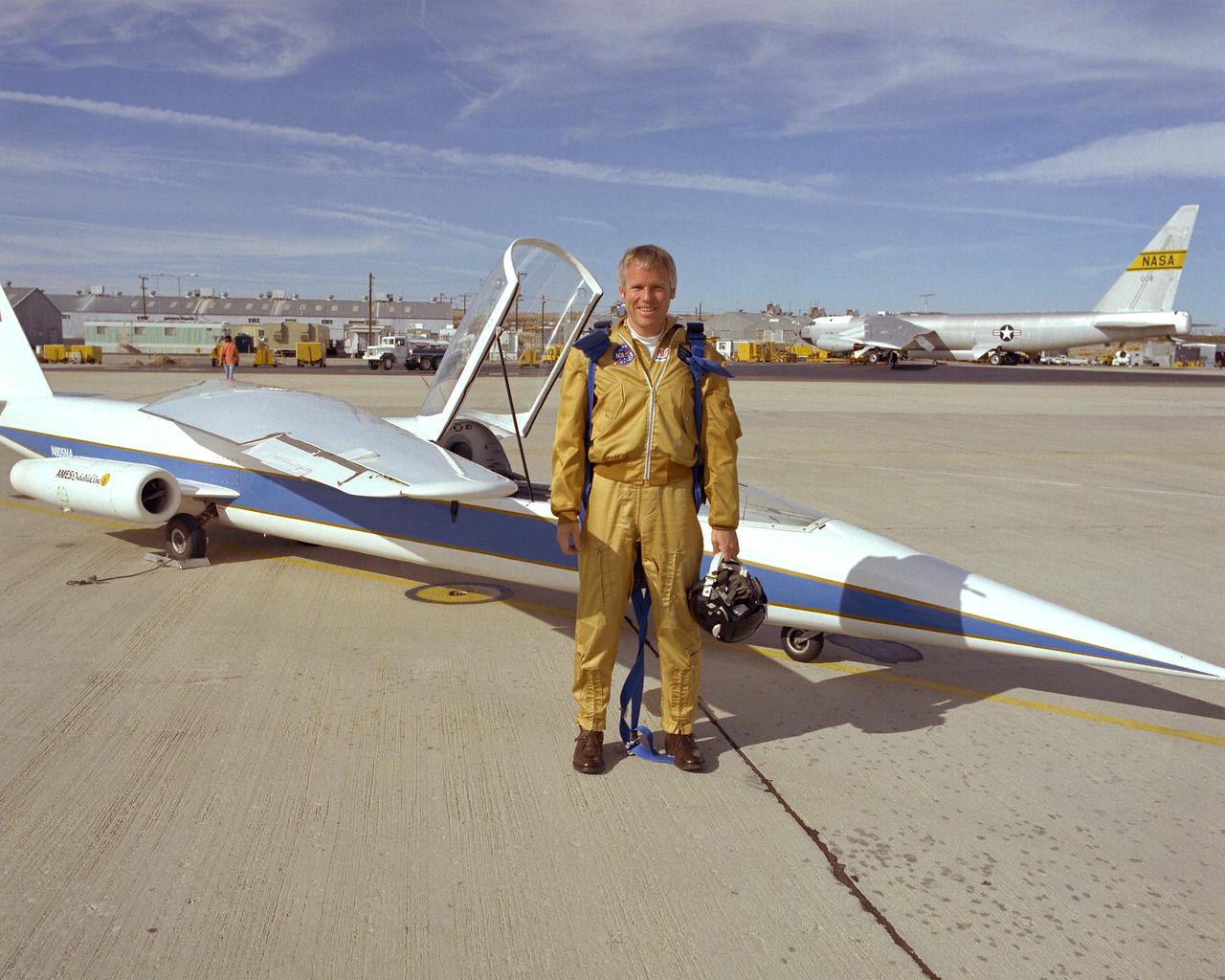
Research pilot Richard E. Gray, standing in front of the AD-1 Oblique Wing research aircraft.
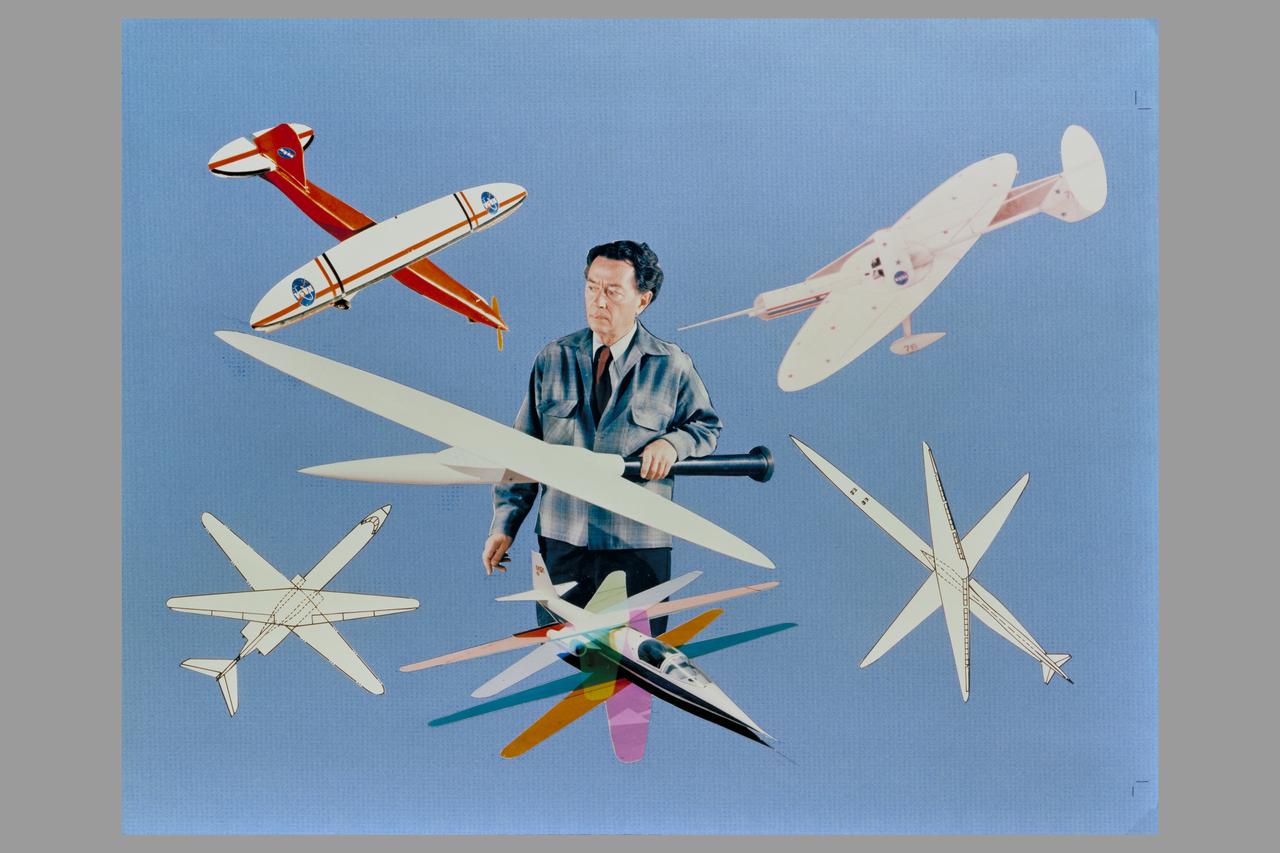
R.T. Jones w/ AD-1 Oblique Wing Models
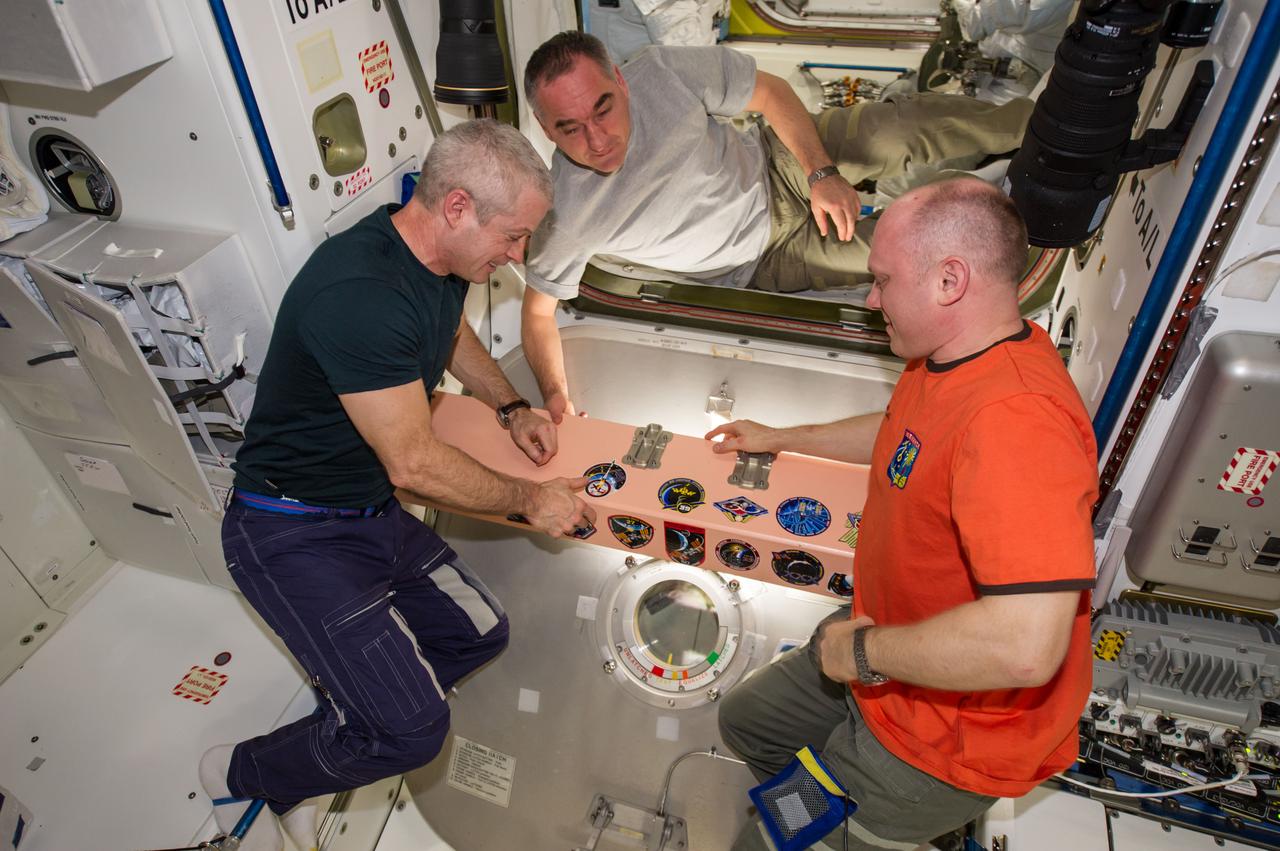
ISS040-E-139596 (9 Sept. 2014) --- In the Unity node, NASA astronaut Steve Swanson (left), Expedition 40 commander, adds the Expedition 40 patch to the growing collection of insignias representing crews who have worked on the International Space Station. Russian cosmonauts Alexander Skvortsov (center) and Oleg Artemyev, both flight engineers, look on.
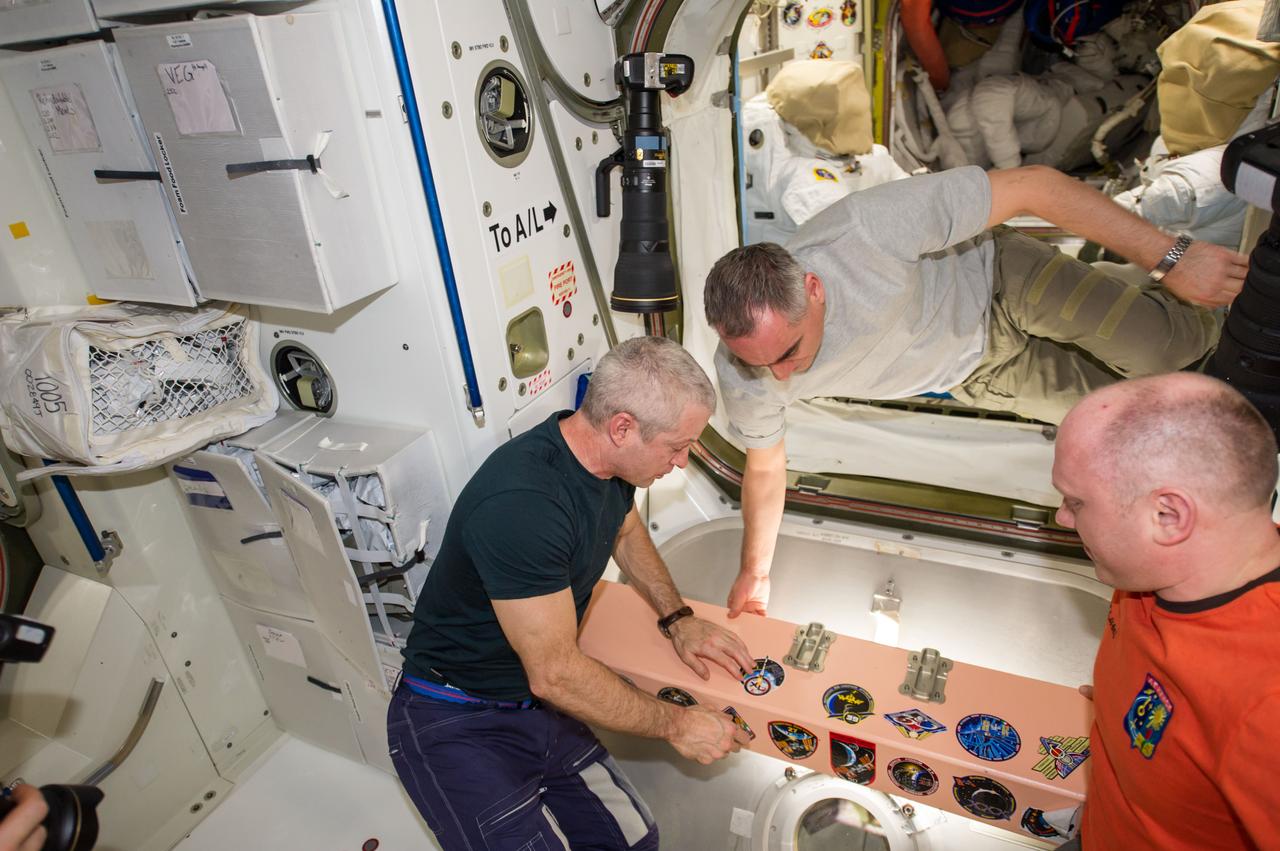
ISS040-E-139592 (9 Sept. 2014) --- In the Unity node, NASA astronaut Steve Swanson (left), Expedition 40 commander, adds the Expedition 40 patch to the growing collection of insignias representing crews who have worked on the International Space Station. Russian cosmonauts Alexander Skvortsov (center) and Oleg Artemyev, both flight engineers, look on.
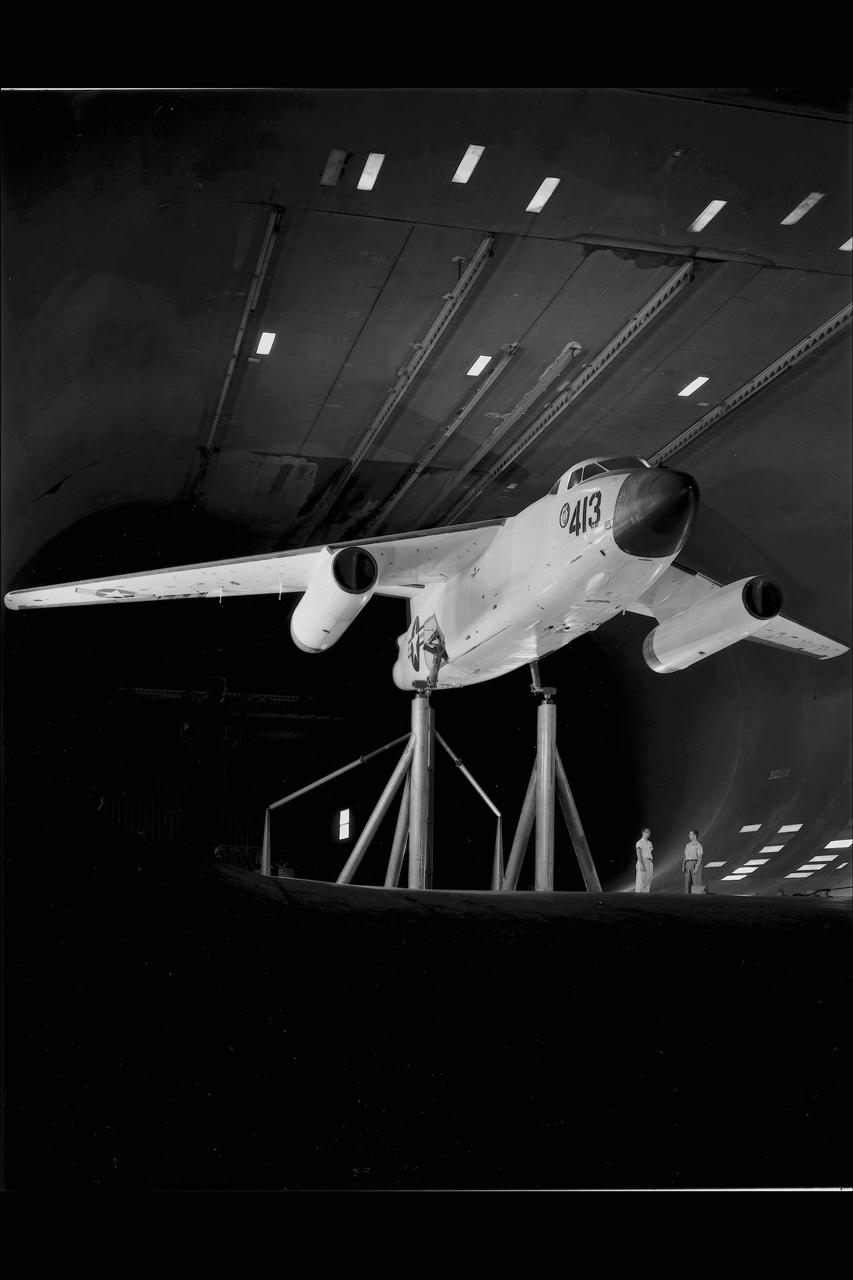
DOUGLAS XA3D-1 #413 AIRPLANE MOUNTED IN THE NACA AMES RESEARCH CENTER'S 40X80_FOOT SUBSONIC WIND TUNNEL sweptback wing Testing the wing boundary layer control of the A3D in the 40 x 80 wind tunnel. Boundary layer control was added to increase the lift of the wing for aircraft carrier take off and landing.
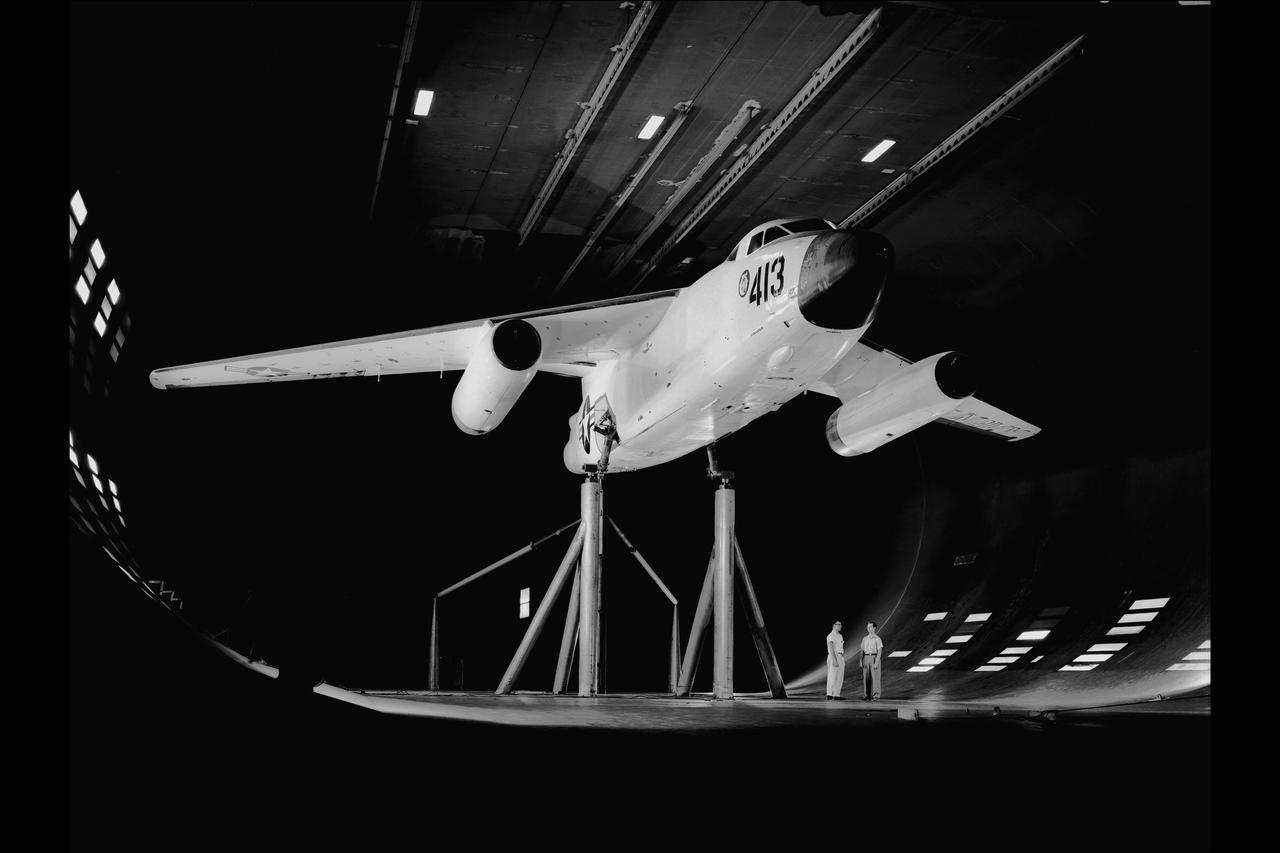
DOUGLAS XA3D-1 #413 AIRPLANE MOUNTED IN THE NACA AMES RESEARCH CENTER'S 40X80_FOOT SUBSONIC WIND TUNNEL Testing the boundary layer control of the A3D in the 40 x 80 wind tunnel. Boundary layer control was added to increase the lift of the wing for take off from an aircraft carrier.
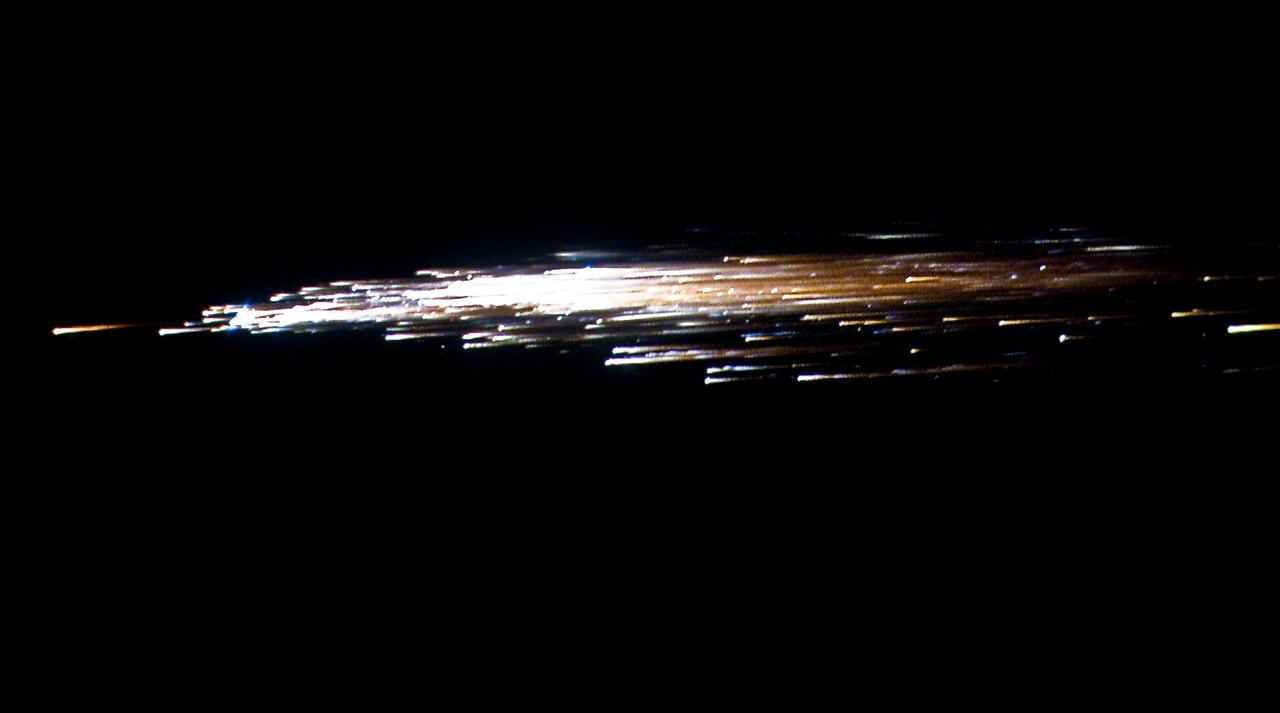
European Space Agency's 'Jules Verne' Automated Transfer Vehicle ATV-1 re-entry in Earth's atmosphere over Pacific Ocean. The breakup ad fragmentation of the ESA's ATV-1 was captured in dramatic fashion by scientists aboard NASA's DC-8 airborne laboratory and a Gulfstream V aircraft as it re-entered the atmosphere early Monday morning over the South Pacific. Photo Credit: NASA Ames Research Center/ESA/Jesse Carpenter/Bill Moede
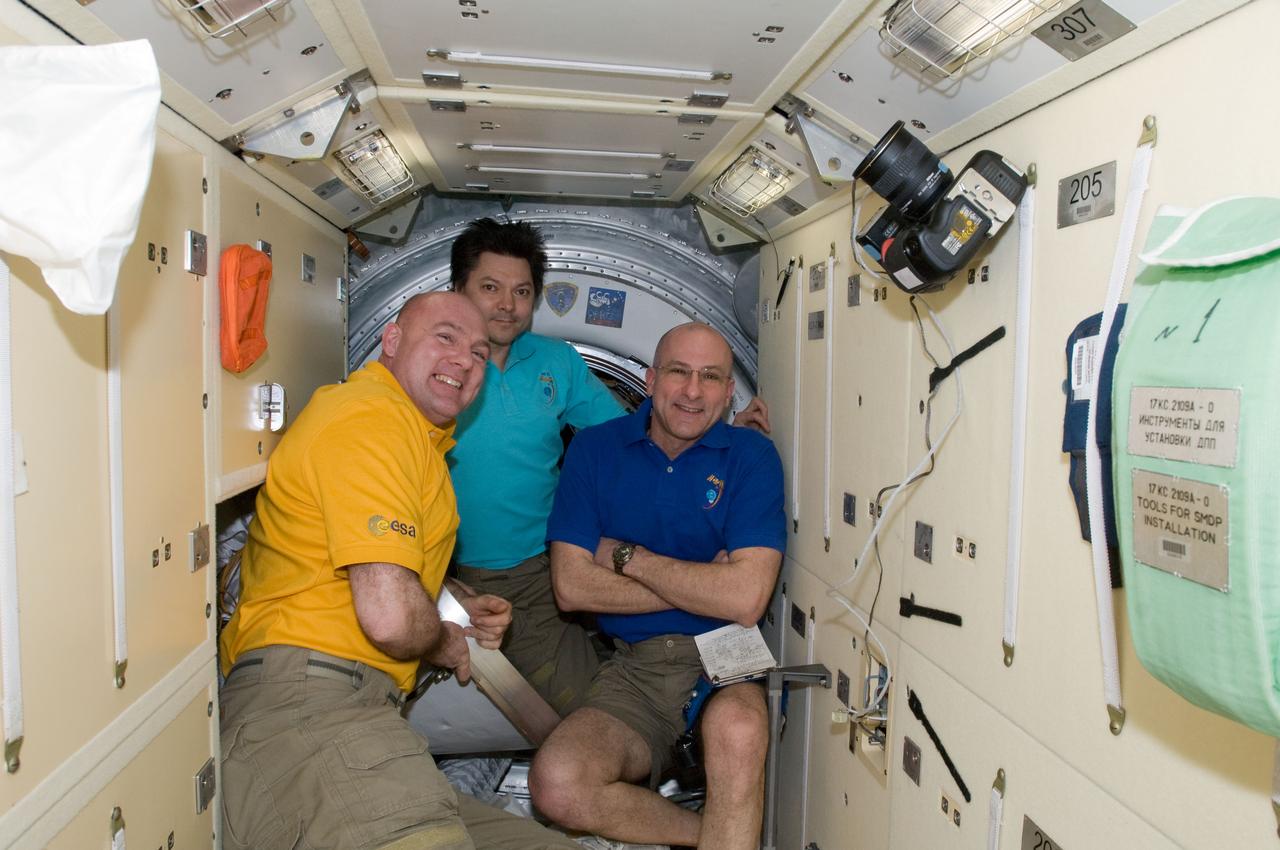
ISS031-E-150065 (28 June 2012) --- In the Rassvet Mini-Research Module 1 (MRM-1), Russian cosmonaut Oleg Kononenko (center), Expedition 31 commander; along with European Space Agency astronaut Andre Kuipers (left) and NASA astronaut Don Pettit, both flight engineers, pose for a photo after adding the Soyuz TMA-03M patch to the growing collection of insignias representing crews who have worked on the International Space Station.
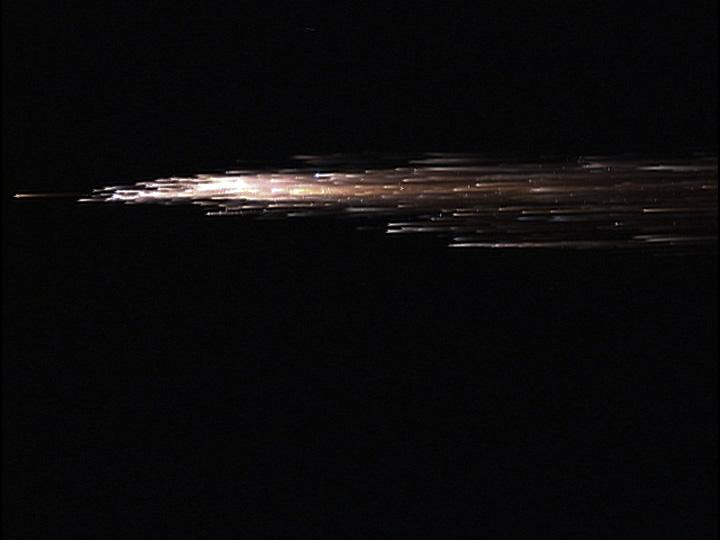
European Space Agency's 'Jules Verne' Automated Transfer Vehicle ATV-1 re-entry in Earth's atmosphere over Pacific Ocean. The breakup ad fragmentation of the ESA's ATV-1 was captured in dramatic fashion by scientists aboard NASA's DC-8 airborne laboratory and a Gulfstream V aircraft as it re-entered the atmosphere early Monday morning over the South Pacific. Photo Credit: NASA Ames Research Center/ESA/Jesse Carpenter/Bill Moede
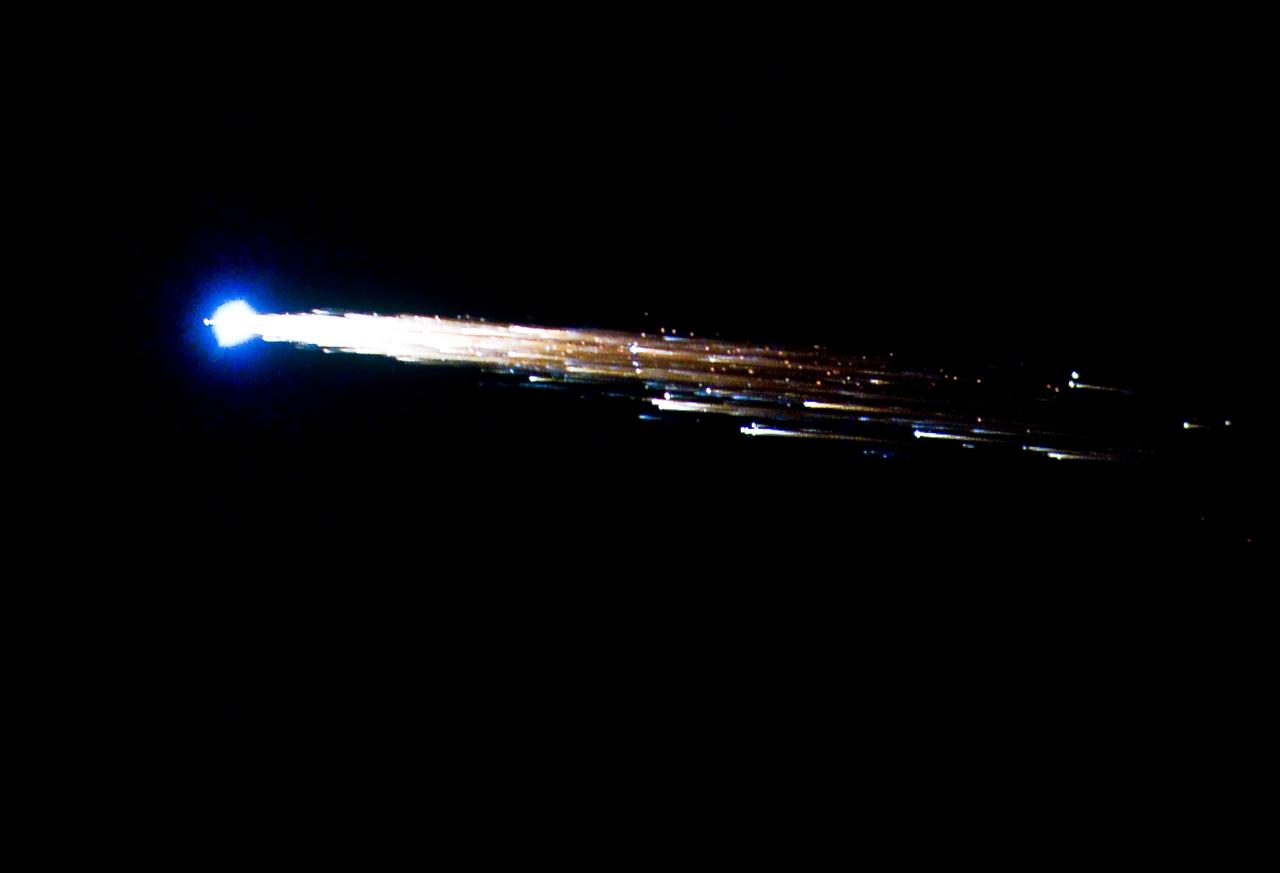
European Space Agency's 'Jules Verne' Automated Transfer Vehicle ATV-1 re-entry in Earth's atmosphere over Pacific Ocean. The breakup ad fragmentation of the ESA's ATV-1 was captured in dramatic fashion by scientists aboard NASA's DC-8 airborne laboratory and a Gulfstream V aircraft as it re-entered the atmosphere early Monday morning over the South Pacific. Photo Credit: NASA Ames Research Center/ESA/Jesse Carpenter/Bill Moede
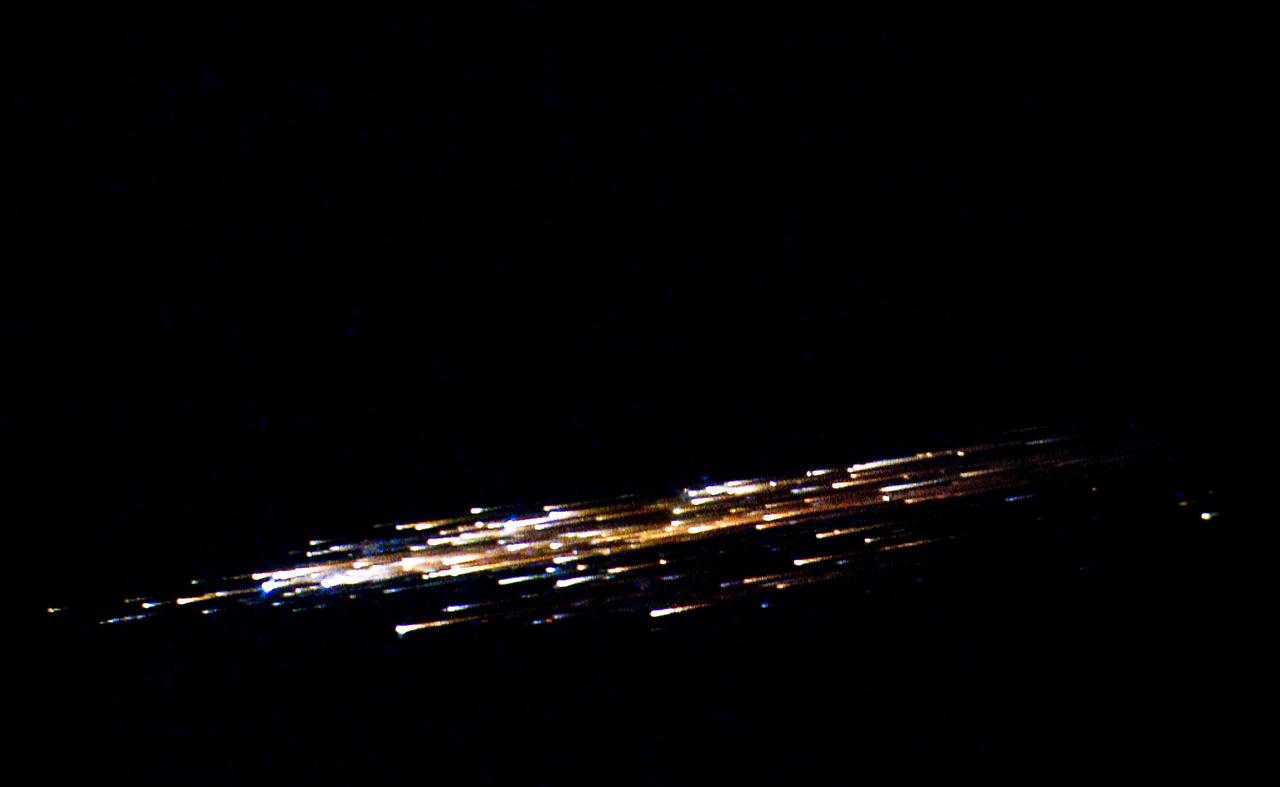
European Space Agency's 'Jules Verne' Automated Transfer Vehicle ATV-1 re-entry in Earth's atmosphere over Pacific Ocean. The breakup ad fragmentation of the ESA's ATV-1 was captured in dramatic fashion by scientists aboard NASA's DC-8 airborne laboratory and a Gulfstream V aircraft as it re-entered the atmosphere early Monday morning over the South Pacific. Photo Credit: NASA Ames Research Center/ESA/Jesse Carpenter/Bill Moede
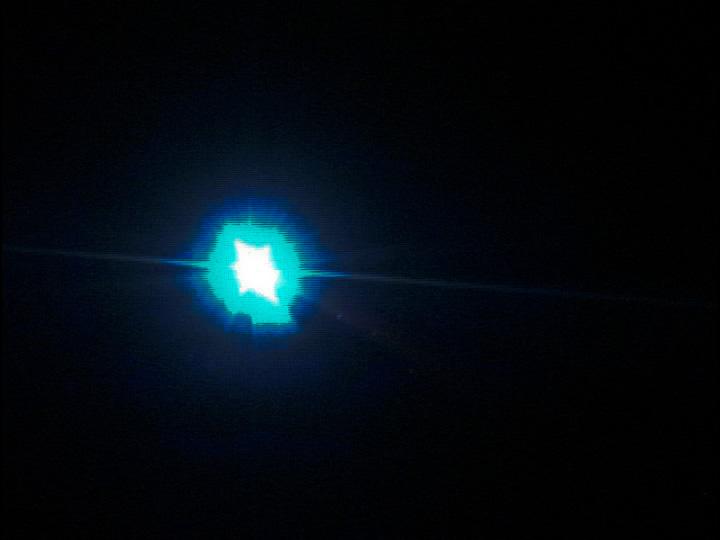
European Space Agency's 'Jules Verne' Automated Transfer Vehicle ATV-1 re-entry in Earth's atmosphere over Pacific Ocean. The breakup ad fragmentation of the ESA's ATV-1 was captured in dramatic fashion by scientists aboard NASA's DC-8 airborne laboratory and a Gulfstream V aircraft as it re-entered the atmosphere early Monday morning over the South Pacific. Photo Credit: NASA Ames Research Center/ESA/Jesse Carpenter/Bill Moede
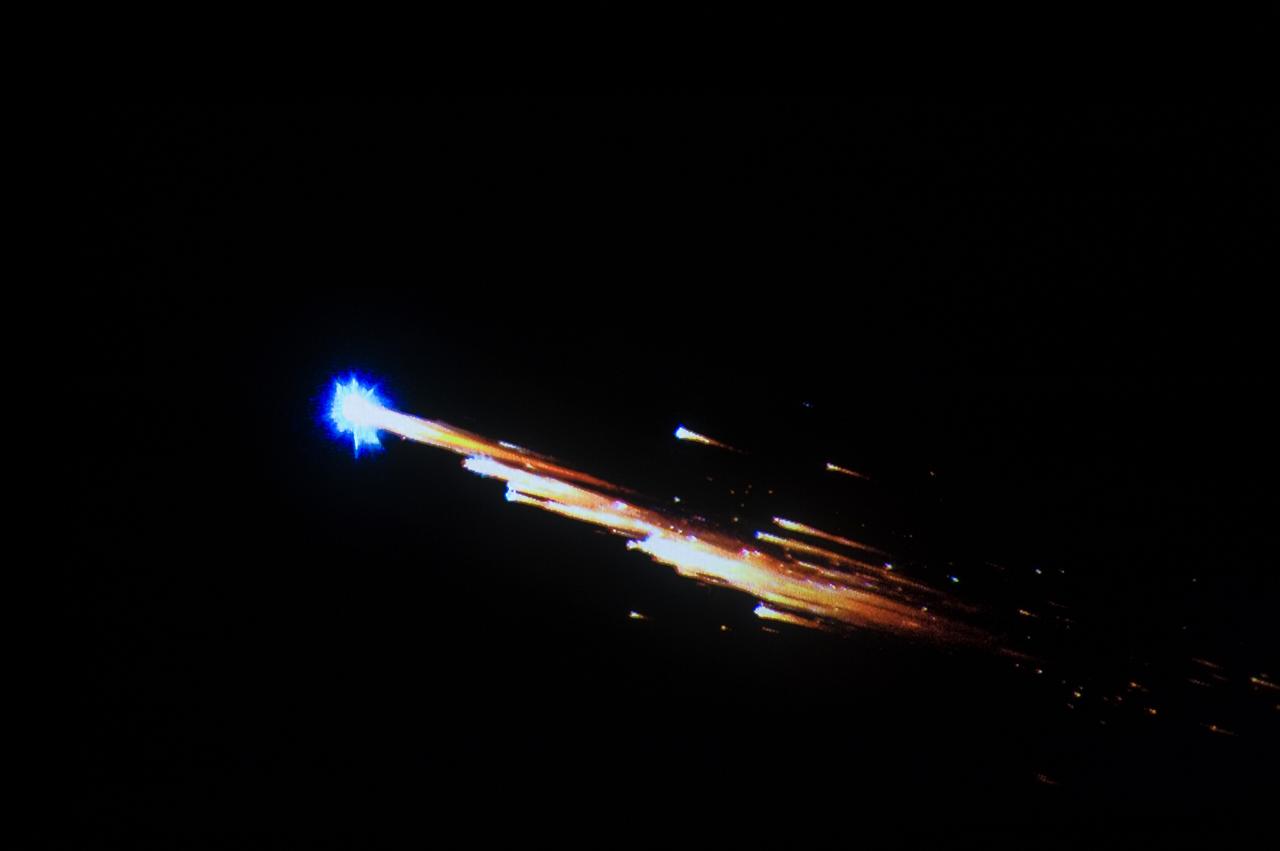
European Space Agency's 'Jules Verne' Automated Transfer Vehicle ATV-1 re-entry in Earth's atmosphere over Pacific Ocean. The breakup ad fragmentation of the ESA's ATV-1 was captured in dramatic fashion by scientists aboard NASA's DC-8 airborne laboratory and a Gulfstream V aircraft as it re-entered the atmosphere early Monday morning over the South Pacific. Photo Credit: NASA Ames Research Center/ESA/Jesse Carpenter/Bill Moede
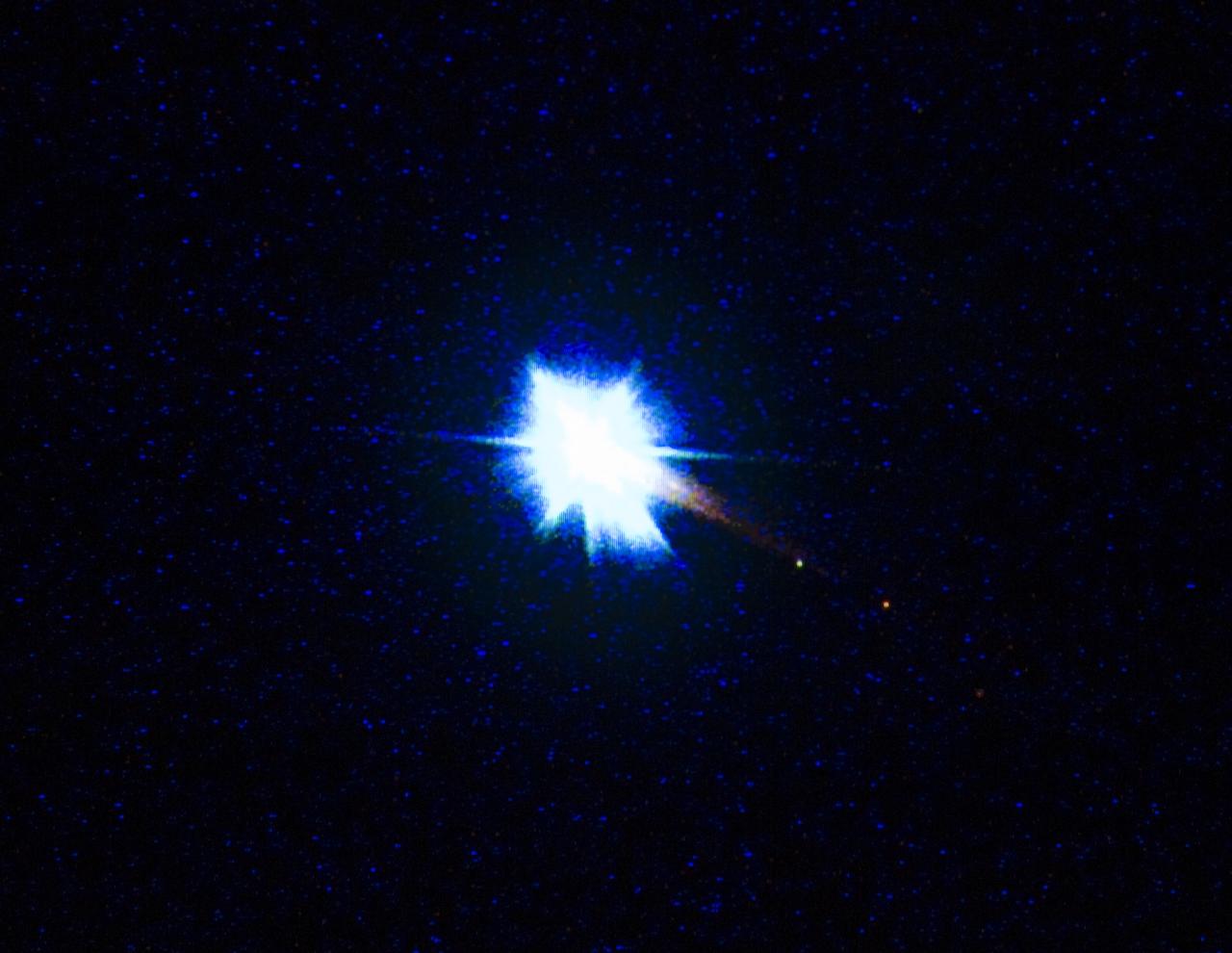
European Space Agency's 'Jules Verne' Automated Transfer Vehicle ATV-1 re-entry in Earth's atmosphere over Pacific Ocean. The breakup ad fragmentation of the ESA's ATV-1 was captured in dramatic fashion by scientists aboard NASA's DC-8 airborne laboratory and a Gulfstream V aircraft as it re-entered the atmosphere early Monday morning over the South Pacific. Photo Credit: NASA Ames Research Center/ESA/Jesse Carpenter/Bill Moede
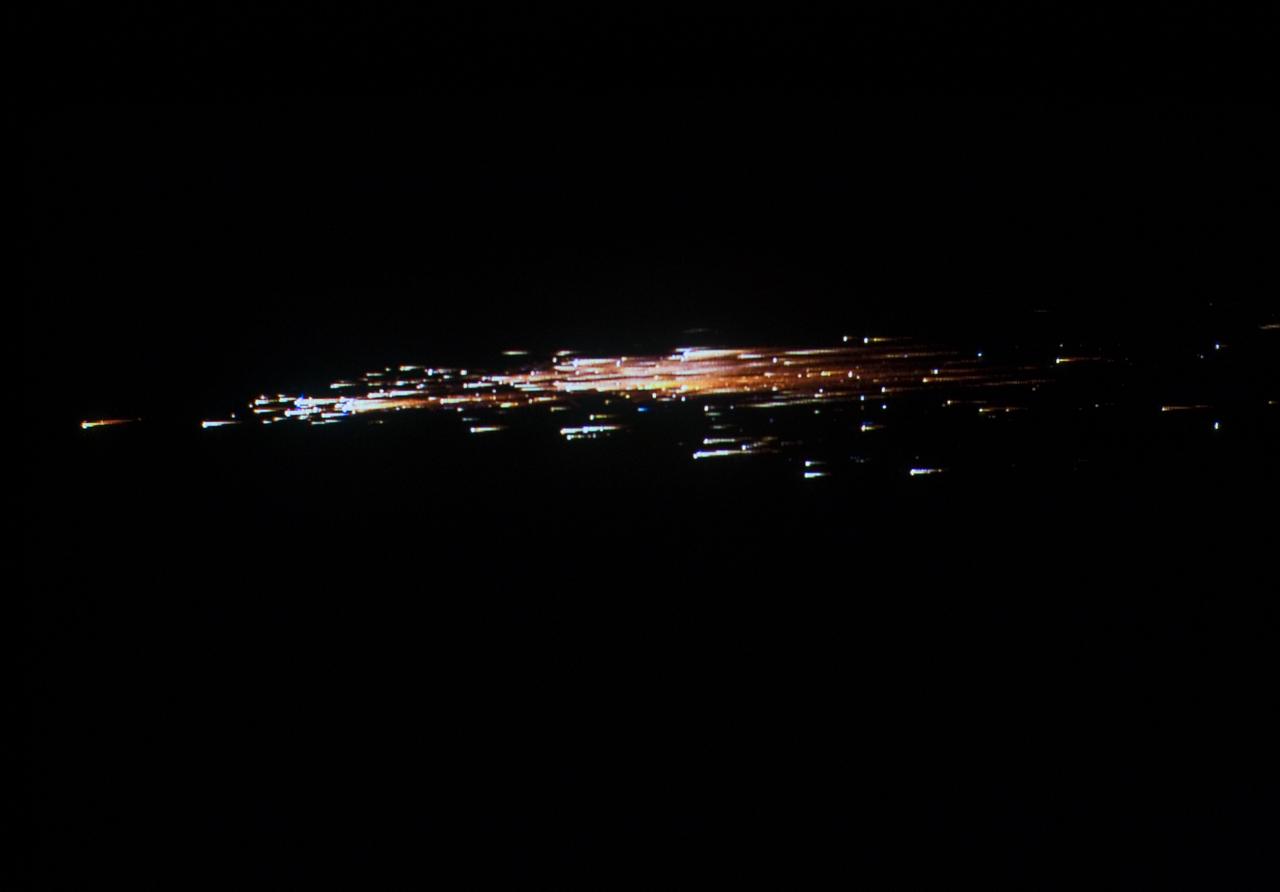
European Space Agency's 'Jules Verne' Automated Transfer Vehicle ATV-1 re-entry in Earth's atmosphere over Pacific Ocean. The breakup ad fragmentation of the ESA's ATV-1 was captured in dramatic fashion by scientists aboard NASA's DC-8 airborne laboratory and a Gulfstream V aircraft as it re-entered the atmosphere early Monday morning over the South Pacific. Photo Credit: NASA Ames Research Center/ESA/Jesse Carpenter/Bill Moede
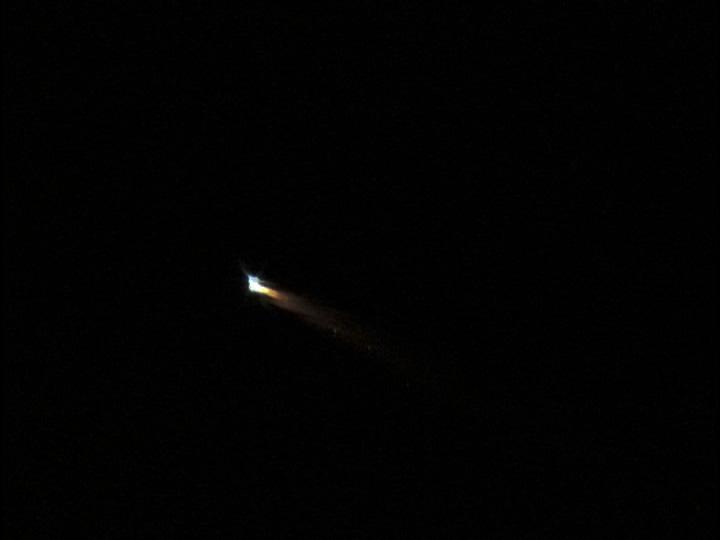
European Space Agency's 'Jules Verne' Automated Transfer Vehicle ATV-1 re-entry in Earth's atmosphere over Pacific Ocean. The breakup ad fragmentation of the ESA's ATV-1 was captured in dramatic fashion by scientists aboard NASA's DC-8 airborne laboratory and a Gulfstream V aircraft as it re-entered the atmosphere early Monday morning over the South Pacific. Photo Credit: NASA Ames Research Center/ESA/Jesse Carpenter/Bill Moede
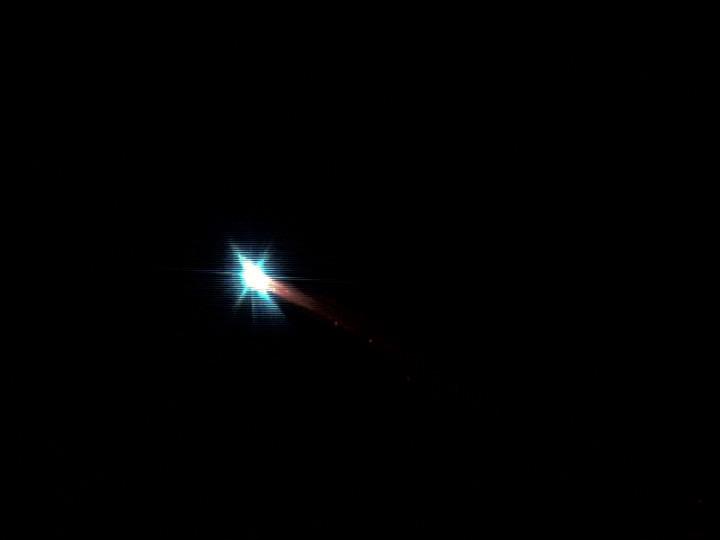
European Space Agency's 'Jules Verne' Automated Transfer Vehicle ATV-1 re-entry in Earth's atmosphere over Pacific Ocean. The breakup ad fragmentation of the ESA's ATV-1 was captured in dramatic fashion by scientists aboard NASA's DC-8 airborne laboratory and a Gulfstream V aircraft as it re-entered the atmosphere early Monday morning over the South Pacific. Photo Credit: NASA Ames Research Center/ESA/Jesse Carpenter/Bill Moede
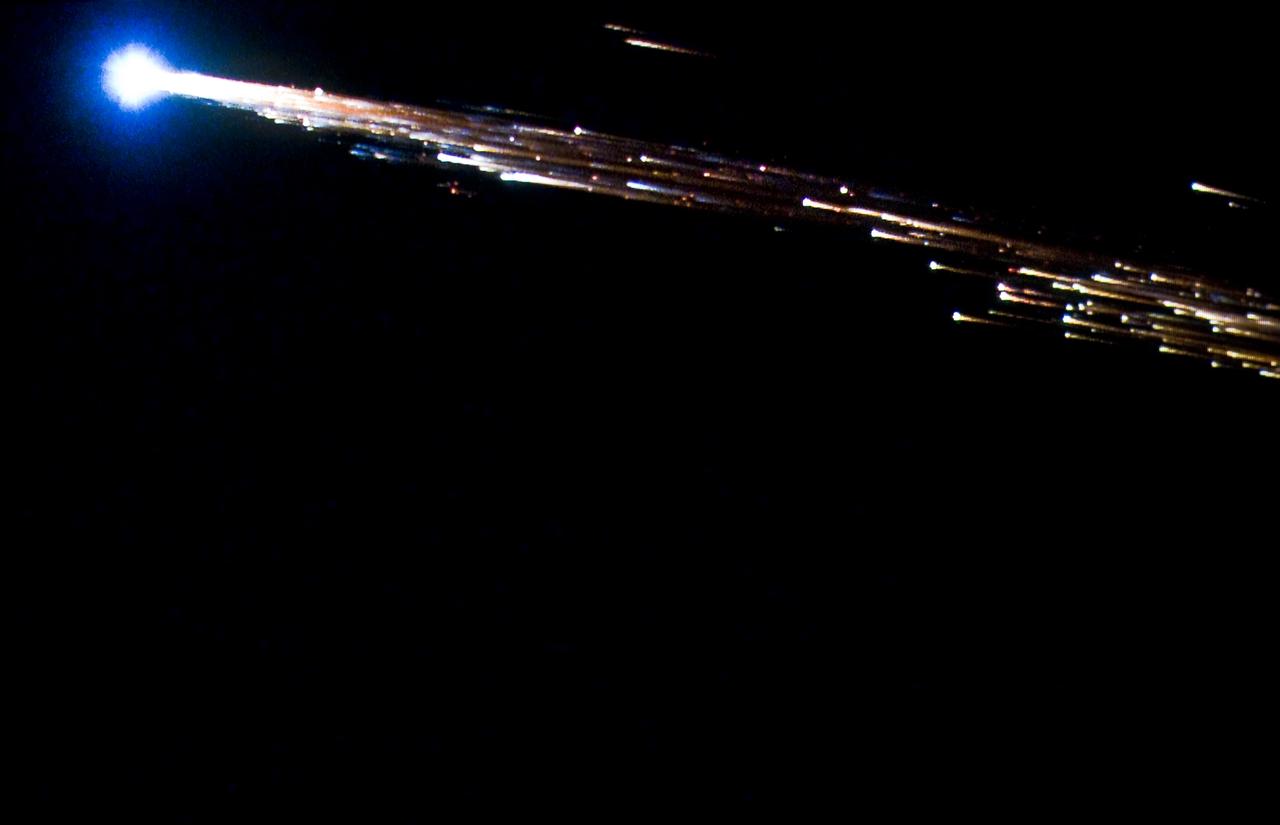
European Space Agency's 'Jules Verne' Automated Transfer Vehicle ATV-1 re-entry in Earth's atmosphere over Pacific Ocean. The breakup ad fragmentation of the ESA's ATV-1 was captured in dramatic fashion by scientists aboard NASA's DC-8 airborne laboratory and a Gulfstream V aircraft as it re-entered the atmosphere early Monday morning over the South Pacific. Photo Credit: NASA Ames Research Center/ESA/Jesse Carpenter/Bill Moede
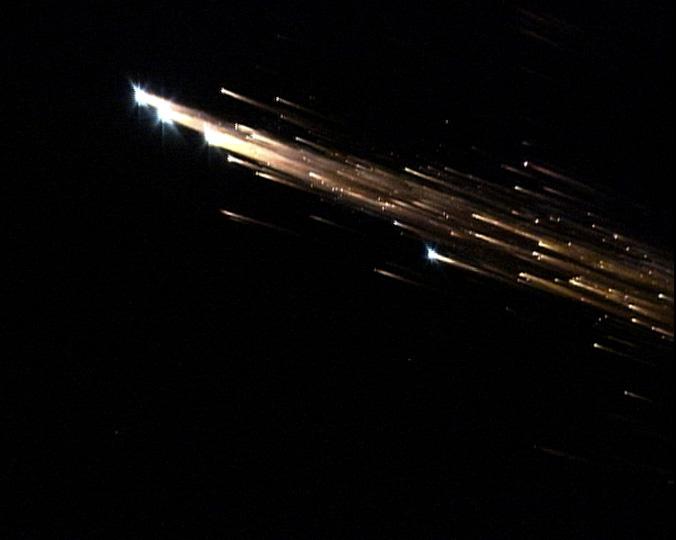
European Space Agency's 'Jules Verne' Automated Transfer Vehicle ATV-1 re-entry in Earth's atmosphere over Pacific Ocean. The breakup ad fragmentation of the ESA's ATV-1 was captured in dramatic fashion by scientists aboard NASA's DC-8 airborne laboratory and a Gulfstream V aircraft as it re-entered the atmosphere early Monday morning over the South Pacific. Photo Credit: NASA Ames Research Center/ESA/Jesse Carpenter/Bill Moede
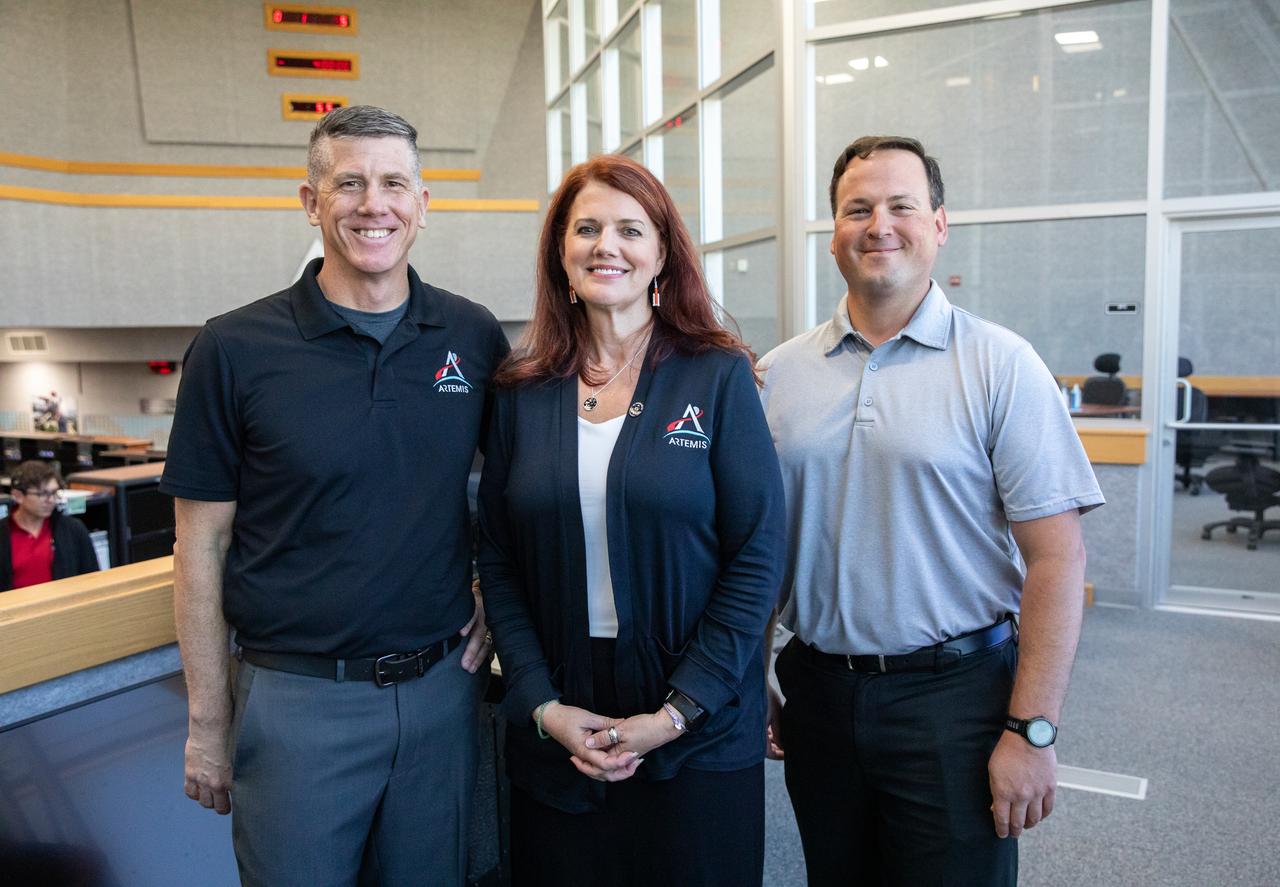
Artemis Launch Director Charlie Blackwell-Thompson, center, is inside Firing Room 1 of the Launch Control Center at NASA’s Kennedy Space Center in Florida during the inaugural Artemis I launch director awards and plaque ceremony on March 24, 2023. At left is Jeremy Graeber, Artemis assistant launch director. At right is Wes Mosedale, technical assistant to the launch director. Following tradition from the Apollo and Space Shuttle Programs, the Artemis I plaque was added to the wall in Firing Room 1 by Blackwell-Thompson. The first in a series of increasingly complex missions, Artemis I launched successfully from Kennedy’s Launch Pad 39B at 1:47 a.m. EST on Nov. 16, 2022.
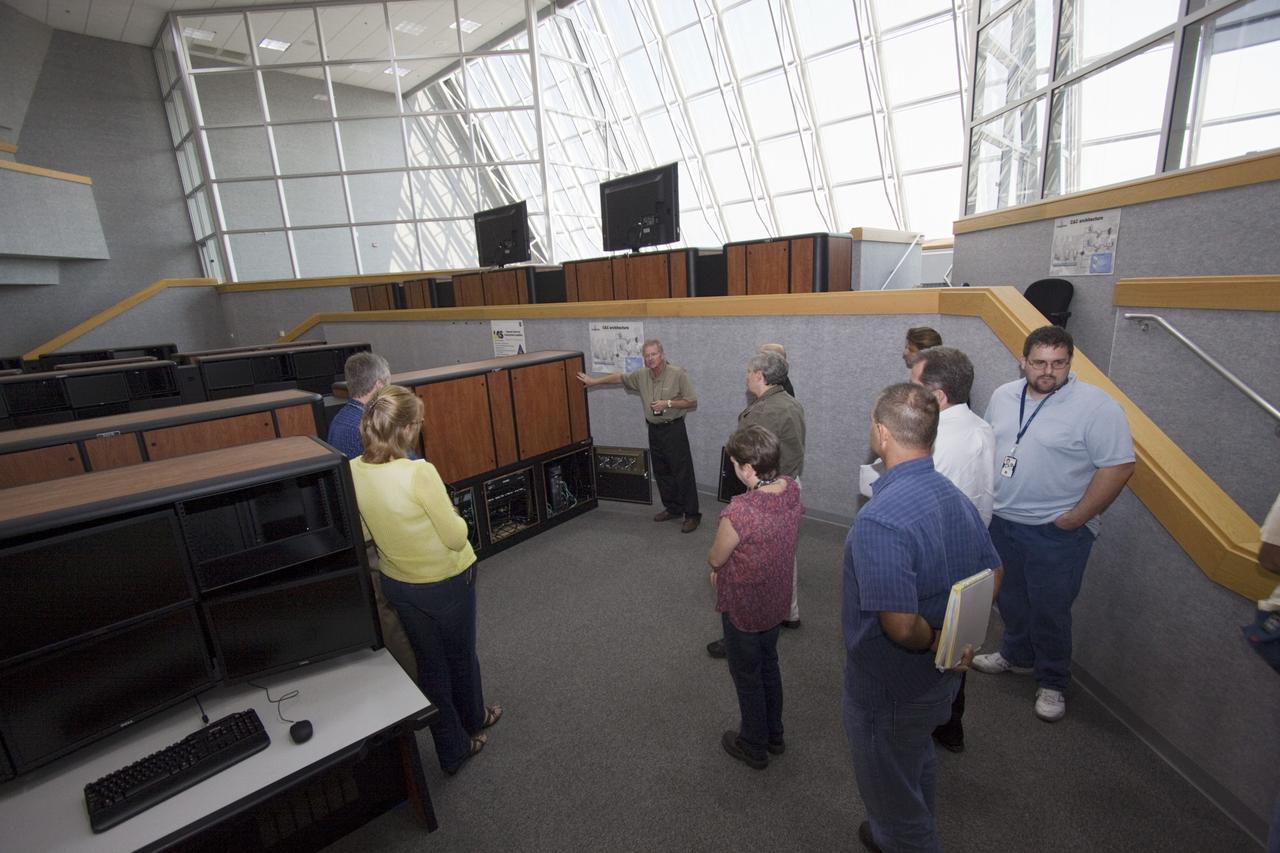
CAPE CANAVERAL, Fla. – At the newly remodeled Launch Control Center's Young-Crippen Firing Room at NASA's Kennedy Space Center in Florida, engineering directorate personnel demonstrate the recently added Space Command & Control System which will be used for launches of future human spaceflight vehicles. Known as Firing Room 1 in the Apollo era, it was re-named as a tribute to the Space Shuttle Program's first crewed mission, STS-1, which was flown by Commander John W. Young and Pilot Robert L. Crippen in April 1981. Photo credit: NASA/Jim Grossmann
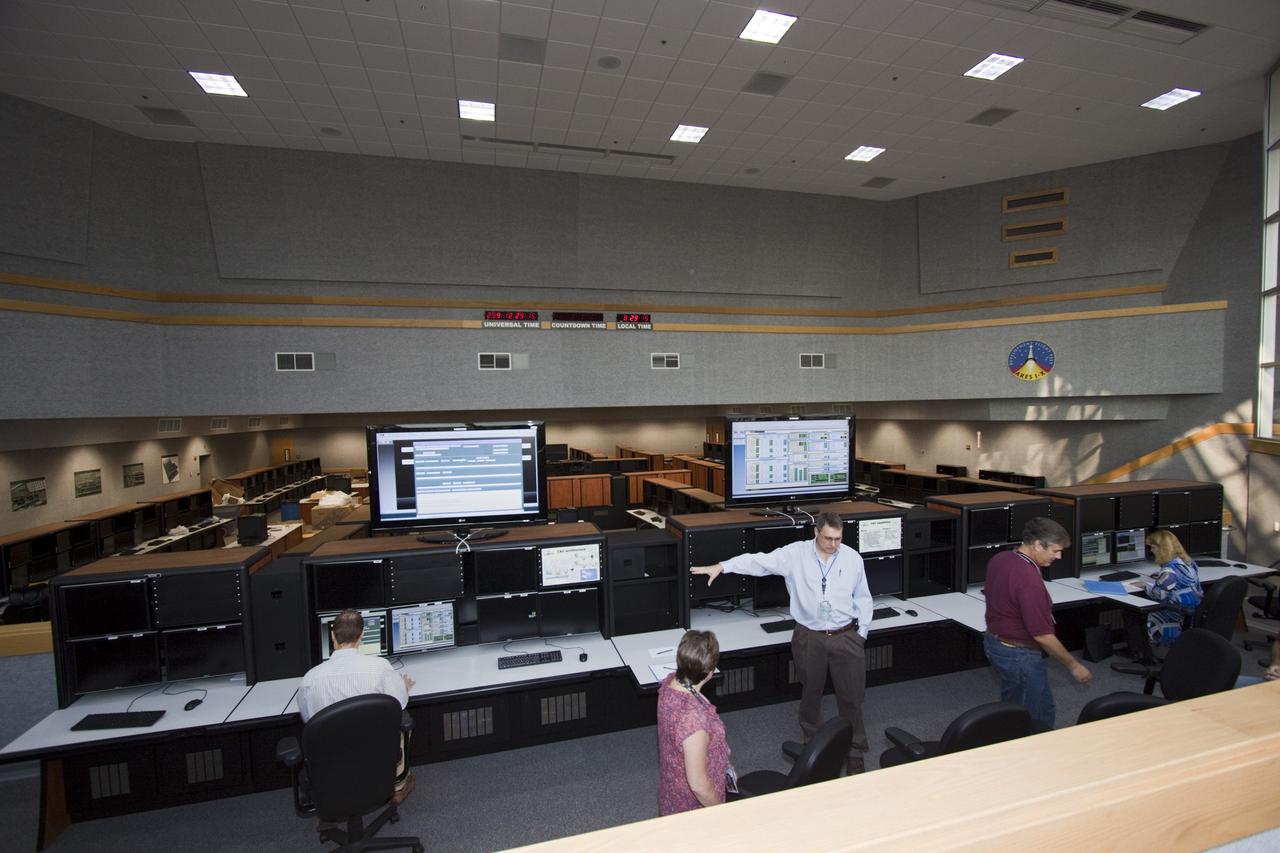
CAPE CANAVERAL, Fla. – At the newly remodeled Launch Control Center's Young-Crippen Firing Room at NASA's Kennedy Space Center in Florida, engineering directorate personnel demonstrate the recently added Space Command & Control System which will be used for launches of future human spaceflight vehicles. Known as Firing Room 1 in the Apollo era, it was re-named as a tribute to the Space Shuttle Program's first crewed mission, STS-1, which was flown by Commander John W. Young and Pilot Robert L. Crippen in April 1981. Photo credit: NASA/Jim Grossmann
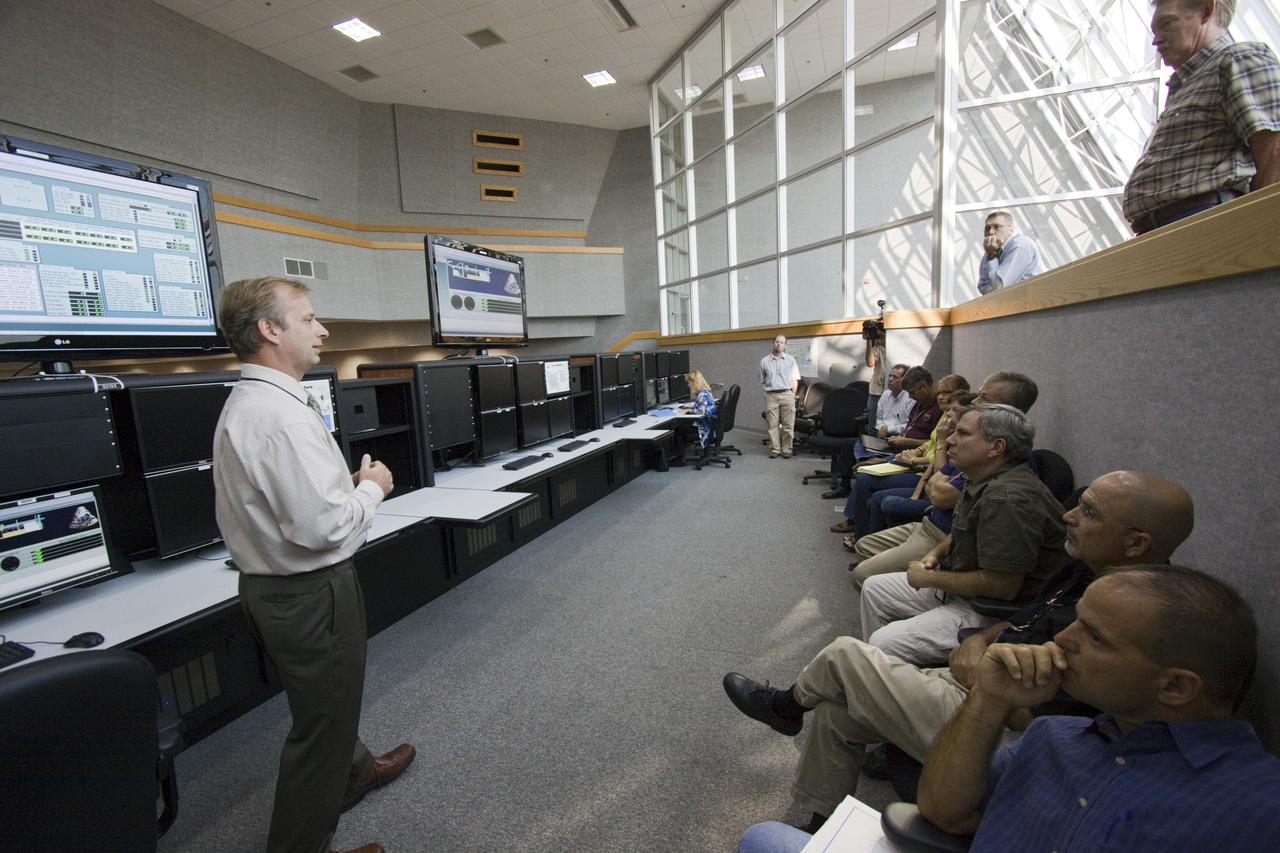
CAPE CANAVERAL, Fla. – At the newly remodeled Launch Control Center's Young-Crippen Firing Room at NASA's Kennedy Space Center in Florida, engineering directorate personnel demonstrate the recently added Space Command & Control System which will be used for launches of future human spaceflight vehicles. Known as Firing Room 1 in the Apollo era, it was re-named as a tribute to the Space Shuttle Program's first crewed mission, STS-1, which was flown by Commander John W. Young and Pilot Robert L. Crippen in April 1981. Photo credit: NASA/Jim Grossmann
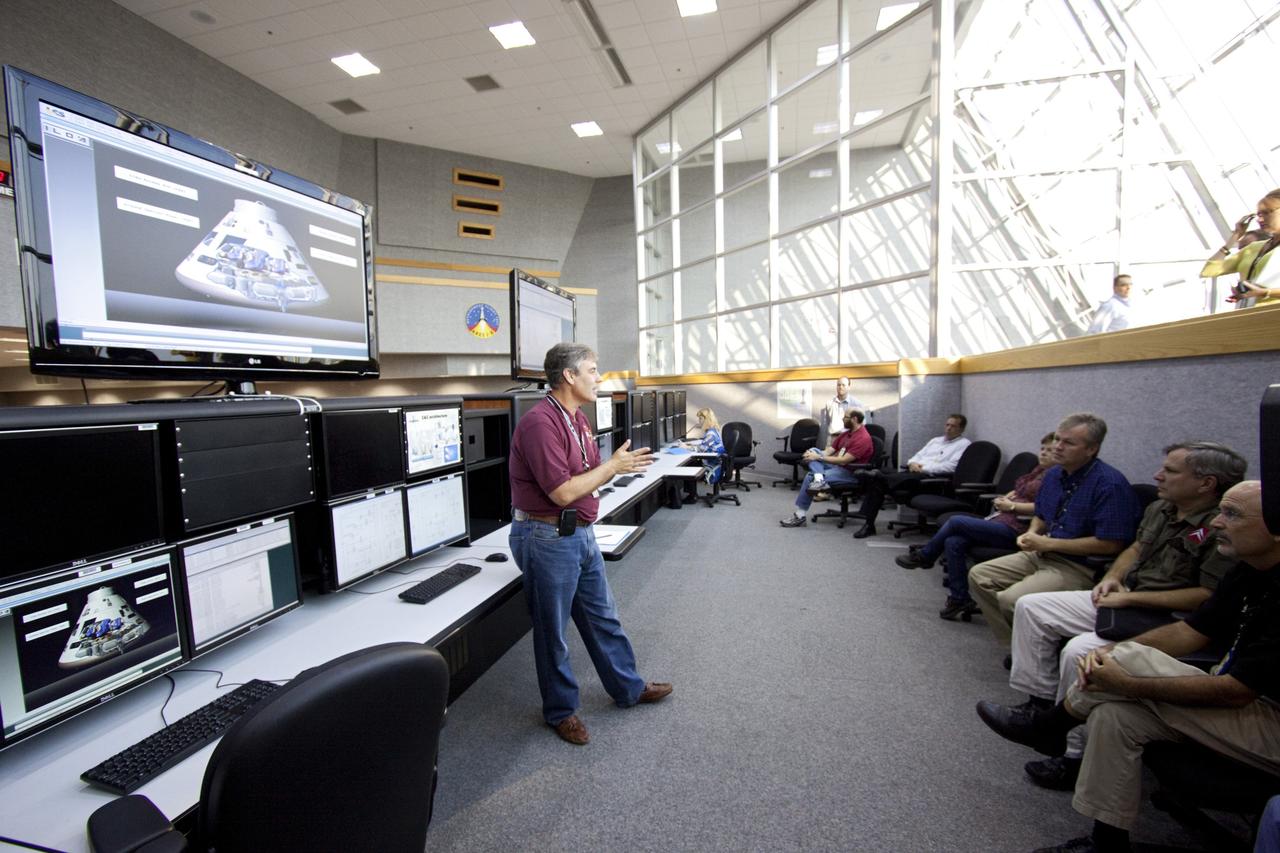
CAPE CANAVERAL, Fla. – At the newly remodeled Launch Control Center's Young-Crippen Firing Room at NASA's Kennedy Space Center in Florida, engineering directorate personnel demonstrate the recently added Space Command & Control System which will be used for launches of future human spaceflight vehicles. Known as Firing Room 1 in the Apollo era, it was re-named as a tribute to the Space Shuttle Program's first crewed mission, STS-1, which was flown by Commander John W. Young and Pilot Robert L. Crippen in April 1981. Photo credit: NASA/Jim Grossmann
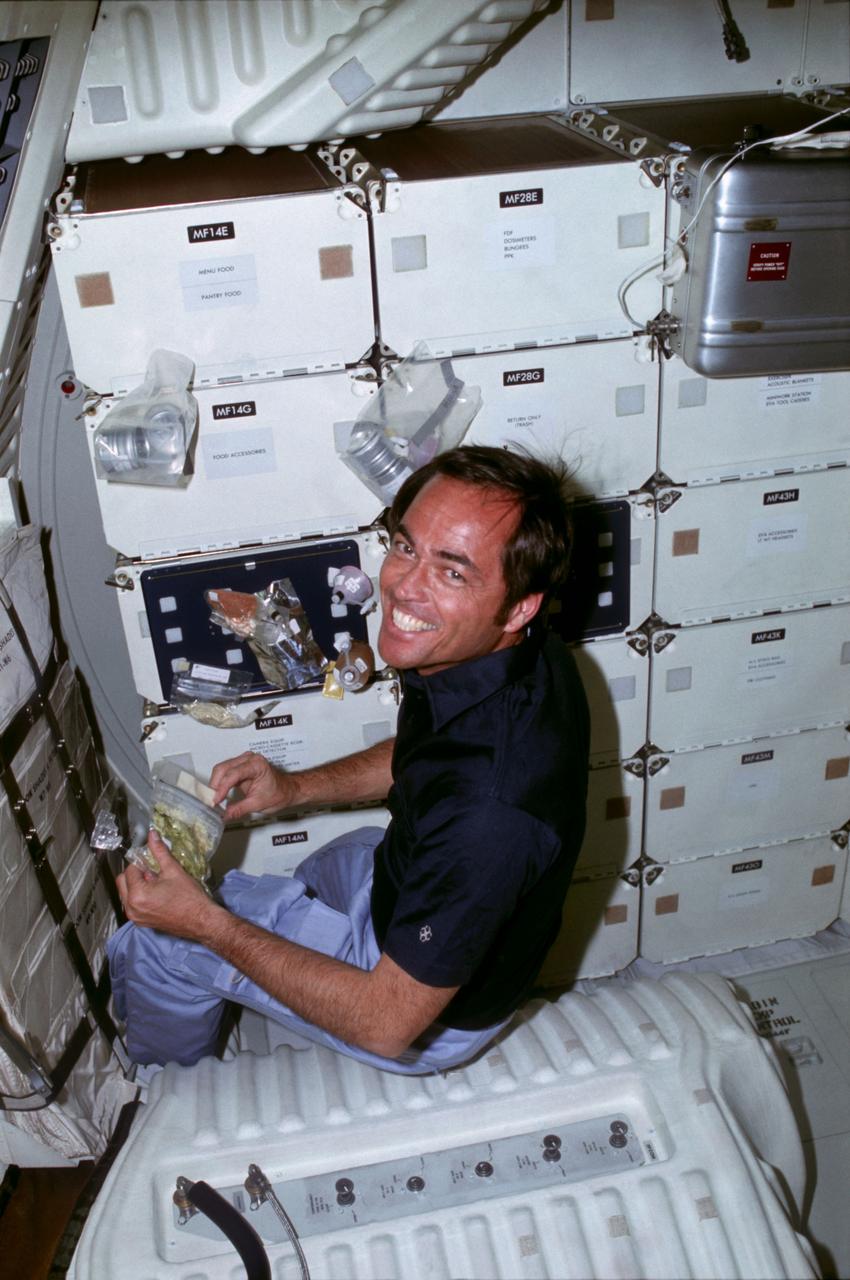
STS001-07-502 (12-14 April 1981) --- A smiling Robert L. Crippen, STS-1 pilot, is about to prepare a meal aboard the space shuttle Columbia in Earth orbit. Prepared meals, which need only water added, and beverages, can be seen attached to trays, which are mounted on locker doors in Columbia's middeck area. Astronaut John W. Young, commander, took this photograph with a 35mm camera. Photo credit: NASA
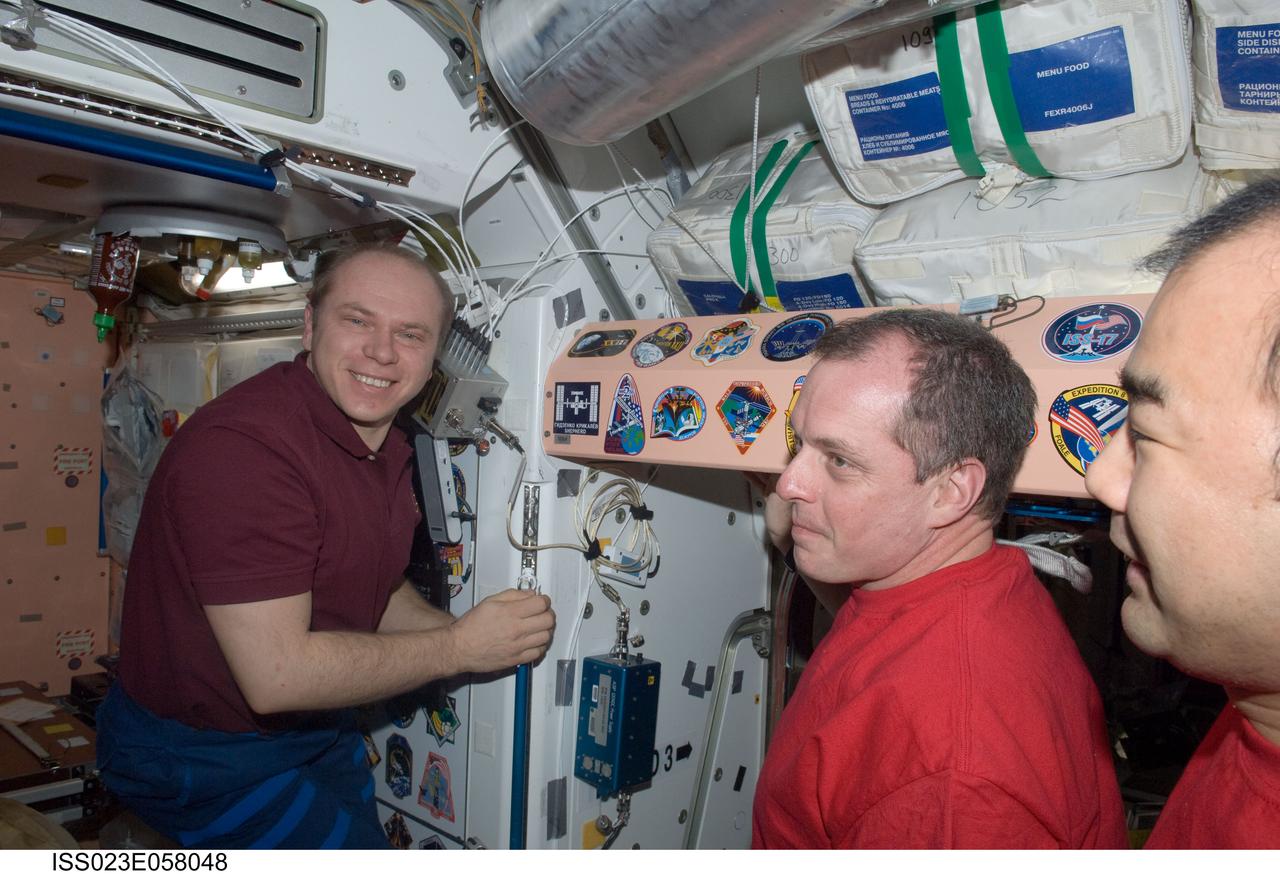
ISS023-E-058048 (1 June 2010) --- Russian cosmonaut Oleg Kotov (left), Expedition 23 commander; along with NASA astronaut T.J. Creamer (center) and Japan Aerospace Exploration Agency (JAXA) astronaut Soichi Noguchi, both flight engineers, are pictured after adding the Expedition 23 patch to the Unity node?s growing collection of insignias representing crews who have lived and worked on the International Space Station.
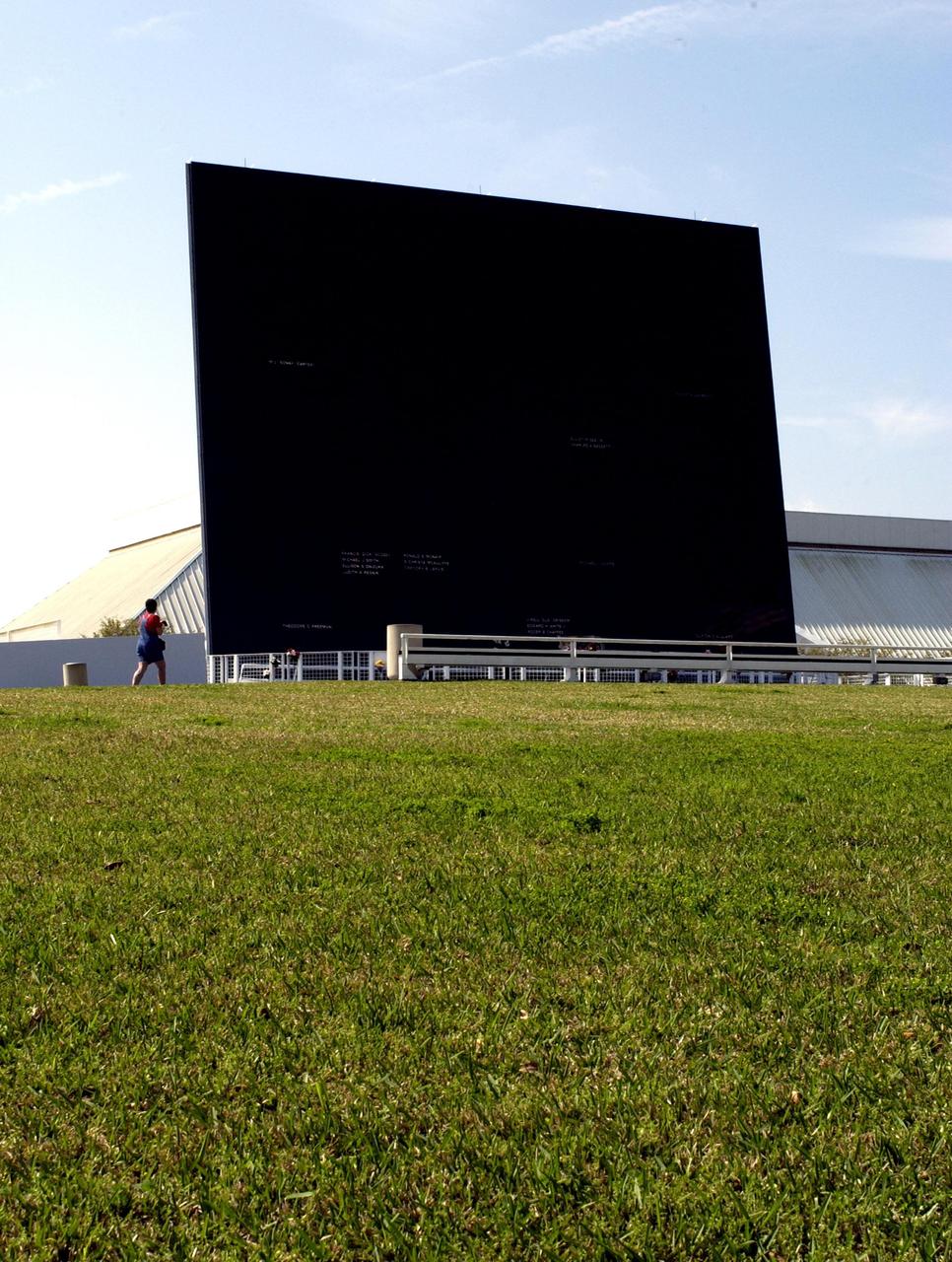
KENNEDY SPACE CENTER, FLA. - A view of the Astronaut Memorial Space Mirror at the KSC Visitor Complex. The memorial is a national tribute to 17 American astronauts who previously gave their lives to the quest to explore space. The memorial has had added attention since the loss of the Columbia crew Feb. 1, 2003, when they died in an explosion as they were returning to Earth from mission STS-107.
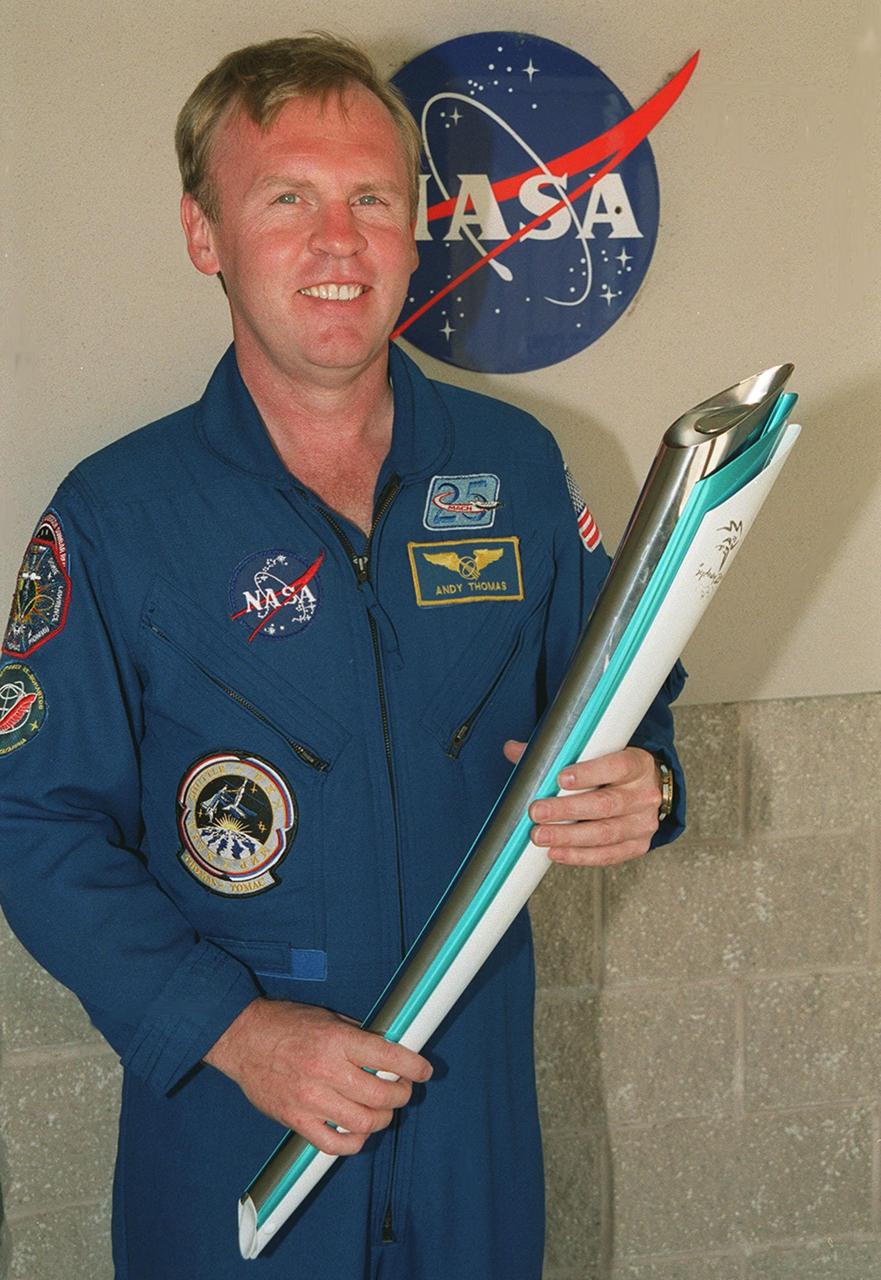
Astronaut Andy Thomas holds a facsimile of the Olympic torch that is being carried on Space Shuttle Atlantis during mission STS-101. Thomas is from Australia, which is the site of the 2000 Olympics. He coordinated the effort to have the torch added to the manifest so that it would truly circle the Earth in the spirit of the worldwide sporting event. The Sydney Olympic Torch Relay will arrive in Australia on June 8. The games begin Sept. 1
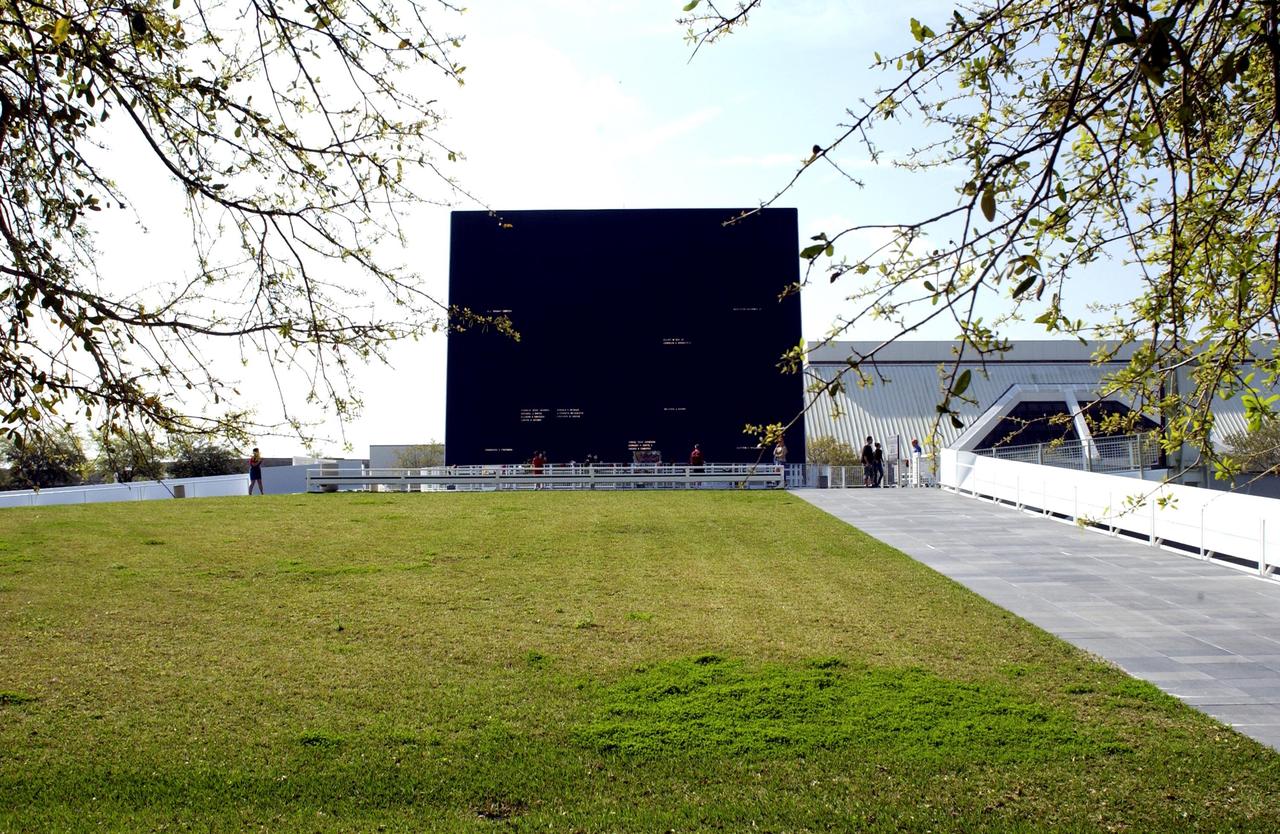
KENNEDY SPACE CENTER, FLA. - A view of the Astronaut Memorial Space Mirror at the KSC Visitor Complex. The memorial is a national tribute to 17 American astronauts who previously gave their lives to the quest to explore space. The memorial has had added attention since the loss of the Columbia crew Feb. 1, 2003, when they died in an explosion as they were returning to Earth from mission STS-107.
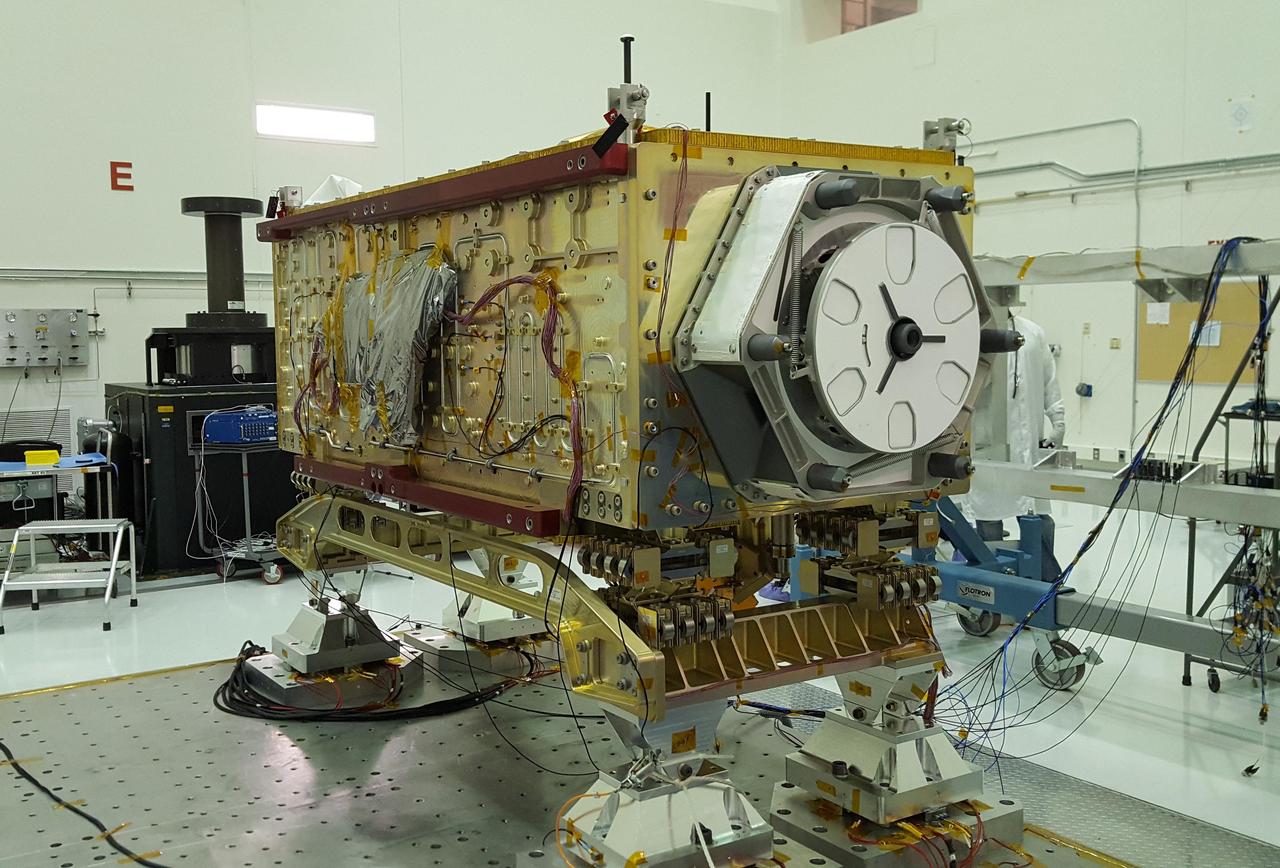
OCO-3 sits on the large vibration table (known as the "shaker") in the Environmental Test Lab at the Jet Propulsion Laboratory. The exposed wires lead to sensors used during dynamics and thermal-vacuum testing. Thermal blankets will be added to the instrument at Kennedy Space Center, where a Space-X Dragon capsule carrying OCO-3 will launch in on a Falcon 9 rocket to the space station on May 1, 2019. https://photojournal.jpl.nasa.gov/catalog/PIA23211
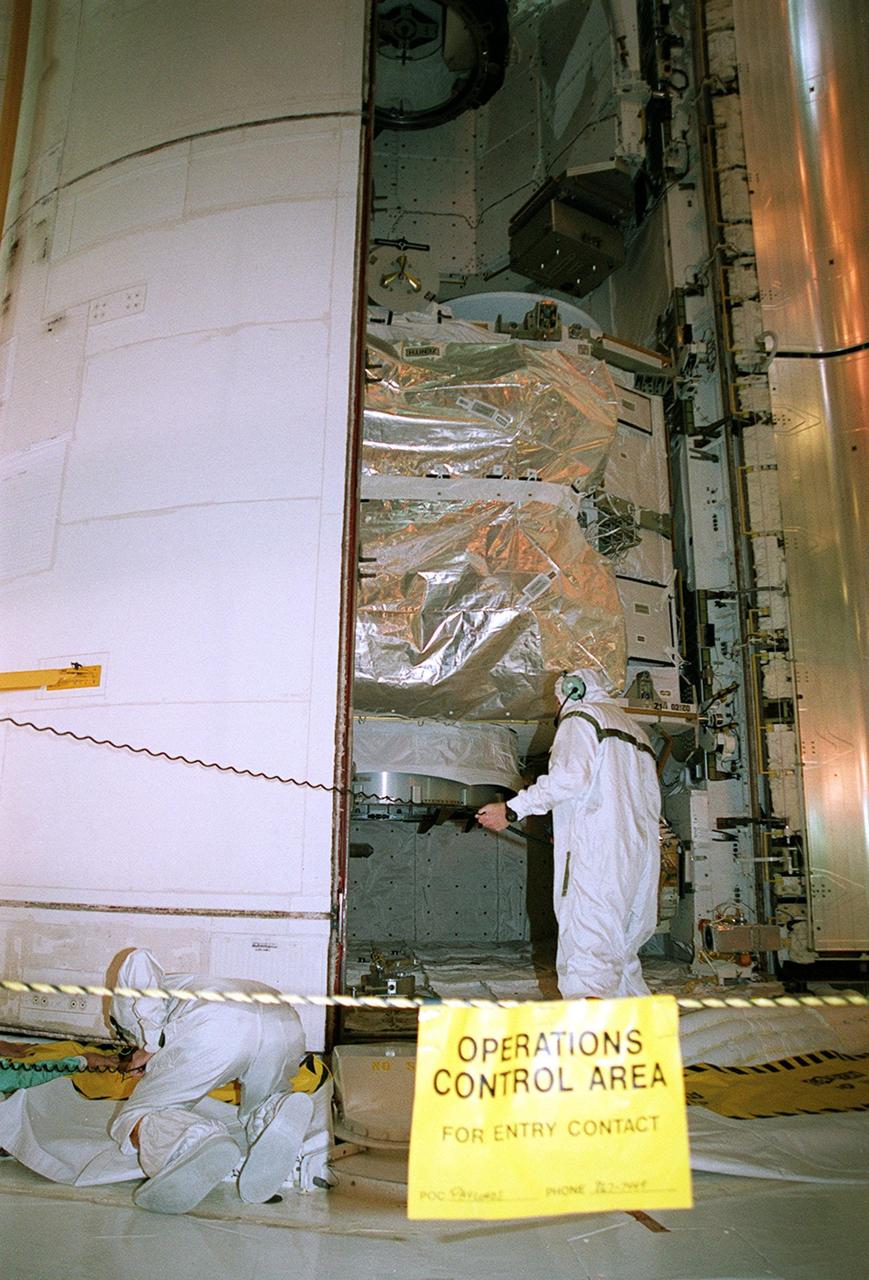
Workers keep check on the closing payload bay doors on Space Shuttle Discovery. Inside are the two elements to be added to the International Space Station on mission STS-92. At top is the third Pressurized Mating Adapter; below it is Integrated Truss Structure Z-1, the cornerstone truss of the Station. Making the 100th Space Shuttle mission launched from Kennedy Space Center, Discovery also will be making its 28th flight into space. On the 11-day mission, the crew of seven will be making four space walks to attach the hardware to the Station
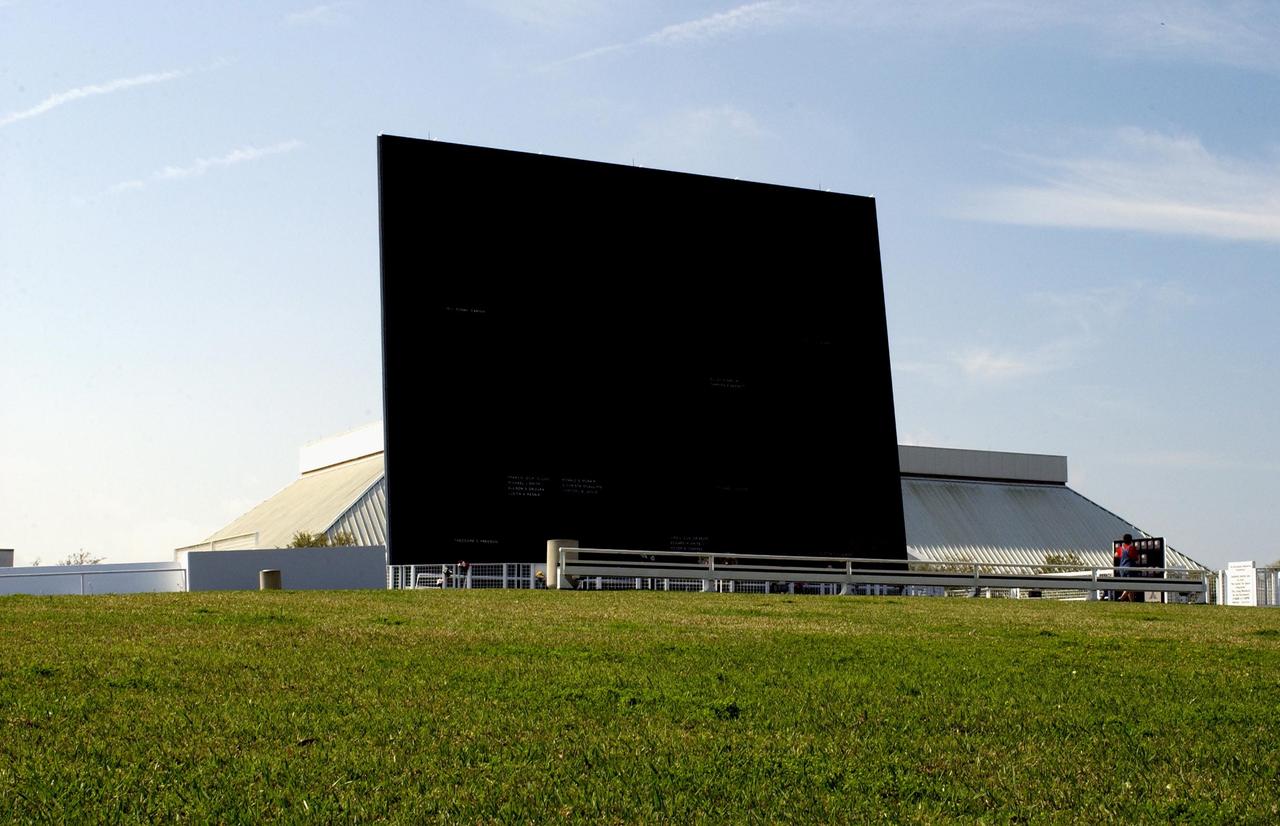
KENNEDY SPACE CENTER, FLA. -- A view of the Astronaut Memorial Space Mirror at the KSC Visitor Complex. The memorial is a national tribute to 17 American astronauts who previously gave their lives to the quest to explore space. The memorial has had added attention since the loss of the Columbia crew Feb. 1, 2003, when they died in an explosion as they were returning to Earth from mission STS-107.
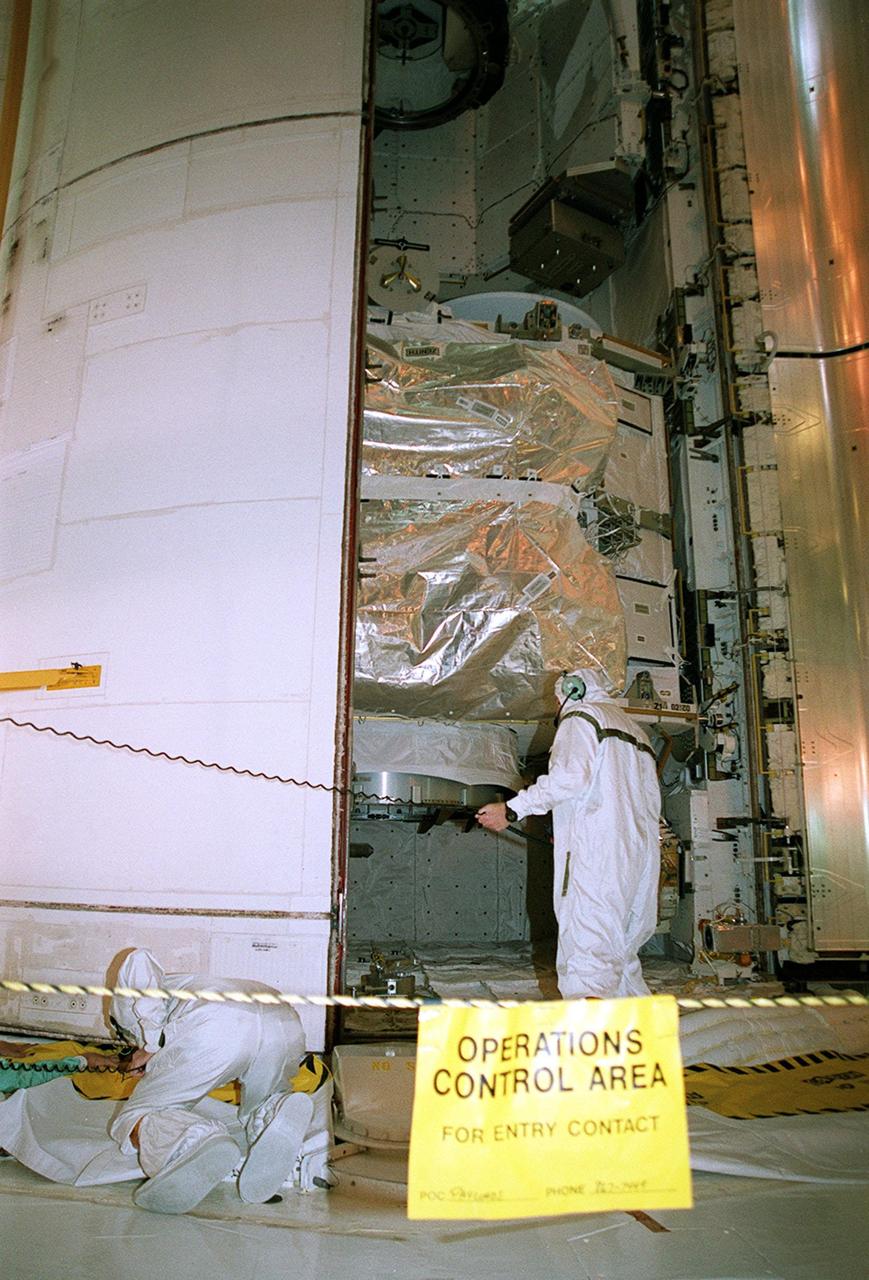
Workers keep check on the closing payload bay doors on Space Shuttle Discovery. Inside are the two elements to be added to the International Space Station on mission STS-92. At top is the third Pressurized Mating Adapter; below it is Integrated Truss Structure Z-1, the cornerstone truss of the Station. Making the 100th Space Shuttle mission launched from Kennedy Space Center, Discovery also will be making its 28th flight into space. On the 11-day mission, the crew of seven will be making four space walks to attach the hardware to the Station
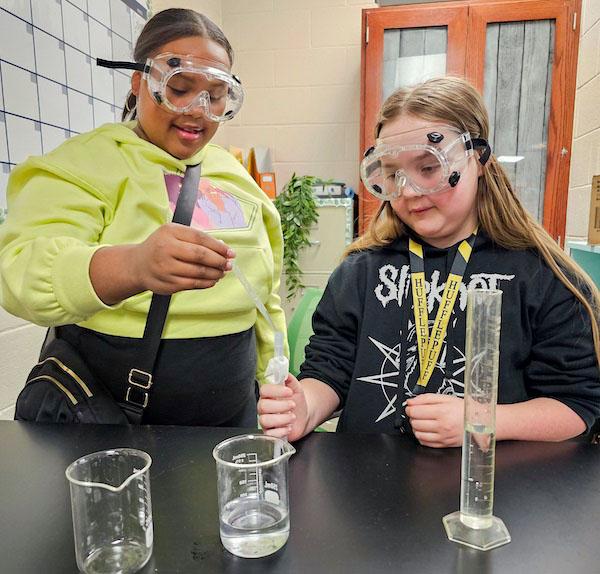
jsc2024e067105 (1/29/2024) --- Eddie Finley Junior High School student researchers (Caris Gray and Olivia Jones) adding tardigrade to the experiment tube to begin terrestrial examination of tardigrade growth. Their experiment, Tardigrade Growth in Space, is part of the Nanoracks-National Center for Earth and Space Science Education-Surveyor-Student Spaceflight Experiments Program Mission 18 to ISS (Nanoracks-NCESSE-Surveyor-SSEP).
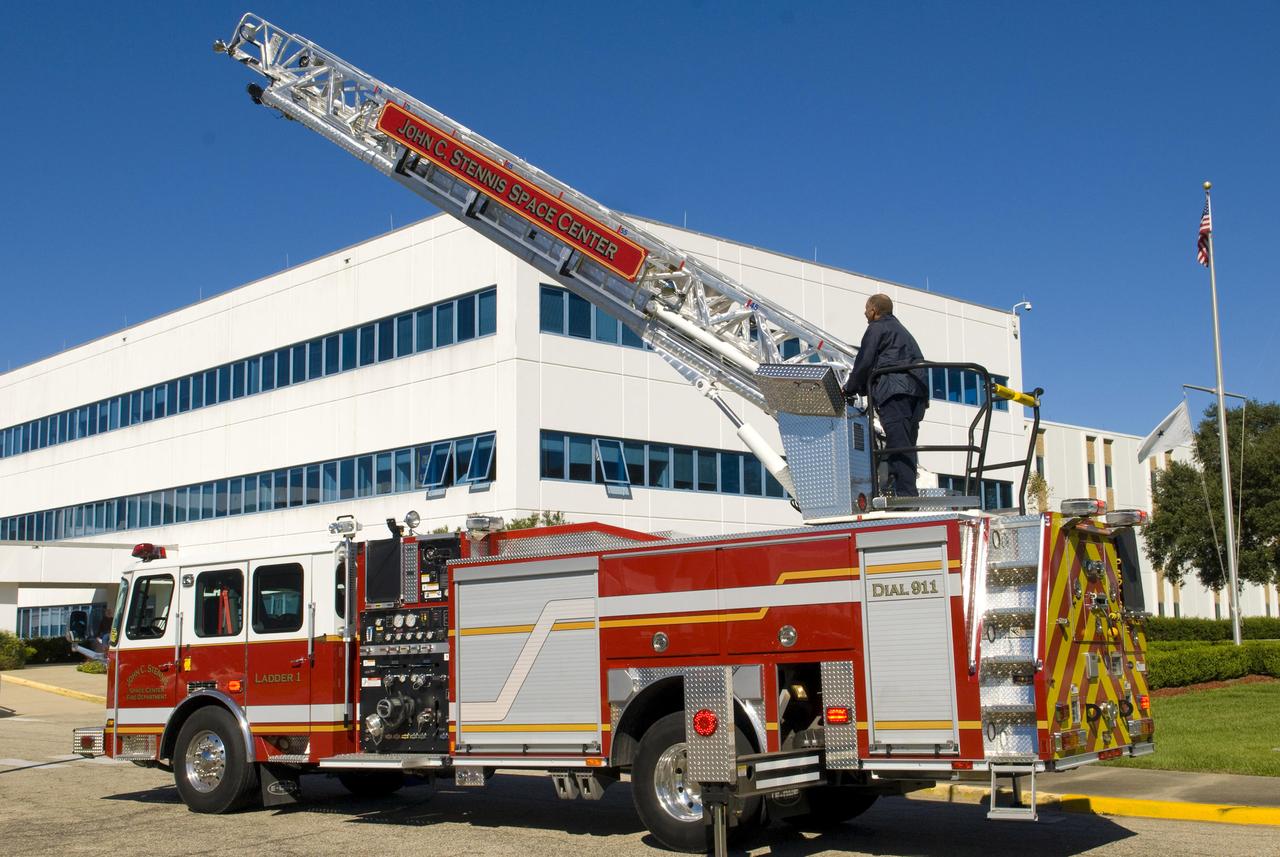
The Stennis Space Center Fire Department added to its fire-fighting capabilities with acquisition of a new emergency response vehicle, Ladder-1, for use on-site. The E-One HP78 Aerial Truck is a combination aerial ladder and fire suppression unit and is designed with the latest safety technology. Featuring a 78-foot ladder and a pumping capability of 1,500 gallons per minute, the new truck provides firefighters with a tremendous rescue and fire suppression tool, Stennis Fire Chief Clark Smith said.
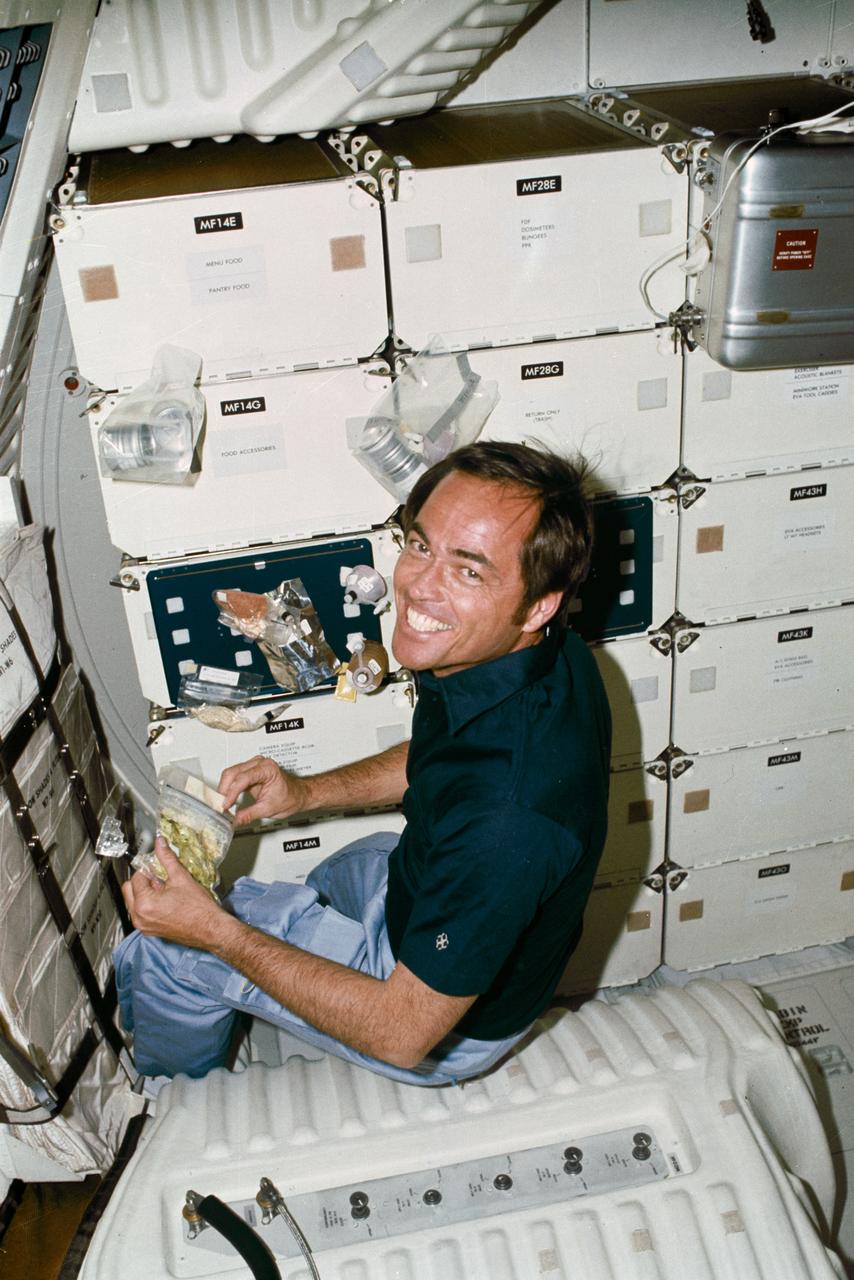
STS001-07-502 (12-14 April 1981) --- A smiling Robert L. Crippen, STS-1 pilot, is about to prepare a meal aboard the space shuttle Columbia in Earth orbit. Prepared meals, which need only water added, and beverages, can be seen attached to trays, which are mounted on locker doors in Columbia's middeck area. Astronaut John W. Young, commander, took this photograph with a 35mm camera. Photo credit: NASA
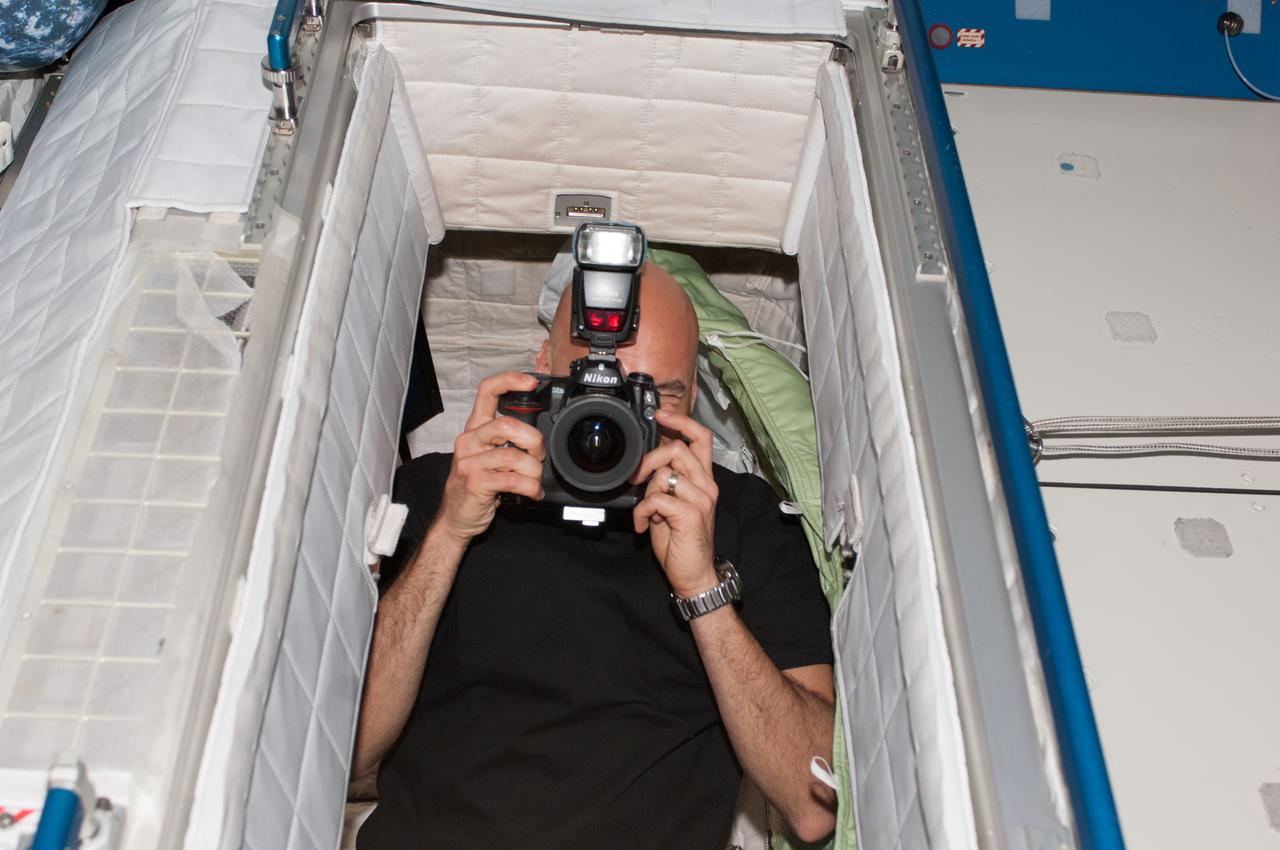
ISS036-E-005320 (29 May 2013) --- Having just come aboard the International Space Station, European Space Agency astronaut Luca Parmitano, Expedition 36 flight engineer, takes some interior pictures in the Harmony node. He later added a large lens and took some out-the-window scenes after moving to the Cupola aboard the orbital outpost. He is beginning a scheduled 5 1/2 month stay aboard the space station.
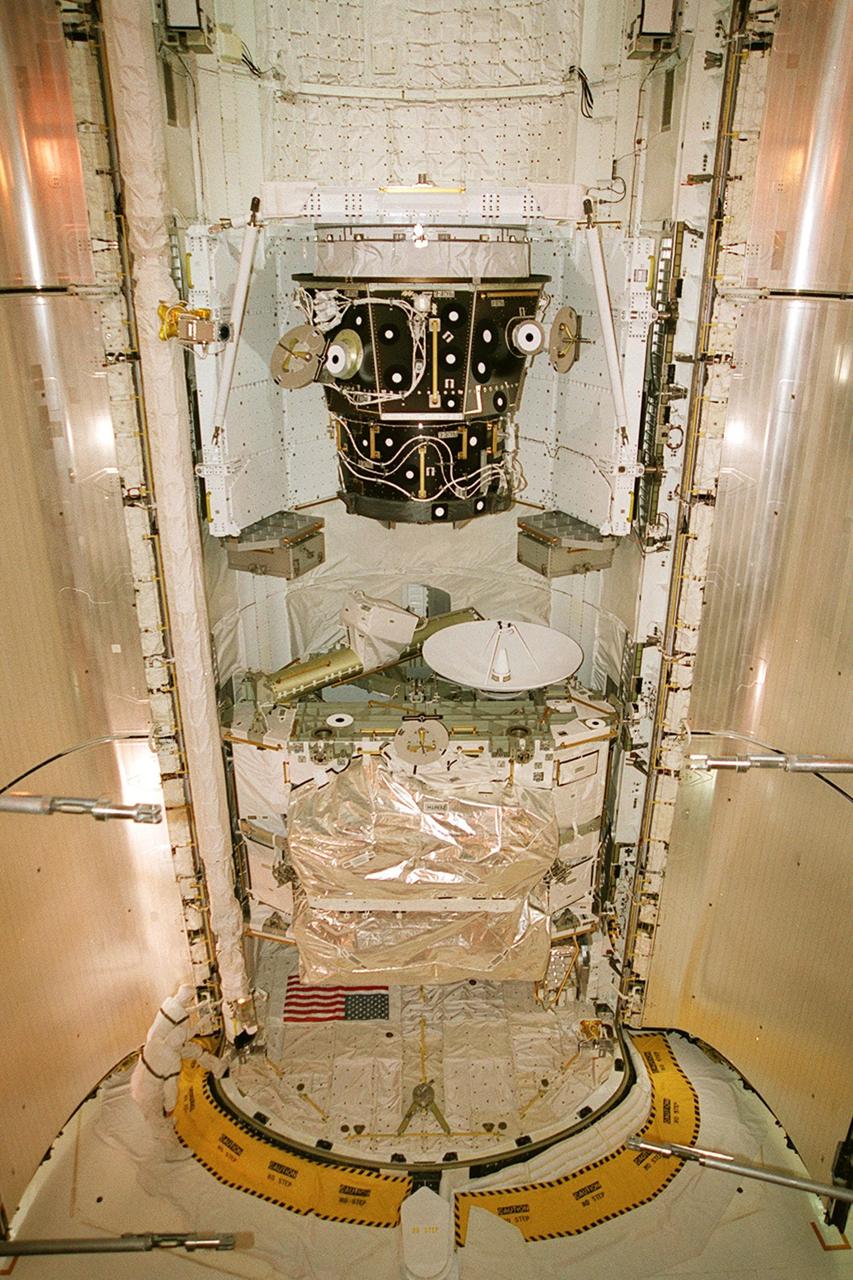
The payload doors on Space Shuttle Discovery are ready to be closed on the two elements to be added to the International Space Station on mission STS-92. At top is the third Pressurized Mating Adapter; below it is Integrated Truss Structure Z-1, the cornerstone truss of the Station. Making the 100th Space Shuttle mission launched from Kennedy Space Center, Discovery also will be making its 28th flight into space. On the 11-day mission, the crew of seven will be making four space walks to attach the hardware to the Station
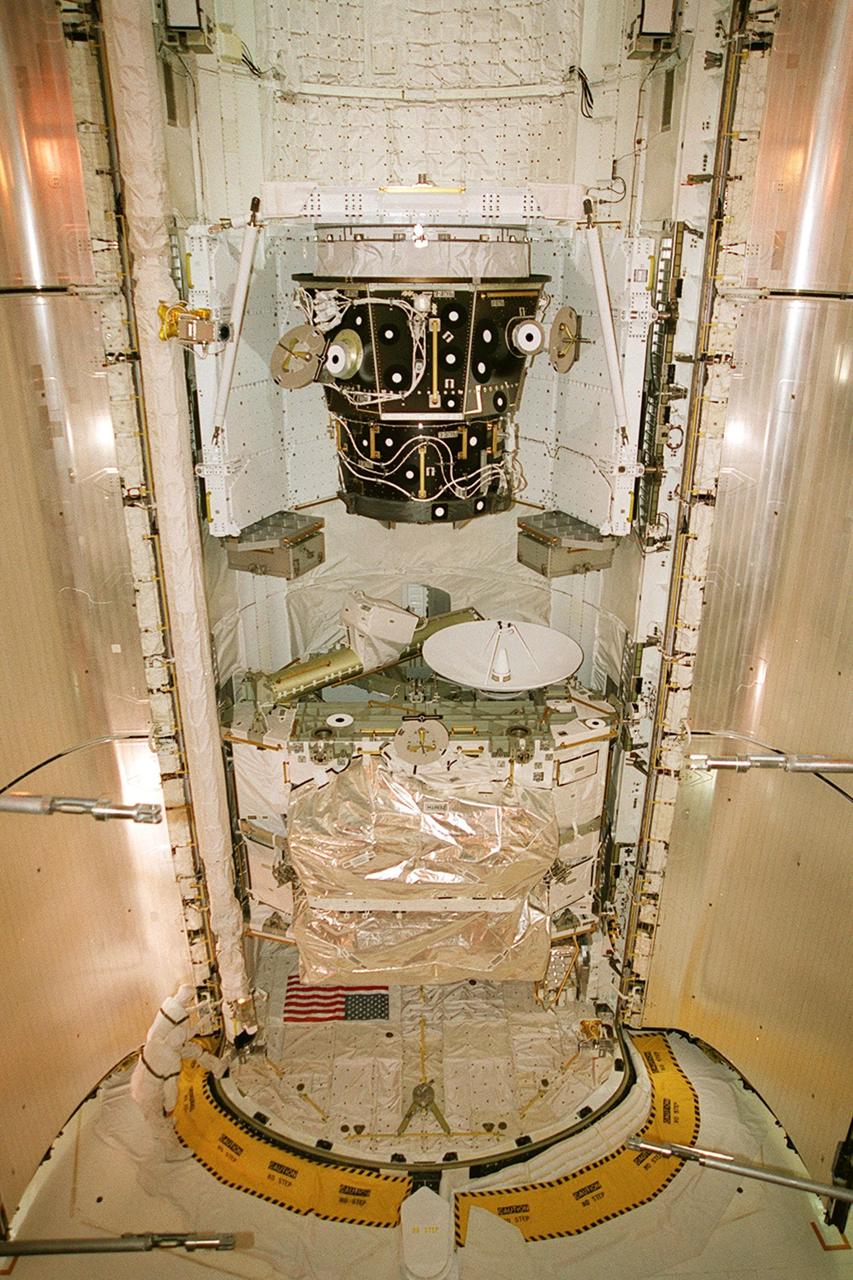
The payload doors on Space Shuttle Discovery are ready to be closed on the two elements to be added to the International Space Station on mission STS-92. At top is the third Pressurized Mating Adapter; below it is Integrated Truss Structure Z-1, the cornerstone truss of the Station. Making the 100th Space Shuttle mission launched from Kennedy Space Center, Discovery also will be making its 28th flight into space. On the 11-day mission, the crew of seven will be making four space walks to attach the hardware to the Station
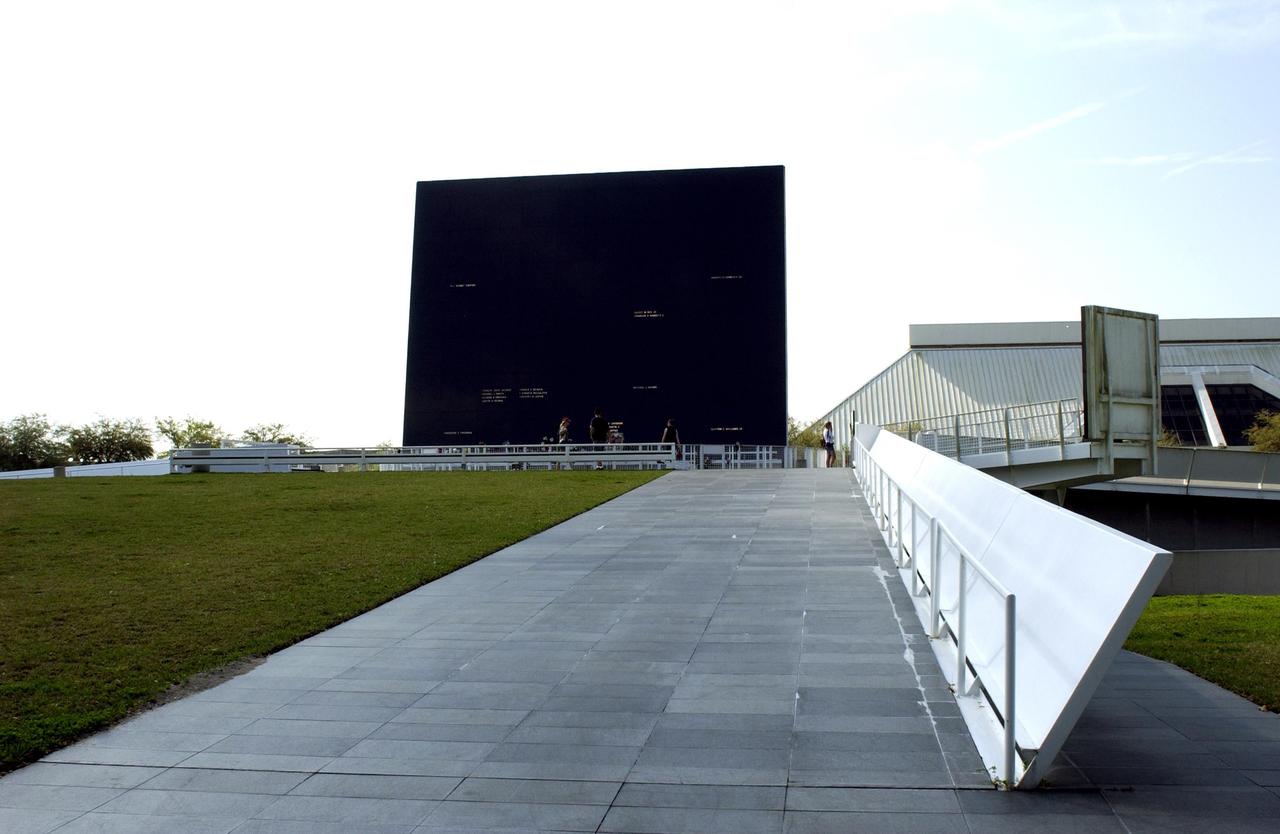
KENNEDY SPACE CENTER, FLA. - The Astronaut Memorial Space Mirror at the KSC Visitor Complex has had added attention since the loss of the Columbia crew Feb. 1, 2003, when they died in an explosion as they were returning to Earth from mission STS-107. The memorial is a national tribute to 17 American astronauts who previously gave their lives to the quest to explore space.
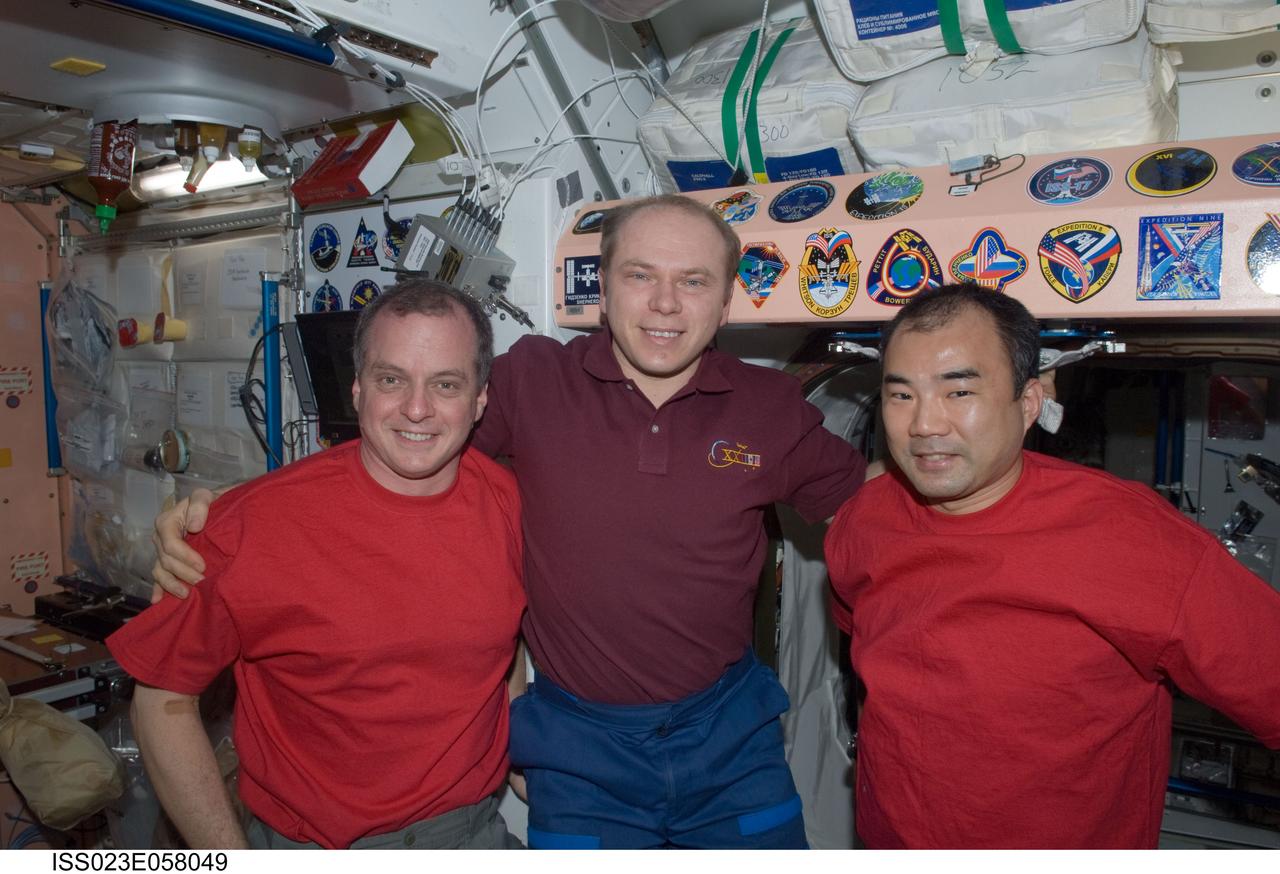
ISS023-E-058049 (1 June 2010) --- Russian cosmonaut Oleg Kotov (center), Expedition 23 commander; along with NASA astronaut T.J. Creamer (left) and Japan Aerospace Exploration Agency (JAXA) astronaut Soichi Noguchi, both flight engineers, pose for a photo after adding the Expedition 23 patch to the Unity node?s growing collection of insignias representing crews who have lived and worked on the International Space Station.
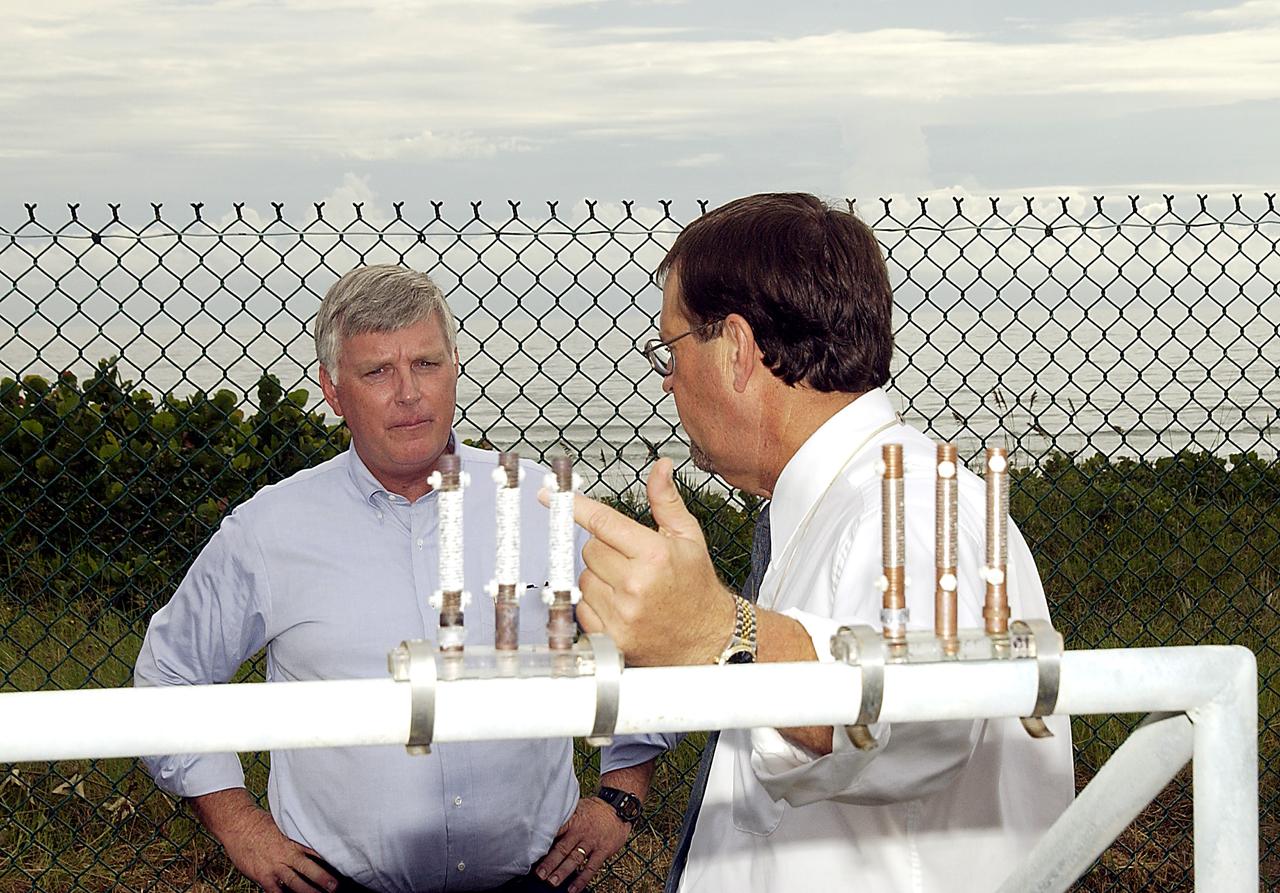
KENNEDY SPACE CENTER, FLA. - Louis MacDowell (right), Testbed manager, explains to Center Director Jim Kennedy the use of astmospheric calibration specimens. Placed at various locations, they can rank the corrosivity of the given environment. The KSC Beach Corrosion Test Site was established in the 1960s and has provided more than 30 years of historical information on the long-term performance of many materials in use at KSC and other locations around the world. Located 100 feet from the Atlantic Ocean approximately 1 mile south of the Space Shuttle launch sites, the test facility includes an atmospheric exposure site, a flowing seawater exposure site, and an on-site electrochemistry laboratory and monitoring station. The beach laboratory is used to conduct real-time corrosion experiments and provides for the remote monitoring of surrounding weather conditions. The newly added flowing seawater immersion facility provides for the immersion testing of materials and devices under controlled conditions.
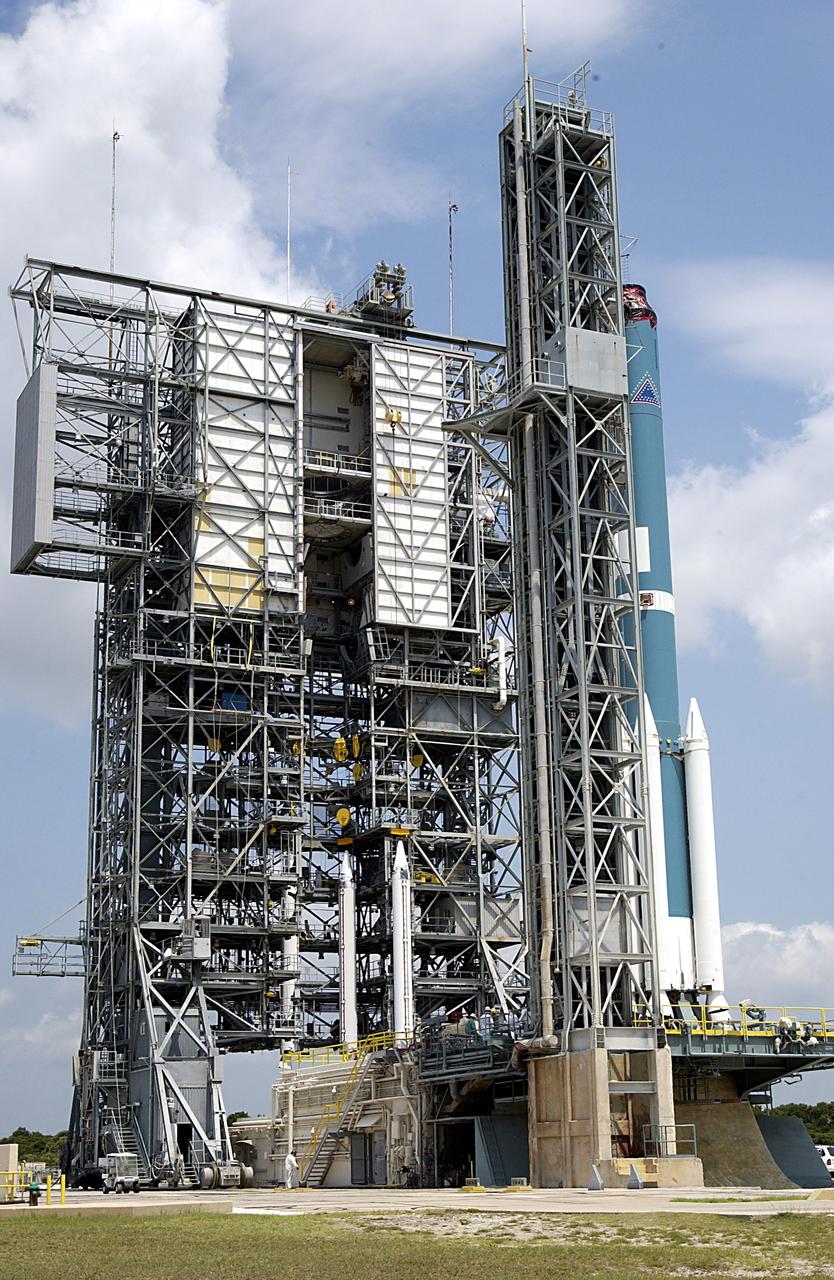
KENNEDY SPACE CENTER, FLA. - At right is the Delta II rocket on Launch Complex 17-A, Cape Canaveral Air Force Station, that will launch Mars Exploration Rover 2 (MER-2) on June 5. In the center are three more solid rocket boosters that will be added to the Delta, which will carry nine in all. NASA’s twin Mars Exploration Rovers are designed to study the history of water on Mars. These robotic geologists are equipped with a robotic arm, a drilling tool, three spectrometers, and four pairs of cameras that allow them to have a human-like, 3D view of the terrain. Each rover could travel as far as 100 meters in one day to act as Mars scientists' eyes and hands, exploring an environment where humans can’t yet go. MER-2 is scheduled to launch as MER-A. MER-1 (MER-B) will launch June 25.
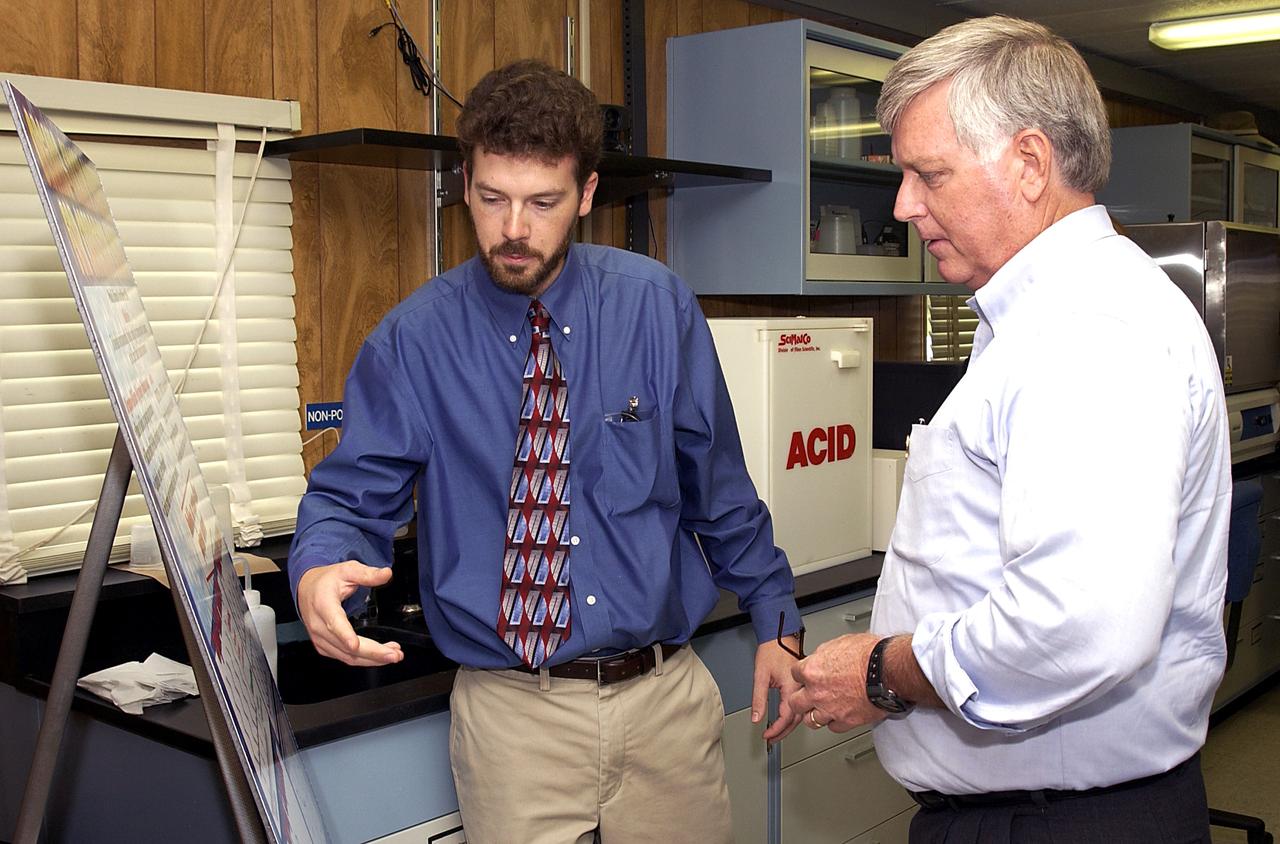
KENNEDY SPACE CENTER, FLA. - Dr. Paul Hintze (left) explains to Center Director Jim Kennedy a project he is working at the KSC Beach Corrosion Test Site. Hitze is doing post-graduate work for the National Research Council. The test facility site was established in the 1960s and has provided more than 30 years of historical information on the long-term performance of many materials in use at KSC and other locations around the world. Located 100 feet from the Atlantic Ocean approximately 1 mile south of the Space Shuttle launch sites, the test facility includes an atmospheric exposure site, a flowing seawater exposure site, and an on-site electrochemistry laboratory and monitoring station. The beach laboratory is used to conduct real-time corrosion experiments and provides for the remote monitoring of surrounding weather conditions. The newly added flowing seawater immersion facility provides for the immersion testing of materials and devices under controlled conditions.
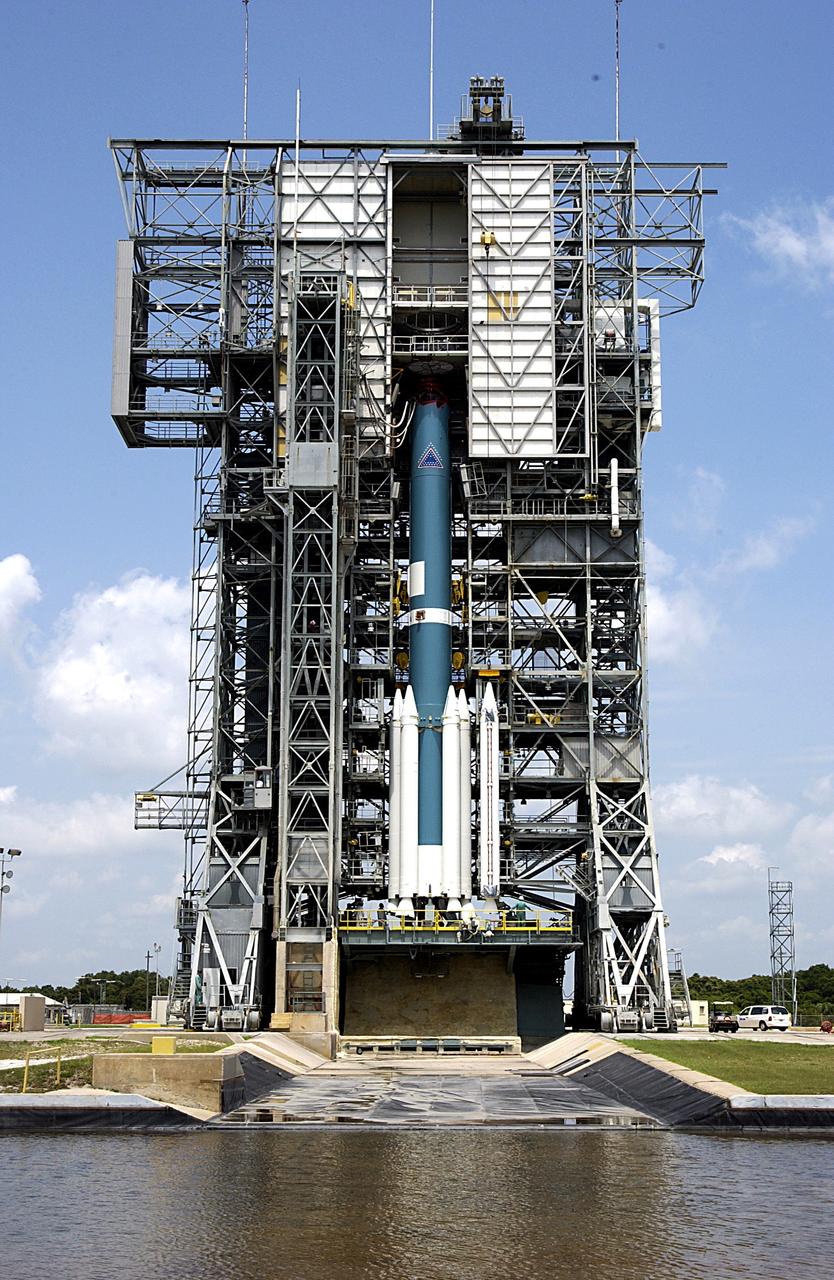
KENNEDY SPACE CENTER, FLA. - The Delta II rocket on Launch Complex 17-A, Cape Canaveral Air Force Station, is having solid rocket boosters (SRBs) installed that will help launch Mars Exploration Rover 2 (MER-2) on June 5. In the center are three more solid rocket boosters that will be added to the Delta, which will carry nine in all. NASA’s twin Mars Exploration Rovers are designed to study the history of water on Mars. These robotic geologists are equipped with a robotic arm, a drilling tool, three spectrometers, and four pairs of cameras that allow them to have a human-like, 3D view of the terrain. Each rover could travel as far as 100 meters in one day to act as Mars scientists' eyes and hands, exploring an environment where humans can’t yet go. MER-2 is scheduled to launch as MER-A. MER-1 (MER-B) will launch June 25.

Artemis Launch Director Charlie Blackwell-Thompson, at left, holds the Artemis I plaque inside the lobby of the Launch Control Center at NASA’s Kennedy Space Center in Florida on March 24, 2023. Joining her from left are Shawn Quinn, manager, Exploration Ground Systems; and Kelvin Manning, Kennedy deputy director. Following tradition from the Apollo and Space Shuttle Programs, the plaque will be added to the wall behind them. The first in a series of increasingly complex missions, Artemis I launched successfully from Kennedy’s Launch Pad 39B at 1:47 a.m. EST on Nov. 16, 2022.
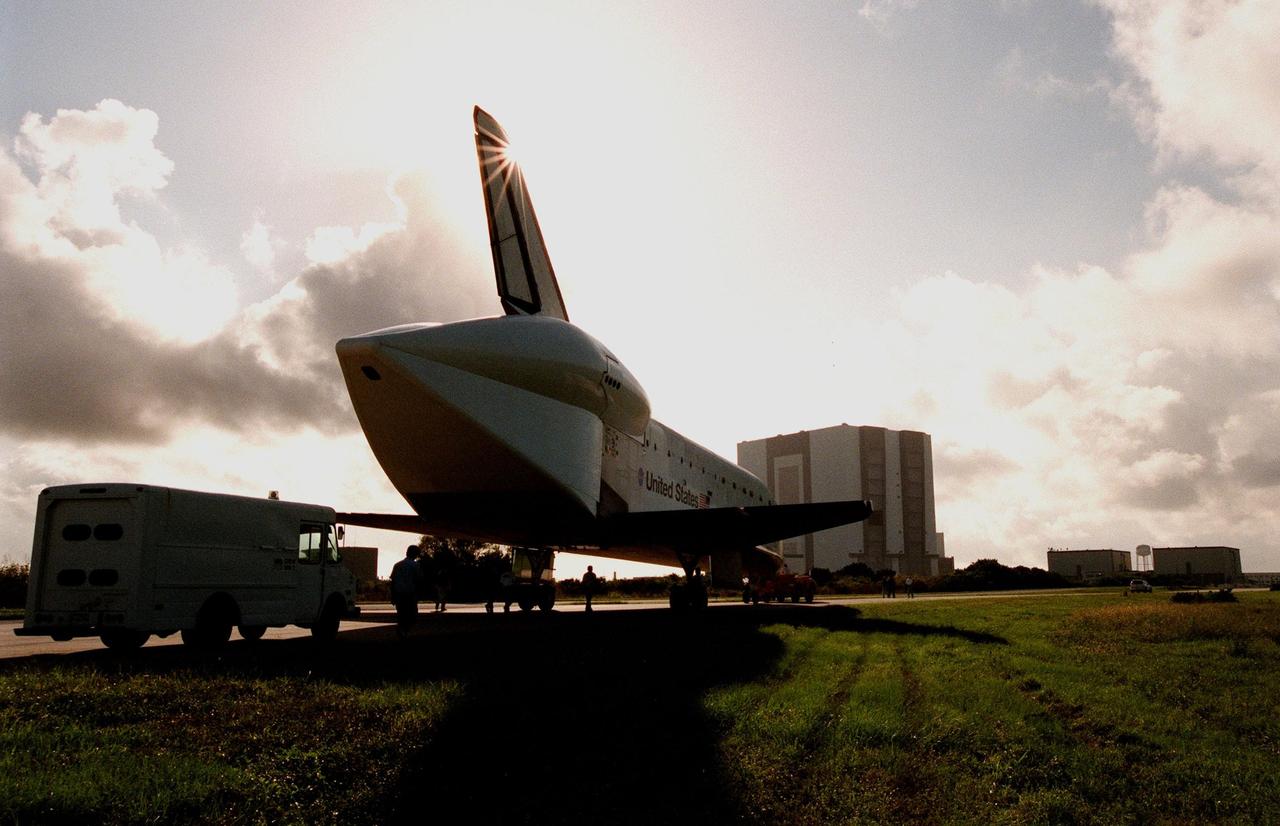
The orbiter Atlantis, being towed from the Shuttle Landing Facility toward the Vehicle Assembly Building (VAB) , intersects the morning sun's rays. In the background, to the right of the VAB, are the Orbiter Processing Facility 1 and 2. Atlantis spent 10 months in Palmdale, CA, undergoing extensive inspections and modifications in the orbiter processing facility there. The modifications included several upgrades enabling it to support International Space Station missions, such as adding an external airlock for ISS docking missions and installing thinner, lighter thermal protection blankets for weight reduction which will allow it to haul heavier cargo. Atlantis will undergo preparations at KSC in Orbiter Processing Facility 2 for its planned flight in June 1999
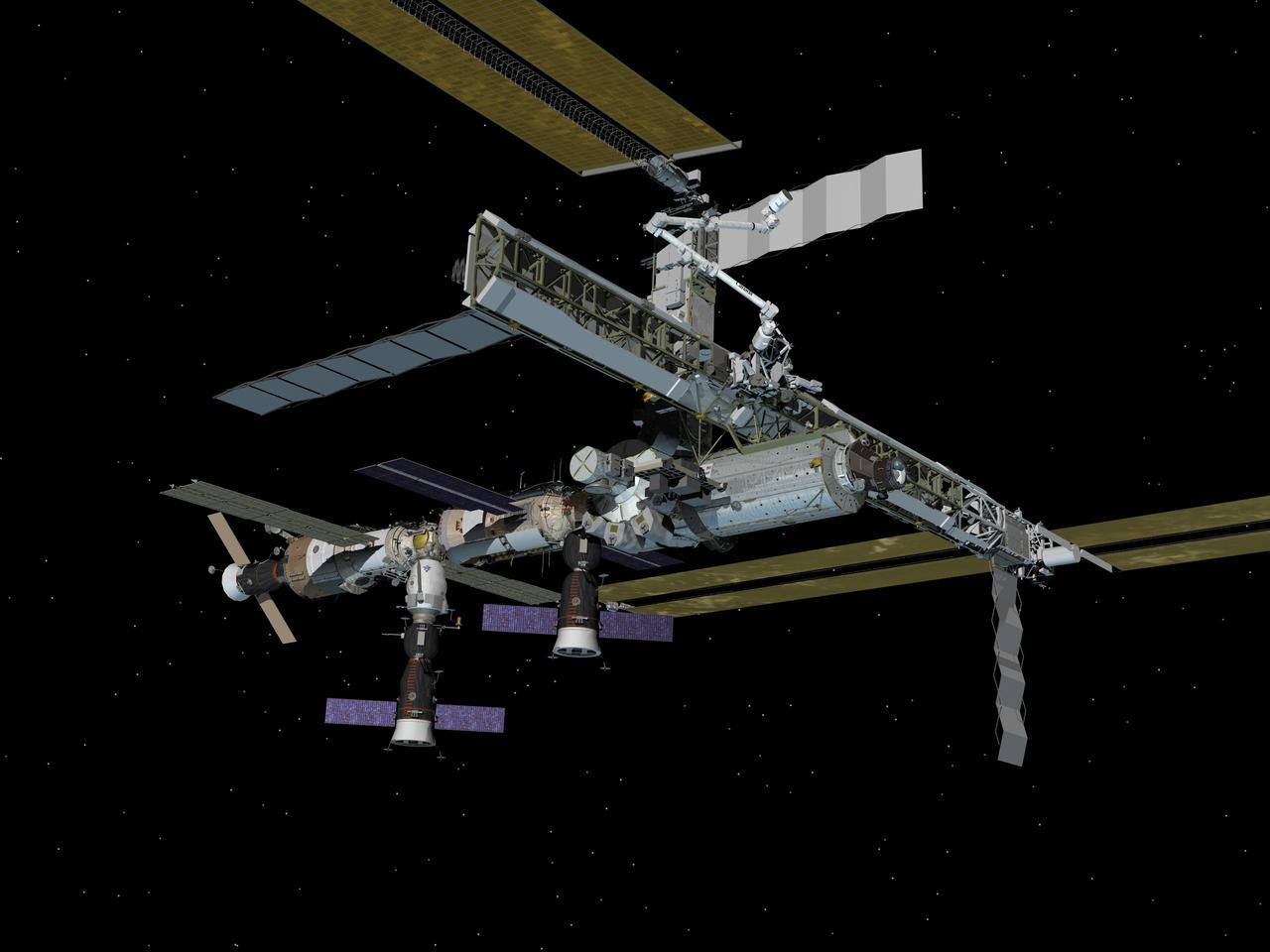
JSC2006-E-54697 (December 2006) --- Computer-generated artist's rendering of the International Space Station following scheduled activities of the STS-116/12A.1 mission. Space Shuttle Discovery departed from the station on Dec. 19, 2006. This angle shows the starboard side of the orbiting complex. The P5 Integrated Truss Segment is added and the P6 port solar array wing is retracted. Progress 23 resupply vehicle is docked to the Zvezda Service Module aft port. Soyuz 13 (TMA-9) is connected to the Zarya Module nadir port and Progress 22 resupply vehicle remains linked to the Pirs Docking Compartment.
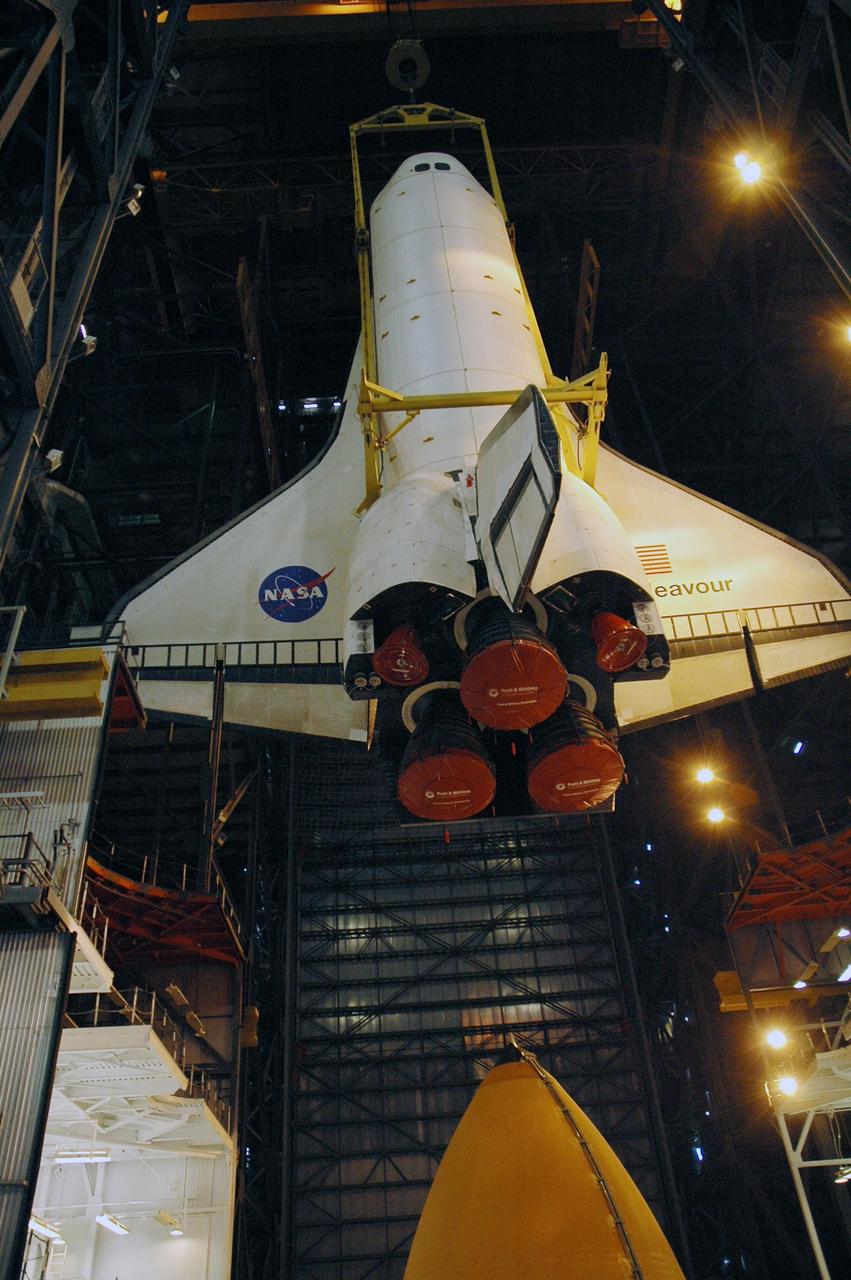
KENNEDY SPACE CENTER, FLA. -- The orbiter Endeavour is lowered into high bay 1 of the Vehicle Assembly Building for stacking with the external tank (seen at the bottom) and solid rocket boosters on the mobile launcher platform. Endeavour will be launched on mission STS-118, its first flight in more than four years. The shuttle has undergone extensive modifications, including the addition of safety upgrades already added to shuttles Discovery and Atlantis. Endeavour also features new hardware, such as the Station-to-Shuttle Power Transfer System that will allow the docked shuttle to draw electrical power from the station and extend its visits to the orbiting lab. Endeavour is targeted for launch on Aug. 7. Photo credit: NASA/Troy Cryder
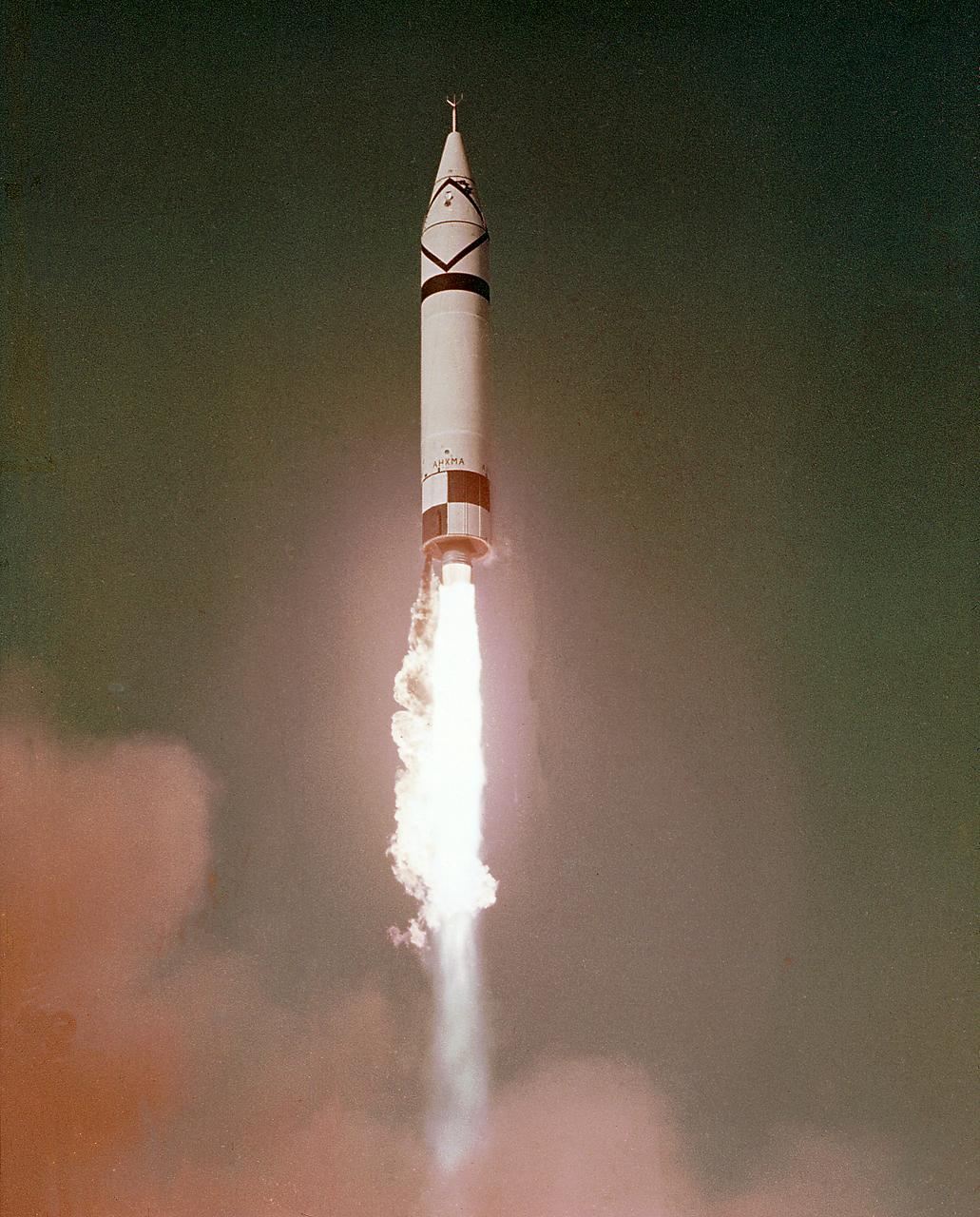
The Jupiter rocket was designed and developed by the Army Ballistic Missile Agency (ABMA). ABMA launched the Jupiter-A at Cape Canaveral, Florida, on March 1, 1957. The Jupiter vehicle was a direct derivative of the Redstone. The Army Ballistic Missile Agency (ABMA) at Redstone Arsenal, Alabama, continued Jupiter development into a successful intermediate ballistic missile, even though the Department of Defense directed its operational development to the Air Force. ABMA maintained a role in Jupiter RD, including high-altitude launches that added to ABMA's understanding of rocket vehicle operations in the near-Earth space environment. It was knowledge that paid handsome dividends later.
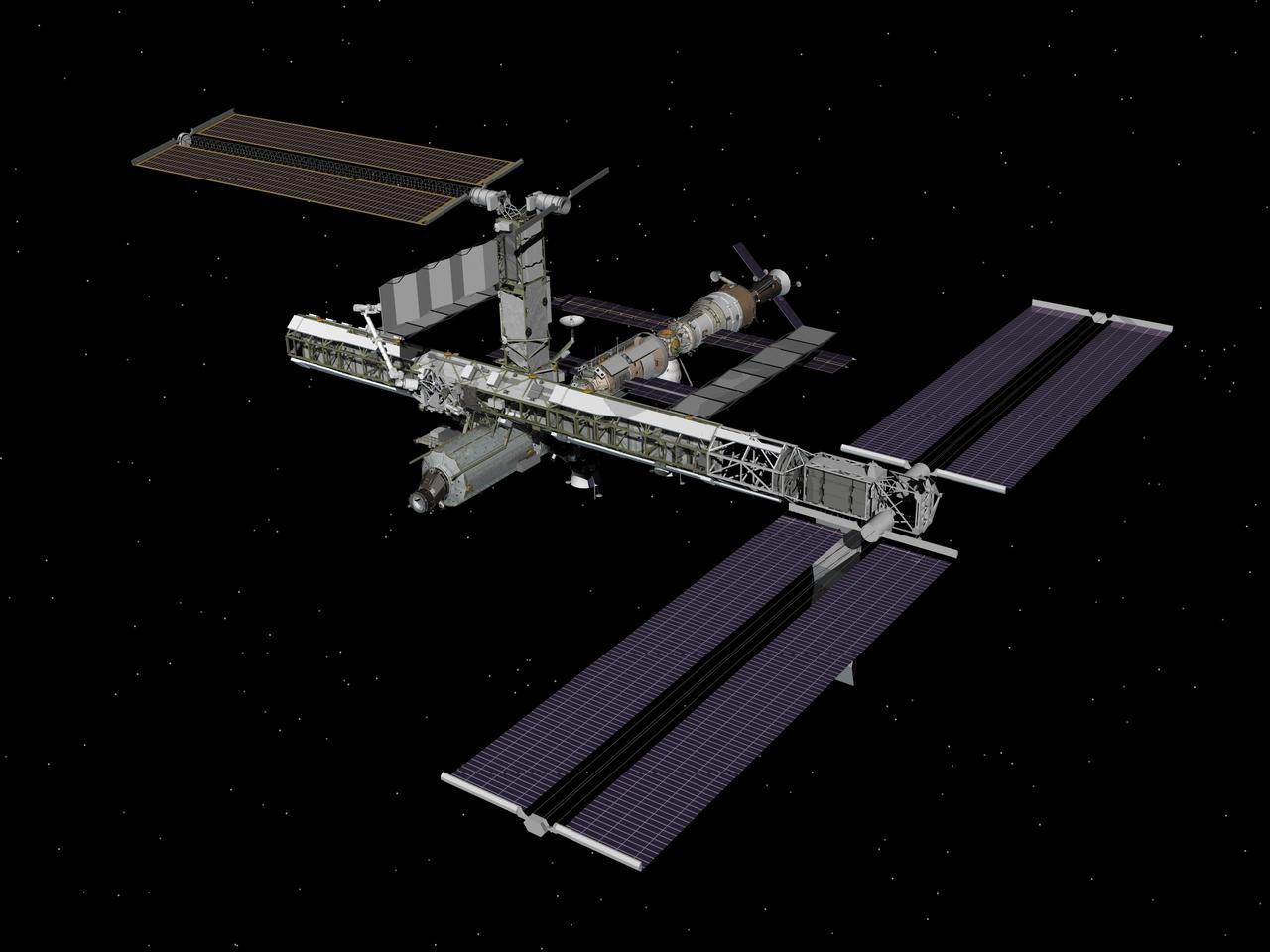
JSC2006-E-54696 (December 2006) --- Computer-generated artist's rendering of the International Space Station following scheduled activities of the STS-116/12A.1 mission. Space Shuttle Discovery departed from the station on Dec. 19, 2006. This angle shows the port side of the orbiting complex. The P5 Integrated Truss Segment is added and the P6 port solar array wing is retracted. Progress 23 resupply vehicle is docked to the Zvezda Service Module aft port. Soyuz 13 (TMA-9) is connected to the Zarya Module nadir port and Progress 22 resupply vehicle remains linked to the Pirs Docking Compartment.
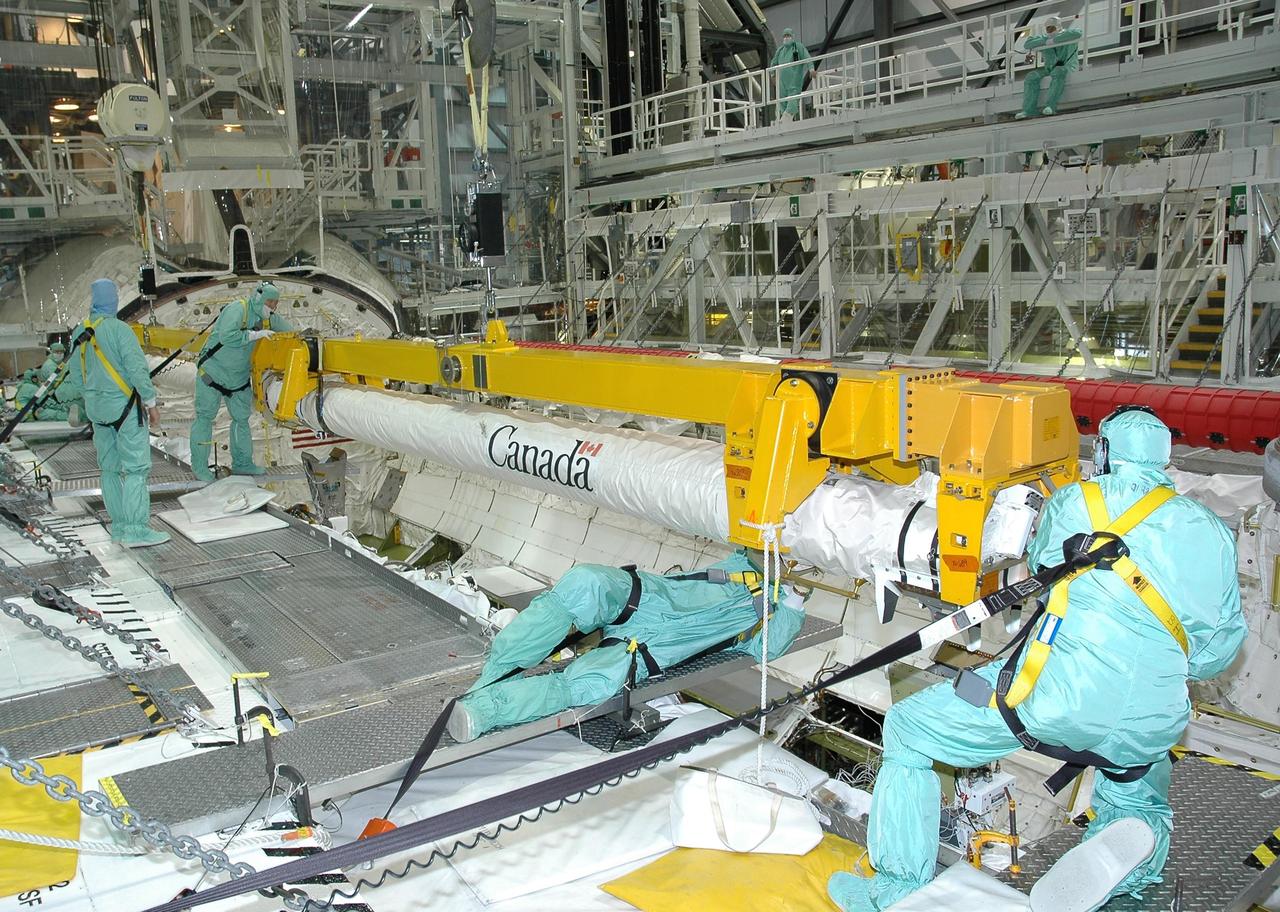
KENNEDY SPACE CENTER, FLA. - In Orbiter Processing Facility bay 1 at NASA's Kennedy Space Center, workers install the orbiter boom sensor system into Atlantis' payload bay. The 50-foot-long boom attaches to the shuttle arm and is one of the new safety measures added prior to Return to Flight last year. It equips the orbiter with cameras and laser systems to inspect the shuttle's heat shield while in space. Atlantis is scheduled to launch on mission STS-115 no earlier than Aug. 28. Photo credit: NASA/Jim Grossmann
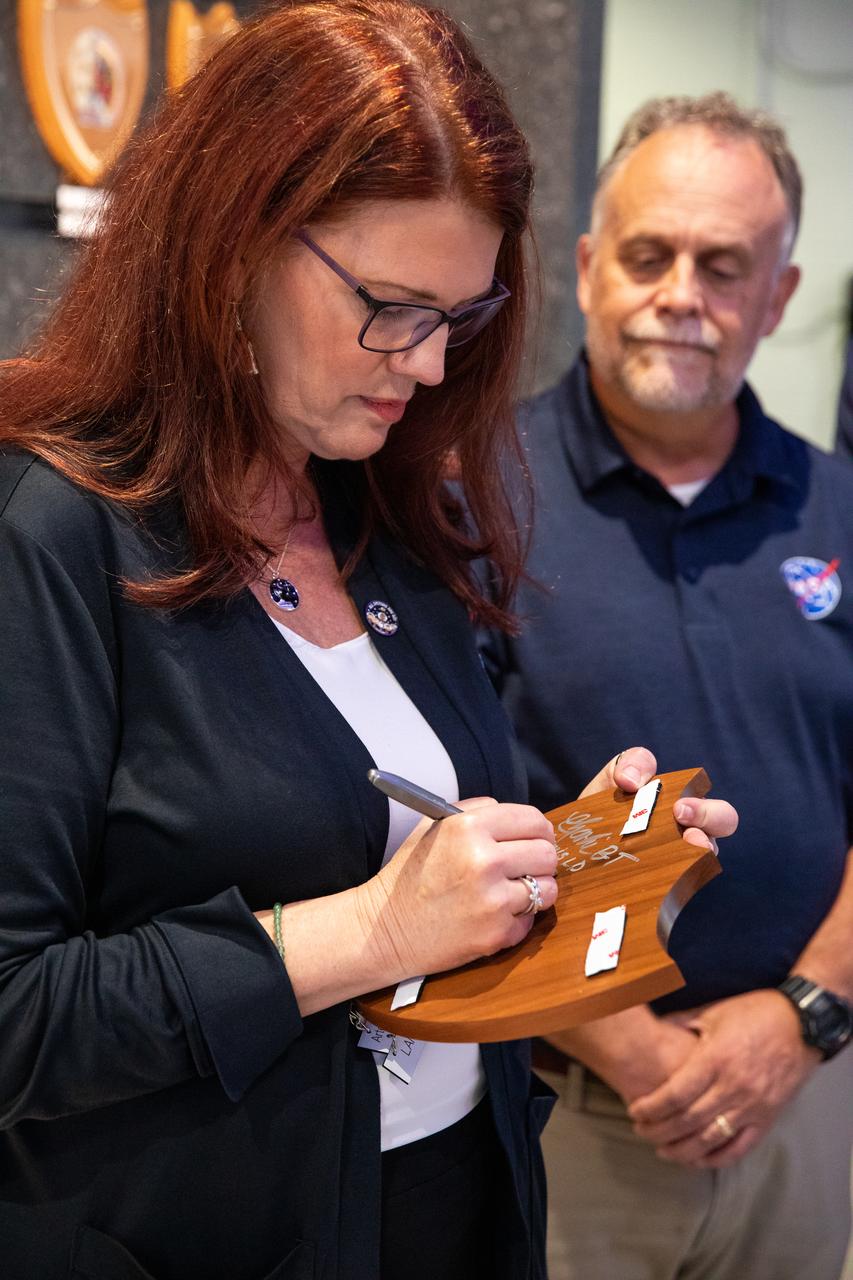
Artemis Launch Director Charlie Blackwell-Thompson, at left, signs the back of the Artemis I plaque inside the lobby of the Launch Control Center at NASA’s Kennedy Space Center in Florida on March 24, 2023. Joining her is Shawn Quinn, manager, Exploration Ground Systems. Following tradition from the Apollo and Space Shuttle Programs, the plaque will be added to the wall behind them. The first in a series of increasingly complex missions, Artemis I launched successfully from Kennedy’s Launch Pad 39B at 1:47 a.m. EST on Nov. 16, 2022.
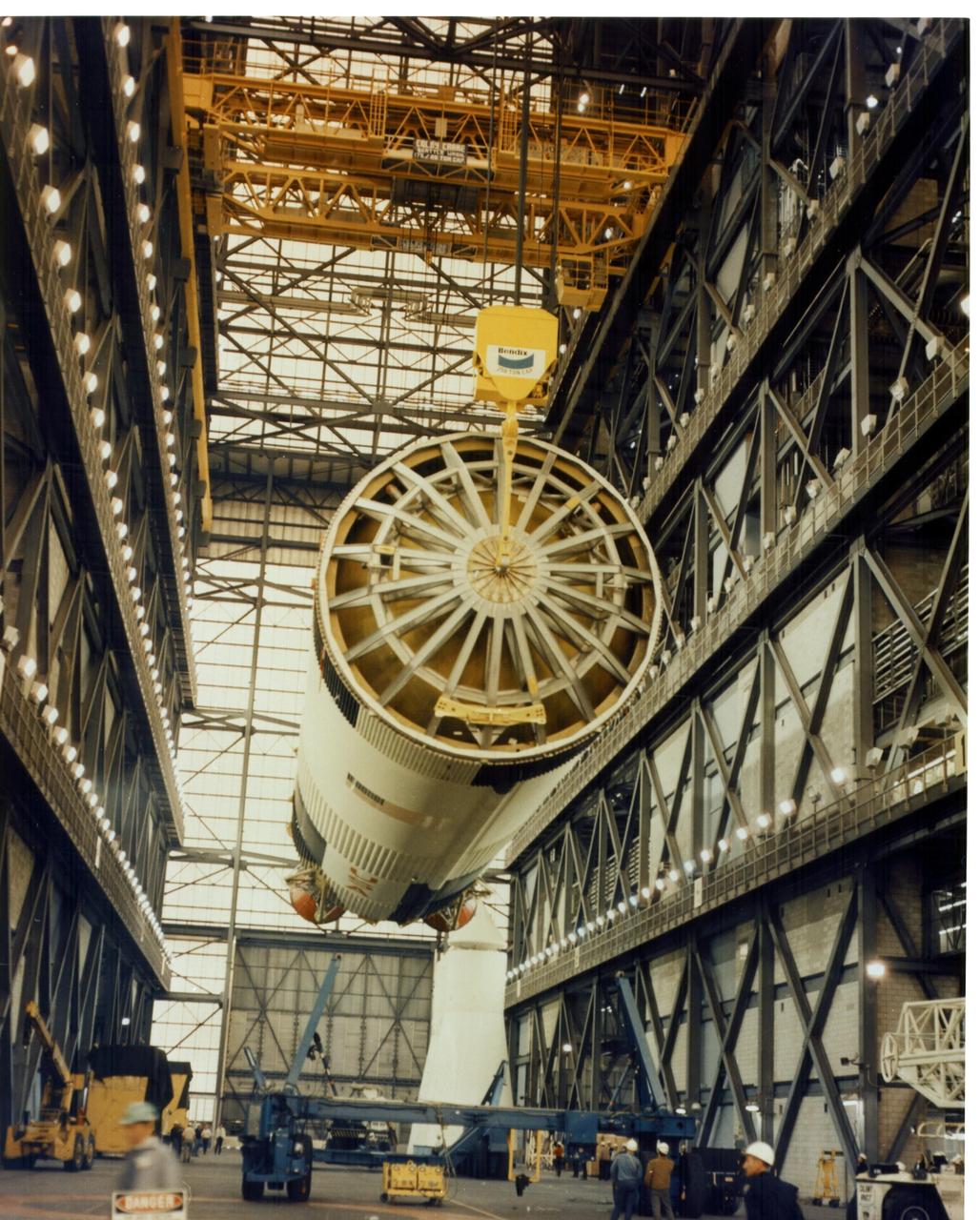
KENNEDY SPACE CENTER, FLA. - An overhead crane lifts the Saturn V first stage for the Apollo 11 mission from the transfer aisle floor in preparation for stacking on a mobile launcher within the Vehicle Assembly Building's High Bay 1. The fully assembled vehicle will be called the Apollo/Saturn 506. The 138-foot-long stage, to which two additional stages -- the instrument unit and the Apollo spacecraft -- will be added, will generate a liftoff thrust of 7.7 million pounds. Astronauts Neil A. Armstrong, Michael Collins and Edwin E. Aldrin Jr. will pilot the mission which is to include a lunar landing in the lunar module by Armstrong and Aldrin.
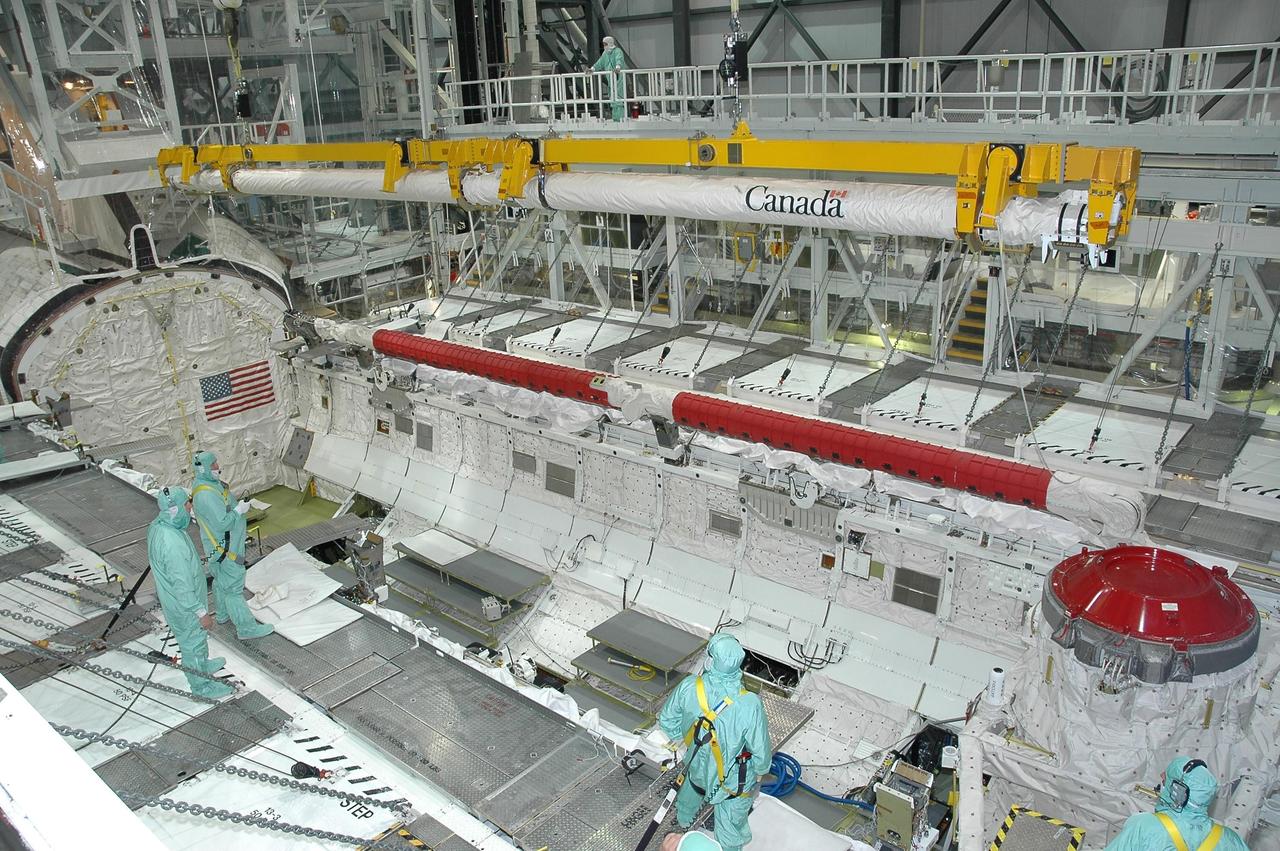
KENNEDY SPACE CENTER, FLA. - In Orbiter Processing Facility bay 1 at NASA's Kennedy Space Center, the orbiter boom sensor system is lowered into Atlantis' payload bay for installation. The 50-foot-long boom attaches to the shuttle arm and is one of the new safety measures added prior to Return to Flight last year. It equips the orbiter with cameras and laser systems to inspect the shuttle's heat shield while in space. Atlantis is scheduled to launch on mission STS-115 no earlier than Aug. 28. Photo credit: NASA/Jim Grossmann
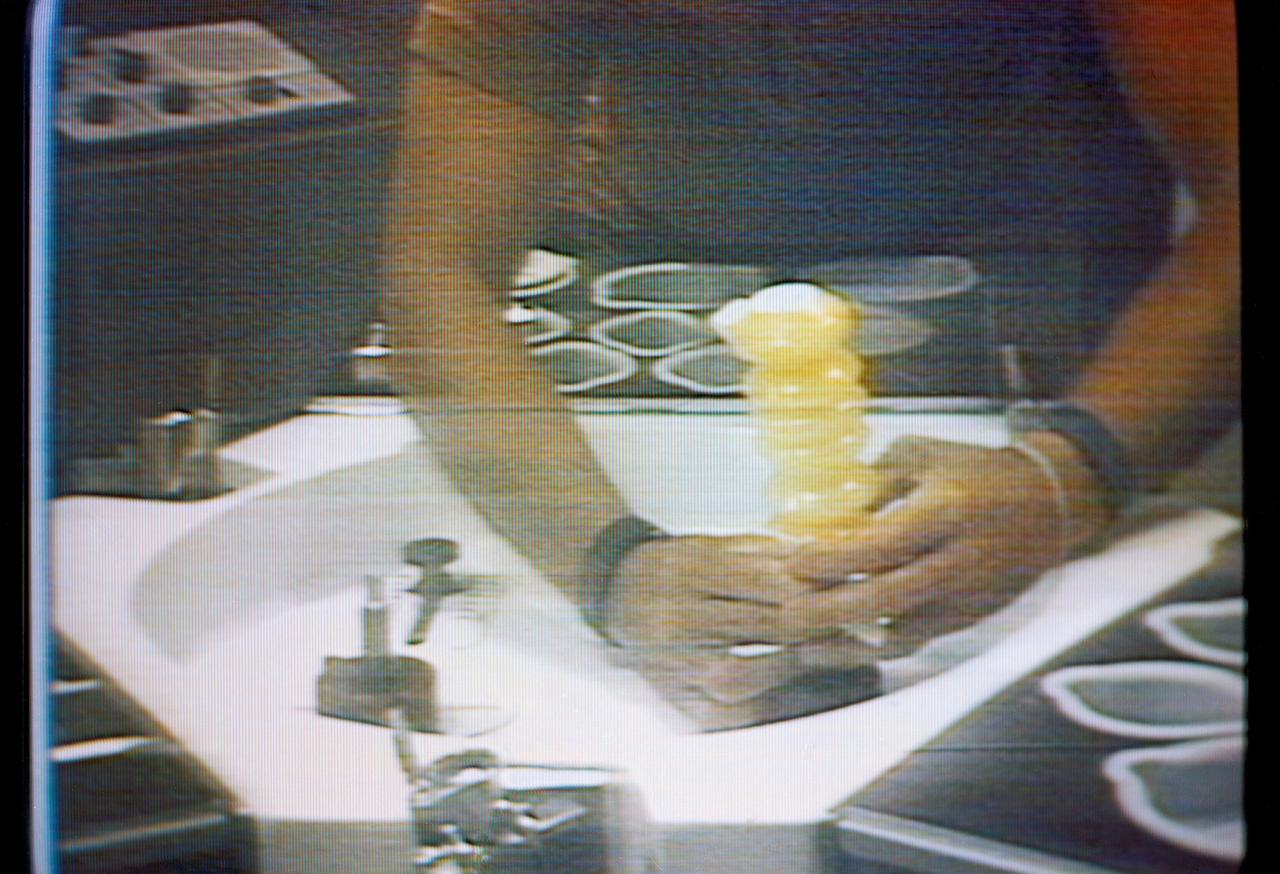
S73-27078 (30 May 1973) --- An accordian-style beverage dispenser filled with orange juice is held by astronaut Charles Conrad Jr., Skylab 2 commander, in this close-up view which is a reproduction taken from a color television transmission made by a TV camera aboard the Skylab 1 & 2 space station cluster in Earth orbit. Conrad (head and face not in view) is seated at the wardroom table in the crew quarters of the Orbital Workshop. The dispenser contained beverage crystals, and Conrad has just added the prescribed amount of water to make the orange drink. Photo credit: NASA
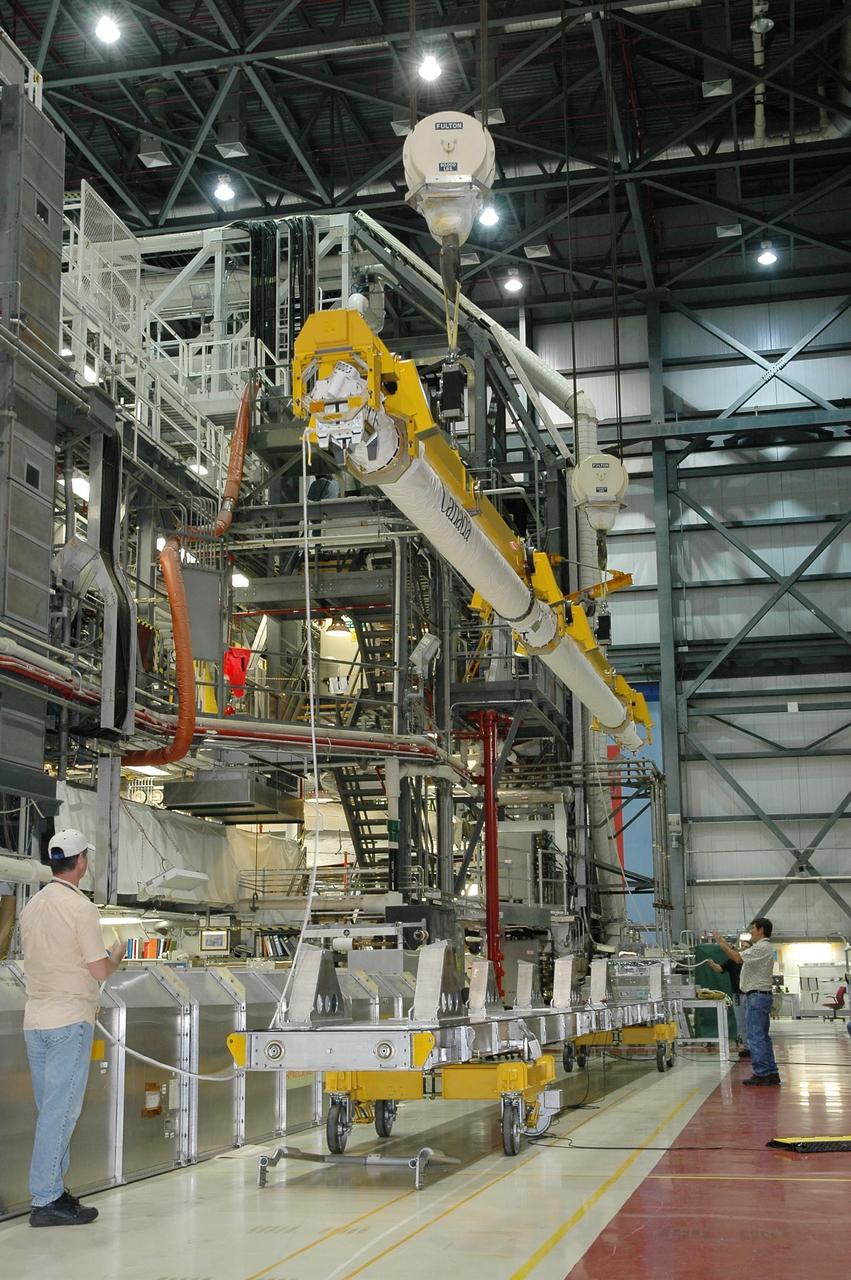
KENNEDY SPACE CENTER, FLA. - In Orbiter Processing Facility bay 1 at NASA's Kennedy Space Center, the orbiter boom sensor system is lifted off a transporter. The boom will be installed in Atlantis' payload bay. The 50-foot-long boom attaches to the shuttle arm and is one of the new safety measures added prior to Return to Flight last year. It equips the orbiter with cameras and laser systems to inspect the shuttle's heat shield while in space. Atlantis is scheduled to launch on mission STS-115 no earlier than Aug. 28. Photo credit: NASA/Jim Grossmann
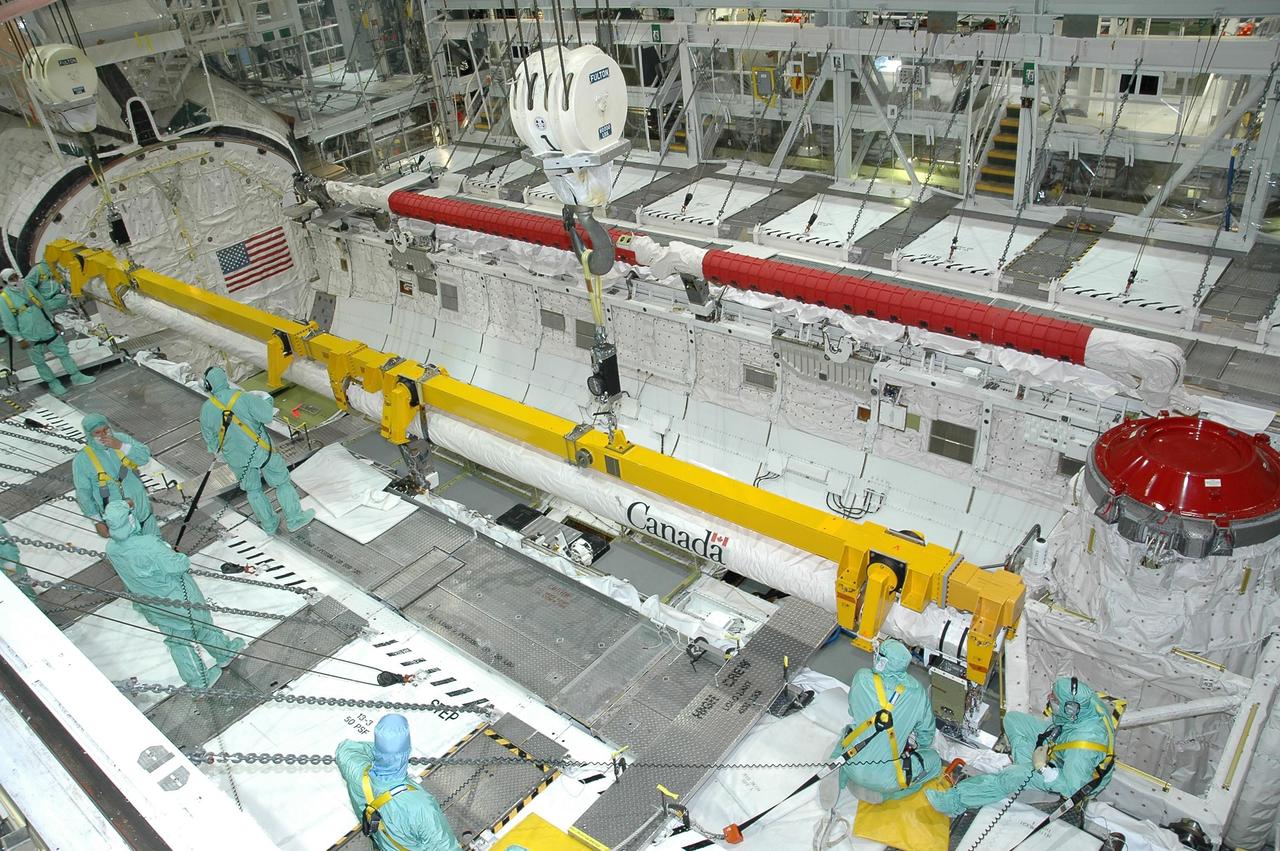
KENNEDY SPACE CENTER, FLA. - In Orbiter Processing Facility bay 1 at NASA's Kennedy Space Center, workers complete installation of the orbiter boom sensor system into Atlantis' payload bay. The 50-foot-long boom attaches to the shuttle arm and is one of the new safety measures added prior to Return to Flight last year. It equips the orbiter with cameras and laser systems to inspect the shuttle's heat shield while in space. Atlantis is scheduled to launch on mission STS-115 no earlier than Aug. 28. Photo credit: NASA/Jim Grossmann
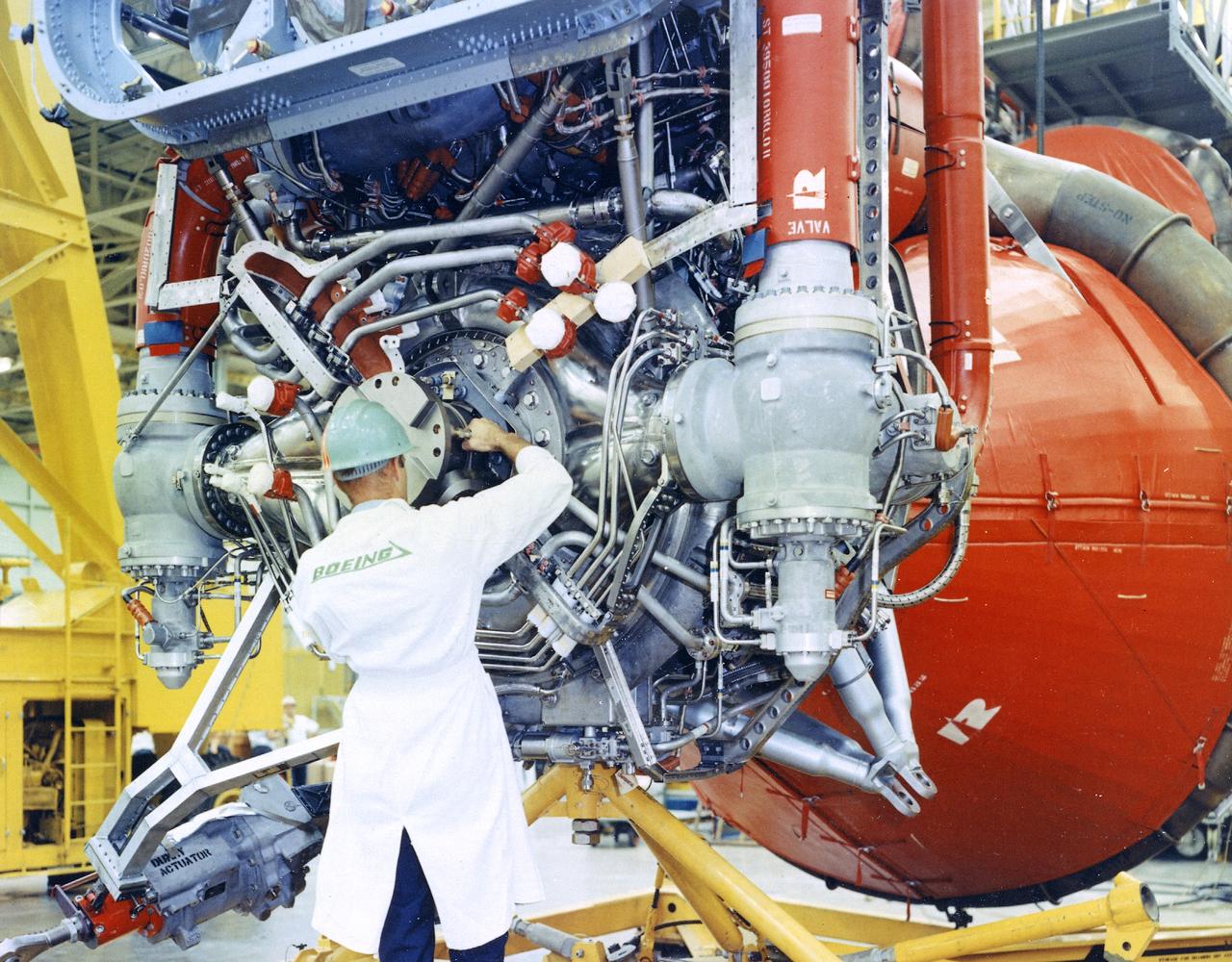
This image depicts a Boeing worker installing an F-1 engine on the Saturn V S-IC flight stage at the Michoud Assembly Facility (MAF). The Saturn IB and Saturn V first stages were manufactured at the MAF, located 24 kilometers (approximately 15 miles) east of downtown New Orleans, Louisiana. The prime contractors, Chrysler and Boeing, jointly occupied the MAF. The basic manufacturing building boasted 43 acres under one roof. By 1964, NASA added a separate engineering and office building, vertical assembly building, and test stage building.
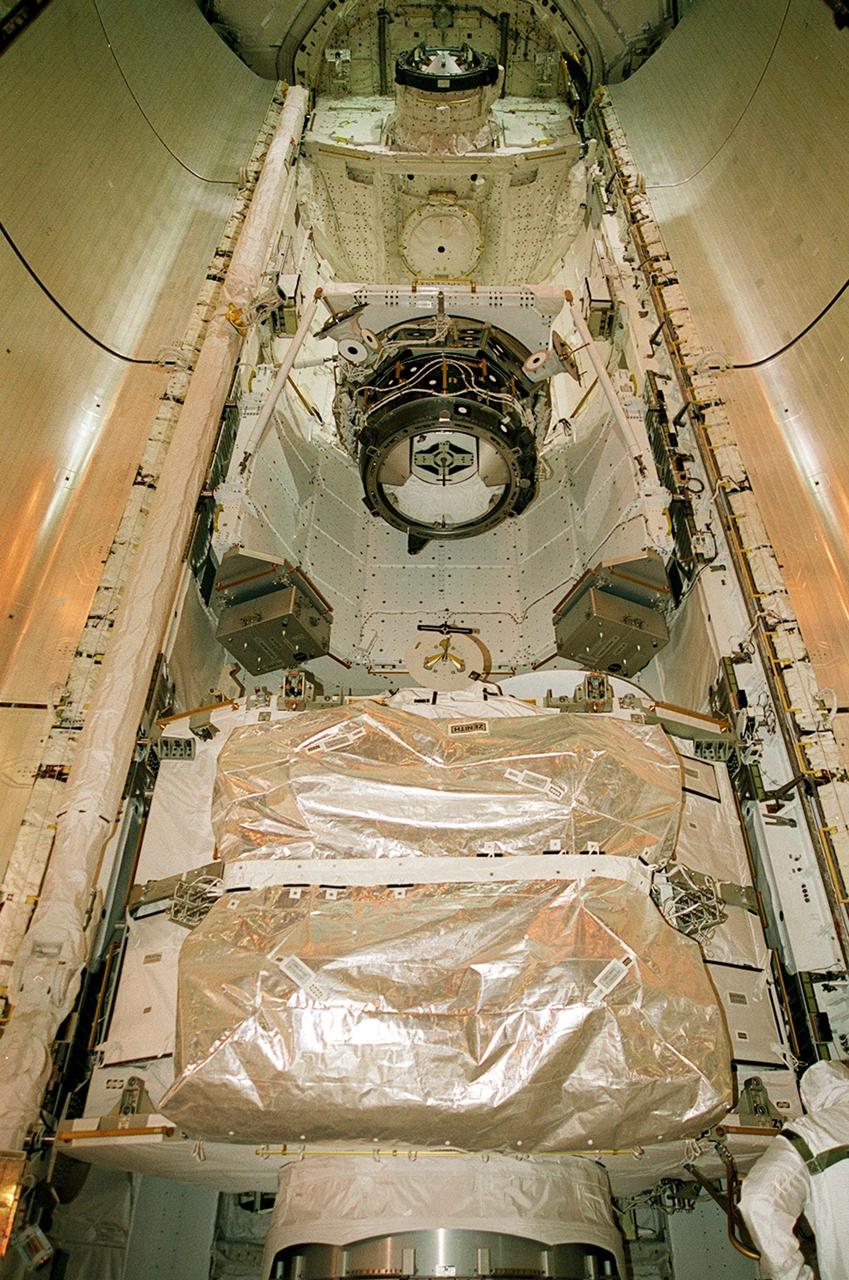
KENNEDY SPACE CENTER, FLA. -- The open doors of Space Shuttle Discovery’s payload bay show the two elements to be added to the International Space Station on mission STS-92. At top is the third Pressurized Mating Adapter; below it is Integrated Truss Structure Z-1, the cornerstone truss of the Station. Making the 100th Space Shuttle mission launched from Kennedy Space Center, Discovery also will be making its 28th flight into space. On the 11-day mission, the crew of seven will be making four space walks to attach the hardware to the Station. l Space Station. The payload also includes the Integrated Truss Structure Z-1. During the 11-day mission, four extravehicular activities (EVAs), or space walks, are planned
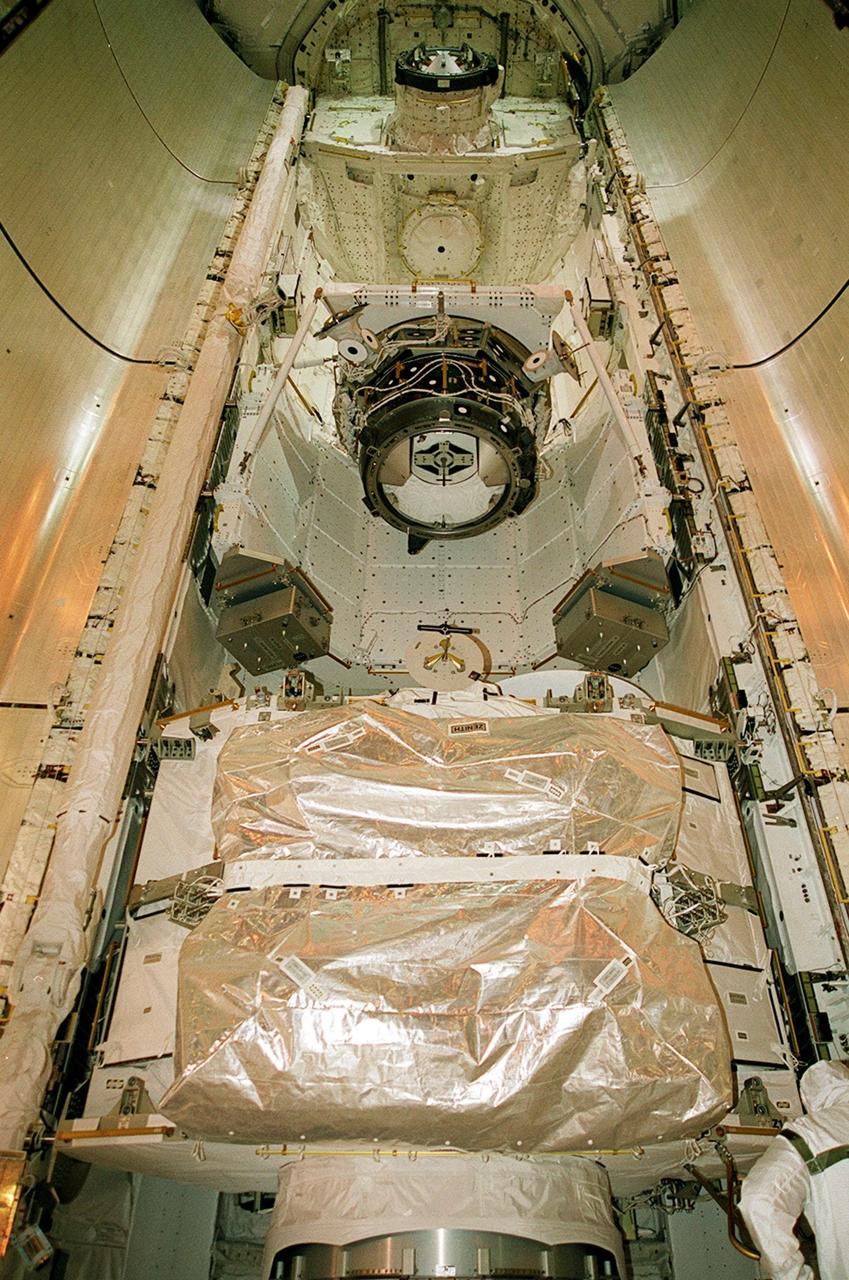
KENNEDY SPACE CENTER, FLA. -- The open doors of Space Shuttle Discovery’s payload bay show the two elements to be added to the International Space Station on mission STS-92. At top is the third Pressurized Mating Adapter; below it is Integrated Truss Structure Z-1, the cornerstone truss of the Station. Making the 100th Space Shuttle mission launched from Kennedy Space Center, Discovery also will be making its 28th flight into space. On the 11-day mission, the crew of seven will be making four space walks to attach the hardware to the Station. l Space Station. The payload also includes the Integrated Truss Structure Z-1. During the 11-day mission, four extravehicular activities (EVAs), or space walks, are planned
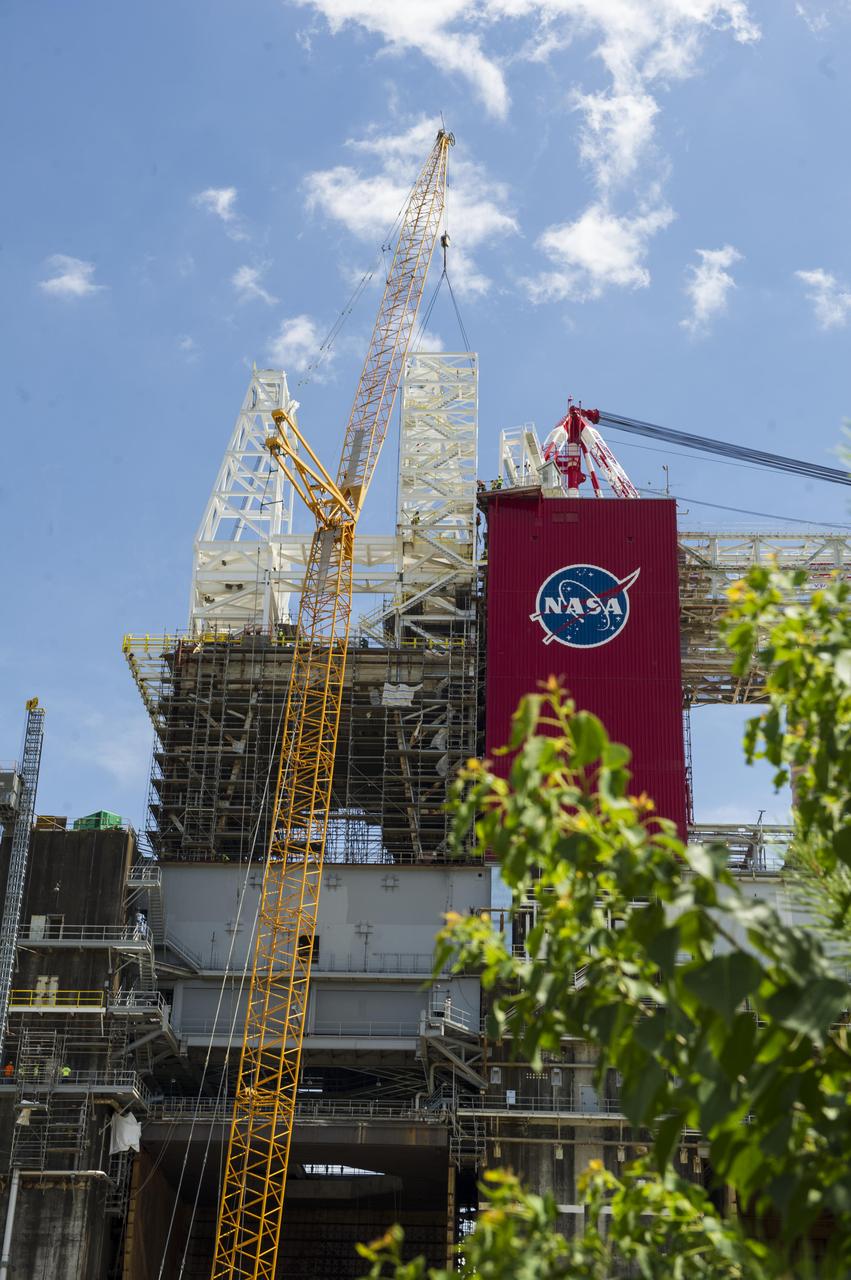
A structural steel section is lifted into place atop the B-2 Test Stand at NASA’s Stennis Space Center as part of modification work to prepare for testing the core stage of NASA’s new Space Launch System. The section is part of the Main Propulsion Test Article (MPTA) framework, which will support the SLS core stage for testing. The existing framework was installed on the stand in the late 1970s to test the shuttle MPTA. However, that framework had to be repositioned and modified to accommodate the larger SLS stage. About 1 million pounds of structural steel has been added, extending the framework about 100 feet higher and providing a new look to the Stennis skyline. Stennis will test the actual flight core stage for the first uncrewed SLS mission, Exploration Mission-1.
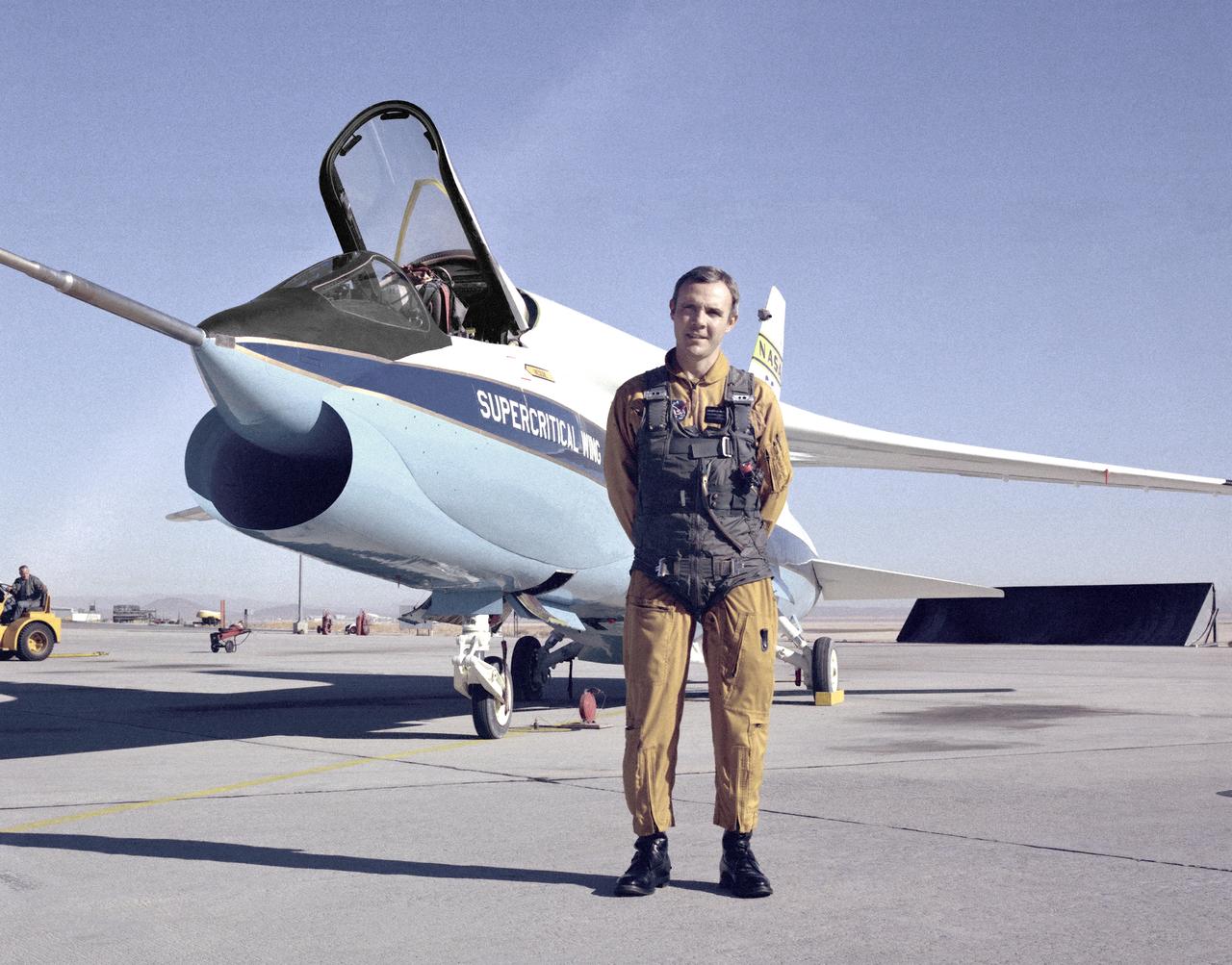
A Vought F-8A Crusader was selected by NASA as the testbed aircraft (designated TF-8A) to install an experimental Supercritical Wing (SCW) in place of the conventional wing. The unique design of the Supercritical Wing reduces the effect of shock waves on the upper surface near Mach 1, which in turn reduces drag. In this photograph the TF-8A Crusader with Supercritical Wing is shown on the ramp with project pilot Tom McMurtry standing beside it. McMurtry received NASA's Exceptional Service Medal for his work on the F-8 SCW aircraft. He also flew the AD-1, F-15 Digital Electronic Engine Control, the KC-130 winglets, the F-8 Digital Fly-By-Wire and other flight research aircraft including the remotely piloted 720 Controlled Impact Demonstration and sub-scale F-15 research projects. In addition, McMurtry was the 747 co-pilot for the Shuttle Approach and Landing Tests and made the last glide flight in the X-24B. McMurtry was Dryden’s Director for Flight Operations from 1986 to 1998, when he became Associate Director for Operations at NASA Dryden. In 1982, McMurtry received the Iven C. Kincheloe Award from the Society of Experimental Test Pilots for his contributions as project pilot on the AD-1 Oblique Wing program. In 1998 he was named as one of the honorees at the Lancaster, Calif., ninth Aerospace Walk of Honor ceremonies. In 1999 he was awarded the NASA Distinguished Service Medal. He retired in 1999 after a distinguished career as pilot and manager at Dryden that began in 1967.
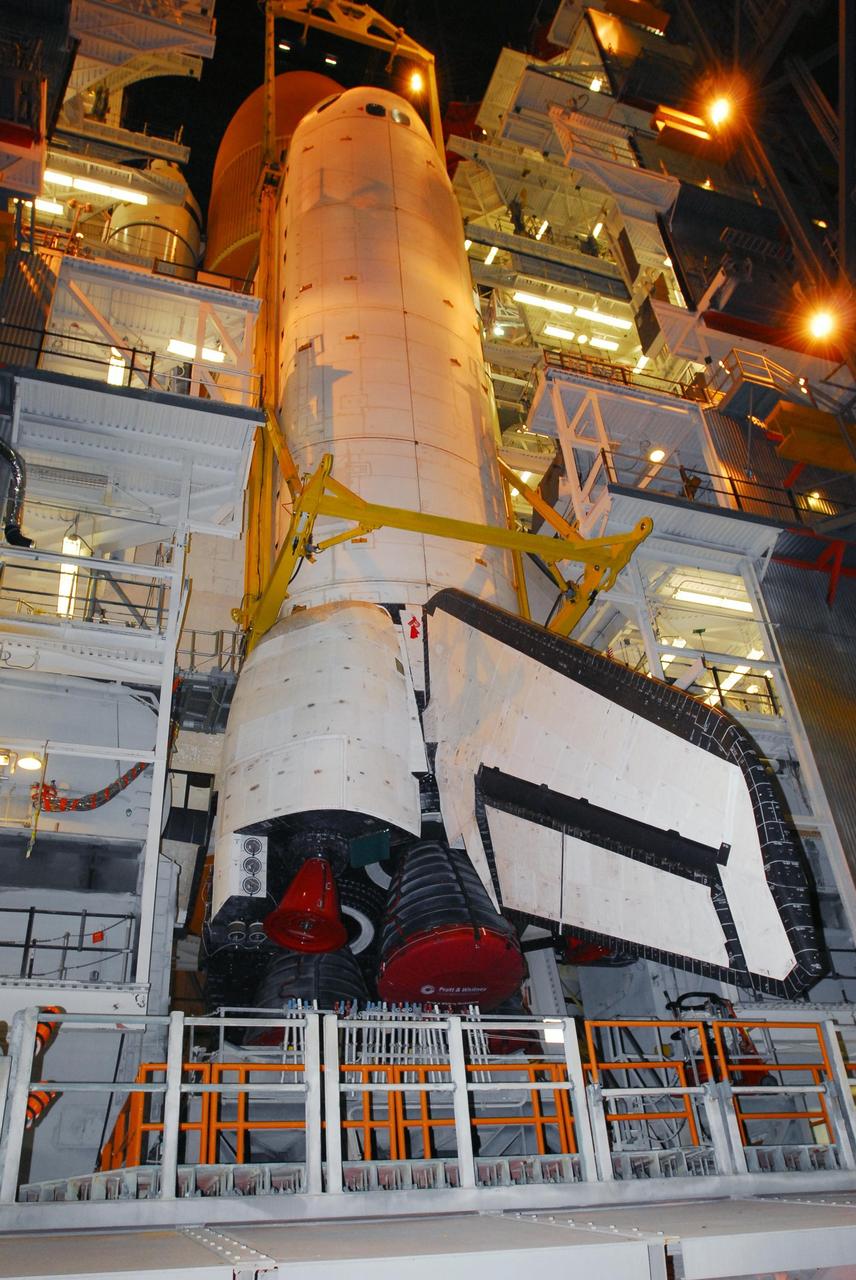
KENNEDY SPACE CENTER, FLA. -- In high bay 1 of the Vehicle Assembly Building, platforms surround Endeavour to complete stacking of the orbiter, external tank and solid rocket boosters, barely visible behind the platforms. Endeavour will be launched on mission STS-118, its first flight in more than four years. The shuttle has undergone extensive modifications, including the addition of safety upgrades already added to shuttles Discovery and Atlantis. Endeavour also features new hardware, such as the Station-to-Shuttle Power Transfer System that will allow the docked shuttle to draw electrical power from the station and extend its visits to the orbiting lab. Endeavour is targeted for launch on Aug. 7. Photo credit: NASA/George Shelton
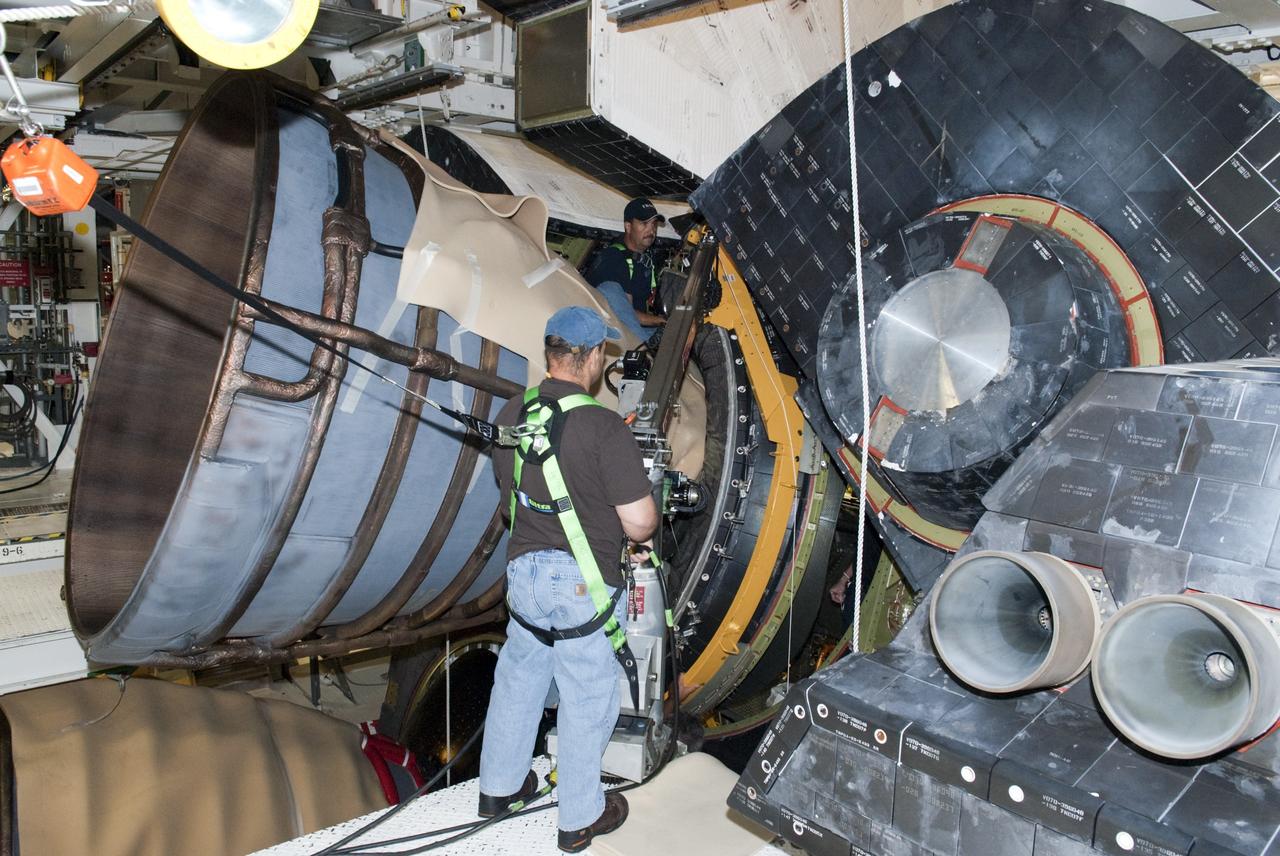
CAPE CANAVERAL, Fla. – In Orbiter Processing Facility Bay 2 at NASA’s Kennedy Space Center in Florida, United Space Alliance aerospace technicians install a heat shield around the base of space shuttle Endeavour’s replica shuttle main engine RSME number 1. Bill Ward Jr., wearing a safety harness and his back to the camera, assists Chris Peluso. The work is part of Transition and Retirement of the remaining space shuttles, Endeavour and Atlantis. Endeavour is being prepared for public display at the California Science Center in Los Angeles. Its ferry flight to California is targeted for mid-September. Endeavour was the last space shuttle added to NASA’s orbiter fleet. Over the course of its 19-year career, Endeavour spent 299 days in space during 25 missions. For more information, visit http://www.nasa.gov/transition Photo credit: NASA/ Tim Jacobs

KENNEDY SPACE CENTER, FLA. -- Hanging vertically above the transfer aisle of the Vehicle Assembly Building, the orbiter Endeavour is being lifted into the upper levels of the Vehicle Assembly Building. It will be moved laterally over a crossbeam and lowered into high bay 1 for stacking with the external tank and solid rocket boosters on the mobile launcher platform. Endeavour will be launched on mission STS-118, its first flight in more than four years. The shuttle has undergone extensive modifications, including the addition of safety upgrades already added to shuttles Discovery and Atlantis. Endeavour also features new hardware, such as the Station-to-Shuttle Power Transfer System that will allow the docked shuttle to draw electrical power from the station and extend its visits to the orbiting lab. Endeavour is targeted for launch on Aug. 7. Photo credit: NASA/Troy Cryder
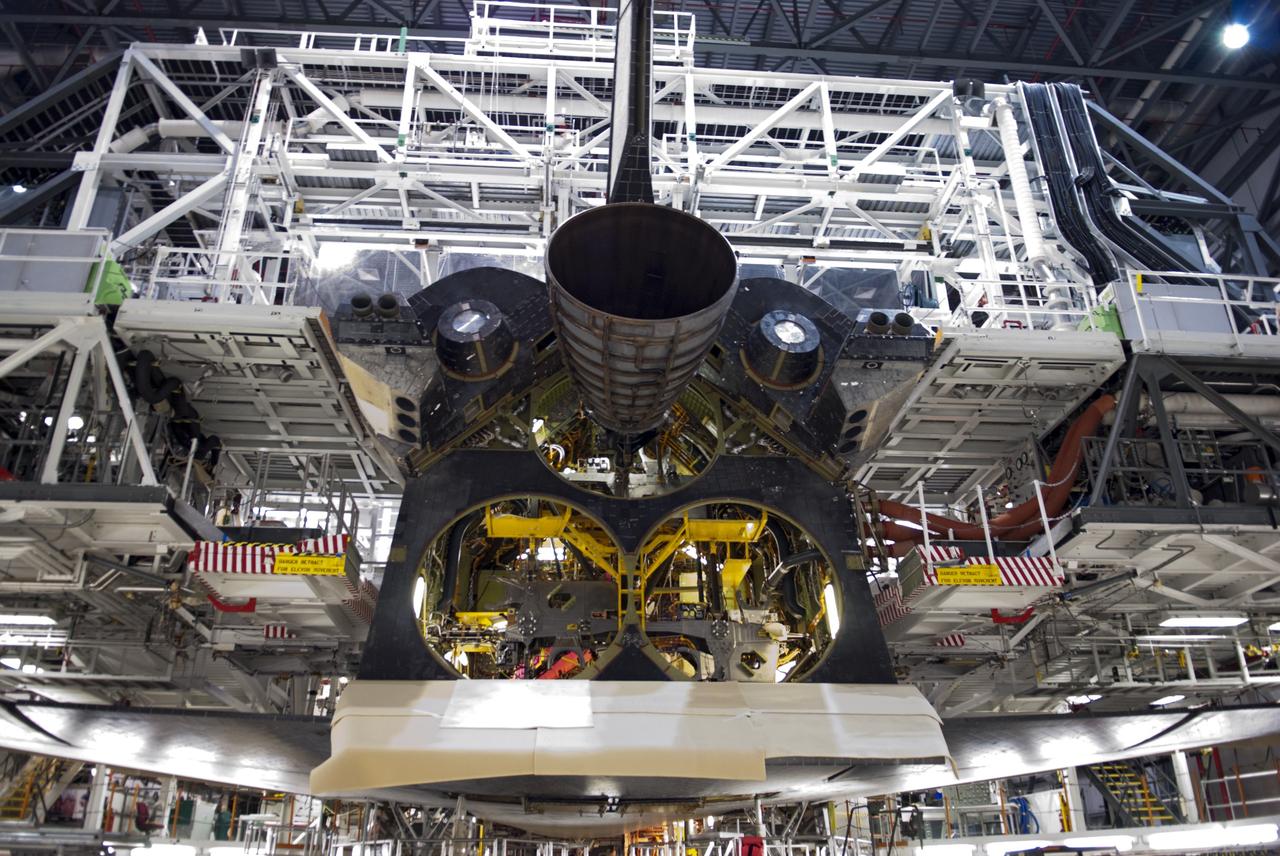
CAPE CANAVERAL, Fla. - In Orbiter Processing Facility Bay 2 at NASA’s Kennedy Space Center in Florida, replica shuttle main engine RSME number 1 has been installed on space shuttle Endeavour. The orbiter is surrounded by work platforms allowing access to all areas of the spacecraft. The work is part of Transition and Retirement of the remaining space shuttles, Endeavour and Atlantis. Endeavour is being prepared for public display at the California Science Center in Los Angeles. Its ferry flight to California is targeted for mid-September. Endeavour was the last space shuttle added to NASA’s orbiter fleet. Over the course of its 19-year career, Endeavour spent 299 days in space during 25 missions. For more information, visit http://www.nasa.gov/transition Photo credit: NASA/Charisse Nahser
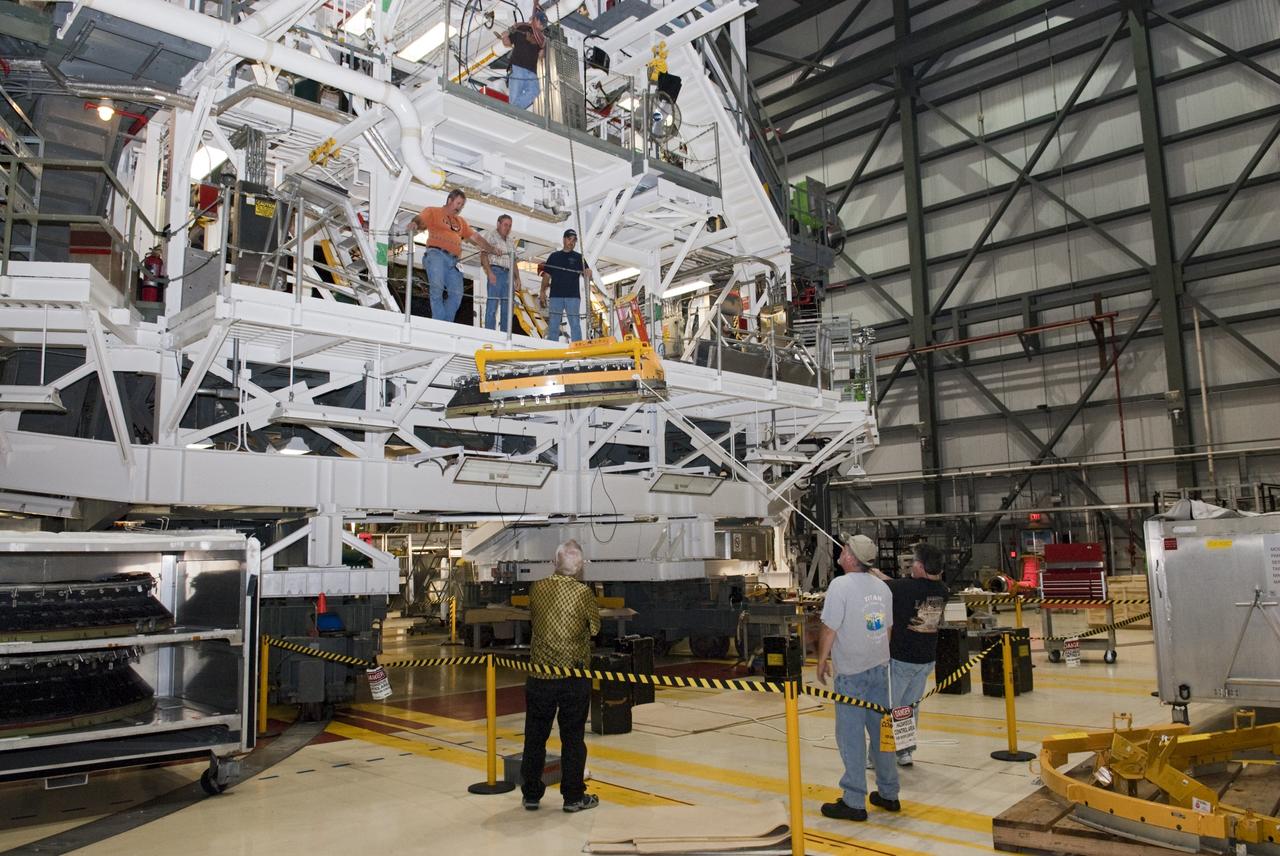
CAPE CANAVERAL, Fla. – In Orbiter Processing Facility Bay 2 at NASA’s Kennedy Space Center in Florida, United Space Alliance technicians lift a heat shield for installation around space shuttle Endeavour’s replica shuttle main engine RSME number 1. The work is part of Transition and Retirement of the remaining space shuttles, Endeavour and Atlantis. Endeavour is being prepared for public display at the California Science Center in Los Angeles. Its ferry flight to California is targeted for mid-September. Endeavour was the last space shuttle added to NASA’s orbiter fleet. Over the course of its 19-year career, Endeavour spent 299 days in space during 25 missions. For more information, visit http://www.nasa.gov/transition Photo credit: NASA/ Tim Jacobs

KENNEDY SPACE CENTER, FLA. -- The orbiter Endeavour is lifted into the upper levels of the Vehicle Assembly Building. It will be moved laterally over a crossbeam and lowered into high bay 1 for stacking with the external tank and solid rocket boosters on the mobile launcher platform. Endeavour will be launched on mission STS-118, its first flight in more than four years. The shuttle has undergone extensive modifications, including the addition of safety upgrades already added to shuttles Discovery and Atlantis. Endeavour also features new hardware, such as the Station-to-Shuttle Power Transfer System that will allow the docked shuttle to draw electrical power from the station and extend its visits to the orbiting lab. Endeavour is targeted for launch on Aug. 7. Photo credit: NASA/Troy Cryder
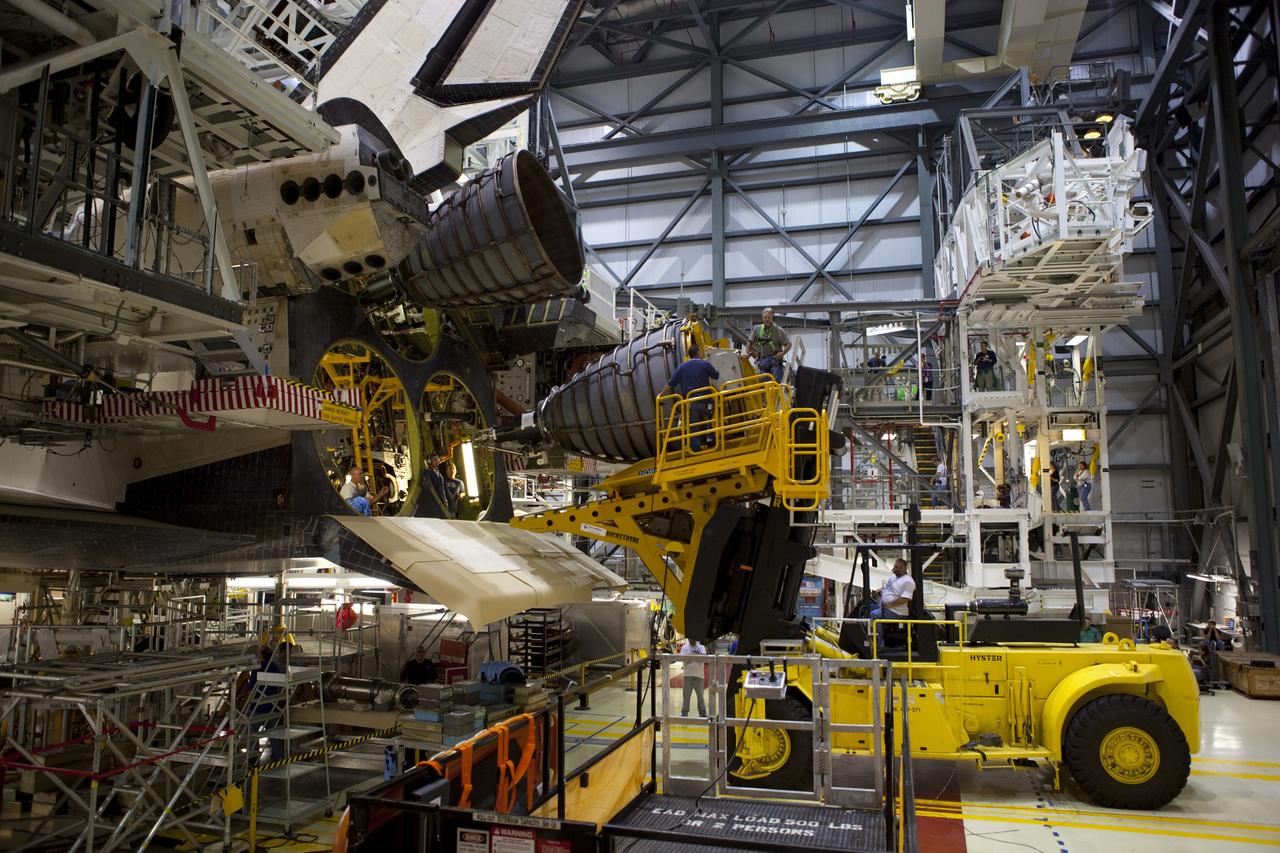
CAPE CANAVERAL, Fla. – In Orbiter Processing Facility Bay 1 at NASA’s Kennedy Space Center in Florida, technicians work with the Hyster forklift as replica shuttle main engine RSME number 3 is installed on the space shuttle Endeavour. The work is part of Transition and Retirement of the remaining space shuttles, Endeavour and Atlantis. Endeavour is being prepared for public display at the California Science Center in Los Angeles. Its ferry flight to California is targeted for mid-September. Endeavour was the last space shuttle added to NASA’s orbiter fleet. Over the course of its 19-year career, Endeavour spent 299 days in space during 25 missions. For more information, visit http://www.nasa.gov/transition Photo credit: NASA/ Dimitri Gerondidakis
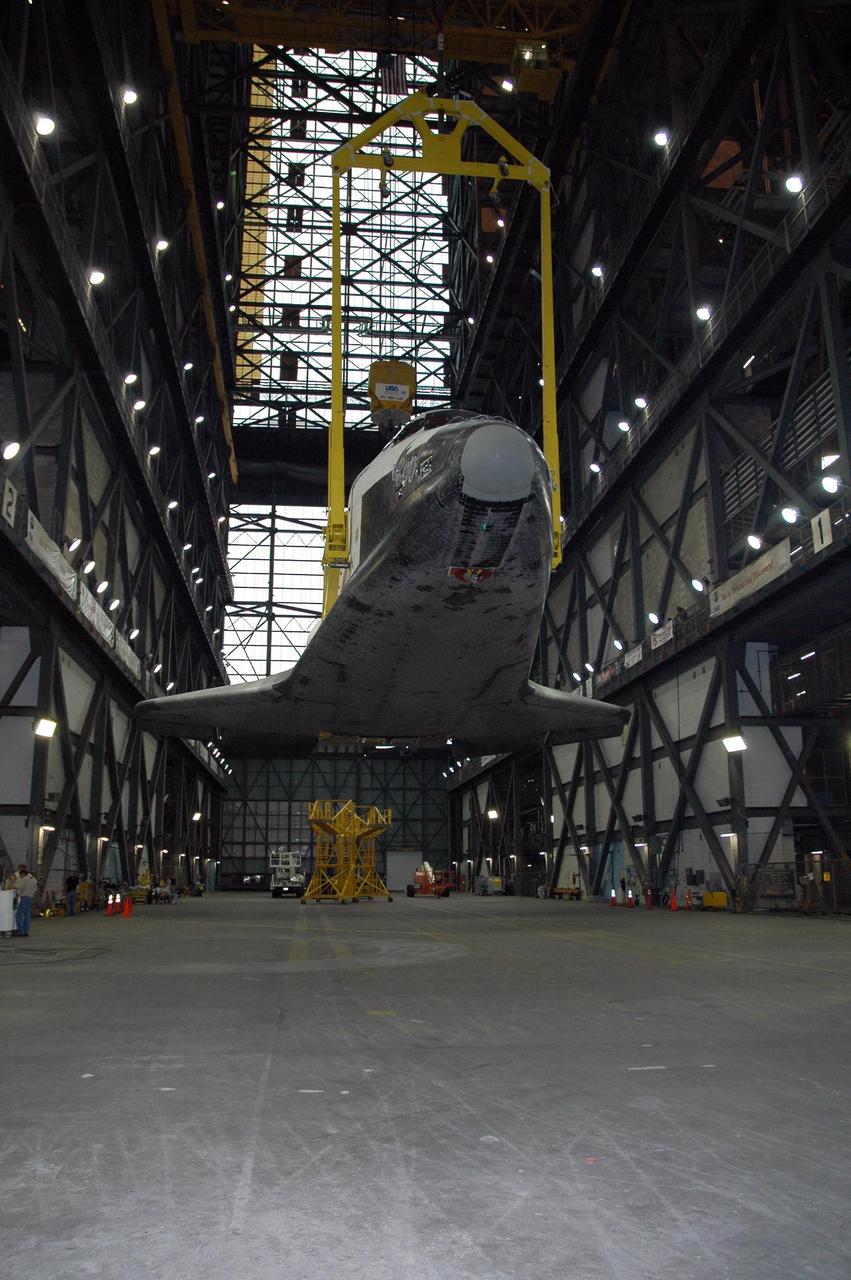
KENNEDY SPACE CENTER, FLA. -- The orbiter Endeavour hangs above the transfer aisle of the Vehicle Assembly Building. The attached sling will raise it to vertical and lift it into the upper levels of the VAB. Then it will be moved to high bay 1 and stacked with the e1ternal tank and solid rocket boosters on the mobile launcher platform. Endeavour will be launched on mission STS-118, its first flight in more than four years. The shuttle has undergone e1tensive modifications, including the addition of safety upgrades already added to shuttles Discovery and Atlantis. Endeavour also features new hardware, such as the Station-to-Shuttle Power Transfer System that will allow the docked shuttle to draw electrical power from the station and e1tend its visits to the orbiting lab. Endeavour is targeted for launch on Aug. 7. Photo credit: NASA/Charisse Nahser
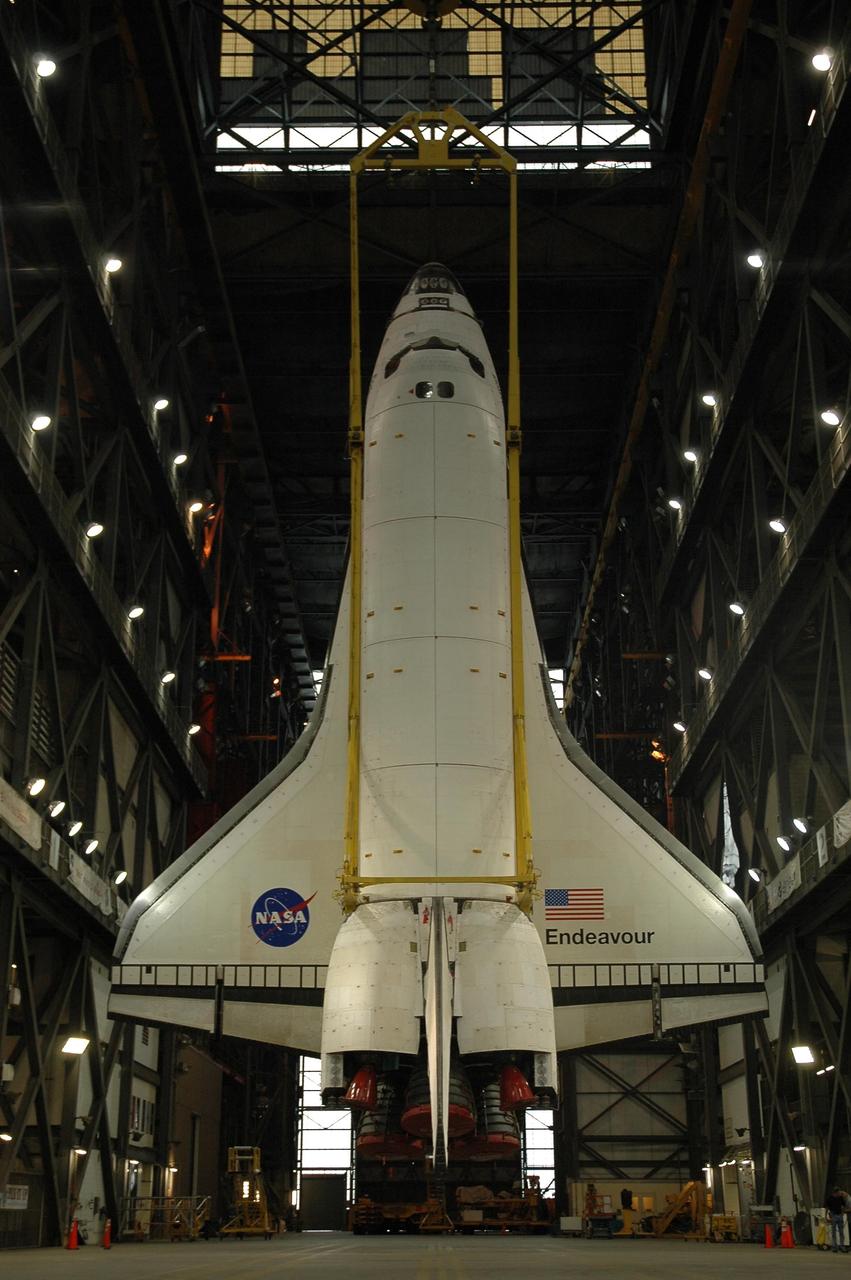
KENNEDY SPACE CENTER, FLA. -- The orbiter Endeavour hangs vertically above the transfer aisle of the Vehicle Assembly Building. It will be lifted into the upper levels of the Vehicle Assembly Building , moved laterally over a crossbeam to high bay 1 and stacked with the external tank and solid rocket boosters on the mobile launcher platform. Endeavour will be launched on mission STS-118, its first flight in more than four years. The shuttle has undergone extensive modifications, including the addition of safety upgrades already added to shuttles Discovery and Atlantis. Endeavour also features new hardware, such as the Station-to-Shuttle Power Transfer System that will allow the docked shuttle to draw electrical power from the station and extend its visits to the orbiting lab. Endeavour is targeted for launch on Aug. 7. Photo credit: NASA/Troy Cryder
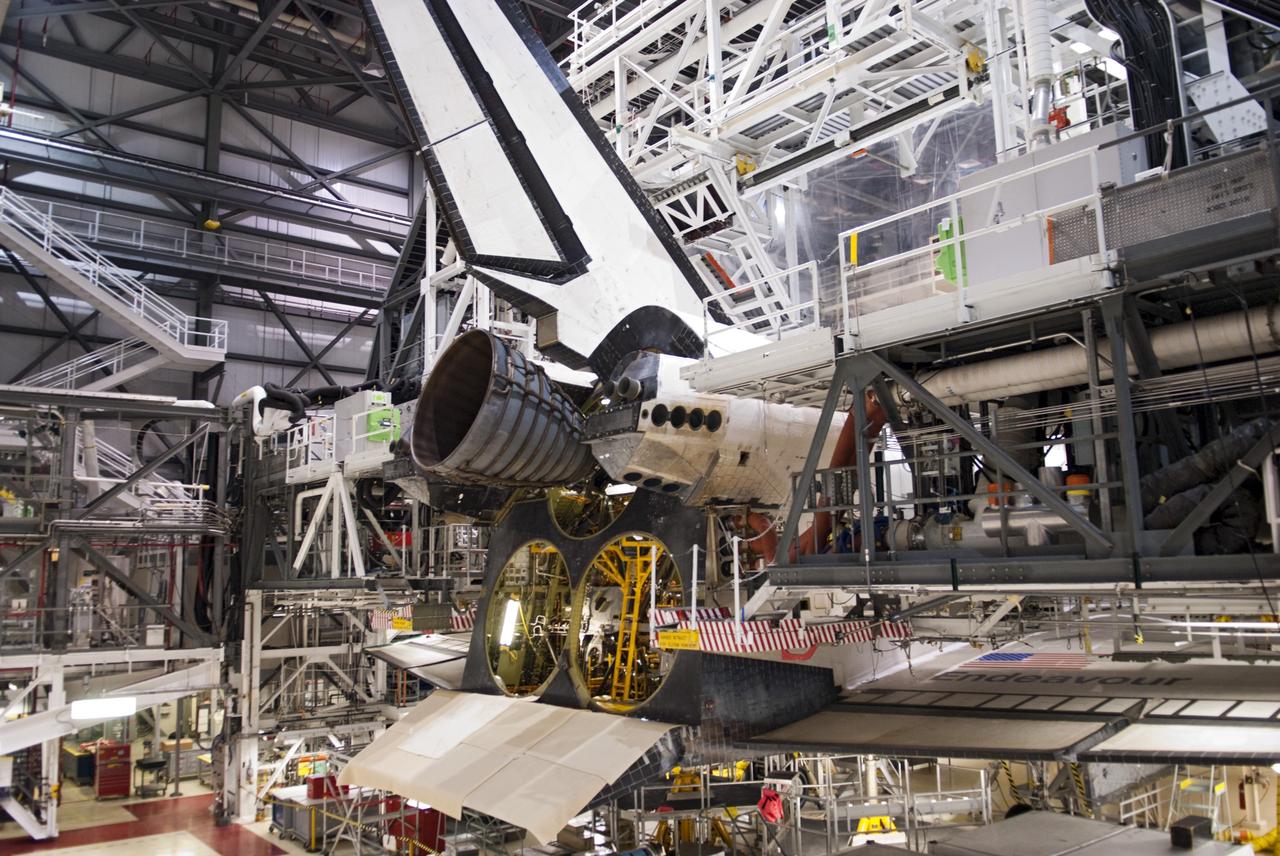
CAPE CANAVERAL, Fla. – In Orbiter Processing Facility Bay 2 at NASA’s Kennedy Space Center in Florida, replica shuttle main engine RSME number 1 has been installed on space shuttle Endeavour. The orbiter is surrounded by work platforms allowing access to all areas of the spacecraft. The work is part of Transition and Retirement of the remaining space shuttles, Endeavour and Atlantis. Endeavour is being prepared for public display at the California Science Center in Los Angeles. Its ferry flight to California is targeted for mid-September. Endeavour was the last space shuttle added to NASA’s orbiter fleet. Over the course of its 19-year career, Endeavour spent 299 days in space during 25 missions. For more information, visit http://www.nasa.gov/transition Photo credit: NASA/Charisse Nahser
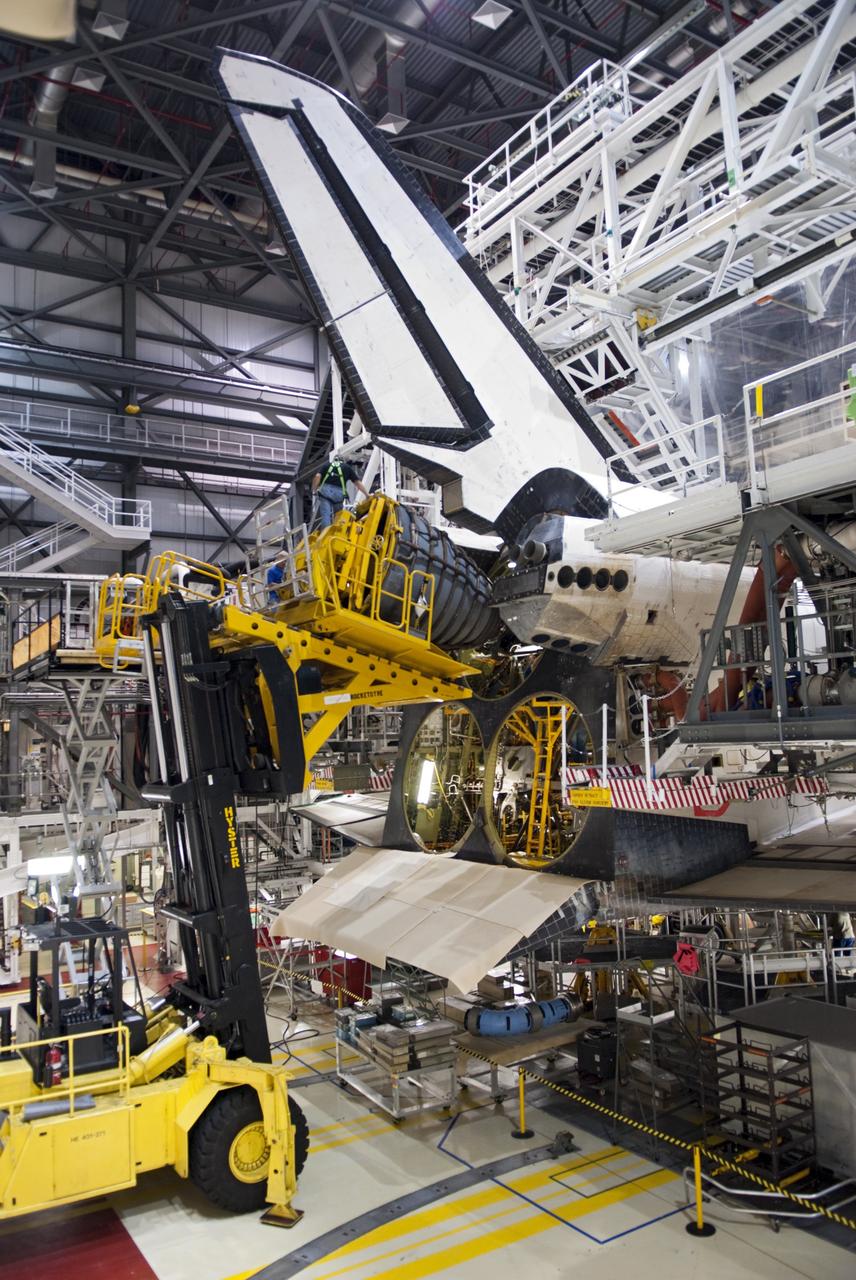
CAPE CANAVERAL, Fla. – In Orbiter Processing Facility Bay 2 at NASA’s Kennedy Space Center in Florida, technicians use the Hyster forklift to install replica shuttle main engine RSME number 1 on the space shuttle Endeavour. The work is part of Transition and Retirement of the remaining space shuttles, Endeavour and Atlantis. Endeavour is being prepared for public display at the California Science Center in Los Angeles. Its ferry flight to California is targeted for mid-September. Endeavour was the last space shuttle added to NASA’s orbiter fleet. Over the course of its 19-year career, Endeavour spent 299 days in space during 25 missions. For more information, visit http://www.nasa.gov/transition Photo credit: NASA/Charisse Nahser
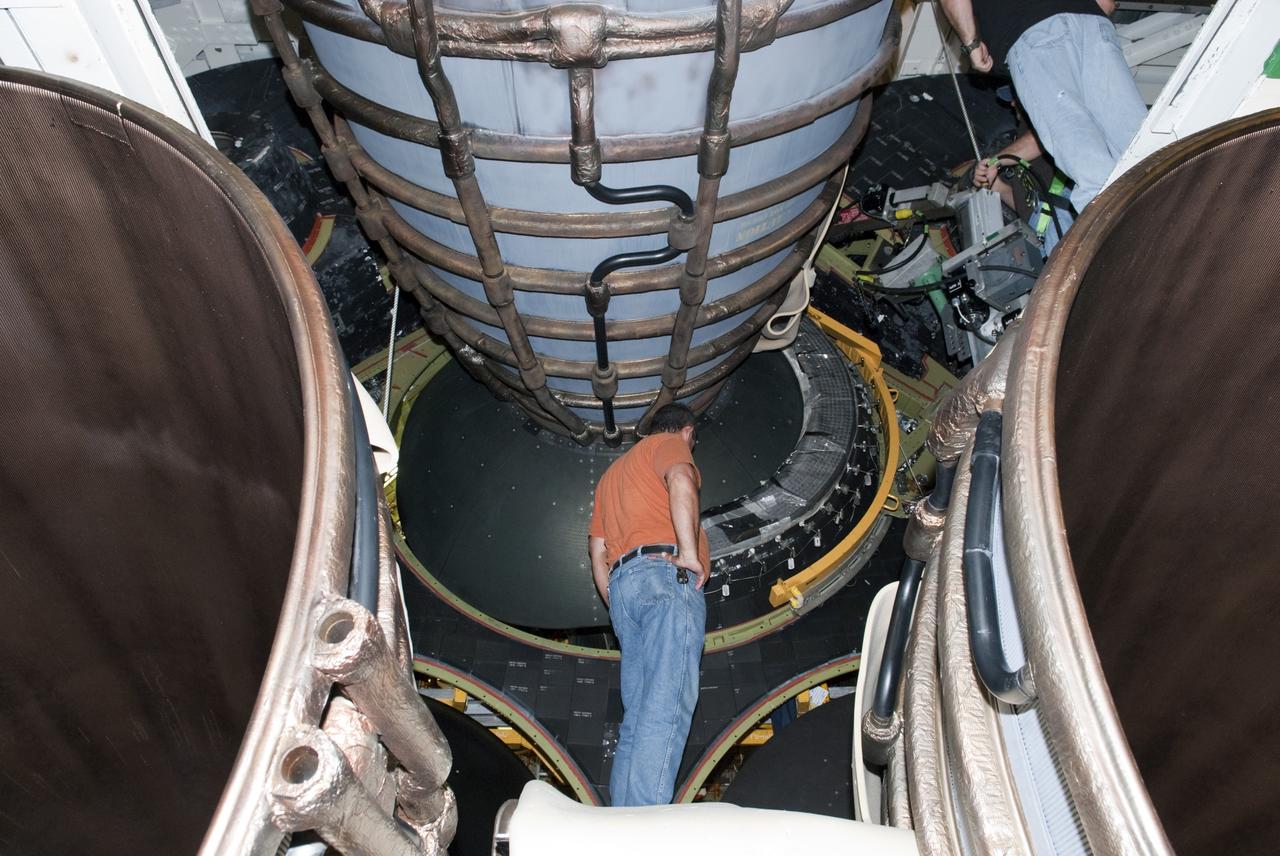
CAPE CANAVERAL, Fla. – In Orbiter Processing Facility Bay 2 at NASA’s Kennedy Space Center in Florida, United Space Alliance aerospace technician Tim Seymour inspects a heat shield that had just been installed around the base of space shuttle Endeavour’s replica shuttle main engine RSME number 1. The work is part of Transition and Retirement of the remaining space shuttles, Endeavour and Atlantis. Endeavour is being prepared for public display at the California Science Center in Los Angeles. Its ferry flight to California is targeted for mid-September. Endeavour was the last space shuttle added to NASA’s orbiter fleet. Over the course of its 19-year career, Endeavour spent 299 days in space during 25 missions. For more information, visit http://www.nasa.gov/transition Photo credit: NASA/ Tim Jacobs

KENNEDY SPACE CENTER, FLA. -- The orbiter Endeavour is lifted into the upper levels of the Vehicle Assembly Building. It will be moved laterally over a crossbeam and lowered into high bay 1 for stacking with the external tank and solid rocket boosters on the mobile launcher platform.tank and solid rocket boosters on the mobile launcher platform. Endeavour will be launched on mission STS-118, its first flight in more than four years. The shuttle has undergone extensive modifications, including the addition of safety upgrades already added to shuttles Discovery and Atlantis. Endeavour also features new hardware, such as the Station-to-Shuttle Power Transfer System that will allow the docked shuttle to draw electrical power from the station and extend its visits to the orbiting lab. Endeavour is targeted for launch on Aug. 7. Photo credit: NASA/Troy Cryder
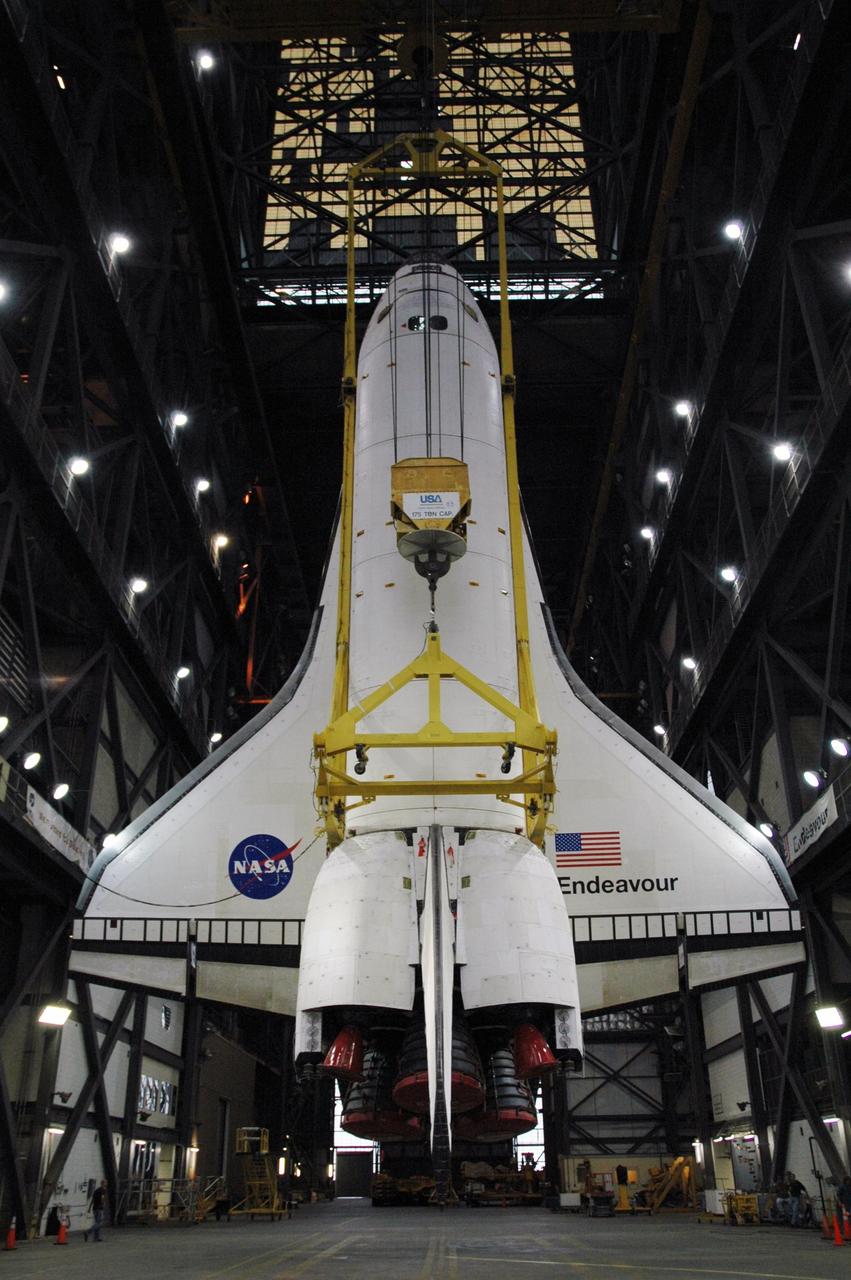
KENNEDY SPACE CENTER, FLA. -- The orbiter Endeavour hangs vertically above the transfer aisle of the Vehicle Assembly Building. It will be lifted into the upper levels of the VAB, moved to high bay 1 and stacked with the e1ternal tank and solid rocket boosters on the mobile launcher platform. Endeavour will be launched on mission STS-118, its first flight in more than four years. The shuttle has undergone e1tensive modifications, including the addition of safety upgrades already added to shuttles Discovery and Atlantis. Endeavour also features new hardware, such as the Station-to-Shuttle Power Transfer System that will allow the docked shuttle to draw electrical power from the station and e1tend its visits to the orbiting lab. Endeavour is targeted for launch on Aug. 7. Photo credit: NASA/Charisse Nahser
KENNEDY SPACE CENTER, FLA. -- The orbiter Endeavour hangs above the transfer aisle of the Vehicle Assembly Building. The attached sling will raise it to vertical and lift it into the upper levels of the VAB. Then it will be moved to high bay 1 and stacked with the e1ternal tank and solid rocket boosters on the mobile launcher platform. Endeavour will be launched on mission STS-118, its first flight in more than four years. The shuttle has undergone e1tensive modifications, including the addition of safety upgrades already added to shuttles Discovery and Atlantis. Endeavour also features new hardware, such as the Station-to-Shuttle Power Transfer System that will allow the docked shuttle to draw electrical power from the station and e1tend its visits to the orbiting lab. Endeavour is targeted for launch on Aug. 7. Photo credit: NASA/Charisse Nahser
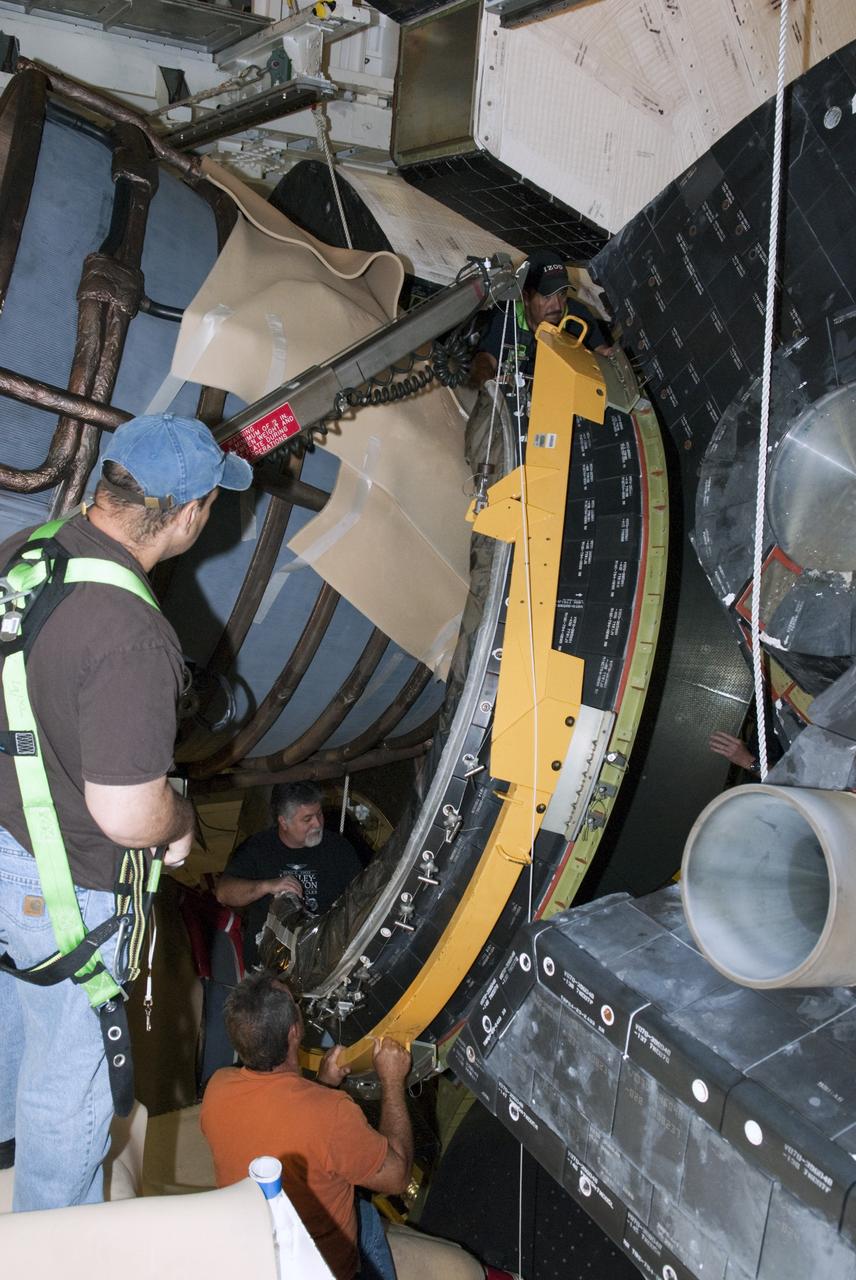
CAPE CANAVERAL, Fla. – In Orbiter Processing Facility Bay 2 at NASA’s Kennedy Space Center in Florida, United Space Alliance aerospace technicians install a heat shield around the base of space shuttle Endeavour’s replica shuttle main engine RSME number 1. Bill Ward Jr., wearing a safety harness, monitors the work of Mark Linthicum, facing the camera, and Tim Seymour. The work is part of Transition and Retirement of the remaining space shuttles, Endeavour and Atlantis. Endeavour is being prepared for public display at the California Science Center in Los Angeles. Its ferry flight to California is targeted for mid-September. Endeavour was the last space shuttle added to NASA’s orbiter fleet. Over the course of its 19-year career, Endeavour spent 299 days in space during 25 missions. For more information, visit http://www.nasa.gov/transition Photo credit: NASA/ Tim Jacobs
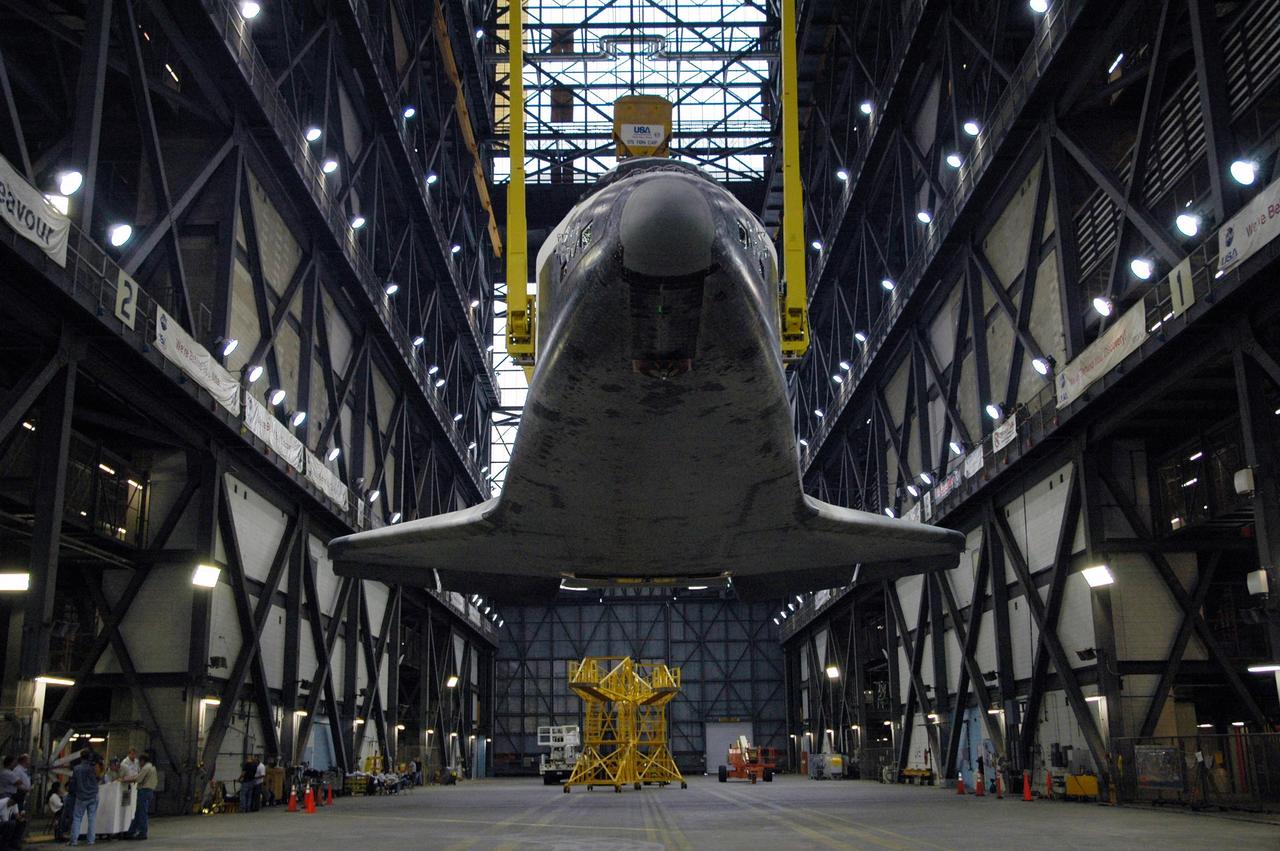
KENNEDY SPACE CENTER, FLA. -- Hanging above the transfer aisle of the Vehicle Assembly Building, the orbiter Endeavour is raised to vertical. It will be lifted into the upper levels of the VAB, moved to high bay 1 and stacked with the e1ternal tank and solid rocket boosters on the mobile launcher platform. Endeavour will be launched on mission STS-118, its first flight in more than four years. The shuttle has undergone e1tensive modifications, including the addition of safety upgrades already added to shuttles Discovery and Atlantis. Endeavour also features new hardware, such as the Station-to-Shuttle Power Transfer System that will allow the docked shuttle to draw electrical power from the station and e1tend its visits to the orbiting lab. Endeavour is targeted for launch on Aug. 7. Photo credit: NASA/Charisse Nahser
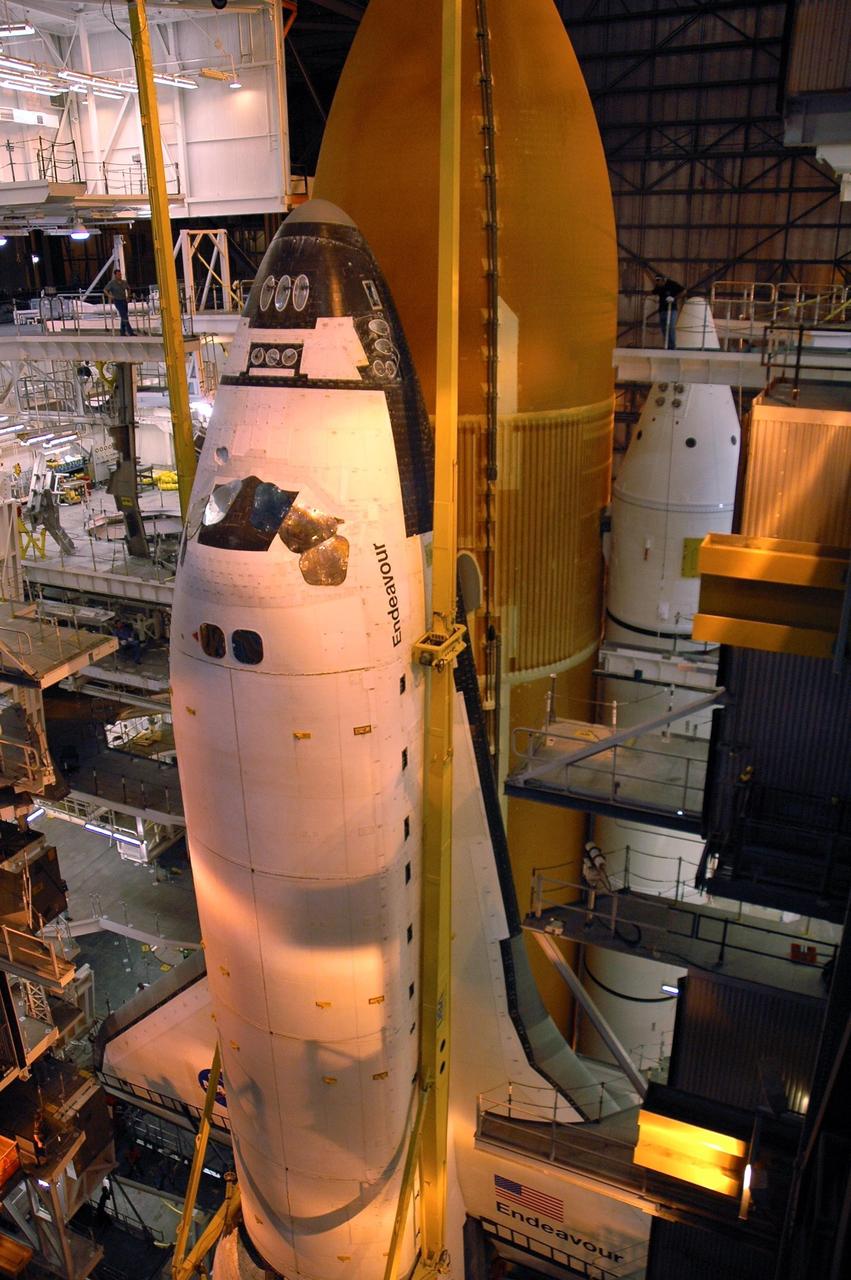
KENNEDY SPACE CENTER, FLA. -- In high bay 1 of the Vehicle Assembly Building, the orbiter Endeavour is lowered past the external tank toward the mobile launcher platform. Seen at right of the external tank is one of the white solid rocket boosters. The components will be mated for launch. Endeavour will be launched on mission STS-118, its first flight in more than four years. The shuttle has undergone extensive modifications, including the addition of safety upgrades already added to shuttles Discovery and Atlantis. Endeavour also features new hardware, such as the Station-to-Shuttle Power Transfer System that will allow the docked shuttle to draw electrical power from the station and extend its visits to the orbiting lab. Endeavour is targeted for launch on Aug. 7. Photo credit: NASA/Troy Cryder
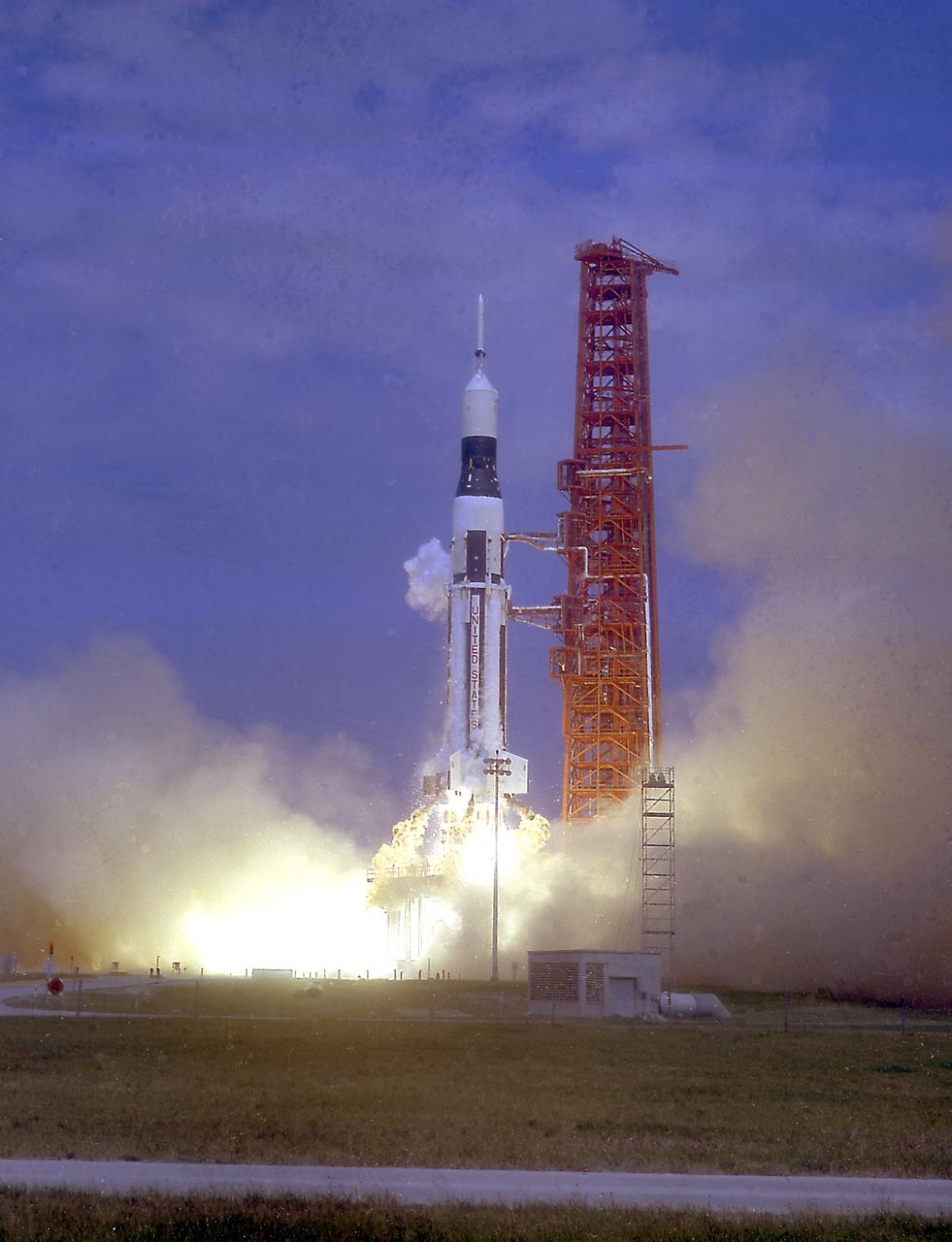
The launch of the SA-7 (Saturn I Block II) was on September 18, 1964. The SA-7 mission was the second orbital flight of the S-IV stage (second stage) with the payload consisting of the Apollo command and service module's instrument unit. The Saturn I Block II vehicle had two live stages, and were basically in the two-stage configuration of the Saturn I vehicle. While the tank arrangement and the engine patterns were the same, there were marked changes between the Block I and II versions. The first stage (S-I stage) was an improved version of the Block I S-I stage. The Block II S-1 stage had eight fins added for greater aerodynamic stability in the lower atmosphere.
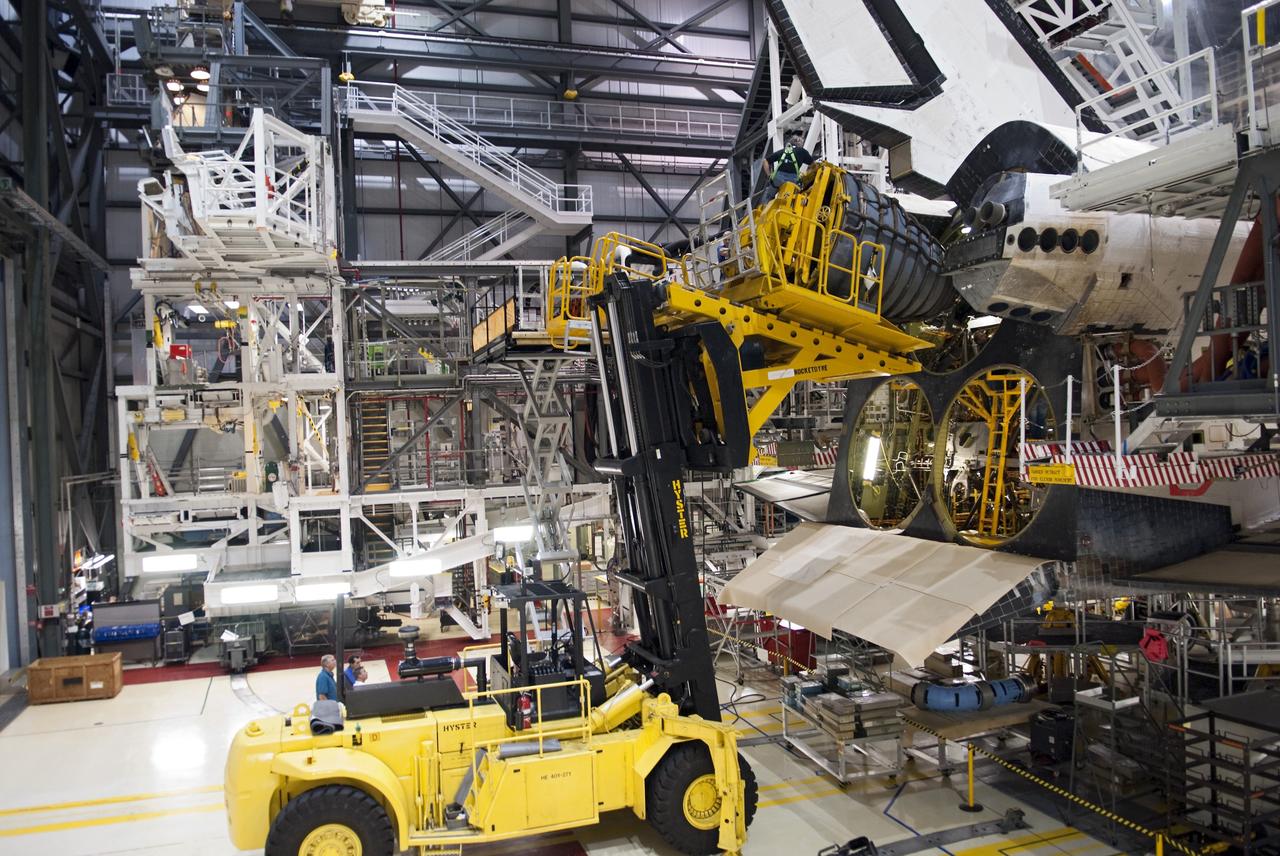
CAPE CANAVERAL, Fla. – In Orbiter Processing Facility Bay 2 at NASA’s Kennedy Space Center in Florida, technicians use the Hyster forklift to install replica shuttle main engine RSME number 1 on the space shuttle Endeavour. The work is part of Transition and Retirement of the remaining space shuttles, Endeavour and Atlantis. Endeavour is being prepared for public display at the California Science Center in Los Angeles. Its ferry flight to California is targeted for mid-September. Endeavour was the last space shuttle added to NASA’s orbiter fleet. Over the course of its 19-year career, Endeavour spent 299 days in space during 25 missions. For more information, visit http://www.nasa.gov/transition Photo credit: NASA/Charisse Nahser
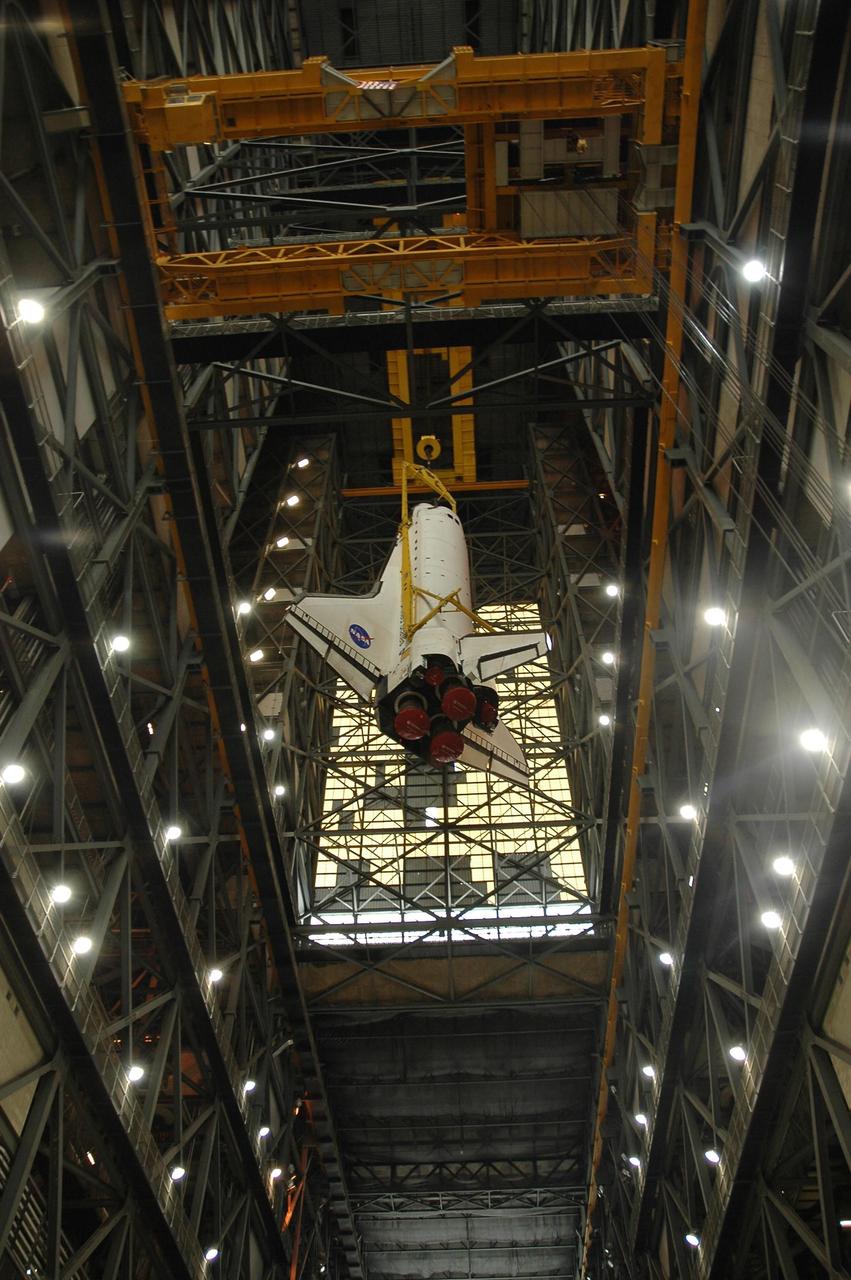
KENNEDY SPACE CENTER, FLA. -- The orbiter Endeavour is lifted into the upper levels of the Vehicle Assembly Building. It will be moved laterally over a crossbeam and lowered into high bay 1 for stacking with the external tank and solid rocket boosters on the mobile launcher platform. Endeavour will be launched on mission STS-118, its first flight in more than four years. The shuttle has undergone extensive modifications, including the addition of safety upgrades already added to shuttles Discovery and Atlantis. Endeavour also features new hardware, such as the Station-to-Shuttle Power Transfer System that will allow the docked shuttle to draw electrical power from the station and extend its visits to the orbiting lab. Endeavour is targeted for launch on Aug. 7. Photo credit: NASA/Troy Cryder
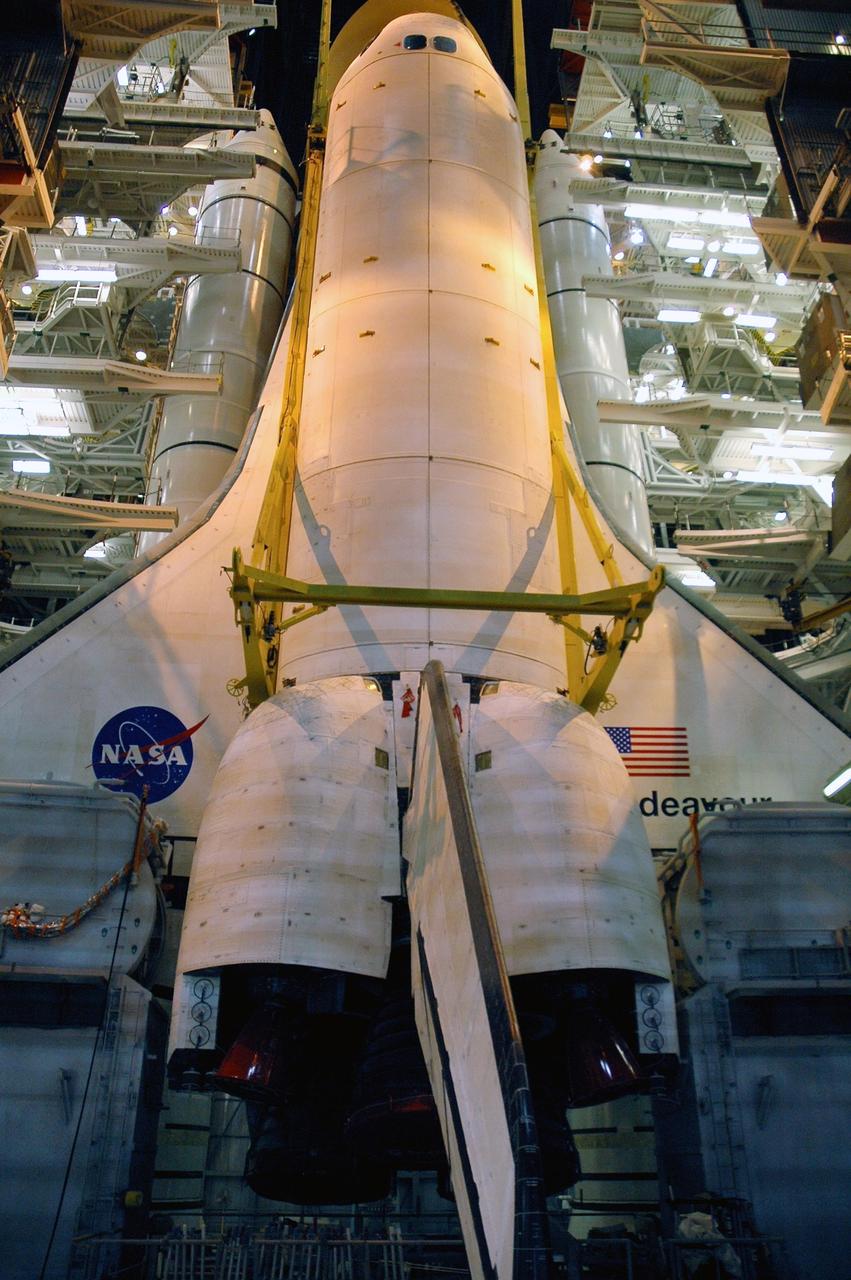
KENNEDY SPACE CENTER, FLA. -- In high bay 1 of the Vehicle Assembly Building, the orbiter Endeavour is lowered onto the mobile launcher platform. The orbiter blocks the view of the external tank; on either side of the orbiter are the white solid rocket boosters. The components will be mated for launch. Endeavour will be launched on mission STS-118, its first flight in more than four years. The shuttle has undergone extensive modifications, including the addition of safety upgrades already added to shuttles Discovery and Atlantis. Endeavour also features new hardware, such as the Station-to-Shuttle Power Transfer System that will allow the docked shuttle to draw electrical power from the station and extend its visits to the orbiting lab. Endeavour is targeted for launch on Aug. 7. Photo credit: NASA/Troy Cryder
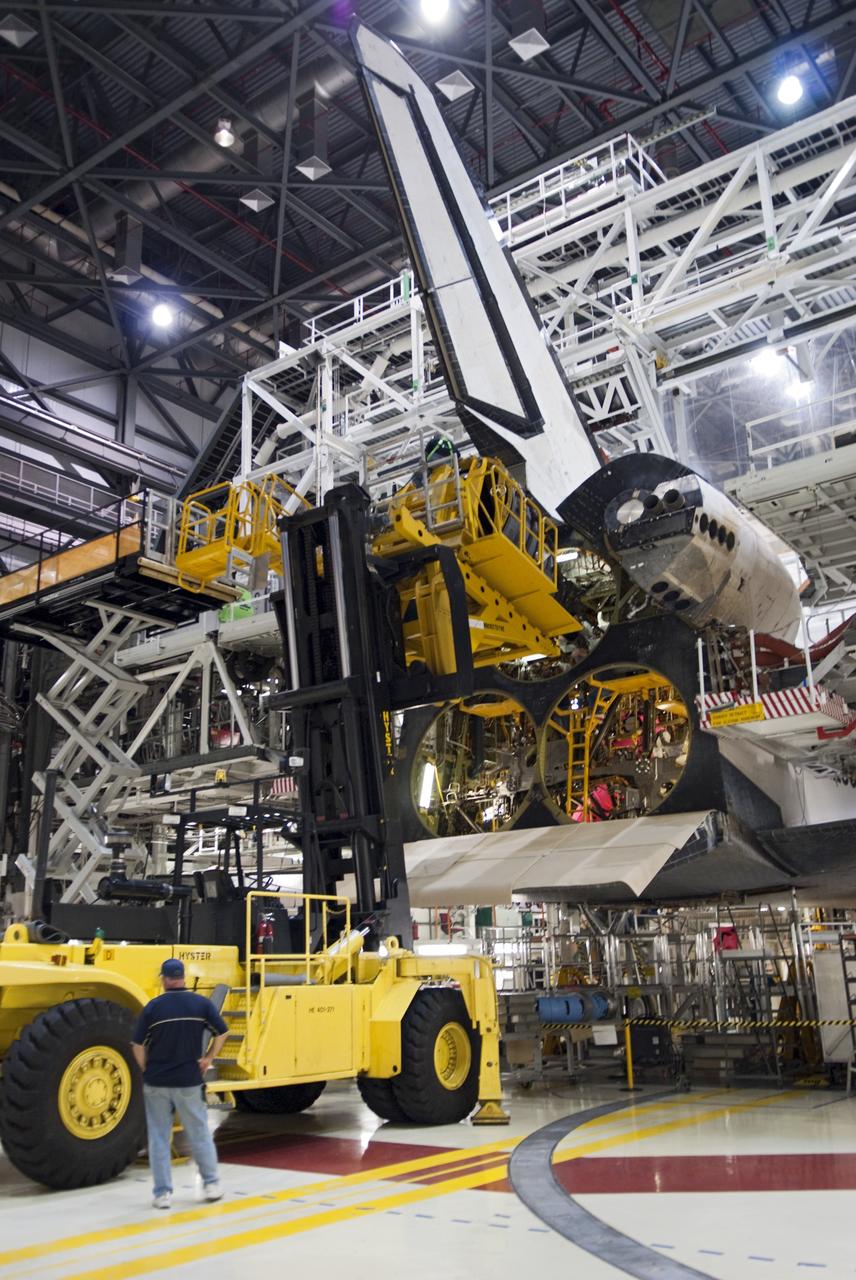
CAPE CANAVERAL, Fla. – In Orbiter Processing Facility Bay 2 at NASA’s Kennedy Space Center in Florida, technicians use the Hyster forklift to install replica shuttle main engine RSME number 1 on the space shuttle Endeavour. The work is part of Transition and Retirement of the remaining space shuttles, Endeavour and Atlantis. Endeavour is being prepared for public display at the California Science Center in Los Angeles. Its ferry flight to California is targeted for mid-September. Endeavour was the last space shuttle added to NASA’s orbiter fleet. Over the course of its 19-year career, Endeavour spent 299 days in space during 25 missions. For more information, visit http://www.nasa.gov/transition Photo credit: NASA/Charisse Nahser
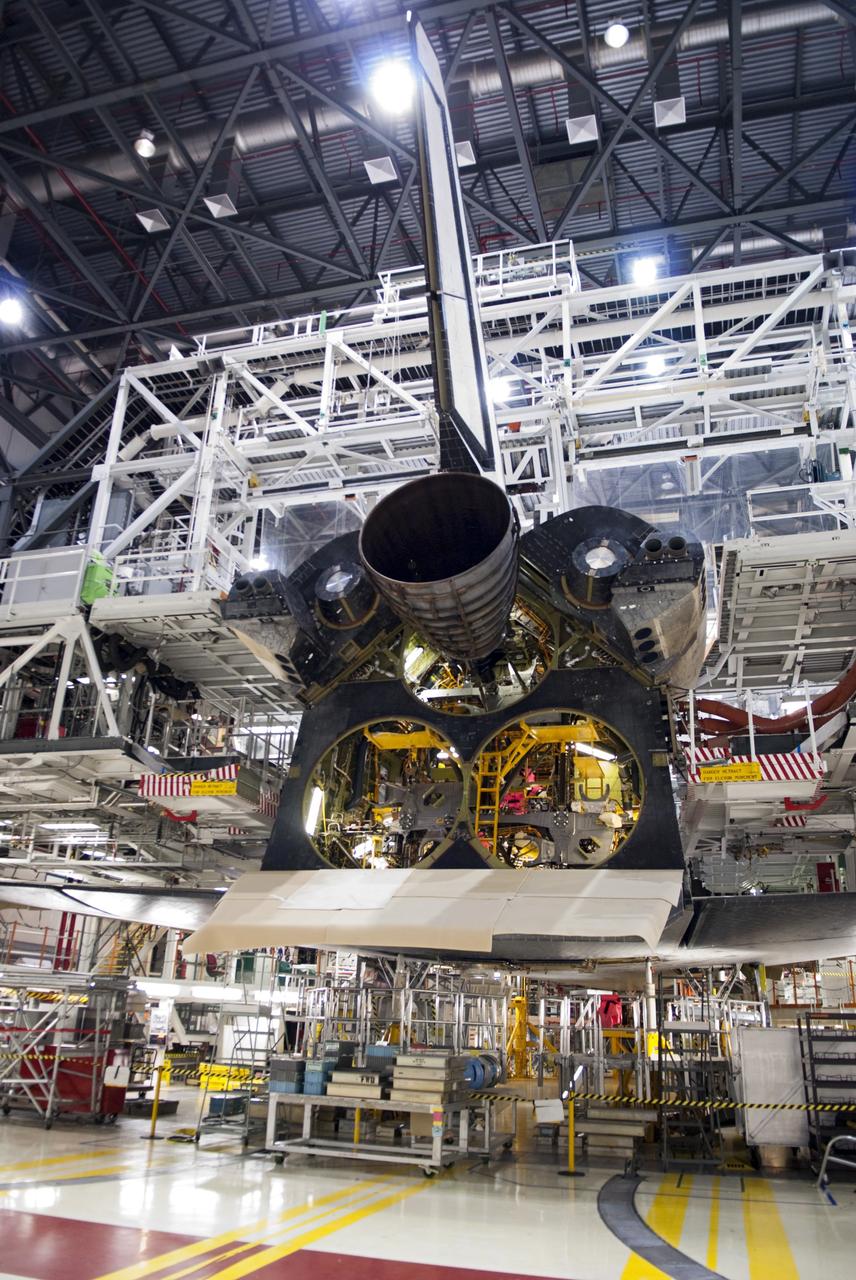
CAPE CANAVERAL, Fla. - In a view from the floor of Orbiter Processing Facility Bay 2 at NASA’s Kennedy Space Center in Florida, replica shuttle main engine RSME number 1 has been installed on space shuttle Endeavour. The orbiter is surrounded by work platforms allowing access to all areas of the spacecraft. The work is part of Transition and Retirement of the remaining space shuttles, Endeavour and Atlantis. Endeavour is being prepared for public display at the California Science Center in Los Angeles. Its ferry flight to California is targeted for mid-September. Endeavour was the last space shuttle added to NASA’s orbiter fleet. Over the course of its 19-year career, Endeavour spent 299 days in space during 25 missions. For more information, visit http://www.nasa.gov/transition Photo credit: NASA/Charisse Nahser
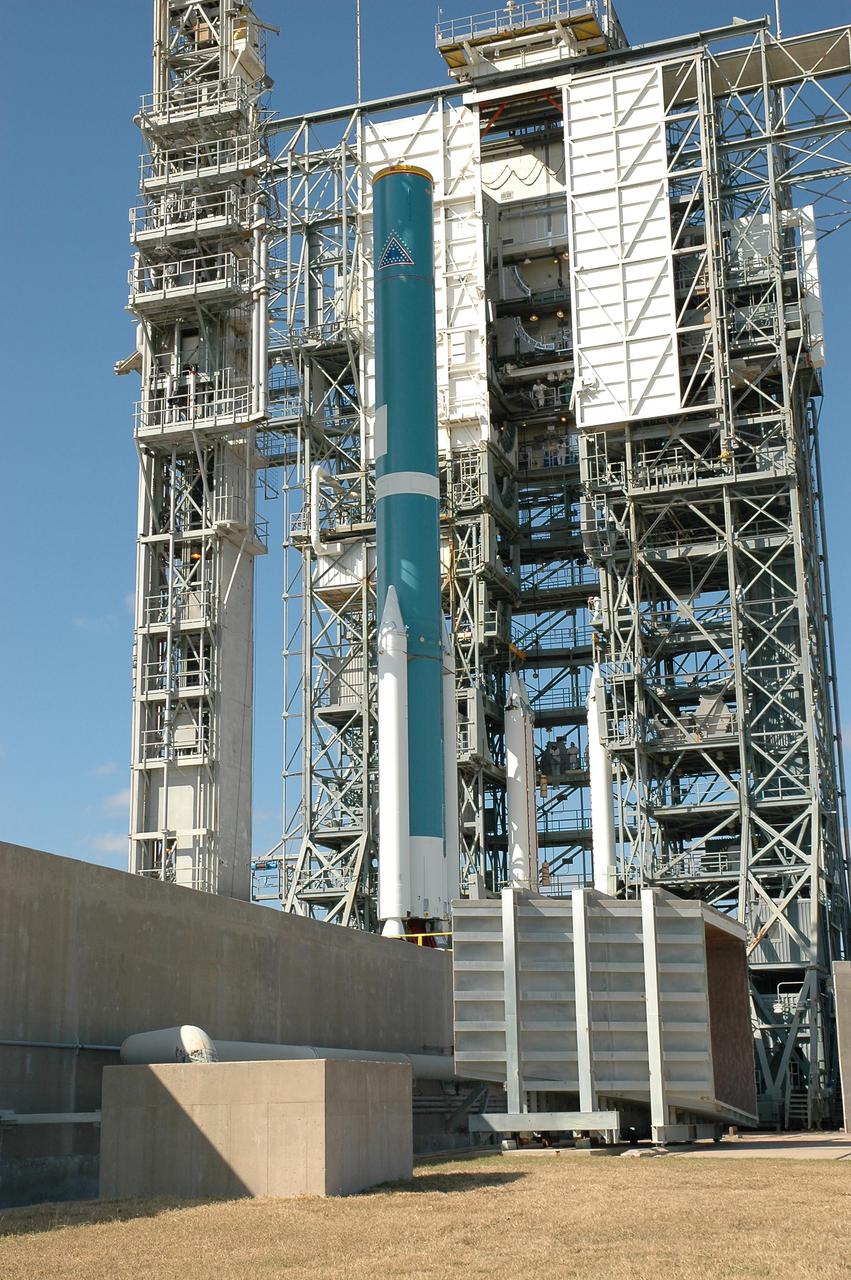
KENNEDY SPACE CENTER, FLA. - On Launch Pad 17-B, Cape Canaveral Air Force Station, Fla., the mobile service tower with a second set of three Solid Rocket Boosters (SRBs) is moved toward the Boeing Delta II rocket for mating. A final set of three SRBs is yet to be added. A NASA Discovery mission, Deep Impact will probe beneath the surface of Comet Tempel 1 on July 4, 2005, when the comet is 83 million miles from Earth, and reveal the secrets of its interior. After releasing an impactor on a course to hit the comet’s sunlit side, Deep Impact’s flyby spacecraft will collect pictures and data of how the crater forms, measure the crater’s depth and diameter, as well as the composition of the interior of the crater and any material thrown out, and determine the changes in natural outgassing produced by the impact. It will send the data back to Earth through the antennas of the Deep Space Network.
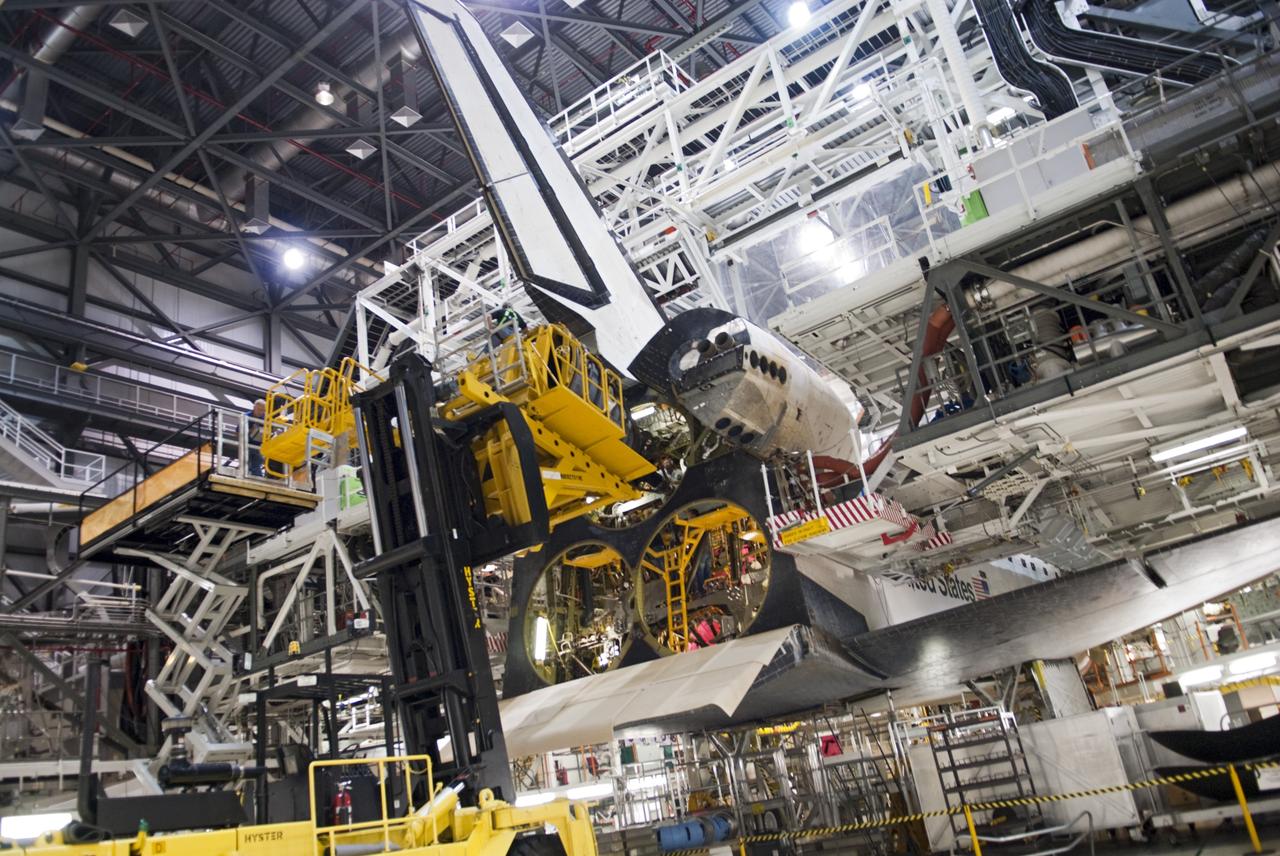
CAPE CANAVERAL, Fla. – In Orbiter Processing Facility Bay 2 at NASA’s Kennedy Space Center in Florida, technicians use the Hyster forklift to install replica shuttle main engine RSME number 1 on the space shuttle Endeavour. The orbiter is surrounded by work platforms allowing access to all areas of the spacecraft. The work is part of Transition and Retirement of the remaining space shuttles, Endeavour and Atlantis. Endeavour is being prepared for public display at the California Science Center in Los Angeles. Its ferry flight to California is targeted for mid-September. Endeavour was the last space shuttle added to NASA’s orbiter fleet. Over the course of its 19-year career, Endeavour spent 299 days in space during 25 missions. For more information, visit http://www.nasa.gov/transition Photo credit: NASA/Charisse Nahser

KENNEDY SPACE CENTER, FLA. -- In high bay 1 of the Vehicle Assembly Building, the Space Shuttle Endeavour is complete as the orbiter joins its external tank and solid rocket boosters on the mobile launcher platform. The components will be mated for launch. Endeavour will be launched on mission STS-118, its first flight in more than four years. The shuttle has undergone extensive modifications, including the addition of safety upgrades already added to shuttles Discovery and Atlantis. Endeavour also features new hardware, such as the Station-to-Shuttle Power Transfer System that will allow the docked shuttle to draw electrical power from the station and extend its visits to the orbiting lab. Endeavour is targeted for launch on Aug. 7. Photo credit: NASA/Troy Cryder
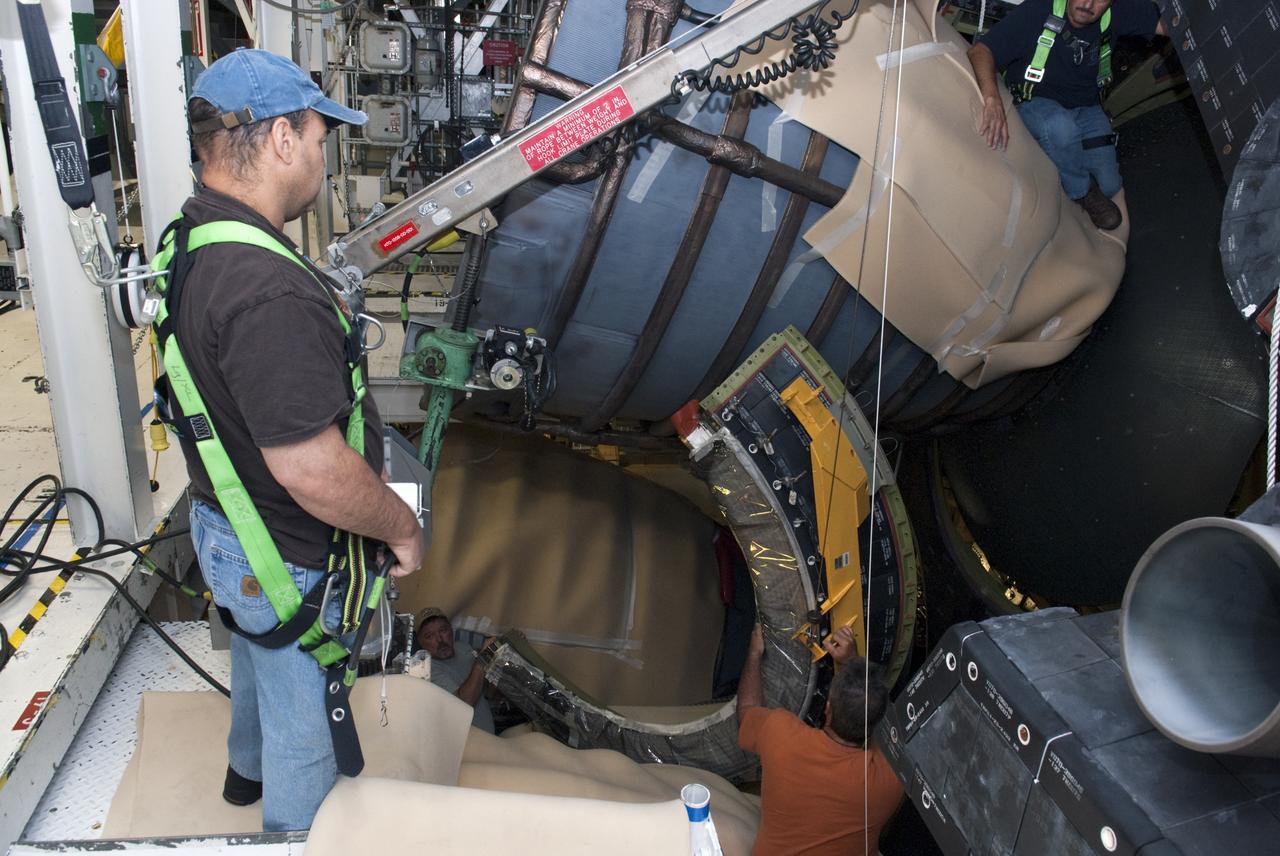
CAPE CANAVERAL, Fla. – In Orbiter Processing Facility Bay 2 at NASA’s Kennedy Space Center in Florida, United Space Alliance aerospace technicians install a heat shield around the base of space shuttle Endeavour’s replica shuttle main engine RSME number 1. Bill Ward Jr., wearing a safety harness, monitors the work of Tim Seymour in the lower portion of the image and Chris Peluso, above. The work is part of Transition and Retirement of the remaining space shuttles, Endeavour and Atlantis. Endeavour is being prepared for public display at the California Science Center in Los Angeles. Its ferry flight to California is targeted for mid-September. Endeavour was the last space shuttle added to NASA’s orbiter fleet. Over the course of its 19-year career, Endeavour spent 299 days in space during 25 missions. For more information, visit http://www.nasa.gov/transition Photo credit: NASA/ Tim Jacobs
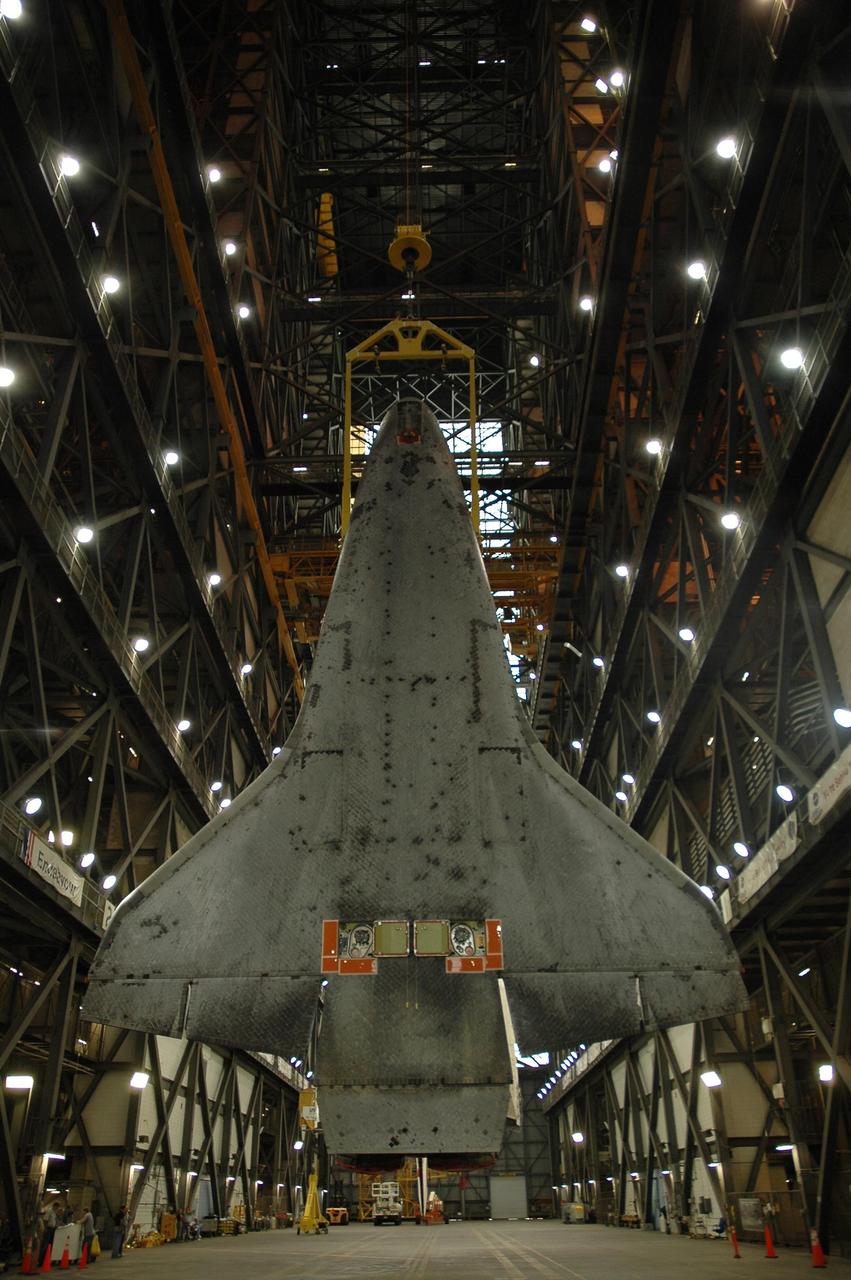
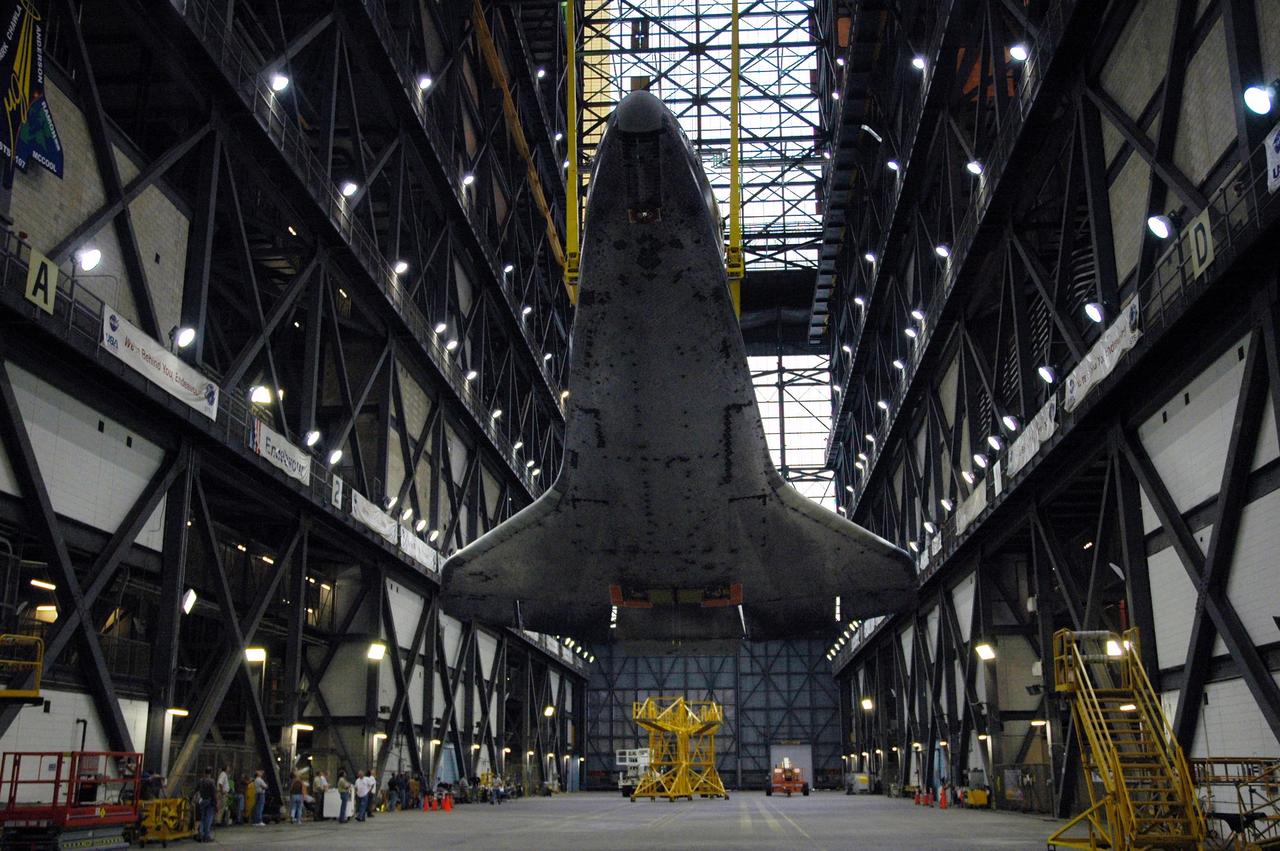
KENNEDY SPACE CENTER, FLA. -- Seen from the back side, the orbiter Endeavour hangs vertically above the transfer aisle of the Vehicle Assembly Building. It will be lifted into the upper levels of the Vehicle Assembly Building , moved laterally over a crossbeam to high bay 1 and stacked with the external tank and solid rocket boosters on the mobile launcher platform. Endeavour will be launched on mission STS-118, its first flight in more than four years. The shuttle has undergone extensive modifications, including the addition of safety upgrades already added to shuttles Discovery and Atlantis. Endeavour also features new hardware, such as the Station-to-Shuttle Power Transfer System that will allow the docked shuttle to draw electrical power from the station and extend its visits to the orbiting lab. Endeavour is targeted for launch on Aug. 7. Photo credit: NASA/Troy Cryder
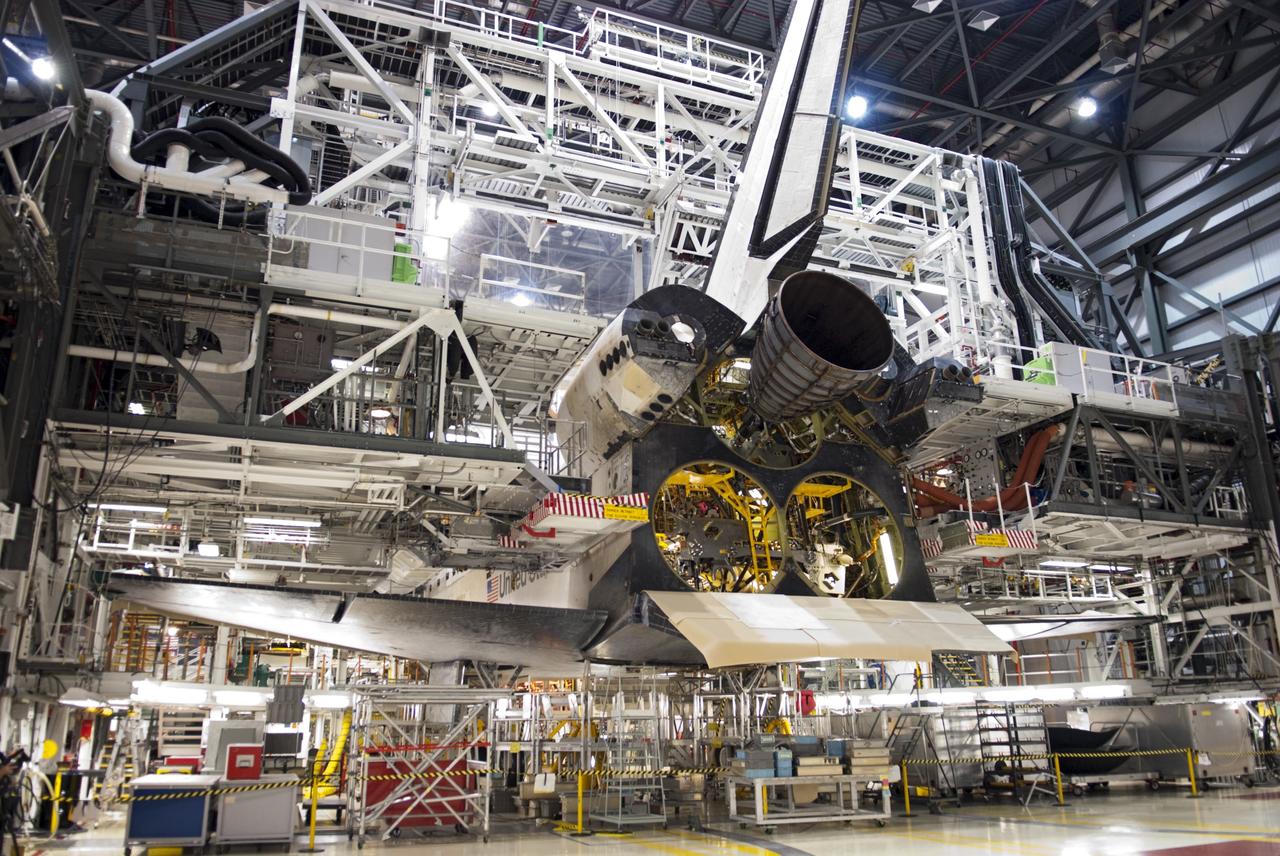
CAPE CANAVERAL, Fla. - In Orbiter Processing Facility Bay 2 at NASA’s Kennedy Space Center in Florida, replica shuttle main engine RSME number 1 has been installed on space shuttle Endeavour. The orbiter is surrounded by work platforms allowing access to all areas of the spacecraft. The work is part of Transition and Retirement of the remaining space shuttles, Endeavour and Atlantis. Endeavour is being prepared for public display at the California Science Center in Los Angeles. Its ferry flight to California is targeted for mid-September. Endeavour was the last space shuttle added to NASA’s orbiter fleet. Over the course of its 19-year career, Endeavour spent 299 days in space during 25 missions. For more information, visit http://www.nasa.gov/transition Photo credit: NASA/Charisse Nahser
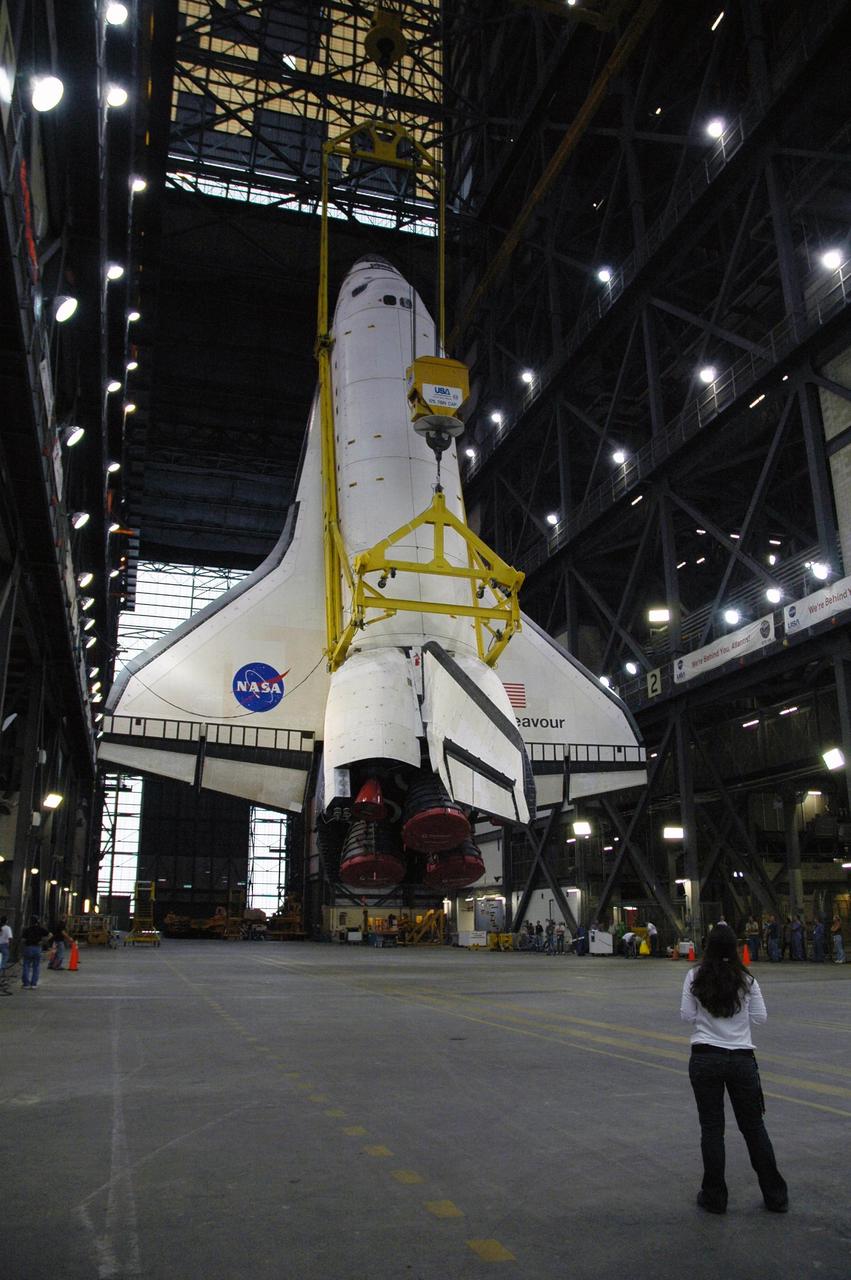
KENNEDY SPACE CENTER, FLA. -- The orbiter Endeavour hangs nearly vertical above the transfer aisle of the Vehicle Assembly Building. It will be lifted into the upper levels of the VAB, moved to high bay 1 and stacked with the e1ternal tank and solid rocket boosters on the mobile launcher platform. Endeavour will be launched on mission STS-118, its first flight in more than four years. The shuttle has undergone e1tensive modifications, including the addition of safety upgrades already added to shuttles Discovery and Atlantis. Endeavour also features new hardware, such as the Station-to-Shuttle Power Transfer System that will allow the docked shuttle to draw electrical power from the station and e1tend its visits to the orbiting lab. Endeavour is targeted for launch on Aug. 7. Photo credit: NASA/Charisse Nahser
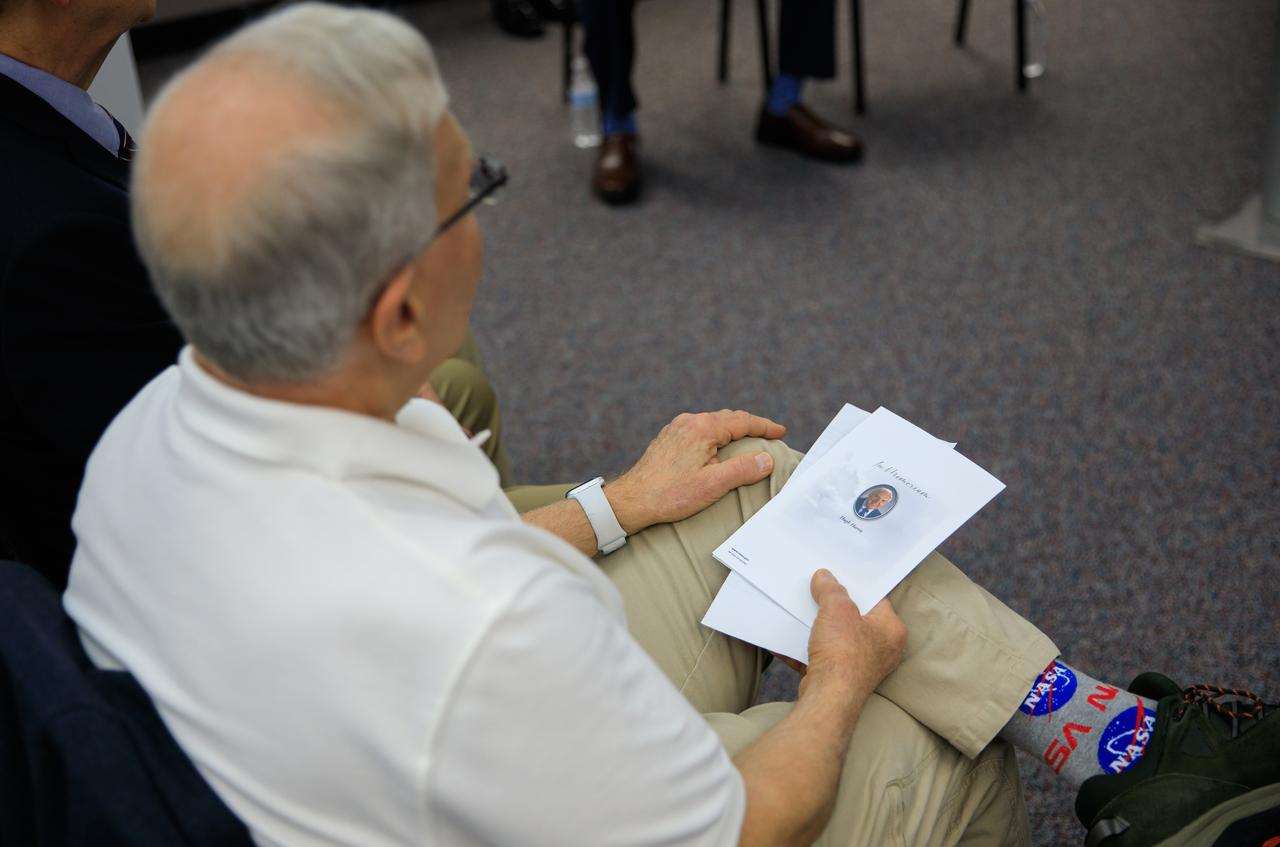
Kennedy Space Center celebrated the latest honorees to have their names added to the “Chroniclers” wall at the NASA News Center in Florida during a ceremony on May 1, 2023. Seated in front is Mark Kramer, along with Bob Granath and Red Huber (not in view). They were nominated by other members of the news media and selected by a panel of NASA officials and current space reporters. The award recognizes retirees of the news and communications business who helped spread news of American space exploration from Kennedy for 10 years or more. The inductees join the list of 79 other Kennedy Chroniclers whose names hang proudly on the wall in the “Bull Pen,” the NASA News Center room where media traditionally gather to research and file their stories during launches.