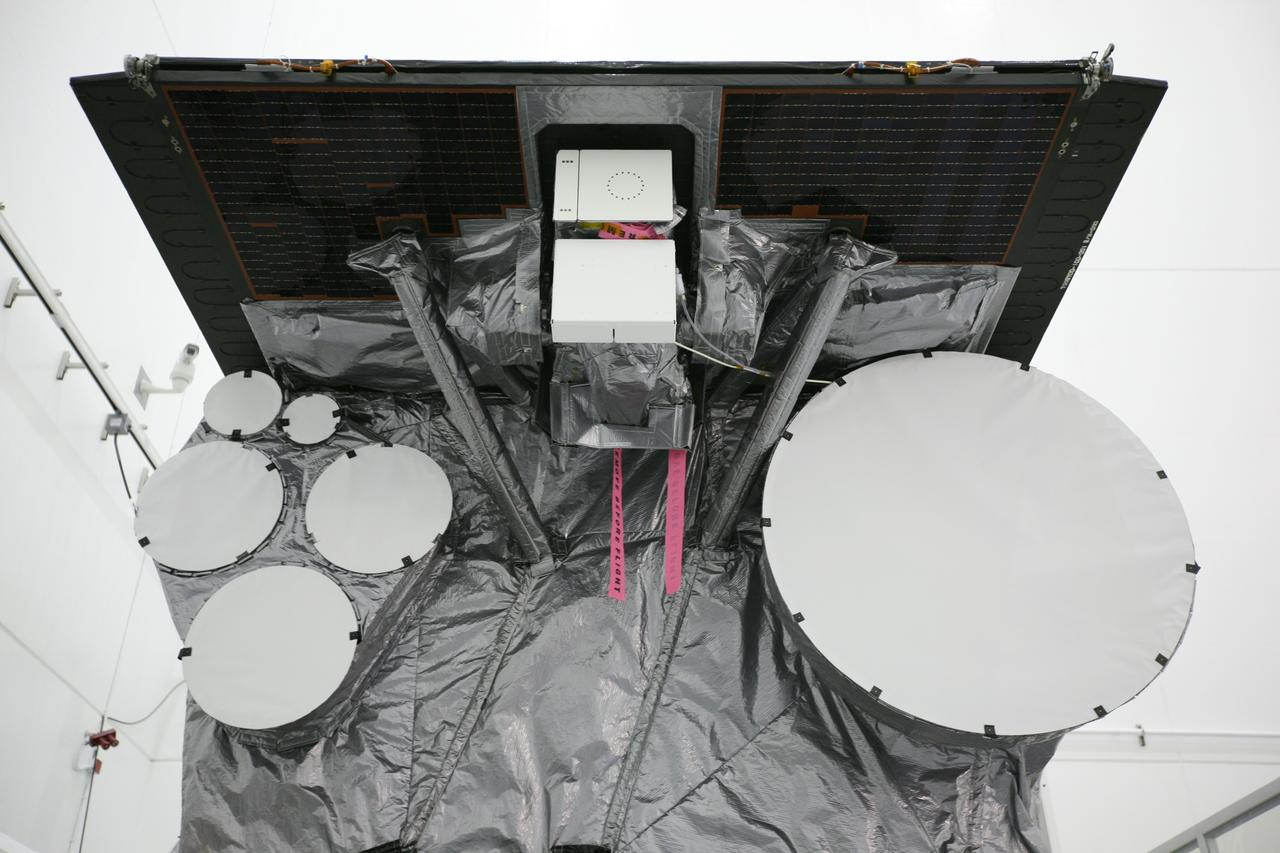
CAPE CANAVERAL, Fla. – At the Astrotech Space Operations facility in Titusville, Fla., the components of NASA's GOES-P meteorological satellite are in view following the spacecraft's unbagging. The cup-shaped objects on the left side of the spacecraft include the S-band and L-band antennas. The large cup-shaped object at right is the ultrahigh frequency, or UHF, antenna. GOES-P, the latest Geostationary Operational Environmental Satellite, was developed by NASA for the National Oceanic and Atmospheric Administration, or NOAA. GOES-P is designed to watch for storm development and observed current weather conditions on Earth. Launch of GOES-P is targeted for no earlier than March 1 from Launch Complex 37 aboard a United Launch Alliance Delta IV rocket. For information on GOES-P, visit http://goespoes.gsfc.nasa.gov/goes/spacecraft/n_p_spacecraft.html. Photo credit: NASA/Amanda Diller
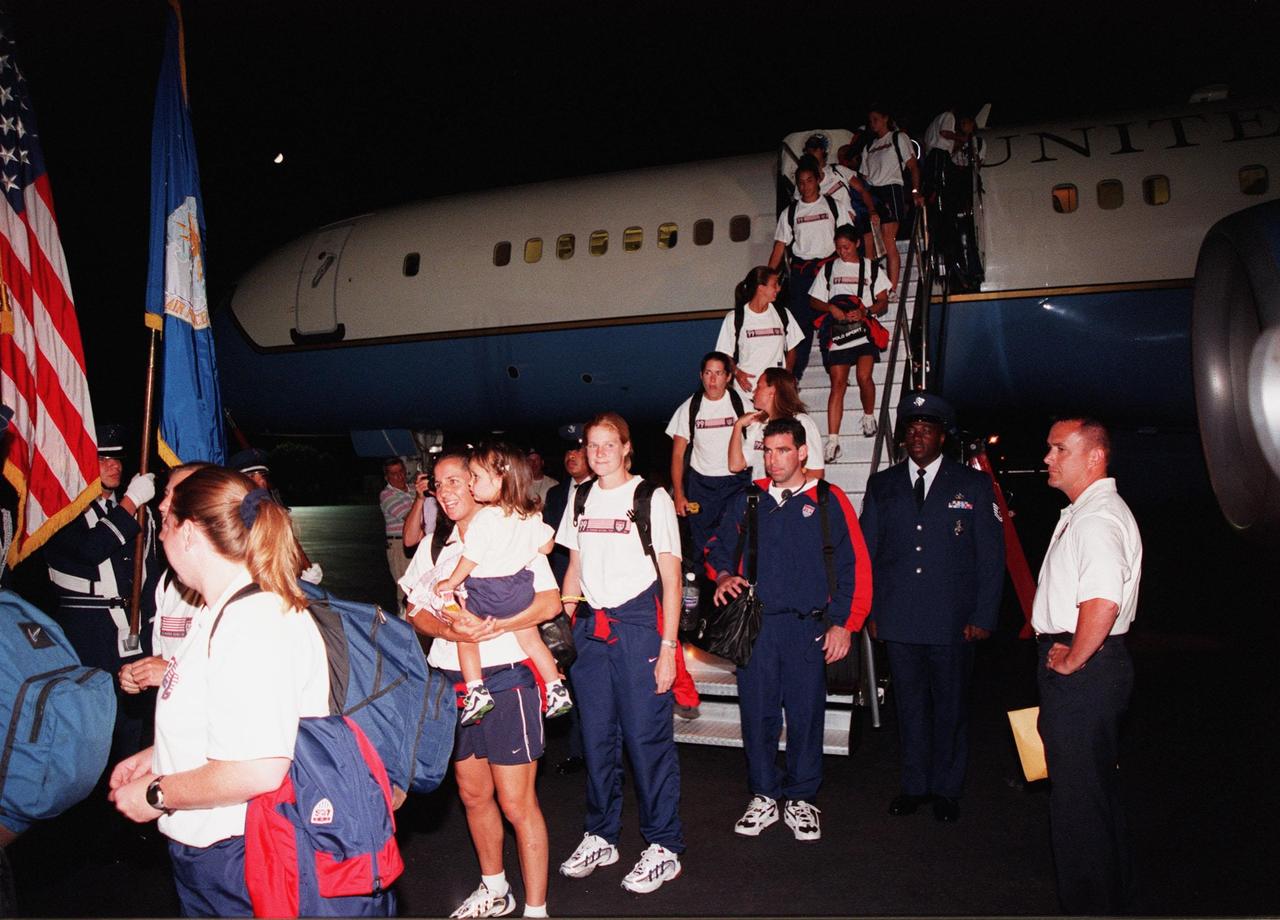
KENNEDY SPACE CENTER, FLA. -- Members of the U.S. Women's World Cup Soccer Team are greeted by NASA Administrator Daniel S. Goldin as they disembark from a plane at the Skid Strip at Cape Canaveral Air Station. They arrived with First Lady Hillary Rodham Clinton to view the launch of Space Shuttle mission STS-93 scheduled for 12:36 a.m. EDT July 20. Much attention has been generated over the launch due to Commander Eileen M. Collins, the first woman to serve as commander of a Shuttle mission. The primary payload of the five-day mission is the release of the Chandra X-ray Observatory, which will allow scientists from around the world to study some of the most distant, powerful and dynamic objects in the universe