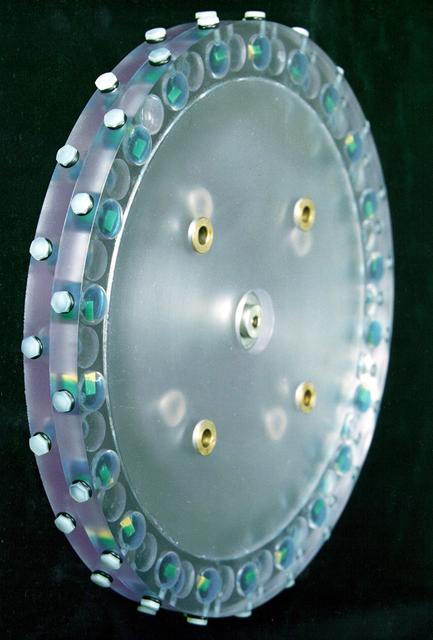
The ADvanced SEParation (ADSEP) commercial payload is making use of major advances in separation technology: The Phase Partitioning Experiment (PPE); the Micorencapsulation experiment; and the Hemoglobin Separation Experiment (HSE). Using ADSEP, commercial researchers will attempt to determine the partition coefficients for model particles in a two-phase system. With this information, researchers can develop a higher resolution, more effective cell isolation procedure that can be used for many different types of research and for improved health care. The advanced separation technology is already being made available for use in ground-based laboratories.
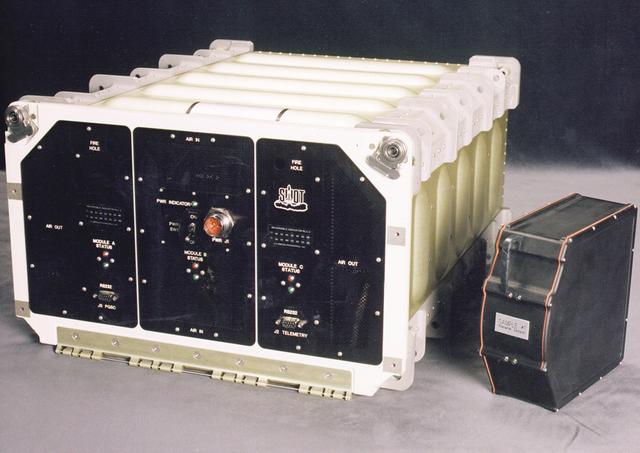
The ADvanced SEParation (ADSEP) commercial payload is making use of major advances in separation technology: The Phase Partitioning Experiment (PPE); the Micorencapsulation experiment; and the Hemoglobin Separation Experiment (HSE). Using ADSEP, commercial researchers will attempt to determine the partition coefficients for model particles in a two-phase system. With this information, researchers can develop a higher resolution, more effective cell isolation procedure that can be used for many different types of research and for improved health care. The advanced separation technology is already being made available for use in ground-based laboratories.
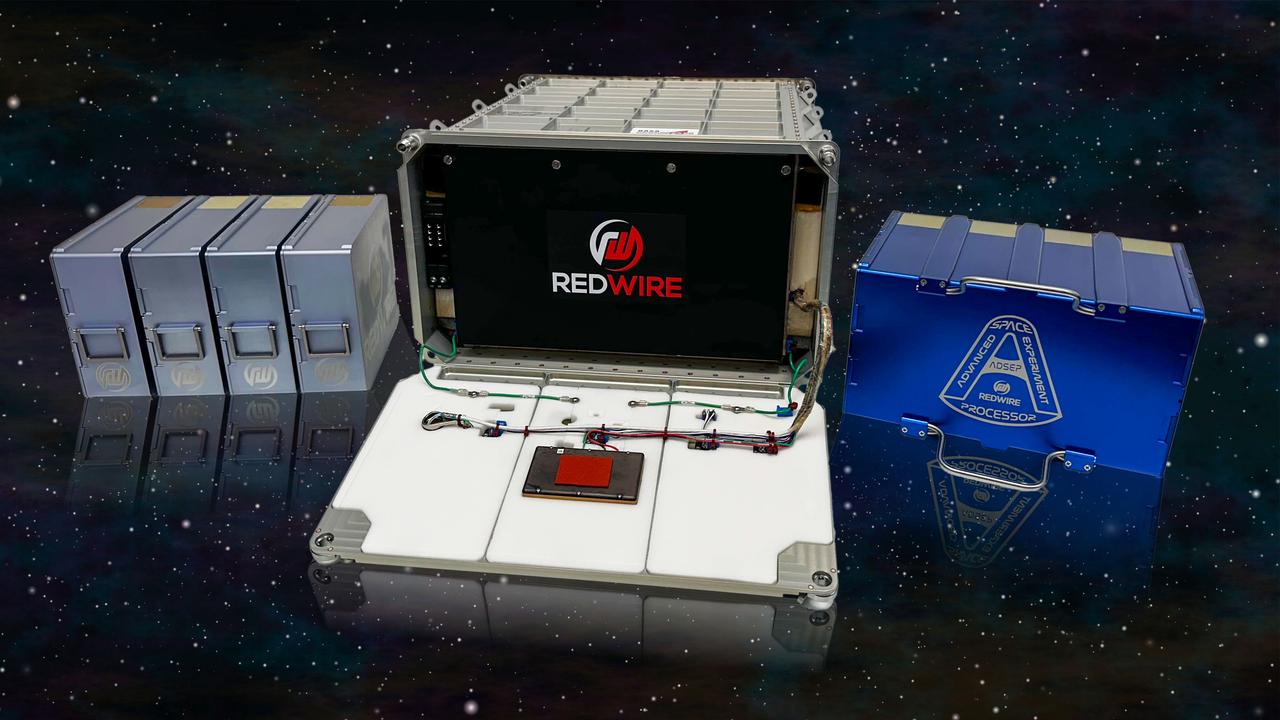
jsc2025e036384 (4/4/2025) --- A lineup of Redwire hardware. Left: Redwire’s in-space pharmaceutical manufacturing system (PIL-BOX) system are chambers that allow crystal growth in small batches. Middle: The Redwire Advanced Space Experiment Processor (ADSEP) in a close configuration onto which either the PIL-BOX or ICC can be installed. Right: The Redwire Industrial Crystallization Cassette (ICC), a facility capable of larger quantities of crystal growth than the PIL-BOX. The ADSEP Industrial Crystallization Cassette Technology Demonstration (ADSEP-ICC) investigation validates the ICC’s capability to grow large quantities of crystals in its high-volume crystal growth chambers aboard the International Space Station. Image courtesy of Redwire.
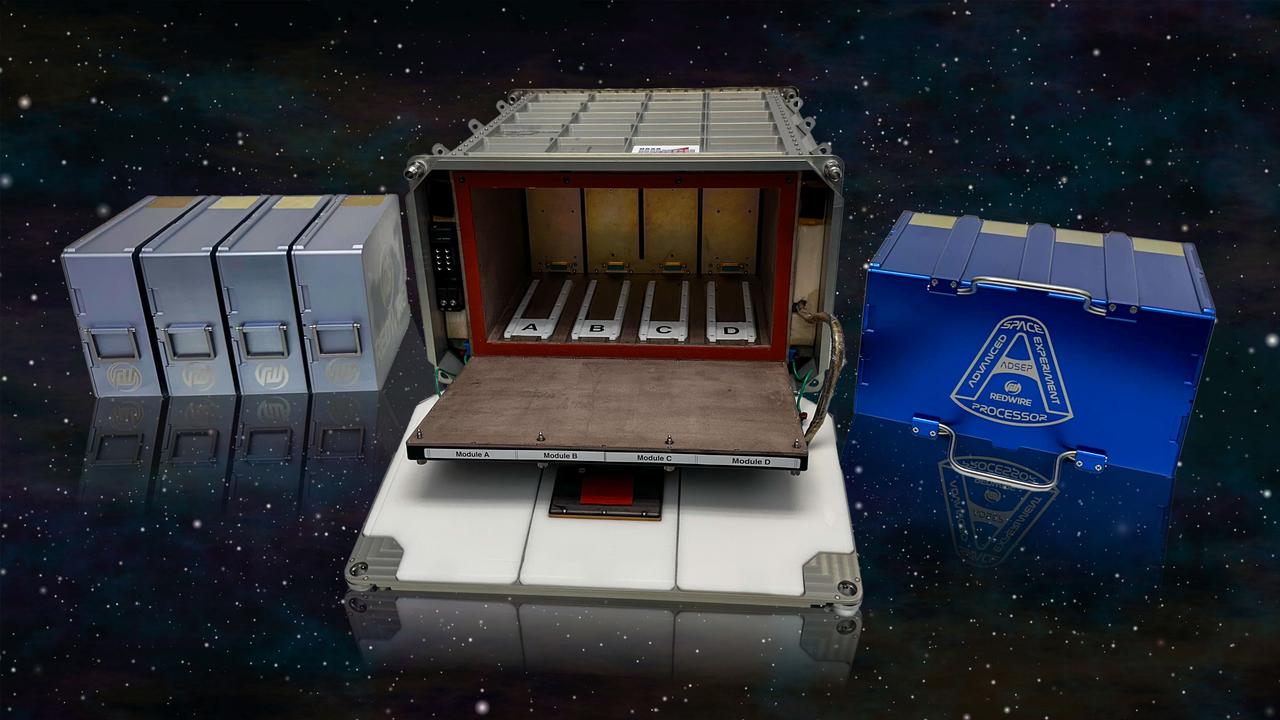
jsc2025e036385 (4/4/2025) --- A lineup of Redwire hardware. Left: Redwire’s in-space pharmaceutical manufacturing system (PIL-BOX) system are chambers that allow crystal growth in small batches. Middle: The Redwire Advanced Space Experiment Processor (ADSEP) in an open configuration onto which either the PIL-BOX or ICC can be installed. Right: The Redwire Industrial Crystallization Cassette (ICC), a facility capable of larger quantities of crystal growth than the PIL-BOX. The ADSEP Industrial Crystallization Cassette Technology Demonstration (ADSEP-ICC) investigation validates the ICC’s capability to grow large quantities of crystals in its high-volume crystal growth chambers aboard the International Space Station. Image courtesy of Redwire.
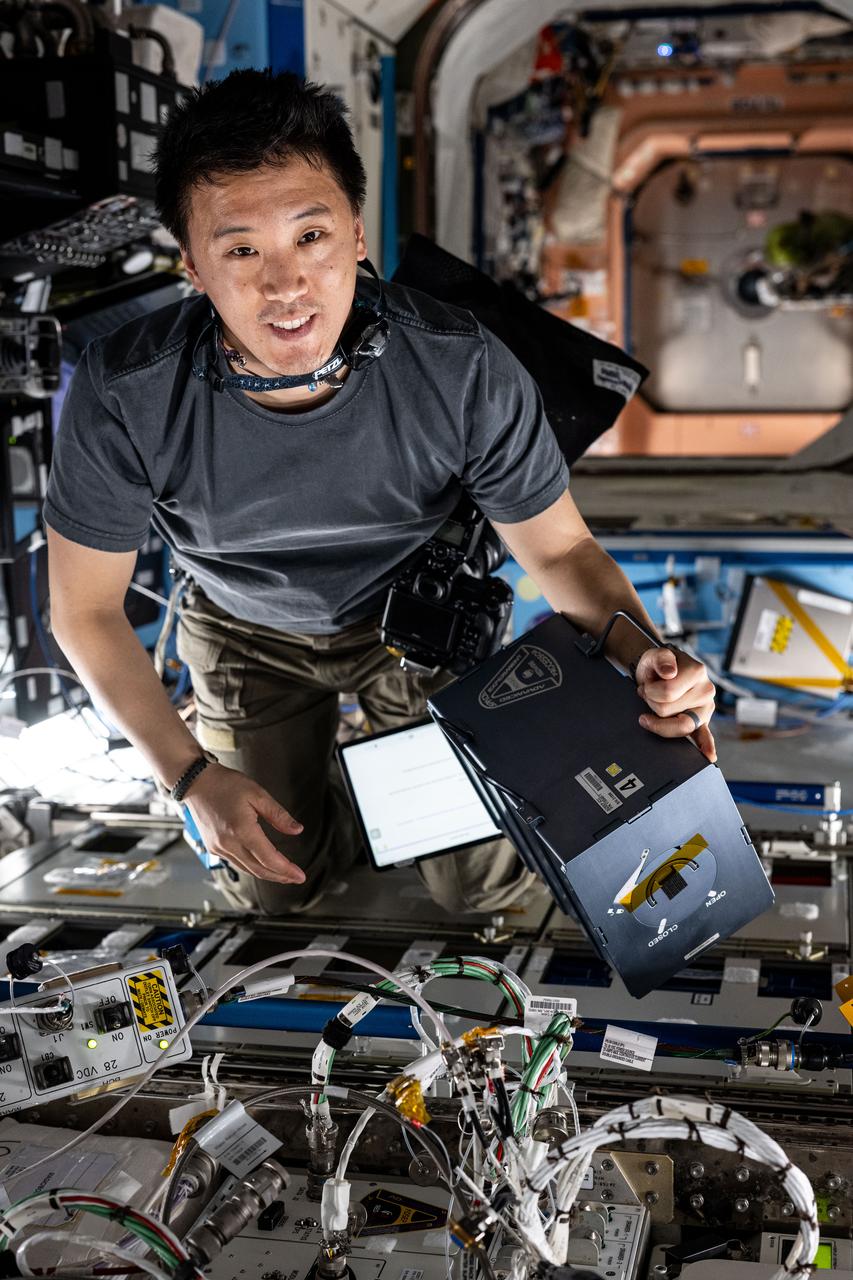
iss073e0032794 (May 16, 2025) --- NASA astronaut and Expedition 73 Flight Engineer Jonny Kim swaps hardware that promotes physical science and crystalization research inside the Advanced Space Experiment Processor-4 (ADSEP-4) aboard the International Space Station. The ADSEP-4 is supporting a technology demonstration potentially enabling the synthesis of medications during deep space missions and improving the pharmaceutical industry on Earth.
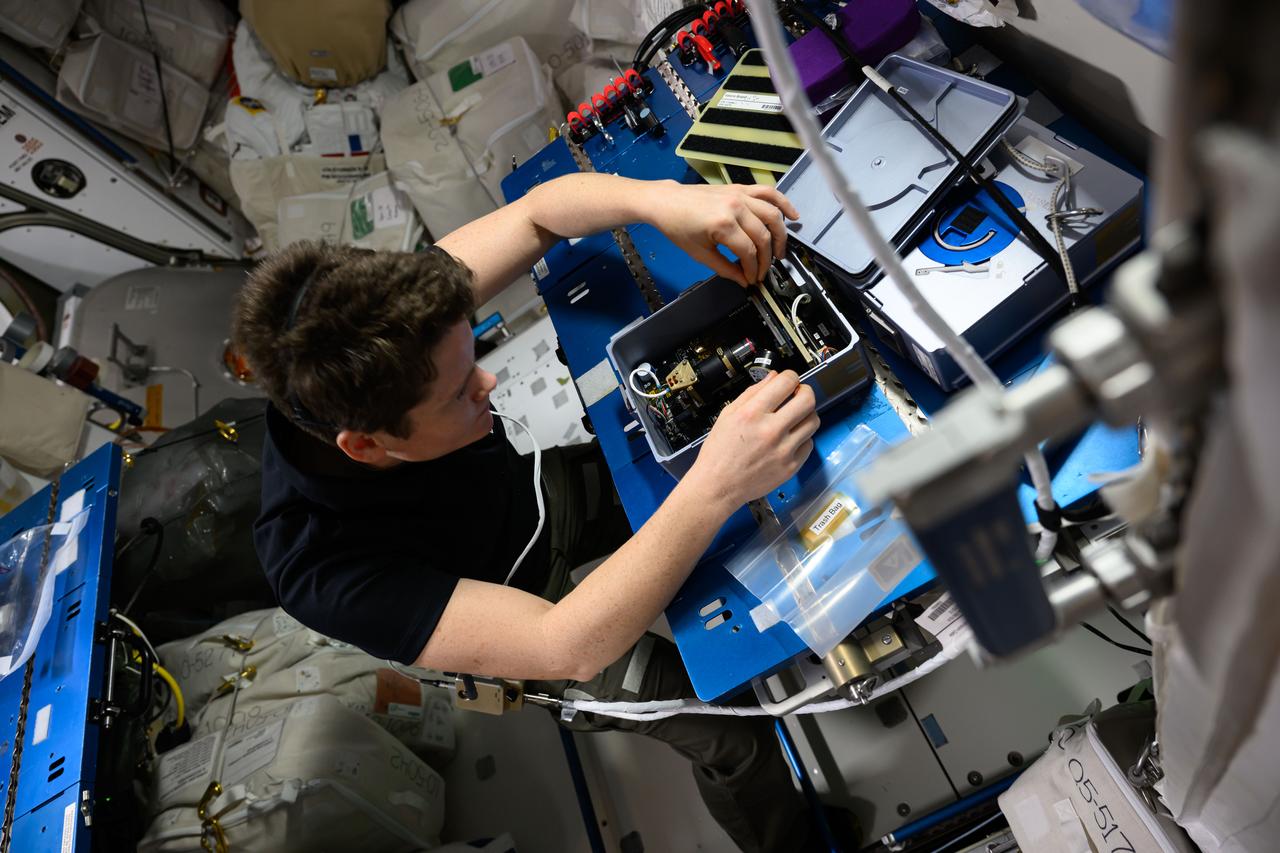
iss073e0011100 (May 5, 2025) --- NASA astronaut and Expedition 73 Flight Engineer Anne McClain swaps hardware that promotes physical science and crystalization research inside the Advanced Space Experiment Processor-4 (ADSEP-4) aboard the International Space Station. The ADSEP-4 is supporting a technology demonstration potentially enabling the synthesis of medications during deep space missions and improving the pharmaceutical industry on Earth.
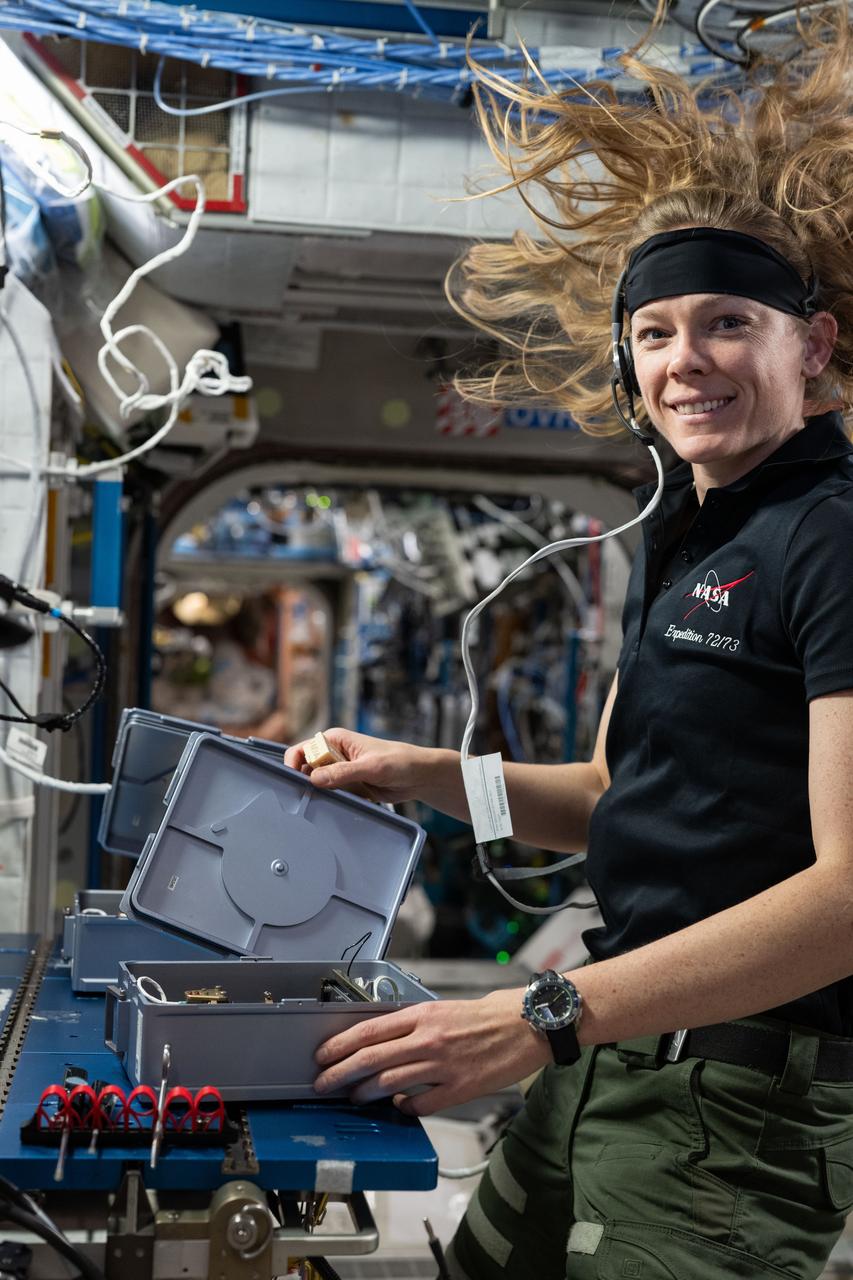
iss073e0025362 (May 7, 2025) --- NASA astronaut and Expedition 73 Flight Engineer Nichole Ayers swaps hardware that promotes physical science and crystalization research inside the Advanced Space Experiment Processor-4 (ADSEP-4) aboard the International Space Station. The ADSEP-4 is supporting a technology demonstration potentially enabling the synthesis of medications during deep space missions and improving the pharmaceutical industry on Earth.
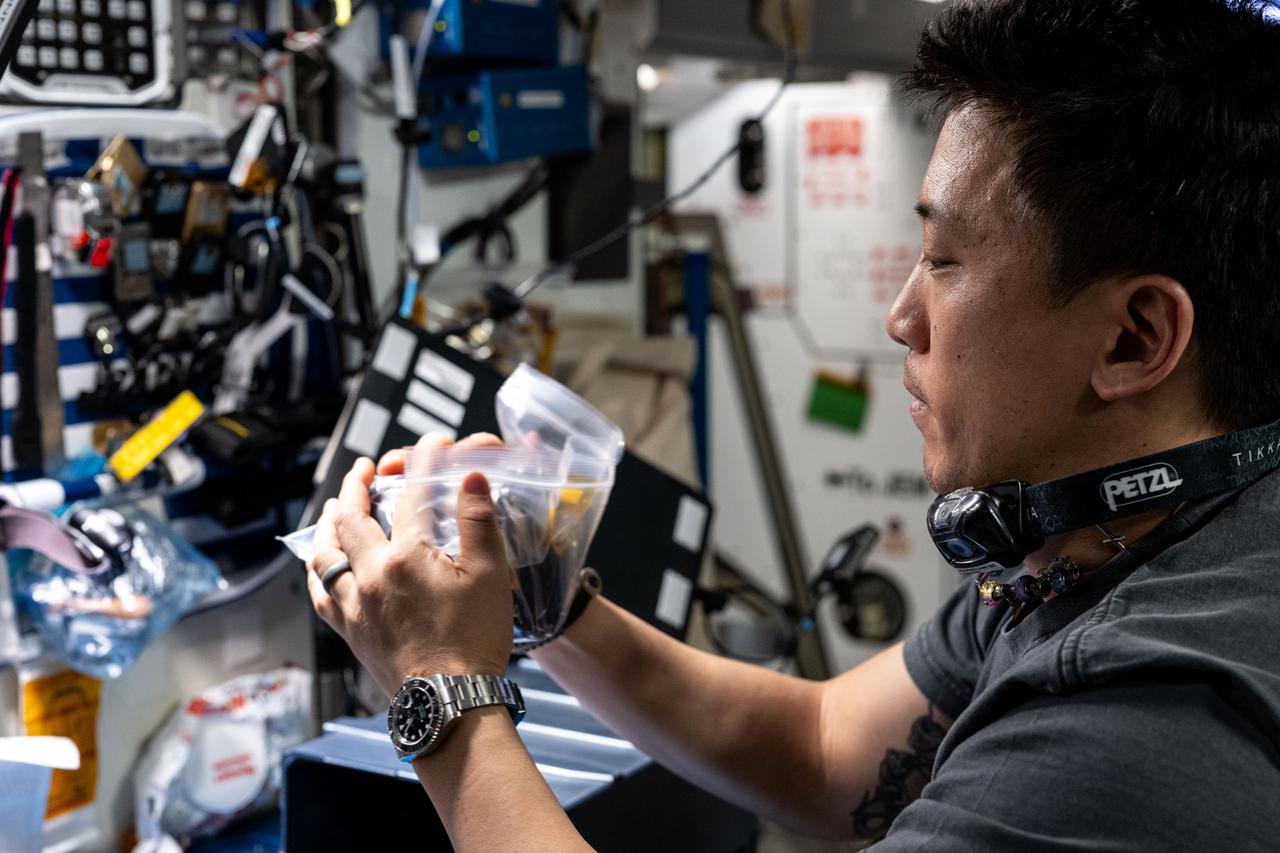
iss073e0032802 (May 16, 2025) --- NASA astronaut and Expedition 73 Flight Engineer Jonny Kim services hardware that promotes physical science and crystalization research inside the Advanced Space Experiment Processor-4 (ADSEP-4) aboard the International Space Station. The ADSEP-4 is supporting a technology demonstration potentially enabling the synthesis of medications during deep space missions and improving the pharmaceutical industry on Earth.
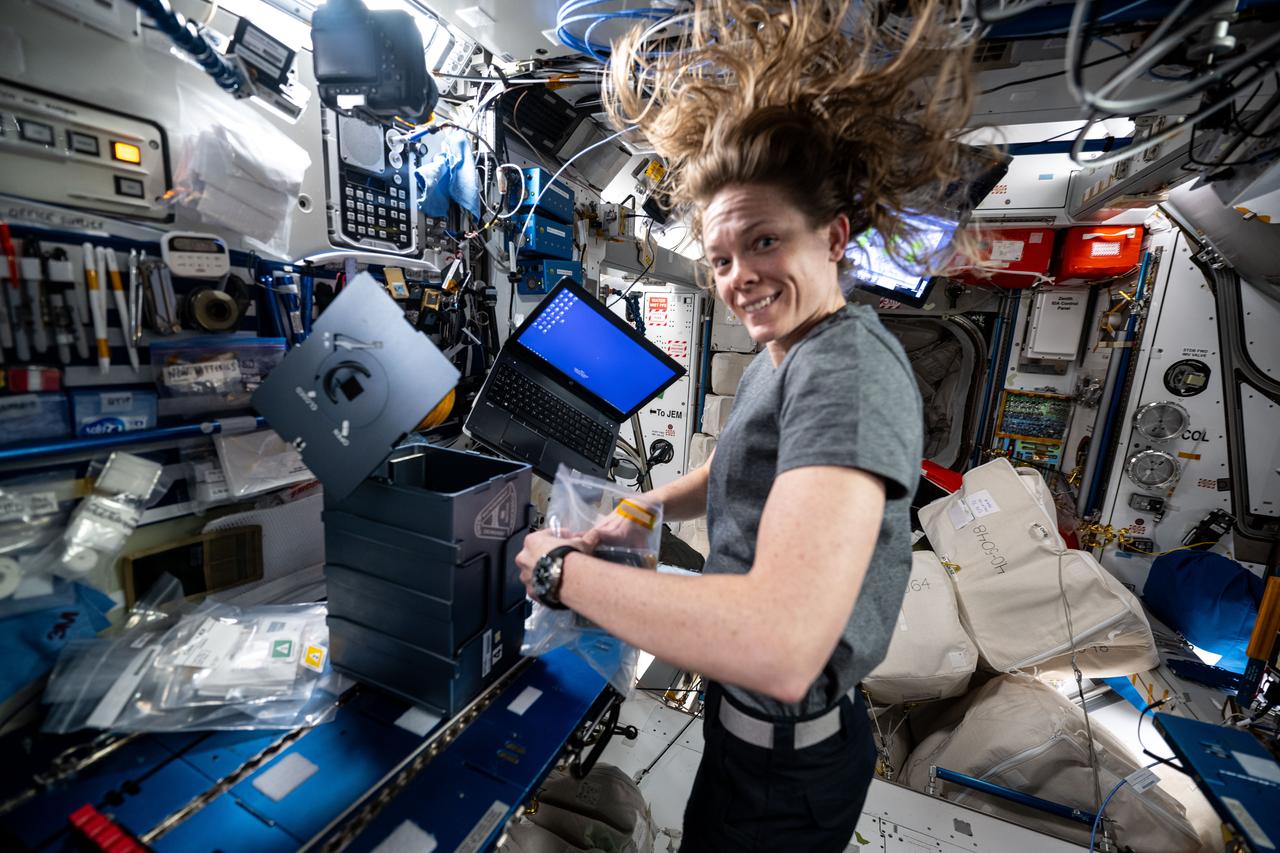
iss073e0030873 (May 14, 2025) --- NASA astronaut and Expedition 73 Flight Engineer Nichole Ayers swaps hardware that promotes physical science and crystalization research inside the Advanced Space Experiment Processor-4 (ADSEP-4) aboard the International Space Station. The ADSEP-4 is supporting a technology demonstration potentially enabling the synthesis of medications during deep space missions and improving the pharmaceutical industry on Earth.
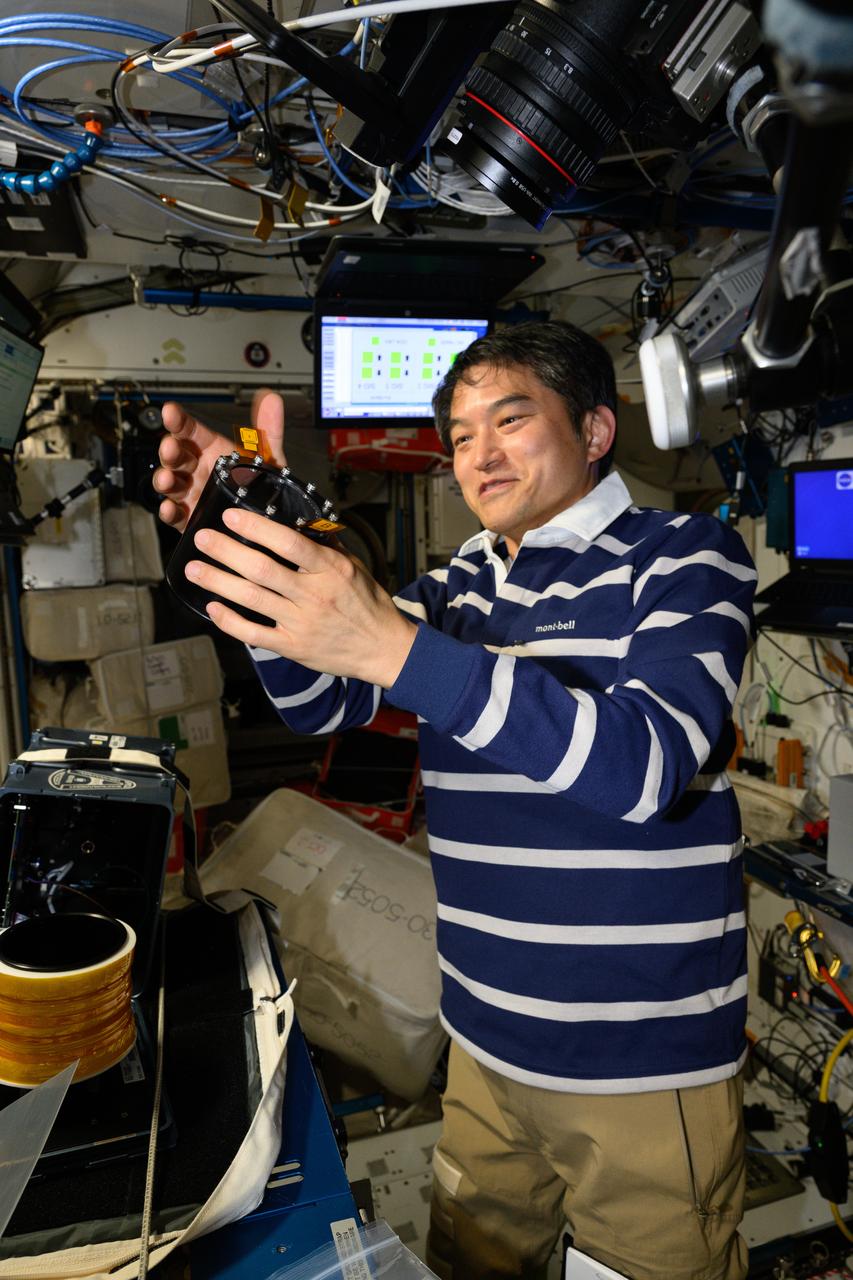
iss073e0033654 (May 19, 2025) --- JAXA (Japan Aerospace Exploration Agency) astronaut and Expedition 73 Commander Takuya Onishi services hardware that promotes physical science and crystalization research inside the Advanced Space Experiment Processor-4 (ADSEP-4) aboard the International Space Station. The ADSEP-4 is supporting a technology demonstration potentially enabling the synthesis of medications during deep space missions and improving the pharmaceutical industry on Earth.
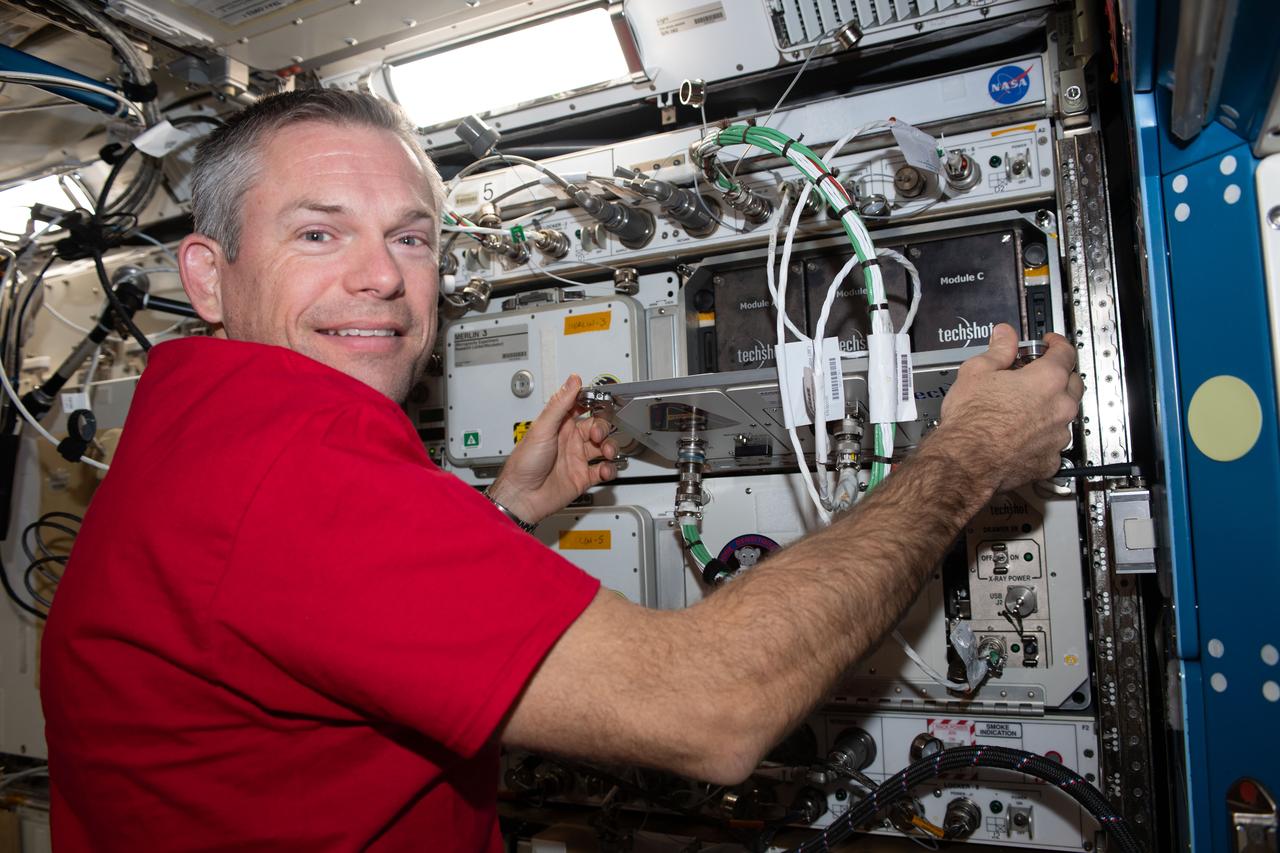
iss070e022606 (Nov. 12, 2023) --- ESA (European Space Agency) astronaut and Expedition 70 Commander Andreas Mogensen replaces computer hardware inside the Advanced Space Experiment Processor-2 (ADSEP-2) that can house and process samples for a variety of biological and physical science experiments.
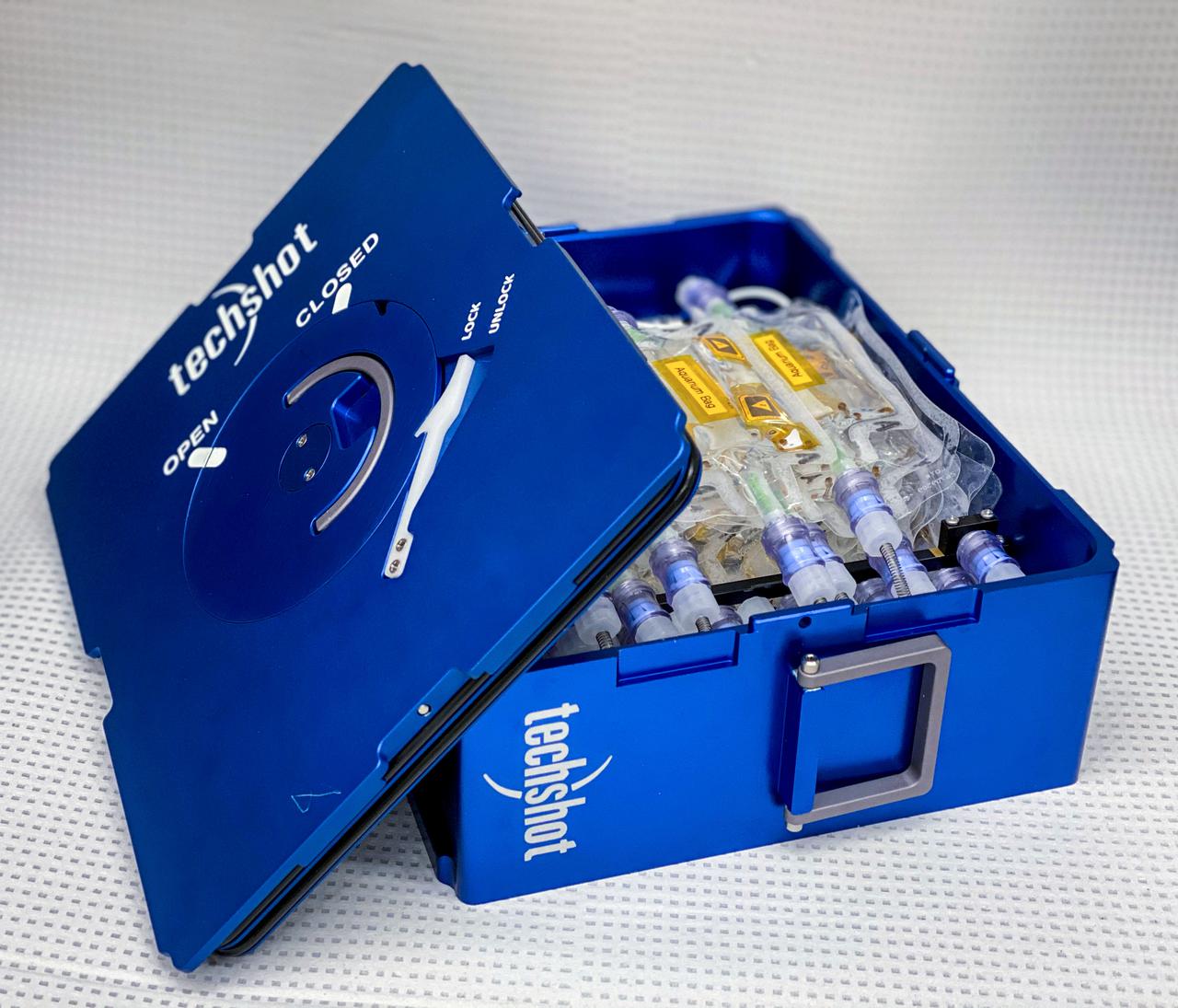
jsc2021e019403 (1/29/2021) --- A Techshot Fluid Processing Cassette that is part of Techshot’s ADSEP fleet of spaceflight hardware facilities. The flight hardware cassette is loaded with small aquarium bags containing the juvenile bobtail squid. Once launched into space, the aquarium bags will inoculated with luminescent bacterium to start the normal symbiosis with the squid. Understanding of Microgravity on Animal-Microbe Interactions (UMAMI) examines the effects of spaceflight on the molecular and chemical interactions between beneficial microbes and their animal hosts. Image courtesy of Rachel Ormsby.
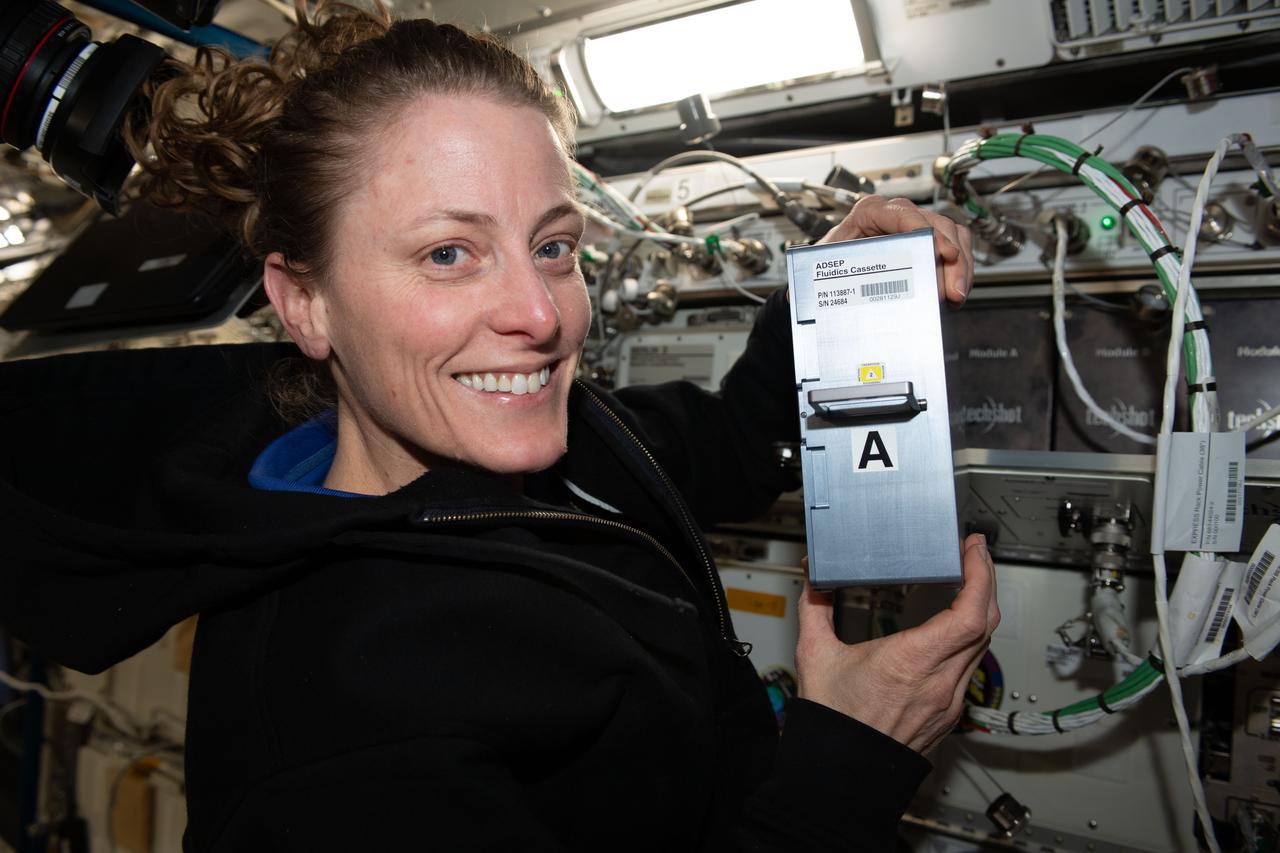
iss070e037585 (Dec. 11, 2023) --- NASA astronaut and Expedition 70 Flught Engineer Loral O'Hara shows off research hardware supporting the UMAMI, or Understanding of Microgravity on Animal-Microbe Interaction, space biology experiment. O'Hara is holdng the Avanced Space Experiment Processor (ADSEP) Fluid Processing Cassette (FPC) that supports the observation of the effects of spaceflight on the molecular and chemical interactions between beneficial microbes and their animal hosts.