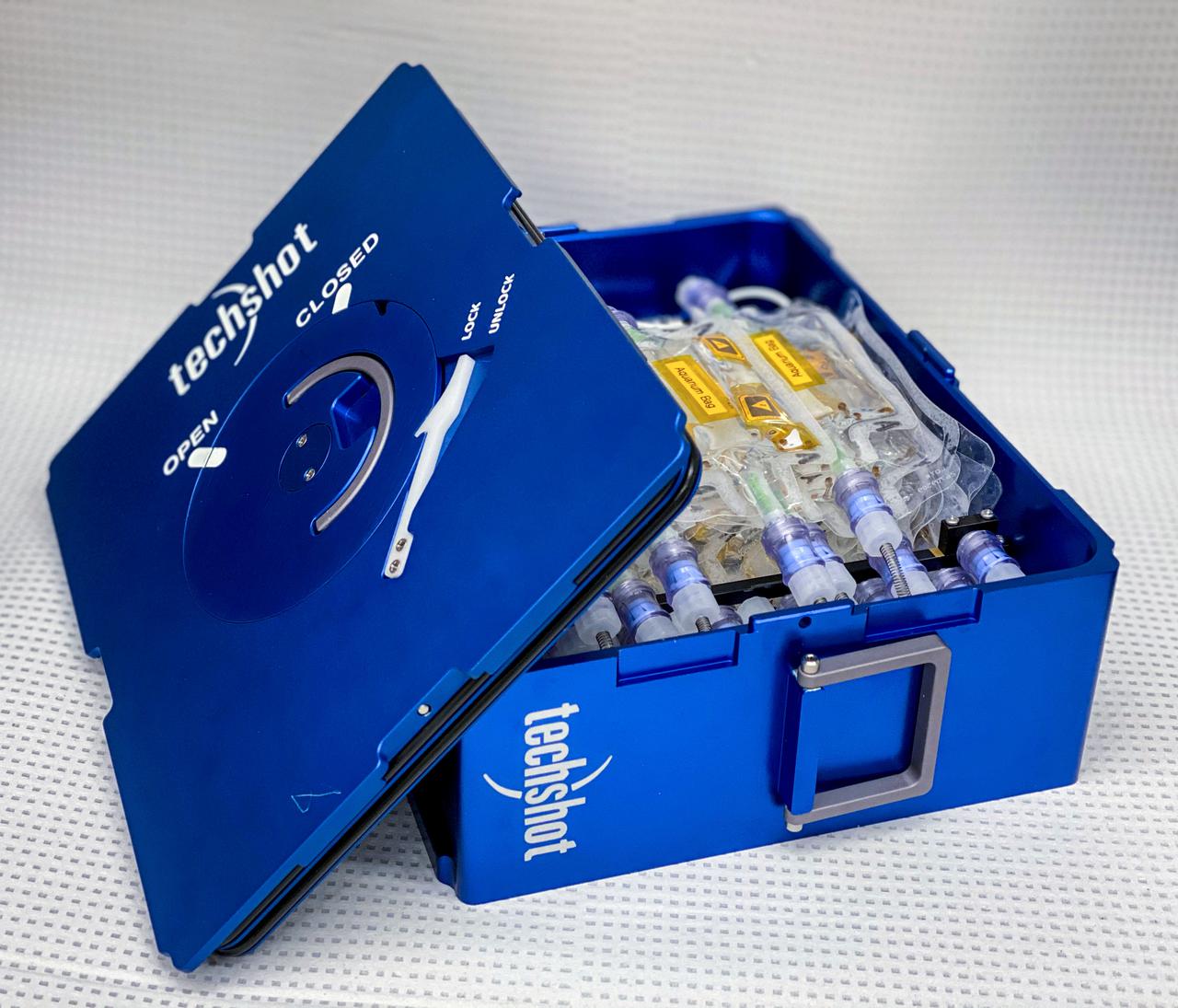
jsc2021e019403 (1/29/2021) --- A Techshot Fluid Processing Cassette that is part of Techshot’s ADSEP fleet of spaceflight hardware facilities. The flight hardware cassette is loaded with small aquarium bags containing the juvenile bobtail squid. Once launched into space, the aquarium bags will inoculated with luminescent bacterium to start the normal symbiosis with the squid. Understanding of Microgravity on Animal-Microbe Interactions (UMAMI) examines the effects of spaceflight on the molecular and chemical interactions between beneficial microbes and their animal hosts. Image courtesy of Rachel Ormsby.

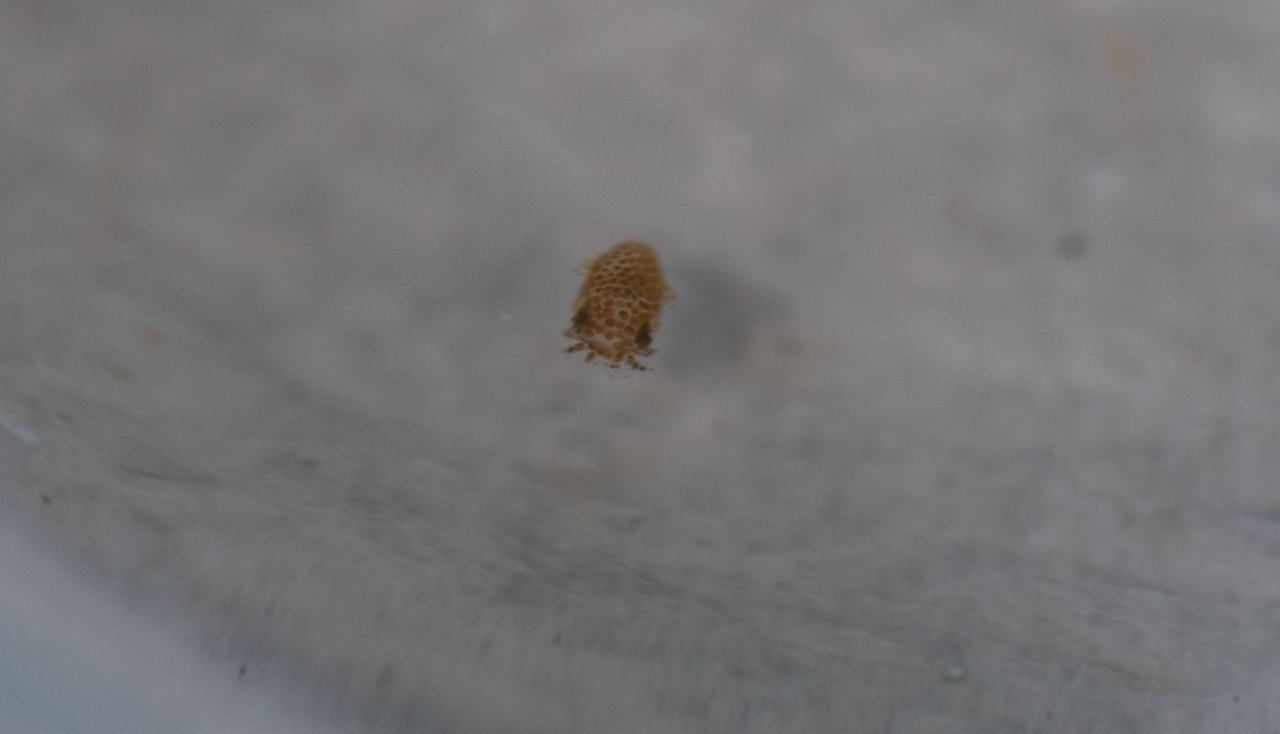
jsc2021e019402 (8/6/2016) --- Juvenile bobtail squid swimming in seawater just after hatching. The bobtail squid are born without their symbiotic microbes and must acquire them from their environment. Once the baby squid are colonized by the bacteria they gain the ability to glow in the dark and hide from their predators. Understanding of Microgravity on Animal-Microbe Interactions (UMAMI) examines the effects of spaceflight on the molecular and chemical interactions between beneficial microbes and their animal hosts. Image courtesy of Jamie S. Foster.
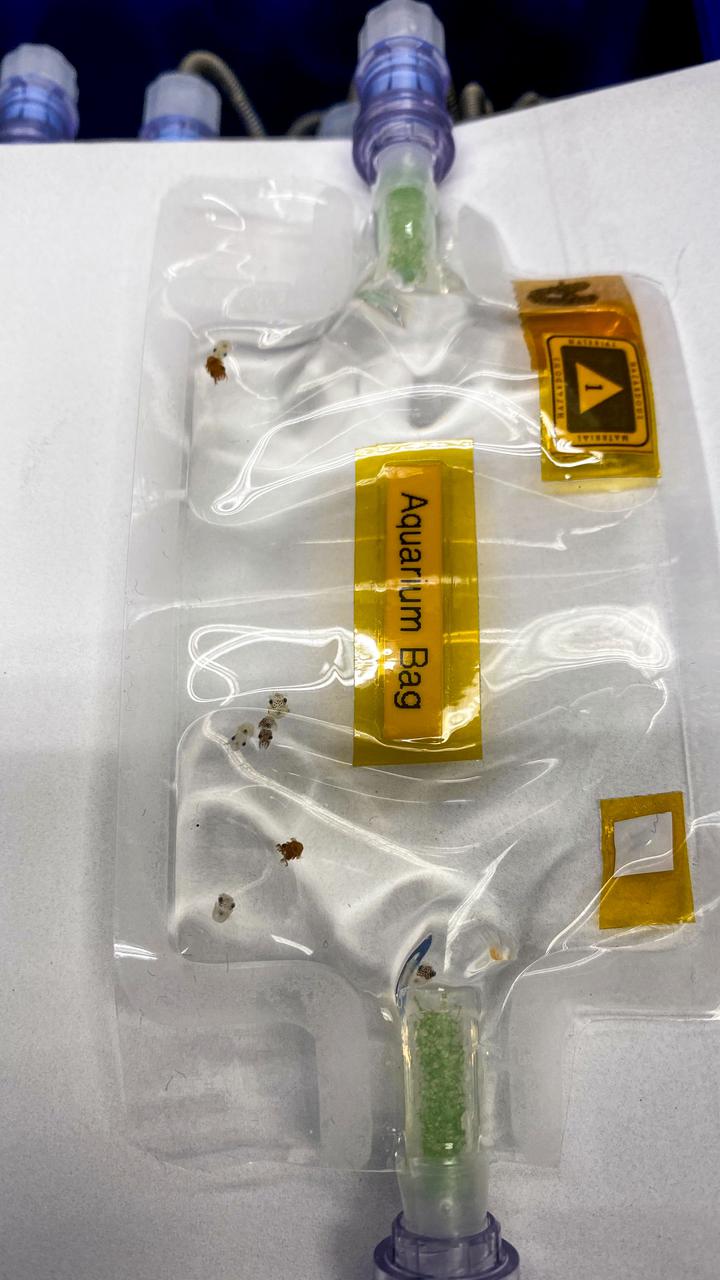
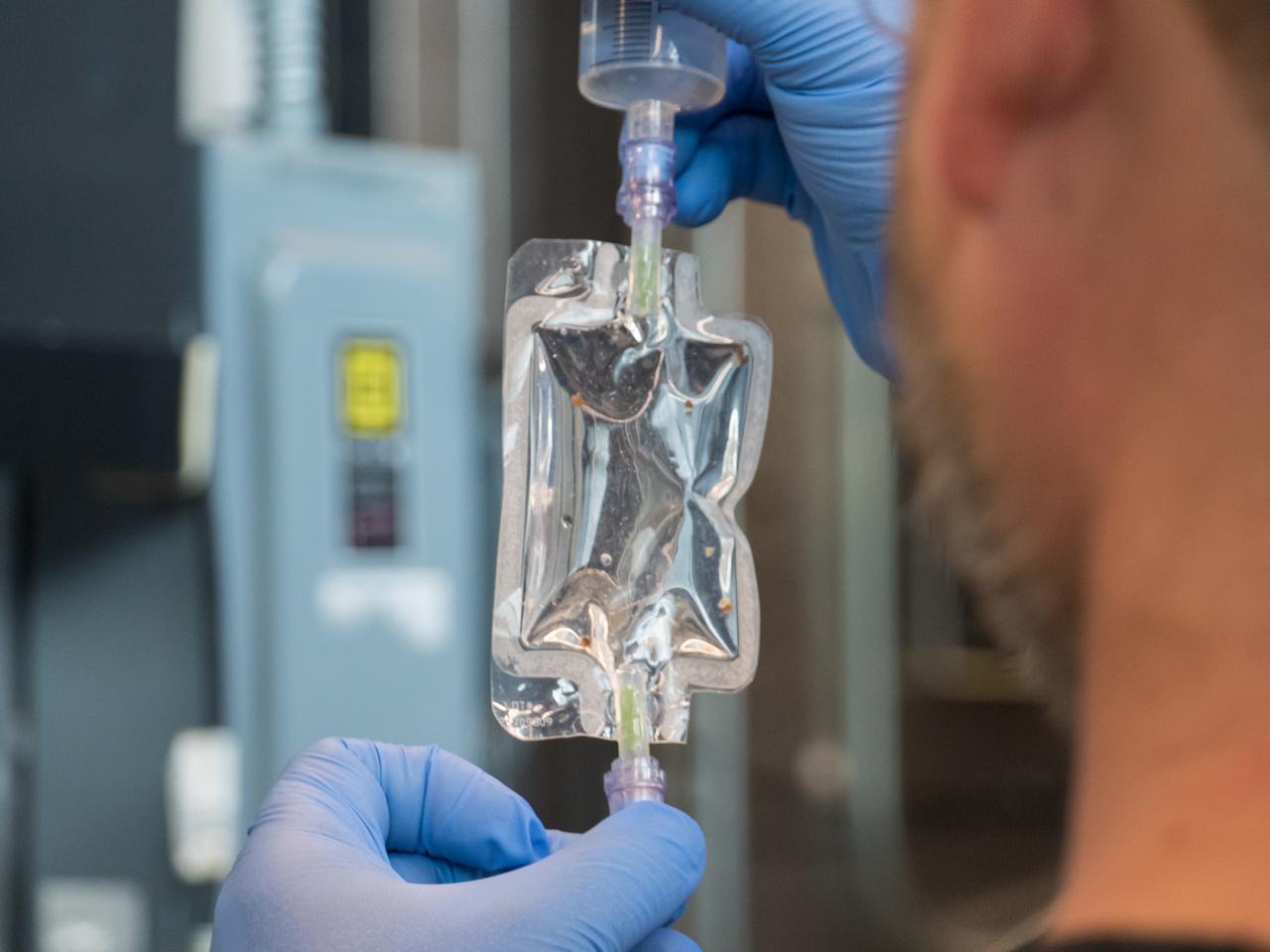
jsc2021e019404 (1/29/2021) --- A preflight close-up image of a single aquarium bag containing eight of the squid paralarvae. The bags are connected to pumps that will inoculate the squid with the luminescent bacteria during the spaceflight. Understanding of Microgravity on Animal-Microbe Interactions (UMAMI) examines the effects of spaceflight on the molecular and chemical interactions between beneficial microbes and their animal hosts. Image courtesy of Rachel Ormsby.
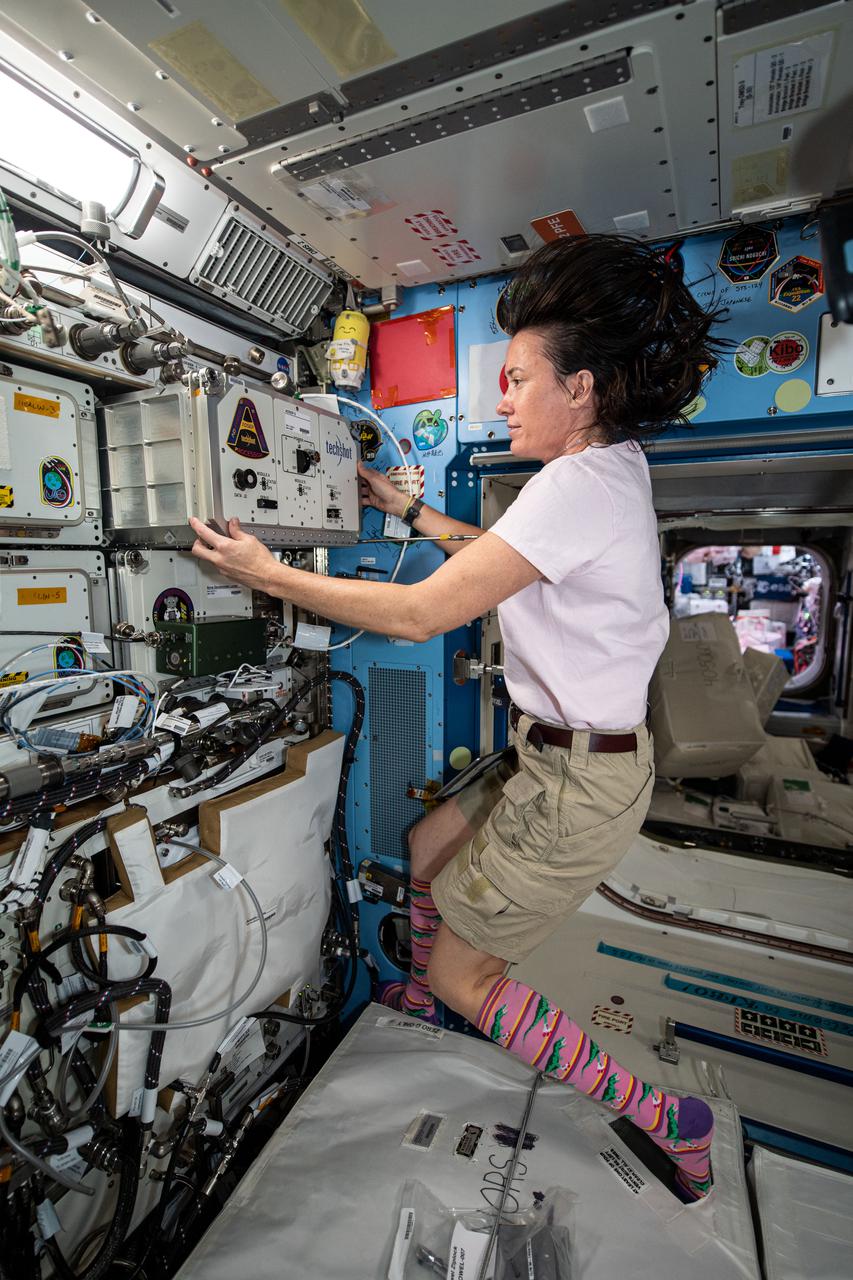
iss065e093501 (June 7, 2021) --- NASA astronaut Megan McArthur installs a new ADSEP-2 (Advanced Space Experiment Processor-2) containing ADSEP-UMAMI samples inside the Kibo laboratory module aboard the International Space Station (ISS). The Understanding of Microgravity on Animal-Microbe Interactions (UMAMI) investigation examines the effects of spaceflight on the molecular and chemical interactions between beneficial microbes and their animal hosts. The ADSEP-2 facility supports observations of biological or physical samples and can also be operated aboard the Cargo Dragon and Northrop Grumman Cygnus resupply ships.
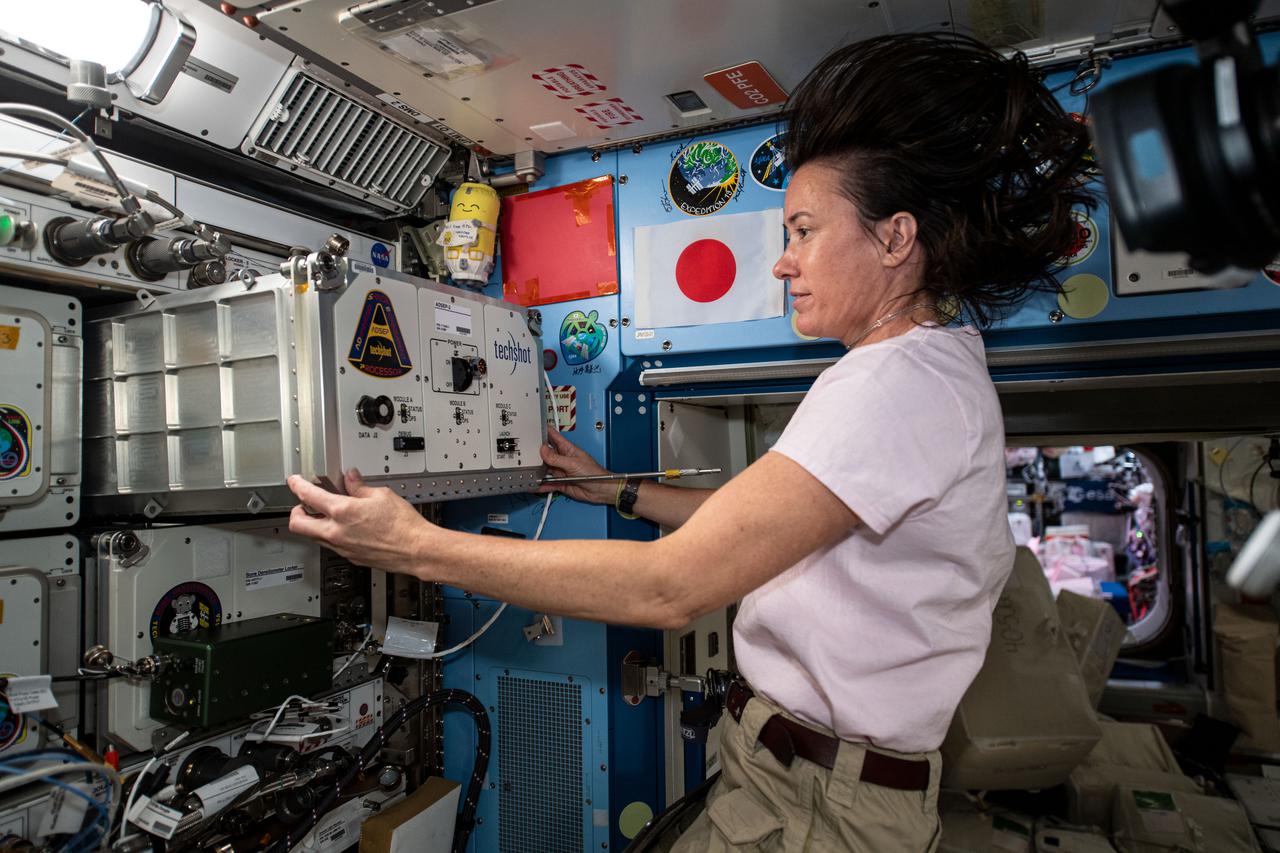
iss065e093498 (June 7, 2021) --- NASA astronaut Megan McArthur installs a new ADSEP-2 (Advanced Space Experiment Processor-2) containing ADSEP-UMAMI samples inside the Kibo laboratory module aboard the International Space Station (ISS). The Understanding of Microgravity on Animal-Microbe Interactions (UMAMI) investigation examines the effects of spaceflight on the molecular and chemical interactions between beneficial microbes and their animal hosts. The ADSEP-2 facility supports observations of biological or physical samples and can also be operated aboard the Cargo Dragon and Northrop Grumman Cygnus resupply ships.
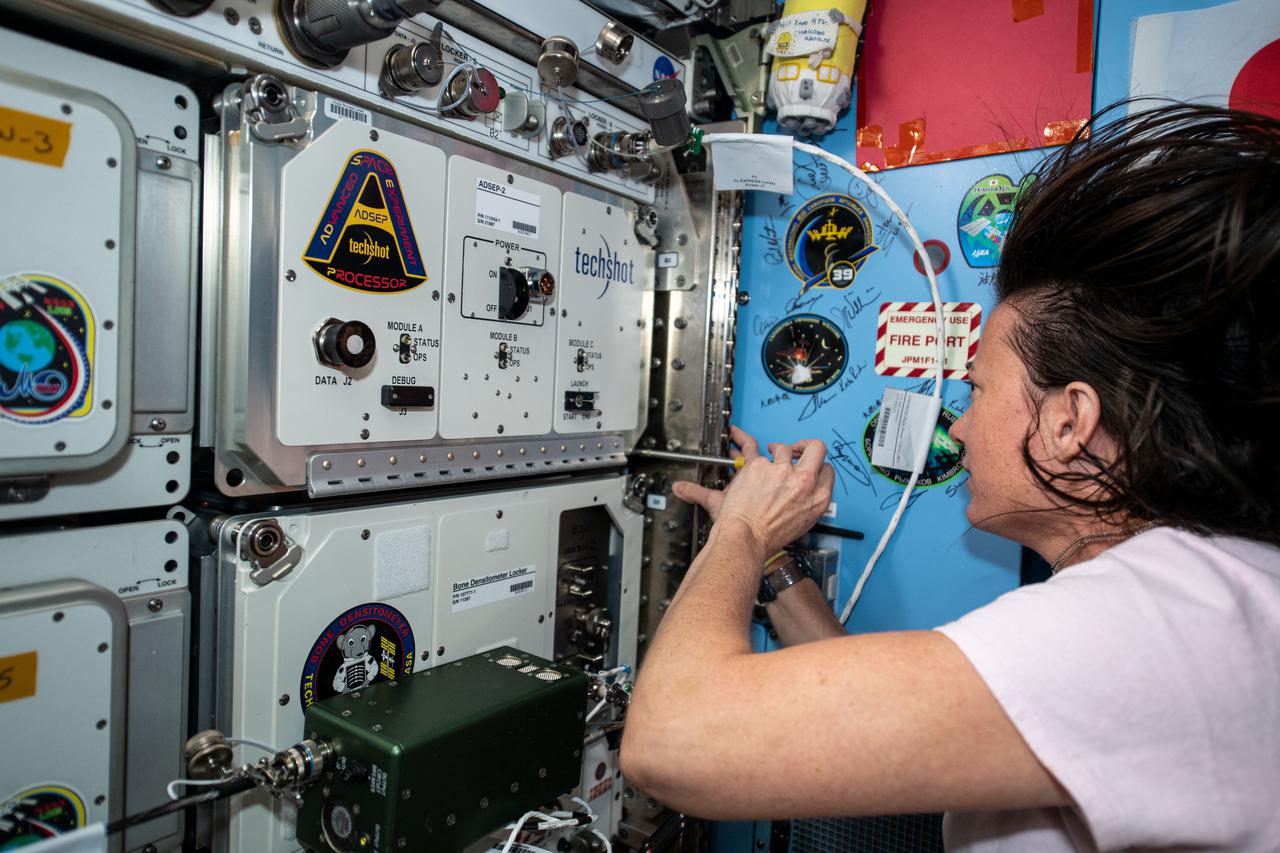
iss065e093508 (June 7, 2021) --- NASA astronaut Megan McArthur installs a new ADSEP-2 (Advanced Space Experiment Processor-2) containing ADSEP-UMAMI samples inside the Kibo laboratory module aboard the International Space Station (ISS). The Understanding of Microgravity on Animal-Microbe Interactions (UMAMI) investigation examines the effects of spaceflight on the molecular and chemical interactions between beneficial microbes and their animal hosts. The ADSEP-2 facility supports observations of biological or physical samples and can also be operated aboard the Cargo Dragon and Northrop Grumman Cygnus resupply ships.
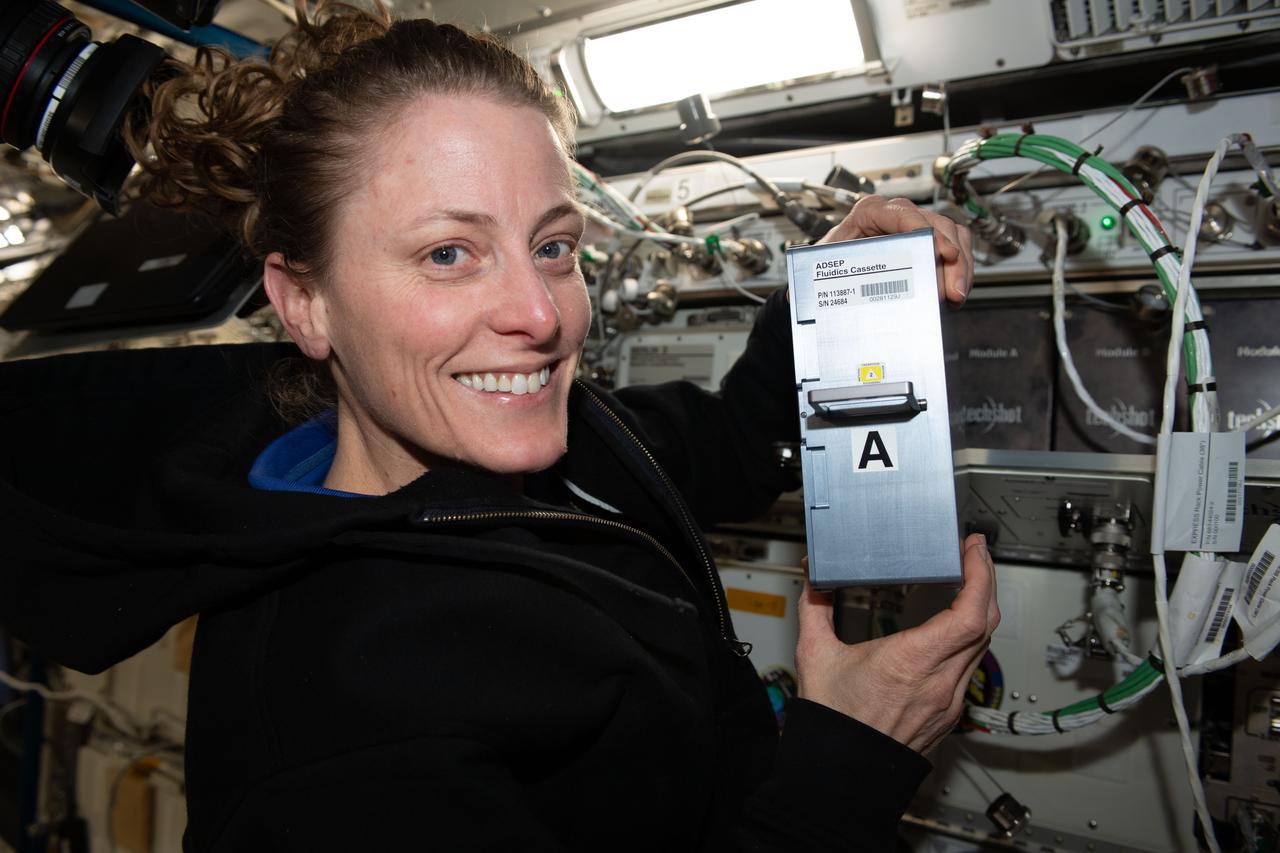
iss070e037585 (Dec. 11, 2023) --- NASA astronaut and Expedition 70 Flught Engineer Loral O'Hara shows off research hardware supporting the UMAMI, or Understanding of Microgravity on Animal-Microbe Interaction, space biology experiment. O'Hara is holdng the Avanced Space Experiment Processor (ADSEP) Fluid Processing Cassette (FPC) that supports the observation of the effects of spaceflight on the molecular and chemical interactions between beneficial microbes and their animal hosts.
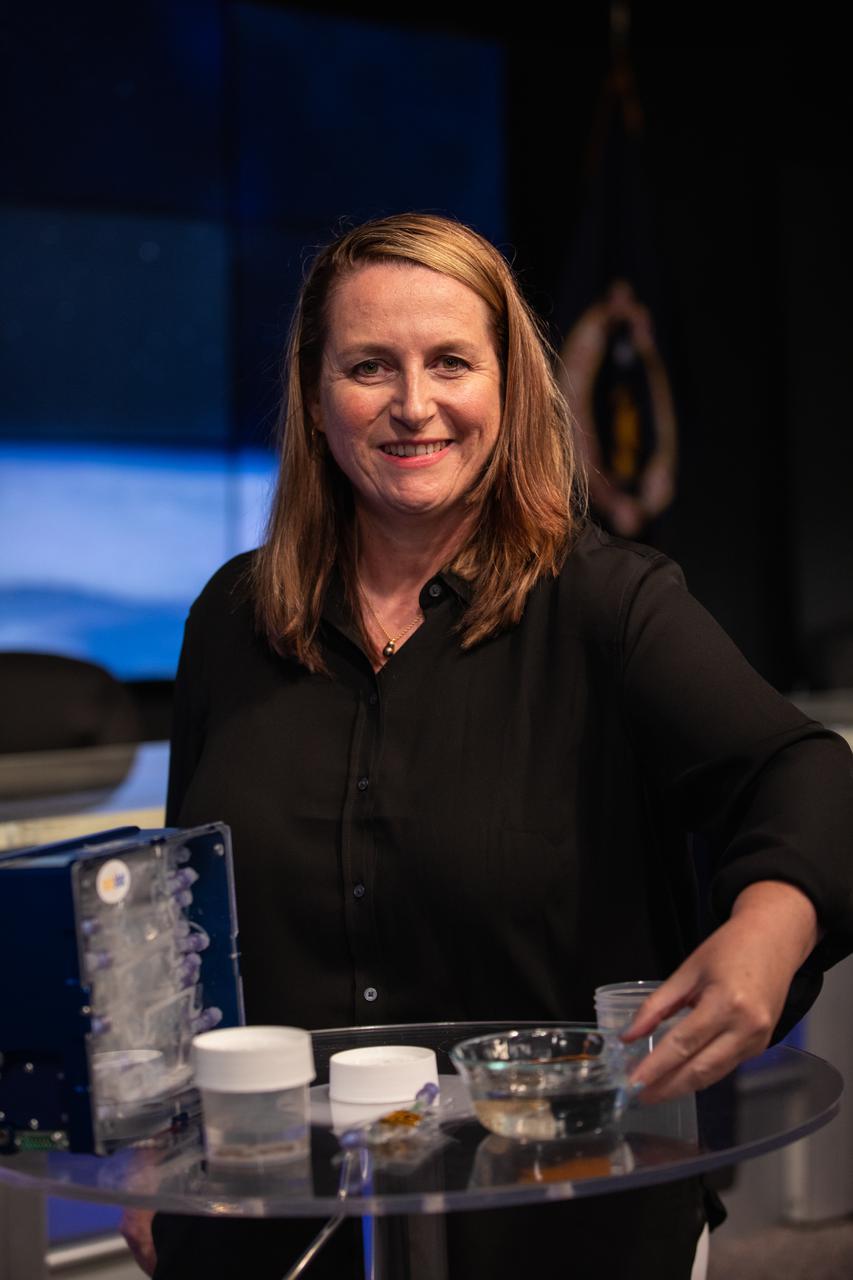
Jamie Foster, principal investigator, ADSEP-UMAMI (Understanding of Microgravity on Animal-Microbe Interactions experiment), describes the experiment during a What’s On Board Science Briefing on June 2, 2021, at Kennedy Space Center in Florida for SpaceX’s Commercial Resupply Services mission for NASA to the International Space Station. The experiment will examine the effects of spaceflight on the molecular and chemical interactions between beneficial microbes and their animal hosts, in this case bobtail squid. Amimals, including humans, rely on microbes to maintain a healthy digestive and immune system. UMAMI is one of several experiments bound for the space station. The SpaceX Falcon 9 rocket with the Dragon capsule atop is scheduled to launch at 1:29 p.m. EDT on Thursday, June 3, from the center’s Launch Complex 39A.
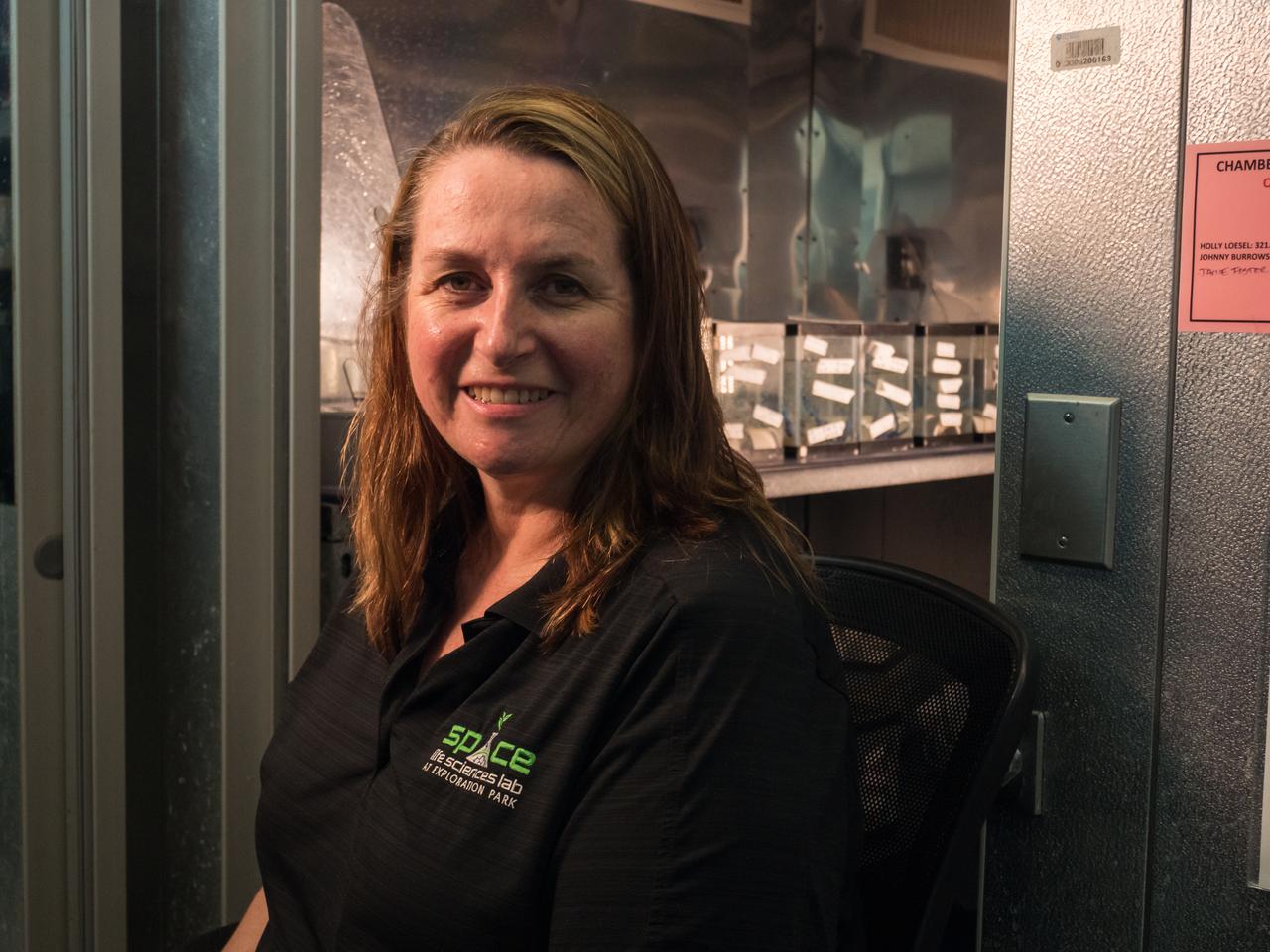
Inside the Space Life Sciences Laboratory at NASA’s Kennedy Space Center in Florida, bobtail squid are part of preparations on May 20, 2021, for the Understanding of Microgravity on Animal-Microbe Interactions (UMAMI) experiment that will launch to the International Space Station aboard SpaceX’s 22nd Commercial Resupply Services mission. The experiment will examine the effects of spaceflight on the molecular and chemical interactions between beneficial microbes and their animal hosts. Amimals, including humans, rely on microbes to maintain a healthy digestive and immune system. UMAMI is one of several experiments bound for the space station in the Dragon capsule atop the SpaceX Falcon 9 rocket. The mission is scheduled to lift off from Launch Complex 39A on June 3.
Inside the Space Life Sciences Laboratory at NASA’s Kennedy Space Center in Florida, Jamie Foster, principal investigator on the Understanding of Microgravity on Animal-Microbe Interactions (UMAMI) experiment, demonstrates preparations for bobtail squid on May 20, 2021, for a trip to the International Space Station aboard SpaceX’s 22nd Commercial Resupply Services mission. The experiment will examine the effects of spaceflight on the molecular and chemical interactions between beneficial microbes and their animal hosts. Amimals, including humans, rely on microbes to maintain a healthy digestive and immune system. UMAMI is one of several experiments bound for the space station in the Dragon capsule atop the SpaceX Falcon 9 rocket. The mission is scheduled to lift off from Launch Complex 39A on June 3.
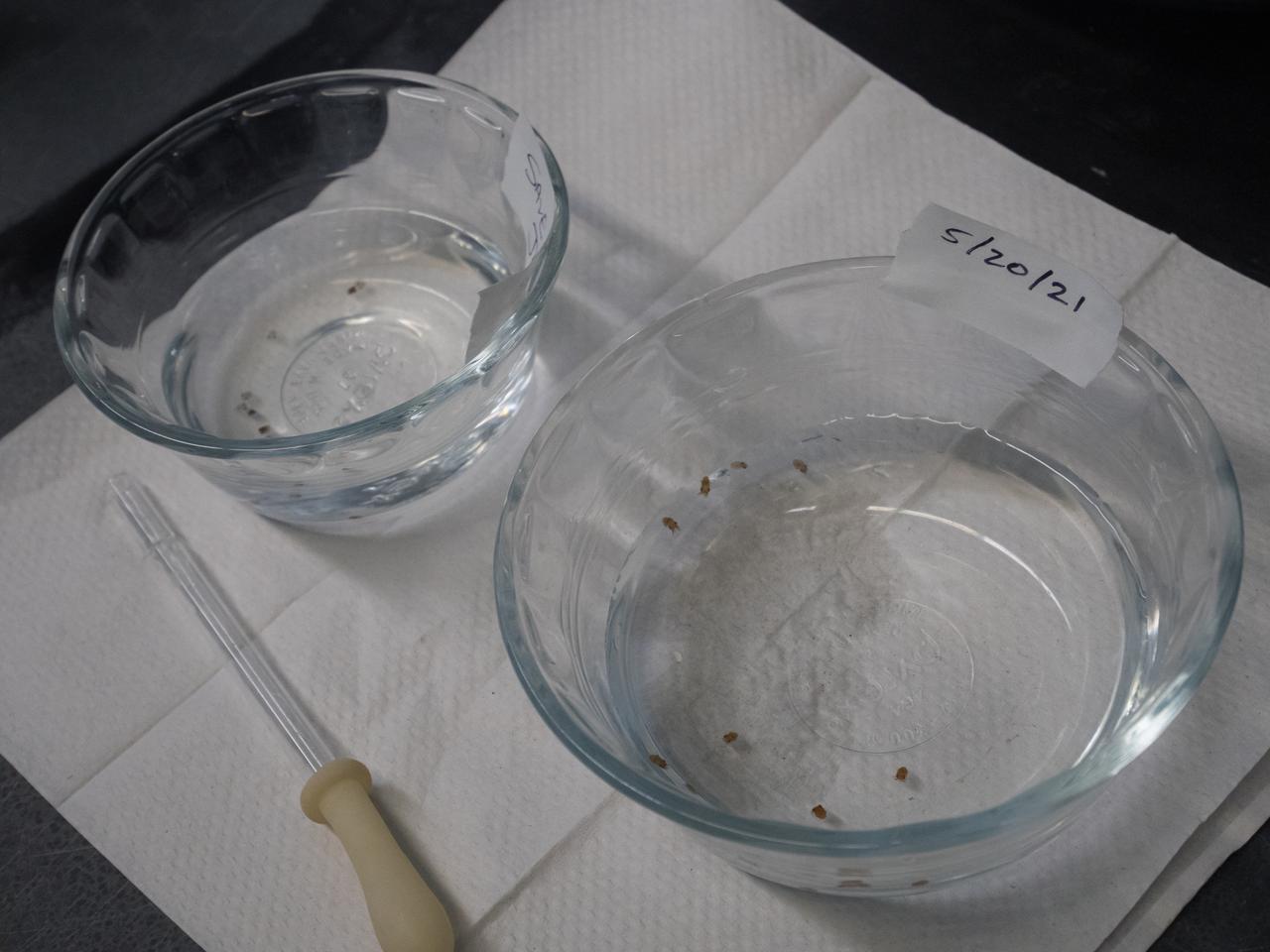
Inside the Space Life Sciences Laboratory at NASA’s Kennedy Space Center in Florida, Dr. Eric Koch, a postdoctoral fellow at the University of Florida, demonstrates preparations for bobtail squid on May 20, 2021, for a trip to the International Space Station aboard SpaceX’s 22nd Commercial Resupply Services mission. The experiment will examine the effects of spaceflight on the molecular and chemical interactions between beneficial microbes and their animal hosts. Amimals, including humans, rely on microbes to maintain a healthy digestive and immune system. UMAMI is one of several experiments bound for the space station in the Dragon capsule atop the SpaceX Falcon 9 rocket. The mission is scheduled to lift off from Launch Complex 39A on June 3.
Inside the Space Life Sciences Laboratory at NASA’s Kennedy Space Center in Florida, bobtail squid are part of preparations on May 20, 2021, for the Understanding of Microgravity on Animal-Microbe Interactions (UMAMI) experiment that will launch to the International Space Station aboard SpaceX’s 22nd Commercial Resupply Services mission. The experiment will examine the effects of spaceflight on the molecular and chemical interactions between beneficial microbes and their animal hosts. Animals, including humans, rely on microbes to maintain a healthy digestive and immune system. UMAMI is one of several experiments bound for the space station in the Dragon capsule atop the SpaceX Falcon 9 rocket. The mission is scheduled to lift off from Launch Complex 39A on June 3.

Inside the Space Life Sciences Laboratory at NASA’s Kennedy Space Center in Florida, Dr. Eric Koch, a postdoctoral fellow at the University of Florida, demonstrates preparations for bobtail squid on May 20, 2021, for a trip to the International Space Station aboard SpaceX’s 22nd Commercial Resupply Services mission. The experiment will examine the effects of spaceflight on the molecular and chemical interactions between beneficial microbes and their animal hosts. Amimals, including humans, rely on microbes to maintain a healthy digestive and immune system. UMAMI is one of several experiments bound for the space station in the Dragon capsule atop the SpaceX Falcon 9 rocket. The mission is scheduled to lift off from Launch Complex 39A on June 3.
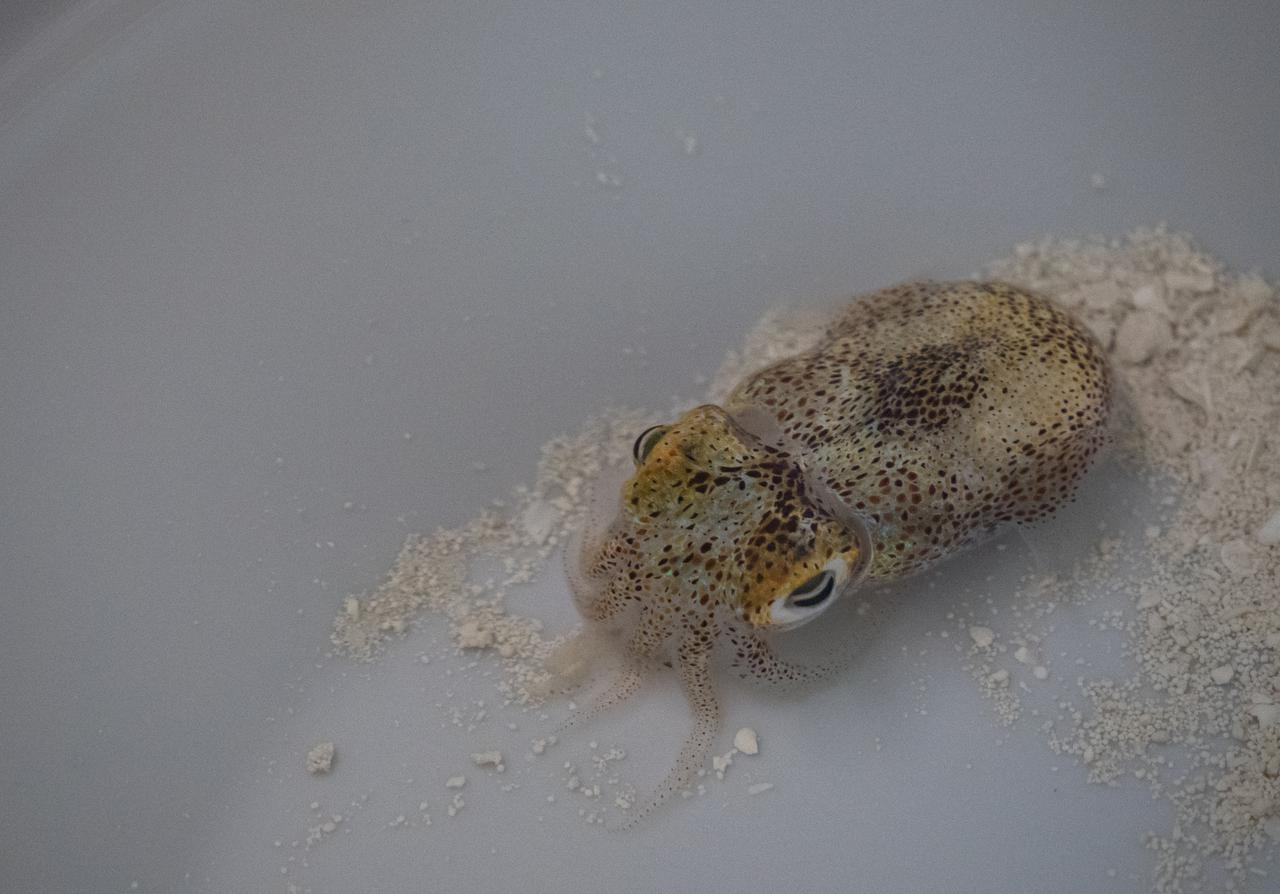
Inside the Space Life Sciences Laboratory at NASA’s Kennedy Space Center in Florida, bobtail squid are part of preparations on May 20, 2021, for the Understanding of Microgravity on Animal-Microbe Interactions (UMAMI) experiment that will launch to the International Space Station aboard SpaceX’s 22nd Commercial Resupply Services mission. The experiment will examine the effects of spaceflight on the molecular and chemical interactions between beneficial microbes and their animal hosts. Amimals, including humans, rely on microbes to maintain a healthy digestive and immune system. UMAMI is one of several experiments bound for the space station in the Dragon capsule atop the SpaceX Falcon 9 rocket. The mission is scheduled to lift off from Launch Complex 39A on June 3.