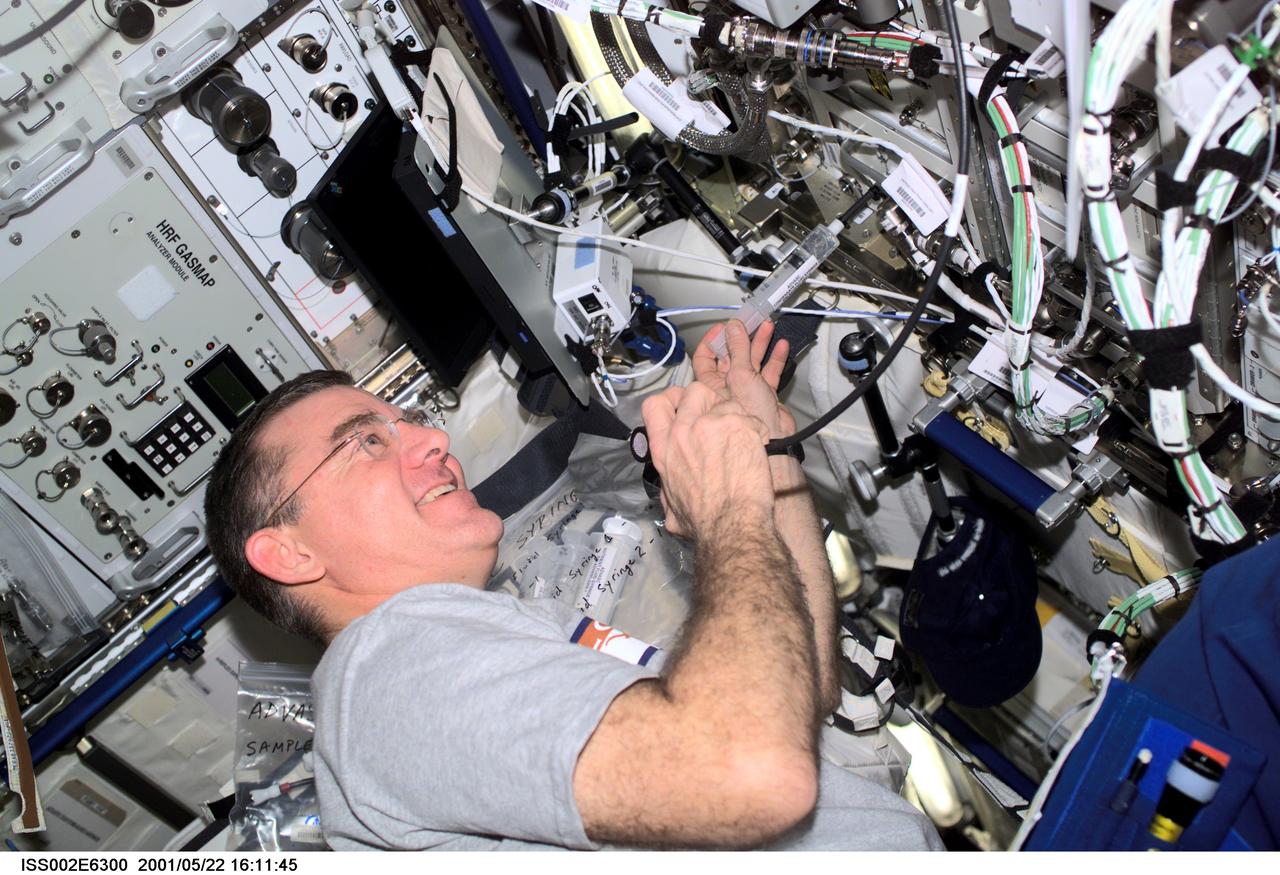
ISS002-E-6300 (22 May 2001) --- James S. Voss, Expedition Two flight engineer, works with the Advanced Astro Culture (ADVASC) Condensate Fluid Syringe at the ADVASC Growth Chamber in the U.S. Laboratory. The image was taken with a digital still camera.
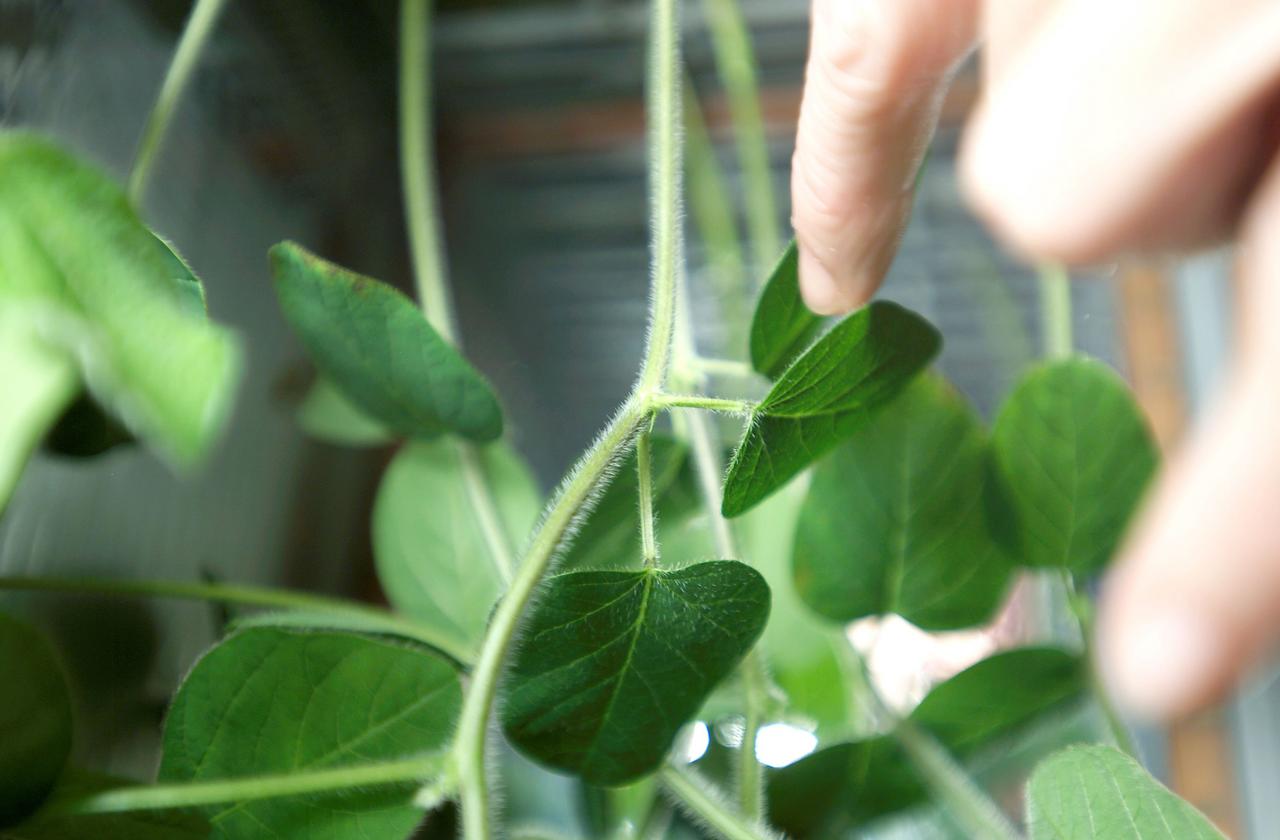
This is a photo of soybeans growing in the Advanced Astroculture (ADVASC) Experiment aboard the International Space Station (ISS). The ADVASC experiment was one of the several new experiments and science facilities delivered to the ISS by Expedition Five aboard the Space Shuttle Orbiter Endeavor STS-111 mission. An agricultural seed company will grow soybeans in the ADVASC hardware to determine whether soybean plants can produce seeds in a microgravity environment. Secondary objectives include determination of the chemical characteristics of the seed in space and any microgravity impact on the plant growth cycle. Station science will also be conducted by the ever-present ground crew, with a new cadre of controllers for Expedition Five in the ISS Payload Operations Control Center (POCC) at NASA's Marshall Space Flight Center in Huntsville, Alabama. Controllers work in three shifts around the clock, 7 days a week, in the POCC, the world's primary science command post for the Space Station. The POCC links Earth-bound researchers around the world with their experiments and crew aboard the Space Station.
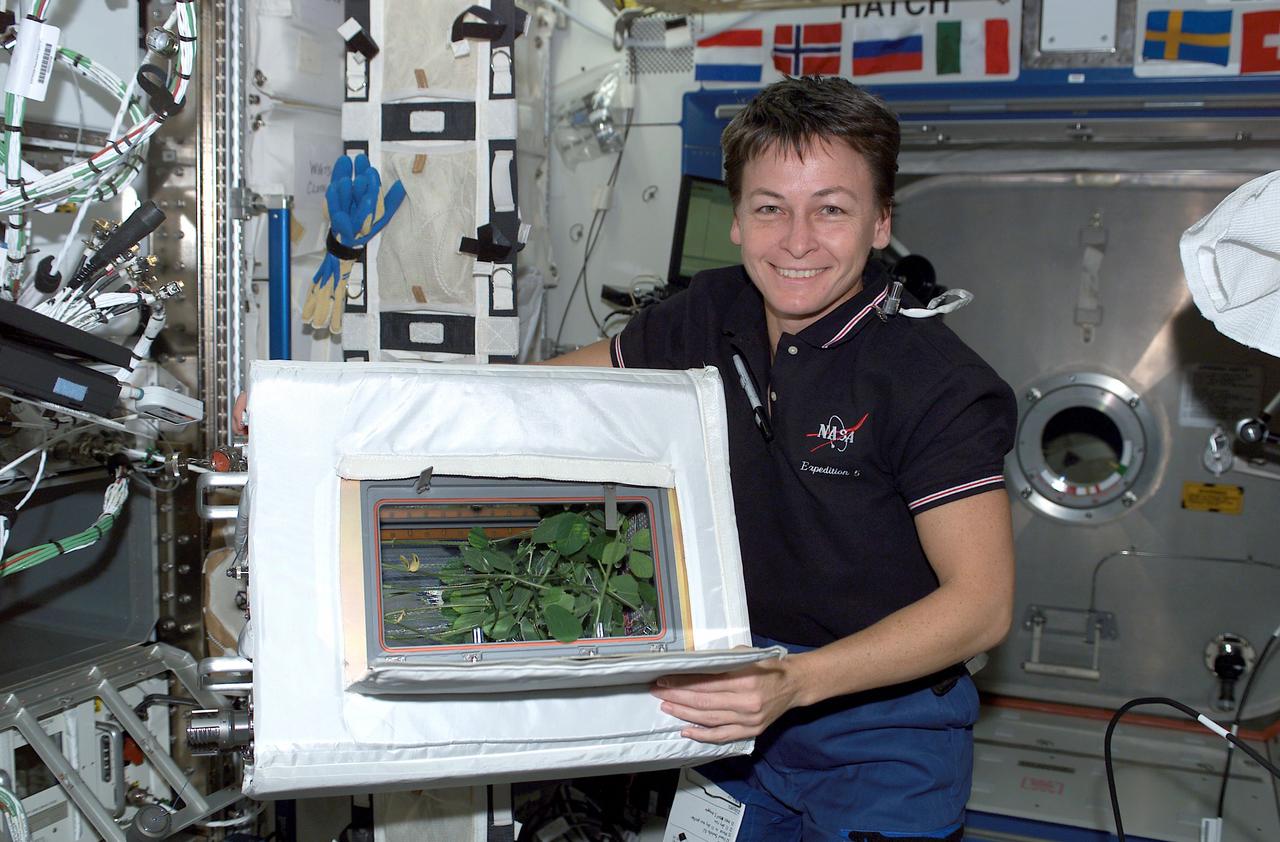
Expedition Five crewmember and flight engineer Peggy Whitson displays the progress of soybeans growing in the Advanced Astroculture (ADVASC) Experiment aboard the International Space Station (ISS). The ADVASC experiment was one of the several new experiments and science facilities delivered to the ISS by Expedition Five aboard the Space Shuttle Orbiter Endeavor STS-111 mission. An agricultural seed company will grow soybeans in the ADVASC hardware to determine whether soybean plants can produce seeds in a microgravity environment. Secondary objectives include determination of the chemical characteristics of the seed in space and any microgravity impact on the plant growth cycle. Station science will also be conducted by the ever-present ground crew, with a new cadre of controllers for Expedition Five in the ISS Payload Operations Control Center (POCC) at NASA's Marshall Space Flight Center in Huntsville, Alabama. Controllers work in three shifts around the clock, 7 days a week, in the POCC, the world's primary science command post for the Space Station. The POCC links Earth-bound researchers around the world with their experiments and crew aboard the Space Station.
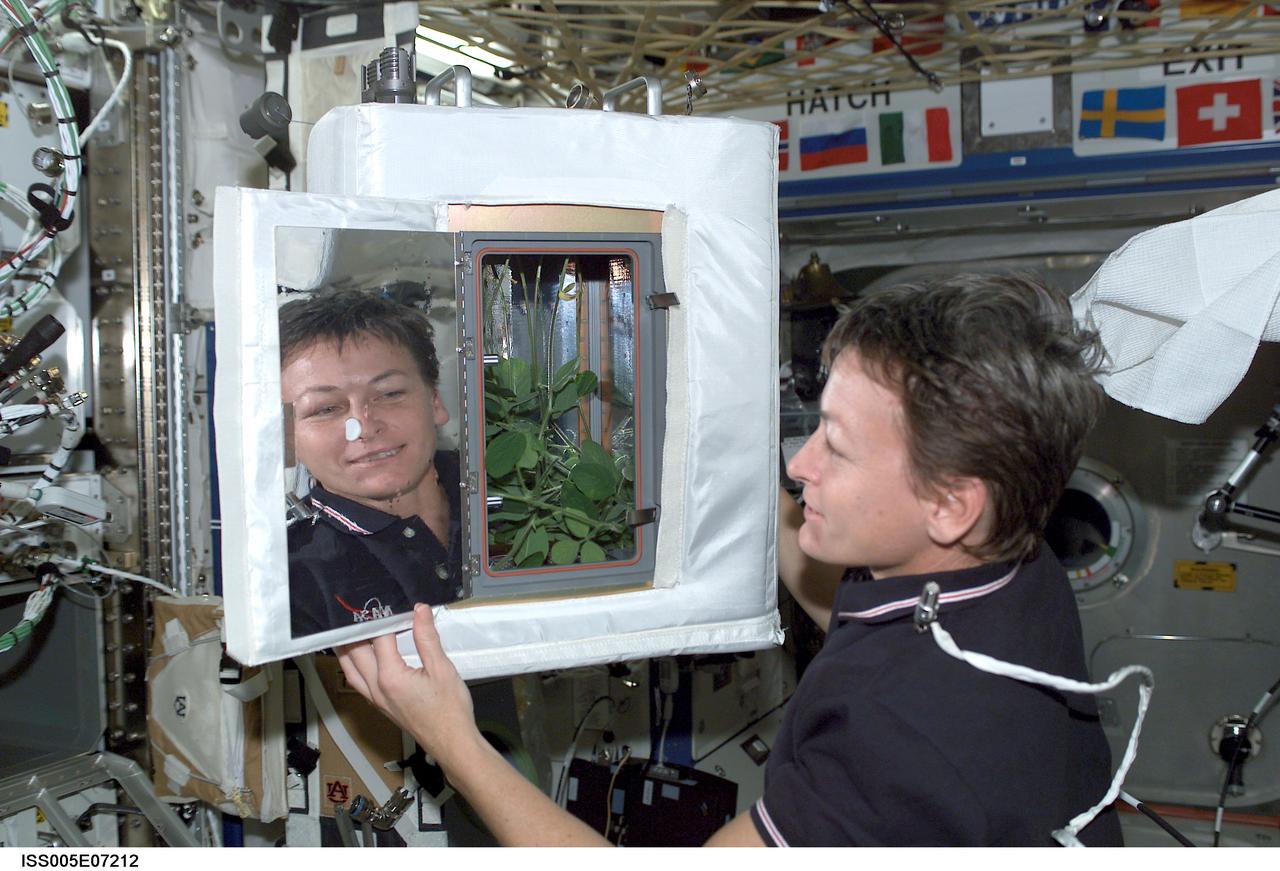
ISS005-E-07212 (10 July 2002) --- NASA Astronaut Peggy Whitson, Expedition 5 International Space Station (ISS) science officer, looks at the Advanced Astroculture (ADVASC) Soybean plant growth experiment as part of Expediting the Process of Experiments to the Space Station (EXPRESS) Rack 4 located in the U.S. Laboratory Destiny.
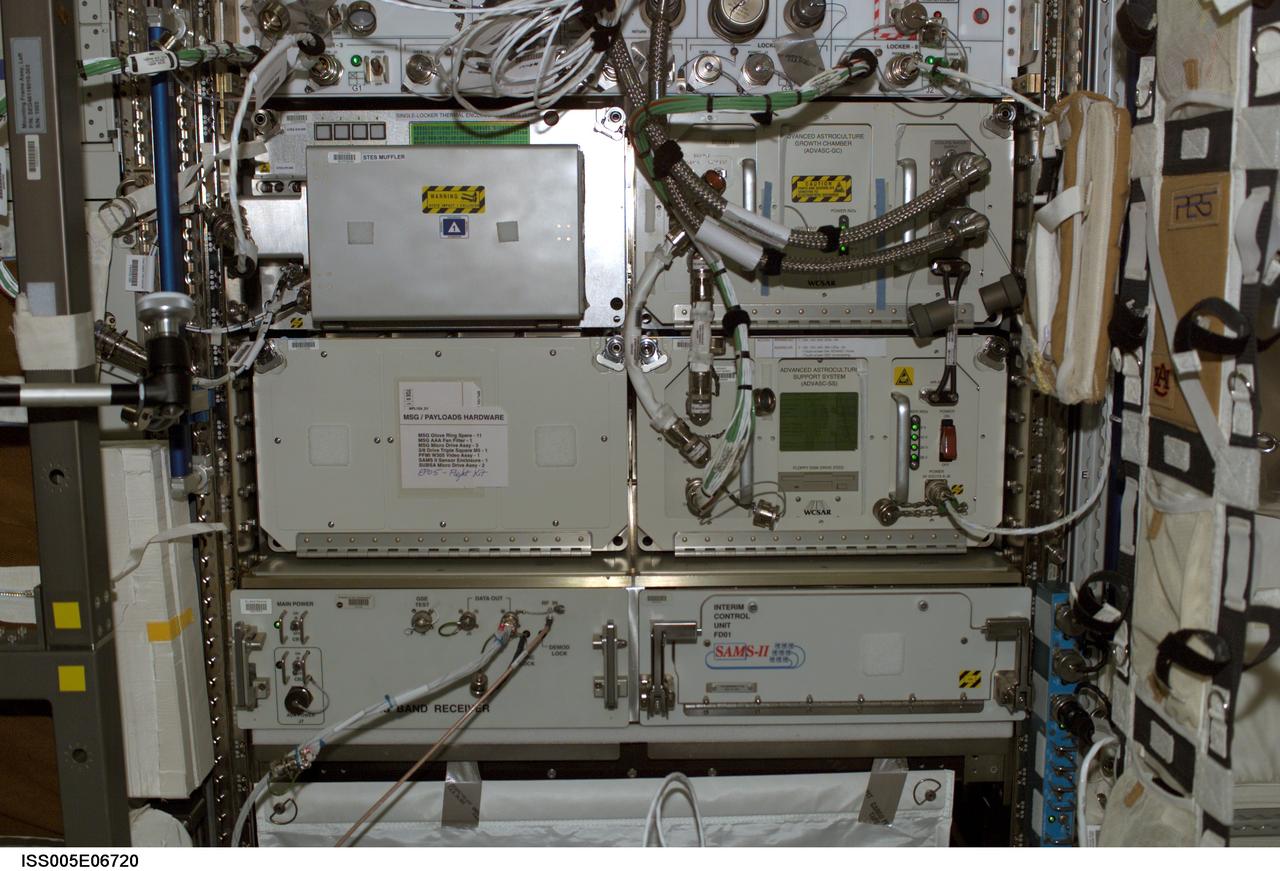
iss005e06720 (7/4/2002) --- Front view of Express Rack 4 in the U.S. Laboratory / Destiny taken during Expedition Five. Visible in the rack are the following items: Single-Locker Thermal Enclosure System (STES) Muffler, Advanced Astroculture Growth Chamber (ADVASC-GC), Advanced Astroculture Support System (ADVASC-SS). And Space Acceleration and Measurement System (SAMS) II.
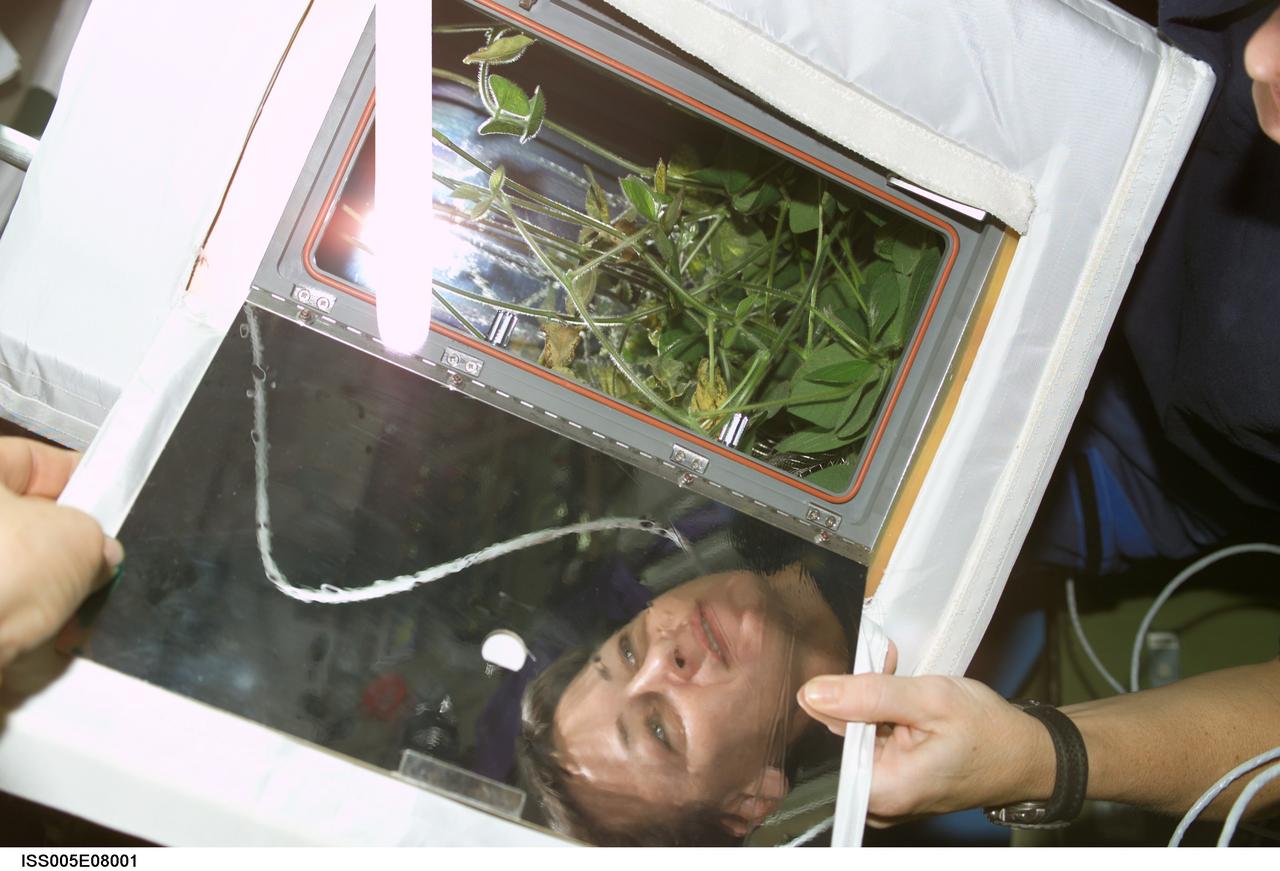
ISS005-E-08001 (18 July 2002) --- Astronaut Peggy A. Whitson, Expedition Five flight engineer, works with the Advanced Astroculture soybean plant growth experiment in the Destiny laboratory on the International Space Station (ISS).
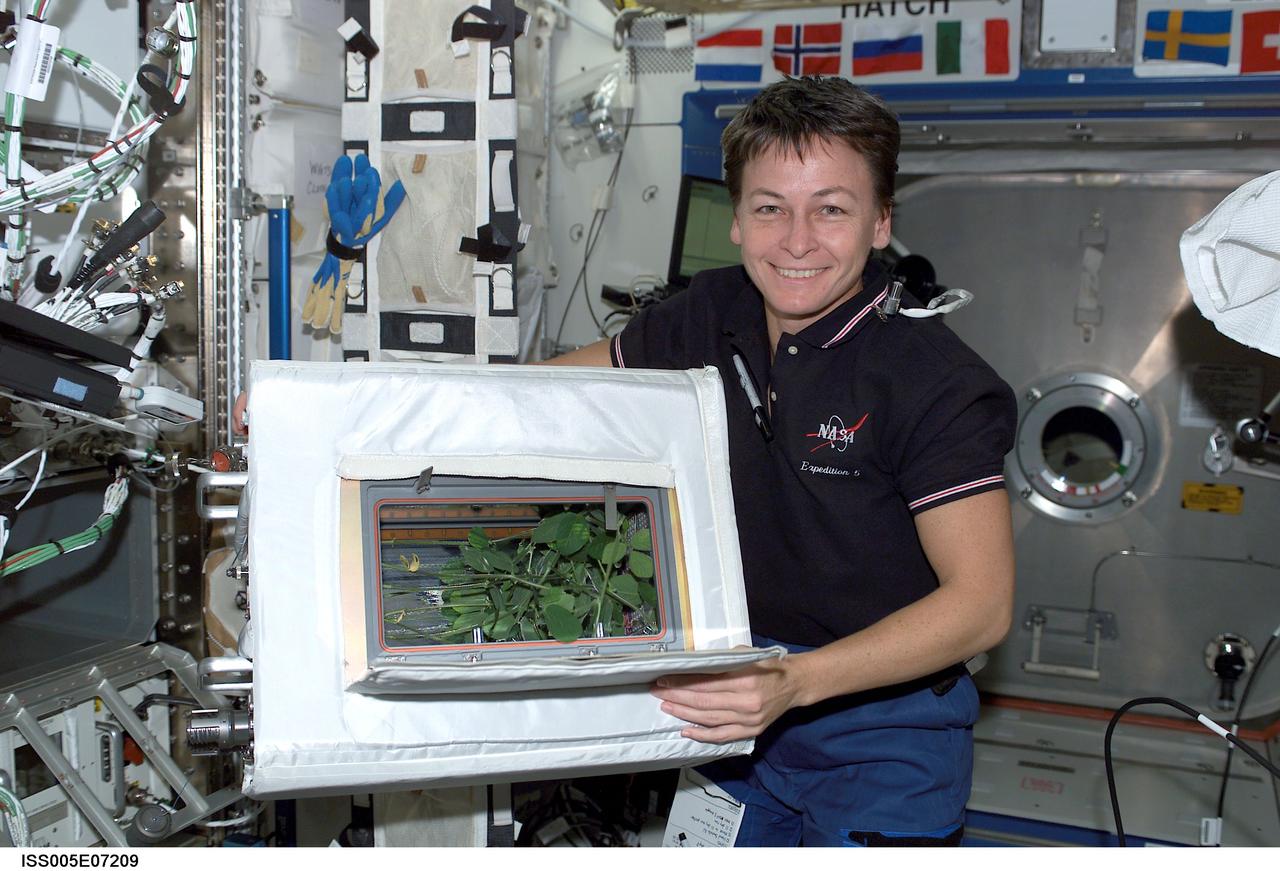
ISS005-E-07209 (10 July 2002) --- Astronaut Peggy A. Whitson, Expedition Five NASA ISS science officer, holds the Advanced Astroculture soybean plant growth experiment in the Destiny laboratory on the International Space Station (ISS).
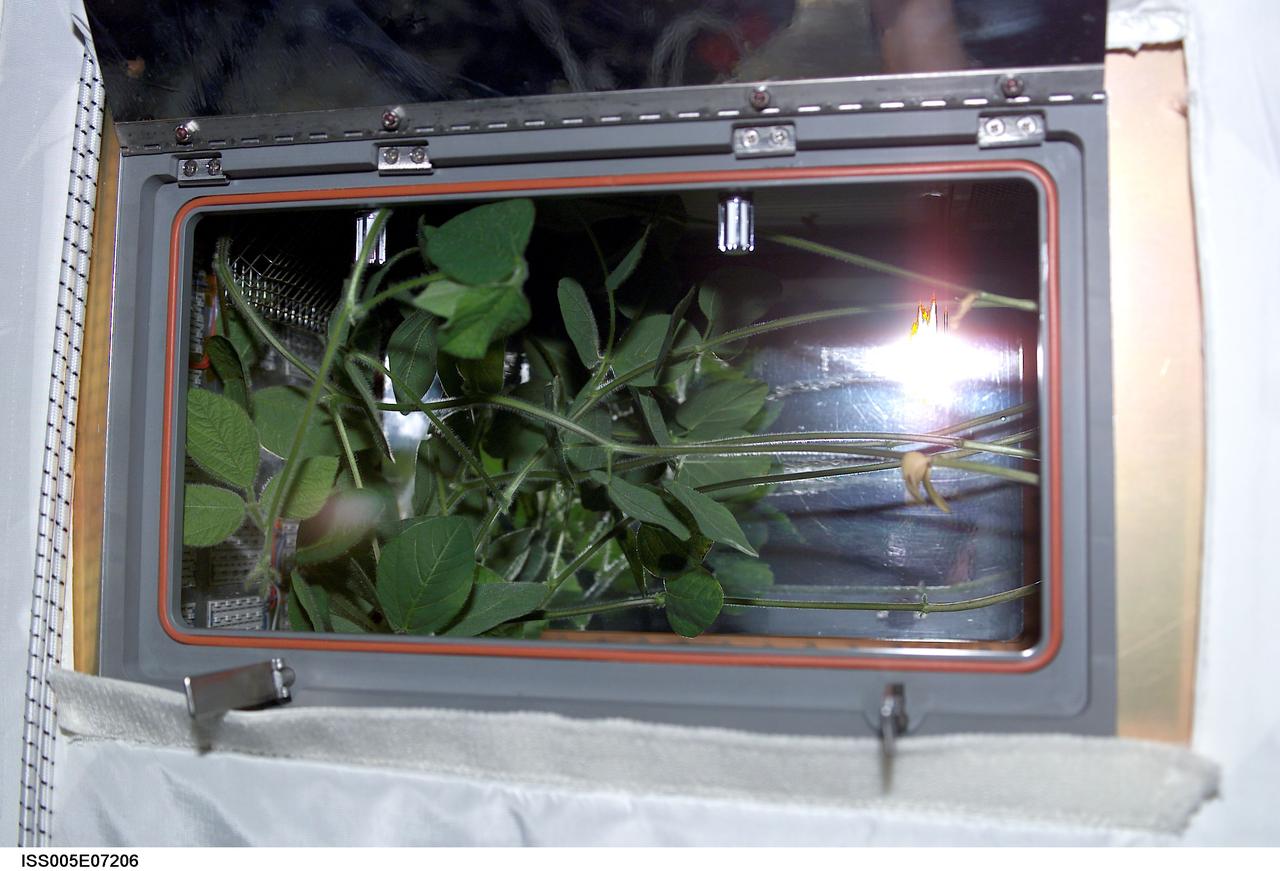
ISS005-E-07206 (10 July 2002) --- A close-up view of the Advanced Astroculture soybean plant growth experiment in the Destiny laboratory on the International Space Station (ISS).