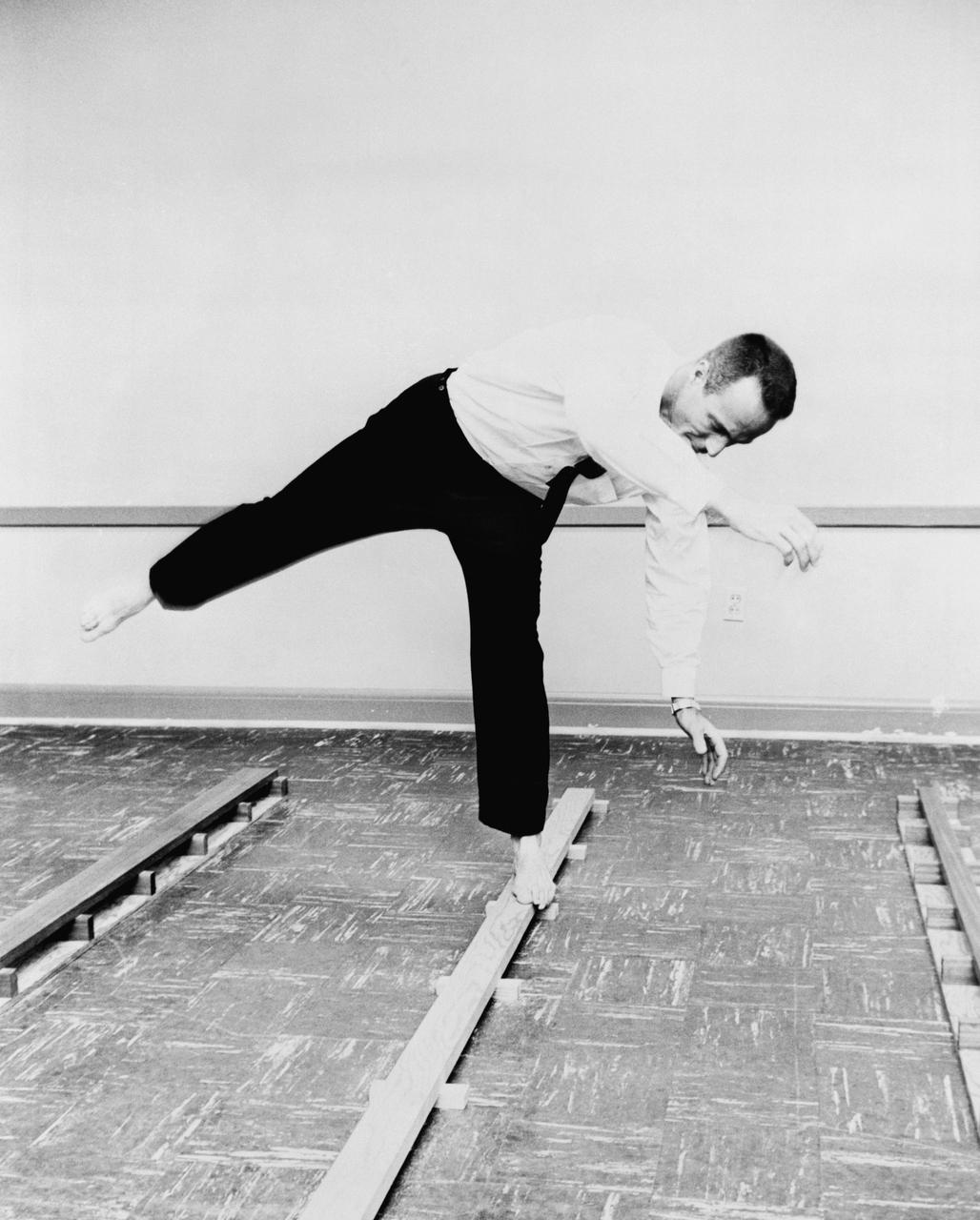
S61-04570 (1961) --- Astronaut M. Scott Carpenter's balance mechanism performance is tested by his walking on a narrow board in his bare feet. He is performing this test at the School of Aviation Medicine, Pensacola, Florida. Photo credit: NASA
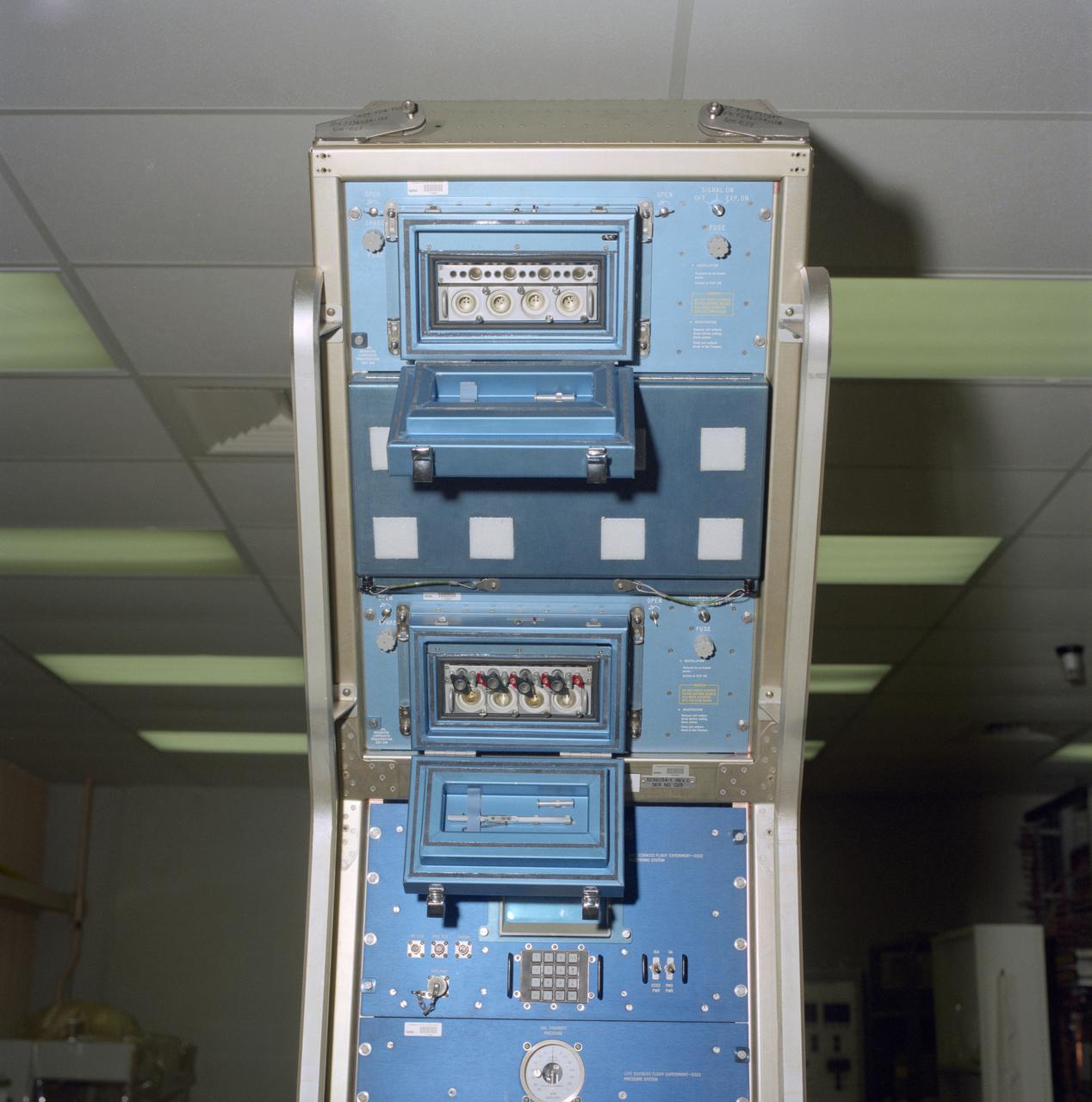
S84-43683 (26 Nov 1984) --- This vertically positioned rectangular piece of hardware, scheduled to fly on the science module of Spacelab Life Sciences-1, is important to the immunology investigation on the mission. Called Lymphocyte Proliferation in Weightlessness (Experiment 240), the test was developed by Dr. Augosto Cogoli of the Institute of Biotechnology, Gruppe Weltraum Biologie, in Zurich, Switzerland. It represents a continuation of previous Spacelab experiments by examining the effects of weightlessness on lymphocyte activation. Cultures will be grown in the microgravity incubators on the pictured hardware.
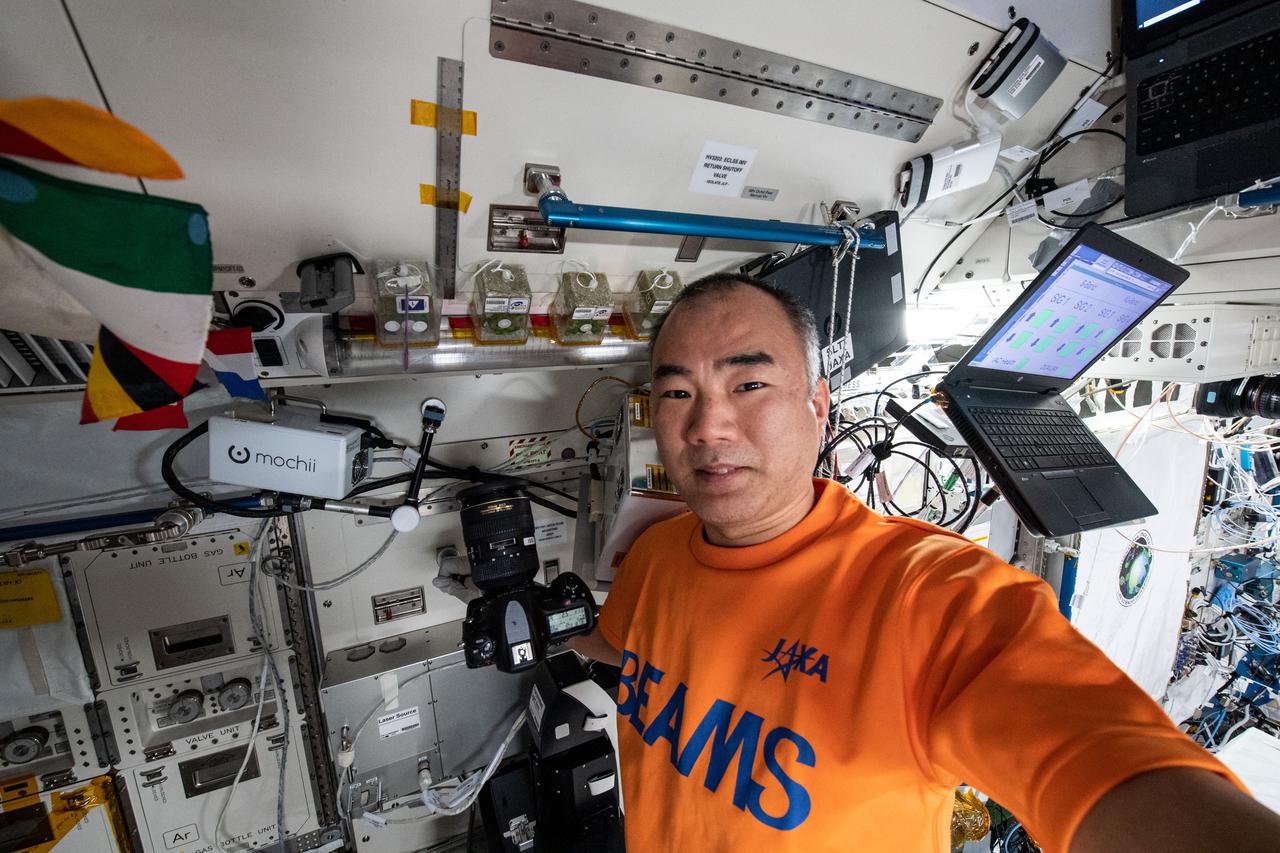
iss064e040578 (March 9, 2021) --- JAXA (Japan Aerospace Exploration Agency) Soichi Noguchi astronaut poses with plants growing inside containers for the Asian Herbs study. The space botany investigation is exploring ways to cultivate fast-growing plants used for traditional medicine and food flavoring.
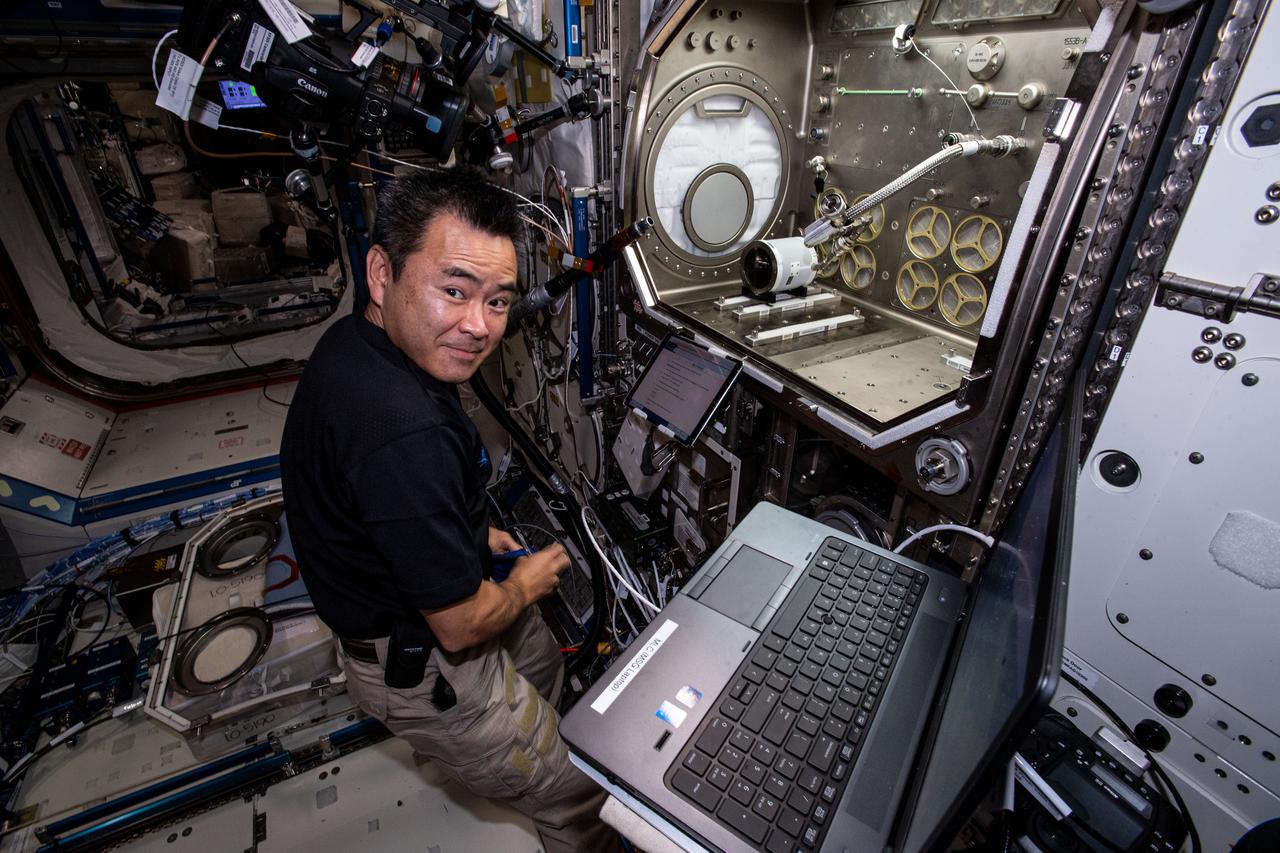
iss065e143164 (June 21, 2021) --- Expedition 65 Commander Akihiko Hoshide of the Japan Aerospace Exploration Agency (JAXA) works inside the Microgravity Science Glovebox conducting research for the Lyophilization-2 pharmaceutical experiment seeking to improve the quality and extend the shelf-life of medicines on Earth and in space.
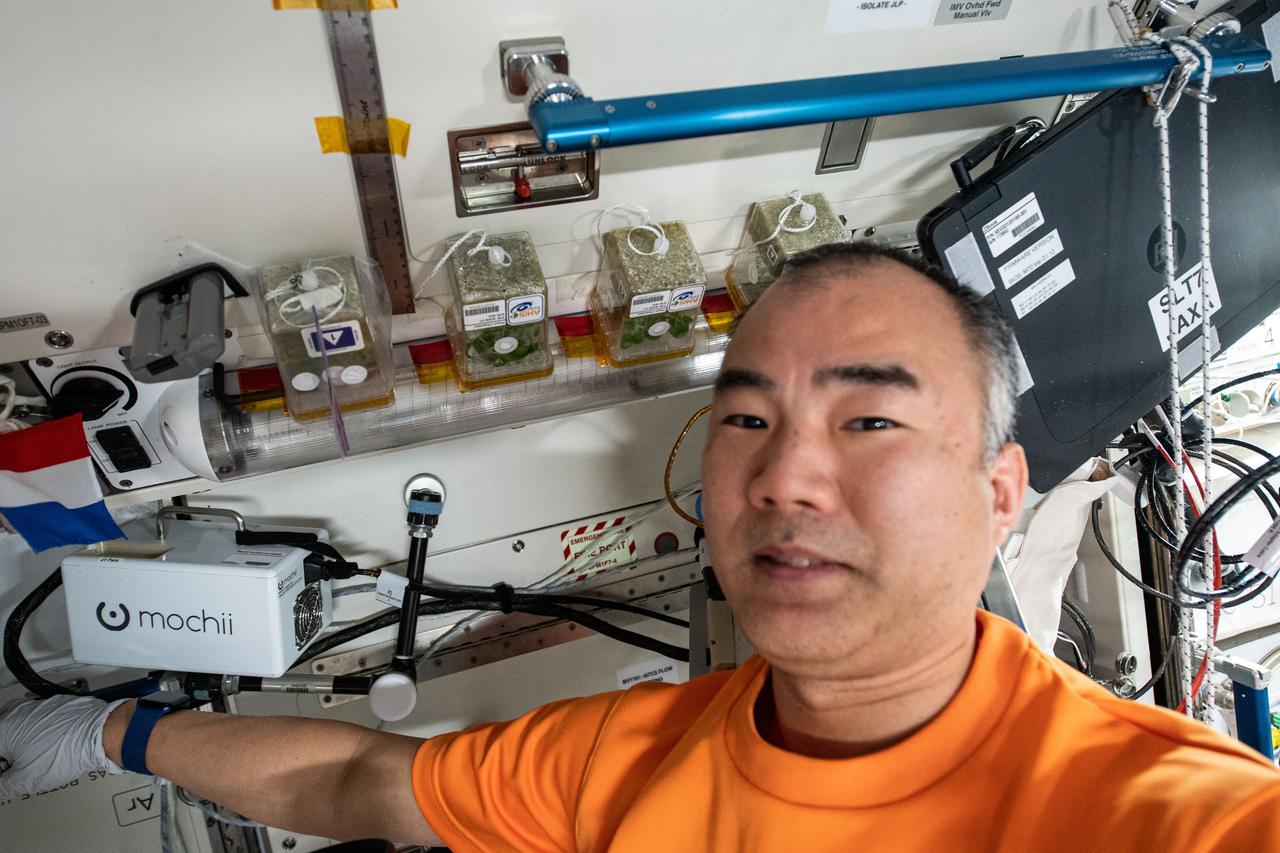
iss064e040580 (March 9, 2021) --- JAXA (Japan Aerospace Exploration Agency) astronaut Soichi Noguchi poses with plants growing inside containers for the Asian Herbs study. The space botany investigation is exploring ways to cultivate fast-growing plants used for traditional medicine and food flavoring.
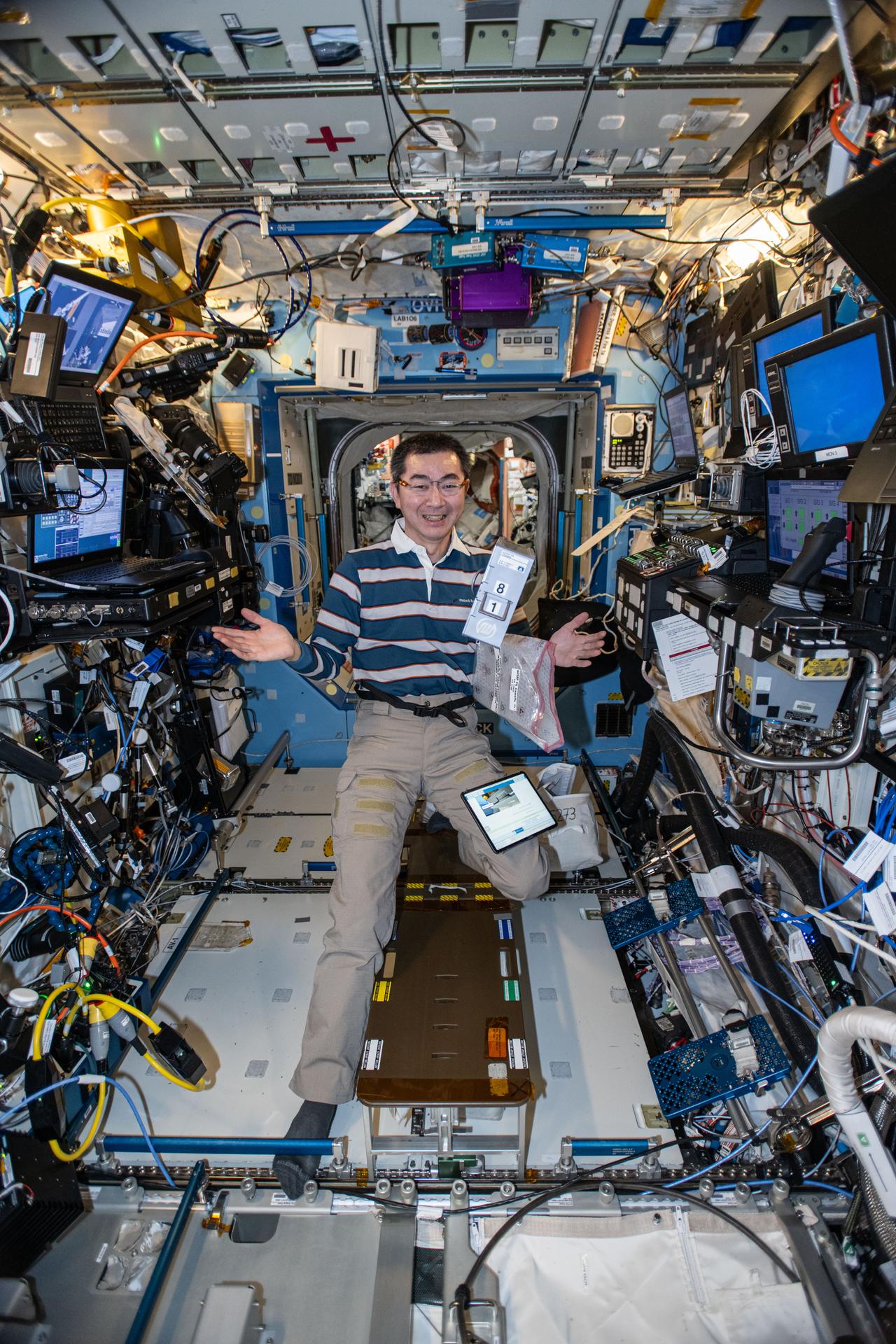
iss074e0043601 (Jan. 5, 2026) --- JAXA (Japan Aerospace Exploration Agency) astronaut and Expedition 74 Flight Engineer Kimiya Yui appears to juggle research hardware inside the International Space Station's Destiny laboratory. The science gear includes a computer tablet and a cassette designed to hold protein crystal samples, both supporting the Pharmaceutical In-Space Laboratory set of experiments that is exploring ways to develop and manufacture medicines in space.
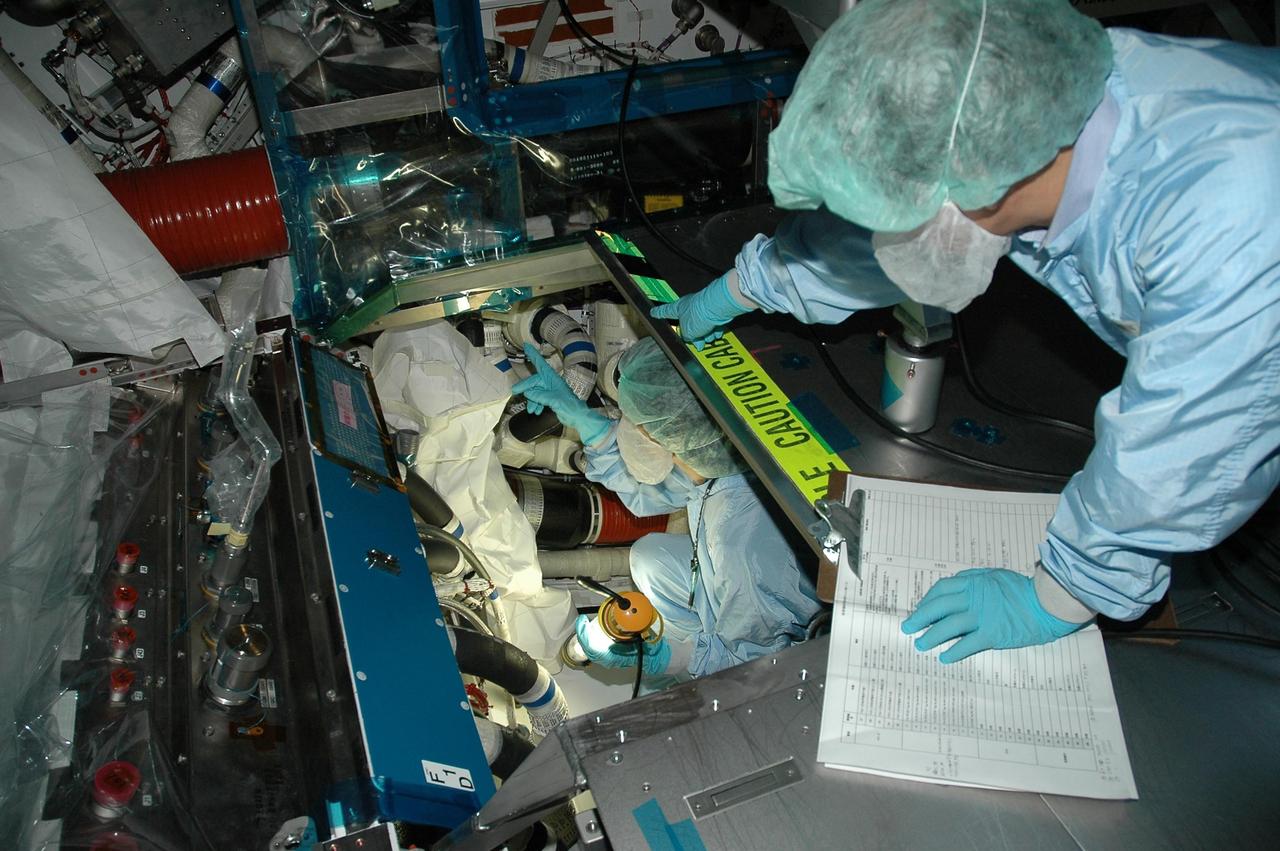
KENNEDY SPACE CENTER, FLA. - In the Space Station Processing Facility, a Japan Aerospace Exploration Agency (JAXA) technician inspects the wiring on the Japanese Experiment Module (JEM). The JEM, developed by JAXA for use on the International Space Station, is named Kibo -- which means "hope" in Japanese -- and will enhance the unique research capabilities of the orbiting complex by providing an additional environment for astronauts to conduct science experiments. Research conducted in Kibo will focus on space medicine, biology, Earth observations, material production, biotechnology and communications. Photo credit: NASA/Amanda Diller
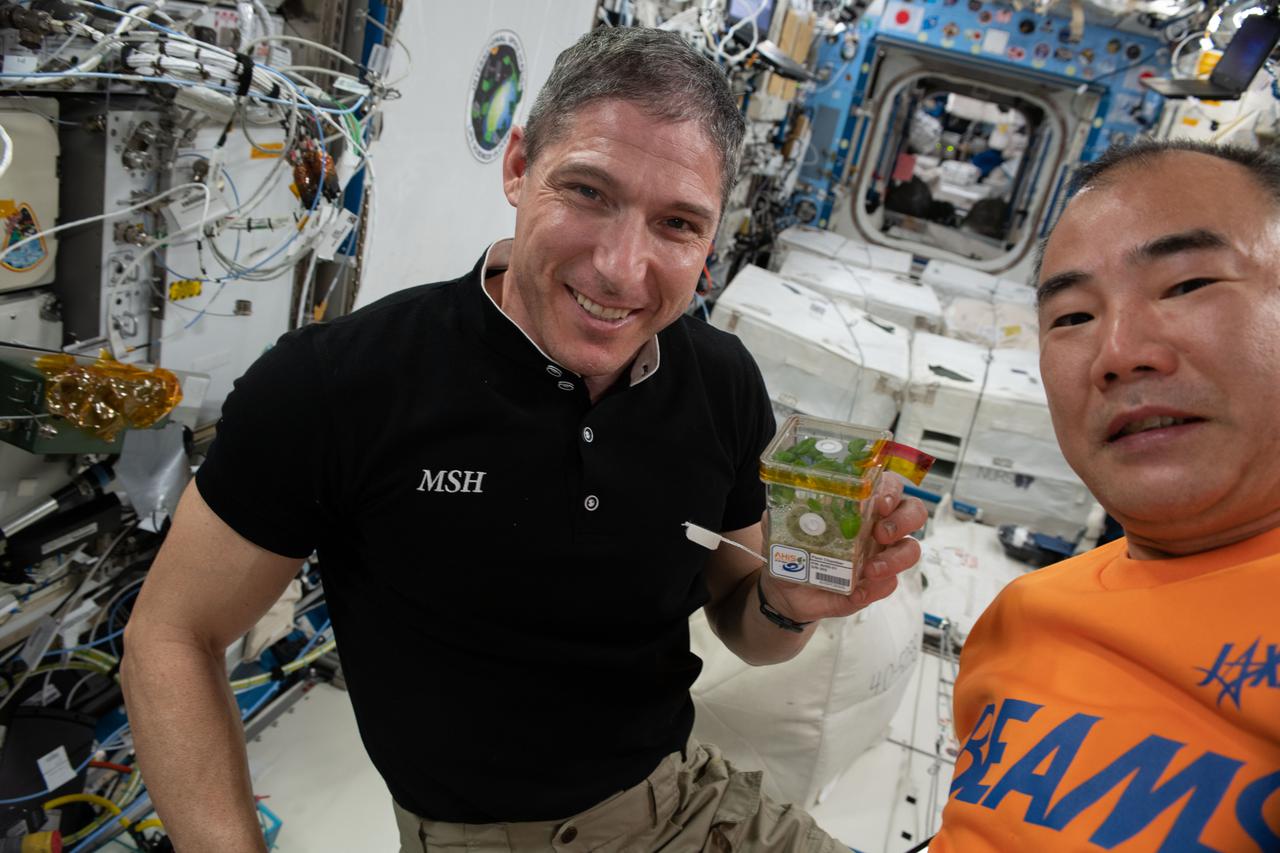
iss064e043776 (March 16, 2021) --- Expedition 64 Flight Engineers Michael Hopkins of NASA and Soichi Noguchi of JAXA (Japan Aerospace Exploration Agency) are pictured inside the International Space Station's Kibo laboratory module. Hopkins is showing a plant chamber containing plants growing for the Asian Herb in Space (AHiS) study. The space botany investigation is exploring ways to cultivate fast-growing plants used for traditional medicine and food flavoring.

Nancy Bray, director of Spaceport Integration and Services at NASA's Kennedy Space Center, left, is joined by Myrna Scott, center, and Dr. David Tipton, chief of Aerospace Medicine and Occupational Health, in cutting a ceremonial ribbon dedicating the Randal E. Scott Radiological Control Center at the Florida spaceport. Myrna Scott is the widow of Randy Scott, who was a professional health physicist of more than 40 years. He served as the Florida spaceport's Radiation Protection Officer for 14 years until his death June 17, 2016.

Nancy Bray, director of Spaceport Integration and Services at NASA's Kennedy Space Center, left, is joined by Myrna Scott, center, and Dr. David Tipton, chief of Aerospace Medicine and Occupational Health, in cutting a ceremonial ribbon dedicating the Randal E. Scott Radiological Control Center at the Florida spaceport. Myrna Scott is the widow of Randy Scott, who was a professional health physicist of more than 40 years. He served as the Florida spaceport's Radiation Protection Officer for 14 years until his death June 17, 2016.

Nancy Bray, director of Spaceport Integration and Services at NASA's Kennedy Space Center, left, is joined by Myrna Scott, center, and Dr. David Tipton, chief of Aerospace Medicine and Occupational Health, in cutting a ceremonial ribbon dedicating the Randal E. Scott Radiological Control Center at the Florida spaceport. Myrna Scott is the widow of Randy Scott, who was a professional health physicist of more than 40 years. He served as the Florida spaceport's Radiation Protection Officer for 14 years until his death June 17, 2016.
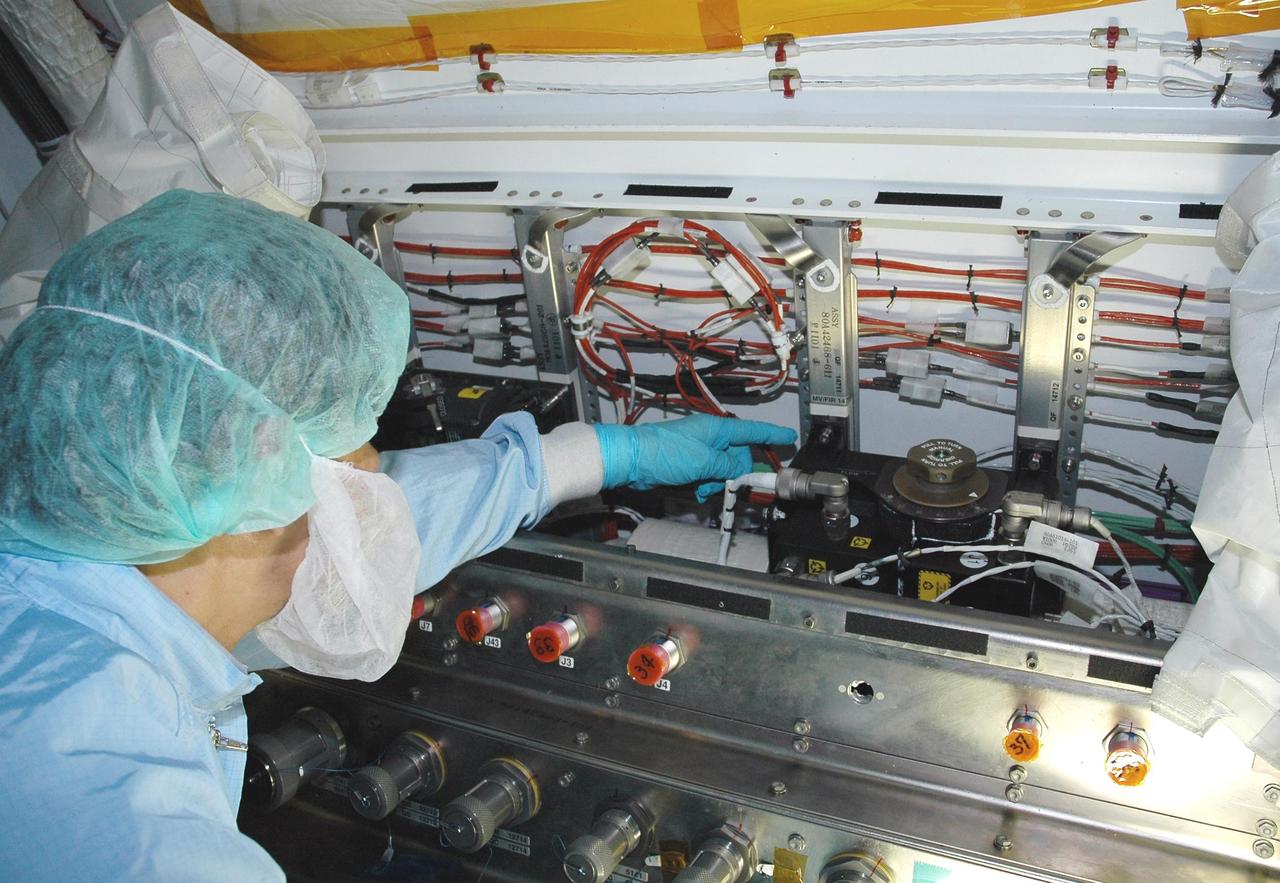
KENNEDY SPACE CENTER, FLA. - In the Space Station Processing Facility, Japan Aerospace Exploration Agency (JAXA) technicians inspect the wiring on the Japanese Experiment Module (JEM). The JEM, developed by JAXA for use on the International Space Station, is named Kibo -- which means "hope" in Japanese -- and will enhance the unique research capabilities of the orbiting complex by providing an additional environment for astronauts to conduct science experiments. Research conducted in Kibo will focus on space medicine, biology, Earth observations, material production, biotechnology and communications. Photo credit: NASA/Amanda Diller
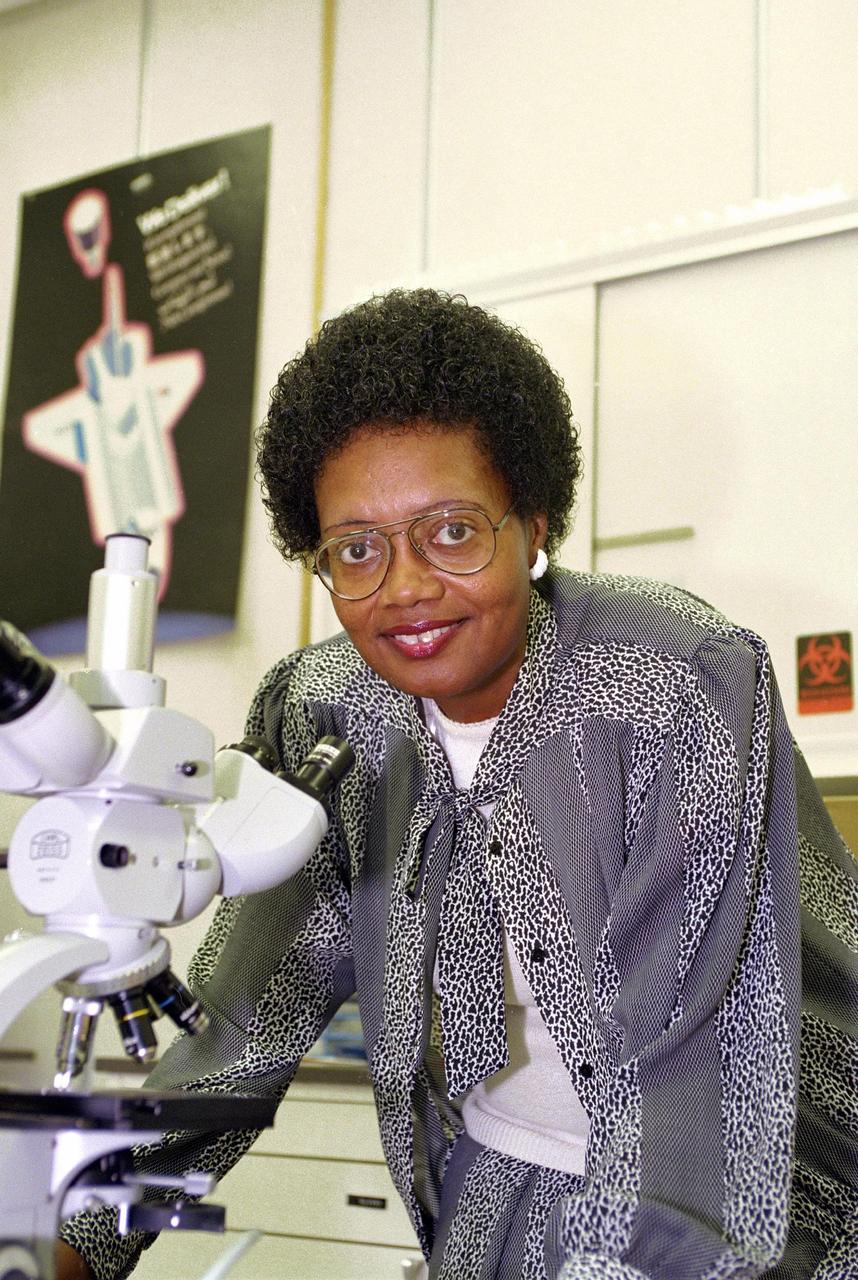
KENNEDY SPACE CENTER, FLA. -- Dr. Irene Duhart Long is the director, Biomedical Operations and Research Office, at the Kennedy Space Center effective July 24, 1994. She is responsible for the program management of the center's aerospace and occupational medicine, life sciences research, environmental health programs and the operations management of the life sciences support facilities. Dr. Long also is responsible for providing the coordinating medical, environmental monitoring and environmental health support to launch and landing activities and day-to-day institutional functions.
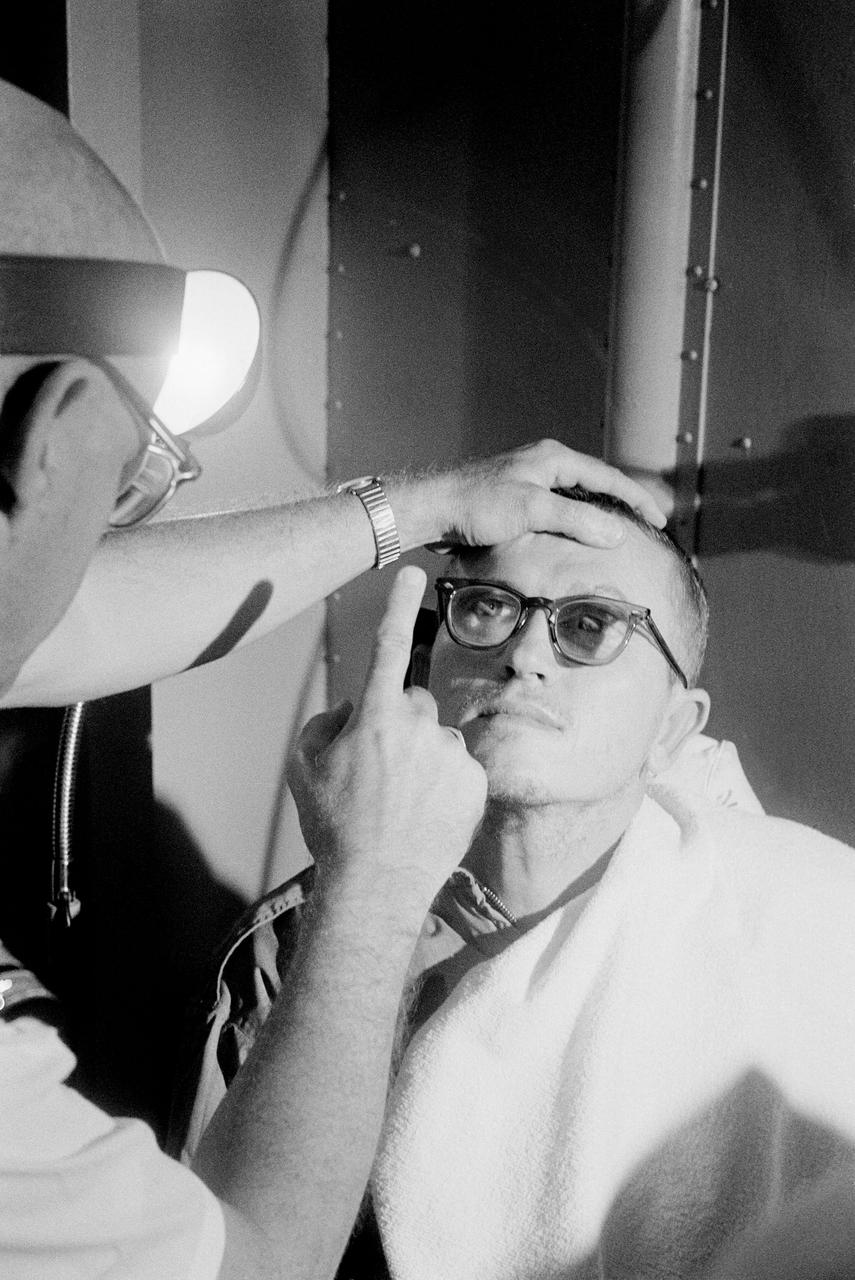
S66-17442 (19 Jan. 1966) --- Astronaut Frank Borman, command pilot for the Gemini-7 mission, has his vision checked during a postflight medical exam. Photo credit: NASA
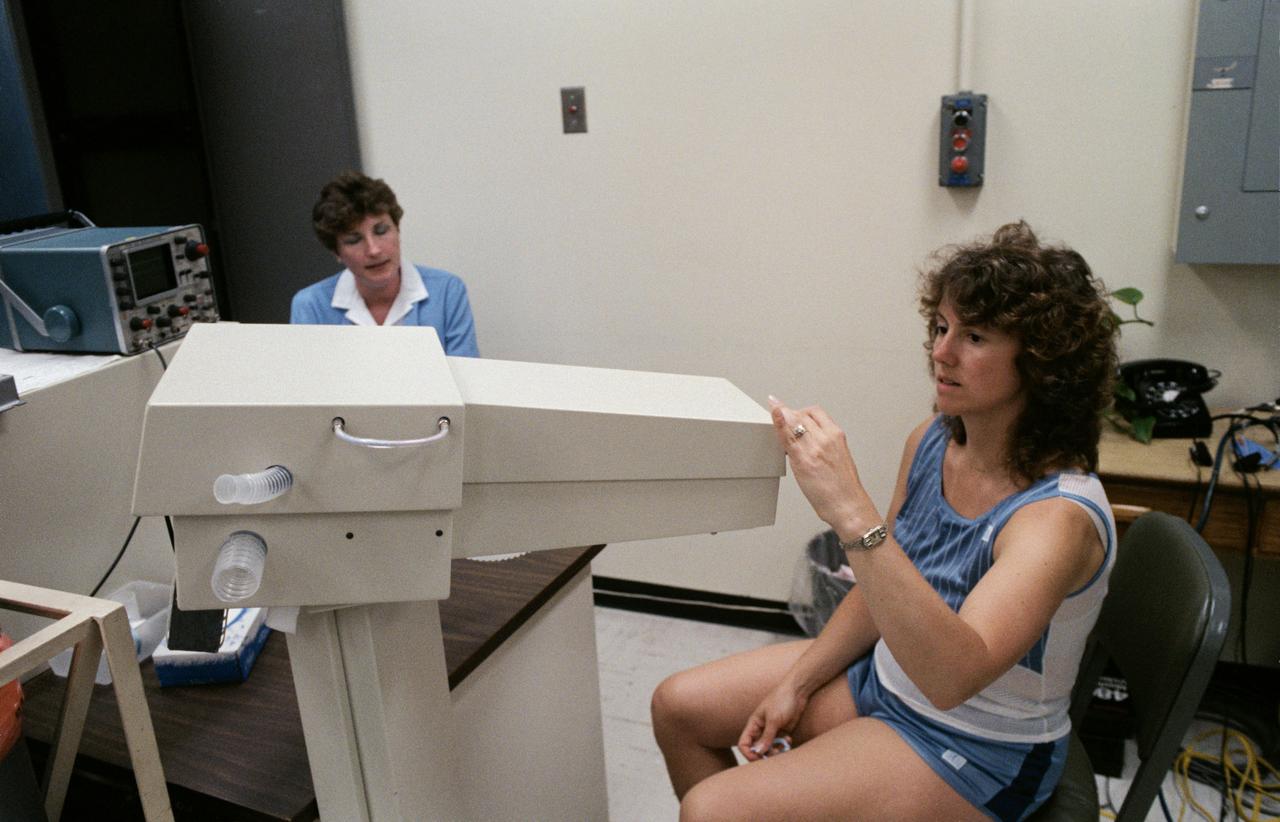
S85-36966 (10 July 1985) --- Teacher Sharon Christa McAuliffe prepares to test her lung capacity during medical examinations at the Johnson Space Center (JSC) clinic. Photo credit: NASA
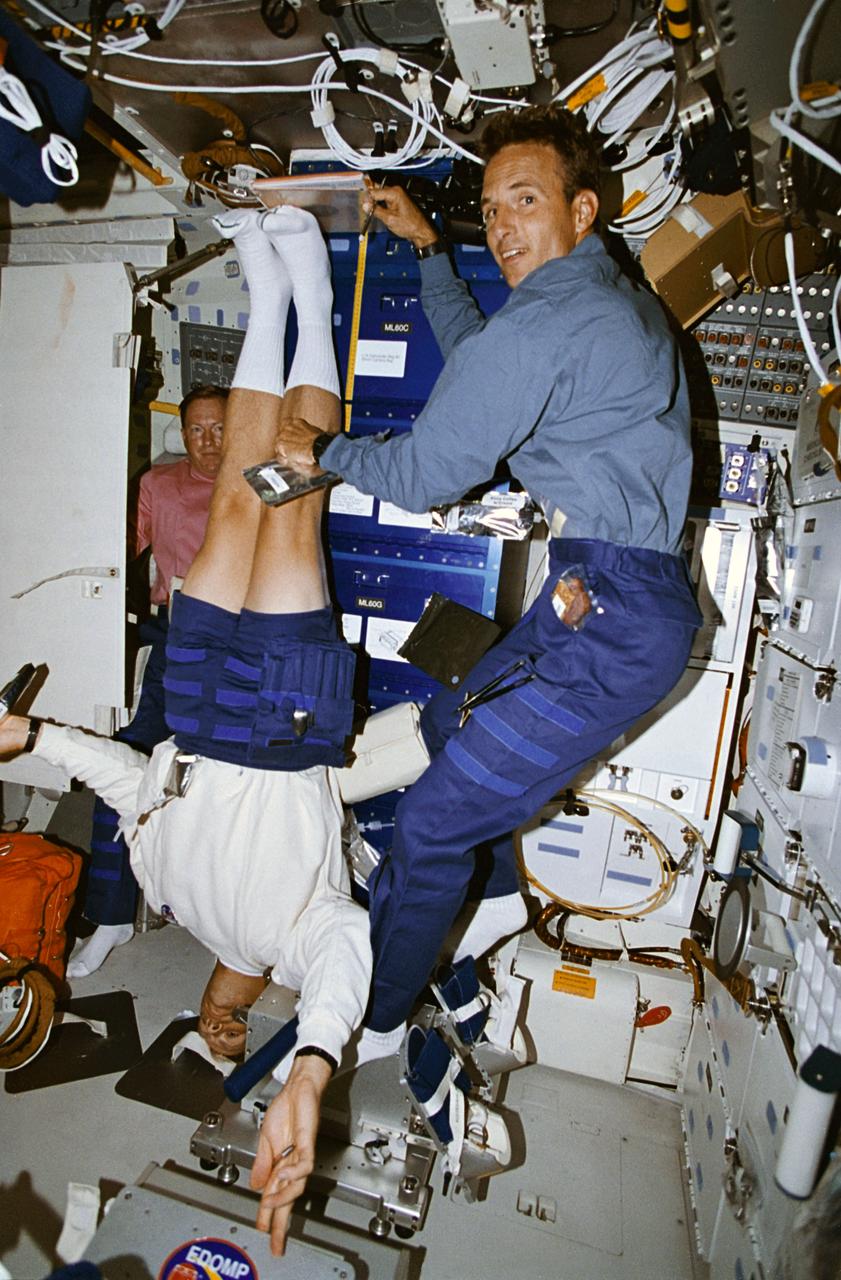
STS064-05-020 (9-20 Sept. 1994) --- Astronaut Mark C. Lee gets his height measured by astronaut Jerry M. Linenger as part of a daily in-flight routine supporting a medical Detailed Supplementary Objective (DSO). Astronaut Richard N. Richards, STS-64 mission commander, looks on in the background. This study was designed to collect information about back pain and height changes experienced by astronauts during flight. Crew members participating in this DSO are required to record height measurements and long back-pain symptoms daily. As an ongoing program, this DSO will gather data from 30 astronauts who spend more than eight consecutive days in space. Photo credit: NASA or National Aeronautics and Space Administration
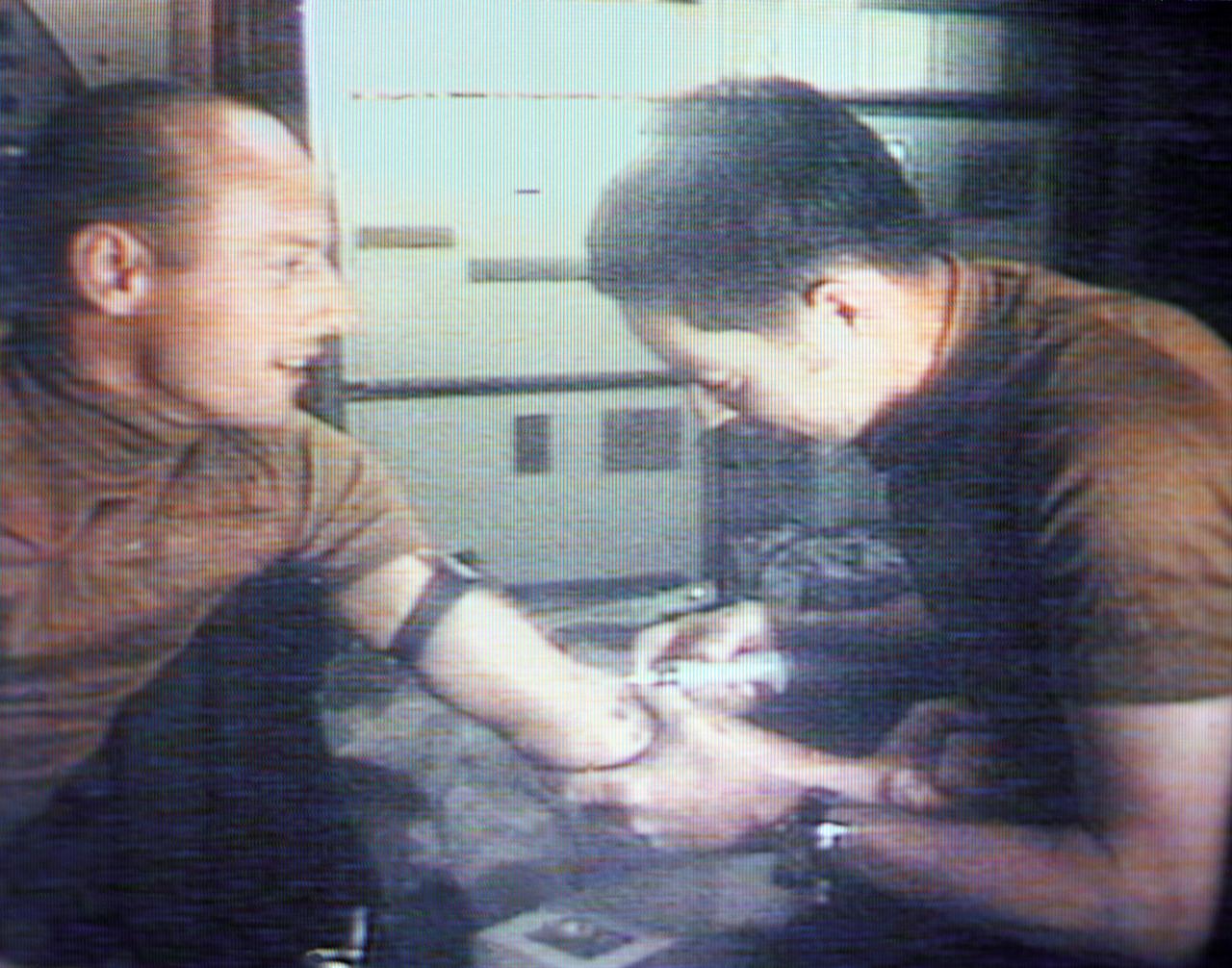
S73-27509 (6 June 1973) --- Scientist-astronaut Joseph P. Kerwin (right), Skylab 2 science pilot and a doctor of medicine, takes a blood sample from astronaut Charles Conrad Jr., Skylab 2 commander, as seen in this reproduction taken from a color television transmission made by a TV camera aboard the Skylab 1 and 2 space station cluster in Earth orbit. The blood sampling was part of the Skylab Hematology and Immunology Experiment M110 series. Photo credit: NASA
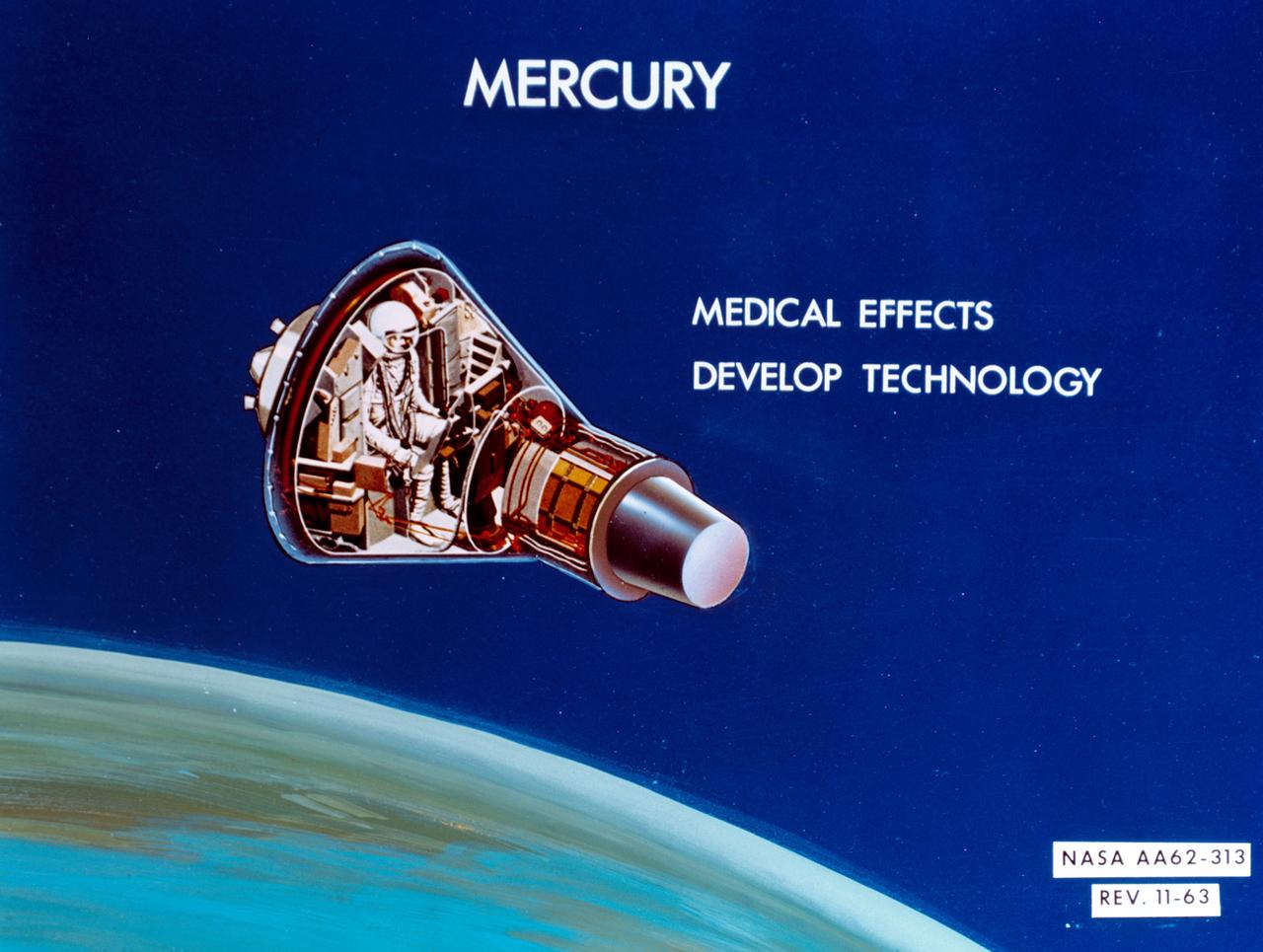
S64-14286 (11 Feb. 1964) --- An artist's concept of Mercury: Medical effects; develop technology. Photo credit: NASA
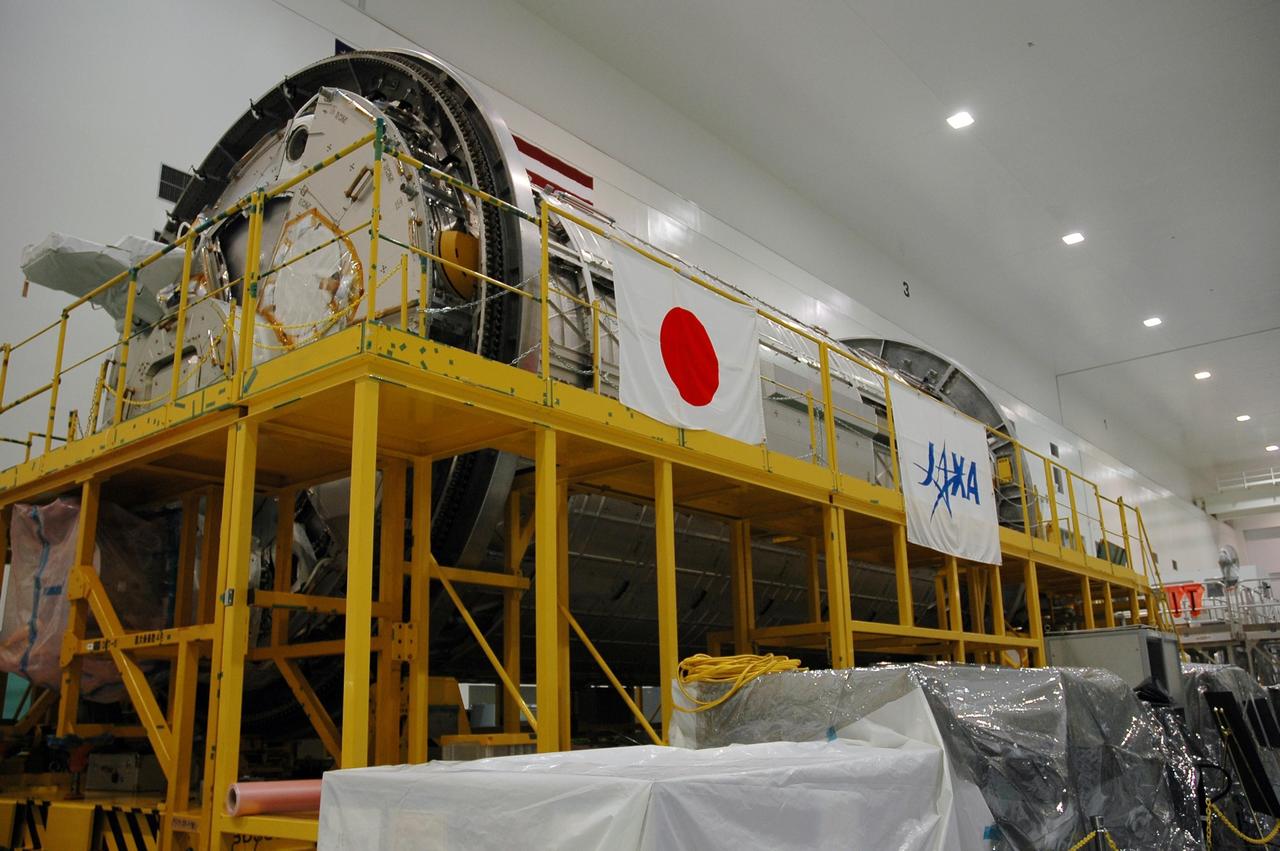
KENNEDY SPACE CENTER, FLA. - In the Space Station Processing Facility, the Japanese Experiment Module (JEM) awaits its flight to the International Space Station (ISS). The JEM, developed by the Japan Aerospace Exploration Agency (JAXA) for installation on the ISS, is named Kibo -- which means "hope" in Japanese -- and will enhance the unique research capabilities of the orbiting complex by providing an additional environment for astronauts to conduct science experiments. Research conducted in Kibo will focus on space medicine, biology, Earth observations, material production, biotechnology and communications. Photo credit: NASA/Amanda Diller
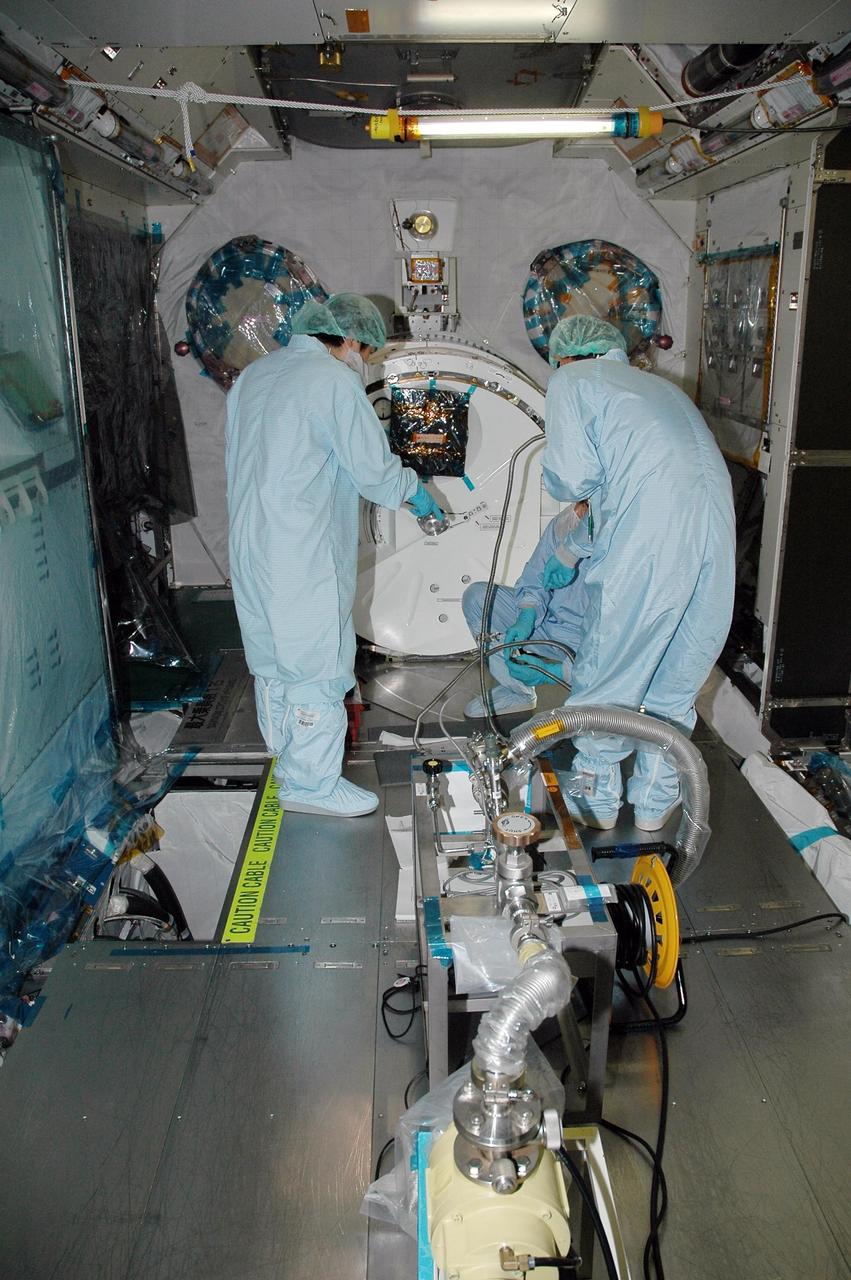
KENNEDY SPACE CENTER, FLA. - In the Space Station Processing Facility, Japan Aerospace Exploration Agency (JAXA) technicians install piping insulation on the Japanese Experiment Module (JEM). The JEM, developed by JAXA for use on the International Space Station, is named Kibo -- which means "hope" in Japanese -- and will enhance the unique research capabilities of the orbiting complex by providing an additional environment for astronauts to conduct science experiments. Research conducted in Kibo will focus on space medicine, biology, Earth observations, material production, biotechnology and communications. Photo credit: NASA/Amanda Diller
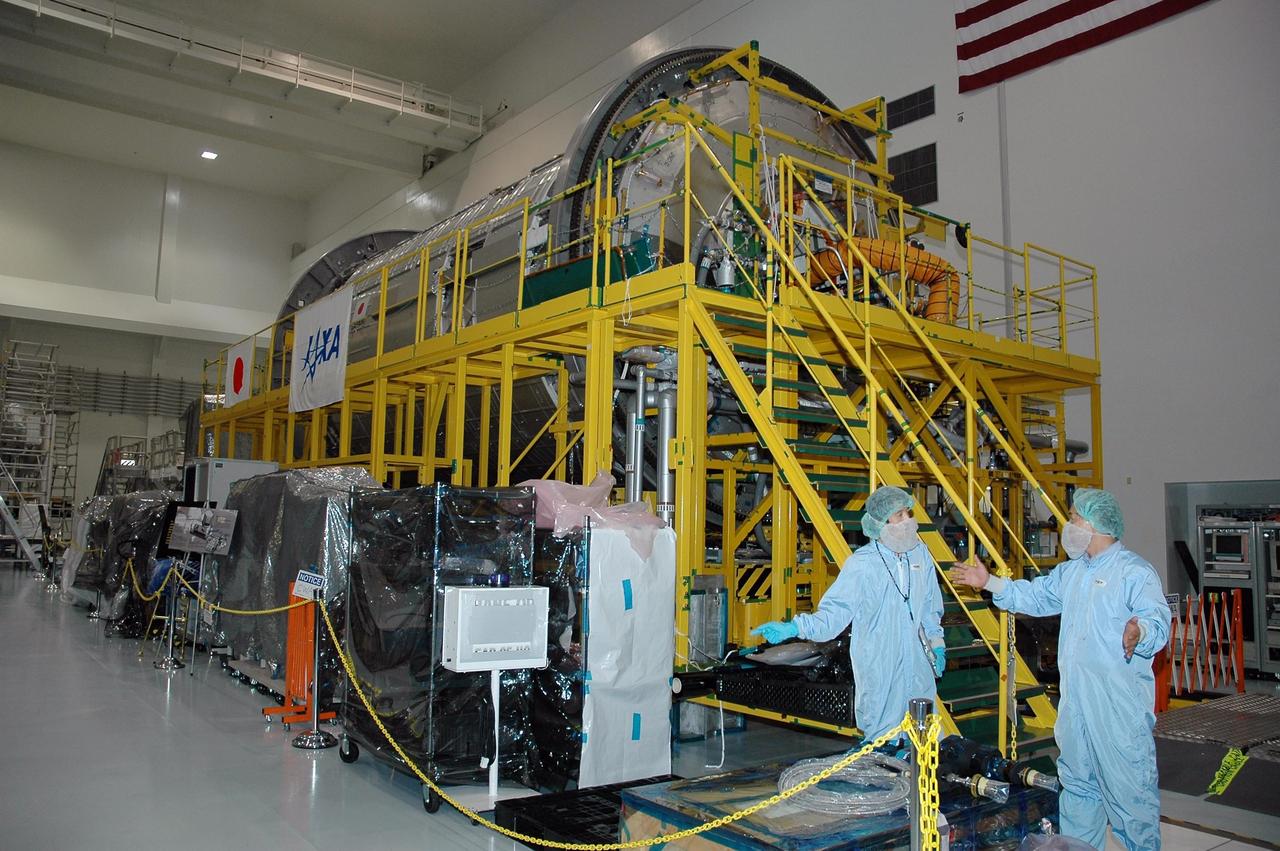
KENNEDY SPACE CENTER, FLA. - In the Space Station Processing Facility, processing continues on the Japanese Experiment Module (JEM) for its flight to the International Space Station (ISS). The JEM, developed by the Japan Aerospace Exploration Agency (JAXA) for installation on the ISS, is named Kibo -- which means "hope" in Japanese -- and will enhance the unique research capabilities of the orbiting complex by providing an additional environment for astronauts to conduct science experiments. Research conducted in Kibo will focus on space medicine, biology, Earth observations, material production, biotechnology and communications. Photo credit: NASA/Amanda Diller
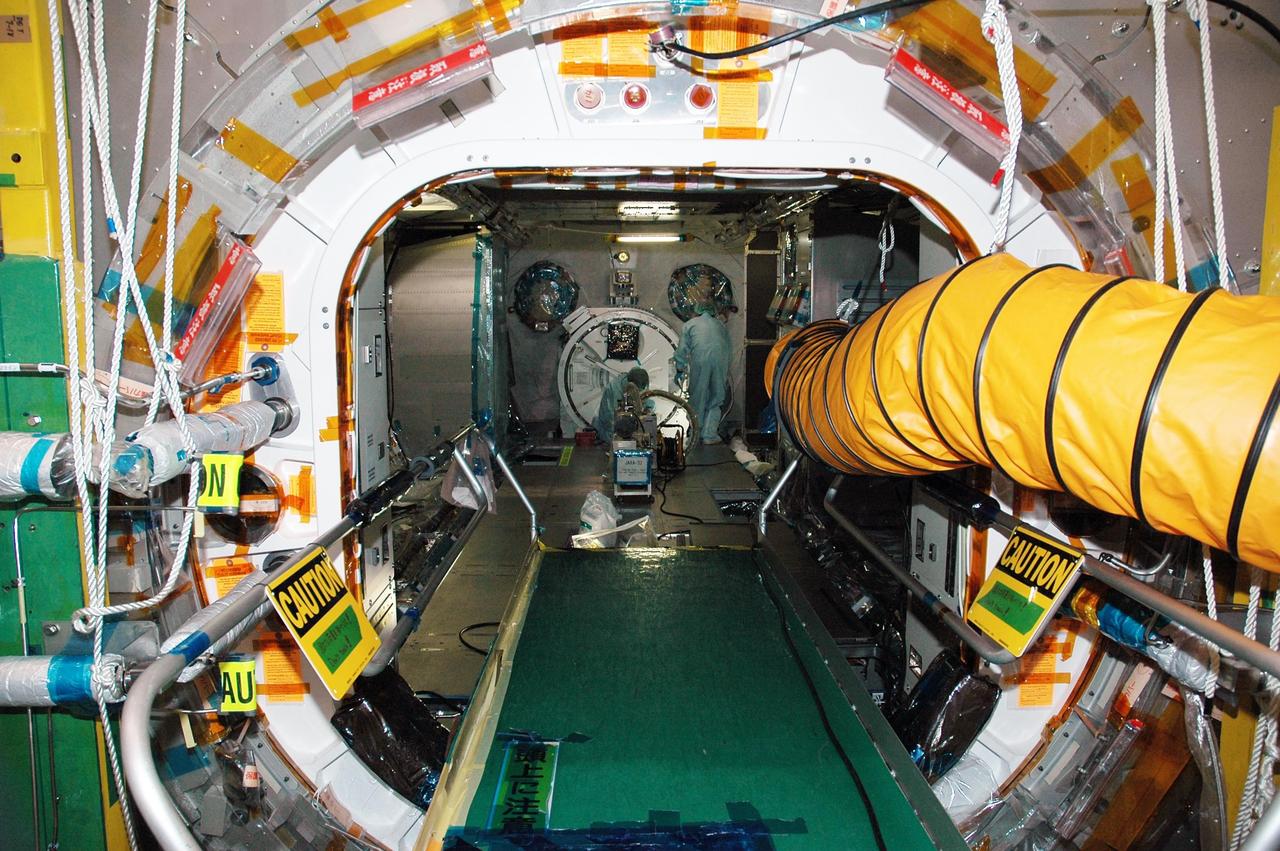
KENNEDY SPACE CENTER, FLA. - In the Space Station Processing Facility, Japan Aerospace Exploration Agency (JAXA) technicians install piping insulation on the Japanese Experiment Module (JEM). The JEM, developed by JAXA for use on the International Space Station, is named Kibo -- which means "hope" in Japanese -- and will enhance the unique research capabilities of the orbiting complex by providing an additional environment for astronauts to conduct science experiments. Research conducted in Kibo will focus on space medicine, biology, Earth observations, material production, biotechnology and communications. Photo credit: NASA/Amanda Diller
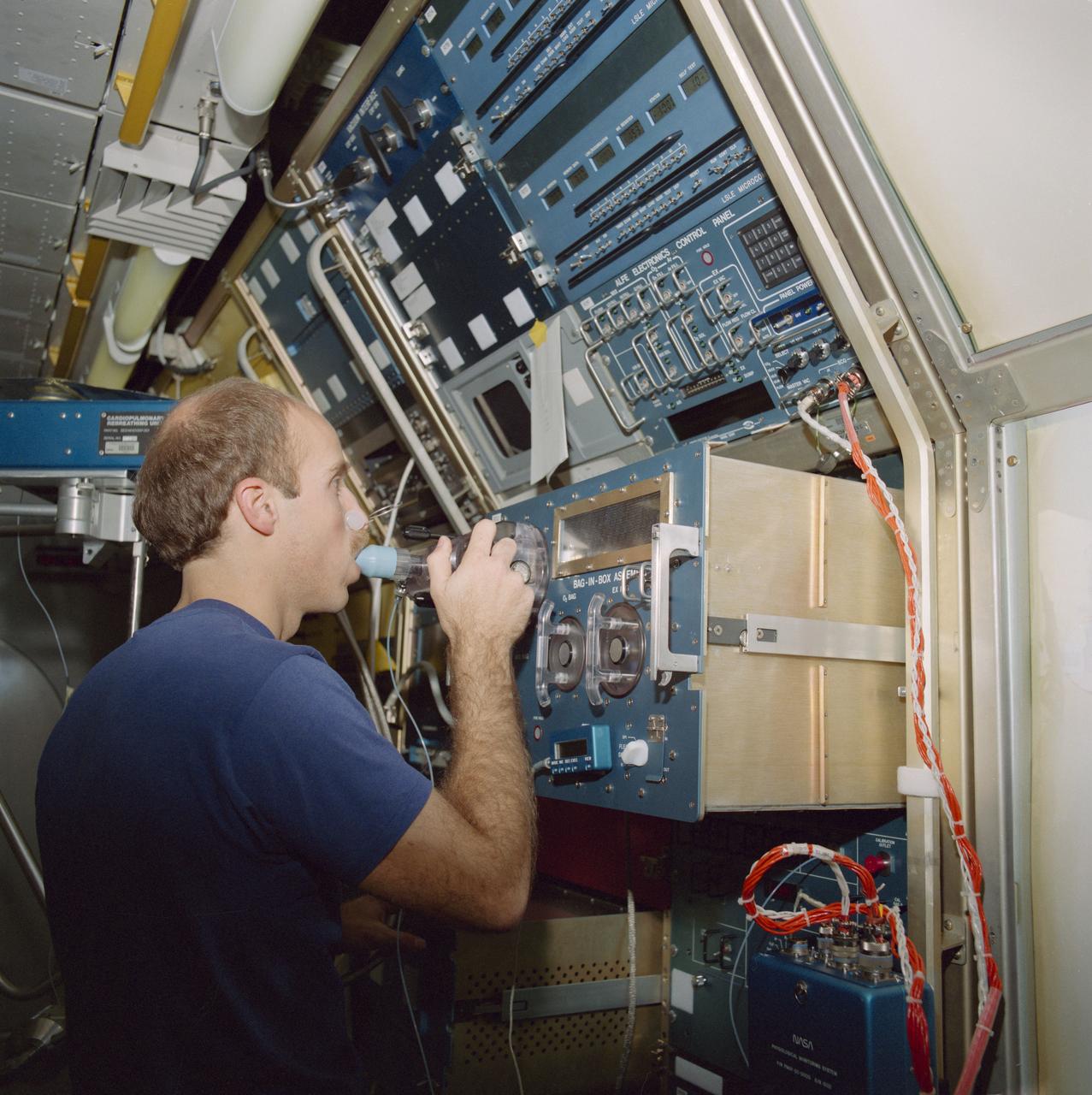
S85-26582 (Feb 1985) --- Training on the rebreathing assembly, astronaut James P. Bagian, STS-40 mission specialist, inhales a predetermined gas composition. A gas analyzer mass spectrometer determines the composition of the gases he exhales. The rebreathing assembly and gas analyzer system are part of an investigation that explores how lung function is altered. Dr. Bagian will be joined by two other mission specialists, the mission commander, the pilot and two payload specialists for the scheduled 10-day Spacelab Life Sciences-1 (SLS-1) mission. The flight is totally dedicated to biological and medical experimentation.
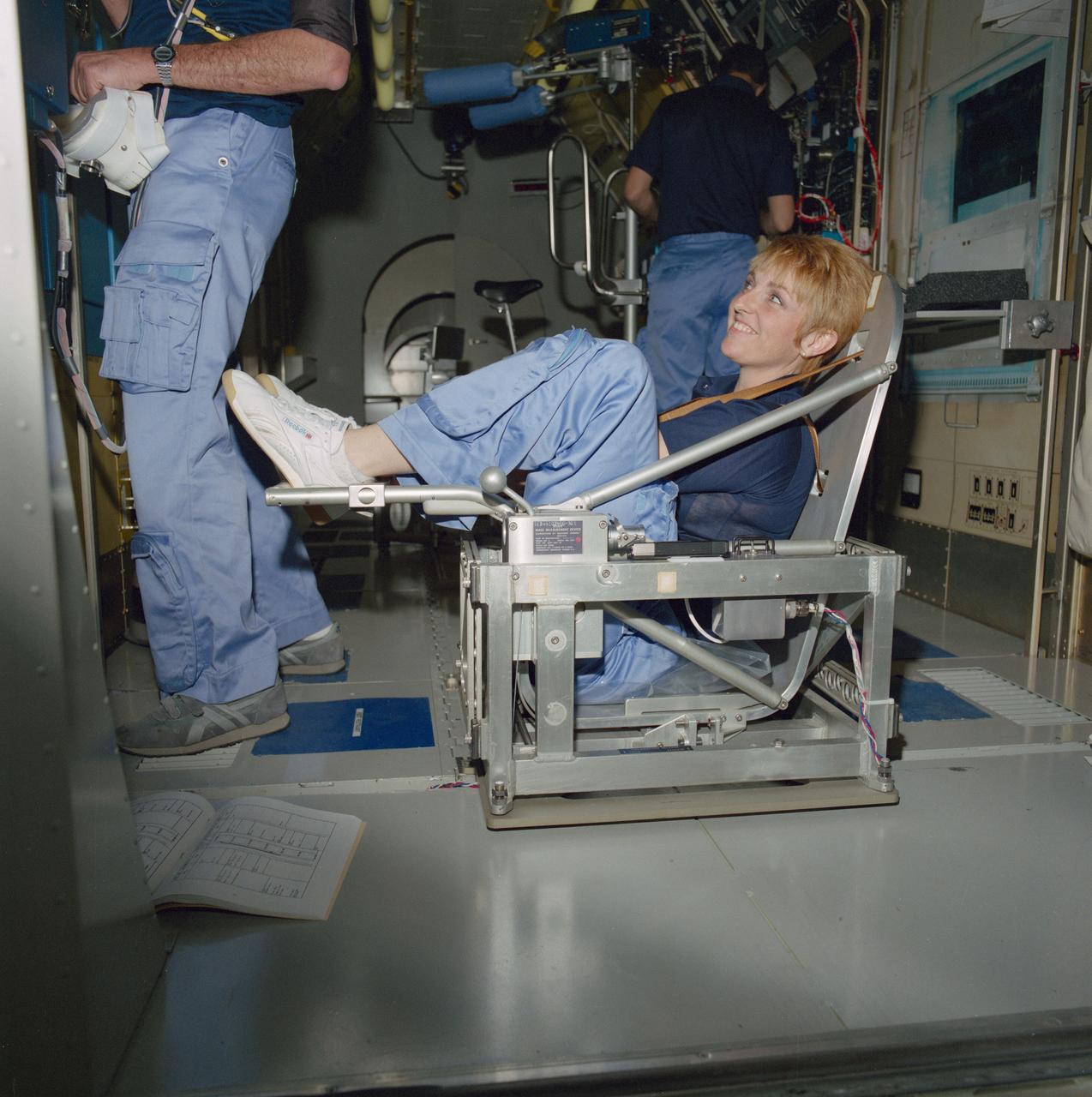
S85-26553 (Feb 1985) --- STS-40/SLS-1 payload specialist Millie Hughes-Fulford sits strapped in the special device scientists have developed for determining mass on orbit. As the chair swings back and forth, a timer records how much the crewmember's mass retards the chair's movement. Dr. Hughes-Fulford will be joined by three mission specialists, the mission commander, the pilot and a second payload specialist for the scheduled 10-day Spacelab Life Sciences-1 (SLS-1) mission. The flight is totally dedicated to biological and medical experimentation.
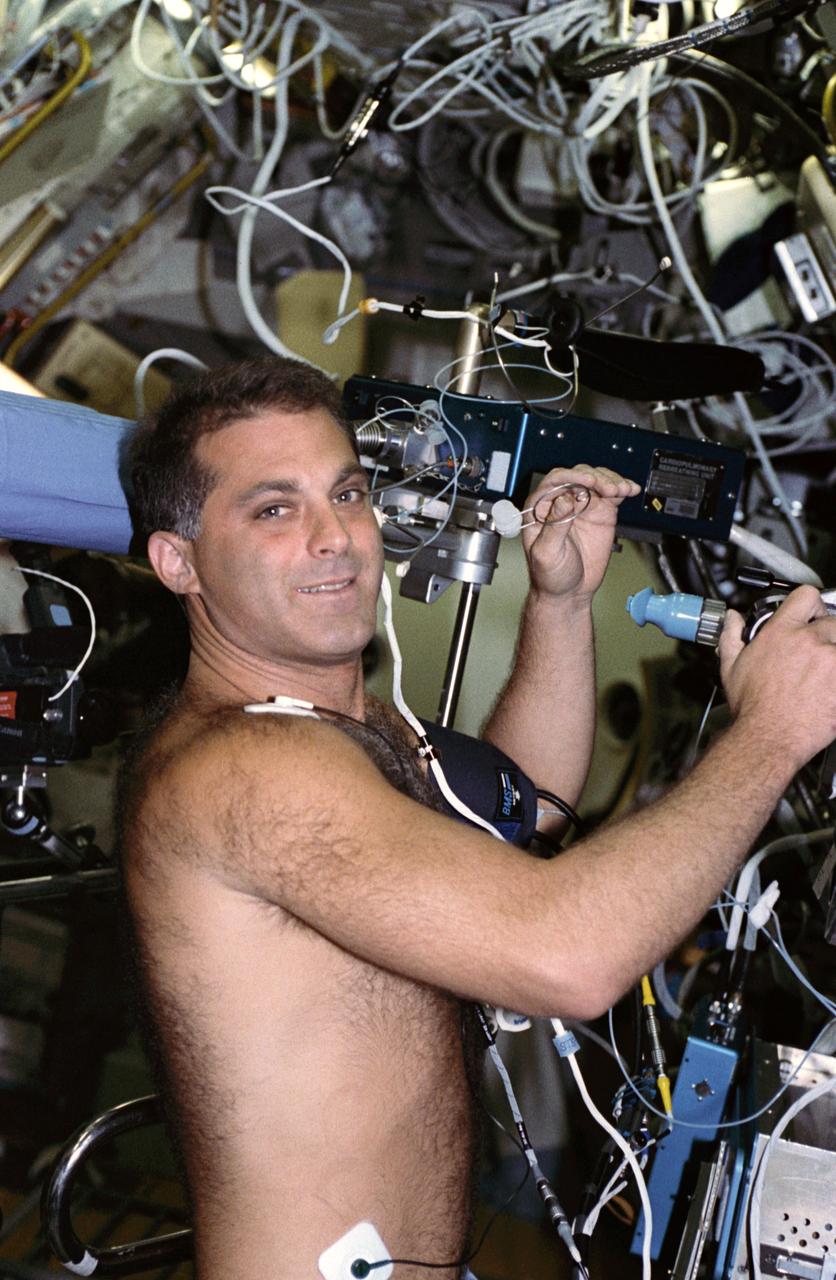
STS058-204-014 (18 Oct.-1 Nov. 1993) --- Astronaut David A. Wolf, mission specialist, participates in an experiment that investigates in-space distribution and movement of blood and gas in the pulmonary system. The data gathered during the two-week flight will be compared with results of tests performed on Earth to determine the changes that occur in pulmonary functions. Photo credit: NASA
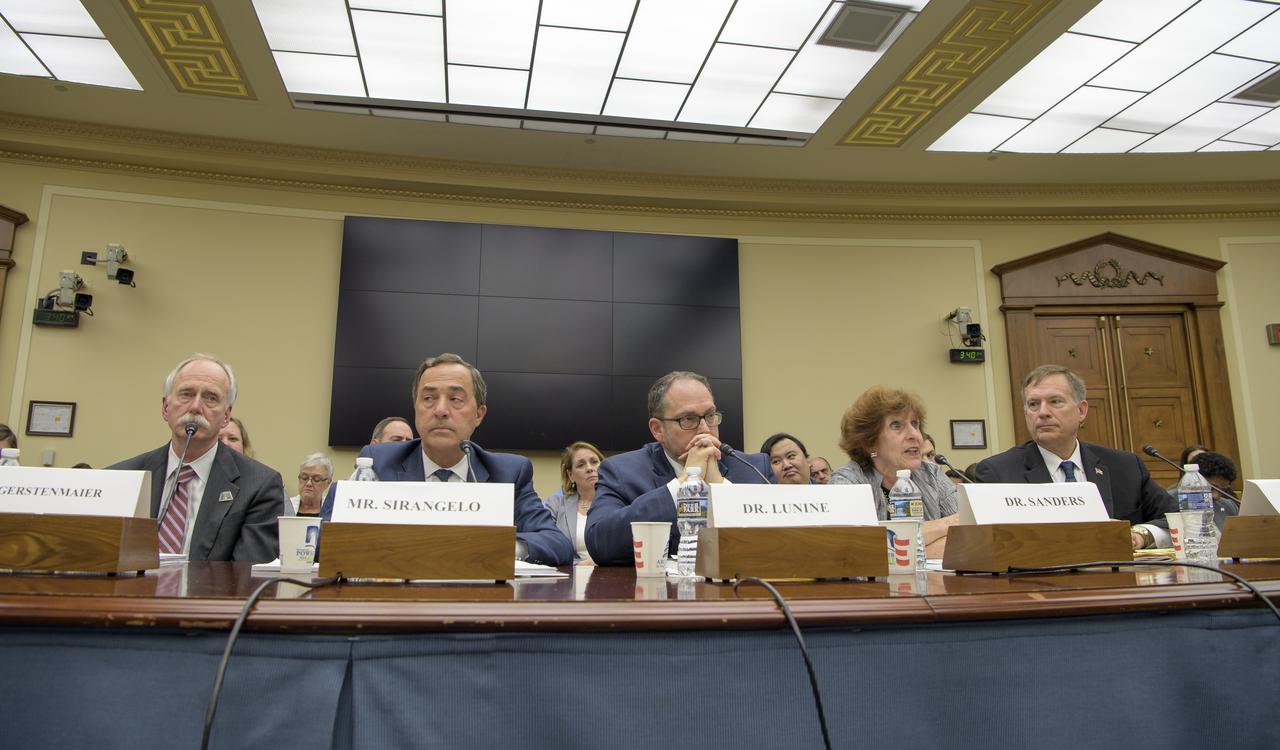
NASA Associate Administrator, Human Exploration and Operations William Gerstenmaier, left, NASA Special Assistant to the Administrator Mark Sirangelo, Director, Cornell Center for Astrophysics and Planetary Science, Co-Chair of the Former Committee on Human Spaceflight, National Academies of Sciences, Engineering, and Medicine Dr. Jonathan Lunine, Chair, Aerospace Safety Advisory Panel Dr. Patricia Sanders, and, President, Faulconer Consulting Group, LLC Mr. Walt Faulconer, right, are seen during a House Subcommittee on Space and Aeronautics hearing titled "Keeping our sights on Mars: A Review of NASA's Deep Space Exploration Programs and Lunar Proposal", Wednesday, May 8, 2019 at the Rayburn House Office Building in Washington. Photo Credit: (NASA/Bill Ingalls)
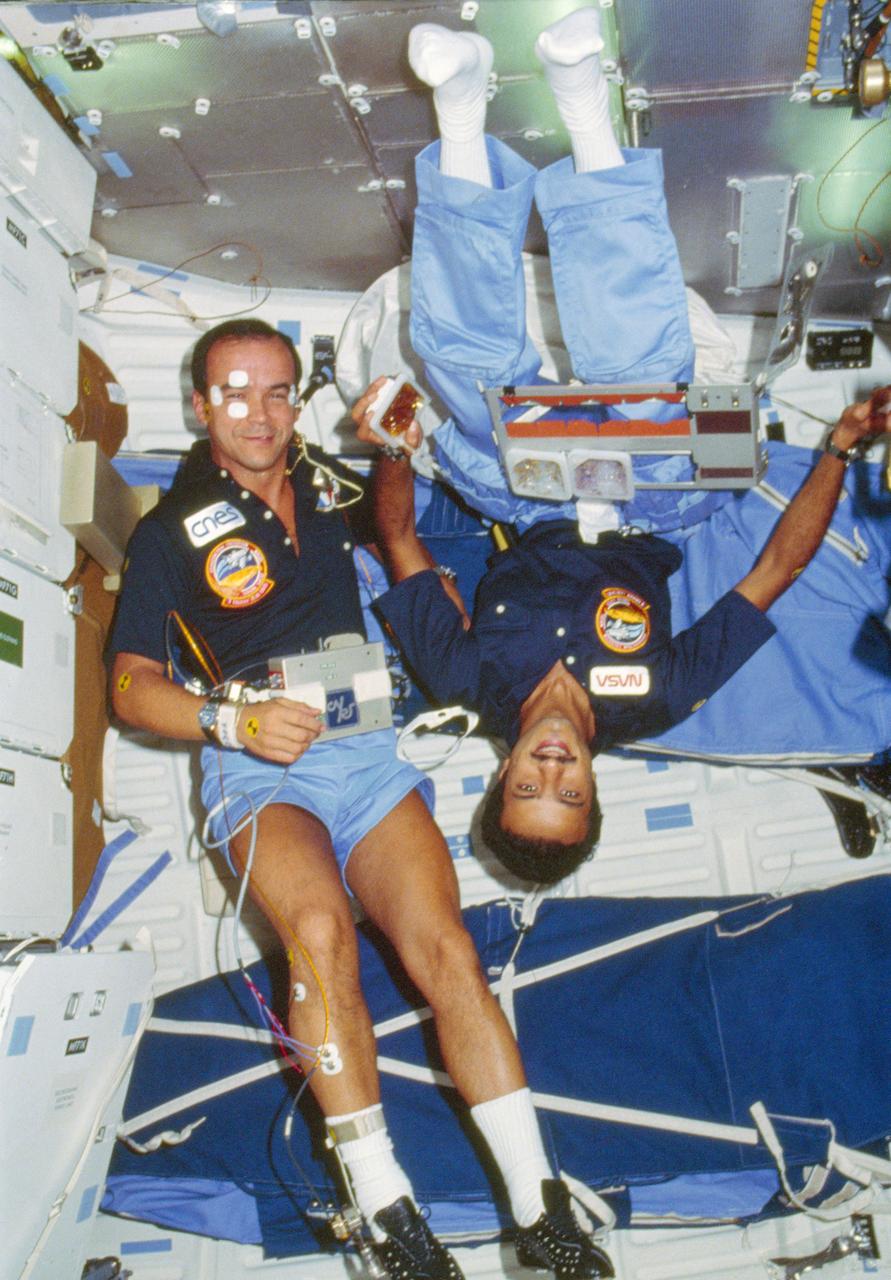
51G-102-035 (17-24 June 1985) --- The two payload specialists for the week-long flight share a middeck scene on the earth-orbiting Discovery. Sultan Salman Abdelazize Al-Saud (left) is in the midst of a meal while Patrick Baudry conducts a phase of the French Postural Experiment (FPE) on himself. Sleep restraints are in the background.
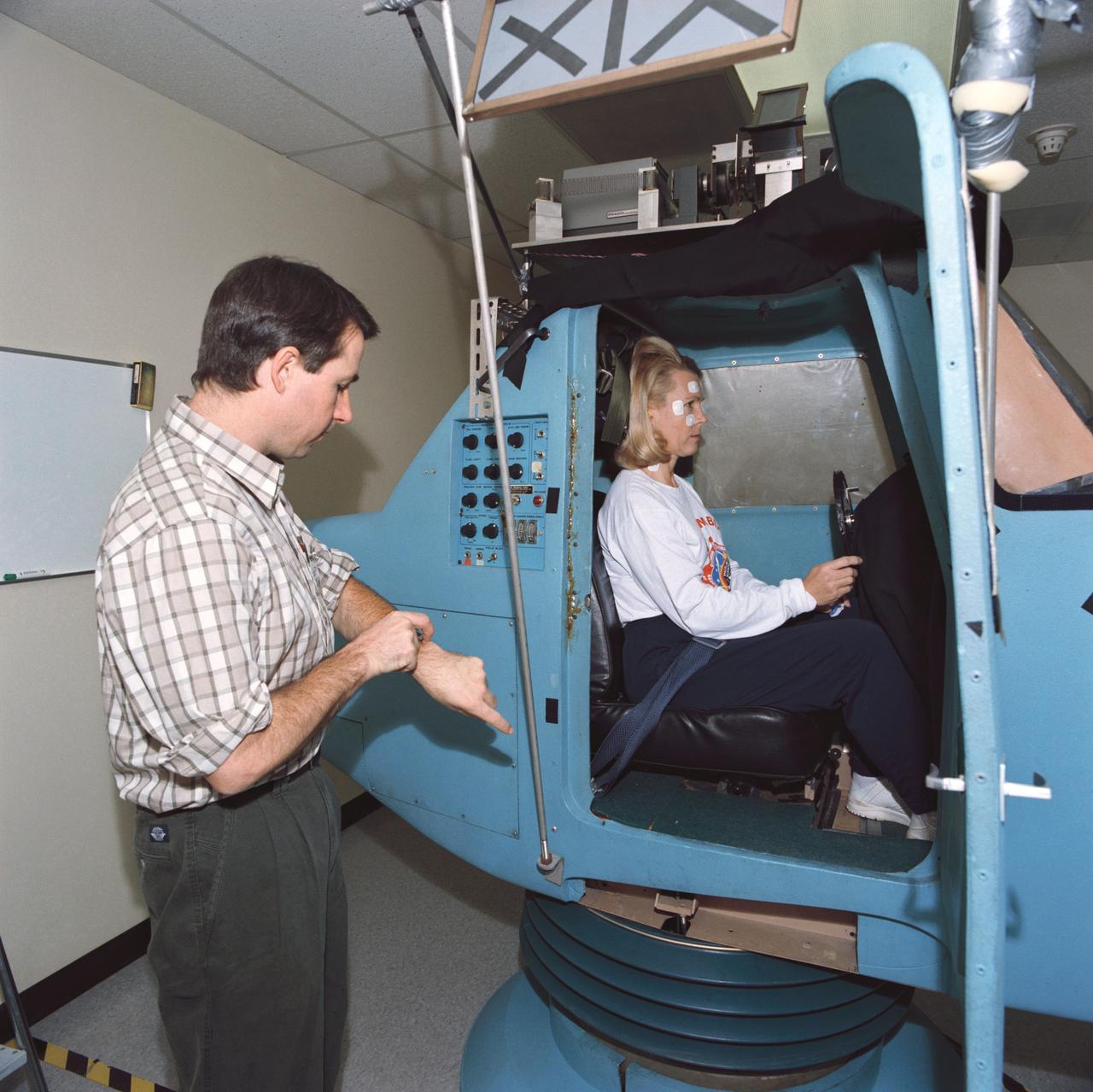
S93-45373 (29 Sept 1993) --- Astronaut Rhea Seddon, STS-58 payload commander, is in a piloting simulator as part of a pre-flight data collection project for neurovestibular functions. The seven Spacelab Life Sciences (SLS-2) crew members devoted a full day to miscellaneous biomedical data collection in preparation for next month's two week mission aboard Columbia.
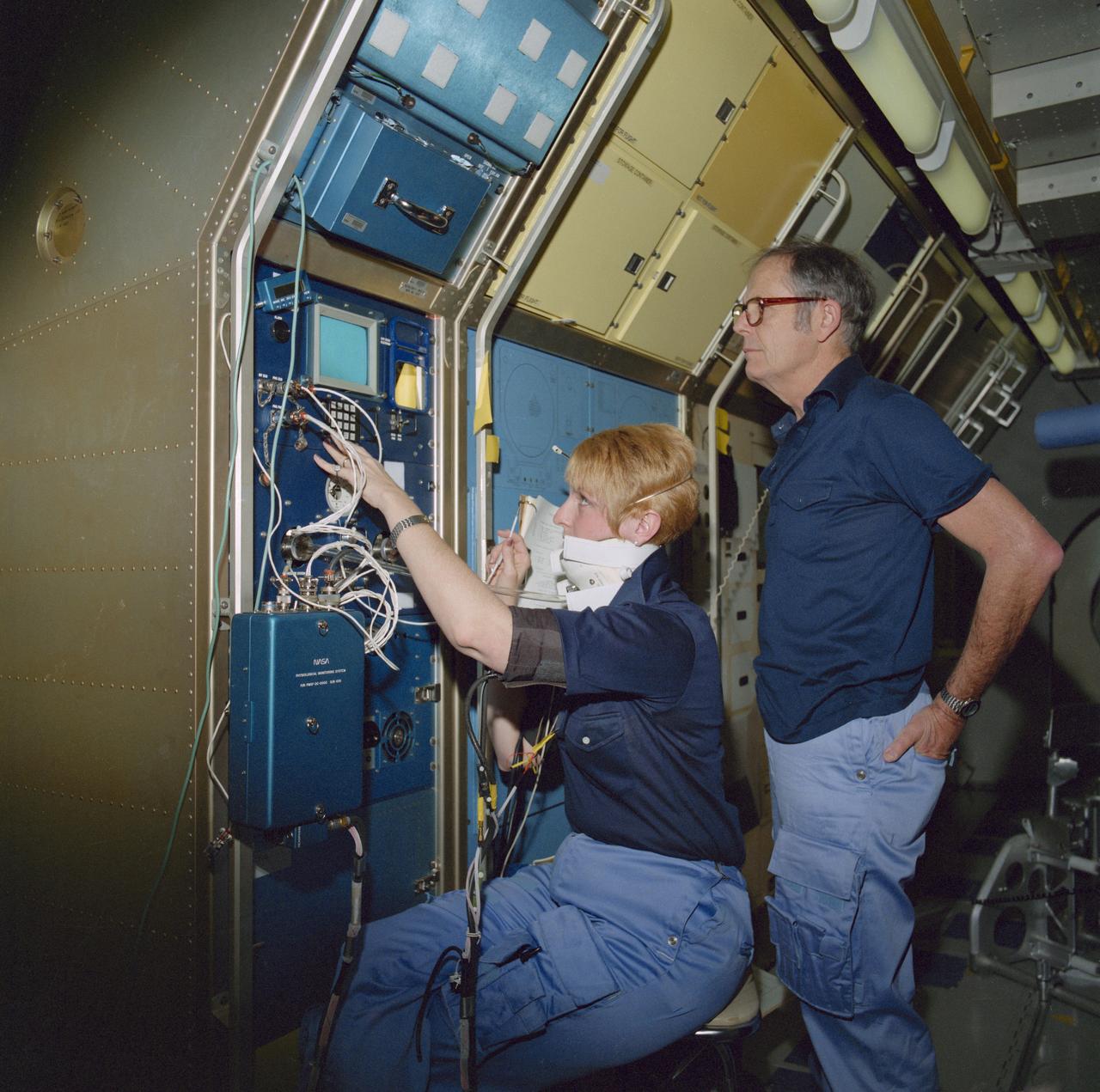
S85-26571 (Feb 1985) --- Wearing a special collar, Millie Hughes-Fulford, payload specialist, practices medical test operations scheduled for the Spacelab Life Sciences (SLS-1) mission. Robert Ward Phillips, backup payload specialist, looks on. The collar, called the baroflex neck pressure chamber, is designed to stimulate the bioceptors in the carotid artery, one of the two main arteries that supply blood to the head.
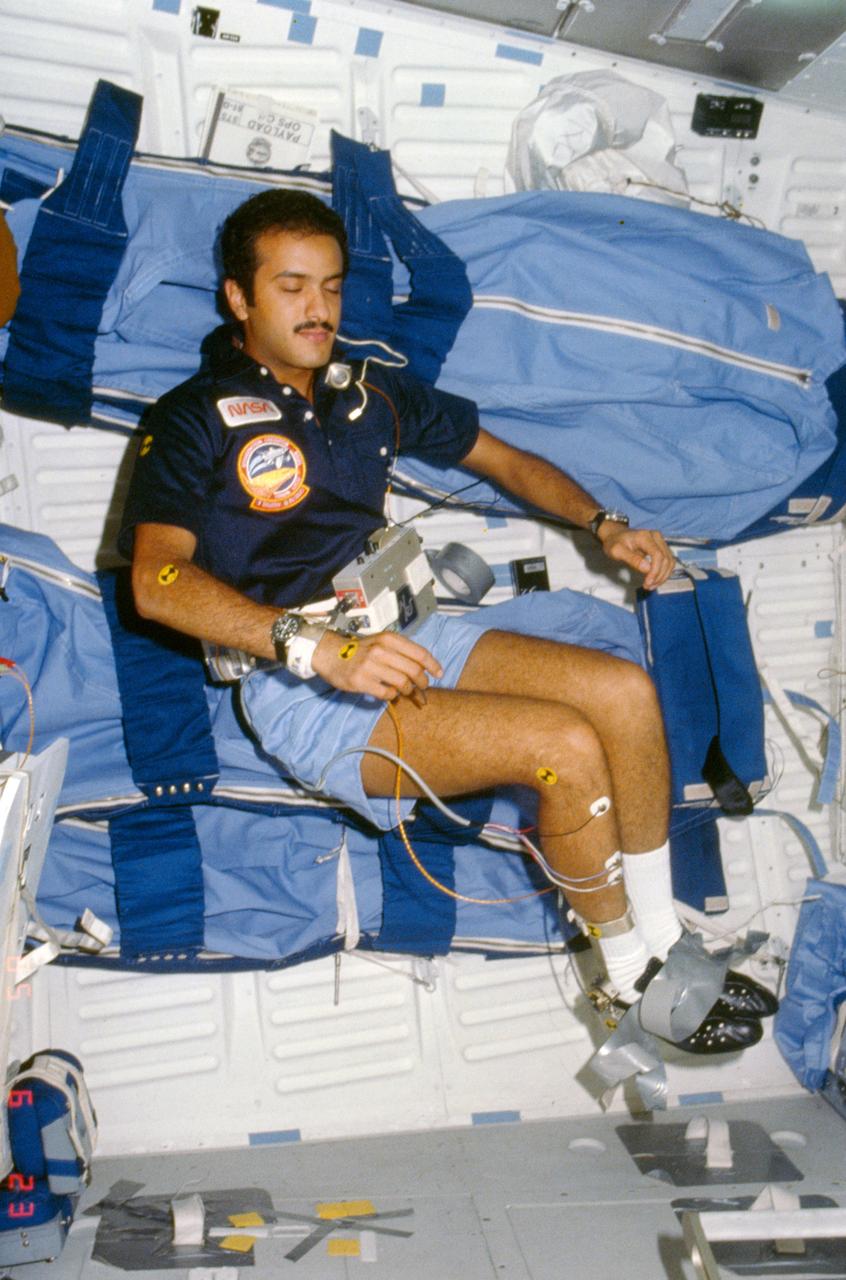
51G-105-030 (17-24 June 1985) --- Payload specialist Sultan Salman Abdelazize Al-Saud participates in the French Postural Experiment (FPE) on the middeck of the earth-orbiting Discovery.
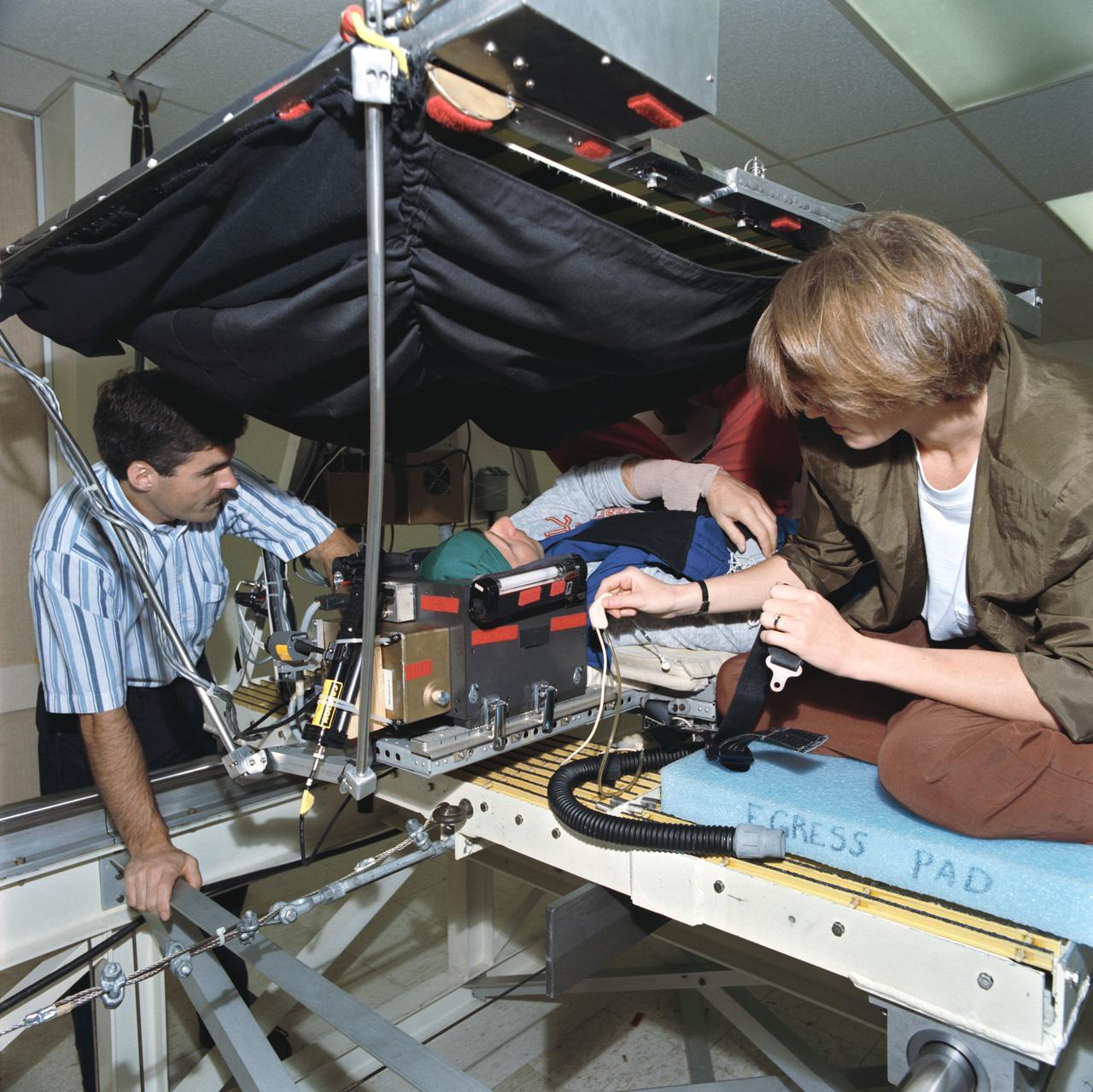
S93-45363 (29 Sept 1993) --- Payload specialist Martin J. Fettman, in an oscillating sled device, participates in a data collection project for neurovestibular functions. The seven Spacelab Life Sciences (SLS-2) crewmembers devoted a full day to miscellaneous biomedical data collection in preparation for next month's two week mission aboard Columbia.

This is an illustration of the Space Base concept. In-house work of the Marshall Space Flight Center, as well as a Phase B contract with the McDornel Douglas Astronautics Company, resulted in a preliminary design for a space station in 1969 and l970. The Marshall-McDonnel Douglas approach envisioned the use of two common modules as the core configuration of a 12-man space station. Each common module was 33 feet in diameter and 40 feet in length and provided the building blocks, not only for the space station, but also for a 50-man space base. Coupled together, the two modules would form a four-deck facility: two decks for laboratories and two decks for operations and living quarters. Zero-gravity would be the normal mode of operation, although the station would have an artificial-gravity capability. This general-purpose orbital facility was to provide wide-ranging research capabilities. The design of the facility was driven by the need to accommodate a broad spectrum of activities in support of astronomy, astrophysics, aerospace medicine, biology, materials processing, space physics, and space manufacturing. To serve the needs of Earth observations, the station was to be placed in a 242-nautical-mile orbit at a 55-degree inclination. An Intermediate-21 vehicle (comprised of Saturn S-IC and S-II stages) would have launched the station in 1977.
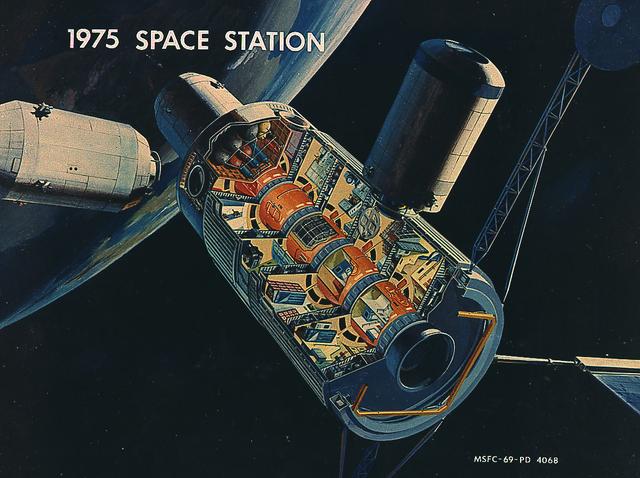
This picture illustrates a concept of a 33-Foot-Diameter Space Station Leading to a Space Base. In-house work of the Marshall Space Flight Center, as well as a Phase B contract with the McDornel Douglas Astronautics Company, resulted in a preliminary design for a space station in 1969 and l970. The Marshall-McDonnel Douglas approach envisioned the use of two common modules as the core configuration of a 12-man space station. Each common module was 33 feet in diameter and 40 feet in length and provided the building blocks, not only for the space station, but also for a 50-man space base. Coupled together, the two modules would form a four-deck facility: two decks for laboratories and two decks for operations and living quarters. Zero-gravity would be the normal mode of operation, although the station would have an artificial gravity capability. This general-purpose orbital facility was to provide wide-ranging research capabilities. The design of the facility was driven by the need to accommodate a broad spectrum of activities in support of astronomy, astrophysics, aerospace medicine, biology, materials processing, space physics, and space manufacturing. To serve the needs of Earth observations, the station was to be placed in a 242-nautical-mile orbit at a 55-degree inclination. An Intermediate-21 vehicle (comprised of Saturn S-IC and S-II stages) would have launched the station in 1977.