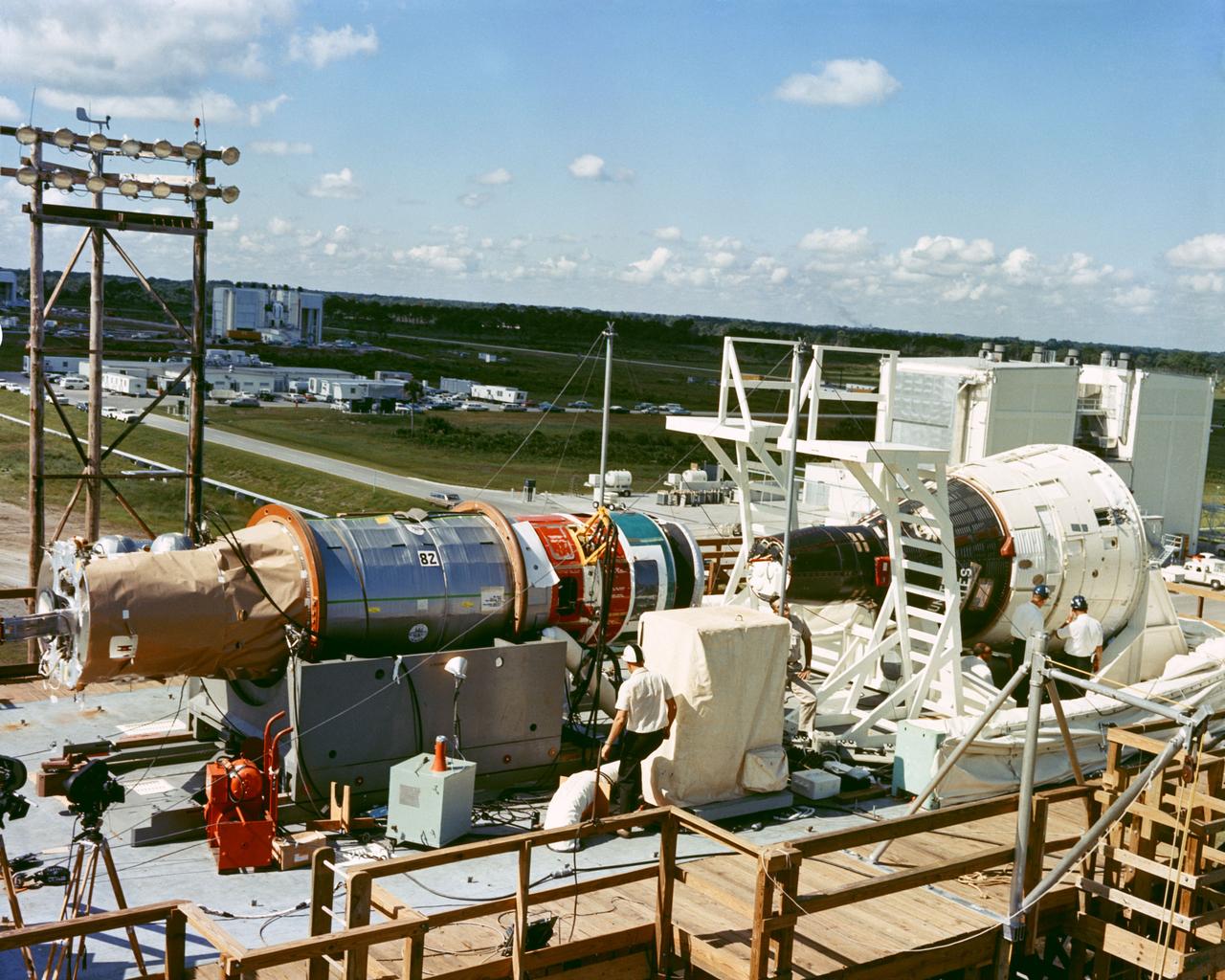
S65-52015 (1965) --- The Gemini-6 spacecraft (right) and the Agena Target Vehicle (left) on the Boresite Range Tower for the Plan-X docking exercise. Photo credit: NASA or National Aeronautics and Space Administration
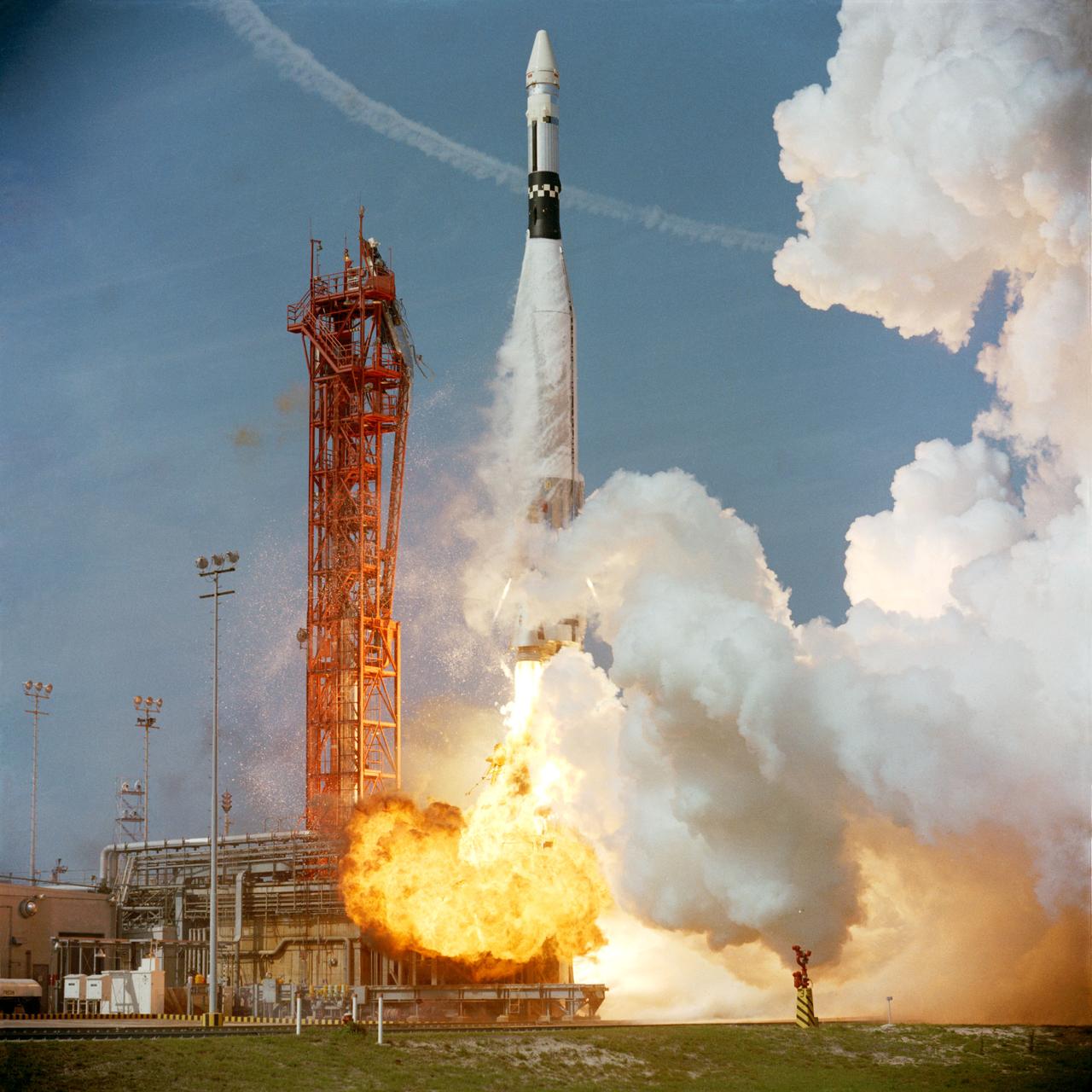
S66-24482 (16 March 1966) --- An Agena Target Docking Vehicle atop an Atlas rocket lifts off from Launch Complex 14 at Cape Kennedy at 10 a.m., March 16, 1966 just prior to the Gemini-8 liftoff at nearby Launch Complex 19. The Agena served as a rendezvous and docking vehicle for the Gemini-8 spacecraft. A chase plane leaves a contrail in the background. Photo credit: NASA

S66-25781 (16-17 March 1966) --- Closer view of the Agena Target Docking vehicle seen from the Gemini-8 spacecraft during rendezvous in space. Photo credit: NASA
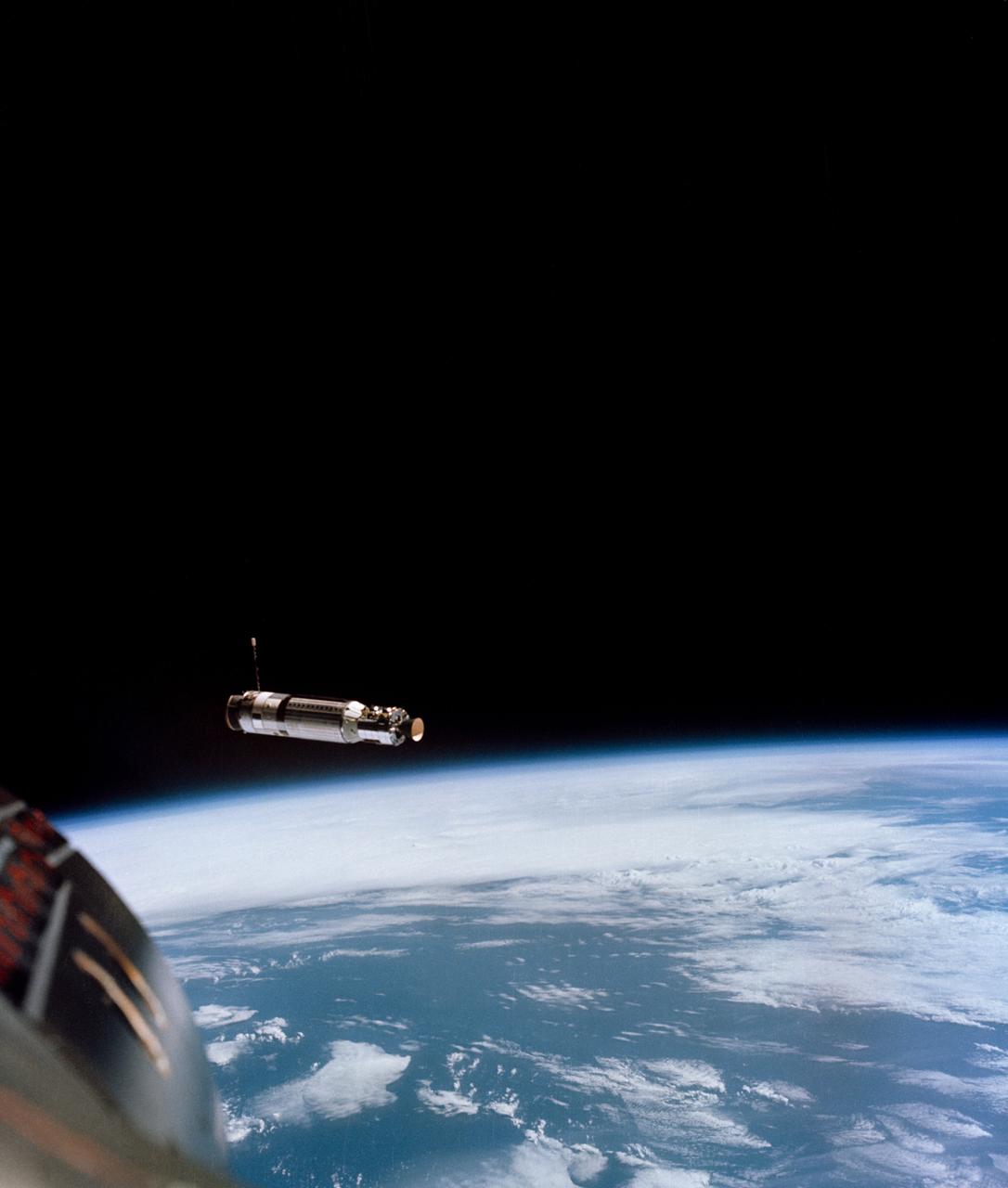
S66-25779 (16 March 1966) --? The Agena Target Docking Vehicle seen from the National Aeronautics and Space Administration?s Gemini-8 spacecraft during rendezvous in space. The Agena is approximately 210 feet away from the nose of the spacecraft (lower left). Crewmen for the Gemini-8 mission were astronauts Neil A. Armstrong, command pilot, and David R. Scott, pilot. Photo credit: NASA
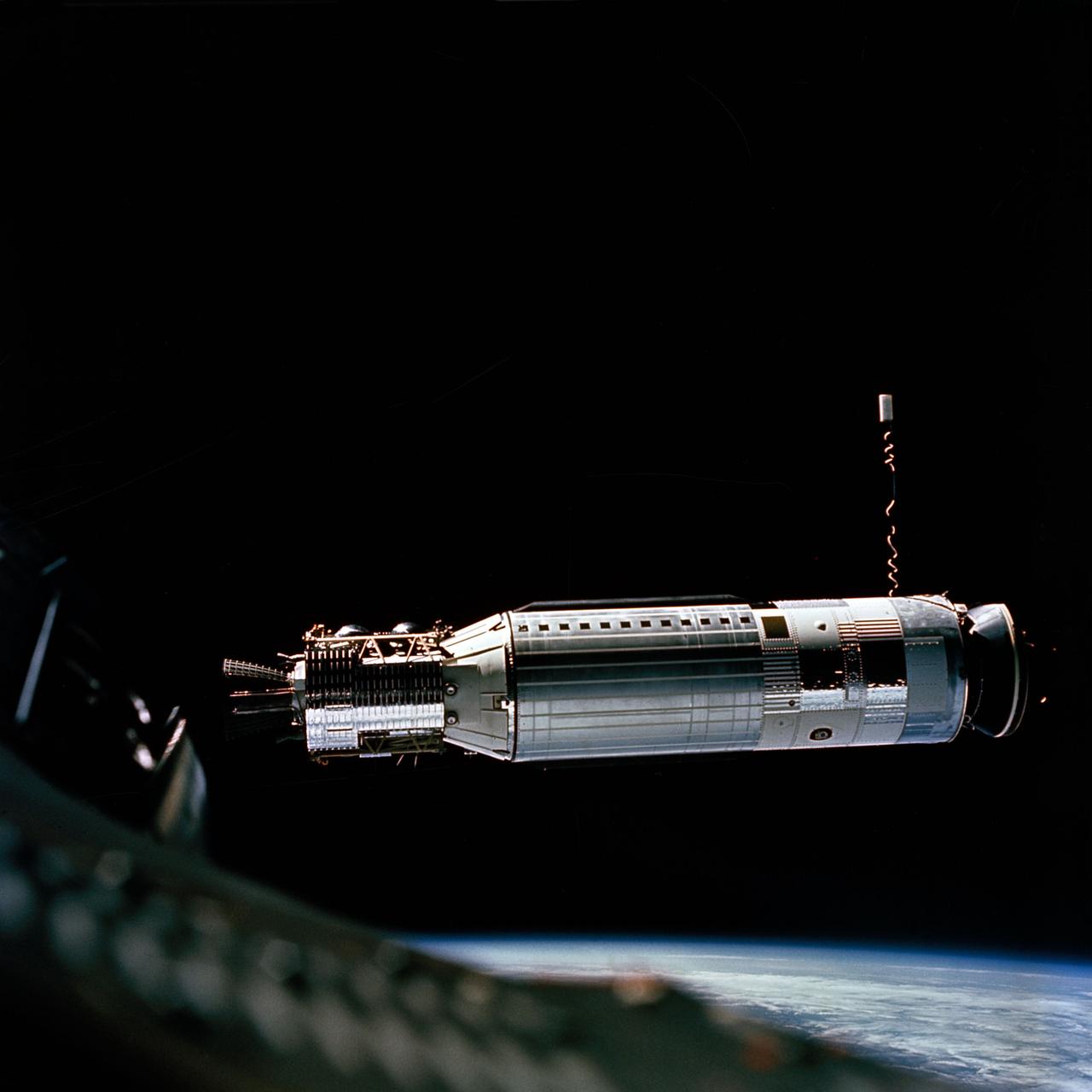
S66-25782 (16 March 1966) --- Closer view of the Agena Target Docking vehicle seen from the Gemini-8 spacecraft during rendezvous in space. Photo credit: NASA
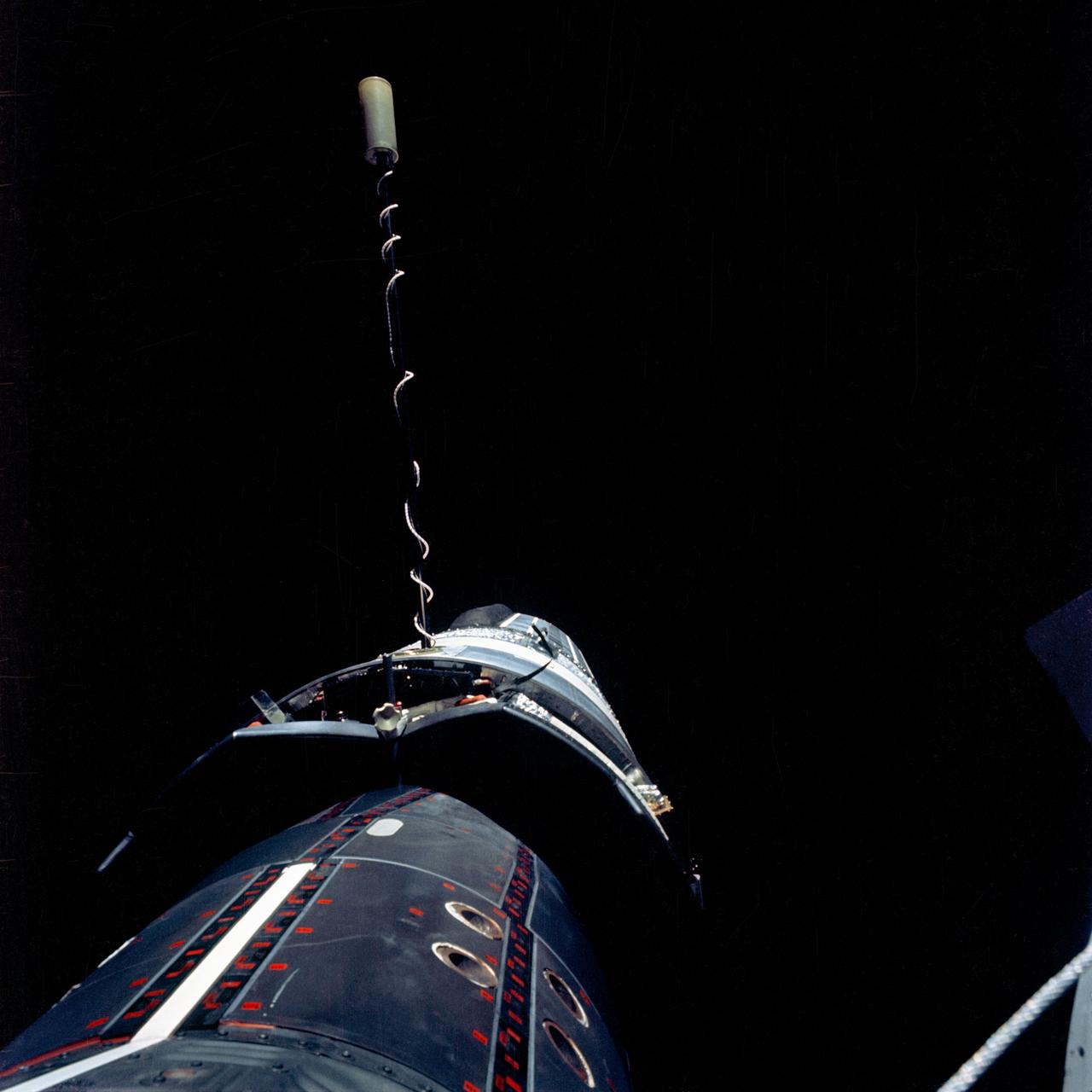
S66-54555 (14 Sept. 1966) --- The Gemini-11 spacecraft is docked to the Agena Target Vehicle in this photograph taken by astronaut Richard F. Gordon Jr., pilot, as he stood in the open hatch of the Gemini-11 spacecraft during his extravehicular activity (EVA). Note Agena's L-band antenna. Taken during Gemini-11's 29th revolution of Earth, using a modified 70mm Hasselblad camera, with Eastman Kodak, Ektachrome, MS (S.O. 368) color film. Photo credit: NASA
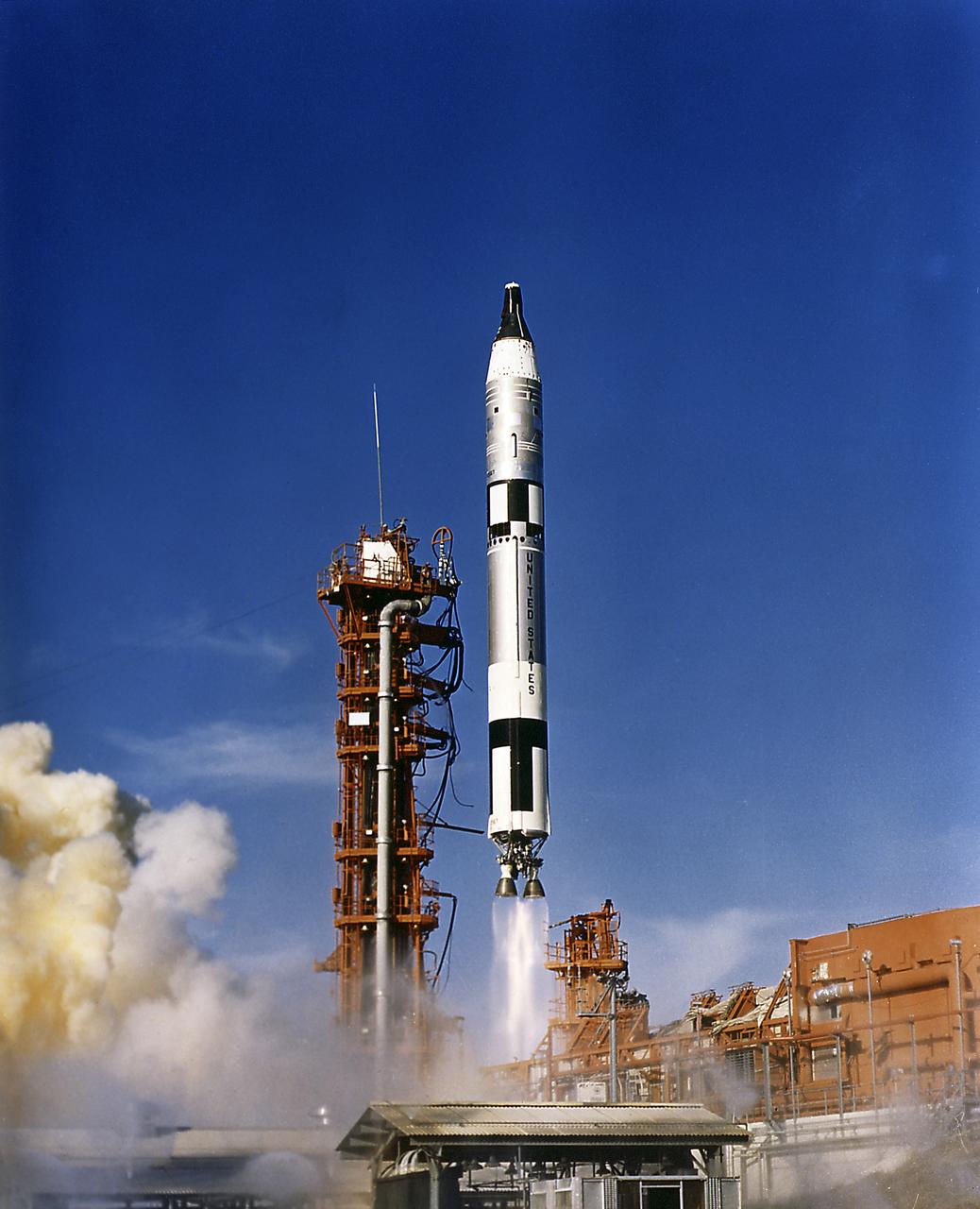
The Gemini 12 astronauts James Lovell and Edwin Aldrin lifted off aboard a Titan launch vehicle from the Kennedy Space Center on November 11, 1966, an hour and a half after their Agena target vehicle was orbited by an Atlas rocket. Launched atop an Atlas booster, the Agena target vehicle (ATV) was a spacecraft used by NASA to develop and practice orbital space rendezvous and docking techniques in preparation for the Apollo program lunar missions. The objective was for Agena and Gemini to rendezvous in space and practice docking procedures. An intermediate step between Project Mercury and the Apollo Program, the Gemini Program's major objectives were to subject two men and supporting equipment to long duration flights, to perfect rendezvous and docking with other orbiting vehicles, methods of reentry, and landing of the spacecraft.
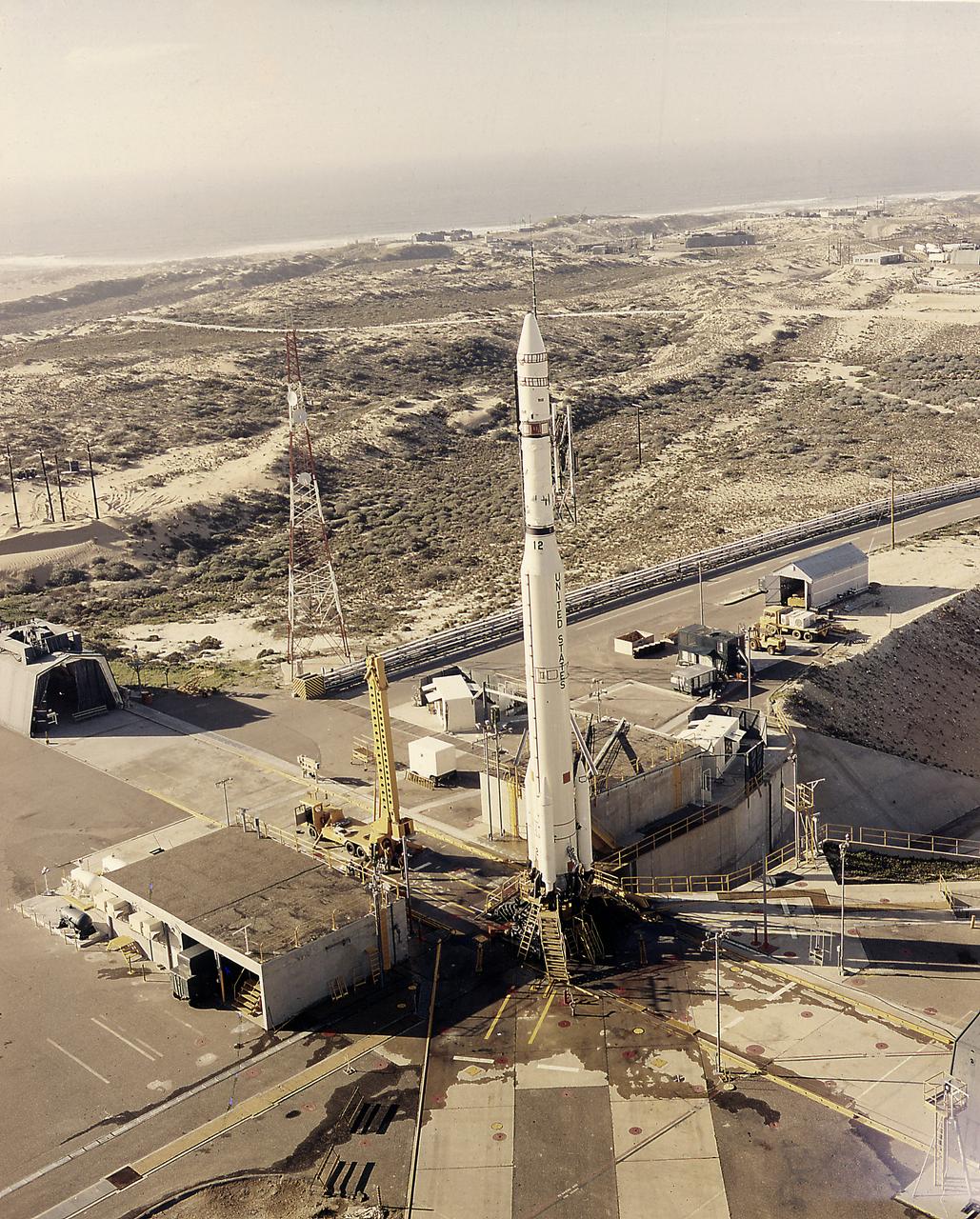
The Thorad-Agena launch vehicle with the SERT-2 (Space Electric Rocket Test-2) spacecraft on launch pad at the Western Test Range in California. The SERT-2 was launched on February 4, 1970 and tested the capability of an electric ion thruster system.

Researcher Bobby Sanders examines a 0.10-scale model of the Mariner-C shroud and Agena rocket in the 8- by 6-Foot Supersonic Wind Tunnel at the National Aeronautics and Space Administration (NASA) Lewis Research Center. Mariner-C and Mariner-D were identical spacecraft designed by the Jet Propulsion Laboratory to flyby Mars and photograph the Martian surface. The two Mariner spacecraft were launched by Atlas-Agena-D rockets. Lewis had taken over management of the Agena Program in October 1962. Lewis researchers investigated two different types of shrouds for the Mariner missions—an over-the-nose design and a backup pyrotechnic design. The new shroud was wider in diameter than the Agena rocket, so there was concern that this disparity might create air flow instability that could damage the shroud or destroy the vehicle. The tests in the 8- by 6 tunnel simulated launch speeds from Mach 0.56 to 1.96. Afterwards the Agena-Mariner-C model was studied in the 10- by 10-Foot Supersonic Wind Tunnel at speeds of Mach 2.0 to 3.5. Mariner-C was launched on November 4, 1964, but the payload shroud did not jettison properly and the spacecraft’s battery power did not function. The mission ended unsuccessfully two days later. Mariner-D was launched on November 28, 1964 and became the first successful mission to Mars. It was the first time a planet was photographed from space. Mariner-D’s 21 photographs revealed an inhospitable and barren landscape.
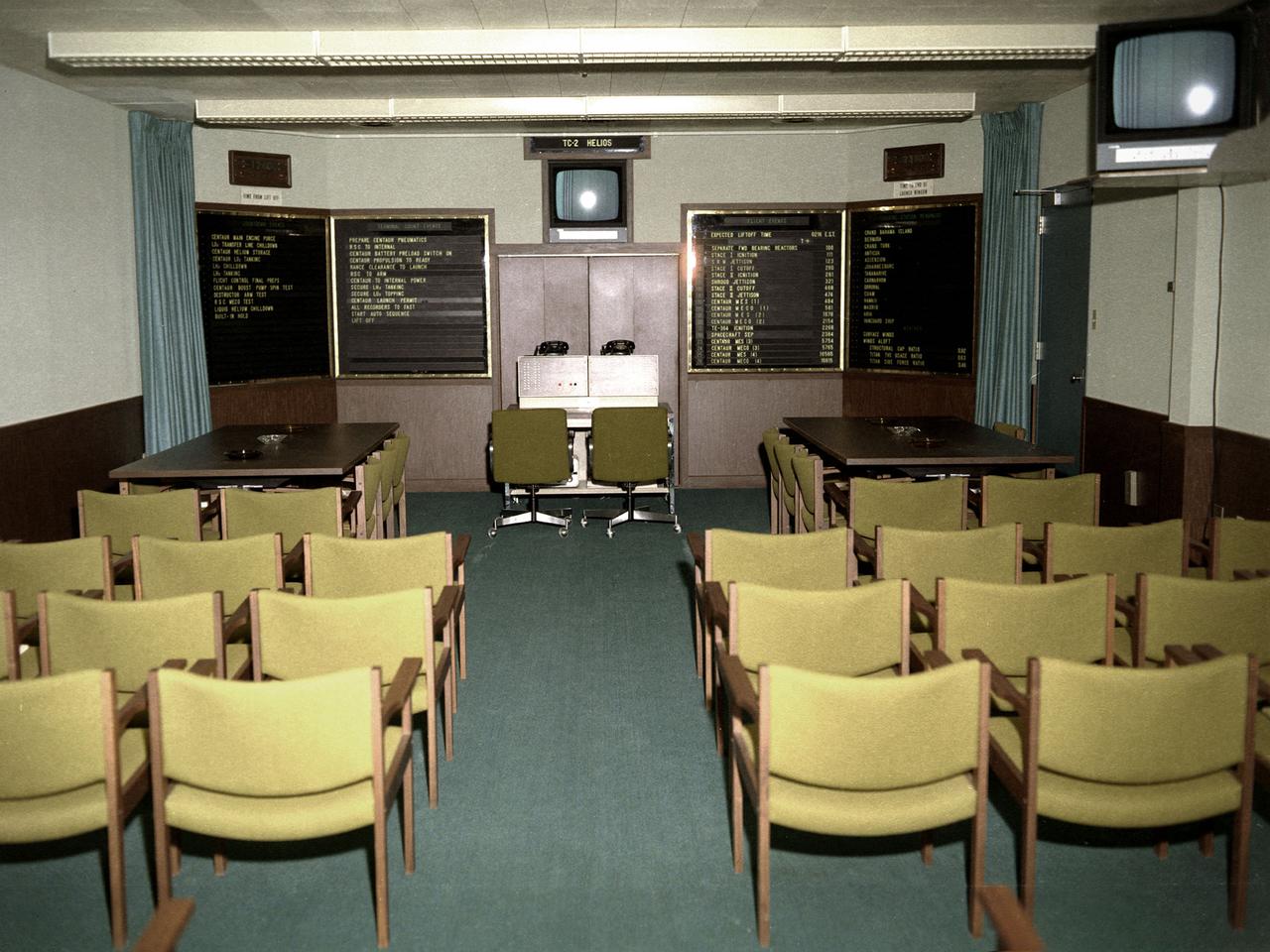
A Centaur rocket control room in the Development Engineering Building (DEB) at the National Aeronautics and Space Administration (NASA) Lewis Research Center in Cleveland, Ohio. The DEB, completed in the mid-1960s, provided office space for several hundred development engineers outside the center’s main gate. The location of the DEB emphasized the development staff’s separation from the research side of the laboratory. This control room at Lewis was directly linked to Cape Kennedy. The Lewis staff in Cleveland could monitor and back up the Lewis launch team in the actual control room at the Cape. This photograph was taken during the preparations for the Titan-Centaur-Helios launch on December 10, 1974. The panels to the left listed the countdown events for the Centaur rocket. The launch countdown clock can be seen above these panels. The two panels on the right listed events predicted to occur during the flight and the availability of the tracking stations. The clock above the panels indicated the time remaining before the launch window expired. The Launch Vehicles Division was created in 1969 to manage the launches of all Centaur and Agena rockets. The Launch Vehicles Division worked with the engineers to design the payload in a manner that ensured that its size and weight were within Centaur’s parameters. They also developed the proper trajectory analysis for the launch. These trajectories often had to be adjusted if the launch did not occur on the planned date.
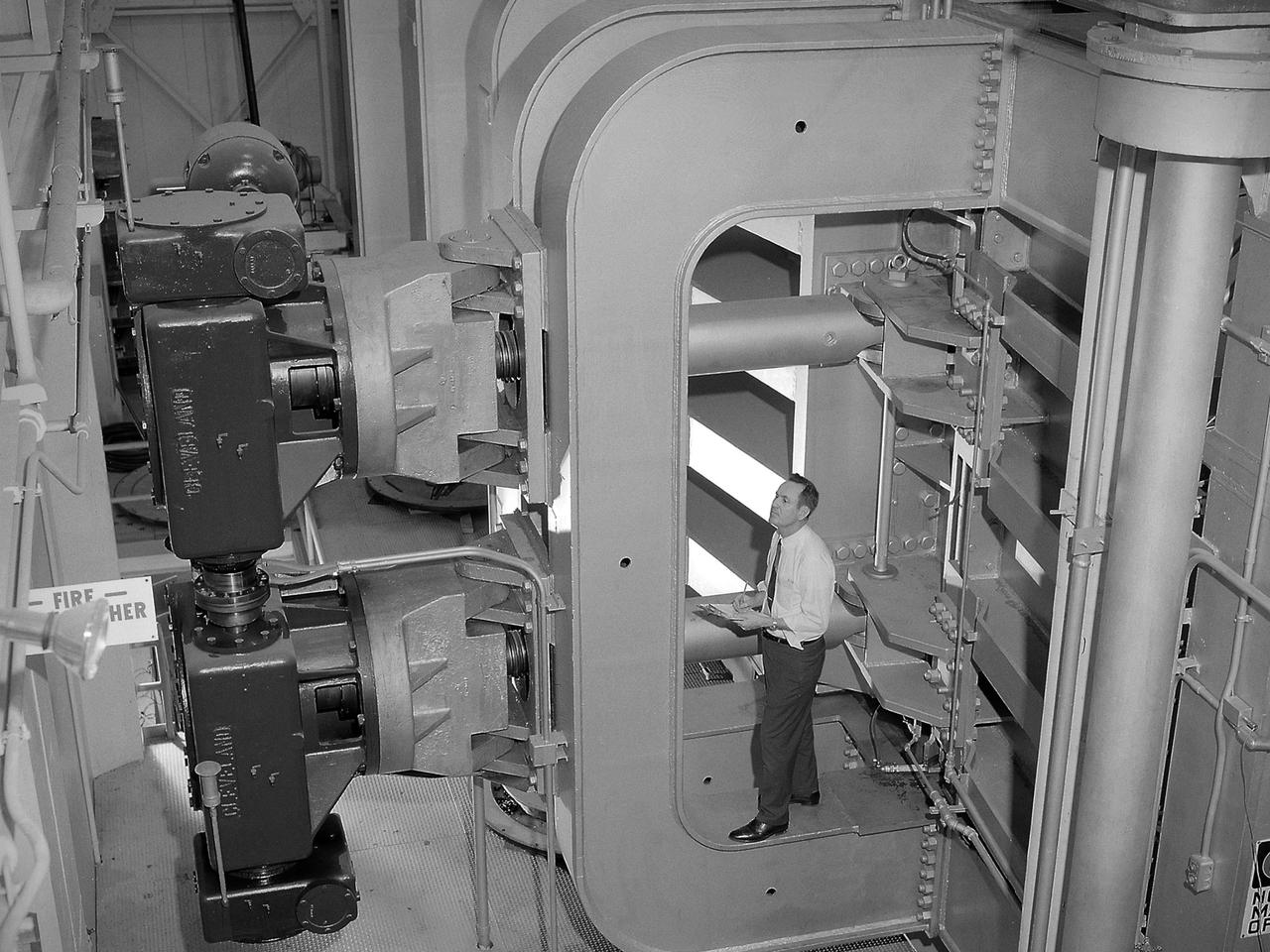
Screwjacks located on the exterior of the second throat section in the 10- by 10-Foot Supersonic Wind Tunnel at the National Aeronautics and Space Administration (NASA) Lewis Research Center. The 10- by 10 tunnel was the most powerful propulsion wind tunnel in the country when it began operating in 1956. The facility can generate wind speeds from Mach 3 to 3.5. A flexible wall nozzle located just upstream from the test section can be adjusted using screw jacks to produce the desired air flow. The 61-foot long second throat, seen here from the outside, was located just beyond the test section. It slows the supersonic air flow down to prevent shock waves. The second throat’s side walls can be adjusted up to three inches on each side using these electrically-driven screwjacks. The air and the 1.25-inch thick walls are cooled by water injection. During the 1960s the 10- by 10-foot tunnel supported the development of virtually all US launch vehicle systems. It was used for Atlas-Centaur, Saturn rockets, and Atlas-Agena testing.