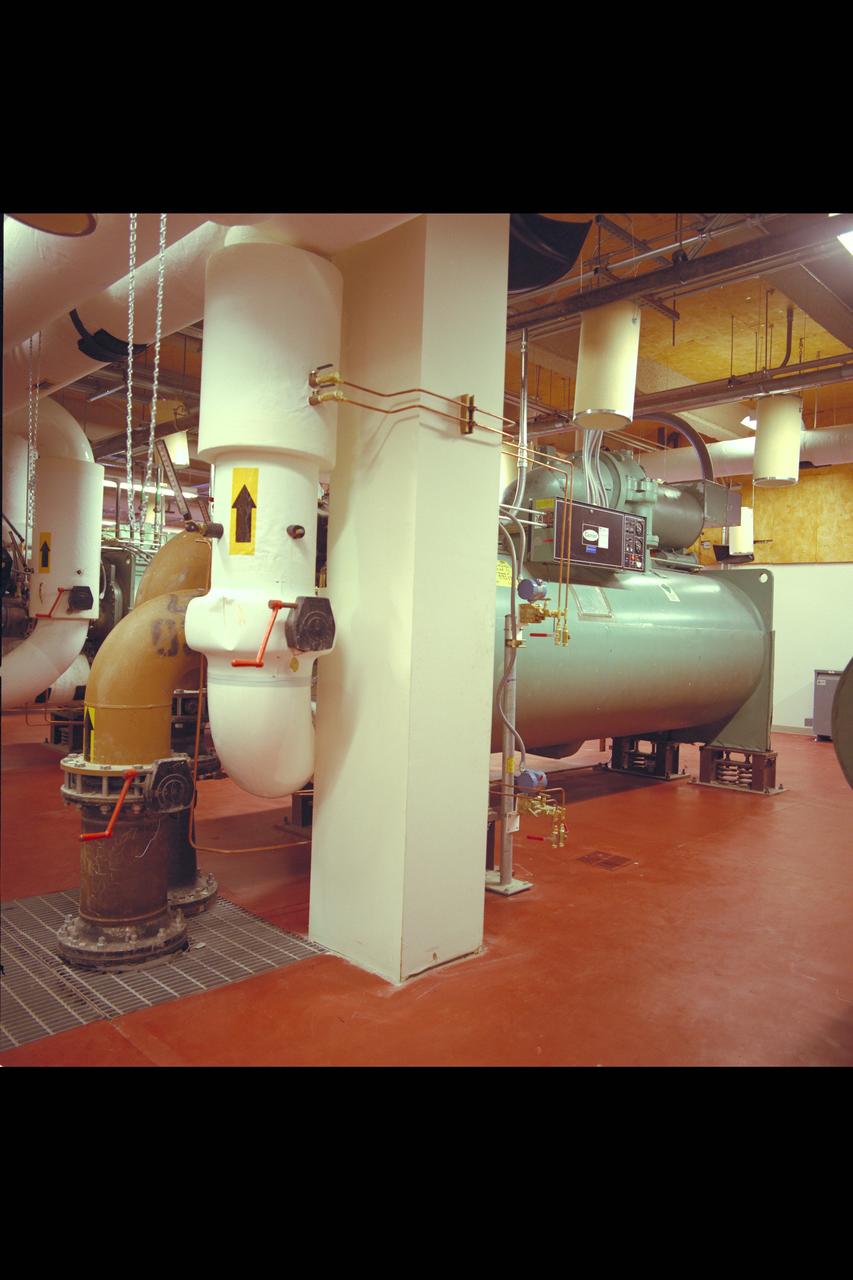
N-258 NAS Facility air condition power units (construction)
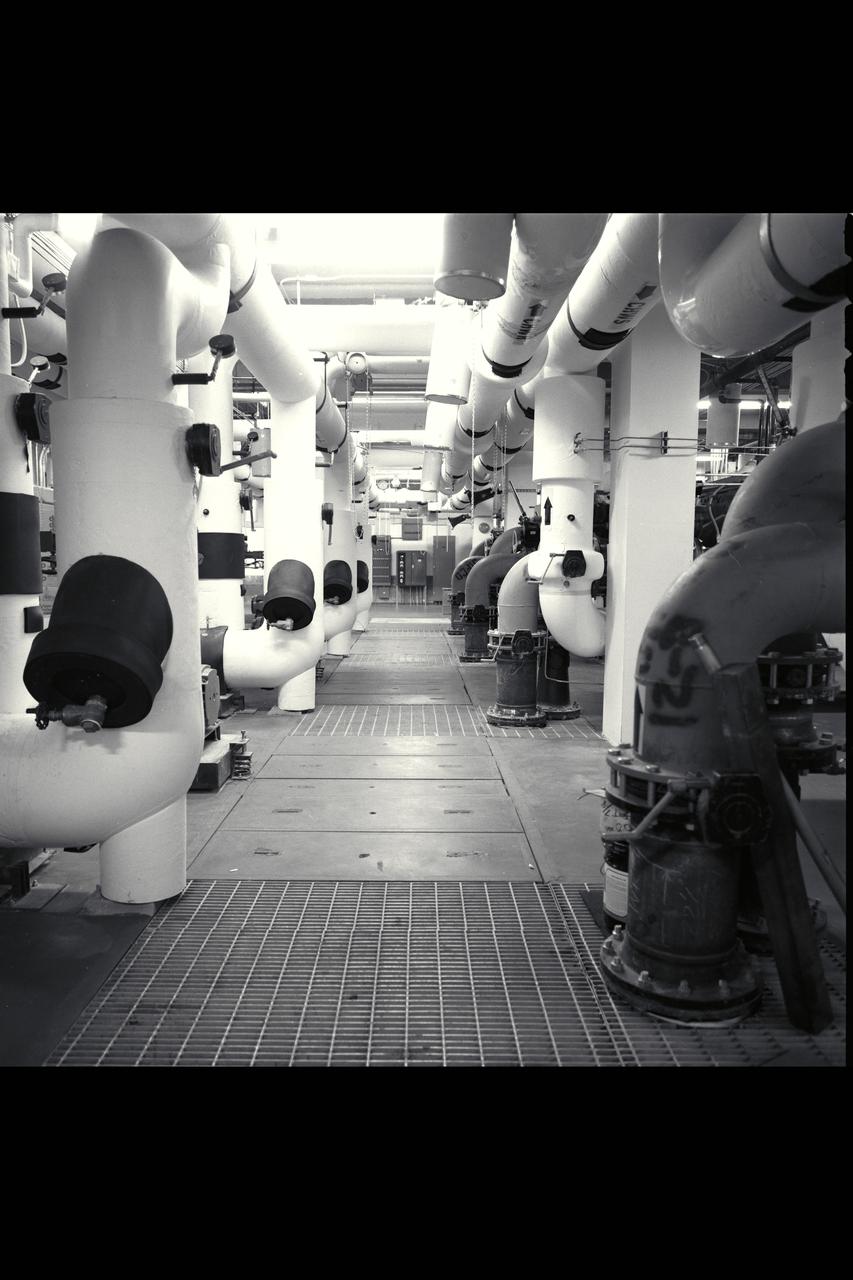
N-258 NAS Facility air condition power units (construction)
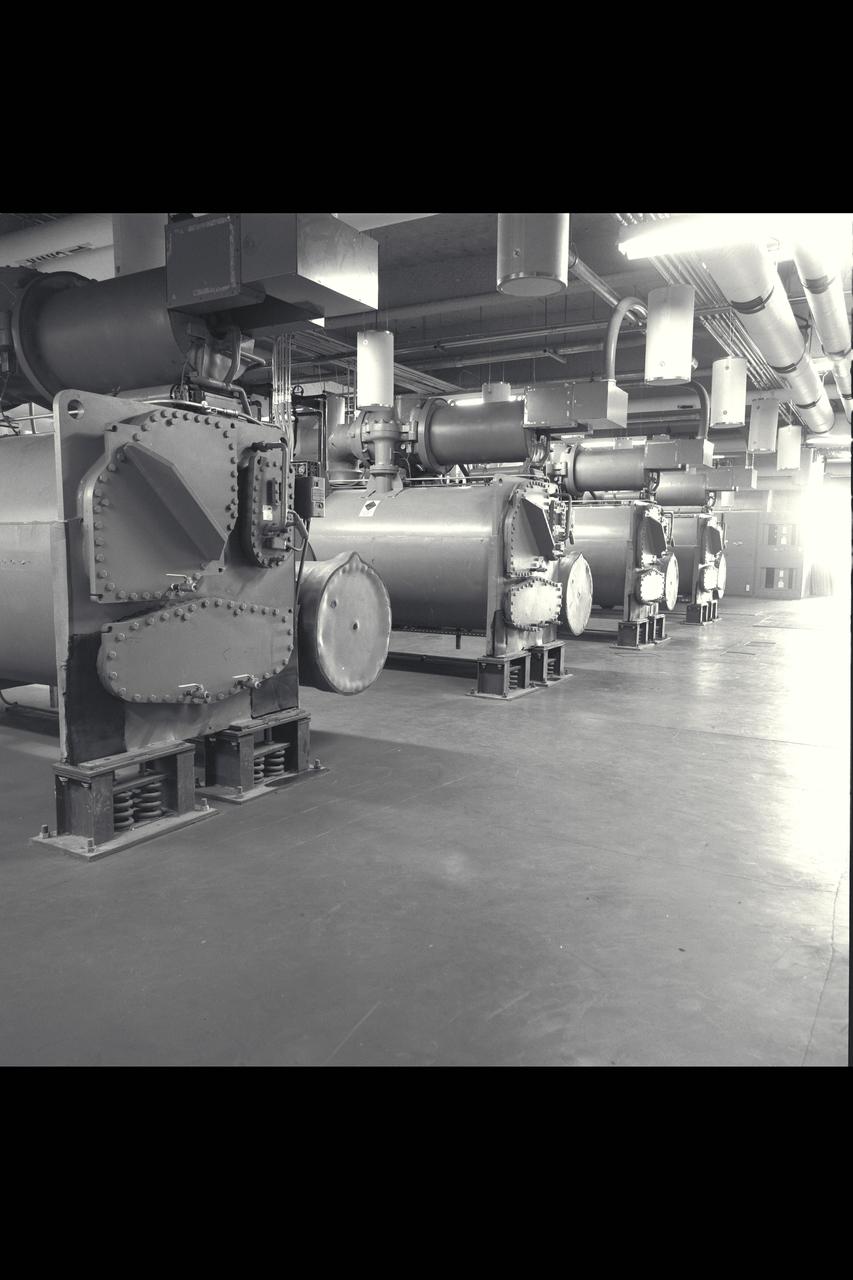
N-258 NAS Facility air condition power units (construction)
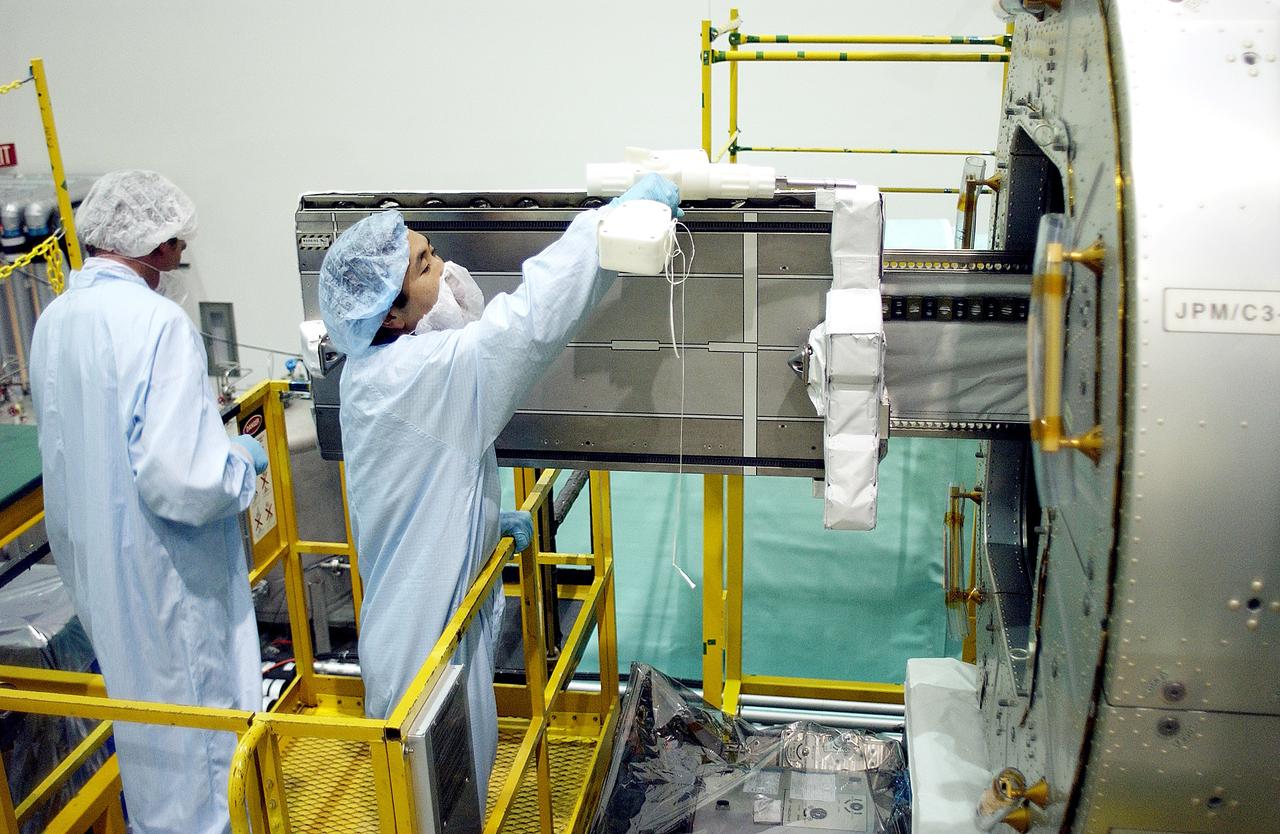
KENNEDY SPACE CENTER, FLA. - Japanese astronaut Koichi Wakata (right) works with a tray extended from inside the Pressurized Module, or PM, part of the Japanese Experiment Module (JEM). The PM provides a shirt-sleeve environment in which astronauts on the International Space Station can conduct microgravity experiments. There are a total of 23 racks, including 10 experiment racks, inside the PM providing a power supply, communications, air conditioning, hardware cooling, water control and experiment support functions.
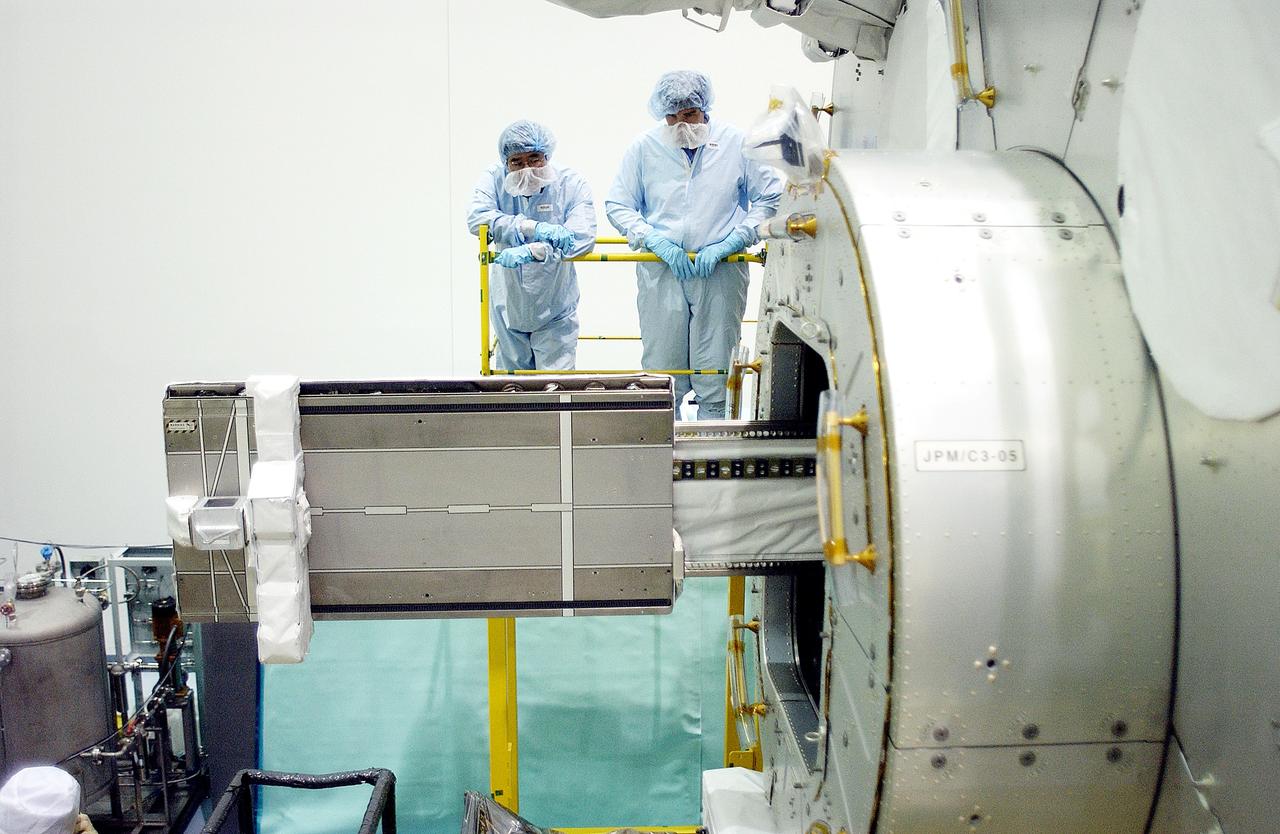
KENNEDY SPACE CENTER, FLA. - In the Space Station Processing Facility, Japanese astronaut Koichi Wakata (top left) and technicians watch as a tray is extended from inside the Pressurized Module, or PM, part of the Japanese Experiment Module (JEM). The PM provides a shirt-sleeve environment in which astronauts on the International Space Station can conduct microgravity experiments. There are a total of 23 racks, including 10 experiment racks, inside the PM providing a power supply, communications, air conditioning, hardware cooling, water control and experiment support functions.
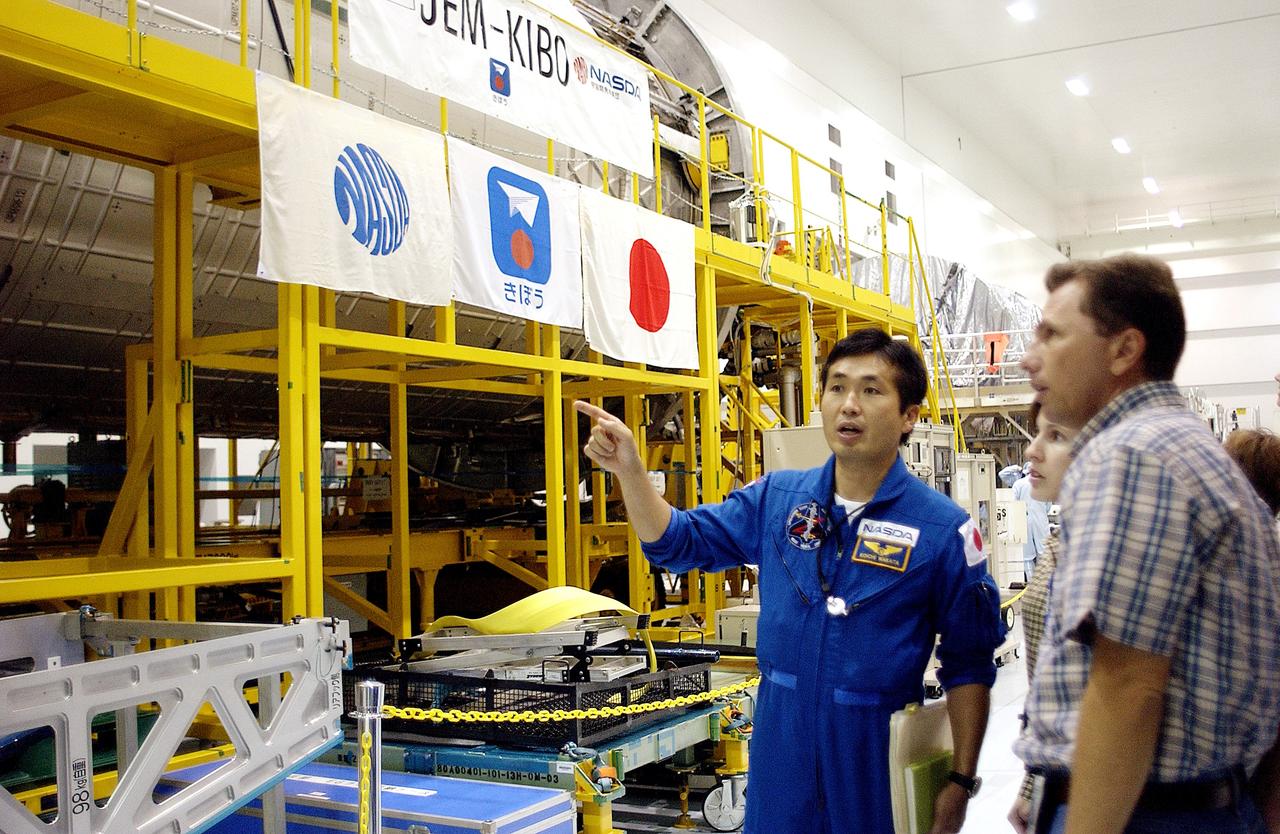
KENNEDY SPACE CENTER, FLA. - In the Space Station Processing Facility, Japanese astronaut Koichi Wakata looks over the Pressurized Module, or PM, part of the Japanese Experiment Module (JEM). The PM provides a shirt-sleeve environment in which astronauts on the International Space Station can conduct microgravity experiments. There are a total of 23 racks, including 10 experiment racks, inside the PM providing a power supply, communications, air conditioning, hardware cooling, water control and experiment support functions.
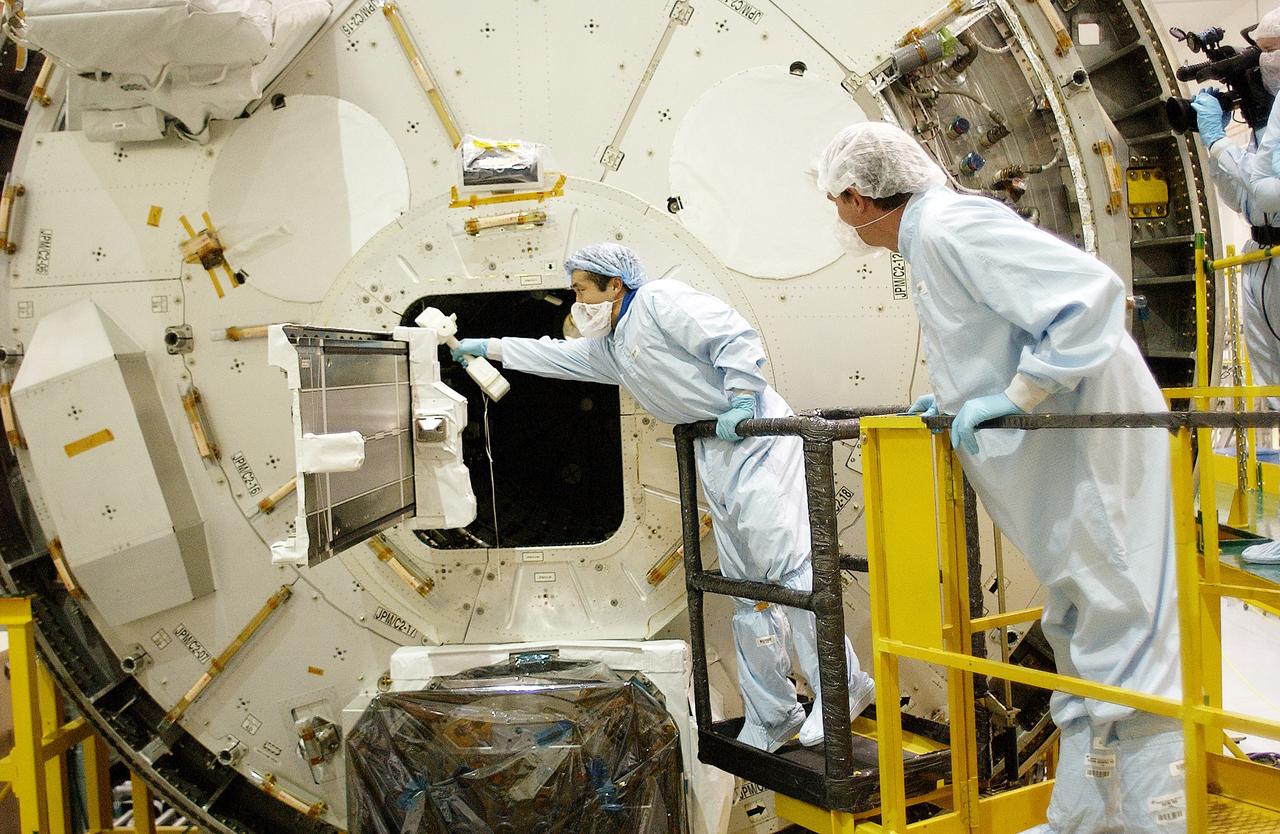
KENNEDY SPACE CENTER, FLA. - Japanese astronaut Koichi Wakata (left) works with a tray extended from inside the Pressurized Module, or PM, part of the Japanese Experiment Module (JEM). The PM provides a shirt-sleeve environment in which astronauts on the International Space Station can conduct microgravity experiments. There are a total of 23 racks, including 10 experiment racks, inside the PM providing a power supply, communications, air conditioning, hardware cooling, water control and experiment support functions.
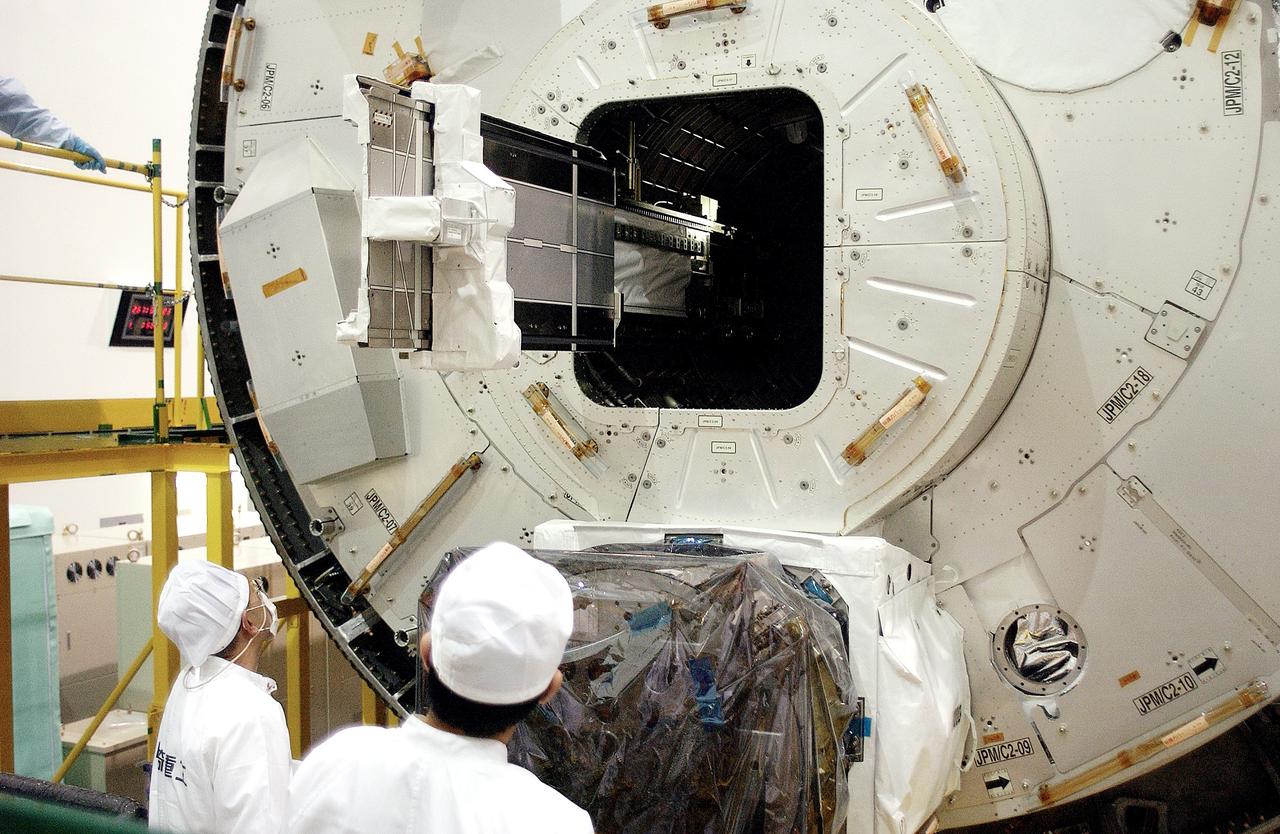
KENNEDY SPACE CENTER, FLA. - In the Space Station Processing Facility, technicians on the floor watch as a tray is extended from inside the Pressurized Module, or PM, part of the Japanese Experiment Module (JEM). The PM provides a shirt-sleeve environment in which astronauts on the International Space Station can conduct microgravity experiments. There are a total of 23 racks, including 10 experiment racks, inside the PM providing a power supply, communications, air conditioning, hardware cooling, water control and experiment support functions.
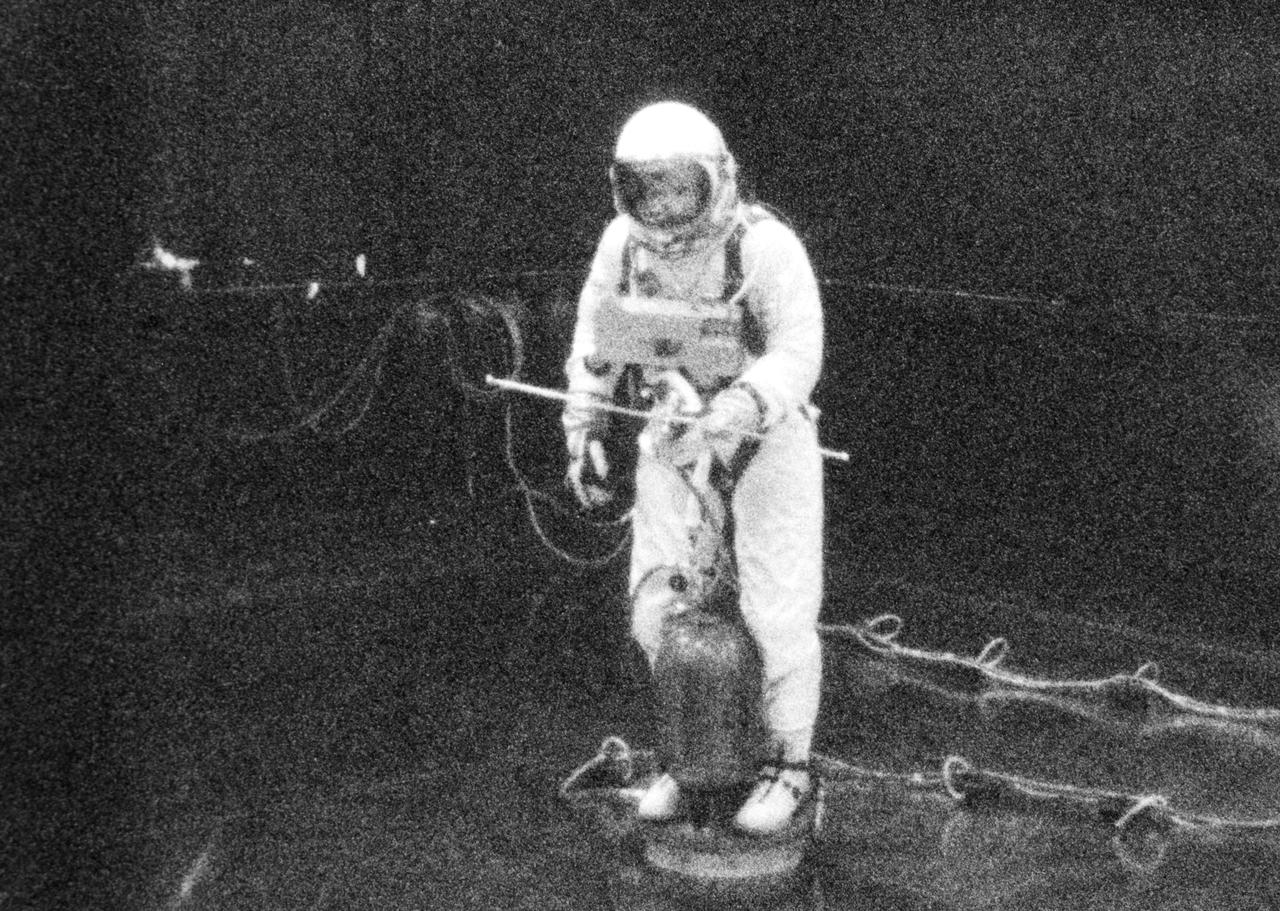
S65-19504 (28 May 1965) --- Astronaut Edward H. White II, pilot for the Gemini-Titan 4 prime crew, is pictured during an extravehicular exercise in the Building 4 laboratory at the Manned Spacecraft Center in Houston, Texas. White is controlling about the yaw (vertical) axis while translating. He stands on a Balance Extravehicular Training Aircraft which is separated from the level steel floor by a .001th-inch cushion of air. In his right hand White holds a zero-gravity integral propulsion unit which is a self-maneuvering device used by an astronaut in a zero-gravity environment. This condition is simulated in this training exercise. White's spacesuit is pressurized to create a realistic training condition. The simulated umbilical line is floated on air with the aid of eleven small air pads.
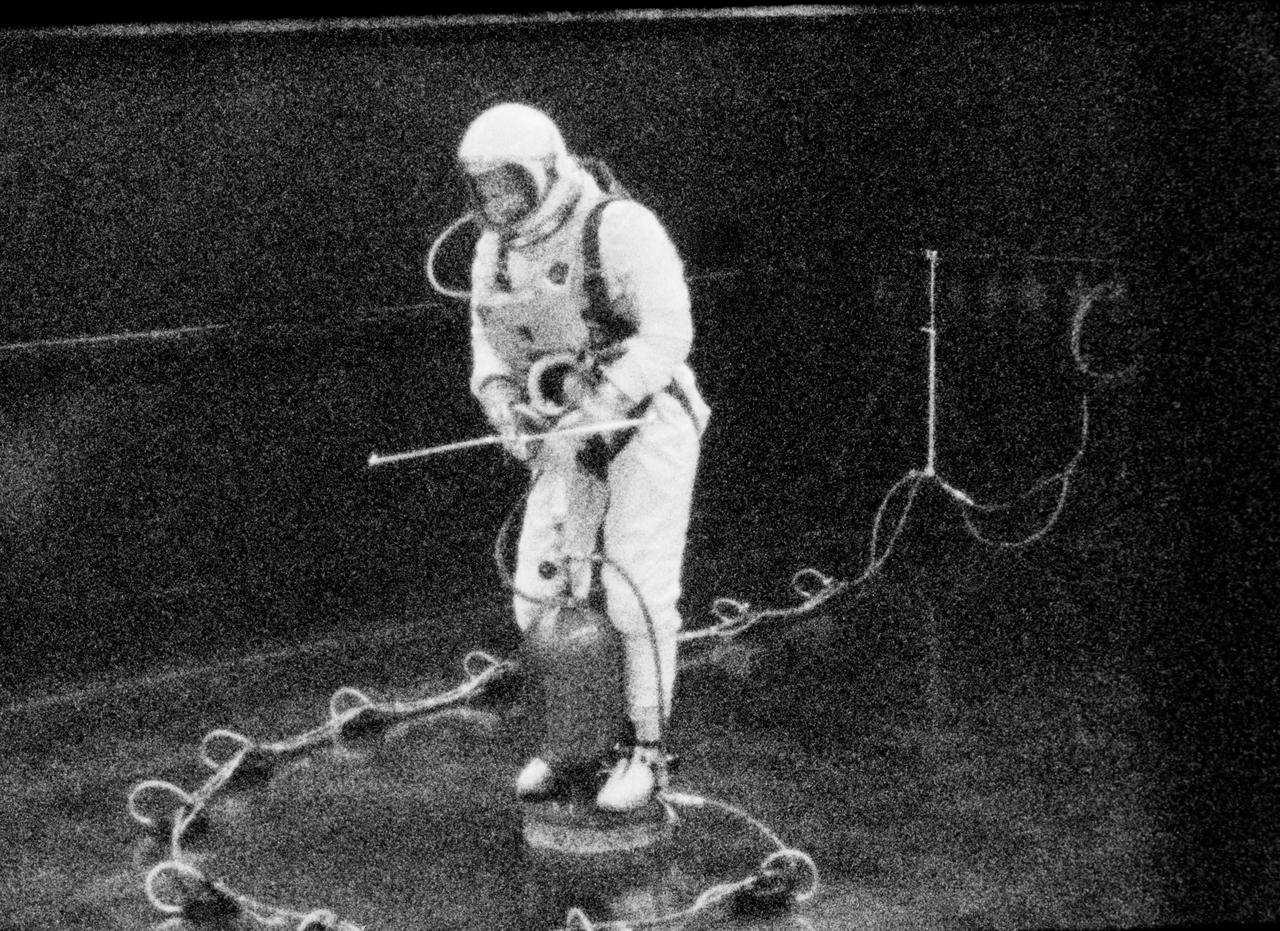
S65-19505 (28 May 1965) --- Astronaut Edward H. White II, pilot for the Gemini-Titan 4 prime crew, is pictured during an extravehicular exercise in the Building 4 laboratory at the Manned Spacecraft Center in Houston, Texas. White is controlling about the yaw (vertical) axis while translating. He stands on a Balance Extravehicular Training Aircraft which is separated from the level steel floor by a .001th-inch cushion of air. In his right hand White holds a zero-gravity integral propulsion unit which is a self-maneuvering device used by an astronaut in a zero-gravity environment. This condition is simulated in this training exercise. White's spacesuit is pressurized to create a realistic training condition. The simulated umbilical line is floated on air with the aid of eleven small air pads.
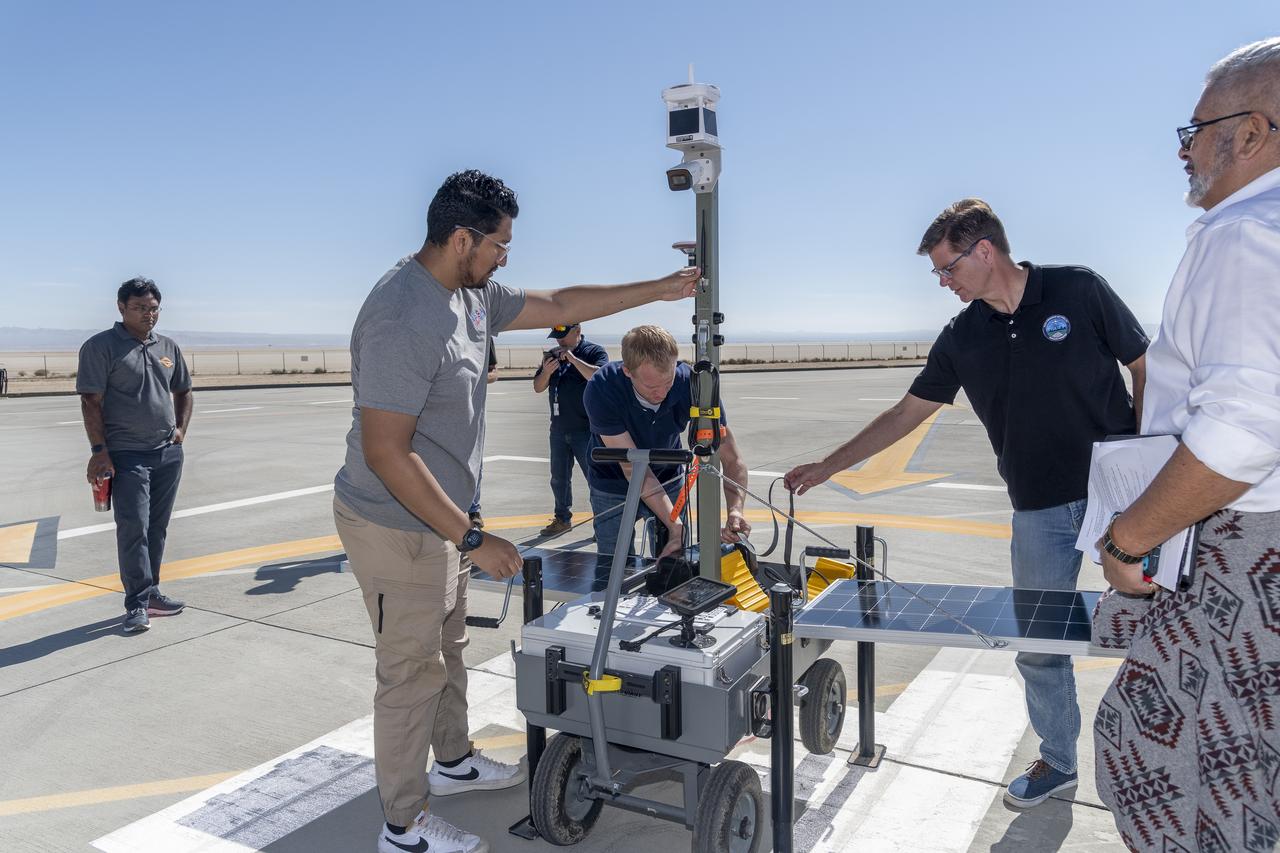
NASA operations engineer Daniel Velasquez, left, is reviewing the Mobile Vertipad Sensor Package system as part of the Air Mobility Pathways test project at NASA's Armstrong Flight Research Center in Edwards, California on October 17, 2023. The portable system allows Advanced Air Mobility researchers to test and evaluate several factors involved in monitoring takeoff and landing conditions at vertipad sites. "Vertipads" or "vertiports" will be where future air taxis will land and take off to transport passengers.
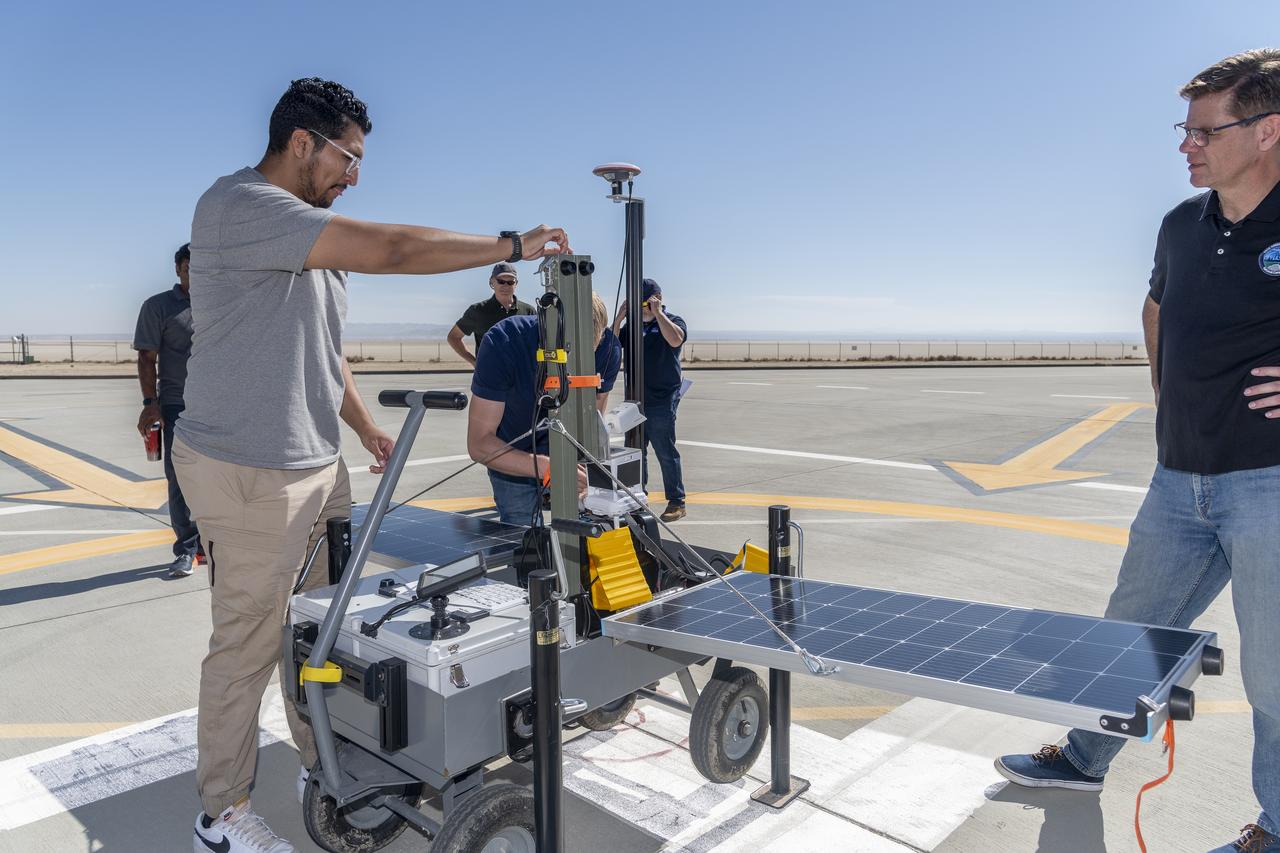
NASA operations engineer Daniel Velasquez, left, is reviewing the Mobile Vertipad Sensor Package system as part of the Air Mobility Pathways test project at NASA's Armstrong Flight Research Center in Edwards, California on October 17, 2023. The portable system allows Advanced Air Mobility researchers to test and evaluate several factors involved in monitoring takeoff and landing conditions at vertipad sites. "Vertipads" or "vertiports" will be where future air taxis will land and take off to transport passengers.
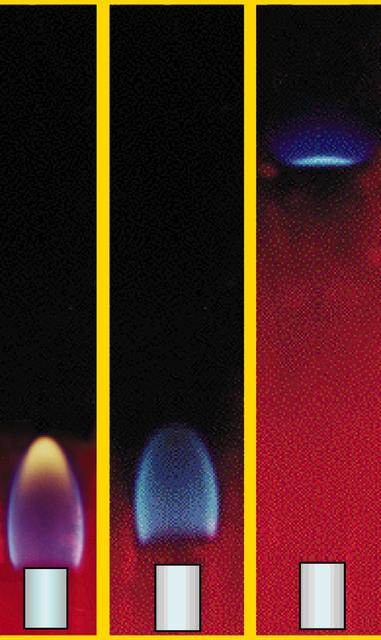
Image taken during a ground based investigation of a methane-fueled laminar flame surrounded by co-flowing air. The flame was enclosed in a chamber, and the pressure reduced. As the pressure decreased, the velocity of the flow increased, causing the flame to change from a stabilized condition to near blow-out or extinction.

NASA Glenn’s Propulsion Systems Lab (PSL) is conducting research to characterize ice crystal clouds that can create a hazard to aircraft engines under certain conditions. The isokinetic probe (in gold) samples particles and another series of probes can measure everything from humidity to air pressure.
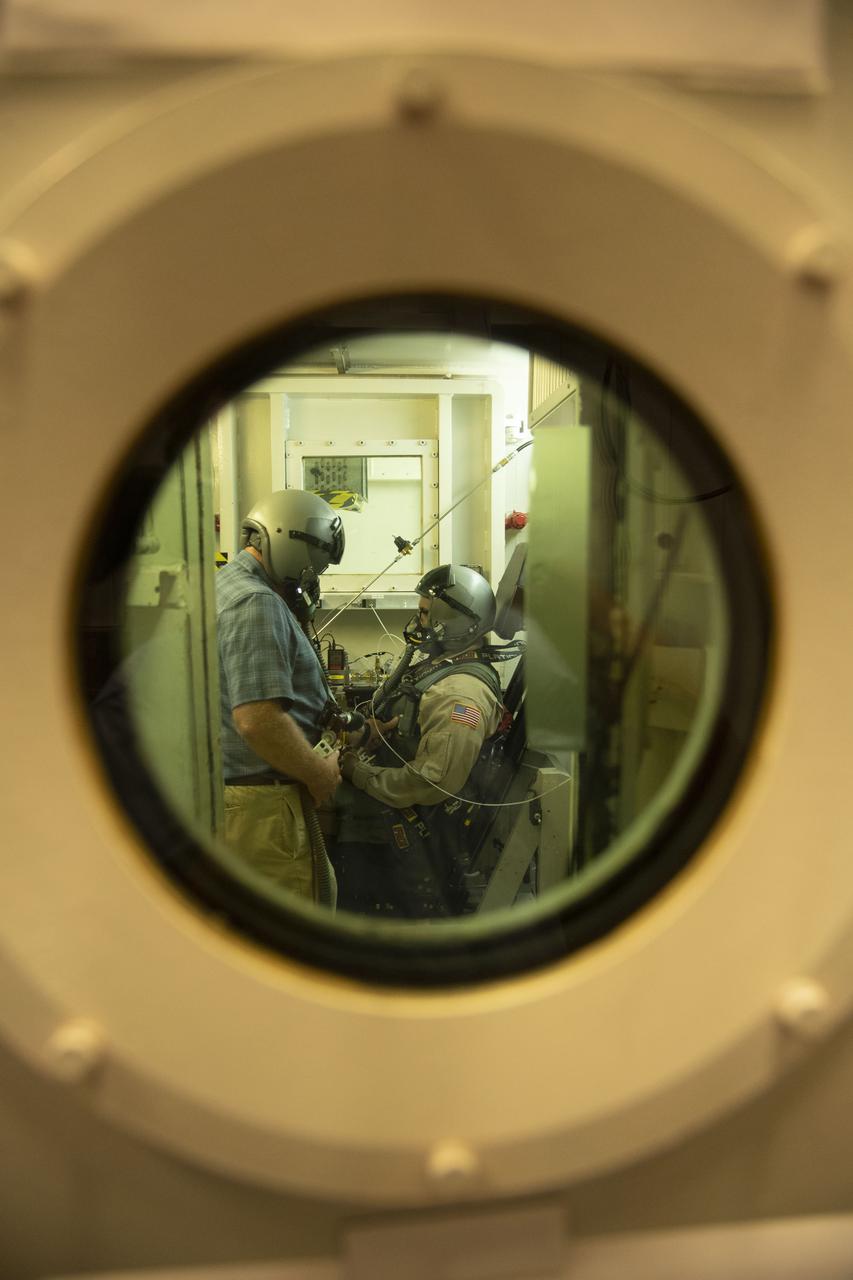
The low pressure (hypobaric) chamber at KBR’s facility in San Antonio, Texas, simulates very high altitudes by reducing the air pressure inside of the chamber. The subject inside the chamber experiences the reduced pressure conditions that exist at higher altitudes, in this case altitudes up to 60,000 feet.
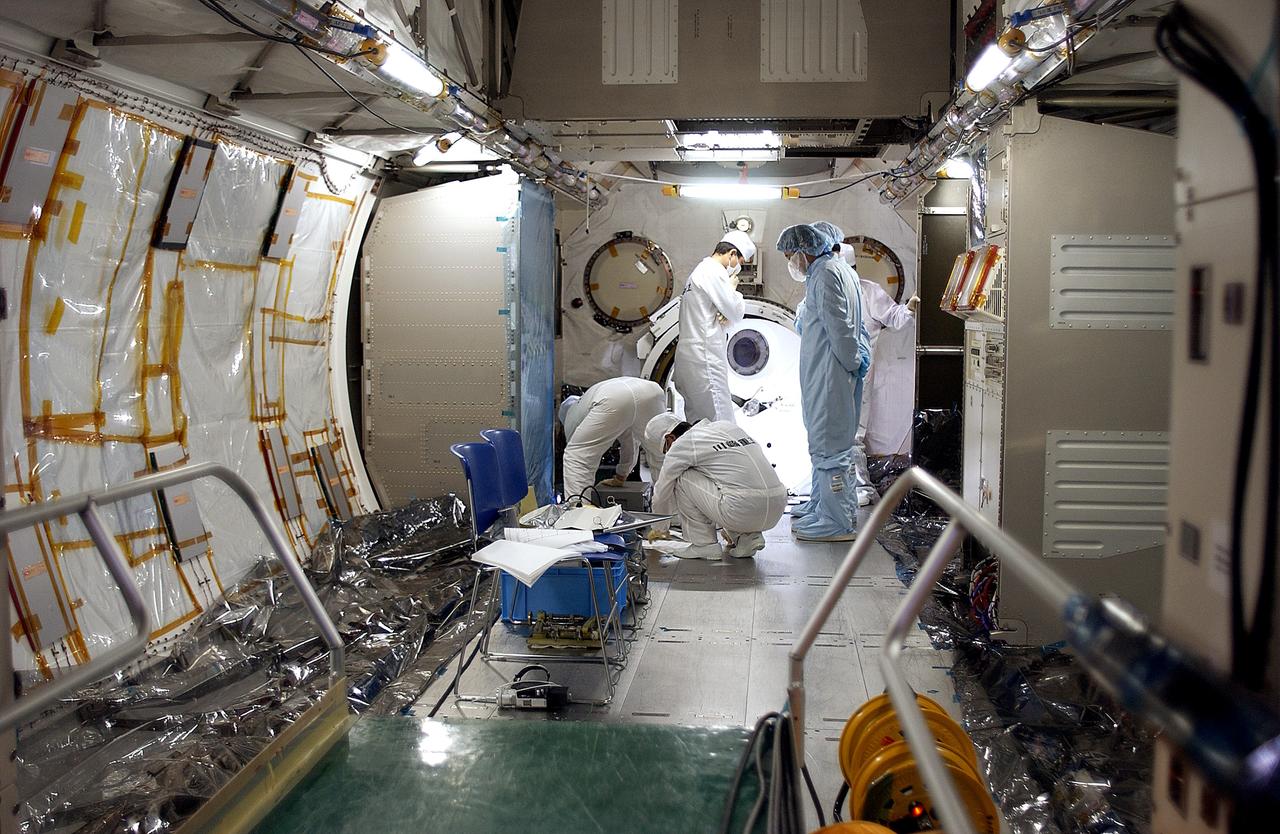
KENNEDY SPACE CENTER, FLA. - In the Space Station Processing Facility, Japanese astronaut Koichi Wakata, dressed in blue protective clothing (at right), looks at the inside of the Pressurized Module, or PM, part of the Japanese Experiment Module (JEM), along with technicians. The PM provides a shirt-sleeve environment in which astronauts on the International Space Station can conduct microgravity experiments. There are a total of 23 racks, including 10 experiment racks, inside the PM providing a power supply, communications, air conditioning, hardware cooling, water control and experiment support functions.
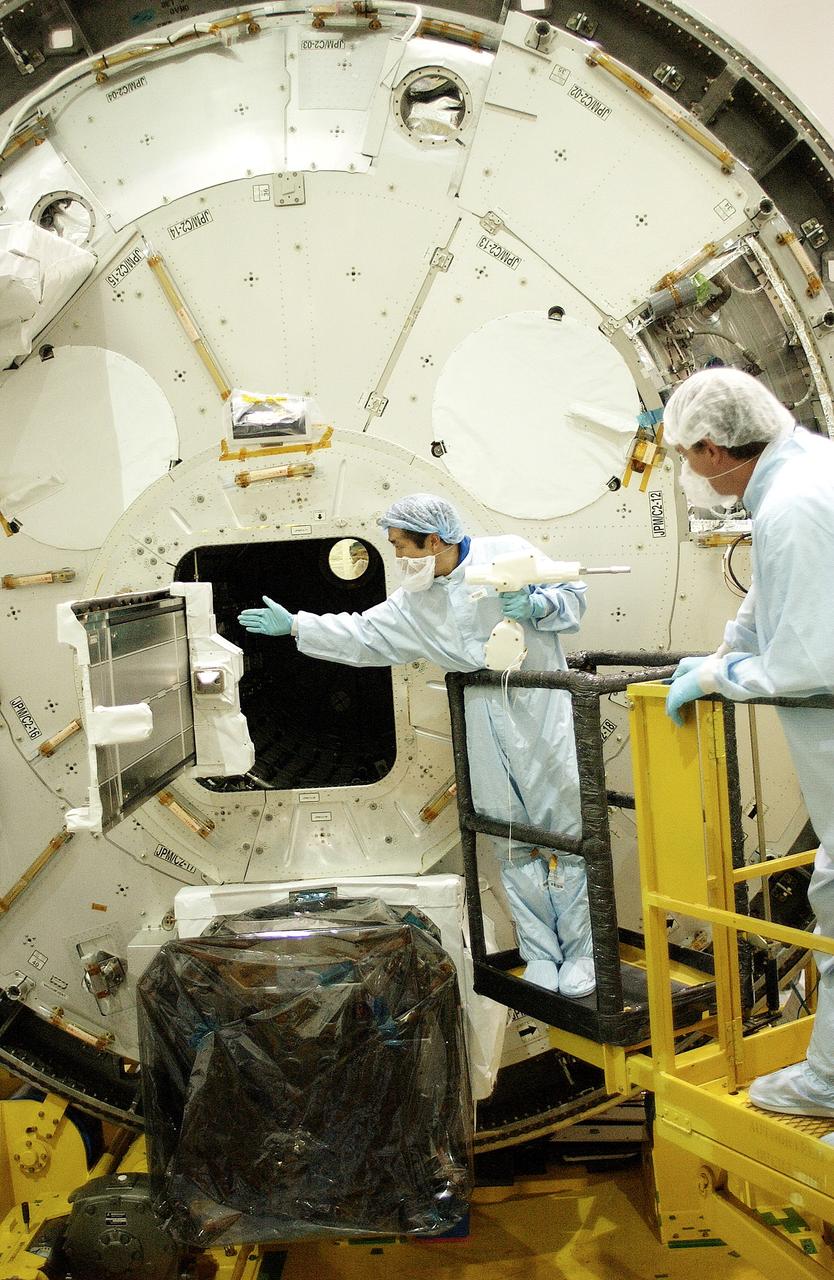
KENNEDY SPACE CENTER, FLA. - Japanese astronaut Koichi Wakata (left) releases a tray extended from inside the Pressurized Module, or PM, that he was working with. Part of the Japanese Experiment Module (JEM), the PM provides a shirt-sleeve environment in which astronauts on the International Space Station can conduct microgravity experiments. There are a total of 23 racks, including 10 experiment racks, inside the PM providing a power supply, communications, air conditioning, hardware cooling, water control and experiment support functions. The JEM/PM is in the Space Station Processing Facility.

One of the two primary coolers at the Propulsion Systems Laboratory at the National Advisory Committee for Aeronautics (NACA) Lewis Flight Propulsion Laboratory. Engines could be run in simulated altitude conditions inside the facility’s two 14-foot-diameter and 24-foot-long test chambers. The Propulsion Systems Laboratory was the nation’s only facility that could run large full-size engine systems in controlled altitude conditions. At the time of this photograph, construction of the facility had recently been completed. Although not a wind tunnel, the Propulsion Systems Laboratory generated high-speed airflow through the interior of the engine. The air flow was pushed through the system by large compressors, adjusted by heating or refrigerating equipment, and de-moisturized by air dryers. The exhaust system served two roles: reducing the density of the air in the test chambers to simulate high altitudes and removing hot gases exhausted by the engines being tested. It was necessary to reduce the temperature of the extremely hot engine exhaust before the air reached the exhauster equipment. As the air flow exited through exhaust section of the test chamber, it entered into the giant primary cooler seen in this photograph. Narrow fins or vanes inside the cooler were filled with water. As the air flow passed between the vanes, its heat was transferred to the cooling water. The cooling water was cycled out of the system, carrying with it much of the exhaust heat.
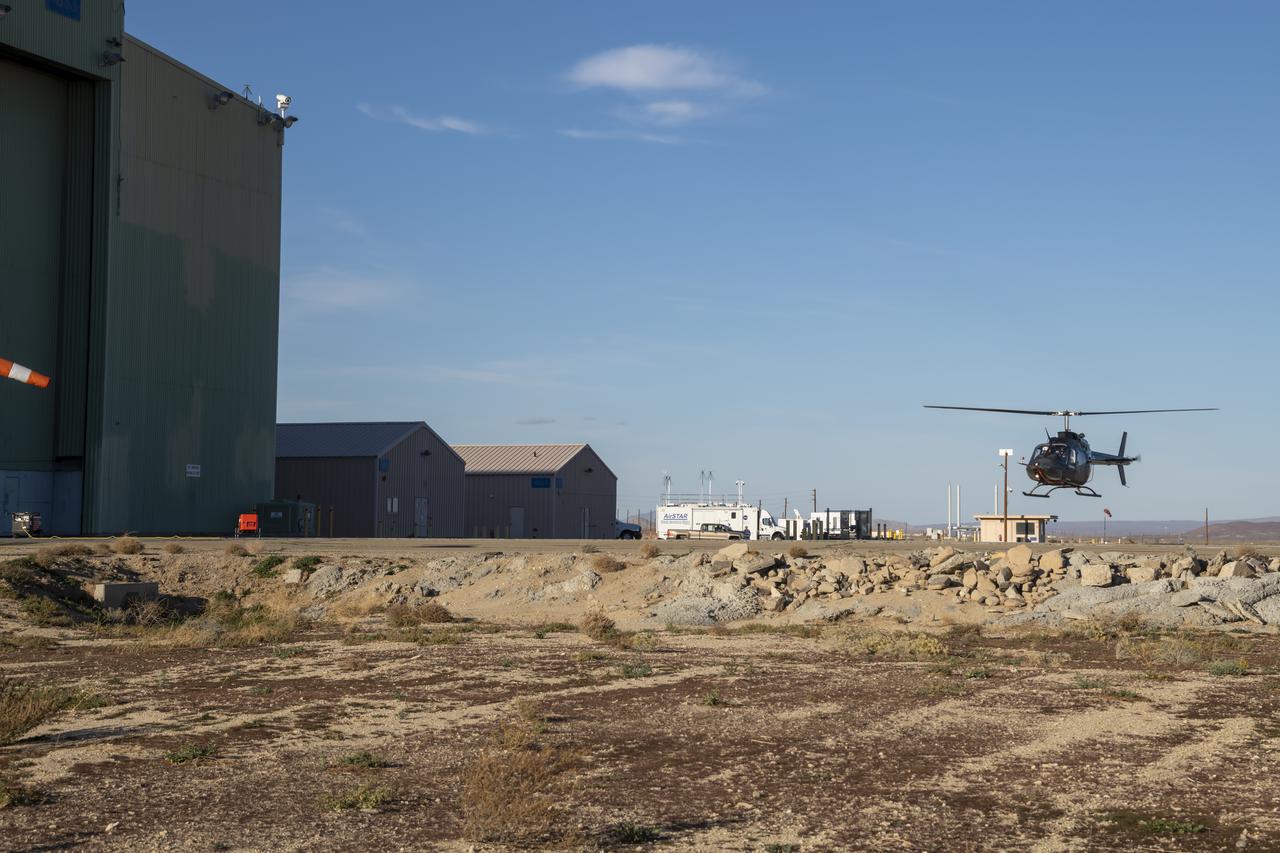
NASA’s Advanced Air Mobility National Campaign flies maneuvers at NASA’s Armstrong Flight Research Center in Edwards, California, Dec. 6, and 8-10. During this testing, the helicopter is used to study controllability characteristics when operating near buildings during heavy wind conditions. The Bell OH-58 Kiowa helicopter provided by Flight Research Inc. was used to study urban air mobility vehicle performance and flying qualities requirements.
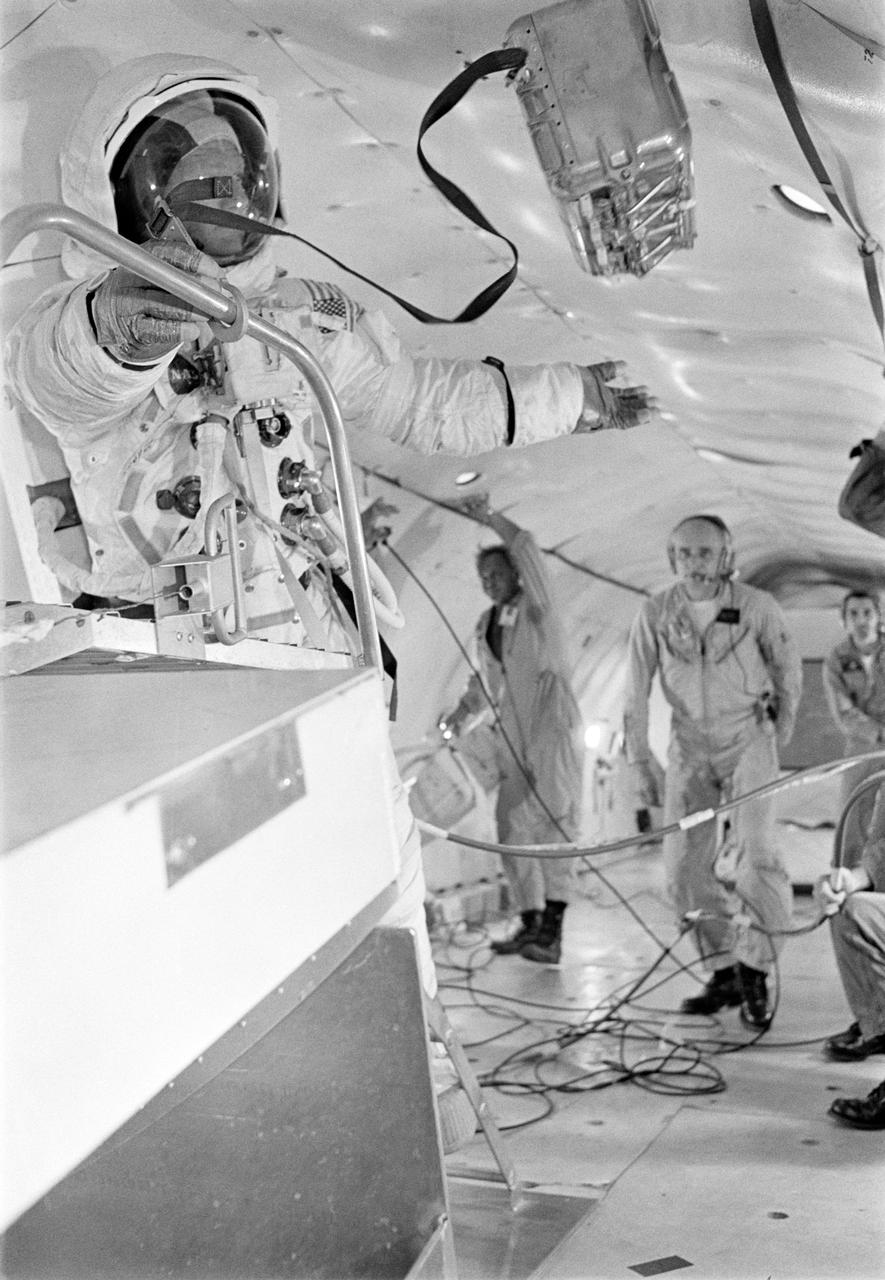
S69-39270 (10 July 1969) --- Astronaut Edwin E. Aldrin Jr., lunar module pilot of the Apollo 11 lunar landing mission, participates in lunar extravehicular activity training under weightlessness conditions aboard a U.S. Air Force KC-135 jet aircraft from nearby Patrick Air Force Base. Aldrin is wearing an Extravehicular Mobility Unit, the type of equipment which he will wear on the lunar surface.
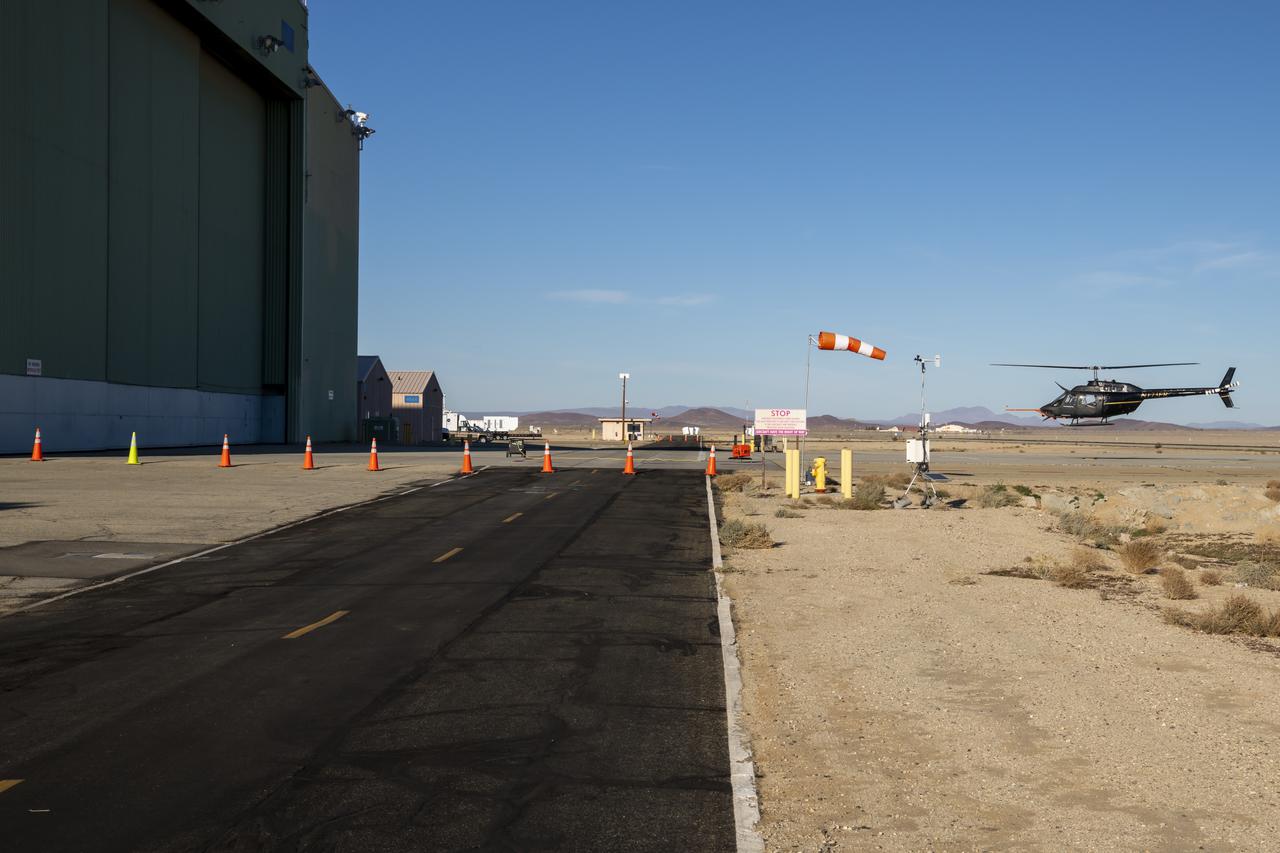
NASA's Advanced Air Mobility National Campaign conducts testing to study controllability characteristics when operating near buildings during heavy wind conditions at NASA's Armstrong Flight Research Center in Edwards, California, Dec. 6 and 8-10. The Bell OH-58 Kiowa helicopter provided by Flight Research Inc. was used to study urban air mobility vehicle performance and flying qualities requirements.
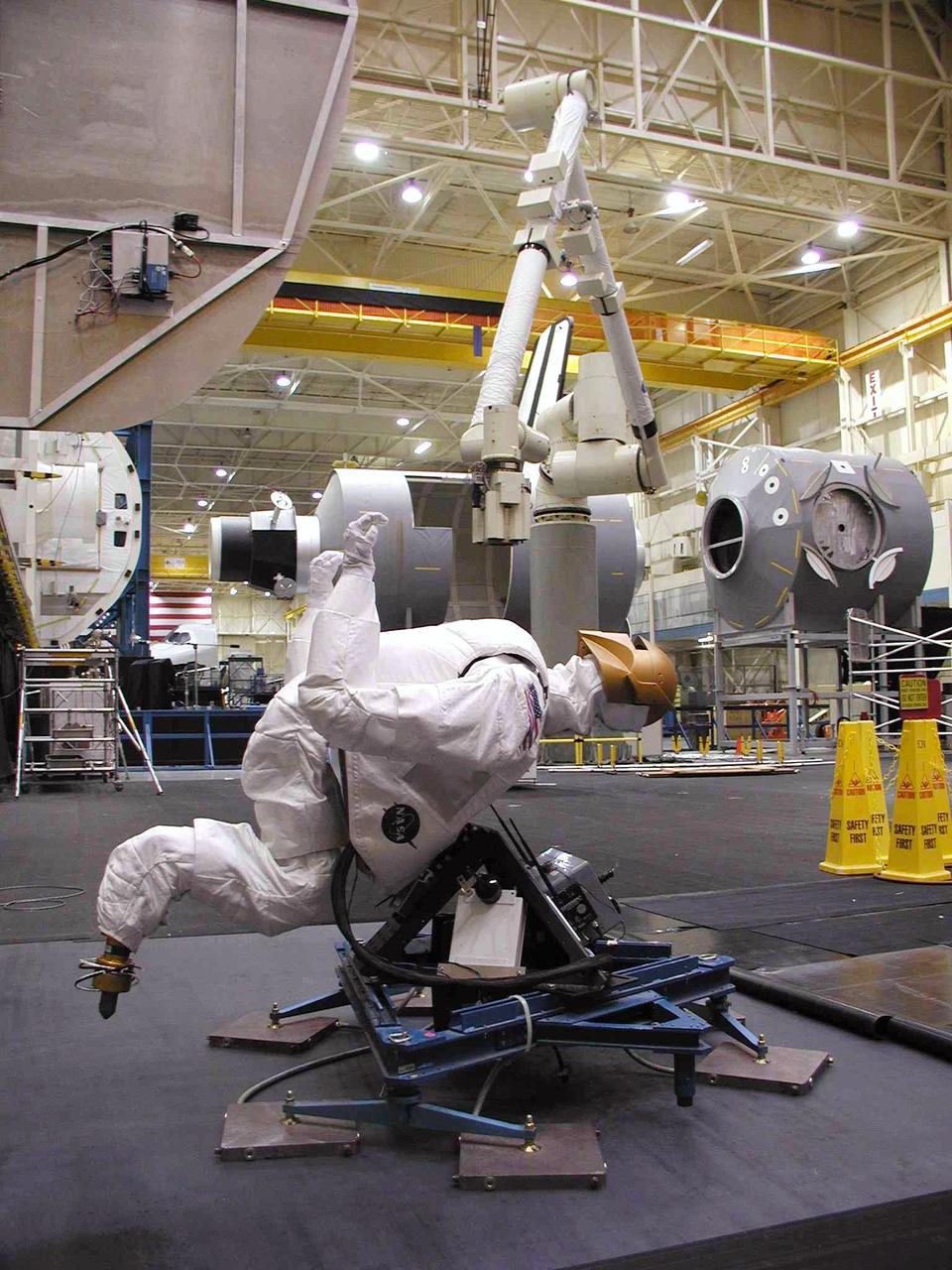
JSC2004-E-16342 (March 2004) --- Tests of Robonaut’s ability were conducted on the Precision Air-Bearing Floor in Johnson Space Center’s (JSC) Space Vehicle Mockup Facility. Robonaut was mounted to a pressurized air sled, which allowed teleoperators to emulate some of the conditions of weightlessness. The Robonaut Project is a collaborative effort with the Defense Advanced Research Projects Agency (DARPA), and has been under development at JSC for several years.
![EDWARDS AFB, CALIF. -- After traveling 5.8 million miles in space during 217 orbits, and with drag chute deployed, Endeavour lands on concrete runway 22 at Dryden Flight Research Center, Edwards Air Force Base, Calif., completing mission STS-111. Three days of unfavorable weather conditions at KSC prompted the decision to land at Edwards, which enjoyed pristine, dry conditions.. Main gear touchdown occurred at 1:57:41 p.m. EDT, nose gear touchdown at 1:57:53 p.m. EDT and wheel stop at 1:58:45 p.m. EDT. [Photo by Jim Ross]](https://images-assets.nasa.gov/image/KSC-02pp1114/KSC-02pp1114~medium.jpg)
EDWARDS AFB, CALIF. -- After traveling 5.8 million miles in space during 217 orbits, and with drag chute deployed, Endeavour lands on concrete runway 22 at Dryden Flight Research Center, Edwards Air Force Base, Calif., completing mission STS-111. Three days of unfavorable weather conditions at KSC prompted the decision to land at Edwards, which enjoyed pristine, dry conditions.. Main gear touchdown occurred at 1:57:41 p.m. EDT, nose gear touchdown at 1:57:53 p.m. EDT and wheel stop at 1:58:45 p.m. EDT. [Photo by Jim Ross]
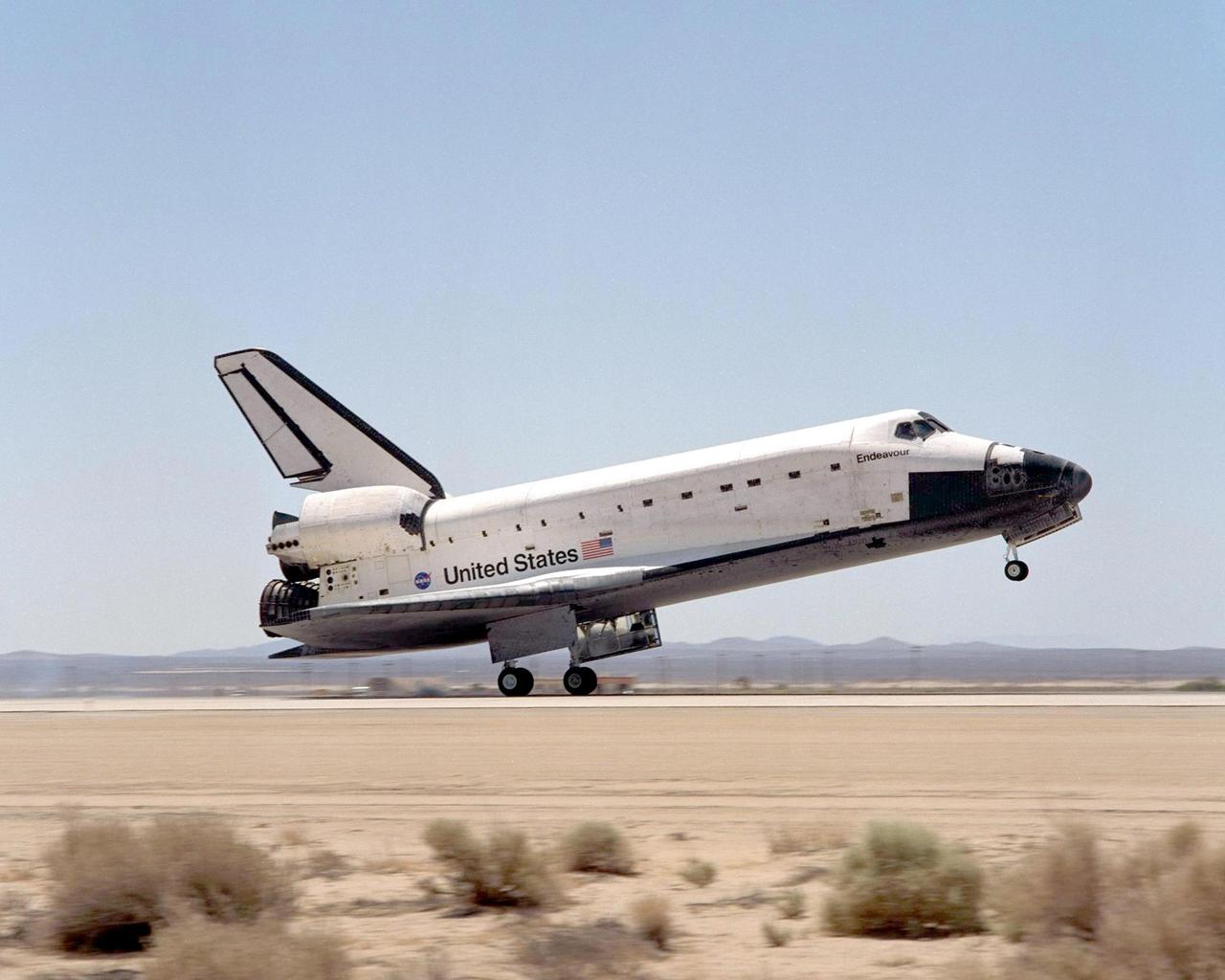
EDWARDS AFB, CALIF. -- After traveling 5.8 million miles in space during 217 orbits, Endeavour touches down on concrete runway 22 at Dryden Flight Research Center, Edwards Air Force Base, Calif., completing mission STS-111. Three days of unfavorable weather conditions at KSC prompted the decision to land at Edwards, which enjoyed pristine, dry conditions.. Main gear touchdown occurred at 1:57:41 p.m. EDT, nose gear touchdown at 1:57:53 p.m. EDT and wheel stop at 1:58:45 p.m. EDT.
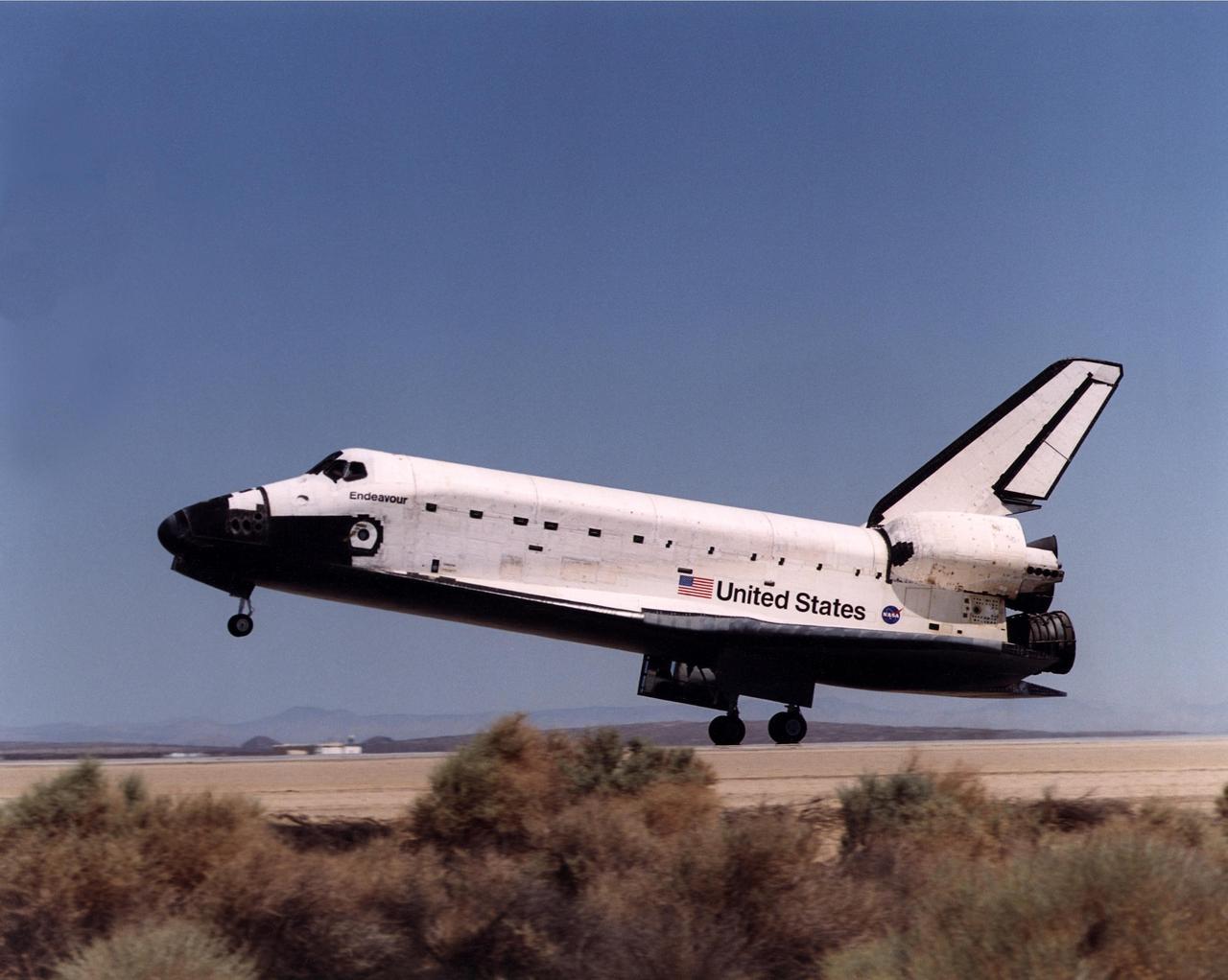
EDWARDS AFB, CALIF. -- After traveling 5.8 million miles in space during 217 orbits, Endeavour completes mission STS-111 with a landing on concrete runway 22 at Dryden Flight Research Center, Edwards Air Force Base, Calif. Three days of unfavorable weather conditions at KSC prompted the decision to land at Edwards, which enjoyed pristine, dry conditions.. Main gear touchdown occurred at 1:57:41 p.m EDT, nose gear touchdown at 1:57:53 p.m. EDT and wheel stop at 1:58:45 p.m. EDT. [Photo by Tom Tschida
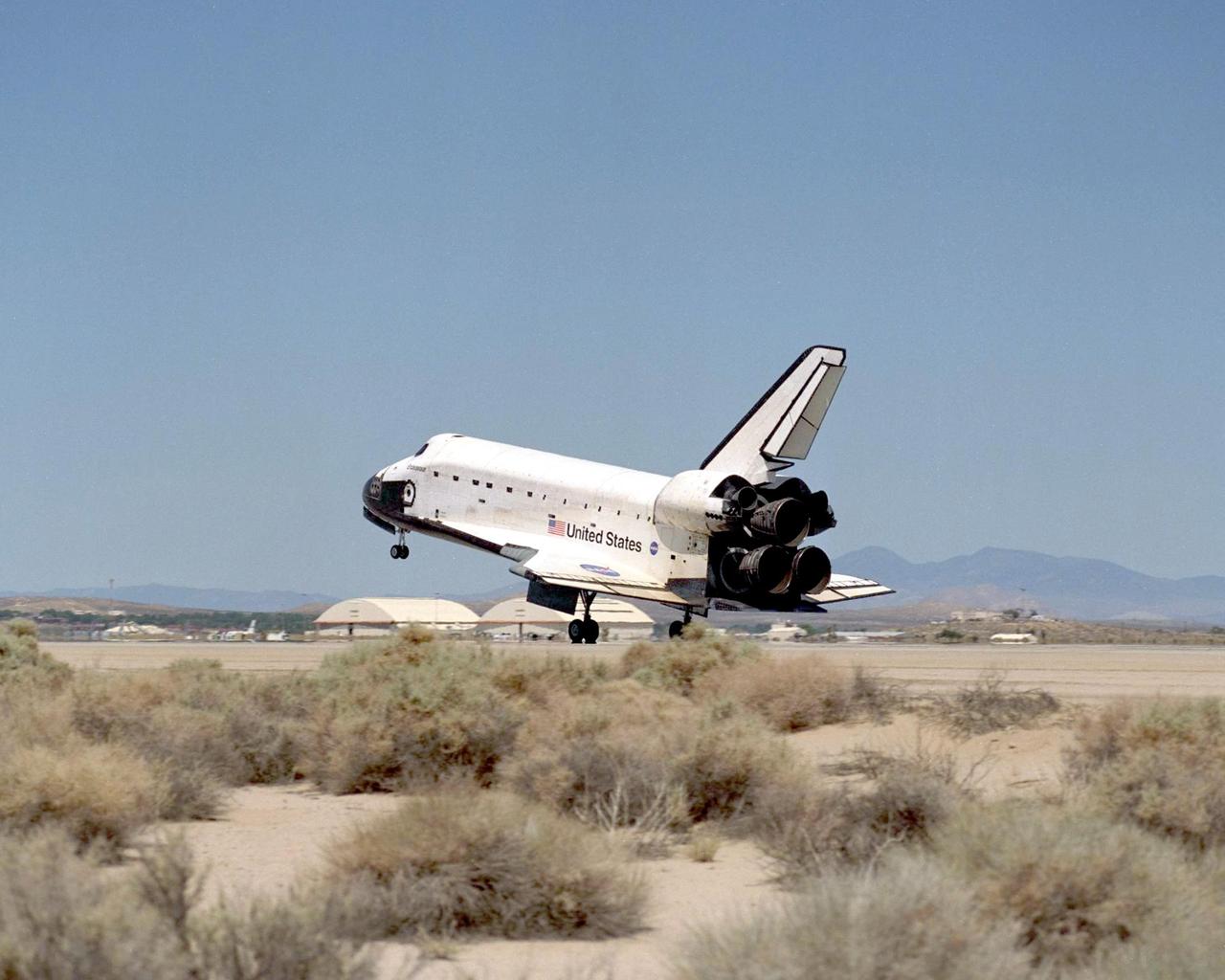
EDWARDS AFB, CALIF. -- After traveling 5.8 million miles in space during 217 orbits, Endeavour touches down on concrete runway 22 at Dryden Flight Research Center, Edwards Air Force Base, Calif., completing mission STS-111. Three days of unfavorable weather conditions at KSC prompted the decision to land at Edwards, which enjoyed pristine, dry conditions.. Main gear touchdown occurred at 1:57:41 p.m. EDT, nose gear touchdown at 1:57:53 p.m. EDT and wheel stop at 1:58:45 p.m. EDT.
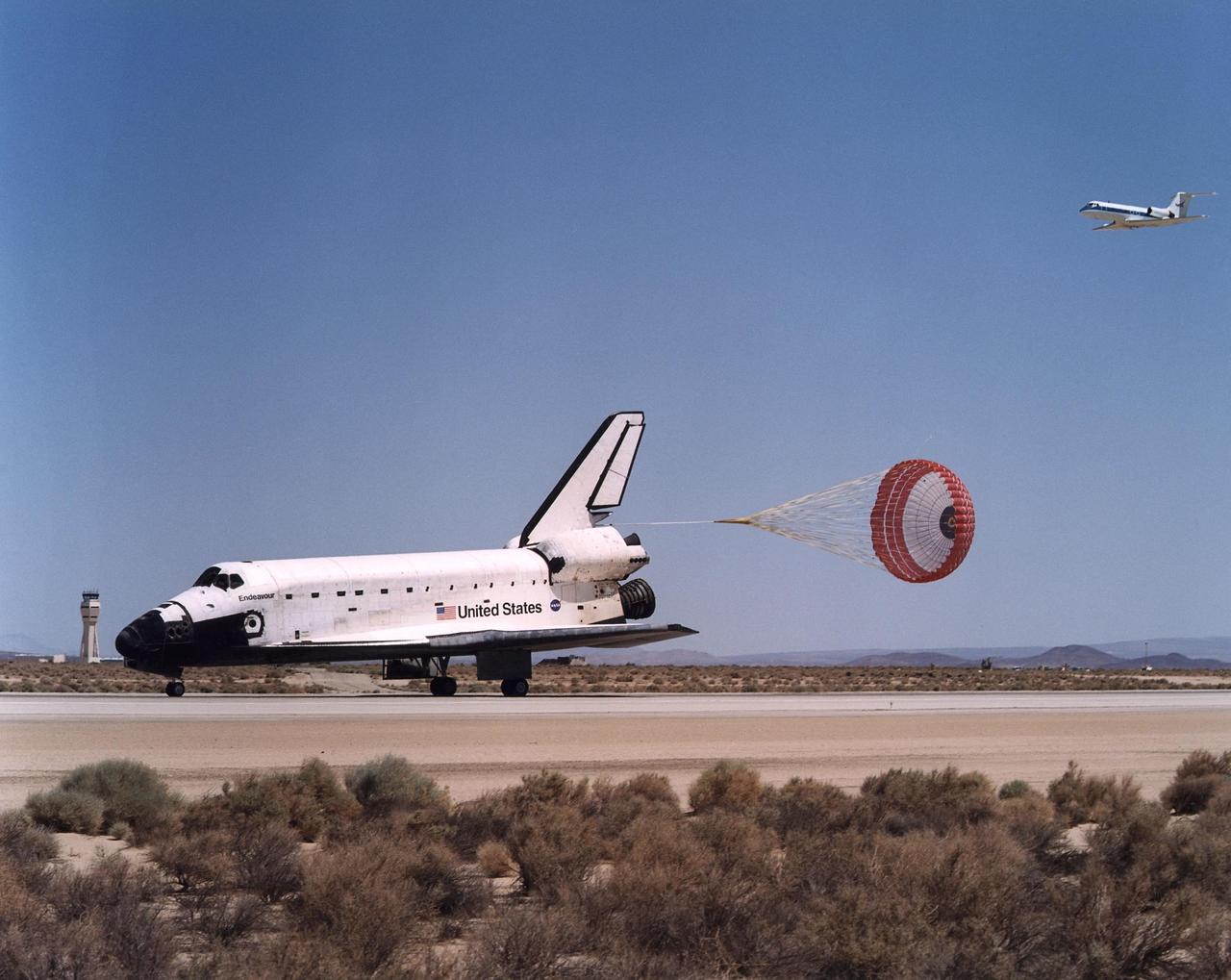
EDWARDS AFB, CALIF. -- A chase plane follows behind Endeavour as it lands on concrete runway 22 at Dryden Flight Research Center, Edwards Air Force Base, Calif., completing mission STS-111. Endeavour traveled 5.8 million miles in space during 217 orbits. Three days of unfavorable weather conditions at KSC prompted the decision to land at Edwards, which enjoyed pristine, dry conditions.. Main gear touchdown occurred at 1:57:41 p.m EDT, nose gear touchdown at 1:57:53 p.m. EDT and wheel stop at 1:58:45 p.m. EDT. [Photo by Jim Ross
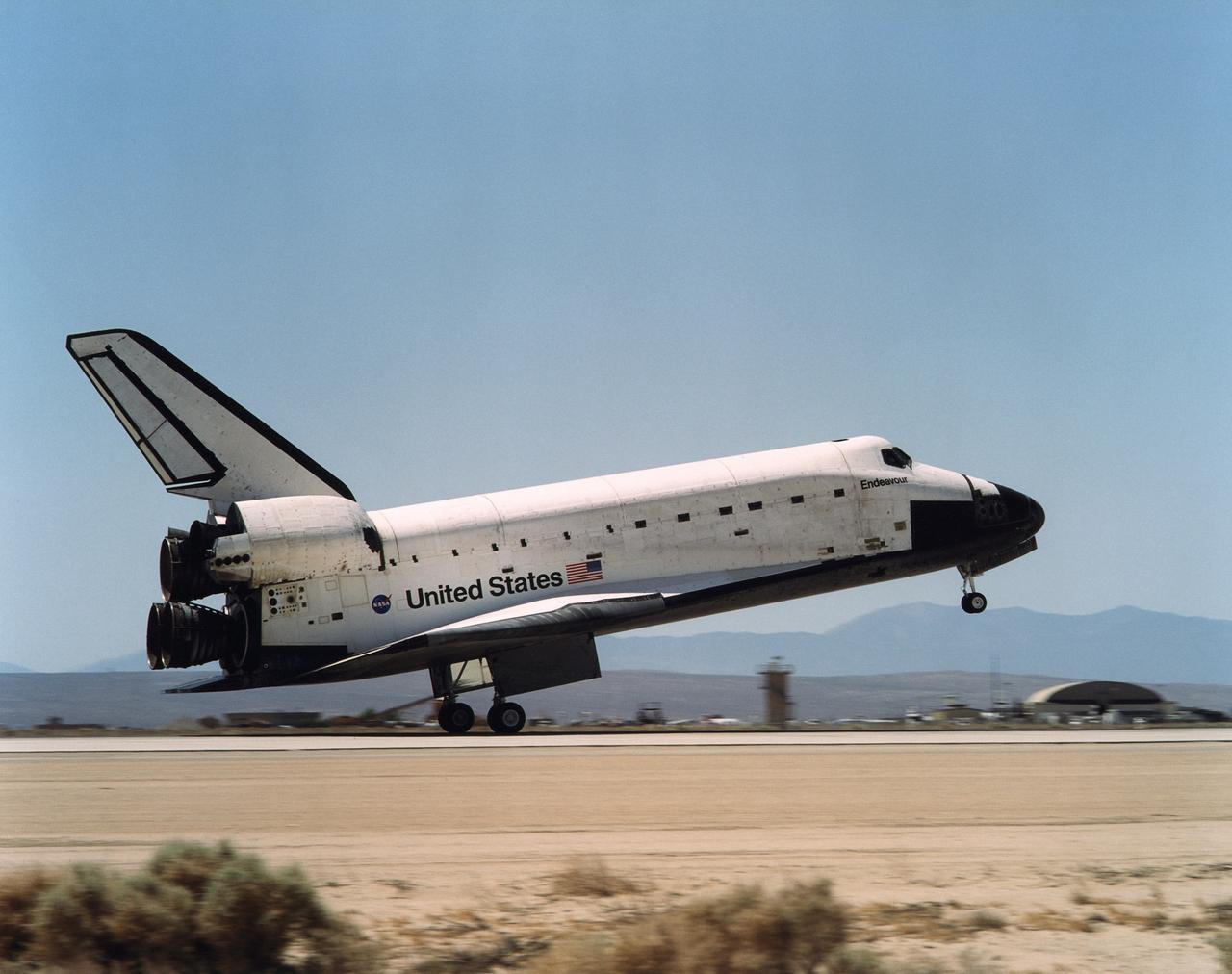
STS111-S-027 (19 June 2002) --- After traveling 5.8 million miles in space during 217 orbits, the Space Shuttle Endeavour is just about to complete NASA's STS-111 mission with a landing on concrete runway 22 at Dryden Flight Research Center, Edwards Air Force Base, Calif. Three days of unfavorable weather conditions at KSC prompted the decision to land at Edwards, which enjoyed pristine, dry conditions. Main gear touchdown occurred at 10:57:41 a.m. (PDT), nose gear touchdown at 10:57:53 a.m. (PDT) and wheel stop at 10:58:45 a.m. (PDT).
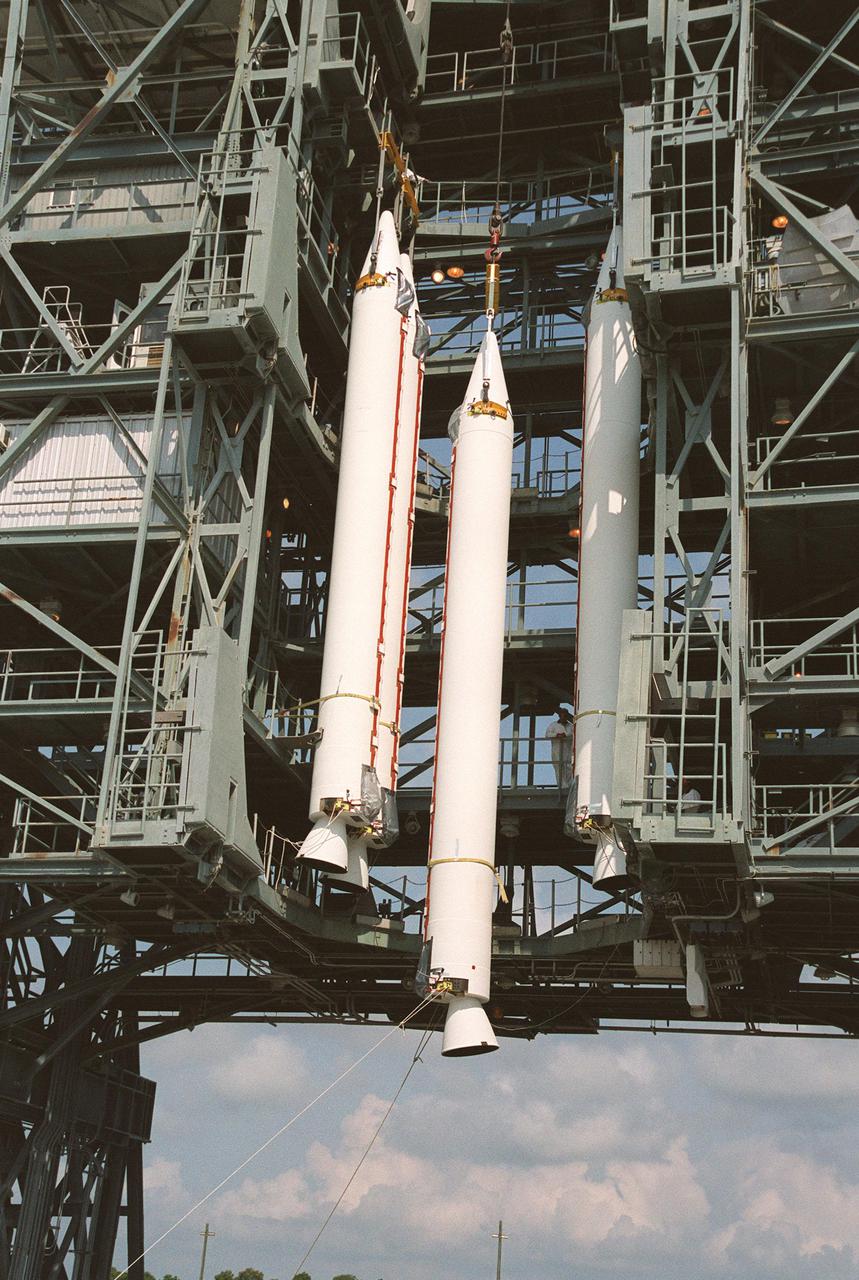
KENNEDY SPACE CENTER, FLA. -- Four solid rocket boosters are lifted up the gantry at Launch Complex 17-B, Cape Canaveral Air Force Station. The SRBs will be mated to the Delta II rocket that will launch the MAP instrument into a lunar-assisted trajectory to the Sun-Earth for a 27-month mission. The MAP mission will examine conditions in the early universe by measuring temperature differences in cosmic microwave background radiation, which is the radiant heat left over from the Big Bang. The properties of this radiation directly reflect conditions in the early universe. MAP is scheduled to launch June 30 at 3:46:46 p.m. EDT
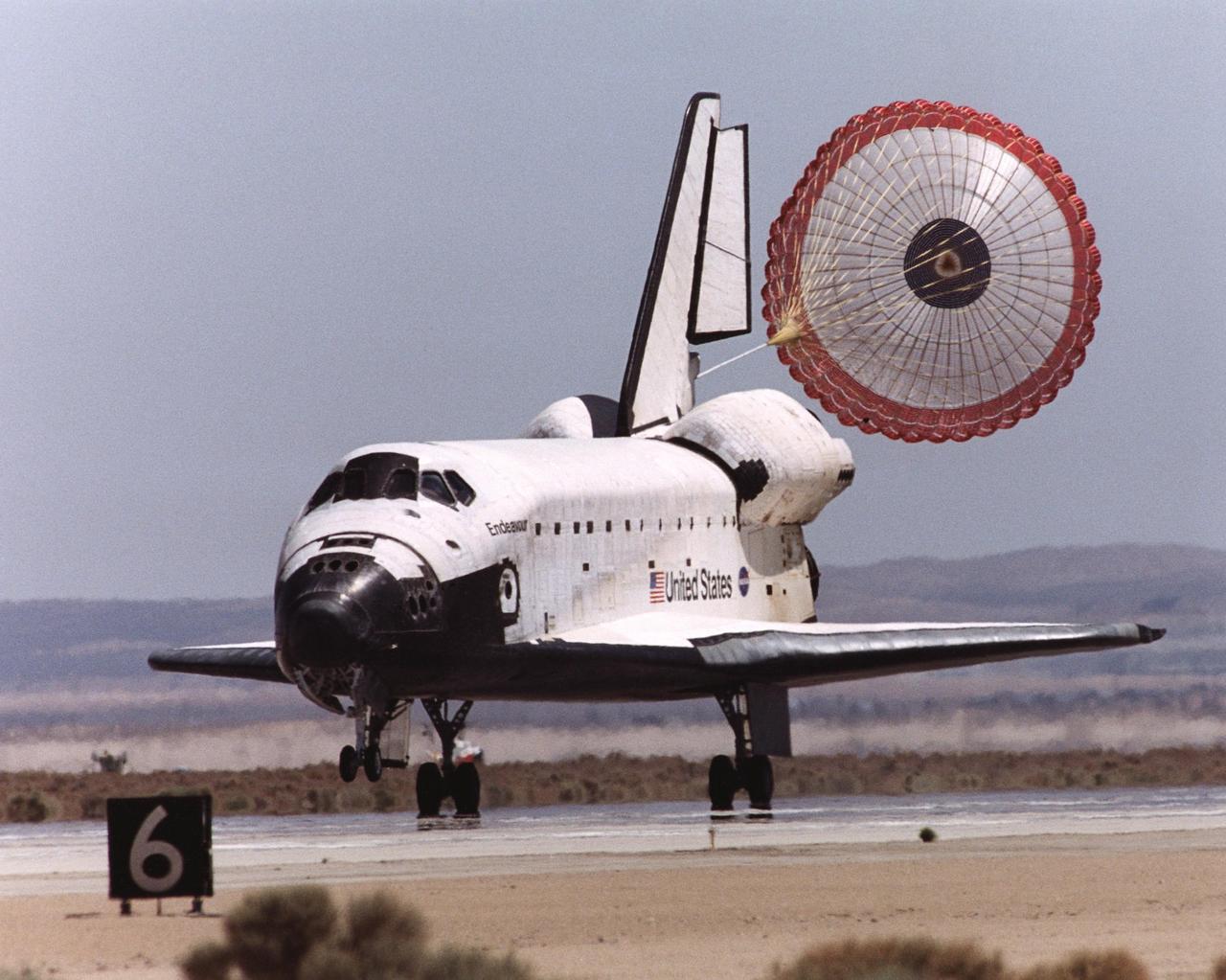
EDWARDS AFB, CALIF. -- After traveling 5.8 million miles in space during 217 orbits, and with drag chute deployed, Endeavour lands on concrete runway 22 at Dryden Flight Research Center, Edwards Air Force Base, Calif., completing mission STS-111. Three days of unfavorable weather conditions at KSC prompted the decision to land at Edwards, which enjoyed pristine, dry conditions.. Main gear touchdown occurred at 1:57:41 p.m EDT, nose gear touchdown at 1:57:53 p.m. EDT and wheel stop at 1:58:45 p.m. EDT. [Photo by Jim Ross
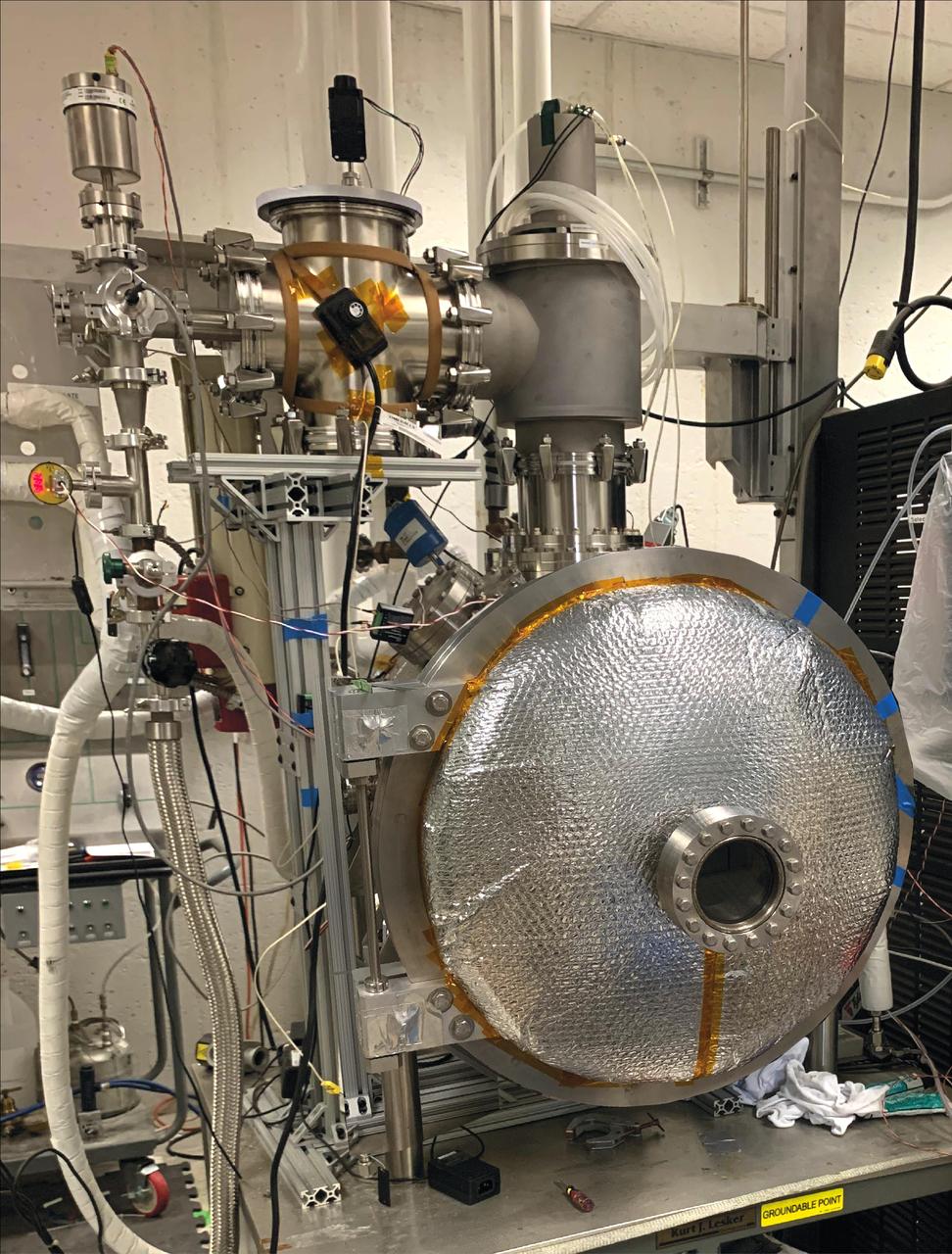
To simulate conditions on the giant asteroid Vesta that would occur after meteoroids strike the surface for a study published in October 2024, scientists used the Dirty Under-vacuum Simulation Testbed for Icy Environments, or DUSTIE, at NASA's Jet Propulsion Laboratory in Southern California. They were exploring the potential origins of deep channels, or gullies, on the surface of Vesta, which lies in the main asteroid belt between Mars and Jupiter. By rapidly reducing the air pressure surrounding samples of liquid, they mimicked the environment around fluid that comes to the surface. Exposed to vacuum conditions, pure water froze instantly. But salty fluids hung around longer, continuing to flow before freezing. https://photojournal.jpl.nasa.gov/catalog/PIA26070
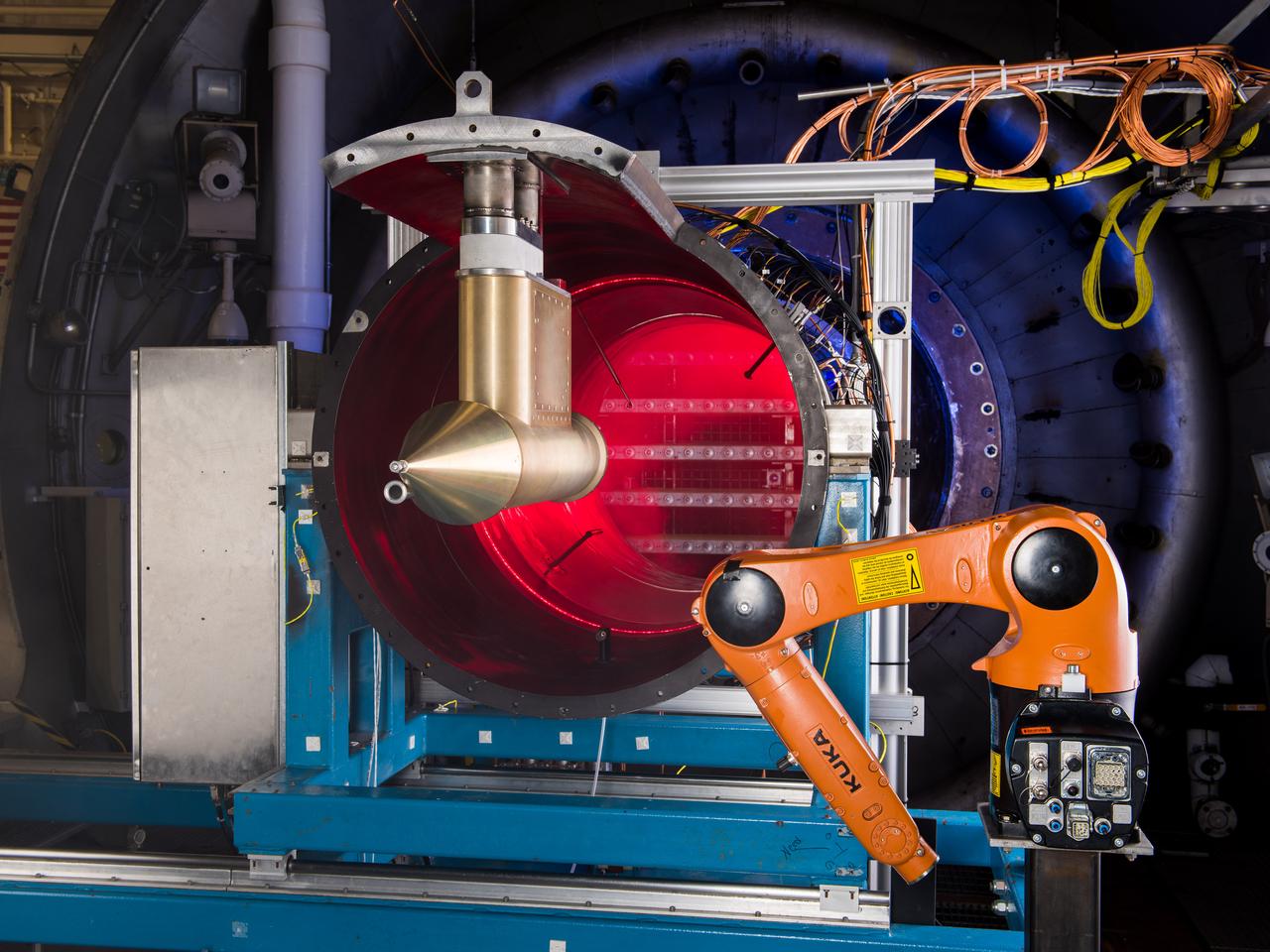
NASA Glenn’s Propulsion Systems Lab (PSL) is conducting research to characterize ice crystal clouds that can create a hazard to aircraft engines in certain conditions. With specialized equipment, scientists can create a simulated ice crystal cloud with the set of bars in the back spraying out a mist. The red area includes lasers, which measure the intensity of the cloud and a series of probes to measure everything from humidity to air pressure. The isokinetic probe (in gold) samples particles and the robotic arm (in orange) has a test tube on the end that catches ice particles for further measuring. NASA Glenn’s PSL is the only place in the world which can create these kind of ice crystal cloud conditions.
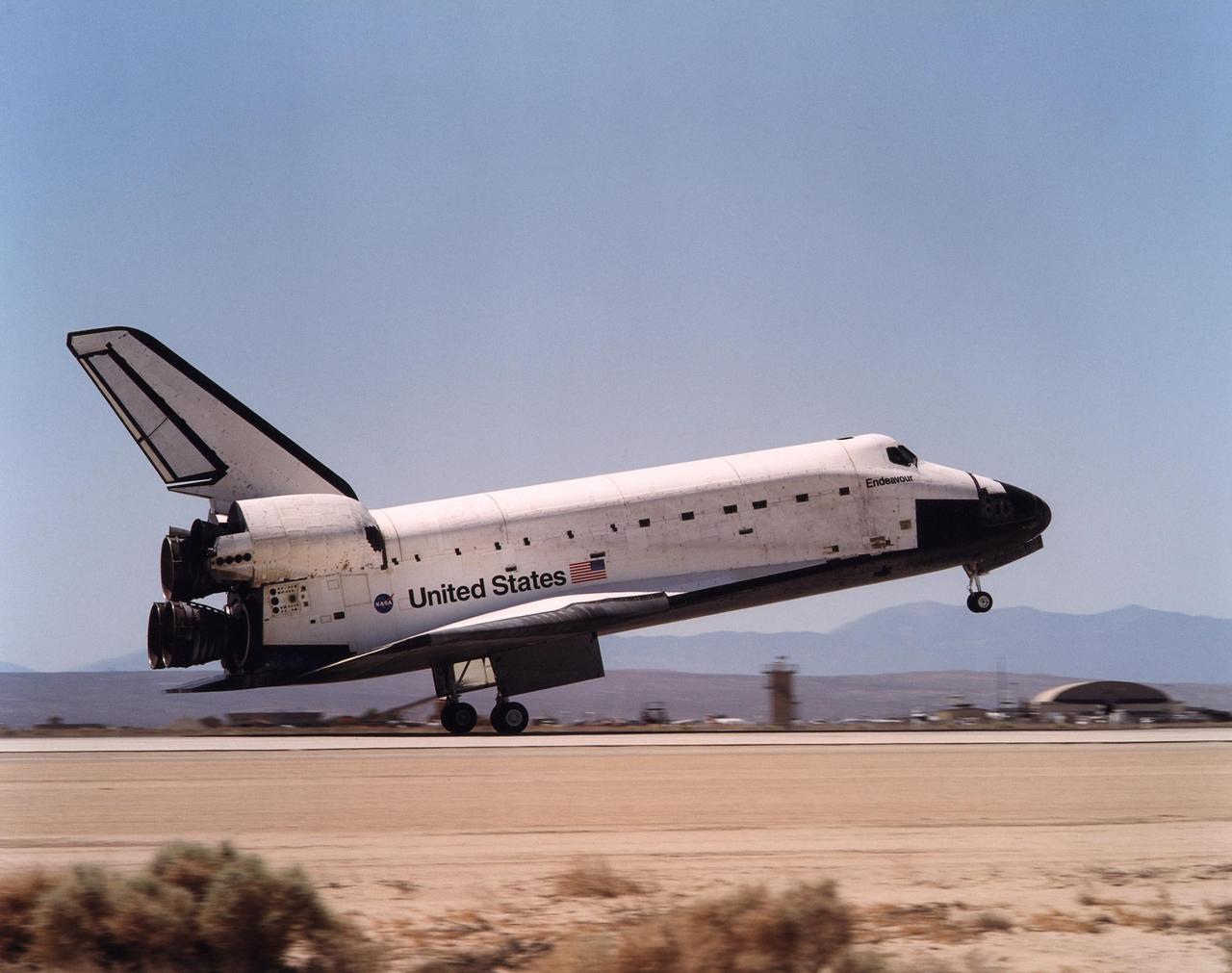
EDWARDS AFB, CALIF. -- After traveling 5.8 million miles in space during 217 orbits, Endeavour touches down on concrete runway 22 at Dryden Flight Research Center, Edwards Air Force Base, Calif., completing mission STS-111. Three days of unfavorable weather conditions at KSC prompted the decision to land at Edwards, which enjoyed pristine, dry conditions.. Main gear touchdown occurred at 1:57:41 p.m EDT, nose gear touchdown at 1:57:53 p.m. EDT and wheel stop at 1:58:45 p.m. EDT. [Photo by Tom Tschida
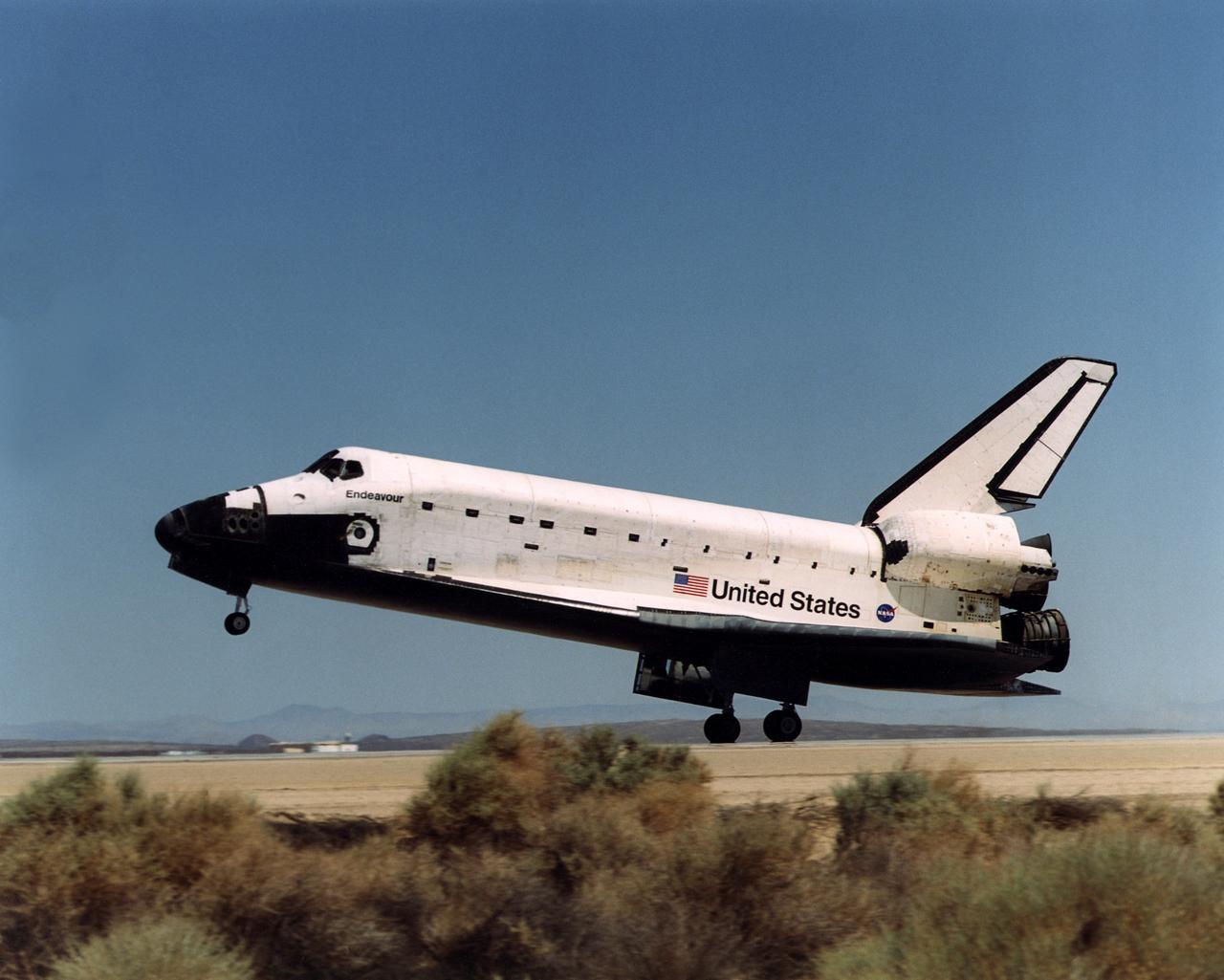
STS111-S-026 (19 June 2002) --- After traveling 5.8 million miles in space during 217 orbits, the Space Shuttle Endeavour is just about to complete NASA's STS-111 mission with a landing on concrete runway 22 at Dryden Flight Research Center, Edwards Air Force Base, Calif. Three days of unfavorable weather conditions at KSC prompted the decision to land at Edwards, which enjoyed pristine, dry conditions. Main gear touchdown occurred at 10:57:41 a.m. (PDT), nose gear touchdown at 10:57:53 a.m. (PDT) and wheel stop at 10:58:45 a.m. (PDT).
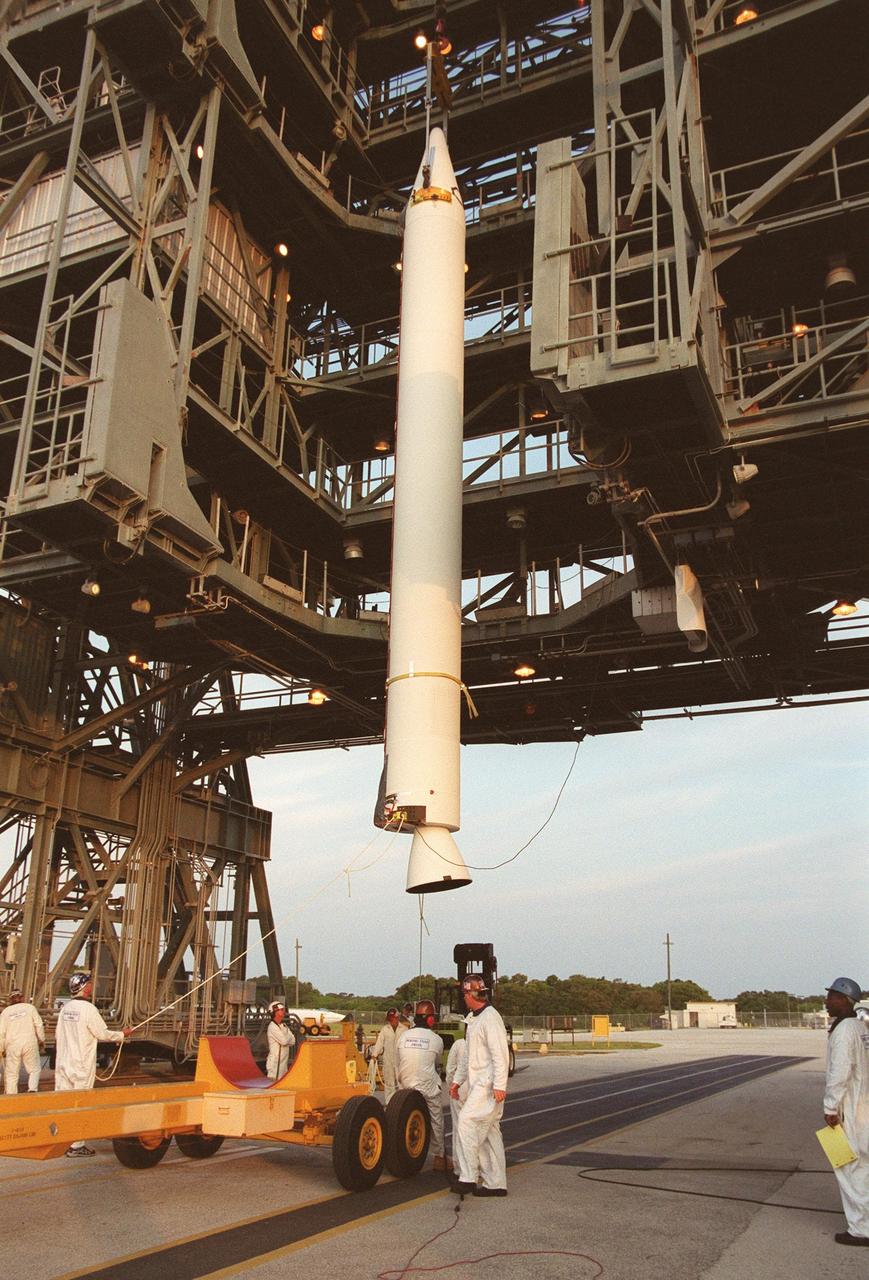
KENNEDY SPACE CENTER, FLA. -- A solid rocket booster is lifted up the gantry at Launch Complex 17-B, Cape Canaveral Air Force Station. The SRB will be mated to the Delta II rocket that will launch the MAP instrument into a lunar-assisted trajectory to the Sun-Earth for a 27-month mission. The MAP mission will examine conditions in the early universe by measuring temperature differences in cosmic microwave background radiation, which is the radiant heat left over from the Big Bang. The properties of this radiation directly reflect conditions in the early universe. MAP is scheduled to launch June 30 at 3:46:46 p.m. EDT
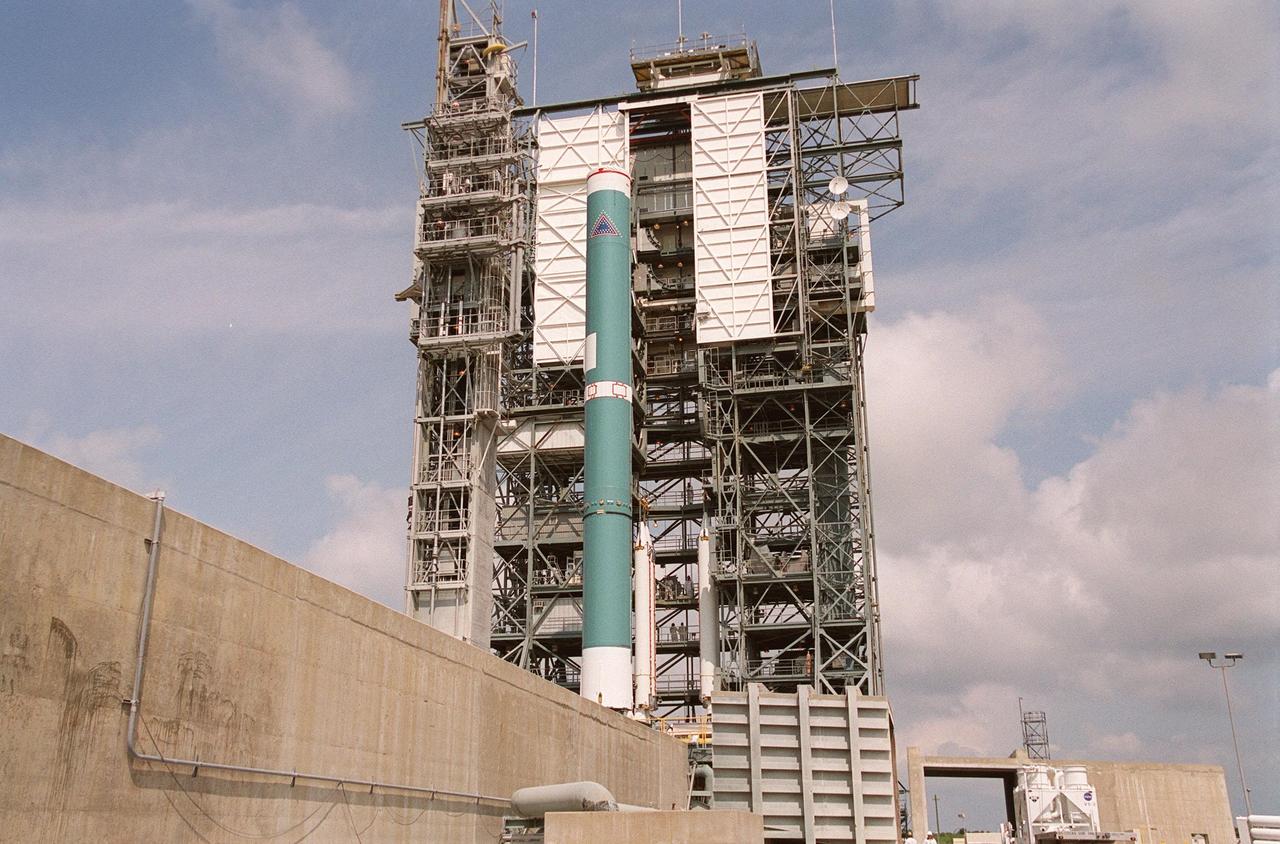
KENNEDY SPACE CENTER, FLA. -- On Launch Complex 17-B, Cape Canaveral Air Force Station, the Delta II rocket waits to be mated to four solid rocket boosters (behind the Delta). The rocket will launch the MAP instrument into a lunar-assisted trajectory to the Sun-Earth for a 27-month mission. The MAP mission will examine conditions in the early universe by measuring temperature differences in cosmic microwave background radiation, which is the radiant heat left over from the Big Bang. The properties of this radiation directly reflect conditions in the early universe. MAP is scheduled to launch June 30 at 3:46:46 p.m. EDT
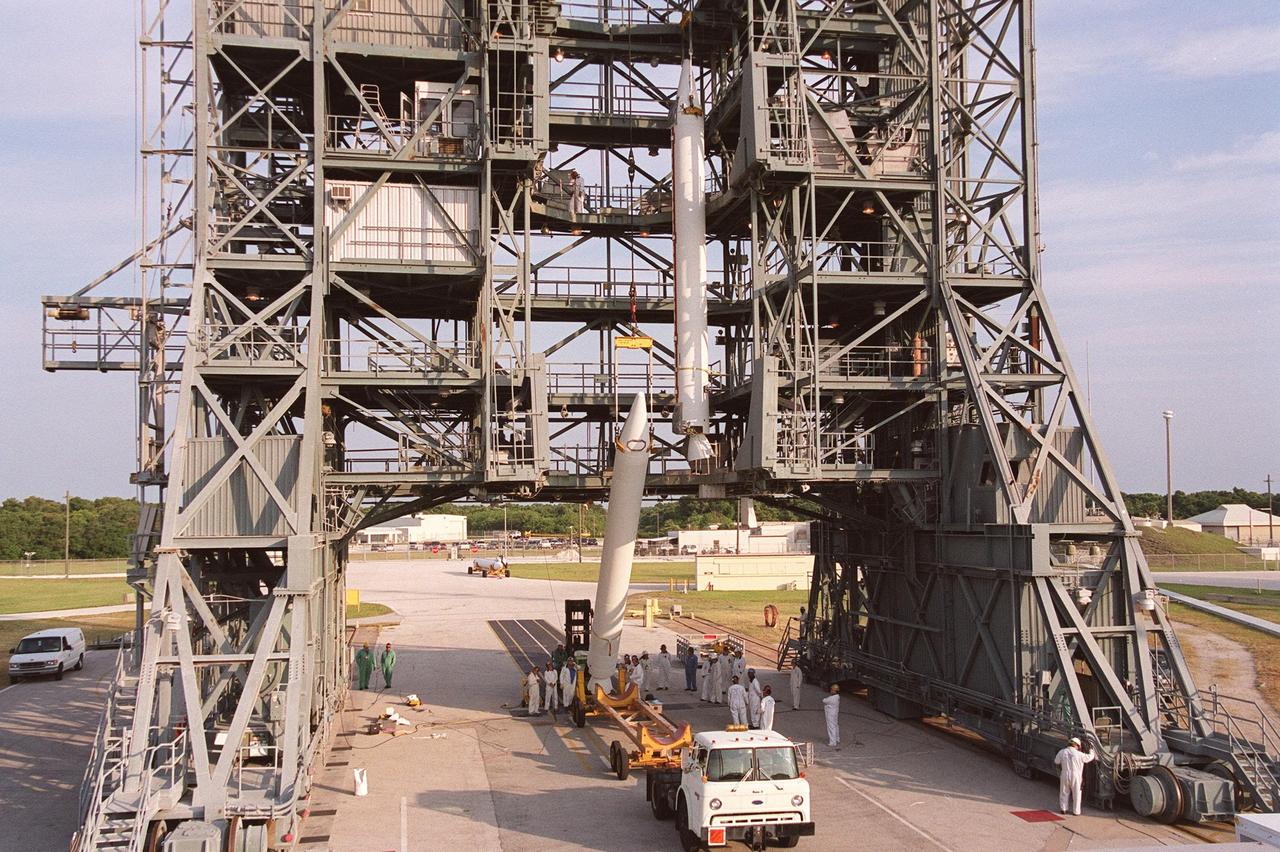
KENNEDY SPACE CENTER, FLA. -- A second solid rocket booster is lifted up the gantry at Launch Complex 17-B, Cape Canaveral Air Force Station. The SRBs will be mated to the Delta II rocket that will launch the MAP instrument into a lunar-assisted trajectory to the Sun-Earth for a 27-month mission. The MAP mission will examine conditions in the early universe by measuring temperature differences in cosmic microwave background radiation, which is the radiant heat left over from the Big Bang. The properties of this radiation directly reflect conditions in the early universe. MAP is scheduled to launch June 30 at 3:46:46 p.m. EDT

Workers in the Payload Hazardous Servicing Facility (PHSF) finish the removal of a protective cover from the Cassini spacecraft with its attached Huygens probe. Damage to thermal insulation was discovered inside Huygens from an abnormally high flow of conditioned air. Further internal inspection, insulation repair and a cleaning of the probe are now required. Mission managers are targeting a mid-October launch date after Cassini returns to the pad and is once again placed atop its Titan IVB expendable launch vehicle at Launch Pad 40 at Cape Canaveral Air Station. Cassini will explore the Saturnian system, including the planet’s rings, while the Huygens probe will explore the moon Titan
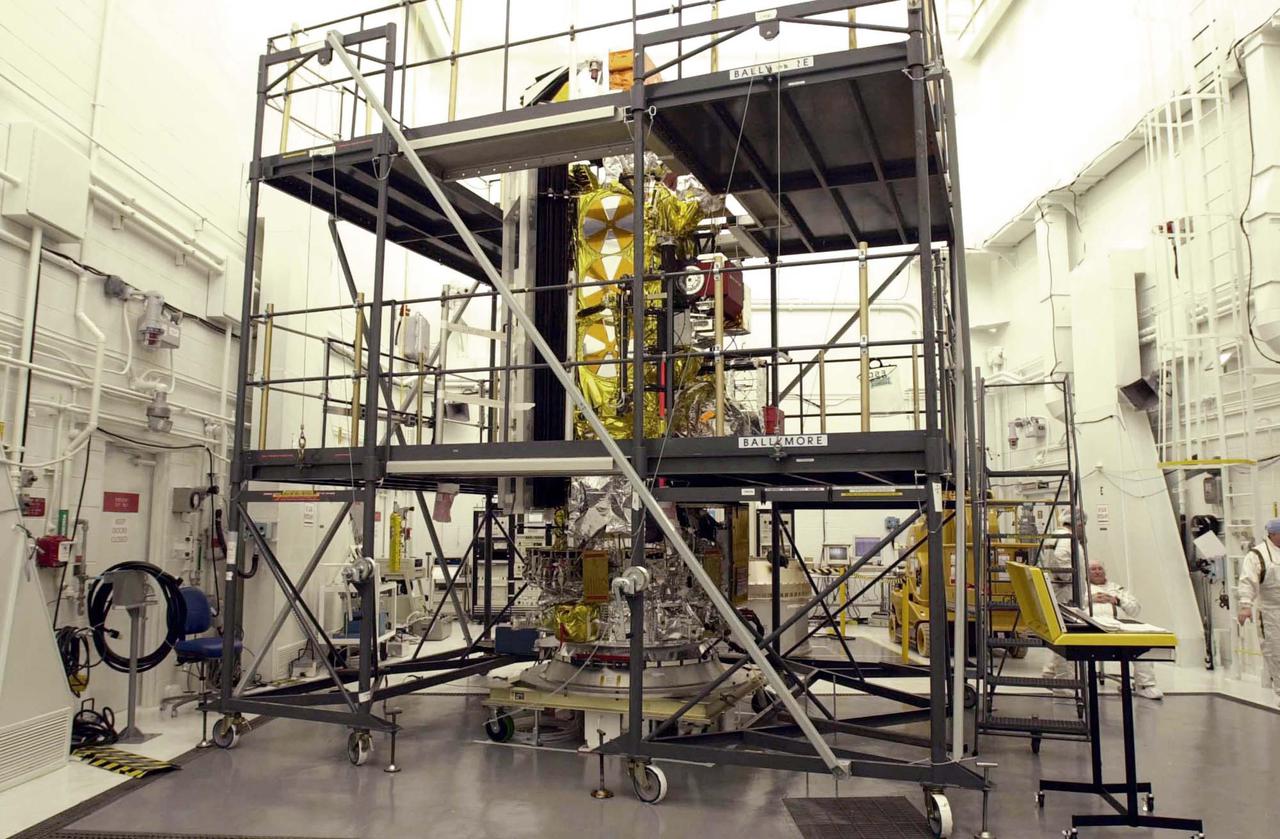
VANDENBERG AIR FORCE BASE, CALIF. - Inside the NASA spacecraft processing hangar 1610 located on North Vandenberg Air Force Base in California, the National Oceanic and Atmospheric Administration (NOAA-N) spacecraft is undergoing testing. The testing includes a the Spacecraft Electrical Performance Test, battery conditioning, a Solar Array Illumination Telemetry Test, final instrument inspections and closeouts for flight. Launch of NOAA-N aboard the Boeing Delta II rocket is currently scheduled for May 11, 2005. NOAA-N is the fourth in the series of support dedicated microwave instruments for the generation of temperature, moisture, surface, and hydrological products in cloudy regions where visible and infrared (IR) instruments have decreased capability.
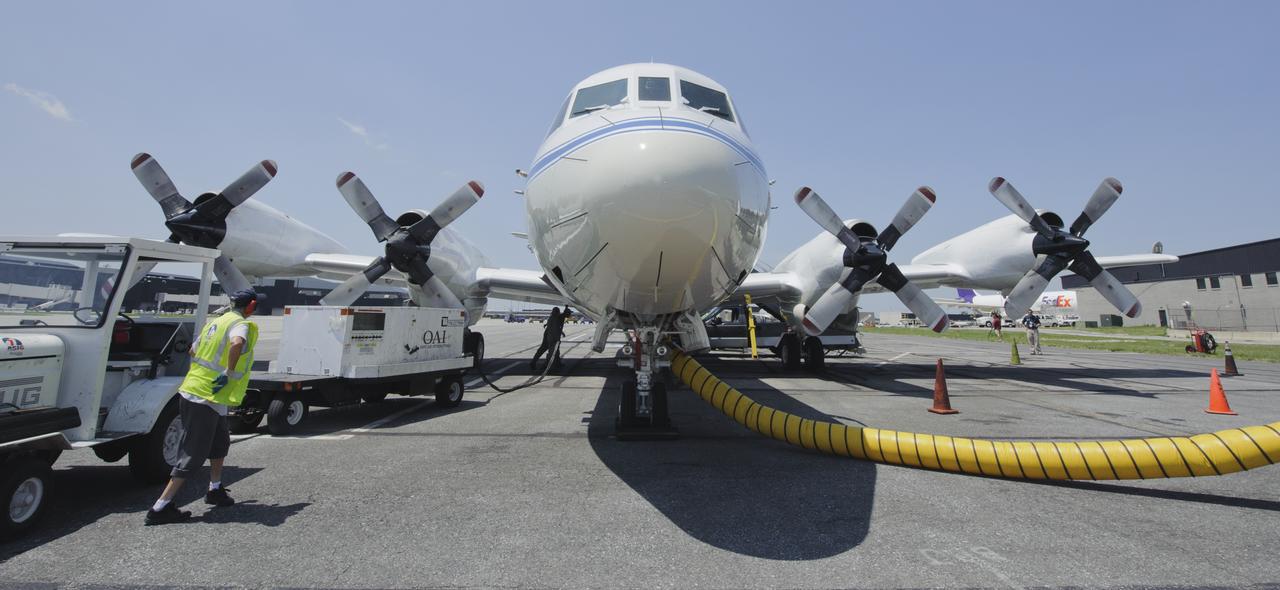
A 117-foot P-3B NASA research aircraft is seen on the tarmac at Baltimore/Washington International Thurgood Marshall Airport, Tuesday, June 28, 2011, in Baltimore, Md. The aircraft is part of a month-long field campaign designed to improve satellite measurements of air pollution. The name of the experiment -- Deriving Information on Surface conditions from Column and Vertically Resolved Observations Relevant to Air Quality (DISCOVER -- AQ) -- is a mouthful, but its purpose is simple. Come July, the aircraft will be flying spirals over six ground stations in Maryland. Photo Credit: (NASA/Paul E. Alers)
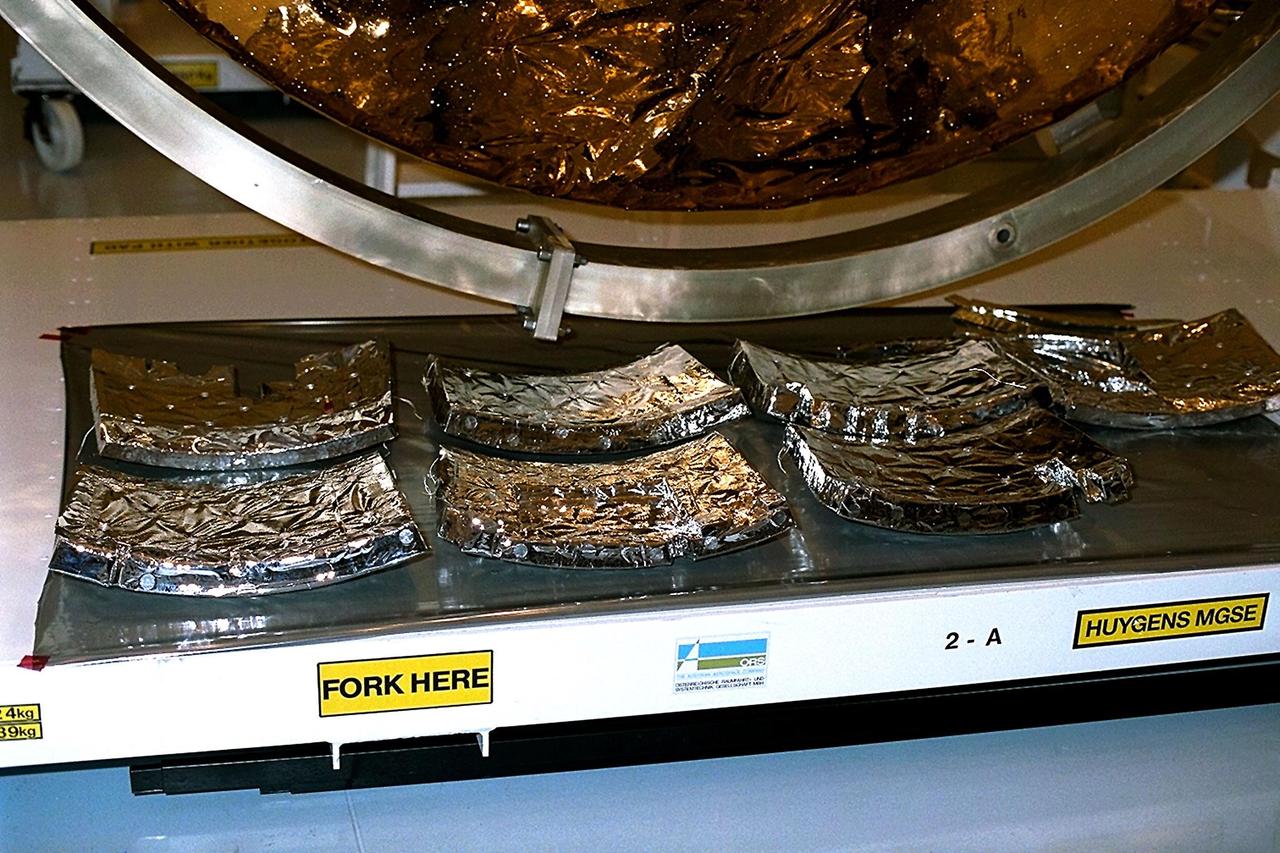
Pieces of the Huygens probe internal insulating foam await inspection after removal from the probe in the Payload Hazardous Servicing Facility (PHSF) at KSC. The spacecraft was returned to the PHSF after damage to thermal insulation was discovered inside Huygens from an abnormally high flow of conditioned air. Internal inspection, insulation repair and a cleaning of the probe were required. Mission managers are targeting a mid-October launch date after Cassini returns to the pad and is once again placed atop its Titan IVB expendable launch vehicle at Launch Pad 40 at Cape Canaveral Air Station
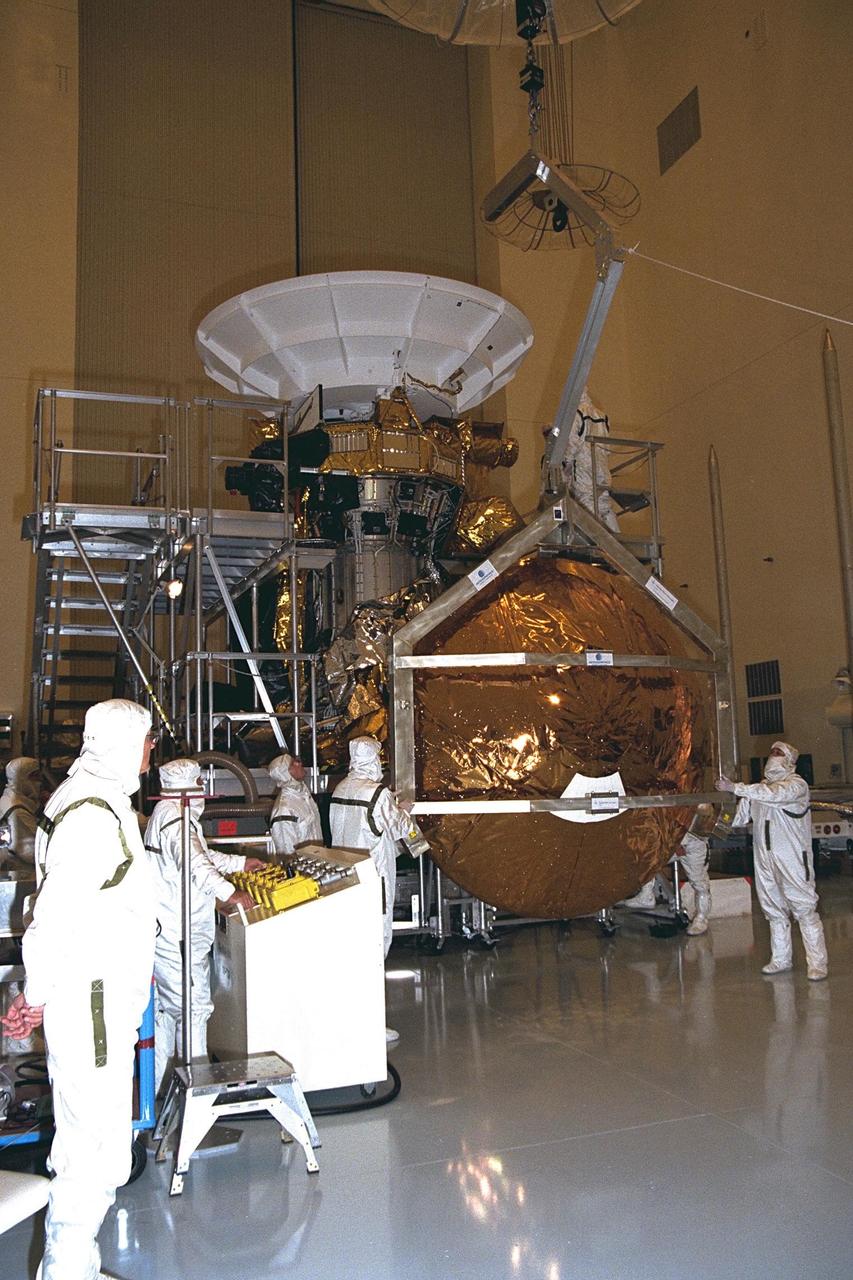
Workers remove the Huygens probe from the Cassini spacecraft in the Payload Hazardous Servicing Facility (PHSF) at KSC. The spacecraft was returned to the PHSF after damage to thermal insulation was discovered inside Huygens from an abnormally high flow of conditioned air. Further internal inspection, insulation repair and a cleaning of the probe are now required. Mission managers are targeting a mid-October launch date after Cassini returns to the pad and is once again placed atop its Titan IVB expendable launch vehicle at Launch Pad 40 at Cape Canaveral Air Station
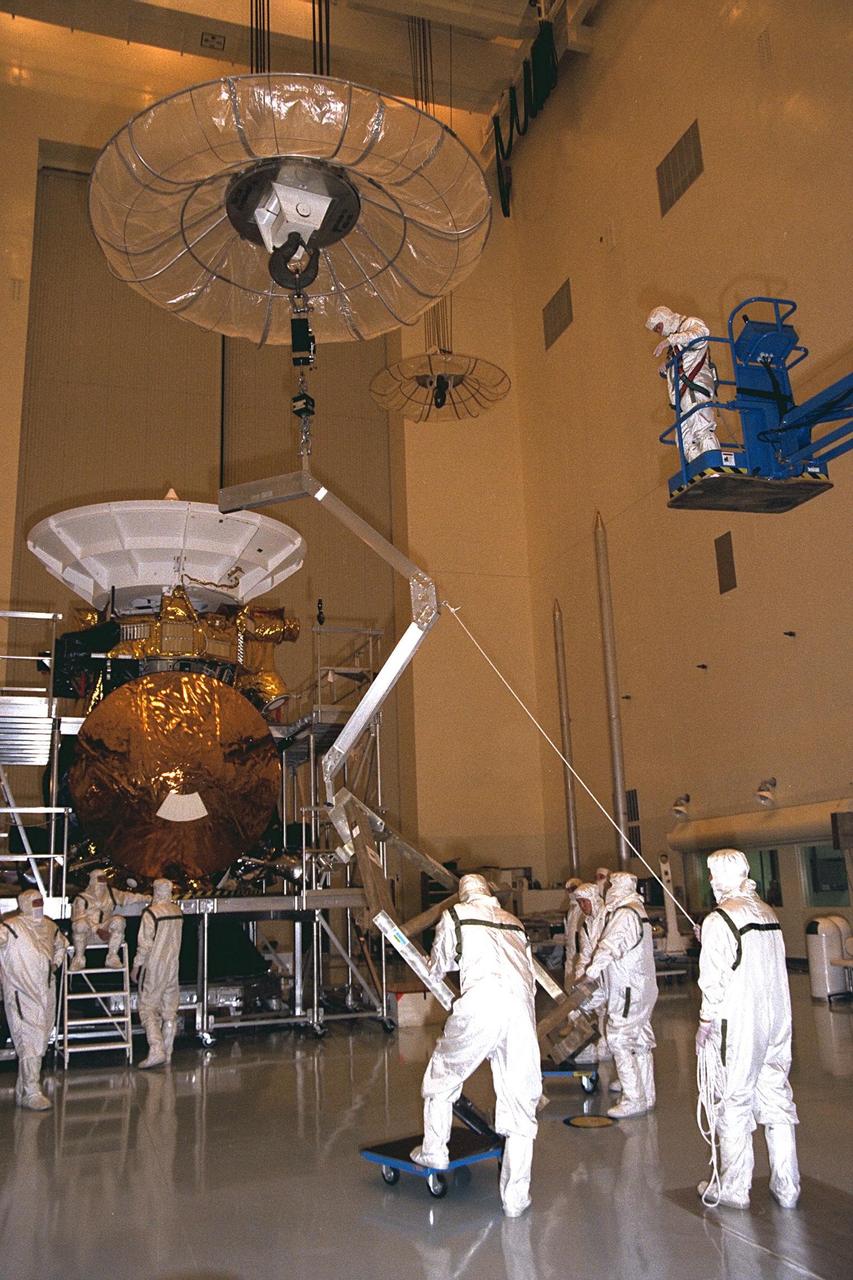
Workers remove the Huygens probe from the Cassini spacecraft in the Payload Hazardous Servicing Facility (PHSF) at KSC. The spacecraft was returned to the PHSF after damage to thermal insulation was discovered inside Huygens from an abnormally high flow of conditioned air. Further internal inspection, insulation repair and a cleaning of the probe are now required. Mission managers are targeting a mid-October launch date after Cassini returns to the pad and is once again placed atop its Titan IVB expendable launch vehicle at Launch Pad 40 at Cape Canaveral Air Station
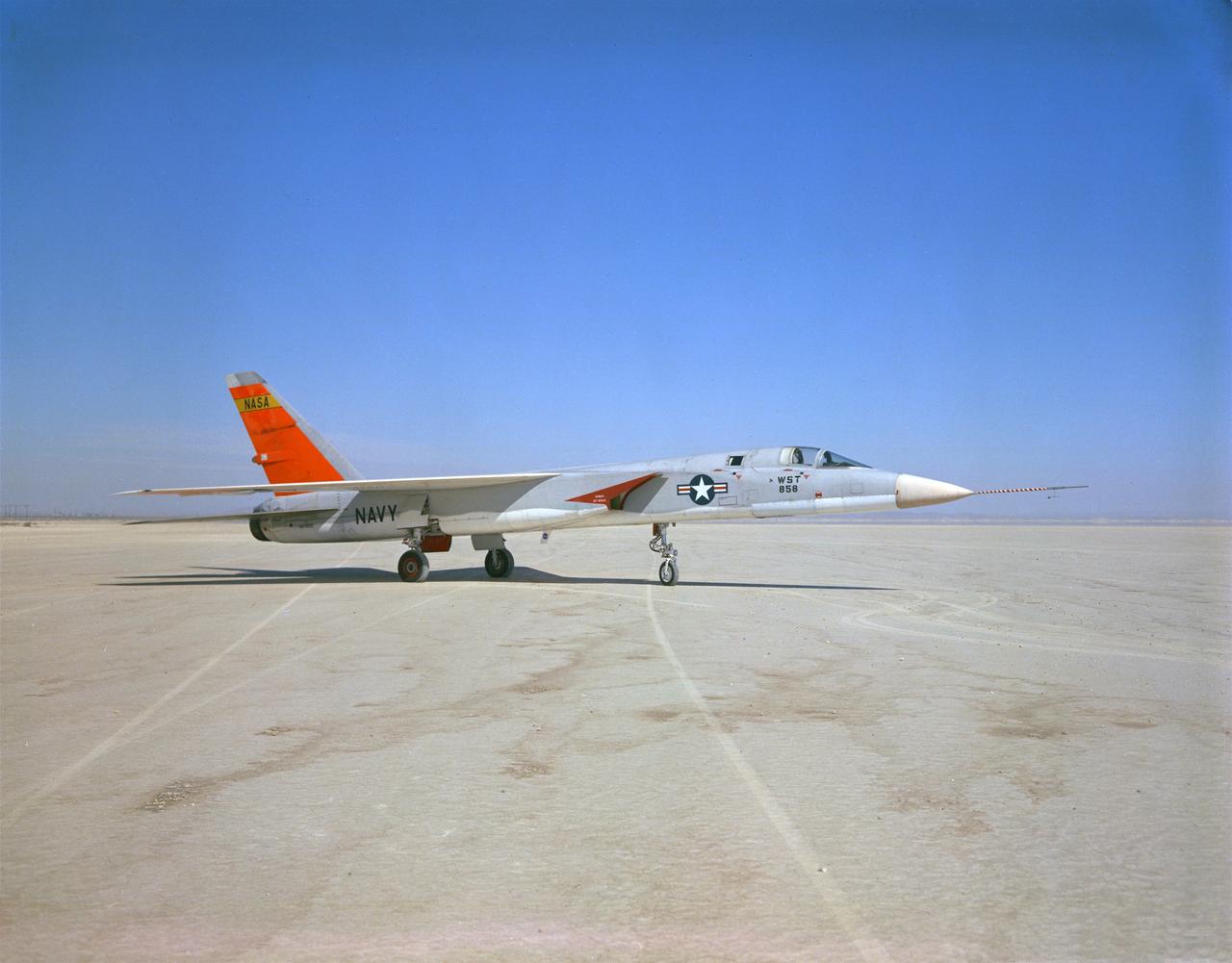
A North American Aviation A-5A Vigilante (Navy serial number 147858/NASA tail number 858) arrived from the Naval Air Test Center, Patuxent River, MD, on December 19, 1962, at the NASA Flight Research Center (now, Dryden Flight Research Center, Edwards, CA). The Center flew the A-5A in a year-long series of flights in support of the U.S. supersonic transport program. The Center flew the aircraft to determine the let-down and approach conditions of a supersonic transport flying into a dense air traffic network. With the completion of the research flights, the Center sent the A-5A back to the Navy on December 20, 1963.
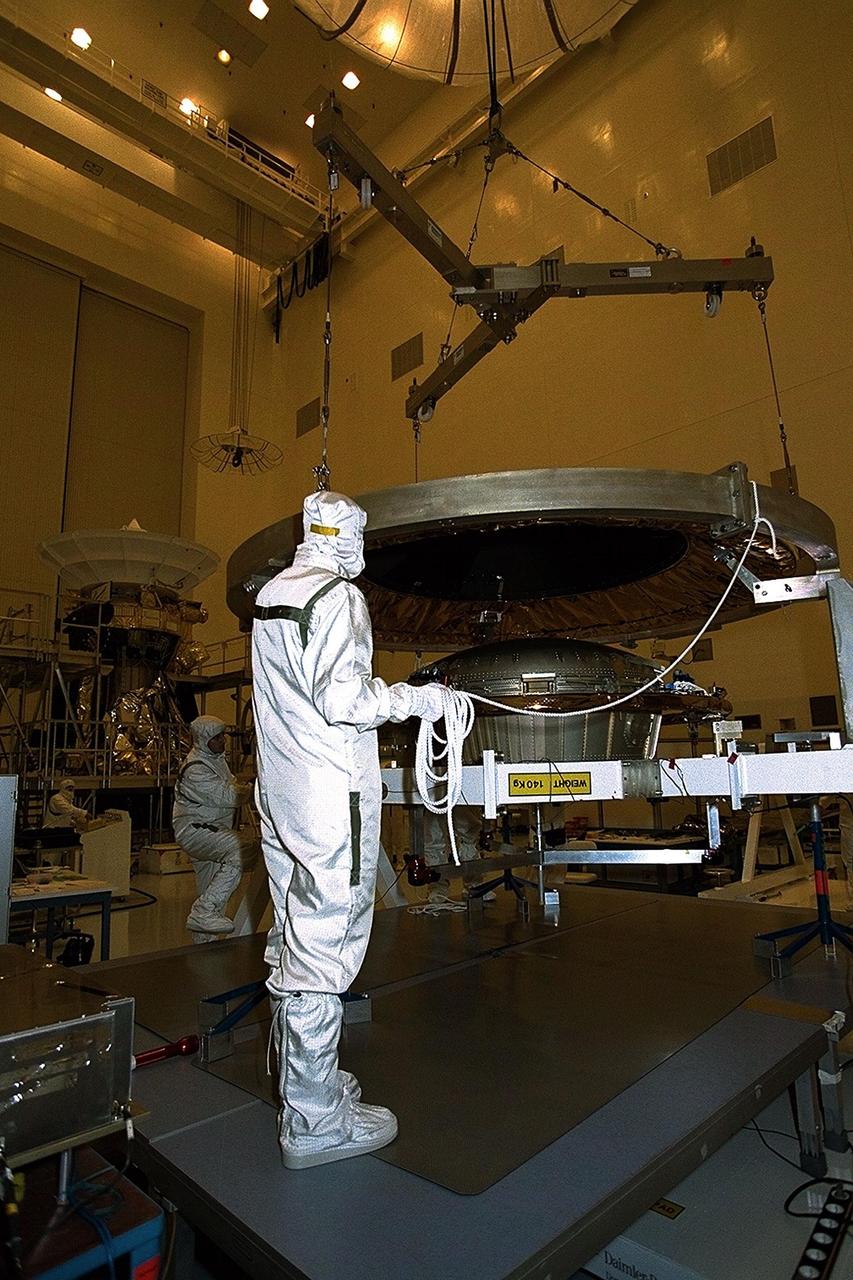
Dornier Satelliten Systeme (DSS) workers lift the heat shield of the Huygens probe in the Payload Hazardous Servicing Facility (PHSF) at KSC. The spacecraft was returned to the PHSF after damage to thermal insulation was discovered inside Huygens from an abnormally high flow of conditioned air. Internal inspection, insulation repair and a cleaning of the probe were required. Mission managers are targeting a mid-October launch date after the Cassini spacecraft, aboard which Huygens will be launched, returns to the pad and is once again placed atop its Titan IVB expendable launch vehicle at Launch Pad 40 at Cape Canaveral Air Station

Dornier Satelliten Systeme (DSS) workers lift the heat shield of the Huygens probe in the Payload Hazardous Servicing Facility (PHSF) at KSC. The spacecraft was returned to the PHSF after damage to thermal insulation was discovered inside Huygens from an abnormally high flow of conditioned air. Internal inspection, insulation repair and a cleaning of the probe were required. Mission managers are targeting a mid-October launch date after the Cassini spacecraft, aboard which Huygens will be launched, returns to the pad and is once again placed atop its Titan IVB expendable launch vehicle at Launch Pad 40 at Cape Canaveral Air Station
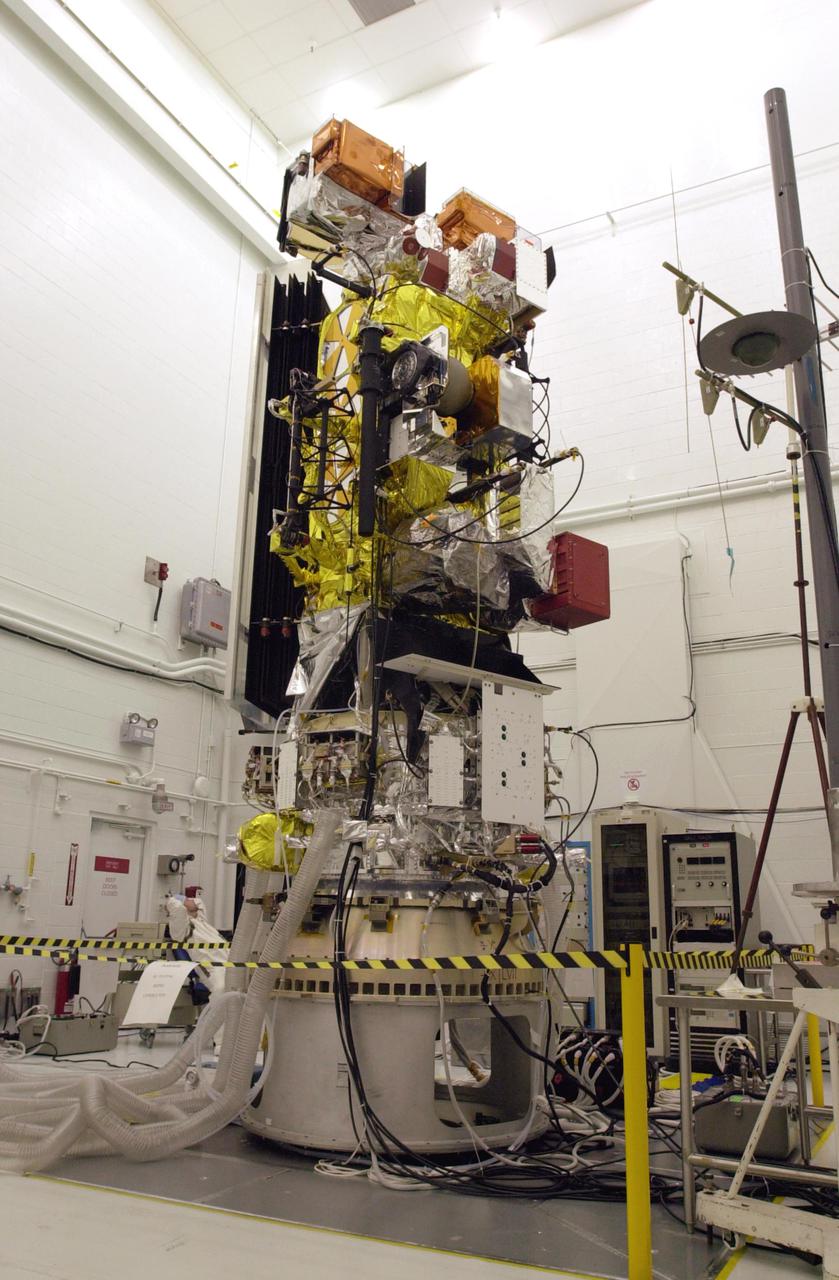
VANDENBERG AIR FORCE BASE, CALIF. - Inside the NASA spacecraft processing hangar 1610 located on North Vandenberg Air Force Base in California, the National Oceanic and Atmospheric Administration (NOAA-N) spacecraft is undergoing testing. The testing includes the Spacecraft Electrical Performance Test, battery conditioning, a Solar Array Illumination Telemetry Test, final instrument inspections and closeouts for flight. Launch of NOAA-N aboard the Boeing Delta II rocket is currently scheduled for May 11, 2005. NOAA-N is the fourth in the series of support dedicated microwave instruments for the generation of temperature, moisture, surface, and hydrological products in cloudy regions where visible and infrared (IR) instruments have decreased capability.
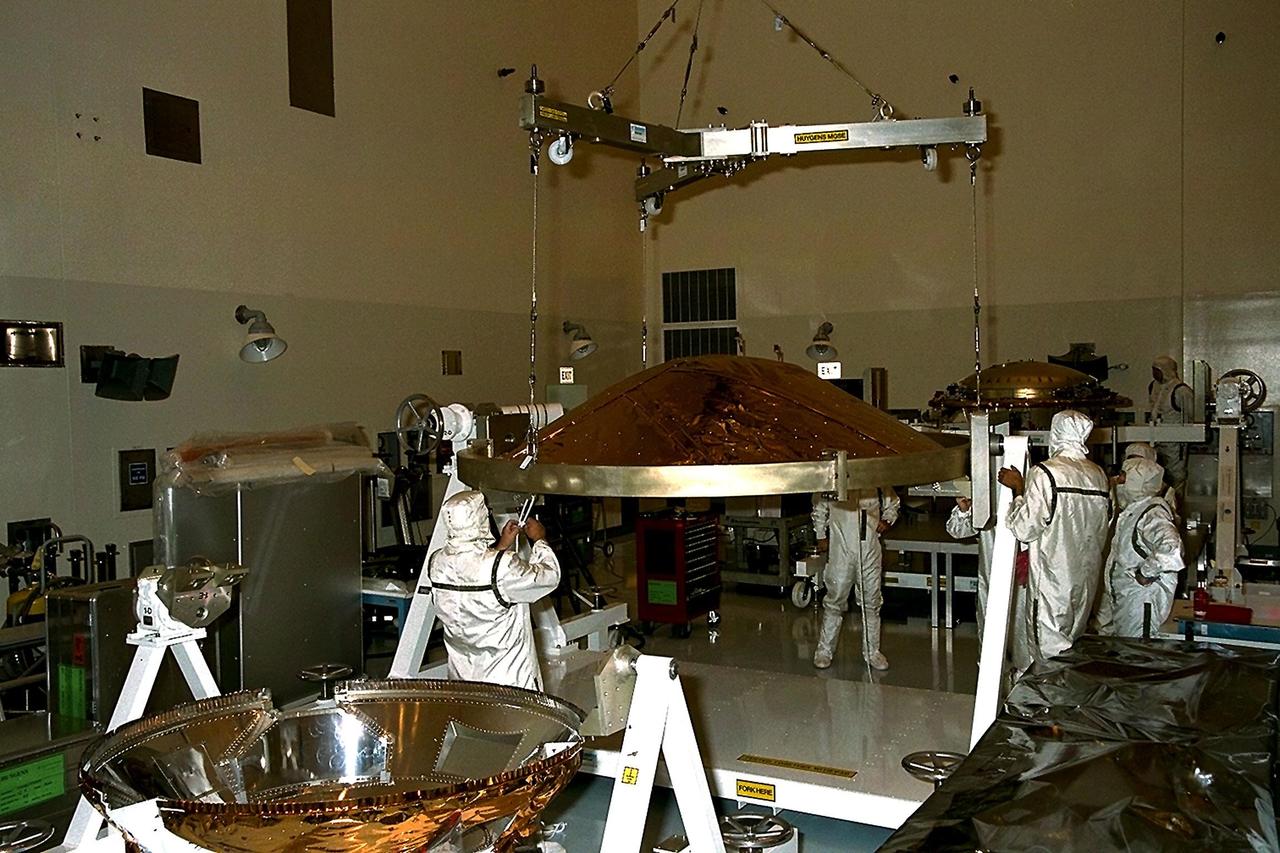
Dornier Satelliten Systeme (DSS) workers lift the front heat shield of the Huygens probe in the Payload Hazardous Servicing Facility (PHSF) at KSC. The spacecraft was returned to the PHSF after damage to thermal insulation was discovered inside Huygens from an abnormally high flow of conditioned air. Internal inspection, insulation repair and a cleaning of the probe were required. Mission managers are targeting a mid-October launch date after the Cassini spacecraft, aboard which Huygens will be launched, returns to the pad and is once again placed atop its Titan IVB expendable launch vehicle at Launch Pad 40 at Cape Canaveral Air Station
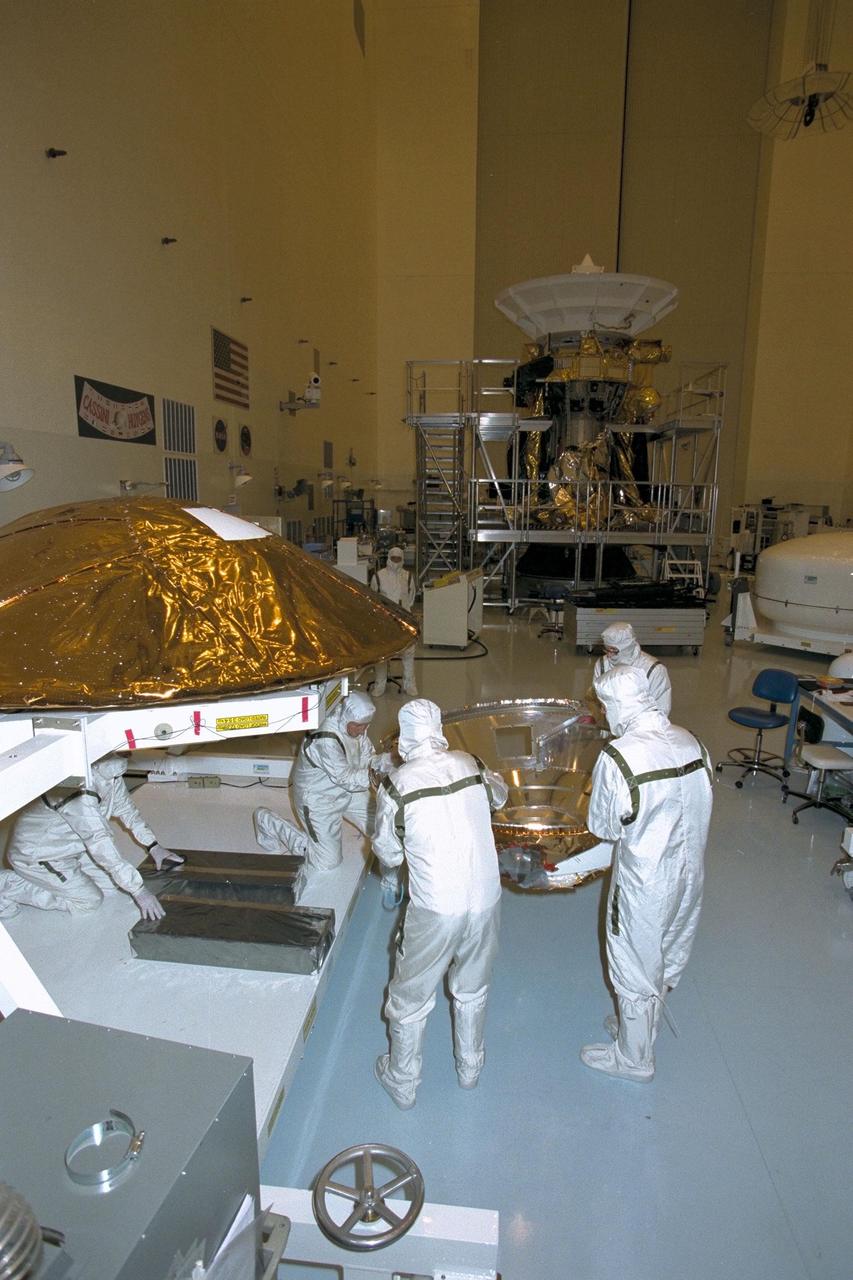
Dornier Satelliten Systeme (DSS) workers place the back cover of the Huygens probe under its front heat shield in the Payload Hazardous Servicing Facility (PHSF) at KSC. The spacecraft was returned to the PHSF after damage to thermal insulation was discovered inside Huygens from an abnormally high flow of conditioned air. Internal inspection, insulation repair and a cleaning of the probe were required. Mission managers are targeting a mid-October launch date after the Cassini spacecraft, aboard which Huygens will be launched, returns to the pad and is once again placed atop its Titan IVB expendable launch vehicle at Launch Pad 40 at Cape Canaveral Air Station
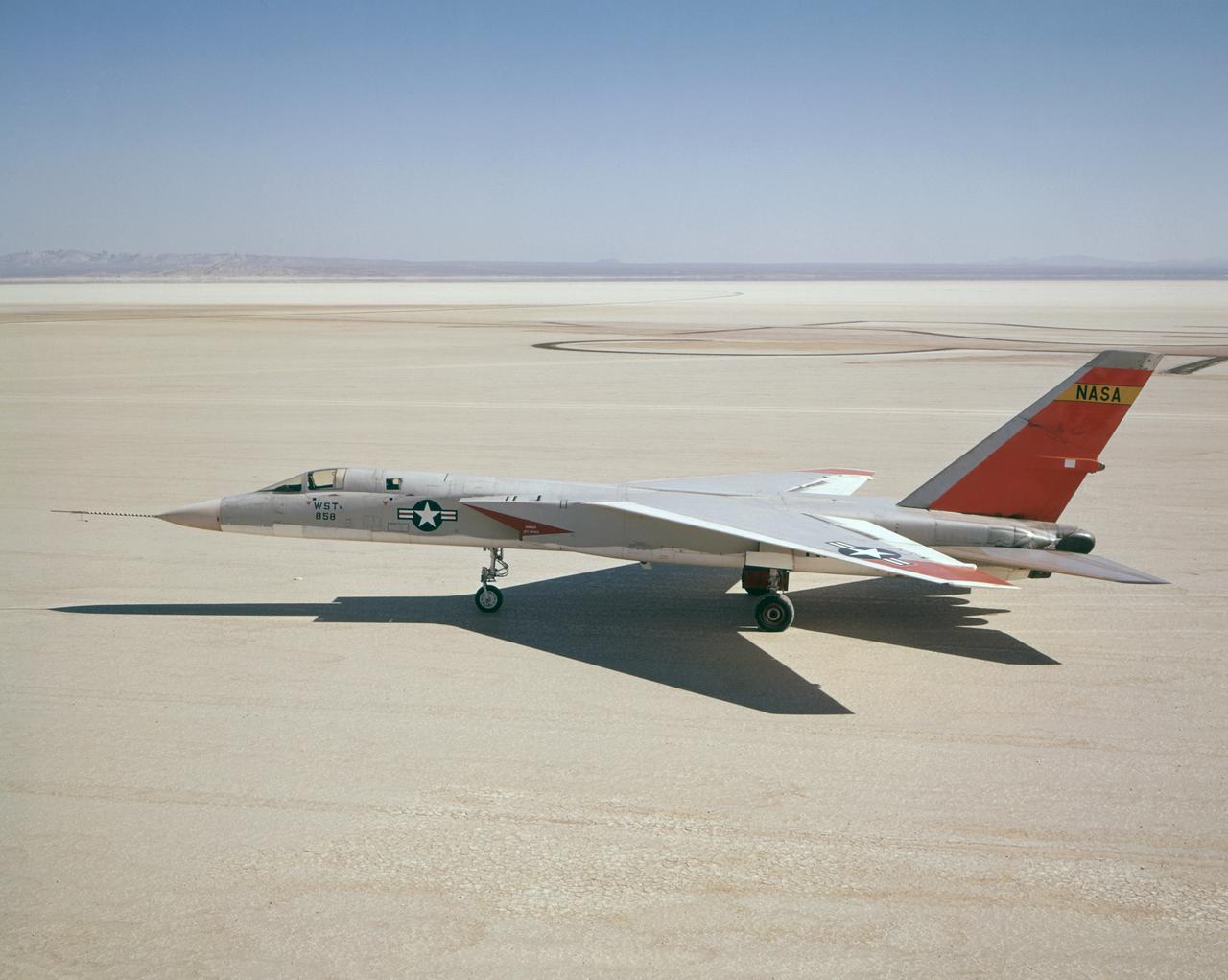
A North American Aviation A-5A Vigilante (Navy serial number 147858/NASA tail number 858) arrived from the Naval Air Test Center, Patuxent River, MD, on December 19, 1962, at the NASA Flight Research Center (now, Dryden Flight Research Center, Edwards, CA). The Center flew the A-5A in a year-long series of flights in support of the U.S. supersonic transport program. The Center flew the aircraft to determine the let-down and approach conditions of a supersonic transport flying into a dense air traffic network. With the completion of the research flights, the Center sent the A-5A back to the Navy on December 20, 1963.
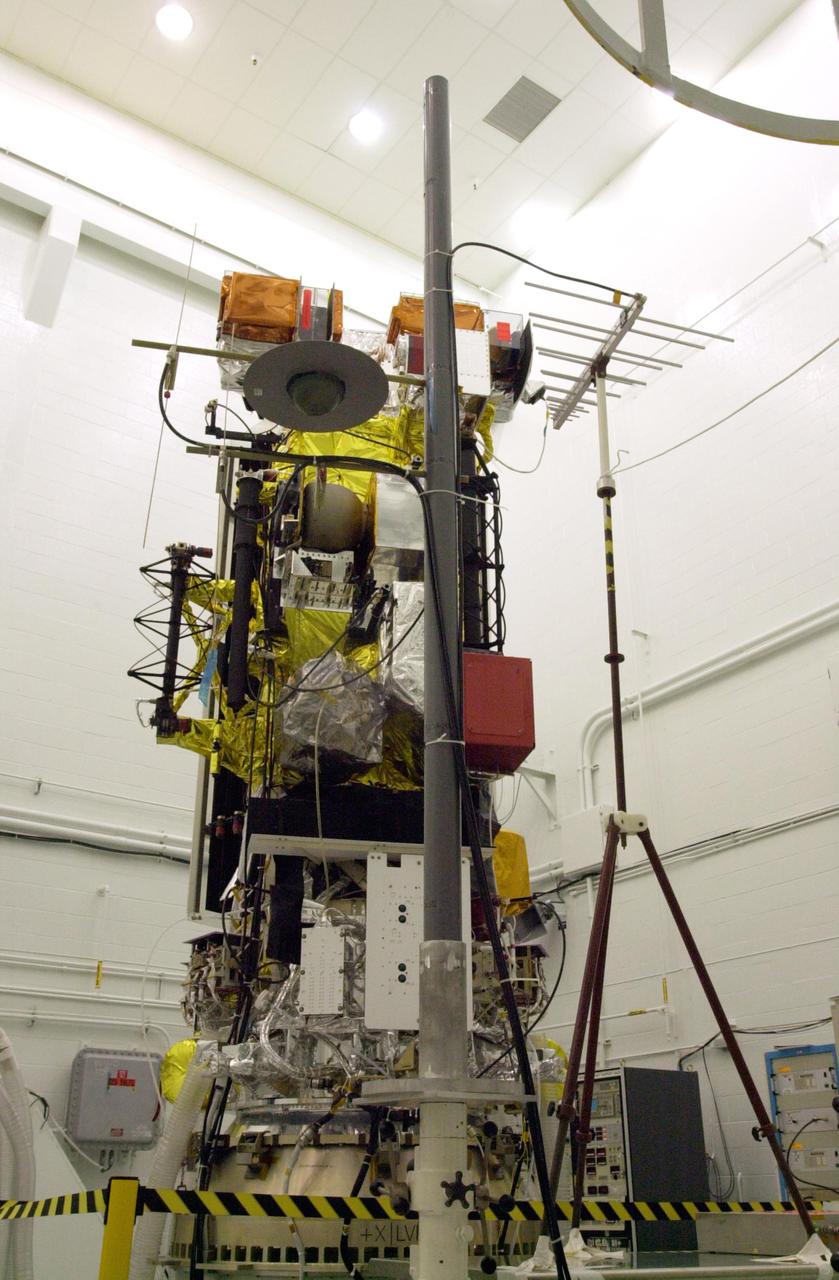
VANDENBERG AIR FORCE BASE, CALIF. - Inside the NASA spacecraft processing hangar 1610 located on North Vandenberg Air Force Base in California, the National Oceanic and Atmospheric Administration (NOAA-N) spacecraft is undergoing testing. The testing includes the Spacecraft Electrical Performance Test, battery conditioning, a Solar Array Illumination Telemetry Test, final instrument inspections and closeouts for flight. Launch of NOAA-N aboard the Boeing Delta II rocket is currently scheduled for May 11, 2005. NOAA-N is the fourth in the series of support dedicated microwave instruments for the generation of temperature, moisture, surface, and hydrological products in cloudy regions where visible and infrared (IR) instruments have decreased capability.
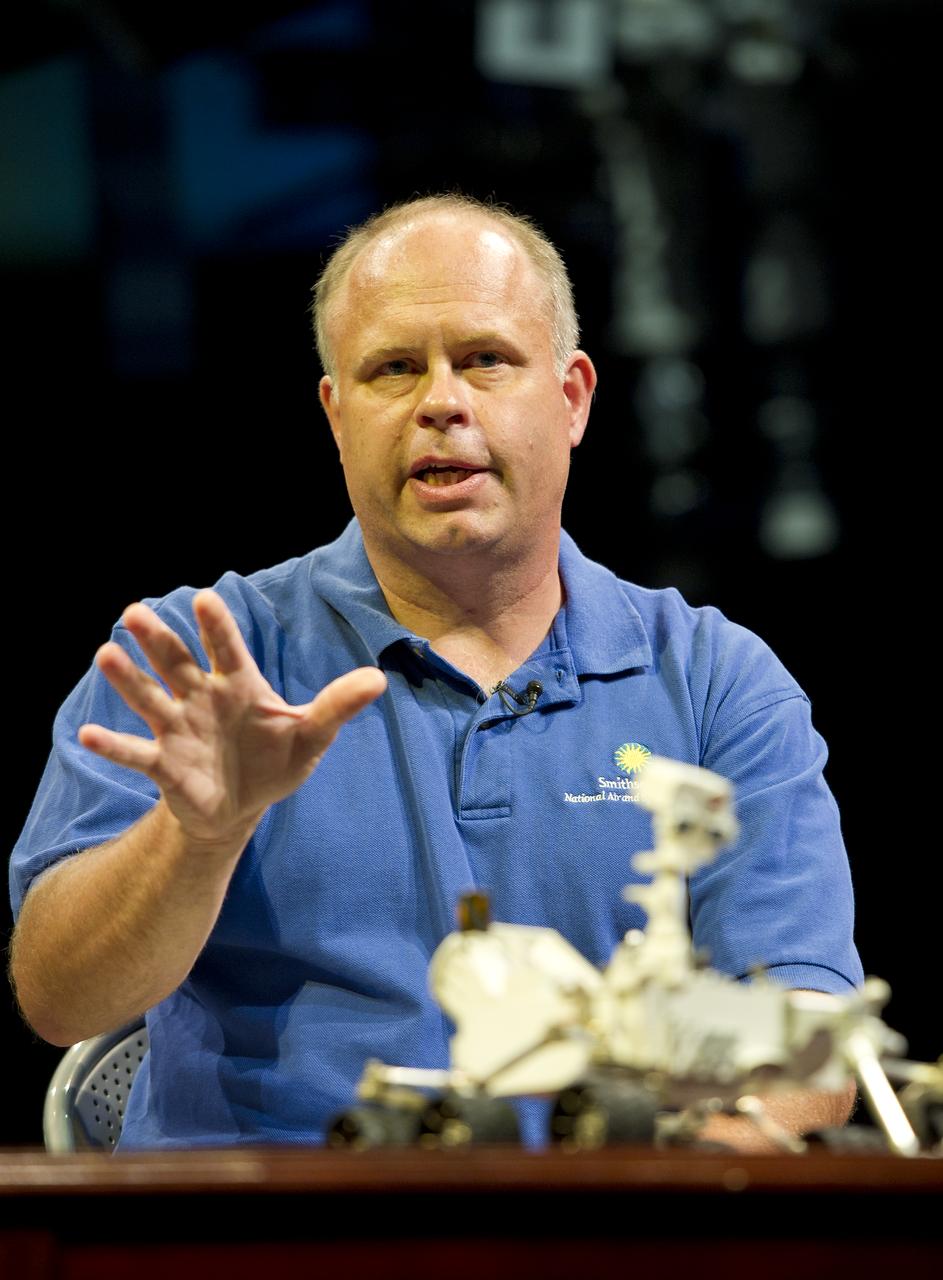
John Grant, geologist, Smithsonian National Air and Space Museum in Washington, speaks at a Mars Science Laboratory (MSL) press conference at the Smithsonian's National Air and Space Museum on Friday, July 22, 2011 in Washington. The Mars Science Laboratory (MSL), or Curiosity, is scheduled to launch late this year from NASA's Kennedy Space Center in Florida and land in August 2012. Curiosity is twice as long and more than five times as heavy as previous Mars rovers. The rover will study whether the landing region at Gale crater had favorable environmental conditions for supporting microbial life and for preserving clues about whether life ever existed. Photo Credit: (NASA/Carla Cioffi)
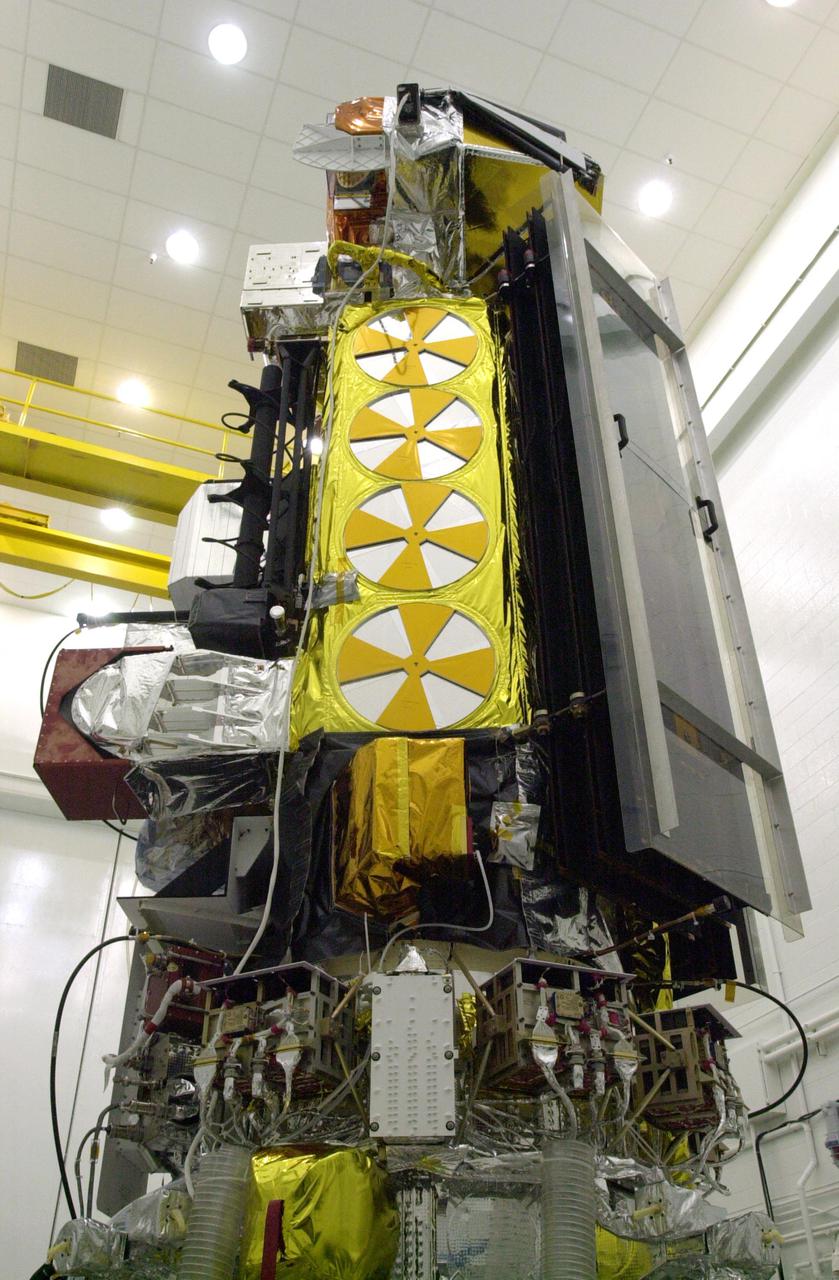
VANDENBERG AIR FORCE BASE, CALIF. - Inside the NASA spacecraft processing hangar 1610 located on North Vandenberg Air Force Base in California, the National Oceanic and Atmospheric Administration (NOAA-N) spacecraft is undergoing testing. The testing includes a Spacecraft Electrical Performance Test, battery conditioning, a Solar Array Illumination Telemetry Test, final instrument inspections and closeouts for flight. Launch of NOAA-N aboard the Boeing Delta II rocket is currently scheduled for May 11, 2005. NOAA-N is the fourth in the series of support dedicated microwave instruments for the generation of temperature, moisture, surface, and hydrological products in cloudy regions where visible and infrared (IR) instruments have decreased capability.
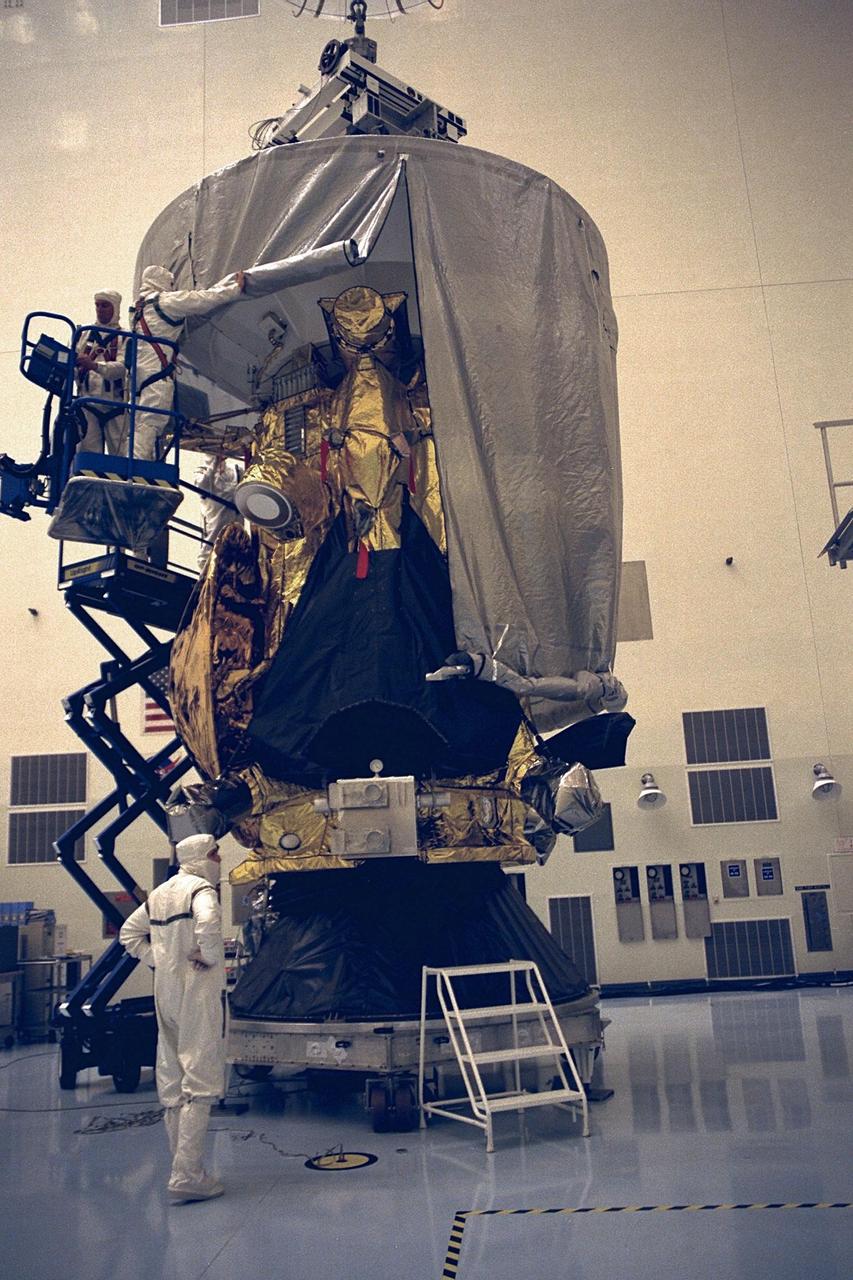
Workers in the Payload Hazardous Servicing Facility (PHSF) begin to remove a protective cover from the Cassini spacecraft with its attached Huygens probe. Damage to thermal insulation was discovered inside Huygens from an abnormally high flow of conditioned air. Further internal inspection, insulation repair and a cleaning of the probe are now required. Mission managers are targeting a mid-October launch date after Cassini returns to the pad and is once again placed atop its Titan IVB expendable launch vehicle at Launch Pad 40 at Cape Canaveral Air Station. Cassini will explore the Saturnian system, including the planet’s rings, while the Huygens probe will explore the moon Titan
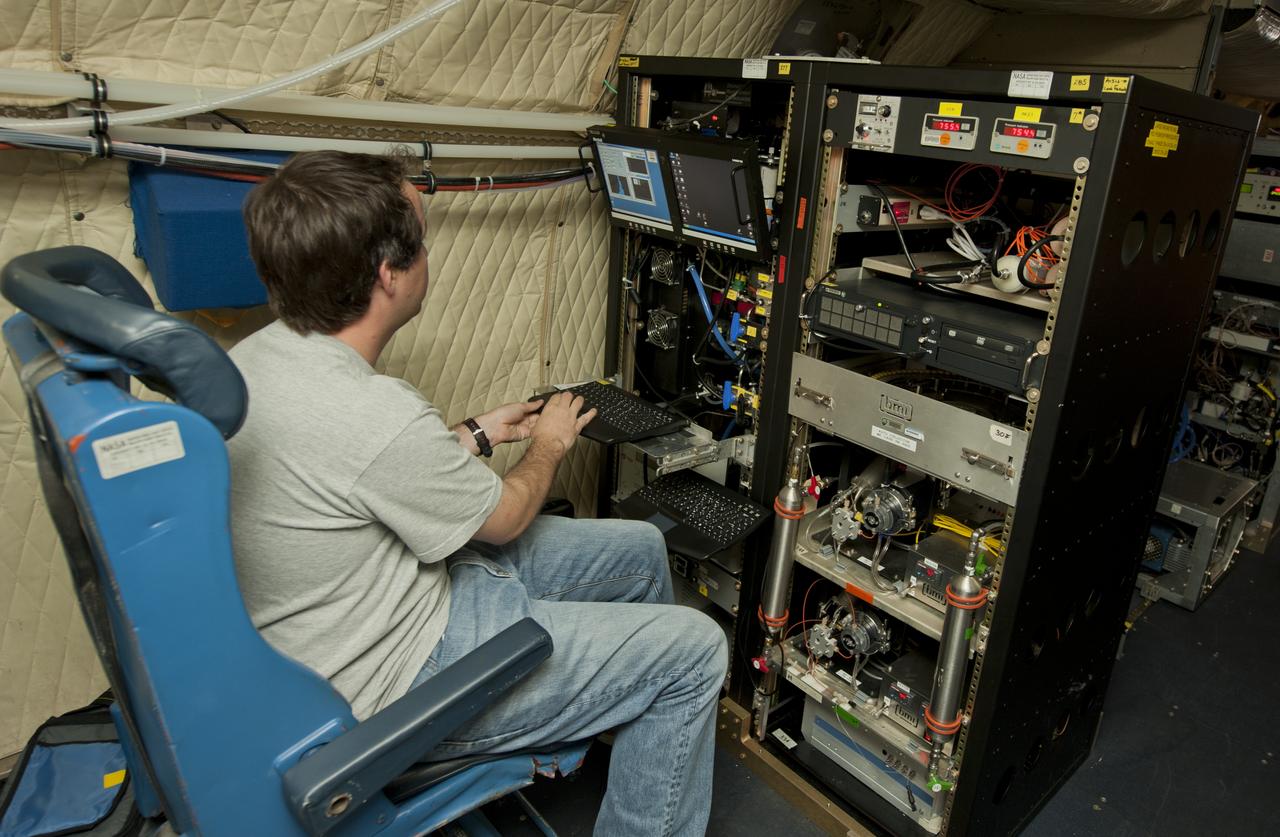
An unidentified researcher works aboard the P-3B NASA research aircraft at Baltimore/Washington International Thurgood Marshall Airport, Tuesday, June 28, 2011, in Baltimore, Md. The aircraft is part of a month-long field campaign designed to improve satellite measurements of air pollution. The name of the experiment -- Deriving Information on Surface conditions from Column and Vertically Resolved Observations Relevant to Air Quality (DISCOVER -- AQ) -- is a mouthful, but its purpose is simple. Come July, the aircraft will be flying spirals over six ground stations in Maryland. Photo Credit: (NASA/Paul E. Alers)
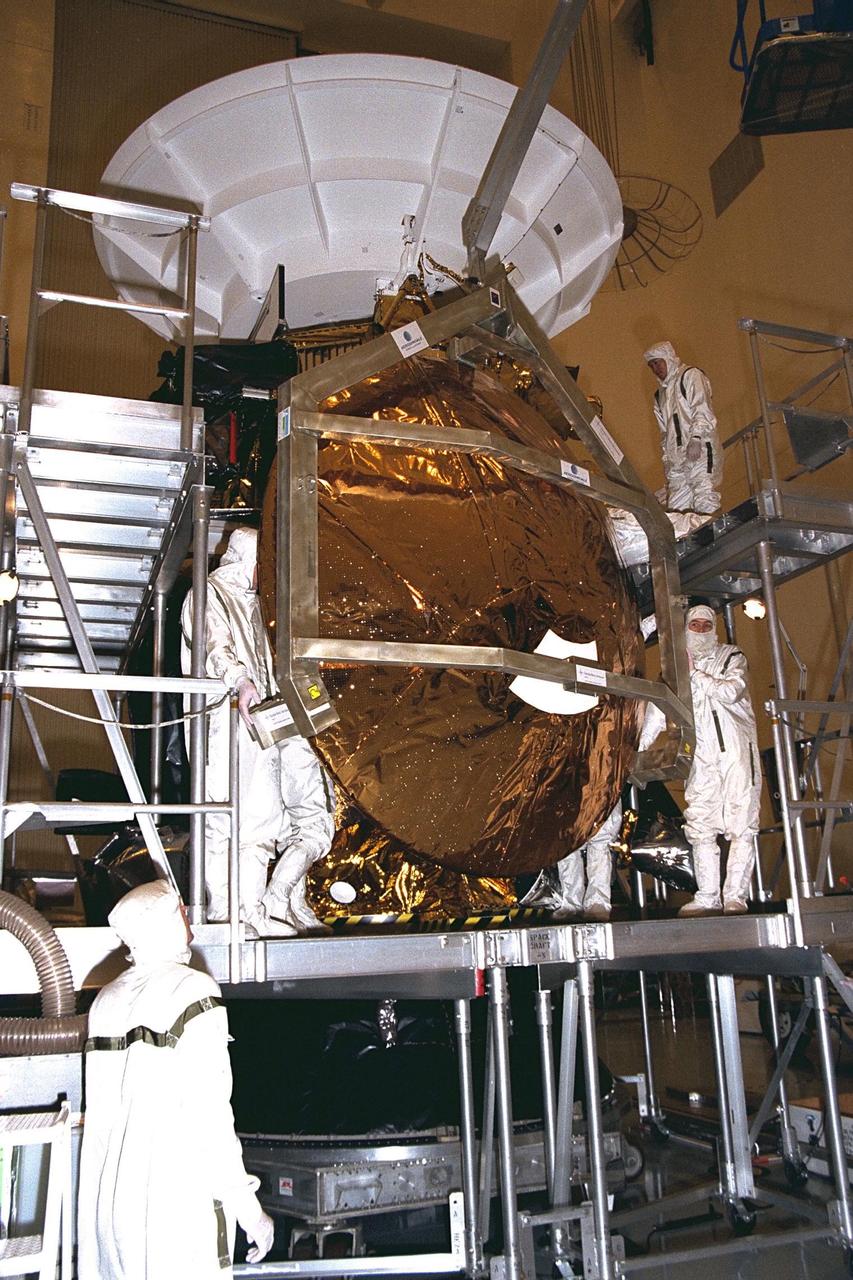
Workers remove the Huygens probe from the Cassini spacecraft in the Payload Hazardous Servicing Facility (PHSF) at KSC. The spacecraft was returned to the PHSF after damage to thermal insulation was discovered inside Huygens from an abnormally high flow of conditioned air. Further internal inspection, insulation repair and a cleaning of the probe are now required. Mission managers are targeting a mid-October launch date after Cassini returns to the pad and is once again placed atop its Titan IVB expendable launch vehicle at Launch Pad 40 at Cape Canaveral Air Station
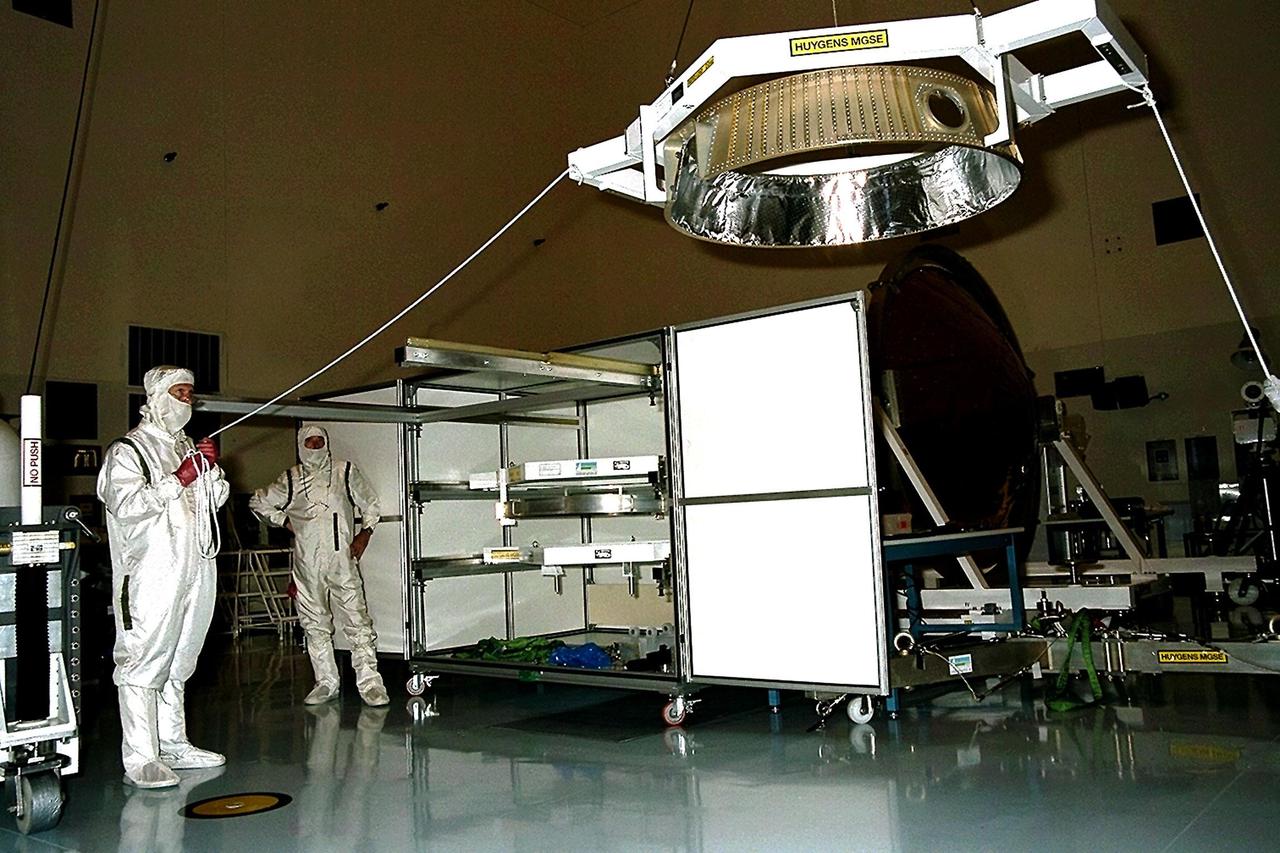
Dornier Satelliten Systeme (DSS) workers lift part of the Huygens probe aft cover assembly in the Payload Hazardous Servicing Facility (PHSF) at KSC. The spacecraft was returned to the PHSF after damage to thermal insulation was discovered inside Huygens from an abnormally high flow of conditioned air. Internal inspection, insulation repair and a cleaning of the probe were required. Mission managers are targeting a mid-October launch date after the Cassini spacecraft, aboard which Huygens will be launched, returns to the pad and is once again placed atop its Titan IVB expendable launch vehicle at Launch Pad 40 at Cape Canaveral Air Station
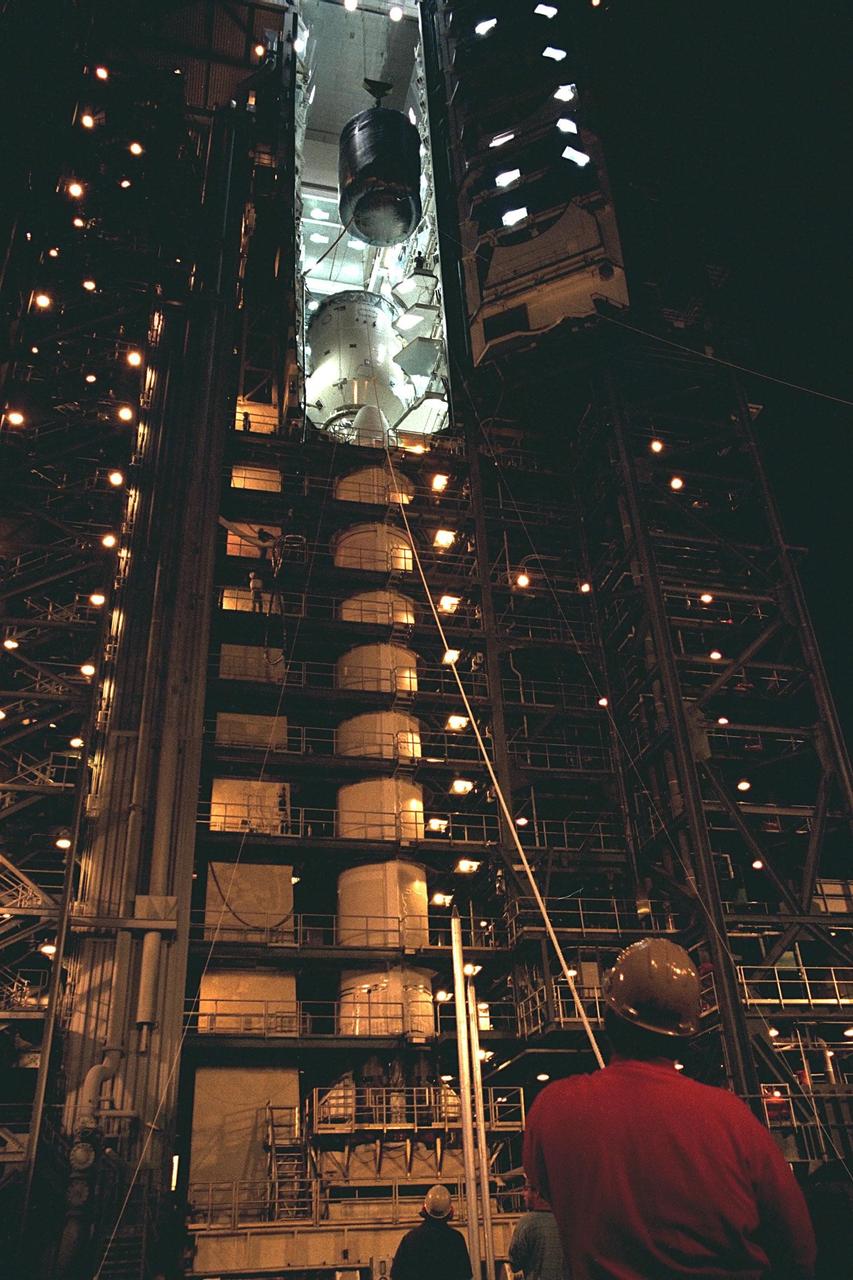
The Cassini spacecraft, with its attached Huygens probe, is lowered from Launch Pad 40 at Cape Canaveral Air Station for its return trip to the Payload Hazardous Servicing Facility (PHSF). Damage to thermal insulation was discovered inside Huygens from an abnormally high flow of conditioned air. Further internal inspection, insulation repair and a cleaning of the probe are now required. Mission managers are targeting a mid-October launch date after Cassini returns to the pad and is once again placed atop its Titan IVB expendable launch vehicle. Cassini will explore the Saturnian system, including the planet’s rings, while the Huygens probe will explore the moon Titan
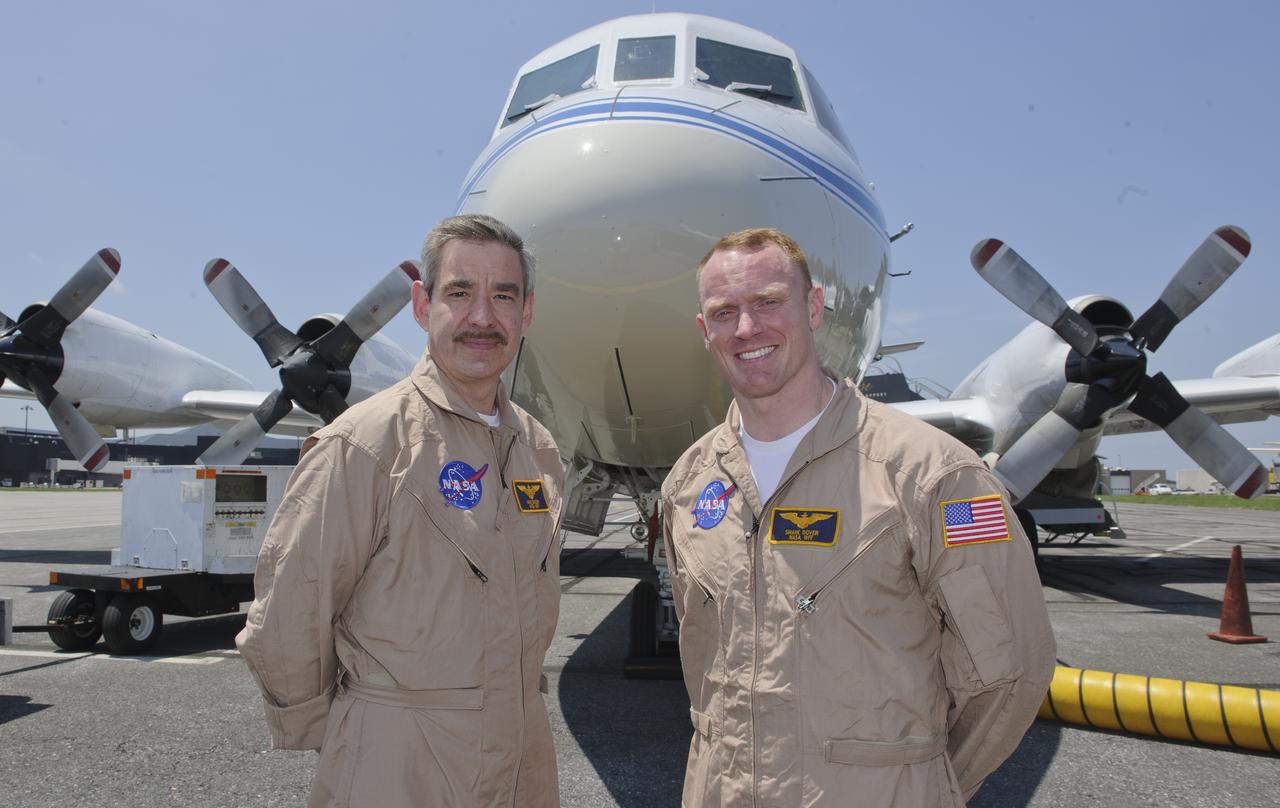
WFF Pilots Mike Singer, left, and Shane Dover stand in front of the 117-foot P-3B NASA research aircraft on the tarmac at Baltimore/Washington International Thurgood Marshall Airport, Tuesday, June 28, 2011, in Baltimore, Md. The aircraft is part of a month-long field campaign designed to improve satellite measurements of air pollution. The name of the experiment -- Deriving Information on Surface conditions from Column and Vertically Resolved Observations Relevant to Air Quality (DISCOVER -- AQ) -- is a mouthful, but its purpose is simple. Come July, the aircraft will be flying spirals over six ground stations in Maryland. Photo Credit: (NASA/Paul E. Alers)
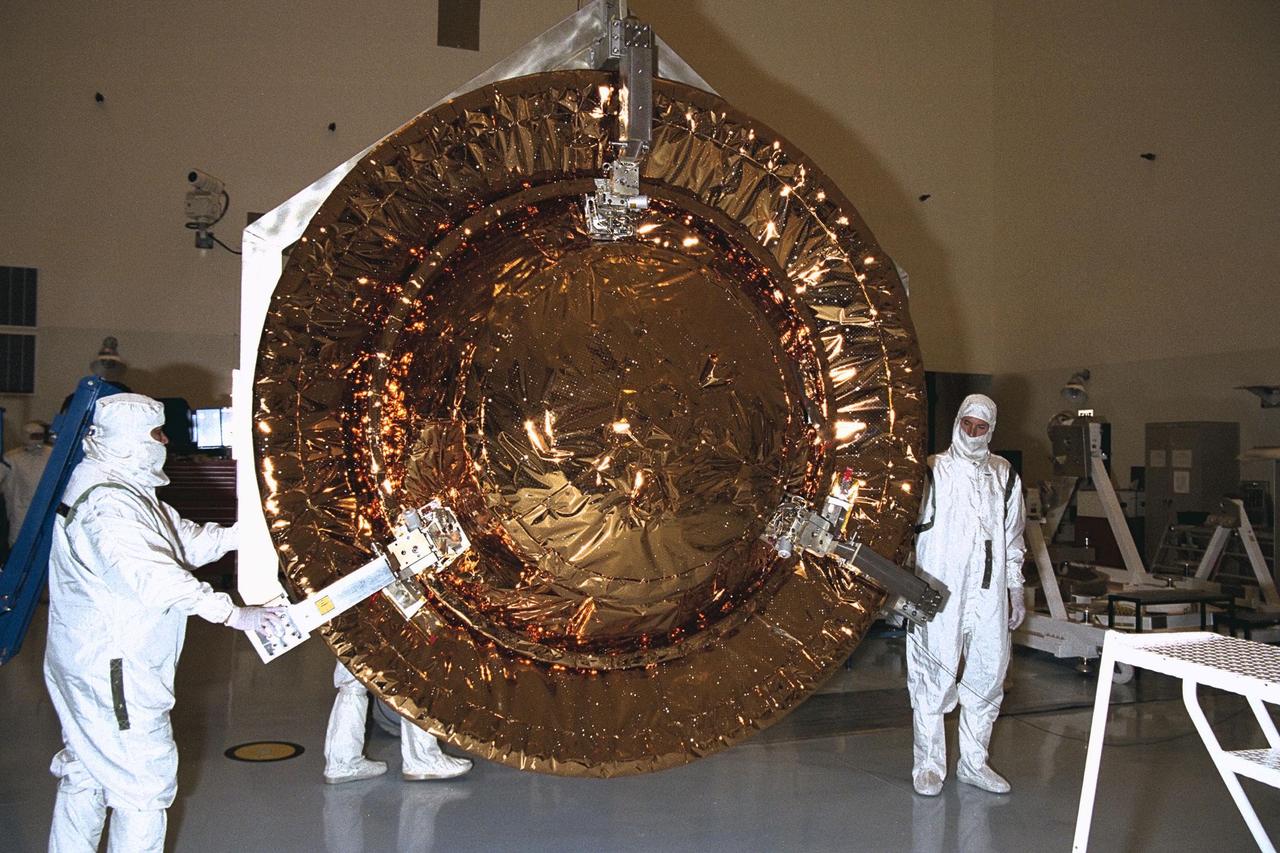
Jet Propulsion Laboratory (JPL) workers remove the Huygens probe from the Cassini spacecraft in the Payload Hazardous Servicing Facility (PHSF) at KSC. The spacecraft was returned to the PHSF after damage to thermal insulation was discovered inside Huygens from an abnormally high flow of conditioned air. Further internal inspection, insulation repair and a cleaning of the probe are now required. Mission managers are targeting a mid-October launch date after Cassini returns to the pad and is once again placed atop its Titan IVB expendable launch vehicle at Launch Pad 40 at Cape Canaveral Air Station
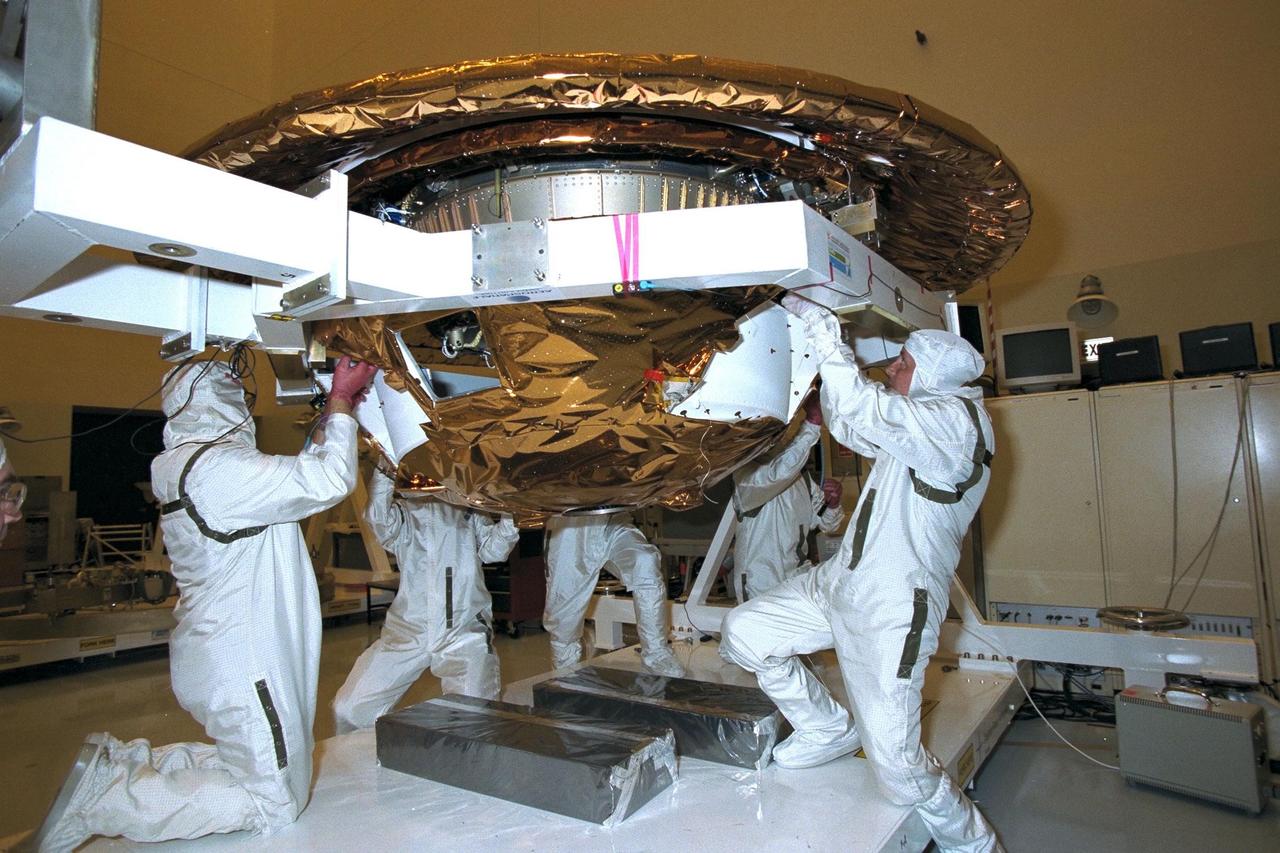
Dornier Satelliten Systeme (DSS) workers place the back cover of the Huygens probe under its front heat shield in the Payload Hazardous Servicing Facility (PHSF) at KSC. The spacecraft was returned to the PHSF after damage to thermal insulation was discovered inside Huygens from an abnormally high flow of conditioned air. Internal inspection, insulation repair and a cleaning of the probe were required. Mission managers are targeting a mid-October launch date after the Cassini spacecraft, aboard which Huygens will be launched, returns to the pad and is once again placed atop its Titan IVB expendable launch vehicle at Launch Pad 40 at Cape Canaveral Air Station
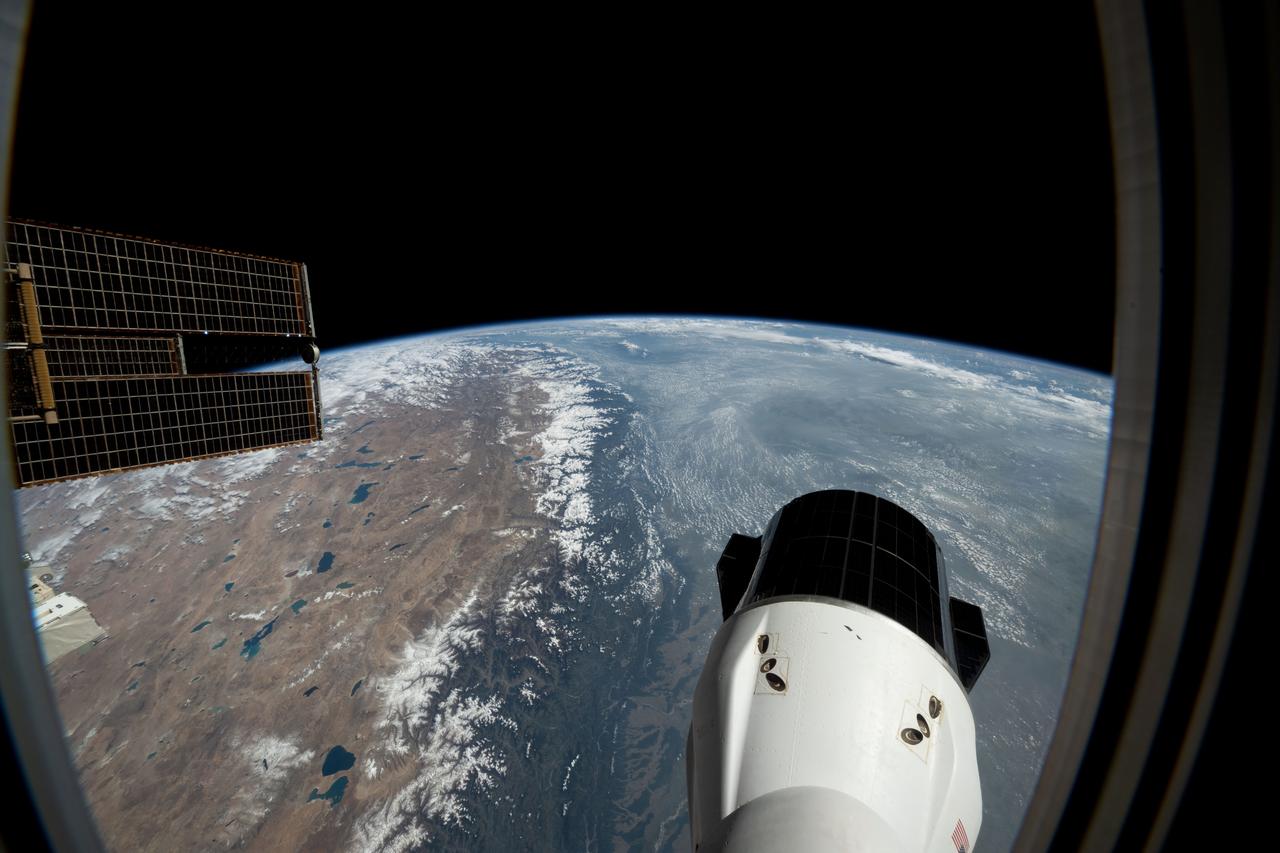
iss073e1025732 (Oct. 18, 2025) --- The Himalayas separate mainland Asia from the Indian subcontinent, revealing an arid, desert-like terrain on the Asian side, known as the Tibetan Plateau. On the southern slopes of the mountain range, moist air rises, cools, and condenses, producing rainfall that supports a humid, subtropical climate. As the air descends on the northern slopes, it warms and dries, creating barren conditions due to the rain shadow effect. This photograph was taken from a window aboard the SpaceX Dragon crew spacecraft as the International Space Station orbited 263 miles above India.

Pilots Shane Dover, left, and Mike Singer are seen on the flight deck of the P-3B NASA research aircraft at Baltimore/Washington International Thurgood Marshall Airport, Tuesday, June 28, 2011, in Baltimore, Md. The aircraft is part of a month-long field campaign designed to improve satellite measurements of air pollution. The name of the experiment -- Deriving Information on Surface conditions from Column and Vertically Resolved Observations Relevant to Air Quality (DISCOVER -- AQ) -- is a mouthful, but its purpose is simple. Come July, the aircraft will be flying spirals over six ground stations in Maryland. Photo Credit: (NASA/Paul E. Alers)
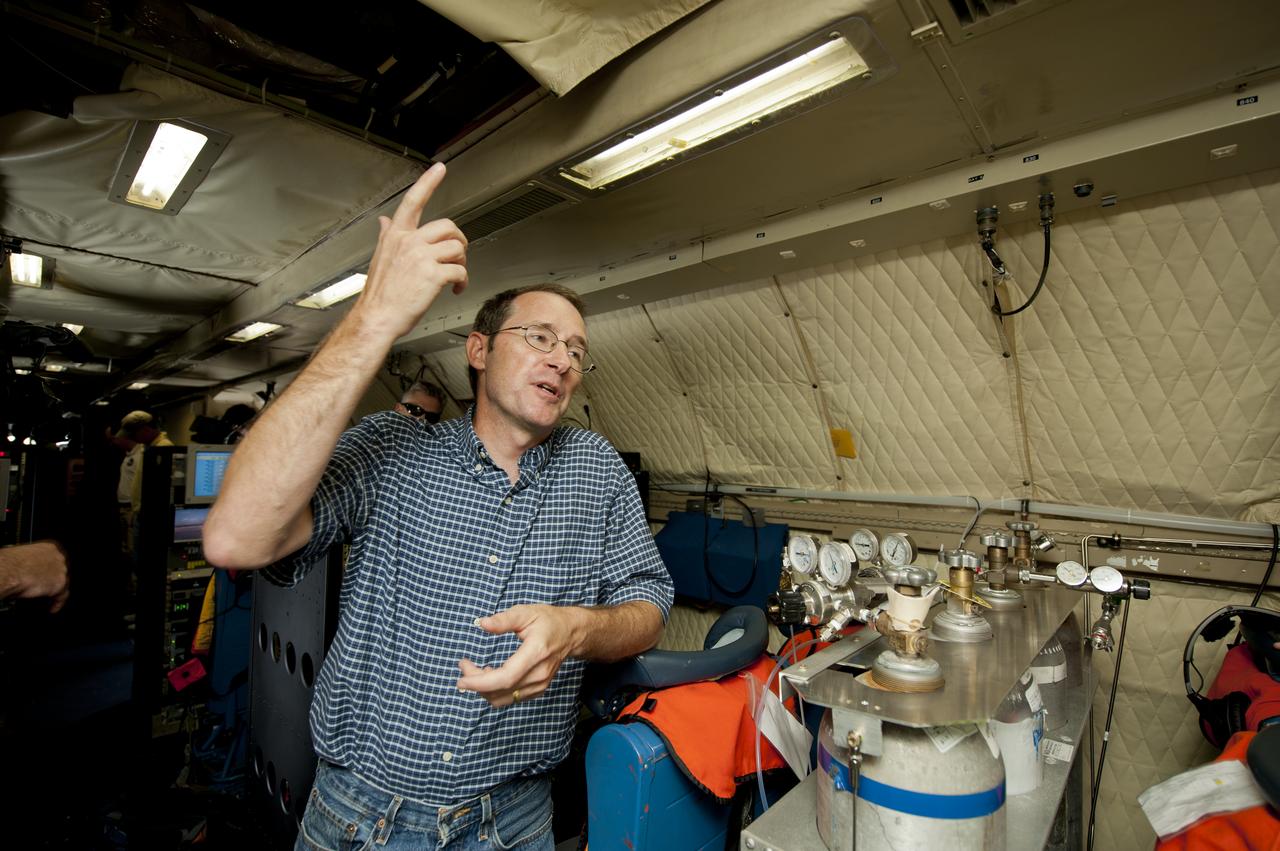
James Crawford, principal investigator and scientist based at NASA’s Langley Research Center in Hampton, Va., talks about the DISCOVER-AQ project on board the P-3B NASA research aircraft at Baltimore/Washington International Thurgood Marshall Airport, Tuesday, June 28, 2011, in Baltimore, Md. The aircraft is part of a month-long field campaign designed to improve satellite measurements of air pollution. The name of the experiment -- Deriving Information on Surface conditions from Column and Vertically Resolved Observations Relevant to Air Quality (DISCOVER -- AQ) -- is a mouthful, but its purpose is simple. Come July, the aircraft will be flying spirals over six ground stations in Maryland. Photo Credit: (NASA/Paul E. Alers)
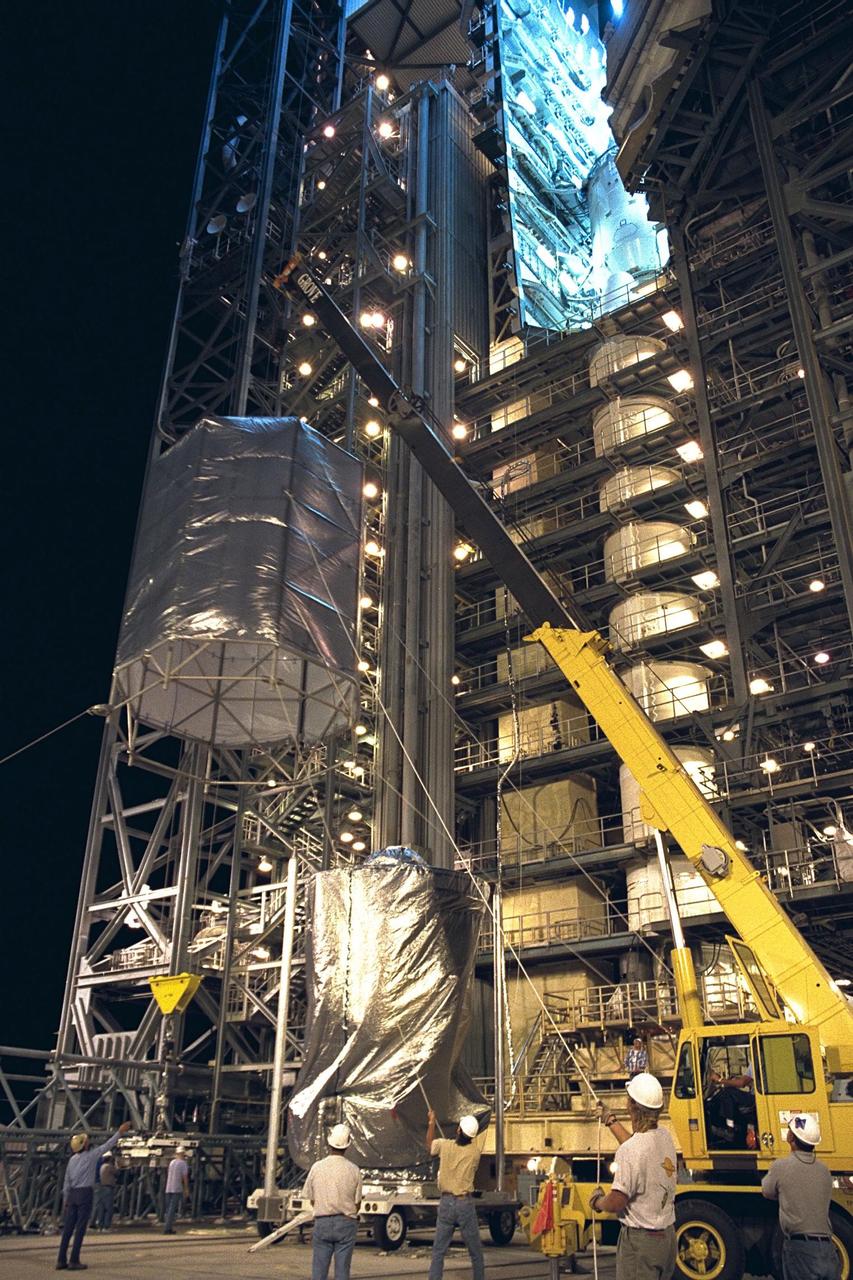
A crane lowers a protective transportation cover over the Cassini spacecraft, with its attached Huygens probe, at Launch Pad 40 at Cape Canaveral Air Station for the spacecraft’s return trip to the Payload Hazardous Servicing Facility (PHSF). Damage to thermal insulation was discovered inside Huygens from an abnormally high flow of conditioned air. Further internal inspection, insulation repair and a cleaning of the probe are now required. Mission managers are targeting a mid-October launch date after Cassini returns to the pad and is once again placed atop its Titan IVB expendable launch vehicle. Cassini will explore the Saturnian system, including the planet’s rings, while the Huygens probe will explore the moon Titan
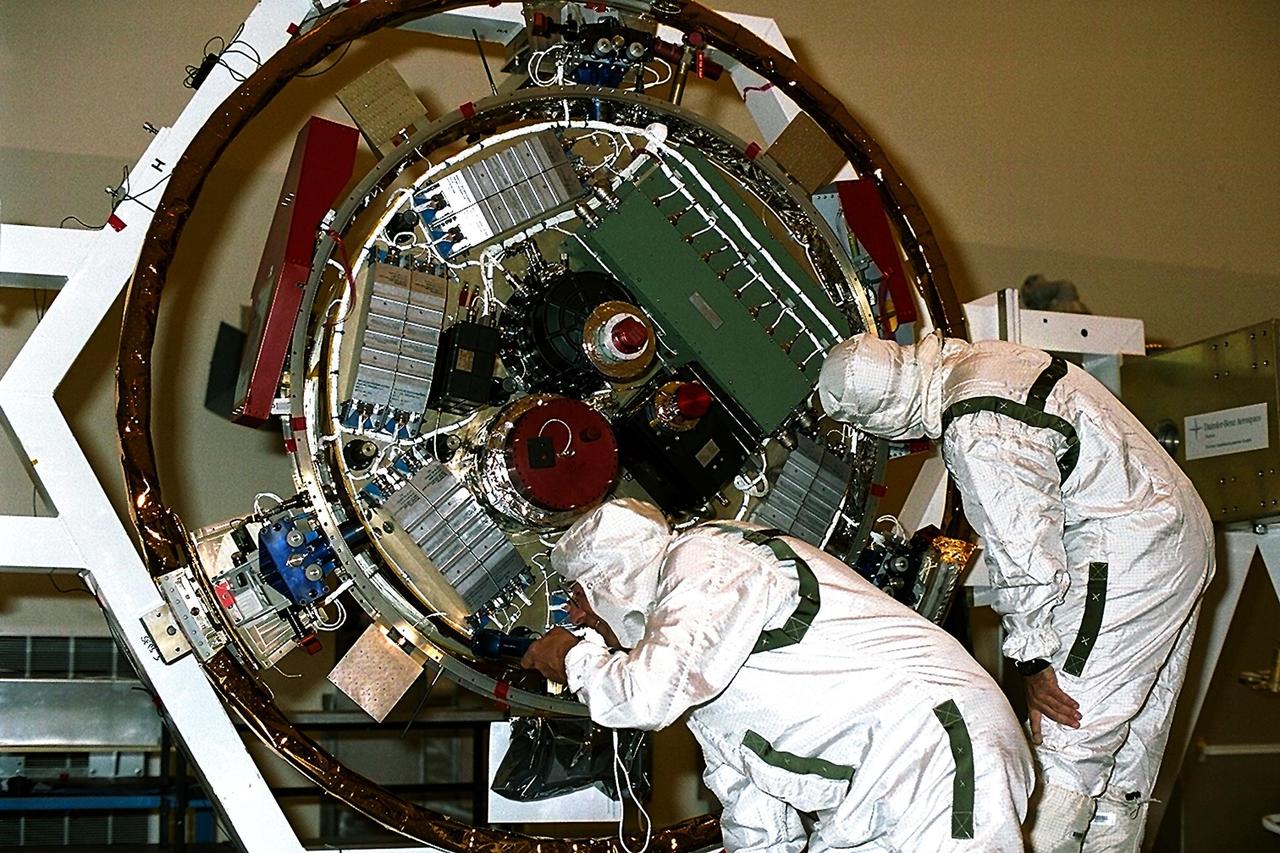
Jet Propulsion Laboratory (JPL) workers examine the Huygens probe after removal from the Cassini spacecraft in the Payload Hazardous Servicing Facility (PHSF) at KSC. The spacecraft was returned to the PHSF after damage to thermal insulation was discovered inside Huygens from an abnormally high flow of conditioned air. Internal inspection, insulation repair and a cleaning of the probe were required. Mission managers are targeting a mid-October launch date after Cassini returns to the pad and is once again placed atop its Titan IVB expendable launch vehicle at Launch Pad 40 at Cape Canaveral Air Station

A 117-foot P-3B NASA research aircraft is seen on the tarmac at Baltimore/Washington International Thurgood Marshall Airport, Tuesday, June 28, 2011, in Baltimore, Md. The aircraft is part of a month-long field campaign designed to improve satellite measurements of air pollution. The name of the experiment -- Deriving Information on Surface conditions from Column and Vertically Resolved Observations Relevant to Air Quality (DISCOVER -- AQ) -- is a mouthful, but its purpose is simple. Come July, the aircraft will be flying spirals over six ground stations in Maryland. Photo Credit: (NASA/Paul E. Alers)
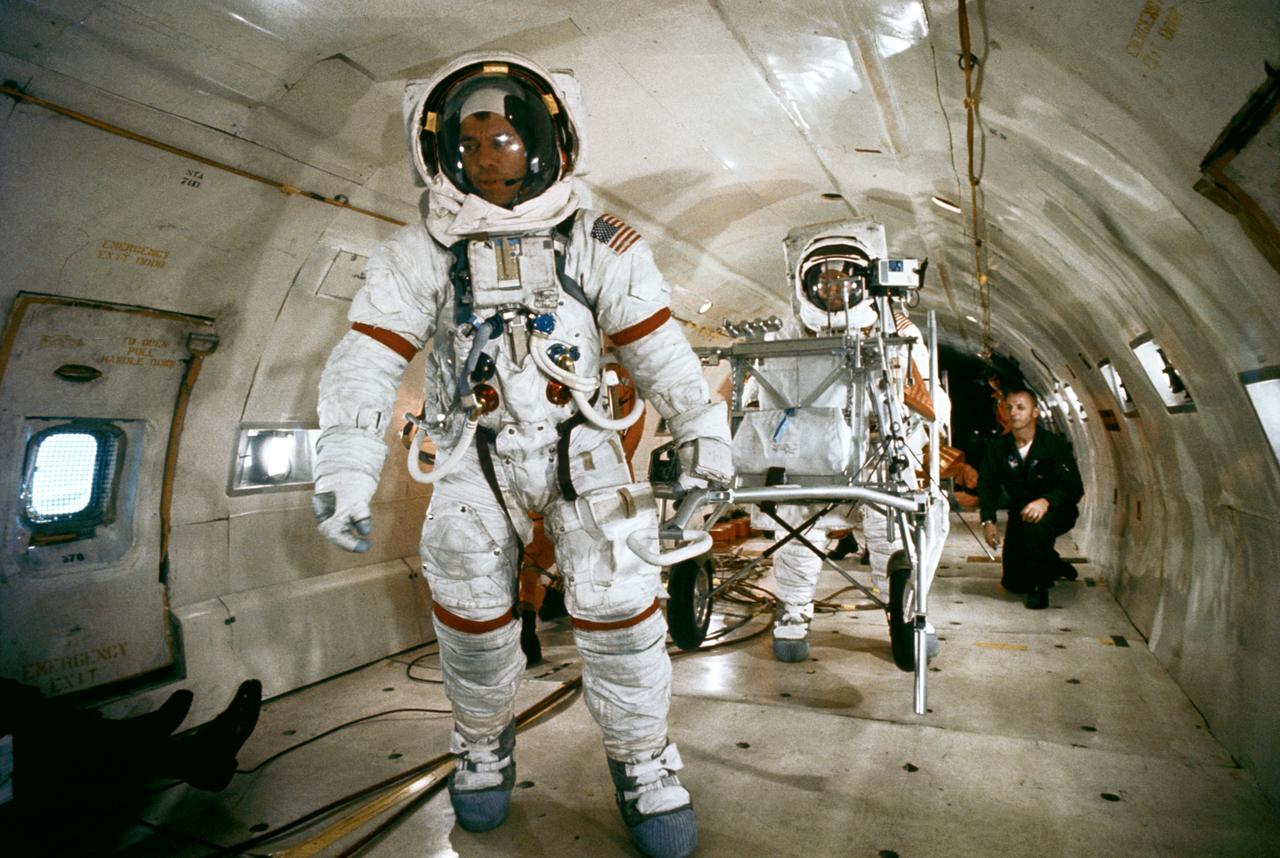
S70-53479 (4 Nov. 1970) -- Astronaut Alan B. Shepard Jr., Apollo 14 commander, pulls the modular equipment transporter (MET) under weightless conditions aboard an Air Force KC-135 out of Patrick Air Force Base. Astronaut Edgar D. Mitchell, Apollo 14 lunar module pilot, is behind the MET. The KC-135 aircraft, flying a parabolic curve, creates a weightless environment providing a training exercise in preparation for the astronauts' extravehicular activities (EVA) on the lunar surface. This training simulates the 1/6 gravity the astronauts will encounter on the moon.
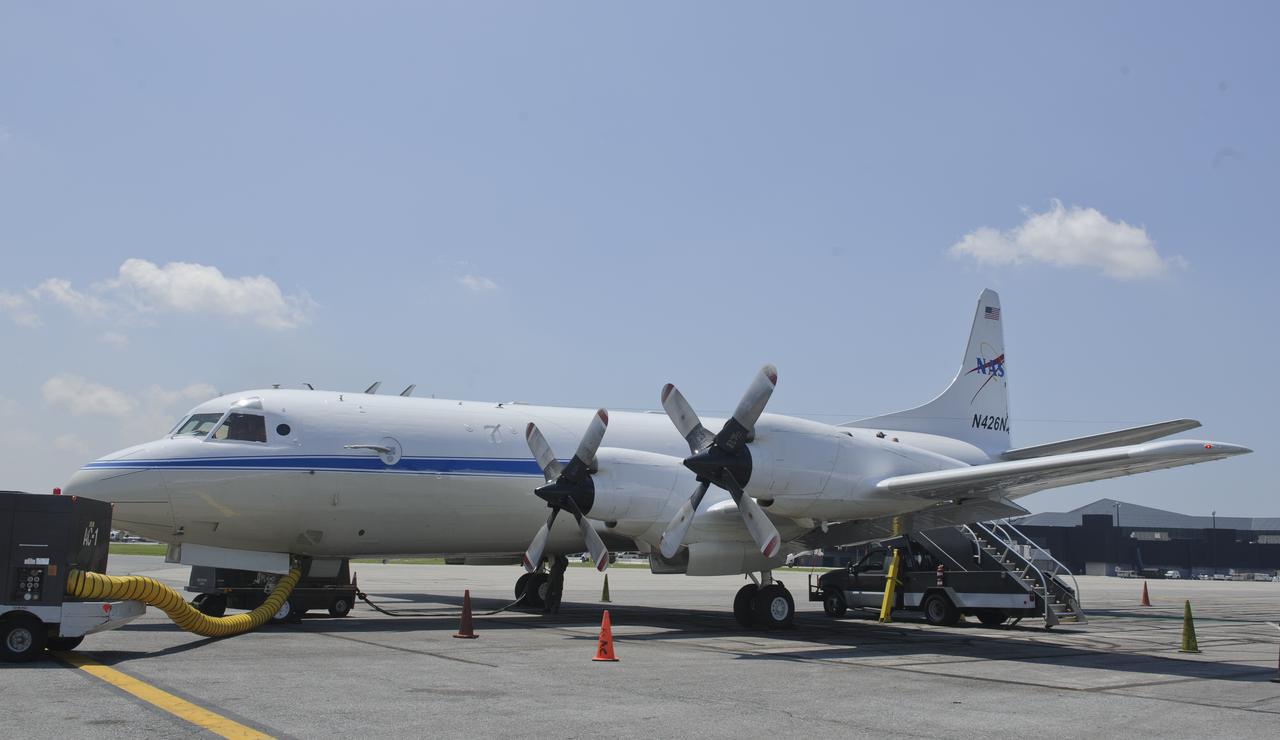
A 117-foot P-3B NASA research aircraft is seen on the tarmac at Baltimore/Washington International Thurgood Marshall Airport, Tuesday, June 28, 2011, in Baltimore, Md. The aircraft is part of a month-long field campaign designed to improve satellite measurements of air pollution. The name of the experiment -- Deriving Information on Surface conditions from Column and Vertically Resolved Observations Relevant to Air Quality (DISCOVER -- AQ) -- is a mouthful, but its purpose is simple. Come July, the aircraft will be flying spirals over six ground stations in Maryland. Photo Credit: (NASA/Paul E. Alers)
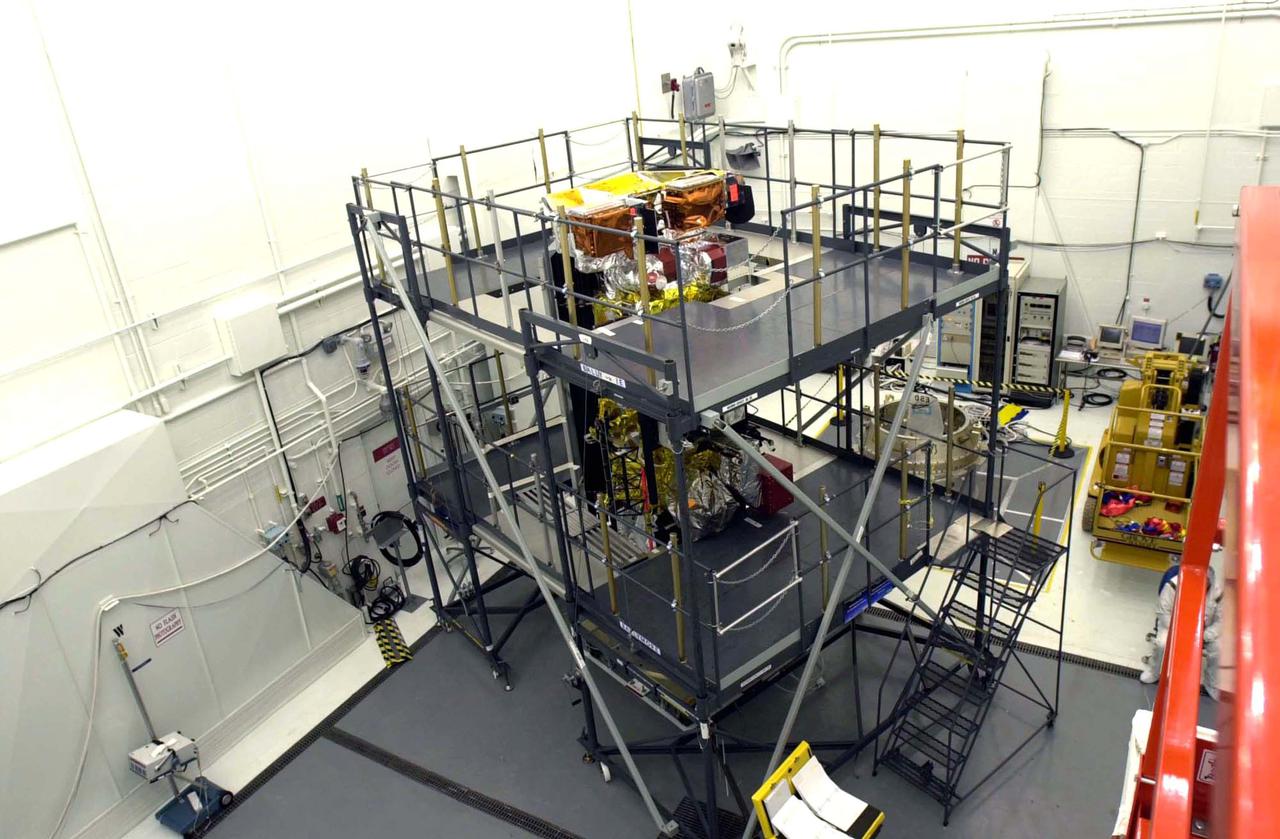
VANDENBERG AIR FORCE BASE, CALIF. - Inside the NASA spacecraft processing hangar 1610 located on North Vandenberg Air Force Base in California, the National Oceanic and Atmospheric Administration (NOAA-N) spacecraft is undergoing testing. The testing includes a the Spacecraft Electrical Performance Test, battery conditioning, a Solar Array Illumination Telemetry Test, final instrument inspections and closeouts for flight. Launch of NOAA-N aboard the Boeing Delta II rocket is currently scheduled for May 11, 2005. NOAA-N is the fourth in the series of support dedicated microwave instruments for the generation of temperature, moisture, surface, and hydrological products in cloudy regions where visible and infrared (IR) instruments have decreased capability.
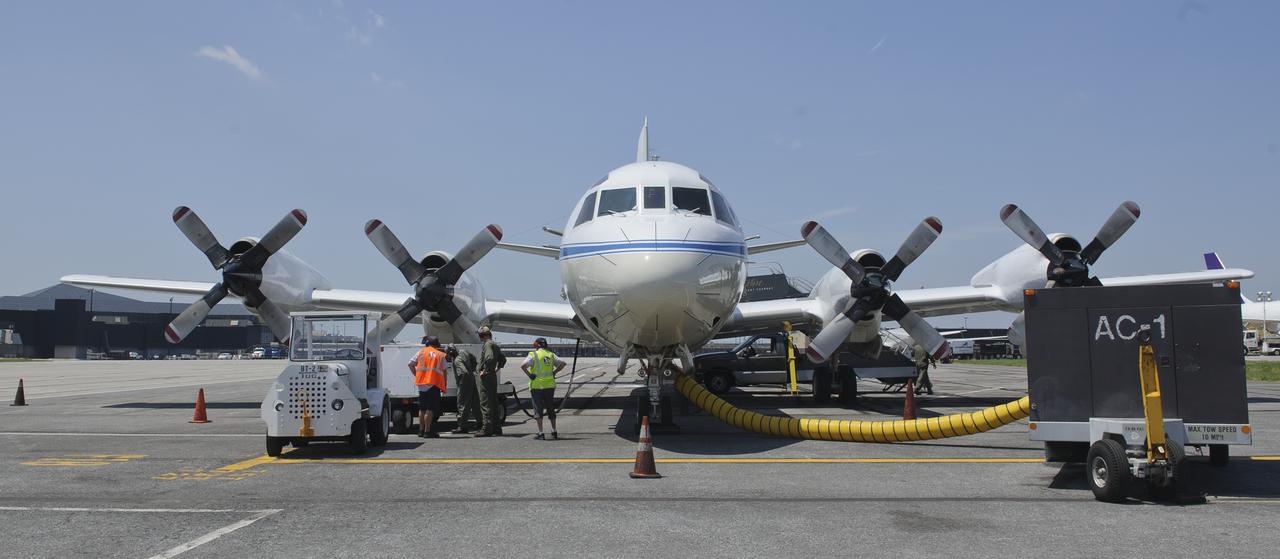
A 117-foot P-3B NASA research aircraft is seen on the tarmac at Baltimore/Washington International Thurgood Marshall Airport, Tuesday, June 28, 2011, in Baltimore, Md. The aircraft is part of a month-long field campaign designed to improve satellite measurements of air pollution. The name of the experiment -- Deriving Information on Surface conditions from Column and Vertically Resolved Observations Relevant to Air Quality (DISCOVER -- AQ) -- is a mouthful, but its purpose is simple. Come July, the aircraft will be flying spirals over six ground stations in Maryland. Photo Credit: (NASA/Paul E. Alers)
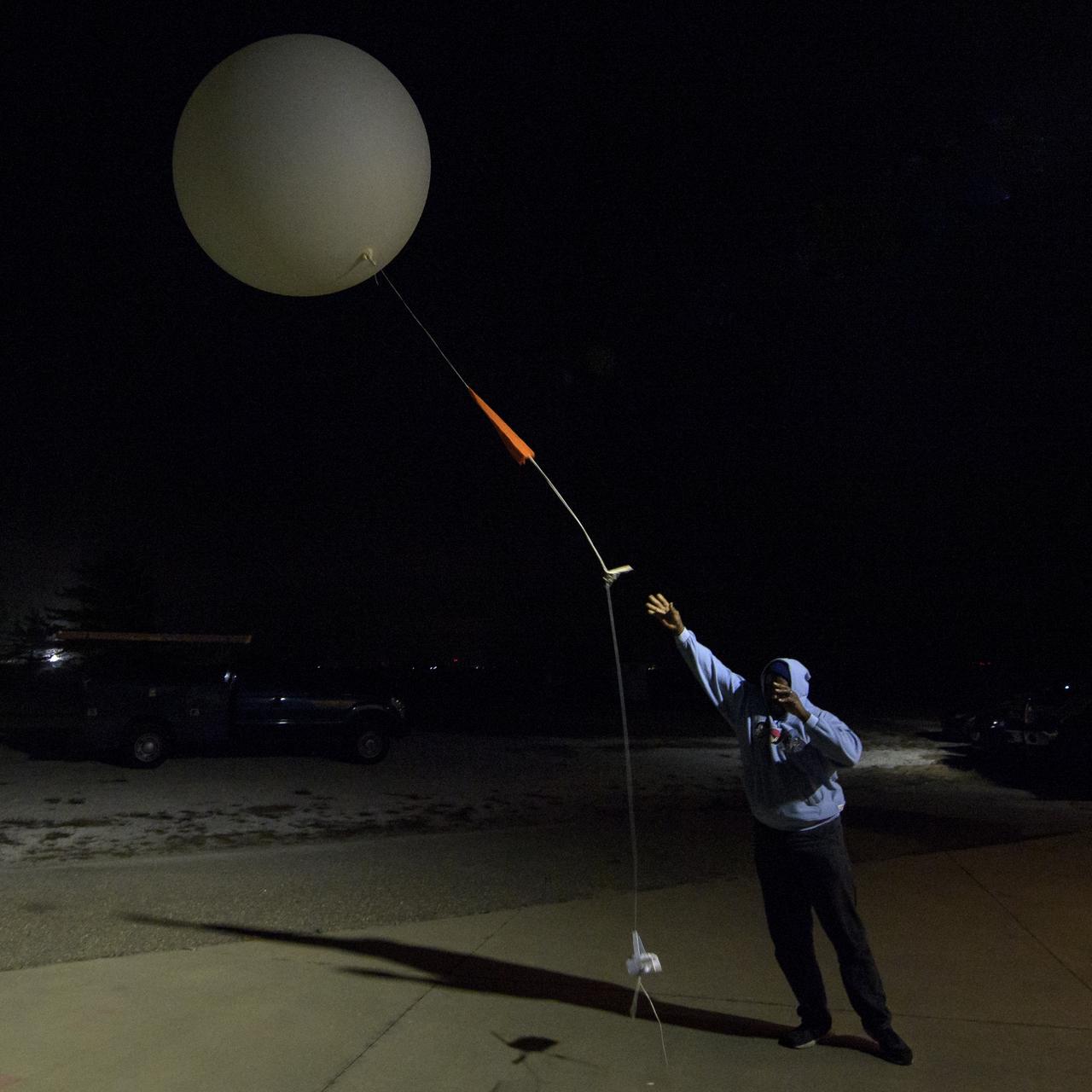
Isiah Toran releases a weather balloon to help measure atmospheric conditions ahead of the launch of the NASA Ice, Cloud and land Elevation Satellite-2 (ICESat-2), Saturday, Sept. 15, 2018, Vandenberg Air Force Base in California. The ICESat-2 mission will measure the changing height of Earth's ice. Photo Credit: (NASA/Bill Ingalls)

KENNEDY SPACE CENTER, FLA. -- A firetruck stands by as the Shuttle Carrier Aircraft with its cargo the orbiter Columbia comes to a stop at the Cape Canaveral Air Force Station Skid Strip. Columbia’s ferry flight began in California March 1. Unfavorable weather conditions kept it on the ground at Dyess AFB, Texas, until it could return to Florida. Columbia is returning from a 17-month-long modification and refurbishment process as part of a routine maintenance plan. The orbiter will next fly on mission STS-107, scheduled Oct. 25
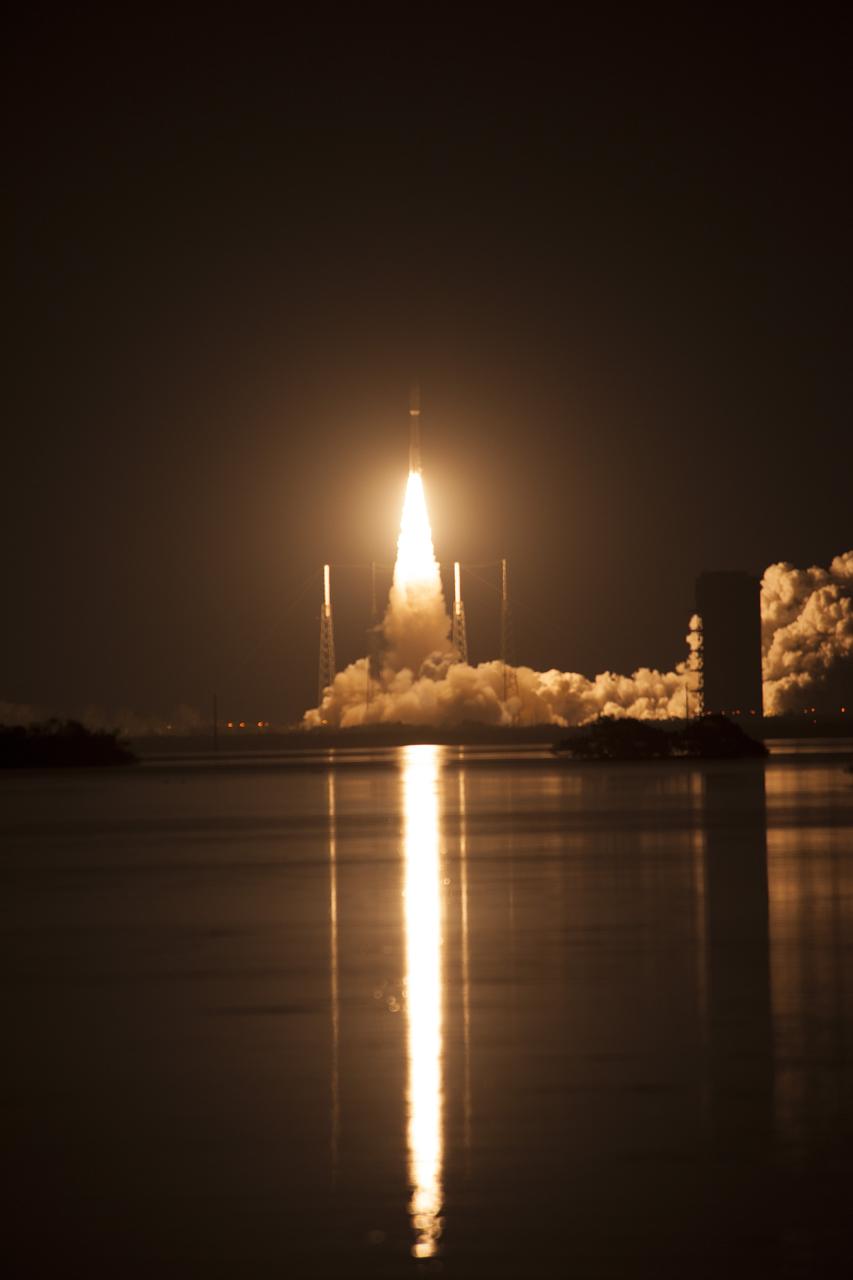
At Cape Canaveral Air Force Station's Space Launch Complex 41, an Atlas V rocket with NOAA's Geostationary Operational Environmental Satellite, or GOES-R, lifts off at 6:42 p.m. EST. GOES-R is the first satellite in a series of next-generation GOES satellites for NOAA, the National Oceanographic and Atmospheric Administration. It will launch to a geostationary orbit over the western hemisphere to provide images of storms and help meteorologists predict severe weather conditionals and develop long-range forecasts.
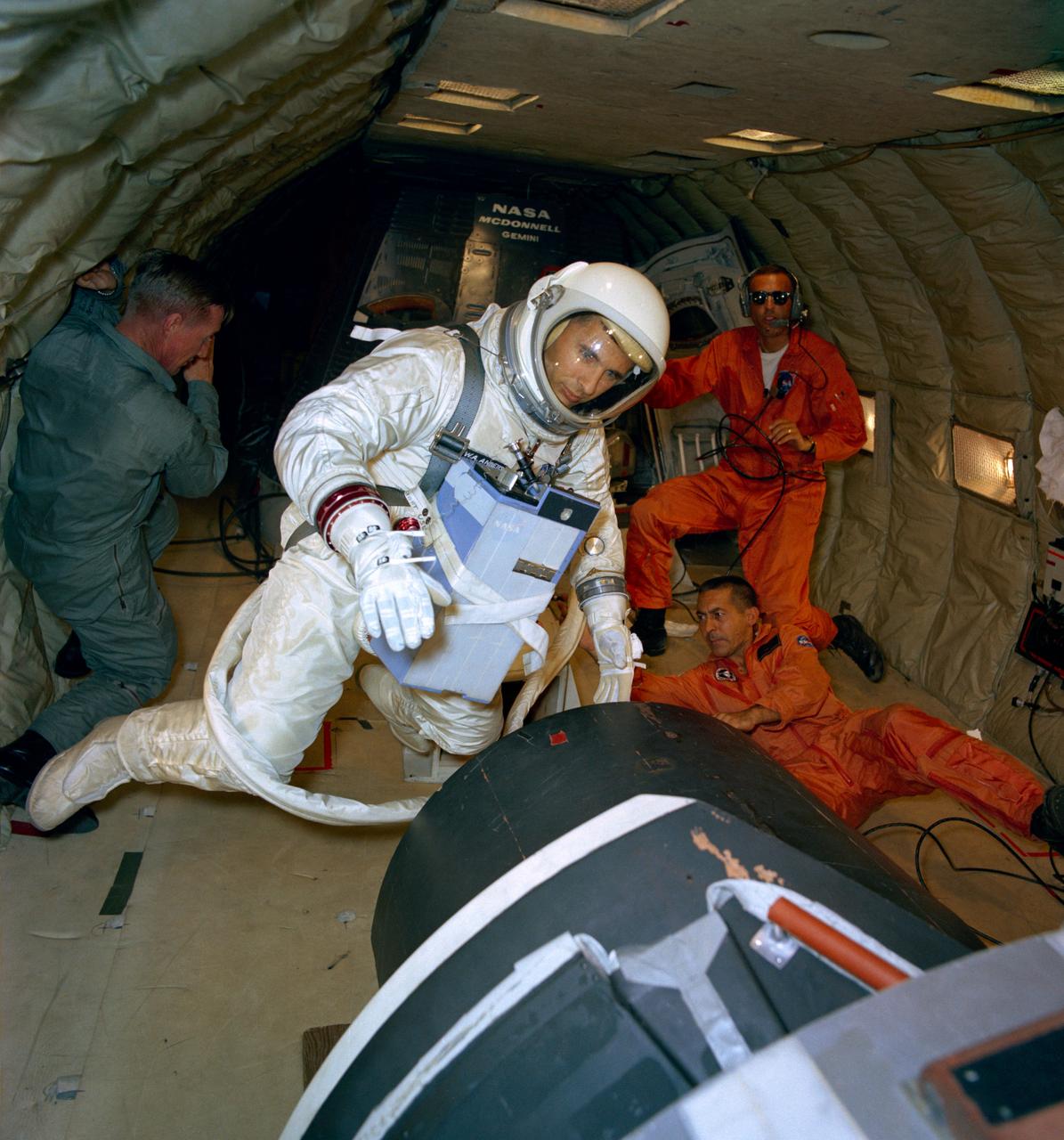
S66-47856 (11 Aug. 1966) --- Astronaut William A. Anders, backup crew pilot of the Gemini-11 spaceflight, participates in extravehicular activity (EVA) training under zero-gravity conditions aboard a KC-135 aircraft from Wright-Patterson Air Force Base, Dayton, Ohio. He is suited, and he also wears an Extravehicular Life Support System (ELSS) chest pack. Photo credit: NASA

KENNEDY SPACE CENTER, FLA. -- The orbiter Columbia, atop a Shuttle Carrier Aircraft, lands at the Cape Canaveral Air Force Station Skid Strip. The ferry flight began in California March 1. Unfavorable weather conditions kept it on the ground at Dyess AFB, Texas, until it could return to Florida. Columbia is returning from a 17-month-long modification and refurbishment process as part of a routine maintenance plan. The orbiter will next fly on mission STS-107, scheduled Oct. 25
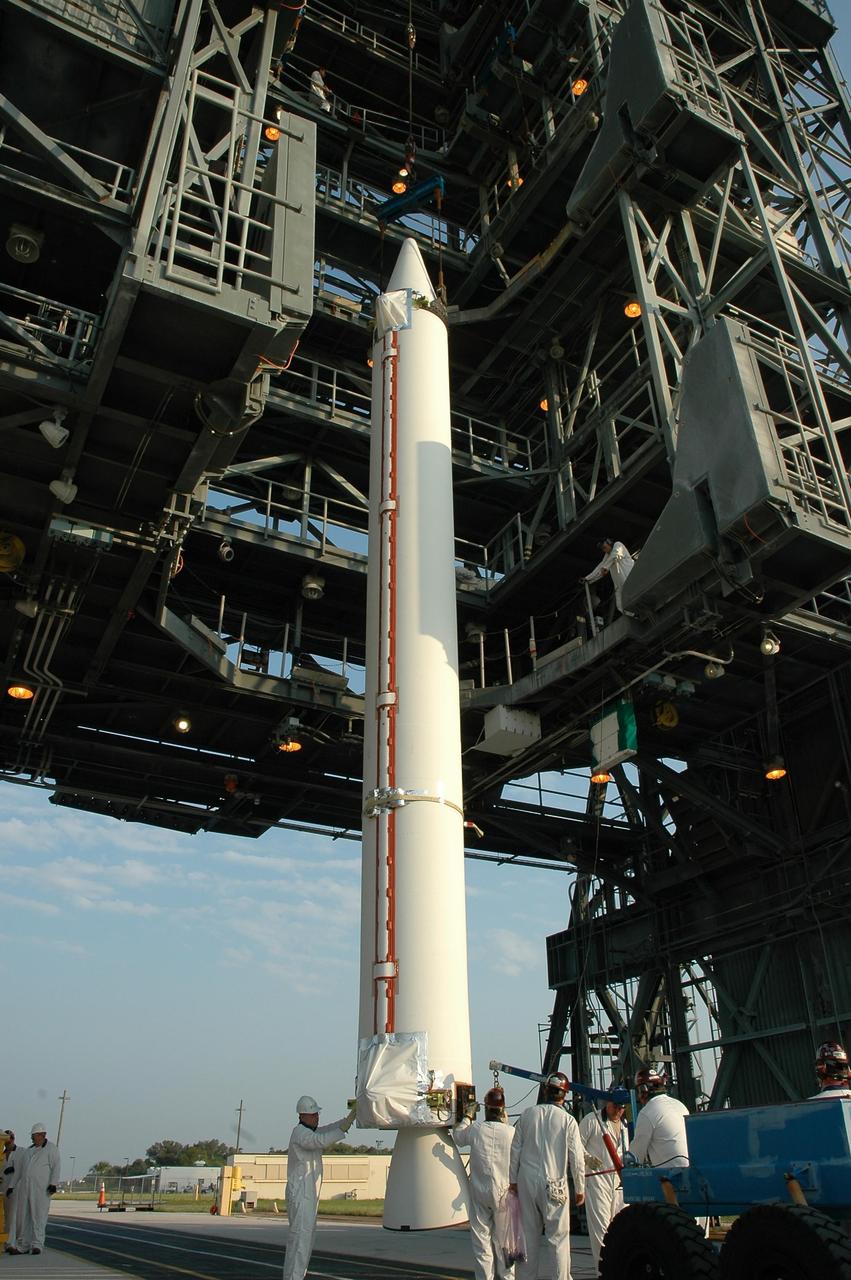
KENNEDY SPACE CENTER, FLA. -- A solid rocket booster is lifted into the mobile service tower on Launch Pad 17-B at Cape Canaveral Air Force Station. The booster will be mated to the Delta II first stage for launch of the Dawn spacecraft. Dawn's goal is to characterize the conditions and processes of the solar system's earliest epoch 4.5 billion years ago by investigating in detail two of the largest asteroids, Ceres and Vesta. They reside between Mars and Jupiter in the asteroid belt. Launch is targeted for July 7. Photo credit: NASA/Jim Grossmann
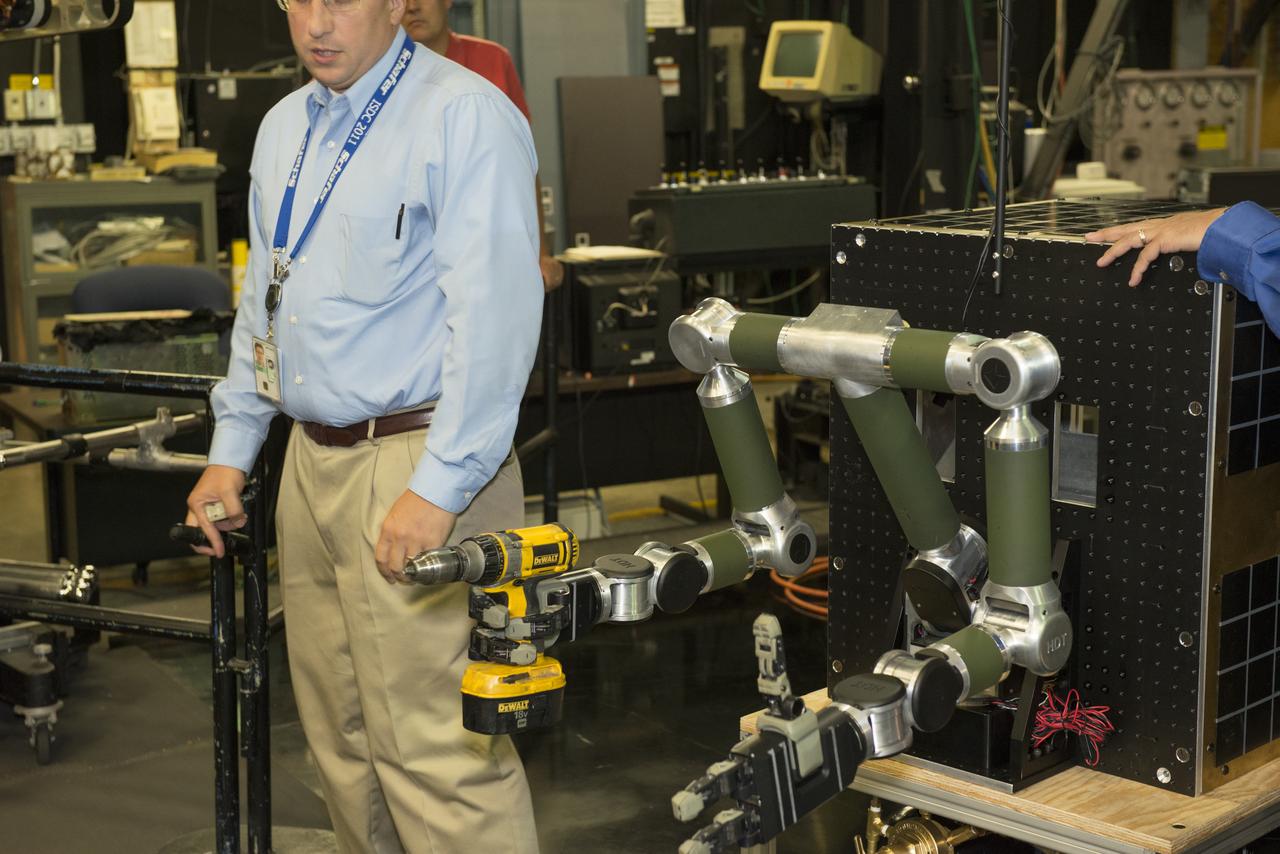
FINAL DEMONSTRATION OF A WIRELESS DATA TASK SUPPORTED BY SLS ADVANCED DEVELOPMENT USED TO DEMONSTRATE REAL-TIME VIDEO OVER WIRELESS CONNECTIONS ALONG WITH DATA AND COMMANDS AS DEMONSTRATED VIA THE ROBOTIC ARMS. THE ARMS AND VIDEO CAMERAS WERE MOUNTED ON FREE FLOATING AIR-BEARING VEHICLES TO SIMULATE CONDITIONS IN SPACE. THEY WERE USED TO SHOW HOW A CHASE VEHICLE COULD MOVE UP TO AND CAPTURE A SATELLITE, SUCH AS THE FASTSAT MOCKUP DEMONSTRITING HOW ROBOTIC TECHNOLOGY AND SMALL SPACECRAFT COULD ASSIST WITH ORBITAL DEBRIS MITIGATION
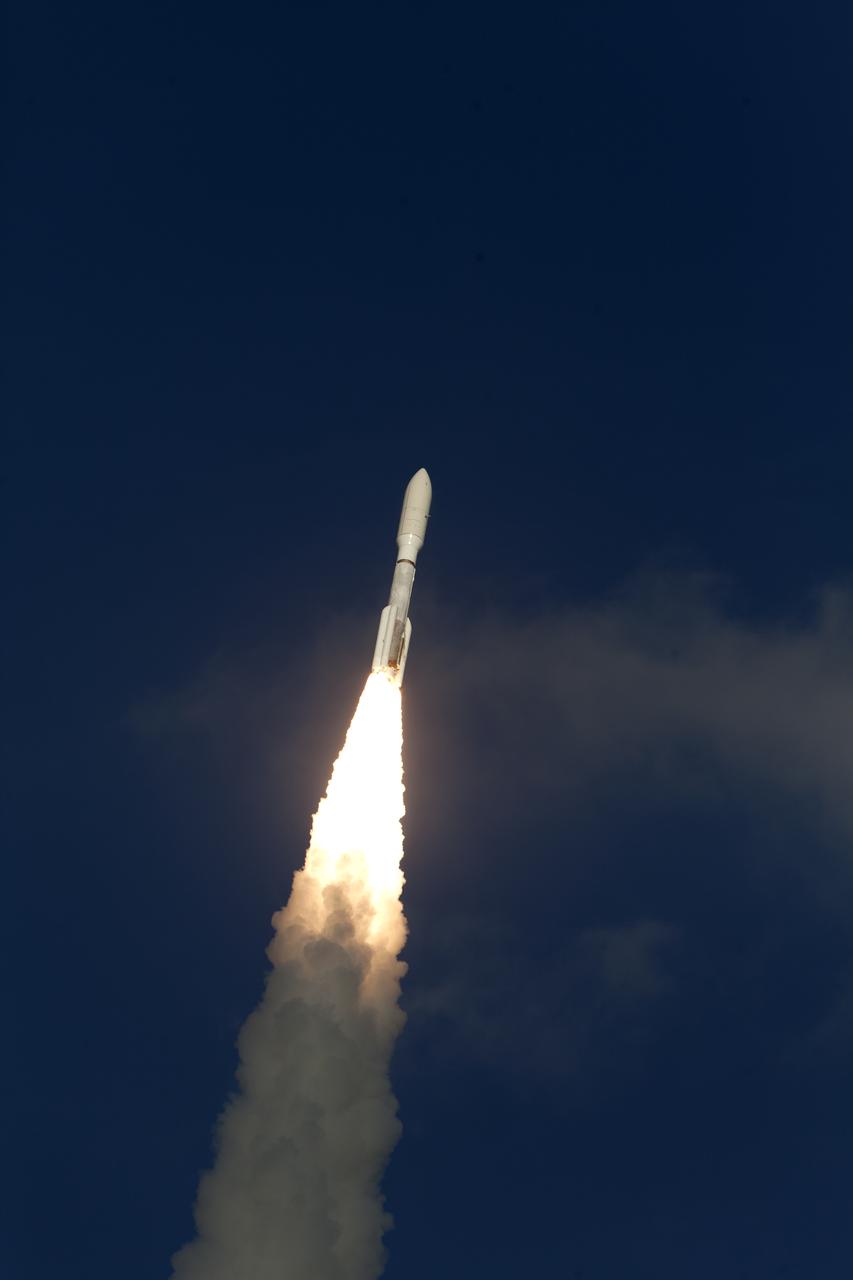
A United Launch Alliance Atlas V rocket lifts off from Space Launch Complex 41 at Cape Canaveral Air Force Station carrying the NOAA Geostationary Operational Environmental Satellite, or GOES-S. Liftoff was at 5:02 p.m. EST. GOES-S is the second satellite in a series of next-generation weather satellites. It will launch to a geostationary position over the U.S. to provide images of storms and help predict weather forecasts, severe weather outlooks, watches, warnings, lightning conditions and longer-term forecasting.
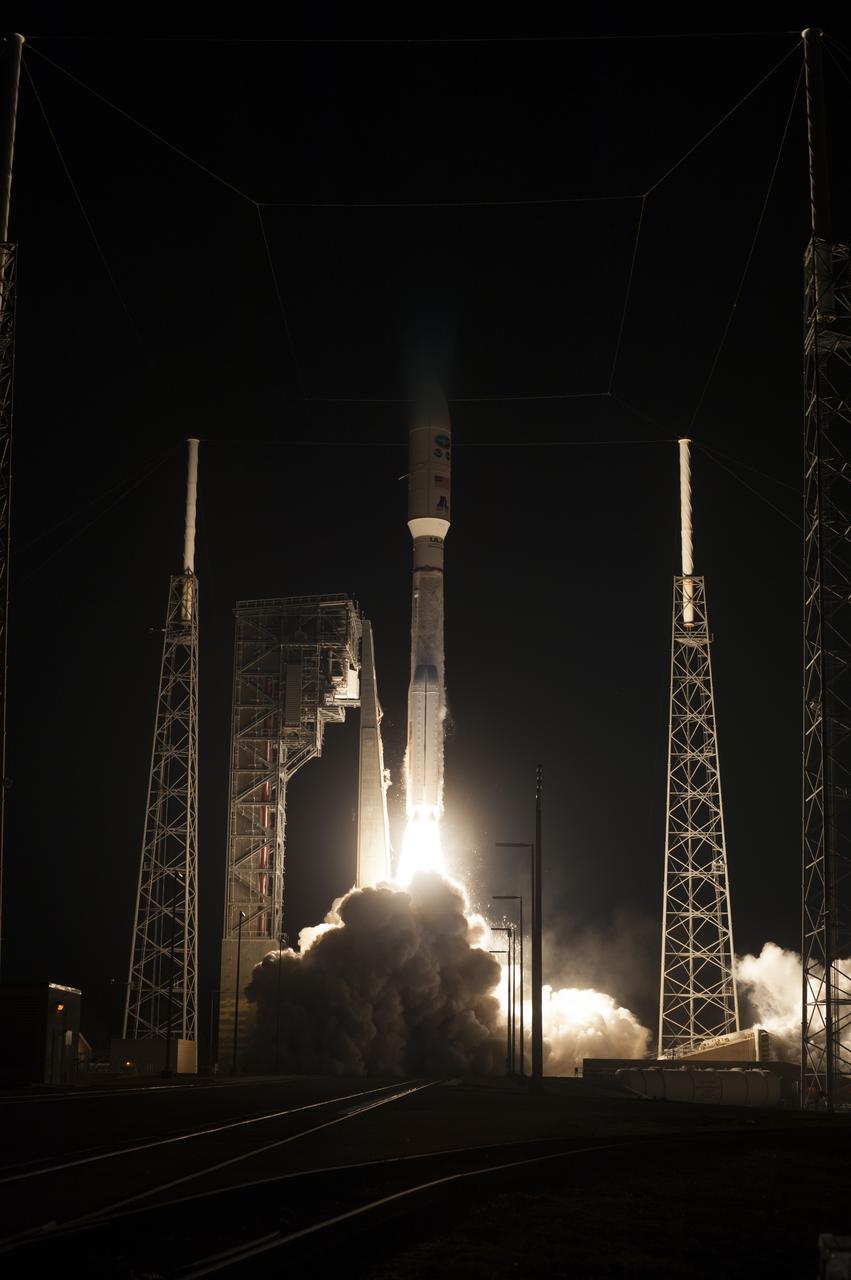
At Cape Canaveral Air Force Station's Space Launch Complex 41, an Atlas V rocket with NOAA's Geostationary Operational Environmental Satellite, or GOES-R, lifts off at 6:42 p.m. EST. GOES-R is the first satellite in a series of next-generation GOES satellites for NOAA, the National Oceanographic and Atmospheric Administration. It will launch to a geostationary orbit over the western hemisphere to provide images of storms and help meteorologists predict severe weather conditionals and develop long-range forecasts.
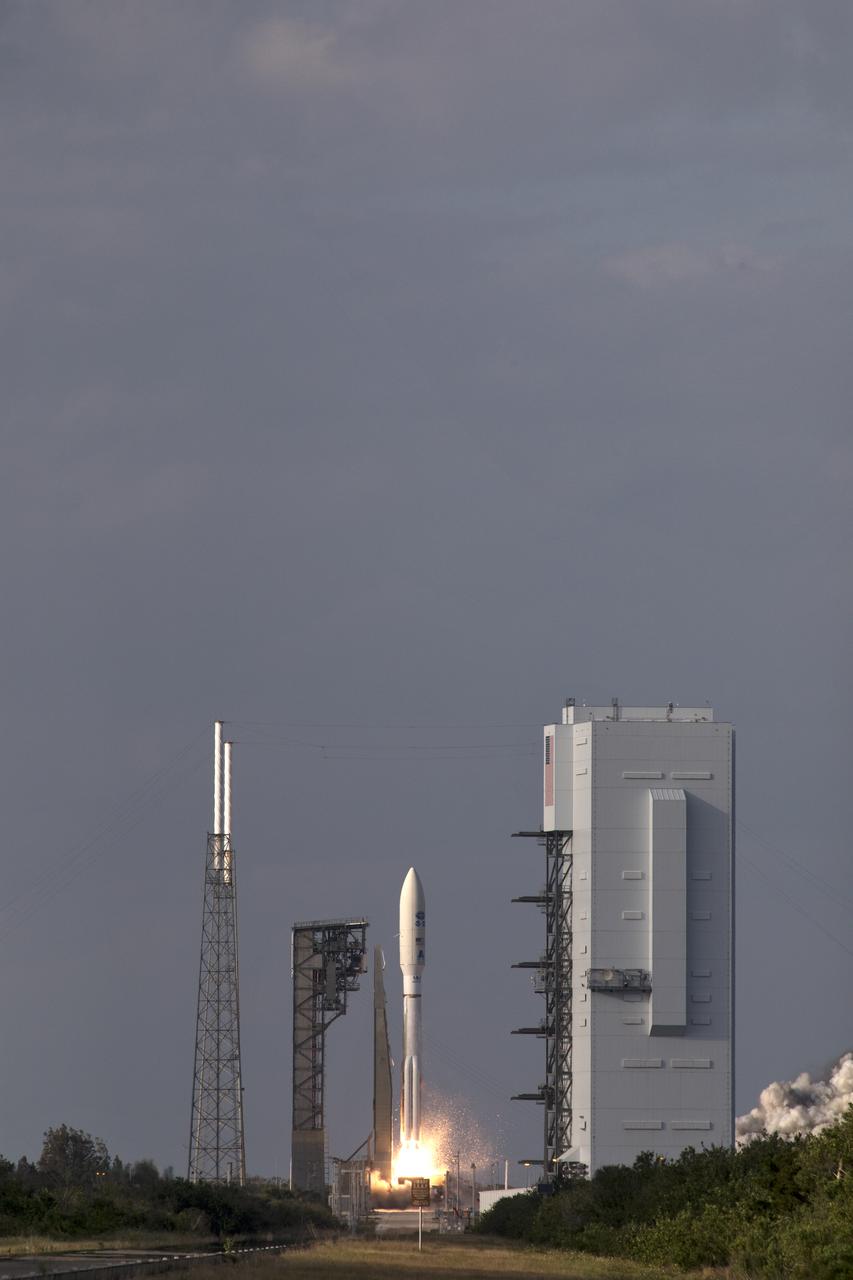
A United Launch Alliance Atlas V rocket lifts off from Space Launch Complex 41 at Cape Canaveral Air Force Station carrying the NOAA Geostationary Operational Environmental Satellite, or GOES-S. Liftoff was at 5:02 p.m. EST. GOES-S is the second satellite in a series of next-generation weather satellites. It will launch to a geostationary position over the U.S. to provide images of storms and help predict weather forecasts, severe weather outlooks, watches, warnings, lightning conditions and longer-term forecasting.
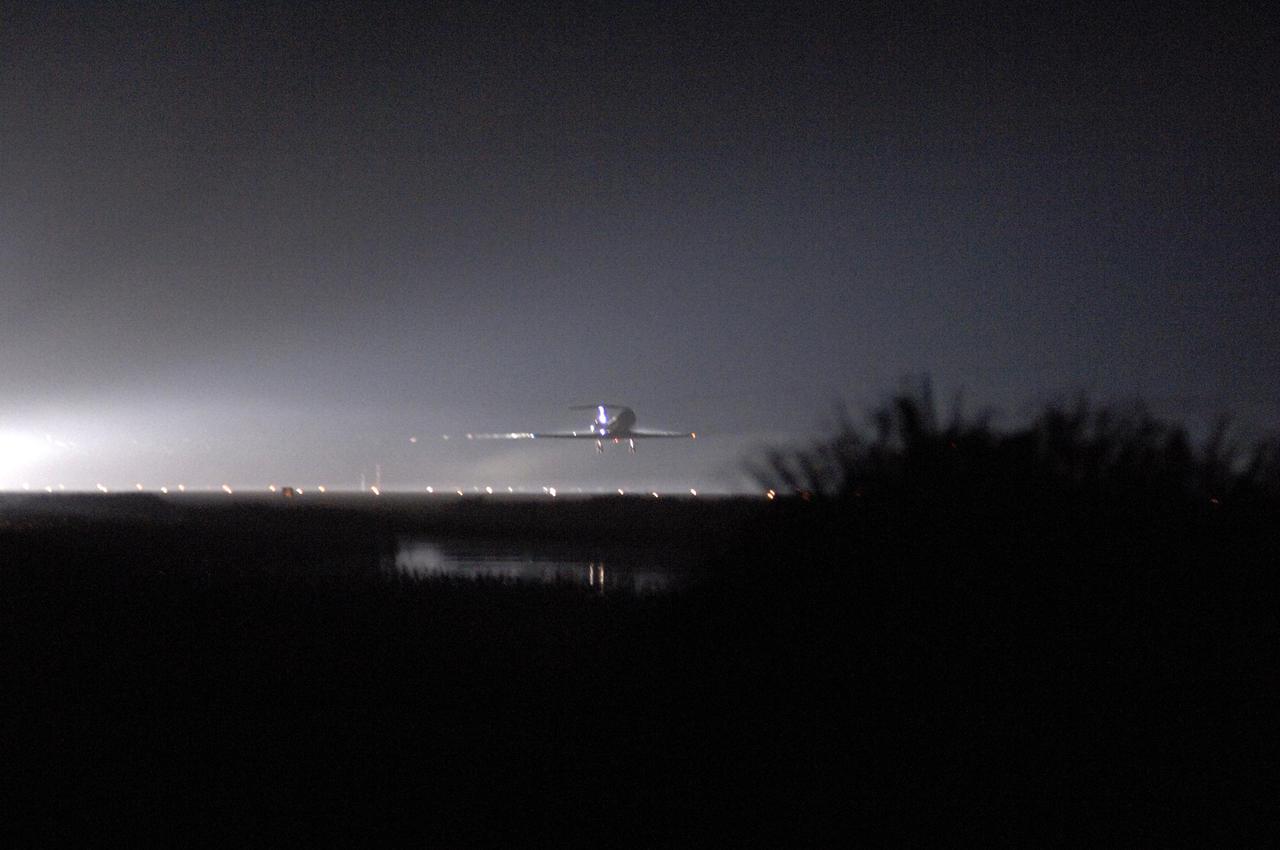
KENNEDY SPACE CENTER, FLA. - In the pre-dawn hours, the Shuttle Training Aircraft (STA) approaches the runway on NASA Kennedy Space Center’s Shuttle Landing Facility. The STA was in the air to observe flying conditions for the pending landing of Space Shuttle Discovery to conclude Return to Flight mission STS-114. The landing was postponed until Aug. 9.

At Cape Canaveral Air Force Station's Space Launch Complex 41, an Atlas V rocket with NOAA's Geostationary Operational Environmental Satellite, or GOES-R, lifts off at 6:42 p.m. EST. GOES-R is the first satellite in a series of next-generation GOES satellites for NOAA, the National Oceanographic and Atmospheric Administration. It will launch to a geostationary orbit over the western hemisphere to provide images of storms and help meteorologists predict severe weather conditionals and develop long-range forecasts.
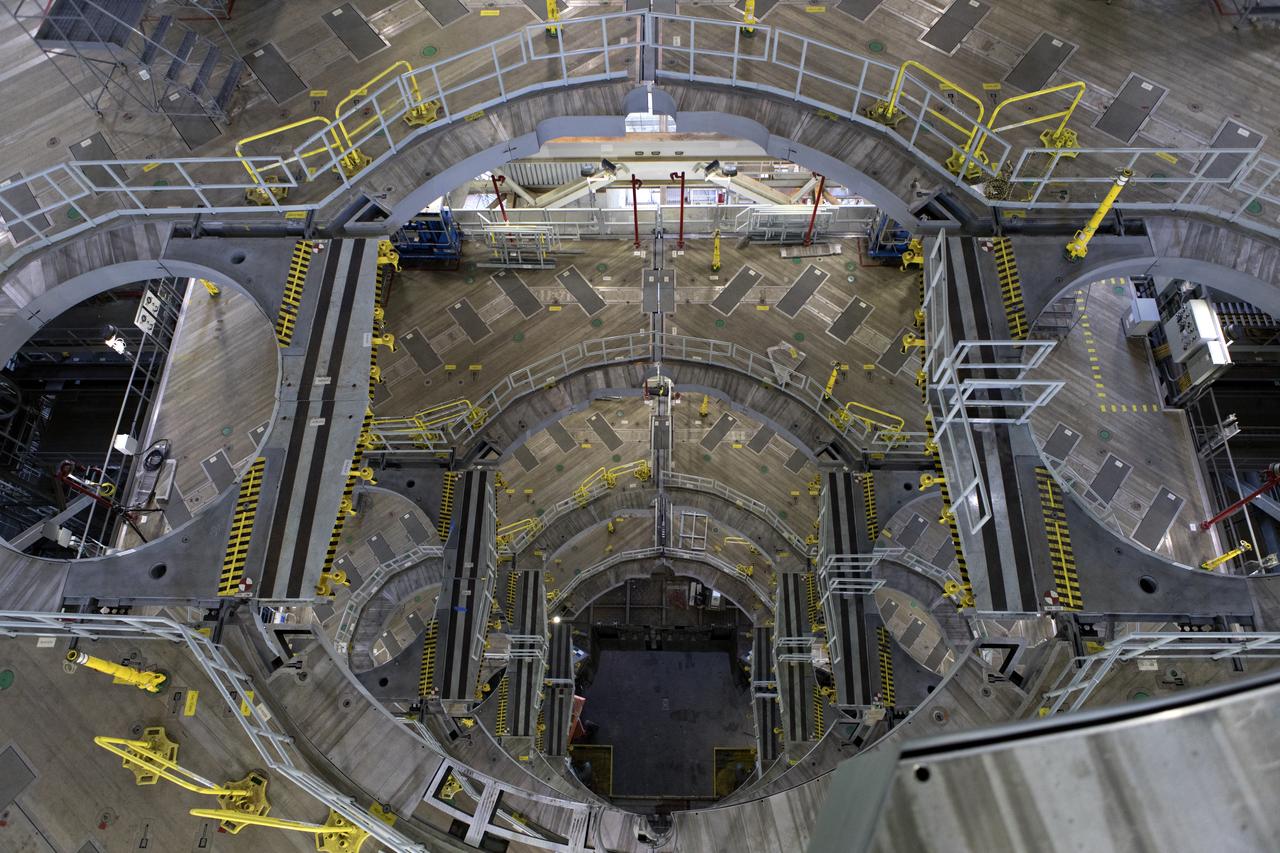
A view of the new work platforms in High Bay 3 of the Vehicle Assembly Building on Feb. 22, 2019, at NASA’s Kennedy Space Center in Florida. Preparations are underway to perform an initial swing test of the Core Stage Inter-tank Umbilical (CSITU) on the mobile launcher. The CSITU is a swing-arm umbilical that will connect to the Space Launch System core stage inter-tank. It will provide conditioned air, pressurized gases and power and data connection to the core stage. Exploration Ground Systems at Kennedy is conducting the swing test.
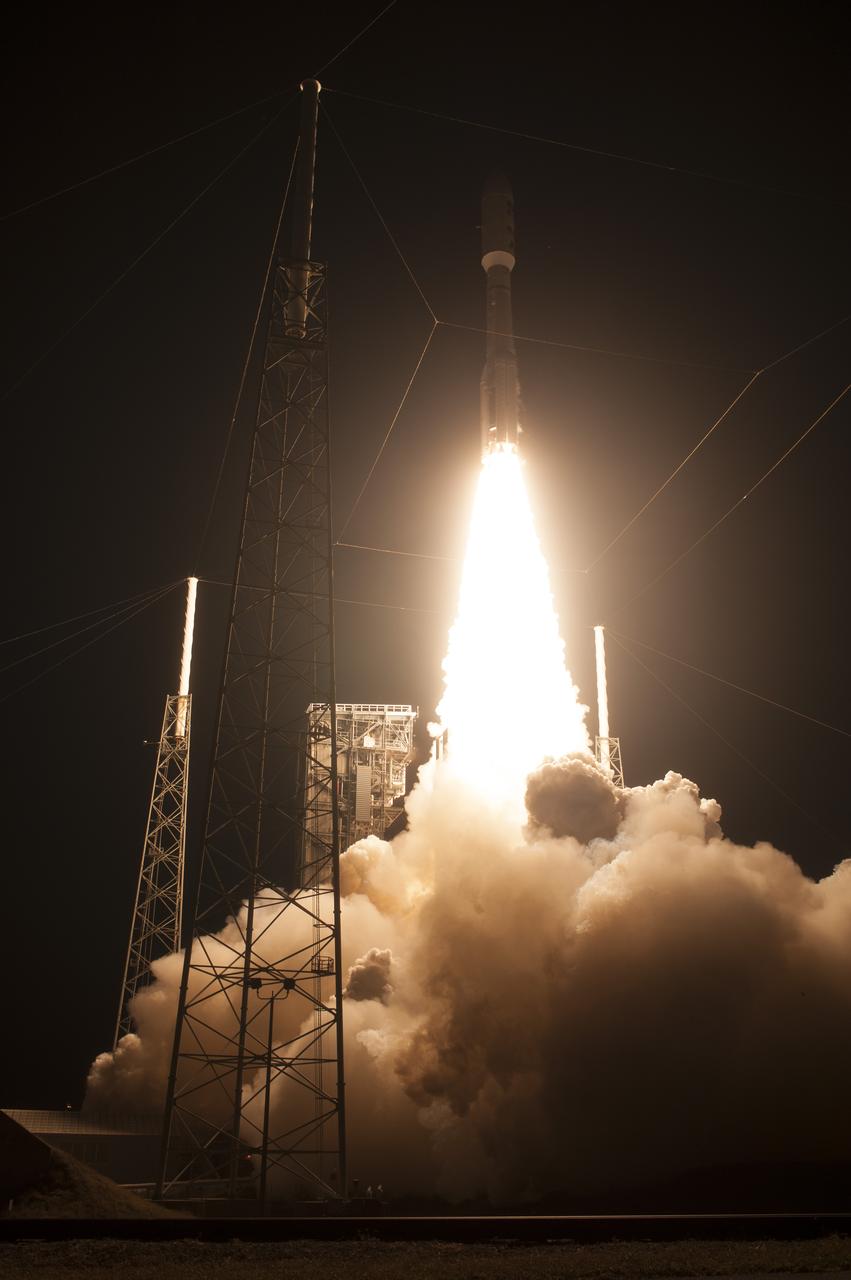
At Cape Canaveral Air Force Station's Space Launch Complex 41, an Atlas V rocket with NOAA's Geostationary Operational Environmental Satellite, or GOES-R, lifts off at 6:42 p.m. EST. GOES-R is the first satellite in a series of next-generation GOES satellites for NOAA, the National Oceanographic and Atmospheric Administration. It will launch to a geostationary orbit over the western hemisphere to provide images of storms and help meteorologists predict severe weather conditionals and develop long-range forecasts.
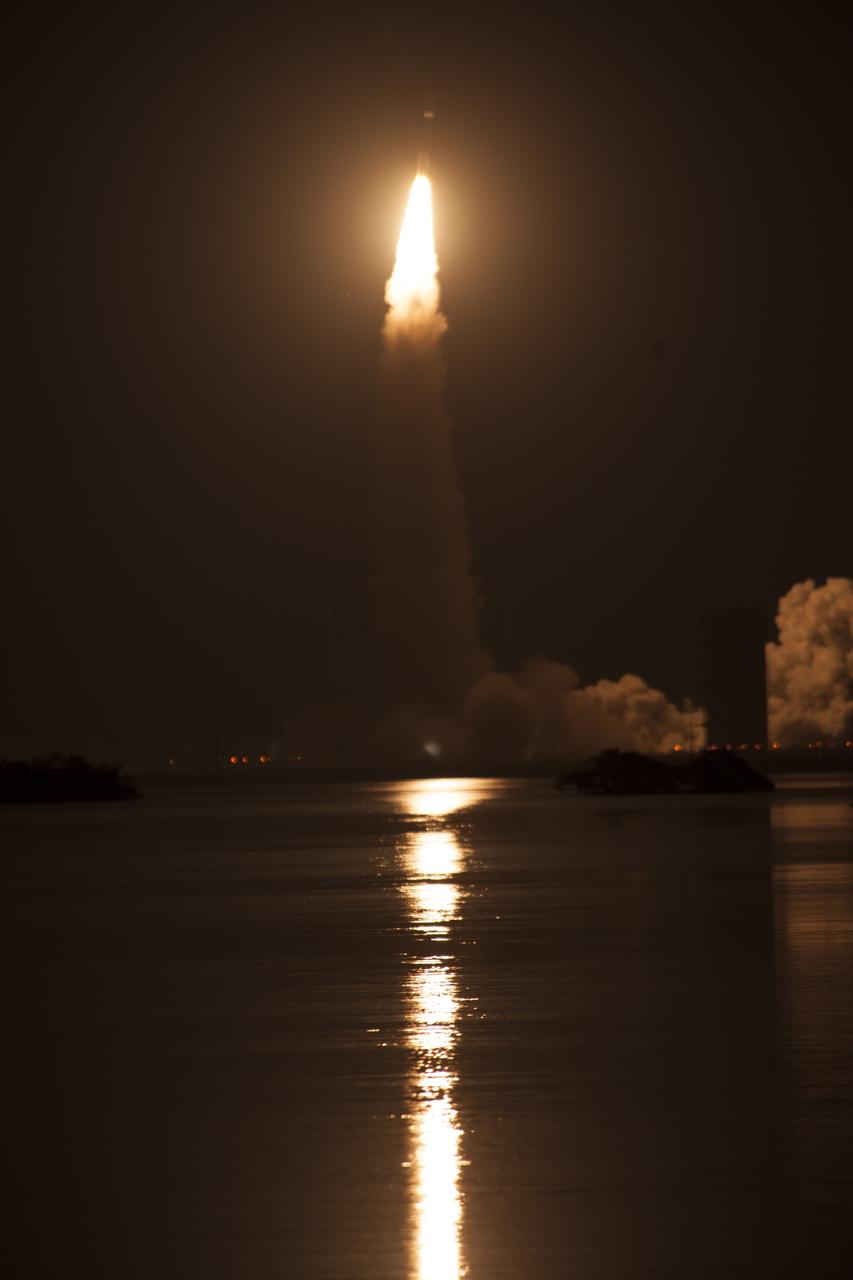
At Cape Canaveral Air Force Station's Space Launch Complex 41, an Atlas V rocket with NOAA's Geostationary Operational Environmental Satellite, or GOES-R, lifts off at 6:42 p.m. EST. GOES-R is the first satellite in a series of next-generation GOES satellites for NOAA, the National Oceanographic and Atmospheric Administration. It will launch to a geostationary orbit over the western hemisphere to provide images of storms and help meteorologists predict severe weather conditionals and develop long-range forecasts.

KENNEDY SPACE CENTER, FLA. -- In the Orbiter Processing Facility, a worker points to some of the tiles on orbiter Atlantis that are being dried by clusters of 200-300 watt heat lamps. Significant rainstorms during the orbiter’s turnaround for a ferry flight home from Edwards Air Force Base, Calif., caused a moisture problem. The tiles are part of the Thermal Protection System used on orbiters for extreme temperatures encountered during landing. Engineers are evaluating the current procedures to assure the tiles are in a safe and flight-ready condition
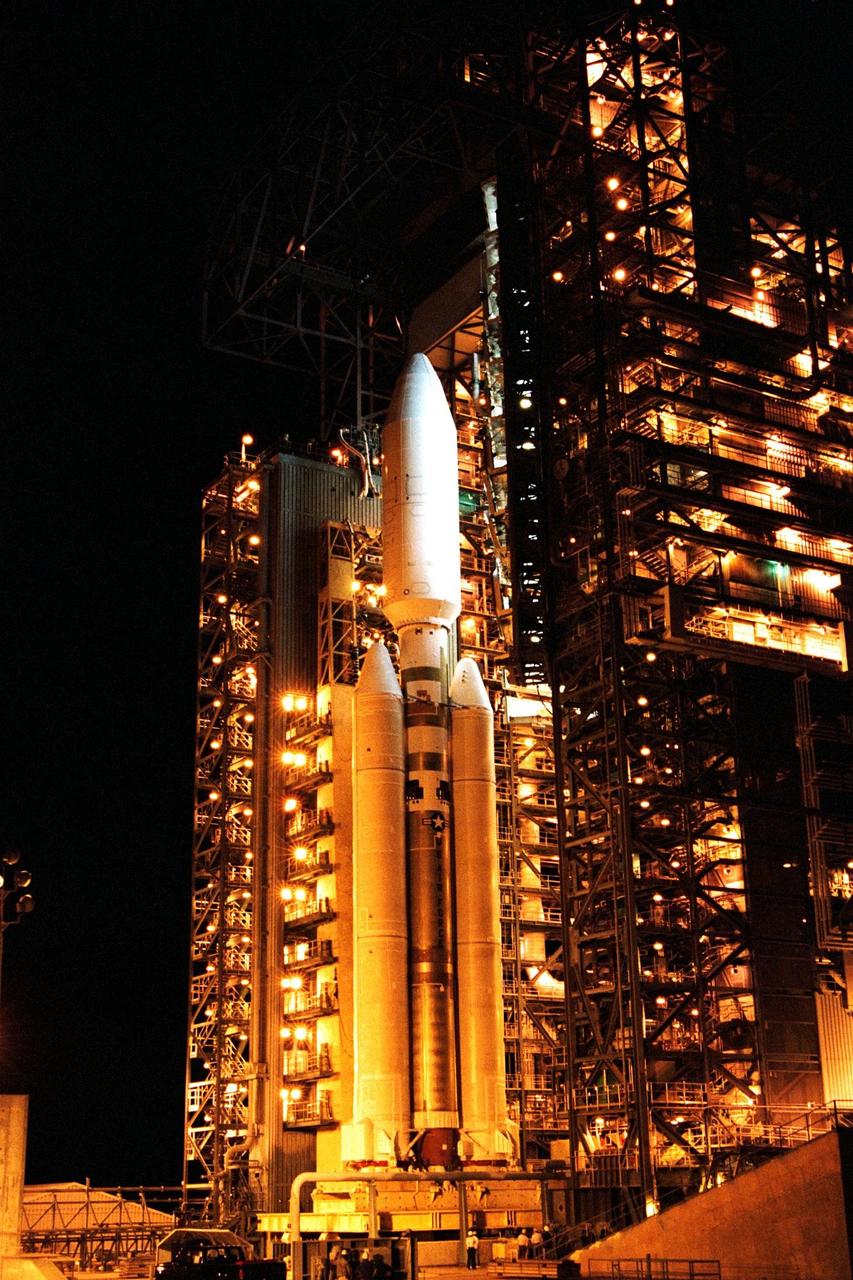
At Launch Complex 40 on Cape Canaveral Air Station, the Mobile Service Tower is being rolled away from the Titan IVB/Centaur launch vehicle carrying the Cassini spacecraft, completing a major countdown milestone. This is the second launch attempt for the Saturn-bound mission; a first try Oct. 13 was scrubbed primarily due to concerns about upper level wind conditions. Liftoff Oct. 15 is set to occur during a launch window opening at 4:43 a.m. EDT and extending until 7:03 a.m
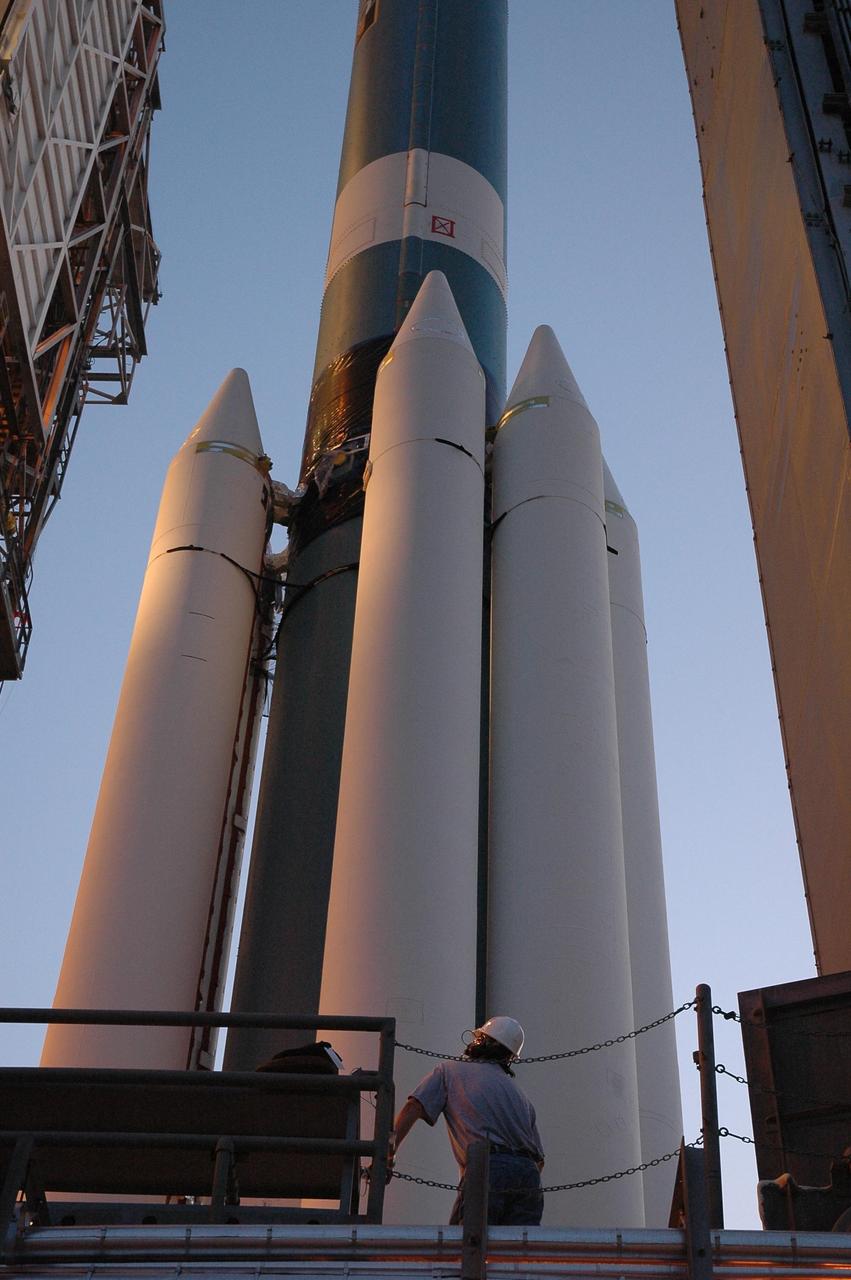
KENNEDY SPACE CENTER, FLA. -- This closeup shows four of the nine solid rocket boosters being mated to the Delta II first stage on Launch Pad 17-B at Cape Canaveral Air Force Station for launch of the Dawn spacecraft. Dawn's goal is to characterize the conditions and processes of the solar system's earliest epoch 4.5 billion years ago by investigating in detail two of the largest asteroids, Ceres and Vesta. They reside between Mars and Jupiter in the asteroid belt. Launch is targeted for July 7. Photo credit: NASA/Jim Grossmann
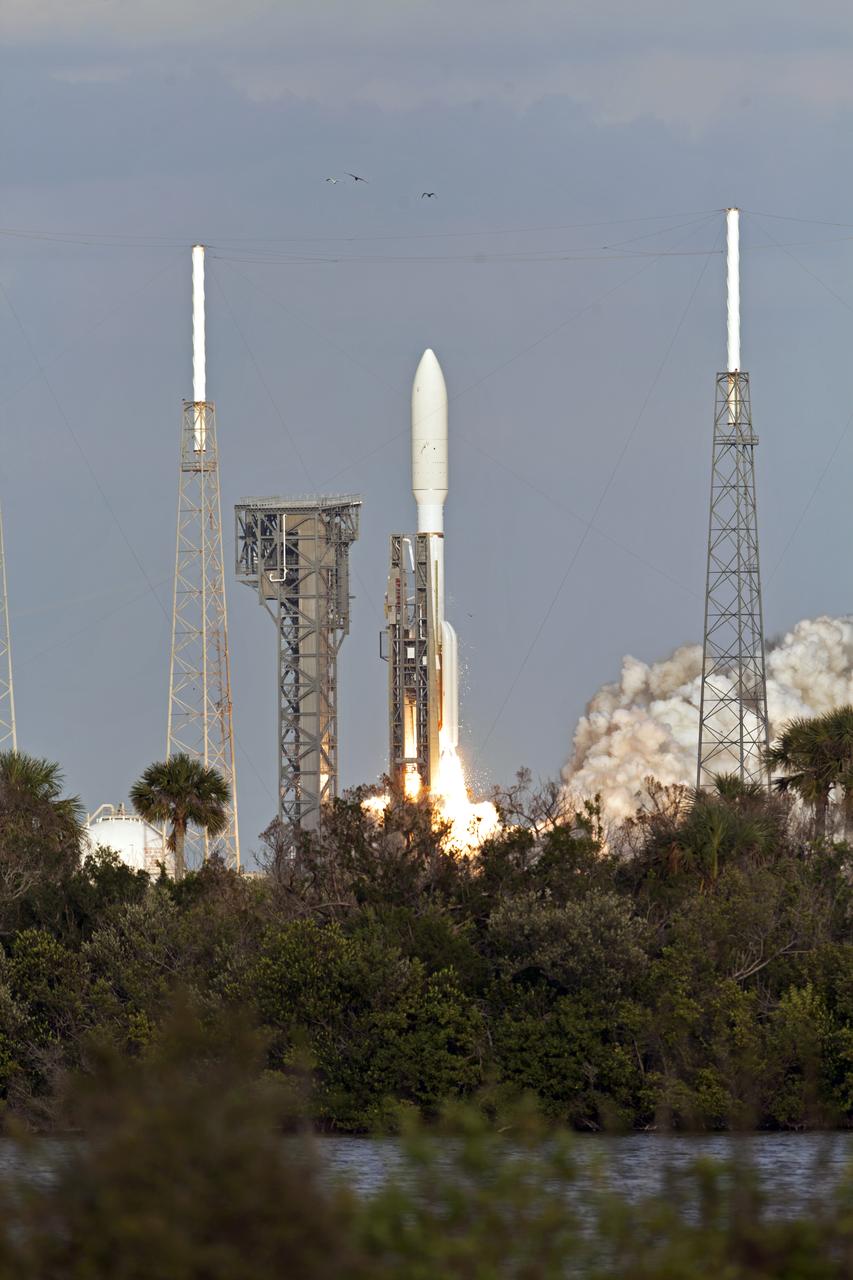
A United Launch Alliance Atlas V rocket lifts off from Space Launch Complex 41 at Cape Canaveral Air Force Station carrying the NOAA Geostationary Operational Environmental Satellite, or GOES-S. Liftoff was at 5:02 p.m. EST. GOES-S is the second satellite in a series of next-generation weather satellites. It will launch to a geostationary position over the U.S. to provide images of storms and help predict weather forecasts, severe weather outlooks, watches, warnings, lightning conditions and longer-term forecasting.
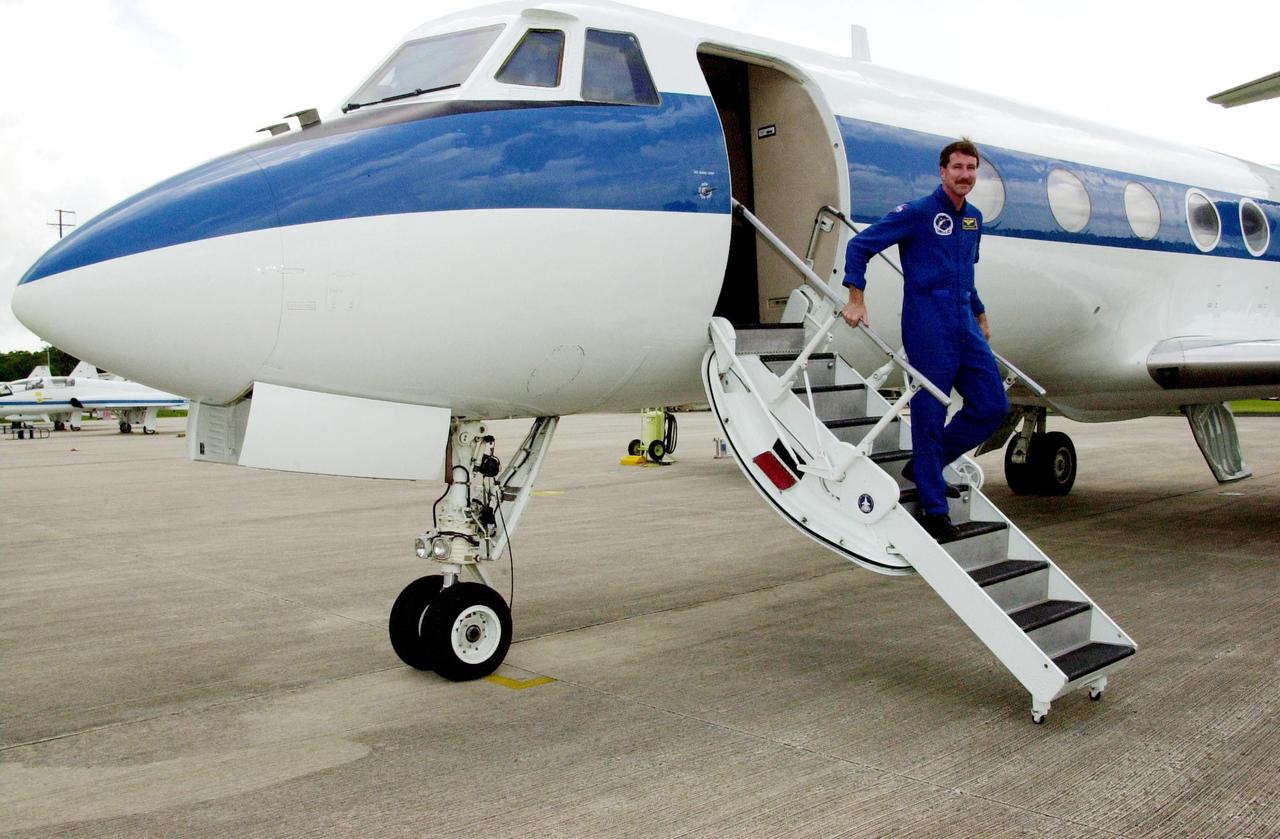
KENNEDY SPACE CENTER, FLA. -- Astronaut Kent Rominger exits the Shuttle Training Aircraft (STA) after flying weather reconnaissance for the landing of Endeavour, returning from mission STS-111. Low cloud cover and other unfavorable weather conditions resulted in the third day of wave off on two landing opportunities. Endeavour successfully landed at Edwards Air Force Base, Calif., completing 217 orbits and a 5.8-million-mile journey

KENNEDY SPACE CENTER, FLA. -- The orbiter Columbia, atop a Shuttle Carrier Aircraft, lands at the Cape Canaveral Air Force Station Skid Strip. The ferry flight began in California March 1. Unfavorable weather conditions kept it on the ground at Dyess AFB, Texas, until it could return to Florida. Columbia is returning from a 17-month-long modification and refurbishment process as part of a routine maintenance plan. The orbiter will next fly on mission STS-107, scheduled Oct. 25
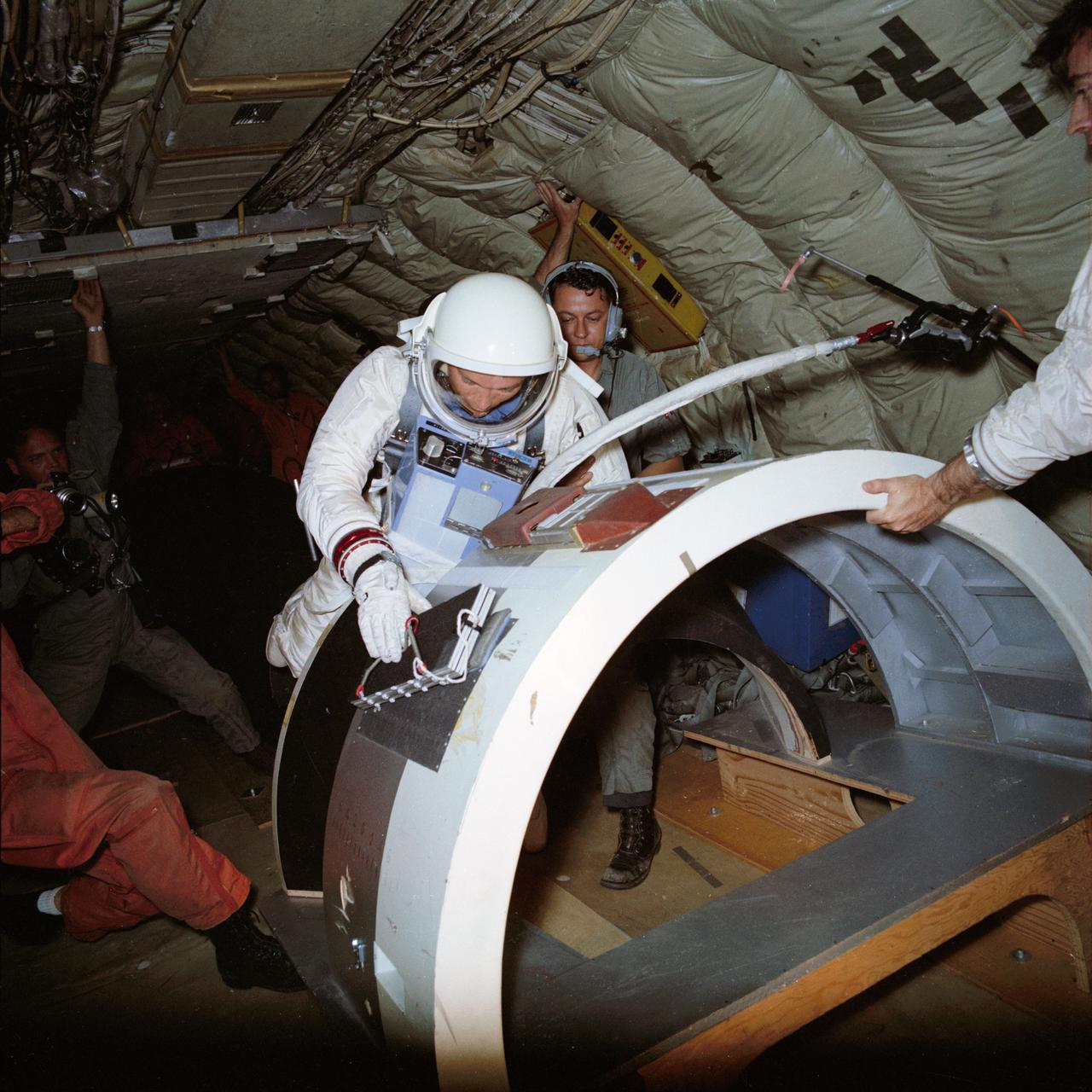
S66-40098 (17 June 1966) --- Astronaut Michael Collins, prime crew pilot of the Gemini-10 spaceflight, undergoes zero-gravity (weightlessness) training aboard an Air Force KC-135 aircraft. He practices with micrometeorite experiment-type equipment. The KC-135 flew a parabolic curve to create the zero-gravity condition. This training is in preparation for Collins' Gemini-10 extravehicular activity. Photo credit: NASA

KENNEDY SPACE CENTER, FLA. -- The Shuttle Carrier Aircraft, carrying its cargo orbiter Columbia, taxis off the runway at the Cape Canaveral Air Force Station Skid Strip. The ferry flight began in California March 1. Unfavorable weather conditions kept it on the ground at Dyess AFB, Texas, until it could return to Florida. Columbia is returning from a 17-month-long modification and refurbishment process as part of a routine maintenance plan. The orbiter will next fly on mission STS-107, scheduled Oct. 25
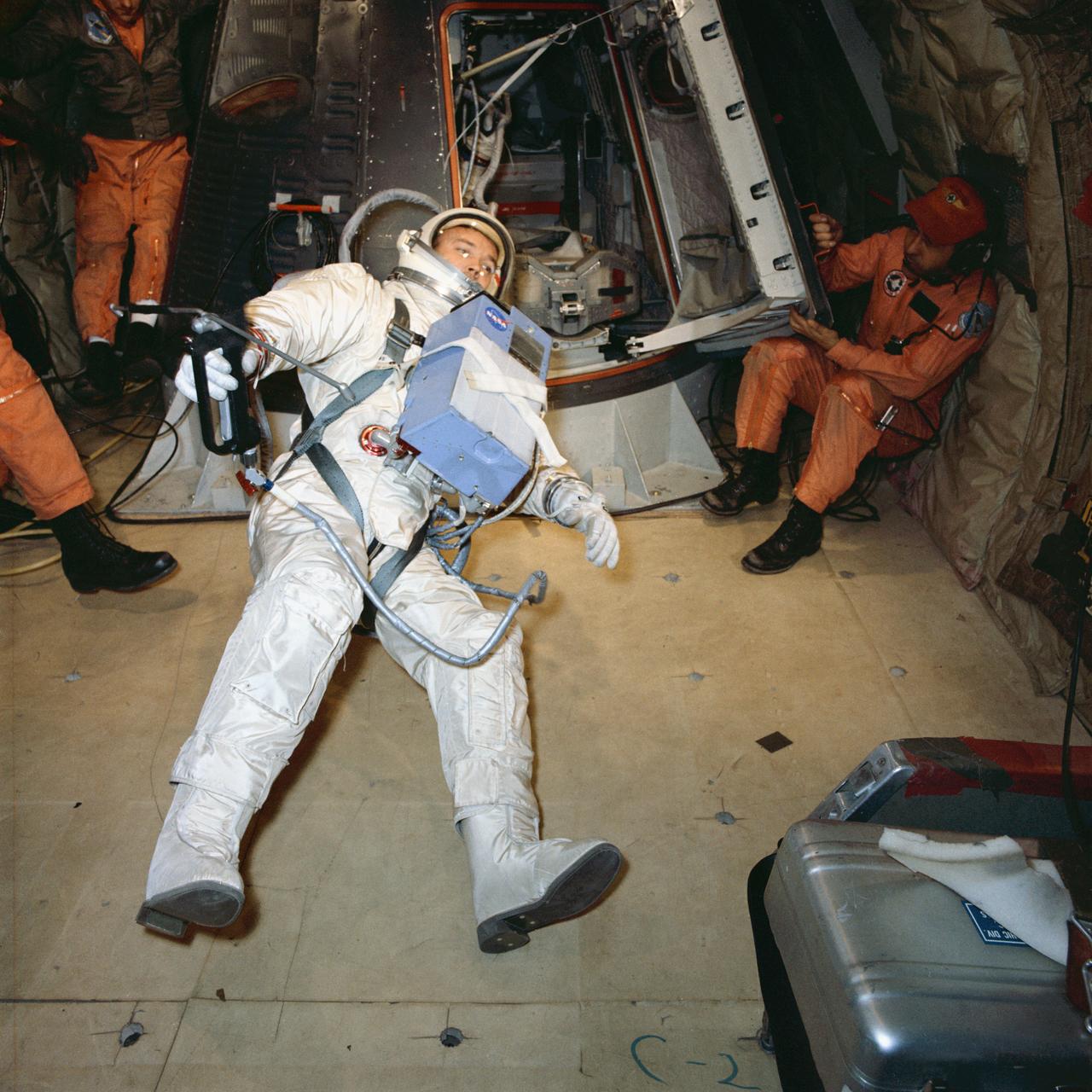
S66-28782 (1 April 1966) --- Astronaut Michael Collins, prime crew pilot of the Gemini-10 spaceflight, experiences a condition of weightlessness during zero-gravity egress training. A KC-135 Air Force plane, flying a parabolic curve, creates a weightless environment as a training exercise in preparation for spaceflight. The Hand-Held Maneuvering Unit in his right hand produces controlled thrust for moving about. Photo credit: NASA
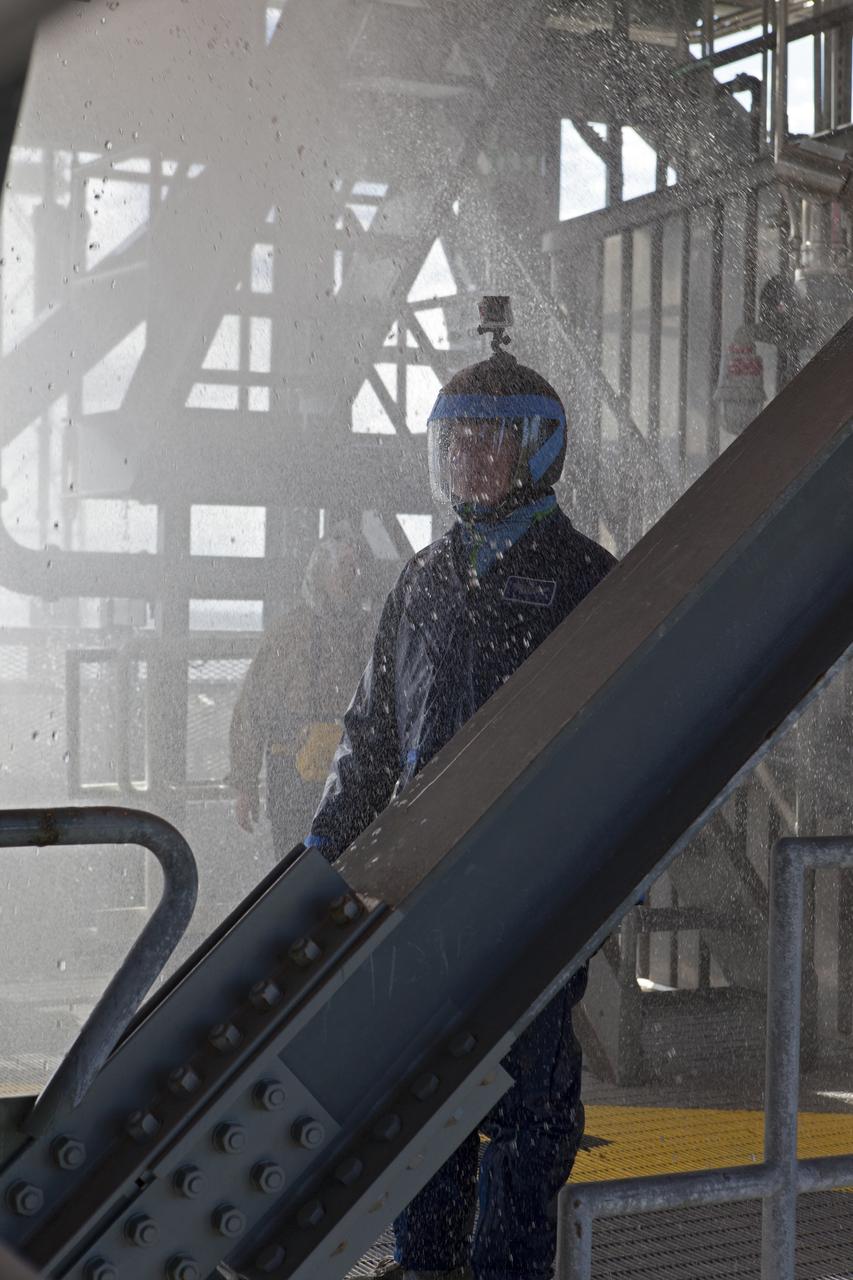
NASA and Boeing personnel experience conditions during a water deluge test on the Crew Access Tower at Space Launch Complex 41 on Cape Canaveral Air Force Station in Florida. The test gathered data on how launch site and astronaut crews would exit in the event of an emergency from the white room at the end of the crew access arm to the emergency escape system on the pad. Boeing’s Starliner will launch on a United Launch Alliance Atlas V rocket to the International Space Station as part of NASA’s Commercial Crew Program.
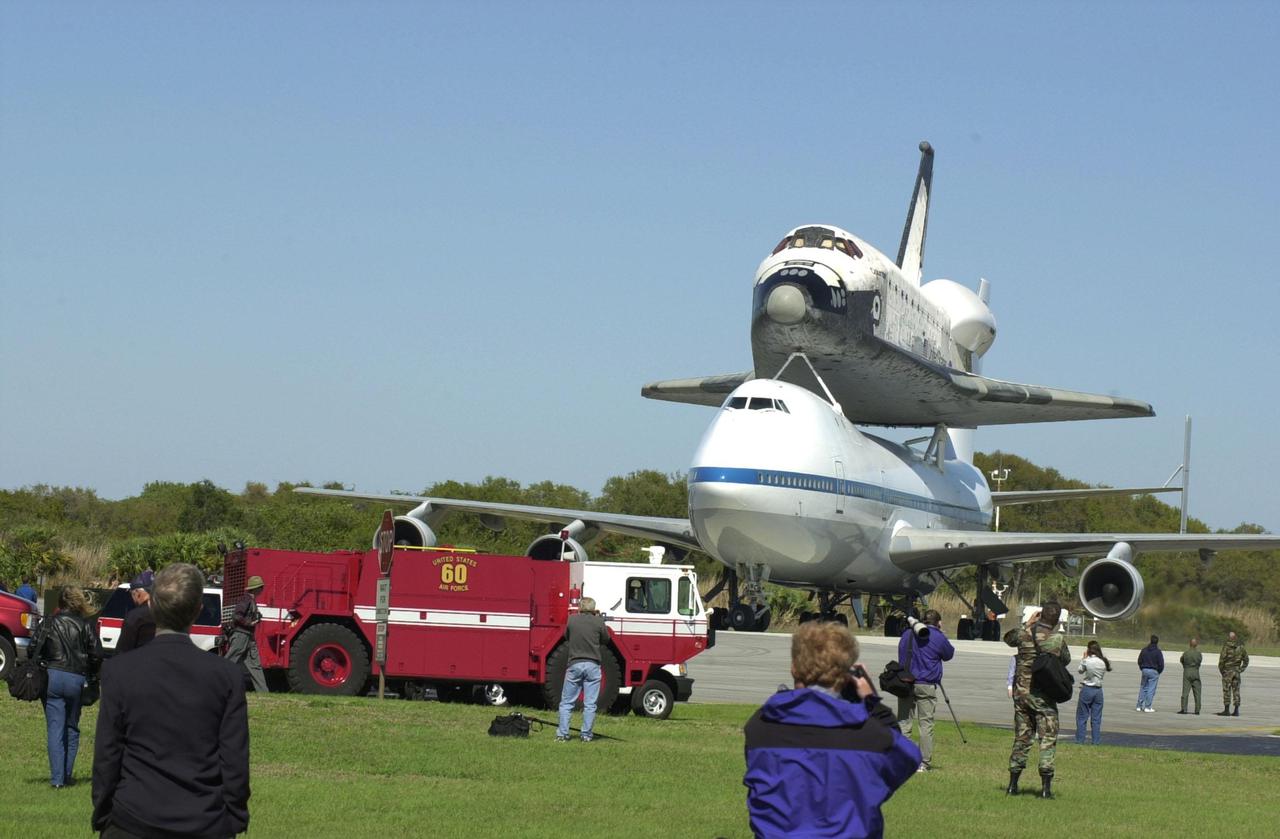
KENNEDY SPACE CENTER, FLA. -- A firetruck stands by as the Shuttle Carrier Aircraft with its cargo the orbiter Columbia comes to a stop at the Cape Canaveral Air Force Station Skid Strip. Columbia’s ferry flight began in California March 1. Unfavorable weather conditions kept it on the ground at Dyess AFB, Texas, until it could return to Florida. Columbia is returning from a 17-month-long modification and refurbishment process as part of a routine maintenance plan. The orbiter will next fly on mission STS-107, scheduled Oct. 25
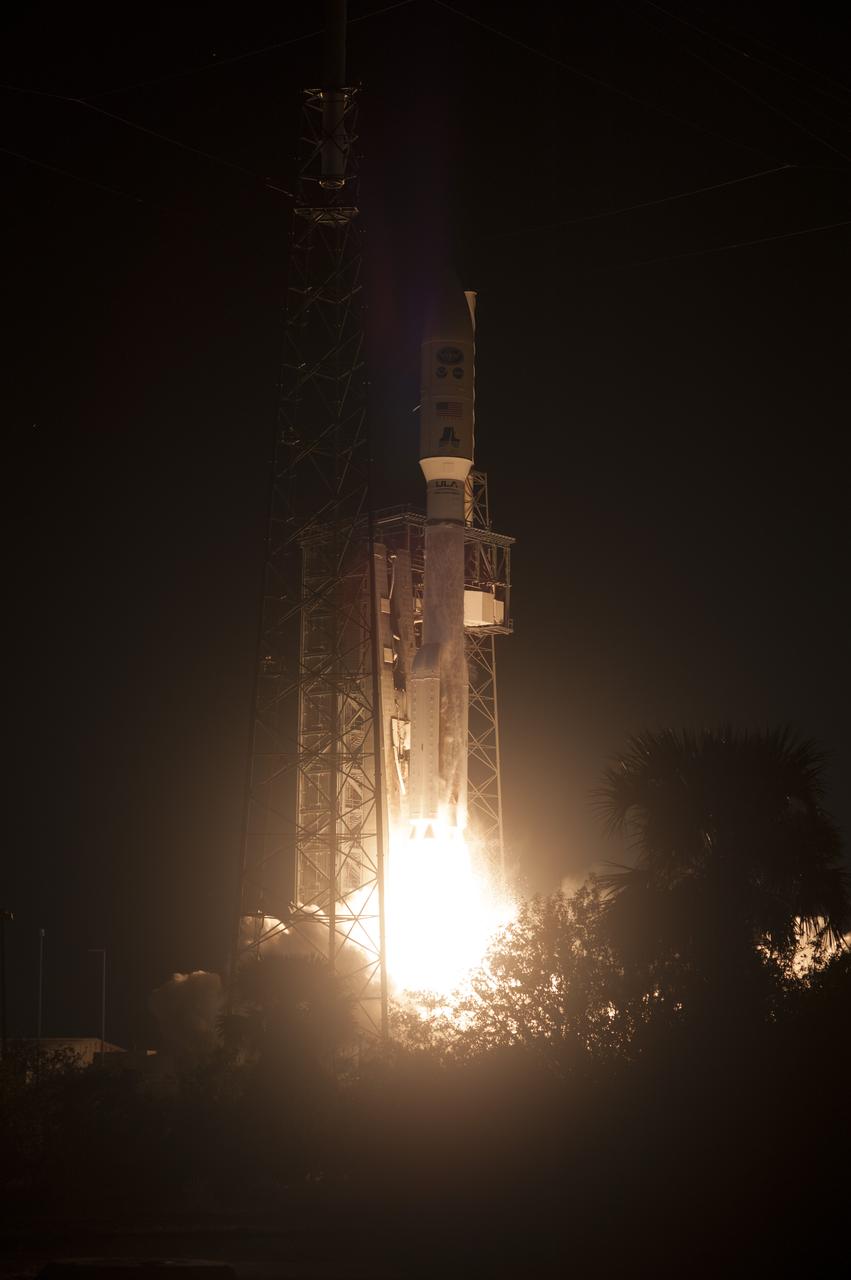
At Cape Canaveral Air Force Station's Space Launch Complex 41, an Atlas V rocket with NOAA's Geostationary Operational Environmental Satellite, or GOES-R, lifts off at 6:42 p.m. EST. GOES-R is the first satellite in a series of next-generation GOES satellites for NOAA, the National Oceanographic and Atmospheric Administration. It will launch to a geostationary orbit over the western hemisphere to provide images of storms and help meteorologists predict severe weather conditionals and develop long-range forecasts.
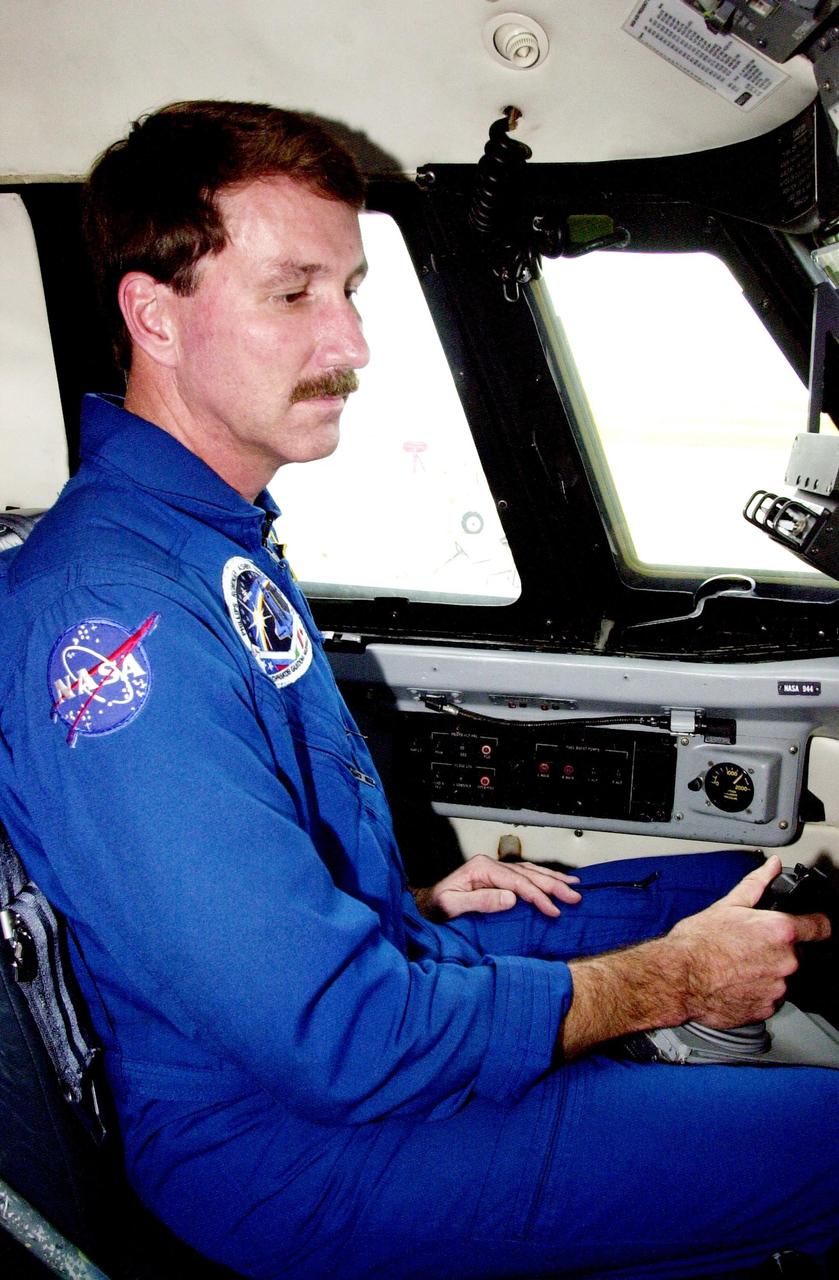
KENNEDY SPACE CENTER, FLA. - Astronaut Kent Rominger sits in the cockpit of a Shuttle Training Aircraft (STA) after flying weather reconnaissance for the landing of Endeavour, returning from mission STS-111. Low cloud cover and other unfavorable weather conditions resulted in the third day of wave off on two landing opportunities. Endeavour successfully landed at Edwards Air Force Base, Calif., completing 217 orbits and a 5.8-million-mile journey
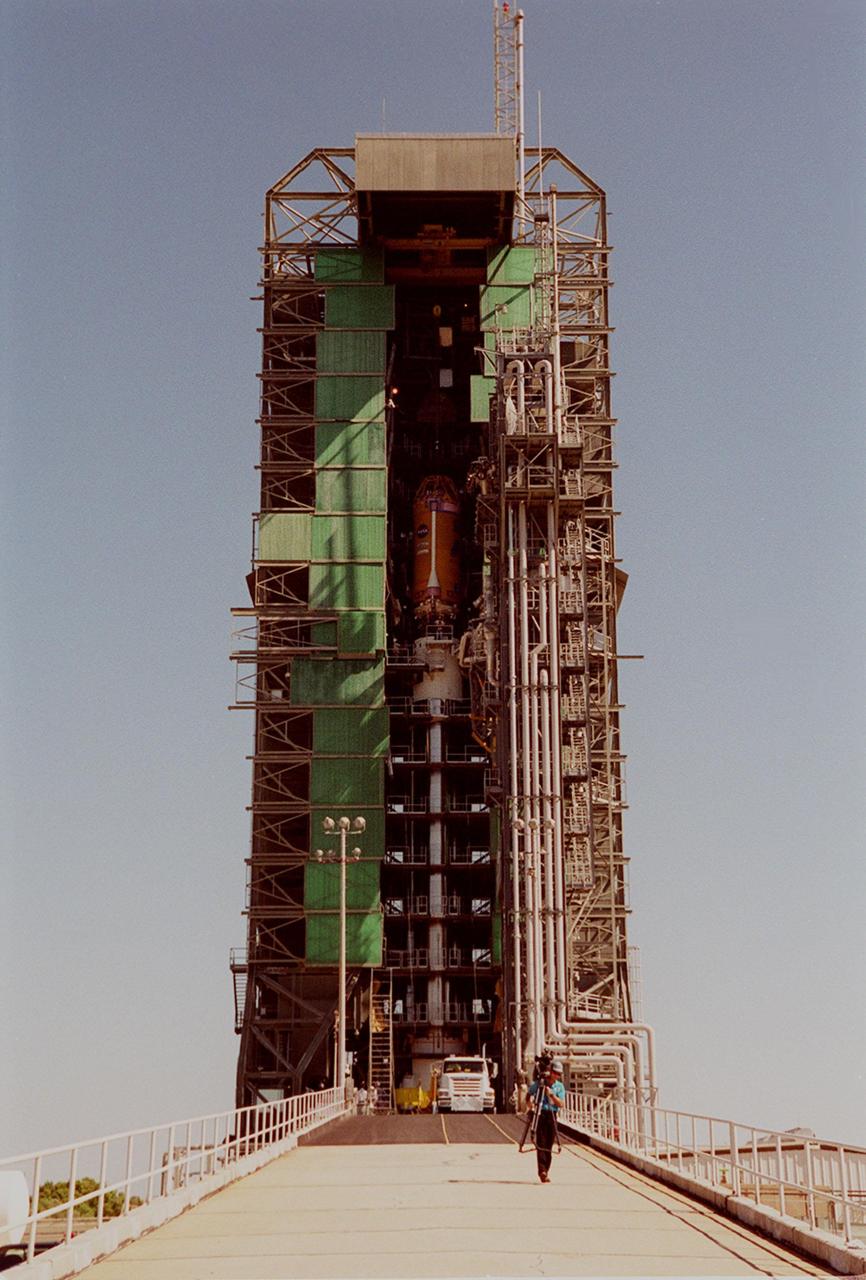
At launch pad 36-A, Cape Canaveral Air Force Station, lifting of the second stage of an Atlas II/Centaur rocket in the launch gantry is completed. The rocket is the launch vehicle for the GOES-L satellite, part of the NOAA National Weather Service system in weather imagery and atmospheric sounding information. The primary objective of the GOES-L is to provide a full capability satellite in an on-orbit storage condition, to assure NOAA continuity in services from a two-satellite constellation. Launch services are being provided by the 45th Space Wing