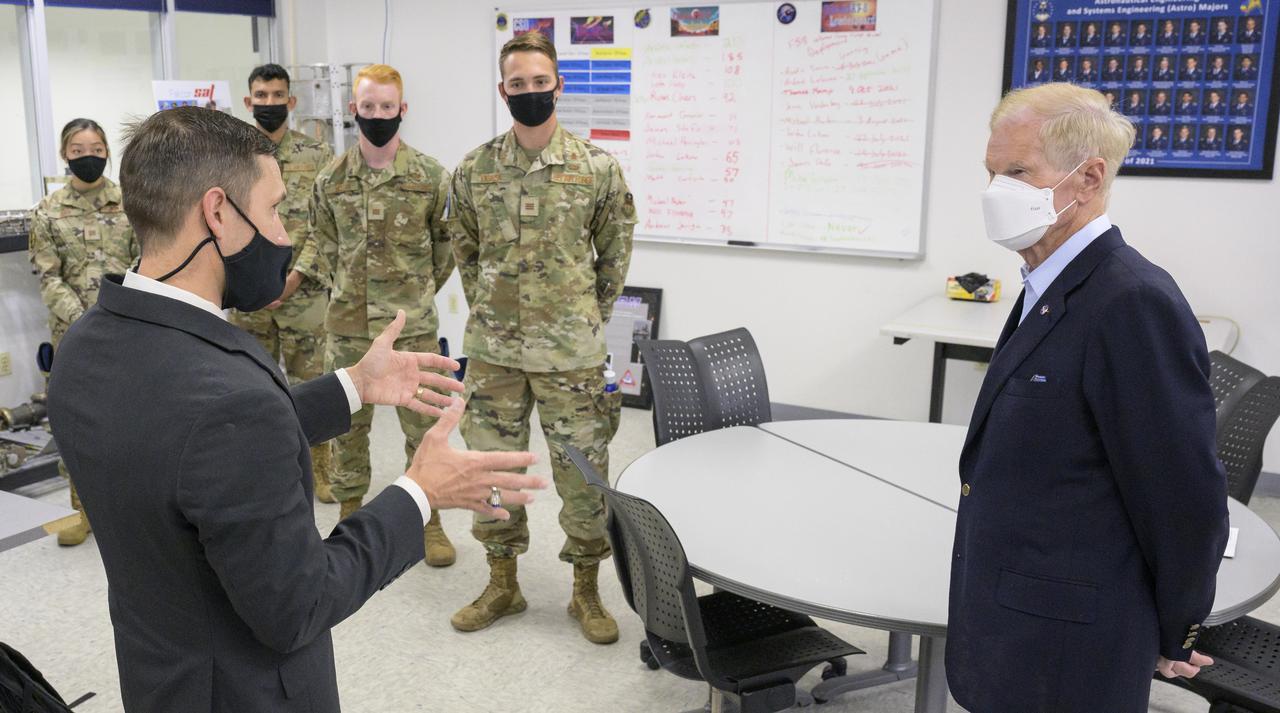
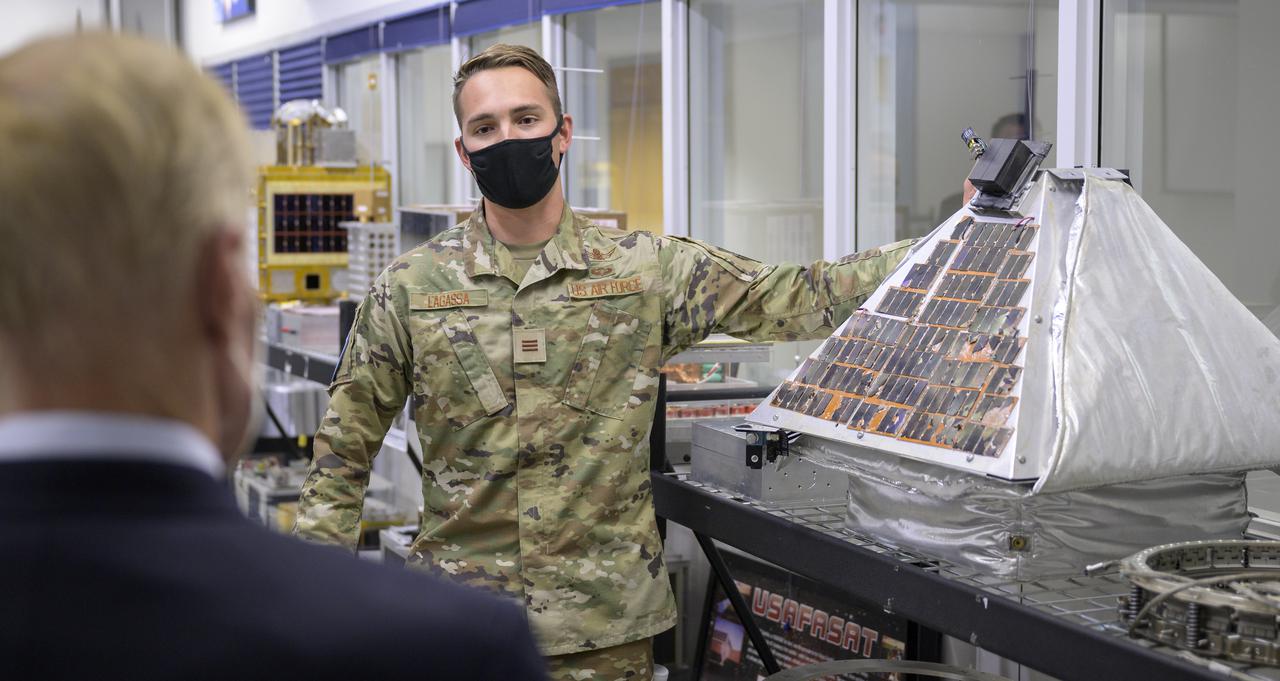
NASA Administrator Bill Nelson listens as Cadet First Class Andrew LaGassa talks about his classes work in the astronautics lab of the United States Air Force Academy, Wednesday, Aug. 25, 2021, north of Colorado Springs, Colorado. Photo Credit: (NASA/Bill Ingalls)
Administrator Visits U.S. Air Force Academy
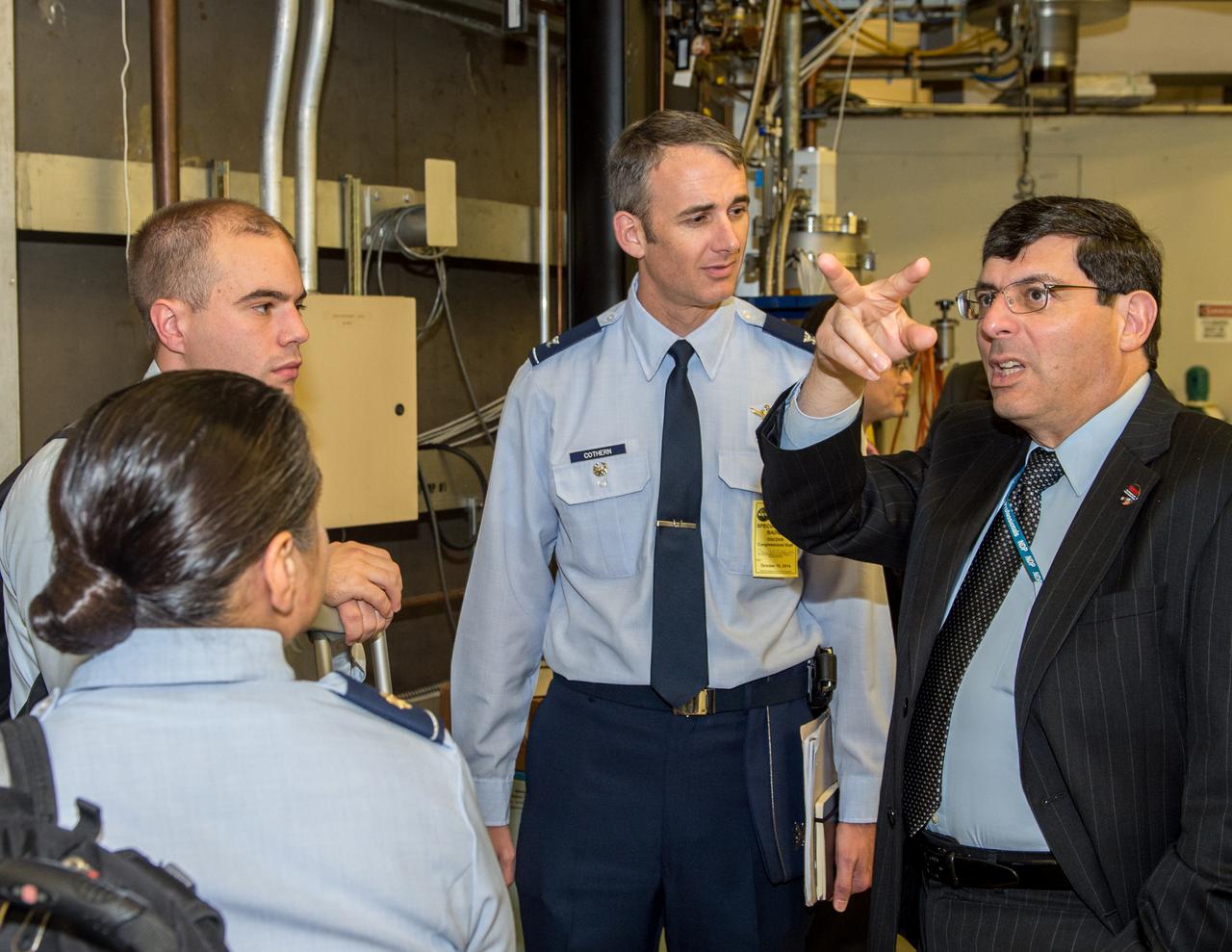
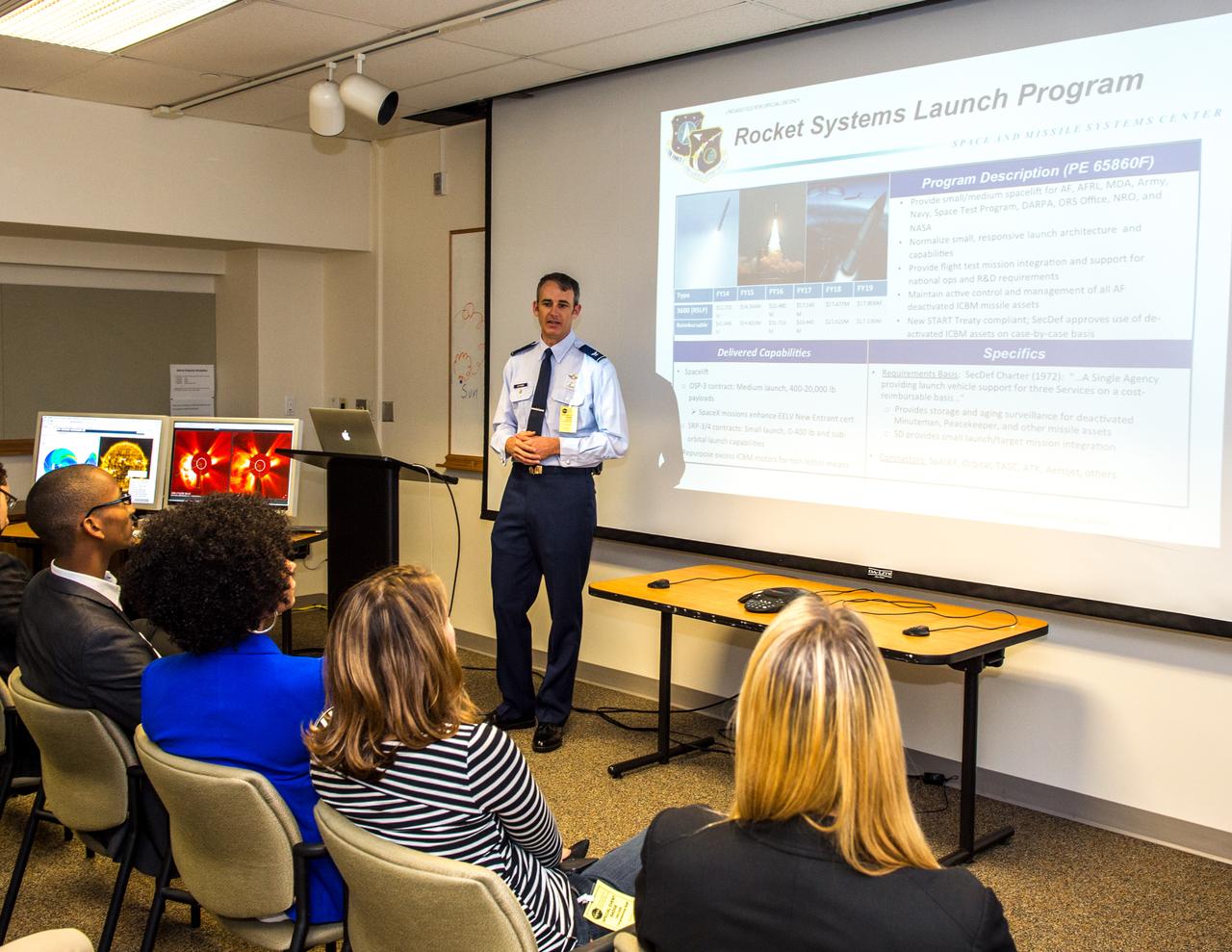
Col. Robert Swanson, Air Force at the Joint NASA-NOAA-Air Force Congressional Staff Day Goddard Space Flight Center
Col. Robert Swanson, Air Force at the Joint NASA-NOAA-Air Force
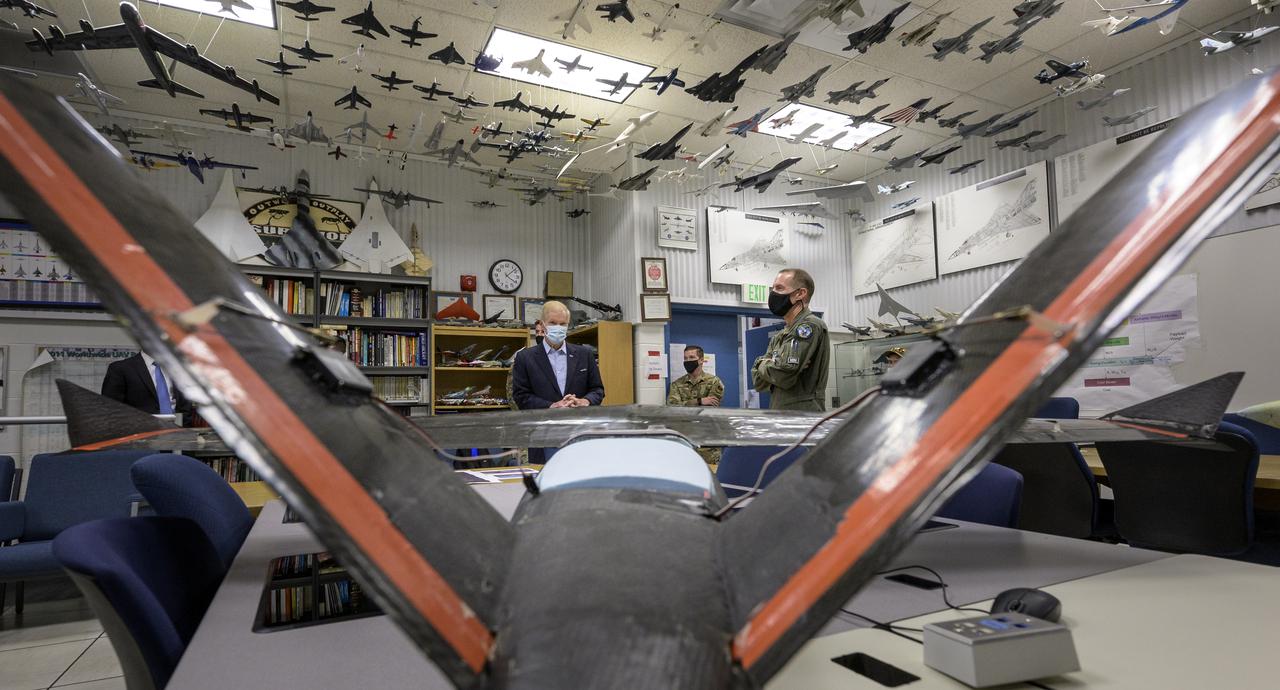
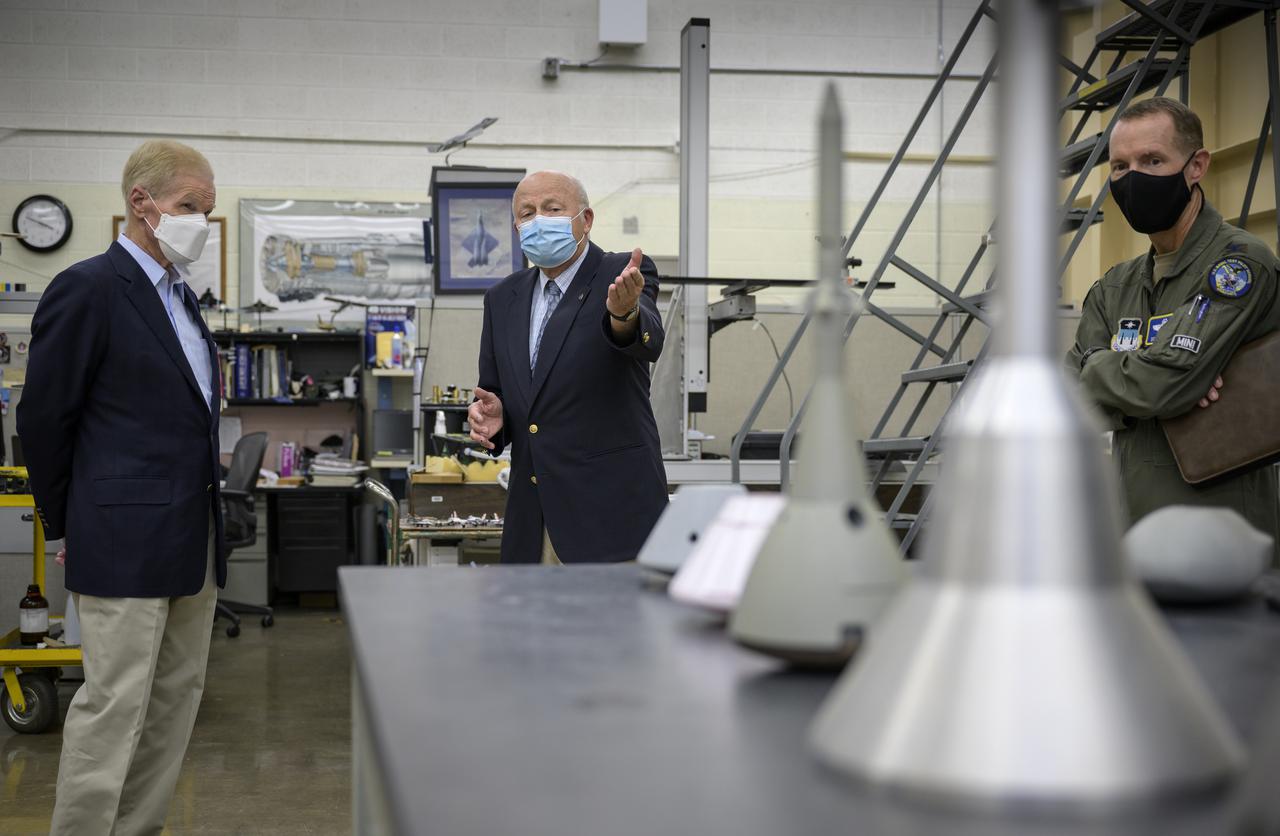
NASA Administrator Bill Nelson, left, listens to Col Douglas “Beaker” Wickert, right, during a tour of the aeronautics lab at the United States Air Force Academy, Wednesday, Aug. 25, 2021, north of Colorado Springs, Colorado. Photo Credit: (NASA/Bill Ingalls)
Administrator Visits U.S. Air Force Academy
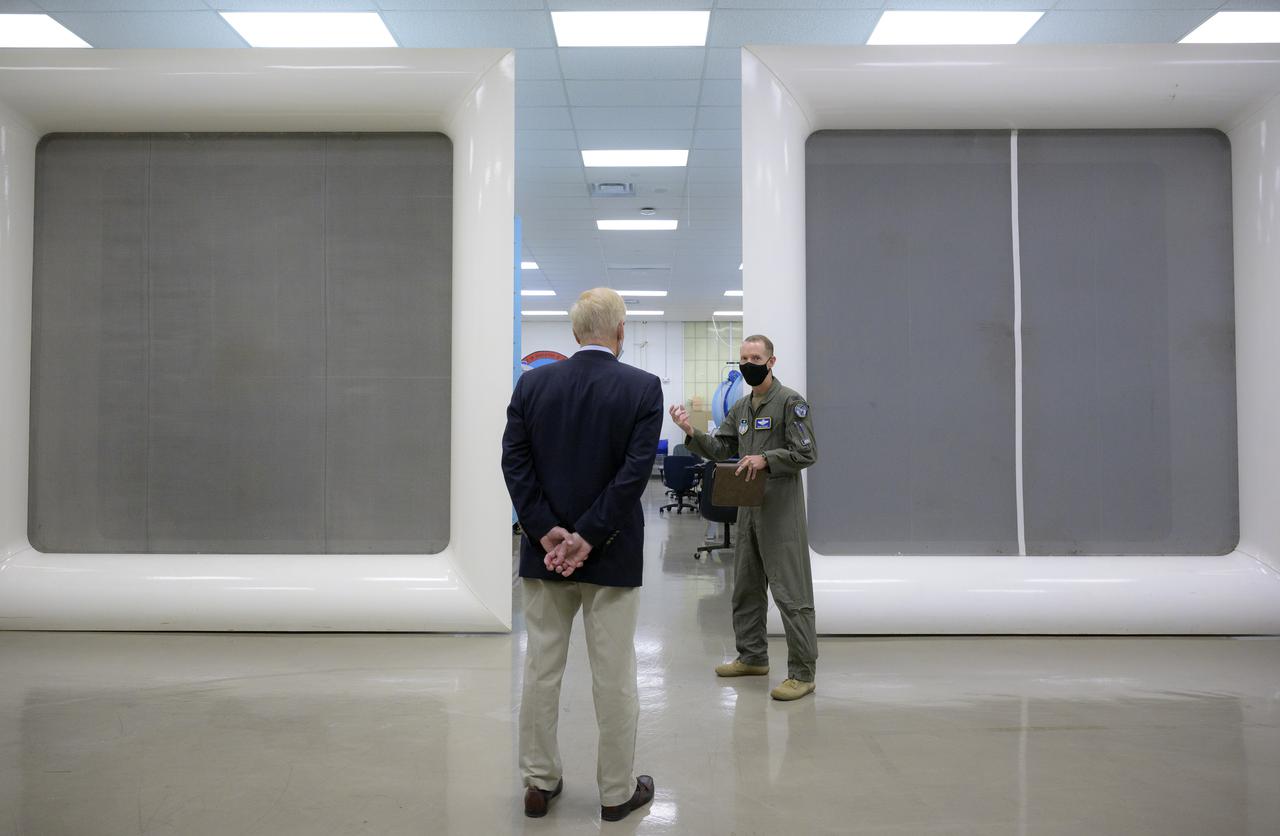
NASA Administrator Bill Nelson, left, listens to Col Douglas “Beaker” Wickert, right, during a tour of the aeronautics lab at the United States Air Force Academy, Wednesday, Aug. 25, 2021, north of Colorado Springs, Colorado. Photo Credit: (NASA/Bill Ingalls)
Administrator Visits U.S. Air Force Academy
NASA Administrator Bill Nelson, left, listens as Dr. Tom Yechout, center, and Col Douglas “Beaker” Wickert provide a tour of the aeronautics lab at the United States Air Force Academy, Wednesday, Aug. 25, 2021, north of Colorado Springs, Colorado. Photo Credit: (NASA/Bill Ingalls)
Administrator Visits U.S. Air Force Academy
NASA Administrator Bill Nelson, left, listens to Col Douglas “Beaker” Wickert during a tour of the aeronautics lab at the United States Air Force Academy, Wednesday, Aug. 25, 2021, north of Colorado Springs, Colorado. Photo Credit: (NASA/Bill Ingalls)
Administrator Visits U.S. Air Force Academy
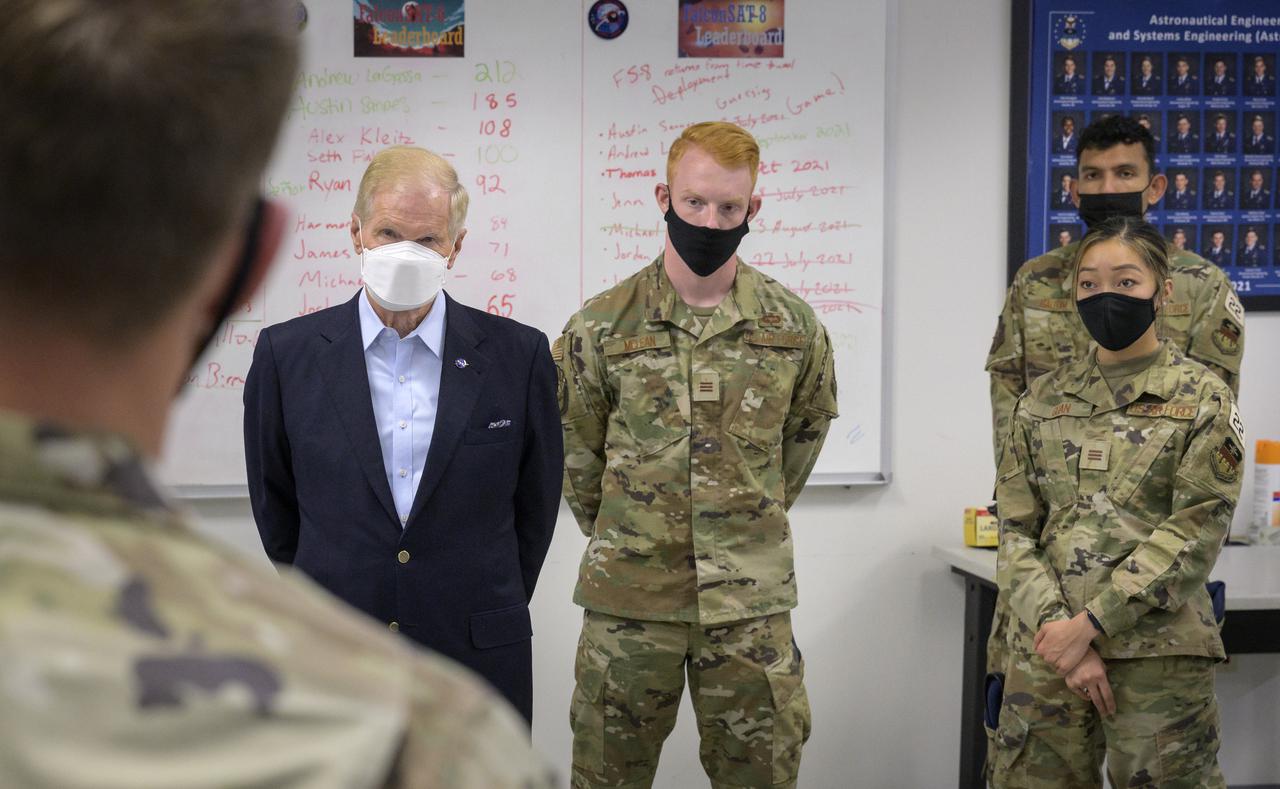
NASA Administrator Bill Nelson listens as Cadet First Class Celina Guan, second from left, talks about her classes work in the astronautics lab of the United States Air Force Academy, Wednesday, Aug. 25, 2021, north of Colorado Springs, Colorado. Photo Credit: (NASA/Bill Ingalls)
Administrator Visits U.S. Air Force Academy
NASA Administrator Bill Nelson, right, listens as Col Luke Sauter, Permanent Professor and Head, Department of Astronautics, introduces Nelson to cadets in the astronautics lab at the United States Air Force Academy, Wednesday, Aug. 25, 2021, north of Colorado Springs, Colorado. Photo Credit: (NASA/Bill Ingalls)
Administrator Visits U.S. Air Force Academy
Silhouetted against the cloud-strewn sky over NASA's Kennedy Space Center, a U.S. Air Force Thunderbird F-16D aircraft displays its prowess. The pilot is Maj. Tad Clark, who, after landing at the Shuttle Landing Facility, announced that Kennedy Space Center Visitor Complex will host the inaugural World Space Expo from Nov. 3 to 11, featuring an aerial salute by the Thunderbirds on its opening weekend. The Expo will create one of the largest displays of space artifacts, hardware and personalities ever assembled in one location with the objective to inspire, educate and engage the public by highlighting the achievements and benefits of space exploration.
Air force Thunderbirds
NASA Administrator Bill Nelson, left, talks with Col Douglas “Beaker” Wickert, Cadet First Class Gavin Ross, and Cadet First Class Grant Schlichting, right, during a tour of the aeronautics lab at the United States Air Force Academy, Wednesday, Aug. 25, 2021, north of Colorado Springs, Colorado. Photo Credit: (NASA/Bill Ingalls)
Administrator Visits U.S. Air Force Academy
NASA Administrator Bill Nelson listens as Cadet First Class Andrew LaGassa talks about his classes work in the astronautics lab of the United States Air Force Academy as Cadets First Class Thomas McLean, Celina Guan, and Ritesh Gautam look on, Wednesday, Aug. 25, 2021, north of Colorado Springs, Colorado. Photo Credit: (NASA/Bill Ingalls)
Administrator Visits U.S. Air Force Academy
NASA Administrator Bill Nelson, 4th from left, along with Cadet First Class Grant Schlichting, left, Cadet Second Class Colt Crowson, and Cadet First Class Gavin Ross listen to Col Douglas “Beaker” Wickert, right, during a tour of the aeronautics lab at the United States Air Force Academy, Wednesday, Aug. 25, 2021, north of Colorado Springs, Colorado. Photo Credit: (NASA/Bill Ingalls)
Administrator Visits U.S. Air Force Academy
The United States Air Force Thunderbirds flying over NASA Langley Research Center while practicing for an air show at Langley Air Force Base Virginia.
U.S. Air Force Thunderbirds Flying Over LaRC
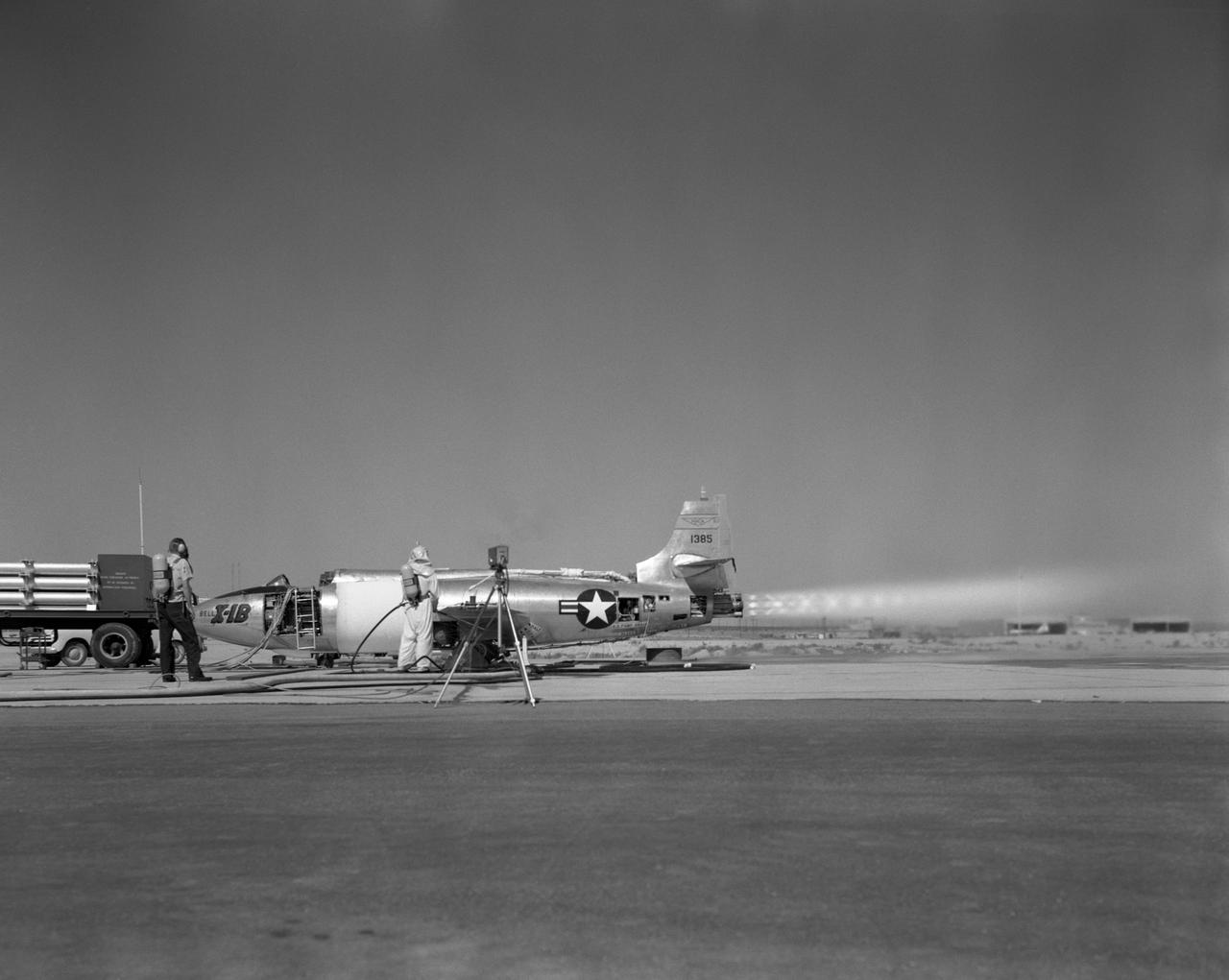
X-1B engine run on Air Force thrust stand.
X-1B engine run on Air Force thrust stand
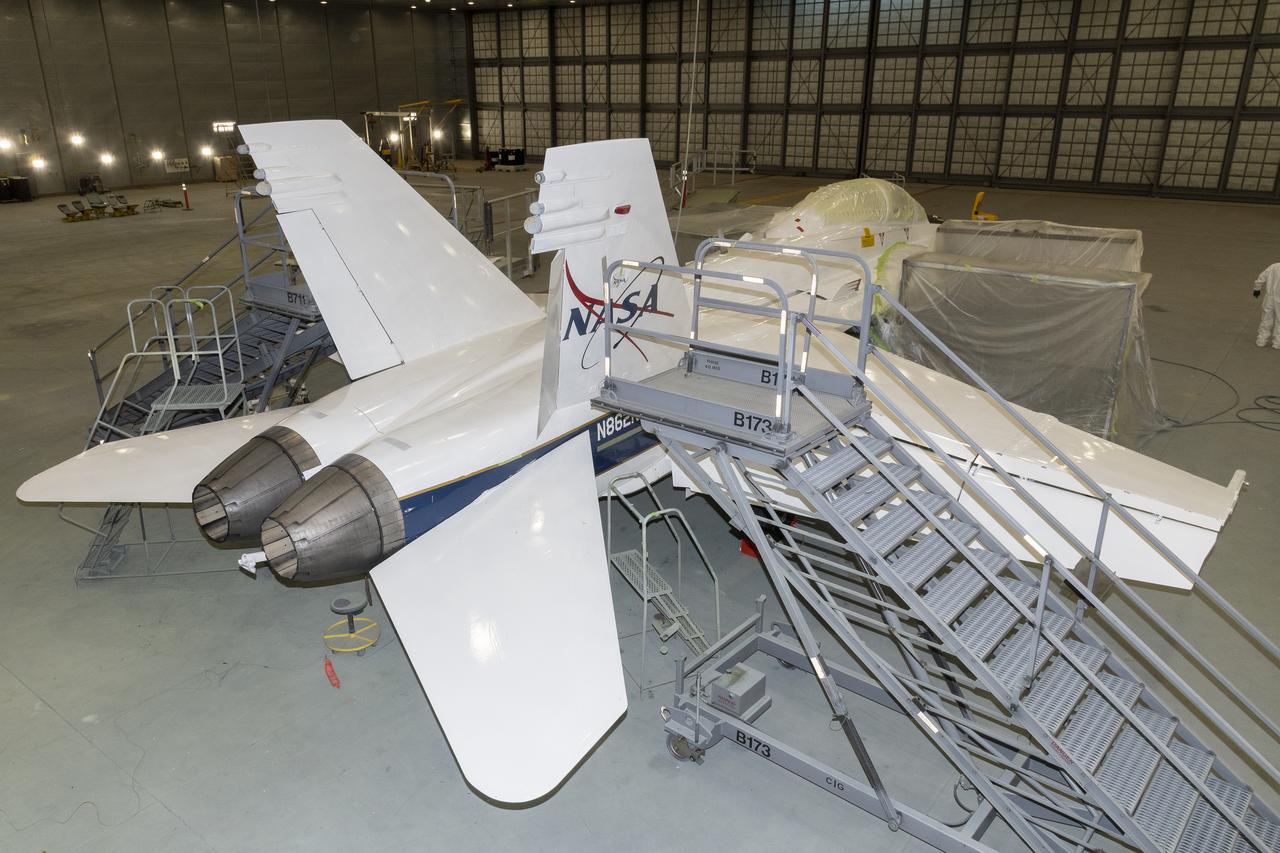
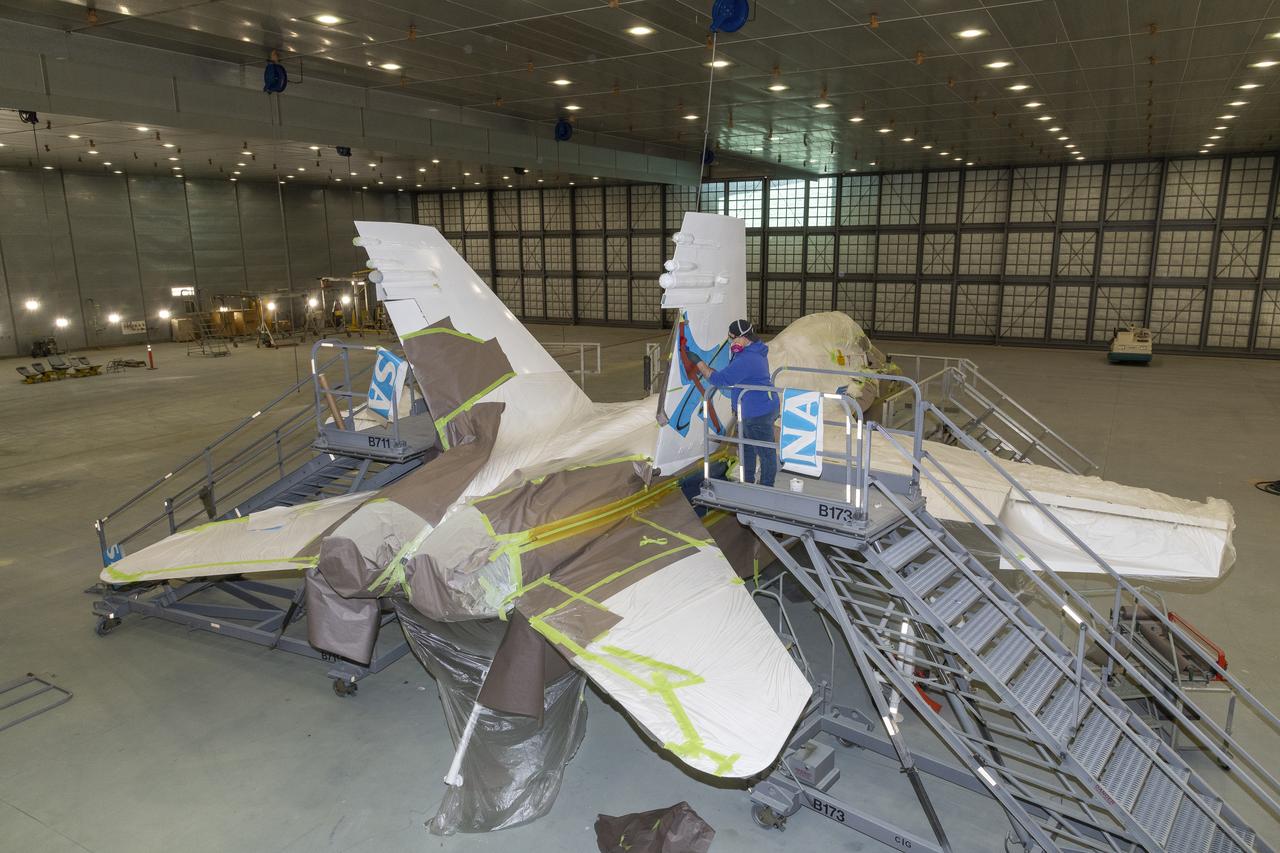
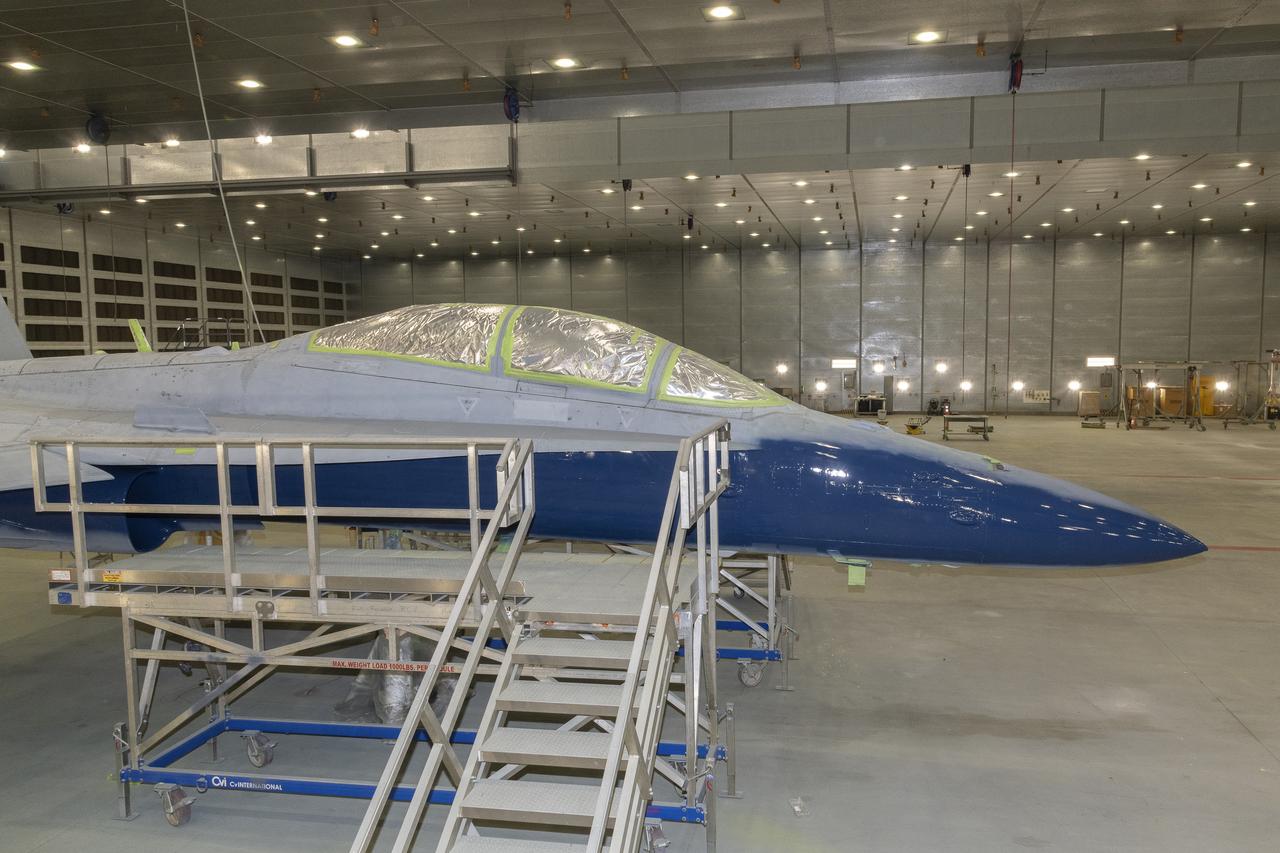
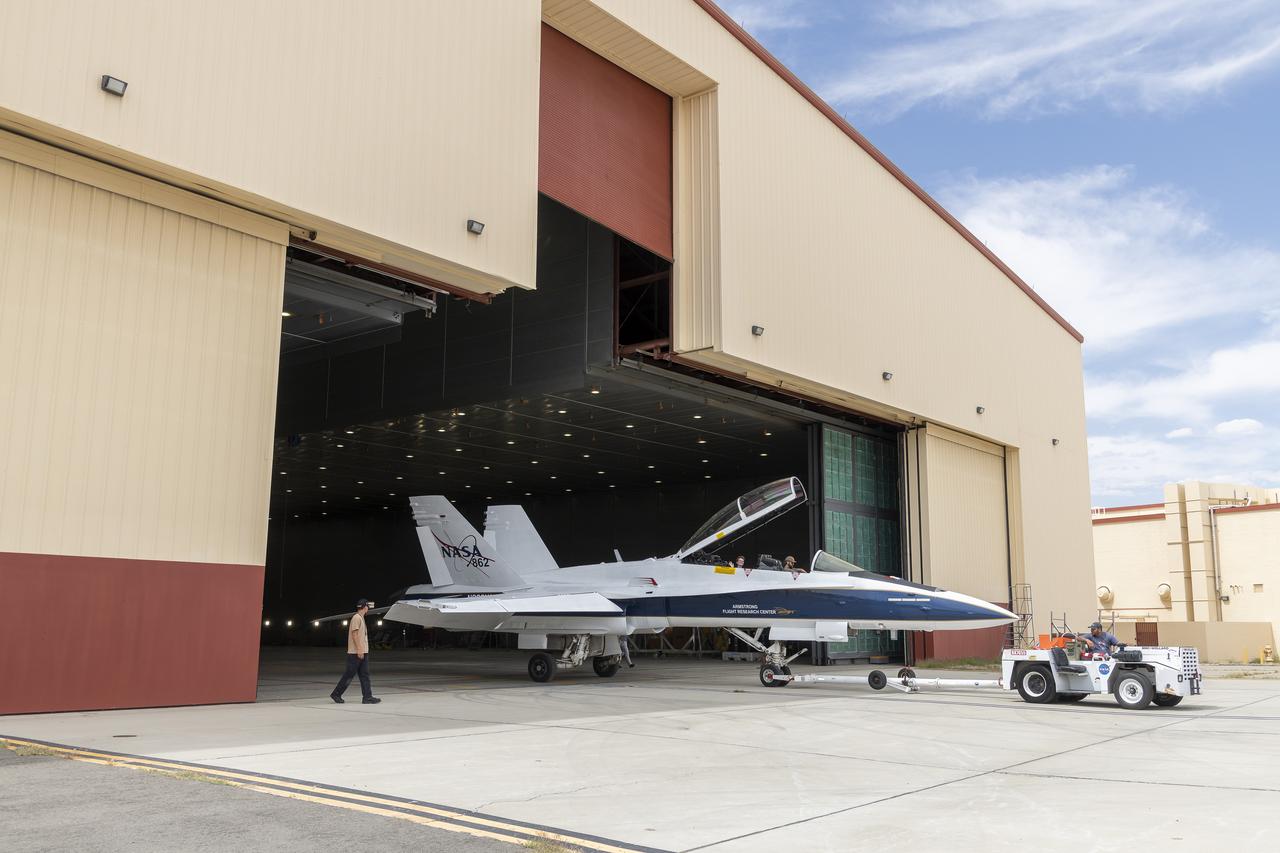
NASA 862, which is an F/A-18D based at NASA’s Armstrong Flight Research Center in Edwards, California, has paint applied at the U.S. Air Force Corrosion Control Facility. The facility is located on Edwards Air Force Base and is also known as the Paint Barn.
NASA 862 Enters Air Force Paint Barn
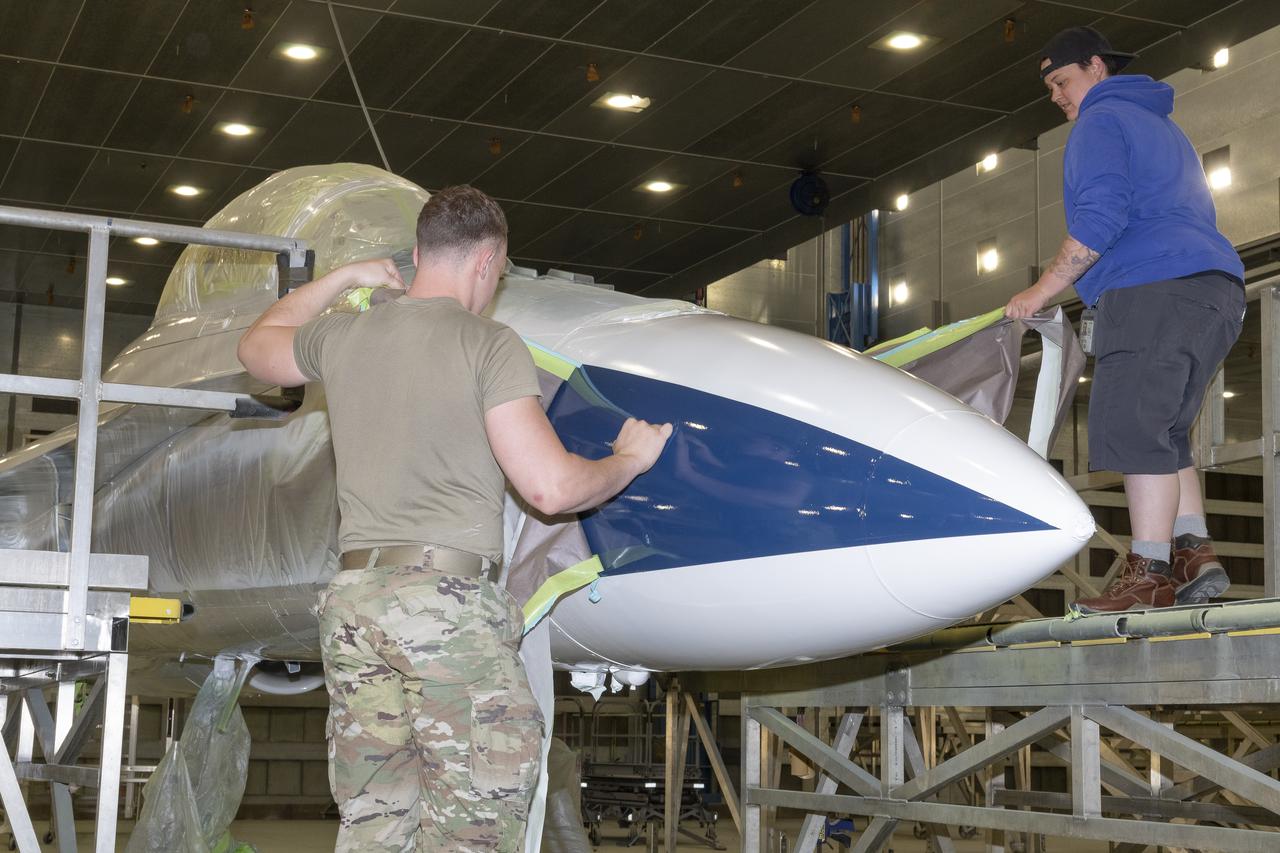
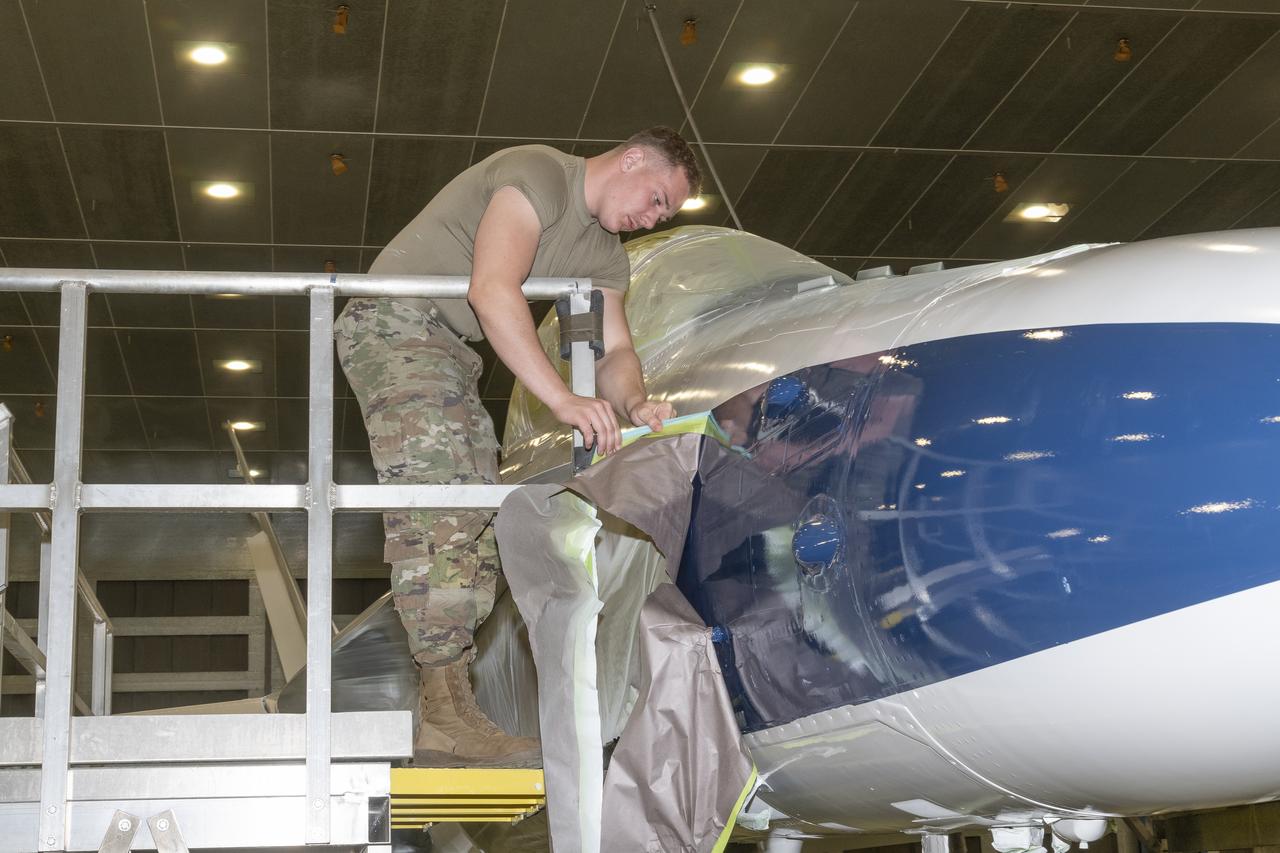
Kristian Snoots, who works at the U.S. Air Force Corrosion Control Facility on Edwards Air Force Base, removes masking from NASA 862, which is an F/A-18D based at NASA’s Armstrong Flight Research Center in Edwards, California.
NASA 862 Enters Air Force Paint Barn
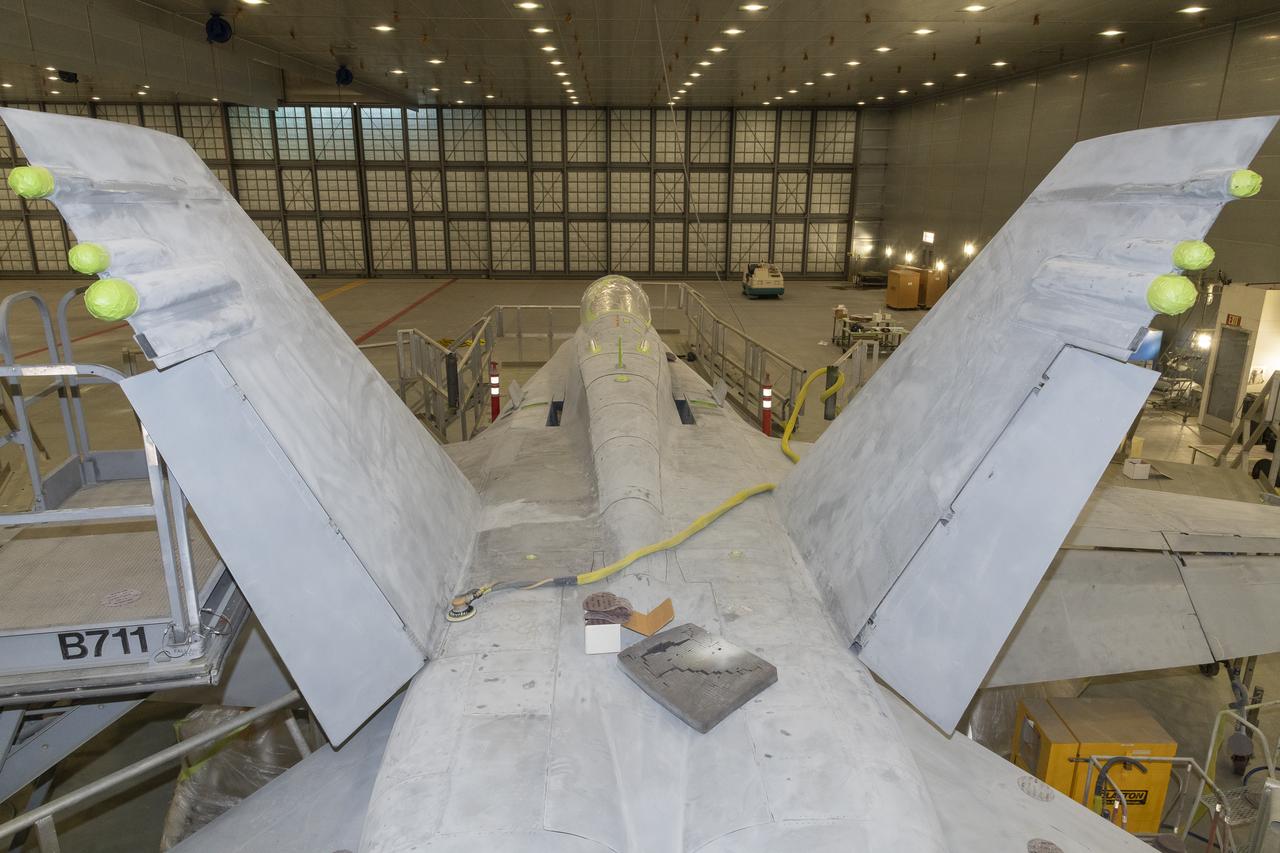
This view of NASA 862, which is an F/A-18D based at NASA’s Armstrong Flight Research Center in Edwards, California, shows the sanding work is about complete at the U.S. Air Force Corrosion Control Facility. The facility is located on Edwards Air Force Base and is also known as the Paint Barn.
NASA 862 Enters Air Force Paint Barn
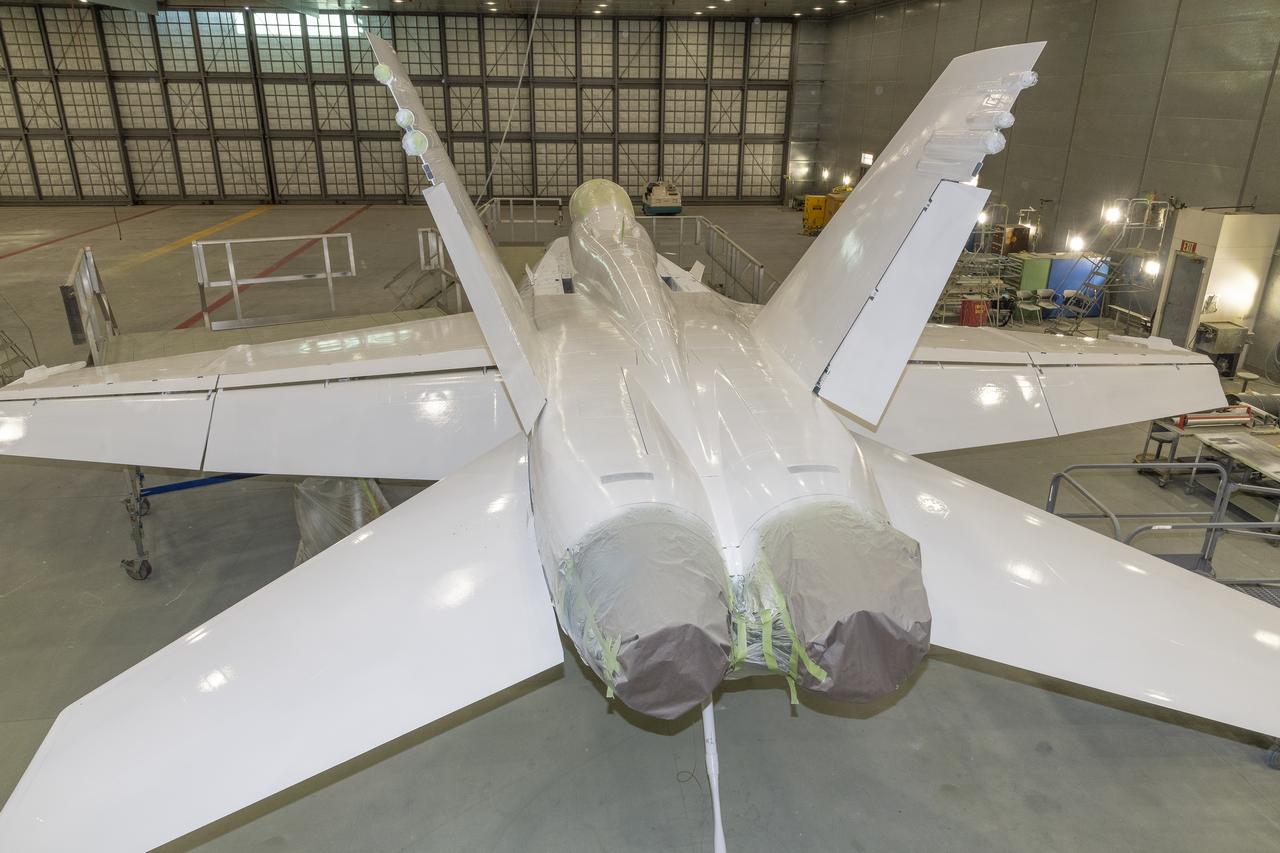
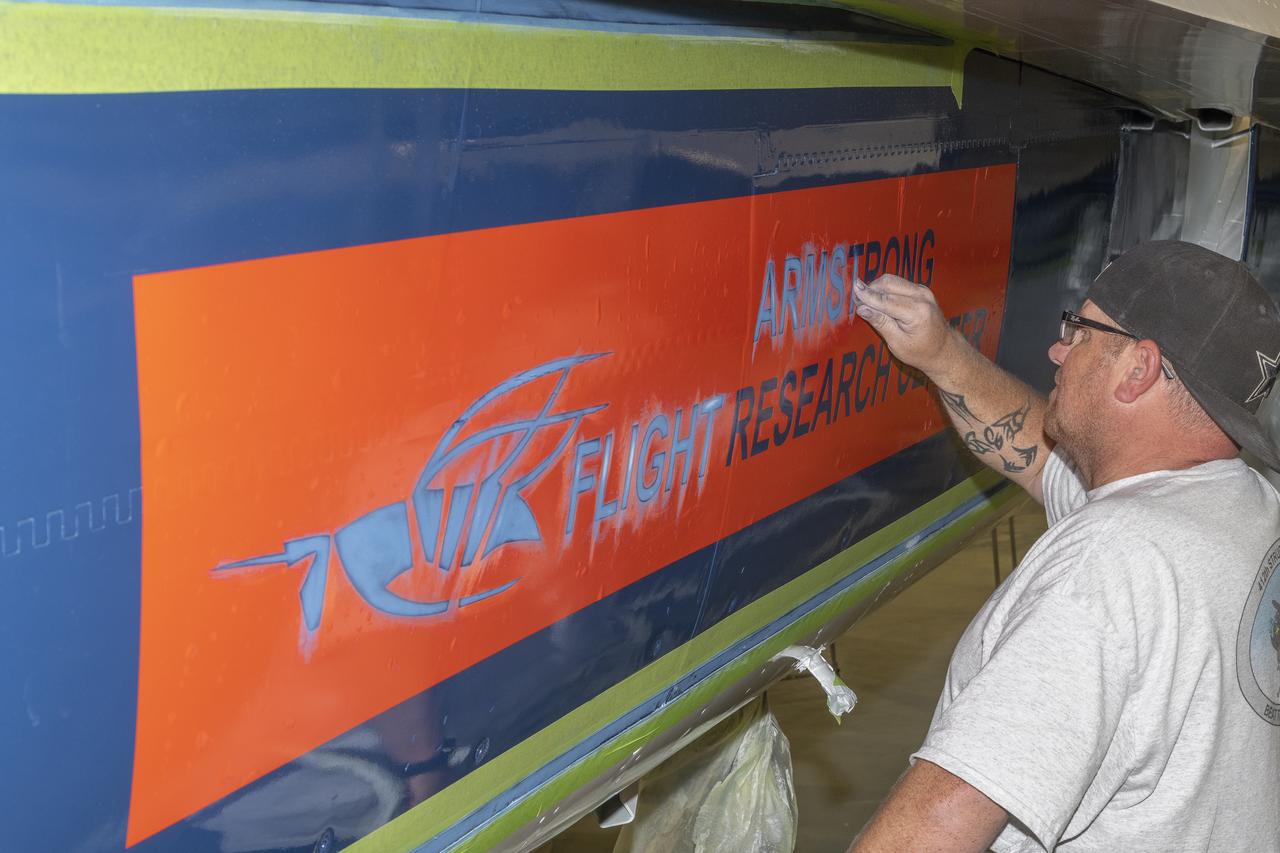
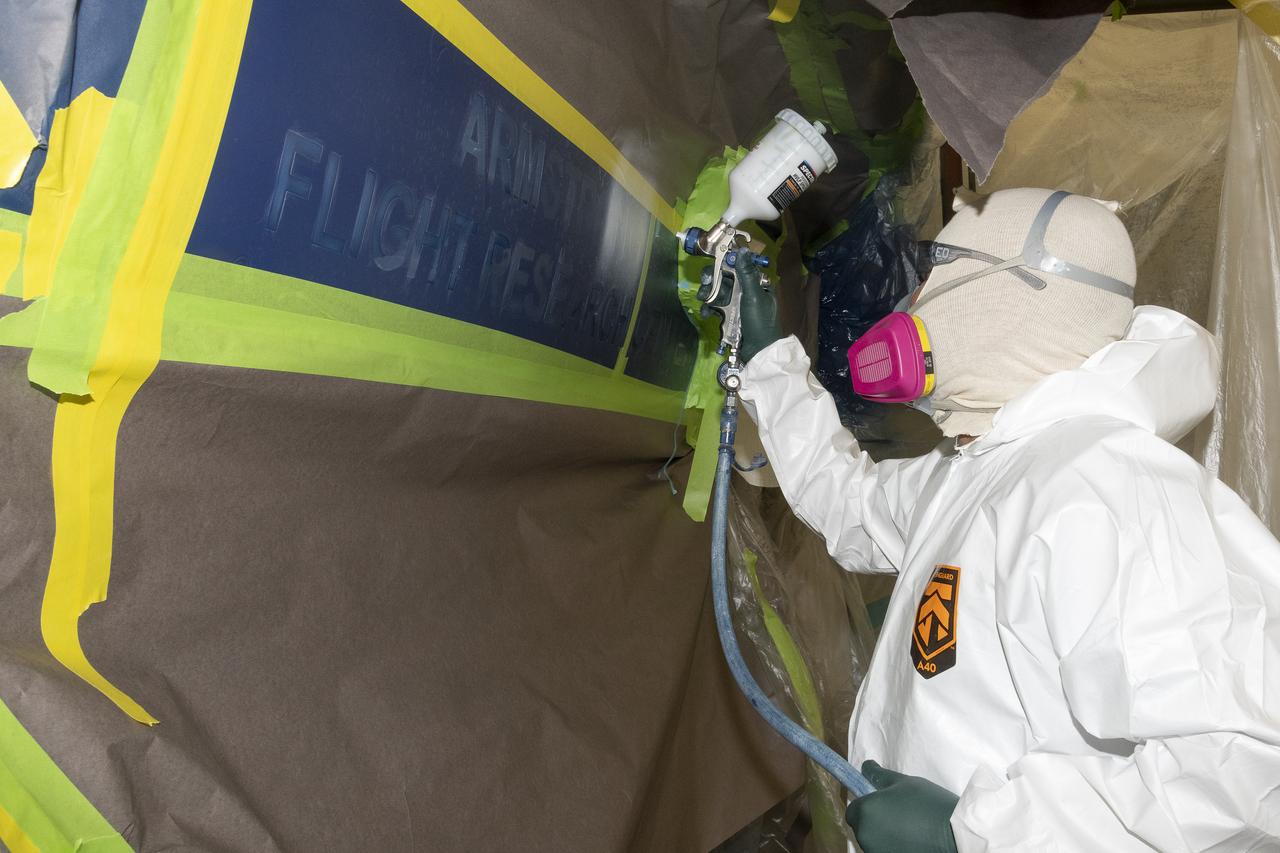
U.S. Air Force Corrosion Control Facility nears the end of stencils and painting of NASA 862, which is an F/A-18D based at NASA’s Armstrong Flight Research Center in Edwards, California. The corrosion control facility is located on Edwards Air Force Base and is also known as the Paint Barn.
NASA 862 Enters Air Force Paint Barn
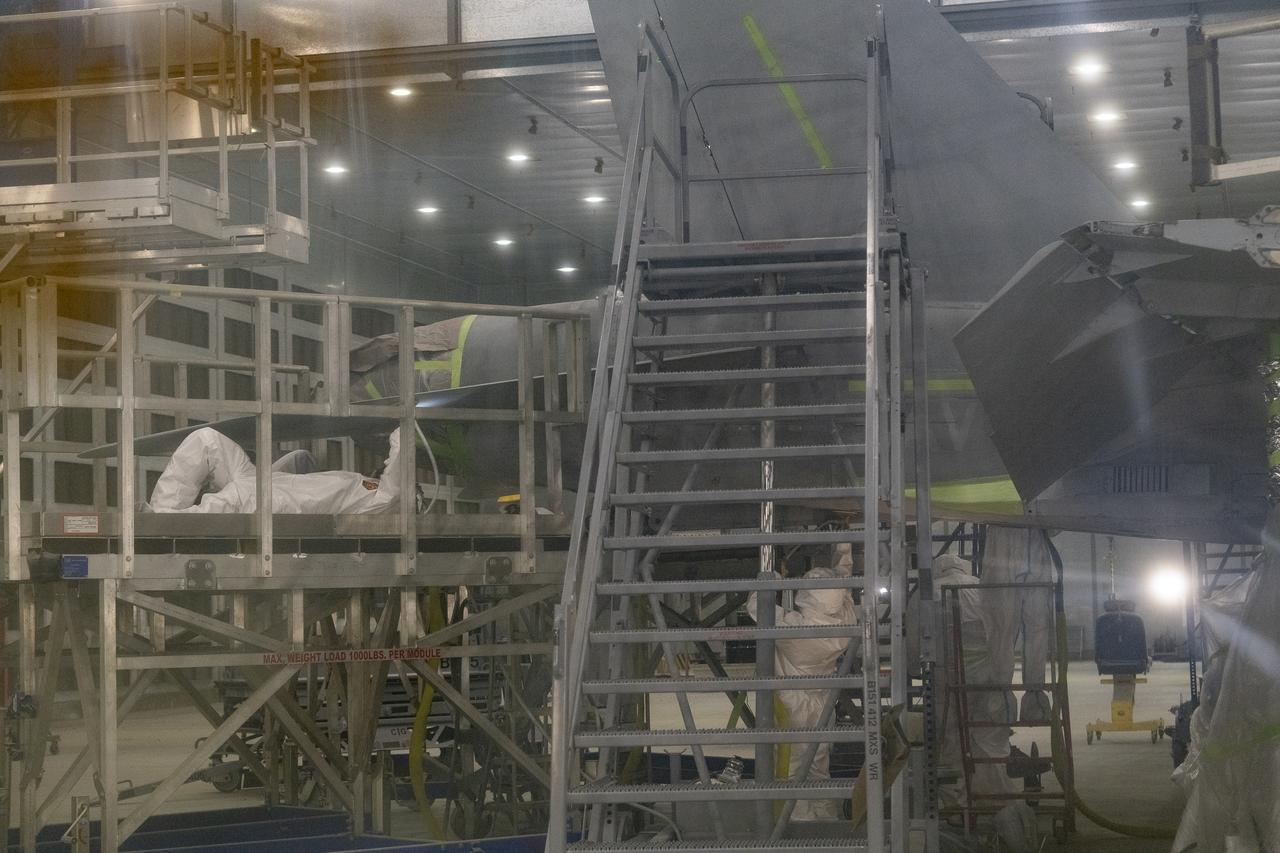
U.S. Air Force Corrosion Control Facility personnel work to sand NASA 862, which is an F/A-18D based at NASA’s Armstrong Flight Research Center in Edwards, California. The facility is located on Edwards Air Force Base and is also known as the Paint Barn.
NASA 862 Enters Air Force Paint Barn
NASA 862, which is an F/A-18D based at NASA’s Armstrong Flight Research Center in Edwards, California, has paint applied at the U.S. Air Force Corrosion Control Facility. The facility is located on Edwards Air Force Base and is also known as the Paint Barn.
NASA 862 Enters Air Force Paint Barn
U.S. Air Force Corrosion Control Facility personnel Kristian Snoots and Shelby Youngo remove masking from NASA 862, which is an F/A-18D based at NASA’s Armstrong Flight Research Center in Edwards, California. The corrosion control facility is located on Edwards Air Force Base and is also known as the Paint Barn.
NASA 862 Enters Air Force Paint Barn
U.S. Air Force Corrosion Control Facility’s Shelby Youngo paints tail art on to NASA 862, which is an F/A-18D based at NASA’s Armstrong Flight Research Center in Edwards, California. The corrosion control facility is located on Edwards Air Force Base and is also known as the Paint Barn.
NASA 862 Enters Air Force Paint Barn
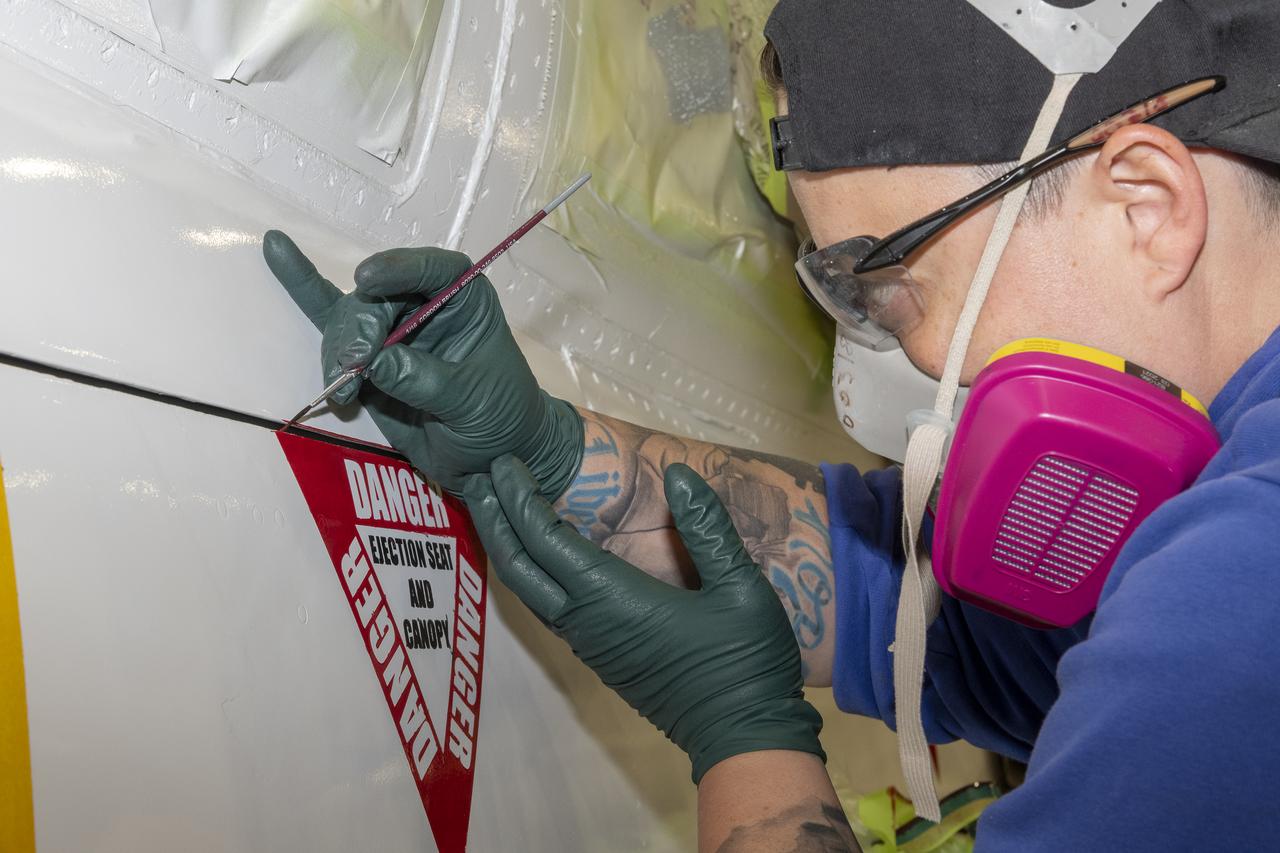
U.S. Air Force Corrosion Control Facility’s Shelby Youngo completes painting a danger warning on NASA 862, which is an F/A-18D based at NASA’s Armstrong Flight Research Center in Edwards, California. The corrosion control facility is located on Edwards Air Force Base and is also known as the Paint Barn.
NASA 862 Enters Air Force Paint Barn
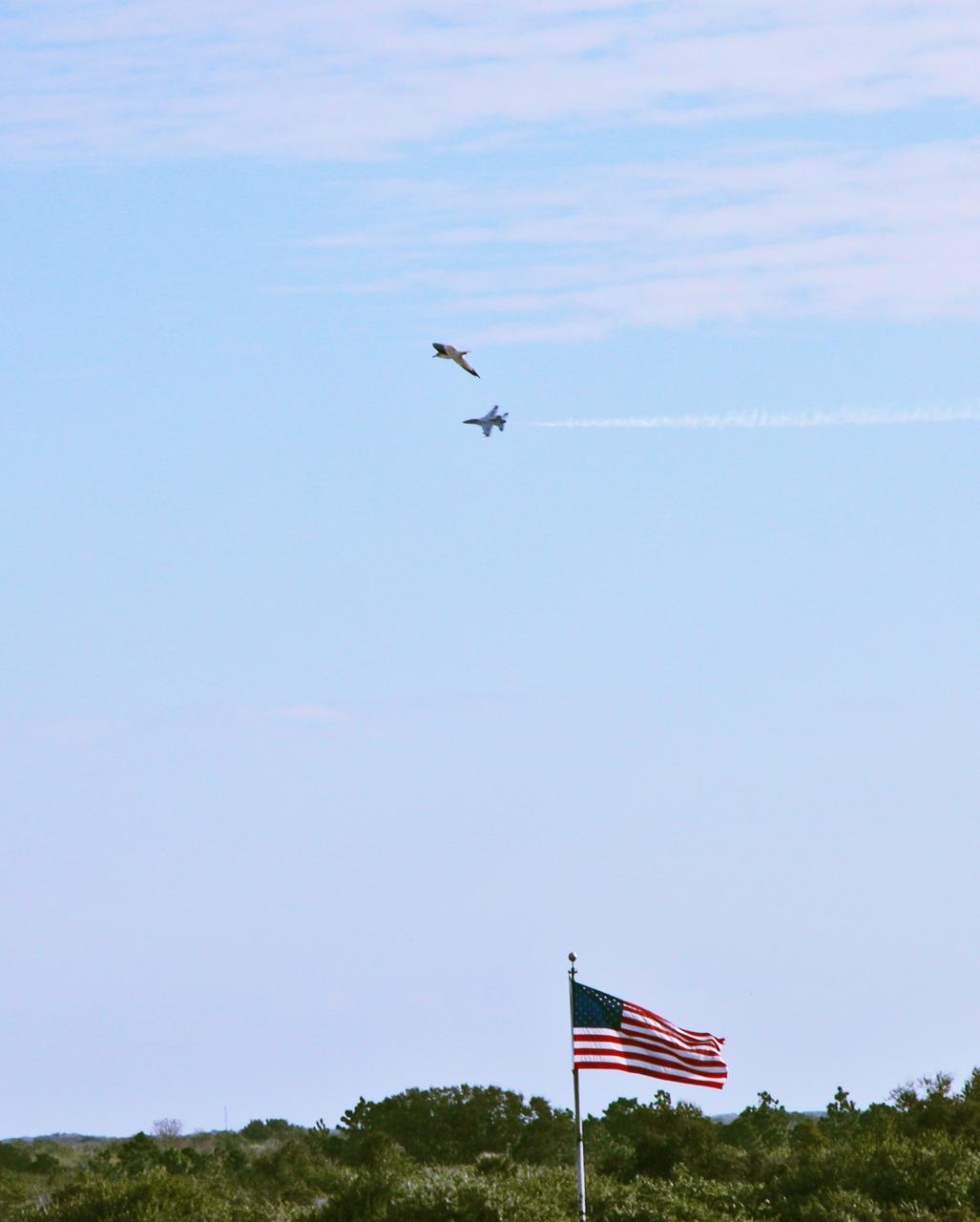
Look -- It's a bird and a plane! A U.S. Air Force Thunderbird F-16D aircraft streaks through the sky past a slower-flying stork over the NASA News Center. The pilot is Maj. Tad Clark, who, after landing at the Shuttle Landing Facility, announced that Kennedy Space Center Visitor Complex will host the inaugural World Space Expo from Nov. 3 to 11, featuring an aerial salute by the Thunderbirds on its opening weekend. The Expo will create one of the largest displays of space artifacts, hardware and personalities ever assembled in one location with the objective to inspire, educate and engage the public by highlighting the achievements and benefits of space exploration.
Air force Thunderbirds flying above the Kennedy Space Center
Joint NASA-NOAA-Air Force Congressional Staff Day Goddard Space Flight Center
Joint NASA-NOAA-Air Force Congressional Staff Day Goddard Space
Eric Miranda, who works at the U.S. Air Force Corrosion Control Facility, paints areas in a stencil for adding some finishing touches to NASA 862, which is an F/A-18D based at NASA’s Armstrong Flight Research Center in Edwards, California. The corrosion control facility is located on Edwards Air Force Base and is also known as the Paint Barn.
NASA 862 Enters Air Force Paint Barn
John Bishop, who works at the U.S. Air Force Corrosion Control Facility, sands areas in a stencil for adding some finishing touches to NASA 862, which is an F/A-18D based at NASA’s Armstrong Flight Research Center in Edwards, California. The corrosion control facility is located on Edwards Air Force Base and is also known as the Paint Barn.
NASA 862 Enters Air Force Paint Barn
NASA Wide-field Infrared Survey Explorer arrives at Vandenberg Air Force Base
WISE Arrives at Vandenberg Air Force Base
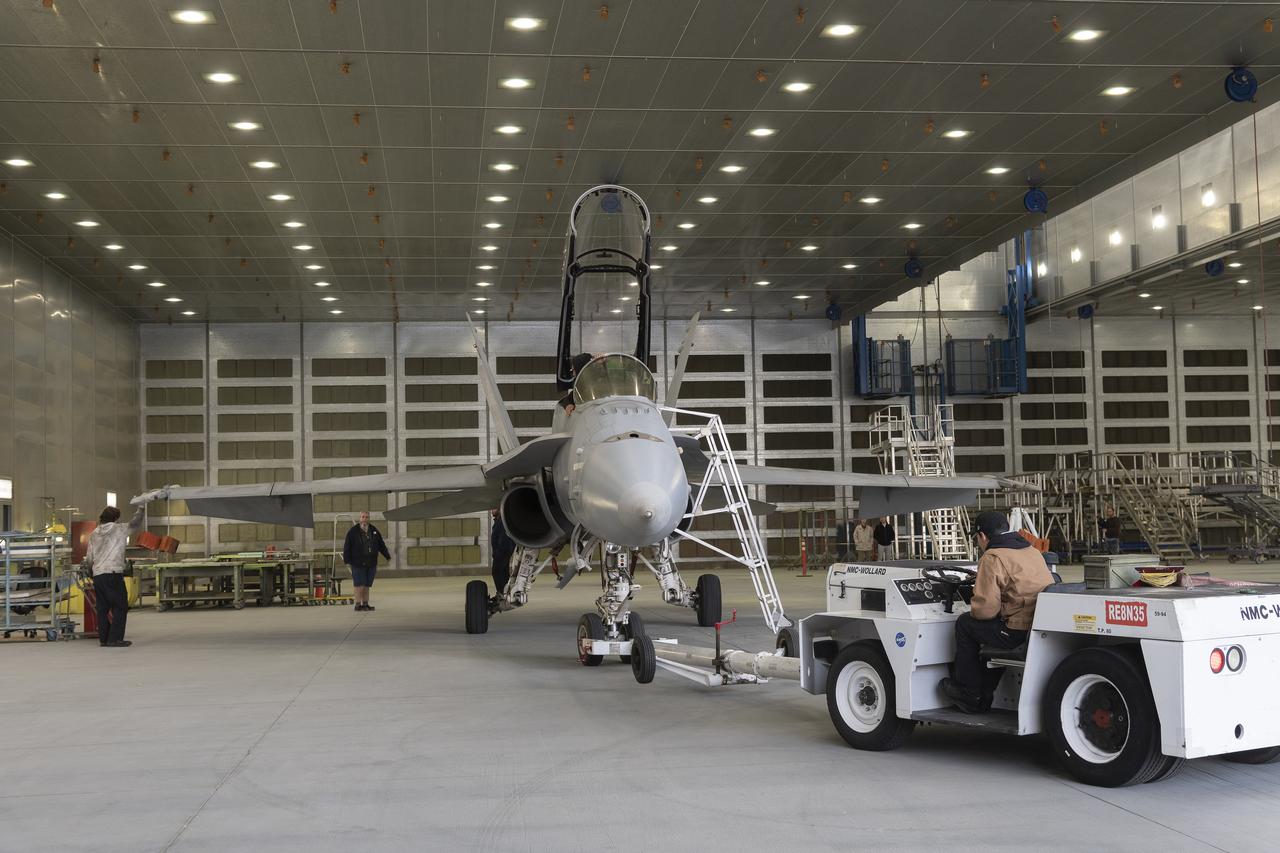
NASA 862, which is an F/A-18D based at NASA’s Armstrong Flight Research Center in Edwards, California, is positioned in the U.S. Air Force Corrosion Control Facility. The facility is also known as the Paint Barn.
NASA 862 Enters Air Force Paint Barn
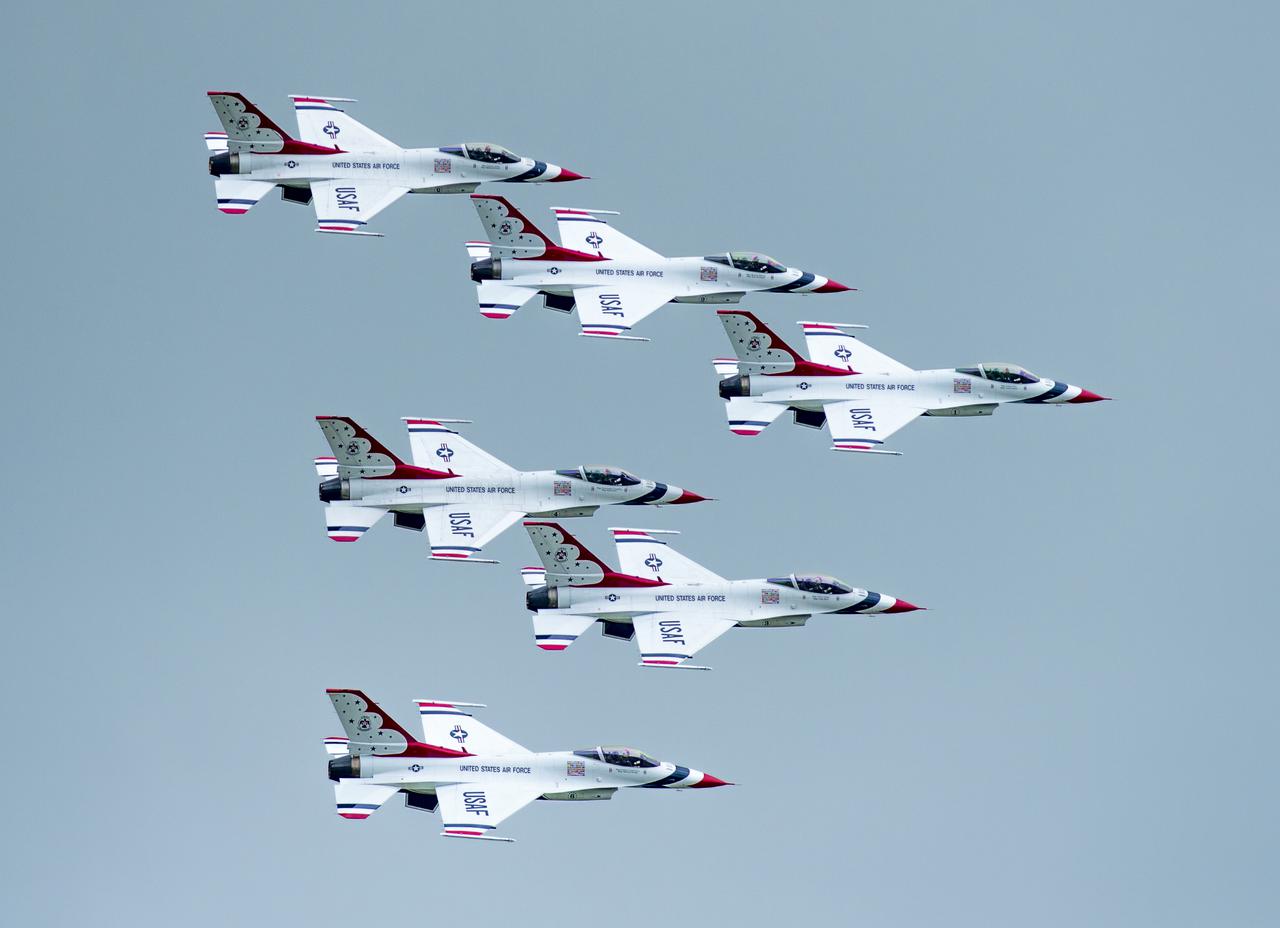
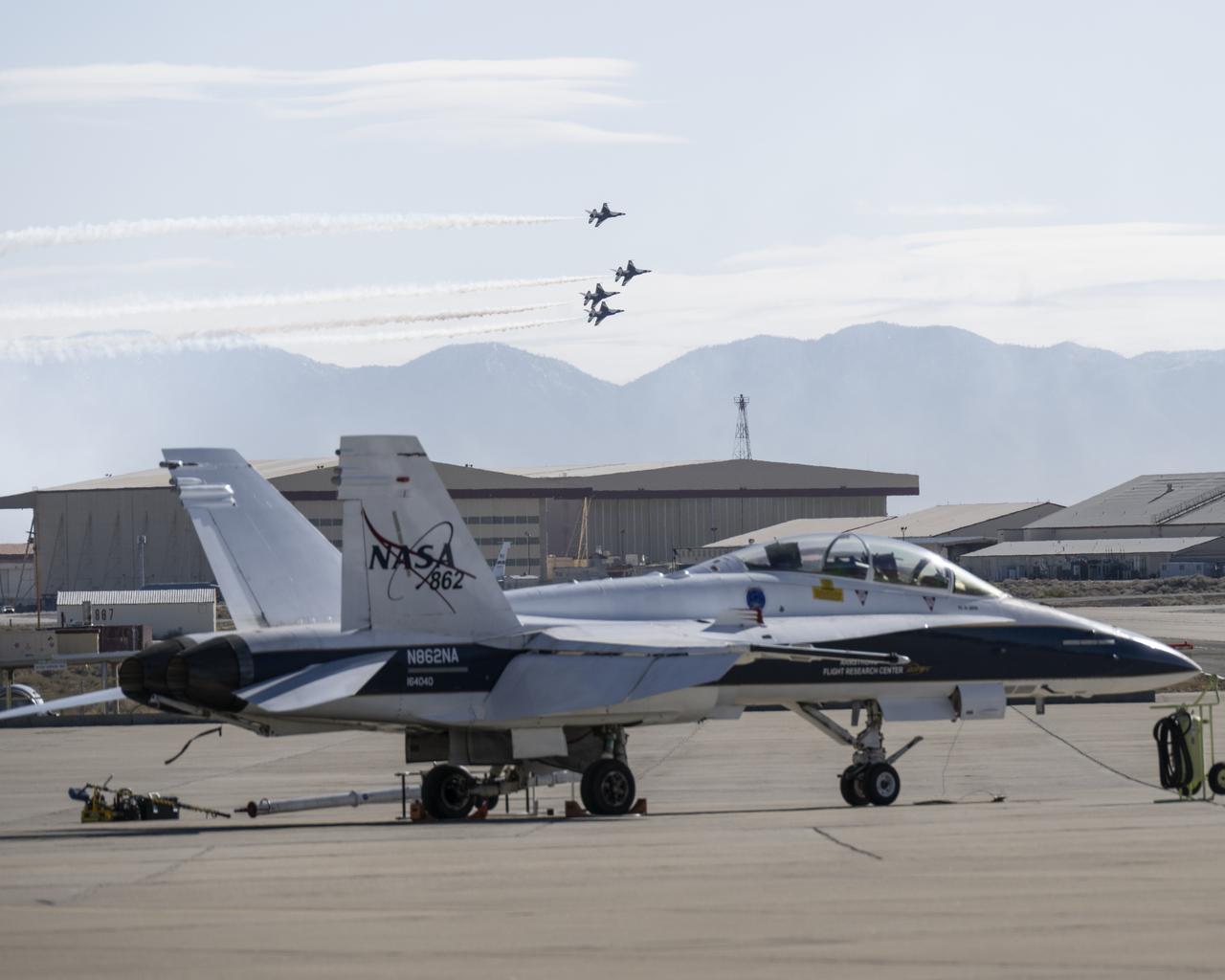
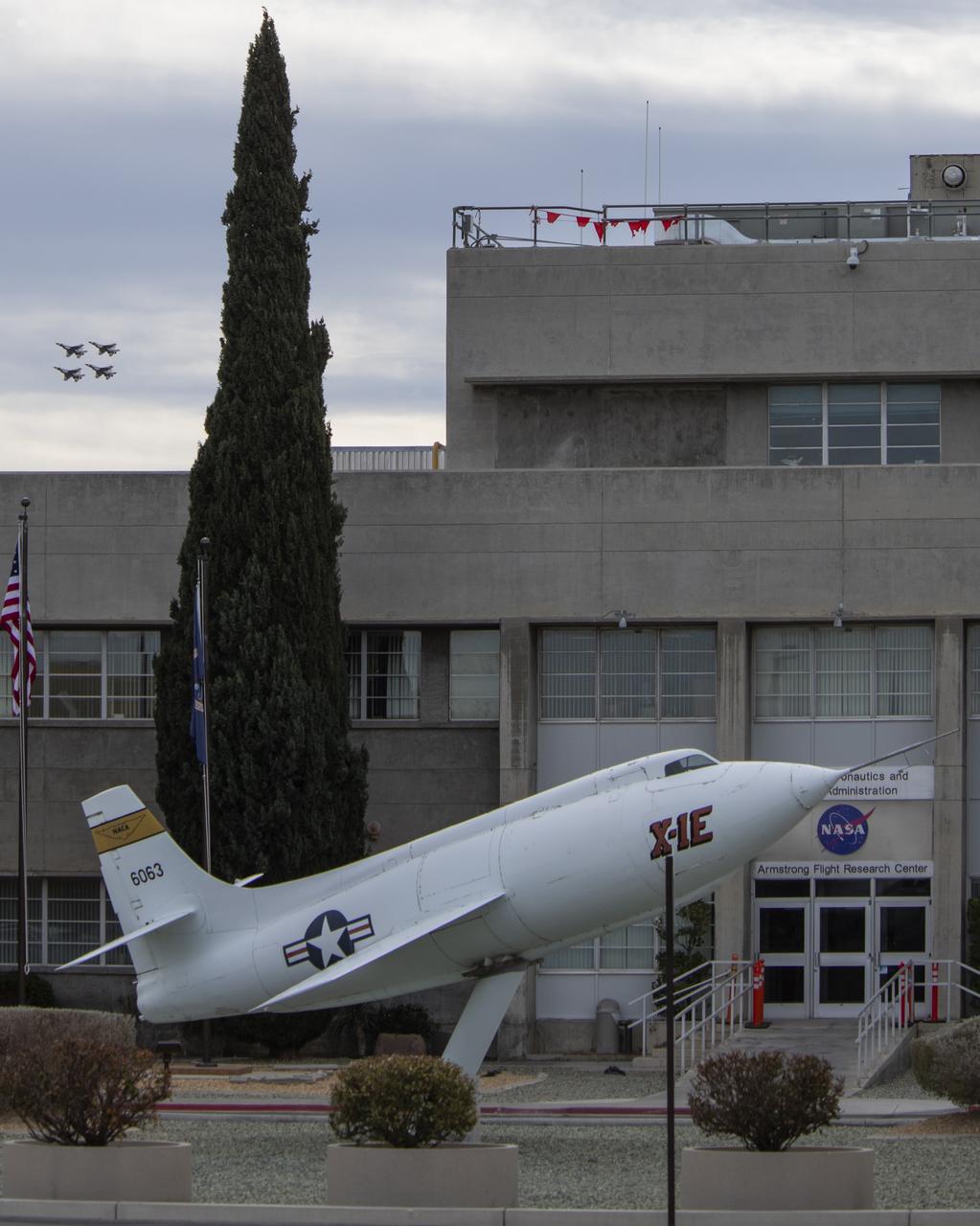
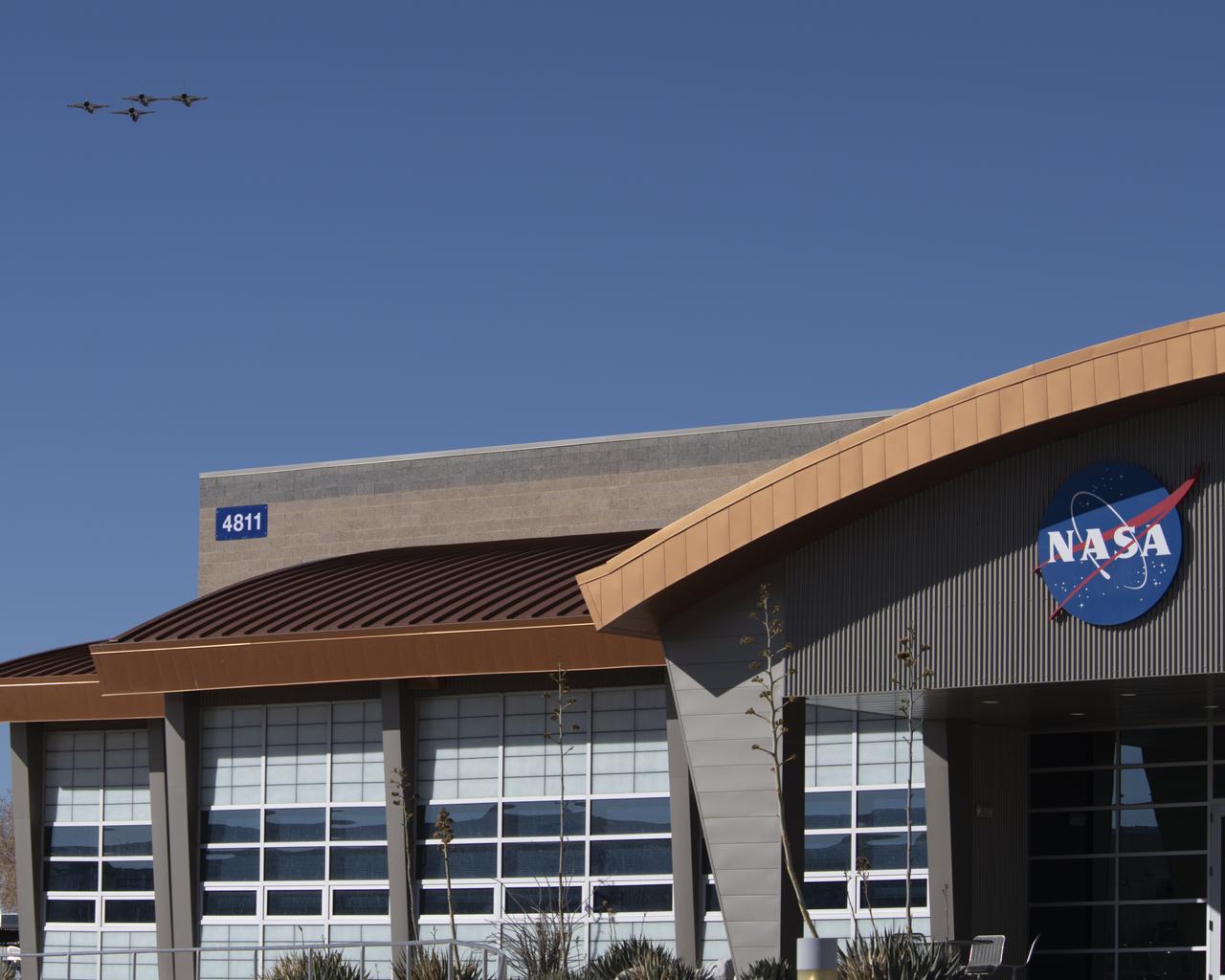
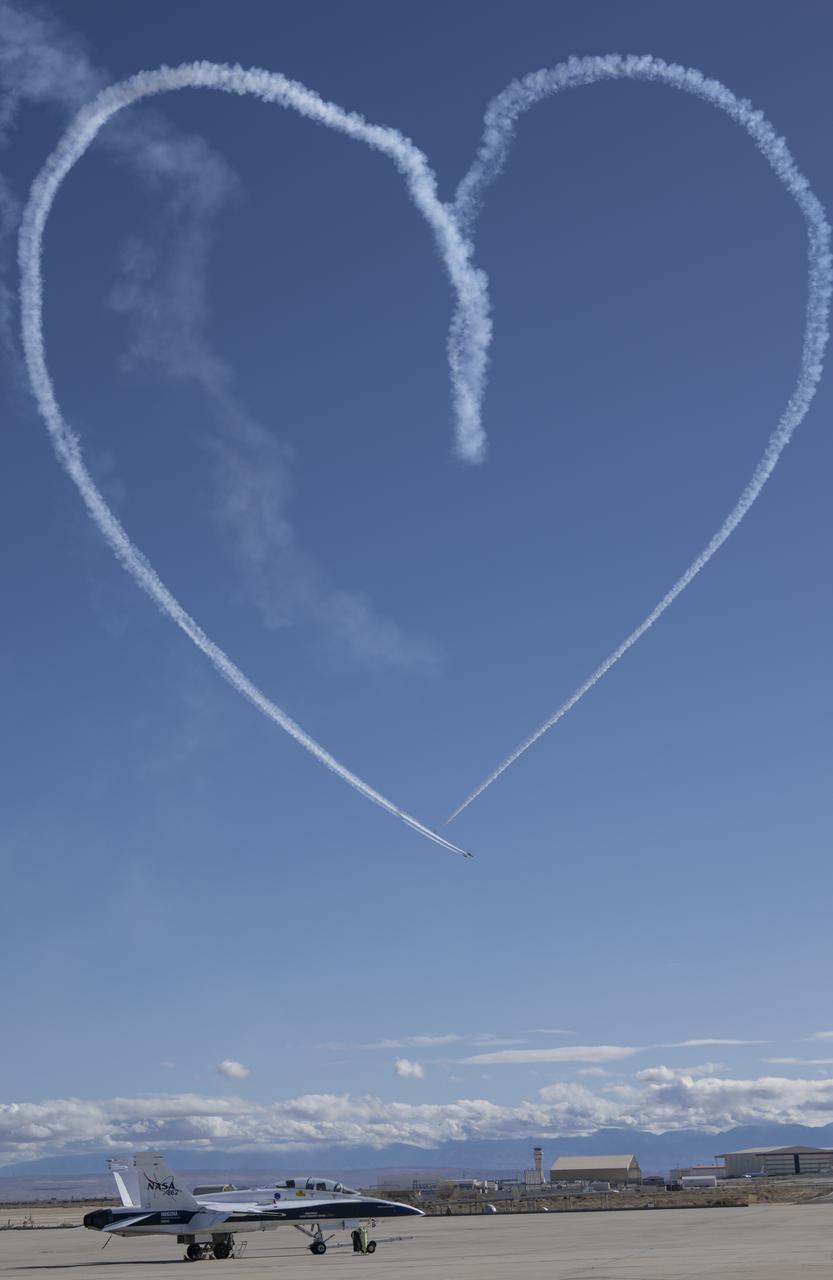
The U.S. Air Force Thunderbirds fly over NASA’s Armstrong Flight Research Center in Edwards, California, during the second phase of its winter training in February 2025 to prepare for the upcoming air show season. The Thunderbirds perform all over the world in F-16 Fighting Falcons, a multi-role fighter jet.
U.S. Air Force Thunderbirds Fly Over NASA Armstrong
The U.S. Air Force Thunderbirds fly over NASA’s Armstrong Flight Research Center in Edwards, California, during the second phase of its winter training in February 2025 to prepare for the upcoming air show season. The Thunderbirds perform all over the world in F-16 Fighting Falcons, a multi-role fighter jet.
U.S. Air Force Thunderbirds Fly Over NASA Armstrong
The U.S. Air Force Thunderbirds fly over NASA’s Armstrong Flight Research Center in Edwards, California, during the second phase of its winter training in February 2025 to prepare for the upcoming air show season. The Thunderbirds perform all over the world in F-16 Fighting Falcons, a multi-role fighter jet.
U.S. Air Force Thunderbirds Fly Over NASA Armstrong
The U.S. Air Force Thunderbirds fly over NASA’s Armstrong Flight Research Center in Edwards, California, during the second phase of its winter training in February 2025 to prepare for the upcoming air show season. The Thunderbirds perform all over the world in F-16 Fighting Falcons, a multi-role fighter jet.
U.S. Air Force Thunderbirds Fly Over NASA Armstrong
The U.S. Air Force Thunderbirds fly over NASA’s Armstrong Flight Research Center in Edwards, California, during the second phase of its winter training in February 2025 to prepare for the upcoming air show season. The Thunderbirds perform all over the world in F-16 Fighting Falcons, a multi-role fighter jet.
U.S. Air Force Thunderbirds Fly Over NASA Armstrong
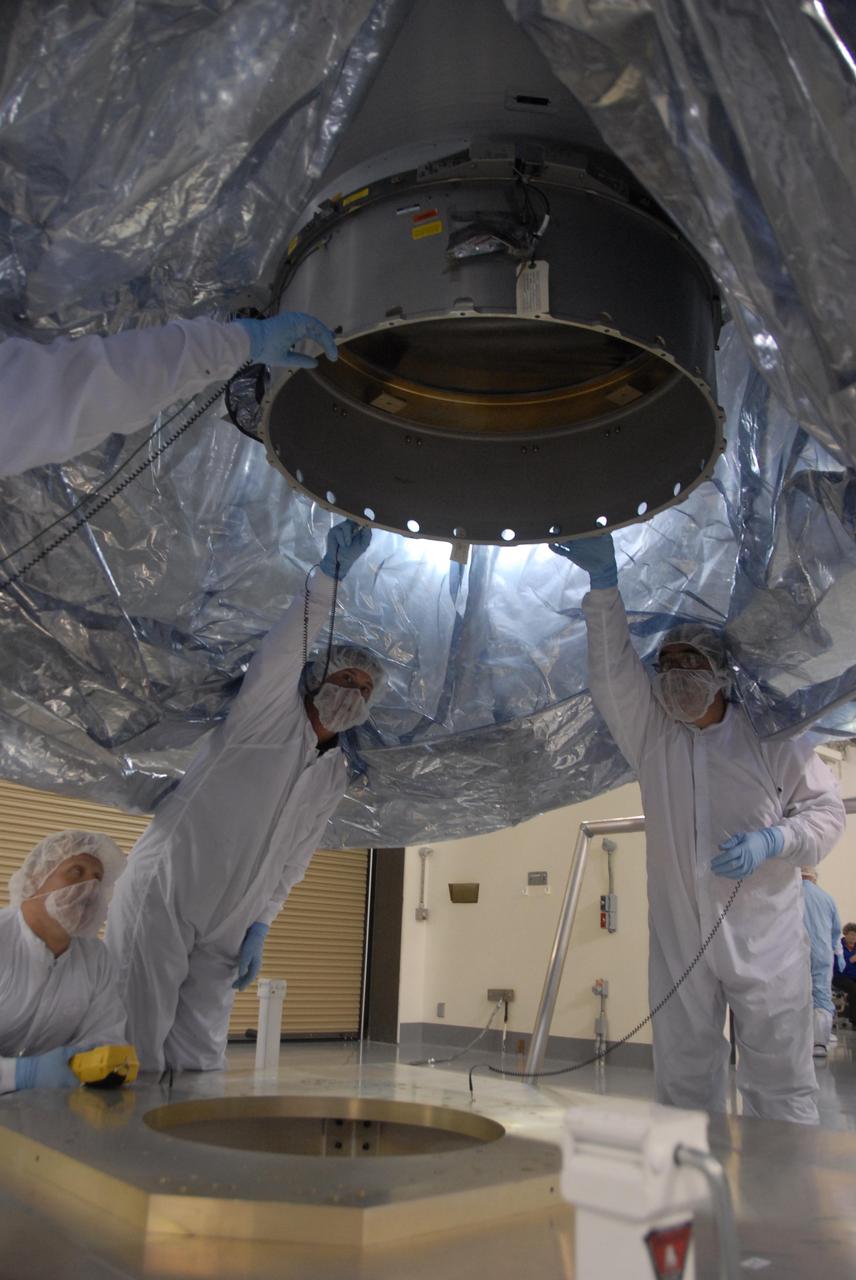
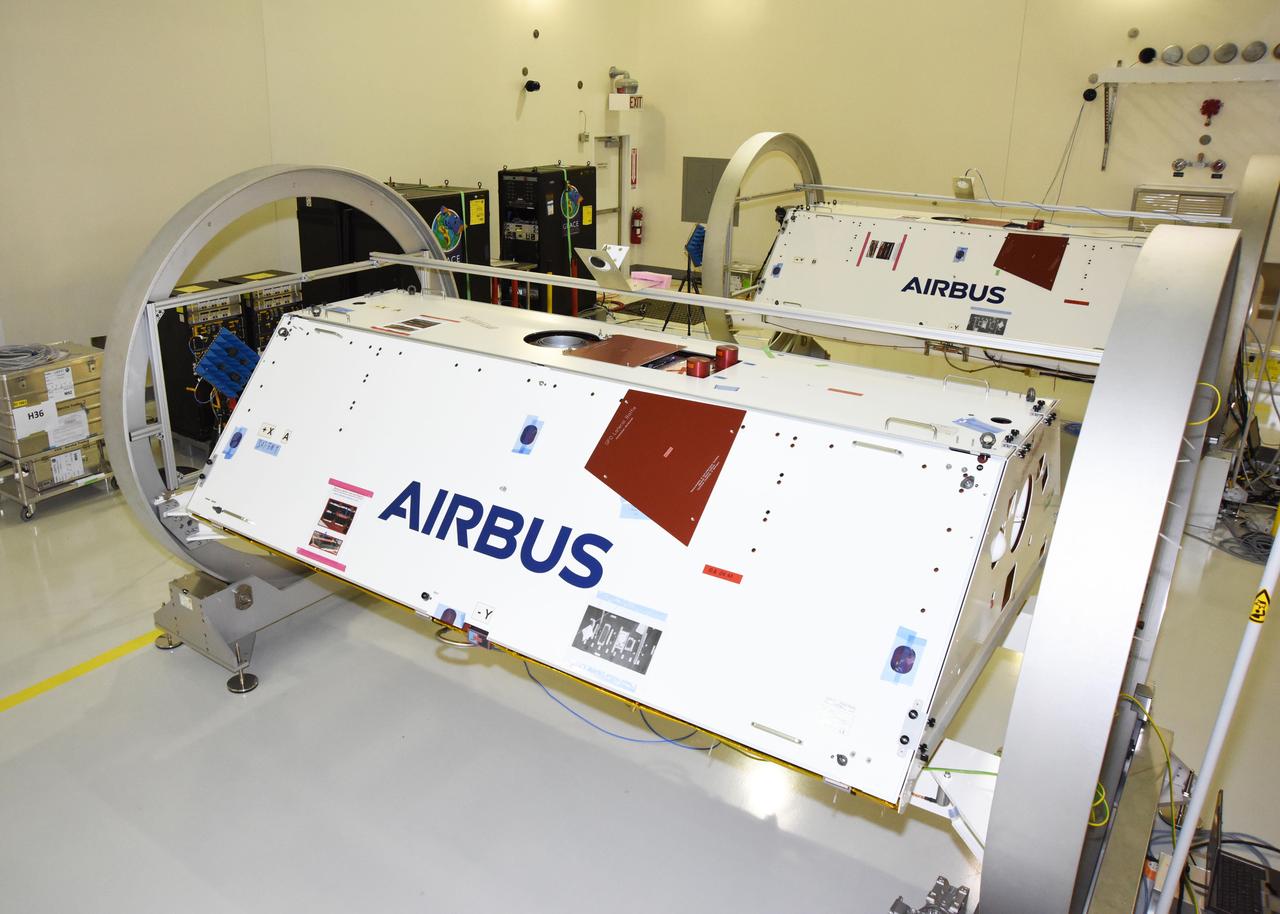
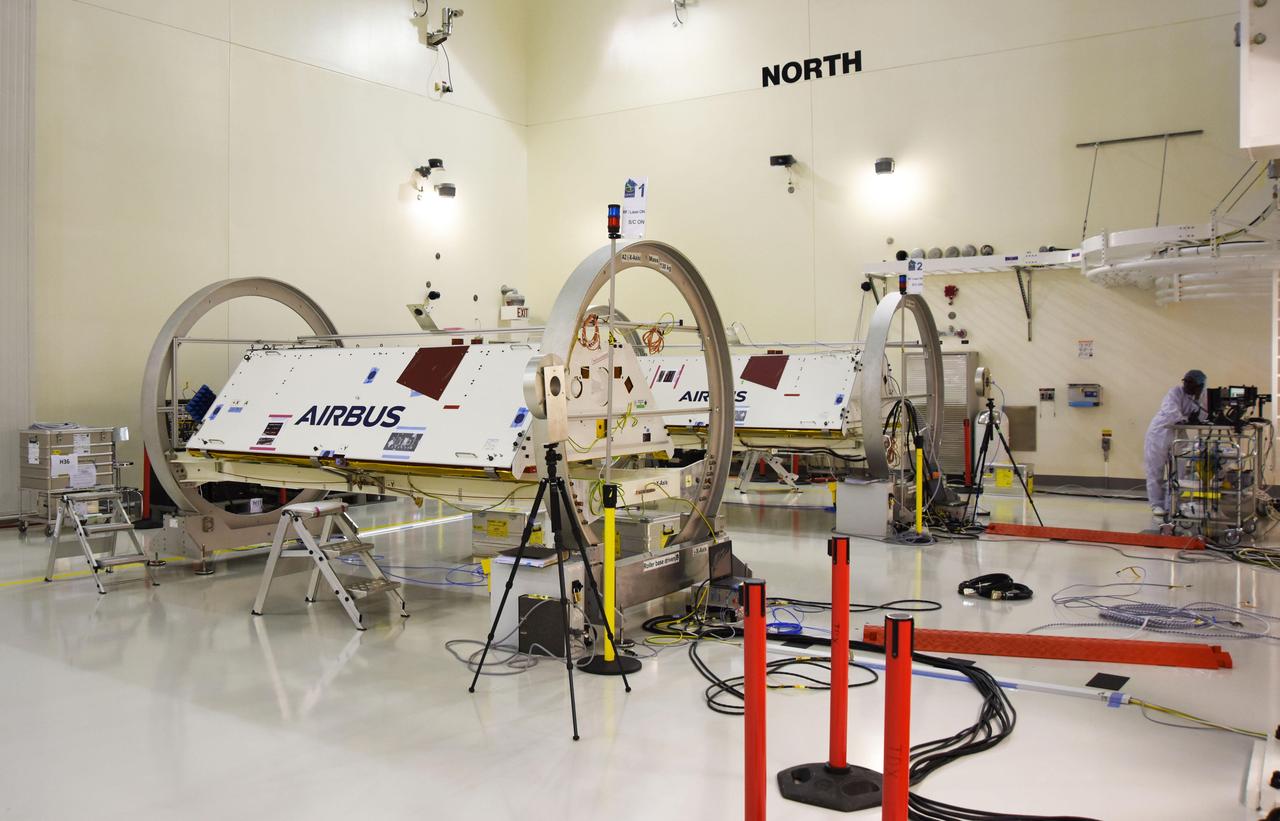
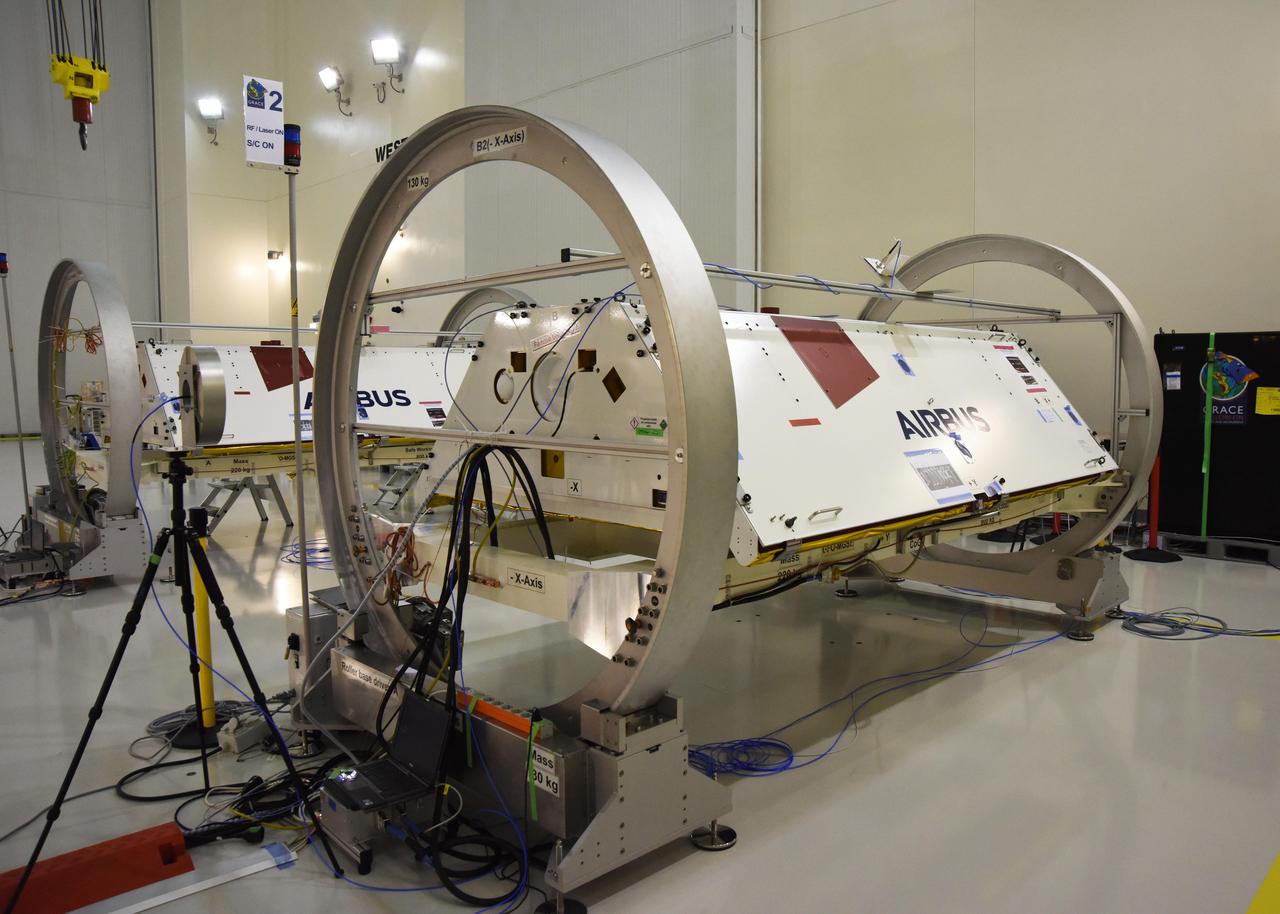
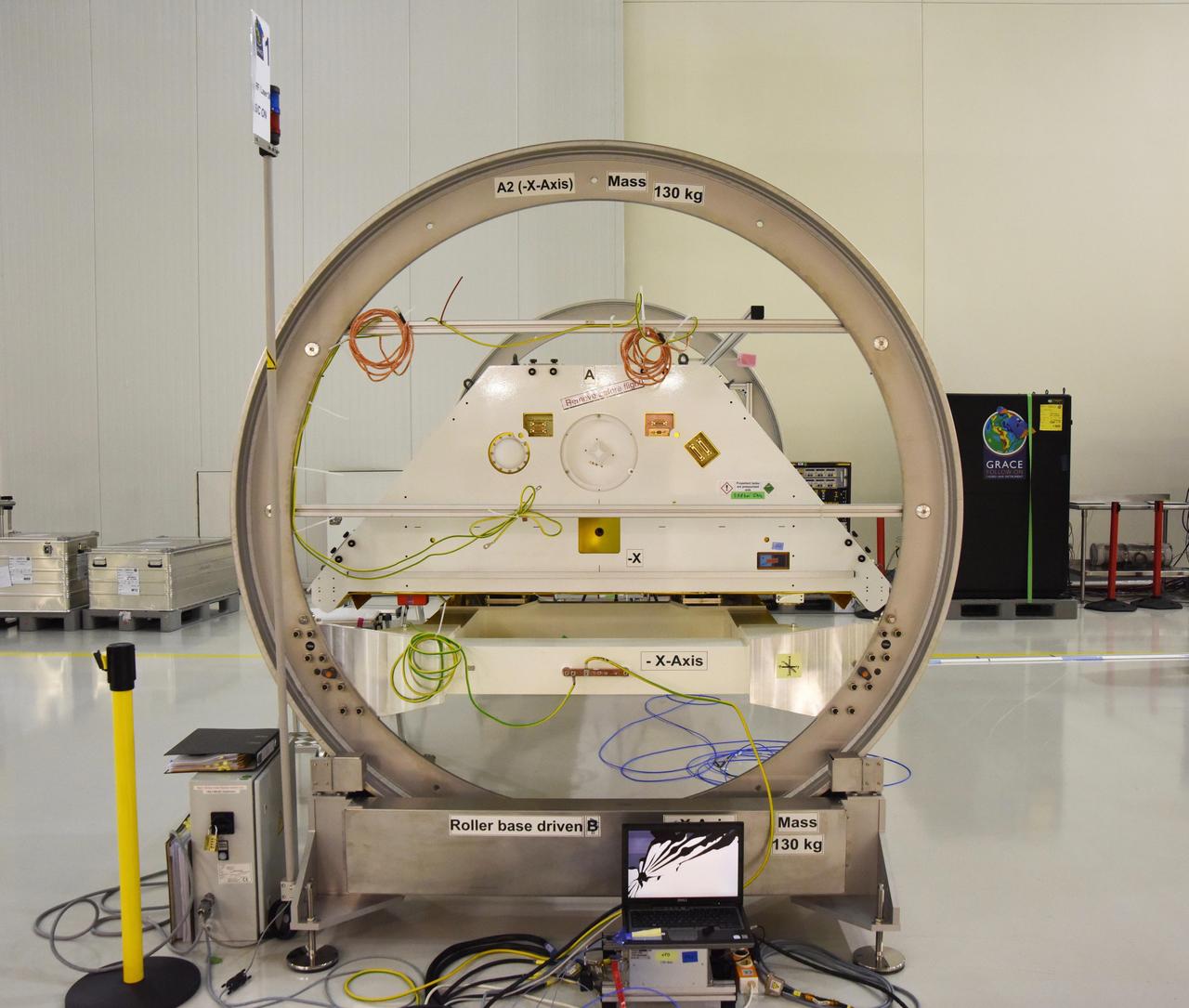
The Gravity Recovery and Climate Experiment Follow-On (GRACE-FO) twin satellites, attached to turntable fixtures, at the Astrotech Space Operations processing facility at Vandenberg Air Force Base, California.  GRACE-FO will extend GRACE's legacy of scientific achievements, which range from tracking mass changes of Earth's polar ice sheets and estimating global groundwater changes, to measuring the mass changes of large earthquakes and inferring changes in deep ocean currents, a driving force in climate. To date, GRACE observations have been used in more than 4,300 research publications. Its measurements provide a unique view of the Earth system and have far-reaching benefits to society, such as providing insights into where global groundwater resources may be shrinking or growing and where dry soils are contributing to drought. GRACE-FO is planned to fly at least five years.   https://photojournal.jpl.nasa.gov/catalog/PIA22338
GRACE-FO Satellites in a Clean Room at Vandenberg Air Force Base
The Gravity Recovery and Climate Experiment Follow-On (GRACE-FO) twin satellites, attached to turntable fixtures, at the Astrotech Space Operations processing facility at Vandenberg Air Force Base, California.  GRACE-FO will extend GRACE's legacy of scientific achievements, which range from tracking mass changes of Earth's polar ice sheets and estimating global groundwater changes, to measuring the mass changes of large earthquakes and inferring changes in deep ocean currents, a driving force in climate. To date, GRACE observations have been used in more than 4,300 research publications. Its measurements provide a unique view of the Earth system and have far-reaching benefits to society, such as providing insights into where global groundwater resources may be shrinking or growing and where dry soils are contributing to drought. GRACE-FO is planned to fly at least five years.   https://photojournal.jpl.nasa.gov/catalog/PIA22340
GRACE-FO Satellites in a Clean Room at Vandenberg Air Force Base
One of the two Gravity Recovery and Climate Experiment Follow-On (GRACE-FO) satellites and its turntable fixture at the Astrotech Space Operations processing facility at Vandenberg Air Force Base, California.  GRACE-FO will extend GRACE's legacy of scientific achievements, which range from tracking mass changes of Earth's polar ice sheets and estimating global groundwater changes, to measuring the mass changes of large earthquakes and inferring changes in deep ocean currents, a driving force in climate. To date, GRACE observations have been used in more than 4,300 research publications. Its measurements provide a unique view of the Earth system and have far-reaching benefits to society, such as providing insights into where global groundwater resources may be shrinking or growing and where dry soils are contributing to drought. GRACE-FO is planned to fly at least five years.   https://photojournal.jpl.nasa.gov/catalog/PIA22339
GRACE-FO Satellites in a Clean Room at Vandenberg Air Force Base
The Gravity Recovery and Climate Experiment Follow-On (GRACE-FO) twin satellites, attached to turntable fixtures, at the Astrotech Space Operations processing facility at Vandenberg Air Force Base, California.  GRACE-FO will extend GRACE's legacy of scientific achievements, which range from tracking mass changes of Earth's polar ice sheets and estimating global groundwater changes, to measuring the mass changes of large earthquakes and inferring changes in deep ocean currents, a driving force in climate. To date, GRACE observations have been used in more than 4,300 research publications. Its measurements provide a unique view of the Earth system and have far-reaching benefits to society, such as providing insights into where global groundwater resources may be shrinking or growing and where dry soils are contributing to drought. GRACE-FO is planned to fly at least five years.   https://photojournal.jpl.nasa.gov/catalog/PIA22341
GRACE-FO Satellites in a Clean Room at Vandenberg Air Force Base
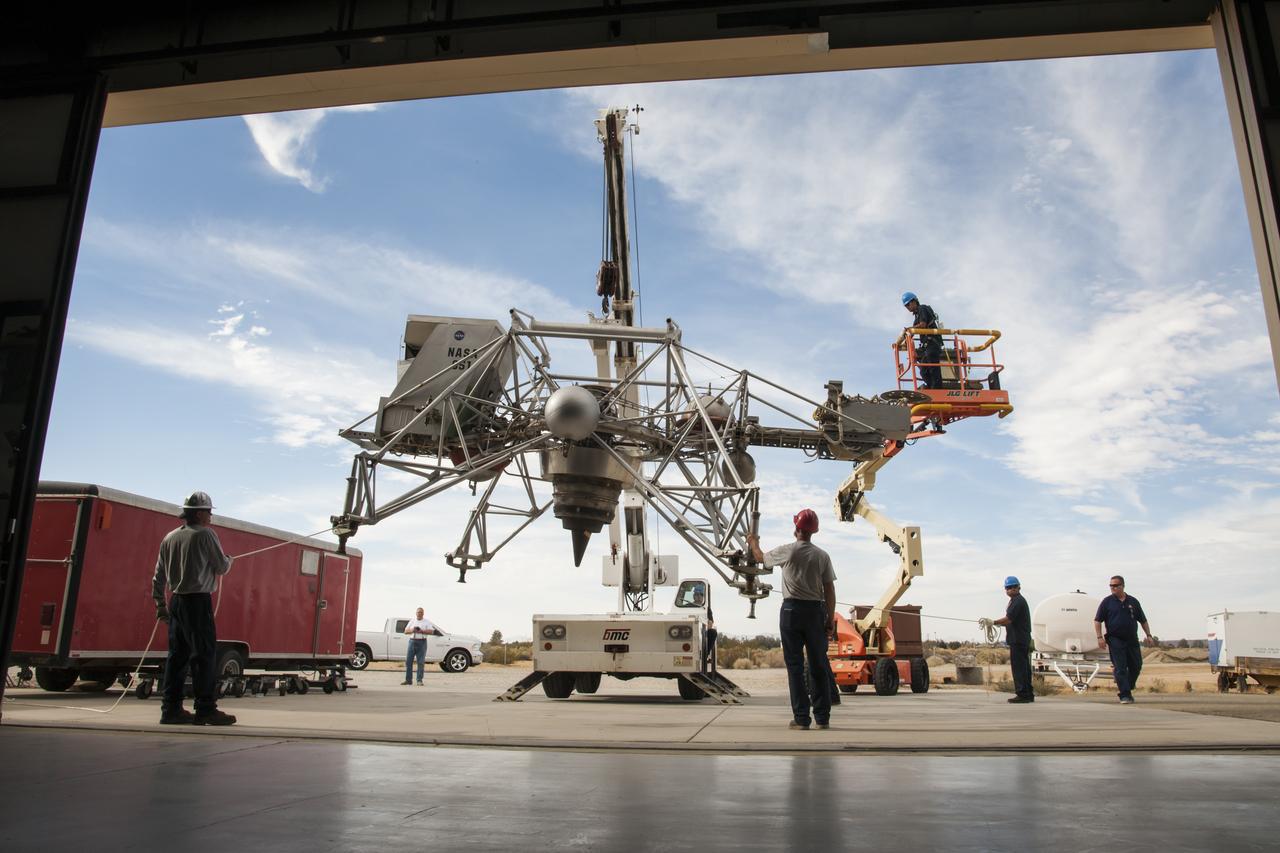
Workers move the Lunar Landing Research Vehicle, or LLRV, into the Edwards Air Force Base Flight Test Museum in California for temporary display.
NASA Lends Space Artifacts to Air Force Museum
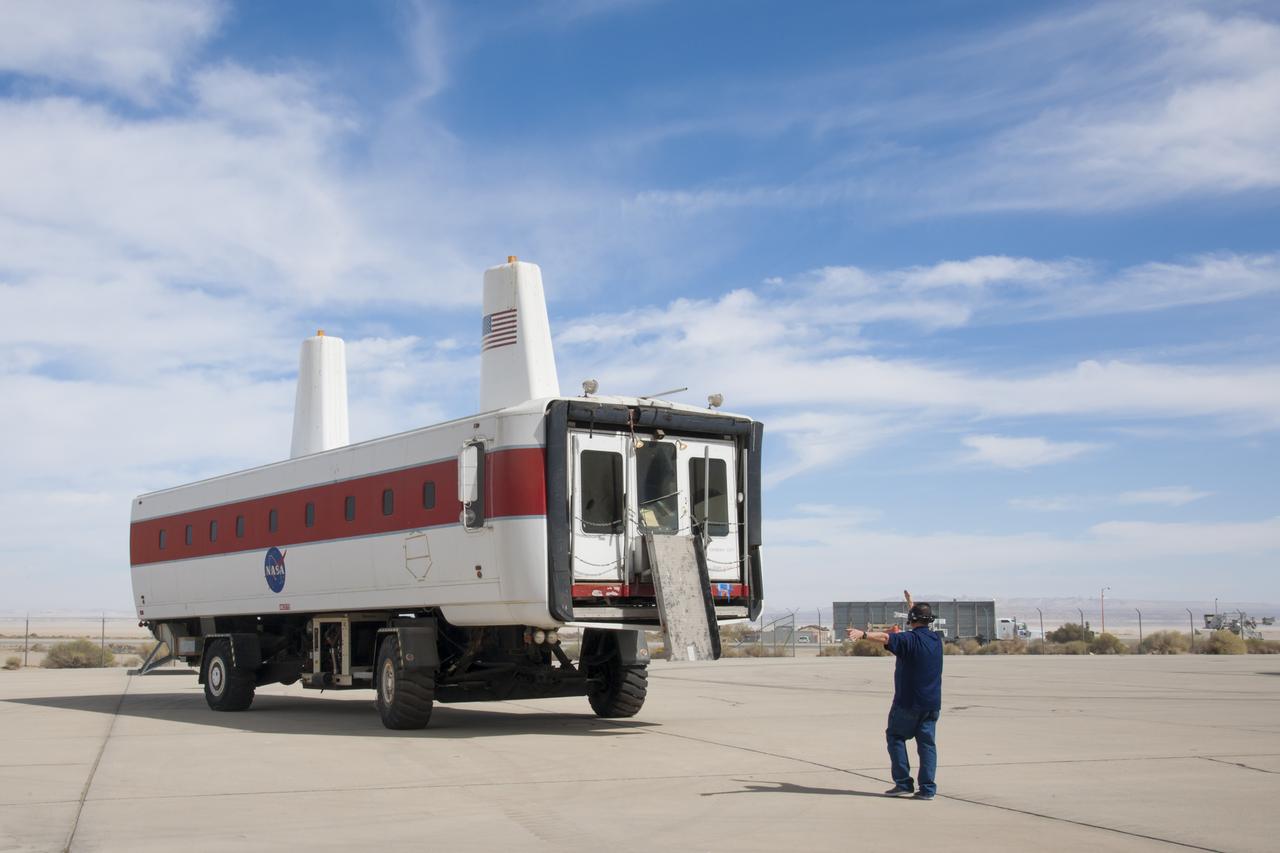
Workers drive the space shuttle Crew Transport Vehicle, or CTV, to the Edwards Air Force Base Flight Test Museum in California for display.
NASA Lends Space Artifacts to Air Force Museum
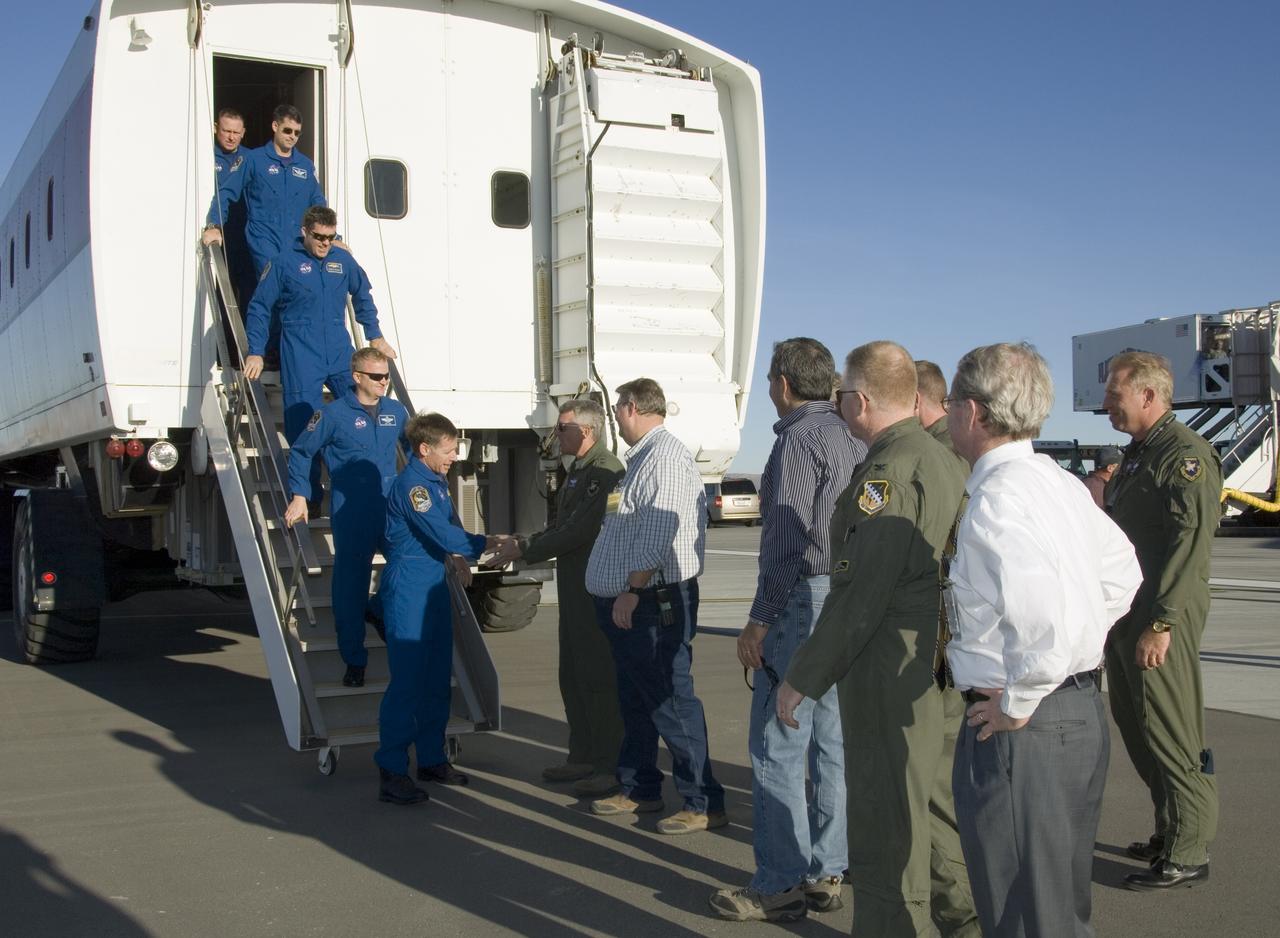
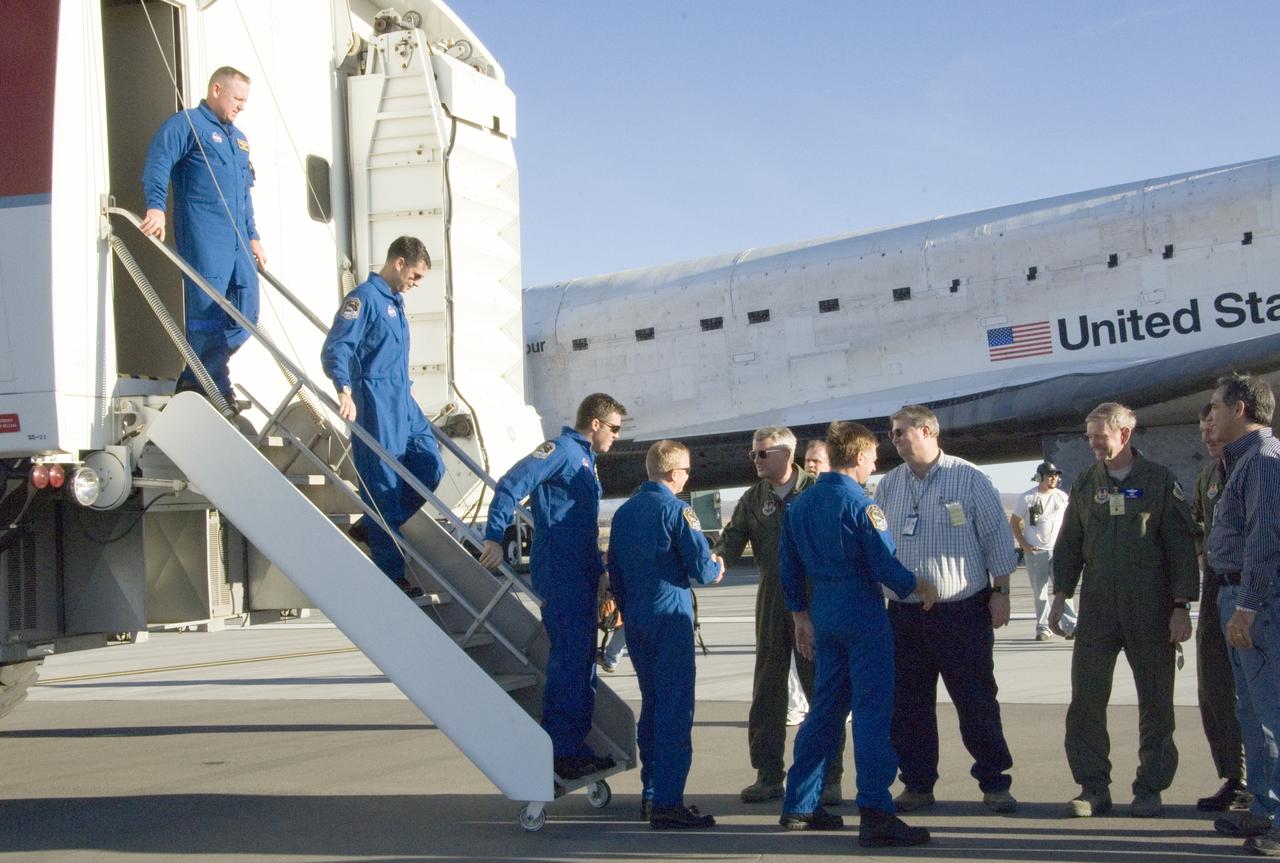
Air Force and NASA officials greet the STS-126 crew as they exit the Crew Transport Vehicle after landing the shuttle Endeavour at Edwards Air Force Base.
Air Force and NASA officials greet the STS-126 crew as they exit the Crew Transport Vehicle after landing the shuttle Endeavour at Edwards Air Force Base
Air Force and NASA officials greet the STS-126 crew as they exit the Crew Transport Vehicle after landing the shuttle Endeavour at Edwards Air Force Base.
Air Force and NASA officials greet the STS-126 crew as they exit the Crew Transport Vehicle after landing the shuttle Endeavour at Edwards Air Force Base
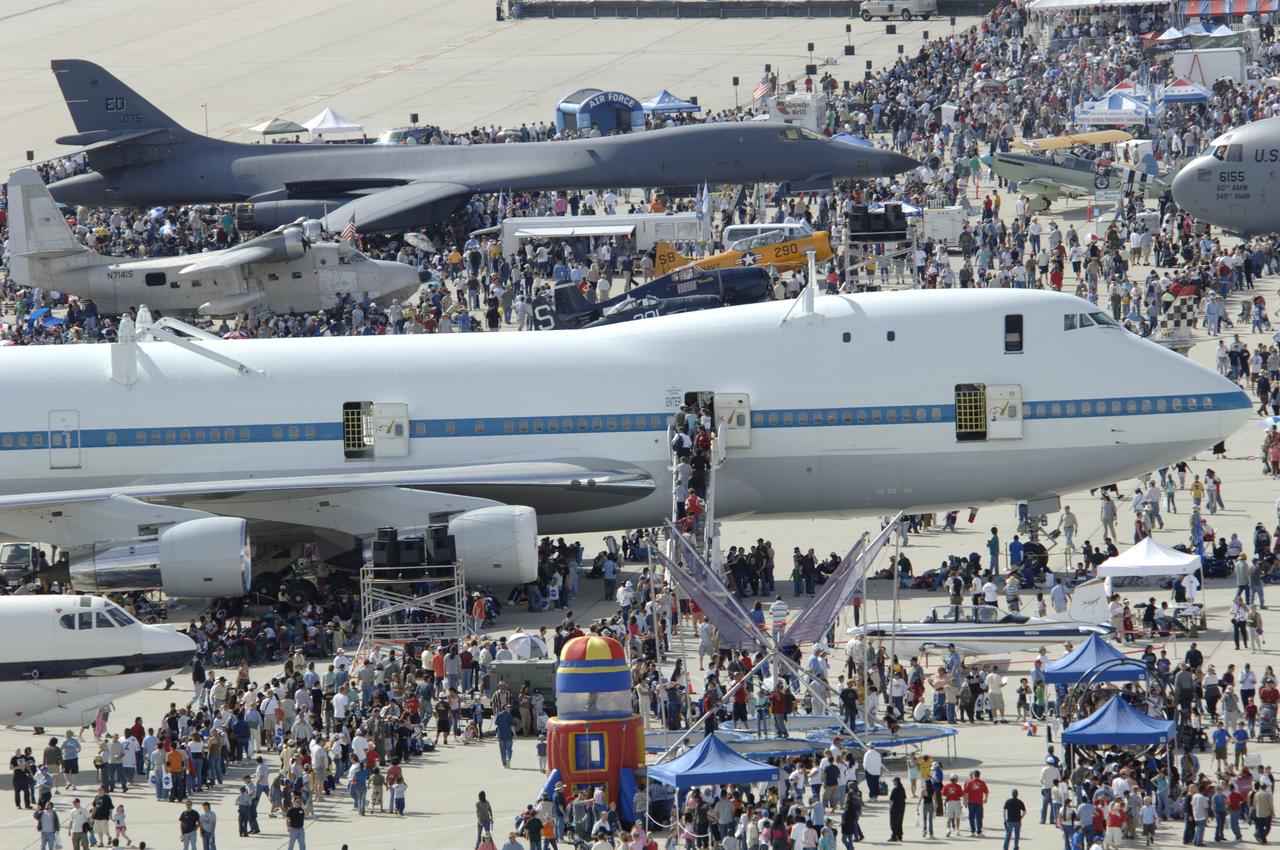
Crowds thronged around NASA's modified 747 Shuttle Carrier Aircraft and an Air Force B-1B Lancer at the Edwards Air Force Base open house Oct. 28-29, 2006.
Crowds thronged around NASA's modified 747 Shuttle Carrier Aircraft and an Air Force B-1B Lancer at the Edwards Air Force Base open house Oct. 28-29, 2006
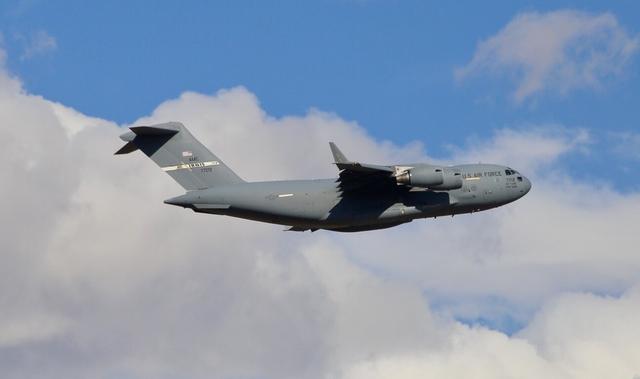
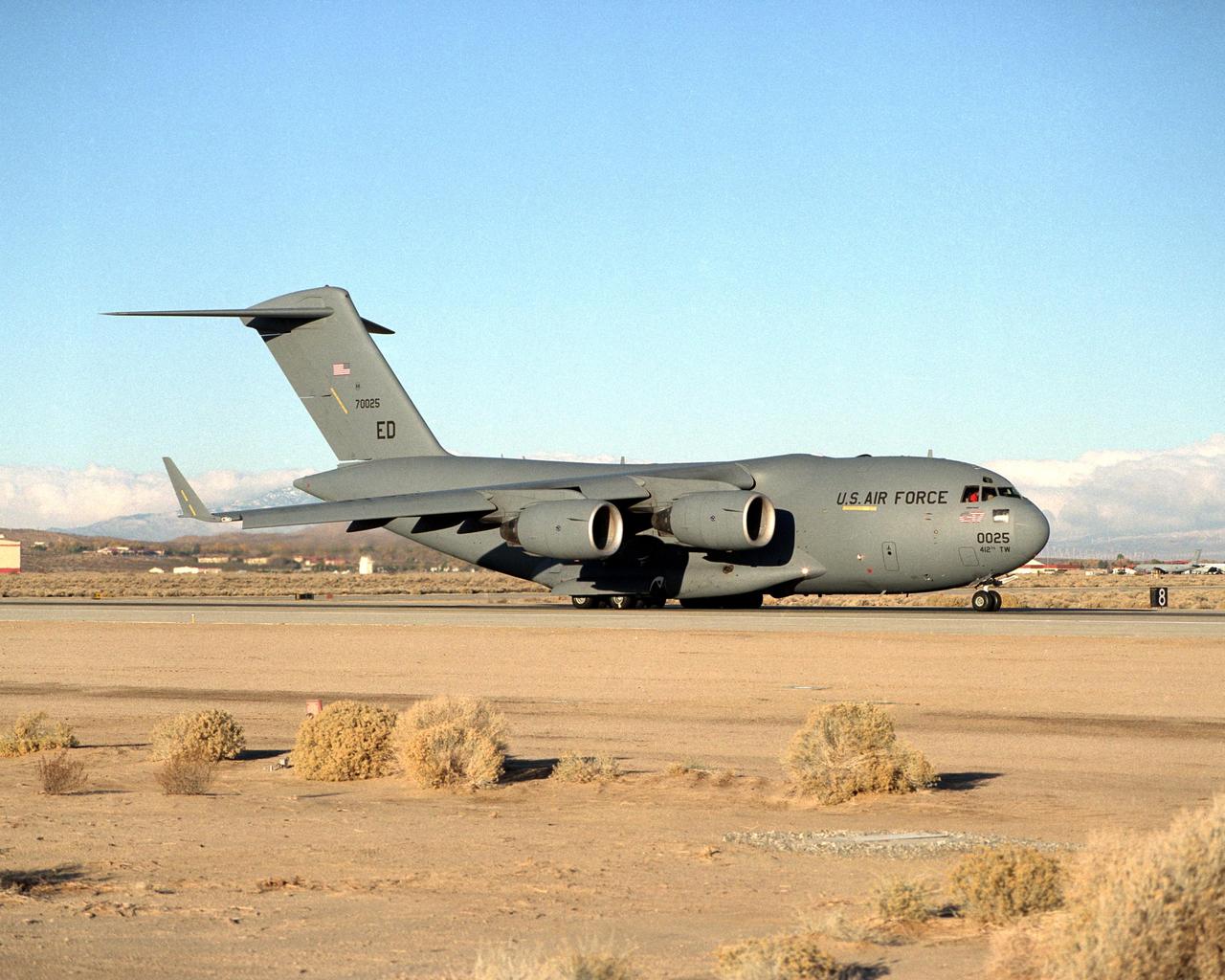
A C-17 cargo aircraft carrying NASA's InSight spacecraft flew from Buckley Air Force Base, Denver, to Vandenberg Air Force Base, California, on February 28, 2018. The spacecraft was being shipped from Lockheed Martin Space, Denver, where InSight was built and tested. Its launch period opens May 5, 2018.  InSight, short for Interior Exploration using Seismic Investigations, Geodesy and Heat Transport, is the first mission dedicated to studying the deep interior of Mars. Its findings will advance understanding of the early history of all rocky planets, including Earth.  https://photojournal.jpl.nasa.gov/catalog/PIA22251
C-17 Shipping InSight Mars Spacecraft to Vandenberg Air Force Base
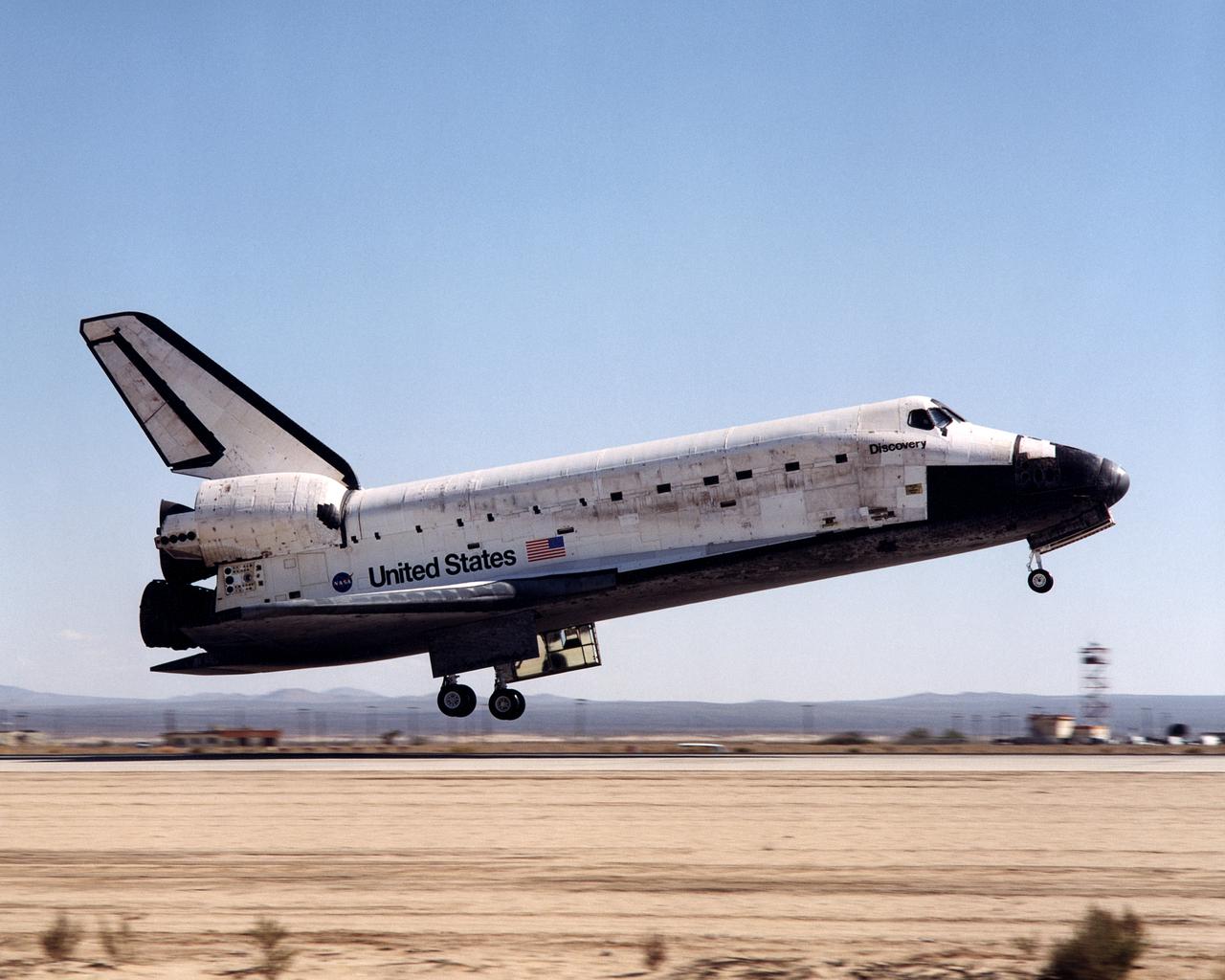
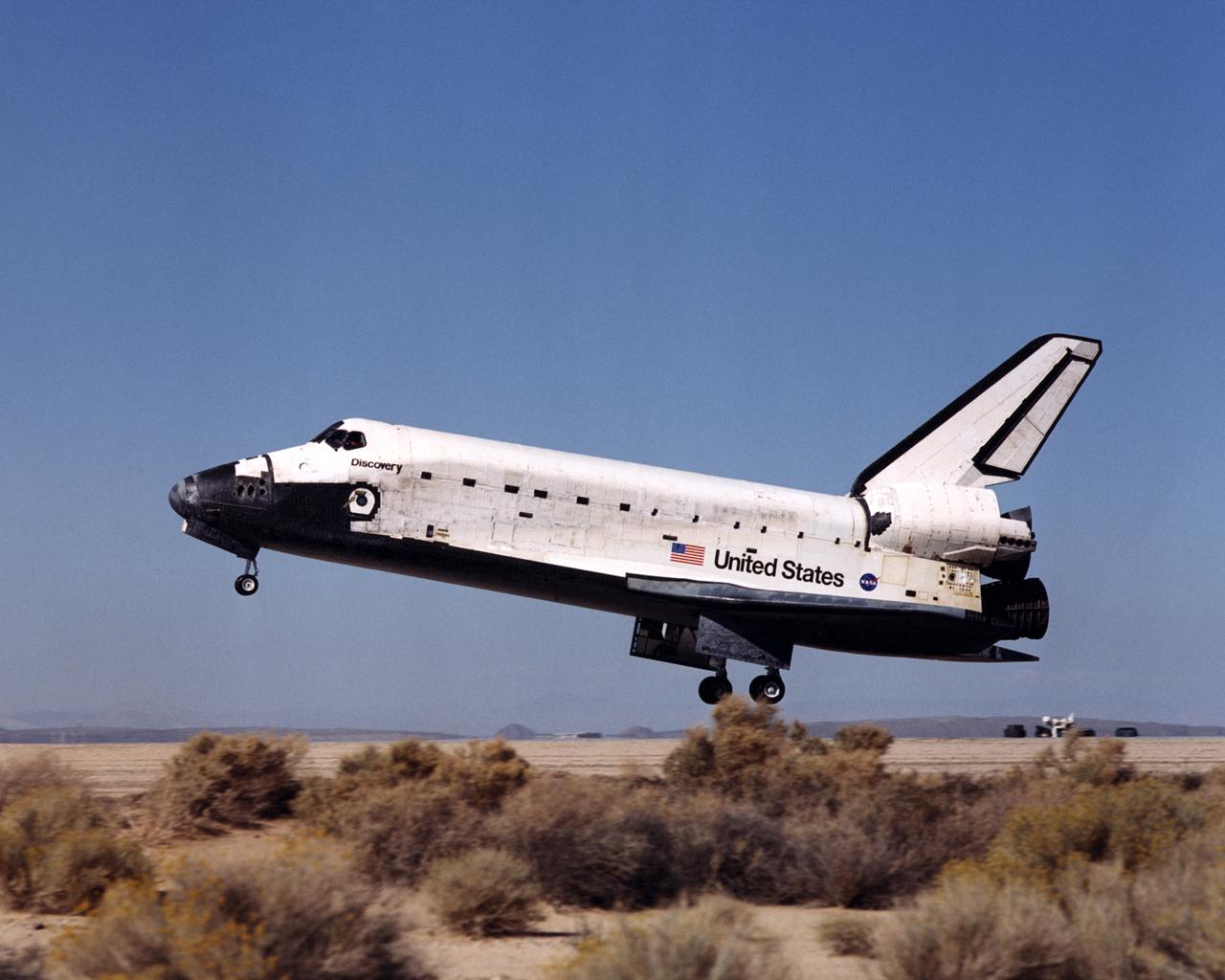
The Space Shuttle Discovery glides in for landing at Edwards Air Force Base in Southern California at the conclusion of mission STS-92 on October 24, 2000.
STS-92 - Landing at Edwards Air Force Base
The Space Shuttle Discovery glides in for landing at Edwards Air Force Base in Southern California at the conclusion of mission STS-92 on October 24, 2000.
STS-92 - Landing at Edwards Air Force Base
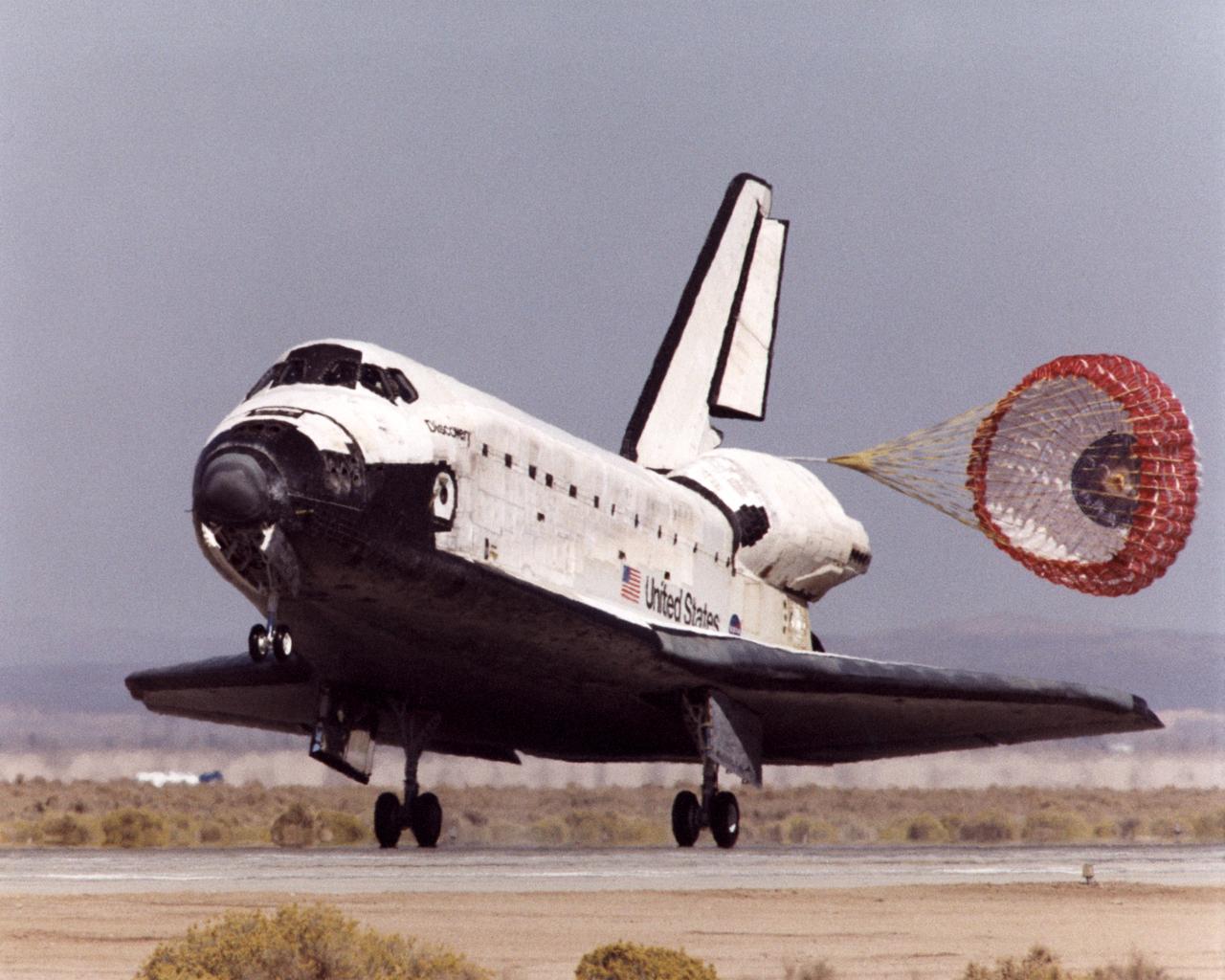
With its drag parachute deployed to help slow it down, the Space Shuttle Discovery rolls down the runway after landing at Edwards Air Force Base in Southern California at the conclusion of mission STS-92 on October 24, 2000.
STS-92 - Landing at Edwards Air Force Base
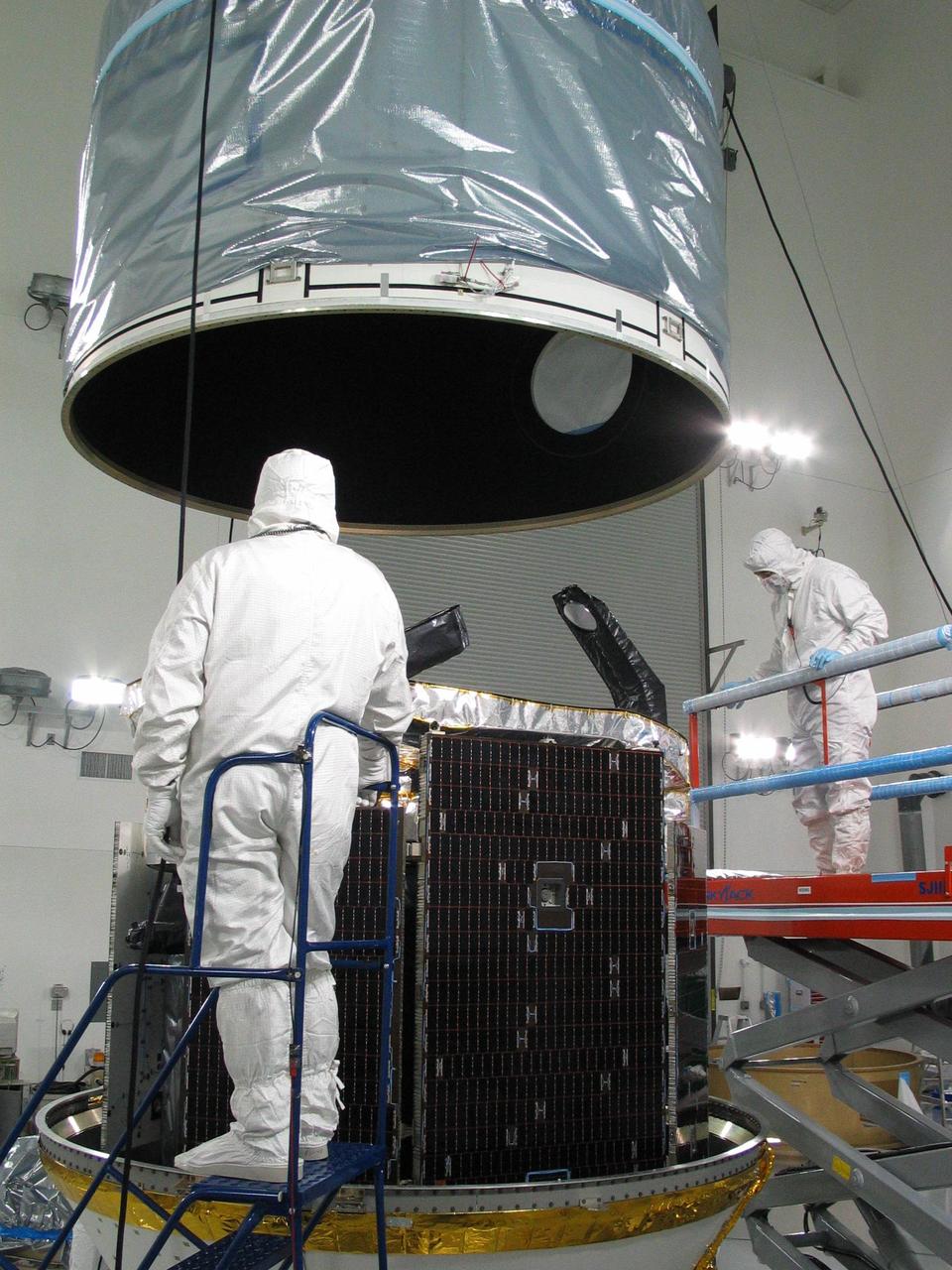
NASA CloudSat spacecraft sits encapsulated within its Boeing Delta launch vehicle dual payload attach fitting at Vandenberg Air Force Base, Calif.
CloudSat Preps for Launch at Vandenberg Air Force Base, CA
S65-58941 (27 Aug. 1965) --- U.S. Air Force Weapons Laboratory D-8 (Radiation in Space) experiment for Gemini-6 spaceflight. Kennedy Space Center alternative photo number is 104-KSC-65C-5533. Photo credit: NASA
U.S. Air Force Radiation in Space experiment for Gemini 6 flight
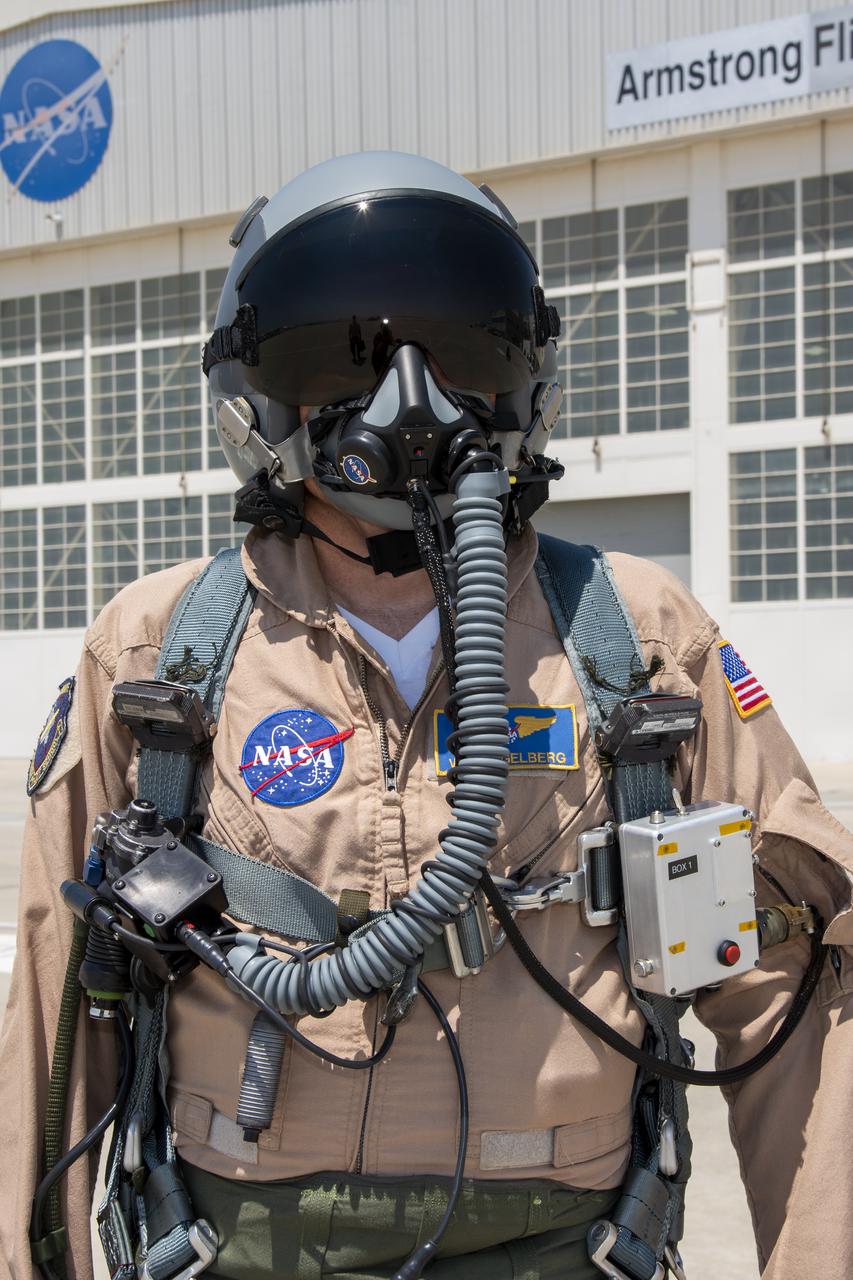
NASA research pilot Wayne Ringelberg wears a U.S. Air Force configuration of the NASA Jet Propulsion Laboratory in California prototype mask, which uses laser sensors to determine levels of carbon dioxide and water exhaled inside the mask. This prototype was tested in conjunction with the current VigilOX system, which measures the pilot’s oxygen concentration, breathing pressures and flow rates. This and the U.S. Navy configuration was used in the Pilot Breathing Assessment program at NASA’s Armstrong Flight Research Center in California.
Pilot Breathing Assessment Program Prototype JPL Mask with U.S. Air Force Configuration 
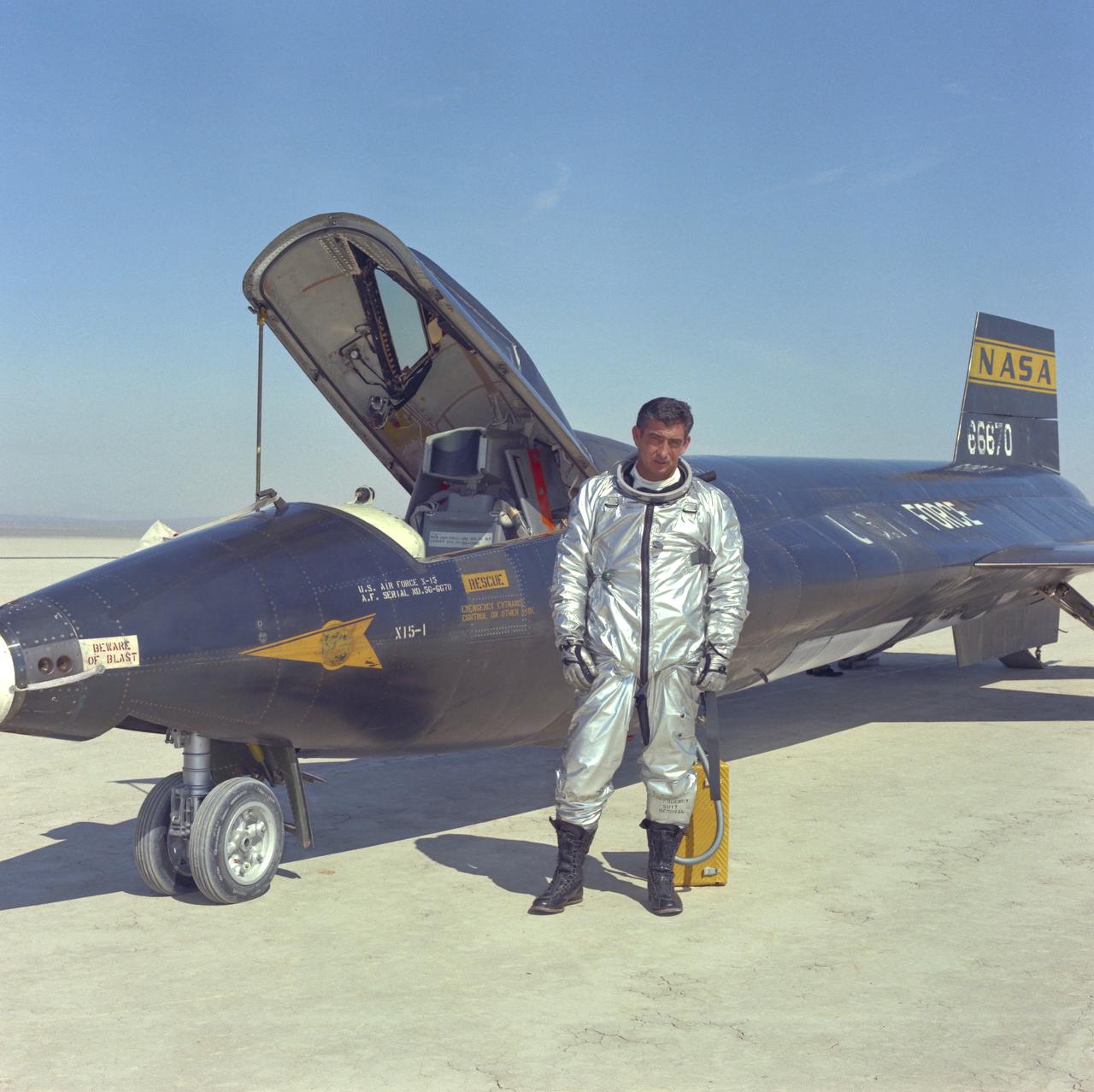
Air Force pilot Mike Adams poses in front of X-15-#1 after flight on Rogers Dry Lake at Edwards Air Force Base in California.
Air Force pilot Mike Adam poses with X-15 flown with NASA
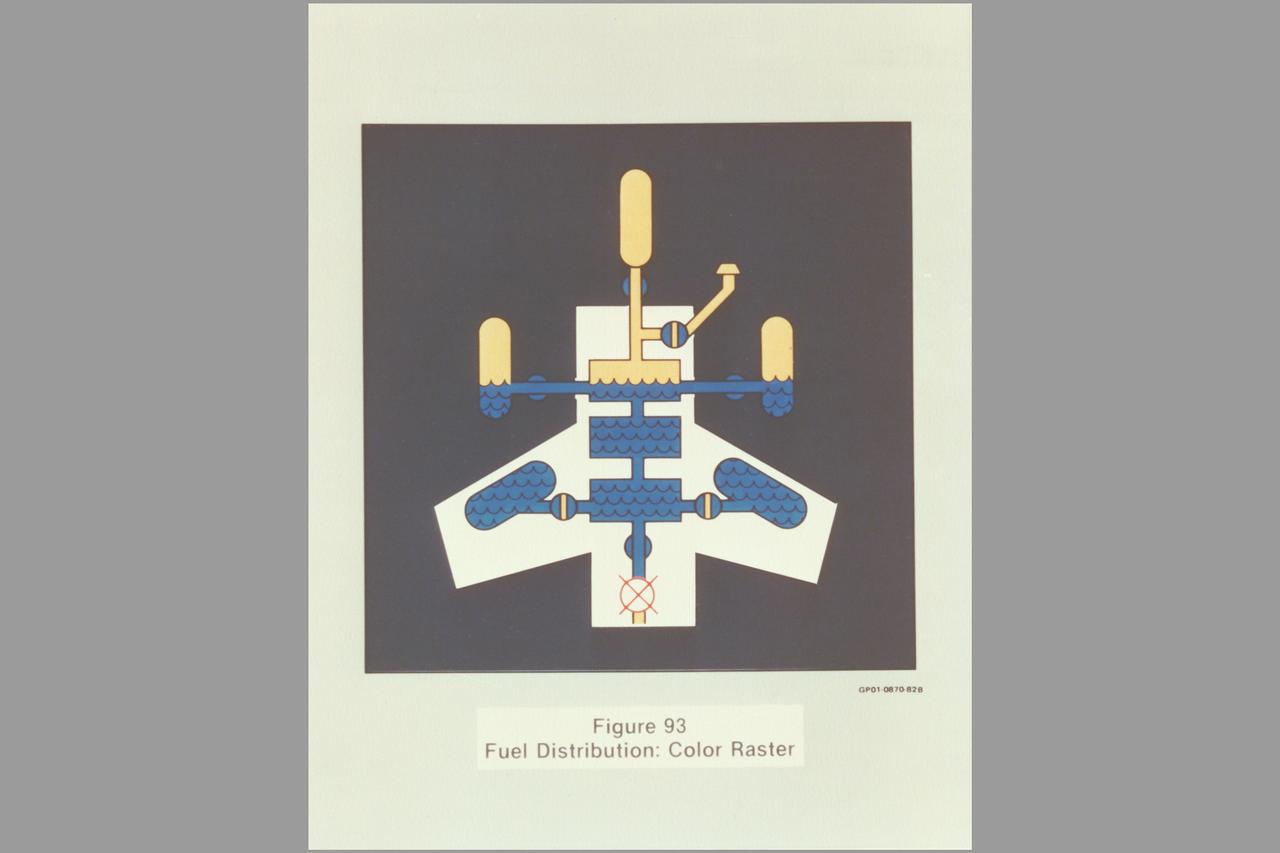
Date: Feb 1982 Photographer: Historical Air Force fuel distribution (AFWAL TR-81-3156, Fig 93
ARC-1969-AC96-0023-8
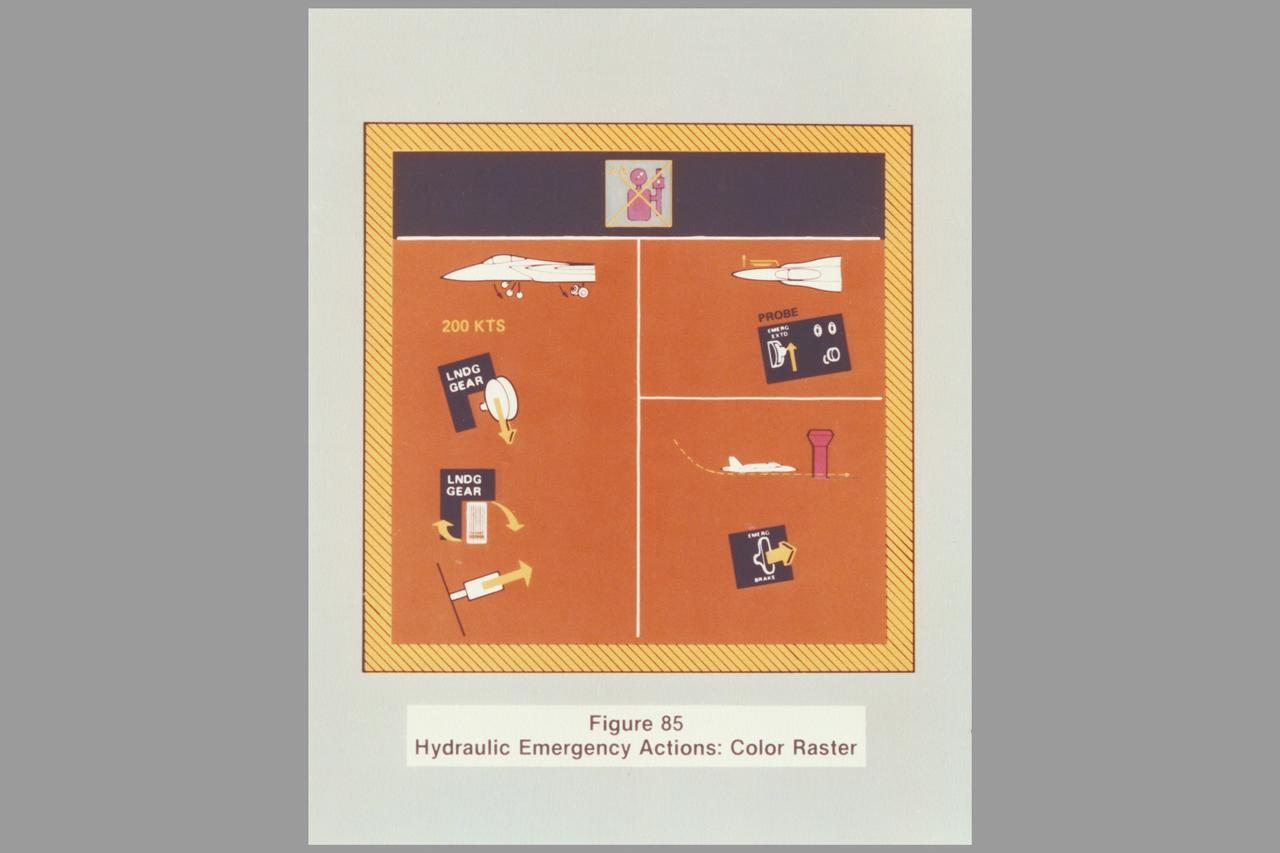
Date: Feb 1982  Photographer: Historical  Air Force hydraulic emergency actions for generator failures (AFWAL TR-81-3156)
ARC-1969-AC96-0023-7
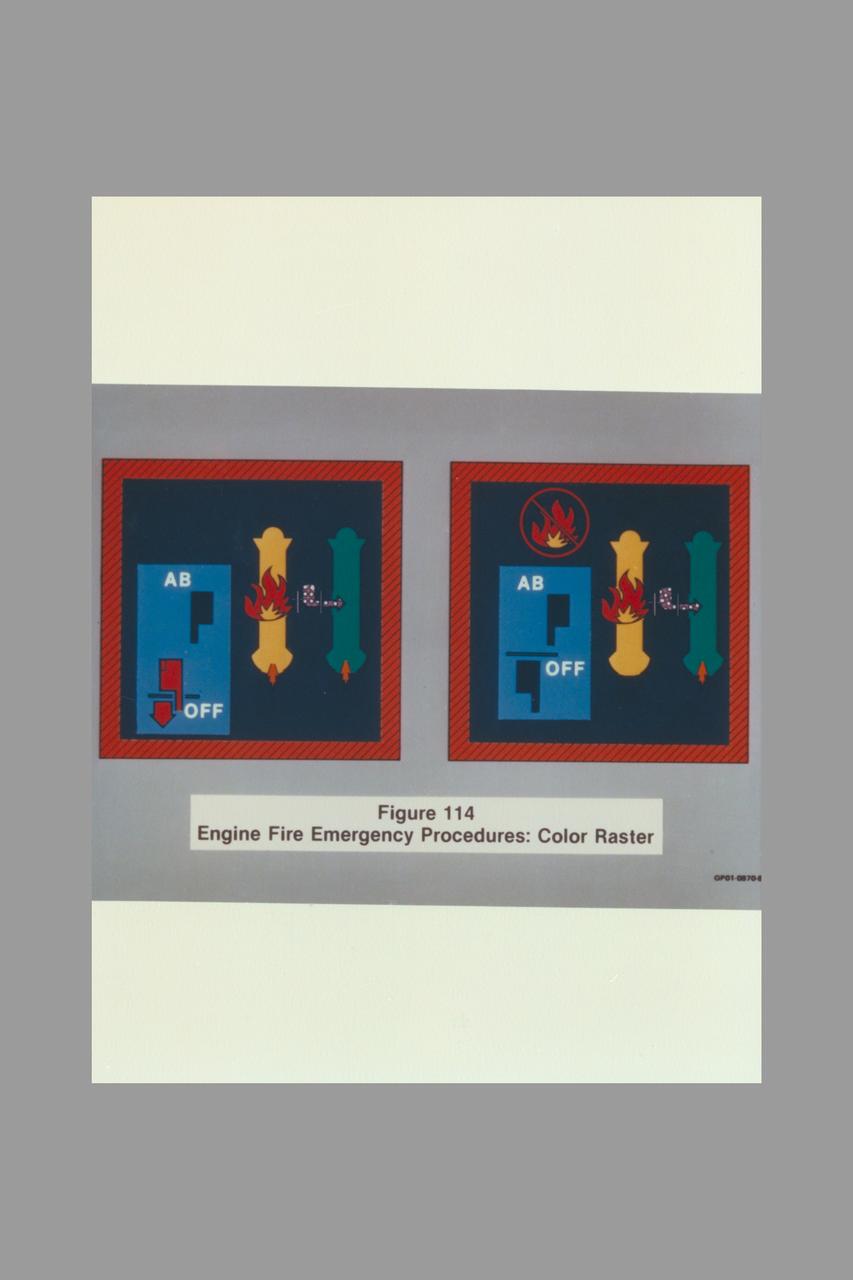
Date: Feb 1982 Photographer: Air Force engine fire procedures (ref: AFWAL TR-81-3156)
ARC-1969-AC96-0023-11
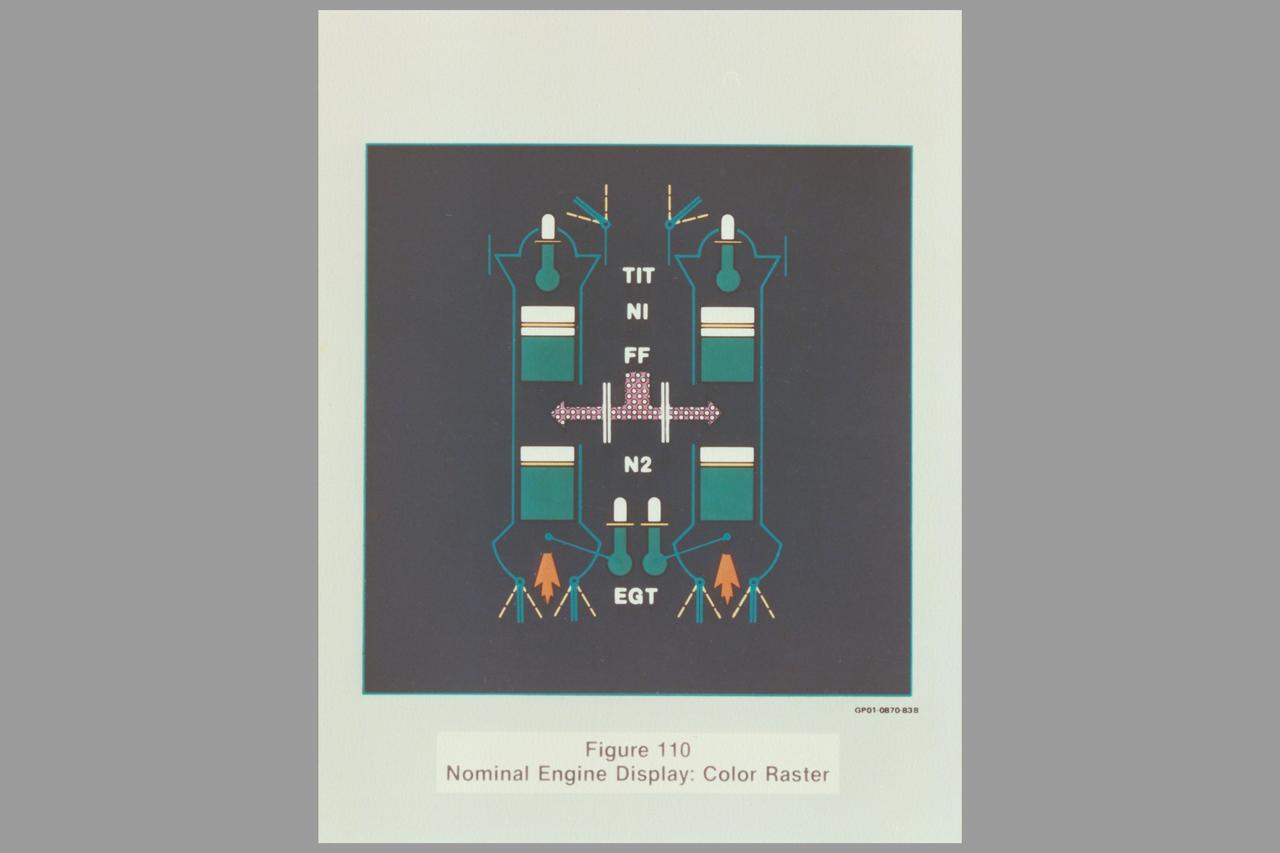
Date: Feb 1982 Photographer: Historical Air Force nominal engine display  (AFWAL TR-81-3156, Fig 110
ARC-1969-AC96-0023-9
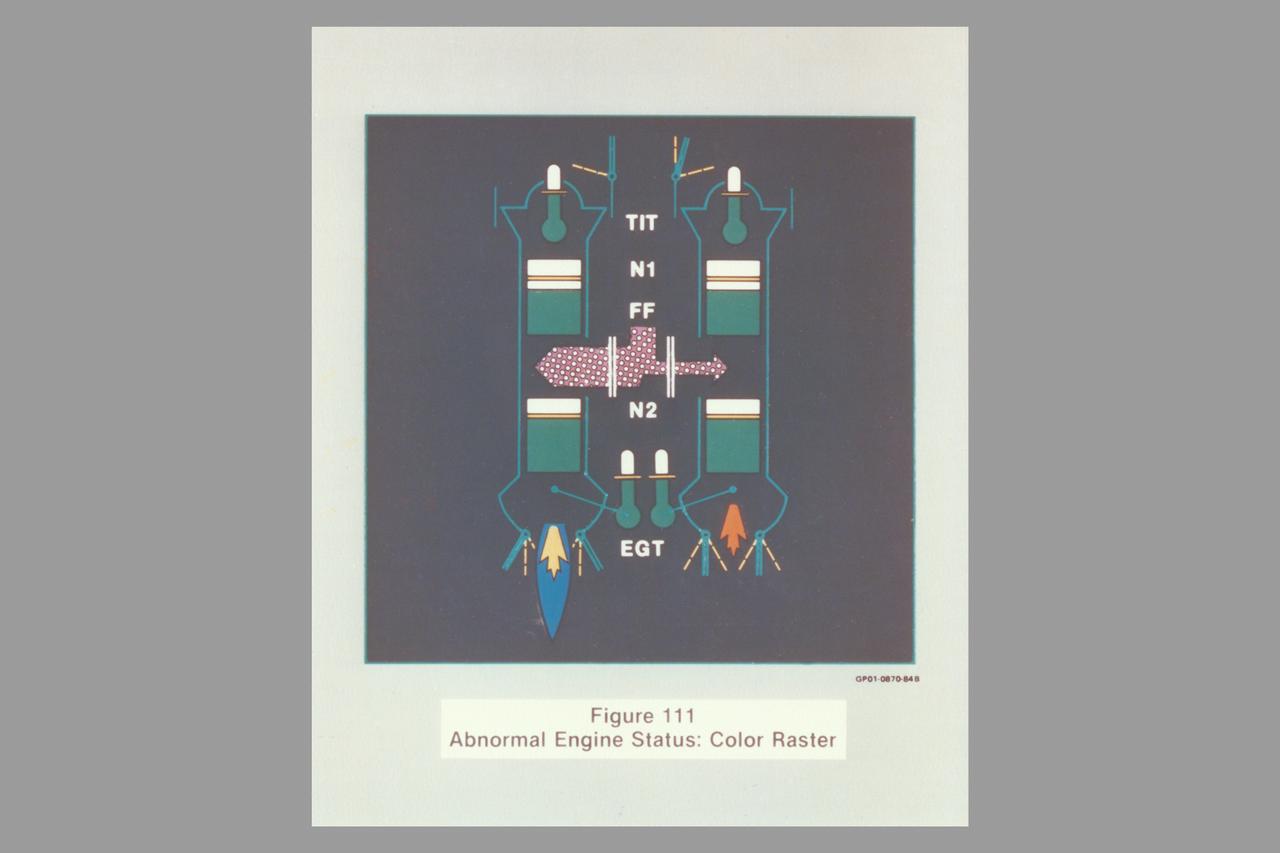
Date: Feb 1982 Photographer: Air Force abnormal engine status (ref: AFWAL TR-81-3156)
ARC-1969-AC96-0023-10
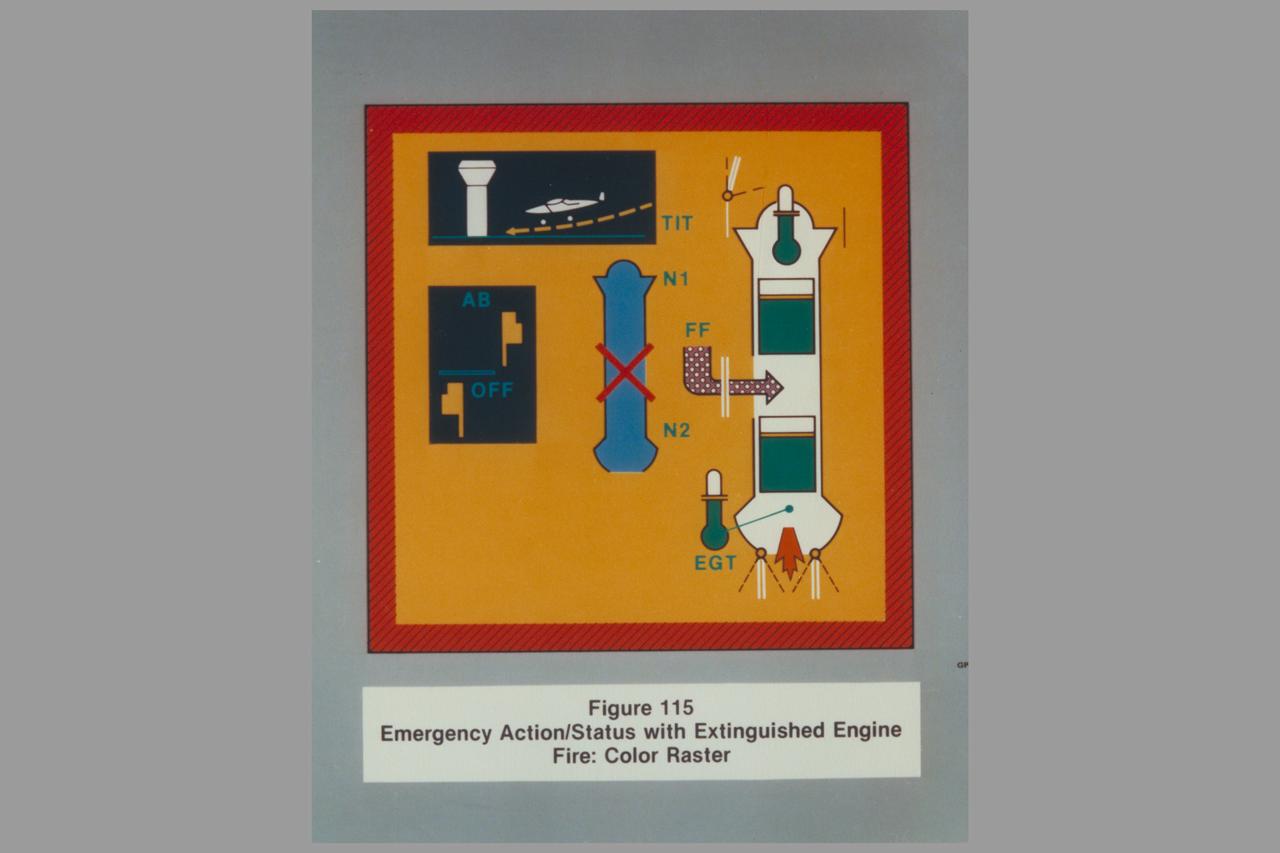
Date: Feb 1982 Photographer: Air Force emergency action status with extinguished engine fire (ref: AFWAL TR-81-3156)
ARC-1969-AC96-0023-12
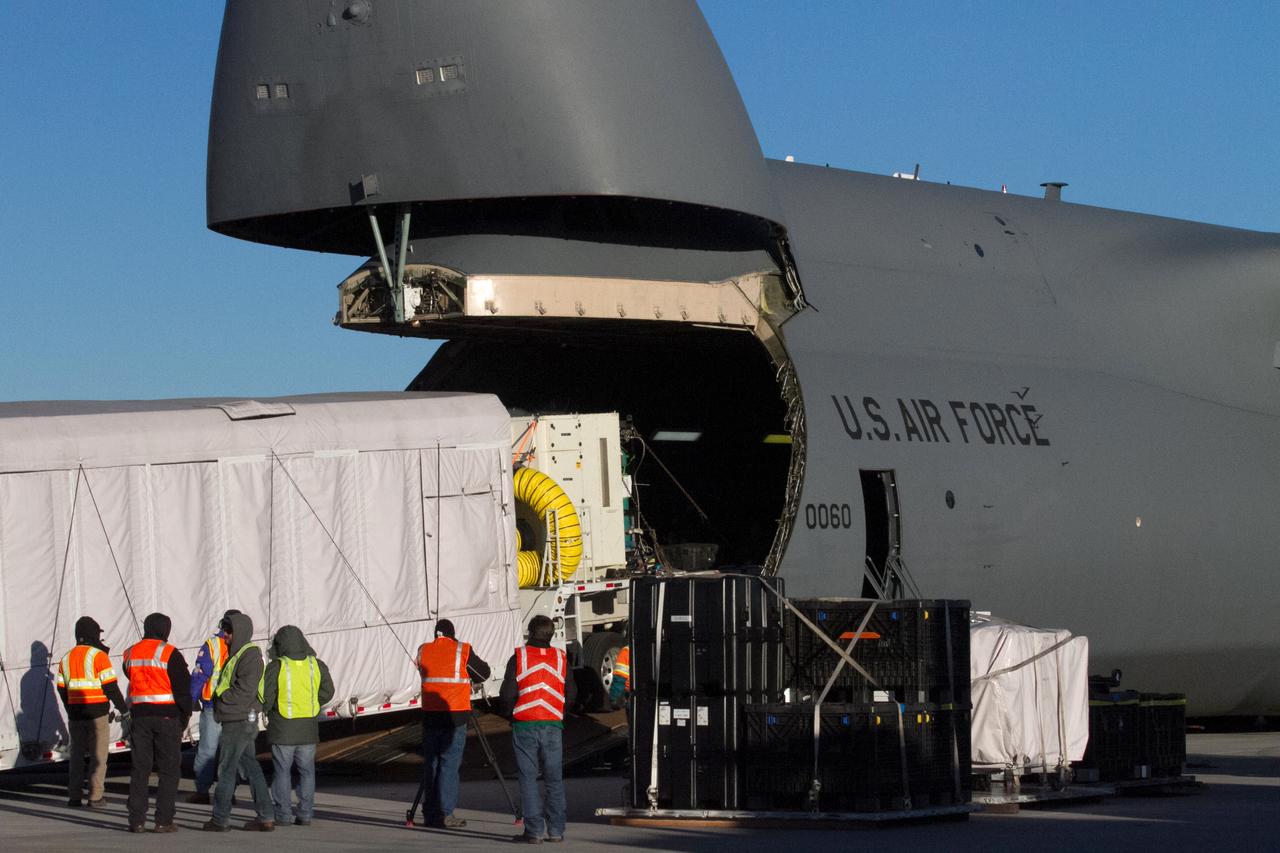
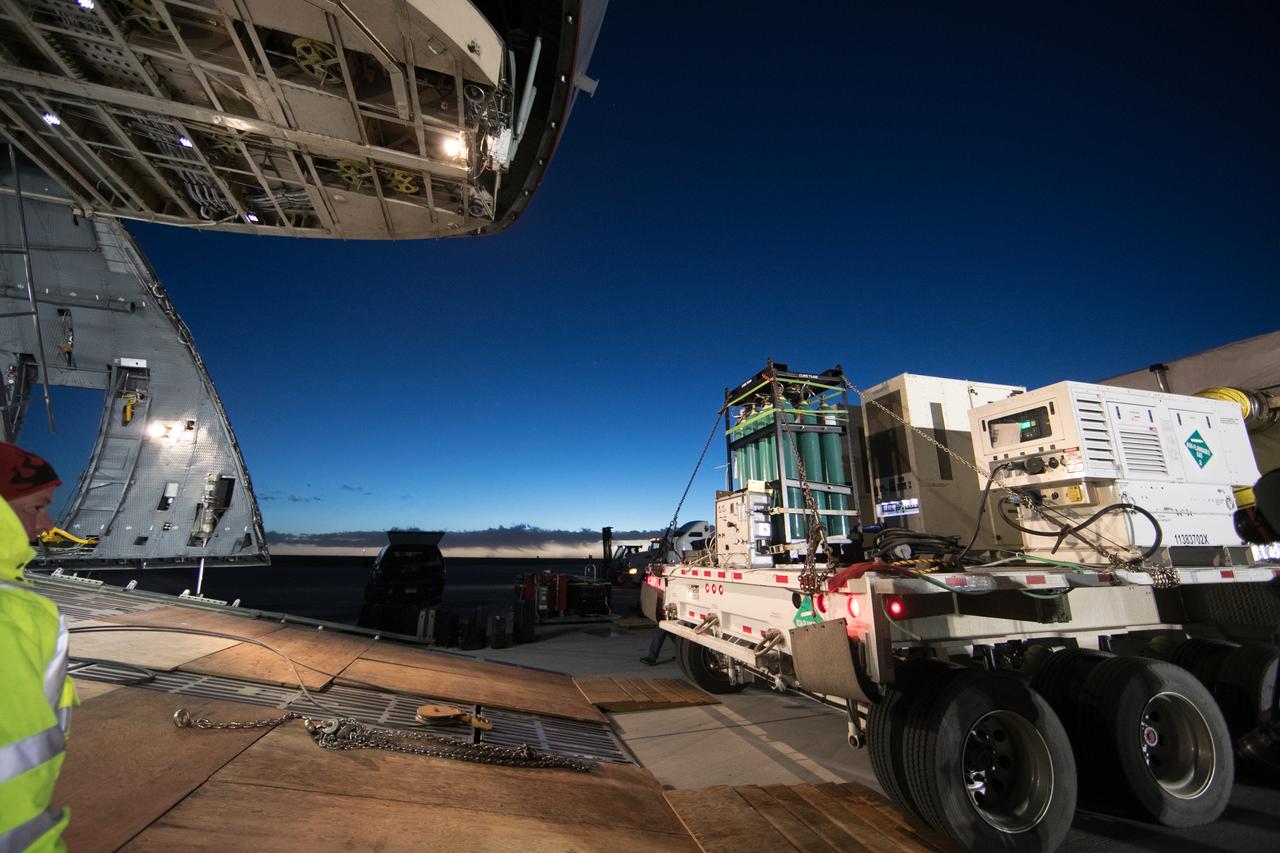
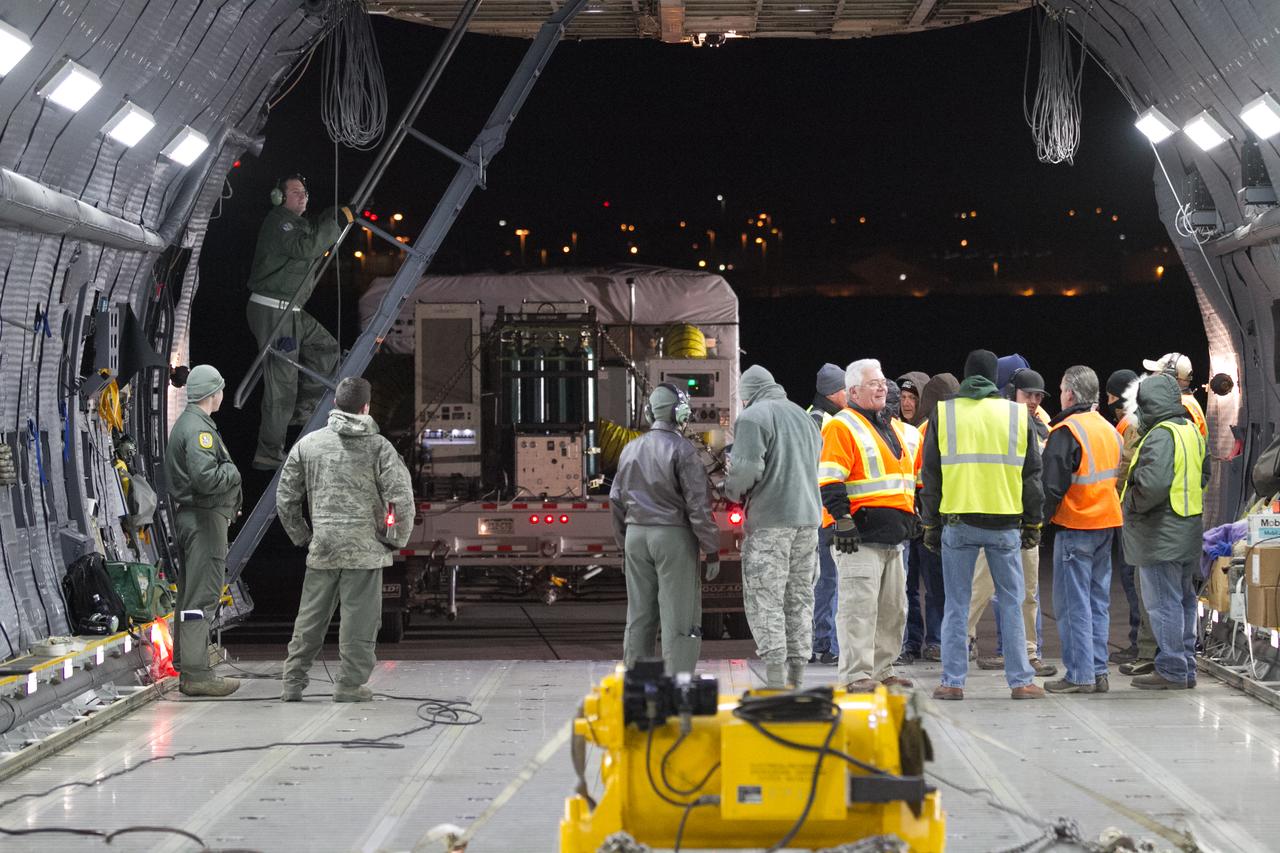
At Buckley Air Force Base in Aurora, Colorado, NOAA's Geostationary Operational Environmental Satellite-S (GOES-S) is being loaded into the cargo hold of a U.S. Air Force C-5M super Galaxy cargo aircraft. GOES-S will be flown to NASA's Kennedy Space Center in Florida. After it arrives at Kennedy's Shuttle Landing Facility, it will be offloaded and transported to the Astrotech Space Operations facility in Titusville, Florida, to prepare it for launch. GOES-S is the second in a series of four advanced geostationary weather satellites. The GOES-R series - consisting of the GOES-R, GOES-S, GOES-T and GOES-U spacecraft - will significantly improve the detection and observation of environmental phenomena that directly affect public safety, protection of property and the nation's economic health and prosperity. GOES-S is slated to launch March 1, 2018 aboard a United Launch Alliance Atlas V rocket from Cape Canaveral Air Force Station in Florida.
GOES-S Transport to Kennedy Space Center
At Buckley Air Force Base in Aurora, Colorado, NOAA's Geostationary Operational Environmental Satellite-S (GOES-S) is being loaded into the cargo hold of a U.S. Air Force C-5M super Galaxy cargo aircraft. GOES-S will be flown to NASA's Kennedy Space Center in Florida. After it arrives at Kennedy's Shuttle Landing Facility, it will be offloaded and transported to the Astrotech Space Operations facility in Titusville, Florida, to prepare it for launch. GOES-S is the second in a series of four advanced geostationary weather satellites. The GOES-R series - consisting of the GOES-R, GOES-S, GOES-T and GOES-U spacecraft - will significantly improve the detection and observation of environmental phenomena that directly affect public safety, protection of property and the nation's economic health and prosperity. GOES-S is slated to launch March 1, 2018 aboard a United Launch Alliance Atlas V rocket from Cape Canaveral Air Force Station in Florida.
GOES-S Transport to Kennedy Space Center
At Buckley Air Force Base in Aurora, Colorado, NOAA's Geostationary Operational Environmental Satellite-S (GOES-S) is being loaded into the cargo hold of a U.S. Air Force C-5M super Galaxy cargo aircraft. GOES-S will be flown to NASA's Kennedy Space Center in Florida. After it arrives at Kennedy's Shuttle Landing Facility, it will be offloaded and transported to the Astrotech Space Operations facility in Titusville, Florida, to prepare it for launch. GOES-S is the second in a series of four advanced geostationary weather satellites. The GOES-R series - consisting of the GOES-R, GOES-S, GOES-T and GOES-U spacecraft - will significantly improve the detection and observation of environmental phenomena that directly affect public safety, protection of property and the nation's economic health and prosperity. GOES-S is slated to launch March 1, 2018 aboard a United Launch Alliance Atlas V rocket from Cape Canaveral Air Force Station in Florida.
GOES-S Transport to Kennedy Space Center
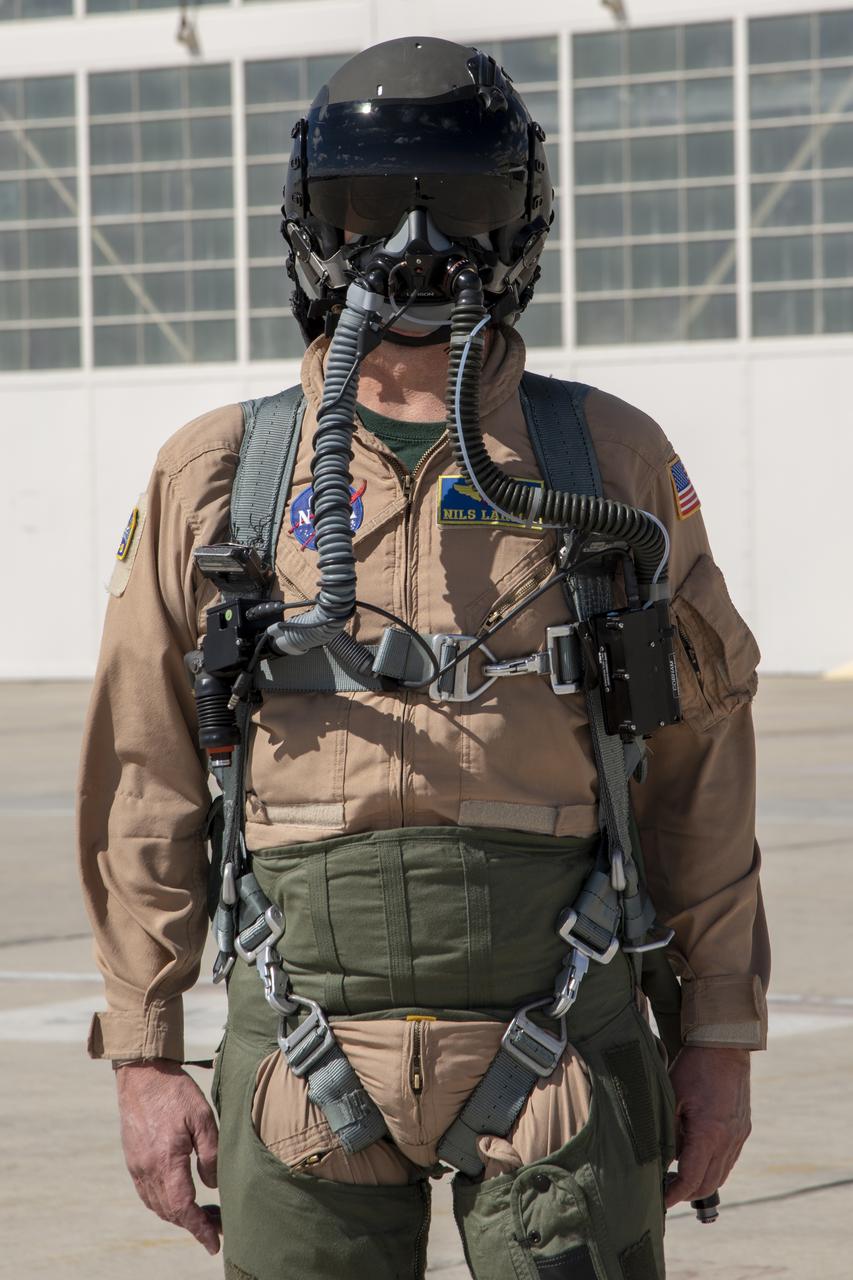
NASA Pilot Nils Larson wears a U.S. Air Force harness configuration with a helmet and an oxygen mask that is being used in the Pilot Breathing Assessment program at NASA's Armstrong Flight Research Center in California.
U.S. Air Force Harness Configuration
The Air Force provided a C-17 Globemaster III for use in the Vehicle Integrated Propulsion Research (VIPR) effort. Researchers are using the airplane for ground testing of new engine health monitoring technologies.
NASA, Air Force, and Industry Team Up to Improve Flying Safety
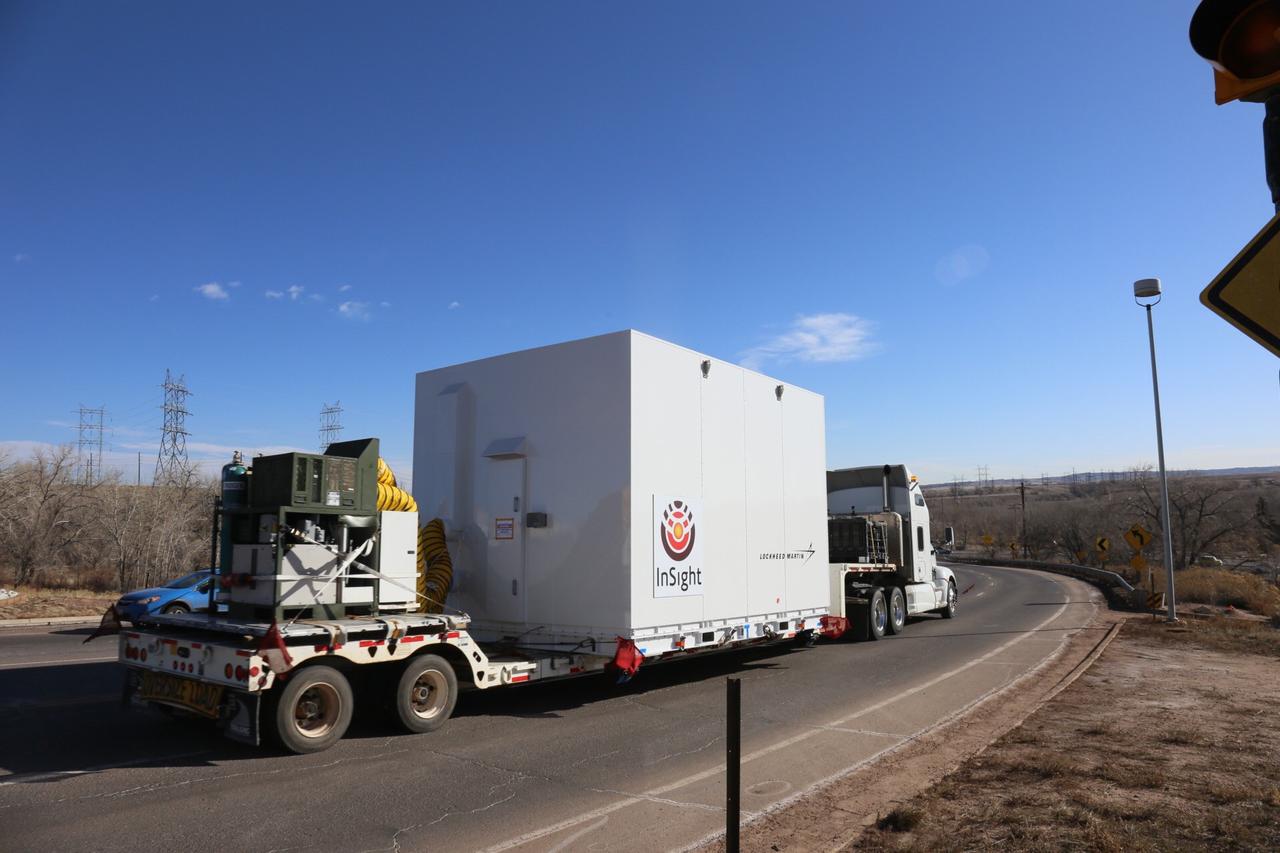
A truck carrying NASA s InSight spacecraft leaves Lockheed Martin Space, Denver, where the spacecraft was built and tested, on February 28, 2018. InSight was driven to Buckley Air Force Base, where it was loaded into a C-17 cargo aircraft and flown to Vandenberg Air Force Base, California. There, it will be prepared for a May launch.  InSight, short for Interior Exploration using Seismic Investigations, Geodesy and Heat Transport, is the first mission dedicated to studying the deep interior of Mars. Its findings will advance understanding of the early history of all rocky planets, including Earth.  https://photojournal.jpl.nasa.gov/catalog/PIA22225
Shipping InSight Mars Spacecraft to Buckley Air Force Base
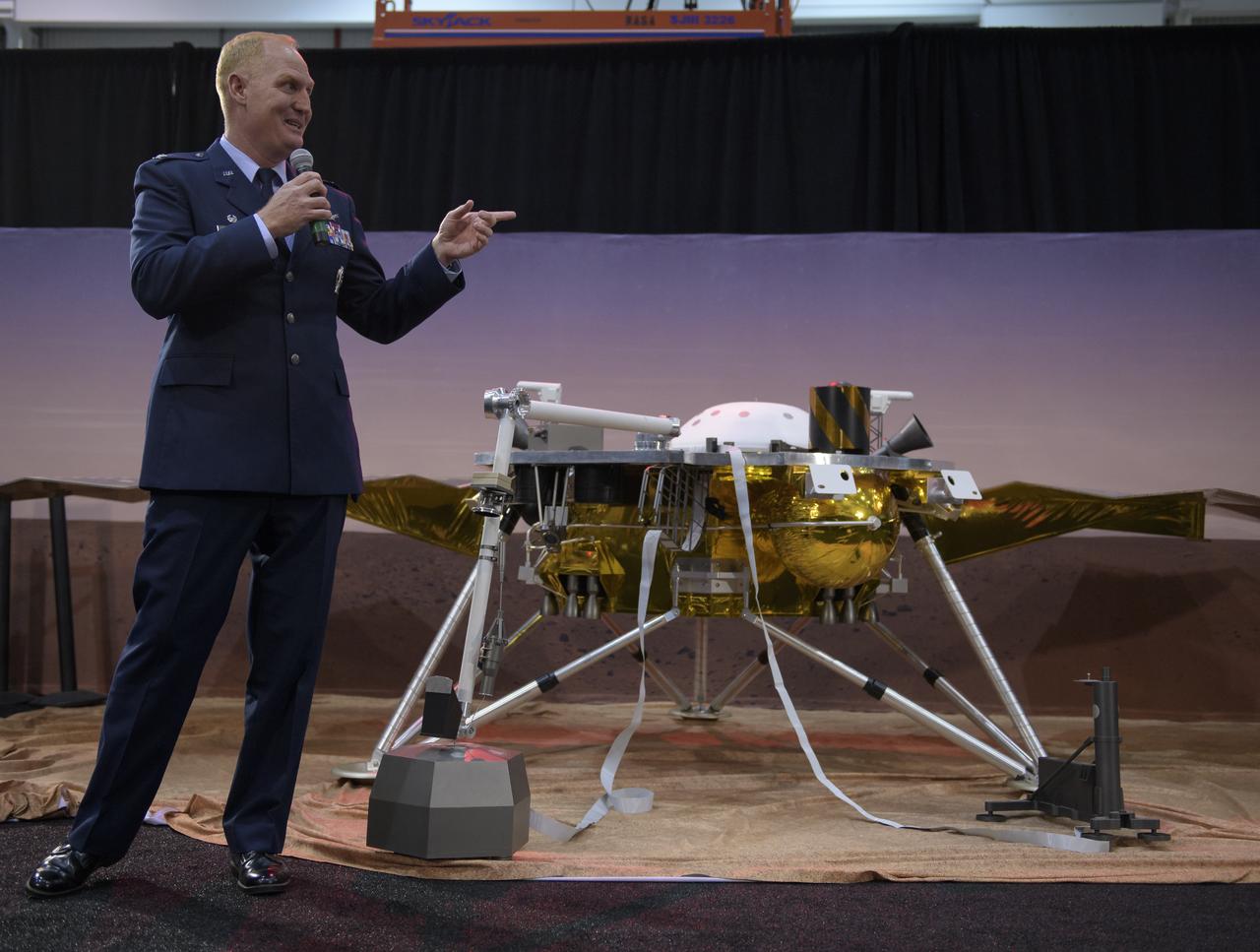
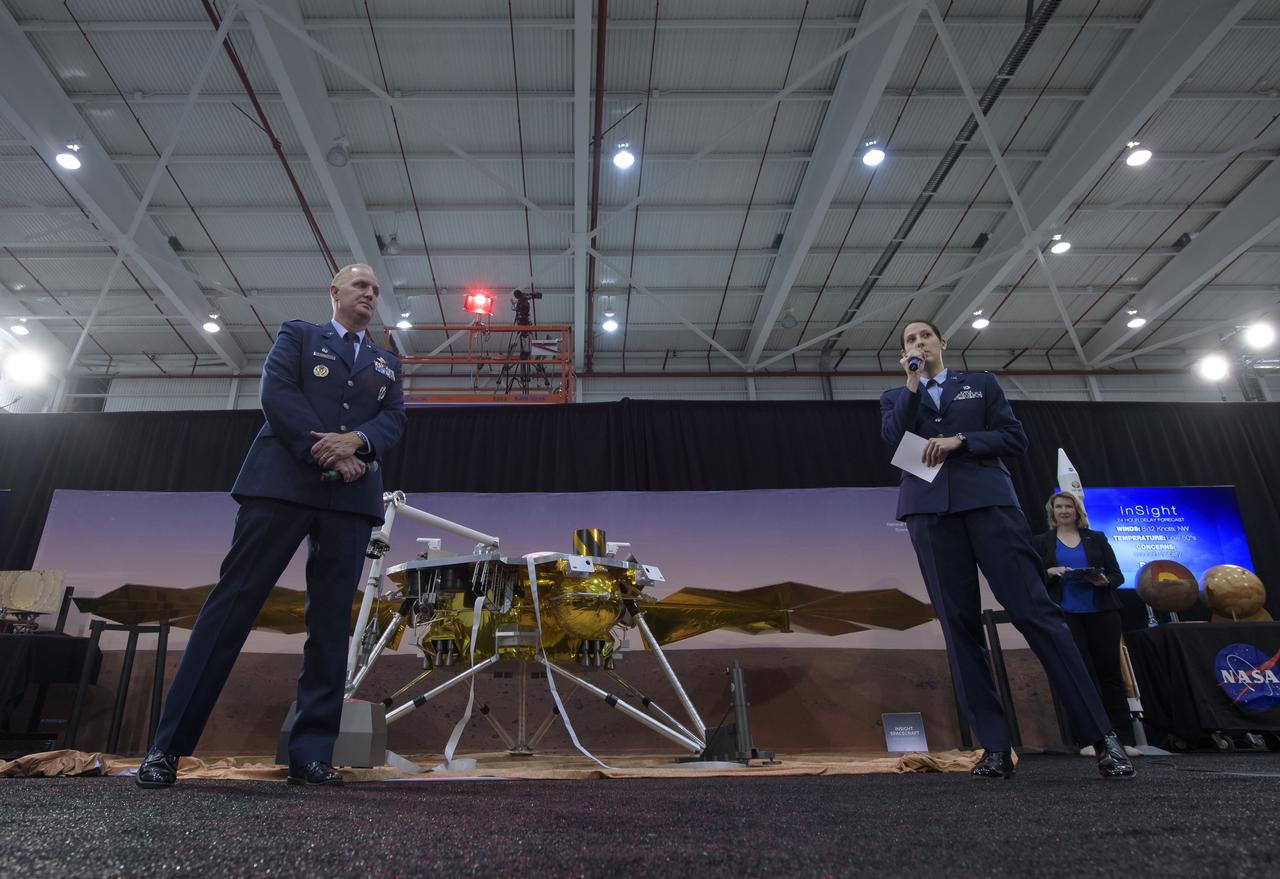
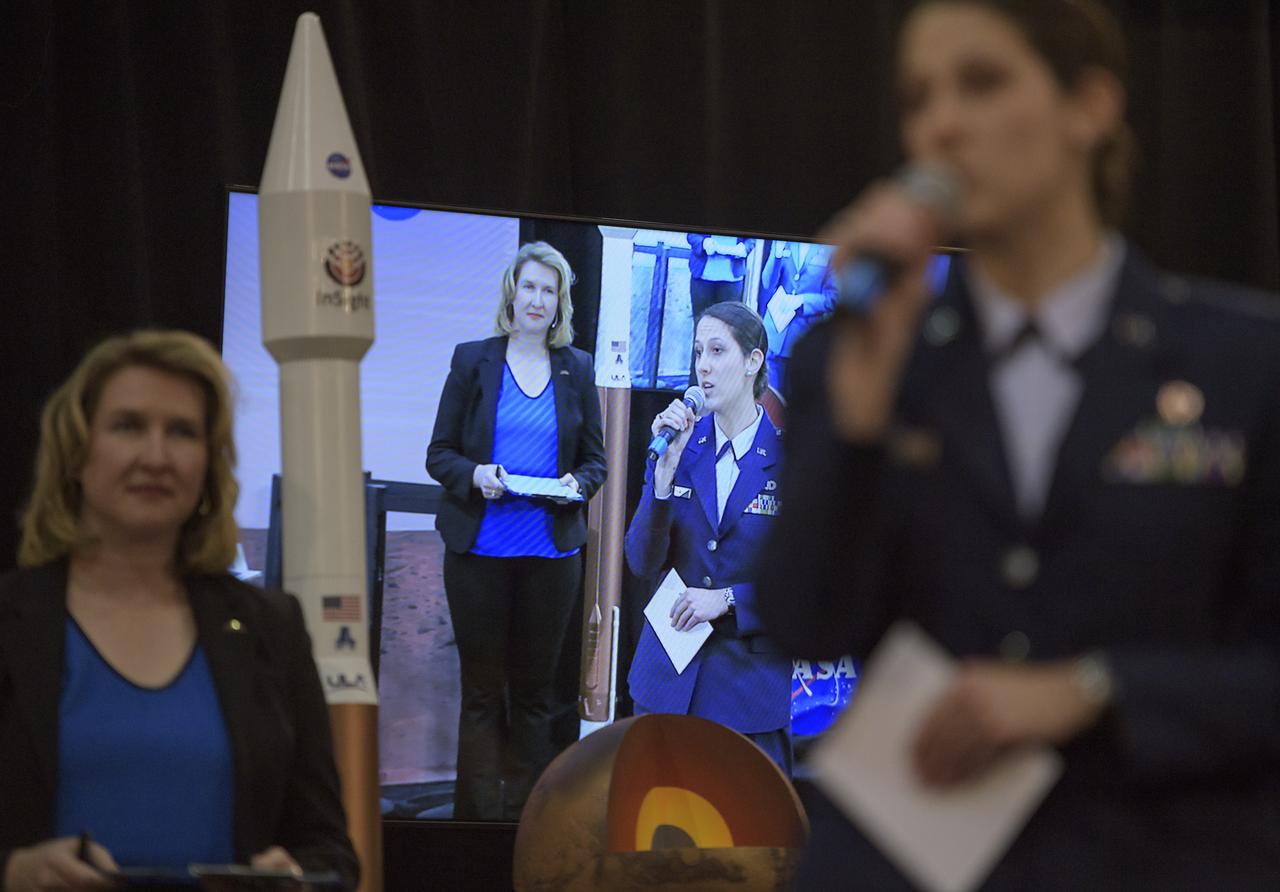
Col. Michael Hough, Commander 30th Space Wing, Vandenberg Air Force Base, discusses NASA's InSight mission during a prelaunch media briefing, Thursday, May 3, 2018, at Vandenberg Air Force Base in California. InSight, short for Interior Exploration using Seismic Investigations, Geodesy and Heat Transport, is a Mars lander designed to study the "inner space" of Mars: its crust, mantle, and core. Photo Credit: (NASA/Bill Ingalls)
InSight Prelaunch Briefing
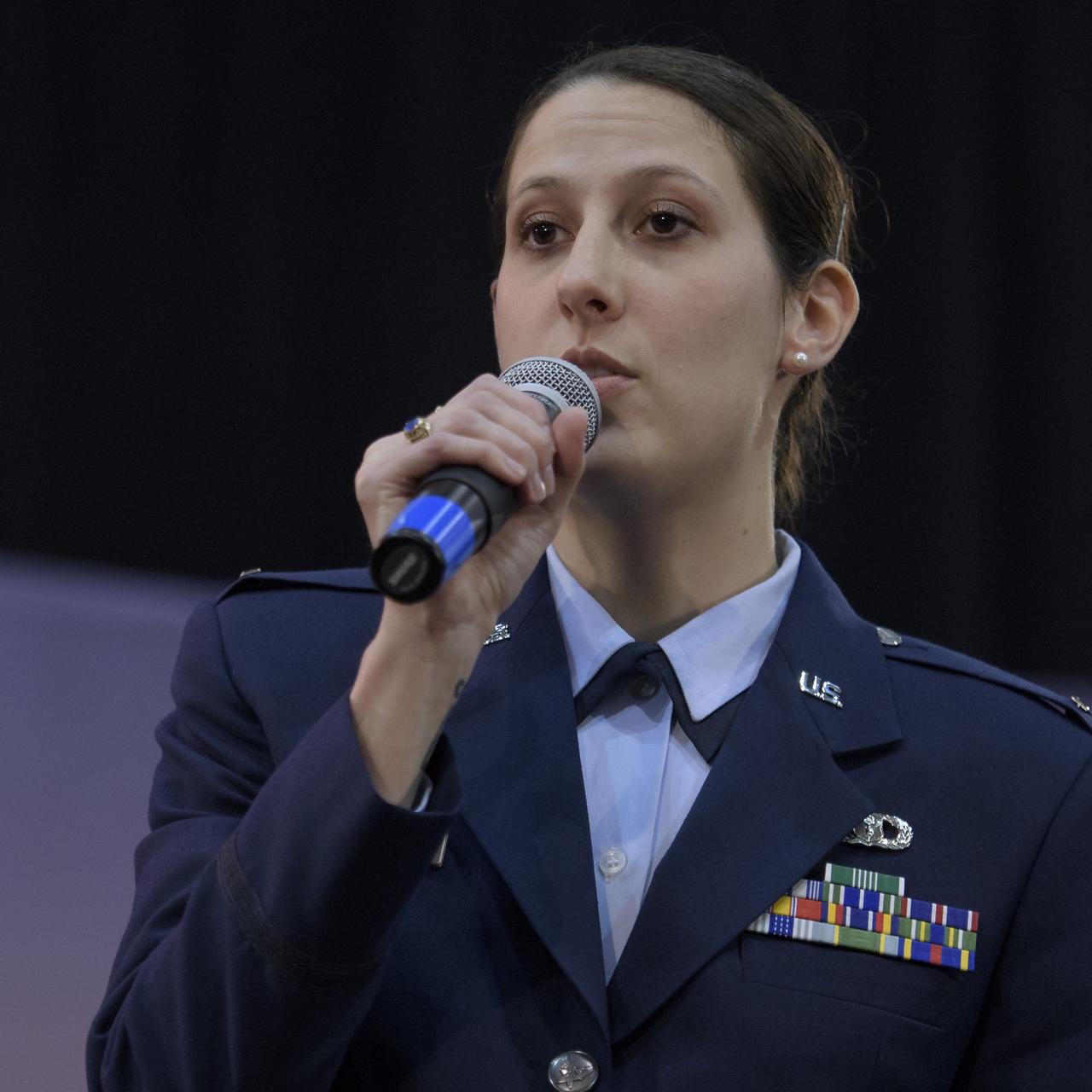
1st Lieutenant Kristina Williams, weather officer, 30th Space Wing, Vandenberg Air Force Base, discusses NASA's InSight mission during a prelaunch media briefing, Thursday, May 3, 2018, at Vandenberg Air Force Base in California. InSight, short for Interior Exploration using Seismic Investigations, Geodesy and Heat Transport, is a Mars lander designed to study the "inner space" of Mars: its crust, mantle, and core. Photo Credit: (NASA/Bill Ingalls)
InSight Prelaunch Briefing
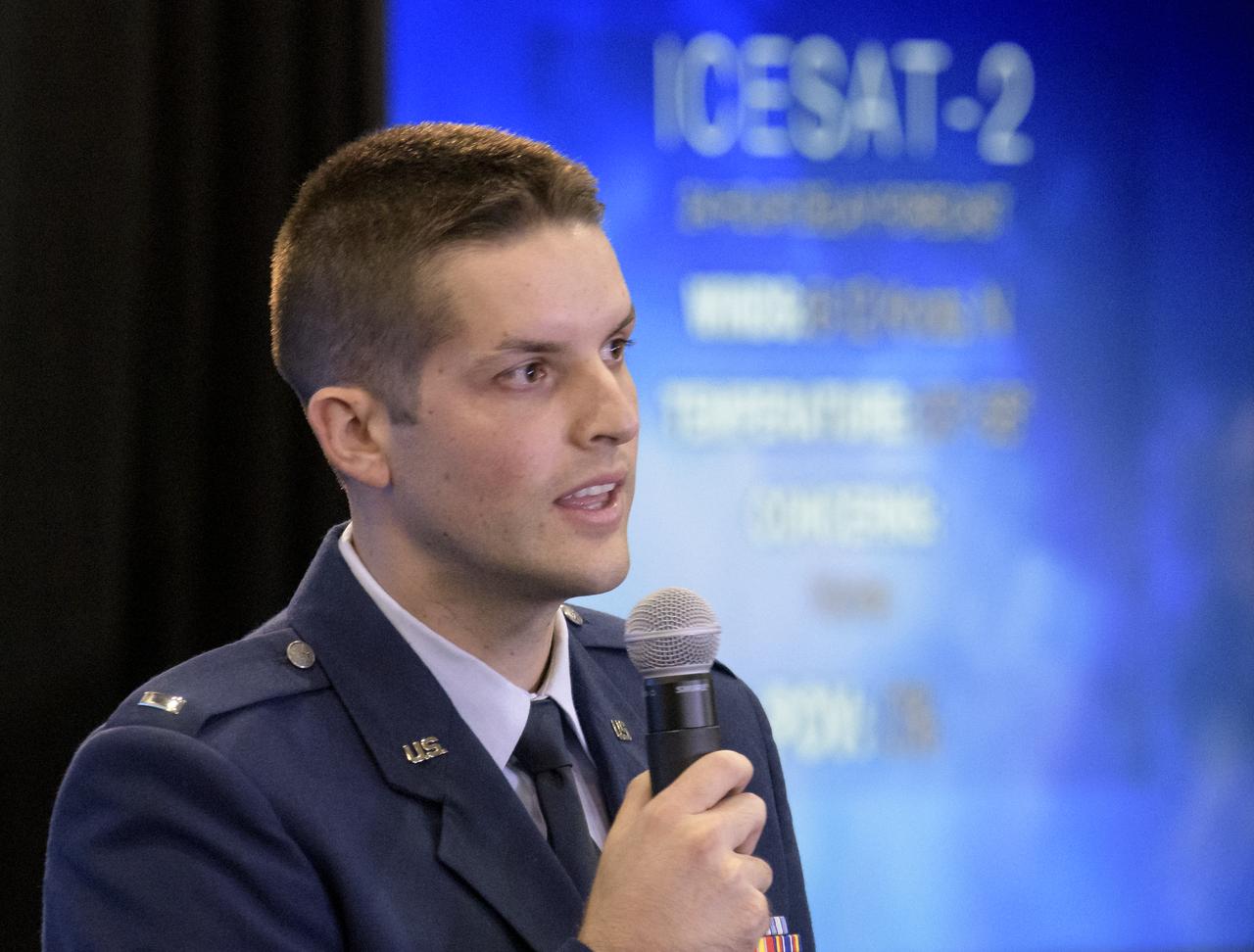
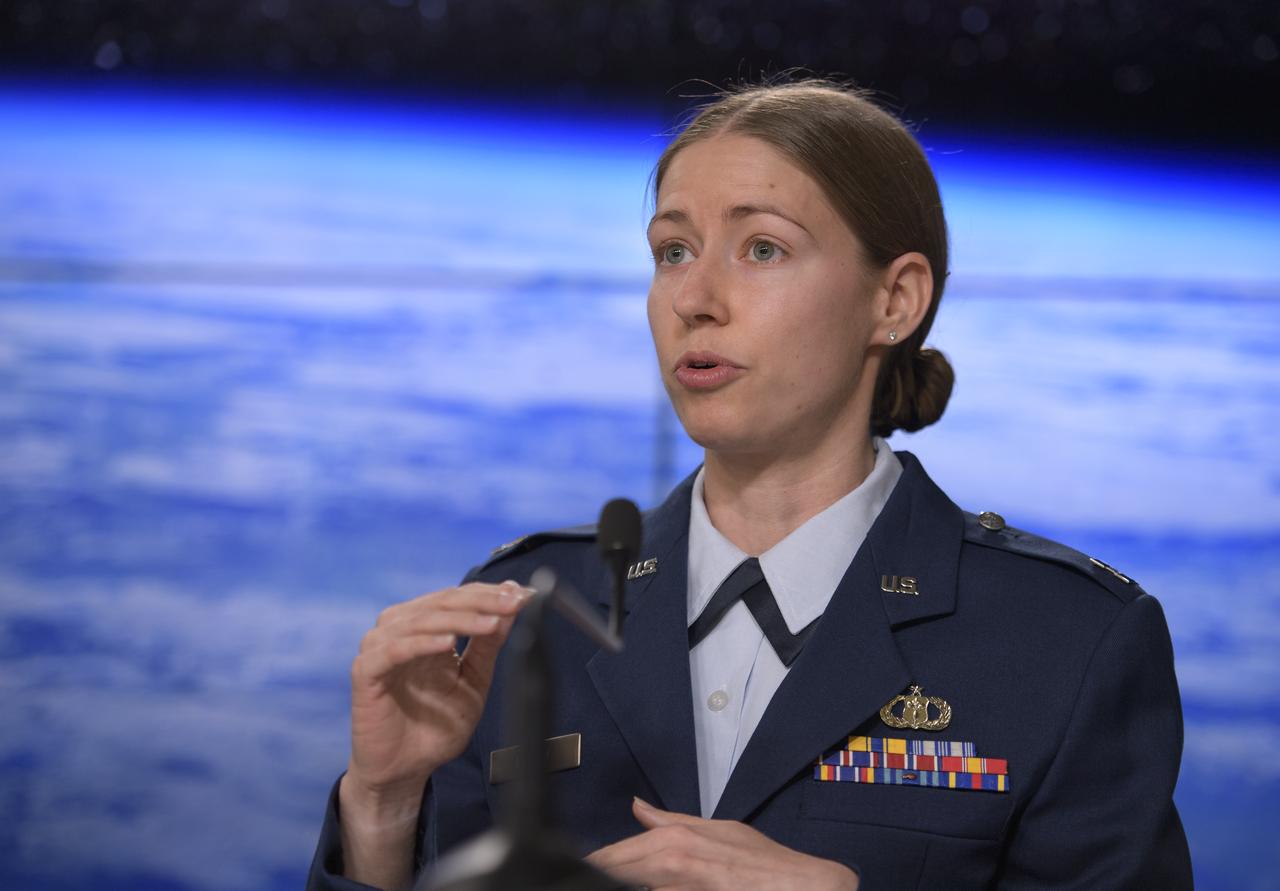
1st Lt. Daniel Smith, Weather Officer, 30th Space Wing, Vandenberg Air Force Base, is seen during a NASA Ice, Cloud and land Elevation Satellite-2 (ICESat-2) prelaunch briefing, Thursday, Sept. 13, 2018, at Vandenberg Air Force Base in California. The ICESat-2 mission will measure the changing height of Earth's ice. Photo Credit: (NASA/Bill Ingalls)
ICESat-2 Prelaunch Briefing
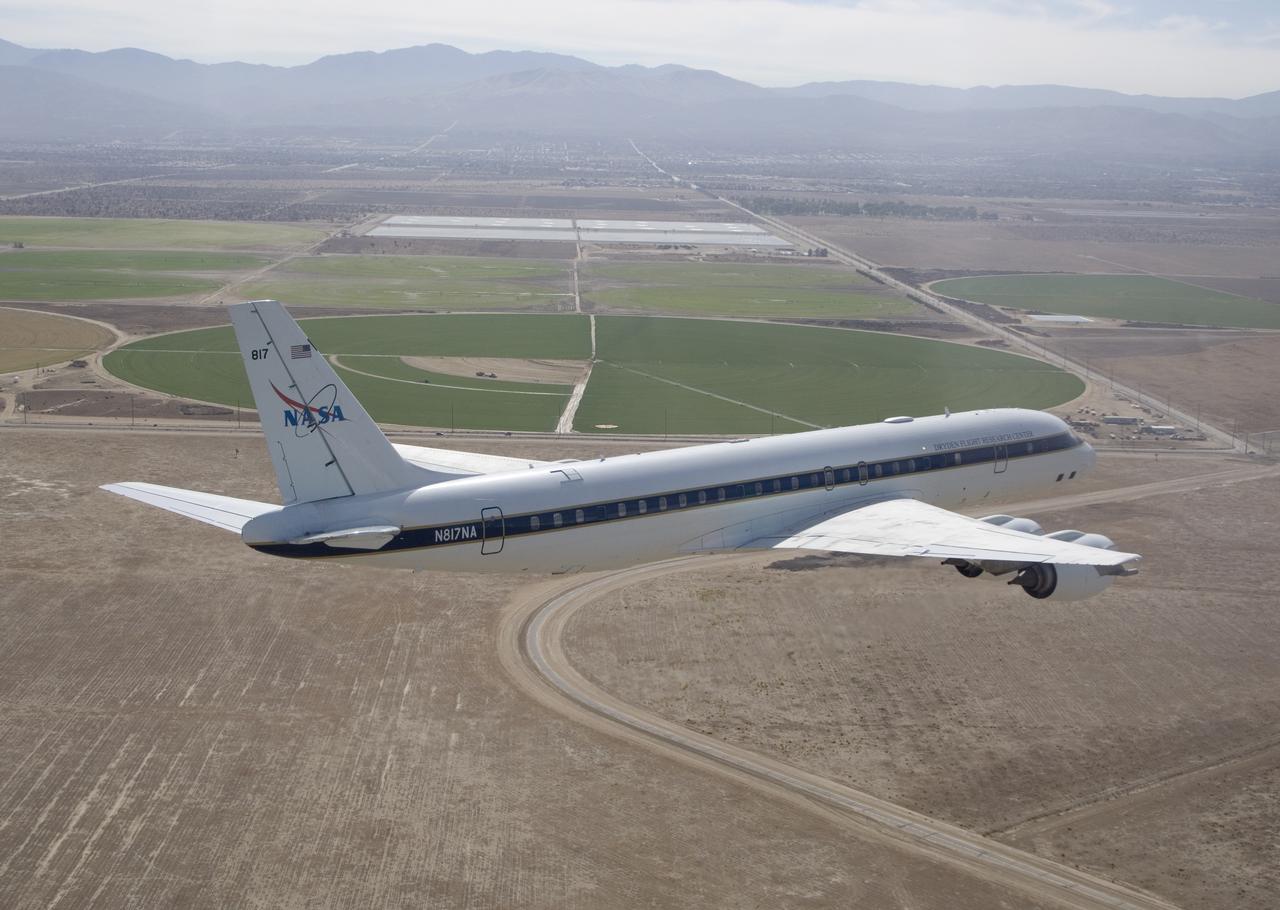
Agricultural fields spread out beyond NASA's DC-8 airborne science laboratory as it heads for landing at Air Force Plant 42 in Palmdale, Calif.
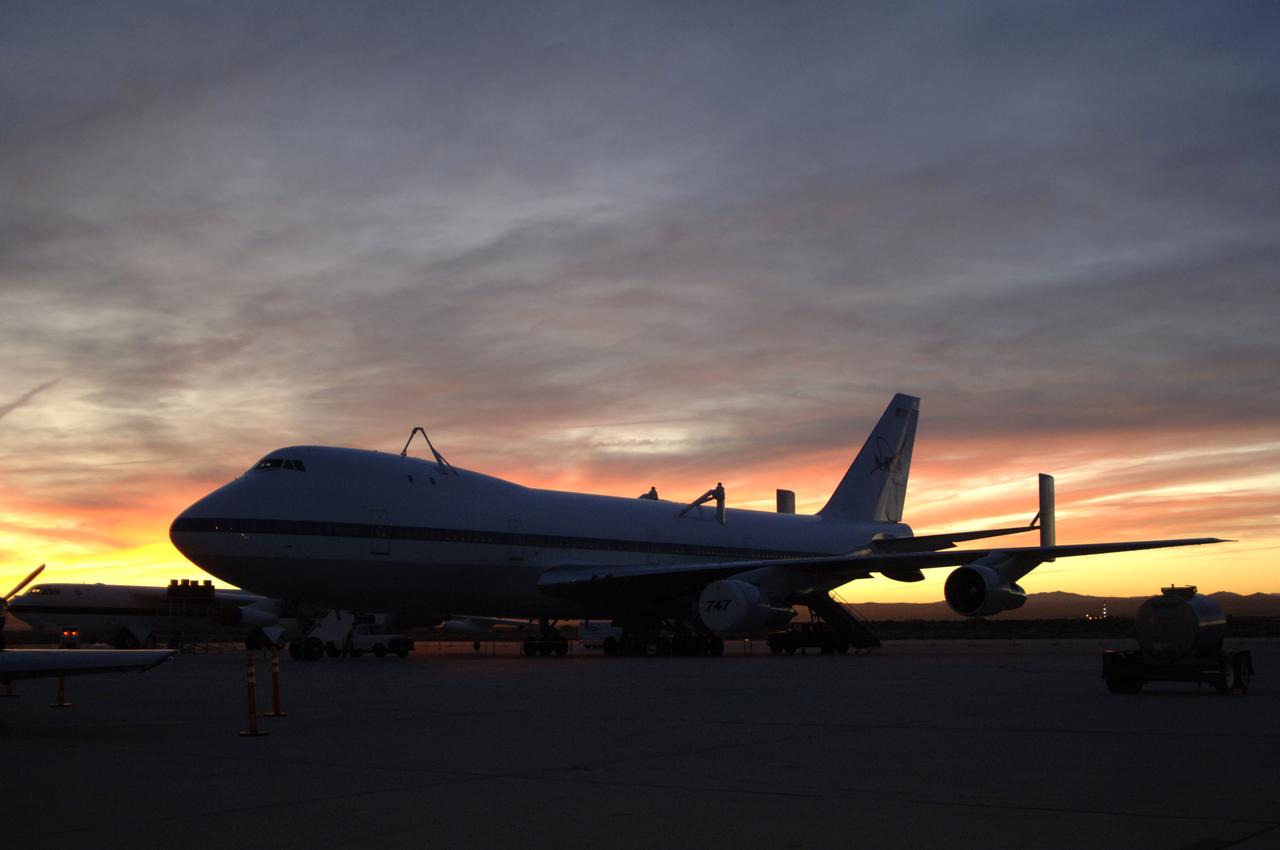
One of NASA's two modified Boeing 747 Shuttle Carrier Aircraft is silhouetted against the morning sky at sunrise on the ramp at Edwards Air Force Base.
One of NASA's two modified Boeing 747 Shuttle Carrier Aircraft is silhouetted against the morning sky at sunrise on the ramp at Edwards Air Force Base
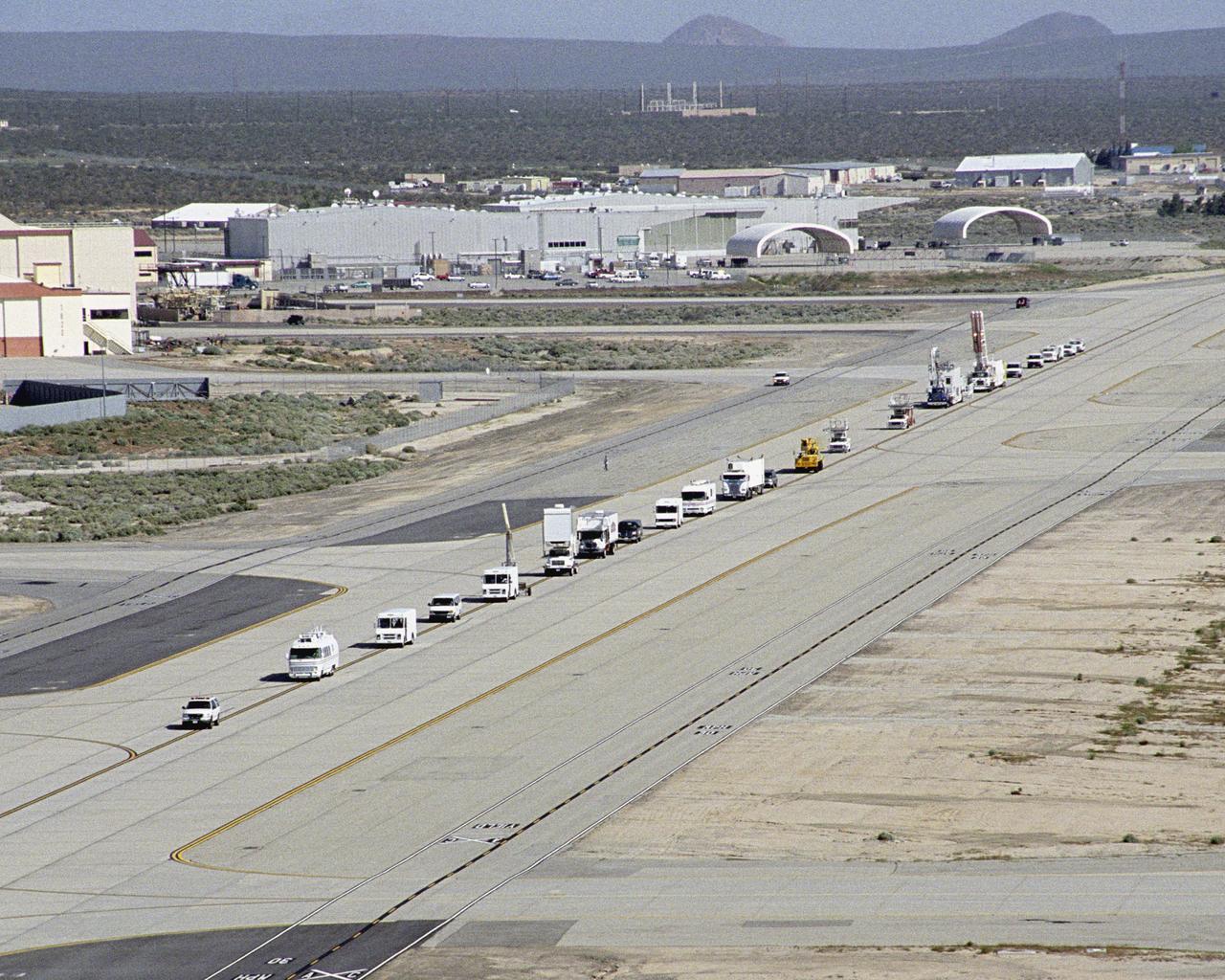
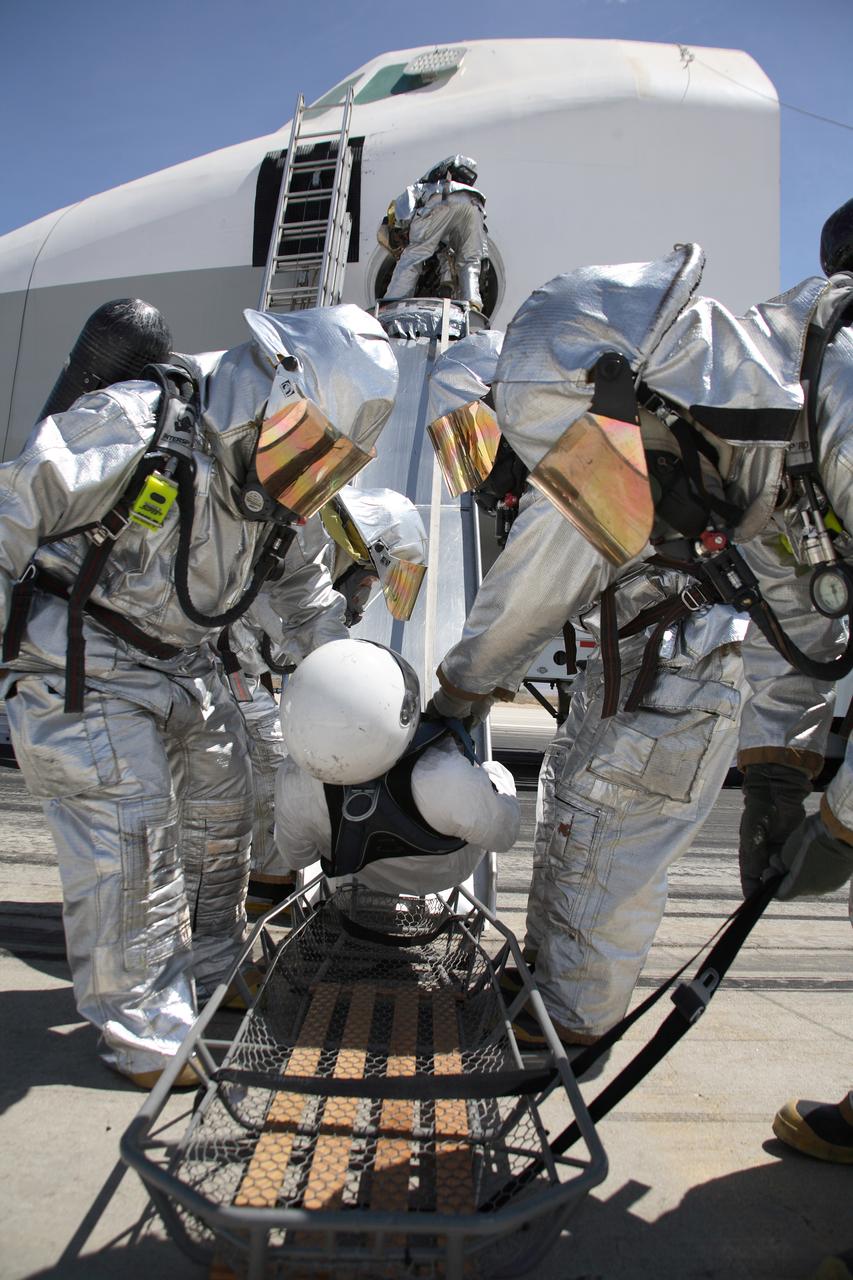
A long string of specialized NASA vehicles convoys down a taxiway at Edwards Air Force Base to begin a Space Shuttle rescue and recovery training exercise.
A long string of specialized NASA vehicles convoys down a taxiway at Edwards Air Force Base to begin a Space Shuttle rescue and recovery training exercise
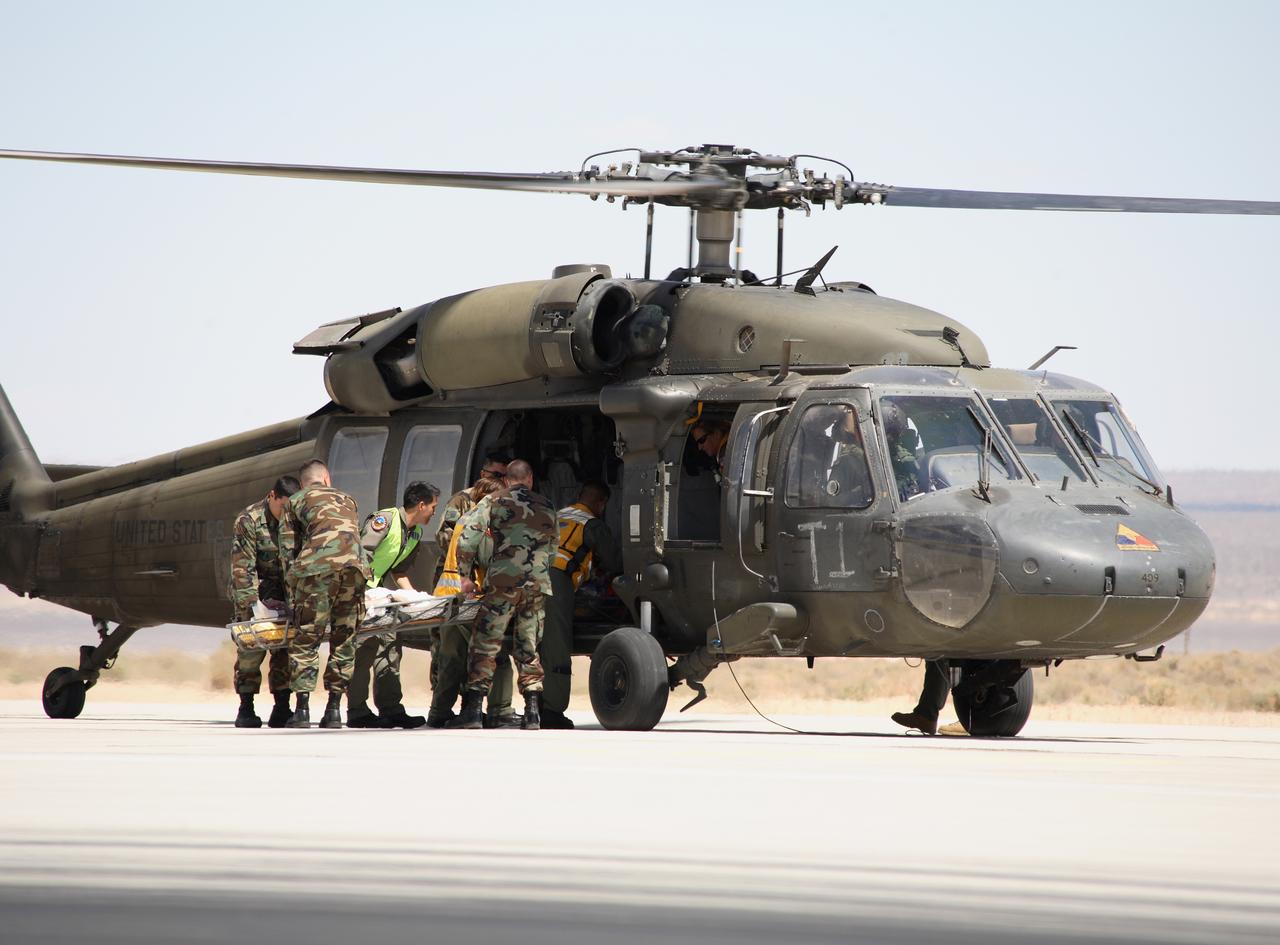
Air Force rescue team members load the volunteer "injured astronaut" on a stretcher into a Blackhawk helicopter for evacuation to a hospital during the exercise. (USAF photo # 070505-F-1287F-166)
Air Force rescue team members load the volunteer "injured astronaut" on a stretcher into a helicopter for evacuation to a hospital during the exercise
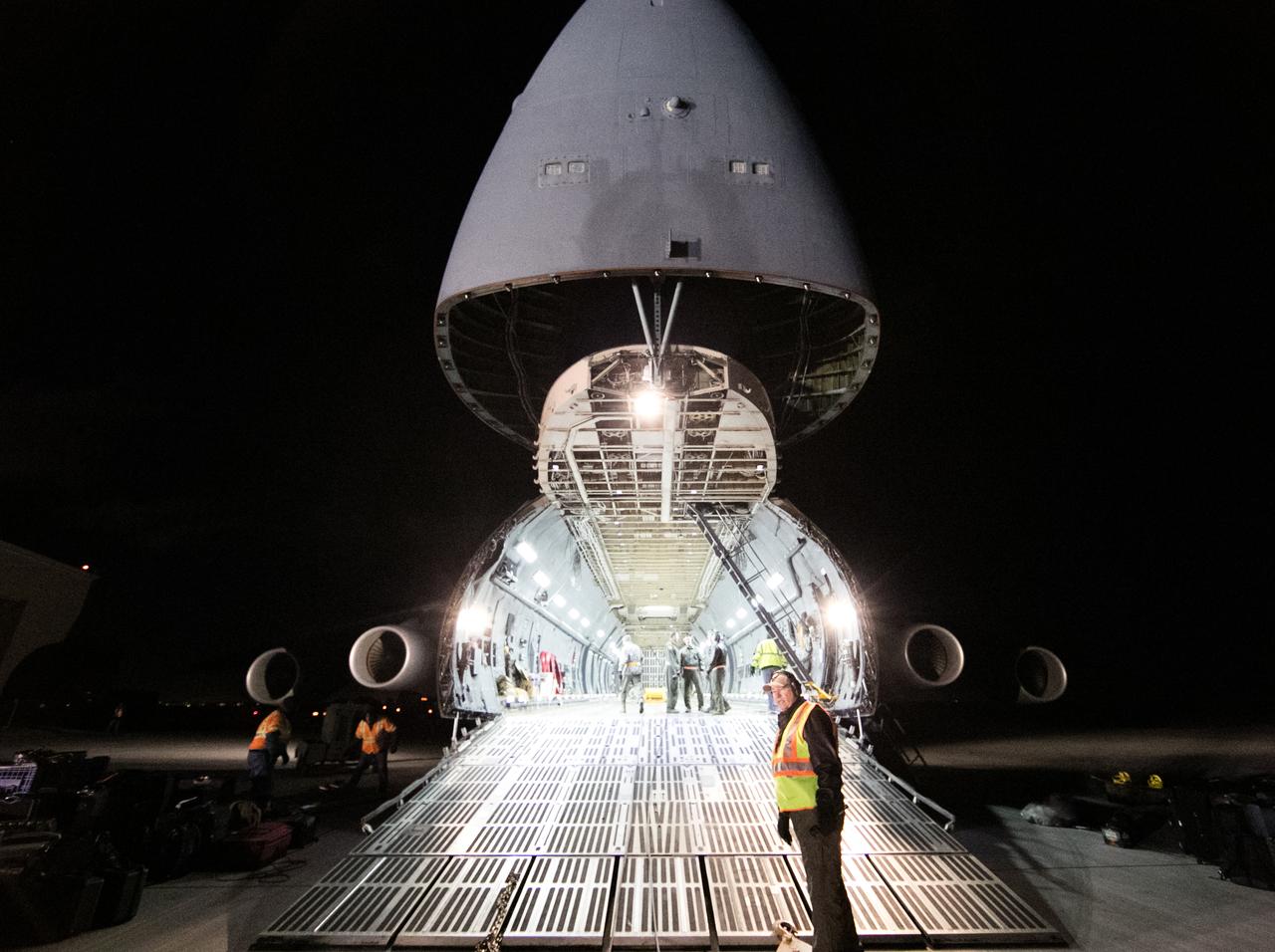
At Buckley Air Force Base in Aurora, Colorado, the front of a U.S. Air Force C-5M super Galaxy cargo aircraft has been raised to allow NOAA's Geostationary Operational Environmental Satellite-S (GOES-S) to be loaded into the cargo hold. GOES-S will be flown to NASA's Kennedy Space Center in Florida. After it arrives at Kennedy's Shuttle Landing Facility, it will be offloaded and transported to the Astrotech Space Operations facility in Titusville, Florida, to prepare it for launch. GOES-S is the second in a series of four advanced geostationary weather satellites. The GOES-R series - consisting of the GOES-R, GOES-S, GOES-T and GOES-U spacecraft - will significantly improve the detection and observation of environmental phenomena that directly affect public safety, protection of property and the nation's economic health and prosperity. GOES-S is slated to launch March 1, 2018 aboard a United Launch Alliance Atlas V rocket from Cape Canaveral Air Force Station in Florida.
GOES-S Transport to Kennedy Space Center
At Buckley Air Force Base in Aurora, Colorado, the front of a U.S. Air Force C-5M super Galaxy cargo aircraft has been raised to allow NOAA's Geostationary Operational Environmental Satellite-S (GOES-S) to be loaded into the cargo hold. GOES-S will be flown to NASA's Kennedy Space Center in Florida. After it arrives at Kennedy's Shuttle Landing Facility, it will be offloaded and transported to the Astrotech Space Operations facility in Titusville, Florida, to prepare it for launch. GOES-S is the second in a series of four advanced geostationary weather satellites. The GOES-R series - consisting of the GOES-R, GOES-S, GOES-T and GOES-U spacecraft - will significantly improve the detection and observation of environmental phenomena that directly affect public safety, protection of property and the nation's economic health and prosperity. GOES-S is slated to launch March 1, 2018 aboard a United Launch Alliance Atlas V rocket from Cape Canaveral Air Force Station in Florida.
GOES-S Transport to Kennedy Space Center
Col. Michael Hough, Commander 30th Space Wing, Vandenberg Air Force Base, left, and 1st Lieutenant Kristina Williams, weather officer, 30th Space Wing, Vandenberg Air Force Base, discuss NASA's InSight mission during a prelaunch media briefing, Thursday, May 3, 2018, at Vandenberg Air Force Base in California. InSight, short for Interior Exploration using Seismic Investigations, Geodesy and Heat Transport, is a Mars lander designed to study the "inner space" of Mars: its crust, mantle, and core. Photo Credit: (NASA/Bill Ingalls)
InSight Prelaunch Briefing
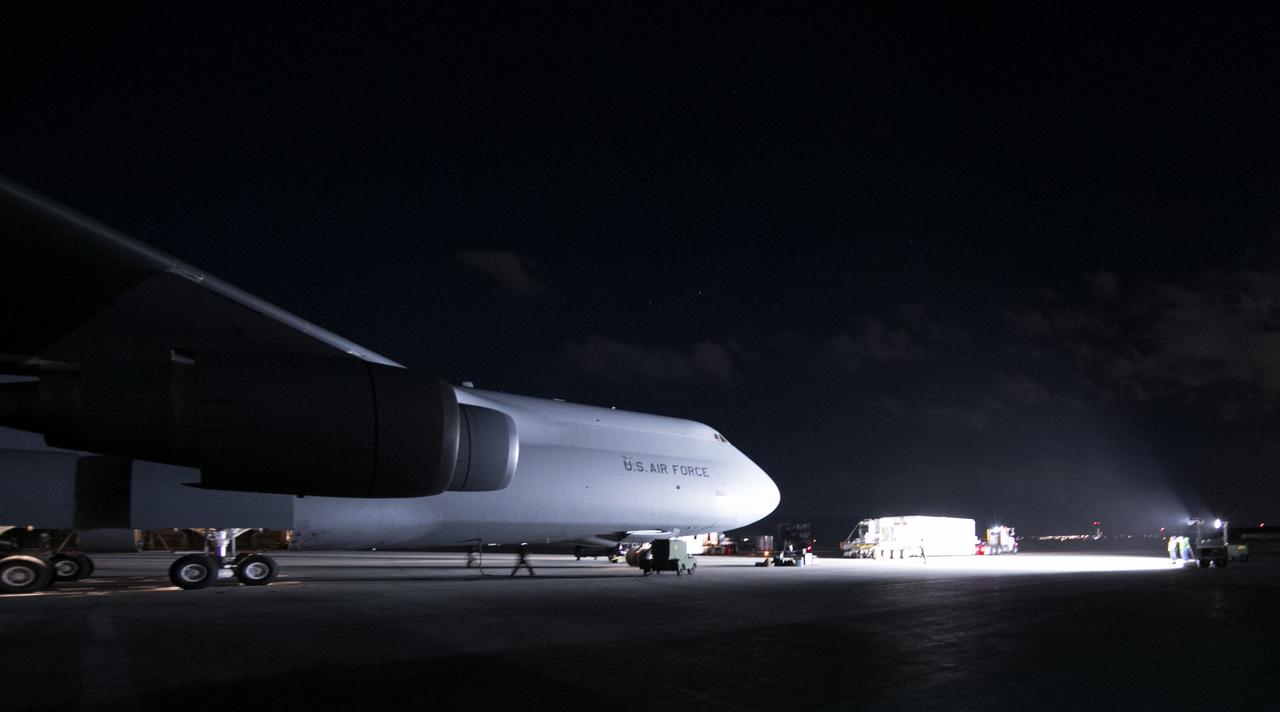
NOAA's Geostationary Operational Environmental Satellite-S (GOES-S) will be loaded into a U.S. Air Force C-5M Super Galaxy cargo aircraft and flown to NASA's Kennedy Space Center in Florida. After it arrives at Kennedy's Shuttle Landing Facility, it will be offloaded and transported to the Astrotech Space Operations facility in Titusville, Florida, to prepare it for launch. GOES-S is the second in a series of four advanced geostationary weather satellites. The GOES-R series - consisting of the GOES-R, GOES-S, GOES-T and GOES-U spacecraft - will significantly improve the detection and observation of environmental phenomena that directly affect public safety, protection of property and the nation's economic health and prosperity. GOES-S is slated to launch March 1, 2018 aboard a United Launch Alliance Atlas V rocket from Cape Canaveral Air Force Station in Florida.
GOES-S Transport to Kennedy Space Center
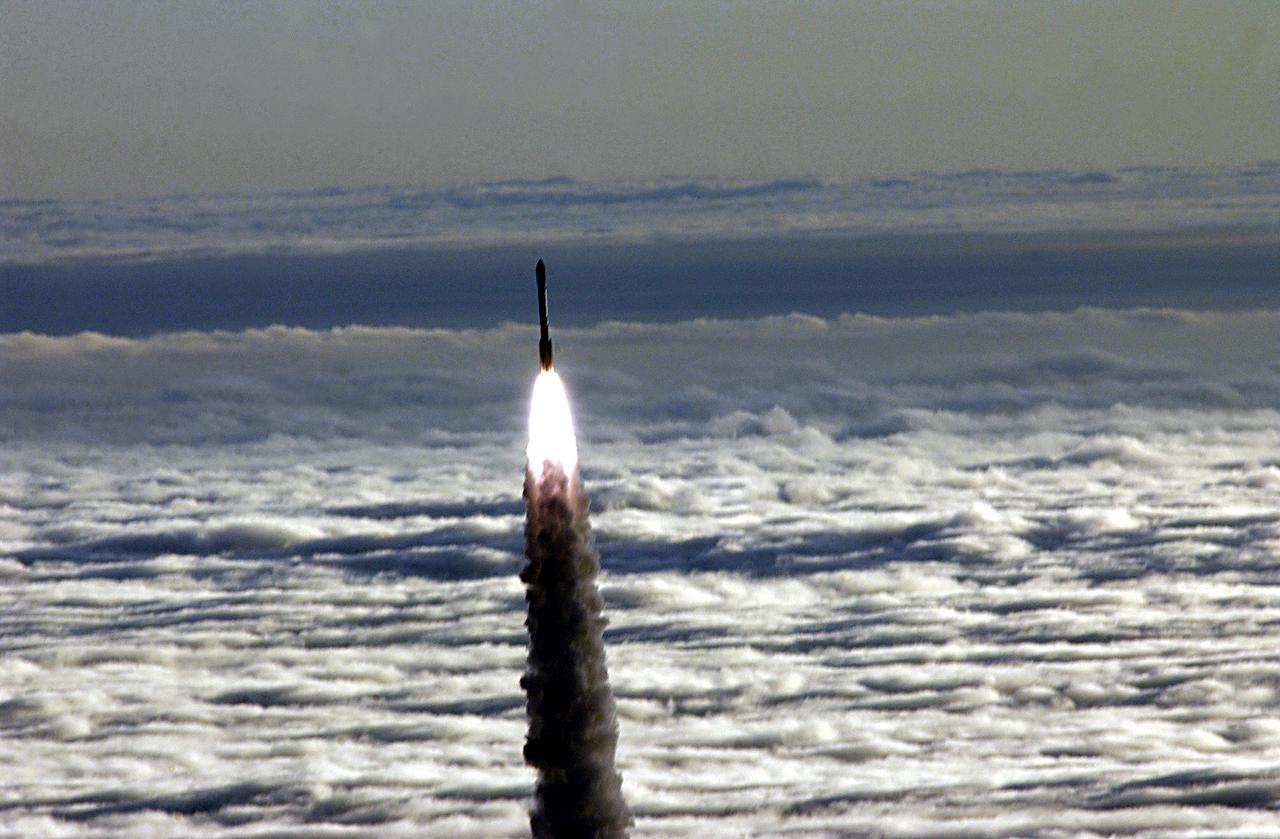
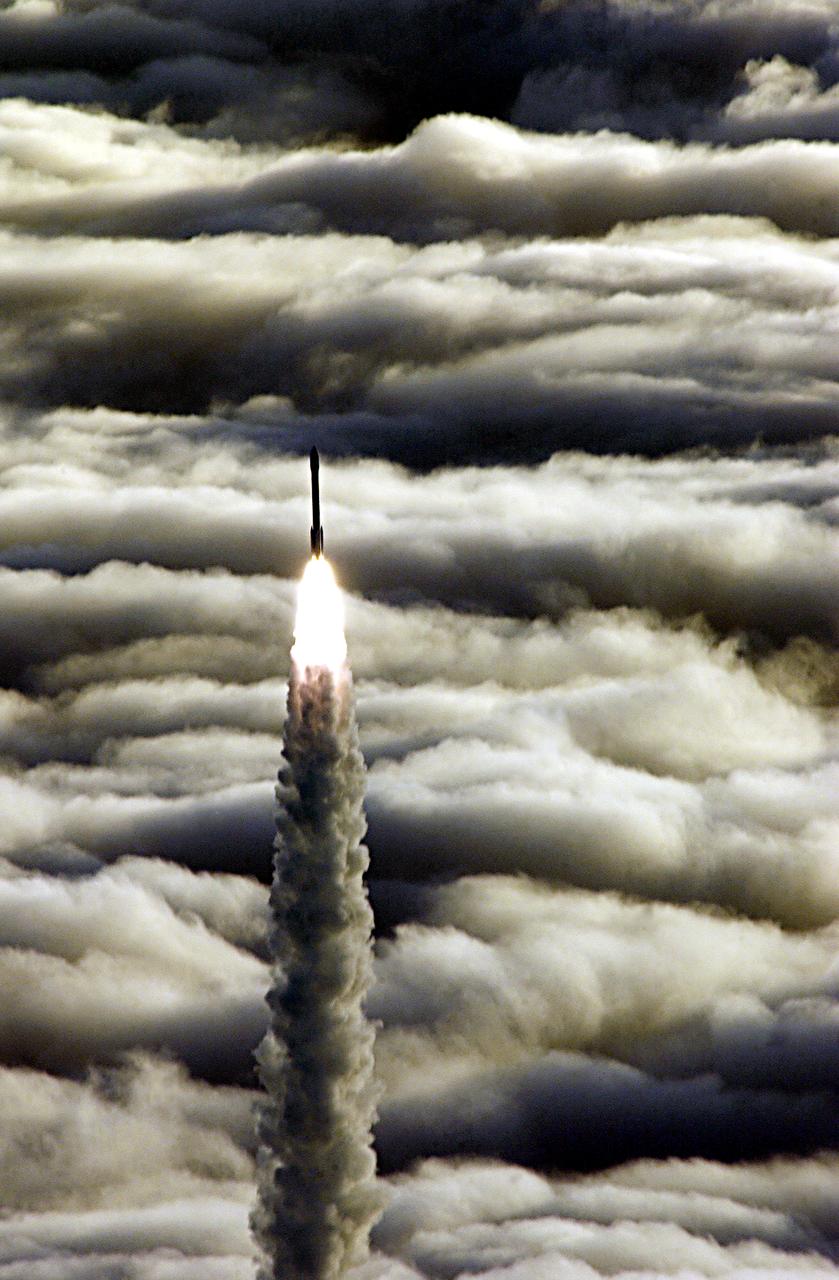
Vandenberg AFB CA--  A Boeing Delta II rocket soars above the clouds here today at Vandenberg AFB CA.  The NASA payload aboard the rocket is the ICESat, an Ice Cloud and land Elevation Satellite, and CHIPSat, a Cosmic Hot Interstellar Plasma Spectrometer.  ICESat, a 661-pound satellite, is a benchmark satellite for the Earth Observing System that will help scientists determine if the global sea level is rising or falling.  It will observe the ice sheets that blanket the Earth’s poles to determine if they are growing or shrinking.  It will assist in developing an understanding of how changes in the Earth’s atmosphere and climate affect polar ice masses and global sea level.  The Geoscience Laser Altimeter System is the sole instrument on the satellite.  CHIPSat, a suitcase-size 131-pound satellite, will provide information about the origin, physical processes and properties of the hot gas contained in the interstellar medium.  This launch, marks the first Delta from Vandenberg this year.   (USAF photo by: SSgt Lee A Osberry Jr.)
030112-F-6844O-002
Vandenberg AFB CA--  A Boeing Delta II rocket soars above the clouds here today at Vandenberg AFB CA.  The NASA payload aboard the rocket is the ICESat, an Ice Cloud and land Elevation Satellite, and CHIPSat, a Cosmic Hot Interstellar Plasma Spectrometer.  ICESat, a 661-pound satellite, is a benchmark satellite for the Earth Observing System that will help scientists determine if the global sea level is rising or falling.  It will observe the ice sheets that blanket the Earth’s poles to determine if they are growing or shrinking.  It will assist in developing an understanding of how changes in the Earth’s atmosphere and climate affect polar ice masses and global sea level.  The Geoscience Laser Altimeter System is the sole instrument on the satellite.  CHIPSat, a suitcase-size 131-pound satellite, will provide information about the origin, physical processes and properties of the hot gas contained in the interstellar medium.  This launch, marks the first Delta from Vandenberg this year.   (USAF photo by: SSgt Lee A Osberry Jr.)
030112-F-6844O-003
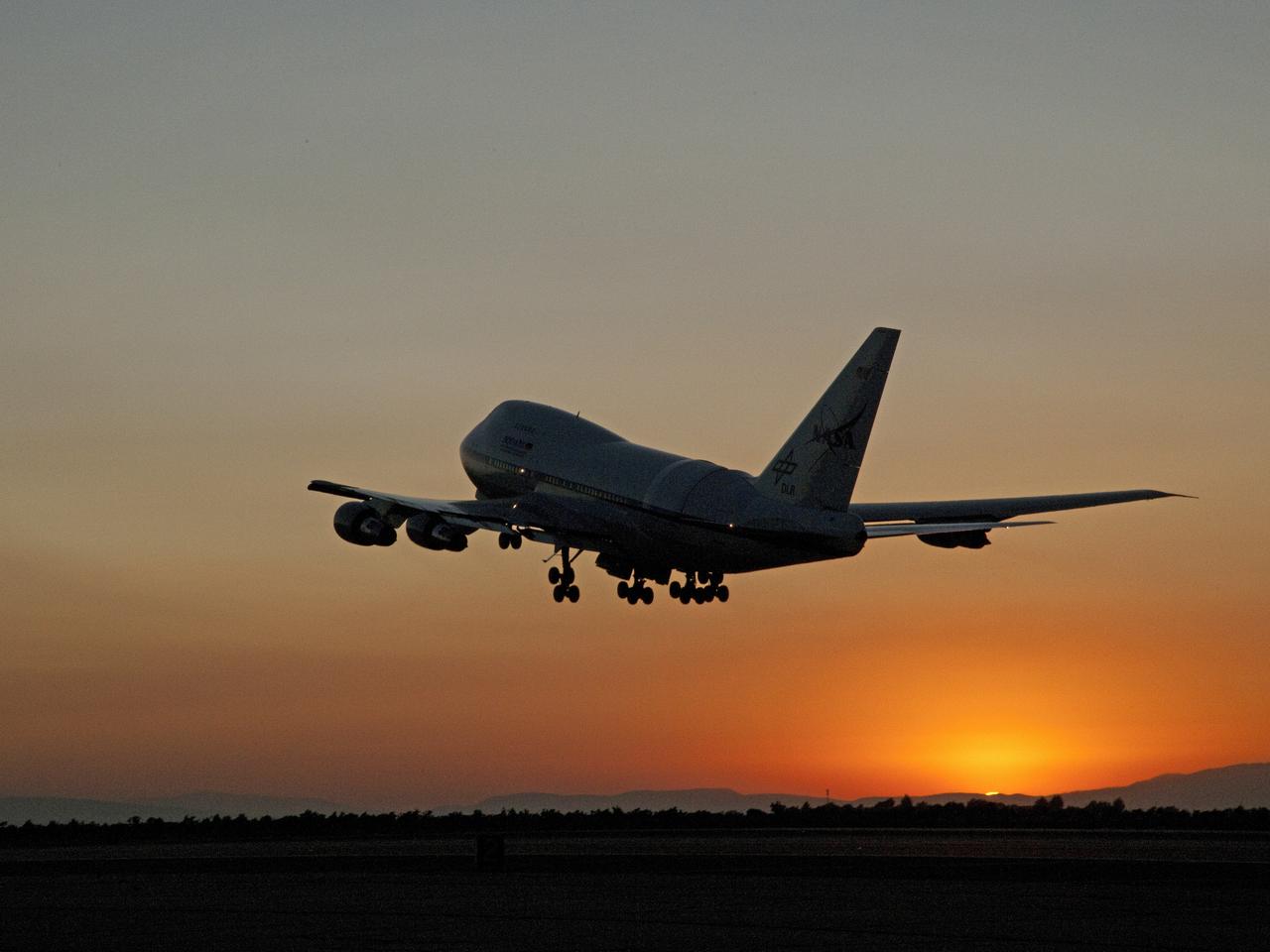
SOFIA lifts off from Air Force Plant 42 in Palmdale, Calif., at sunset.
ED11-0211-06
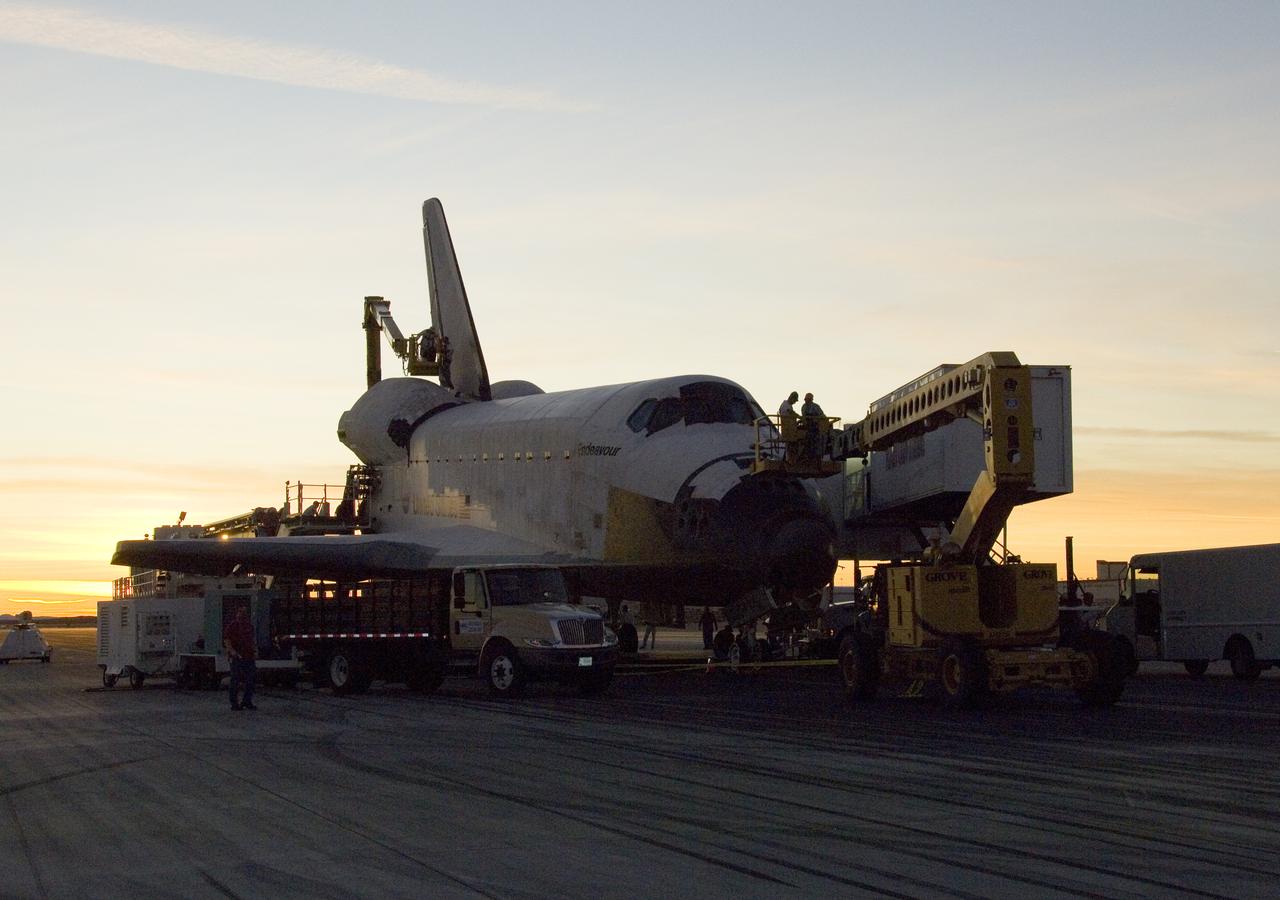
As the sun sets over the high desert, NASA technicians on mobile high-lifts prepare the shuttle Endeavour for towing off the Edwards Air Force Base runway.
As the sun sets over the high desert, NASA technicians on mobile high-lifts prepare the shuttle Endeavour for towing off the Edwards Air Force Base runway
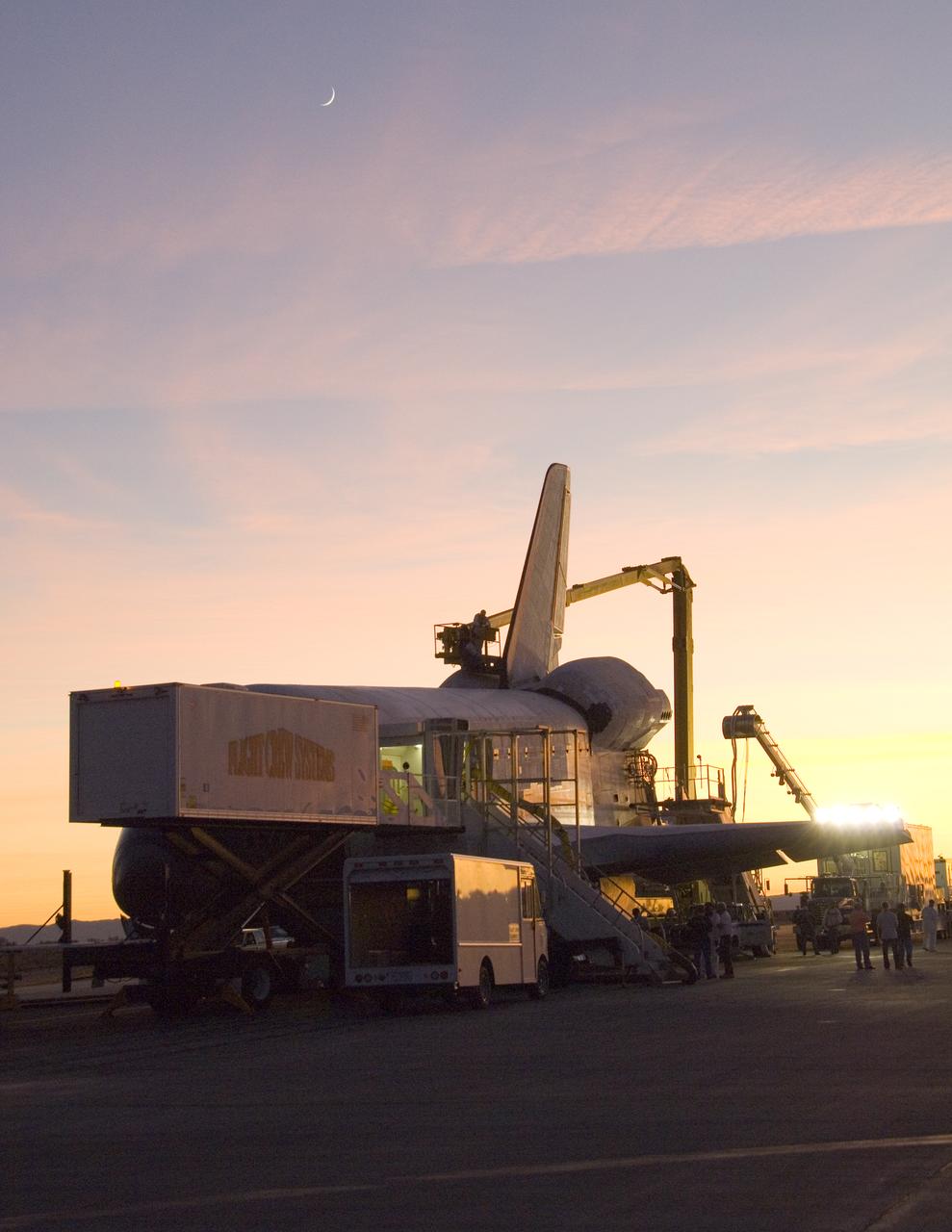
Its STS-126 mission over, Space Shuttle Endeavour is surrounded by recovery equipment before being towed off the Edwards Air Force Base runway.
Its STS-126 mission over, Space Shuttle Endeavour is surrounded by recovery equipment before being towed off the Edwards Air Force Base runway
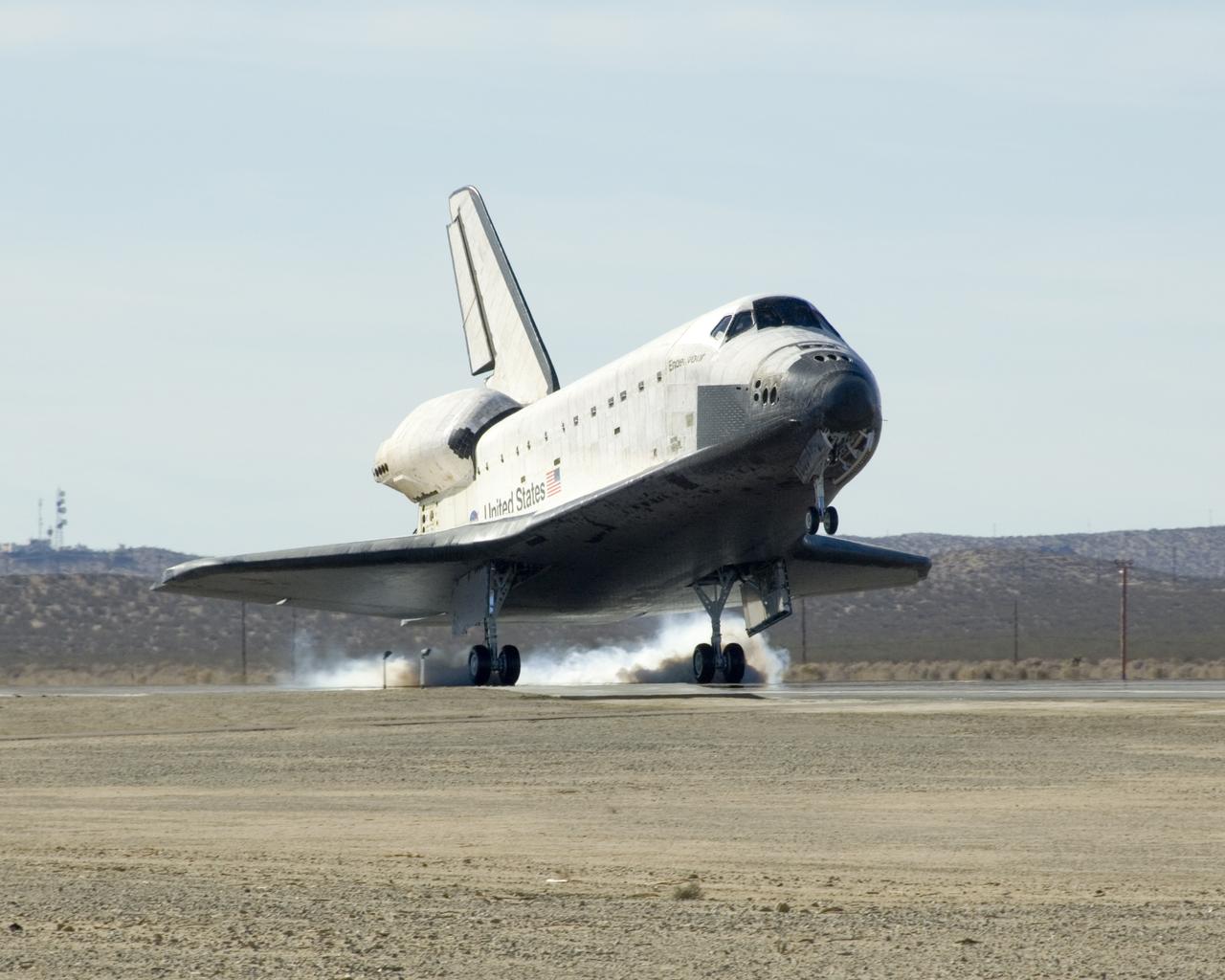
Space Shuttle Endeavour touches down at Edwards Air Force Base Nov. 30, 2008 to conclude mission STS-126 to the International Space Station.
Space Shuttle Endeavour touches down at Edwards Air Force Base Nov. 30, 2008 to conclude mission STS-126 to the International Space Station
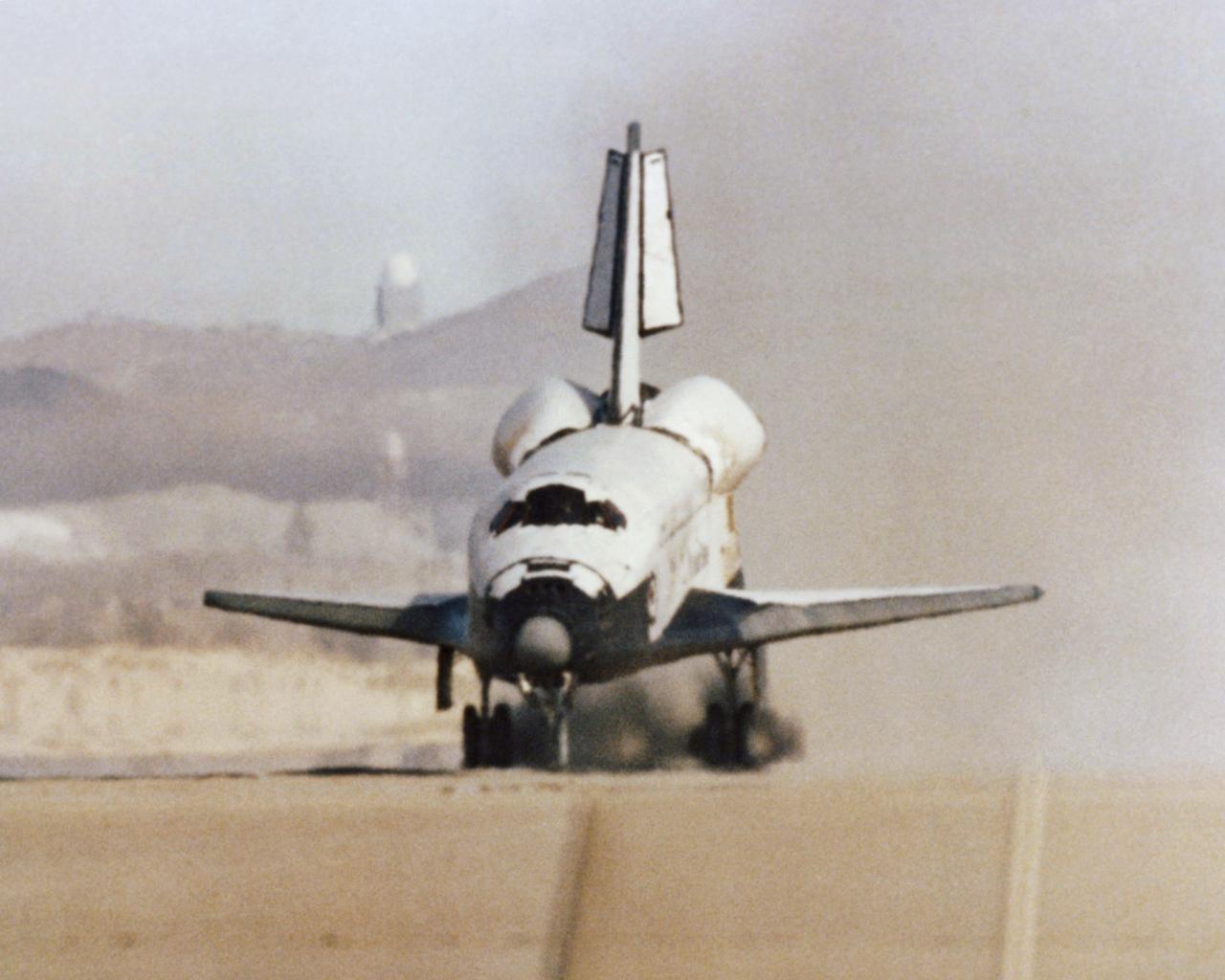
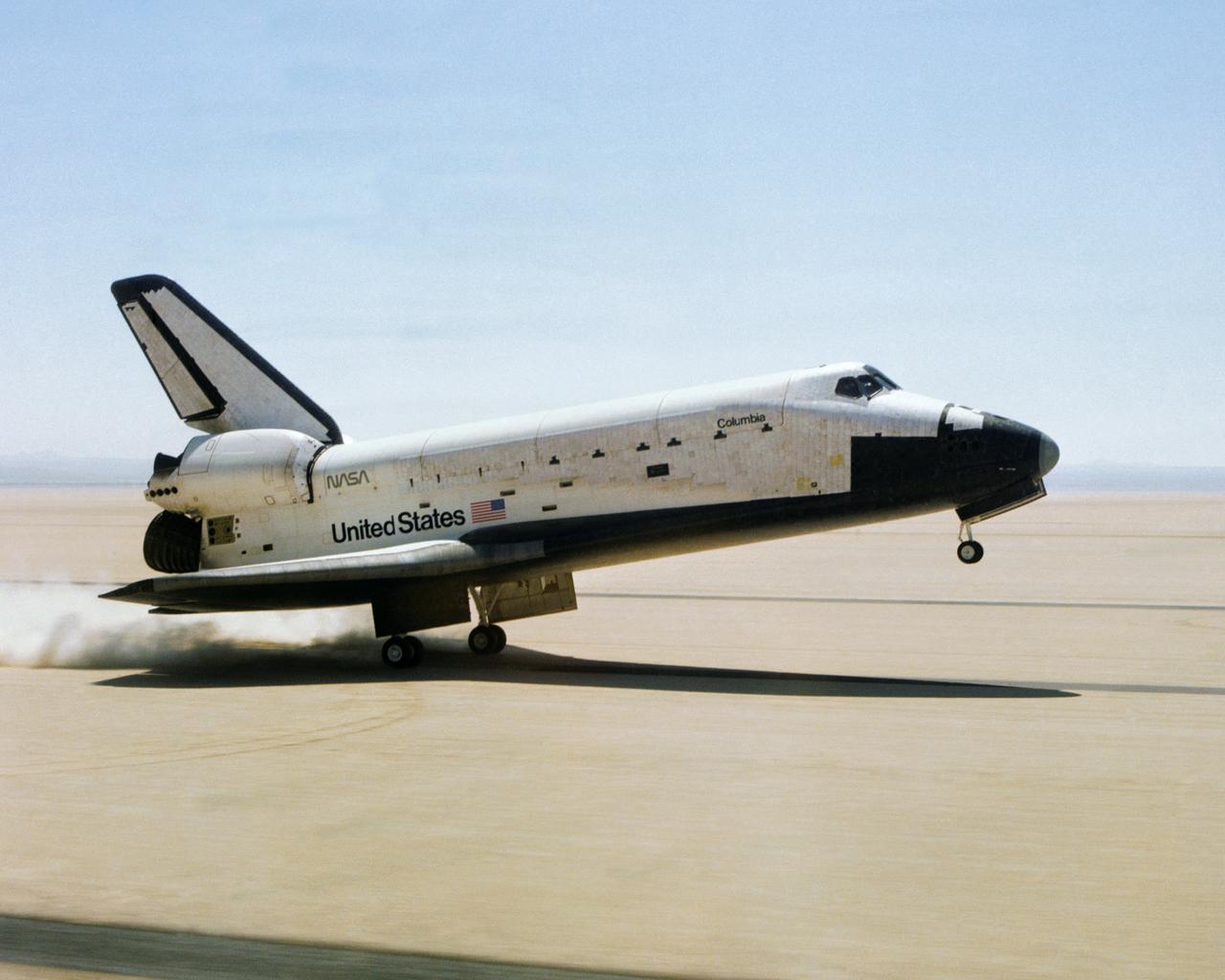
The Space Shuttle Columbia touches down on lakebed runway 23 at Edwards Air Force Base, Calif., to conclude the first orbital shuttle mission.
The Space Shuttle Columbia touches down on lakebed runway 23 at Edwards Air Force Base, Calif., to conclude the first orbital shuttle mission
1st Lieutenant Kristina Williams, weather officer, 30th Space Wing, Vandenberg Air Force Base, right, discusses NASA's InSight mission during a prelaunch media briefing, Thursday, May 3, 2018, at Vandenberg Air Force Base in California. InSight, short for Interior Exploration using Seismic Investigations, Geodesy and Heat Transport, is a Mars lander designed to study the "inner space" of Mars: its crust, mantle, and core. Photo Credit: (NASA/Bill Ingalls)
InSight Prelaunch Briefing
Capt. Jennifer Haden, weather officer, 30th Space Wing, Vandenberg Air Force Base, discusses the weather forecast during a Gravity Recovery and Climate Experiment Follow-On (GRACE-FO) mission prelaunch media briefing, Monday, May 21, 2018, at Vandenberg Air Force Base in California. The twin GRACE-FO spacecraft will measure changes in how mass is redistributed within and among Earth's atmosphere, oceans, land and ice sheets, as well as within Earth itself. Photo Credit: (NASA/Bill Ingalls)
GRACE-FO Prelaunch Briefing
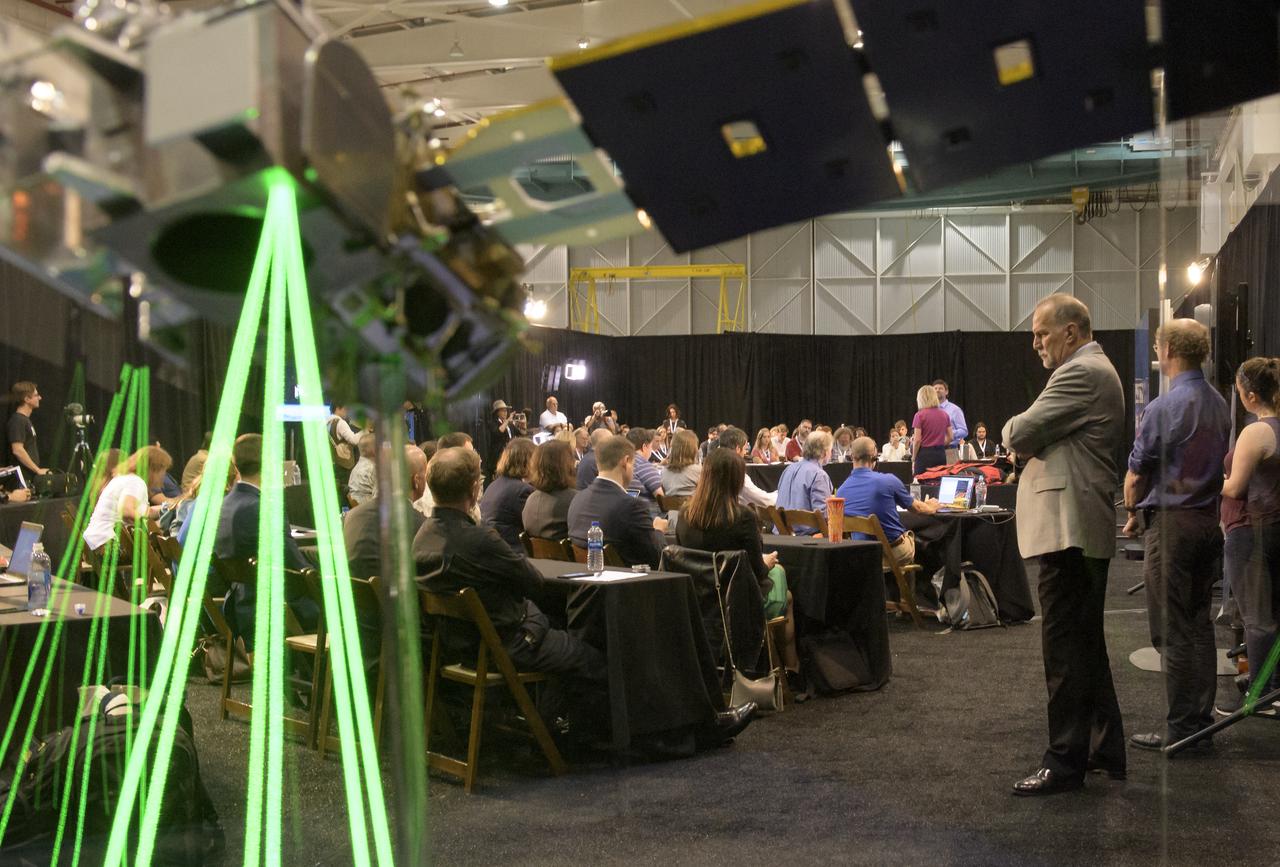
Prelaunch briefing for the NASA Ice, Cloud and land Elevation Satellite-2 (ICESat-2), Thursday, Sept. 13, 2018, at Vandenberg Air Force Base in California. The ICESat-2 mission will measure the changing height of Earth's ice. Photo Credit: (NASA/Bill Ingalls)
ICESat-2 Prelaunch Briefing
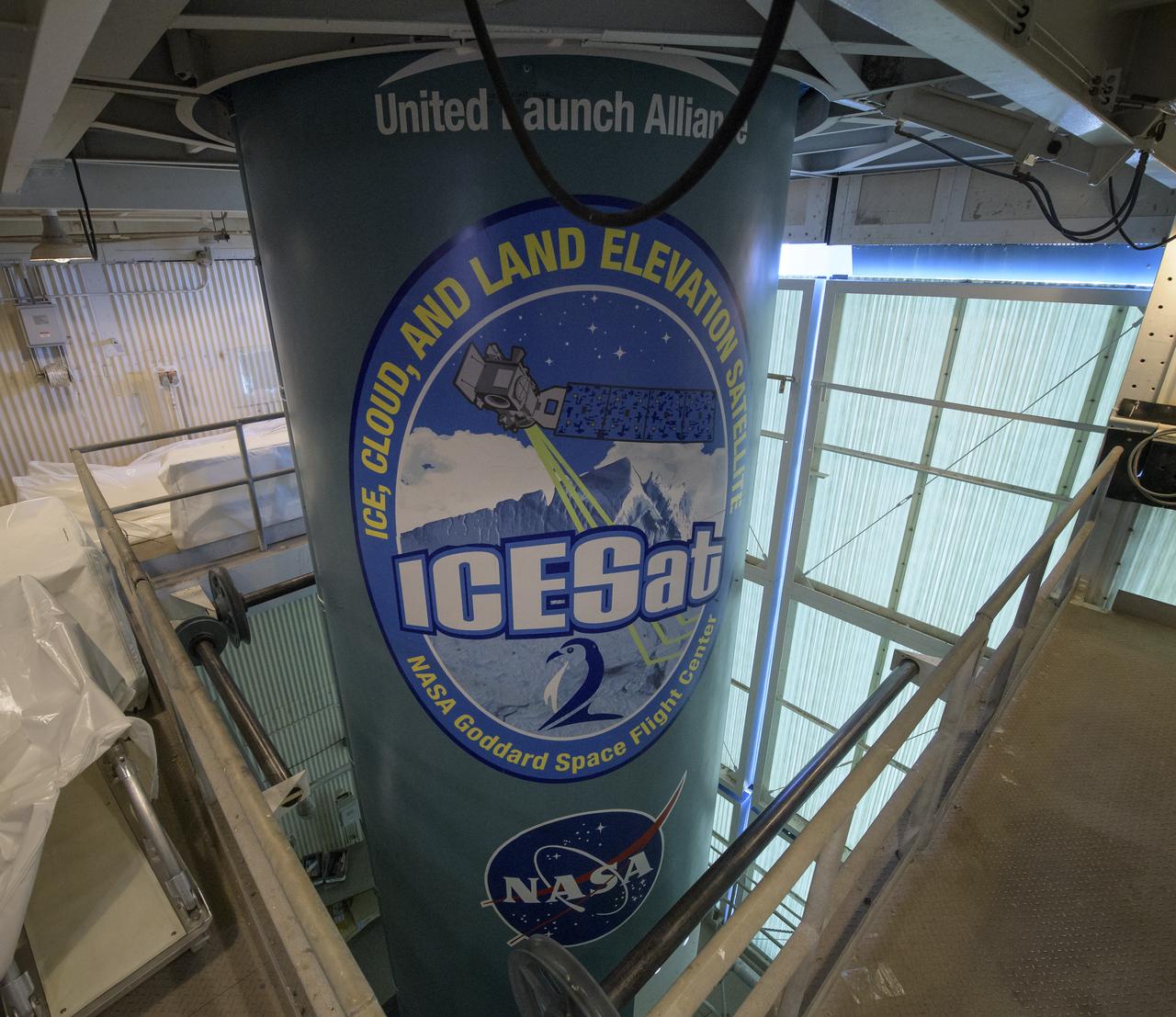
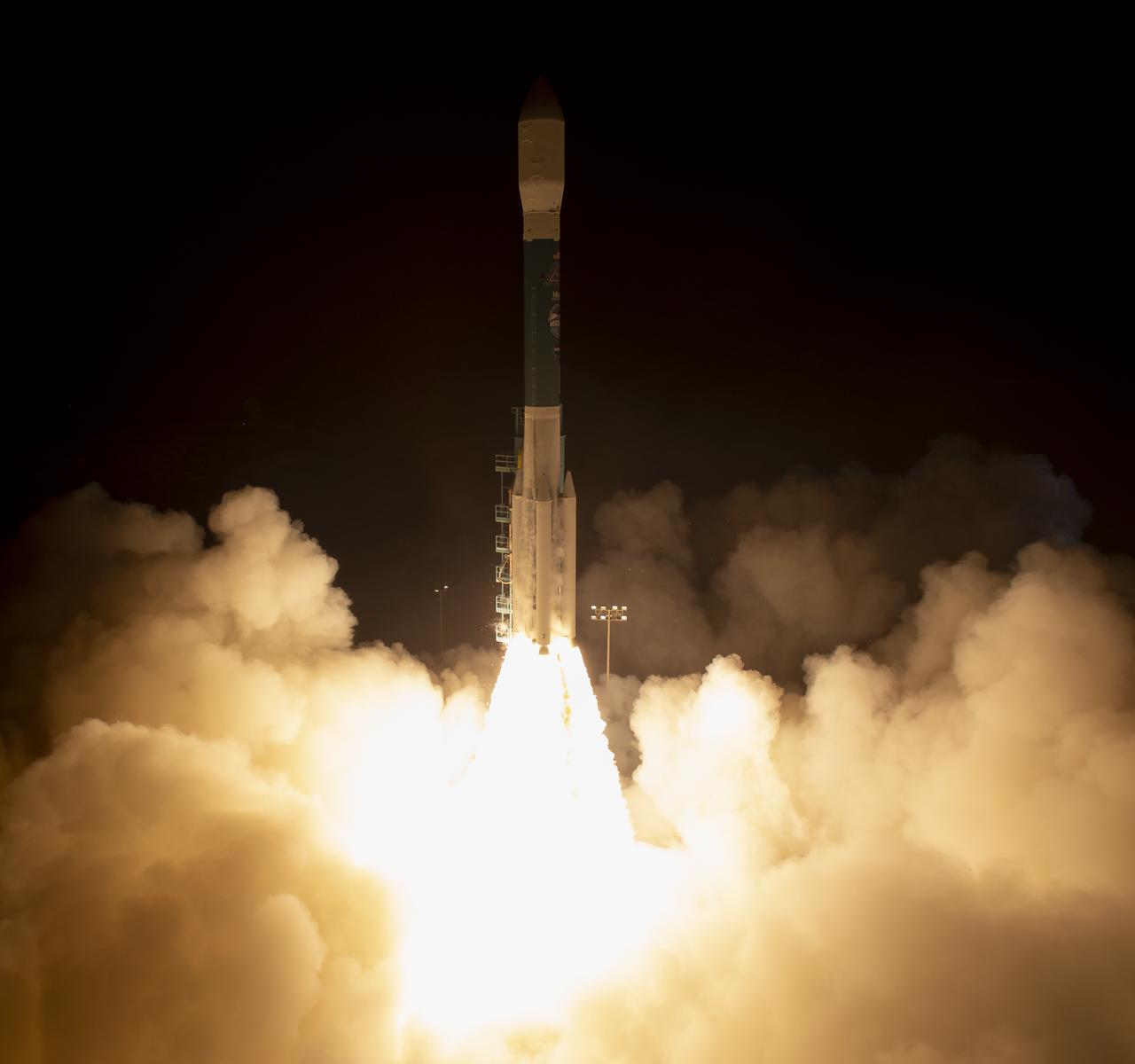
The United Launch Alliance (ULA) Delta II rocket with the NASA Ice, Cloud and land Elevation Satellite-2 (ICESat-2) onboard, Thursday, Sept. 13, 2018, Vandenberg Air Force Base in California. The ICESat-2 mission will measure the changing height of Earth's ice. Photo Credit: (NASA/Bill Ingalls)
ICESat-2 Prelaunch
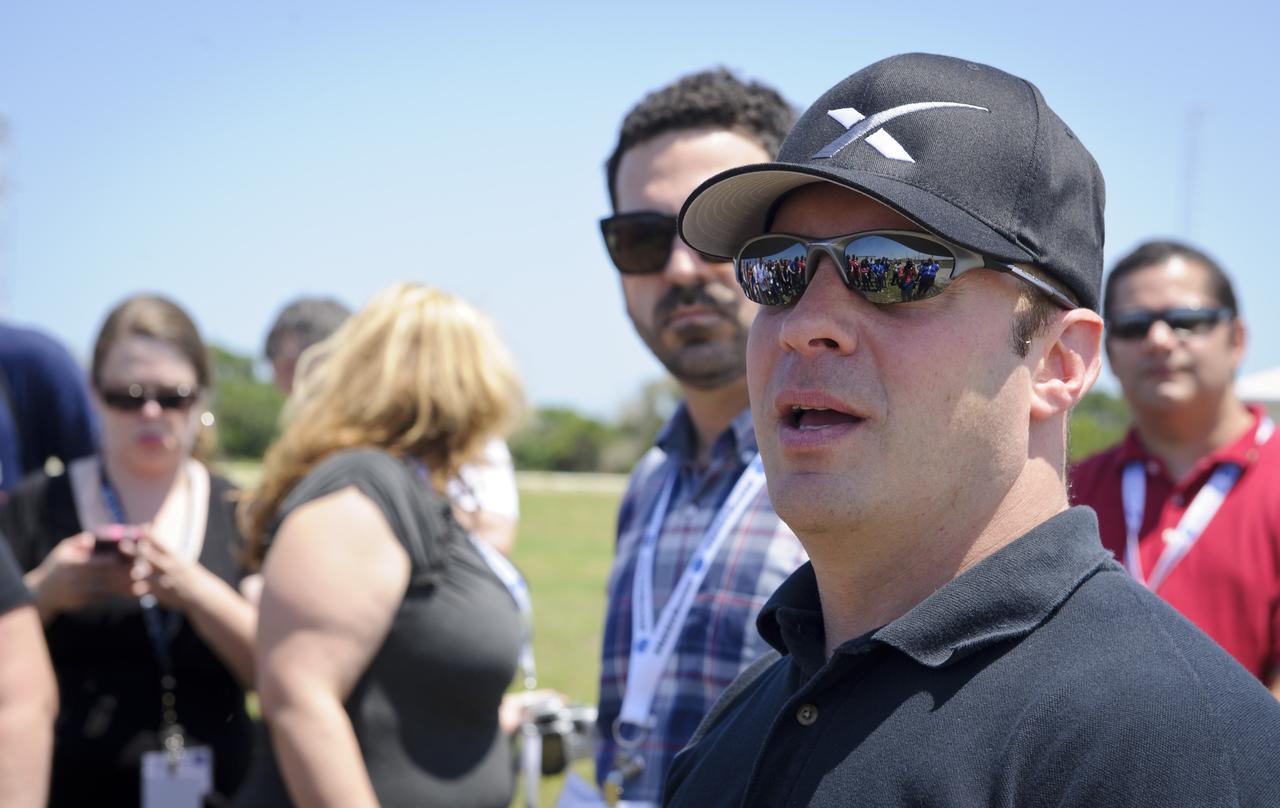
NASA Social participants are reflected in the sunglasses of former NASA astronaut Garrett Reisman, now a senior engineer working on astronaut safety and mission assurance for Space Exploration Technologies, or SpaceX, as he speaks with them, Friday, May 18, 2012, at the launch complex where the company's Falcon 9 rocket is set to launch early Friday morning at Cape Canaveral Air Force Station in Cape Canaveral, Fla. Photo Credit: (NASA/Paul E. Alers)
NASA Social
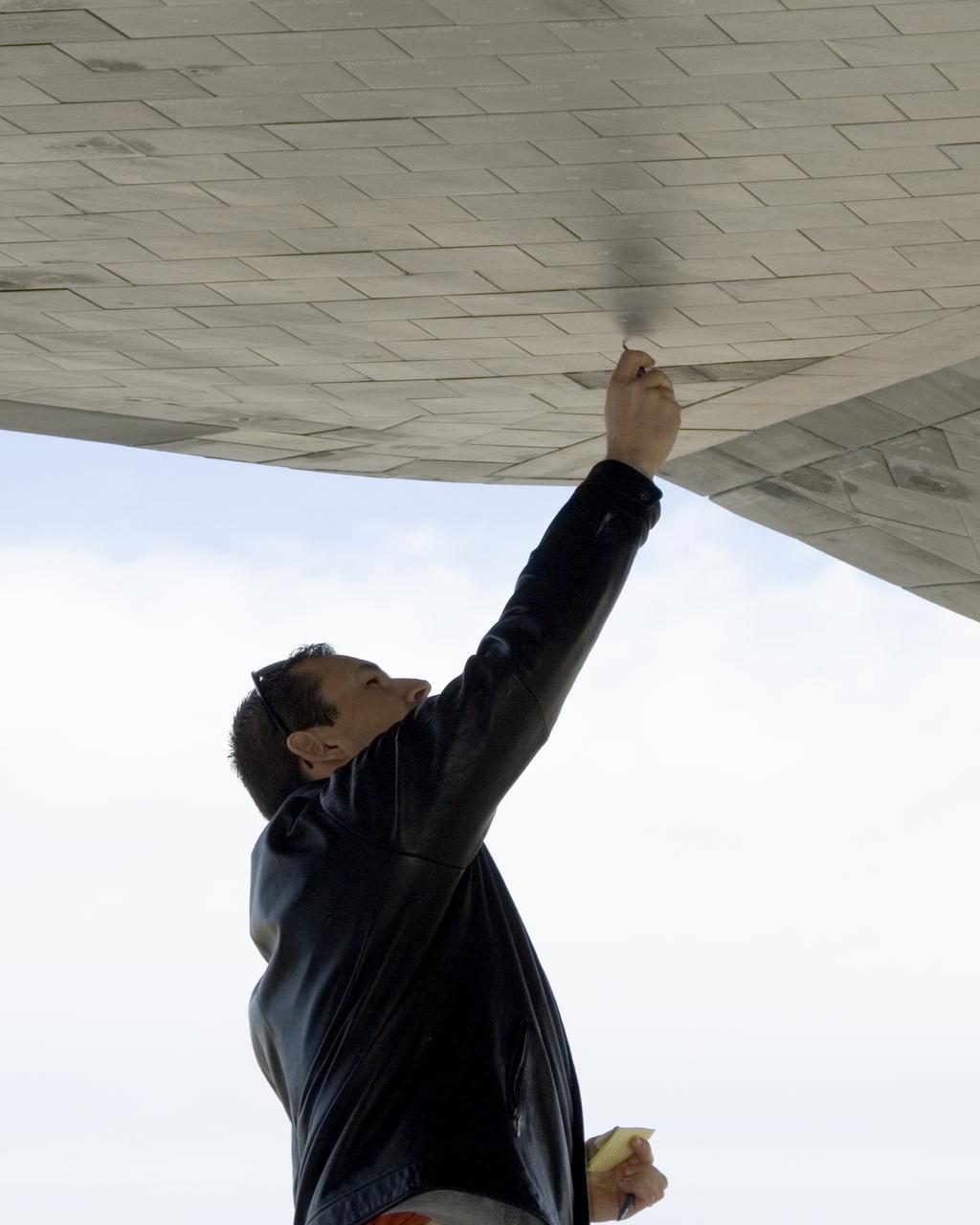
A United Space Alliance technician carefully checks the thermal tiles on the underside of Space Shuttle Endeavour for nicks and dings following its landing at Edwards Air Force Base to conclude mission STS-126.
A technician carefully checks the thermal tiles on the underside of Space Shuttle Endeavour for nicks and dings following its landing at Edwards Air Force Base
The Space Shuttle Columbia touches down on lakebed runway 23 at Edwards Air Force Base, Calif., to conclude the first orbital shuttle mission. (JSC photo # S81-30734)
The Space Shuttle Columbia touches down on lakebed runway 23 at Edwards Air Force Base, Calif., to conclude the first orbital shuttle mission
Air Force fire/rescue crew place a volunteer "injured astronaut" on a stretcher after exiting the shuttle cabin mockup during the training exercise. (USAF photo # 070505-F-1287F-126)
Air Force fire/rescue crew place a volunteer "injured astronaut" on a stretcher after exiting the shuttle cabin mockup during the training exercise
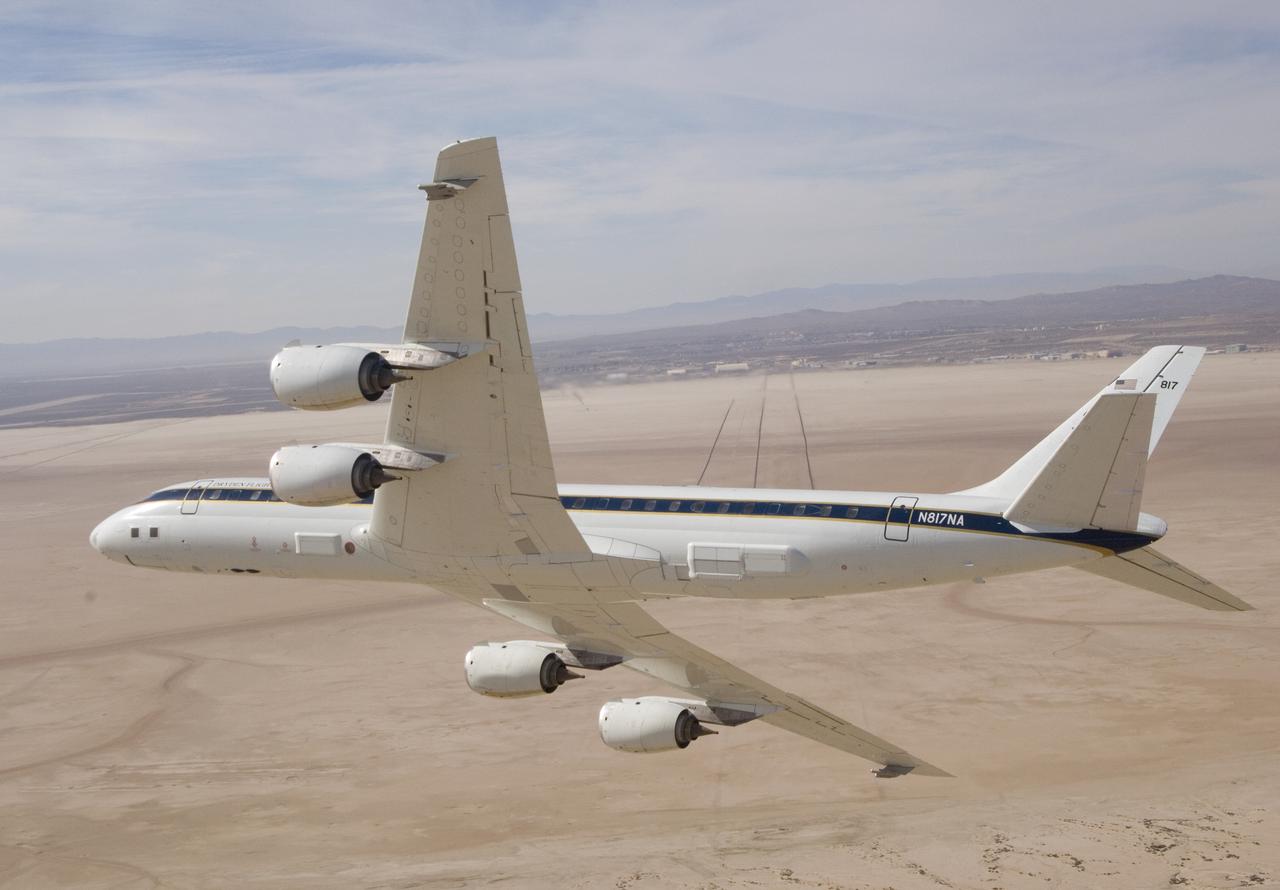
NASA's DC-8 airborne science laboratory banks low over Rogers Dry Lake at Edwards Air Force upon its return to NASA Dryden Flight Research Center Nov. 8, 2007.
NASA's DC-8 airborne science laboratory banks low over Rogers Dry Lake at Edwards Air Force upon its return to NASA Dryden Flight Research Center Nov. 8, 2007
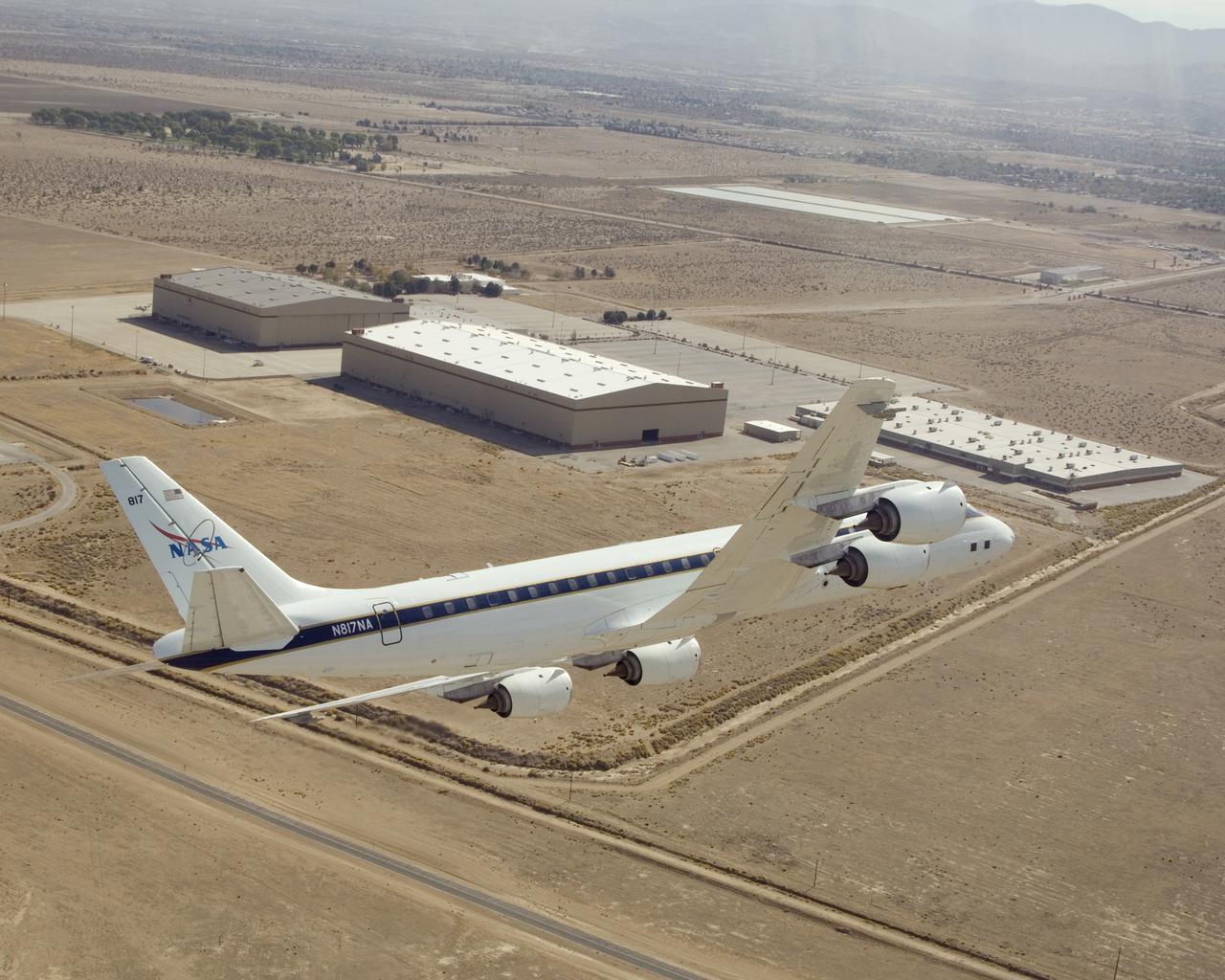
NASA's DC-8 airborne science laboratory banks low over the Dryden Aircraft Operations Facility at Air Force Plant 42 in Palmdale, Calif., upon arrival November 8, 2007.
NASA's DC-8 airborne science laboratory banks low over the Dryden Aircraft Operations Facility at Air Force Plant 42 in Palmdale, Calif., upon arrival November 8
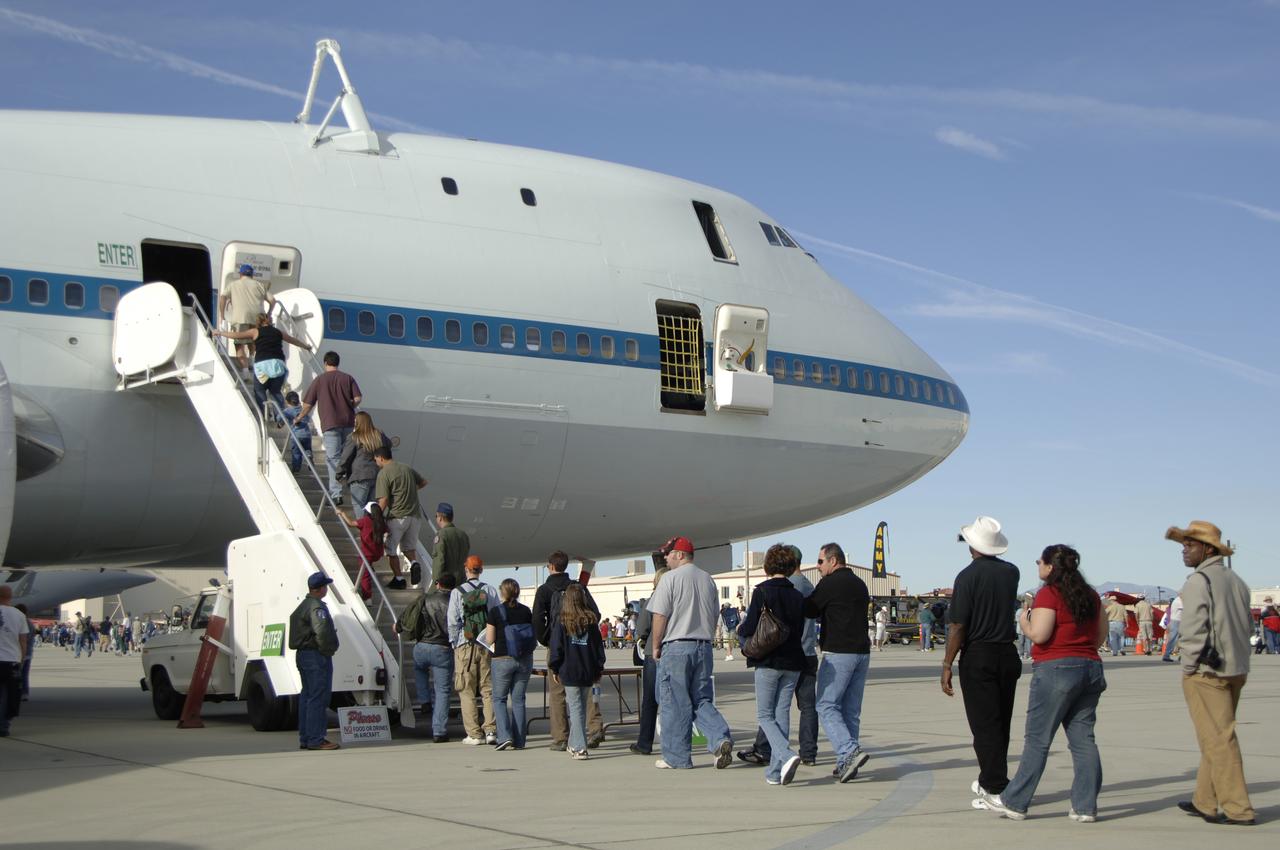
A brief tour through NASA's modified Boeing 747 Shuttle Carrier Aircraft was a popular attraction at the Edwards Air Force Base open house Oct. 28-29, 2006.
A brief tour through NASA's modified Boeing 747 Shuttle Carrier Aircraft was a popular attraction at the Edwards Air Force Base open house Oct. 28-29, 2006
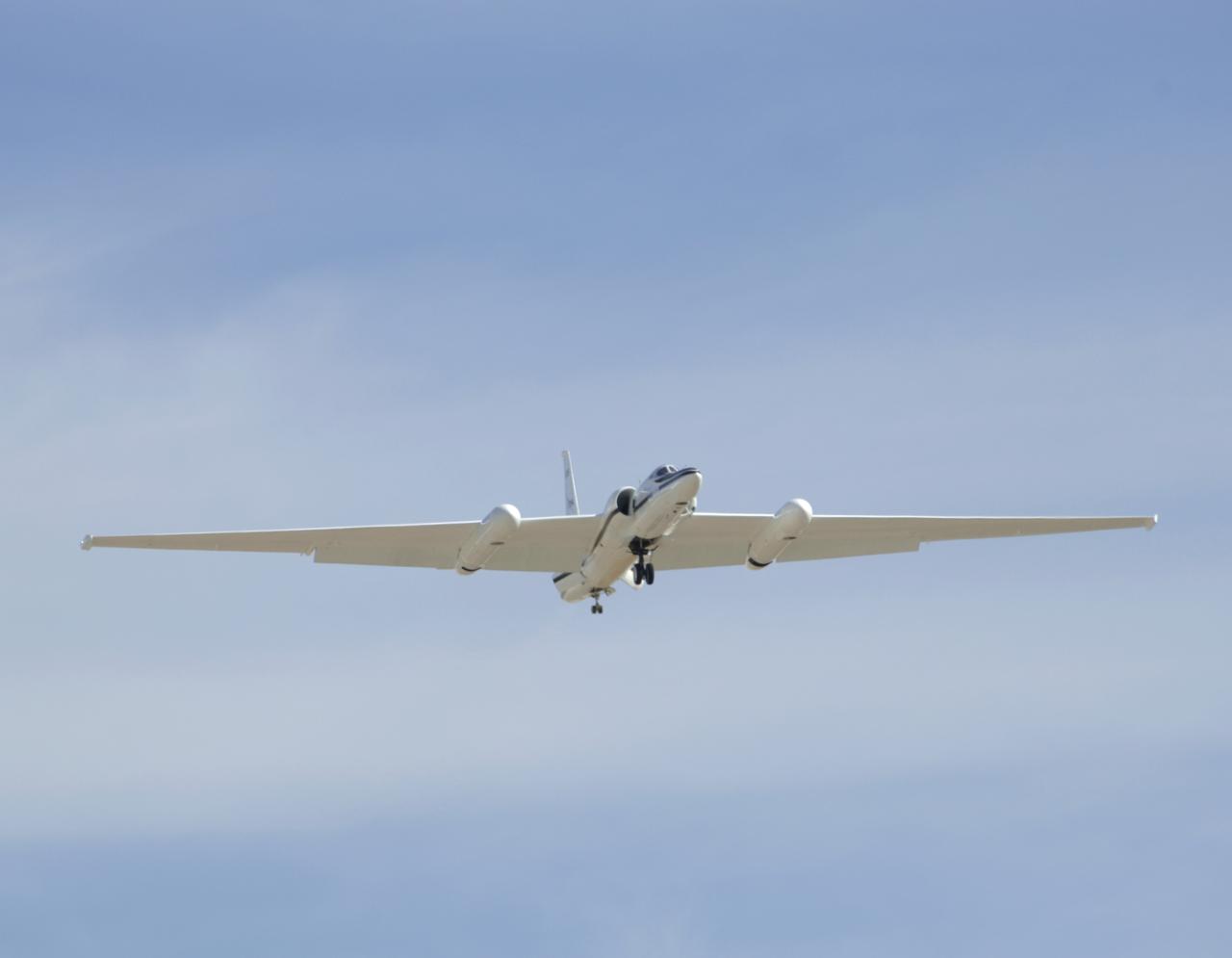
One of NASA's two ER-2 Earth resources aircraft shows off its lines during a flyover at the Edwards Air Force Base open house Oct. 28-29, 2006.
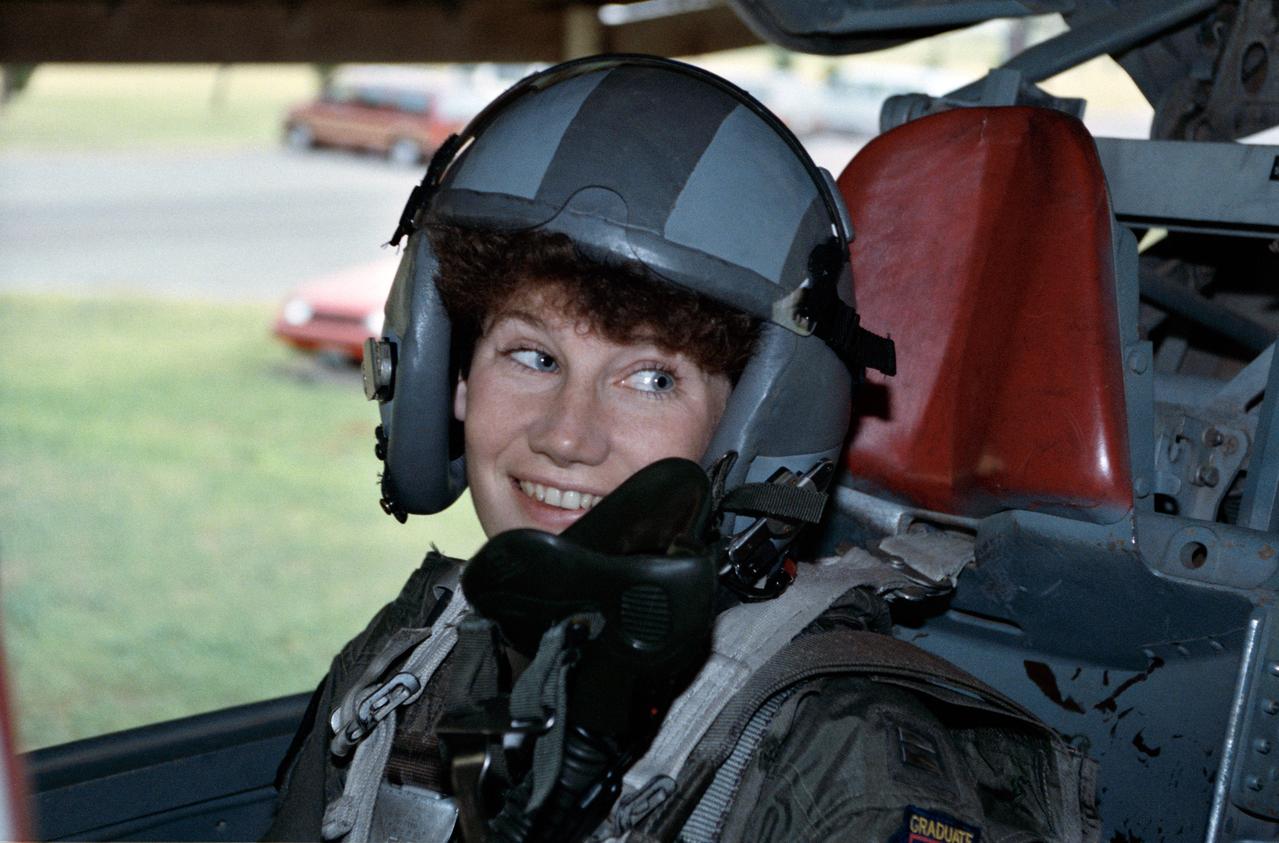
S90-45896 (29-31 July 1990) --- Susan J. Helms, one of the 23 astronaut candidates who began a year's training and evaluation program in July, participates in one of themany sessions at a survival training course at Vance Air Force Base.  This portion of the course is designed to familiarize the trainee with procedures to follow in preparation for ejection from a jet aircraft.
ASCAN Helms participates in T-38 training at Vance Air Force Base (VAFB)
STS114-S-049 (9 August 2005) --- The sun rises on the Space Shuttle Discovery as it rests on the runway at Edwards Air Force Base in California, after a safe landing at 5:11 a.m. (PDT) on August 9, 2005.  The landing concludes a historic 14-day, Return to Flight mission to the International Space Station.
STS-114 landing at Edwards Air Force Base
The United Launch Alliance (ULA) Delta II rocket with the NASA Ice, Cloud and land Elevation Satellite-2 (ICESat-2) onboard is seen shortly after the mobile service tower at SLC-2 was rolled back, Saturday, Sept. 15, 2018, at Vandenberg Air Force Base in California. The ICESat-2 mission will measure the changing height of Earth's ice. Photo Credit: (NASA/Bill Ingalls)
ICESat-2 Prelaunch
NASA Scientist Michelle Thaller and Tom Wagner, ICESat-2 Program Scientist, NASA Headquarters are seen during a NASA Ice, Cloud and land Elevation Satellite-2 (ICESat-2) prelaunch briefing, Thursday, Sept. 13, 2018, at Vandenberg Air Force Base in California. The ICESat-2 mission will measure the changing height of Earth's ice. Photo Credit: (NASA/Bill Ingalls)
ICESat-2 Prelaunch Briefing
Andy Klesh, MarCO chief engineer, NASA JPL, discusses NASA's InSight mission during a prelaunch media briefing, Thursday, May 3, 2018, at Vandenberg Air Force Base in California. InSight, short for Interior Exploration using Seismic Investigations, Geodesy and Heat Transport, is a Mars lander designed to study the "inner space" of Mars: its crust, mantle, and core. Photo Credit: (NASA/Bill Ingalls)
InSight Prelaunch Briefing
Tim Dunn, Launch Director, NASA's Kennedy Space Center, is seen during a NASA Ice, Cloud and land Elevation Satellite-2 (ICESat-2) prelaunch briefing, Thursday, Sept. 13, 2018, at Vandenberg Air Force Base in California. The ICESat-2 mission will measure the changing height of Earth's ice. Photo Credit: (NASA/Bill Ingalls)
ICESat-2 Prelaunch Briefing