
STS054-06-019 (17 Jan. 1993) --- Astronaut Susan J. Helms almost squeezes into the tight quarters of Endeavour's airlock to share space with her fellow mission specialists -- both attired in extravehicular mobility units (EMU) spacesuits. Astronauts Mario Runco Jr. (hands on outer edge of hatch) and Gregory J. Harbaugh spent four-plus hours on the extravehicular activity (EVA) on January 17, 1993. Helms trained with the pair for several months in preparation for the EVA. From the shirt-sleeved environment of Endeavour, she maintained communications with the two throughout the spacewalk. Also onboard NASA's newest Shuttle for the six-day mission were astronauts John H. Casper, mission commander; and Donald R. McMonagle, pilot. The photograph was taken with a 35mm camera.
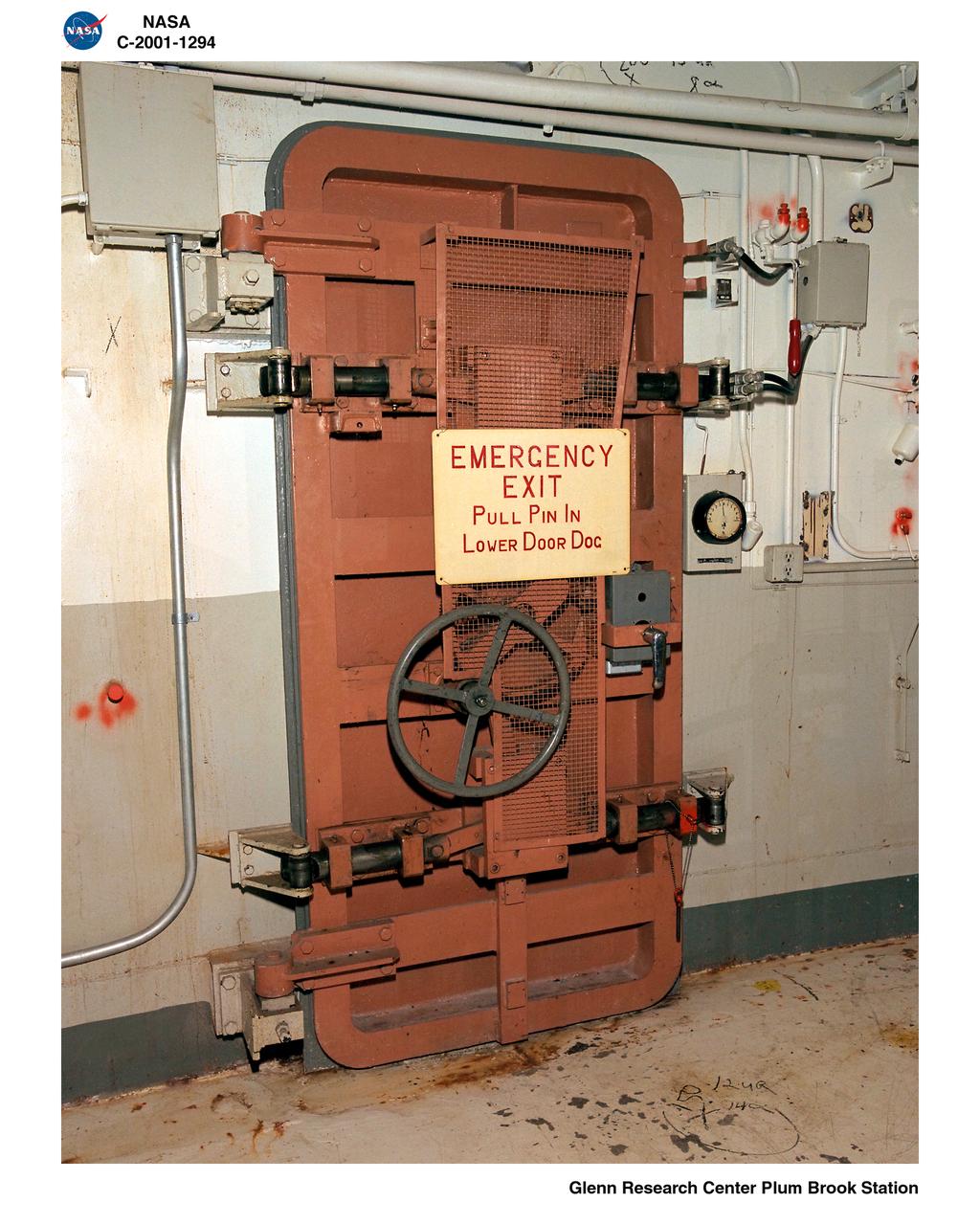
PLUM BROOK REACTOR FACILITY / AIR LOCK DOOR / 00105 / K18 - L20
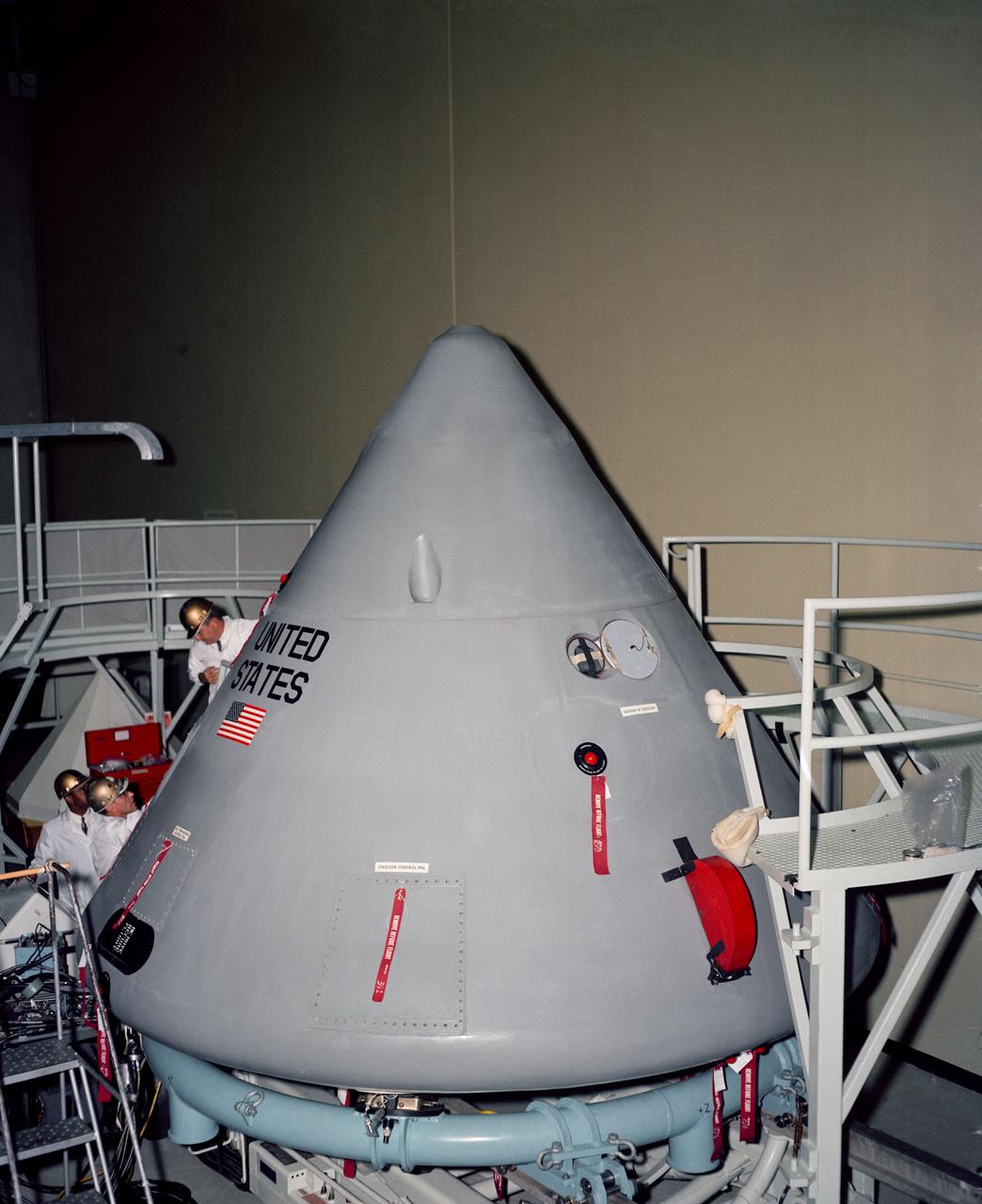
S66-53655 (1966) --- High angle view of Apollo Spacecraft 012 Command Module looking toward +Z axis during pre-shipping operations in south air lock of Systems Integration and Checkout Facility.
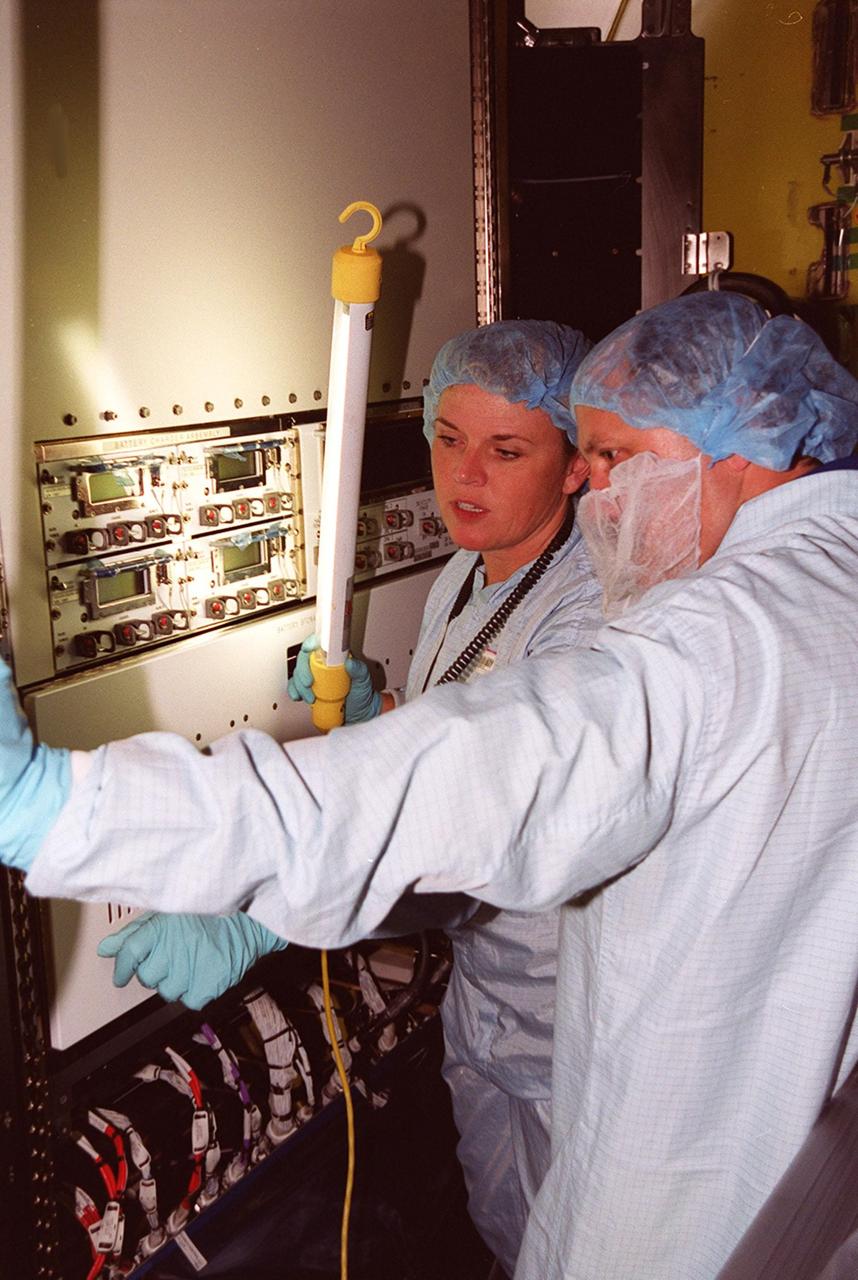
Inside the air lock in the Space Station Processing Facility, a technician points out equipment to cosmonaut Yury Usachev (right), who is part of the Expedition Two crew going to the International Space Station. Usachev and other crew members astronauts Susan Helms and James Voss will be flying on mission STS-102, launching March 8. The air lock will be carried to the Station during their tenure in space. STS-102 will be Helms’ and Voss’s fifth Shuttle flight, and Usachev’s second. They will be replacing the Expedition One crew (Bill Shepherd, Yuri Gidzenko and Sergei Krikalev), who will return to Earth March 20 on Discovery along with the STS-102 crew
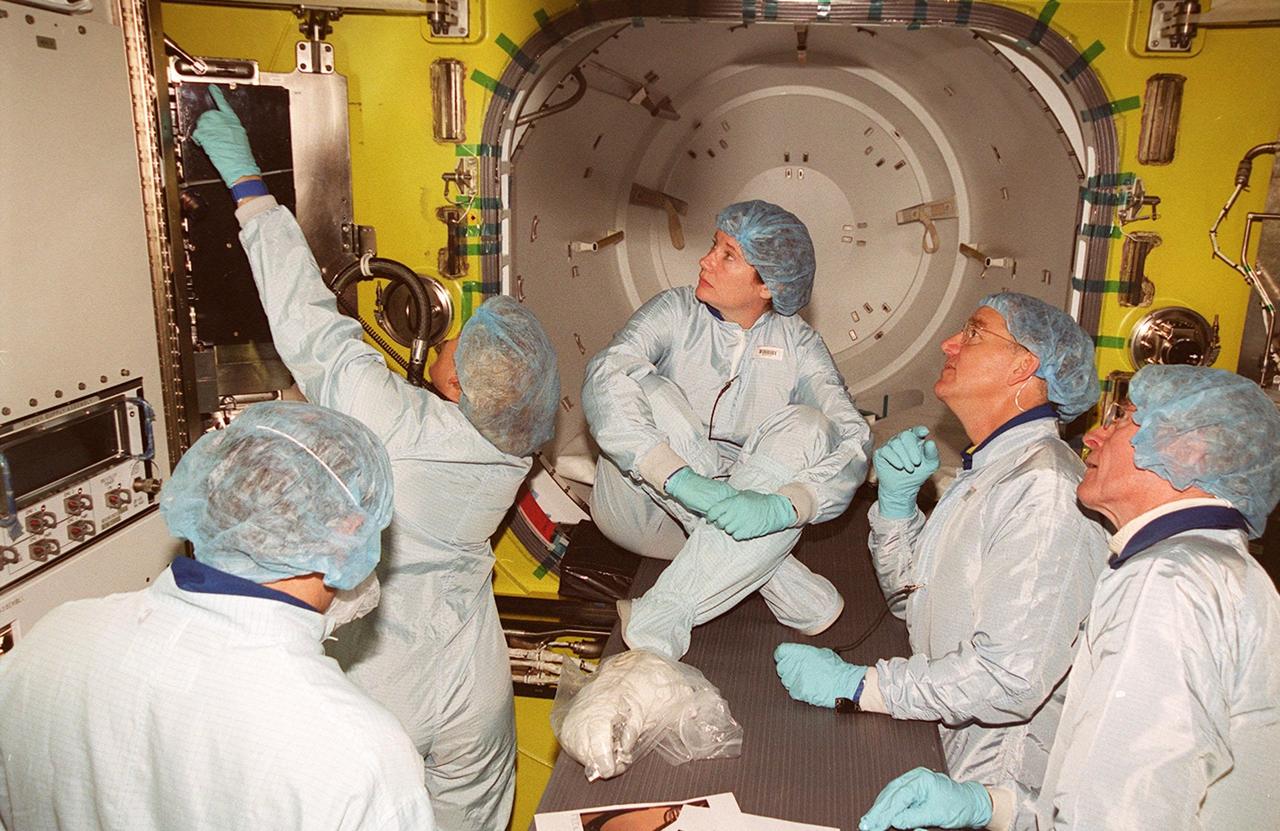
Inside the air lock in the Space Station Processing Facility, a technician points to part of the equipment. Watching her are (left to right) cosmonaut Yury Usachev (back to camera), astronaut Susan Helms (seated), astronauts James Voss and John Young, who flew on mission STS-1. Voss, Helms and Usachev will be flying on mission STS-102, launching March 8, to the International Space Station. The air lock will be carried to the Station during their tenure in space. STS-102 will be Helms’ and Voss’s fifth Shuttle flight, and Usachev’s second. They will be replacing the Expedition One crew (Bill Shepherd, Yuri Gidzenko and Sergei Krikalev), who will return to Earth March 20 on Discovery along with the STS-102 crew
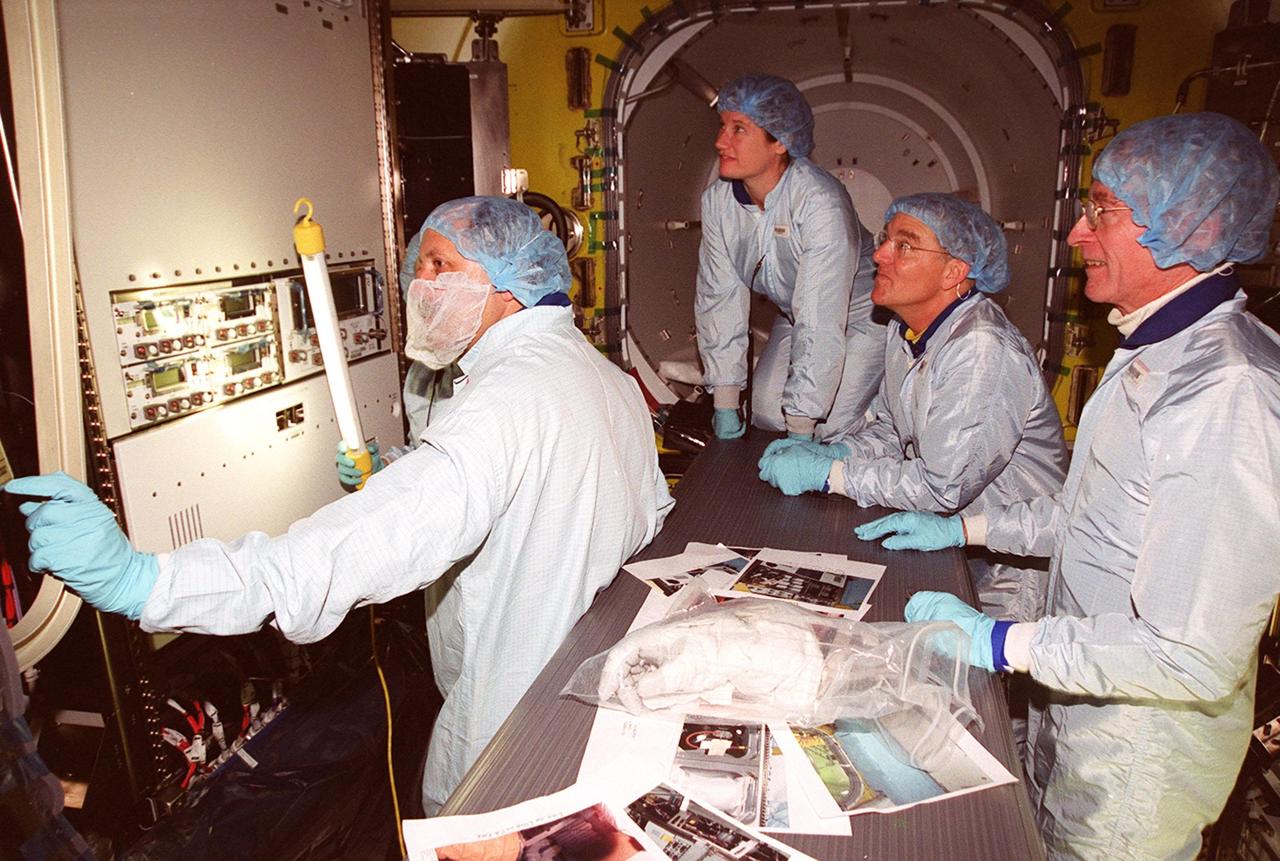
Inside the air lock in the Space Station Processing Facility, the Expedition Two crew look at equipment. Seen from left are cosmonaut Yury Usachev and astronauts Susan Helms and James Voss. At far right is astronaut John Young, who flew on mission STS-1. Usachev, Helms and Voss will be flying on mission STS-102, launching March 8. The air lock will be carried to the Station during their tenure in space. STS-102 will be Helms’ and Voss’s fifth Shuttle flight, and Usachev’s second. They will be replacing the Expedition One crew (Bill Shepherd, Yuri Gidzenko and Sergei Krikalev), who will return to Earth March 20 on Discovery along with the STS-102 crew
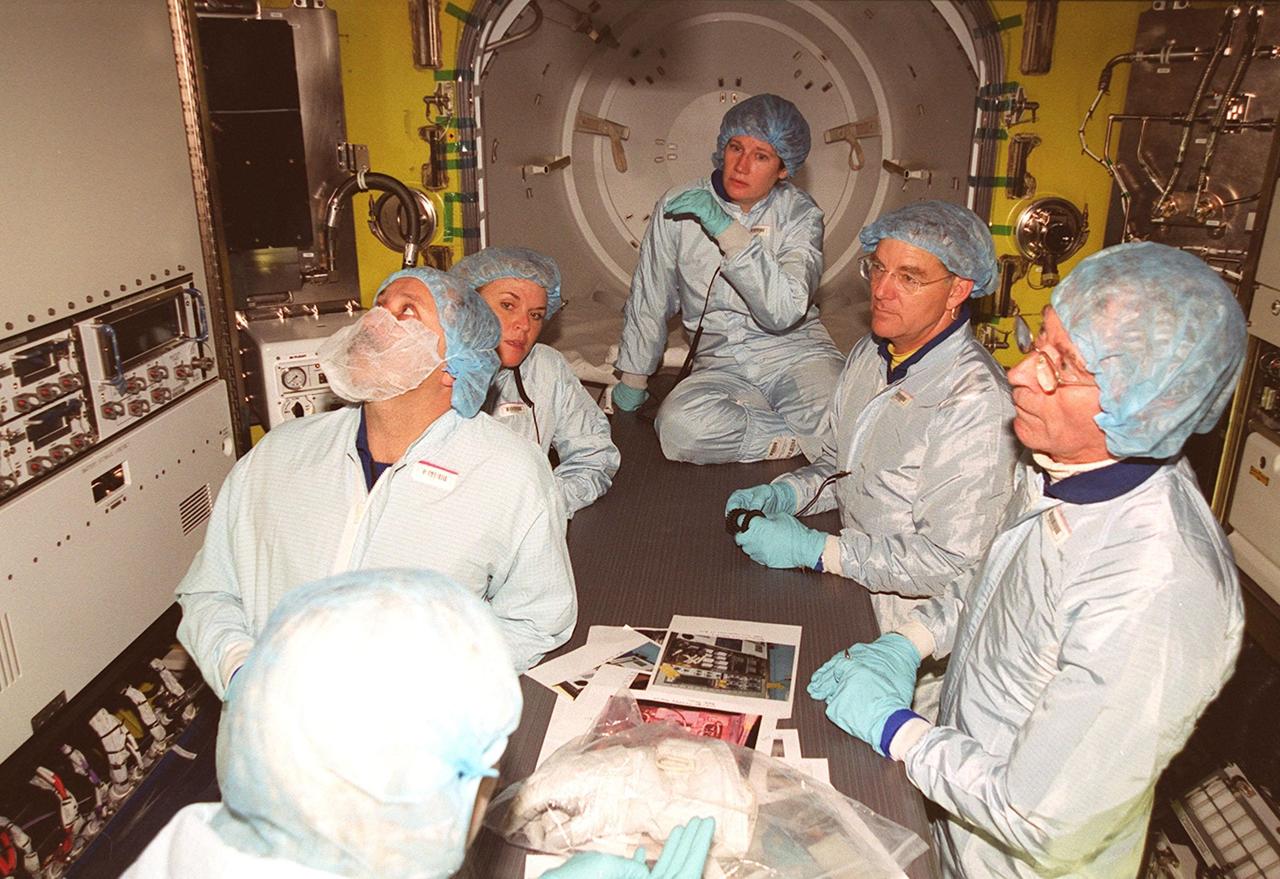
Inside the air lock in the Space Station Processing Facility, the Expedition Two crew look at equipment. Seen from left are cosmonaut Yury Usachev, a technician, and astronauts Susan Helms and James Voss. At far right is astronaut John Young, who flew on mission STS-1. Usachev, Helms and Voss will be flying on mission STS-102, launching March 8. The air lock will be carried to the Station during their tenure in space. STS-102 will be Helms’ and Voss’s fifth Shuttle flight, and Usachev’s second. They will be replacing the Expedition One crew (Bill Shepherd, Yuri Gidzenko and Sergei Krikalev), who will return to Earth March 20 on Discovery along with the STS-102 crew
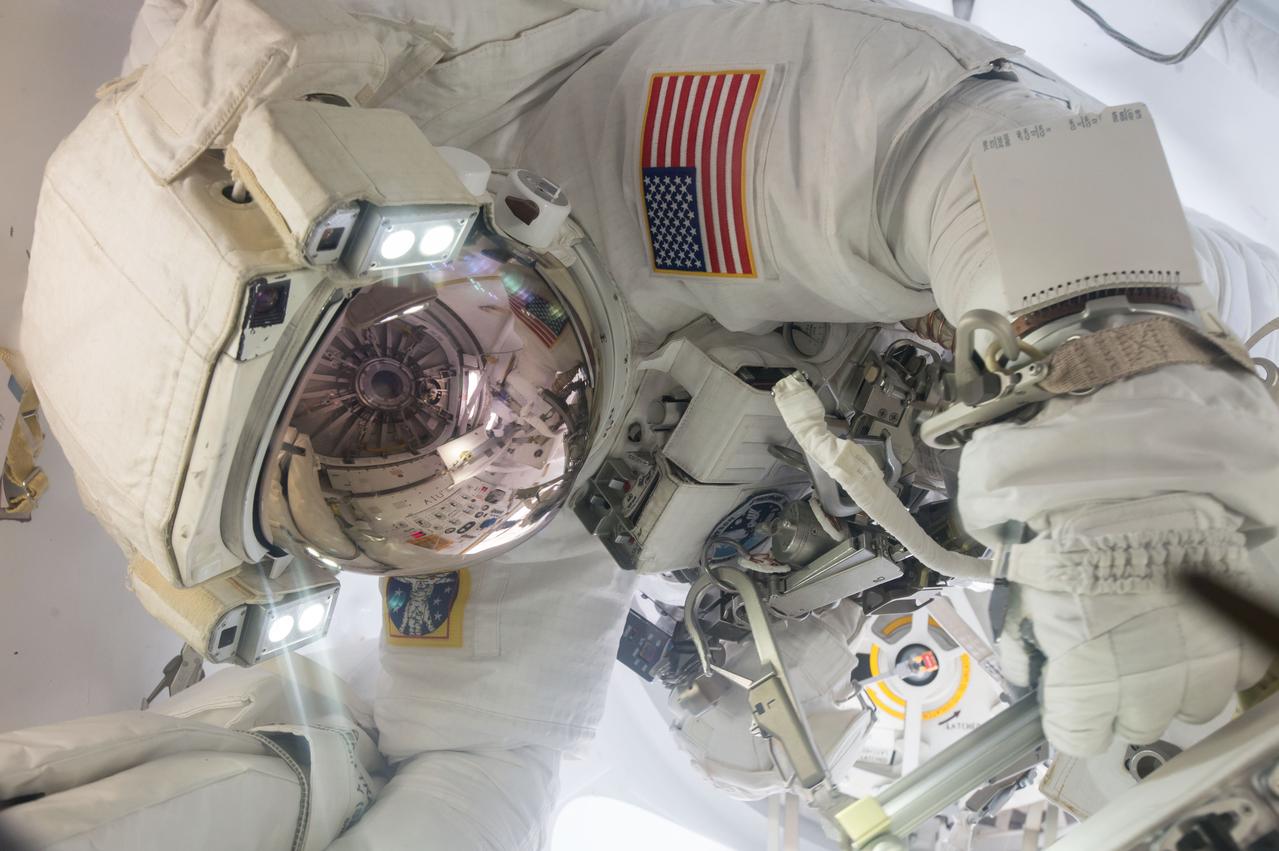
iss051e041189 (May 12, 2017) --- Air Force colonel and NASA astronaut Jack "2Fish" Fischer is suited up in a U.S. spacesuit inside the crew lock portion of the U.S. Quest airlock. Fischer and Expedition 51 Commander Peggy Whitson had participated in the 200th spacewalk in support of International Space Station assembly and maintenance.
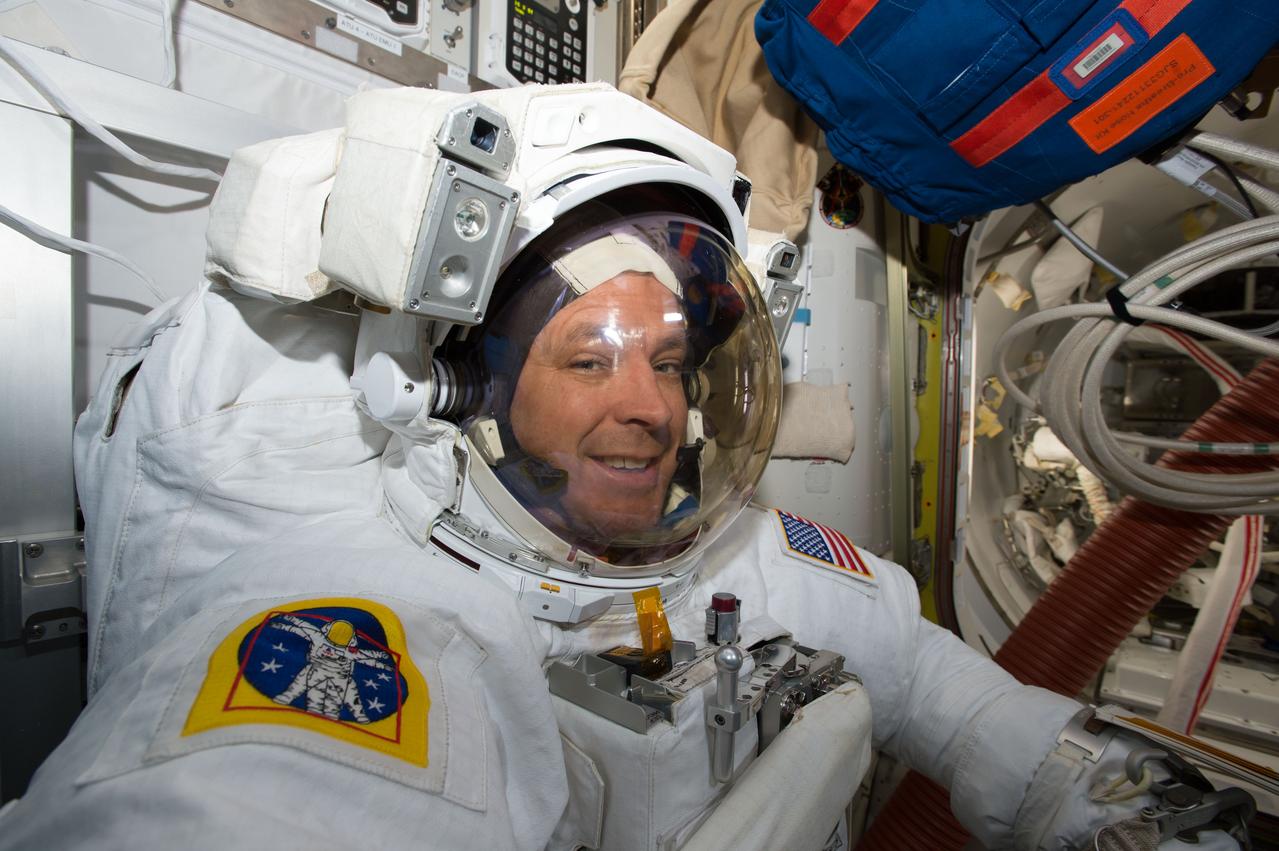
iss051e048878 (May 23, 2017) --- Air Force colonel and NASA astronaut Jack "2Fish" Fischer is suited up in a U.S. spacesuit inside the crew lock portion of the U.S. Quest airlock preparing to exit the International Space Station on a contigency spacewalk.

The Expedition Two crew, along with workers at the Space Station Processing Facility, inspect the air lock from the inside. From left are cosmonauts Yury Usachev (foreground, back to camera) and astronauts Susan Helms (seated) James Voss and John Young, who flew on mission STS-1. Voss, Helms and Usachev will be flying on mission STS-102, launching March 8, to the International Space Station. The air lock will be carried to the Station during their tenure in space. STS-102 will be Helms’ and Voss’s fifth Shuttle flight, and Usachev’s second. They will be replacing the Expedition One crew (Bill Shepherd, Yuri Gidzenko and Sergei Krikalev), who will return to Earth March 20 on Discovery along with the STS-102 crew
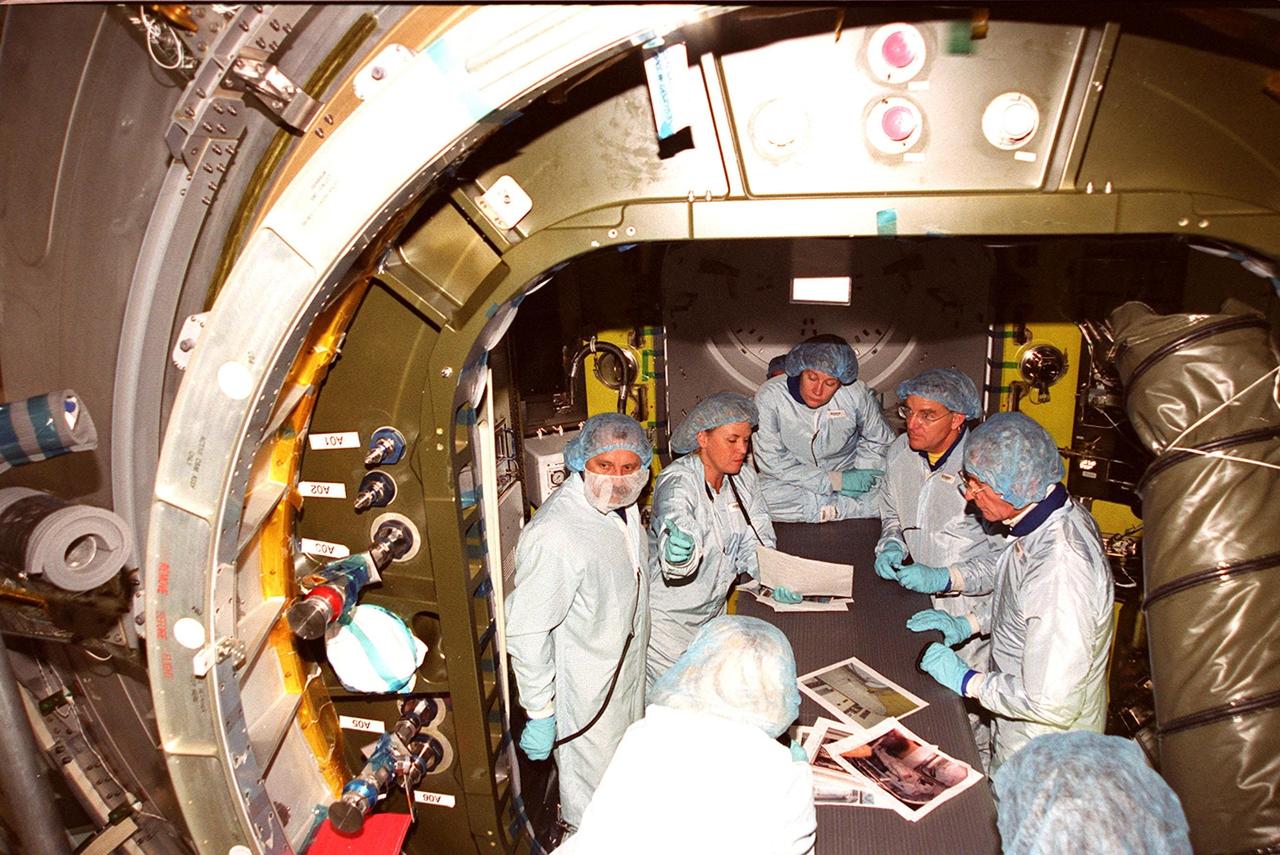
At the Space Station Processing Facility, the Expedition Two crew check out the inside of the air lock. Cosmonaut Yury Usachev is at left; astronaut Susan Helms is seated, center; and astronaut James Voss is second from right. They are joined by astronaut John Young, at right, who flew on mission STS-1. Voss, Helms and Usachev will be flying on mission STS-102, launching March 8, to the International Space Station. The air lock will be carried to the Station during their tenure in space. STS-102 will be Helms’ and Voss’s fifth Shuttle flight, and Usachev’s second. They will be replacing the Expedition One crew (Bill Shepherd, Yuri Gidzenko and Sergei Krikalev), who will return to Earth March 20 on Discovery along with the STS-102 crew
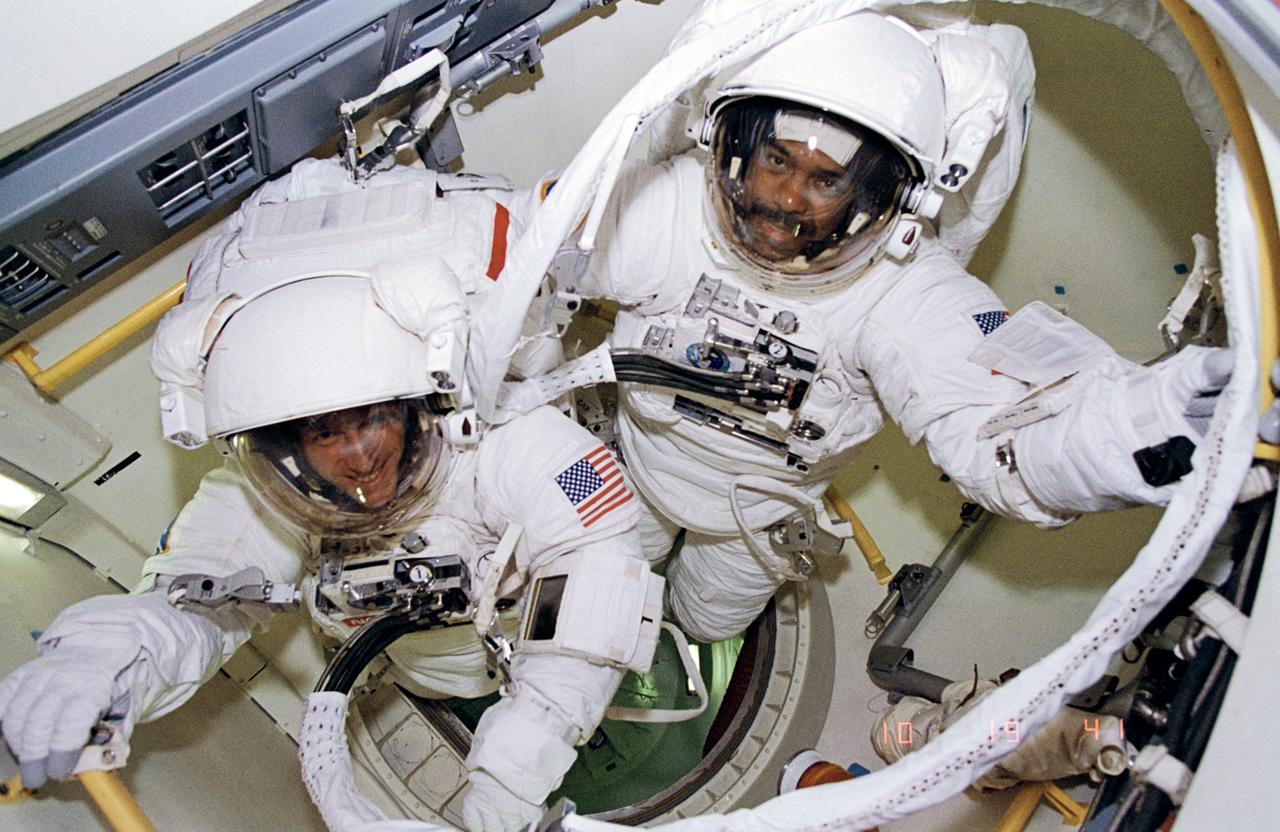
STS063-67-024 (9 Feb. 1995) --- Astronauts Bernard A. Harris Jr., STS-63 payload commander, (top right) and C. Michael Foale, mission specialist, are ready to egress airlock for an extravehicular activity (EVA). Others onboard the space shuttle Discovery were astronauts James D. Wetherbee, mission commander; Eileen M. Collins, pilot; mission specialists Janice E. Voss, and cosmonaut Vladimir G. Titov. Photo credit: NASA
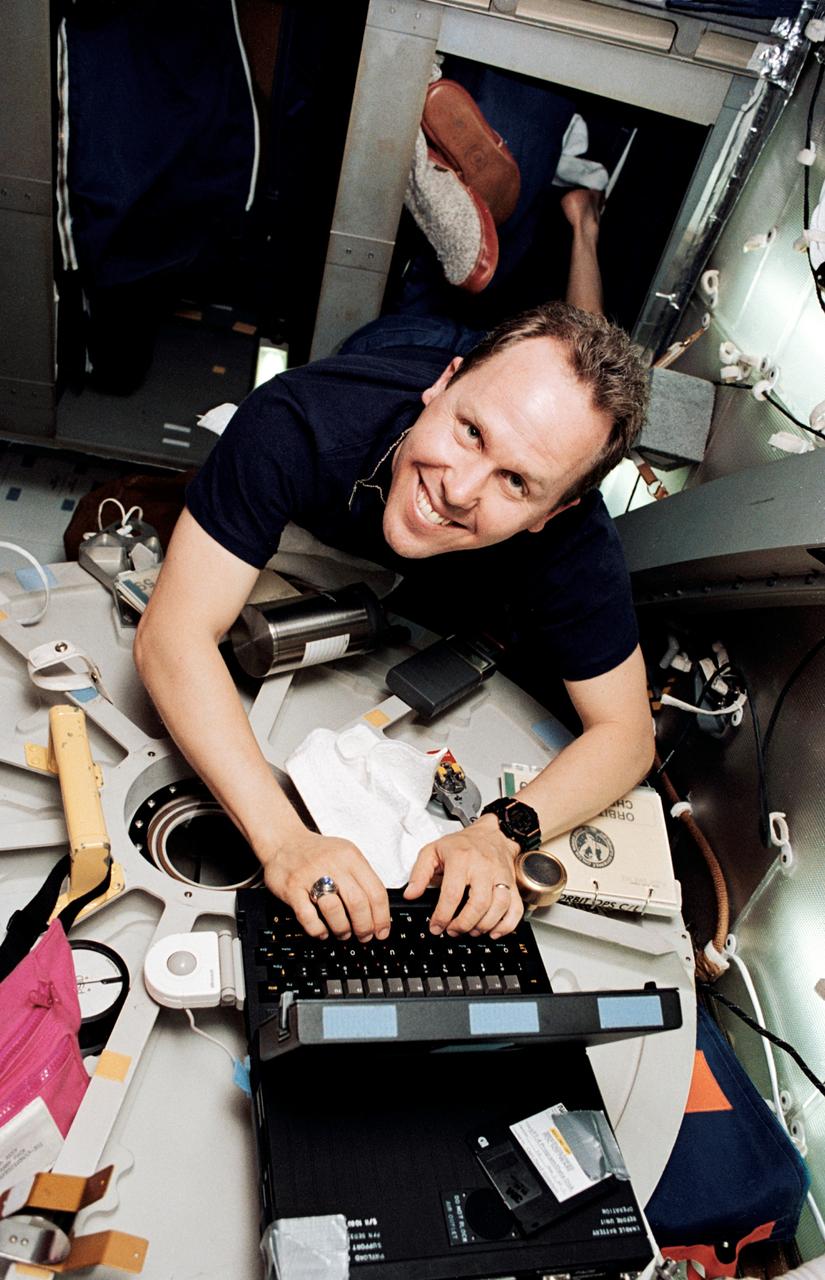
STS059-10-011 (9-20 April 1994) --- Astronaut Thomas D. Jones appears to have climbed out of bed right into his work in this onboard 35mm frame. Actually, Jones had anchored himself in the bunk facility while working on one of the onboard computers which transfered data to the ground via modem. The mission specialist was joined in space by five other NASA astronauts for a week and a half of support to the Space Radar Laboratory (SRL-1)/STS-59 mission.
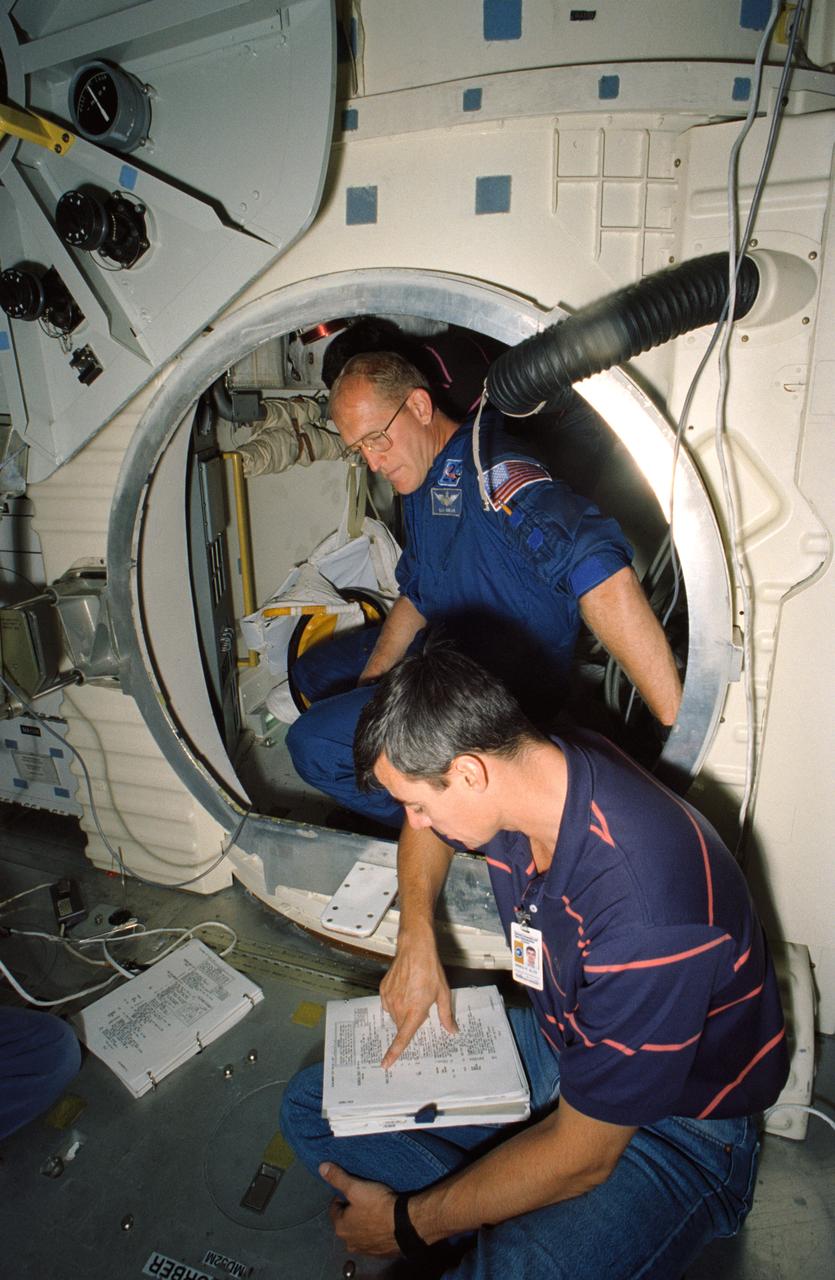
Astronauts Charles D. (Sam) Gemar, and Andrew M. Allen participate in a training exercise at JSC's Crew Compartment Trainer (CCT), located in the Shuttle mockup and integration laboratory. Gemar sits inside the airlock as Allen reviews procedures for EVA.

SL4-150-5074 (February 1974) --- Scientist-astronaut Edward G. Gibson, science pilot for the Skylab 4 mission, demonstrates the effects of zero-gravity as he sails through airlock module hatch. Photo credit: NASA
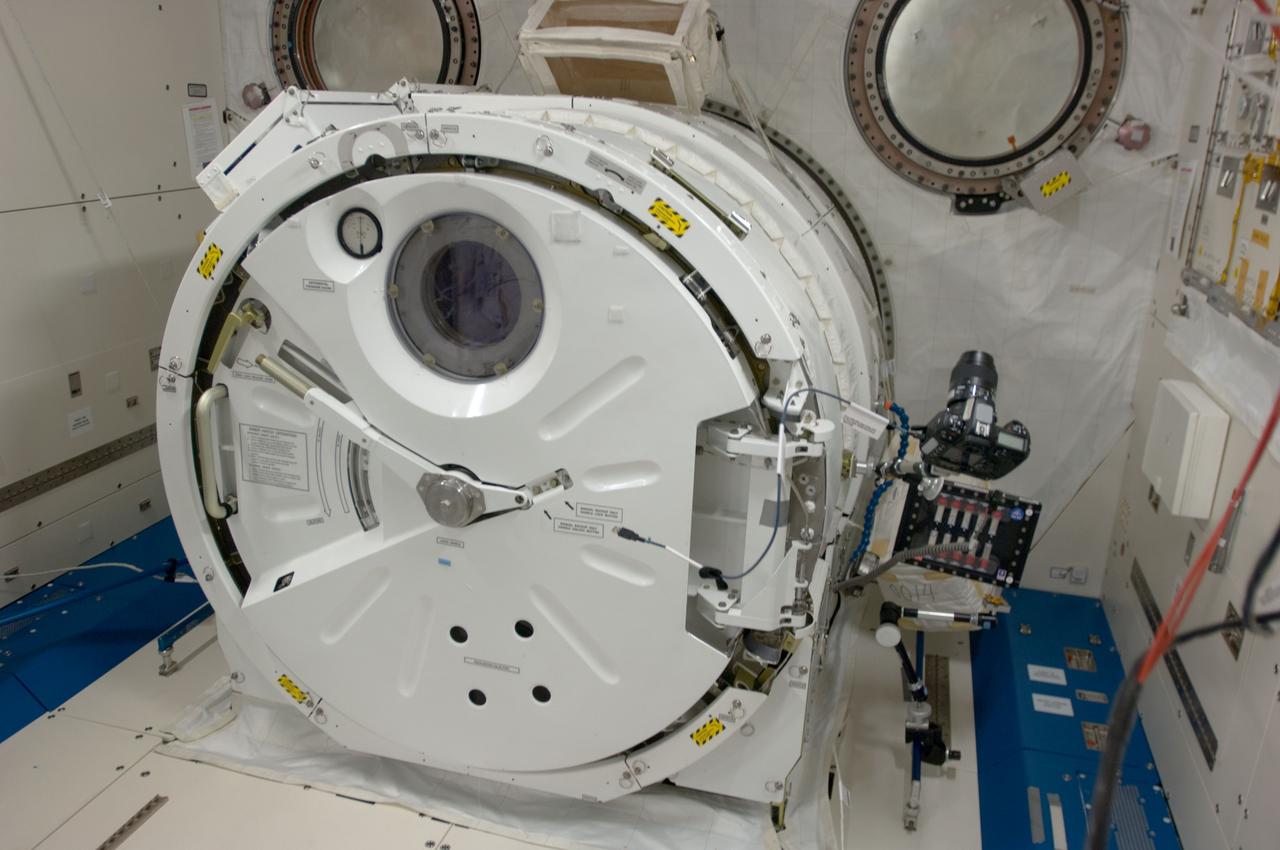
View of internal airlock (A/L) in the Japanese Experiment Module (JEM) Pressurized Module (JPM). Photo was taken during Expedition 34.
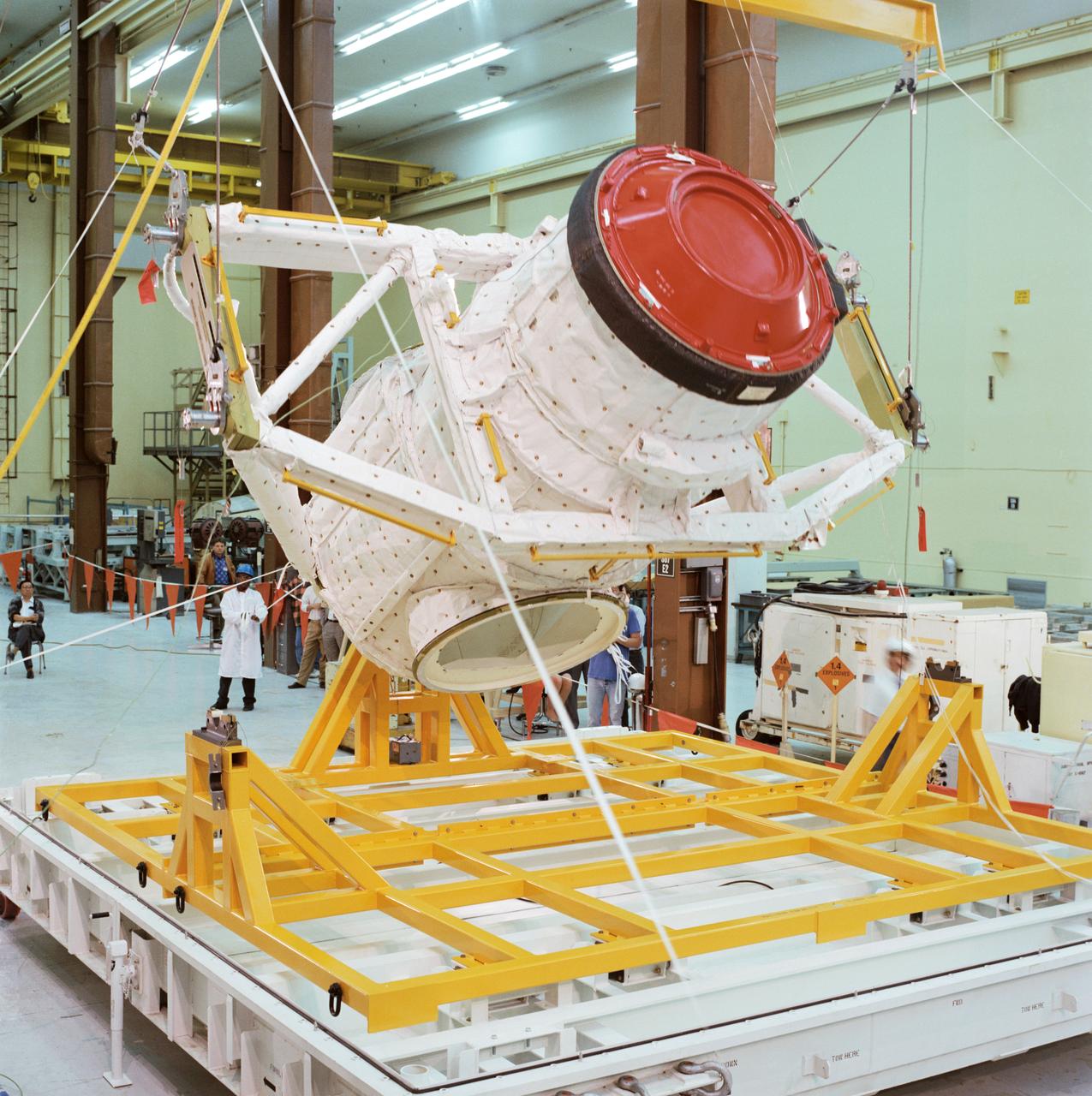
S95-00057 (15 Nov 1994) --- In Rockwell's Building 290 at Downey, California, the external airlock assembly/Mir docking system is rotated into position for crating up for shipment to the Kennedy Space Center (KSC) in Florida. Jointly developed by Rockwell and RSC Energia, the external airlock assembly and Mir docking system will be mounted in the cargo bay of the Space Shuttle Atlantis to enable the shuttle to link up to Russia's Mir space station. The docking system contains hooks and latches compatible with the system currently housed on the Mir's Krystall module, to which Atlantis will attach for the first time next spring. STS-71 will carry two Russian cosmonauts, who will replace a three-man crew aboard Mir including Norman E. Thagard, a NASA astronaut. The combined 10-person crew will conduct almost five days of joint life sciences investigations both aboard Mir and in the Space Shuttle Atlantis's Spacelab module.
S73-27562 (June 1973) --- Scientist-astronaut Joseph P. Kerwin, Skylab 2 science pilot, performs extravehicular activity (EVA) at the Skylab 1 and 2 space station cluster in Earth orbit, as seen in this reproduction taken from a color television transmission made by a TV camera aboard the station. Kerwin is just outside the Airlock Module. Kerwin assisted astronaut Charles Conrad Jr., Skylab 2 commander, during the successful EVA attempt to free the stuck solar array system wing on the Orbital Workshop. Photo credit: NASA
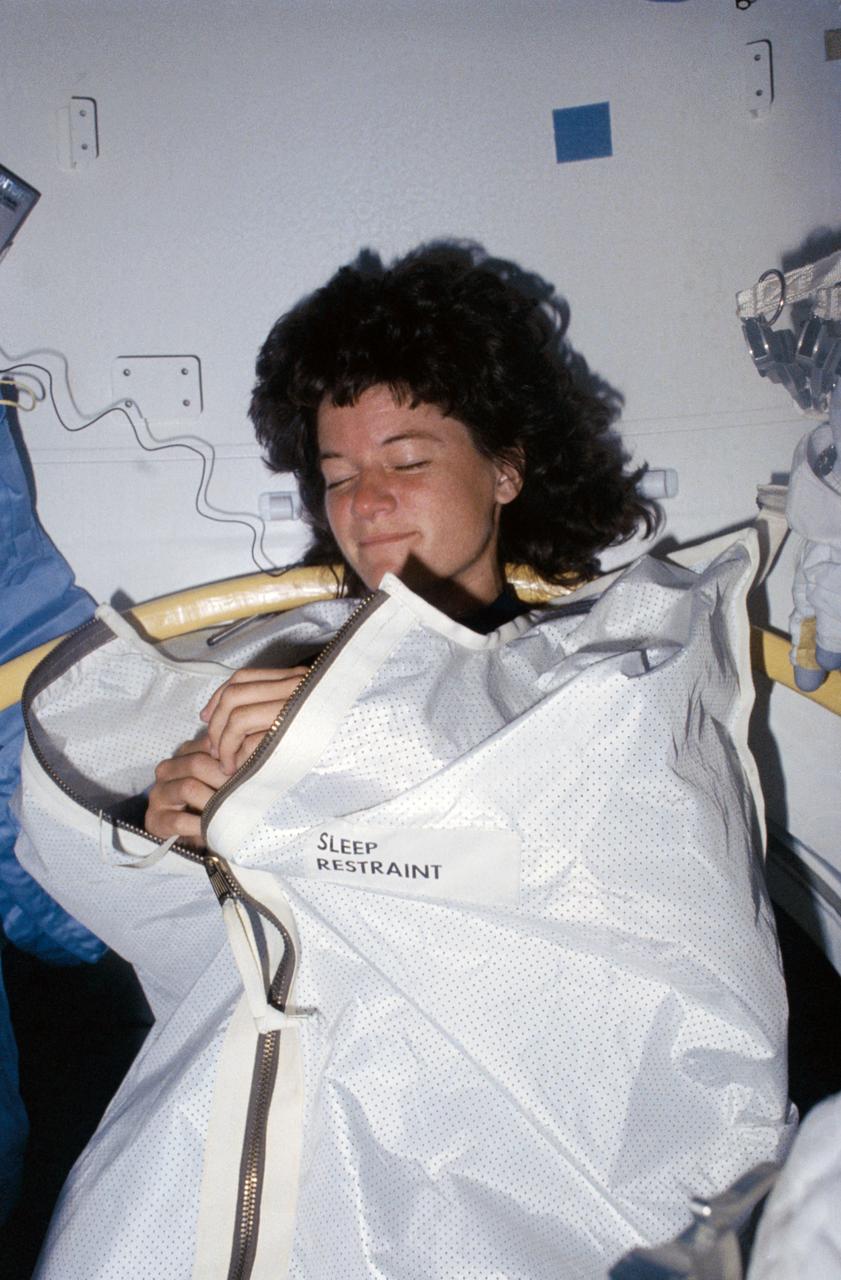
STS007-26-1438 (18-24 June 1983) --- Astronaut Sally K. Ride, mission specialist, was captured at her sleep station in the Space Shuttle Challenger's middeck by a fellow crew member using a 35mm camera. This method of sleep is just one used by the 20 astronauts who have now flown aboard NASA's first two Space Shuttle Orbiters. Some astronauts choose to sleep in various positions with either their feet or upper bodies or both anchored and others elect to use the sleep restraint device demonstrated here by Dr. Ride.
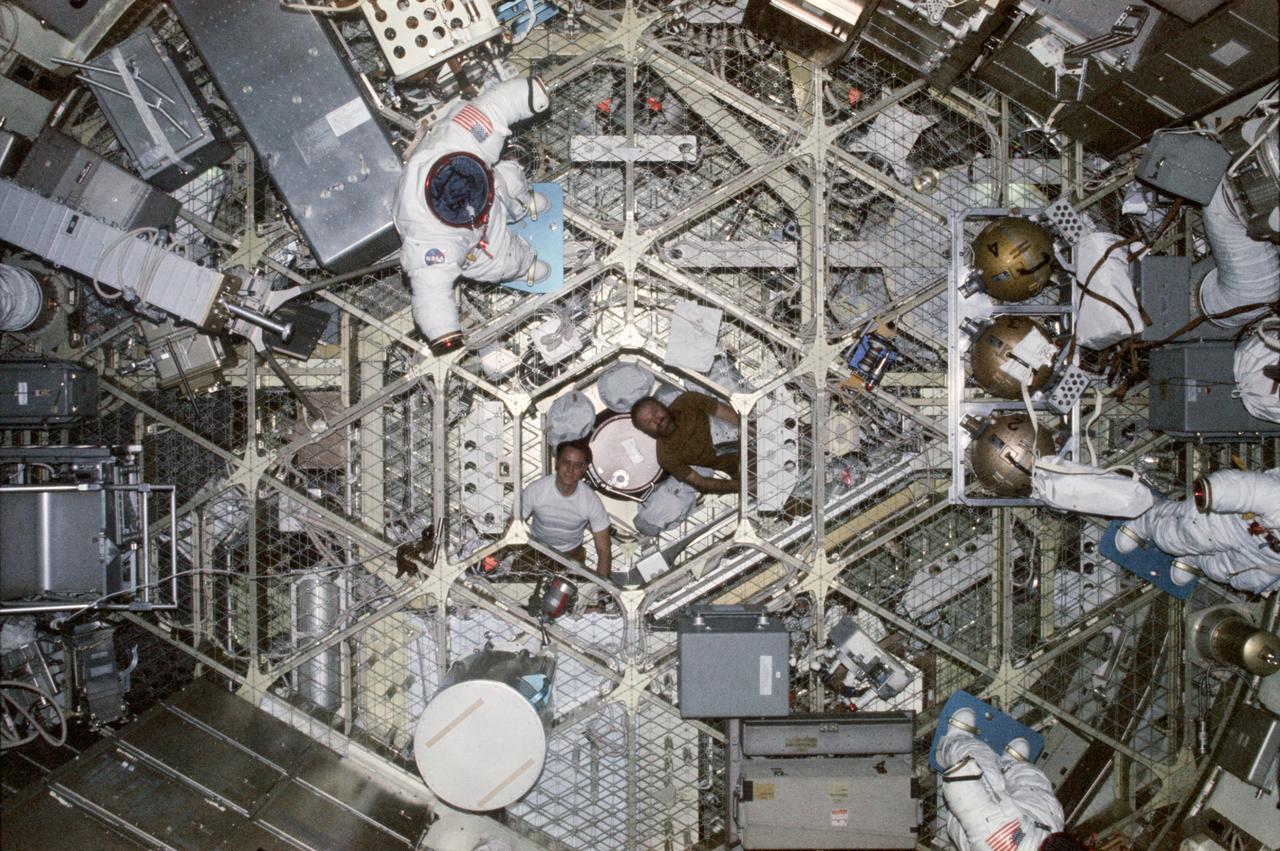
SL4-150-5062 (January 1974) --- A 35mm camera, operated by astronaut William R. Pogue, Skylab 4 pilot, recorded this wide scene of his Skylab 4 crewmates on the other end of the orbital workshop. Astronauts Jerry P. Carr (right), commander, and Edward G. Gibson, science pilot, pose for the snapshot. Also in the frame are parts of three Extravehicular Mobility Unit (EMU) spacesuits, used on several EVA sessions during the third manning of the Skylab space station. Photo credit: NASA

S92-45750 (1 Sept 1992) --- Astronaut John H. Casper, mission commander, assigned to fly aboard the Space Shuttle Endeavour for the STS-54 mission, gets in some rehearsal time at JSC's Shuttle mockup and integration facility. Part of a spacesuit is visible at lower right. Two STS-54 crewmembers will spend four-plus hours wearing extravehicular mobility units (EMU) for a planned spacewalk in a continuing evaluation program for EVA techniques and gear for Space Station Freedom.
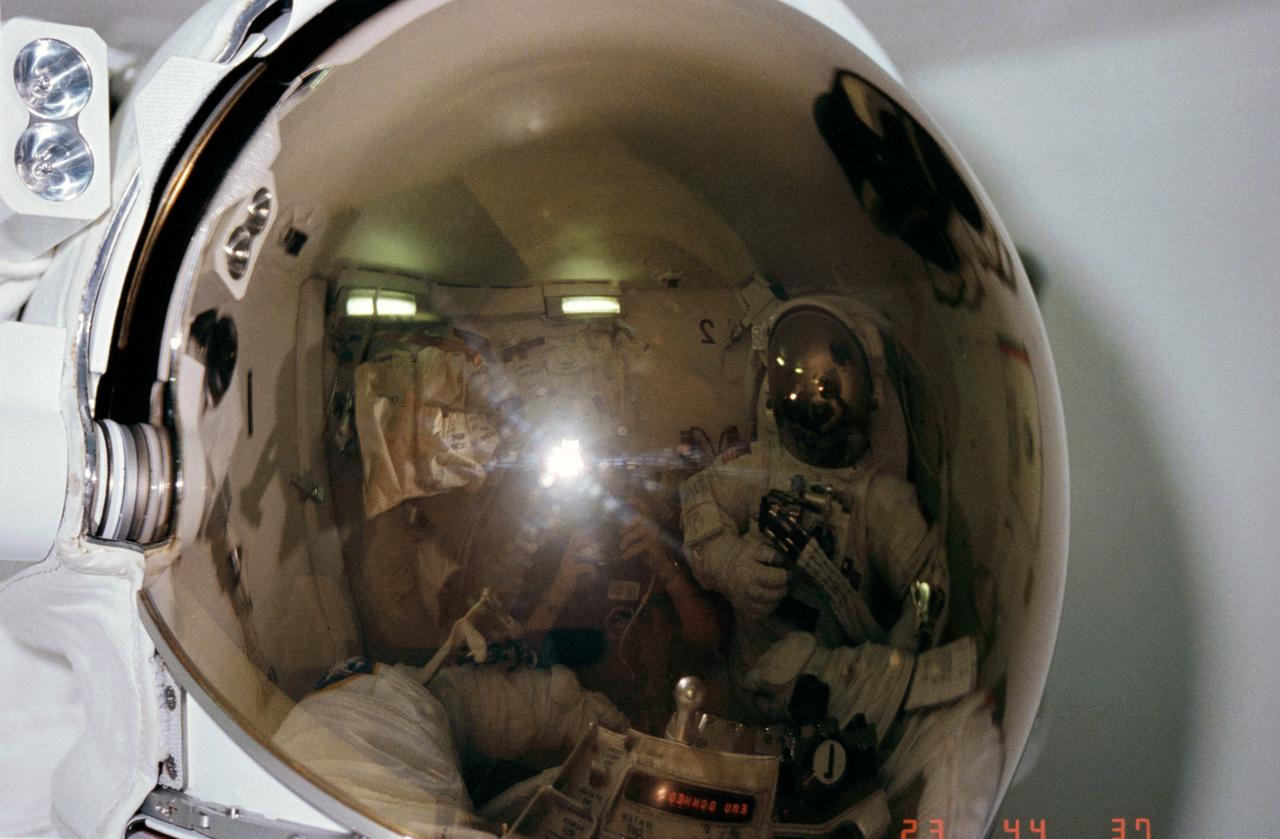
STS006-06-465 (7 April 1983) --- Three-fourths of the STS-6 astronaut crew appears in this unusual 35mm frame exposed in the airlock of the Earth-orbiting space shuttle Challenger. Astronaut F. Story Musgrave’s helmet visor encompasses all the action in the frame. Dr. Musgrave and astronaut Donald H. Peterson (reflected on right side of the visor) were fully suited in their Extravehicular Mobility Unit (EMU) spacesuits and were participating in EVA preparation exercises. Astronaut Karol J. Bobko, STS-6 pilot, wearing conventional onboard shuttle clothing, photographed the two during their procedures and appears at center of frame. The reversed number (1 and 2 in the mirrored image represent the EVA designations for the two mission specialists. Photo credit: NASA
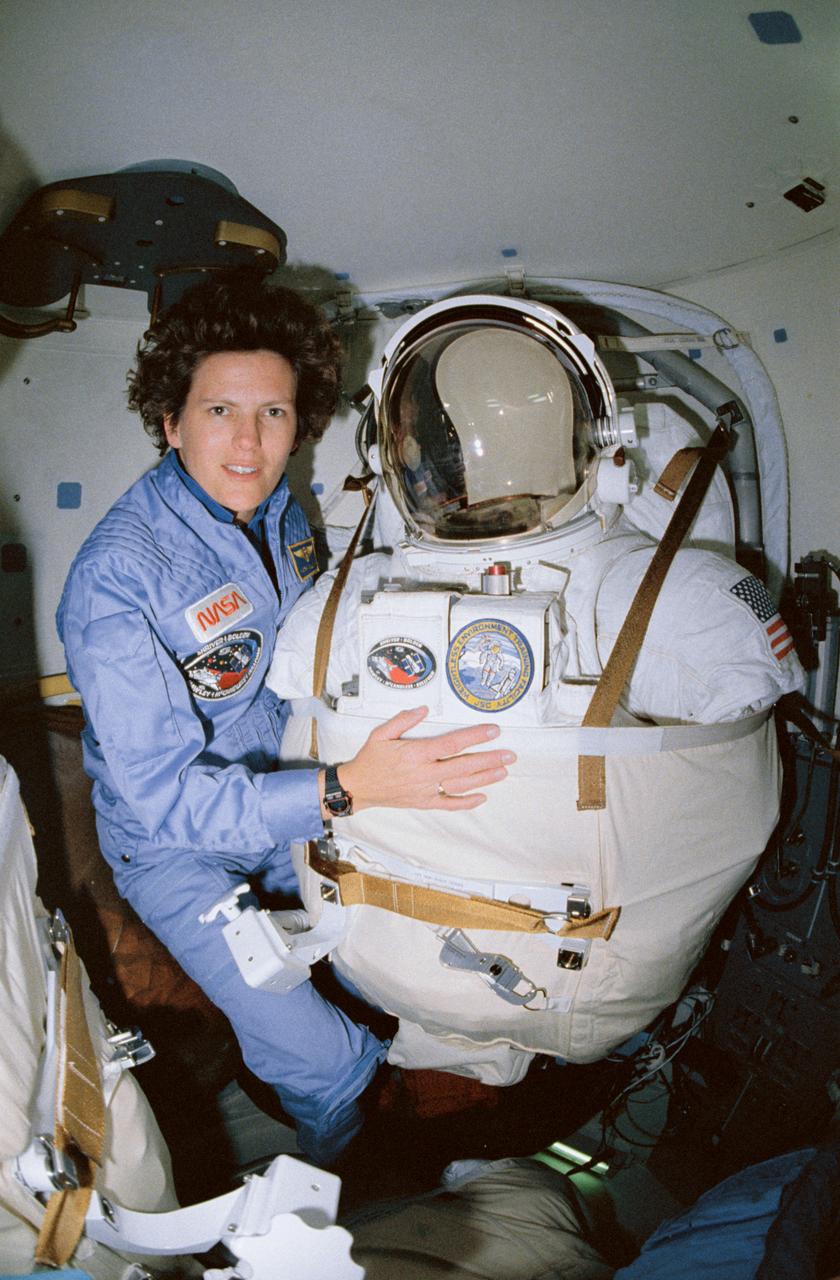
STS-31 Mission Specialist (MS) Kathryn D. Sullivan poses for a picture before beginning extravehicular mobility unit (EMU) donning procedures in the airlock of Discovery, Orbiter Vehicle (OV) 103. Sullivan will remove the lower torso restraint and don EMU which is supported on an airlock adapter plate (AAP). When suited, Sullivan will be ready for contingency extravehicular activity (EVA) in the event that problems arise with the Hubble Space Telescope (HST) deployment. Displayed on the front of the EMU are the STS-31 mission insignia and the JSC Weightless Environment Training Facility (WETF) insignia.
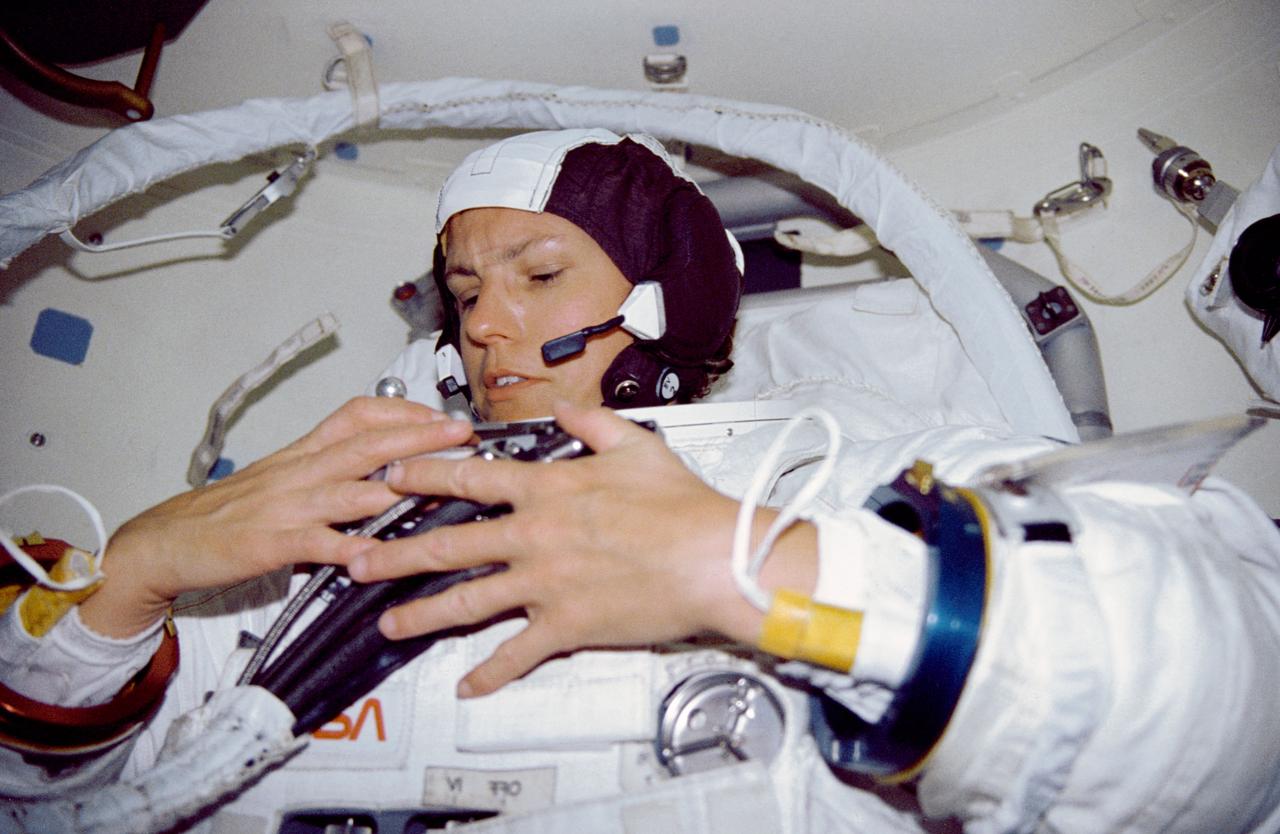
STS-31 Mission Specialist (MS) Kathryn D. Sullivan, wearing extravehicular mobility unit (EMU) & communications carrier assembly (CCA), attaches service and cooling umbilical (SCU) to the EMU connection on the display & control module (DCM) during contingency extravehicular activity (EVA) preparations in the airlock of Discovery, Orbiter Vehicle (OV) 103. The procedure was completed in case an EVA was required to support Hubble Space Telescope (HST) deployment.
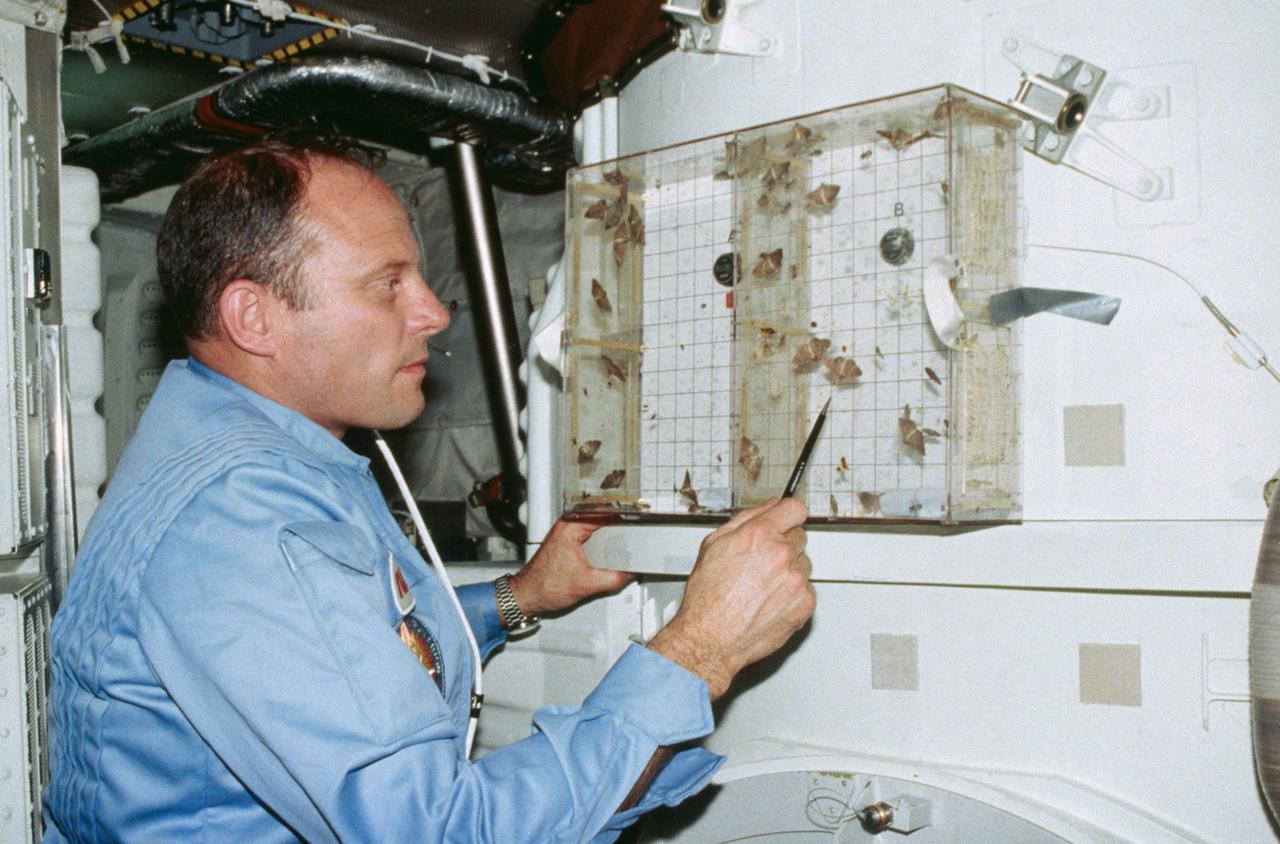
Commander Jack Lousma examines Insect Flight Motion Study (Student Experiment) taped to the airlock on the aft middeck. Lousma points to velvetbean caterpillar moth activity with a pen.
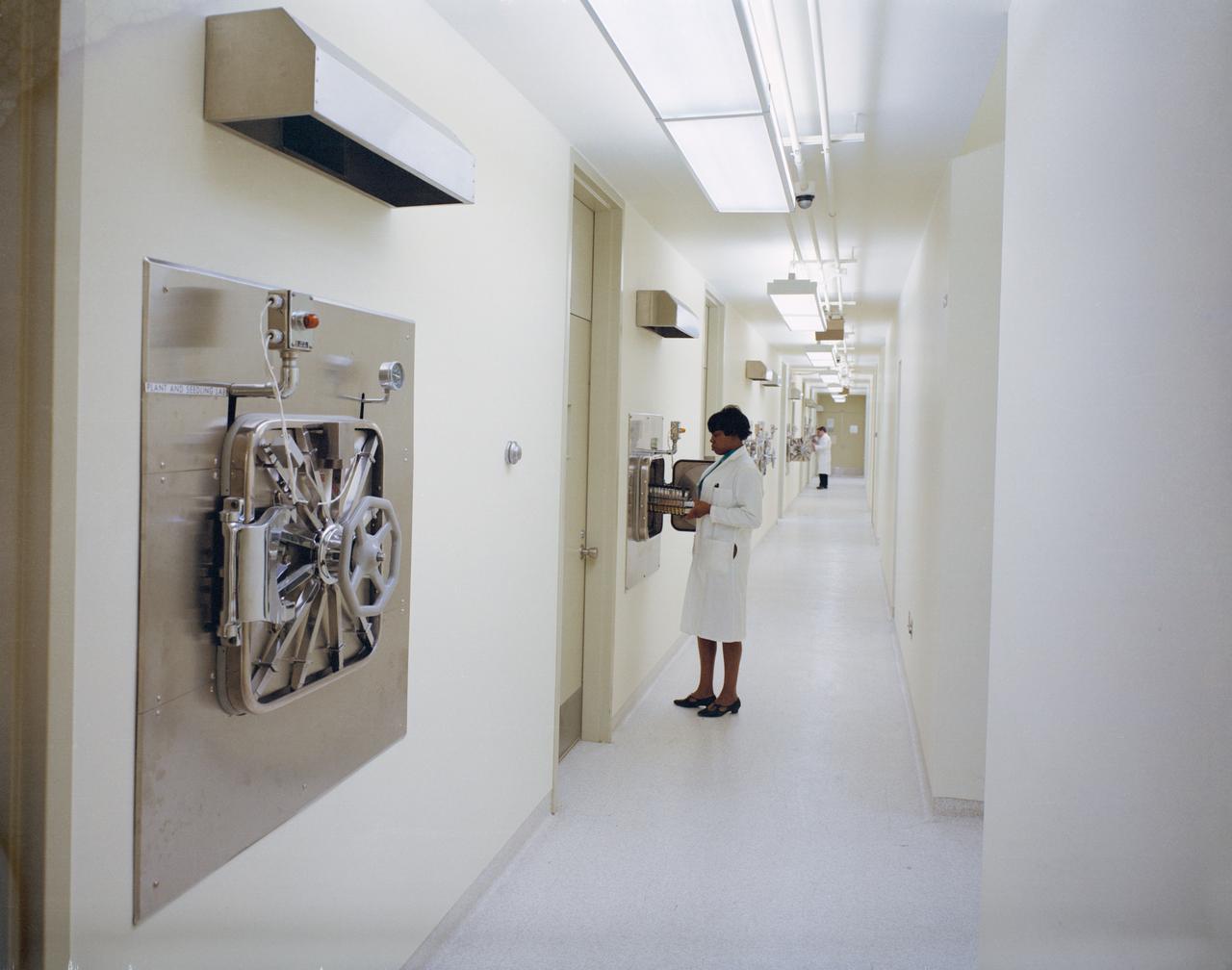
Biological Test Laboratory, Sample Operations Area, Lunar Receiving Laboratory, bldg 37, Manned Spacecraft Center, Houston, Texas.
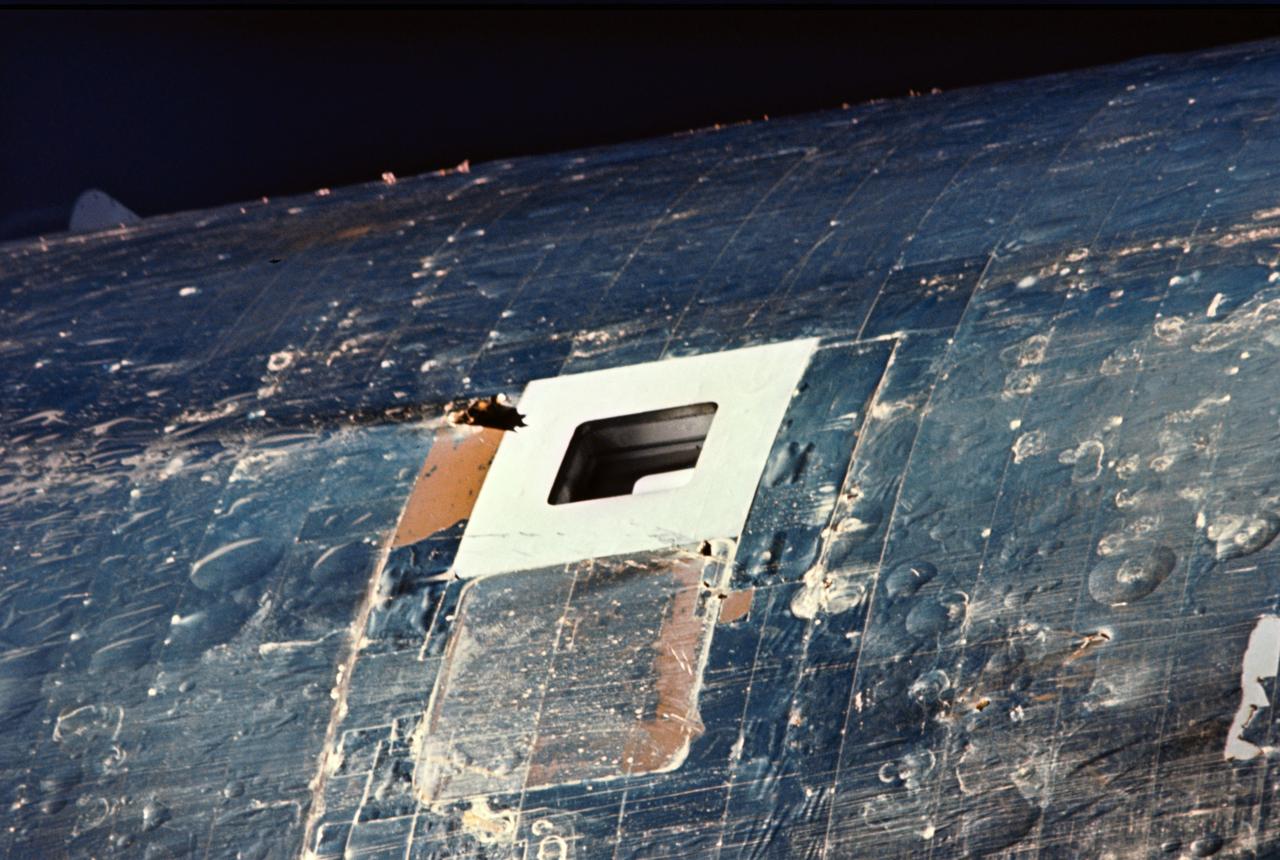
This close up view of one of the two scientific airlocks on the Skylab Orbital Workshop Section was taken from the Skylab 2 Command/Service Module during its initial fly around inspection. The micrometeoroid shield can be seen to be missing from this section of the orbital workshop. A parasol solar shield was later devised and put in place over this damaged area through this very same airlock opening.
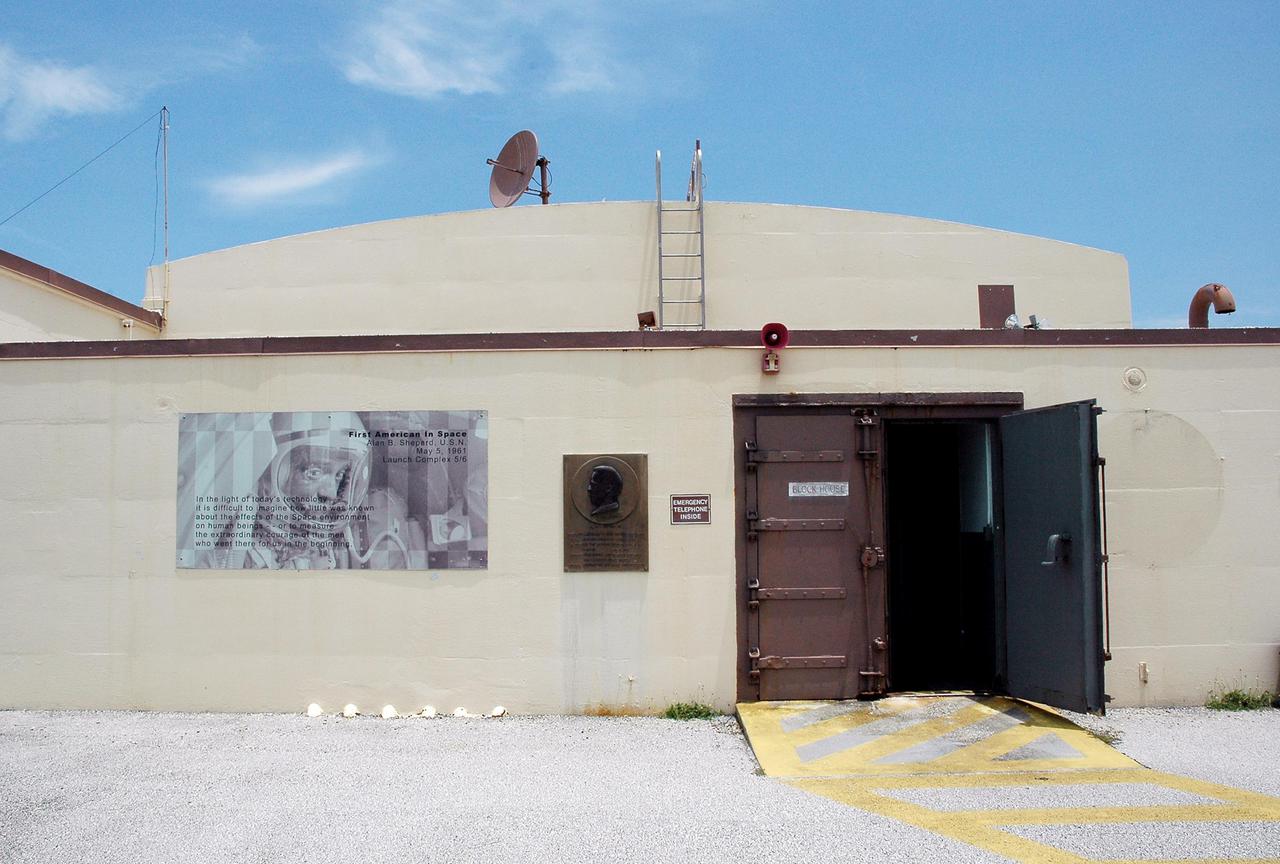
KENNEDY SPACE CENTER, FLA. - This is Launch Complex 5_6 blockhouse, now a museum at the Cape Canaveral Air Force Station (CCAFS) in Florida, where long-lost space suits were found. A recent venture into a long-locked room at CCAFS uncovered interesting artifacts of a bygone era: retired space suits from Americans who trained in the 1960s to be astronauts aboard an Air Force orbiting reconnaissance laboratory. Two security officers were doing a check of a facility at Launch Complex 5_6 blockhouse. NASA Special Agent Dan E. Oakland and Security Manager Henry Butler, who is with Delaware North Parks and Resorts, the company that oversees the museum, discovered a locked room. Space suits from the Air Force’s planned Manned Orbiting Laboratory (MOL) program were found in the room Begun in 1964, the MOL program was an Air Force initiative that would have sent Air Force astronauts to a space station in a Gemini capsule. After spending a few weeks in orbit, the crew would undock and return to Earth. A test launch from Complex 40 on Nov. 30, 1966, of a MOL was conducted with an unmanned Gemini capsule. The MOL was constructed from tankage of a Titan II rocket. The operational MOL was planned to be launched into a polar orbit from Vandenberg Air Force Base in California. The Air Force abandoned the program in 1969, but the program produced a great deal of technological development, and three groups of military officers trained to be MOL astronauts. When the program was cancelled, seven of the younger astronauts were transferred to the agency’s human space flight program and went on to have standout careers. Among them were Robert Crippen, pilot of the first Space Shuttle mission, and Richard H. 'Dick' Truly, who later became NASA Administrator.
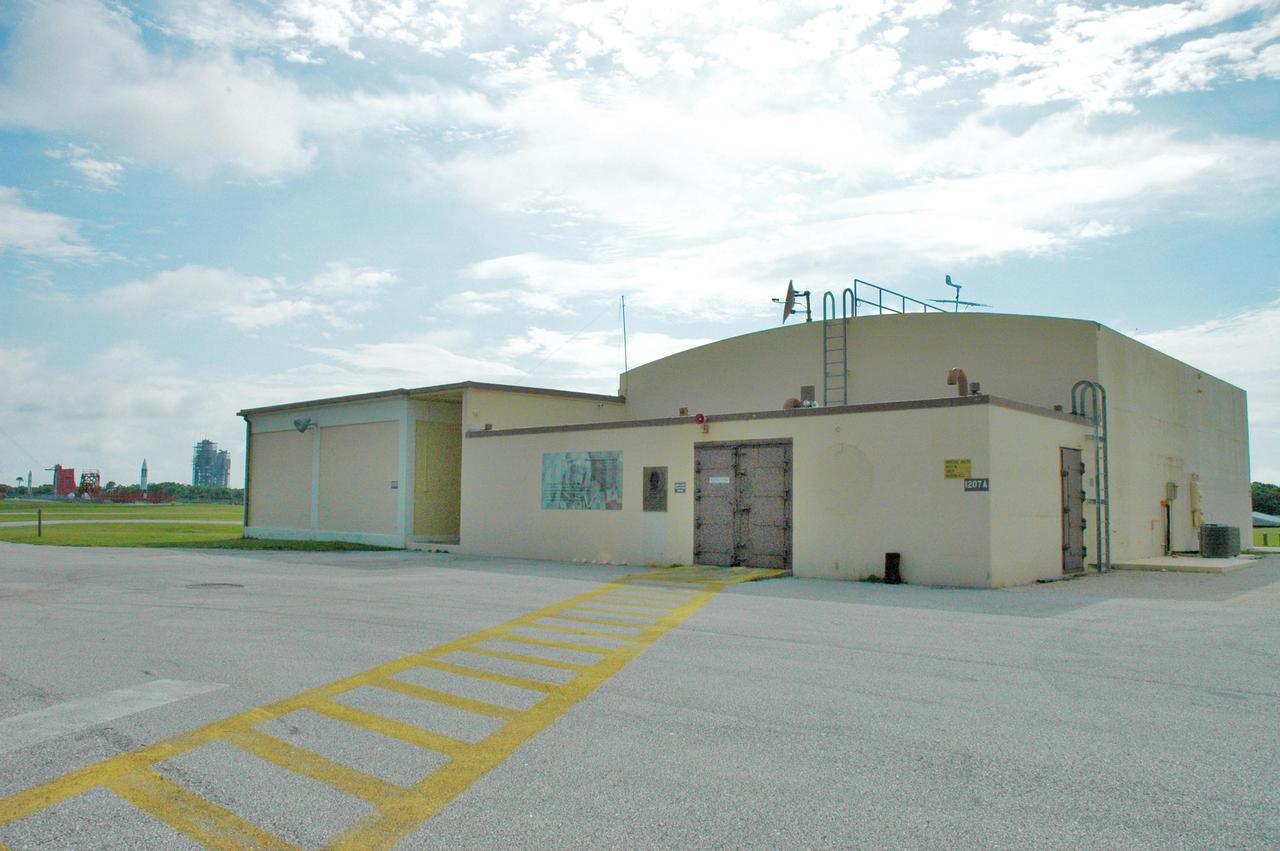
KENNEDY SPACE CENTER, FLA. - This is Launch Complex 5_6 blockhouse, now a museum at the Cape Canaveral Air Force Station (CCAFS) in Florida, where long-lost spacesuits were found. A recent venture into a long-locked room at CCAFS uncovered interesting artifacts of a bygone era: retired space suits from Americans who trained in the 1960s to be astronauts aboard an Air Force orbiting reconnaissance laboratory. Two security officers were doing a check of a facility at Launch Complex 5_6 blockhouse. NASA Special Agent Dan E. Oakland and Security Manager Henry Butler, with Delaware North Parks and Resorts, which oversees the museum, discovered a locked room. Space suits from the Air Force’s planned Manned Orbiting Laboratory (MOL) program were found in the room Begun in 1964, the MOL program was an Air Force initiative that would have sent Air Force astronauts to a space station in a Gemini capsule. After spending a few weeks in orbit, the crew would undock and return to Earth. A test launch from Complex 40 on Nov. 30, 1966, of a MOL was conducted with an unmanned Gemini capsule. The MOL was constructed from tankage of a Titan II rocket. The operational MOL was planned to be launched into a polar orbit from Vandenberg Air Force Base in California. The Air Force abandoned the program in 1969, but the program produced a great deal of technological development, and three groups of military officers trained to be MOL astronauts. When the program was cancelled, seven of the younger astronauts were transferred to the agency’s human space flight program and went on to have standout careers. Among them were Robert Crippen, pilot of the first Space Shuttle mission, and Richard H. 'Dick' Truly, who later became NASA Administrator.
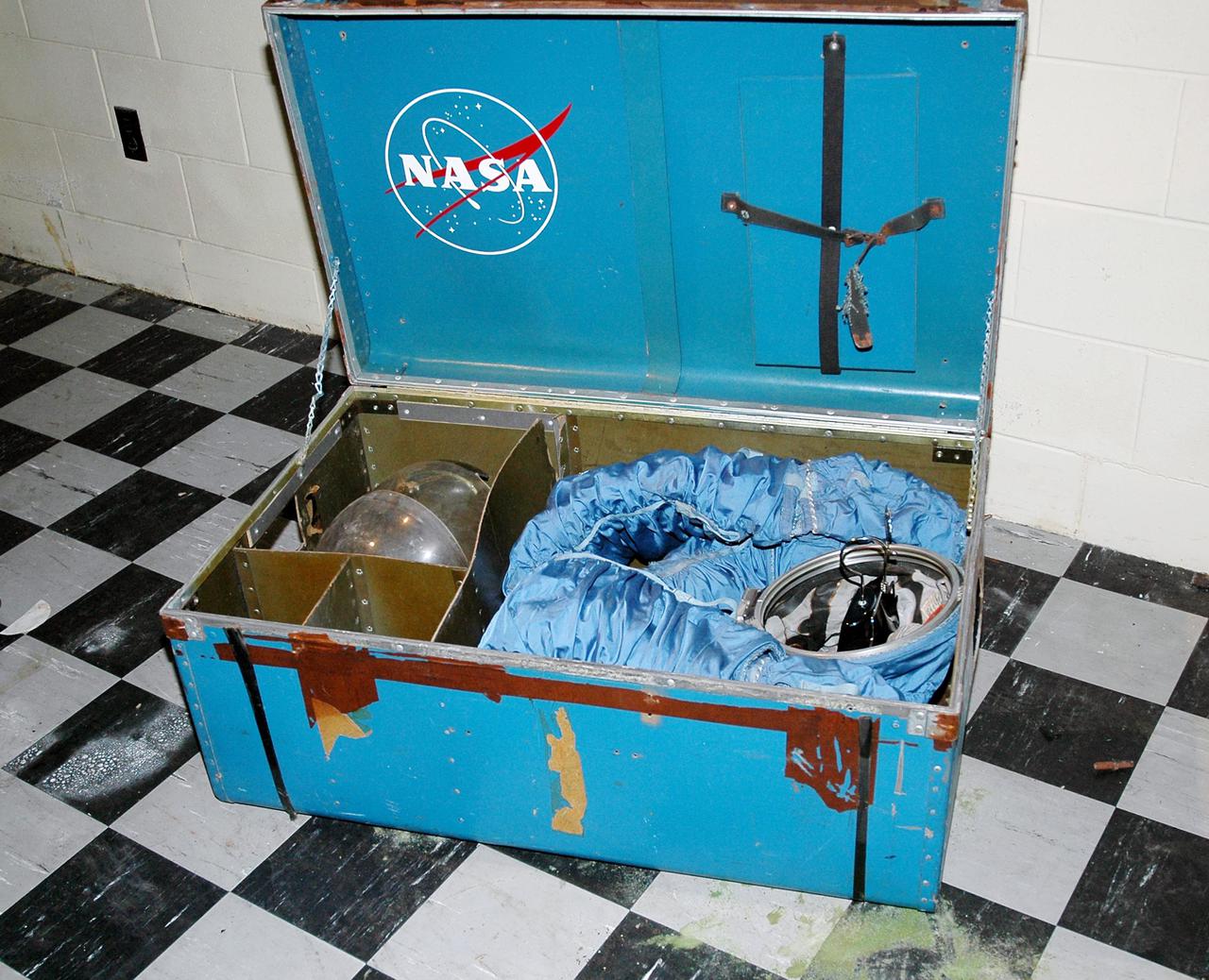
KENNEDY SPACE CENTER, FLA. - This locker reveals a long-lost spacesuit recently uncovered at the Cape Canaveral Air Force Station (CCAFS) in Florida. A recent venture into a long-locked room at CCAFS uncovered interesting artifacts of a bygone era: retired space suits from Americans who trained in the 1960s to be astronauts aboard an Air Force orbiting reconnaissance laboratory. Two security officers were doing a check of a facility at Launch Complex 5_6 blockhouse. NASA Special Agent Dan E. Oakland and Security Manager Henry Butler, who is with Delaware North Parks and Resorts, the company that oversees the museum, discovered a locked room. Space suits from the Air Force’s planned Manned Orbiting Laboratory (MOL) program were found in the room Begun in 1964, the MOL program was an Air Force initiative that would have sent Air Force astronauts to a space station in a Gemini capsule. After spending a few weeks in orbit, the crew would undock and return to Earth. A test launch from Complex 40 on Nov. 30, 1966, of a MOL was conducted with an unmanned Gemini capsule. The MOL was constructed from tankage of a Titan II rocket. The operational MOL was planned to be launched into a polar orbit from Vandenberg Air Force Base in California. The Air Force abandoned the program in 1969, but the program produced a great deal of technological development, and three groups of military officers trained to be MOL astronauts. When the program was cancelled, seven of the younger astronauts were transferred to the agency’s human space flight program and went on to have standout careers. Among them were Robert Crippen, pilot of the first Space Shuttle mission, and Richard H. 'Dick' Truly, who later became NASA Administrator.
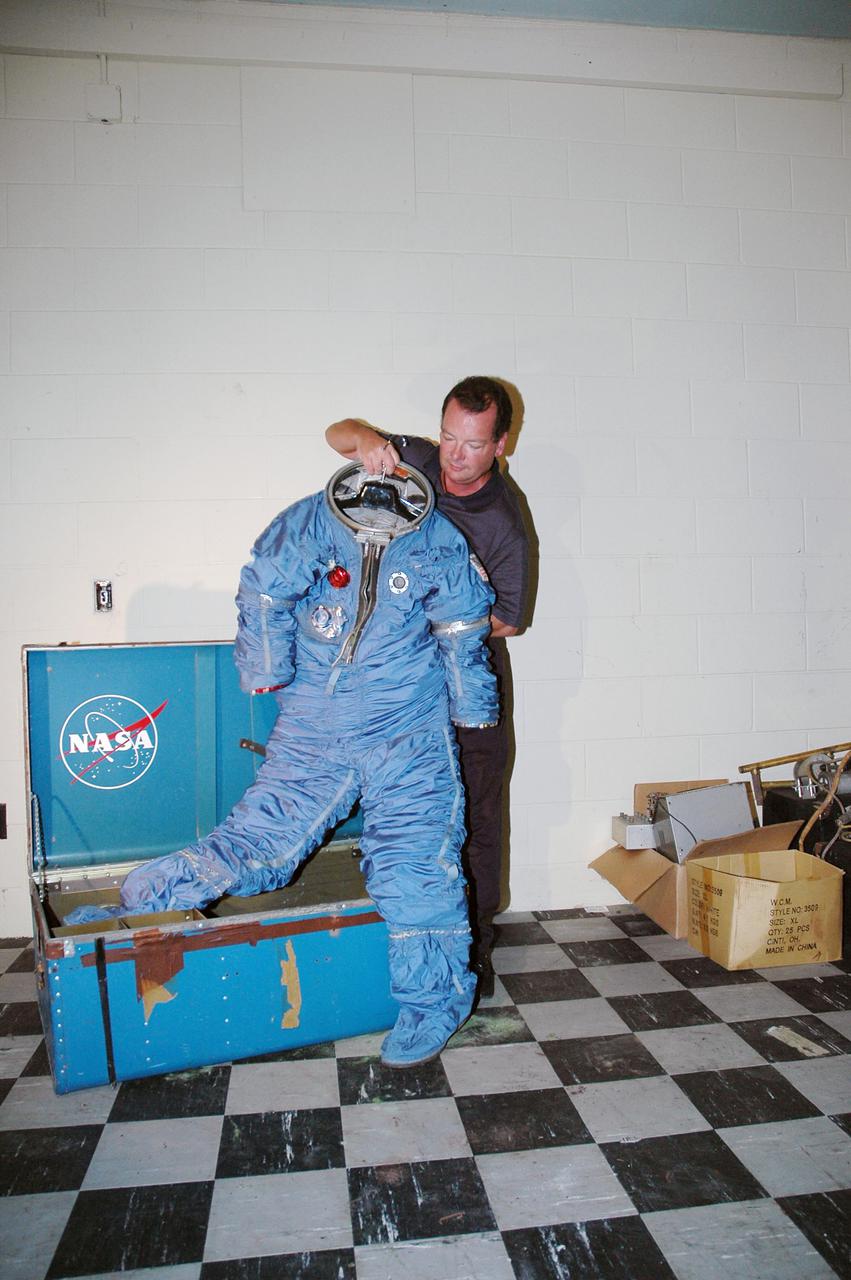
KENNEDY SPACE CENTER, FLA. - NASA Special Agent Dan Oakland holds up a long-lost spacesuit recently uncovered at the Cape Canaveral Air Force Station (CCAFS) in Florida. A recent venture into a long-locked room at CCAFS uncovered interesting artifacts of a by-gone era: retired space suits from Americans who trained in the 1960s to be astronauts aboard an Air Force orbiting reconnaissance laboratory. Two security officers were doing a check of a facility at Launch Complex 5_6 blockhouse. Oakland and Security Manager Henry Butler, who is with Delaware North Parks and Resorts, the company that oversees the museum, discovered a locked room. Space suits from the Air Force’s planned Manned Orbiting Laboratory (MOL) program were found in the room Begun in 1964, the MOL program was an Air Force initiative that would have sent Air Force astronauts to a space station in a Gemini capsule. After spending a few weeks in orbit, the crew would undock and return to Earth. A test launch from Complex 40 on Nov. 30, 1966, of a MOL was conducted with an unmanned Gemini capsule. The MOL was constructed from tankage of a Titan II rocket. The operational MOL was planned to be launched into a polar orbit from Vandenberg Air Force Base in California. The Air Force abandoned the program in 1969, but the program produced a great deal of technological development, and three groups of military officers trained to be MOL astronauts. When the program was cancelled, seven of the younger astronauts were transferred to the agency’s human space flight program and went on to have standout careers. Among them were Robert Crippen, pilot of the first Space Shuttle mission, and Richard H. 'Dick' Truly, who later became NASA Administrator.
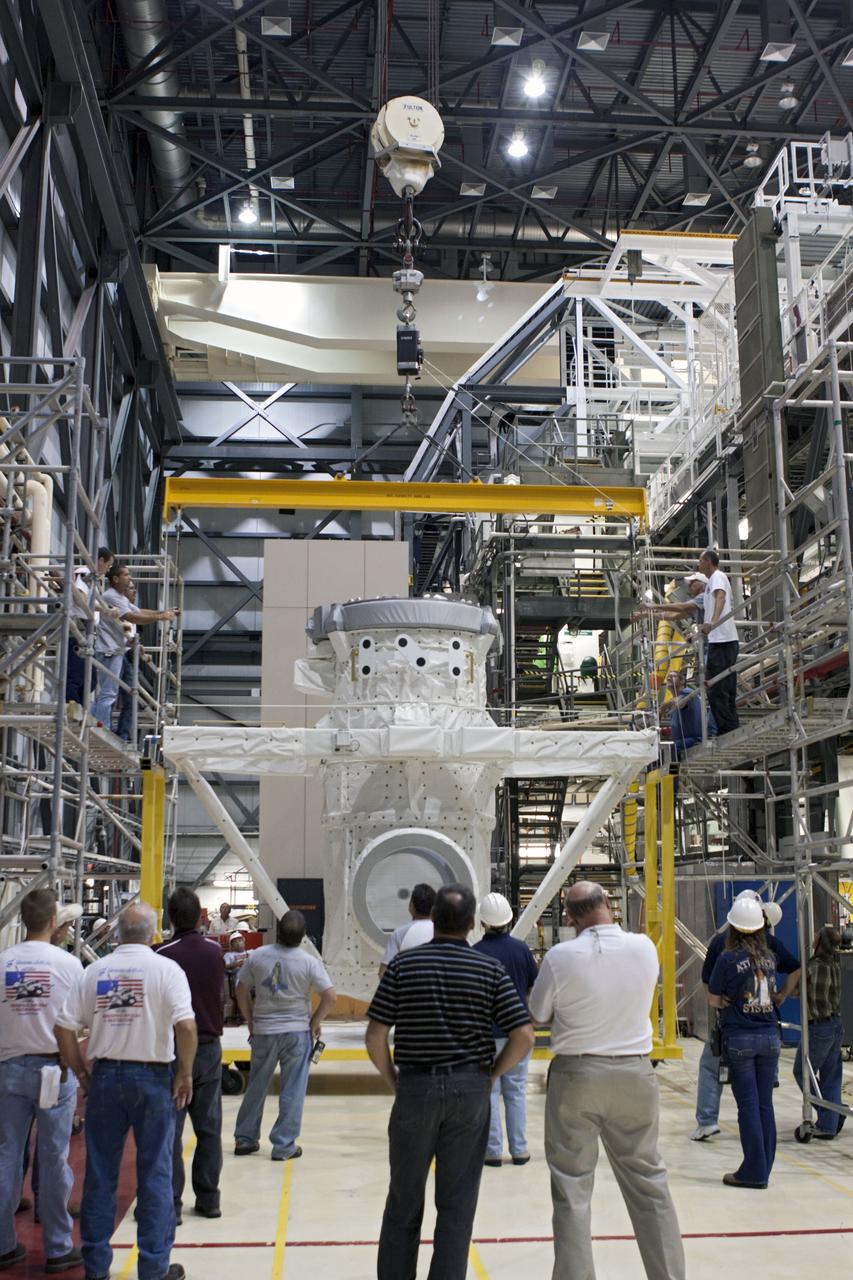
CAPE CANAVERAL, Fla. – At NASA's Kennedy Space Center in Florida, a mock air lock is prepared for installation in the payload bay of the space shuttle Atlantis in Bay 2 of the Orbiter Processing Facility. Atlantis is undergoing final preparations for its transfer to the Kennedy Space Center Visitor Complex targeted for November. The work is part of Transition and Retirement of the remaining space shuttles, Atlantis and Endeavour. Atlantis is being prepared for public display at Kennedy's Visitor Complex. Over the course of its 26-year career, Atlantis spent 293 days in space during 33 missions. For more information, visit http://www.nasa.gov/transition Photo credit: NASA/Jim Grossmann
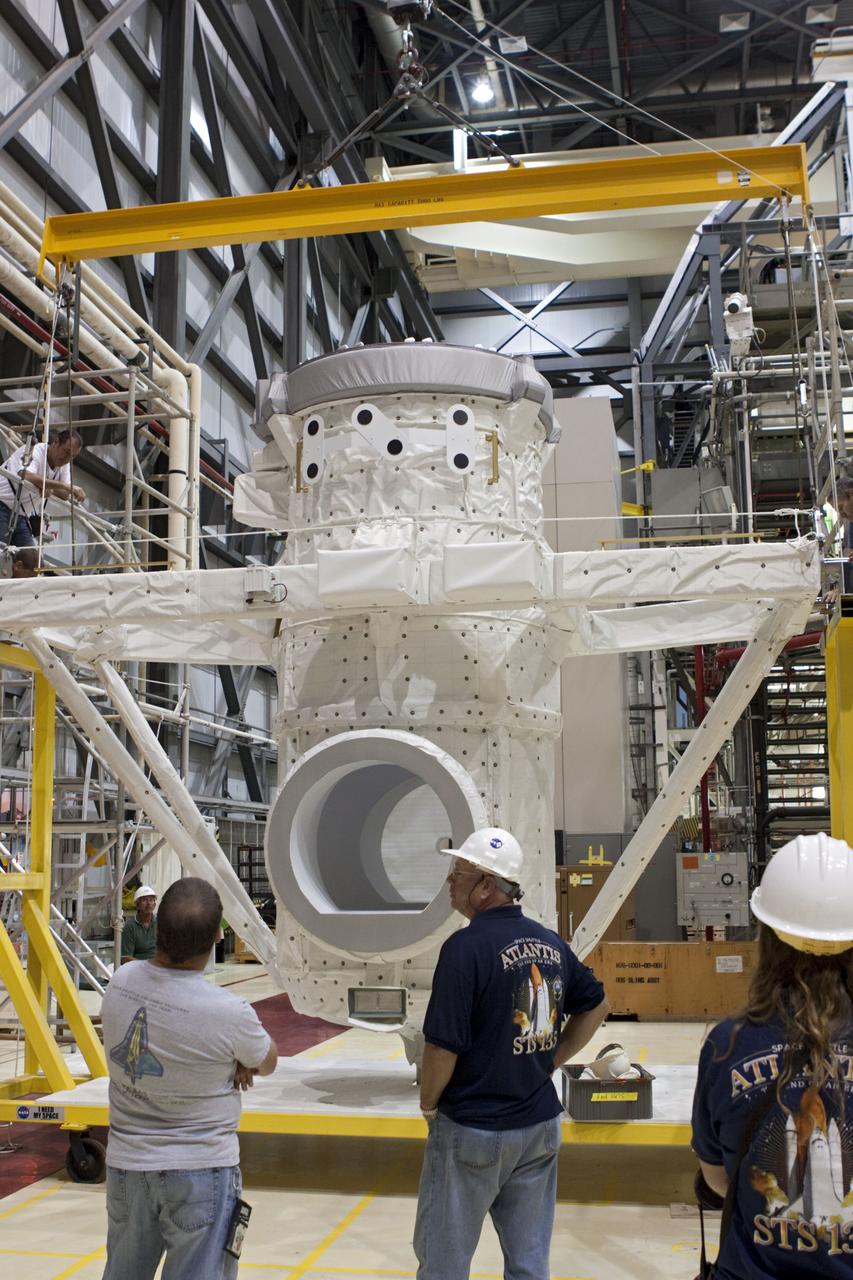
CAPE CANAVERAL, Fla. – At NASA's Kennedy Space Center in Florida, United Space Alliance technicians prepare a mock air lock for installation in the payload bay of the space shuttle Atlantis in Bay 2 of the Orbiter Processing Facility. Atlantis is undergoing final preparations for its transfer to the Kennedy Space Center Visitor Complex targeted for November. The work is part of Transition and Retirement of the remaining space shuttles, Atlantis and Endeavour. Atlantis is being prepared for public display at Kennedy's Visitor Complex. Over the course of its 26-year career, Atlantis spent 293 days in space during 33 missions. For more information, visit http://www.nasa.gov/transition Photo credit: NASA/Jim Grossmann
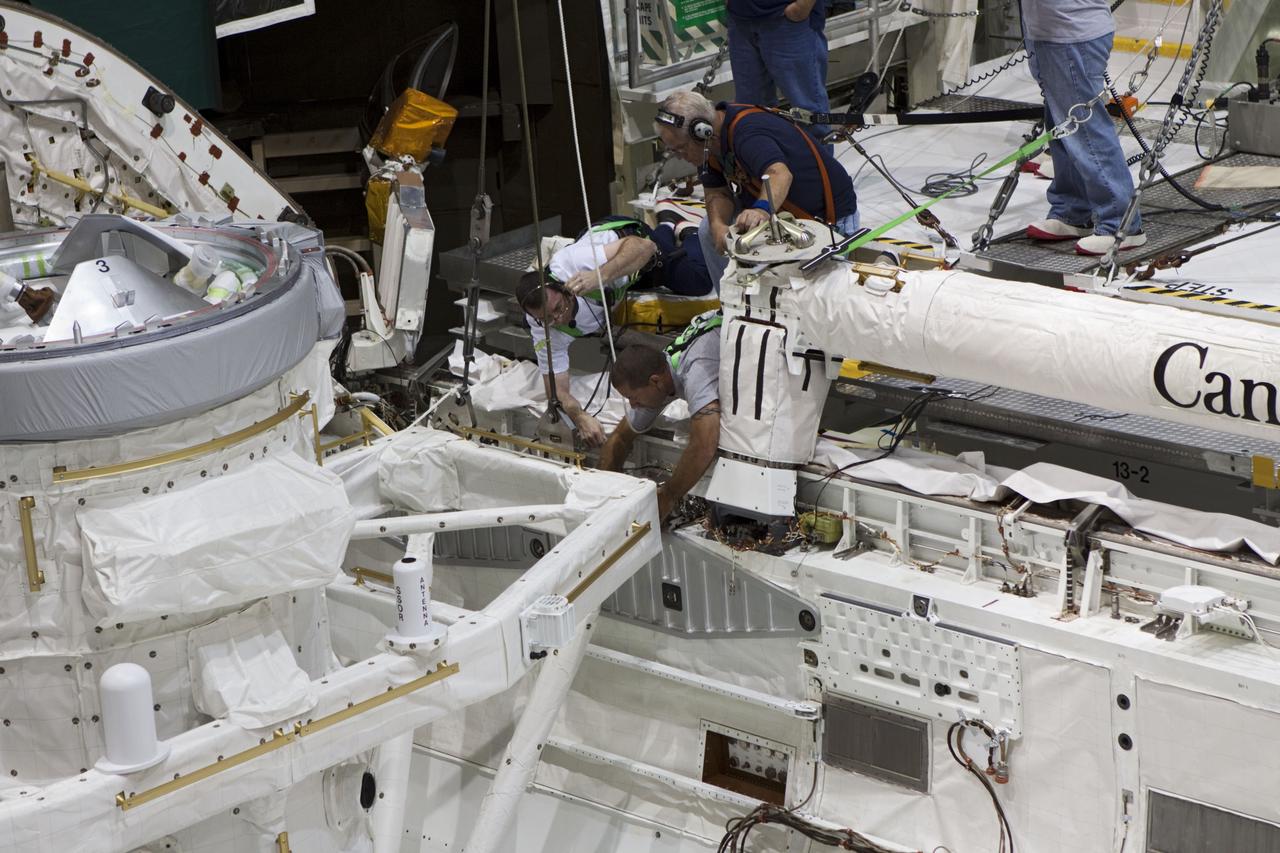
CAPE CANAVERAL, Fla. – At NASA's Kennedy Space Center in Florida, United Space Alliance technicians install a mock air lock in the payload bay of the space shuttle Atlantis in Bay 2 of the Orbiter Processing Facility. Atlantis is undergoing final preparations for its transfer to the Kennedy Space Center Visitor Complex targeted for November. The work is part of Transition and Retirement of the remaining space shuttles, Atlantis and Endeavour. Atlantis is being prepared for public display at Kennedy's Visitor Complex. Over the course of its 26-year career, Atlantis spent 293 days in space during 33 missions. For more information, visit http://www.nasa.gov/transition Photo credit: NASA/Jim Grossmann

CAPE CANAVERAL, Fla. – In Bay 2 of the Orbiter Processing Facility at NASA's Kennedy Space Center in Florida, a mock air lock has been installed in the payload bay of the space shuttle Atlantis. The orbiter is undergoing final preparations for its transfer to the Kennedy Space Center Visitor Complex targeted for November. The work is part of Transition and Retirement of the remaining space shuttles, Atlantis and Endeavour. Atlantis is being prepared for public display at Kennedy's Visitor Complex. Over the course of its 26-year career, Atlantis spent 293 days in space during 33 missions. For more information, visit http://www.nasa.gov/transition Photo credit: NASA/Jim Grossmann
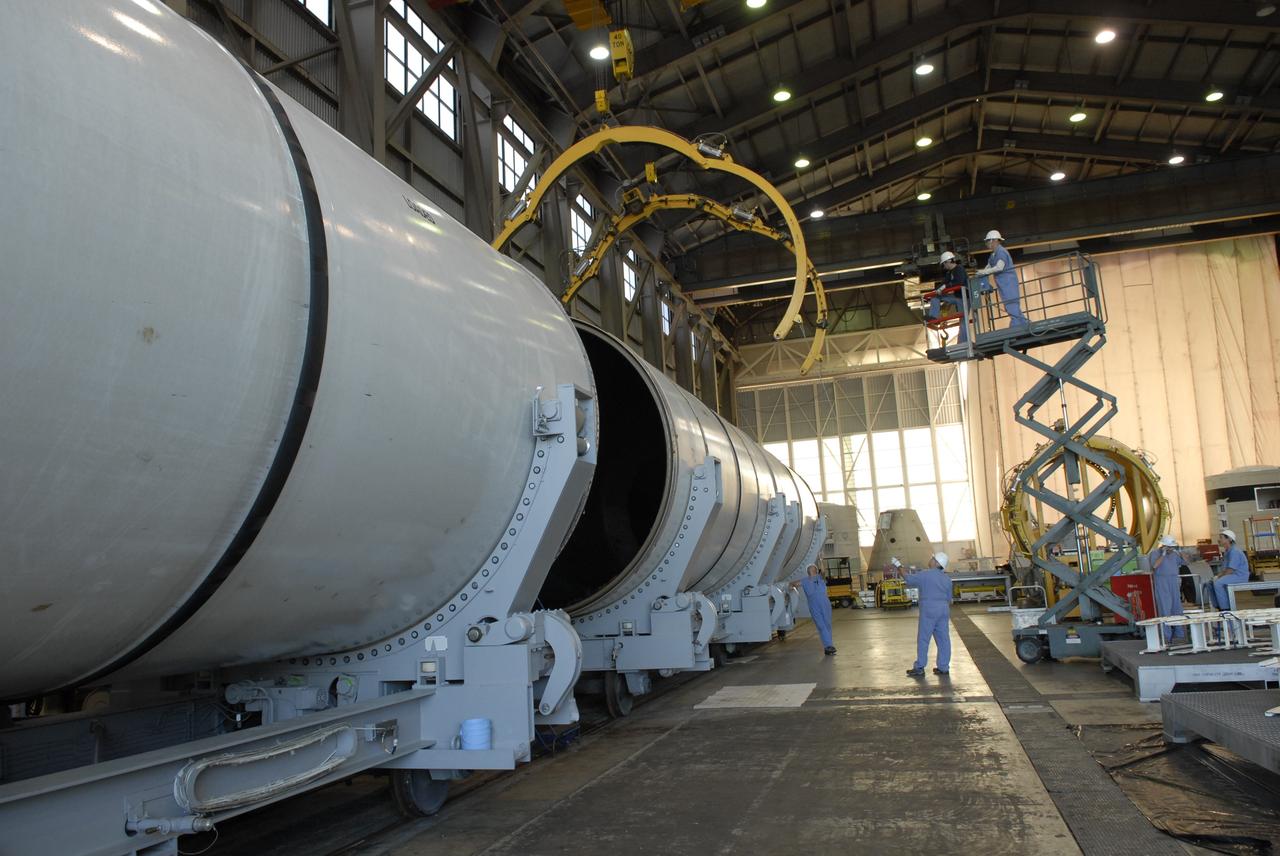
CAPE CANAVERAL, Fla. -- In Hangar AF at Cape Canaveral, Fla., separation rings are moved above two segments of one of the retrieved solid rocket boosters from the STS-126 launch. The rings will be lowered and locked around the segments. The pins attaching the segments to each other are removed at the start. Each separation ring has three joints that help mold the ring around the segment and an air motor is used to rotate the rings to separate the segments. After disassembly, the segments will be sent to ATK (Alliant Techsystems) in Utah for final processing and return to Kennedy for another shuttle launch. Photo credit: NASA/Jack Pfaller
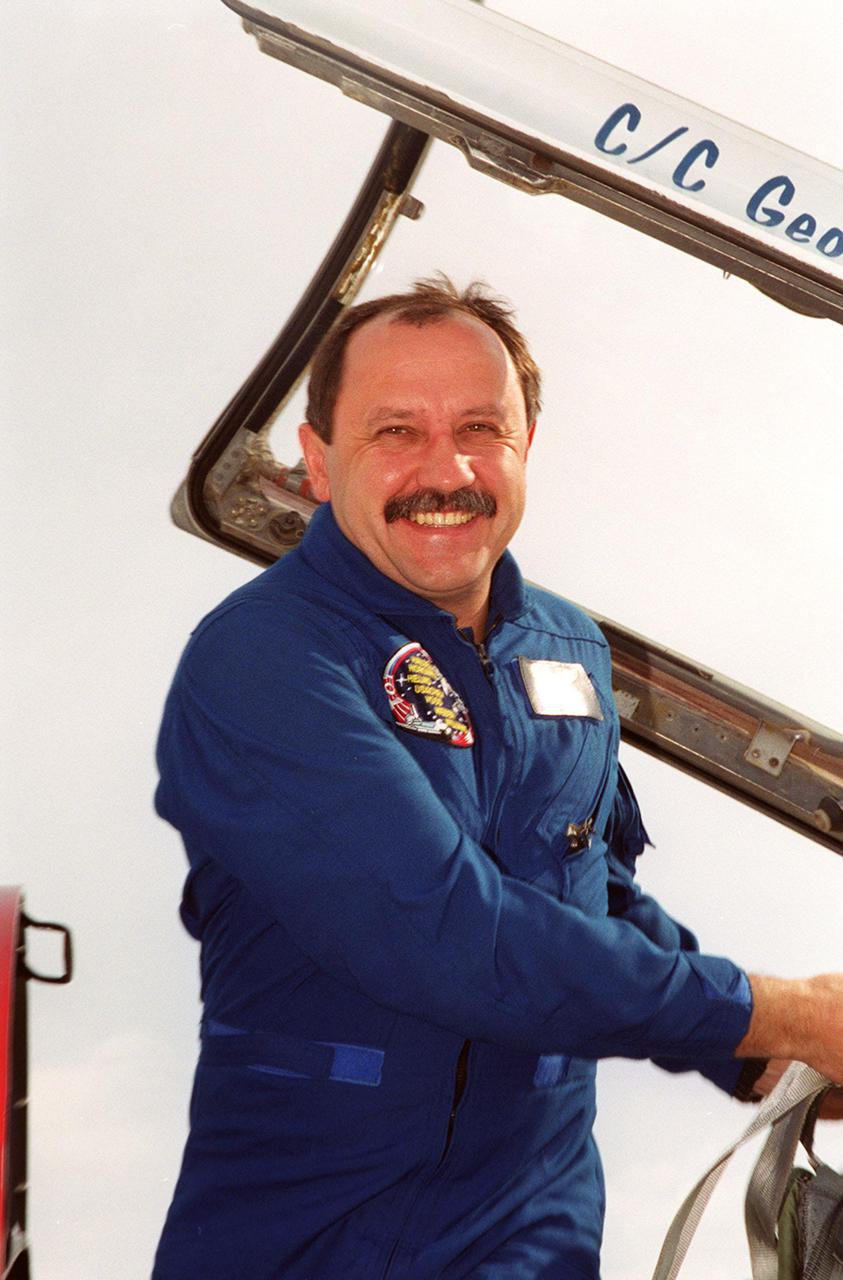
Cosmonaut Yury Usachev arrives at the KSC Shuttle Landing Facility. Usachev s flying on mission STS-102, launching March 8, as part of the Expedition Two crew going to the International Space Station. The other members of the Expedition Two crew are James Voss and Susan Helms. They are at KSC to inspect the air lock that will be carried to the Station during their tenure in space. STS-102 will be Helms’ and Voss’s fifth Shuttle flight, and Usachev’s second. They will be replacing the Expedition One crew (Bill Shepherd, Yuri Gidzenko and Sergei Krikalev), who will return to Earth March 20 on Discovery along with the STS-102 crew
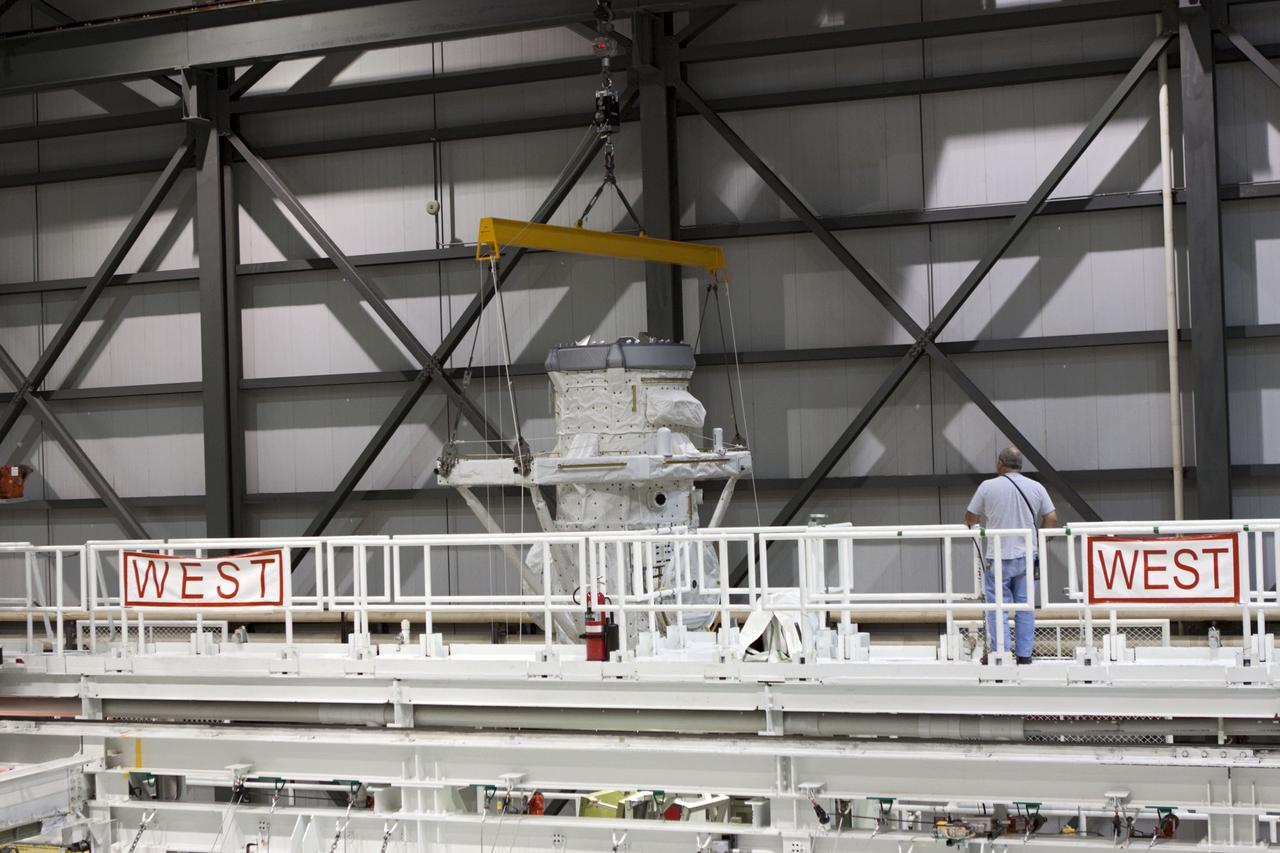
CAPE CANAVERAL, Fla. – At NASA's Kennedy Space Center in Florida, a crane is used to lift a mock air lock being prepared for installation in the payload bay of the space shuttle Atlantis in Bay 2 of the Orbiter Processing Facility. Atlantis is undergoing final preparations for its transfer to the Kennedy Space Center Visitor Complex targeted for November. The work is part of Transition and Retirement of the remaining space shuttles, Atlantis and Endeavour. Atlantis is being prepared for public display at Kennedy's Visitor Complex. Over the course of its 26-year career, Atlantis spent 293 days in space during 33 missions. For more information, visit http://www.nasa.gov/transition Photo credit: NASA/Jim Grossmann
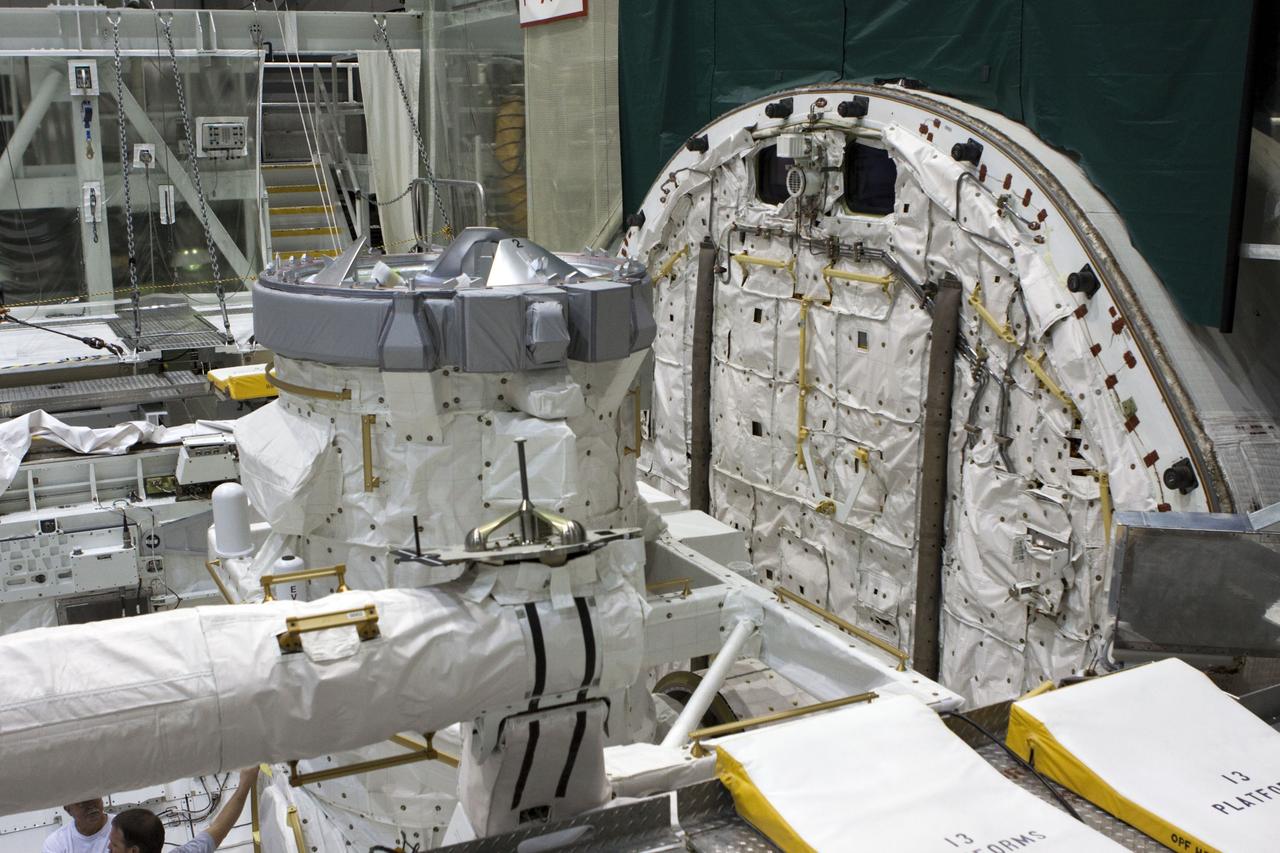
– CAPE CANAVERAL, Fla. – At NASA's Kennedy Space Center in Florida, a mock air lock has been installed in the payload bay of the space shuttle Atlantis in Bay 2 of the Orbiter Processing Facility. Atlantis is undergoing final preparations for its transfer to the Kennedy Space Center Visitor Complex targeted for November. The work is part of Transition and Retirement of the remaining space shuttles, Atlantis and Endeavour. Atlantis is being prepared for public display at Kennedy's Visitor Complex. Over the course of its 26-year career, Atlantis spent 293 days in space during 33 missions. For more information, visit http://www.nasa.gov/transition Photo credit: NASA/Jim Grossmann
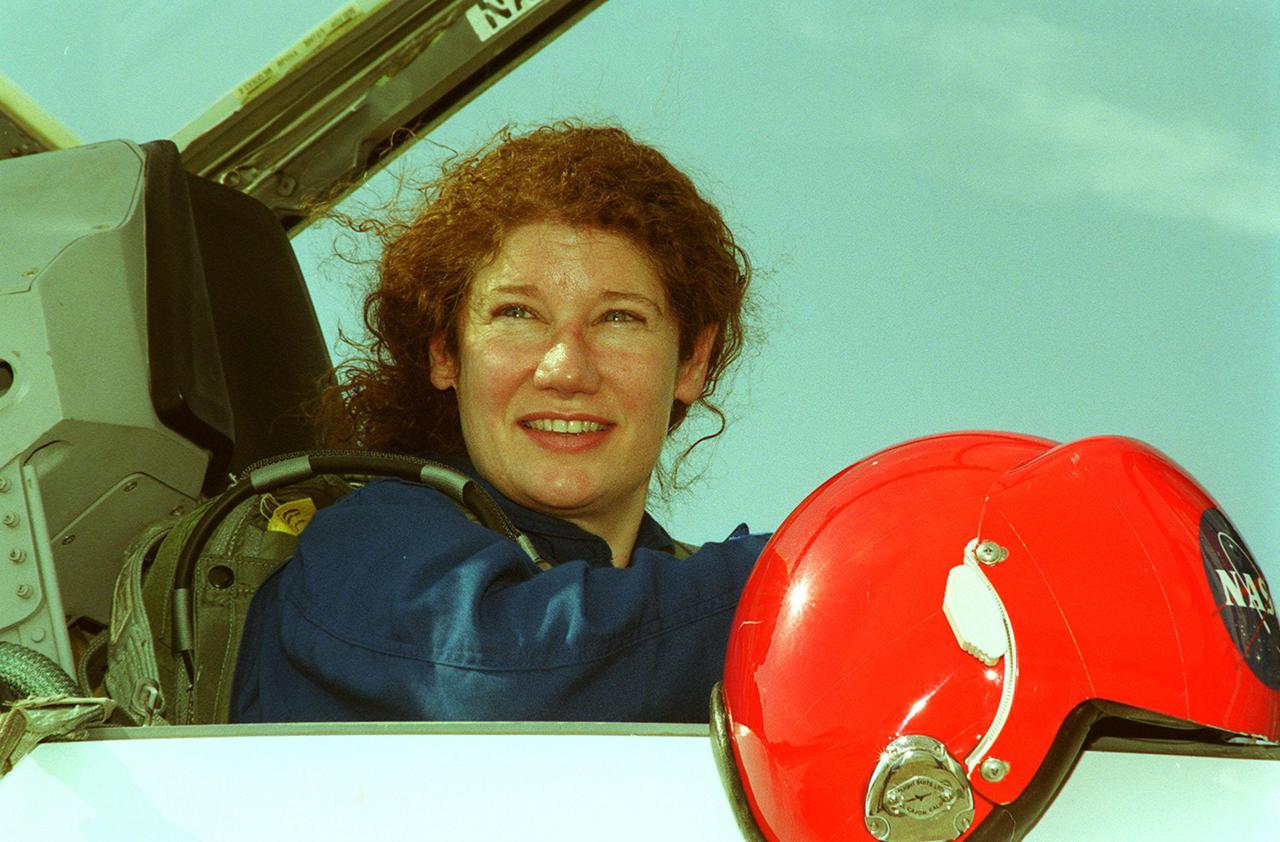
Astronaut Susan Helms arrives at the KSC Shuttle Landing Facility. Helms is flying on mission STS-102, launching March 8, as part of the Expedition Two crew going to the International Space Station. The other members of the Expedition Two crew are James Voss and Yury Usachev. They are at KSC to inspect the air lock that will be carried to the Station during their tenure in space. STS-102 will be Helms’ and Voss’s fifth Shuttle flight, and Usachev’s second. They will be replacing the Expedition One crew (Bill Shepherd, Yuri Gidzenko and Sergei Krikalev), who will return to Earth March 20 on Discovery along with the STS-102 crew
CAPE CANAVERAL, Fla. – At NASA's Kennedy Space Center in Florida, United Space Alliance technicians install a mock air lock in the payload bay of the space shuttle Atlantis in Bay 2 of the Orbiter Processing Facility. Atlantis is undergoing final preparations for its transfer to the Kennedy Space Center Visitor Complex targeted for November. The work is part of Transition and Retirement of the remaining space shuttles, Atlantis and Endeavour. Atlantis is being prepared for public display at Kennedy's Visitor Complex. Over the course of its 26-year career, Atlantis spent 293 days in space during 33 missions. For more information, visit http://www.nasa.gov/transition Photo credit: NASA/Jim Grossmann
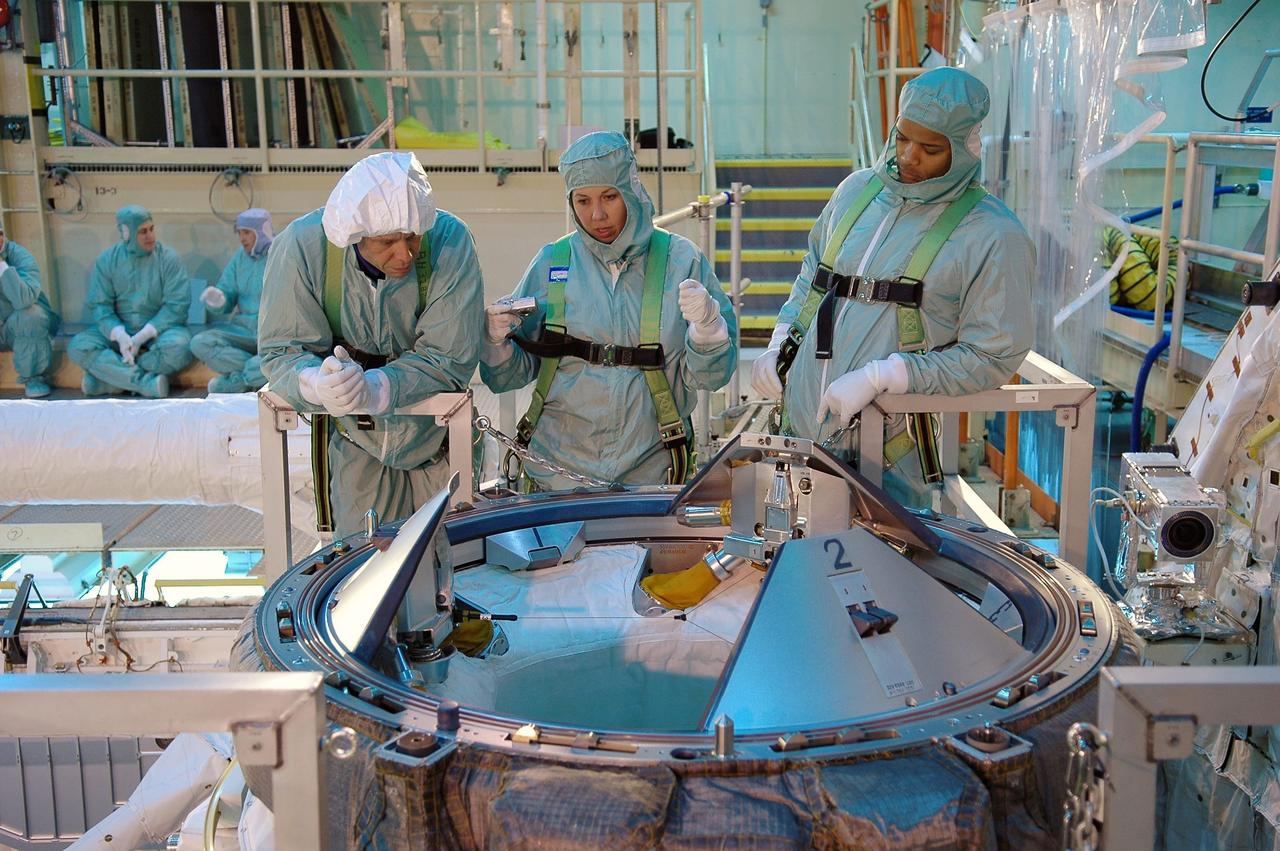
KENNEDY SPACE CENTER, FLA. - During a Crew Equipment Interface Test (CEIT) in the Orbiter Processing Facility, STS-116 crew members get information about the external air lock they are looking at. At left is Mission Specialist Christer Fugelsang and at right is Mission Specialist Robert Curbeam. Fugelsang represents the European Space Agency. A CEIT allows astronauts to become familiar with equipment and hardware they will use on the mission. STS-116 will be mission No. 20 to the International Space Station and construction flight 12A.1. The mission payload is the SPACEHAB module, the P5 integrated truss structure and other key components. Launch is scheduled for no earlier than Dec. 7. Photo credit: NASA/Kim Shiflett
KENNEDY SPACE CENTER, FLA. - During a Crew Equipment Interface Test (CEIT) in the Orbiter Processing Facility, STS-116 Pilot William Oefelein looks at the external air lock in Discovery’s payload bay. A CEIT allows astronauts to become familiar with equipment and hardware they will use on the mission. STS-116 will be mission No. 20 to the International Space Station and construction flight 12A.1. The mission payload is the SPACEHAB module, the P5 integrated truss structure and other key components. Launch is scheduled for no earlier than Dec. 7. Photo credit: NASA/Kim Shiflett
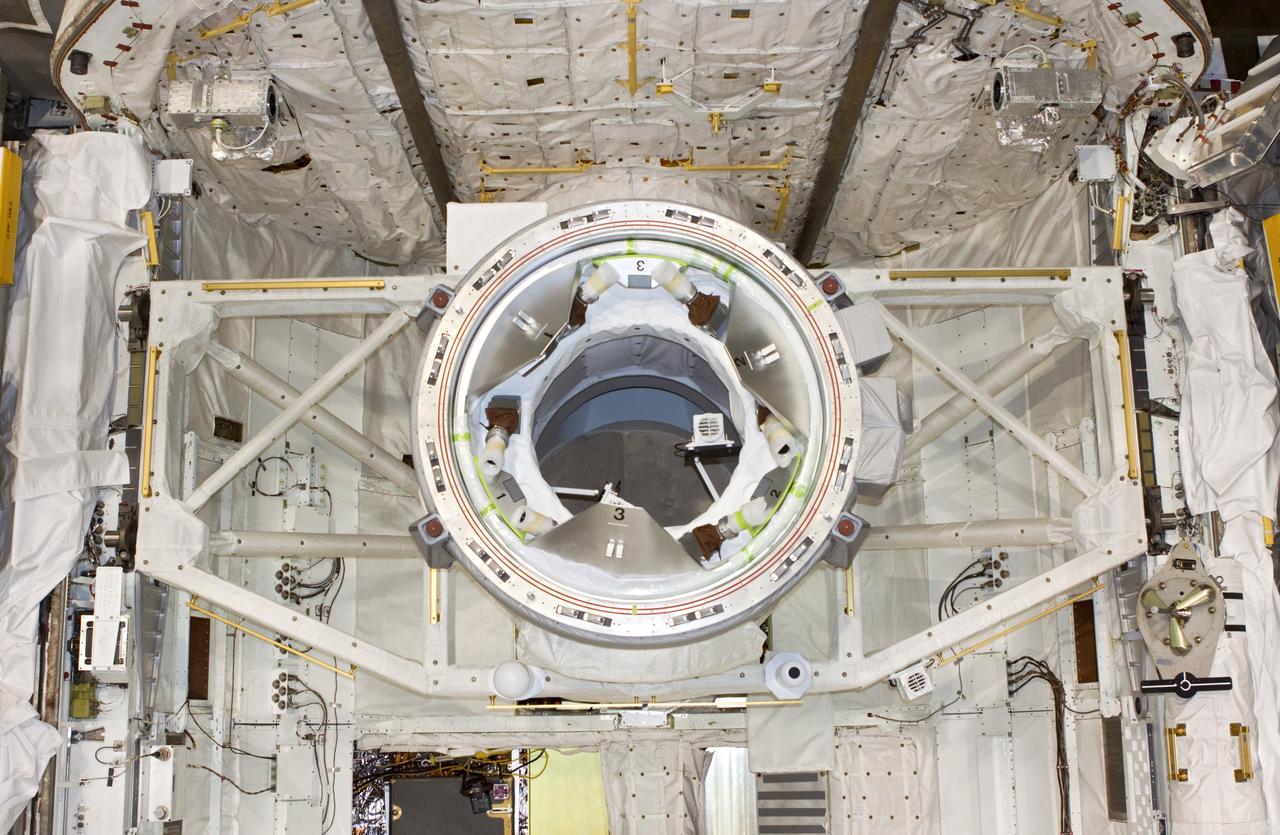
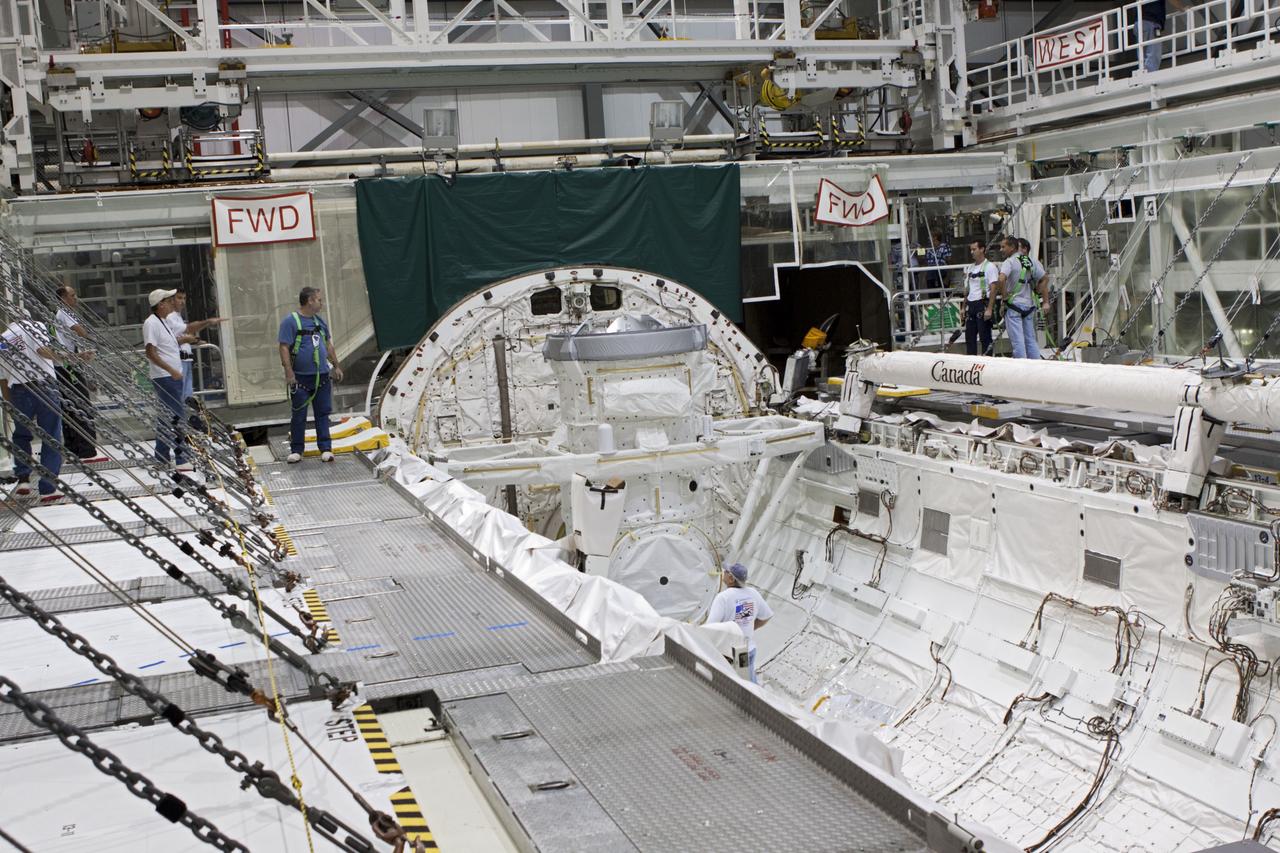
CAPE CANAVERAL, Fla. – In Bay 2 of the Orbiter Processing Facility at NASA's Kennedy Space Center in Florida, a mock air lock, seen in this overhead view, has been installed in the payload bay of the space shuttle Atlantis. The orbiter is undergoing final preparations for its transfer to the Kennedy Space Center Visitor Complex targeted for November. The work is part of Transition and Retirement of the remaining space shuttles, Atlantis and Endeavour. Atlantis is being prepared for public display at Kennedy's Visitor Complex. Over the course of its 26-year career, Atlantis spent 293 days in space during 33 missions. For more information, visit http://www.nasa.gov/transition Photo credit: NASA/Jim Grossmann
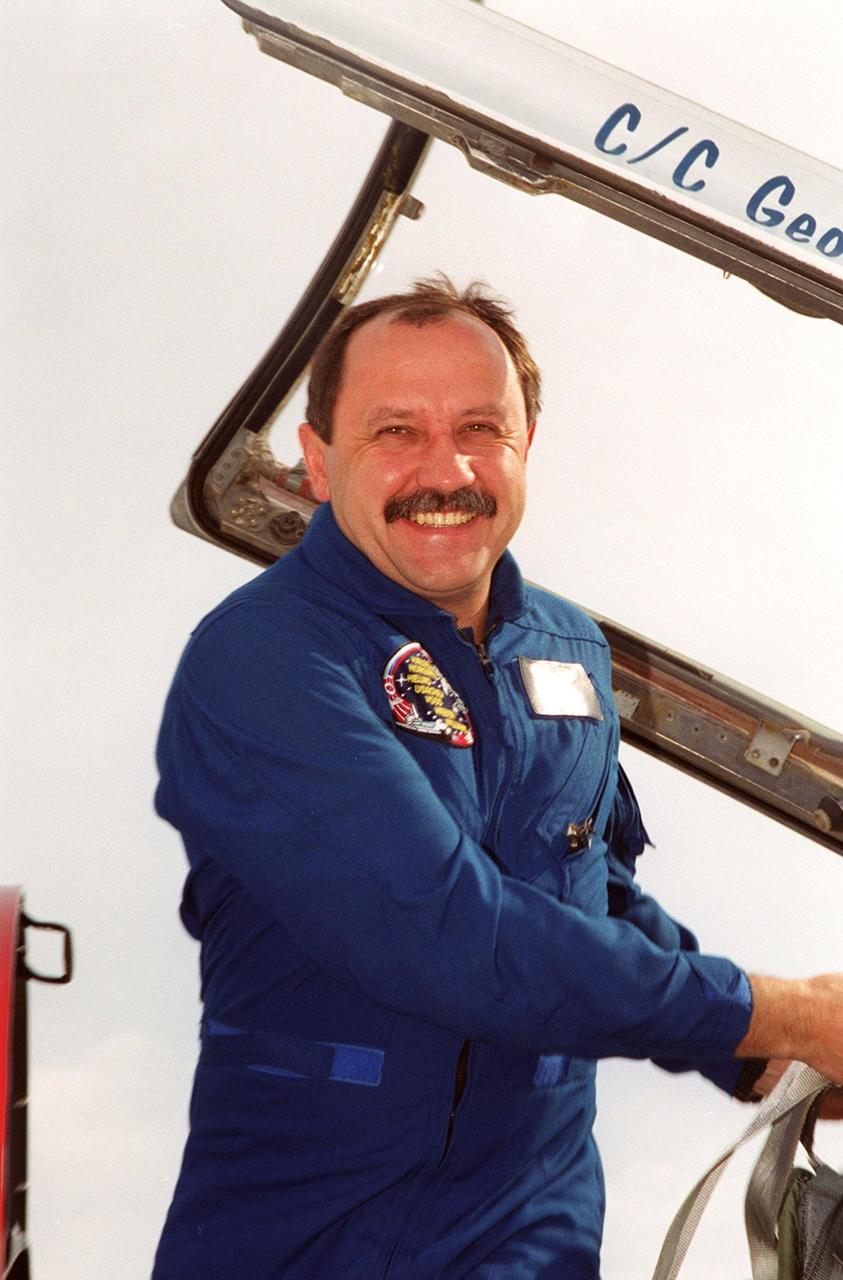
Cosmonaut Yury Usachev arrives at the KSC Shuttle Landing Facility. Usachev s flying on mission STS-102, launching March 8, as part of the Expedition Two crew going to the International Space Station. The other members of the Expedition Two crew are James Voss and Susan Helms. They are at KSC to inspect the air lock that will be carried to the Station during their tenure in space. STS-102 will be Helms’ and Voss’s fifth Shuttle flight, and Usachev’s second. They will be replacing the Expedition One crew (Bill Shepherd, Yuri Gidzenko and Sergei Krikalev), who will return to Earth March 20 on Discovery along with the STS-102 crew
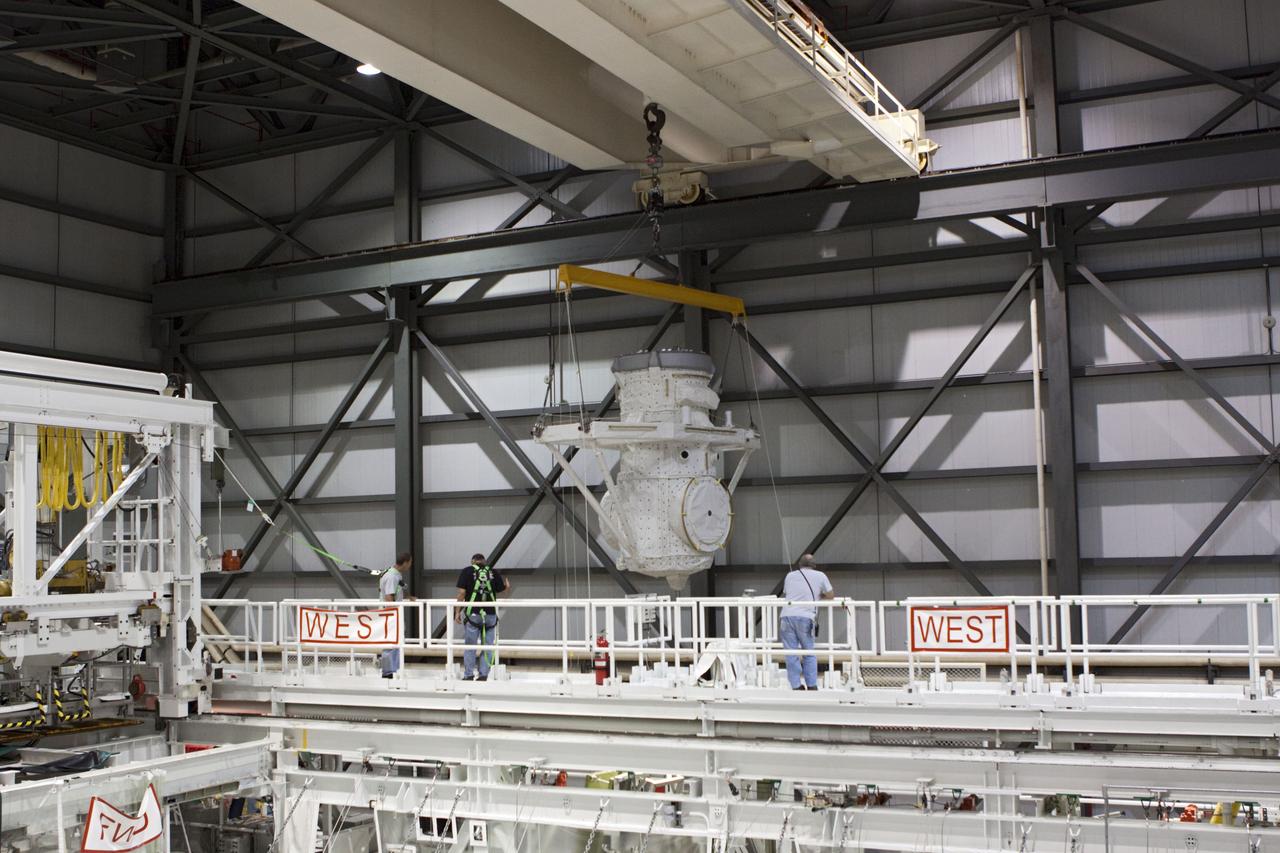
CAPE CANAVERAL, Fla. – At NASA's Kennedy Space Center in Florida, a crane is used to lift a mock air lock being prepared for installation in the payload bay of the space shuttle Atlantis in Bay 2 of the Orbiter Processing Facility. Atlantis is undergoing final preparations for its transfer to the Kennedy Space Center Visitor Complex targeted for November. The work is part of Transition and Retirement of the remaining space shuttles, Atlantis and Endeavour. Atlantis is being prepared for public display at Kennedy's Visitor Complex. Over the course of its 26-year career, Atlantis spent 293 days in space during 33 missions. For more information, visit http://www.nasa.gov/transition Photo credit: NASA/Jim Grossmann
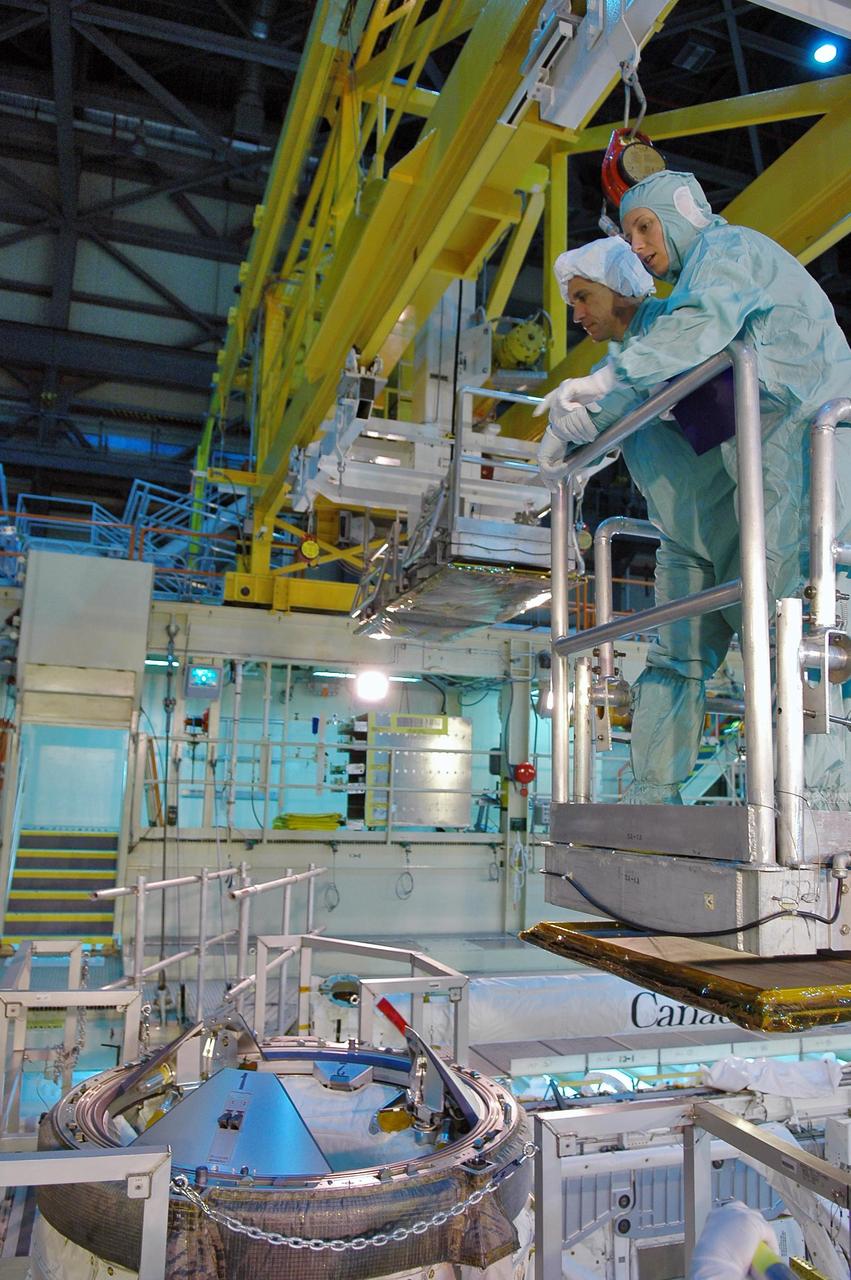
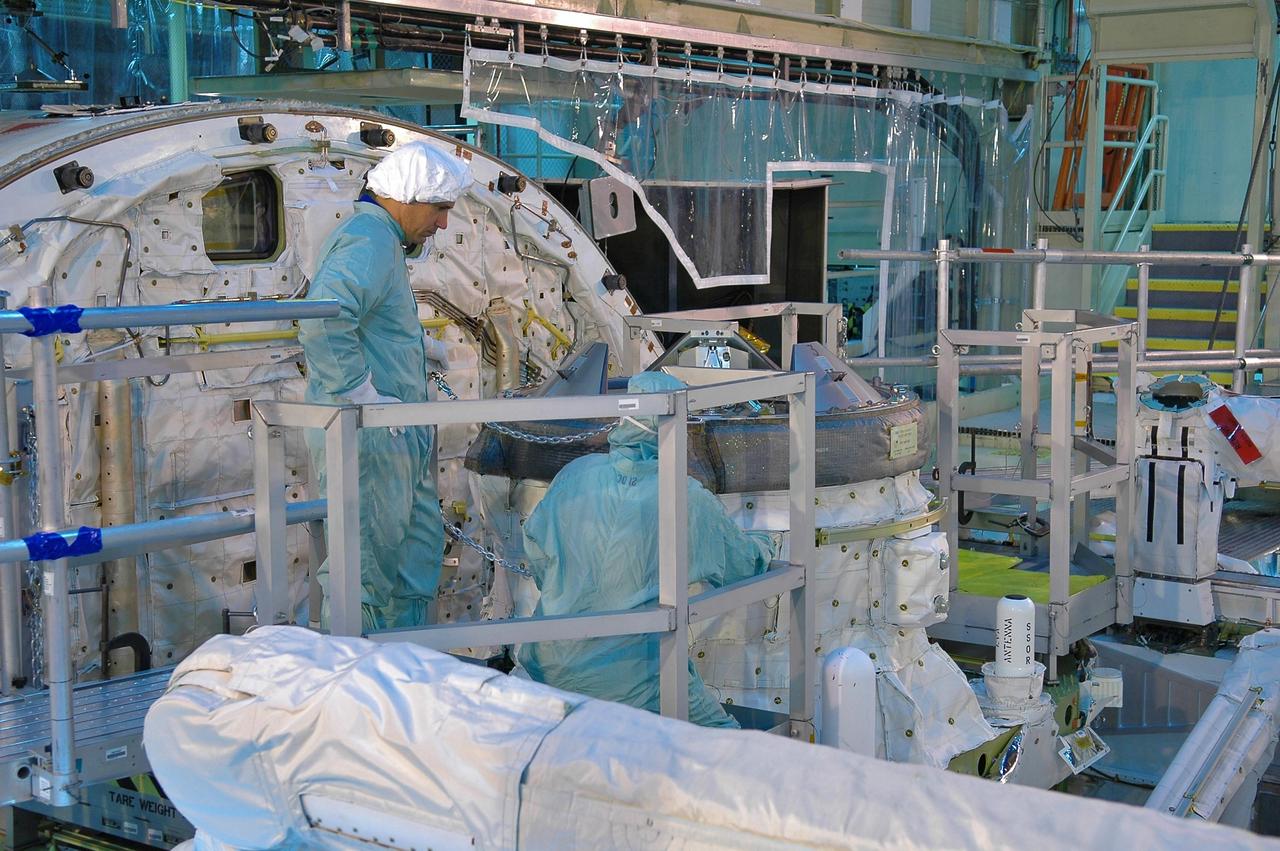
KENNEDY SPACE CENTER, FLA. - During a Crew Equipment Interface Test (CEIT) in the Orbiter Processing Facility, STS-116 crew members are looking closely at equipment in Discovery’s payload bay. In the white cap is Pilot William Oefelein. Below him is the top of the external air lock. A CEIT allows astronauts to become familiar with equipment and hardware they will use on the mission. STS-116 will be mission No. 20 to the International Space Station and construction flight 12A.1. The mission payload is the SPACEHAB module, the P5 integrated truss structure and other key components. Launch is scheduled for no earlier than Dec. 7. Photo credit: NASA/Kim Shiflett
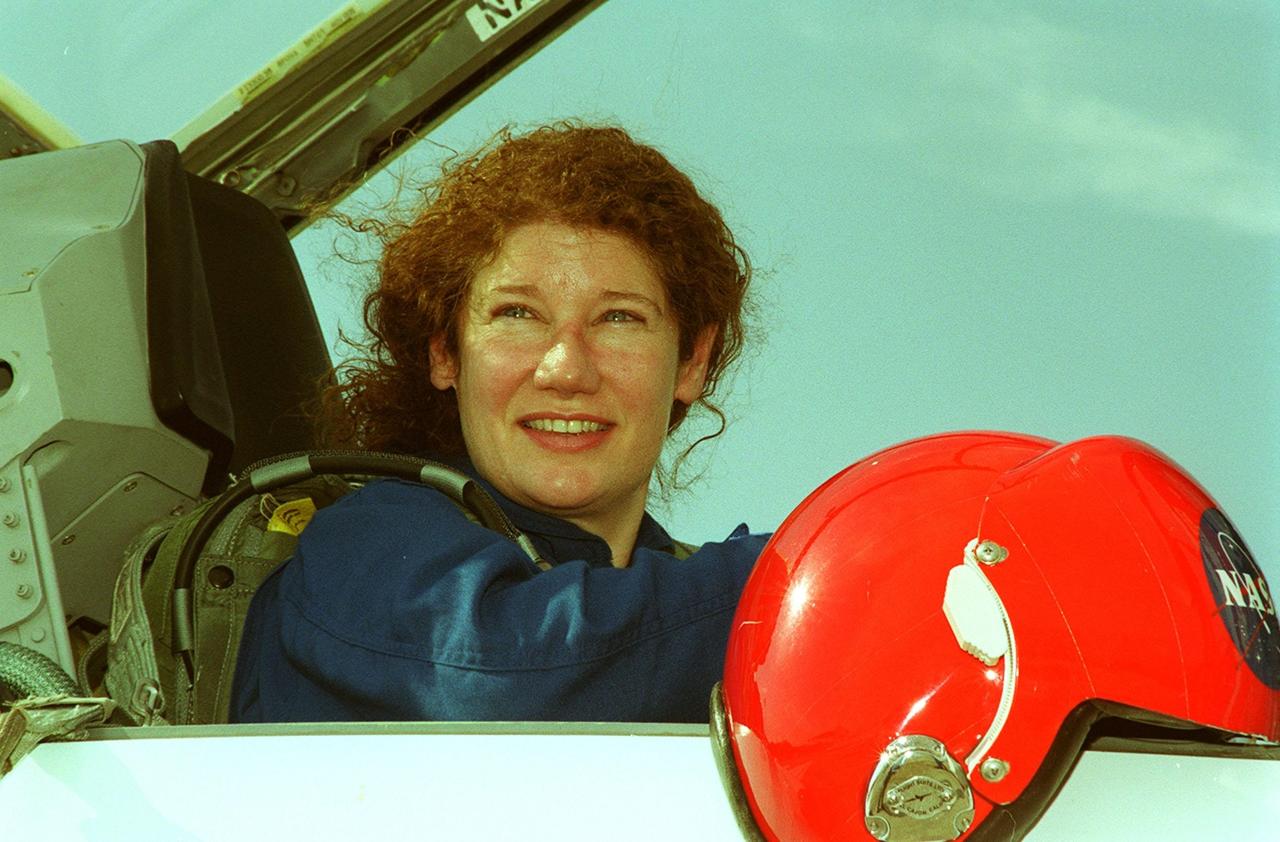
Astronaut Susan Helms arrives at the KSC Shuttle Landing Facility. Helms is flying on mission STS-102, launching March 8, as part of the Expedition Two crew going to the International Space Station. The other members of the Expedition Two crew are James Voss and Yury Usachev. They are at KSC to inspect the air lock that will be carried to the Station during their tenure in space. STS-102 will be Helms’ and Voss’s fifth Shuttle flight, and Usachev’s second. They will be replacing the Expedition One crew (Bill Shepherd, Yuri Gidzenko and Sergei Krikalev), who will return to Earth March 20 on Discovery along with the STS-102 crew
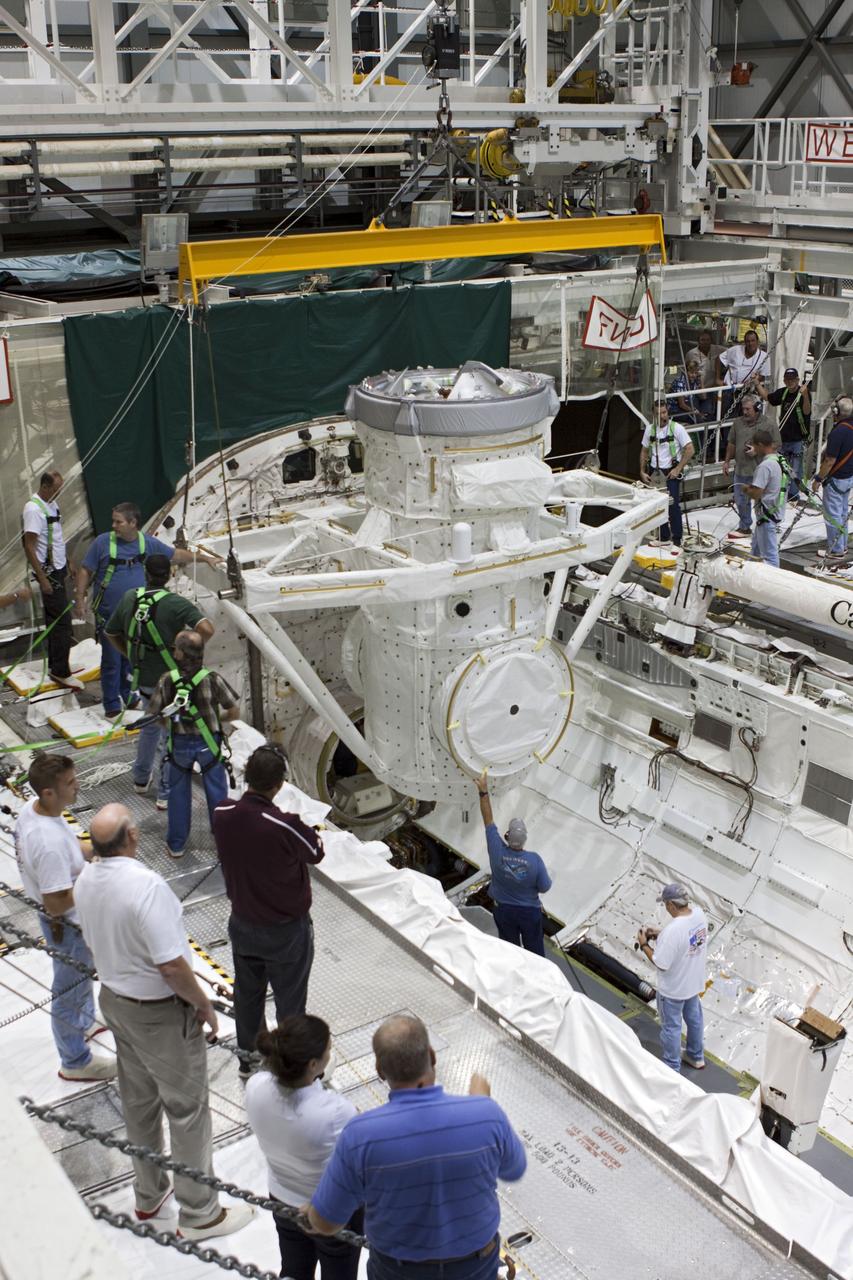
CAPE CANAVERAL, Fla. – At NASA's Kennedy Space Center in Florida, United Space Alliance technicians install a mock air lock in the payload bay of the space shuttle Atlantis in Bay 2 of the Orbiter Processing Facility. Atlantis is undergoing final preparations for its transfer to the Kennedy Space Center Visitor Complex targeted for November. The work is part of Transition and Retirement of the remaining space shuttles, Atlantis and Endeavour. Atlantis is being prepared for public display at Kennedy's Visitor Complex. Over the course of its 26-year career, Atlantis spent 293 days in space during 33 missions. For more information, visit http://www.nasa.gov/transition Photo credit: NASA/Jim Grossmann
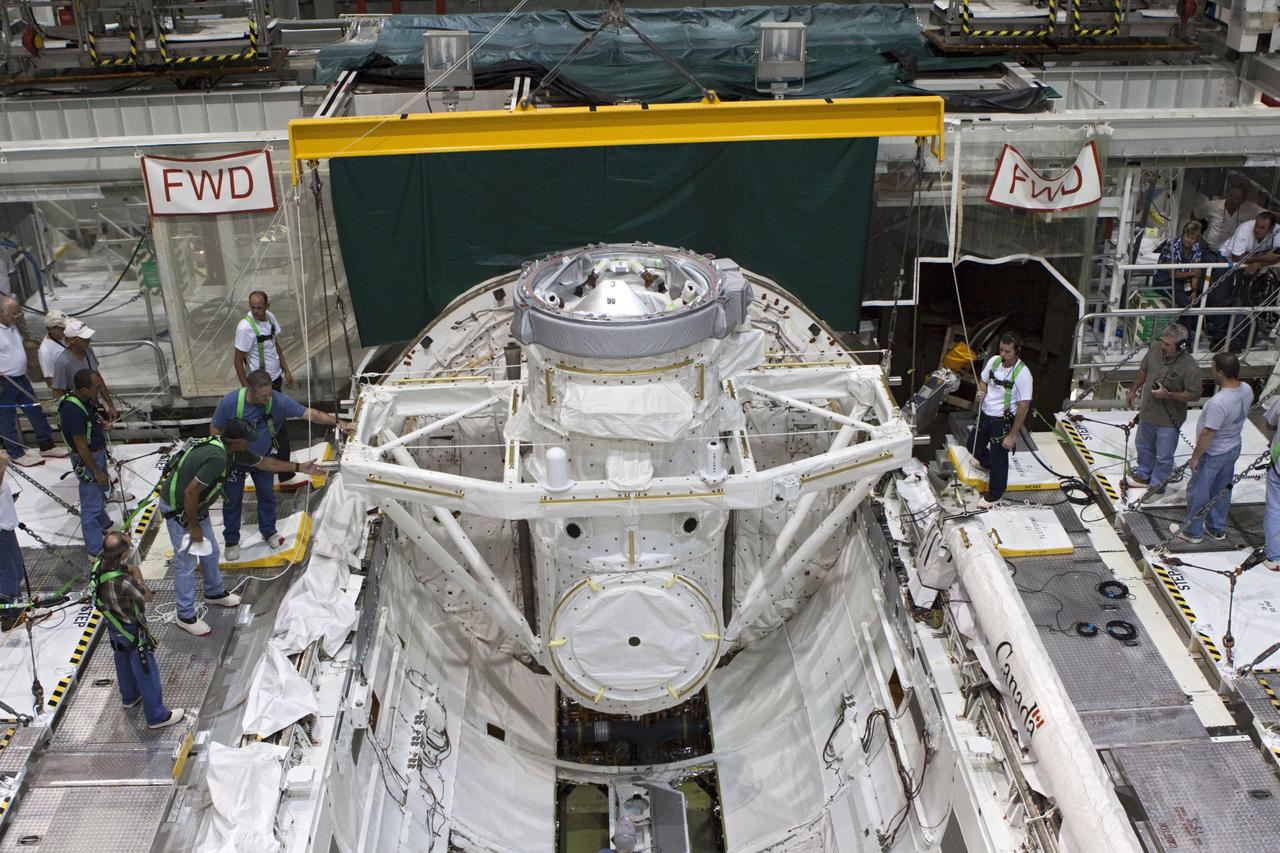
CAPE CANAVERAL, Fla. – At NASA's Kennedy Space Center in Florida, United Space Alliance technicians install a mock air lock in the payload bay of the space shuttle Atlantis in Bay 2 of the Orbiter Processing Facility. Atlantis is undergoing final preparations for its transfer to the Kennedy Space Center Visitor Complex targeted for November. The work is part of Transition and Retirement of the remaining space shuttles, Atlantis and Endeavour. Atlantis is being prepared for public display at Kennedy's Visitor Complex. Over the course of its 26-year career, Atlantis spent 293 days in space during 33 missions. For more information, visit http://www.nasa.gov/transition Photo credit: NASA/Jim Grossmann

CAPE CANAVERAL, Fla. – At NASA's Kennedy Space Center in Florida, United Space Alliance technicians prepare a mock air lock for installation in the payload bay of the space shuttle Atlantis in Bay 2 of the Orbiter Processing Facility. Atlantis is undergoing final preparations for its transfer to the Kennedy Space Center Visitor Complex targeted for November. The work is part of Transition and Retirement of the remaining space shuttles, Atlantis and Endeavour. Atlantis is being prepared for public display at Kennedy's Visitor Complex. Over the course of its 26-year career, Atlantis spent 293 days in space during 33 missions. For more information, visit http://www.nasa.gov/transition Photo credit: NASA/Jim Grossmann
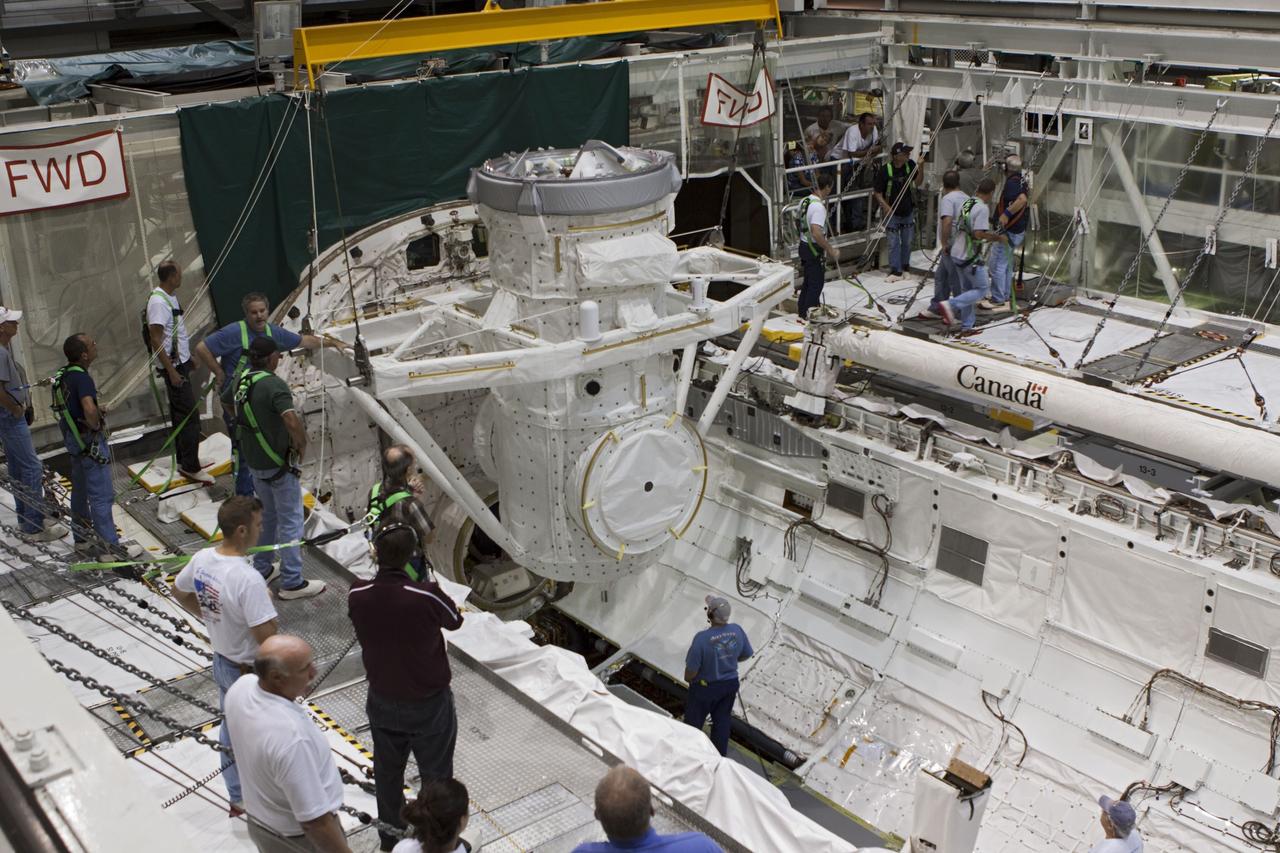
CAPE CANAVERAL, Fla. – At NASA's Kennedy Space Center in Florida, United Space Alliance technicians install a mock air lock in the payload bay of the space shuttle Atlantis in Bay 2 of the Orbiter Processing Facility. Atlantis is undergoing final preparations for its transfer to the Kennedy Space Center Visitor Complex targeted for November. The work is part of Transition and Retirement of the remaining space shuttles, Atlantis and Endeavour. Atlantis is being prepared for public display at Kennedy's Visitor Complex. Over the course of its 26-year career, Atlantis spent 293 days in space during 33 missions. For more information, visit http://www.nasa.gov/transition Photo credit: NASA/Jim Grossmann
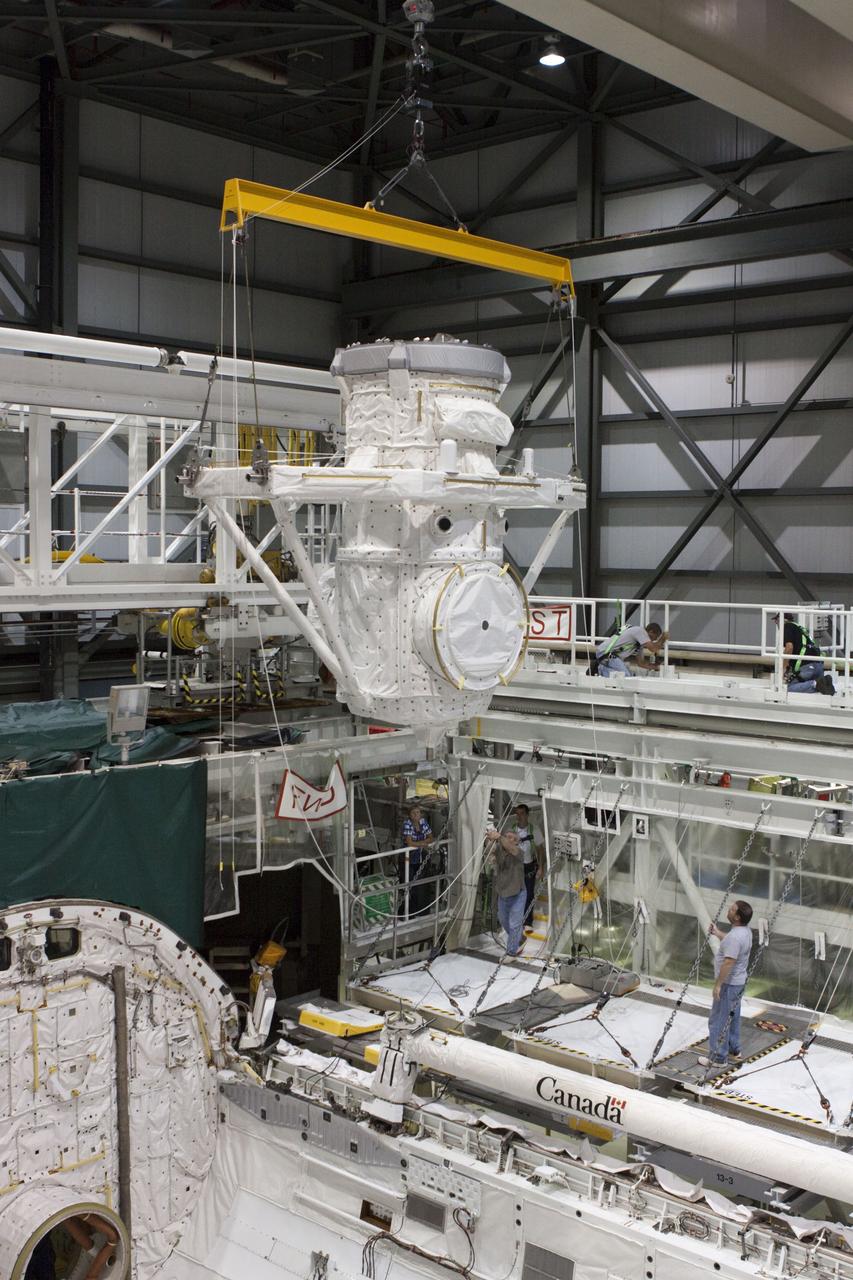
CAPE CANAVERAL, Fla. – At NASA's Kennedy Space Center in Florida, a crane is used to lift a mock air lock being prepared for installation in the payload bay of the space shuttle Atlantis in Bay 2 of the Orbiter Processing Facility. Atlantis is undergoing final preparations for its transfer to the Kennedy Space Center Visitor Complex targeted for November. The work is part of Transition and Retirement of the remaining space shuttles, Atlantis and Endeavour. Atlantis is being prepared for public display at Kennedy's Visitor Complex. Over the course of its 26-year career, Atlantis spent 293 days in space during 33 missions. For more information, visit http://www.nasa.gov/transition Photo credit: NASA/Jim Grossmann
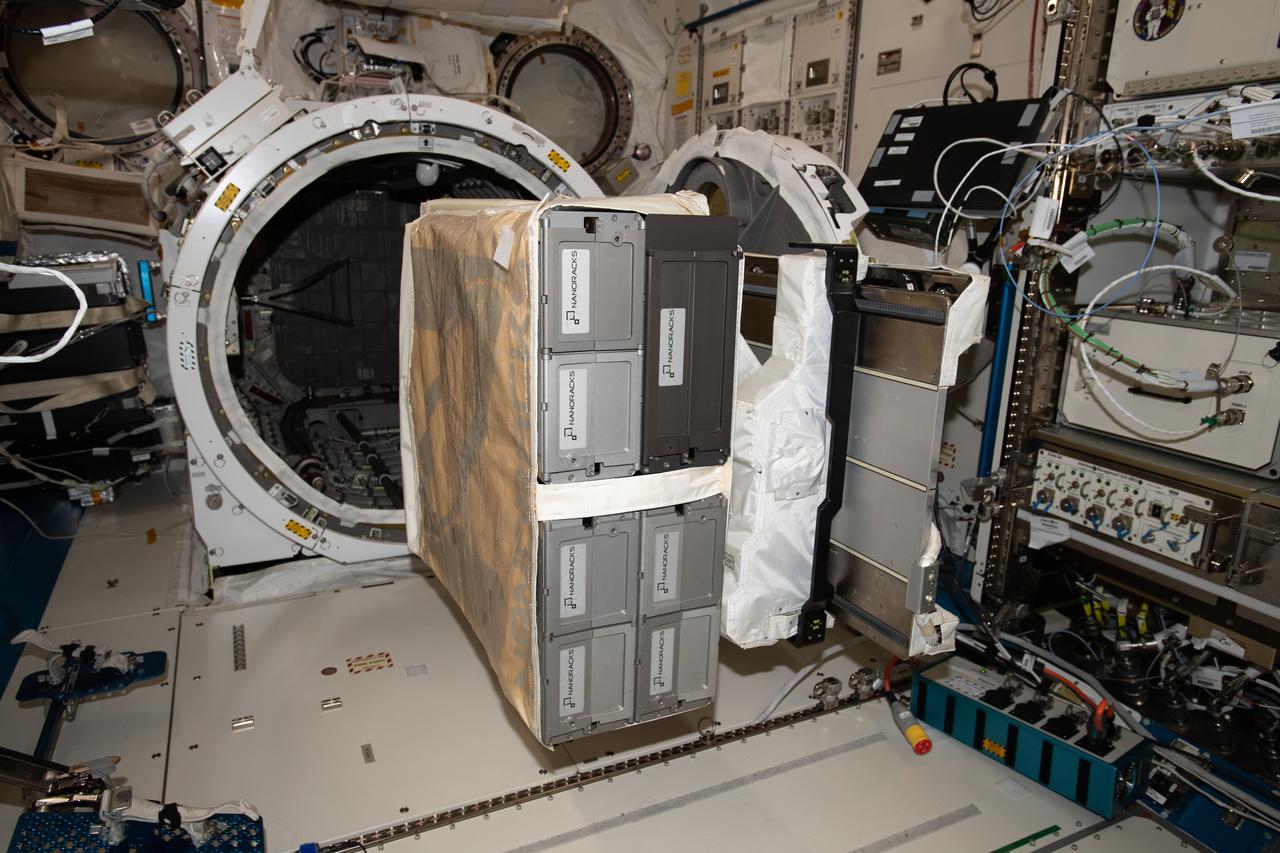
iss061e154749 (2/4/2020) --- A view of the NanoRacks CubeSat Deployer (NRCSD) installed onto the Multipurpose Experiment Platform (JEM MPEP) in the Kibo module aboard the International Space Station (ISS). The quad deployer will launch SOCRATES, Argus-02, HARP, RadSat-u and Phoenix. The Triple deployer will launch SORTIE, QARMAN, CryoCube and AztechSat-1. The NanoRacks CubeSat Deployer is a stackable, modular, ground loaded launch case. Up to eight preloaded 6U launcher systems are deployed per air lock cycle. The NanoRacks CubeSat Deployer meets the growing demand to deploy CubeSat format satellites from the International Space Station for a variety of customers.
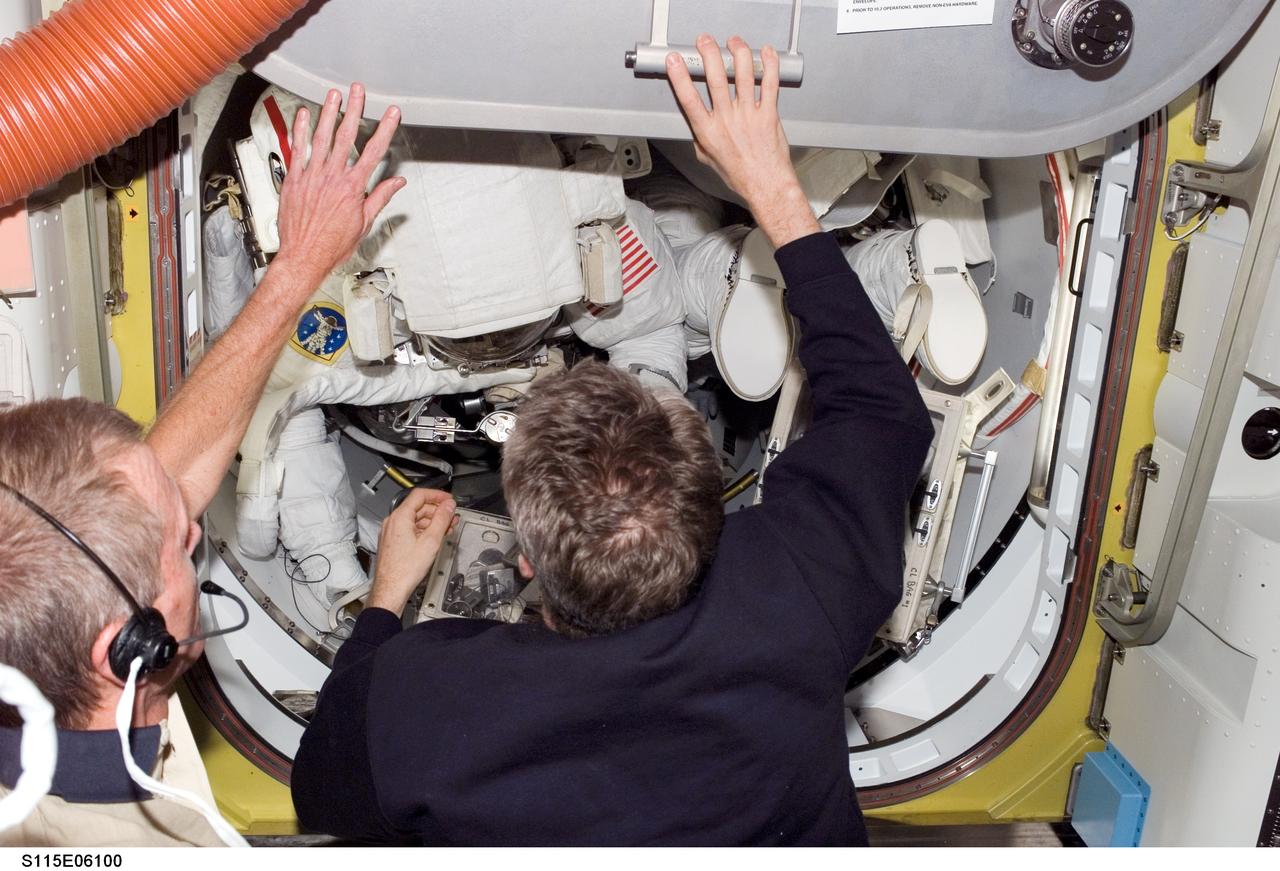
S115-E-06100 (15 Sept. 2006)--- Astronauts Brent W. Jett (left), STS-115 commander, and Thomas Reiter representing the European Space Agency, close the hatch to the airlock where astronauts Joseph R. Tanner and Heidemarie M. Stefanyshyn-Piper are preparing for the third and final of three spacewalks this week on the International Space Station.
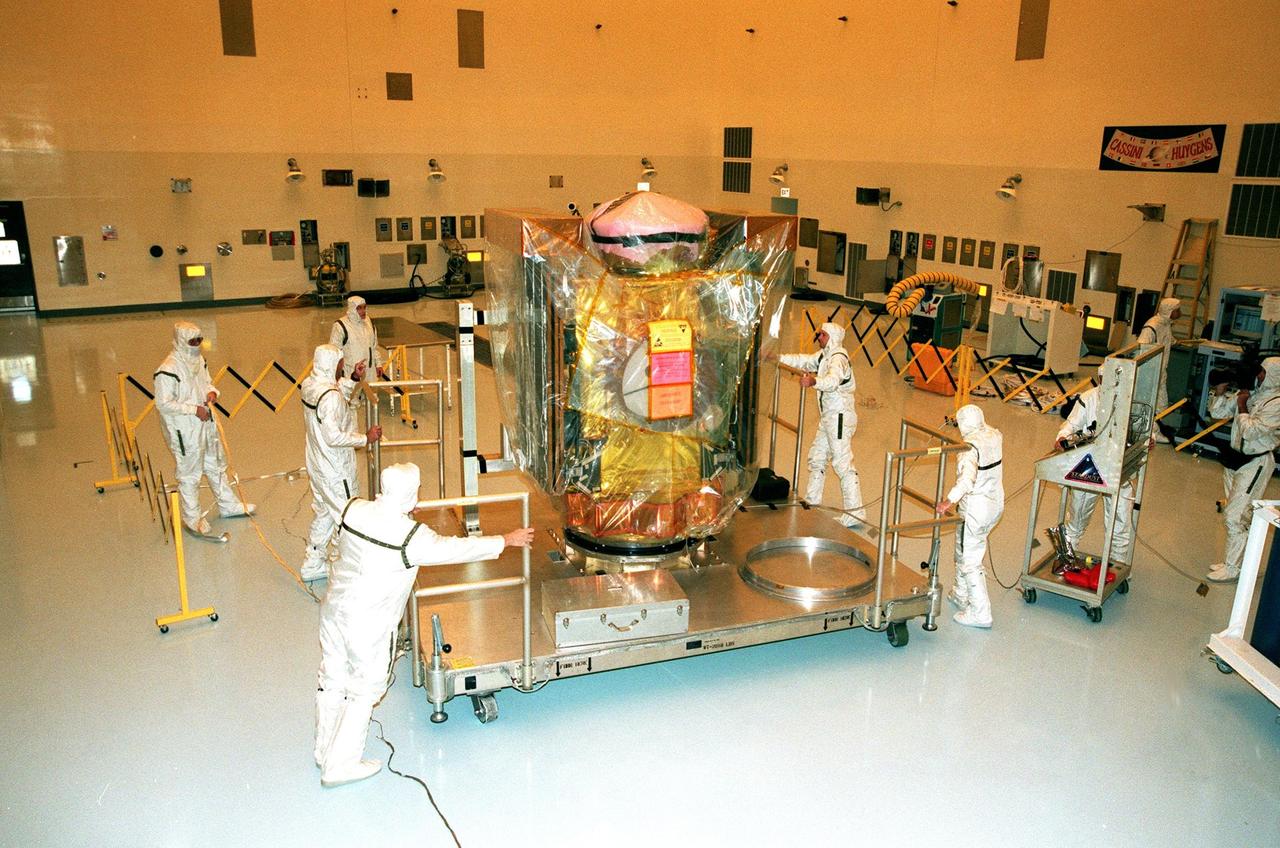
In the Payload Hazardous Service Facility, workers move the Stardust spacecraft on its workstand from the air lock to the high bay. The spacecraft will undergo installation and testing of the solar arrays, plus final installation and testing of spacecraft instruments followed by an overall spacecraft functional test. Built by Lockheed Martin Astronautics near Denver, Colo., for the Jet Propulsion Laboratory (JPL) and NASA, the spacecraft Stardust will use a unique medium called aerogel to capture comet particles flying off the nucleus of comet Wild 2 in January 2004, plus collect interstellar dust for later analysis. Stardust will be launched aboard a Boeing Delta 7426 rocket from Complex 17, Cape Canaveral Air Station, targeted for Feb. 6, 1999. The collected samples will return to Earth in a re-entry capsule to be jettisoned from Stardust as it swings by Earth in January 2006
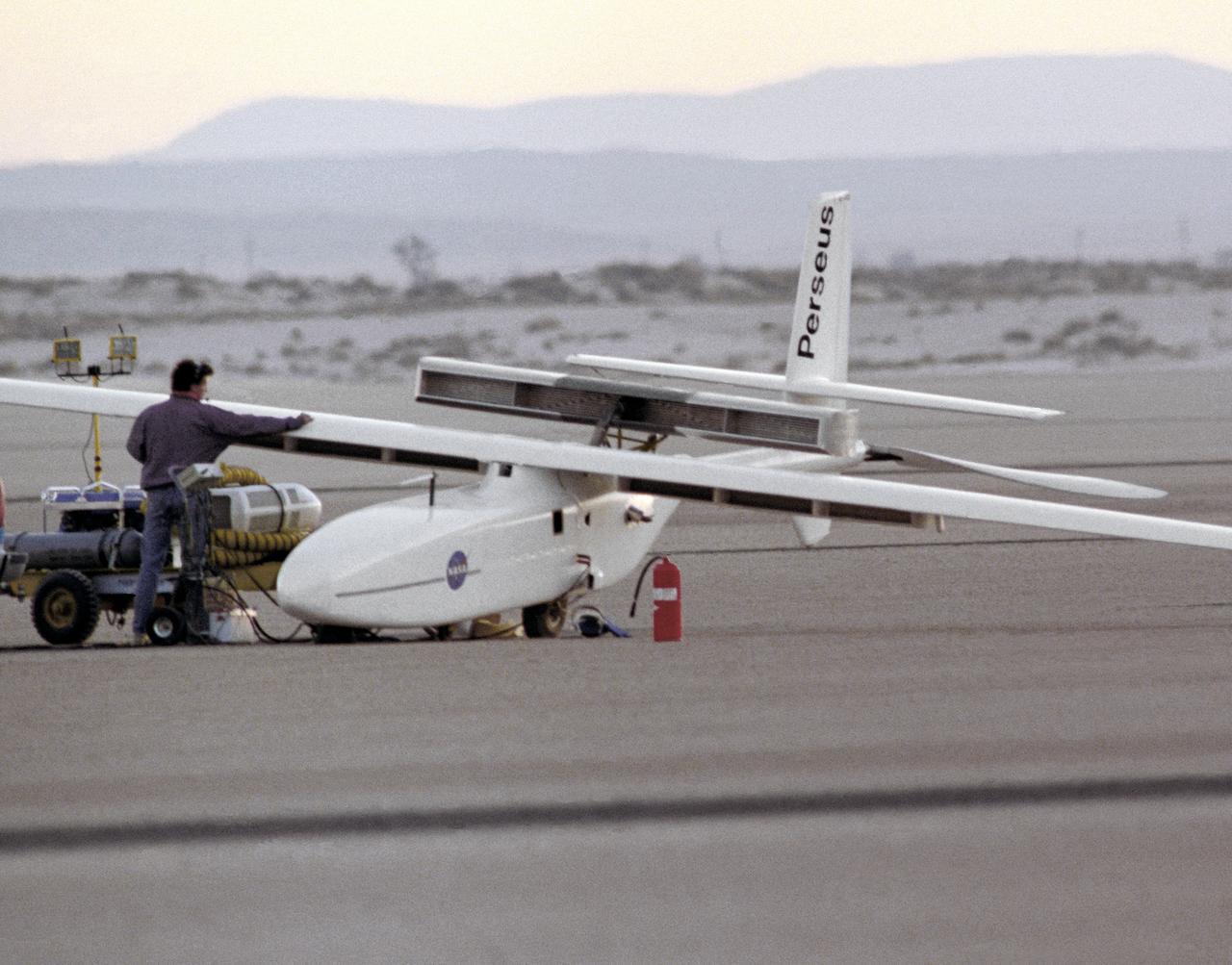
The Perseus A, a remotely-piloted, high-altitude research vehicle, is seen just after landing on Rogers Dry Lake at the Dryden Flight Research Center, Edwards, California. The Perseus A had a unique method of takeoff and landing. To make the aircraft as aerodynamic and lightweight as possible, designers gave it only two very small centerline wheels for landing. These wheels were very close to the fuselage, and therefore produced very little drag. However, since the fuselage sat so close to the ground, it was necessary to keep the large propeller at the rear of the aircraft locked in a horizontal position during takeoff. The aircraft was towed to about 700 feet in the air, where the engine was started and the aircraft began flying under its own power.
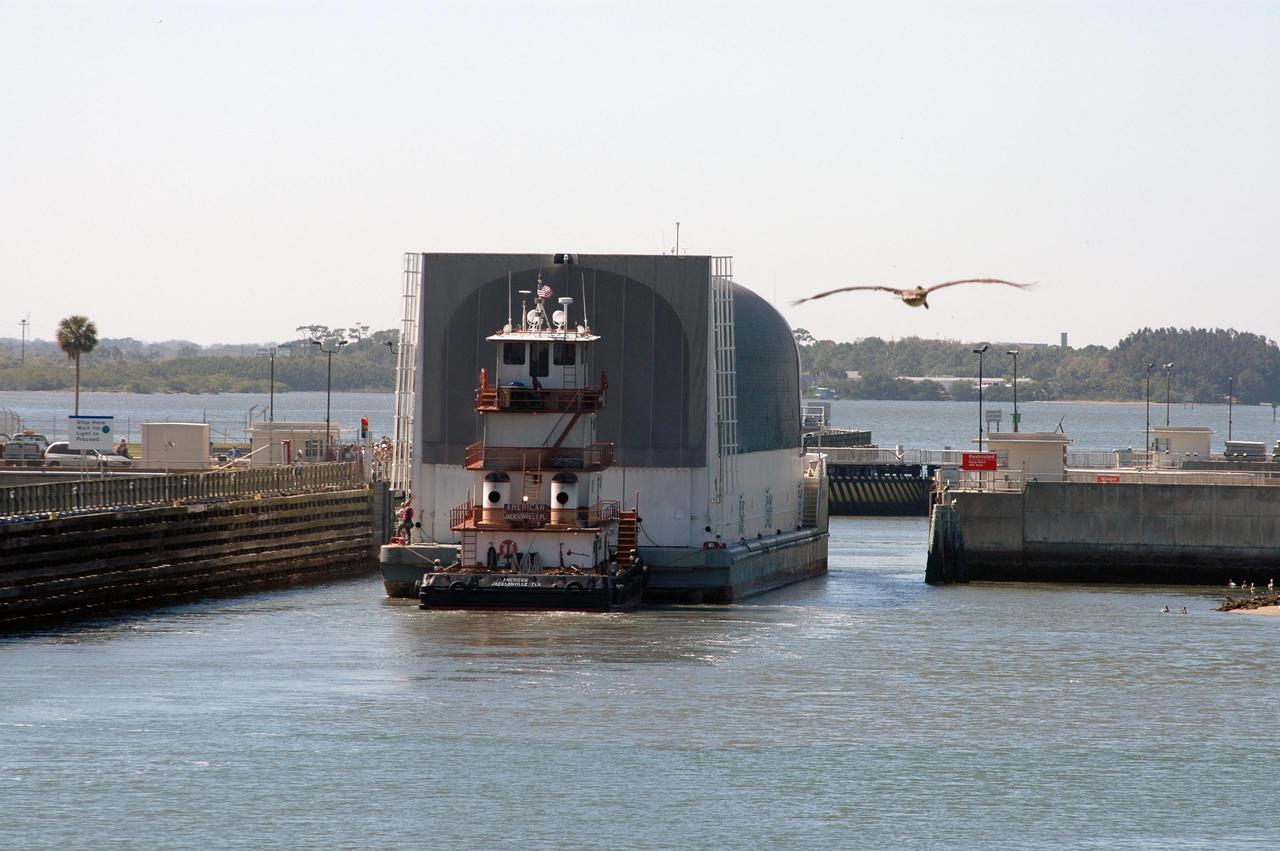
KENNEDY SPACE CENTER, FLA. - The Pegasus barge traverses the locks at Port Canaveral, as it nears the end of its journey from the Michoud Assembly Facility in New Orleans to Kennedy Space Center. The barge carries the redesigned external fuel tank that will launch Space Shuttle Discovery on the next shuttle mission, STS-121. After off-loading, the tank will be moved into the Vehicle Assembly Building and lifted into a checkout cell for further work. The tank, designated ET-119, will fly with many major safety changes, including the removal of the protuberance air load ramps. A large piece of foam from a ramp came off during the last shuttle launch in July 2005. The ramps were removed to eliminate a potential source of damaging debris to the space shuttle. The next launch of Discovery is scheduled for May 2006.
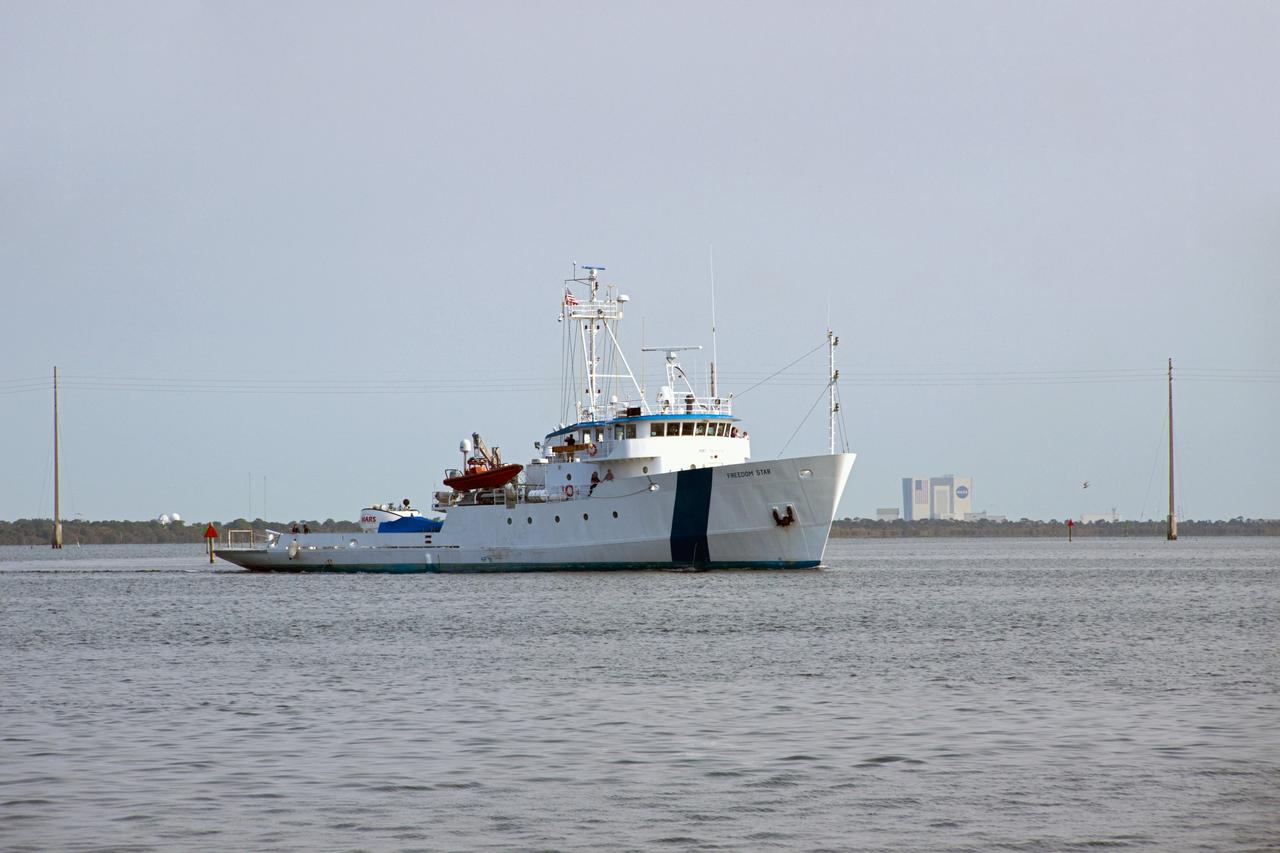
CAPE CANAVERAL, Fla. -- NASA’s Freedom Star boat sets out for a day of testing after departing from port near Cape Canaveral Air Force Station in Florida for the Atlantic Ocean with NASA’s Mobile Aerospace Reconnaissance System, or MARS, secured aboard. MARS, run by NASA’s Langley Research Center in Hampton, Va., with its spatial, hyperspectral, thermal, and directed energy capabilities will be used for thermal imaging testing for the upcoming SpaceX Falcon 9 and Dragon capsule test flight to the International Space Station. During today’s test, the MARS X-band radar and kineto tracking mount KTM were tested to ensure that they were synchronized to receive a rocket launch feed. The radar was used to identify an object to see if the KTM could lock on to and track it. The MARS team performed maintenance on the system, confirmed communications links, and tested the design of the mounting system and environmental enclosure. Photo credit: NASA/Jim Grossmann
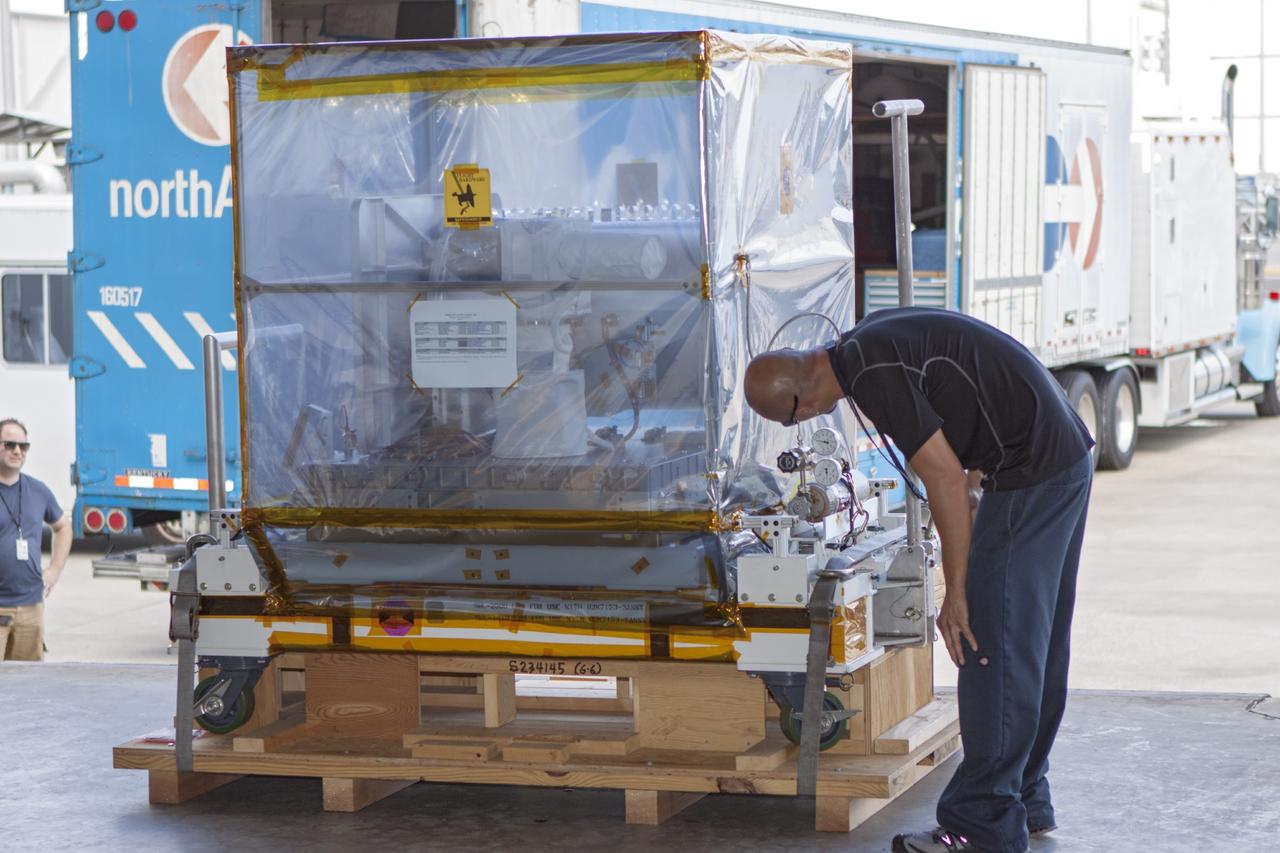
CAPE CANAVERAL, Fla. -- At NASA’s Kennedy Space Center in Florida, a technician monitors the progress as a forklift is used to move the Optical Payload for Lasercomm Science, or OPALS, experiment to the air lock entrance at the Space Station Processing Facility. The optical technology demonstration experiment arrived from the agency’s Jet Propulsion Laboratory in Pasadena, Calif. NASA will use the International Space Station to test OPALS’ communications technology that could dramatically improve spacecraft communications, enhance commercial missions and strengthen transmission of scientific data. The experiment is slated to fly later this year aboard a SpaceX Dragon commercial resupply mission to the space station. The mission is expected to run 90 days after installation on the outside of the station. For more information about OPALS, visit: http://go.nasa.gov/10MMPDO. Photo credit: NASA/Jim Grossmann
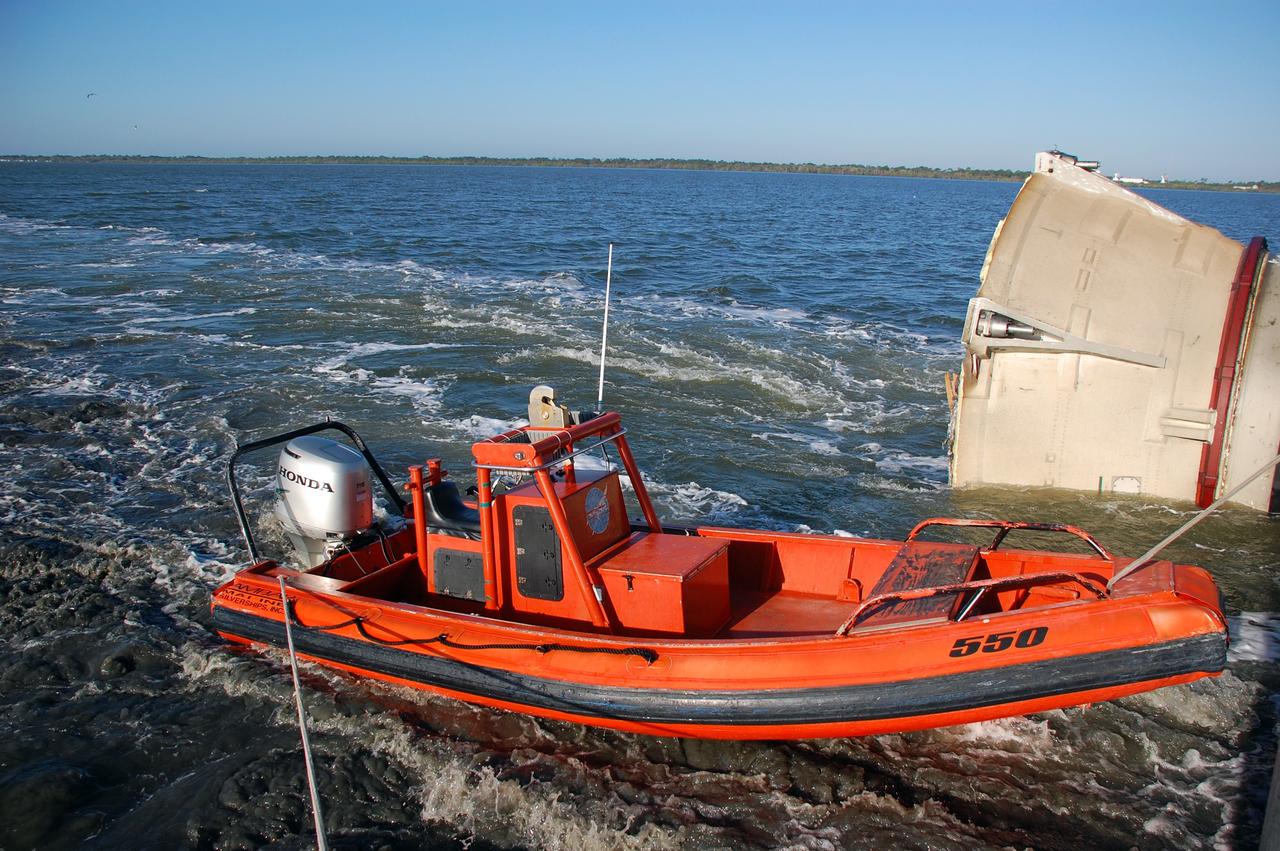
CAPE CANAVERAL, Fla. -- A skiff from Freedom Star, one of NASA's solid rocket booster retrieval ships, helped usher a spent shuttle booster through the shallow waters of the locks at Port Canaveral, Fla. The booster will be re-tied to the ship for the rest of the journey to Hangar AF at Cape Canaveral Air Force Station. The booster was used during space shuttle Discovery's STS-133 launch from NASA Kennedy Space Center's Launch Pad 39A on Feb. 24. The shuttle’s two solid rocket booster casings and associated flight hardware are recovered in the Atlantic Ocean after every launch by Freedom Star and Liberty Star. The boosters impact the Atlantic about seven minutes after liftoff and the retrieval ships are stationed about 10 miles from the impact area at the time of splashdown. After the spent segments are processed, they will be transported to Utah, where they will be refurbished and stored, if needed. Photo credit: NASA/Ben Smegelsky
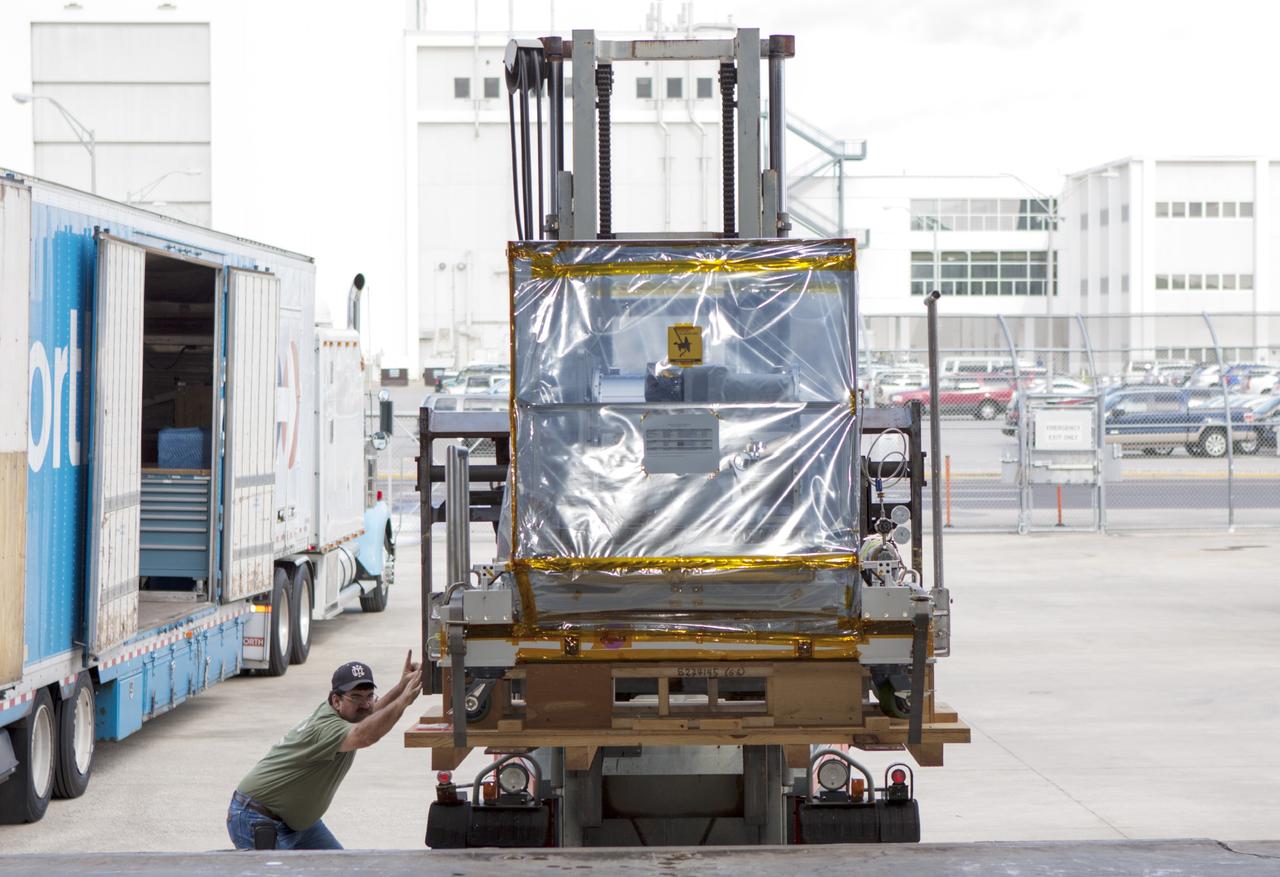
CAPE CANAVERAL, Fla. -- At NASA’s Kennedy Space Center in Florida, a technician monitors the progress as a forklift is used to move the Optical Payload for Lasercomm Science, or OPALS, experiment to the air lock entrance at the Space Station Processing Facility. The optical technology demonstration experiment arrived from the agency’s Jet Propulsion Laboratory in Pasadena, Calif. NASA will use the International Space Station to test OPALS’ communications technology that could dramatically improve spacecraft communications, enhance commercial missions and strengthen transmission of scientific data. The experiment is slated to fly later this year aboard a SpaceX Dragon commercial resupply mission to the space station. The mission is expected to run 90 days after installation on the outside of the station. For more information about OPALS, visit: http://go.nasa.gov/10MMPDO. Photo credit: NASA/Jim Grossmann
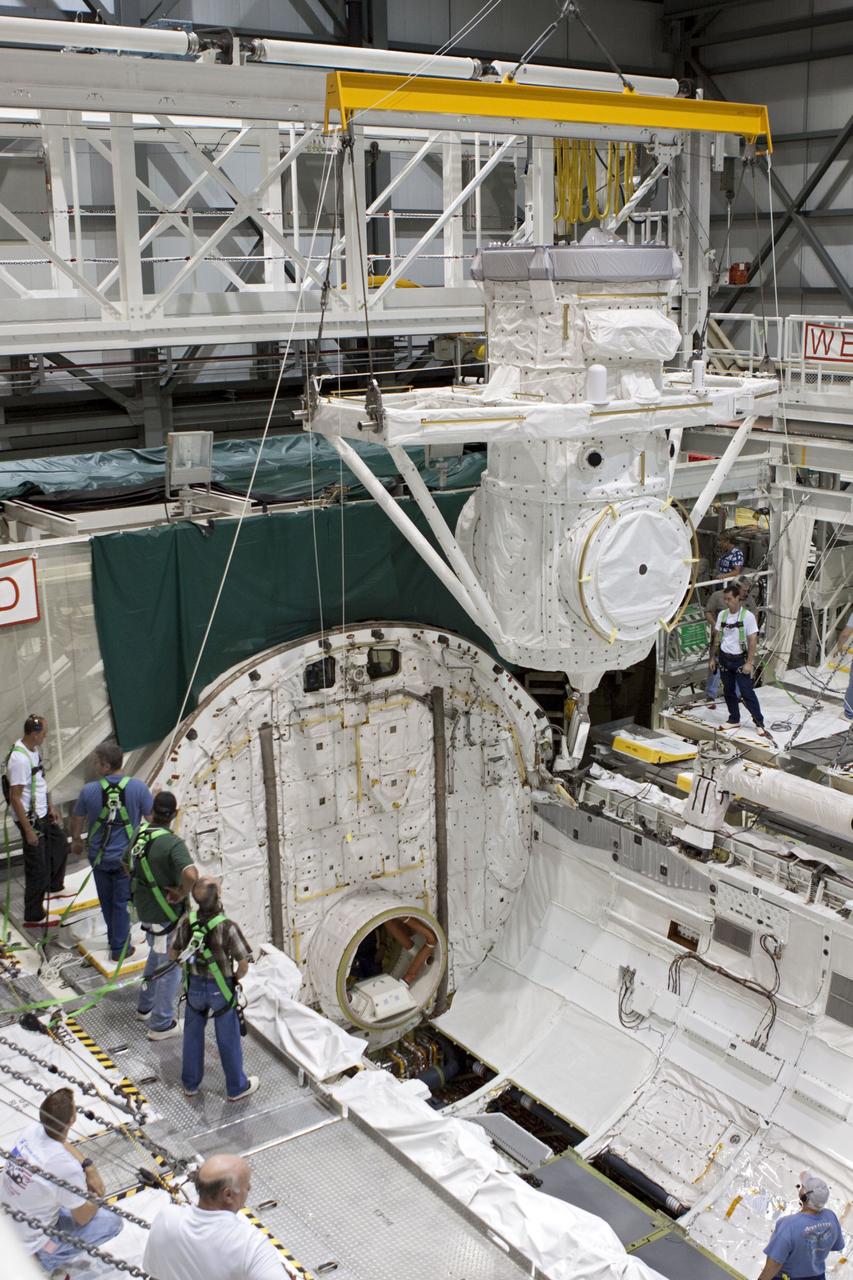
CAPE CANAVERAL, Fla. – At NASA's Kennedy Space Center in Florida, United Space Alliance technicians monitor operations as a crane is used to lift a mock air lock being prepared for installation in the payload bay of the space shuttle Atlantis in Bay 2 of the Orbiter Processing Facility. Atlantis is undergoing final preparations for its transfer to the Kennedy Space Center Visitor Complex targeted for November. The work is part of Transition and Retirement of the remaining space shuttles, Atlantis and Endeavour. Atlantis is being prepared for public display at Kennedy's Visitor Complex. Over the course of its 26-year career, Atlantis spent 293 days in space during 33 missions. For more information, visit http://www.nasa.gov/transition Photo credit: NASA/Jim Grossmann
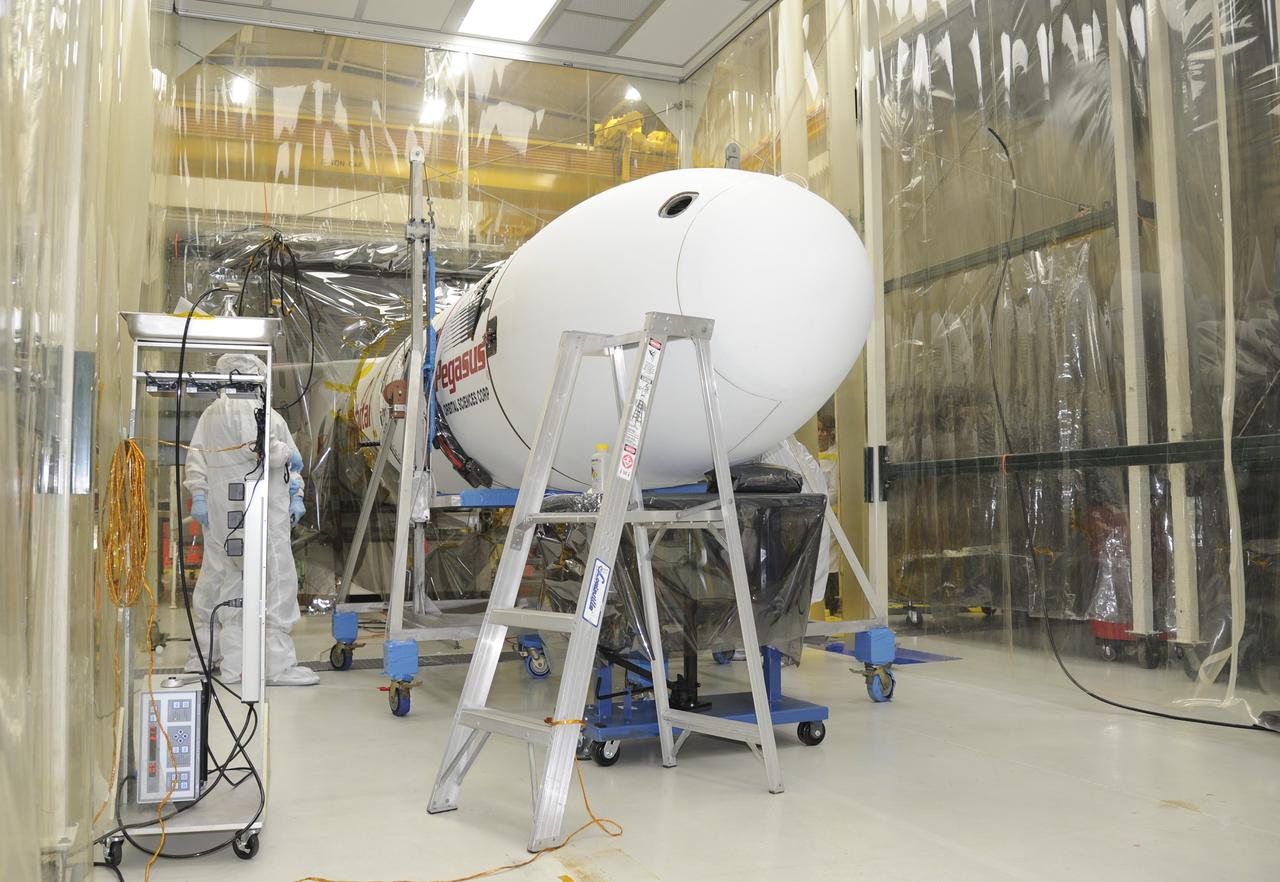
VANDENBERG AFB – The payload fairing locked in place over NASA's IRIS spacecraft. The fairing connects to the nose of the Orbital Sciences Pegasus XL rocket that will lift the solar observatory into orbit in June. The work is taking place in a hangar at Vandenberg Air Force Base where IRIS, short for Interface Region Imaging Spectrograph, is being prepared for launch on a Pegasus XL rocket. Scheduled for launch from Vandenberg June 26, IRIS will open a new window of discovery by tracing the flow of energy and plasma through the chromospheres and transition region into the sun’s corona using spectrometry and imaging. IRIS fills a crucial gap in our ability to advance studies of the sun-to-Earth connection by tracing the flow of energy and plasma through the foundation of the corona and the region around the sun known as the heliosphere. Photo credit: NASA/Tony Vauclin
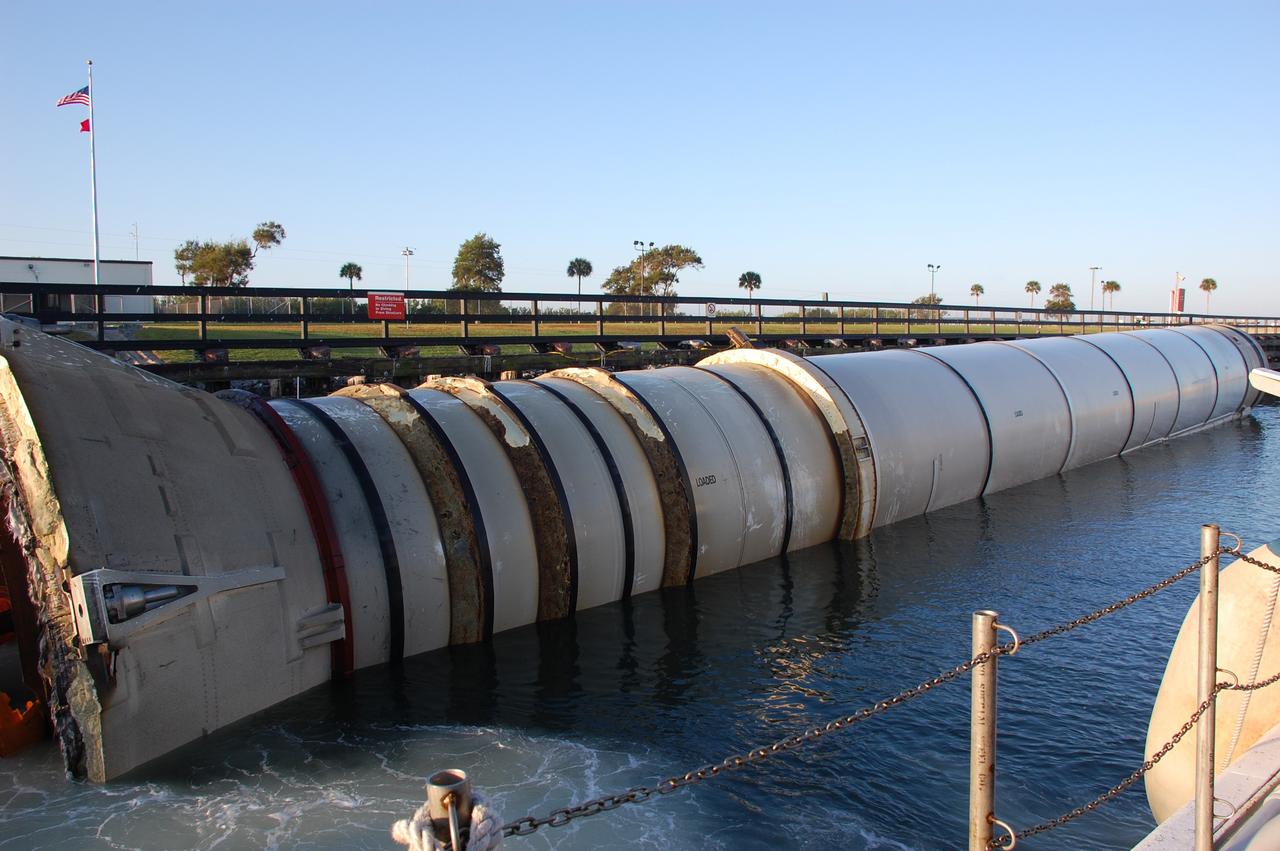
CAPE CANAVERAL, Fla. -- A spent shuttle booster will be ushered through the shallow waters of the locks at Port Canaveral, Fla., by a skiff from Freedom Star, one of NASA's solid rocket booster retrieval ships. The booster, which was used during space shuttle Discovery's STS-133 launch from NASA Kennedy Space Center's Launch Pad 39A on Feb. 24, is on its way to Hangar AF at Cape Canaveral Air Force Station. The shuttle’s two solid rocket booster casings and associated flight hardware are recovered in the Atlantic Ocean after every launch by Freedom Star and Liberty Star. The boosters impact the Atlantic about seven minutes after liftoff and the retrieval ships are stationed about 10 miles from the impact area at the time of splashdown. After the spent segments are processed, they will be transported to Utah, where they will be refurbished and stored, if needed. Photo credit: NASA/Ben Smegelsky
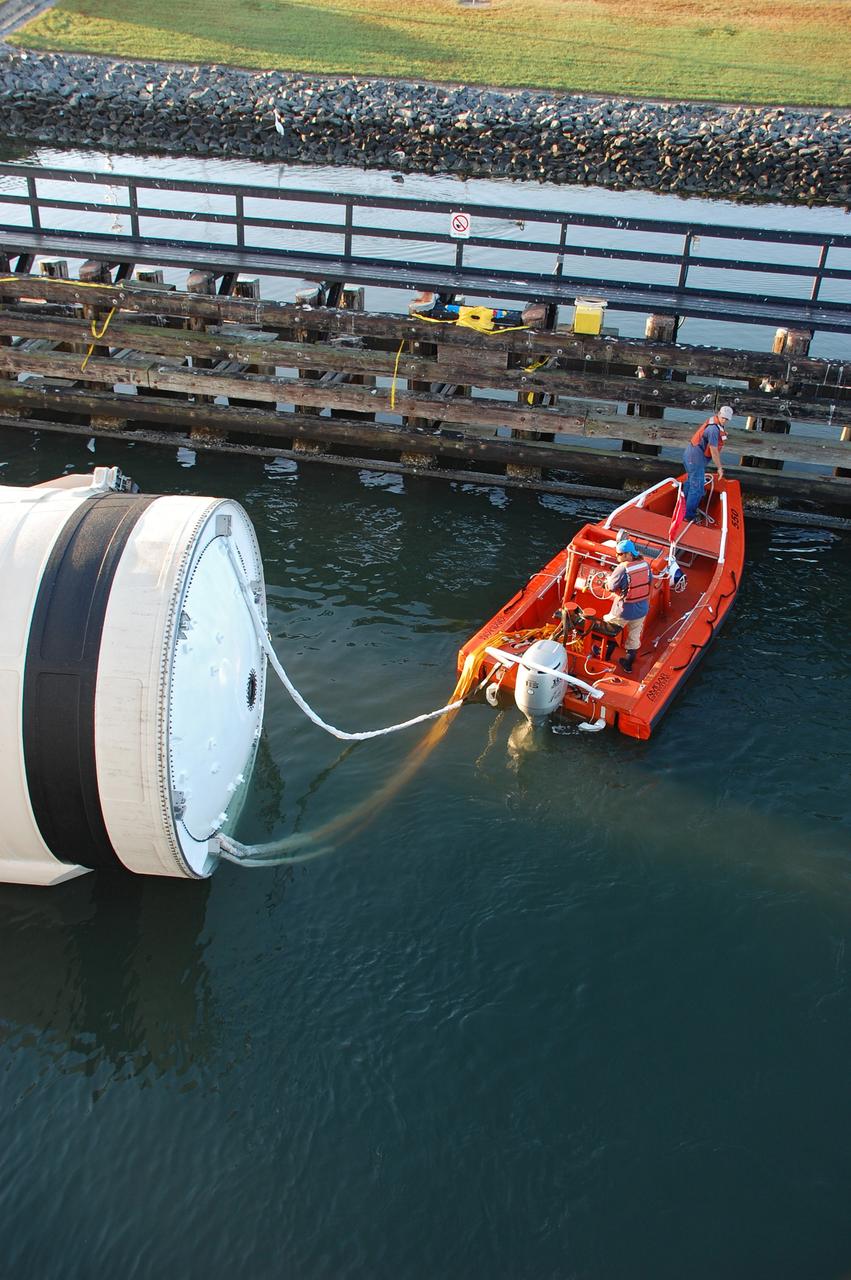
CAPE CANAVERAL, Fla. -- Crew members in a skiff from Freedom Star, one of NASA's solid rocket booster retrieval ships, will usher a spent shuttle booster through the shallow waters of the locks at Port Canaveral, Fla. The booster, which was used during space shuttle Discovery's STS-133 launch from NASA Kennedy Space Center's Launch Pad 39A on Feb. 24, is on its way to Hangar AF at Cape Canaveral Air Force Station. The shuttle’s two solid rocket booster casings and associated flight hardware are recovered in the Atlantic Ocean after every launch by Freedom Star and Liberty Star. The boosters impact the Atlantic about seven minutes after liftoff and the retrieval ships are stationed about 10 miles from the impact area at the time of splashdown. After the spent segments are processed, they will be transported to Utah, where they will be refurbished and stored, if needed. Photo credit: NASA/Ben Smegelsky
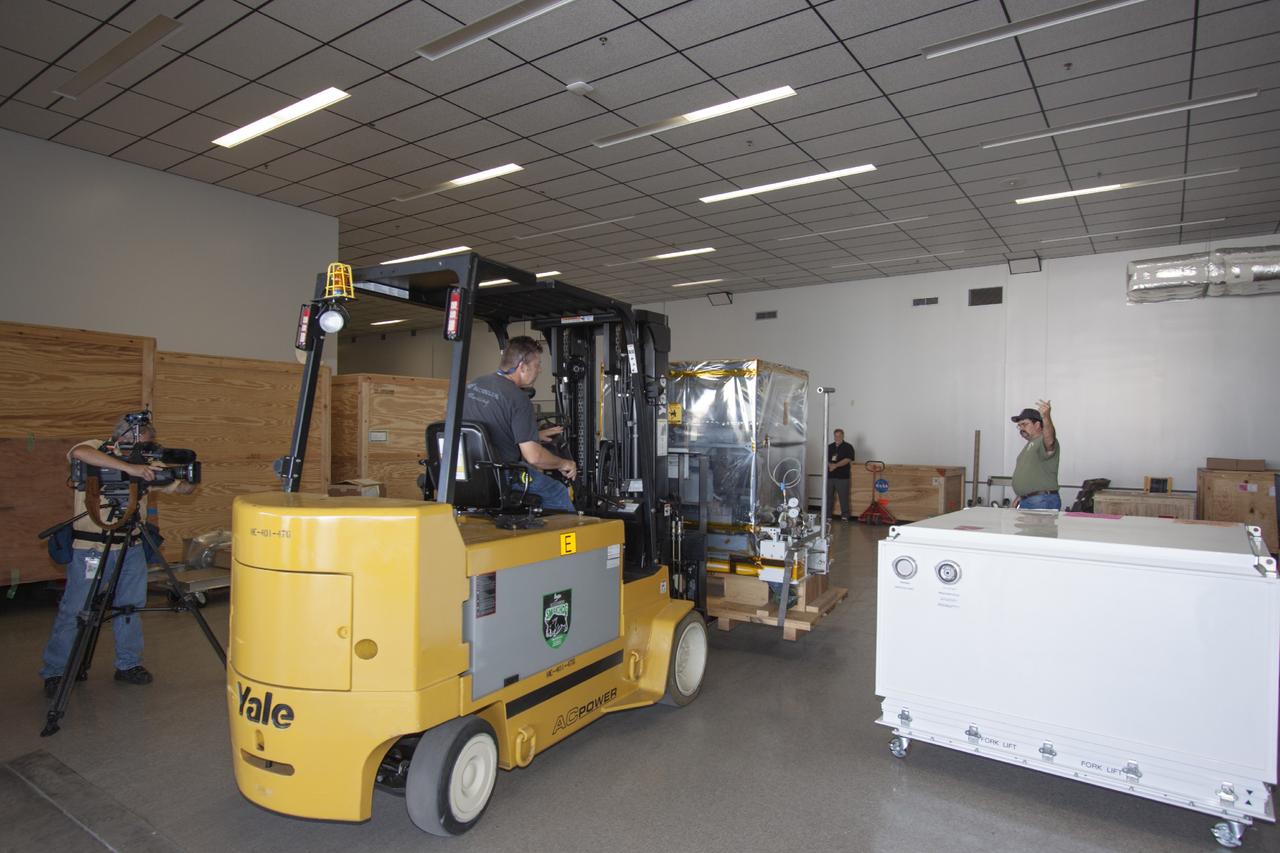
CAPE CANAVERAL, Fla. -- At NASA’s Kennedy Space Center in Florida, a technician uses a forklift to move the Optical Payload for Lasercomm Science, or OPALS, experiment to the air lock entrance at the Space Station Processing Facility. The optical technology demonstration experiment arrived from the agency’s Jet Propulsion Laboratory in Pasadena, Calif. NASA will use the International Space Station to test OPALS’ communications technology that could dramatically improve spacecraft communications, enhance commercial missions and strengthen transmission of scientific data. The experiment is slated to fly later this year aboard a SpaceX Dragon commercial resupply mission to the space station. The mission is expected to run 90 days after installation on the outside of the station. For more information about OPALS, visit: http://go.nasa.gov/10MMPDO. Photo credit: NASA/Jim Grossmann
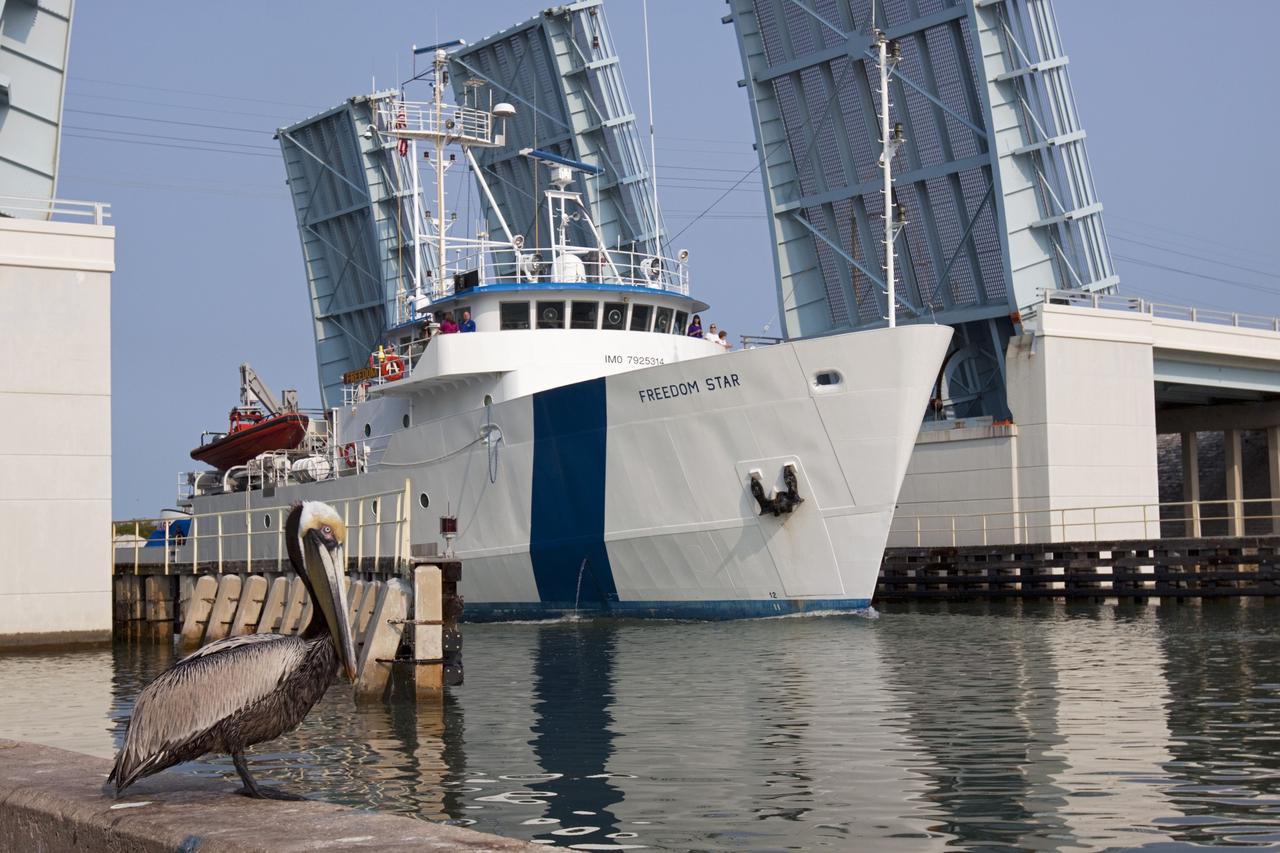
CAPE CANAVERAL, Fla. -- NASA’s Freedom Star boat sets out for a day of testing after departing from port near Cape Canaveral Air Force Station in Florida for the Atlantic Ocean with NASA’s Mobile Aerospace Reconnaissance System, or MARS, secured aboard. MARS, run by NASA’s Langley Research Center in Hampton, Va., with its spatial, hyperspectral, thermal, and directed energy capabilities will be used for thermal imaging testing for the upcoming SpaceX Falcon 9 and Dragon capsule test flight to the International Space Station. During today’s test, the MARS X-band radar and kineto tracking mount KTM were tested to ensure that they were synchronized to receive a rocket launch feed. The radar was used to identify an object to see if the KTM could lock on to and track it. The MARS team performed maintenance on the system, confirmed communications links, and tested the design of the mounting system and environmental enclosure. Photo credit: NASA/Jim Grossmann
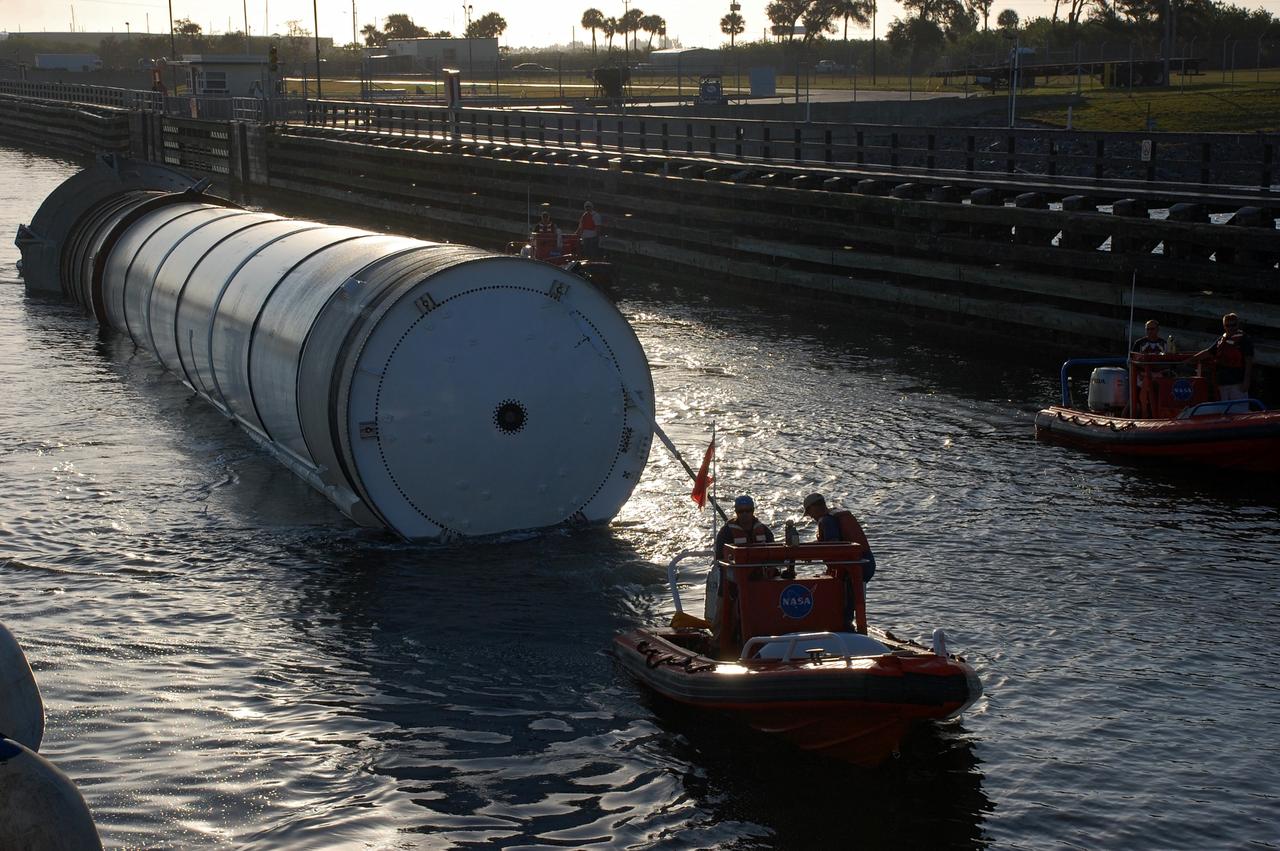
CAPE CANAVERAL, Fla. -- Crew members in a skiff from Freedom Star, one of NASA's solid rocket booster retrieval ships, usher a spent shuttle booster through the shallow waters of the locks at Port Canaveral, Fla. The booster, which was used during space shuttle Discovery's STS-133 launch from NASA Kennedy Space Center's Launch Pad 39A on Feb. 24, is on its way to Hangar AF at Cape Canaveral Air Force Station. The shuttle’s two solid rocket booster casings and associated flight hardware are recovered in the Atlantic Ocean after every launch by Freedom Star and Liberty Star. The boosters impact the Atlantic about seven minutes after liftoff and the retrieval ships are stationed about 10 miles from the impact area at the time of splashdown. After the spent segments are processed, they will be transported to Utah, where they will be refurbished and stored, if needed. Photo credit: NASA/Ben Smegelsky
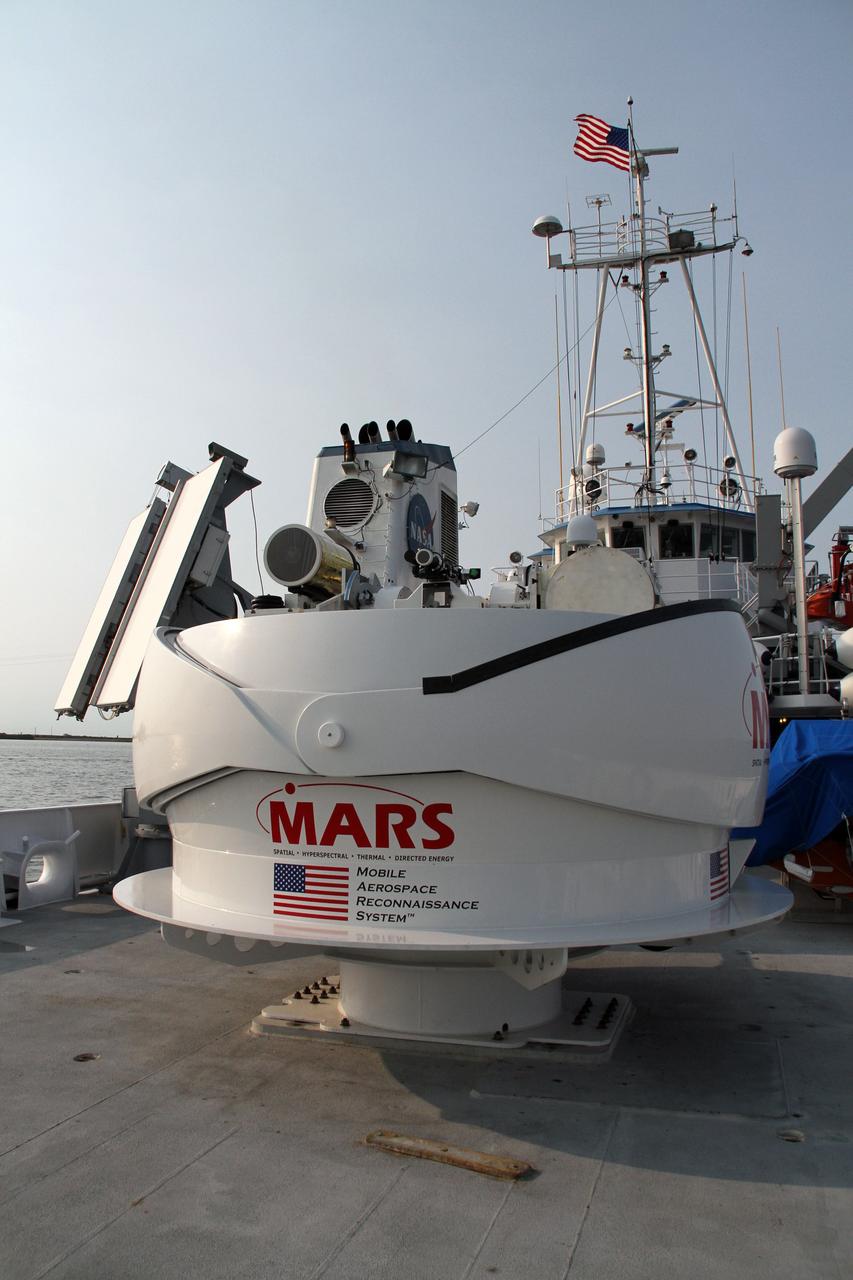
CAPE CANAVERAL, Fla. – NASA’s Freedom Star boat sets out for a day of testing after departing from port near Cape Canaveral Air Force Station in Florida for the Atlantic Ocean with NASA’s Mobile Aerospace Reconnaissance System, or MARS, secured aboard. MARS, run by NASA’s Langley Research Center in Hampton, Va., with its spatial, hyperspectral, thermal, and directed energy capabilities will be used for thermal imaging testing for the upcoming SpaceX Falcon 9 and Dragon capsule test flight to the International Space Station. During today’s test, the MARS X-band radar and kineto tracking mount KTM were tested to ensure that they were synchronized to receive a rocket launch feed. The radar was used to identify an object to see if the KTM could lock on to and track it. The MARS team performed maintenance on the system, confirmed communications links, and tested the design of the mounting system and environmental enclosure. Photo credit: NASA/Cory Huston
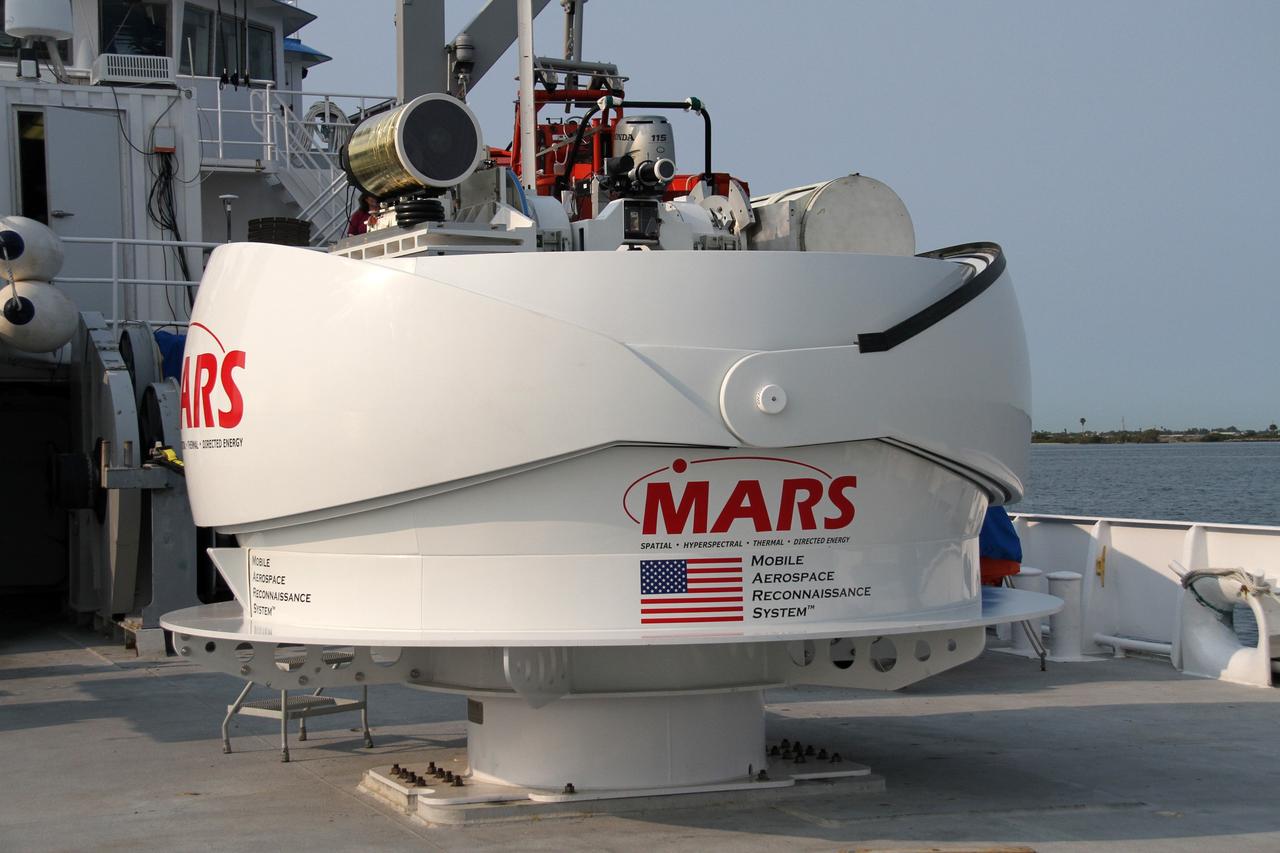
CAPE CANAVERAL, Fla. – NASA’s Freedom Star boat sets out for a day of testing after departing from port near Cape Canaveral Air Force Station in Florida for the Atlantic Ocean with NASA’s Mobile Aerospace Reconnaissance System, or MARS, secured aboard. MARS, run by NASA’s Langley Research Center in Hampton, Va., with its spatial, hyperspectral, thermal, and directed energy capabilities will be used for thermal imaging testing for the upcoming SpaceX Falcon 9 and Dragon capsule test flight to the International Space Station. During today’s test, the MARS X-band radar and kineto tracking mount KTM were tested to ensure that they were synchronized to receive a rocket launch feed. The radar was used to identify an object to see if the KTM could lock on to and track it. The MARS team performed maintenance on the system, confirmed communications links, and tested the design of the mounting system and environmental enclosure. Photo credit: NASA/Cory Huston
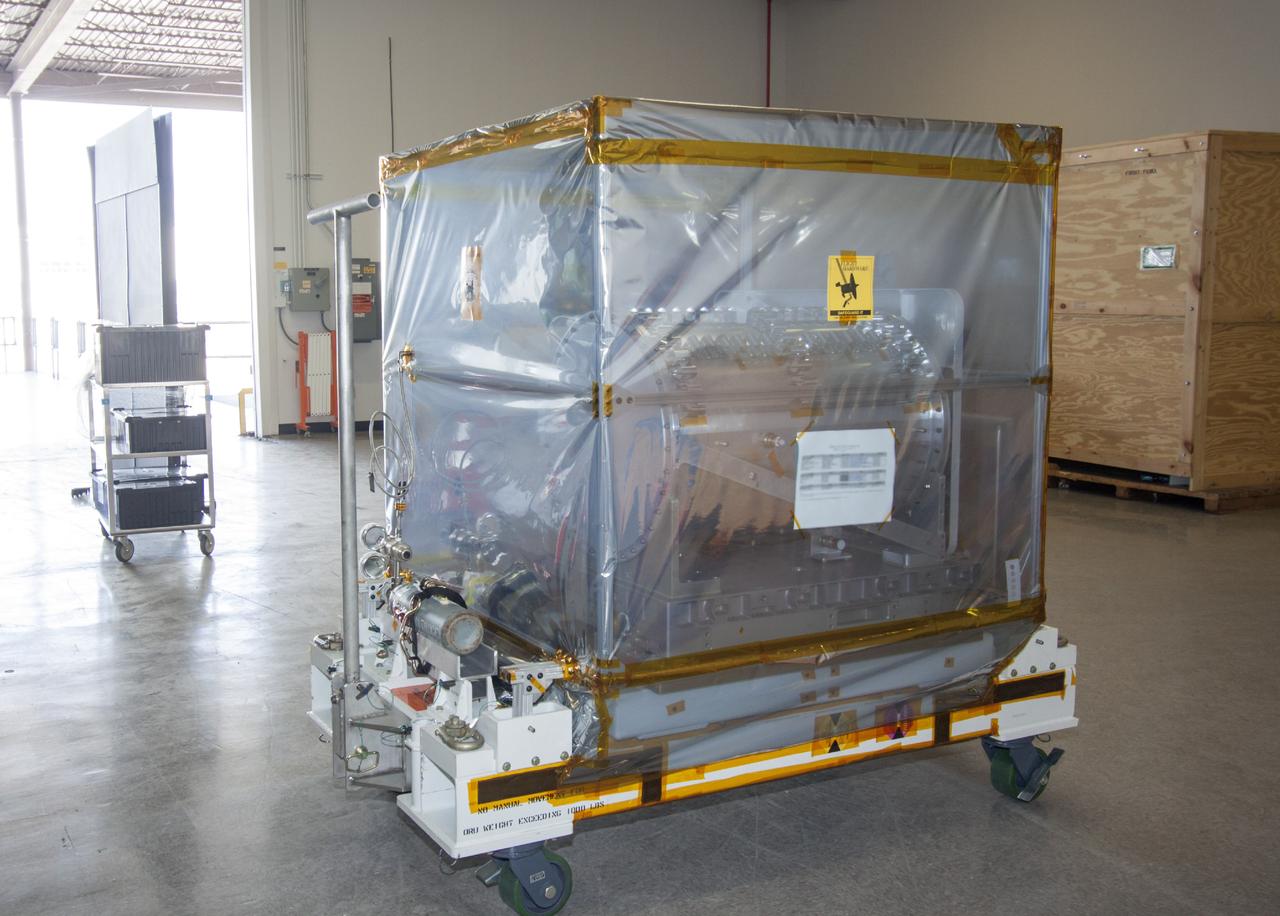
CAPE CANAVERAL, Fla. -- The Optical Payload for Lasercomm Science, or OPALS, an optical technology demonstration experiment, sits on a pallet inside the air lock entrance to the Space Station Processing Facility at NASA’s Kennedy Space Center in Florida. OPALS arrived from the agency’s Jet Propulsion Laboratory in Pasadena, Calif. NASA will use the International Space Station to test OPALS’ communications technology that could dramatically improve spacecraft communications, enhance commercial missions and strengthen transmission of scientific data. The experiment is slated to fly later this year aboard a SpaceX Dragon commercial resupply mission to the space station. The mission is expected to run 90 days after installation on the outside of the station. For more information about OPALS, visit: http://go.nasa.gov/10MMPDO. Photo credit: NASA/Jim Grossmann
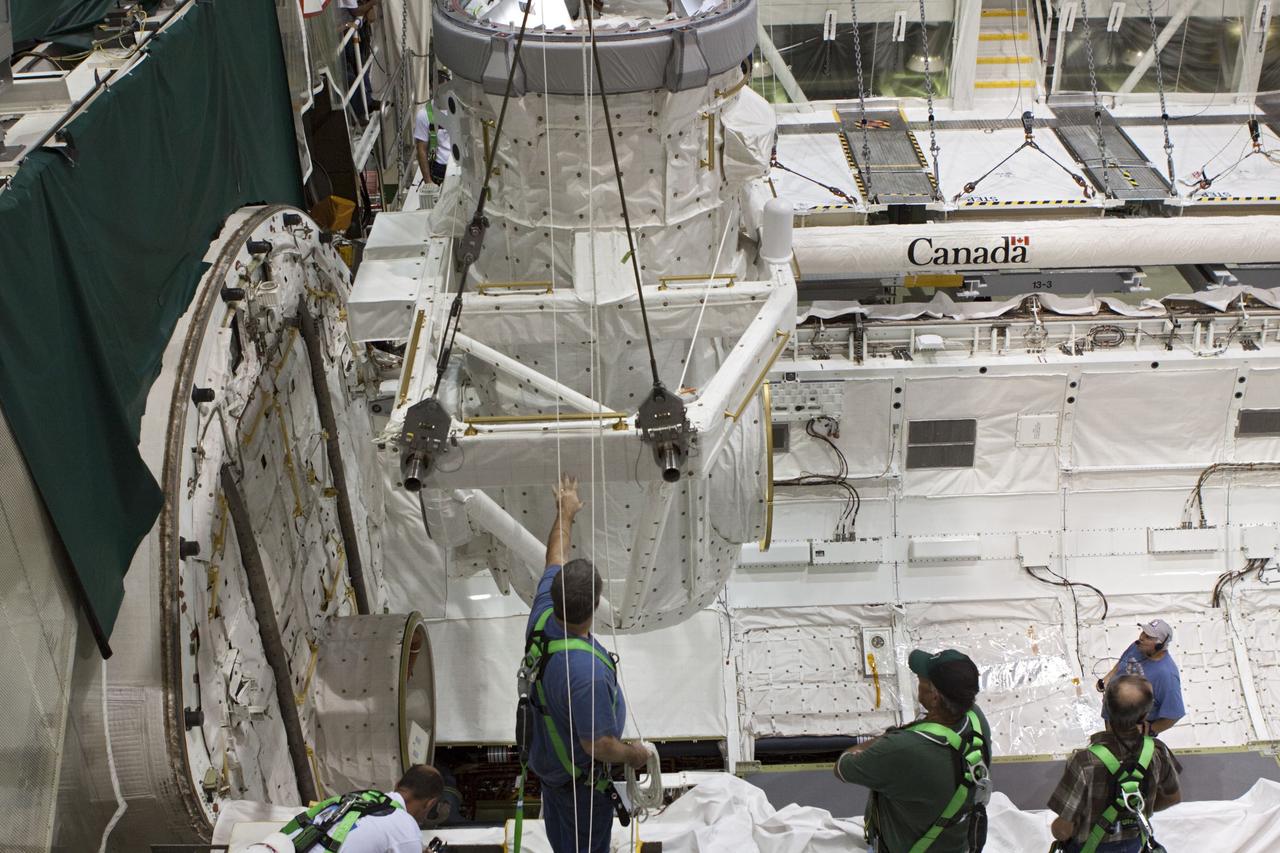
CAPE CANAVERAL, Fla. – At NASA's Kennedy Space Center in Florida, United Space Alliance technicians monitor operations as a crane is used to lift a mock air lock being prepared for installation in the payload bay of the space shuttle Atlantis in Bay 2 of the Orbiter Processing Facility. Atlantis is undergoing final preparations for its transfer to the Kennedy Space Center Visitor Complex targeted for November. The work is part of Transition and Retirement of the remaining space shuttles, Atlantis and Endeavour. Atlantis is being prepared for public display at Kennedy's Visitor Complex. Over the course of its 26-year career, Atlantis spent 293 days in space during 33 missions. For more information, visit http://www.nasa.gov/transition Photo credit: NASA/Jim Grossmann
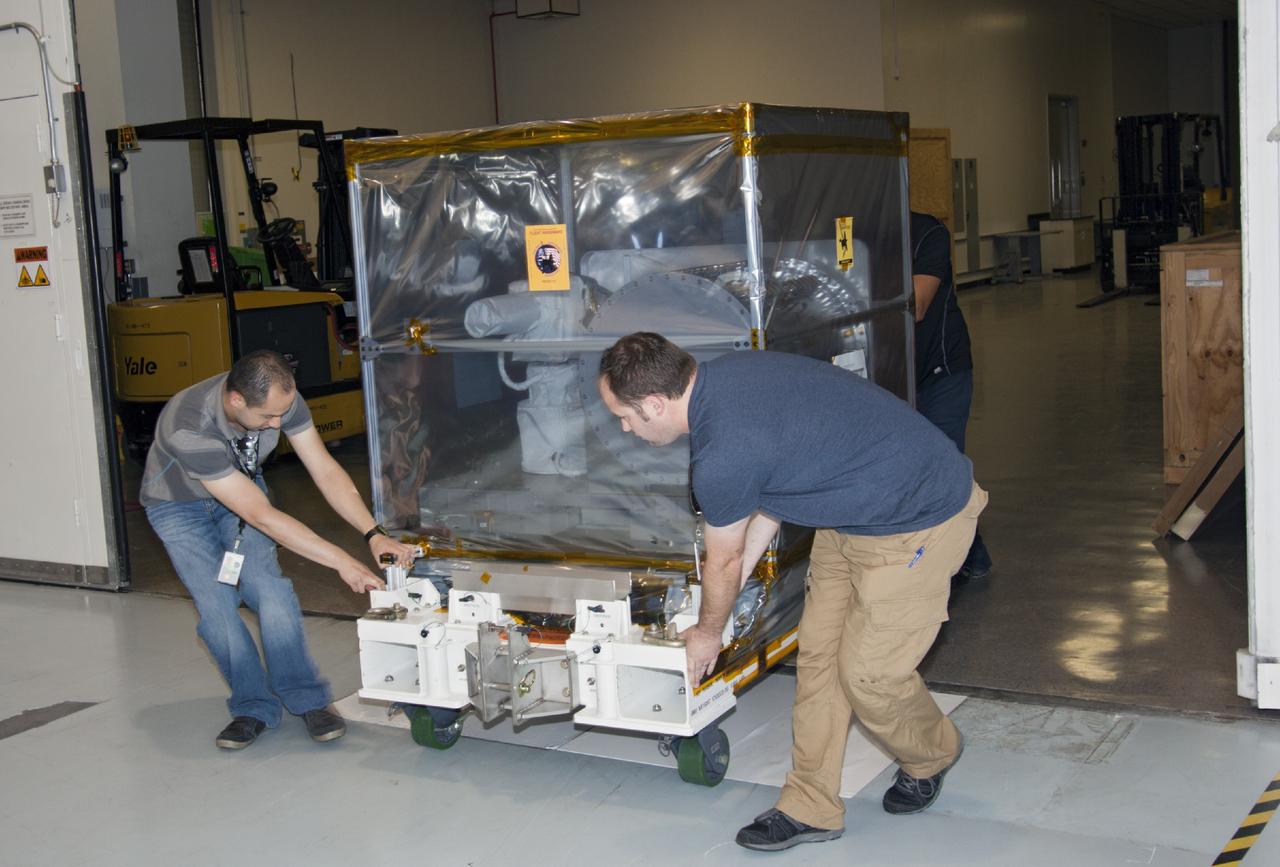
CAPE CANAVERAL, Fla. -- At NASA’s Kennedy Space Center in Florida, technicians move the Optical Payload for Lasercomm Science, or OPALS, experiment from the air lock into an offline laboratory at the Space Station Processing Facility. The optical technology demonstration experiment arrived from the agency’s Jet Propulsion Laboratory in Pasadena, Calif. NASA will use the International Space Station to test OPALS’ communications technology that could dramatically improve spacecraft communications, enhance commercial missions and strengthen transmission of scientific data. The experiment is slated to fly later this year aboard a SpaceX Dragon commercial resupply mission to the space station. The mission is expected to run 90 days after installation on the outside of the station. For more information about OPALS, visit: http://go.nasa.gov/10MMPDO. Photo credit: NASA/Jim Grossmann
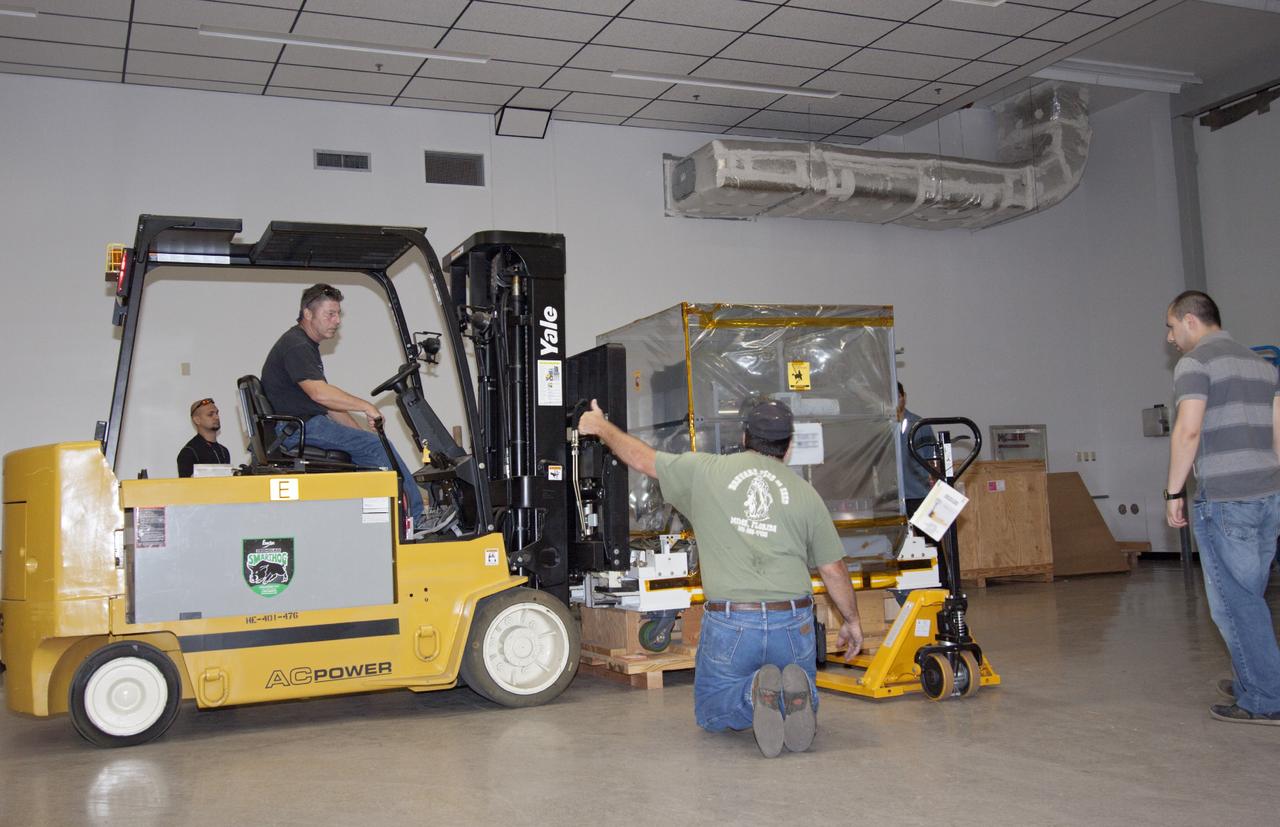
CAPE CANAVERAL, Fla. -- At NASA’s Kennedy Space Center in Florida, a technicians monitor the progress as a forklift is used to lower the Optical Payload for Lasercomm Science, or OPALS, experiment near the air lock entrance at the Space Station Processing Facility. The optical technology demonstration experiment arrived from the agency’s Jet Propulsion Laboratory in Pasadena, Calif. NASA will use the International Space Station to test OPALS’ communications technology that could dramatically improve spacecraft communications, enhance commercial missions and strengthen transmission of scientific data. The experiment is slated to fly later this year aboard a SpaceX Dragon commercial resupply mission to the space station. The mission is expected to run 90 days after installation on the outside of the station. For more information about OPALS, visit: http://go.nasa.gov/10MMPDO. Photo credit: NASA/Jim Grossmann
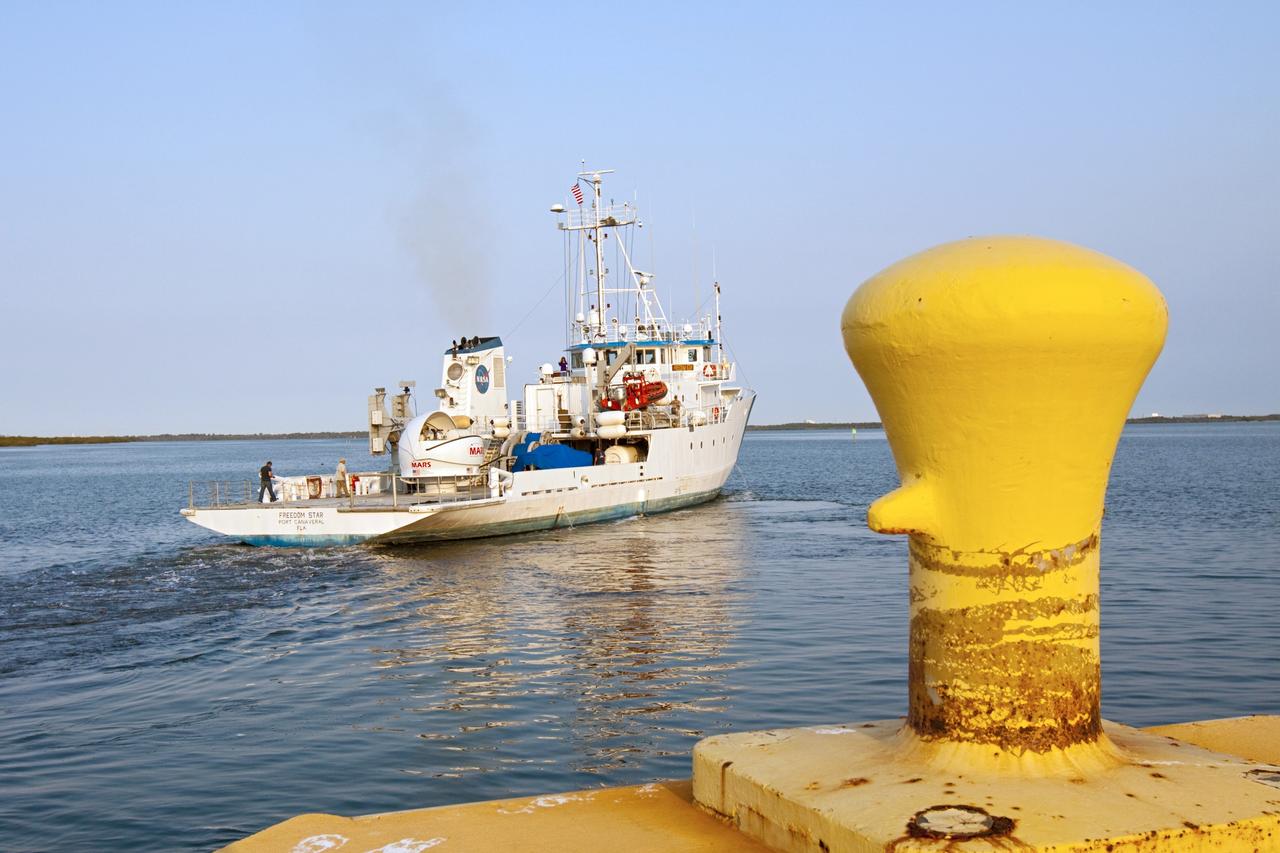
CAPE CANAVERAL, Fla. -- NASA’s Freedom Star boat sets out for a day of testing after departing from port near Cape Canaveral Air Force Station in Florida for the Atlantic Ocean with NASA’s Mobile Aerospace Reconnaissance System, or MARS, secured aboard. MARS, run by NASA’s Langley Research Center in Hampton, Va., with its spatial, hyperspectral, thermal, and directed energy capabilities will be used for thermal imaging testing for the upcoming SpaceX Falcon 9 and Dragon capsule test flight to the International Space Station. During today’s test, the MARS X-band radar and kineto tracking mount KTM were tested to ensure that they were synchronized to receive a rocket launch feed. The radar was used to identify an object to see if the KTM could lock on to and track it. The MARS team performed maintenance on the system, confirmed communications links, and tested the design of the mounting system and environmental enclosure. Photo credit: NASA/Jim Grossmann
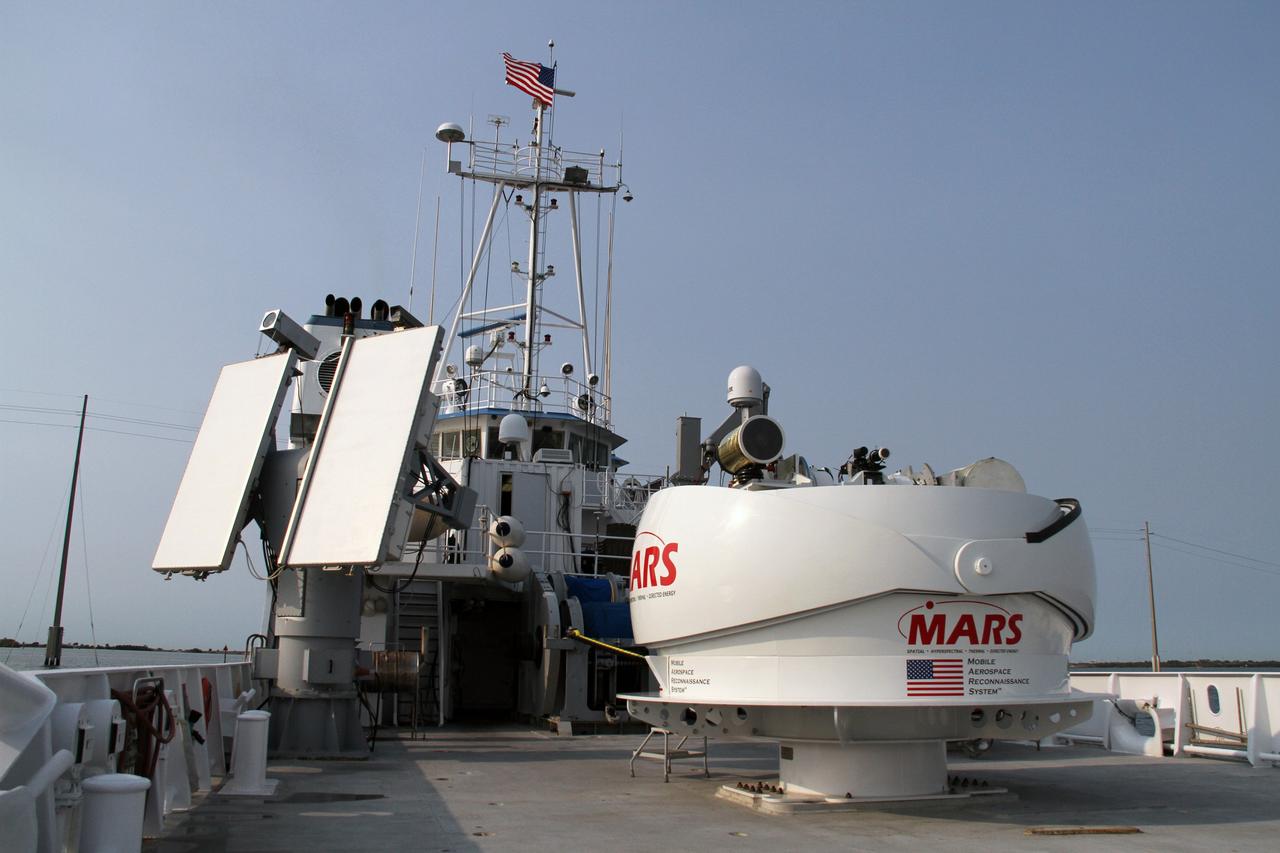
CAPE CANAVERAL, Fla. – NASA’s Freedom Star boat sets out for a day of testing after departing from port near Cape Canaveral Air Force Station in Florida for the Atlantic Ocean with NASA’s Mobile Aerospace Reconnaissance System, or MARS, secured aboard. MARS, run by NASA’s Langley Research Center in Hampton, Va., with its spatial, hyperspectral, thermal, and directed energy capabilities will be used for thermal imaging testing for the upcoming SpaceX Falcon 9 and Dragon capsule test flight to the International Space Station. During today’s test, the MARS X-band radar and kineto tracking mount KTM were tested to ensure that they were synchronized to receive a rocket launch feed. The radar was used to identify an object to see if the KTM could lock on to and track it. The MARS team performed maintenance on the system, confirmed communications links, and tested the design of the mounting system and environmental enclosure. Photo credit: NASA/Cory Huston
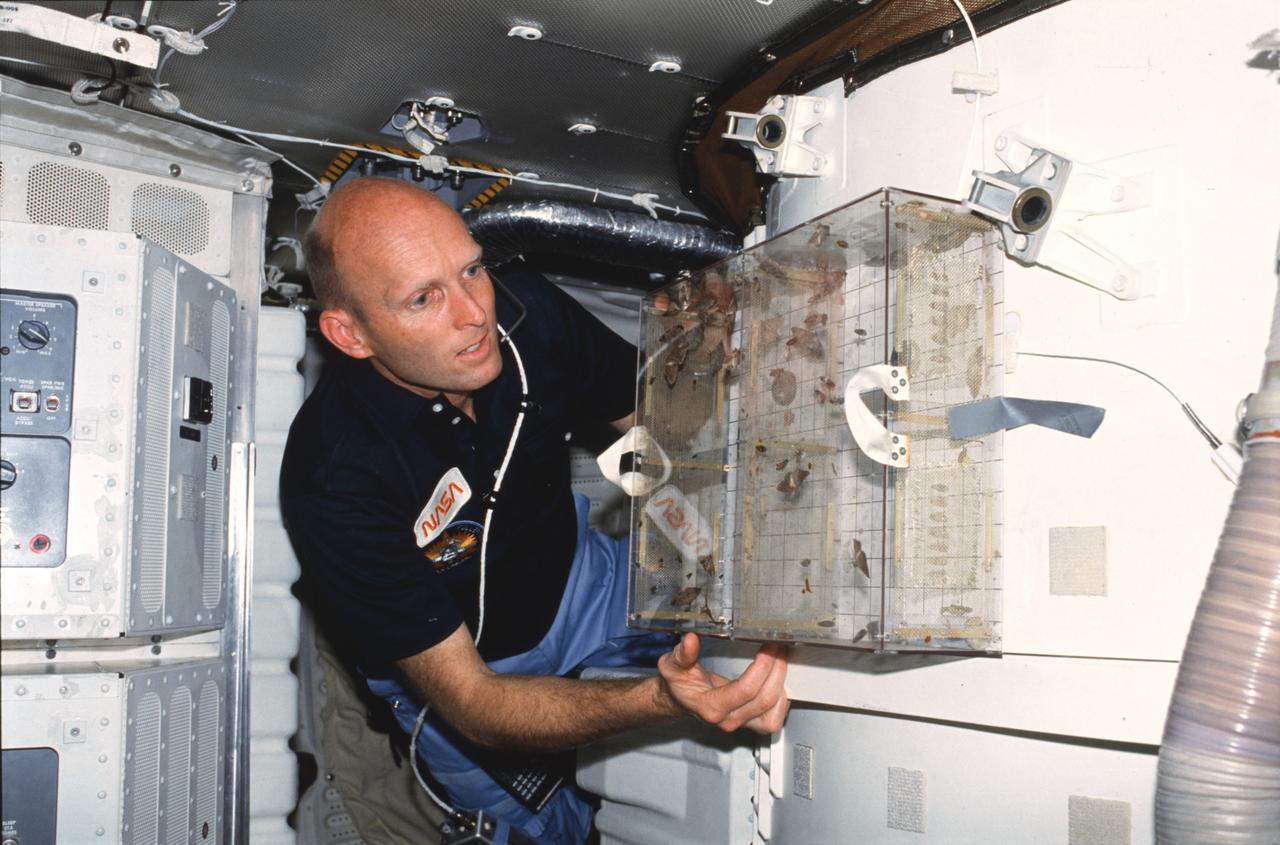
STS003-23-178 (22-30 March 1982) --- Astronaut C. Gordon Fullerton, STS-3 pilot, examines Student Experiment 81-8 (SE-81-8) Insect Flight Motion Study taped to the airlock on aft middeck. Todd Nelson, a high school senior from Minnesota, won a national contest to fly his experiment on this particular flight. Moths, flies, and bees were studied in the near weightless environment. Photo credit: NASA
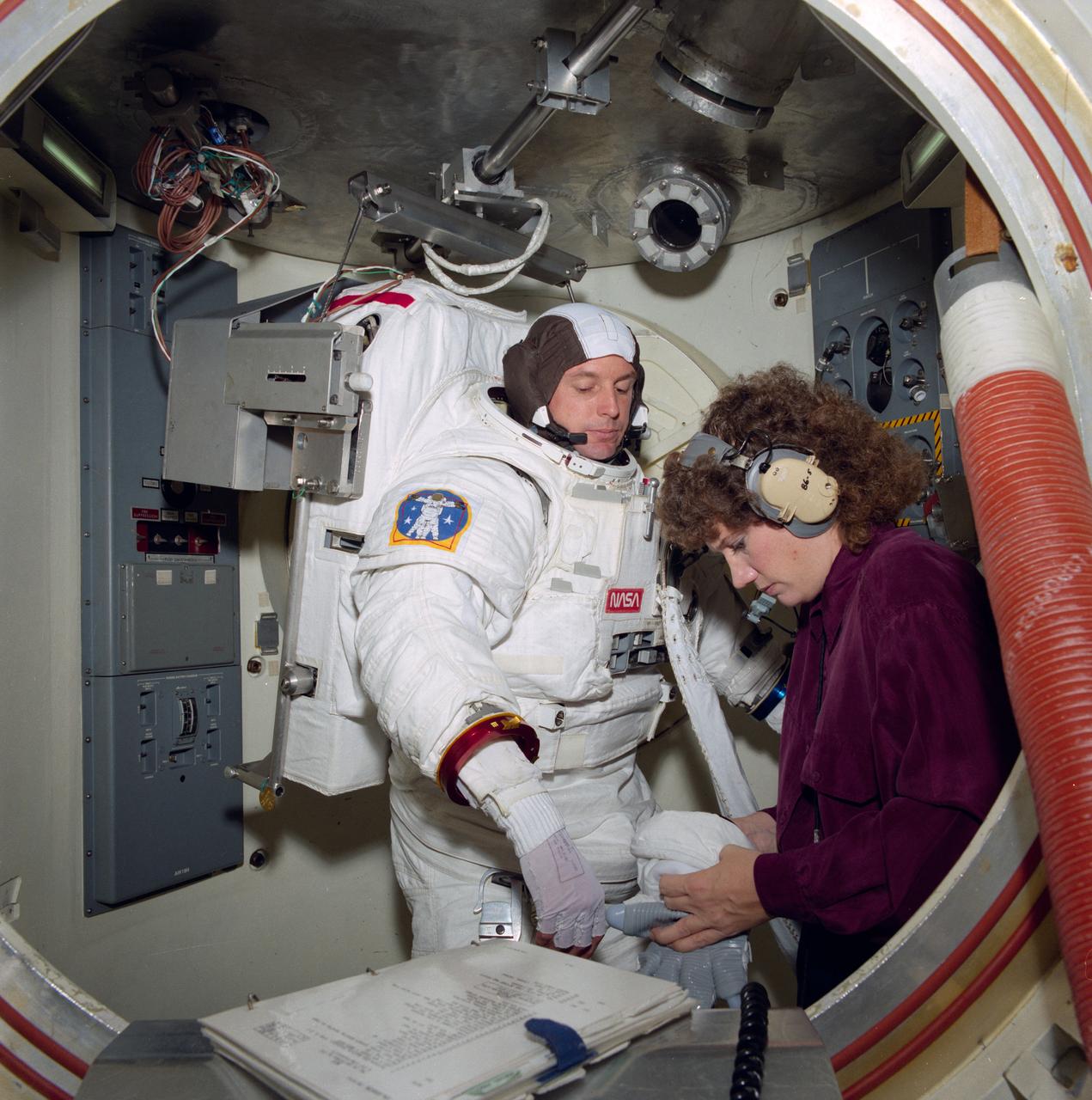
S92-49812 (11 Nov 1992) --- Astronauts Gregory J. Harbaugh and Susan J. Helms, mission specialists assigned to fly aboard the Space Shuttle Endeavour for the STS-54 mission, rehearse for the upcoming flight. The two are in the airlock of a trainer at the Johnson Space Center's crew systems laboratory. Harbaugh and Mario Runco Jr., also a mission specialist, have been assigned to perform a four-hour-plus extravehicular activity (EVA). Helms is to assist the pair of spacewalkers during the mission as well as in this training exercise.
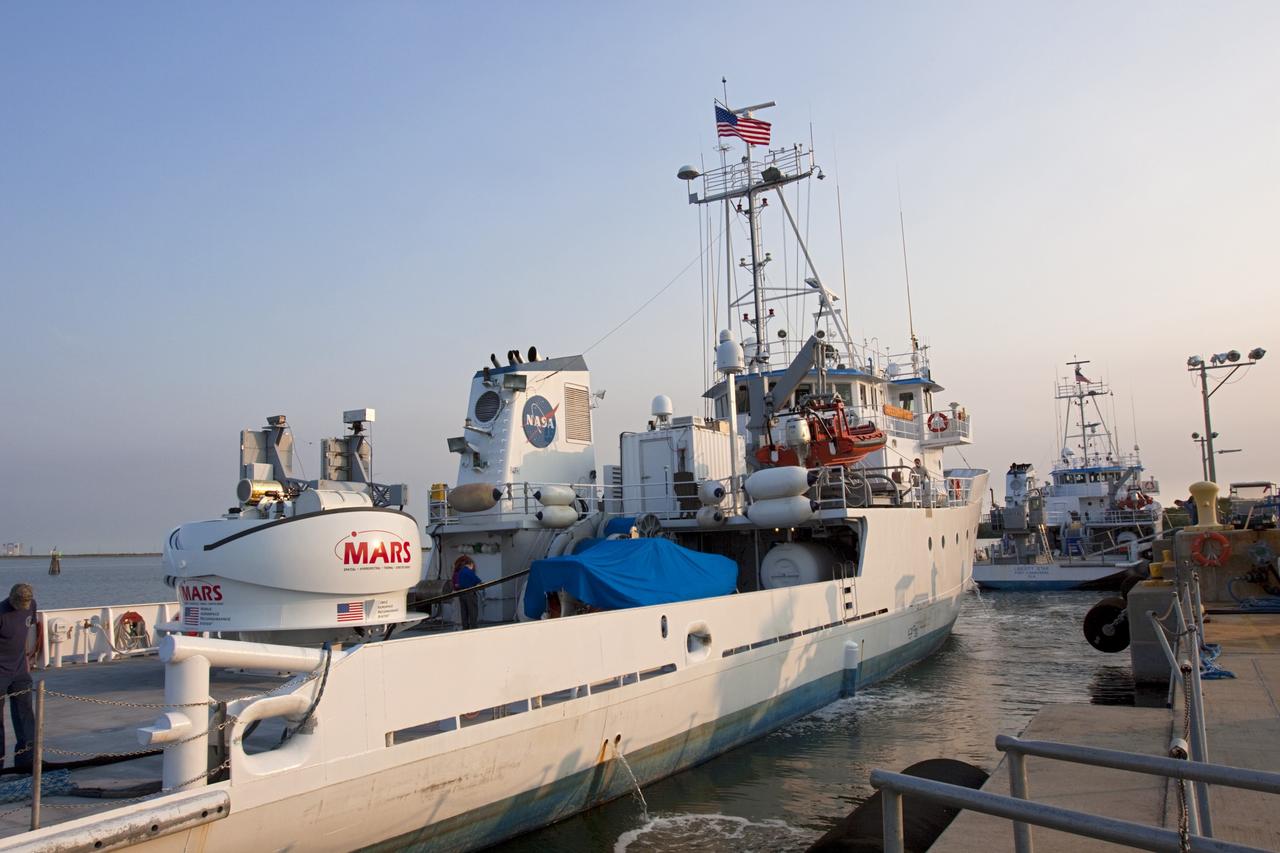
CAPE CANAVERAL, Fla. -- NASA’s Mobile Aerospace Reconnaissance System, or MARS, is secured aboard NASA’s Freedom Star boat near Hangar AE at Cape Canaveral Air Force Station in Florida. MARS is being prepared for a day of testing after departing from Port Canaveral out to the Atlantic Ocean. MARS, run by NASA’s Langley Research Center in Hampton, Va., with its spatial, hyperspectral, thermal, and directed energy capabilities will be used for thermal imaging testing for the upcoming SpaceX Falcon 9 and Dragon capsule test flight to the International Space Station. During today’s test, the MARS X-band radar and kineto tracking mount KTM were tested to ensure that they were synchronized to receive a rocket launch feed. The radar was used to identify an object to see if the KTM could lock on to and track it. The MARS team performed maintenance on the system, confirmed communications links, and tested the design of the mounting system and environmental enclosure. Photo credit: NASA/Jim Grossmann
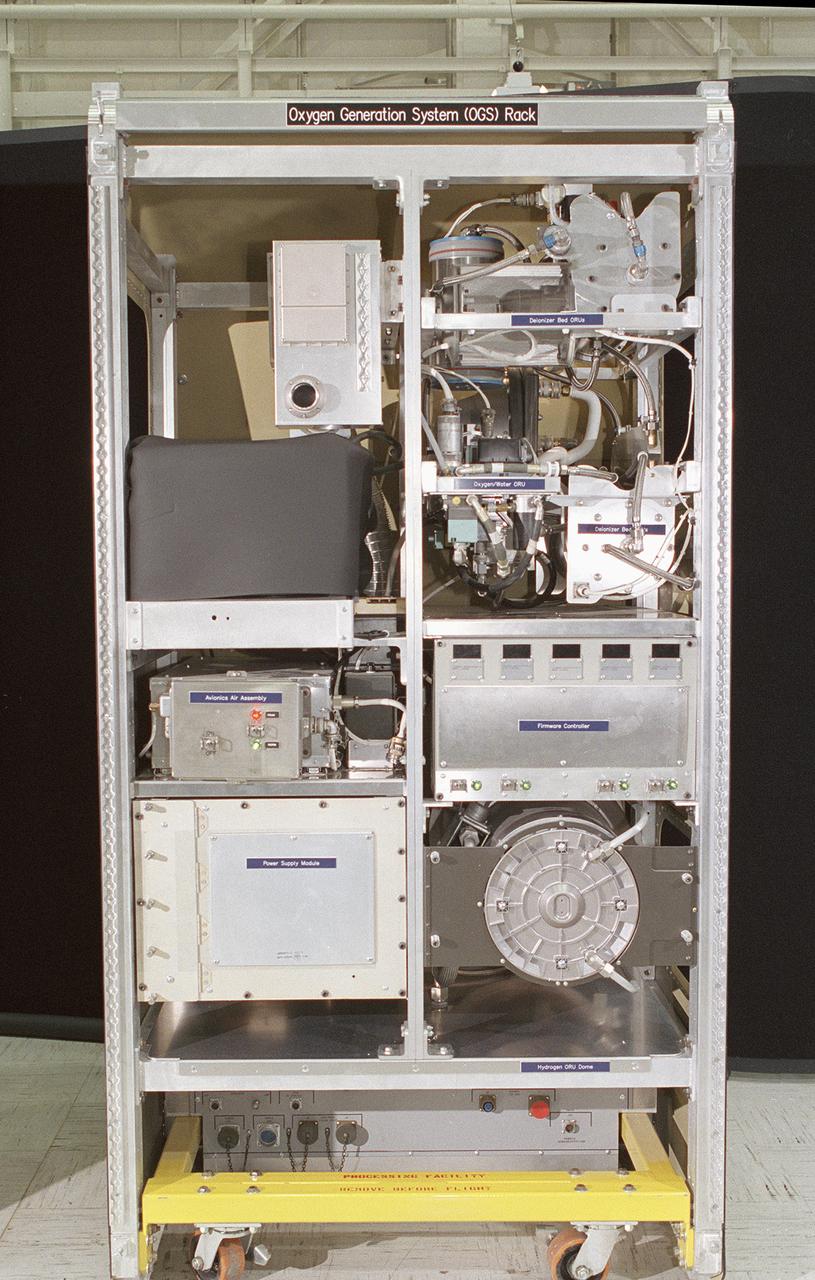
The Environmental Control and Life Support System (ECLSS) Group of the Flight Projects Directorate at the Marshall Space Flight Center (MSFC) in Huntsville, Alabama, is responsible for designing and building the life support systems that will provide the crew of the International Space Station (ISS) a comfortable environment in which to live and work. This is a close-up view of ECLSS Oxygen Generation System (OGS) rack. The ECLSS Group at the MSFC oversees the development of the OGS, which produces oxygen for breathing air for the crew and laboratory animals, as well as for replacing oxygen lost due to experiment use, airlock depressurization, module leakage, and carbon dioxide venting. The OGS consists primarily of the Oxygen Generator Assembly (OGA), provided by the prime contractor, the Hamilton Sundstrand Space Systems, International (HSSSI) in Windsor Locks, Cornecticut and a Power Supply Module (PSM), supplied by the MSFC. The OGA is comprised of a cell stack that electrolyzes (breaks apart the hydrogen and oxygen molecules) some of the clean water provided by the Water Recovery System and the separators that remove the gases from water after electrolysis. The PSM provides the high power to the OGA needed to electrolyze the water.
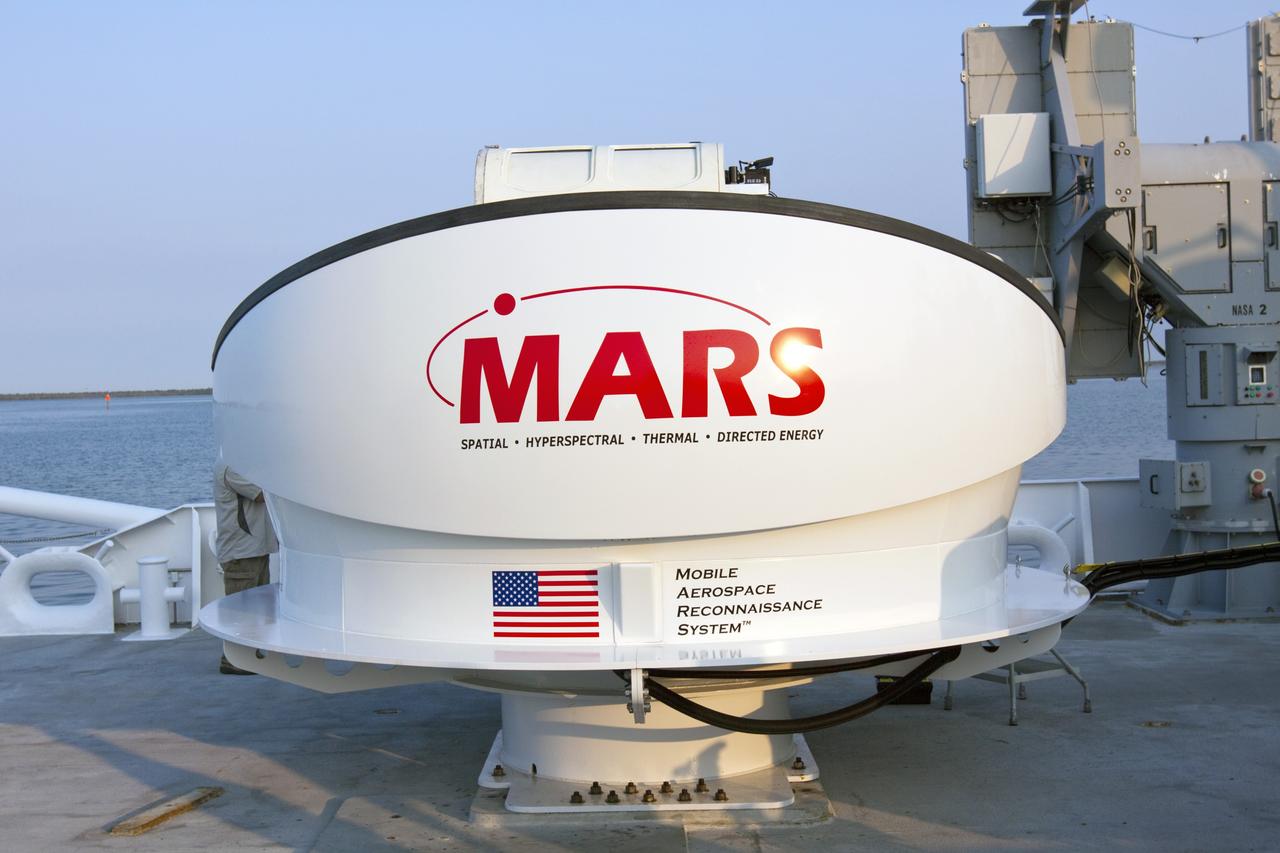
CAPE CANAVERAL, Fla. -- NASA’s Mobile Aerospace Reconnaissance System, or MARS, is secured aboard NASA’s Freedom Star boat near Hangar AE at Cape Canaveral Air Force Station in Florida. MARS is being prepared for a day of testing after departing from Port Canaveral out to the Atlantic Ocean. MARS, run by NASA’s Langley Research Center in Hampton, Va., with its spatial, hyperspectral, thermal, and directed energy capabilities will be used for thermal imaging testing for the upcoming SpaceX Falcon 9 and Dragon capsule test flight to the International Space Station. During today’s test, the MARS X-band radar and kineto tracking mount KTM were tested to ensure that they were synchronized to receive a rocket launch feed. The radar was used to identify an object to see if the KTM could lock on to and track it. The MARS team performed maintenance on the system, confirmed communications links, and tested the design of the mounting system and environmental enclosure. Photo credit: NASA/Jim Grossmann
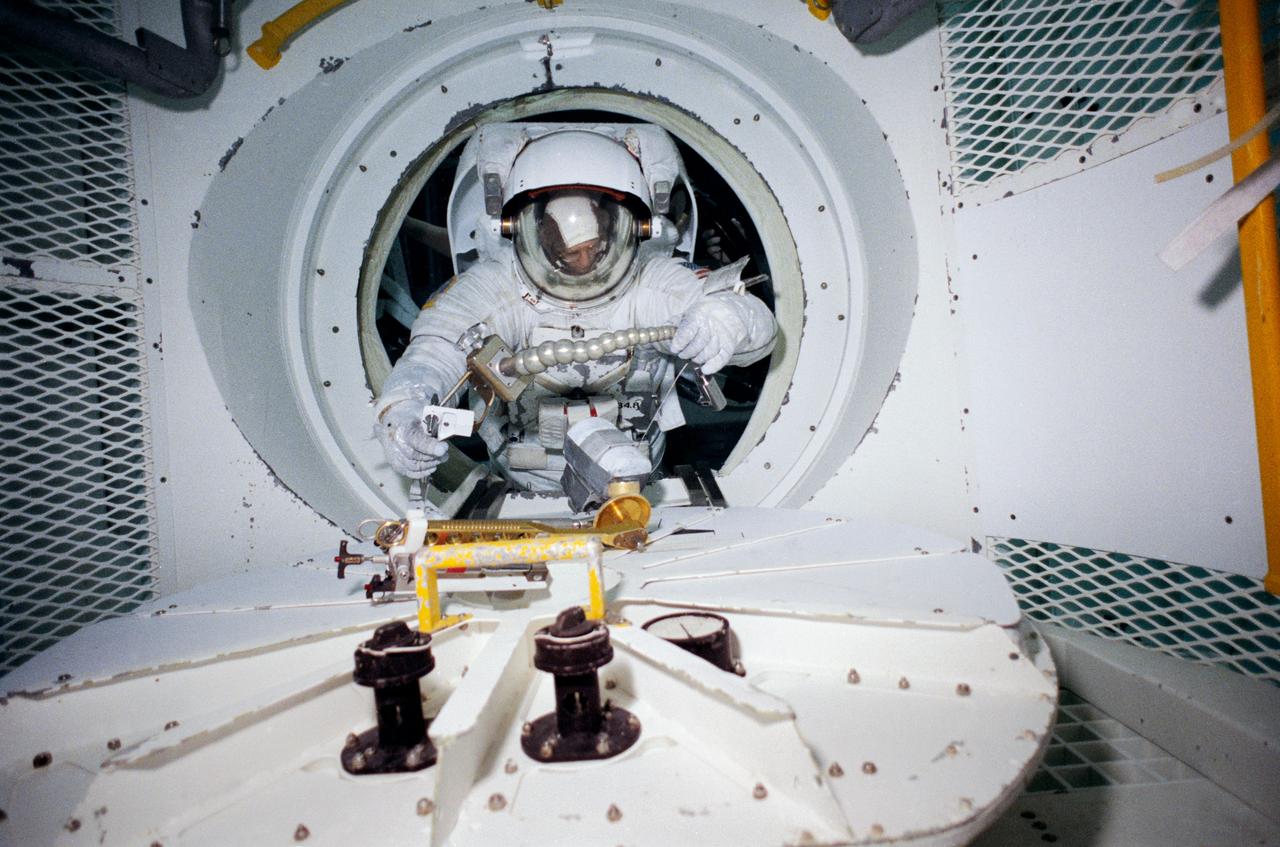
S90-30521 (20 Feb 1990) --- Though no extravehicular activity is planned for STS-31, two crewmembers train for contingencies that would necessitate leaving their shirt sleeve environment of Discovery's cabin and performing chores with their Hubble Space Telescope payload or related hardware. Astronaut Kathryn D. Sullivan, mission specialist, is seen egressing the hatchway of the airlock of a full scale mockup of a Shuttle cabin to interface with an HST mockup in JSC's 25.-ft. deep pool in the weightless environment training facility (WET-F). Two SCUBA-equipped divers who assisted in the training session are also seen. Astronaut Bruce McCandless II, mission specialist, is out of frame.

This artist's illustration depicts the exoplanet LHS 3844b, which is 1.3 times the mass of Earth and orbits an M dwarf star. The planet has no apparent atmosphere, and its surface may be covered mostly in dark lava rock, according to observations by NASA's Spitzer Space Telescope. Discovered in 2018 by NASA's Transiting Exoplanet Satellite Survey (TESS), planet LHS 3844b is located 48.6 light-years from Earth and makes one full revolution around its parent star in just 11 hours. Because it has such a tight orbit, LHS 3844b is most likely tidally locked, meaning one side of the planet always faces the star while another side always faces away. Spitzer was able to detect light directly emitted by LHS 3844b in part because the planet is extremely hot, so it radiates a relatively high amount of infrared light. The star-facing side is heated to about 1,410 degrees Fahrenheit (770 degrees Celsius). In addition, the planet's parent star is relatively dim as far as stars go. By measuring the temperature difference between the planet's star-facing dayside and its space-facing nightside, the new study found that a negligible amount of heat is being transferred from one side to the other. If an atmosphere were present, hot air on the dayside would naturally expand and generate winds that would transfer heat around the planet. On a rock with little to no atmosphere, like the Moon, there is no air present to transfer heat. The planet has a low infrared albedo, or reflectivity, leading scientists to conclude that its surface may be covered with basalt, which also composes the dark mare on the Moon. Movie available at https://photojournal.jpl.nasa.gov/catalog/PIA23130
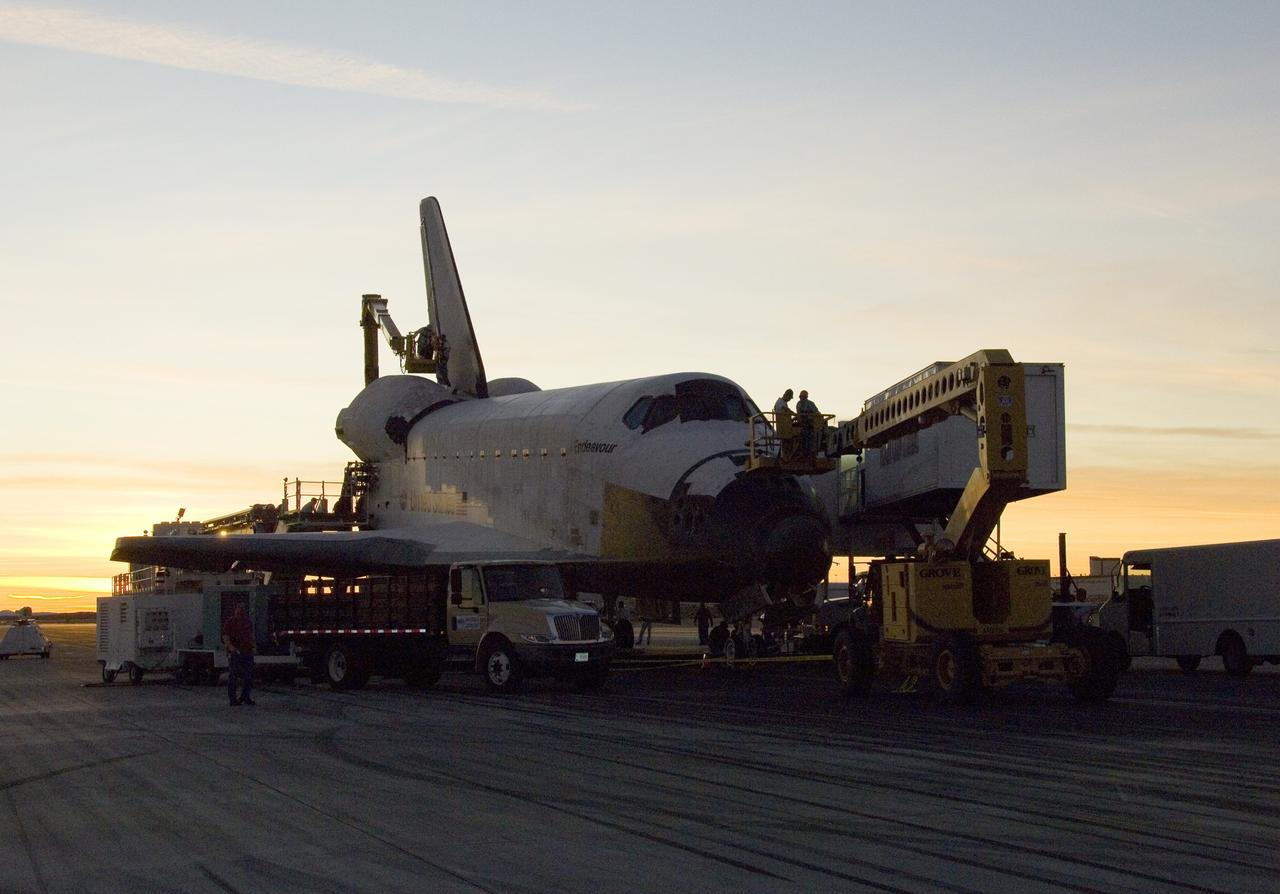
EDWARDS, Calif. – On Edwards Air Force Base in California, space shuttle Endeavour undergoes recovery operations after its landing. The orbiter convoy normally begins recovery operations in earnest about two hours before the shuttle is scheduled to land. Specially designed vehicles or units and a team of trained personnel “safe” the orbiter and prepare it for towing. Purge and Coolant Umbilical Access Vehicles are moved into position behind the orbiter to get access to the umbilical areas. The flight crew is replaced aboard the orbiter by exchange sup¬port personnel who prepare the orbiter for ground tow operations, install switch guards and remove data packages from any onboard experiments. After a total safety downgrade, vehicle ground personnel make numerous preparations for the towing operation, including install¬ing landing gear lock pins, disconnecting the nose landing gear drag link, positioning the towing vehicle in front of the orbiter and connecting the tow bar. The decision to land Endeavour at Edwards was made due to weather concerns at NASA's Kennedy Space Center in Florida. In the 52nd landing at Edwards, Endeavour touched down at 4:25 p.m. EST to end the STS-126 mission, completing its 16-day journey of more than 6.6 million miles in space. Endeavour will be returned to Kennedy atop a Shuttle Carrier Aircraft, or SCA, a modified Boeing 747 jetliner. Photo credit: NASA/Tony Landis, VAFB
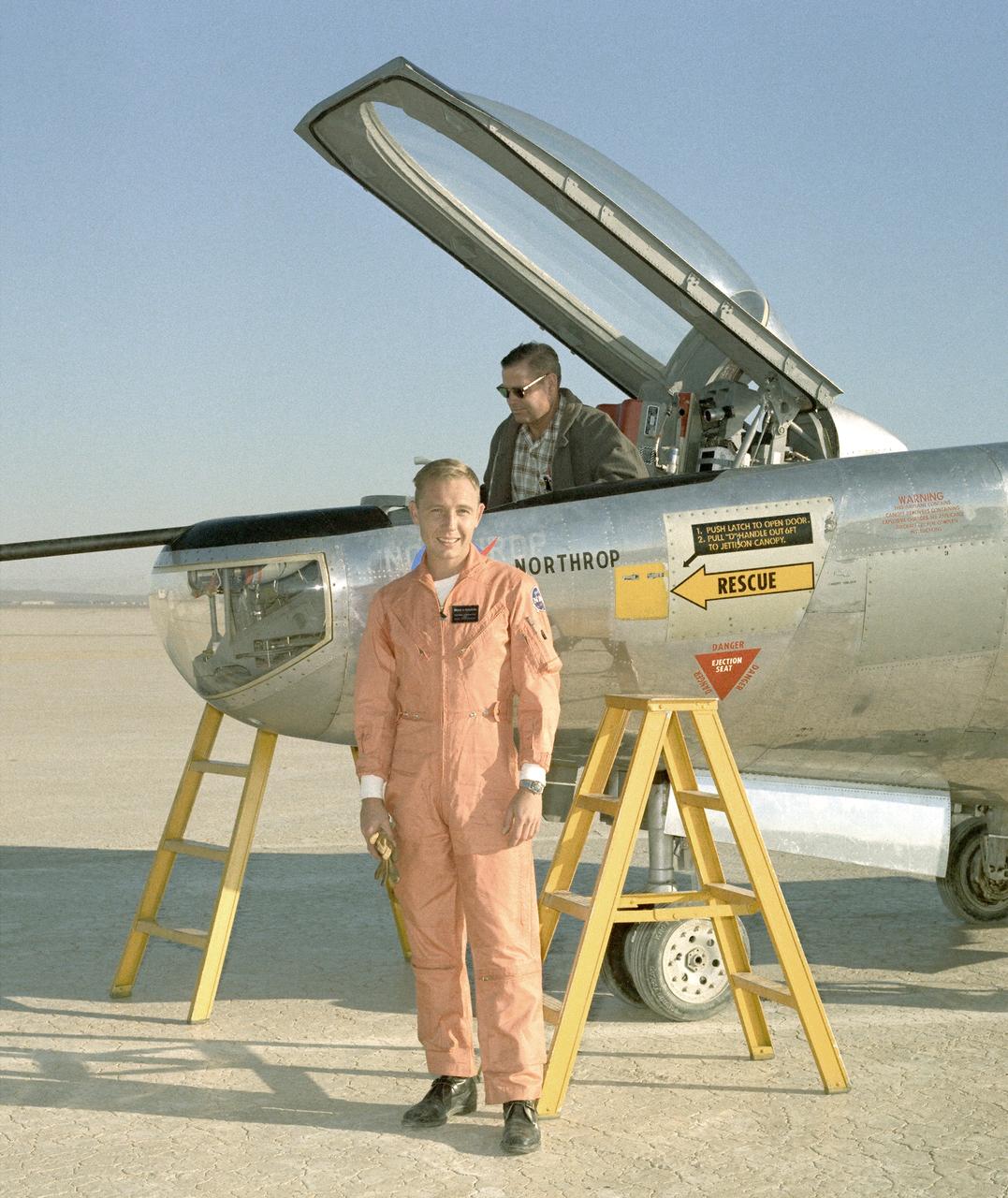
Bruce A. Peterson standing beside the M2-F2 lifting body on Rogers Dry Lake. Peterson became the NASA project pilot for the lifting body program after Milt Thompson retired from flying in late 1966. Peterson had flown the M2-F1, and made the first glide flight of the HL-10 heavy-weight lifting body in December 1966. On May 10, 1967, Peterson made his fourth glide flight in the M2-F2. This was also the M2-F2's 16th glide flight, scheduled to be the last one before the powered flights began. However, as pilot Bruce Peterson neared the lakebed, the M2-F2 suffered a pilot induced oscillation (PIO). The vehicle rolled from side to side in flight as he tried to bring it under control. Peterson recovered, but then observed a rescue helicopter that seemed to pose a collision threat. Distracted, Peterson drifted in a cross-wind to an unmarked area of the lakebed where it was very difficult to judge the height over the lakebed because of a lack of the guidance the markers provided on the lakebed runway. Peterson fired the landing rockets to provide additional lift, but he hit the lakebed before the landing gear was fully down and locked. The M2-F2 rolled over six times, coming to rest upside down. Pulled from the vehicle by Jay King and Joseph Huxman, Peterson was rushed to the base hospital, transferred to March Air Force Base and then the UCLA Hospital. He recovered but lost vision in his right eye due to a staph infection.
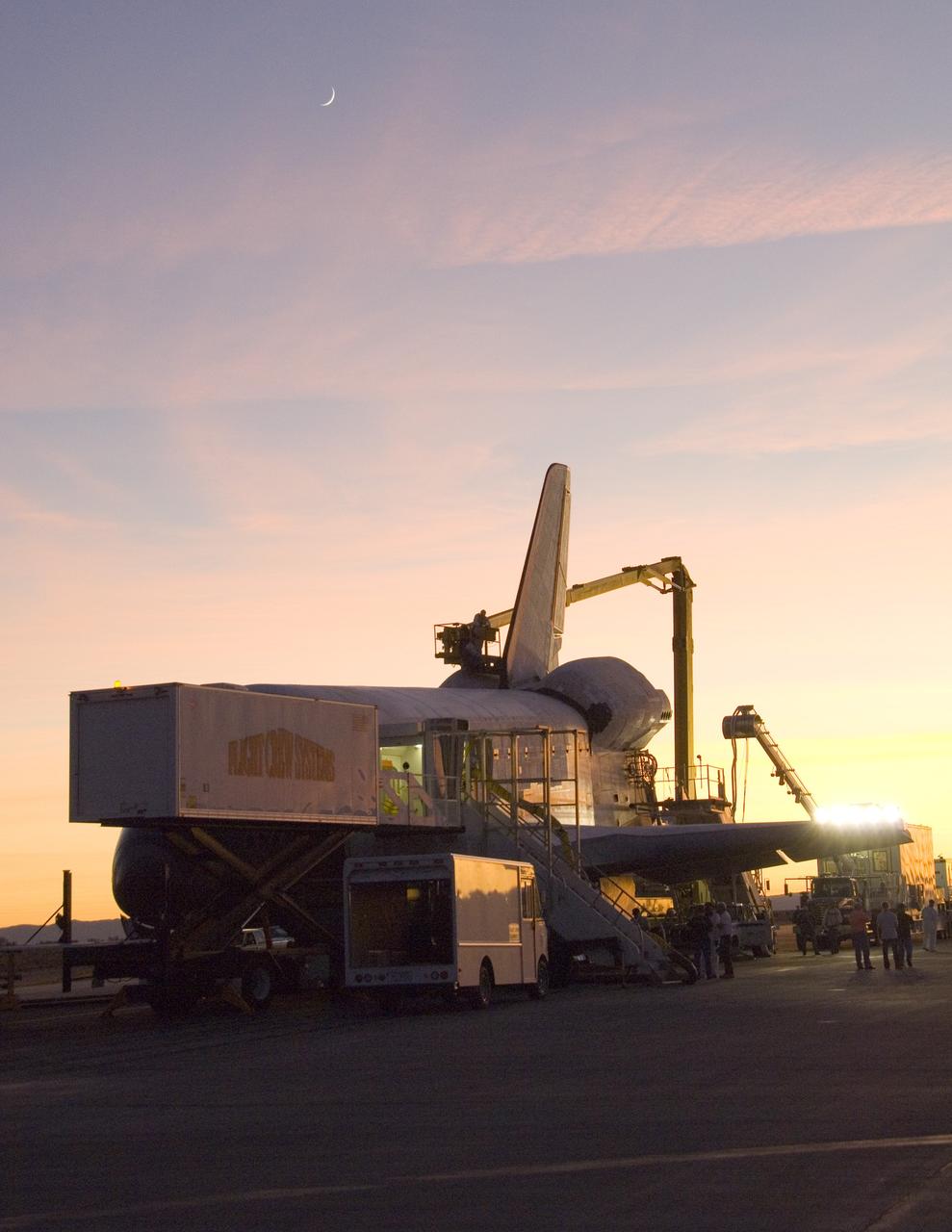
EDWARDS, Calif. – On Edwards Air Force Base in California, space shuttle Endeavour undergoes recovery operations after its landing. The orbiter convoy normally begins recovery operations in earnest about two hours before the shuttle is scheduled to land. Specially designed vehicles or units and a team of trained personnel “safe” the orbiter and prepare it for towing. Purge and Coolant Umbilical Access Vehicles are moved into position behind the orbiter to get access to the umbilical areas. The flight crew is replaced aboard the orbiter by exchange sup¬port personnel who prepare the orbiter for ground tow operations, install switch guards and remove data packages from any onboard experiments. After a total safety downgrade, vehicle ground personnel make numerous preparations for the towing operation, including install¬ing landing gear lock pins, disconnecting the nose landing gear drag link, positioning the towing vehicle in front of the orbiter and connecting the tow bar. The decision to land Endeavour at Edwards was made due to weather concerns at NASA's Kennedy Space Center in Florida. In the 52nd landing at Edwards, Endeavour touched down at 4:25 p.m. EST to end the STS-126 mission, completing its 16-day journey of more than 6.6 million miles in space. Endeavour will be returned to Kennedy atop a Shuttle Carrier Aircraft, or SCA, a modified Boeing 747 jetliner. Photo credit: NASA/Tony Landis, VAFB
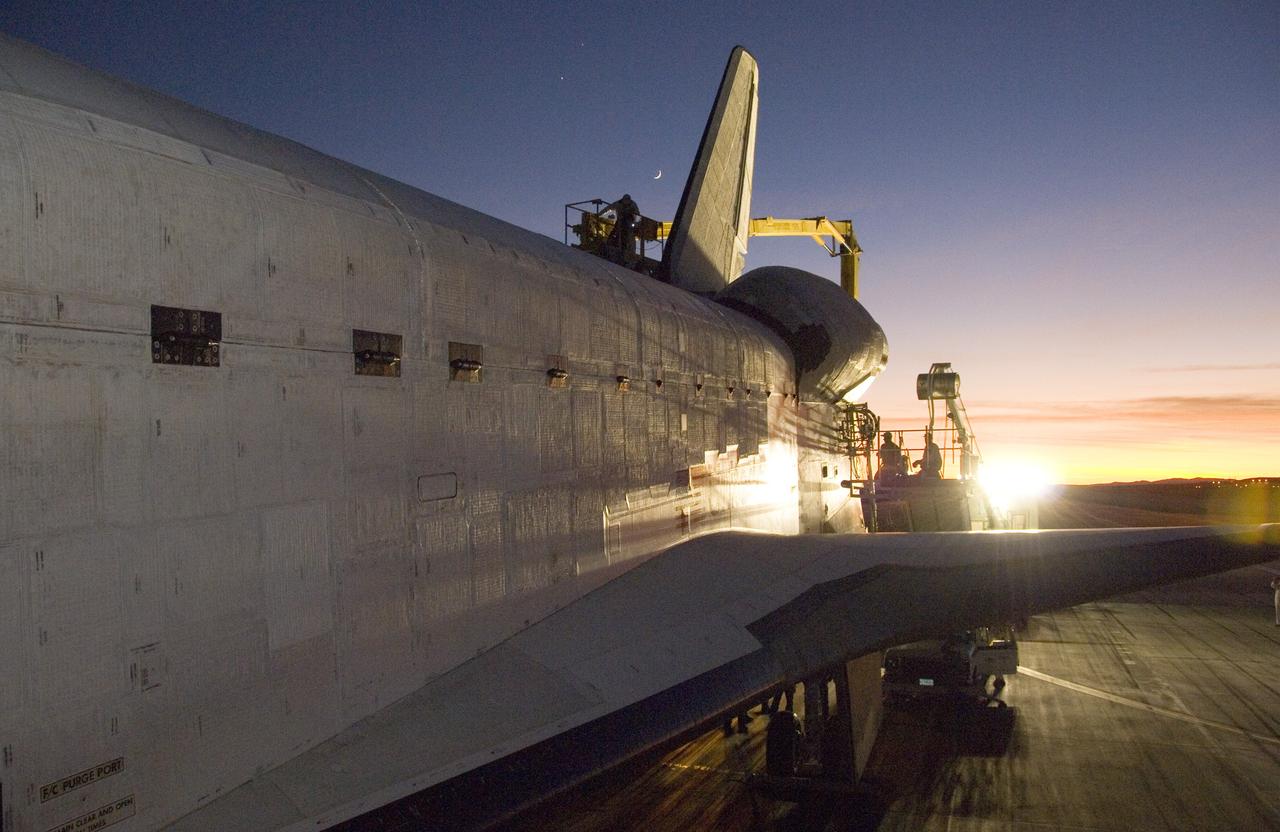
EDWARDS, Calif. – Against a setting sun, space shuttle Endeavour undergoes recovery operations on Edwards Air Force Base in California after its landing. The orbiter convoy normally begins recovery operations in earnest about two hours before the shuttle is scheduled to land. Specially designed vehicles or units and a team of trained personnel “safe” the orbiter and prepare it for towing. Purge and Coolant Umbilical Access Vehicles are moved into position behind the orbiter to get access to the umbilical areas. The flight crew is replaced aboard the orbiter by exchange sup¬port personnel who prepare the orbiter for ground tow operations, install switch guards and remove data packages from any onboard experiments. After a total safety downgrade, vehicle ground personnel make numerous preparations for the towing operation, including install¬ing landing gear lock pins, disconnecting the nose landing gear drag link, positioning the towing vehicle in front of the orbiter and connecting the tow bar. The decision to land Endeavour at Edwards was made due to weather concerns at NASA's Kennedy Space Center in Florida. In the 52nd landing at Edwards, Endeavour touched down at 4:25 p.m. EST to end the STS-126 mission, completing its 16-day journey of more than 6.6 million miles in space. Endeavour will be returned to Kennedy atop a Shuttle Carrier Aircraft, or SCA, a modified Boeing 747 jetliner. Photo credit: NASA/Tony Landis, VAFB
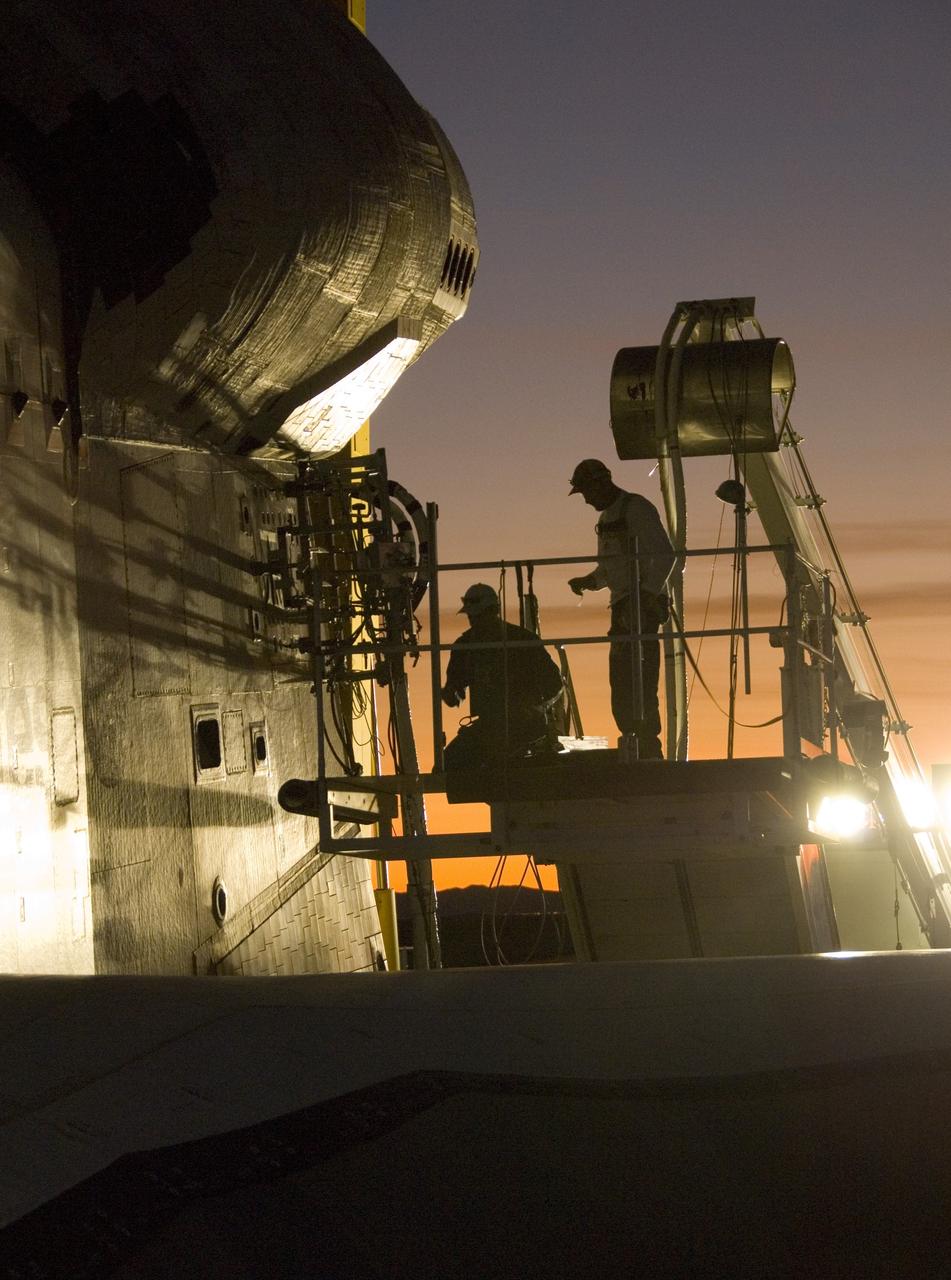
EDWARDS, Calif. – Against a setting sun, space shuttle Endeavour undergoes recovery operations on Edwards Air Force Base in California after its landing. The orbiter convoy normally begins recovery operations in earnest about two hours before the shuttle is scheduled to land. Specially designed vehicles or units and a team of trained personnel “safe” the orbiter and prepare it for towing. Purge and Coolant Umbilical Access Vehicles are moved into position behind the orbiter to get access to the umbilical areas. The flight crew is replaced aboard the orbiter by exchange sup¬port personnel who prepare the orbiter for ground tow operations, install switch guards and remove data packages from any onboard experiments. After a total safety downgrade, vehicle ground personnel make numerous preparations for the towing operation, including install¬ing landing gear lock pins, disconnecting the nose landing gear drag link, positioning the towing vehicle in front of the orbiter and connecting the tow bar. The decision to land Endeavour at Edwards was made due to weather concerns at NASA's Kennedy Space Center in Florida. In the 52nd landing at Edwards, Endeavour touched down at 4:25 p.m. EST to end the STS-126 mission, completing its 16-day journey of more than 6.6 million miles in space. Endeavour will be returned to Kennedy atop a Shuttle Carrier Aircraft, or SCA, a modified Boeing 747 jetliner. Photo credit: NASA/Tony Landis, VAFB

Though North America is a full month into astronomical spring, the Great Lakes have been slow to give up on winter. As of April 22, 2014, the Great Lakes were 33.9 percent ice covered. The lake they call Superior dominated the pack. In the early afternoon on April 20, 2014, the Moderate Resolution Imaging Spectroradiometer (MODIS) on NASA’s Aqua satellite captured this natural-color image of Lake Superior, which straddles the United States–Canada border. At the time Aqua passed over, the lake was 63.5 percent ice covered, according to the NOAA Great Lakes Environmental Research Lab (GLERL). Averaged across Lake Superior, ice was 22.6 centimeters (8.9 inches) thick; it was as much as twice that thickness in some locations. GLERL researcher George Leshkevich affirmed that ice cover this spring is significantly above normal. For comparison, Lake Superior had 3.6 percent ice cover on April 20, 2013; in 2012, ice was completely gone by April 12. In the last winter that ice cover grew so thick on Lake Superior (2009), it reached 93.7 percent on March 2 but was down to 6.7 percent by April 21. Average water temperatures on all of the Great Lakes have been rising over the past 30 to 40 years and ice cover has generally been shrinking. (Lake Superior ice was down about 79 percent since the 1970s.) But chilled by persistent polar air masses throughout the 2013-14 winter, ice cover reached 88.4 percent on February 13 and 92.2 percent on March 6, 2014, the second highest level in four decades of record-keeping. Air temperatures in the Great Lakes region were well below normal for March, and the cool pattern is being reinforced along the coasts because the water is absorbing less sunlight and warming less than in typical spring conditions. The graph below, based on data from Environment Canada, shows the 2014 conditions for all of the Great Lakes in mid-April compared to the past 33 years. Lake Superior ice cover got as high as 95.3 percent on March 19. By April 22, it was reported at 59.9 percent; Lake Huron was nearly 30.4 percent. News outlets noted that as many as 70 ships have been backed up in Lakes Michigan, Huron, and Erie, waiting for passage into ports on Lake Superior. The U.S. Coast Guard has been grouping ships together into small convoys after they pass through locks at Sault Ste. Marie, in order to maximize ice-breaking efficiency and to protect ships from damage. Superior is the world’s largest freshwater lake by area (82,100 square kilometers or 31,700 square miles) and the third largest by volume. The waters average 147 meters (483 feet) in depth, and the basin is believed to hold about 10 percent of the world’s liquid fresh water. NASA image courtesy Jeff Schmaltz LANCE/EOSDIS MODIS Rapid Response Team, GSFC. Caption by Mike Carlowicz. Read more: <a href="http://earthobservatory.nasa.gov/IOTD/view.php?id=83541&eocn=home&eoci=iotd_title" rel="nofollow">earthobservatory.nasa.gov/IOTD/view.php?id=83541&eocn...</a> Credit: <b><a href="http://www.earthobservatory.nasa.gov/" rel="nofollow"> NASA Earth Observatory</a></b> <b><a href="http://www.nasa.gov/audience/formedia/features/MP_Photo_Guidelines.html" rel="nofollow">NASA image use policy.</a></b> <b><a href="http://www.nasa.gov/centers/goddard/home/index.html" rel="nofollow">NASA Goddard Space Flight Center</a></b> enables NASA’s mission through four scientific endeavors: Earth Science, Heliophysics, Solar System Exploration, and Astrophysics. Goddard plays a leading role in NASA’s accomplishments by contributing compelling scientific knowledge to advance the Agency’s mission. <b>Follow us on <a href="http://twitter.com/NASAGoddardPix" rel="nofollow">Twitter</a></b> <b>Like us on <a href="http://www.facebook.com/pages/Greenbelt-MD/NASA-Goddard/395013845897?ref=tsd" rel="nofollow">Facebook</a></b> <b>Find us on <a href="http://instagram.com/nasagoddard?vm=grid" rel="nofollow">Instagram</a></b>