
ISS014-E-09425 (8 Dec. 2006) --- European Space Agency (ESA) astronaut Thomas Reiter, Expedition 14 flight engineer, conducts a Surface, Water and Air Biocharacterization (SWAB) air sampling in the Destiny laboratory of the International Space Station. Reiter holds a pair of scissors and the SWAB Air Sampling Device (ASD) floats freely near him.

ISS014-E-09422 (8 Dec. 2006) --- European Space Agency (ESA) astronaut Thomas Reiter, Expedition 14 flight engineer, conducts a Surface, Water and Air Biocharacterization (SWAB) air sampling in the Destiny laboratory of the International Space Station.

jsc2026e034361 (April 28, 2026) --- Air sample kit and canisters are seen that collect ambient and alveolar samples for analysis of the carbon monoxide content as part of SPARK. This investigation aims to study how the spleen changes and how red blood cells break down in space to better understand the biological mechanisms of space-related anemia. Investigation findings may lead to ways to better protect crew health during long-duration space missions. Credit: Canadian Space Agency.
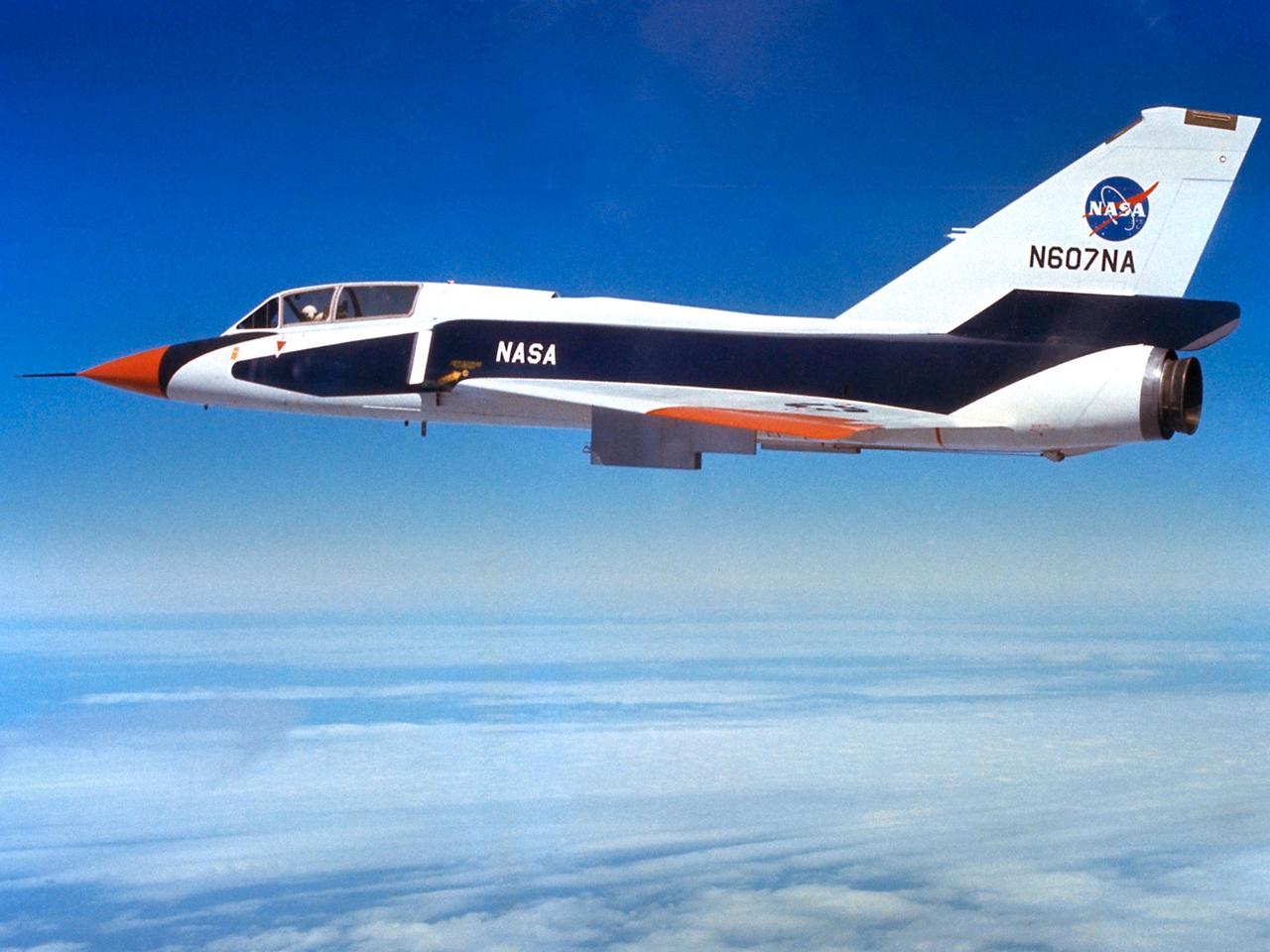
The National Aeronautics and Space Administration (NASA) Lewis Research Center’s Convair F-106B Delta Dart equipped with air sampling equipment in the mid-1970s. NASA Lewis created and managed the Global Air Sampling Program (GASP) in 1972 in partnership with several airline companies. NASA researchers used the airliners’ Boeing 747 aircraft to gather air samples to determine the amount of pollution present in the stratosphere. Private companies developed the air sampling equipment for the GASP program, and Lewis created a particle collector. The collector was flight tested on NASA Lewis’ F-106B in the summer of 1973. The sampling equipment was automatically operated once the proper altitude was achieved. The sampling instruments collected dust particles in the air so their chemical composition could be analyzed. The equipment analyzed one second’s worth of data at a time. The researchers also monitored carbon monoxide, monozide, ozone, and water vapor. The 747 flights began in December 1974 and soon included four airlines flying routes all over the globe. The F-106B augmented the airline data with sampling of its own, seen here. It gathered samples throughout this period from locations such as New Mexico, Texas, Michigan, and Ohio. In July 1977 the F-106B flew eight GASP flights in nine days over Alaska to supplement the earlier data gathered by the airlines.
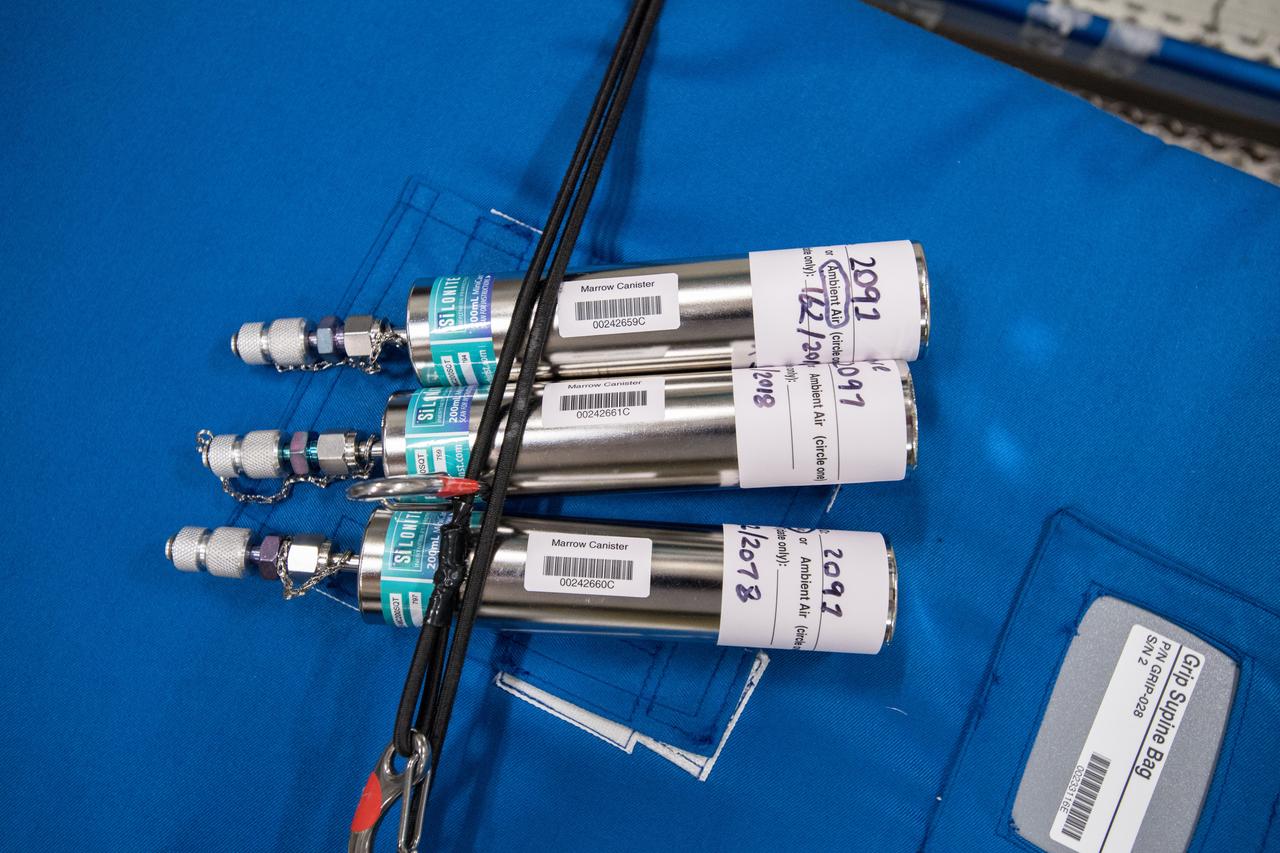
iss056e005940 (6/10/2018) --- Air sample collection hardware for The MARROW Study (Bone Marrow Adipose Reaction: Red or White?). The Marrow investigation looks at the effects of microgravity on bone marrow and analyzes breath samples to measure red blood cell function to help doctors understand how blood cell production is altered in microgravity. Results may improve the health of astronauts on long-term missions and help patients on Earth with mobility and age-related issues.
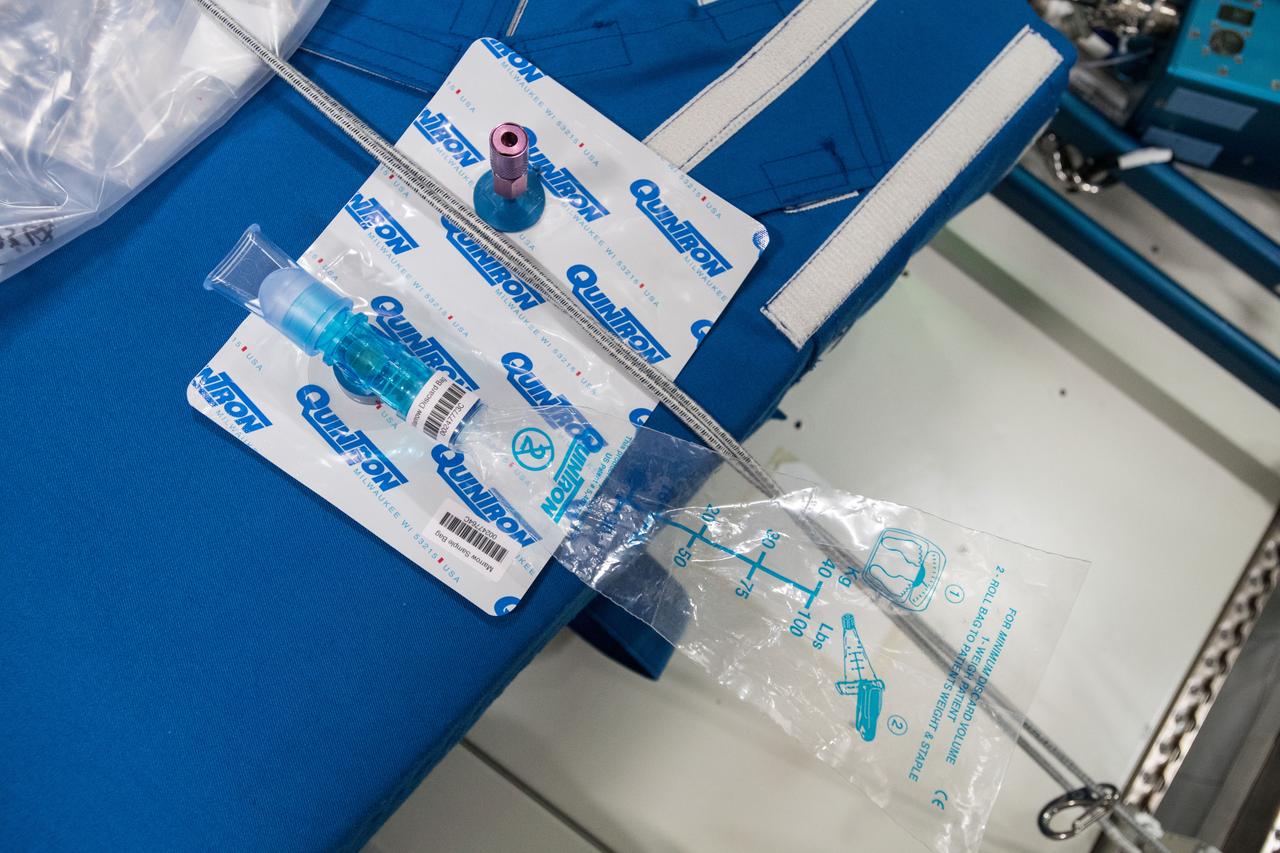
iss056e005938 (6/10/2018) --- Air sample collection hardware for The MARROW Study (Bone Marrow Adipose Reaction: Red or White?). The Marrow investigation looks at the effects of microgravity on bone marrow and analyzes breath samples to measure red blood cell function to help doctors understand how blood cell production is altered in microgravity. Results may improve the health of astronauts on long-term missions and help patients on Earth with mobility and age-related issues.
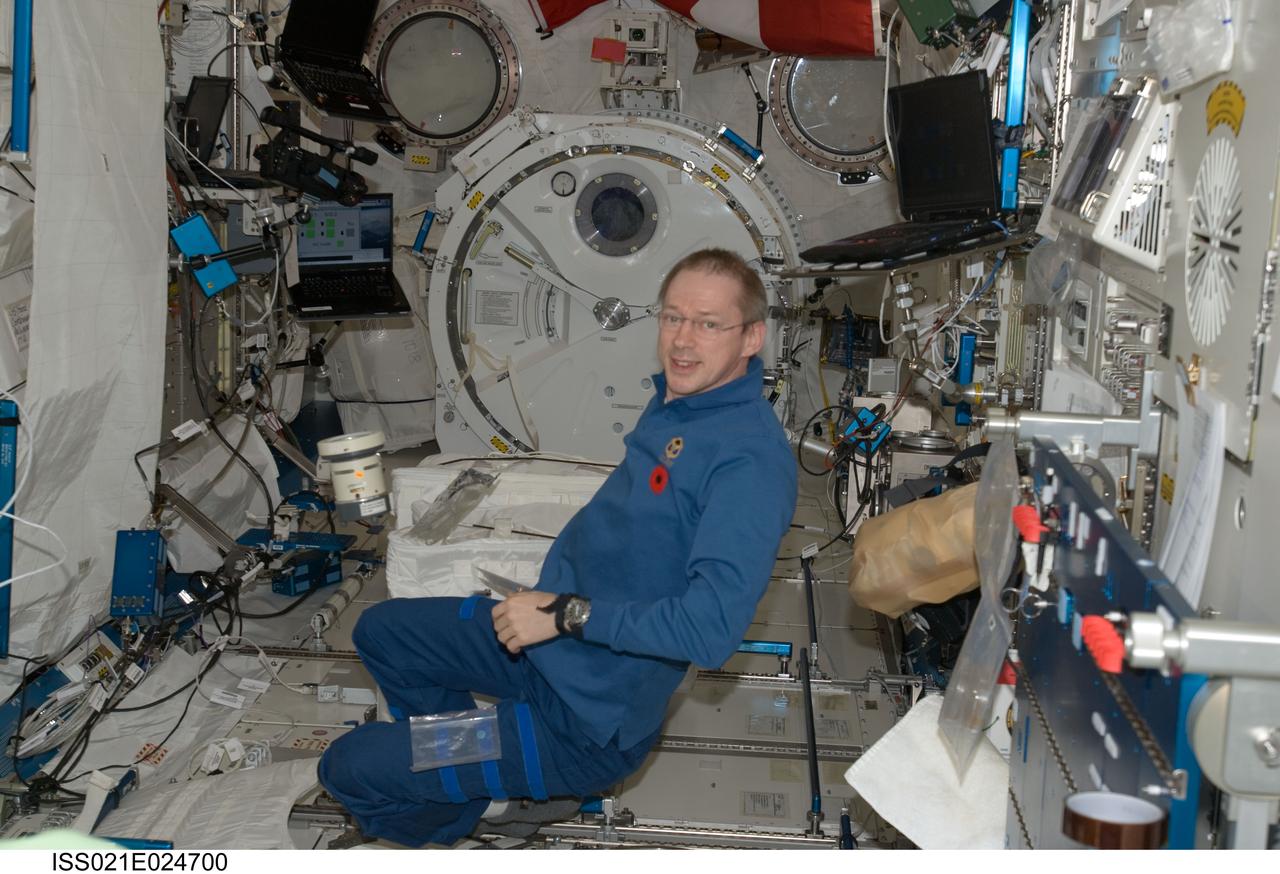
ISS021-E-024700 (11 Nov. 2009) --- European Space Agency astronaut Frank De Winne, Expedition 21 commander, uses the Microbial Air Sampler kit (floating freely near De Winne) to obtain microbiology (bacterial & fungal) air samples in the Kibo laboratory of the International Space Station.

iss073e0547545 (Aug. 27, 2025) --- Roscosmos cosmonaut and Expedition 73 Flight Engineer Alexey Zubritsky is pictured with an air sampling device to detect and analyze trace contaminants such as carbon dioxide and ammonia to ensure a safe breathable environment aboard the International Space Station.
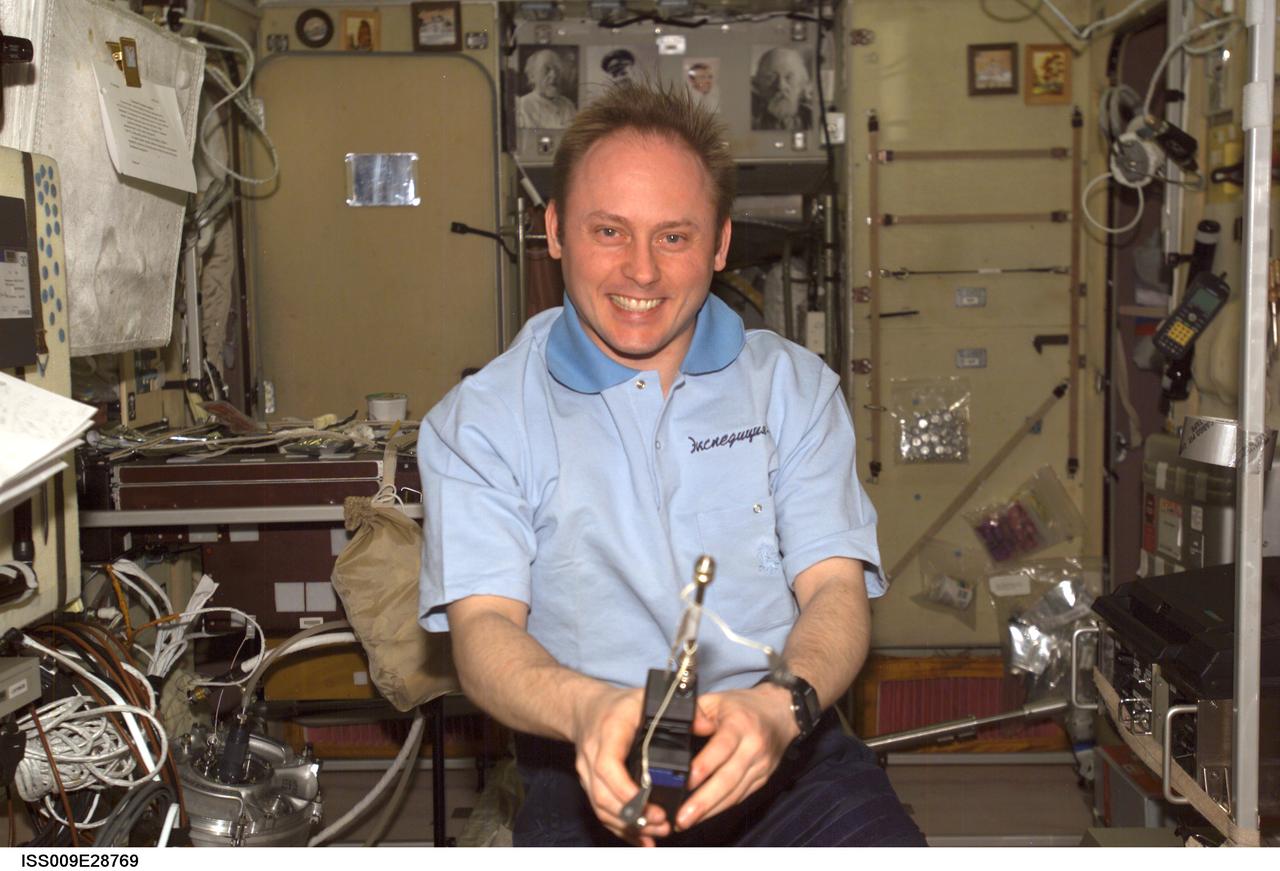
ISS009-E-28769 (14 October 2004) --- Astronaut Edward M. (Mike) Fincke, Expedition 9 NASA ISS science officer and flight engineer, uses a Dual Sorbent Tube and its associated pump to take routine air samples in the Zvezda Service Module of the International Space Station (ISS).
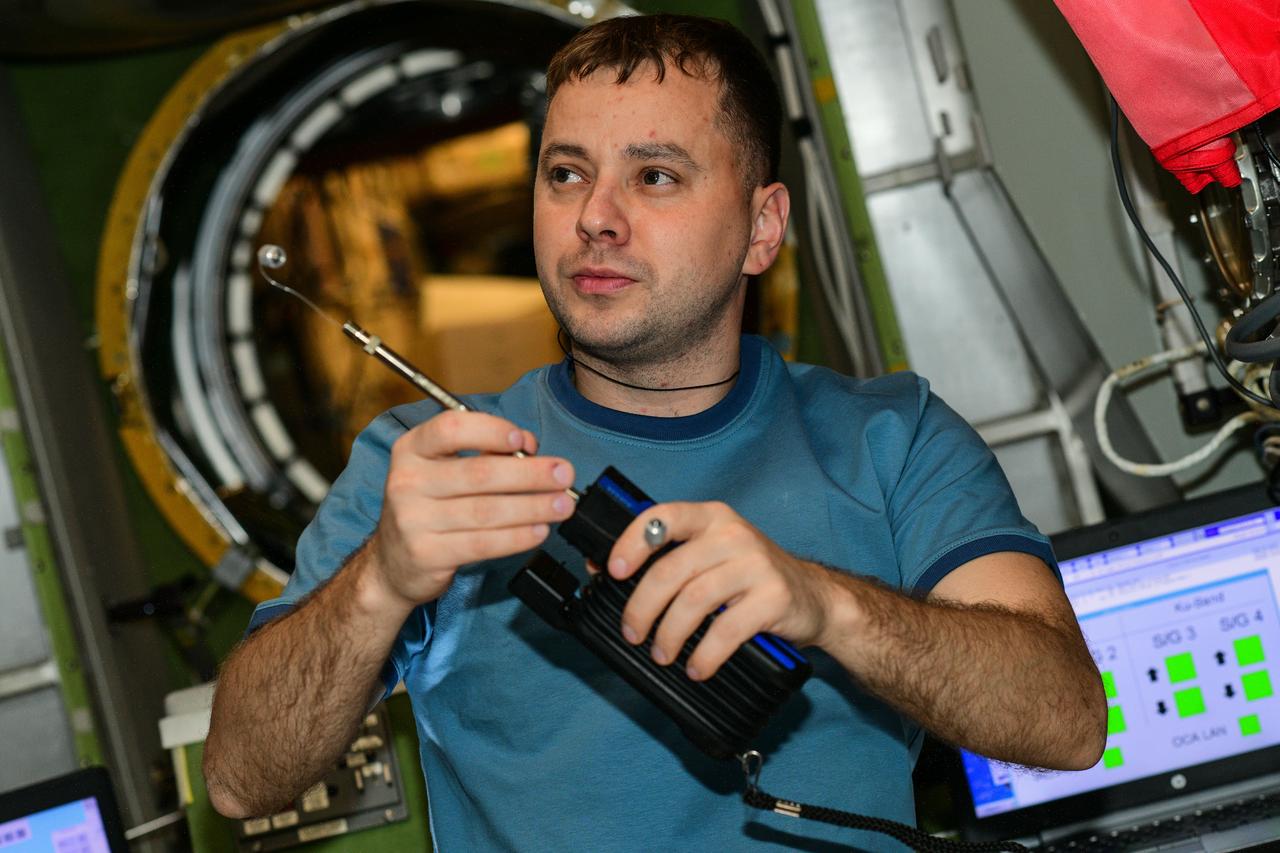
iss073e0547546 (Aug. 27, 2025) --- Roscosmos cosmonaut and Expedition 73 Flight Engineer Oleg Platonov is pictured with an air sampling device to detect and analyze trace contaminants such as carbon dioxide and ammonia to ensure a safe breathable environment aboard the International Space Station.
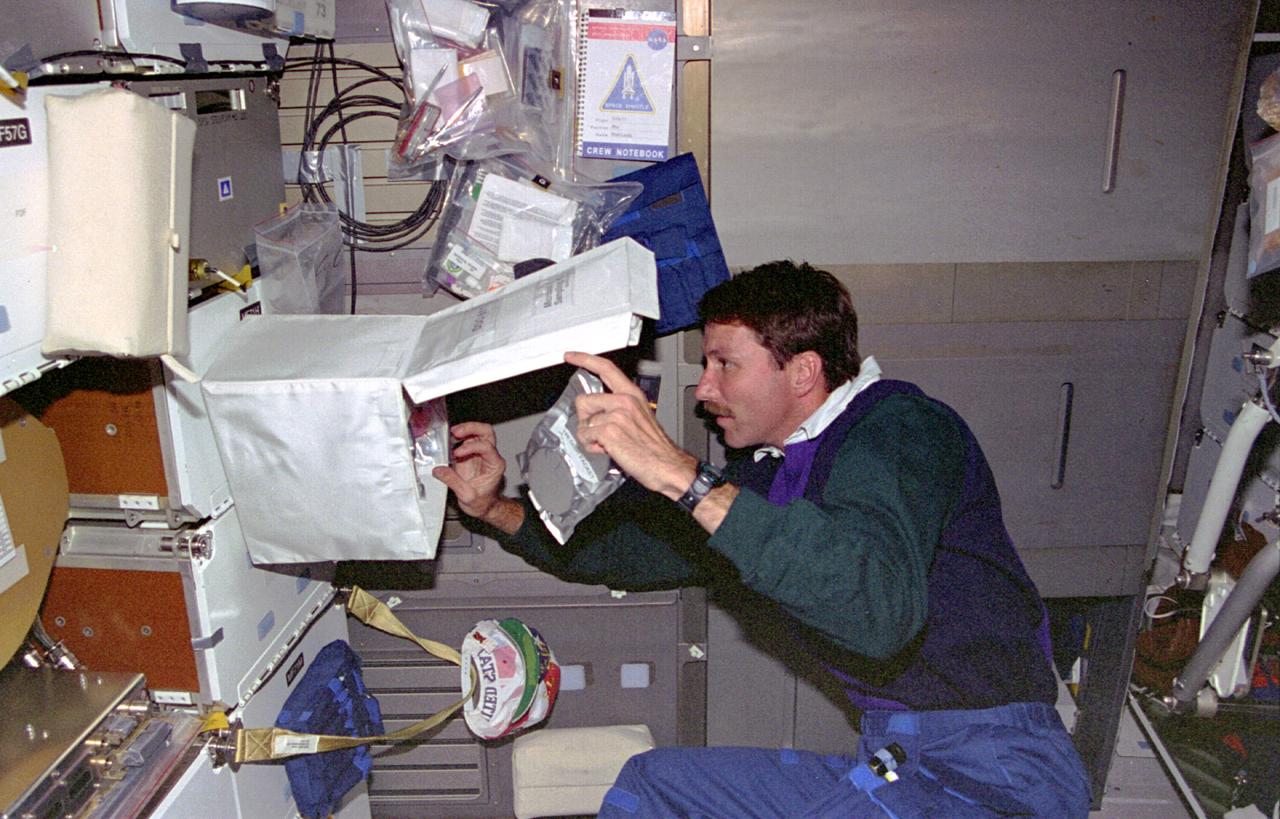
STS073-352-008 (20 October - 5 November 1995) --- On the middeck of the Earth-orbiting Space Shuttle Columbia, astronaut Kent V. Rominger, STS-73 pilot, retrieves gear necessary for sampling of the air. In addition to his pilot duties and the performance of tasks in support of the U.S. Microgravity Laboratory (USML-2) mission, Rominger and other crew members pitched in with housekeeping chores as part of their 16-days of Earth-orbit activity.
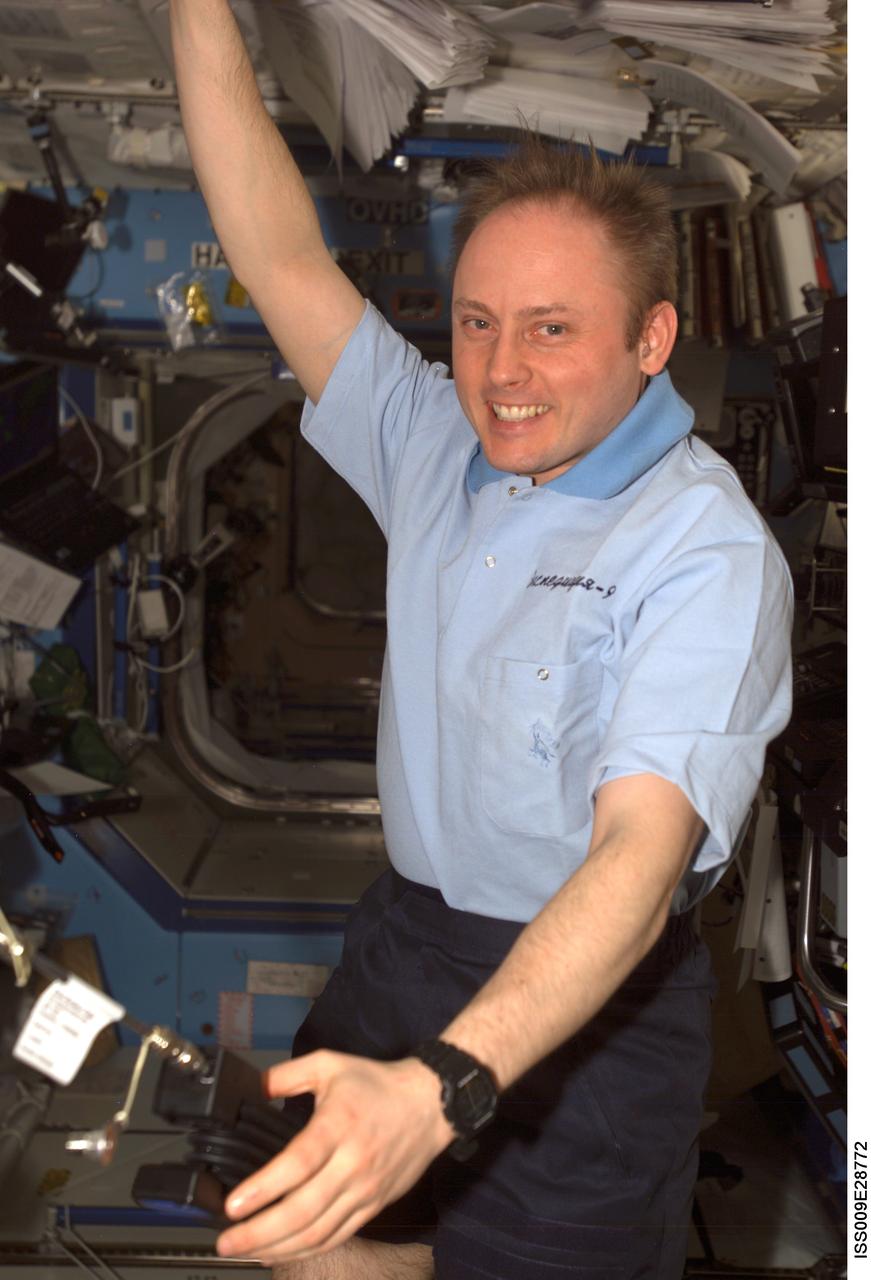
ISS009-E-28772 (14 October 2004) --- Astronaut Edward M. (Mike) Fincke, Expedition 9 NASA ISS science officer and flight engineer, uses a Dual Sorbent Tube and its associated pump to take routine air samples in the Destiny laboratory of the International Space Station (ISS).
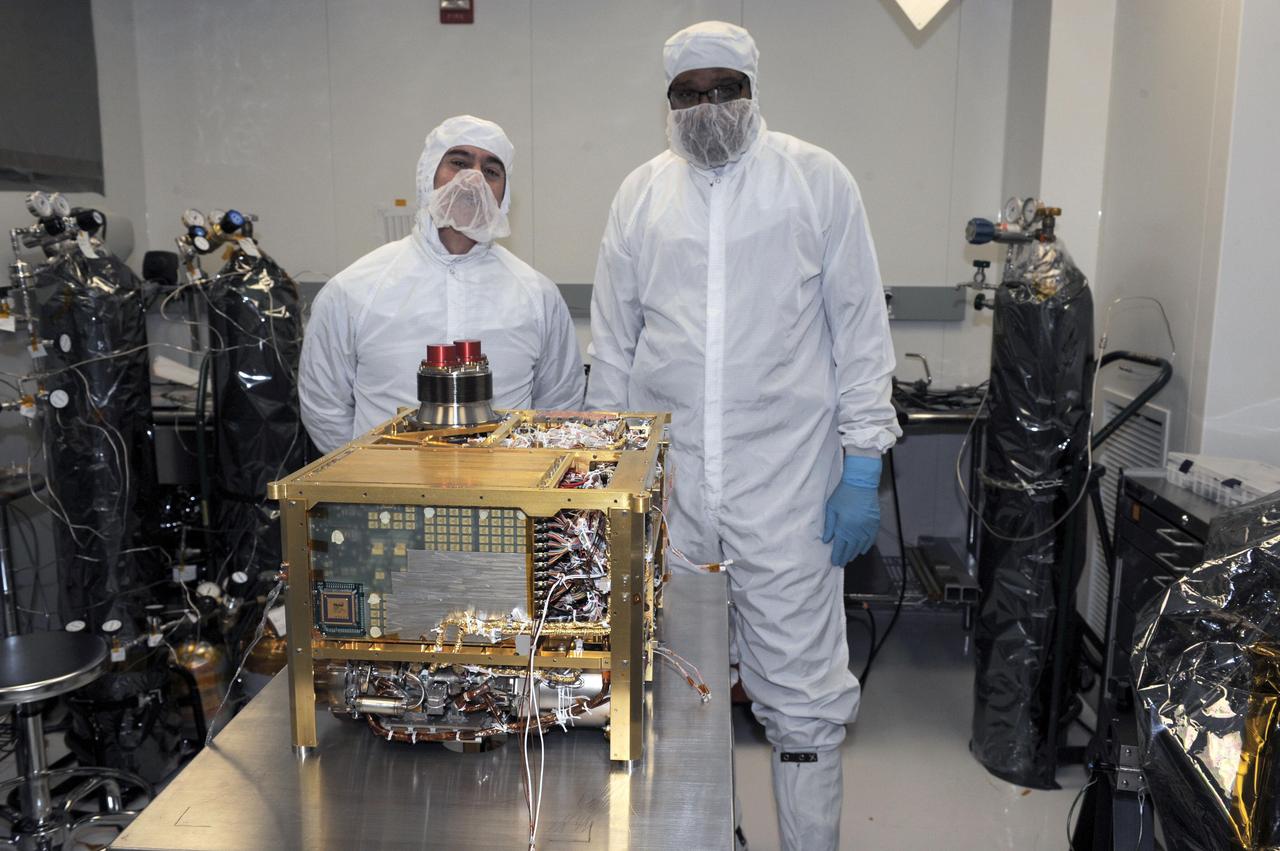
The Sample Analysis at Mars SAM instrument for NASA Mars Science Laboratory mission will study chemistry of rocks, soil and air as the mission rover, Curiosity, investigates Gale Crater on Mars.
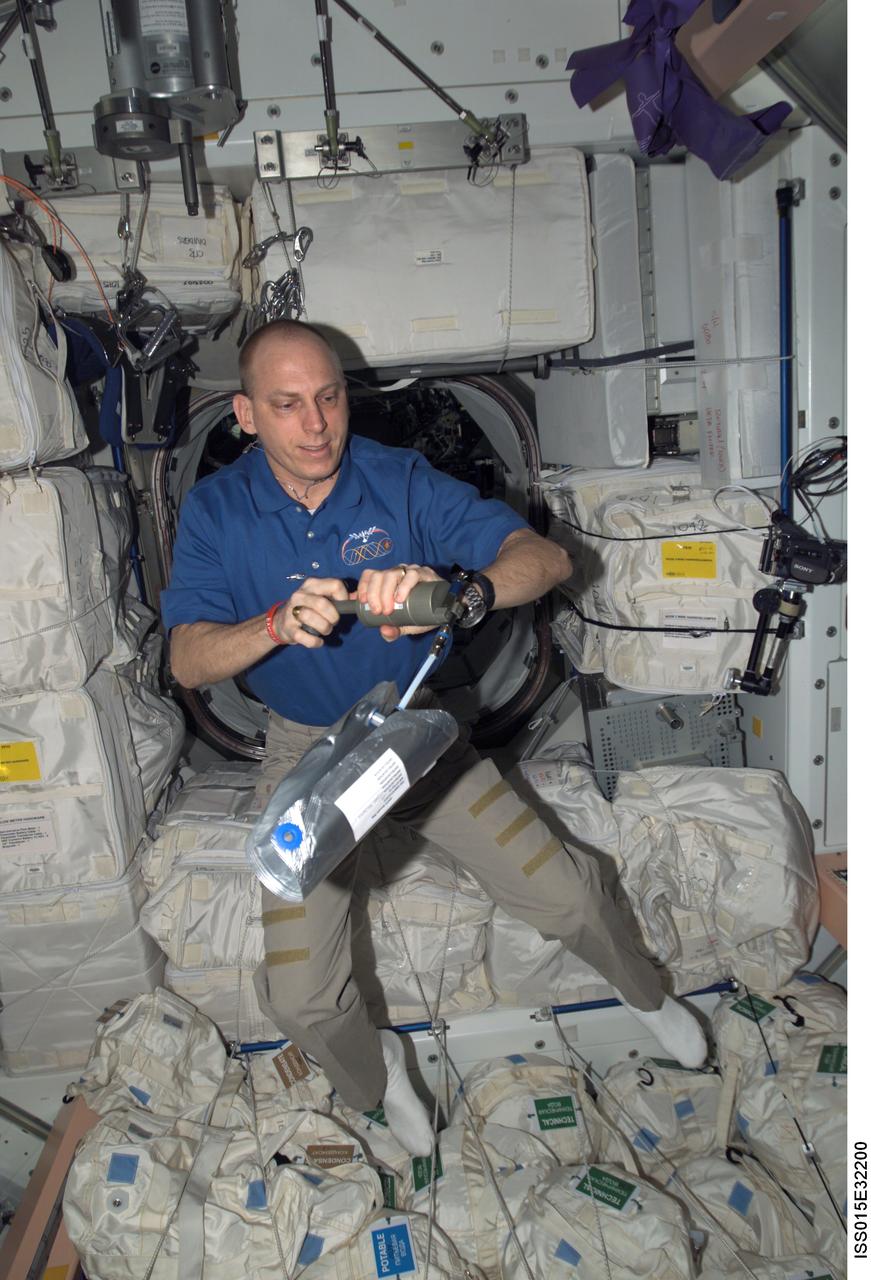
ISS015-E-32200 (6 Oct. 2007) --- Astronaut Clay Anderson, Expedition 15 flight engineer, uses an air sample pump and 2.5 liter gas sample bag to gather and analyze air samples for the Analyzing Interferometer for Ambient Air (ANITA) experiment in the Unity node of the International Space Station.
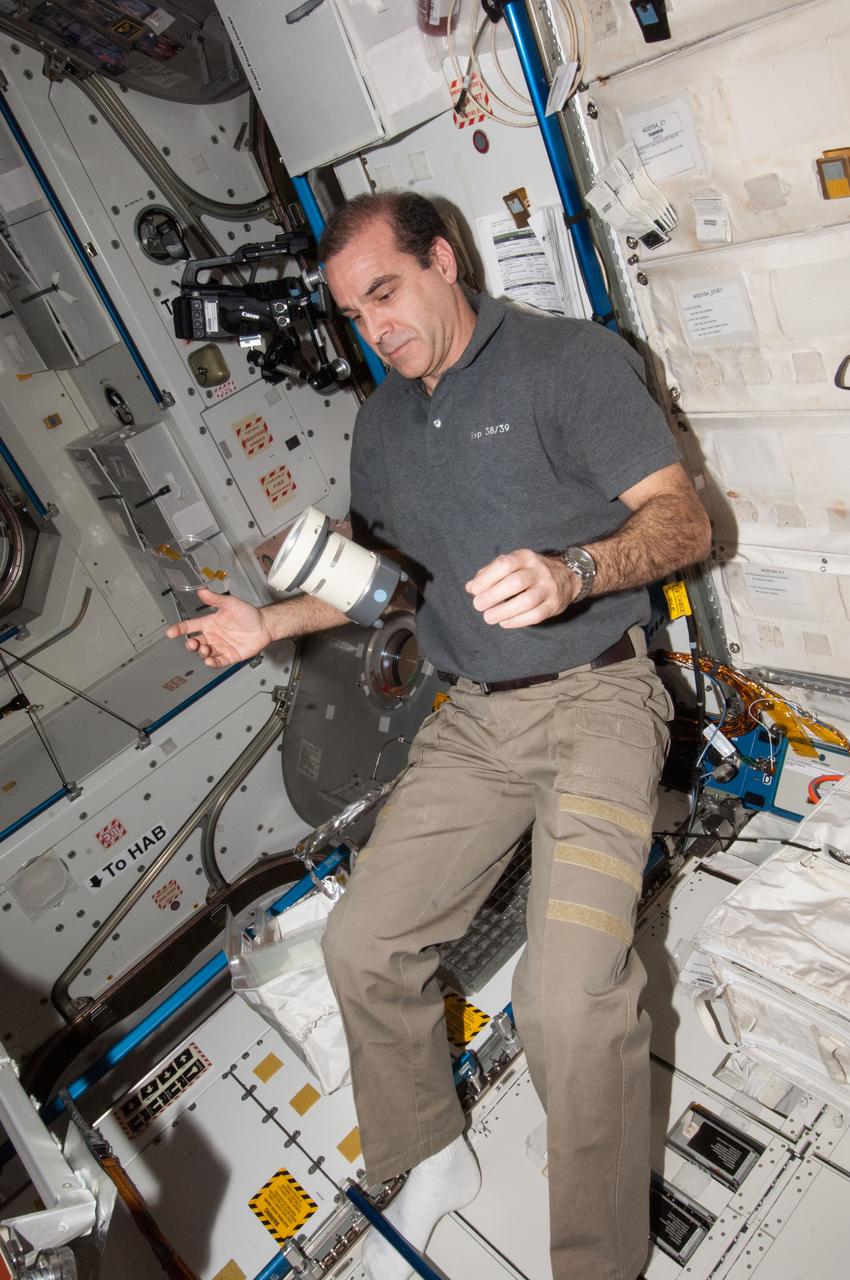
ISS038-E-053780 (18 Feb. 2014) --- NASA astronaut Rick Mastracchio, Expedition 38 flight engineer, uses a Microbial Air Sampler to collect air samples in the Unity node of the International Space Station. These air samples will be incubated for five days and tested for signs of microbial contamination.

ISS015-E-07586 (13 May 2007) --- Astronaut Sunita L. Williams, Expedition 15 flight engineer, conducts a Surface, Water and Air Biocharacterization (SWAB) air sampling in the Destiny laboratory of the International Space Station.
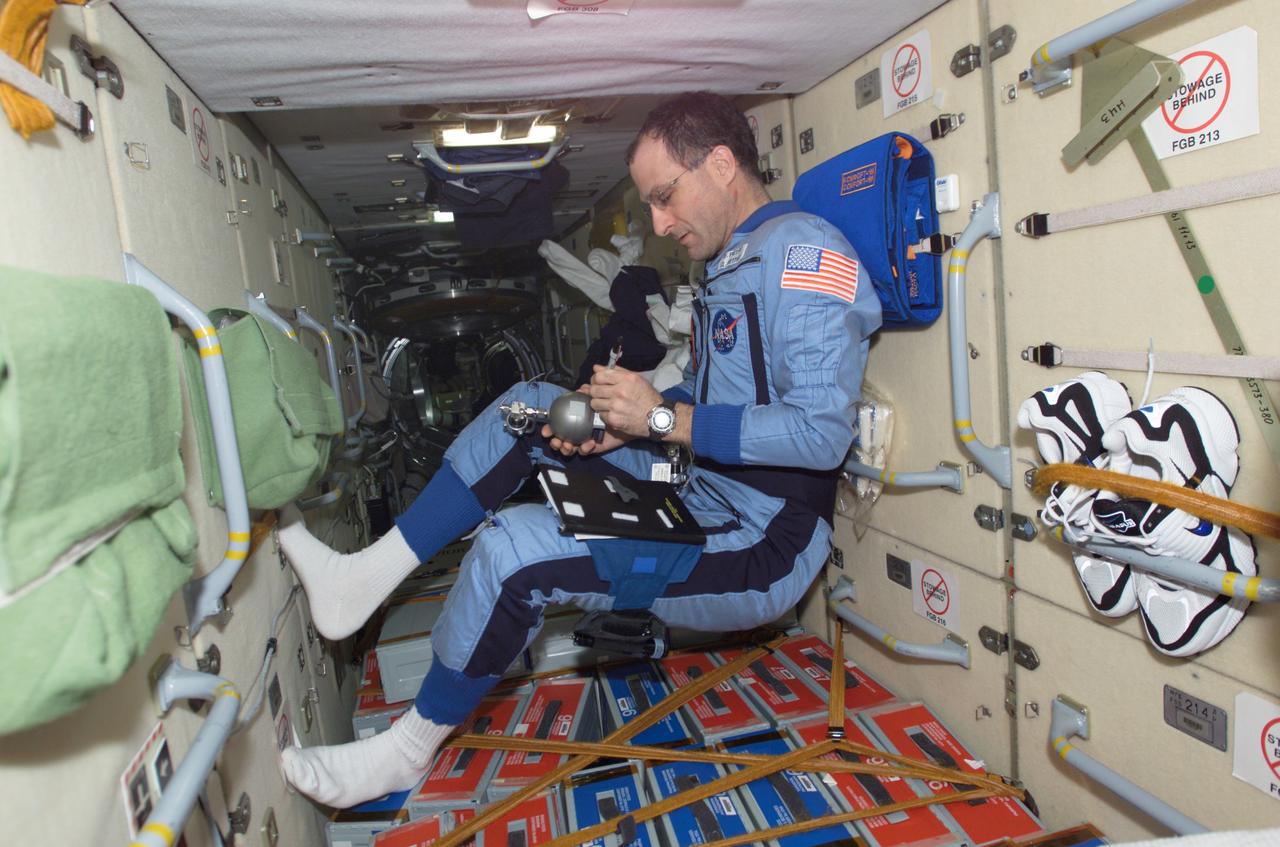
ISS006-E-20835 (22 January 2003) --- Astronaut Donald R. Pettit, Expedition 6 NASA ISS science officer, holds a Grab Sample Container (GSC) in the functional cargo block (FGB), or Zarya, on the International Space Station (ISS). GSC is used for collecting air samples as part of ISS environmental monitoring.
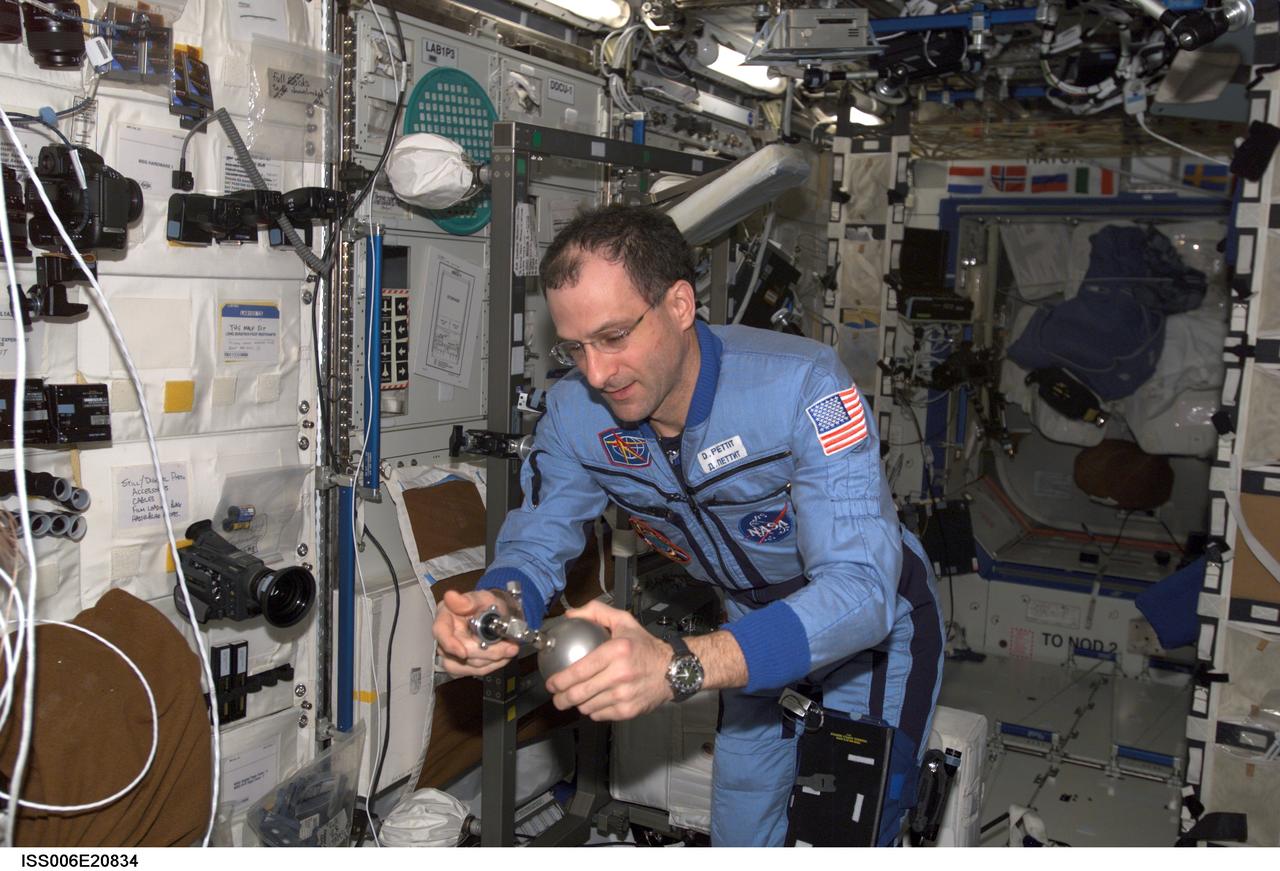
ISS006-E-20834 (22 January 2003) --- Astronaut Donald R. Pettit, Expedition Six NASA ISS science officer, holds a Grab Sample Container (GSC) in the Destiny laboratory on the International Space Station (ISS). GSC is used for collecting air samples as part of ISS environmental monitoring.
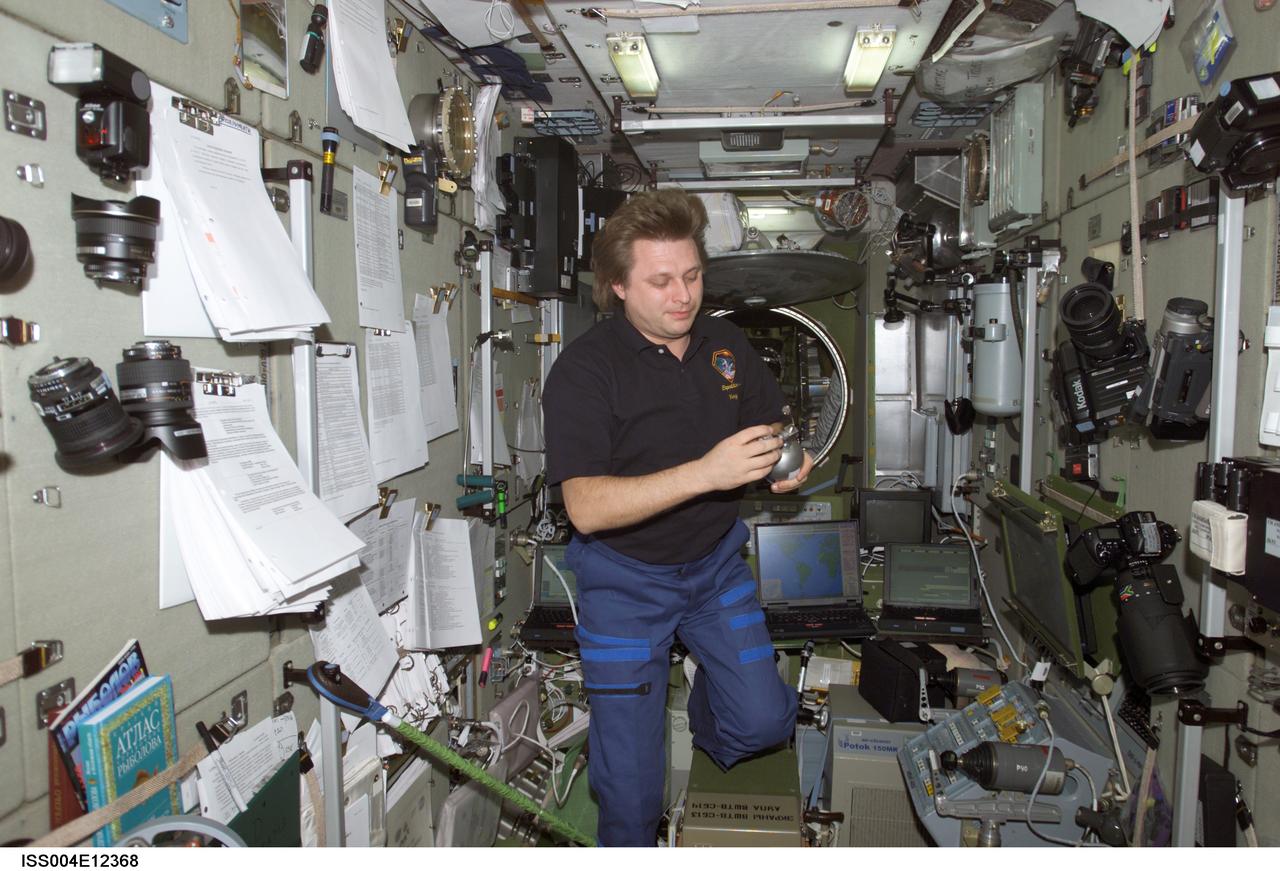
ISS004-E-12368 (23 May 2002) --- Cosmonaut Yury I. Onufrienko, Expedition Four mission commander representing Rosaviakosmos, holds a Grab Sample Container (GSC) in the Zvezda Service Module on the International Space Station (ISS). The GSC is used to take air samples in various modules as part of environmental quality control.
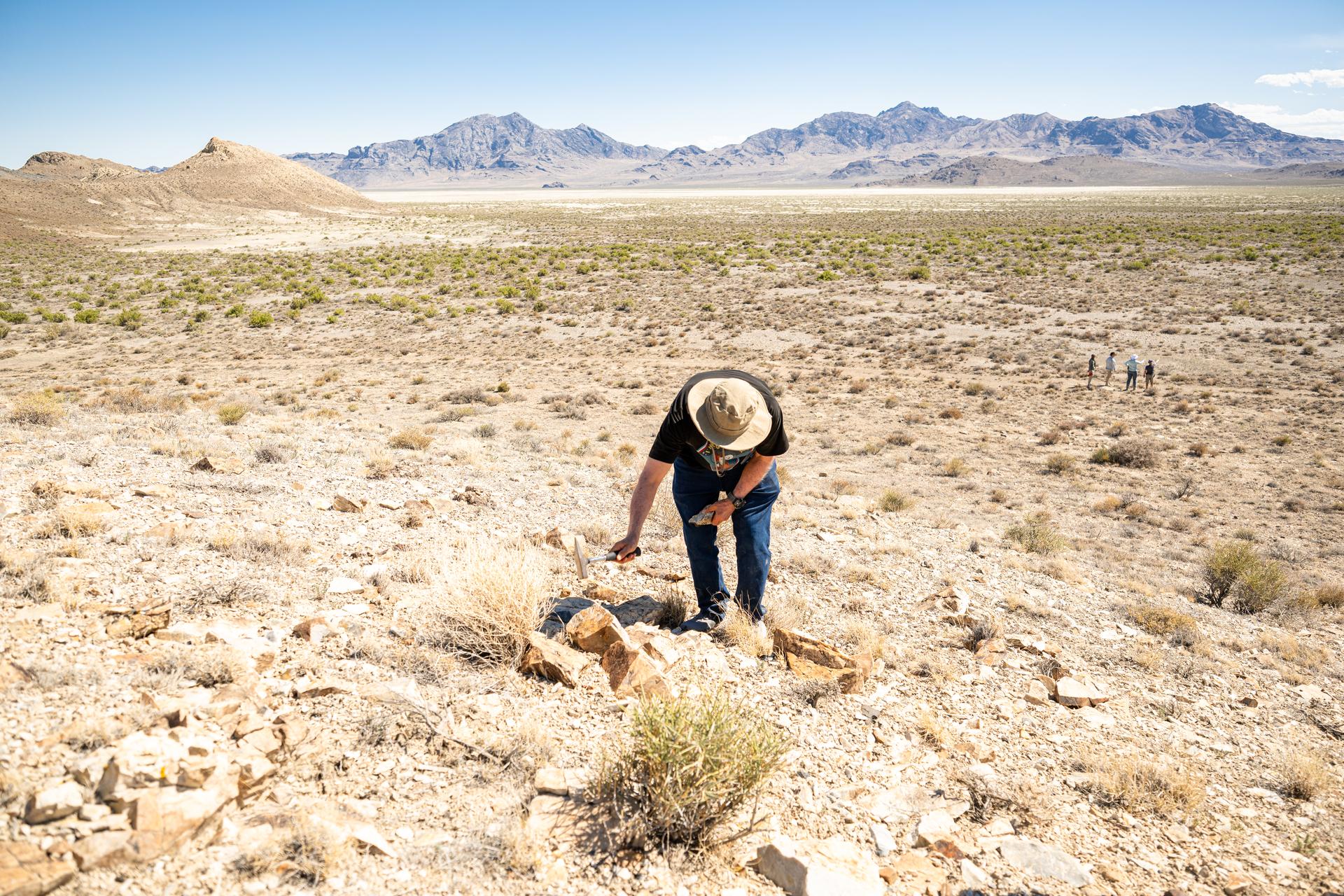
Dr. Jim Garvin, mission principal investigator,collect samples of rocks found at Crater Island, Utah on June 23, 2026. These samples become the "ground truth" for the measurements from the VADIX prototype camera system which flew over the crater island site, taking photos and measurements from the air. NASA/Mike Guinto
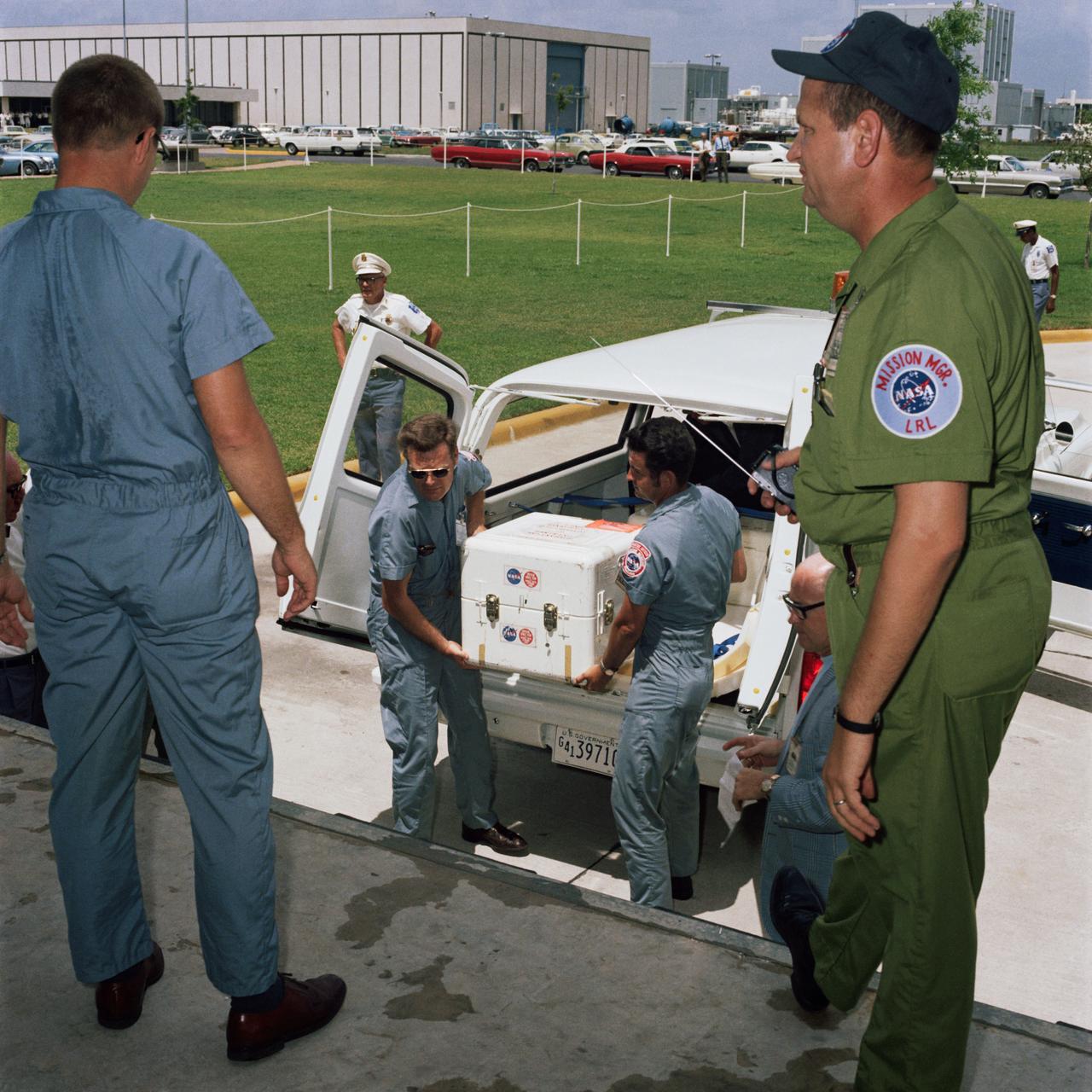
S69-39996 (25 July 1969) --- The first Apollo 11 sample return container, with lunar surface material inside, is unloaded at the Lunar Receiving Laboratory, Building 37, Manned Spacecraft Center (MSC). The rock box had arrived only minutes earlier at Ellington Air Force Base by air from the Pacific recovery area. The lunar samples were collected by astronauts Neil A. Armstrong and Edwin E. Aldrin Jr. during their lunar surface extravehicular activity.
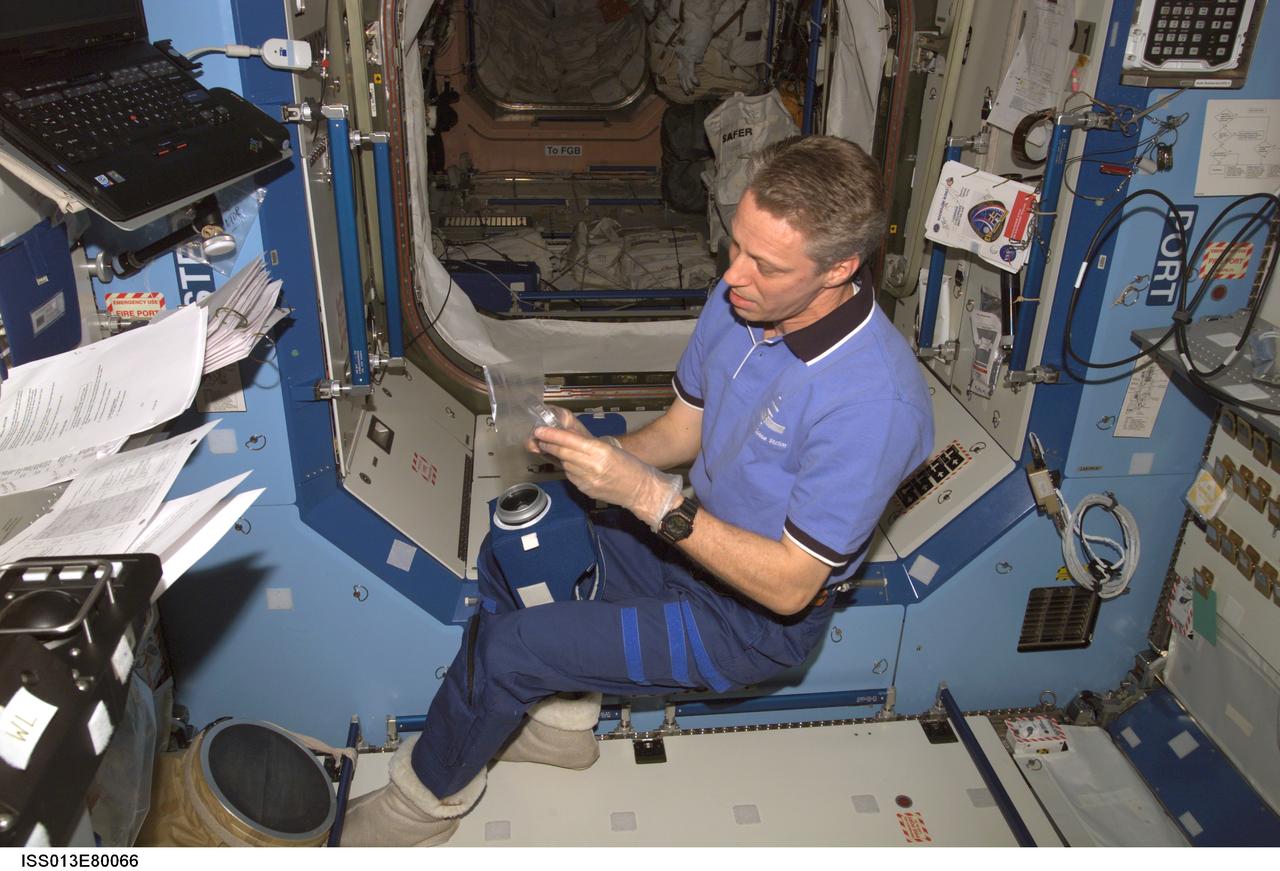
ISS013-E-80066 (10 Sept. 2006) --- European Space Agency (ESA) astronaut Thomas Reiter, Expedition 13 flight engineer, works with the surface, water and air biocharacterization (SWAB) air sampling device (ASD) filter kit in the Destiny laboratory of the International Space Station.
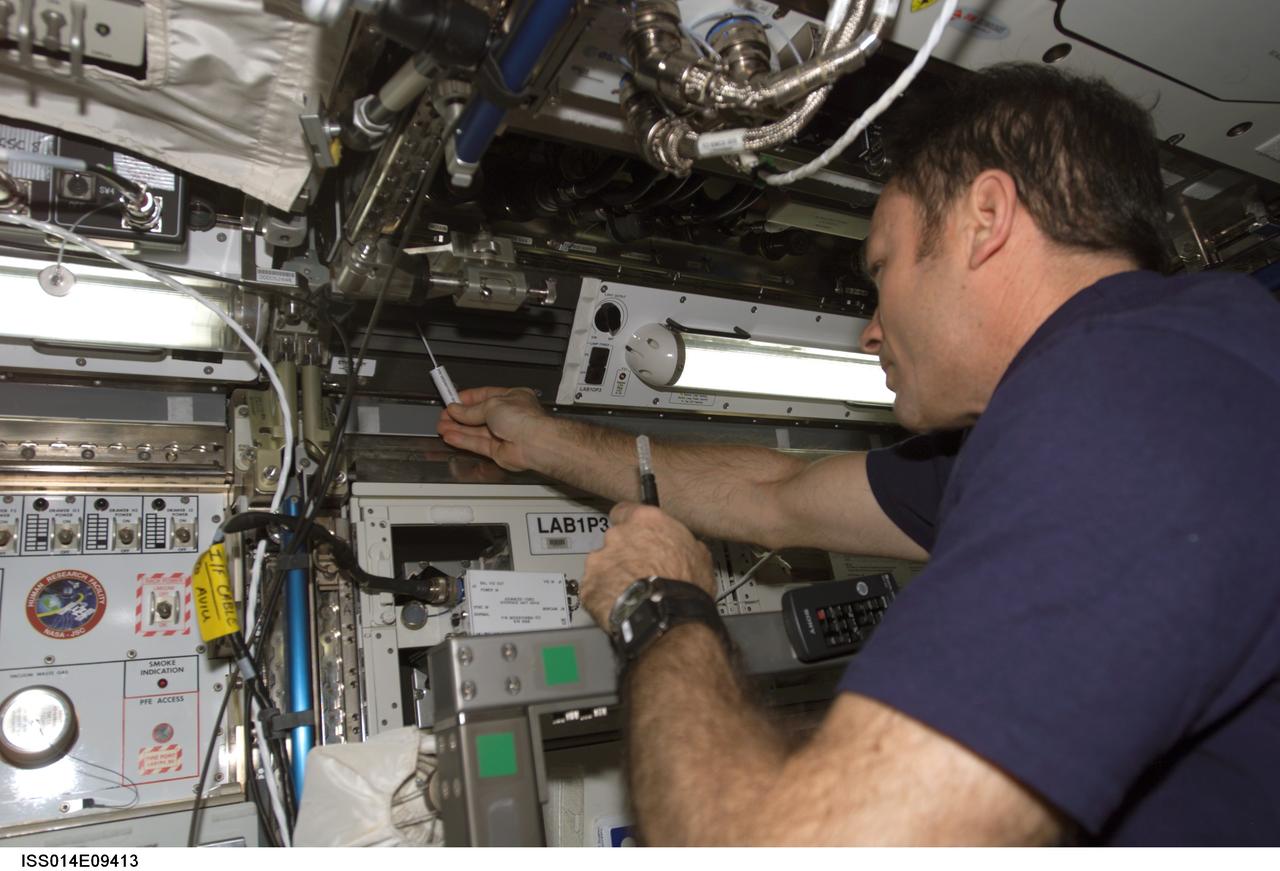
ISS014-E-09413 (8 Dec. 2006) --- Astronaut Michael E. Lopez-Alegria, Expedition 14 commander and NASA space station science officer, conducts a Surface, Water and Air Biocharacterization (SWAB) air sampling in the Destiny laboratory of the International Space Station.
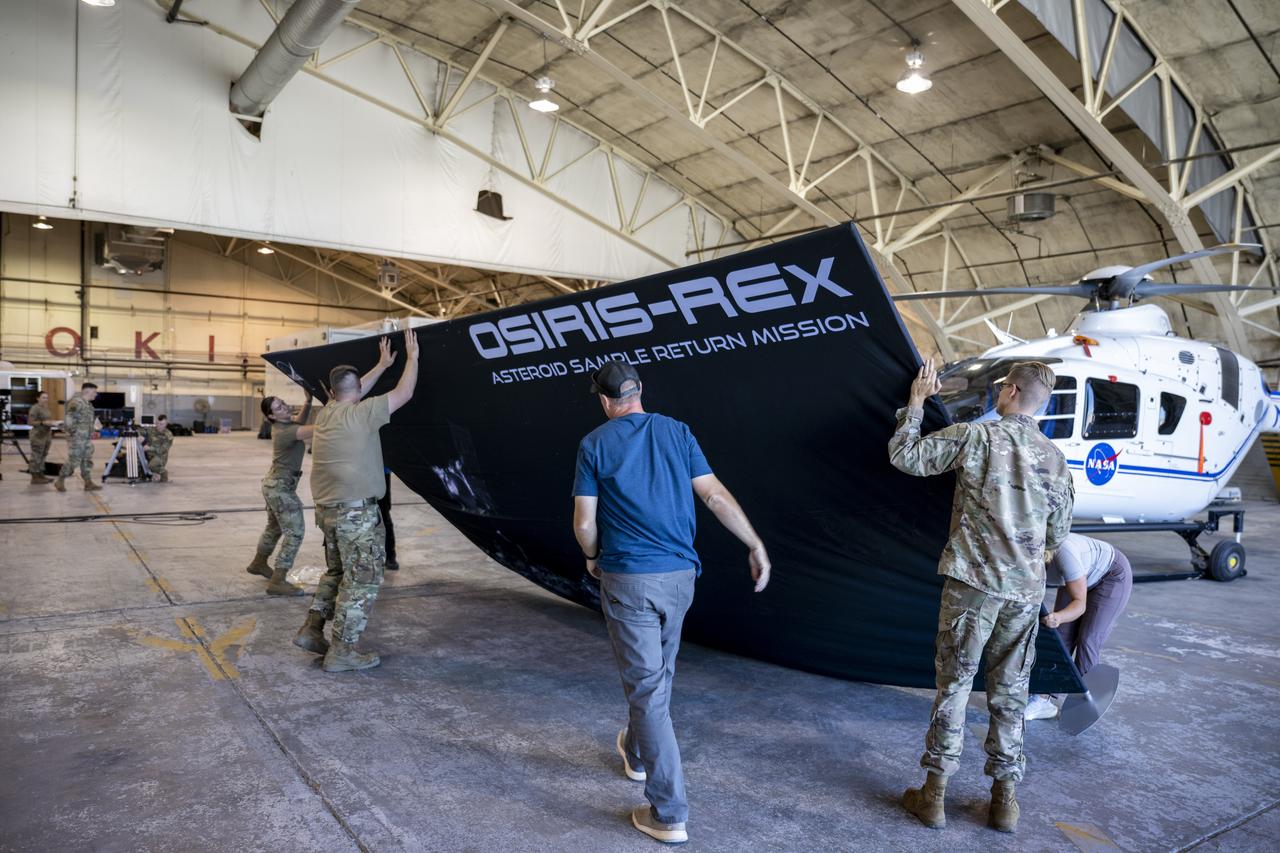
NASA communications teams and members of the Air Force’s 2nd Audiovisual Squadron prepare a backdrop, Sunday, Aug. 27, 2023, at Michael Army Air Field near Dugway, Utah. Teams met in August for rehearsals in preparation for the retrieval of the sample return capsule from NASA's OSIRIS-REx mission. The sample was collected from the asteroid Bennu in October 2020 by NASA’s OSIRIS-REx spacecraft and will return to Earth on September 24th, landing under parachute at the Department of Defense's Utah Test and Training Range. Photo Credit: (NASA/Keegan Barber)
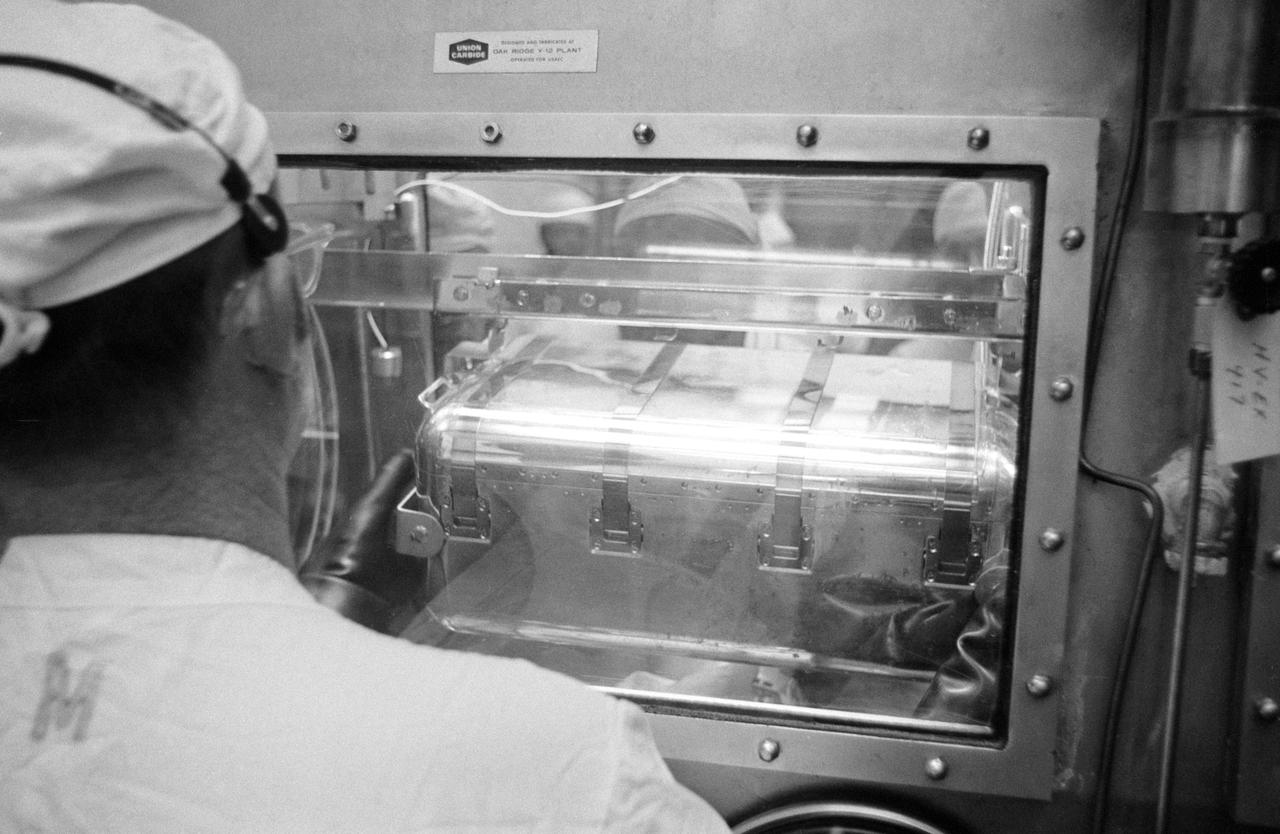
S69-40110 (25 July 1969) --- The first Apollo 11 sample return container, containing lunar surface material, is photographed just after it arrives at the Lunar Receiving Laboratory (LRL), Building 37, Manned Spacecraft Center (MSC). The box arrived by air at Ellington Air Force Base just before noon on Friday, July 25, 1969, from the Pacific recovery area. It was taken immediately to the Manned Spacecraft Center. The lunar samples were collected by astronauts Neil A. Armstrong and Edwin E. Aldrin Jr. during their lunar surface extravehicular activity (EVA).
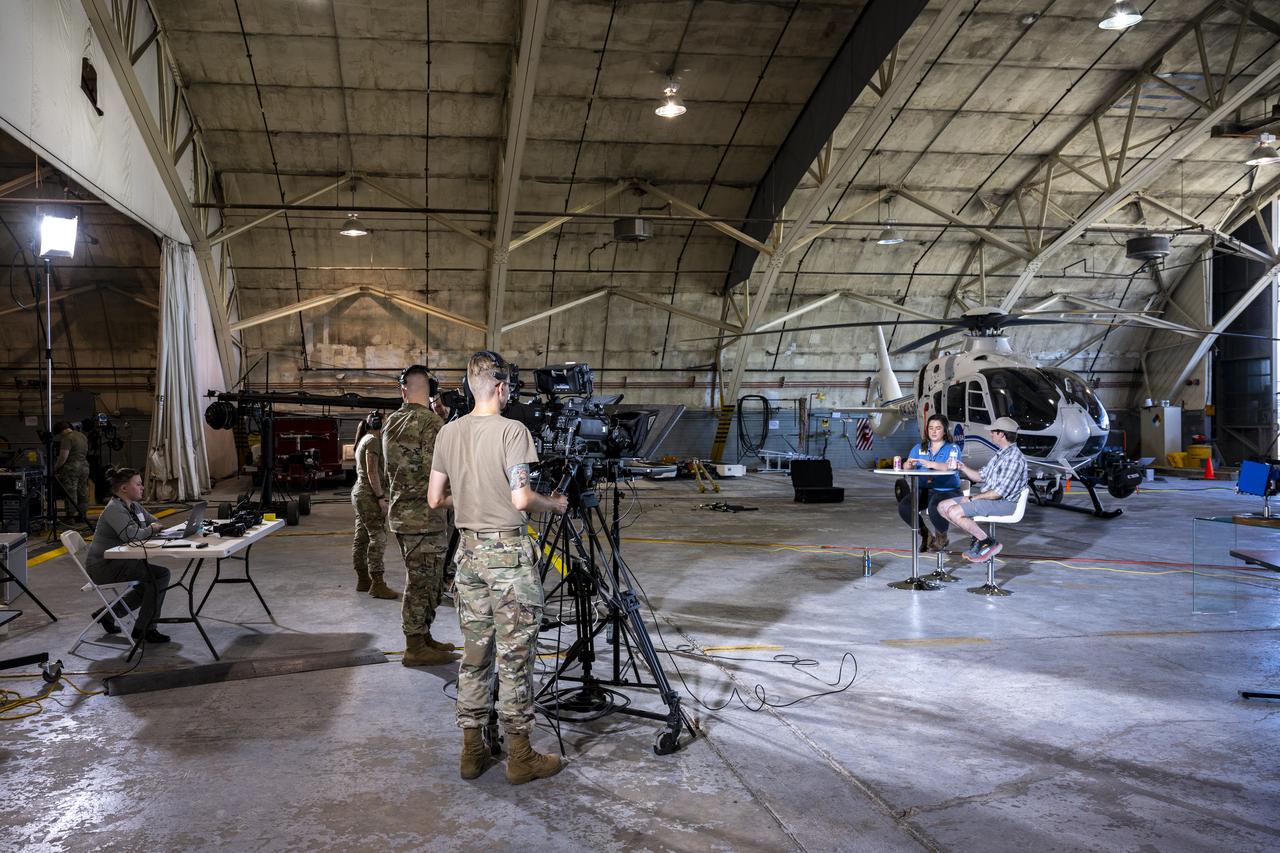
NASA communications teams and members of the Air Force’s 2nd Audiovisual Squadron participate in television rehearsals, Monday, Aug. 28, 2023, at Michael Army Air Field near Dugway, Utah. Teams met in August for rehearsals in preparation for the retrieval of the sample return capsule from NASA's OSIRIS-REx mission. The sample was collected from the asteroid Bennu in October 2020 by NASA’s OSIRIS-REx spacecraft and will return to Earth on September 24th, landing under parachute at the Department of Defense's Utah Test and Training Range. Photo Credit: (NASA/Keegan Barber)
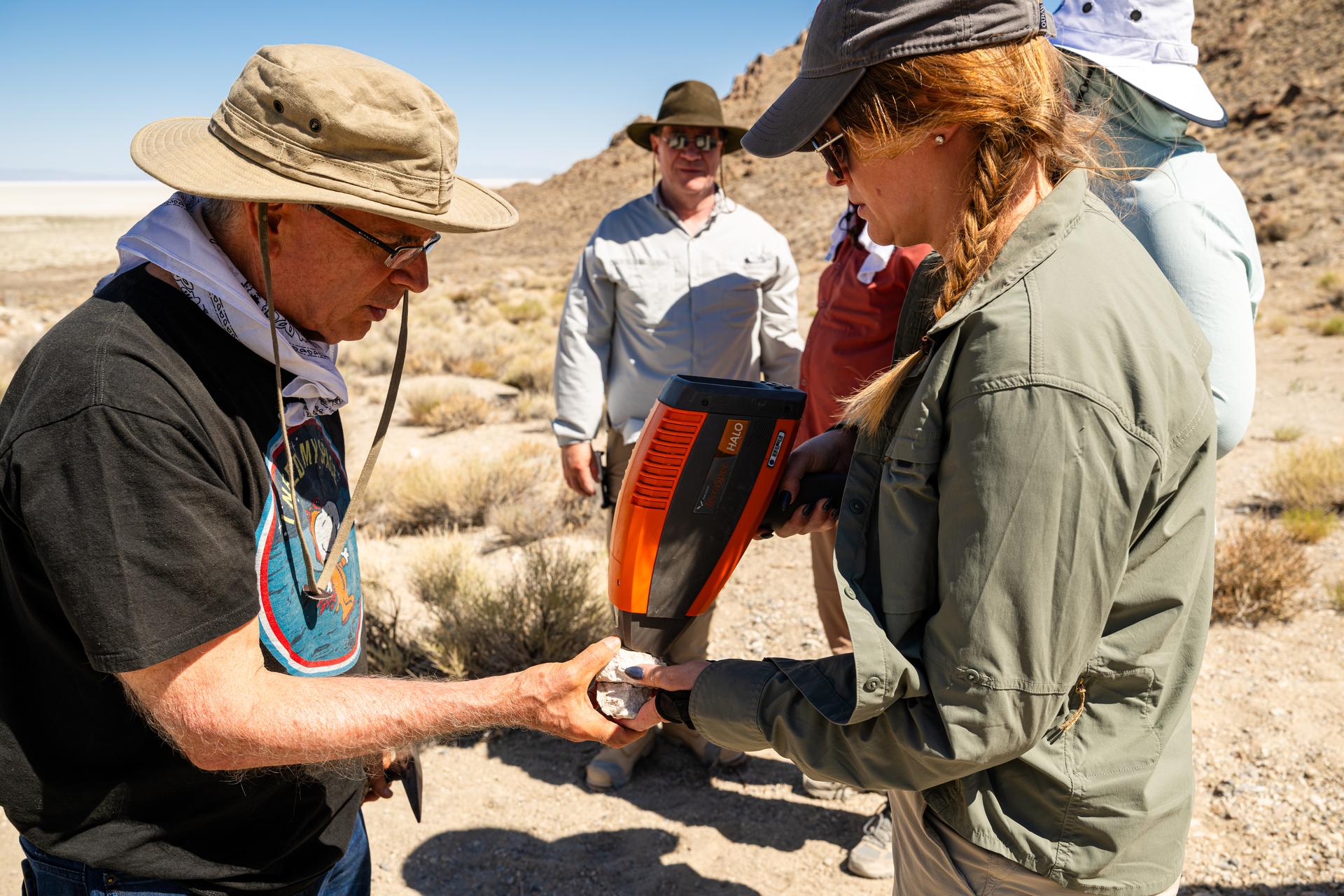
Dr. Jim Garvin, mission principal investigator, left, and Dr. Erika Kohler, acting deputy principal investigator, right, take measurements of rock samples found at Crater Island, Utah on June 23, 2026. These samples become the "ground truth" for the measurements from the VADIX prototype camera system which flew over the crater island site, taking photos and measurements from the air. NASA/Mike Guinto
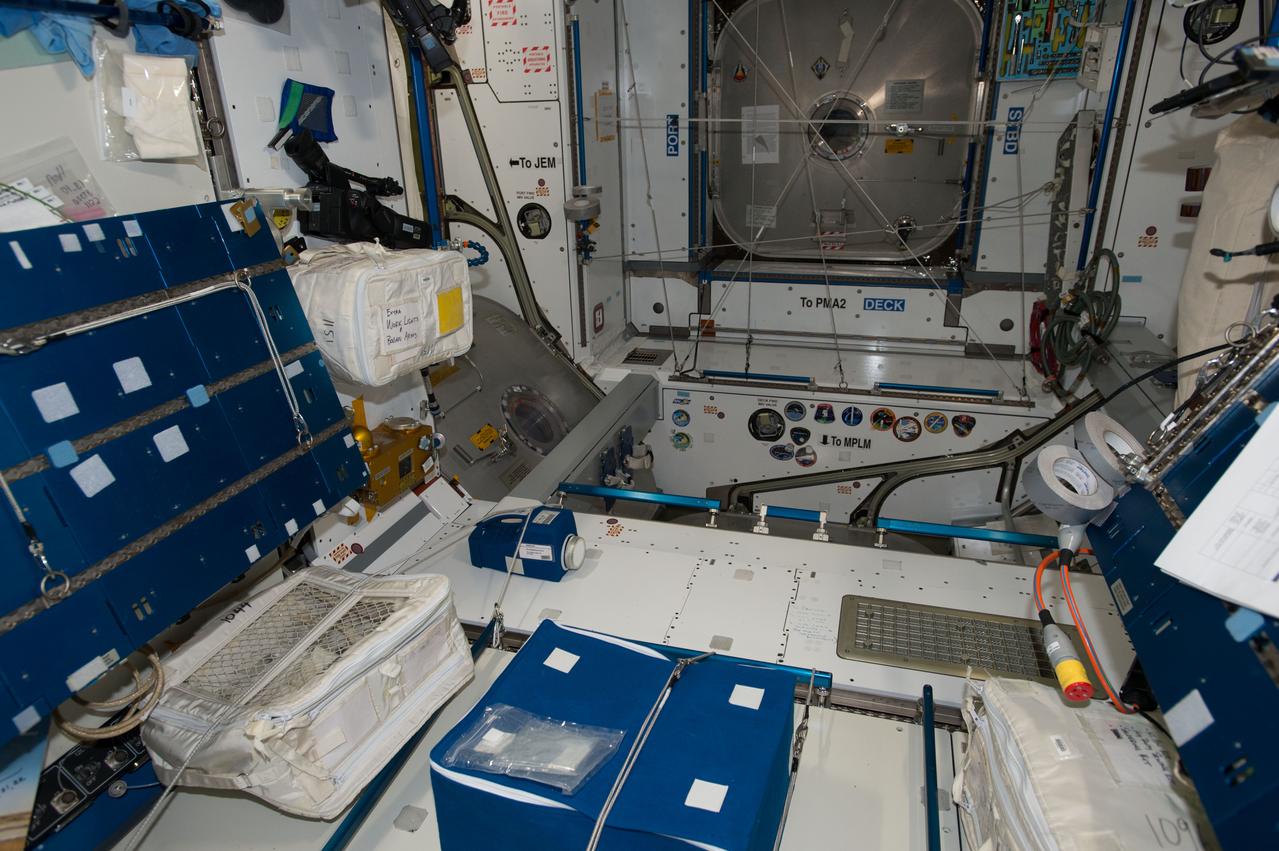
iss042e29609 (3/4/2015) --- Photographic documentation taken prior to collection of surface and air samples using various devices in multiple locations to characterize the types of microbial populations on the International Space Station (ISS) for the Microbial Observatory-1 payload. The Microbial Payload Tracking Series (Microbial Observatory-1) investigation monitors the types of microbes present on ISS over a one-year period. Samples are returned to Earth for further study, enabling scientists to understand the diversity of the microbial flora on the ISS and how it changes over time.
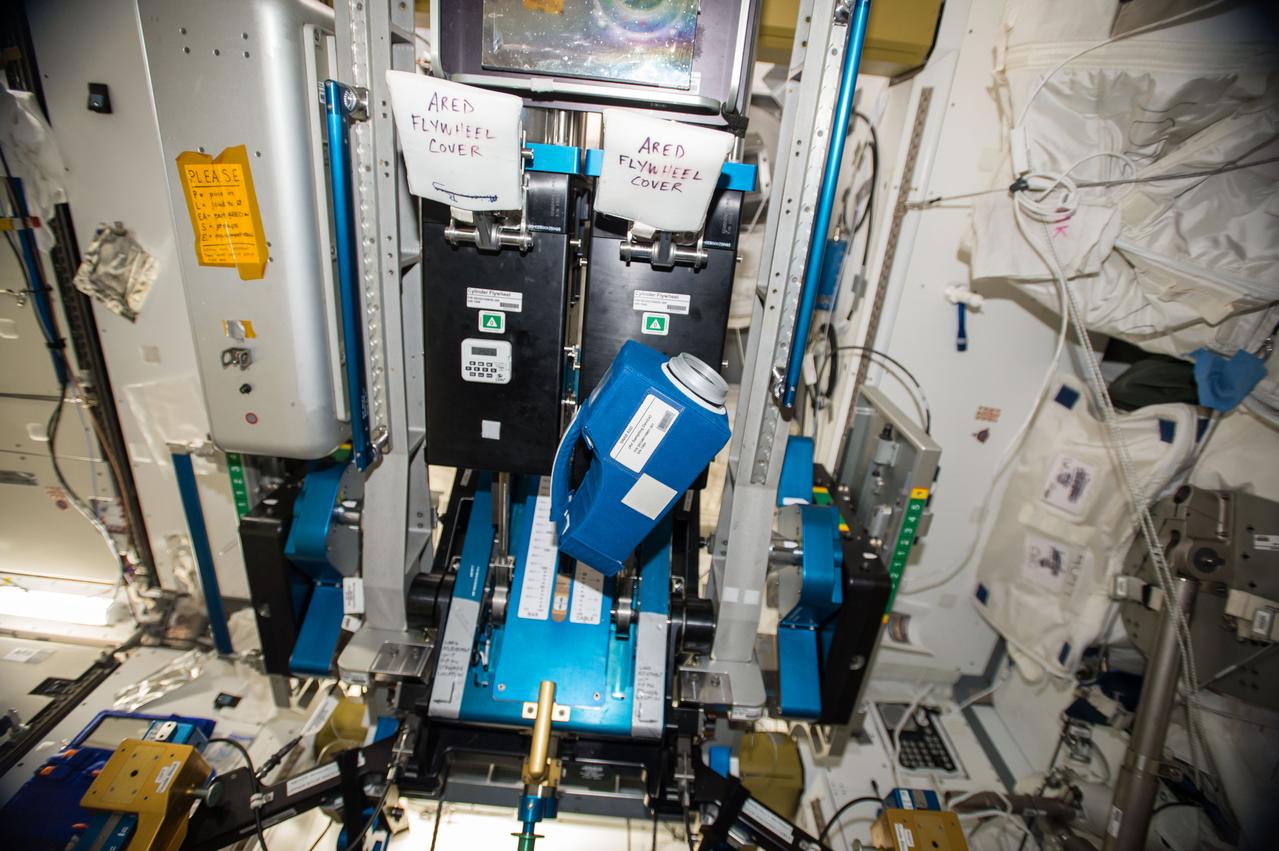
iss043e198394 (5/15/2015) --- Photographic documentation taken prior to collection of surface and air samples using various devices in multiple locations to characterize the types of microbial populations on the International Space Station (ISS) for the Microbial Observatory-1 payload. The Microbial Payload Tracking Series (Microbial Observatory-1) investigation monitors the types of microbes present on ISS over a one-year period. Samples are returned to Earth for further study, enabling scientists to understand the diversity of the microbial flora on the ISS and how it changes over time.
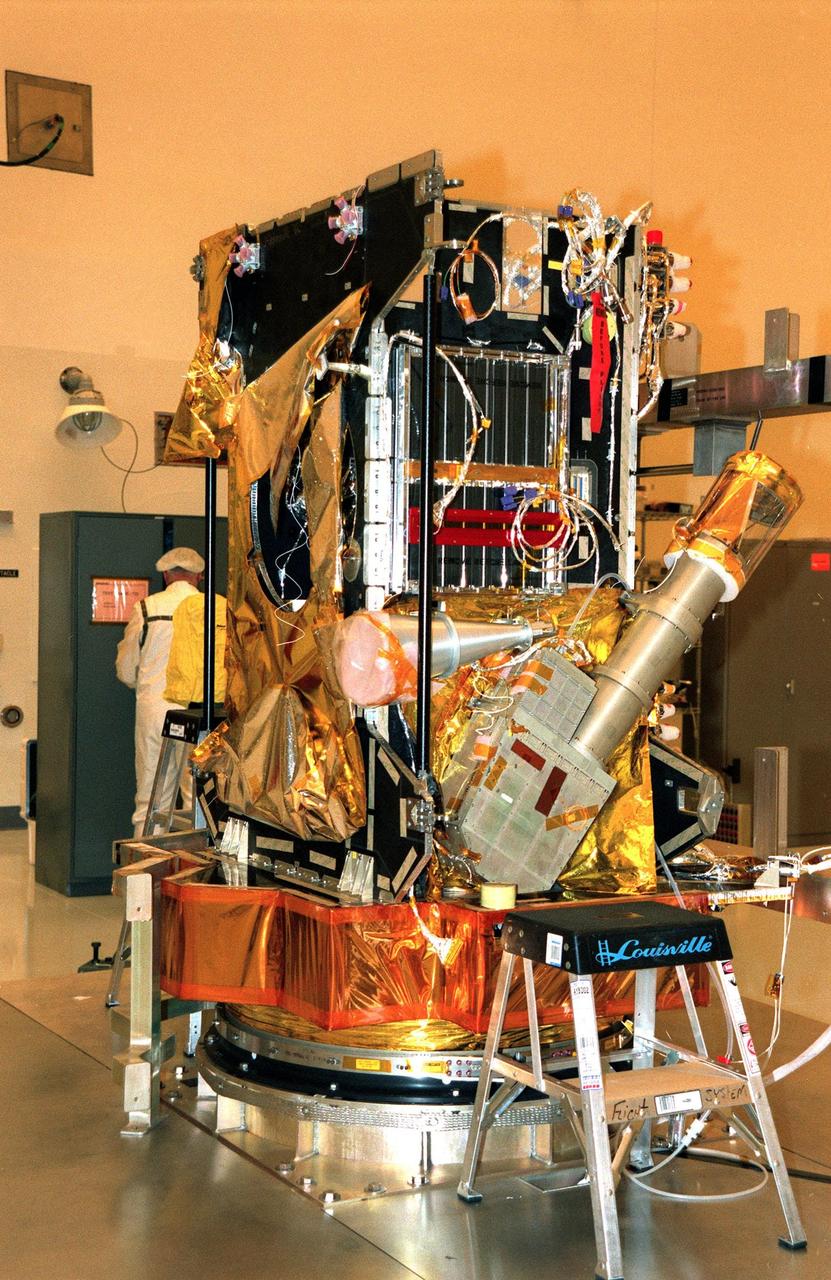
In the Payload Hazardous Servicing Facility, the Stardust spacecraft is ready for the sample return capsule to be attached. Stardust will use a unique medium called aerogel to capture comet particles flying off the nucleus of comet Wild 2 in January 2004, plus collect interstellar dust for later analysis. The collected samples will return to Earth in the re-entry capsule to be jettisoned as it swings by Earth in January 2006. Stardust is scheduled to be launched aboard a Boeing Delta 7426 rocket from Complex 17, Cape Canaveral Air Station, on Feb. 6, 1999
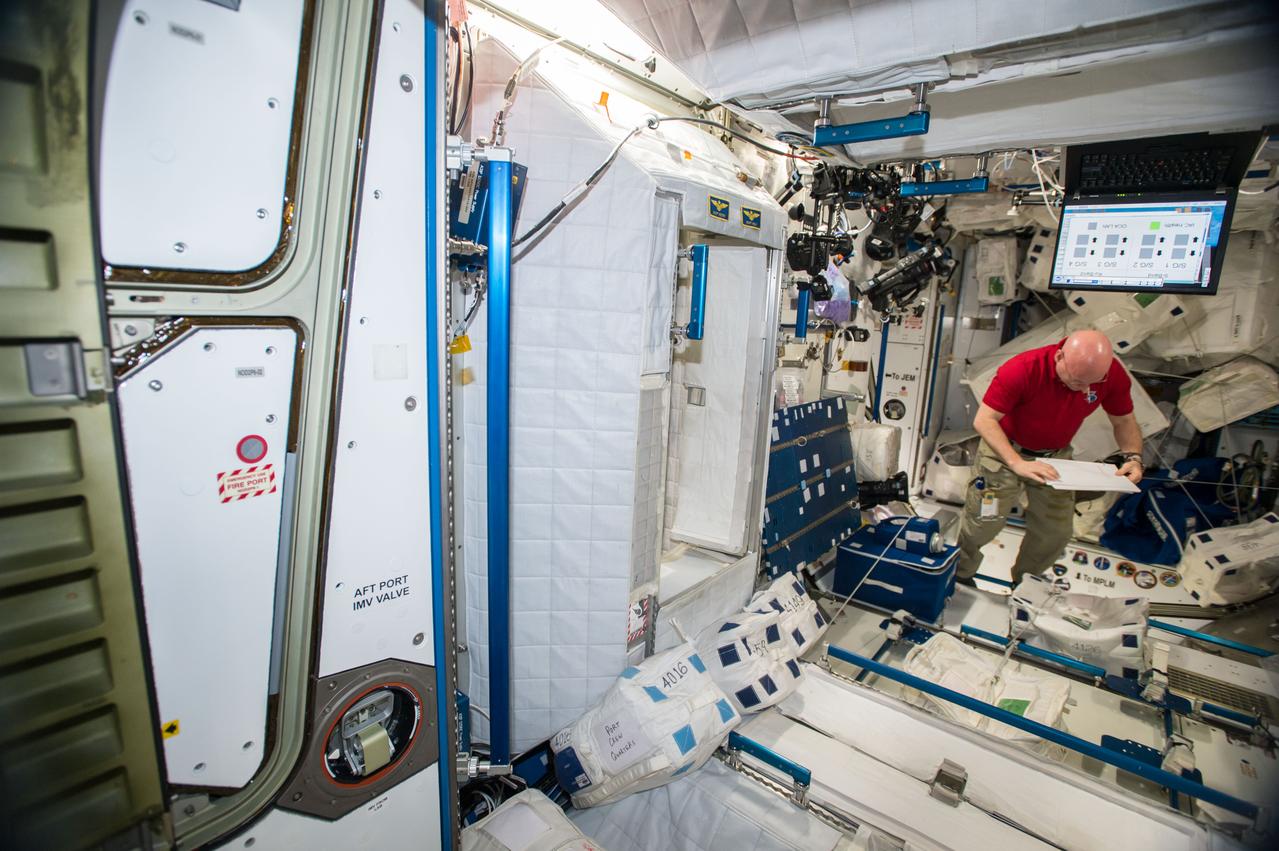
iss043e198418 (5/15/2015) --- NASA astronaut Scott Kelly is shown during the collection of surface and air samples using various devices in multiple locations to characterize the types of microbial populations on the International Space Station (ISS) for the Microbial Observatory-1 payload. The Microbial Payload Tracking Series (Microbial Observatory-1) investigation monitors the types of microbes present on ISS over a one-year period. Samples are returned to Earth for further study, enabling scientists to understand the diversity of the microbial flora on the ISS and how it changes over time.
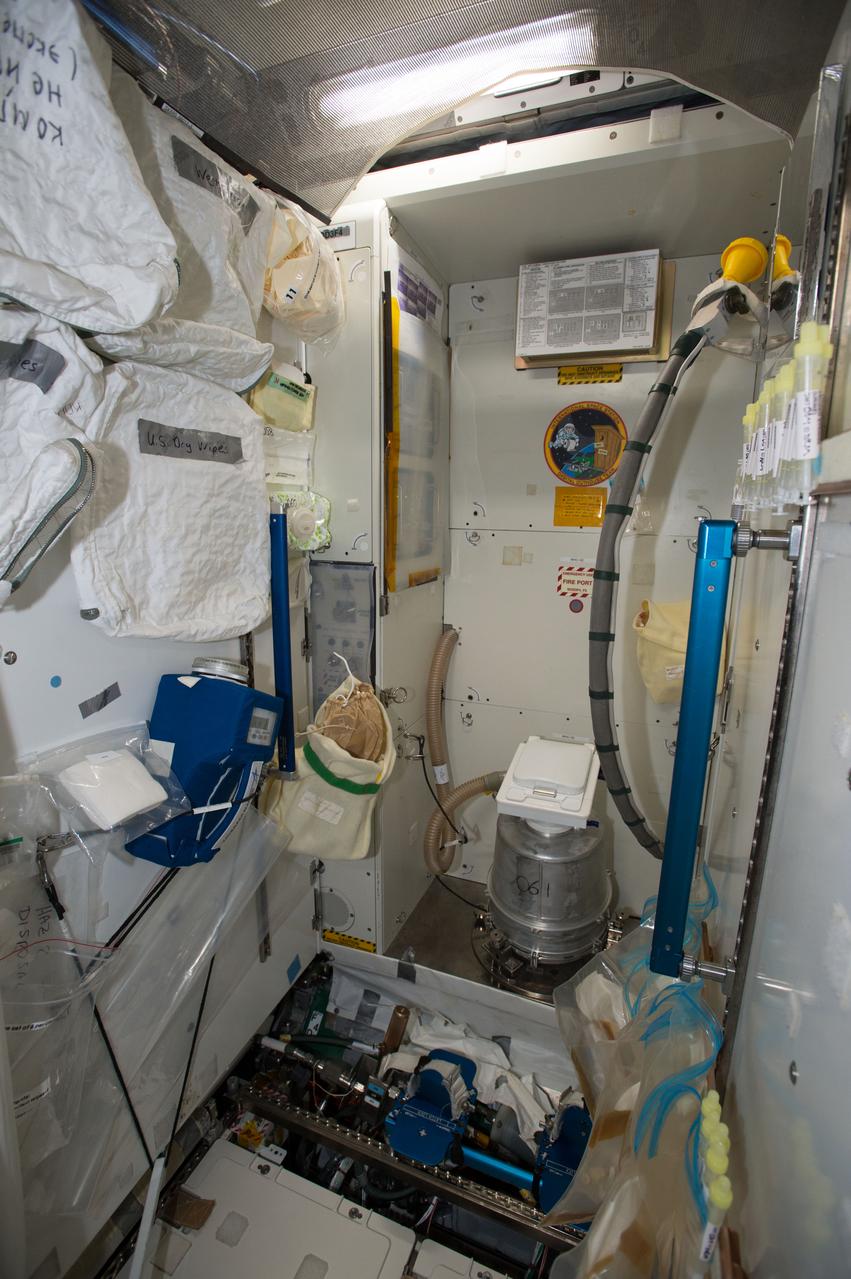
iss042e296534 (3/4/2015) --- Photographic documentation taken prior to collection of surface and air samples using various devices in multiple locations to characterize the types of microbial populations on the International Space Station (ISS) for the Microbial Observatory-1 payload. The Microbial Payload Tracking Series (Microbial Observatory-1) investigation monitors the types of microbes present on ISS over a one-year period. Samples are returned to Earth for further study, enabling scientists to understand the diversity of the microbial flora on the ISS and how it changes over time.
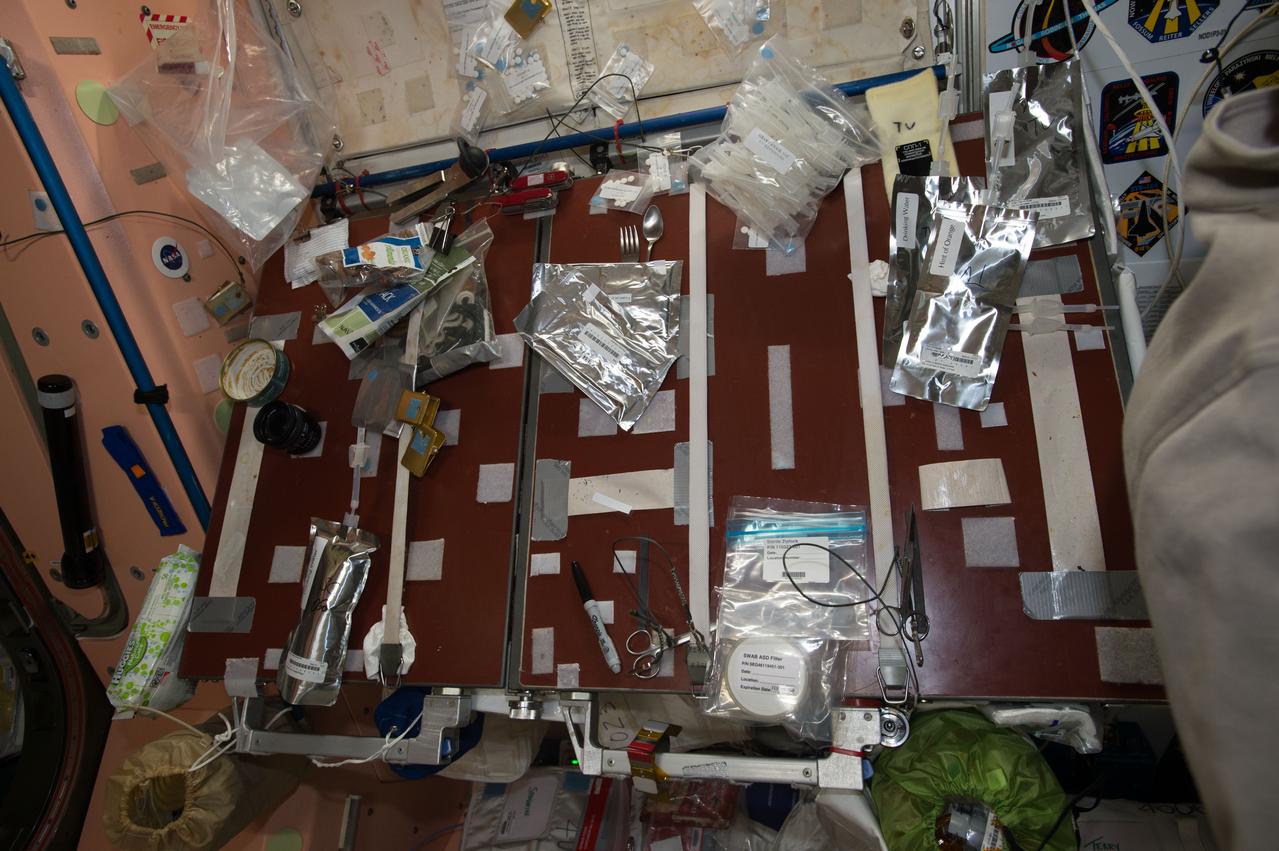
iss042e296526 (3/4/2015) --- Photographic documentation taken prior to collection of surface and air samples using various devices in multiple locations to characterize the types of microbial populations on the International Space Station (ISS) for the Microbial Observatory-1 payload. The Microbial Payload Tracking Series (Microbial Observatory-1) investigation monitors the types of microbes present on ISS over a one-year period. Samples are returned to Earth for further study, enabling scientists to understand the diversity of the microbial flora on the ISS and how it changes over time.
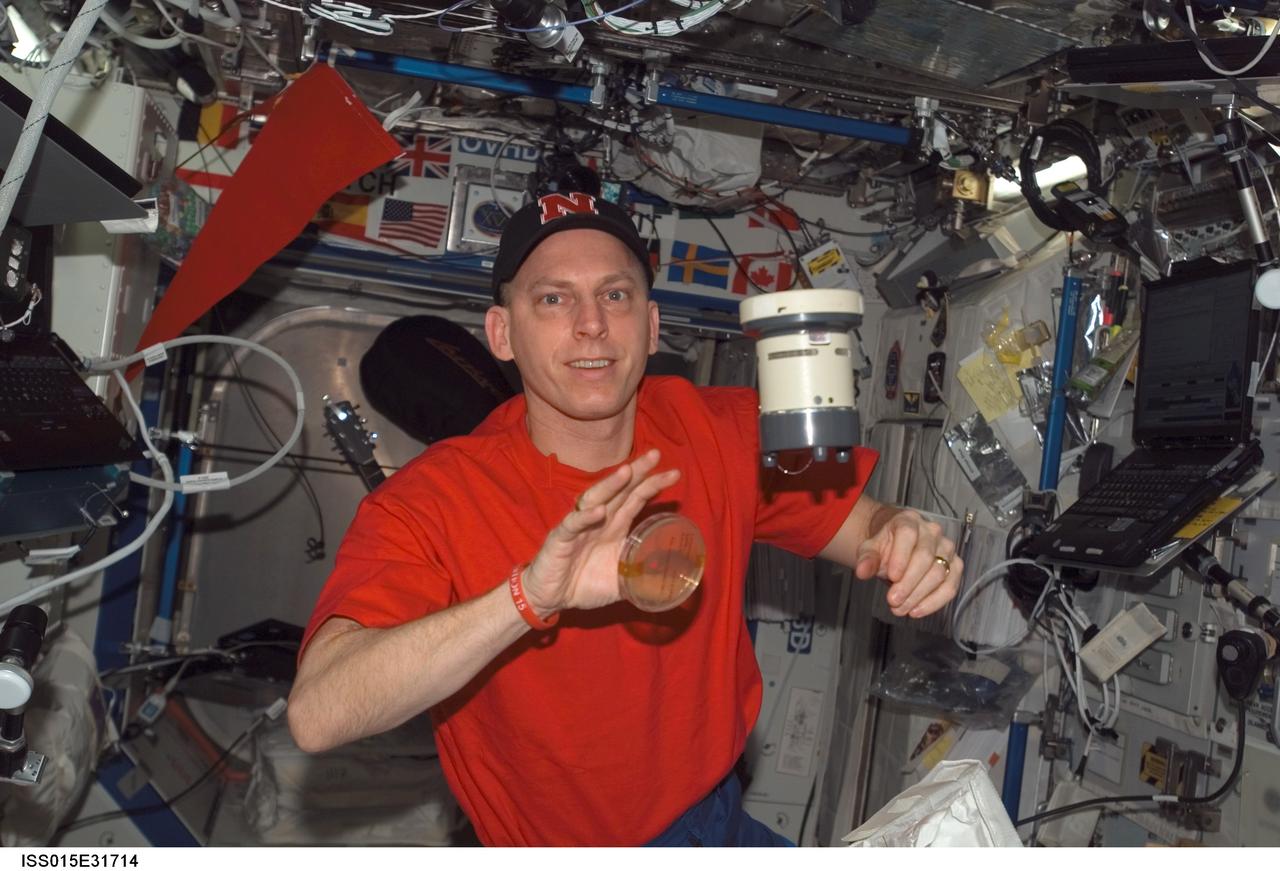
ISS015-E-31714 (3 Oct. 2007) --- NASA astronaut Clay Anderson, Expedition 15 flight engineer, poses with a microbial air sampler (MAS) and petri dish in the Destiny laboratory of the International Space Station.
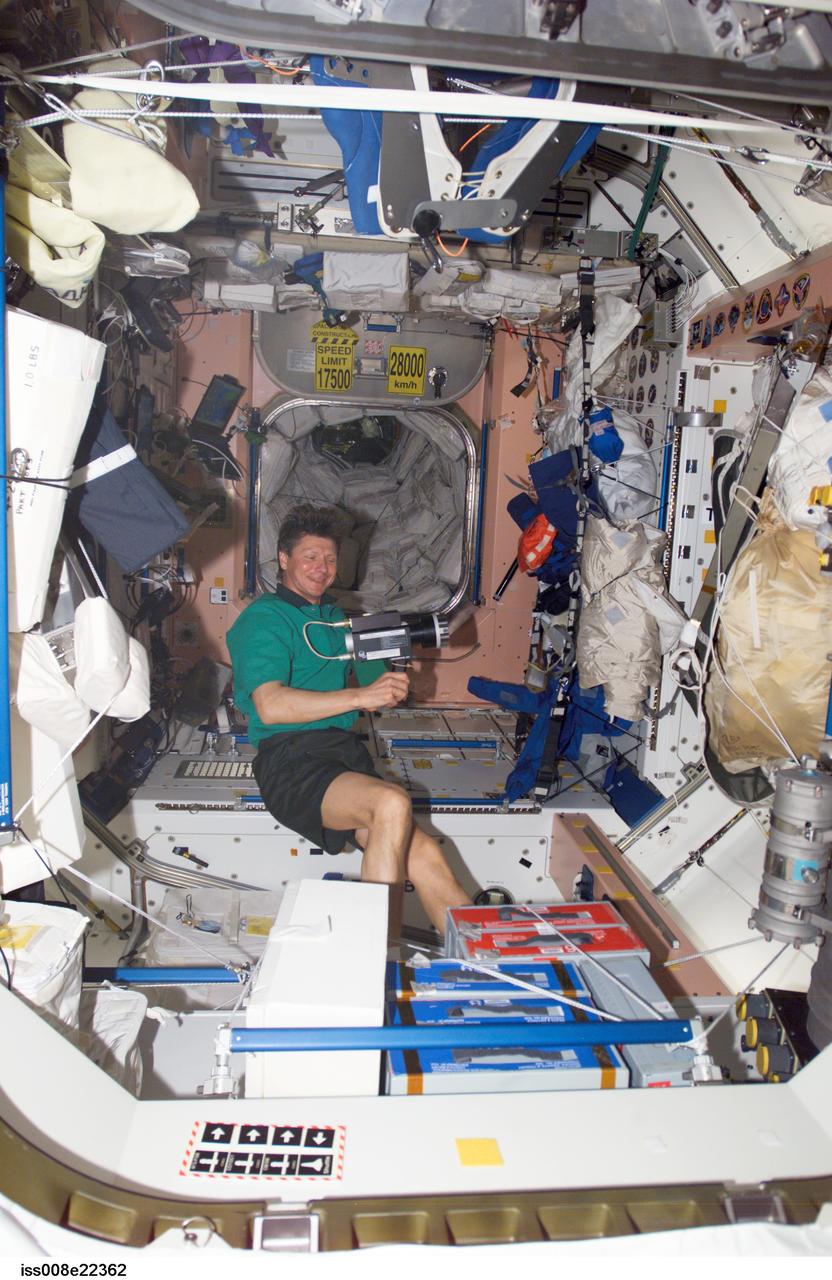
ISS008-E-22362 (28 April 2004) --- Cosmonaut Gennady I. Padalka, Expedition 9 commander representing Russia’s Federal Space Agency, works in the Unity node of the International Space Station (ISS).
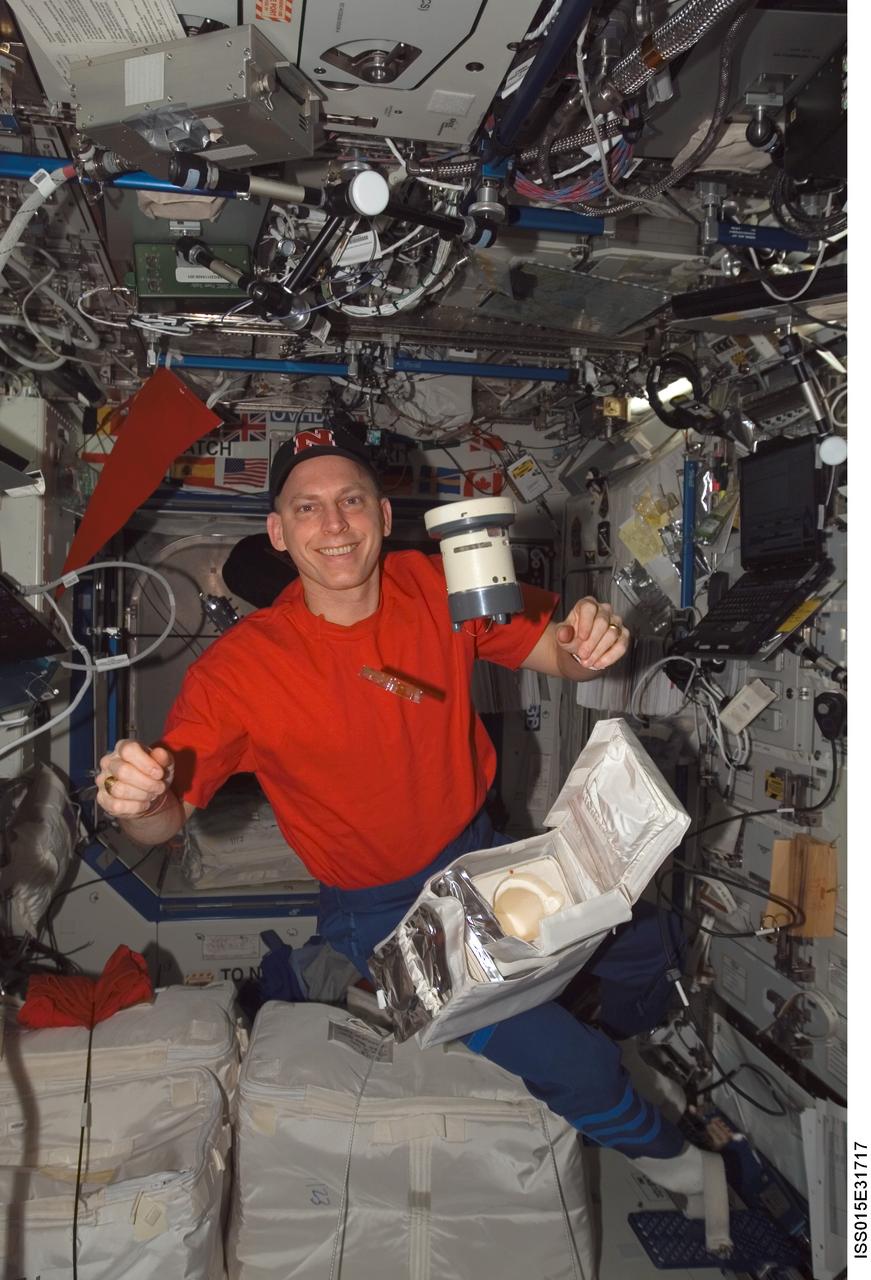
ISS015-E-31717 (3 Oct. 2007) --- Astronaut Clay Anderson, Expedition 15 flight engineer, poses with a microbial air sampler (MAS) and petri dish in the Destiny laboratory of the International Space Station.
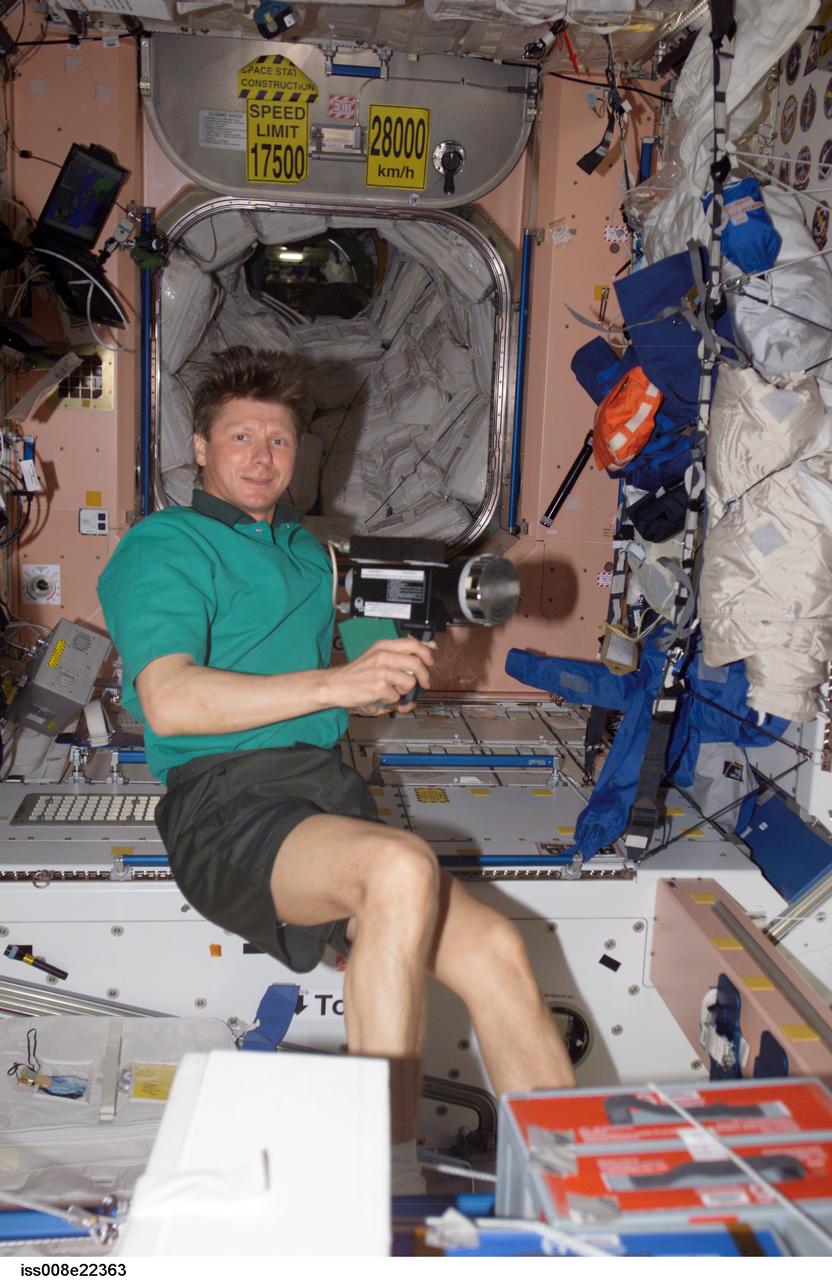
ISS008-E-22363 (28 April 2004) --- Cosmonaut Gennady I. Padalka, Expedition 9 commander representing Russia’s Federal Space Agency, works in the Unity node of the International Space Station (ISS).
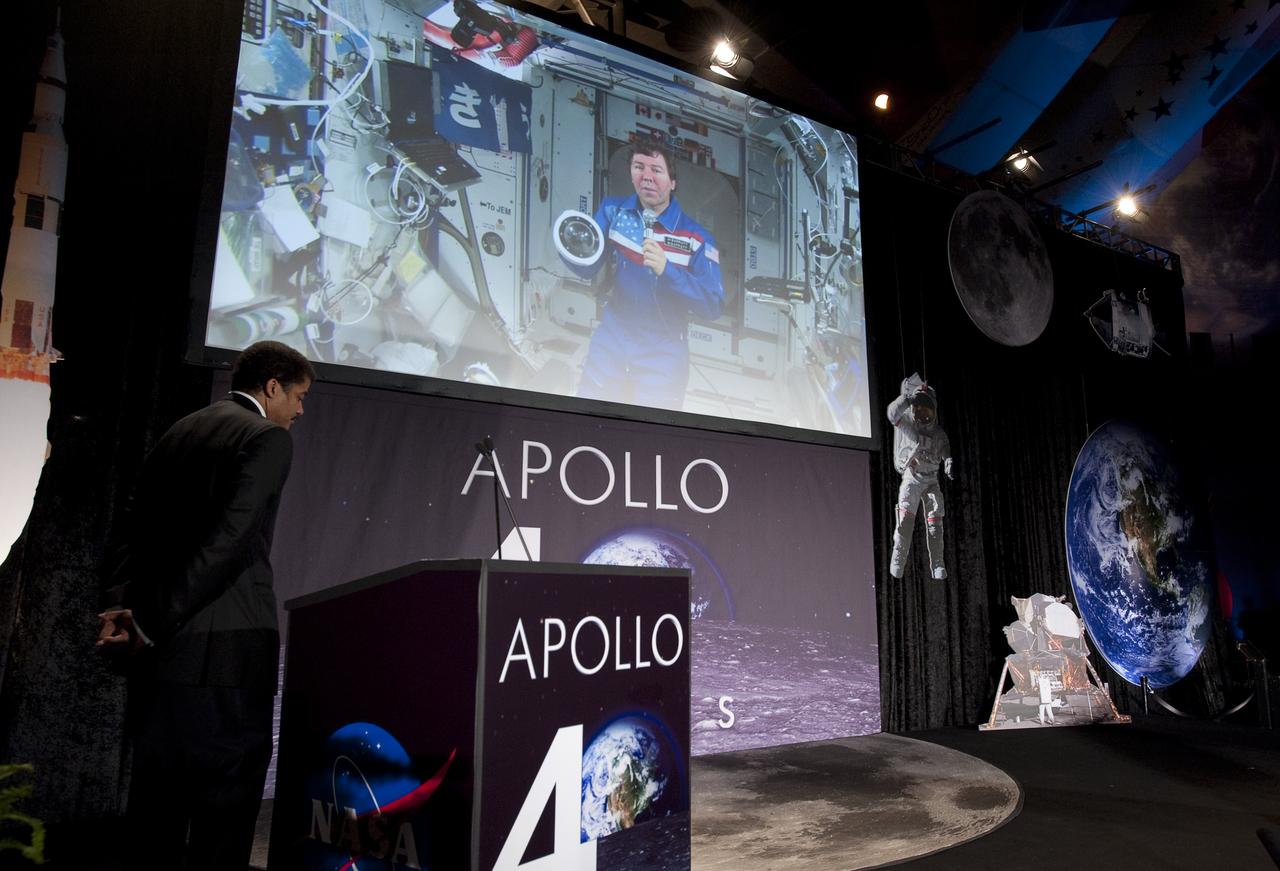
NASA Astronaut and Expedition 19 Flight Engineer Michael Barratt delivers remarks and shows a moon rock sample being flown onboard the International Space Station at the Apollo 40th anniversary celebration held at the National Air and Space Museum, Monday, July 20, 2009 in Washington. Photo Credit: (NASA/Bill Ingalls)

ISS036-E-030115 (9 Aug. 2013) --- European Space Agency astronaut Luca Parmitano, Expedition 36 flight engineer, using a Russian AK-1M absorber, samples the air in the newly attached Japanese "Kounotori" H2 Transfer Vehicle-4 (HTV-4) docked to the International Space Station's Harmony node.

ISS036-E-026661 (31 July 2013) --- In the International Space Station?s Rassvet Mini-Research Module (MRM1), Russian cosmonaut Fyodor Yurchikhin, Expedition 36 flight engineer, works with the Aseptic experiment, which involves collecting air and surface samples in the Russian segment of the station for analysis.
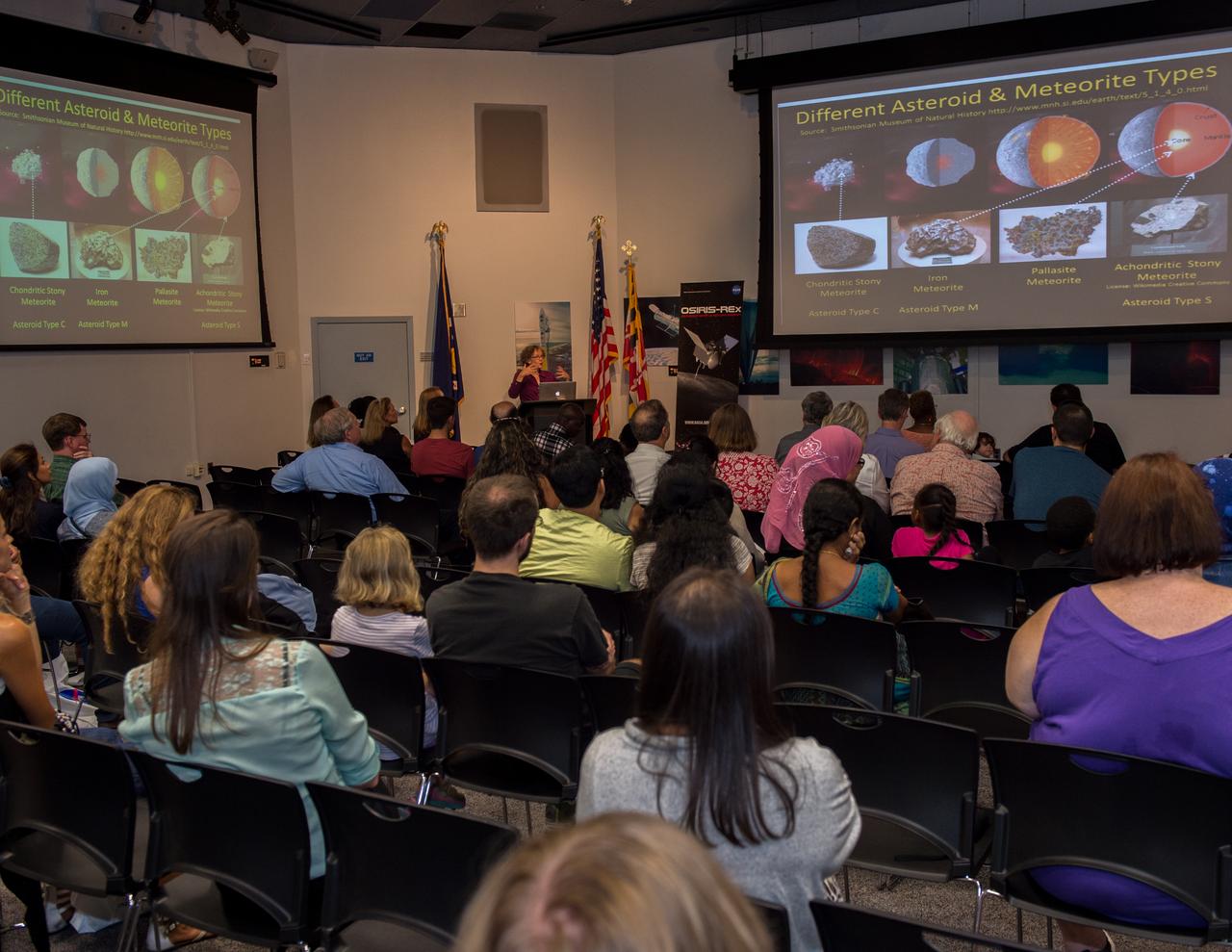
OSIRIS-REx Launch Event at Goddard Visitor Center. NASA's first asteroid sampling mission launched into space at 7:05 p.m. EDT Thursday from Cape Canaveral Air Force Station in Florida beginning a journey that could revolutionize our understanding of the early solar system. Lucy McFadden
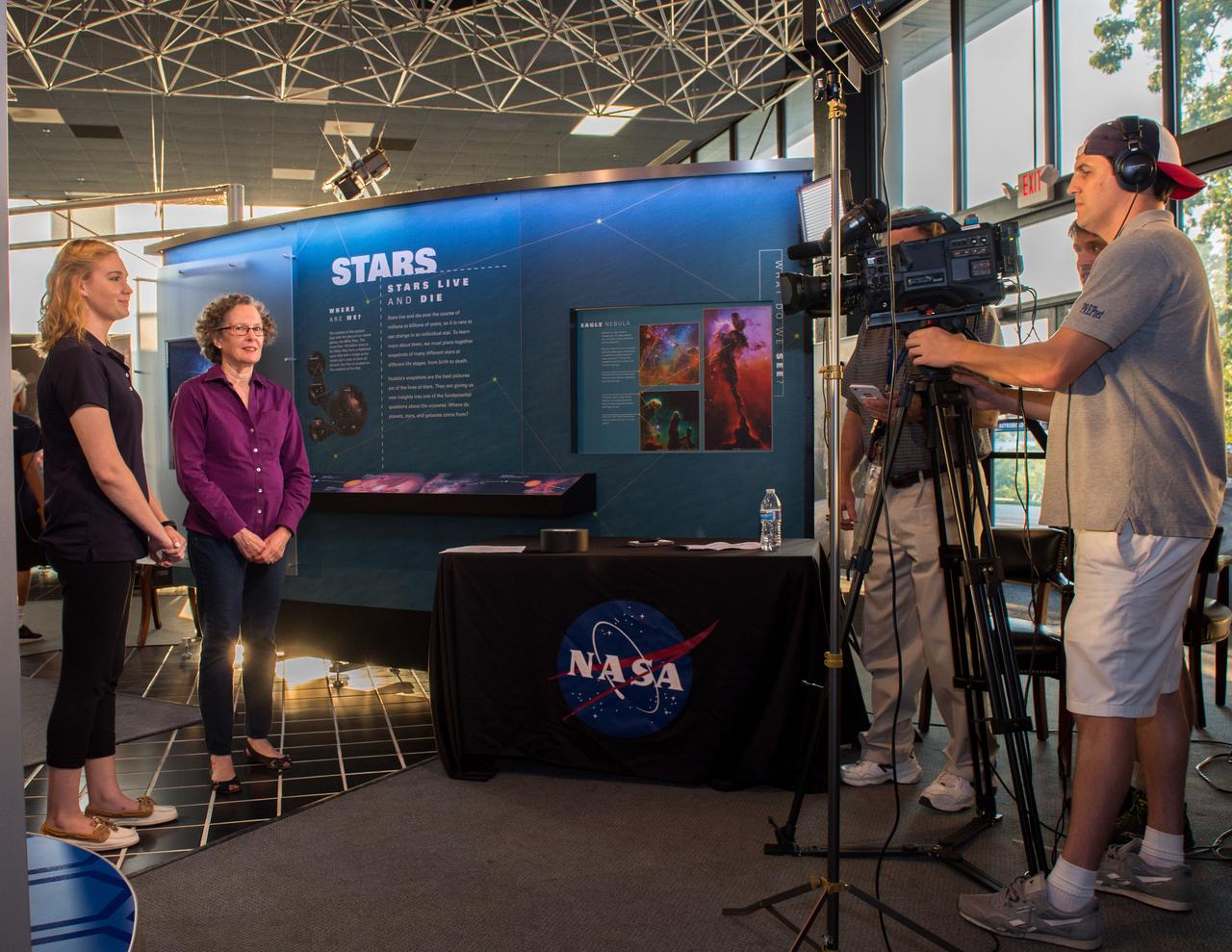
OSIRIS-REx Launch Event at Goddard Visitor Center. NASA's first asteroid sampling mission launched into space at 7:05 p.m. EDT Thursday from Cape Canaveral Air Force Station in Florida beginning a journey that could revolutionize our understanding of the early solar system. Lucy McFadden
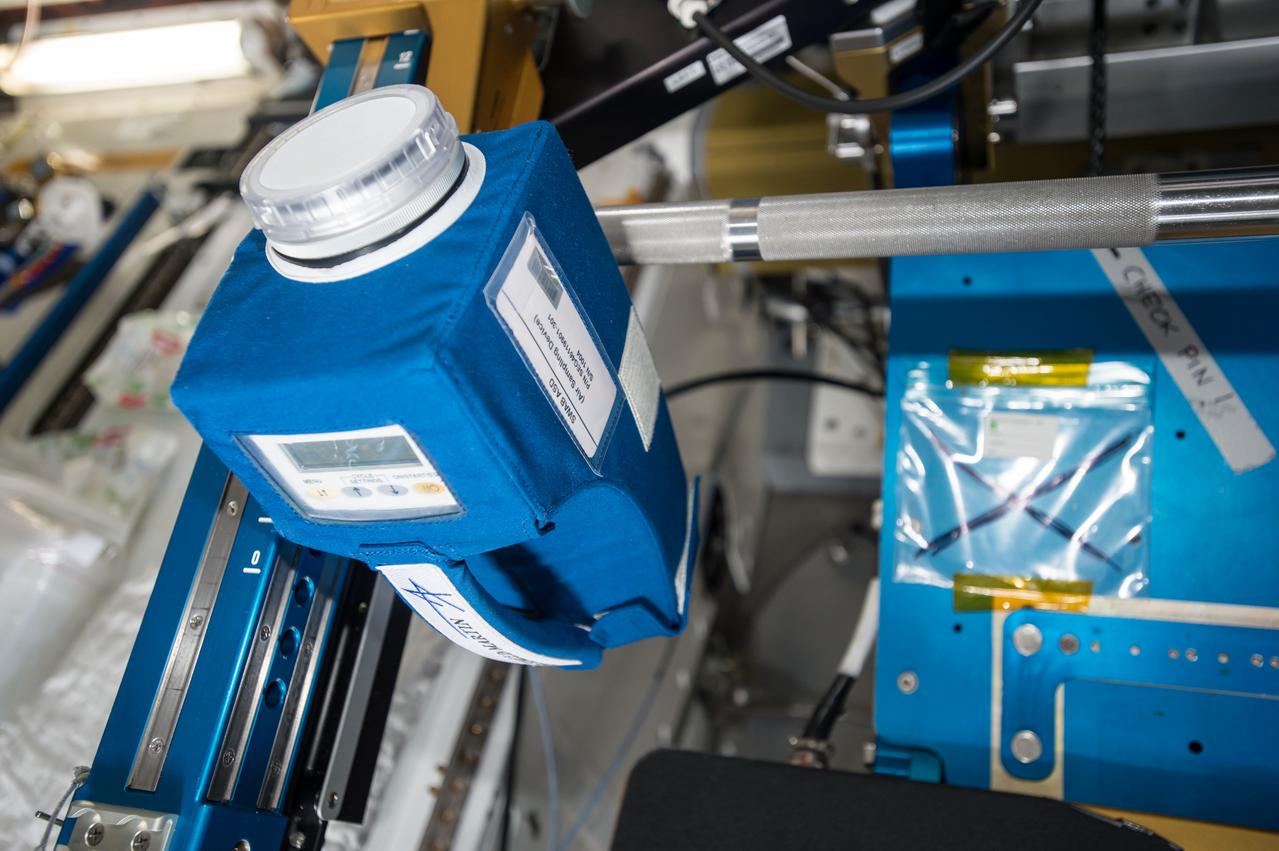
iss052e006453 (Jun. 23, 2017) --- Microbial Tracking-2 in the Node 2 module at air sampling location number 2 monitoring microbes present to assess the health environment on the International Space Station (ISS) and understand the effects of the spaceflight environment on viral and microbial pathogen dynamics.
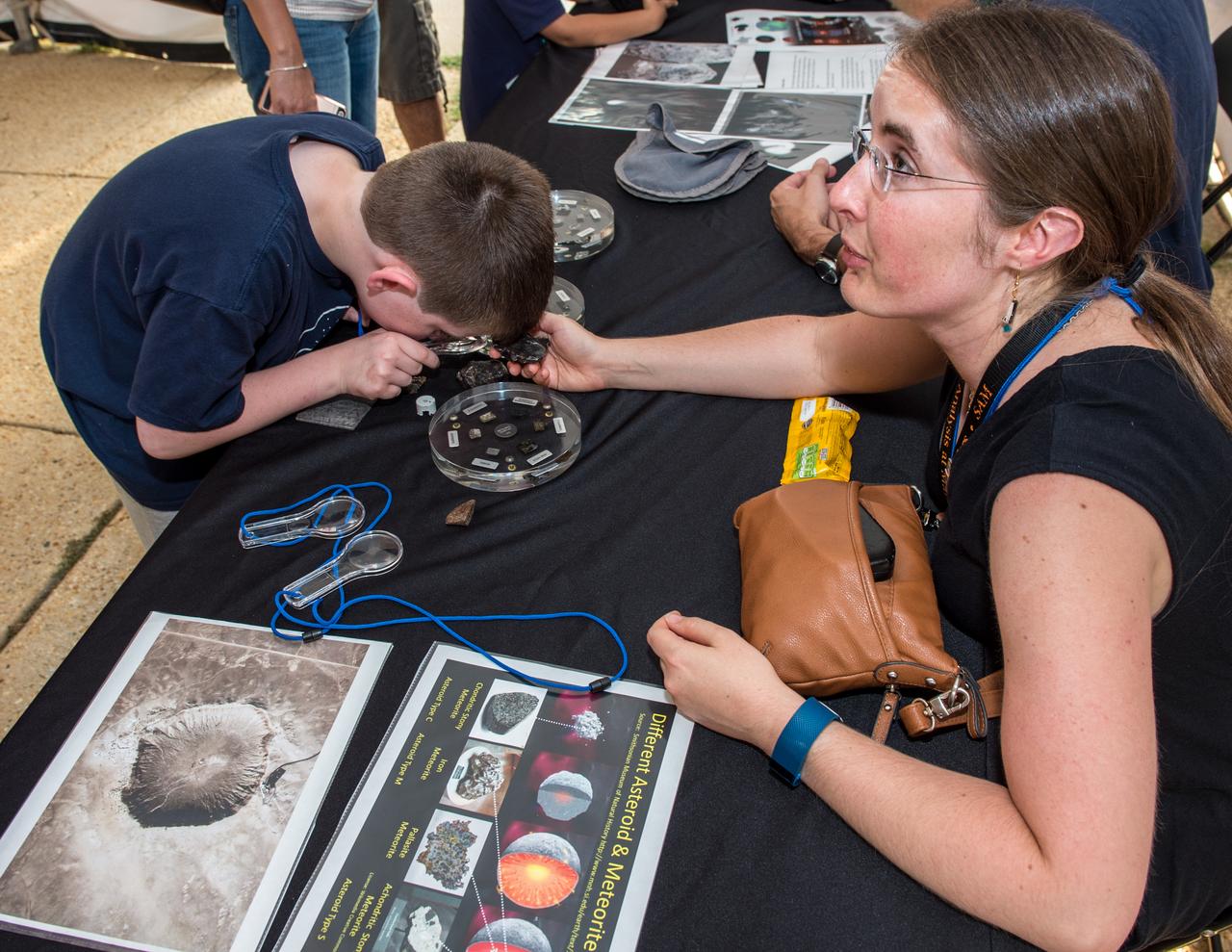
OSIRIS-REx Launch Event at Goddard Visitor Center. NASA's first asteroid sampling mission launched into space at 7:05 p.m. EDT Thursday from Cape Canaveral Air Force Station in Florida, beginning a journey that could revolutionize our understanding of the early solar system.

NASA Glenn’s Propulsion Systems Lab (PSL) is conducting research to characterize ice crystal clouds that can create a hazard to aircraft engines under certain conditions. The isokinetic probe (in gold) samples particles and another series of probes can measure everything from humidity to air pressure.
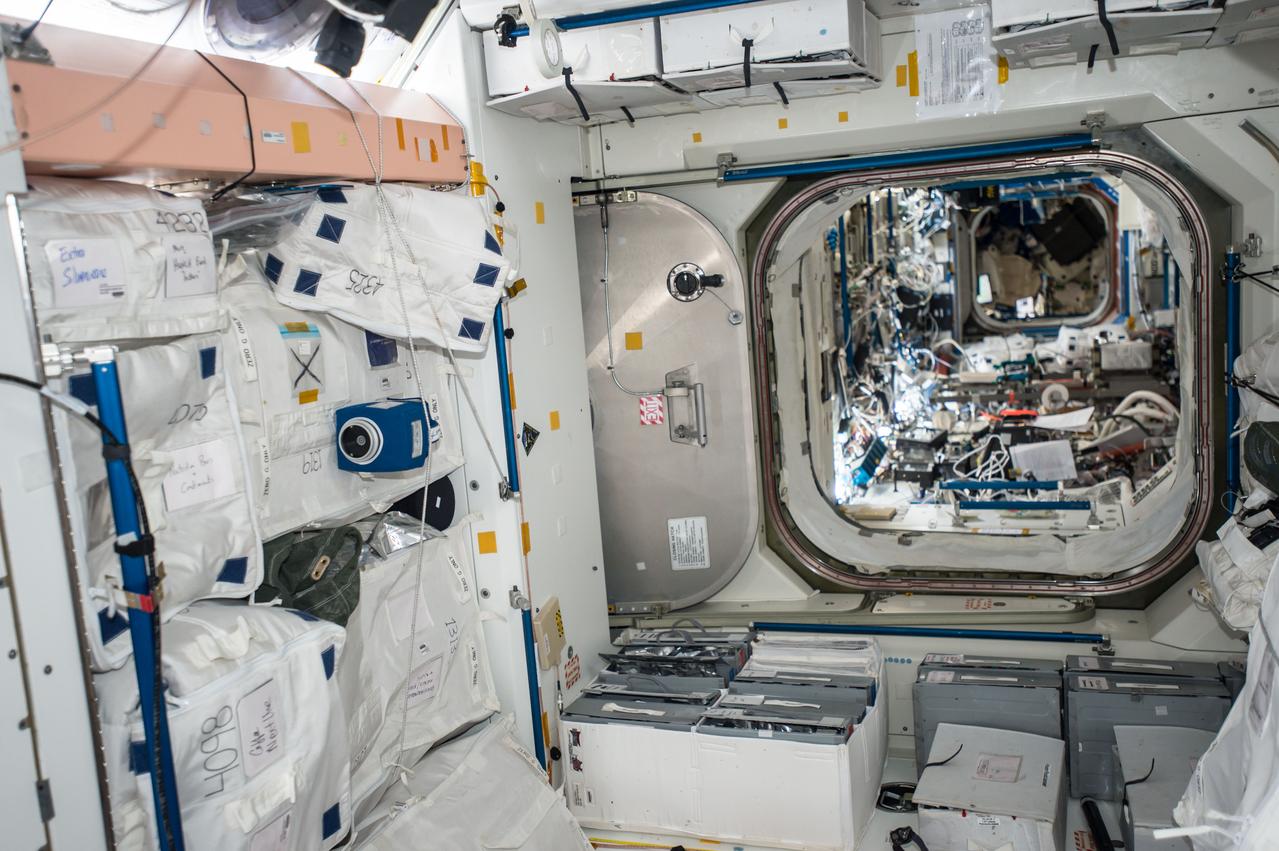
iss052e006446 (Jun. 23, 2017) --- Microbial Tracking-2 in the Node 2 module at air sampling location number 5 monitoring microbes present to assess the health environment on the International Space Station (ISS) and understand the effects of the spaceflight environment on viral and microbial pathogen dynamics. Destiny and Node 1 modules are seen in the background.
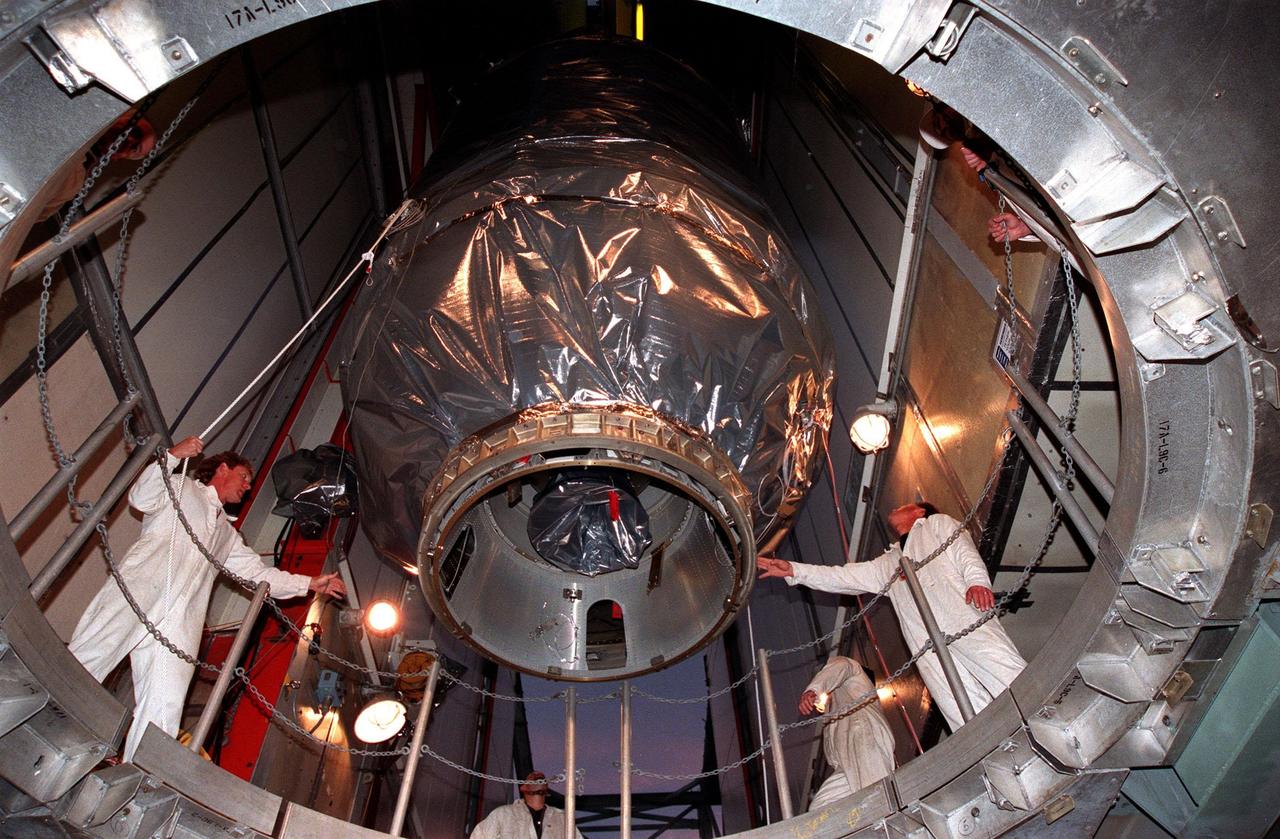
Workers inside the launch tower at Pad 17-A, Cape Canaveral Air Station, guide the third stage of a Boeing Delta II rocket, and the Stardust spacecraft connected to it, through an opening to the second stage of the rocket below. The second and third stages of teh rocket will be mated next as preparations continue for liftoff on Feb. 6. Stardust is destined for a close encounter with the comet Wild 2 in January 2004. Using a silicon-based substance called aerogel, Stardust will capture comet particles flying off the nucleus of the comet. The spacecraft also will bring back samples of interstellar dust. These materials consist of ancient pre-solar interstellar grains and other remnants left over from the formation of the solar system. Scientists expect their analysis to provide important insights into the evolution of the sun and planets and possibly into the origin of life itself. The collected samples will return to Earth in a sample return capsule to be jettisoned as Stardust swings by Earth in January 2006

As tower rollback begins, the Boeing Delta II rocket carrying the Stardust spacecraft waits on Launch Pad 17-A, Cape Canaveral Air Station, for the second launch attempt at 4:04 p.m. EST. The original launch was scrubbed on Feb. 6 for 24 hours. Stardust is destined for a close encounter with the comet Wild 2 in January 2004. Using a silicon-based substance called aerogel, Stardust will capture comet particles flying off the nucleus of the comet. The spacecraft also will bring back samples of interstellar dust. These materials consist of ancient pre-solar interstellar grains and other remnants left over from the formation of the solar system. Scientists expect their analysis to provide important insights into the evolution of the sun and planets and possibly into the origin of life itself. The collected samples will return to Earth in a sample return capsule to be jettisoned as Stardust swings by Earth in January 2006
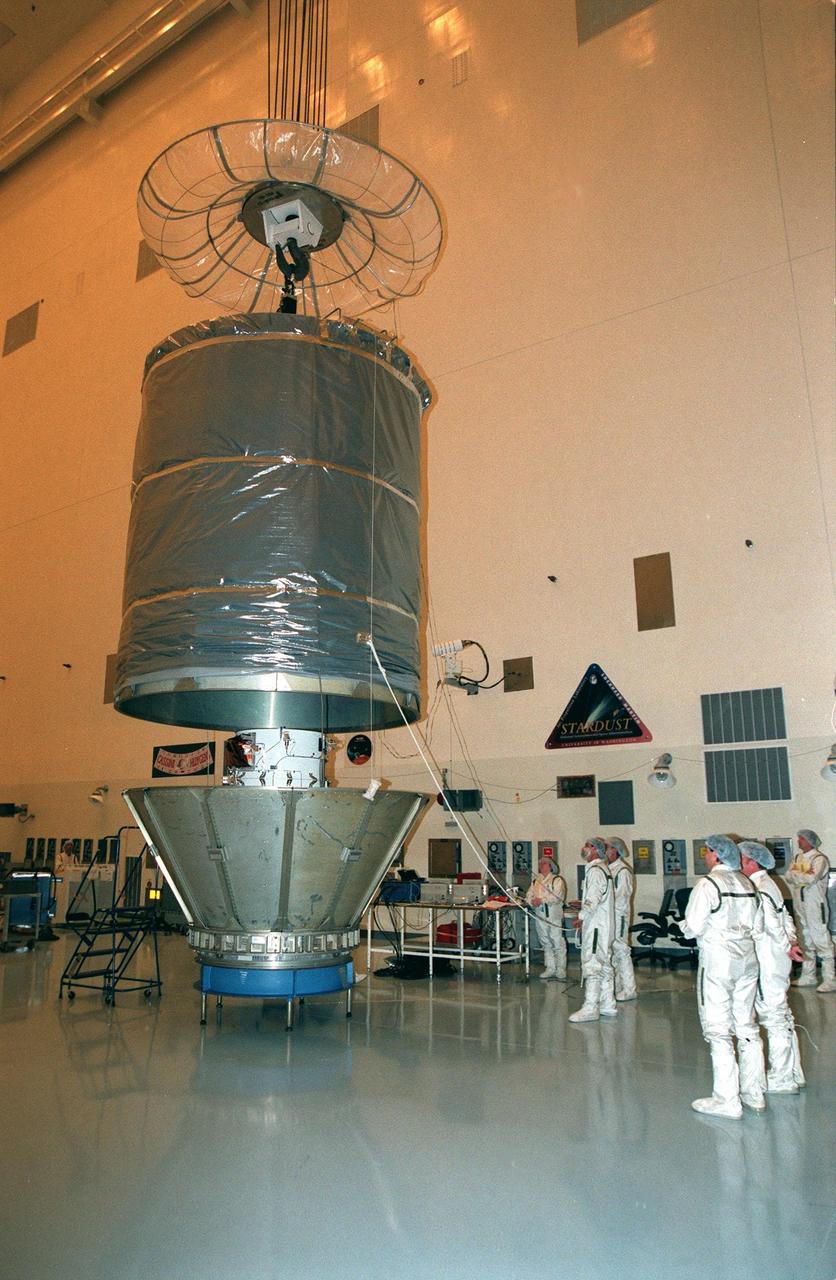
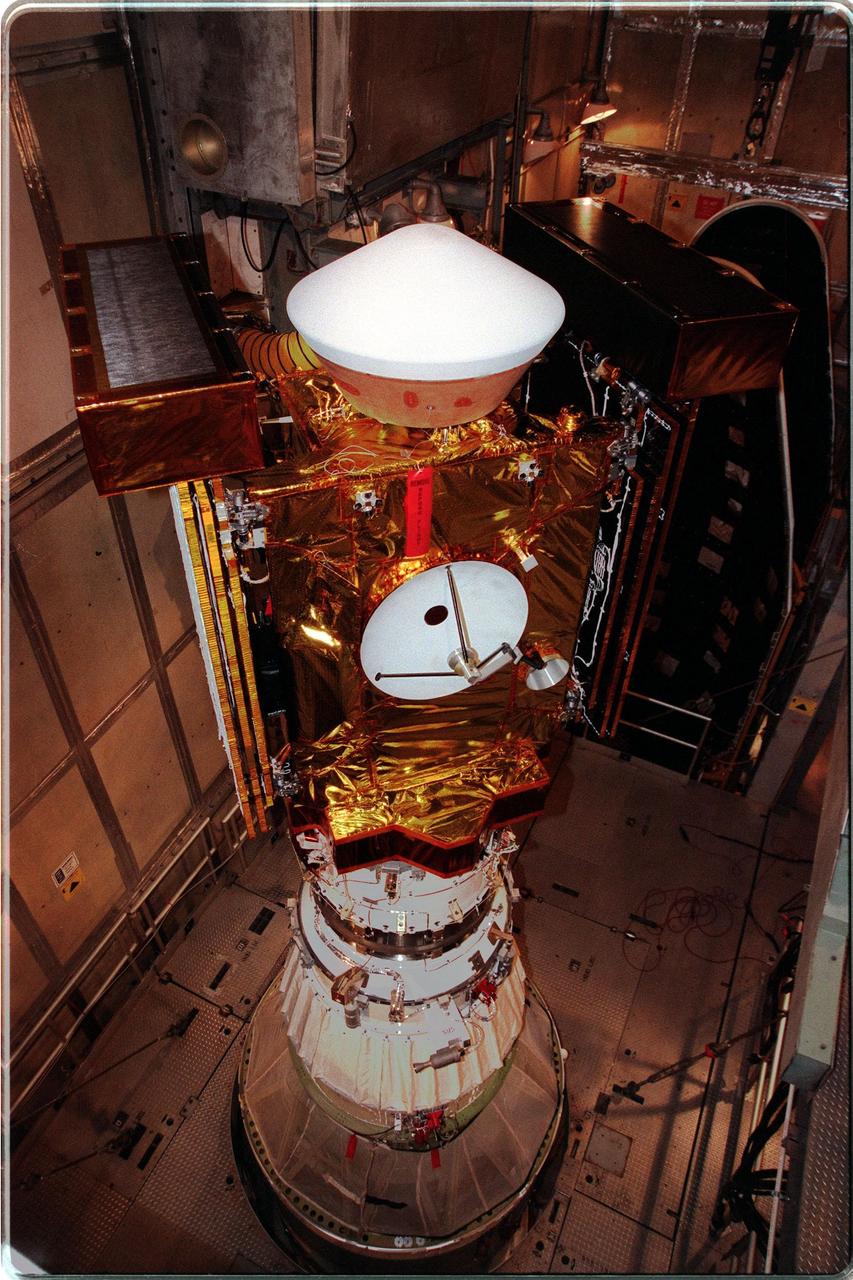
The cover is removed from the Stardust spacecraft in the Payload Hazardous Servicing Facility prior to a media presentation. Stardust is targeted for launch on Feb. 6 aboard a Boeing Delta II rocket from Launch Pad 17-A, Cape Canaveral Air Station. The spacecraft is destined for a close encounter with the comet Wild 2 in January 2004. Using a silicon-based substance called aerogel, Stardust will capture comet particles flying off the nucleus of the comet. The spacecraft also will bring back samples of interstellar dust. These materials consist of ancient pre-solar interstellar grains and other remnants left over from the formation of the solar system. Scientists expect their analysis to provide important insights into the evolution of the sun and planets and possibly into the origin of life itself. The collected samples will return to Earth in a sample return capsule (the white-topped, blunt-nosed cone seen on the top of the spacecraft) to be jettisoned as Stardust swings by Earth in January 2006
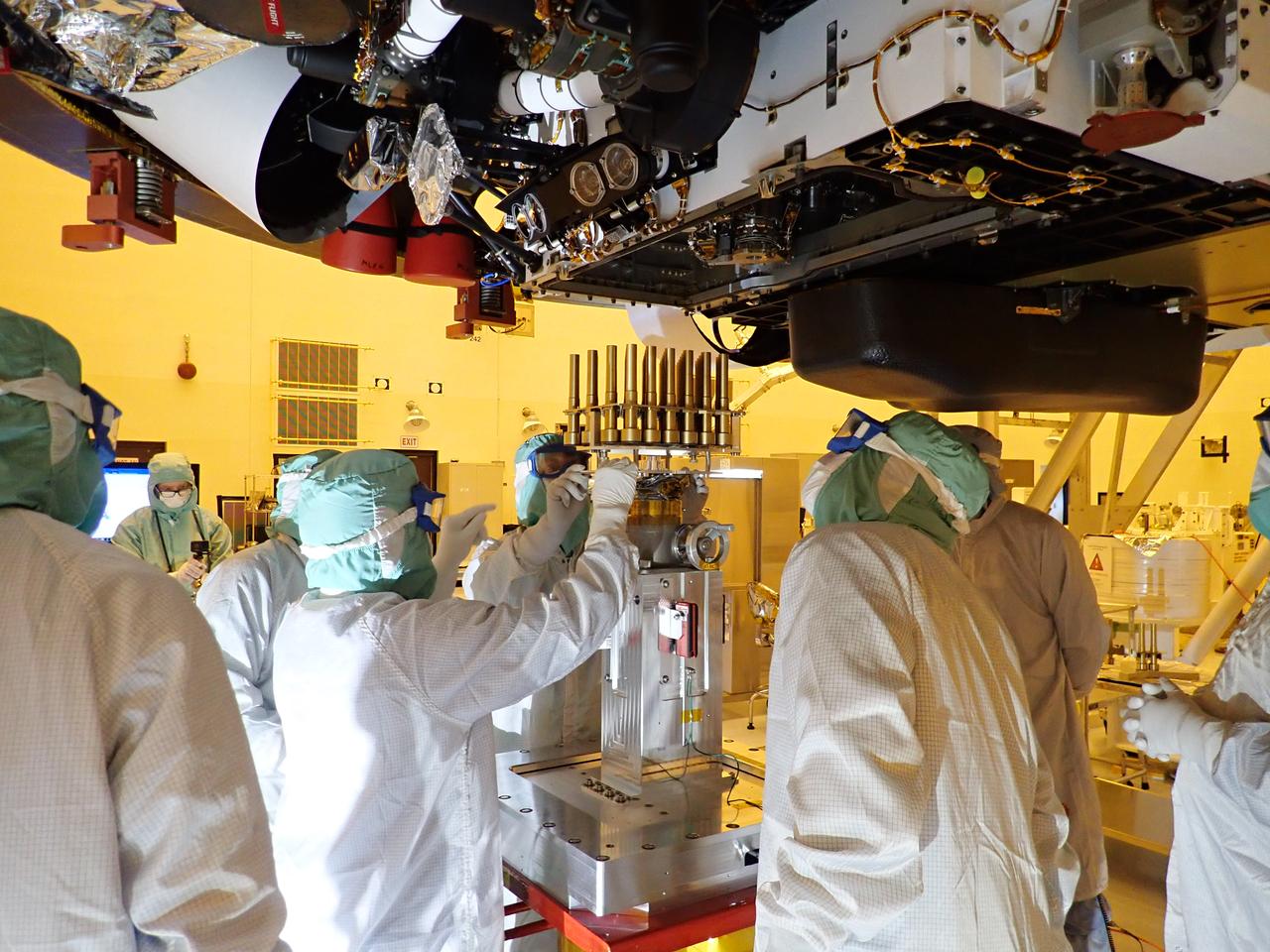
Inside the Payload Hazardous Servicing Facility at NASA’s Kennedy Space Center in Florida, workers prepare to install the Sample Caching System Sterile Flight Model hardware on the Mars Perseverance rover on May 21, 2020. The system includes 39 sample tubes that will be inserted into the underside of the rover. Each tube is sheathed in a gold-colored cylindrical enclosure to protect it from contamination. Perseverance rover will carry 43 sample tubes in total to Mars' Jezero Crater. The Mars Perseverance rover is scheduled to launch in mid-July atop a United Launch Alliance Atlas V 541 rocket from Pad 41 at nearby Cape Canaveral Air Force Station. The rover is part of NASA’s Mars Exploration Program, a long-term effort of robotic exploration of the Red Planet. The rover will search for habitable conditions in the ancient past and signs of past microbial life on Mars. The Launch Services Program at Kennedy is responsible for launch management.
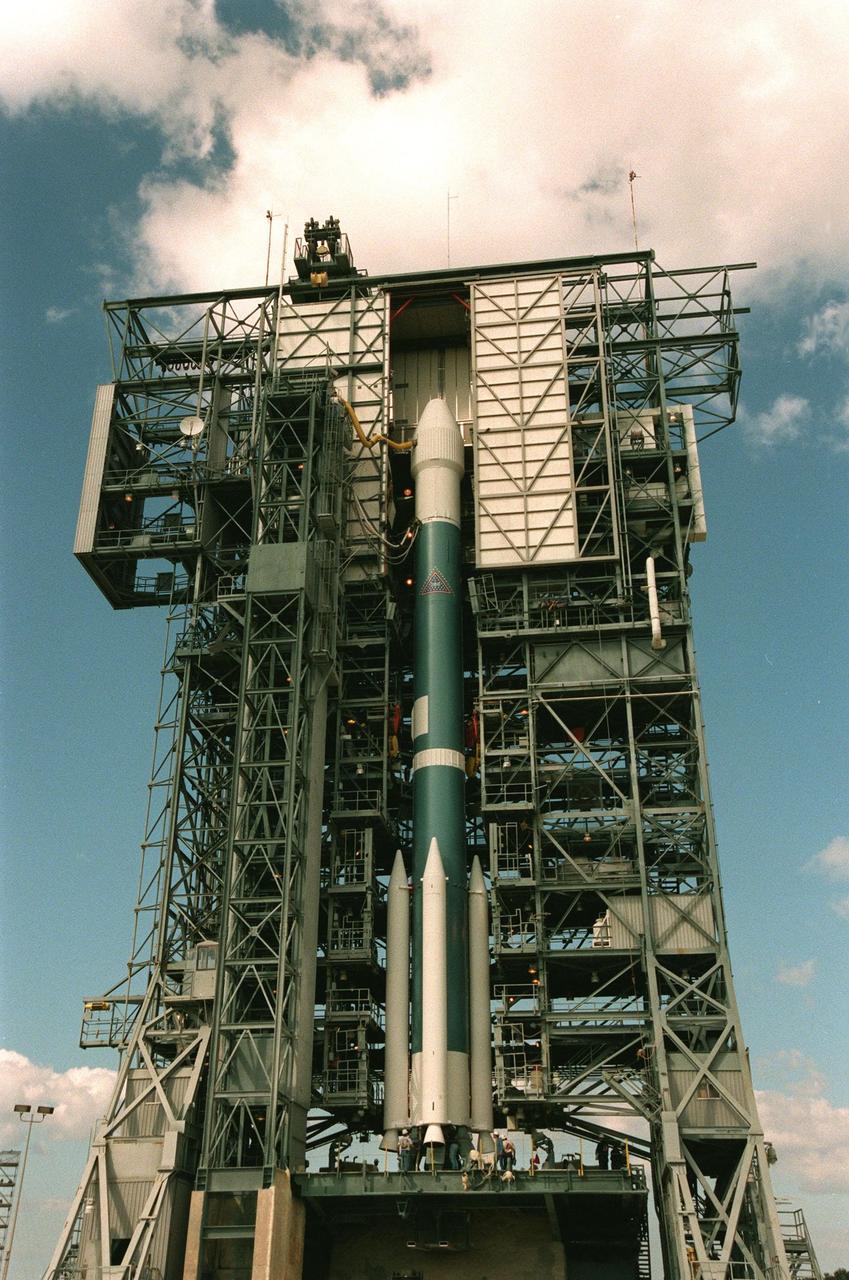
At Launch Pad 17-A, Cape Canaveral Air Station, as tower rollback begins, a Boeing Delta II rocket undergoes final preparations for launch. The targeted launch time is 4:06 p.m. EST. The Delta II rocket is carrying the Stardust spacecraft, destined for a close encounter with the comet Wild 2 in January 2004. Using a silicon-based substance called aerogel, Stardust will capture comet particles flying off the nucleus of the comet. The spacecraft also will bring back samples of interstellar dust. These materials consist of ancient pre-solar interstellar grains and other remnants left over from the formation of the solar system. Scientists expect their analysis to provide important insights into the evolution of the sun and planets and possibly into the origin of life itself. The collected samples will return to Earth in a sample return capsule to be jettisoned as Stardust swings by Earth in January 2006

This artist's concept shows Mars Sample Return Earth Entry System. The vehicle would bring curated Martian samples collected by NASA's Perseverance Rover on the final leg of their journey from Mars to Earth. The illustration shows the Earth Entry System, a capsule about 4 feet (1.25 meters) in diameter, on its final approach to Earth, after being ejected from the Earth Return Orbiter. Once in Earth's atmosphere, it would take the vehicle about six minutes to land at the U.S. Air Force's Utah Test and Training Range in west-central Utah. Velocity at time of touchdown for the parachute-less capsule is expected to be about 90 mph (40 meters per second). The Earth Entry System is part of the multi-mission Mars Sample Return program being planned by NASA and ESA (European Space Agency). https://photojournal.jpl.nasa.gov/catalog/PIA25986

At Launch Pad 17-A, Cape Canaveral Air Station, the Stardust spacecraft, attached to the third stage of a Boeing Delta II rocket, is lifted up the launch tower. The second and third stages of the rocket will be mated next as preparations continue for liftoff on Feb. 6. Stardust is destined for a close encounter with the comet Wild 2 in January 2004. Using a silicon-based substance called aerogel, Stardust will capture comet particles flying off the nucleus of the comet. The spacecraft also will bring back samples of interstellar dust. These materials consist of ancient pre-solar interstellar grains and other remnants left over from the formation of the solar system. Scientists expect their analysis to provide important insights into the evolution of the sun and planets and possibly into the origin of life itself. The collected samples will return to Earth in a sample return capsule to be jettisoned as Stardust swings by Earth in January 2006
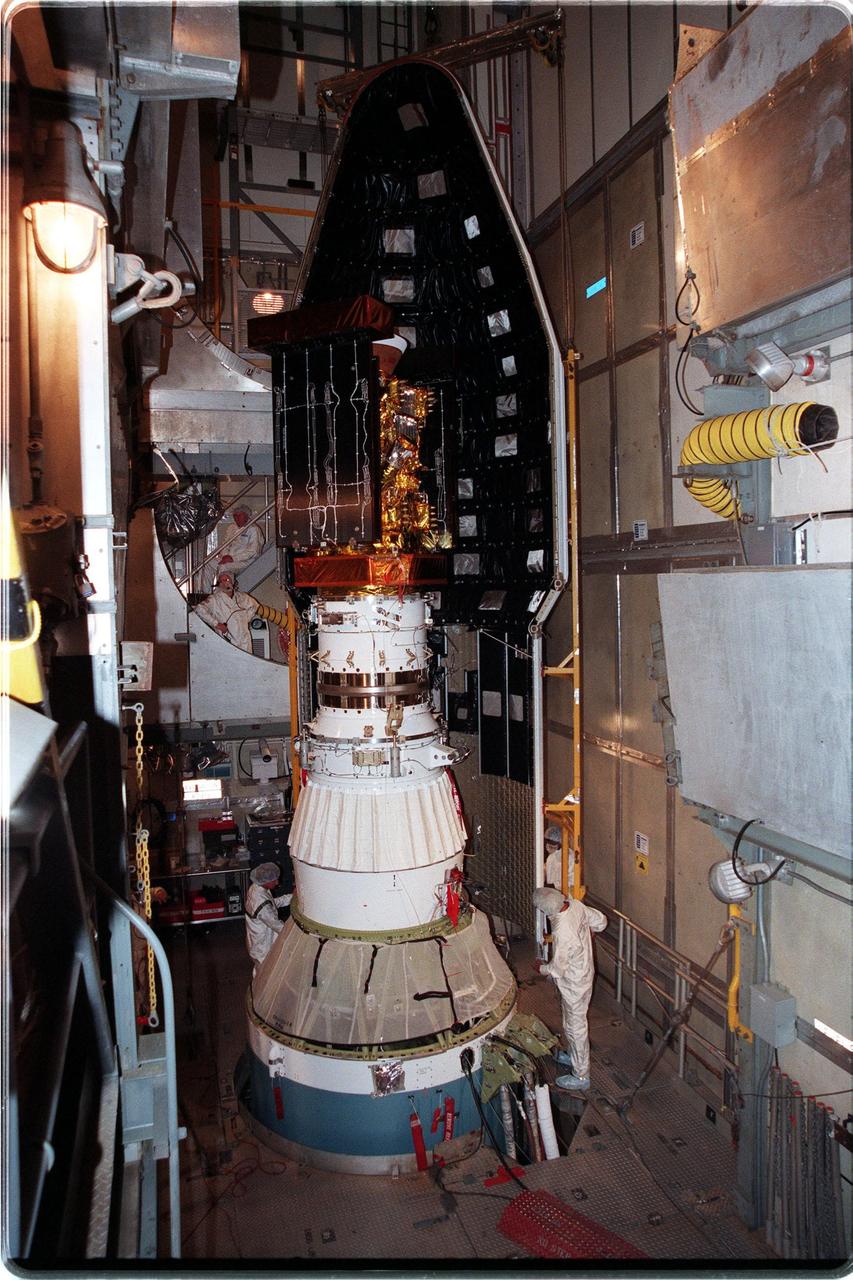
At Launch Pad 17-A, Cape Canaveral Air Station, workers begin placing the fairing around the Stardust spacecraft and upper stage of the Boeing Delta II rocket. Targeted for launch at 4:06:42 p.m. on Feb. 6, Stardust is destined for a close encounter with the comet Wild 2 in January 2004. Using a silicon-based substance called aerogel, Stardust will capture comet particles flying off the nucleus of the comet. The spacecraft also will bring back samples of interstellar dust. These materials consist of ancient pre-solar interstellar grains and other remnants left over from the formation of the solar system. Scientists expect their analysis to provide important insights into the evolution of the sun and planets and possibly into the origin of life itself. The collected samples will return to Earth in a sample return capsule to be jettisoned as Stardust swings by Earth in January 2006
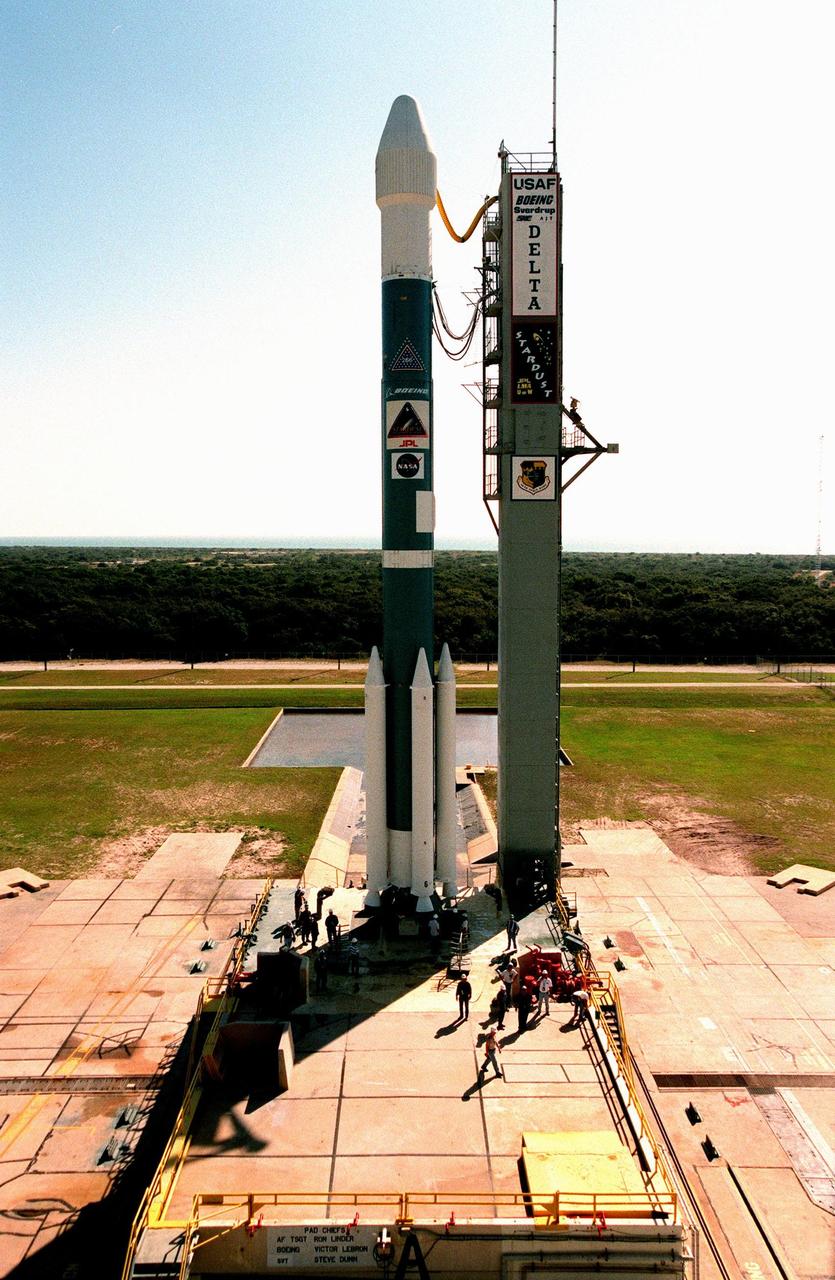
In the late morning light at Launch Pad 17-A, Cape Cananveral Air Station, the fixed utility tower (right) casts a long shadow across the base of the Boeing Delta II rocket (left) waiting to launch the Stardust spacecraft. After a 24-hour scrub, the new targeted launch time is 4:04 p.m. EST. Stardust is destined for a close encounter with the comet Wild 2 in January 2004. Using a silicon-based substance called aerogel, Stardust will capture comet particles flying off the nucleus of the comet. The spacecraft also will bring back samples of interstellar dust. These materials consist of ancient pre-solar interstellar grains and other remnants left over from the formation of the solar system. Scientists expect their analysis to provide important insights into the evolution of the sun and planets and possibly into the origin of life itself. The collected samples will return to Earth in a sample return capsule to be jettisoned as Stardust swings by Earth in January 2006
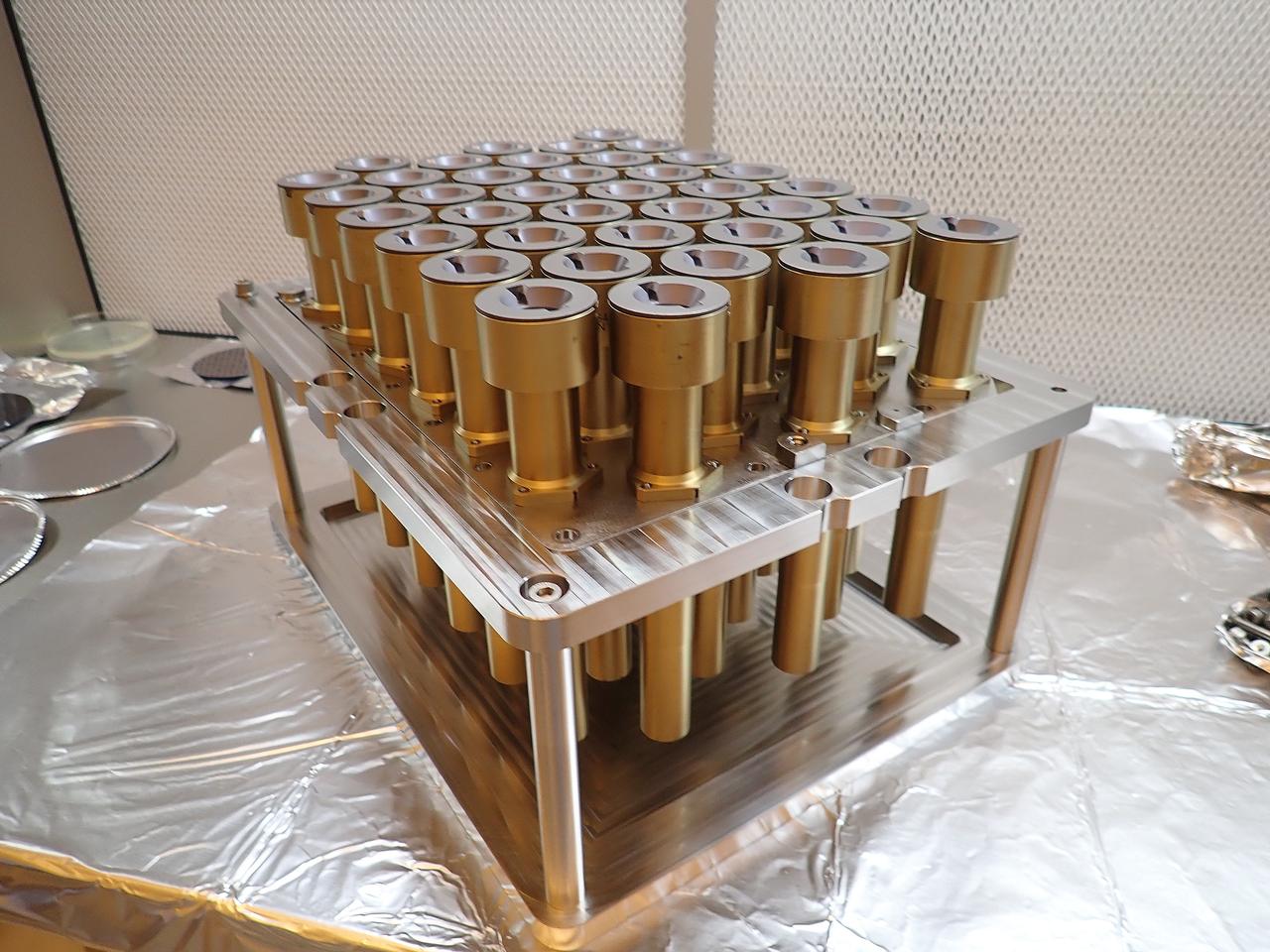
Inside the Payload Hazardous Servicing Facility at NASA’s Kennedy Space Center in Florida, the Sample Caching System Sterile Flight Model hardware is being prepared for installation on the Mars Perseverance rover on May 21, 2020. The system includes 39 sample tubes that will be inserted into the underside of the rover. Each tube is sheathed in a gold-colored cylindrical enclosure to protect it from contamination. Perseverance rover will carry 43 sample tubes in total to Mars' Jezero Crater. The Mars Perseverance rover is scheduled to launch in mid-July atop a United Launch Alliance Atlas V 541 rocket from Pad 41 at nearby Cape Canaveral Air Force Station. The rover is part of NASA’s Mars Exploration Program, a long-term effort of robotic exploration of the Red Planet. The rover will search for habitable conditions in the ancient past and signs of past microbial life on Mars. The Launch Services Program at Kennedy is responsible for launch management.
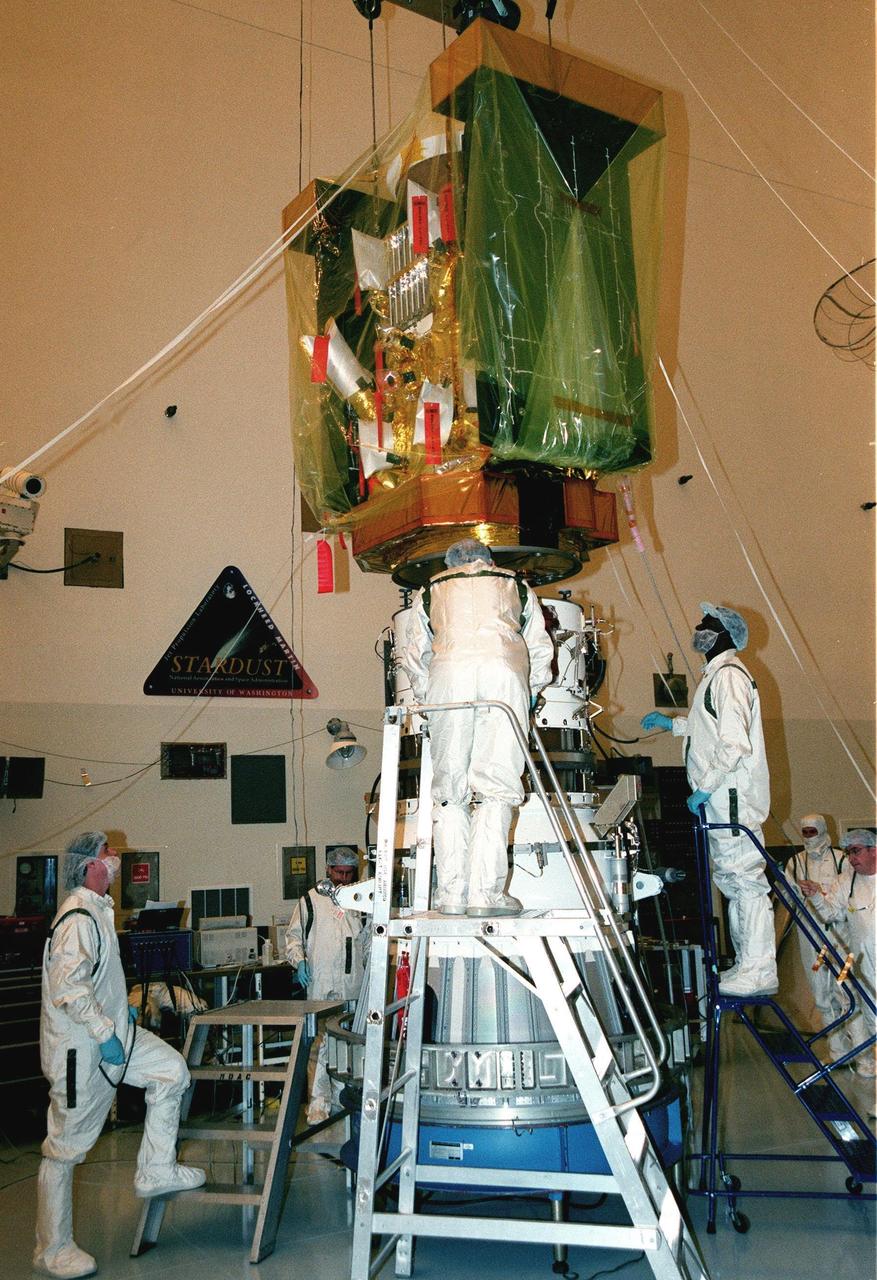
In the Payload Hazardous Servicing Facility, workers help guide the spacecraft Stardust being lowered in order to mate it with the third stage of a Boeing Delta II rocket. Targeted for launch Feb. 6 from Launch Pad 17-A, Cape Canaveral Air Station, aboard the Delta II rocket, the spacecraft is destined for a close encounter with the comet Wild 2 in January 2004. Using a silicon-based substance called aerogel, Stardust will capture comet particles flying off the nucleus of the comet. The spacecraft also will bring back samples of interstellar dust. These materials consist of ancient pre-solar interstellar grains and other remnants left over from the formation of the solar system. Scientists expect their analysis to provide important insights into the evolution of the sun and planets and possibly into the origin of life itself. The collected samples will return to Earth in a sample return capsule to be jettisoned as Stardust swings by Earth in January 2006
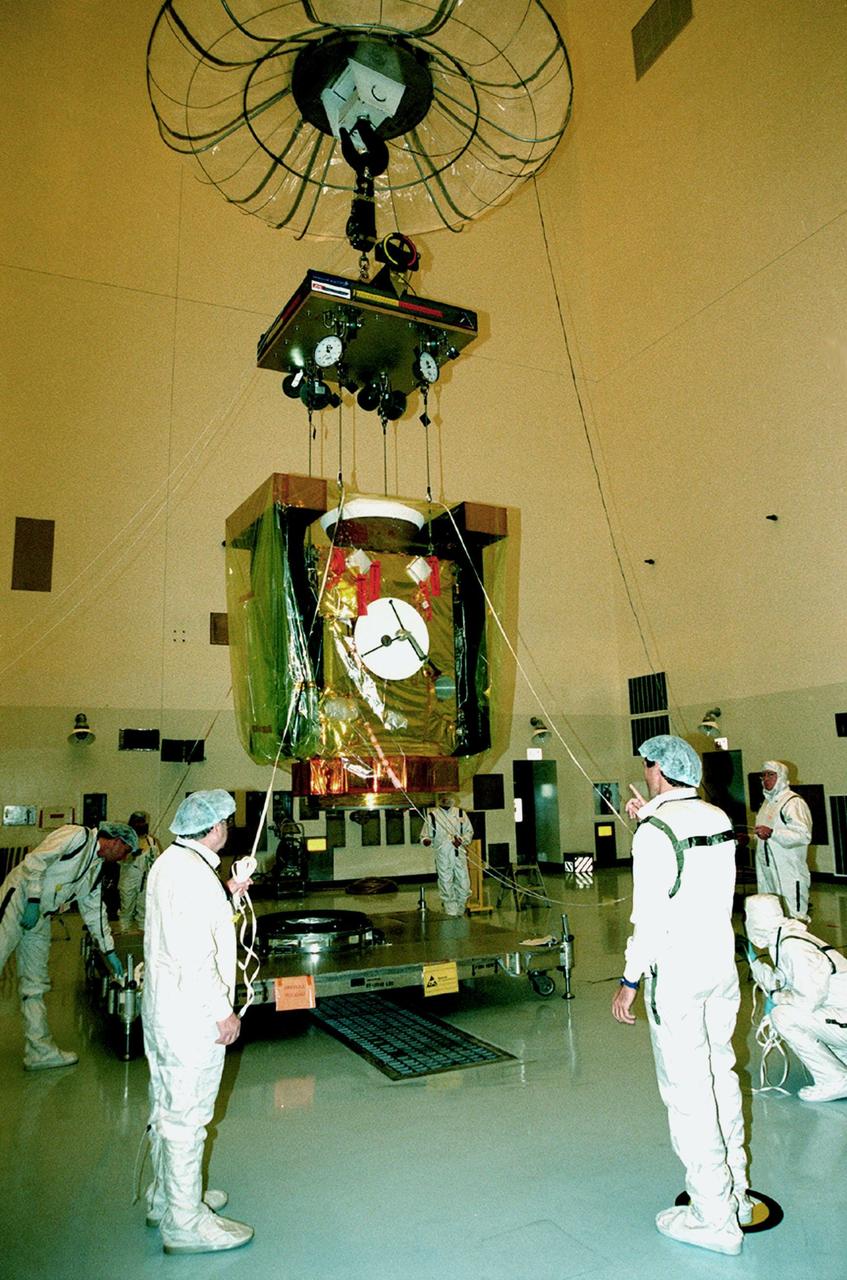
In the Payload Hazardous Servicing Facility, workers help guide the overhead crane lifting the Stardust spacecraft. Stardust is being moved in order to mate it with the third stage of a Boeing Delta II rocket. Targeted for launch Feb. 6 from Launch Pad 17-A, Cape Canaveral Air Station, aboard the Delta II rocket, the spacecraft is destined for a close encounter with the comet Wild 2 in January 2004. Using a silicon-based substance called aerogel, Stardust will capture comet particles flying off the nucleus of the comet. The spacecraft also will bring back samples of interstellar dust. These materials consist of ancient pre-solar interstellar grains and other remnants left over from the formation of the solar system. Scientists expect their analysis to provide important insights into the evolution of the sun and planets and possibly into the origin of life itself. The collected samples will return to Earth in a sample return capsule to be jettisoned as Stardust swings by Earth in January 2006
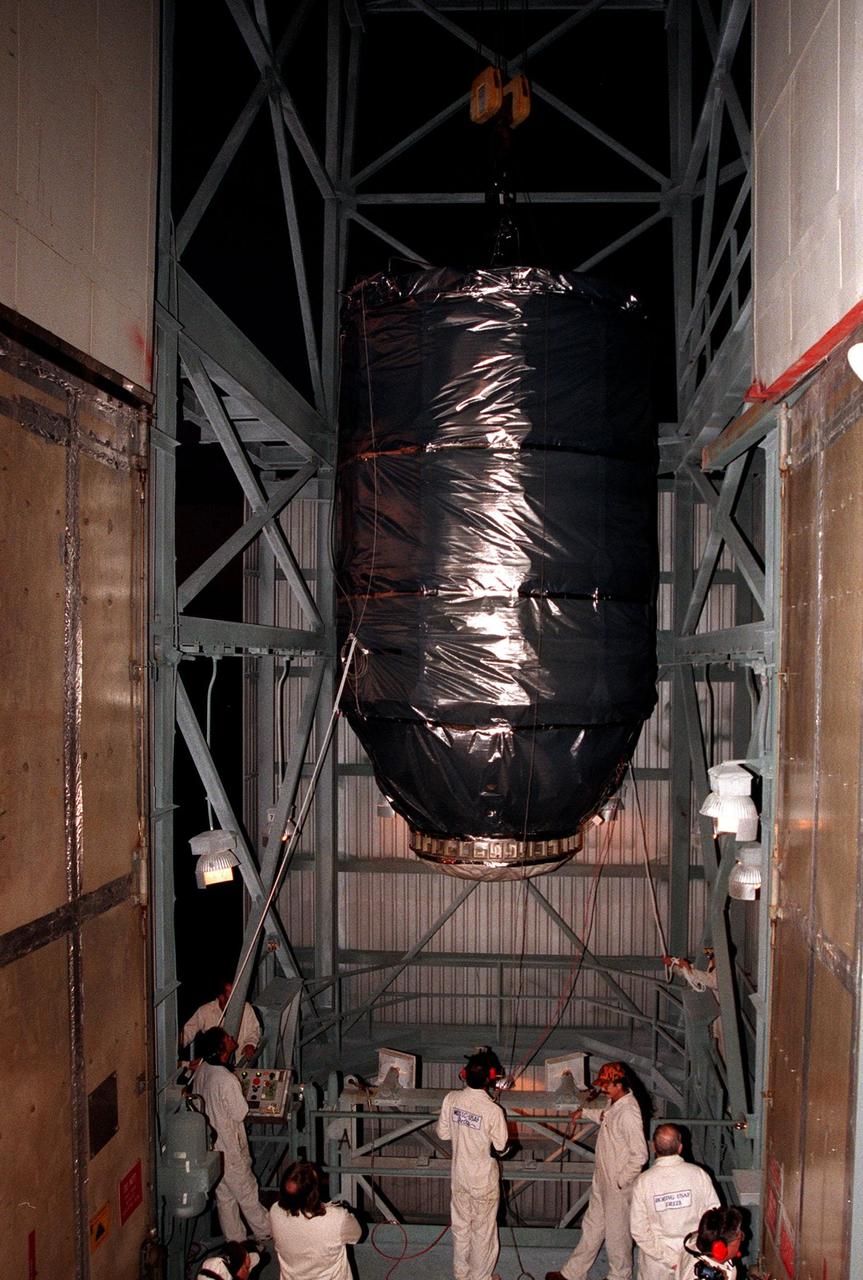
Inside the launch tower at Pad 17-A, Cape Canaveral Air Station, workers guide the Stardust spacecraft toward an opening to a Boeing Delta II rocket below. The spacecraft is already connected to the third stage of the rocket that will be mated with the second stage in preparation for liftoff on Feb. 6. Stardust is destined for a close encounter with the comet Wild 2 in January 2004. Using a silicon-based substance called aerogel, Stardust will capture comet particles flying off the nucleus of the comet. The spacecraft also will bring back samples of interstellar dust. These materials consist of ancient pre-solar interstellar grains and other remnants left over from the formation of the solar system. Scientists expect their analysis to provide important insights into the evolution of the sun and planets and possibly into the origin of life itself. The collected samples will return to Earth in a sample return capsule to be jettisoned as Stardust swings by Earth in January 2006
At Launch Pad 17-A, Cape Canaveral Air Station, the Stardust spacecraft waits for installation of the fairing (behind, right) that will enclose the spacecraft and the upper stage of the Boeing Delta II rocket. Targeted for launch at 4:06:42 p.m. on Feb. 6, Stardust is destined for a close encounter with the comet Wild 2 in January 2004. Using a silicon-based substance called aerogel, Stardust will capture comet particles flying off the nucleus of the comet. The spacecraft also will bring back samples of interstellar dust. These materials consist of ancient pre-solar interstellar grains and other remnants left over from the formation of the solar system. Scientists expect their analysis to provide important insights into the evolution of the sun and planets and possibly into the origin of life itself. The collected samples will return to Earth in a sample return capsule to be jettisoned as Stardust swings by Earth in January 2006
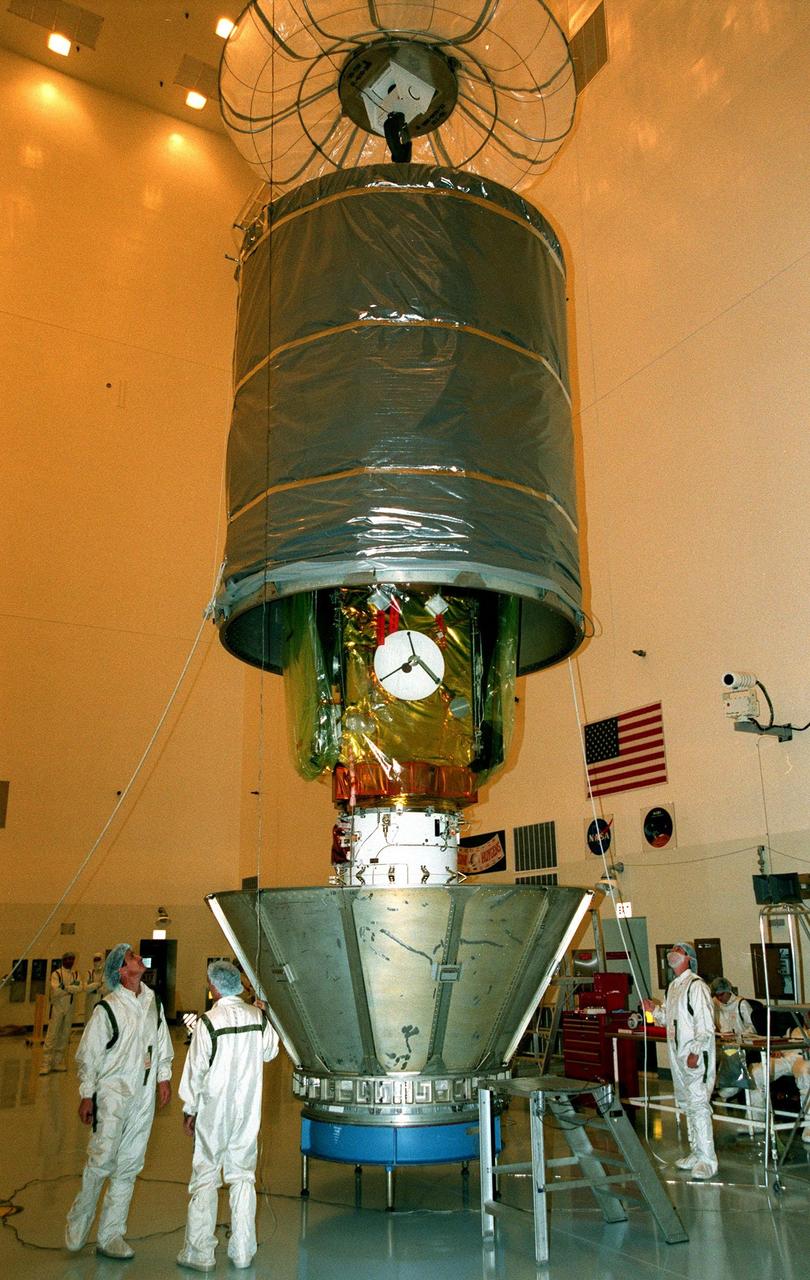
In the Payload Hazardous Servicing Facility, workers guide a protective canister as it is lowered over the Stardust spacecraft. Once it is enclosed, Stardust will be moved to Launch Pad 17-A, Cape Canaveral Air Station, for launch preparations. Stardust is targeted for liftoff on Feb. 6 aboard a Boeing Delta II rocket for a close encounter with the comet Wild 2 in January 2004. Using a silicon-based substance called aerogel, Stardust will capture comet particles flying off the nucleus of the comet. The spacecraft also will bring back samples of interstellar dust. These materials consist of ancient pre-solar interstellar grains and other remnants left over from the formation of the solar system. Scientists expect their analysis to provide important insights into the evolution of the sun and planets and possibly into the origin of life itself. The collected samples will return to Earth in a sample return capsule to be jettisoned as Stardust swings by Earth in January 2006
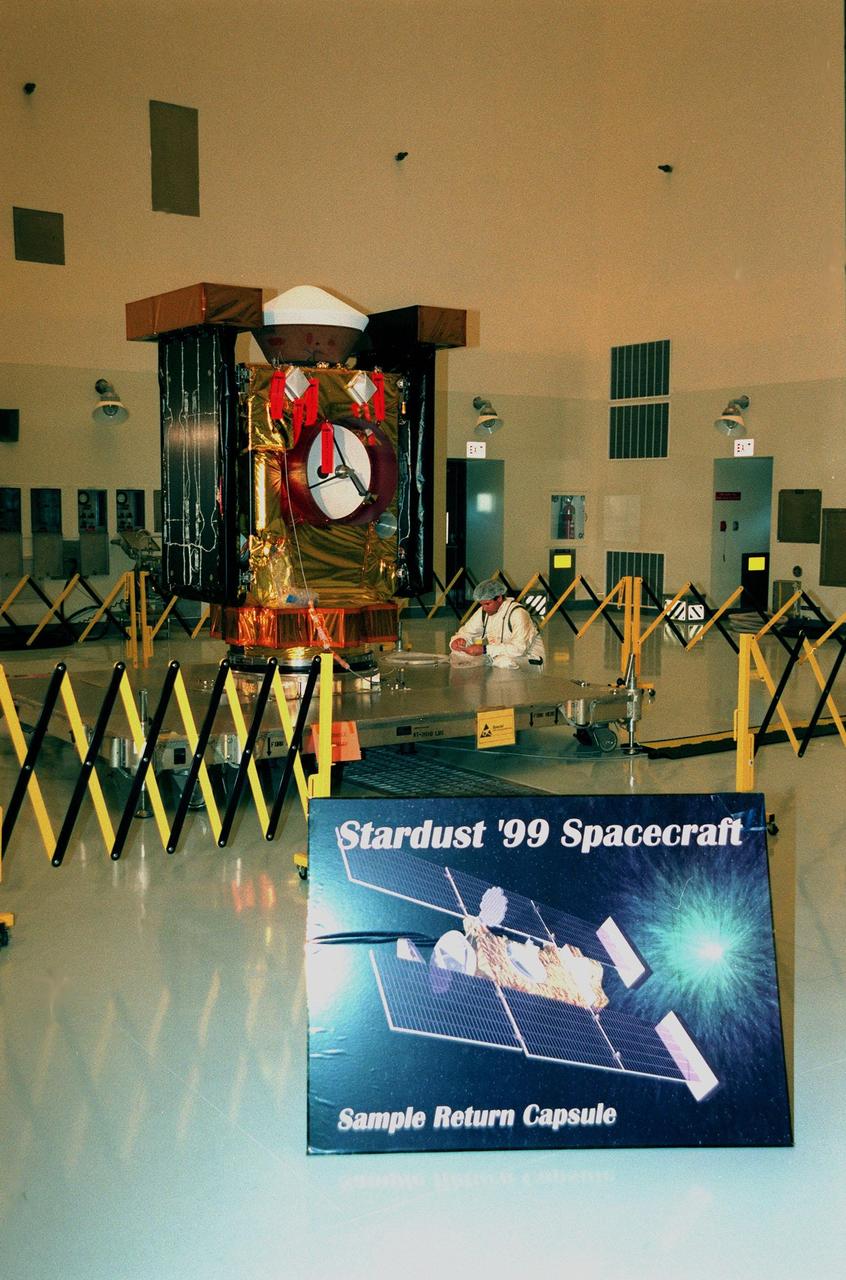
In the Payload Hazardous Servicing Facility, the spacecraft Stardust is on display for a media presentation. Stardust is targeted for launch on Feb. 6 aboard a Boeing Delta II rocket from Launch Pad 17-A, Cape Canaveral Air Station. The spacecraft is destined for a close encounter with the comet Wild 2 in January 2004. Using a silicon-based substance called aerogel, Stardust will capture comet particles flying off the nucleus of the comet. The spacecraft also will bring back samples of interstellar dust. These materials consist of ancient pre-solar interstellar grains and other remnants left over from the formation of the solar system. Scientists expect their analysis to provide important insights into the evolution of the sun and planets and possibly into the origin of life itself. The collected samples will return to Earth in a sample return capsule (the white-topped, blunt-nosed cone seen on the top of the spacecraft) to be jettisoned as Stardust swings by Earth in January 2006
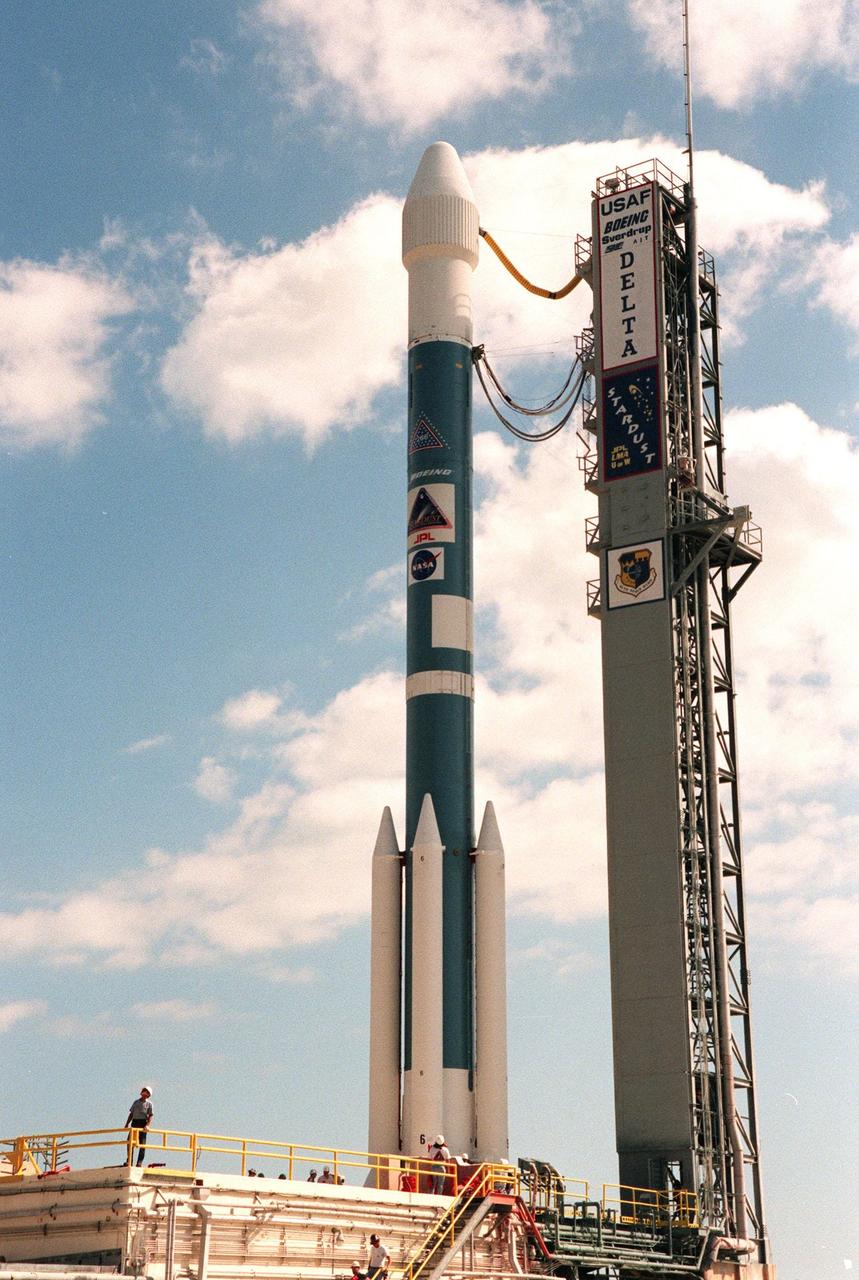
The Boeing Delta II rocket carrying the Stardust spacecraft waits for launch at Launch Pad 17-A, Cape Canaveral Air Station. The targeted launch time is 4:06 p.m. EST. Stardust is destined for a close encounter with the comet Wild 2 in January 2004. Using a silicon-based substance called aerogel, Stardust will capture comet particles flying off the nucleus of the comet. The spacecraft also will bring back samples of interstellar dust. These materials consist of ancient pre-solar interstellar grains and other remnants left over from the formation of the solar system. Scientists expect their analysis to provide important insights into the evolution of the sun and planets and possibly into the origin of life itself. The collected samples will return to Earth in a sample return capsule to be jettisoned as Stardust swings by Earth in January 2006

At Launch Pad 17-A, Cape Canaveral Air Station, the Stardust spacecraft is revealed after removal of a protective canister. Stardust is targeted for launch on Feb. 6 aboard a Boeing Delta II rocket. The spacecraft is destined for a close encounter with the comet Wild 2 in January 2004. Using a silicon-based substance called aerogel, Stardust will capture comet particles flying off the nucleus of the comet. The spacecraft also will bring back samples of interstellar dust. These materials consist of ancient pre-solar interstellar grains and other remnants left over from the formation of the solar system. Scientists expect their analysis to provide important insights into the evolution of the sun and planets and possibly into the origin of life itself. The collected samples will return to Earth in a sample return capsule to be jettisoned as Stardust swings by Earth in January 2006
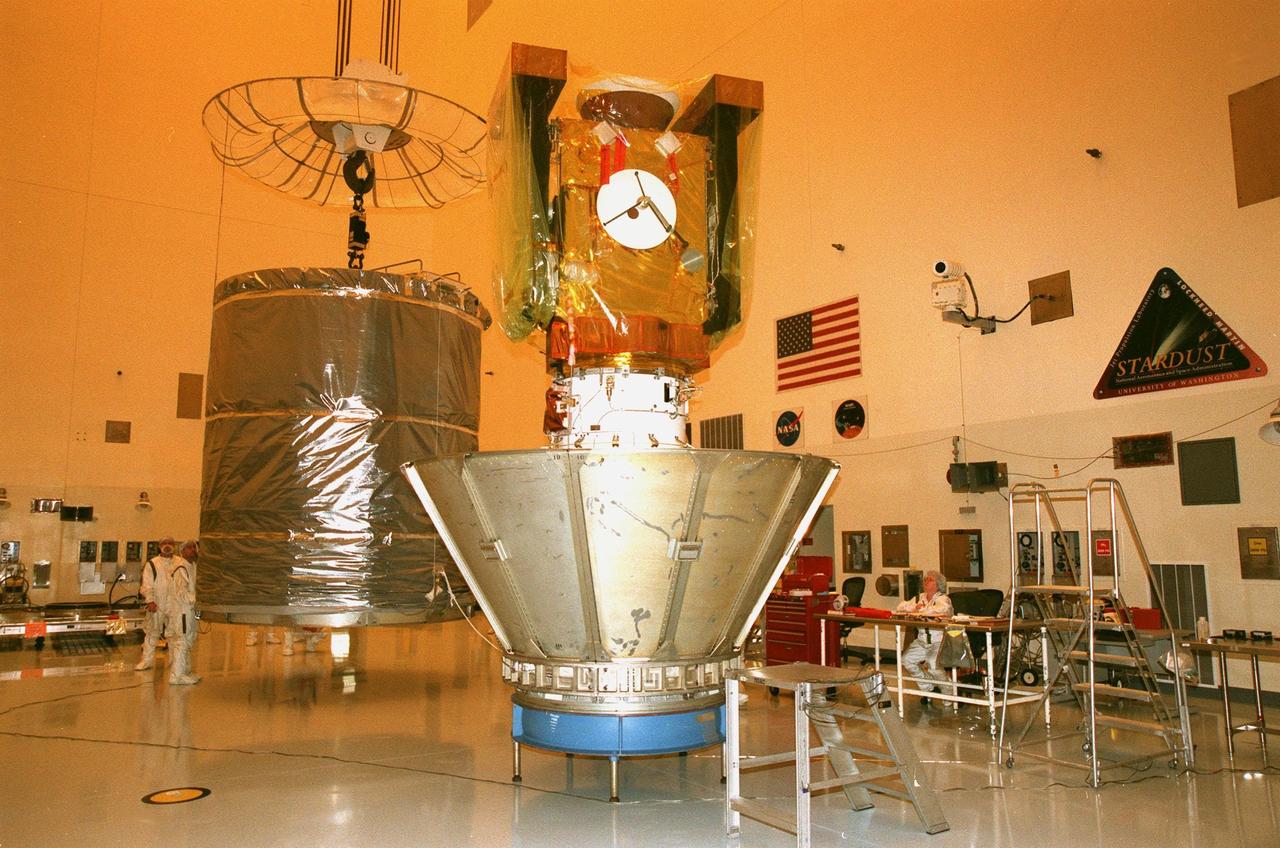
In the Payload Hazardous Servicing Facility, a canister (left) is moved toward the Stardust spacecraft (right). The protective canister will enclose Stardust before the spacecraft is moved to Launch Pad 17-A, Cape Canaveral Air Station, for launch preparations. Stardust is targeted for liftoff on Feb. 6 aboard a Boeing Delta II rocket for a close encounter with the comet Wild 2 in January 2004. Using a silicon-based substance called aerogel, Stardust will capture comet particles flying off the nucleus of the comet. The spacecraft also will bring back samples of interstellar dust. These materials consist of ancient pre-solar interstellar grains and other remnants left over from the formation of the solar system. Scientists expect their analysis to provide important insights into the evolution of the sun and planets and possibly into the origin of life itself. The collected samples will return to Earth in a sample return capsule to be jettisoned as Stardust swings by Earth in January 2006
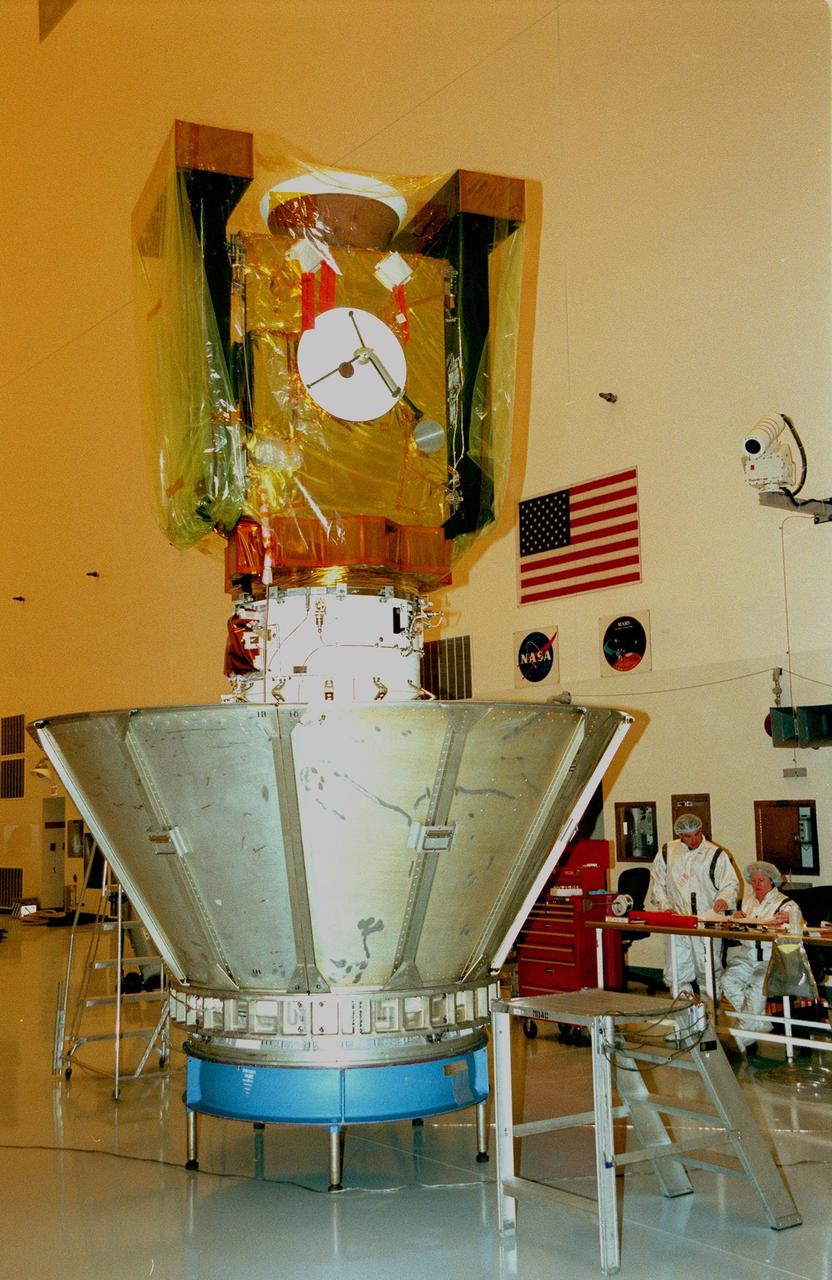
In the Payload Hazardous Servicing Facility, the Stardust spacecraft waits to be encased in a protective canister for its move to Launch Pad 17-A, Cape Canaveral Air Station, for launch preparations. Stardust is targeted for liftoff on Feb. 6 aboard a Boeing Delta II rocket for a close encounter with the comet Wild 2 in January 2004. Using a silicon-based substance called aerogel, Stardust will capture comet particles flying off the nucleus of the comet. The spacecraft also will bring back samples of interstellar dust. These materials consist of ancient pre-solar interstellar grains and other remnants left over from the formation of the solar system. Scientists expect their analysis to provide important insights into the evolution of the sun and planets and possibly into the origin of life itself. The collected samples will return to Earth in a sample return capsule to be jettisoned as Stardust swings by Earth in January 2006
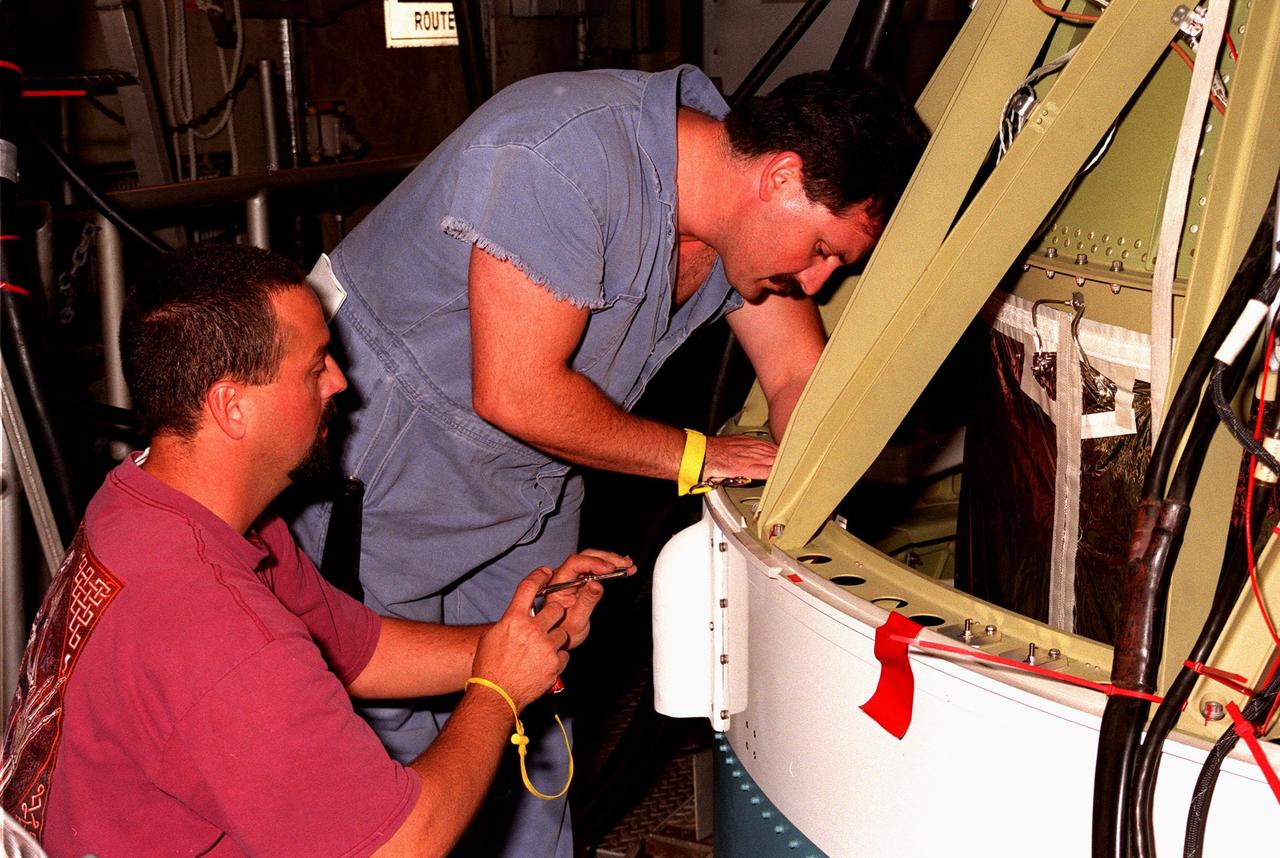
At Launch Pad 17-A, Cape Canaveral Air Station, workers check the mounting on a video camera on the second stage of a Boeing Delta II rocket that will launch the Stardust spacecraft on Feb. 6. Looking toward Earth, the camera will record the liftoff and separation of the first stage. Stardust is destined for a close encounter with the comet Wild 2 in January 2004. Using a silicon-based substance called aerogel, Stardust will capture comet particles flying off the nucleus of the comet. The spacecraft also will bring back samples of interstellar dust. These materials consist of ancient pre-solar interstellar grains and other remnants left over from the formation of the solar system. Scientists expect their analysis to provide important insights into the evolution of the sun and planets and possibly into the origin of life itself. The collected samples will return to Earth in a sample return capsule to be jettisoned as Stardust swings by Earth in January 2006
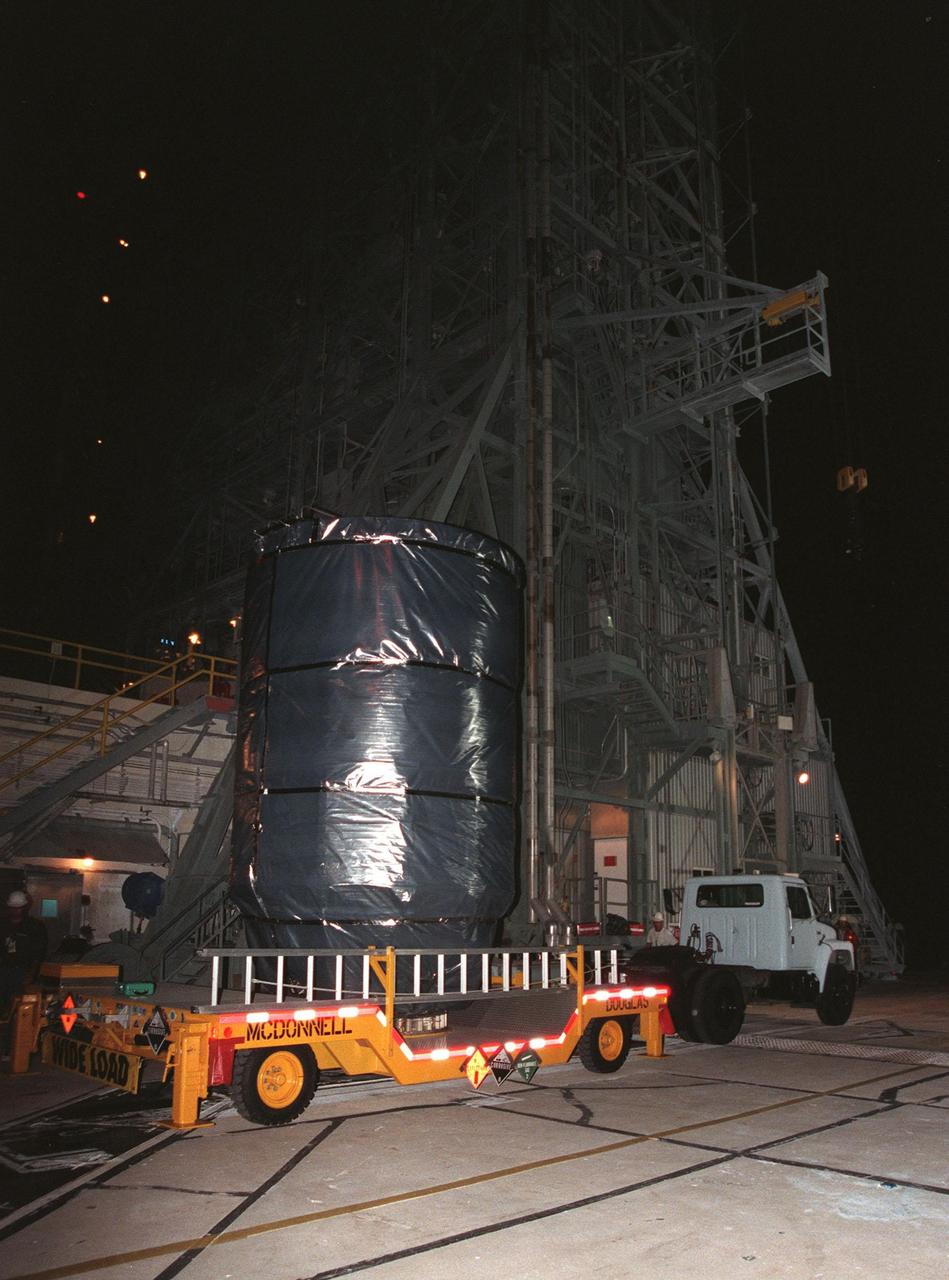
In the early morning, the Stardust spacecraft, with the third stage of a Boeing Delta II rocket attached, arrives atop a transporter at Launch Pad 17-A, Cape Canaveral Air Station. The second and third stages of the rocket will be mated and prepared for liftoff on Feb. 6. Stardust is destined for a close encounter with the comet Wild 2 in January 2004. Using a silicon-based substance called aerogel, Stardust will capture comet particles flying off the nucleus of the comet. The spacecraft also will bring back samples of interstellar dust. These materials consist of ancient pre-solar interstellar grains and other remnants left over from the formation of the solar system. Scientists expect their analysis to provide important insights into the evolution of the sun and planets and possibly into the origin of life itself. The collected samples will return to Earth in a sample return capsule to be jettisoned as Stardust swings by Earth in January 2006

Workers at Launch Pad 17-A, Cape Canaveral Air Station, connect the third stage of a Boeing Delta II rocket (above), which is already attached to the Stardust spacecraft, with the second stage (below). Stardust, targeted for liftoff on Feb. 6, is destined for a close encounter with the comet Wild 2 in January 2004. Using a silicon-based substance called aerogel, Stardust will capture comet particles flying off the nucleus of the comet. The spacecraft also will bring back samples of interstellar dust. These materials consist of ancient pre-solar interstellar grains and other remnants left over from the formation of the solar system. Scientists expect their analysis to provide important insights into the evolution of the sun and planets and possibly into the origin of life itself. The collected samples will return to Earth in a sample return capsule to be jettisoned as Stardust swings by Earth in January 2006
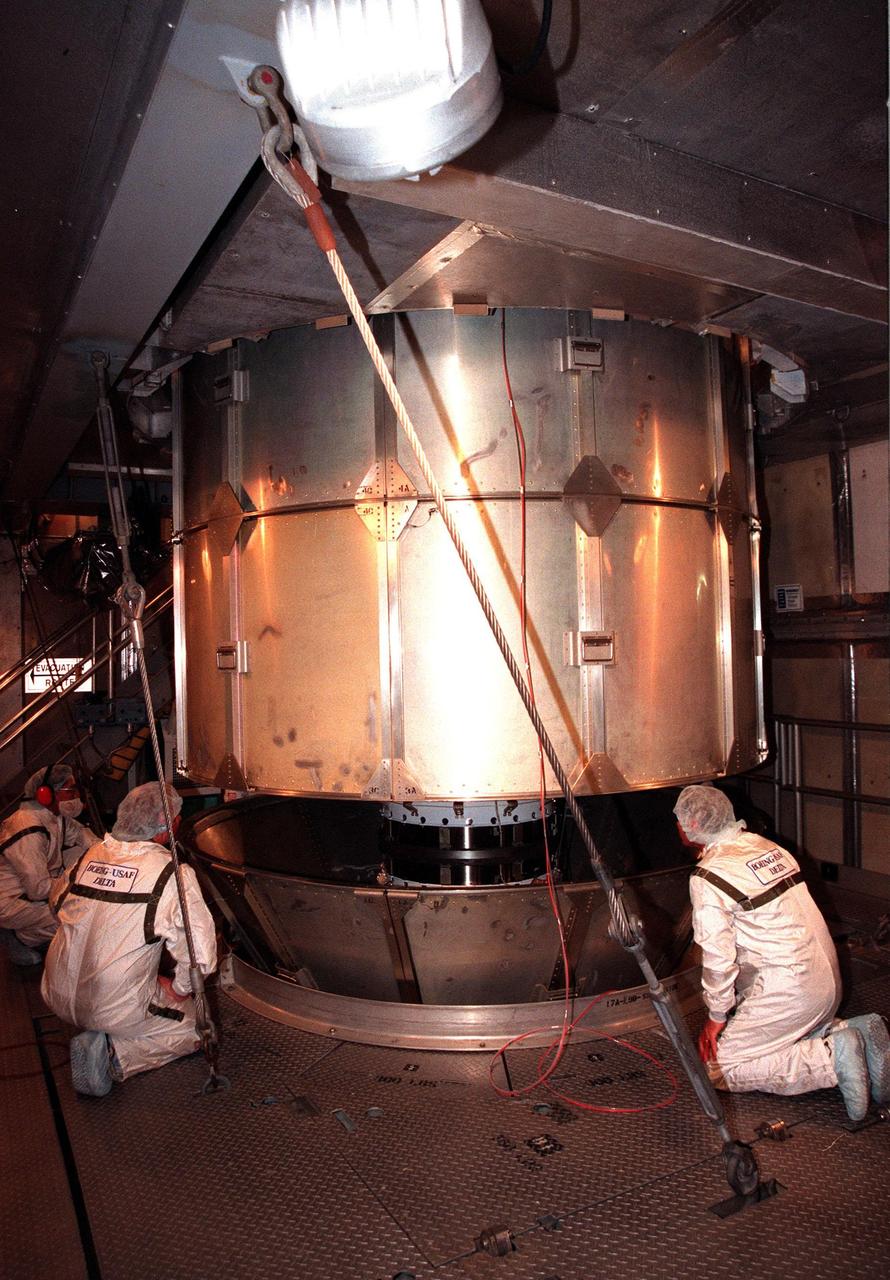
At Launch Pad 17-A, Cape Canaveral Air Station, workers watch as the protective canister is lifted from the Stardust spacecraft. Preparations continue for liftoff of the Boeing Delta II rocket carrying Stardust on Feb. 6. Stardust is destined for a close encounter with the comet Wild 2 in January 2004. Using a silicon-based substance called aerogel, Stardust will capture comet particles flying off the nucleus of the comet. The spacecraft also will bring back samples of interstellar dust. These materials consist of ancient pre-solar interstellar grains and other remnants left over from the formation of the solar system. Scientists expect their analysis to provide important insights into the evolution of the sun and planets and possibly into the origin of life itself. The collected samples will return to Earth in a sample return capsule to be jettisoned as Stardust swings by Earth in January 2006
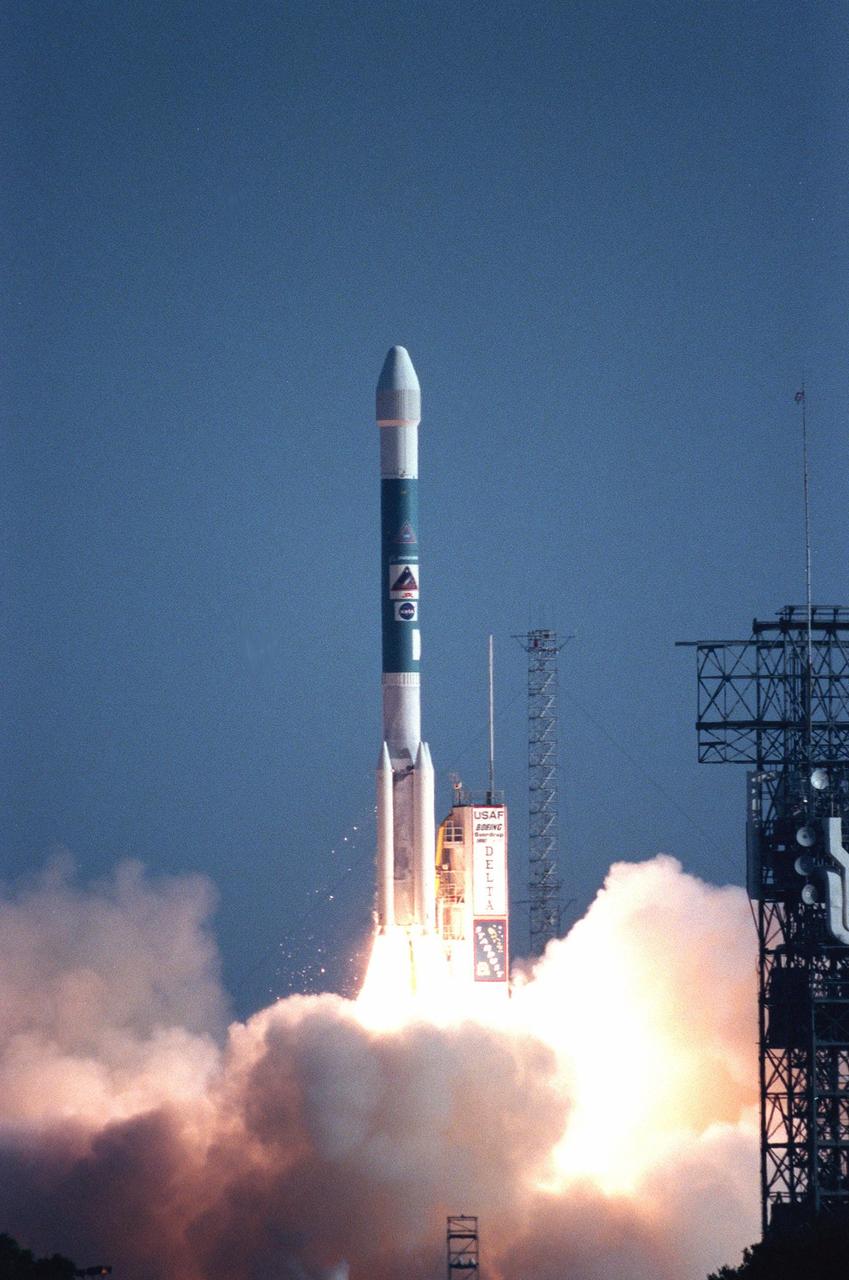
Into a pristine blue sky, the Boeing Delta II rocket carrying the Stardust spacecraft leaves clouds of exhaust behind as it lifts off at 4:04:15 p.m. EST from Launch Pad 17-A, Cape Canaveral Air Station. Stardust is destined for a close encounter with the comet Wild 2 in January 2004. Using a silicon-based substance called aerogel, Stardust will capture comet particles flying off the nucleus of the comet. The spacecraft also will bring back samples of interstellar dust. These materials consist of ancient pre-solar interstellar grains and other remnants left over from the formation of the solar system. Scientists expect their analysis to provide important insights into the evolution of the sun and planets and possibly into the origin of life itself. The collected samples will return to Earth in a sample return capsule to be jettisoned as Stardust swings by Earth in January 2006

At Launch Pad 17-A, Cape Canaveral Air Station, workers finish mounting a video camera on the second stage of a Boeing Delta II rocket that will launch the Stardust spacecraft on Feb. 6. Looking toward Earth, the camera will record the liftoff and separation of the first stage. Stardust is destined for a close encounter with the comet Wild 2 in January 2004. Using a silicon-based substance called aerogel, Stardust will capture comet particles flying off the nucleus of the comet. The spacecraft also will bring back samples of interstellar dust. These materials consist of ancient pre-solar interstellar grains and other remnants left over from the formation of the solar system. Scientists expect their analysis to provide important insights into the evolution of the sun and planets and possibly into the origin of life itself. The collected samples will return to Earth in a sample return capsule to be jettisoned as Stardust swings by Earth in January 2006
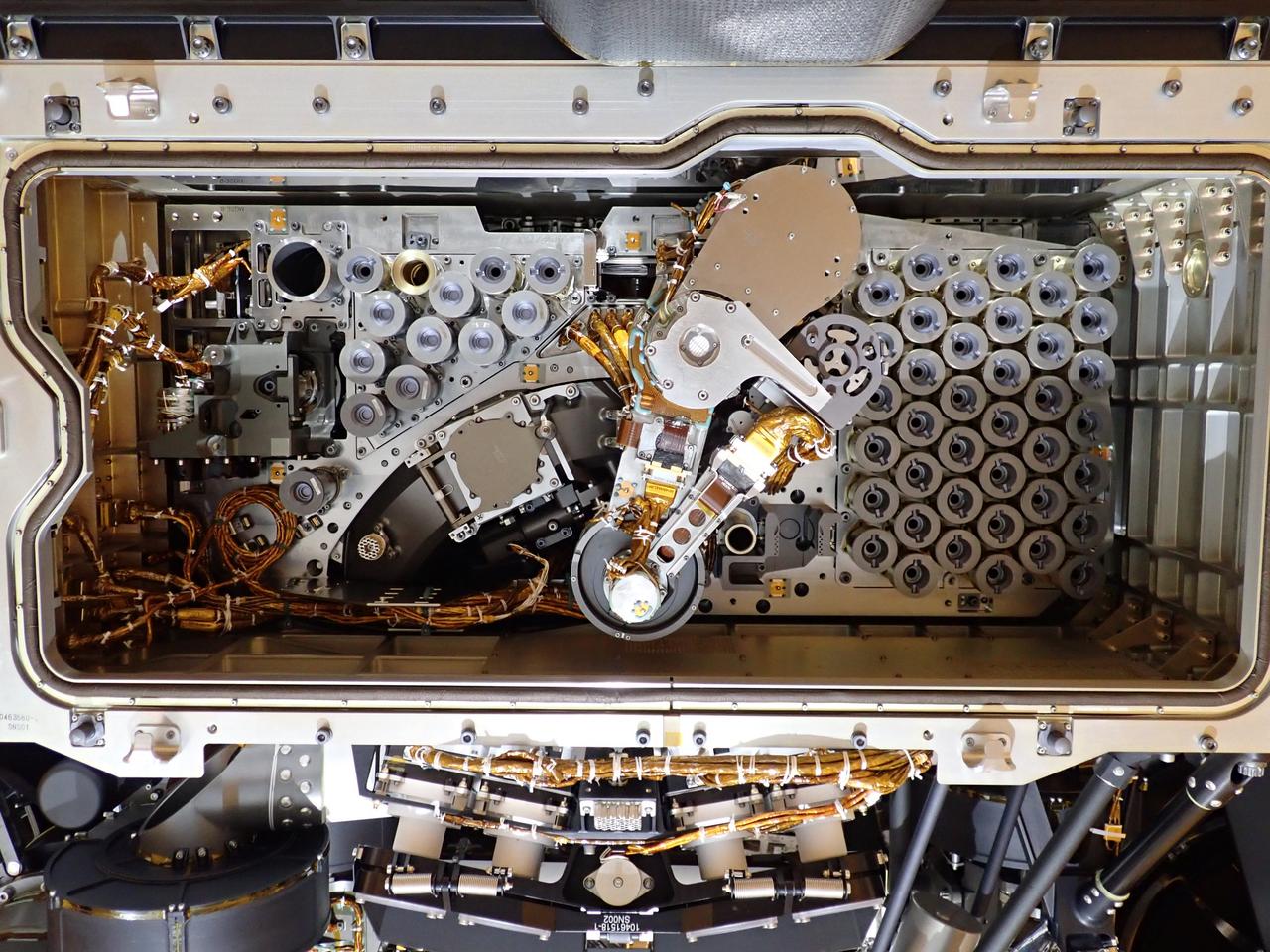
Inside the Payload Hazardous Servicing Facility at NASA’s Kennedy Space Center in Florida, the Sample Caching System Sterile Flight Model hardware was installed on the Mars Perseverance rover on May 21, 2020. The system includes 39 sample tubes. Each tube is sheathed in a gold-colored cylindrical enclosure to protect it from contamination. Perseverance rover will carry 43 sample tubes in total to Mars' Jezero Crater. The Mars Perseverance rover is scheduled to launch in mid-July atop a United Launch Alliance Atlas V 541 rocket from Pad 41 at nearby Cape Canaveral Air Force Station. The rover is part of NASA’s Mars Exploration Program, a long-term effort of robotic exploration of the Red Planet. The rover will search for habitable conditions in the ancient past and signs of past microbial life on Mars. The Launch Services Program at Kennedy is responsible for launch management.
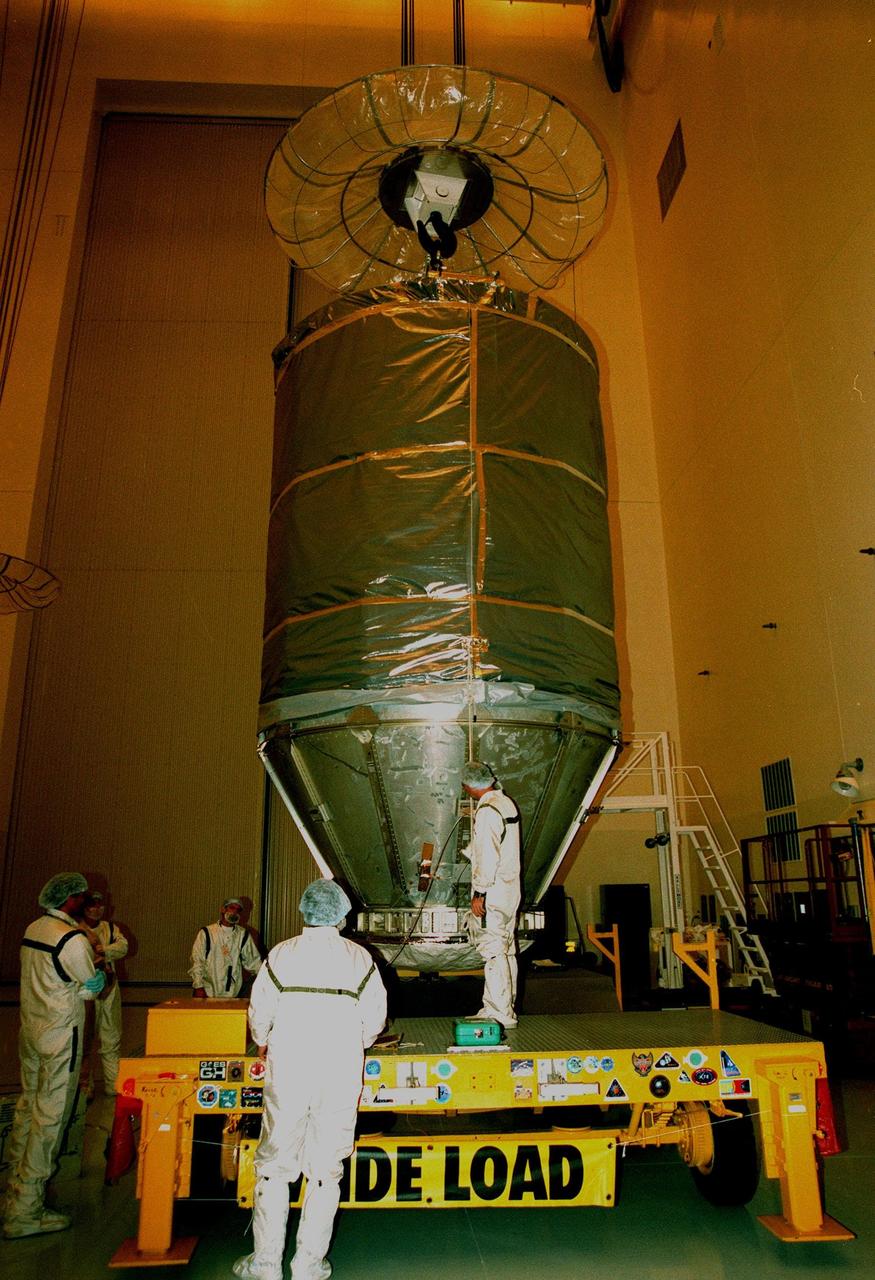
Workers in the Payload Hazardous Servicing Facility keep watch as an overhead crane lowers the Stardust spacecraft, enclosed in a protective canister, onto a transporter. Stardust is being moved to Launch Pad 17-A, Cape Canaveral Air Station, for launch preparations. The spacecraft is targeted for liftoff on Feb. 6 aboard a Boeing Delta II rocket for a close encounter with the comet Wild 2 in January 2004. Using a silicon-based substance called aerogel, Stardust will capture comet particles flying off the nucleus of the comet. The spacecraft also will bring back samples of interstellar dust. These materials consist of ancient pre-solar interstellar grains and other remnants left over from the formation of the solar system. Scientists expect their analysis to provide important insights into the evolution of the sun and planets and possibly into the origin of life itself. The collected samples will return to Earth in a sample return capsule to be jettisoned as Stardust swings by Earth in January 2006

In the Payload Hazardous Servicing Facility, workers check the final adjustments on the protective canister enclosing the Stardust spacecraft. Stardust will be moved to Launch Pad 17-A, Cape Canaveral Air Station, for launch preparations. The spacecraft is targeted for liftoff on Feb. 6 aboard a Boeing Delta II rocket for a close encounter with the comet Wild 2 in January 2004. Using a silicon-based substance called aerogel, Stardust will capture comet particles flying off the nucleus of the comet. The spacecraft also will bring back samples of interstellar dust. These materials consist of ancient pre-solar interstellar grains and other remnants left over from the formation of the solar system. Scientists expect their analysis to provide important insights into the evolution of the sun and planets and possibly into the origin of life itself. The collected samples will return to Earth in a sample return capsule to be jettisoned as Stardust swings by Earth in January 2006
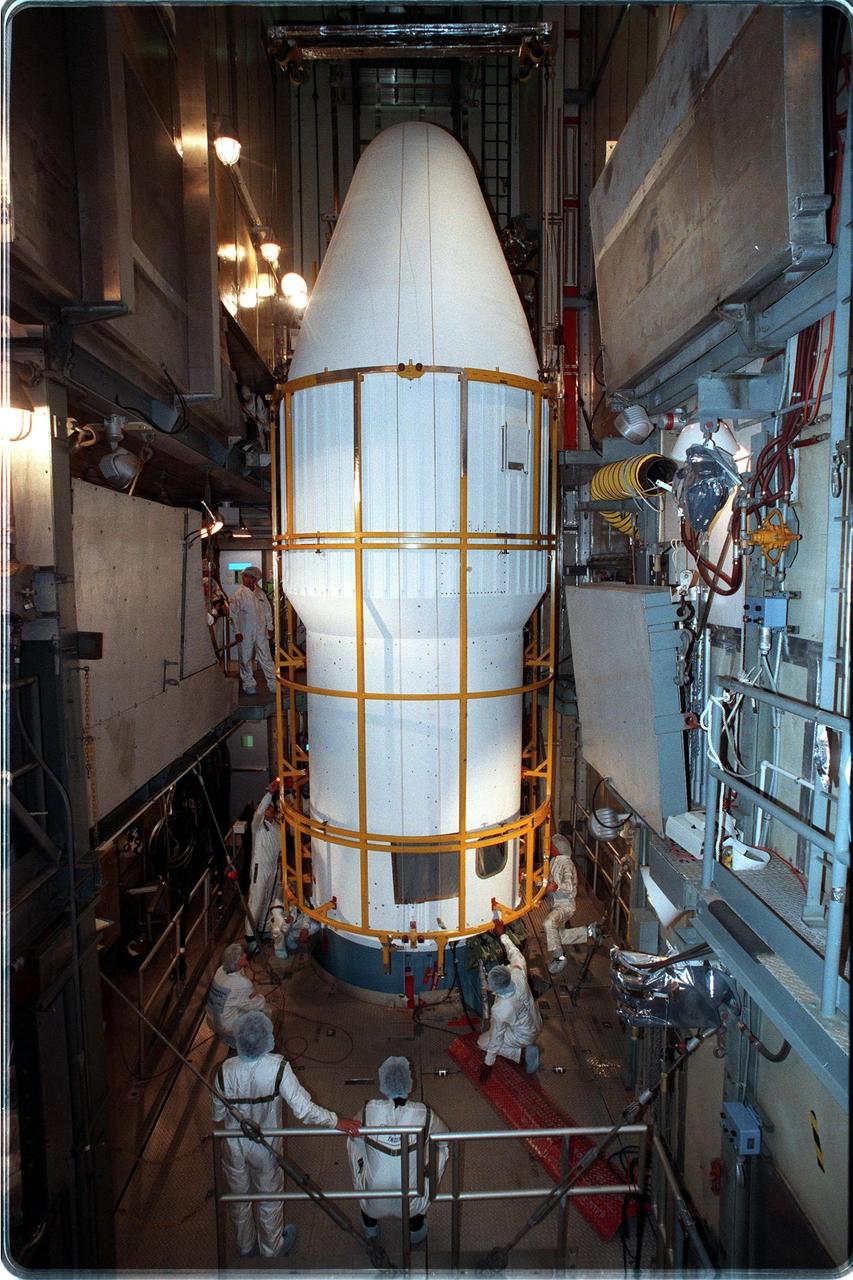
At Launch Pad 17-A, Cape Canaveral Air Station, workers check the lower fittings of the fairing installed around the Stardust spacecraft and upper stage of the Boeing Delta II rocket. Targeted for launch at 4:06:42 p.m. on Feb. 6, the spacecraft is destined for a close encounter with the comet Wild 2 in January 2004. Using a silicon-based substance called aerogel, Stardust will capture comet particles flying off the nucleus of the comet. The spacecraft also will bring back samples of interstellar dust. These materials consist of ancient pre-solar interstellar grains and other remnants left over from the formation of the solar system. Scientists expect their analysis to provide important insights into the evolution of the sun and planets and possibly into the origin of life itself. The collected samples will return to Earth in a sample return capsule to be jettisoned as Stardust swings by Earth in January 2006
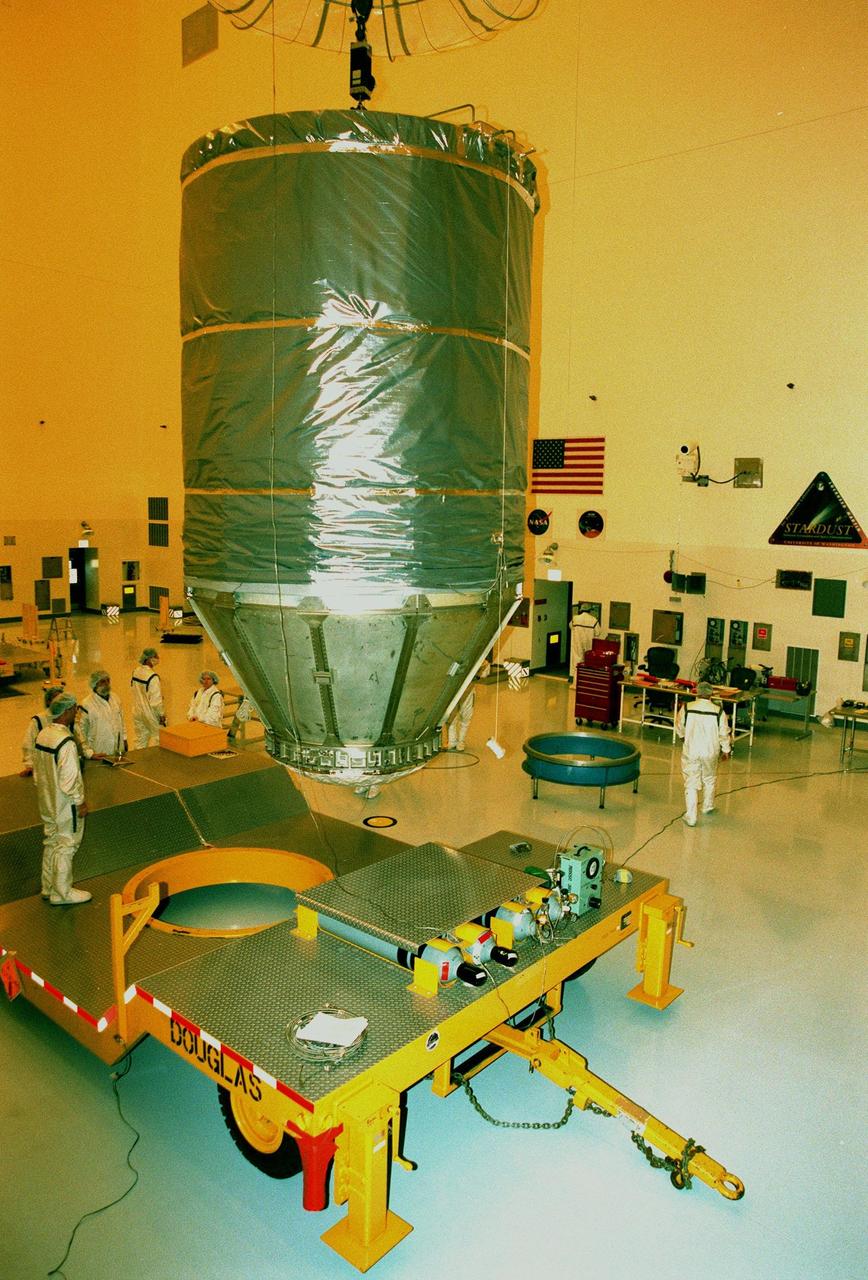
Completely enclosed in a protective canister, the spacecraft Stardust is moved by a crane toward a transporter in the Payload Hazardous Servicing Facility. Stardust is being moved to Launch Pad 17-A, Cape Canaveral Air Station, for launch preparations. The spacecraft is targeted for liftoff on Feb. 6 aboard a Boeing Delta II rocket for a close encounter with the comet Wild 2 in January 2004. Using a silicon-based substance called aerogel, Stardust will capture comet particles flying off the nucleus of the comet. The spacecraft also will bring back samples of interstellar dust. These materials consist of ancient pre-solar interstellar grains and other remnants left over from the formation of the solar system. Scientists expect their analysis to provide important insights into the evolution of the sun and planets and possibly into the origin of life itself. The collected samples will return to Earth in a sample return capsule to be jettisoned as Stardust swings by Earth in January 2006
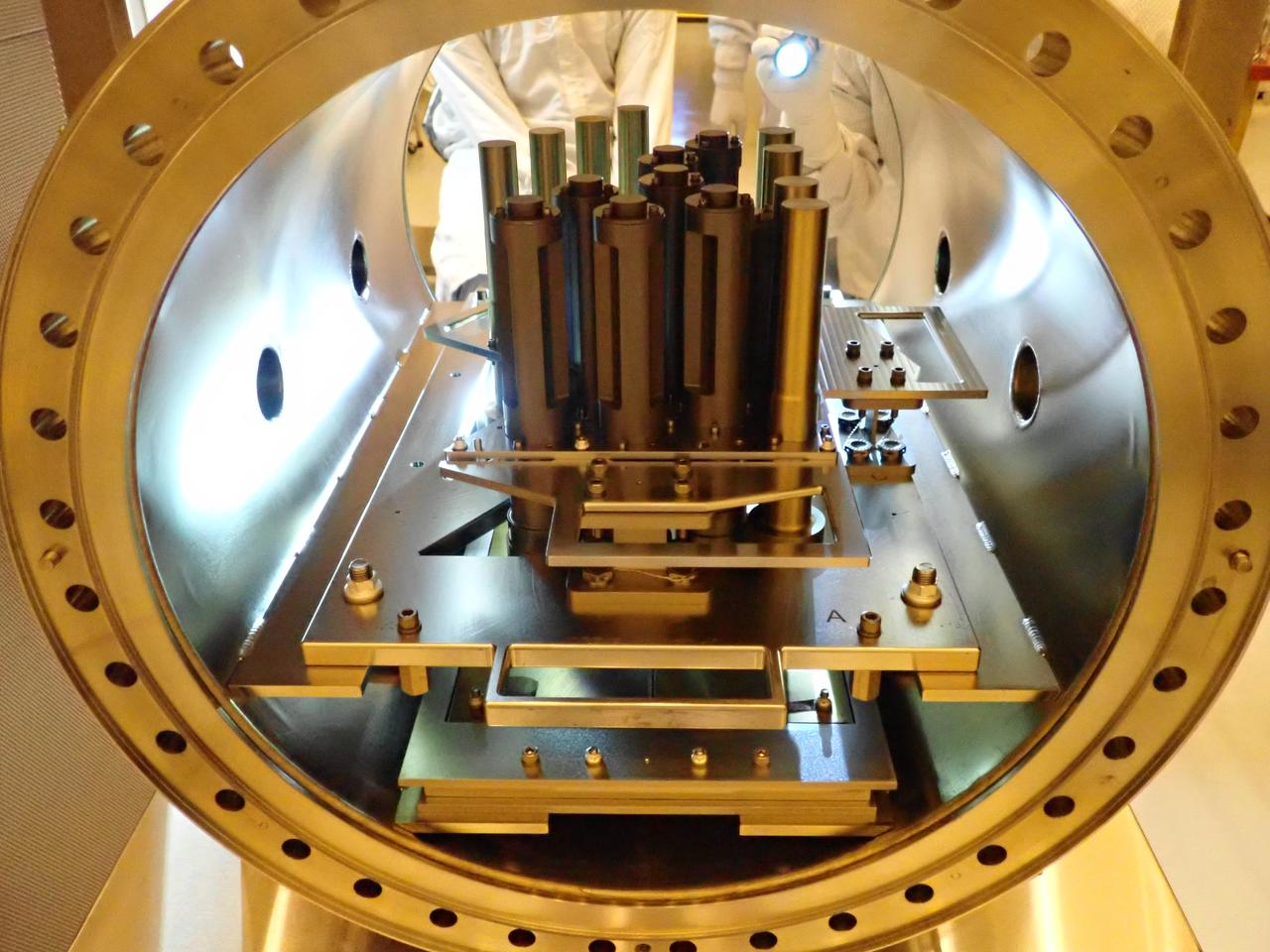
Inside the Payload Hazardous Servicing Facility at NASA’s Kennedy Space Center in Florida, the Sample Caching System Sterile Flight Model hardware is being prepared for installation on the Mars Perseverance rover on May 20, 2020. The system includes 39 sample tubes that will be inserted into the underside of the rover. Each tube is sheathed in a gold-colored cylindrical enclosure to protect it from contamination. Perseverance rover will carry 43 sample tubes in total to Mars' Jezero Crater. The Mars Perseverance rover is scheduled to launch in mid-July atop a United Launch Alliance Atlas V 541 rocket from Pad 41 at nearby Cape Canaveral Air Force Station. The rover is part of NASA’s Mars Exploration Program, a long-term effort of robotic exploration of the Red Planet. The rover will search for habitable conditions in the ancient past and signs of past microbial life on Mars. The Launch Services Program at Kennedy is responsible for launch management.
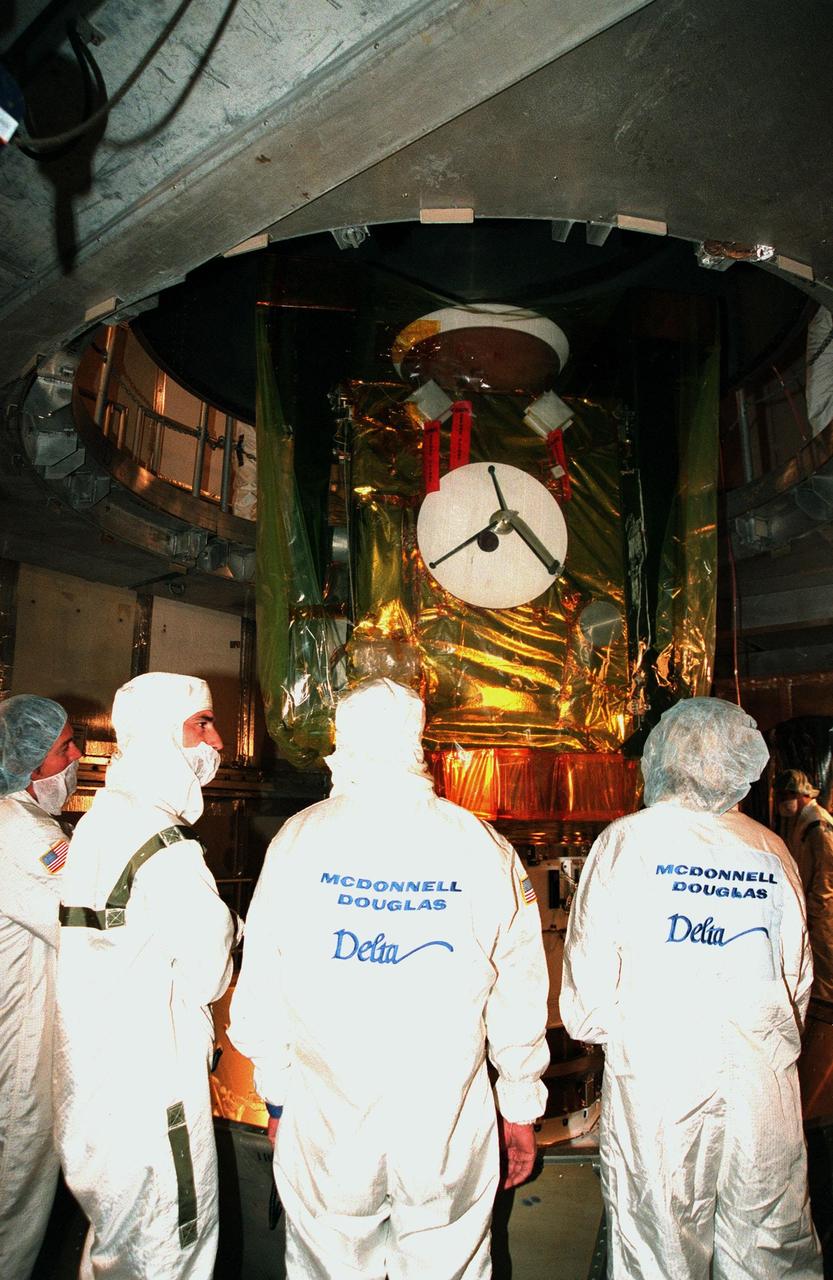
Workers watch as the protective canister surrounding the Stardust spacecraft is removed at Launch Pad 17-A, Cape Canaveral Air Station. Preparations continue for liftoff of the Boeing Delta II rocket carrying Stardust on Feb. 6. Stardust is destined for a close encounter with the comet Wild 2 in January 2004. Using a silicon-based substance called aerogel, Stardust will capture comet particles flying off the nucleus of the comet. The spacecraft also will bring back samples of interstellar dust. These materials consist of ancient pre-solar interstellar grains and other remnants left over from the formation of the solar system. Scientists expect their analysis to provide important insights into the evolution of the sun and planets and possibly into the origin of life itself. The collected samples will return to Earth in a sample return capsule to be jettisoned as Stardust swings by Earth in January 2006
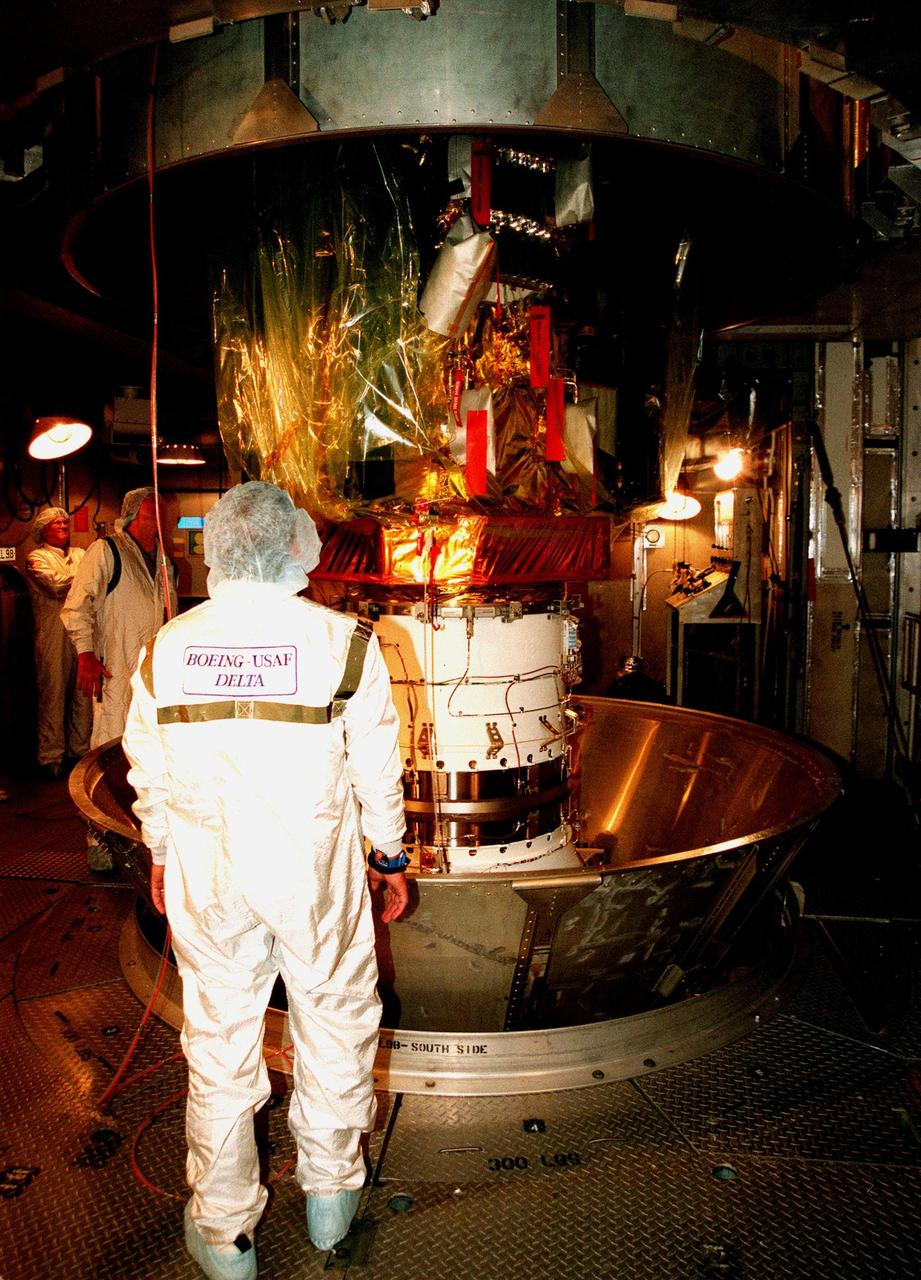
The protective canister is removed from around the Stardust spacecraft at Launch Pad 17-A, Cape Canaveral Air Station. Preparations continue for liftoff of the Boeing Delta II rocket carrying Stardust on Feb. 6. Stardust is destined for a close encounter with the comet Wild 2 in January 2004. Using a silicon-based substance called aerogel, Stardust will capture comet particles flying off the nucleus of the comet. The spacecraft also will bring back samples of interstellar dust. These materials consist of ancient pre-solar interstellar grains and other remnants left over from the formation of the solar system. Scientists expect their analysis to provide important insights into the evolution of the sun and planets and possibly into the origin of life itself. The collected samples will return to Earth in a sample return capsule to be jettisoned as Stardust swings by Earth in January 2006
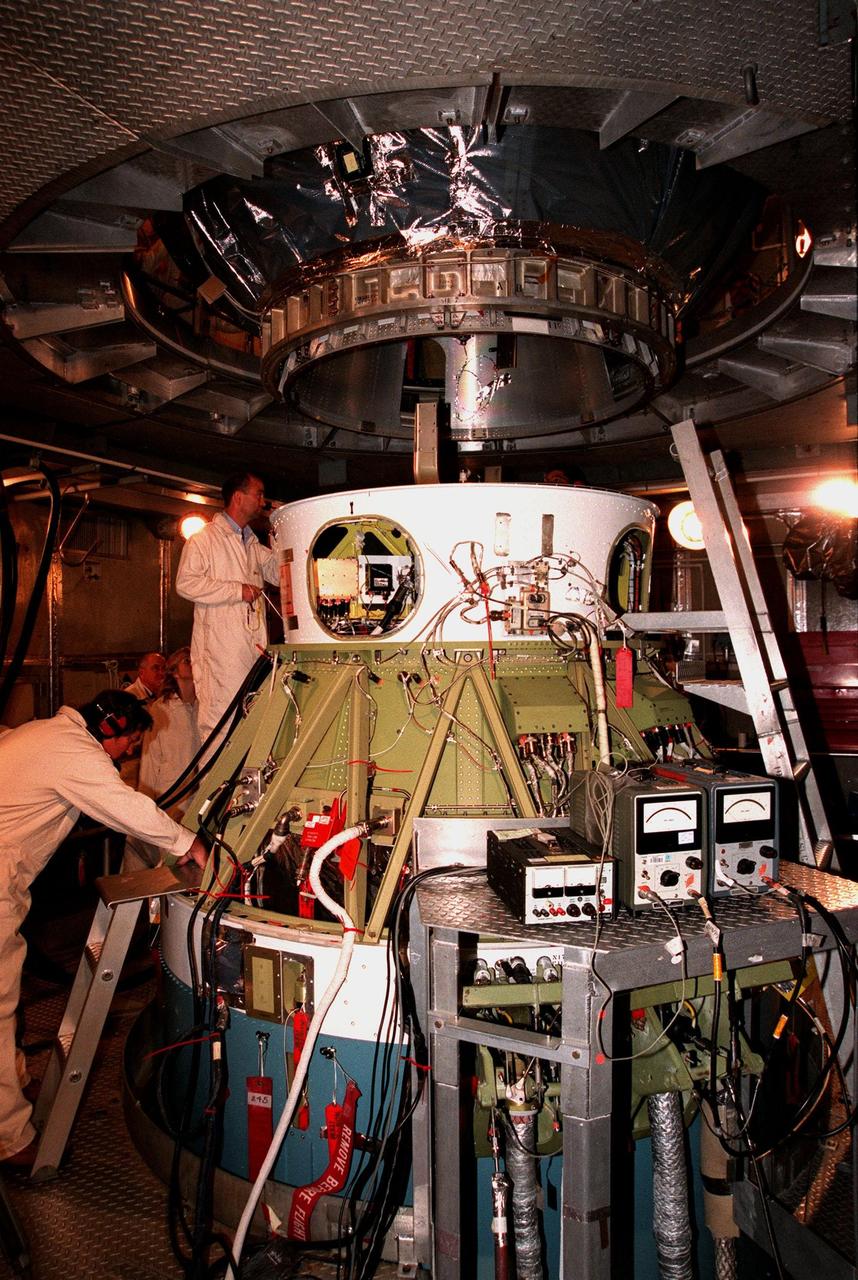
Workers inside the launch tower at Pad 17-A, Cape Canaveral Air Station, watch as the third stage of a Boeing Delta II rocket is lowered for mating with the second stage below it. The Stardust spacecraft, above it out of sight, is connected to the rocket's third stage. Stardust, targeted for liftoff on Feb. 6, is destined for a close encounter with the comet Wild 2 in January 2004. Using a silicon-based substance called aerogel, Stardust will capture comet particles flying off the nucleus of the comet. The spacecraft also will bring back samples of interstellar dust. These materials consist of ancient pre-solar interstellar grains and other remnants left over from the formation of the solar system. Scientists expect their analysis to provide important insights into the evolution of the sun and planets and possibly into the origin of life itself. The collected samples will return to Earth in a sample return capsule to be jettisoned as Stardust swings by Earth in January 2006
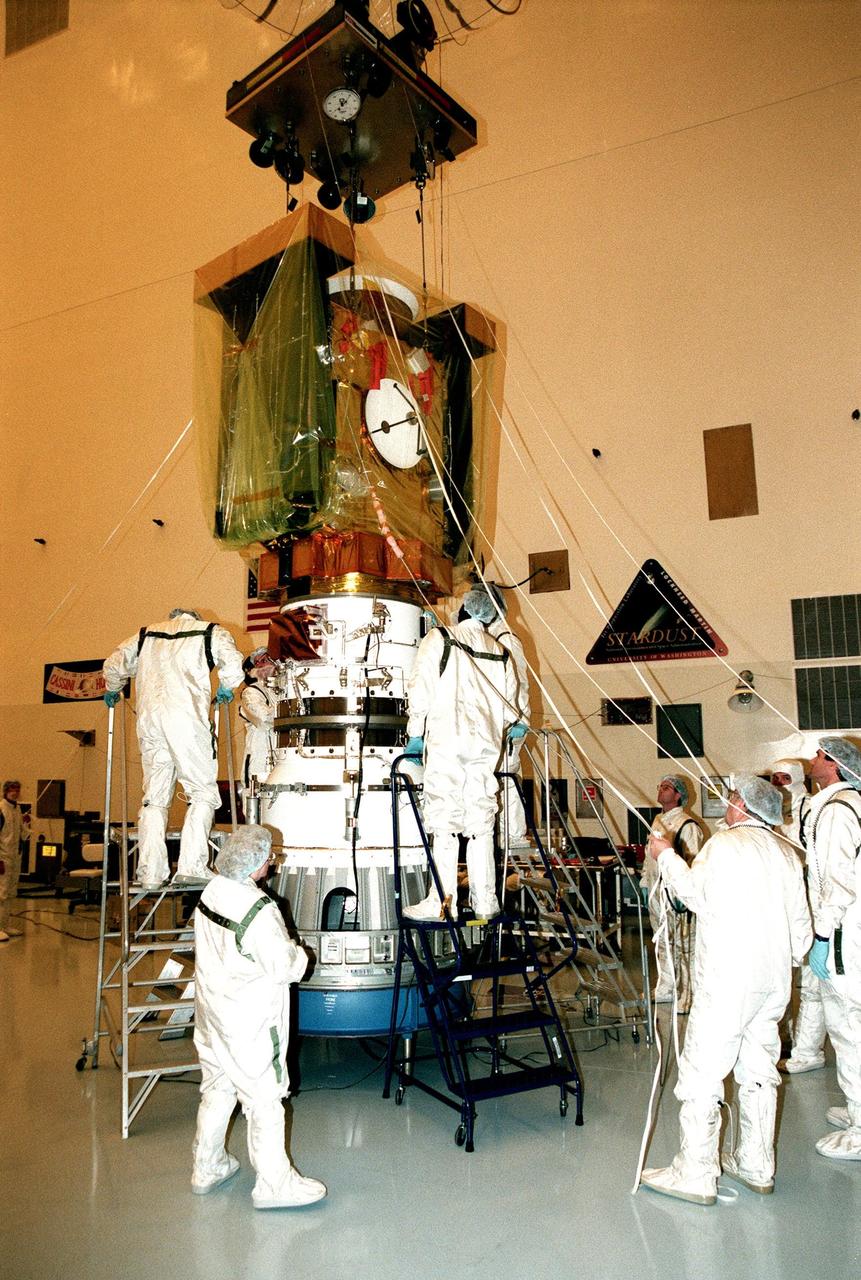
In the Payload Hazardous Servicing Facility, workers check the mating of the spacecraft Stardust (above) with the third stage of a Boeing Delta II rocket (below). Targeted for launch Feb. 6 from Launch Pad 17-A, Cape Canaveral Air Station, aboard the Delta II rocket, the spacecraft is destined for a close encounter with the comet Wild 2 in January 2004. Using a silicon-based substance called aerogel, Stardust will capture comet particles flying off the nucleus of the comet. The spacecraft also will bring back samples of interstellar dust. These materials consist of ancient pre-solar interstellar grains and other remnants left over from the formation of the solar system. Scientists expect their analysis to provide important insights into the evolution of the sun and planets and possibly into the origin of life itself. The collected samples will return to Earth in a sample return capsule to be jettisoned as Stardust swings by Earth in January 2006
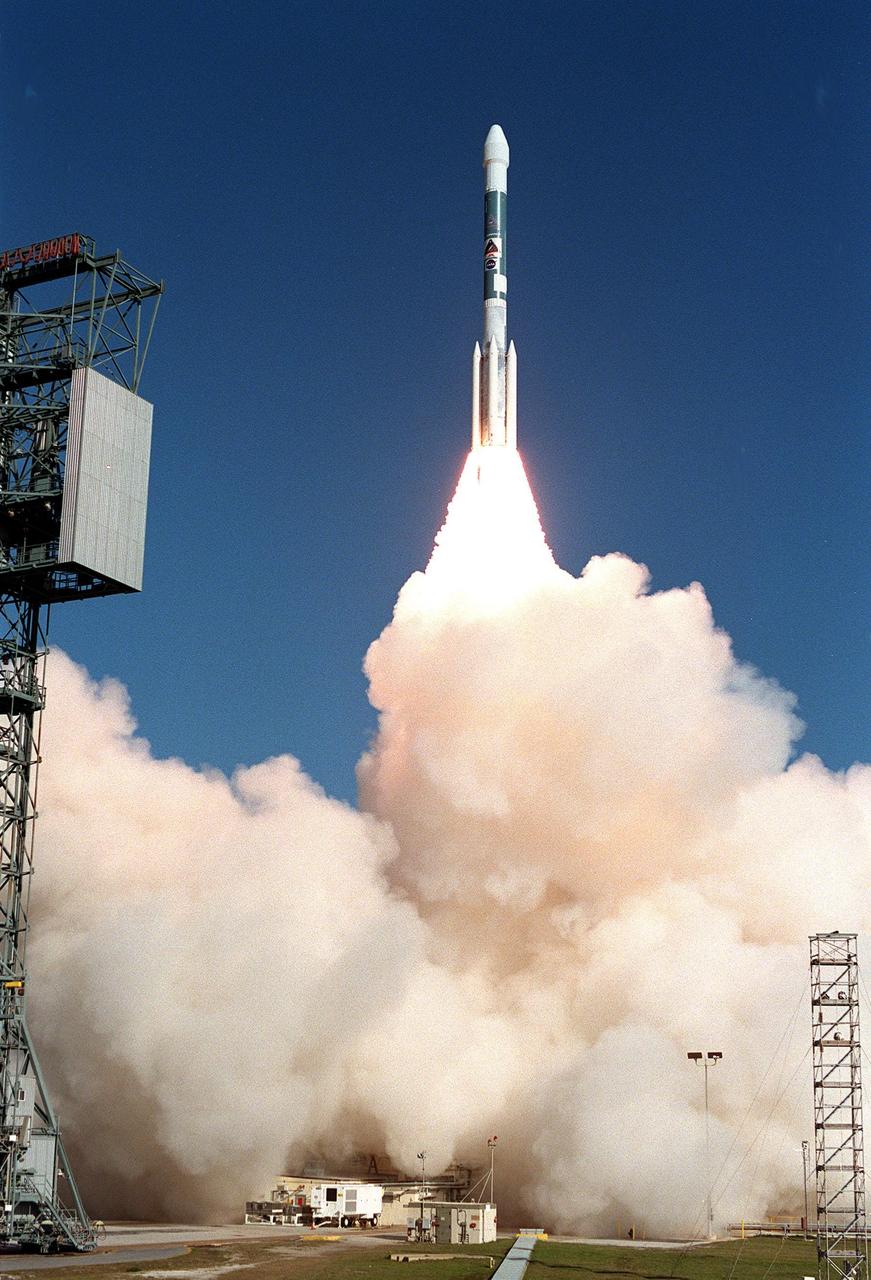
Billows of exhaust roll across Launch Pad 17-A, Cape Canaveral Air Station, as the Boeing Delta II rocket carrying the Stardust spacecraft launches on time. At left is the mobile launch tower. After a 24-hour postponement, the rocket lifted off at 4:04:15 p.m. EST. Stardust is destined for a close encounter with the comet Wild 2 in January 2004. Using a silicon-based substance called aerogel, Stardust will capture comet particles flying off the nucleus of the comet. The spacecraft also will bring back samples of interstellar dust. These materials consist of ancient pre-solar interstellar grains and other remnants left over from the formation of the solar system. Scientists expect their analysis to provide important insights into the evolution of the sun and planets and possibly into the origin of life itself. The collected samples will return to Earth in a sample return capsule to be jettisoned as Stardust swings by Earth in January 2006
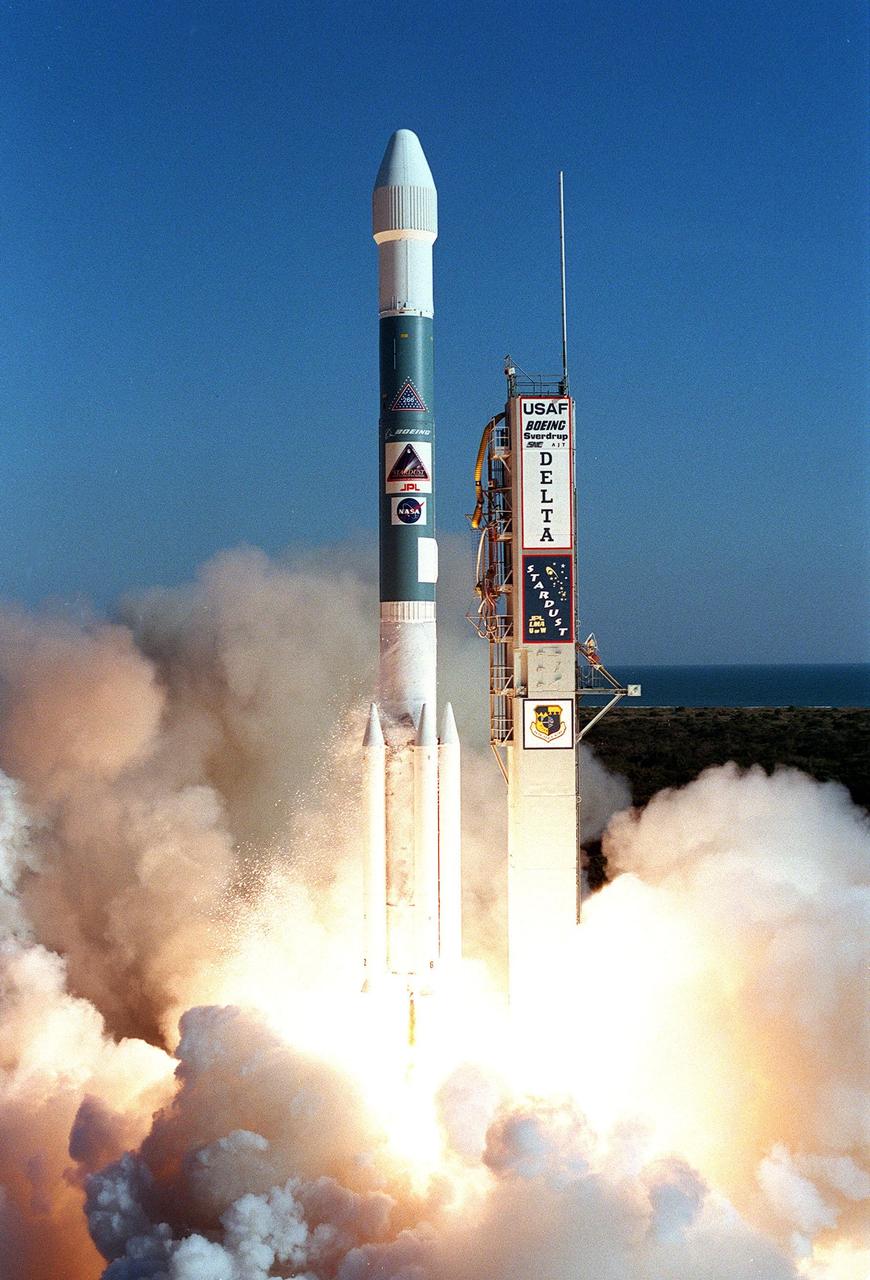
Billows of exhaust fill Launch Pad 17-A, Cape Canaveral Air Station, as the Boeing Delta II rocket carrying the Stardust spacecraft launches on time. After a 24-hour postponement, the rocket lifted off at 4:04:15 p.m. EST. Stardust is destined for a close encounter with the comet Wild 2 in January 2004. Using a silicon-based substance called aerogel, Stardust will capture comet particles flying off the nucleus of the comet. The spacecraft also will bring back samples of interstellar dust. These materials consist of ancient pre-solar interstellar grains and other remnants left over from the formation of the solar system. Scientists expect their analysis to provide important insights into the evolution of the sun and planets and possibly into the origin of life itself. The collected samples will return to Earth in a sample return capsule to be jettisoned as Stardust swings by Earth in January 2006
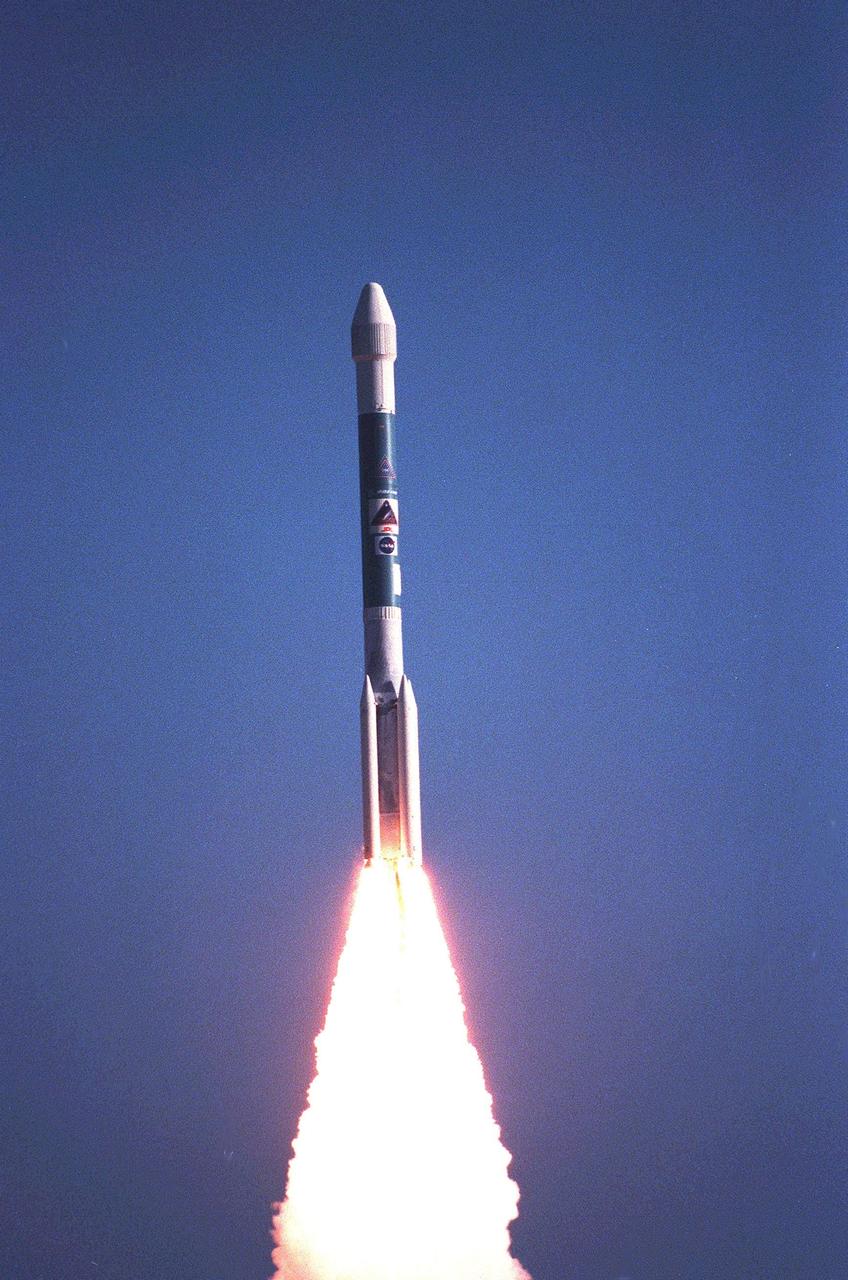
Flames sear the pristine blue sky behind the Boeing Delta II rocket carrying the Stardust spacecraft after the 4:04:15 p.m. launch from Launch Pad 17-A, Cape Canaveral Air Station. A 24-hour scrub postponed the launch from the originally scheduled date of Feb. 6. Stardust is destined for a close encounter with the comet Wild 2 in January 2004. Using a silicon-based substance called aerogel, Stardust will capture comet particles flying off the nucleus of the comet. The spacecraft also will bring back samples of interstellar dust. These materials consist of ancient pre-solar interstellar grains and other remnants left over from the formation of the solar system. Scientists expect their analysis to provide important insights into the evolution of the sun and planets and possibly into the origin of life itself. The collected samples will return to Earth in a sample return capsule to be jettisoned as Stardust swings by Earth in January 2006
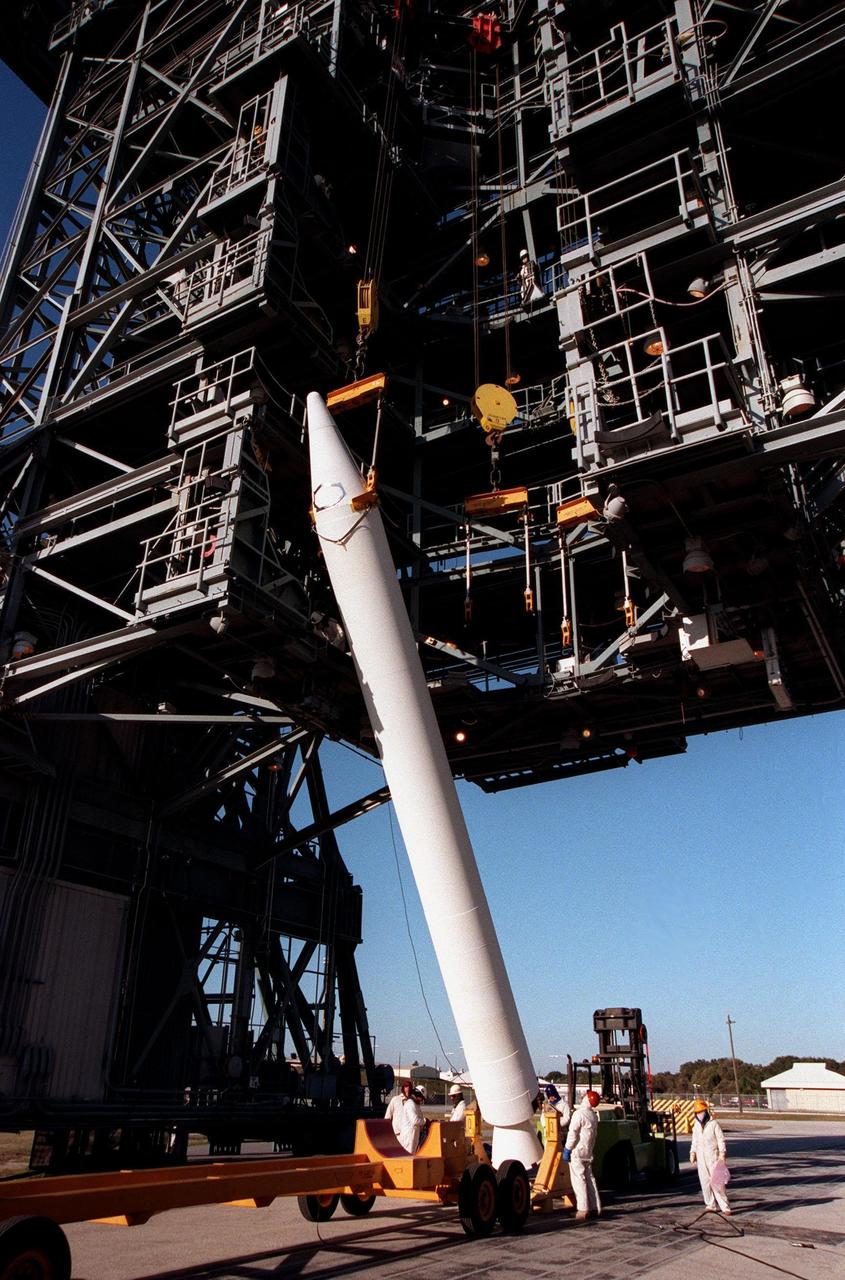
A solid rocket booster is raised to a vertical position before lifting it up the mobile launch tower at Pad 17A, Cape Canaveral Air Station. It will be mated with a Boeing Delta II rocket that will carry the Stardust spacecraft into space for a close encounter with the comet Wild 2 in January 2004. Using a medium called aerogel, Stardust will capture comet particles flying off the nucleus of the comet, plus collect interstellar dust for later analysis. The collected samples will return to Earth in a sample return capsule to be jettisoned as Stardust swings by Earth in January 2006. Stardust is scheduled to be launched on Feb. 6, 1999
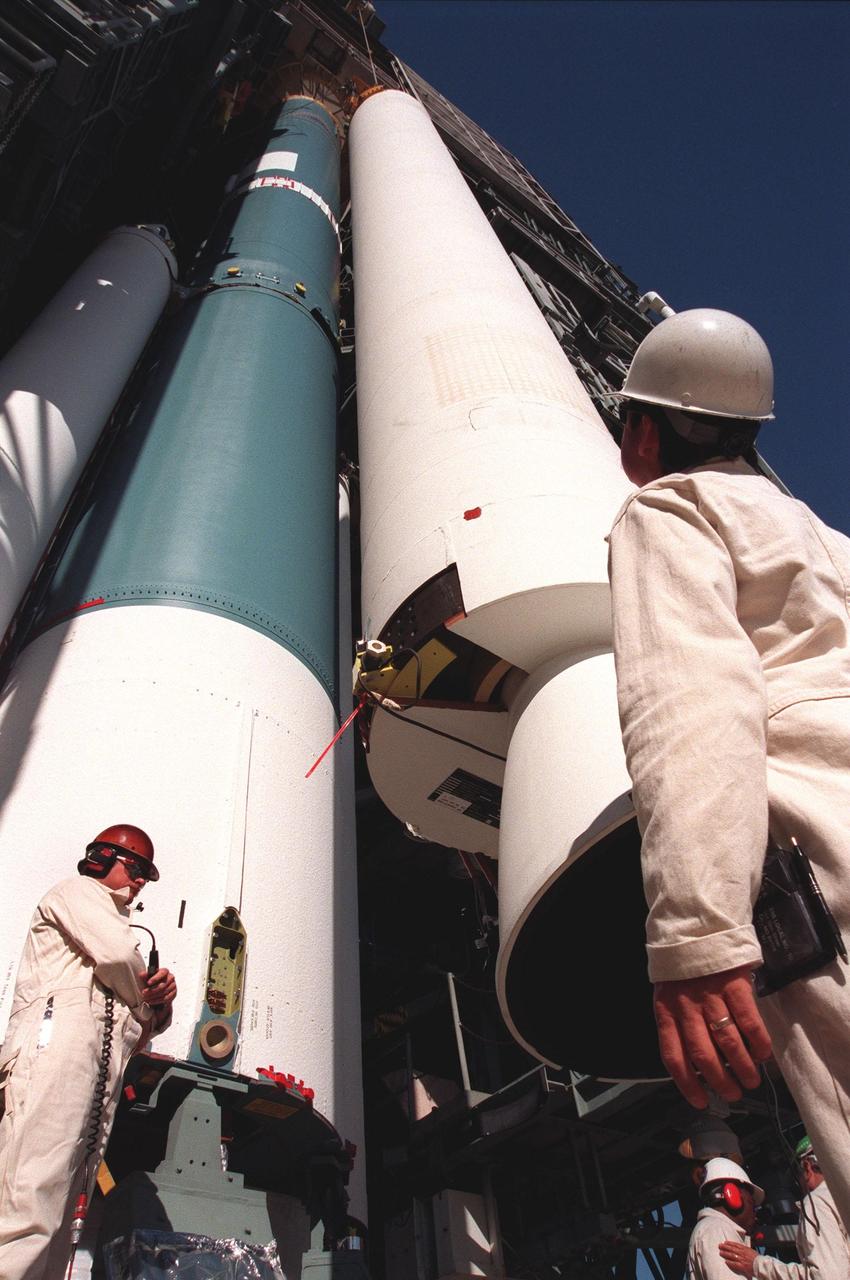
At Pad 17A, Cape Canaveral Air Station, workers keep watch on the placement of the fourth and final solid rocket booster (SRB) being mated with the Boeing Delta II rocket. The rocket will be aided by four SRBs to carry the Stardust satellite into space for a close encounter with the comet Wild 2 in January 2004. Using a medium called aerogel, Stardust will capture comet particles flying off the nucleus of the comet, plus collect interstellar dust for later analysis. The collected samples will return to Earth in a Sample Return Capsule to be jettisoned as Stardust swings by Earth in January 2006. Stardust is scheduled to be launched on Feb. 6, 1999

In the Payload Hazardous Servicing Facility, the fully extended solar panels of the <a href="http://www-pao.ksc.nasa.gov/kscpao/captions/subjects/stardust.htm"> Stardust</a>spacecraft undergo lighting tests. Stardust is scheduled to be launched aboard a Boeing Delta II rocket from Launch Pad 17A, Cape Canaveral Air Station, on Feb. 6, 1999, for a rendezvous with the comet Wild 2 in January 2004. Stardust will use a substance called aerogel to capture comet particles flying off the nucleus of the comet, plus collect interstellar dust for later analysis. The collected samples will return to Earth in a sample return capsule to be jettisoned as it swings by Earth in January 2006
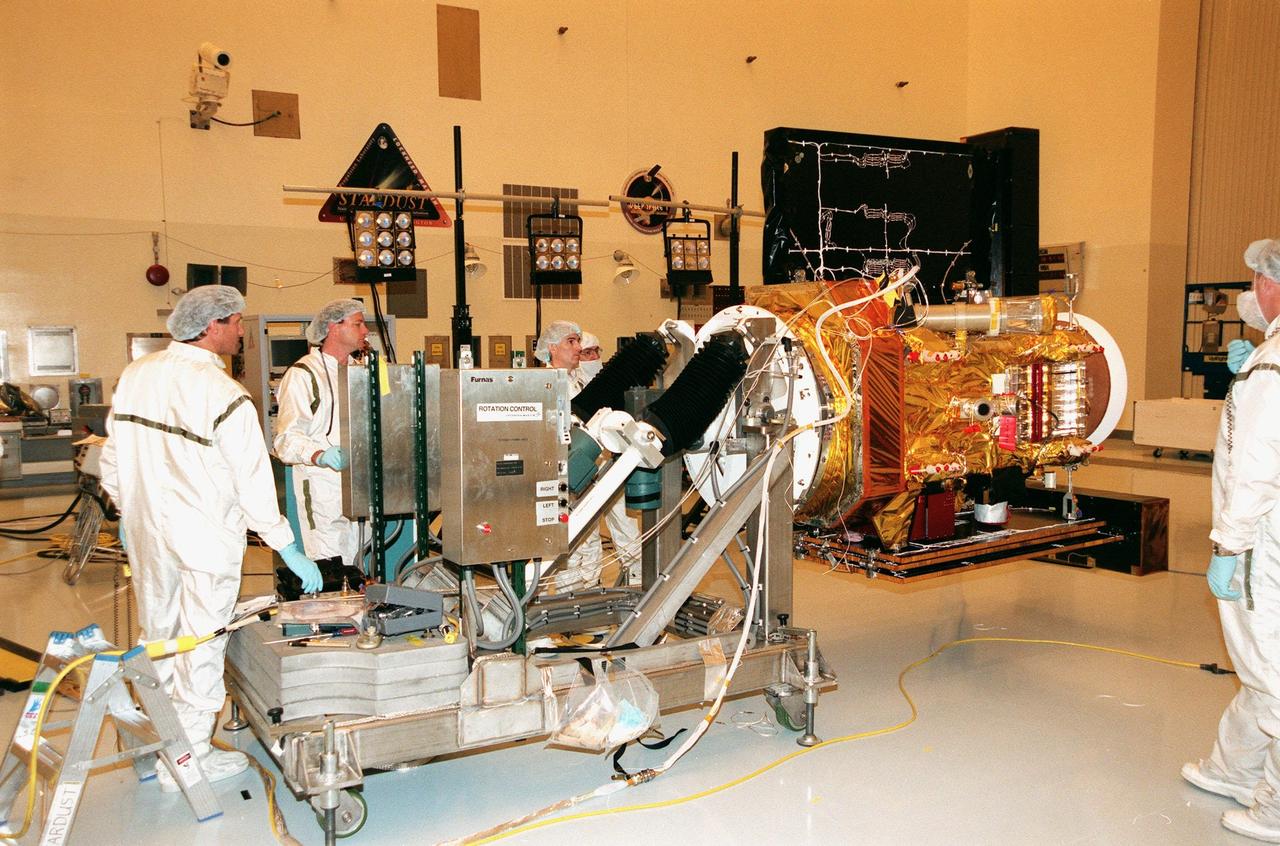
Workers in the Payload Hazardous Servicing Facility deploy a solar panel on the <a href="http://www-pao.ksc.nasa.gov/kscpao/captions/subjects/stardust.htm"> Stardust</a> spacecraft before performing lighting tests. Stardust is scheduled to be launched aboard a Boeing Delta II rocket from Launch Pad 17A, Cape Canaveral Air Station, on Feb. 6, 1999, for a rendezvous with the comet Wild 2 in January 2004. Stardust will use a substance called aerogel to capture comet particles flying off the nucleus of the comet, plus collect interstellar dust for later analysis. The collected samples will return to Earth in a sample return capsule to be jettisoned as it swings by Earth in January 2006
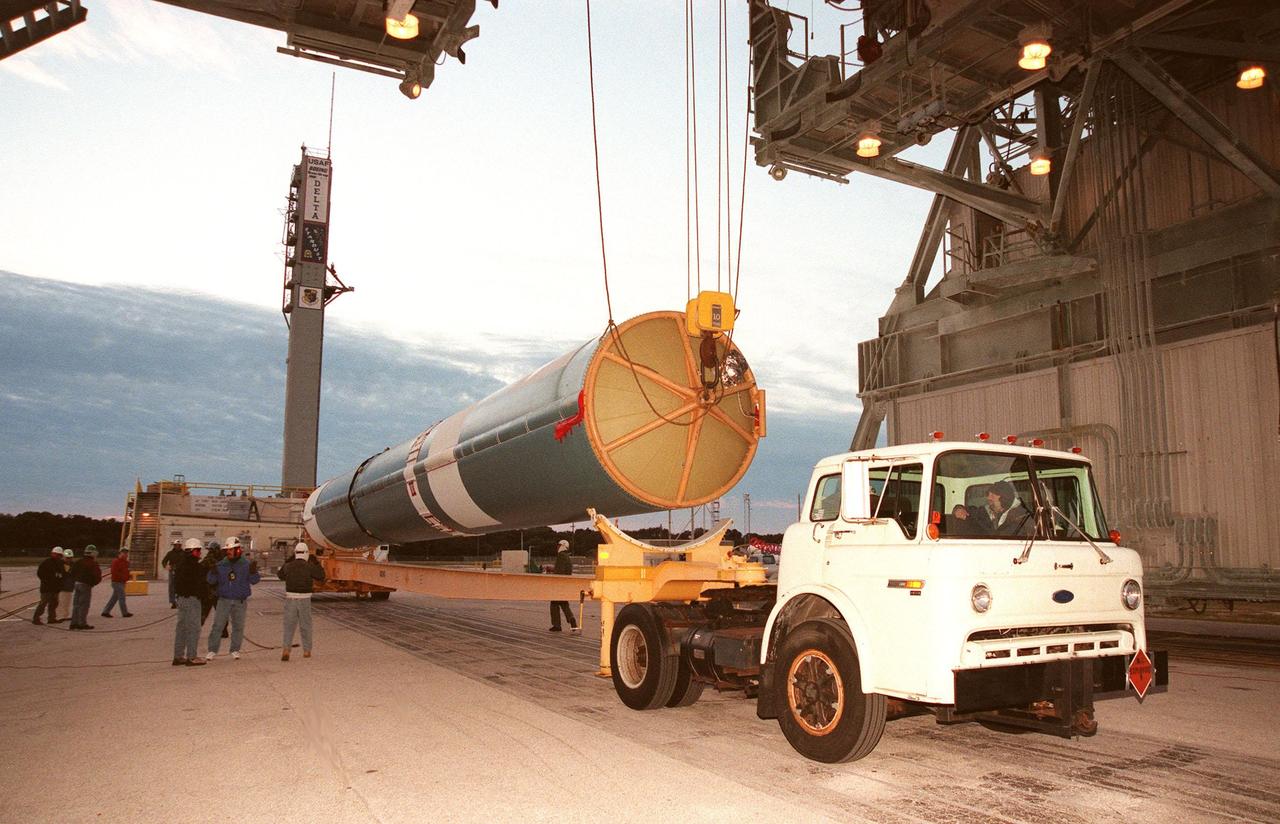
The first stage of a Boeing Delta II rocket is raised off a truck bed before being lifted into place on the tower at Launch Complex 17, Cape Canaveral Air Station. The rocket will carry the Stardust spacecraft into space for a close encounter with the comet Wild 2 in January 2004. Using a medium called aerogel, it will capture comet particles flying off the nucleus of the comet, plus collect interstellar dust for later analysis. The collected samples will return to Earth in a Sample Return Capsule to be jettisoned as Stardust swings by Earth in January 2006. Stardust is scheduled to be launched on Feb. 6, 1999
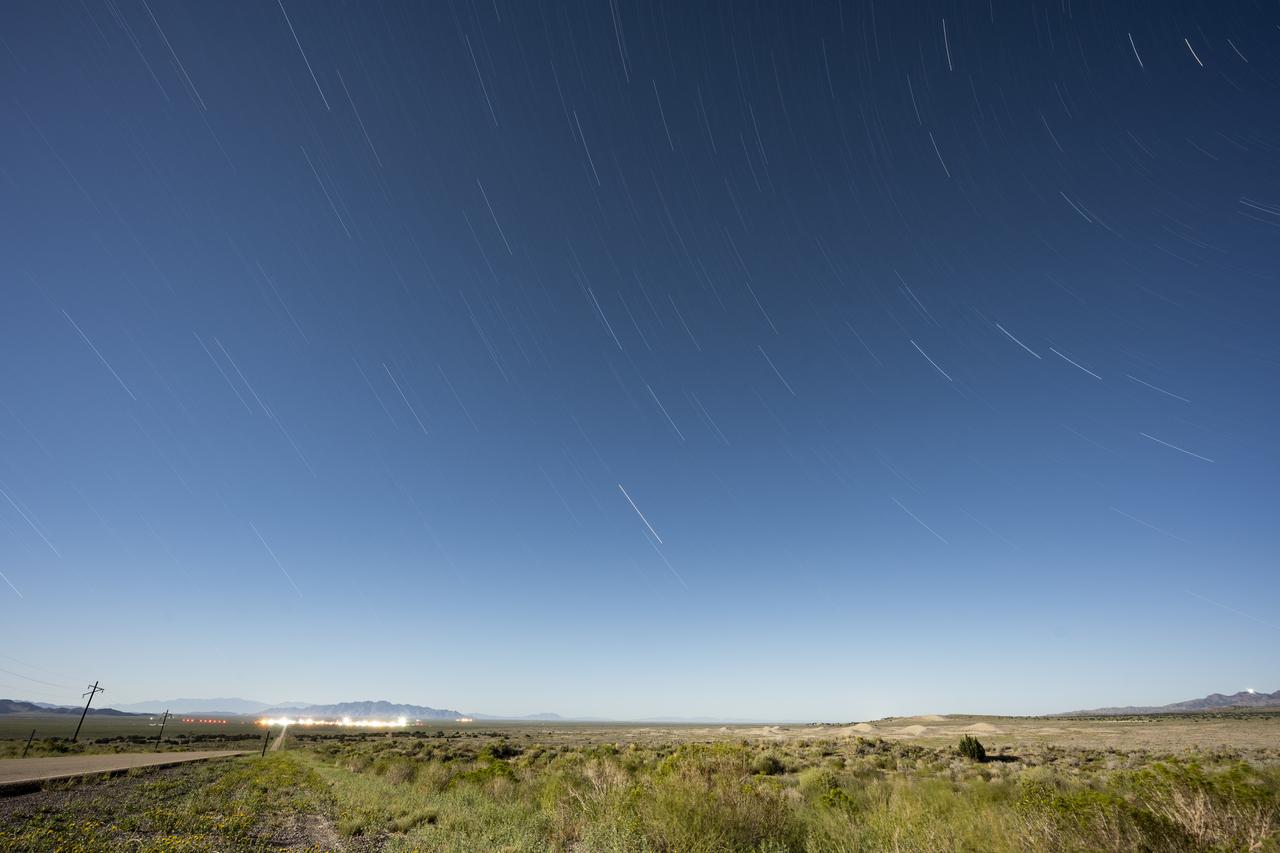
In this 30 minute exposure, star trails are seen above Michael Army Air Field and Dugway Proving Ground, Sunday, Aug. 27, 2023, near Dugway, Utah. Recovery teams met in August for rehearsals in preparation for the retrieval of the sample return capsule from NASA's OSIRIS-REx mission. The sample was collected from the asteroid Bennu in October 2020 by NASA’s OSIRIS-REx spacecraft and will return to Earth on September 24th, landing under parachute at the Department of Defenses Utah Test and Training Range. Photo Credit: (NASA/Keegan Barber)
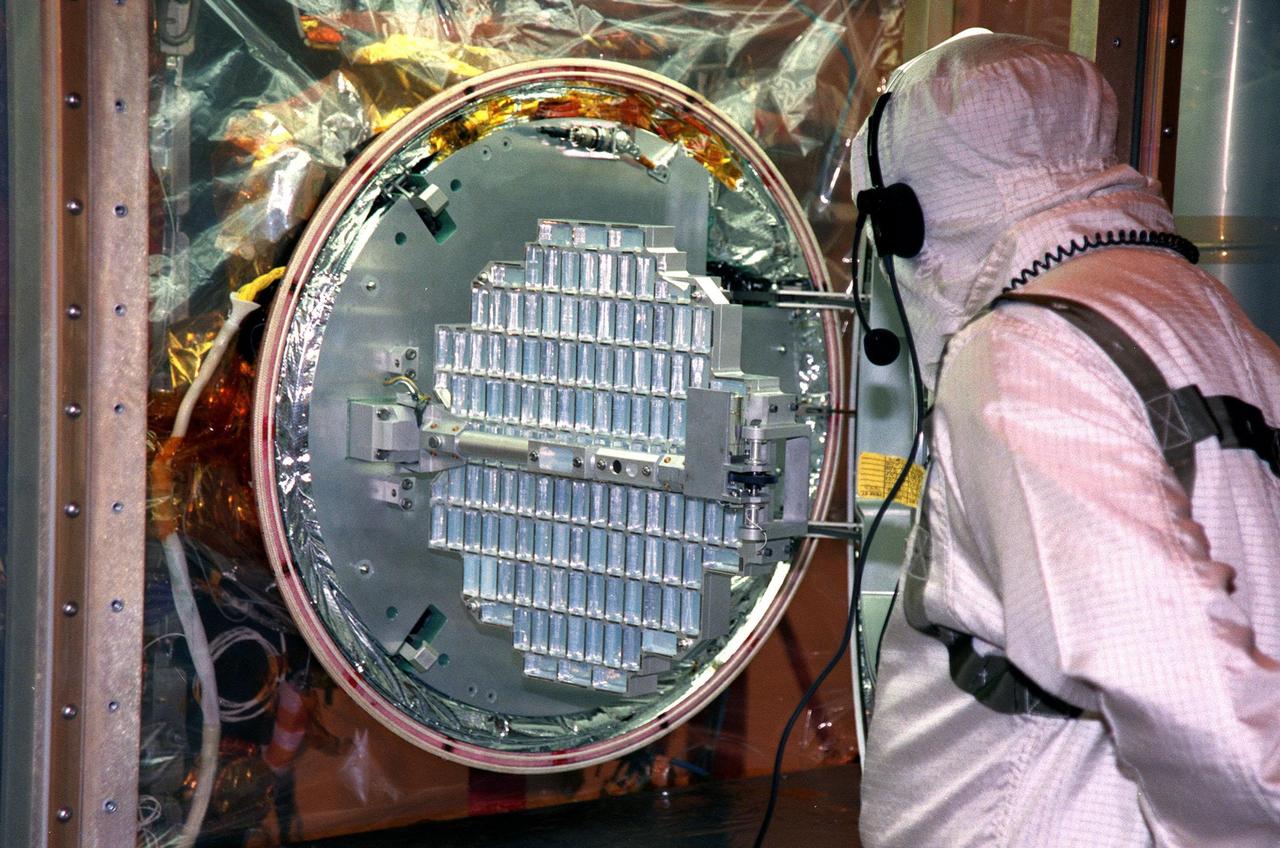
In the Payload Hazardous Servicing Facility, workers deploy an aerogel grid from the Stardust Sample Return Capsule (SRC) in the Class 100 Glove Box. Stardust will use a unique medium called aerogel to capture comet particles flying off the nucleus of comet Wild 2 in January 2004, plus collect interstellar dust for later analysis. The collected samples will return to Earth in the SRC to be jettisoned as it swings by Earth in January 2006. Stardust is scheduled to be launched aboard a Boeing Delta 7426 rocket from Complex 17, Cape Canaveral Air Station, on Feb. 6, 1999
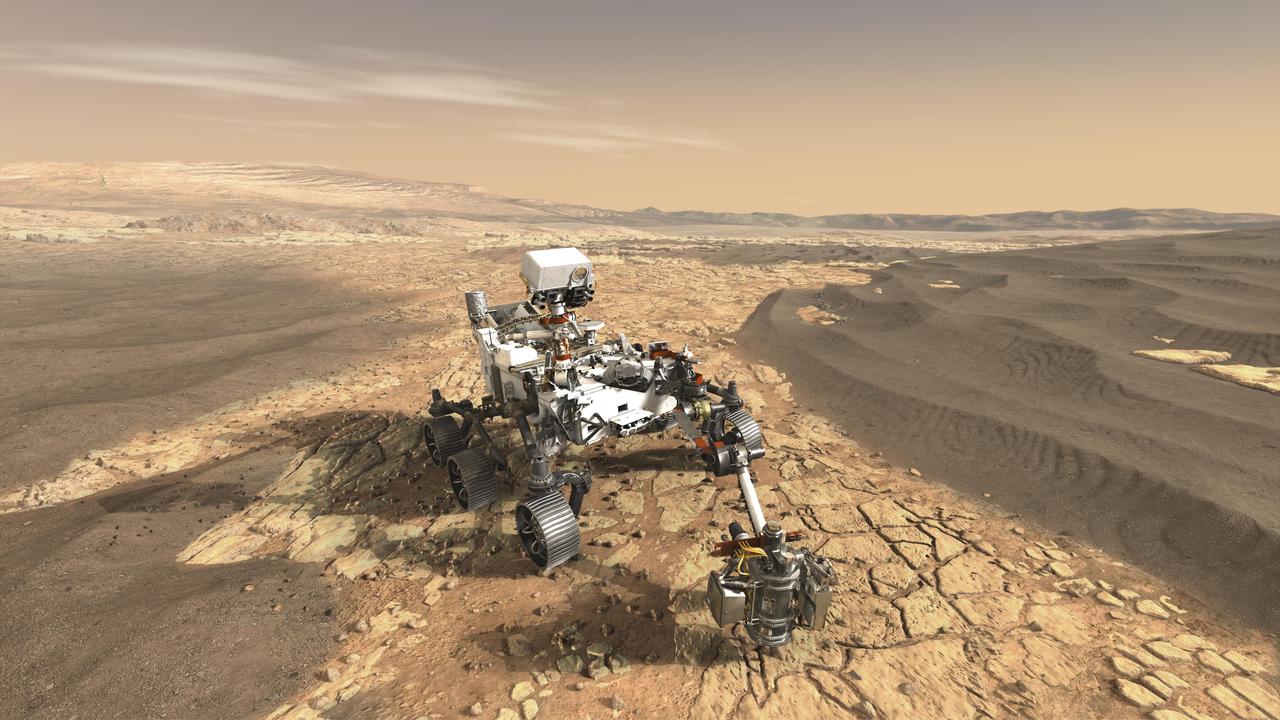
This artist's concept depicts NASA's Mars 2020 rover on the surface of Mars. The mission takes the next step by not only seeking signs of habitable conditions on Mars in the ancient past, but also searching for signs of past microbial life itself. The Mars 2020 rover introduces a drill that can collect core samples of the most promising rocks and soils and set them aside on the surface of Mars. A future mission could potentially return these samples to Earth. Mars 2020 is targeted for launch in July/August 2020 aboard an Atlas V 541 rocket from Space Launch Complex 41 at Cape Canaveral Air Force Station in Florida. https://photojournal.jpl.nasa.gov/catalog/PIA21635
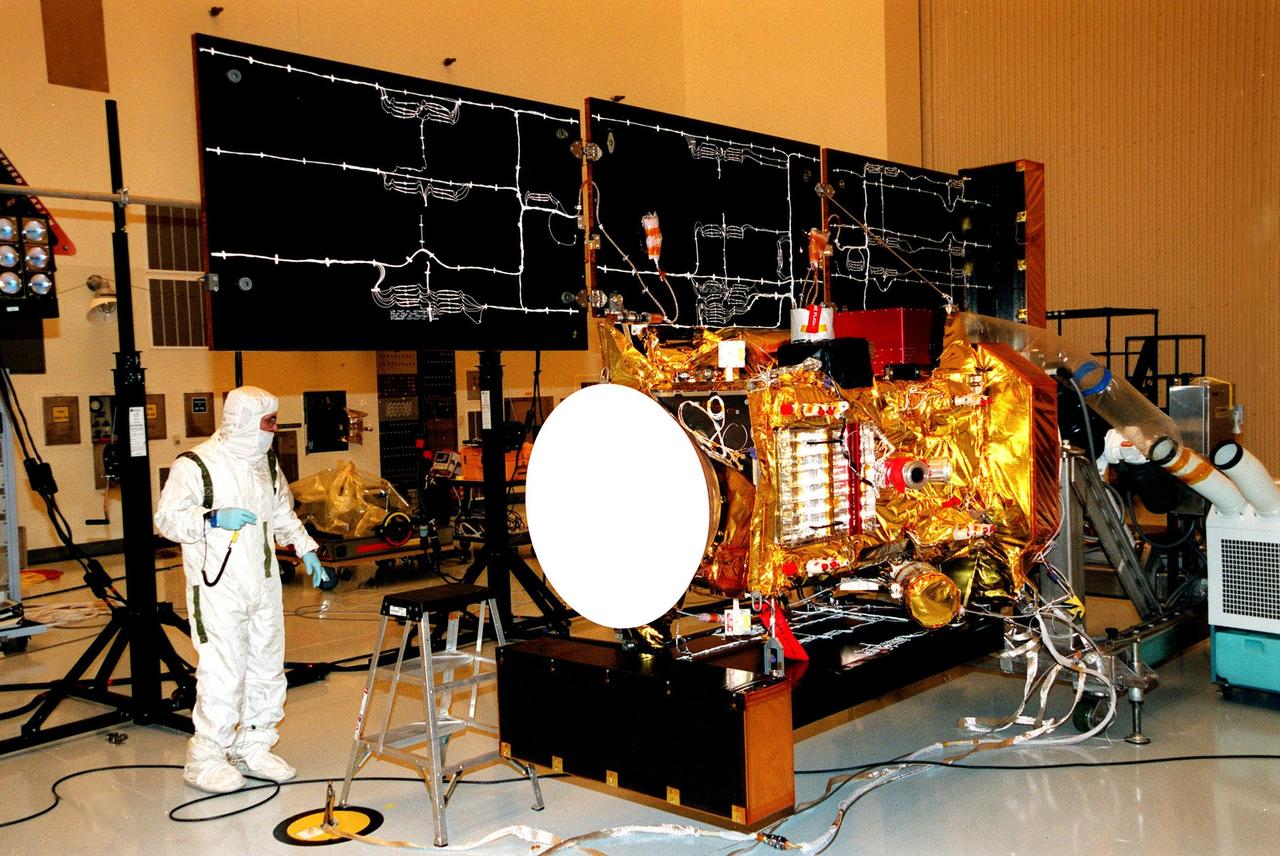
In the Payload Hazardous Servicing Facility, a worker looks over the solar panels of the <a href="http://www-pao.ksc.nasa.gov/kscpao/captions/subjects/stardust.htm"> Stardust</a> spacecraft before it undergoes lighting tests. Stardust is scheduled to be launched aboard a Boeing Delta II rocket from Launch Pad 17A, Cape Canaveral Air Station, on Feb. 6, 1999, for a rendezvous with the comet Wild 2 in January 2004. Stardust will use a substance called aerogel to capture comet particles flying off the nucleus of the comet, plus collect interstellar dust for later analysis. The collected samples will return to Earth in a sample return capsule (its white cap is seen on the left) to be jettisoned as it swings by Earth in January 2006

The first stage of a Boeing Delta II rocket is lifted to its vertical position on the tower at Launch Complex 17, Cape Canaveral Air Station. The rocket will carry the Stardust spacecraft into space for a close encounter with the comet Wild 2 in January 2004. Using a medium called aerogel, it will capture comet particles flying off the nucleus of the comet, plus collect interstellar dust for later analysis. The collected samples will return to Earth in a Sample Return Capsule to be jettisoned as Stardust swings by Earth in January 2006. Stardust is scheduled to be launched on Feb. 6, 1999
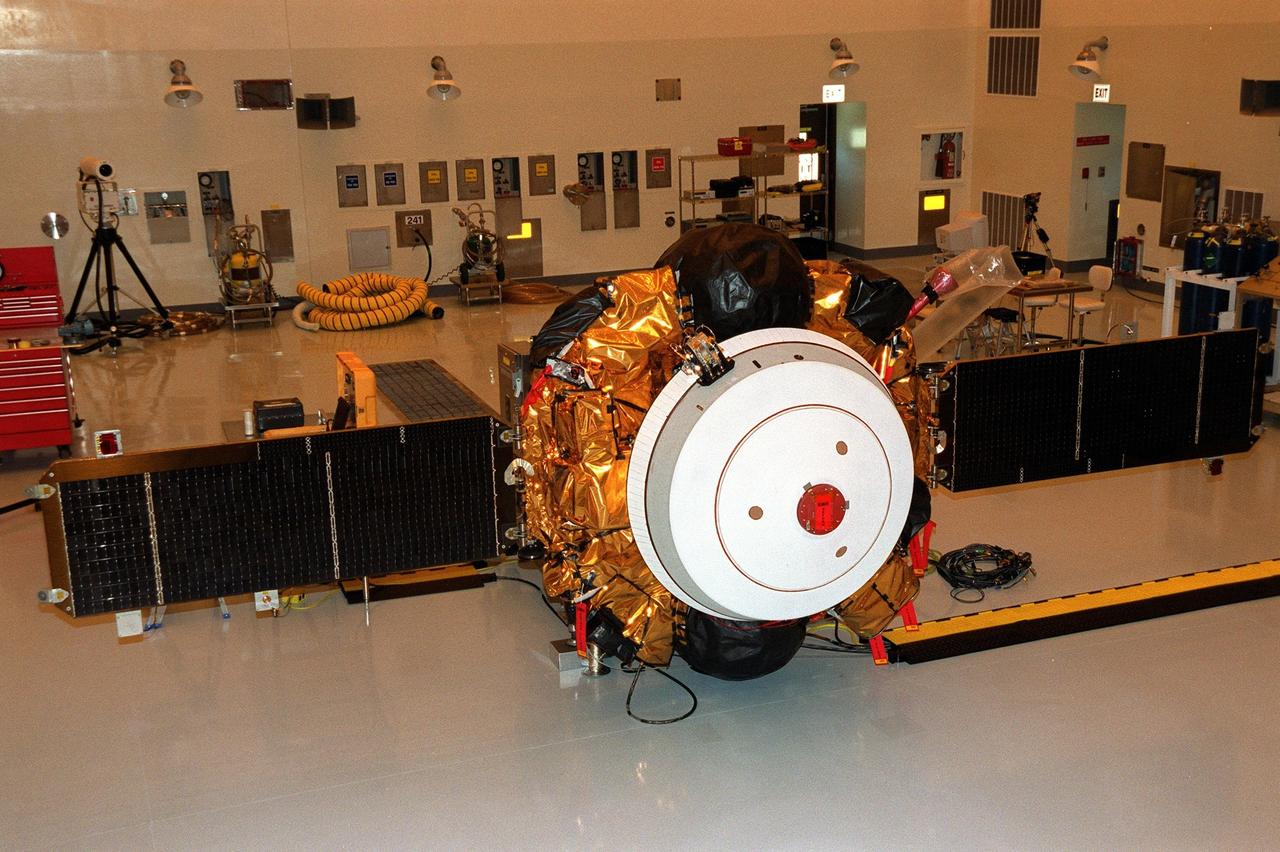
KENNEDY SPACE CENTER, Fla. -- In the Payload Hazardous Servicing Facility, both solar arrays on the Genesis spacecraft are deployed. Genesis is designed to collect samples of solar wind particles and return them to Earth so that scientists can study the exact composition of the Sun and probe the solar system’s origin. The white object on the end in front of the arrays is the Sample Return Canister backshell, inside of which are the collector arrays. Genesis is scheduled to be launched on a Delta II Lite launch vehicle from Complex 17-A, Cape Canaveral Air Force Station, July 30, at 12:36 p.m. EDT
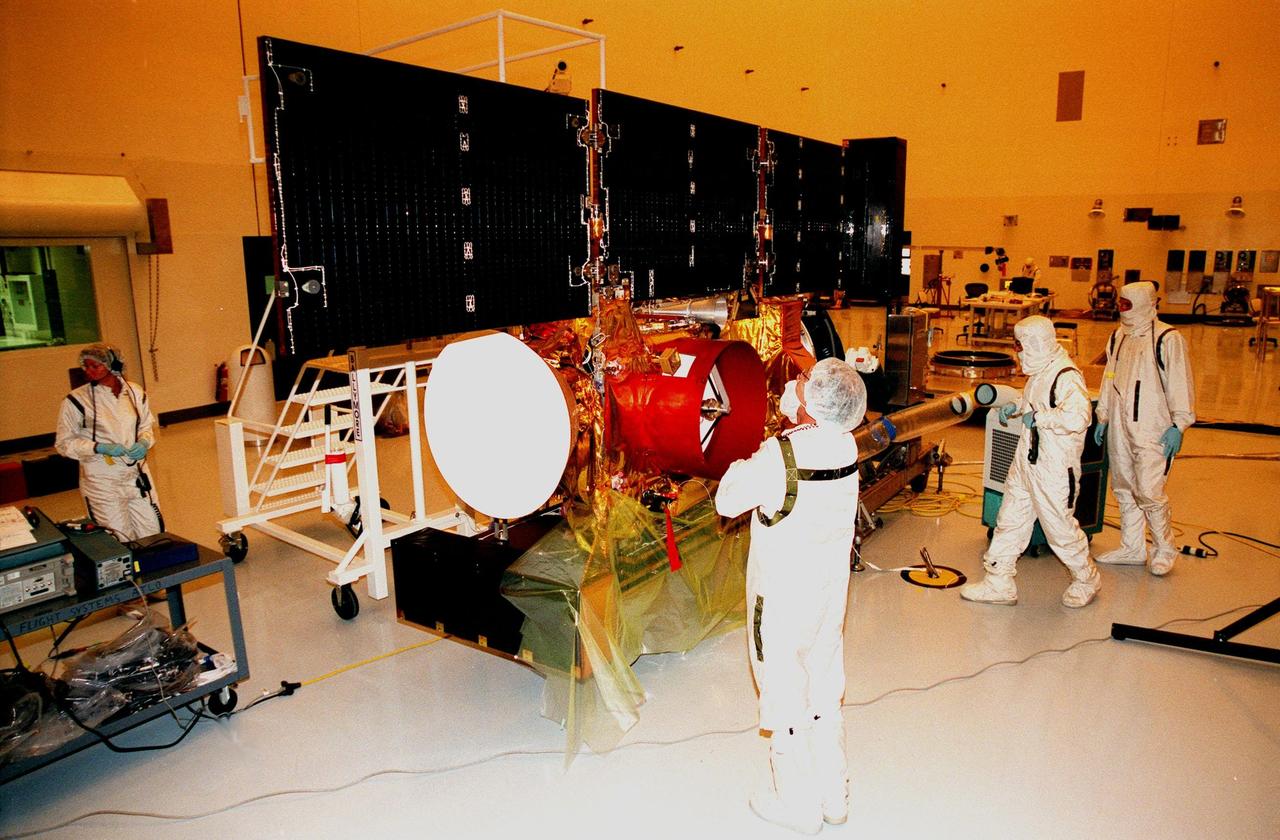
In the Payload Hazardous Servicing Facility, workers look over the solar panels on the <a href="http://www-pao.ksc.nasa.gov/kscpao/captions/subjects/stardust.htm"> Stardust</a> spacecraft that are deployed for lighting tests. Stardust is scheduled to be launched aboard a Boeing Delta II rocket from Launch Pad 17A, Cape Canaveral Air Station, on Feb. 6, 1999, for a rendezvous with the comet Wild 2 in January 2004. Stardust will use a substance called aerogel to capture comet particles flying off the nucleus of the comet, plus collect interstellar dust for later analysis. The collected samples will return to Earth in a sample return capsule to be jettisoned as it swings by Earth in January 2006
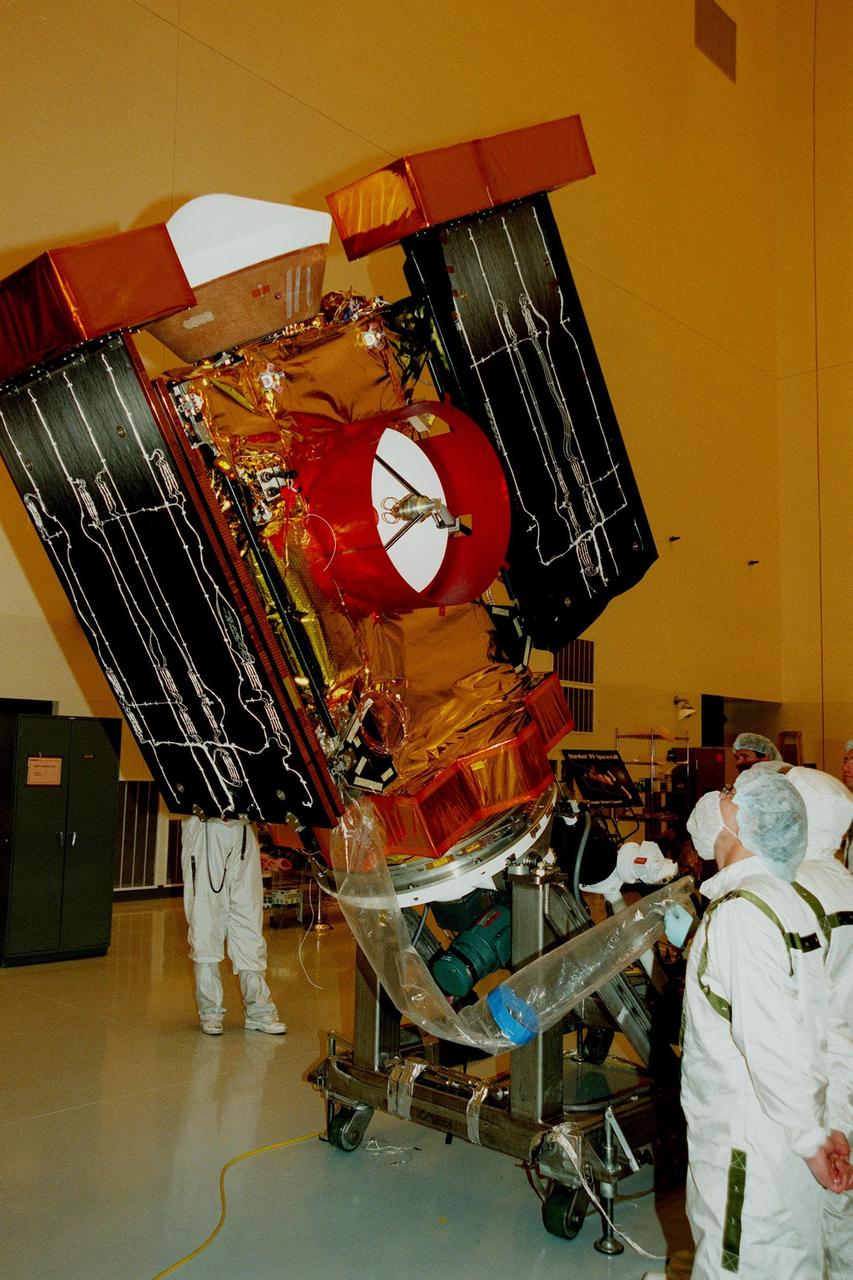
Workers in the Payload Hazardous Servicing Facility watch as the <a href="http://www-pao.ksc.nasa.gov/kscpao/captions/subjects/stardust.htm"> Stardust</a> spacecraft is rotated and lowered before deploying the solar panels for lighting tests. Stardust is scheduled to be launched aboard a Boeing Delta II rocket from Launch Pad 17A, Cape Canaveral Air Station, on Feb. 6, 1999, for a rendezvous with the comet Wild 2 in January 2004. Stardust will use a substance called aerogel to capture comet particles flying off the nucleus of the comet, plus collect interstellar dust for later analysis. The collected samples will return to Earth in a sample return capsule (seen on top of the spacecraft) to be jettisoned as it swings by Earth in January 2006

Workers at Cape Canaveral Air Station help guide the first stage of a Boeing Delta II rocket to its vertical position on the tower at Launch Complex 17. The rocket will carry the Stardust spacecraft into space for a close encounter with the comet Wild 2 in January 2004. Using a medium called aerogel, it will capture comet particles flying off the nucleus of the comet, plus collect interstellar dust for later analysis. The collected samples will return to Earth in a Sample Return Capsule to be jettisoned as Stardust swings by Earth in January 2006. Stardust is scheduled to be launched on Feb. 6, 1999
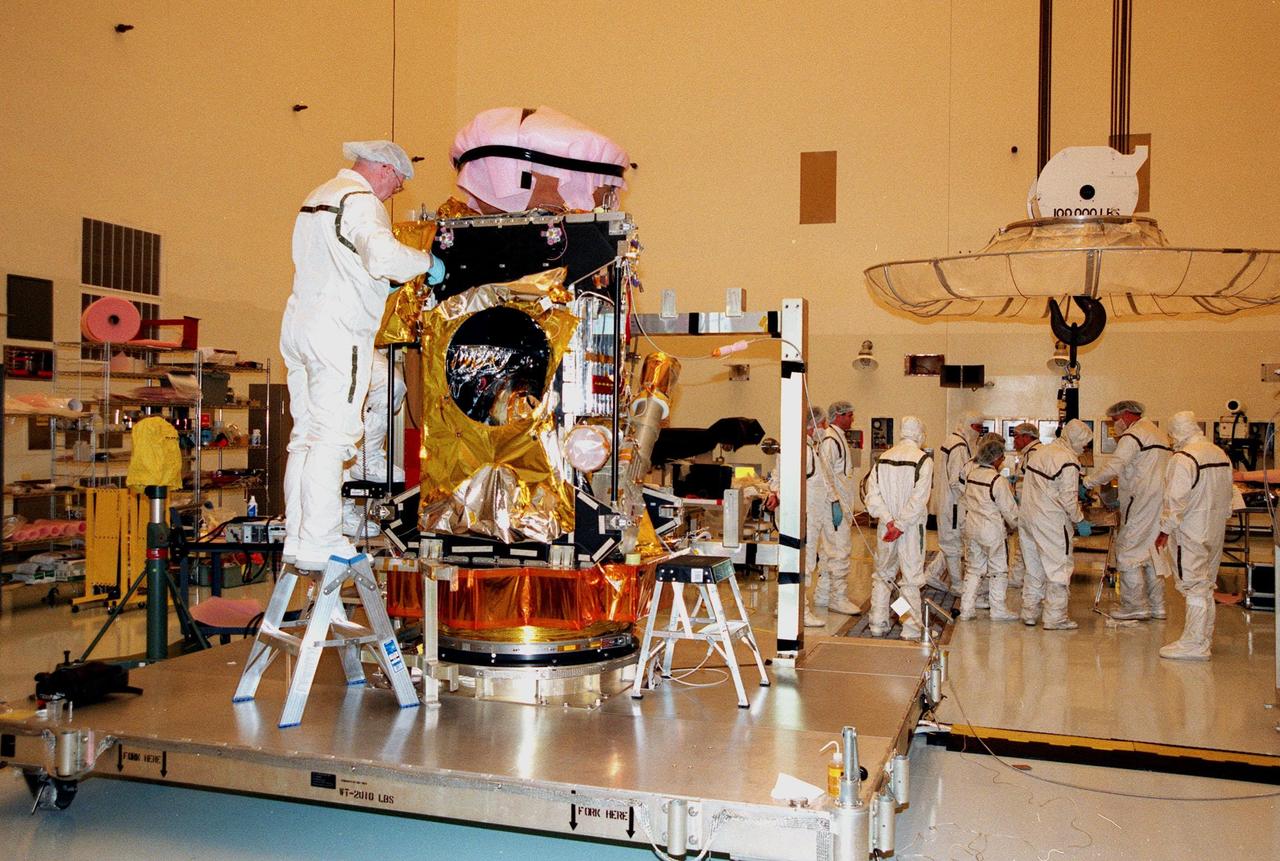
In the Payload Hazardous Servicing Facility, workers oversee closeout operations of the Stardust Sample Return Capsule (SRC) and -X spacecraft panel with the spacecraft bus. Stardust will use a unique medium called aerogel to capture comet particles flying off the nucleus of comet Wild 2 in January 2004, plus collect interstellar dust for later analysis. The collected samples will return to Earth in the SRC to be jettisoned as it swings by Earth in January 2006. Stardust is scheduled to be launched aboard a Boeing Delta 7426 rocket from Complex 17, Cape Canaveral Air Station, on Feb. 6, 1999