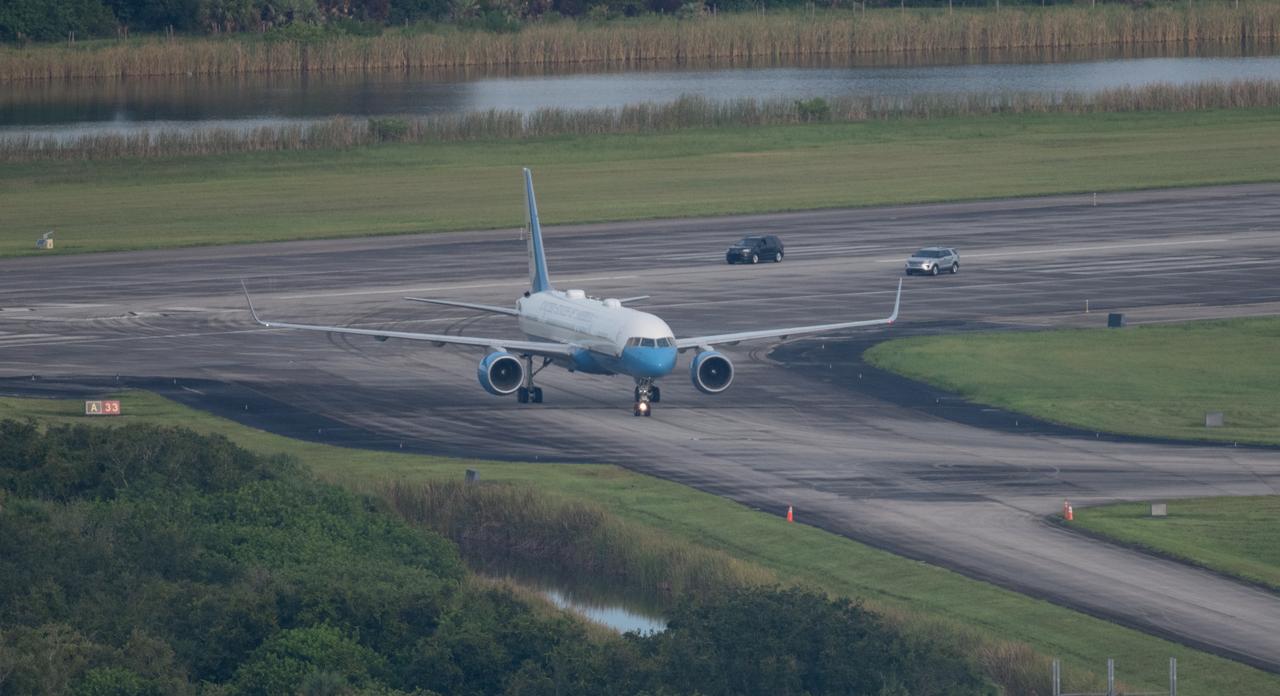
Air Force Two is seen as it arrives at the Launch and Landing Facility at NASA’s Kennedy Space Center ahead of the first launch attempt of Artemis I, Monday, Aug. 29, 2022, in Florida. NASA’s Artemis I flight test is the first integrated flight test of the agency’s deep space exploration systems: the Orion spacecraft, Space Launch System (SLS) rocket, and ground systems. The launch director halted today’s launch attempt at approximately 8:30 a.m. ET. Photo Credit: (NASA/Joel Kowsky)
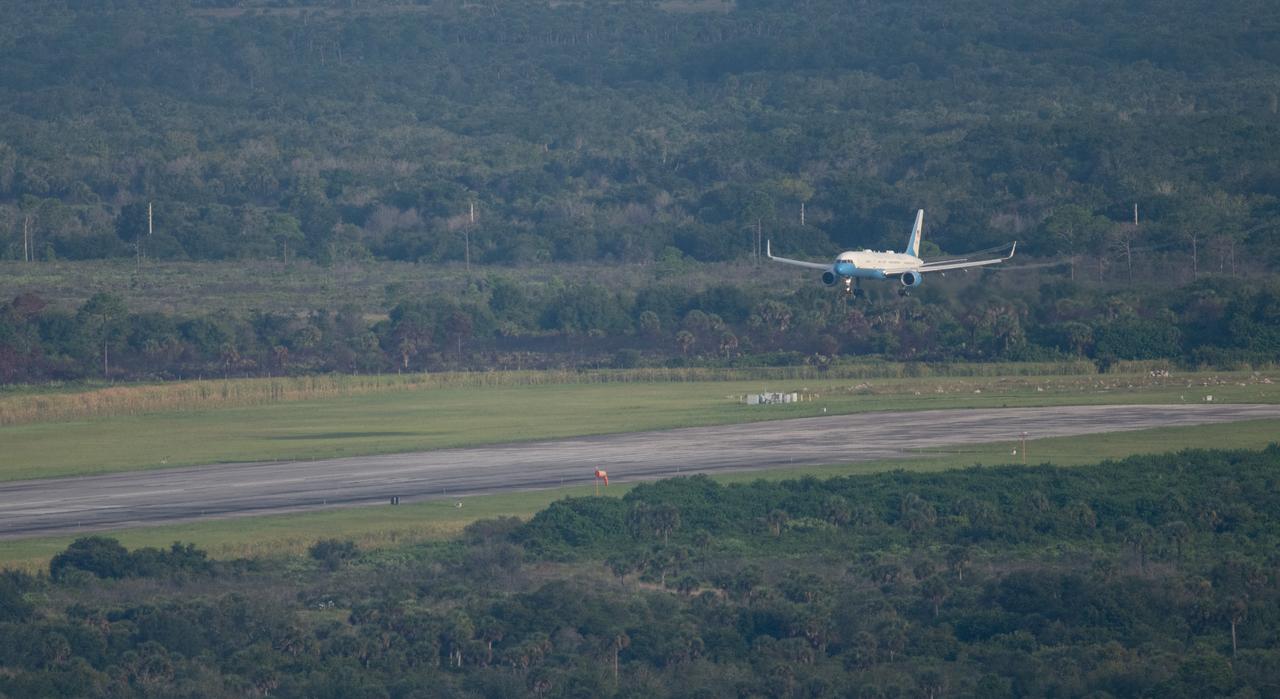
Air Force Two is seen as it arrives at the Launch and Landing Facility at NASA’s Kennedy Space Center ahead of the launch of Artemis I, Monday, Aug. 29, 2022, in Florida. NASA’s Artemis I flight test is the first integrated flight test of the agency’s deep space exploration systems: the Orion spacecraft, Space Launch System (SLS) rocket, and ground systems. The launch director halted today’s launch attempt at approximately 8:30 a.m. ET. Photo Credit: (NASA/Joel Kowsky)

Curtis Flack (left) and Paul von Hardenberg (right) inspect the ice formation on the spinner of an Advanced Air Mobility proprotor model tested in the Icing Research Tunnel. The data from the test will be used by icing researchers to better understand the risks of icing on electric vertical takeoff and landing vehicles which will assist with the design and certification of new aircraft.
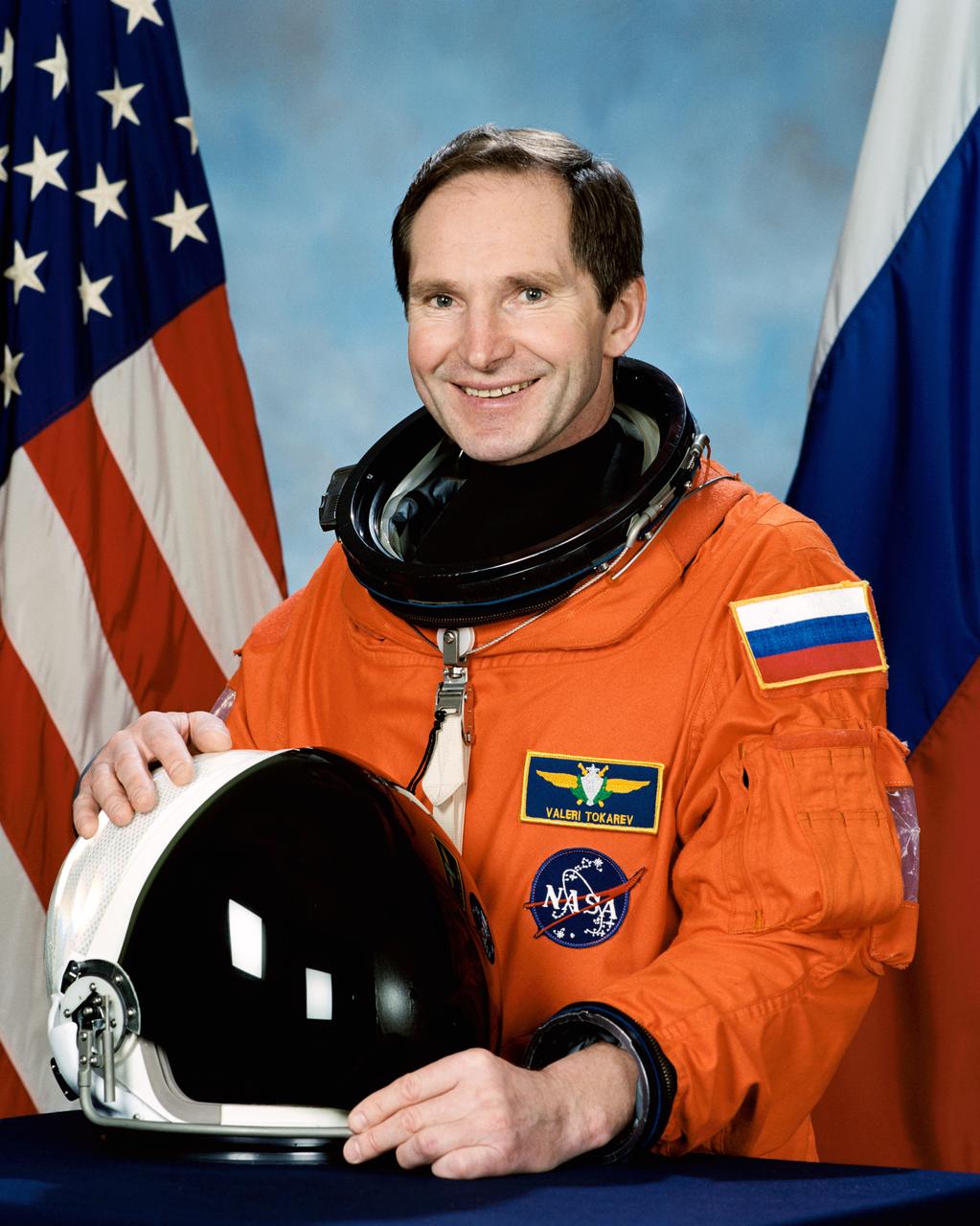
S99-03799 (1999) --- Cosmonaut Valery I. Tokarev, Colonel, Russian Air Force Test.
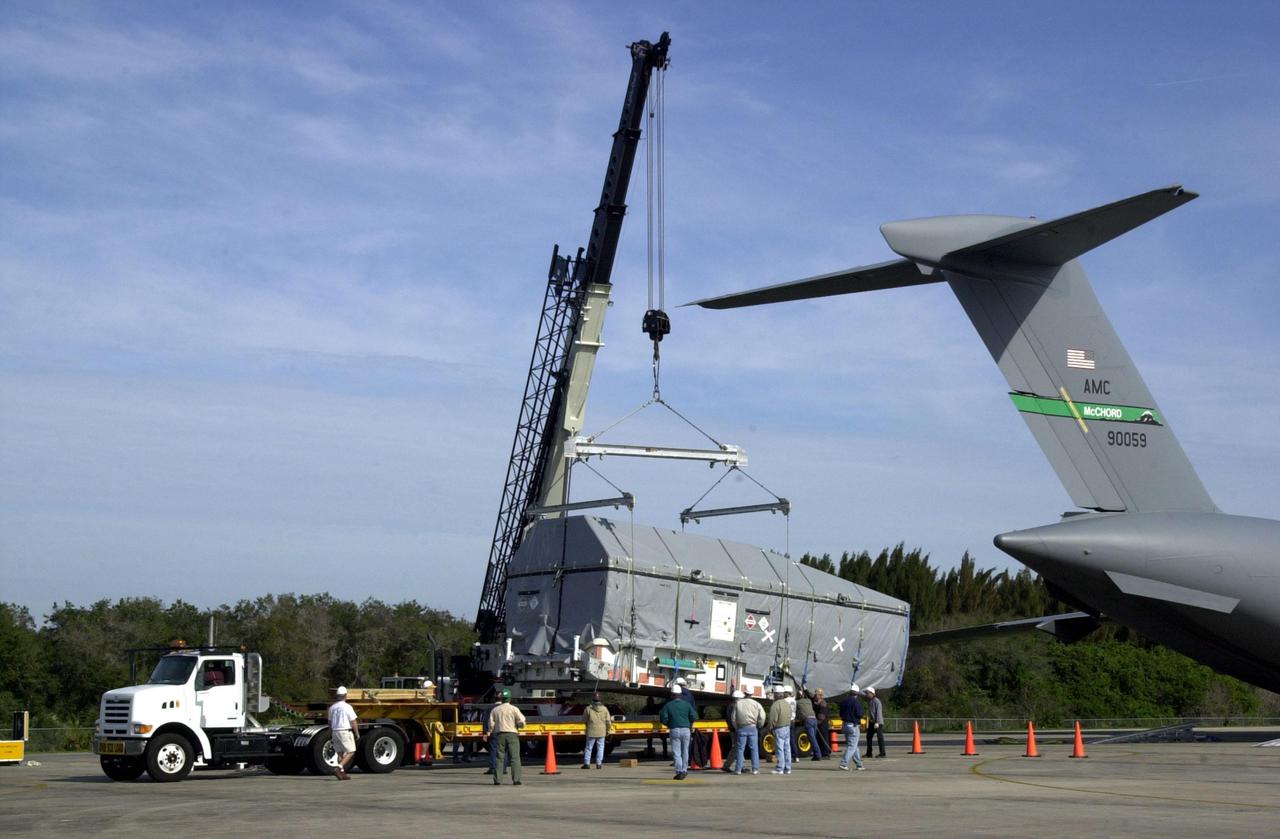
KENNEDY SPACE CENTER, FLA. -- At KSC's Shuttle Landing Facility, the Tracking and Data Relay Satellite-I (TDRS-I) is lifted onto a transporter after being offloaded from the Air Force C-17 air cargo plane at right. The second in a new series of telemetry satellites, TDRS-I replenishes the existing on-orbit fleet of six spacecraft. The TDRS System is the primary source of space-to-ground voice, data and telemetry for the Space Shuttle. It also provides communications with the International Space Station and scientific spacecraft in low-Earth orbit such as the Hubble Space Telescope. This new advanced series of satellites will extend the availability of TDRS communications services until about 2017. TDRS-I will undergo processing in the Spacecraft Assembly and Encapsulation Facility-2 (SAEF-2) to prepare it for launch March 8 aboard a Lockheed Martin Atlas IIA rocket from Pad 36-A, Cape Canaveral Air Force Station
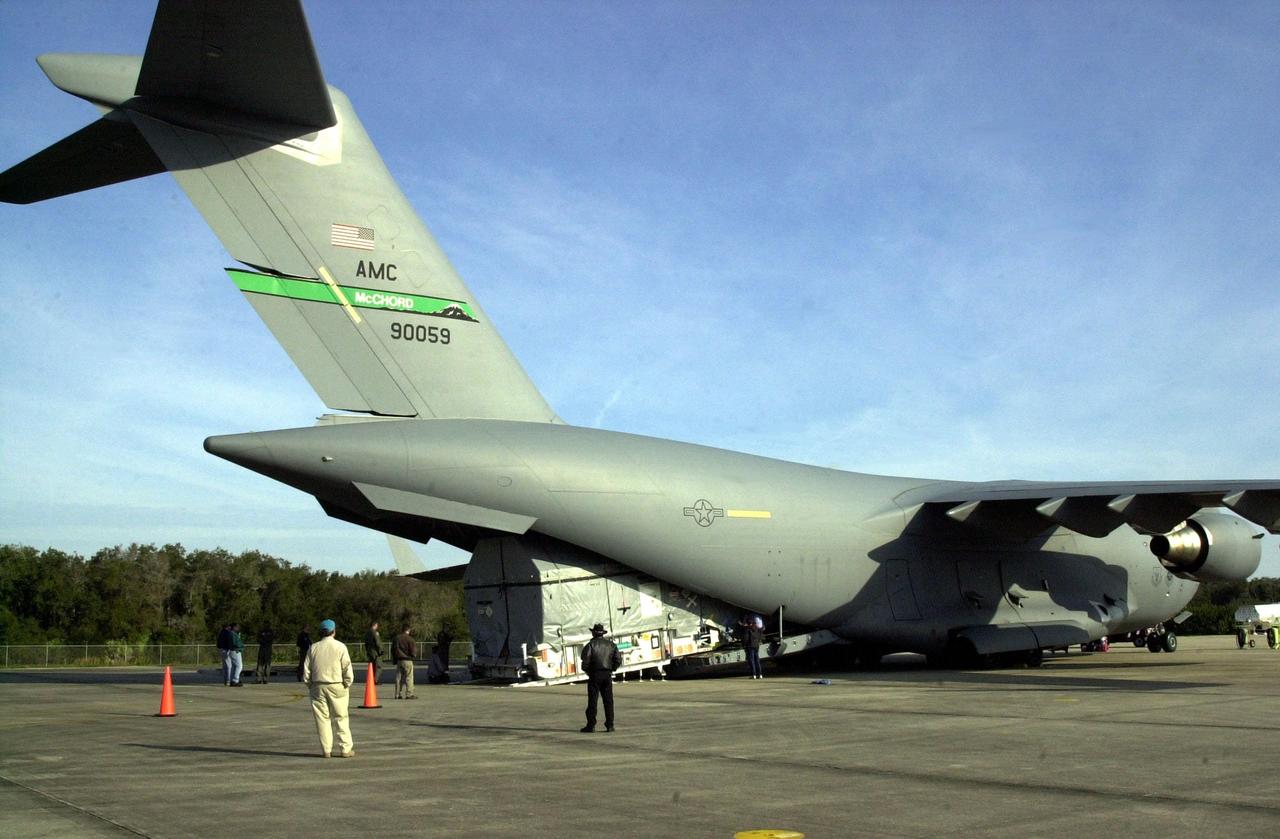
KENNEDY SPACE CENTER, FLA. -- At KSC's Shuttle Landing Facility, the Air Force C-17 air cargo plane offloads the Tracking and Data Relay Satellite-I (TDRS-I). The second in a new series of telemetry satellites, TDRS-I replenishes the existing on-orbit fleet of six spacecraft. The TDRS System is the primary source of space-to-ground voice, data and telemetry for the Space Shuttle. It also provides communications with the International Space Station and scientific spacecraft in low-Earth orbit such as the Hubble Space Telescope. This new advanced series of satellites will extend the availability of TDRS communications services until about 2017. TDRS-I will undergo processing in the Spacecraft Assembly and Encapsulation Facility-2 (SAEF-2) to prepare it for launch March 8 aboard a Lockheed Martin Atlas IIA rocket from Pad 36-A, Cape Canaveral Air Force Station

Portrait of April Albert in front of NASA Langley's Hawker Siddeley P-1127 on display at Air Power Park in Hampton, Virginia. Due to the COVID-19 pandemic, masks were mandated by Governor Northam in Virginia in public settings. This is for the faces of NASA project. "I am really made to feel like I am part of a family. I don’t feel like anybody is treated differently. We are all one team. To be a part of NASA, to me, is to be part of something special. There is nothing like the camaraderie of NASA. I feel like I’m where I belong.” — April Albert, Schedule Analyst, Langley Research Center
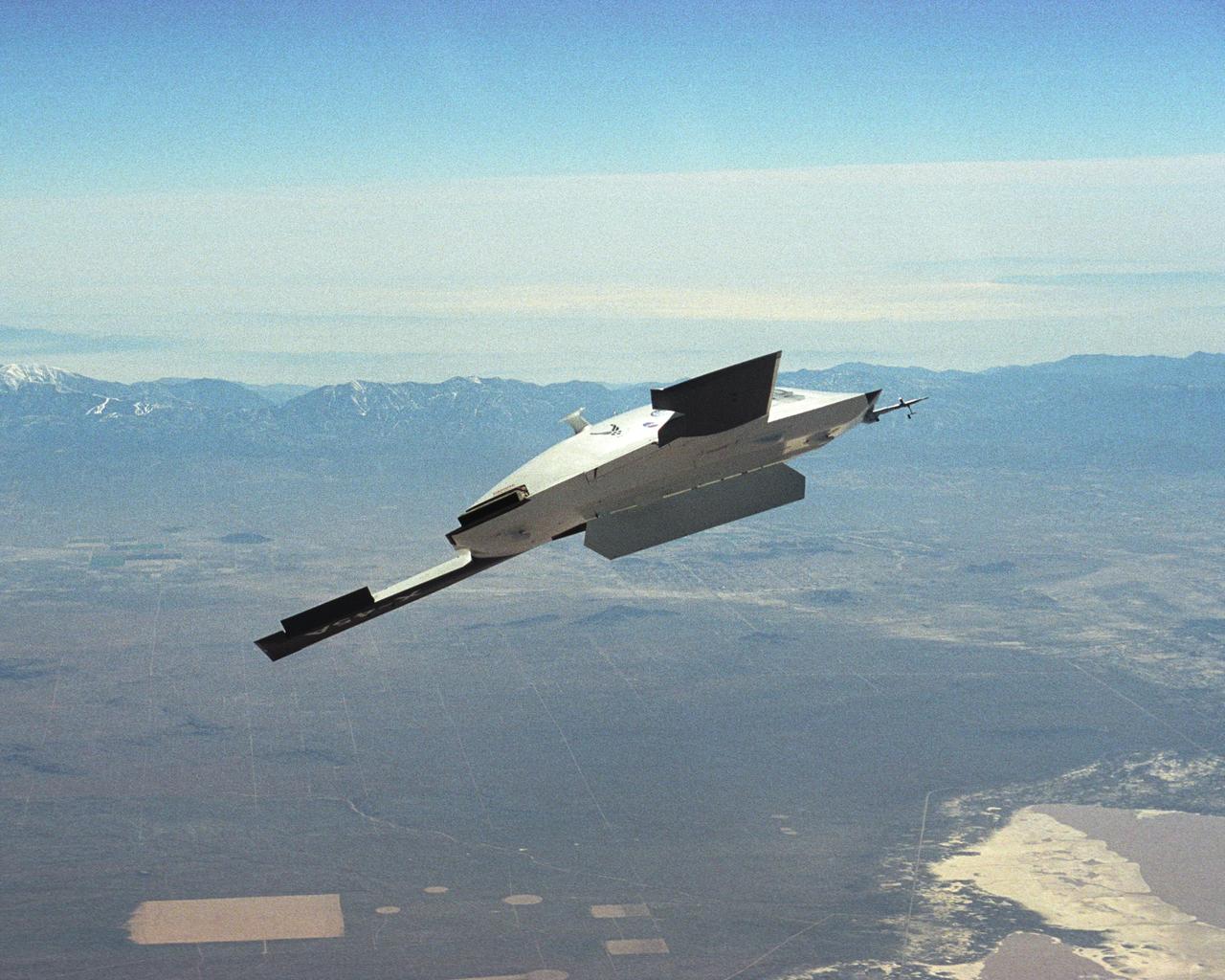
The DARPA/U.S. Air Force X-45A Unmanned Combat Air Vehicle (UCAV) system demonstration program completed the first phase of demonstrations, known as Block I, on Feb. 28, 2003. The final Block I activities included two flights at Dryden, during which safe operation of the weapons bay door was verified at 35,000 feet and speeds of Mach 0.75, the maximum planned altitude and speed for the two X-45A demonstrator vehicles.
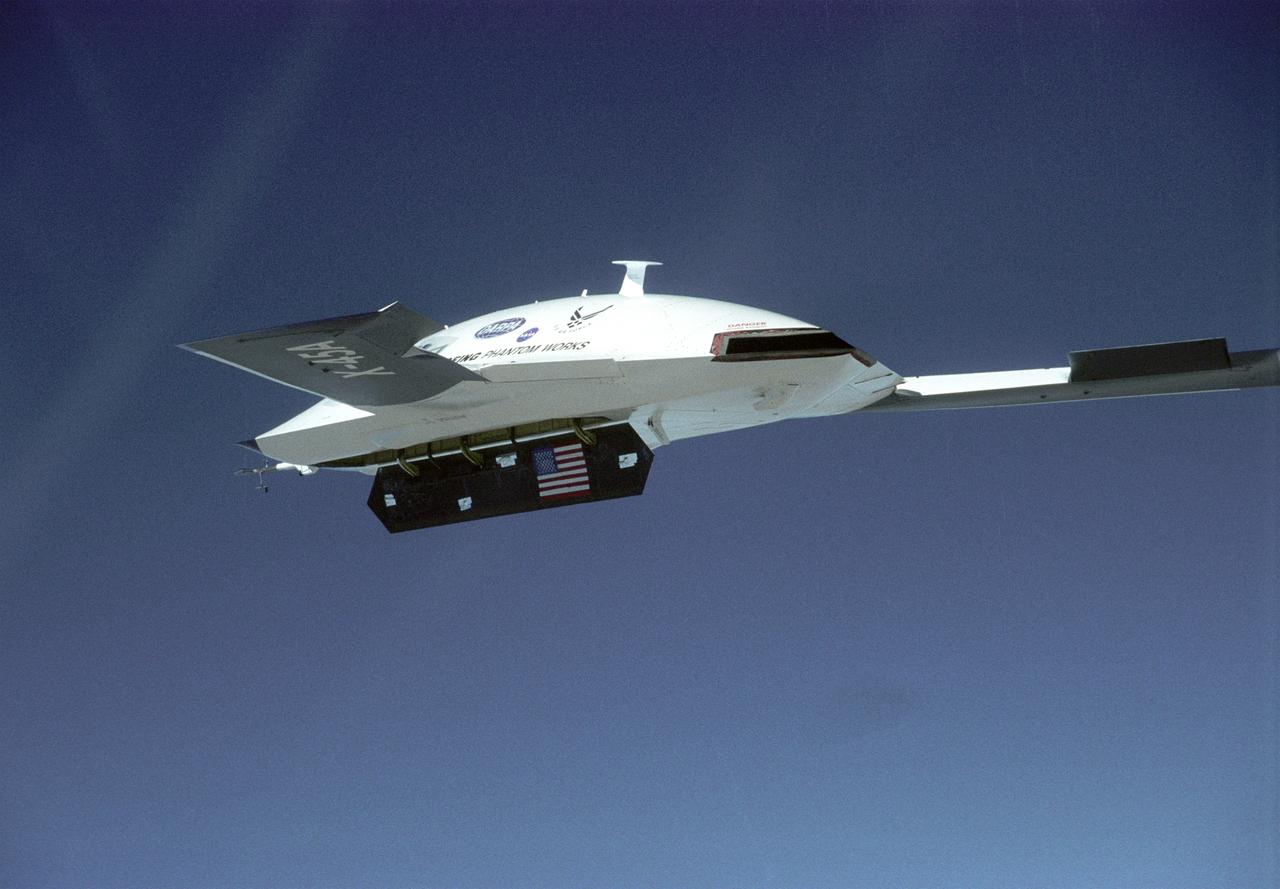
The DARPA/U.S. Air Force X-45A Unmanned Combat Air Vehicle (UCAV) system demonstration program completed the first phase of demonstrations, known as Block I, on Feb. 28, 2003. The final Block I activities included two flights at Dryden, during which safe operation of the weapons bay door was verified at 35,000 feet and speeds of Mach 0.75, the maximum planned altitude and speed for the two X-45A demonstrator vehicles.
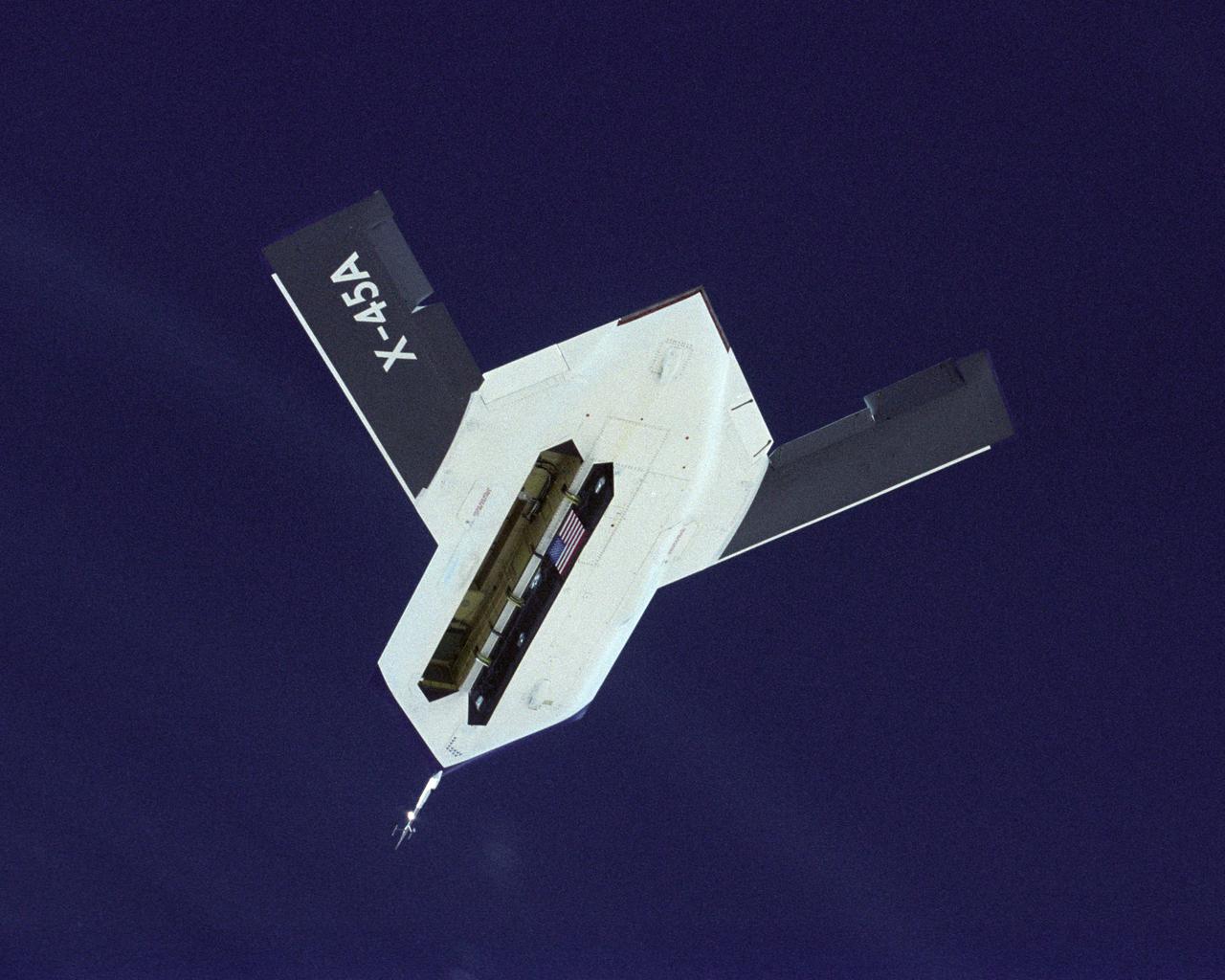
The DARPA/U.S. Air Force X-45A Unmanned Combat Air Vehicle (UCAV) system demonstration program completed the first phase of demonstrations, known as Block I, on Feb. 28, 2003. The final Block I activities included two flights at Dryden, during which safe operation of the weapons bay door was verified at 35,000 feet and speeds of Mach 0.75, the maximum planned altitude and speed for the two X-45A demonstrator vehicles.
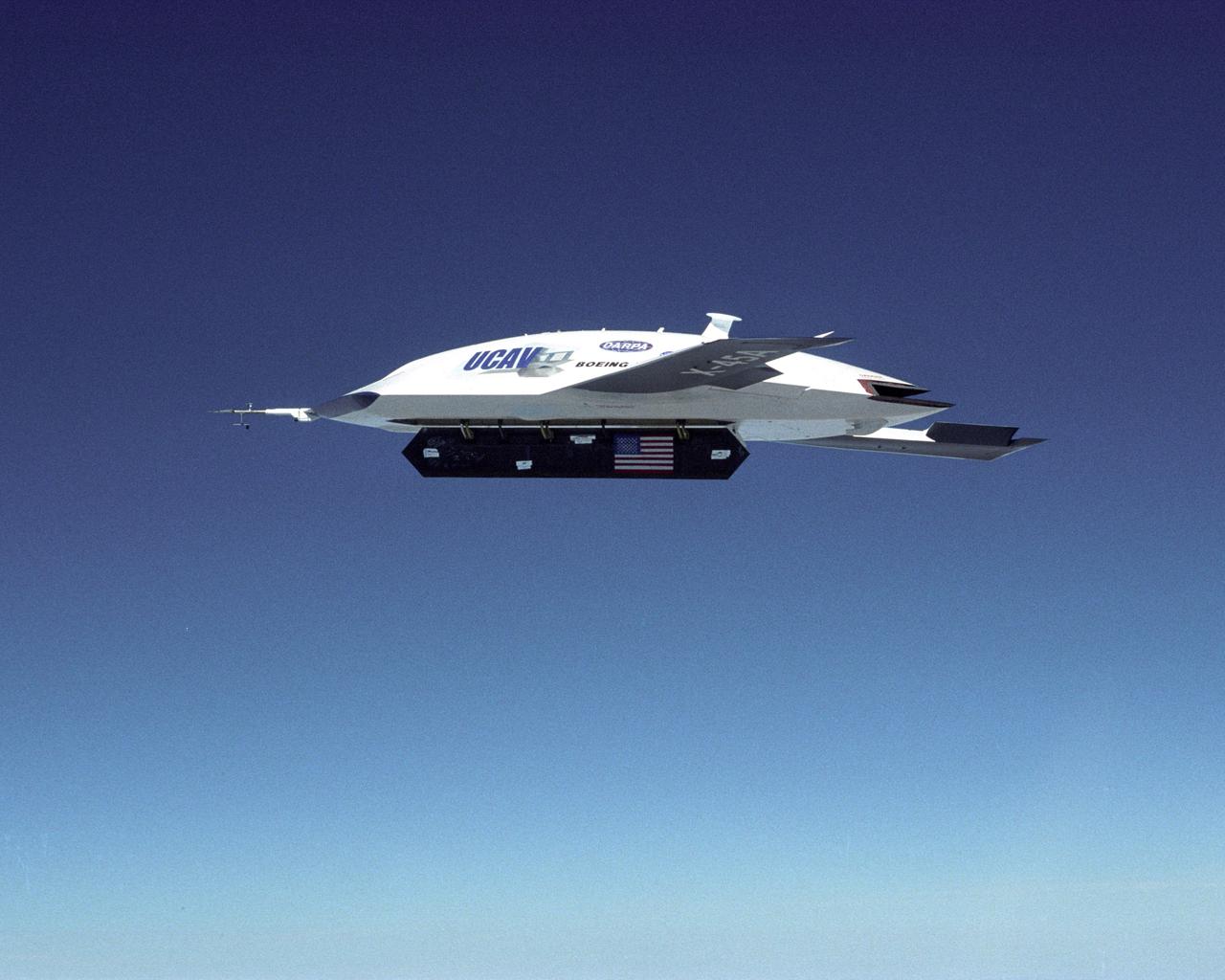
The DARPA/U.S. Air Force X-45A Unmanned Combat Air Vehicle (UCAV) system demonstration program completed the first phase of demonstrations, known as Block I, on Feb. 28, 2003. The final Block I activities included two flights at Dryden, during which safe operation of the weapons bay door was verified at 35,000 feet and speeds of Mach 0.75, the maximum planned altitude and speed for the two X-45A demonstrator vehicles.
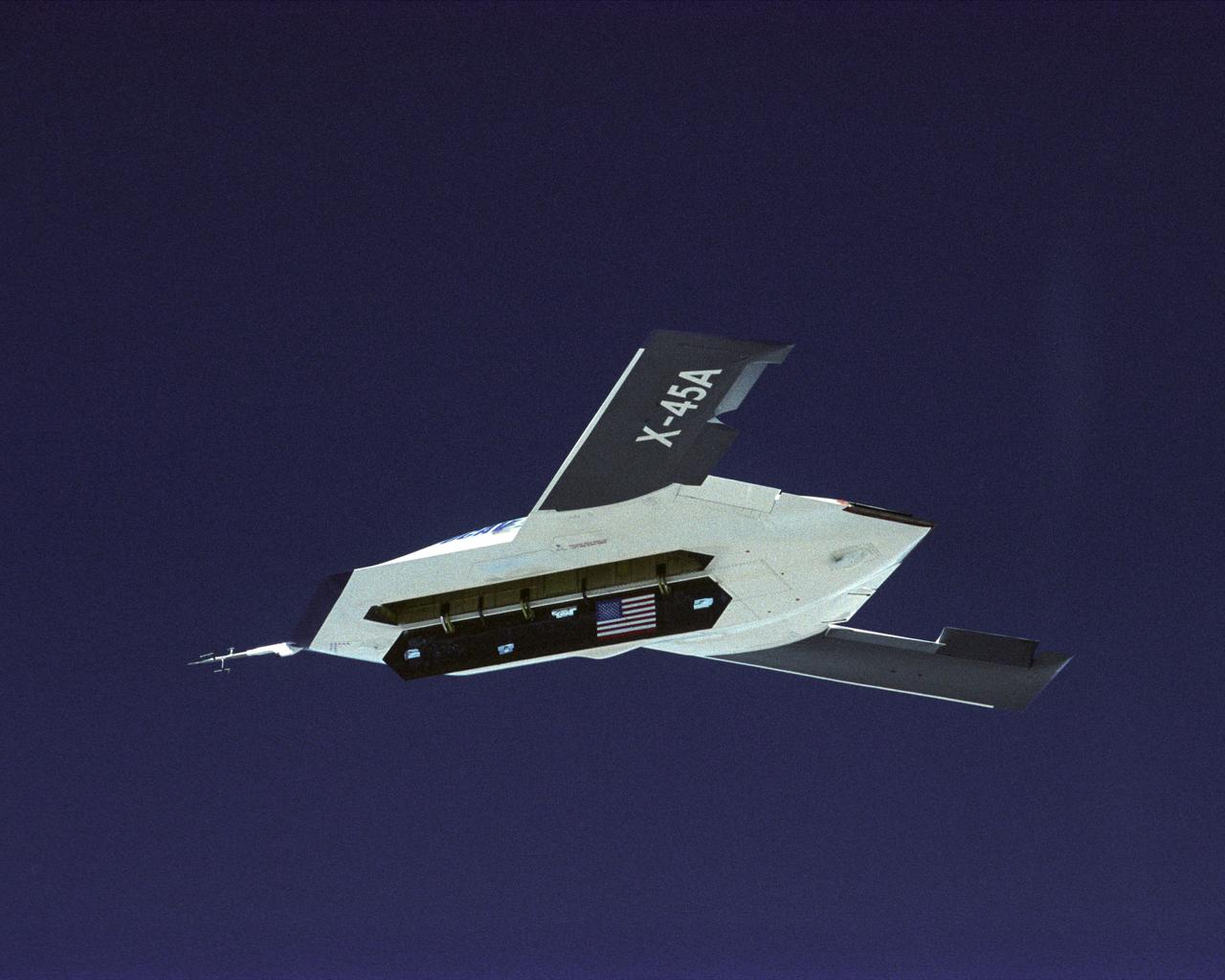
The DARPA/U.S. Air Force X-45A Unmanned Combat Air Vehicle (UCAV) system demonstration program completed the first phase of demonstrations, known as Block I, on Feb. 28, 2003. The final Block I activities included two flights at Dryden, during which safe operation of the weapons bay door was verified at 35,000 feet and speeds of Mach 0.75, the maximum planned altitude and speed for the two X-45A demonstrator vehicles.
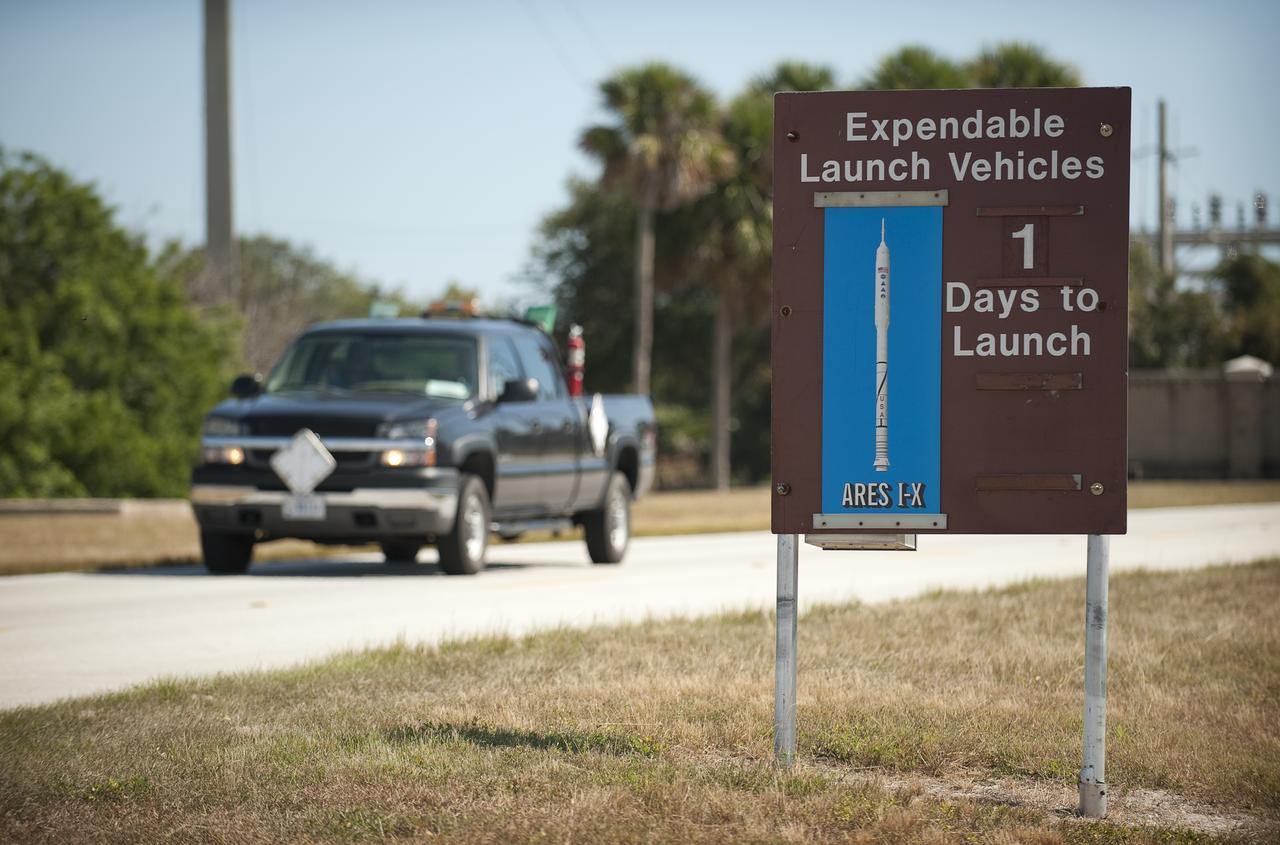
A launch countdown sign showing one day until launch of the NASA ARES I-X rocket is seen along the road between Cape Canaveral Air Force Base and the NASA Kennedy Space Center in Cape Canaveral, Florida on Monday, Oct. 26, 2009. The flight test of Ares I-X, scheduled for Tuesday, Oct. 27, 2009, will provide NASA with an early opportunity to test and prove flight characteristics, hardware, facilities and ground operations associated with the Ares I. Photo Credit: (NASA/Bill Ingalls)

NASA’s Air Operations Co-Lead Don Reed briefs the air ops team during Underway Recovery Test 9 (URT-9) aboard the USS John P. Murtha. During the weeklong test, NASA’s Landing and Recovery team is performing their final mission certification ahead of Artemis I.
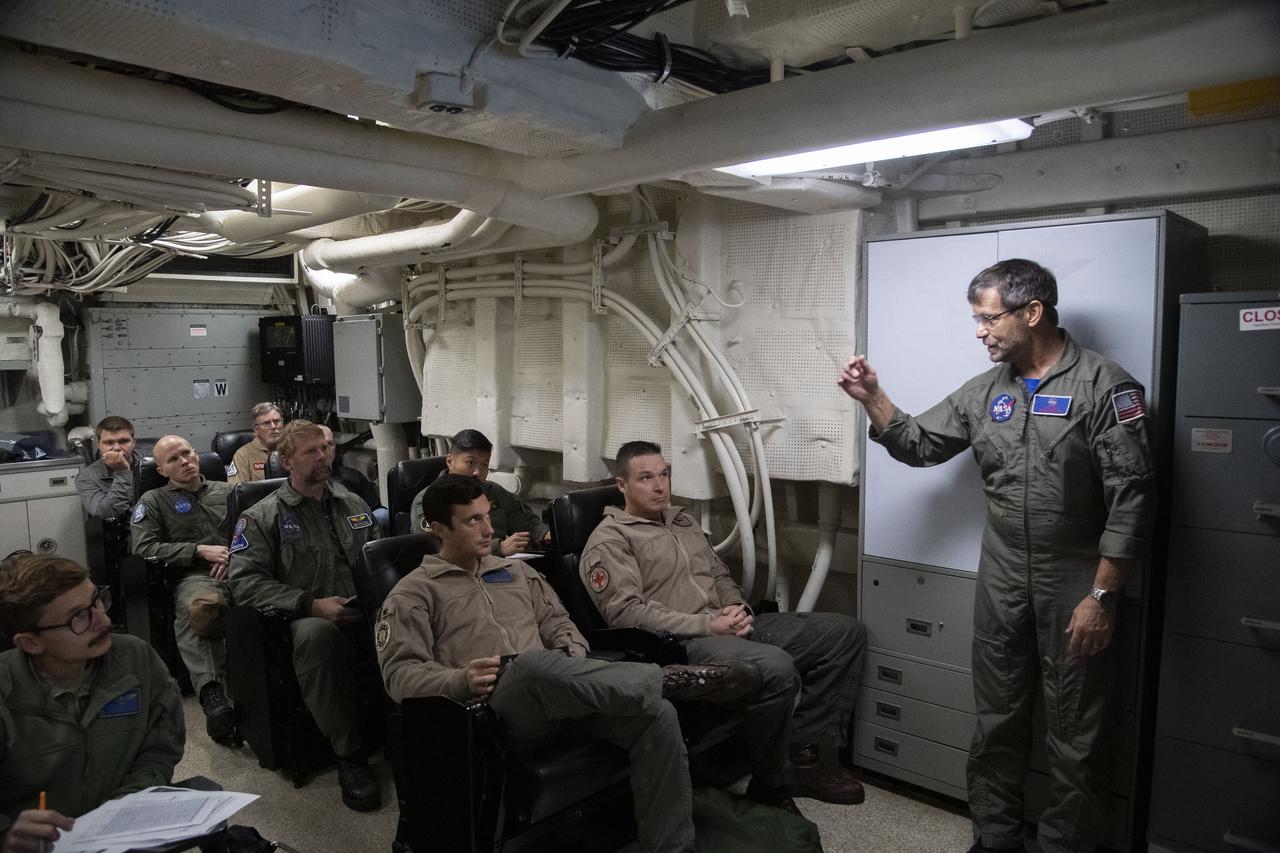
NASA’s Air Operations Co-Lead Don Reed briefs the air ops team during Underway Recovery Test 9 (URT-9) aboard the USS John P. Murtha. During the weeklong test, NASA’s Landing and Recovery team is performing their final mission certification ahead of Artemis I.
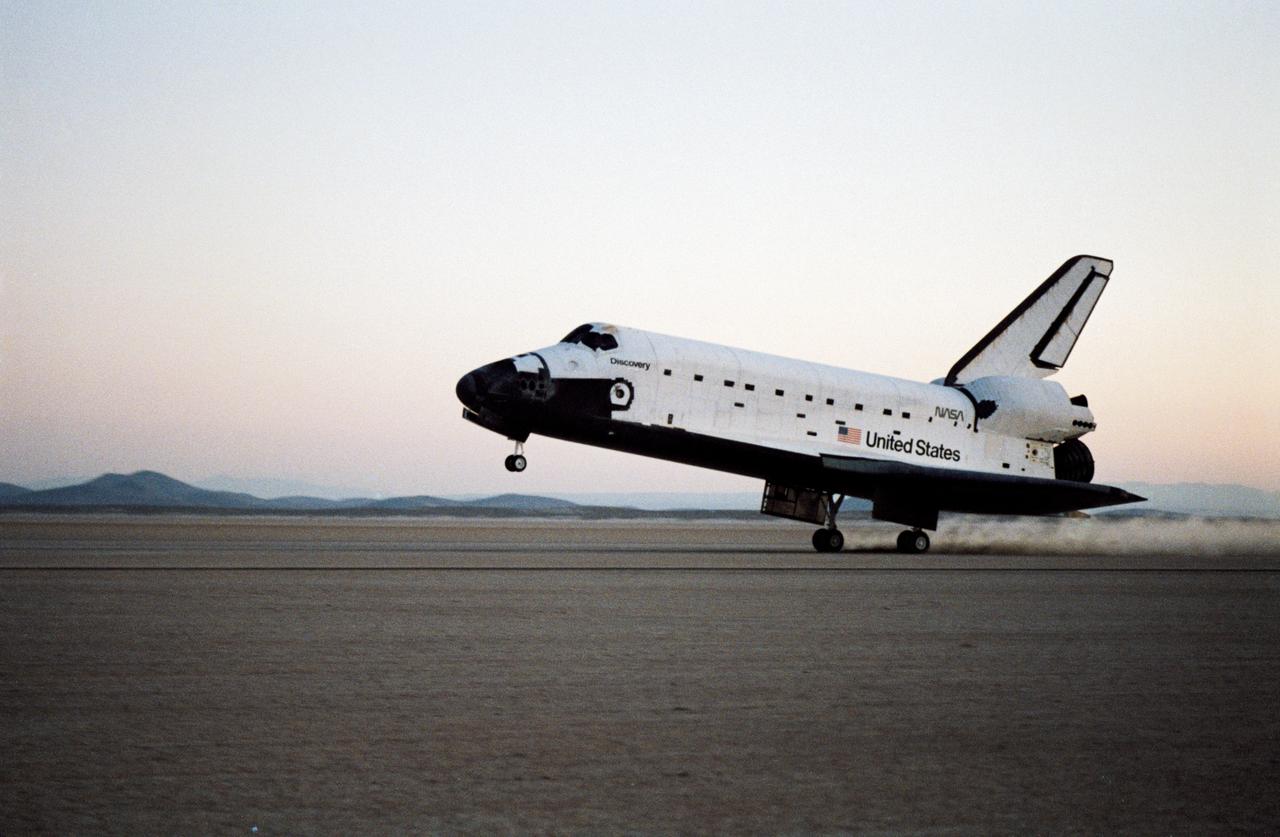
51I-S-225 (3 September 1985) --- The Space Shuttle Discovery lands on September 3, 1985 on Runway 23, Edwards Air Force Base, CA, to successfully complete the 51-I mission.
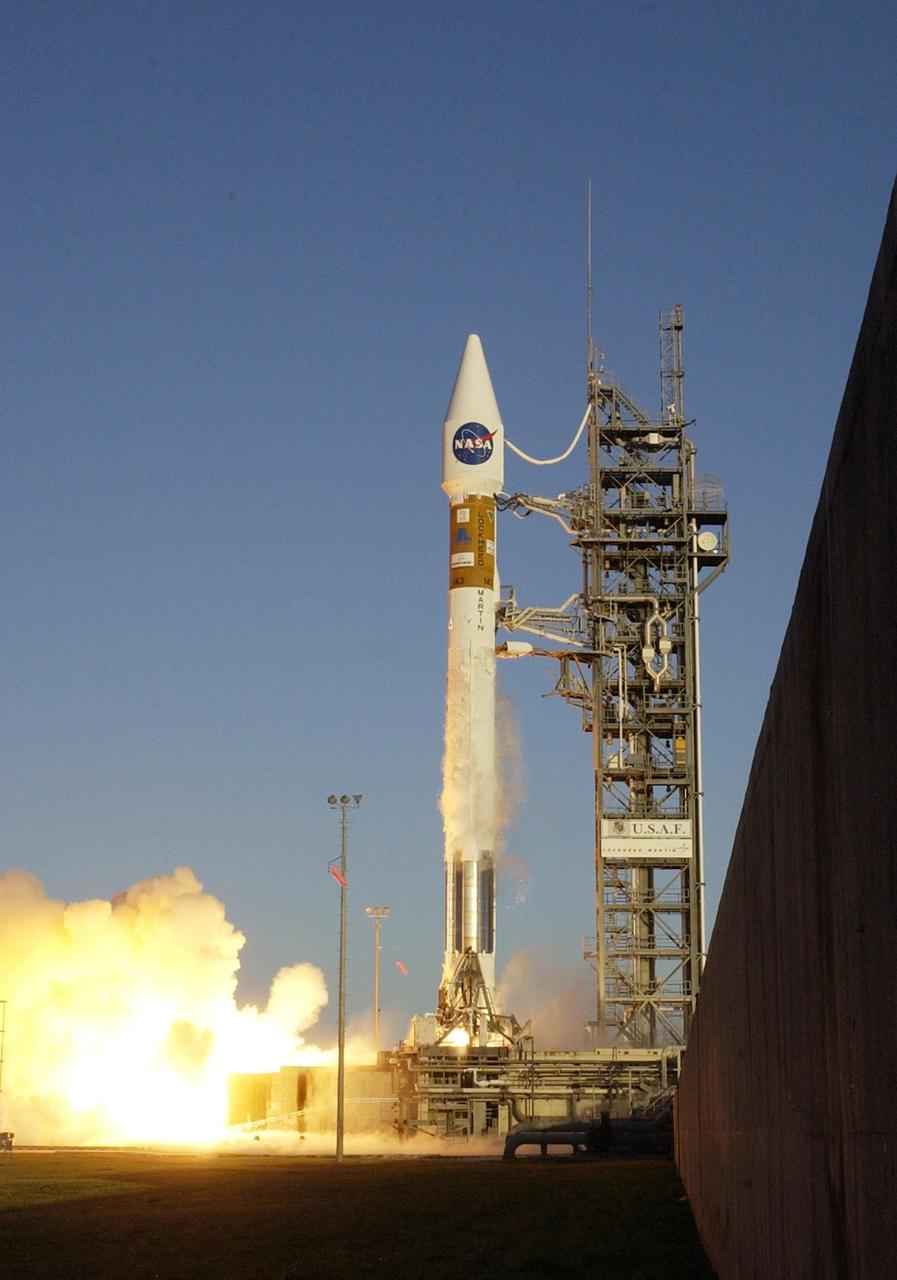
KENNEDY SPACE CENTER, FLA. - The Lockheed Martin Atlas IIA rocket lifts off from Launch Pad 36-A, Cape Canaveral Air Force Station, with the Tracking and Data Relay Satellite-I (TDRS-I) aboard. TDRS-I replenishes the existing on-orbit fleet of six spacecraft. The TDRS System is the primary source of space-to-ground voice, data and telemetry for the Space Shuttle. It also provides communications with the International Space Station and scientific spacecraft in low-Earth orbit such as the Hubble Space Telescope. This new advanced series of satellites will extend the availability of TDRS communications services until about 2017. Liftoff occurred at 5:59 p.m. EST
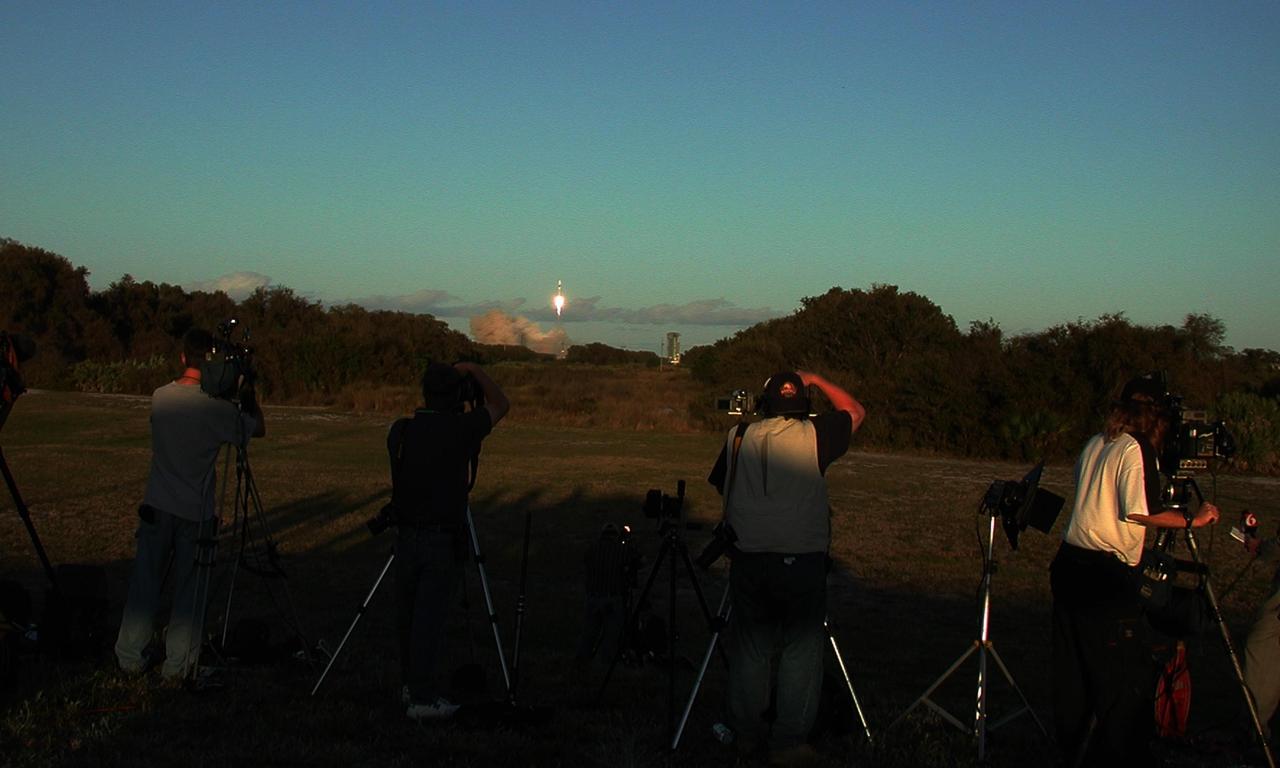
KENNEDY SPACE CENTER, FLA. -- Photographers capture the launch of the Tracking and Data Relay Satellite-I (TDRS-I) aboard a Lockheed Martin Atlas IIA rocket from Launch Pad 36-A, Cape Canaveral Air Force Station. TDRS-I replenishes the existing on-orbit fleet of six spacecraft. The TDRS System is the primary source of space-to-ground voice, data and telemetry for the Space Shuttle. It also provides communications with the International Space Station and scientific spacecraft in low-Earth orbit such as the Hubble Space Telescope. This new advanced series of satellites will extend the availability of TDRS communications services until about 2017. Liftoff occurred at 5:59 p.m. EST
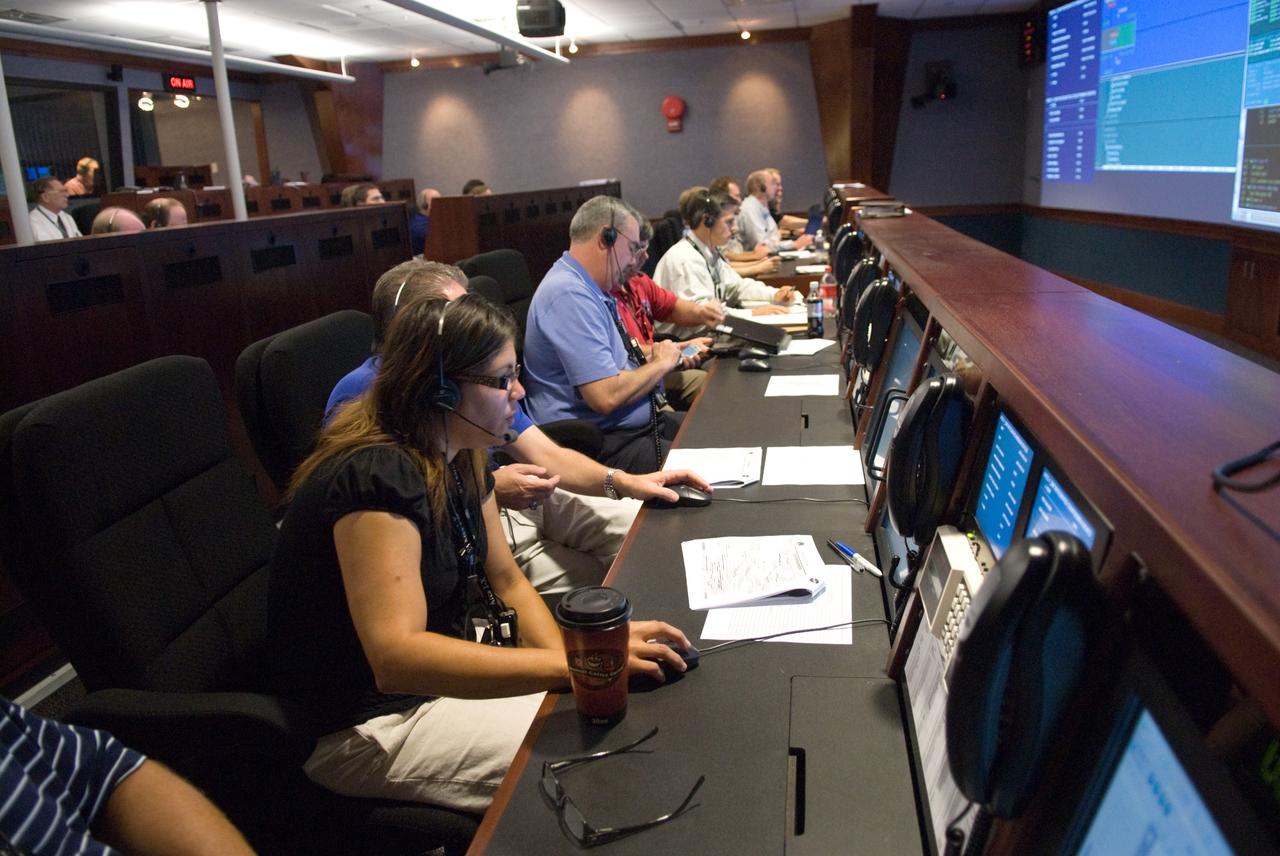
CAPE CANAVERAL, Fla. – In the Mission Director Center in Cape Canaveral Air Force Station's Hangar AE, mission engineers take part in a countdown simulation for the upcoming Ares I-X flight test. Ares I-X is targeted for the test on Oct. 31. The Hangar AE control rooms provide real-time voice, data and video information for ex¬pendable vehicle checkout and launch operations, similar to that provided by the space shuttle control rooms. Photo credit: NASA/Kim Shiflett
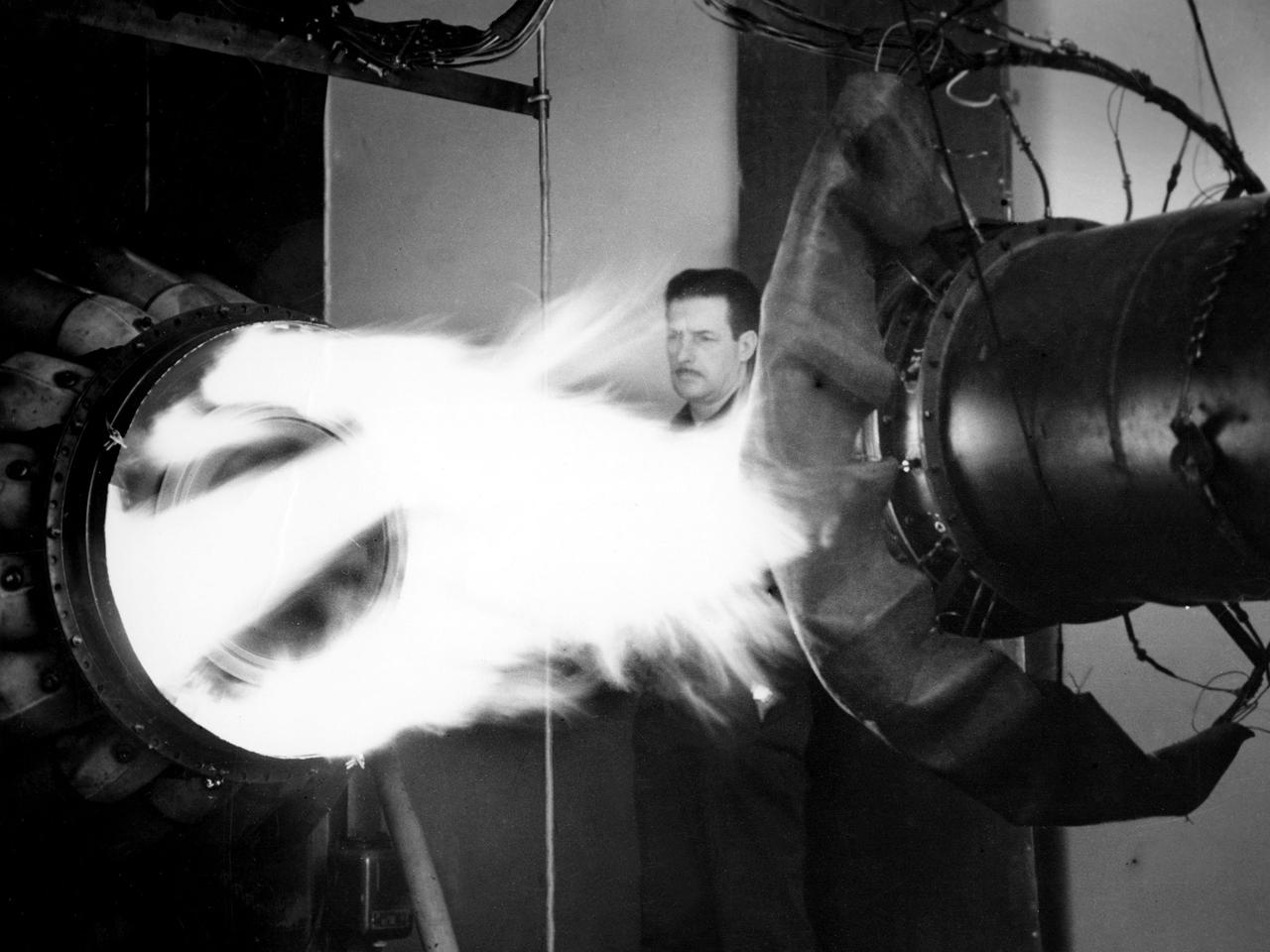
A mechanic watches the firing of a General Electric I-40 turbojet at the National Advisory Committee for Aeronautics (NACA) Lewis Flight Propulsion Laboratory. The military selected General Electric’s West Lynn facility in 1941 to secretly replicate the centrifugal turbojet engine designed by British engineer Frank Whittle. General Electric’s first attempt, the I-A, was fraught with problems. The design was improved somewhat with the subsequent I-16 engine. It was not until the engine's next reincarnation as the I-40 in 1943 that General Electric’s efforts paid off. The 4000-pound thrust I-40 was incorporated into the Lockheed Shooting Star airframe and successfully flown in June 1944. The Shooting Star became the US’s first successful jet aircraft and the first US aircraft to reach 500 miles per hour. NACA Lewis studied all of General Electric’s centrifugal turbojet models during the 1940s. In 1945 the entire Shooting Star aircraft was investigated in the Altitude Wind Tunnel. Engine compressor performance and augmentation by water injection; comparison of different fuel blends in a single combustor; and air-cooled rotors were studied. The mechanic in this photograph watches the firing of a full-scale I-40 in the Jet Propulsion Static Laboratory. The facility was quickly built in 1943 specifically in order to test the early General Electric turbojets. The I-A was secretly analyzed in the facility during the fall of 1943.
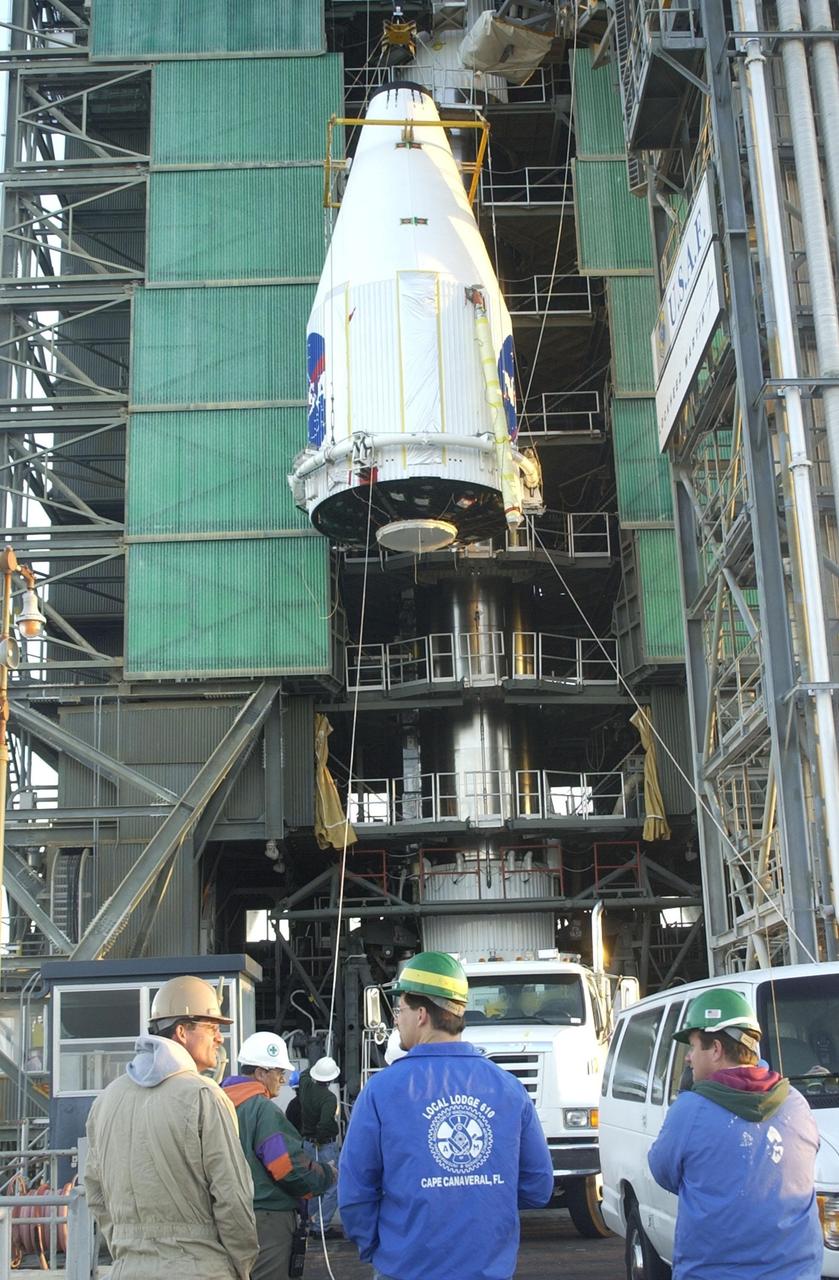
KENNEDY SPACE CENTER, FLA. -- The nose fairing arrives at Pad 36-A, Cape Canaveral Air Force Station, Fla., with the Tracking and Data Relay Satellite-I (TDRS-I) inside. The fairing will be attached to the Lockheed Martin Atlas IIA rocket for launch. The second in a new series of telemetry satellites, TDRS-I replenishes the existing on-orbit fleet of six spacecraft. The TDRS System is the primary source of space-to-ground voice, data and telemetry for the Space Shuttle. It also provides communications with the International Space Station and scientific spacecraft in low-Earth orbit such as the Hubble Space Telescope. This new advanced series of satellites will extend the availability of TDRS communications services until about 2017. Launch of TDRS-I is scheduled for March 8 between 5:39 - 6:19 p.m. EST
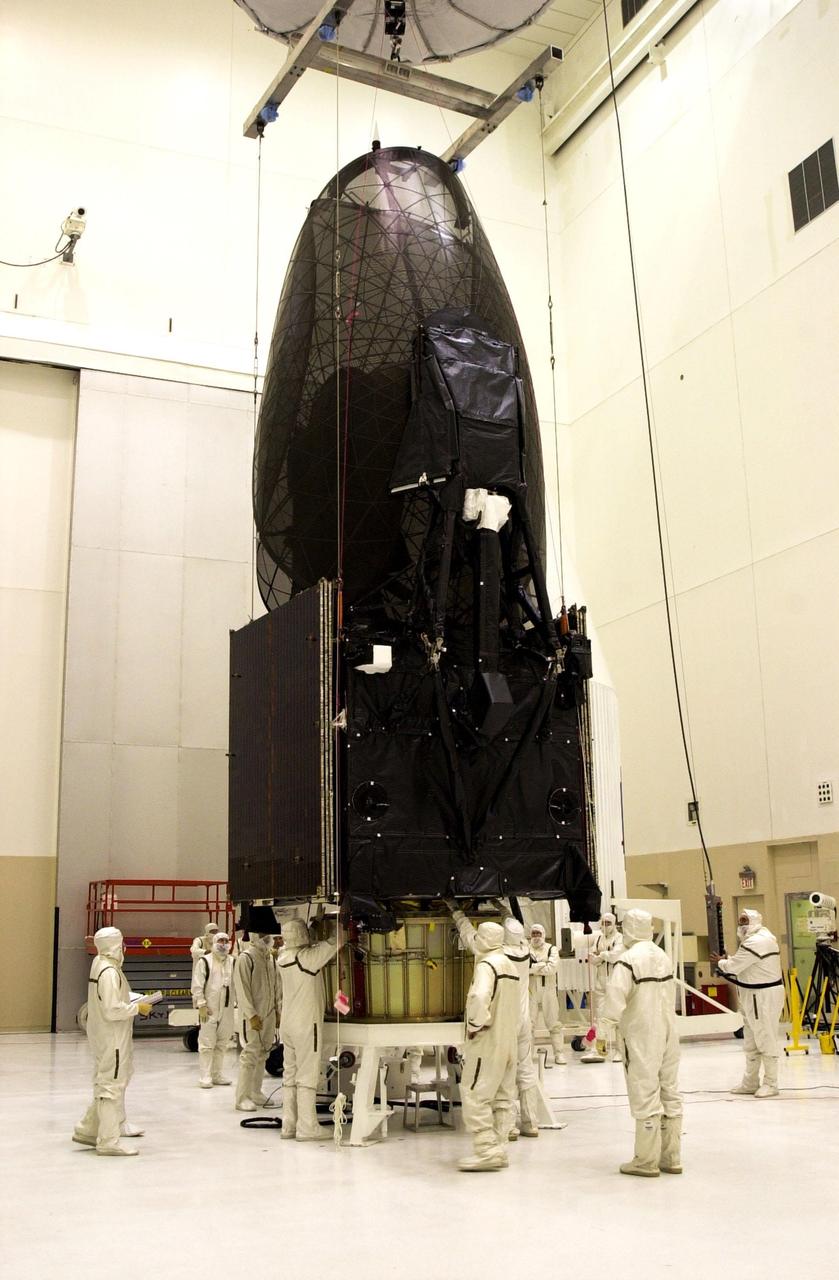
KENNEDY SPACE CENTER, Fla. - The Tracking and Data Relay Satellite-I (TDRS-I) is lifted for mating with the adapter of its nose fairing in the Spacecraft Assembly and Encapsulation Facility-2 (SAEF-2). The second in a new series of telemetry satellites, TDRS-I replenishes the existing on-orbit fleet of six spacecraft. The TDRS System is the primary source of space-to-ground voice, data and telemetry for the Space Shuttle. It also provides communications with the International Space Station and scientific spacecraft in low-Earth orbit such as the Hubble Space Telescope. This new advanced series of satellites will extend the availability of TDRS communications services until about 2017. Launch of TDRS-I is scheduled for March 8 aboard a Lockheed Martin Atlas IIA rocket from Pad 36-A, Cape Canaveral Air Force Station
![“Discipline is one of the things that they instill with you [in the military.] All the way starting in boot camp, [the goal] is doing the right thing when nobody's looking. Integrity. Whenever you're in boot camp, they always say, ‘it's too easy.’ It's just too easy to follow the rules, read the book, read the regulations, and that's probably why I enjoy contracting. I like reading the regulations and following the regulations. …[Now that I work for Safety and Mission Assurance,] it's really cool to read everything about the different types of the scenarios. I always get to see the task orders and the type of work that is going on to keep people safe on the ground and in the air.” NASA Contract Specialist at NASA’s Goddard Space Flight Center (GSFC), Miranda Meyer, poses for a portrait, Wednesday, Feb. 7, 2024 at GSFC in Greenbelt, Maryland. Photo Credit: (NASA/Thalia Patrinos)](https://images-assets.nasa.gov/image/NHQ202402070015/NHQ202402070015~medium.jpg)
“Discipline is one of the things that they instill with you [in the military.] All the way starting in boot camp, [the goal] is doing the right thing when nobody's looking. Integrity. Whenever you're in boot camp, they always say, ‘it's too easy.’ It's just too easy to follow the rules, read the book, read the regulations, and that's probably why I enjoy contracting. I like reading the regulations and following the regulations. …[Now that I work for Safety and Mission Assurance,] it's really cool to read everything about the different types of the scenarios. I always get to see the task orders and the type of work that is going on to keep people safe on the ground and in the air.” NASA Contract Specialist at NASA’s Goddard Space Flight Center (GSFC), Miranda Meyer, poses for a portrait, Wednesday, Feb. 7, 2024 at GSFC in Greenbelt, Maryland. Photo Credit: (NASA/Thalia Patrinos)

KENNEDY SPACE CENTER, FLA. - On Launch Pad 36-A, Cape Canaveral Air Force Station, the tower is rolled away from the Lockheed Martin Atlas/Centaur rocket prior to launch. The rocket will carry the Tracking and Data Relay Satellite-I (TDRS-I) into orbit. The second in a new series of telemetry satellites, TDRS-I replenishes the existing on-orbit fleet of six spacecraft. The TDRS System is the primary source of space-to-ground voice, data and telemetry for the Space Shuttle. It also provides communications with the International Space Station and scientific spacecraft in low-Earth orbit such as the Hubble Space Telescope. This new advanced series of satellites will extend the availability of TDRS communications services until about 2017. Launch of TDRS-I is scheduled between 5:39 - 6:19 p.m. EST
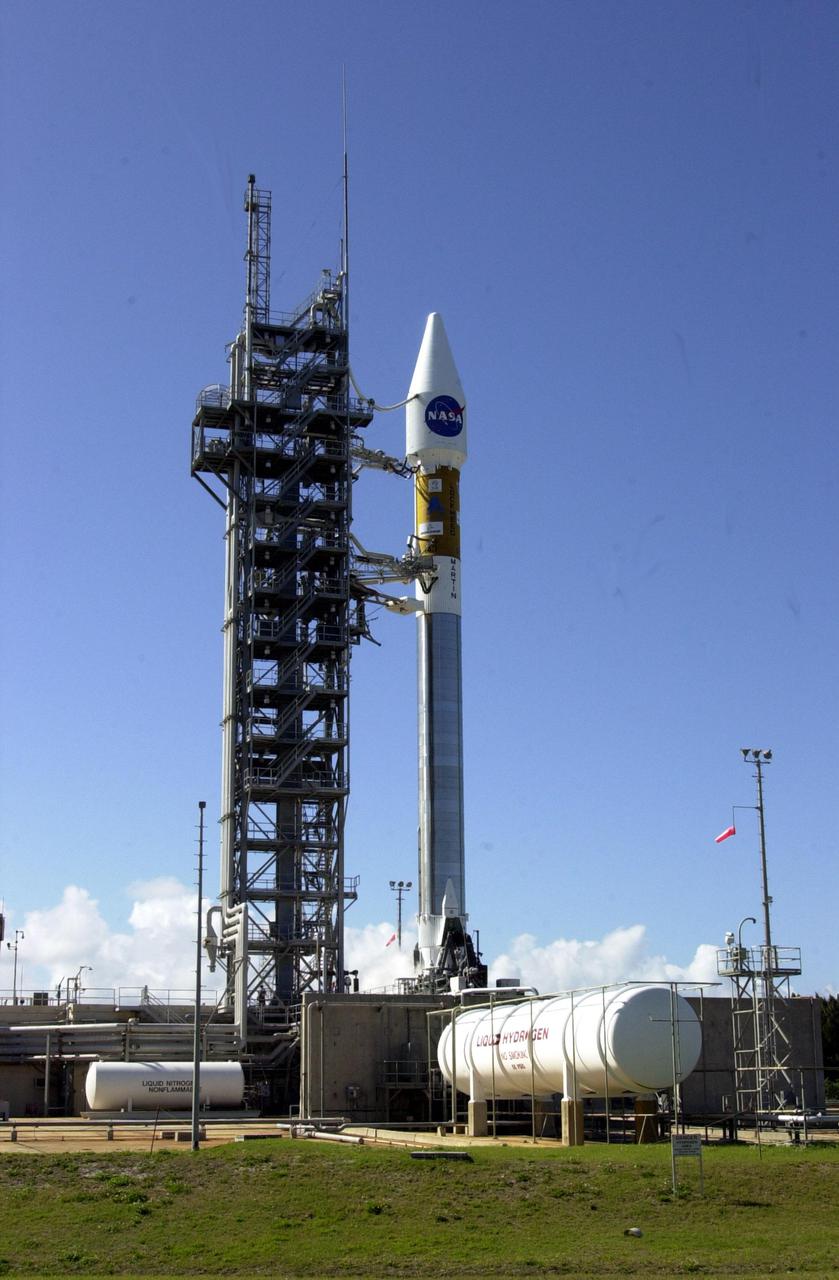
KENNEDY SPACE CENTER, FLA. -- After tower rollback, this Lockheed Martin Atlas_Centaur rocket waits for launch to carry the Tracking and Data Relay Satellite-I (TDRS-I) into orbit. The second in a new series of telemetry satellites, TDRS-I replenishes the existing on-orbit fleet of six spacecraft. The TDRS System is the primary source of space-to-ground voice, data and telemetry for the Space Shuttle. It also provides communications with the International Space Station and scientific spacecraft in low-Earth orbit such as the Hubble Space Telescope. This new advanced series of satellites will extend the availability of TDRS communications services until about 2017. Launch of TDRS-I atop the Atlas rocket is scheduled between 5:39 - 6:19 p.m. EST from Launch Pad 36-A, Cape Canaveral Air Force Station
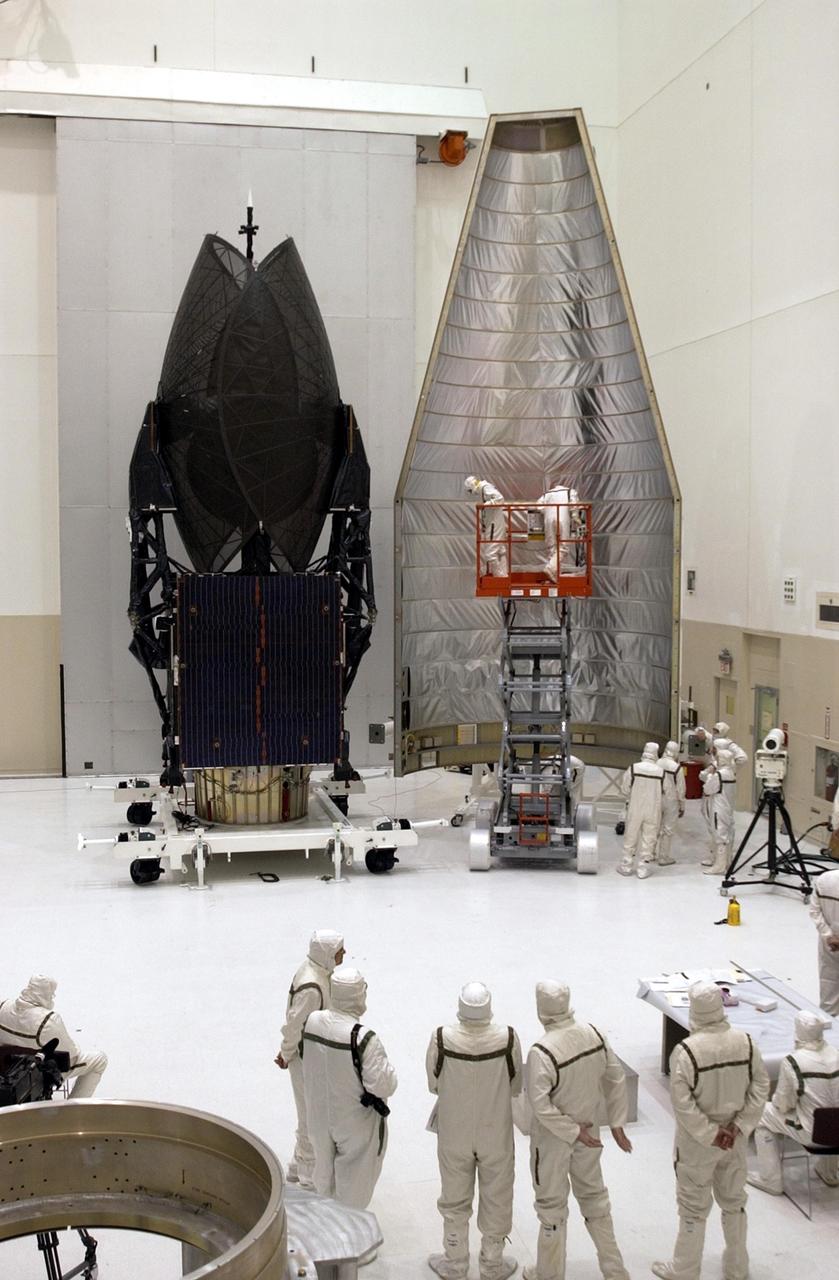
KENNEDY SPACE CENTER, FLA. -- In the Spacecraft Assembly and Encapsulation Facility-2 (SAEF-2), the Tracking and Data Relay Satellite-I (TDRS-I) (left) waits for encapsulation in the first half of the nose fairing , in preparation for launch. The second in a new series of telemetry satellites, TDRS-I replenishes the existing on-orbit fleet of six spacecraft. The TDRS System is the primary source of space-to-ground voice, data and telemetry for the Space Shuttle. It also provides communications with the International Space Station and scientific spacecraft in low-Earth orbit such as the Hubble Space Telescope. This new advanced series of satellites will extend the availability of TDRS communications services until about 2017. Launch of TDRS-I is scheduled for March 8 aboard a Lockheed Martin Atlas IIA rocket from Pad 36-A, Cape Canaveral Air Force Station

KENNEDY SPACE CENTER, FLA. -- The nose fairing arrives at Pad 36-A, Cape Canaveral Air Force Station, Fla., with the Tracking and Data Relay Satellite-I (TDRS-I) inside. The fairing will be attached to the Lockheed Martin Atlas IIA rocket for launch. The second in a new series of telemetry satellites, TDRS-I replenishes the existing on-orbit fleet of six spacecraft. The TDRS System is the primary source of space-to-ground voice, data and telemetry for the Space Shuttle. It also provides communications with the International Space Station and scientific spacecraft in low-Earth orbit such as the Hubble Space Telescope. This new advanced series of satellites will extend the availability of TDRS communications services until about 2017. Launch of TDRS-I is scheduled for March 8 between 5:39 - 6:19 p.m. EST
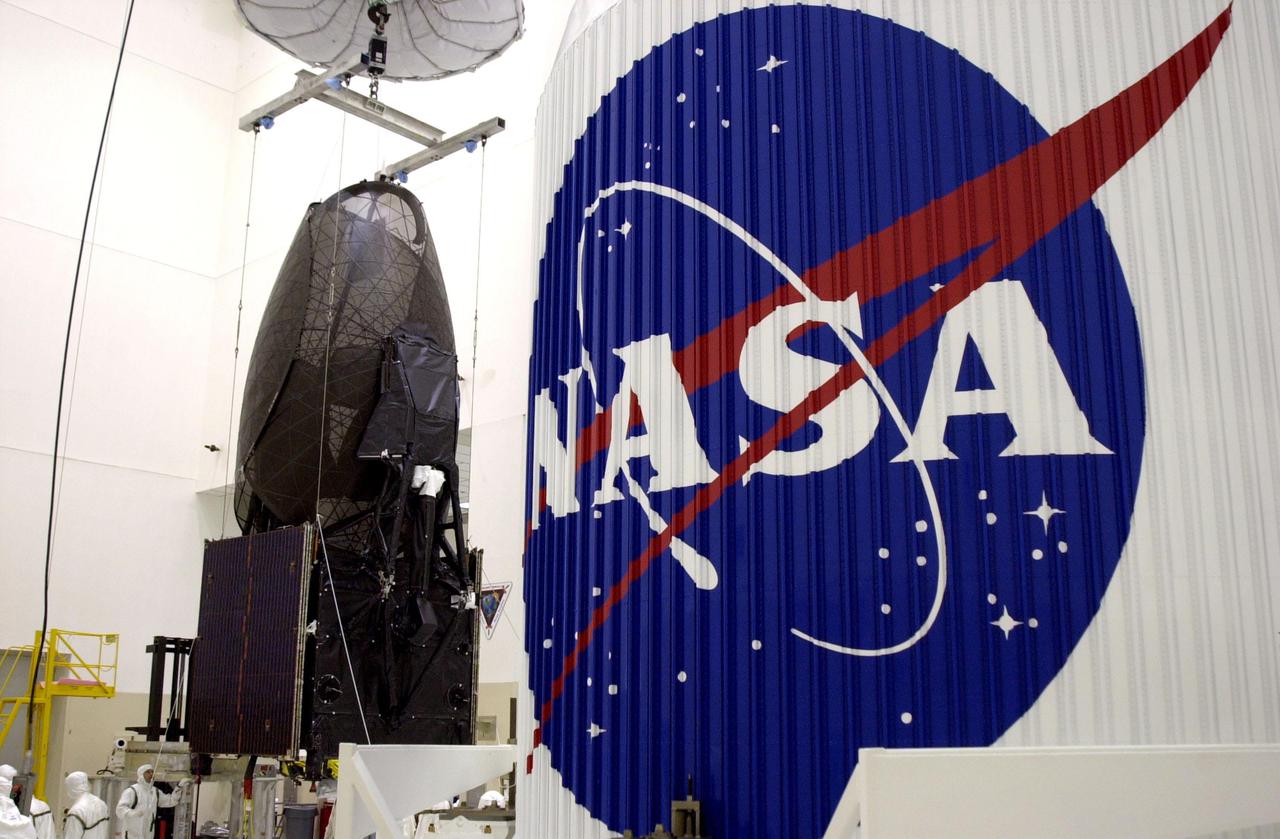
KENNEDY SPACE CENTER, Fla. - The Tracking and Data Relay Satellite-I (TDRS-I) is readied for mating with its nose fairing (in foreground) in the Spacecraft Assembly and Encapsulation Facility-2 (SAEF-2). The second in a new series of telemetry satellites, TDRS-I replenishes the existing on-orbit fleet of six spacecraft. The TDRS System is the primary source of space-to-ground voice, data and telemetry for the Space Shuttle. It also provides communications with the International Space Station and scientific spacecraft in low-Earth orbit such as the Hubble Space Telescope. This new advanced series of satellites will extend the availability of TDRS communications services until about 2017. Launch of TDRS-I is scheduled for March 8 aboard a Lockheed Martin Atlas IIA rocket from Pad 36-A, Cape Canaveral Air Force Station
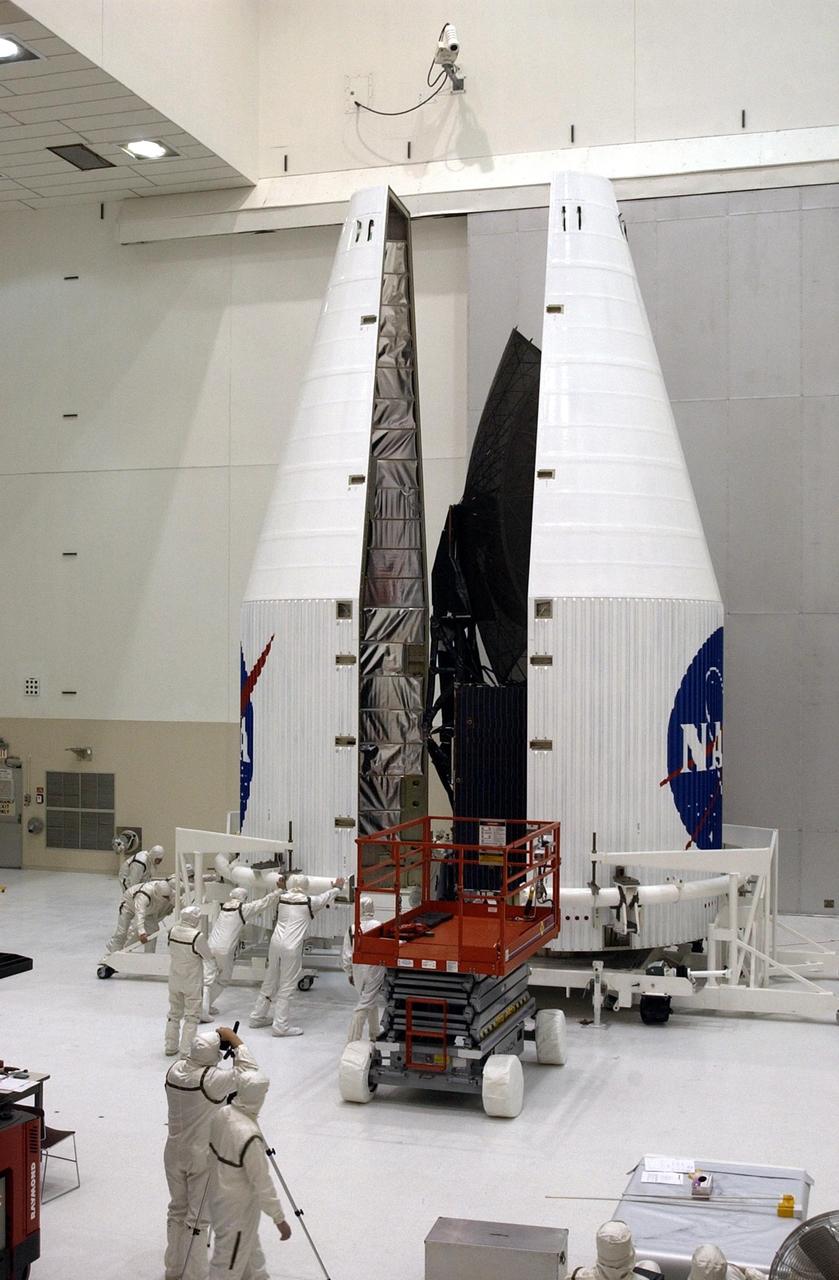
KENNEDY SPACE CENTER, FLA. -- Workers in the Spacecraft Assembly and Encapsulation Facility-2 (SAEF-2) push the second half of the nose fairing (left) toward the Tracking and Data Relay Satellite-I (TDRS-I) already enclosed by the first half. The second in a new series of telemetry satellites, TDRS-I replenishes the existing on-orbit fleet of six spacecraft. The TDRS System is the primary source of space-to-ground voice, data and telemetry for the Space Shuttle. It also provides communications with the International Space Station and scientific spacecraft in low-Earth orbit such as the Hubble Space Telescope. This new advanced series of satellites will extend the availability of TDRS communications services until about 2017. Launch of TDRS-I is scheduled for March 8 aboard a Lockheed Martin Atlas IIA rocket from Pad 36-A, Cape Canaveral Air Force Station

KENNEDY SPACE CENTER, FLA. -- On Pad 36-A, Cape Canaveral Air Force Station, Fla., the nose fairing encapsulating the Tracking and Data Relay Satellite-I (TDRS-I) is mated to the Lockheed Martin Atlas IIA rocket. The second in a new series of telemetry satellites, TDRS-I replenishes the existing on-orbit fleet of six spacecraft. The TDRS System is the primary source of space-to-ground voice, data and telemetry for the Space Shuttle. It also provides communications with the International Space Station and scientific spacecraft in low-Earth orbit such as the Hubble Space Telescope. This new advanced series of satellites will extend the availability of TDRS communications services until about 2017. Launch of TDRS-I is scheduled for March 8 between 5:39 - 6:19 p.m. EST

KENNEDY SPACE CENTER, Fla. - The Tracking and Data Relay Satellite-I (TDRS-I) is lifted from a workstand in the Spacecraft Assembly and Encapsulation Facility-2 (SAEF-2) as preparations are made to mate it with the adapter of its nose fairing. The second in a new series of telemetry satellites, TDRS-I replenishes the existing on-orbit fleet of six spacecraft. The TDRS System is the primary source of space-to-ground voice, data and telemetry for the Space Shuttle. It also provides communications with the International Space Station and scientific spacecraft in low-Earth orbit such as the Hubble Space Telescope. This new advanced series of satellites will extend the availability of TDRS communications services until about 2017. Launch of TDRS-I is scheduled for March 8 aboard a Lockheed Martin Atlas IIA rocket from Pad 36-A, Cape Canaveral Air Force Station
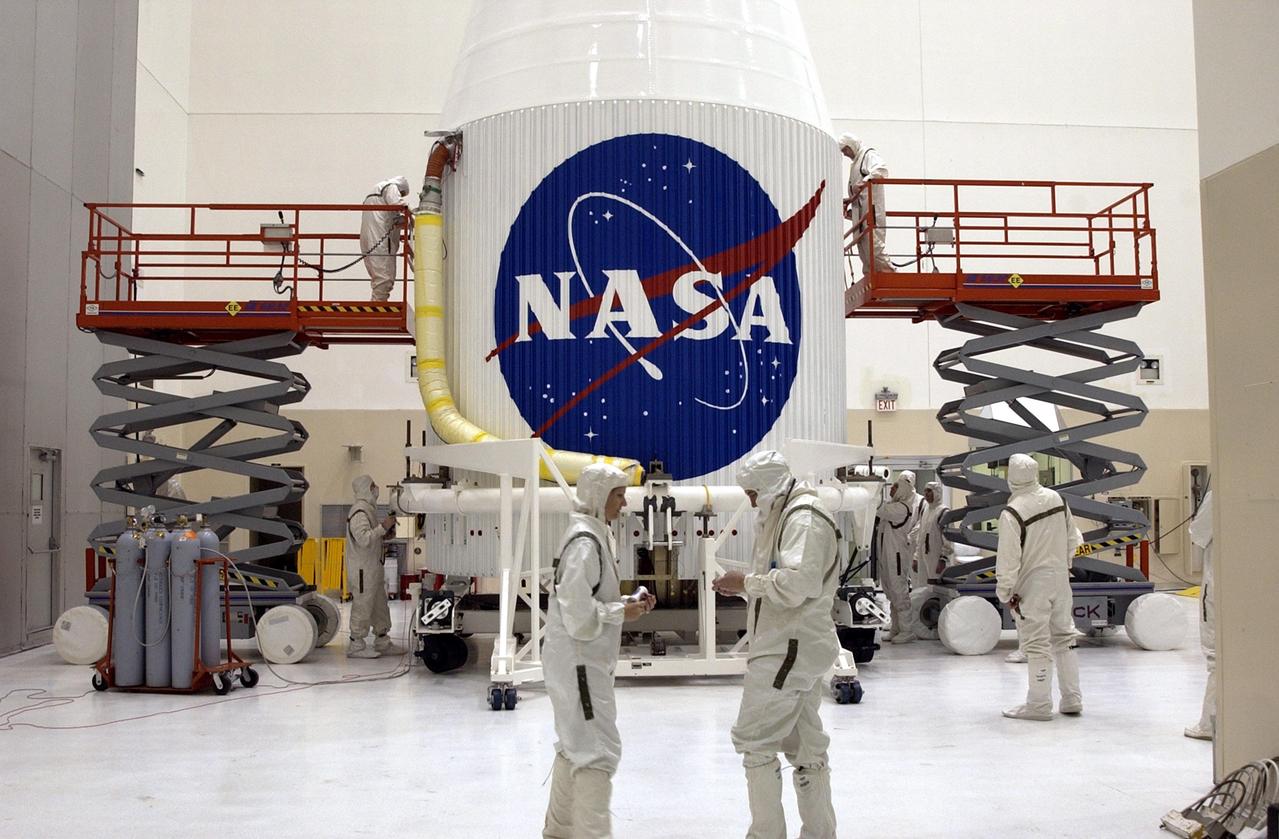
KENNEDY SPACE CENTER, FLA. -- Workers in the Spacecraft Assembly and Encapsulation Facility-2 (SAEF-2) make final adjustments on the nose fairing surrounding the Tracking and Data Relay Satellite-I (TDRS-I). The second in a new series of telemetry satellites, TDRS-I replenishes the existing on-orbit fleet of six spacecraft. The TDRS System is the primary source of space-to-ground voice, data and telemetry for the Space Shuttle. It also provides communications with the International Space Station and scientific spacecraft in low-Earth orbit such as the Hubble Space Telescope. This new advanced series of satellites will extend the availability of TDRS communications services until about 2017. Launch of TDRS-I is scheduled for March 8 aboard a Lockheed Martin Atlas IIA rocket from Pad 36-A, Cape Canaveral Air Force Station
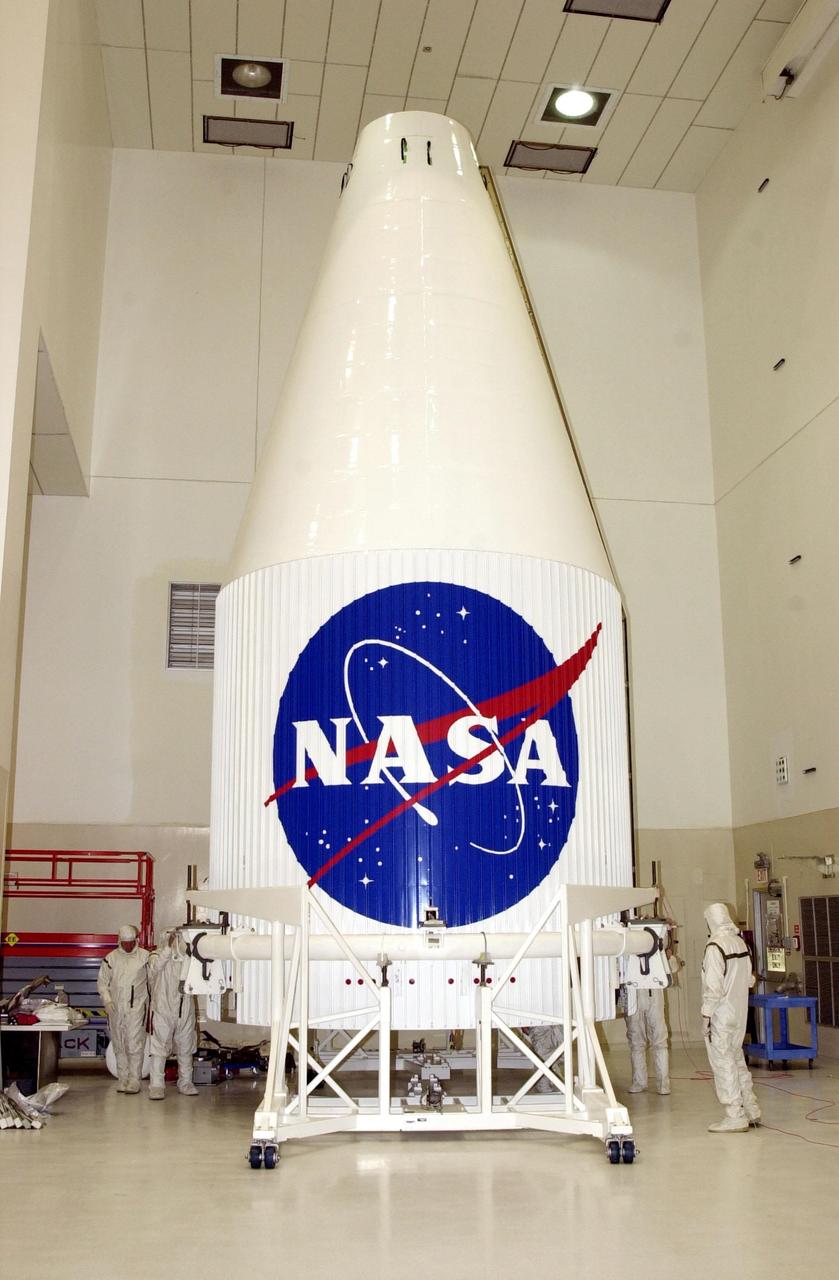
KENNEDY SPACE CENTER, FLA. - The fully encapsulated Tracking and Data Relay Satellite-I (TDRS-I) waits in the Spacecraft Assembly and Encapsulation Facility-2 (SAEF-2) for transfer to Cape Canaveral Air Force Station. The second in a new series of telemetry satellites, TDRS-I replenishes the existing on-orbit fleet of six spacecraft. The TDRS System is the primary source of space-to-ground voice, data and telemetry for the Space Shuttle. It also provides communications with the International Space Station and scientific spacecraft in low-Earth orbit such as the Hubble Space Telescope. This new advanced series of satellites will extend the availability of TDRS communications services until about 2017. Launch of TDRS-I is scheduled for March 8 aboard a Lockheed Martin Atlas IIA rocket from Pad 36-A
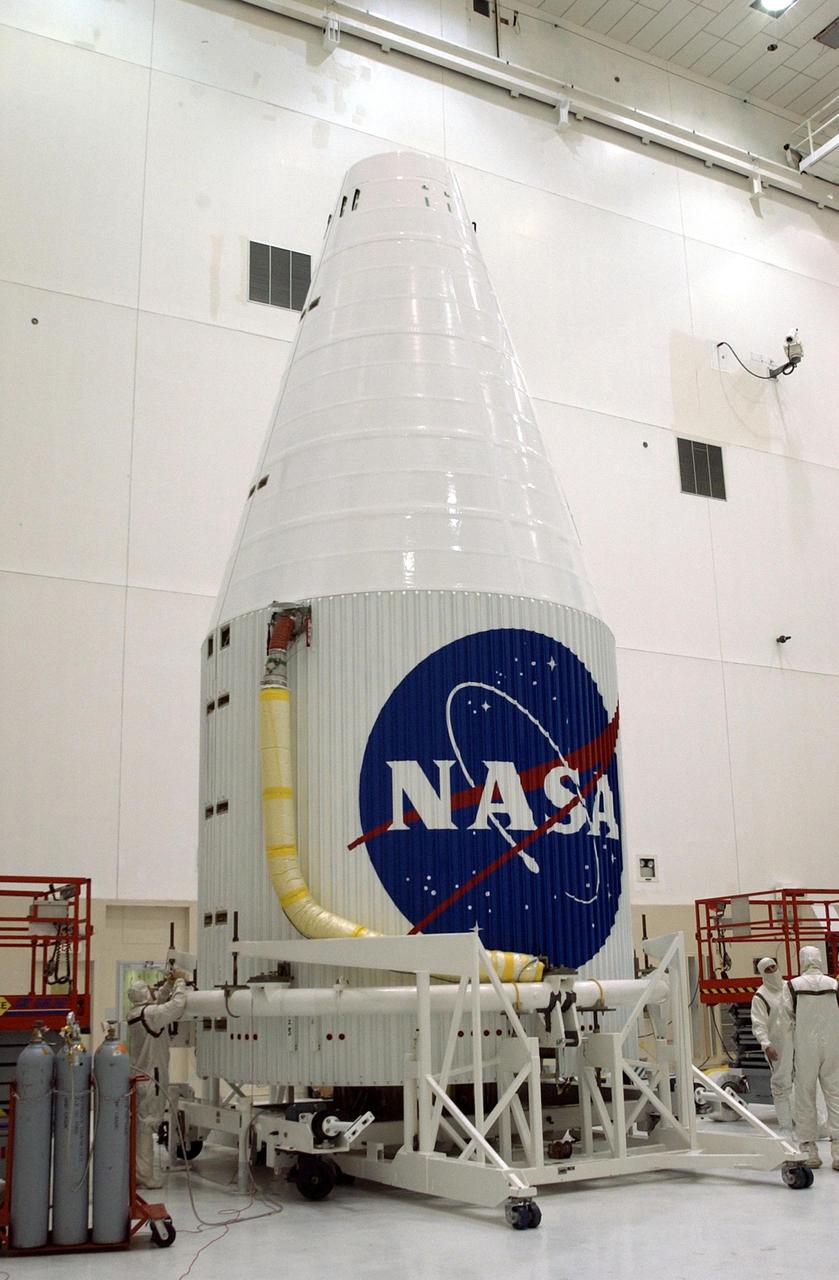
KENNEDY SPACE CENTER, Fla. - The nose fairing for the Tracking and Data Relay Satellite-I (TDRS-I) rests on a workstand in the Spacecraft Assembly and Encapsulation Facility-2 (SAEF-2) where the satellite is being prepared for launch. The second in a new series of telemetry satellites, TDRS-I replenishes the existing on-orbit fleet of six spacecraft. The TDRS System is the primary source of space-to-ground voice, data and telemetry for the Space Shuttle. It also provides communications with the International Space Station and scientific spacecraft in low-Earth orbit such as the Hubble Space Telescope. This new advanced series of satellites will extend the availability of TDRS communications services until about 2017. Launch of TDRS-I is scheduled for March 8 aboard a Lockheed Martin Atlas IIA rocket from Pad 36-A, Cape Canaveral Air Force Station
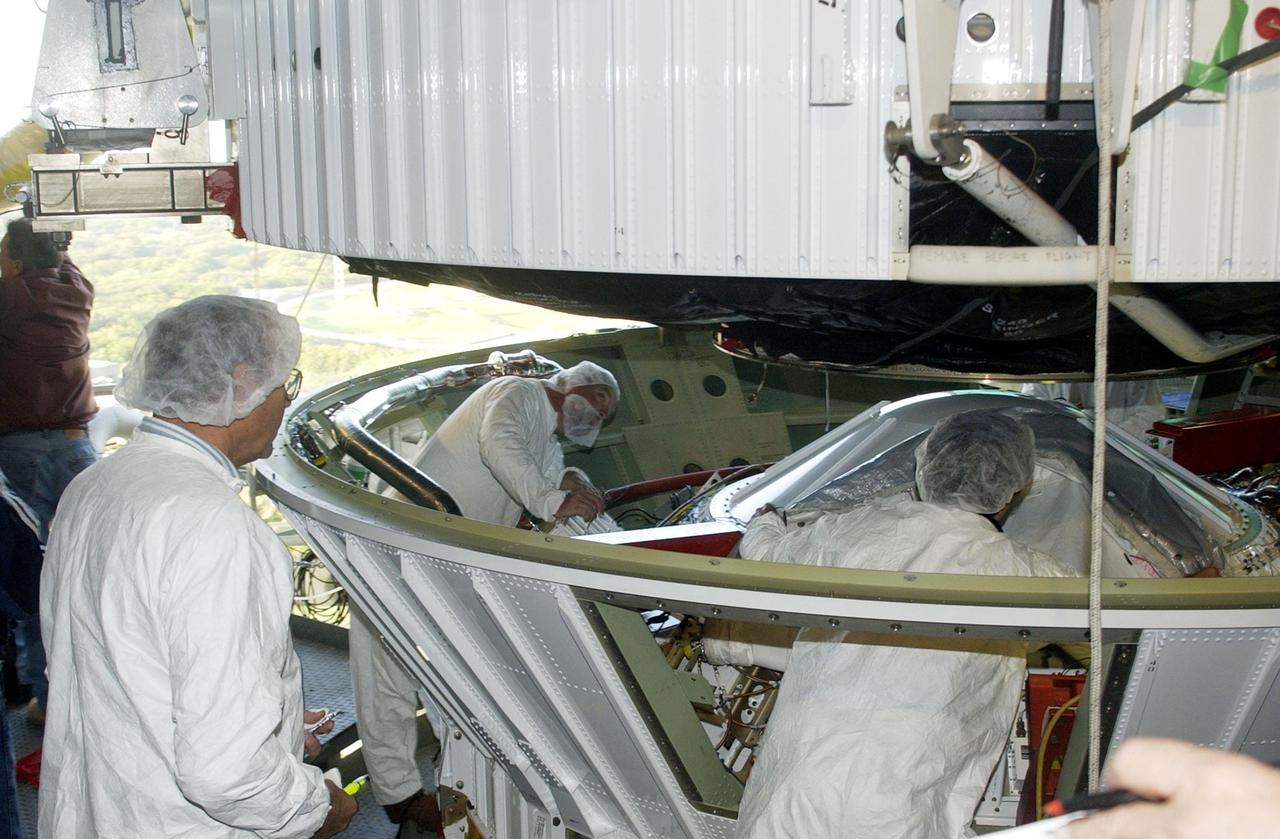
KENNEDY SPACE CENTER, FLA. -- On Pad 36-A, Cape Canaveral Air Force Station, Fla., workers check the placement of the nose fairing as it is lowered toward the Lockheed Martin Atlas IIA rocket. The fairing encapsulates the Tracking and Data Relay Satellite-I (TDRS-I). The second in a new series of telemetry satellites, TDRS-I replenishes the existing on-orbit fleet of six spacecraft. The TDRS System is the primary source of space-to-ground voice, data and telemetry for the Space Shuttle. It also provides communications with the International Space Station and scientific spacecraft in low-Earth orbit such as the Hubble Space Telescope. This new advanced series of satellites will extend the availability of TDRS communications services until about 2017. Launch of TDRS-I is scheduled for March 8 between 5:39 - 6:19 p.m. EST
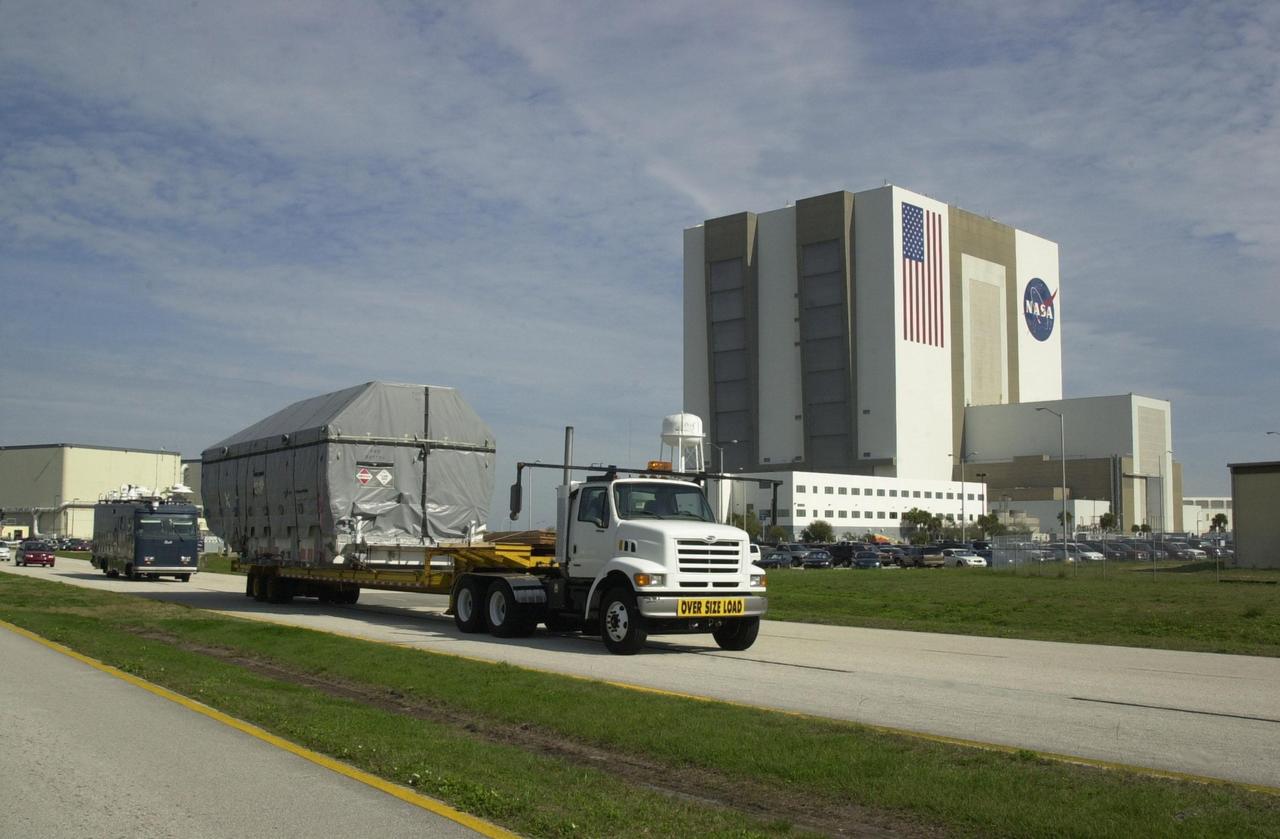
KENNEDY SPACE CENTER, FLA. -- -- At KSC's Shuttle Landing Facility, the Tracking and Data Relay Satellite-I (TDRS-I) is transported from the Shuttle Landing Facility to the Spacecraft Assembly and Encapsulation Facility-2 (SAEF-2). The second in a new series of telemetry satellites, TDRS-I replenishes the existing on-orbit fleet of six spacecraft. The TDRS System is the primary source of space-to-ground voice, data and telemetry for the Space Shuttle. It also provides communications with the International Space Station and scientific spacecraft in low-Earth orbit such as the Hubble Space Telescope. This new advanced series of satellites will extend the availability of TDRS communications services until about 2017. In the SAEF-2 TDRS-I will undergo processing to prepare it for launch March 8 aboard a Lockheed Martin Atlas IIA rocket from Pad 36-A, Cape Canaveral Air Force Station
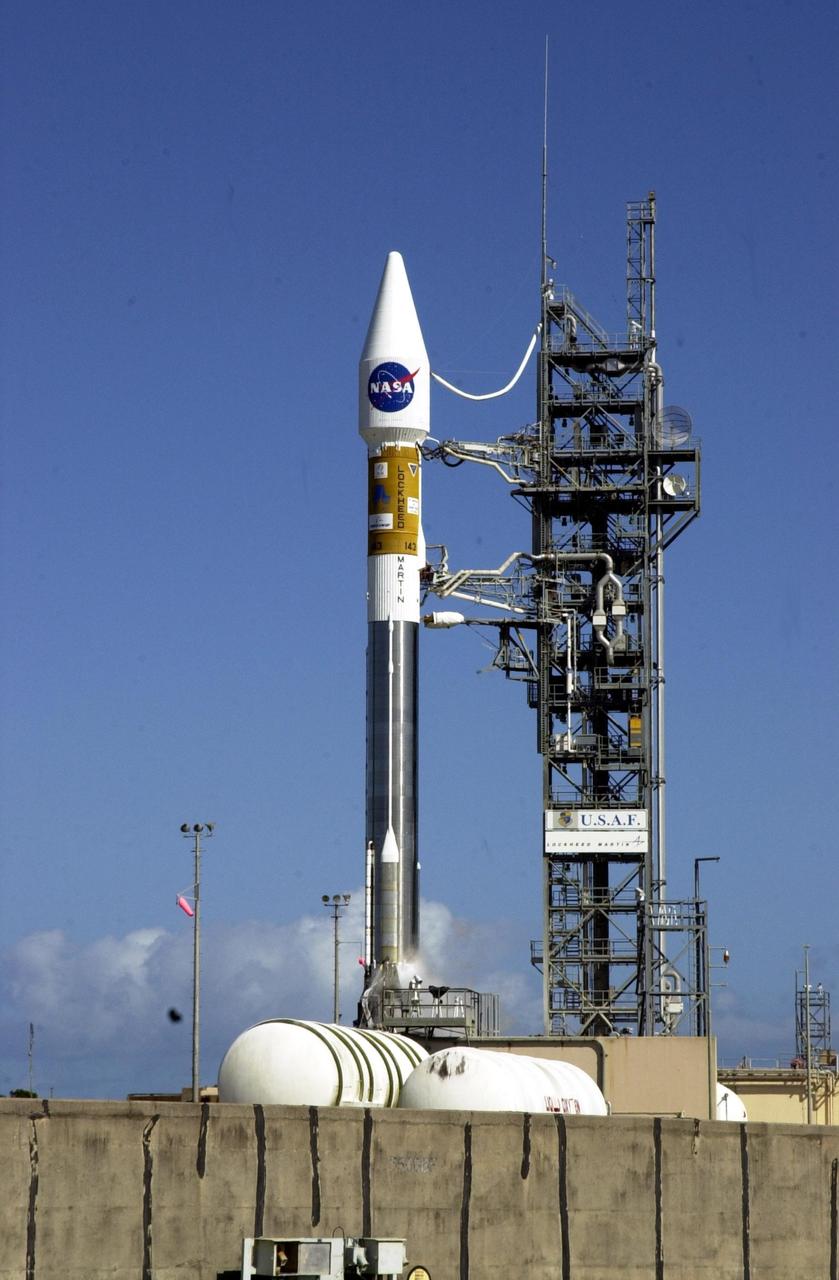
KENNEDY SPACE CENTER, FLA. -- On Launch Pad 36-A, Cape Canaveral Air Force Station, this Lockheed Martin Atlas/Centaur rocket waits for launch to carry the Tracking and Data Relay Satellite-I (TDRS-I) into orbit. The second in a new series of telemetry satellites, TDRS-I replenishes the existing on-orbit fleet of six spacecraft. The TDRS System is the primary source of space-to-ground voice, data and telemetry for the Space Shuttle. It also provides communications with the International Space Station and scientific spacecraft in low-Earth orbit such as the Hubble Space Telescope. This new advanced series of satellites will extend the availability of TDRS communications services until about 2017. Launch of TDRS-I atop the Atlas rocket is scheduled between 5:39 - 6:19 p.m. EST
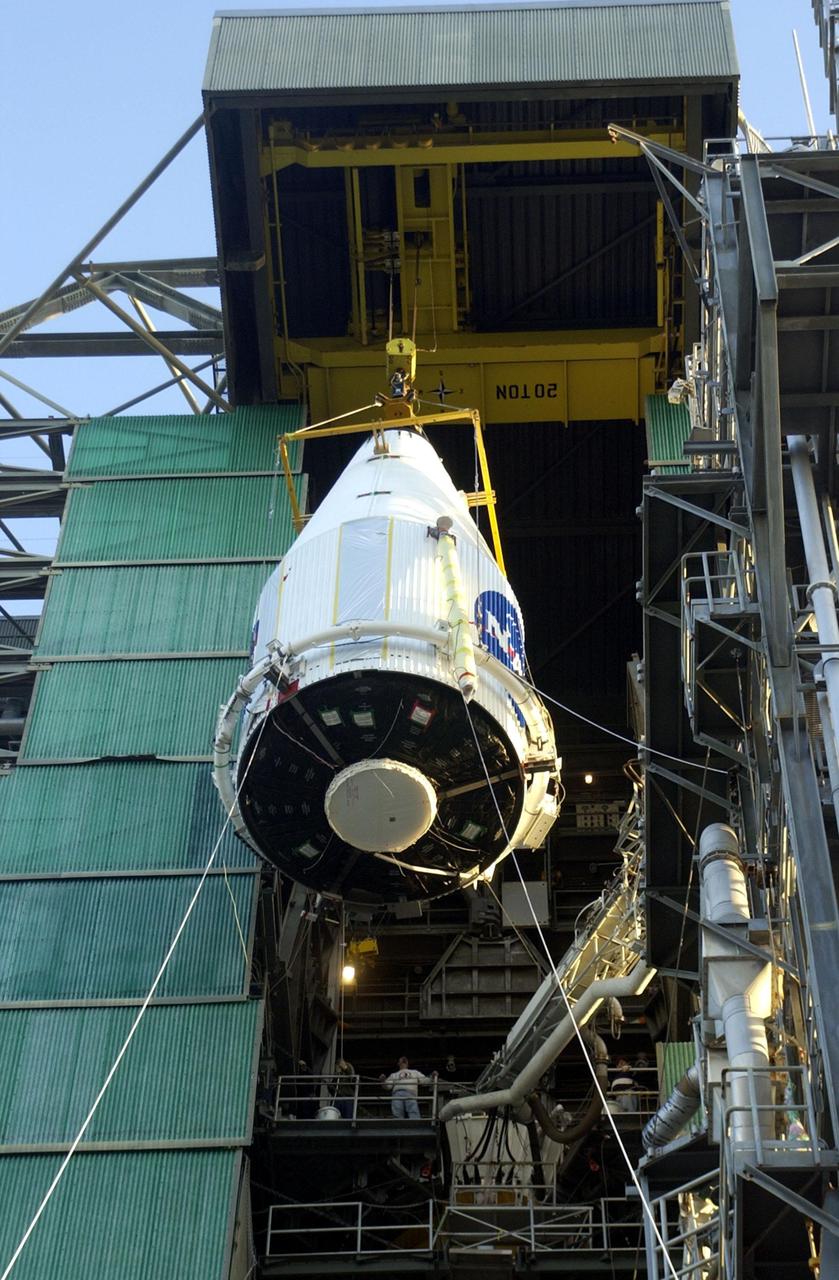
KENNEDY SPACE CENTER, FLA. -- -- The nose fairing encapsulating the Tracking and Data Relay Satellite-I (TDRS-I) nears the top of the launch tower at Pad 36-A, Cape Canaveral Air Force Station, Fla. The fairing will be attached to the Lockheed Martin Atlas IIA rocket for launch. The second in a new series of telemetry satellites, TDRS-I replenishes the existing on-orbit fleet of six spacecraft. The TDRS System is the primary source of space-to-ground voice, data and telemetry for the Space Shuttle. It also provides communications with the International Space Station and scientific spacecraft in low-Earth orbit such as the Hubble Space Telescope. This new advanced series of satellites will extend the availability of TDRS communications services until about 2017. Launch of TDRS-I is scheduled for March 8 between 5:39 - 6:19 p.m. EST
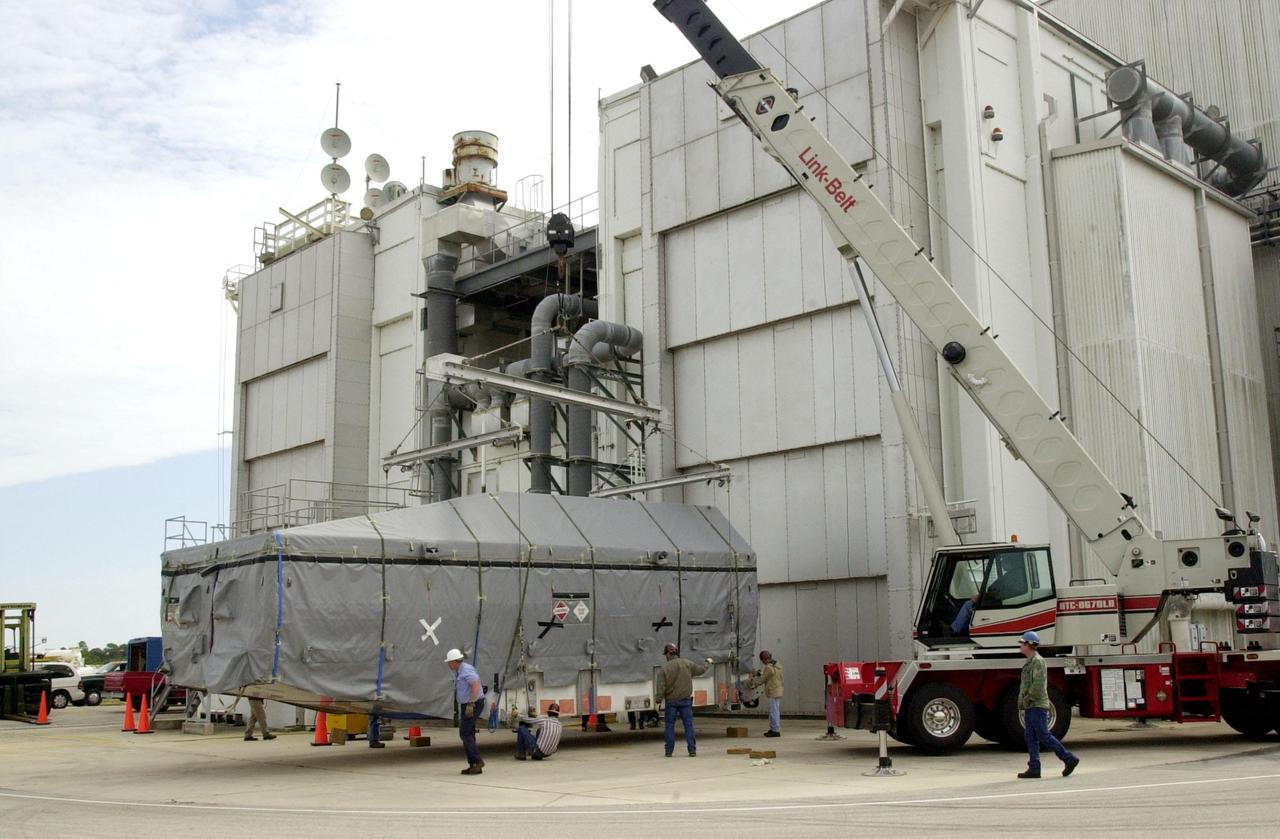
KENNEDY SPACE CENTER, FLA. -- The Tracking and Data Relay Satellite-I (TDRS-I) arrives at the Spacecraft Assembly and Encapsulation Facility-2 (SAEF-2) where it will undergo processing to prepare it for launch. The second in a new series of telemetry satellites, TDRS-I replenishes the existing on-orbit fleet of six spacecraft. The TDRS System is the primary source of space-to-ground voice, data and telemetry for the Space Shuttle. It also provides communications with the International Space Station and scientific spacecraft in low-Earth orbit such as the Hubble Space Telescope. This new advanced series of satellites will extend the availability of TDRS communications services until about 2017. Launch of TDRS-I is scheduled for March 8 aboard a Lockheed Martin Atlas IIA rocket from Pad 36-A, Cape Canaveral Air Force Station
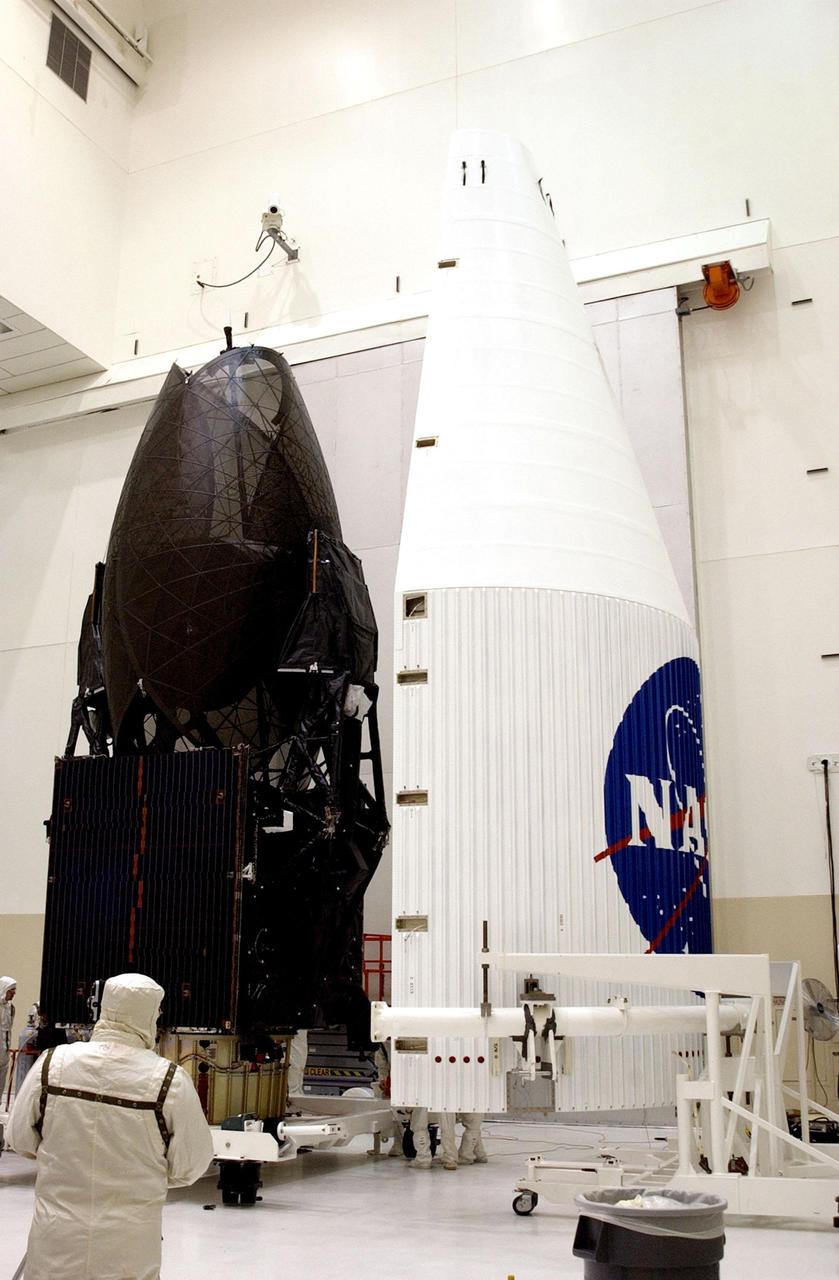
KENNEDY SPACE CENTER, FLA. -- In the Spacecraft Assembly and Encapsulation Facility-2 (SAEF-2), the nose fairing (right) for the Tracking and Data Relay Satellite-I (TDRS-I) is moved into position to enclose the satellite for launch. The second in a new series of telemetry satellites, TDRS-I replenishes the existing on-orbit fleet of six spacecraft. The TDRS System is the primary source of space-to-ground voice, data and telemetry for the Space Shuttle. It also provides communications with the International Space Station and scientific spacecraft in low-Earth orbit such as the Hubble Space Telescope. This new advanced series of satellites will extend the availability of TDRS communications services until about 2017. Launch of TDRS-I is scheduled for March 8 aboard a Lockheed Martin Atlas IIA rocket from Pad 36-A, Cape Canaveral Air Force Station
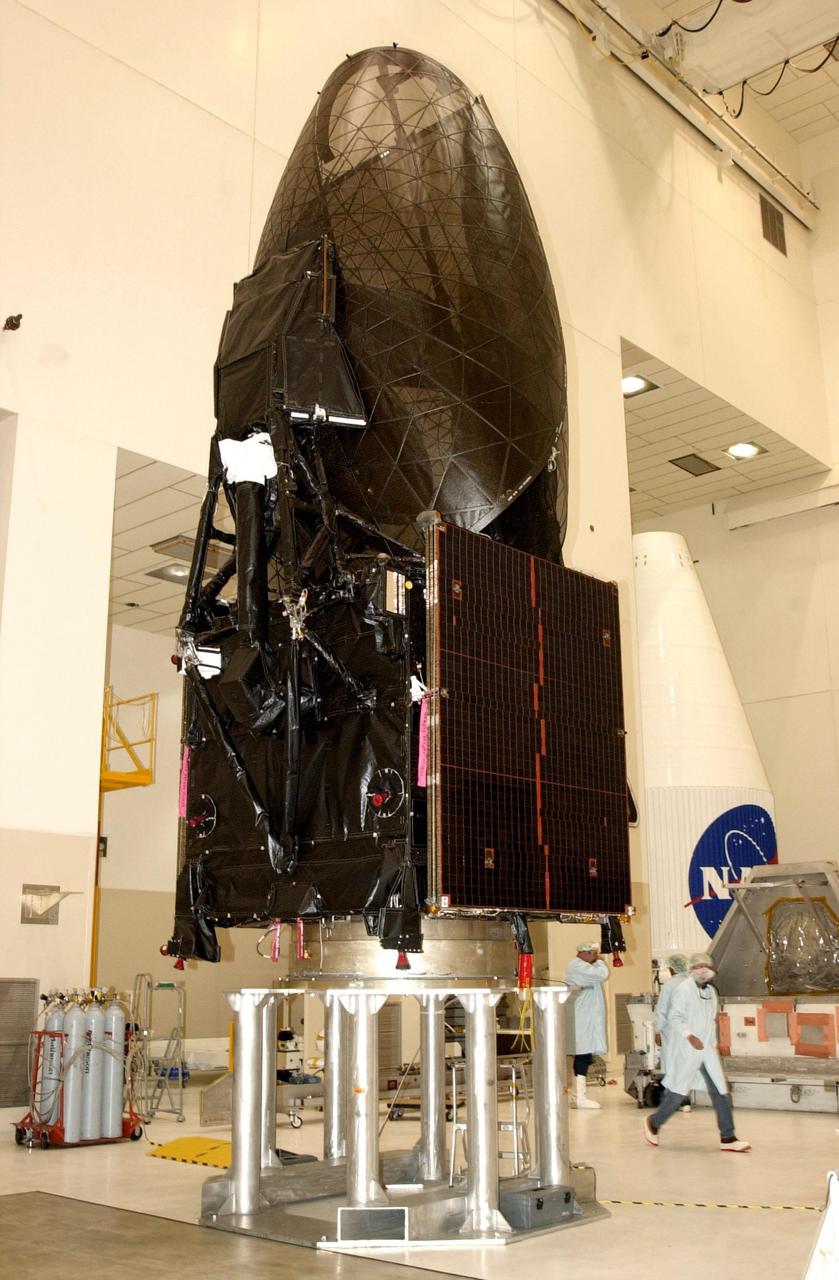
KENNEDY SPACE CENTER, FLA. -- The Tracking and Data Relay Satellite-I (TDRS-I) rests on a workstand in the Spacecraft Assembly and Encapsulation Facility-2 (SAEF-2) where it will undergo processing to prepare it for launch. The second in a new series of telemetry satellites, TDRS-I replenishes the existing on-orbit fleet of six spacecraft. The TDRS System is the primary source of space-to-ground voice, data and telemetry for the Space Shuttle. It also provides communications with the International Space Station and scientific spacecraft in low-Earth orbit such as the Hubble Space Telescope. This new advanced series of satellites will extend the availability of TDRS communications services until about 2017. Launch of TDRS-I is scheduled for March 8 aboard a Lockheed Martin Atlas IIA rocket from Pad 36-A, Cape Canaveral Air Force Station
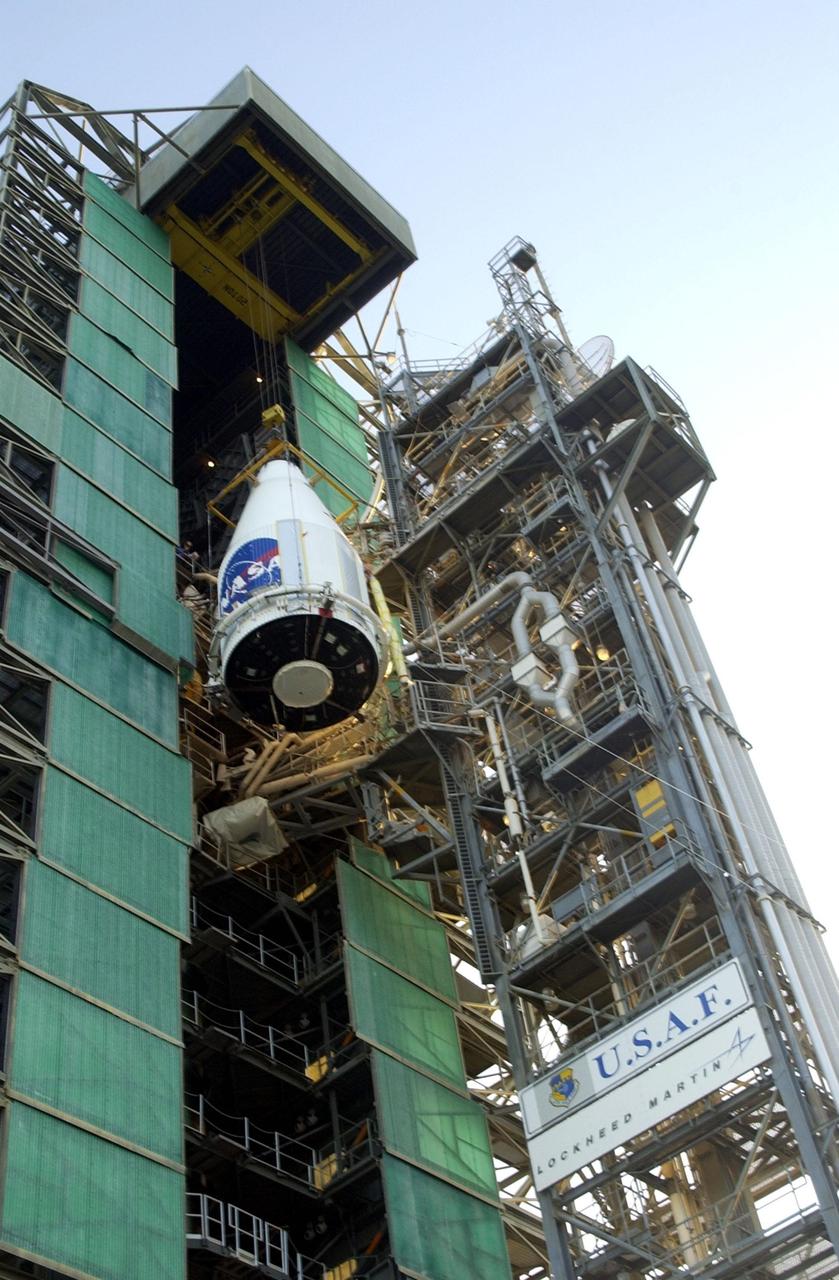
KENNEDY SPACE CENTER, FLA. -- The nose fairing encapsulating the Tracking and Data Relay Satellite-I (TDRS-I) is lifted up the launch tower at Pad 36-A, Cape Canaveral Air Force Station, Fla. The fairing will be attached to the Lockheed Martin Atlas IIA rocket for launch. The second in a new series of telemetry satellites, TDRS-I replenishes the existing on-orbit fleet of six spacecraft. The TDRS System is the primary source of space-to-ground voice, data and telemetry for the Space Shuttle. It also provides communications with the International Space Station and scientific spacecraft in low-Earth orbit such as the Hubble Space Telescope. This new advanced series of satellites will extend the availability of TDRS communications services until about 2017. Launch of TDRS-I is scheduled for March 8 between 5:39 - 6:19 p.m. EST
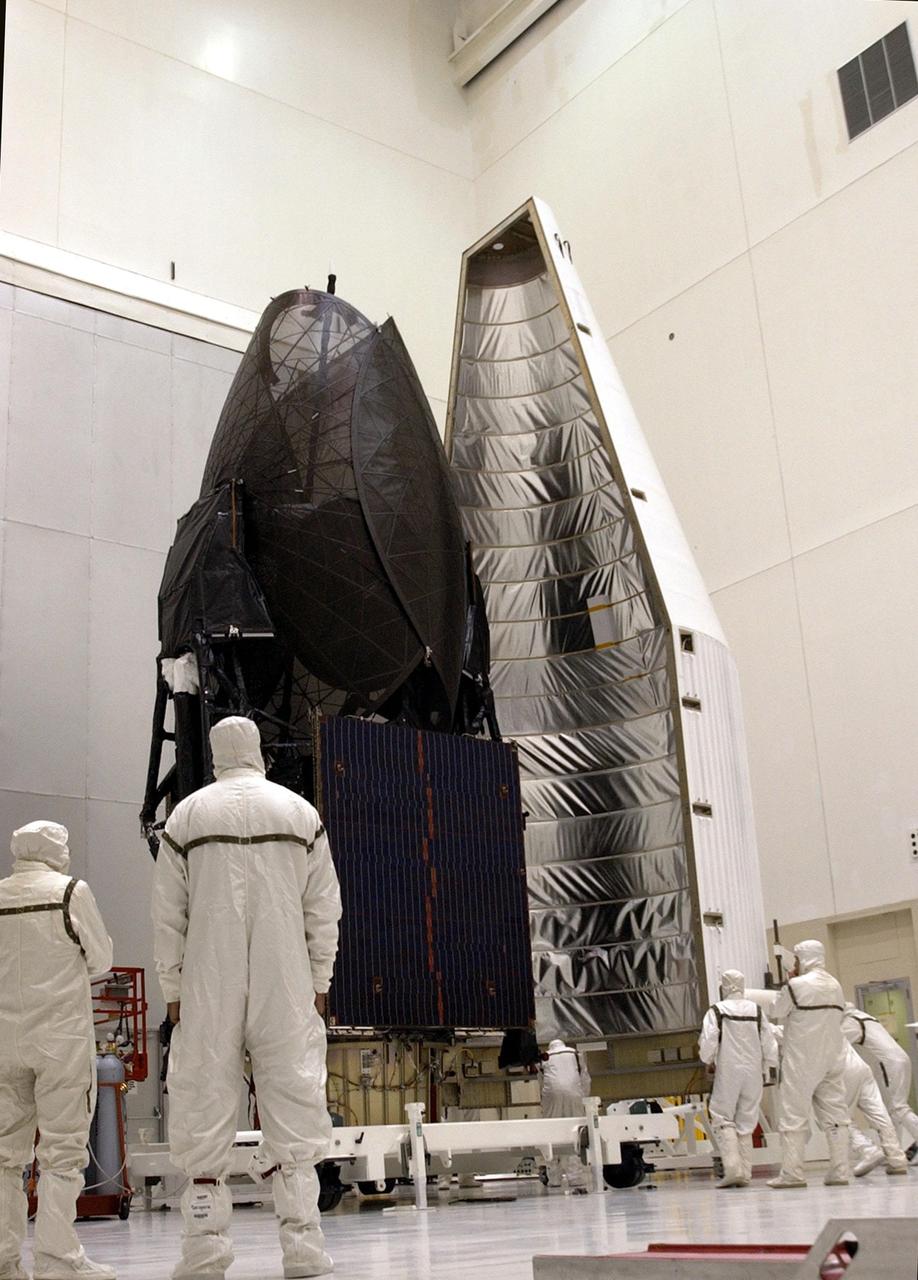
KENNEDY SPACE CENTER, FLA. -- In the Spacecraft Assembly and Encapsulation Facility-2 (SAEF-2), the nose fairing (right) for the Tracking and Data Relay Satellite-I (TDRS-I) is moved into position to enclose the satellite for launch. The second in a new series of telemetry satellites, TDRS-I replenishes the existing on-orbit fleet of six spacecraft. The TDRS System is the primary source of space-to-ground voice, data and telemetry for the Space Shuttle. It also provides communications with the International Space Station and scientific spacecraft in low-Earth orbit such as the Hubble Space Telescope. This new advanced series of satellites will extend the availability of TDRS communications services until about 2017. Launch of TDRS-I is scheduled for March 8 aboard a Lockheed Martin Atlas IIA rocket from Pad 36-A, Cape Canaveral Air Force Station

KENNEDY SPACE CENTER, FLA. -- The Lockheed Martin Atlas/Centaur rocket stands free from the launch tower after rollback. The rocket will carry the Tracking and Data Relay Satellite-I (TDRS-I) into orbit. The second in a new series of telemetry satellites, TDRS-I replenishes the existing on-orbit fleet of six spacecraft. The TDRS System is the primary source of space-to-ground voice, data and telemetry for the Space Shuttle. It also provides communications with the International Space Station and scientific spacecraft in low-Earth orbit such as the Hubble Space Telescope. This new advanced series of satellites will extend the availability of TDRS communications services until about 2017. Launch of TDRS-I atop the Atlas rocket is scheduled between 5:39 - 6:19 p.m. EST from Launch Pad 36-A, Cape Canaveral Air Force Station

“It was part of my career, but then it was also personal. I was doing it on a volunteer basis, but it was part of my work because I was bringing my service dog in training everywhere with me, which meant to work every day and to meetings at NOAA (National Oceanic and Atmospheric Administration). And I was taking the dog across the country to meetings over at Ball Aerospace; that was all part of the training of a service dog. That was an incredible time. I really enjoyed it. “The fact that I was able to do the two combined, that to me was just such an accomplishment. To some people, it could be they got permission to do it and then that’s all they focused on was the dog, but no. I had my job I had to do. I’ve always gotten a distinguished rating in my performances my entire career, and it didn't change when I was training this service dog. “It was a challenge for sure. “After I had to turn back over the service dog I trained, it was really very difficult because the dog was with me for two years, even though I knew it was for a wonderful cause. I ended up going out and getting my own dog who I’ve trained to be a therapy dog, so now we do therapy visits with veterans, elderly, and others. ” Jean Wolfe, Program Executive for the Geostationary Operational Environmental Satellite (GOES)-R Series Program at NASA Headquarters, poses for a portrait with Bonnie, who was named for U.S. Air Force Reserve Major Bonnie Carroll, Ret., Friday, Dec. 18, 2020 at the Warrior Canine Connection in Boyds, MD. “Warrior Canine Connection enlists service members and veterans with combat stress in the critical mission of training service dogs for fellow Wounded Warriors.” Photo Credit: (NASA/Aubrey Gemignani)
!["Where I grew up [on my family farm] 100% shaped who I am. In fact, my son and I were talking about high schools and how big his is. His high school population is double the population of the town I grew up in. I had 20 kids in my graduating class, and three of them were foreign exchange students. He asked me, 'Do you wish you would have gone to a bigger school like us?' And I said, 'Actually, no, I don't.' I loved where I grew up. I absolutely cherish what it instilled in me, and that's something I carry with me all the time. "The earliest lesson was that you are part of something much bigger than yourself. Everybody has an important role in what they're doing, no matter how small. I remember when we were bringing in the corn. Right now, everybody buys it, but I didn't buy corn until maybe college because it was a whole family thing. We went and picked the corn. The little kids would shuck it, pulling off all the silk. The grown-ups would shave it off the cob and then push it off to the side, and then the older kids would bag it up into plastic bags. And then everybody went home. It was always about a team. You can be the youngest person or the lowest-ranking person, but you always bring something important to that table. "Everywhere I've been since I got commissioned [as an Air Force officer], my very first office in 1997, I hang an aerial picture of our farm on my wall because it's [a reminder to] remember where you came from, remember home, and don't get too big for your britches. No matter what, you could be part of something huge, and I look at that picture and say, 'I have always been part of something much bigger than myself.' All the little, tiny moments in life that build upon themselves trace back to that family farm for me." Alana Johnson, Senior Communications Specialist, poses for a portrait, Wednesday, Feb. 7, 2024, at the Mary W. Jackson NASA Headquarters building in Washington. Photo Credit: (NASA/Joel Kowsky)](https://images-assets.nasa.gov/image/NHQ202402070011/NHQ202402070011~medium.jpg)
"Where I grew up [on my family farm] 100% shaped who I am. In fact, my son and I were talking about high schools and how big his is. His high school population is double the population of the town I grew up in. I had 20 kids in my graduating class, and three of them were foreign exchange students. He asked me, 'Do you wish you would have gone to a bigger school like us?' And I said, 'Actually, no, I don't.' I loved where I grew up. I absolutely cherish what it instilled in me, and that's something I carry with me all the time. "The earliest lesson was that you are part of something much bigger than yourself. Everybody has an important role in what they're doing, no matter how small. I remember when we were bringing in the corn. Right now, everybody buys it, but I didn't buy corn until maybe college because it was a whole family thing. We went and picked the corn. The little kids would shuck it, pulling off all the silk. The grown-ups would shave it off the cob and then push it off to the side, and then the older kids would bag it up into plastic bags. And then everybody went home. It was always about a team. You can be the youngest person or the lowest-ranking person, but you always bring something important to that table. "Everywhere I've been since I got commissioned [as an Air Force officer], my very first office in 1997, I hang an aerial picture of our farm on my wall because it's [a reminder to] remember where you came from, remember home, and don't get too big for your britches. No matter what, you could be part of something huge, and I look at that picture and say, 'I have always been part of something much bigger than myself.' All the little, tiny moments in life that build upon themselves trace back to that family farm for me." Alana Johnson, Senior Communications Specialist, poses for a portrait, Wednesday, Feb. 7, 2024, at the Mary W. Jackson NASA Headquarters building in Washington. Photo Credit: (NASA/Joel Kowsky)

The original seven astronauts for the Mercury Project pose in front of an Air Force Jet. From left to right: Scott Carpenter, L. Gordon Cooper, John H. Glenn, Virgil I. Gus Grissom, Walter M. Wally Schirra, Alan B. Shepard, and Donald K. Deke Slayton.
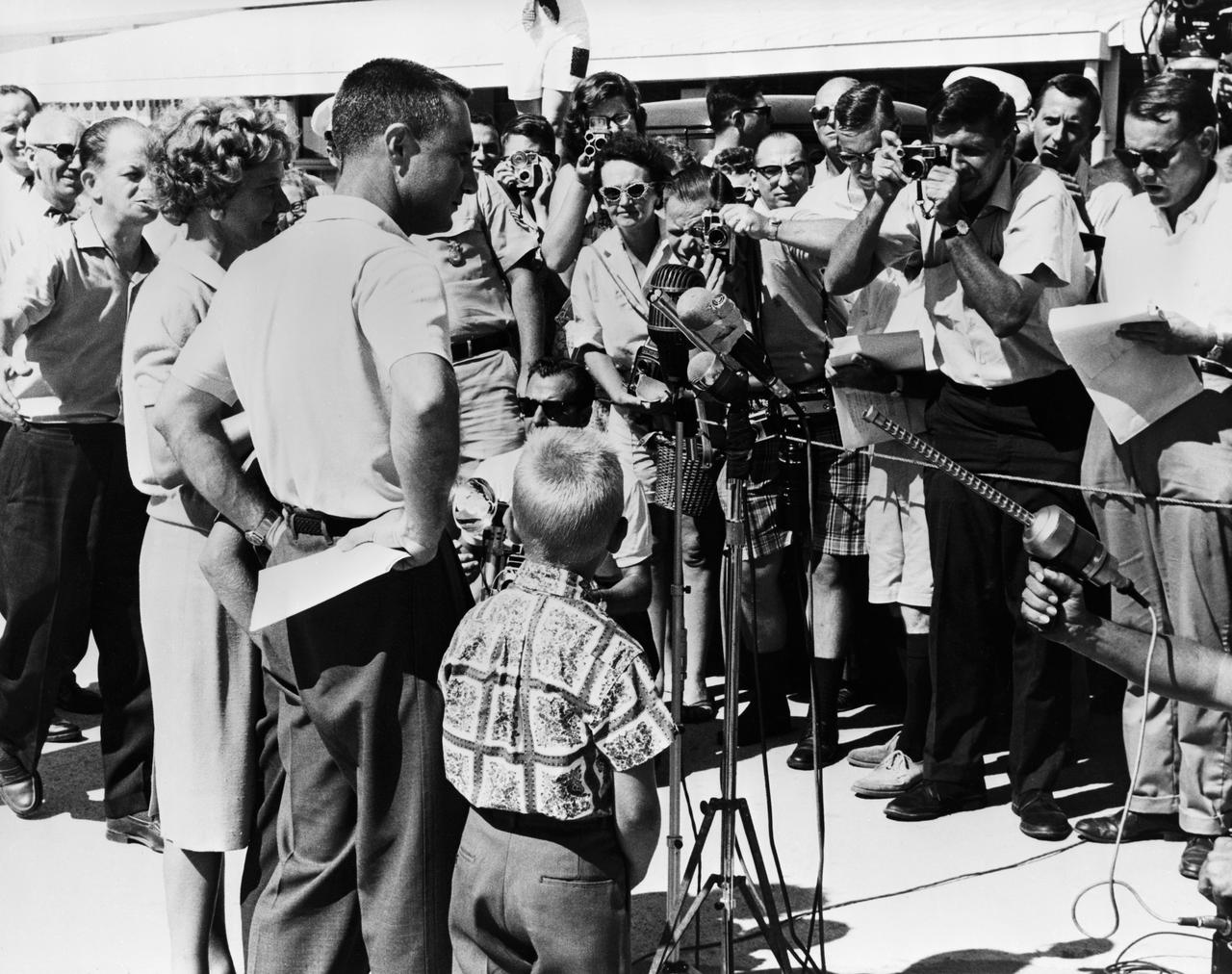
S61-03687 (21 July 1961) --- Astronaut Virgil I. (Gus) Grissom and his family are shown at the airport at Patrick Air Force Base facing a crowd of news media representatives. Grissom is speaking into microphones for the news media. Photo credit: NASA
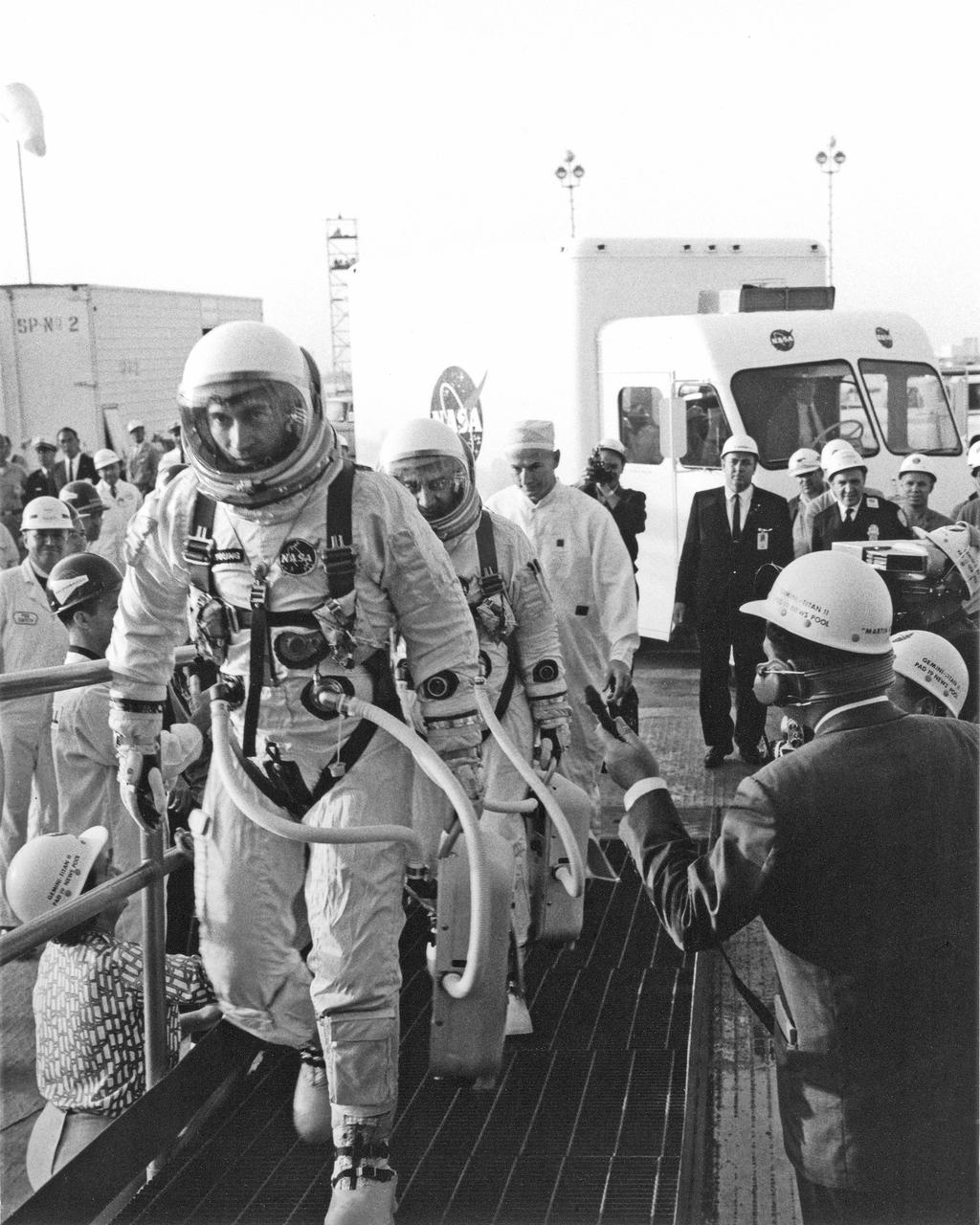
CAPE KENNEDY, Fla. -- At Cape Kennedy Air Force Station in Florida, Gemini 3 pilot John W. Young is followed by command pilot Virgil I. Grissom as they walk to elevator at Launch Complex 19 for their three orbit flight, the first mission of the Gemini spacecraft. Photo Credit: NASA
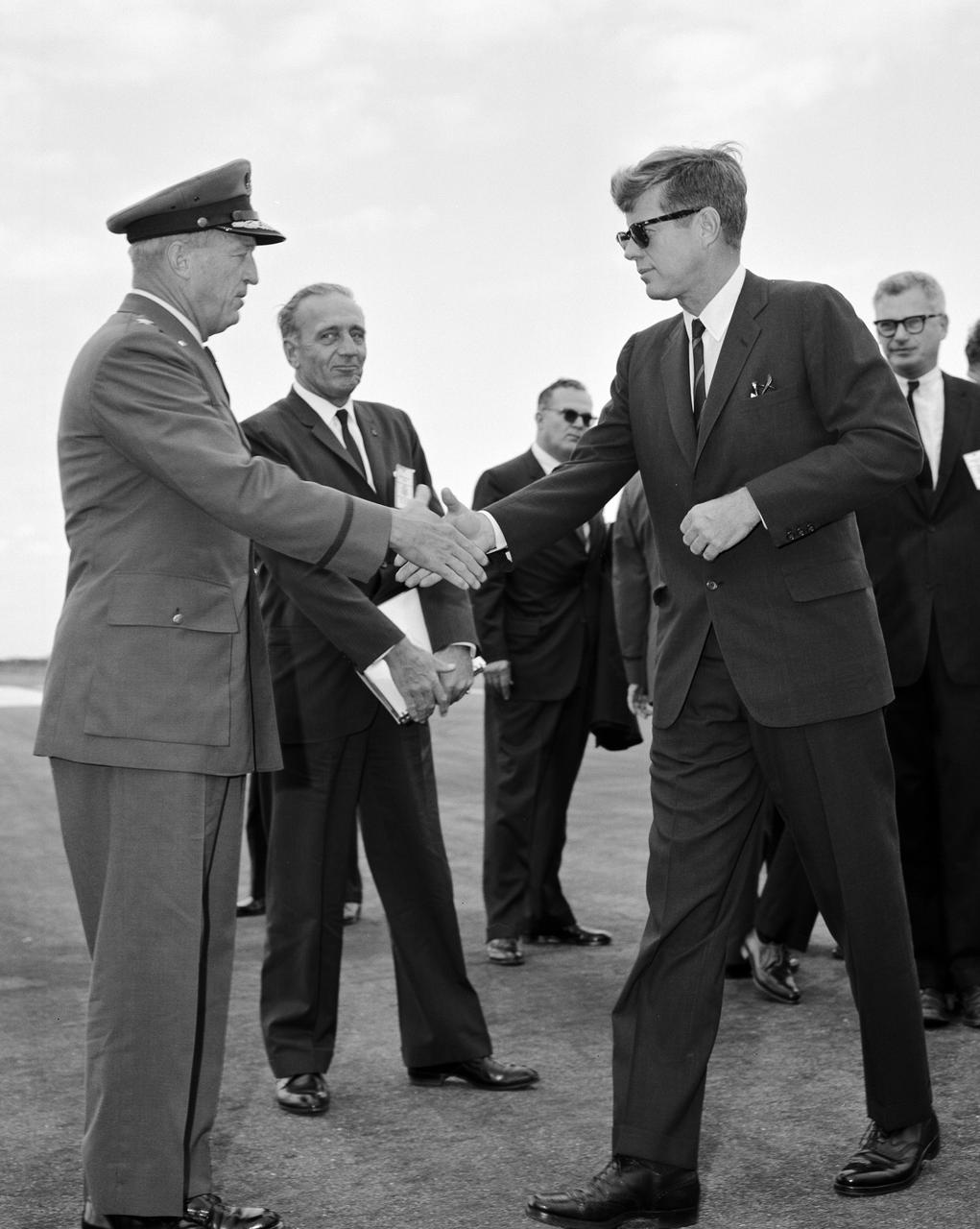
CAPE CANAVERAL Fla. -- Maj. Gen. L. I. Davis, commander of the U.S. Air Force Missile Test Center, welcomes President John F. Kennedy to the Cape Canaveral Missile Test Annex in Florida. Photo Credit: NASA
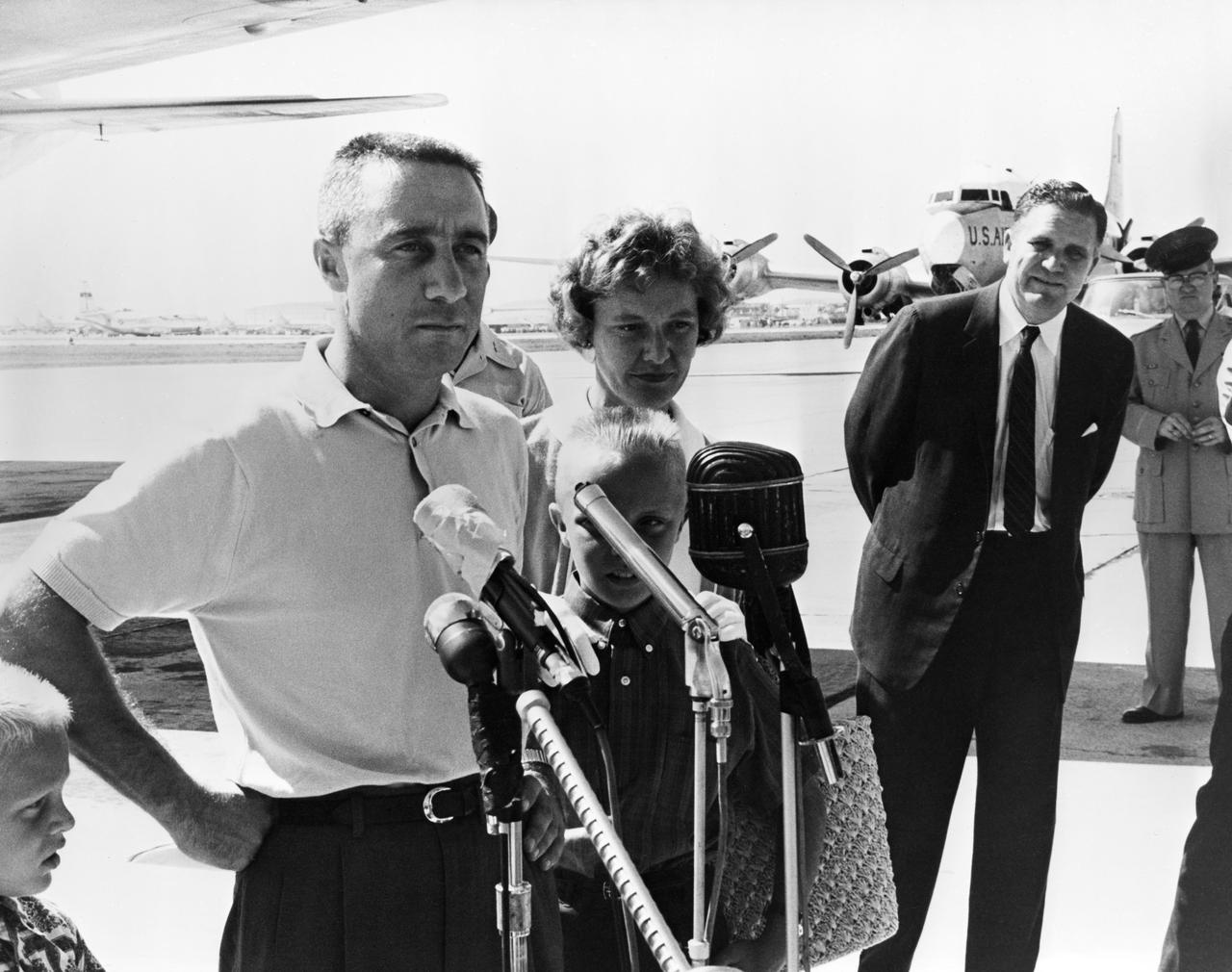
S61-03684 (21 July 1961) --- Astronaut Virgil I. (Gus) Grissom and his family are shown at the airport at Patrick Air Force Base with NASA Administrator James E. Webb (right). Grissom is speaking into microphones for the news media. Photo credit: NASA
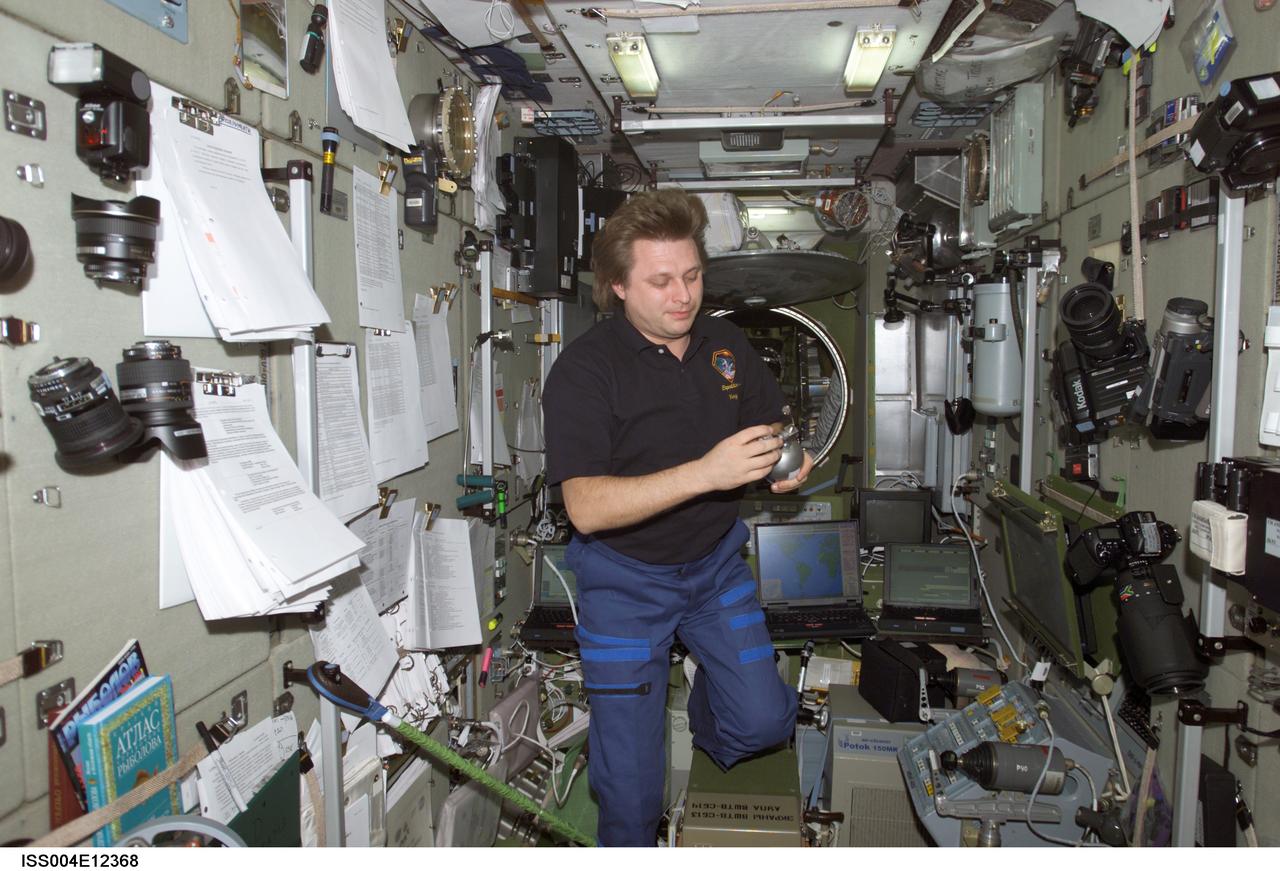
ISS004-E-12368 (23 May 2002) --- Cosmonaut Yury I. Onufrienko, Expedition Four mission commander representing Rosaviakosmos, holds a Grab Sample Container (GSC) in the Zvezda Service Module on the International Space Station (ISS). The GSC is used to take air samples in various modules as part of environmental quality control.

The LAGEOS I (Laser Geodynamics Satellite) was developed and launched by the Marshall Space Flight Center on May 4, 1976 from Vandenberg Air Force Base, California . The two-foot diameter satellite orbited the Earth from pole to pole and measured the movements of the Earth's surface.
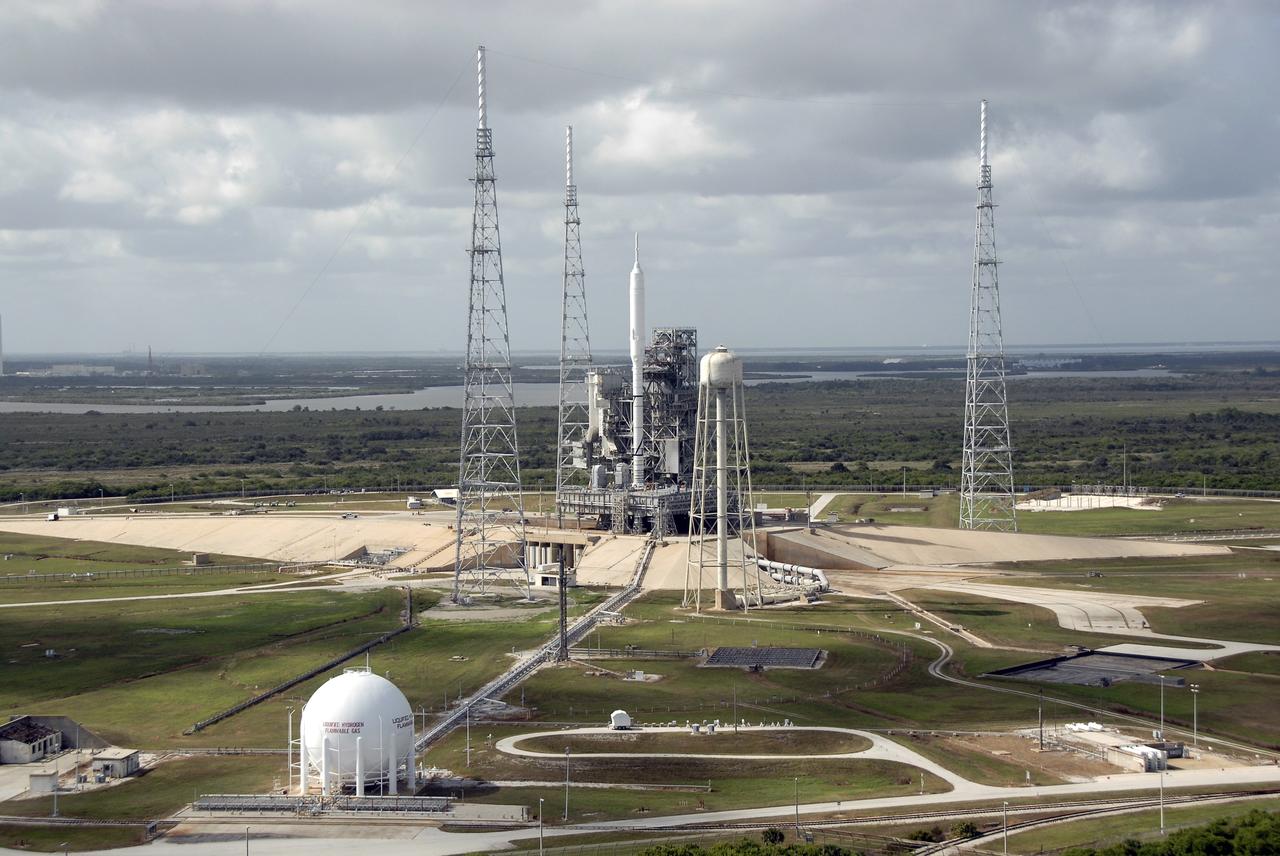
CAPE CANAVERAL, Fla. – At NASA's Kennedy Space Center in Florida, the 327-foot-tall Ares I-X rocket awaits liftoff on Launch Pad 39B on its upcoming flight test. In the distance are the pads and processing facilities on Cape Canaveral Air Force Station. This is the first time since the Apollo Program's Saturn rockets were retired that a vehicle other than the space shuttle has occupied the pad. Modifications to the pad to support the Ares I-X included the removal of shuttle unique subsystems, such as the orbiter access arm and a section of the gaseous oxygen vent arm, and the installation of three 600-foot lightning towers, access platforms, environmental control systems and a vehicle stabilization system. Part of the Constellation Program, the Ares I-X is the test vehicle for the Ares I. The Ares I-X flight test is set for Oct. 27. For information on the Ares I-X vehicle and flight test, visit http://www.nasa.gov/aresIX. Photo credit: NASA/Kim Shiflett
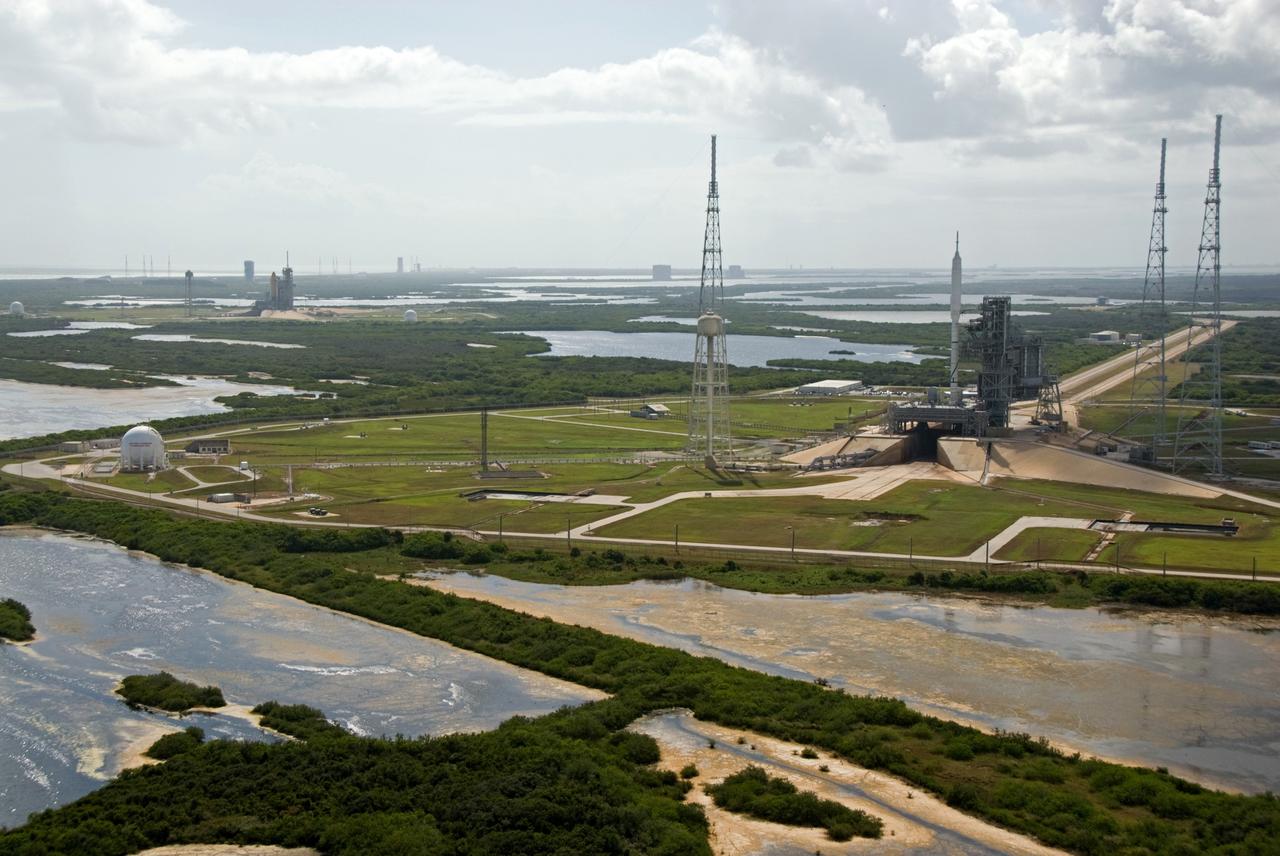
CAPE CANAVERAL, Fla. – At NASA's Kennedy Space Center in Florida, the 327-foot-tall Ares I-X rocket awaits liftoff on Launch Pad 39B on its upcoming flight test. In the distance are space shuttle Atlantis on Kennedy's Launch Pad 39A, and the pads and processing facilities on Cape Canaveral Air Force Station. This is the first time since the Apollo Program's Saturn rockets were retired that a vehicle other than the space shuttle has occupied the pad. Modifications to the pad to support the Ares I-X included the removal of shuttle unique subsystems, such as the orbiter access arm and a section of the gaseous oxygen vent arm, and the installation of three 600-foot lightning towers, access platforms, environmental control systems and a vehicle stabilization system. Part of the Constellation Program, the Ares I-X is the test vehicle for the Ares I. The Ares I-X flight test is set for Oct. 27. For information on the Ares I-X vehicle and flight test, visit http://www.nasa.gov/aresIX. Photo credit: NASA/Kim Shiflett

CAPE CANAVERAL, Fla. – At NASA's Kennedy Space Center in Florida, the 327-foot-tall Ares I-X rocket awaits liftoff on Launch Pad 39B on its upcoming flight test. In the distance are space shuttle Atlantis on Kennedy's Launch Pad 39A, and the pads and processing facilities on Cape Canaveral Air Force Station. This is the first time since the Apollo Program's Saturn rockets were retired that a vehicle other than the space shuttle has occupied the pad. Modifications to the pad to support the Ares I-X included the removal of shuttle unique subsystems, such as the orbiter access arm and a section of the gaseous oxygen vent arm, and the installation of three 600-foot lightning towers, access platforms, environmental control systems and a vehicle stabilization system. Part of the Constellation Program, the Ares I-X is the test vehicle for the Ares I. The Ares I-X flight test is set for Oct. 27. For information on the Ares I-X vehicle and flight test, visit http://www.nasa.gov/aresIX. Photo credit: NASA/Kim Shiflett
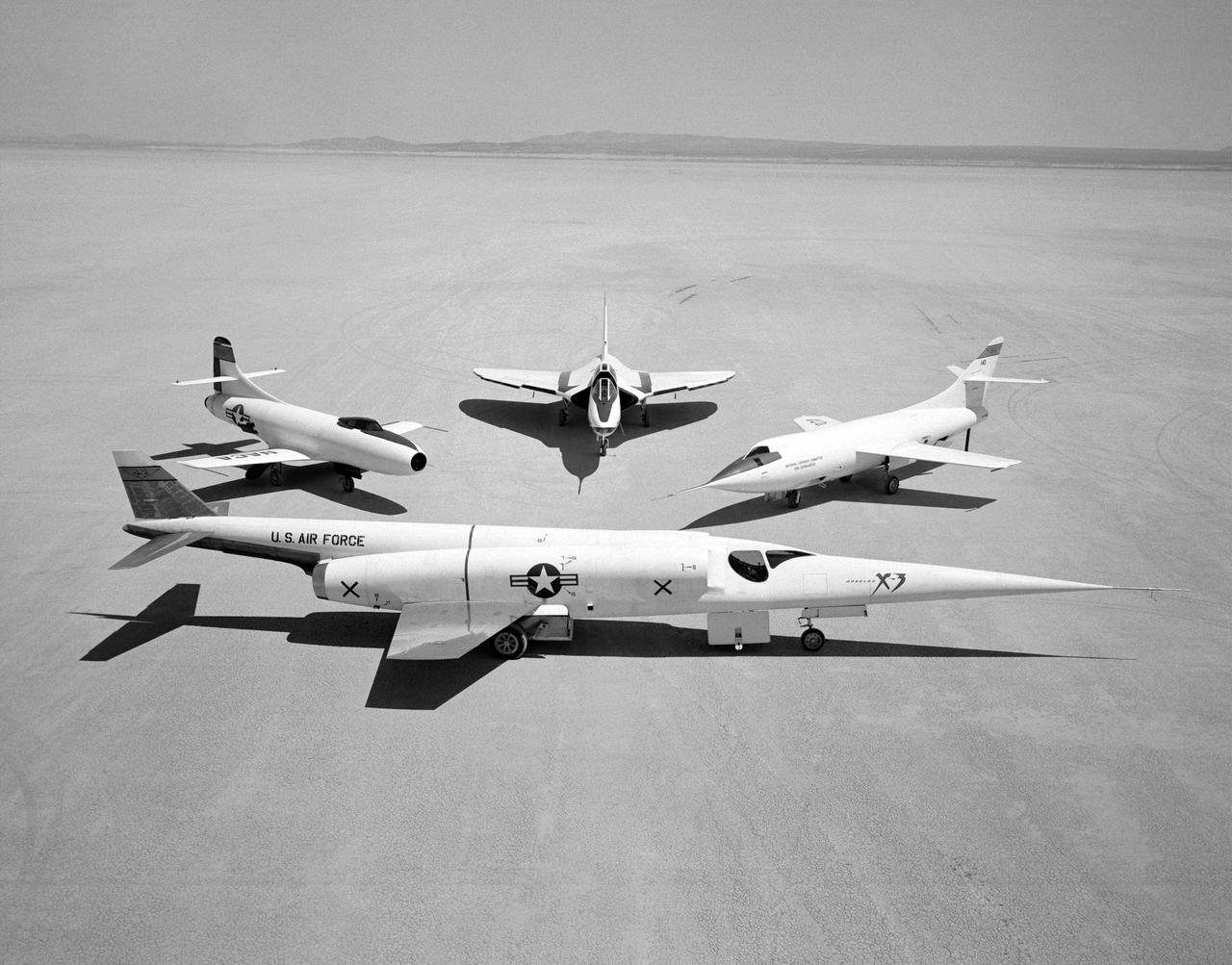
A group picture of Douglas Airplanes, taken for a photographic promotion in 1954, at what is now known as the Dryden Flight Research Center at Edwards Air Force Base, California. The photo includes the X-3 (in front--Air Force serial number 49-2892) then clockwise D-558-I, XF4D-1 (a Navy jet fighter prototype not flown by the NACA), and the first D-558-II (NACA tail number 143, Navy serial number 37973), which was flown only once by the NACA.

A mechanic works on a General Electric I-40 turbojet at the National Advisory Committee for Aeronautics (NACA) Lewis Flight Propulsion Laboratory. The military selected General Electric’s West Lynn facility in 1941 to secretly replicate the centrifugal turbojet engine designed by British engineer Frank Whittle. General Electric’s first attempt, the I-A, was fraught with problems. The design was improved somewhat with the subsequent I-16 engine. It was not until the engine's next reincarnation as the I-40 in 1943 that General Electric’s efforts paid off. The 4000-pound thrust I-40 was incorporated into the Lockheed Shooting Star airframe and successfully flown in June 1944. The Shooting Star became the US’s first successful jet aircraft and the first US aircraft to reach 500 miles per hour. The NACA’s Lewis Flight Propulsion Laboratory studied all of General Electric’s centrifugal turbojets both during World War II and afterwards. The entire Shooting Star aircraft was investigated in the Altitude Wind Tunnel during 1945. The researchers studied the engine compressor performance, thrust augmentation using a water injection, and compared different fuel blends in a single combustor. The mechanic in this photograph is inserting a combustion liner into one of the 14 combustor cans. The compressor, which is not yet installed in this photograph, pushed high pressure air into these combustors. There the air mixed with the fuel and was heated. The hot air was then forced through a rotating turbine that powered the engine before being expelled out the nozzle to produce thrust.
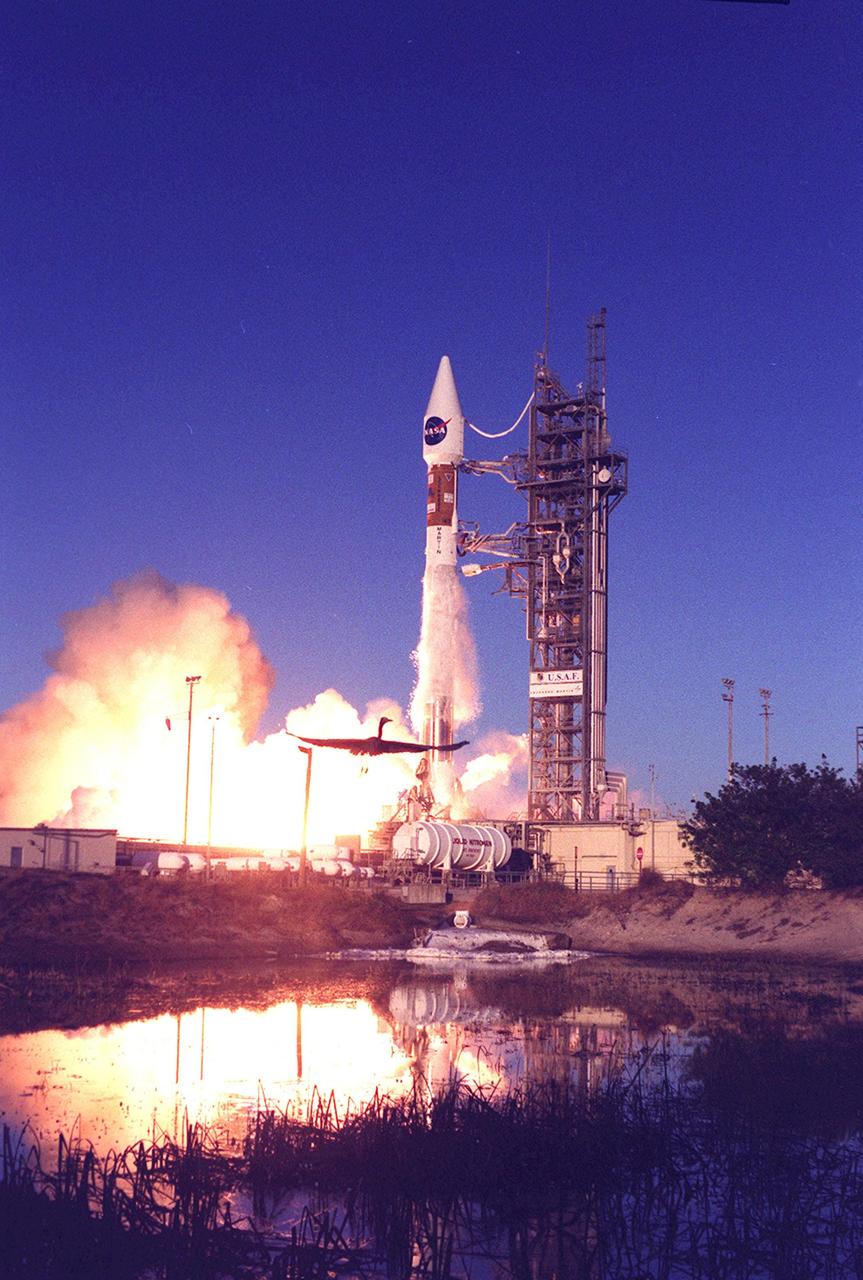
KENNEDY SPACE CENTER, FLA. -- A Great Blue Heron is silhouetted against the brilliance of the rocket exhaust as the Tracking and Data Relay Satellite-I (TDRS-1) is launched from Launch Pad 36-A, Cape Canaveral Air Force Station. TDRS-I replenishes the existing on-orbit fleet of six spacecraft. The TDRS System is the primary source of space-to-ground voice, data and telemetry for the Space Shuttle. It also provides communications with the International Space Station and scientific spacecraft in low-Earth orbit such as the Hubble Space Telescope. This new advanced series of satellites will extend the availability of TDRS communications services until about 2017. Liftoff occurred at 5:59 p.m. EST
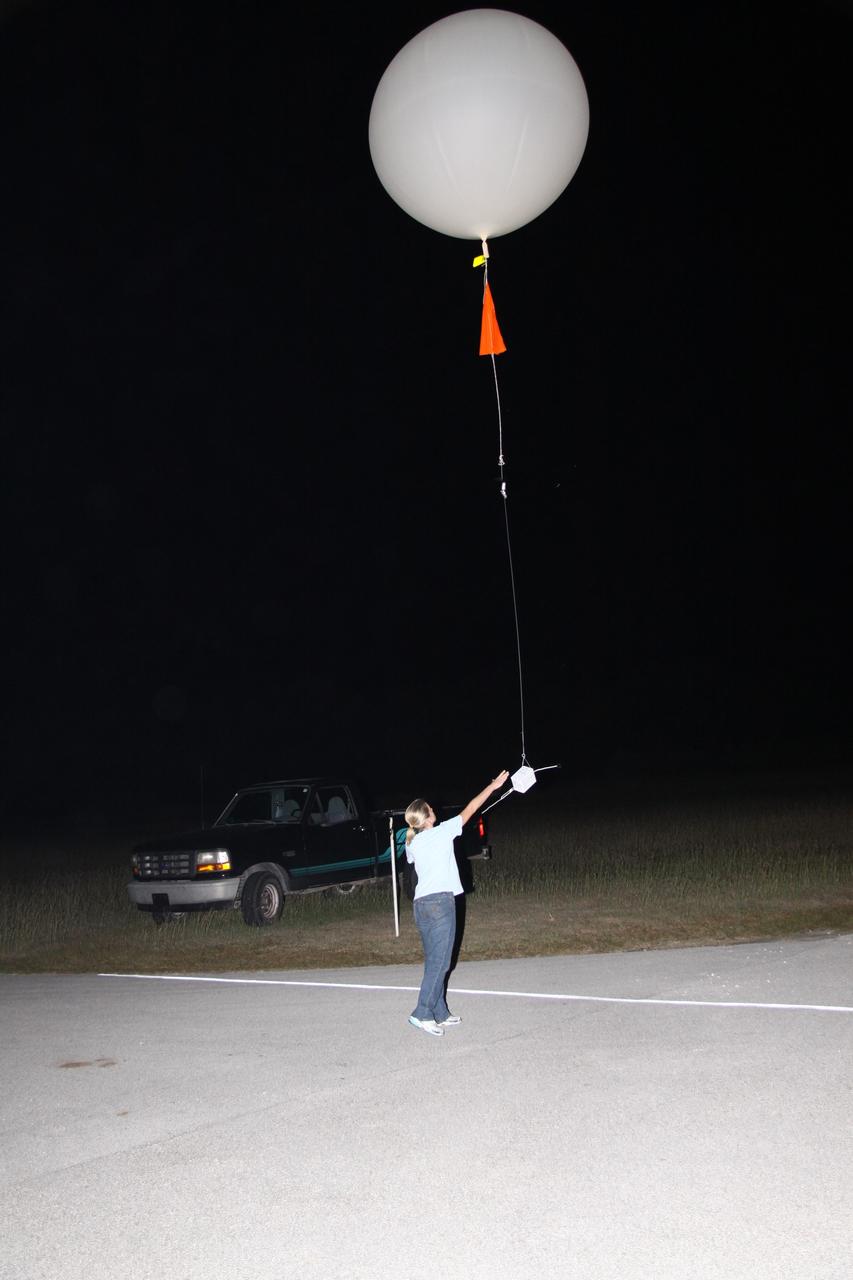
CAPE CANAVERAL, Fla. - At the weather station on Cape Canaveral Air Force Station in Florida, a meteorological data specialist releases a low resolution flight element rawinsonde to support the countdown for the flight test of NASA's Ares I-X rocket. A GPS-tracked weather balloon, a rawinsonde has a tethered instrument package which radios its altitude to the ground along with atmospheric data such as temperature, dewpoint and humidity, and wind speed and direction. Rawinsondes can reach altitudes up to 110,000 feet. For information on the Ares I-X vehicle and flight test, visit http://www.nasa.gov/aresIX. Photo credit: NASA/Jack Pfaller
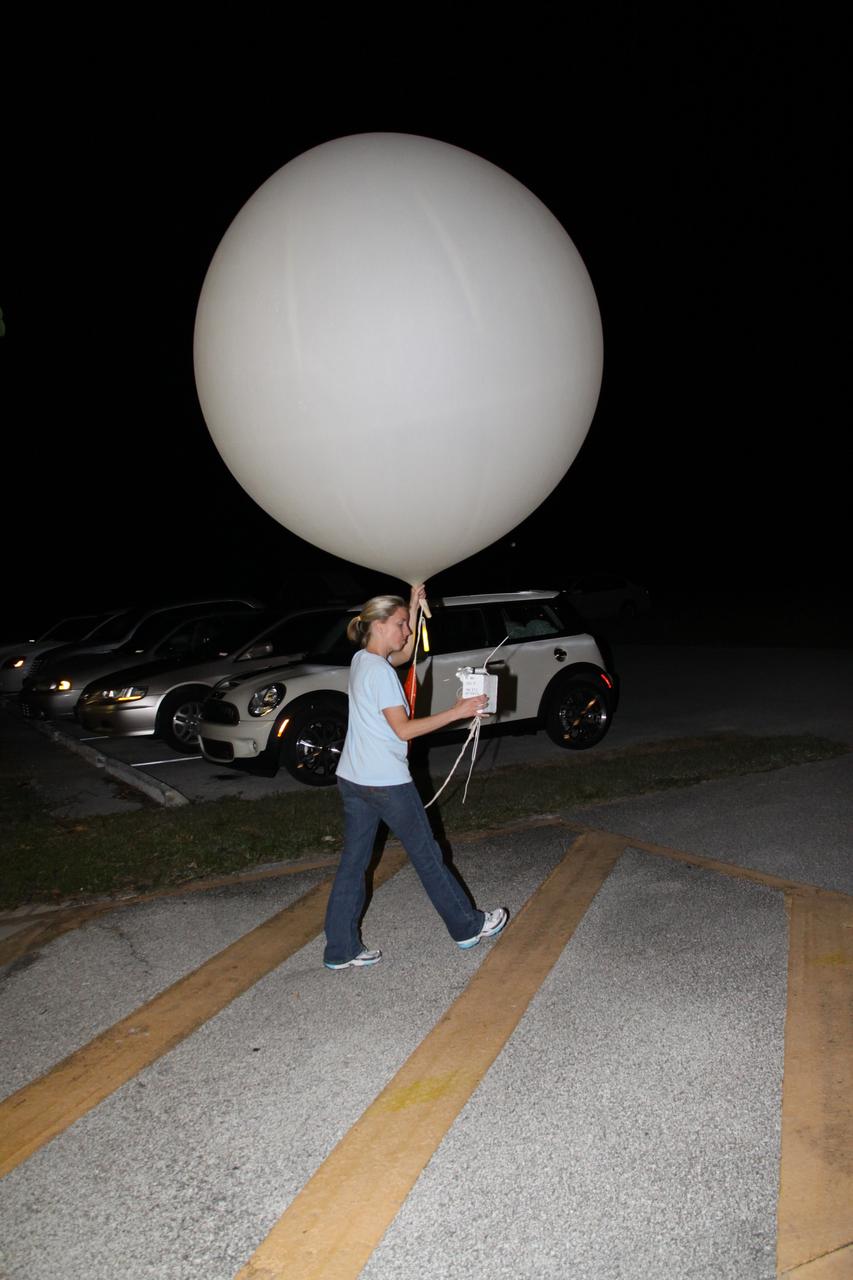
CAPE CANAVERAL, Fla. - At the weather station on Cape Canaveral Air Force Station in Florida, a meteorological data specialist prepares to release a low resolution flight element rawinsonde to support the countdown for the flight test of NASA's Ares I-X rocket. A GPS-tracked weather balloon, a rawinsonde has a tethered instrument package which radios its altitude to the ground along with atmospheric data such as temperature, dewpoint and humidity, and wind speed and direction. Rawinsondes can reach altitudes up to 110,000 feet. For information on the Ares I-X vehicle and flight test, visit http://www.nasa.gov/aresIX. Photo credit: NASA/Jack Pfaller
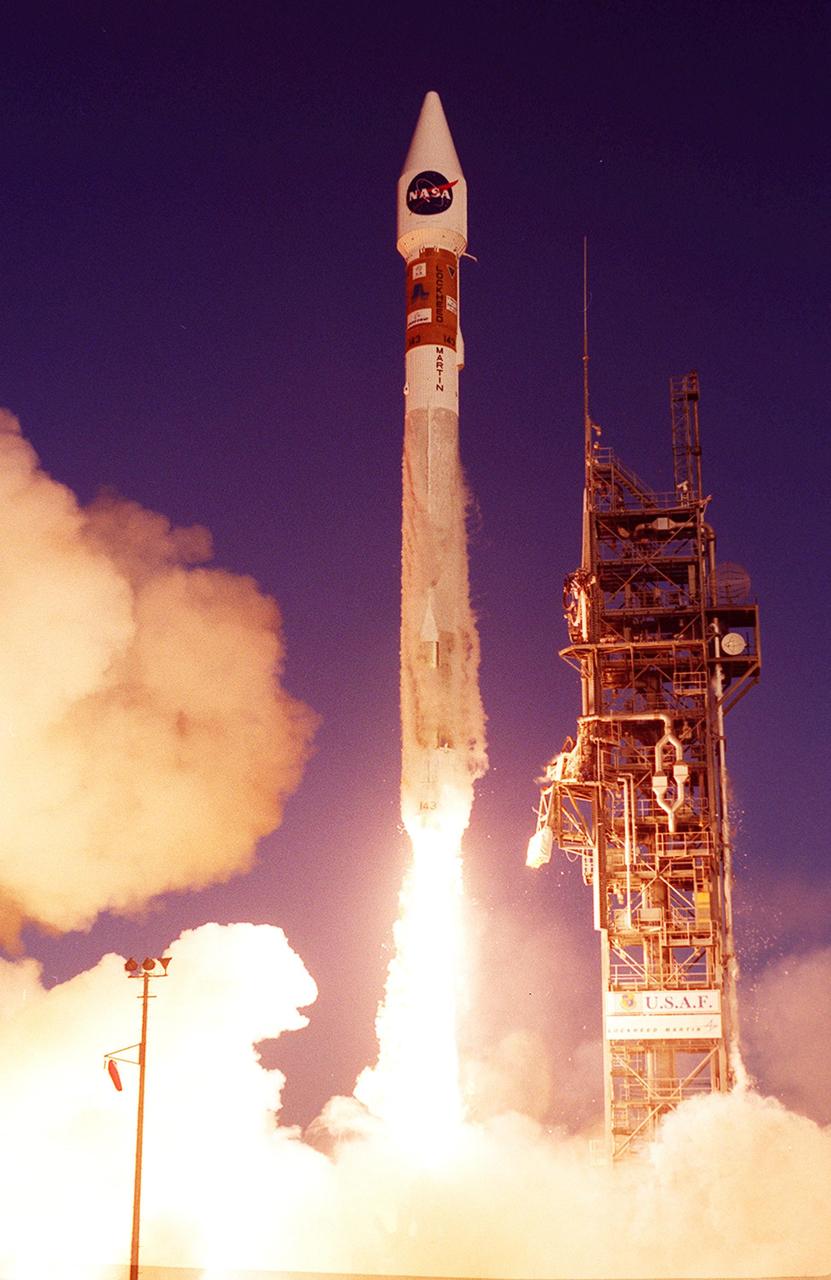
KENNEDY SPACE CENTER, FLA. - Spewing fire and smoke behind it, the Lockheed Martin Atlas IIA rocket lifts off from Launch Pad 36-A, Cape Canaveral Air Force Station, with the Tracking and Data Relay Satellite-I (TDRS-1) aboard. TDRS-I replenishes the existing on-orbit fleet of six spacecraft. The TDRS System is the primary source of space-to-ground voice, data and telemetry for the Space Shuttle. It also provides communications with the International Space Station and scientific spacecraft in low-Earth orbit such as the Hubble Space Telescope. This new advanced series of satellites will extend the availability of TDRS communications services until about 2017. Liftoff occurred at 5:59 p.m. EST
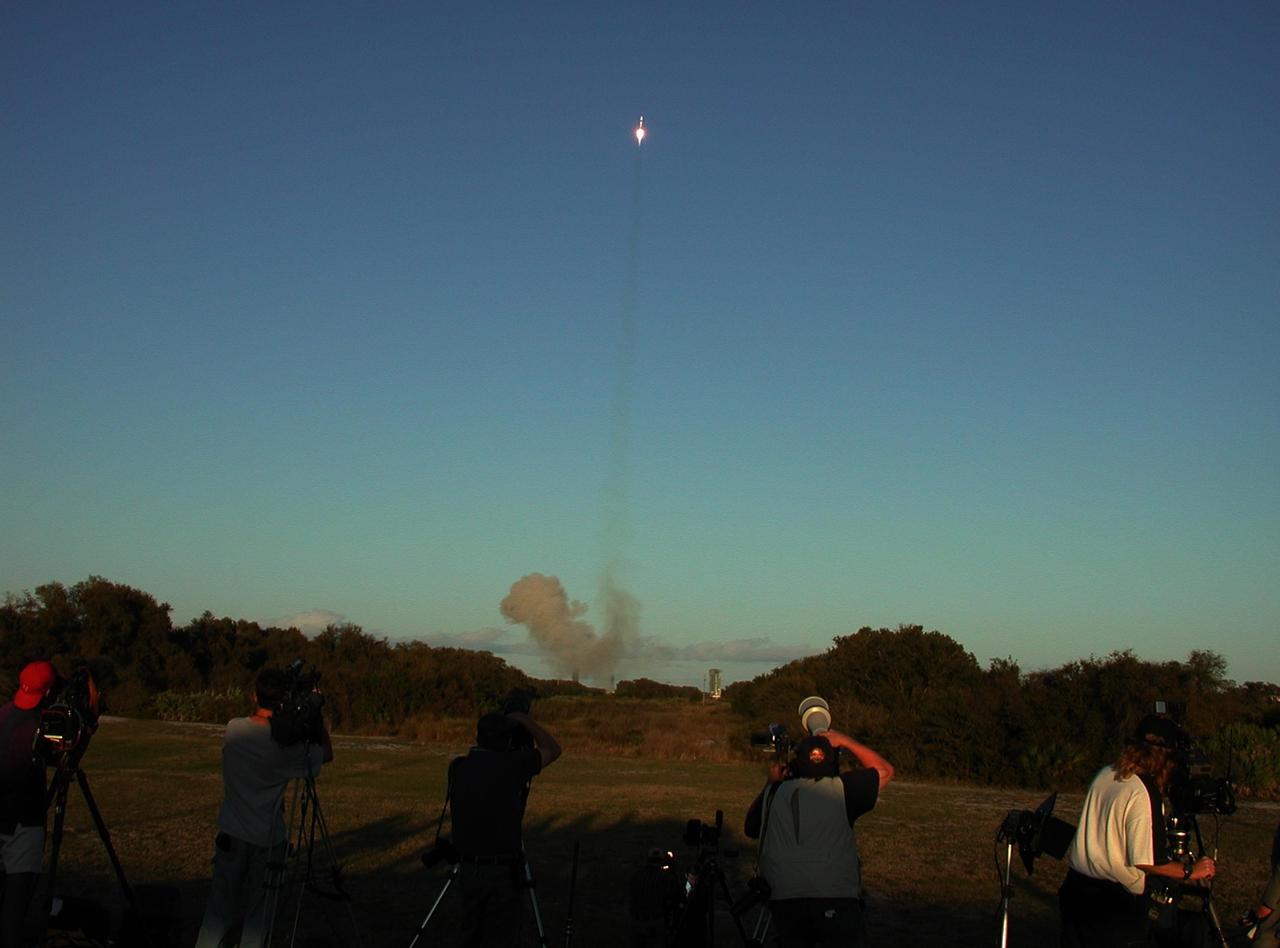
KENNEDY SPACE CENTER, FLA. -- Photographers track the Lockheed Martin Atlas IIA rocket after liftoff from Launch Pad 36-A, Cape Canaveral Air Force Station. The rocket is carrying the Tracking and Data Relay Satellite-I (TDRS-1). TDRS-I replenishes the existing on-orbit fleet of six spacecraft. The TDRS System is the primary source of space-to-ground voice, data and telemetry for the Space Shuttle. It also provides communications with the International Space Station and scientific spacecraft in low-Earth orbit such as the Hubble Space Telescope. This new advanced series of satellites will extend the availability of TDRS communications services until about 2017. Liftoff occurred at 5:59 p.m. EST
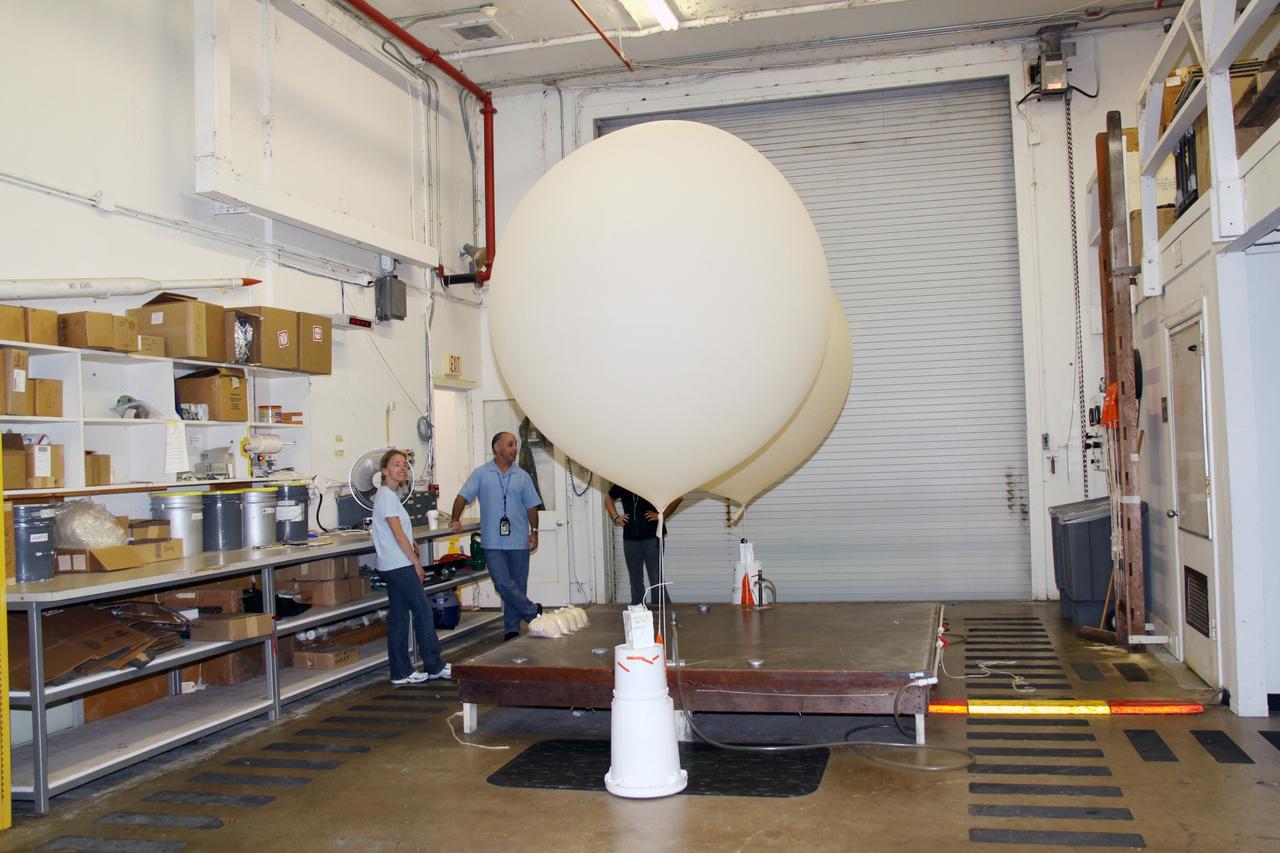
CAPE CANAVERAL, Fla. - In the weather station on Cape Canaveral Air Force Station in Florida, meteorological data specialists prepare two low resolution flight element rawinsonde to support the countdown for the flight test of NASA's Ares I-X rocket. A GPS-tracked weather balloon, a rawinsonde has a tethered instrument package which radios its altitude to the ground along with atmospheric data such as temperature, dewpoint and humidity, and wind speed and direction. Rawinsondes can reach altitudes up to 110,000 feet. For information on the Ares I-X vehicle and flight test, visit http://www.nasa.gov/aresIX. Photo credit: NASA/Jack Pfaller

CAPE CANAVERAL, Fla. - In the weather station on Cape Canaveral Air Force Station in Florida, a meteorological data specialist prepares a low resolution flight element rawinsonde to support the countdown for the flight test of NASA's Ares I-X rocket. A GPS-tracked weather balloon, a rawinsonde has a tethered instrument package which radios its altitude to the ground along with atmospheric data such as temperature, dewpoint and humidity, and wind speed and direction. Rawinsondes can reach altitudes up to 110,000 feet. For information on the Ares I-X vehicle and flight test, visit http://www.nasa.gov/aresIX. Photo credit: NASA/Jack Pfaller
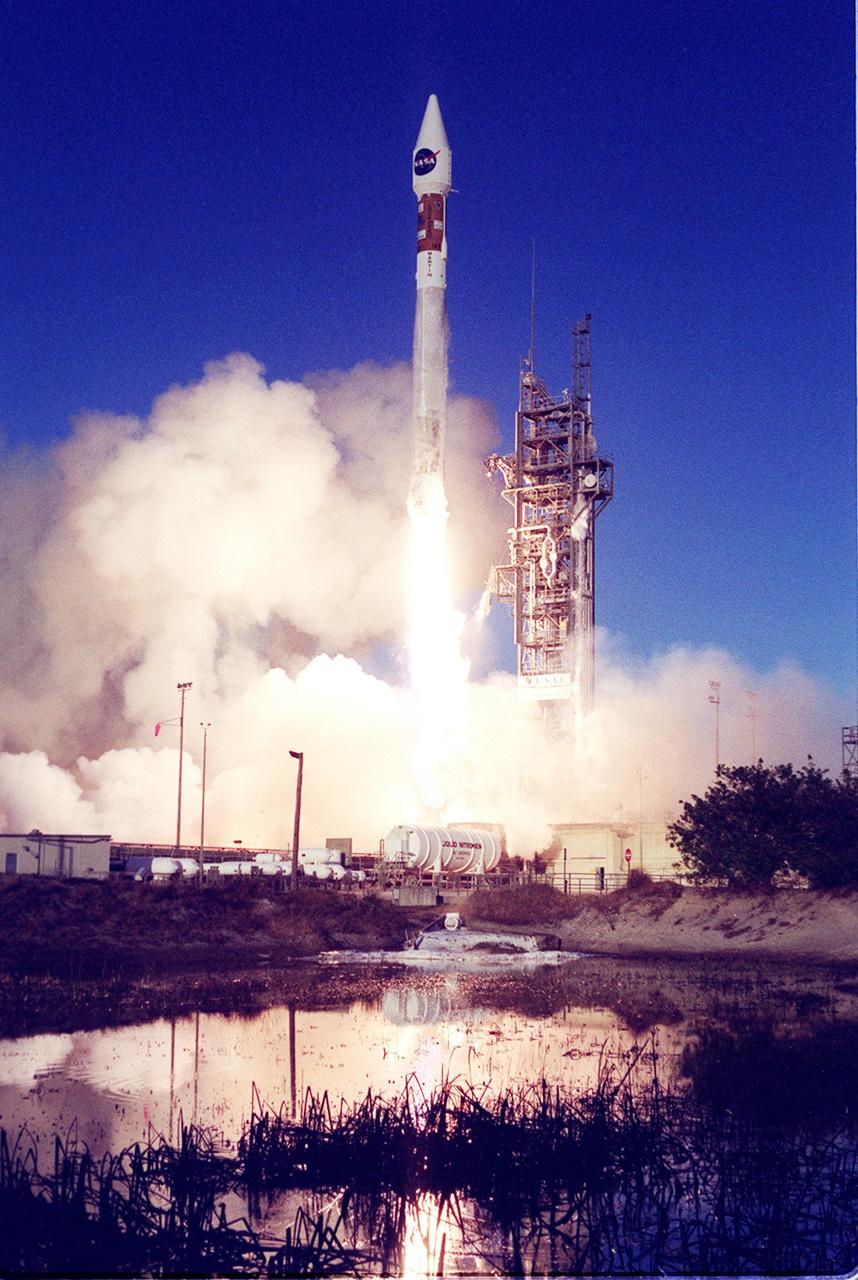
KENNEDY SPACE CENTER, FLA. -- The Lockheed Martin Atlas IIA rocket lifts off from Launch Pad 36-A, Cape Canaveral Air Force Station, with the Tracking and Data Relay Satellite-I (TDRS-1) aboard. TDRS-I replenishes the existing on-orbit fleet of six spacecraft. The TDRS System is the primary source of space-to-ground voice, data and telemetry for the Space Shuttle. It also provides communications with the International Space Station and scientific spacecraft in low-Earth orbit such as the Hubble Space Telescope. This new advanced series of satellites will extend the availability of TDRS communications services until about 2017. Liftoff occurred at 5:59 p.m. EST
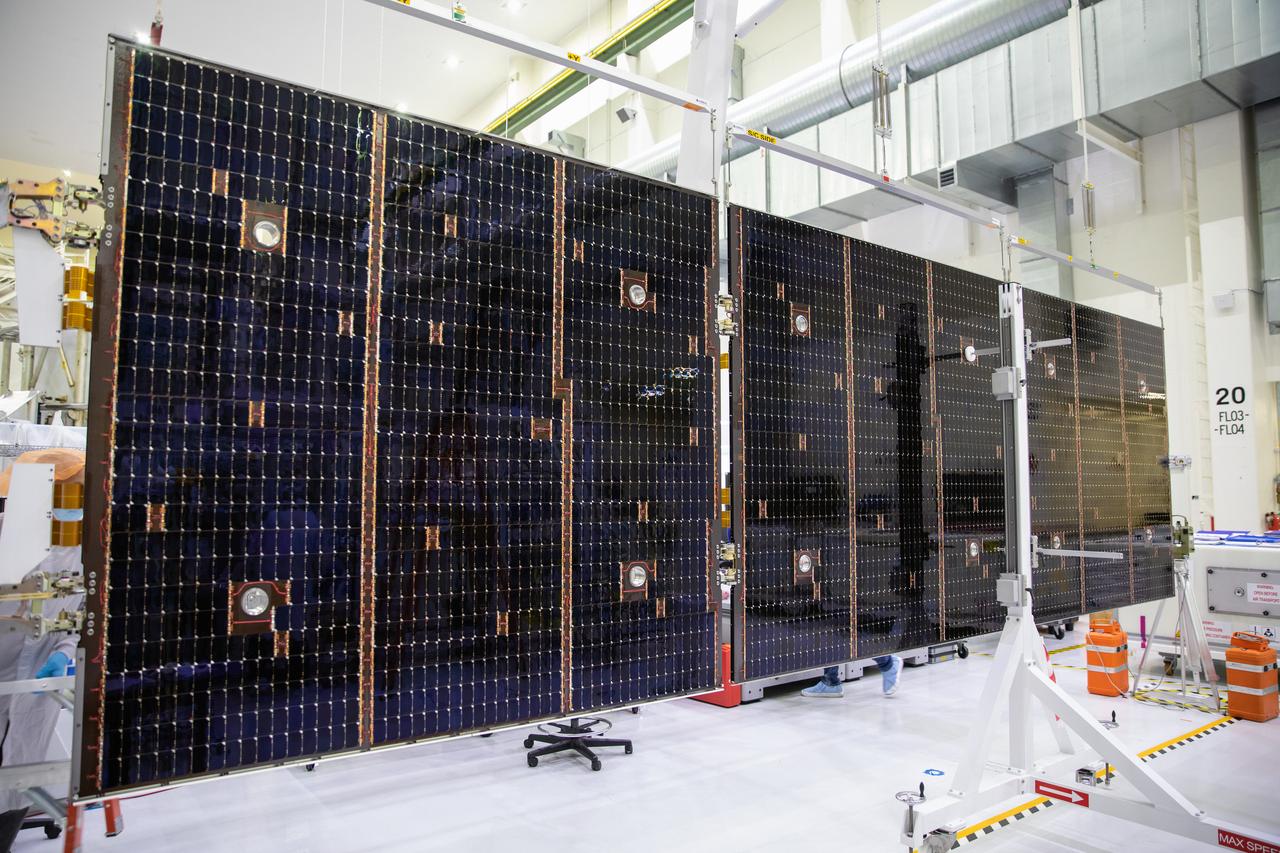
Inside the Neil Armstrong Operations and Checkout Building high bay at NASA’s Kennedy Space Center in Florida, in preparation for installation on the Artemis I spacecraft, technicians have extended one of the Artemis I solar array wings for inspection on Sept. 10, 2020, to confirm that it unfurled properly and all of the mechanisms functioned as expected. The solar array is one of four panels that will generate 11 kilowatts of power and span about 63 feet. The array is a component of Orion’s service module, which is provided by the European Space Agency and built by Airbus Defence and Space to supply Orion’s power, propulsion, air and water. The first in a series of increasingly complex missions, Artemis I will test the Orion spacecraft and Space Launch System as an integrated system ahead of crewed flights to the Moon. Under the Artemis program, NASA will land the first woman and the next man on the Moon in 2024.
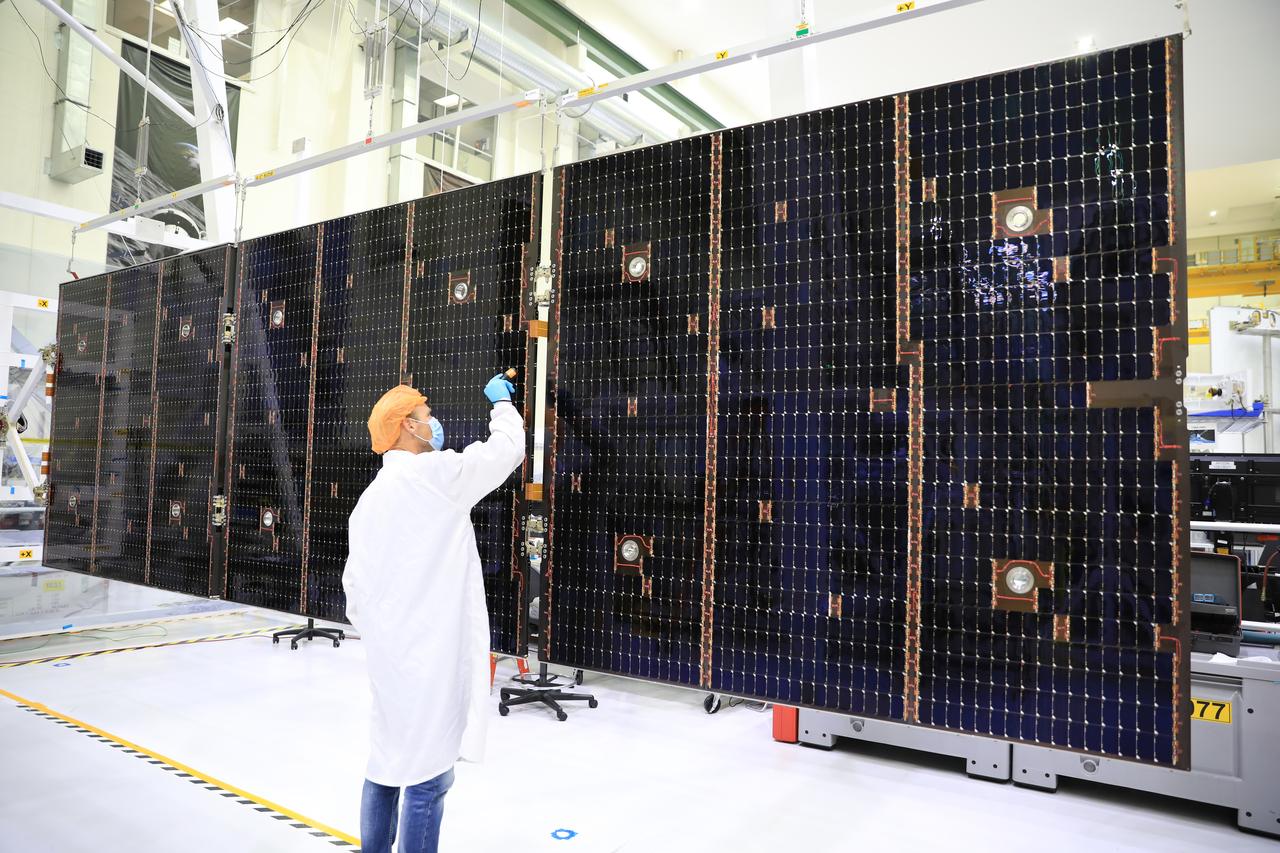
Inside the Neil Armstrong Operations and Checkout Building high bay at NASA’s Kennedy Space Center in Florida, in preparation for installation on the Artemis I spacecraft, technicians have extended one of the Artemis I solar array wings for inspection on Sept. 10, 2020, to confirm that it unfurled properly and all of the mechanisms functioned as expected. The solar array is one of four panels that will generate 11 kilowatts of power and span about 63 feet. The array is a component of Orion’s service module, which is provided by the European Space Agency and built by Airbus Defence and Space to supply Orion’s power, propulsion, air and water. The first in a series of increasingly complex missions, Artemis I will test the Orion spacecraft and Space Launch System as an integrated system ahead of crewed flights to the Moon.
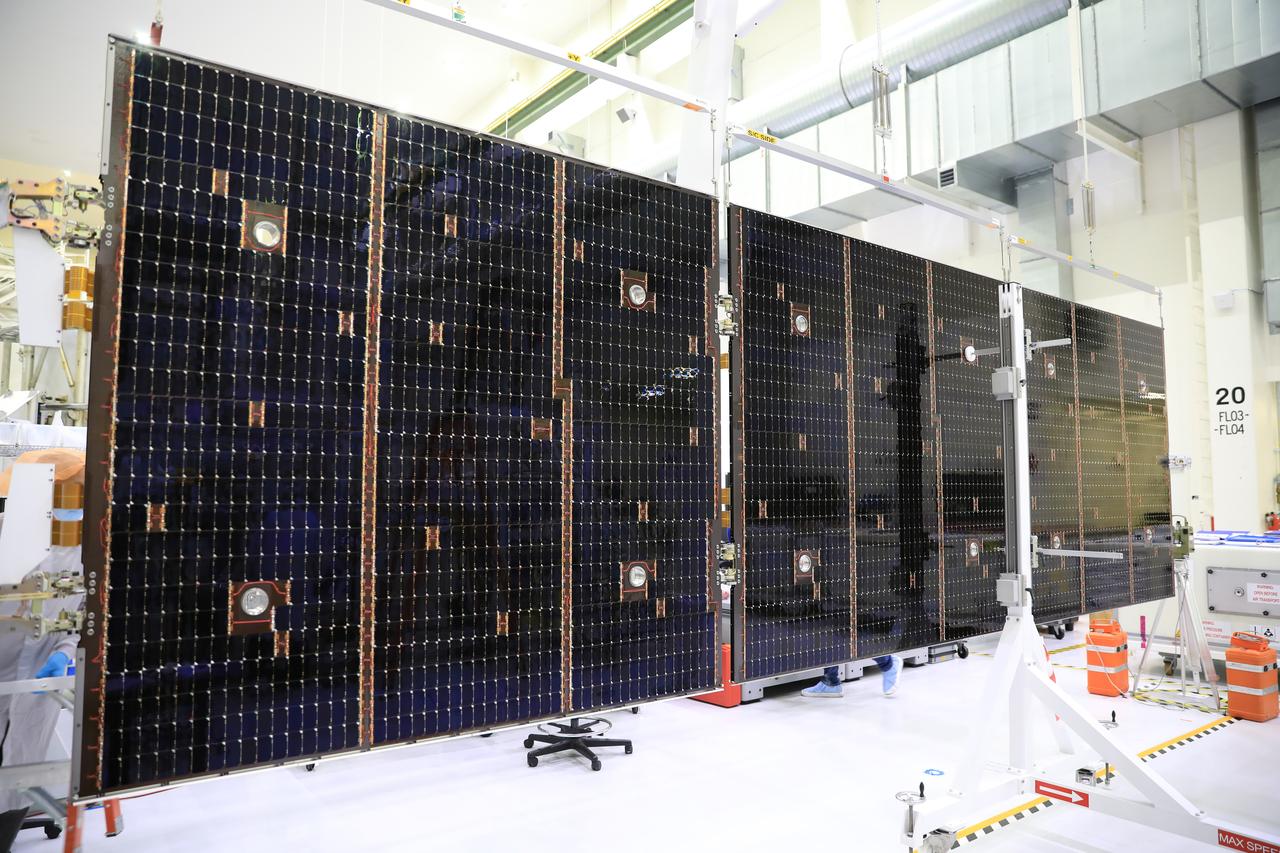
Inside the Neil Armstrong Operations and Checkout Building high bay at NASA’s Kennedy Space Center in Florida, in preparation for installation on the Artemis I spacecraft, technicians have extended one of the Artemis I solar array wings for inspection on Sept. 10, 2020, to confirm that it unfurled properly and all of the mechanisms functioned as expected. The solar array is one of four panels that will generate 11 kilowatts of power and span about 63 feet. The array is a component of Orion’s service module, which is provided by the European Space Agency and built by Airbus Defence and Space to supply Orion’s power, propulsion, air and water. The first in a series of increasingly complex missions, Artemis I will test the Orion spacecraft and Space Launch System as an integrated system ahead of crewed flights to the Moon.
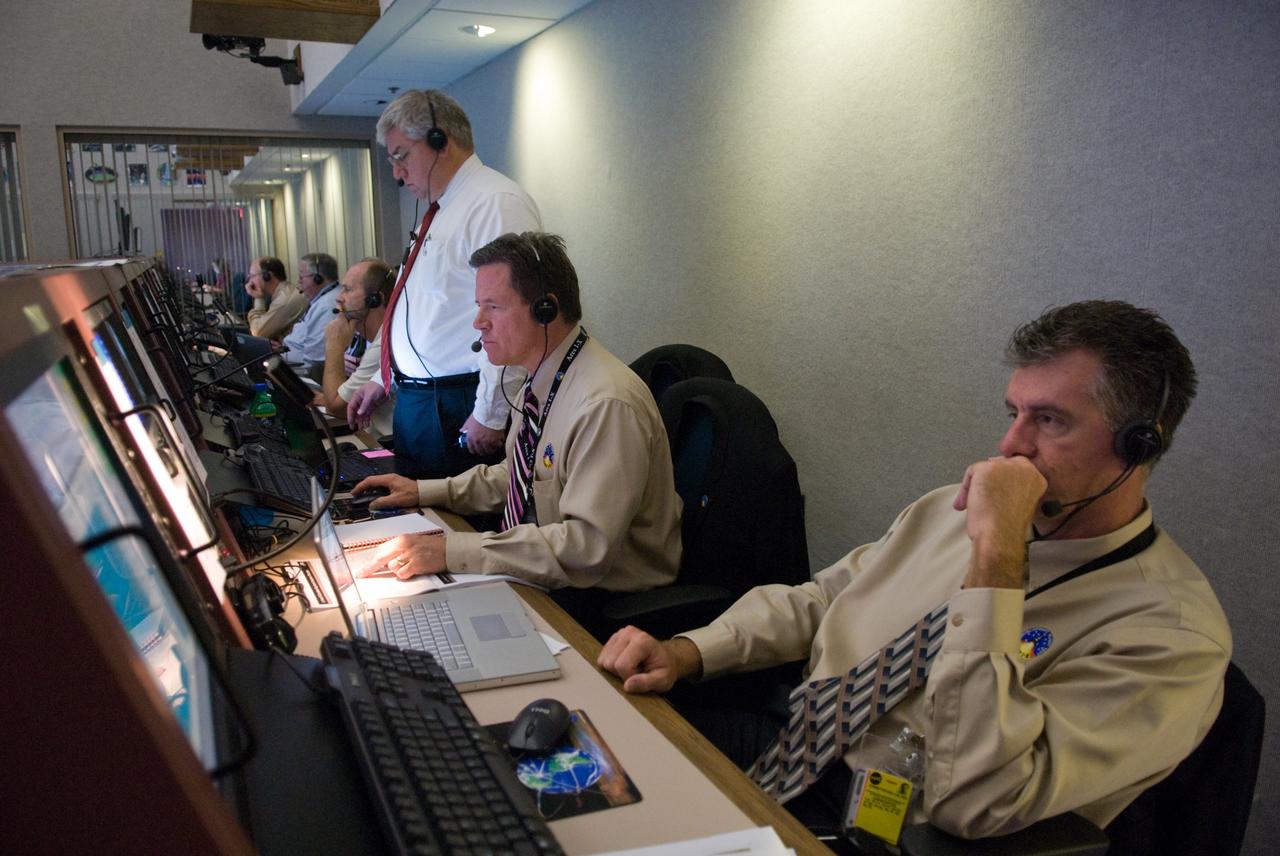
CAPE CANAVERAL, Fla. - The launch support team for the Ares I-X flight test monitors the countdown from consoles from the Launch Vehicle Data Center in Hangar AE on Cape Canaveral Air Force Station in Florida. This will be the first launch from Kennedy's pads of a vehicle other than the space shuttle since the Apollo Program's Saturn rockets were retired. The parts used to make the Ares I-X booster flew on 30 different shuttle missions ranging from STS-29 in 1989 to STS-106 in 2000. The data returned from more than 700 sensors throughout the rocket will be used to refine the design of future launch vehicles and bring NASA one step closer to reaching its exploration goals. For information on the Ares I-X vehicle and flight test, visit http://www.nasa.gov/aresIX. Photo credit: NASA/Kim Shiflett
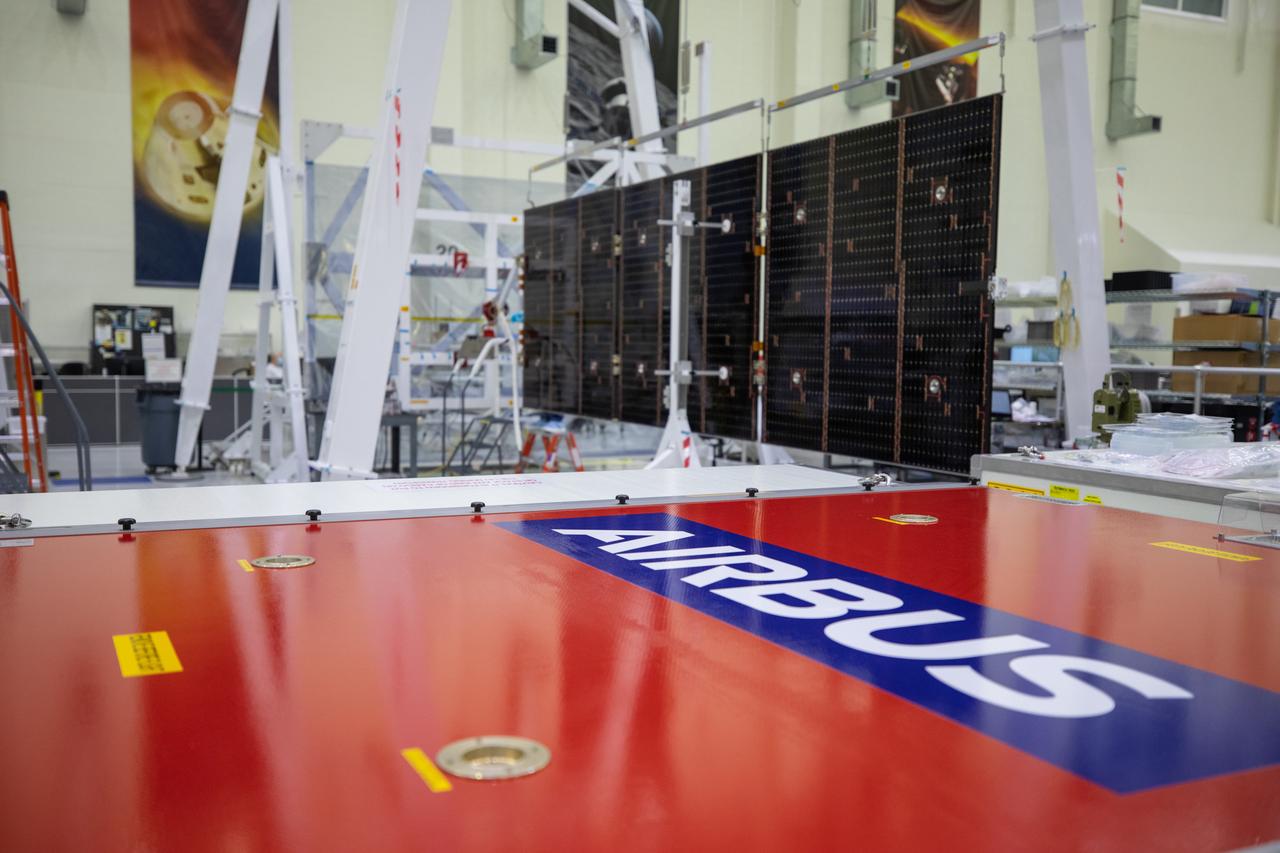
Inside the Neil Armstrong Operations and Checkout Building high bay at NASA’s Kennedy Space Center in Florida, in preparation for installation on the Artemis I spacecraft, technicians have extended one of the Artemis I solar array wings for inspection on Sept. 10, 2020, to confirm that it unfurled properly and all of the mechanisms functioned as expected. The solar array is one of four panels that will generate 11 kilowatts of power and span about 63 feet. The array is a component of Orion’s service module, which is provided by the European Space Agency and built by Airbus Defence and Space to supply Orion’s power, propulsion, air and water. The first in a series of increasingly complex missions, Artemis I will test the Orion spacecraft and Space Launch System as an integrated system ahead of crewed flights to the Moon. Under the Artemis program, NASA will land the first woman and the next man on the Moon in 2024.
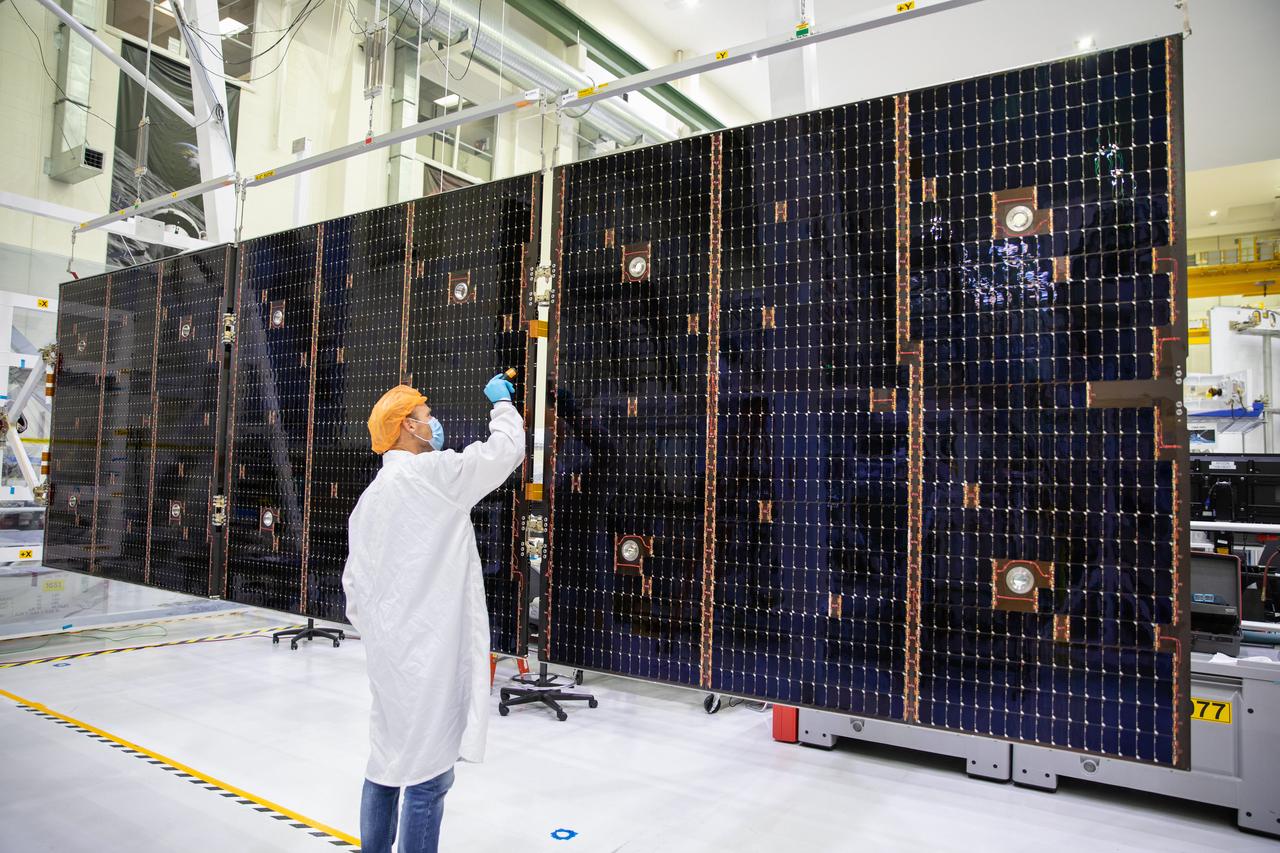
Inside the Neil Armstrong Operations and Checkout Building high bay at NASA’s Kennedy Space Center in Florida, in preparation for installation on the Artemis I spacecraft, technicians have extended one of the Artemis I solar array wings for inspection on Sept. 10, 2020, to confirm that it unfurled properly and all of the mechanisms functioned as expected. The solar array is one of four panels that will generate 11 kilowatts of power and span about 63 feet. The array is a component of Orion’s service module, which is provided by the European Space Agency and built by Airbus Defence and Space to supply Orion’s power, propulsion, air and water. The first in a series of increasingly complex missions, Artemis I will test the Orion spacecraft and Space Launch System as an integrated system ahead of crewed flights to the Moon. Under the Artemis program, NASA will land the first woman and the next man on the Moon in 2024.
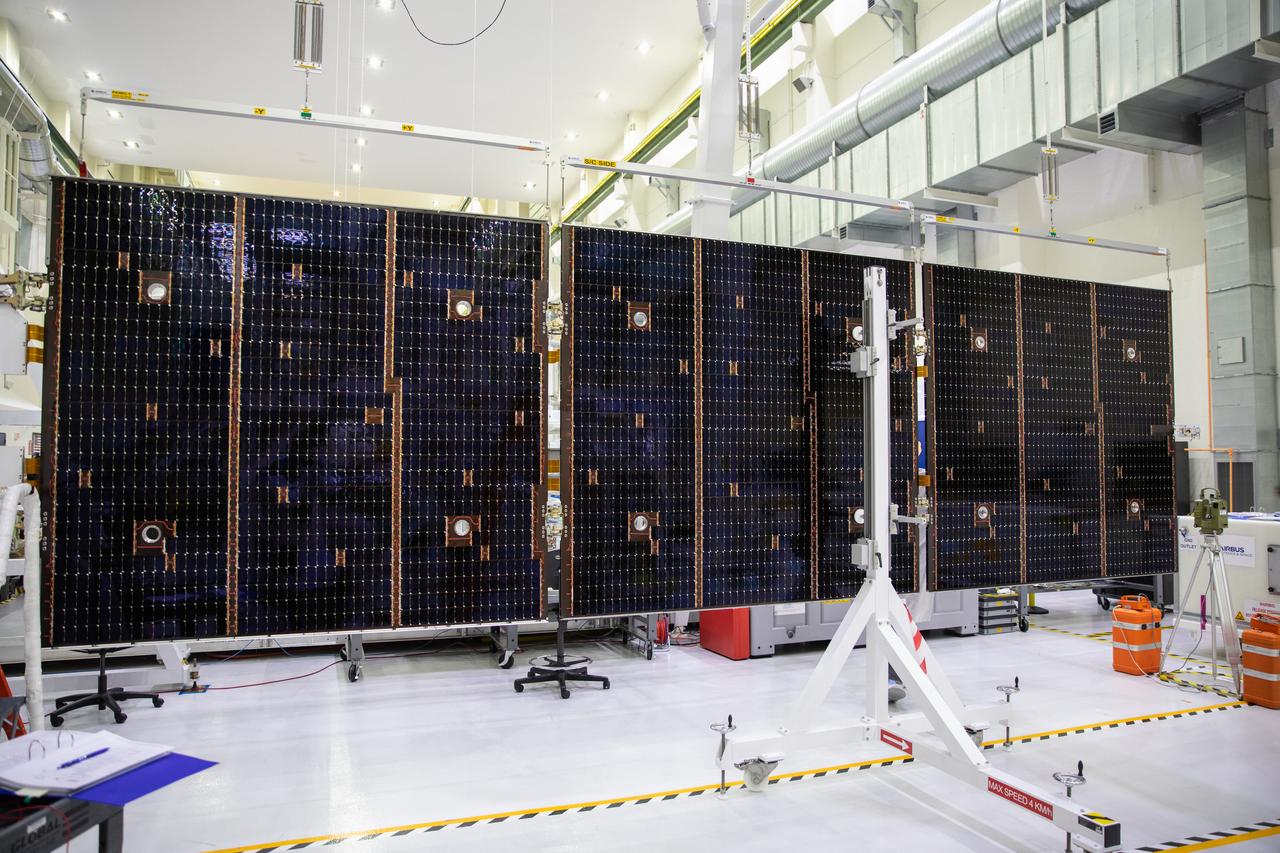
Inside the Neil Armstrong Operations and Checkout Building high bay at NASA’s Kennedy Space Center in Florida, in preparation for installation on the Artemis I spacecraft, technicians have extended one of the Artemis I solar array wings for inspection on Sept. 10, 2020, to confirm that it unfurled properly and all of the mechanisms functioned as expected. The solar array is one of four panels that will generate 11 kilowatts of power and span about 63 feet. The array is a component of Orion’s service module, which is provided by the European Space Agency and built by Airbus Defence and Space to supply Orion’s power, propulsion, air and water. The first in a series of increasingly complex missions, Artemis I will test the Orion spacecraft and Space Launch System as an integrated system ahead of crewed flights to the Moon. Under the Artemis program, NASA will land the first woman and the next man on the Moon in 2024.
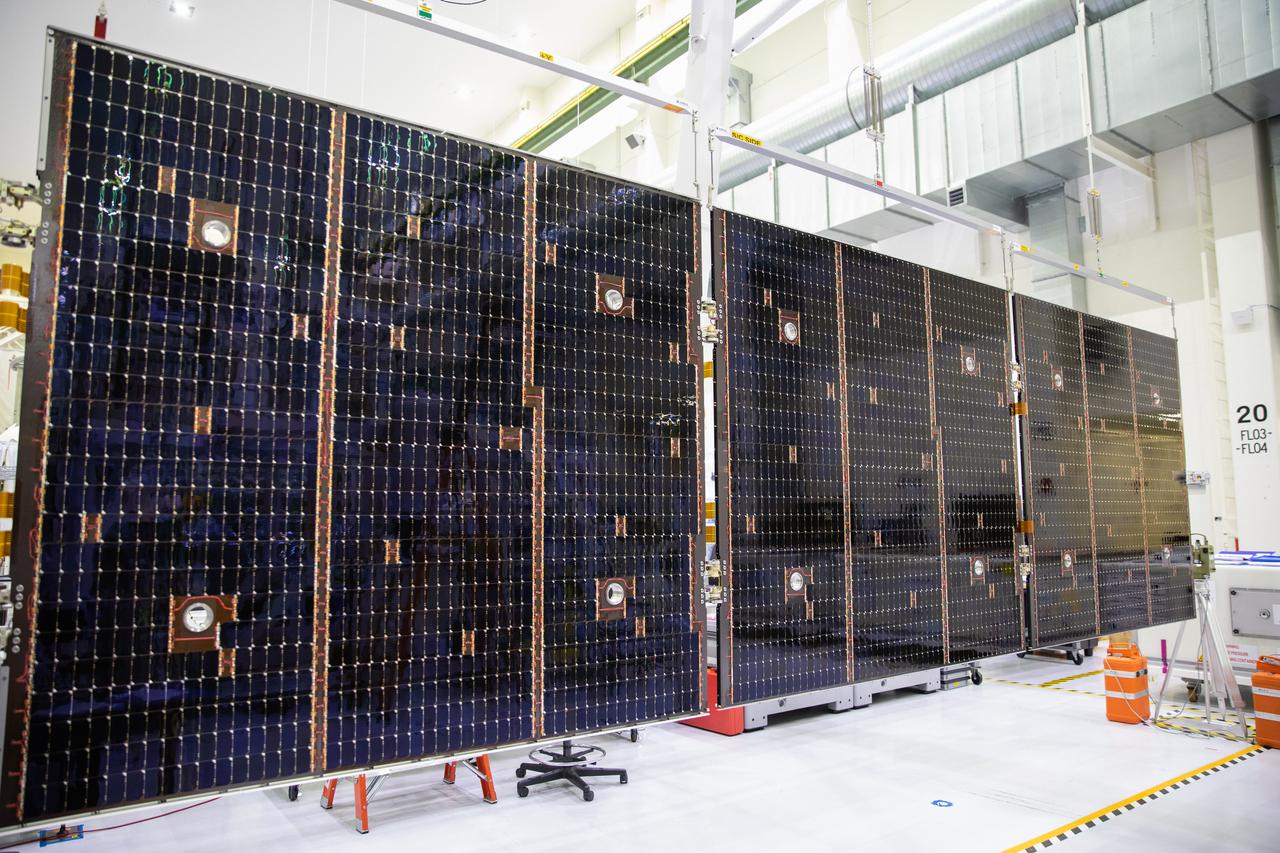
Inside the Neil Armstrong Operations and Checkout Building high bay at NASA’s Kennedy Space Center in Florida, in preparation for installation on the Artemis I spacecraft, technicians have extended one of the Artemis I solar array wings for inspection on Sept. 10, 2020, to confirm that it unfurled properly and all of the mechanisms functioned as expected. The solar array is one of four panels that will generate 11 kilowatts of power and span about 63 feet. The array is a component of Orion’s service module, which is provided by the European Space Agency and built by Airbus Defence and Space to supply Orion’s power, propulsion, air and water. The first in a series of increasingly complex missions, Artemis I will test the Orion spacecraft and Space Launch System as an integrated system ahead of crewed flights to the Moon. Under the Artemis program, NASA will land the first woman and the next man on the Moon in 2024.
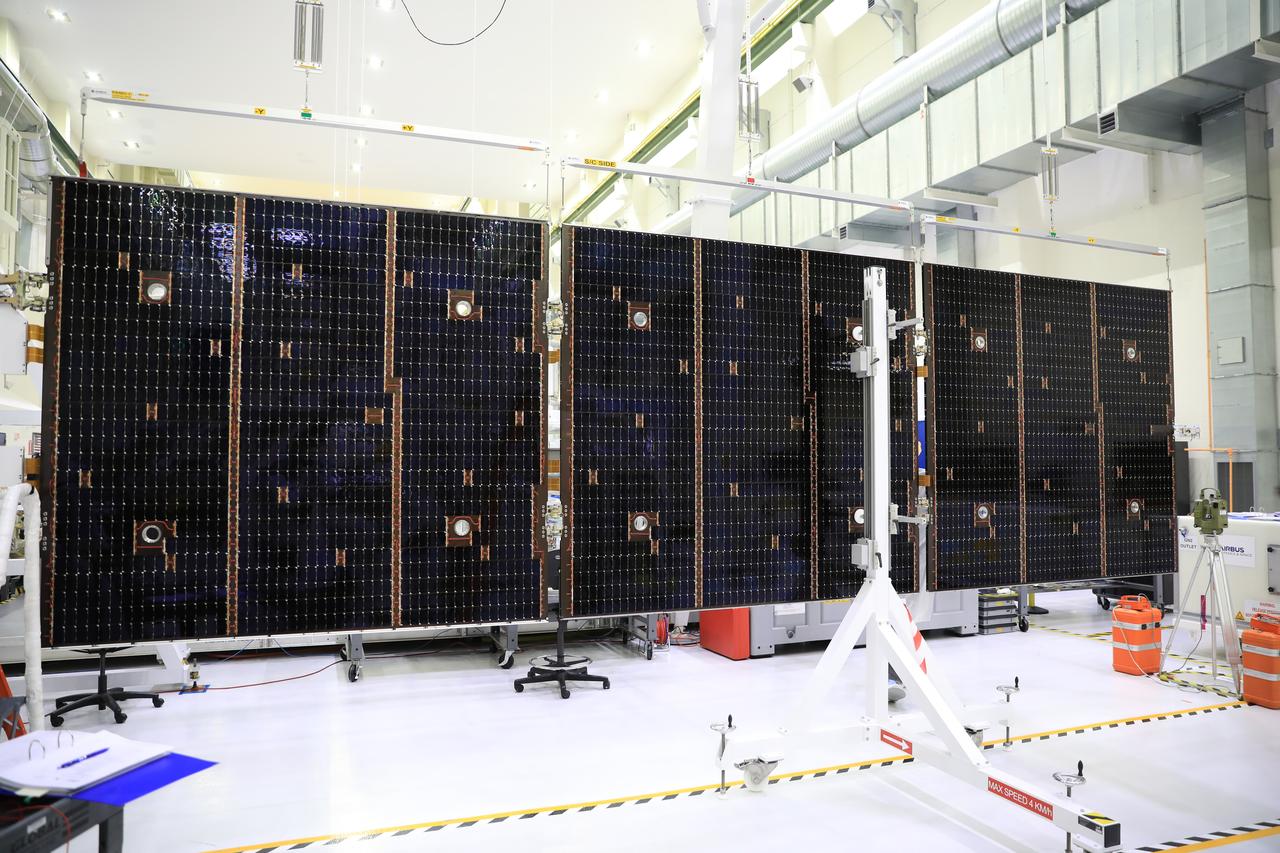
Inside the Neil Armstrong Operations and Checkout Building high bay at NASA’s Kennedy Space Center in Florida, in preparation for installation on the Artemis I spacecraft, technicians have extended one of the Artemis I solar array wings for inspection on Sept. 10, 2020, to confirm that it unfurled properly and all of the mechanisms functioned as expected. The solar array is one of four panels that will generate 11 kilowatts of power and span about 63 feet. The array is a component of Orion’s service module, which is provided by the European Space Agency and built by Airbus Defence and Space to supply Orion’s power, propulsion, air and water. The first in a series of increasingly complex missions, Artemis I will test the Orion spacecraft and Space Launch System as an integrated system ahead of crewed flights to the Moon.
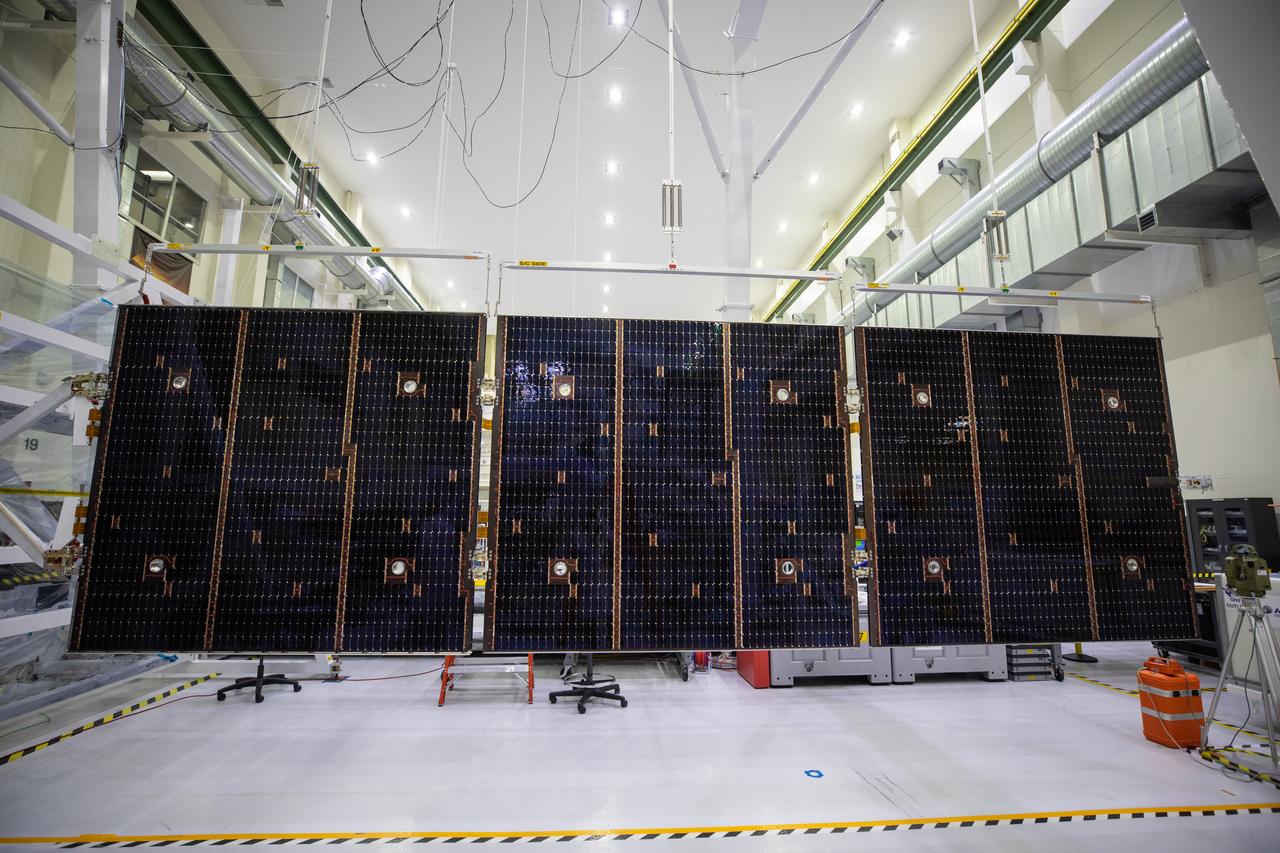
Inside the Neil Armstrong Operations and Checkout Building high bay at NASA’s Kennedy Space Center in Florida, in preparation for installation on the Artemis I spacecraft, technicians have extended one of the Artemis I solar array wings for inspection on Sept. 10, 2020, to confirm that it unfurled properly and all of the mechanisms functioned as expected. The solar array is one of four panels that will generate 11 kilowatts of power and span about 63 feet. The array is a component of Orion’s service module, which is provided by the European Space Agency and built by Airbus Defence and Space to supply Orion’s power, propulsion, air and water. The first in a series of increasingly complex missions, Artemis I will test the Orion spacecraft and Space Launch System as an integrated system ahead of crewed flights to the Moon. Under the Artemis program, NASA will land the first woman and the next man on the Moon in 2024.
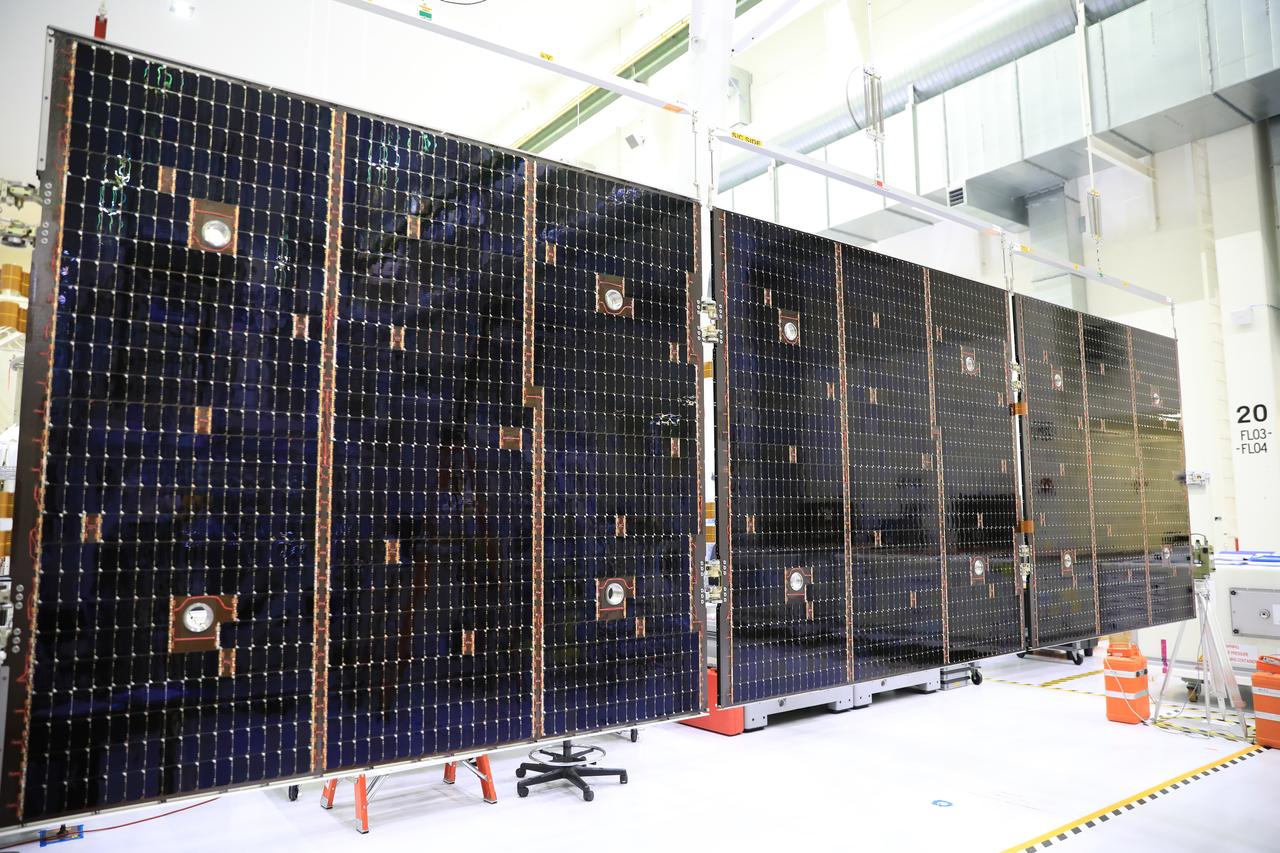
Inside the Neil Armstrong Operations and Checkout Building high bay at NASA’s Kennedy Space Center in Florida, in preparation for installation on the Artemis I spacecraft, technicians have extended one of the Artemis I solar array wings for inspection on Sept. 10, 2020, to confirm that it unfurled properly and all of the mechanisms functioned as expected. The solar array is one of four panels that will generate 11 kilowatts of power and span about 63 feet. The array is a component of Orion’s service module, which is provided by the European Space Agency and built by Airbus Defence and Space to supply Orion’s power, propulsion, air and water. The first in a series of increasingly complex missions, Artemis I will test the Orion spacecraft and Space Launch System as an integrated system ahead of crewed flights to the Moon.

KENNEDY SPACE CENTER, FLA. - The upper stage of this Lockheed Martin Atlas/Centaur rocket encloses the Tracking and Data Relay Satellite-I (TDRS-I), the second in a new series of telemetry satellites that are replenishing the existing on-orbit fleet of six spacecraft. The TDRS System is the primary source of space-to-ground voice, data and telemetry for the Space Shuttle. It also provides communications with the International Space Station and scientific spacecraft in low-Earth orbit such as the Hubble Space Telescope. This new advanced series of satellites will extend the availability of TDRS communications services until about 2017. Launch of TDRS-I atop the Atlas rocket is scheduled today between 5:39 - 6:19 p.m. EST from Launch Pad 36-A, Cape Canaveral Air Force Station
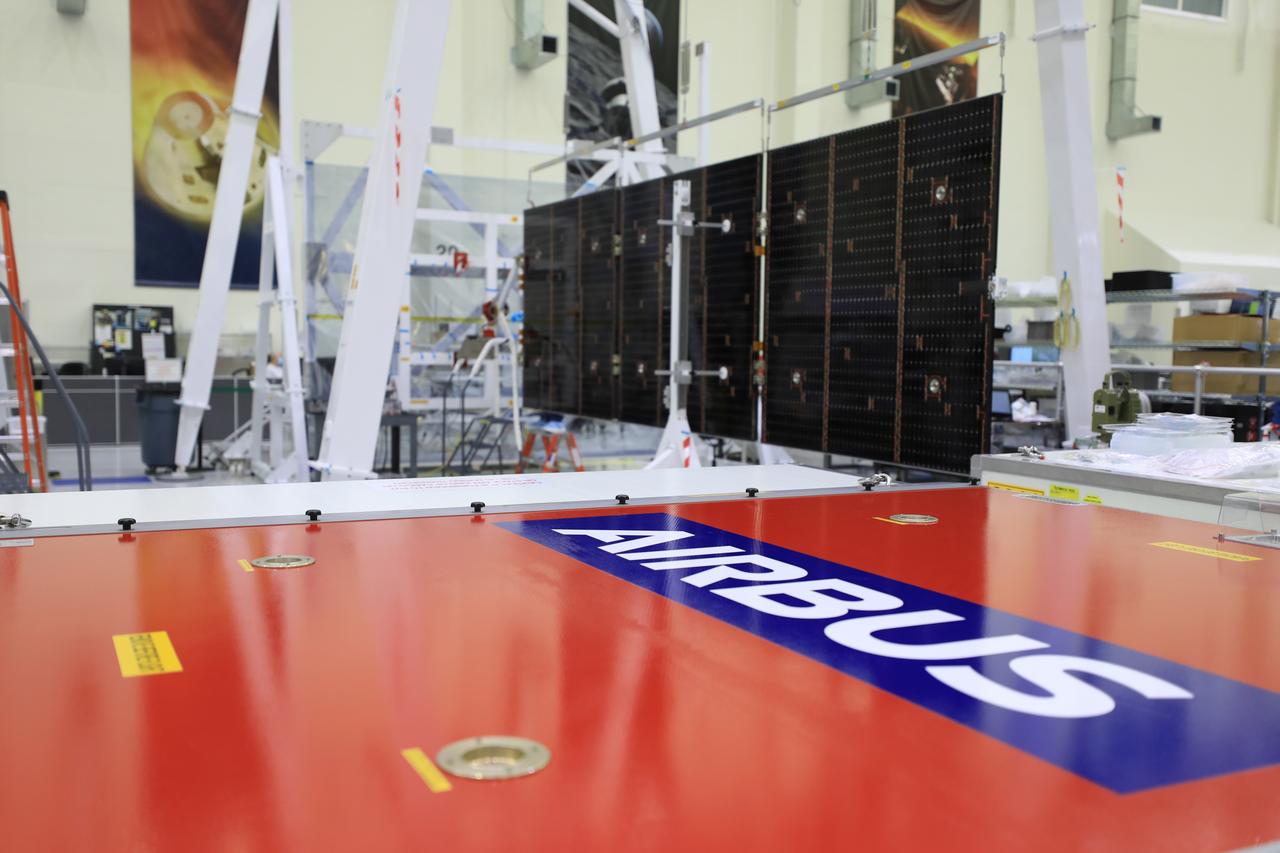
Inside the Neil Armstrong Operations and Checkout Building high bay at NASA’s Kennedy Space Center in Florida, in preparation for installation on the Artemis I spacecraft, technicians have extended one of the Artemis I solar array wings for inspection on Sept. 10, 2020, to confirm that it unfurled properly and all of the mechanisms functioned as expected. The solar array is one of four panels that will generate 11 kilowatts of power and span about 63 feet. The array is a component of Orion’s service module, which is provided by the European Space Agency and built by Airbus Defence and Space to supply Orion’s power, propulsion, air and water. The first in a series of increasingly complex missions, Artemis I will test the Orion spacecraft and Space Launch System as an integrated system ahead of crewed flights to the Moon.

Inside the Neil Armstrong Operations and Checkout Building high bay at NASA’s Kennedy Space Center in Florida, in preparation for installation on the Artemis I spacecraft, technicians have extended one of the Artemis I solar array wings for inspection on Sept. 10, 2020, to confirm that it unfurled properly and all of the mechanisms functioned as expected. The solar array is one of four panels that will generate 11 kilowatts of power and span about 63 feet. The array is a component of Orion’s service module, which is provided by the European Space Agency and built by Airbus Defence and Space to supply Orion’s power, propulsion, air and water. The first in a series of increasingly complex missions, Artemis I will test the Orion spacecraft and Space Launch System as an integrated system ahead of crewed flights to the Moon. Under the Artemis program, NASA will land the first woman and the next man on the Moon in 2024.
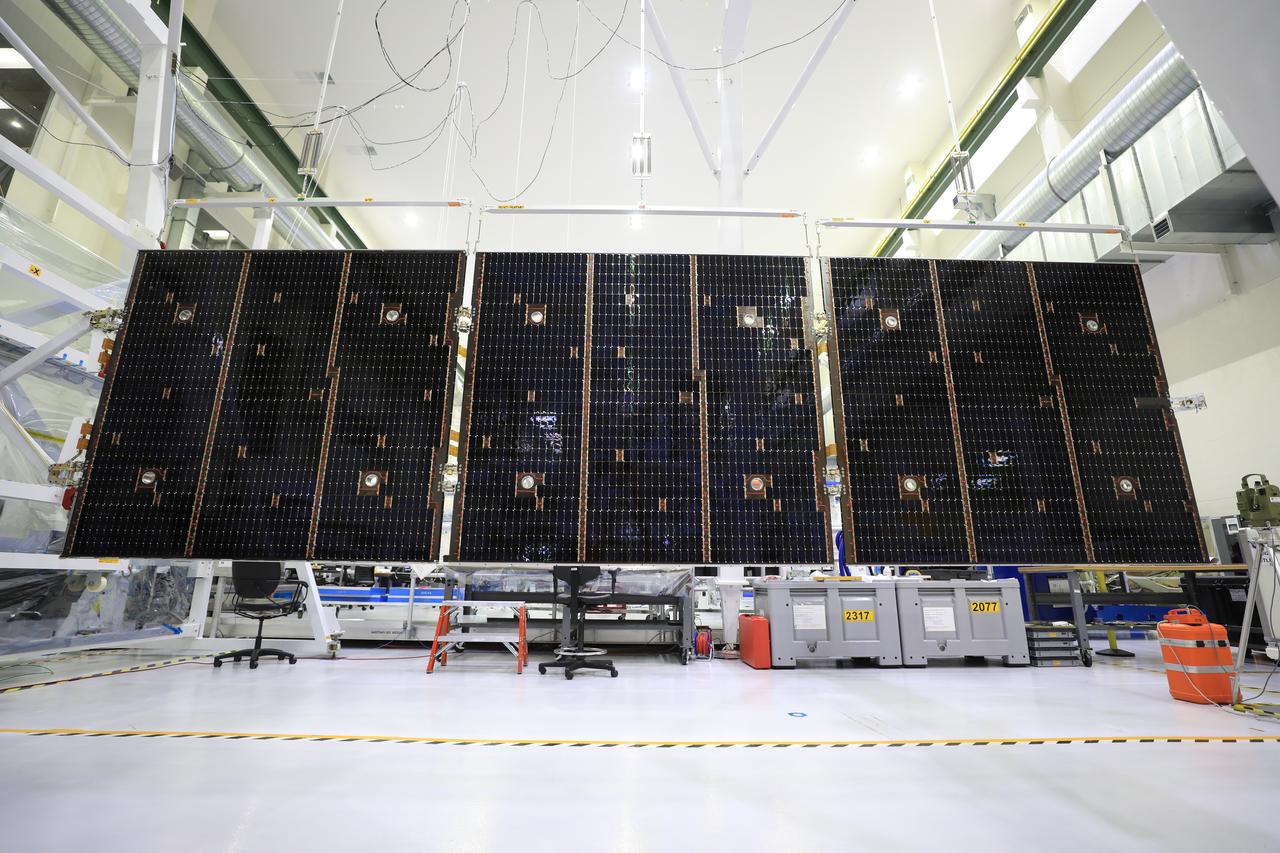
Inside the Neil Armstrong Operations and Checkout Building high bay at NASA’s Kennedy Space Center in Florida, in preparation for installation on the Artemis I spacecraft, technicians have extended one of the Artemis I solar array wings for inspection on Sept. 10, 2020, to confirm that it unfurled properly and all of the mechanisms functioned as expected. The solar array is one of four panels that will generate 11 kilowatts of power and span about 63 feet. The array is a component of Orion’s service module, which is provided by the European Space Agency and built by Airbus Defence and Space to supply Orion’s power, propulsion, air and water. The first in a series of increasingly complex missions, Artemis I will test the Orion spacecraft and Space Launch System as an integrated system ahead of crewed flights to the Moon.
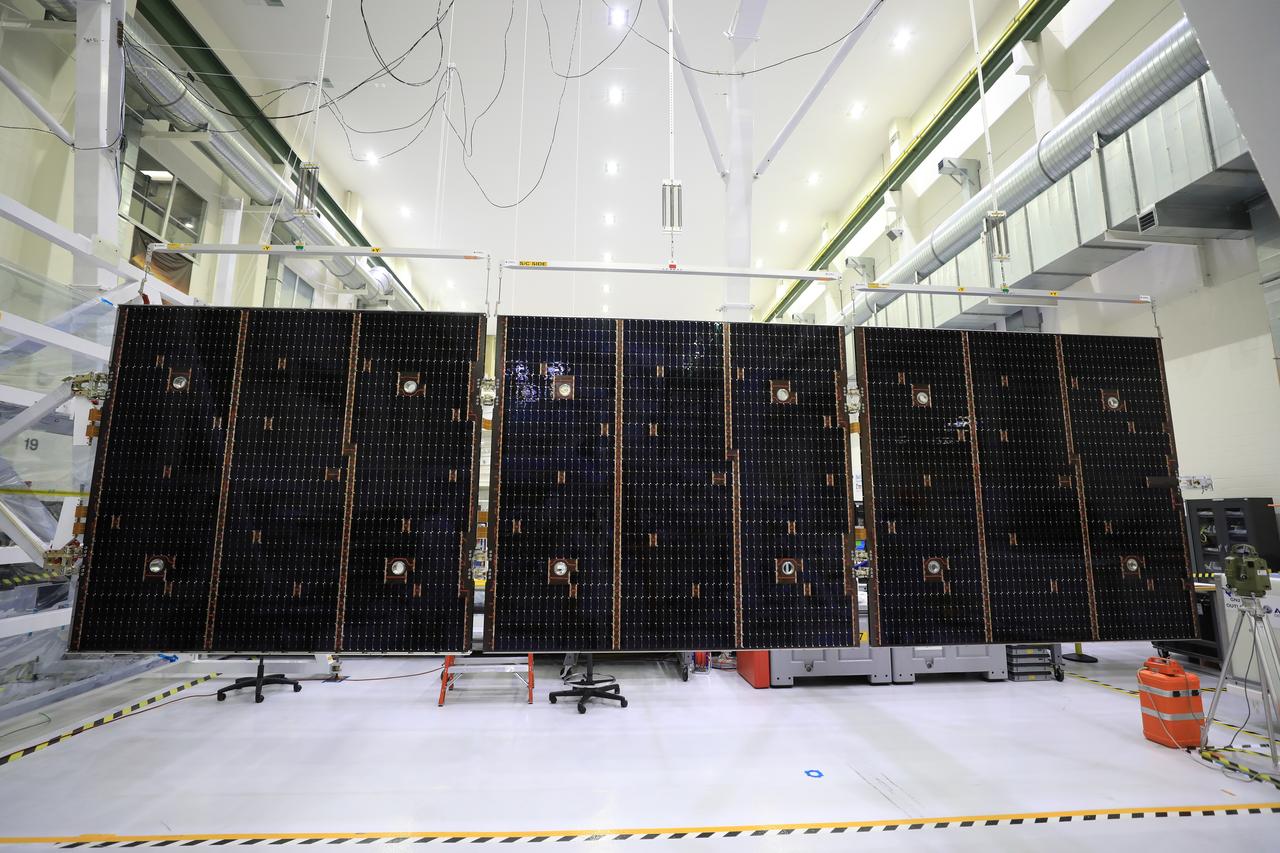
Inside the Neil Armstrong Operations and Checkout Building high bay at NASA’s Kennedy Space Center in Florida, in preparation for installation on the Artemis I spacecraft, technicians have extended one of the Artemis I solar array wings for inspection on Sept. 10, 2020, to confirm that it unfurled properly and all of the mechanisms functioned as expected. The solar array is one of four panels that will generate 11 kilowatts of power and span about 63 feet. The array is a component of Orion’s service module, which is provided by the European Space Agency and built by Airbus Defence and Space to supply Orion’s power, propulsion, air and water. The first in a series of increasingly complex missions, Artemis I will test the Orion spacecraft and Space Launch System as an integrated system ahead of crewed flights to the Moon.
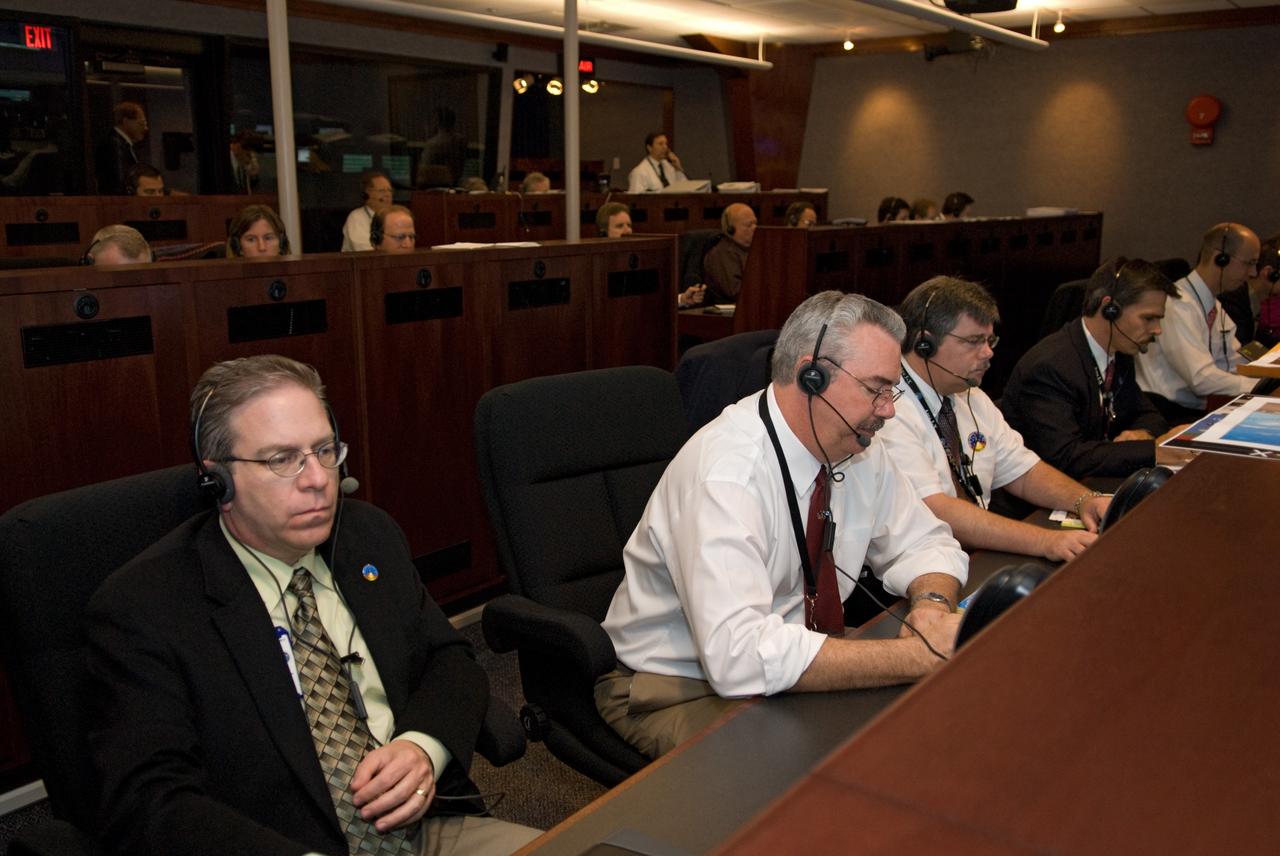
CAPE CANAVERAL, Fla. - The launch support team for the Ares I-X flight test monitors the countdown from consoles from the Mission Director's Center in Hangar AE on Cape Canaveral Air Force Station in Florida. This will be the first launch from Kennedy's pads of a vehicle other than the space shuttle since the Apollo Program's Saturn rockets were retired. The parts used to make the Ares I-X booster flew on 30 different shuttle missions ranging from STS-29 in 1989 to STS-106 in 2000. The data returned from more than 700 sensors throughout the rocket will be used to refine the design of future launch vehicles and bring NASA one step closer to reaching its exploration goals. For information on the Ares I-X vehicle and flight test, visit http://www.nasa.gov/aresIX. Photo credit: NASA/Kim Shiflett
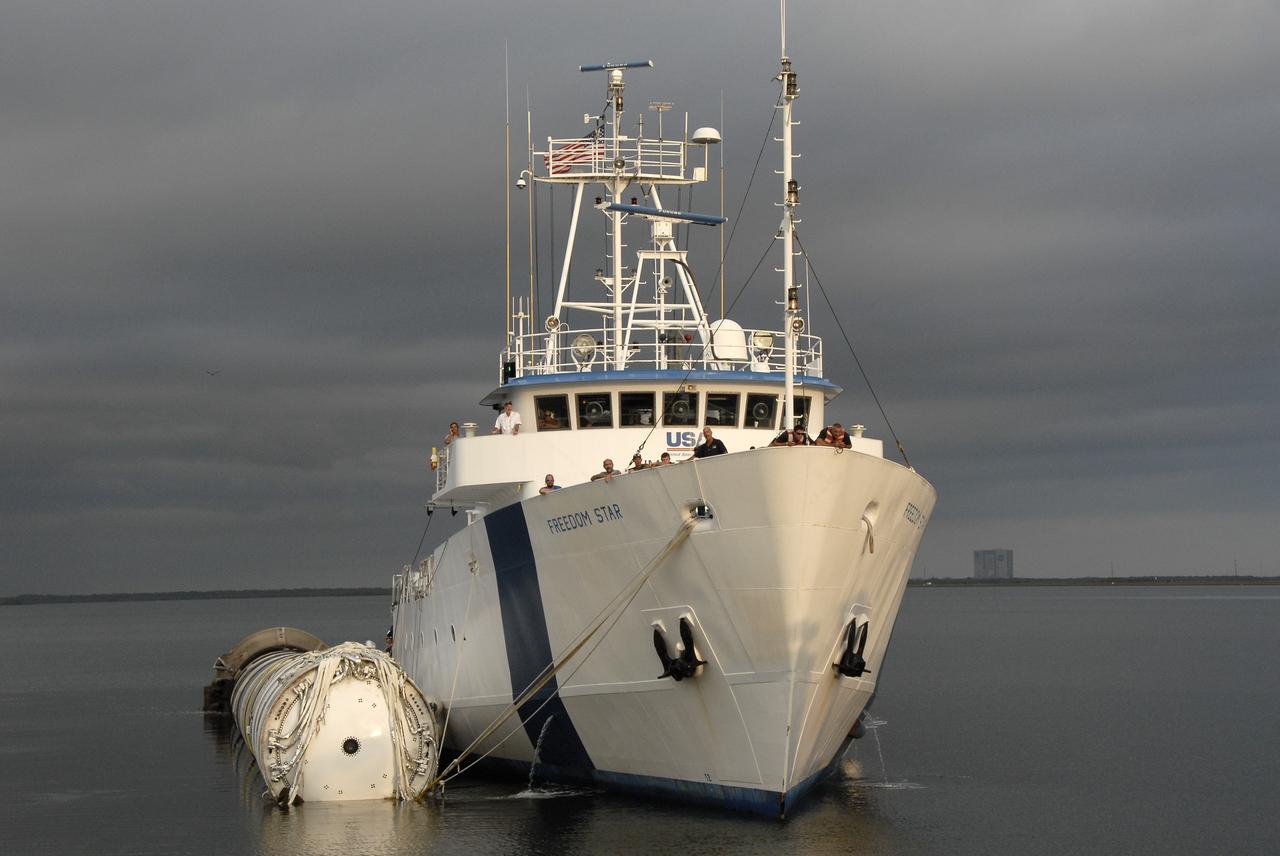
CAPE CANAVERAL, Fla. – The solid rocket booster recovery ship Freedom Star, towing the spent first stage of NASA's Ares I-X rocket, traverses the Banana River along the shore of Cape Canaveral Air Force Station in Florida. Across the river, in the background, is the Vehicle Assembly Building at NASA's Kennedy Space Center. Following the launch of the Ares I-X flight test, the booster splashed down in the Atlantic Ocean and was recovered. Liftoff of the 6-minute flight test was at 11:30 a.m. EDT Oct. 28. This was the first launch from Kennedy's pads of a vehicle other than the space shuttle since the Apollo Program's Saturn rockets were retired. The parts used to make the Ares I-X booster flew on 30 different shuttle missions ranging from STS-29 in 1989 to STS-106 in 2000. The data returned from more than 700 sensors throughout the rocket will be used to refine the design of future launch vehicles and bring NASA one step closer to reaching its exploration goals. For information on the Ares I-X vehicle and flight test, visit http://www.nasa.gov/aresIX. Photo credit: NASA/Kim Shiflett
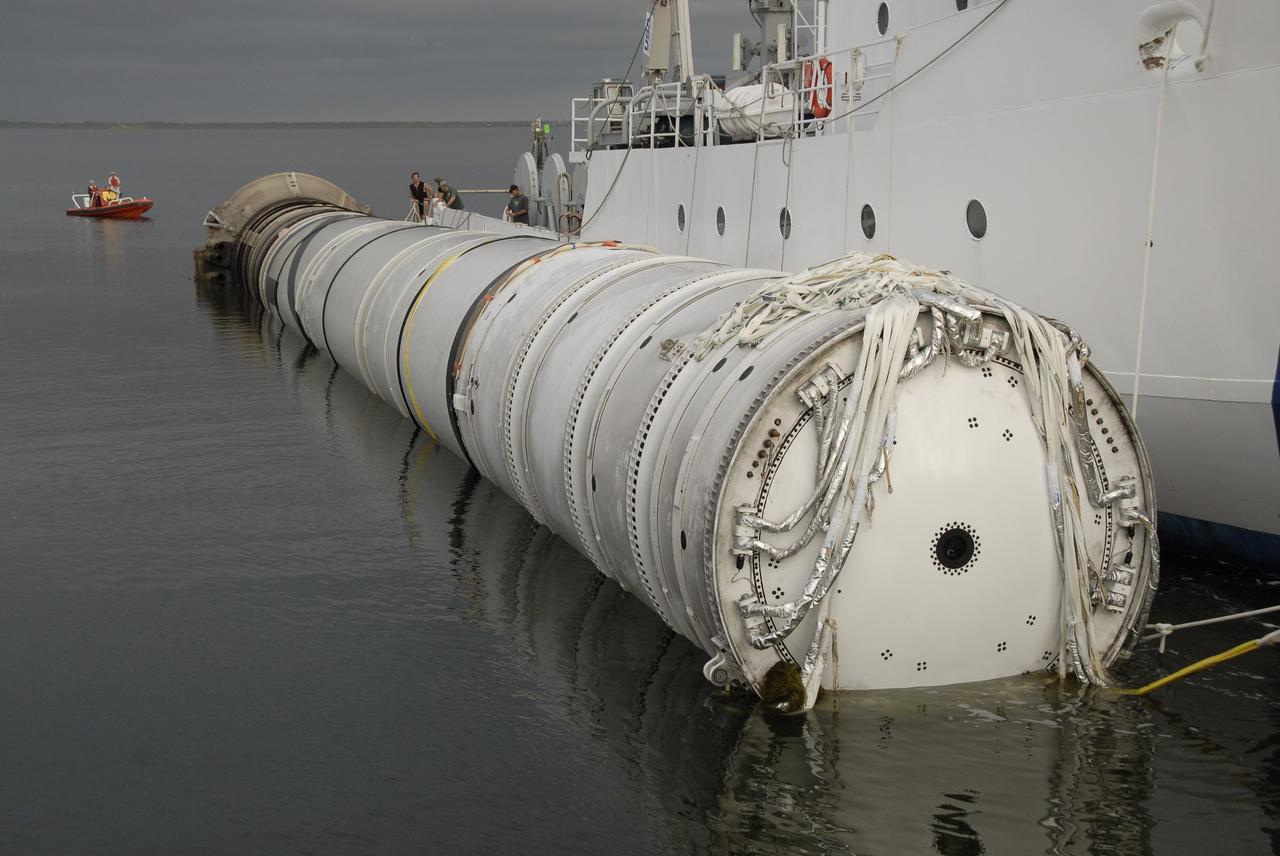
CAPE CANAVERAL, Fla. – The solid rocket booster recovery ship Freedom Star, towing the spent first stage of NASA's Ares I-X rocket through the Banana River, delivers the booster to Hangar AF at Cape Canaveral Air Force Station in Florida. Following the launch of the Ares I-X flight test, the booster splashed down in the Atlantic Ocean and was recovered. Liftoff of the 6-minute flight test was at 11:30 a.m. EDT Oct. 28. This was the first launch from Kennedy's pads of a vehicle other than the space shuttle since the Apollo Program's Saturn rockets were retired. The parts used to make the Ares I-X booster flew on 30 different shuttle missions ranging from STS-29 in 1989 to STS-106 in 2000. The data returned from more than 700 sensors throughout the rocket will be used to refine the design of future launch vehicles and bring NASA one step closer to reaching its exploration goals. For information on the Ares I-X vehicle and flight test, visit http://www.nasa.gov/aresIX. Photo credit: NASA/Kim Shiflett
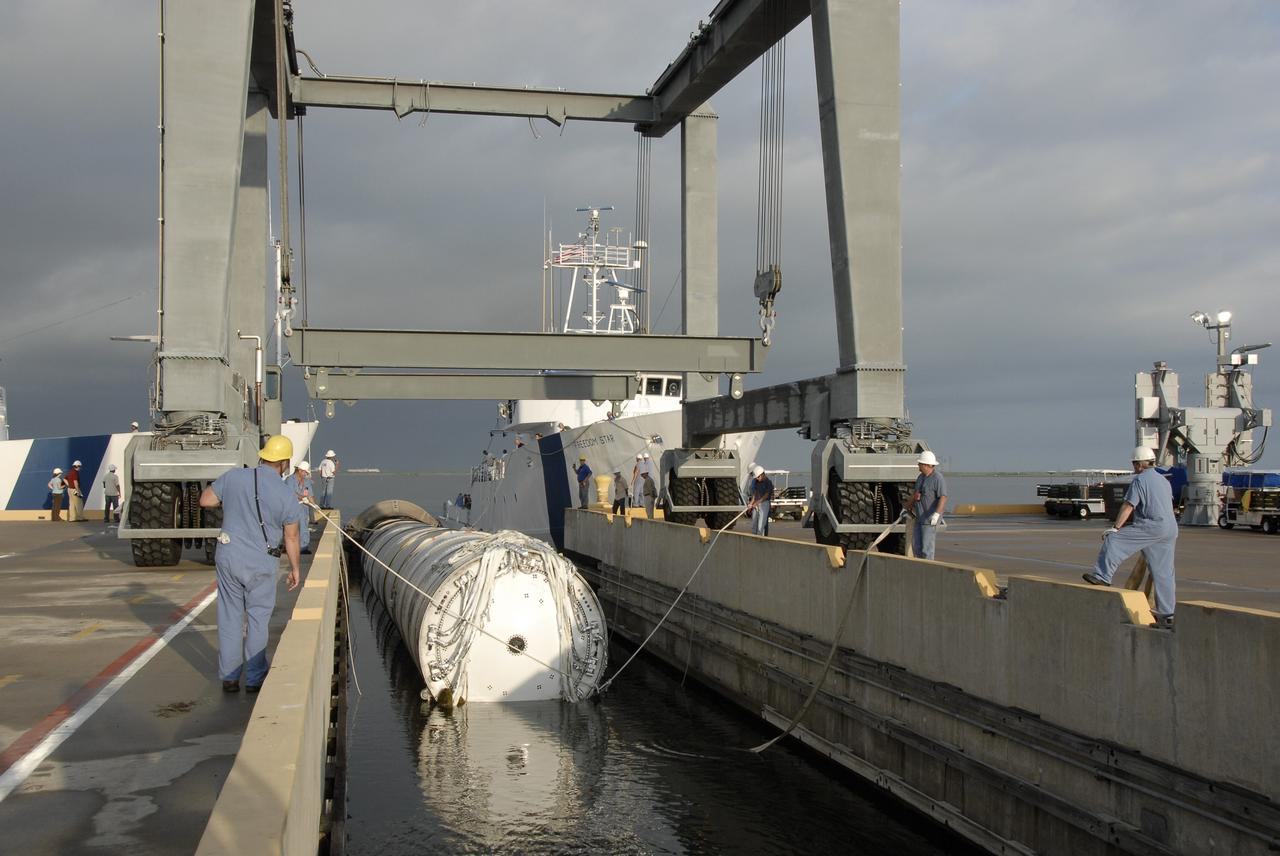
CAPE CANAVERAL, Fla. – The solid rocket booster recovery ship Freedom Star delivers the spent first stage of NASA's Ares I-X rocket to Hangar AF at Cape Canaveral Air Force Station in Florida. Following the launch of the Ares I-X flight test, the booster splashed down in the Atlantic Ocean and was recovered. Liftoff of the 6-minute flight test was at 11:30 a.m. EDT Oct. 28. This was the first launch from Kennedy's pads of a vehicle other than the space shuttle since the Apollo Program's Saturn rockets were retired. The parts used to make the Ares I-X booster flew on 30 different shuttle missions ranging from STS-29 in 1989 to STS-106 in 2000. The data returned from more than 700 sensors throughout the rocket will be used to refine the design of future launch vehicles and bring NASA one step closer to reaching its exploration goals. For information on the Ares I-X vehicle and flight test, visit http://www.nasa.gov/aresIX. Photo credit: NASA/Kim Shiflett
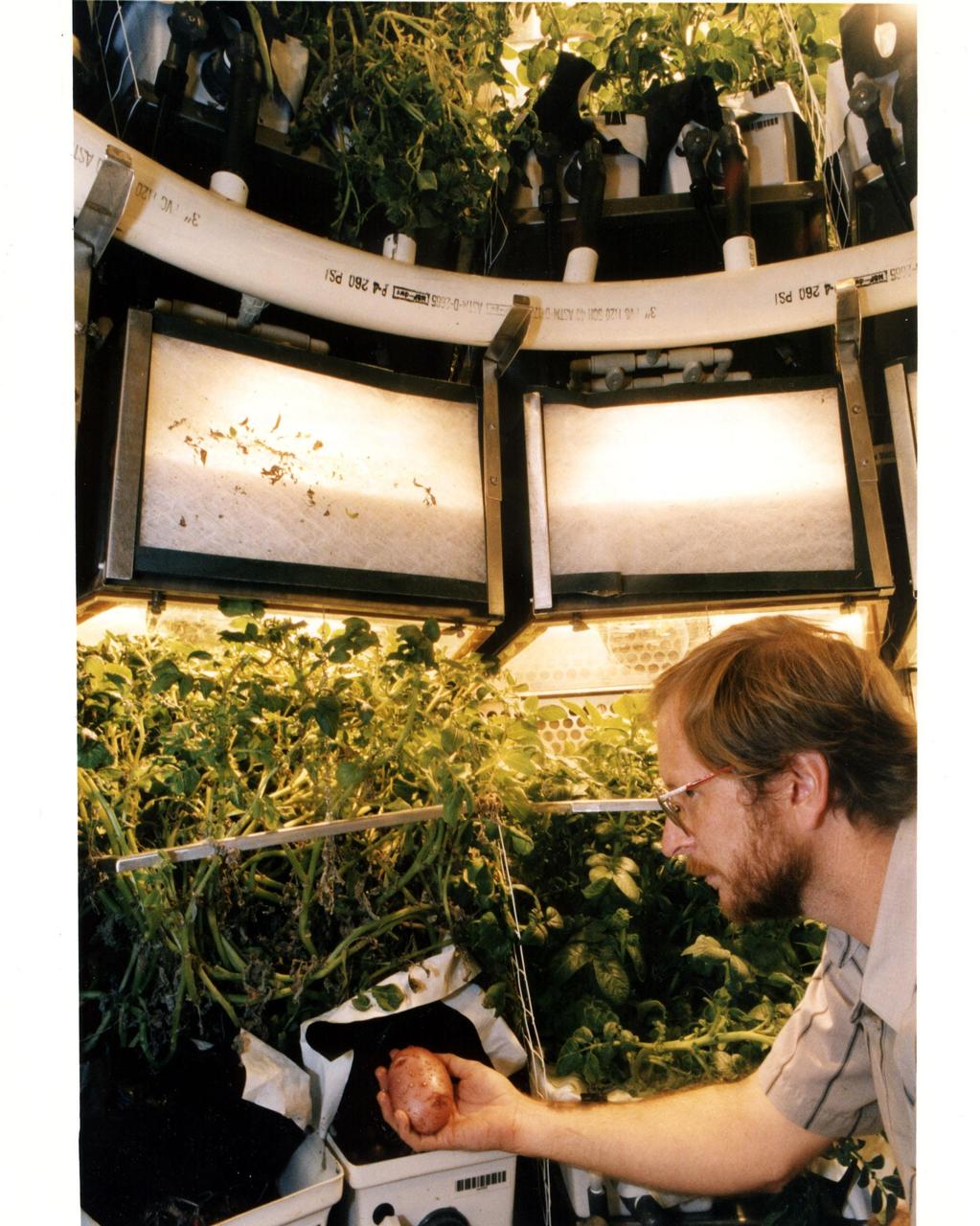
Original photo and caption dated August 14, 1995: <i>"KSC plant physiologist Dr. Gary Stutte harvests a potato grown in the Biomass Production Chamber of the Controlled environment Life Support system (CELSS) in Hangar L at Cape Canaveral Air Station. During a 418-day "human rated" experiment, potato crops grown in the chamber provided the equivalent of a continuous supply of the oxygen for one astronaut, along with 55 percent of that long-duration space flight crew member's caloric food requirements and enough purified water for four astronauts while absorbing their expelled carbon dioxide. The experiment provided data that will help demonstarte the feasibility of the CELSS operating as a bioregenerative life support system for lunar and deep-space missions that can operate independently without the need to carry consumables such as air, water and food, while not requiring the expendable air and water system filters necessary on today's human-piloted spacecraft."</i
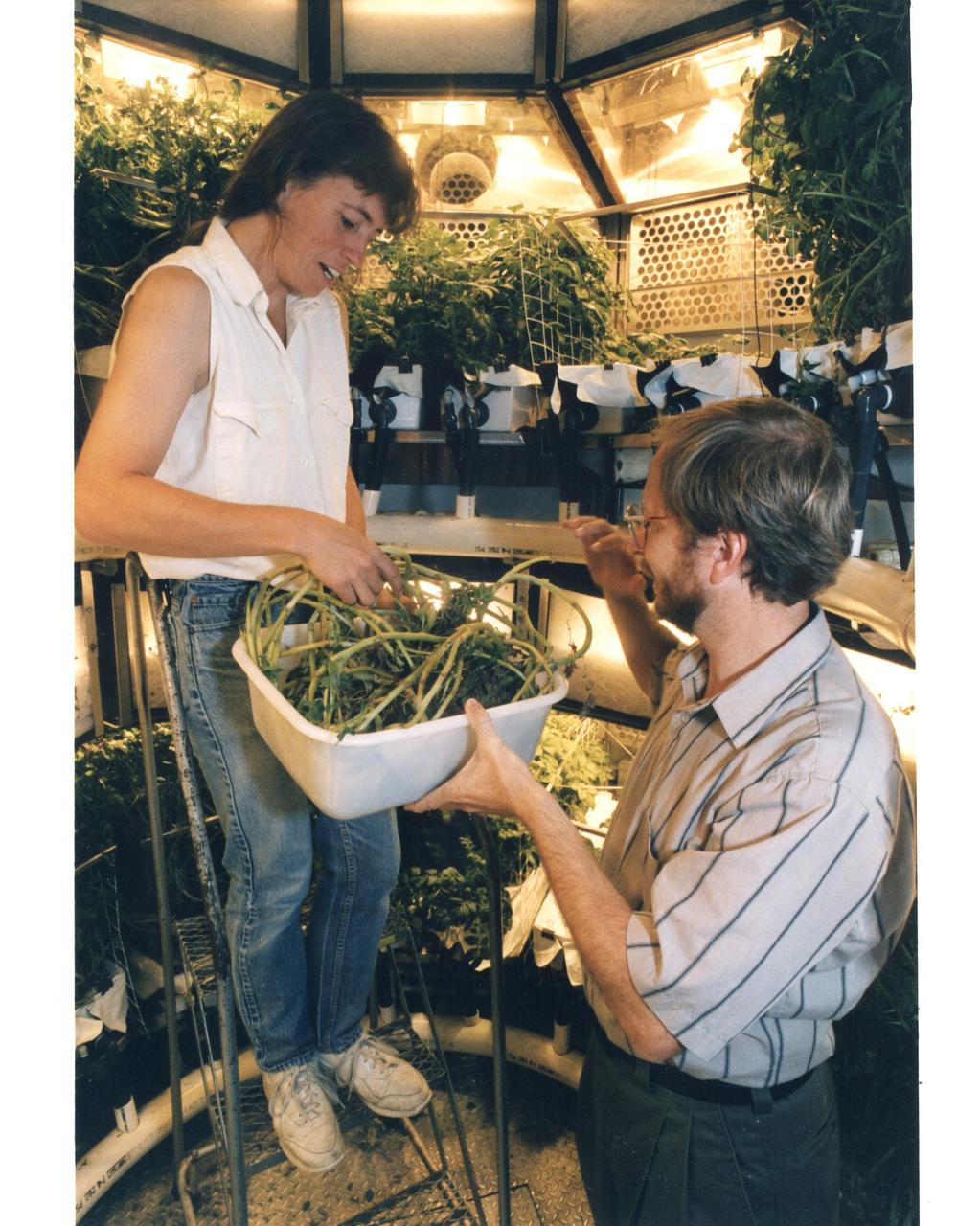
Original photo and caption dated August 14, 1995: <i>"KSC plant physiologist Dr. Gary Stutte (right) and Cheryl Mackowiak harvest potatoes grown in the Biomass Production Chamber of the Controlled Enviornment Life Support System (CELSS in Hangar L at Cape Canaveral Air Station. During a 418-day "human rated" experiment, potato crops grown in the chamber provided the equivalent of a continuous supply of the oxygen for one astronaut, along with 55 percent of that long-duration space flight crew member's caloric food requirements and enough purified water for four astronauts while absorbing their expelled carbon dioxide. The experiment provided data that will help demonstarte the feasibility of the CELSS operating as a bioregenerative life support system for lunar and deep-space missions that can operate independently without the need to carry consumables such as air, water and food, while not requiring the expendable air and water system filters necessary on today's human-piloted spacecraft."</i
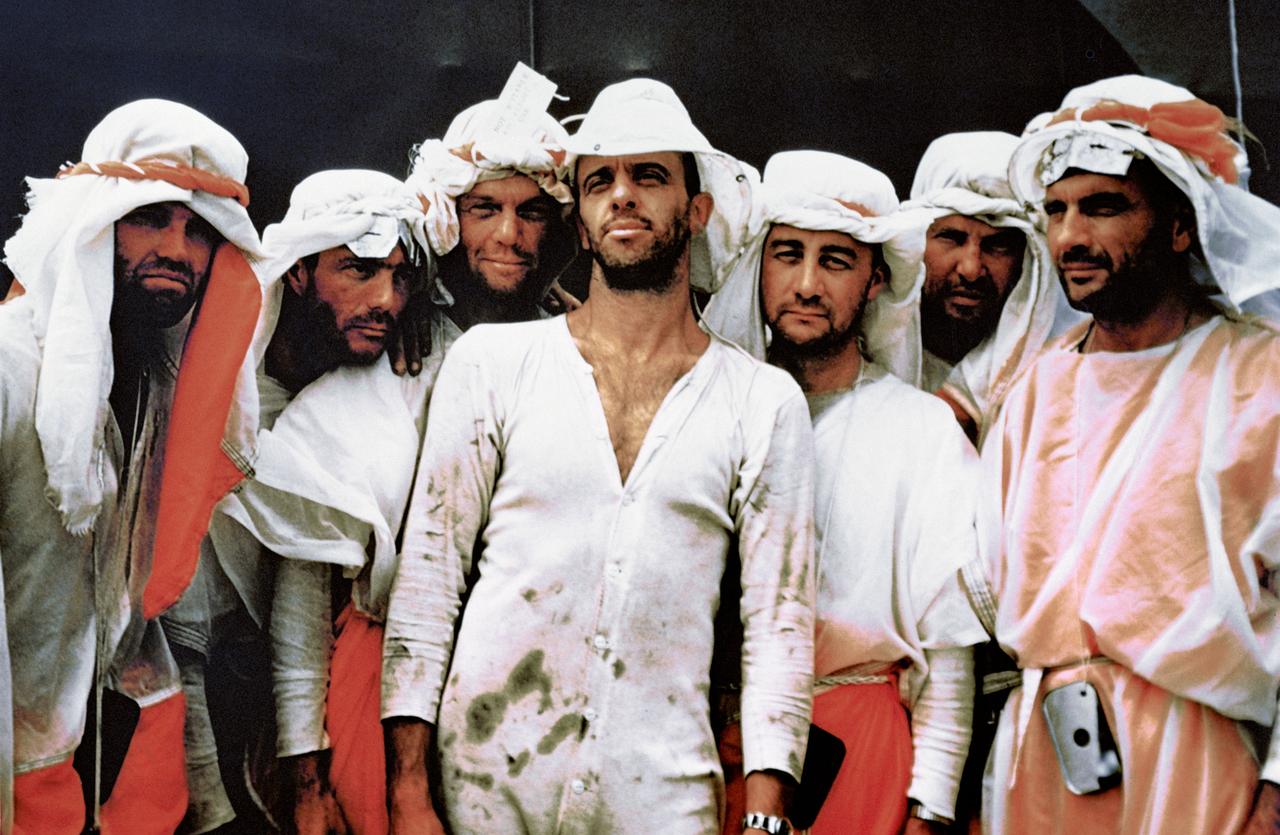
S88-31375 (1960) --- Although more easily recognized in their spacesuits, these seven men are actually NASA astronauts participating in a U.S. Air Force survival school at Stead Air Force Base in Nevada. The original seven Mercury astronauts are, left to right, L. Gordon Cooper Jr.; M. Scott Carpenter; John H. Glenn Jr.; Alan B. Shepard Jr.; Virgil I. Grissom; Walter M. Schirra Jr. and Donald K. Slayton. Portions of their clothing have been fashioned from parachute material. Photo credit: NASA
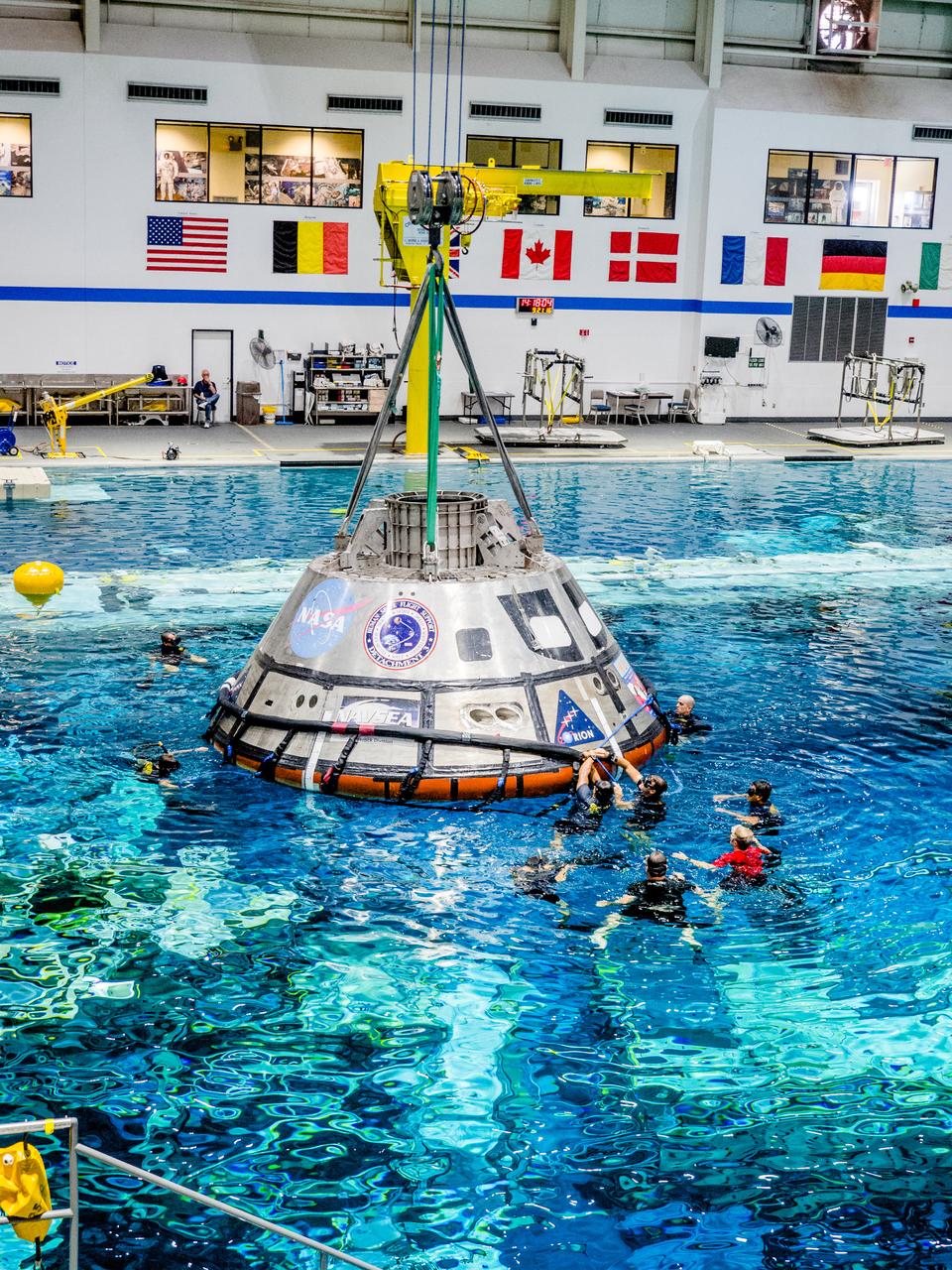
A group of U.S. Navy divers, Air Force pararescumen and Coast Guard rescue swimmers practice Orion underway recovery techniques this week in the Neutral Buoyancy Laboratory (NBL) at NASA’s Johnson Space Center in Houston on Sept. 21, 2016, to prepare for the first test flight of an uncrewed Orion spacecraft with the agency’s Space Launch System rocket during Artemis I. Part of Batch image transfer from Flickr.
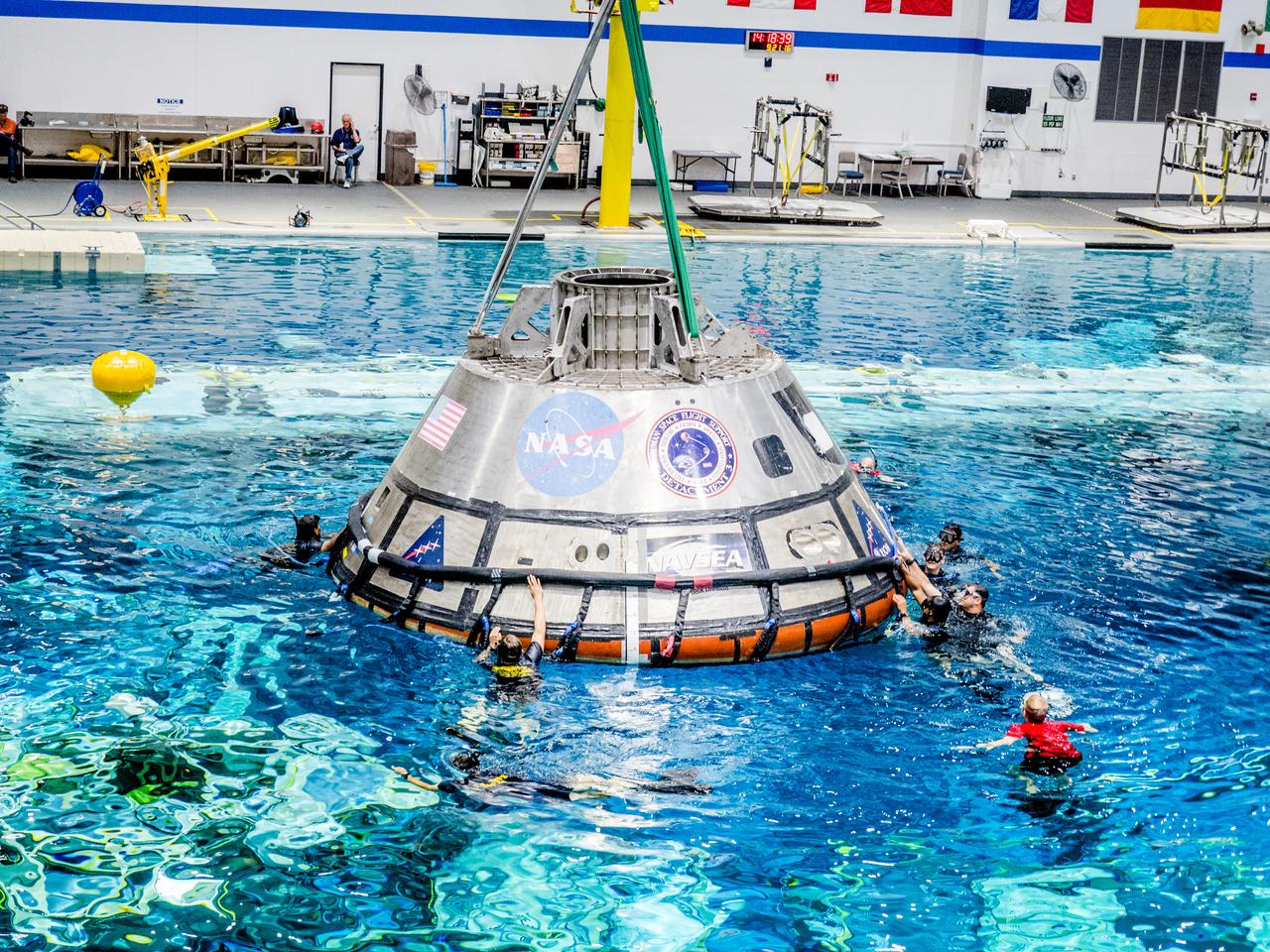
A group of U.S. Navy divers, Air Force pararescumen and Coast Guard rescue swimmers practice Orion underway recovery techniques this week in the Neutral Buoyancy Laboratory (NBL) at NASA’s Johnson Space Center in Houston on Sept. 21, 2016, to prepare for the first test flight of an uncrewed Orion spacecraft with the agency’s Space Launch System rocket during Artemis I. Part of Batch images transfer from Flickr.
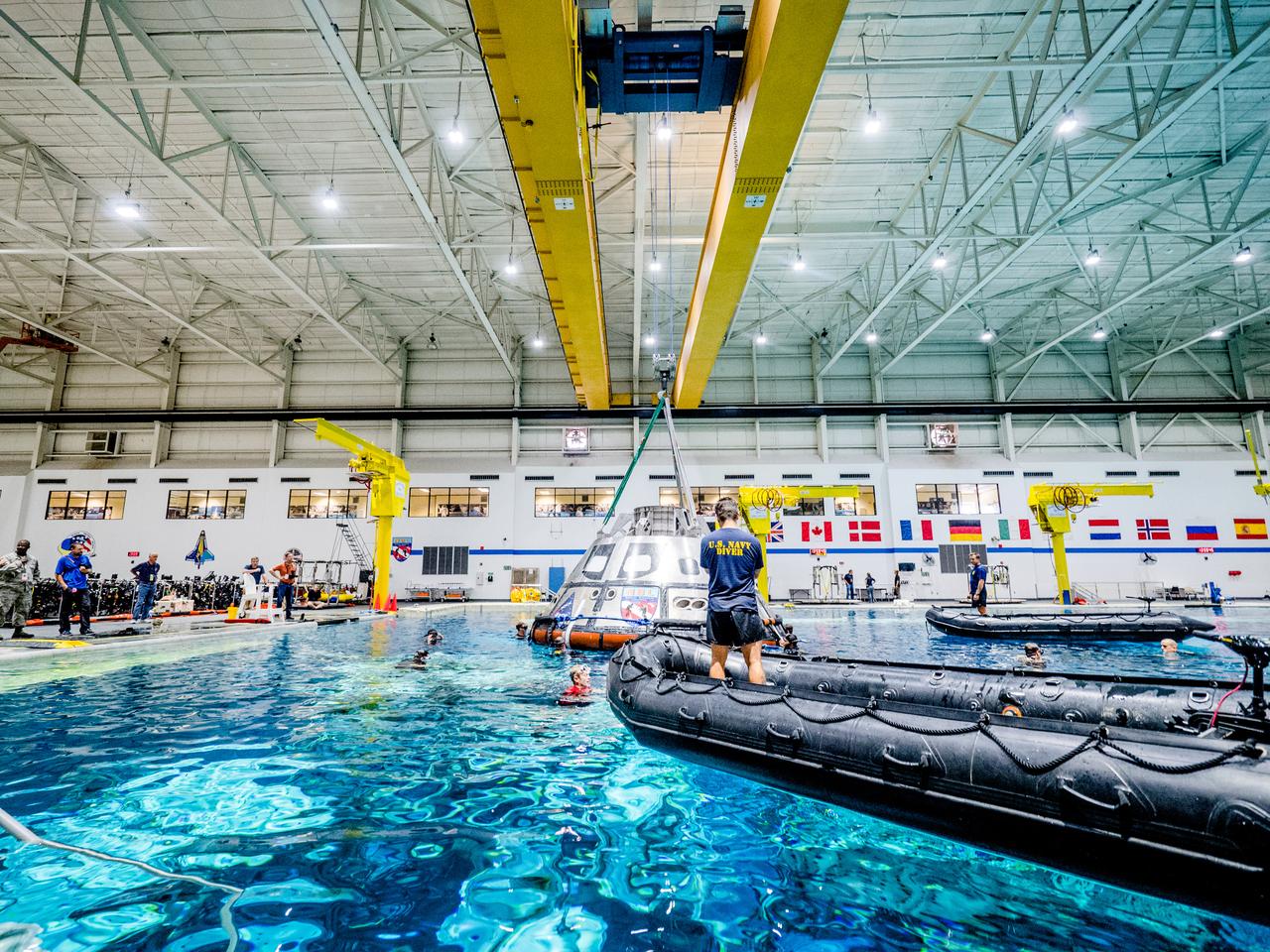
A group of U.S. Navy divers, Air Force pararescumen and Coast Guard rescue swimmers practice Orion underway recovery techniques this week in the Neutral Buoyancy Laboratory (NBL) at NASA’s Johnson Space Center in Houston on Sept. 21, 2016, to prepare for the first test flight of an uncrewed Orion spacecraft with the agency’s Space Launch System rocket during Artemis I. Part of Batch images transfer from Flickr.
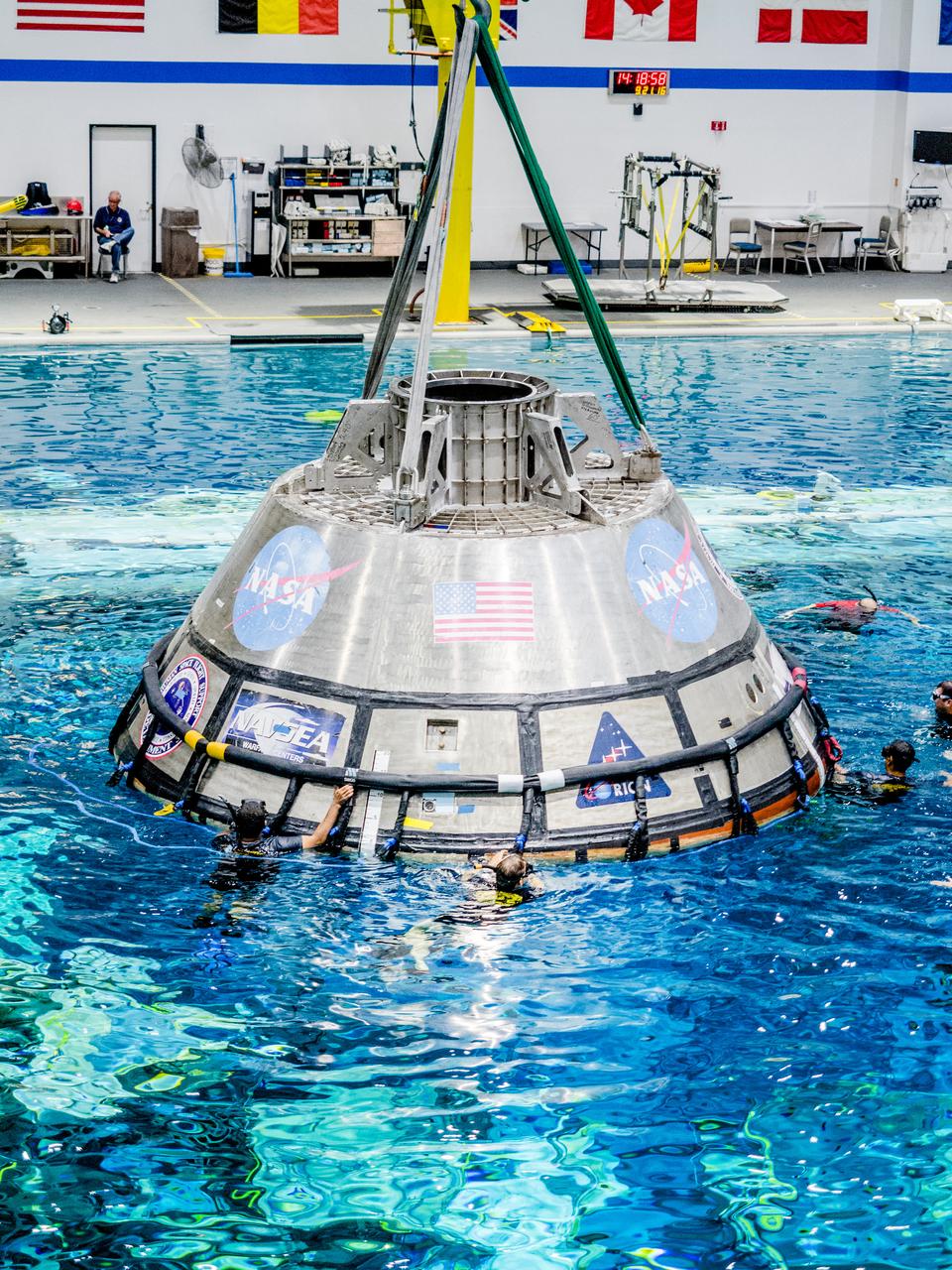
A group of U.S. Navy divers, Air Force pararescumen and Coast Guard rescue swimmers practice Orion underway recovery techniques this week in the Neutral Buoyancy Laboratory (NBL) at NASA’s Johnson Space Center in Houston on Sept. 21, 2016, to prepare for the first test flight of an uncrewed Orion spacecraft with the agency’s Space Launch System rocket during Artemis I.
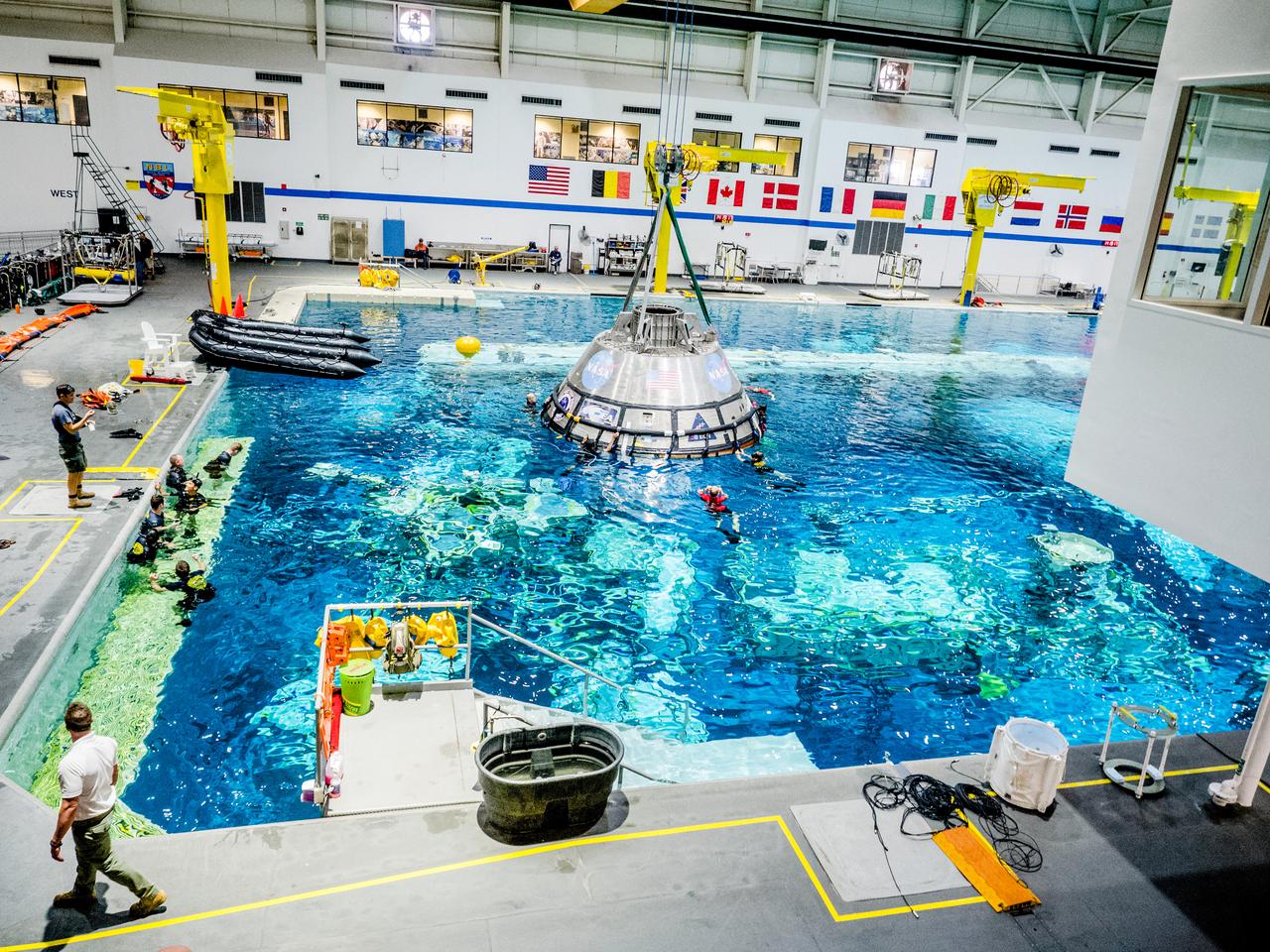
A group of U.S. Navy divers, Air Force pararescumen and Coast Guard rescue swimmers practice Orion underway recovery techniques this week in the Neutral Buoyancy Laboratory (NBL) at NASA’s Johnson Space Center in Houston on Sept. 21, 2016, to prepare for the first test flight of an uncrewed Orion spacecraft with the agency’s Space Launch System rocket during Artemis I. Part of Batch images transfer from Flickr.
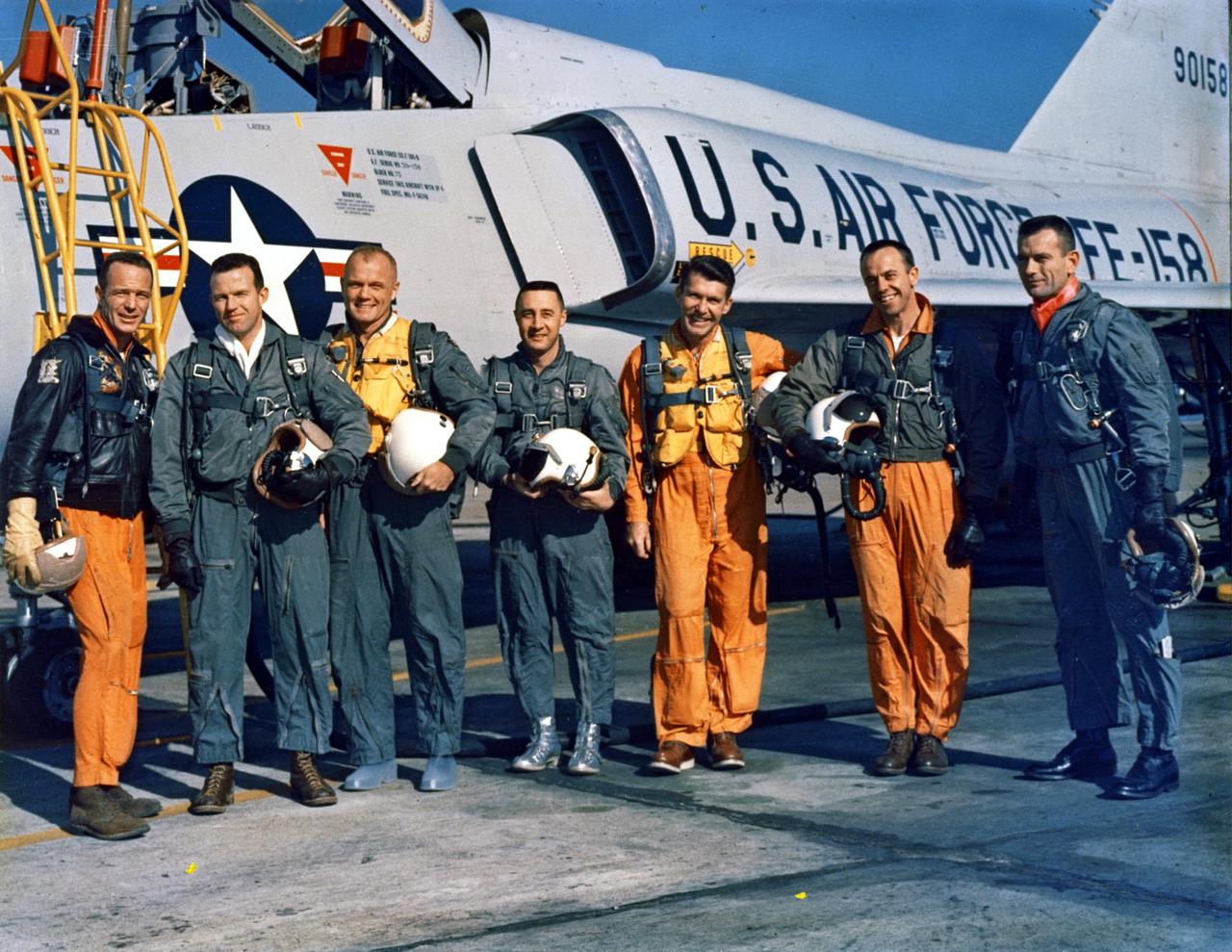
CAPE CANAVERAL, FLA. -- The Original Seven Mercury Astronauts pose beside an Air Force F-102 jet. Standing, left to right, are M. Scott Carpenter, L. Gordon Cooper, John H. Glenn Jr., Virgil I. 'Gus' Grissom, Walter M. Schirra Jr., Alan B. Shepherd Jr., and Donald K. 'Deke' Slayton.
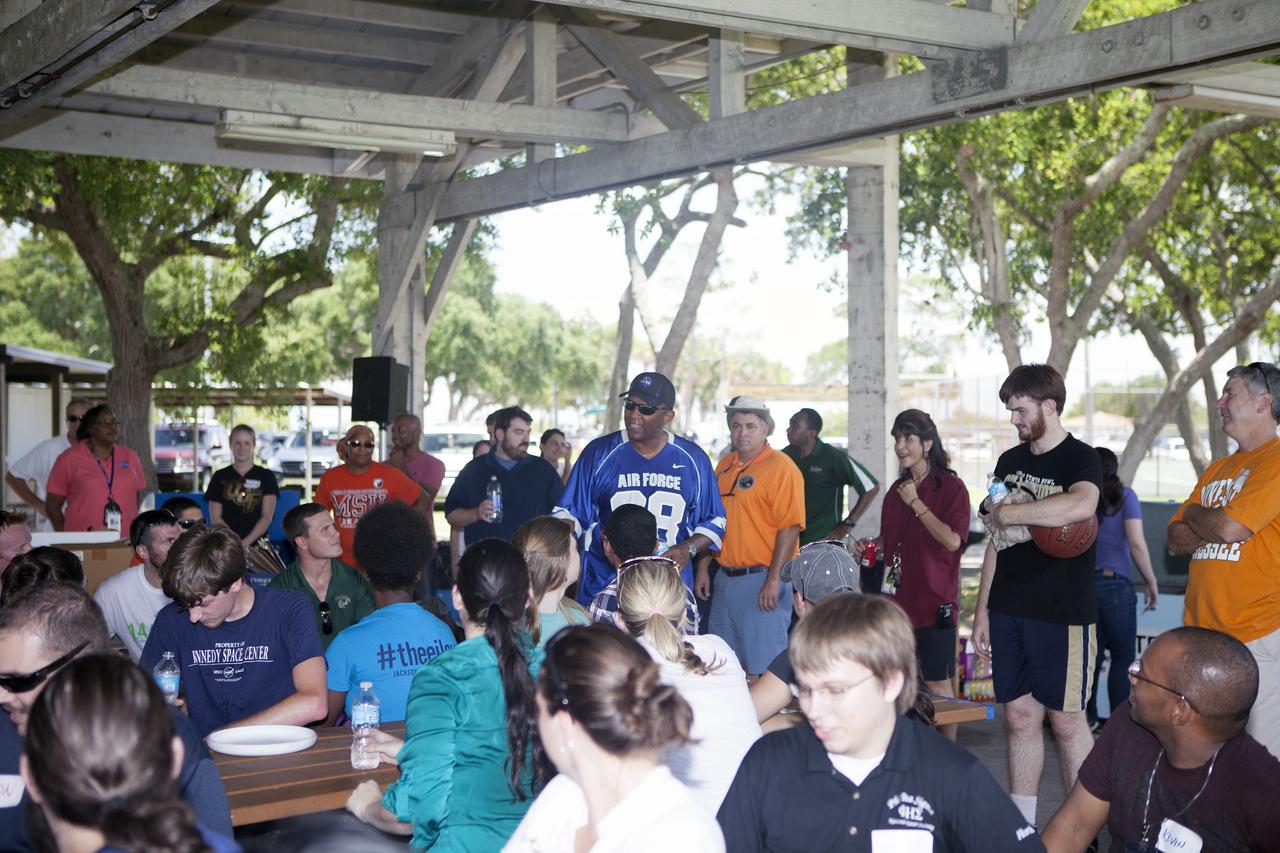
CAPE CANAVERAL, Fla. – Kennedy Space Center Associate Director Kelvin Manning, in the blue Air Force shirt, speaks to Pathways and summer interns at the KARS Park I facility near the center. High school, undergraduate and graduate students participated in a team building exercise and received advice on leadership skills and working together from Kennedy's senior management. About 160 students are working and gaining experience in many of the directorates and programs during their time at Kennedy. Photo credit: NASA/Daniel Casper
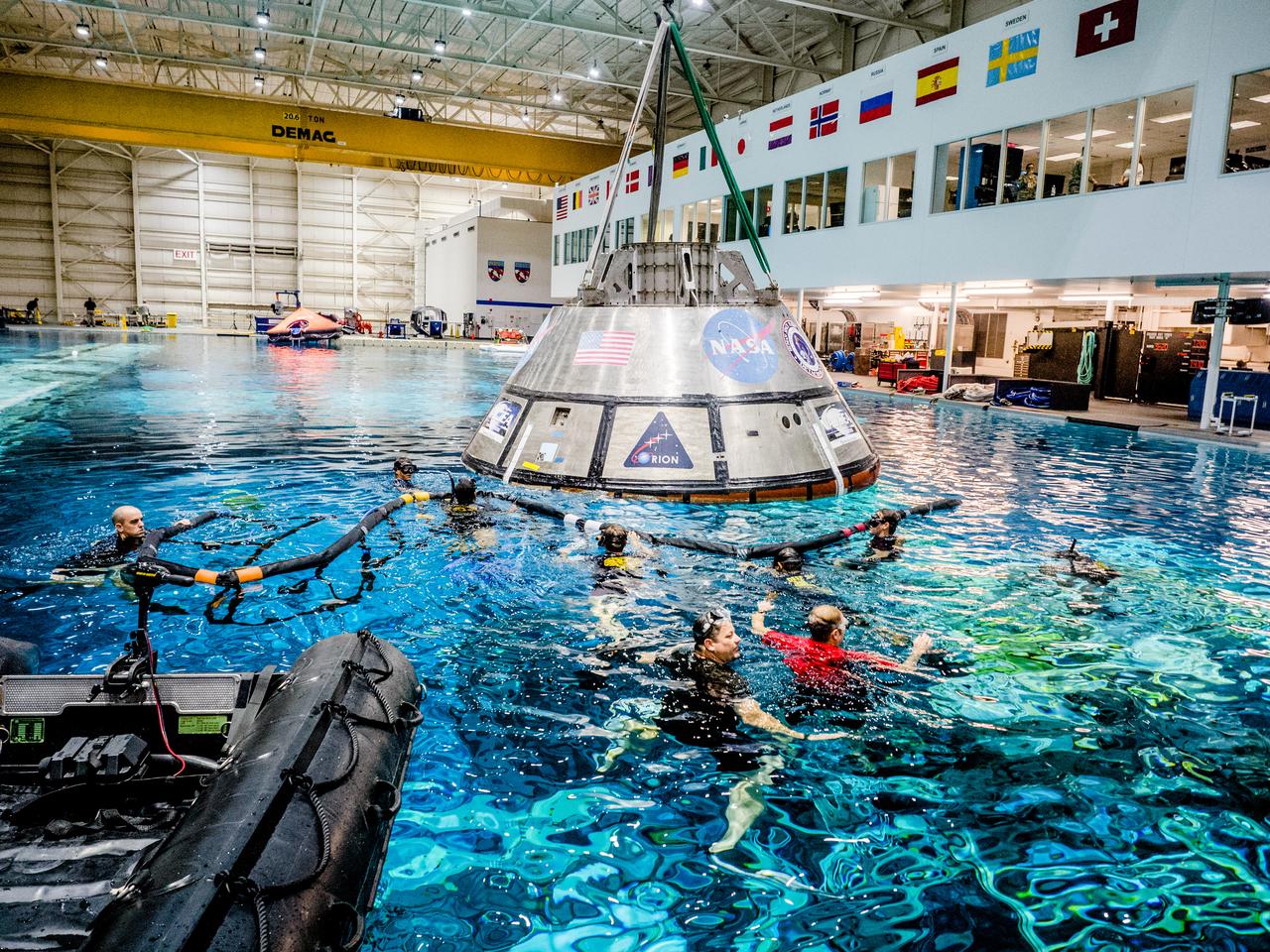
A group of U.S. Navy divers, Air Force pararescumen and Coast Guard rescue swimmers practice Orion underway recovery techniques this week in the Neutral Buoyancy Laboratory (NBL) at NASA’s Johnson Space Center in Houston on Sept. 21, 2016, to prepare for the first test flight of an uncrewed Orion spacecraft with the agency’s Space Launch System rocket during Artemis I. Part of Batch image transfer from Flickr.
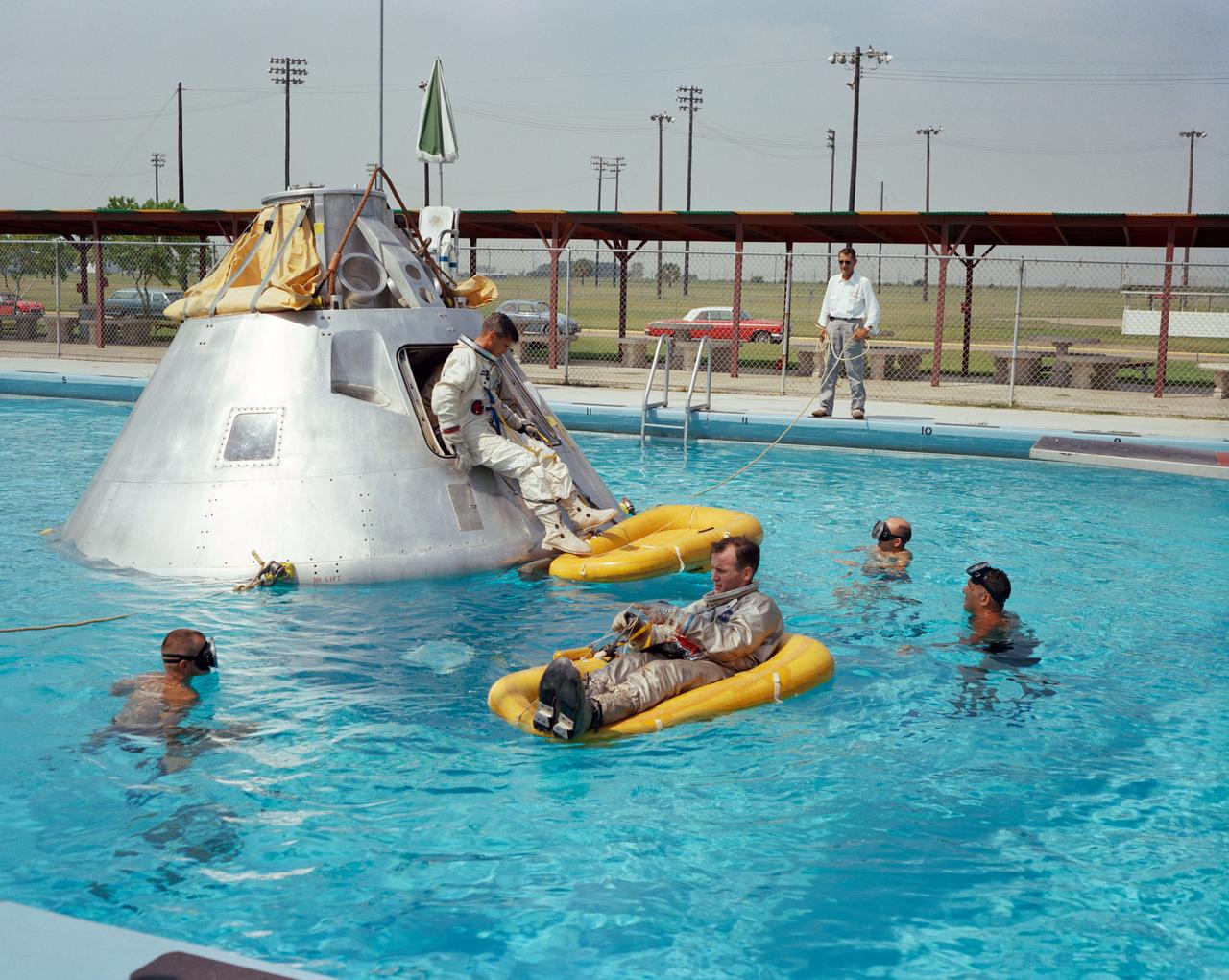
S66-51583 (June 1966)--- Prime crew members announced by the National Aeronautics and Space Administration (NASA) for the first manned Apollo 1 space flight practice water egress procedures in a swimming pool at Ellington Air Force Base (EAFB), Houston, Texas. Astronaut Edward H. White II rides life raft in the foreground. Astronaut Roger B. Chaffee sits in hatch of the boilerplate model of the spacecraft. Astronaut Virgil I. Grissom, third member of the crew, waits inside the spacecraft.
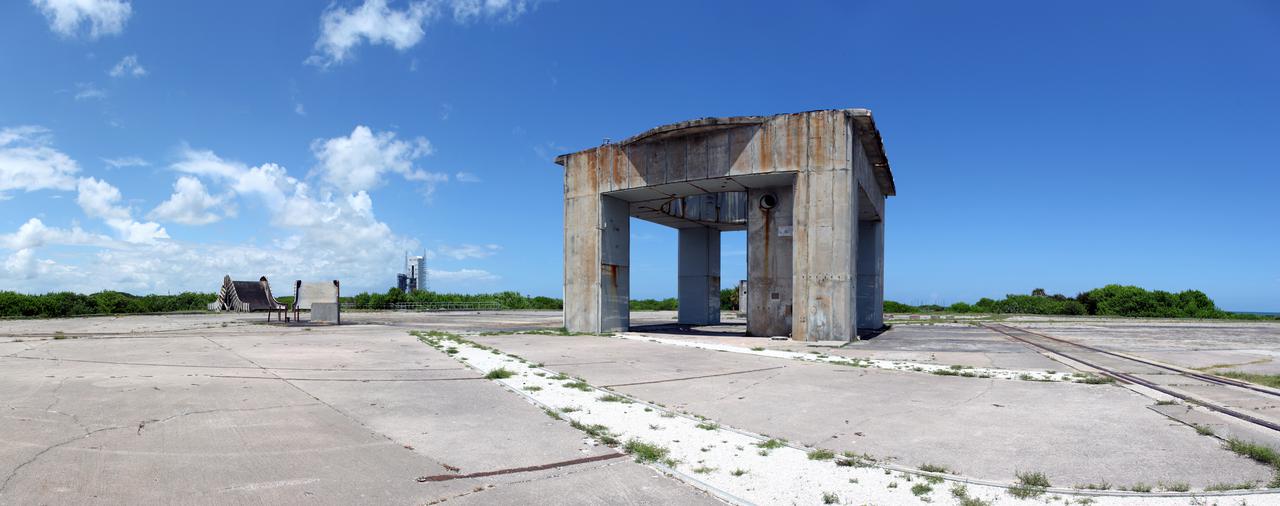
CAPE CANAVERAL, Fla. -- At Cape Canaveral Air Force Station in Florida stands the Launch Complex-34 launch platform. During the Apollo Program, Complex-34 was the site of the first Saturn I and Saturn IB launches, as well as the tragic fire in which the Apollo 1 astronauts lost their lives. Apollo 7, the first crewed Apollo flight, was the last to launch from Complex-34. Subsequent Apollo mission launched from NASA Kennedy Space Center's Launch Complex 39. Photo credit: NASA_Frankie Martin
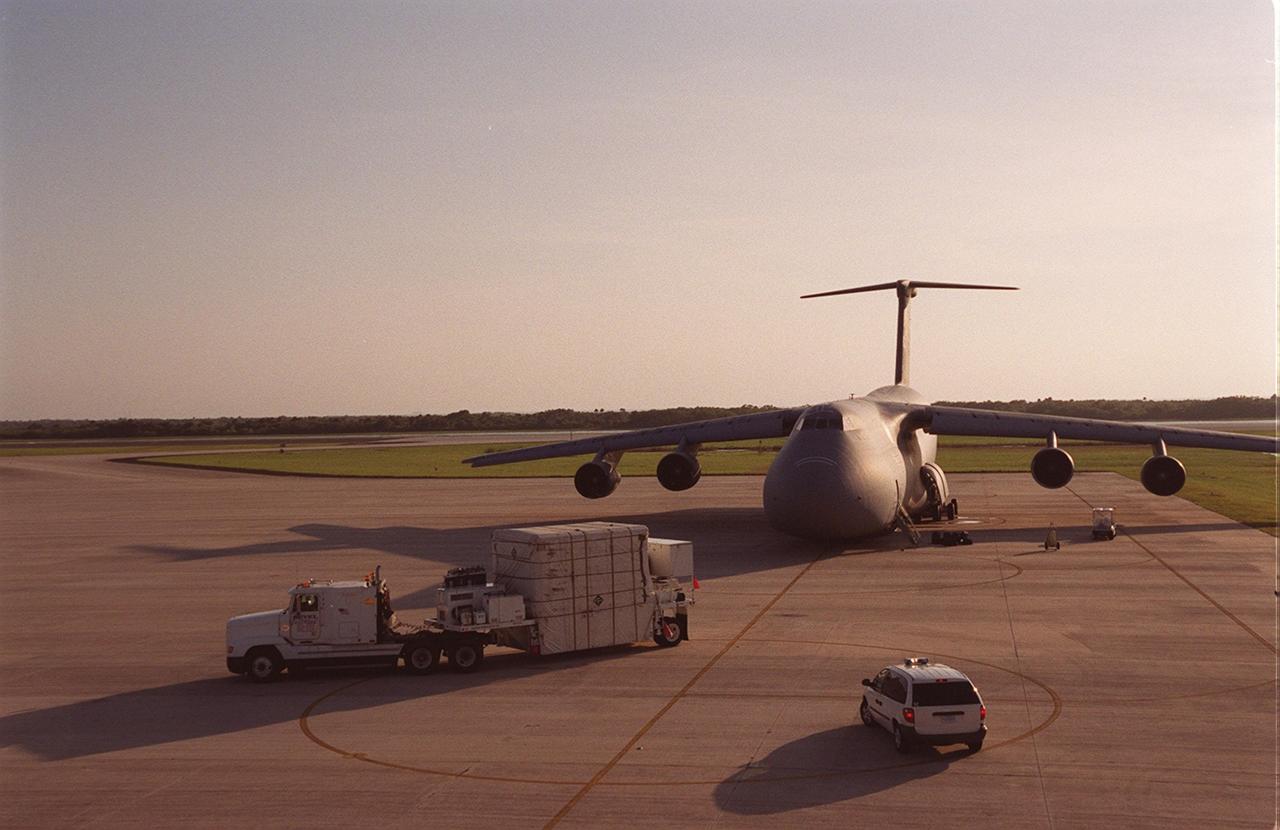
At the KSC Shuttle Landing Facility, the GOES-M satellite, encased in a container, begins its trek to Astrotech in Titusville, Fla., where it will undergo final testing. The GOES-M (Geostationary Operational Environmental Satellite, I-M Series) provides weather imagery and quantitative sounding data used to support weather forecasting, severe storm tracking, and meteorological research. The satellite is scheduled to be launched on an Atlas-IIA booster, with a Centaur upper stage, July 12 from Launch Pad 36-A, Cape Canaveral Air Force Station