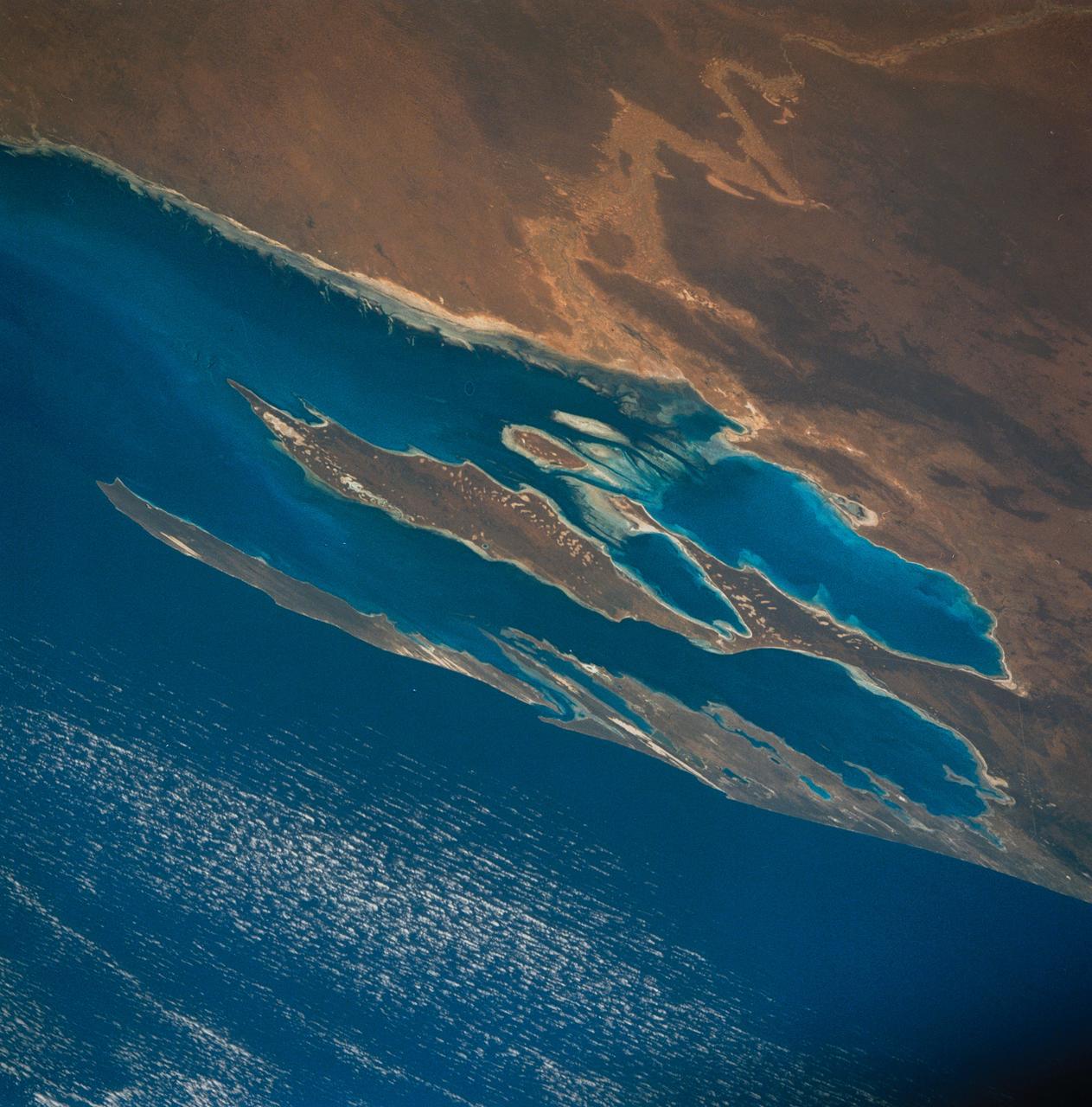
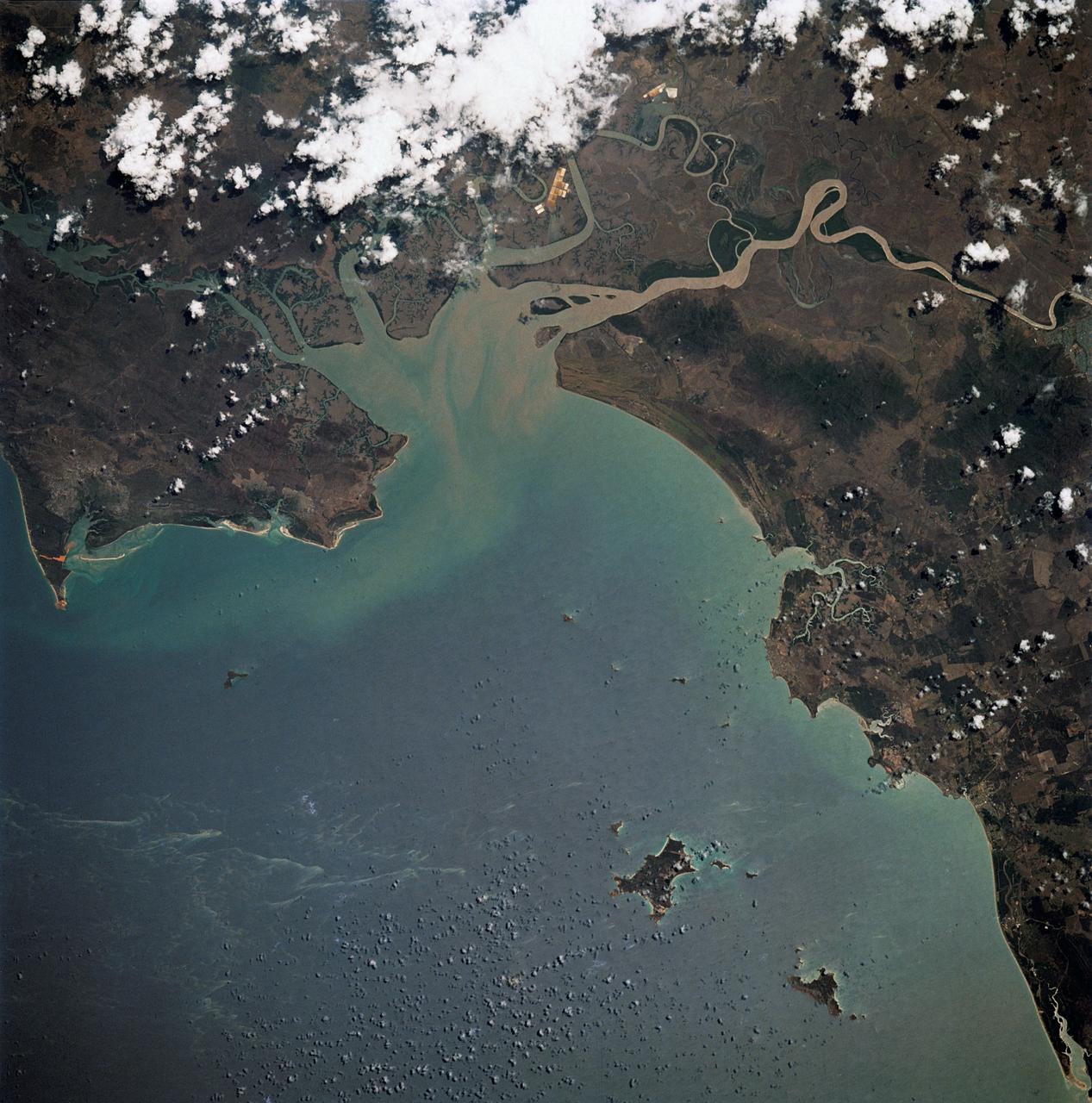
STS035-81-040 (2-10 Dec 1990) --- Numerous algae reefs are seen in Shark Bay, Western Australia, Australia (26.0S, 113.5E) especially in the southern portions of the bay. The south end is more saline because tidal flow in and out of the bay is restricted by sediment deposited at the north and central end of the bay opposite the mouth of the Wooramel River. This extremely arid region produces little sediment runoff so that the waters are very clear, saline and rich in algae.
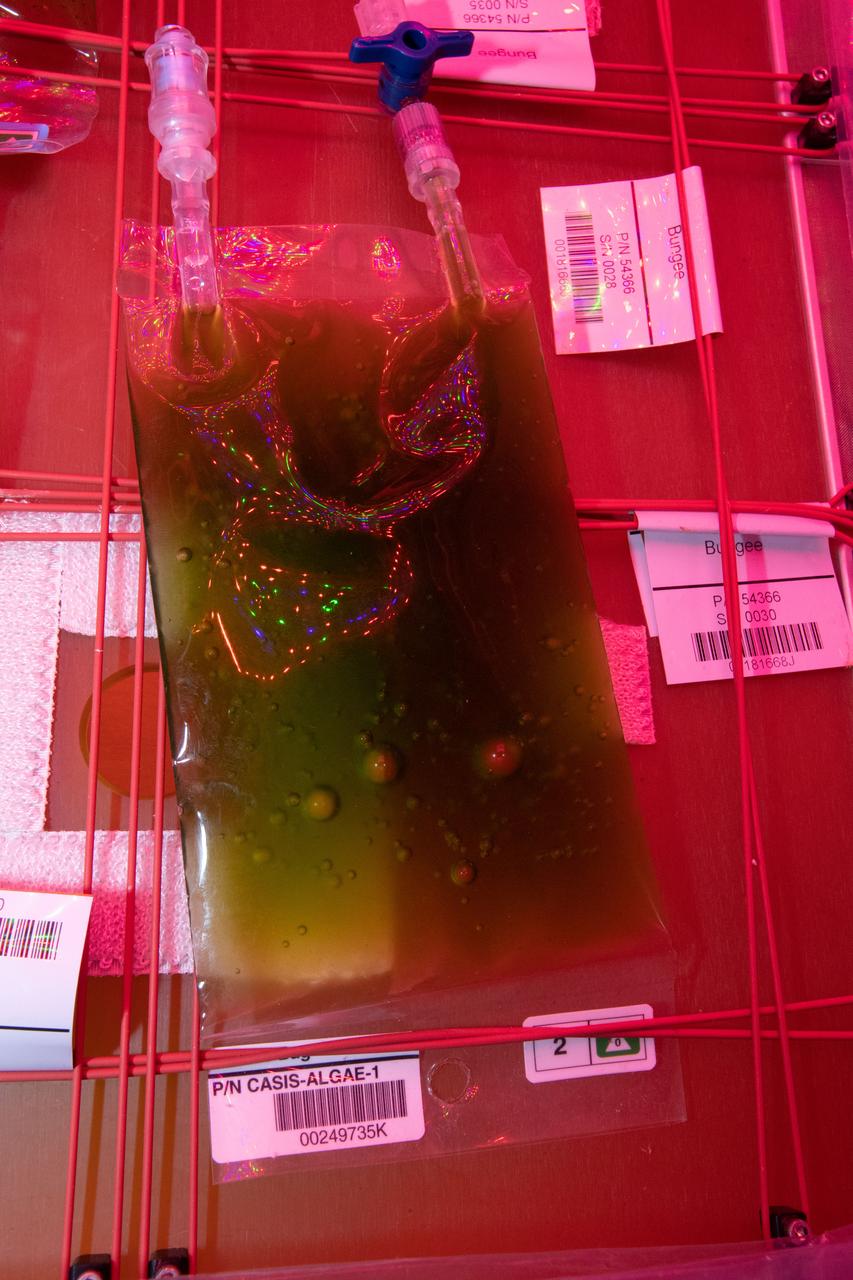
iss056e096982 (7/17/2018) --- View of the installation of a Space Algae culture bags in the Veggie facility. The Space Algae investigation explores the genetic basis for productivity of algae cultivated in space and whether this requires genetic adaptations or not.
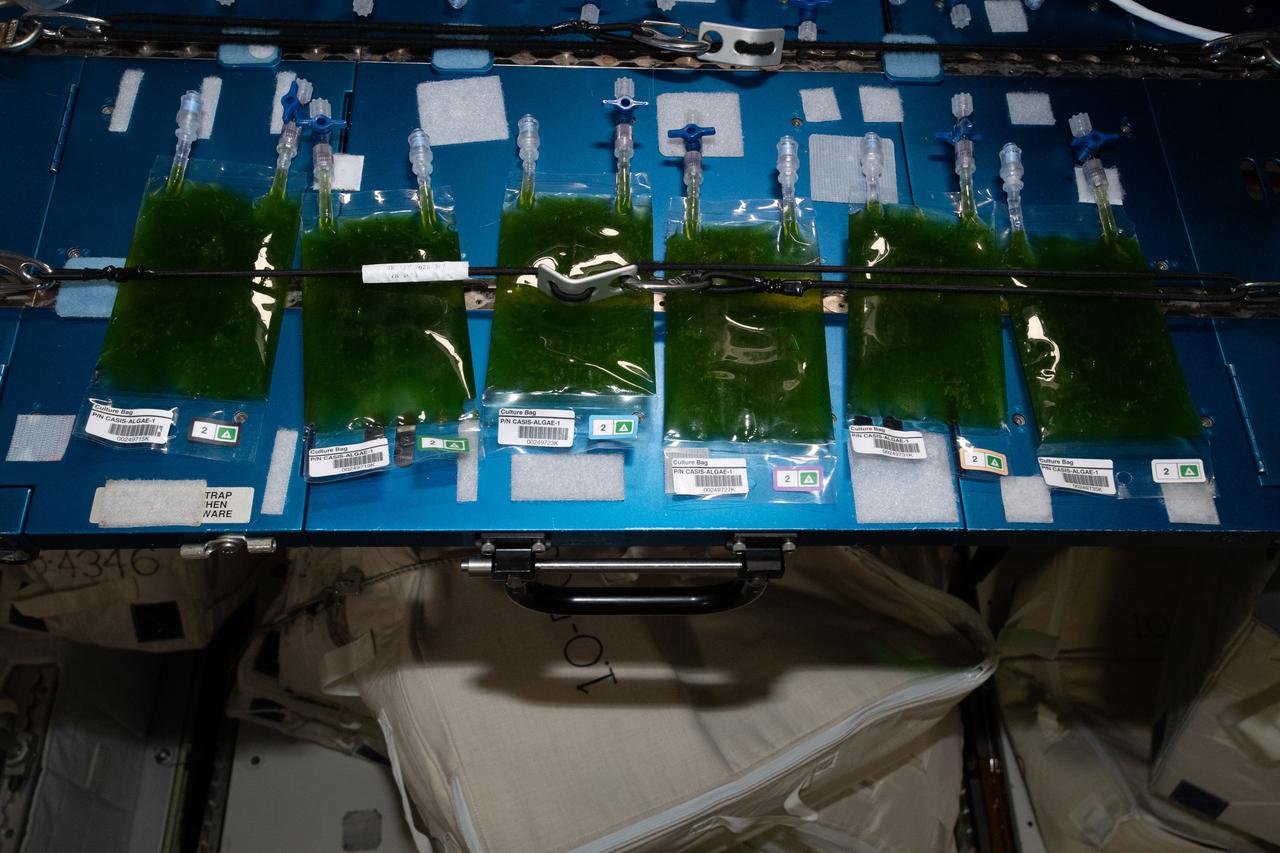
iss056e096983 (7/17/2018) --- View of the installation of six Space Algae culture bags in the Veggie facility. The Space Algae investigation explores the genetic basis for productivity of algae cultivated in space and whether this requires genetic adaptations or not.
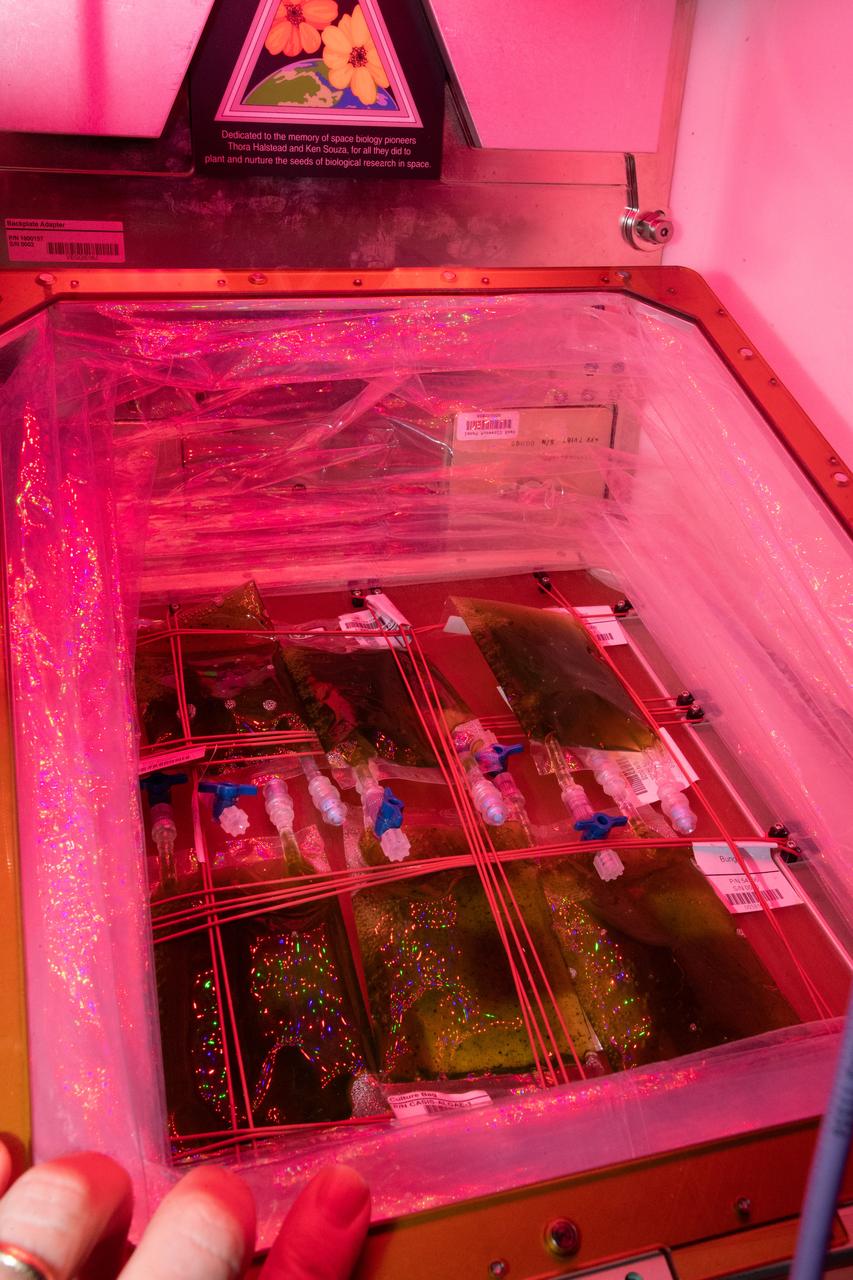
iss056e096962 (7/17/2018) --- View of the installation of six Space Algae culture bags in the Veggie facility. The Space Algae investigation explores the genetic basis for productivity of algae cultivated in space and whether this requires genetic adaptations or not.

iss056e096990 (7/17/2018) --- View of the installation of a Space Algae culture bags in the Veggie facility. The Space Algae investigation explores the genetic basis for productivity of algae cultivated in space and whether this requires genetic adaptations or not.
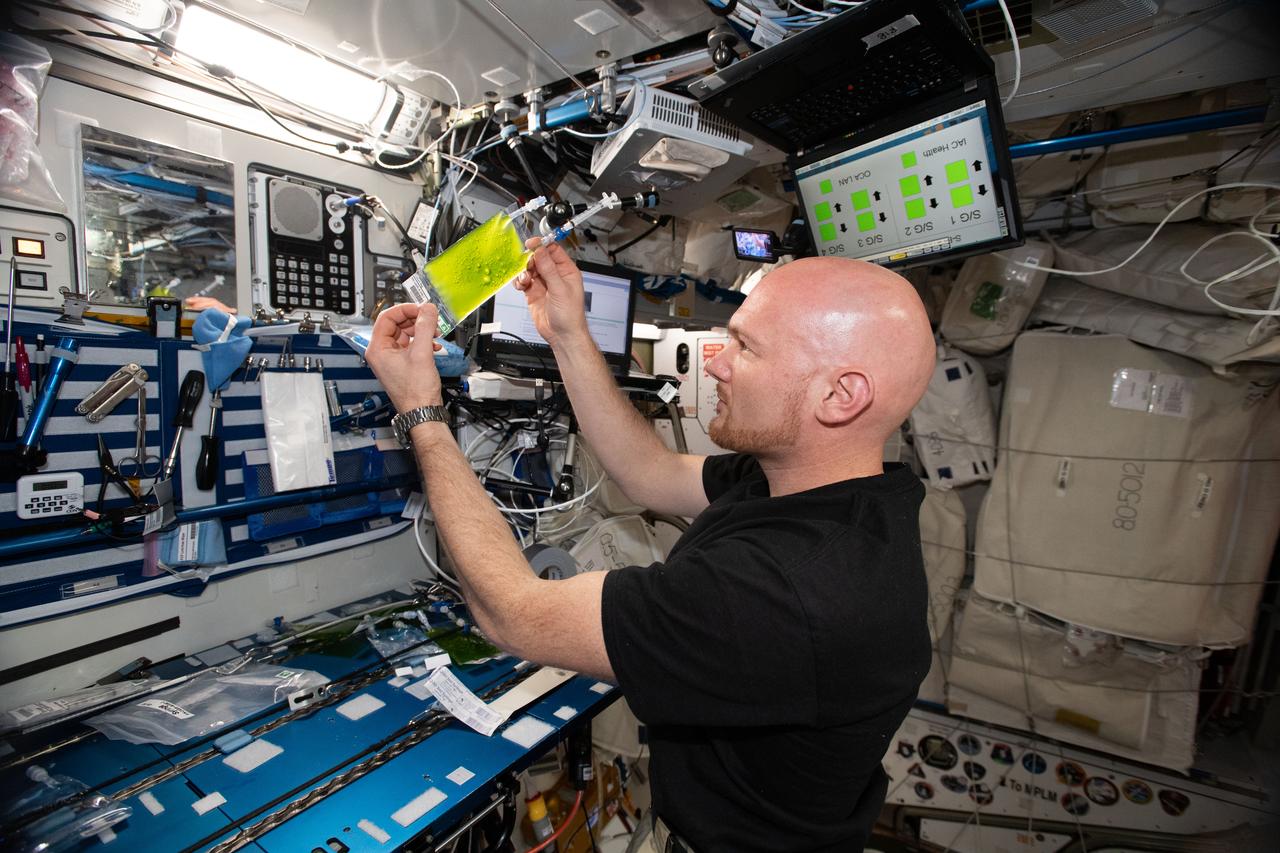
iss056e098239 (7/23/2018) --- Astronaut Alexander Gerst of ESA (European Space Agency) checking a Space Algae culture bag making sure it is green, gently agitating each one, and making sure each label colors match. The Space Algae investigation explores the genetic basis for productivity of algae cultivated in space and whether this requires genetic adaptations or not.
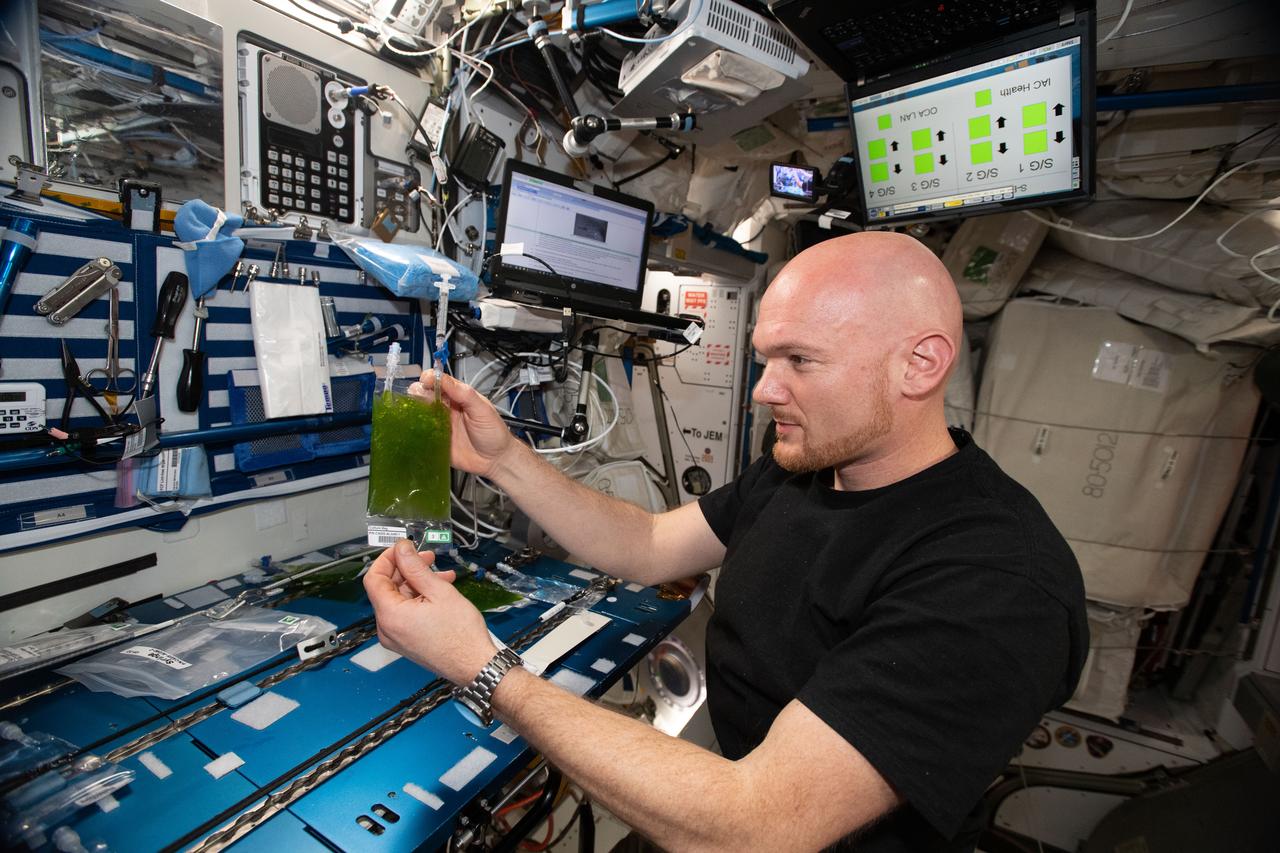
iss056e098238 (July 23, 2018) --- Astronaut Alexander Gerst of ESA (European Space Agency) checks a culture bag for the Space Algae experiment that is exploring the potential of cultivating algae for recycling carbon dioxide and providing food for crew members on long space voyages. The culture bags are placed in the VEGGIE facility to promote growth over a few weeks with the samples returned to Earth for analysis.
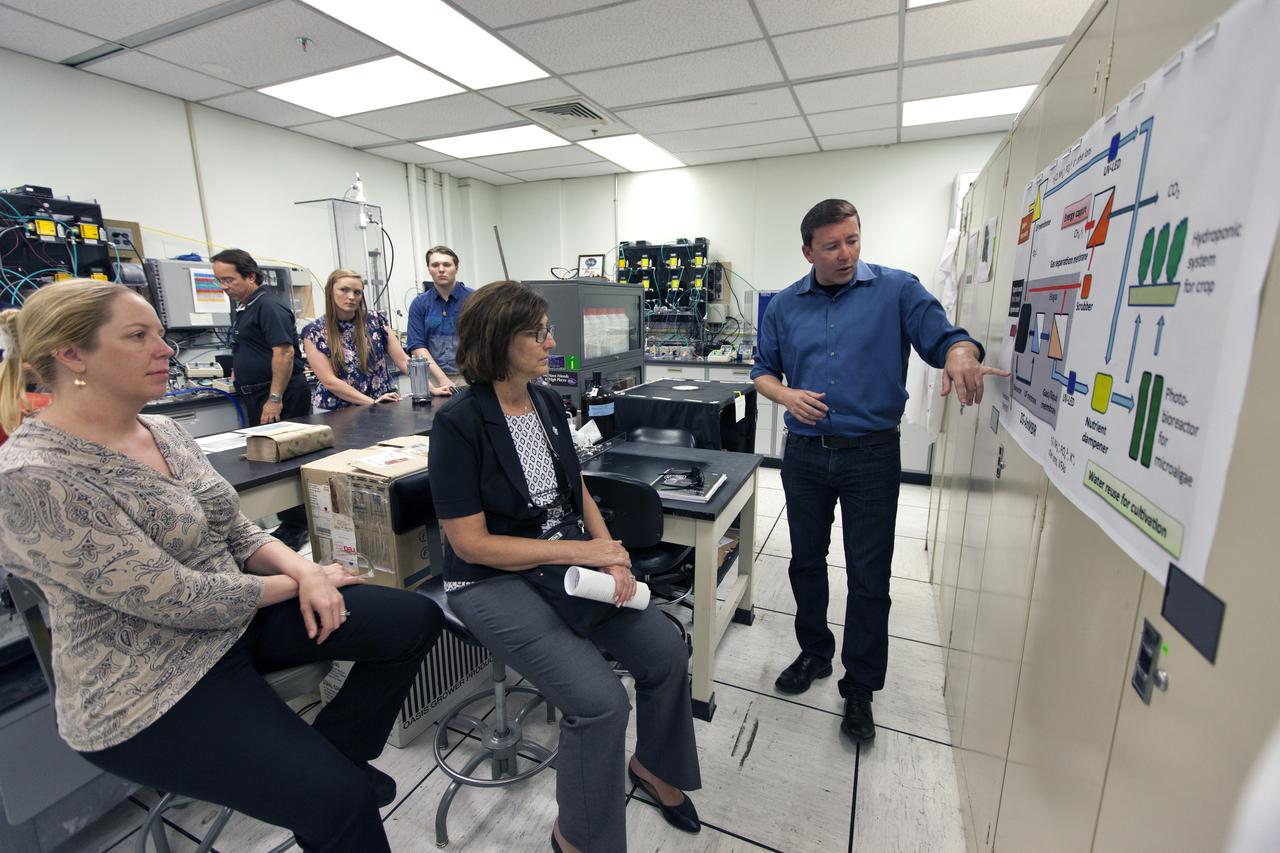
Inside a laboratory in the Neil Armstrong Operations and Checkout Building at NASA's Kennedy Space Center in Florida, Dr. Luke Roberson, right, principal investigator for research and development in Swamp Works, explains the algae bio reactor to Robyn Gatens, center, deputy director, ISS Division and system capability leader for Environmental Control and Life Support Systems (ECLSS) at NASA Headquarters in Washington, on June 13, 2018. At far left is Molly Anderson, deputy ECLSS capability lead at Johnson Space Center in Houston. They are seeing firsthand some of the capabilities in the center's Exploration Research and Technology Programs.
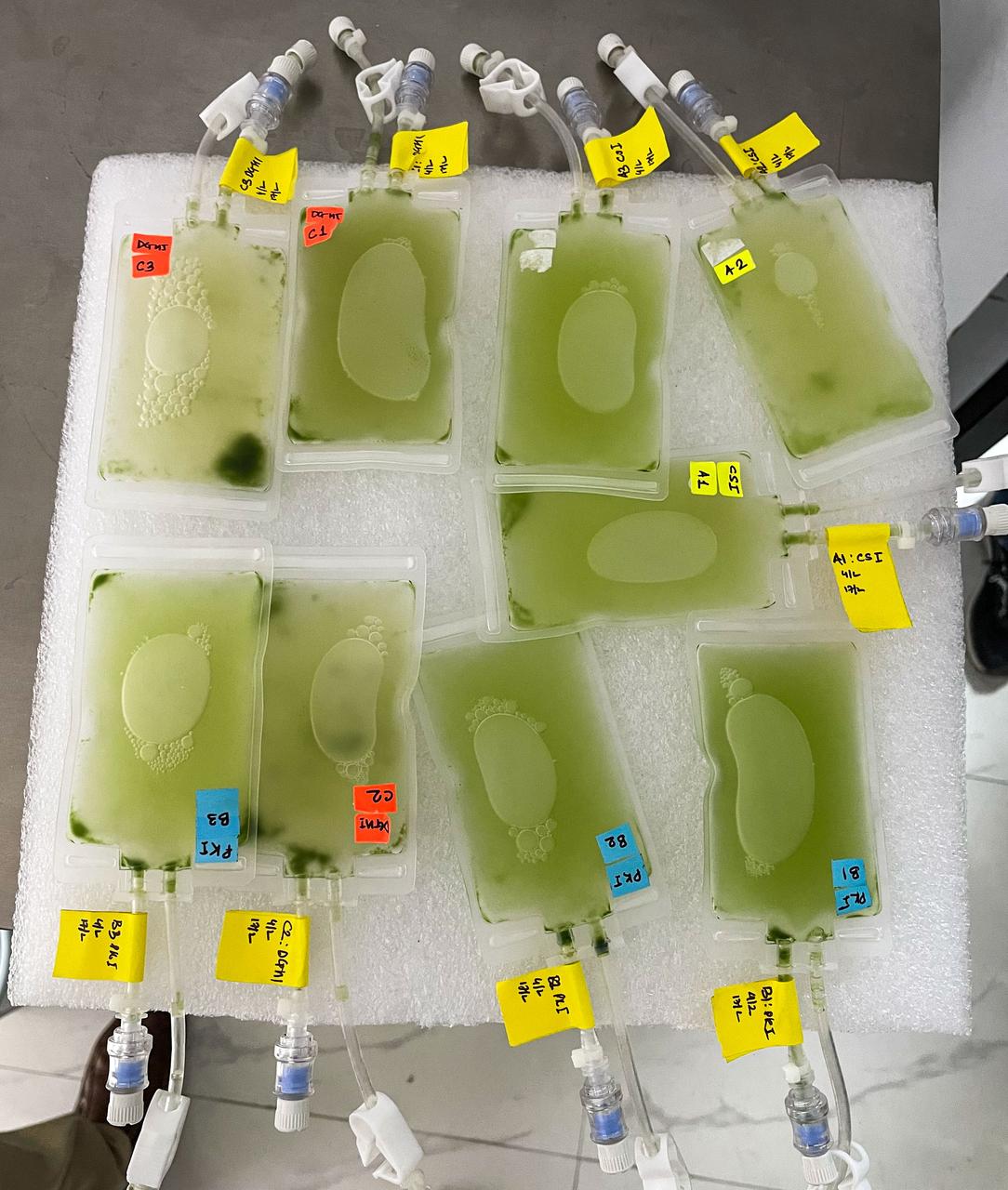
jsc2025e037099 (2/27/2025) --- Cell culture bags are shown filled with microalgae and growth media at the International Centre for Genetic Engineering and Biotechnology (ICGEB). Impact of Microgravity in the ISS on Edible Microalgae (Space Microalgae - ISRO) studies how the environment, microgravity, and increased radiation on the International Space Station affect algae growth and production. Image courtesy of Redwire.Cell culture bags are shown filled with microalgae and growth media at the International Centre for Genetic Engineering and Biotechnology (ICGEB). Impact of Microgravity in the ISS on Edible Microalgae (Space Microalgae - ISRO) studies how the environment, microgravity, and increased radiation on the International Space Station affect algae growth and production. Image courtesy of Redwire.
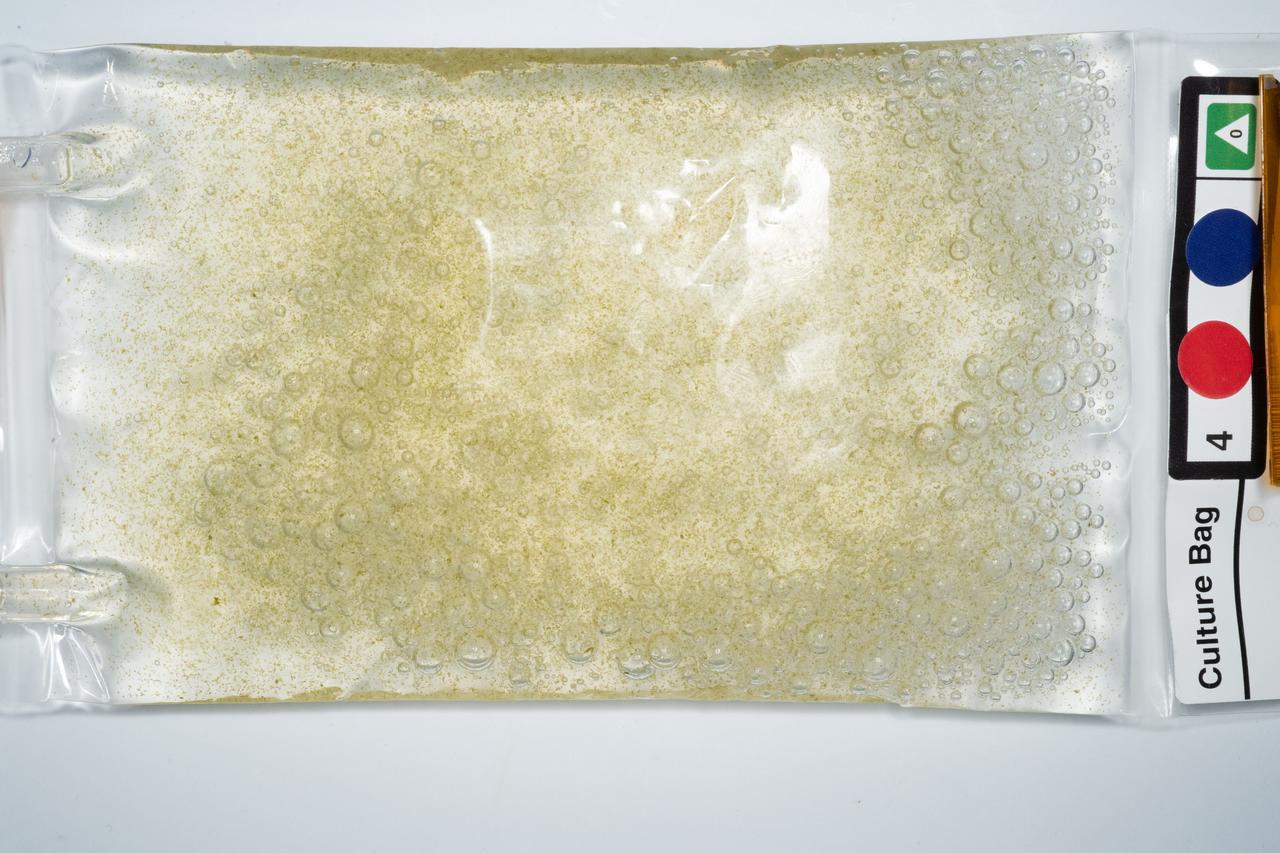
iss059e088038 (6/1/2019) --- Photo documentation taken of Micro Alagae Culture Bag 4 in Node 2 aboard the International Space Station (ISS). Microalgae Biosynthesis in Microgravity (MicroAlgae) studies the effects of microgravity on Haematococcus pluvialis, an algae capable of producing a powerful antioxidant, astaxanthin. It could provide a readily available dietary supplement to promote astronaut health on long-duration space exploration missions.

iss059e054463 (5/7/2019) --- Photo documentation of Micro Alagae Culture Bags 1,2,3 and 4 in Node 2 aboard the International Space Station (ISS). Microalgae Biosynthesis in Microgravity (MicroAlgae) studies the effects of microgravity on Haematococcus pluvialis, an algae capable of producing a powerful antioxidant, astaxanthin. It could provide a readily available dietary supplement to promote astronaut health on long-duration space exploration missions.
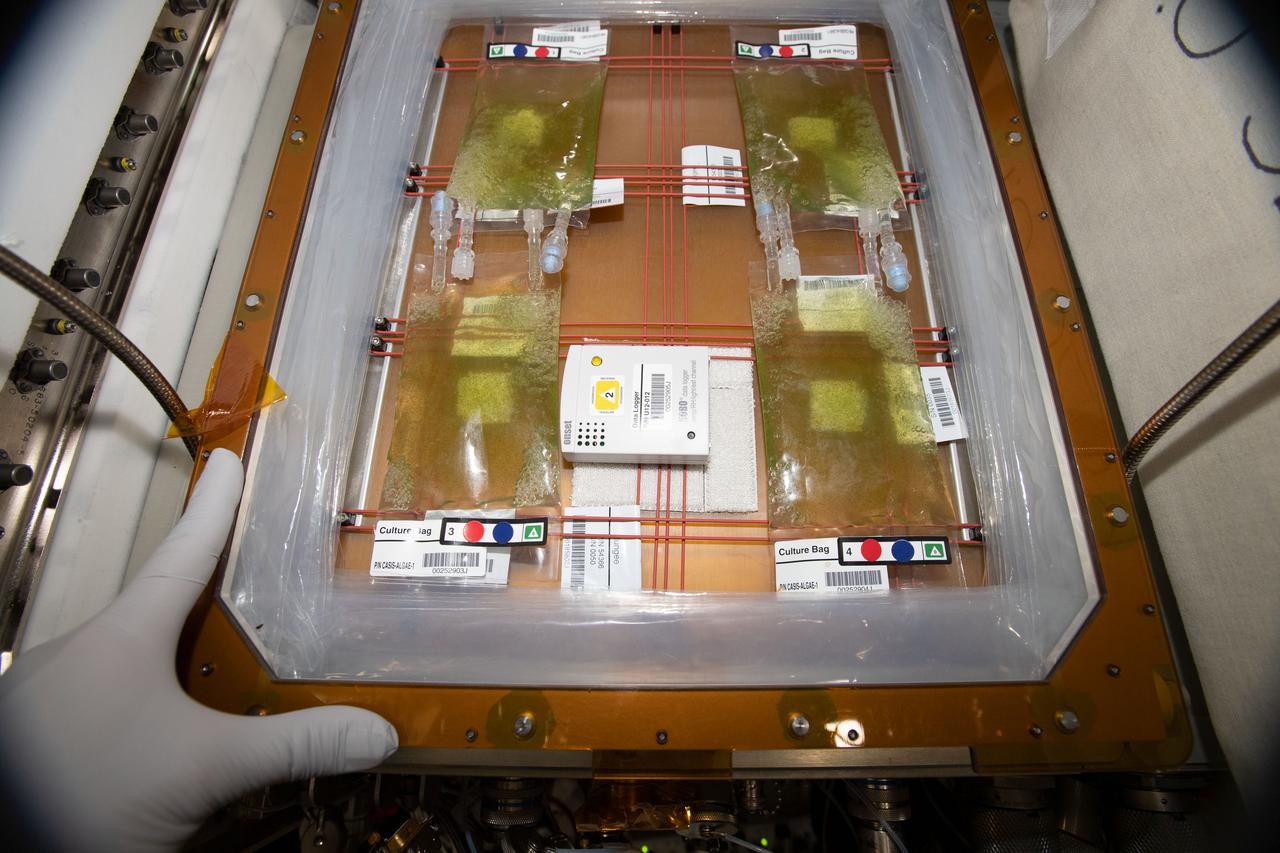
iss059e072992 (5/27/2019) --- Photo documentation of the Micro Alagae Culture bags in Node 2 aboard the International Space Station (ISS). Microalgae Biosynthesis in Microgravity (MicroAlgae) studies the effects of microgravity on Haematococcus pluvialis, an algae capable of producing a powerful antioxidant, astaxanthin. It could provide a readily available dietary supplement to promote astronaut health on long-duration space exploration missions.
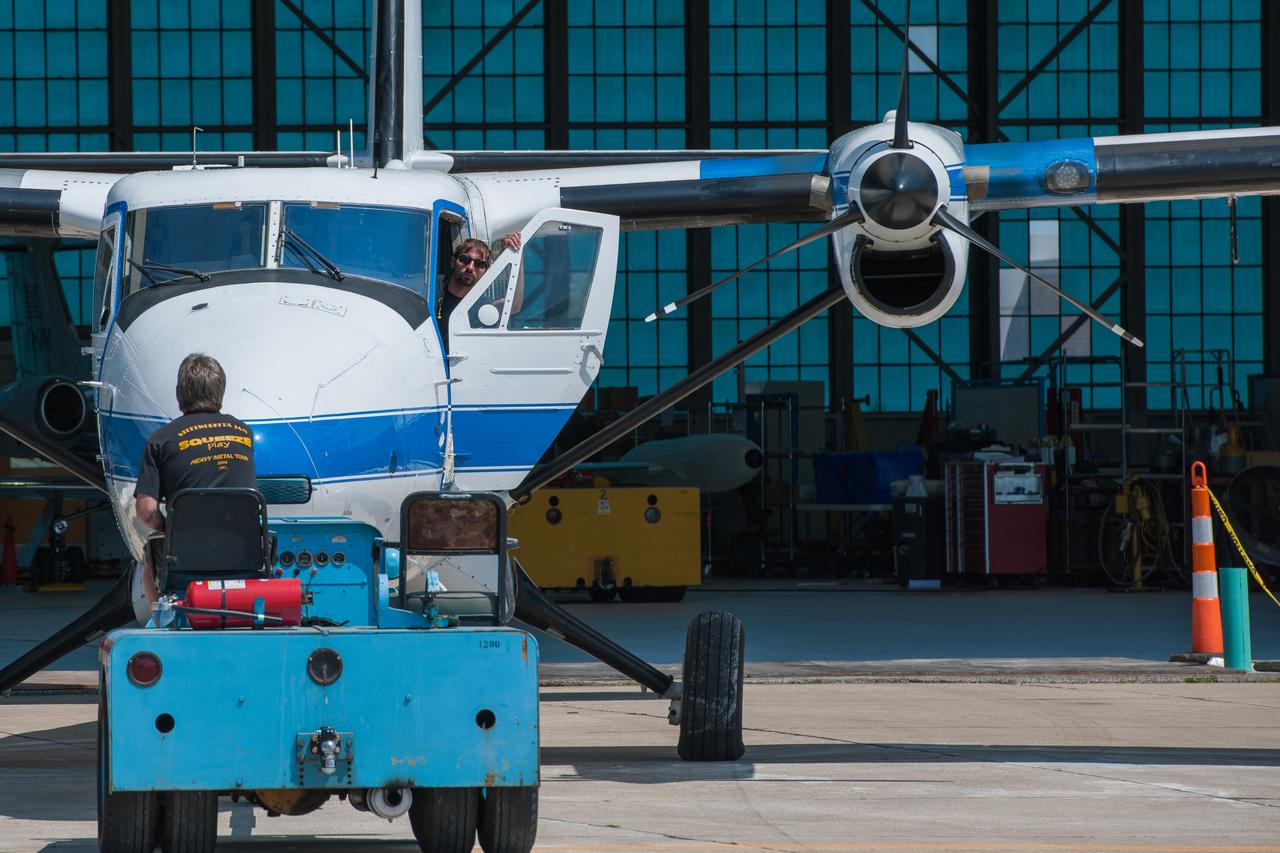
Aircraft mechanics reposition the Twin Otter after a research flight. The aircraft was used to gather data from Lake Erie for the Algae Bloom Project.
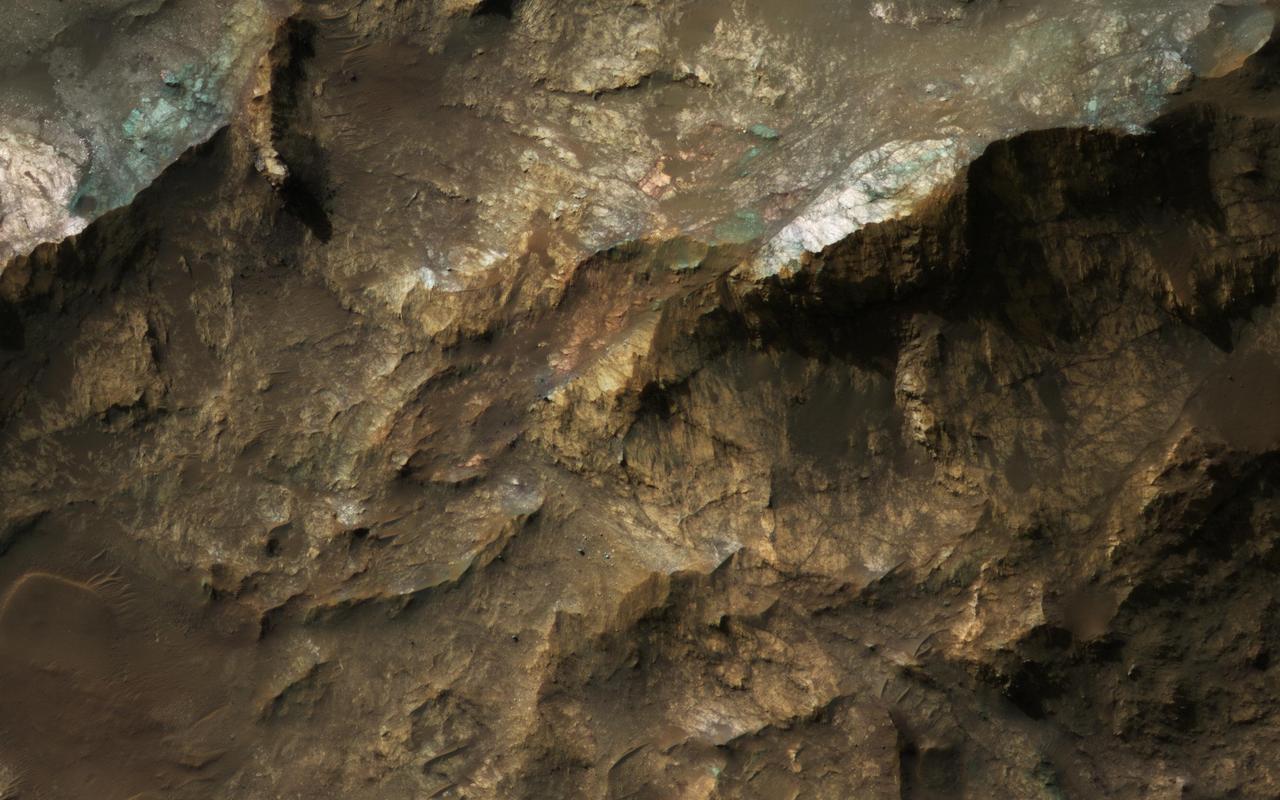
The most habitable places on Mars now and in the past are underground, where water is or was much more stable than at the surface and protected from energetic particle radiation. Large impact craters have central rebounds that uplift buried strata from miles below the surface. Often these central uplifts reveal colorful rocks with diverse minerals, including ones altered by prolonged contact with water. Alga Crater is located in the southern highlands near a large flood-channel called Ladon Valles. The image cutout shows enhanced (infrared-shifted) color. https://photojournal.jpl.nasa.gov/catalog/PIA23479
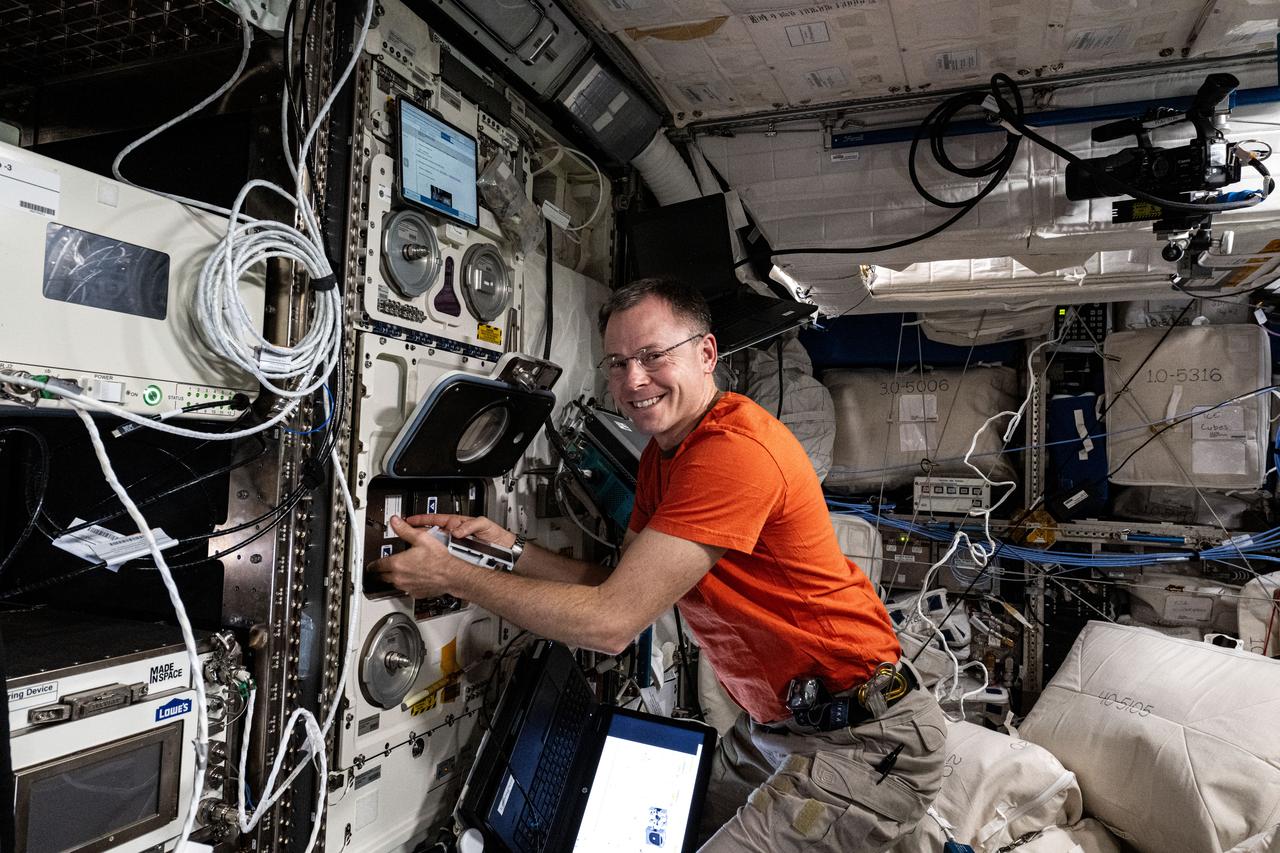
iss072e280746 (Nov. 26, 2024) --- NASA astronaut and Expedition 72 Flight Engineer Nick Hague processes radiation-resistant samples of Arthrospira C micro-algae and stows them in an incubator for analysis inside the International Space Station's Columbus laboratory module. The samples will be exposed to different light intensities to observe how they affect the micro-algae’s cell growth and oxygen production. Results may advance the development of spacecraft life support systems and fresh food production in space.
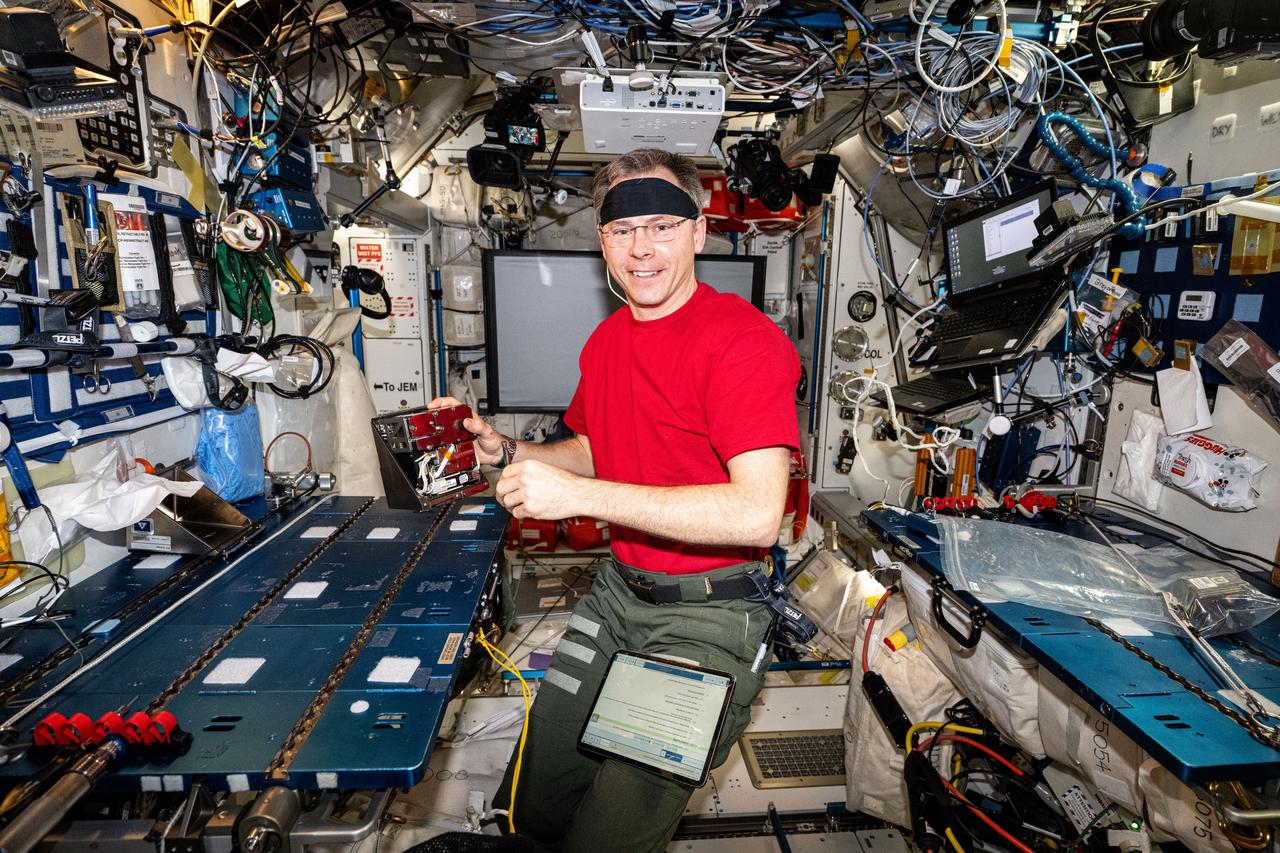
iss072e452598 (Jan. 10, 2025) --- NASA astronaut and Expedition 72 Flight Engineer Nick Hague processes samples of micro-algae at the Harmony module's maintenance work area aboard the International Space Station. The Arthrospira C biotechnology investigation exposes micro-algae to cosmic radiation and microgravity to learn how to revitalize the spacecraft environment using photosynthesis and produce fresh food on long-term space missions.
STS032-520-014 (9-20 Jan. 1990) --- STS-32 astronauts took this 70mm scene showing phytoplankton oralgal bloom in the northwest Coral Sea. The Western Coral Sea and the Great Barrier Reef waters offshore Queensland, Australia are the sites of some of the larger concentrations or "blooms" of phytoplankton and algae in the open ocean. In the instance illustrated here, the leading edge of a probable concentration of algae or phytoplankton is seen as a light irregular line and sheen between the offshore Great Barrier Reef and the Queensland coast. Previous phytoplankton concentrations in this area have been reported by ships at sea as having formed floating mats as thick as two meters. This picture was used by the STS-32 astronauts at their Jan. 30, 1990 post-flight press conference.

iss072e189176 (Nov. 15, 2024) --- NASA astronaut and Expedition 72 Flight Engineer Nick Hague services samples of the Arthrospira C micro-algae for incubation and analysis. Scientists will expose the radiation-resistant samples to different light intensities while monitoring their cell growth and oxygen production. Results may advance life support systems and fresh food production in space.
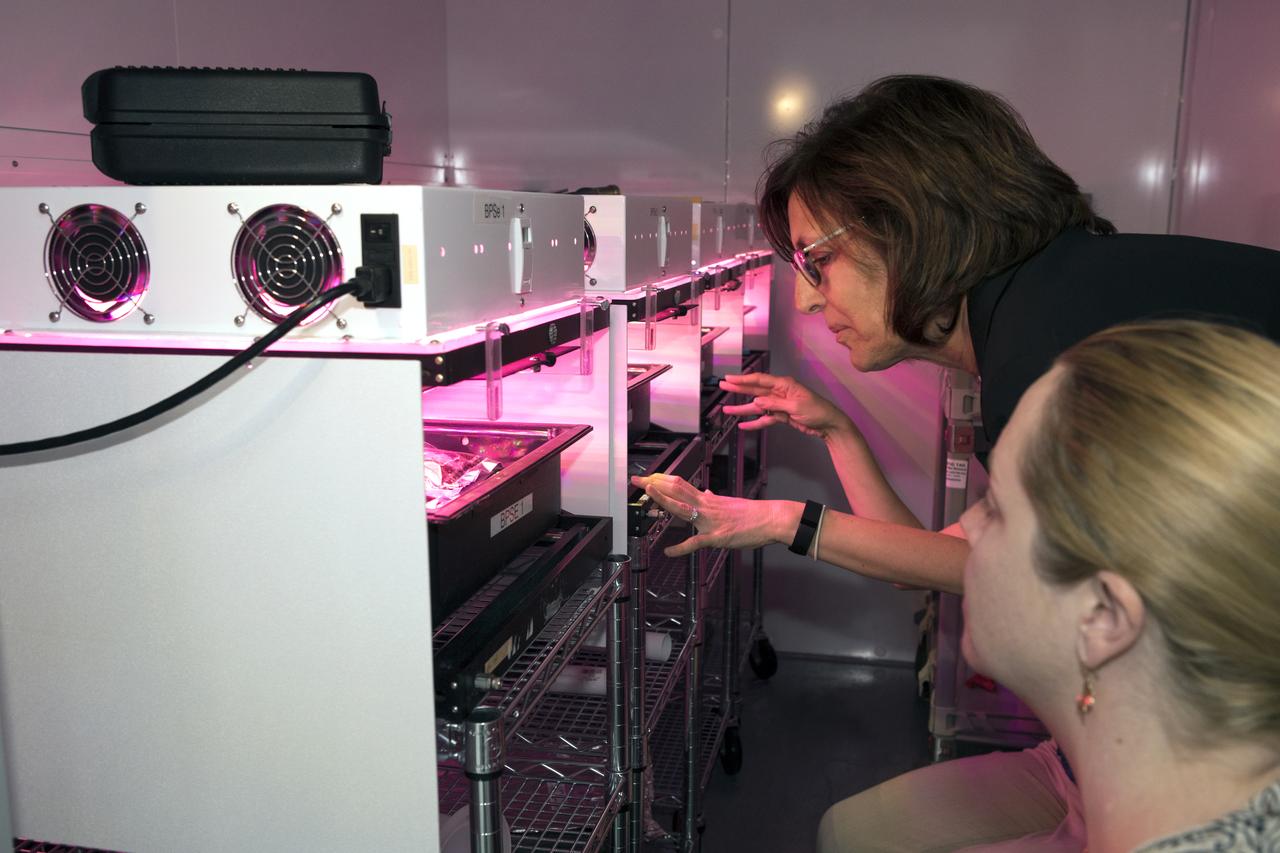
Robyn Gatens, left, deputy director, ISS Division and system capability leader for Environmental Control and Life Support Systems (ECLSS) at NASA Headquarters in Washington, tours laboratories in the Space Station Processing Facility at the agency's Kennedy Space Center in Florida, on June 13, 2018. To her right is Molly Anderson, deputy ECLSS capability lead at Johnson Space Center in Houston. They are viewing plant growth chambers and seeing firsthand some of the capabilities in the center's Exploration Research and Technology Programs.
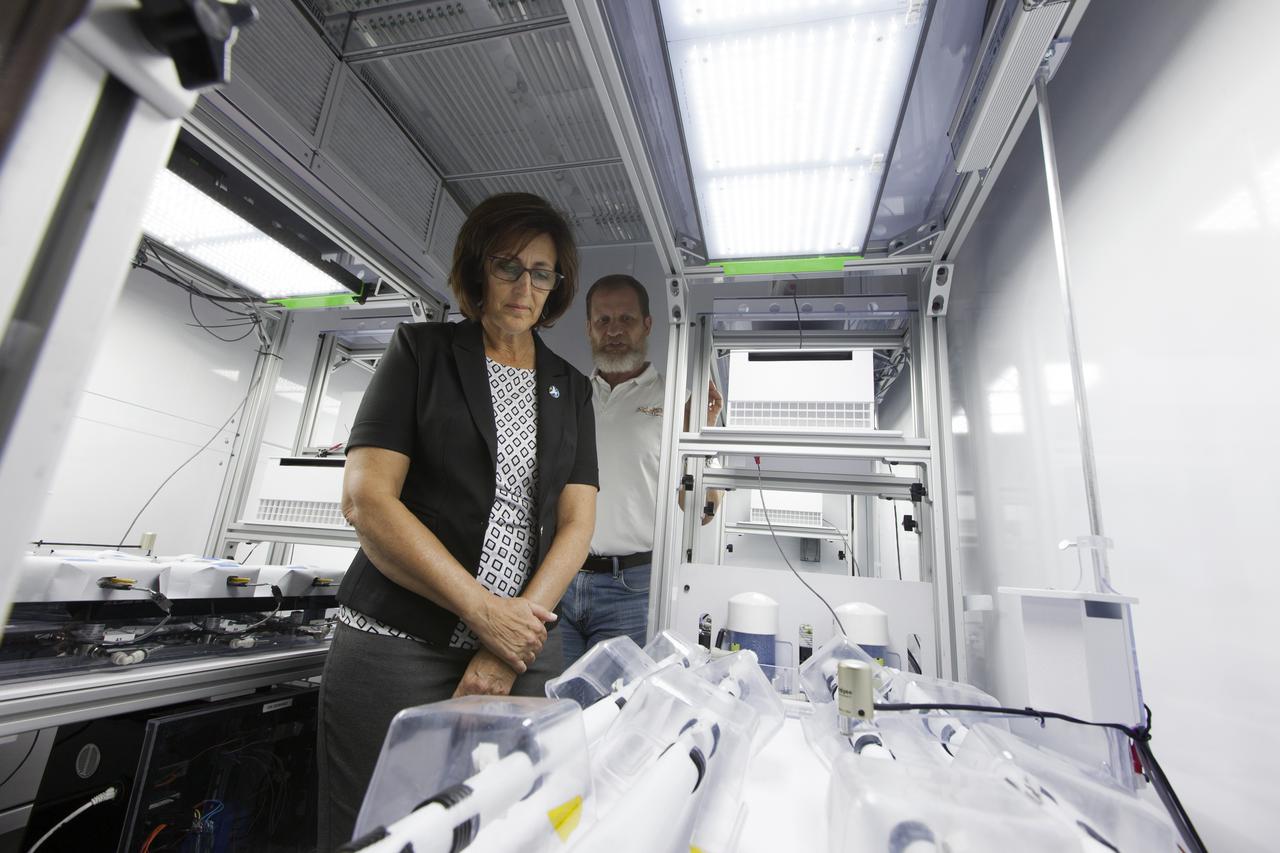
Robyn Gatens, left, deputy director, ISS Division and system capability leader for Environmental Control and Life Support Systems (ECLSS) at NASA Headquarters in Washington, tours laboratories in the Space Station Processing Facility at the agency's Kennedy Space Center in Florida, on June 13, 2018. Standing behind her is Ralph Fritsche, long-duration food production project manager at Kennedy. Gatens is viewing plant growth chambers and seeing firsthand some of the capabilities in the center's Exploration Research and Technology Programs.
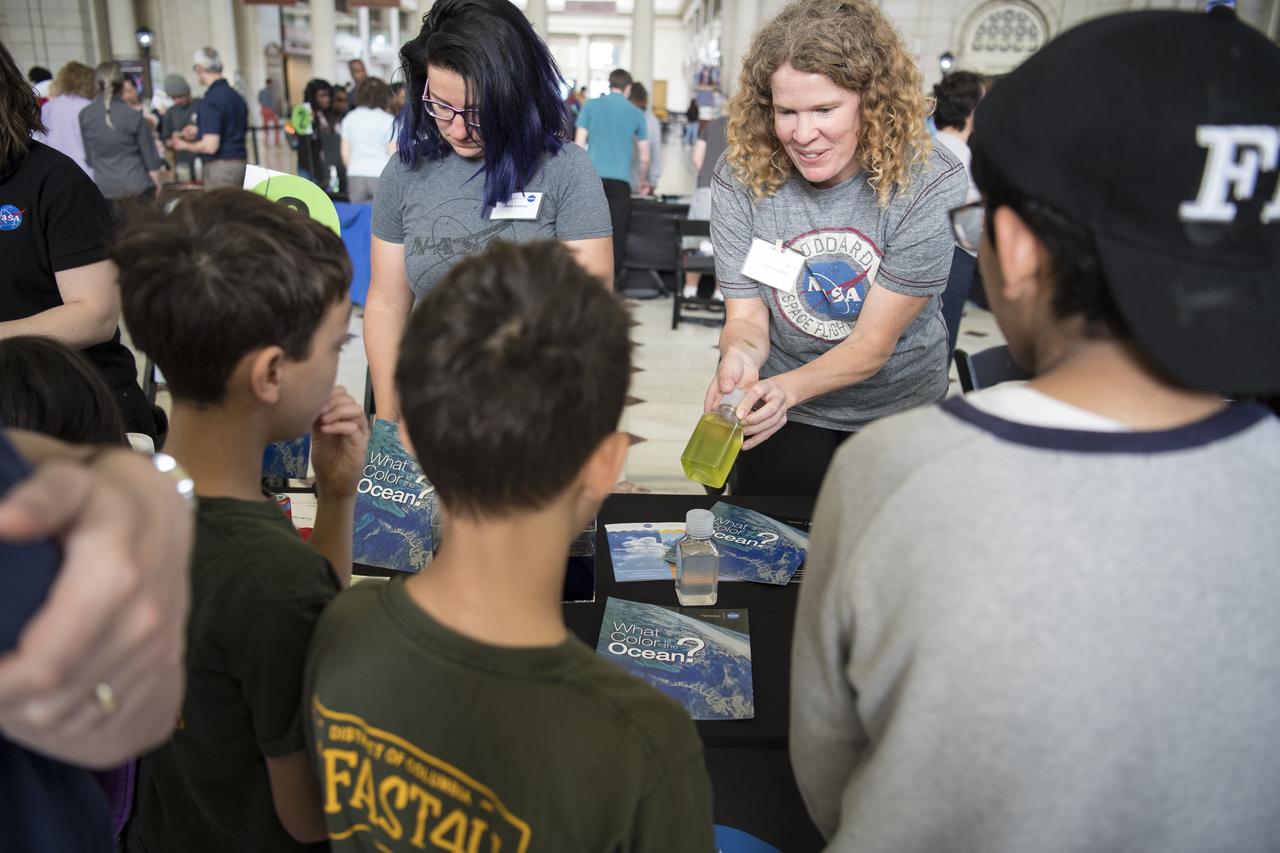
Visitors view samples of different types of algae at one of NASA's exhibits at the Earth Day event on Monday, April 22, 2019, at Union Station in Washington, D.C. Photo Credit: (NASA/Joel Kowsky)
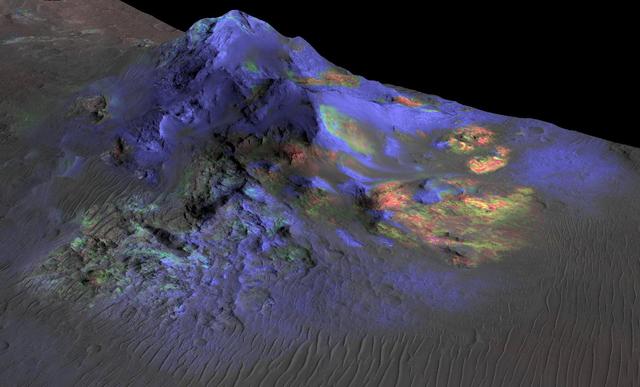
Deposits of impact glass have been preserved in Martian craters, including Alga Crater, shown here. Detection of the impact glass by researchers at Brown University, Providence, Rhode Island, is based on data from the Compact Reconnaissance Imaging Spectrometer for Mars (CRISM) on NASA's Mars Reconnaissance Orbiter. In color coding based on analysis of CRISM spectra, green indicates the presence of glass. (Blues are pyroxene; reds are olivine.) Impact glass forms in the heat of a violent impact that excavates a crater. Impact glass found on Earth can preserve evidence about ancient life. A deposit of impact glass on Mars could be a good place to look for signs of past life on that planet. This view shows Alga Crater's central peak, which is about 3 miles (5 kilometers) wide within the 12-mile (19-kilometer) diameter of this southern-hemisphere crater. The information from CRISM is shown over a terrain model and image, based on observations by the High Resolution Imaging Science Experiment (HiRISE) camera. The vertical dimension is exaggerated by a factor of two. http://photojournal.jpl.nasa.gov/catalog/PIA19673
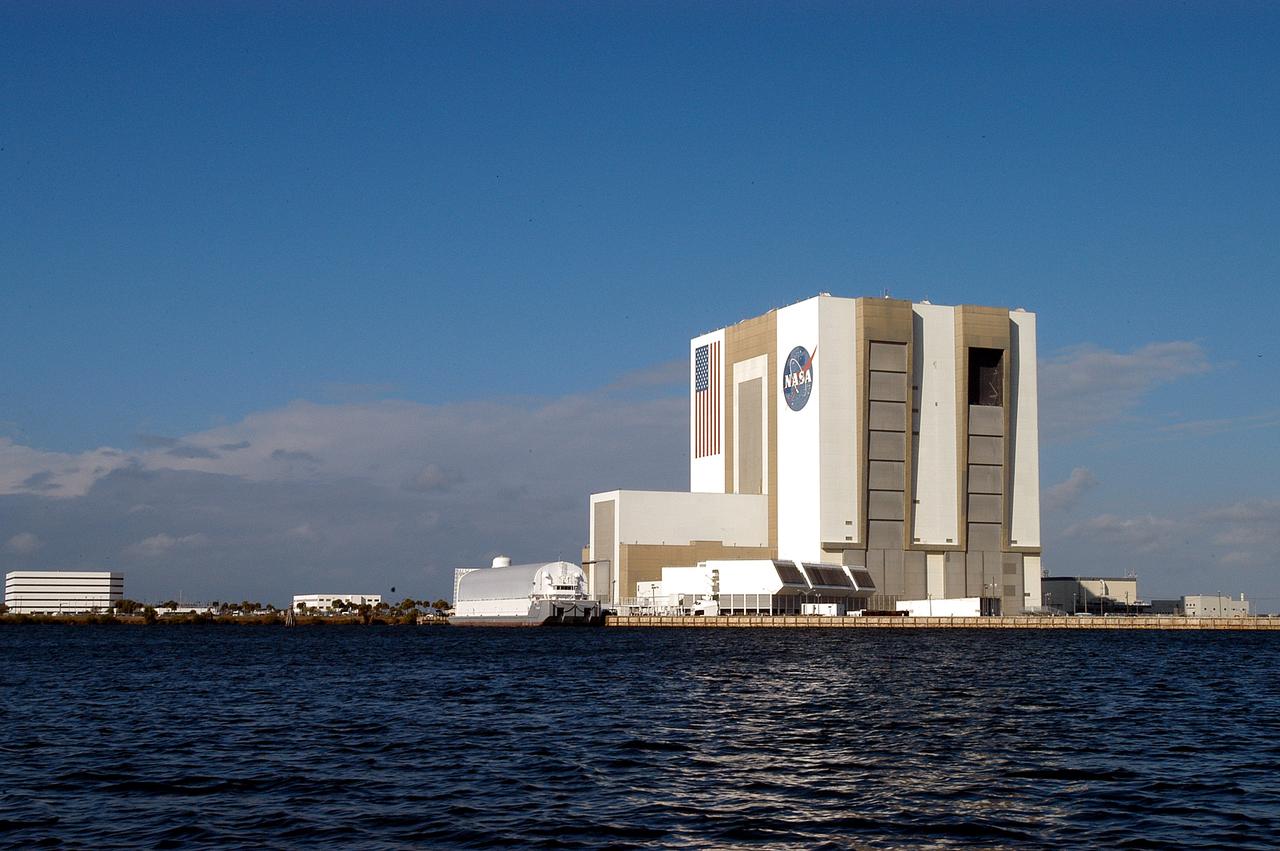
KENNEDY SPACE CENTER, FLA. - From a boat on the Banana River the Vehicle Assembly Building looms over the water. The boat holds Karen Holloway-Adkins, KSC wildlife specialist, who is studying the life history of sea turtles, especially what they eat, where they lay their eggs and what factors might harm their survival. On the boat trip she is also monitoring the growth of sea grasses and algae and the water quality of estuaries and lagoons used by sea turtles and other aquatic wildlife.
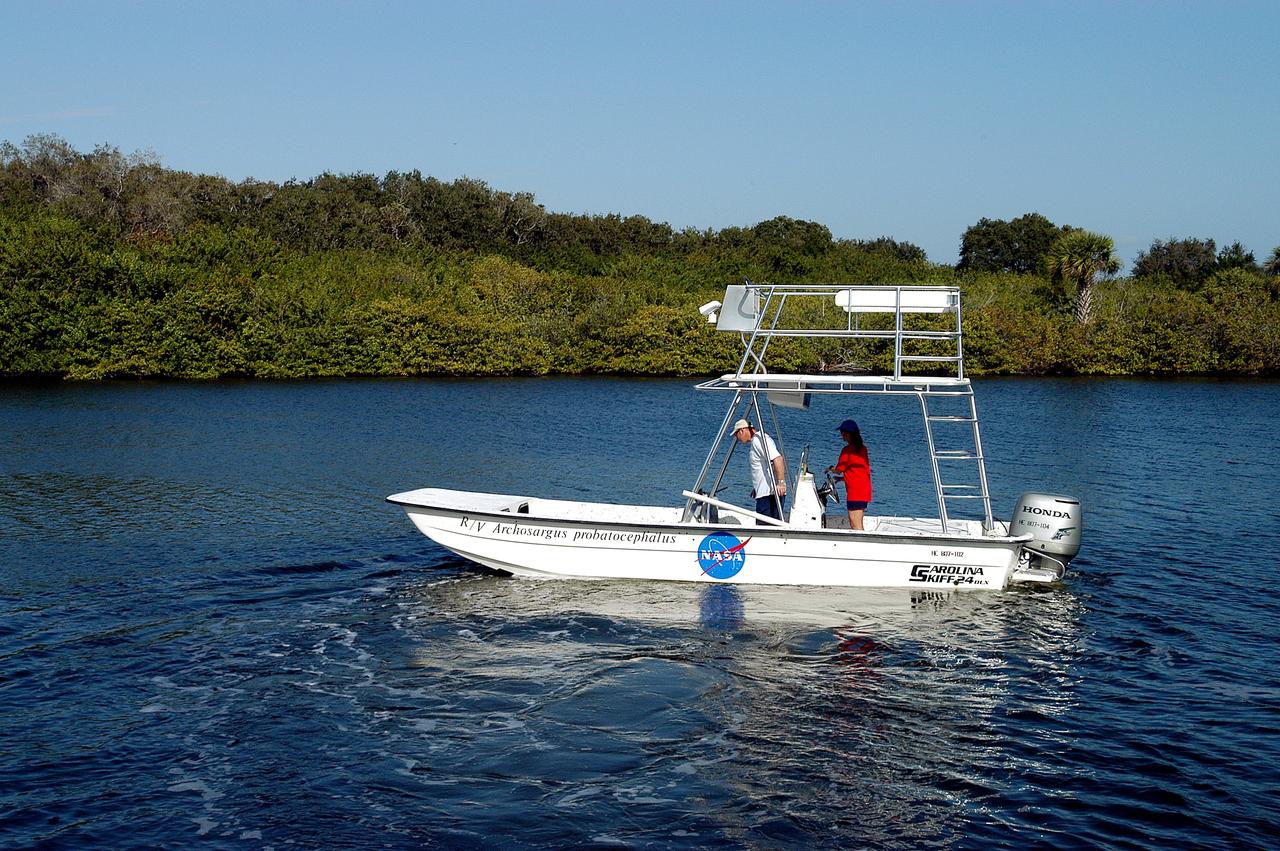
KENNEDY SPACE CENTER, FLA. - Karen Holloway-Adkins, KSC wildlife specialist, at the helm of a boat on the Banana River, heads for a research area. She is studying the life history of sea turtles, especially what they eat, where they lay their eggs and what factors might harm their survival. On the boat trip she is also monitoring the growth of sea grasses and algae and the water quality of estuaries and lagoons used by sea turtles and other aquatic wildlife.
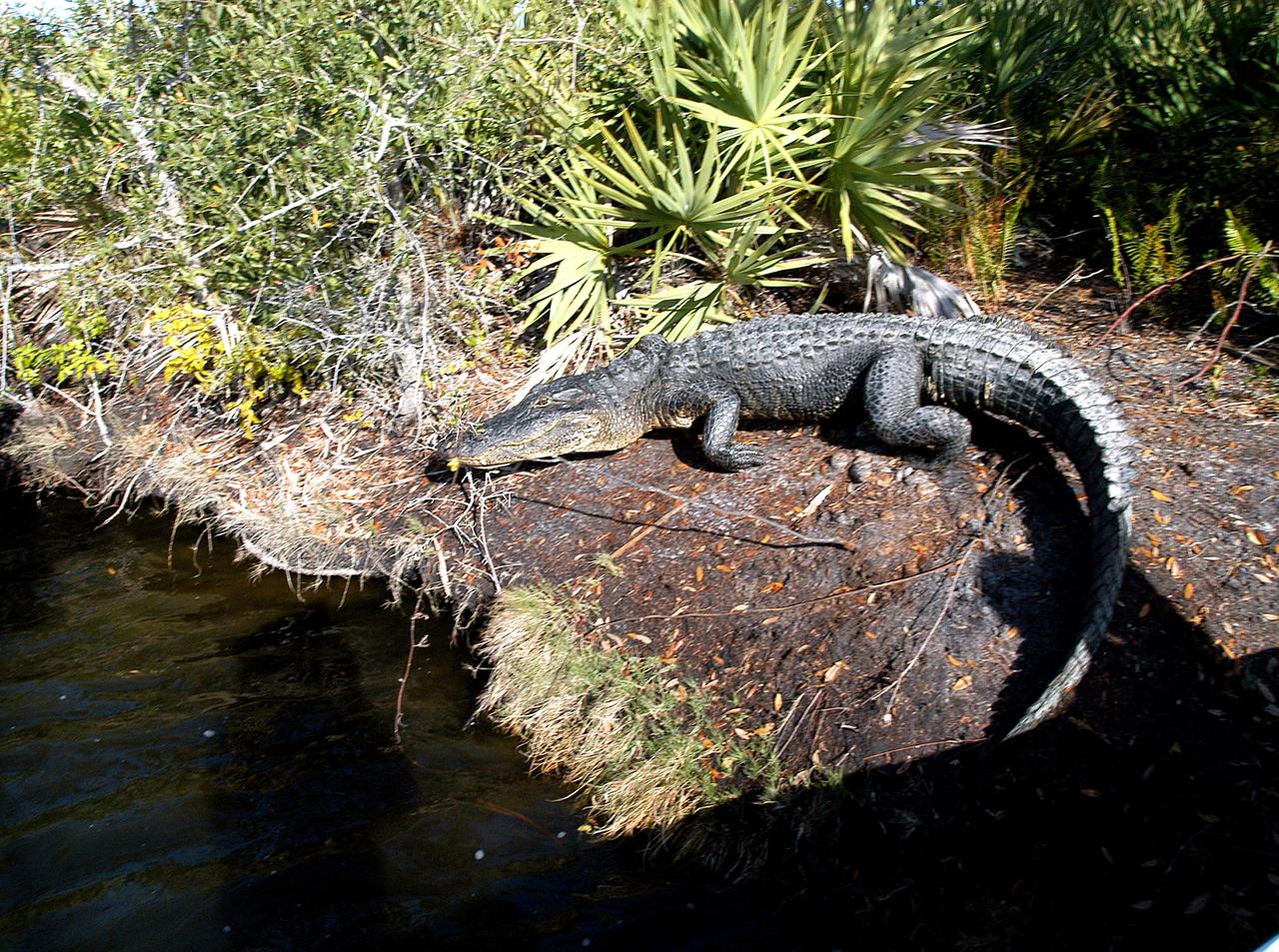
KENNEDY SPACE CENTER, FLA. - As Karen Holloway-Adkins, KSC wildlife specialist, begins a tour of the Banana River, this alligator sunning itself attracts attention. Holloway-Adkins is studying the life history of sea turtles, especially what they eat, where they lay their eggs and what factors might harm their survival. On the boat trip she is also monitoring the growth of sea grasses and algae and the water quality of estuaries and lagoons used by sea turtles and other aquatic wildlife.
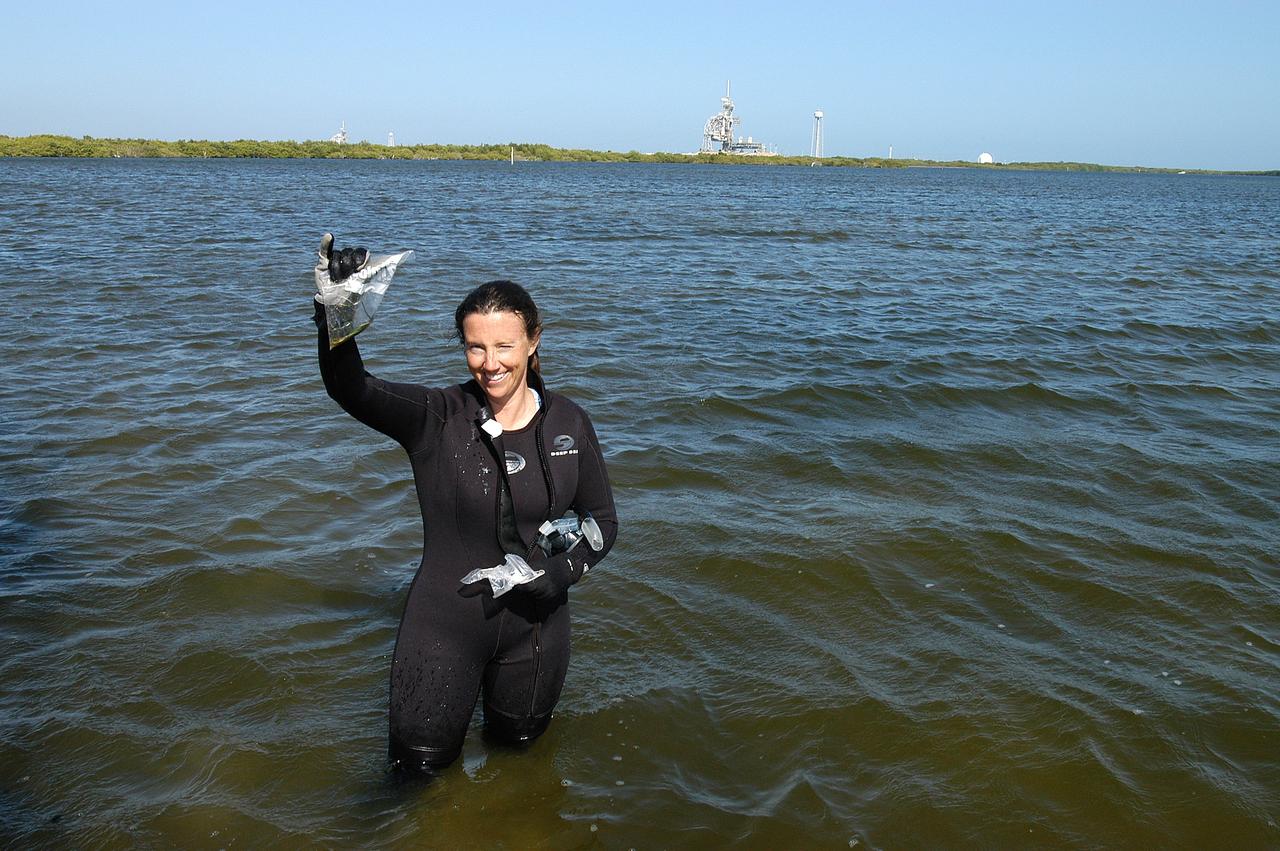
KENNEDY SPACE CENTER, FLA. - Karen Holloway-Adkins, KSC wildlife specialist, shows a sample of the sea grass she collected from the floor of the Banana River. She is studying the life history of sea turtles, especially what they eat, where they lay their eggs and what factors might harm their survival. On the boat trip she is also monitoring the growth of sea grasses and algae and the water quality of estuaries and lagoons used by sea turtles and other aquatic wildlife.
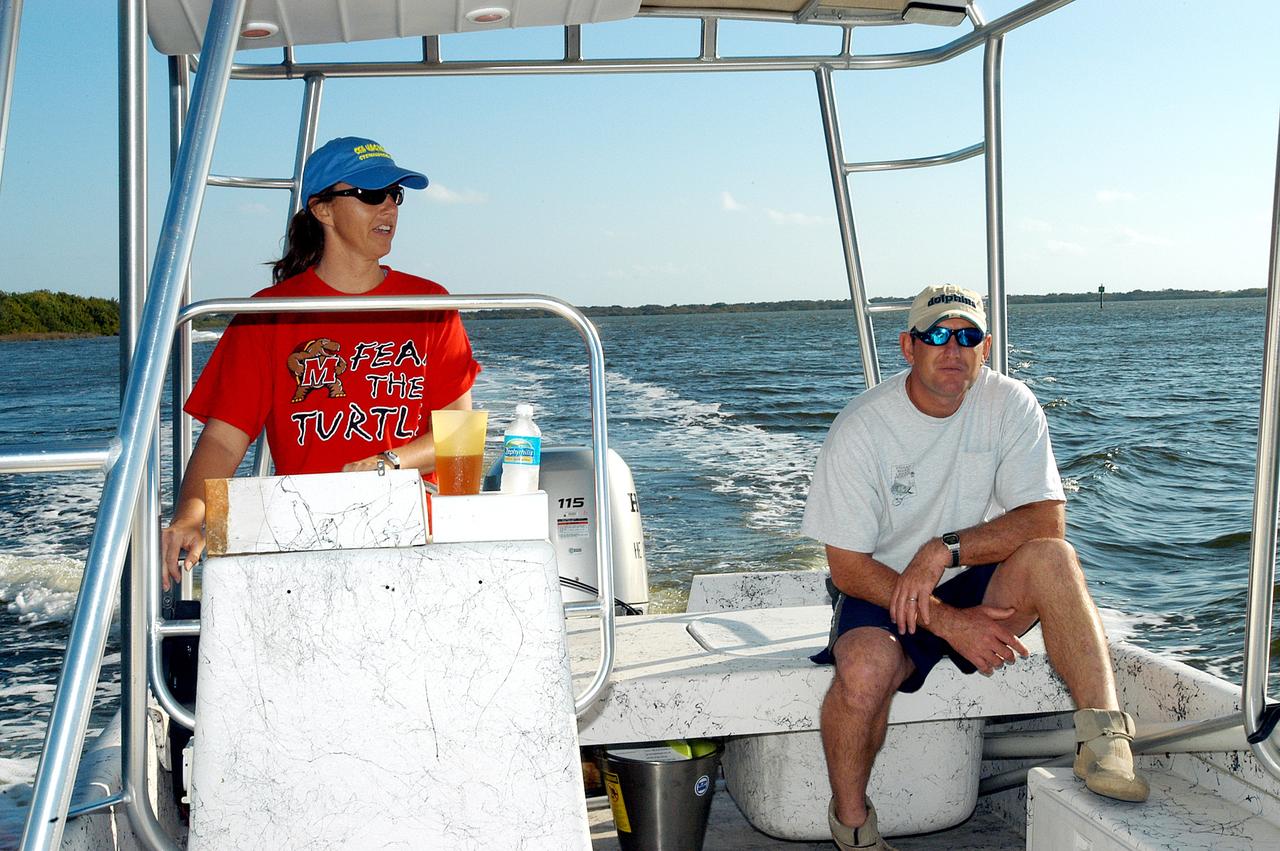
KENNEDY SPACE CENTER, FLA. - Karen Holloway-Adkins, KSC wildlife specialist, takes the helm on the boat as she begins a tour of the Banana River. She is studying the life history of sea turtles, especially what they eat, where they lay their eggs and what factors might harm their survival. On the boat trip she is also monitoring the growth of sea grasses and algae and the water quality of estuaries and lagoons used by sea turtles and other aquatic wildlife.
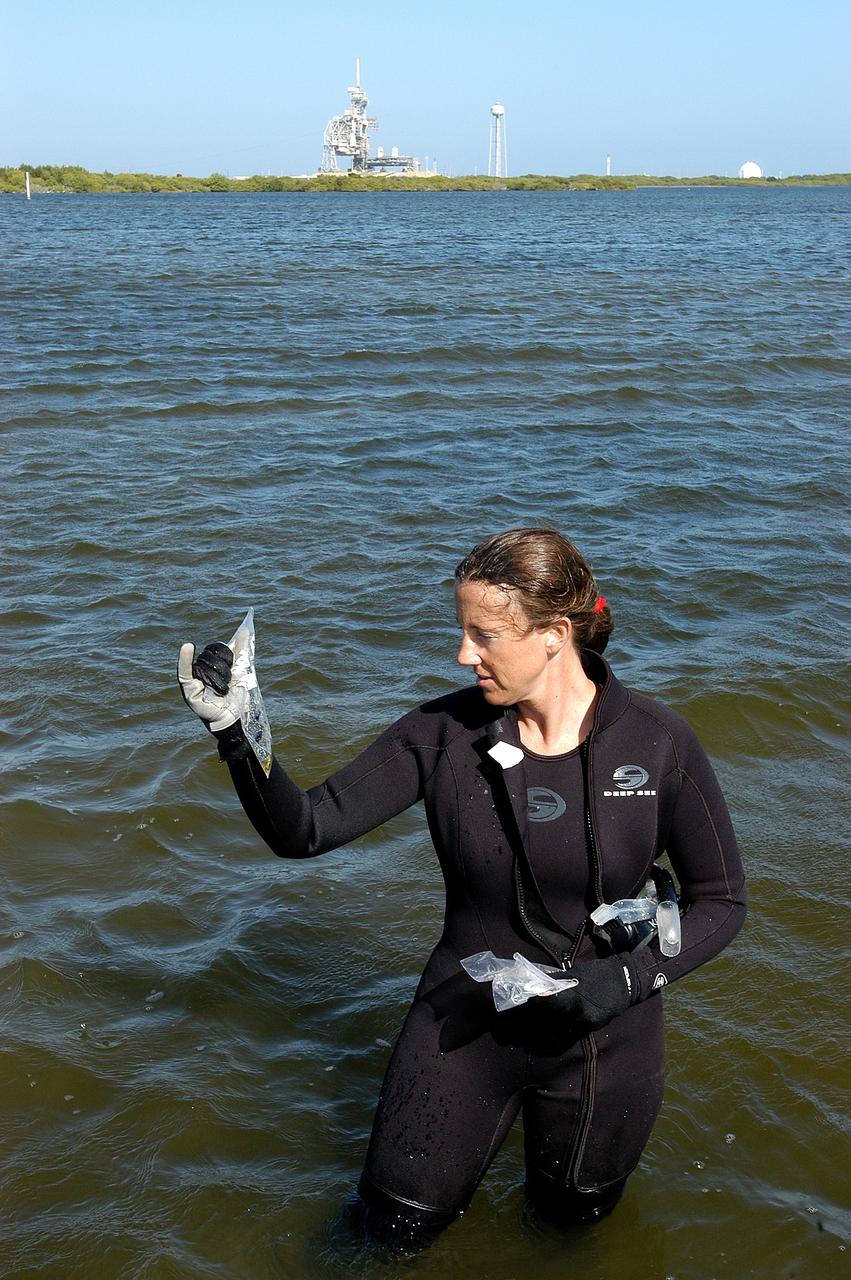
KENNEDY SPACE CENTER, FLA. - Karen Holloway-Adkins, KSC wildlife specialist, holds a sample of the sea grass she collected from the floor of the Banana River. She is studying the life history of sea turtles, especially what they eat, where they lay their eggs and what factors might harm their survival. On the boat trip she is also monitoring the growth of sea grasses and algae and the water quality of estuaries and lagoons used by sea turtles and other aquatic wildlife.
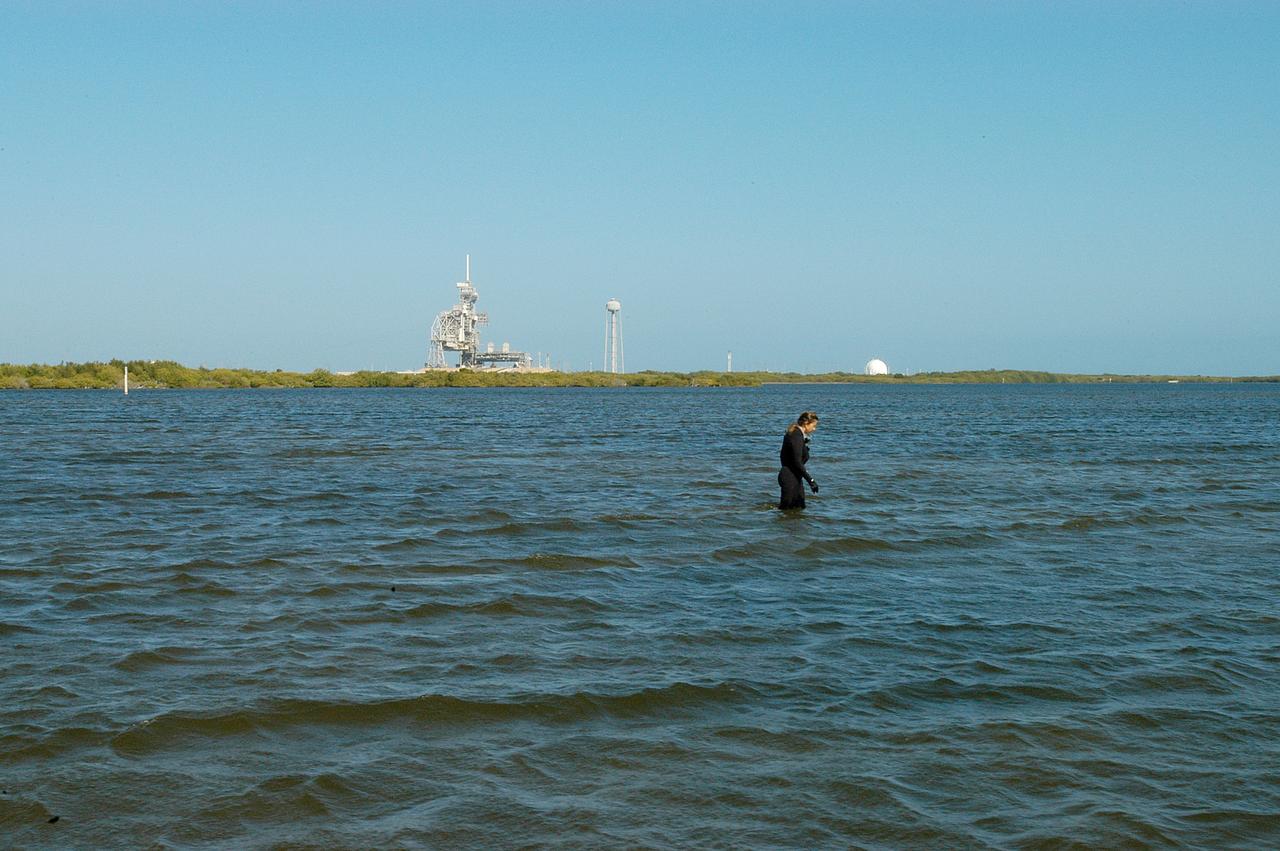
KENNEDY SPACE CENTER, FLA. - Karen Holloway-Adkins, KSC wildlife specialist, searches the Banana River for a grass specimen. In the background is one of the launch pads. The biologist is studying the life history of sea turtles, especially what they eat, where they lay their eggs and what factors might harm their survival. On the boat trip she is also monitoring the growth of sea grasses and algae and the water quality of estuaries and lagoons used by sea turtles and other aquatic wildlife.
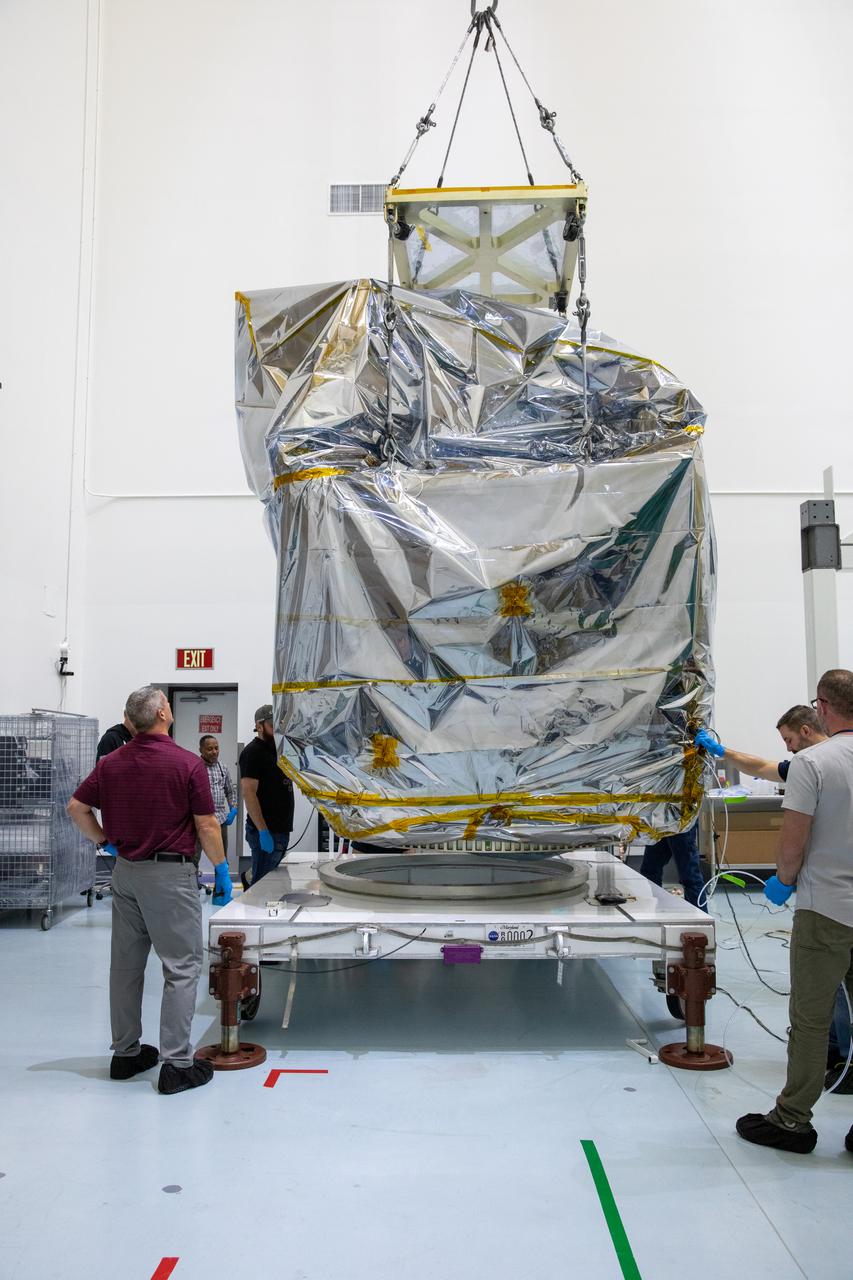
NASA’s Plankton, Aerosol, Cloud, ocean Ecosystem (PACE) observatory spacecraft is uncrated for prelaunch processing at the Astrotech Space Operations Facility near the agency’s Kennedy Space Center in Florida on Wednesday, Nov. 15, 2023. The PACE observatory will help us better understand how the ocean and atmosphere exchange carbon dioxide, measure key atmospheric variables associated with air quality and Earth's climate, and monitor ocean health, in part by studying phytoplankton, tiny plants and algae that sustain the marine food web. PACE will be encapsulated for launch aboard a SpaceX Falcon 9 rocket from Space Launch Complex 40 at Cape Canaveral Space Force Station in Florida.
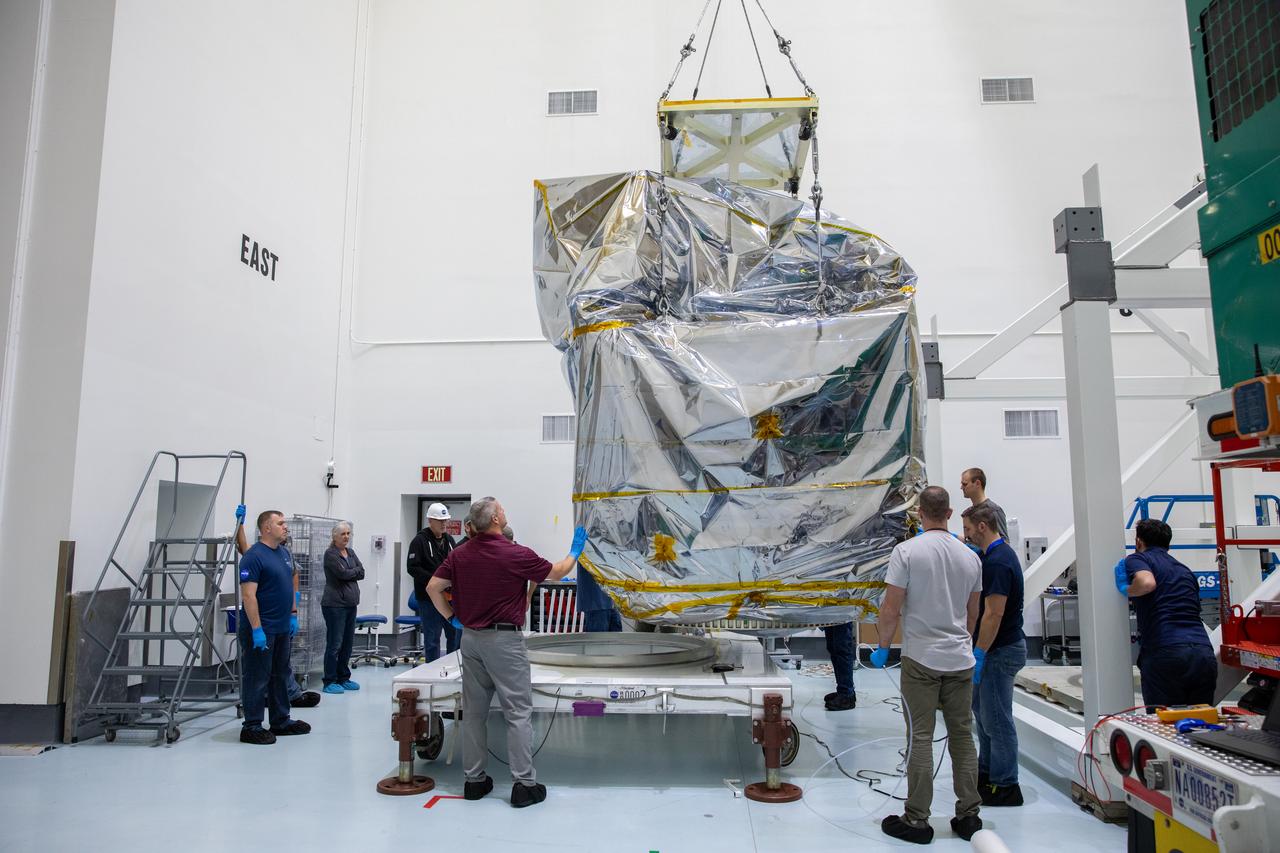
NASA’s Plankton, Aerosol, Cloud, ocean Ecosystem (PACE) observatory spacecraft is uncrated for prelaunch processing at the Astrotech Space Operations Facility near the agency’s Kennedy Space Center in Florida on Wednesday, Nov. 15, 2023. The PACE observatory will help us better understand how the ocean and atmosphere exchange carbon dioxide, measure key atmospheric variables associated with air quality and Earth's climate, and monitor ocean health, in part by studying phytoplankton, tiny plants and algae that sustain the marine food web. PACE will be encapsulated for launch aboard a SpaceX Falcon 9 rocket from Space Launch Complex 40 at Cape Canaveral Space Force Station in Florida.
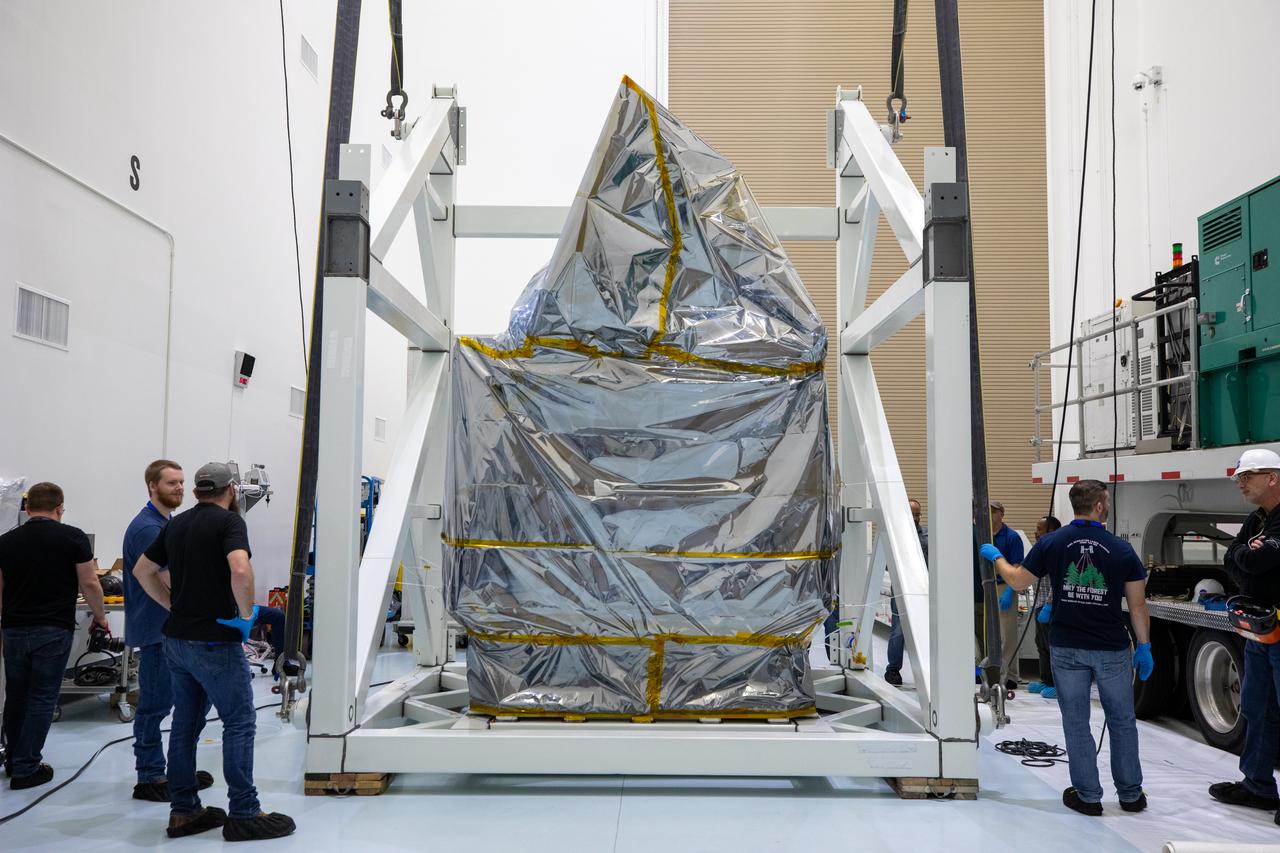
NASA’s Plankton, Aerosol, Cloud, ocean Ecosystem (PACE) observatory spacecraft is uncrated for prelaunch processing at the Astrotech Space Operations Facility near the agency’s Kennedy Space Center in Florida on Wednesday, Nov. 15, 2023. The PACE observatory will help us better understand how the ocean and atmosphere exchange carbon dioxide, measure key atmospheric variables associated with air quality and Earth's climate, and monitor ocean health, in part by studying phytoplankton, tiny plants and algae that sustain the marine food web. PACE will be encapsulated for launch aboard a SpaceX Falcon 9 rocket from Space Launch Complex 40 at Cape Canaveral Space Force Station in Florida.
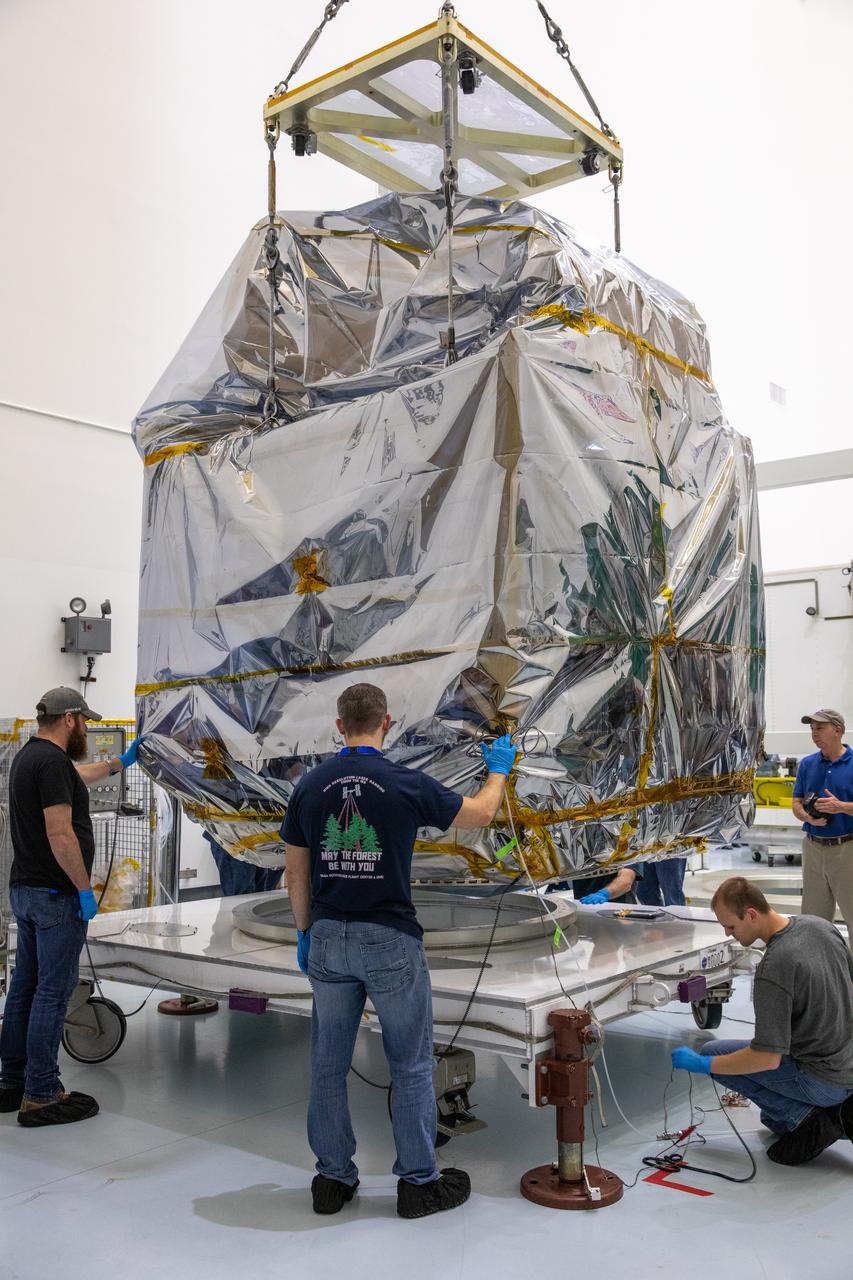
NASA’s Plankton, Aerosol, Cloud, ocean Ecosystem (PACE) observatory spacecraft is uncrated for prelaunch processing at the Astrotech Space Operations Facility near the agency’s Kennedy Space Center in Florida on Wednesday, Nov. 15, 2023. The PACE observatory will help us better understand how the ocean and atmosphere exchange carbon dioxide, measure key atmospheric variables associated with air quality and Earth's climate, and monitor ocean health, in part by studying phytoplankton, tiny plants and algae that sustain the marine food web. PACE will be encapsulated for launch aboard a SpaceX Falcon 9 rocket from Space Launch Complex 40 at Cape Canaveral Space Force Station in Florida.
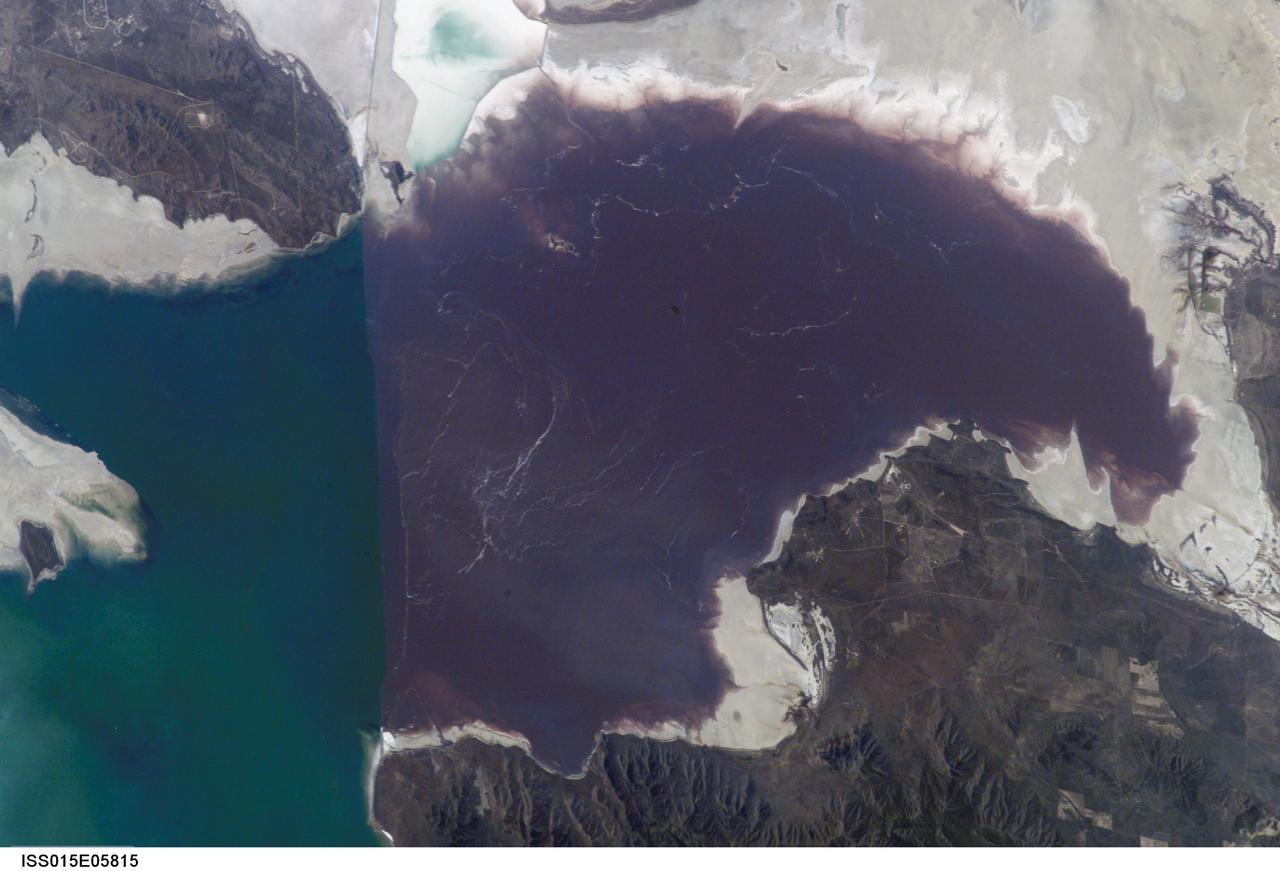
ISS015-E-05815 (30 April 2007) --- Algae in Great Salt Lake, Utah is featured in this image photographed by an Expedition 15 crewmember on the International Space Station. According to scientists, the Great Salt Lake of northern Utah is a remnant of glacial Lake Bonneville that extended over much of present-day western Utah, and into the neighboring states of Nevada and Idaho, approximately 32,000 to 14,000 years ago. During this time, the peaks of adjacent ranges such as the Promontory and Lakeside Mountains were most likely islands. As climate warmed and precipitation decreased in the region, glaciers that fed melt-water to Lake Bonneville disappeared, and the lake began to dry up. The present-day Great Salt Lake is a terminal lake in that water does not flow out of the lake basin. Water loss through the year is due primarily to evaporation, and when this loss exceeds input of water from rivers, streams, precipitation, and groundwater the lake level decreases. This is particularly evident during droughts. This process of evaporation, together with the relatively shallow water levels (maximum lake depth is around 33 feet), has led to increased salinity (dissolved salt content) of the lake waters. The north arm of the Lake, displayed in this image, typically has twice the salinity of the rest of the lake due to impoundment of water by a railroad causeway that crosses the lake from east to west. This restriction of water flow has led to a striking division in the types of algae and bacteria found in the north and south arms of the lake. In the northern arm (north of the causeway), the red algae Dunaliella Salina and the bacterial species Halo bacterium produce a pronounced reddish cast to the water, whereas the south arm (south of the causeway) is dominated by green algae such as Dunaliella viridis. The Great Salt Lake also supports brine shrimp and brine flies; and is a major stopover point for migratory birds including avocets, stilts, and plovers.
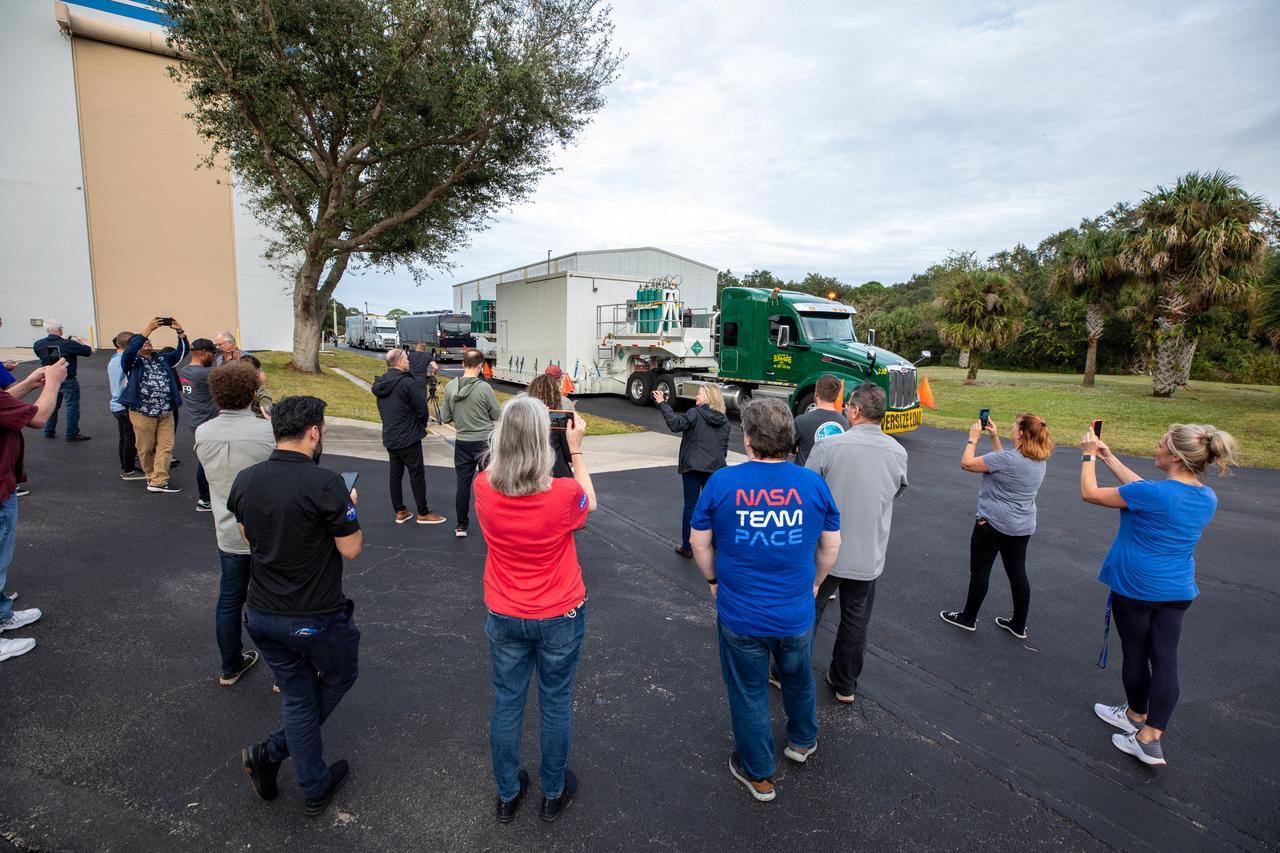
The transport carrier containing NASA’s Plankton, Aerosol, Cloud, ocean Ecosystem (PACE) observatory spacecraft arrives at the Astrotech Space Operations Facility near the agency’s Kennedy Space Center in Florida on Tuesday, Nov. 14, 2023. PACE was shipped from the agency’s Goddard Space Flight Center in Greenbelt, Maryland, and is targeted to launch on January 30, 2024, on a SpaceX Falcon 9 rocket lifting off from Space Launch Complex 40 at Cape Canaveral Space Force Station. The PACE observatory will help us better understand how the ocean and atmosphere exchange carbon dioxide, measure key atmospheric variables associated with air quality and Earth's climate, and monitor ocean health, in part by studying phytoplankton, tiny plants and algae that sustain the marine food web.
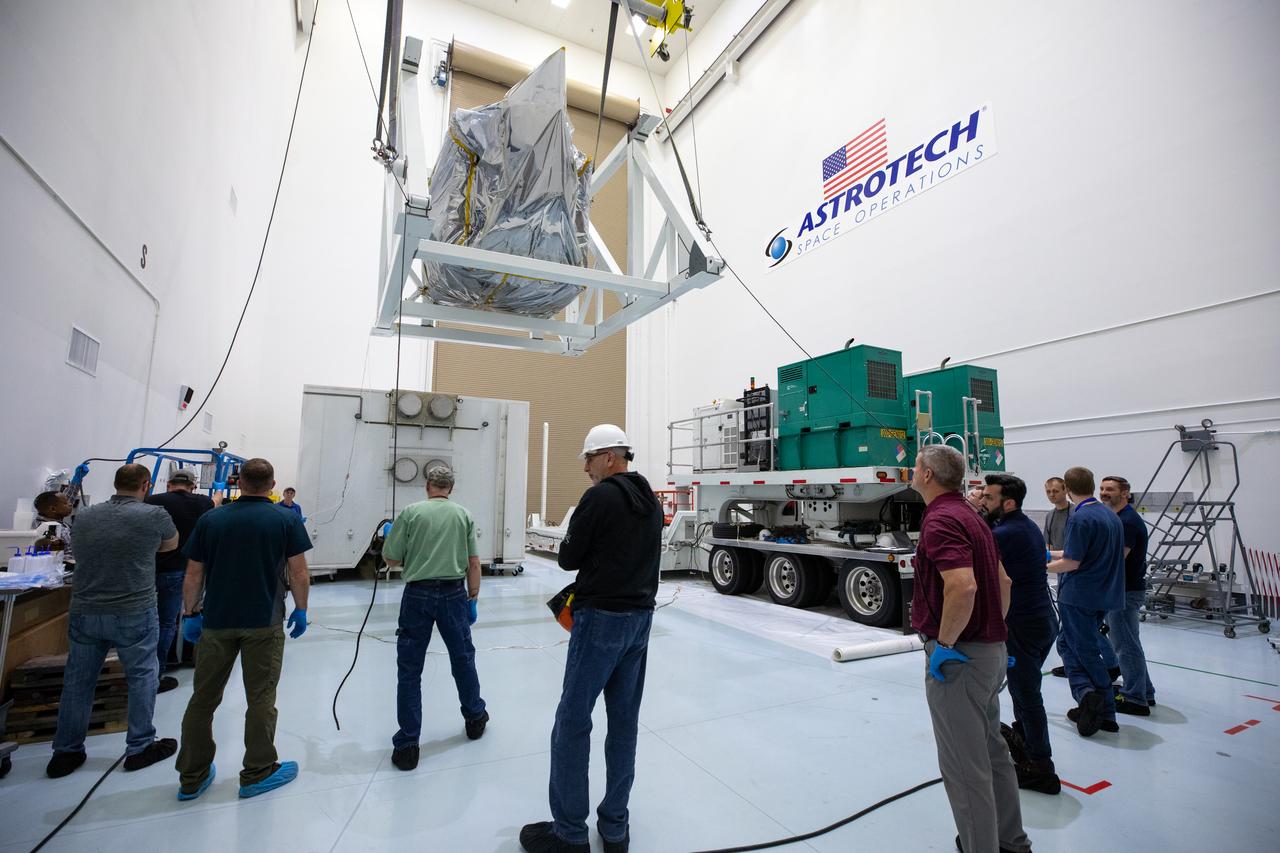
Technicians monitor movement as a crane hoists NASA’s Plankton, Aerosol, Cloud, ocean Ecosystem (PACE) observatory spacecraft after being uncrated on Wednesday, Nov. 15, 2023, at the Astrotech Space Operations Facility near the agency’s Kennedy Space Center in Florida. The PACE observatory will help us better understand how the ocean and atmosphere exchange carbon dioxide, measure key atmospheric variables associated with air quality and Earth's climate, and monitor ocean health, in part by studying phytoplankton, tiny plants and algae that sustain the marine food web. PACE will be encapsulated for launch aboard a SpaceX Falcon 9 rocket from Space Launch Complex 40 at Cape Canaveral Space Force Station in Florida.
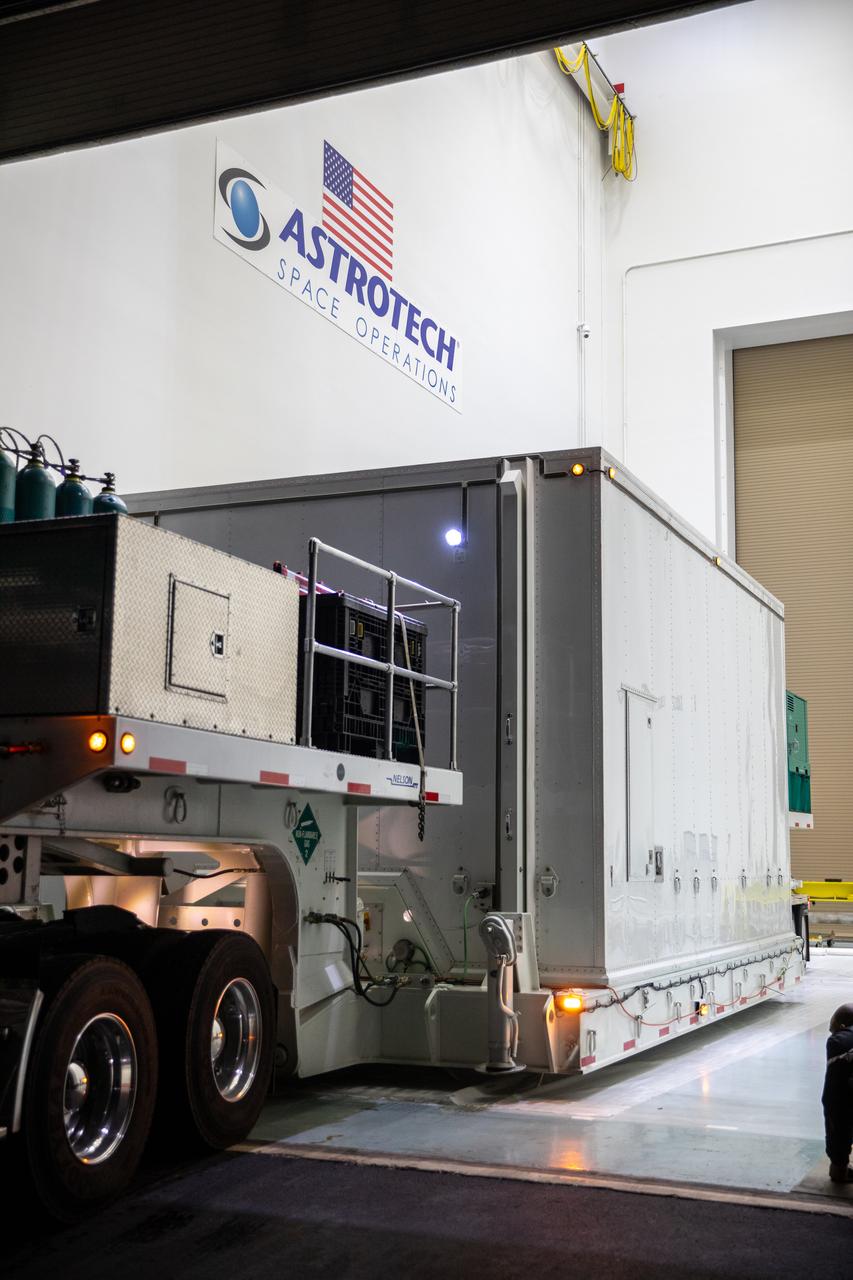
The transport carrier containing NASA’s Plankton, Aerosol, Cloud, ocean Ecosystem (PACE) observatory spacecraft is offloaded at the Astrotech Space Operations Facility near the agency’s Kennedy Space Center in Florida on Tuesday, Nov. 14, 2023. PACE was shipped from the agency’s Goddard Space Flight Center in Greenbelt, Maryland, and is targeted to launch on January 30, 2024, on a SpaceX Falcon 9 rocket lifting off from Space Launch Complex 40 at Cape Canaveral Space Force Station. The PACE observatory will help us better understand how the ocean and atmosphere exchange carbon dioxide, measure key atmospheric variables associated with air quality and Earth's climate, and monitor ocean health, in part by studying phytoplankton, tiny plants and algae that sustain the marine food web.
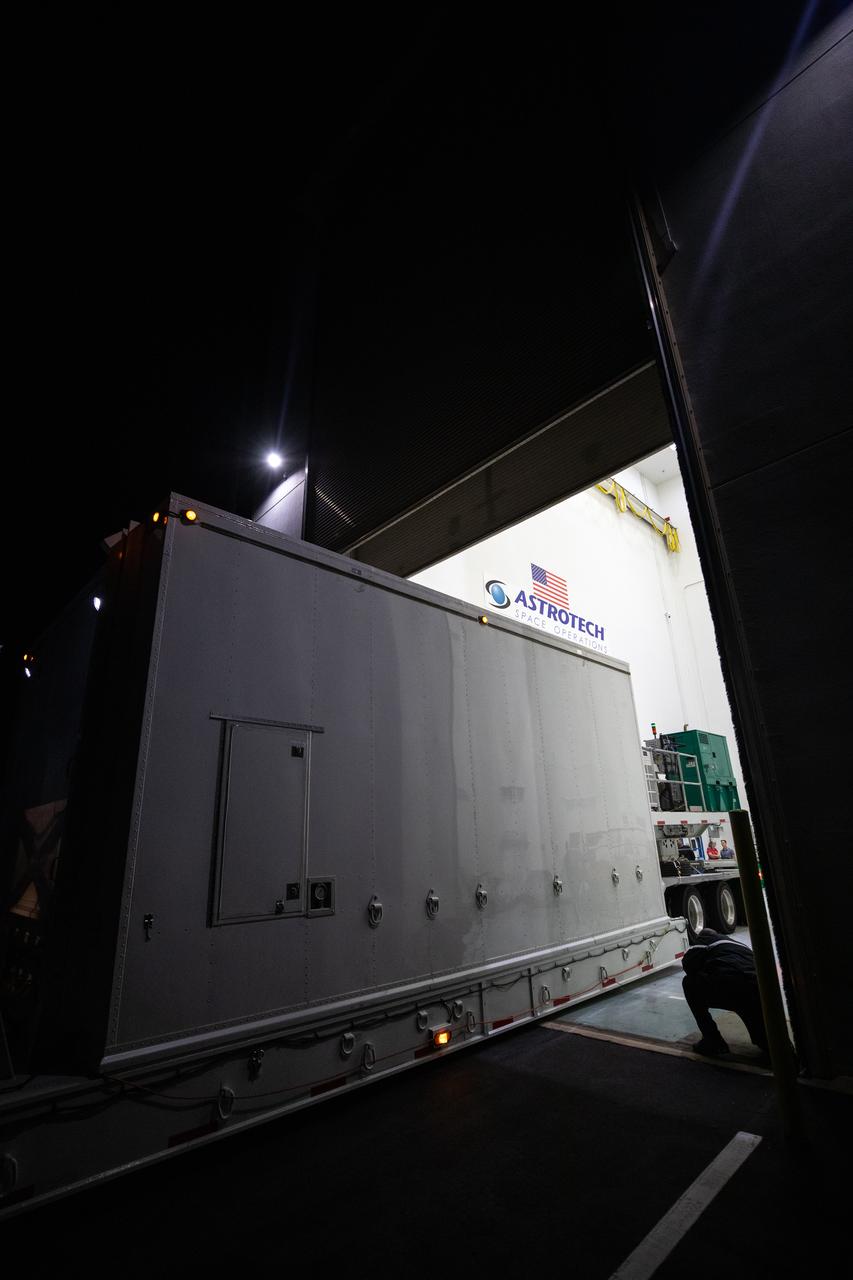
The transport carrier containing NASA’s Plankton, Aerosol, Cloud, ocean Ecosystem (PACE) observatory spacecraft is offloaded at the Astrotech Space Operations Facility near the agency’s Kennedy Space Center in Florida on Tuesday, Nov. 14, 2023. PACE was shipped from the agency’s Goddard Space Flight Center in Greenbelt, Maryland, and is targeted to launch on January 30, 2024, on a SpaceX Falcon 9 rocket lifting off from Space Launch Complex 40 at Cape Canaveral Space Force Station. The PACE observatory will help us better understand how the ocean and atmosphere exchange carbon dioxide, measure key atmospheric variables associated with air quality and Earth's climate, and monitor ocean health, in part by studying phytoplankton, tiny plants and algae that sustain the marine food web.
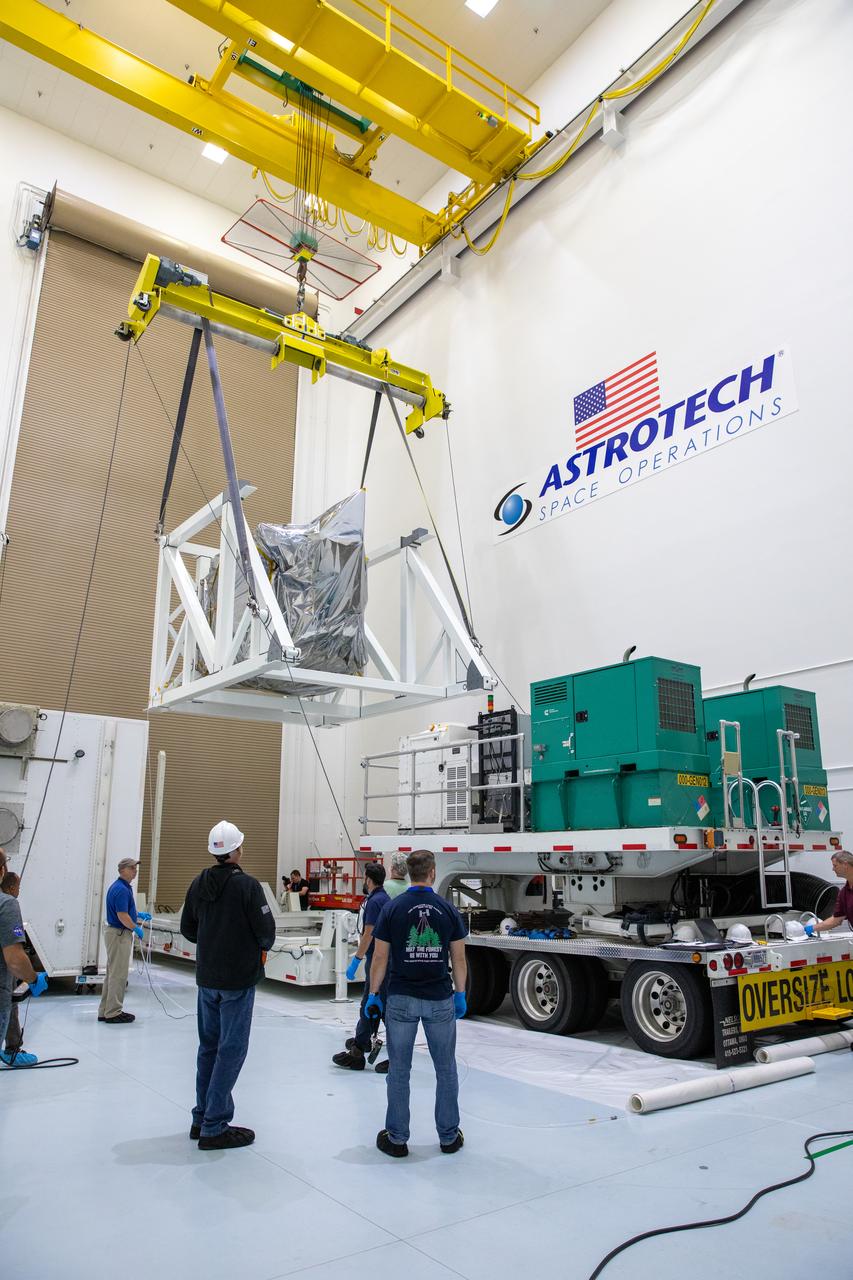
Technicians monitor movement as a crane hoists NASA’s Plankton, Aerosol, Cloud, ocean Ecosystem (PACE) observatory spacecraft after being uncrated on Wednesday, Nov. 15, 2023, at the Astrotech Space Operations Facility near the agency’s Kennedy Space Center in Florida. The PACE observatory will help us better understand how the ocean and atmosphere exchange carbon dioxide, measure key atmospheric variables associated with air quality and Earth's climate, and monitor ocean health, in part by studying phytoplankton, tiny plants and algae that sustain the marine food web. PACE will be encapsulated for launch aboard a SpaceX Falcon 9 rocket from Space Launch Complex 40 at Cape Canaveral Space Force Station in Florida.
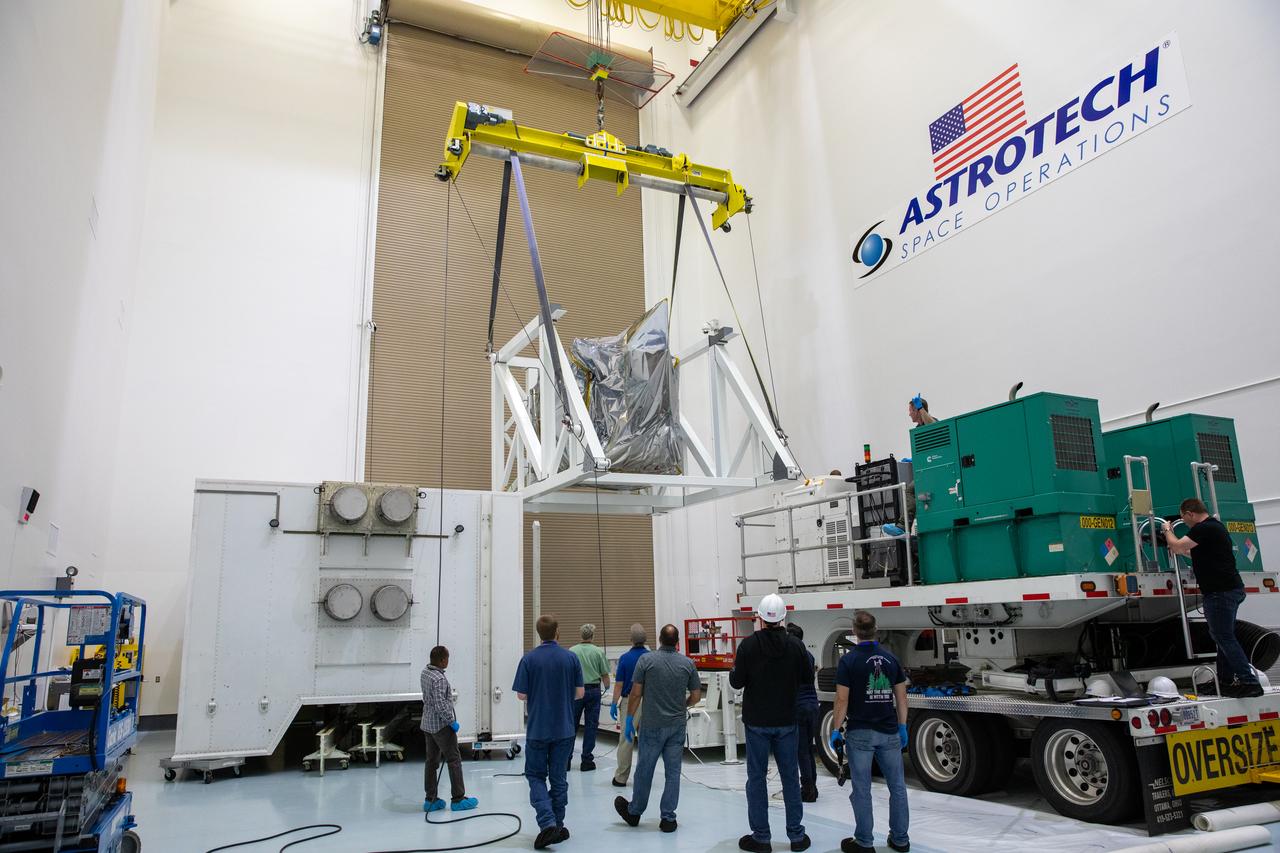
Technicians monitor movement as a crane hoists NASA’s Plankton, Aerosol, Cloud, ocean Ecosystem (PACE) observatory spacecraft after being uncrated on Wednesday, Nov. 15, 2023, at the Astrotech Space Operations Facility near the agency’s Kennedy Space Center in Florida. The PACE observatory will help us better understand how the ocean and atmosphere exchange carbon dioxide, measure key atmospheric variables associated with air quality and Earth's climate, and monitor ocean health, in part by studying phytoplankton, tiny plants and algae that sustain the marine food web. PACE will be encapsulated for launch aboard a SpaceX Falcon 9 rocket from Space Launch Complex 40 at Cape Canaveral Space Force Station in Florida.
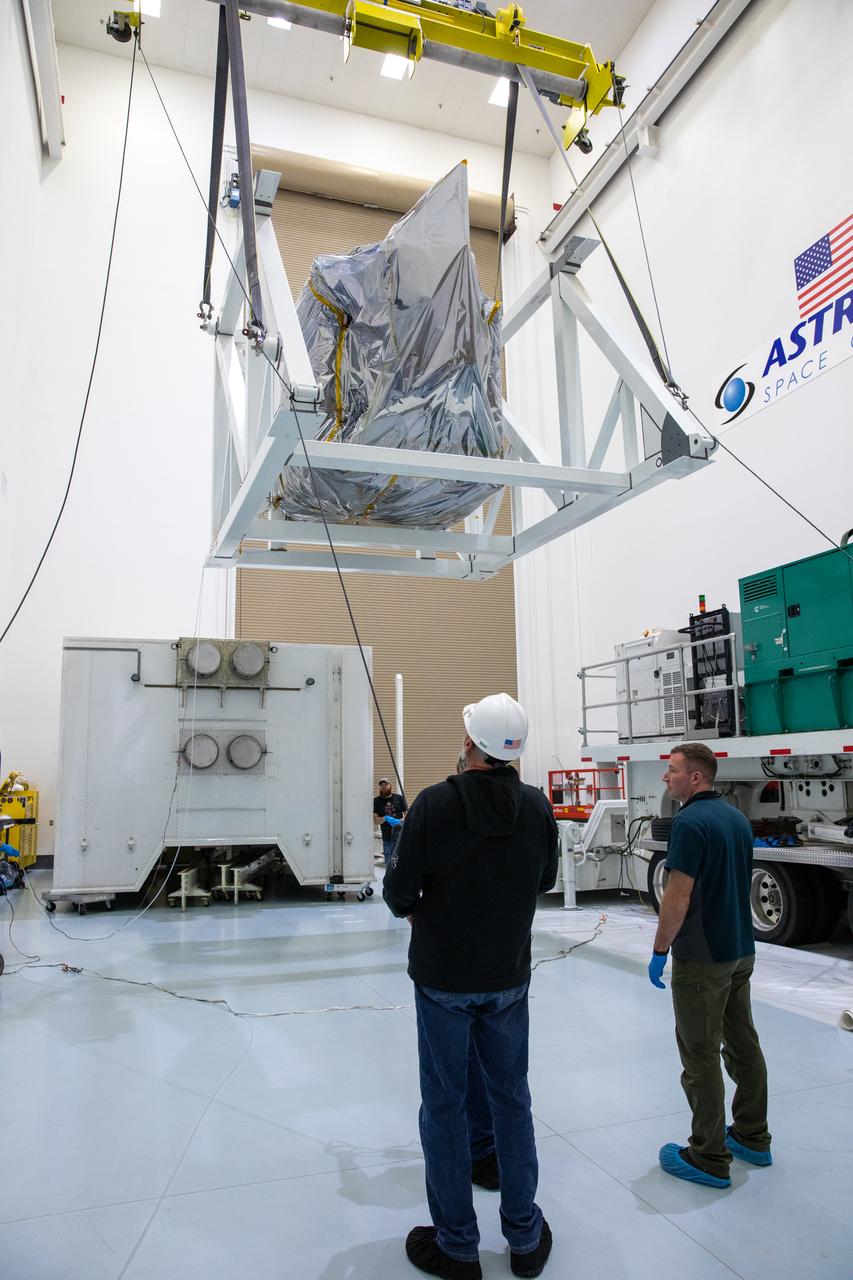
Technicians monitor movement as a crane hoists NASA’s Plankton, Aerosol, Cloud, ocean Ecosystem (PACE) observatory spacecraft after being uncrated on Wednesday, Nov. 15, 2023, at the Astrotech Space Operations Facility near the agency’s Kennedy Space Center in Florida. The PACE observatory will help us better understand how the ocean and atmosphere exchange carbon dioxide, measure key atmospheric variables associated with air quality and Earth's climate, and monitor ocean health, in part by studying phytoplankton, tiny plants and algae that sustain the marine food web. PACE will be encapsulated for launch aboard a SpaceX Falcon 9 rocket from Space Launch Complex 40 at Cape Canaveral Space Force Station in Florida.
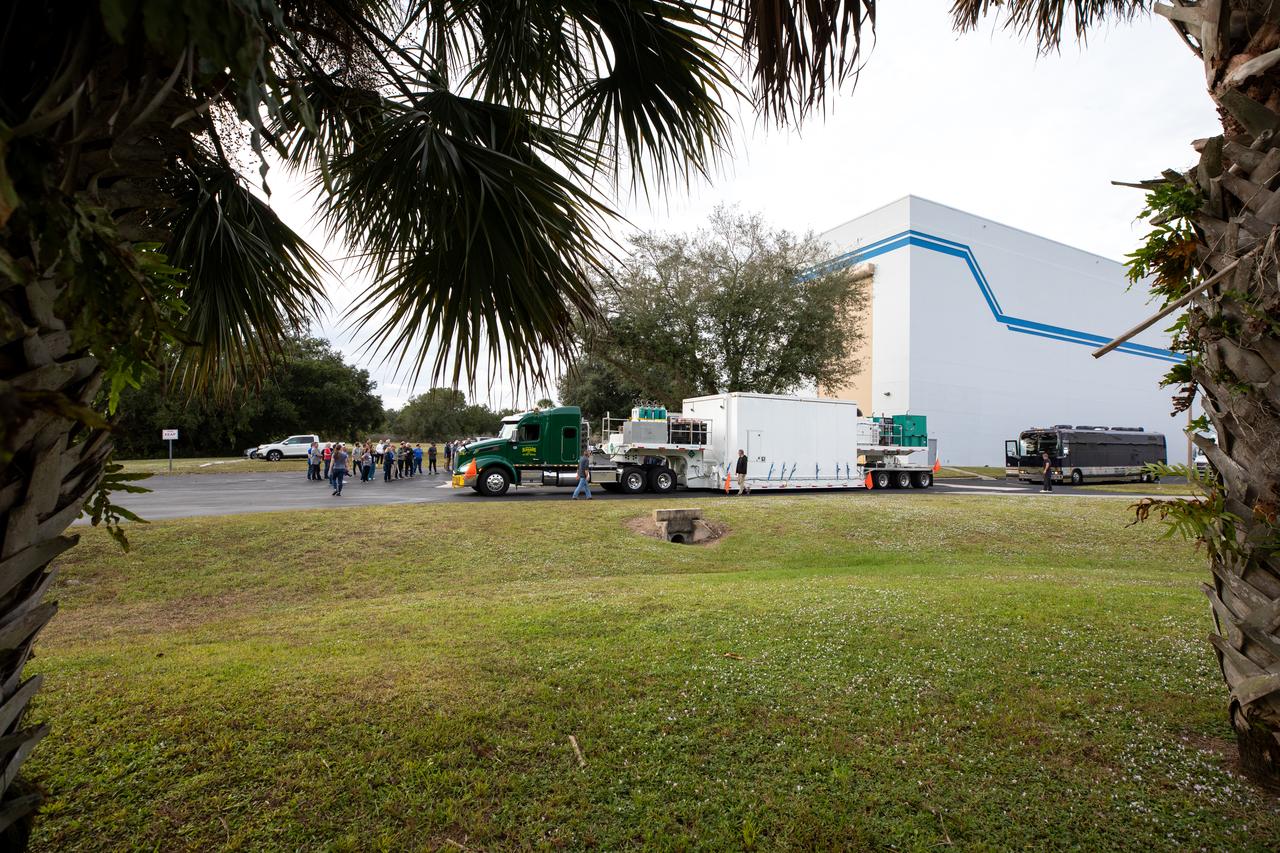
The transport carrier containing NASA’s Plankton, Aerosol, Cloud, ocean Ecosystem (PACE) observatory spacecraft arrives at the Astrotech Space Operations Facility near the agency’s Kennedy Space Center in Florida on Tuesday, Nov. 14, 2023. PACE was shipped from the agency’s Goddard Space Flight Center in Greenbelt, Maryland, and is targeted to launch on January 30, 2024, on a SpaceX Falcon 9 rocket lifting off from Space Launch Complex 40 at Cape Canaveral Space Force Station. The PACE observatory will help us better understand how the ocean and atmosphere exchange carbon dioxide, measure key atmospheric variables associated with air quality and Earth's climate, and monitor ocean health, in part by studying phytoplankton, tiny plants and algae that sustain the marine food web.
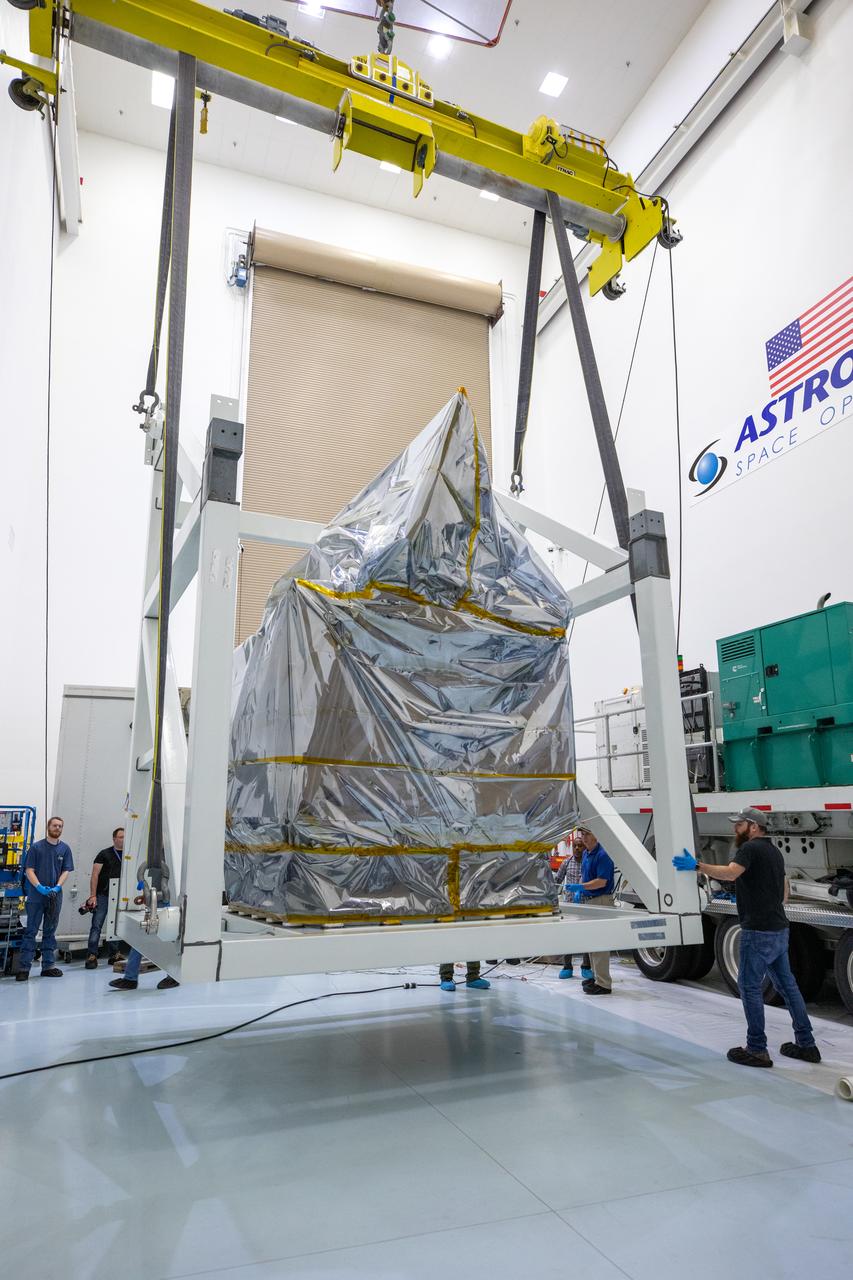
Technicians monitor movement as a crane hoists NASA’s Plankton, Aerosol, Cloud, ocean Ecosystem (PACE) observatory spacecraft after being uncrated on Wednesday, Nov. 15, 2023, at the Astrotech Space Operations Facility near the agency’s Kennedy Space Center in Florida. The PACE observatory will help us better understand how the ocean and atmosphere exchange carbon dioxide, measure key atmospheric variables associated with air quality and Earth's climate, and monitor ocean health, in part by studying phytoplankton, tiny plants and algae that sustain the marine food web. PACE will be encapsulated for launch aboard a SpaceX Falcon 9 rocket from Space Launch Complex 40 at Cape Canaveral Space Force Station in Florida.
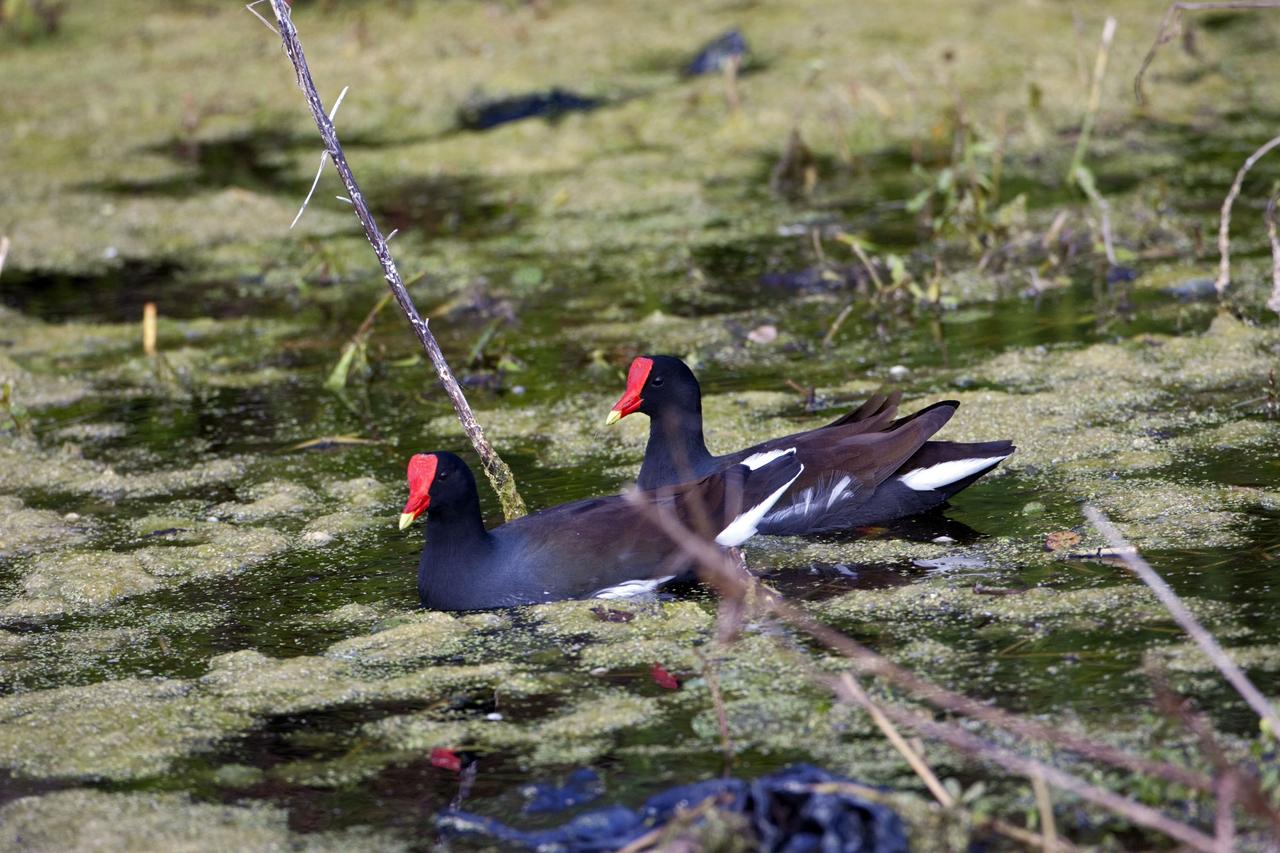
CAPE CANAVERAL, Fla. -- Two common gallinules swim through the algae-covered water of a pond at NASA's Kennedy Space Center in Florida. The center shares a boundary with the Merritt Island National Wildlife Refuge, consisting of 140,000 acres. The refuge provides a wide variety of habitats -- coastal dunes, saltwater estuaries and marshes, freshwater impoundments, scrub, pine flatwoods, and hardwood hammocks -- that provide sanctuary for more than 1,500 species of plants and animals, including about 331 species of birds. Photo credit: NASA/Jim Grossmann
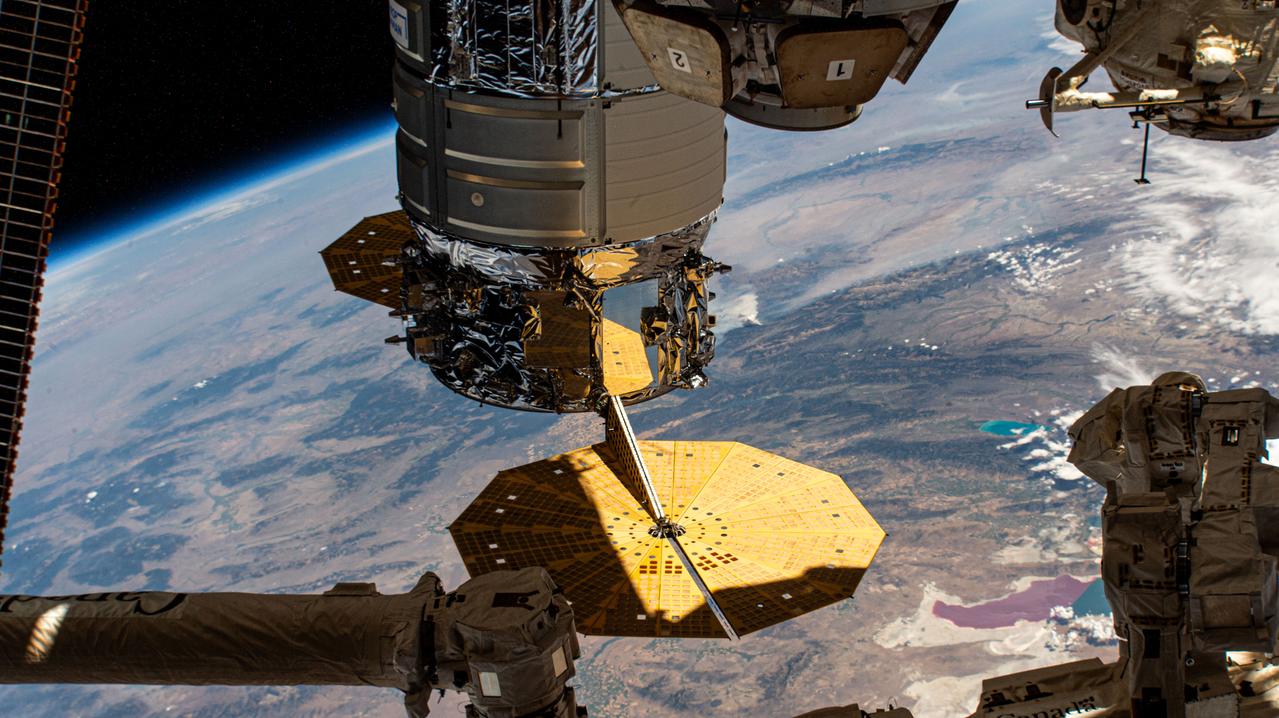
iss071e5472276 (Aug. 22, 2024) --- Northrop Grumman's Cygnus space freighter is pictured berthed to the International Space Station's Earth-facing port on the Unity module. At lower right, is Utah's Great Salt Lake divided by a causeway that separates the lake into two colors, red and green, due to different types of algae grwoing on either side. The orbital outpost was soaring 260 miles above the southwestern United States at the time of this photograph.
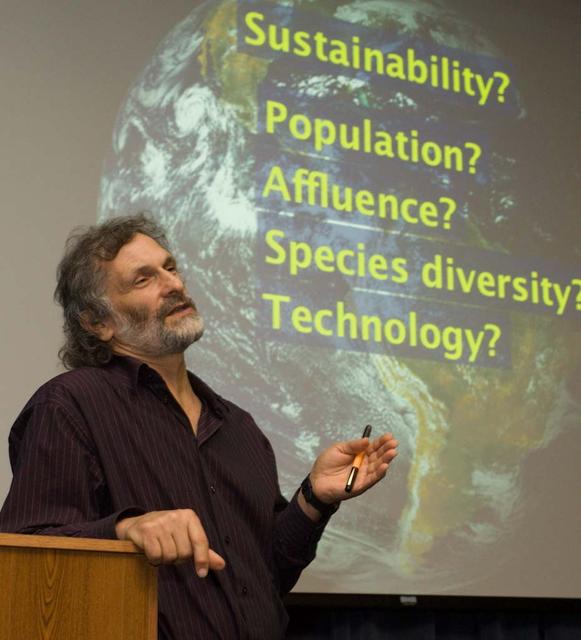
Director's Colloquium; Dr Jonathan Trent, Physical Scientist with NASA Ames Bioengineering Branch presents 'OMEGA and the Future of Aviation Fuels) Abstract: Offshore Membrane Enclosures for Growing Algae (OMEGA) is an innovative approach to growing oil-producing, freshwater algea in off shore enclosures, using municipal wastewater that is currently dumped into the ocean at a rate of >35 billion gals/day.
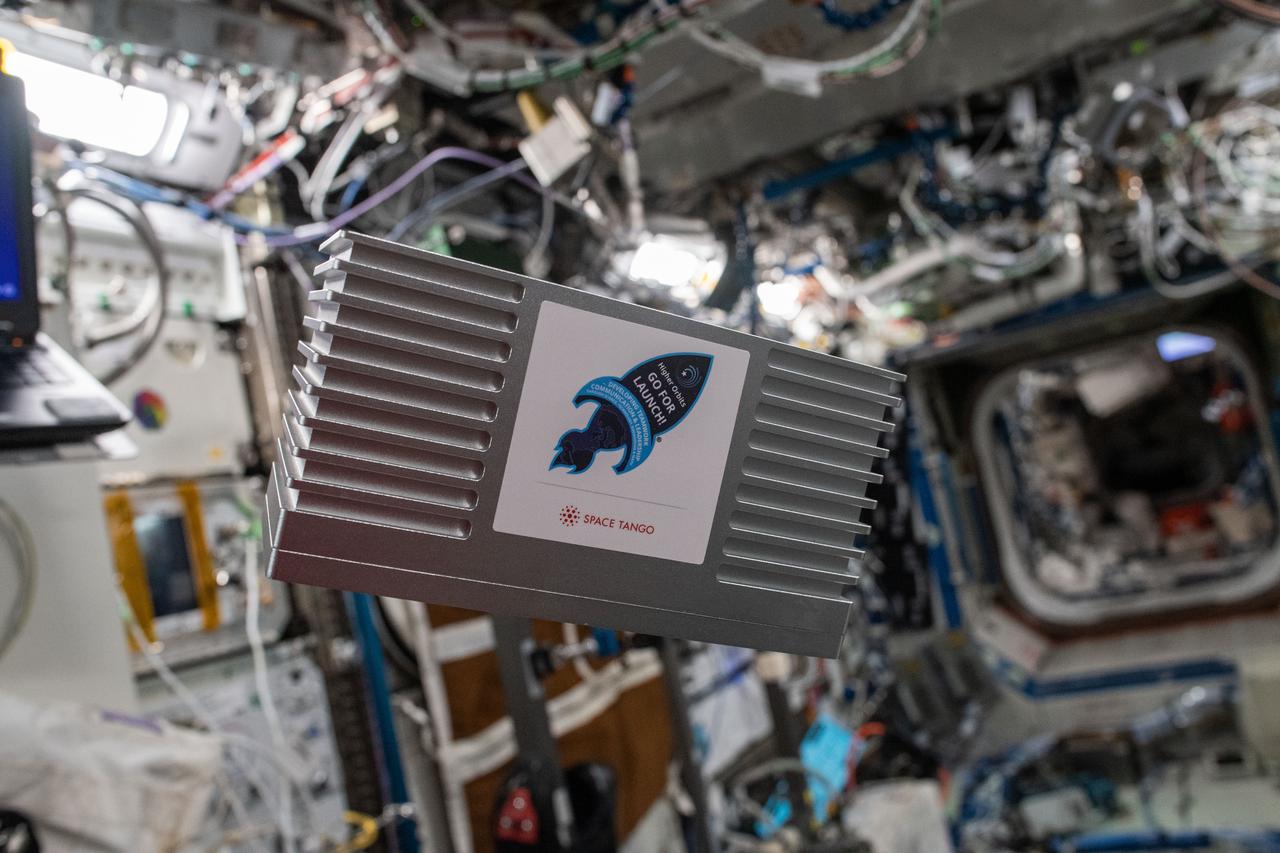
iss067e000376 (3/31/2022) --- A Higher Orbits Double Cube aboard the International Space Station (ISS). The Effects of Microgravity on Oxygen Output Regarding Chlorella vulgaris (Oxygen Production in Algae) investigates how microgravity affects the oxygen output of an algal species. Results could improve understanding of microgravity’s effects on the process of photosynthesis and development of photosynthetic organisms, which could contribute to design of oxygen production systems for future space travel.
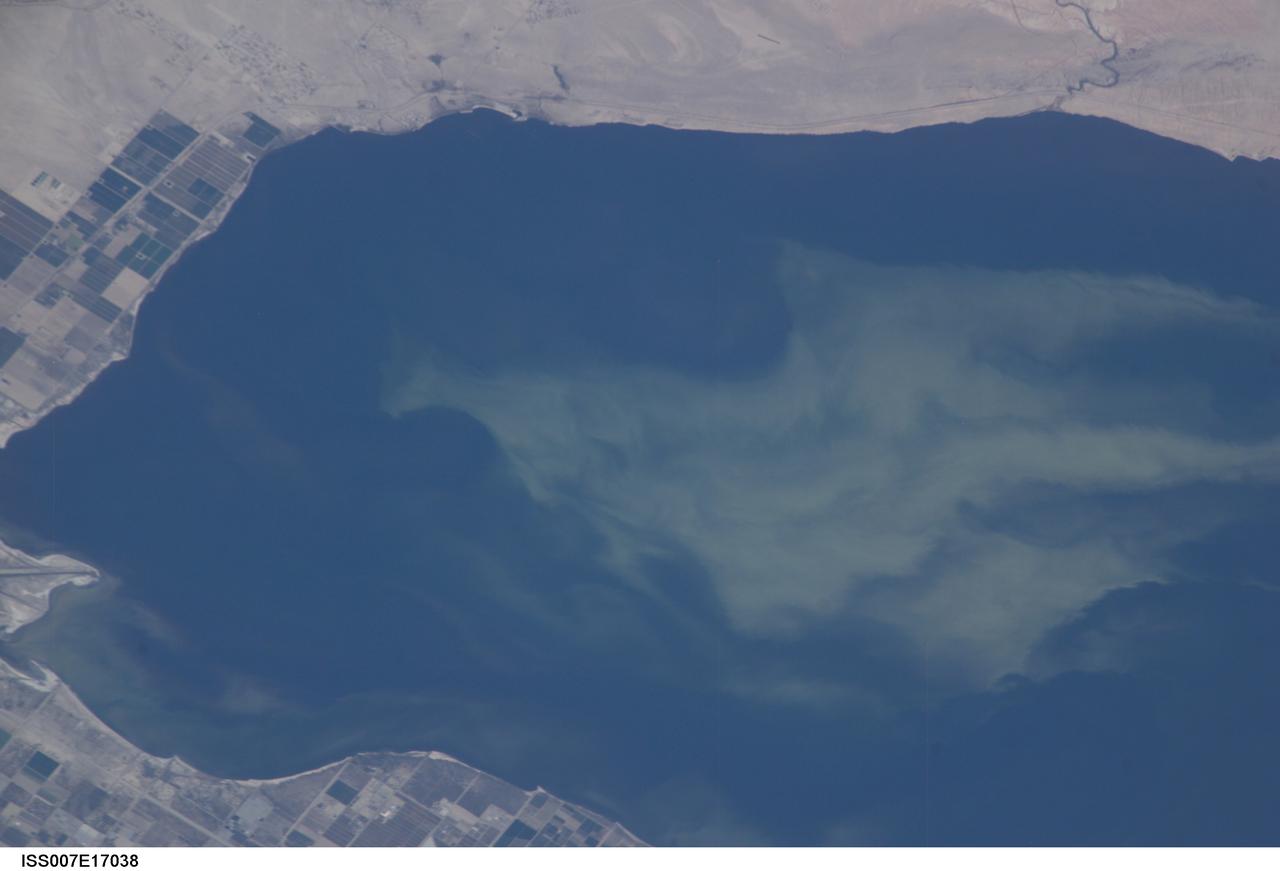
ISS007-E-17038 (11 October 2003) --- This view featuring a close-up of the Salton Sea was taken by an Expedition 7 crewmember onboard the International Space Station (ISS). The image provides detail of the structure of the algal bloom. These blooms continue to be a problem for the Salton Sea. They are caused by high concentrations of nutrients, especially nitrogen and phosphorous, which drain into the basin from the agricultural run-off. As the algae die and decompose, oxygen levels in the sea drop, causing fish kills and hazardous condition for other wildlife.
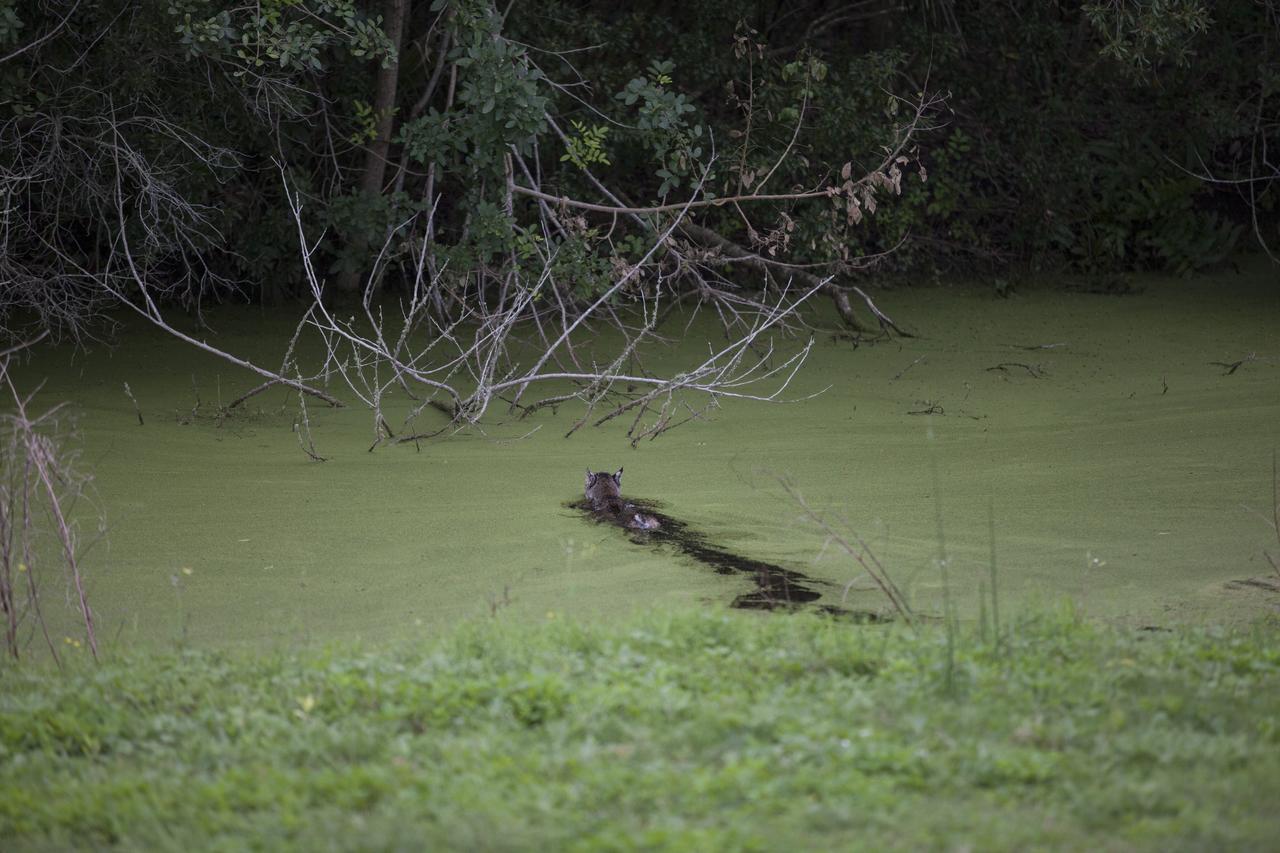
CAPE CANAVERAL, Fla. – A bobcat leaves a trail as it swims across an algae-covered canal near the NASA News Center at Kennedy Space Center in Florida. The center shares a boundary with the Merritt Island National Wildlife Refuge. The refuge encompasses 140,000 acres that are a habitat for more than 330 species of birds, 31 mammals, 117 fishes, and 65 amphibians and reptiles. Photo credit: NASA/Daniel Casper
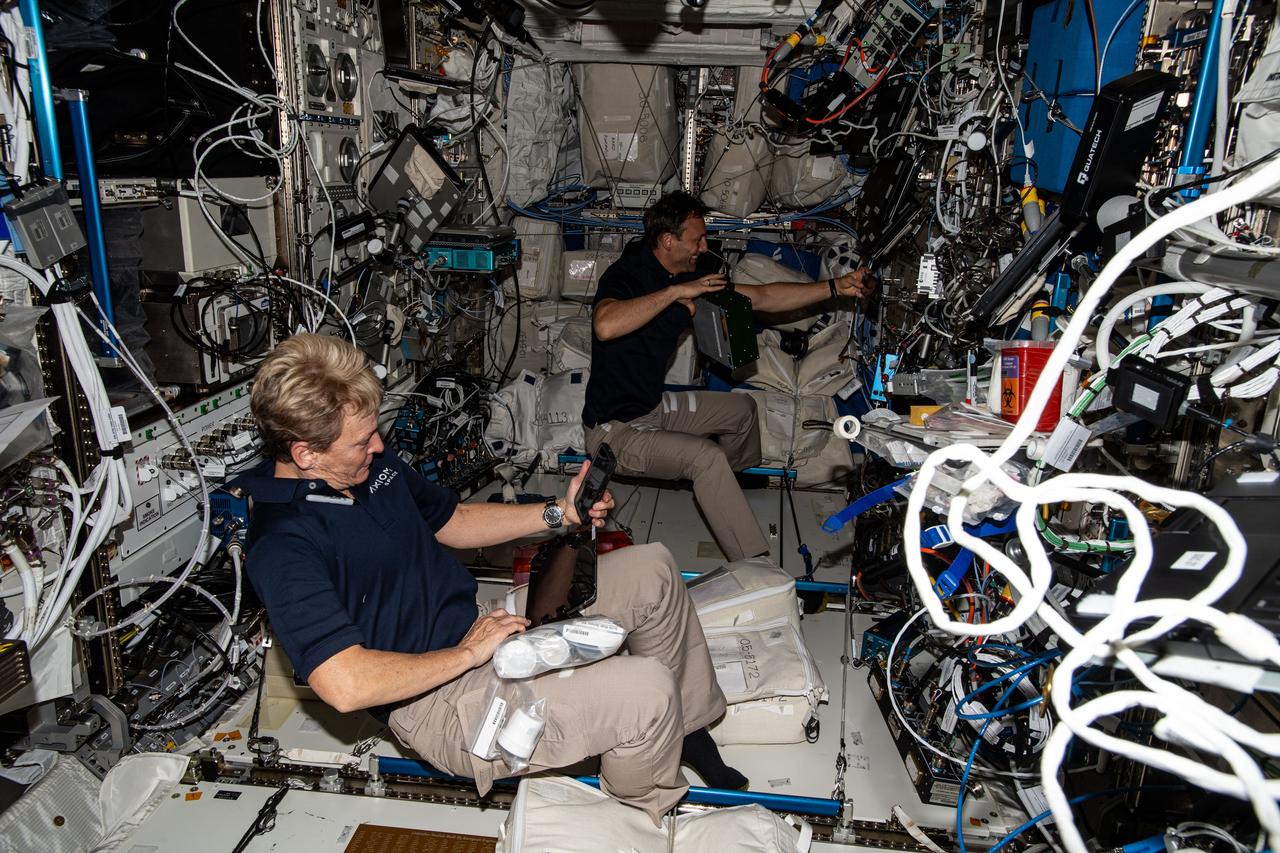
iss073e0251619 (June 26, 2025) --- Axiom Mission 4 crew members Peggy Whitson (foreground) from Axiom Space and Sławosz Uznański-Wiśniewski from ESA (European Space Agency) work inside the International Space Station's Columbus laboratory module. The private astronaut duo swapped research hardware supporting the Space Volcanic Algae biotechnology study and the Experiment Cube #25 data processing and algorithm investigation.
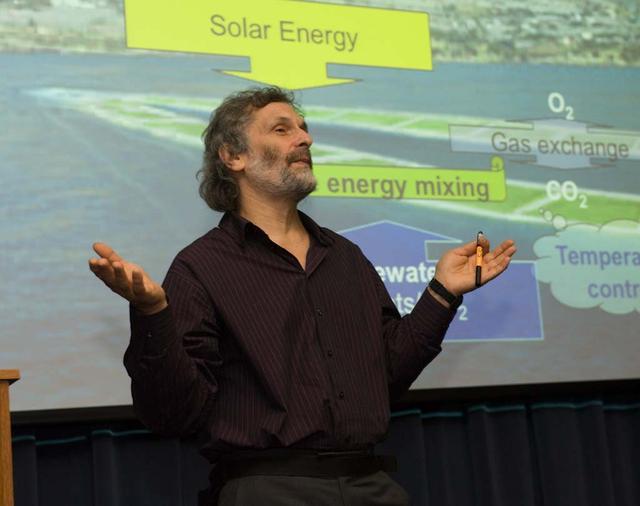
Director's Colloquium; Dr Jonathan Trent, Physical Scientist with NASA Ames Bioengineering Branch presents 'OMEGA and the Future of Aviation Fuels) Abstract: Offshore Membrane Enclosures for Growing Algae (OMEGA) is an innovative approach to growing oil-producing, freshwater algea in off shore enclosures, using municipal wastewater that is currently dumped into the ocean at a rate of >35 billion gals/day.
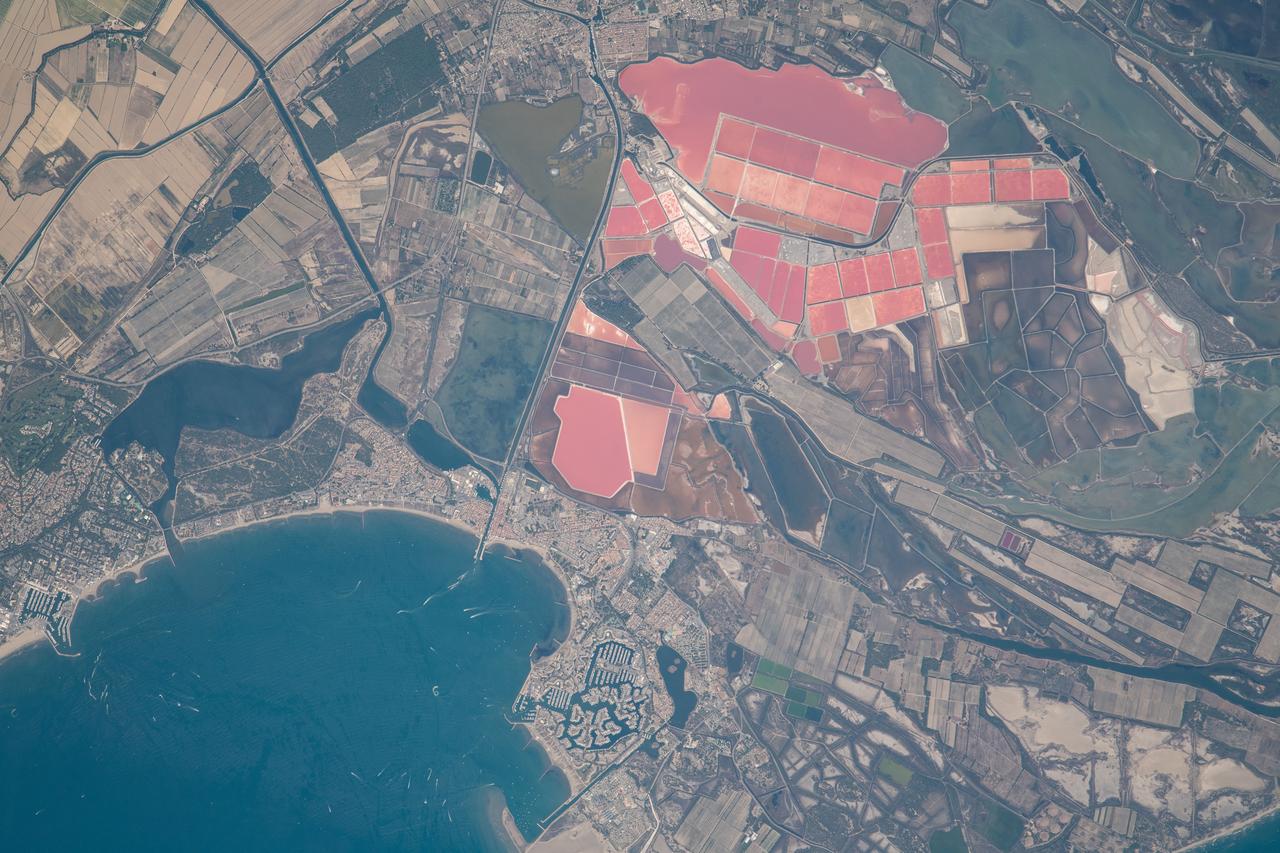
iss069e061413 (August 17, 2023) -- What looks like a collection of fields painted pink is actually a variety of salt lakes in Southern France. Located right off the Mediterranean Sea in the coastal town of Aigues-Mortes, these highly vibrant marshes get their color from pink algae that live within them. The International Space Station was orbiting 265 miles above as this photo was captured.
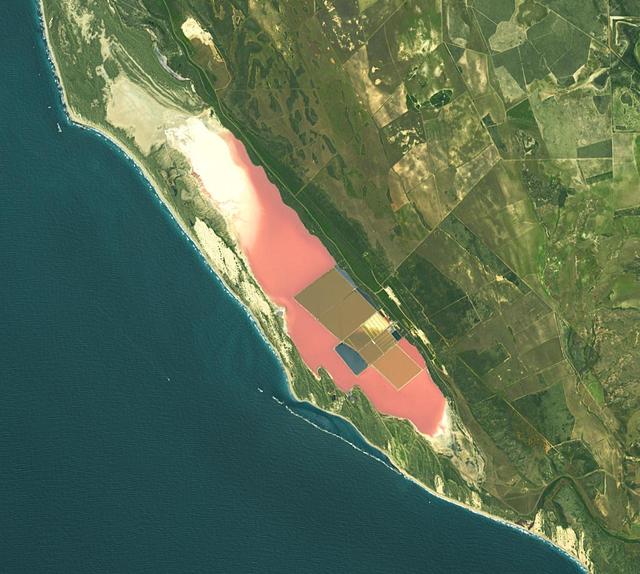
Hutt Lagoon is an elongate lake, located in a dune swale adjacent to the coast of the Indian Ocean, in the mid west region of Western Australia. Port Gregory is located between the ocean and the lake's southern shore. Hutt Lagoon is a pink lake, due to the presence of an algae that produces beta-carotene. A microalgae production plant is the world's largest. The image was acquired September 30, 2012, covers an area of 16.5 by 18.3 km, and is locate at 28.1 degrees south, 114.2 degrees east. https://photojournal.jpl.nasa.gov/catalog/PIA26510
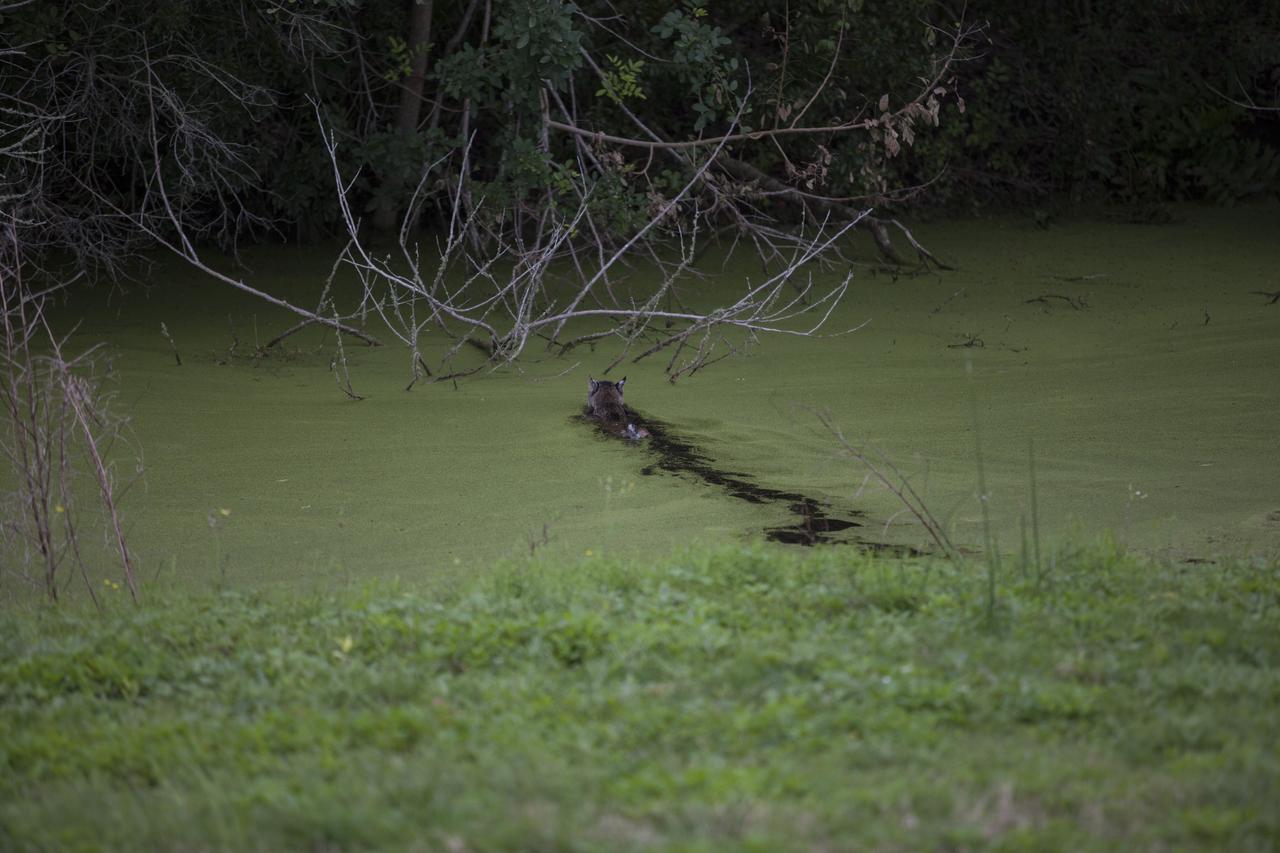
CAPE CANAVERAL, Fla. – A bobcat leaves a trail as it swims across an algae-covered canal near the NASA News Center at Kennedy Space Center in Florida. The center shares a boundary with the Merritt Island National Wildlife Refuge. The refuge encompasses 140,000 acres that are a habitat for more than 330 species of birds, 31 mammals, 117 fishes, and 65 amphibians and reptiles. Photo credit: NASA/Daniel Casper
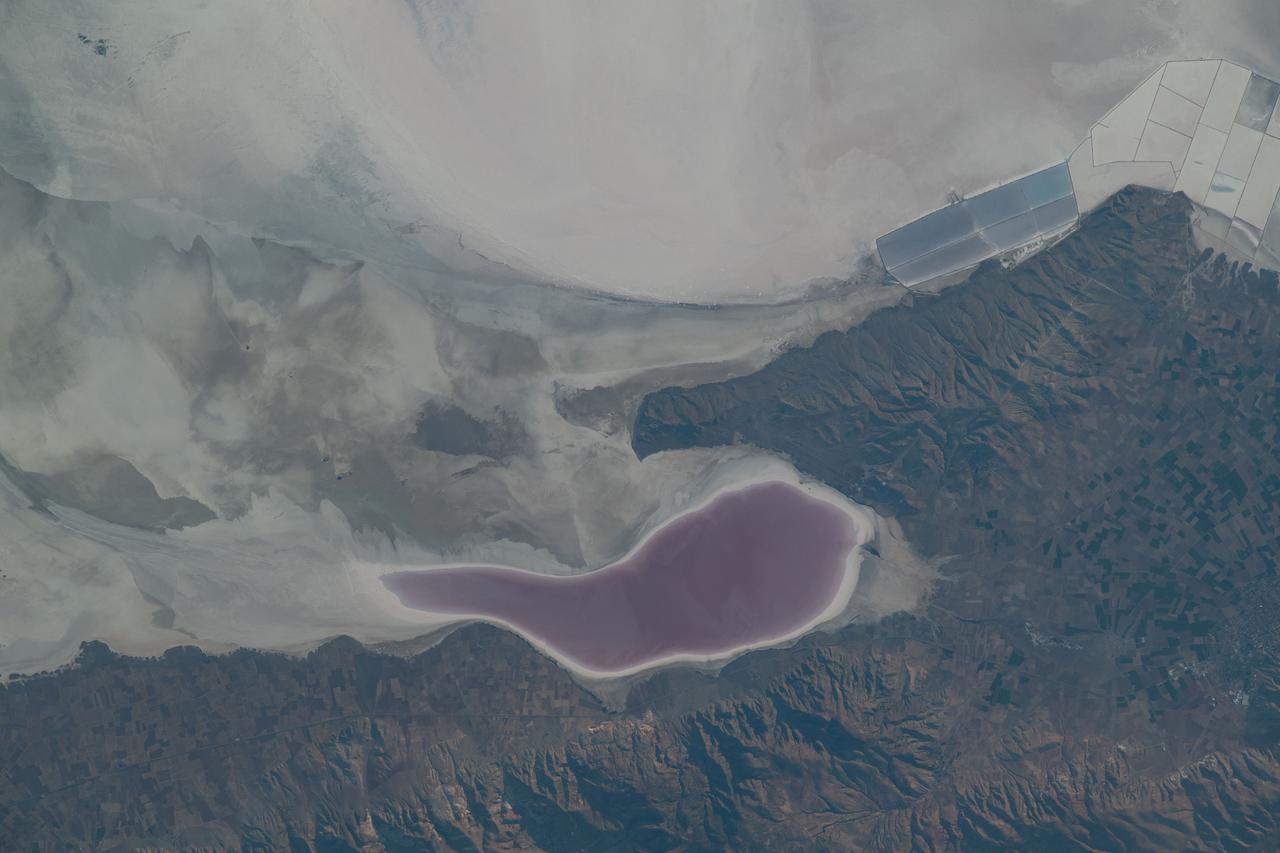
iss069e033759 (July 17, 2023) -- As the International Space Station orbited 260 miles above Turkey, NASA astronaut Woody Hoburg captured this image of Lake Tuz—a disappearing lake that was once the second-largest in the country. During some summers, the salt lake completely dries up, leaving the off-white appearance of higher concentrations of salt and minerals. What's left of the lake experiences seasonal color changes due to algae blooms, like the deep red shown near the bottom center of the image.
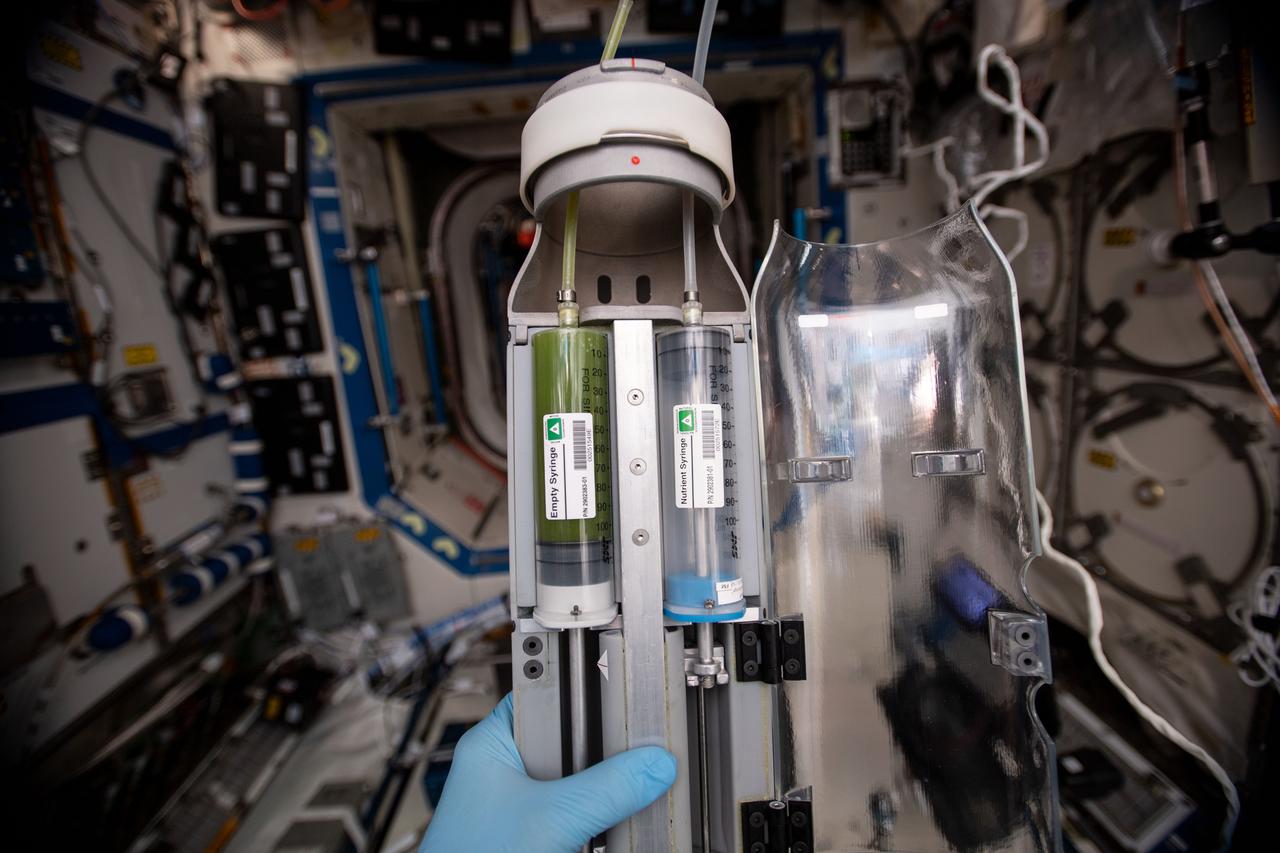
iss059e114346 (6/20/2019) — Photo documentation abroad the International Space Station (ISS) of the Empty Syringe and the Nutrient Syringe during the filling of the Photobioreactor (PBR) with medium and algae to begin the experiment. The Photobioreactor investigation aims at demonstrating that microalgae (i.e. biological processes) can be used together with existing systems to improve recycling of resources, creating a hybrid life support system. This hybrid approach could be helpful in future long-duration exploration missions, as it could reduce the amount of consumables required from Earth.
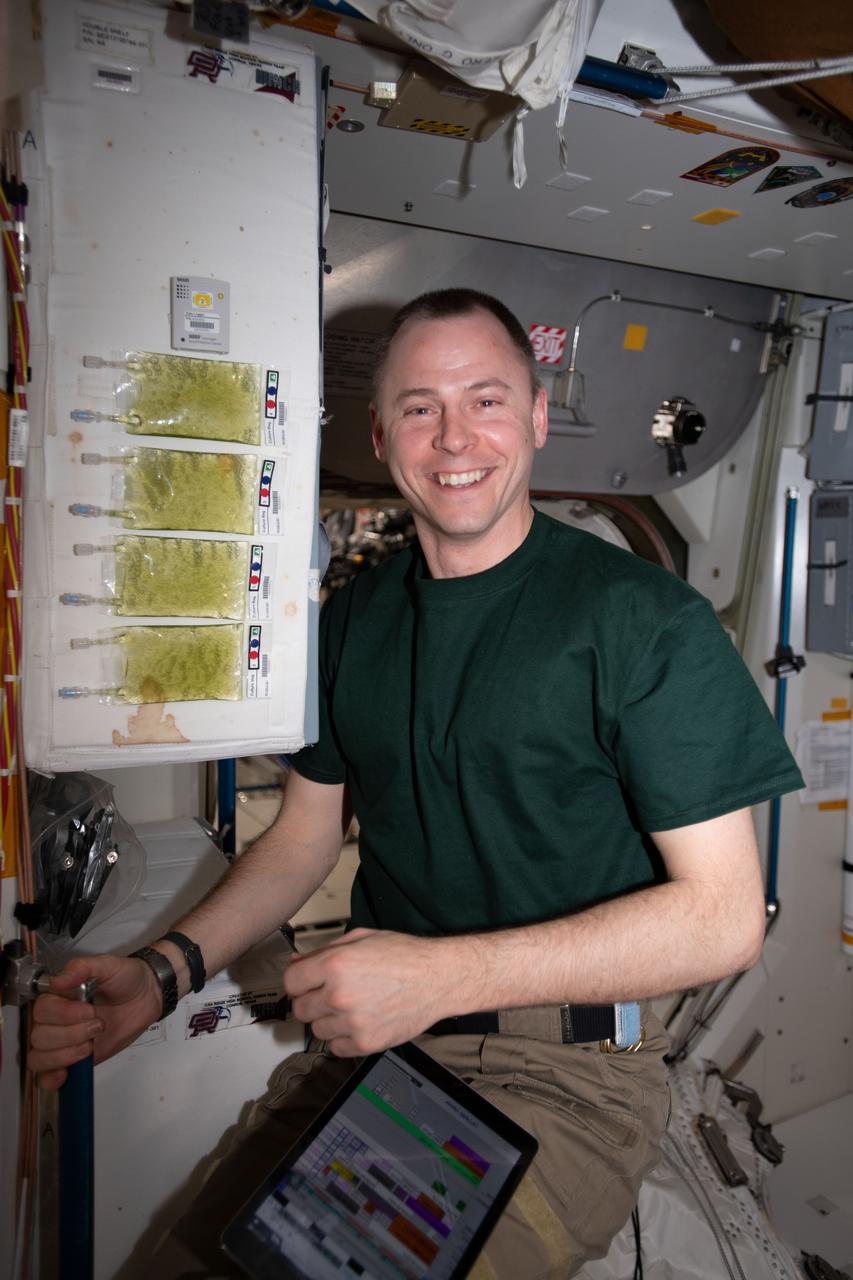
iss059e059230 (5/8/2019) --- NASA Astronaut Nick Hague with the MicroAlgae Culture Bags in Node 2 abord the International Space Station (ISS). Microalgae Biosynthesis in Microgravity (MicroAlgae) studies the effects of microgravity on Haematococcus pluvialis, an algae capable of producing a powerful antioxidant, astaxanthin. It could provide a readily available dietary supplement to promote astronaut health on long-duration space exploration missions.
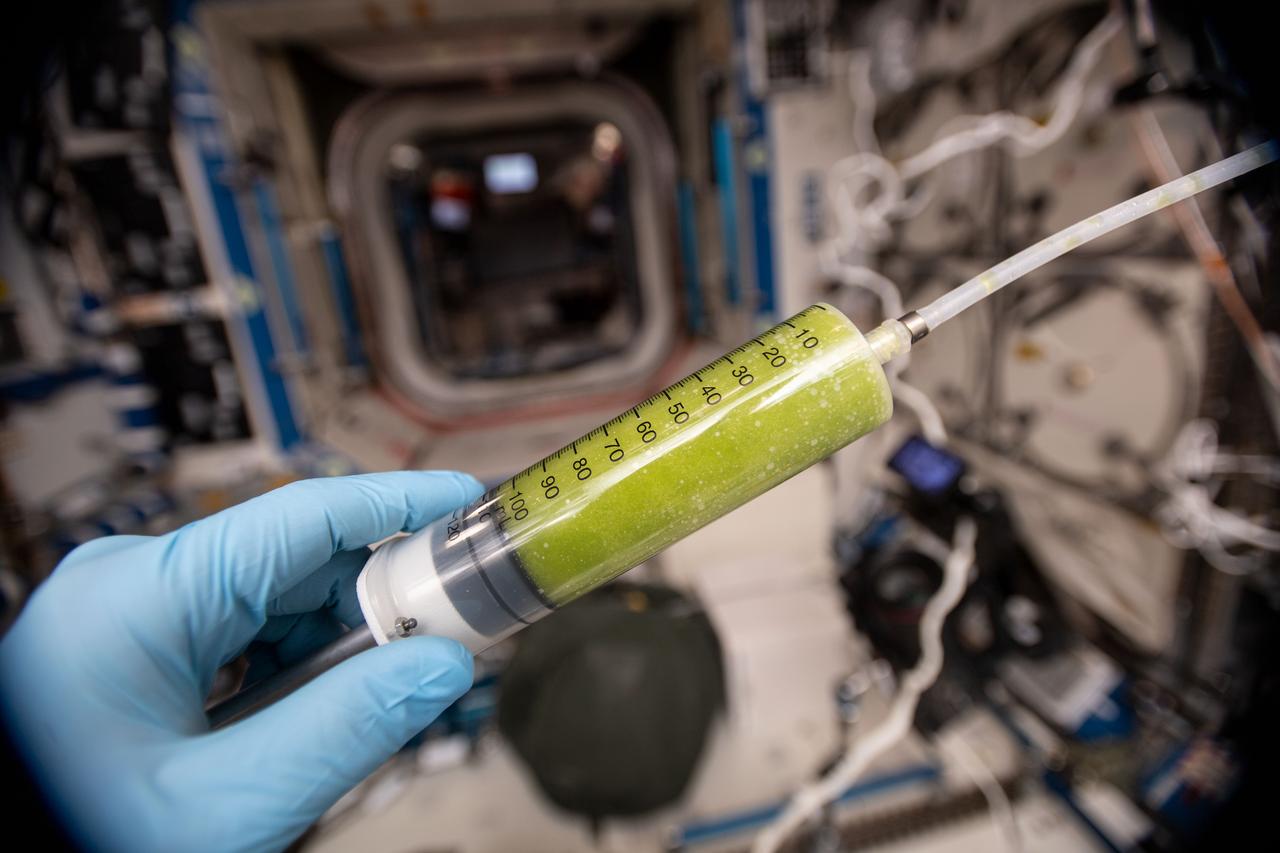
iss059e114352 (6/20/2019) — Photo documentation abroad the International Space Station (ISS) of the syringe during the filling of the Photobioreactor (PBR) with medium and algae to begin the experiment. The Photobioreactor investigation aims at demonstrating that microalgae (i.e. biological processes) can be used together with existing systems to improve recycling of resources, creating a hybrid life support system. This hybrid approach could be helpful in future long-duration exploration missions, as it could reduce the amount of consumables required from Earth.
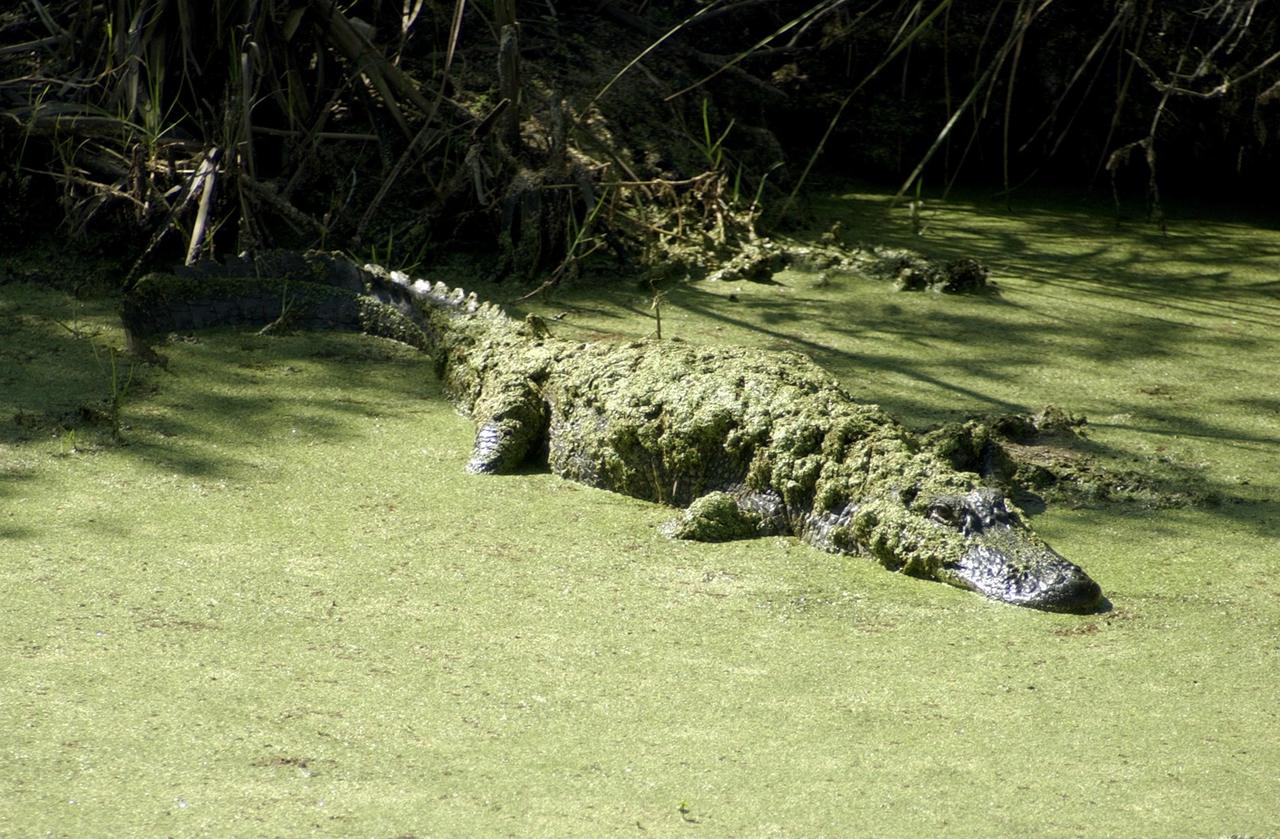
KENNEDY SPACE CENTER, FLA. -- In one of the many waterholes on KSC, a large alligator lies covered with green algae as he basks in the sun. Nearly 5,000 alligators can be found in canals, ponds and waterways throughout the Center and surrounding areas. American alligators feed and rest in the water, and lay their eggs in dens they dig into the banks. The young alligators spend their first several weeks in these dens
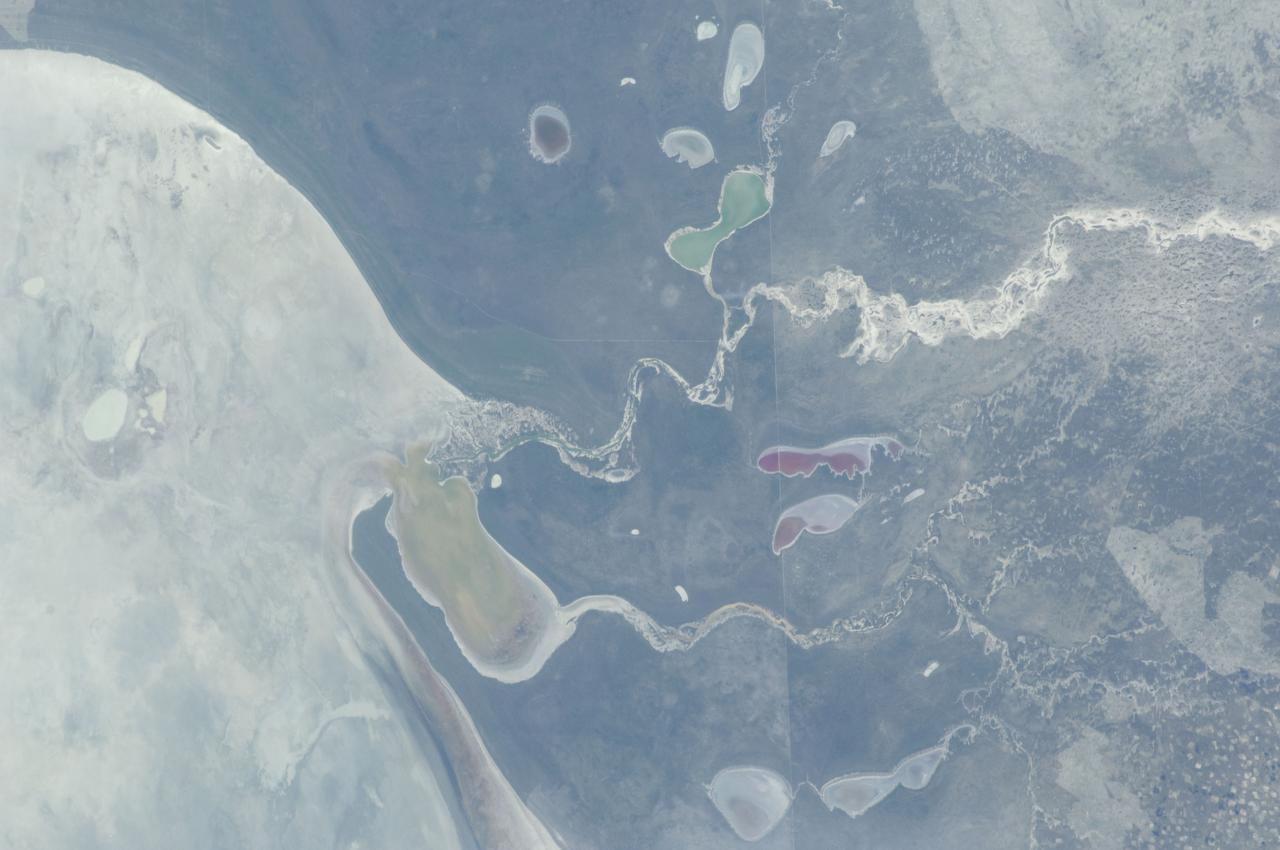
ISS030-E-234965 (30 Dec. 2011) --- The Etosha Pan in Namibia is featured in this image photographed by an Expedition 30 crew member on the International Space Station. This photograph shows the white, salt-covered floor of the northwest corner of the great dry lake in northern Namibia known as the Etosha Pan (left margin). Two rivers, the Ekuma and Oshigambo, transport water from the north down to the Etosha Pan proper. In a relatively rare event, water from recent rains has flowed down the larger Ekuma River?in which it appears as a thin blue line within the generally light grey-green floodplain?and fills a lobe of the lake with light green water (lower right quarter of image). Water has also flowed into a small offshoot dry lake where it appears a brighter green (upper right quarter of image). Other smaller lakes at center and top center show red and brown water colors. The different colors of lake water are determined by the interplay of water depth and resident organisms such as algae; the algae color varies depending on water temperature and salinity. A similar process is observed in pink and red floodwaters ponded in Lake Eyre, a usually dry lake in Australia?s arid center. In this case it is known that the coloration is indeed due to algae growth. Typically, little river water or sediment reaches the floor of the Etosha dry lake because water seeps into the riverbeds along their courses. The floor of the pan itself is seldom seen with even a thin sheet of water. In this image, there was enough surface flow to reach the pan, but too little to flow beyond the inlet bay. A prior flood event, when water entered the pan via the Oshigambo River, was documented in astronaut imagery in 2006. The straight line that crosses the image from top center to bottom is the northern fence line of Namibia?s Etosha National Park. This straight, three-meter-high fence keeps wildlife from crossing into the numerous small farms of the relatively densely populated Owambo region of Namibia, north of the pan. The large Etosha dry lakebed (120 kilometers or 75 miles long) is the center of Namibia?s largest wildlife park, a major tourist attraction.
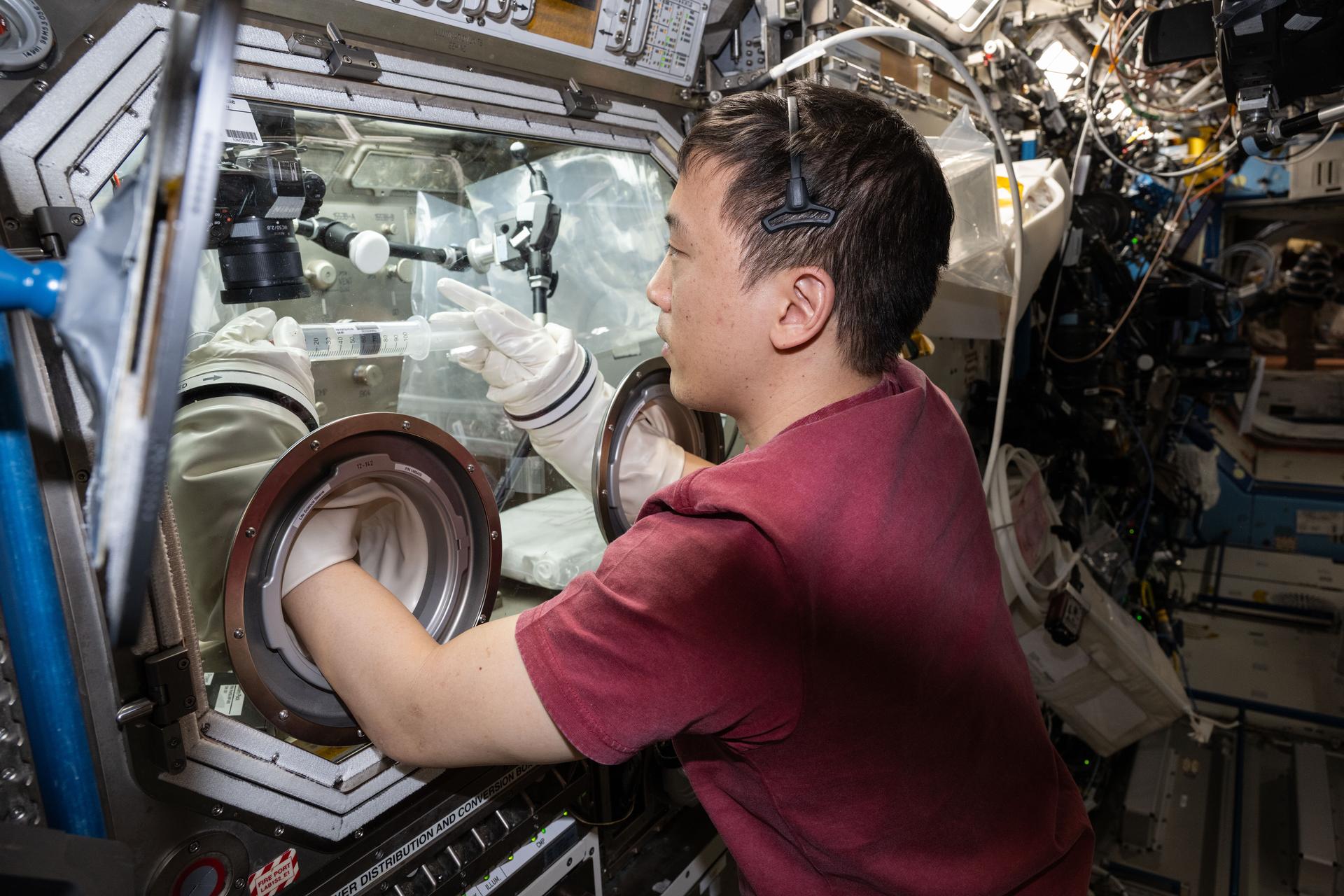
iss073e0917782 (Oct. 23, 2025) --- NASA astronaut and Expedition 73 Flight Engineer Jonny Kim conducts research operations for the Fluid Particles investigation inside the Microgravity Science Glovebox aboard the International Space Station's Destiny laboratory module. The fluid physics experiment may help researchers understand how particles in a liquid interface come together to form larger structures or clusters in microgravity advancing fire suppression, lunar dust control, and plant growth in space. Earth benefits may include insights into pollen behavior, algae blooms, plastic pollution, and sea salt transfer during storms.
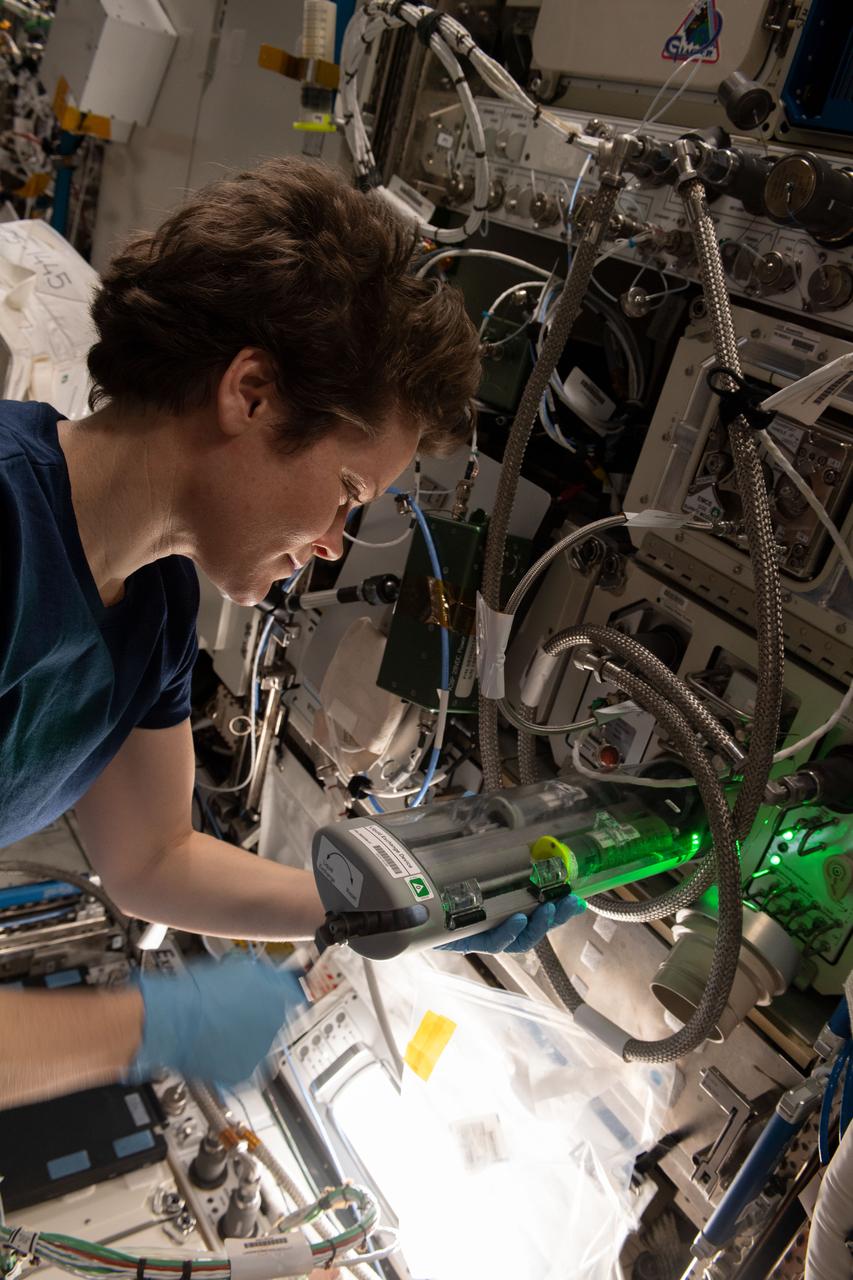
iss059e092376 (6/6/2019) --- NASA astronaut Anne McClain is photographed onboard the International Space Station (ISS) using the Liquid Exchange Device. The documentation was taken during the filling of the Photobioreactor (PBR) with medium and algae to begin the experiment. The Photobioreactor investigation aims at demonstrating that microalgae (i.e. biological processes) can be used together with existing systems to improve recycling of resources, creating a hybrid life support system. This hybrid approach could be helpful in future long-duration exploration missions, as it could reduce the amount of consumables required from Earth.
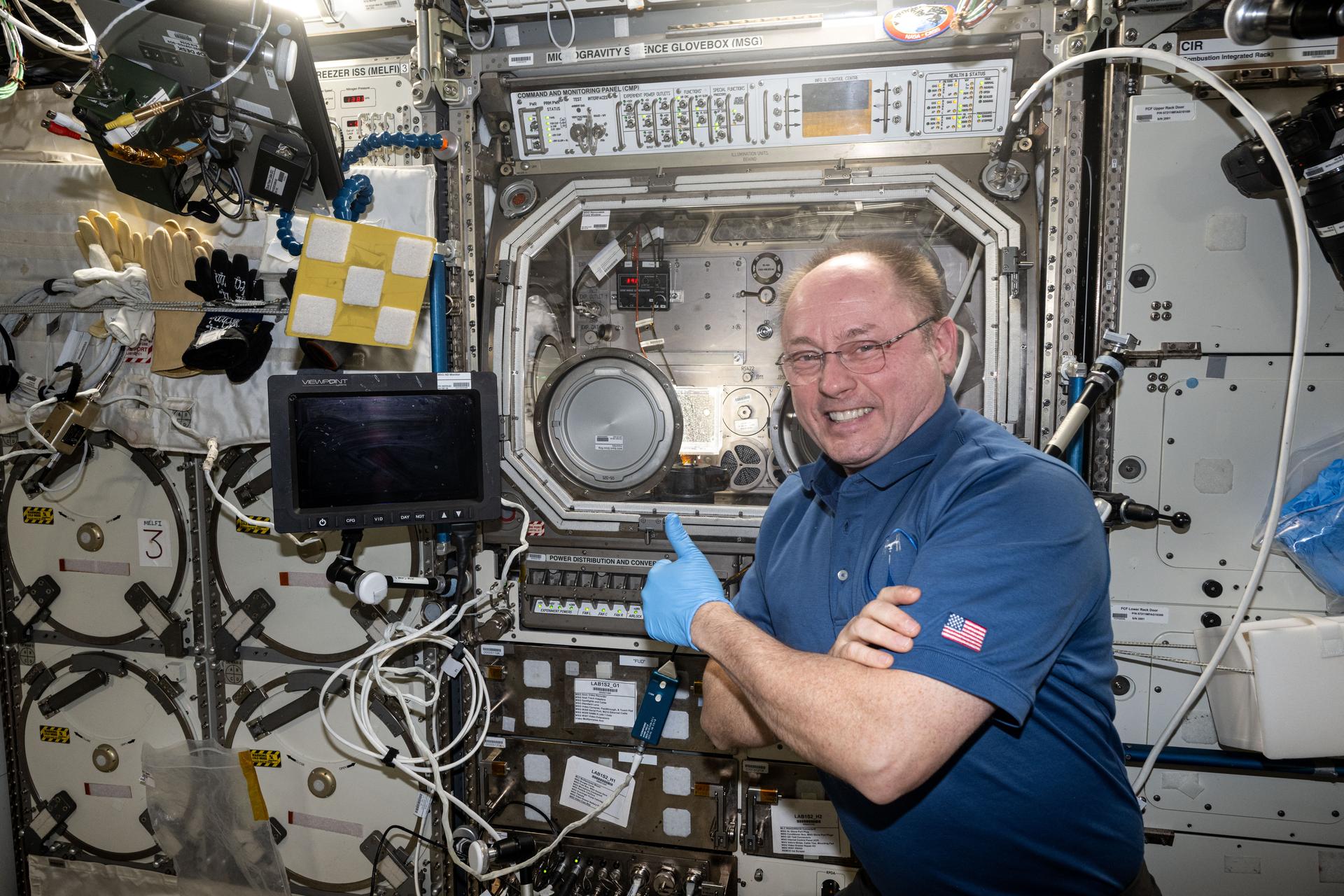
iss073e0917010 (Oct. 21, 2025) --- NASA astronaut and Expedition 73 Flight Engineer Mike Fincke gives a thumbs-up in front of the Microgravity Science Glovebox (MSG) inside the International Space Station's Destiny laboratory module. Fincke had just completed research operations for the Fluid Particles experiment, which helps researchers understand how particles in a liquid interface come together to form larger structures or clusters in microgravity. Results could advance fire suppression, lunar dust control, and plant growth in space. Earth benefits may include insights into pollen behavior, algae blooms, plastic pollution, and sea salt transfer during storms.
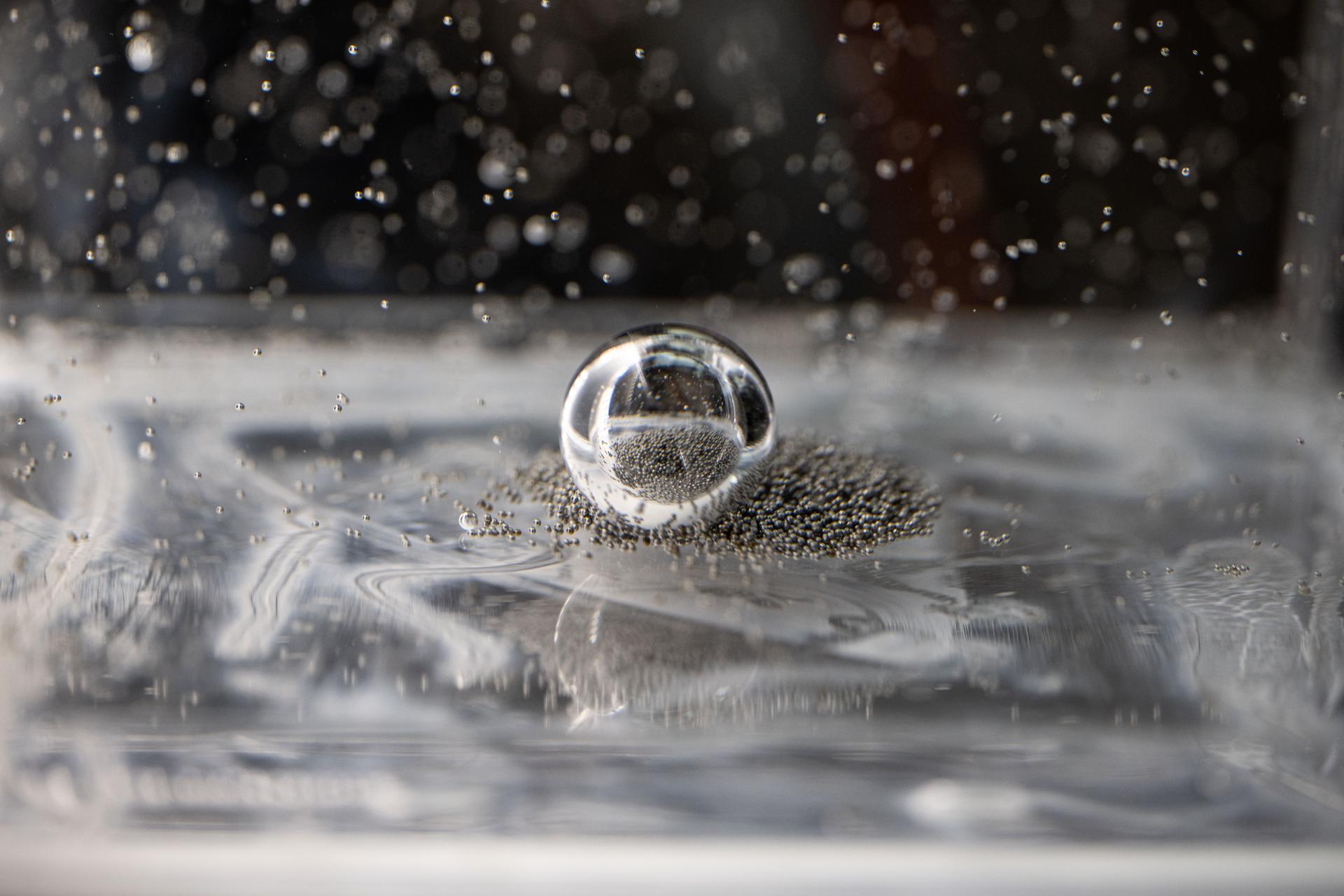
iss073e0917381 (Oct. 20, 2025) --- Tiny ball bearings surround a larger central bearing during the Fluid Particles experiment, conducted inside the Microgravity Science Glovebox (MSG) aboard the International Space Station’s Destiny laboratory module. A bulk container installed in the MSG, filled with viscous fluid and embedded particles, is subjected to oscillating frequencies to observe how the particles cluster and form larger structures in microgravity. Insights from this research may advance fire suppression, lunar dust mitigation, and plant growth in space. On Earth, the findings could inform our understanding of pollen dispersion, algae blooms, plastic pollution, and sea salt transport during storms.
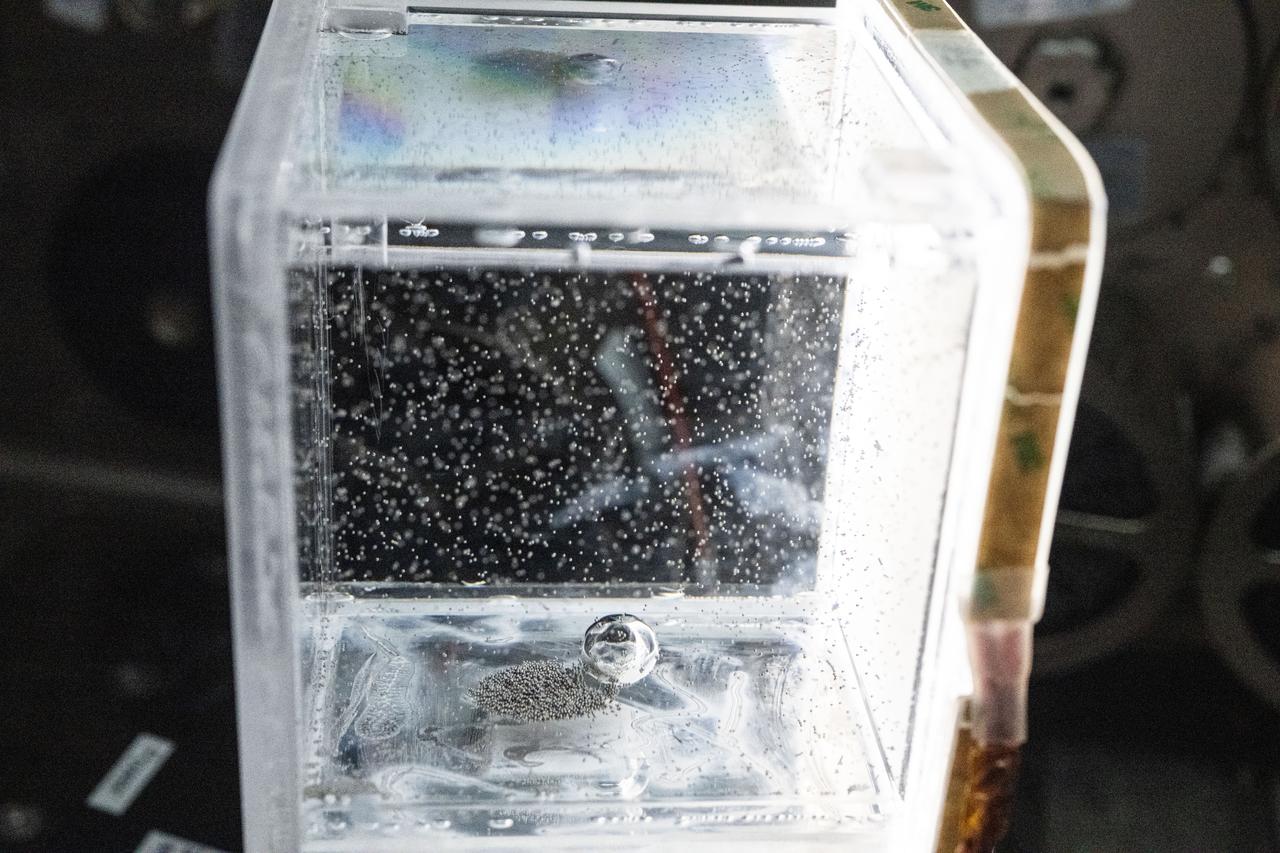
iss073e0917376 (Oct. 20, 2025) --- Tiny ball bearings surround a larger central bearing during the Fluid Particles experiment, conducted inside the Microgravity Science Glovebox (MSG) aboard the International Space Station’s Destiny laboratory module. A bulk container installed in the MSG, filled with viscous fluid and embedded particles, is subjected to oscillating frequencies to observe how the particles cluster and form larger structures in microgravity. Insights from this research may advance fire suppression, lunar dust mitigation, and plant growth in space. On Earth, the findings could inform our understanding of pollen dispersion, algae blooms, plastic pollution, and sea salt transport during storms.
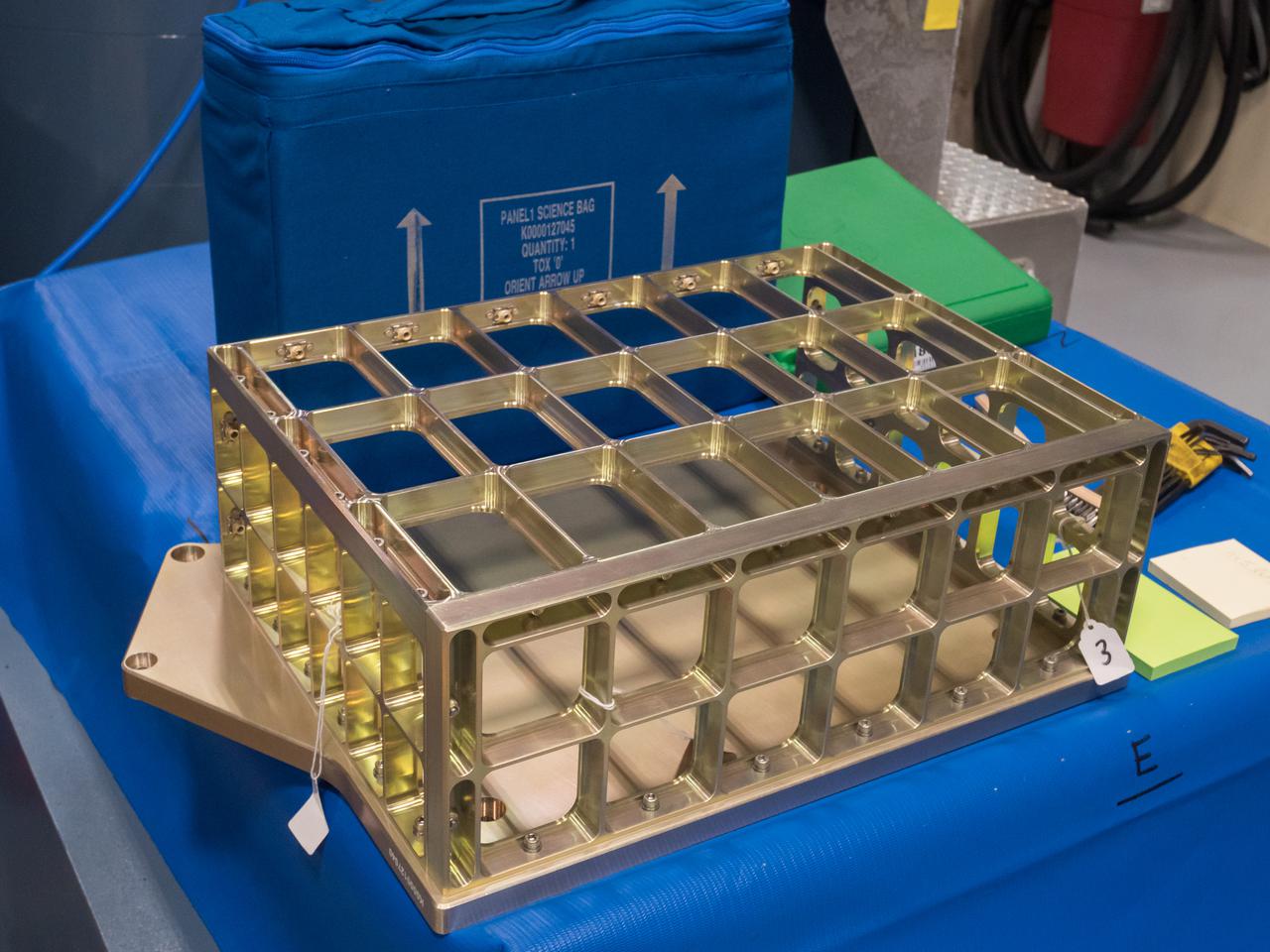
NASA’s BioExperiment-1 is being prepared for testing in the Vibration Laboratory at Kennedy Space Center in Florida on May 13, 2021. BioExpt-1 is a space biology pathfinder, which will carry plant, algae, yeast, and fungi for biology research beyond low-Earth orbit (LEO). NASA will install the BioExpt-1 payload container assembles onto panels inside the Orion capsule. BioExpt-1 will return these science payloads to Earth to provide critical and unique data about life beyond LEO for the first time in more than 40 years. Artemis I is the first in a series of increasingly complex missions that will enable human exploration of the Moon and eventually on to Mars.
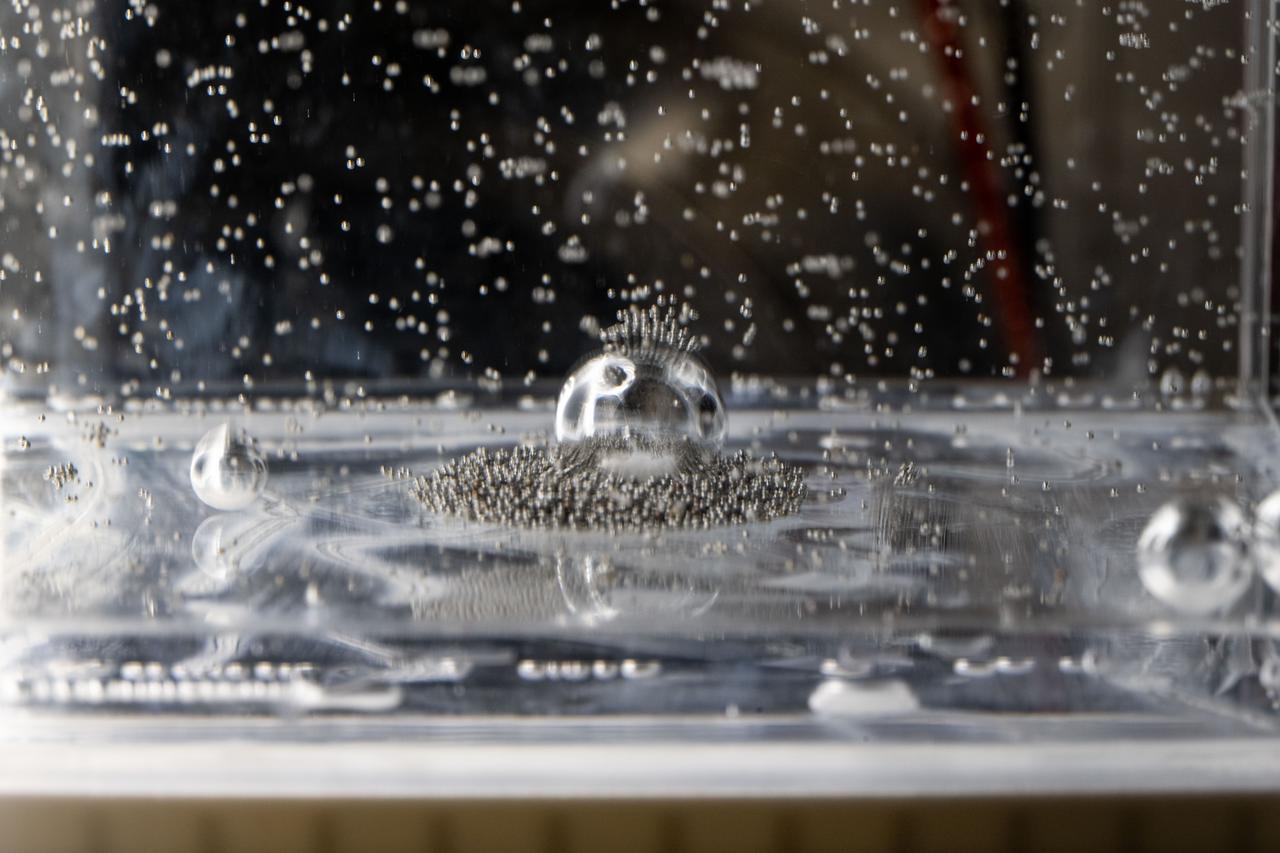
iss073e0917383 (Oct. 20, 2025) --- Tiny ball bearings surround a larger central bearing during the Fluid Particles experiment, conducted inside the Microgravity Science Glovebox (MSG) aboard the International Space Station’s Destiny laboratory module. A bulk container installed in the MSG, filled with viscous fluid and embedded particles, is subjected to oscillating frequencies to observe how the particles cluster and form larger structures in microgravity. Insights from this research may advance fire suppression, lunar dust mitigation, and plant growth in space. On Earth, the findings could inform our understanding of pollen dispersion, algae blooms, plastic pollution, and sea salt transport during storms.
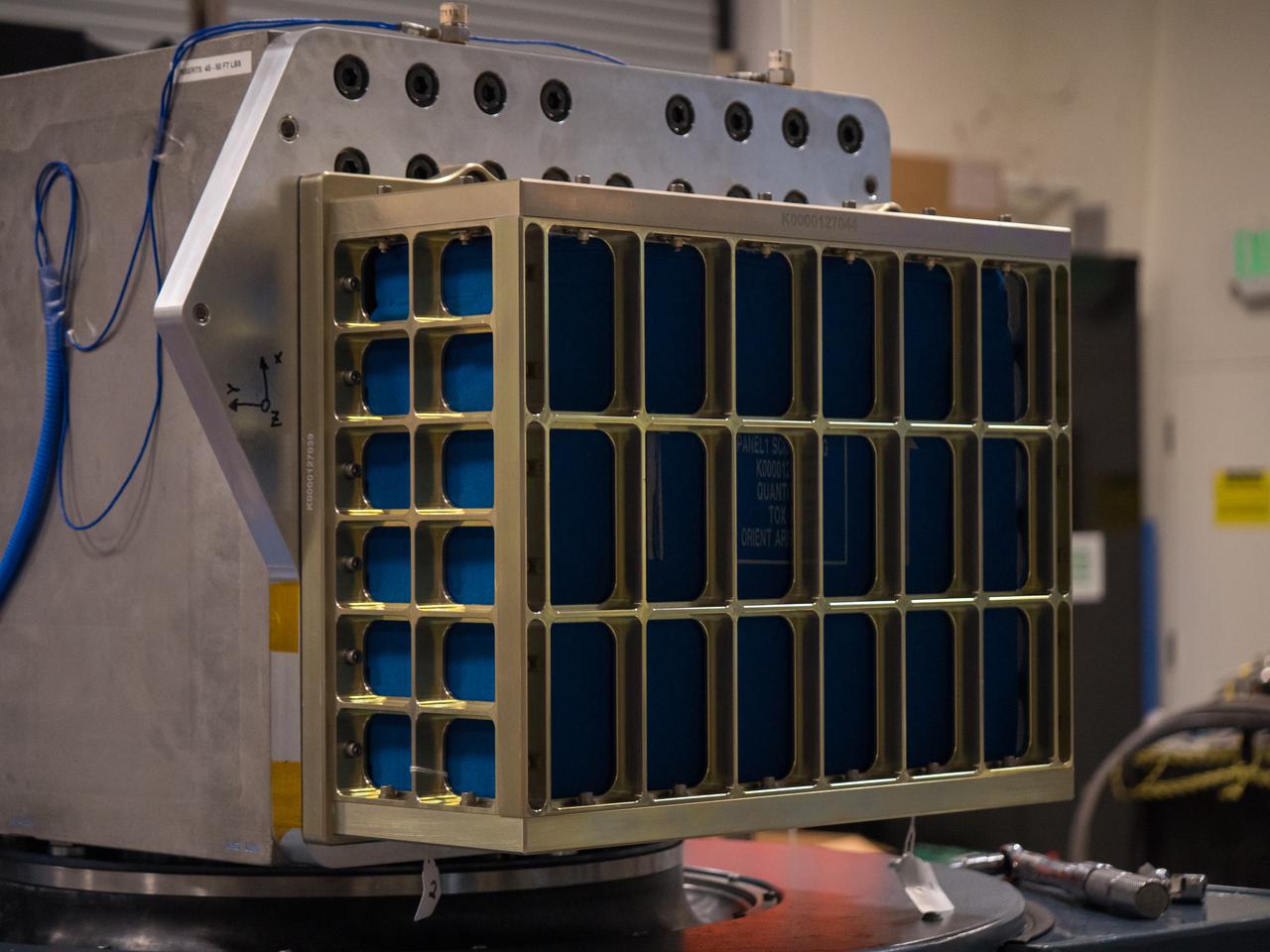
NASA’s Biology Experiment-1 (BioExpt-1) undergoes testing in the Vibration Laboratory at Kennedy Space Center in Florida on May 13, 2021. BioExpt-1 is a space biology pathfinder, which will carry plants, algae, yeast, and fungi for biology research beyond low-Earth orbit (LEO). NASA will install the BioExpt-1 payload container assembles onto panels inside the Orion capsule. BioExpt-1 will return these science payloads to Earth to provide critical and unique data about life beyond LEO for the first time in more than 40 years. Artemis I is the first in a series of increasingly complex missions that will enable human exploration of the Moon and eventually on to Mars.
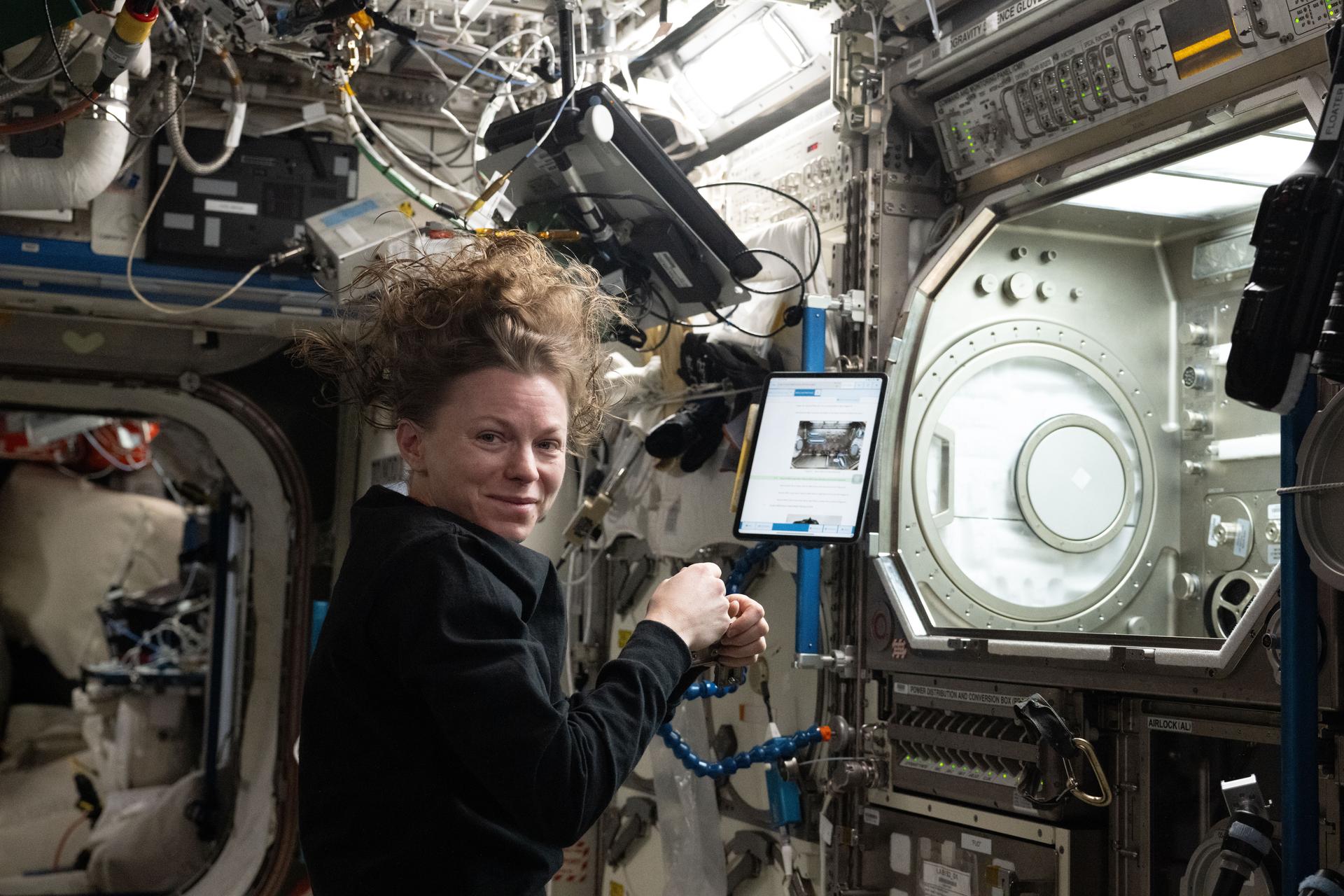
iss073e0886460 (Oct. 20, 2025) --- NASA astronaut and Expedition 73 Flight Engineer Zena Cardman installs research hardware inside the Destiny laboratory module’s Microgravity Science Glovebox. The equipment supports the Fluid Particles experiment, which helps researchers understand how particles in a liquid interface come together to form larger structures or clusters in microgravity. Results could advance fire suppression, lunar dust control, and plant growth in space. Earth benefits may include insights into pollen behavior, algae blooms, plastic pollution, and sea salt transfer during storms.
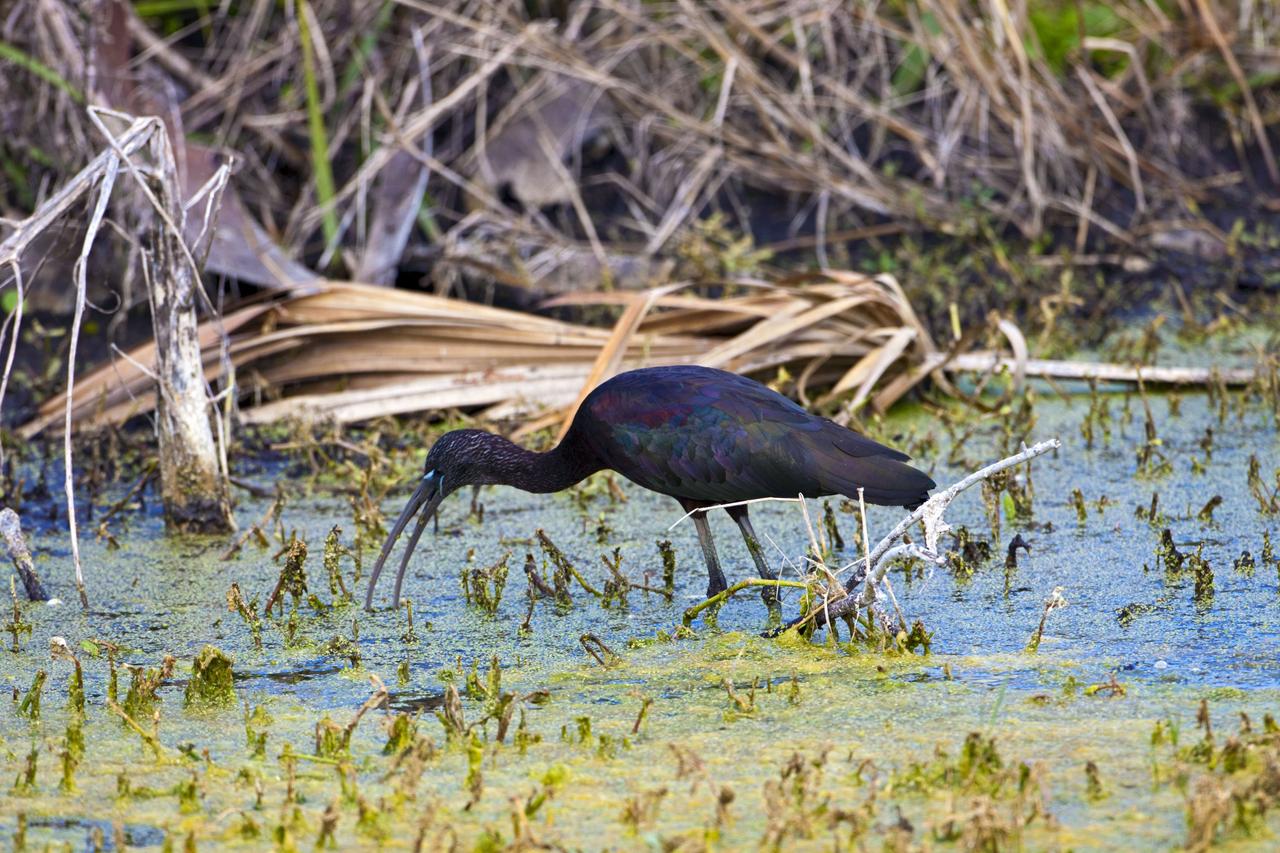
CAPE CANAVERAL, Fla. – A glossy ibis searches for food beneath the algae-covered surface of a pond at Black Point Wildlife Drive, part of the Merritt Island National Wildlife Refuge. NASA's Kennedy Space Center shares a boundary with the refuge, consisting of 140,000 acres. The Refuge provides a wide variety of habitats: coastal dunes, saltwater estuaries and marshes, freshwater impoundments, scrub, pine flatwoods, and hardwood hammocks that provide habitat for more than 1,500 species of plants and animals, including about 331 species of birds. Photo credit: NASA/Jim Grossmann
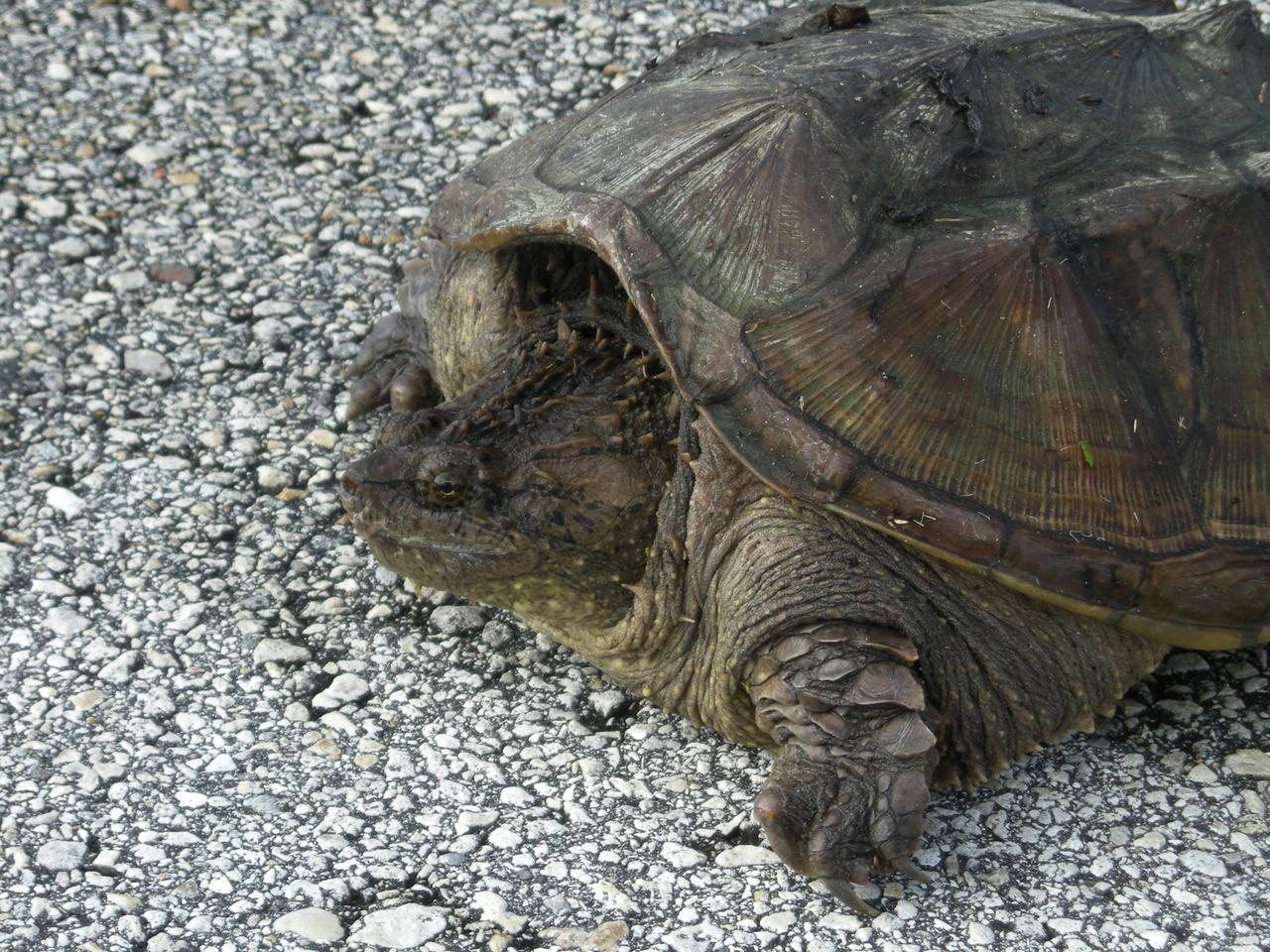
KENNEDY SPACE CENTER, FLA. -- A rare photo of a Florida snapping turtle out in the open on Beach Road, near NASA's Kennedy Space Center. Found only in Florida and Georgia, this species is related to the common snapping turtle. It is considered a dangerous turtle because it can snap very quickly with its extremely strong jaws. Its tail, which is almost as long as its shell, has saw-edges along the top. The shell also has rough points down the middle. The shell is tan to dark brown and may have green algae growing on it. It can grow to 17 inches long and weigh 45 pounds. Snapping turtles usually live in ponds under the shadows and don’t like to rest in the sun like most turtles. They eat almost anything: water bugs, fish, lizards, small birds, mice, plants and even dead animals. Photo credit: NASA/Kenny Allen
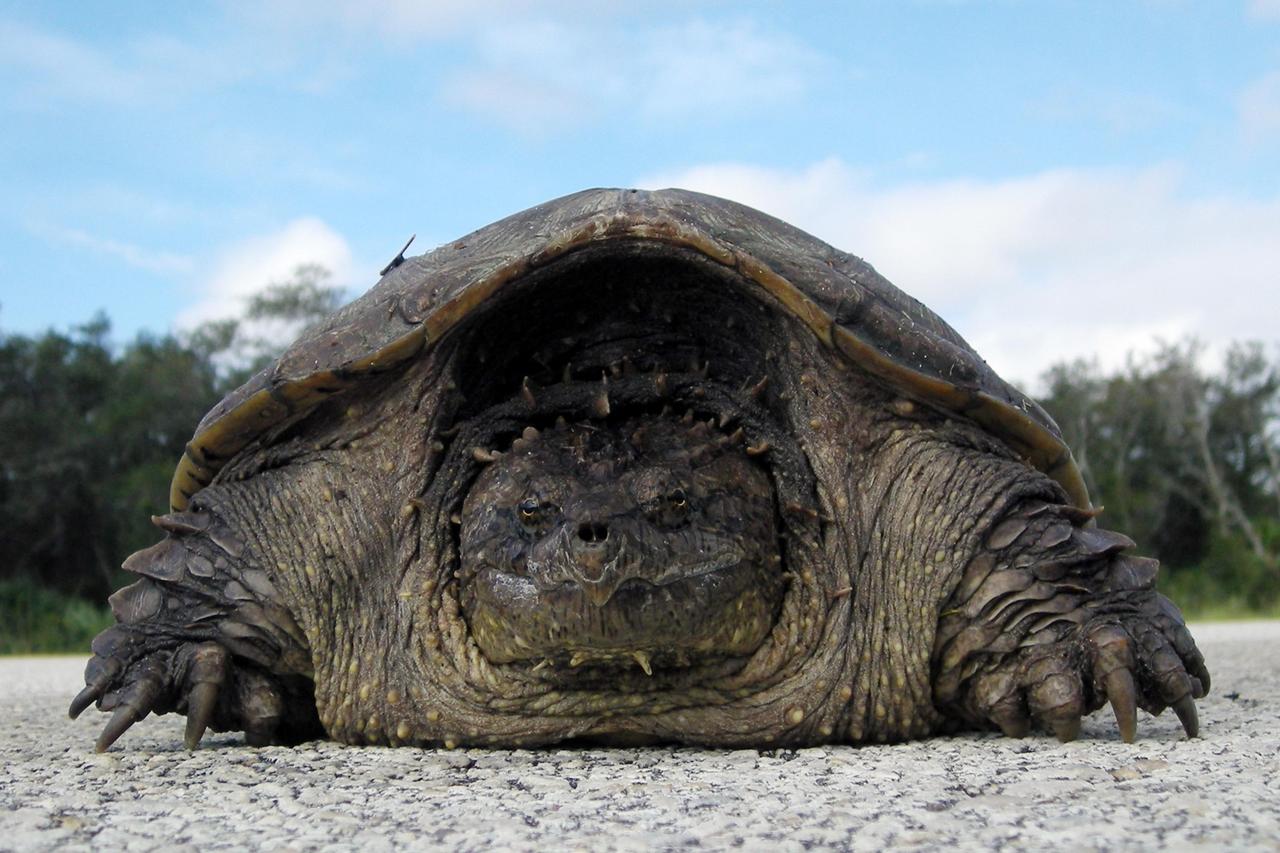
KENNEDY SPACE CENTER, FLA. -- A rare photo of a Florida snapping turtle out in the open on Beach Road, near NASA's Kennedy Space Center. Found only in Florida and Georgia, this species is related to the common snapping turtle. It is considered a dangerous turtle because it can snap very quickly with its extremely strong jaws. Its tail, which is almost as long as its shell, has saw-edges along the top. The shell also has rough points down the middle. The shell is tan to dark brown and may have green algae growing on it. It can grow to 17 inches long and weigh 45 pounds. Snapping turtles usually live in ponds under the shadows and don’t like to rest in the sun like most turtles. They eat almost anything: water bugs, fish, lizards, small birds, mice, plants and even dead animals. Photo credit: NASA/Kenny Allen
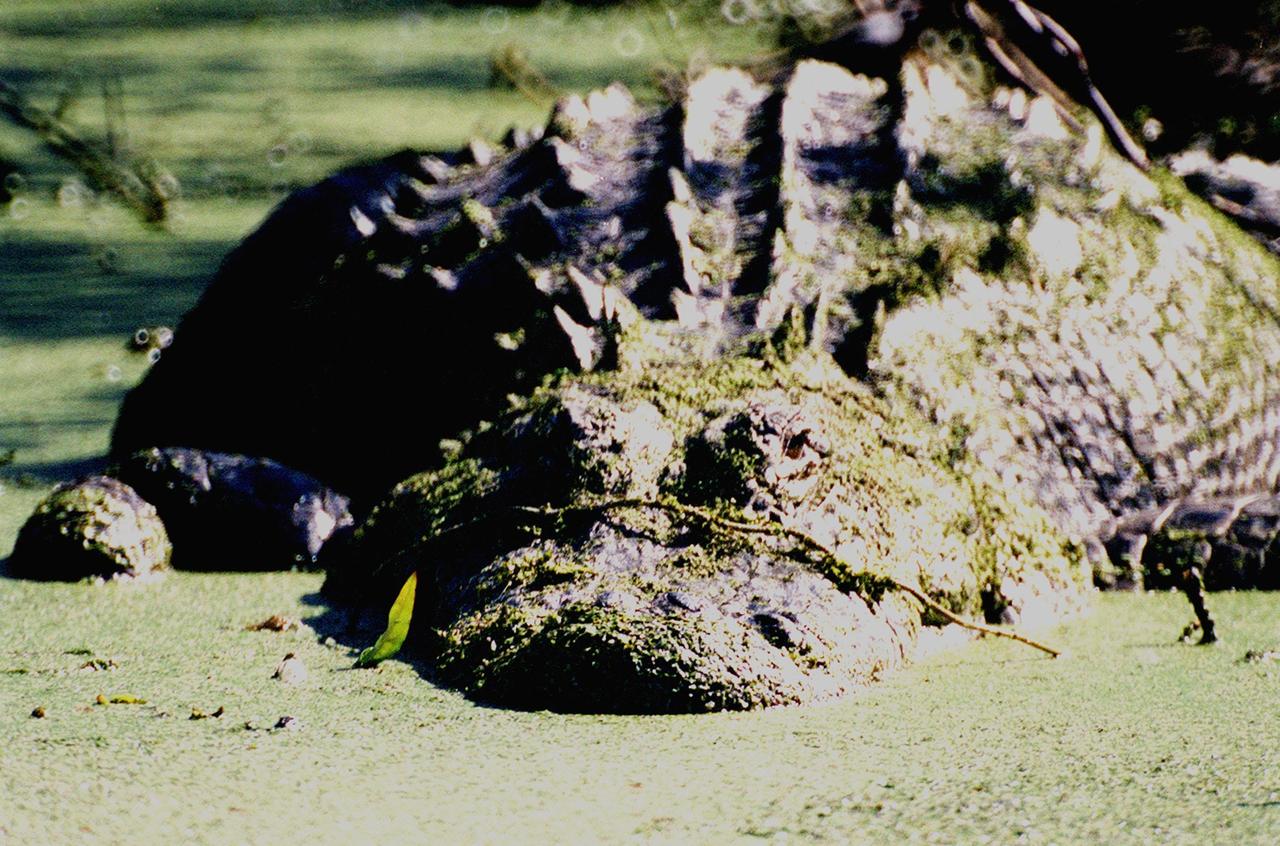
KENNEDY SPACE CENTER, FLA. -- An algae-covered alligator keeps a wary eye open as it rests in one of the ponds at Kennedy Space Center. American alligators feed and rest in the water, and lay their eggs in dens they dig into the banks. The young alligators spend their first several weeks in these dens. The Center shares a boundary with the Merritt Island National Wildlife Refuge, which encompasses 92,000 acres that are a habitat for more than 331 species of birds, 31 mammals, 117 fishes, and 65 amphibians and reptiles. The marshes and open water of the refuge provide wintering areas for 23 species of migratory waterfowl, as well as a year-round home for great blue herons, great egrets, wood storks, cormorants, brown pelicans and other species of marsh and shore birds, as well as a variety of insects
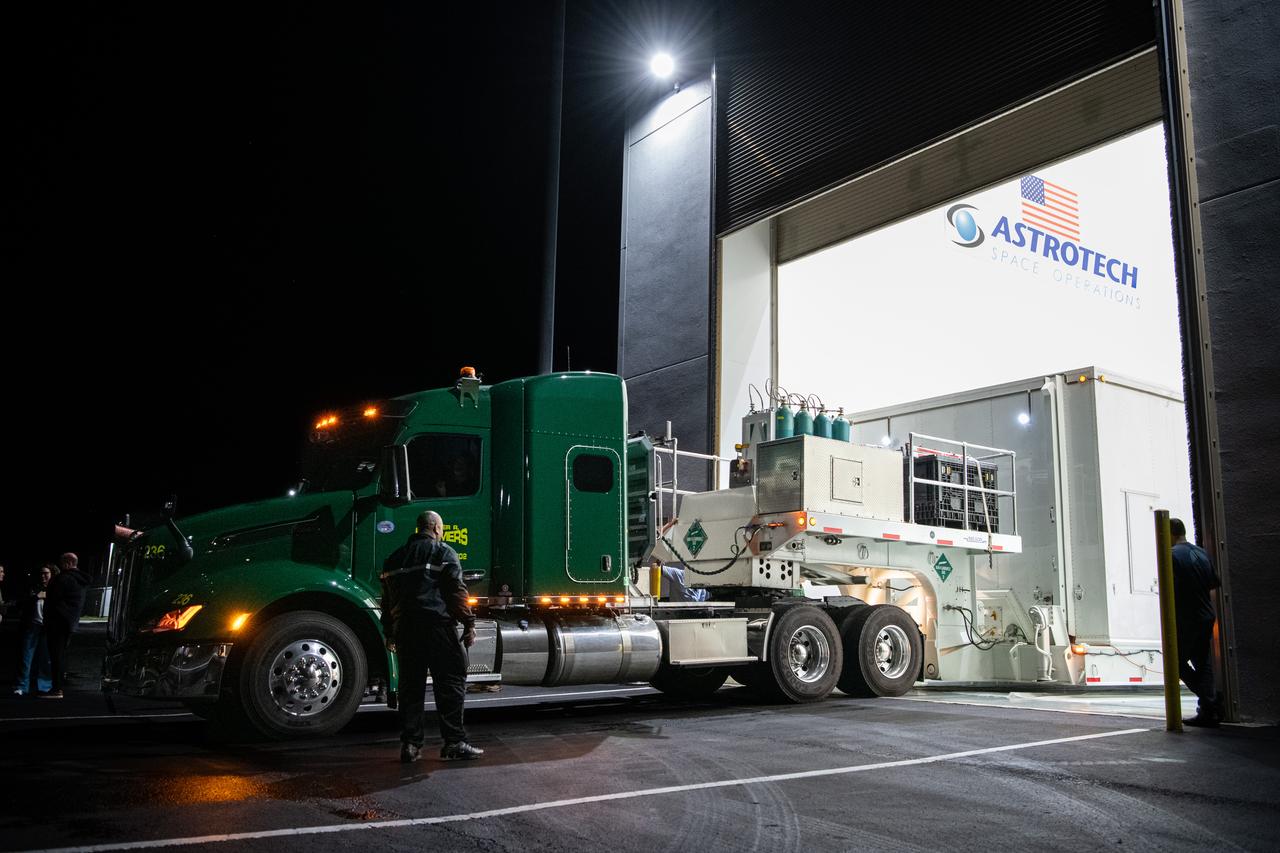
The transport carrier containing NASA’s Plankton, Aerosol, Cloud, ocean Ecosystem (PACE) observatory spacecraft arrives at the Astrotech Space Operations Facility near the agency’s Kennedy Space Center in Florida on Tuesday, Nov. 14, 2023. PACE was shipped from the agency’s Goddard Space Flight Center in Greenbelt, Maryland, and is targeted to launch on January 30, 2024, on a SpaceX Falcon 9 rocket lifting off from Space Launch Complex 40 at Cape Canaveral Space Force Station. The PACE observatory will help us better understand how the ocean and atmosphere exchange carbon dioxide, measure key atmospheric variables associated with air quality and Earth's climate, and monitor ocean health, in part by studying phytoplankton, tiny plants and algae that sustain the marine food web.
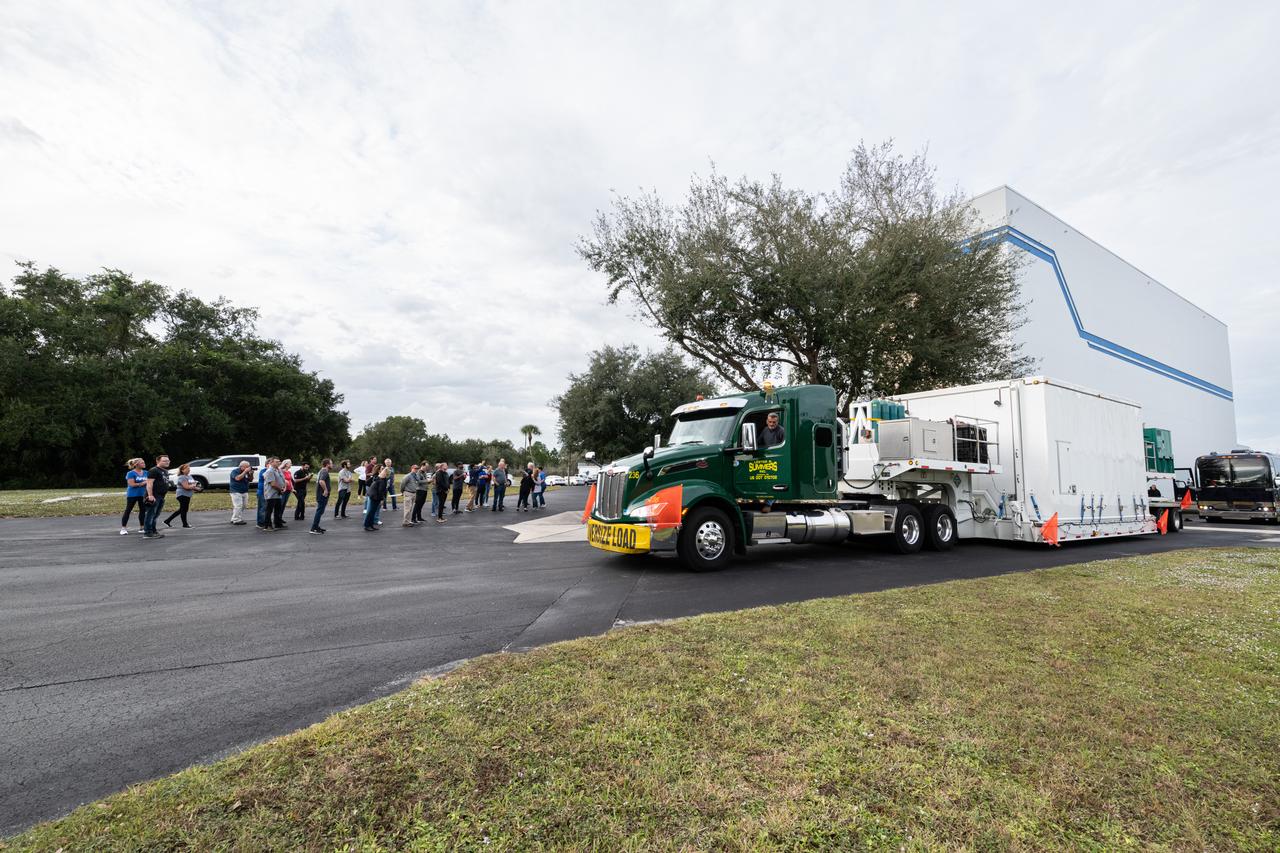
The transport carrier containing NASA’s Plankton, Aerosol, Cloud, ocean Ecosystem (PACE) observatory spacecraft arrives at the Astrotech Space Operations Facility near the agency’s Kennedy Space Center in Florida on Tuesday, Nov. 14, 2023. PACE was shipped from the agency’s Goddard Space Flight Center in Greenbelt, Maryland, and is targeted to launch on January 30, 2024, on a SpaceX Falcon 9 rocket lifting off from Space Launch Complex 40 at Cape Canaveral Space Force Station. The PACE observatory will help us better understand how the ocean and atmosphere exchange carbon dioxide, measure key atmospheric variables associated with air quality and Earth's climate, and monitor ocean health, in part by studying phytoplankton, tiny plants and algae that sustain the marine food web.
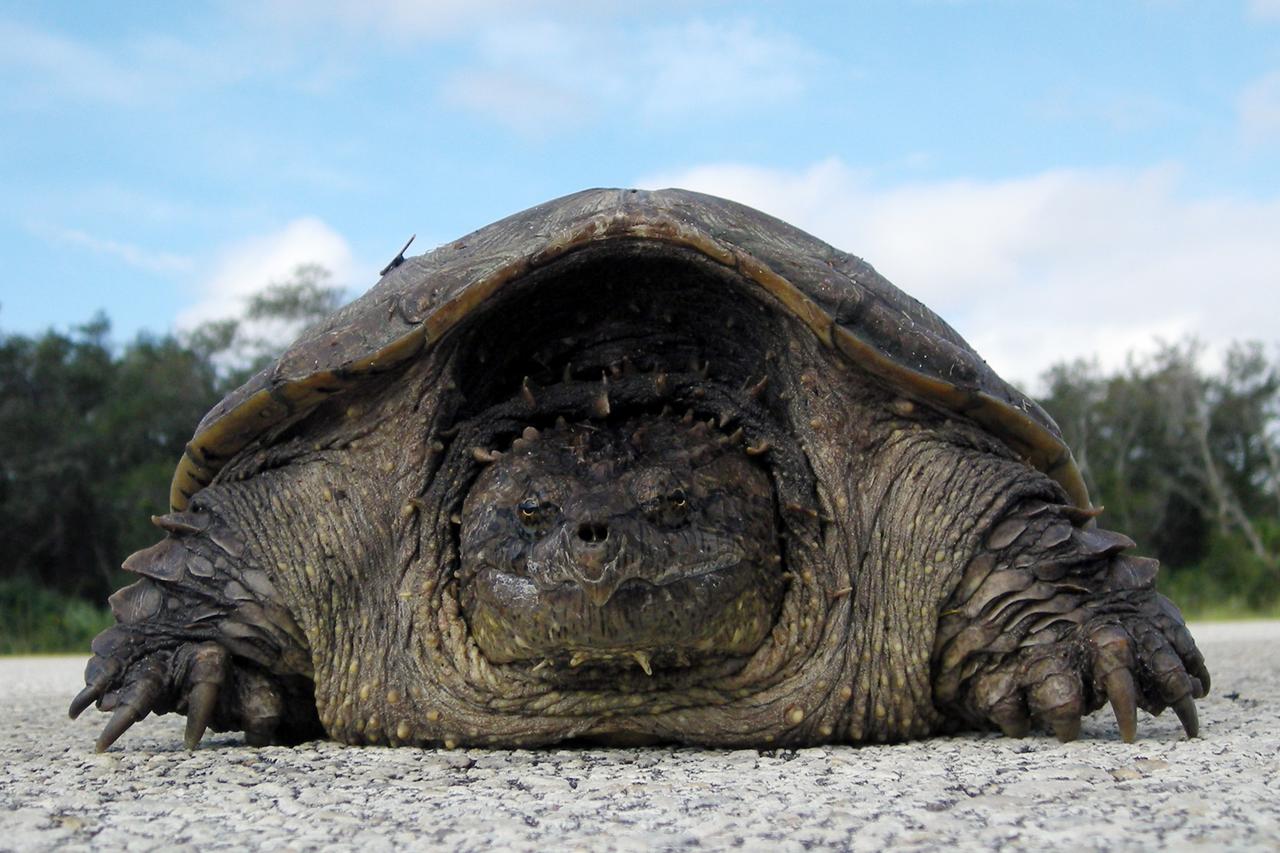
A rare photo of a Florida snapping turtle out in the open on Beach Road, near NASA's Kennedy Space Center. Found only in Florida and Georgia, this species is related to the common snapping turtle. It is considered a dangerous turtle because it can snap very quickly with its extremely strong jaws. Its tail, which is almost as long as its shell, has saw-edges along the top. The shell also has rough points down the middle. The shell is tan to dark brown and may have green algae growing on it. It can grow to 17 inches long and weigh 45 pounds. Snapping turtles usually live in ponds under the shadows and don’t like to rest in the sun like most turtles. They eat almost anything: water bugs, fish, lizards, small birds, mice, plants and even dead animals

The transport carrier containing NASA’s Plankton, Aerosol, Cloud, ocean Ecosystem (PACE) observatory spacecraft departs NASA’s Goddard Space Flight Center in Greenbelt Maryland on Monday, Nov. 13, 2023. PACE is traveling to Astrotech Space Operations Facility near the agency’s Kennedy Space Center in Florida. PACE is targeted to launch on January 30, 2024, on a SpaceX Falcon 9 rocket lifting off from Space Launch Complex 40 at Cape Canaveral Space Force Station. The PACE observatory will help us better understand how the ocean and atmosphere exchange carbon dioxide, measure key atmospheric variables associated with air quality and Earth's climate, and monitor ocean health, in part by studying phytoplankton, tiny plants and algae that sustain the marine food web.
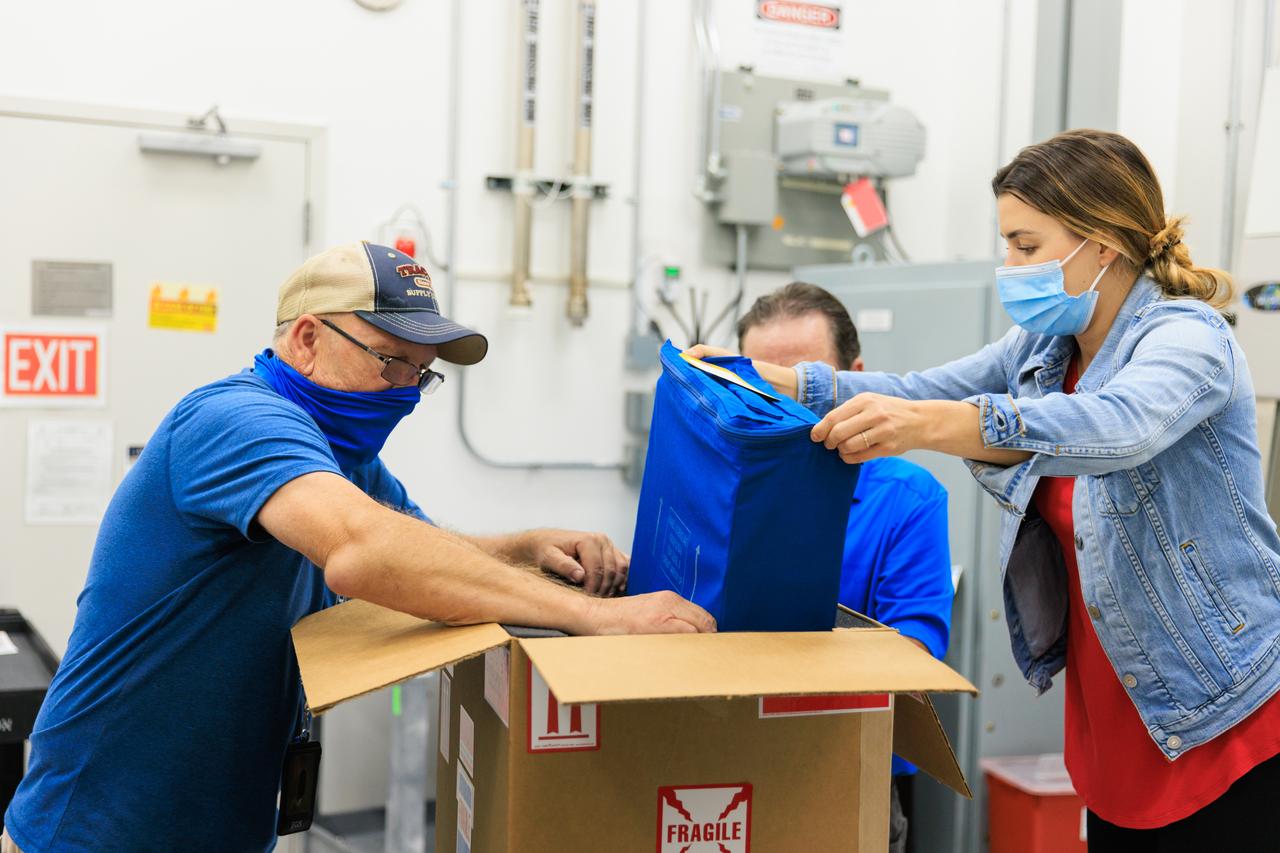
NASA’s Biology Experiment-1 (BioExpt-1) is officially packaged and ready for handover to the Orion team for Artemis I inside the Space Station Processing Facility at the agency’s Kennedy Space Center in Florida on Aug. 18, 2022. BioExpt-1 is a space biology pathfinder, which will carry Arabidopsis, algae, yeast, and fungi science payloads for biology research beyond low-Earth orbit aboard the Orion capsule on the Artemis I mission. The payload container assemblies will be installed onto panels in the Orion capsule and will return to Earth to provide critical and unique data about life beyond low-Earth orbit for the first time in more than 40 years. Artemis I is the first in a series of increasingly complex missions that will enable human exploration to the Moon and eventually on to Mars.
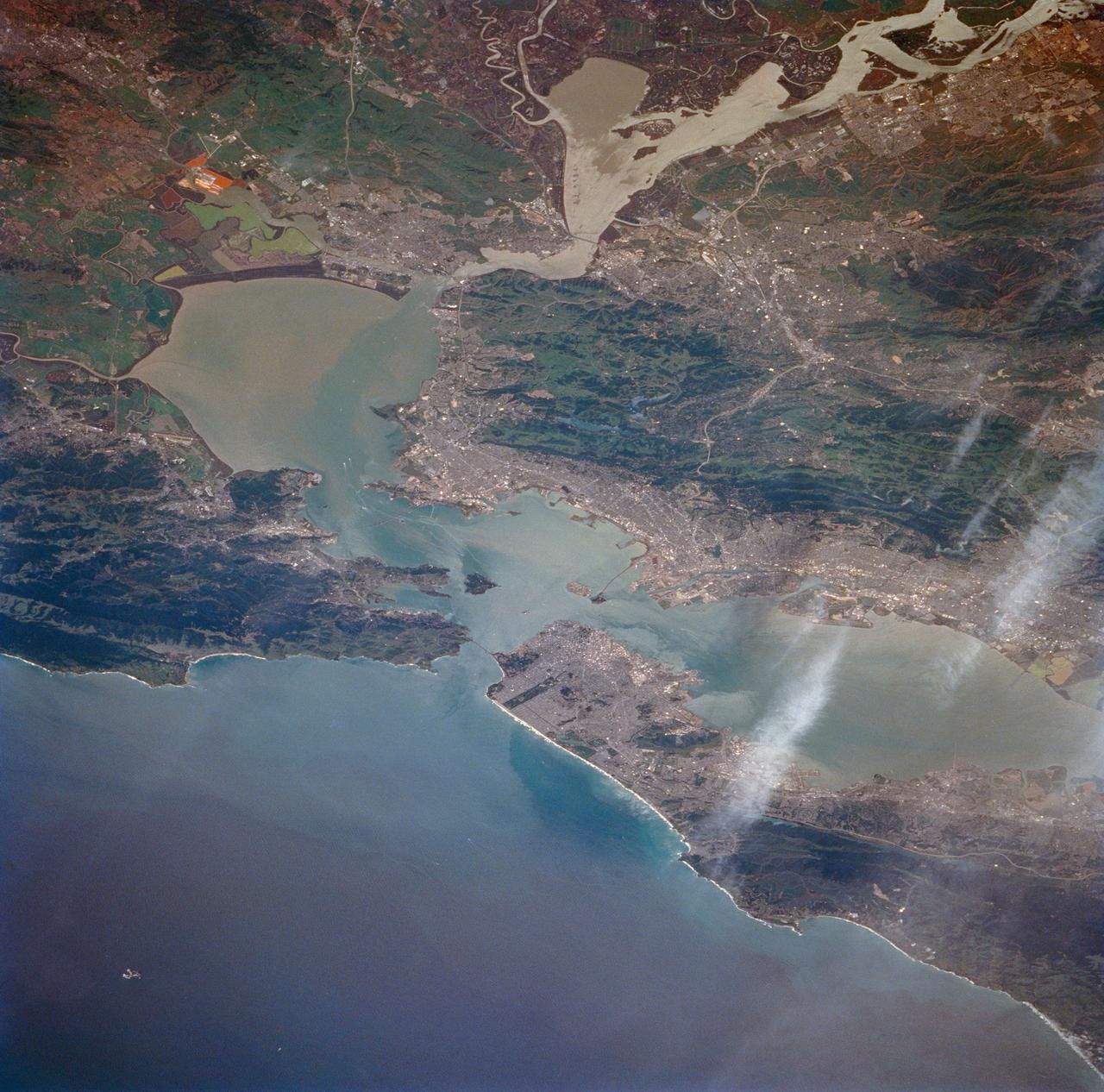
STS059-213-009 (9-20 April 1994) --- San Francisco Bay. Orient with the sea up. The delta of the combined Sacramento and San Joaquin Rivers occupies the foreground, San Francisco Bay the middle distance, and the Pacific Ocean the rest. Variations in water color caused both by sediment load and by wind streaking strike the eye. Man-made features dominate this scene. The Lafayette/Concord complex is left of the bay head, Vallejo is to the right, the Berkeley/Oakland complex rims the shoreline of the main bay, and San Francisco fills the peninsula beyond. Salt-evaporation ponds contain differently-colored algae depending on salinity. The low altitude (less than 120 nautical miles) and unusually-clear air combine to provide unusually-strong green colors in this Spring scene. Hasselblad camera.
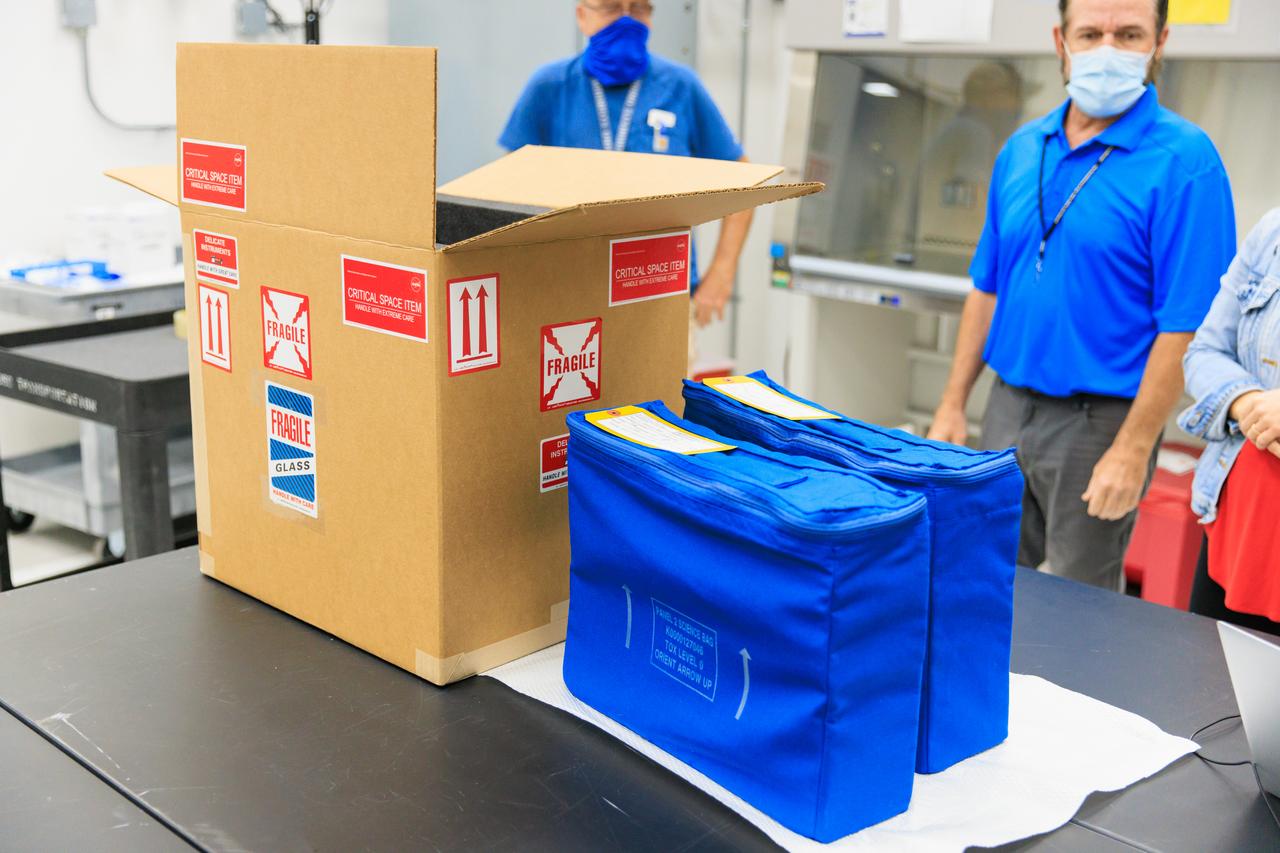
NASA’s Biology Experiment-1 (BioExpt-1) is officially packaged and ready for handover to the Orion team for Artemis I inside the Space Station Processing Facility at the agency’s Kennedy Space Center in Florida on Aug. 18, 2022. BioExpt-1 is a space biology pathfinder, which will carry Arabidopsis, algae, yeast, and fungi science payloads for biology research beyond low-Earth orbit aboard the Orion capsule on the Artemis I mission. The payload container assemblies will be installed onto panels in the Orion capsule and will return to Earth to provide critical and unique data about life beyond low-Earth orbit for the first time in more than 40 years. Artemis I is the first in a series of increasingly complex missions that will enable human exploration to the Moon and eventually on to Mars.
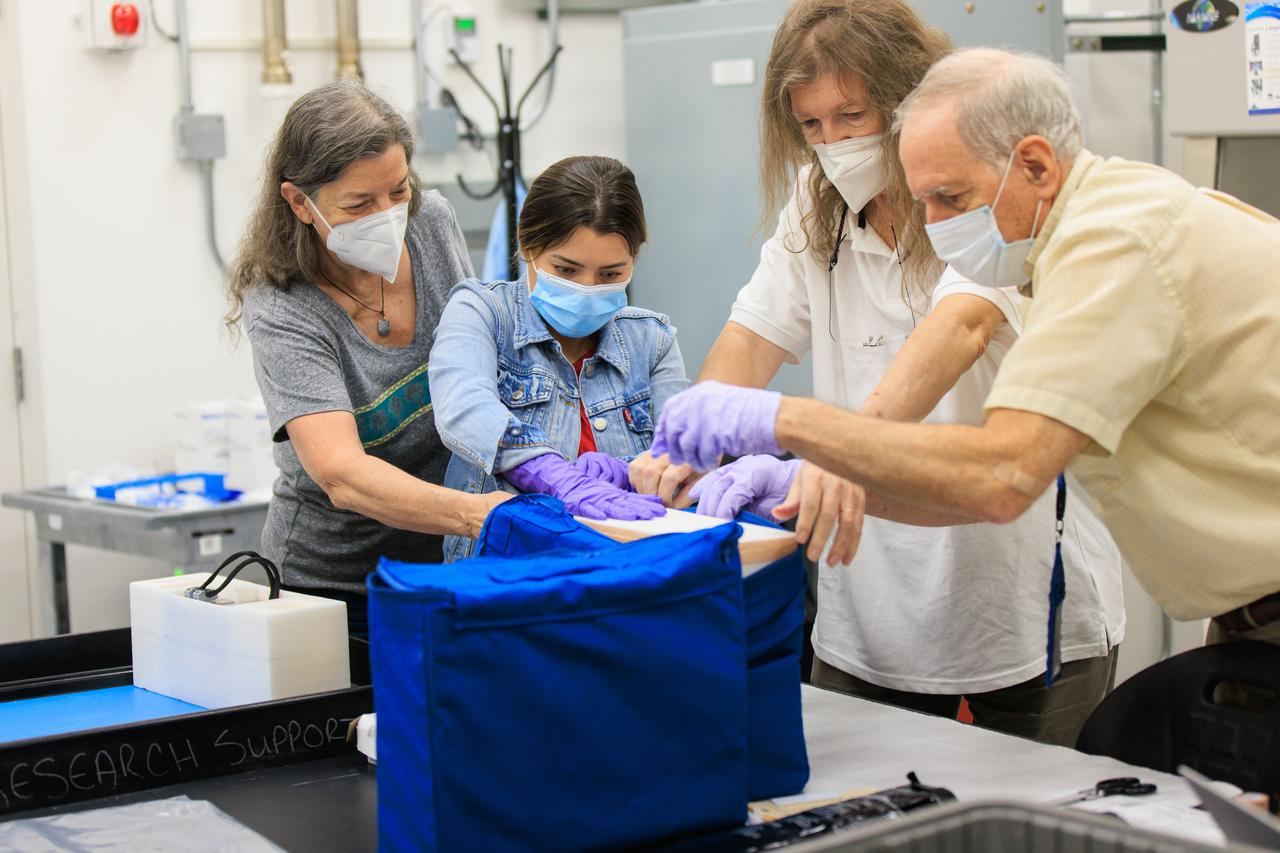
Scientists package up part of NASA’s Biology Experiment-1 (BioExpt-1) for official handover to the Orion team for Artemis I inside the Space Station Processing Facility at the agency’s Kennedy Space Center in Florida on Aug. 18, 2022. BioExpt-1 is a space biology pathfinder, which will carry Arabidopsis, algae, yeast, and fungi science payloads for biology research beyond low-Earth orbit aboard the Orion capsule on the Artemis I mission. The payload container assemblies will be installed onto panels in the Orion capsule and will return to Earth to provide critical and unique data about life beyond low-Earth orbit for the first time in more than 40 years. Artemis I is the first in a series of increasingly complex missions that will enable human exploration to the Moon and eventually on to Mars.
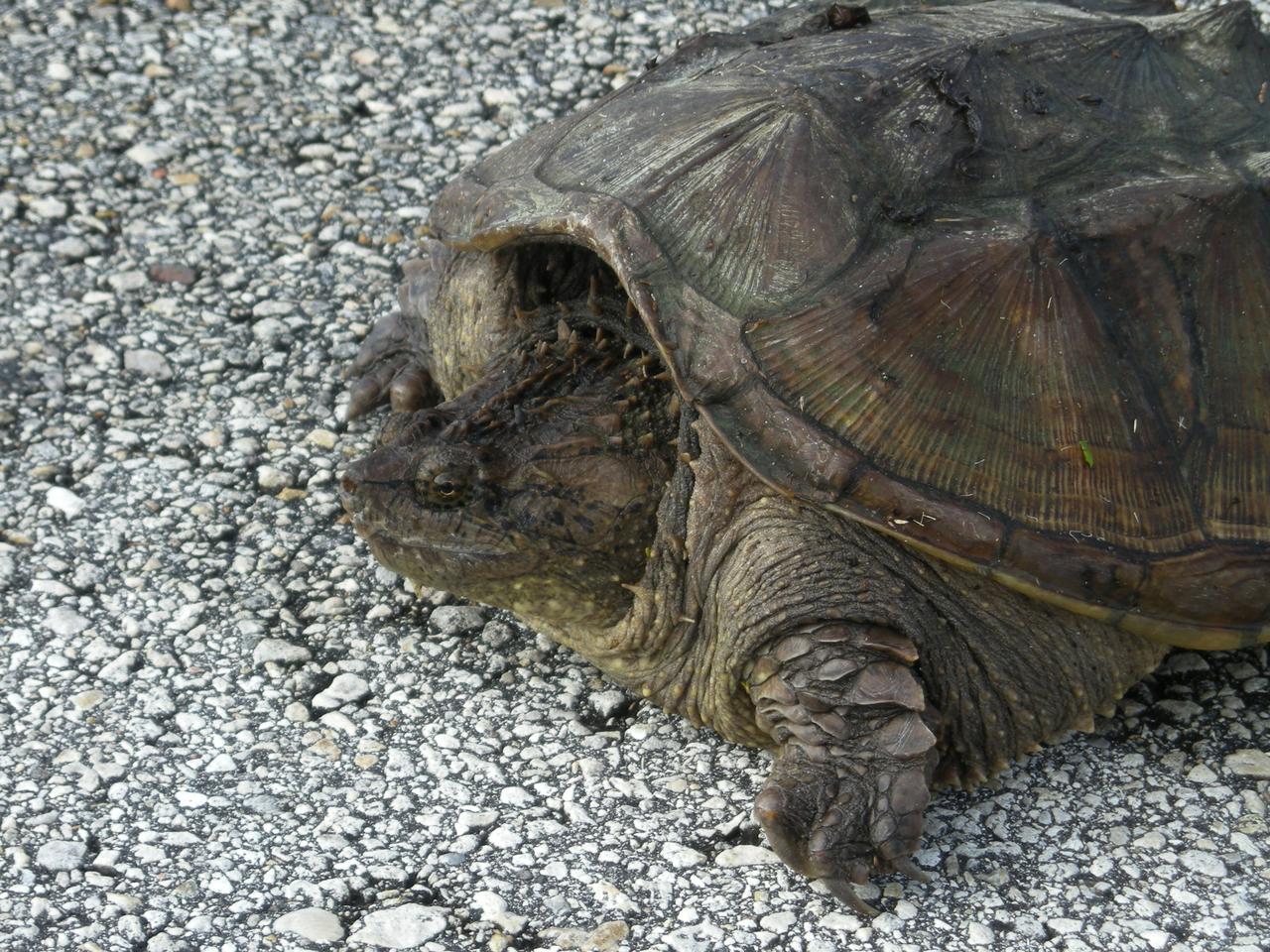
A rare photo of a Florida snapping turtle out in the open on Beach Road, near NASA's Kennedy Space Center. Found only in Florida and Georgia, this species is related to the common snapping turtle. It is considered a dangerous turtle because it can snap very quickly with its extremely strong jaws. Its tail, which is almost as long as its shell, has saw-edges along the top. The shell also has rough points down the middle. The shell is tan to dark brown and may have green algae growing on it. It can grow to 17 inches long and weigh 45 pounds. Snapping turtles usually live in ponds under the shadows and don’t like to rest in the sun like most turtles. They eat almost anything: water bugs, fish, lizards, small birds, mice, plants and even dead animals.
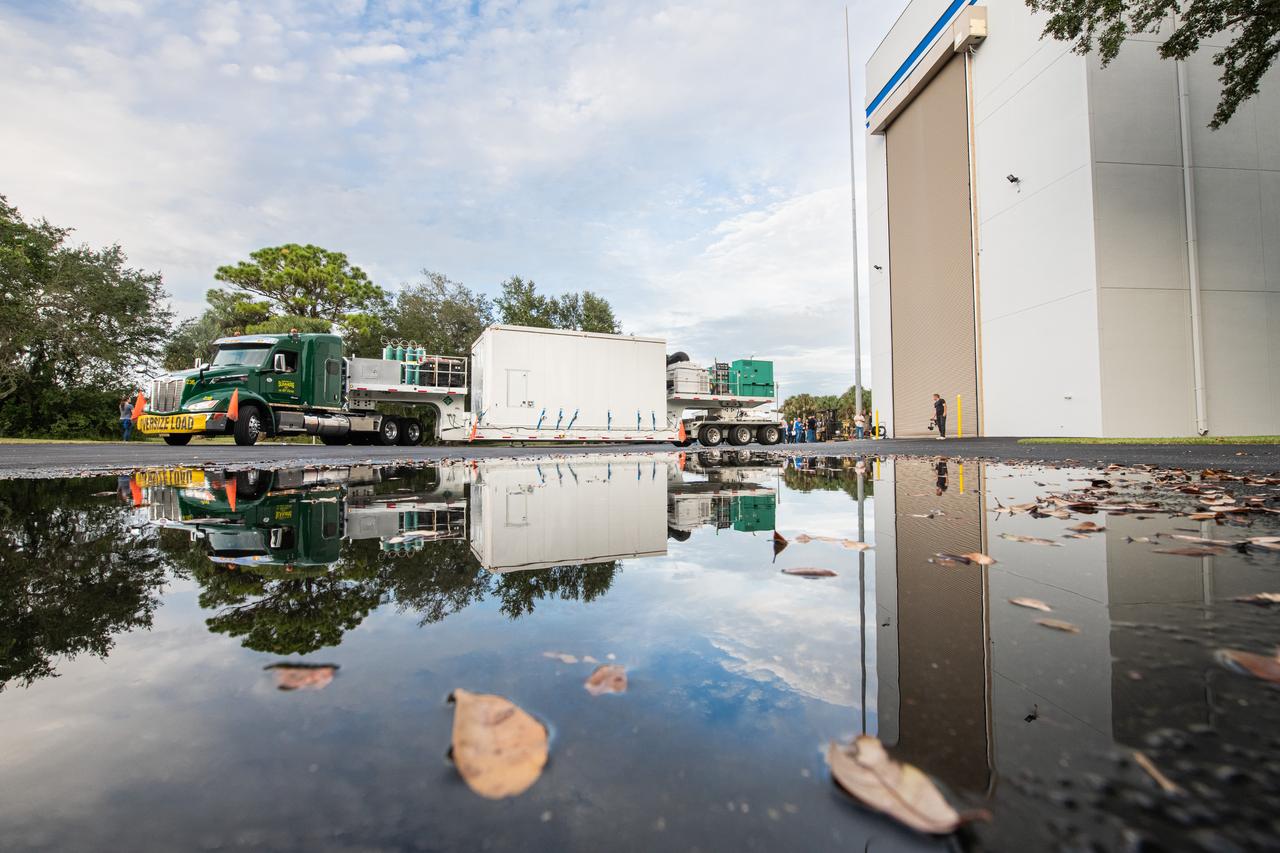
The transport carrier containing NASA’s Plankton, Aerosol, Cloud, ocean Ecosystem (PACE) observatory spacecraft arrives at the Astrotech Space Operations Facility near the agency’s Kennedy Space Center in Florida on Tuesday, Nov. 14, 2023. PACE was shipped from the agency’s Goddard Space Flight Center in Greenbelt, Maryland, and is targeted to launch on January 30, 2024, on a SpaceX Falcon 9 rocket lifting off from Space Launch Complex 40 at Cape Canaveral Space Force Station. The PACE observatory will help us better understand how the ocean and atmosphere exchange carbon dioxide, measure key atmospheric variables associated with air quality and Earth's climate, and monitor ocean health, in part by studying phytoplankton, tiny plants and algae that sustain the marine food web.
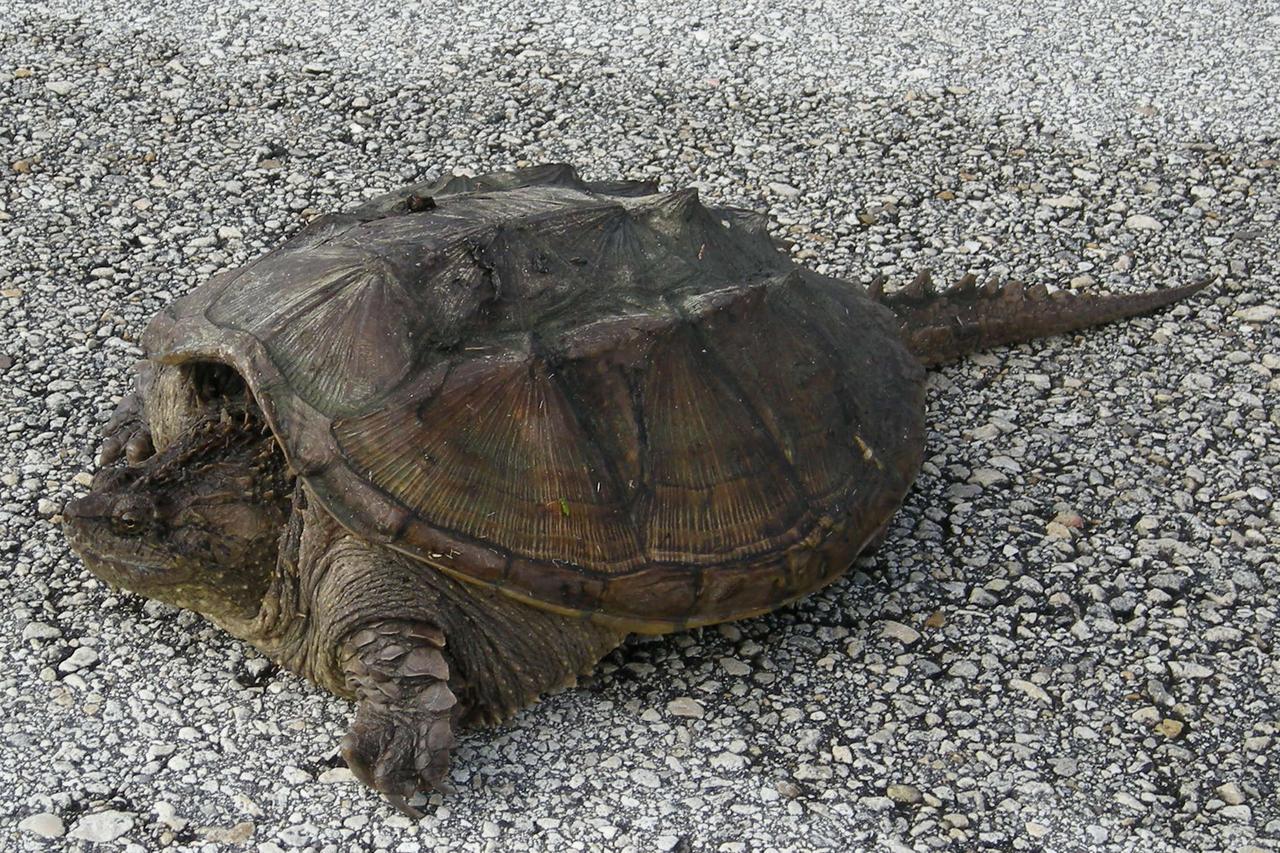
A rare photo of a Florida snapping turtle out in the open on Beach Road, near NASA's Kennedy Space Center. Found only in Florida and Georgia, this species is related to the common snapping turtle. It is considered a dangerous turtle because it can snap very quickly with its extremely strong jaws. Its tail, which is almost as long as its shell, has saw-edges along the top. The shell also has rough points down the middle. The shell is tan to dark brown and may have green algae growing on it. It can grow to 17 inches long and weigh 45 pounds. Snapping turtles usually live in ponds under the shadows and don’t like to rest in the sun like most turtles. They eat almost anything: water bugs, fish, lizards, small birds, mice, plants and even dead animals.

KENNEDY SPACE CENTER, FLA. -- An algae-covered alligator keeps a wary eye open as it rests in one of the ponds at Kennedy Space Center. American alligators feed and rest in the water, and lay their eggs in dens they dig into the banks. The young alligators spend their first several weeks in these dens. The Center shares a boundary with the Merritt Island National Wildlife Refuge, which encompasses 92,000 acres that are a habitat for more than 331 species of birds, 31 mammals, 117 fishes, and 65 amphibians and reptiles. The marshes and open water of the refuge provide wintering areas for 23 species of migratory waterfowl, as well as a year-round home for great blue herons, great egrets, wood storks, cormorants, brown pelicans and other species of marsh and shore birds, as well as a variety of insects
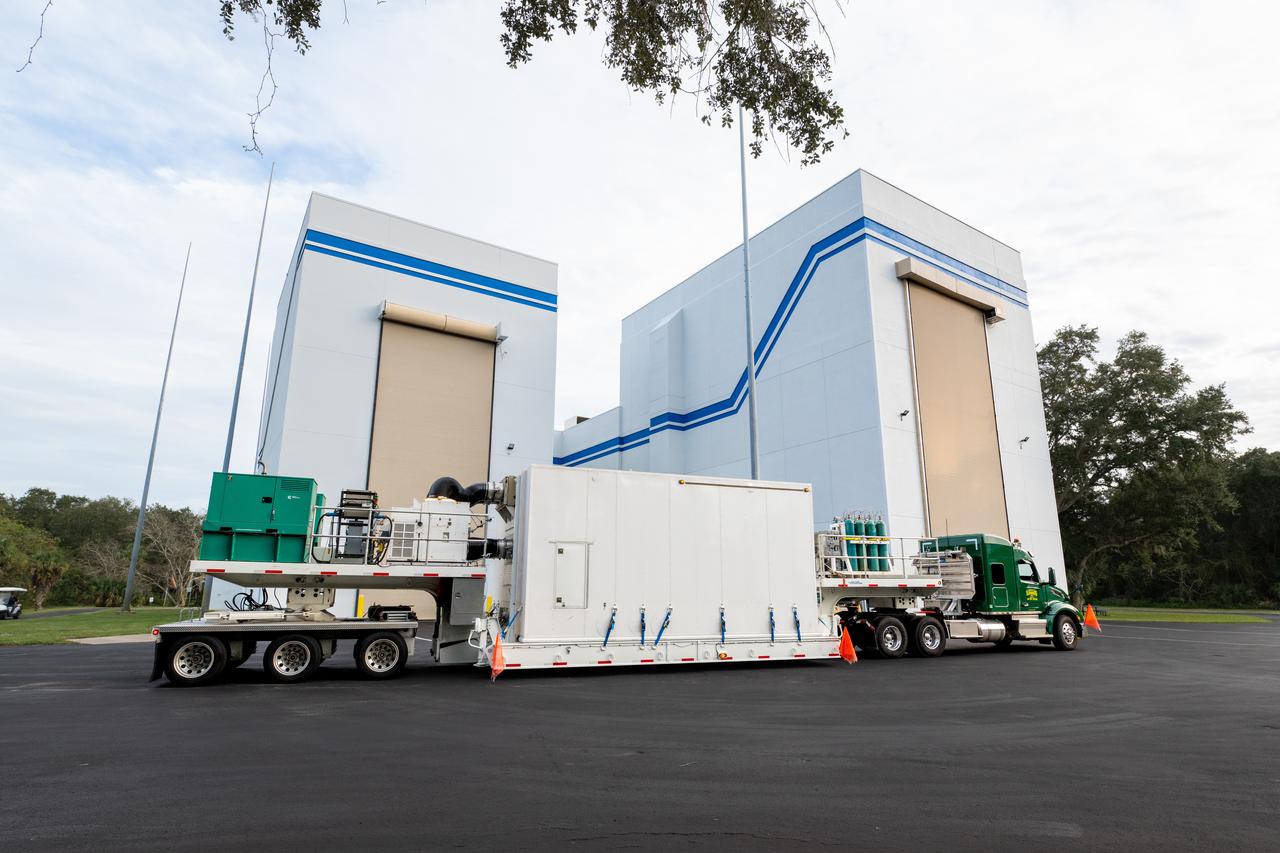
The transport carrier containing NASA’s Plankton, Aerosol, Cloud, ocean Ecosystem (PACE) observatory spacecraft arrives at the Astrotech Space Operations Facility near the agency’s Kennedy Space Center in Florida on Tuesday, Nov. 14, 2023. PACE was shipped from the agency’s Goddard Space Flight Center in Greenbelt, Maryland, and is targeted to launch on January 30, 2024, on a SpaceX Falcon 9 rocket lifting off from Space Launch Complex 40 at Cape Canaveral Space Force Station. The PACE observatory will help us better understand how the ocean and atmosphere exchange carbon dioxide, measure key atmospheric variables associated with air quality and Earth's climate, and monitor ocean health, in part by studying phytoplankton, tiny plants and algae that sustain the marine food web.
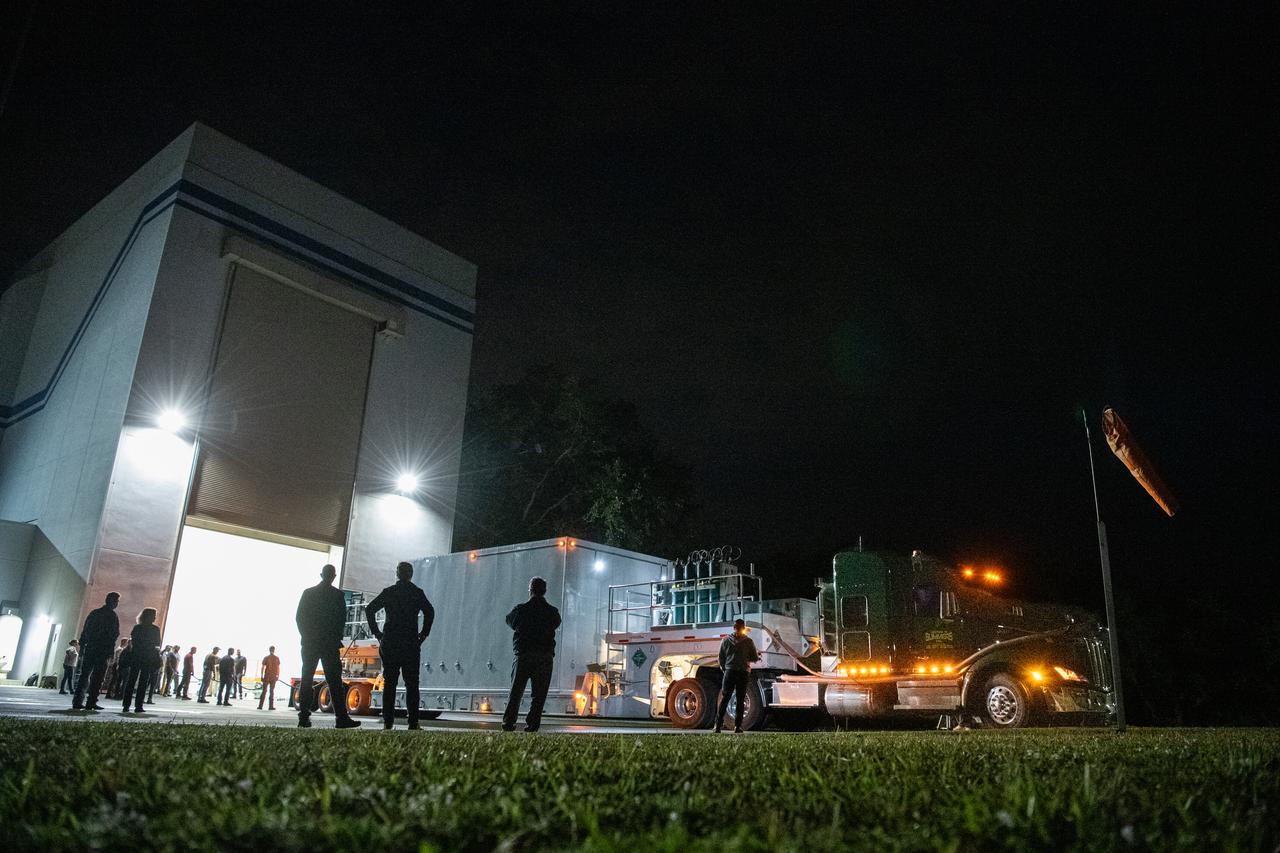
The transport carrier containing NASA’s Plankton, Aerosol, Cloud, ocean Ecosystem (PACE) observatory spacecraft arrives at the Astrotech Space Operations Facility near the agency’s Kennedy Space Center in Florida on Tuesday, Nov. 14, 2023. PACE was shipped from the agency’s Goddard Space Flight Center in Greenbelt, Maryland, and is targeted to launch on January 30, 2024, on a SpaceX Falcon 9 rocket lifting off from Space Launch Complex 40 at Cape Canaveral Space Force Station. The PACE observatory will help us better understand how the ocean and atmosphere exchange carbon dioxide, measure key atmospheric variables associated with air quality and Earth's climate, and monitor ocean health, in part by studying phytoplankton, tiny plants and algae that sustain the marine food web.

Dave Flowers, the project manager for NASA’s Biology Experiment-1 (BioExpt-1) in Exploration Research and Technology Programs, prepares it for testing in the Vibration Laboratory at Kennedy Space Center in Florida on May 13, 2021. BioExpt-1 is a space biology pathfinder, which will carry plants, algae, yeast, and fungi for biology research beyond low-Earth orbit (LEO). NASA will install the BioExpt-1 payload container assembles onto panels inside the Orion capsule. BioExpt-1 will return these science payloads to Earth to provide critical and unique data about life beyond LEO for the first time in more than 40 years. Artemis I is the first in a series of increasingly complex missions that will enable human exploration of the Moon and eventually on to Mars.
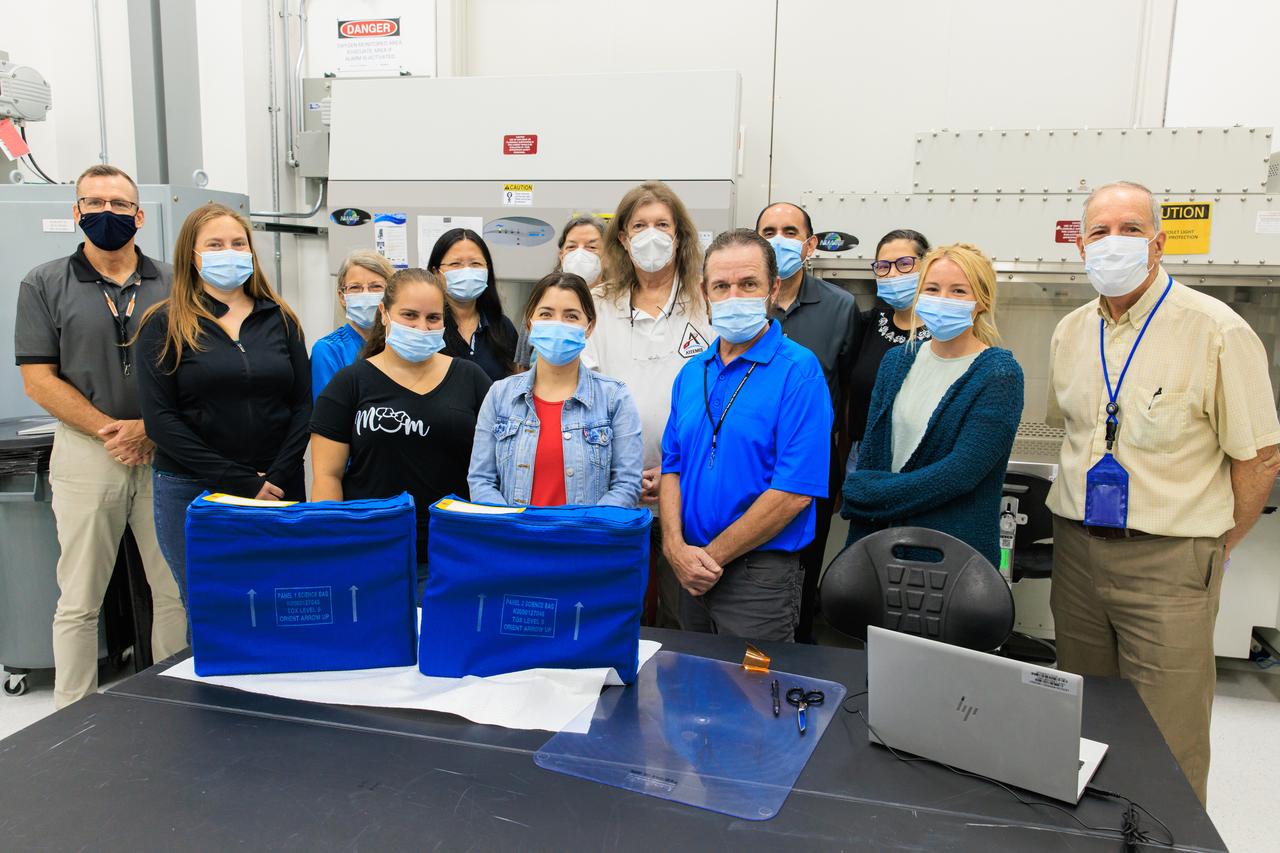
NASA’s Biology Experiment-1 (BioExpt-1) is officially packaged and ready for handover to the Orion team for Artemis I inside the Space Station Processing Facility at the agency’s Kennedy Space Center in Florida on Aug. 18, 2022. BioExpt-1 is a space biology pathfinder, which will carry Arabidopsis, algae, yeast, and fungi science payloads for biology research beyond low-Earth orbit aboard the Orion capsule on the Artemis I mission. The payload container assemblies will be installed onto panels in the Orion capsule and will return to Earth to provide critical and unique data about life beyond low-Earth orbit for the first time in more than 40 years. Artemis I is the first in a series of increasingly complex missions that will enable human exploration to the Moon and eventually on to Mars.
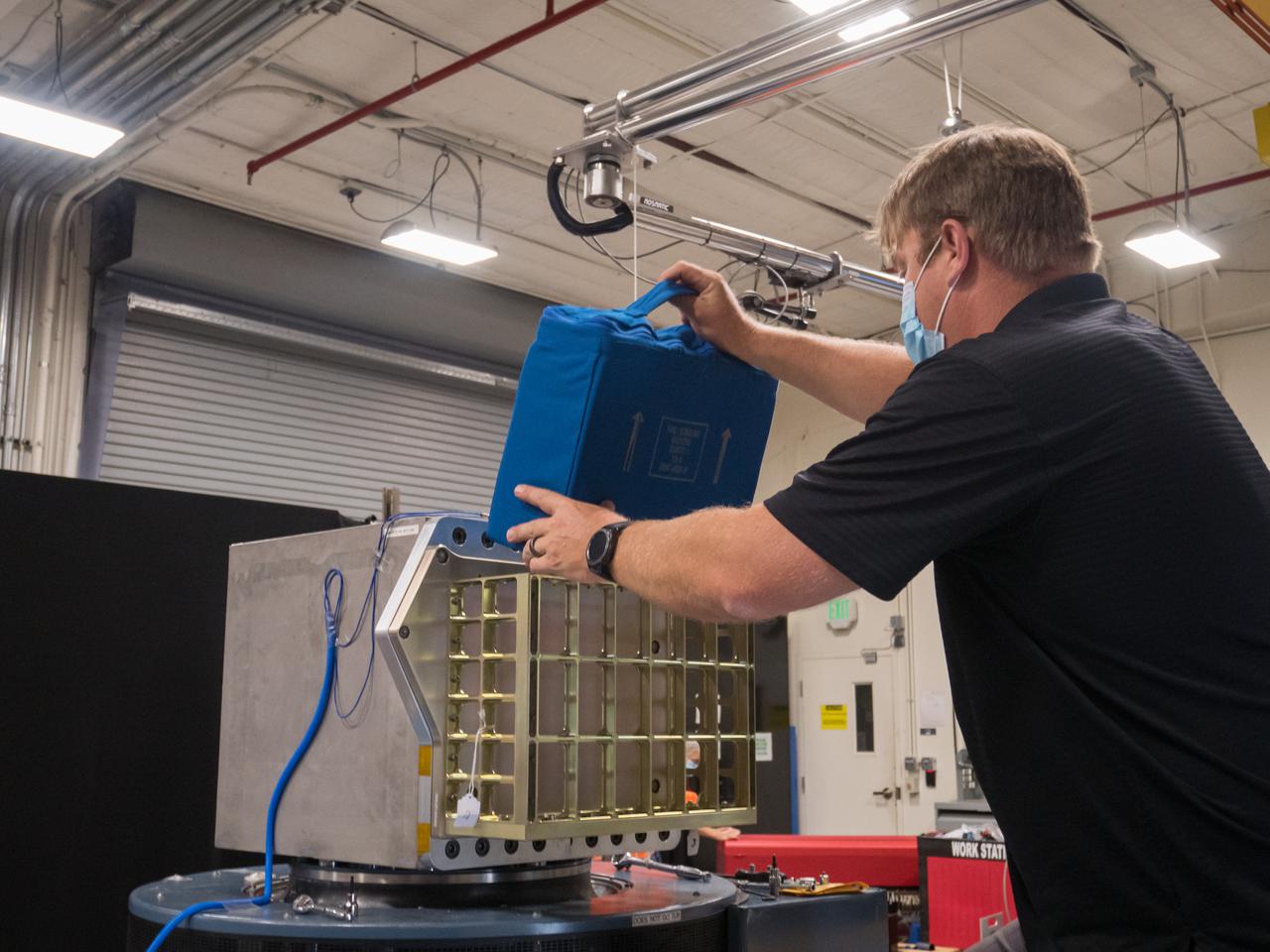
Adam Chaney, a mechanical engineer with the Laboratory Support Services and Operations (LASSO) contract at NASA’s Kennedy Space Center in Florida, prepares NASA’s Biology Experiment-1 (BioExpt-1) for testing in the Vibration Laboratory at Kennedy Space Center in Florida on May 13, 2021. BioExpt-1 is a space biology pathfinder, which will carry plants, algae, yeast, and fungi for biology research beyond low-Earth orbit (LEO). NASA will install the BioExpt-1 payload container assembles onto panels inside the Orion capsule. BioExpt-1 will return these science payloads to Earth to provide critical and unique data about life beyond LEO for the first time in more than 40 years. Artemis I is the first in a series of increasingly complex missions that will enable human exploration of the Moon and eventually on to Mars.
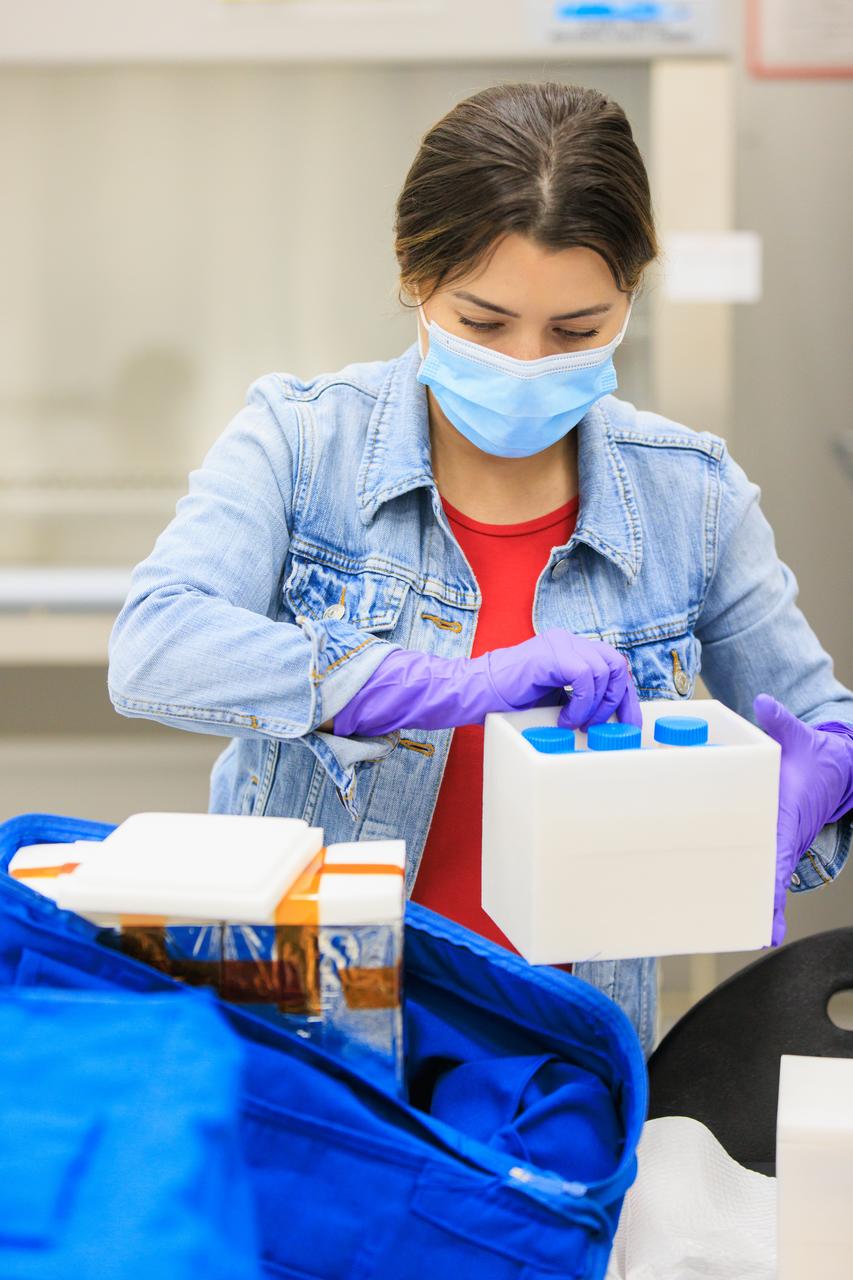
Scientists package up part of NASA’s Biology Experiment-1 (BioExpt-1) for official handover to the Orion team for Artemis I inside the Space Station Processing Facility at the agency’s Kennedy Space Center in Florida on Aug. 18, 2022. BioExpt-1 is a space biology pathfinder, which will carry Arabidopsis, algae, yeast, and fungi science payloads for biology research beyond low-Earth orbit aboard the Orion capsule on the Artemis I mission. The payload container assemblies will be installed onto panels in the Orion capsule and will return to Earth to provide critical and unique data about life beyond low-Earth orbit for the first time in more than 40 years. Artemis I is the first in a series of increasingly complex missions that will enable human exploration to the Moon and eventually on to Mars.
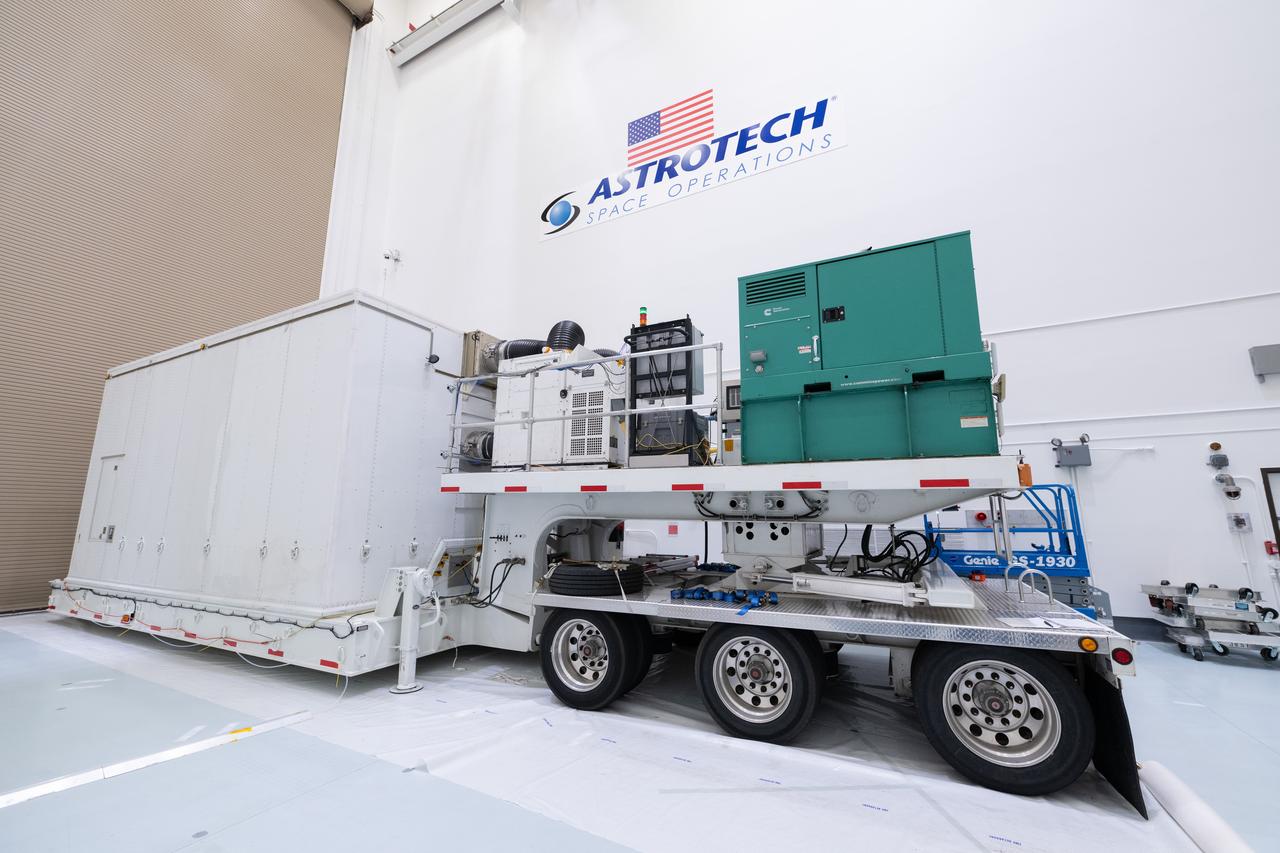
The transport carrier containing NASA’s Plankton, Aerosol, Cloud, ocean Ecosystem (PACE) observatory spacecraft arrives at the Astrotech Space Operations Facility near the agency’s Kennedy Space Center in Florida on Tuesday, Nov. 14, 2023. PACE was shipped from the agency’s Goddard Space Flight Center in Greenbelt, Maryland, and is targeted to launch on January 30, 2024, on a SpaceX Falcon 9 rocket lifting off from Space Launch Complex 40 at Cape Canaveral Space Force Station. The PACE observatory will help us better understand how the ocean and atmosphere exchange carbon dioxide, measure key atmospheric variables associated with air quality and Earth's climate, and monitor ocean health, in part by studying phytoplankton, tiny plants and algae that sustain the marine food web.
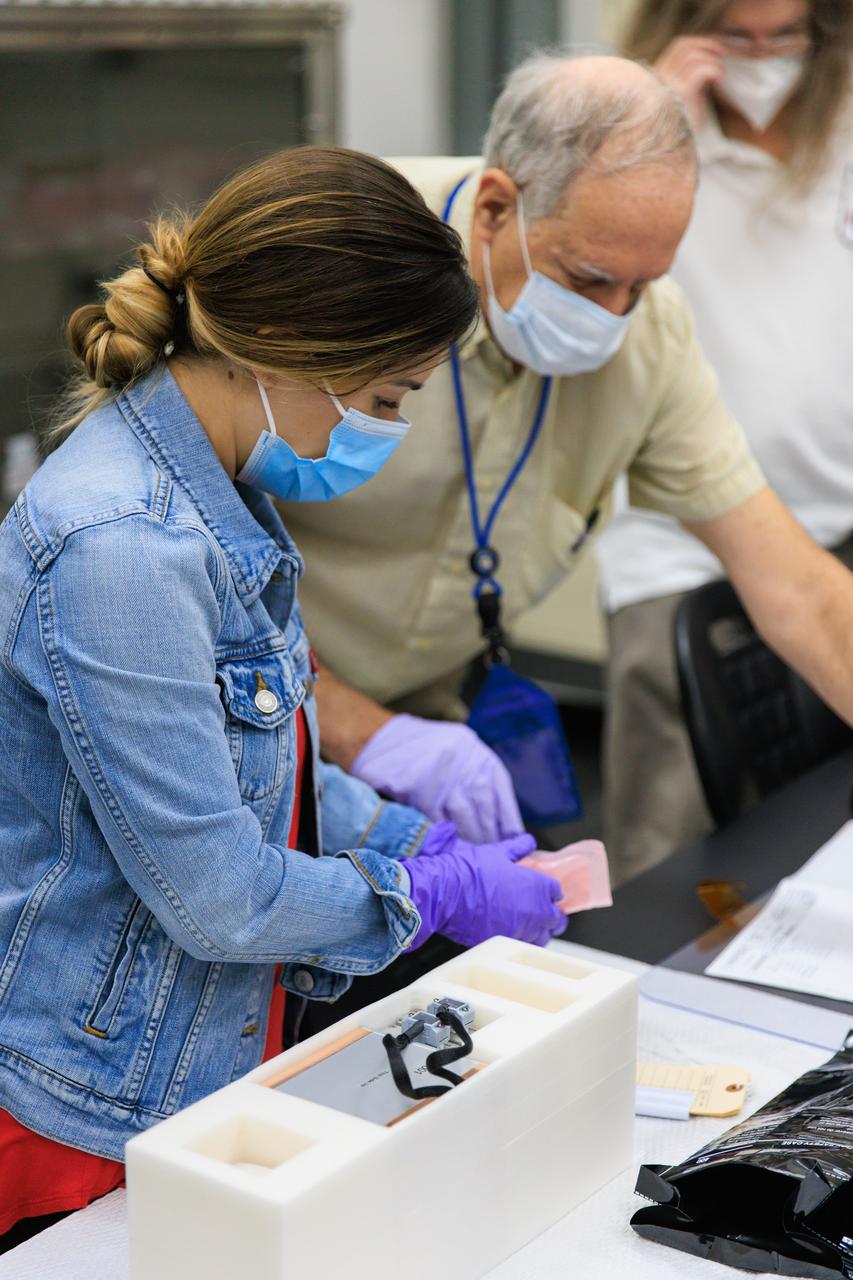
Scientists package up part of NASA’s Biology Experiment-1 (BioExpt-1) for official handover to the Orion team for Artemis I inside the Space Station Processing Facility at the agency’s Kennedy Space Center in Florida on Aug. 18, 2022. BioExpt-1 is a space biology pathfinder, which will carry Arabidopsis, algae, yeast, and fungi science payloads for biology research beyond low-Earth orbit aboard the Orion capsule on the Artemis I mission. The payload container assemblies will be installed onto panels in the Orion capsule and will return to Earth to provide critical and unique data about life beyond low-Earth orbit for the first time in more than 40 years. Artemis I is the first in a series of increasingly complex missions that will enable human exploration to the Moon and eventually on to Mars.
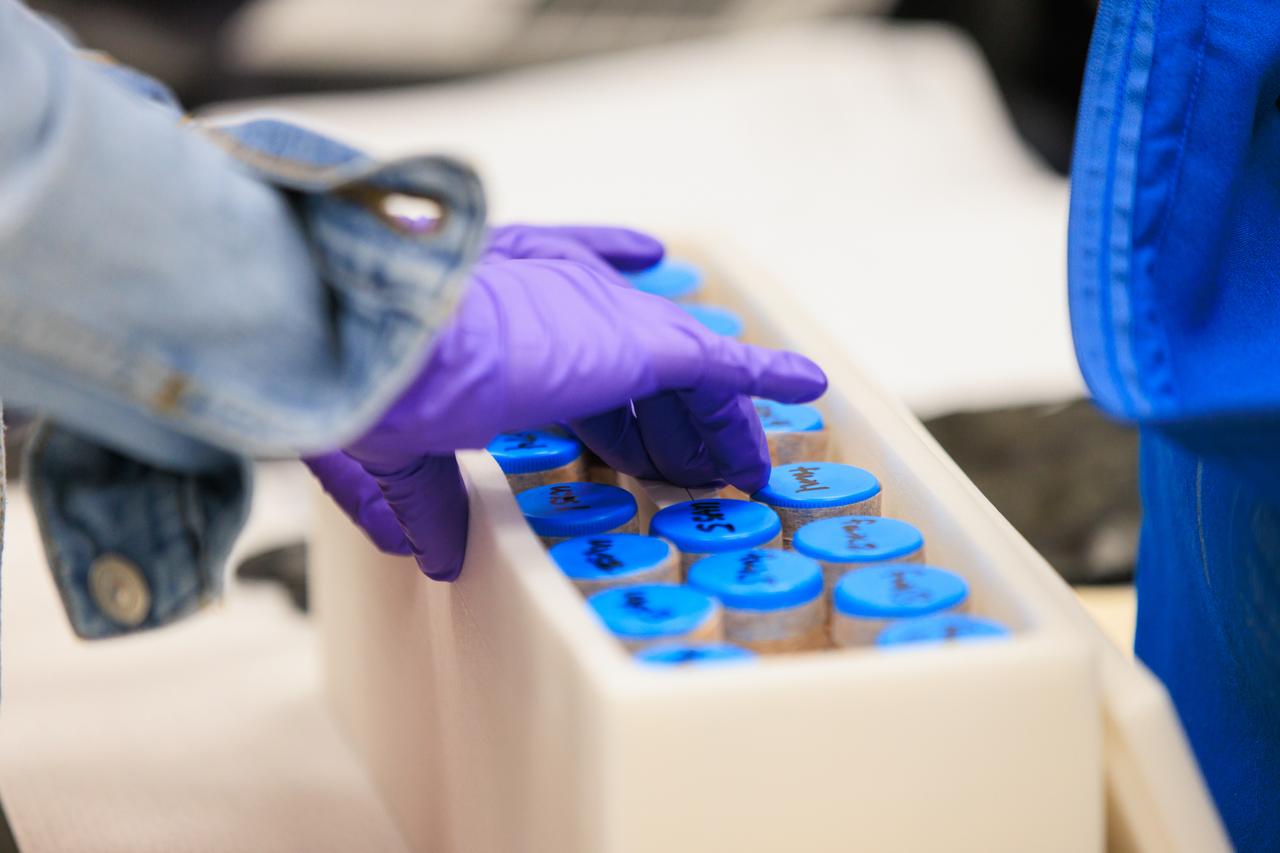
Scientists package up part of NASA’s Biology Experiment-1 (BioExpt-1) for official handover to the Orion team for Artemis I inside the Space Station Processing Facility at the agency’s Kennedy Space Center in Florida on Aug. 18, 2022. BioExpt-1 is a space biology pathfinder, which will carry Arabidopsis, algae, yeast, and fungi science payloads for biology research beyond low-Earth orbit aboard the Orion capsule on the Artemis I mission. The payload container assemblies will be installed onto panels in the Orion capsule and will return to Earth to provide critical and unique data about life beyond low-Earth orbit for the first time in more than 40 years. Artemis I is the first in a series of increasingly complex missions that will enable human exploration to the Moon and eventually on to Mars.
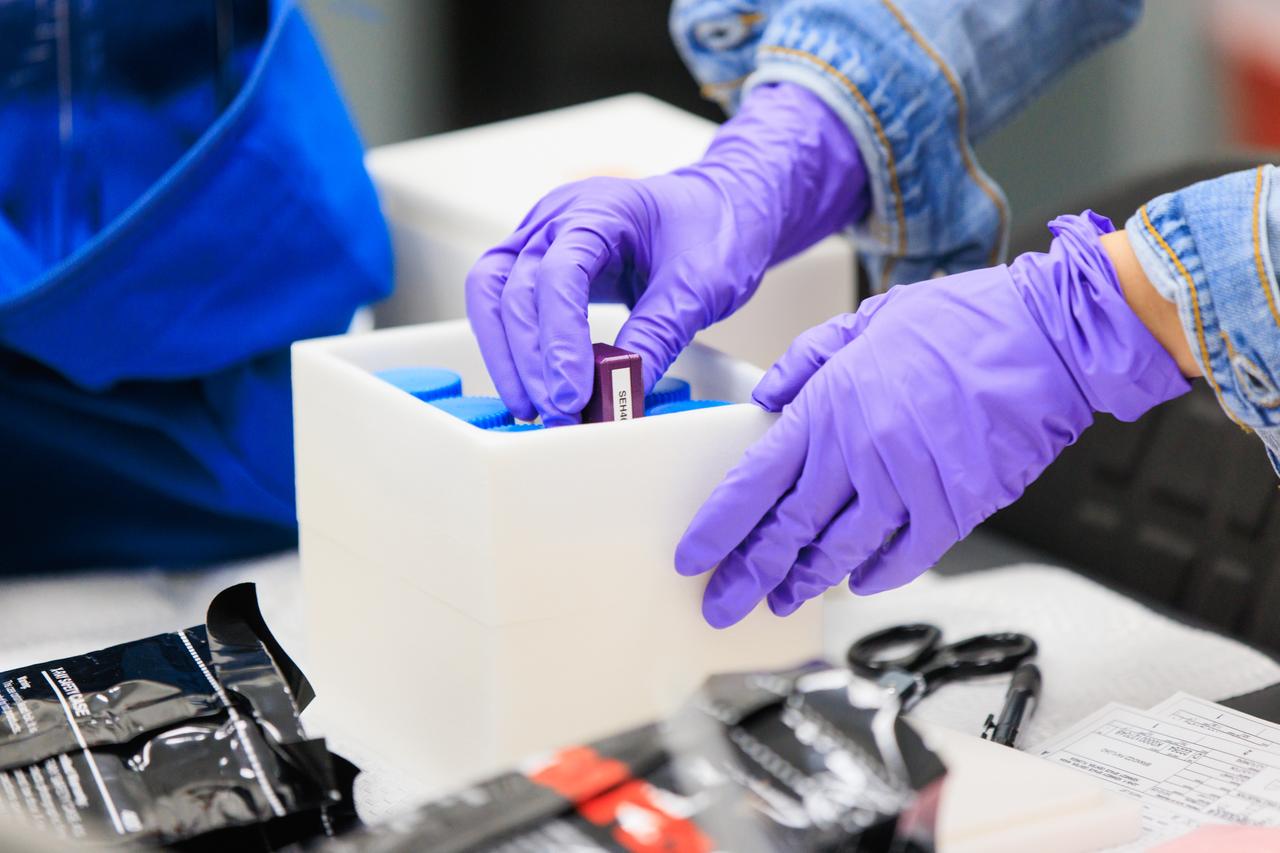
Scientists package up part of NASA’s Biology Experiment-1 (BioExpt-1) for official handover to the Orion team for Artemis I inside the Space Station Processing Facility at the agency’s Kennedy Space Center in Florida on Aug. 18, 2022. BioExpt-1 is a space biology pathfinder, which will carry Arabidopsis, algae, yeast, and fungi science payloads for biology research beyond low-Earth orbit aboard the Orion capsule on the Artemis I mission. The payload container assemblies will be installed onto panels in the Orion capsule and will return to Earth to provide critical and unique data about life beyond low-Earth orbit for the first time in more than 40 years. Artemis I is the first in a series of increasingly complex missions that will enable human exploration to the Moon and eventually on to Mars.
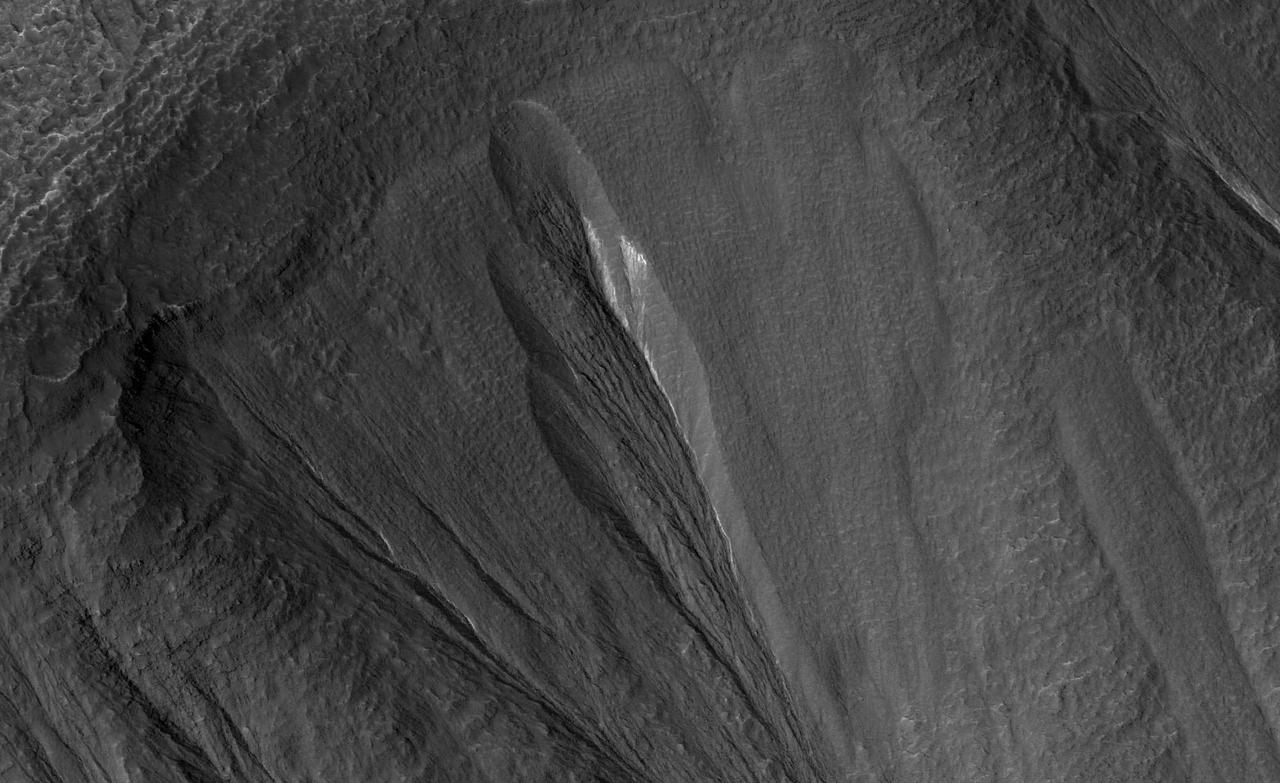
The white material seen within this gully is believed to be dusty water ice in a Martian region called Dao Vallis, captured by NASA's Mars Reconnaissance Orbiter (MRO). Scientists believe dust particles within this ice act similarly to dust that falls on to glaciers on Earth, warming up in sunlight and causing subsurface pockets of meltwater to form. On Earth, the dust that forms these pockets are called cryoconite, and the pockets are called cryoconite holes. These Earth-based pockets of water are often teeming with simple life, including algae, fungi and cyanobacteria. Scientists believe similar shallow pools of water could exist on Mars, and may also be excellent places to search for life on the Red Planet today. This black-and-white image was captured by MRO using its HiRISE (High-Resolution Imaging Science Experiment) camera on May 10, 2009. https://photojournal.jpl.nasa.gov/catalog/PIA26408
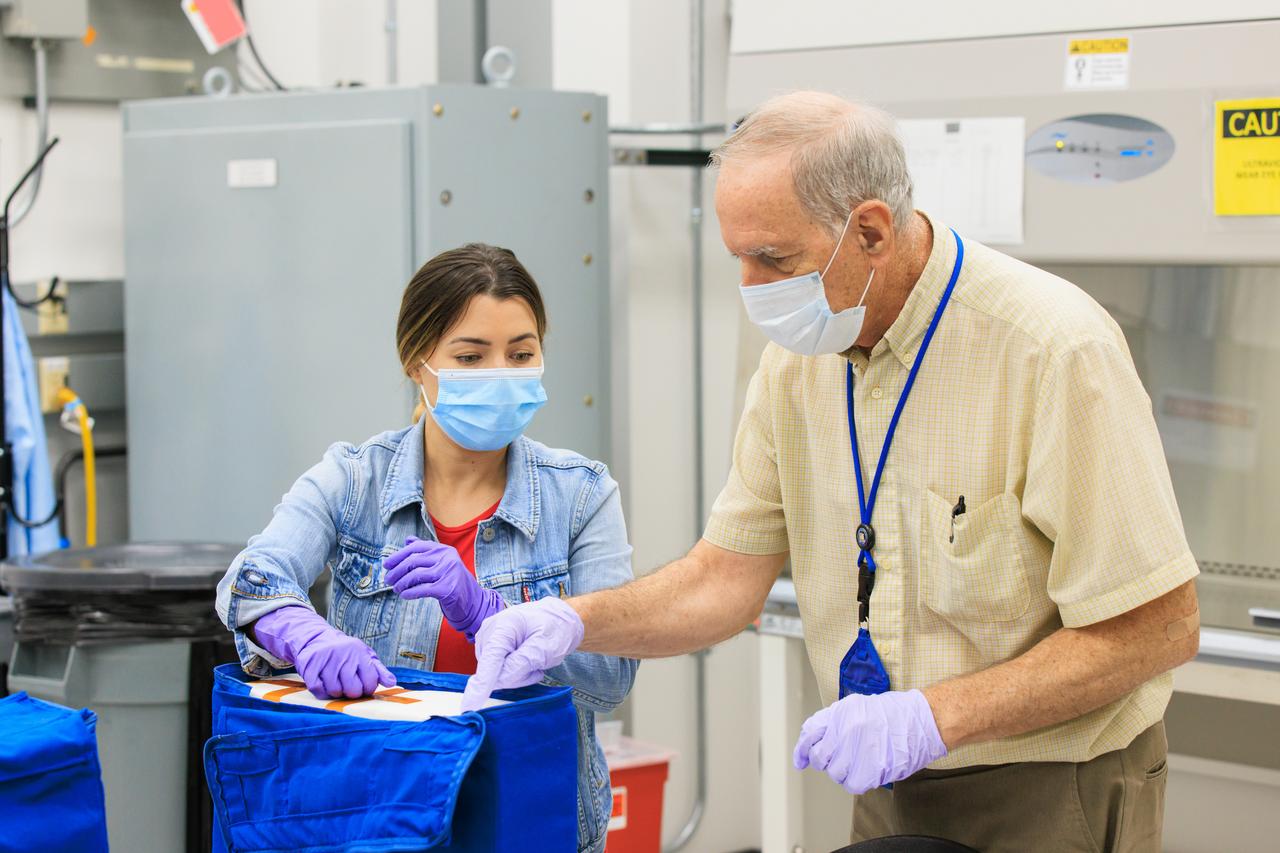
Scientists package up part of NASA’s Biology Experiment-1 (BioExpt-1) for official handover to the Orion team for Artemis I inside the Space Station Processing Facility at the agency’s Kennedy Space Center in Florida on Aug. 18, 2022. BioExpt-1 is a space biology pathfinder, which will carry Arabidopsis, algae, yeast, and fungi science payloads for biology research beyond low-Earth orbit aboard the Orion capsule on the Artemis I mission. The payload container assemblies will be installed onto panels in the Orion capsule and will return to Earth to provide critical and unique data about life beyond low-Earth orbit for the first time in more than 40 years. Artemis I is the first in a series of increasingly complex missions that will enable human exploration to the Moon and eventually on to Mars.
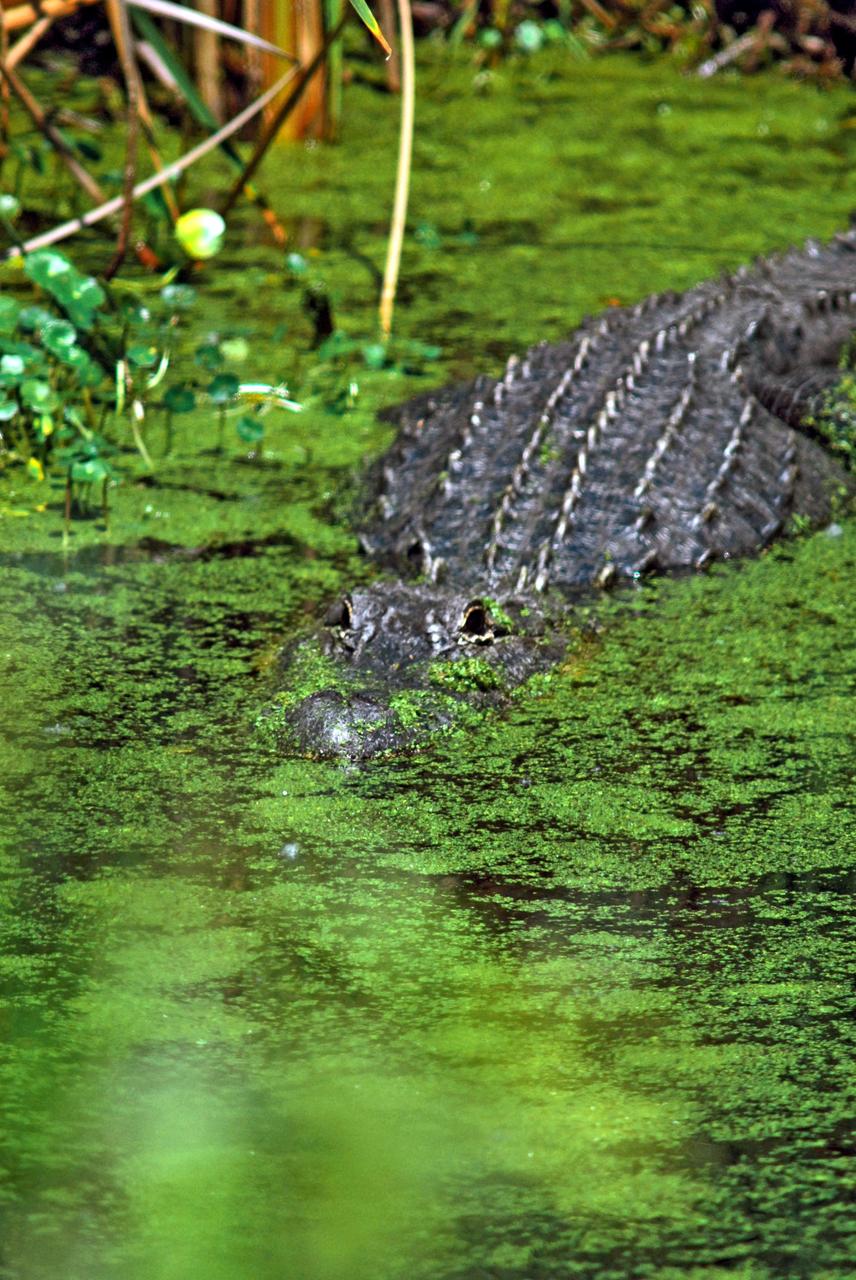
KENNEDY SPACE CENTER, FLA. -- In a pond on Kennedy Space Center, this alligator achieves partial camouflage from the green algae. American alligators feed and rest in the water, and lay their eggs in dens they dig into the banks. The young alligators spend their first several weeks in these dens. A protected species, alligators can be spotted in the drainage canals and other waters surrounding KSC. KSC shares a boundary with the Merritt Island Wildlife Nature Refuge. The refuge is a habitat for more than 310 species of birds, 25 mammals, 117 fishes and 65 amphibians and reptiles. In addition, the Refuge supports 19 endangered or threatened wildlife species on Federal or State lists, more than any other single refuge in the U.S. Photo credit: NASA/Dimitri Gerondidakis
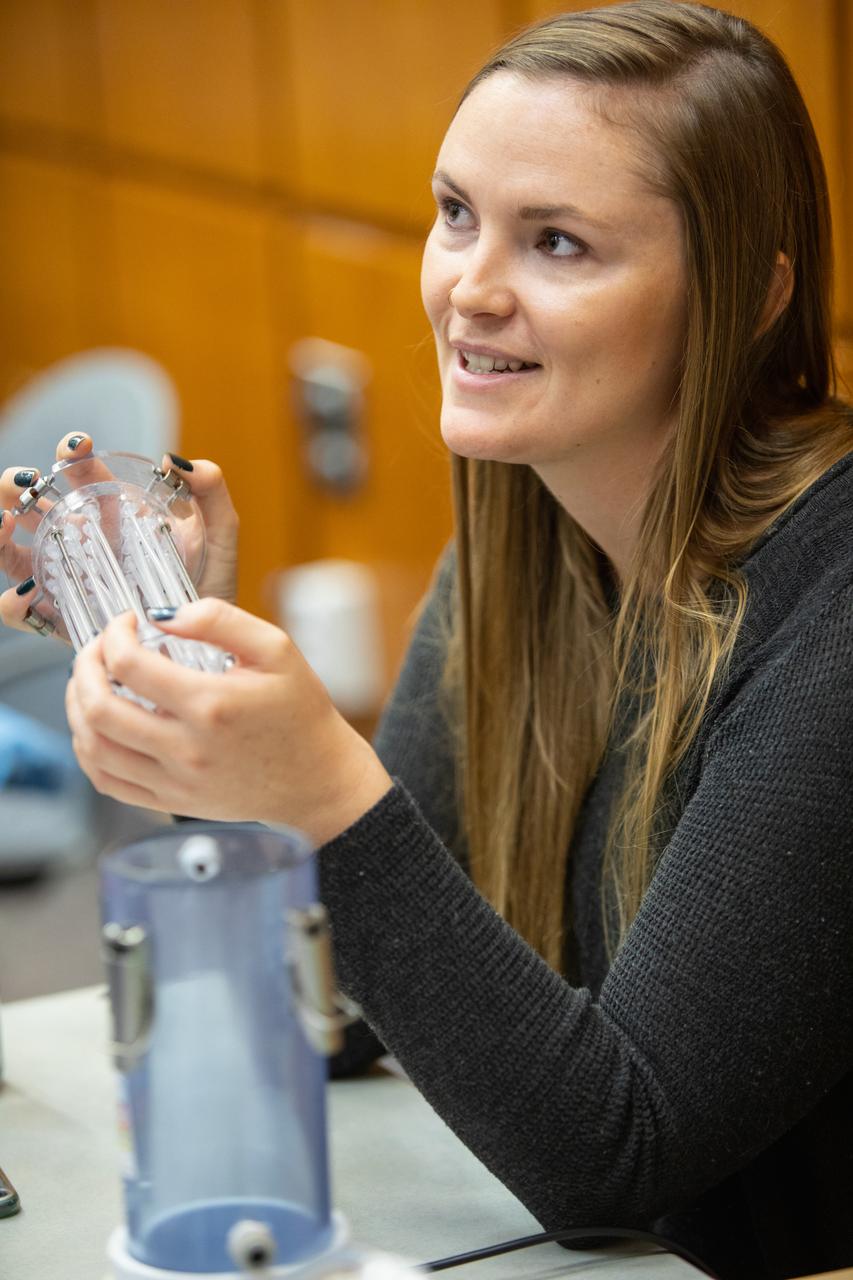
Melanie Pickett, a post-doctorate researcher at NASA’s Kennedy Space Center in Florida, participates in an innovation showcase on Nov. 19, 2019, in the Neil Armstrong Operations and Checkout Building’s Mission Briefing Room. A first-time participant, Pickett presented information on an Algae Membrane Photobioreactor she and others are developing that would eliminate the need for sending water treated with toxic chemicals – currently used to break down urine – to the International Space Station. Nearly 50 exhibitors gathered to demonstrate new technologies and innovations during the center’s Innovation Days – one of several events throughout the year aimed at fostering and encouraging an innovative culture at Kennedy. Showcase participants included individuals from multiple directorates, programs and organizations throughout Kennedy. In addition to the showcase, employees had the opportunity to attend an overview presentation on NASA’s Human Landing System (HLS), hosted by HLS Program Manager Lisa Watson-Morgan.
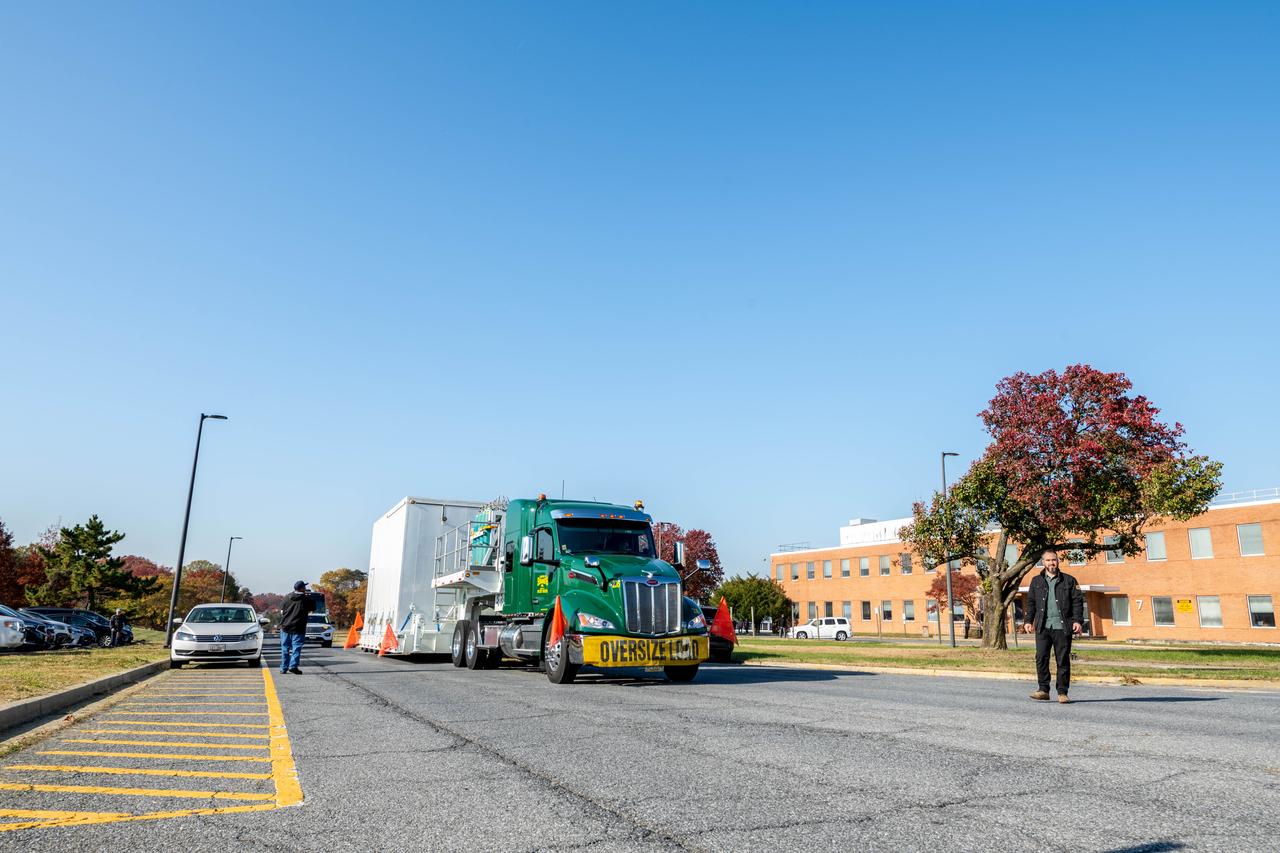
The transport carrier containing NASA’s Plankton, Aerosol, Cloud, ocean Ecosystem (PACE) observatory spacecraft departs NASA’s Goddard Space Flight Center in Greenbelt Maryland on Monday, Nov. 13, 2023. PACE is traveling to Astrotech Space Operations Facility near the agency’s Kennedy Space Center in Florida. PACE is targeted to launch on January 30, 2024, on a SpaceX Falcon 9 rocket lifting off from Space Launch Complex 40 at Cape Canaveral Space Force Station. The PACE observatory will help us better understand how the ocean and atmosphere exchange carbon dioxide, measure key atmospheric variables associated with air quality and Earth's climate, and monitor ocean health, in part by studying phytoplankton, tiny plants and algae that sustain the marine food web.