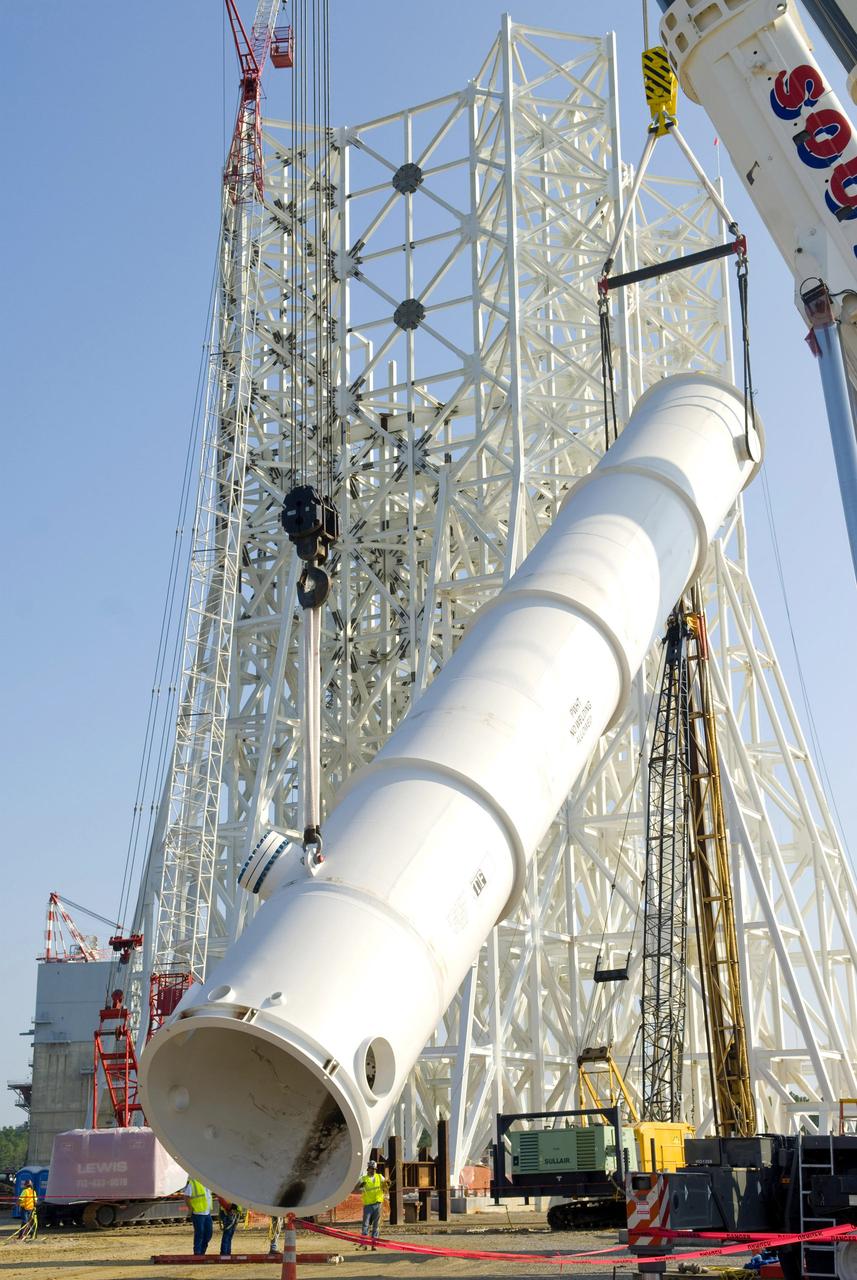
A water tank is lifted into place at the A-3 Test Stand being built at NASA's John C. Stennis Space Center. Fourteen water, liquid oxygen (LOX) and isopropyl alcohol (IPA) tanks are being installed to support the chemical steam generators to be used on the A-3 Test Stand. The IPA and LOX tanks will provide fuel for the generators. The water will allow the generators to produce steam that will be used to reduce pressure inside the stand's test cell diffuser, enabling operators to simulate altitudes up to 100,000 feet. In that way, operators can perform the tests needed on rocket engines being built to carry humans back to the moon and possibly beyond. The A-3 Test Stand is set for completion and activation in 2011.
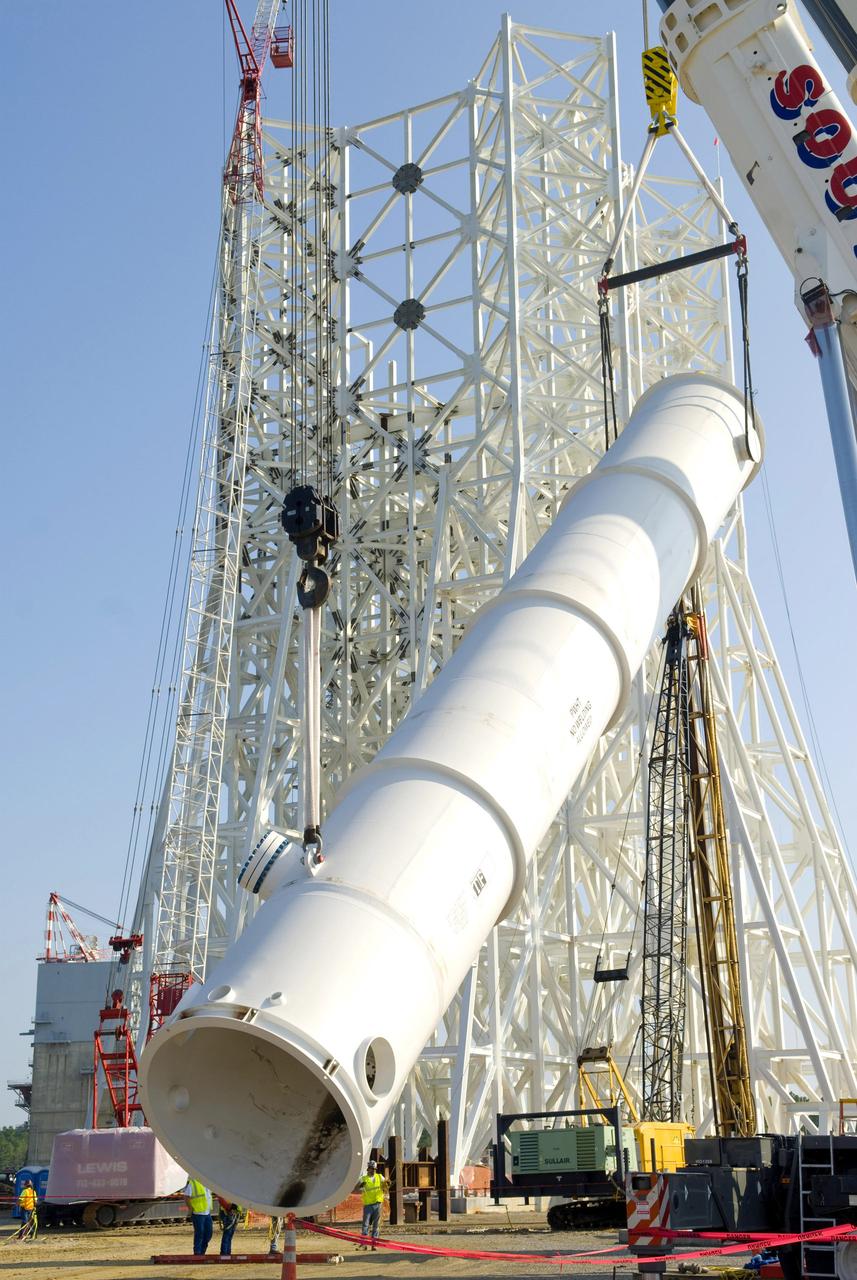
A water tank is lifted into place at the A-3 Test Stand being built at NASA's John C. Stennis Space Center. Fourteen water, liquid oxygen (LOX) and isopropyl alcohol (IPA) tanks are being installed to support the chemical steam generators to be used on the A-3 Test Stand. The IPA and LOX tanks will provide fuel for the generators. The water will allow the generators to produce steam that will be used to reduce pressure inside the stand's test cell diffuser, enabling operators to simulate altitudes up to 100,000 feet. In that way, operators can perform the tests needed on rocket engines being built to carry humans back to the moon and possibly beyond. The A-3 Test Stand is set for completion and activation in 2011.
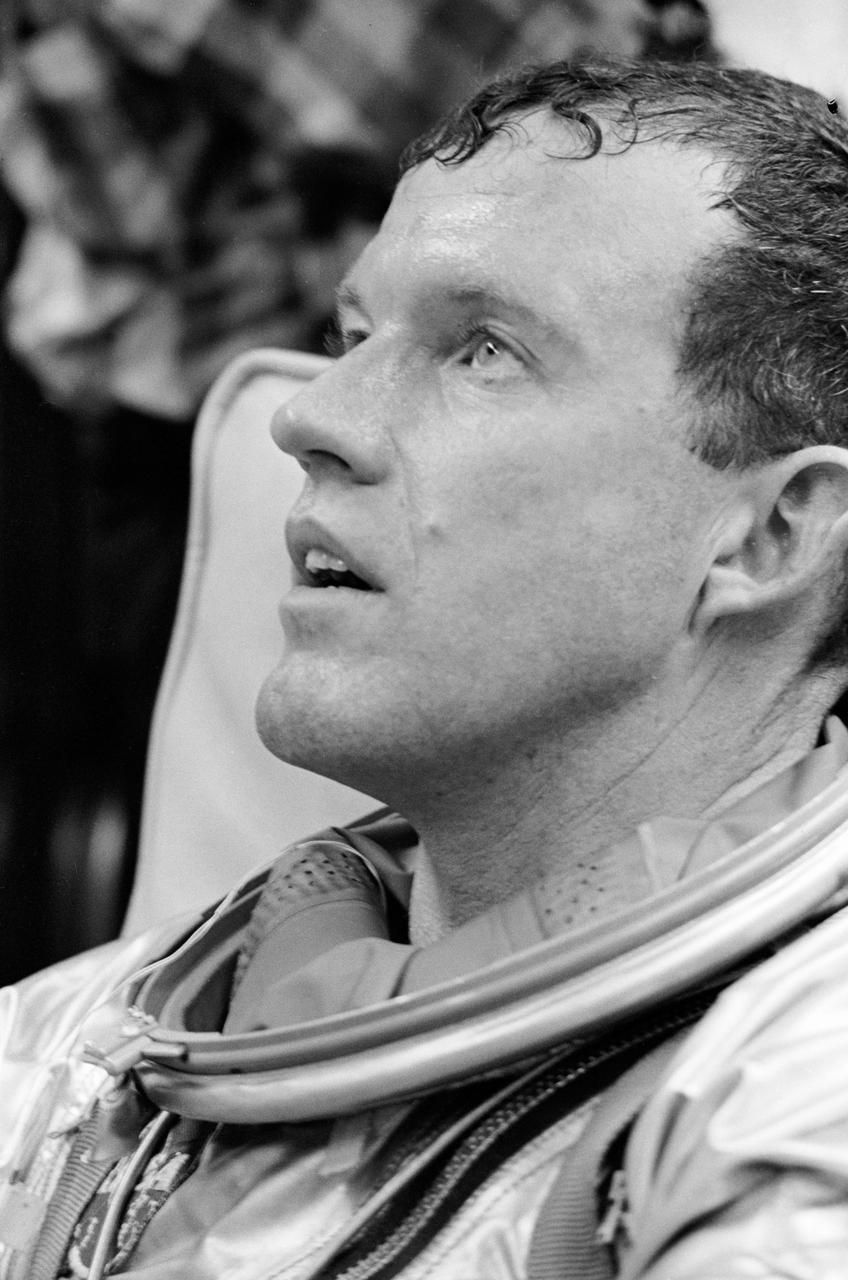
S63-03984 (1963) --- Astronaut L. Gordon Cooper Jr., prime pilot for the Mercury-Atlas 9 (MA-9) mission, is pictured just after his helmet had been removed. He has just spent approximately five hours in the spacecraft during altitude chamber tests. Photo credit: NASA
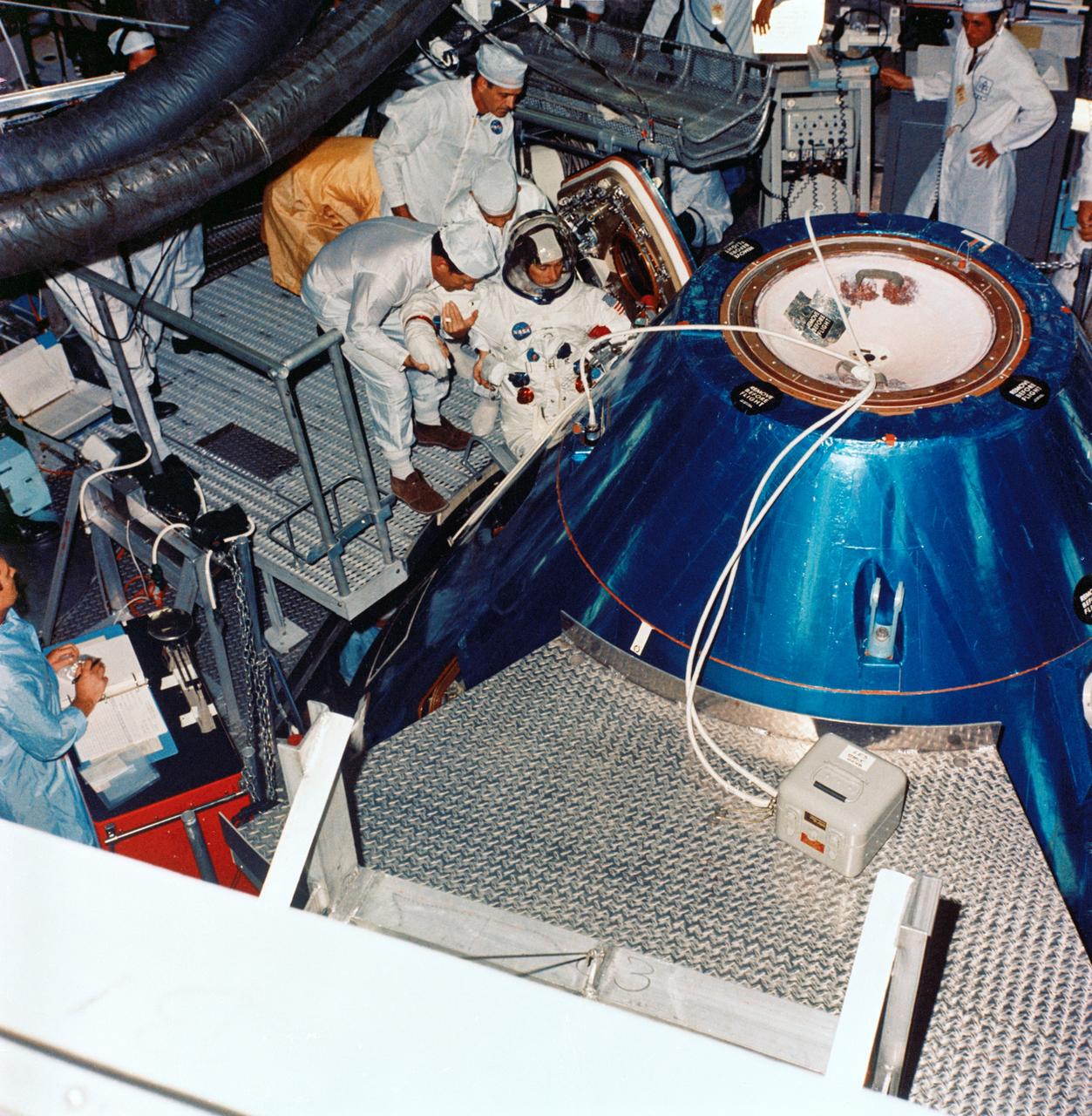
S68-40875 (5 July 1968) --- Astronaut John W. Young, Apollo 7 backup command module pilot, ingresses Apollo Spacecraft 101 Command Module during simulated altitude runs at the Kennedy Space Center's Pad 34.
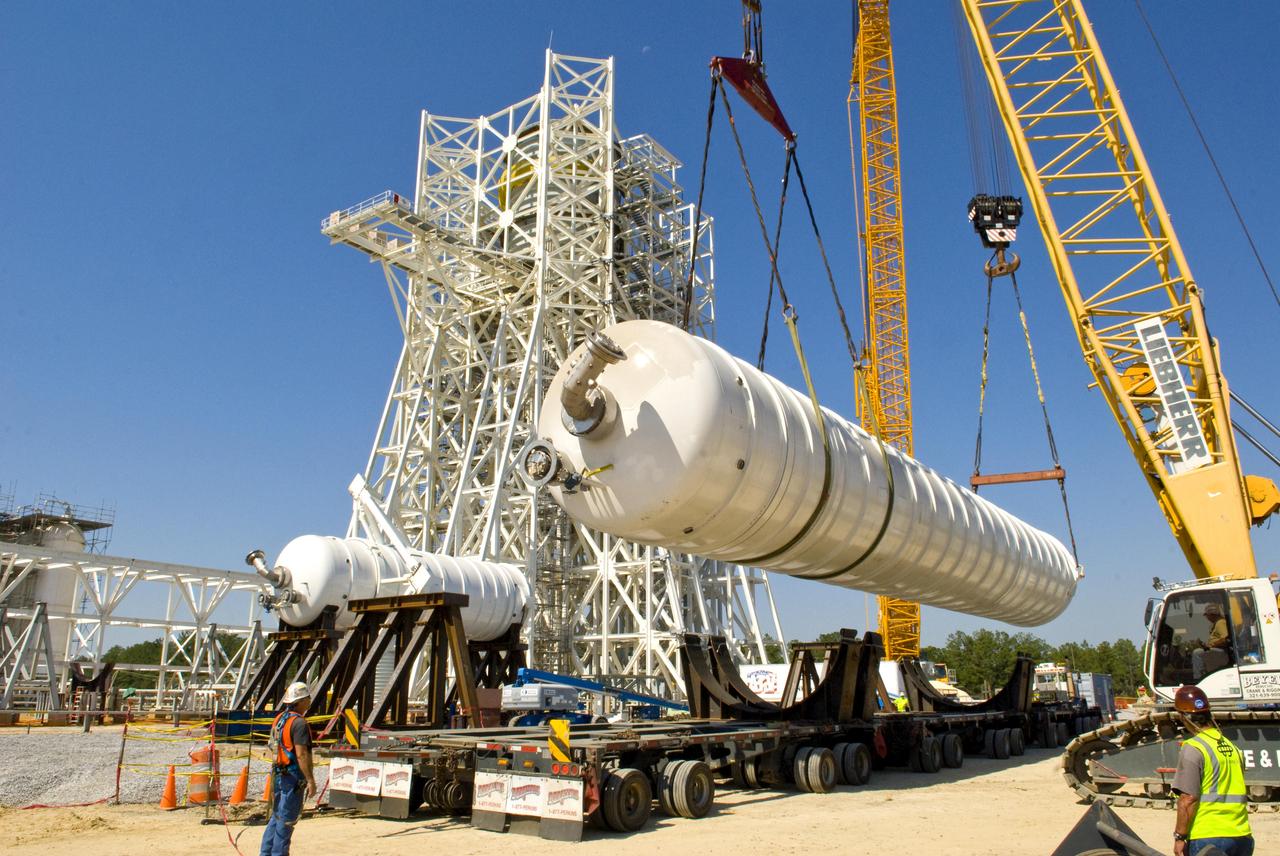
An 80,000-gallon liquid hydrogen tank is placed at the A-3 Test Stand construction site on Sept. 24, 2010. The tank will provide propellant for tests of next-generation rocket engines at the stand. It will be placed upright on top of the stand, helping to increase the overall height to 300 feet. Once completed, the A-3 Test Stand will enable operators to test rocket engines at simulated altitudes of up to 100,000 feet. The A-3 stand is the first large rocket engine test structure to be built at Stennis Space Center since the 1960s.
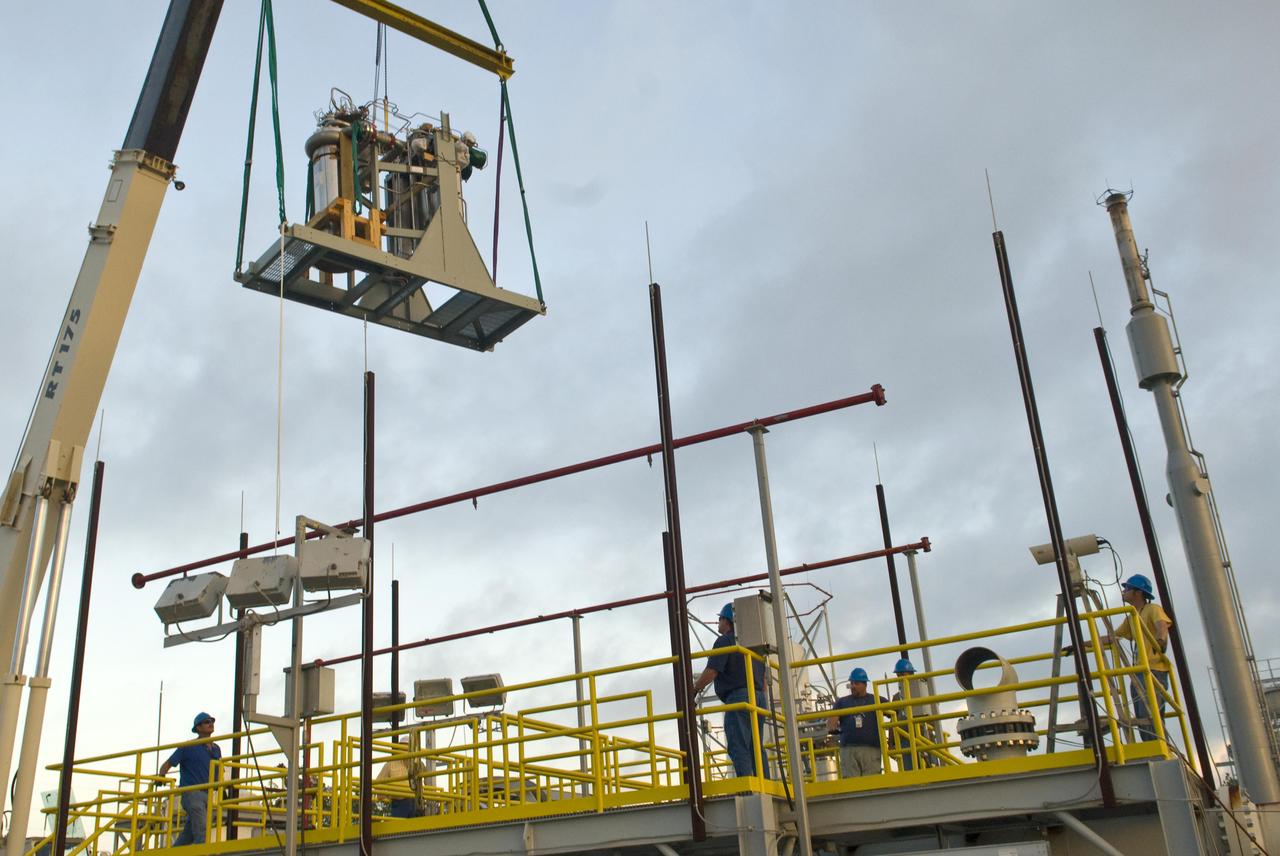
The first of nine chemical steam generator (CSG) units that will be used on the A-3 Test Stand is hoisted into place at the E-2 Test Stand at John C. Stennis Space Center on Oct. 24, 2010. The unit was installed at the E-2 stand for verification and validation testing before it is moved to the A-3 stand. Steam generated by the nine CSG units that will be installed on the A-3 stand will create a vacuum that allows Stennis operators to test next-generation rocket engines at simulated altitudes up to 100,000 feet.
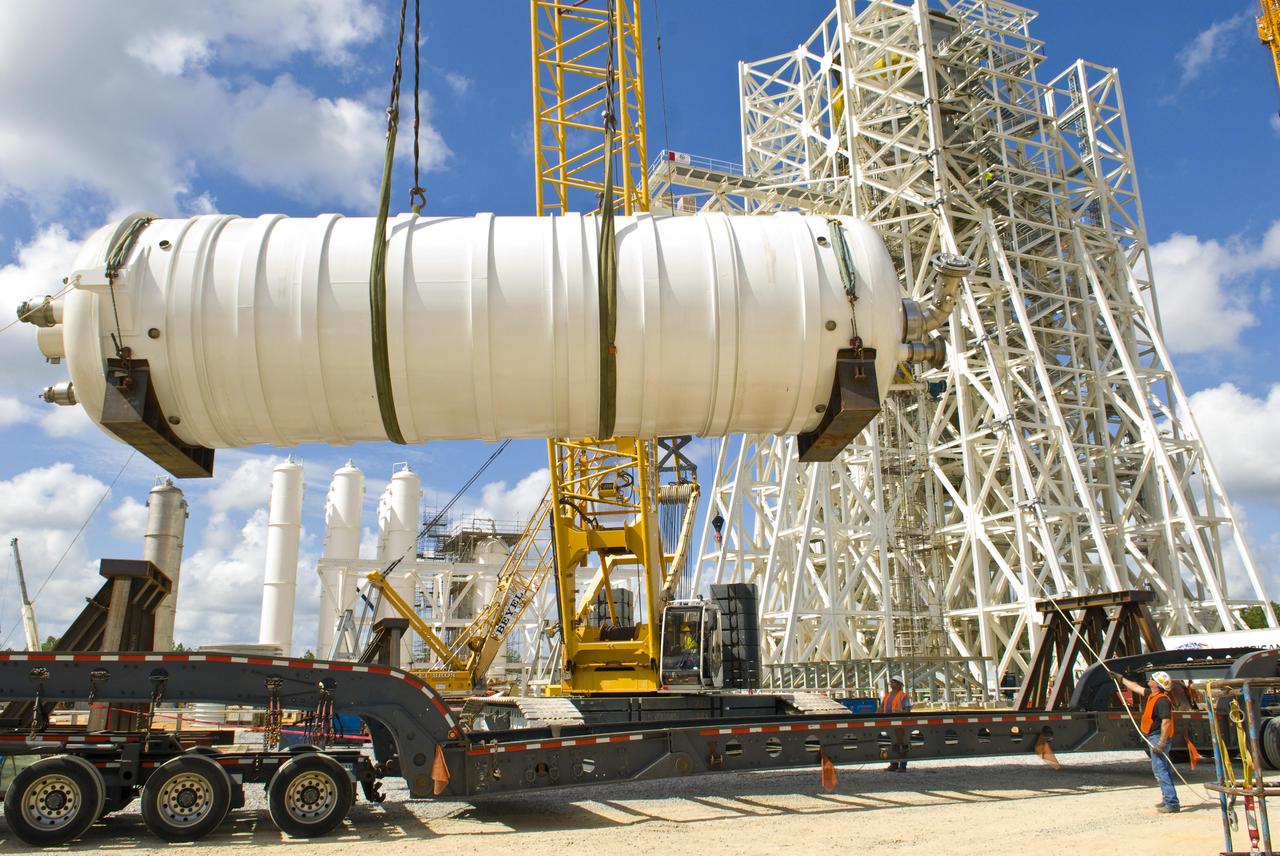
A 35,000-gallon liquid oxygen tank is placed at the A-3 Test Stand construction site on Sept. 24, 2010. The tank will provide propellant for tests of next-generation rocket engines at the stand. It will be placed upright on top of the stand, helping to increase the overall height to 300 feet. Once completed, the A-3 Test Stand will enable operators to test rocket engines at simulated altitudes of up to 100,000 feet. The A-3 stand is the first large rocket engine test structure to be built at Stennis Space Center since the 1960s.
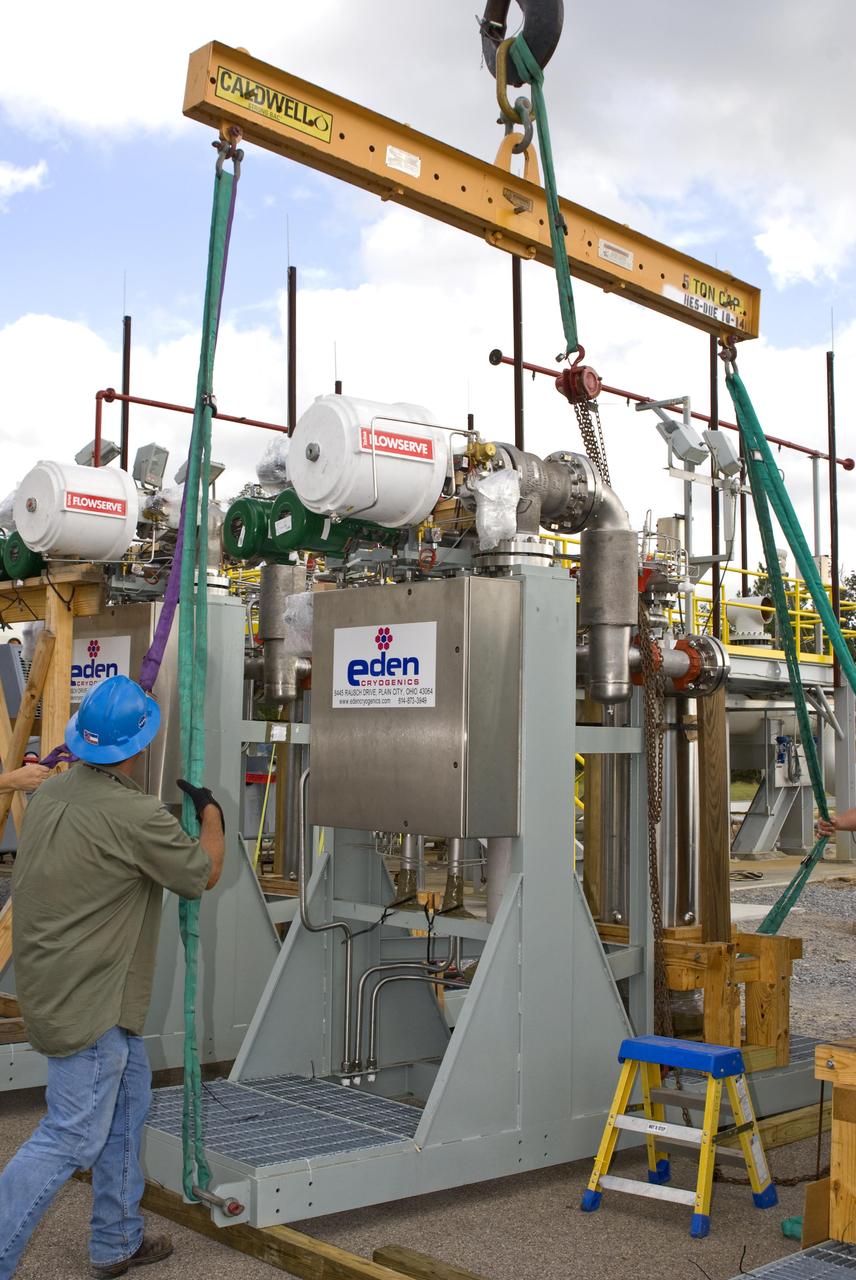
The first of nine chemical steam generator (CSG) units that will be used on the A-3 Test Stand is prepared for installation Oct. 24, 2010, at John C. Stennis Space Center. The unit was installed at the E-2 Test Stand for verification and validation testing before it is moved to the A-3 stand. Steam generated by the nine CSG units that will be installed on the A-3 stand will create a vacuum that allows Stennis operators to test next-generation rocket engines at simulated altitudes up to 100,000 feet.
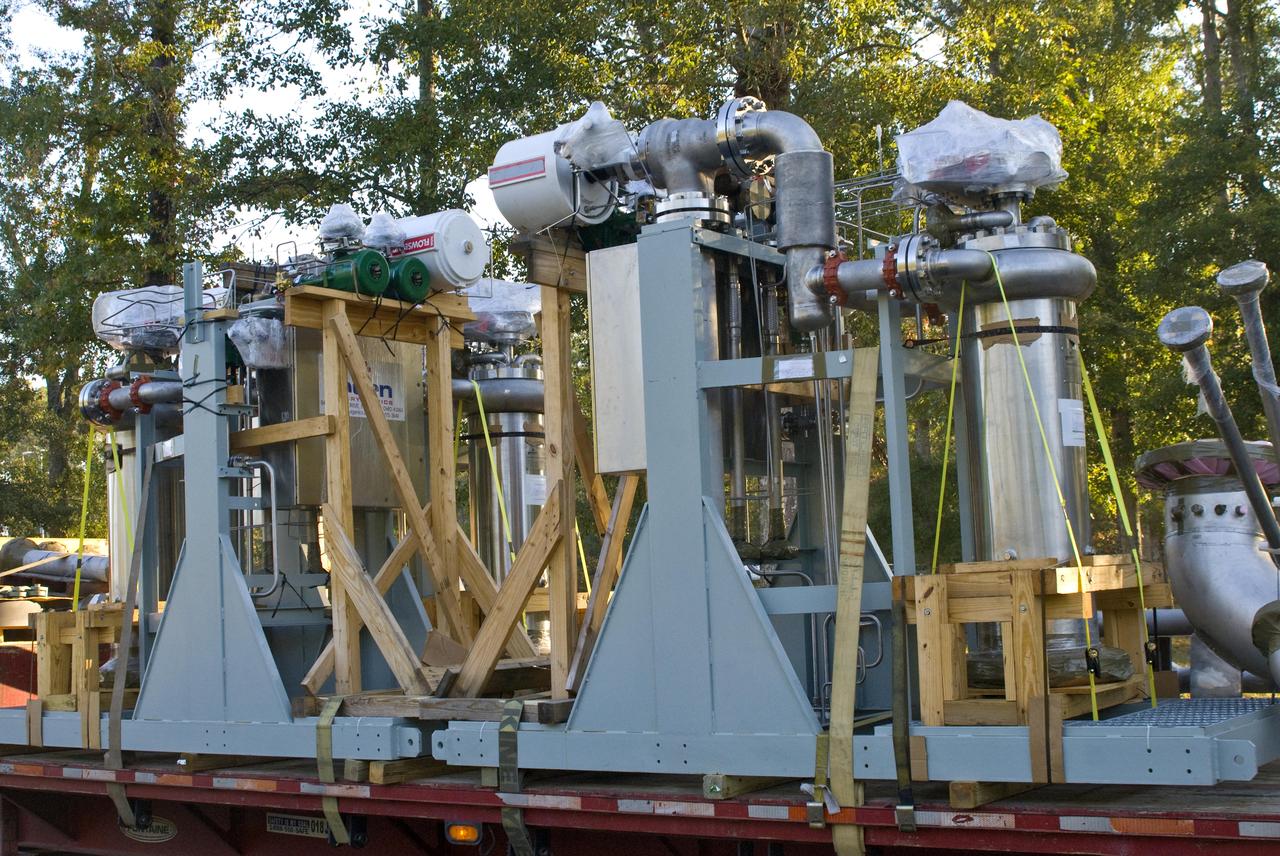
The first of nine chemical steam generator (CSG) units that will be used on the A-3 Test Stand arrived at John. C. Stennis Space Center on Oct. 22, 2010. The unit was installed at the E-2 Test Stand for verification and validation testing before it is moved to the A-3 stand. Steam generated by the nine CSG units that will be installed on the A-3 stand will create a vacuum that allows Stennis operators to test next-generation rocket engines at simulated altitudes up to 100,000 feet.
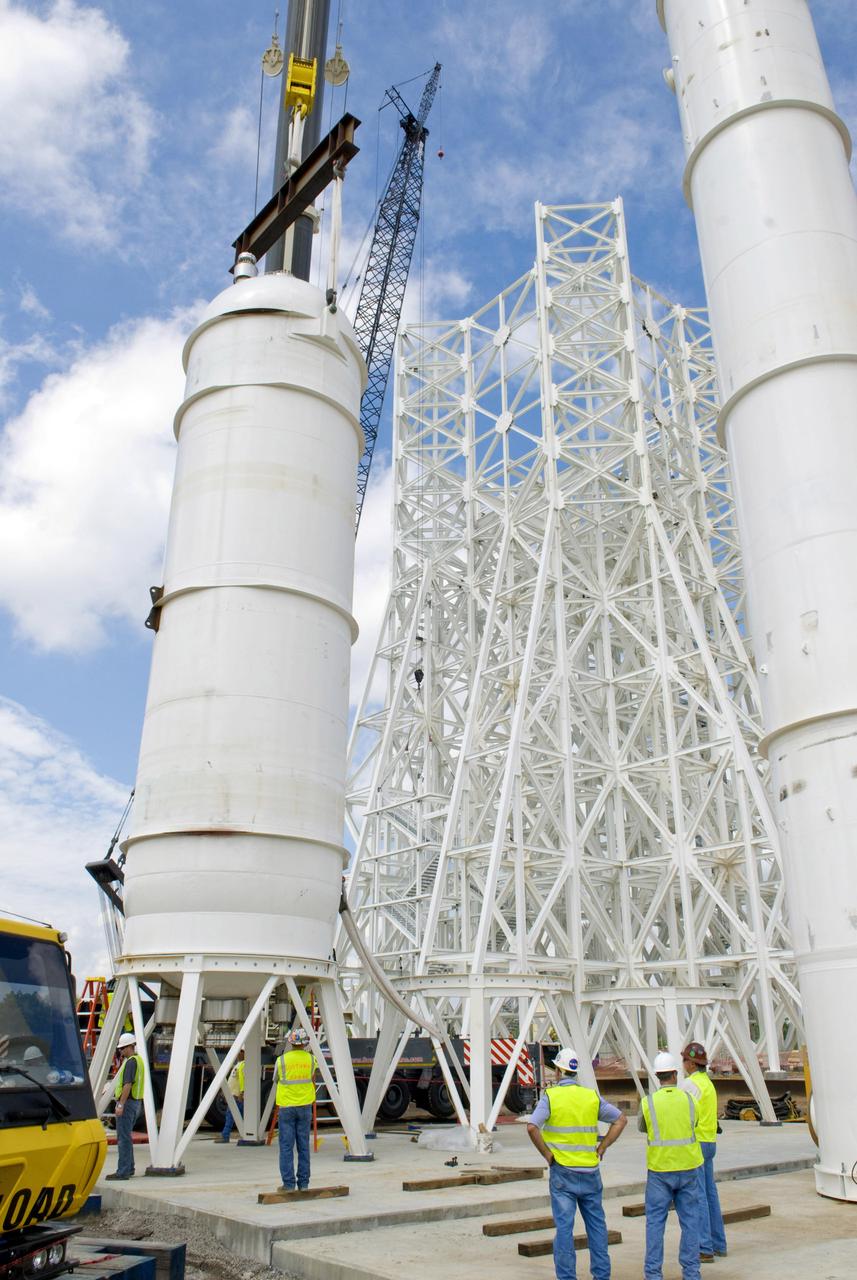
A liquid oxygen (LOX) tank is lifted into place at the A-3 Test Stand being built at NASA's John C. Stennis Space Center. Fourteen LOX, isopropyl alcohol (IPA) and water tanks are being installed to support the chemical steam generators to be used on the A-3 Test Stand. The IPA and LOX tanks will provide fuel for the generators. The water will allow the generators to produce steam that will be used to reduce pressure inside the stand's test cell diffuser, enabling operators to simulate altitudes up to 100,000 feet. In that way, operators can perform the tests needed on rocket engines being built to carry humans back to the moon and possibly beyond. The A-3 Test Stand is set for completion and activation in 2011.
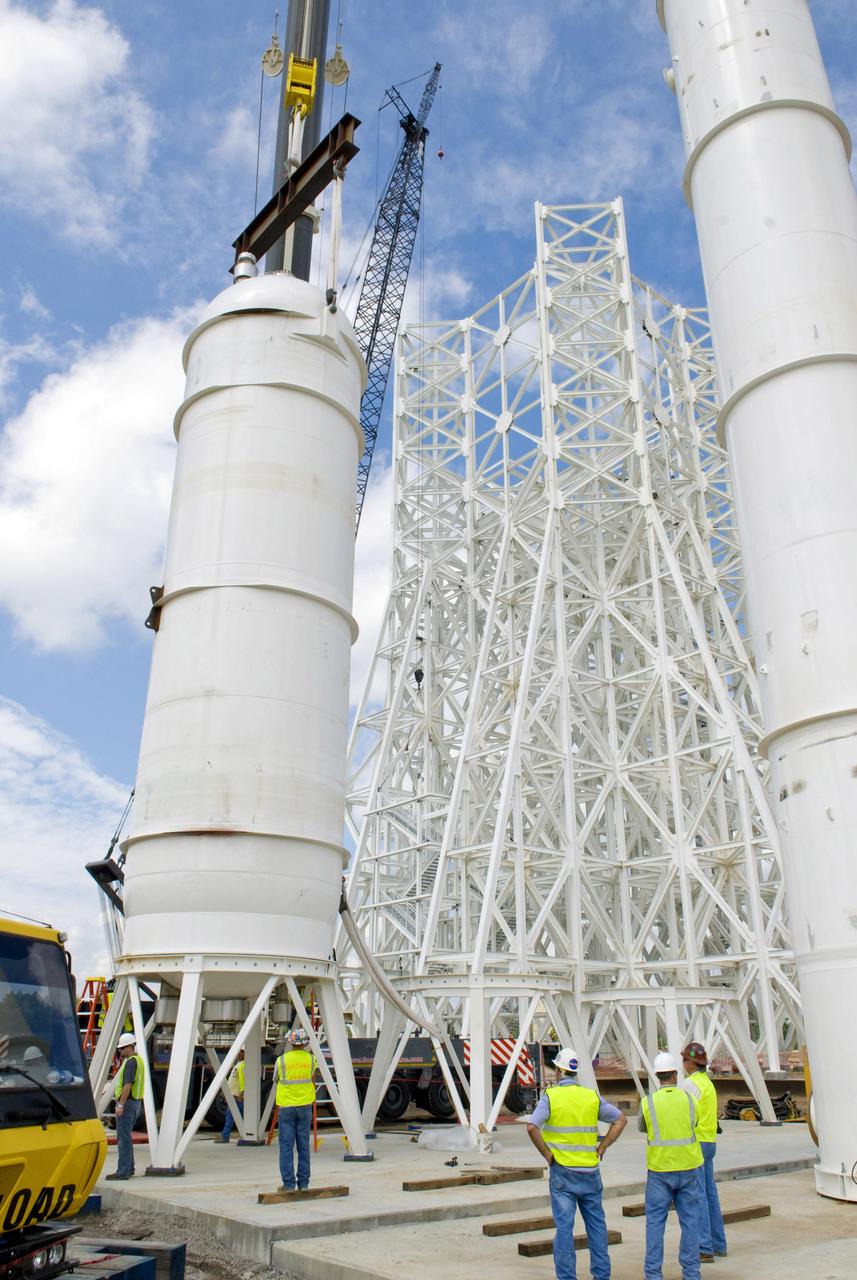
A liquid oxygen (LOX) tank is lifted into place at the A-3 Test Stand being built at NASA's John C. Stennis Space Center. Fourteen LOX, isopropyl alcohol (IPA) and water tanks are being installed to support the chemical steam generators to be used on the A-3 Test Stand. The IPA and LOX tanks will provide fuel for the generators. The water will allow the generators to produce steam that will be used to reduce pressure inside the stand's test cell diffuser, enabling operators to simulate altitudes up to 100,000 feet. In that way, operators can perform the tests needed on rocket engines being built to carry humans back to the moon and possibly beyond. The A-3 Test Stand is set for completion and activation in 2011.
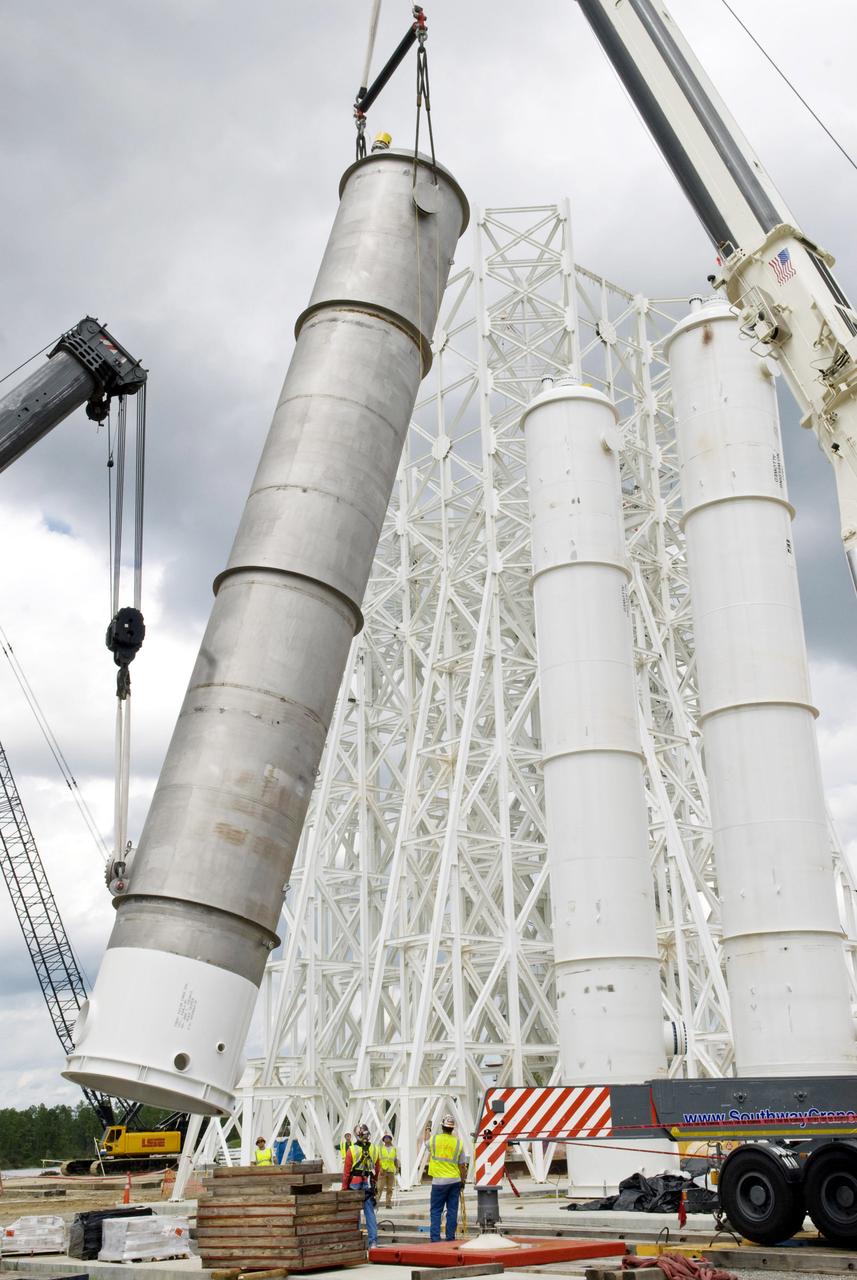
An isopropyl alcohol (IPA) tank is lifted into place at the A-3 Test Stand being built at NASA's John C. Stennis Space Center. Fourteen IPA, water and liquid oxygen (LOX) tanks are being installed to support the chemical steam generators to be used on the A-3 Test Stand. The IPA and LOX tanks will provide fuel for the generators. The water will allow the generators to produce steam that will be used to reduce pressure inside the stand's test cell diffuser, enabling operators to simulate altitudes up to 100,000 feet. In that way, operators can perform the tests needed on rocket engines being built to carry humans back to the moon and possibly beyond. The A-3 Test Stand is set for completion and activation in 2011.

John C. Stennis Space Center employees complete installation of a chemical steam generator (CSG) unit at the site's E-2 Test Stand. On Oct. 24, 2010. The unit will undergo verification and validation testing on the E-2 stand before it is moved to the A-3 Test Stand under construction at Stennis. Each CSG unit includes three modules. Steam generated by the nine CSG units that will be installed on the A-3 stand will create a vacuum that allows Stennis operators to test next-generation rocket engines at simulated altitudes up to 100,000 feet.
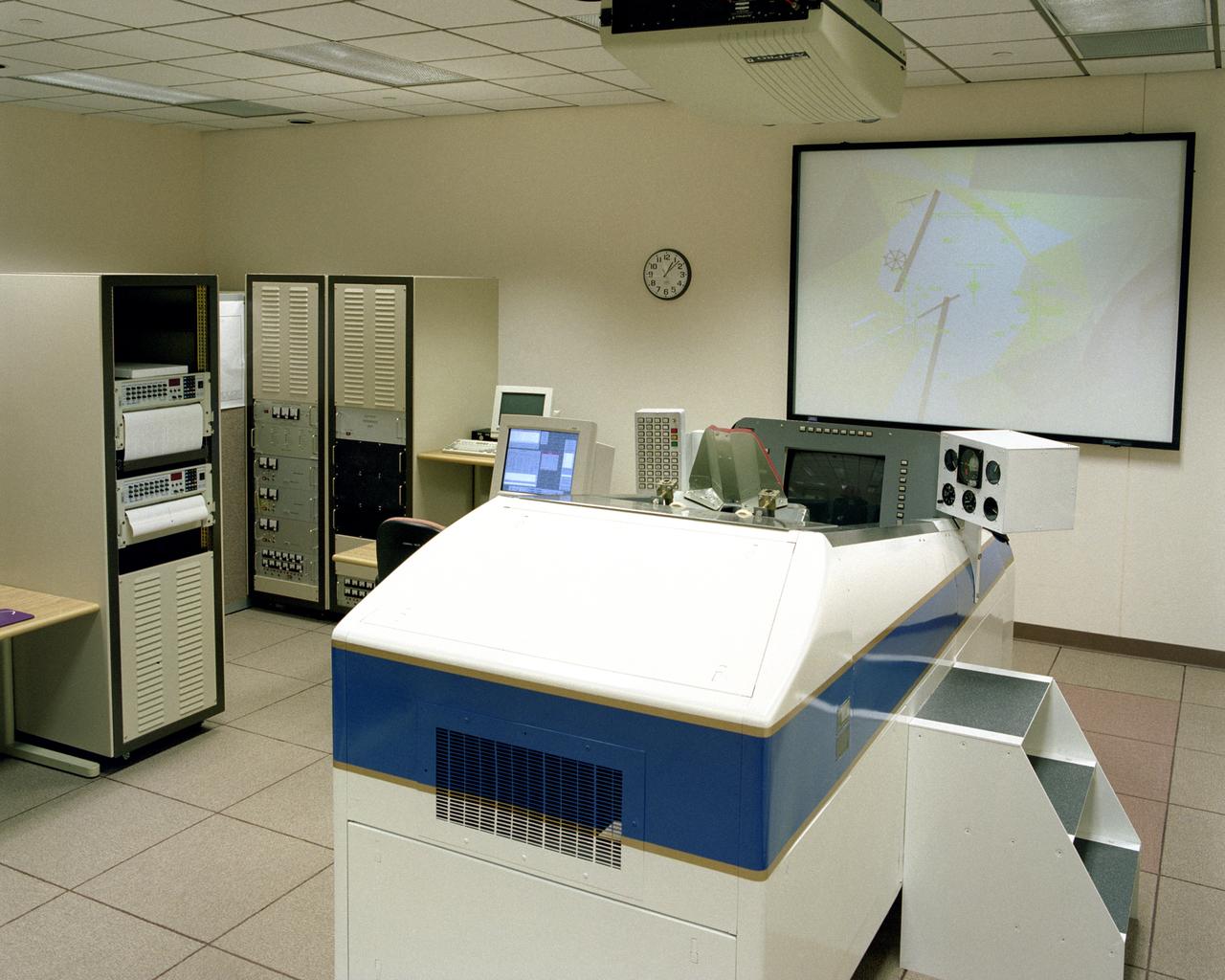
Apex simulator
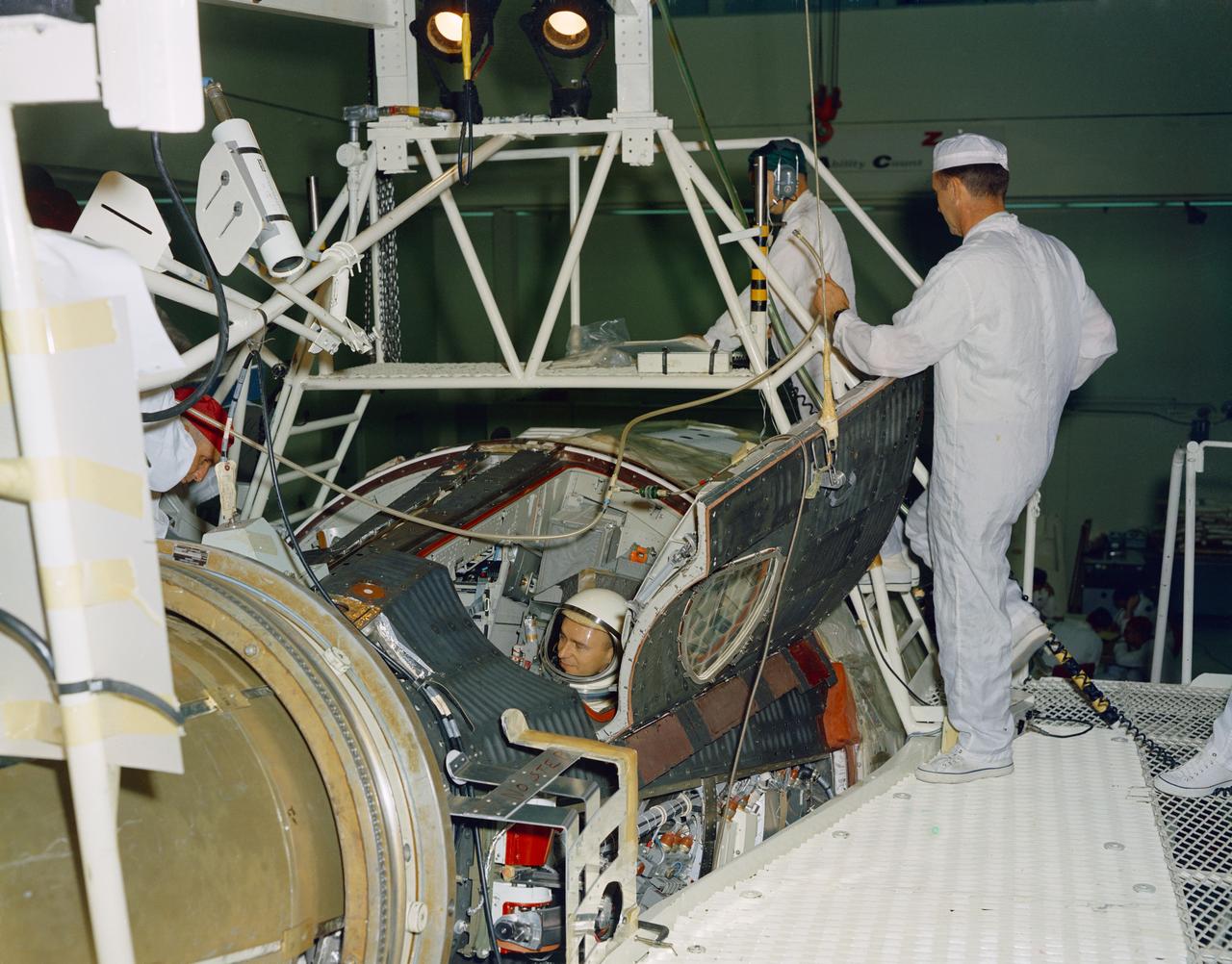
S66-34167 (21 April 1966) --- Astronauts John W. Young (right), command pilot, and Michael Collins, pilot, the prime crew of the Gemini-10 spaceflight, prepare for a Manned Altitude Test Run in the Gemini-10 spacecraft. They are in McDonnell Aircraft's 30-foot altitude chamber. Photo credit: NASA
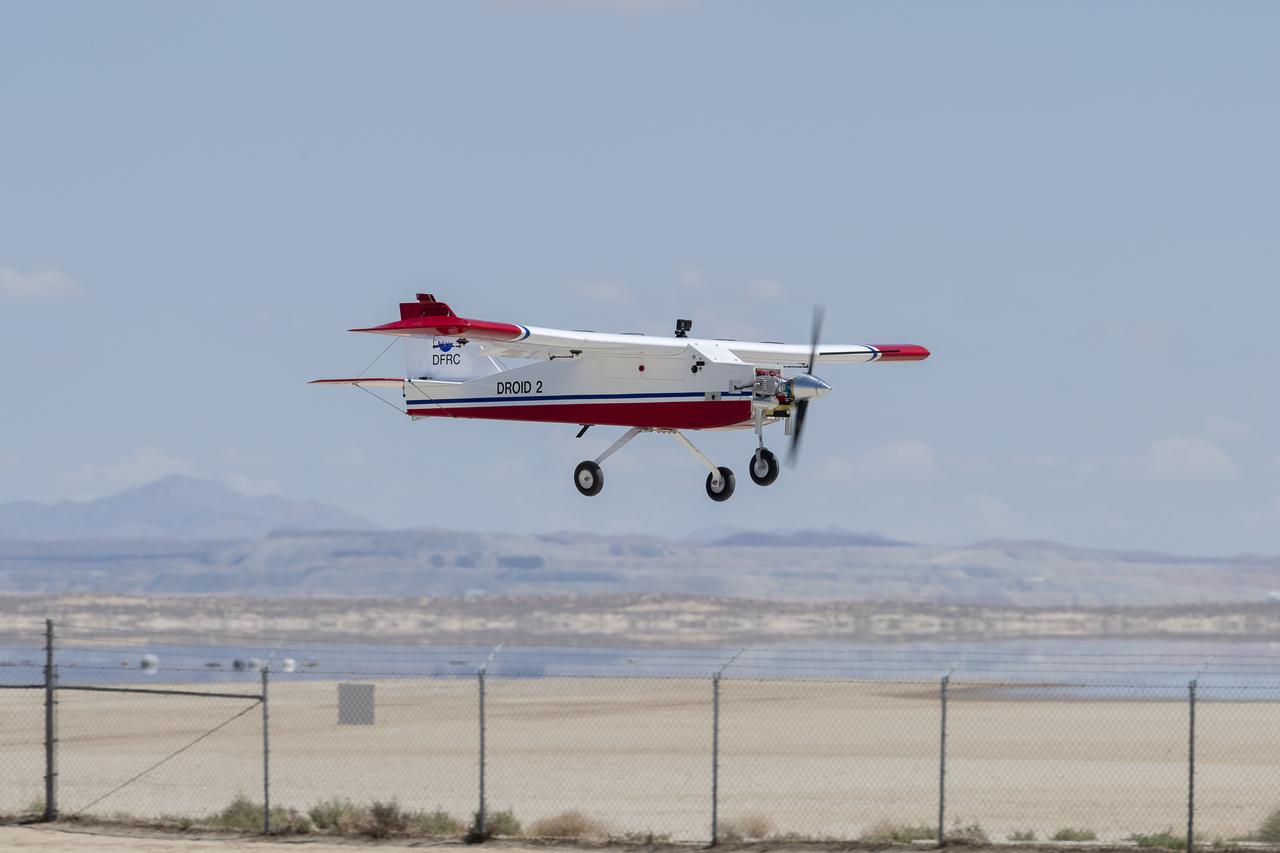
The DROID 2 (Dryden Remotely Operated Integrated Drone 2) prepares to land at NASA's Armstrong Flight Research Center in Edwards, California, as part of the Advanced Exploration of Reliable Operation at Low Altitudes: Meteorology, Simulation, and Technology campaign. The focus was to study wind to provide data for safe takeoff and landing of future air taxis.
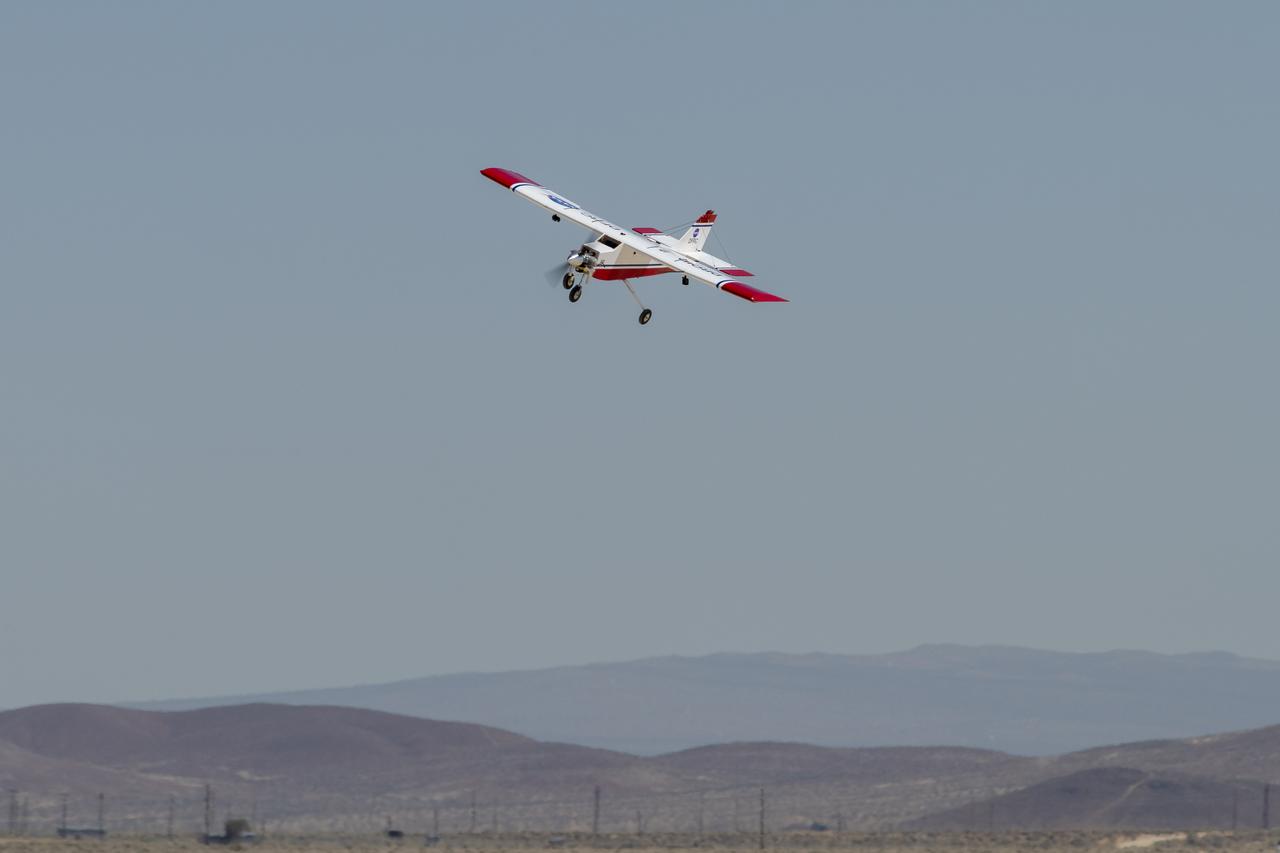
The DROID 2 (Dryden Remotely Operated Integrated Drone 2) flies at NASA's Armstrong Flight Research Center in Edwards, California, as part of the Advanced Exploration of Reliable Operation at Low Altitudes: Meteorology, Simulation, and Technology campaign. The focus was to study wind to provide data for safe takeoff and landing of future air taxis.
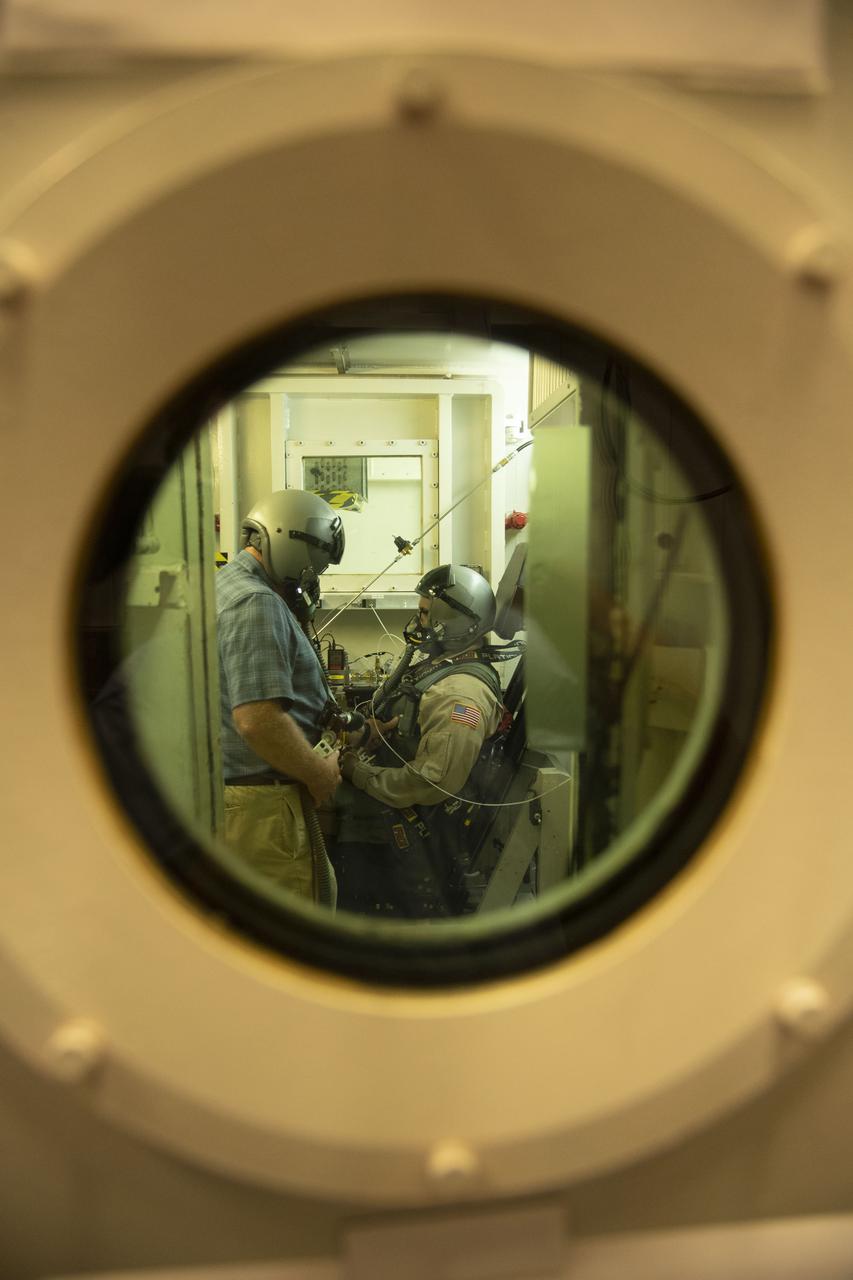
The low pressure (hypobaric) chamber at KBR’s facility in San Antonio, Texas, simulates very high altitudes by reducing the air pressure inside of the chamber. The subject inside the chamber experiences the reduced pressure conditions that exist at higher altitudes, in this case altitudes up to 60,000 feet.
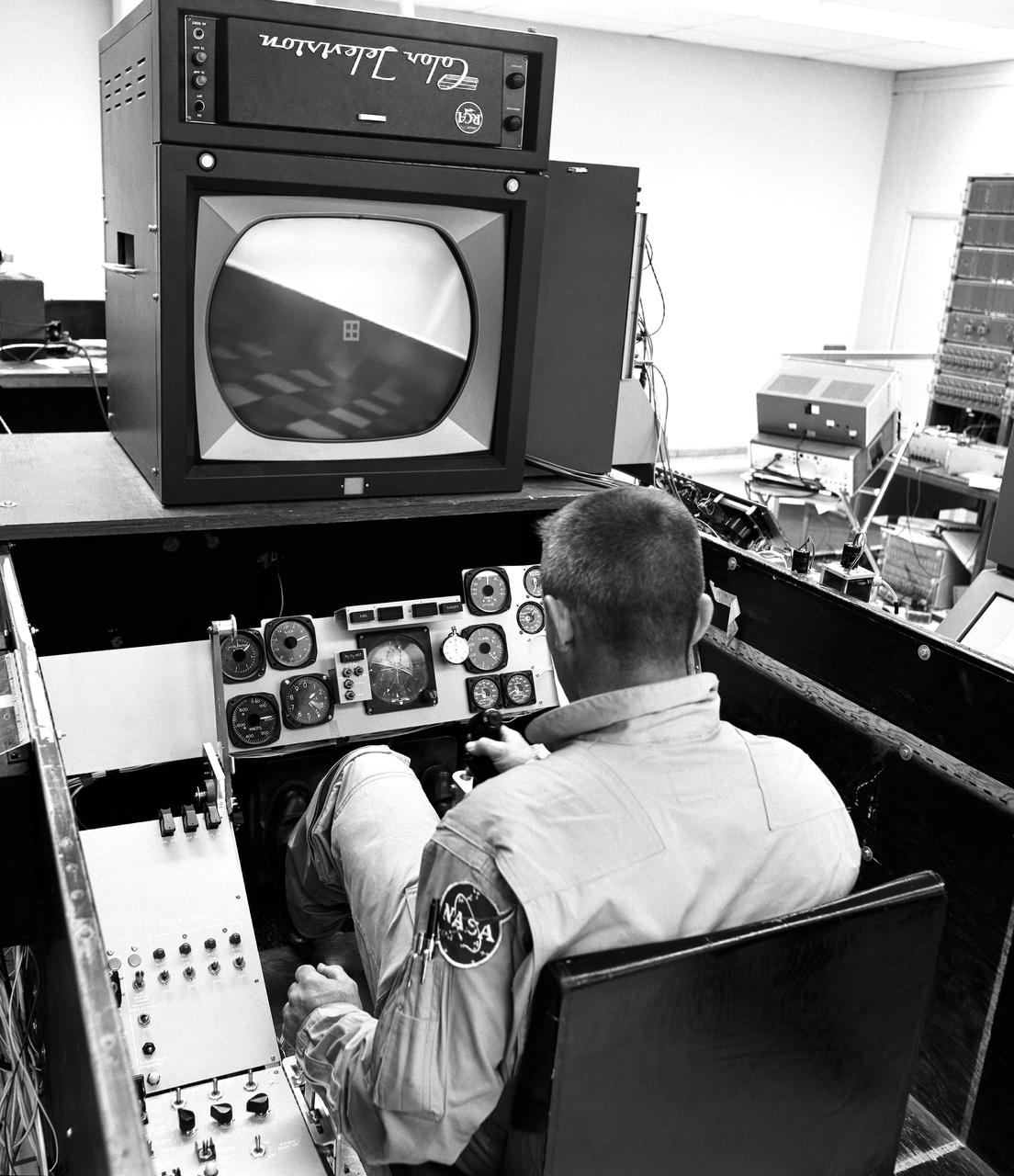
As shown in this photo of the HL-10 flight simulator, the lifting-body pilots and engineers made use of early simulators for both training and the determination of a given vehicle's handling at various speeds, attitudes, and altitudes. This provided warning of possible problems.
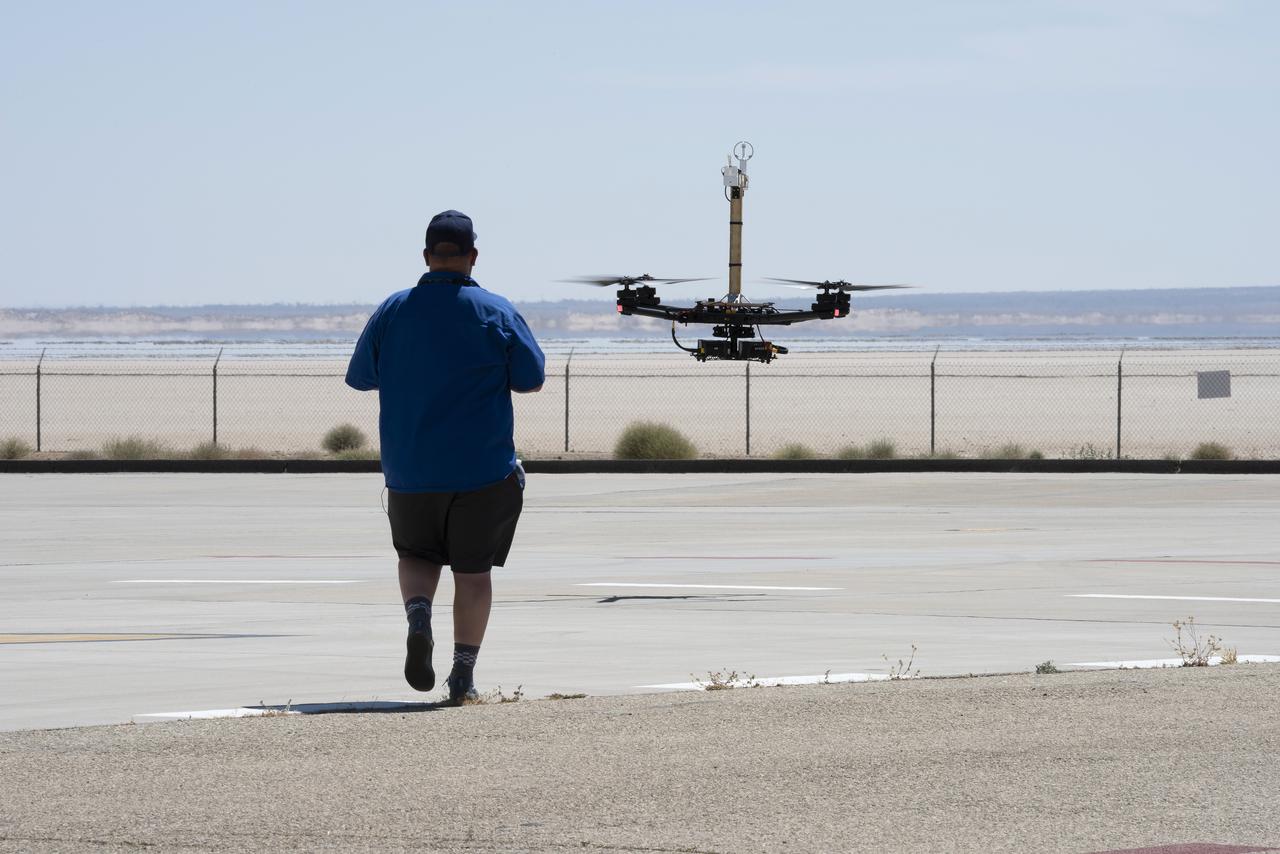
Red Jensen lands the Alta-X aircraft at NASA’s Armstrong Flight Research Center in Edwards, California, as part of the Advanced Exploration of Reliable Operation at Low Altitudes: Meteorology, Simulation and Technology campaign. The campaign was at NASA Armstrong to study wind from the ground to 2,000 feet to provide data to assist future drones to safely land on rooftop hubs called vertiports and to potentially improve weather prediction.
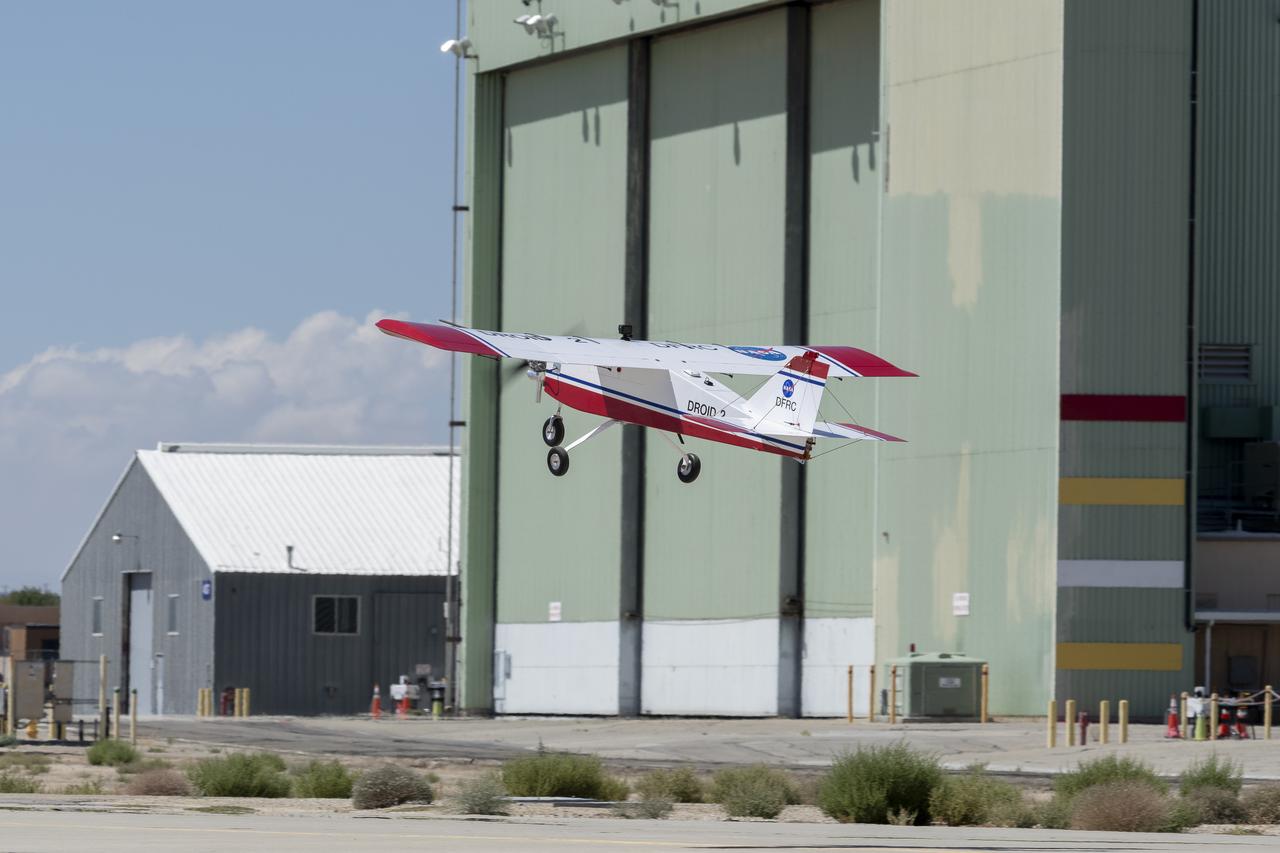
The DROID 2 (Dryden Remotely Operated Integrated Drone 2) aircraft flies by the former space shuttle hangar at NASA's Armstrong Flight Research Center in Edwards, California, as part of the Advanced Exploration of Reliable Operation at Low Altitudes: Meteorology, Simulation, and Technology campaign. The focus was to study wind to provide data for safe takeoff and landing of future air taxis.
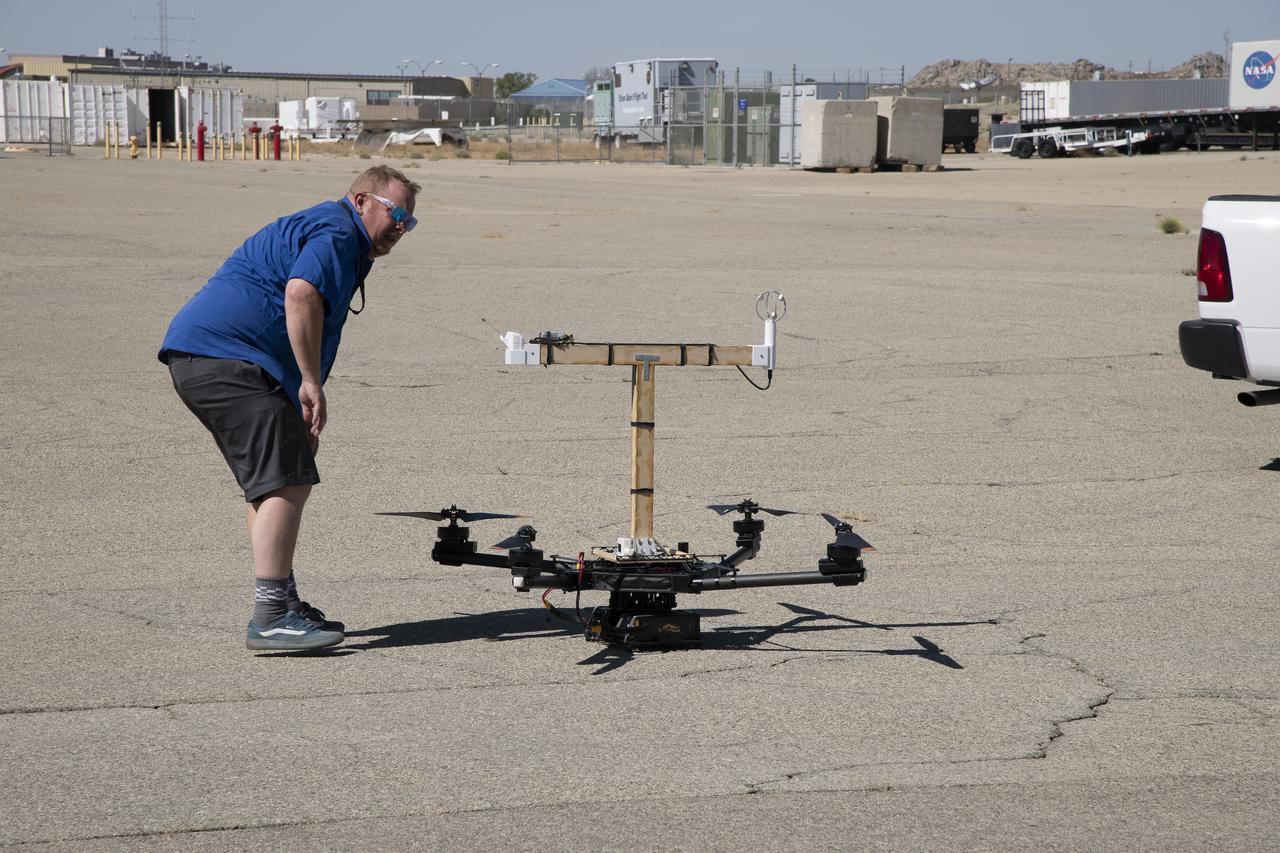
Red Jensen looks over the Alta-X aircraft before a flight for the Advanced Exploration of Reliable Operation at Low Altitudes: Meteorology, Simulation and Technology campaign. The weather study was at NASA’s Armstrong Flight Research Center in Edwards, California. The focus was to study wind from the ground to 2,000 feet to provide data to assist future drones to safely land on rooftop hubs called vertiports and to potentially improve weather prediction.
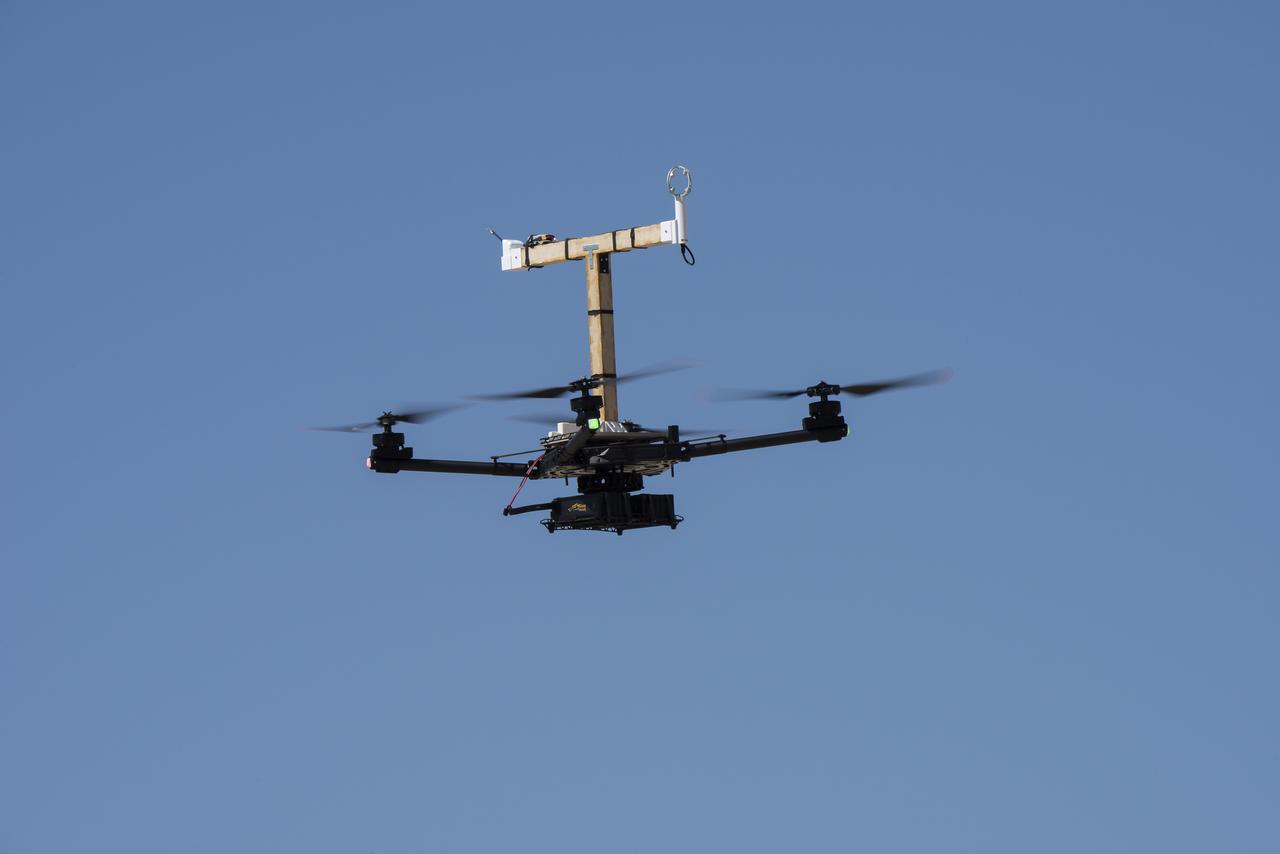
The Alta-X aircraft flies at NASA’s Armstrong Flight Research Center in Edwards, California, as part of the Advanced Exploration of Reliable Operation at Low Altitudes: Meteorology, Simulation and Technology campaign. The campaign was at NASA Armstrong to study wind from the ground to 2,000 feet to provide data to assist future drones to safely land on rooftop hubs called vertiports and to potentially improve weather prediction.
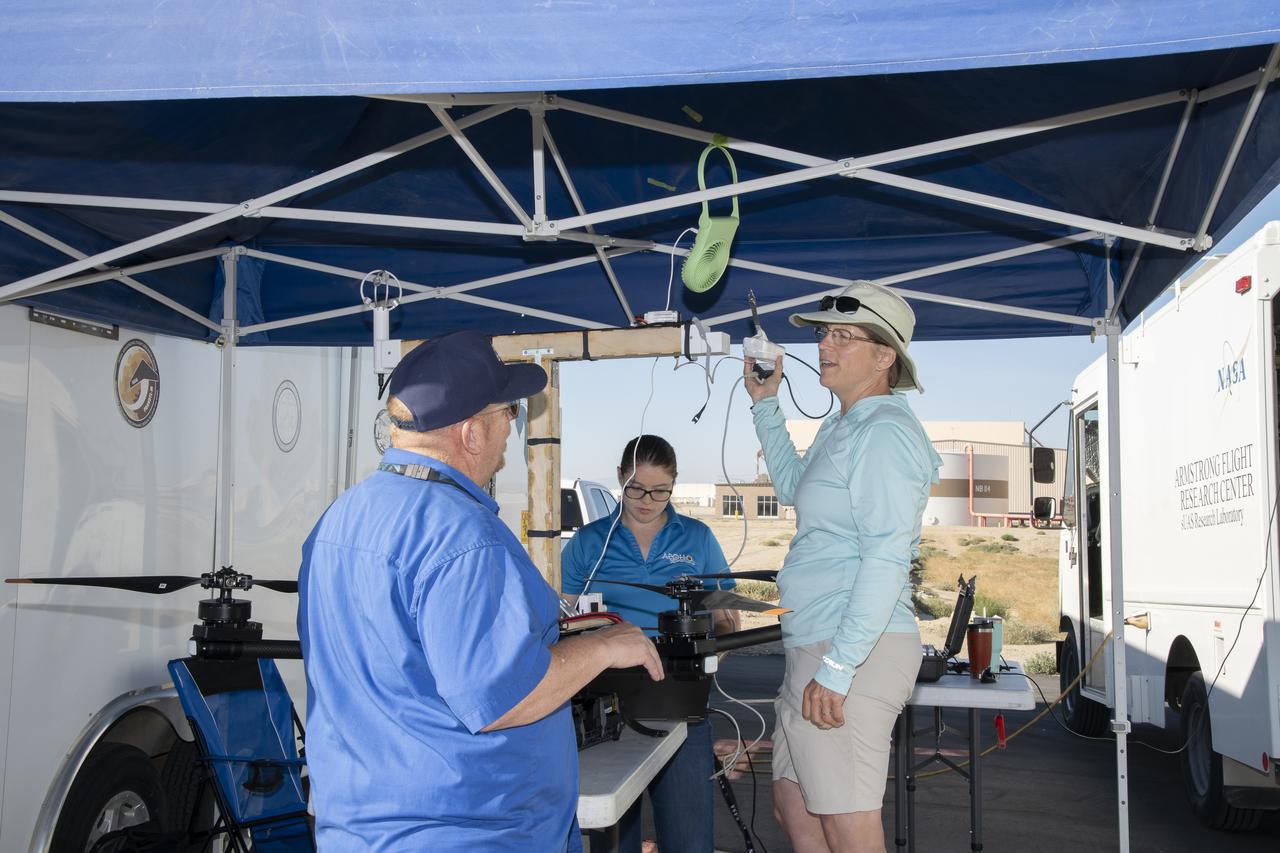
Jennifer Fowler talks to Red Jensen prior to a flight for the Advanced Exploration of Reliable Operation at Low Altitudes: Meteorology, Simulation and Technology campaign. Tyler Willhite completes some equipment checks for the research in the background. The weather study was at NASA’s Armstrong Flight Research Center in Edwards, California. The focus was to study wind from the ground to 2,000 feet to provide data to assist future drones to safely land on rooftop hubs called vertiports and to potentially improve weather prediction.
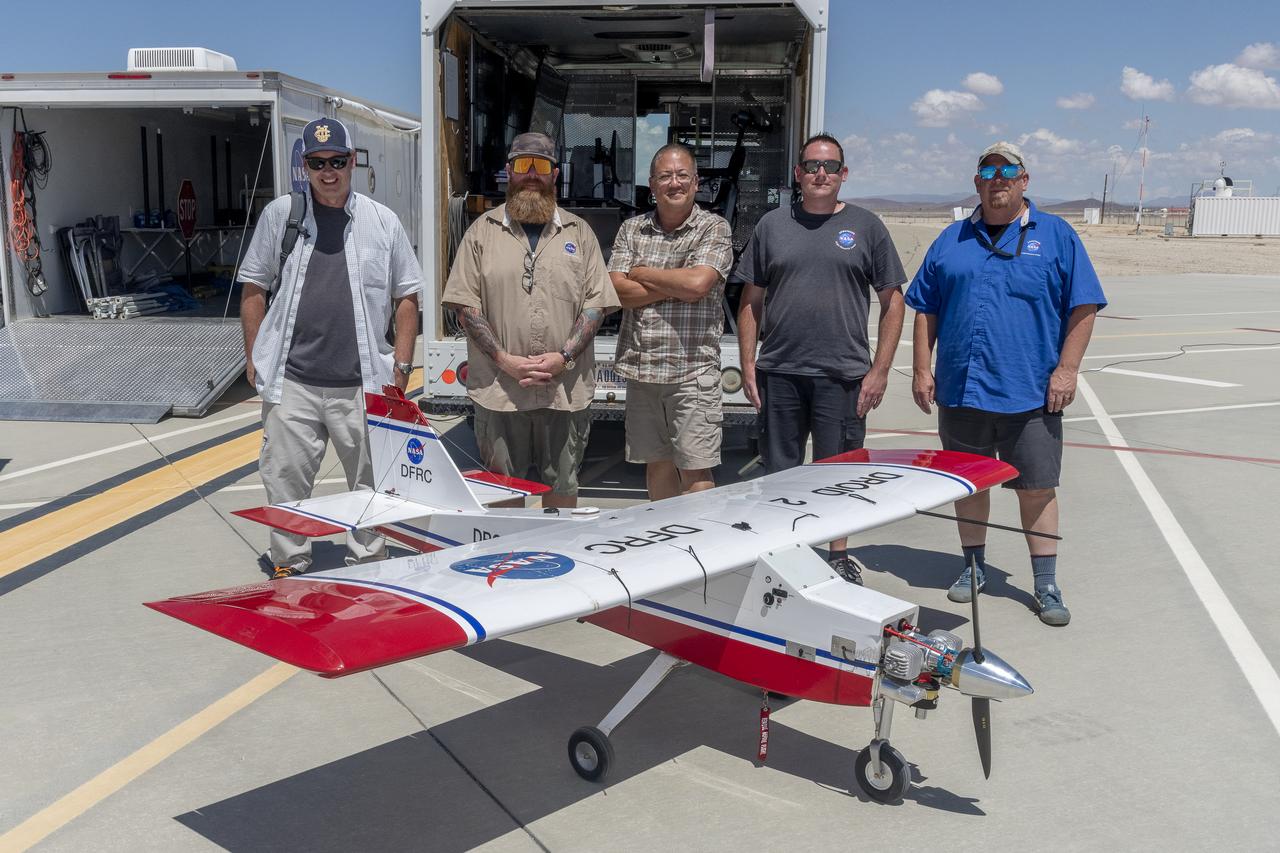
John Melton, Justin Hall, Derek Abramson, Justin Link, and Robert "Red" Jensen were key on mission day for the Advanced Exploration of Reliable Operation at Low Altitudes: Meteorology, Simulation, and Technology campaign. The DROID 2 (Dryden Remotely Operated Integrated Drone 2) aircraft supported the campaign at NASA's Armstrong Flight Research Center in Edwards, California. The focus was to study wind to provide data for safe takeoff and landing of future air taxis.
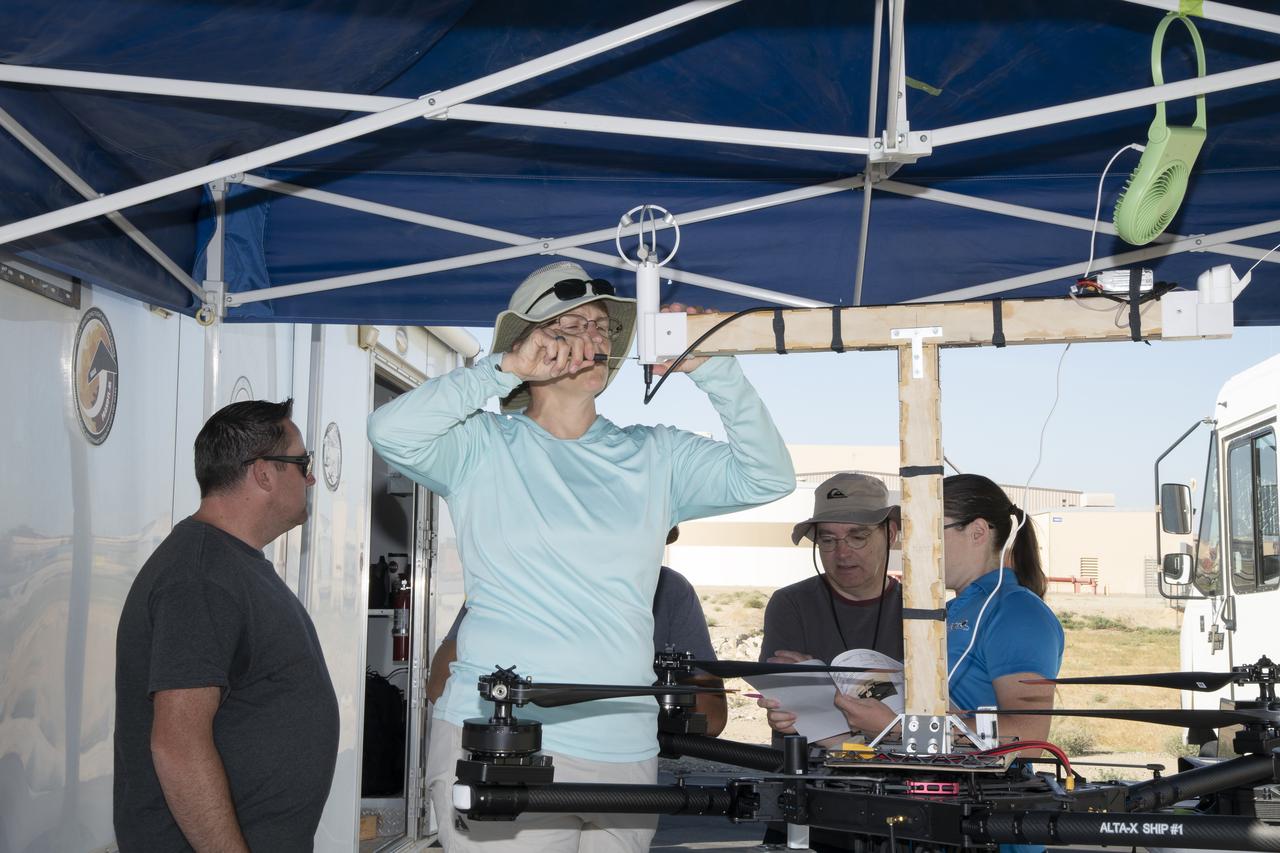
Jennifer Fowler works on securing sensors onto the test fixture on the Alta-X aircraft. Justin Link, Grady Koch, and Tyler Willhite are in the background. The Advanced Exploration of Reliable Operation at Low Altitudes: Meteorology, Simulation and Technology campaign was at NASA’s Armstrong Flight Research Center in Edwards, California. The focus was to study wind from the ground to 2,000 feet to provide data to assist future drones to safely land on rooftop hubs called vertiports and to potentially improve weather prediction.
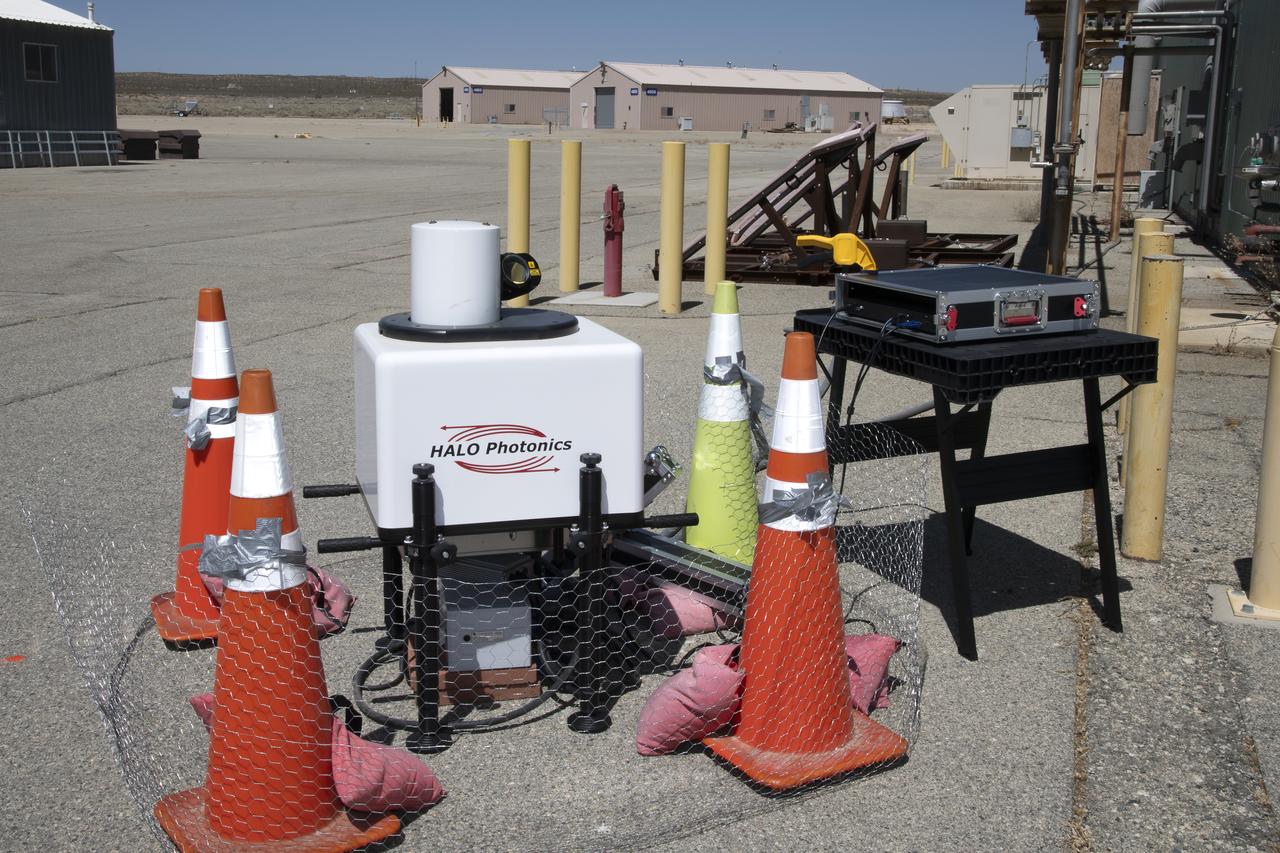
This is one of two lidar units positioned on either end of Building 4833 at NASA’s Armstrong Flight Research Center in Edwards, California, that formed the cutting-edge ‘virtual tower concept.’ The units use lasers to measure airflow from the ground level to 2,000 feet to provide data to assist future drones to safely land on rooftop hubs called vertiports, and to potentially improve weather prediction. It was part of the multi-faceted Advanced Exploration of Reliable Operation at Low Altitudes: Meteorology, Simulation and Technology campaign.
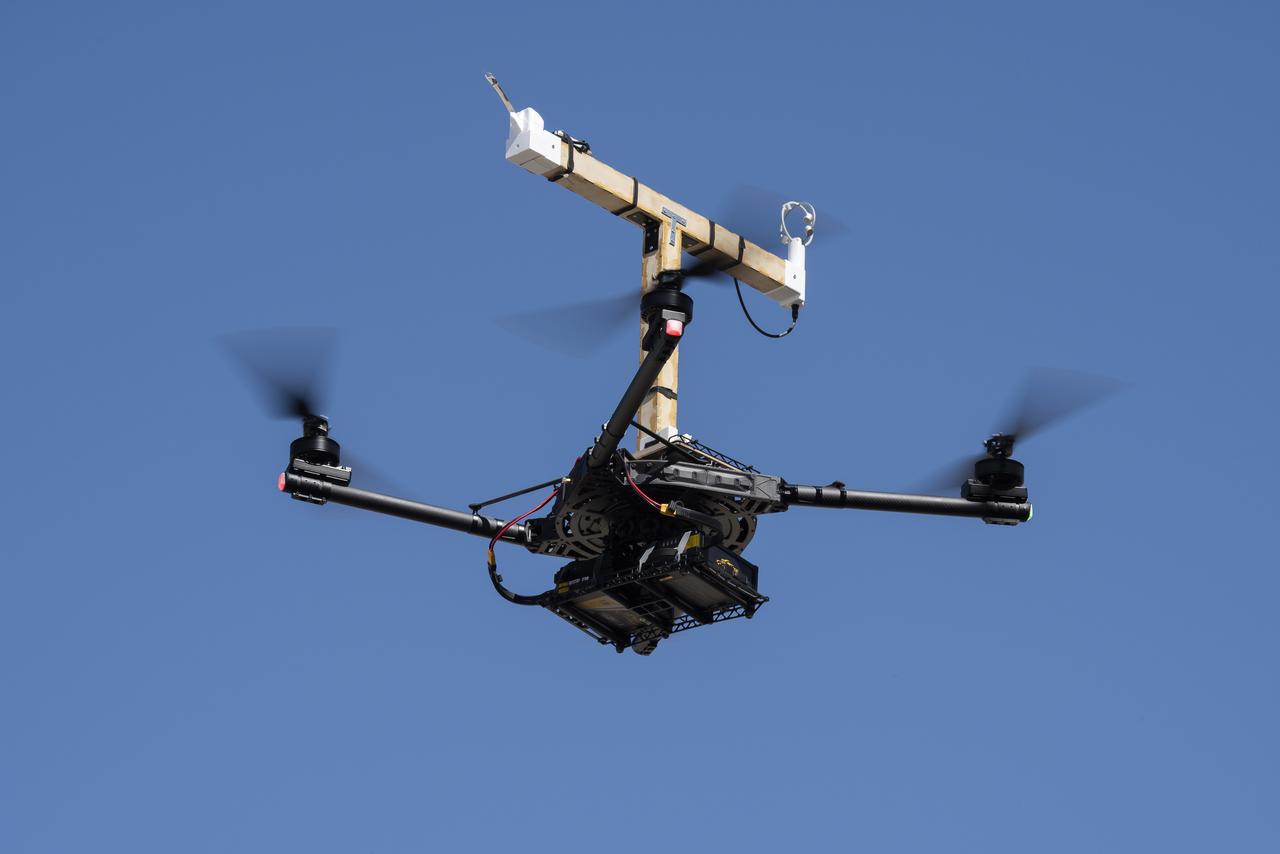
The Alta-X aircraft flies at NASA’s Armstrong Flight Research Center in Edwards, California, as part of the Advanced Exploration of Reliable Operation at Low Altitudes: Meteorology, Simulation and Technology campaign. The campaign was at NASA Armstrong to study wind from the ground to 2,000 feet to provide data to assist future drones to safely land on rooftop hubs called vertiports and to potentially improve weather prediction.
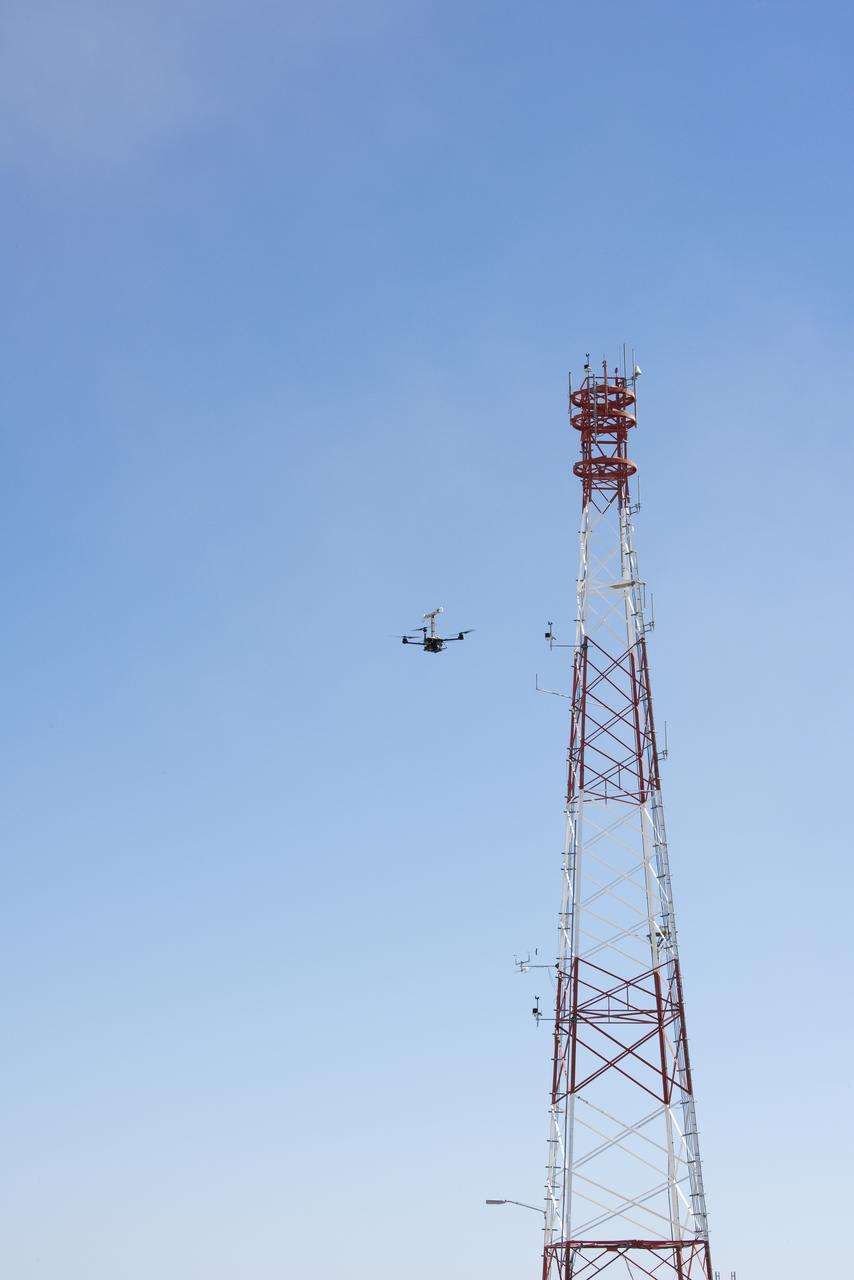
The Alta-X aircraft flies by a 140-foot instrumented tower at NASA’s Armstrong Flight Research Center in Edwards, California, as part of the Advanced Exploration of Reliable Operation at Low Altitudes: Meteorology, Simulation and Technology campaign. The campaign was at NASA Armstrong to study wind from the ground to 2,000 feet to provide data to assist future drones to safely land on rooftop hubs called vertiports and to potentially improve weather prediction.
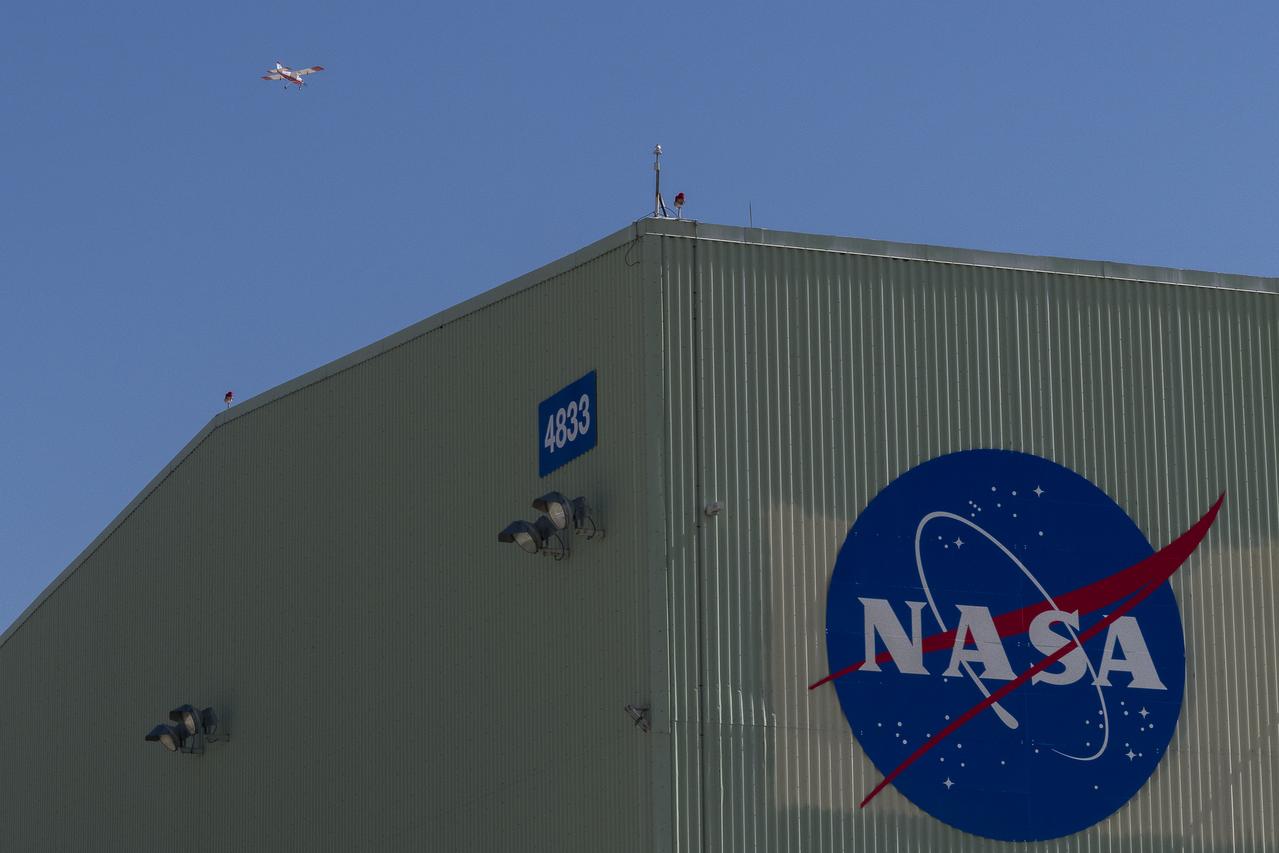
The DROID 2 (Dryden Remotely Operated Integrated Drone 2) aircraft flies by the former space shuttle hangar at NASA's Armstrong Flight Research Center in Edwards, California, as part of the Advanced Exploration of Reliable Operation at Low Altitudes: Meteorology, Simulation, and Technology campaign. The focus was to study wind to provide data for safe takeoff and landing of future air taxis.

The Alta-X aircraft flies by the former space shuttle hangar at NASA’s Armstrong Flight Research Center in Edwards, California, as part of the Advanced Exploration of Reliable Operation at Low Altitudes: Meteorology, Simulation and Technology campaign. The campaign was at NASA Armstrong to study wind from the ground to 2,000 feet to provide data to assist future drones to safely land on rooftop hubs called vertiports and to potentially improve weather prediction.
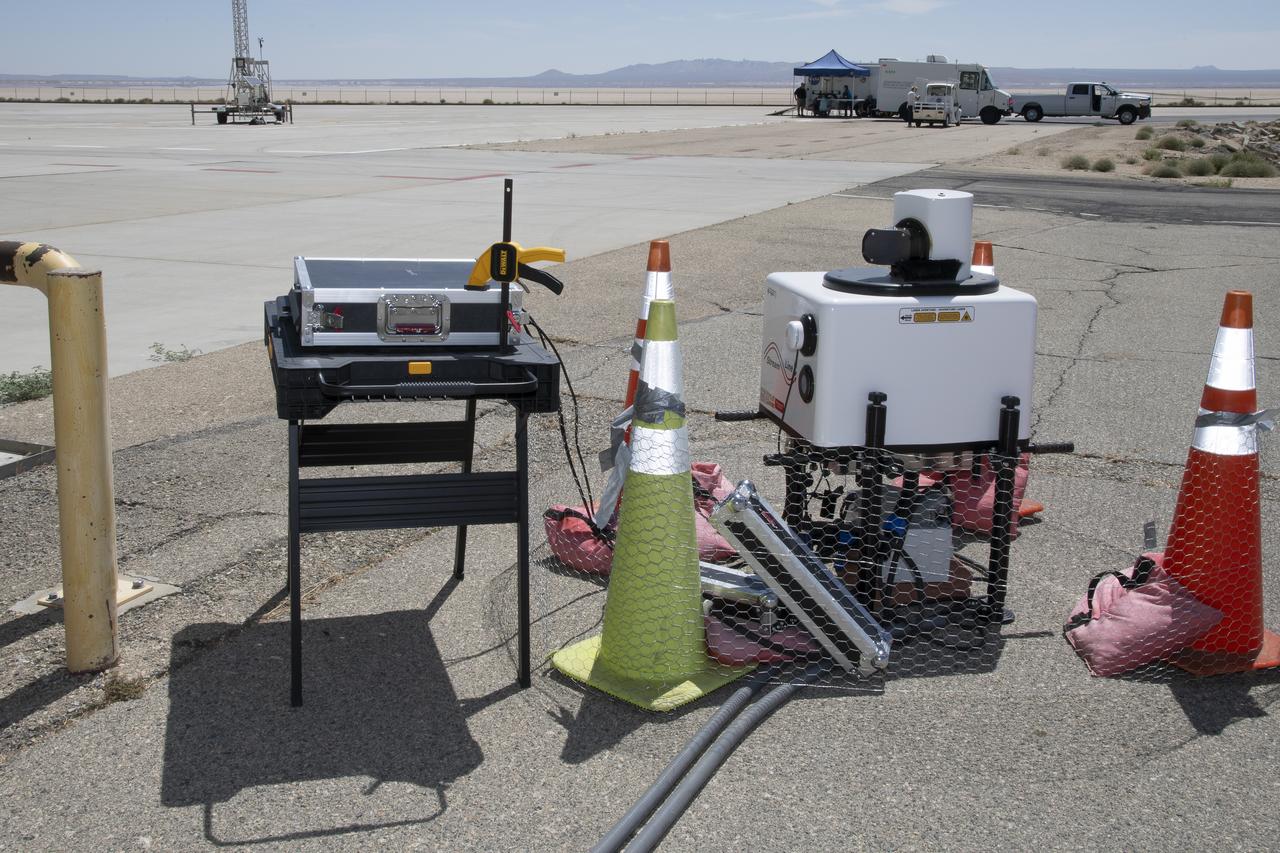
This is one of two lidar units positioned on either end of Building 4833 at NASA’s Armstrong Flight Research Center in Edwards, California, that formed the cutting-edge ‘virtual tower concept.’ The units use lasers to measure airflow from the ground level to 2,000 feet to provide data to assist future drones to safely land on rooftop hubs called vertiports, and to potentially improve weather prediction. It was part of the multi-faceted Advanced Exploration of Reliable Operation at Low Altitudes: Meteorology, Simulation and Technology campaign.
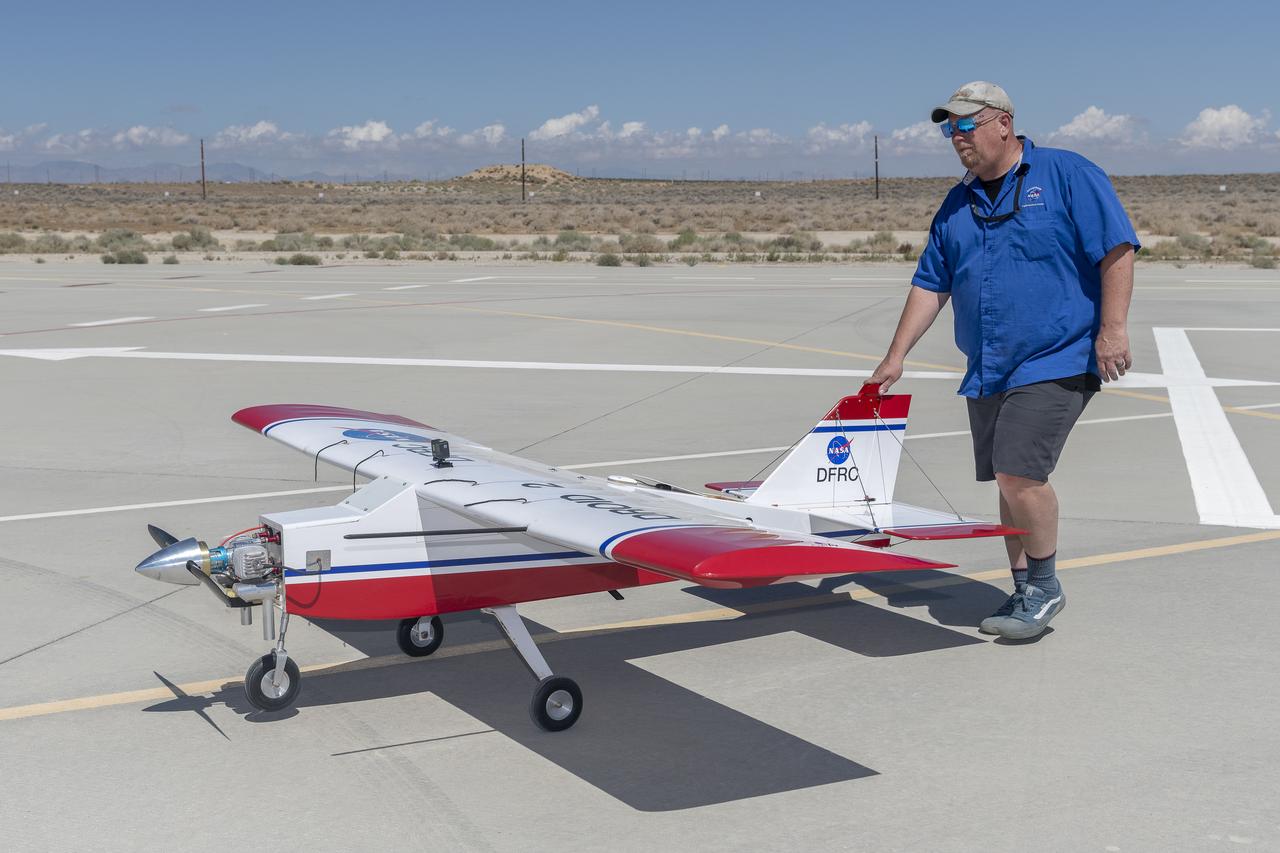
Robert "Red" Jensen positions the DROID 2 (Dryden Remotely Operated Integrated Drone) aircraft before a flight for the Advanced Exploration of Reliable Operation at Low Altitudes: Meteorology, Simulation, and Technology campaign. The weather study was at NASA's Armstrong Flight Research Center in Edwards, California. The focus was to study wind to provide data for safe takeoff and landing of future air taxis.
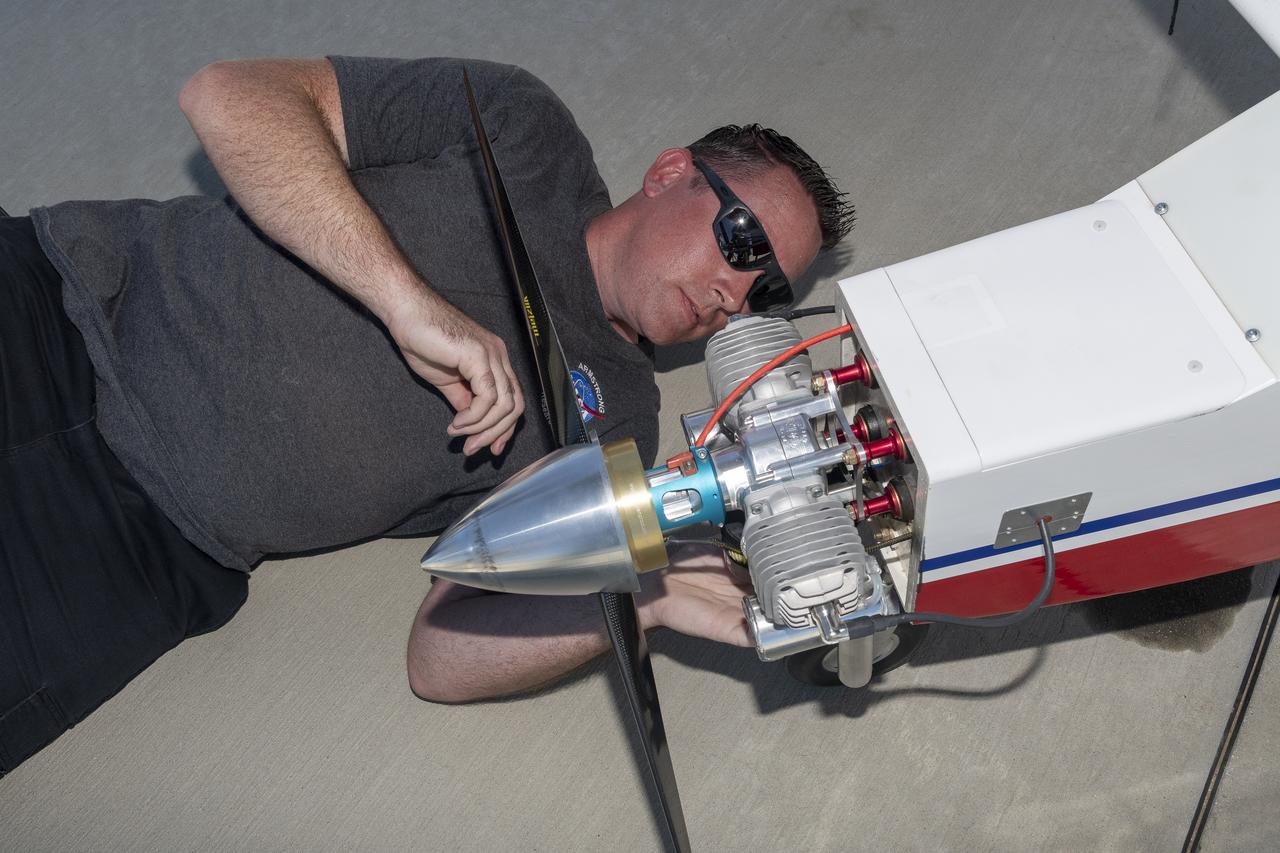
Justin Link prepares the DROID 2 (Dryden Remotely Operated Integrated Drone 2) aircraft before a flight for the Advanced Exploration of Reliable Operation at Low Altitudes: Meteorology, Simulation, and Technology campaign. The weather study was at NASA's Armstrong Flight Research Center in Edwards, California. The focus was to study wind to provide data for safe takeoff and landing of future air taxis.
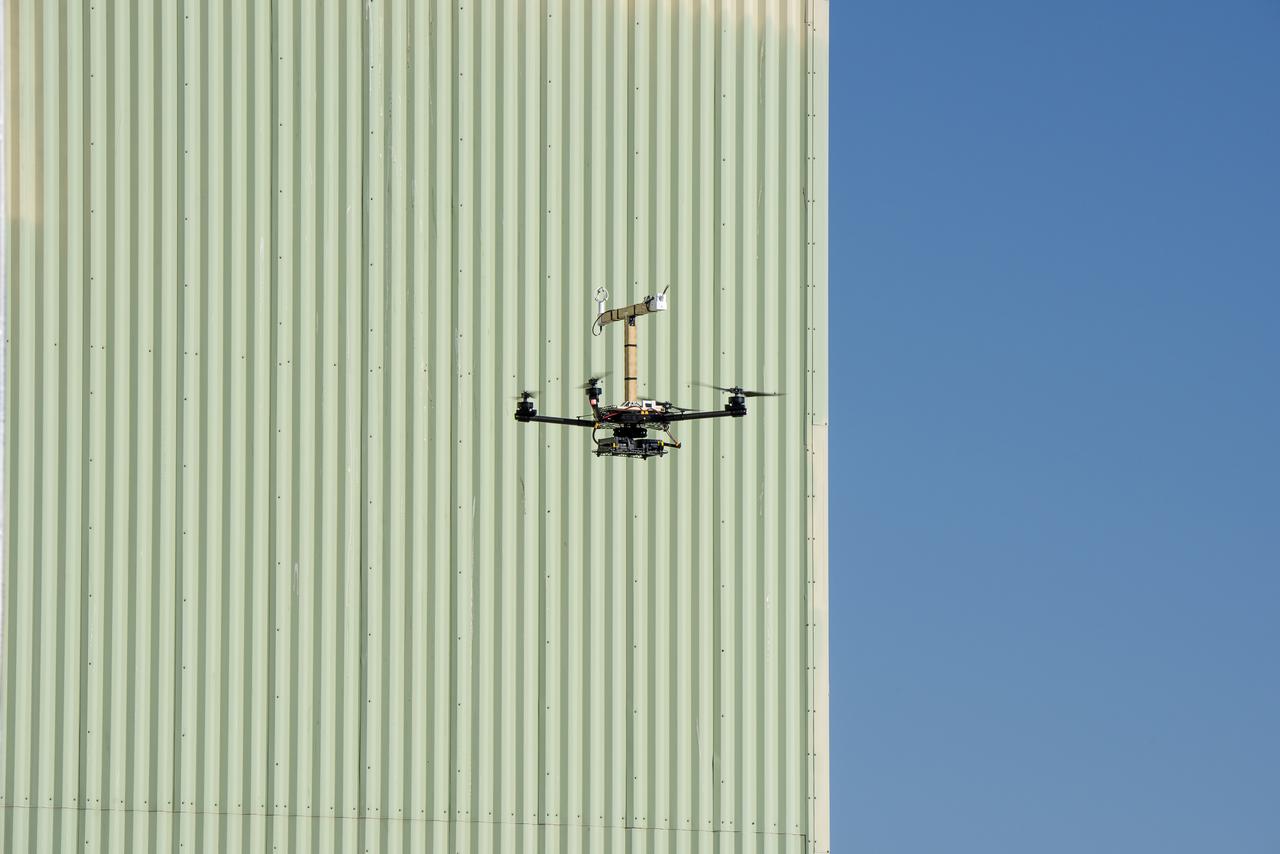
The Alta-X aircraft flies by the former space shuttle hangar at NASA’s Armstrong Flight Research Center in Edwards, California, as part of the Advanced Exploration of Reliable Operation at Low Altitudes: Meteorology, Simulation and Technology campaign. The campaign was at NASA Armstrong Flight to study wind from the ground to 2,000 feet to provide data to assist future drones to safely land on rooftop hubs called vertiports and to potentially improve weather prediction.
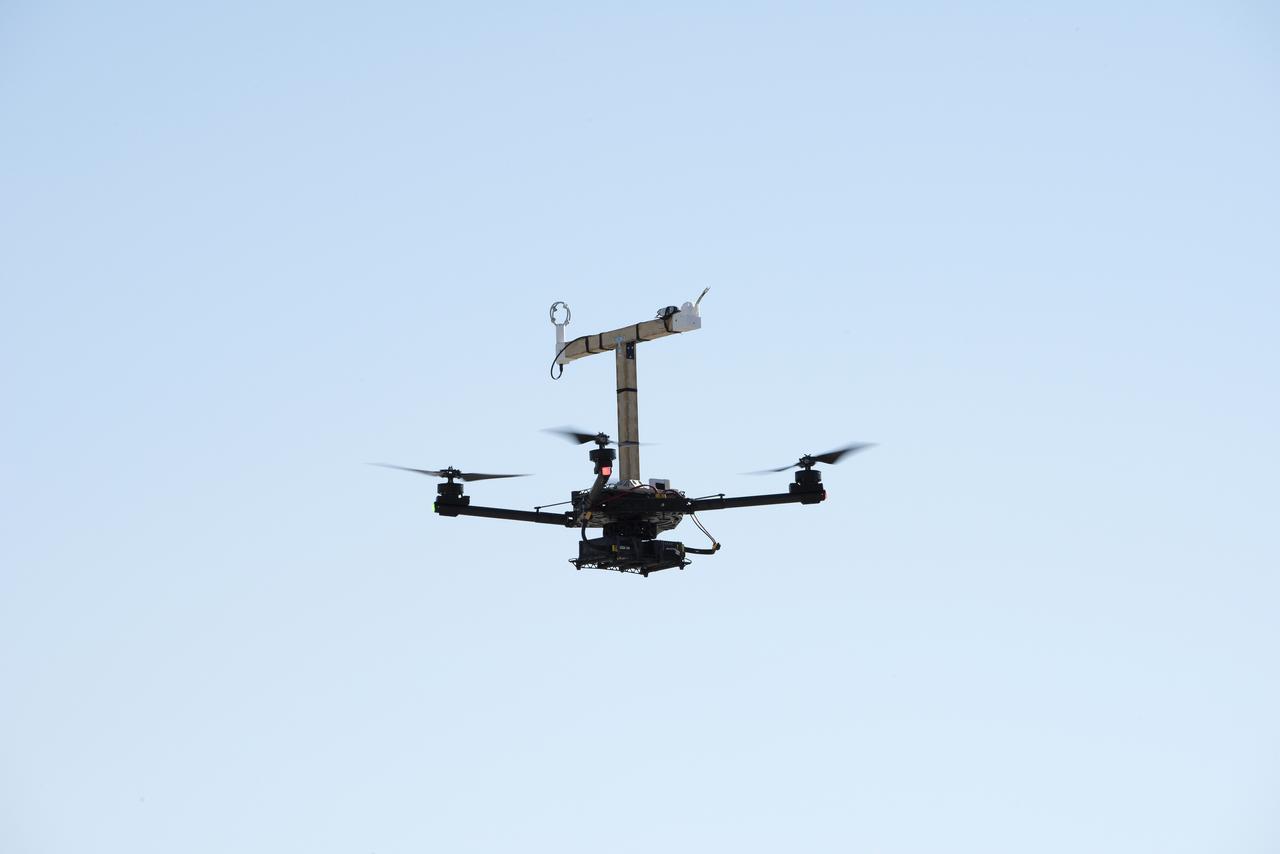
The Alta-X aircraft flies at NASA’s Armstrong Flight Research Center in Edwards, California, as part of the Advanced Exploration of Reliable Operation at Low Altitudes: Meteorology, Simulation and Technology campaign. The campaign was at NASA Armstrong to study wind from the ground to 2,000 feet to provide data to assist future drones to safely land on rooftop hubs called vertiports and to potentially improve weather prediction.
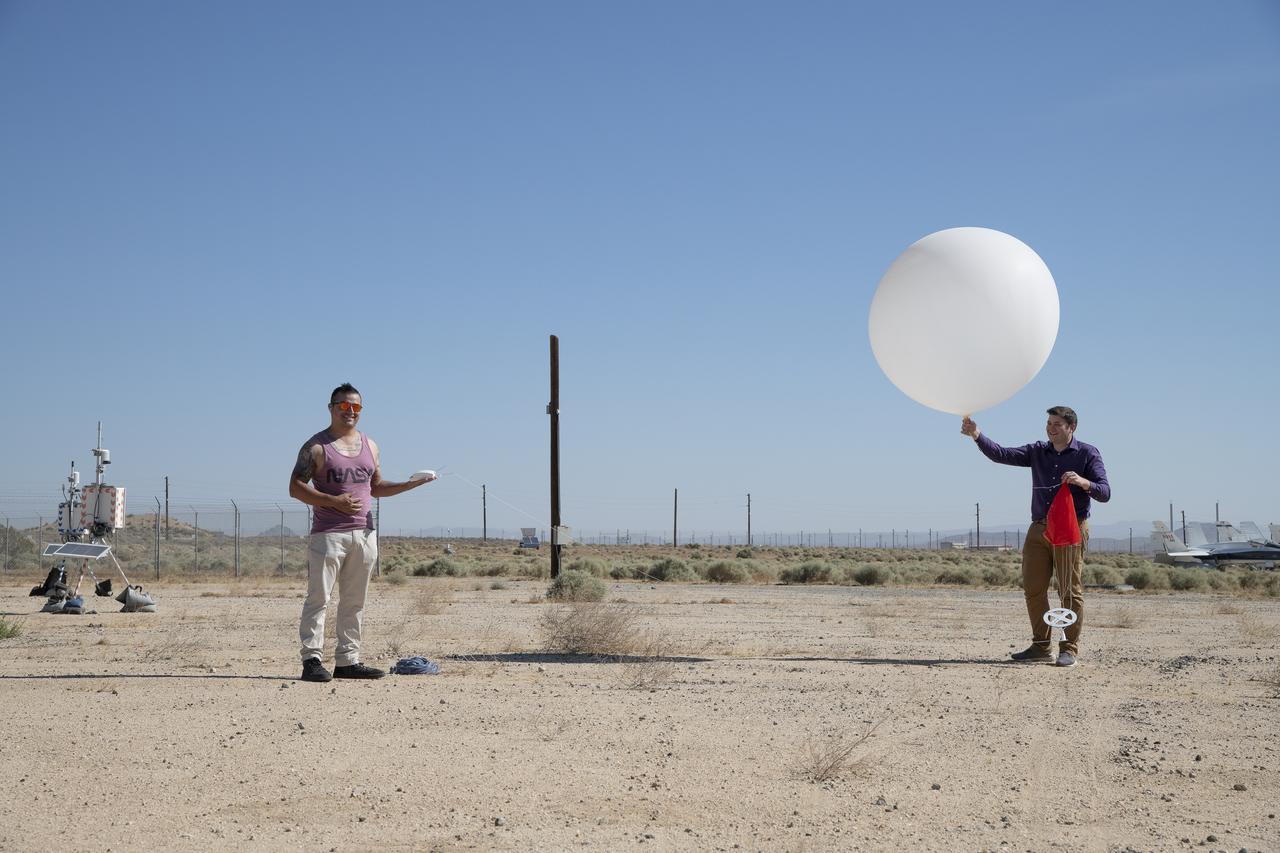
Rocky Garcia and Wesley James prepare a weather balloon to collect wind data for the Advanced Exploration of Reliable Operation at Low Altitudes: Meteorology, Simulation and Technology campaign. The weather study was at NASA’s Armstrong Flight Research Center in Edwards, California. The focus was to study wind from the ground to 2,000 feet to provide data to assist future drones to safely land on rooftop hubs called vertiports and to potentially improve weather prediction.
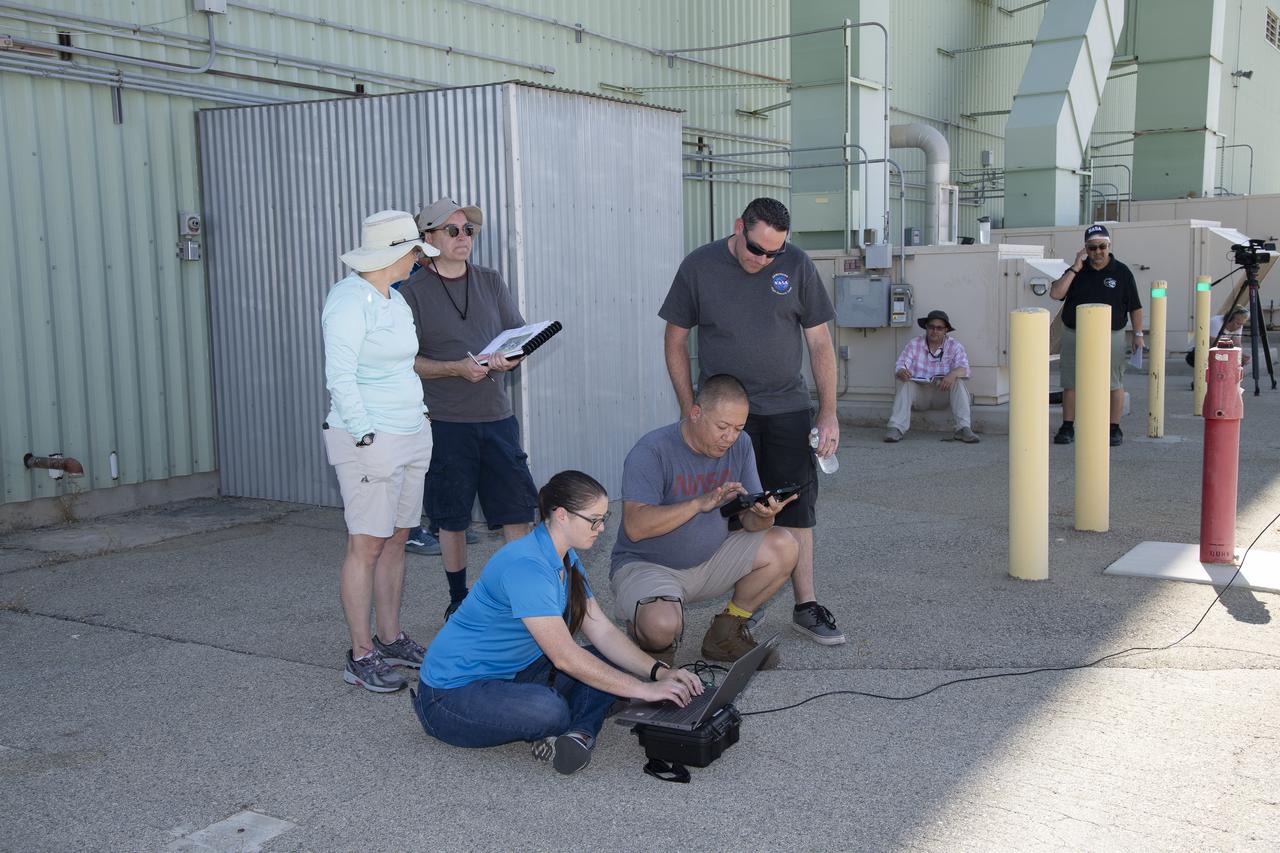
Tyler Willhite, sitting, and Derek Abramson and Justin Link, prepare for an Alta-X aircraft flight. Behind them are Jennifer Fowler, from left and Grady Kock. The Alta-X flight was part of the Advanced Exploration of Reliable Operation at Low Altitudes: Meteorology, Simulation and Technology campaign. The campaign was at NASA Armstrong to study wind from the ground to 2,000 feet to provide data to assist future drones to safely land on rooftop hubs called vertiports and to potentially improve weather prediction.
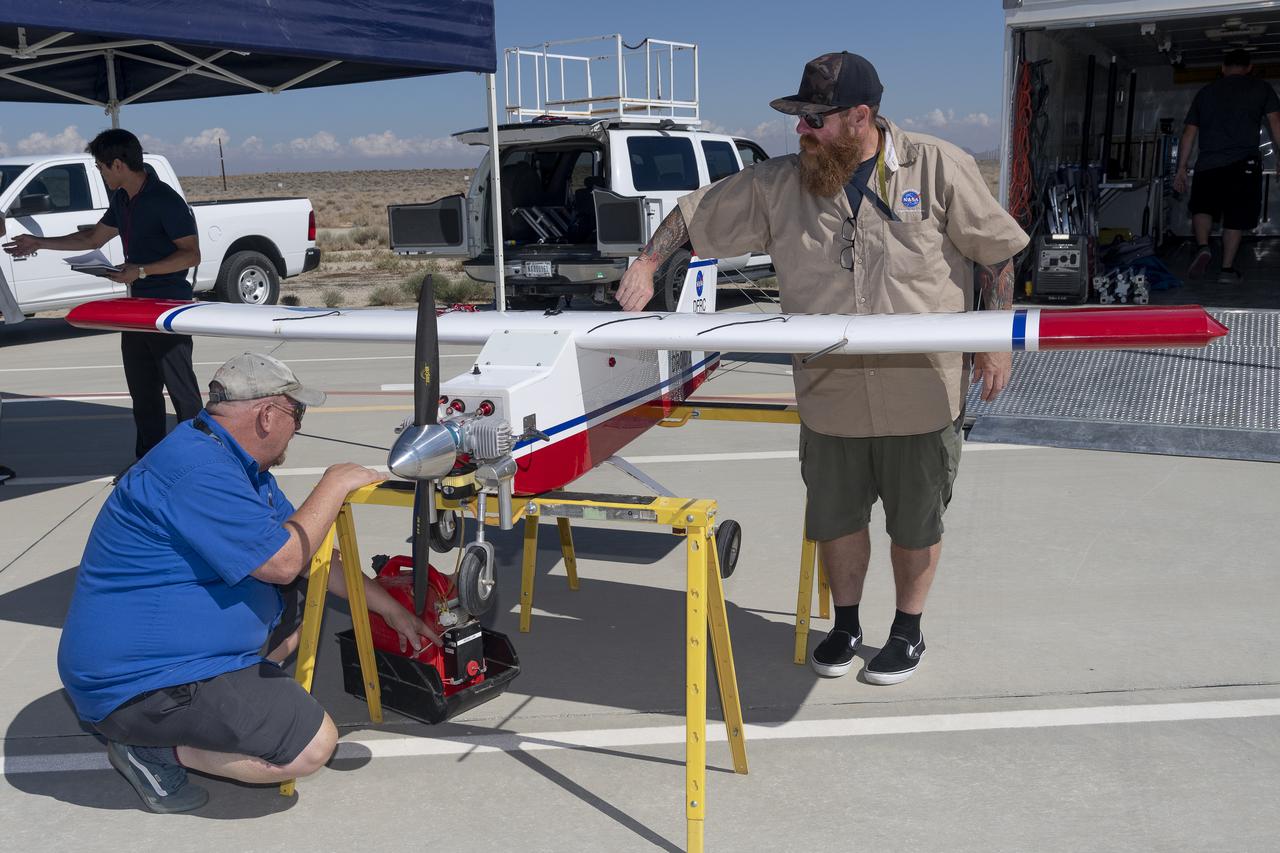
Robert "Red" Jensen and Justin Hall prepare the DROID 2 (Dryden Remotely Operated Integrated Drone 2) aircraft for the Advanced Exploration of Reliable Operation at Low Altitudes: Meteorology, Simulation, and Technology campaign flights. The weather study was at NASA's Armstrong Flight Research Center in Edwards, California. The focus was to study wind to provide data for safe takeoff and landing of future air taxis.
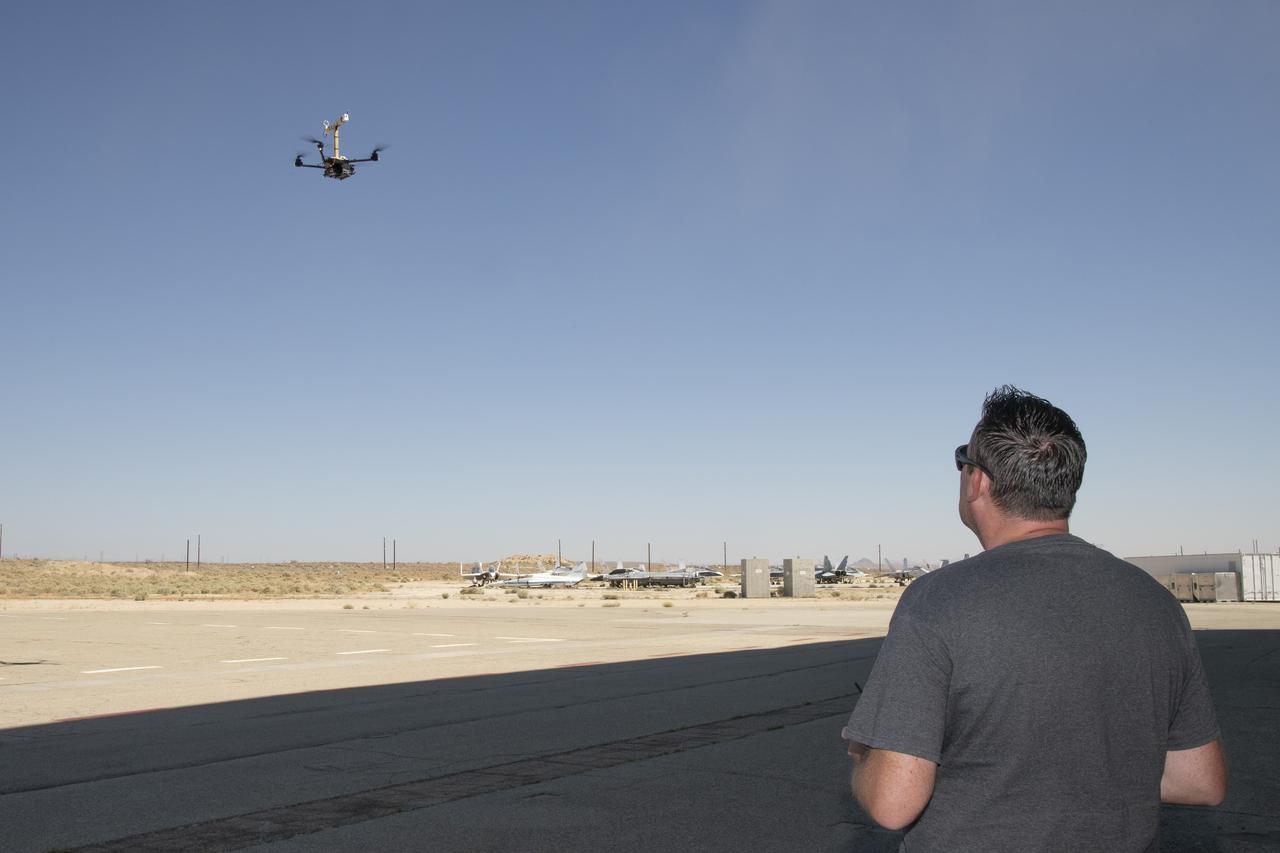
Justin Link positions the Alta-X aircraft for a hover to capture data as part of the Advanced Exploration of Reliable Operation at Low Altitudes: Meteorology, Simulation and Technology campaign. The campaign was at NASA Armstrong to study wind from the ground to 2,000 feet to provide data to assist future drones to safely land on rooftop hubs called vertiports and to potentially improve weather prediction.

Robert "Red" Jensen lands the DROID 2 (Dryden Remotely Operated Integrated Drone 2) aircraft at NASA's Armstrong Flight Research Center in Edwards, California, as part of the Advanced Exploration of Reliable Operation at Low Altitudes: Meteorology, Simulation, and Technology campaign. The focus was to study wind to provide data for safe takeoff and landing of future air taxis.
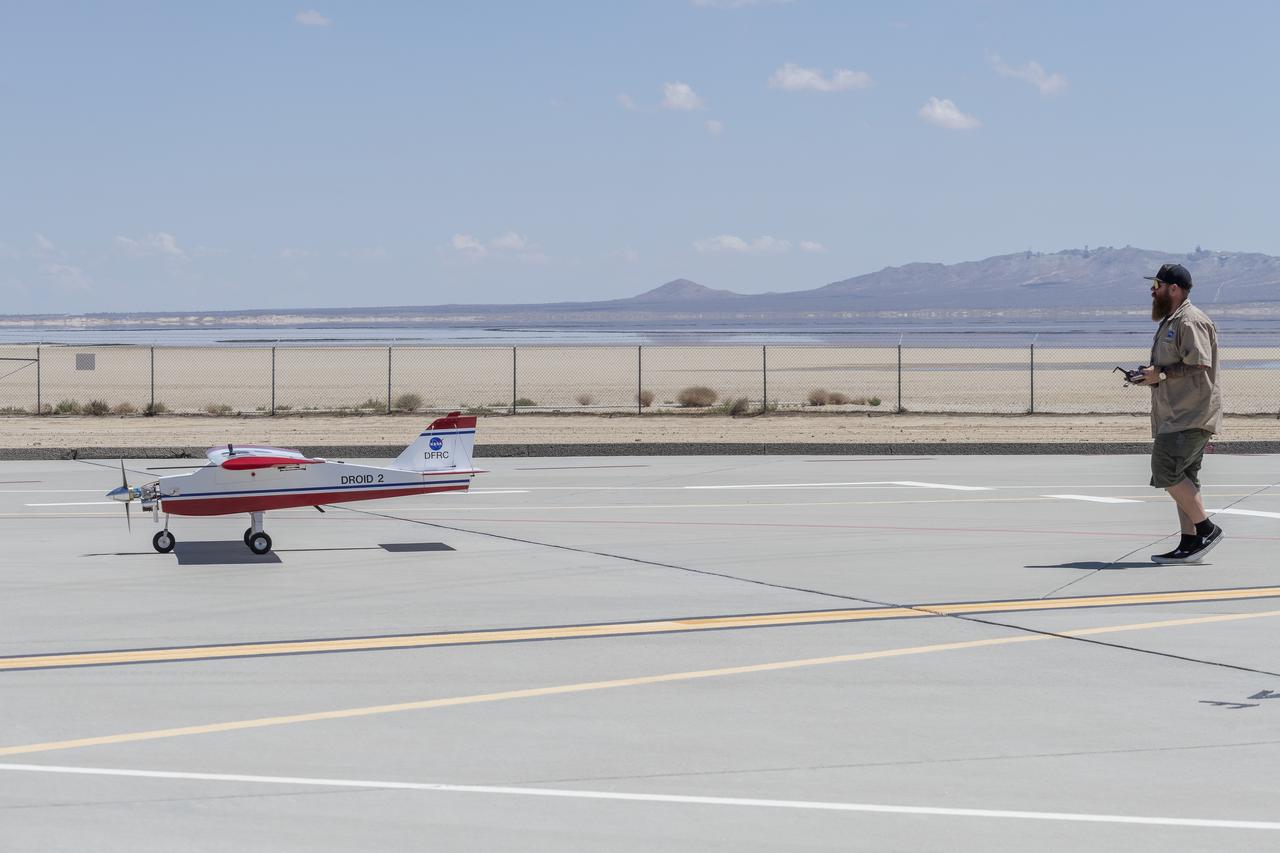
Justin Hall lands the DROID 2 (Dryden Remotely Operated Integrated Drone 2) aircraft at NASA's Armstrong Flight Research Center in Edwards, California, as part of the Advanced Exploration of Reliable Operation at Low Altitudes: Meteorology, Simulation, and Technology campaign. The focus was to study wind to provide data for safe takeoff and landing of future air taxis.
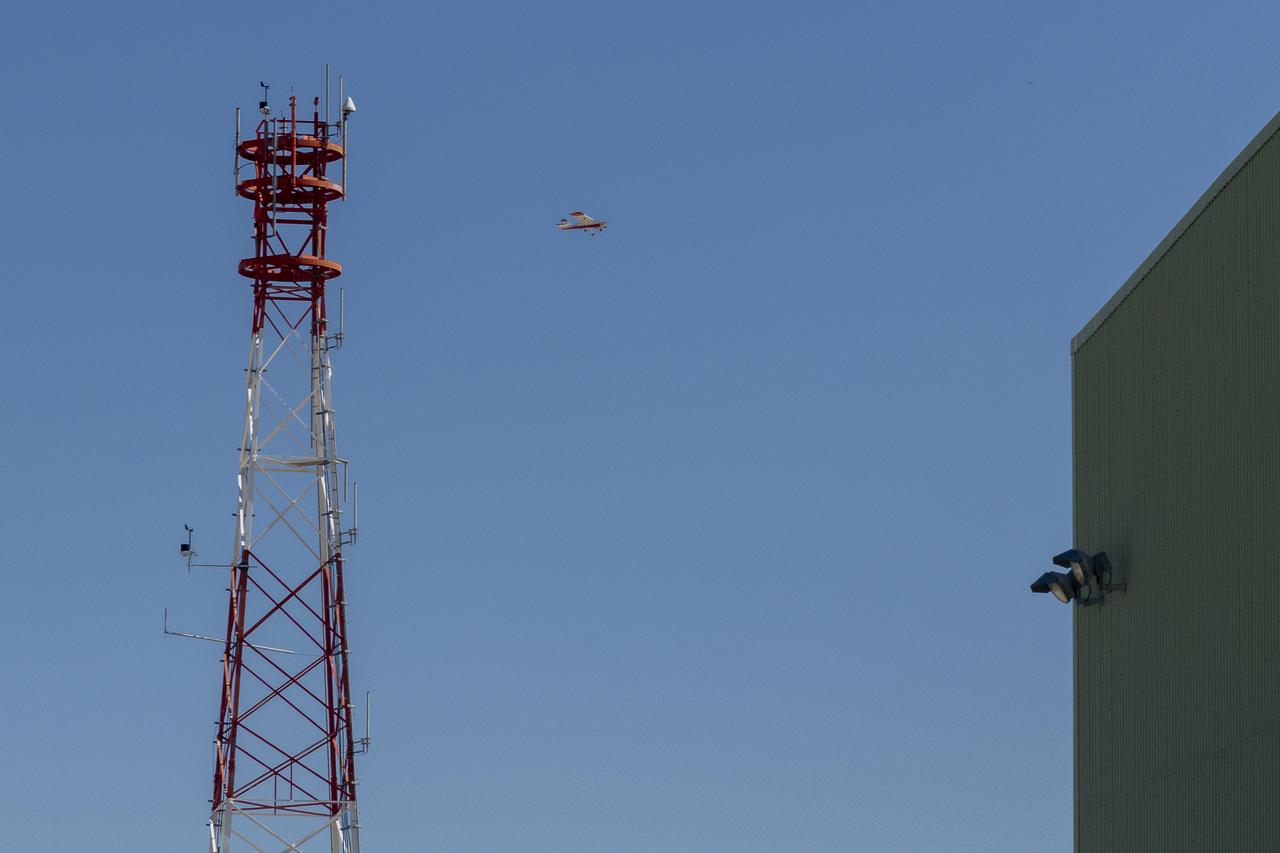
The DROID 2 (Dryden Remotely Operated Integrated Drone 2) flies by a 140-foot instrumented tower and the former space shuttle hangar at NASA's Armstrong Flight Research Center in Edwards, California, as part of the Advanced Exploration of Reliable Operation at Low Altitudes: Meteorology, Simulation, and Technology campaign. The focus was to study wind to provide data for safe takeoff and landing of future air taxis.
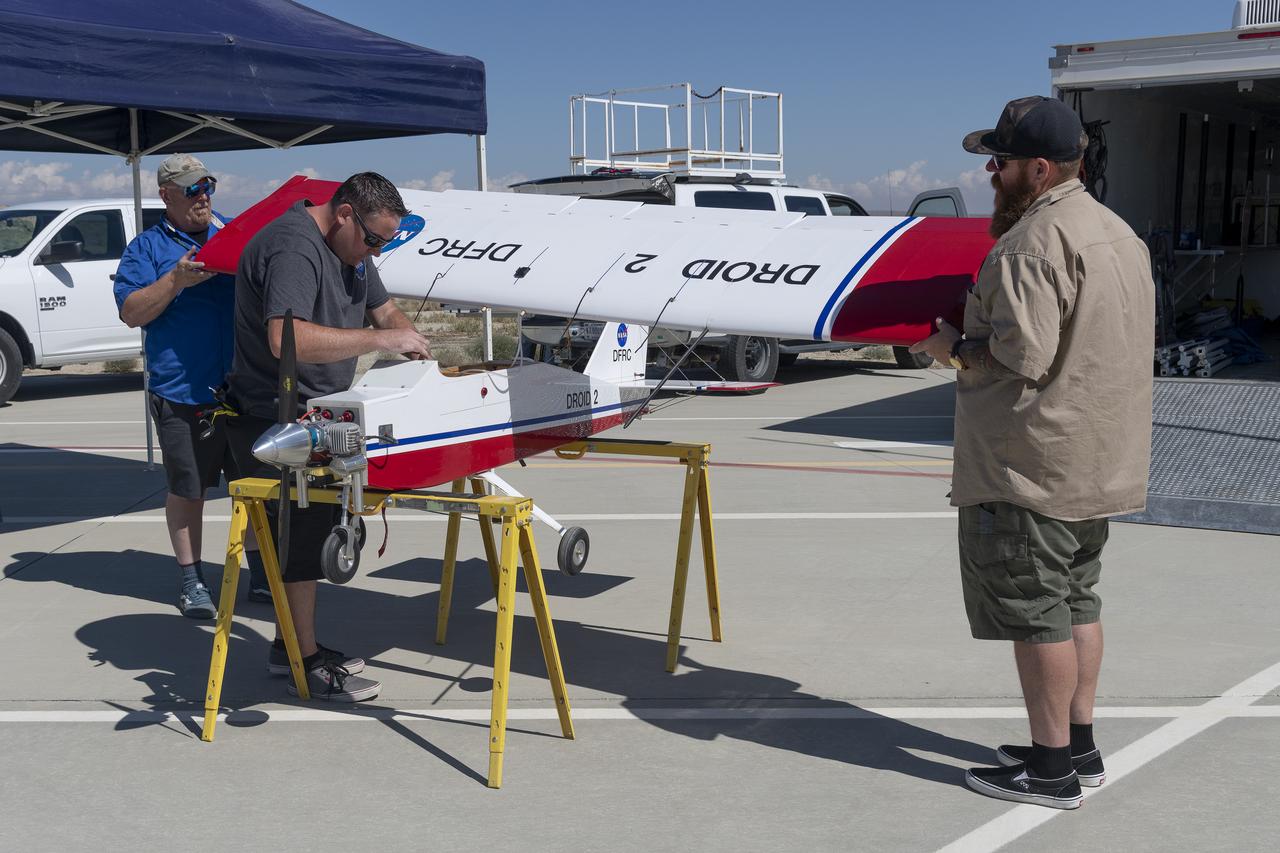
Robert "Red" Jensen, Justin Link, and Justin Hall prepare the DROID 2 (Dryden Remotely Operated Integrated Drone 2) for the Advanced Exploration of Reliable Operation at Low Altitudes: Meteorology, Simulation, and Technology campaign flights. The weather study was at NASA's Armstrong Flight Research Center in Edwards, California. The focus was to study wind to provide data for safe takeoff and landing of future air taxis.
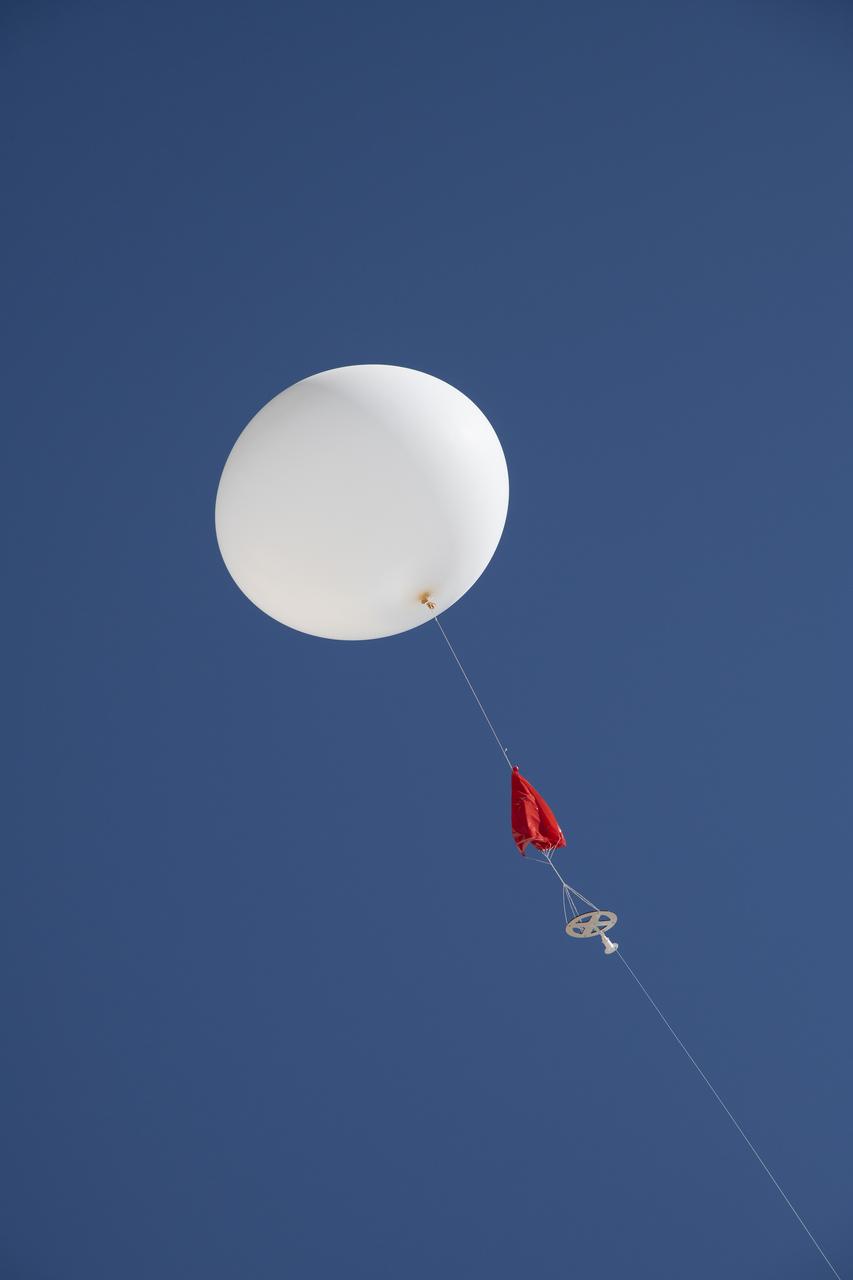
A weather balloon is launched to collect wind data for the Advanced Exploration of Reliable Operation at Low Altitudes: Meteorology, Simulation and Technology campaign. The weather study was at NASA’s Armstrong Flight Research Center in Edwards, California. The focus was to study wind from the ground to 2,000 feet to provide data to assist future drones to safely land on rooftop hubs called vertiports and to potentially improve weather prediction.

This is one of two lidar units positioned on either end of Building 4833 at NASA’s Armstrong Flight Research Center in Edwards, California, that formed the cutting-edge ‘virtual tower concept.’ The units use lasers to measure airflow from the ground level to 2,000 feet to provide data to assist future drones to safely land on rooftop hubs called vertiports, and to potentially improve weather prediction. It was part of the multi-faceted Advanced Exploration of Reliable Operation at Low Altitudes: Meteorology, Simulation and Technology campaign.
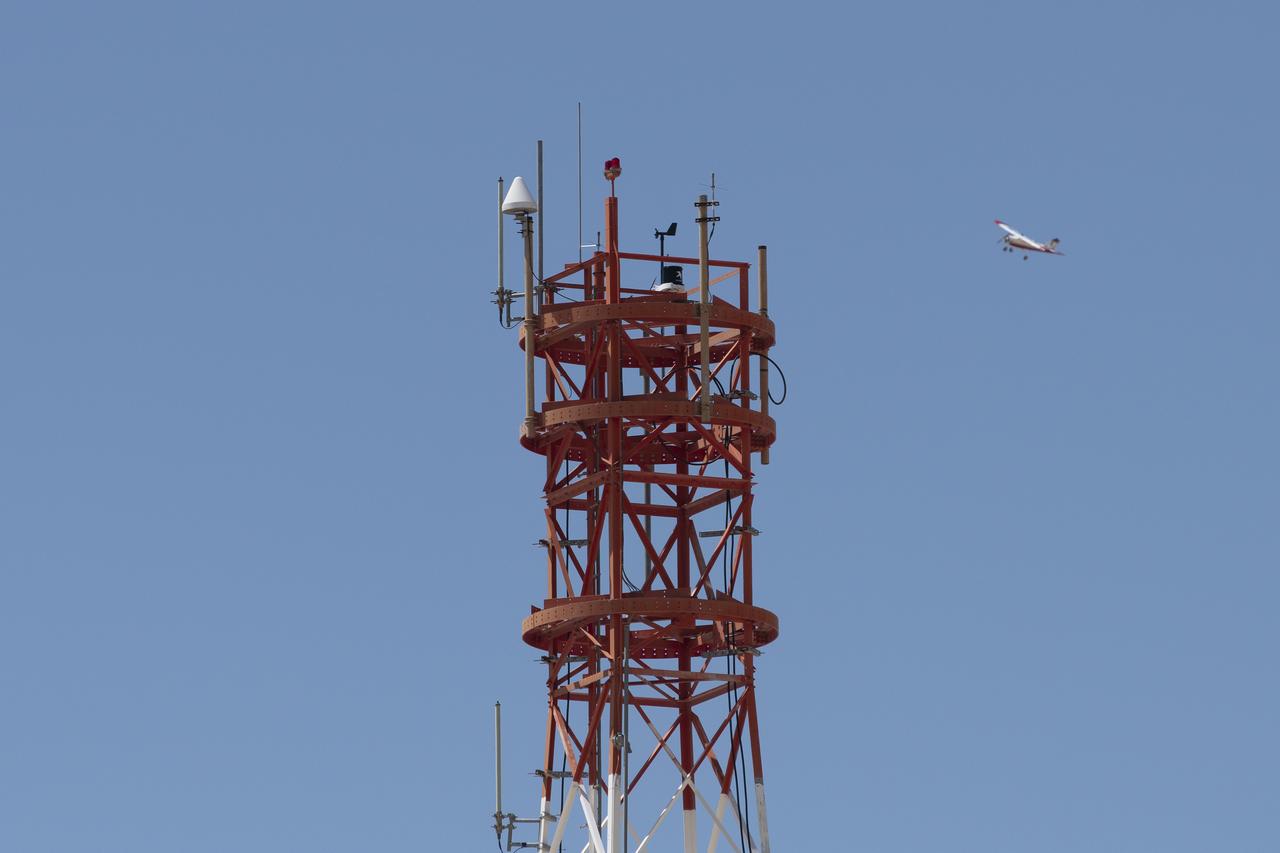
The DROID 2 (Dryden Remotely Operated Integrated Drone 2) flies by a 140-foot instrumented tower at NASA's Armstrong Flight Research Center in Edwards, California, as part of the Advanced Exploration of Reliable Operation at Low Altitudes: Meteorology, Simulation, and Technology campaign. The focus was to study wind to provide data for safe takeoff and landing of future air taxis.

Justin Link, left, Red Jensen and Derek Abramson prepare for an Alta-X aircraft flight as part of the Advanced Exploration of Reliable Operation at Low Altitudes: Meteorology, Simulation and Technology campaign. In the background are Grady Koch and Jennifer Fowler. The campaign was at NASA Armstrong to study wind from the ground to 2,000 feet to provide data to assist future drones to safely land on rooftop hubs called vertiports and to potentially improve weather prediction.
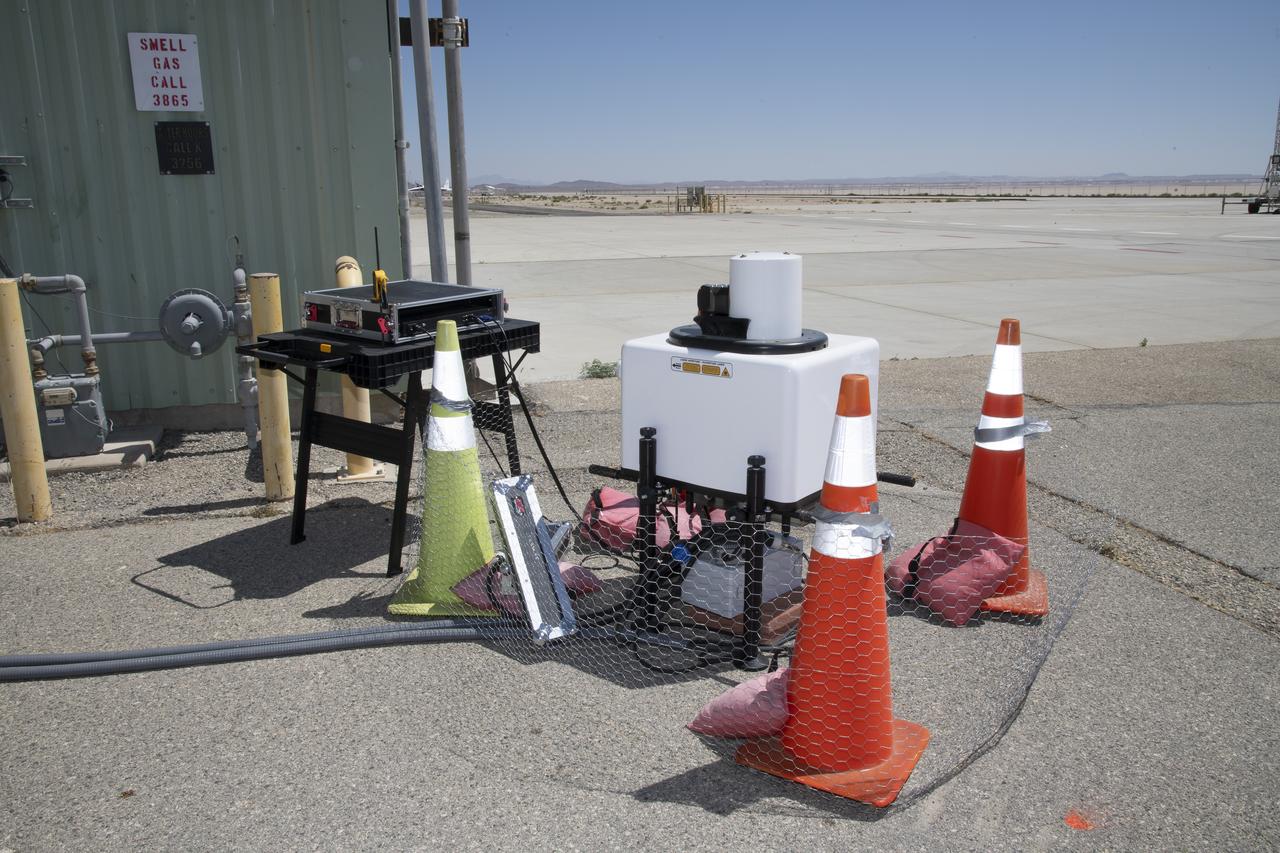
This is one of two lidar units positioned on either end of Building 4833 at NASA’s Armstrong Flight Research Center in Edwards, California, that formed the cutting-edge ‘virtual tower concept.’ The units use lasers to measure airflow from the ground level to 2,000 feet to provide data to assist future drones to safely land on rooftop hubs called vertiports, and to potentially improve weather prediction. It was part of the multi-faceted Advanced Exploration of Reliable Operation at Low Altitudes: Meteorology, Simulation and Technology campaign.
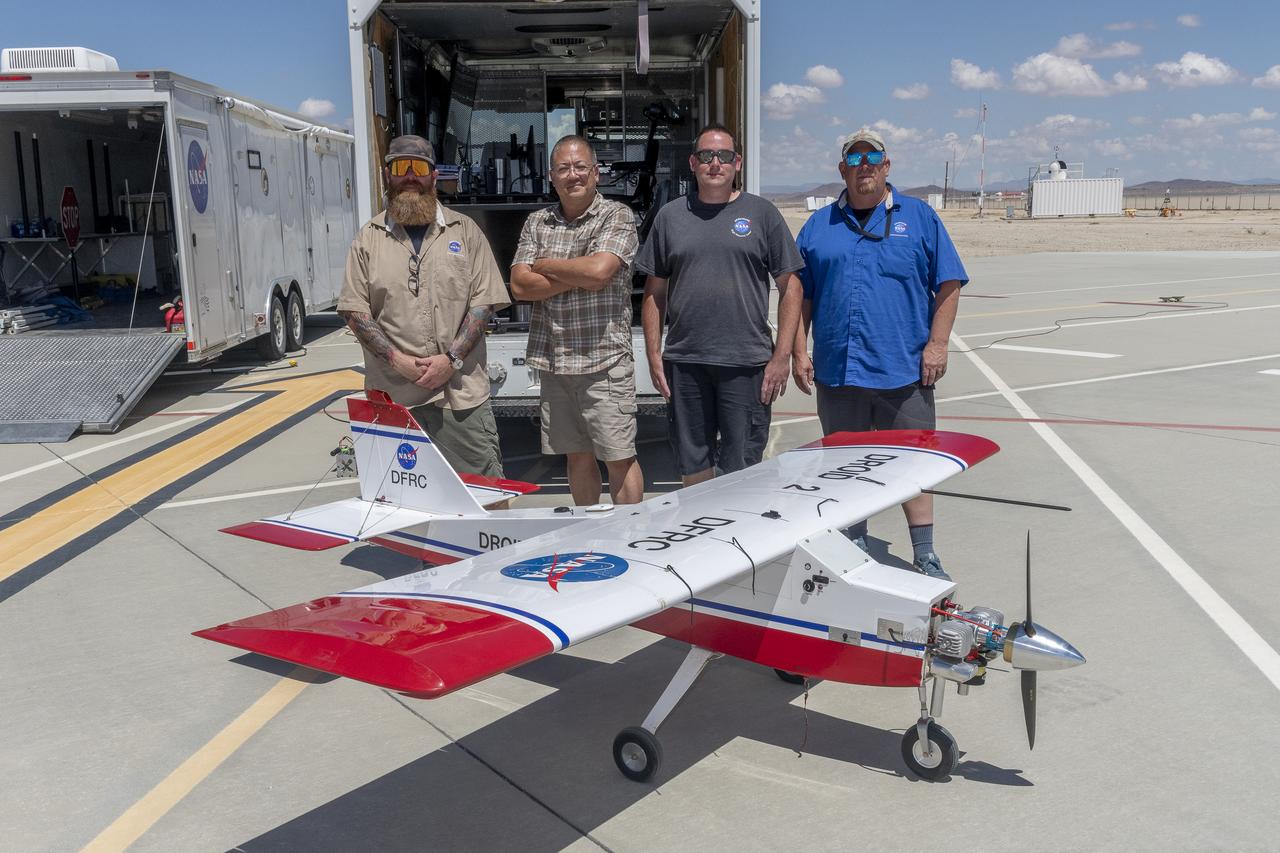
Justin Hall, Derek Abramson, Justin Link, and Robert "Red" Jensen were key to a successful mission for the DROID 2 (Dryden Remotely Operated Integrated Drone 2) aircraft at NASA's Armstrong Flight Research Center in Edwards, California. The aircraft flew as part of the Advanced Exploration of Reliable Operation at Low Altitudes: Meteorology, Simulation, and Technology campaign. The focus was to study wind to provide data for safe takeoff and landing of future air taxis.
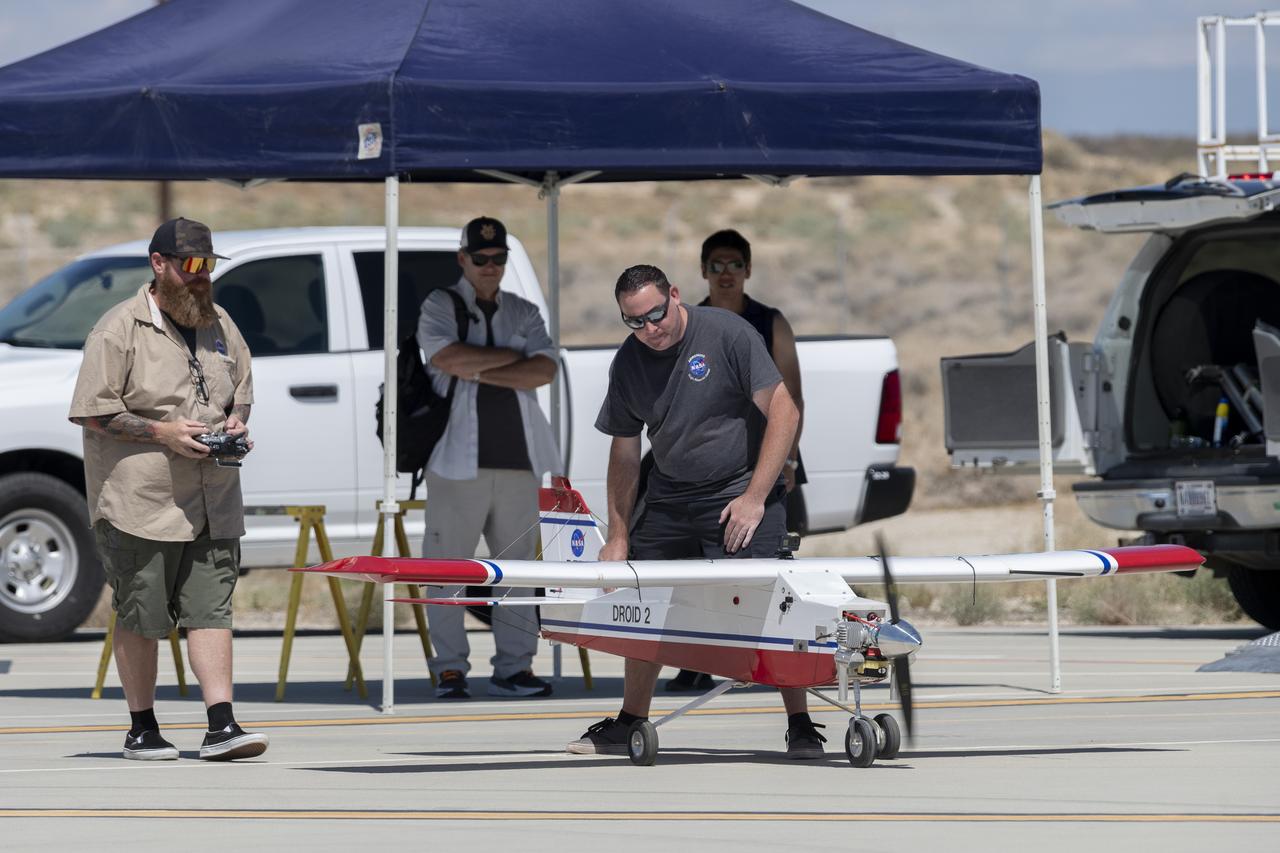
Justin Hall, left, prepares to pilot the DROID 2 (Dryden Remotely Operated Integrated Drone 2) aircraft, as John Melton watches and Justin Link makes a final adjustment. The flight was part of the Advanced Exploration of Reliable Operation at Low Altitudes: Meteorology, Simulation, and Technology campaign. The weather study was at NASA's Armstrong Flight Research Center in Edwards, California. The focus was to study wind to provide data for safe takeoff and landing of future air taxis.

CAPE CANAVERAL, Fla. -- Inside the Space Life Sciences Laboratory near NASA’s Kennedy Space Center in Florida, the Mars Simulation Chamber is being prepared for the Microorganisms in the Stratosphere, or MIST, mission support. The chamber allows MIST scientists and engineers to simulate the stratosphere prior to high altitude flight experiments. The MIST mission will fly a small biological payload in low altitudes aboard a blimp in July to measure microbial survival and cellular responses to exposure in the upper atmosphere. Later in the year, the MIST mission will deploy samples at even high altitudes in the stratosphere using scientific balloons. Photo credit: NASA/Daniel Casper
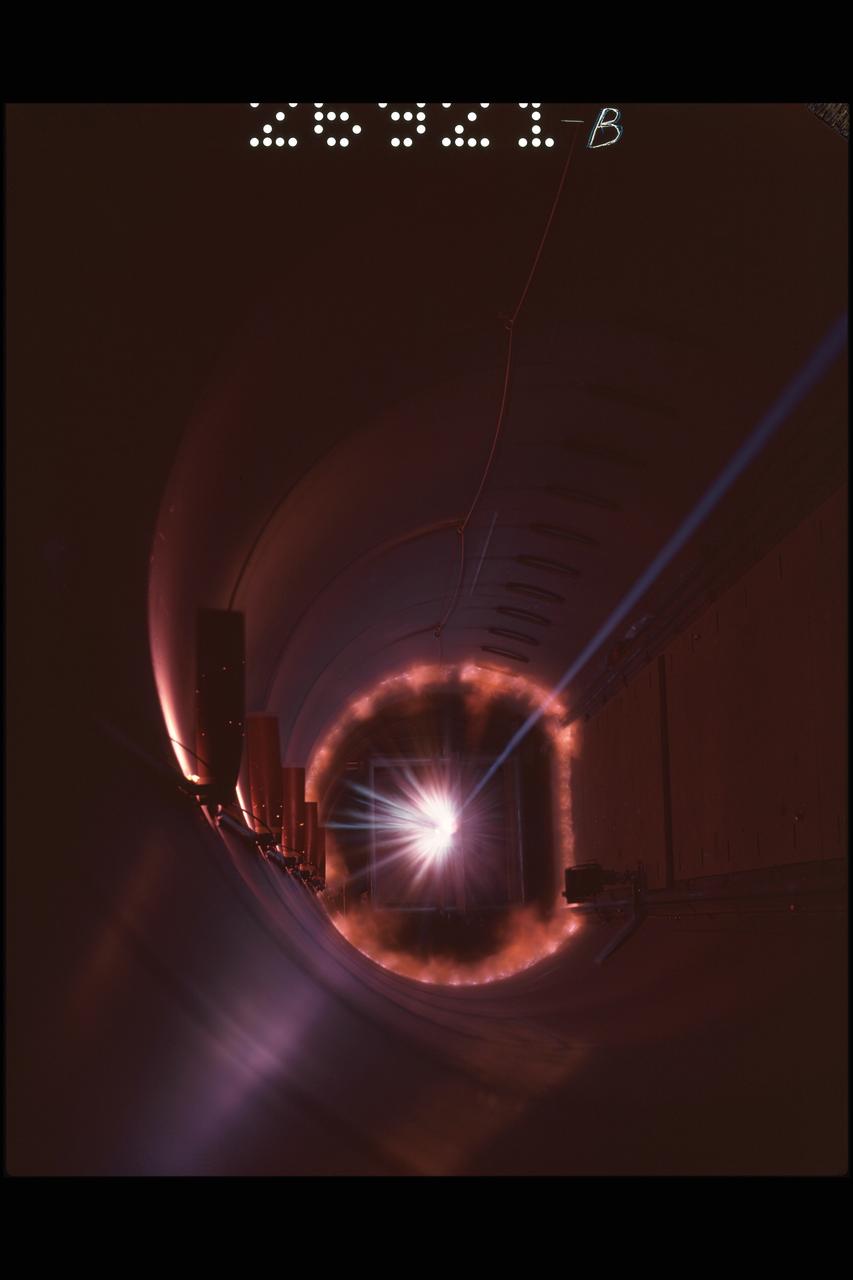
Hi-Speed impact test simulating space debris hitting an orbiting capsule. A blunt nose 20 millimeter model built of polyethylene hitting a aluminum target at 19,500 feet per second, in a pressure simulated as 100,000 feet altitude.
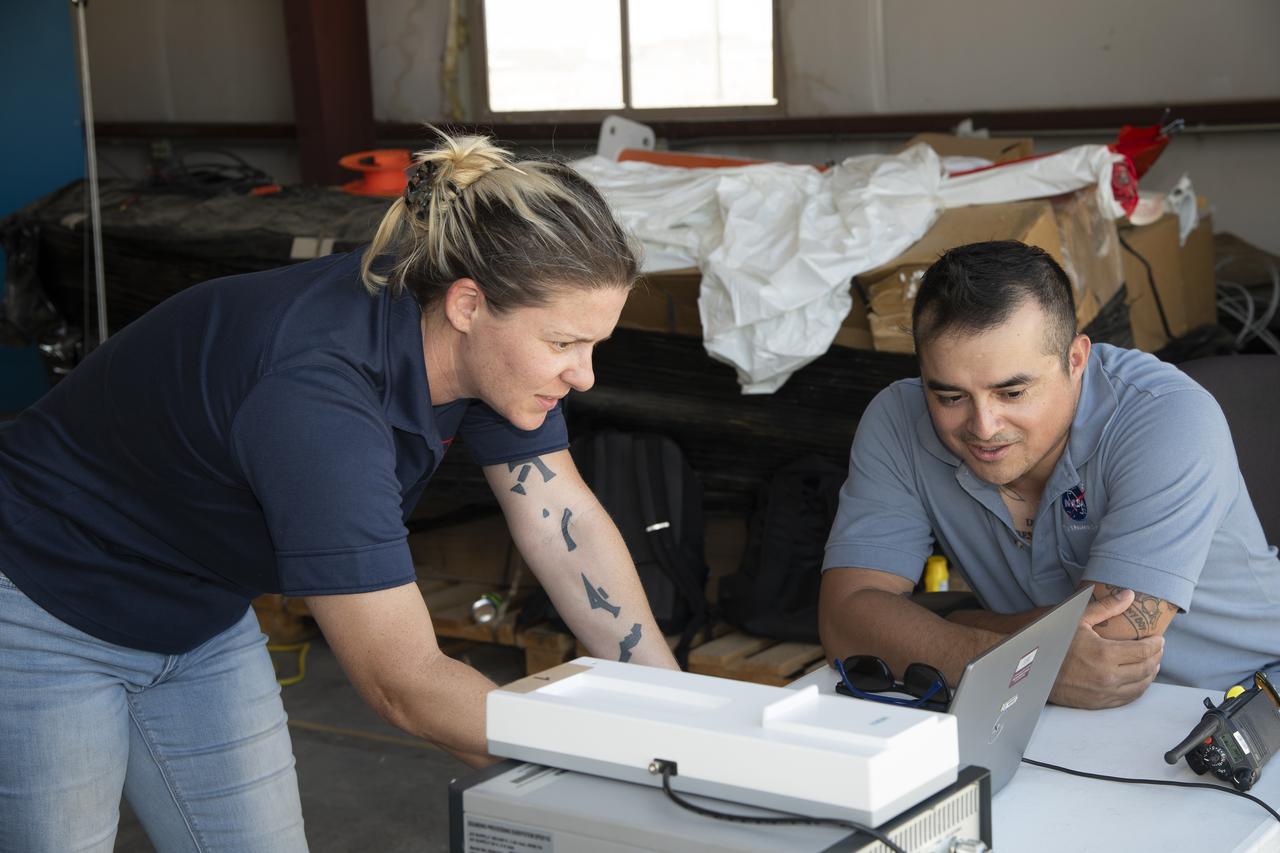
Tegan French and Rocky Garcia are at a weather balloon system’s ground station monitoring temperature, humidity, pressure, and winds transmitted from an instrument package on the balloon as it ascends. The balloon is part of the different methods to collect wind and weather data for the Advanced Exploration of Reliable Operation at Low Altitudes: Meteorology, Simulation and Technology campaign. The weather study was at NASA’s Armstrong Flight Research Center in Edwards, California. The focus was to study wind from the ground to 2,000 feet to provide data to assist future drones to safely land on rooftop hubs called vertiports and to potentially improve weather prediction.
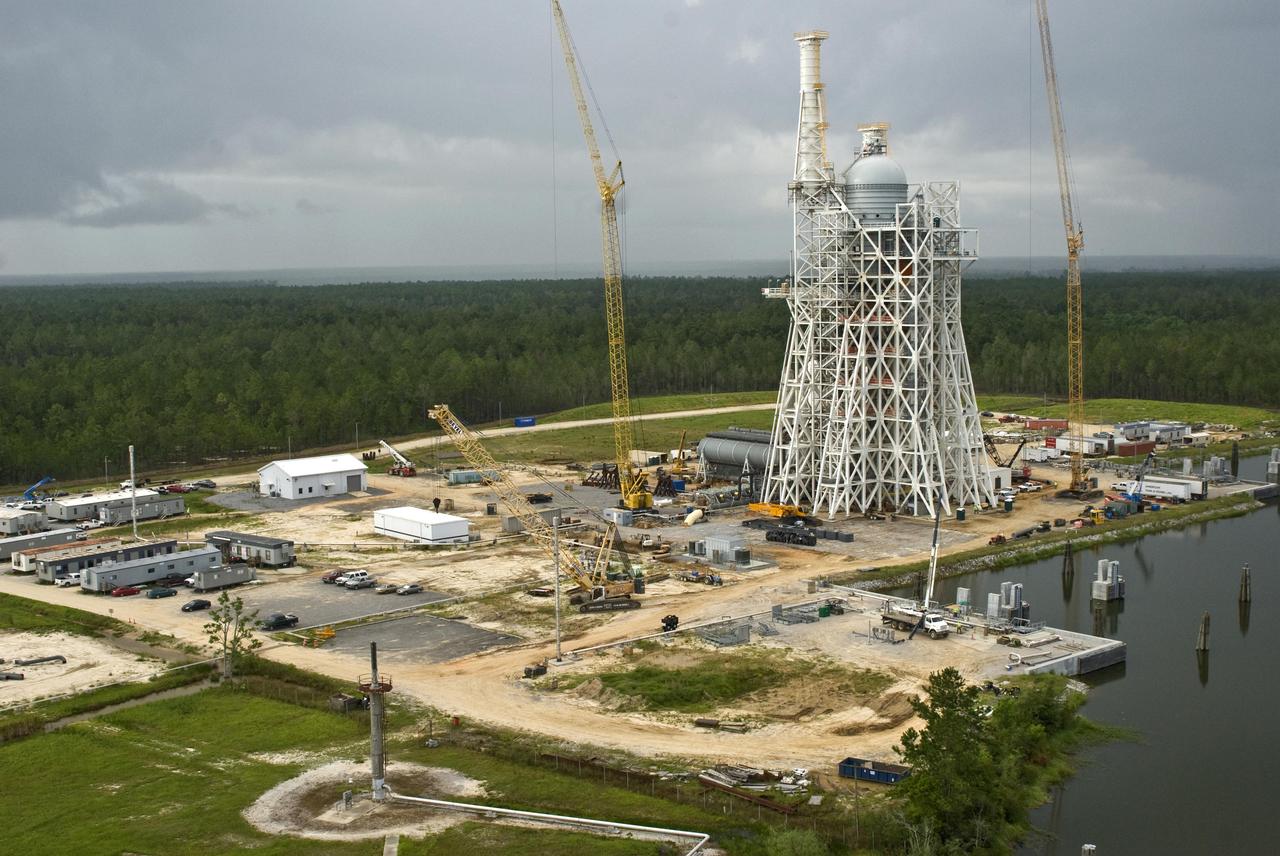
Work continues on the A-3 Test Stand at Stennis Space Center. The new stand will allow operators to test next-generation rocket engines at simulated altitudes up to 100,000 feet. The test stand is scheduled for completion and activation in 2013.
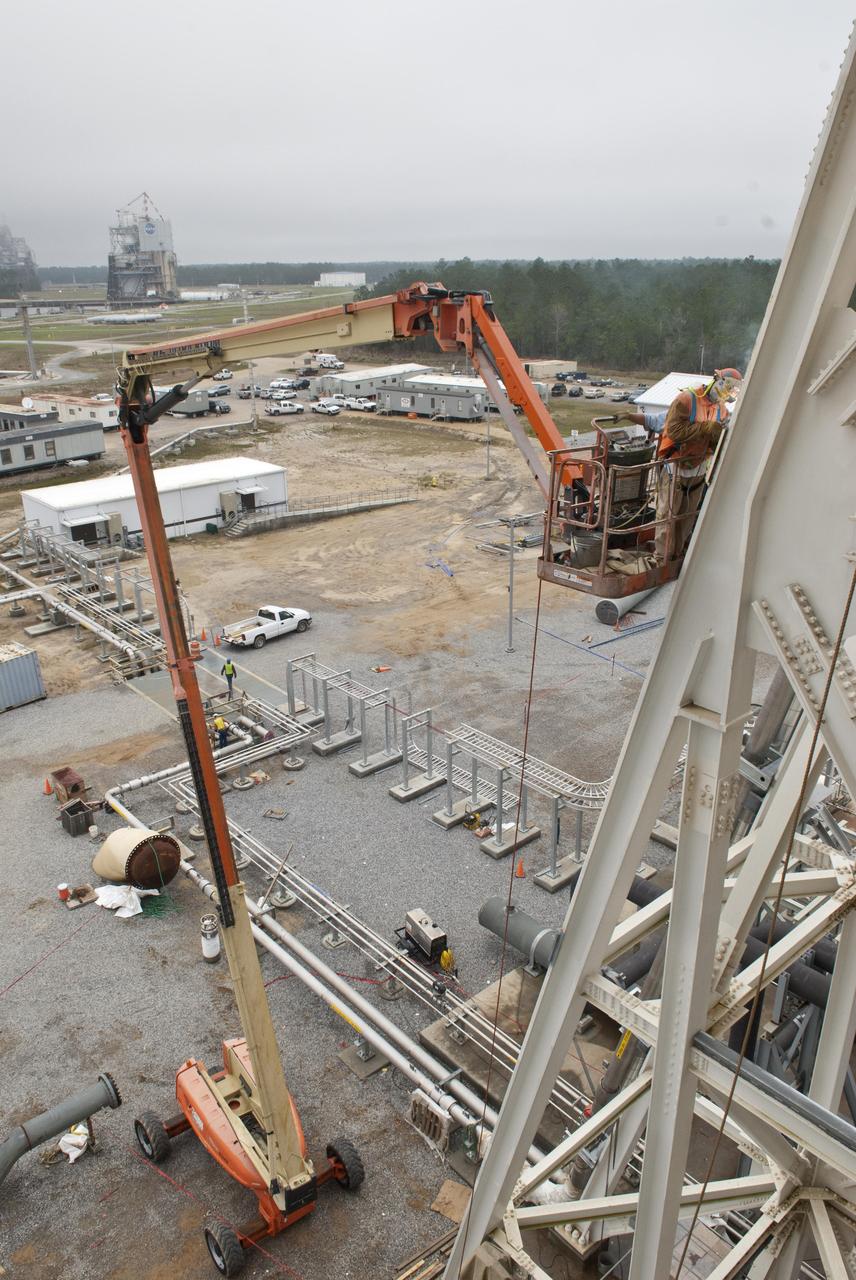
A Stennis Space Center employee works March 2, 2012, to further construction of the A-3 Test Stand, which will enable simulated high-altitude testing of next-generation rocket engines.
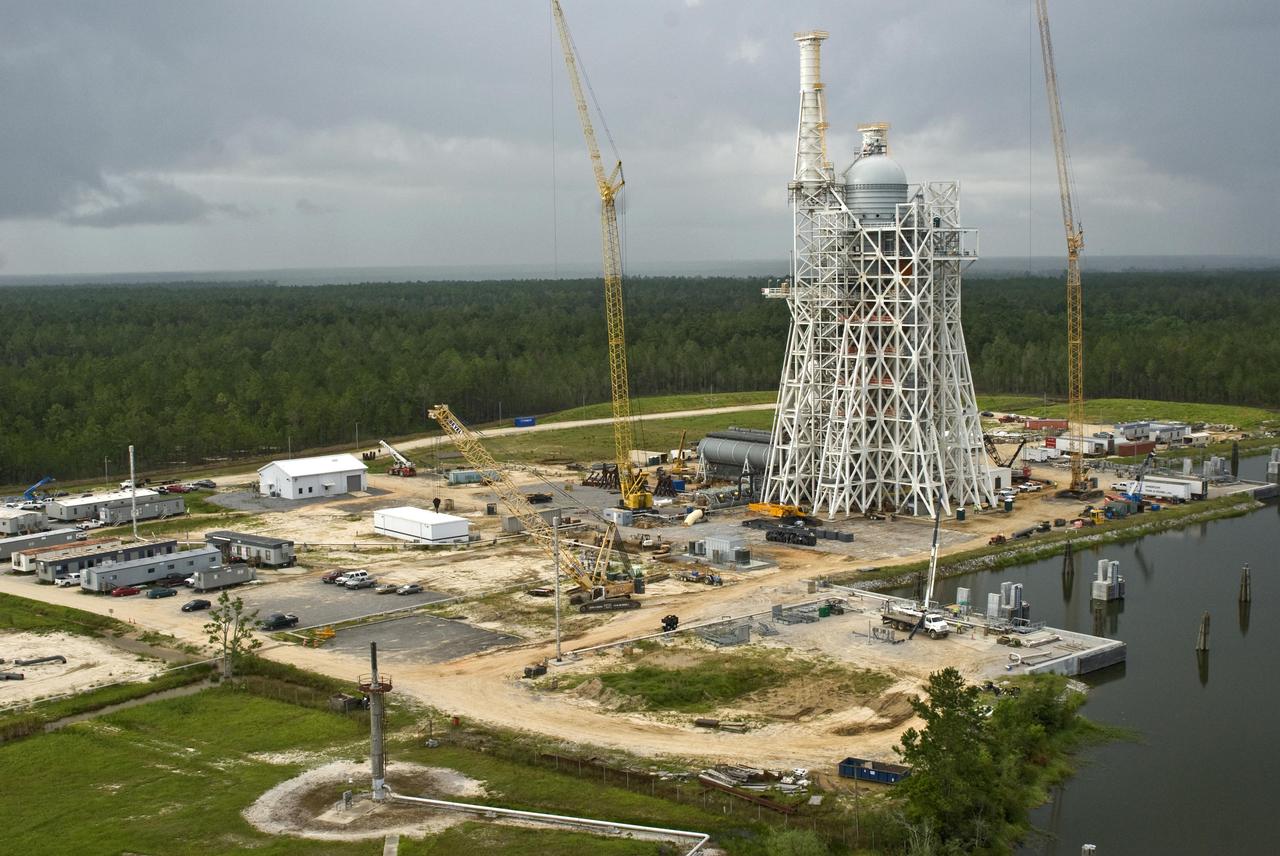
Work continues on the A-3 Test Stand at Stennis Space Center. The new stand will allow operators to test next-generation rocket engines at simulated altitudes up to 100,000 feet. The test stand is scheduled for completion and activation in 2013.
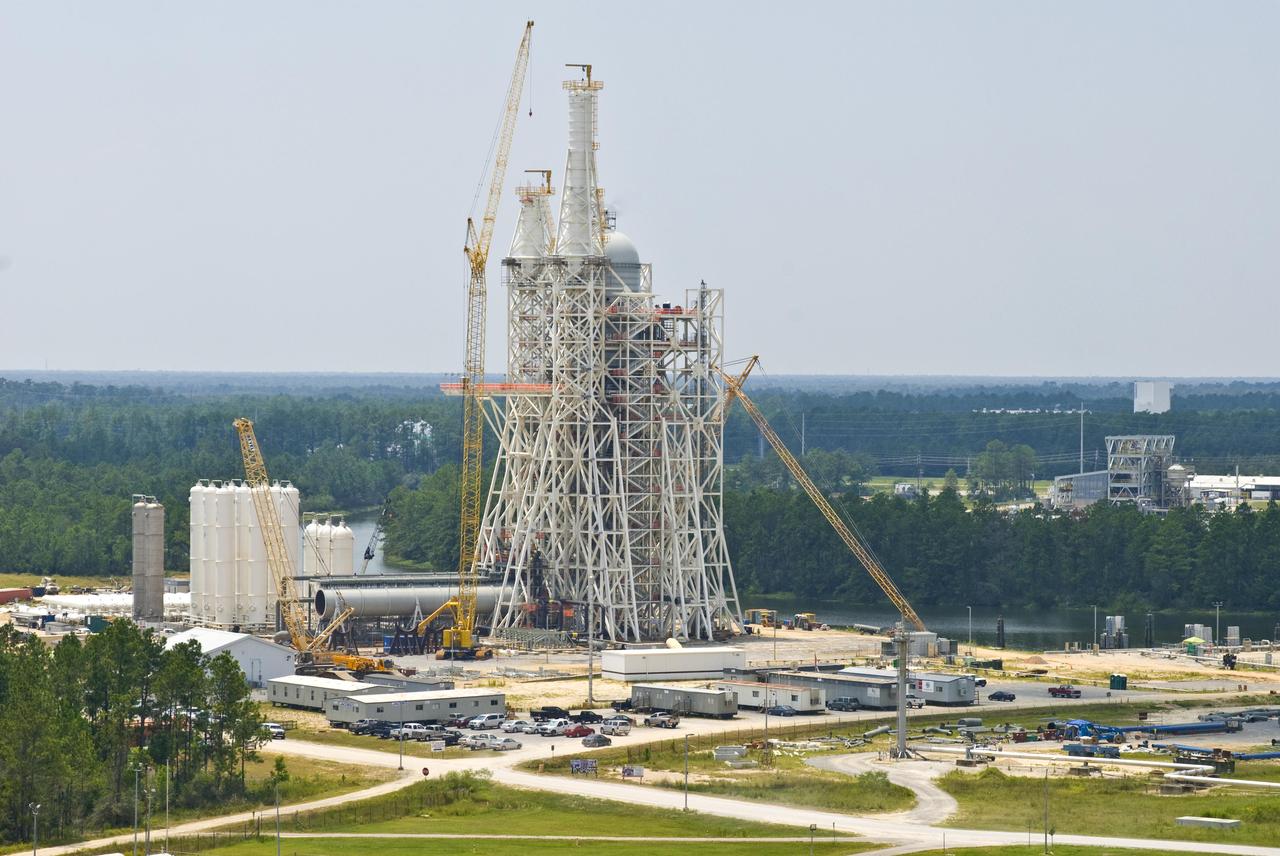
The A-3 Test Stand under construction at Stennis Space Center is set for completion and activation in 2013. It will allow operators to conduct simulated high-altitude testing on the next-generation J-2X rocket engine.
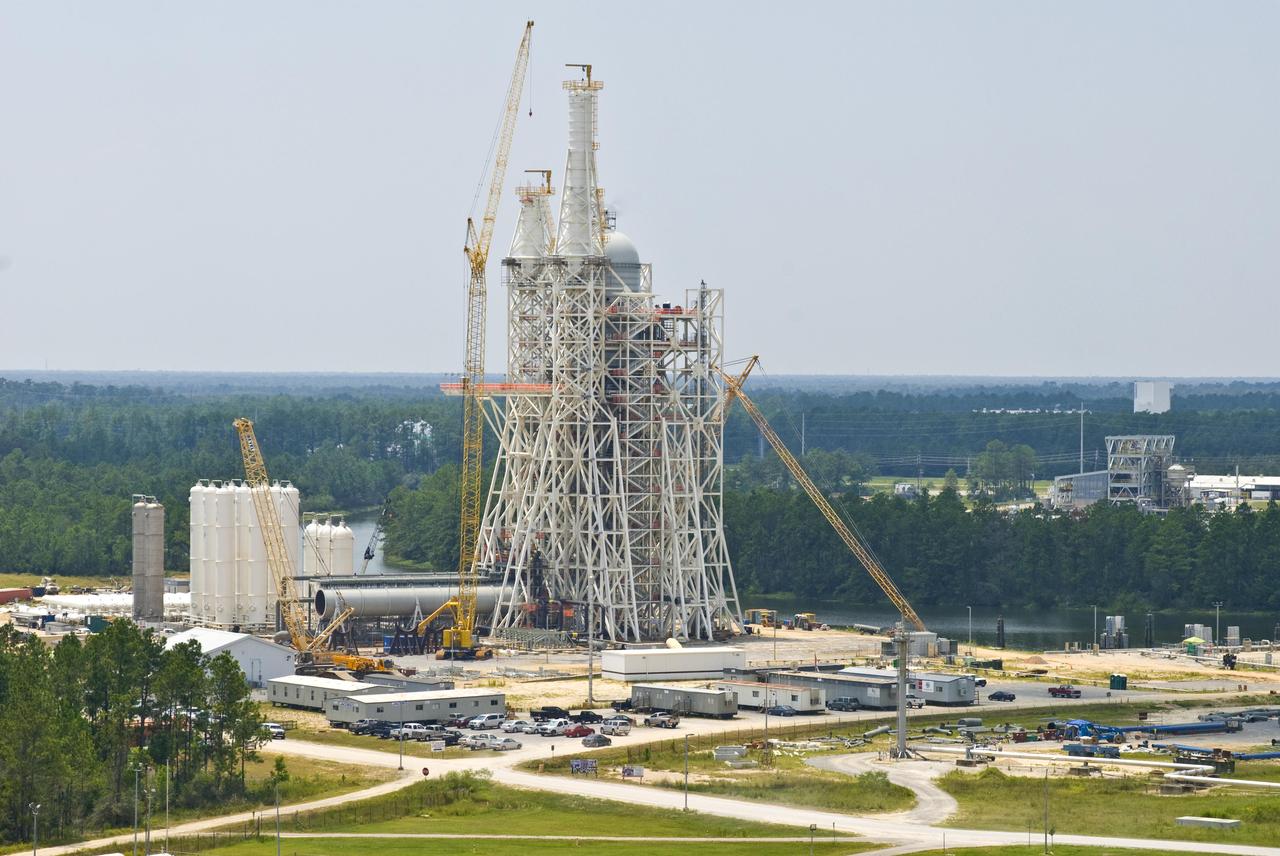
The A-3 Test Stand under construction at Stennis Space Center is set for completion and activation in 2013. It will allow operators to conduct simulated high-altitude testing on the next-generation J-2X rocket engine.
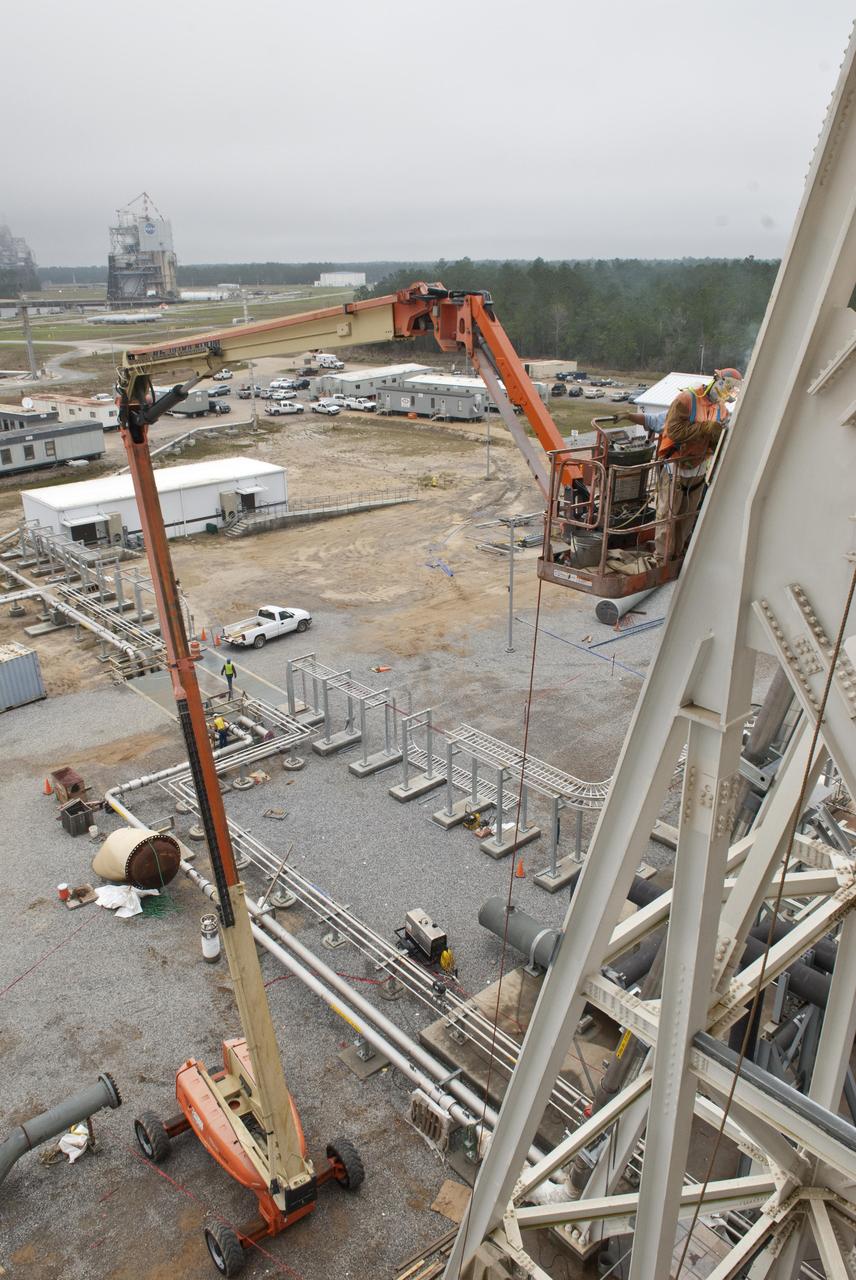
A Stennis Space Center employee works March 2, 2012, to further construction of the A-3 Test Stand, which will enable simulated high-altitude testing of next-generation rocket engines.
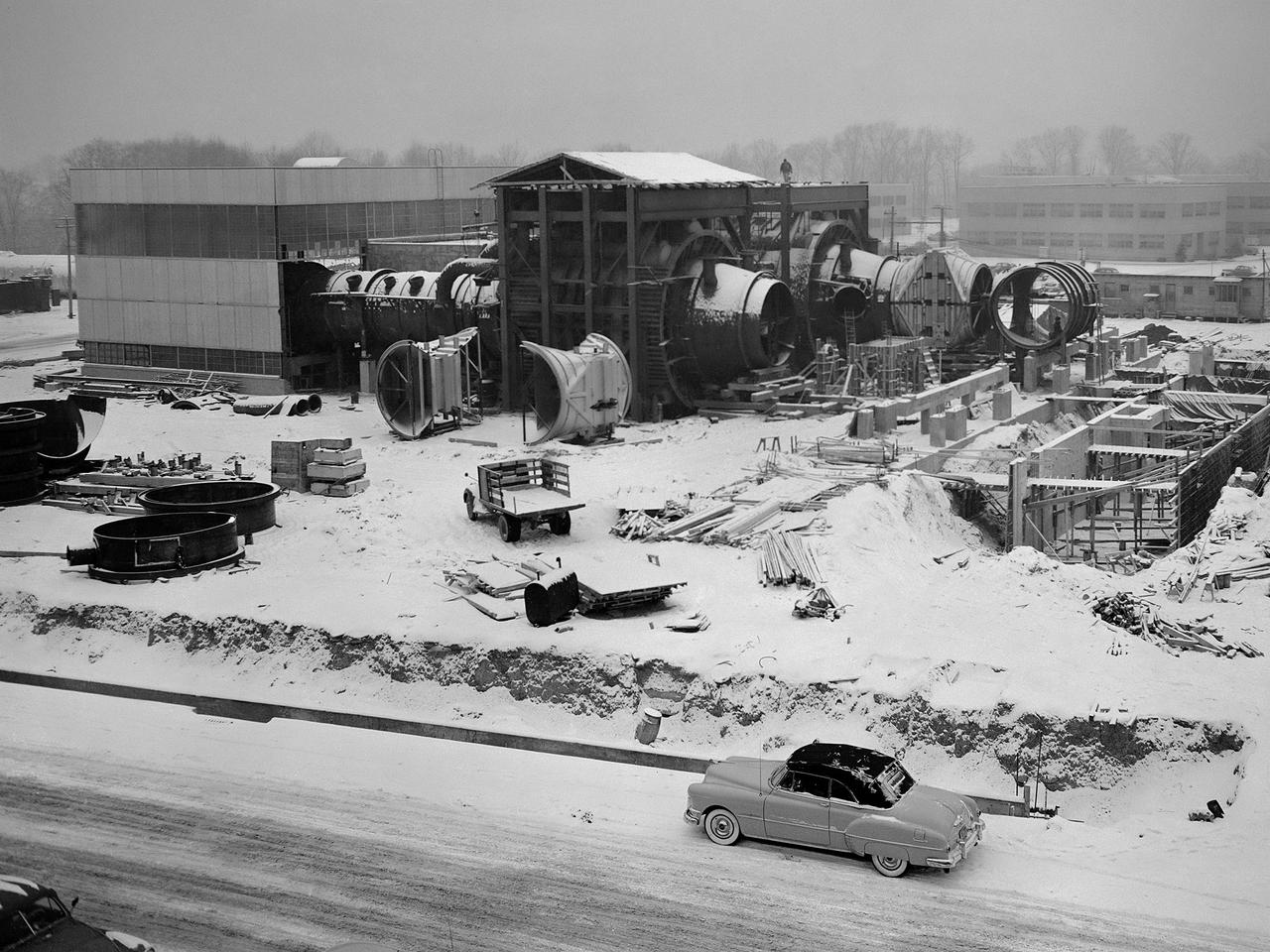
Construction of the Propulsion Systems Laboratory No. 1 and 2 at the National Advisory Committee for Aeronautics (NACA) Lewis Flight Propulsion Laboratory. When it began operation in late 1952, the Propulsion Systems Laboratory was the NACA’s most powerful facility for testing full-scale engines at simulated flight altitudes. The facility contained two altitude simulating test chambers which were a technological combination of the static sea-level test stands and the complex Altitude Wind Tunnel, which recreated actual flight conditions on a larger scale. NACA Lewis began designing the new facility in 1947 as part of a comprehensive plan to improve the altitude testing capabilities across the lab. The exhaust, refrigeration, and combustion air systems from all the major test facilities were linked. In this way, different facilities could be used to complement the capabilities of one another. Propulsion Systems Laboratory construction began in late summer 1949 with the installation of an overhead exhaust pipe connecting the facility to the Altitude Wind Tunnel and Engine Research Building. The large test section pieces arriving in early 1951, when this photograph was taken. The two primary coolers for the altitude exhaust are in place within the framework near the center of the photograph.
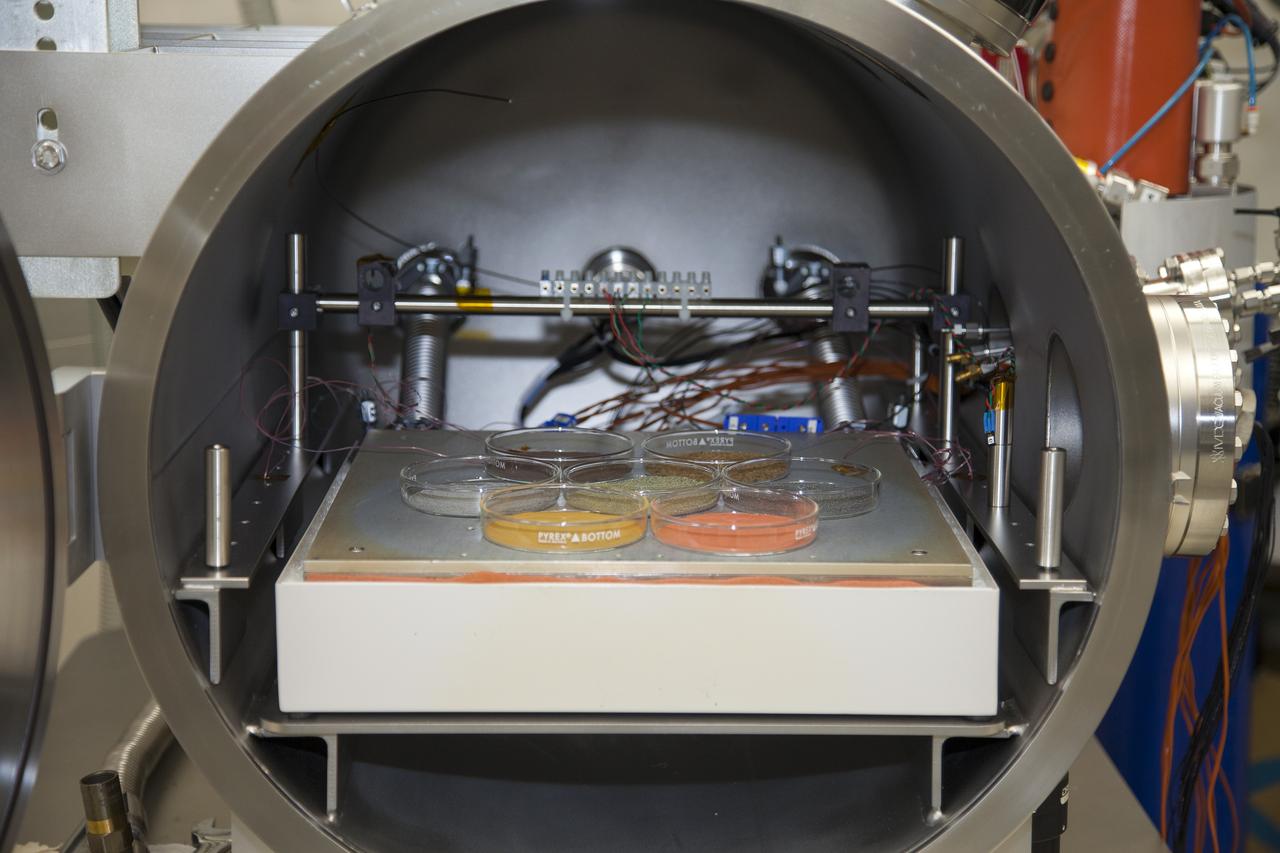
CAPE CANAVERAL, Fla. -- Inside the Space Life Sciences Laboratory near NASA’s Kennedy Space Center in Florida, the Mars Simulation Chamber is being prepared for the Microorganisms in the Stratosphere, or MIST, mission support. The chamber allows MIST scientists and engineers to simulate the stratosphere prior to high altitude flight experiments. The MIST mission will fly a small biological payload aboard a blimp in July to measure microbial survival and cellular responses to exposure in the upper atmosphere. Later in the year, the MIST mission will deploy samples at even higher altitudes in the stratosphere using scientific balloons. Photo credit: NASA/Daniel Casper
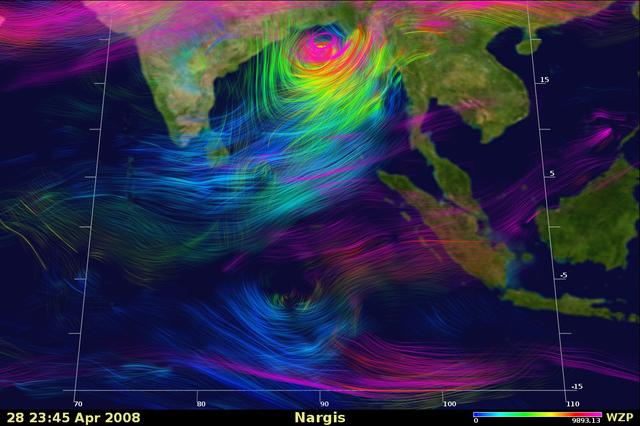
Shen_Nargis: Snapshot of a very large simulation showing the altitude and velocity of wind speeds within the 2008 Cyclone Nargis. Top wind speeds for the storm were measured at 135 mph. The lowest altitude winds are shown in blue, while the highest altitude winds are shown in pink. Wind speed is shown by color density: higher density denotes stronger winds, slightly transparent color indicates slower wind speeds. Credit: Bryan Green, NASA Ames Research Center; Bo-wen Shen, NASA Goddard Space Flight Center.
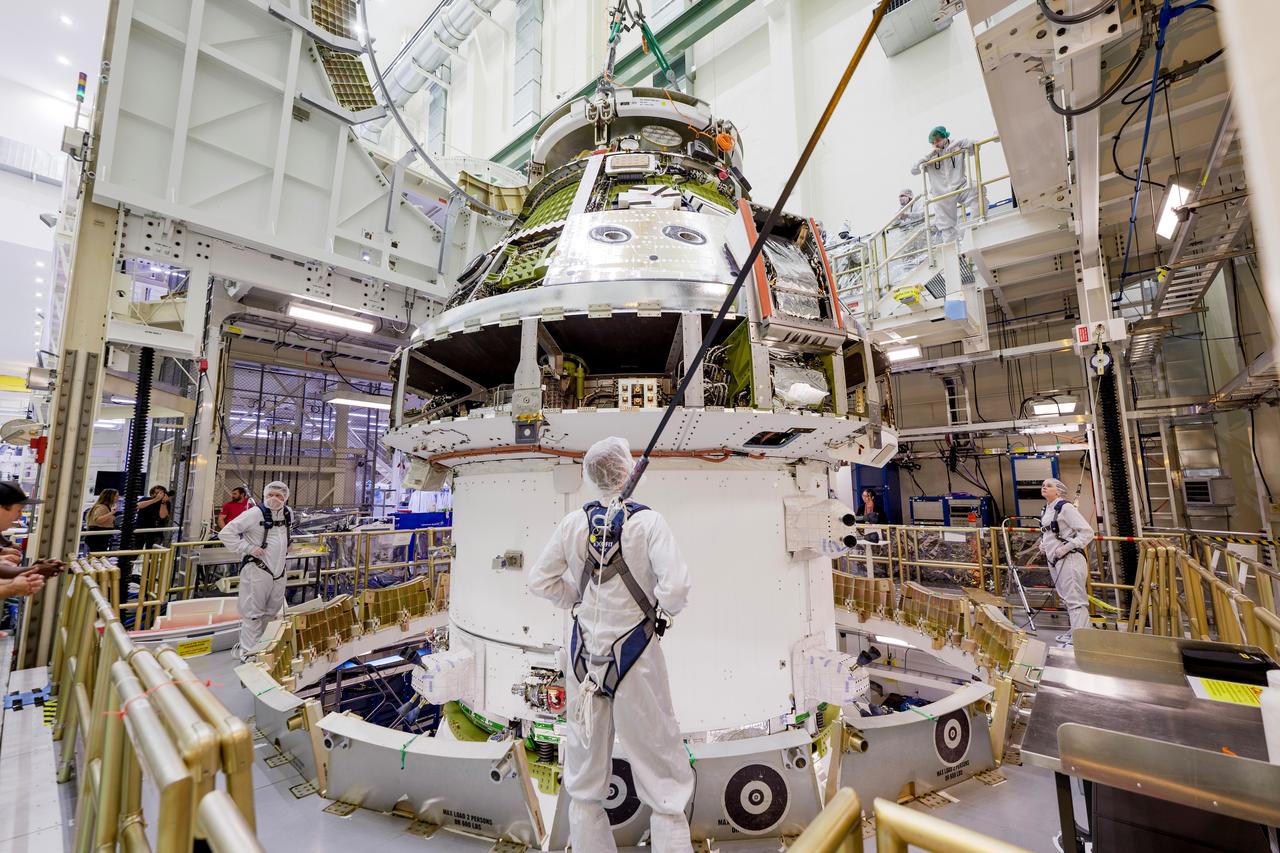
The Artemis II Orion spacecraft is lifted from the Final Assembly and Testing (FAST) Cell and placed in the west altitude chamber inside the Operations and Checkout Building at NASA’S Kennedy Space Center in Florida on June 28, 2024. Inside the altitude chamber, the spacecraft underwent a series of tests simulating deep space vacuum conditions. Photo Credit: NASA / Rad Sinyak
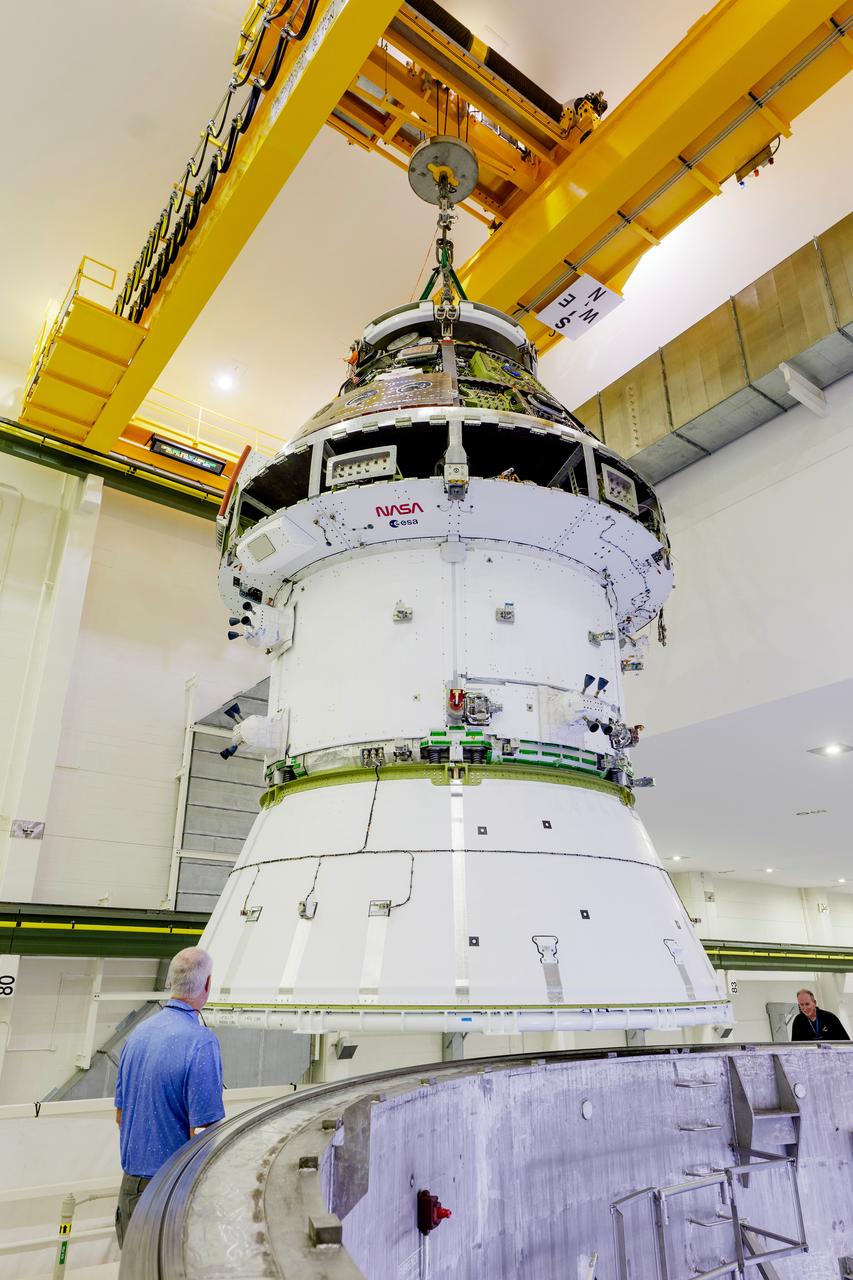
The Artemis II Orion spacecraft is lifted from the Final Assembly and Testing (FAST) Cell and placed in the west altitude chamber inside the Operations and Checkout Building at NASA’S Kennedy Space Center in Florida on June 28, 2024. Inside the altitude chamber, the spacecraft underwent a series of tests simulating deep space vacuum conditions. Photo Credit: NASA / Rad Sinyak
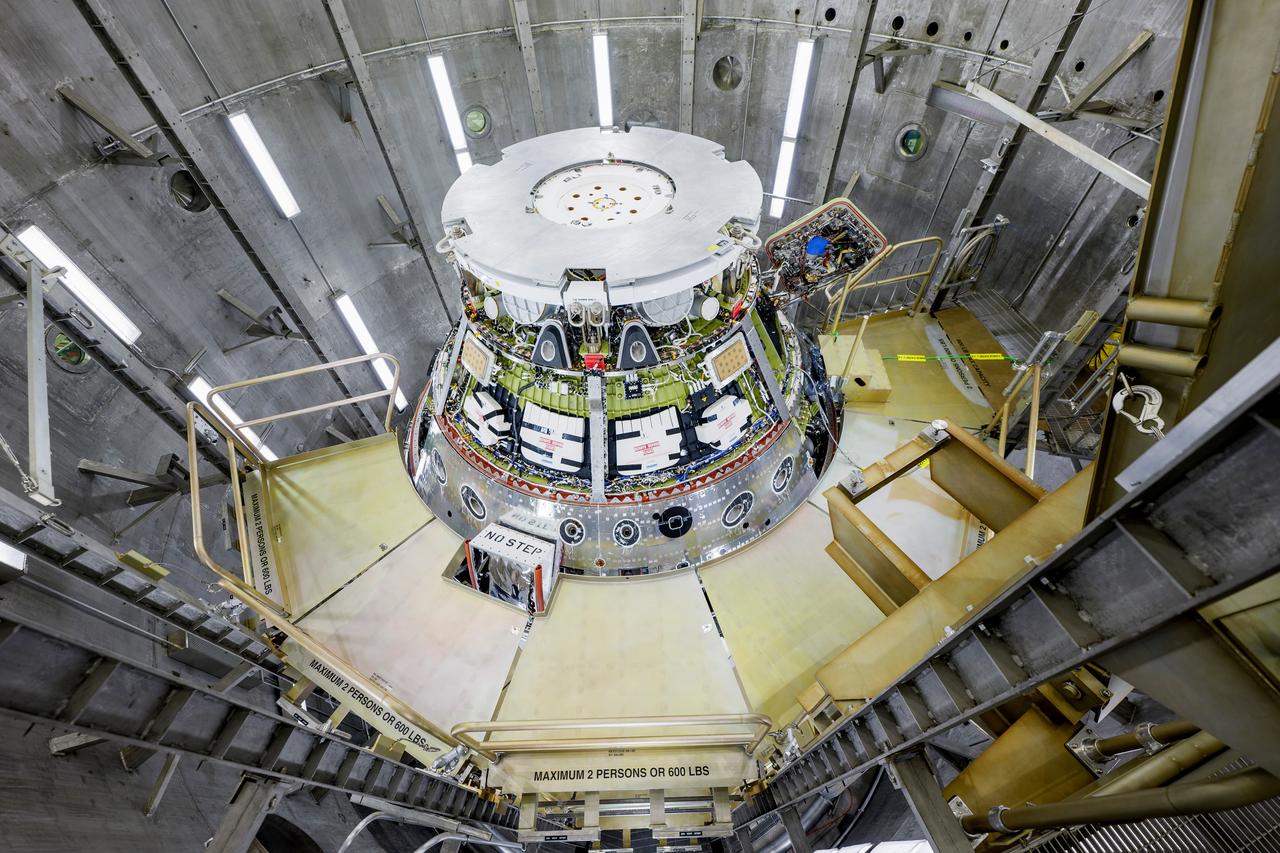
The Artemis II Orion spacecraft is lifted from the Final Assembly and System Testing (FAST) Cell and placed in the west altitude chamber inside the Operations and Checkout Building at NASA’S Kennedy Space Center in Florida on June 28, 2024. Inside the altitude chamber, the spacecraft underwent a series of tests simulating deep space vacuum conditions. Photo Credit: NASA / Rad Sinyak
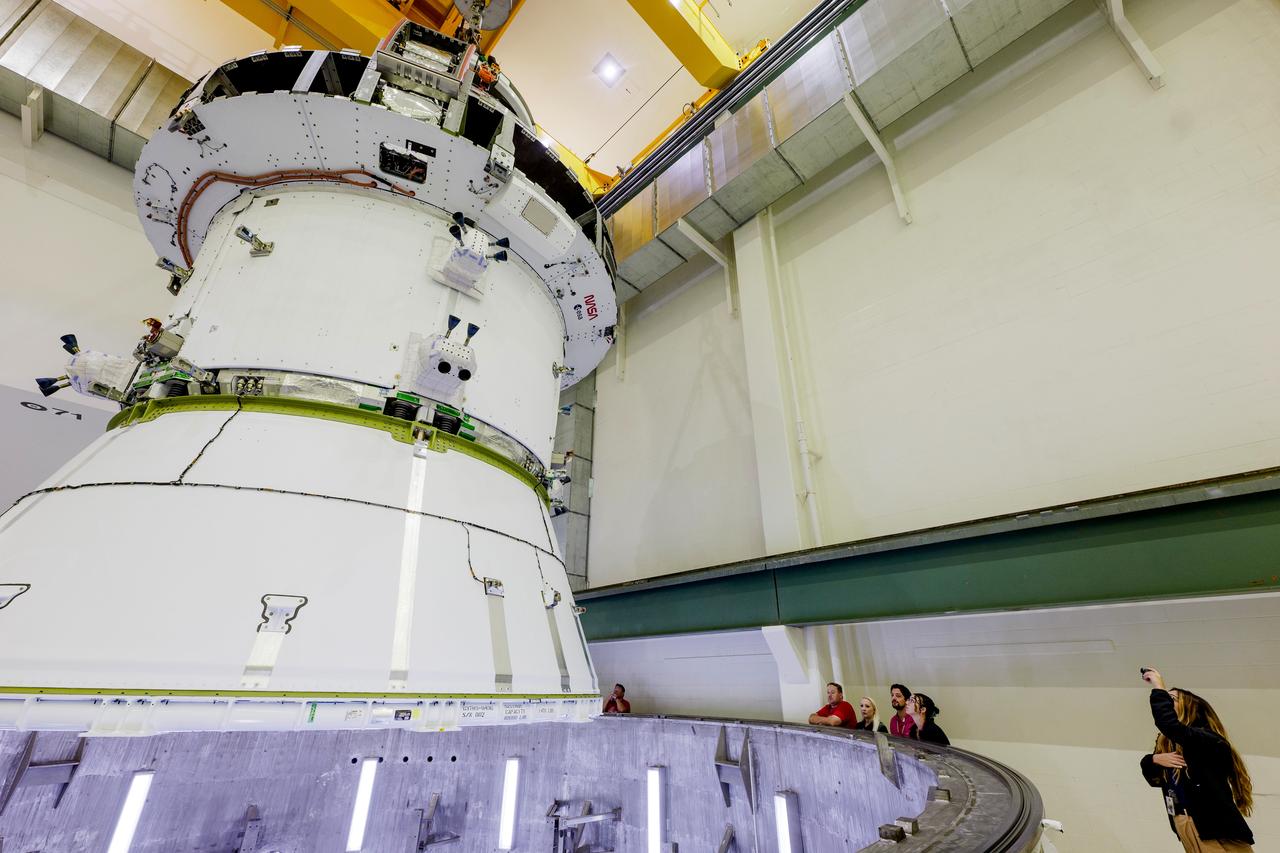
The Artemis II Orion spacecraft is lifted from the Final Assembly and Testing (FAST) Cell and placed in the west altitude chamber inside the Operations and Checkout Building at NASA’S Kennedy Space Center in Florida on June 28, 2024. Inside the altitude chamber, the spacecraft underwent a series of tests simulating deep space vacuum conditions. Photo Credit: NASA / Rad Sinyak

The Artemis II Orion spacecraft is lifted from the Final Assembly and Testing (FAST) Cell and placed in the west altitude chamber inside the Operations and Checkout Building at NASA’S Kennedy Space Center in Florida on June 28, 2024. Inside the altitude chamber, the spacecraft underwent a series of tests simulating deep space vacuum conditions. Photo Credit: NASA / Rad Sinyak
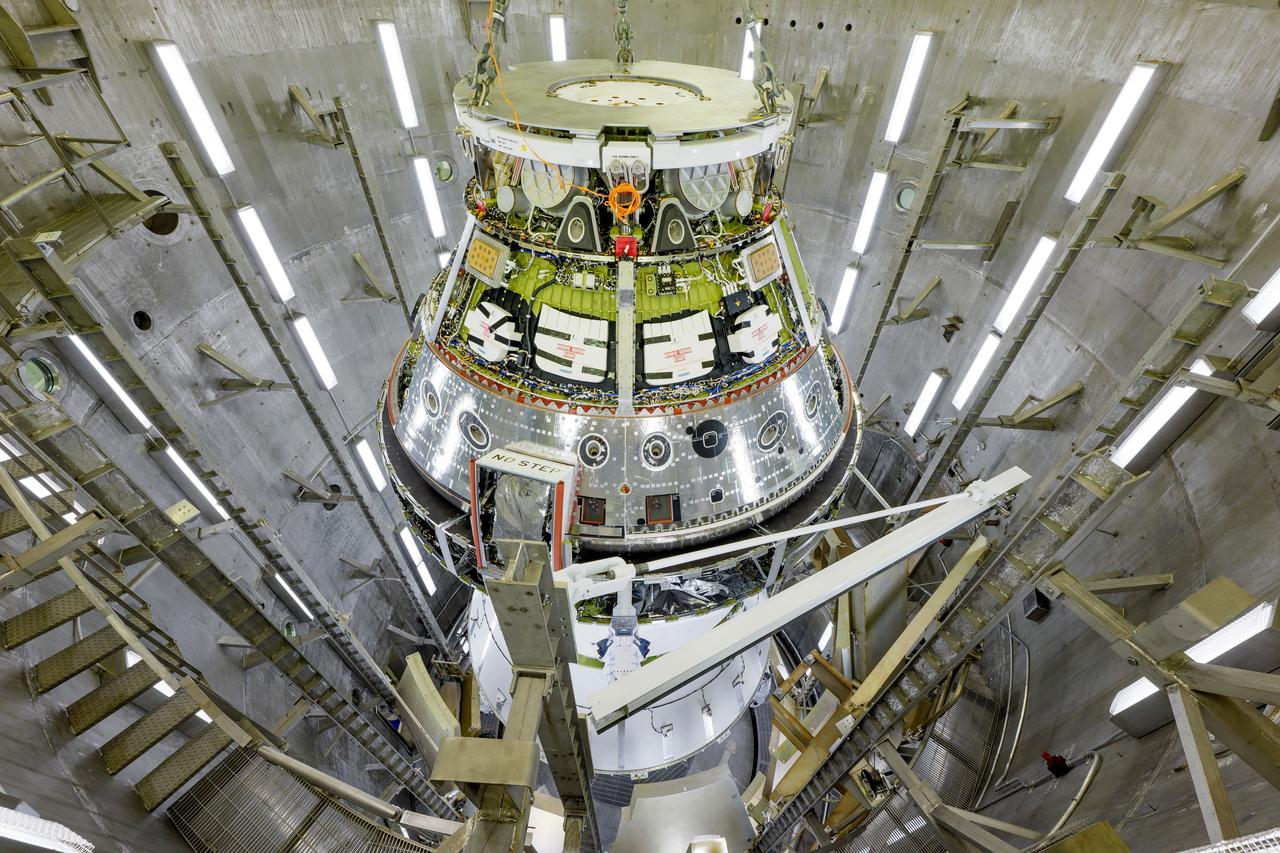
The Artemis II Orion spacecraft is lifted from the Final Assembly and System Testing (FAST) Cell and placed in the west altitude chamber inside the Operations and Checkout Building at NASA’S Kennedy Space Center in Florida on June 28, 2024. Inside the altitude chamber, the spacecraft underwent a series of tests simulating deep space vacuum conditions. Photo Credit: NASA / Rad Sinyak
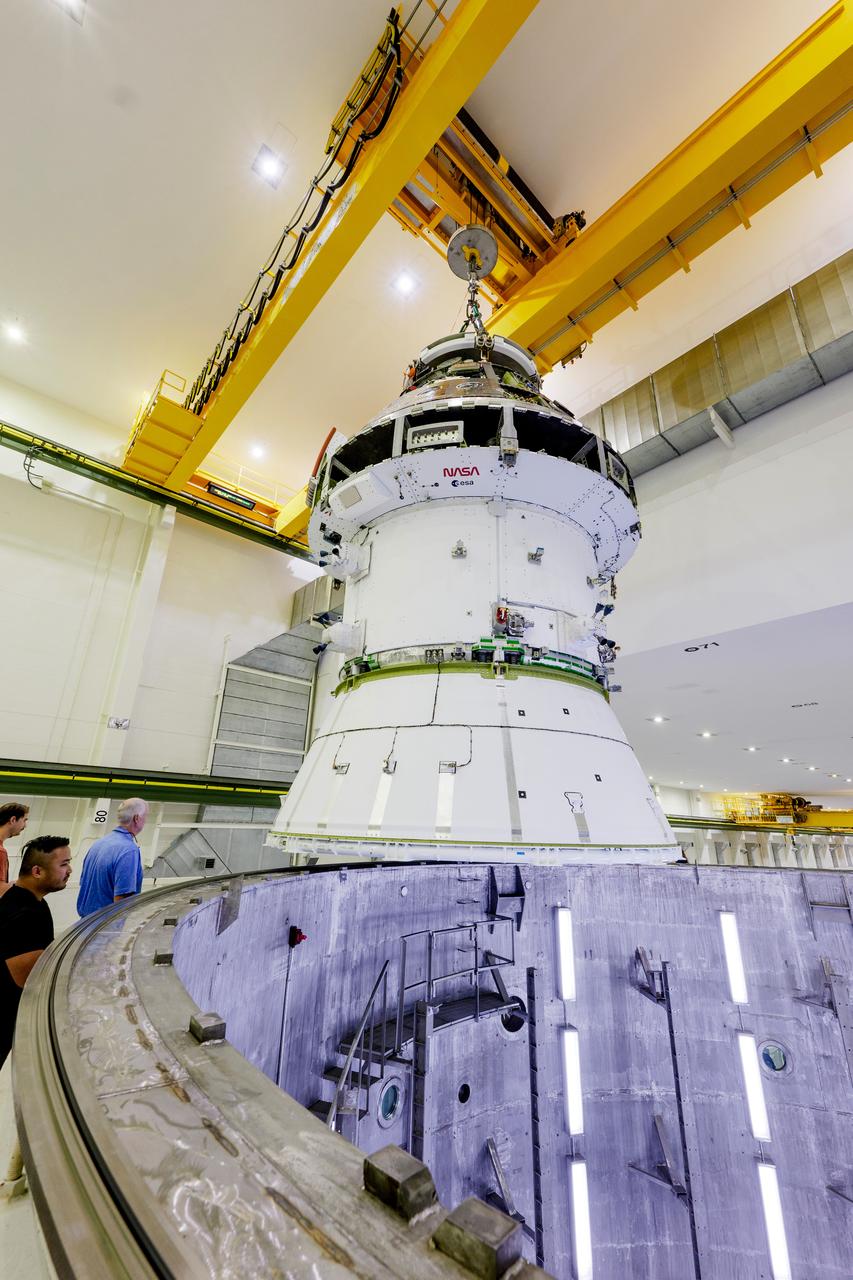
The Artemis II Orion spacecraft is lifted from the Final Assembly and Testing (FAST) Cell and placed in the west altitude chamber inside the Operations and Checkout Building at NASA’S Kennedy Space Center in Florida on June 28, 2024. Inside the altitude chamber, the spacecraft underwent a series of tests simulating deep space vacuum conditions. Photo Credit: NASA / Rad Sinyak
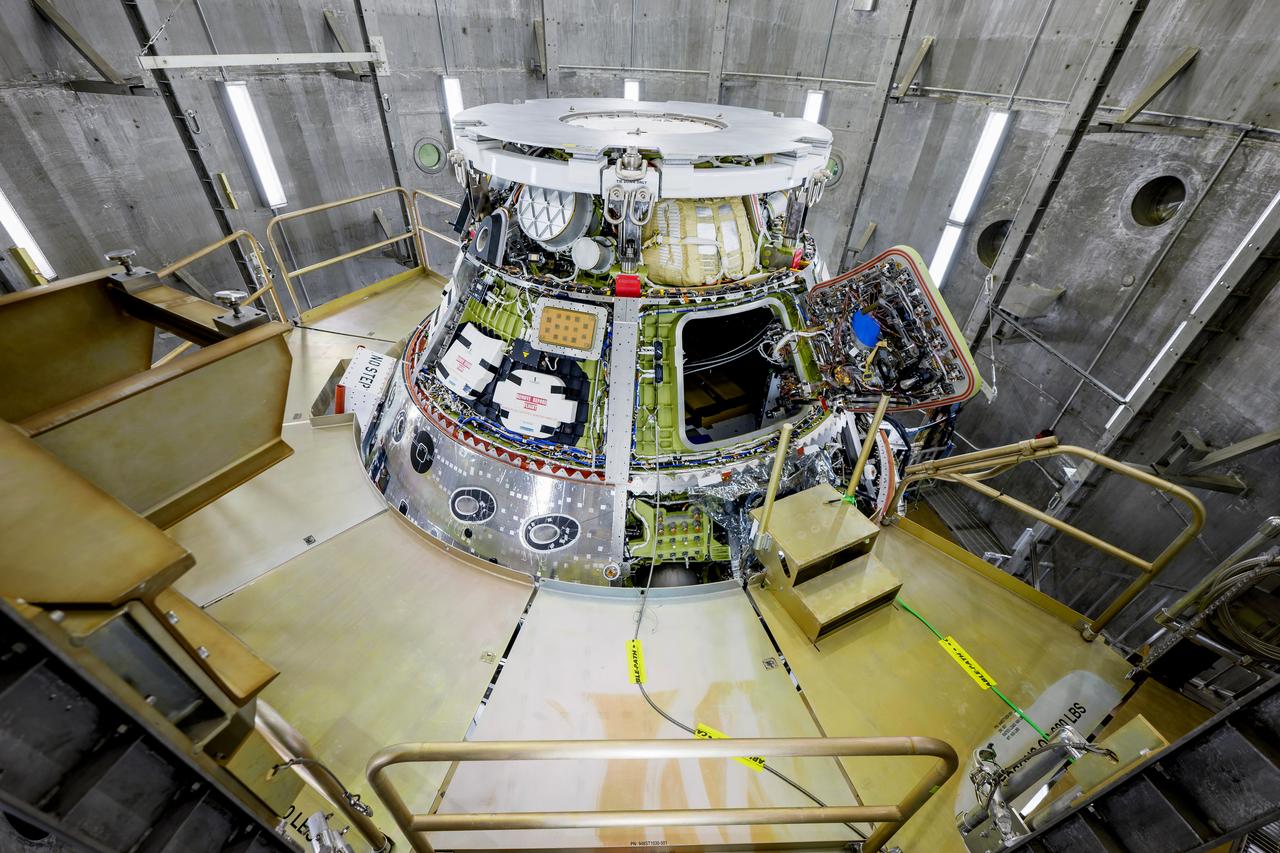
The Artemis II Orion spacecraft is lifted from the Final Assembly and Testing (FAST) Cell and placed in the west altitude chamber inside the Operations and Checkout Building at NASA’S Kennedy Space Center in Florida on June 28, 2024. Inside the altitude chamber, the spacecraft underwent a series of tests simulating deep space vacuum conditions. Photo Credit: NASA / Rad Sinyak
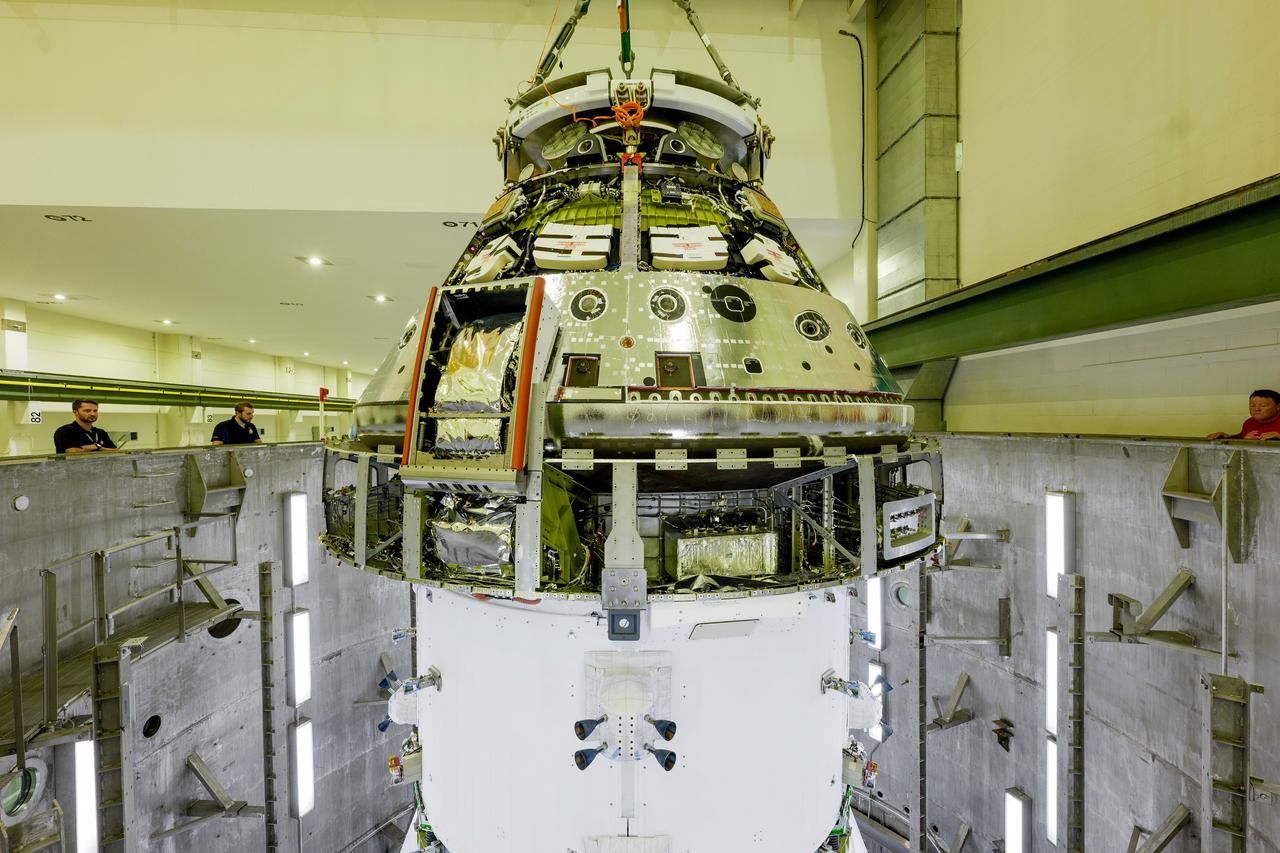
The Artemis II Orion spacecraft is lifted from the Final Assembly and Testing (FAST) Cell and placed in the west altitude chamber inside the Operations and Checkout Building at NASA’S Kennedy Space Center in Florida on June 28, 2024. Inside the altitude chamber, the spacecraft underwent a series of tests simulating deep space vacuum conditions. Photo Credit: NASA / Rad Sinyak
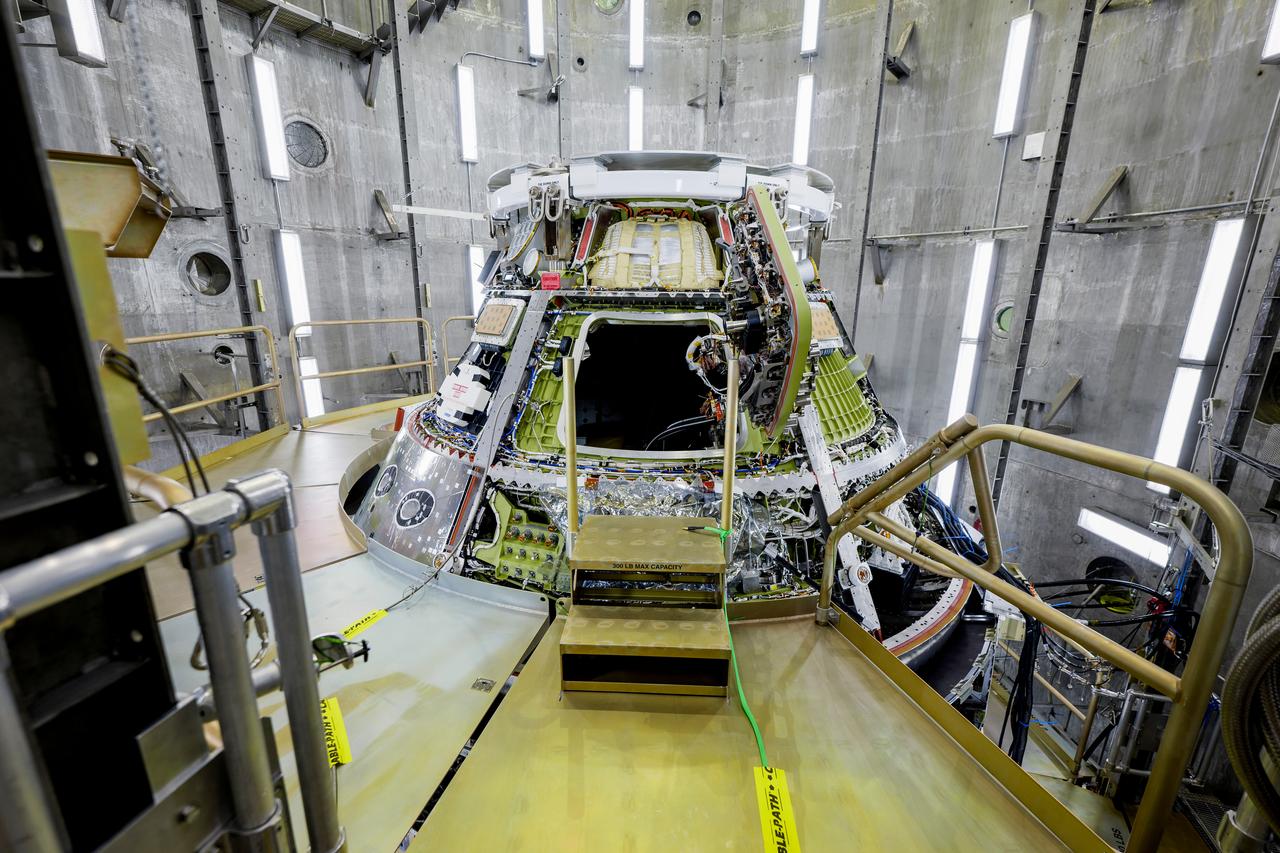
The Artemis II Orion spacecraft is lifted from the Final Assembly and Testing (FAST) Cell and placed in the west altitude chamber inside the Operations and Checkout Building at NASA’S Kennedy Space Center in Florida on June 28, 2024. Inside the altitude chamber, the spacecraft underwent a series of tests simulating deep space vacuum conditions. Photo Credit: NASA / Rad Sinyak
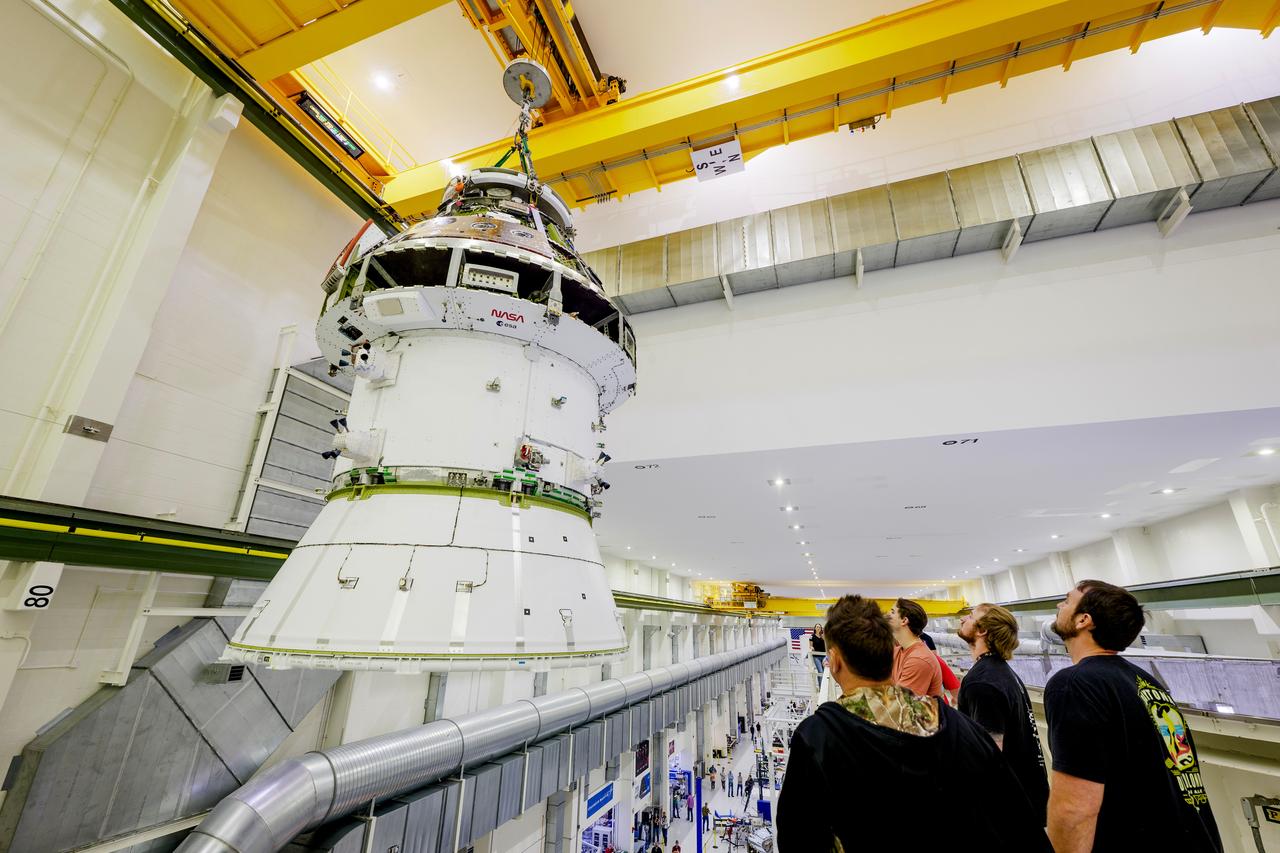
The Artemis II Orion spacecraft is lifted from the Final Assembly and Testing (FAST) Cell and placed in the west altitude chamber inside the Operations and Checkout Building at NASA’S Kennedy Space Center in Florida on June 28, 2024. Inside the altitude chamber, the spacecraft underwent a series of tests simulating deep space vacuum conditions. Photo Credit: NASA / Rad Sinyak
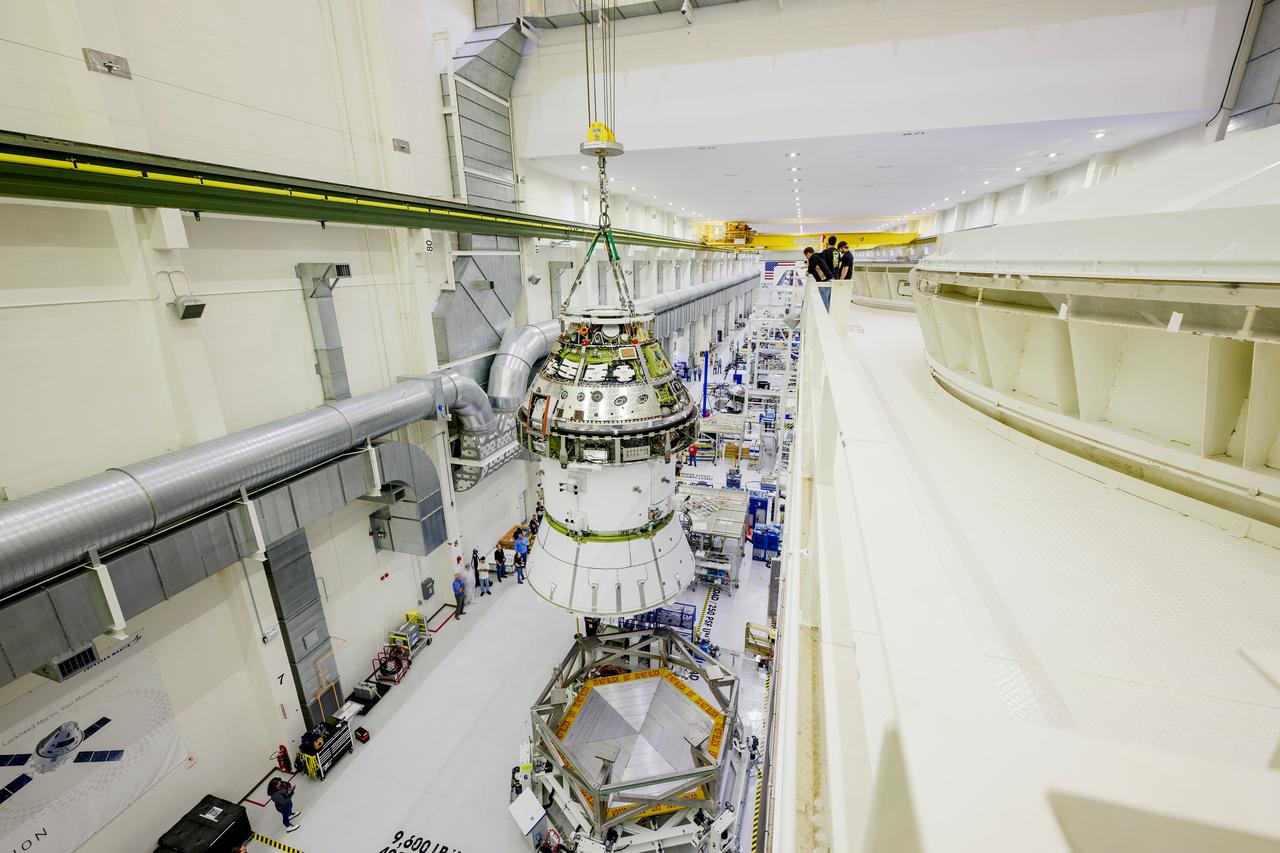
The Artemis II Orion spacecraft is lifted from the Final Assembly and System Testing (FAST) Cell and placed in the west altitude chamber inside the Operations and Checkout Building at NASA’S Kennedy Space Center in Florida on June 28, 2024. Inside the altitude chamber, the spacecraft underwent a series of tests simulating deep space vacuum conditions. Photo Credit: NASA / Rad Sinyak
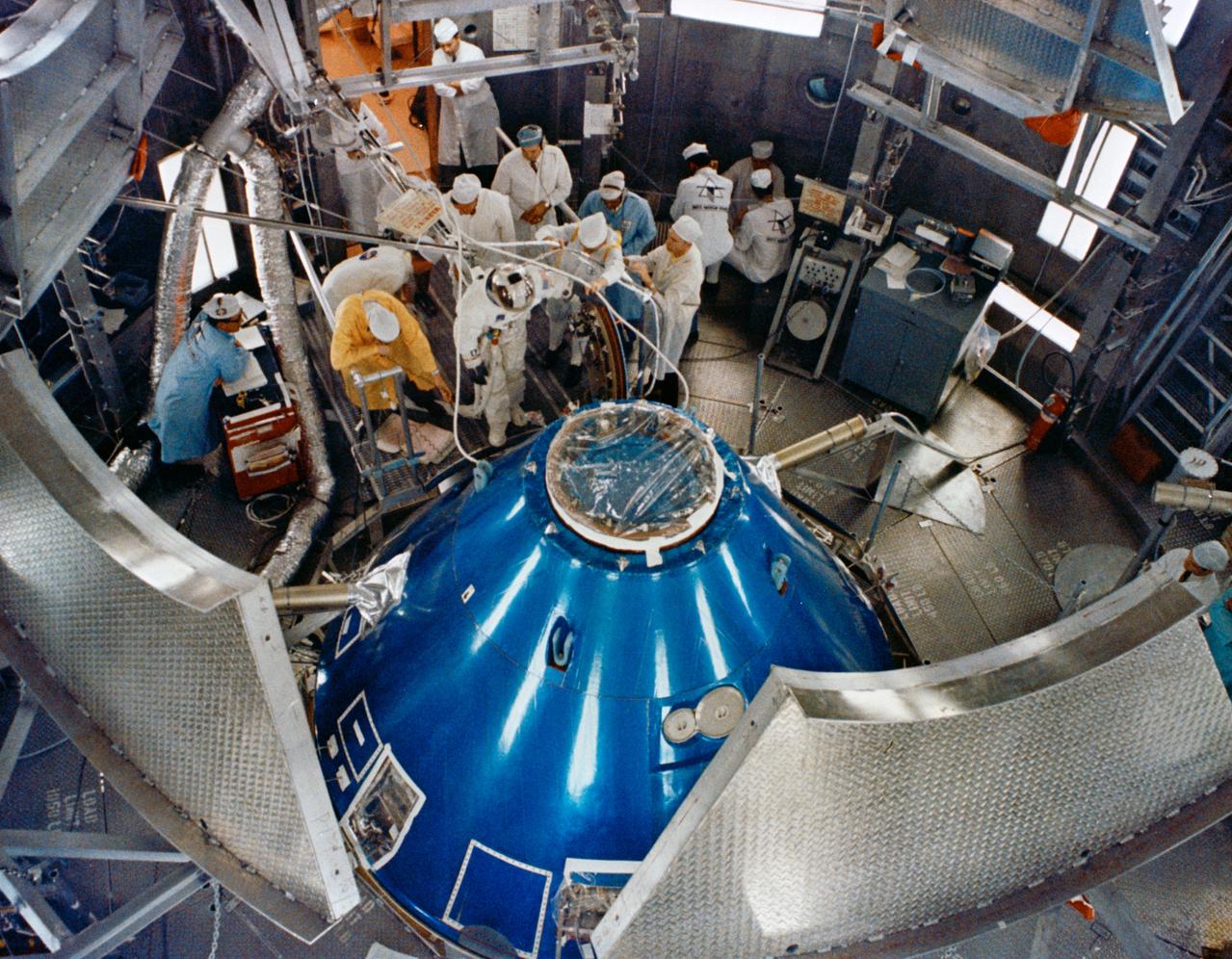
S68-55255 (6 Nov. 1968) --- Overhead view of Altitude Chamber "L" in the Kennedy Space Center's Manned Spacecraft Operations Building showing a member of the Apollo 9 backup crew preparing to ingress the Apollo 9 spacecraft for egress test and simulated altitude run. The Apollo 9 backup crew consists of astronauts Charles Conrad Jr., Richard F. Gordon Jr., and Alan L. Bean.
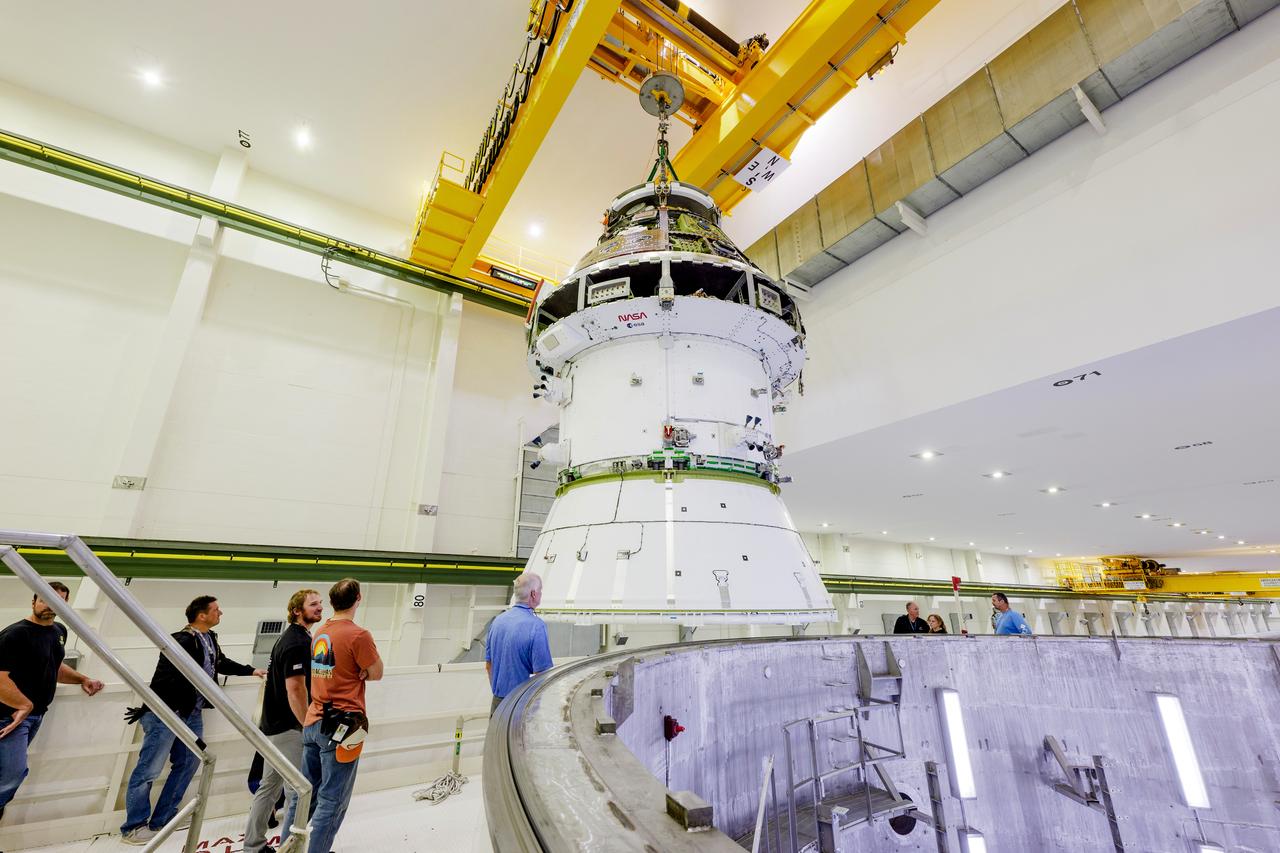
The Artemis II Orion spacecraft is lifted from the Final Assembly and Testing (FAST) Cell and placed in the west altitude chamber inside the Operations and Checkout Building at NASA’S Kennedy Space Center in Florida on June 28, 2024. Inside the altitude chamber, the spacecraft underwent a series of tests simulating deep space vacuum conditions. Photo Credit: NASA / Rad Sinyak
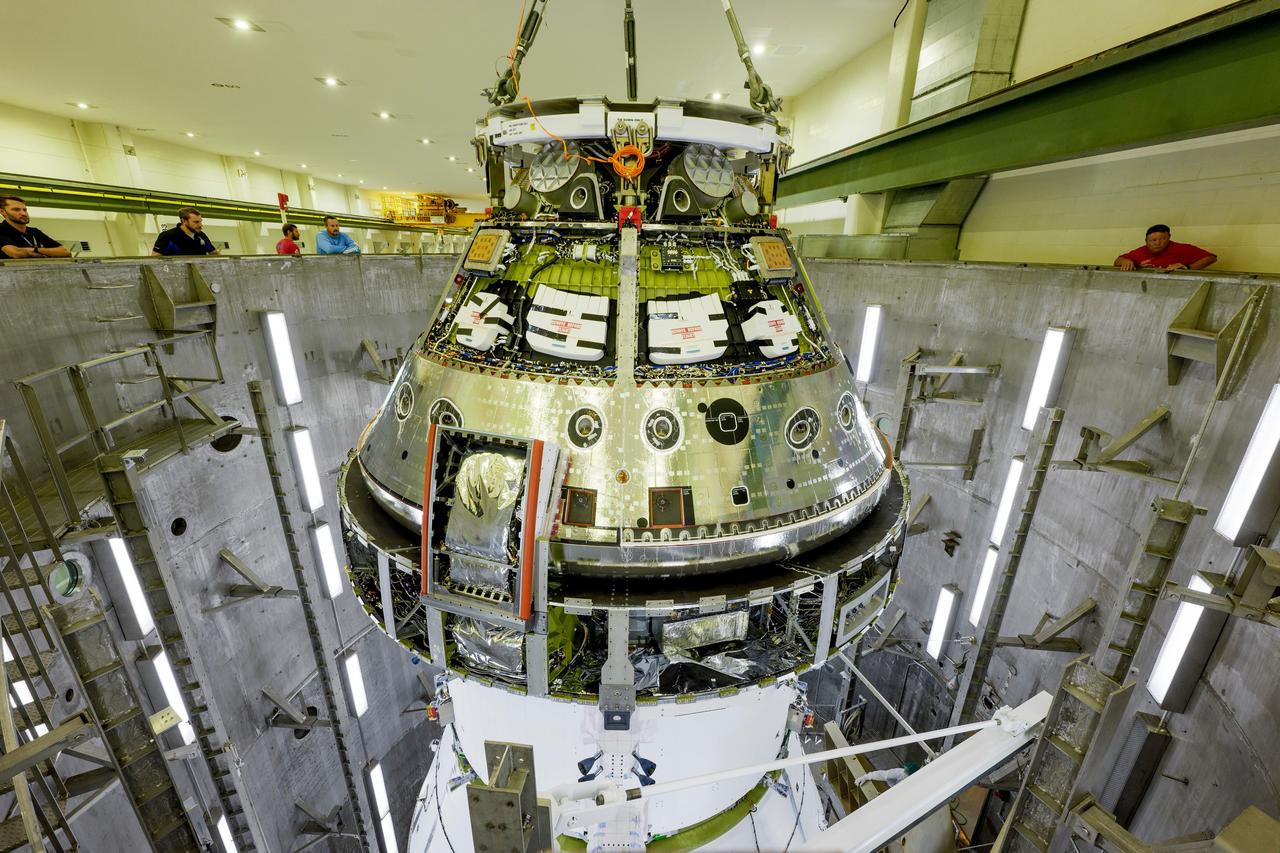
The Artemis II Orion spacecraft is lifted from the Final Assembly and Testing (FAST) Cell and placed in the west altitude chamber inside the Operations and Checkout Building at NASA’S Kennedy Space Center in Florida on June 28, 2024. Inside the altitude chamber, the spacecraft underwent a series of tests simulating deep space vacuum conditions. Photo Credit: NASA / Rad Sinyak
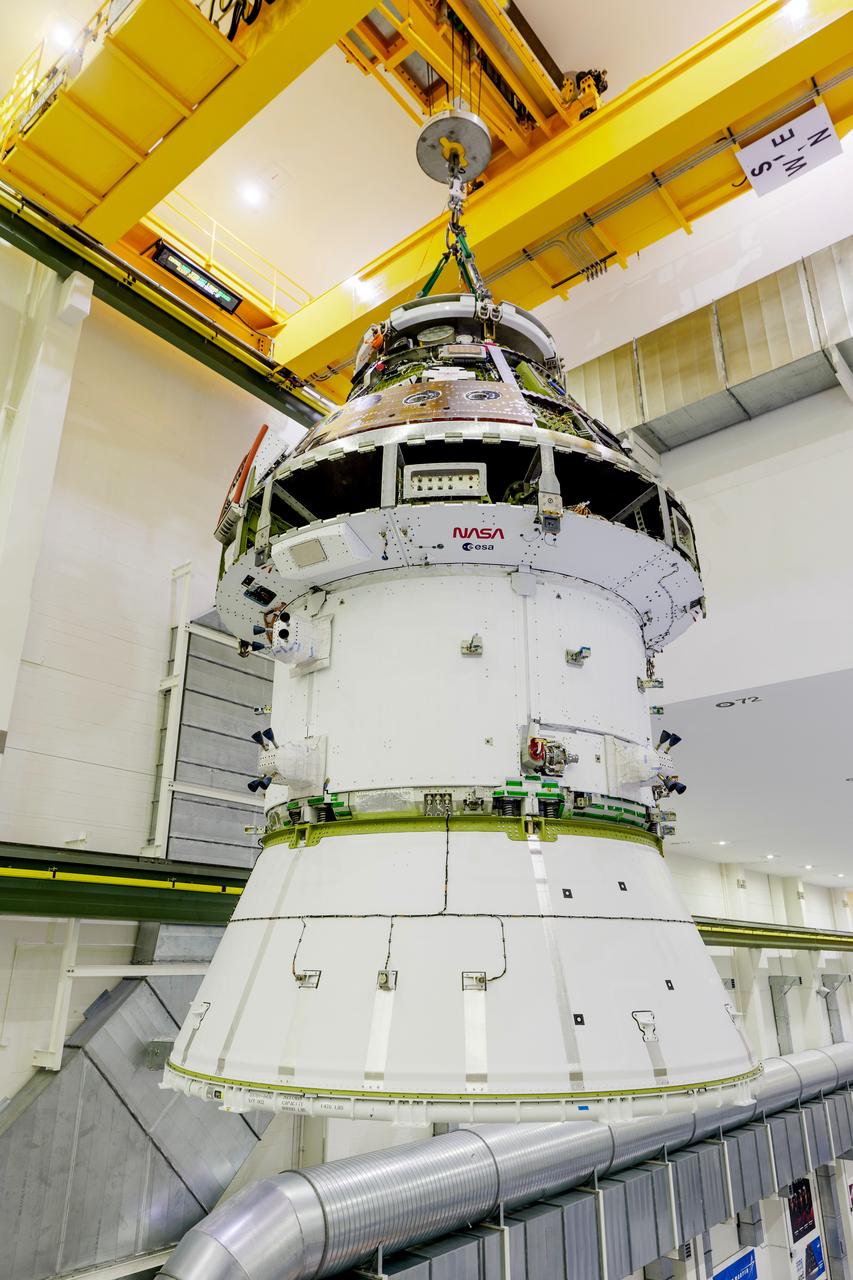
The Artemis II Orion spacecraft is lifted from the Final Assembly and Testing (FAST) Cell and placed in the west altitude chamber inside the Operations and Checkout Building at NASA’S Kennedy Space Center in Florida on June 28, 2024. Inside the altitude chamber, the spacecraft underwent a series of tests simulating deep space vacuum conditions. Photo Credit: NASA / Rad Sinyak
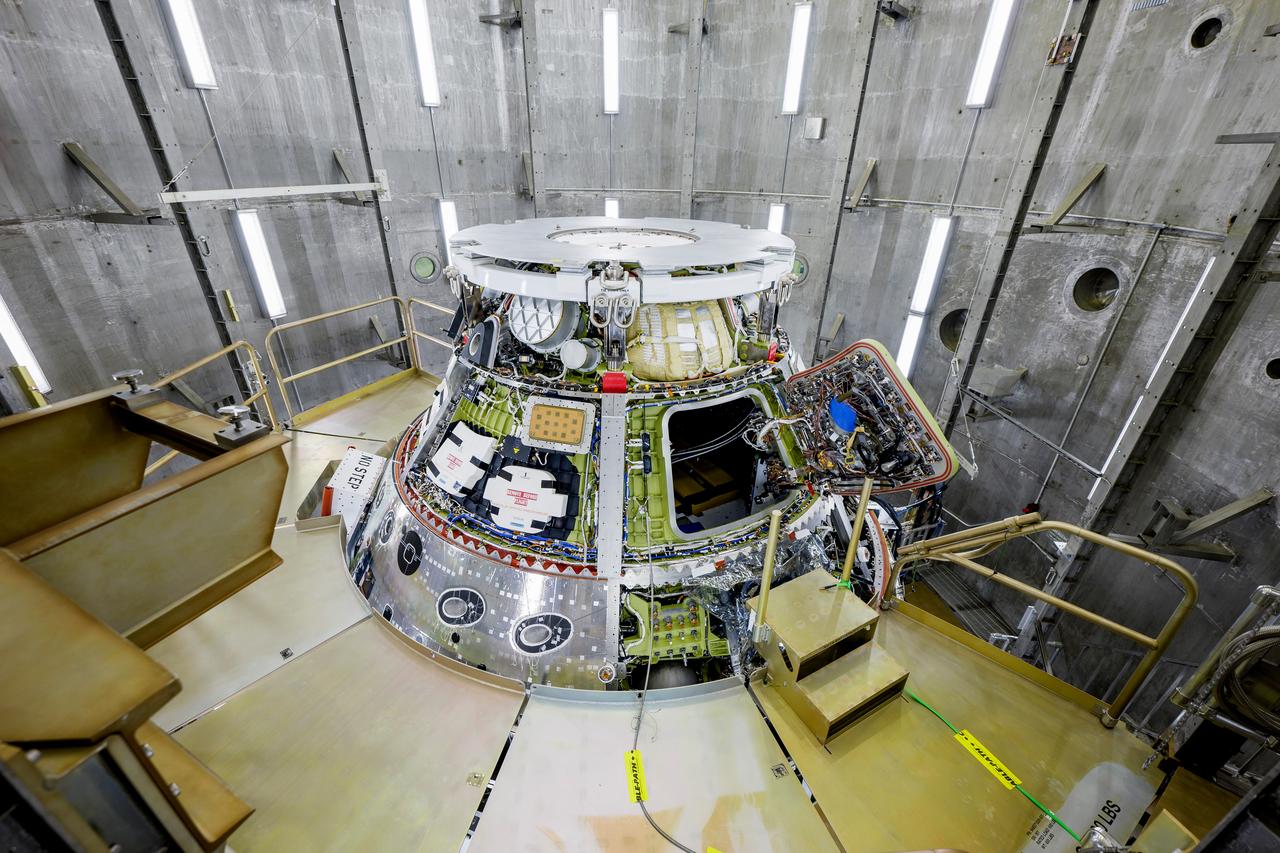
The Artemis II Orion spacecraft is lifted from the Final Assembly and Testing (FAST) Cell and placed in the west altitude chamber inside the Operations and Checkout Building at NASA’S Kennedy Space Center in Florida on June 28, 2024. Inside the altitude chamber, the spacecraft underwent a series of tests simulating deep space vacuum conditions. Photo Credit: NASA / Rad Sinyak

The Artemis II Orion spacecraft is lifted from the Final Assembly and System Testing (FAST) Cell and placed in the west altitude chamber inside the Operations and Checkout Building at NASA’S Kennedy Space Center in Florida on June 28, 2024. Inside the altitude chamber, the spacecraft underwent a series of tests simulating deep space vacuum conditions. Photo Credit: NASA / Rad Sinyak
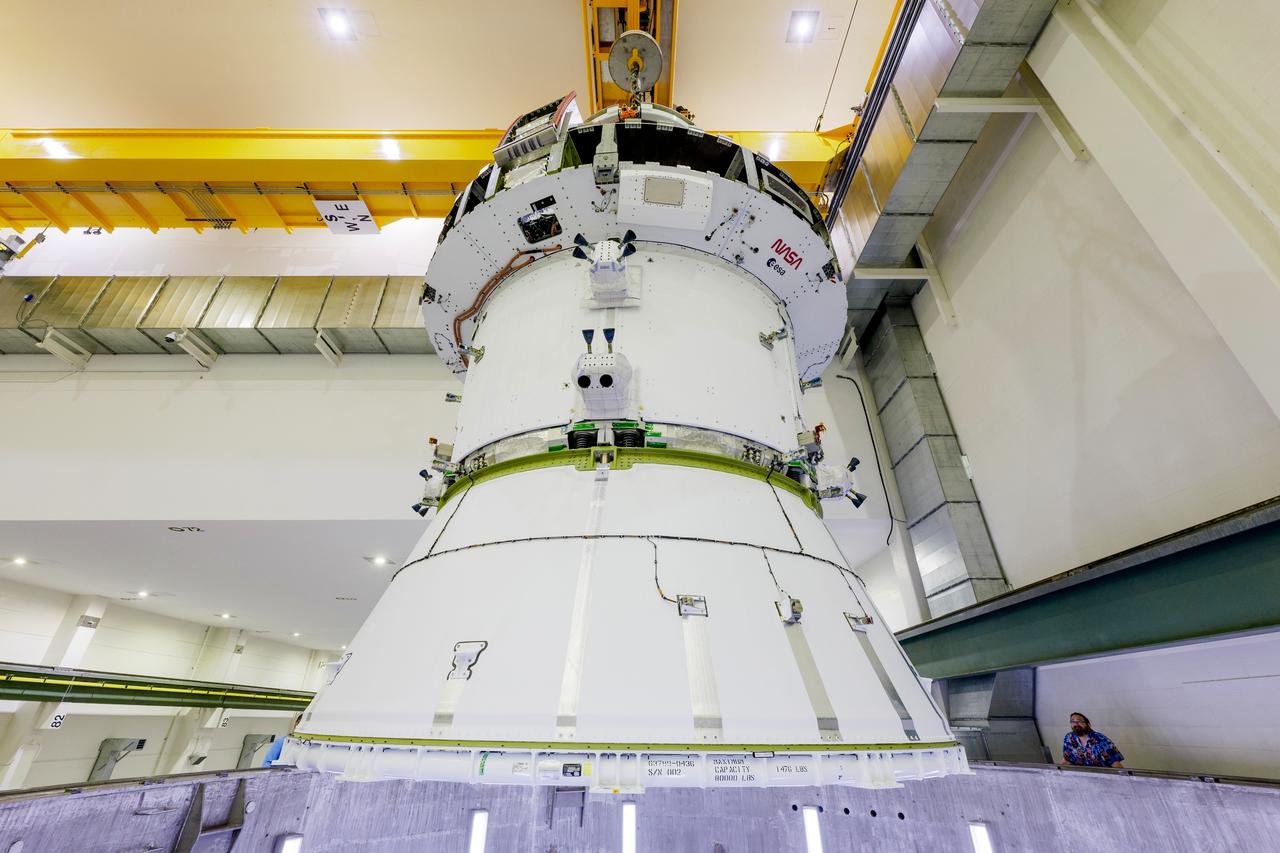
The Artemis II Orion spacecraft is lifted from the Final Assembly and Testing (FAST) Cell and placed in the west altitude chamber inside the Operations and Checkout Building at NASA’S Kennedy Space Center in Florida on June 28, 2024. Inside the altitude chamber, the spacecraft underwent a series of tests simulating deep space vacuum conditions. Photo Credit: NASA / Rad Sinyak
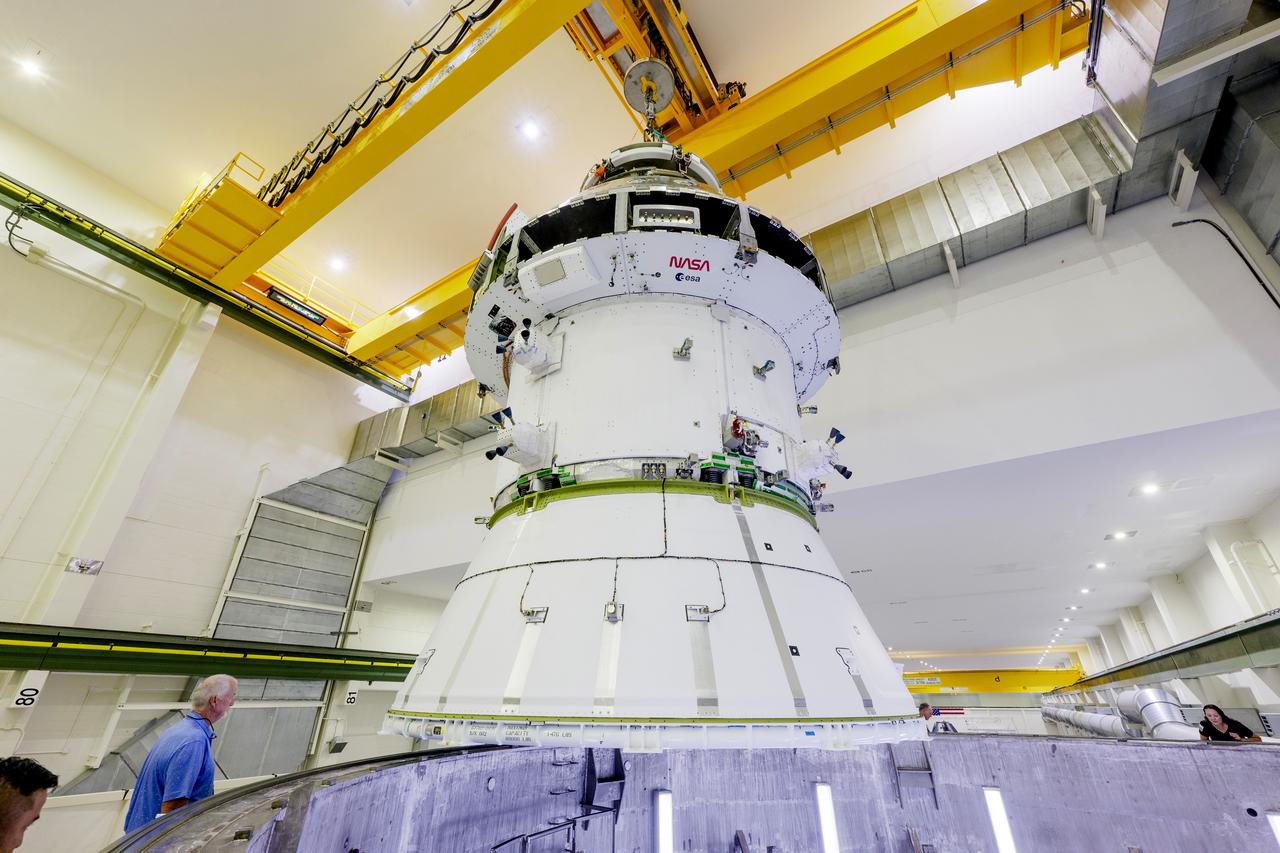
The Artemis II Orion spacecraft is lifted from the Final Assembly and Testing (FAST) Cell and placed in the west altitude chamber inside the Operations and Checkout Building at NASA’S Kennedy Space Center in Florida on June 28, 2024. Inside the altitude chamber, the spacecraft underwent a series of tests simulating deep space vacuum conditions. Photo Credit: NASA / Rad Sinyak
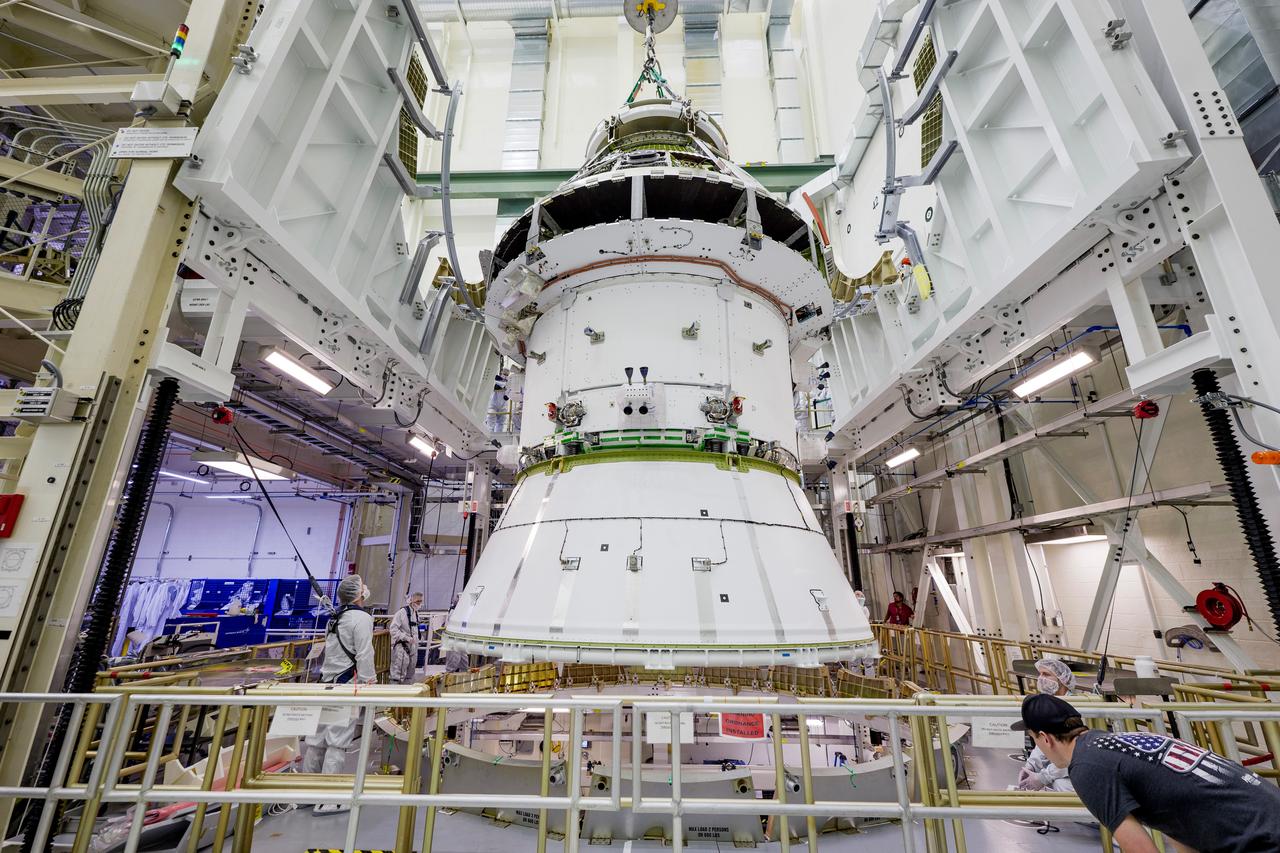
The Artemis II Orion spacecraft is lifted from the Final Assembly and Testing (FAST) Cell and placed in the west altitude chamber inside the Operations and Checkout Building at NASA’S Kennedy Space Center in Florida on June 28, 2024. Inside the altitude chamber, the spacecraft underwent a series of tests simulating deep space vacuum conditions. Photo Credit: NASA / Rad Sinyak
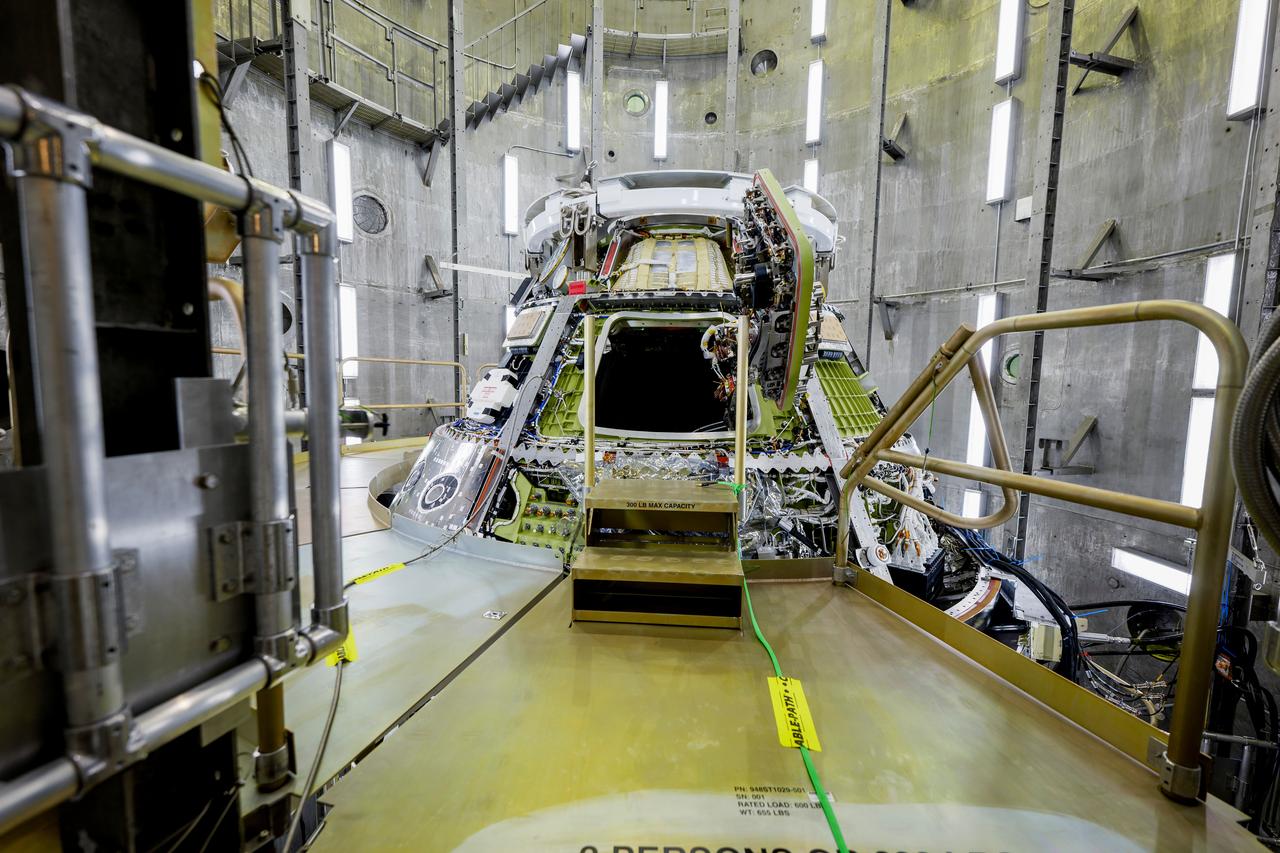
The Artemis II Orion spacecraft is lifted from the Final Assembly and System Testing (FAST) Cell and placed in the west altitude chamber inside the Operations and Checkout Building at NASA’S Kennedy Space Center in Florida on June 28, 2024. Inside the altitude chamber, the spacecraft underwent a series of tests simulating deep space vacuum conditions. Photo Credit: NASA / Rad Sinyak
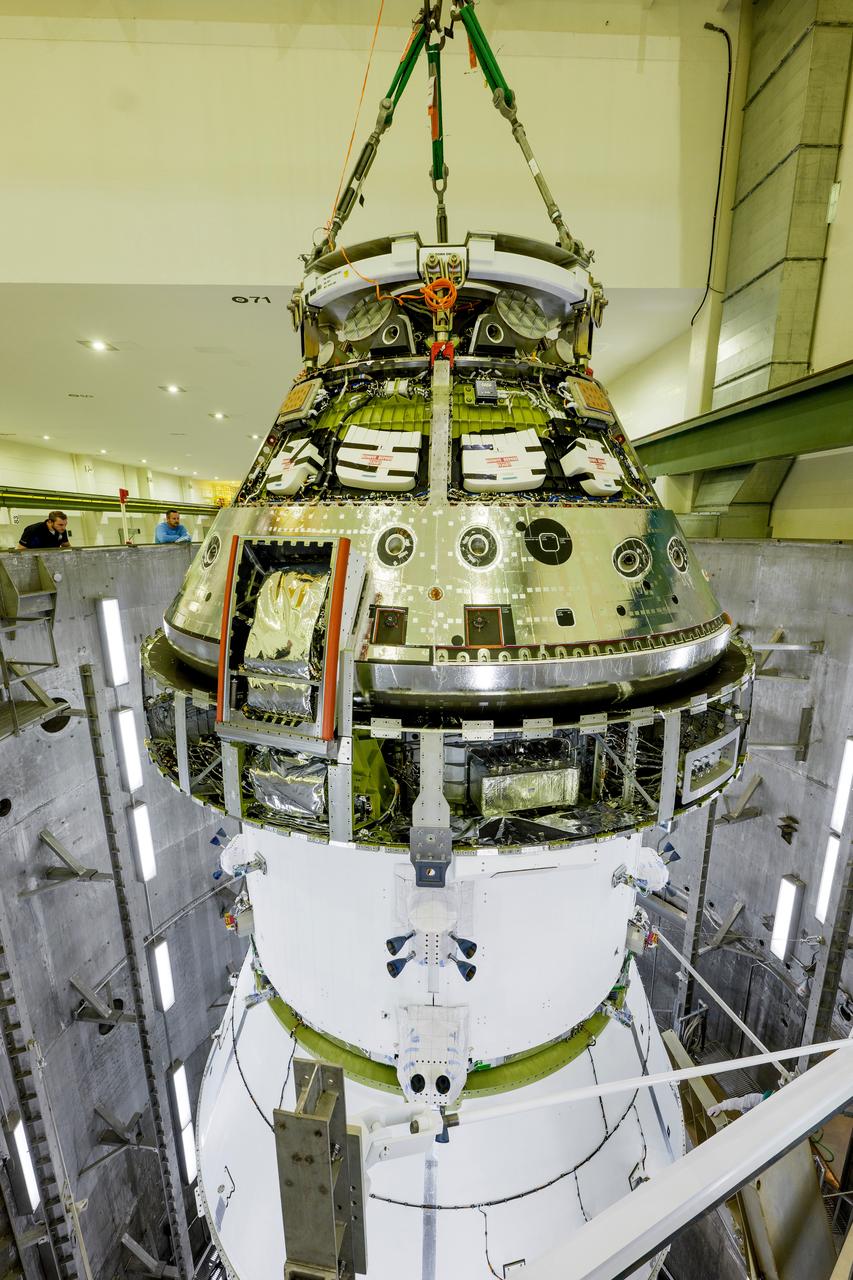
The Artemis II Orion spacecraft is lifted from the Final Assembly and Testing (FAST) Cell and placed in the west altitude chamber inside the Operations and Checkout Building at NASA’S Kennedy Space Center in Florida on June 28, 2024. Inside the altitude chamber, the spacecraft underwent a series of tests simulating deep space vacuum conditions. Photo Credit: NASA / Rad Sinyak
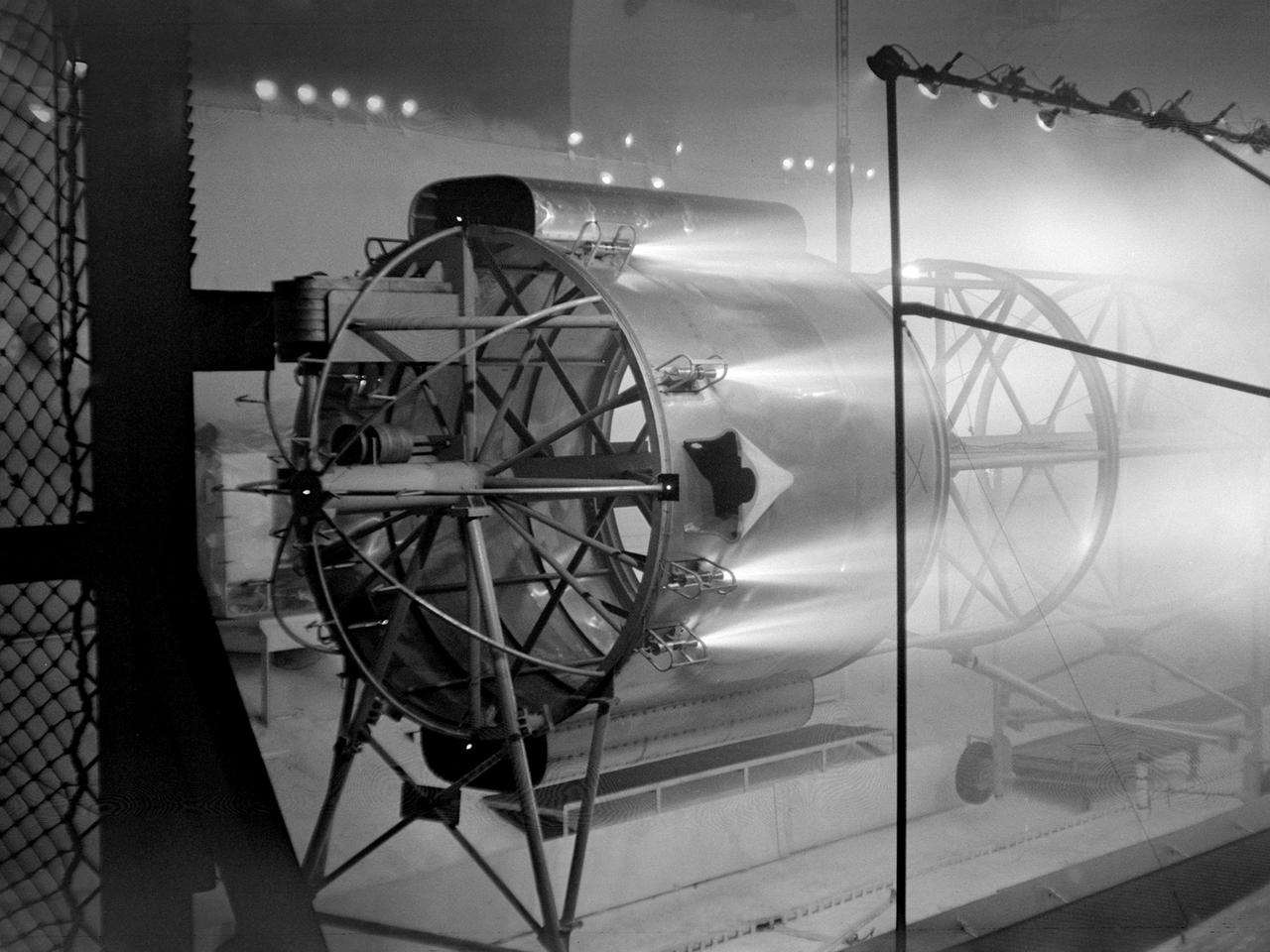
An Atlas/Centaur mass model undergoes a separation test inside the Space Power Chambers at NASA Lewis Research Center. Lewis was in the midst of an extensive effort to prepare the Centaur second-stage rocket for its missions to send the Surveyor spacecraft to the moon as a precursor to the Apollo missions. As part of these preparations, Lewis management decided to convert its Altitude Wind Tunnel into two large test chambers—the Space Power Chambers. The conversion included the removal of the tunnel’s internal components and the insertion of bulkheads to seal off the new chambers within the tunnel. One chamber could simulate conditions found at 100 miles altitude, while this larger chamber simulated the upper atmosphere. In this test series, researchers wanted to verify that the vehicle’s retrorockets would properly separate the Centaur from the Atlas. The model was suspended horizontally on a trolley system inside chamber. A net was hung at one end to catch the jettisoned Atlas model. The chamber atmosphere was reduced to a pressure altitude of 100,000 feet, and high-speed cameras were synchronized to the ignition of the retrorockets. The simulated Centaur is seen here jettisoning from the Atlas out of view to the right. The study resulted in a new jettison method that would significantly reduce the separation time and thus minimize the danger of collision between the two stages during separation.
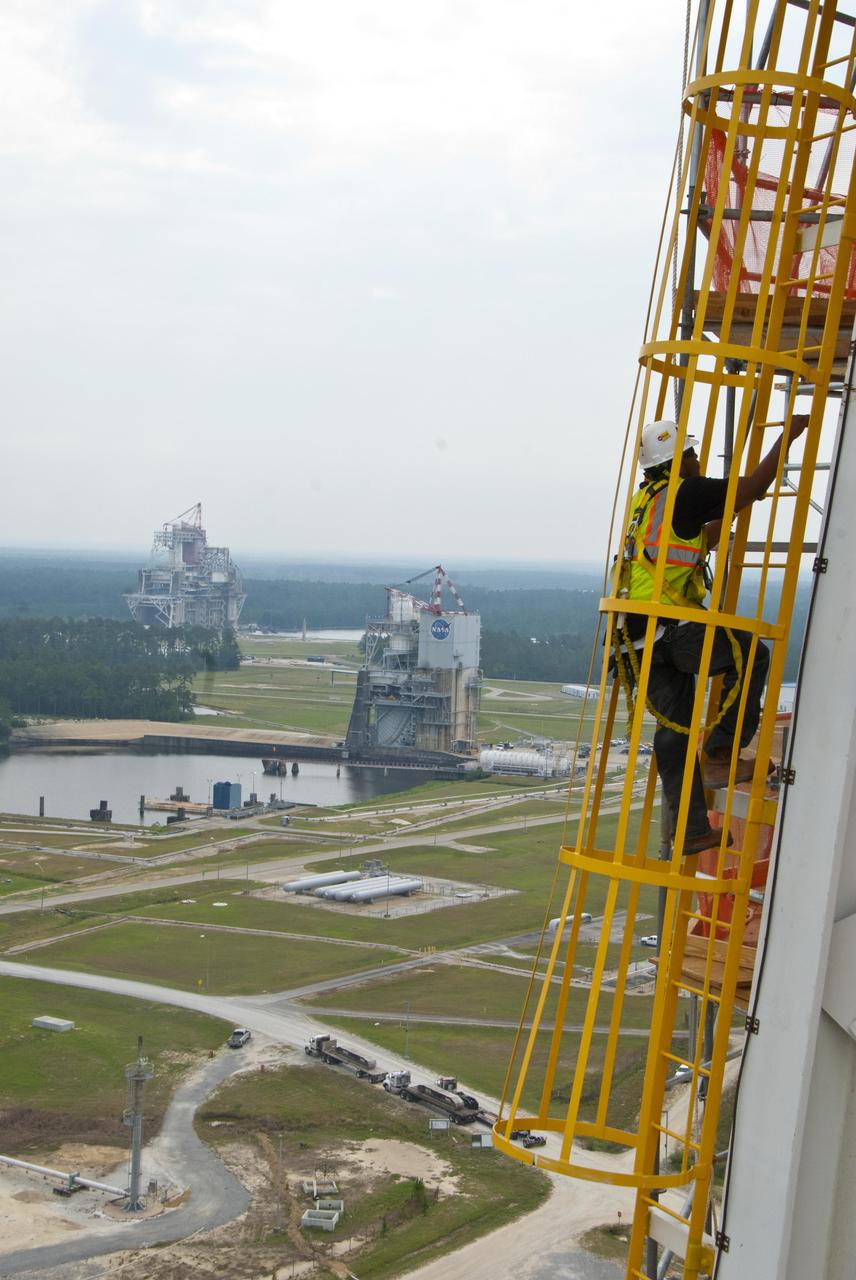
A tethered Stennis Space Center employee climbs an A-3 Test Stand ladder June 8, 2012, against the backdrop of the A-2 and B-1/B-2 stands. The new A-3 Test Stand will enable simulated high-altitude testing of next-generation rocket engines.
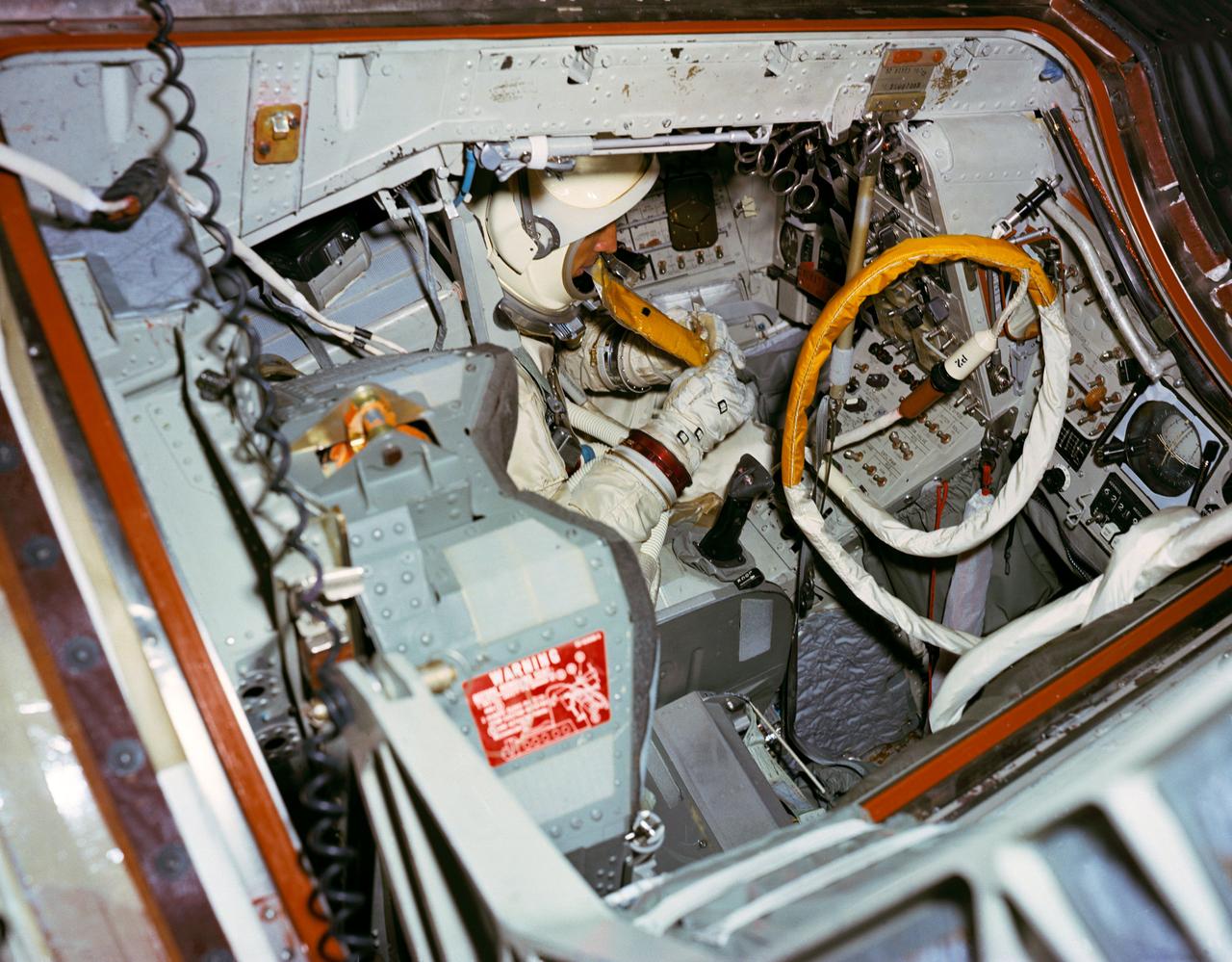
S66-51054 (15 Aug. 1966) --- Astronaut James A. Lovell Jr., prime crew command pilot of the Gemini-12 space mission, simulates using space food packet while seated in the Gemini-12 spacecraft in the 30-feet Altitude Chamber at McDonnell Aircraft Corporation, St. Louis, Missouri. Photo credit: NASA
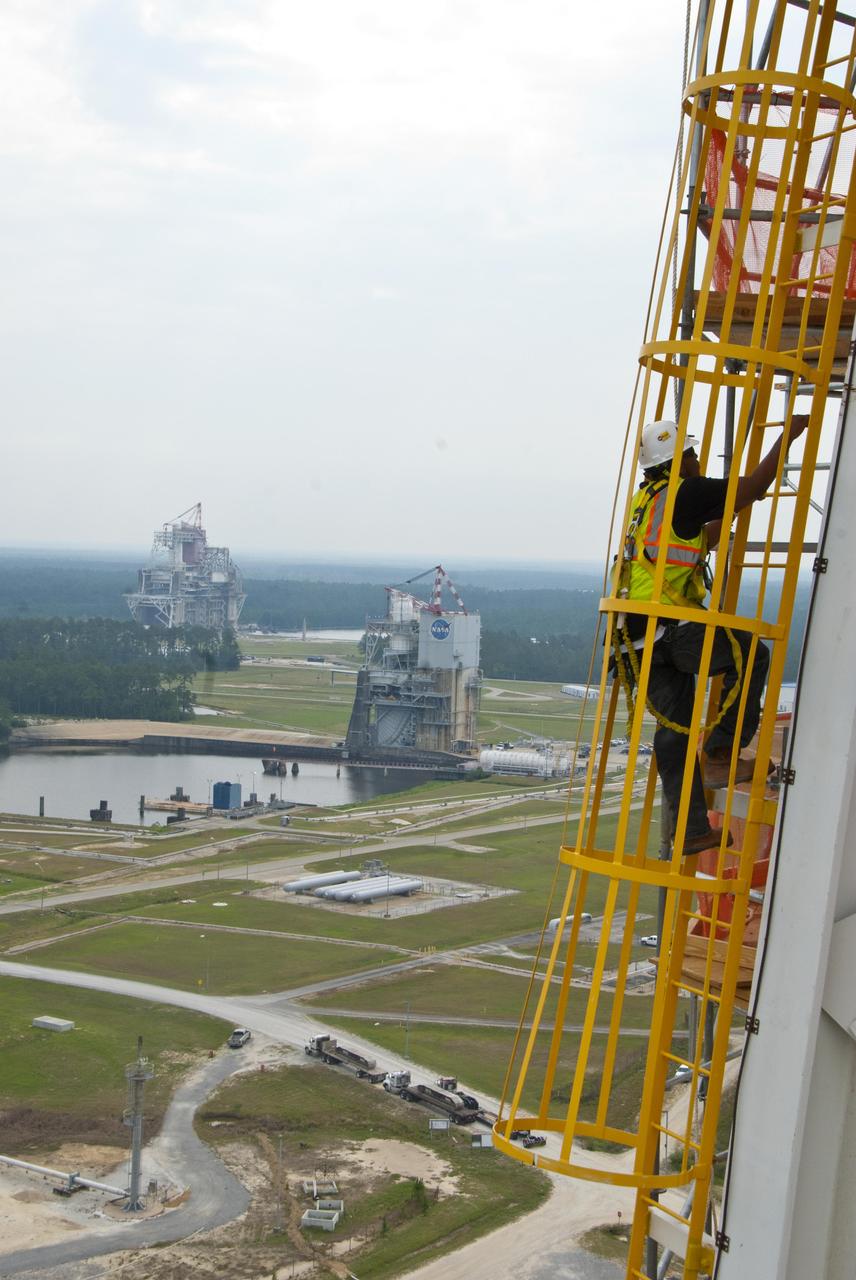
A tethered Stennis Space Center employee climbs an A-3 Test Stand ladded June 8, 2012, against the backdrop of the A-2 and B-1/B-2 stands. The new A-3 Test Stand will enable simulated high-altitude testing of next-generation rocket engines.
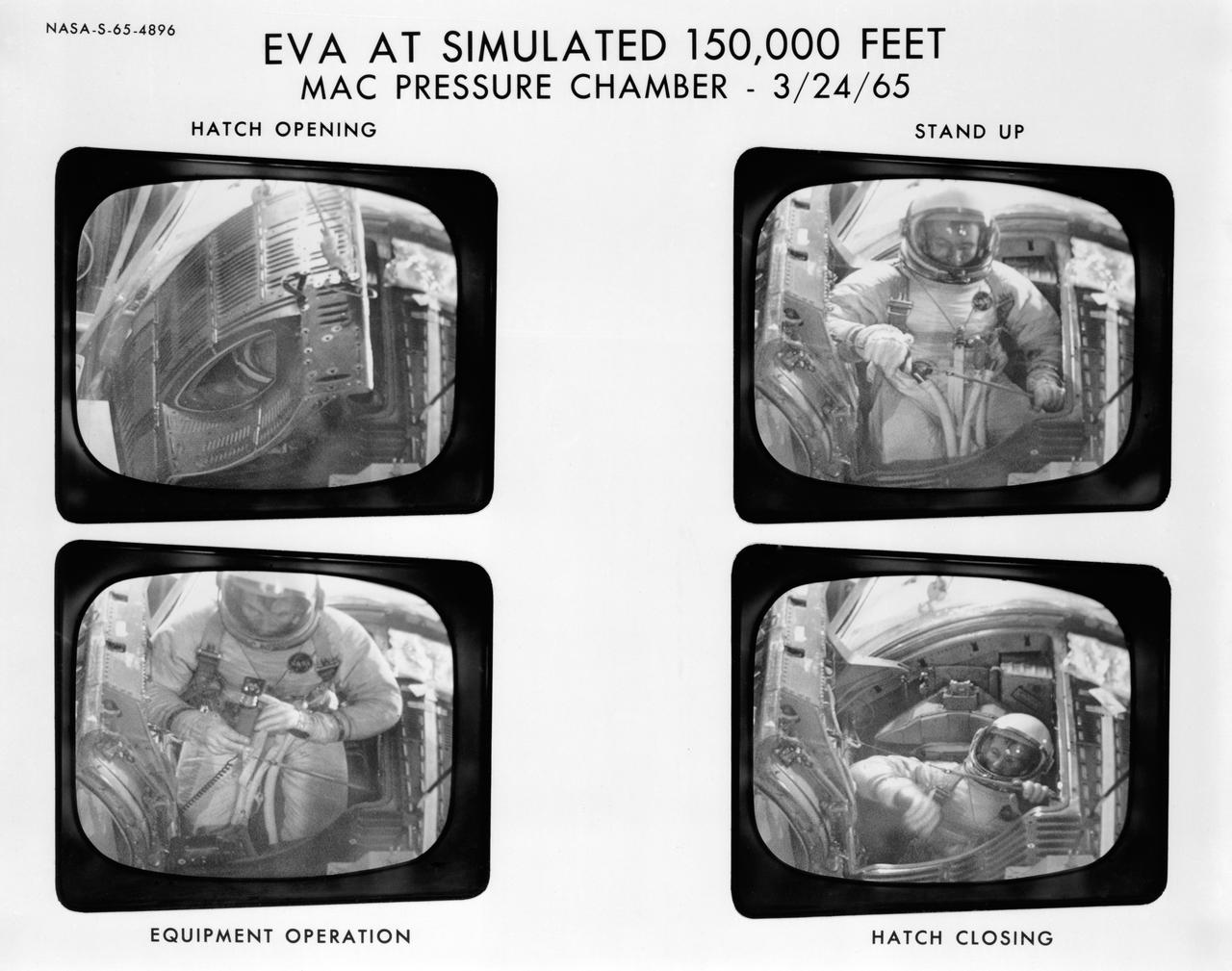
S65-04896 (24 March 1965) --- Astronaut Edward H. White II, pilot of the Gemini-Titan 4 prime crew, is shown in the pressure chamber at McDonnell Aircraft Corp, St. Louis, Mo. during the simulation of extravehicular activity (EVA) at an altitude of 150,000 feet.
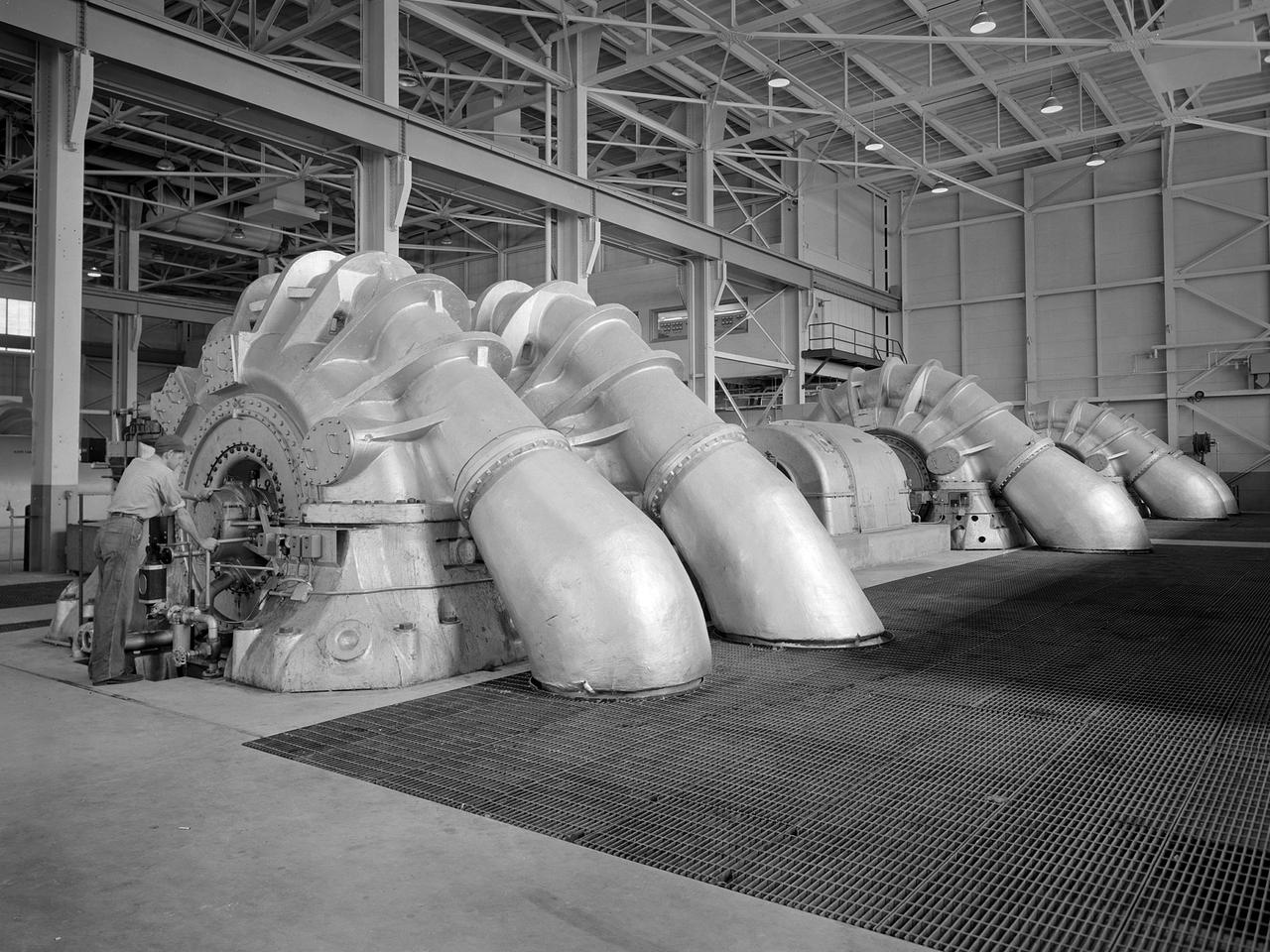
The Propulsion Systems Laboratory’s exhaust system was expanded in 1955 at the National Advisory Committee for Aeronautics (NACA) Lewis Flight Propulsion Laboratory. The facility contained two altitude chambers that were first used to study the increasingly-powerful jet engines of the early 1950s and the ramjets for missile programs such as Navaho and Bomarc. Later, the facility tested large rocket engines and a variety of turbofan engines. The exhaust system served two roles: reducing the density of the air in the test chambers to simulate high altitudes and removing the hot gases exhausted by the engines being tested. These tasks were accomplished by large Roots-Connersville exhauster equipment in the Equipment Building. The original configuration could exhaust the 3500° F gases at a rate of 100 pounds per second when the simulated altitude was 50,000 feet. In 1955, three years after operation started, a fourth line of exhausters was added. There were three centrifugal exhausters capable of supplying 166 pounds of air per second at the test chamber altitude of 50,000 feet or 384 pounds per second at 32,000 feet. These exhausters had two first-stage castings driven by a 10,000-horsepower motor; one second; one third; and one fourth-stage casting driven by a 16,500-horsepower motor. The total inlet volume of the exhausters is 1,650,000 cubic feet of gas per minute. The exhausters were continually improved and upgraded over the years.
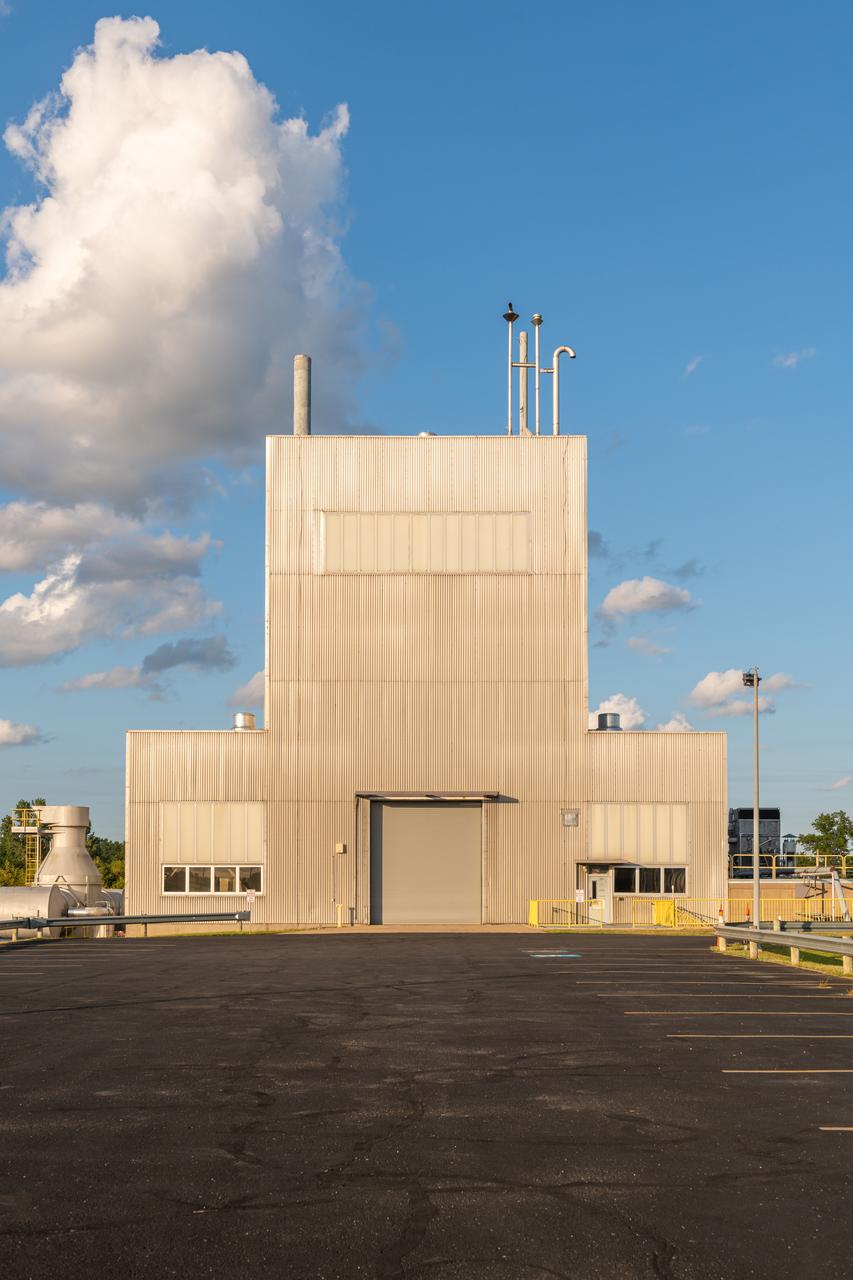
NASA’s In-Space Propulsion Facility located at Neil Armstrong Test Facility in Sandusky Ohio is the world’s only high altitude test facility capable of full-scale rocket engine and launch vehicle system level tests. The facility supports mission profile thermal vacuum simulation and engine firing. The engine or vehicle can be exposed for indefinite periods to low ambient pressures, low-background temperatures, and dynamic solar heating, simulating the environment the hardware will encounter during orbital or interplanetary travel. Photo Credit: (NASA/Jordan Salkin)
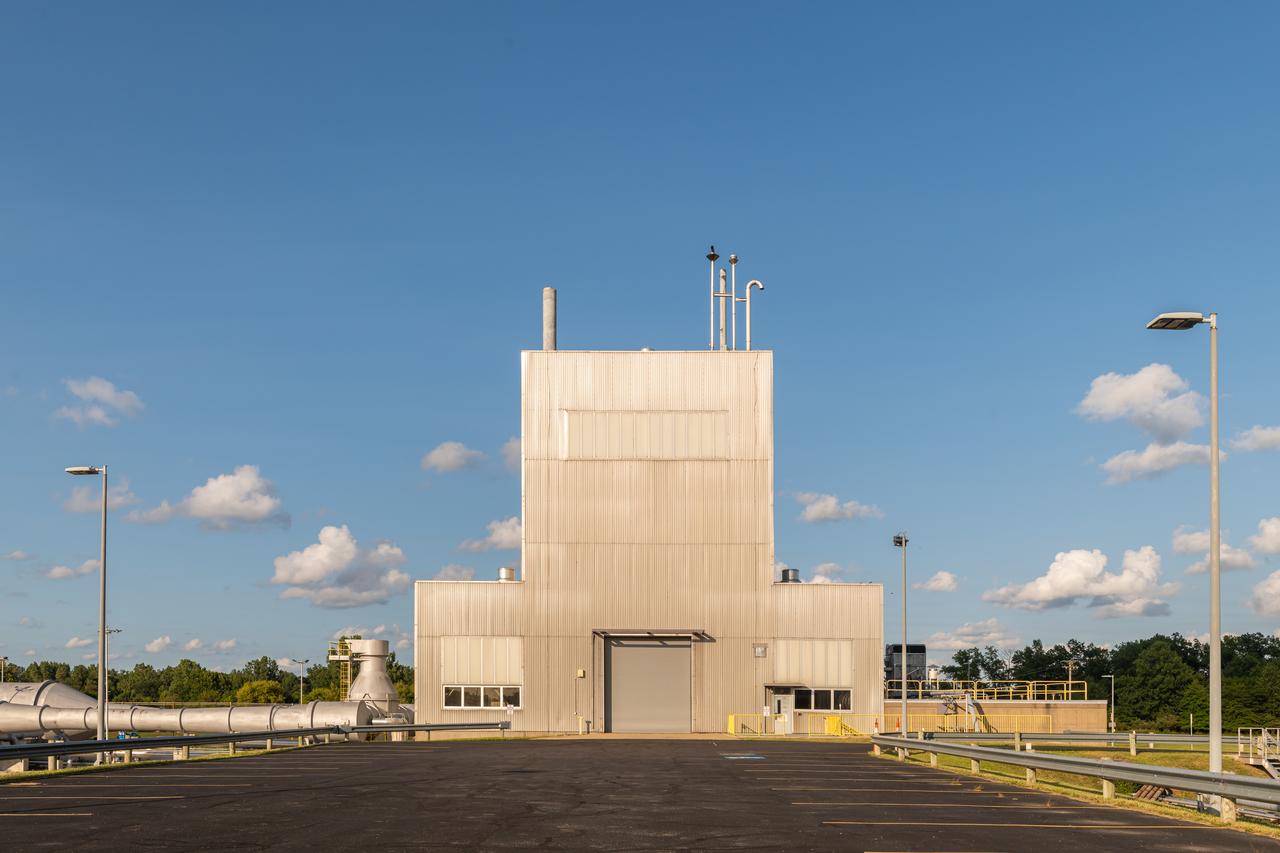
NASA’s In-Space Propulsion Facility located at Neil Armstrong Test Facility in Sandusky Ohio is the world’s only high altitude test facility capable of full-scale rocket engine and launch vehicle system level tests. The facility supports mission profile thermal vacuum simulation and engine firing. The engine or vehicle can be exposed for indefinite periods to low ambient pressures, low-background temperatures, and dynamic solar heating, simulating the environment the hardware will encounter during orbital or interplanetary travel. Photo Credit: (NASA/Jordan Salkin)
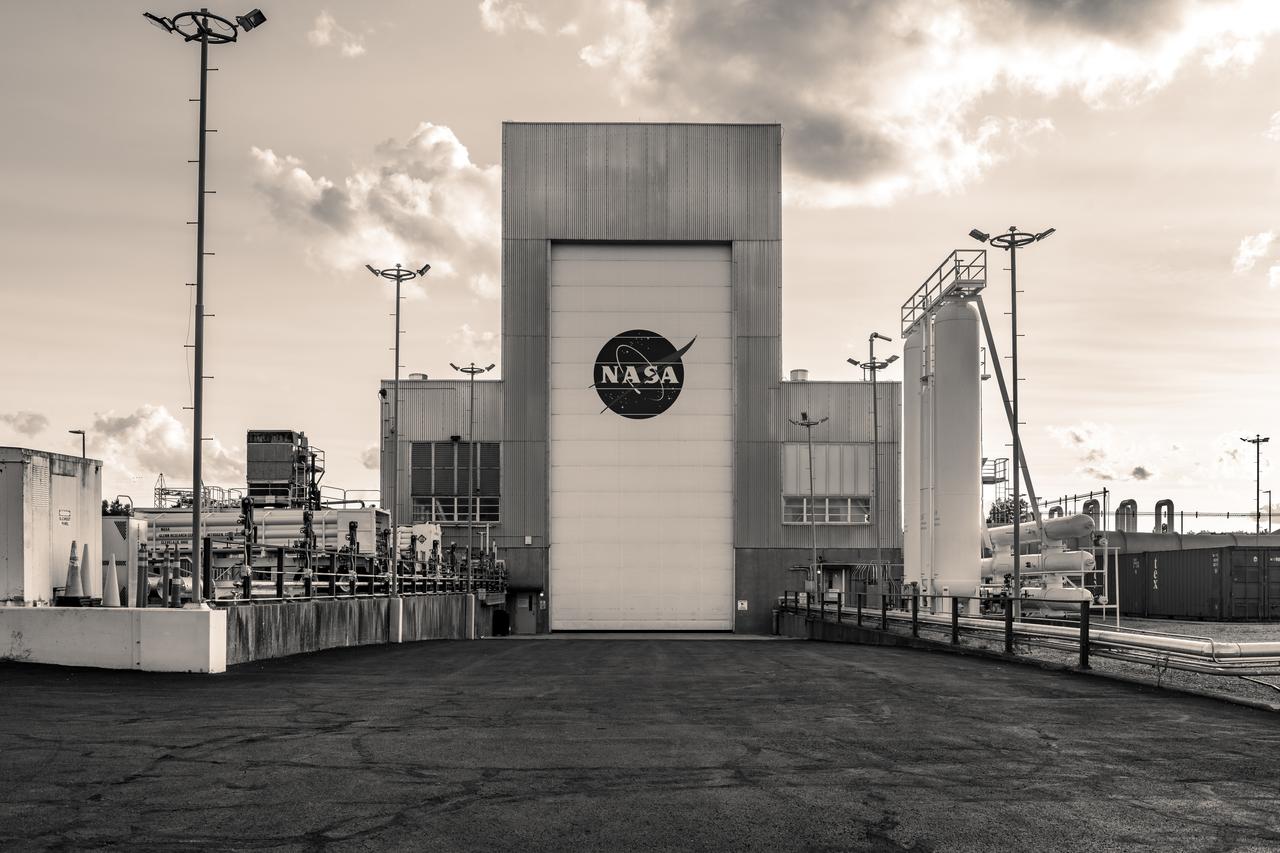
NASA’s In-Space Propulsion Facility located at Neil Armstrong Test Facility in Sandusky Ohio is the world’s only high altitude test facility capable of full-scale rocket engine and launch vehicle system level tests. The facility supports mission profile thermal vacuum simulation and engine firing. The engine or vehicle can be exposed for indefinite periods to low ambient pressures, low-background temperatures, and dynamic solar heating, simulating the environment the hardware will encounter during orbital or interplanetary travel. Photo Credit: (NASA/Jordan Salkin)
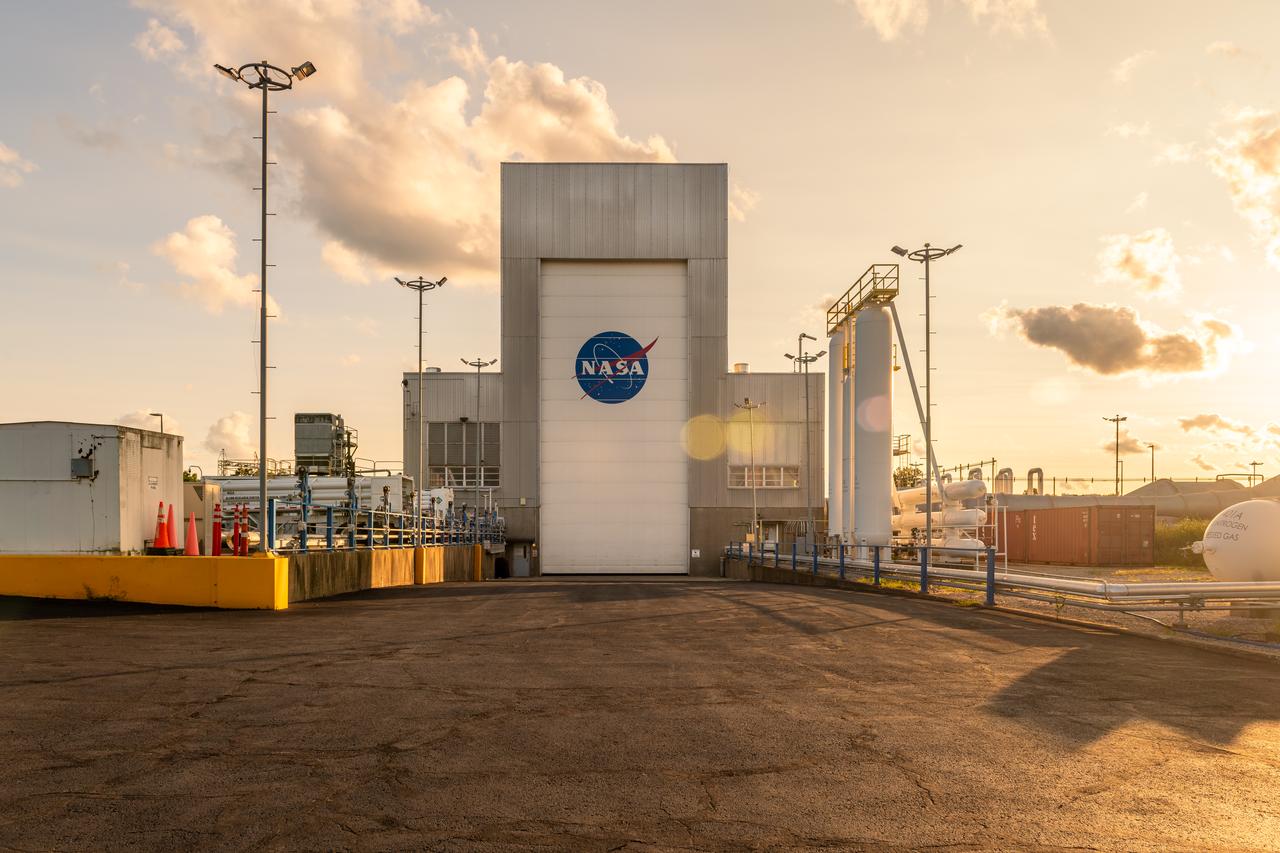
NASA’s In-Space Propulsion Facility located at Neil Armstrong Test Facility in Sandusky Ohio is the world’s only high altitude test facility capable of full-scale rocket engine and launch vehicle system level tests. The facility supports mission profile thermal vacuum simulation and engine firing. The engine or vehicle can be exposed for indefinite periods to low ambient pressures, low-background temperatures, and dynamic solar heating, simulating the environment the hardware will encounter during orbital or interplanetary travel. Photo Credit: (NASA/Jordan Salkin)
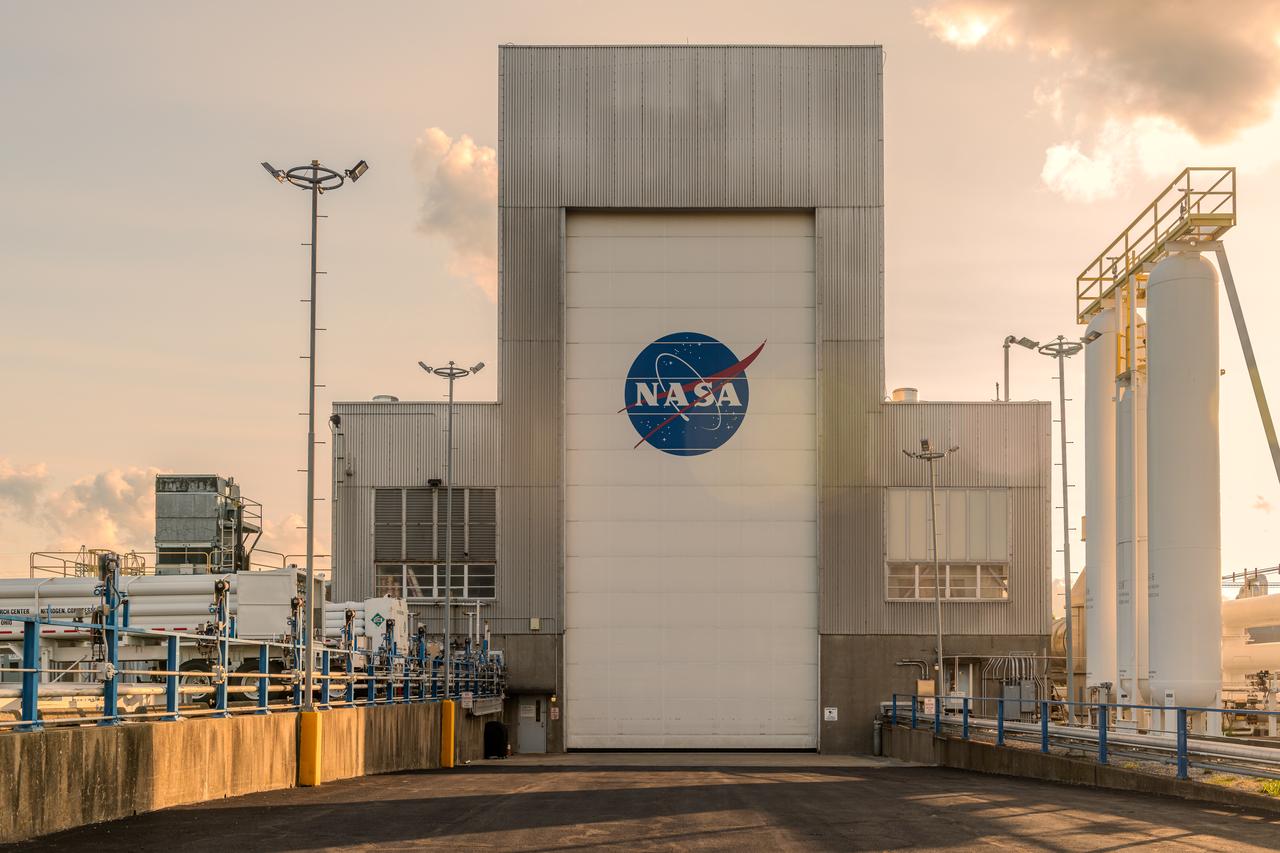
NASA’s In-Space Propulsion Facility located at Neil Armstrong Test Facility in Sandusky Ohio is the world’s only high altitude test facility capable of full-scale rocket engine and launch vehicle system level tests. The facility supports mission profile thermal vacuum simulation and engine firing. The engine or vehicle can be exposed for indefinite periods to low ambient pressures, low-background temperatures, and dynamic solar heating, simulating the environment the hardware will encounter during orbital or interplanetary travel. Photo Credit: (NASA/Jordan Salkin)
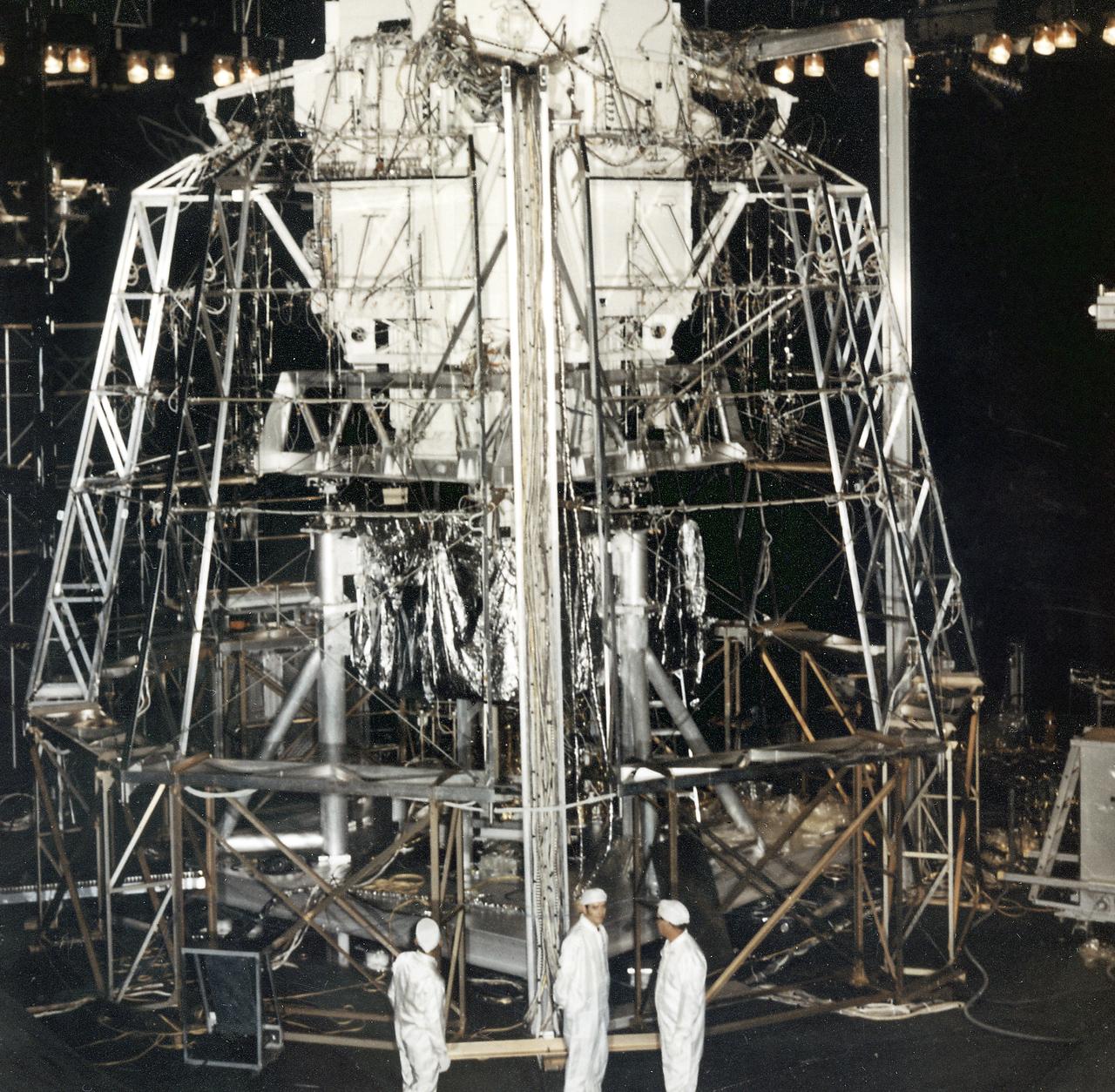
The Apollo Telescope Mount (ATM), designed and developed by the Marshall Space Flight Center, was one of four major components comprising the Skylab (1973-1979). The ATM housed the first manned scientific telescope in space. This photograph shows the ATM rigged for altitude and space simulation tests at the Space Environment Simulation Laboratory of the Manned Spacecraft Center (MSC). The MSC was renamed the Johnson Space Center (JSC) in early 1973.
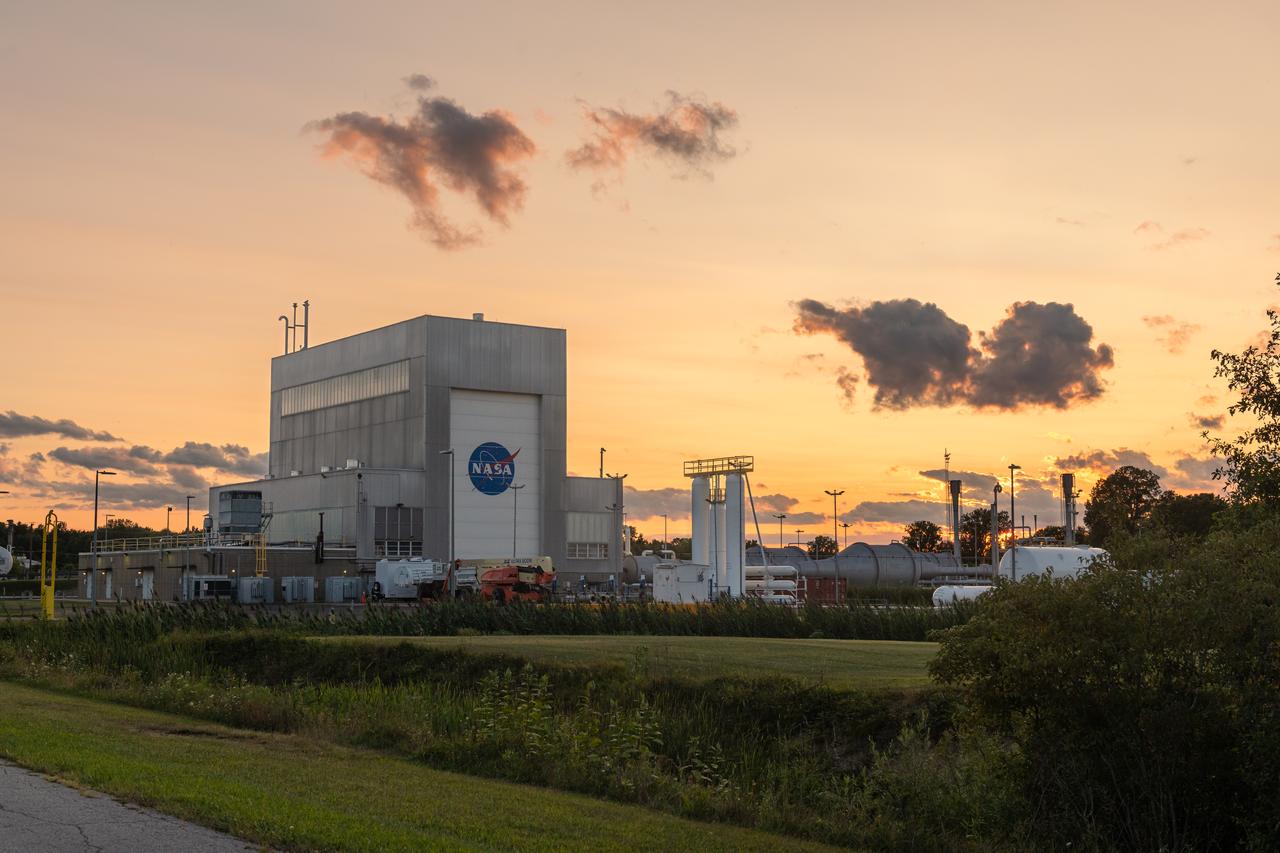
NASA’s In-Space Propulsion Facility located at Neil Armstrong Test Facility in Sandusky Ohio is the world’s only high altitude test facility capable of full-scale rocket engine and launch vehicle system level tests. The facility supports mission profile thermal vacuum simulation and engine firing. The engine or vehicle can be exposed for indefinite periods to low ambient pressures, low-background temperatures, and dynamic solar heating, simulating the environment the hardware will encounter during orbital or interplanetary travel. Photo Credit: (NASA/Jordan Salkin)
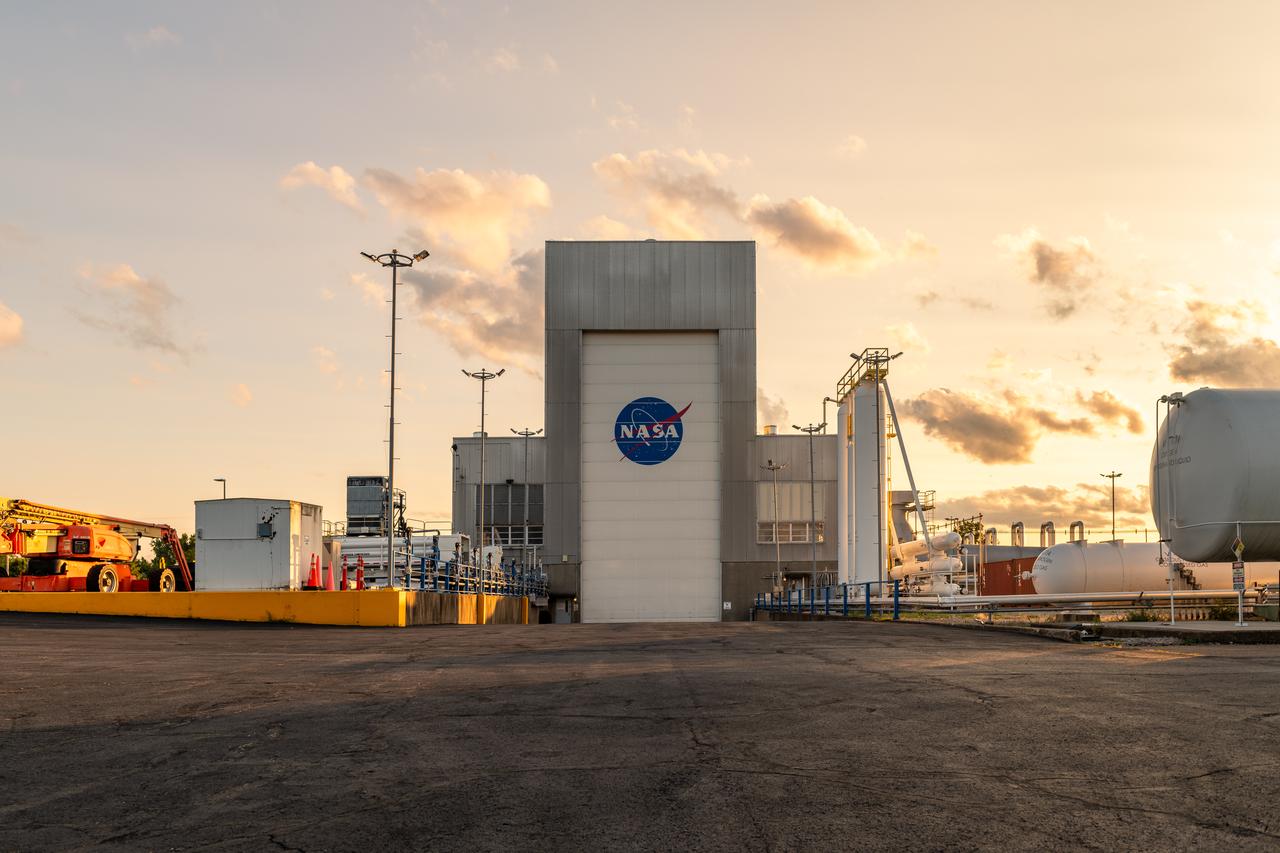
NASA’s In-Space Propulsion Facility located at Neil Armstrong Test Facility in Sandusky Ohio is the world’s only high altitude test facility capable of full-scale rocket engine and launch vehicle system level tests. The facility supports mission profile thermal vacuum simulation and engine firing. The engine or vehicle can be exposed for indefinite periods to low ambient pressures, low-background temperatures, and dynamic solar heating, simulating the environment the hardware will encounter during orbital or interplanetary travel. Photo Credit: (NASA/Jordan Salkin)