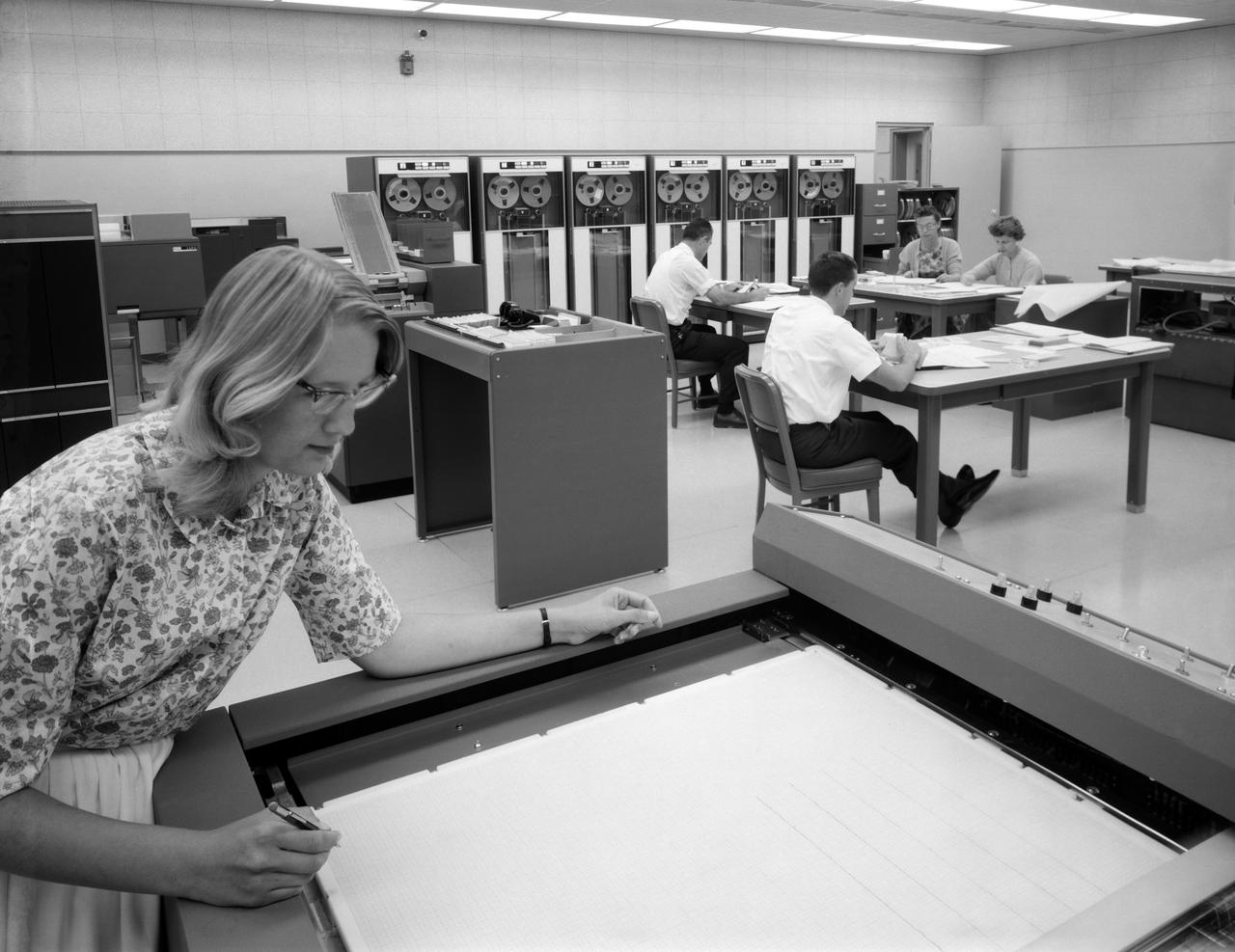
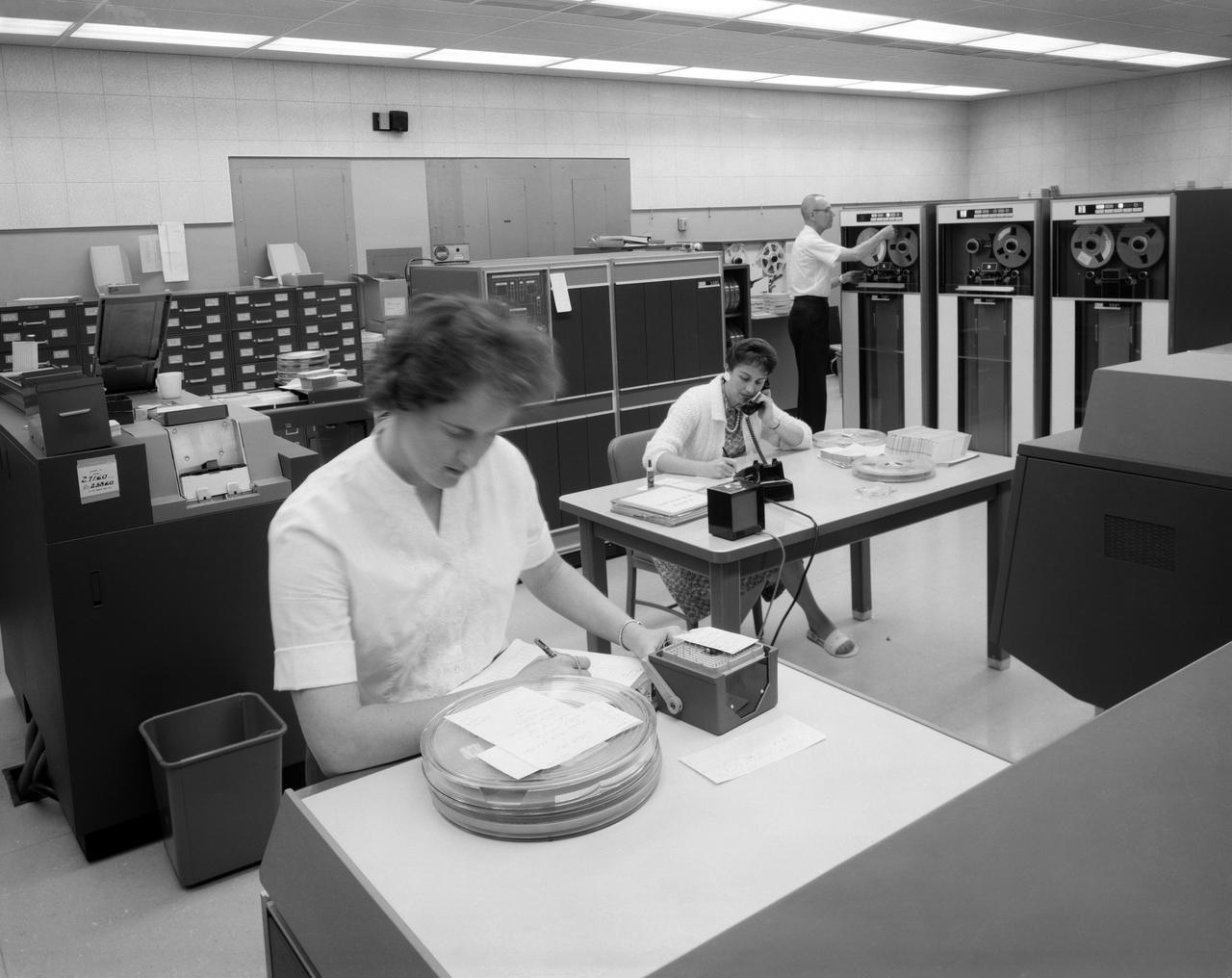
IBM 1401 Data Processing System, at NASA's Ames Research Center.
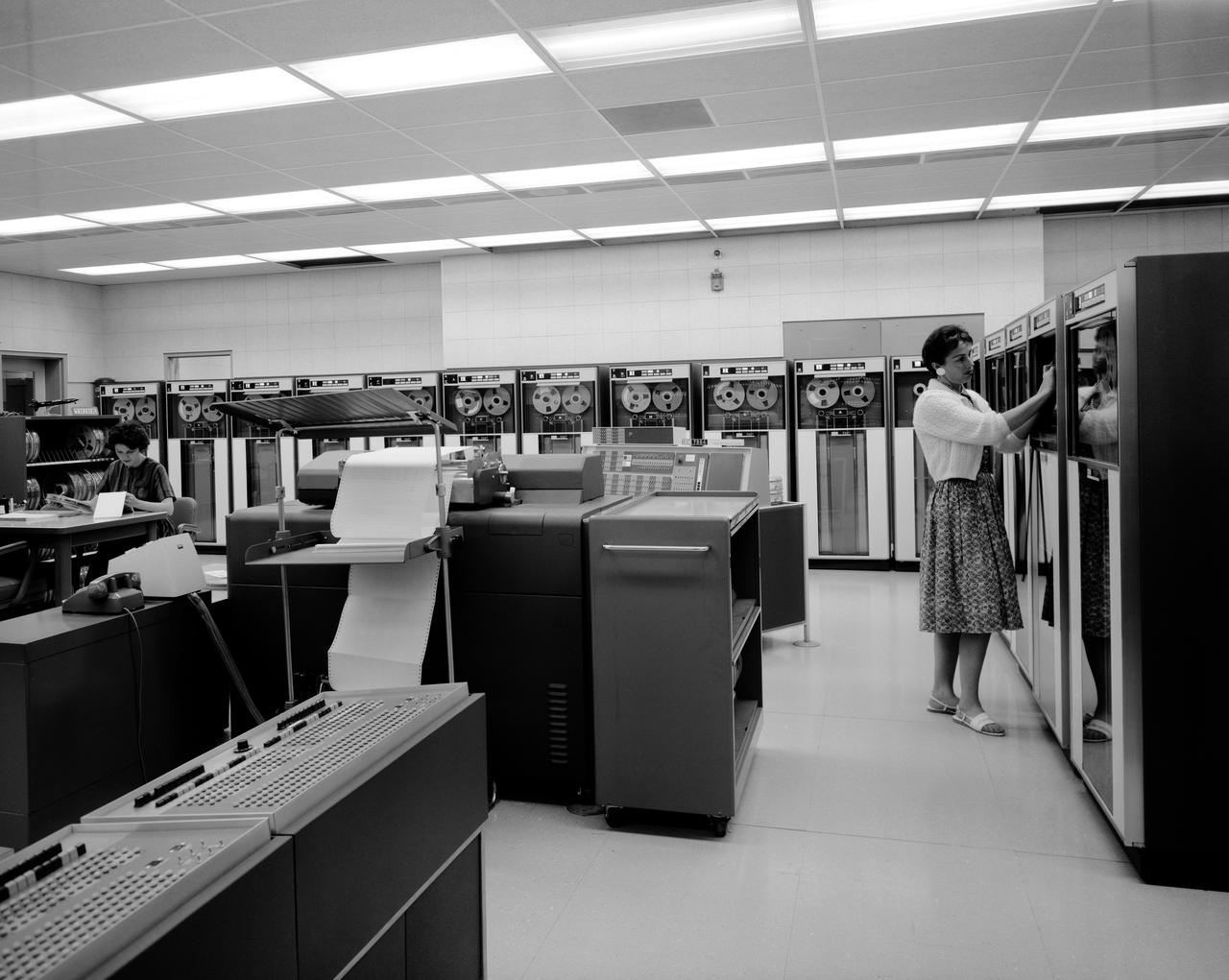
Data Processing System at Ames.
IBM 1401 Data Processing System at NASA Ames Research Center.
Data Processing at Ames Research Center.
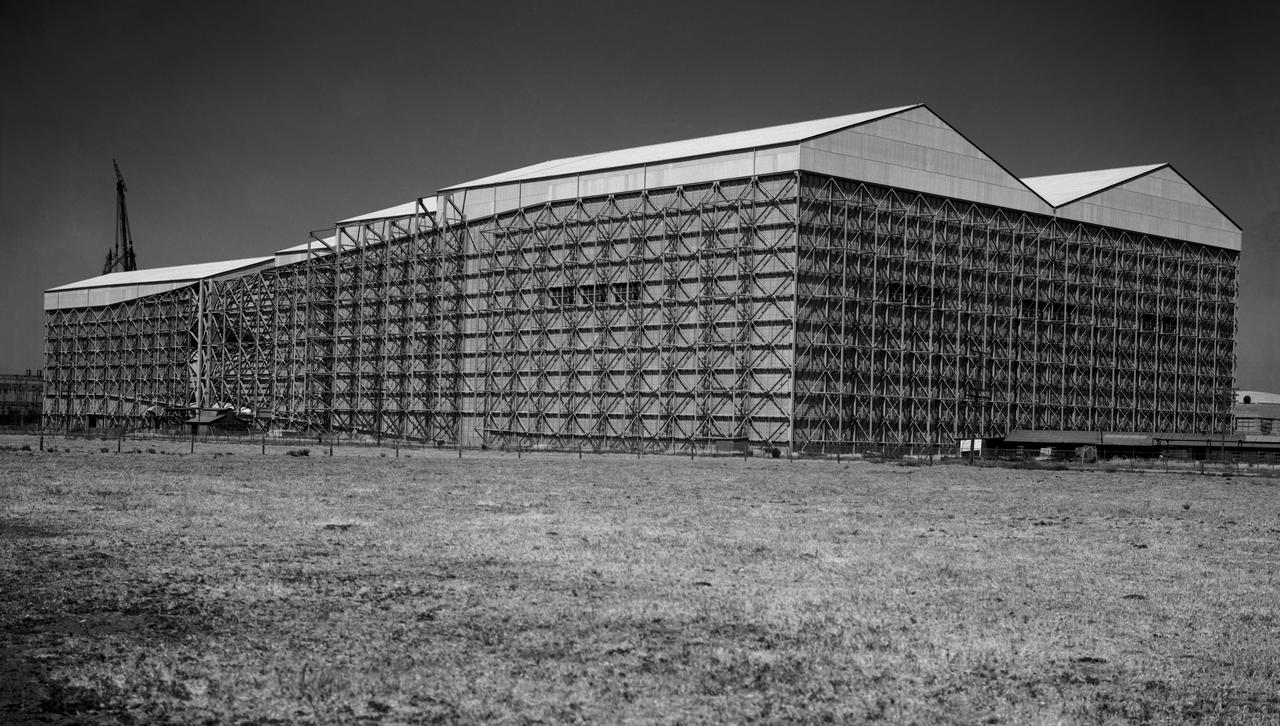
NACA Ames 40x80 foot wind tunnel (South West).
NACA Ames Laboratory Building, South West.
Equipment: Data Processing and Data Reduction at the NASA Ames Research Center, EMC. IBM 7090 Data Processing System.
Data Processing System at Ames Research Center.
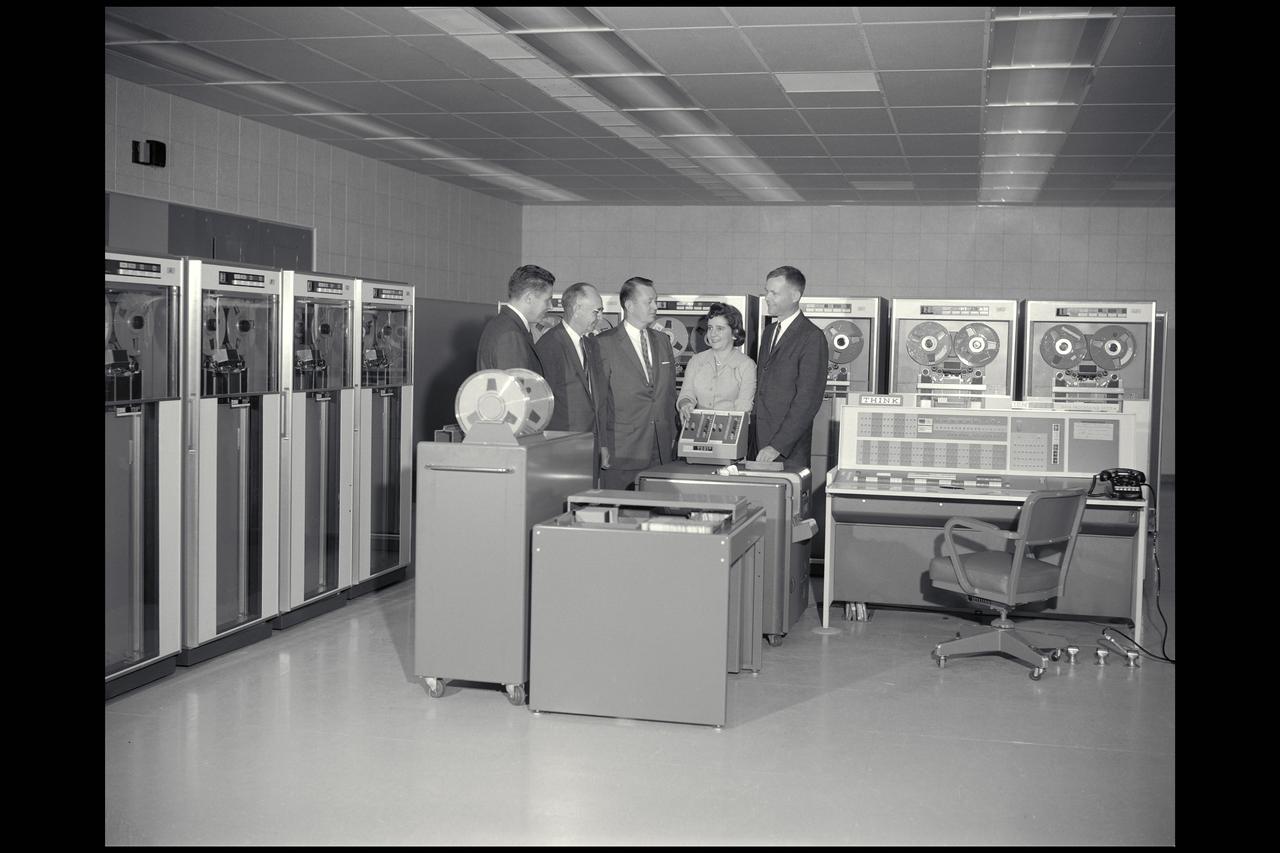
IBM 7090 computer and personnel: L-R: R Smith, IBM; Smith DeFrance, Ames; H Funk, IBM; Marcie Chartz Smith, Ames; D Swartz, IBM; discuss installation of computer at Ames.
Ames and IBM Personnel Discussing the installation of the computing system.
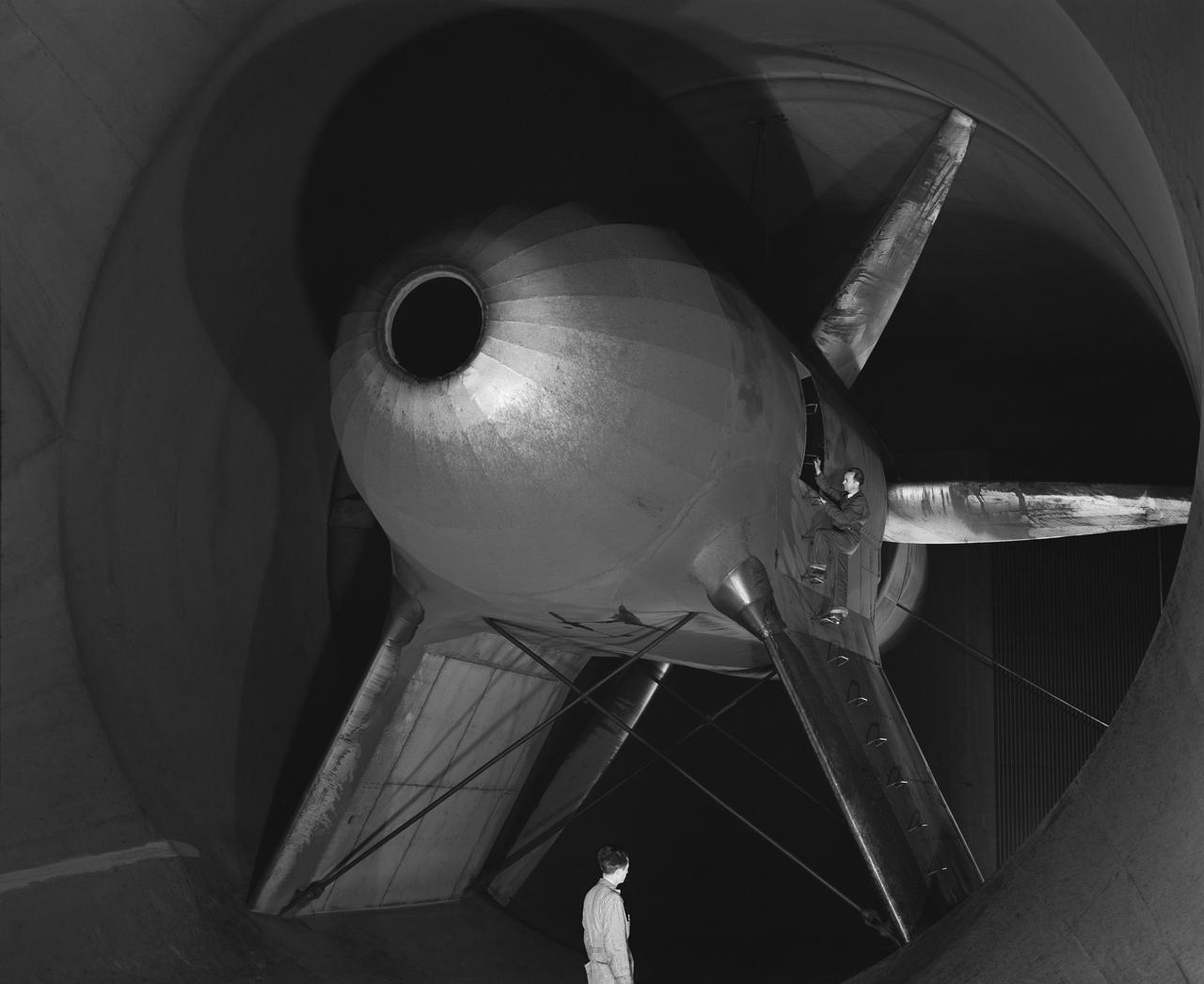
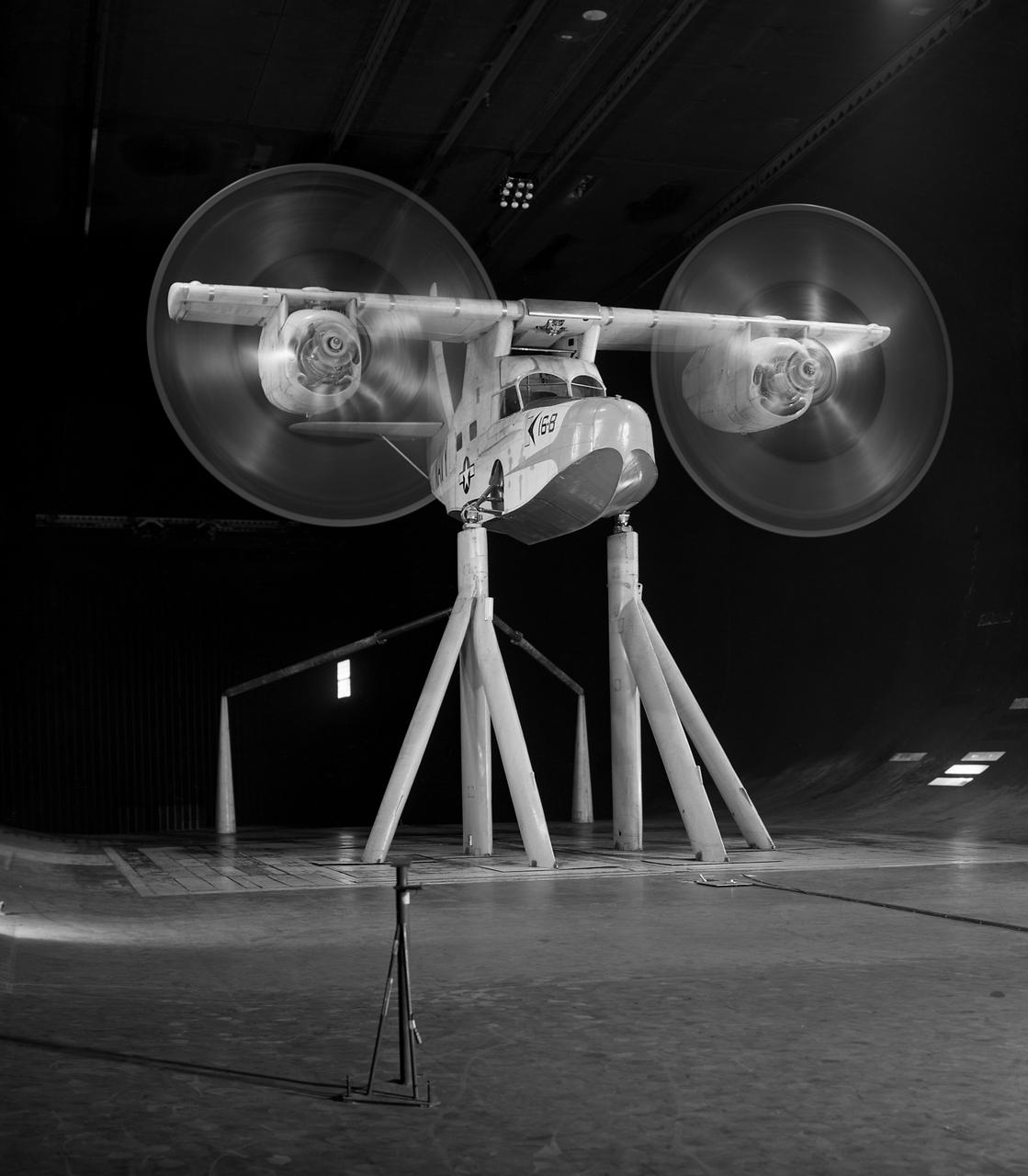
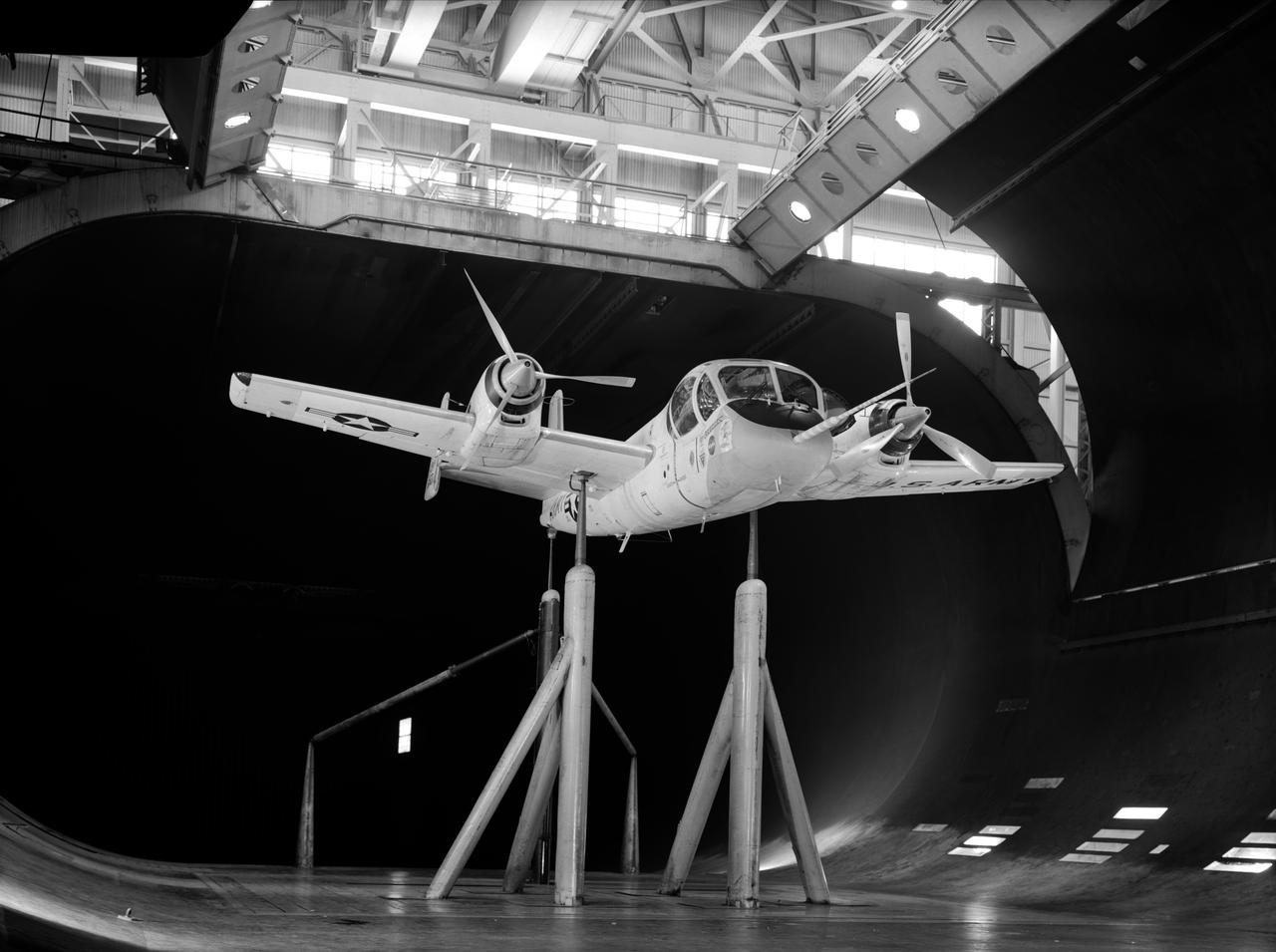
Publicity Shot of close up of Nacell, Drive Nacel and cooling vent in nose for wind tunnel in NACA Ames 40x80 foot Wind Tunnel.
Nacelles and props in 40x80 foot wind tunnel at Ames.
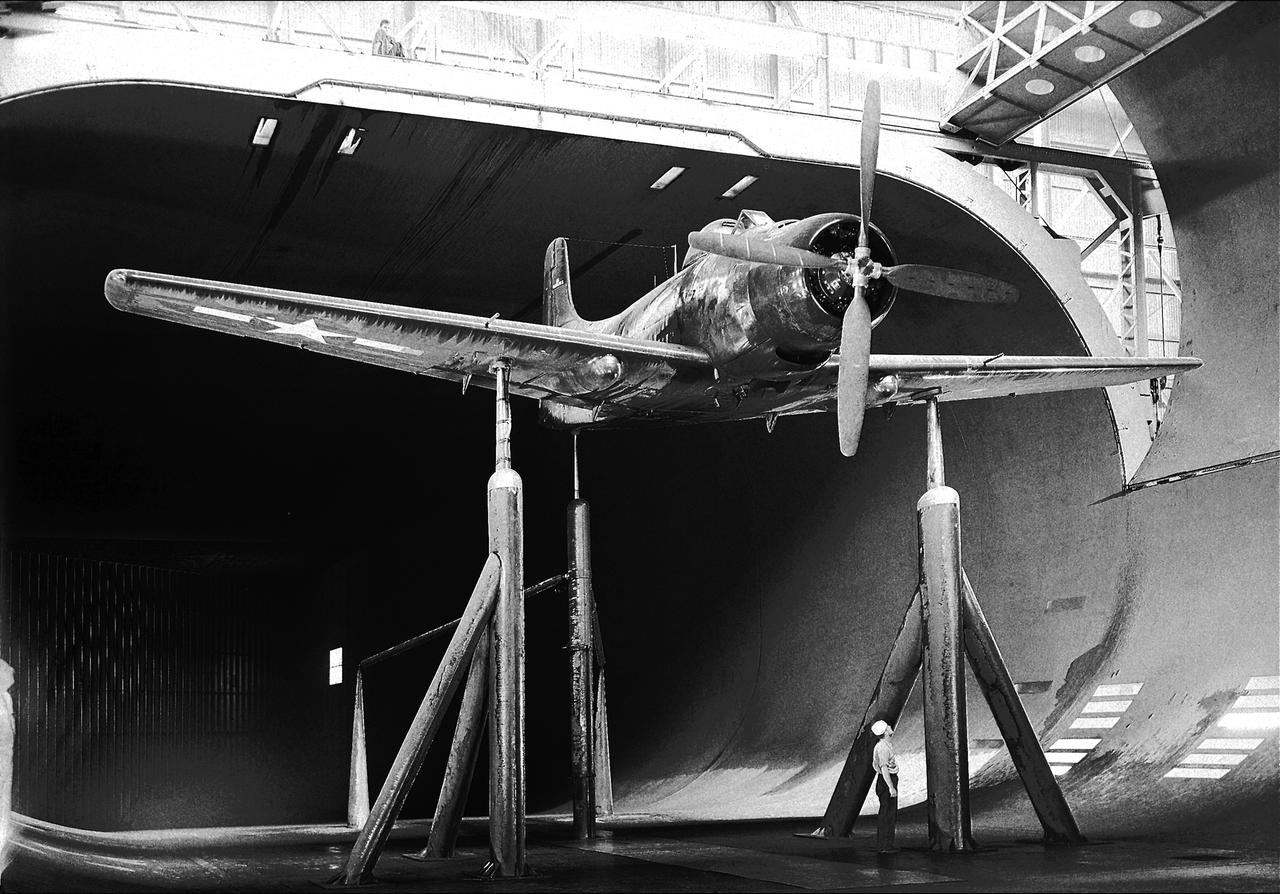
Installation of the Douglas A-26B airplane in the 40x80 foot wind tunnel at NACA's Ames Research Center. Airplane being centered over tunnel opening.
Douglas A-26B Airplane in Ames 40x80 Wind Tunnel.
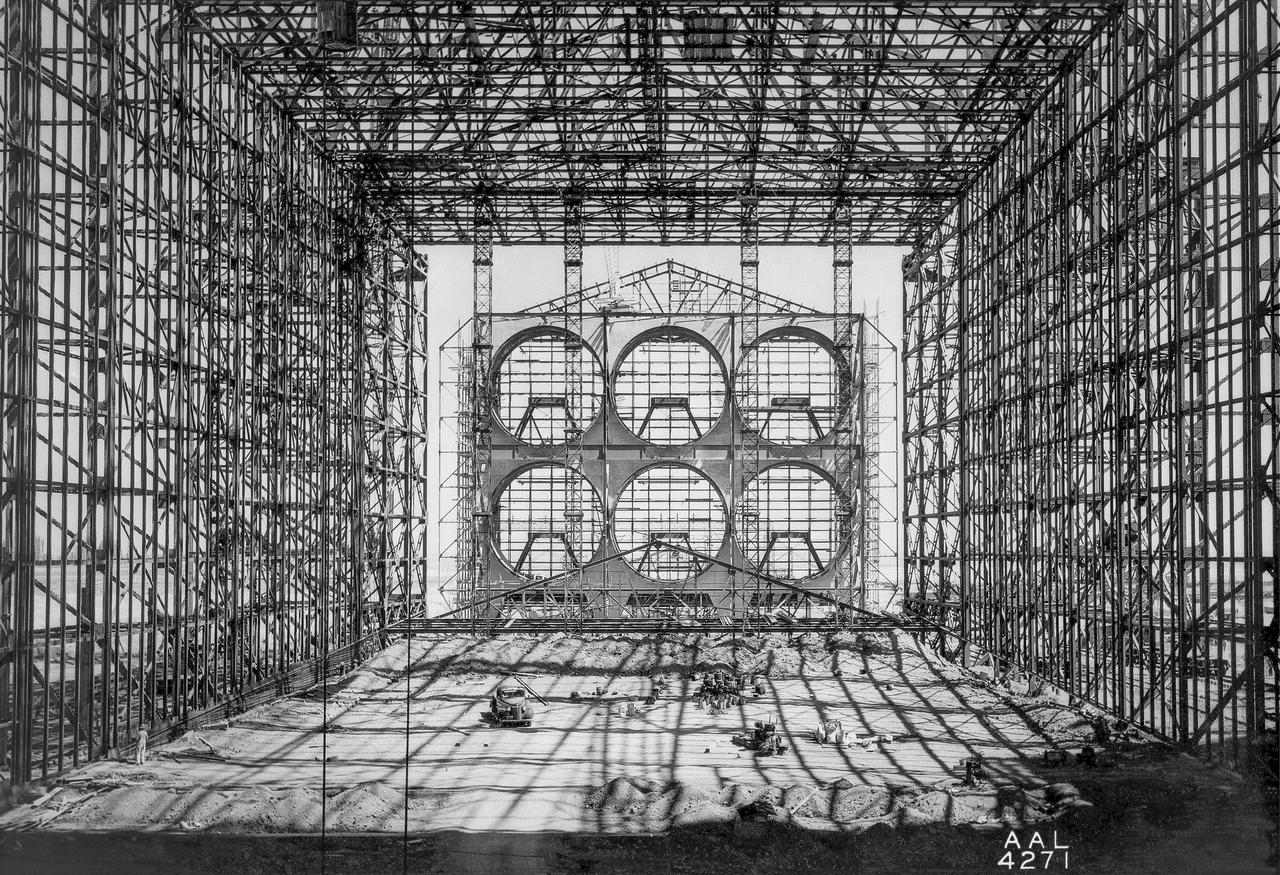
Looking South from inside the diffuser of the 40x80 foot wind tunnel at NACA's Ames Research Center.  Construction began in late 1941, the mammoth construction task sorely taxing the resources of the new center. Two and a half years later, in dune 1944, the 40 x 80-foot full-scale tunnel went into operation.
Construction of the 40x80 Foot Wind Tunnel at Ames.
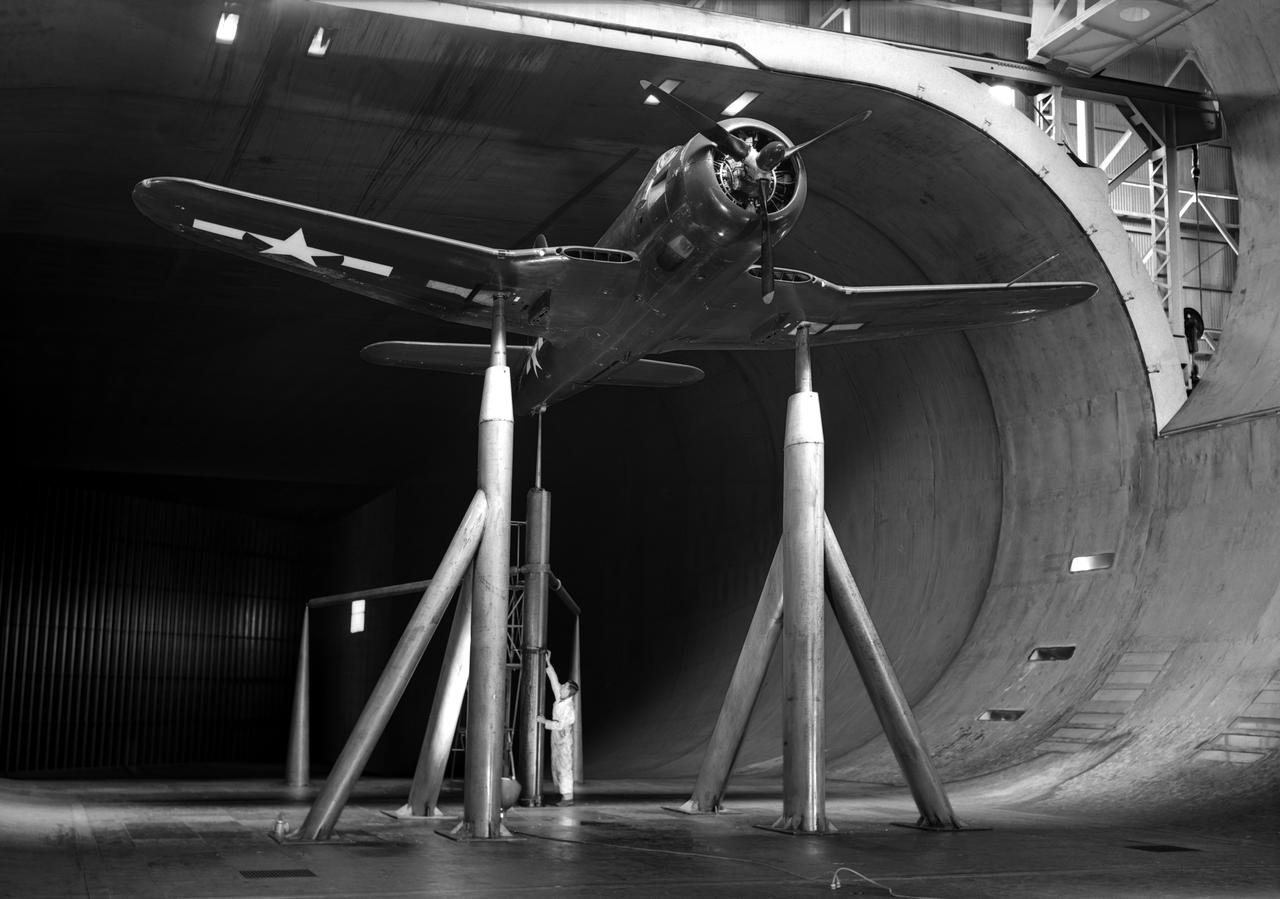
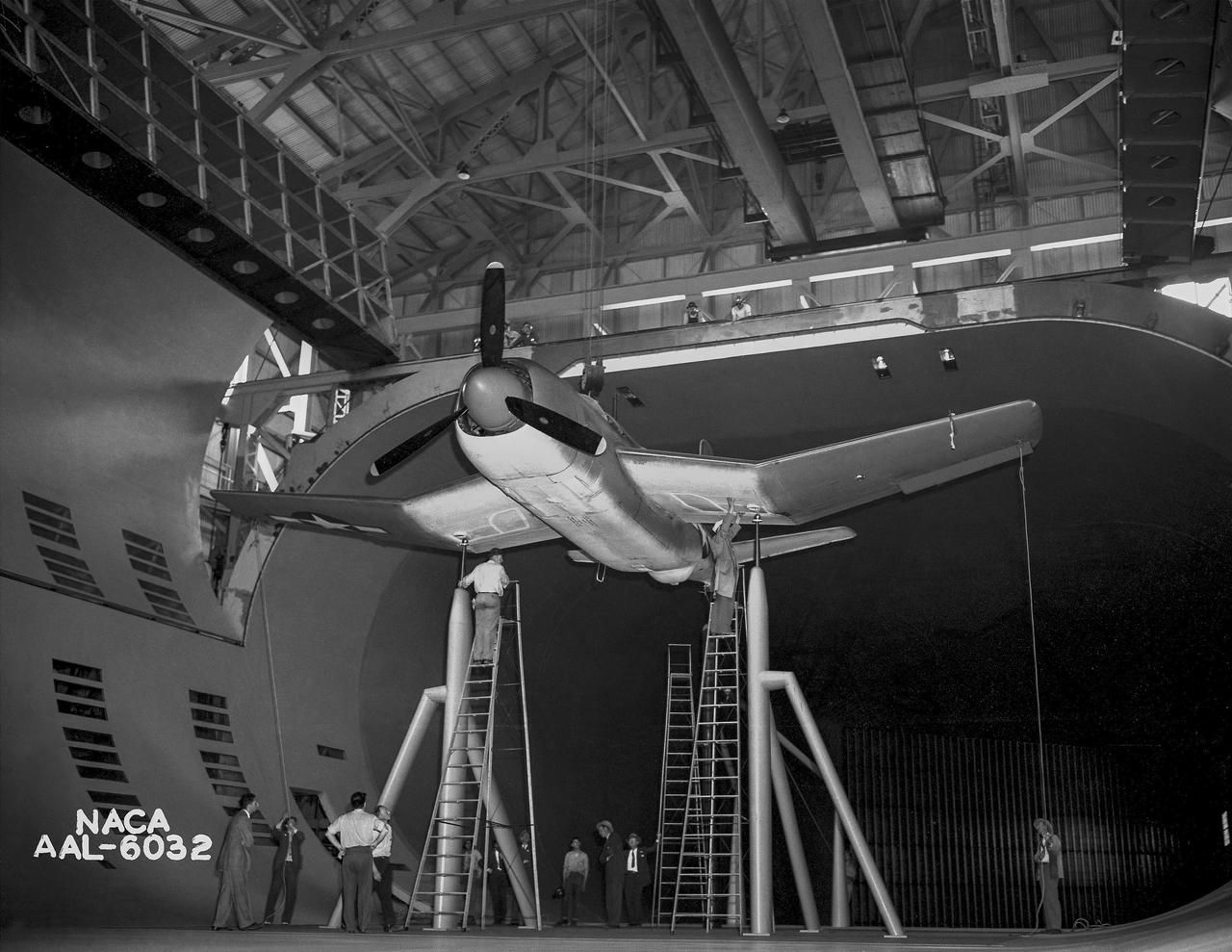
3/4 front view from below of the Ryan FR-1 airplane mounted in the NACA Ames 40x80 foot wind tunnel. Production configuration.
Ryan FR-1 in NACA Ames 40x80 foot Wind Tunnel.
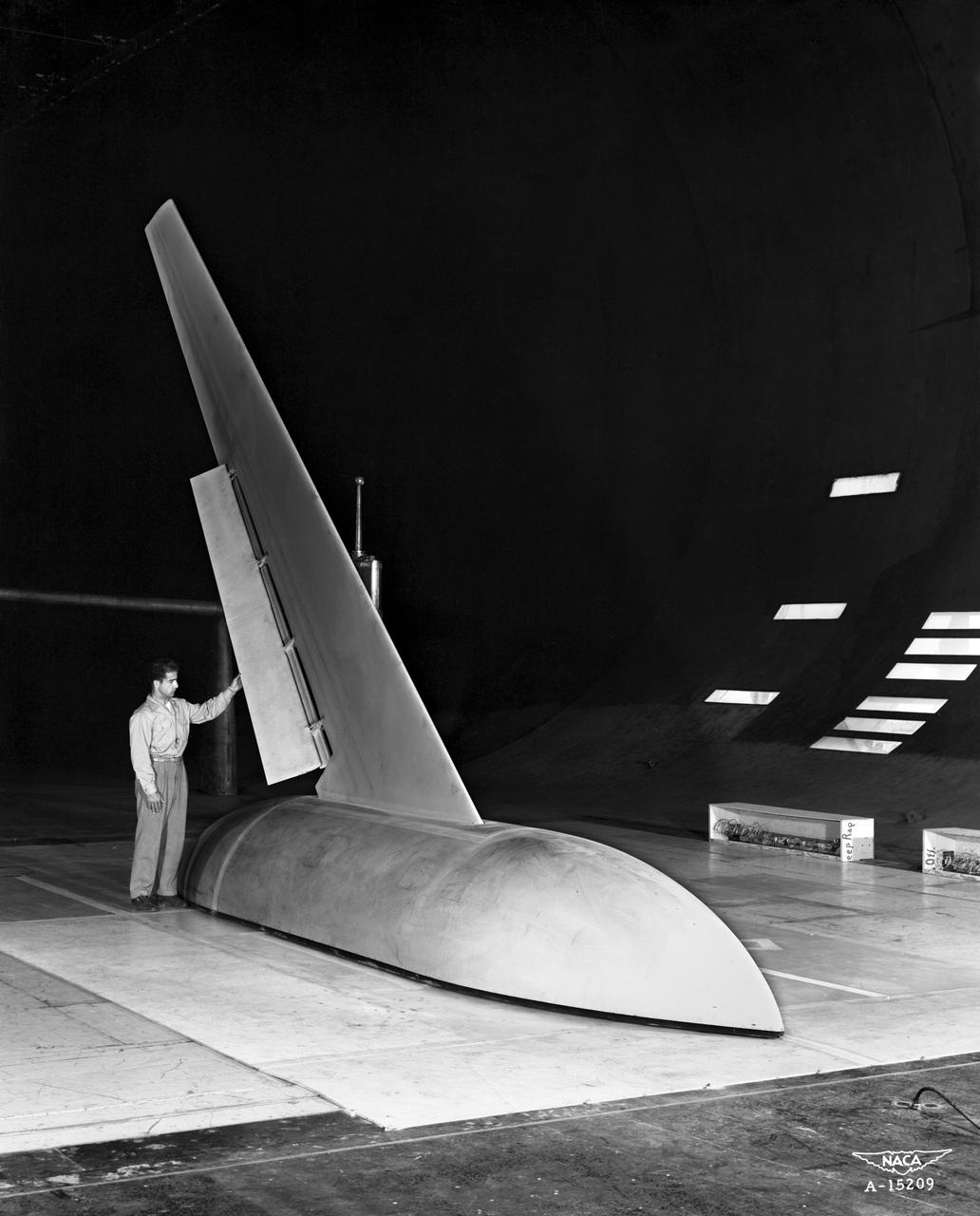
Investigation of High Lift and Stall Control on 45 deg. 3/4 front view Sweptback Cambered and Twisted Wing, in Ames 40x80 foot Wind Tunnel.
A-15209. High Lift and Stall Control in Ames 40x80 Foot Wind Tunnel.
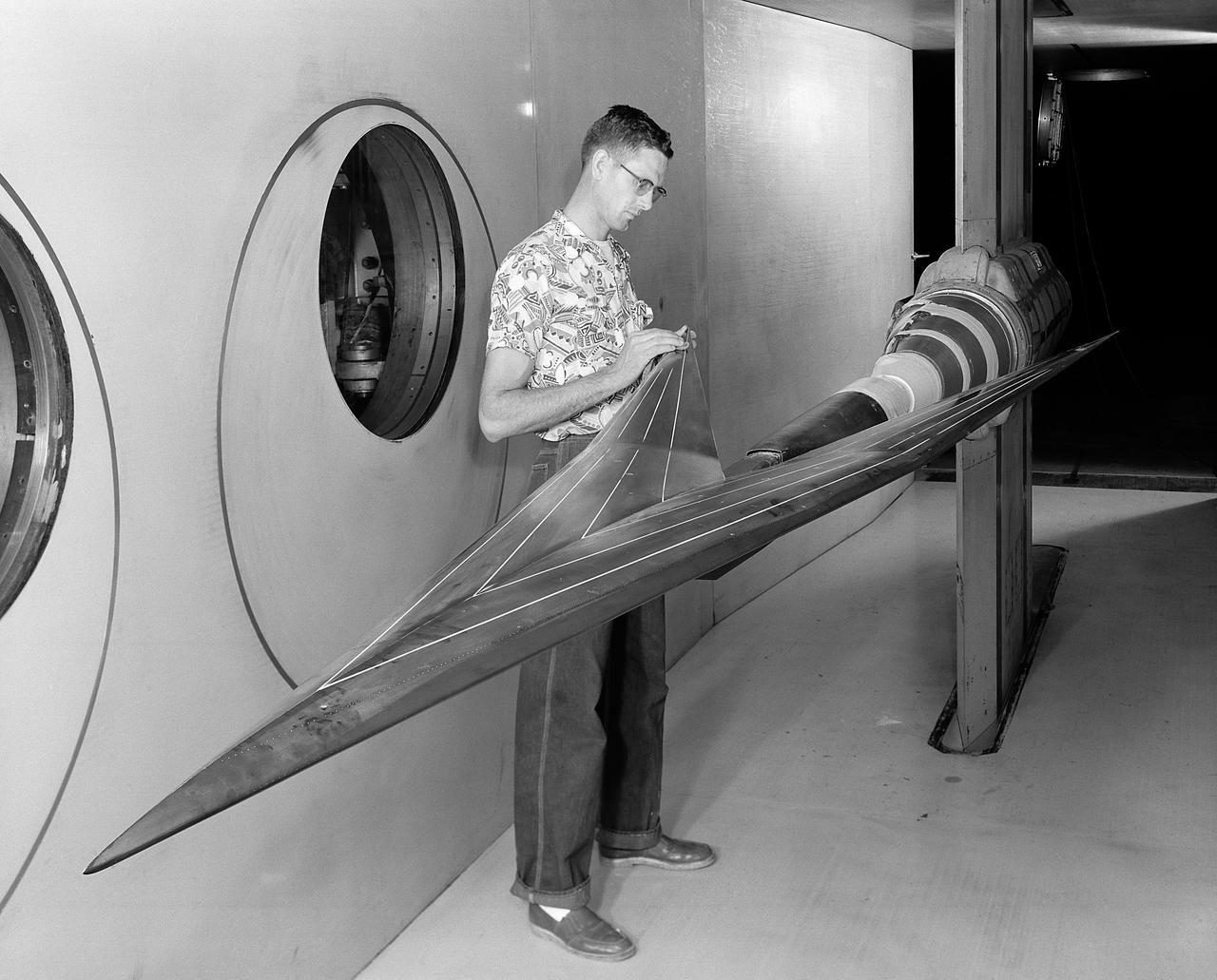
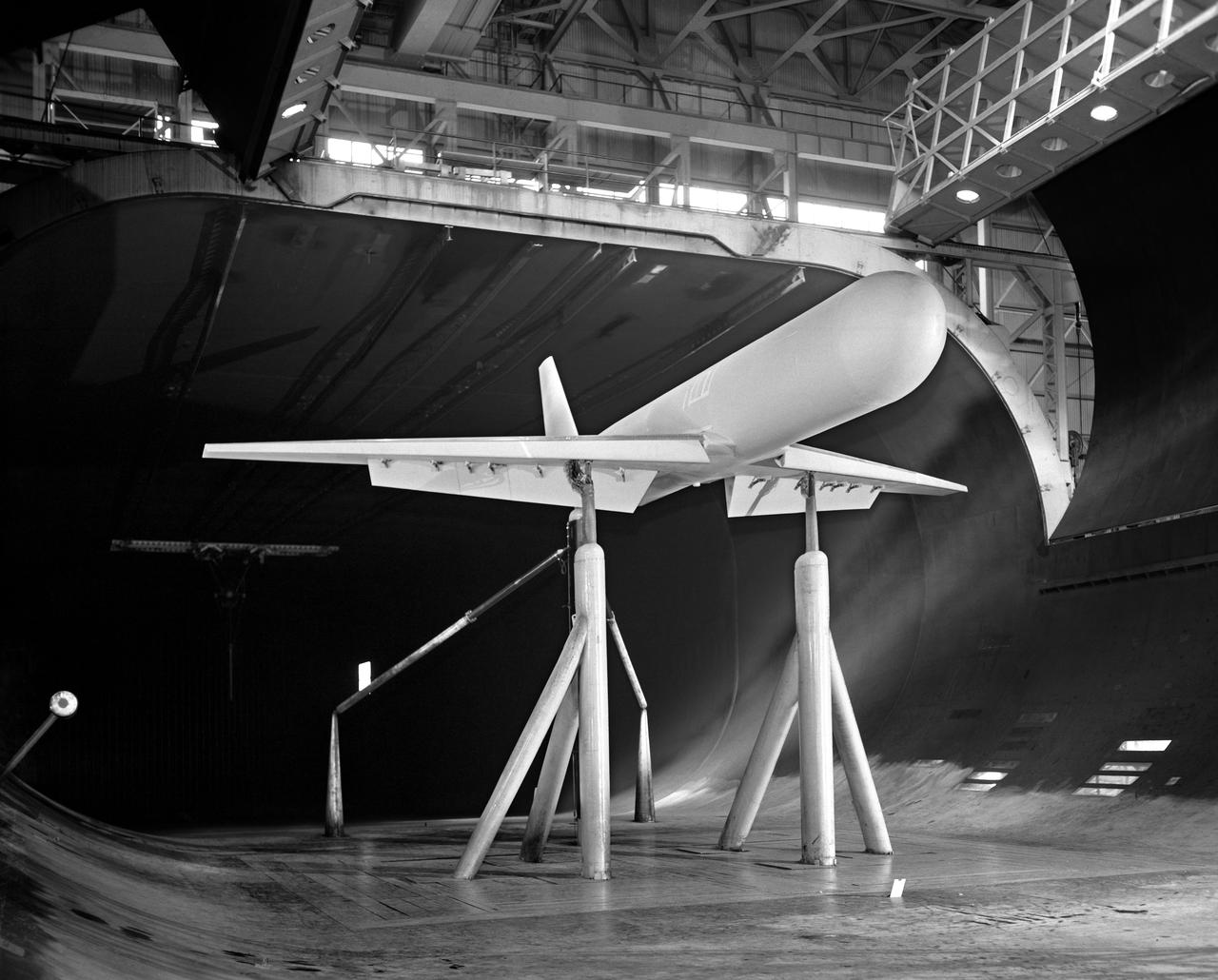
A chambered and twisted wing-body. Arrow wing hypersonic model tested in the 6x6 foot wind tunnel at the NASA Ames Research Center.
Arrow Wing Model in the 6x6 Foot Wind Tunnel at NASA Ames.
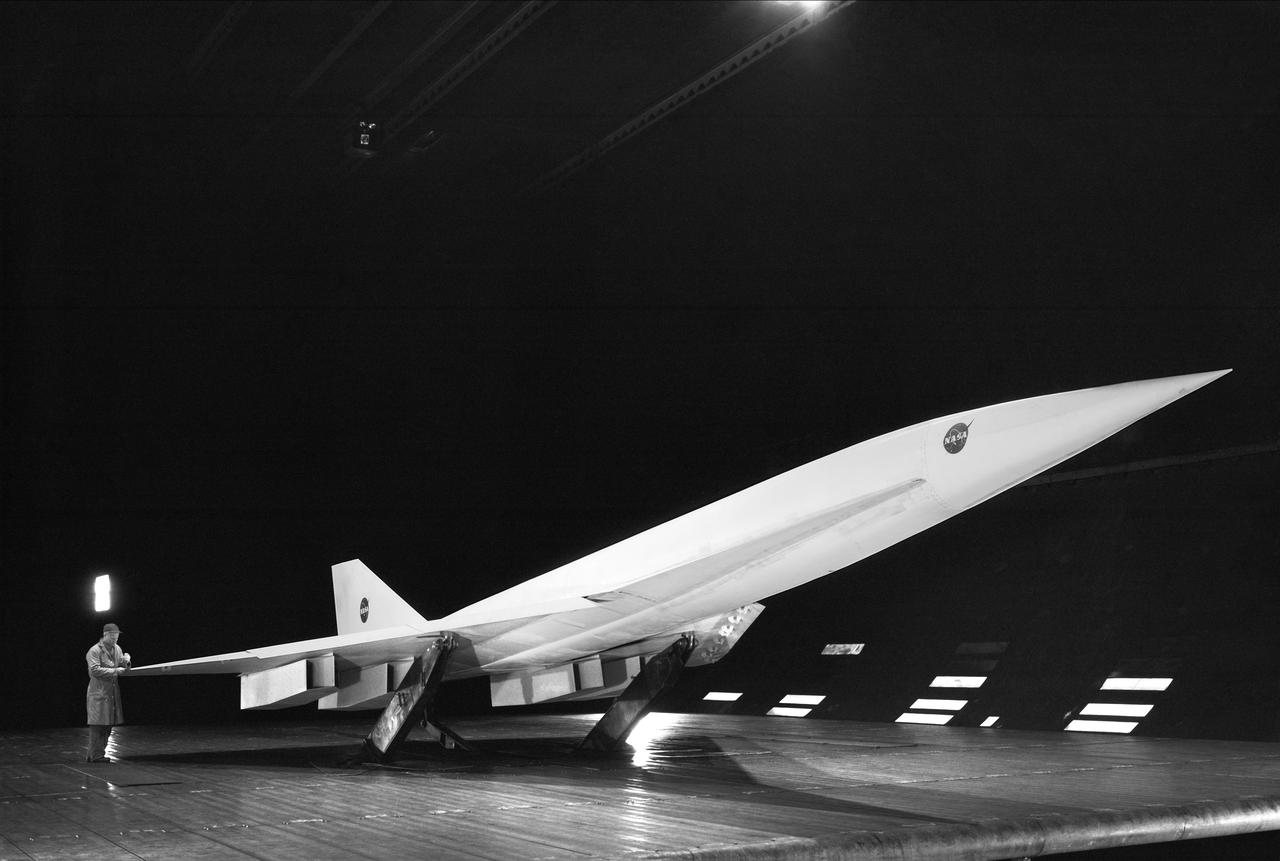
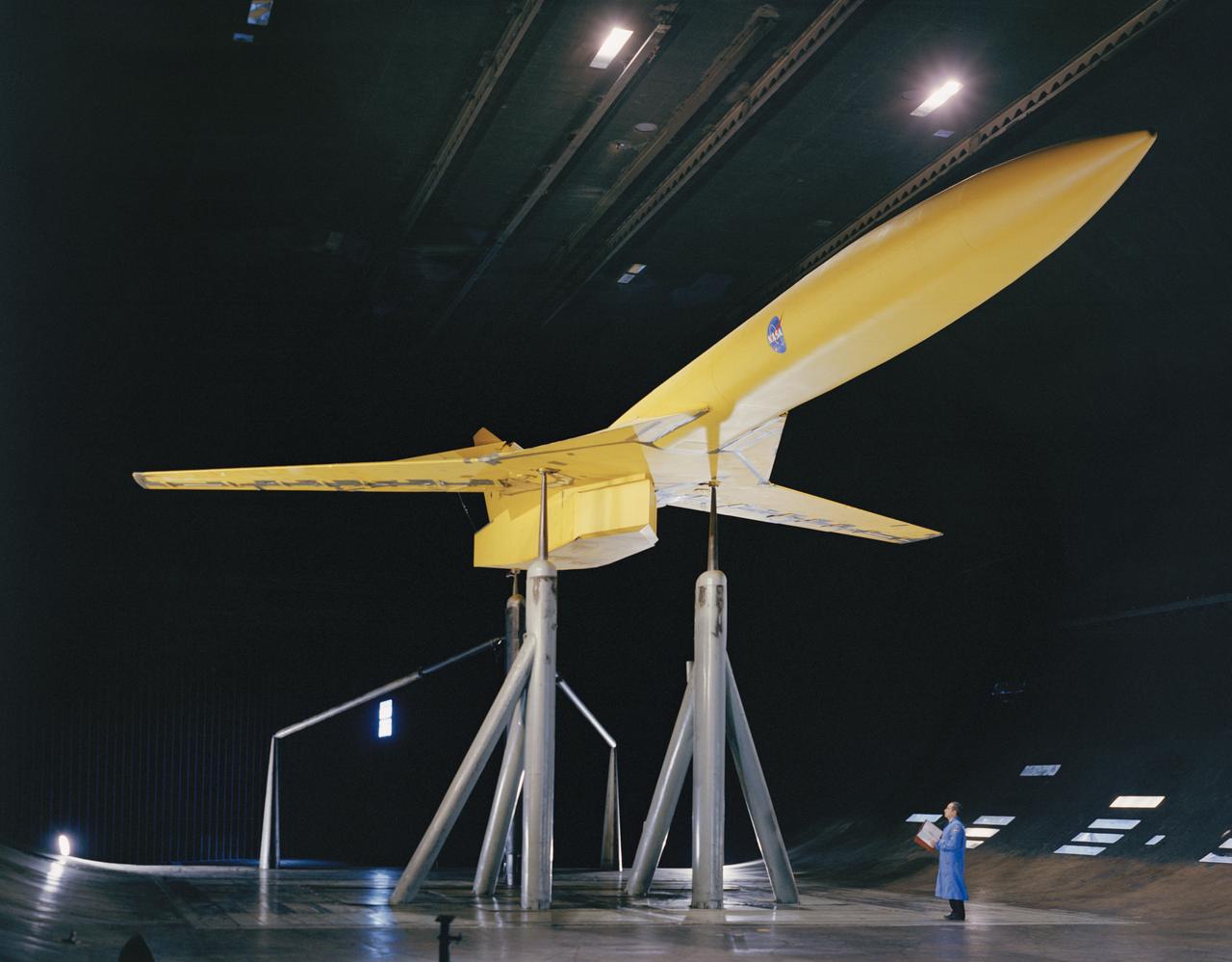
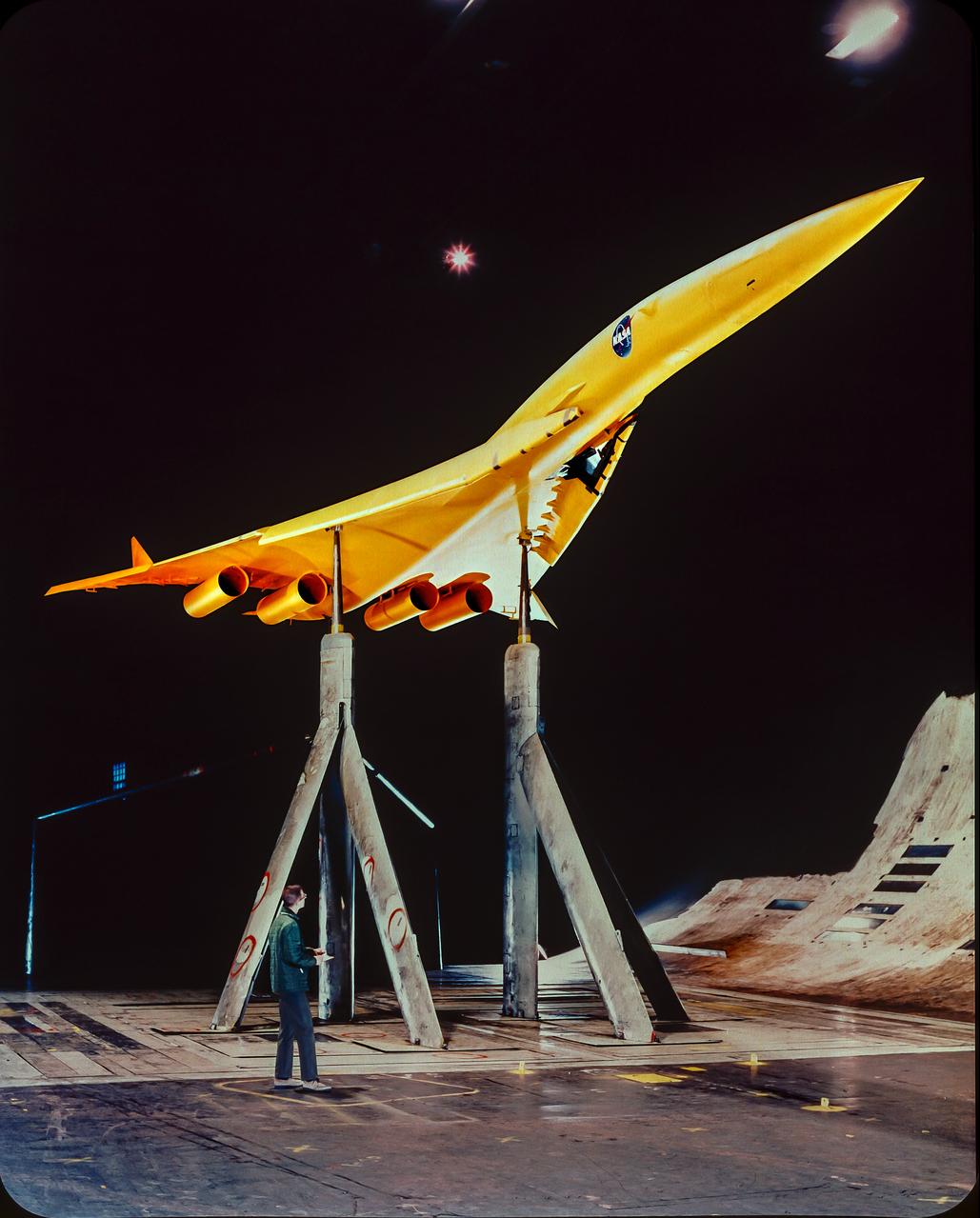
3/4 front view of Fixed Wing SST - Lockheed SST on Ground Plane with leading edge flaps deflected in Ames 40x80 foot Wind Tunnel.
Fixed Wing Supersonic Transport in Ames 40x80 Foot Wind Tunnel.
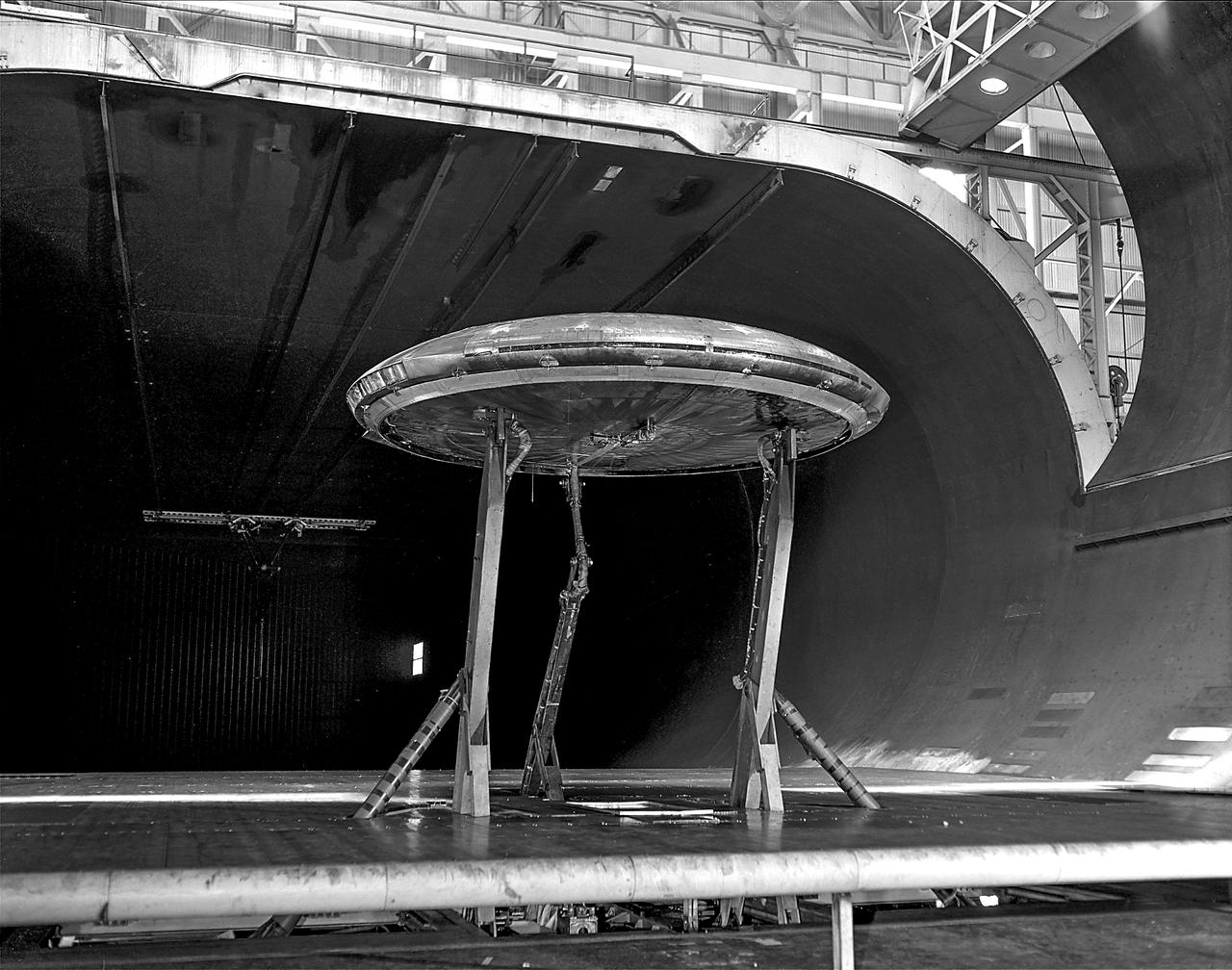
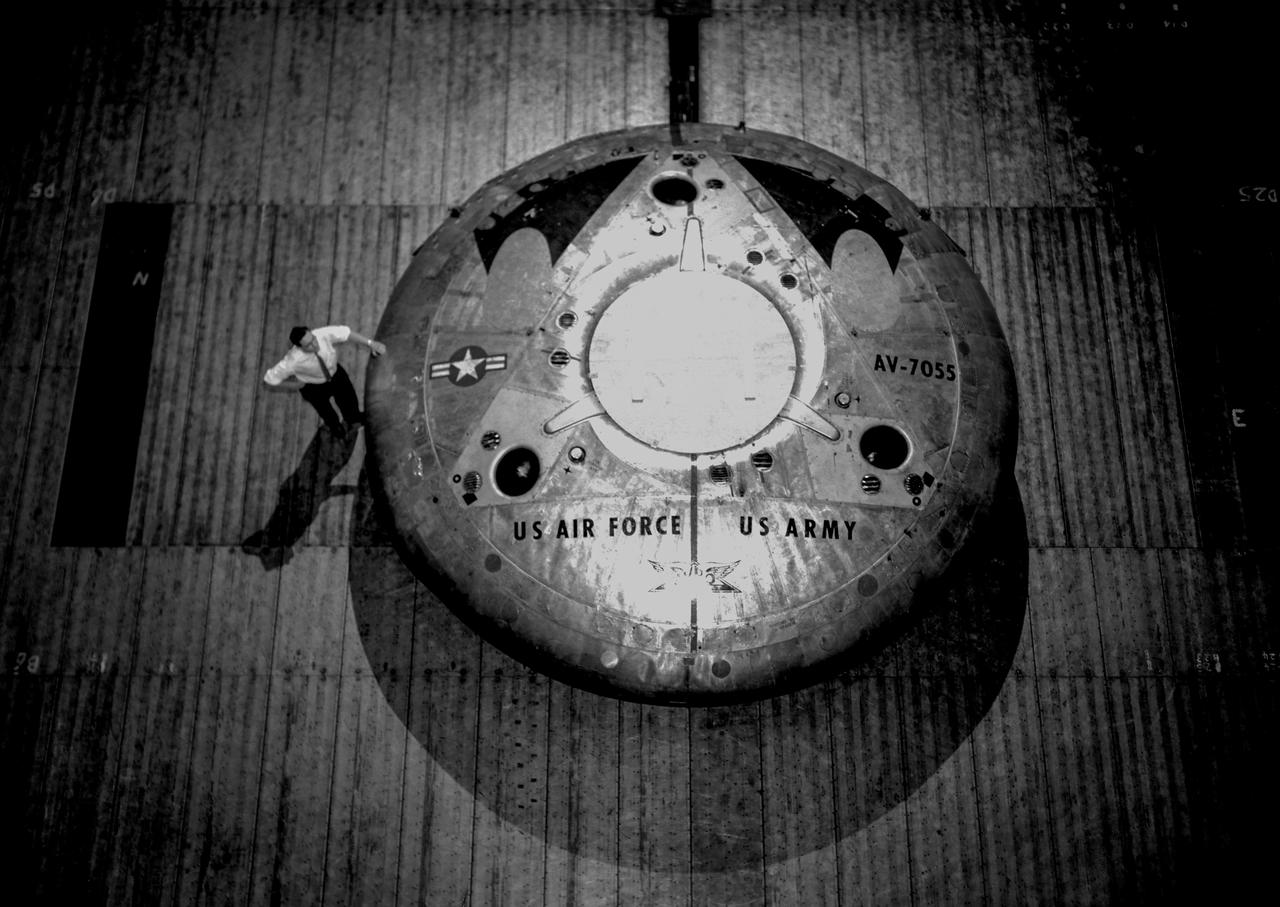
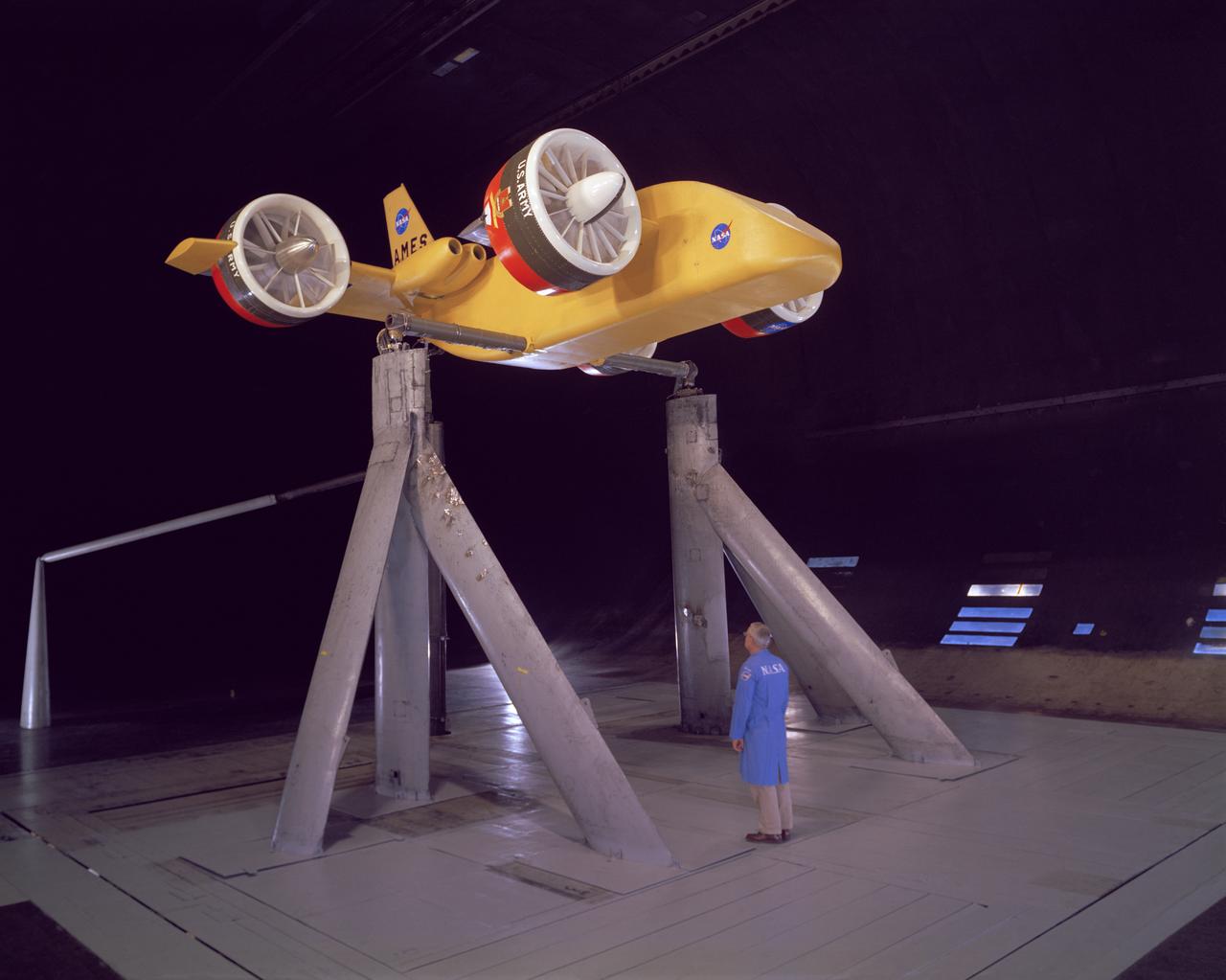
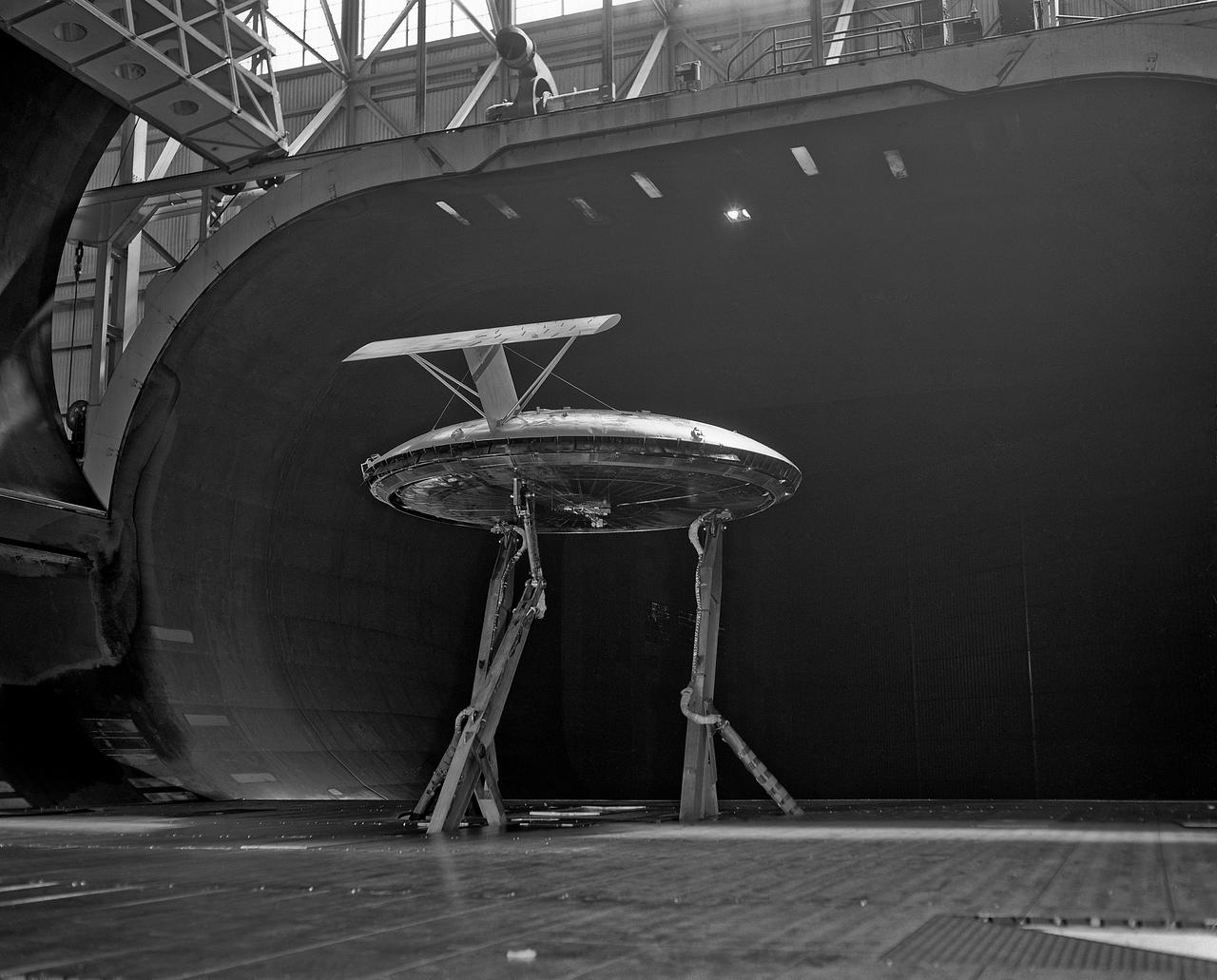
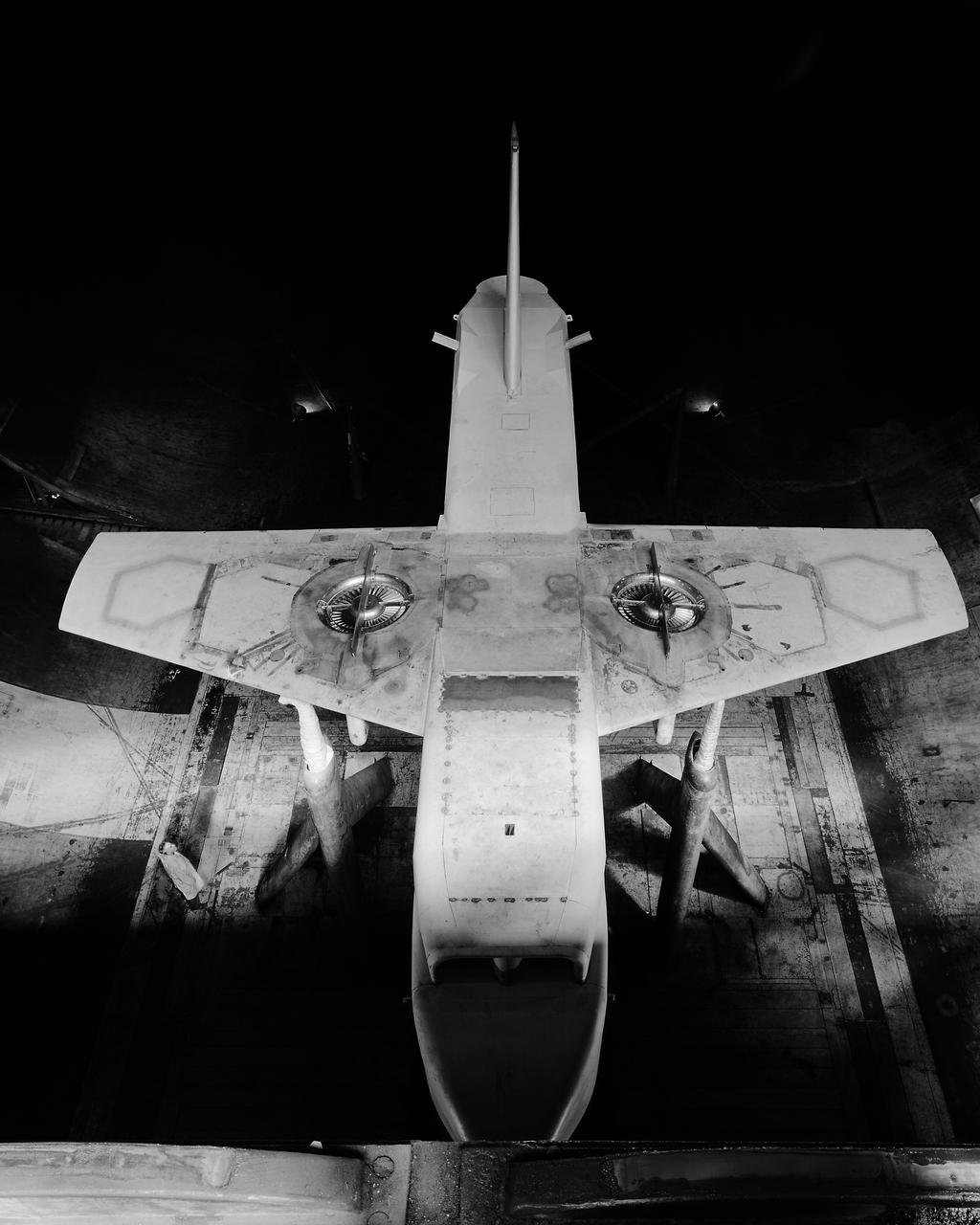
Rear view of the Avrocar with tail, mounted on variable height struts.  Overhead doors of the wind tunnel test section open. The first Avrocar, S/N 58-7055 (marked AV-7055), after tethered testing, became the "wind tunnel" test model at NASA Ames, where it remained in storage from 1961 until 1966, when it was donated to the National Air and Space Museum, in Suitland, Maryland.
Avrocar Test in Ames 40x80 Foot Wind Tunnel.
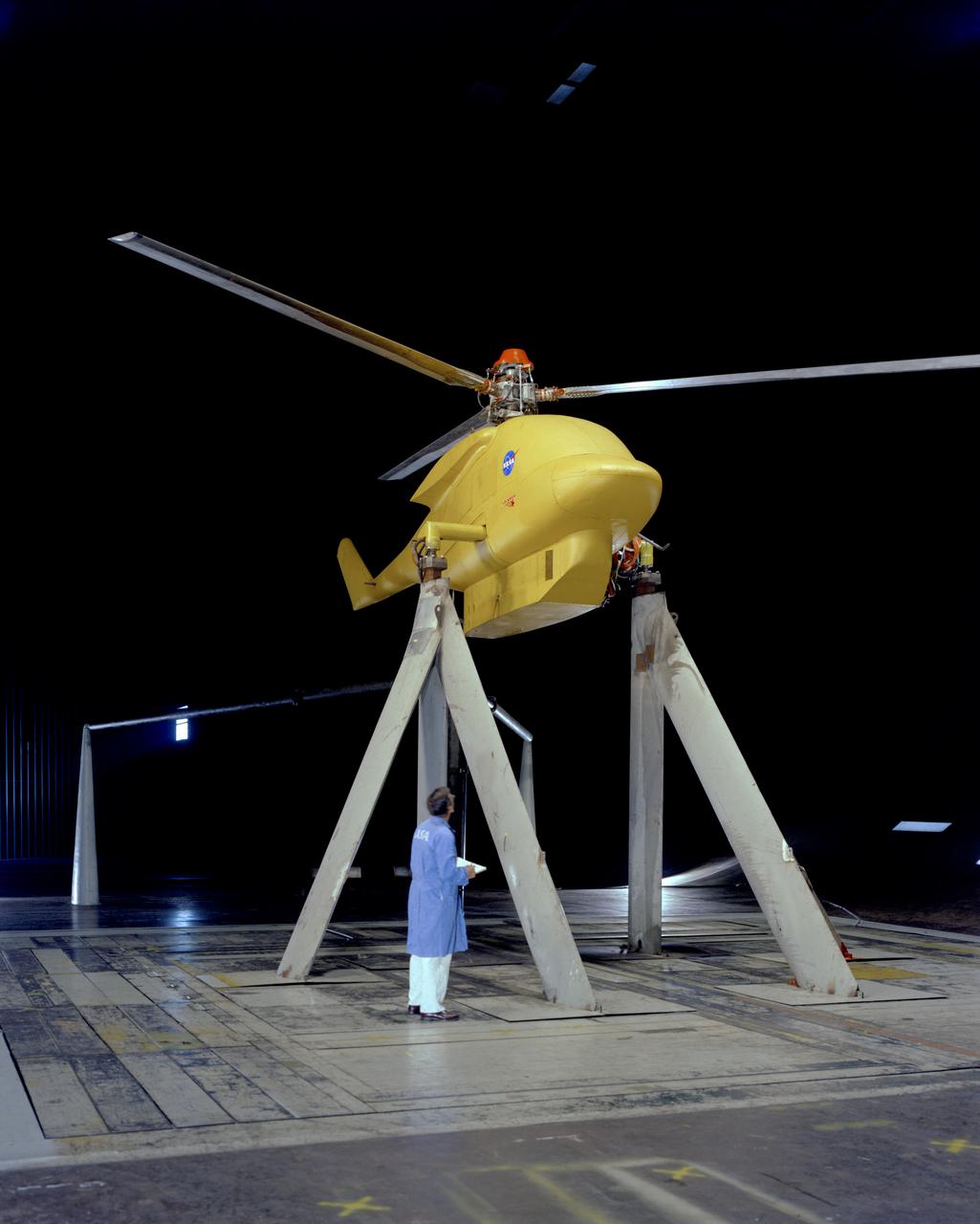
3/4 front view of model in Ames 40x80 foot wind tunnel.
Wind Tunnel Test of Stoppable Rotors in Ames 40x80ft Wind Tunnel.
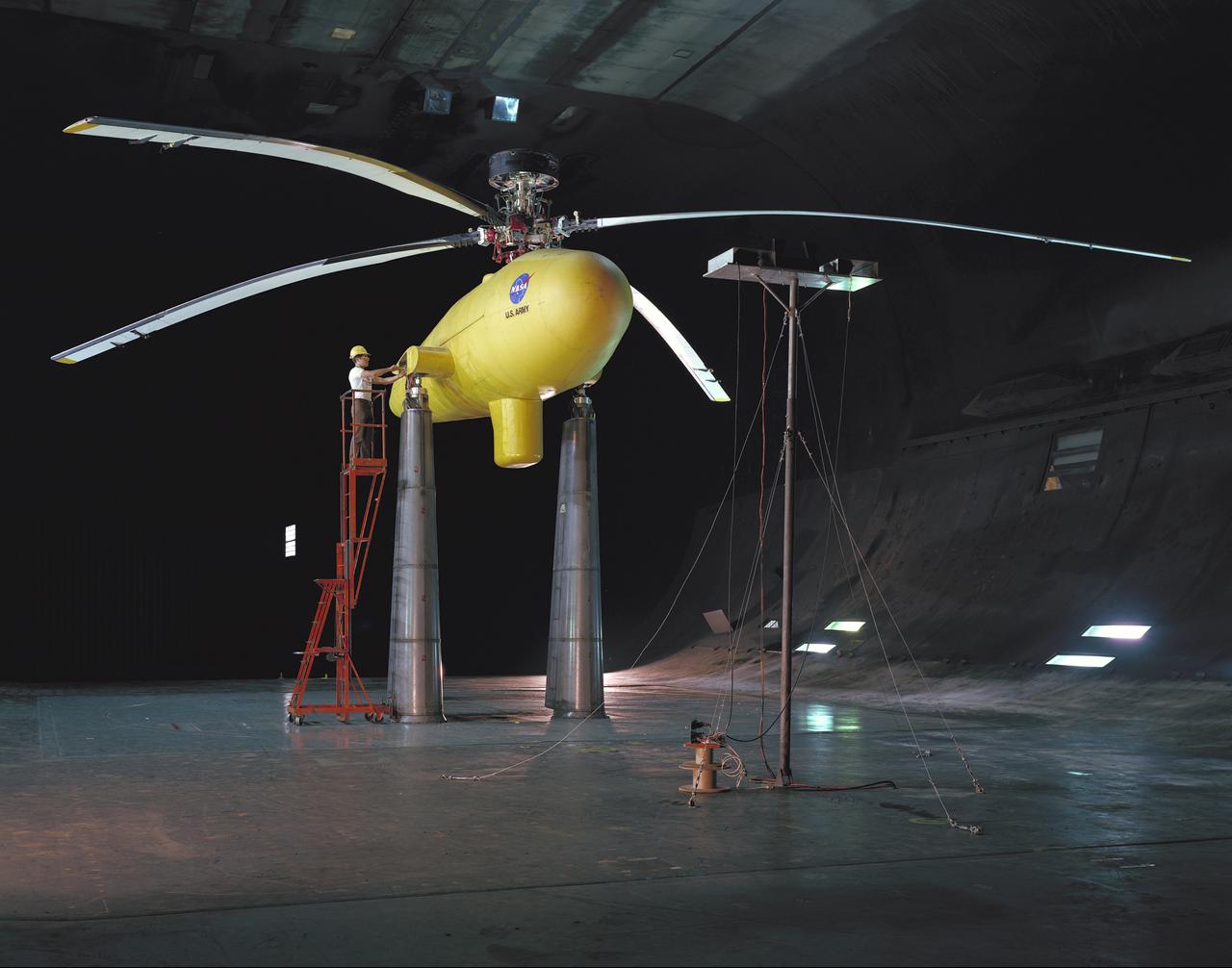
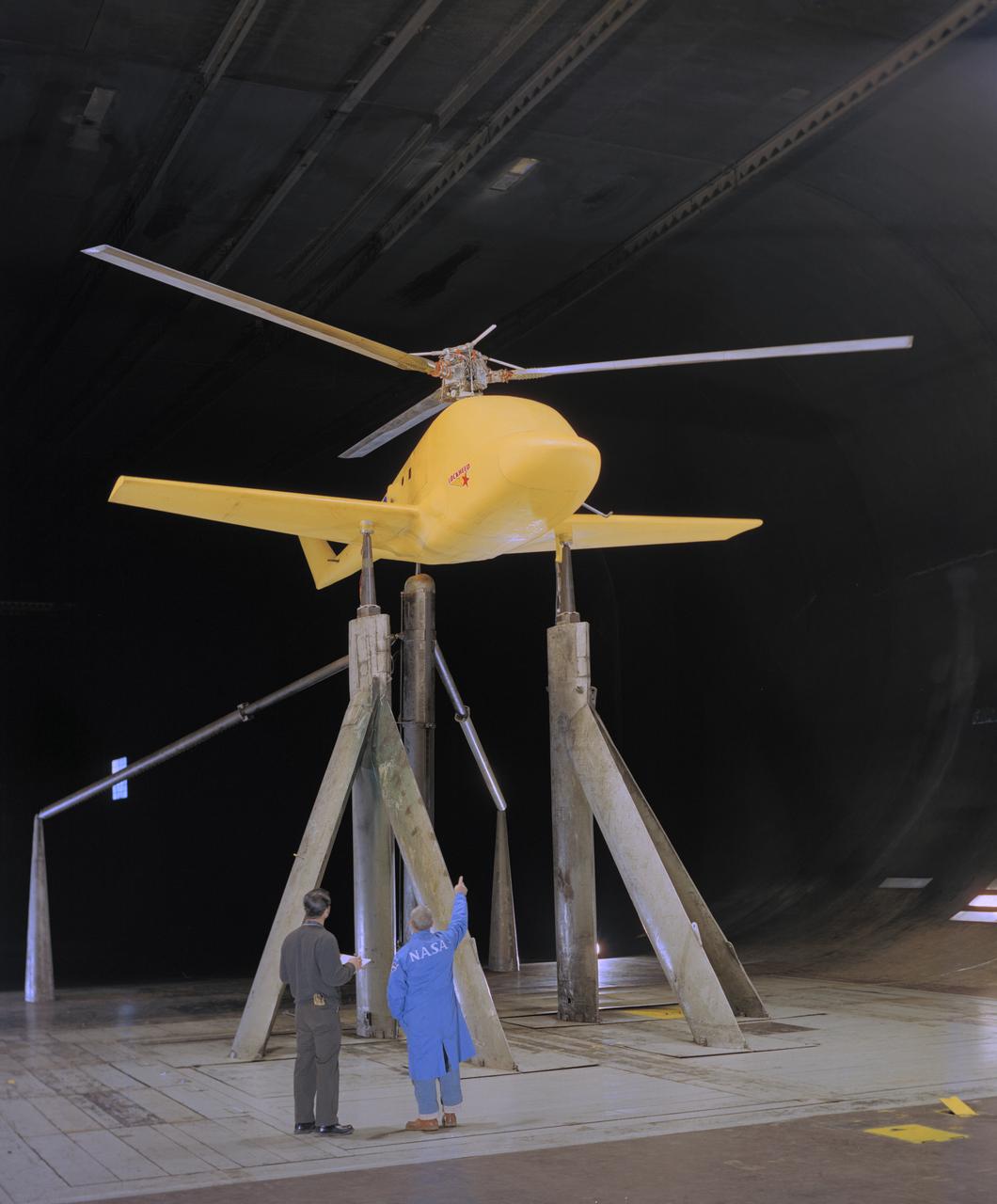
3/4 front view of Lockheed Rigid Rotor model in Ames 40x80 foot wind Tunnel.
Lockheed Rigid Rotor Model in Ames 40x80 Foot Wind Tunnel.
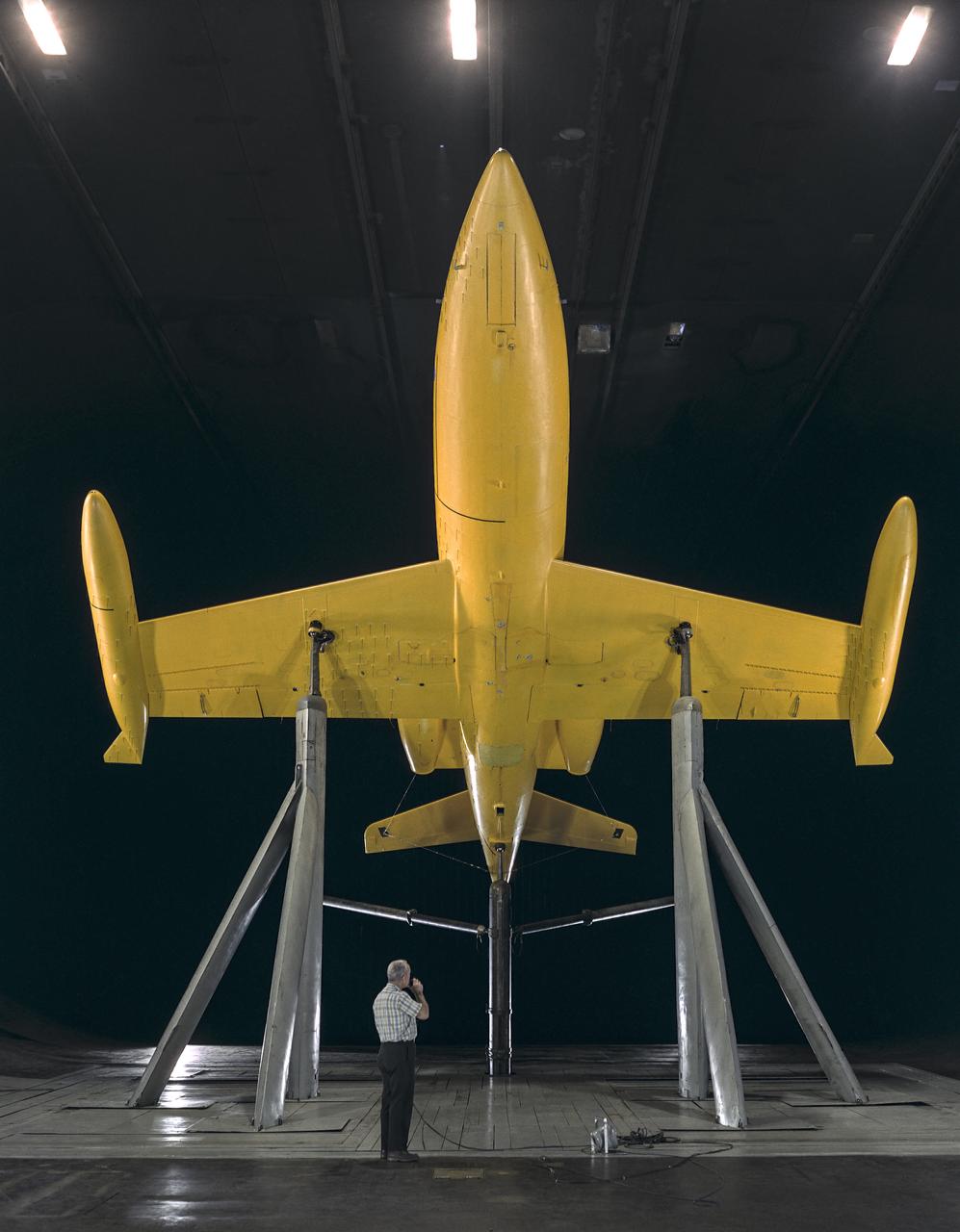
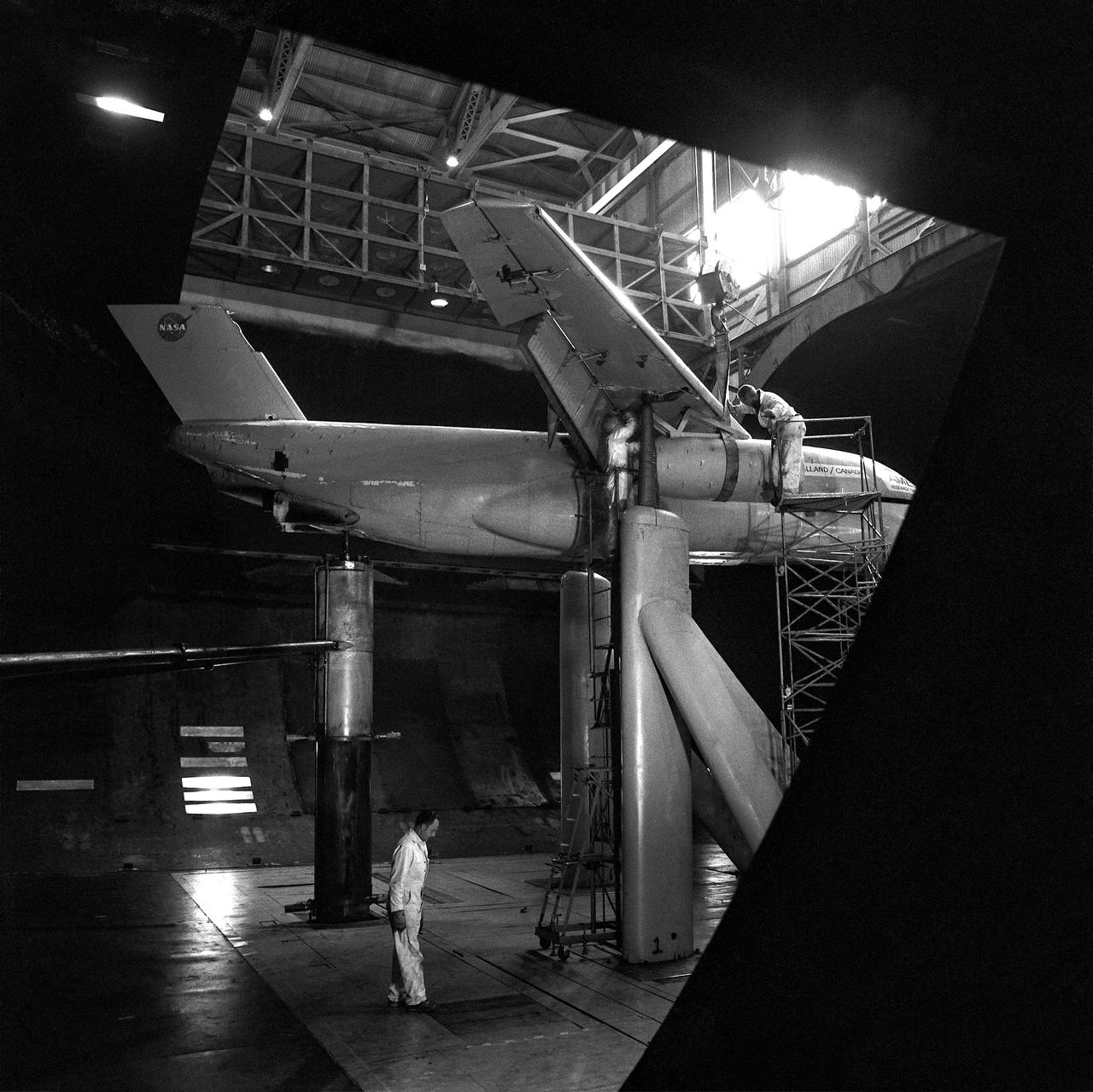
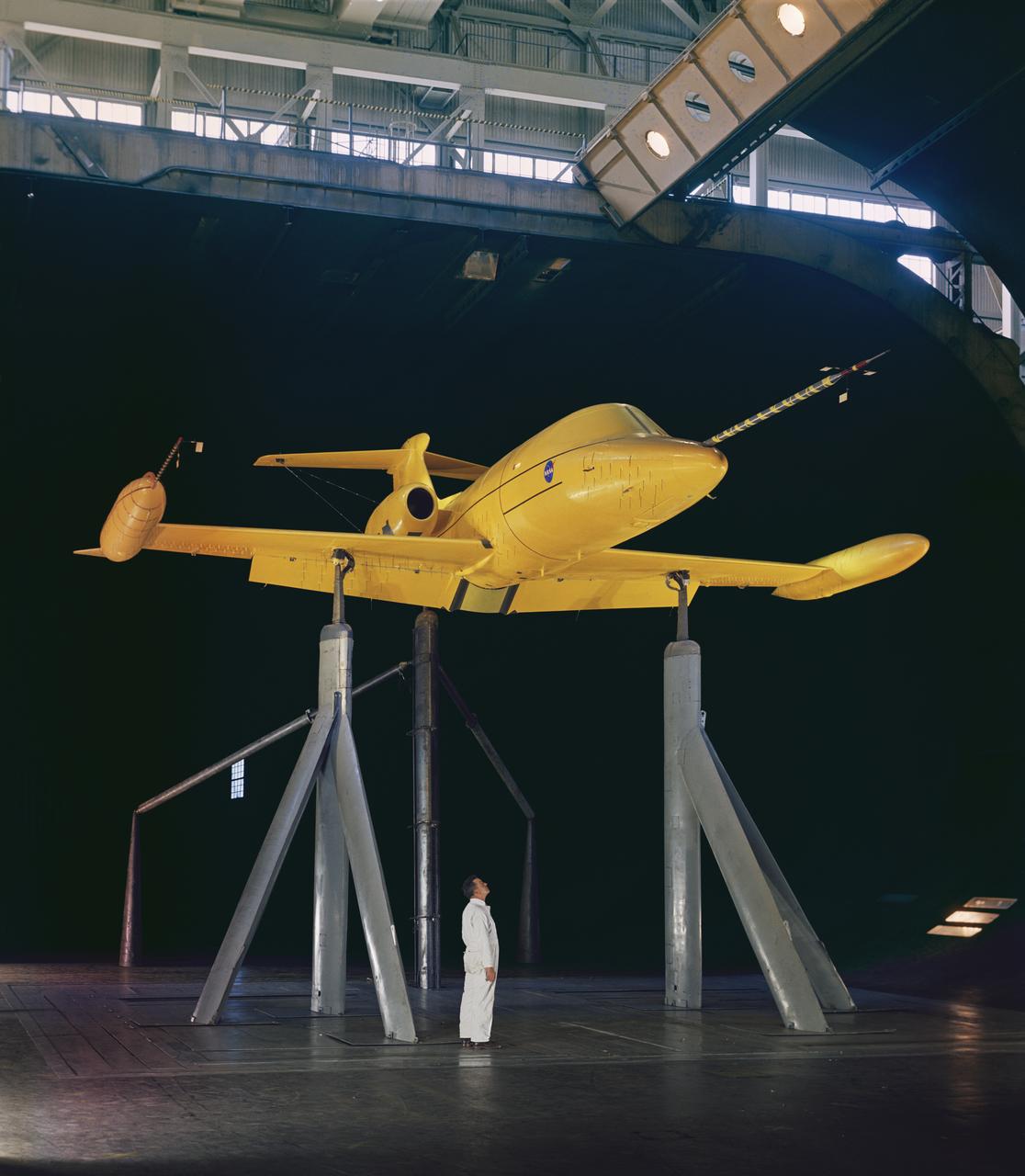
Front lower view of Gates Learjet in Ames 40x80 foot wind tunnel at high angel of attack.  Test was part of a deep stall study.
Lear Jet test in Ames 40x80 Foot Wind Tunnel.
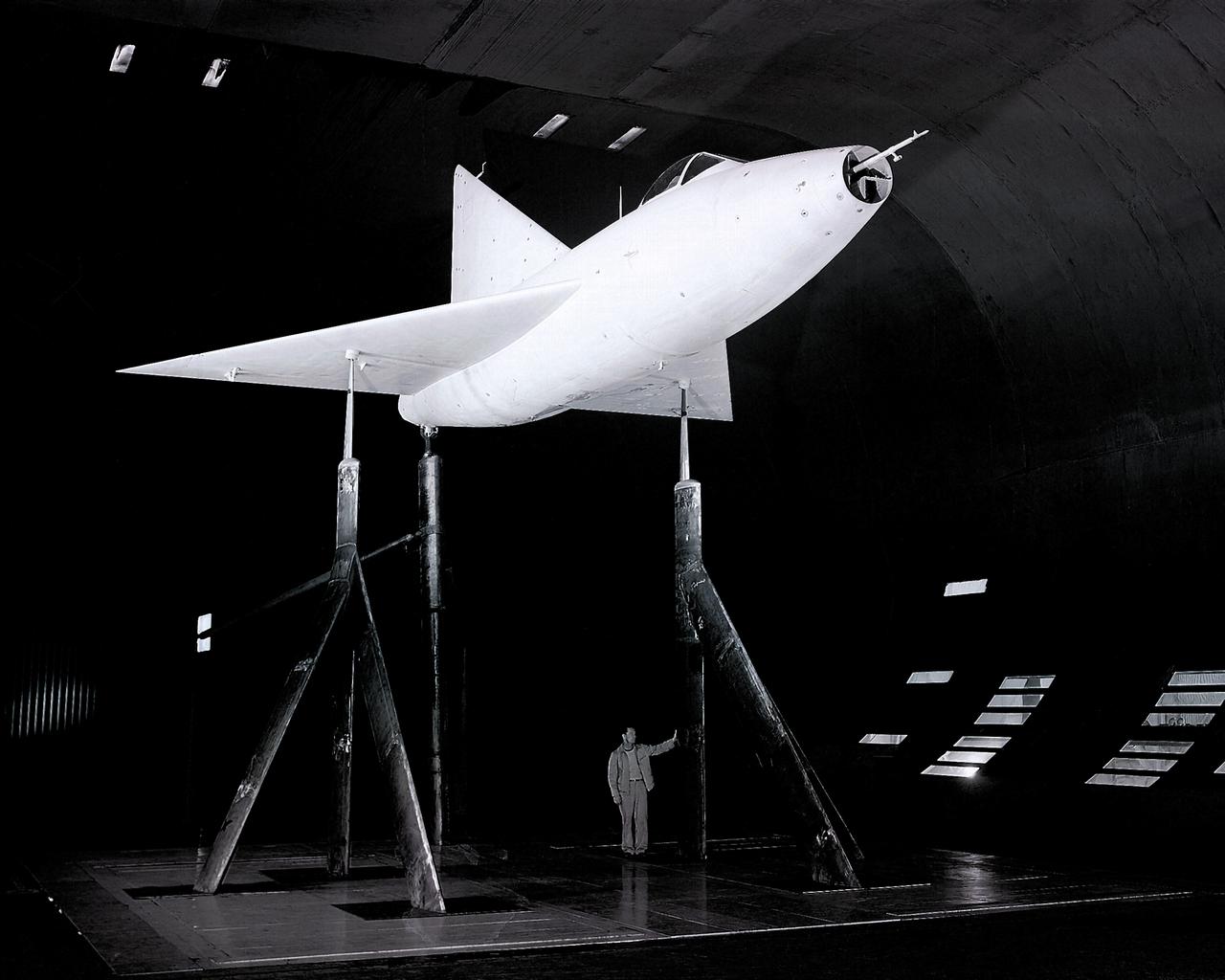
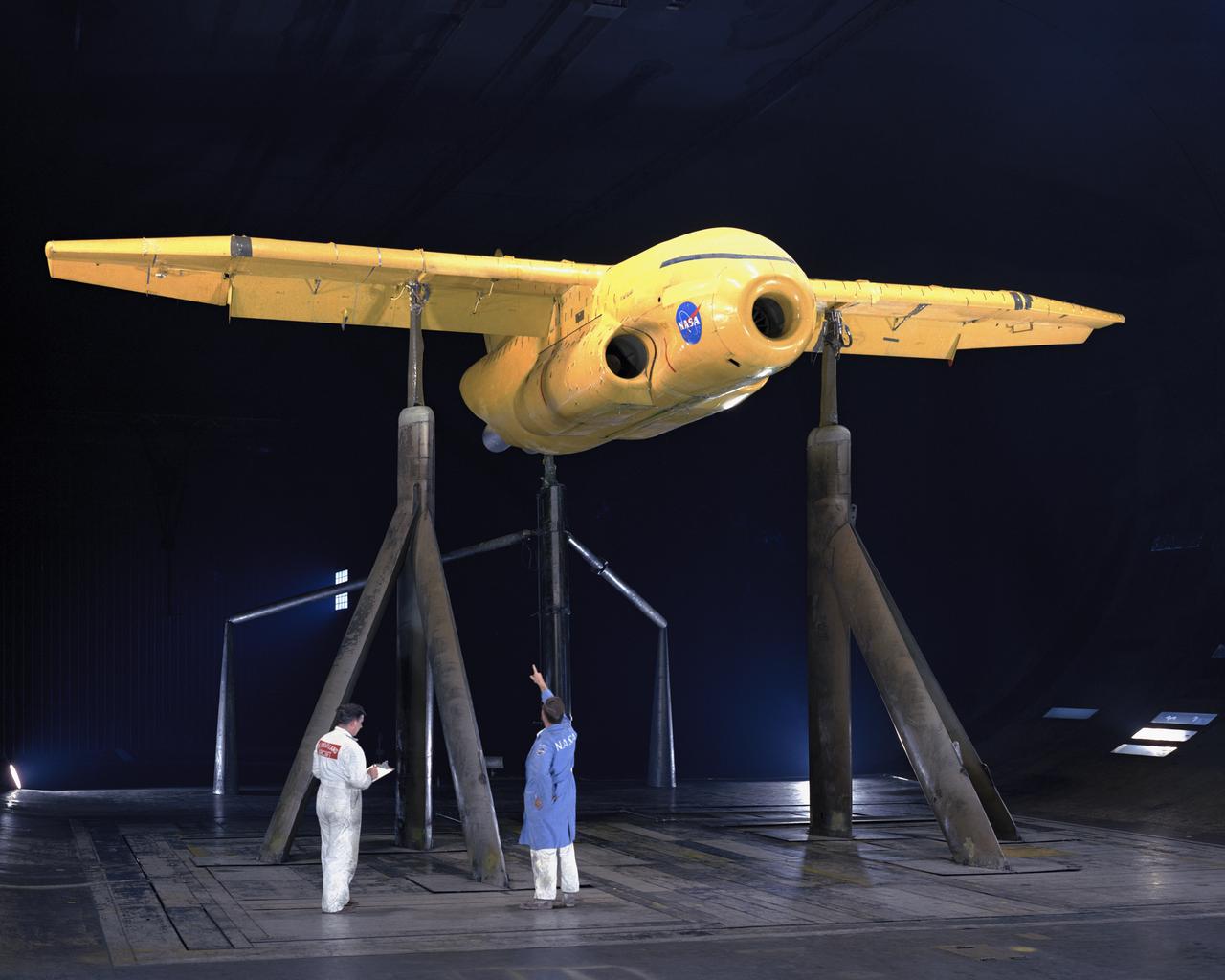
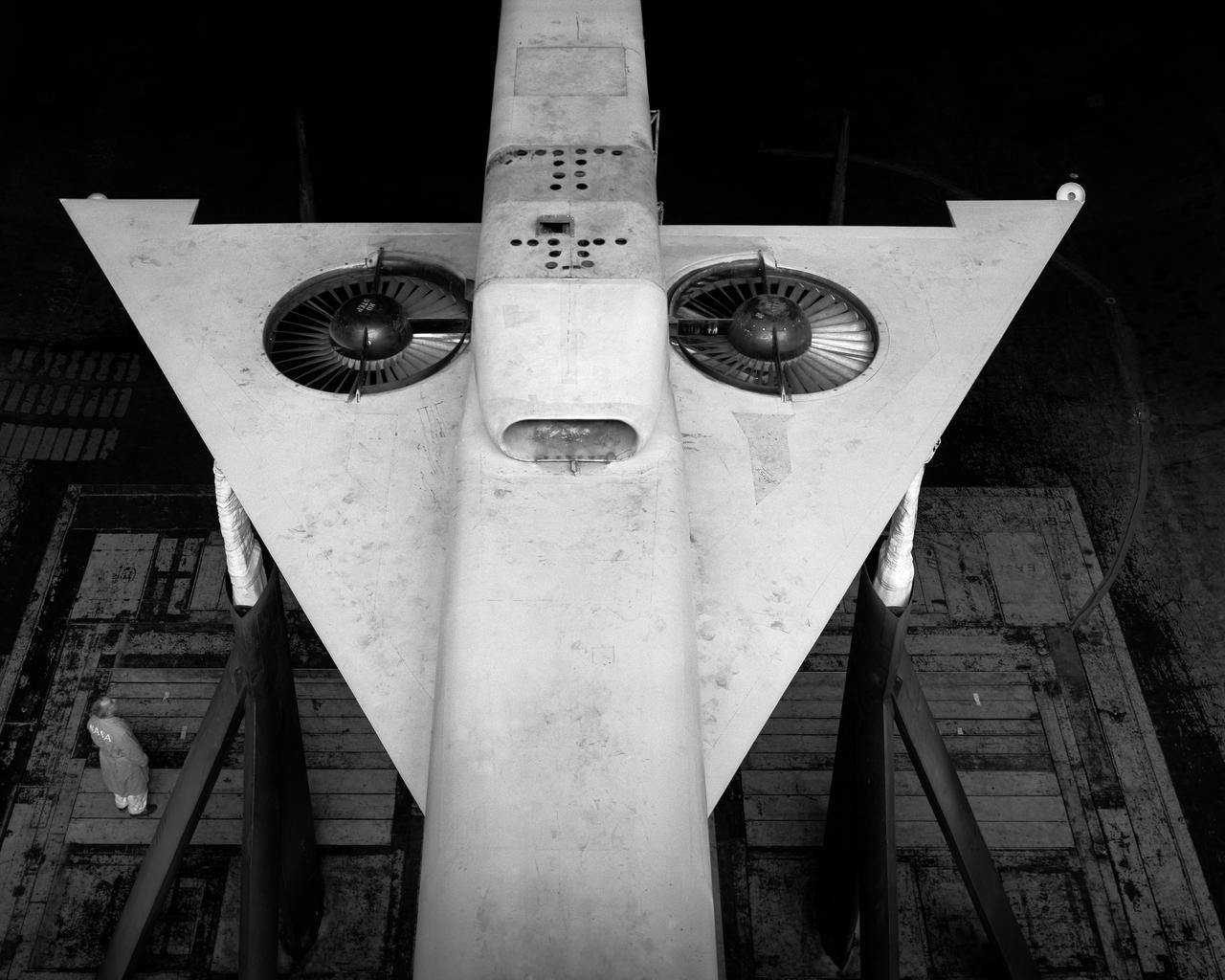
3/4 front view from below of Delta wing Model with Nose Inlet in Ames 40x80 foot wind tunnel.
Delta Wing Test Model in Ames 40x80 Foot Wind Tunnel.
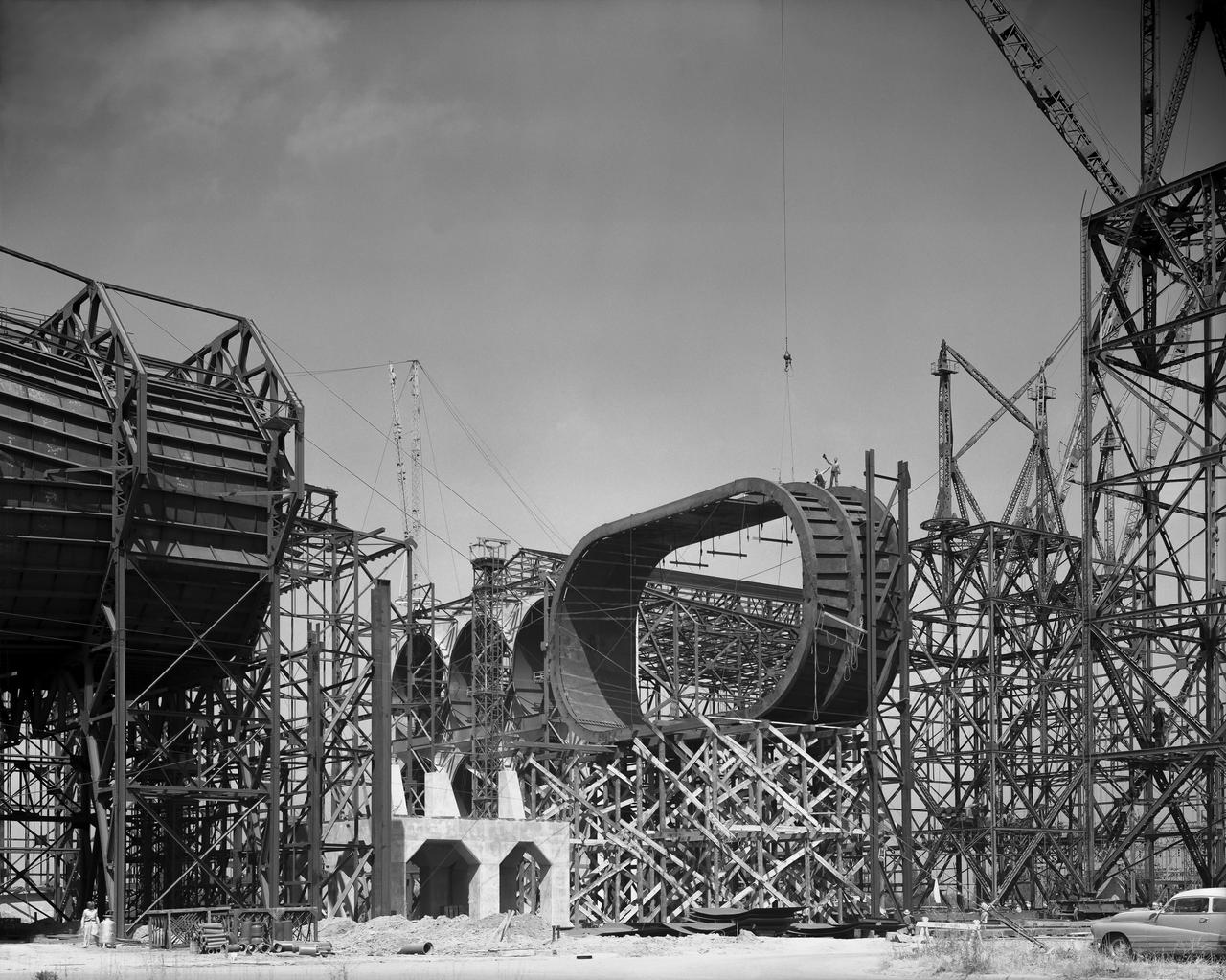
Looking West at three test section bents in place for the Ames 40 x 80 foot wind tunnel.  Concrete model scale support visible in the middle.
Construction of the Ring leading to the Test Section of the Ames 40x80 Foot Wind Tunnel.
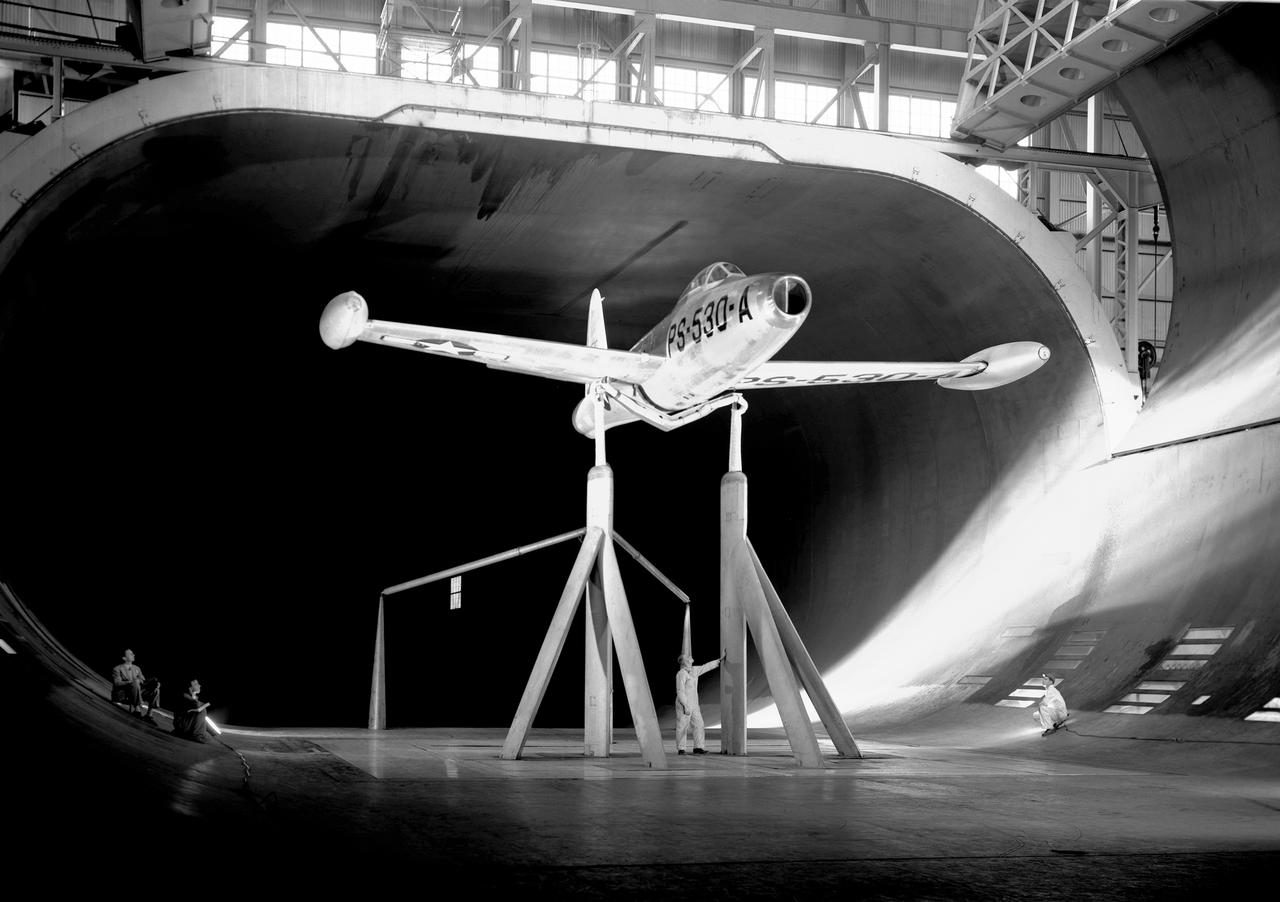
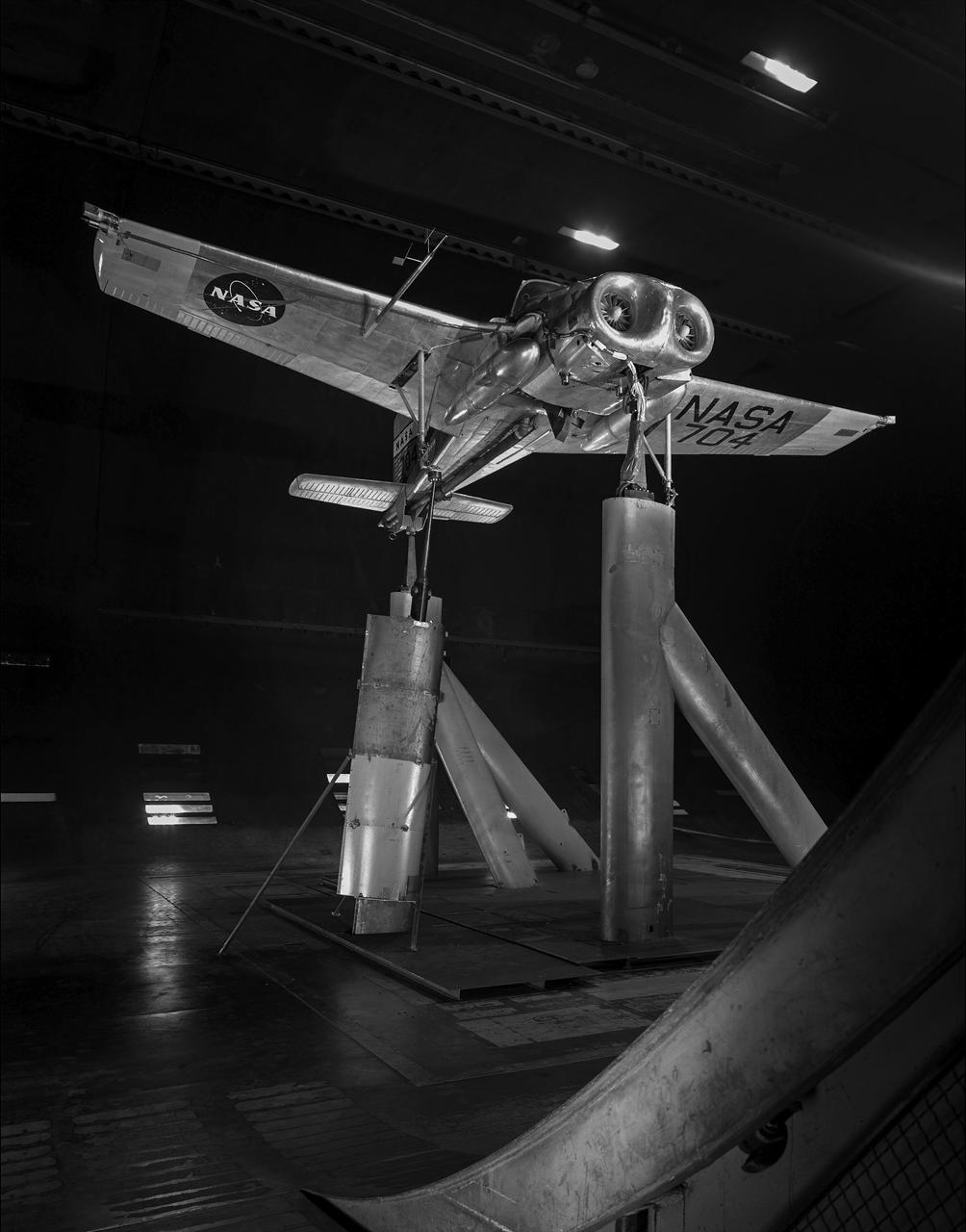
3/4 front view in Ames 40x80 foot Wind Tunnel investigation of the Lockheed T-33 modified for area-suction leading-edge and trailing edge flaps.
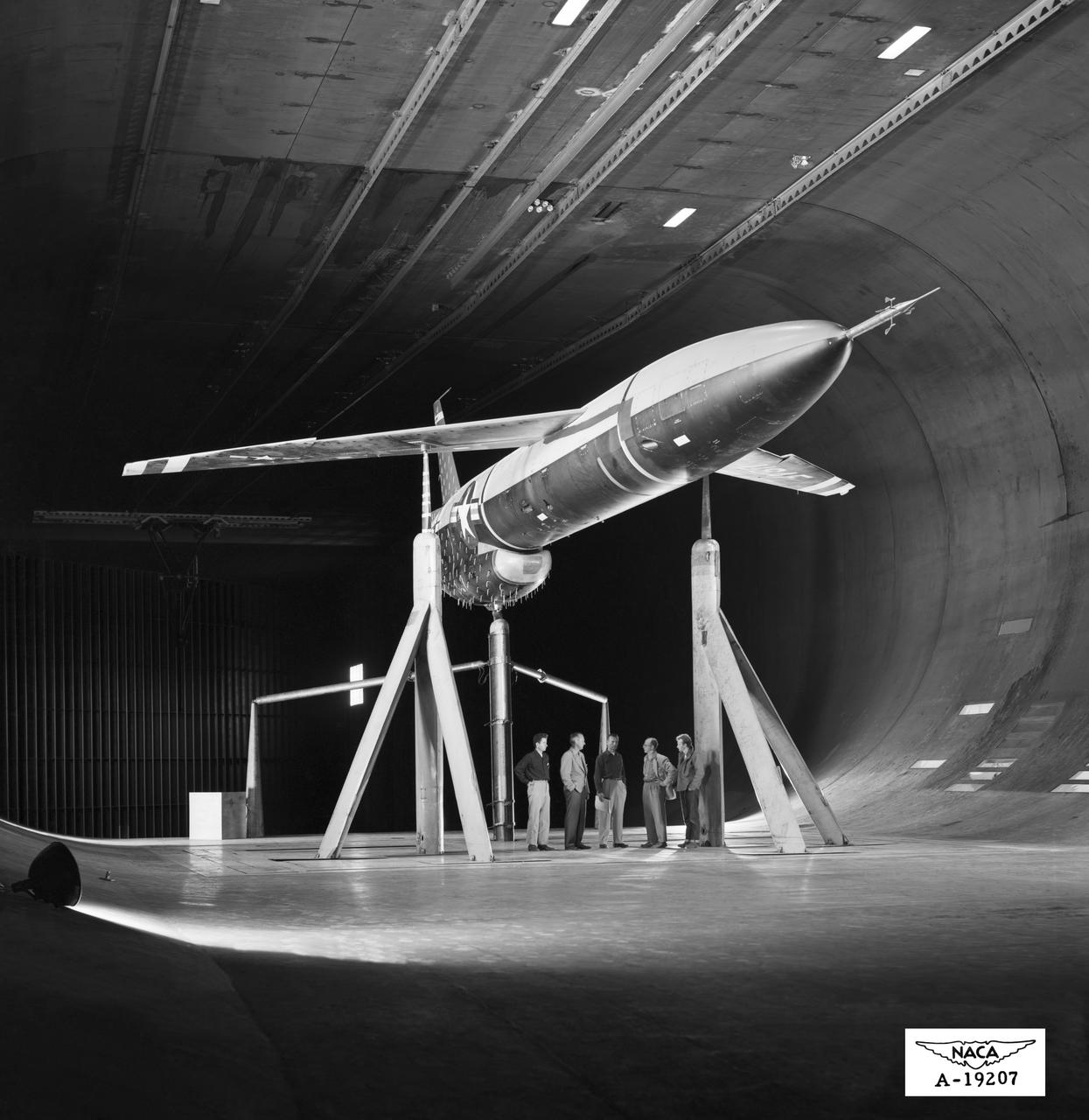
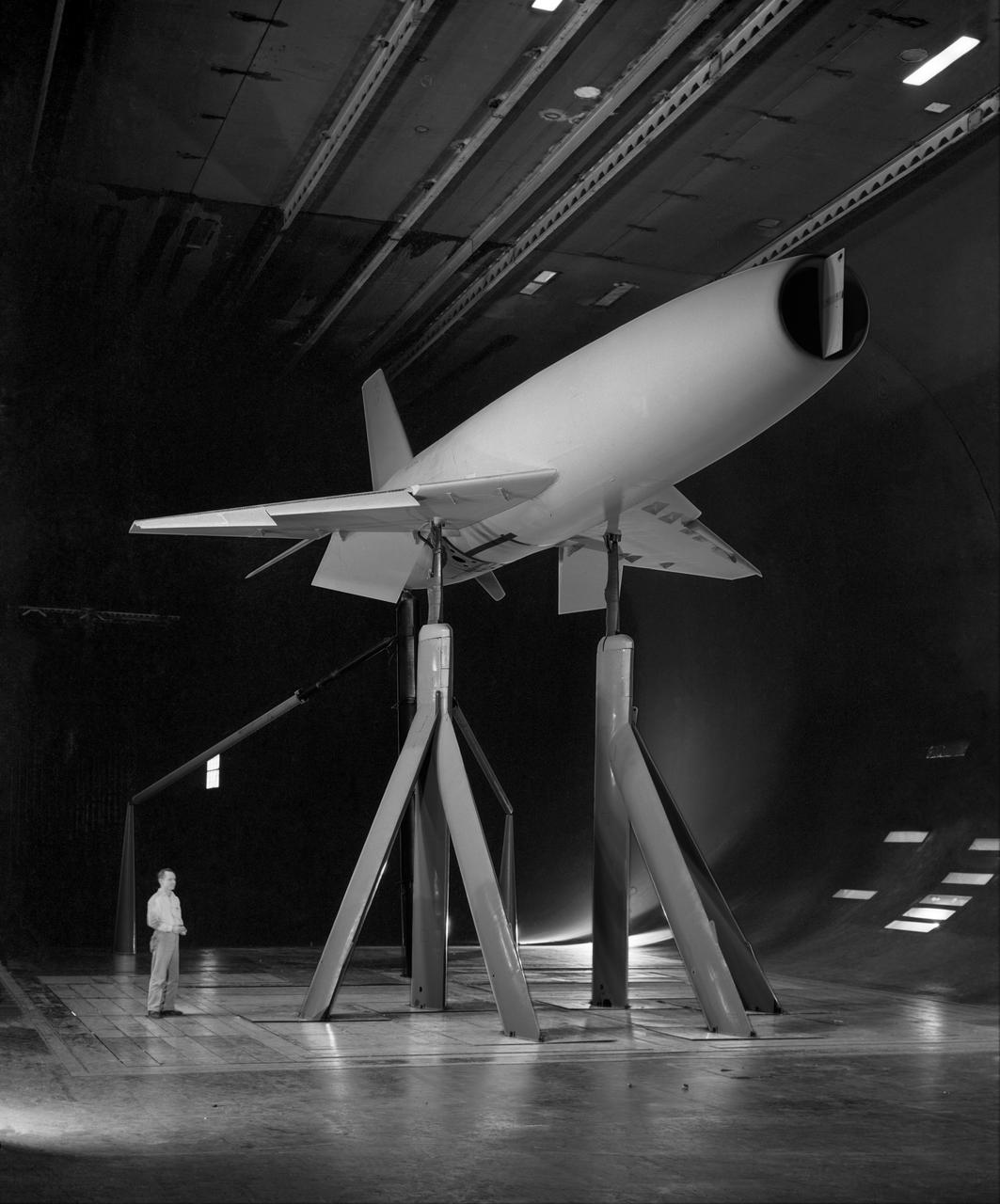
Northrop N-69 Missile in the Ames 40x80 foot Wind Tunnel.
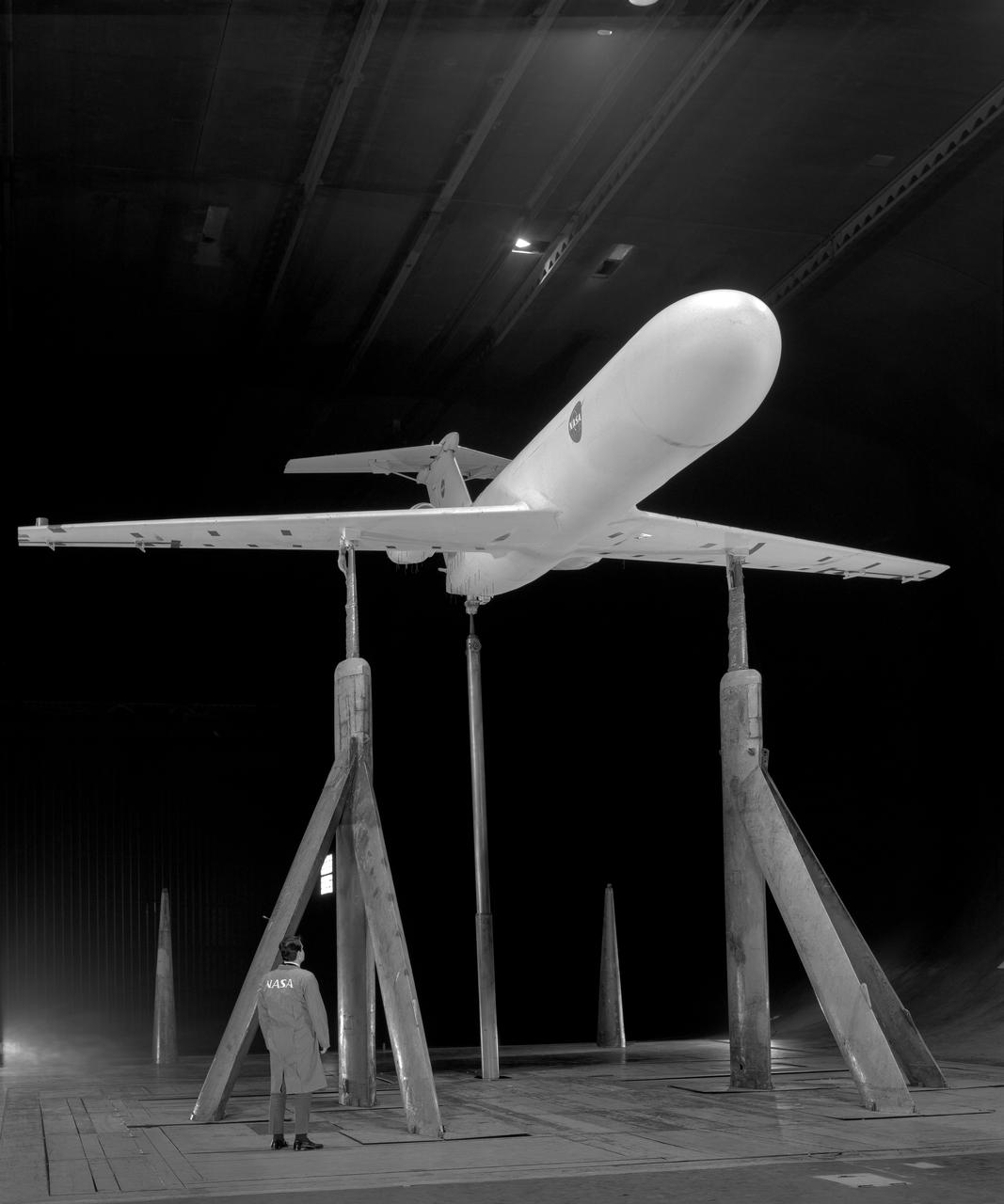
Deep Stall Model in Ames 40x80 foot Wind Tunnel. 3/4 front view from below of swept wing jet transport with T-Tail and Aft Engins, with Art Morris.
Deep Stall Model in Ames 40x80 foot Wind Tunnel.
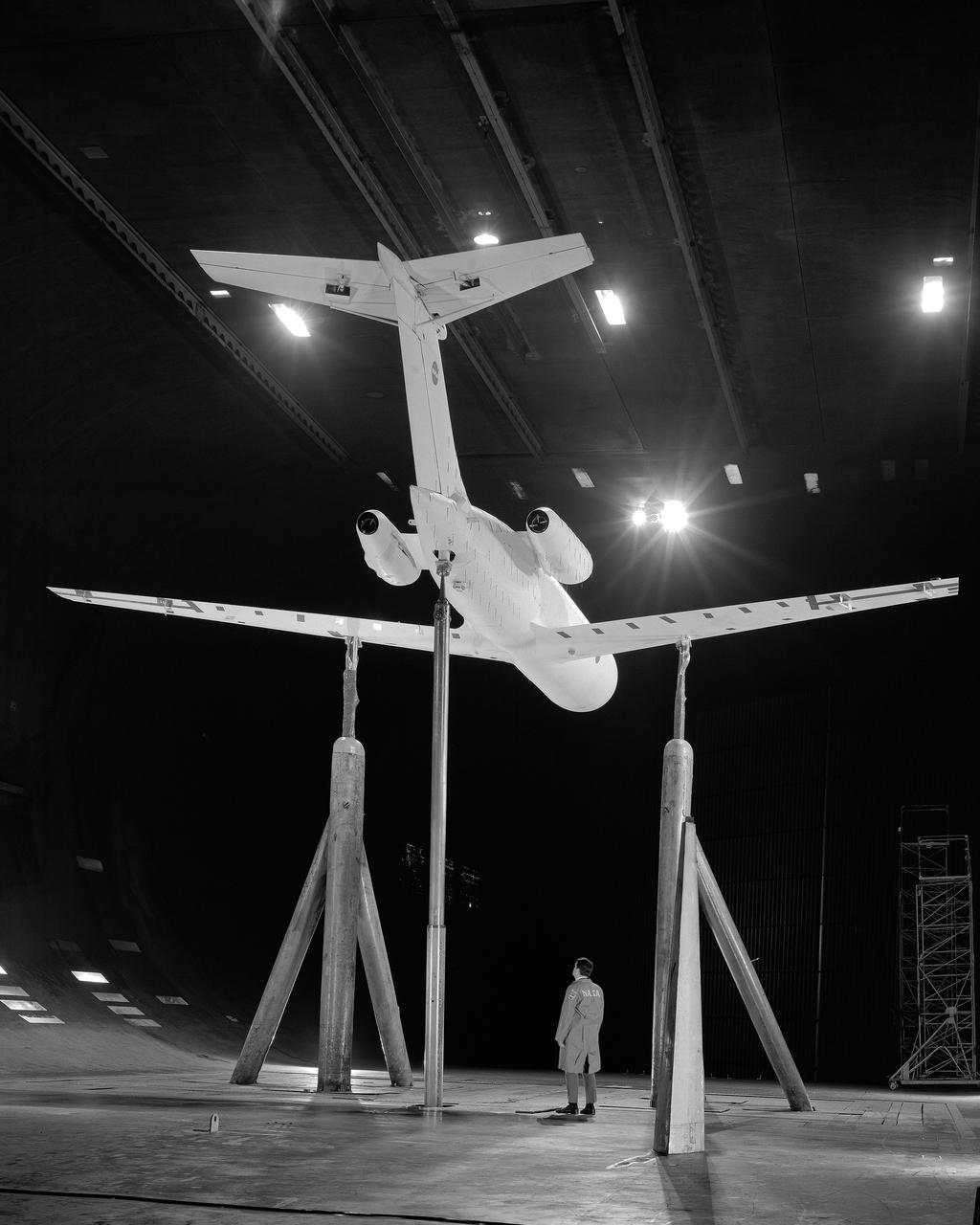
3/4 rear view from below of swept wing jet transport with T-Tail and Aft Engins, with Art Morris. Deep Stall Model in Ames 40x80 foot Wind Tunnel.
Deep Stall Model in Ames 40x80 foot Wind Tunnel.
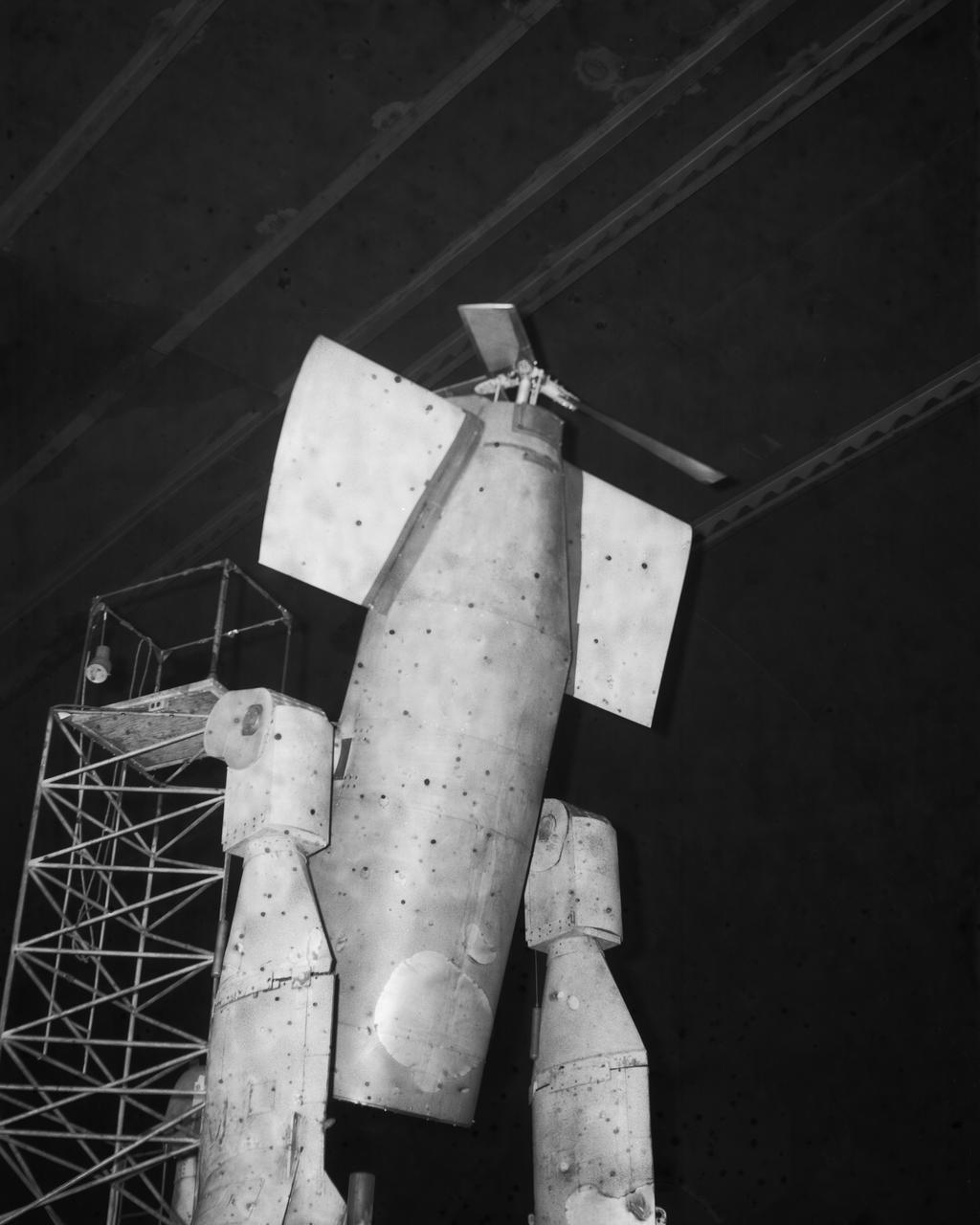
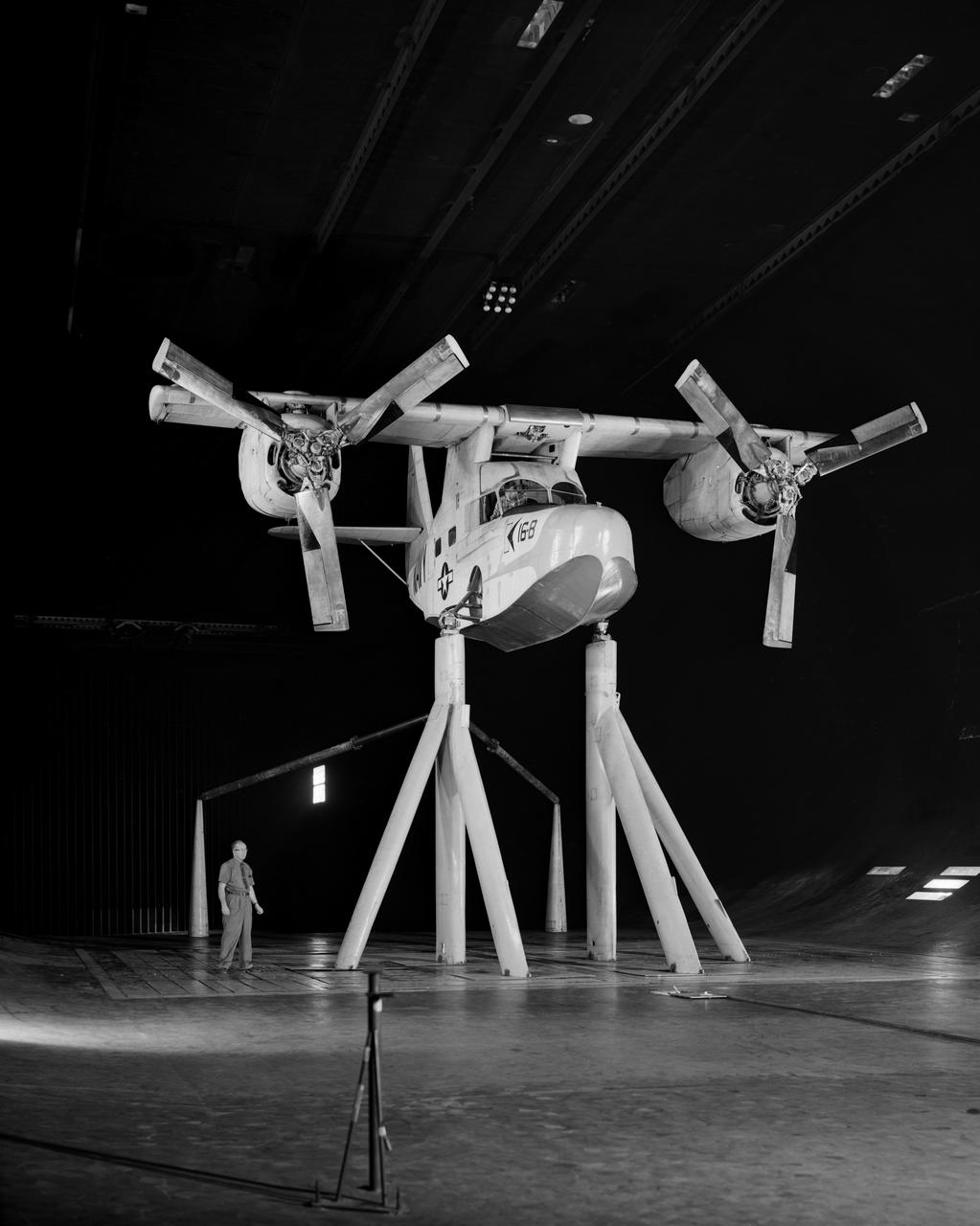
Vertol-76 Descent Test. Tilt Wing airplane prop rig at 80 deg. Angle of attack, in the 40x80 foot wind tunnel at NASA's Ames Research Center.
Vertical Prop and Wing in the Ames 40x80 foot wind tunnel.
(11/12/1971) 3/4 rear view of swept 75% scale augmentor wing quest model being installed into the test section of the Ames 40x80 foot wind tunnel, overhead doors open.
Swept Augmentor Wing Model Installed in the Ames 40X80 Foot Wind Tunnel.
3/4 view of model in cruise configuration with 25 deg. Sweep, AR=6.9. SCAT-16; Variable Sweep Model in 40x80 Wind Tunnel at NASA Ames.
SCAT-16; Variable Sweep Model in 40x80 Wind Tunnel at NASA Ames.
(Oct. 27 1976) Controllable Twist Rotor, 40x80 Foot Wind Tunnel at Ames Research Center, model With John Bolt.
Controllable Twist Rotor, 40x80 Foot Wind Tunnel at Ames Research Center.
Avrocar Annular Jet VTOL Airplane in Ames 40x80 foot Wind Tunnel.
Overhead View of Avrocar Annular Jet VTOL Airplane in Ames 40x80 foot Wind Tunnel.
3/4 front view of XV-4A Hummingbird VTOL Research Vehicle in Ames 40x80 wind tunnel with Tom Wills in Photo.
XV-4A Hummingbird VTOL Research Vehicle in Ames 40x80 Wind Tunnel.
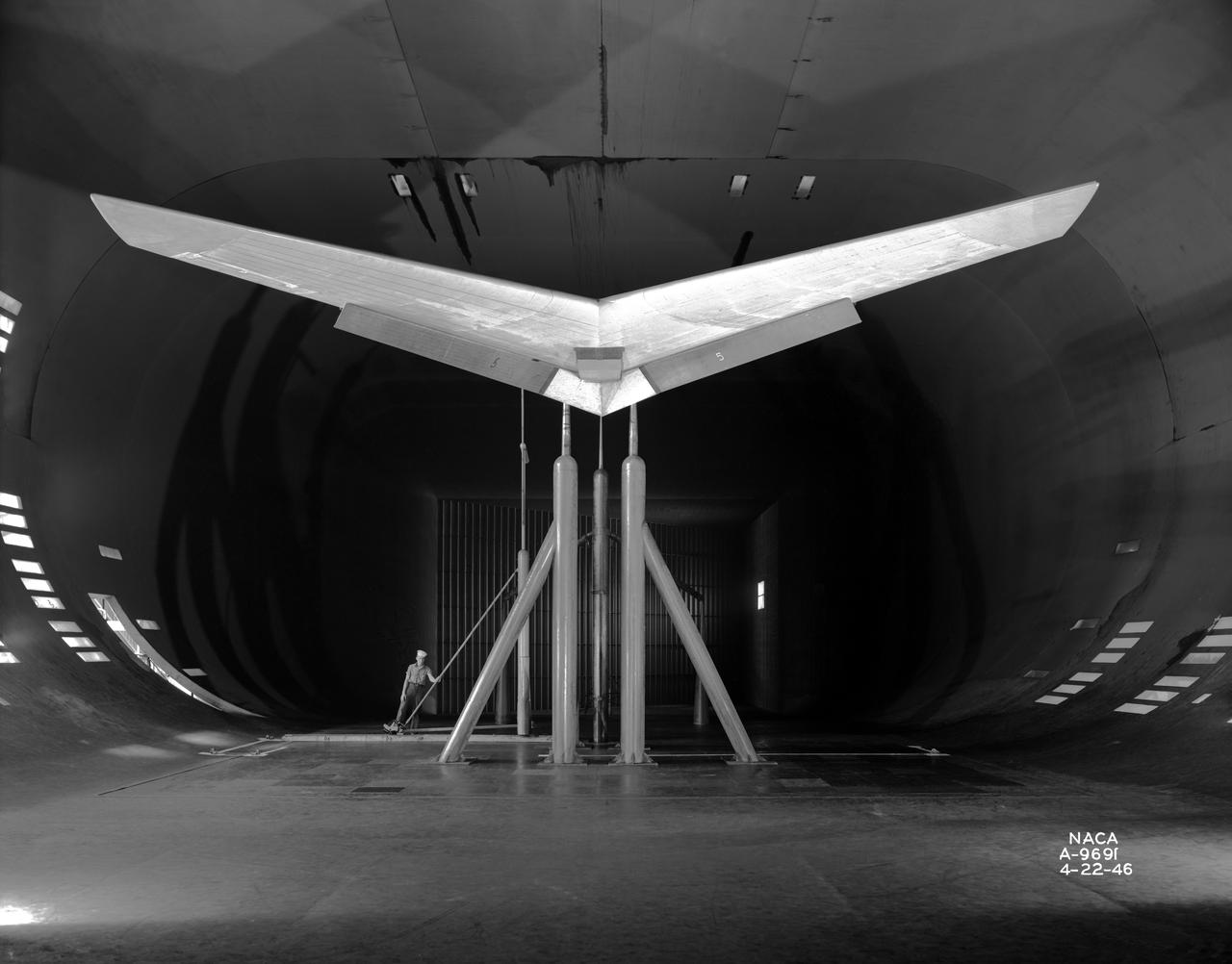
Front View of -45 deg. Forward swept wing with inboard split flaps deflected 60 deg. In NACA Ames 40x80 foot Wind Tunnel.
Swept wing with inboard split flaps in Ames 40x80 foot Wind Tunnel.
Concrete frame enclosing the fan drive bents of the 40x80 foot wind tunnel at ames.  Once installed, six 40-foot-diameter fans, each powered by a 6000-horsepower electric motor maintained airflow at 230 mph or less (these are still tornado velocities).
Construction of the Fan Drive Enclosure of the 40x80 Foot Wind Tunnel at Ames.
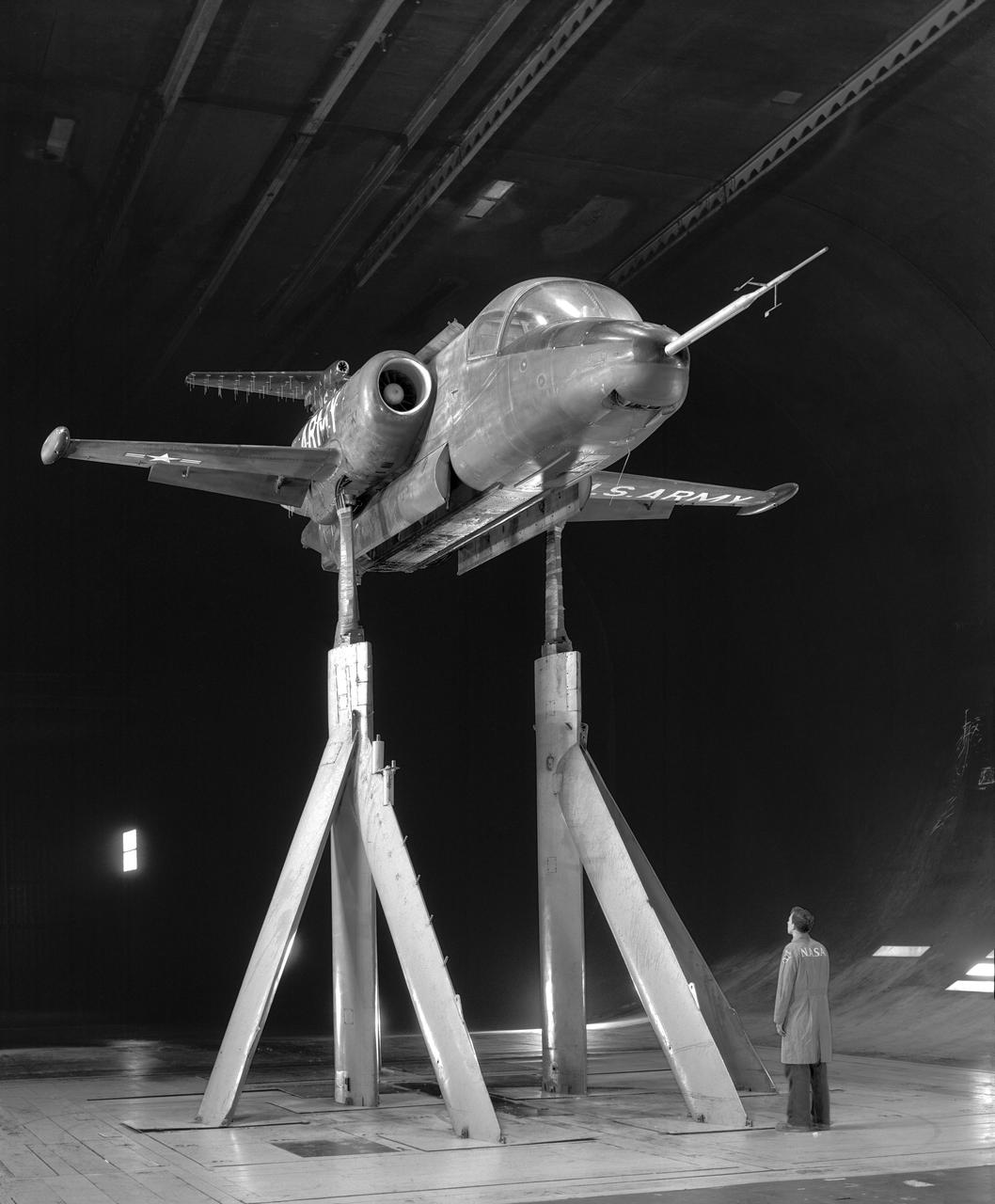
Test No. 175  Kaman K-16 in 40x80 Foot Wind Tunnel at Ames Research Center.  Kaman K-16B was an experimental tilt wing aircraft, it used the fuselage of a JRF-5 and was powered by two General Electric YT58-GE-2A engines.
Kaman K-16 in 40x80 Foot Wind Tunnel at Ames Research Center.
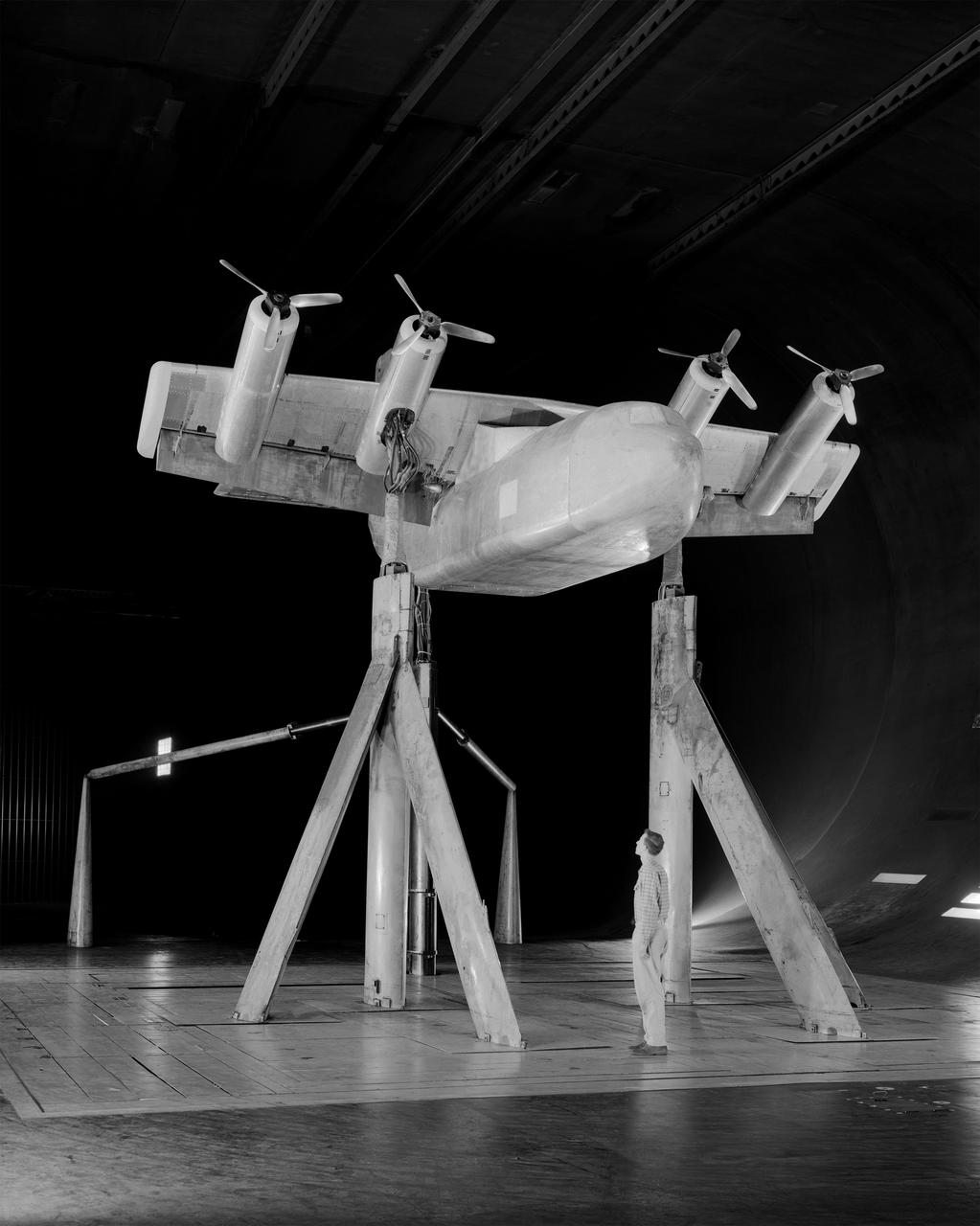
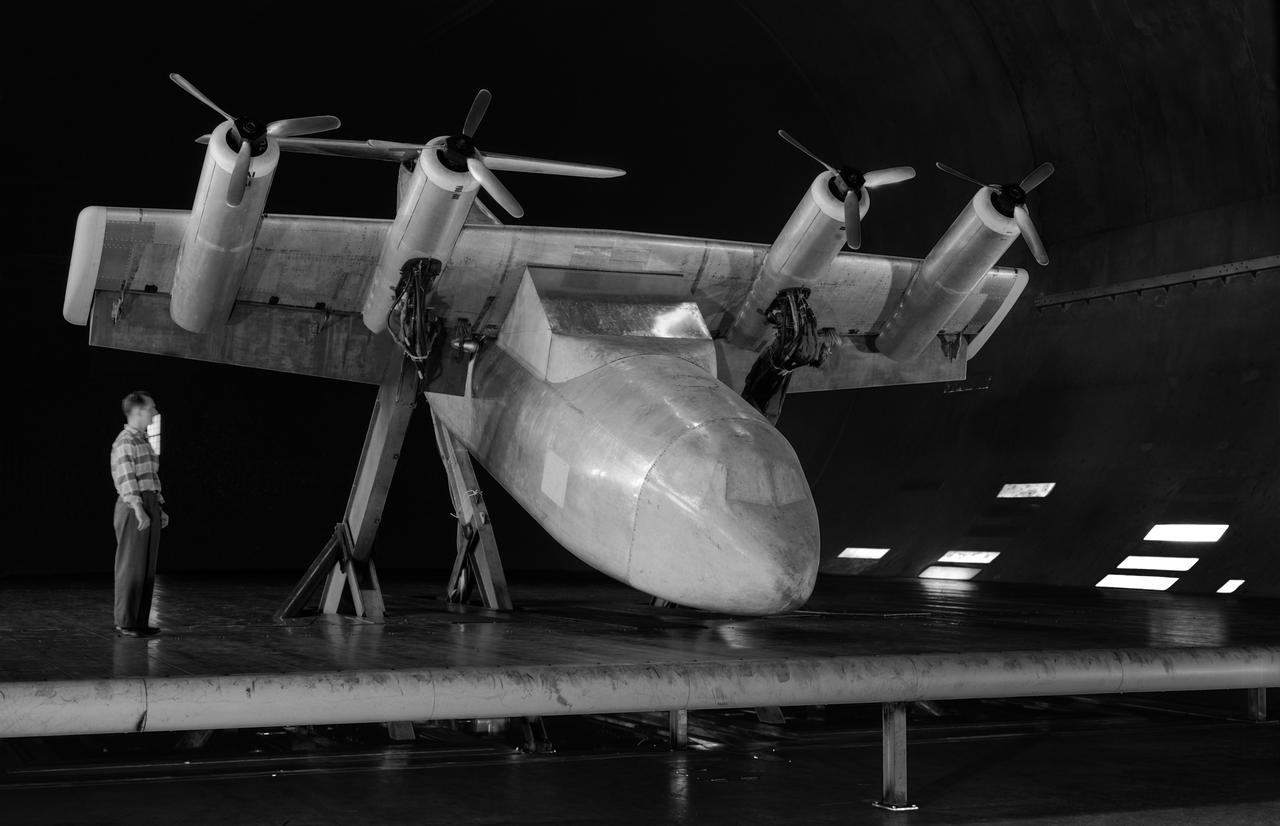
Tilt wing propeller model. 3/4 front view. 4 prop tilt wing nose down variable struts on ground board.  Leo Holl, NASA Ames Engineer.
Tilt Wing Propeller Model Tested in the Ames 40x80 Foot Wind Tunnel.
3/4 front view of model without nacelles on regular struts. Generalized Subsonic Jet Transport model with leading edge and trailing edge blowing BLC in the 40x80 foot wind tunnel at NASA Ames.
Generalized Subsonic Jet Transport in 40x80 Foot Wind Tunnel at NASA Ames.
3/4 front view, a=0. de Havilland Augmenter Wing Model, High Lift System in Ames 40x80 Foot Wind Tunnel. Cecil McDonald and Al Wheelband in picture.
Augmenter Wing High Lift System in Ames 40x80 Foot Wind Tunnel.
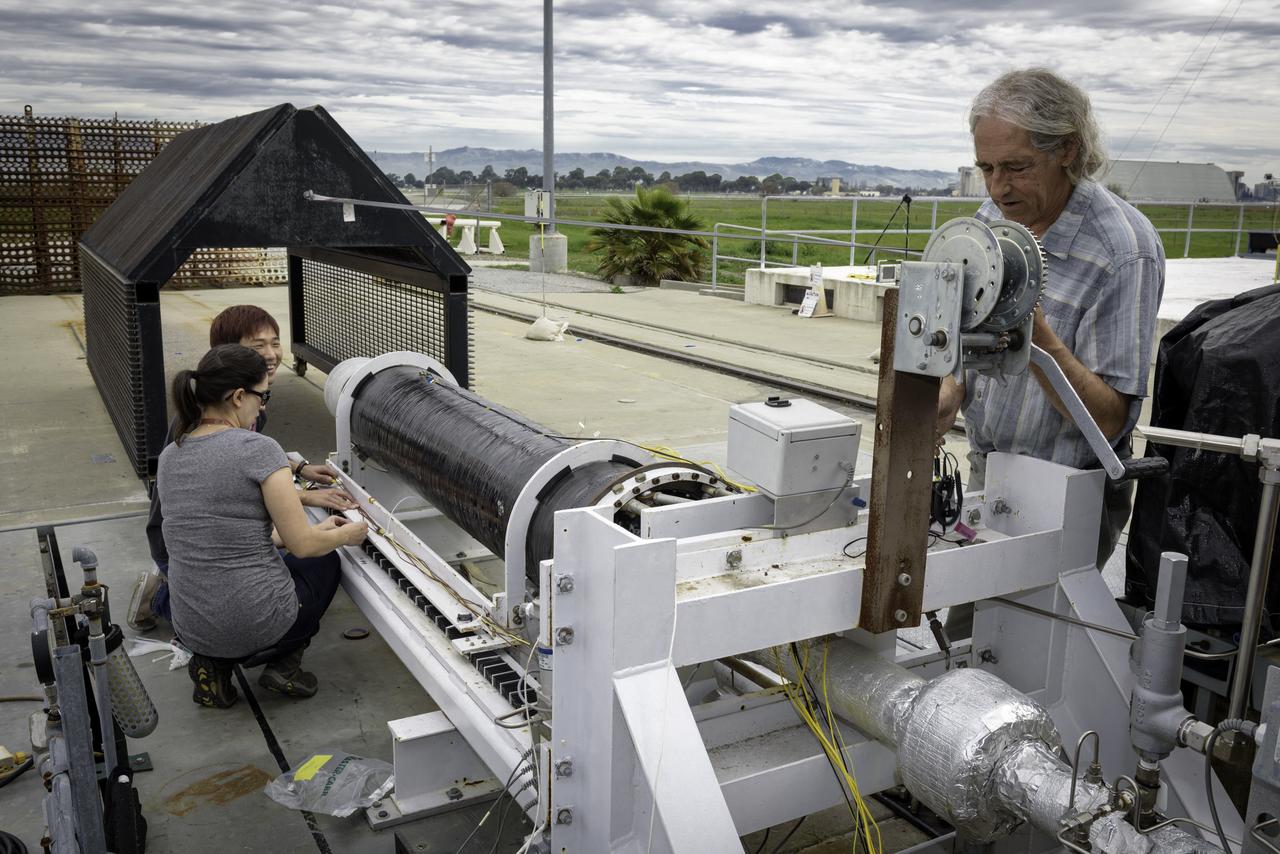
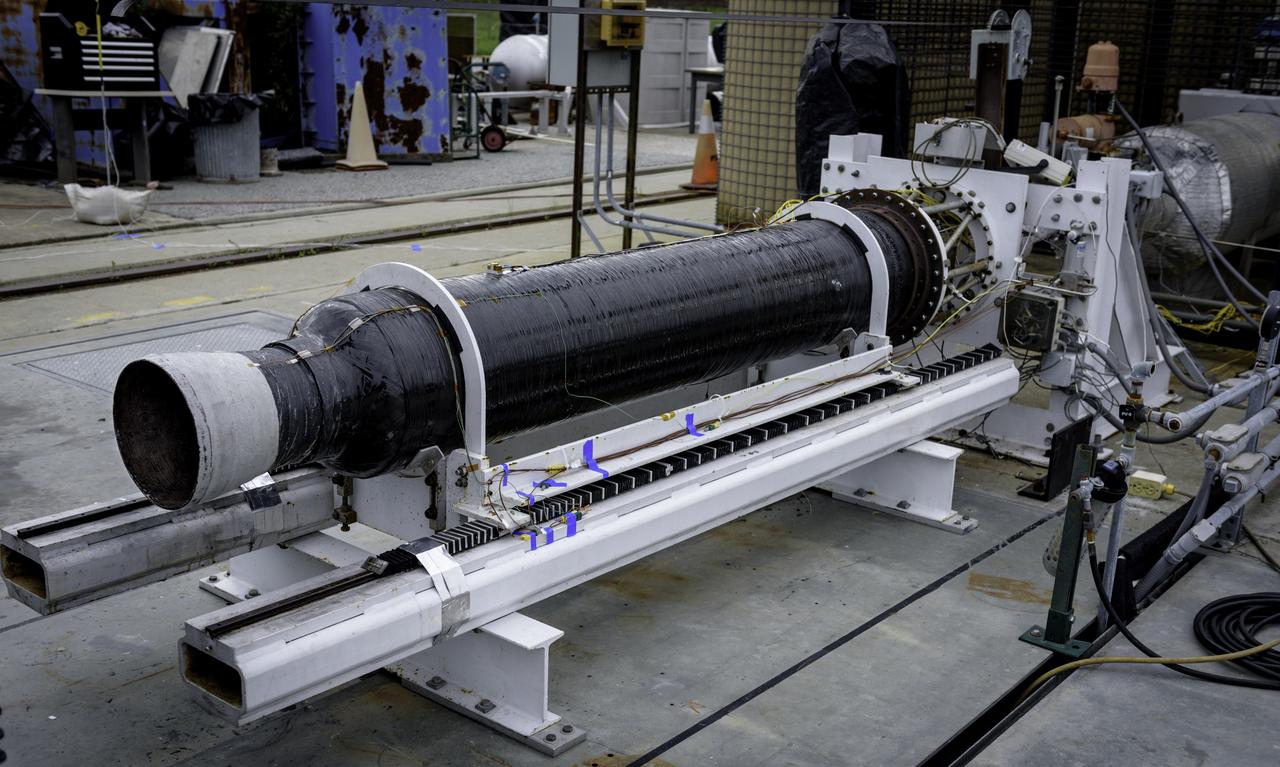
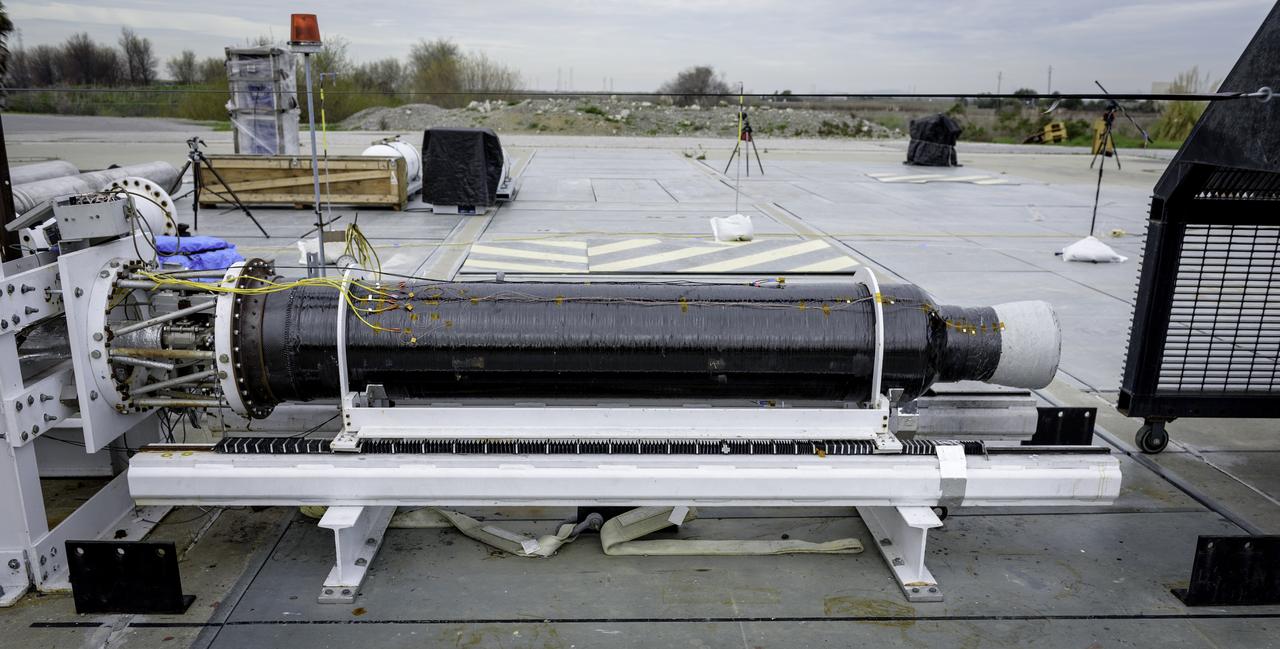
The Peregrine Hybrid Rocket Engine, profile view, prior to the test at the Outdoor Aerodynamic Research Facility (OARF, N-249) at Ames Research Center.
Peregrine Rocket Motor Test at the Ames Outdoor Aerodynamic Research Facility (OARF).
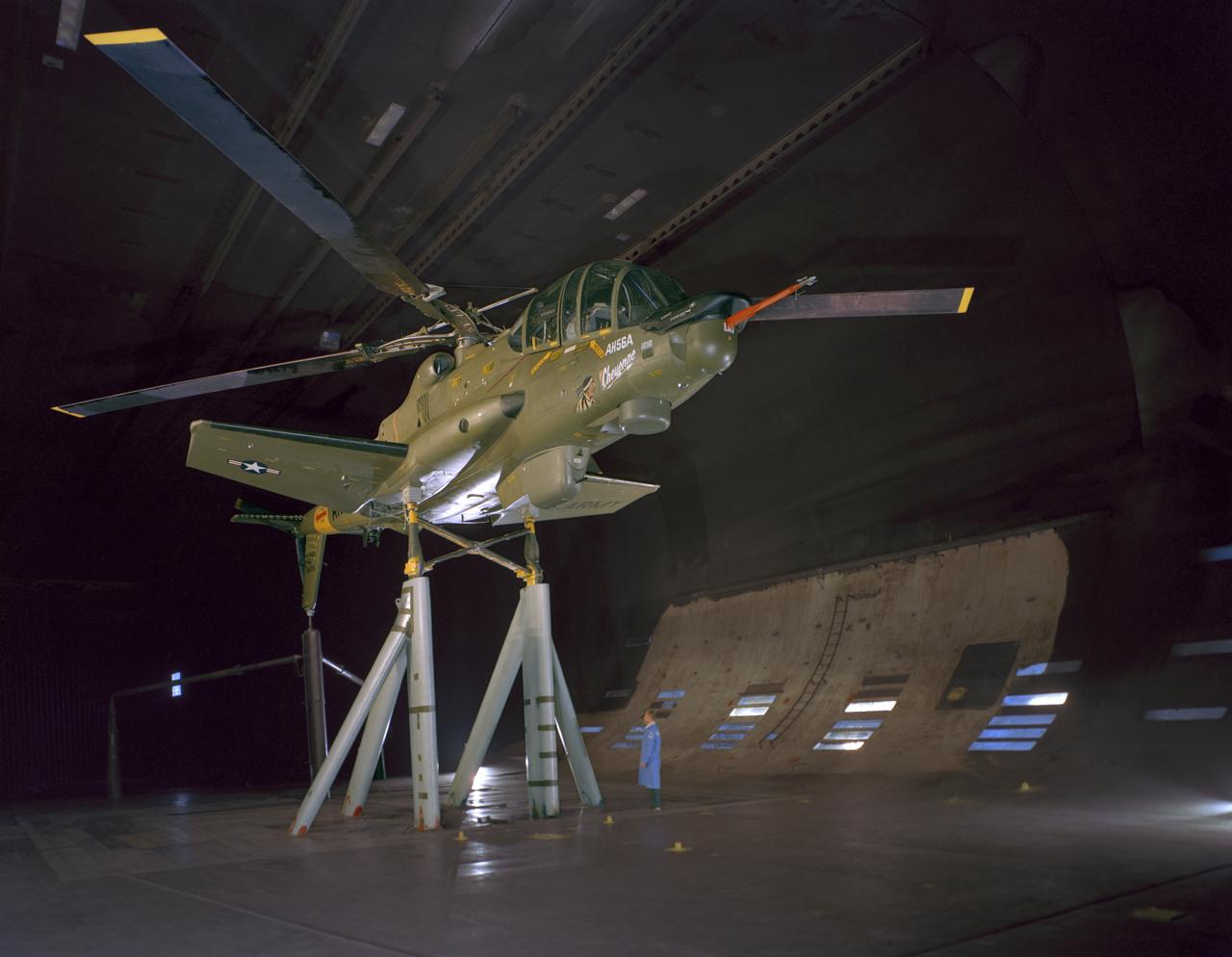
3/4 front view of Lockheed AH-56A (Cheyenne) Helicopter in Ames 40x80 Foot Wind Tunnel
Lockheed AH-56A (Cheyenne) Helicopter in Ames 40x80 Foot Wind Tunnel
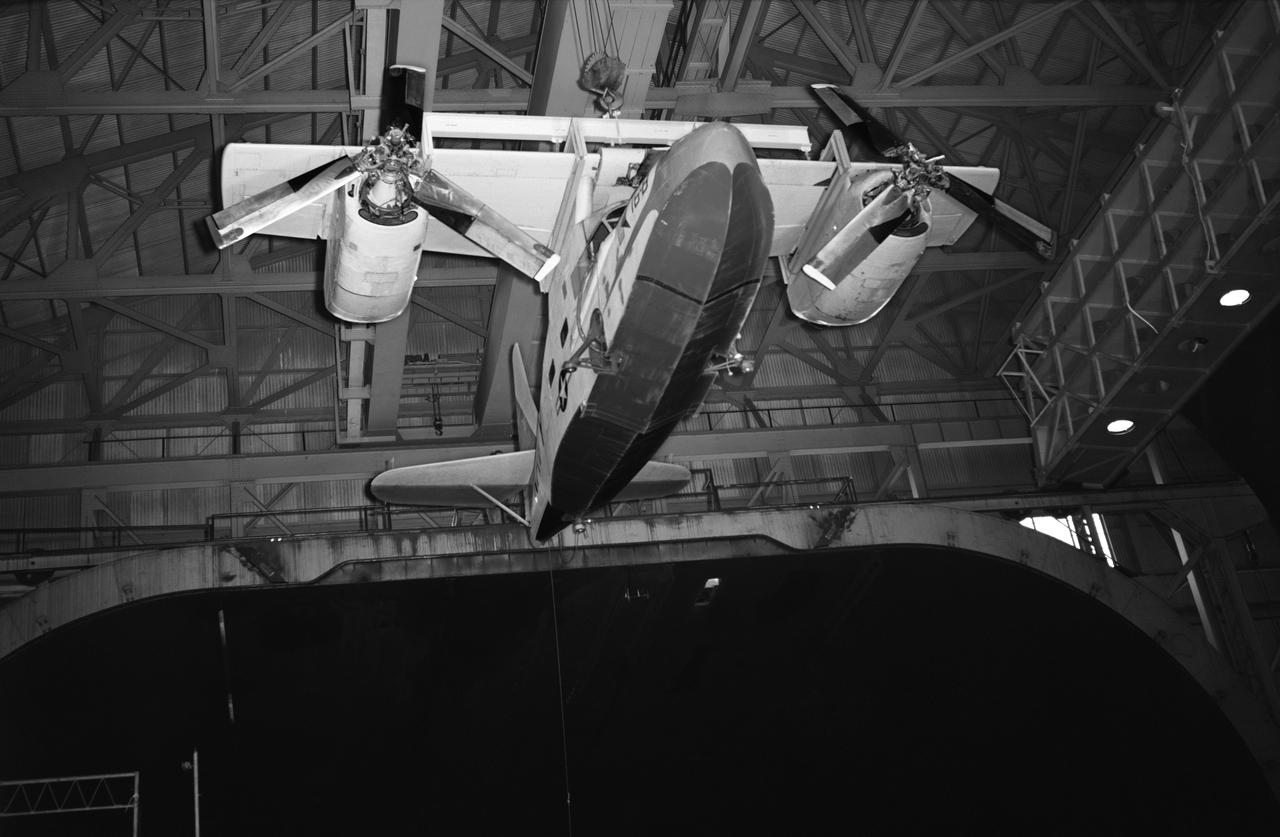
Test No. 175  Kaman K-16 in 40x80 Foot Wind Tunnel at Ames Research Center. Pictured with two Kaman employees.  3/4 Front view of Airplane.  Kaman K-16B was an experimental tilt wing aircraft, it used the fuselage of a JRF-5 and was powered by two General Electric YT58-GE-2A engines.
Kaman K-16 in 40x80 Foot Wind Tunnel at Ames Research Center.
Test No. 175  Kaman K-16 being lowered into the 40x80 foot wind tunnel at NASA's Ames Research Center, viewed from the front. Kaman K-16B was an experimental tilt wing aircraft, it used the fuselage of a JRF-5 and was powered by two General Electric YT58-GE-2A engines.
Kaman K-16 in 40x80 Foot Wind Tunnel at Ames Research Center.
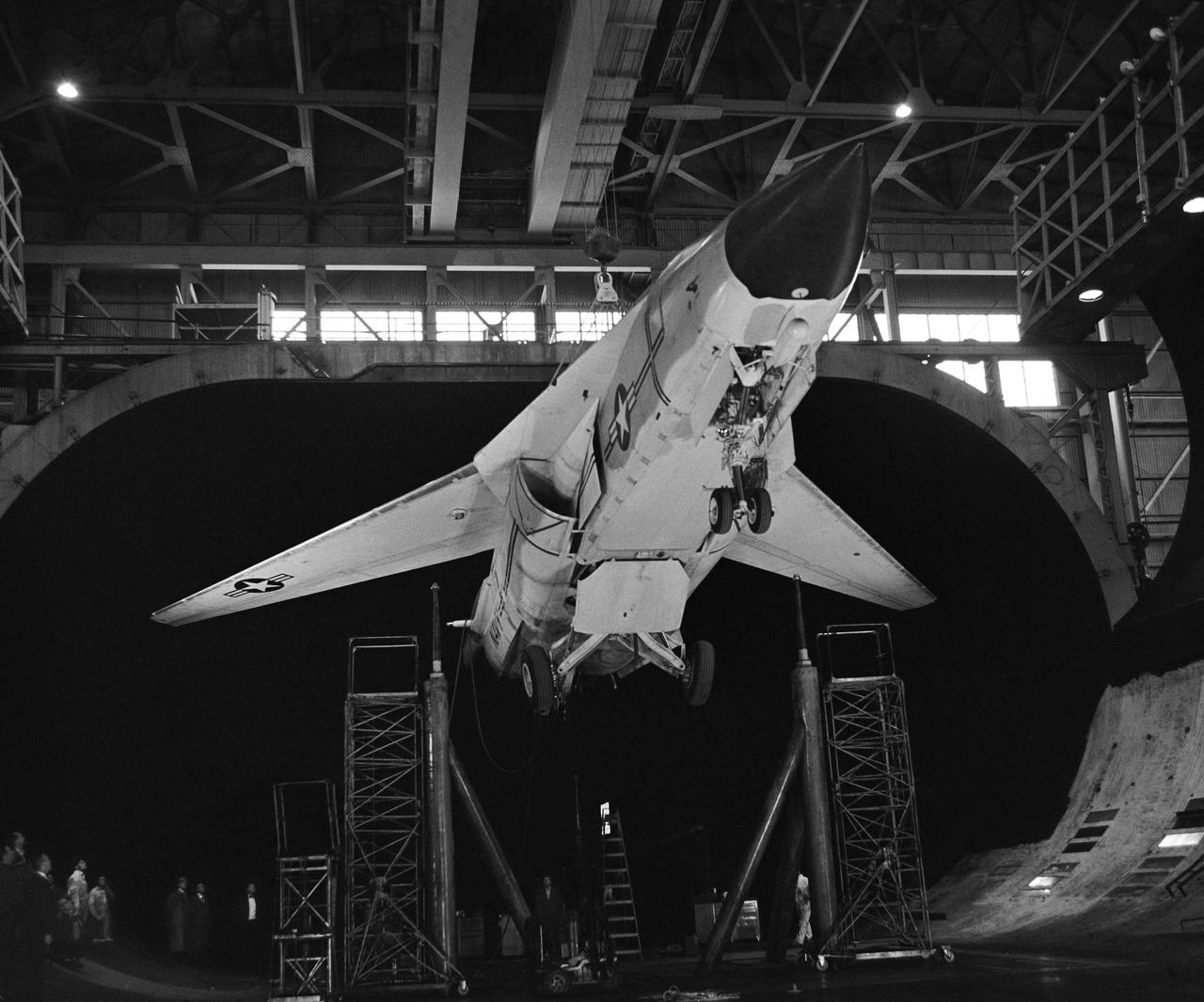
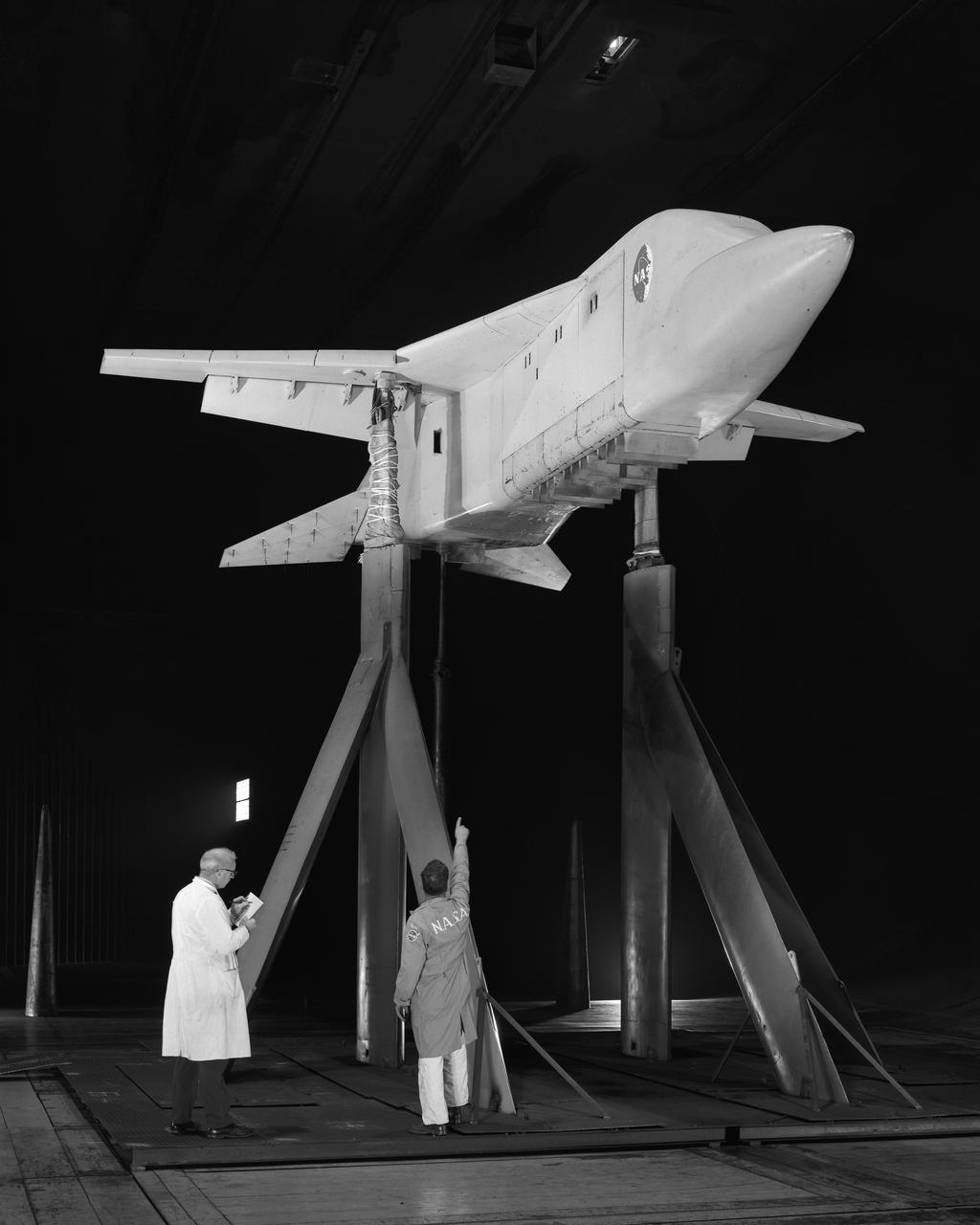
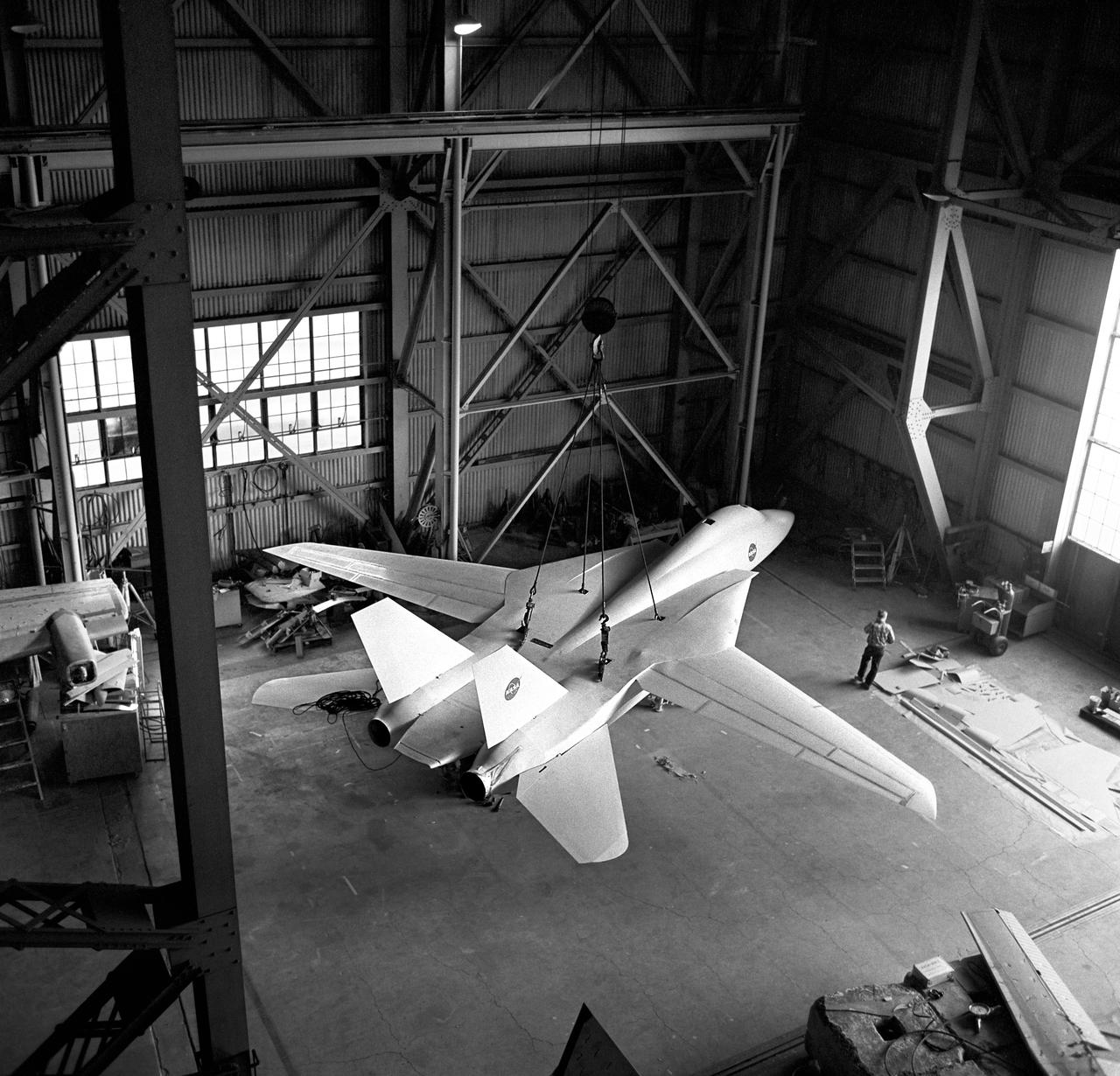
Installation Photos, 3/4 front view from below. F-111B in Ames 40x80 Foot Wind Tunnel.  The General Dynamics/Grumman F-111B was a long-range carrier-based interceptor aircraft that was planned to be a follow-on to the F-4 Phantom II. The F-111B was developed in the 1960s by General Dynamics in conjunction with Grumman for the United States Navy (USN) as part of the joint Tactical Fighter Experimental (TFX) with the United States Air Force (USAF) to produce a common fighter for the services that could perform a variety of missions. It incorporated innovations such as variable-geometry wings, afterburning turbofan engines, and a long-range radar and missile weapons system.
F-111B in Ames 40x80 Foot Wind Tunnel.
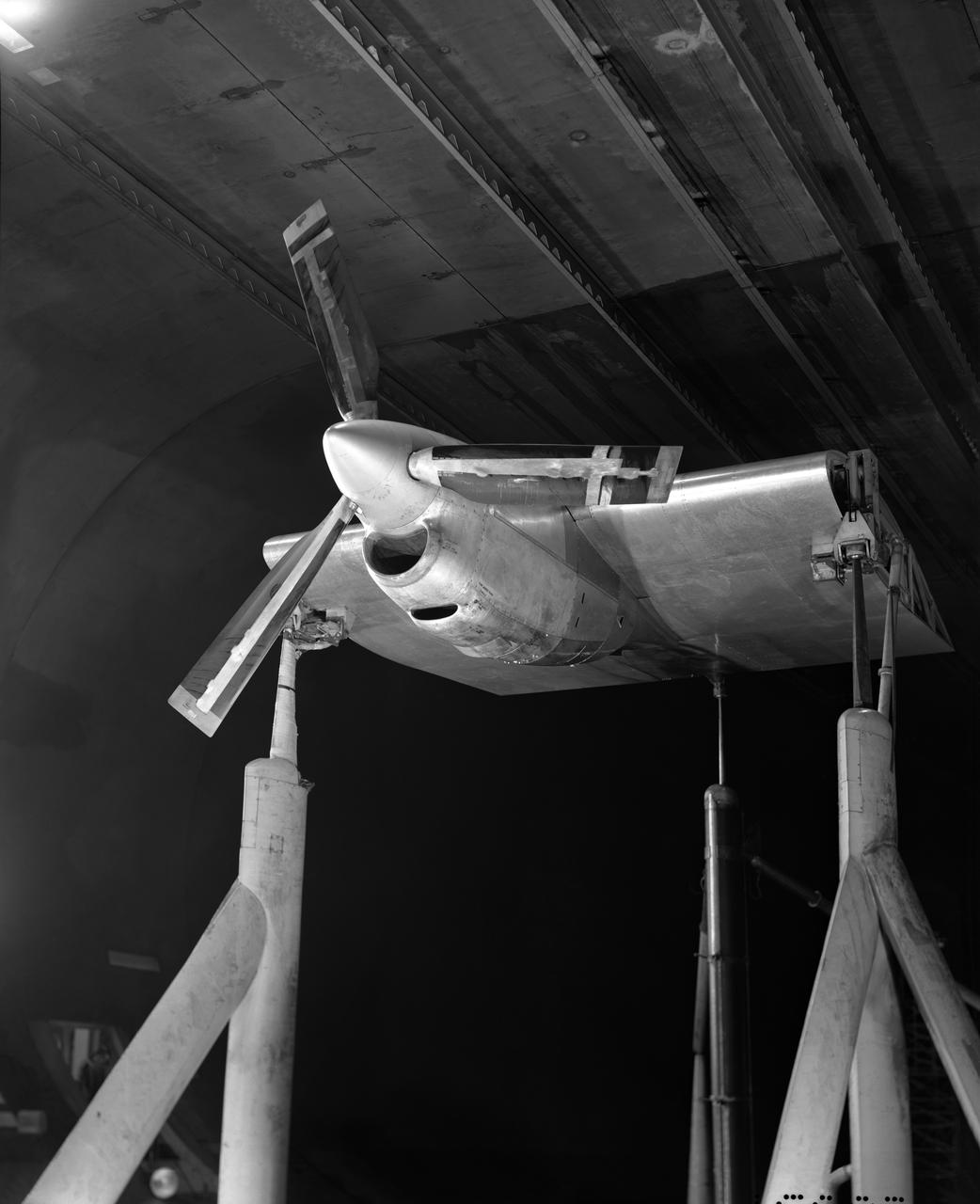
Test of Lockheed YC-130 Turbo-Propeller Installation in Ames 40x80 Foot Wind Tunnel. 3/4 front view from below.
Tests of Lockheed YC-130 Turbo-Propeller Installation in Ames 40x80 Foot Wind Tunnel.
3/4 front view of Douglas F5D Skylancer modified to "ogee" platform inlet plug installed in Ames 40x80 foot wind tunnel.
F-5D Airplane modified to "ogee" platform inlet plug installed in Ames 40x80 foot wind tunnel.
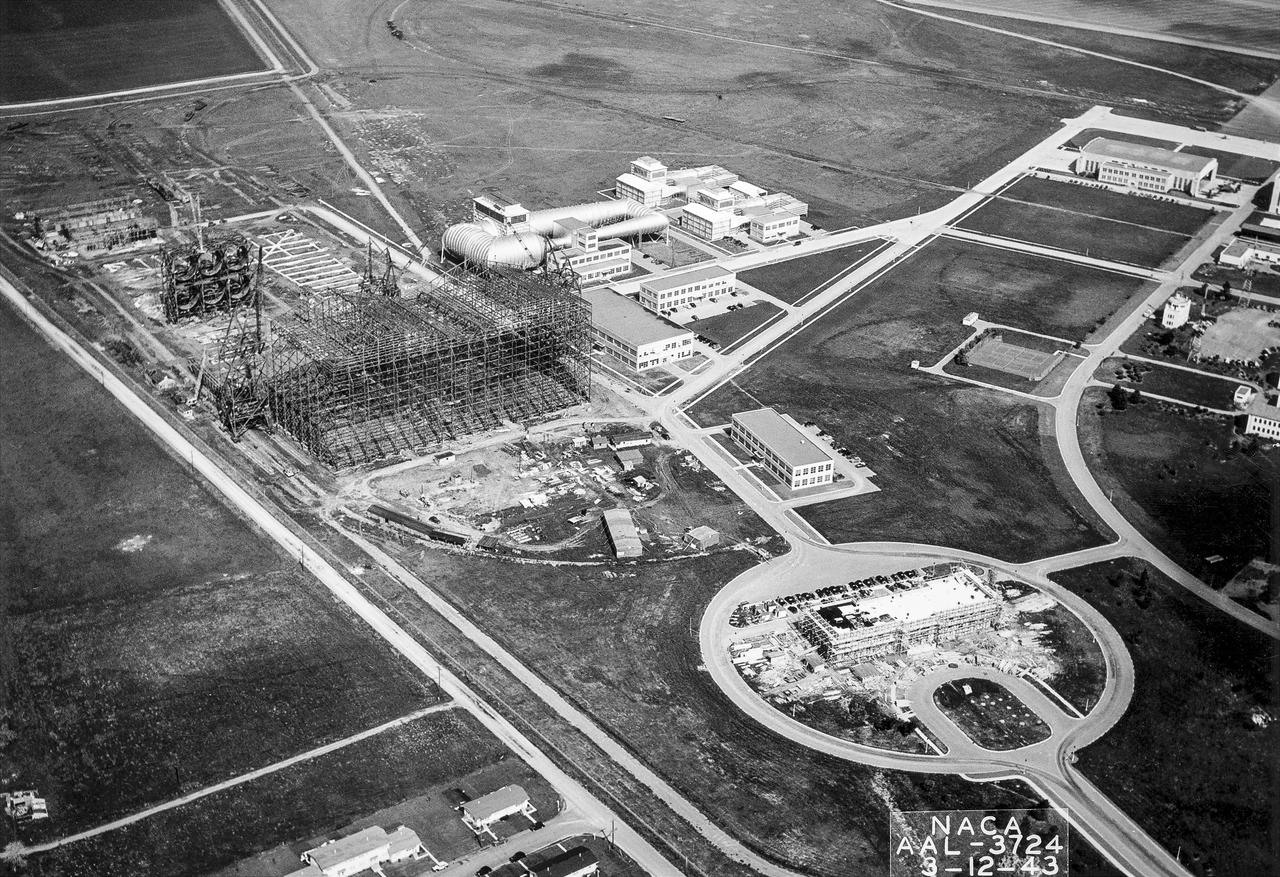
(03/12/1943) Aerial view of the site from the 40x80 wind tunnel At NASA Ames Research Center. Site includes the 16 foot and 7x10 wind tunnels in the background.  Building 200 also under construction.  Framing for the drive fans of the 40x80 in scene.
Aerial View Of The Site From The 40x80 Foot Wind Tunnel At Nasa Ames Research Center.
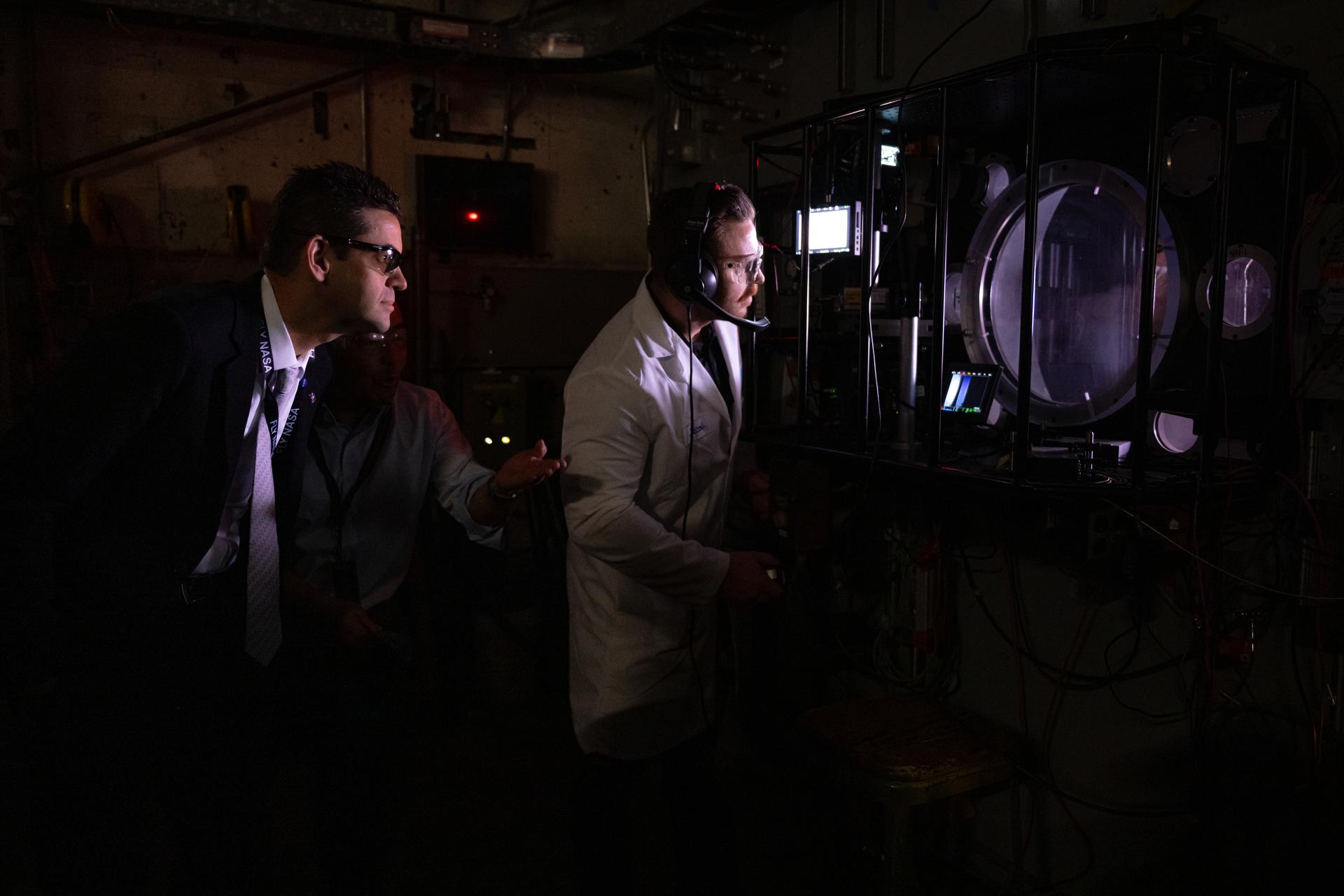
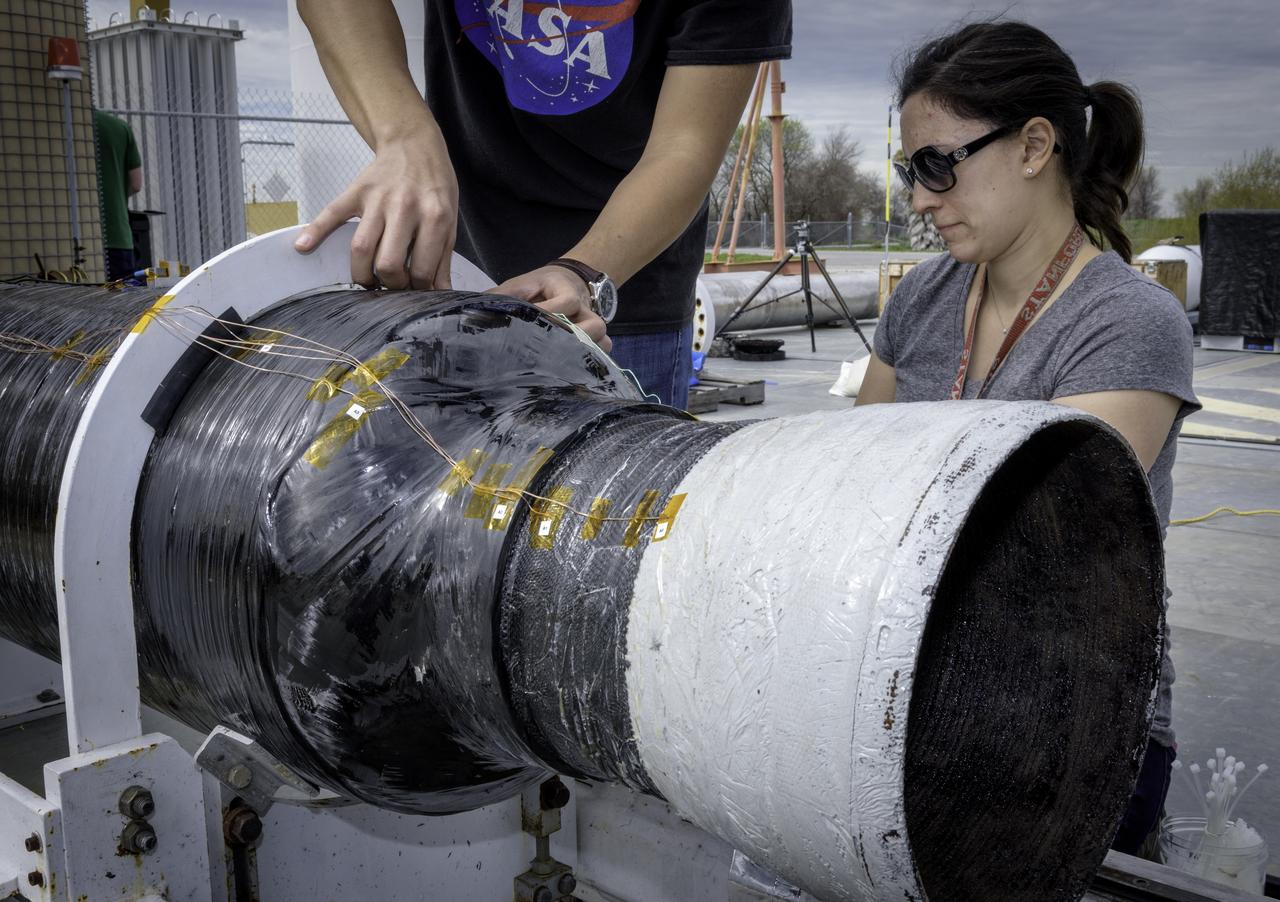
(Left): Kyle Botteon (front) and Hunjpp Kim (Behind), NASA JPL.  (Right): Gregory Zilliac, Advance Propulsion Technician. NASA Ames, preparing the Peregrine Hybrid Rocket Engine at the Outdoor Aerodynamic Research Facility (OARF, N-249).
Peregrine Rocket Motor Test at the Ames Outdoor Aerodynamic Research Facility (OARF).
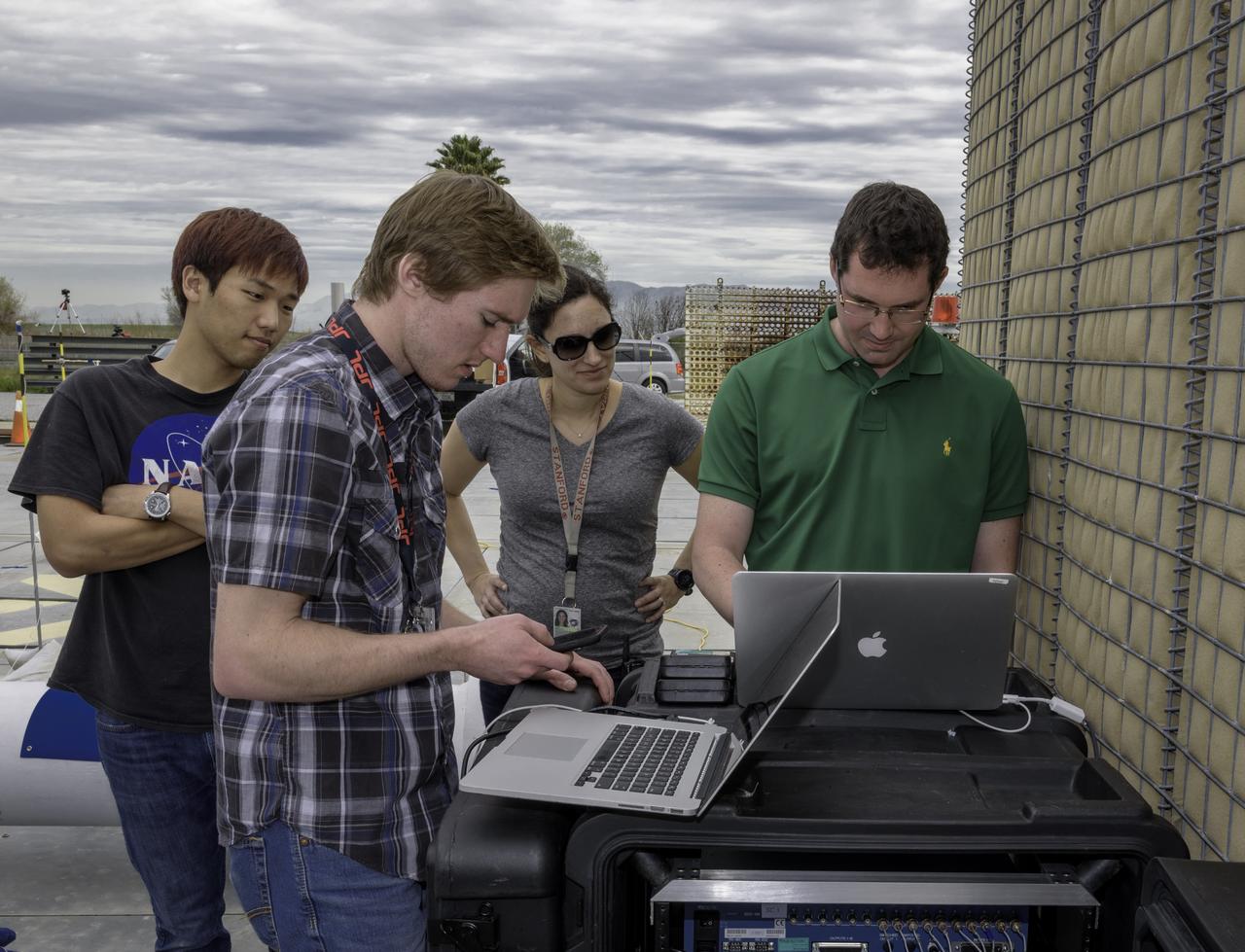
From Left to Right:  1.       Hunjoo Kim (NASA JPL) 2.       Kyle Botteon (NASA JPL) 3.       Ashley Karp (NASA JPL) 4.       Brian Schratz (NASA JPL) Testing the Peregrine Hybrid Rocket Engine at the Outdoor Aerodynamic Research Facility (building N249, OARF) at Ames Research Center.
Peregrine Rocket Motor Test at the Ames Outdoor Aerodynamic Research Facility (OARF).
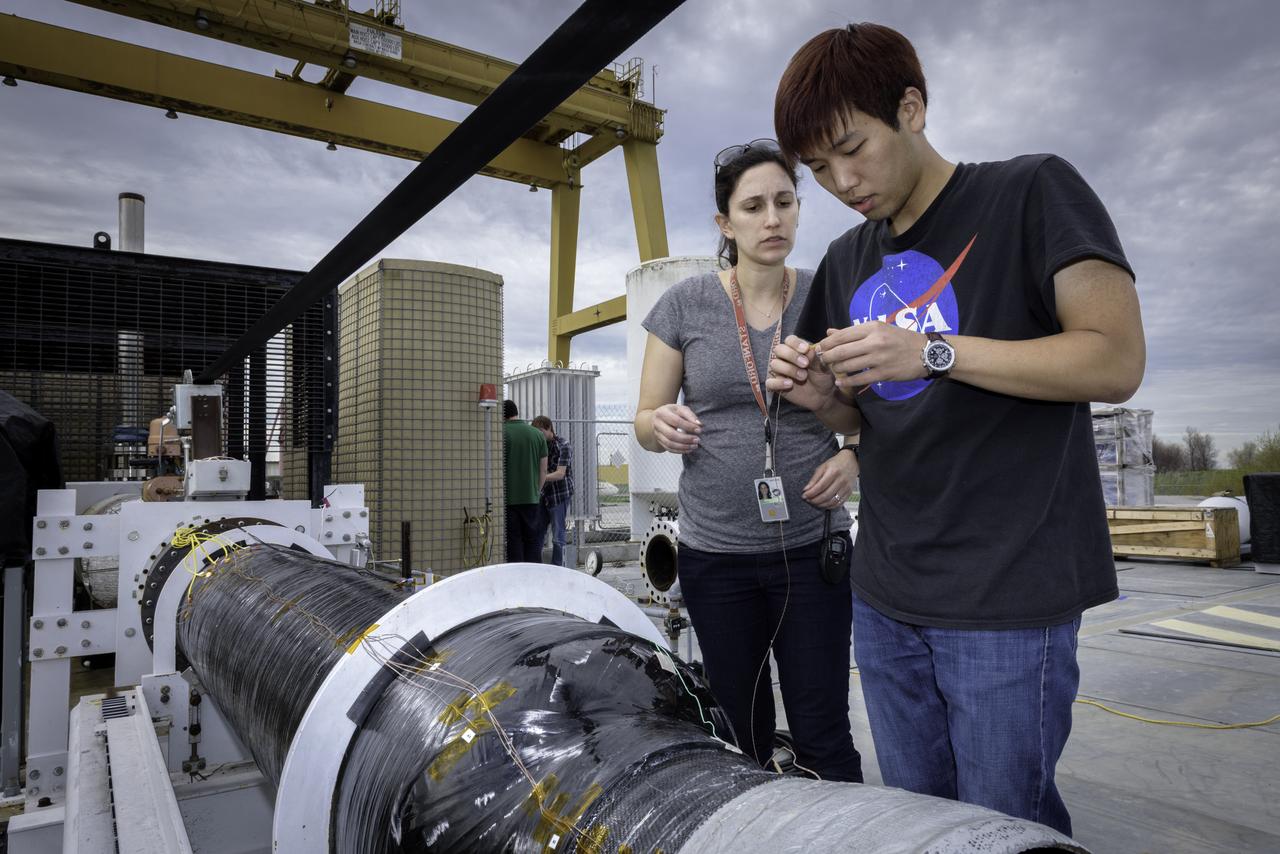
Hunjoo Kim, NASA JPL (Left) and Ashley Karp, NASA JPL (Right) attaching heat sensors the Peregrine Hybrid Rocket Engine prior to its test at the Outdoor Aerodynamic Research Facility (OARF, N-249) at NASA’s Ames Research Center.
Peregrine Rocket Motor Test at the Ames Outdoor Aerodynamic Research Facility (OARF).
Ashley Karp, NASA JPL (Left) and Hunjoo Kim, NASA JPL (Right) attaching heat sensors the Peregrine Hybrid Rocket Engine prior to its test at the Outdoor Aerodynamic Research Facility (OARF, N-249) at NASA's Ames Research Center.
Peregrine Rocket Motor Test at the Ames Outdoor Aerodynamic Research Facility (OARF).
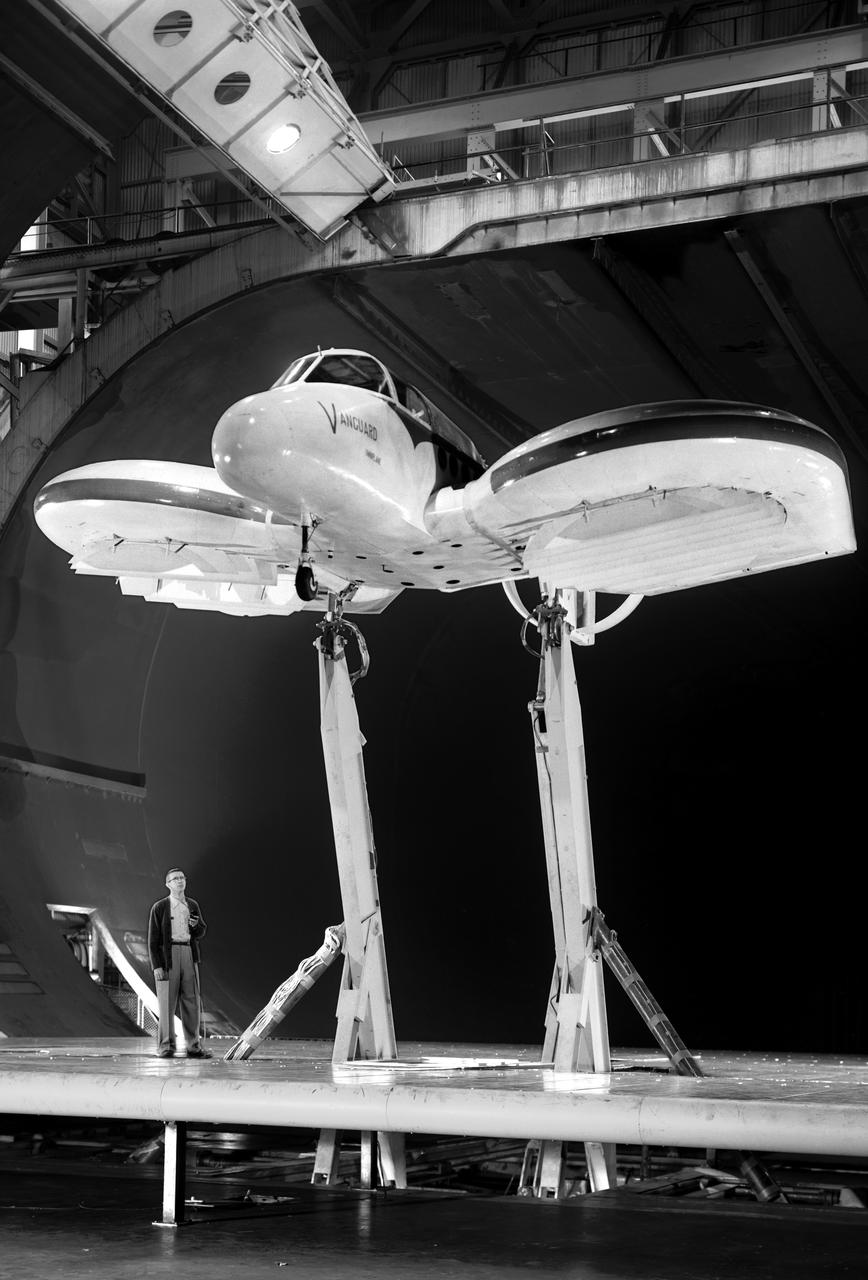
Vanguard 2C vertical take-off and landing (VTOL) airplane, wind tunnel test. Front view from below, model 14 1/2 feet high disk off. Nasa Ames engineer Ralph Maki in photo.  Variable height struts and ground plane, low pressure ratio, fan in wing.  02/01/1960.
Vanguard 2C VTOL Airplane Tested in the Ames 40x80 Foot Wind Tunnel.
3/4 front view from below, showing Pods and Fan Rotating. March A. Zeiger standing in front. Tandem Dual Ducted Fan V/STOL Model in Ames 40x80 foot Wind Tunnel
Tandem Dual Ducted Fan V/STOL Model in Ames 40x80 foot Wind Tunnel.
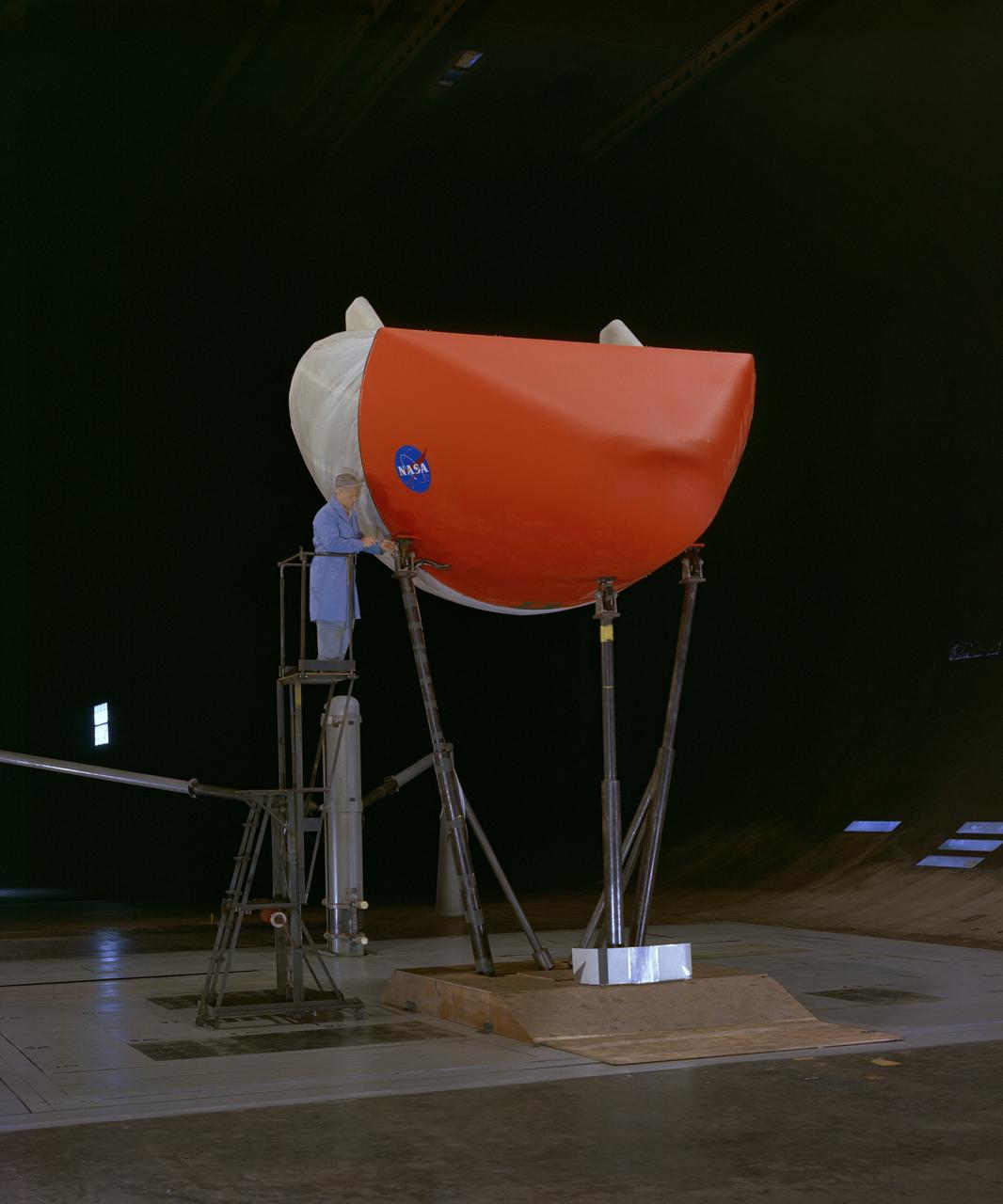
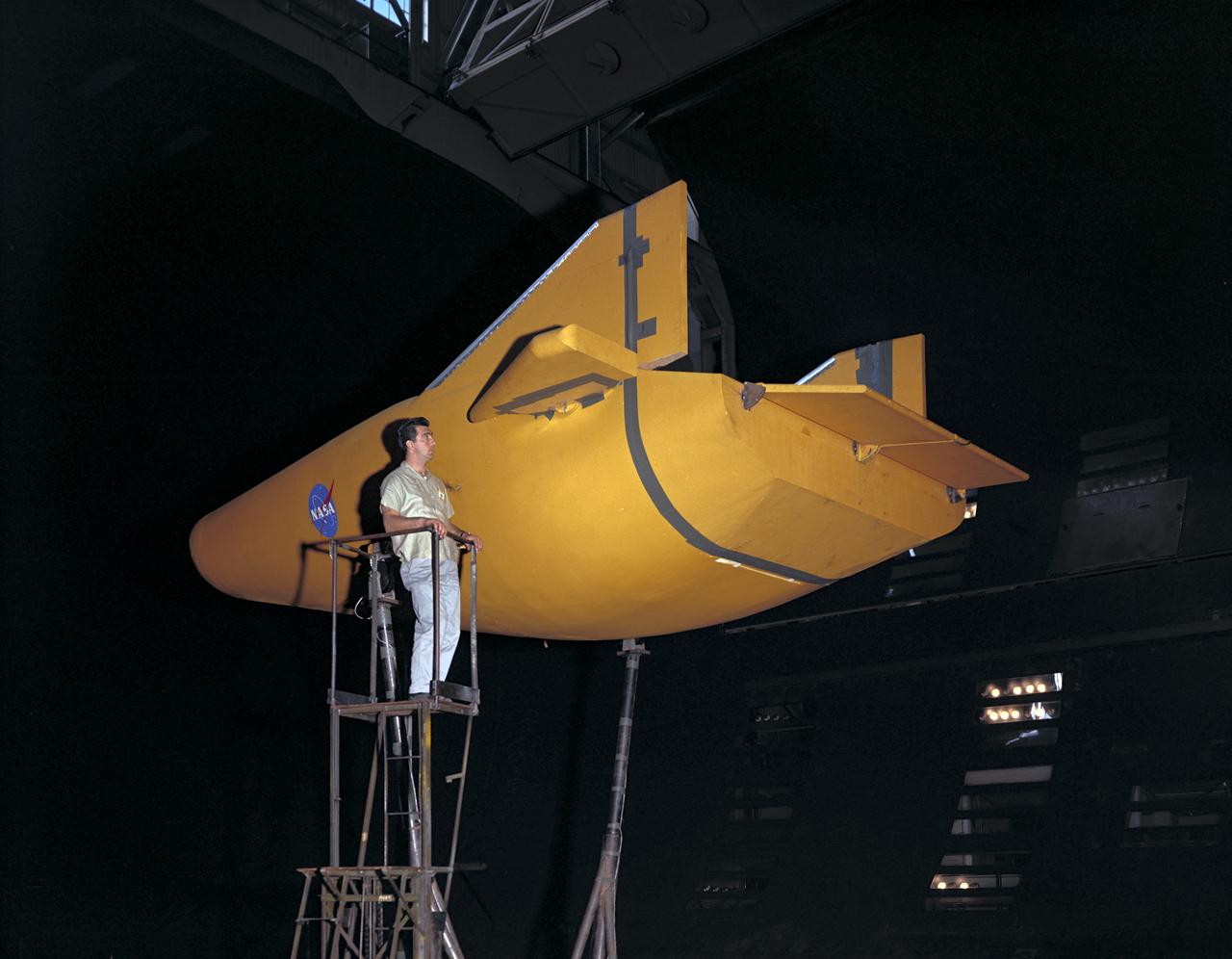
3/4 front view of M-1-L inflatable recovery able lifting body model in Ames 40x80 foot wind tunnel. Mechanic, Ray Schmorance included in picture.
M-1-L Inflatable Recovery able Lifting Body Model in Ames 40x80 foot Wind Tunnel.
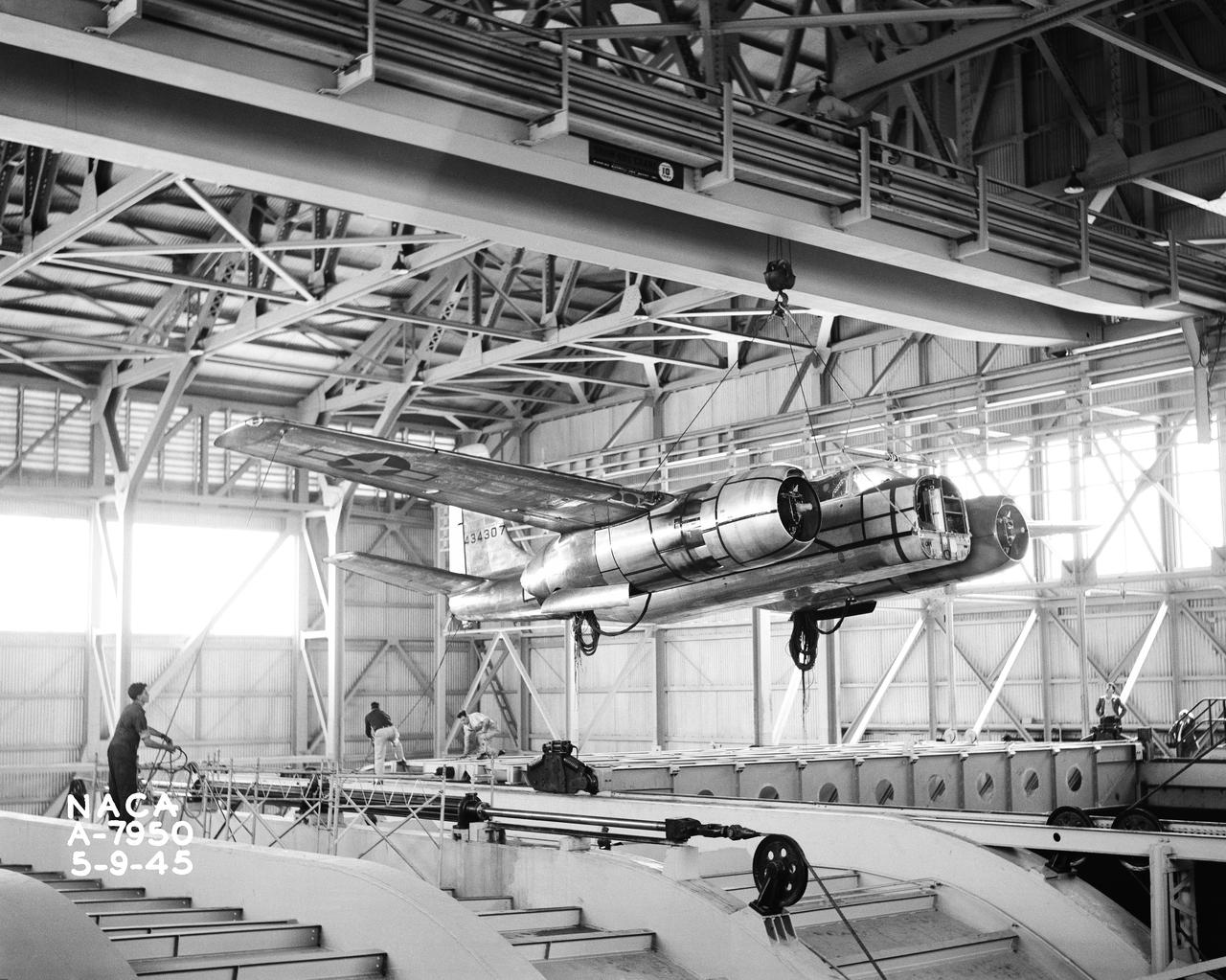
Test section of the Ames 40 x 80 foot wind tunnel with the overhead doors open.  XSB2D-1 airplane being lowered onto the struts by the overhead crane. Mechanics and engineers on orchard ladders aligning the model with ball sockets on the struts. The Douglas BTD Destroyer was an American dive/ torpedo bomber developed for the United States Navy during World War II.
Installation of the Douglas XSB2D-1 in the Test Section of the 40x80 Foot Wind Tunnel at Ames.
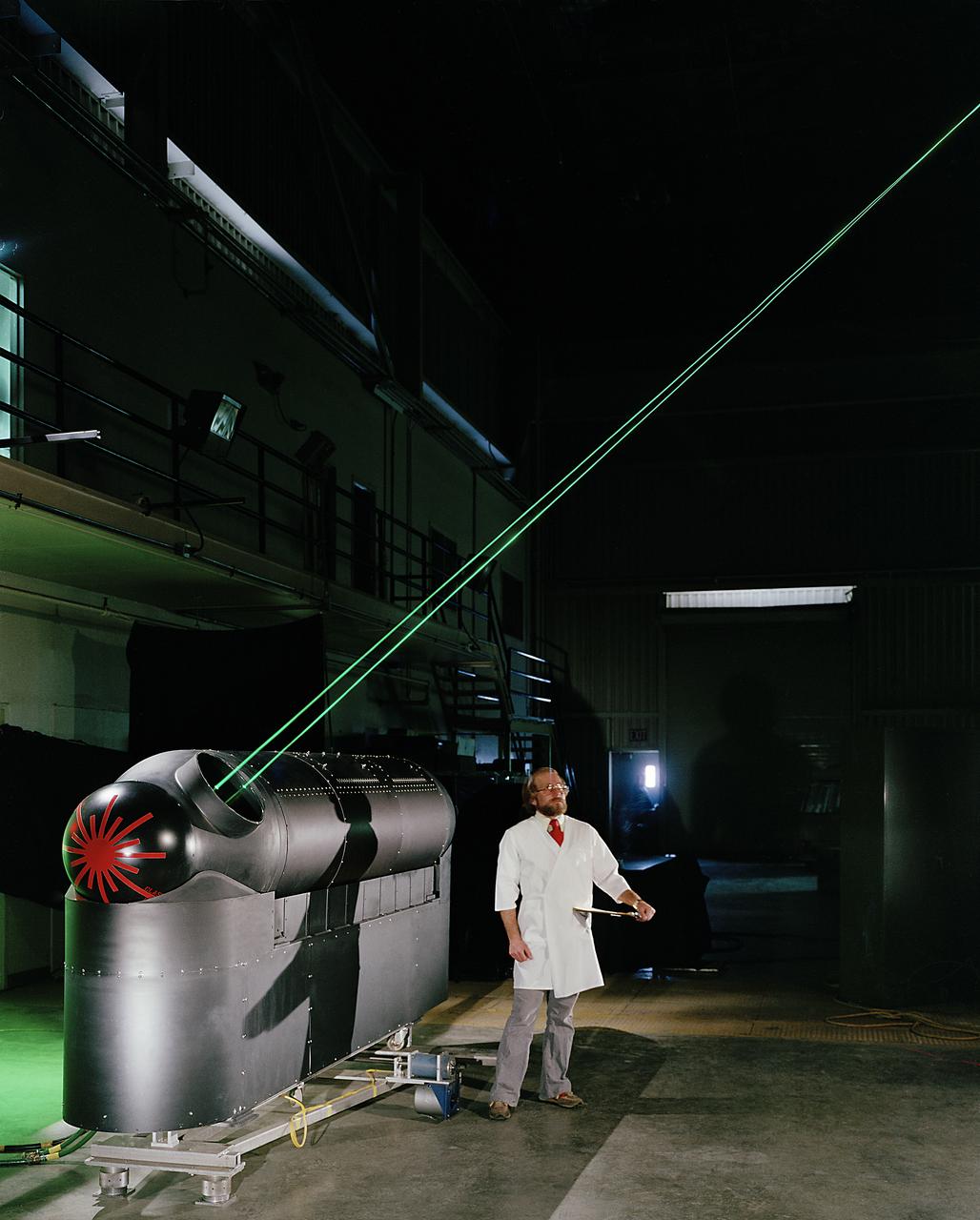
Long Range Laser Velocimeter in 40x80x120 Foot Wind Tunnel at NASA Ames. For use in NFAC.
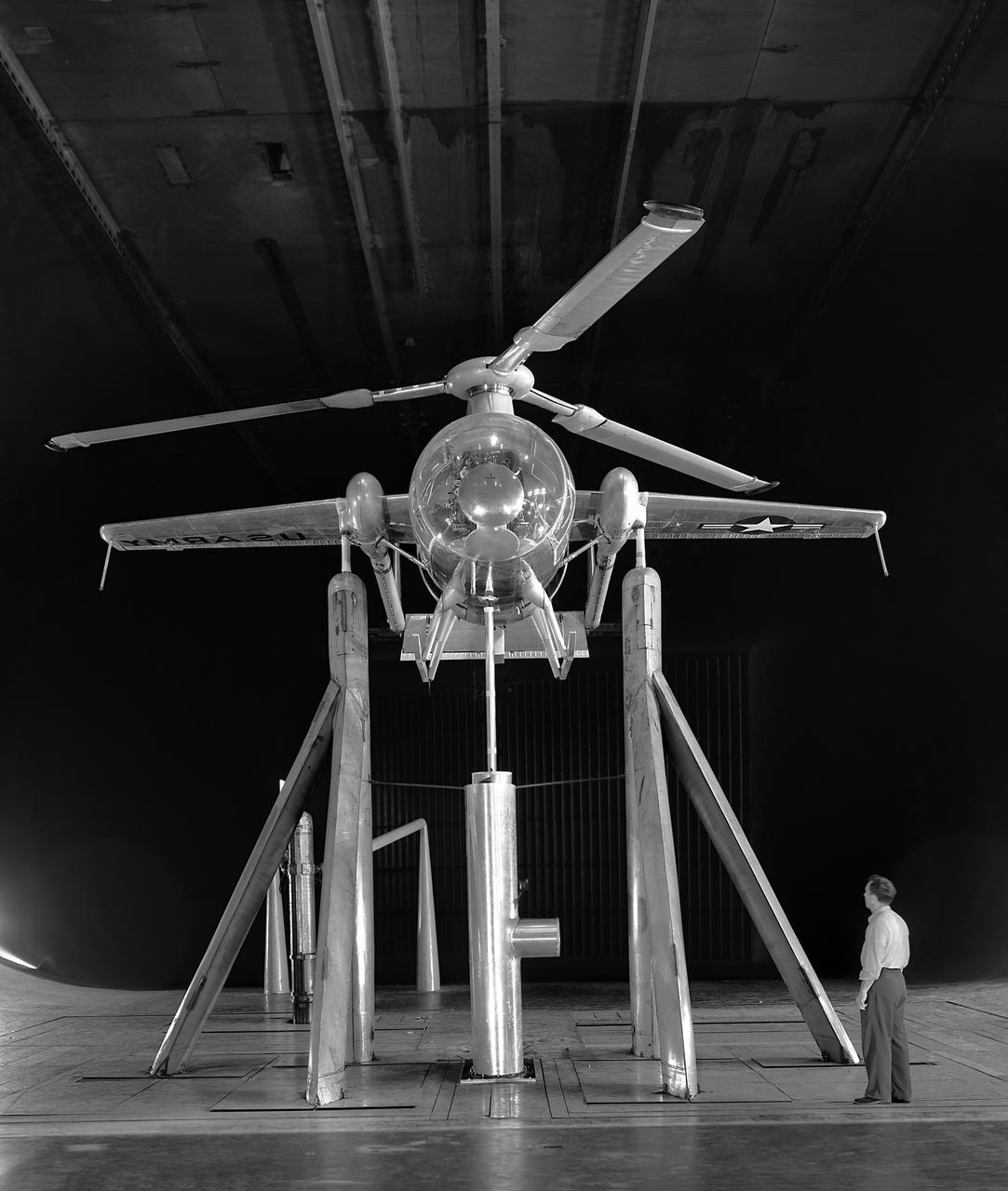
Foreword, front view of McDonnell Model XV-1 Convertiplane in the Ames 40x80 Foot Wind Tunnel.  The McDonnell XV-1 was an experimental compound gyroplane developed for a joint research program between the United States Air Force and the United States Army to explore technologies to develop an aircraft that could take off and land like a helicopter but fly at faster airspeeds, similar to a conventional airplane. The XV-1 would reach a speed of 200 mph (322 km/h), faster than any previous rotorcraft, but the program was terminated due to the tip-jet noise and complexity of the technology which gave only a modest gain in performance.
McDonnell Model XV-1 Convertiplane in the Ames 40x80 Foot Wind Tunnel.
Lockheed XH-51 Experimental Rigid Rotors, no hinges, in Ames 40x80 foot wind tunnel. John McCloud (left sitting) Jack Rabbot (Right).
Lockheed XH-51 Helicopter with Experimental Rigid Rotors in the 40x80 Foot Wind Tunnel at NASA Ames.
(11/12/1971) 3/4 Scale swept augmentor wing Quest model being installed into the test section of the ames 40 x 80 foot wind tunnel, overhead doors open.
A71-8290. Swept Augmentor Wing Model Being Installed Into The Test Section Of The Ames 40 X 80 Foot Wind Tunnel.
3/4 front view VZ-11 ground test - variable height struts. Engines of the VZ-11 are a pair of General Electric J85-5 turbojets, mounted in high in the centre fuselage, well away from fan disturbance. Designed in the Ames 40x80 foot wind tunnel.
GE Fan in Wing VZ-11 VTOL airplane in Ames 40x80 Foot Wind Tunnel.
3/4 view of the Nozzle of the Peregrine Rocket Motor, tested at the Outdoor Aerodynamic Research Facility (OARF, N-249). at Ames Research Center.
Peregrine Rocket Motor Test at the Ames Outdoor Aerodynamic Research Facility (OARF).
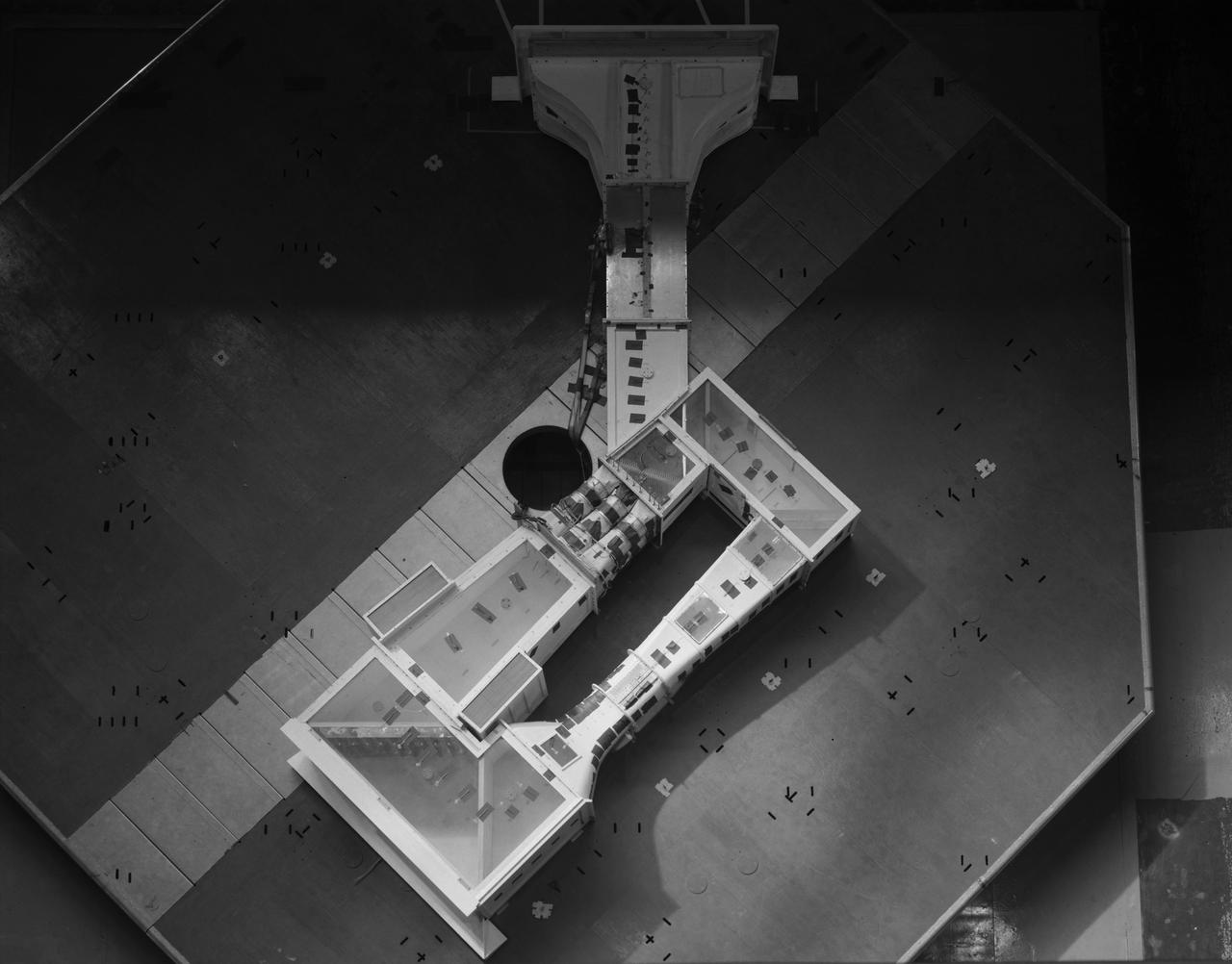
(03/12/1976) Overhead view of 1/50 scale model of the 80x120 foot wind tunnel model (NFAC) in the test section of the 40x80 wind tunnel at NASA Ames. Model mounted on a rotating ground board designed for this test.
1/50 Scale Model Of The 80X120 Foot Wind Tunnel Model (NFAC) In The Test Section Of The 40X80 Wind Tunnel At Nasa Ames.
Computers' at work in 16ft wind tunnel - calculating test data
Computers calculating data from teh Ames 16 Foot Wind Tunnel.
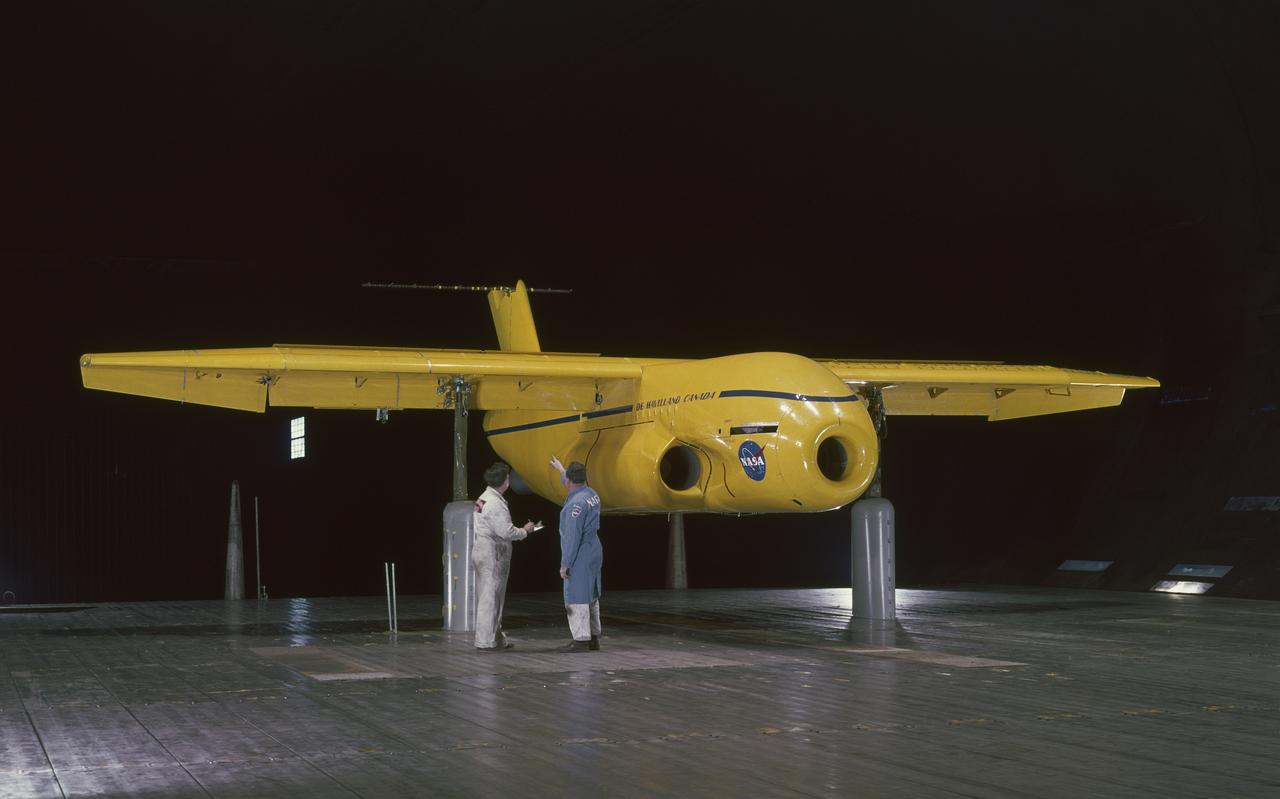
Rear view of the Avrocar with tail, mounted on variable height struts.  Overhead doors of the wind tunnel test section open.
AVROCAR Test in the NASA Ames 40x80 foot Wind Tunnel.
Application of blowing type boundry-layer control to the leading and trailing edge flaps of a 52 deg swept wing.  3/4 view of Aspect Ratio 2.8, taper ratio .17, 45 deg swept back wing model -3/4 front view
McDonnell F4H Model in Ames 40X80 foot Wind Tunnel.
Overhead view of Boeing Super Sonic Transport , wings un-swept.
Boeing SST Model Mounted in Ames 40x80 Foot Wind Tunnel.
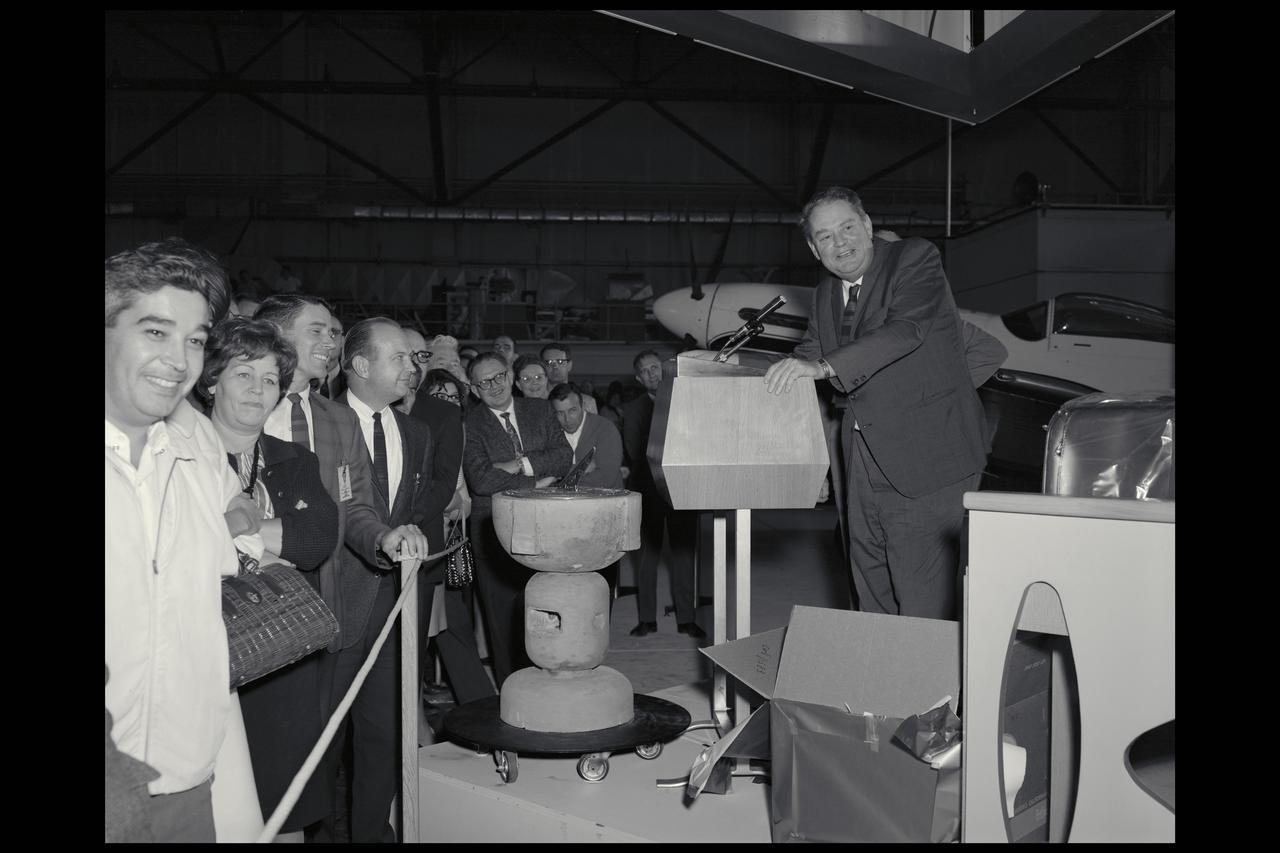
Harvey Allen at his retirement party held in the Ames Hangar N-211.
Harvey Allen at his Retirement Party at Ames.
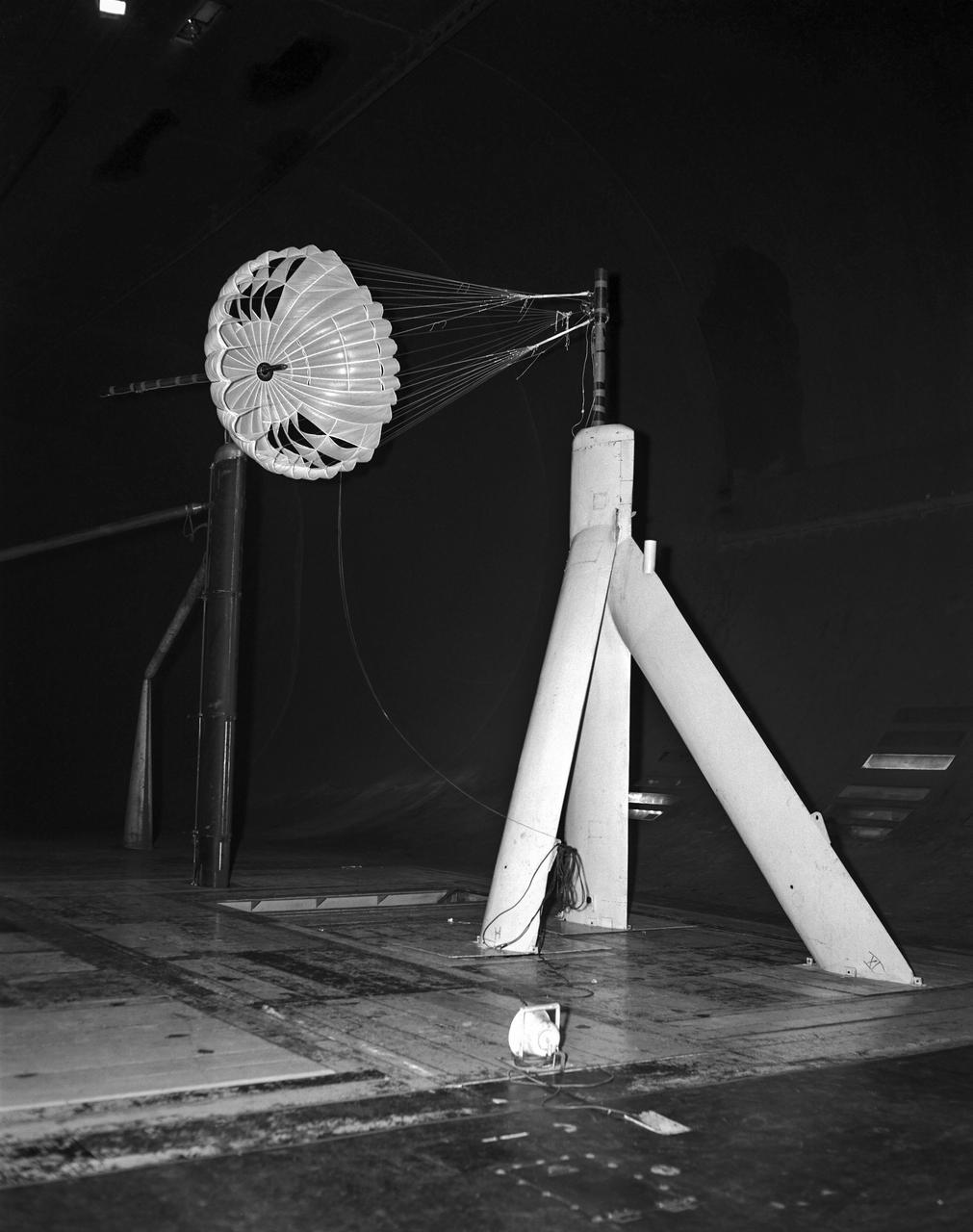
Gliding parachute test in 40x80 foot Wind Tunnel, mounted on main strut flying horizontally.
Steerable Parachute for Apollo Vehicle in Ames 40x80 foot Wind Tunnel.
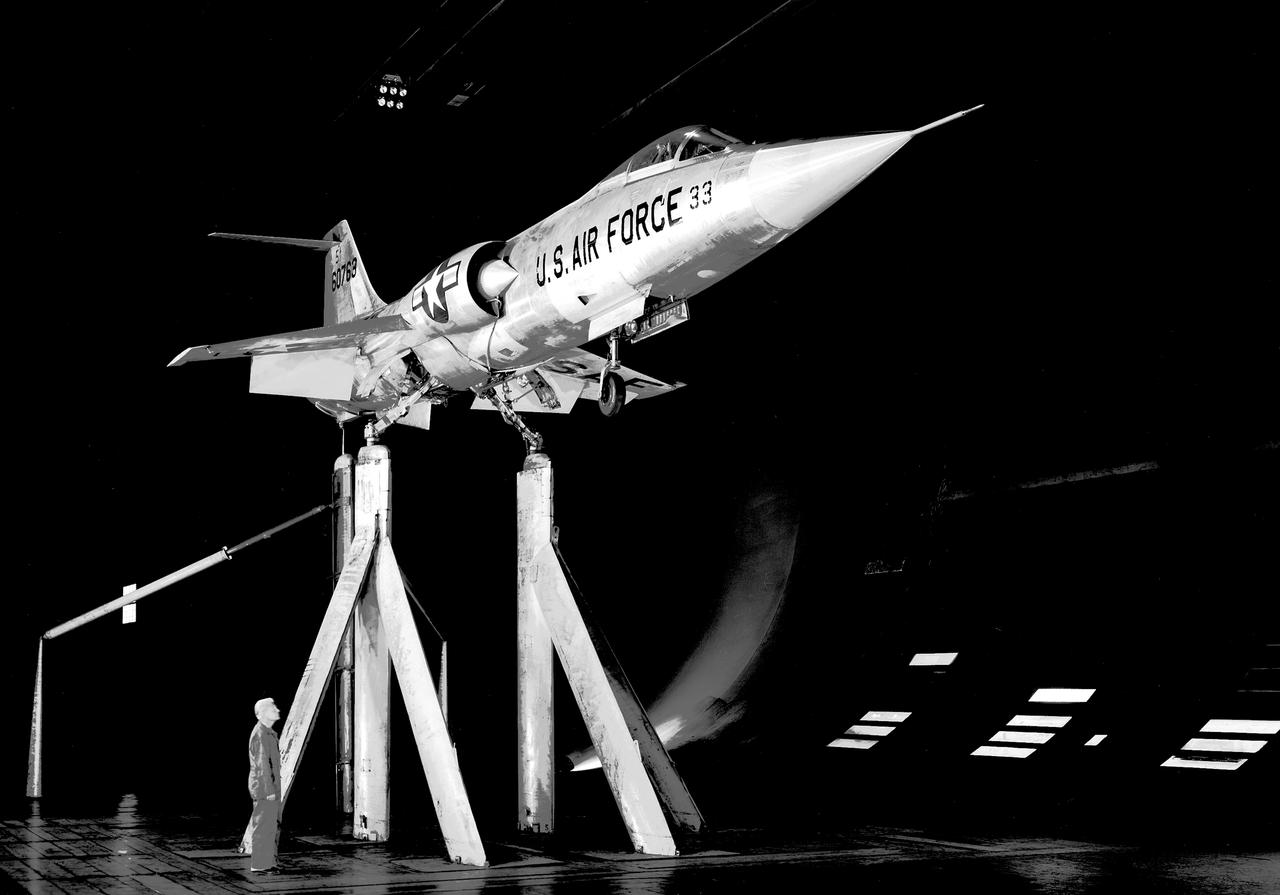
3/4 front view from below of Air Force F-104. The Lockheed F-104 Starfighter is a single-engine, supersonic interceptor aircraft originally developed by Lockheed for the United States Air Force (USAF). One of the Century Series of fighter aircraft, it was operated by the air forces of more than a dozen nations from 1958 to 2004.
Lockheed F-104 in Ames 40x80 Foot Wind Tunnel.
3/4 front view of Lear Jet with Boom installed at 0 degree of attack. Ed Varrette in Photo.
Lear Jet Test in Ames 40x80 Foot Wind Tunnel.
3/4 front view of the Lockheed Stopped Rotor with blades unfolded. Charles Greco and Ed Verrette in photo.
Lockheed Stopped Rotor in the Ames 40x80 Foot Wind Tunnel.
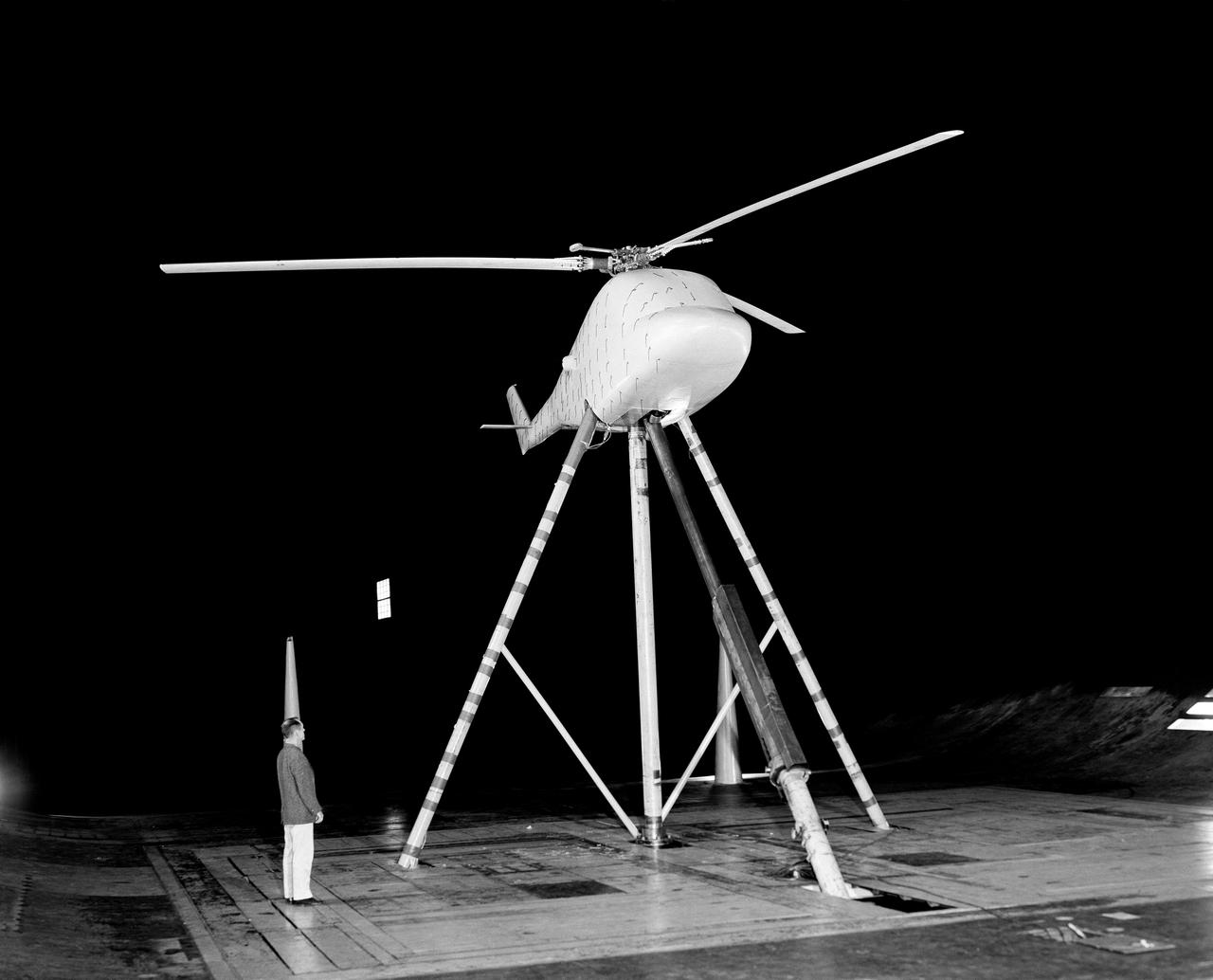
One of the first helicopter tests in the 40 x 80 wind tunnel.  John McCloud, pictured, started helicopter work in the 40 x 80.  Test 150. Testing the effects of camber on rotor blades.
Rotor Blade Test in the NACA Ames 40x80 foot Wind Tunnel.
Computers' at work in 16ft wind tunnel - calculating test data
Computers processing data from the 16 Foot Wind Tunnel at Ames Research Center.
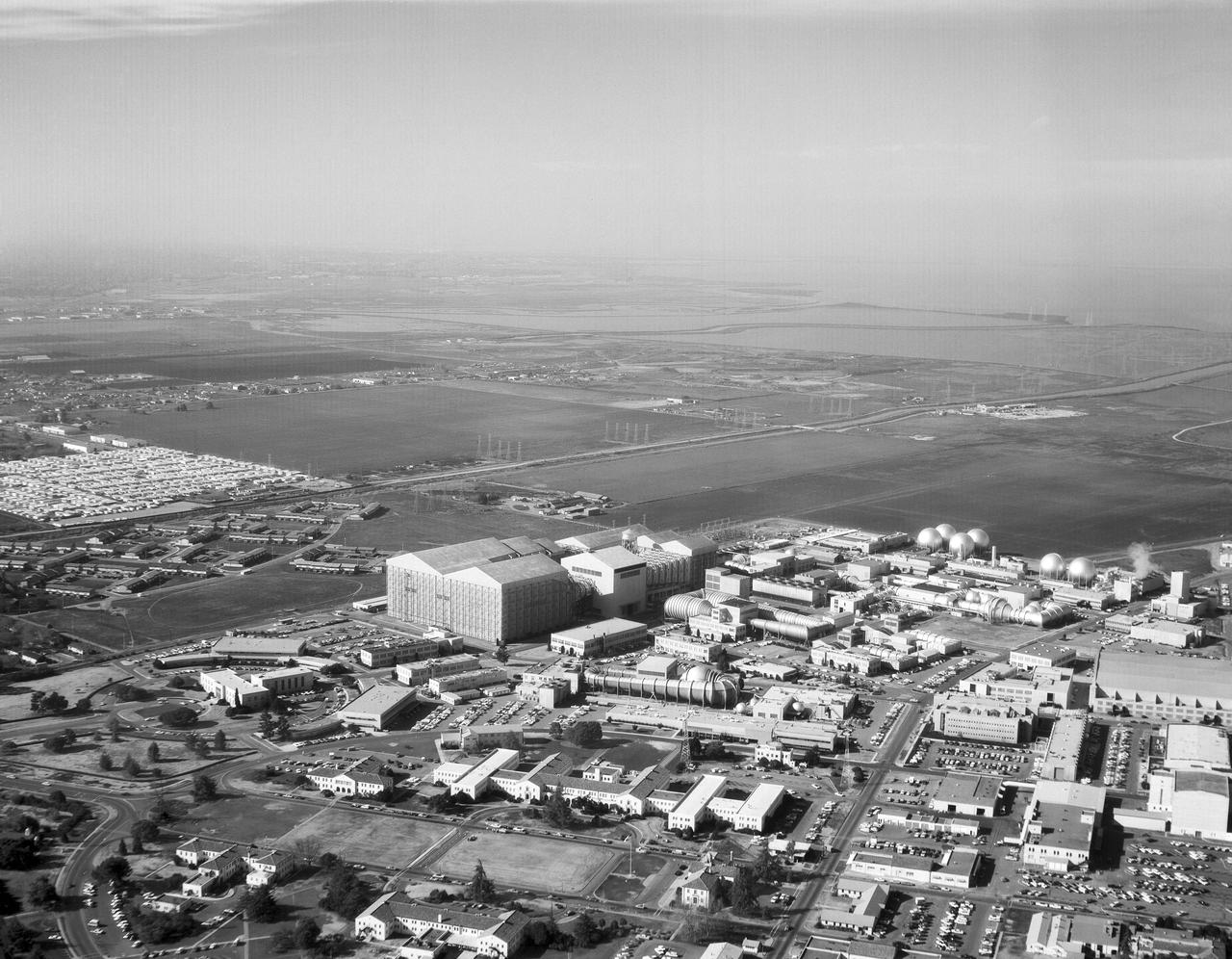
Helicopter view showing west area, south San Francisco Bay in background
Aerial view of Ames 40x80 foot wind subsonic wind tunnel complex.
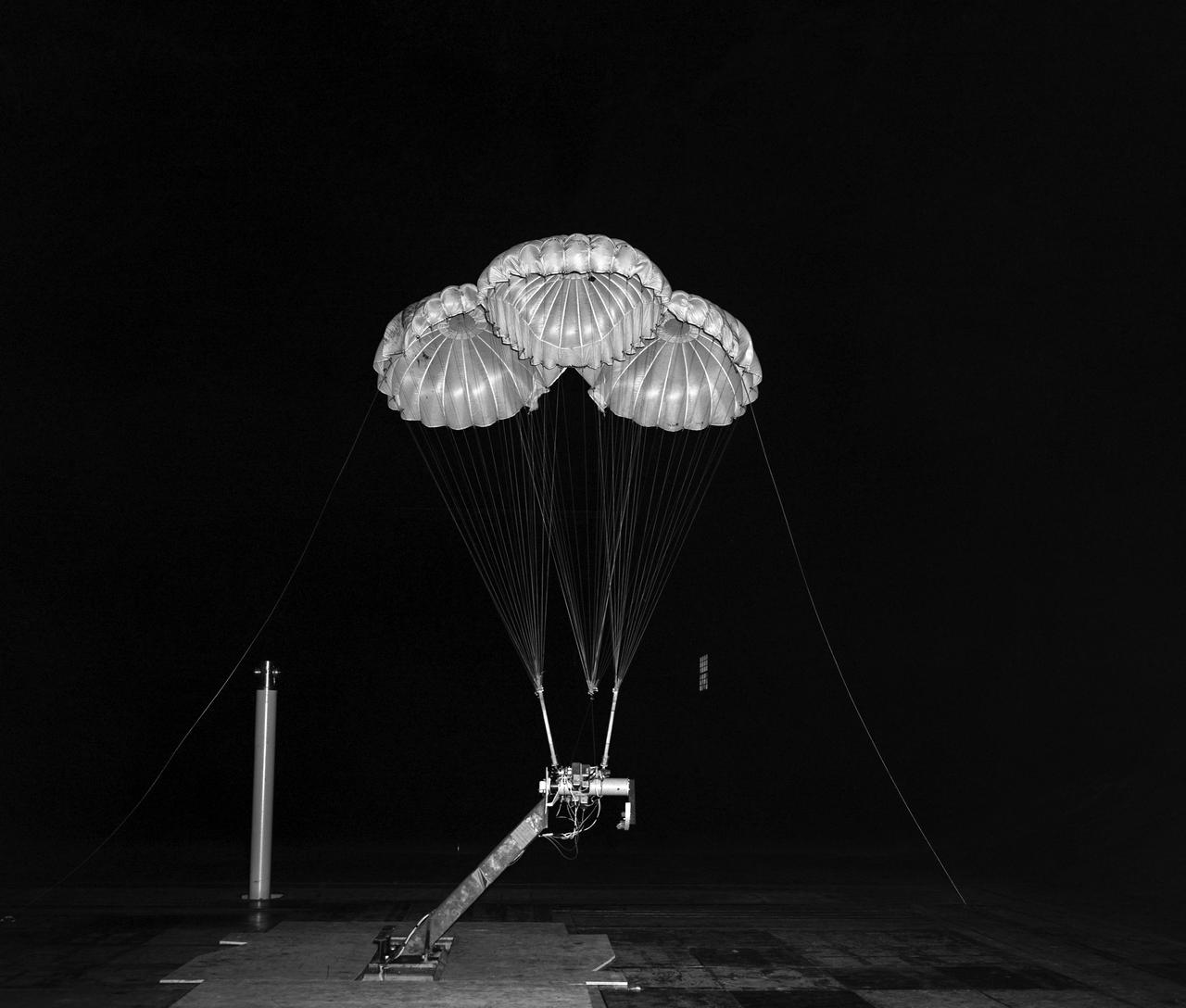
(02/18/1964) Apollo 3 Parachute cluster, flown vertically in 40x80 wind tunnel.  Parachutes mounted on a control head with reels to vary the line lengths.
Steerable Parachute for Apollo Vehicle tested in Ames 40x80 foot Wind Tunnel..
Lift engine VSTOL fighter model, 3/4 lower front view showing jet engines exit vanes.  Yarn tufts attached to horizontal tail.
VSTOL Lift-Engine Fighter Model in Ames 40x80 foot Wind Tunnel.
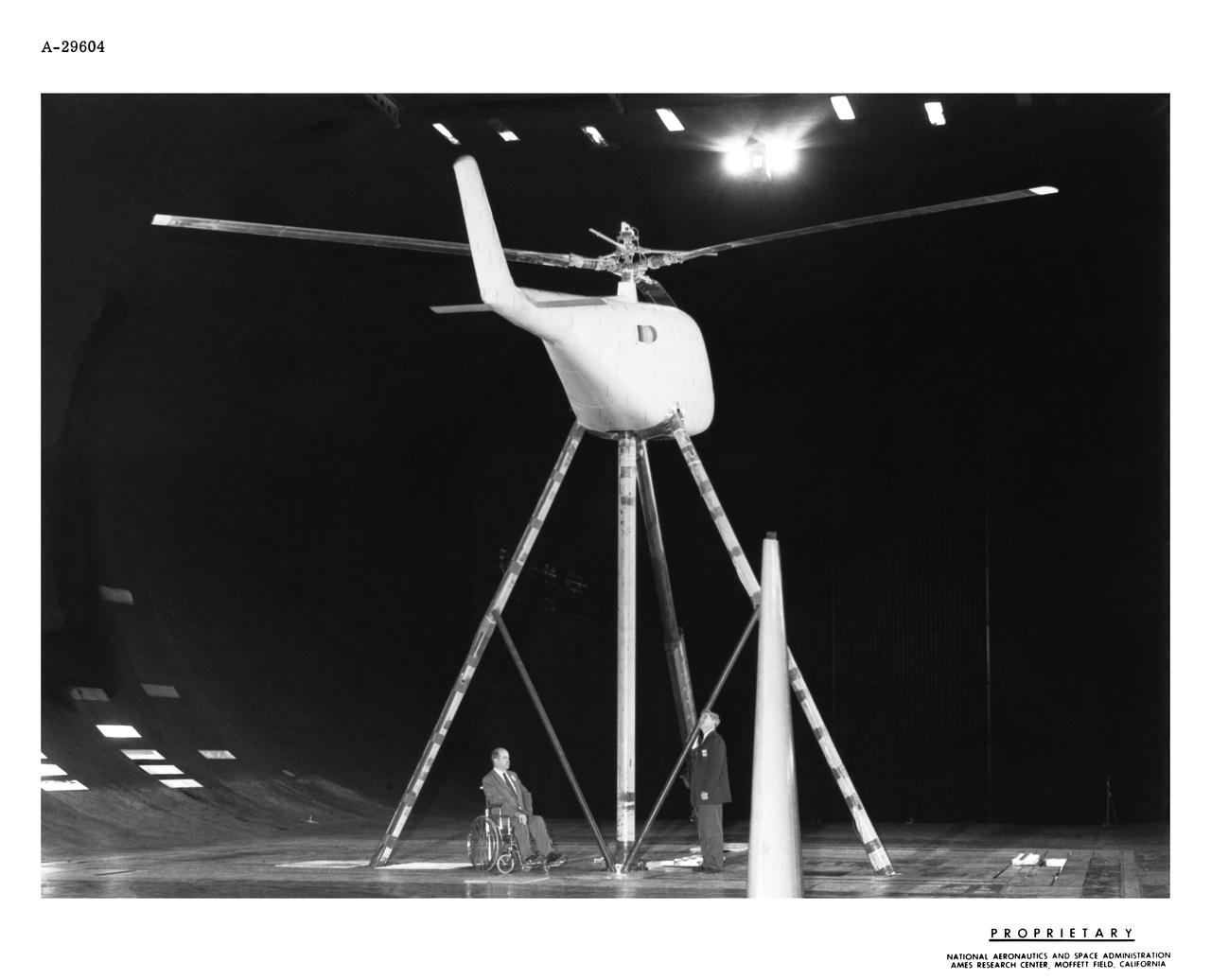
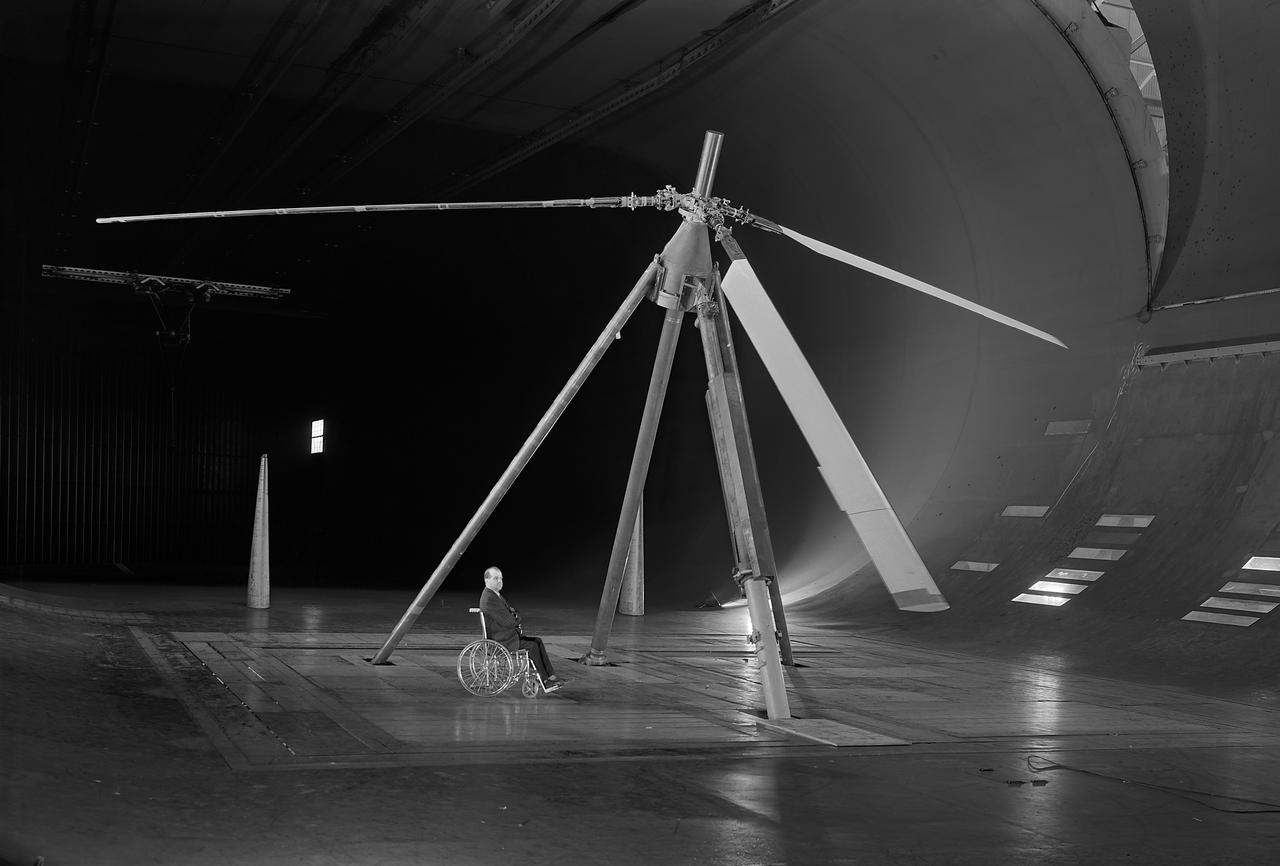
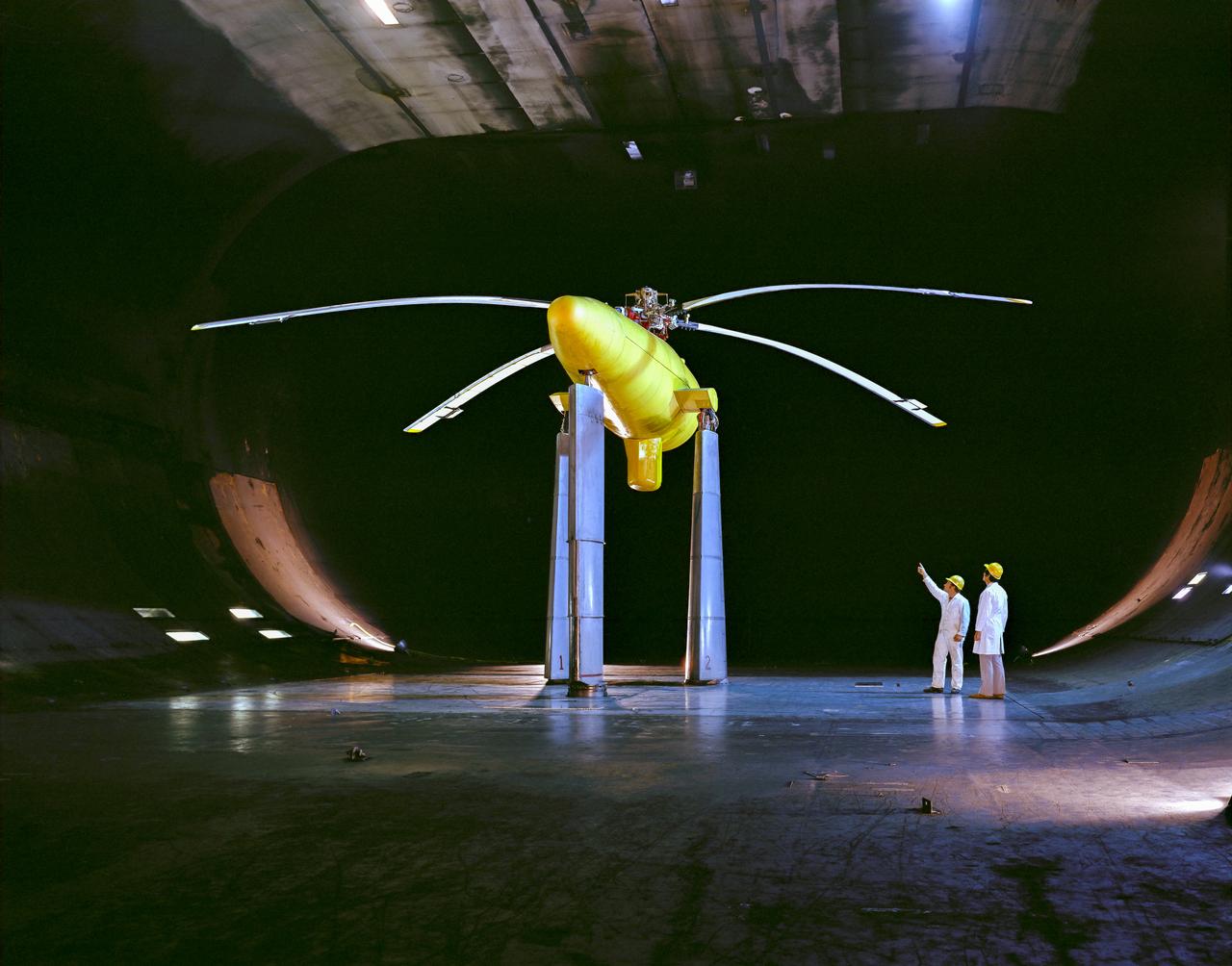
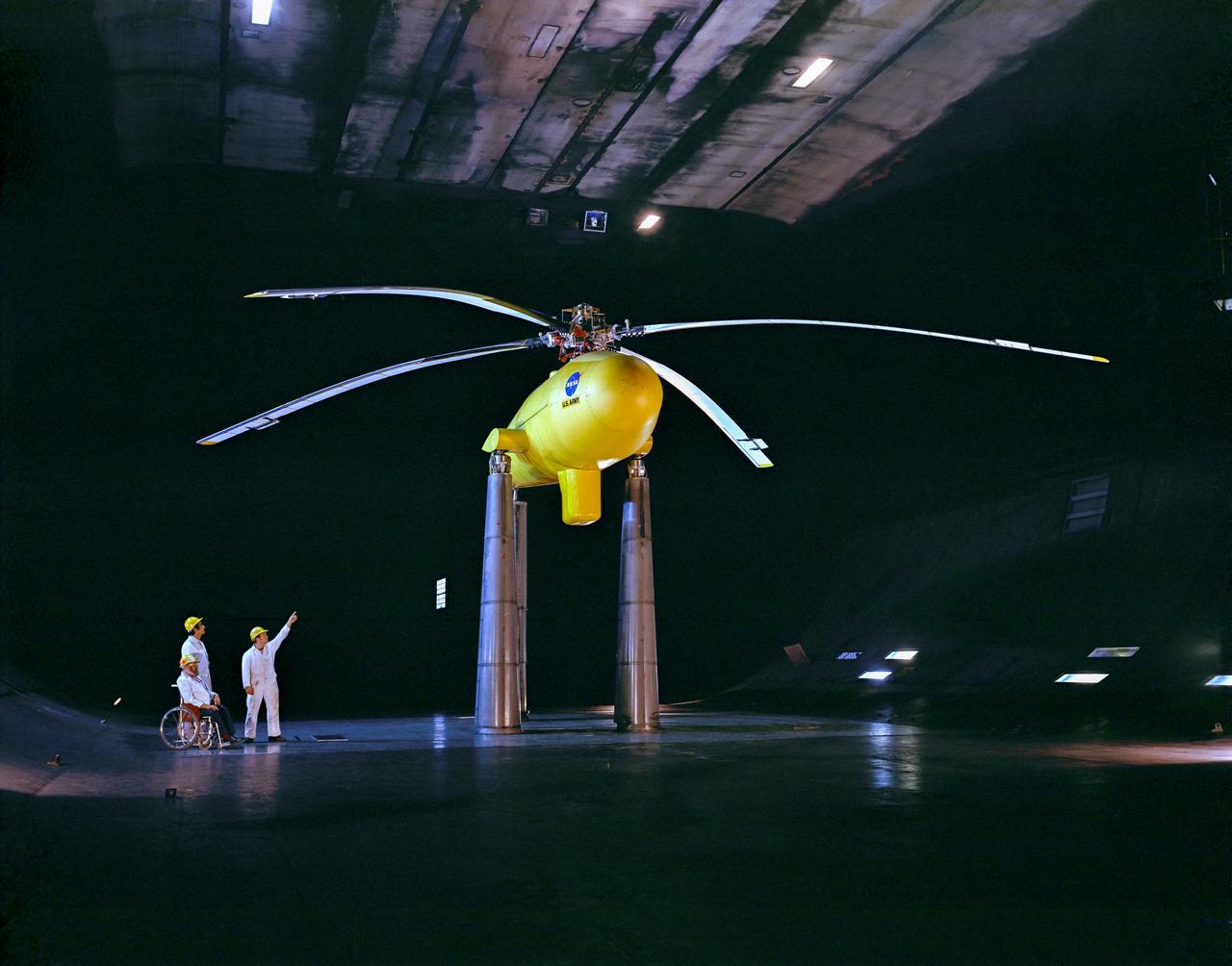
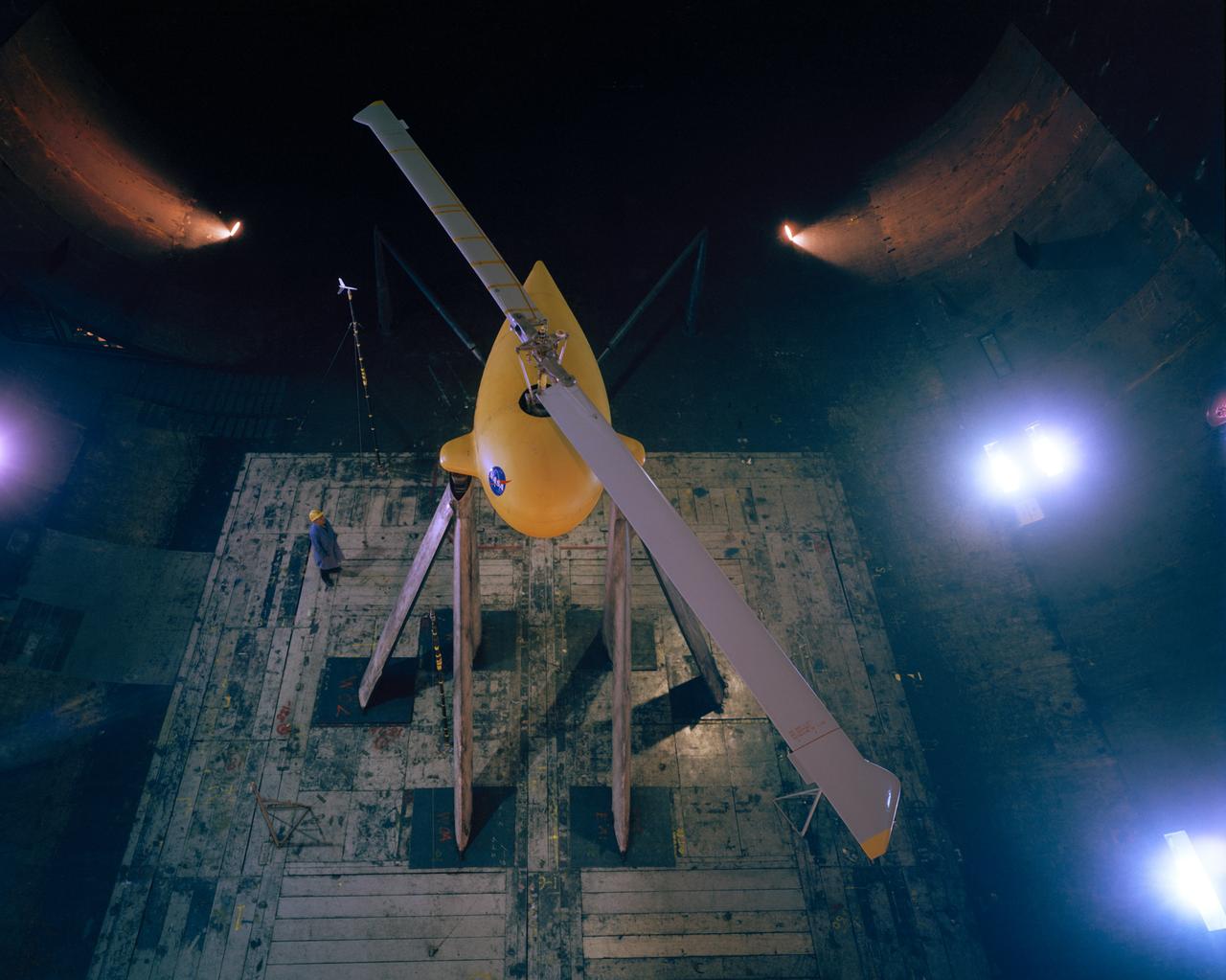
3/4 lower front view of Controllable Twist Rotor (CTR) test of 4 blade helicopter model.  Pictures with Ben Mandwyler Andy Lemnios, John McCloud (wheel chair), in 40x80 foot wind tunnel.  Small flaps on rotor blades.
Controllable Twist Rotor in 40x80 Foot Wind Tunnel at Ames.
3/4 lower rear view of Controllable Twist Rotor (CTR) test of 4 blade helicopter model. Pictures with Ben Mandwyler Andy Lemnios, in 40x80 foot wind tunnel. Small flaps on rotor blades.
Controllable Twist Rotor in 40x80 Foot Wind Tunnel at Ames.
Forward overhead view of lift fan transport model, with two, of a possible six, high pressure ratio wing lift fans. Lift Fan Model In 40 X 80 Wind Tunnel; Test 40-347
Lift Fan Model In Ames 40 X 80 Wind Tunnel.
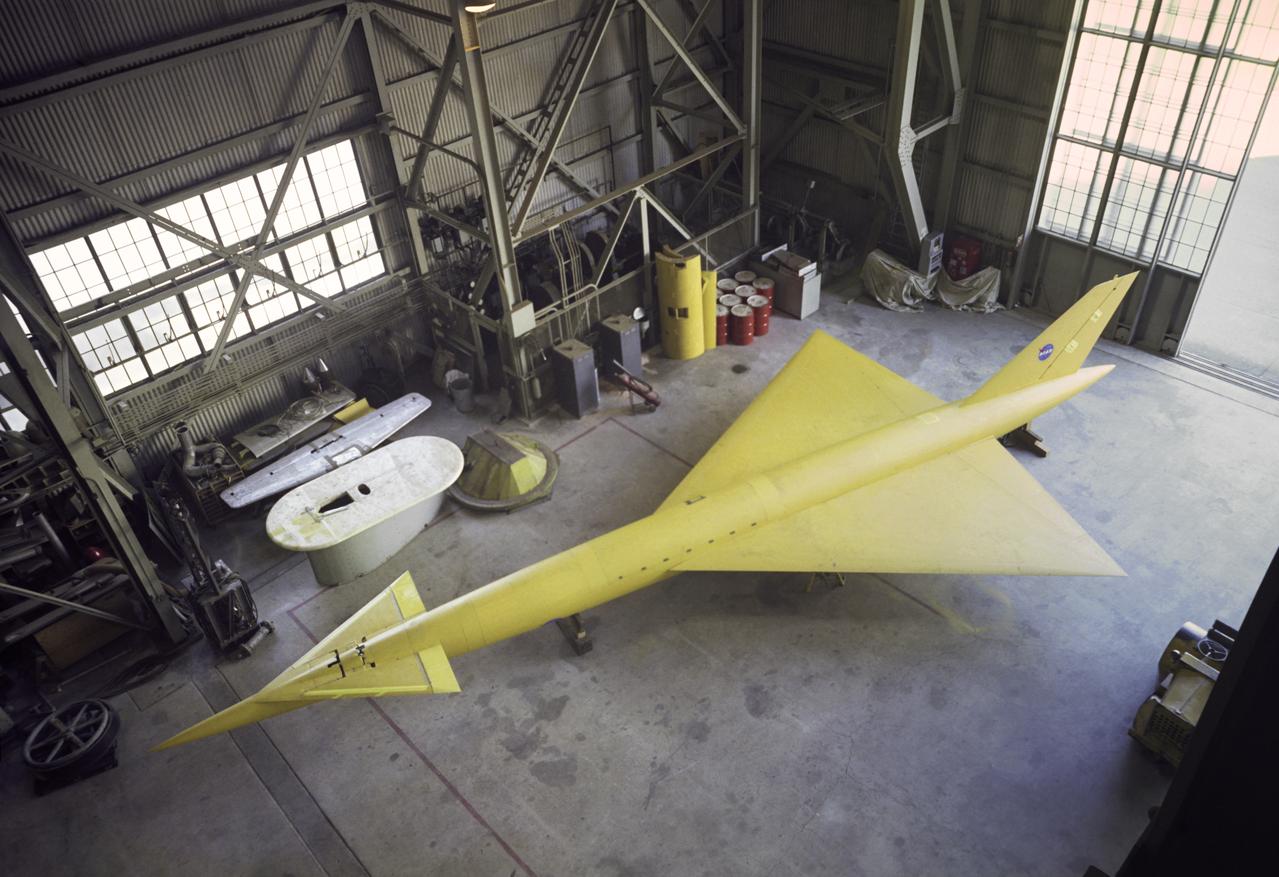
Supersonic transport model test in 40x80 foot wind tunnel, 3/4 overhead view of model in shop floor.  04/06/1961 R 975 T
Supersonic Transport Model in the shop of the Ames 40x80 Foot Wind Tunnel.
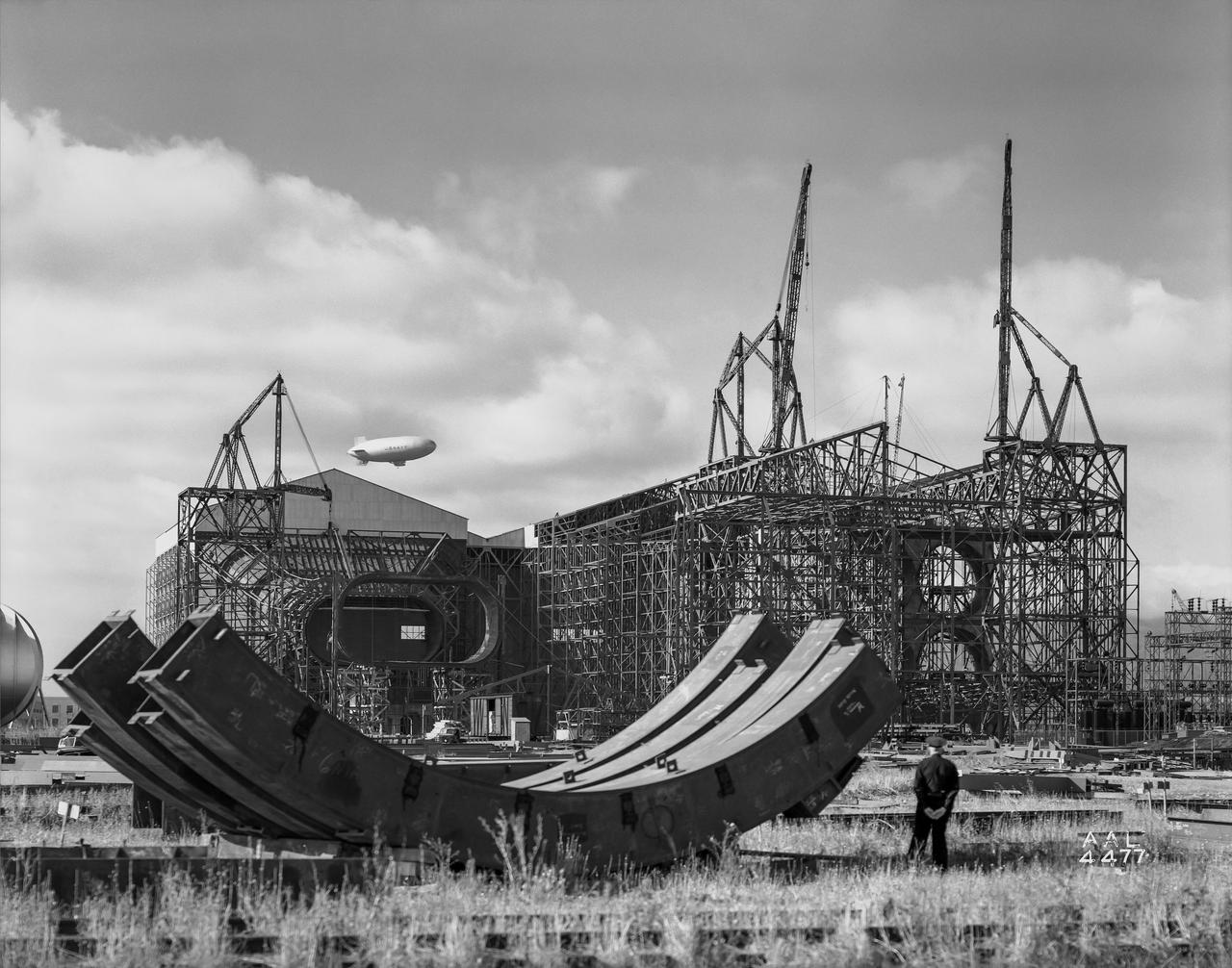
Looking south at the construction of the test section of the 40 x 80 foot wind tunnel.  4 parts of a test section bent seen in the  foreground. Airship rising in the background.
Construction of the Ring Section of the 40x80 Foot Wind Tunnel at NACA Ames.
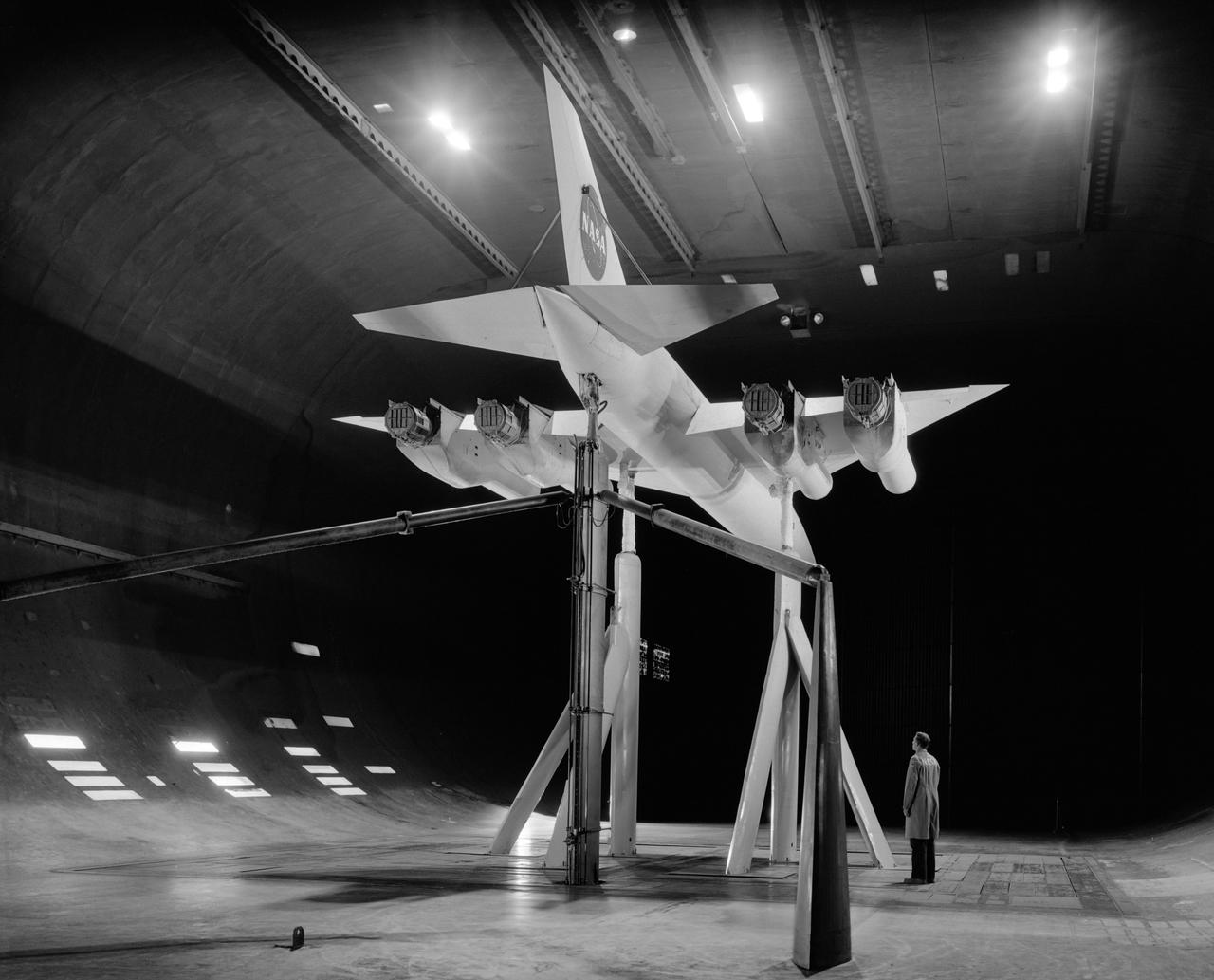
SCAT-15F supersonic transport model, lower 3/4 front view.
Supersonic Transport Model mounted in the Ames 40x80 Foot Wind Tunnel.
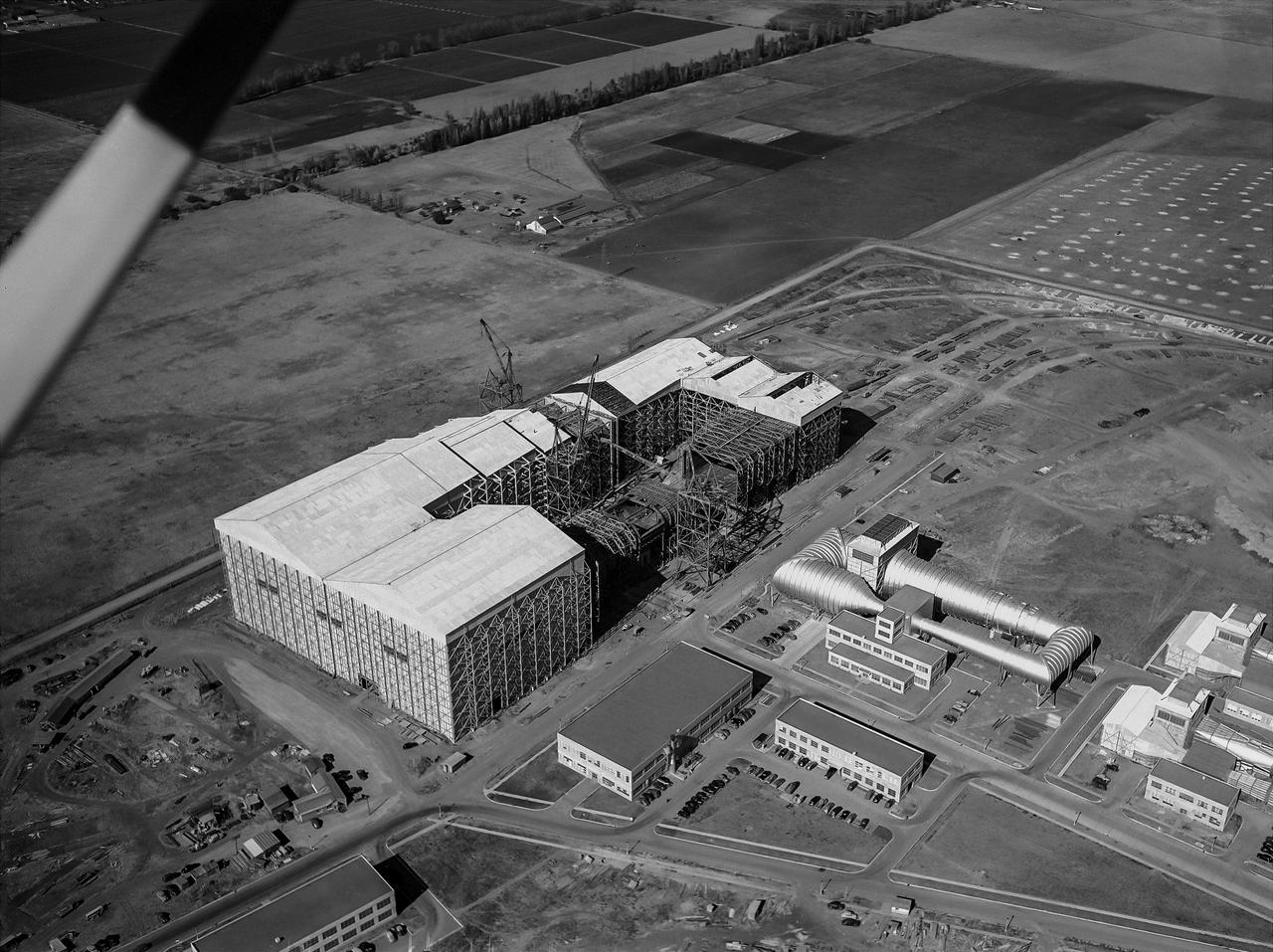
Aerial view looking North West of the nearly completed 40 x 80 foot wind tunnel.  Drive and test section exposed. The facility covered 8 acres, and the air circuit was just over 1/2 mile long (2700 feet).
Aerial View of the Nearly Completed 40x80 Foot Wind Tunnel at Ames
F-14A fighter model lifted from the shop floor of the 40 x 80 foot wind tunnel.  3/4 scale
Grumman F-14A Airplane In Ames 40X80 Foot Wind Tunnel.
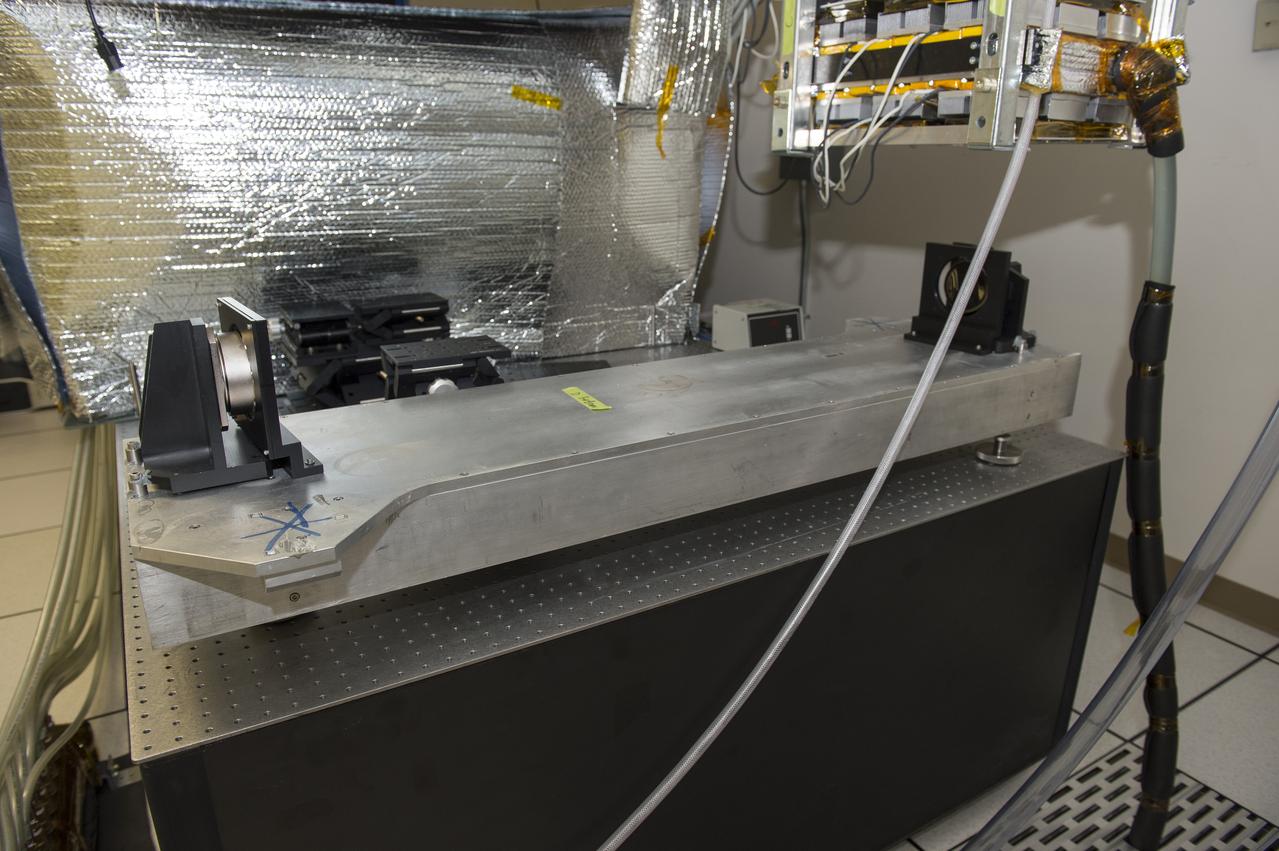
Next Generation PIAA mirrors were made by Tinsley and are inside the enclosure. Shows dummy set-up uning early PIAA mirors made by Axsys on loan to Ames from JPL.
New Space Telescope Optics to Find a New Earth
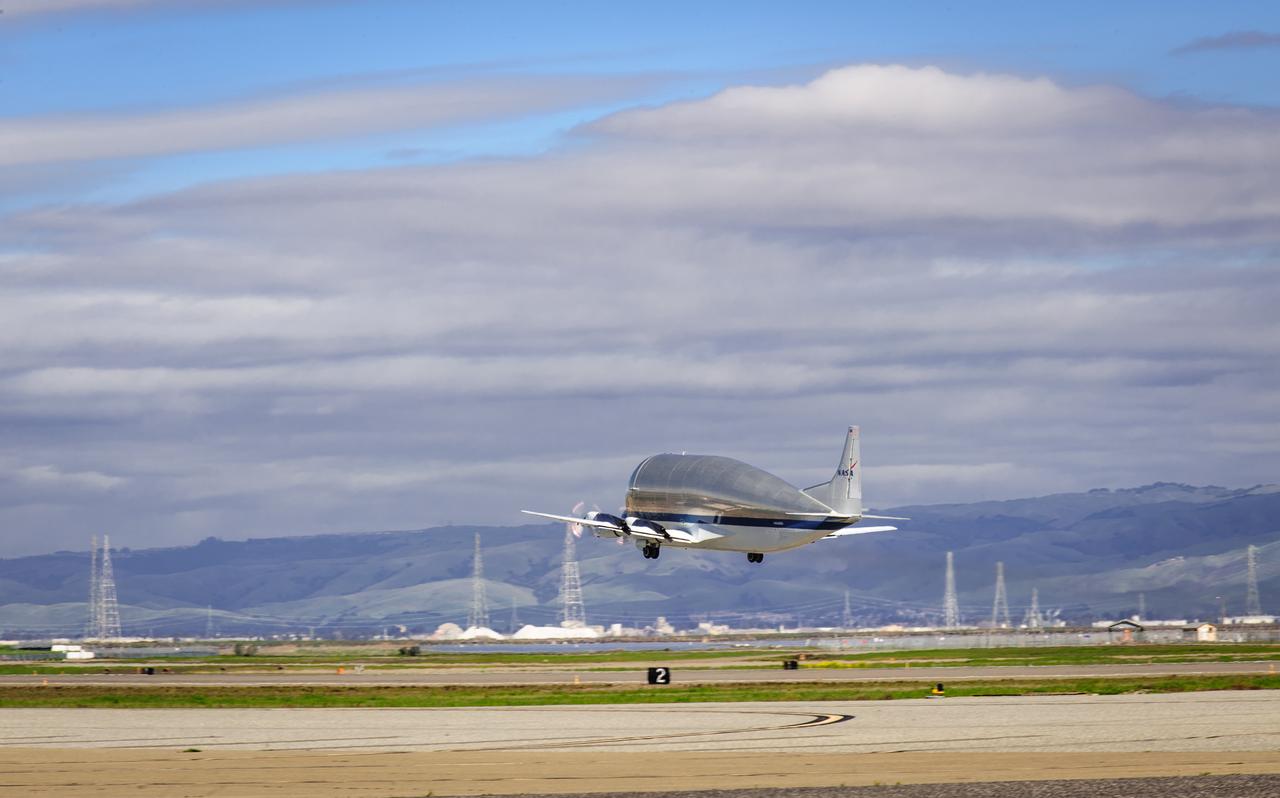
NASA N941NA lift off from Ames Research Center at Moffett Field, it is the last Super Guppy still flying.
NASAs B377SGT Super Guppy Turbine Cargo Airplane Leaving Moffett Field at NASA Ames.
4 propeller Tilt Wing. Pictured with Tommy Wills wind tunnel mechanic in the 40x80 foot wind tunnel.
Tilt-Wing/Propeller Model With Blowing Flaps Tested in the 40x80 foot Wind Tunnel at NASA Ames.
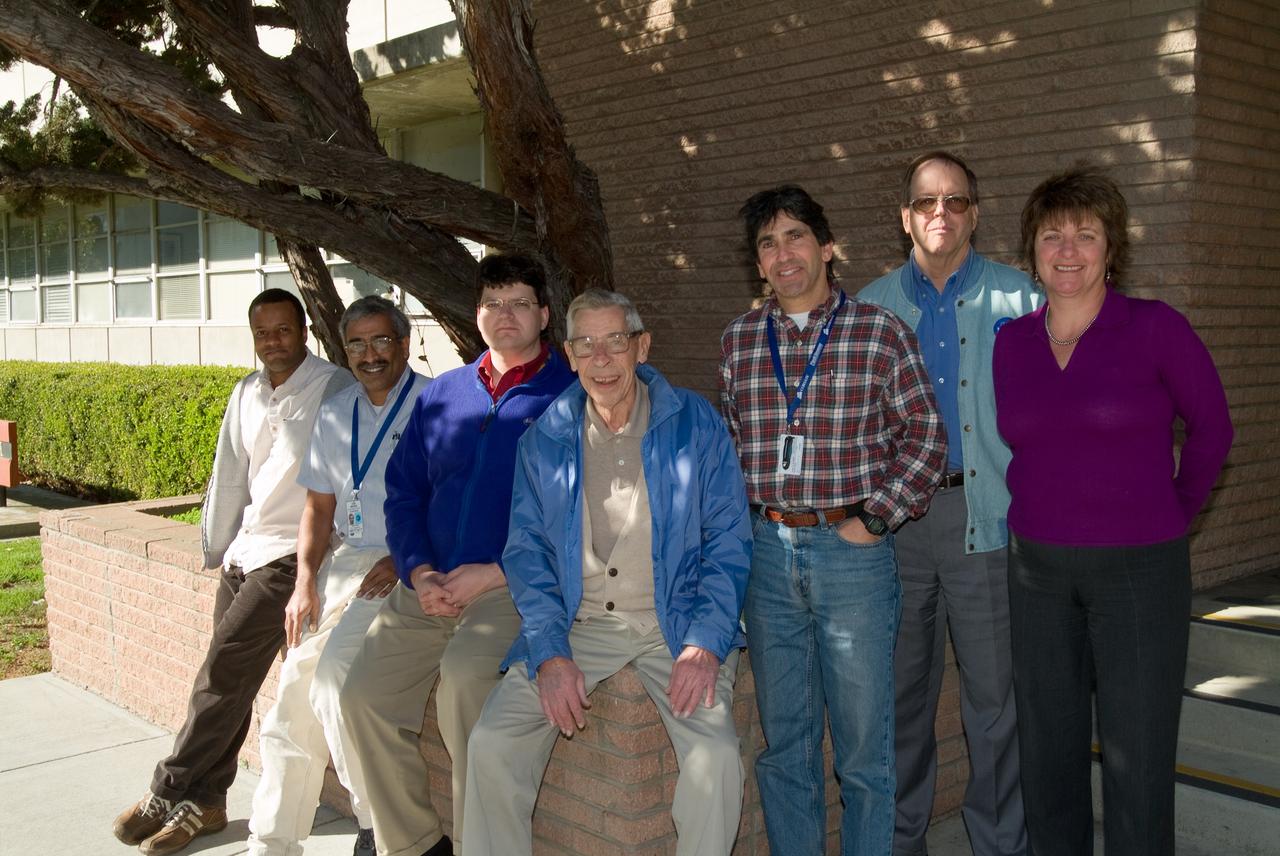
Dr. Alfred Eggers returns for a visit to Ames and the arc jet with (left to right); Ryan Mcdaniel, Dinesh Rabhu, Joe Olejnizak, Alfred Eggers, Jeff Brown, Joe Hartman, Sylvia Johnson.
Dr. Alfred Eggers Visits the Arc Jet at Ames
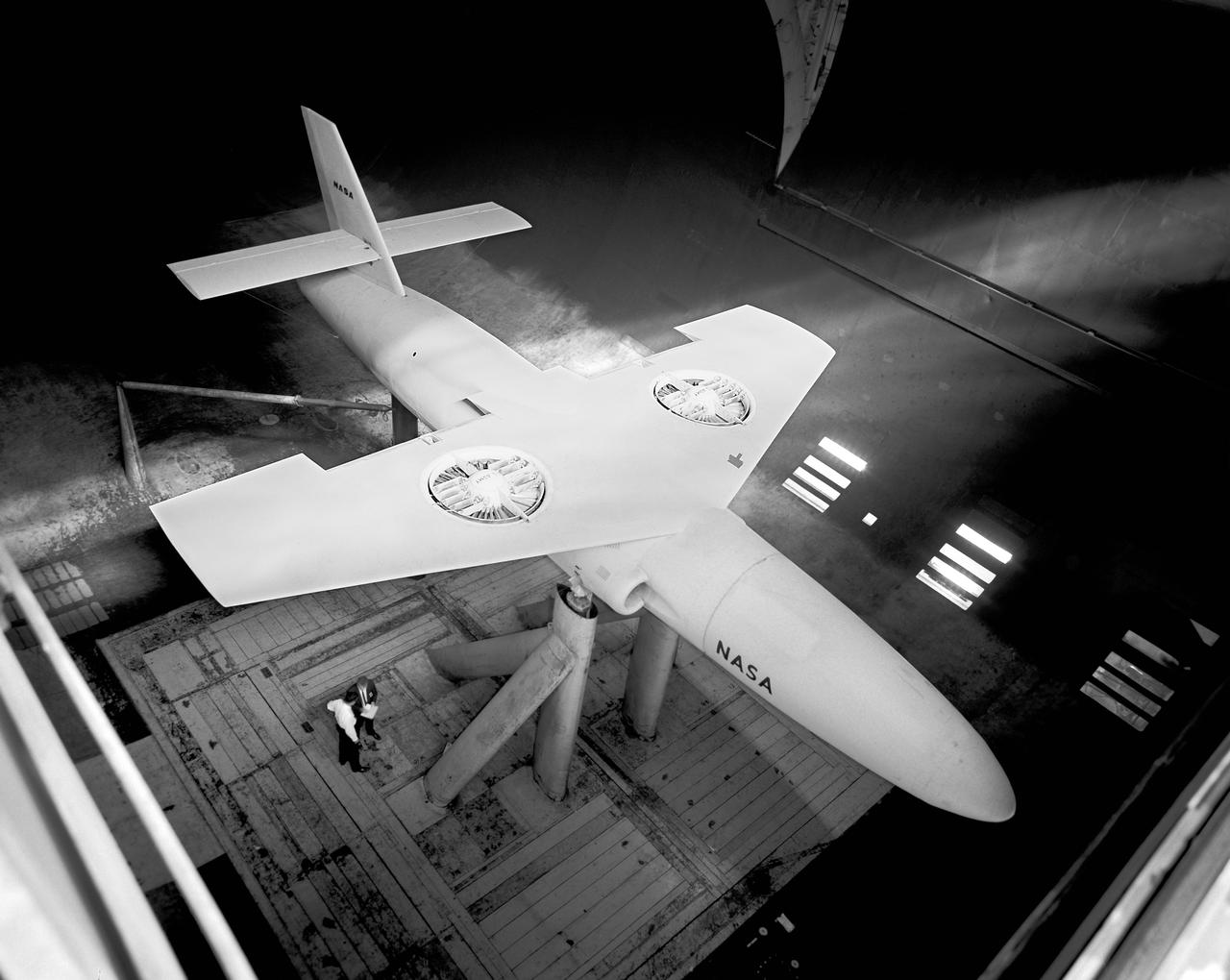
Top view if GE fan model, 3/4 top view. Straight wing. 1 fan per wing, conventional struts. Woody Kook, Branch Chief.
A-28399. GE Fan in Wing in Ames 40x80 foot wind tunnel.
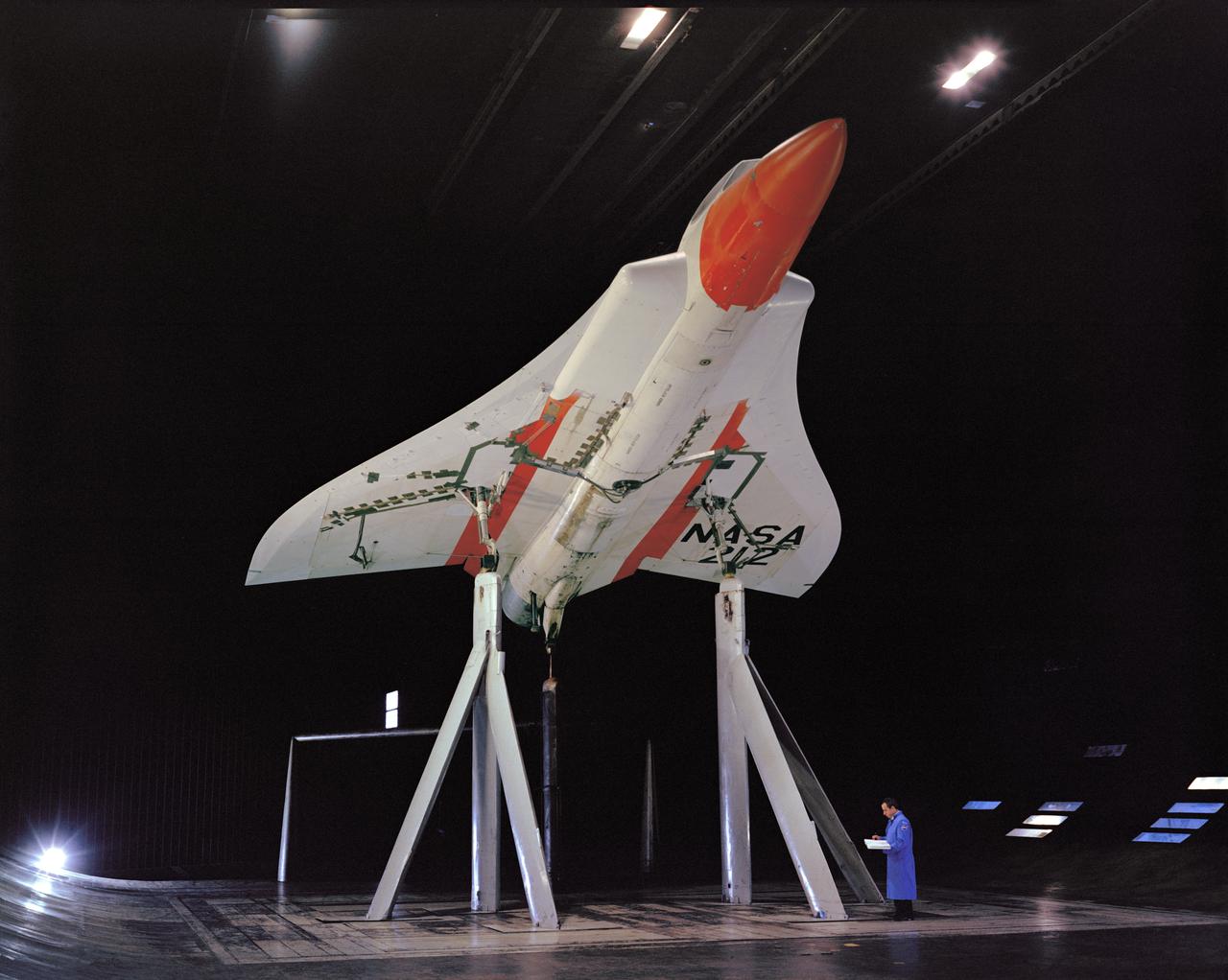
3/4 rear view of SCAT-17 supersonic transport with thrust reverser installed and trailing edge flaps deflected at 30 deg.
SCAT-17 Supersonic Transport in the 40x80 foot wind tunnel at NASA Ames.
Drag studies for Full Scale wind tunnel test of Grumman YAO-1 airplane, 3/4 front view with propellers on
Grumman YAO-1 airplane mounted in the 40x80 foot wind tunnel at Ames.
M-2 lifting body wind tunnel model with wind tunnel mechanic Chuck Greco.  Model mounted on special support designed for lifting body models.  Flaps and elevons visible.
M-2 Lifting Body, F.S.W.T. in Ames 40x80 Foot Wind Tunnel.
Bell V/STOL X-14 airplane mounted at 90 degrees yaw in 40x80 foot wind tunnel.
Bell VSTOL X-14 Airplane in Ames 40x80 foot Wind Tunnel.
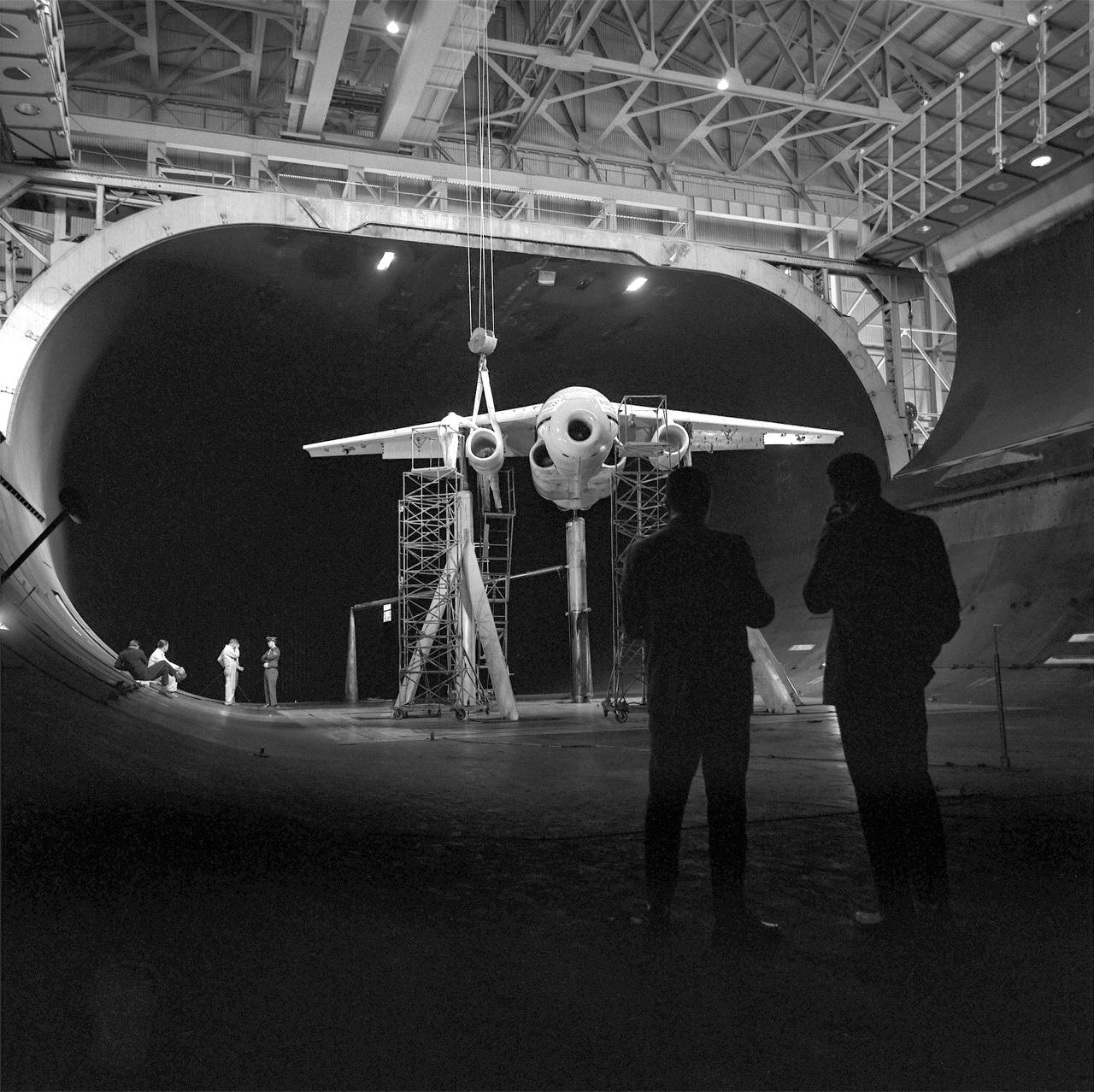
F-111B Fighter, Variable Sweep wings, wings swept forward, landing gear down.  Slat experiments. The General Dynamics/Grumman F-111B was a long-range carrier-based interceptor aircraft that was planned to be a follow-on to the F-4 Phantom II. The F-111B was developed in the 1960s by General Dynamics in conjunction with Grumman for the United States Navy (USN) as part of the joint Tactical Fighter Experimental (TFX) with the United States Air Force (USAF) to produce a common fighter for the services that could perform a variety of missions.
The General Dynamics/Grumman F-111B in the 40x80 Foot Wind Tunnel at Ames.
de Havilland augmenter wing model 3/4 front view in 40 x 80 wind tunnel. JOHN CONWAY, ALAN WHEELBAND
de Havilland Augmenter Wing Model in Ames 40x80 foot Wind Tunnel.
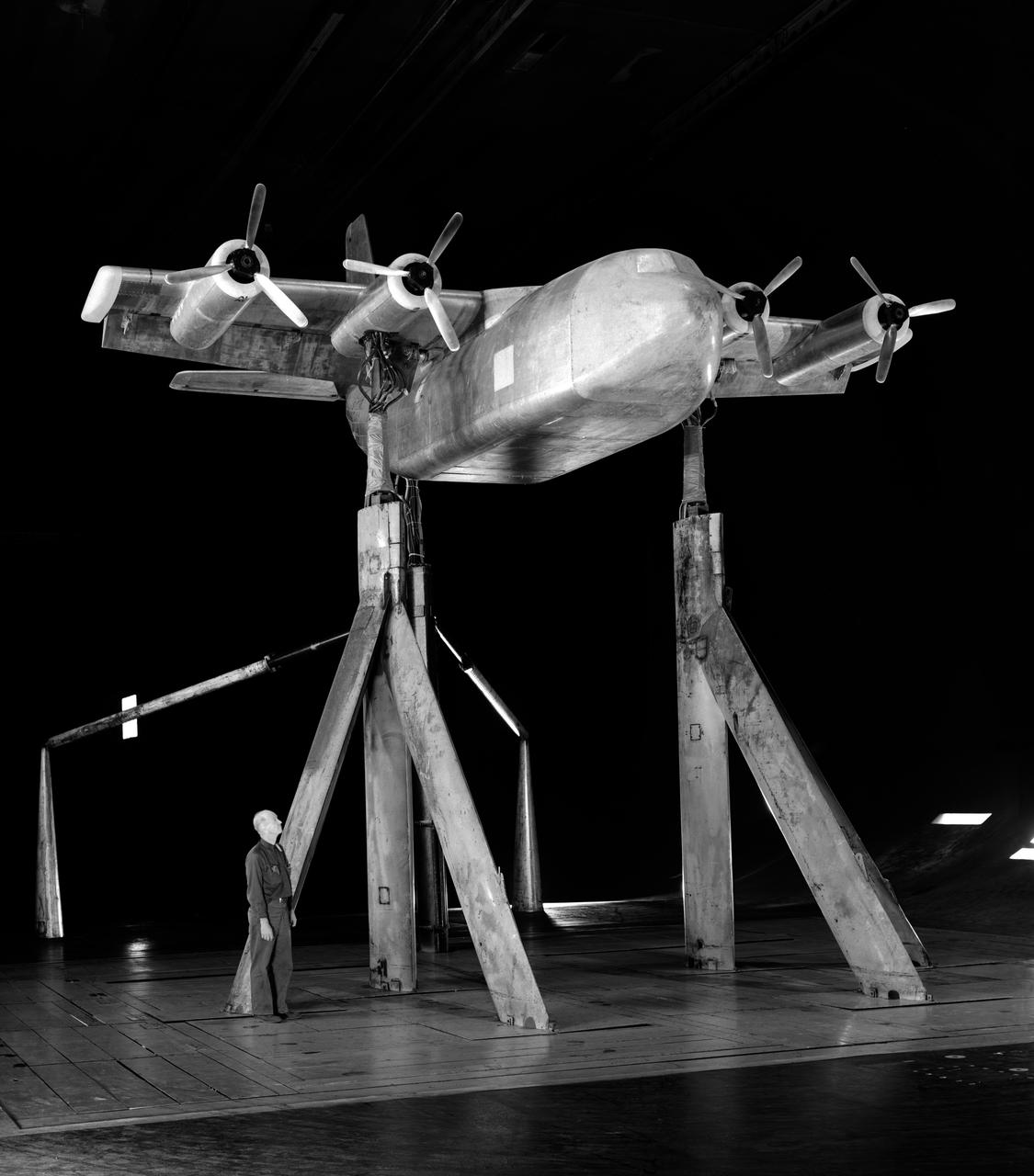
Investigation of a tilt-wing/propeller model with blowing flaps. 3/4 front view, tilt wing model, wing position = 0deg. C-123 fuselage, conventional struts, 4 props
Testing Tilt Wing Propeller Model in Ames 40x80 Foot Wind Tunnel.
Top Plan view of Bell Rotor with Ed Verrett left frame. Test #437.
Bell Helicopter Rotor Test in the Ames 40x80 foot wind tunnel.
Wind Tunnel investigation of ducted fan though 180 deg angle of attack. 3/4 front view of Doak ducted fan, semi-span model with tufts.
Investigation of Ducted Fan in Ames 40x80 Foot Wind Tunnel.
NASA Ames invited the public to participate in the 2017 Solar Eclipse viewing event on August 21, 2017.
Ames Eclipse Viewing 2017
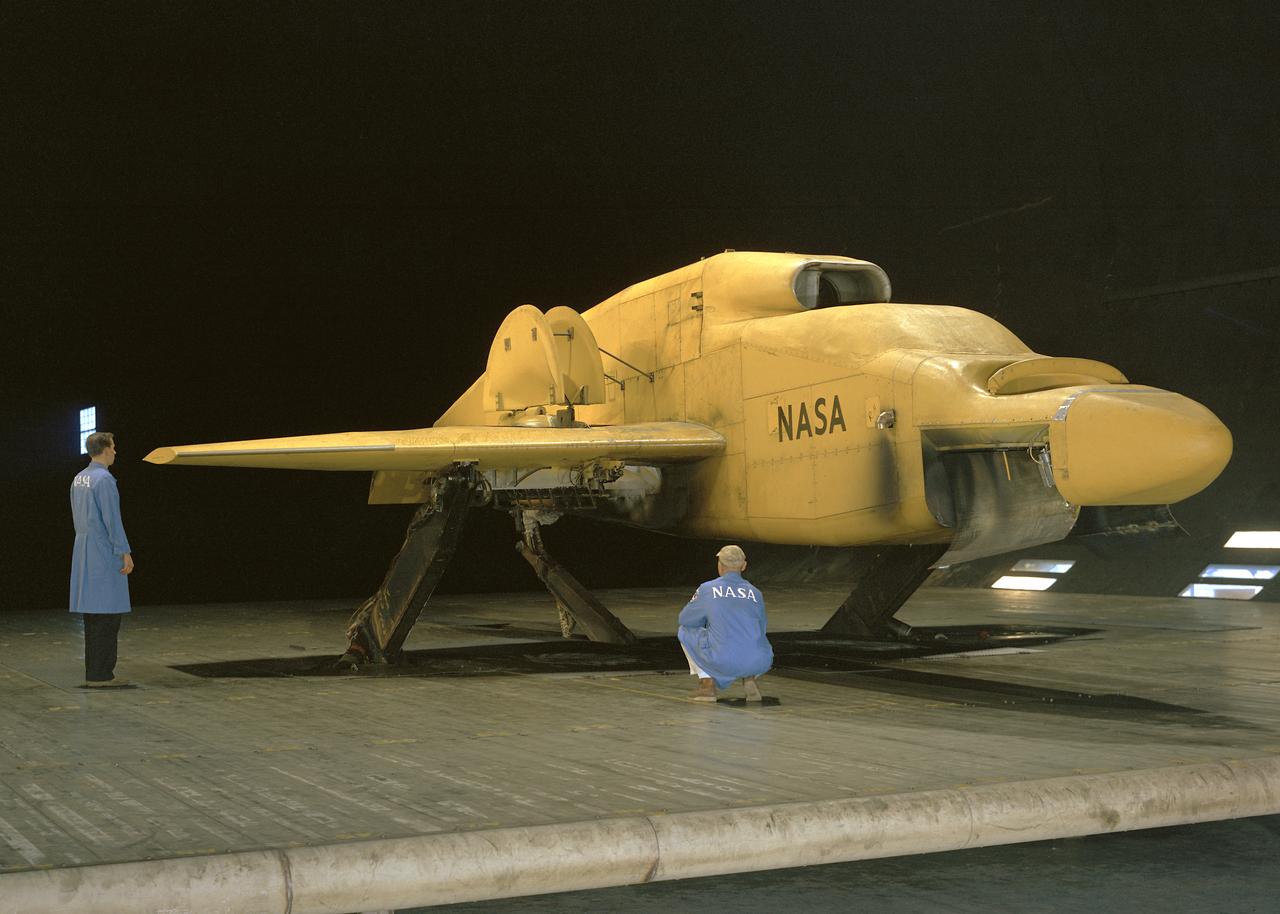
Rear view of the Avrocar without the tail, with ground board and variable height struts. The air force wanted to test the design of a flying saucer with vertical takeoff and landing capability. The design proved unstable without the tail.
Tests Of Avrocar Annular Jet VTOL Airplane in Ames 40x80 foot Wind Tunnel.
Testing the wing boundary layer control of the A3D in the 40 x 80 wind tunnel.  Boundary layer control was added to increase the lift of the wing for aircraft carrier take off and landing.
Douglas XA3D-1 #413 Airplane mounted in Ames 40x80 foot Wind Tunnel.
Top front view of Delta wing lift fan fighter model.
Lift-Fan Delta Wing Fighter Model in Ames 40x80 foot Wind Tunnel.
Hunjoo Kim, NASA JPL, (Left) Ashley Karp, NASA JPL (Right) preparing the Peregrine Hybrid Rocket Engine at the Outdoor Aerodynamic Research Facility (OARF, N-249).
Peregrine Rocket Motor Test at the Ames Outdoor Aerodynamic Research Facility (OARF).