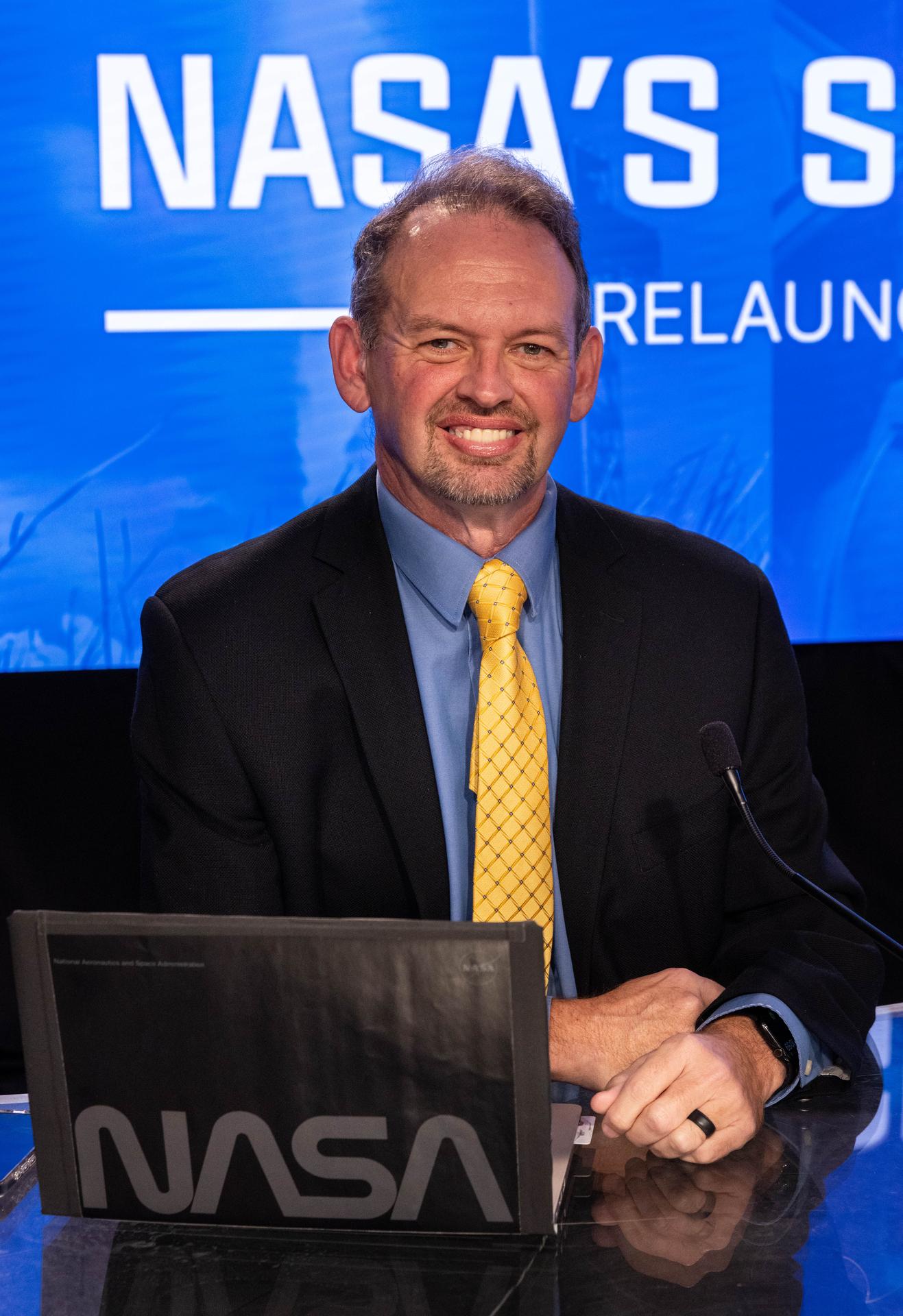
Steven Siceloff, NASA Communications, participates in a prelaunch news conference for NASA’s SpaceX Crew-12 mission inside the John Holliman Auditorium of the NASA News Center at the agency’s Kennedy Space Center in Florida on Monday, Feb. 9, 2026. The Crew-12 mission will send NASA astronauts Jessica Meir and Jack Hathaway, ESA (European Space Agency) astronaut Sophie Adenot, and Roscosmos cosmonaut Andrey Fedyaev to the International Space Station aboard SpaceX’s Dragon spacecraft and Falcon 9 rocket no earlier than 5:38 a.m. EST, Thursday, Feb. 12, from Cape Canaveral Space Force Station’s Space Launch Complex 40.
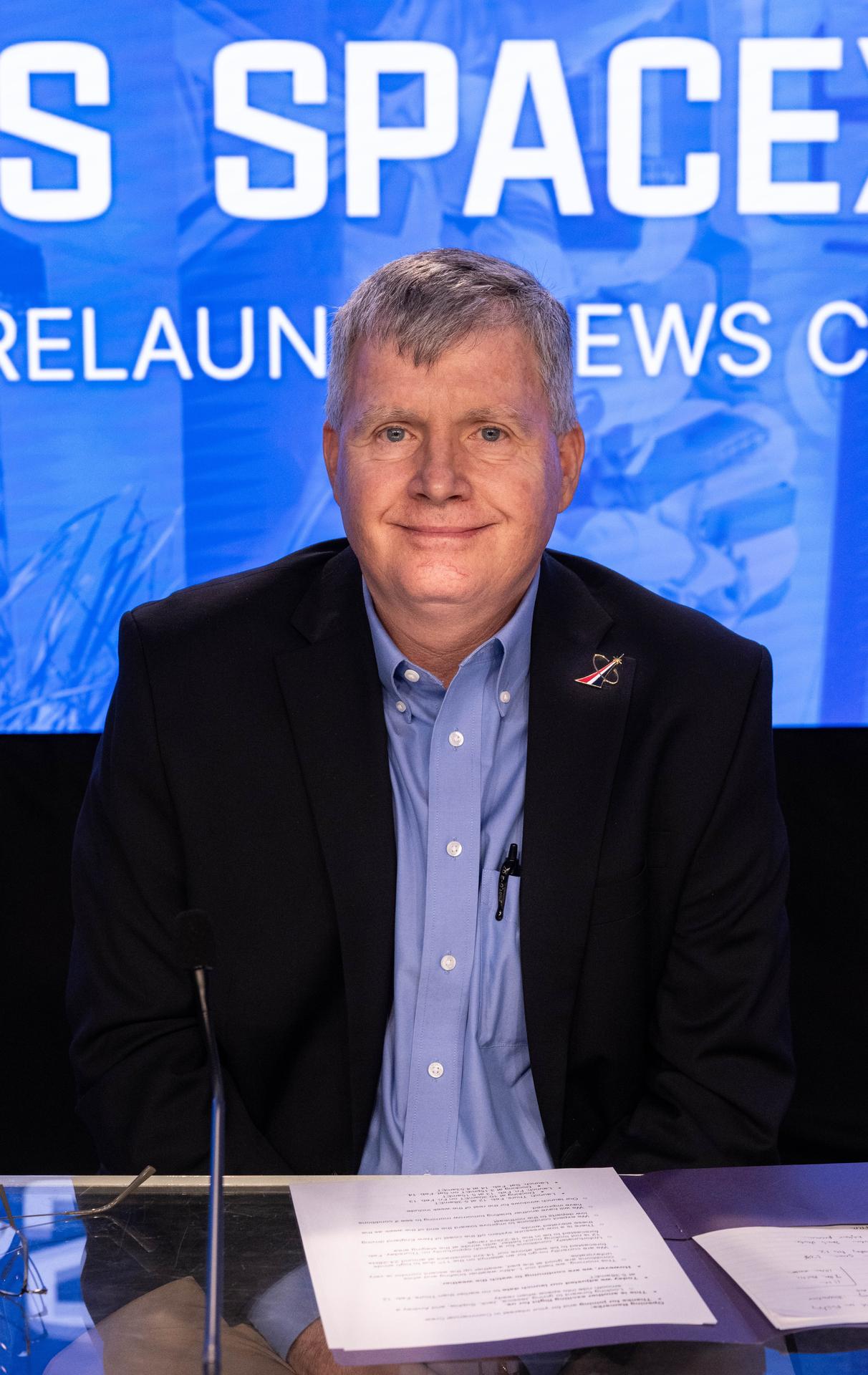
Steve Stich, manager, NASA's Commercial Crew Program, participates in a prelaunch news conference for NASA’s SpaceX Crew-12 mission inside the John Holliman Auditorium of the NASA News Center at the agency’s Kennedy Space Center in Florida on Monday, Feb. 9, 2026. The Crew-12 mission will send NASA astronauts Jessica Meir and Jack Hathaway, ESA (European Space Agency) astronaut Sophie Adenot, and Roscosmos cosmonaut Andrey Fedyaev to the International Space Station aboard SpaceX’s Dragon spacecraft and Falcon 9 rocket no earlier than 5:38 a.m. EST, Thursday, Feb. 12, from Cape Canaveral Space Force Station’s Space Launch Complex 40.

Andreas Mogensen, ESA (European Space Agency) Human Exploration Group Leader participates in a prelaunch news conference for NASA’s SpaceX Crew-12 mission inside the John Holliman Auditorium of the NASA News Center at the agency’s Kennedy Space Center in Florida on Monday, Feb. 9, 2026. The Crew-12 mission will send NASA astronauts Jessica Meir and Jack Hathaway, ESA (European Space Agency) astronaut Sophie Adenot, and Roscosmos cosmonaut Andrey Fedyaev to the International Space Station aboard SpaceX’s Dragon spacecraft and Falcon 9 rocket no earlier than 5:38 a.m. EST, Thursday, Feb. 12, from Cape Canaveral Space Force Station’s Space Launch Complex 40.

Dina Contella, deputy manager, NASA's International Space Station Program participates in a prelaunch news conference for NASA’s SpaceX Crew-12 mission inside the John Holliman Auditorium of the NASA News Center at the agency’s Kennedy Space Center in Florida on Monday, Feb. 9, 2026. The Crew-12 mission will send NASA astronauts Jessica Meir and Jack Hathaway, ESA (European Space Agency) astronaut Sophie Adenot, and Roscosmos cosmonaut Andrey Fedyaev to the International Space Station aboard SpaceX’s Dragon spacecraft and Falcon 9 rocket no earlier than 5:38 a.m. EST, Thursday, Feb. 12, from Cape Canaveral Space Force Station’s Space Launch Complex 40.
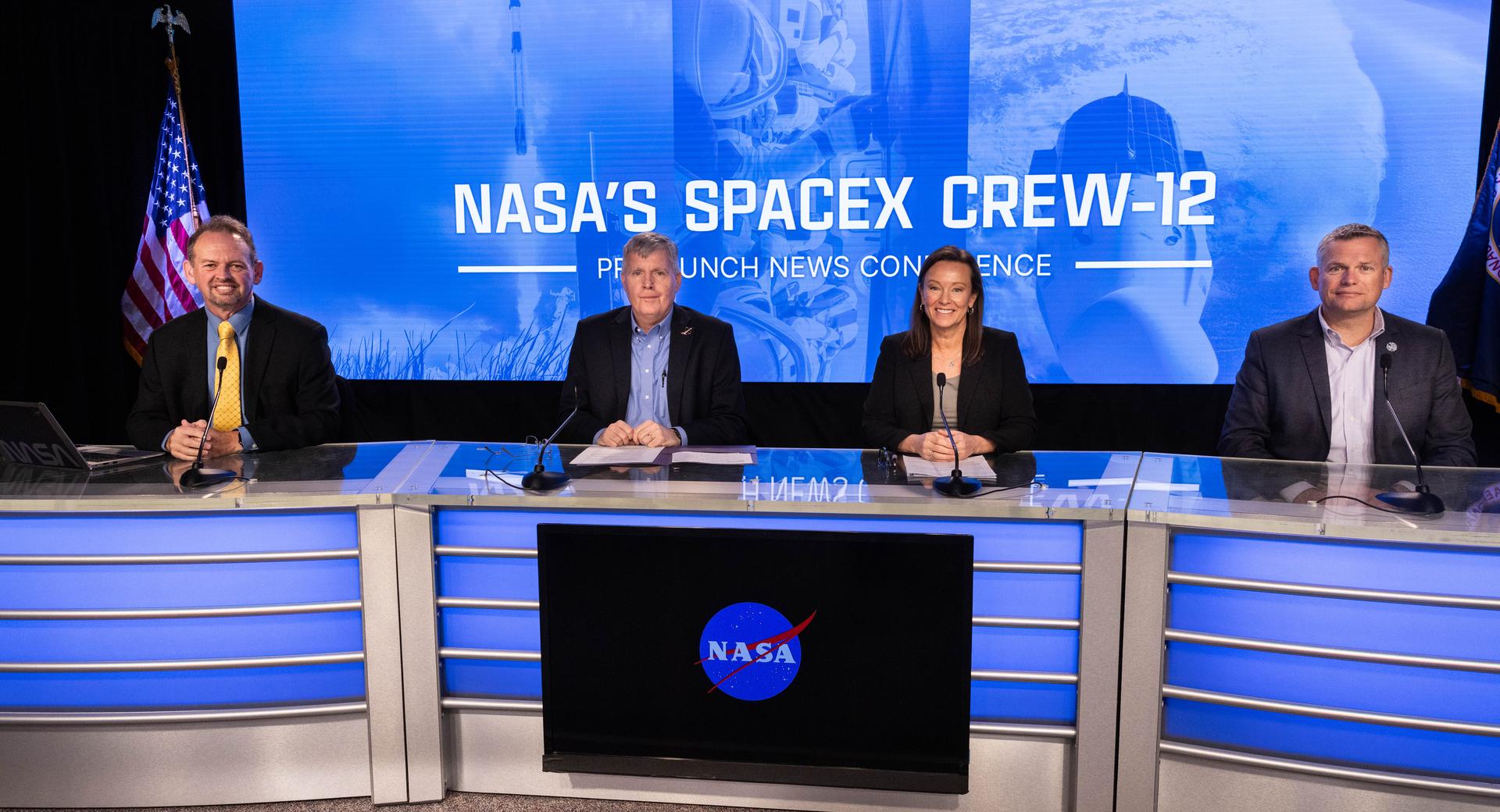
NASA leaders hold a prelaunch news conference inside the John Holliman Auditorium of the NASA News Center at the agency’s Kennedy Space Center in Florida on Monday, Feb. 9, 2026, ahead of NASA’s SpaceX Crew-12 mission. From left to right, participants include Steven Siceloff, NASA Communications; Steve Stich, manager, NASA's Commercial Crew Program; Dina Contella, deputy manager, NASA's International Space Station Program; Andreas Mogensen, ESA (European Space Agency) Human Exploration Group Leader. The Crew-12 mission will send NASA astronauts Jessica Meir and Jack Hathaway, ESA (European Space Agency) astronaut Sophie Adenot, and Roscosmos cosmonaut Andrey Fedyaev to the International Space Station aboard SpaceX’s Dragon spacecraft and Falcon 9 rocket no earlier than 5:38 a.m. EST, Thursday, Feb. 12, from Cape Canaveral Space Force Station’s Space Launch Complex 40.
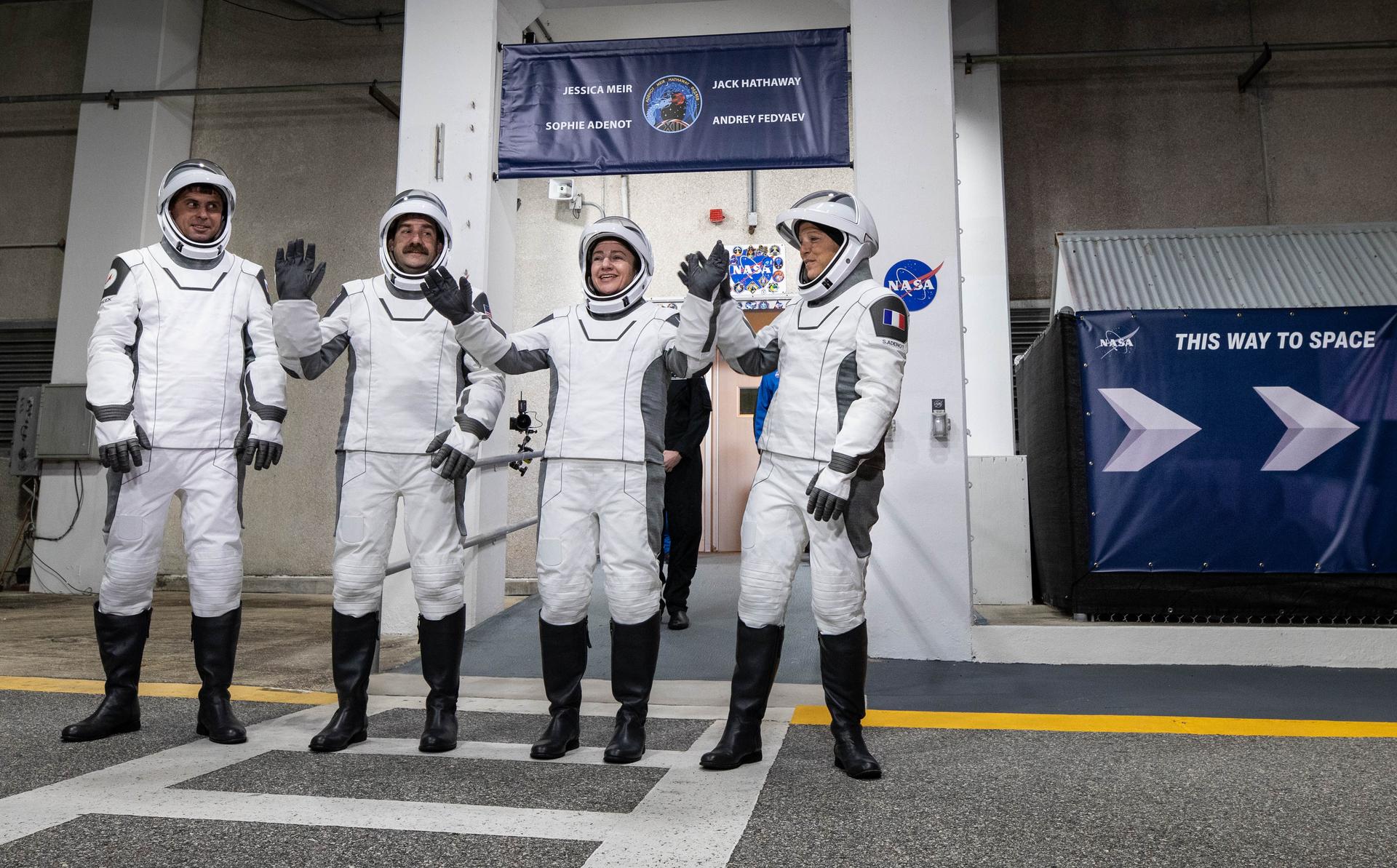
NASA’s SpaceX Crew-12 crew members wave to family and friends as they depart the Neil A. Armstrong Operations and Checkout Building at the agency’s Kennedy Space Center in Florida for Space Launch Complex 40 at Cape Canaveral Space Force Station ahead of launch on Friday, Feb. 13, 2026. From left, Roscosmos cosmonaut Andrey Fedyaev, NASA astronauts Jack Hathaway and Jessica Meir, and ESA (European Space Agency) astronaut Sophie Adenot are scheduled to lift off aboard SpaceX’s Dragon spacecraft and Falcon 9 rocket to the International Space Station at 5:15 a.m. EST.
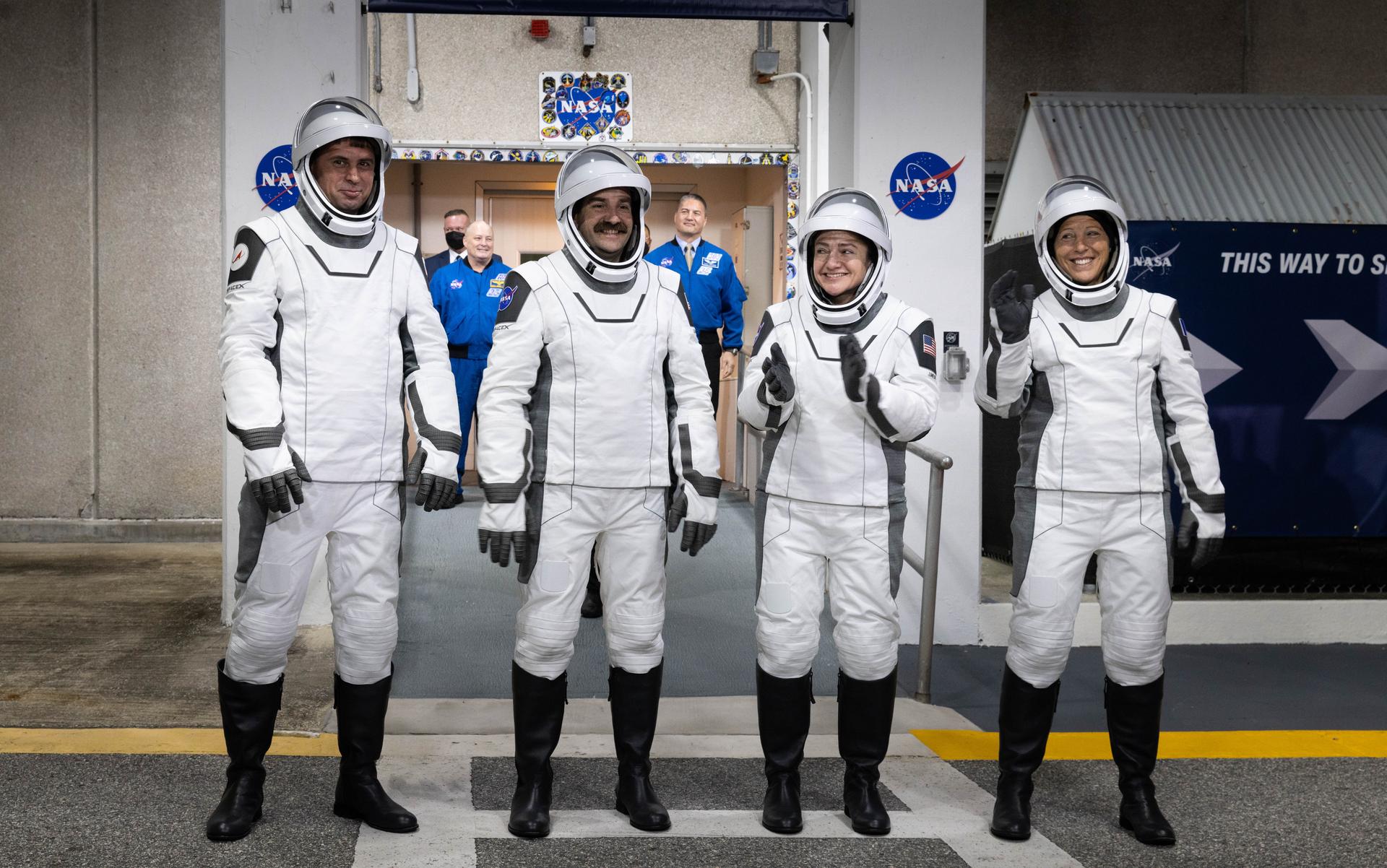
NASA’s SpaceX Crew-12 crew members wave to family and friends as they depart the Neil A. Armstrong Operations and Checkout Building at the agency’s Kennedy Space Center in Florida for Space Launch Complex 40 at Cape Canaveral Space Force Station ahead of launch on Friday, Feb. 13, 2026. From left, Roscosmos cosmonaut Andrey Fedyaev, NASA astronauts Jack Hathaway and Jessica Meir, and ESA (European Space Agency) astronaut Sophie Adenot are scheduled to lift off aboard SpaceX’s Dragon spacecraft and Falcon 9 rocket to the International Space Station at 5:15 a.m. EST.
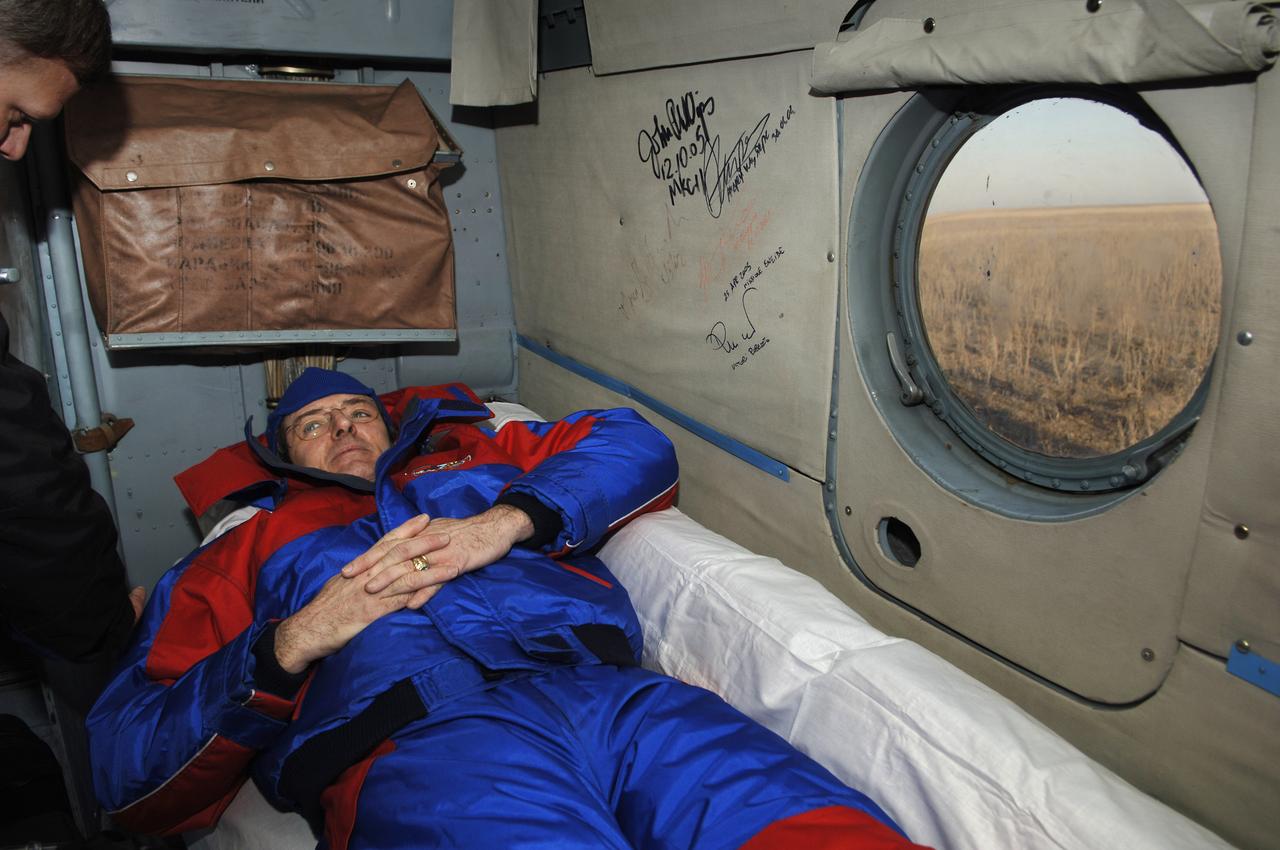
Expedition 12 Commander Bill McArthur rest onboard a Russian helicopter that will take him from the landing site to Kustanay, Kazakhstan. Expedition 12 returned to Earth and landed in the steppes of Kazakhstan onboard a Soyuz TMA-7 spacecraft that touched down at 7:48 p.m. EDT on Sunday, April 9, 2006. Returning with Commander Bill McArthur and Flight Engineer Valery Tokarev was Brazil’s first astronaut, Marcos Pontes, who arrived at the station with Expedition 13 on April 1. Photo Credit: (NASA/Bill Ingalls)
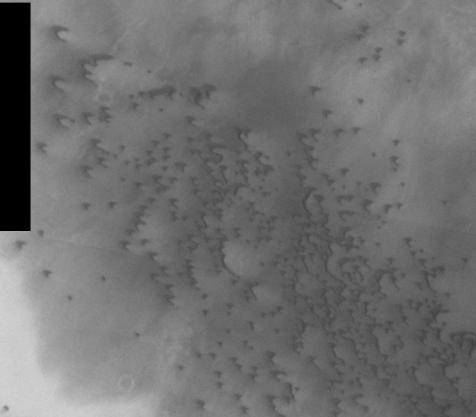
THEMIS Images as Art #12
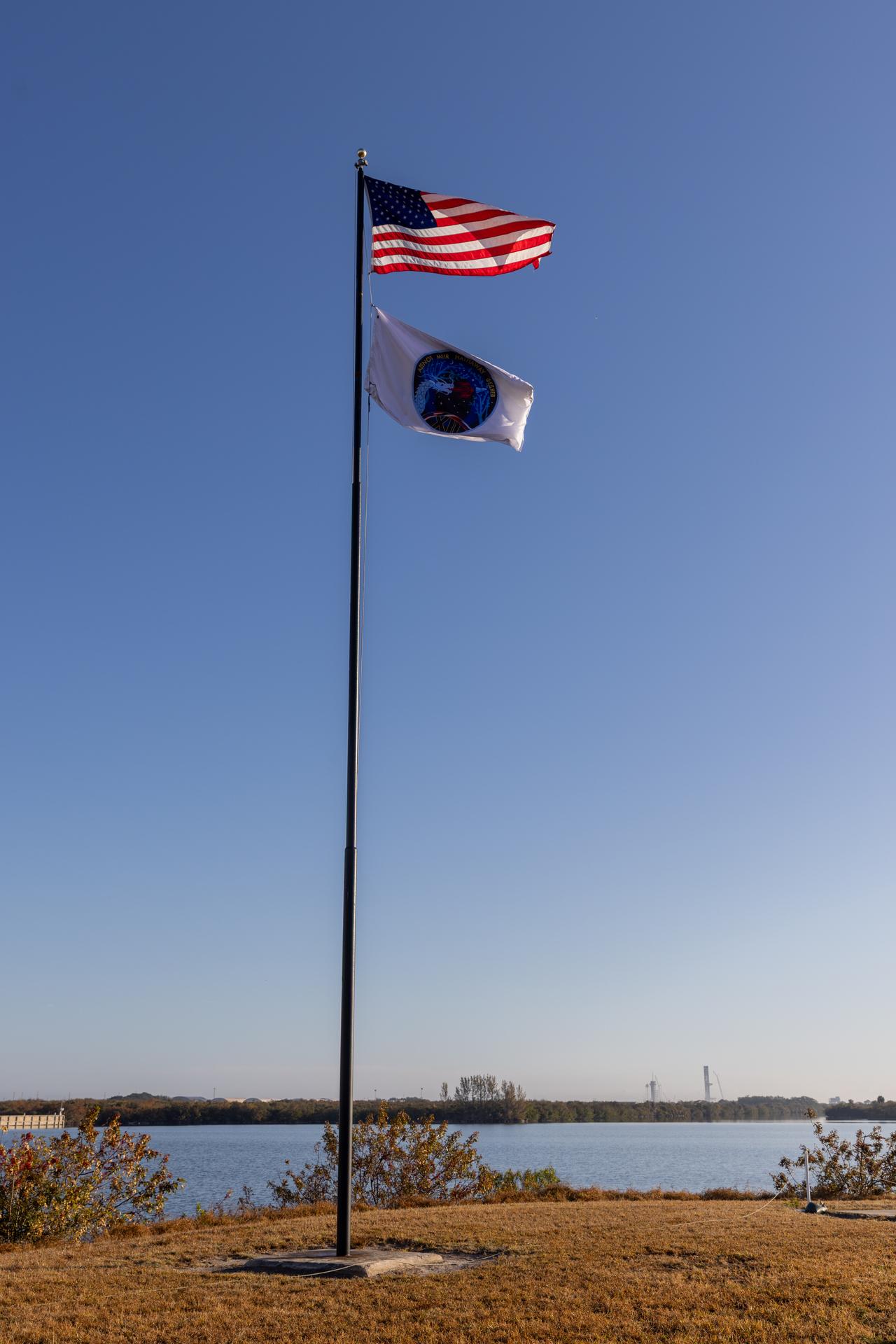
NASA Commercial Crew Program employees raise the agency’s SpaceX Crew-12 mission flag near the countdown clock at the NASA News Center at the agency’s Kennedy Space Center in Florida on Monday, Feb. 9, 2026. The Crew-12 mission will send NASA astronauts Jessica Meir and Jack Hathaway, ESA (European Space Agency) astronaut Sophie Adenot, and Roscosmos cosmonaut Andrey Fedyaev to the International Space Station aboard SpaceX’s Dragon spacecraft and Falcon 9 rocket no earlier than 5:38 a.m. EST, Thursday, Feb. 12, from Cape Canaveral Space Force Station’s Space Launch Complex 40.
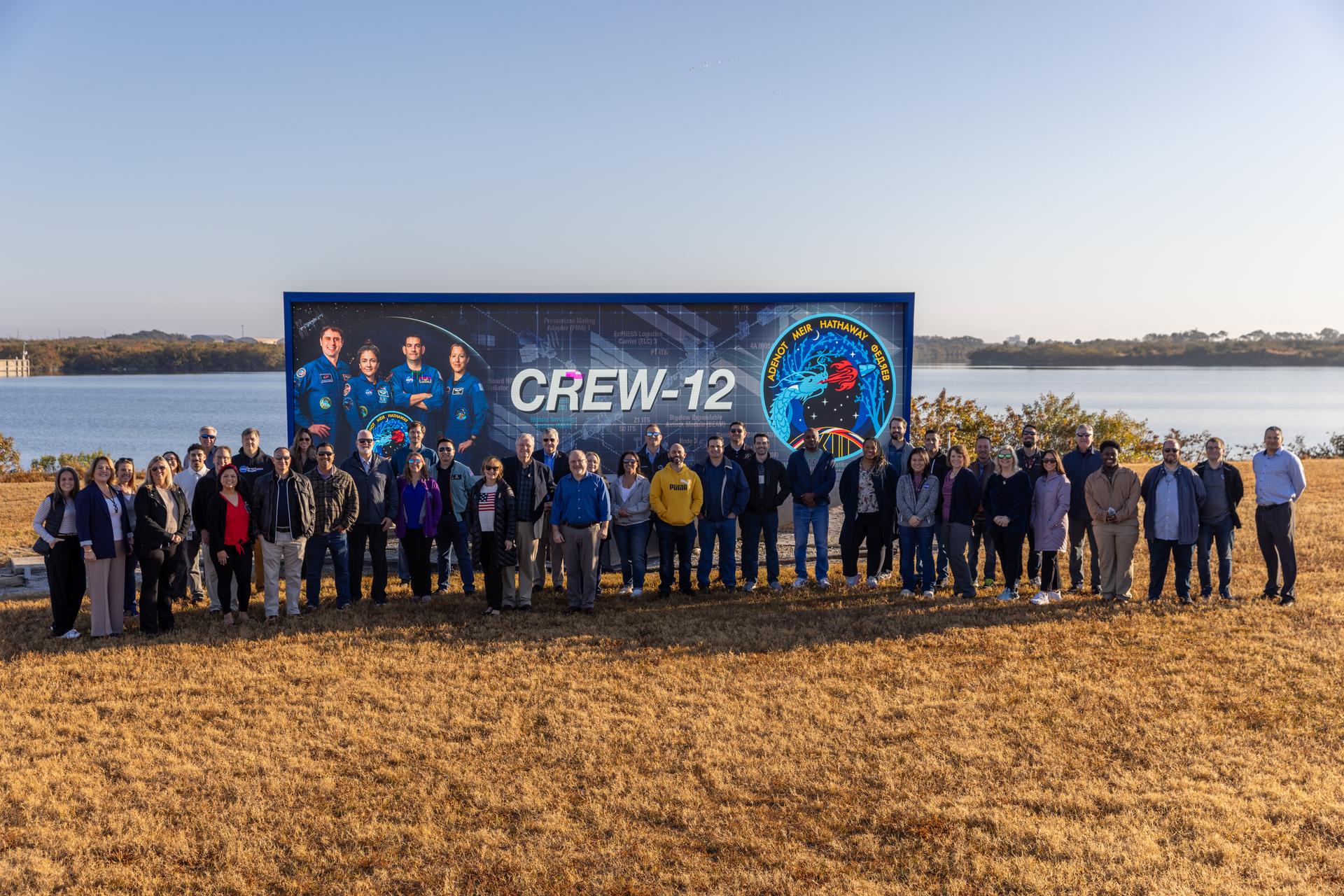
NASA Commercial Crew Program employees raise the agency’s SpaceX Crew-12 mission flag near the countdown clock at the NASA News Center at the agency’s Kennedy Space Center in Florida on Monday, Feb. 9, 2026. The Crew-12 mission will send NASA astronauts Jessica Meir and Jack Hathaway, ESA (European Space Agency) astronaut Sophie Adenot, and Roscosmos cosmonaut Andrey Fedyaev to the International Space Station aboard SpaceX’s Dragon spacecraft and Falcon 9 rocket no earlier than 5:38 a.m. EST, Thursday, Feb. 12, from Cape Canaveral Space Force Station’s Space Launch Complex 40.
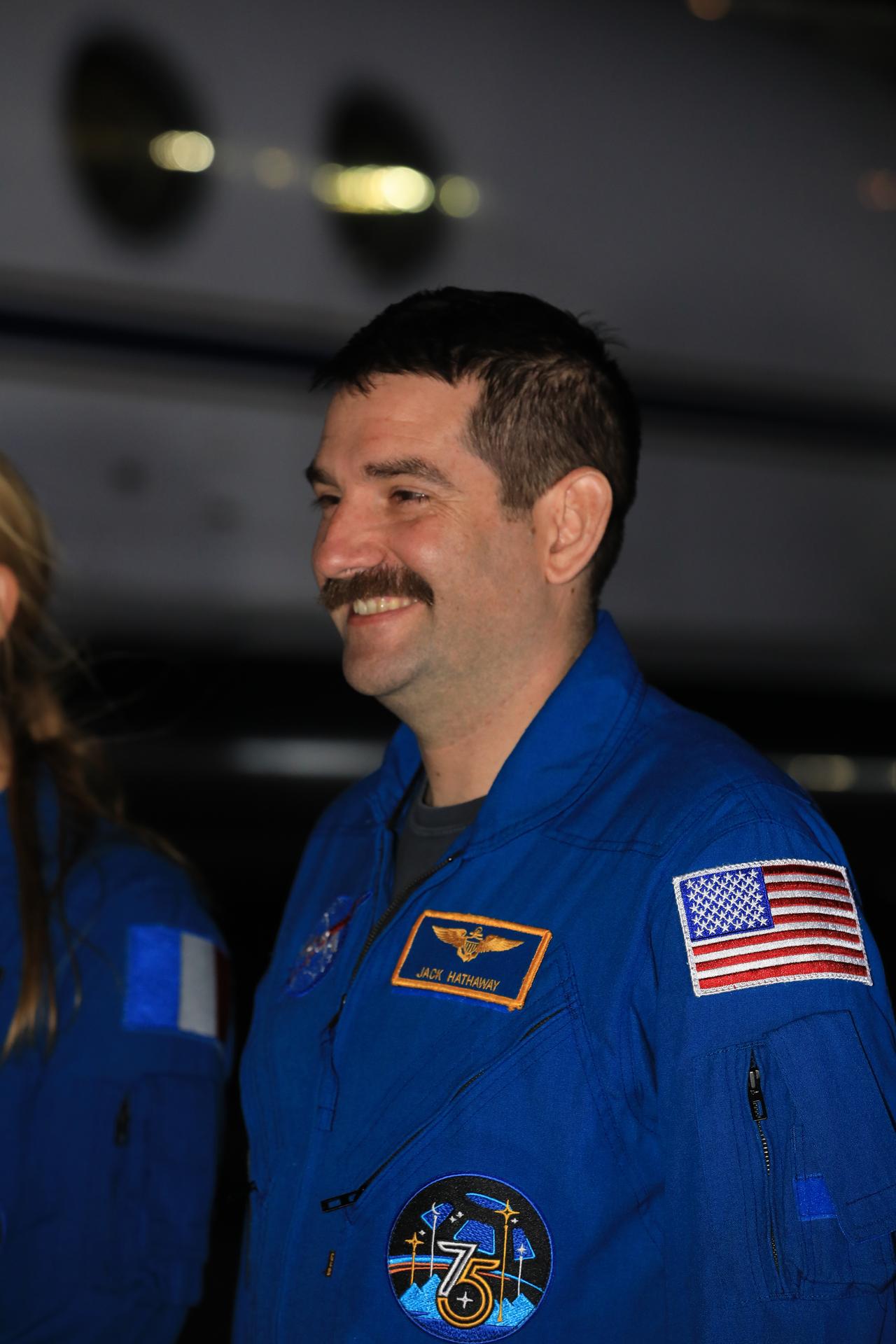
NASA astronaut Jack Hathaway, Crew-12 pilot, arrives Friday, Feb. 6, 2026, at the Launch and Landing Facility at the agency’s Kennedy Space Center in Florida. Hathaway and fellow NASA astronaut Jessica Meir, along with ESA (European Space Agency) astronaut Sophie Adenot, and Roscosmos cosmonaut Andrey Fedyaev will launch to the International Space Station aboard SpaceX’s Dragon spacecraft and Falcon 9 rocket at 6:01 a.m. EST on Wednesday, Feb. 11, from Cape Canaveral Space Force Station’s Space Launch Complex 40. Crew-12 is the 12th crew rotation mission with SpaceX to the space station as part of NASA’s Commercial Crew Program.
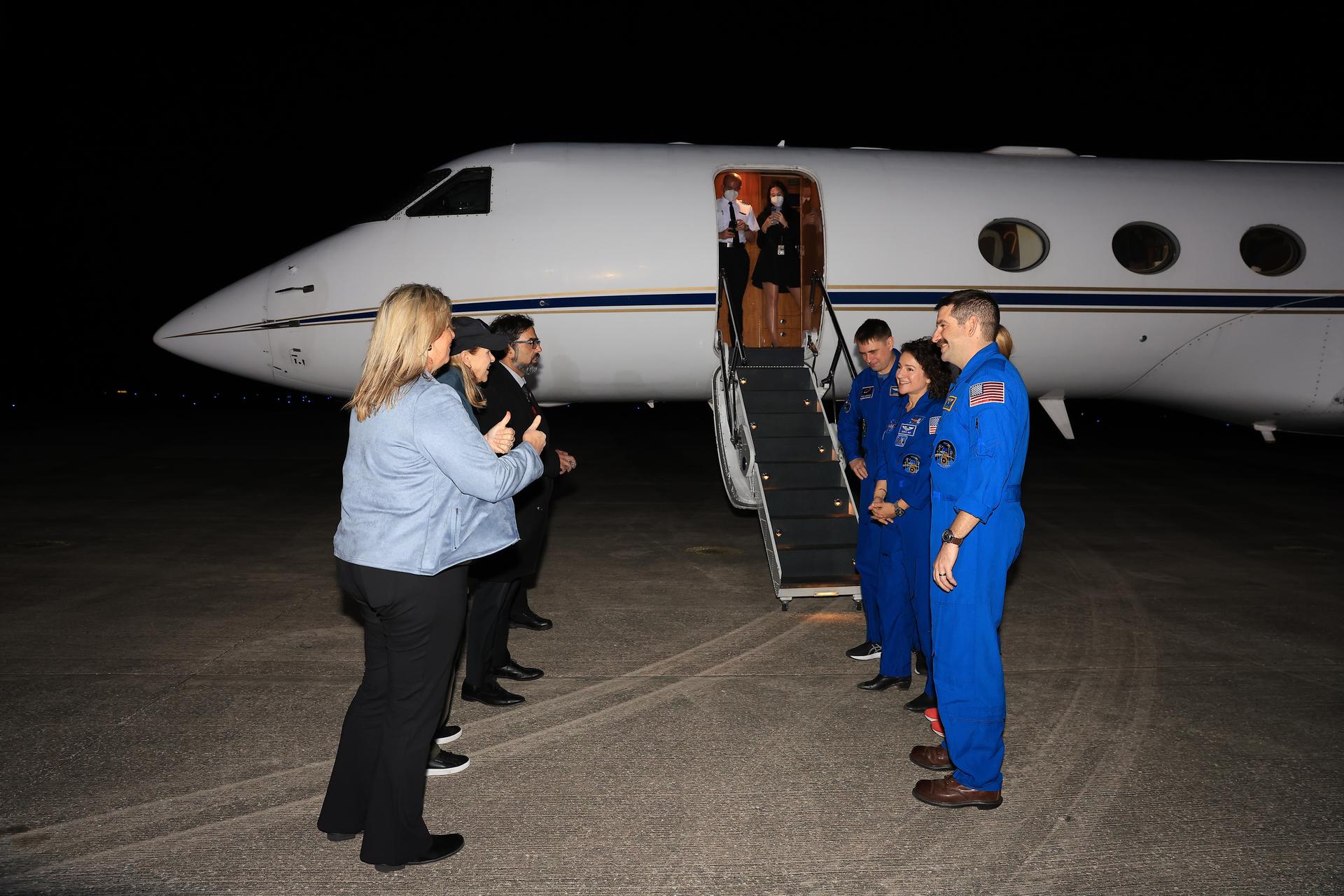
Crew members of NASA’s SpaceX Crew-12 mission, from left to right, Roscosmos cosmonaut Andrey Fedyaev, NASA astronaut Jessica Meir, ESA (European Space Agency) astronaut Sophie Adenot, and NASA astronaut Jack Hathaway, arrive Friday, Feb. 6, 2026, at the Launch and Landing Facility at the agency’s Kennedy Space Center in Florida. The Crew-12 mission is slated to launch to the International Space Station aboard SpaceX’s Dragon spacecraft atop company’s Falcon 9 rocket from Cape Canaveral Space Force Station’s Space Launch Complex 40 at 6:01 a.m. EST on Wednesday, Feb. 11.
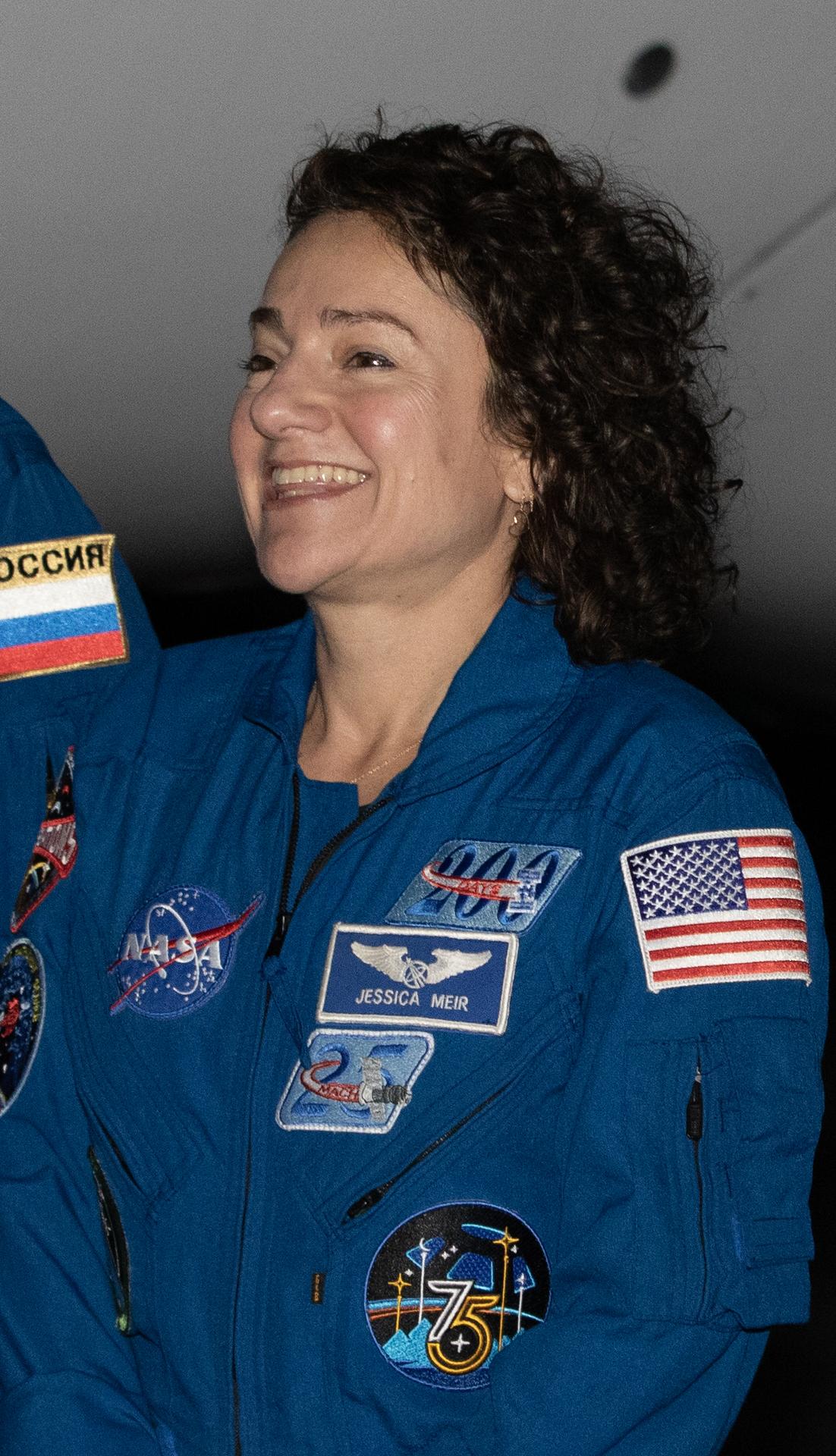
NASA astronaut Jessica Meir, Crew-12 commander, arrives Friday, Feb. 6, 2026, at the Launch and Landing Facility at the agency’s Kennedy Space Center in Florida. Meir and fellow NASA astronaut Jack Hathaway, along with ESA (European Space Agency) astronaut Sophie Adenot, and Roscosmos cosmonaut Andrey Fedyaev will launch to the International Space Station aboard SpaceX’s Dragon spacecraft and Falcon 9 rocket at 6:01 a.m. EST on Wednesday, Feb. 11, from Cape Canaveral Space Force Station’s Space Launch Complex 40. Crew-12 is the 12th crew rotation mission with SpaceX to the space station as part of NASA’s Commercial Crew Program.

Crew members of NASA’s SpaceX Crew-12 mission, from left to right, Roscosmos cosmonaut Andrey Fedyaev, NASA astronaut Jessica Meir, ESA (European Space Agency) astronaut Sophie Adenot, and NASA astronaut Jack Hathaway, arrive Friday, Feb. 6, 2026, at the Launch and Landing Facility at the agency’s Kennedy Space Center in Florida. The Crew-12 mission is slated to launch to the International Space Station aboard SpaceX’s Dragon spacecraft atop company’s Falcon 9 rocket from Cape Canaveral Space Force Station’s Space Launch Complex 40 at 6:01 a.m. EST on Wednesday, Feb. 11.
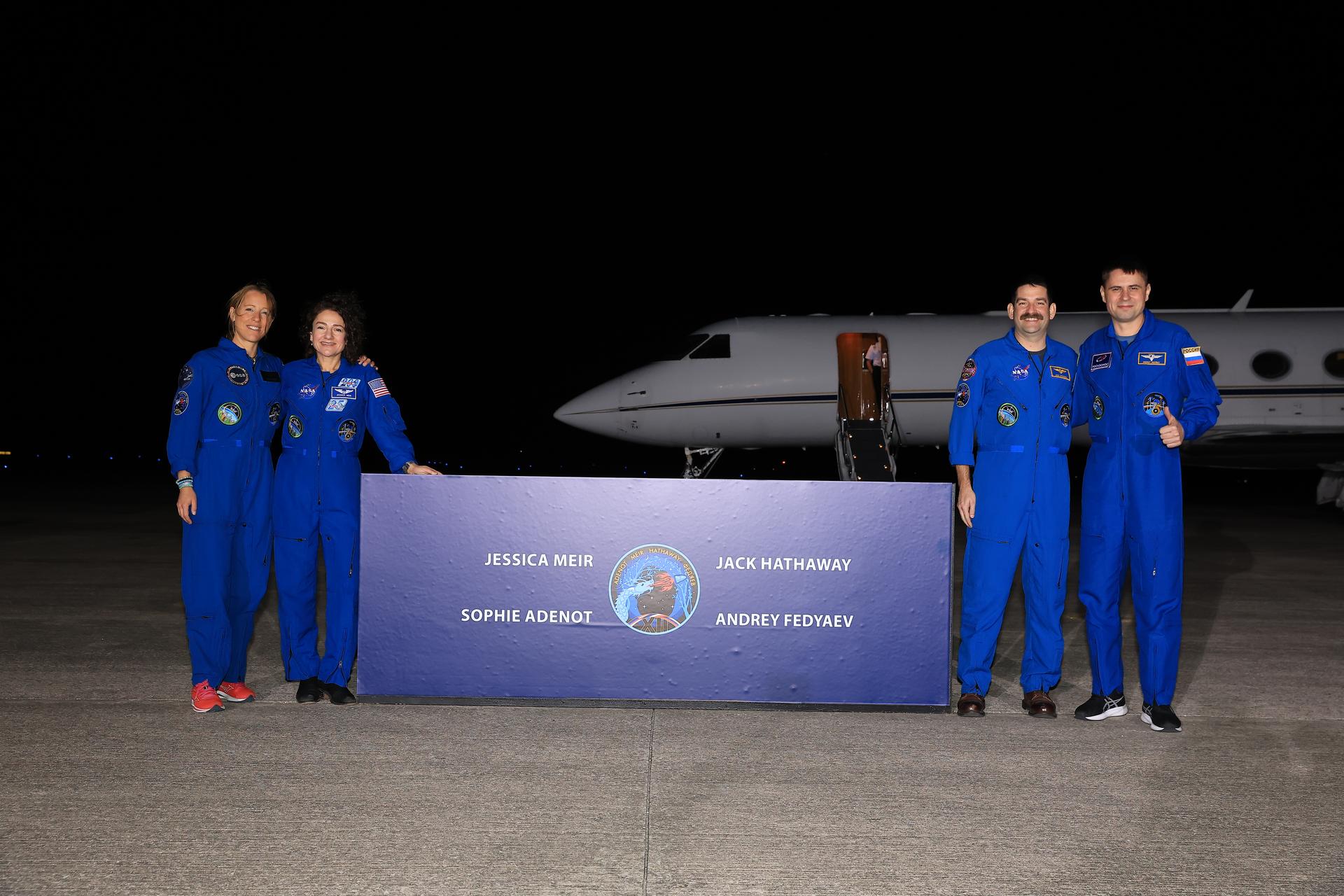
Crew members of NASA’s SpaceX Crew-12 mission, from left to right, ESA (European Space Agency) astronaut Sophie Adenot, NASA astronauts Jessica Meir and Jack Hathaway, and Roscosmos cosmonaut Andrey Fedyaev arrive Friday, Feb. 6, 2026, at the Launch and Landing Facility at the agency’s Kennedy Space Center in Florida. The Crew-12 mission is slated to launch to the International Space Station aboard SpaceX’s Dragon spacecraft atop company’s Falcon 9 rocket from Cape Canaveral Space Force Station’s Space Launch Complex 40 at 6:01 a.m. EST on Wednesday, Feb. 11.
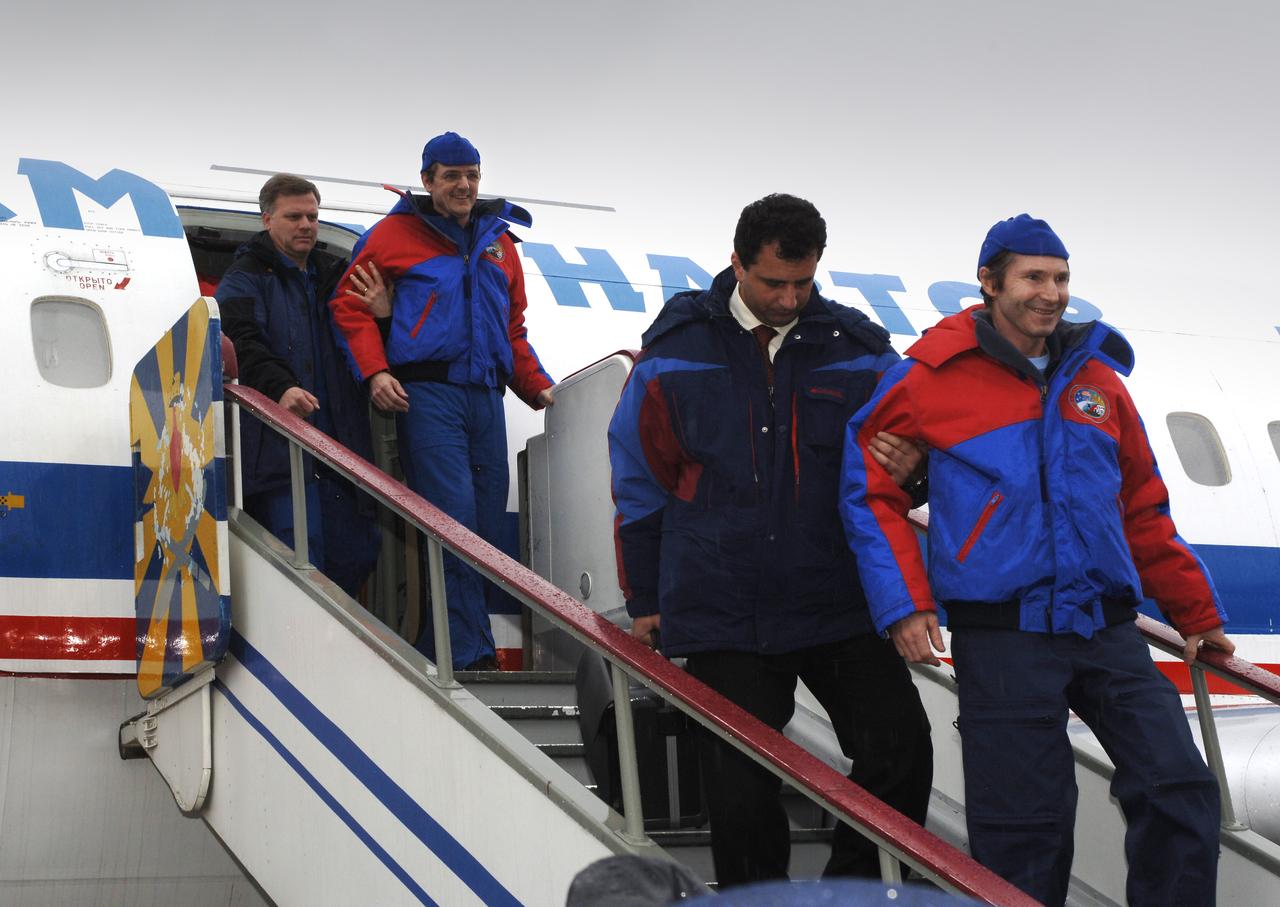
Astronaut William S. (Bill) McArthur, Jr., left, Expedition 12 Commander and space station Science Officer; Valery I. Tokarev, Flight Engineer and Soyuz commander; are helped from a plane after their landing. The Expedition 12 crew brought their Soyuz TMA-7 capsule to a pre-dawn landing on Sunday, April 9, 2006 at 7:48 p.m. EDT. Photo Credit: (NASA/Bill Ingalls)

Brazil’s first astronaut in space, Marcos C. Pontes smiles as he exchanges greetings with some of the crowd on hand in the steppes of Kazakhstan to meet him and the two Expedition 12 crewmembers returning to Earth from the International Space Station in the Soyuz TMA-7 spacecraft, Sunday April 9, 2006. Pontes spent a little over a week onboard the orbital outpost. Returning with Pontes were Expedition 12 Commander Bill McArthur and Flight Engineer Valery Tokarev. Photo Credit: (NASA/Bill Ingalls)
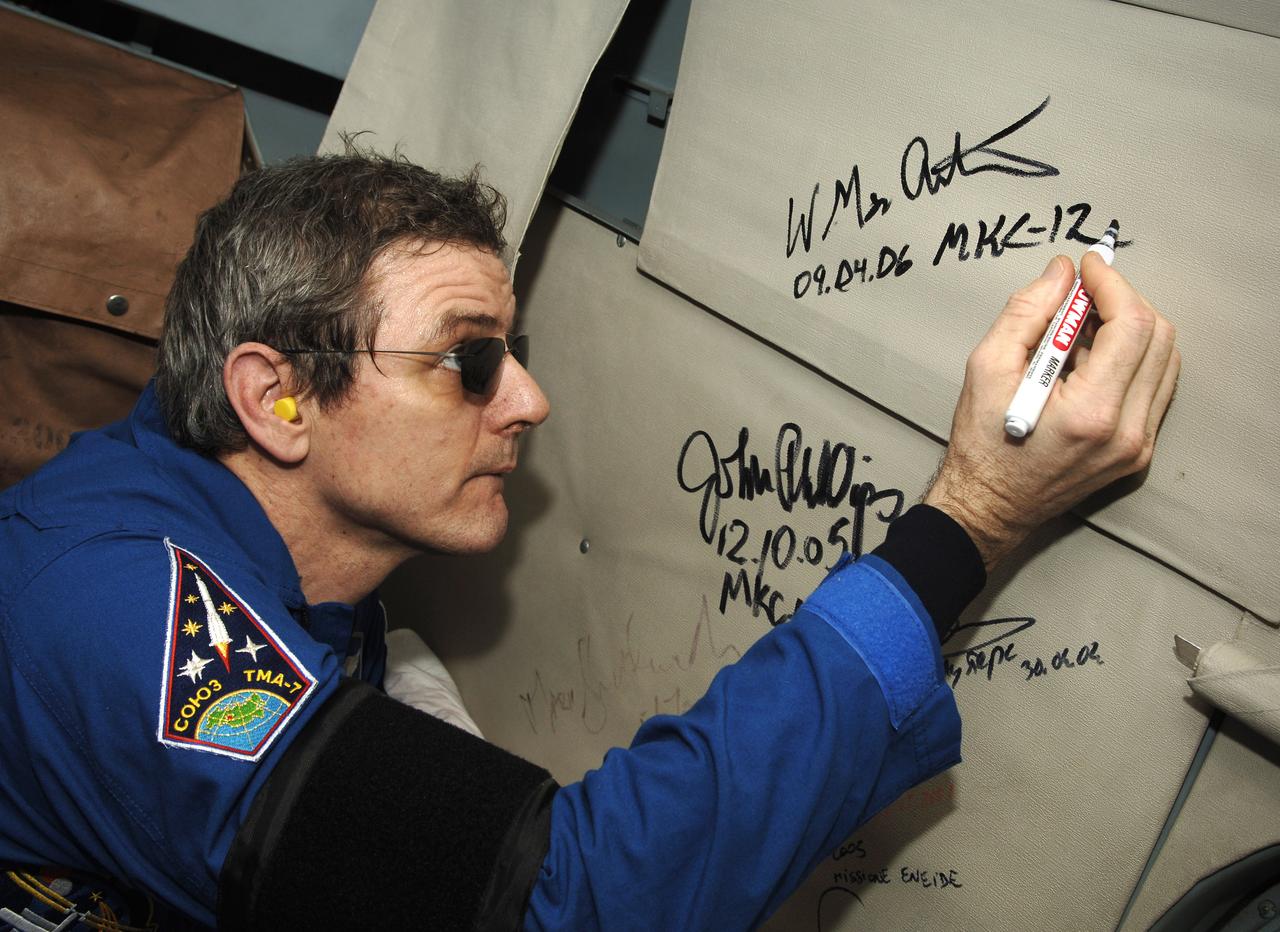
Expedition 12 Commander Bill McArthur signs the interior of the Russian helicopter that will take him from the landing site to Kustanay, Kazakhstan. Expedition 12 returned to Earth and landed in the steppes of Kazakhstan onboard a Soyuz TMA-7 spacecraft that touched down at 7:48 p.m. EDT, Sunday, April 9, 2006. Returning with Commander Bill McArthur and Flight Engineer Valery Tokarev was Brazil’s first astronaut, Marcos Pontes, who arrived at the station with Expedition 13 on April 1. Photo Credit: (NASA/Bill Ingalls)
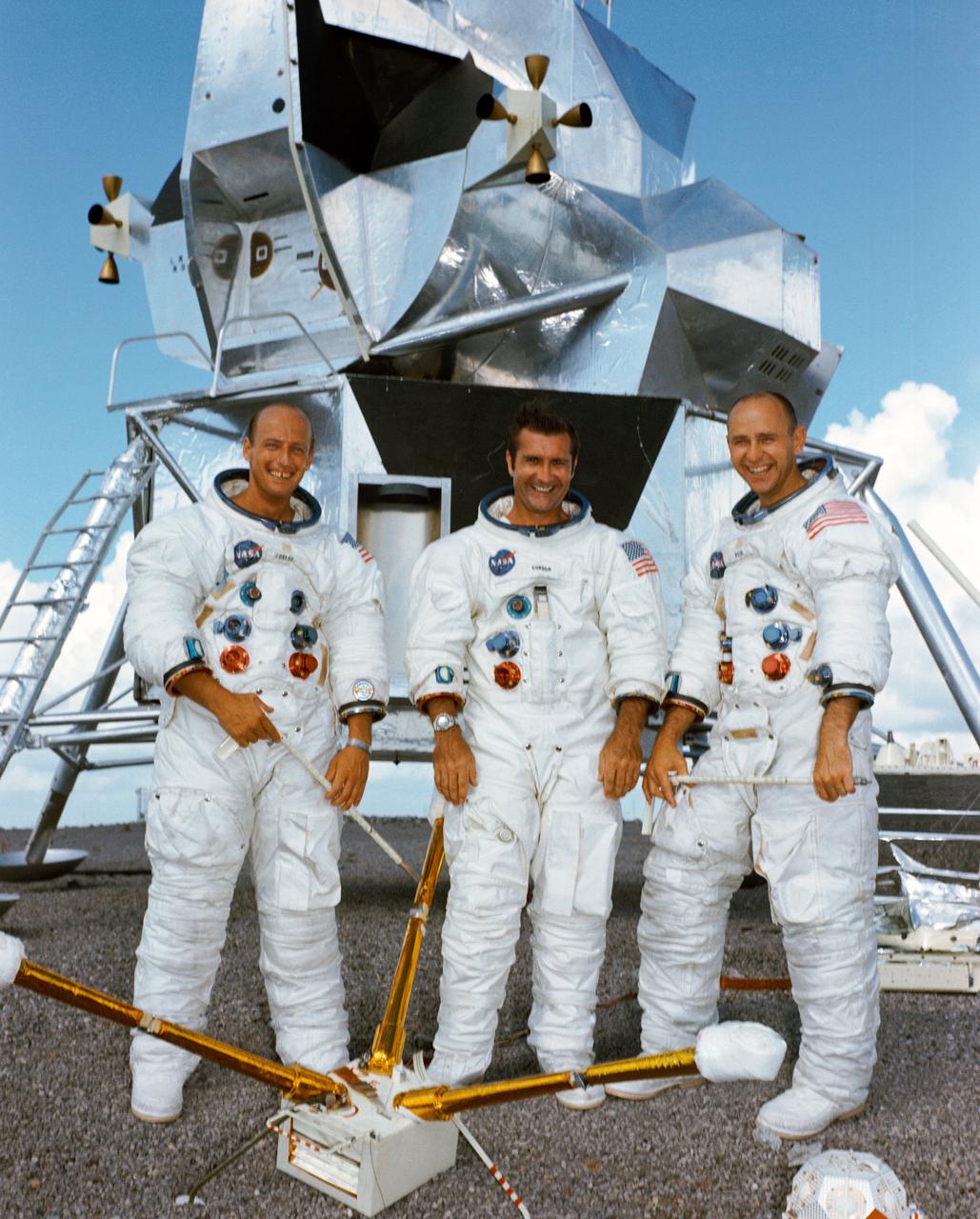
S69-38992 (September 1969) --- These three astronauts have been named by the National Aeronautics and Space Administration (NASA) as the prime crew of the Apollo 12 lunar landing mission. Left to right, are Charles Conrad Jr., Richard F. Gordon Jr., and Alan L. Bean.
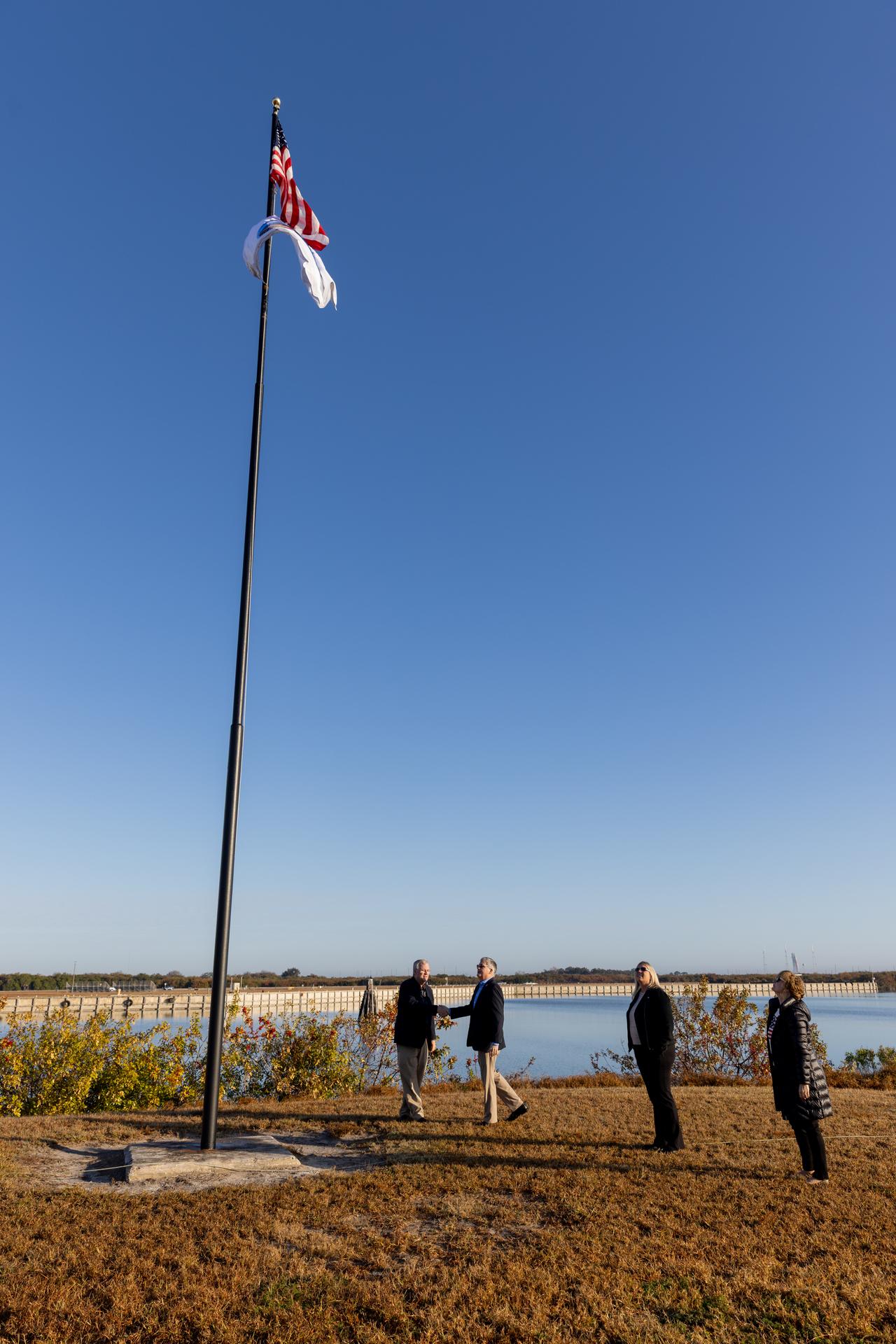
From left, Steve Sullivan, chief engineer to NASA’s Commercial Crew Program; Steve Stich, manager, Commercial Crew Program; Dana Hutcherson, deputy program manager, Commercial Crew Program; and Jackie Sullivan, participate in raising the agency’s SpaceX Crew-12 mission flag near the countdown clock at the NASA News Center at the agency’s Kennedy Space Center in Florida on Monday, Feb. 9, 2026. The Crew-12 mission will send NASA astronauts Jessica Meir and Jack Hathaway, ESA (European Space Agency) astronaut Sophie Adenot, and Roscosmos cosmonaut Andrey Fedyaev to the International Space Station aboard SpaceX’s Dragon spacecraft and Falcon 9 rocket no earlier than 5:38 a.m. EST, Thursday, Feb. 12, from Cape Canaveral Space Force Station’s Space Launch Complex 40.
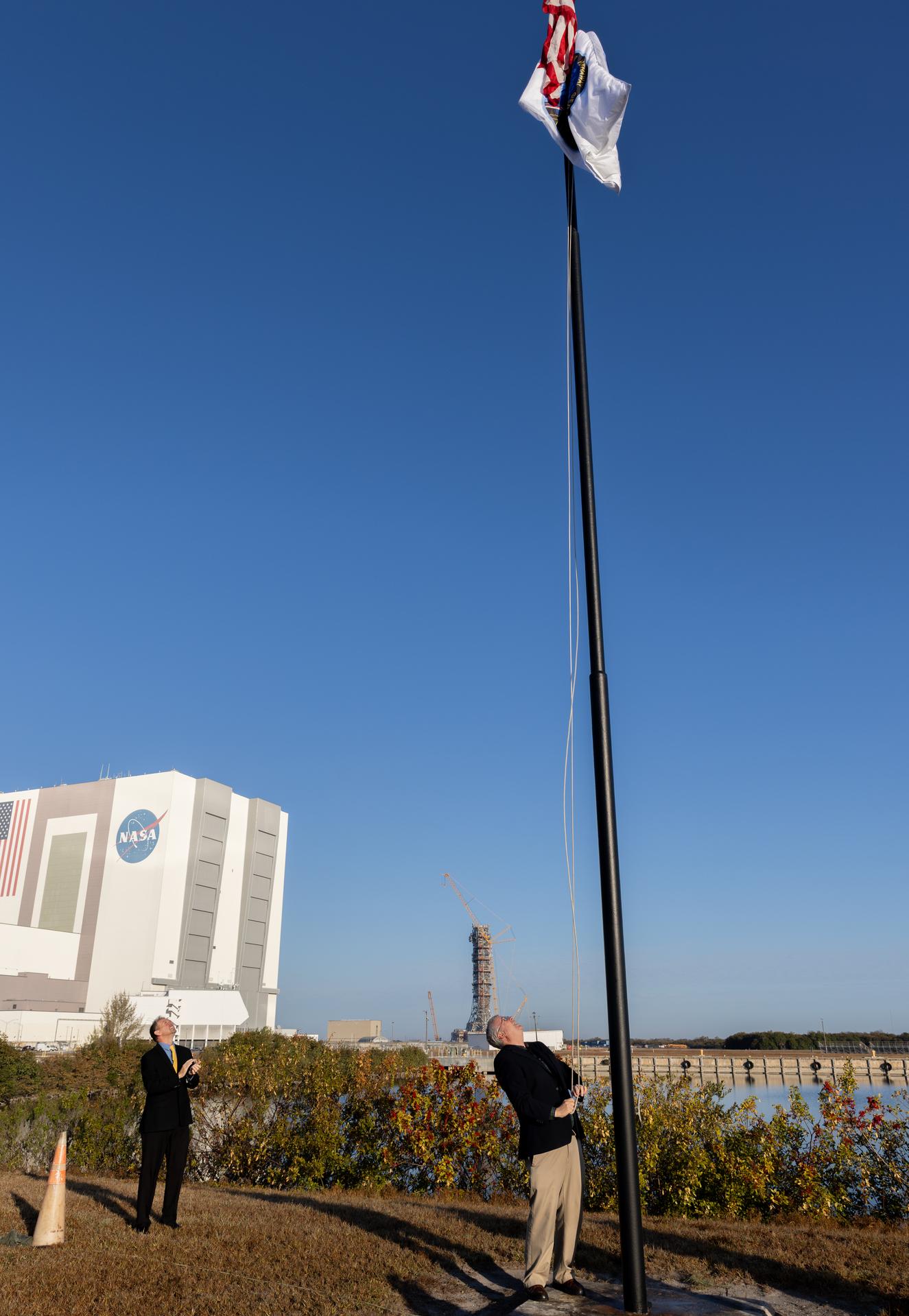
Steve Sullivan, chief engineer to NASA’s Commercial Crew Program, raises the agency’s SpaceX Crew-12 mission flag near the countdown clock at the NASA News Center at the agency’s Kennedy Space Center in Florida on Monday, Feb. 9, 2026, while Steven Siceloff, NASA Communications, looks on. The Crew-12 mission will send NASA astronauts Jessica Meir and Jack Hathaway, ESA (European Space Agency) astronaut Sophie Adenot, and Roscosmos cosmonaut Andrey Fedyaev to the International Space Station aboard SpaceX’s Dragon spacecraft and Falcon 9 rocket no earlier than 5:38 a.m. EST, Thursday, Feb. 12, from Cape Canaveral Space Force Station’s Space Launch Complex 40.
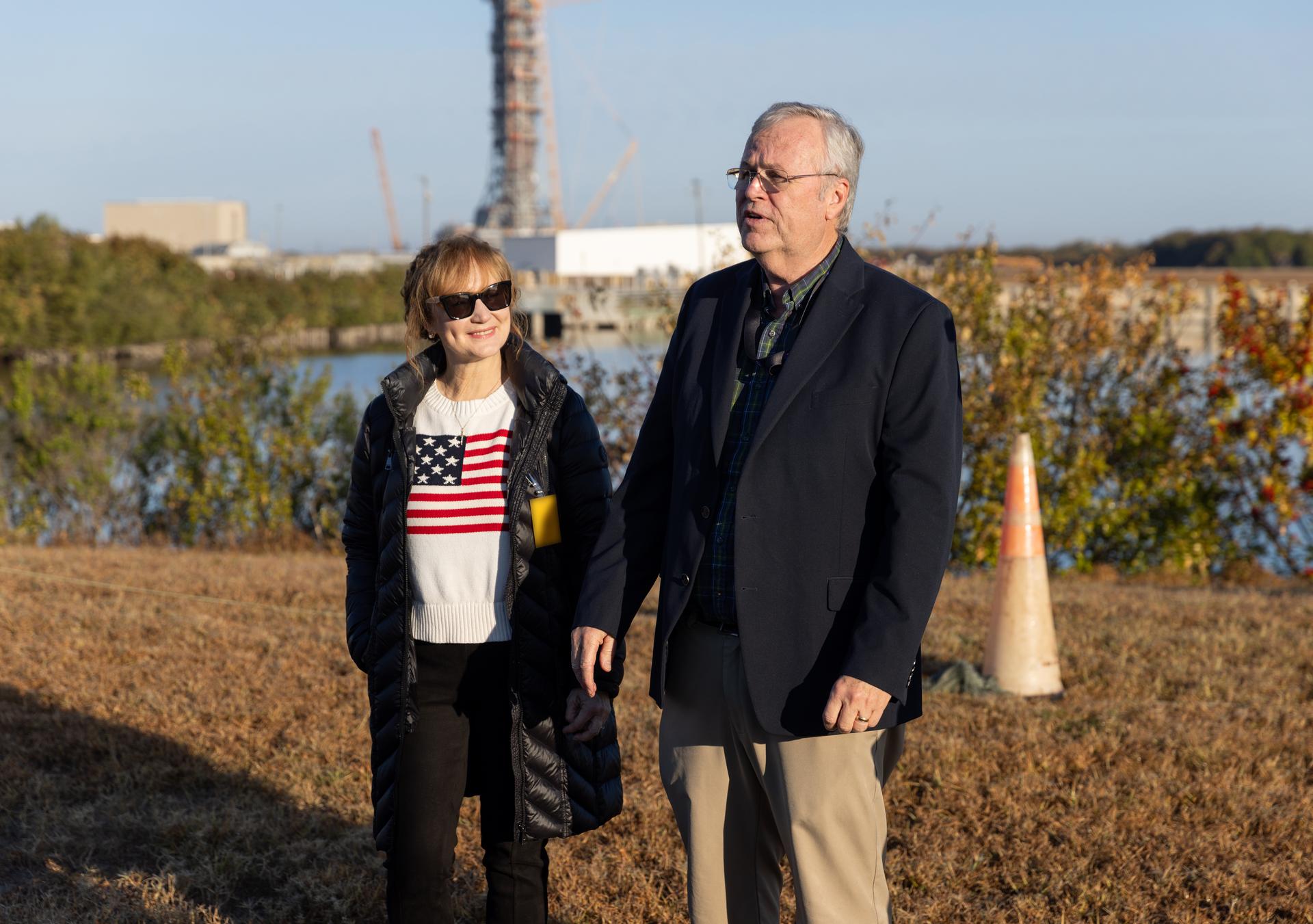
Steve Sullivan, chief engineer to NASA’s Commercial Crew Program, along with his wife Jackie, participate in raising the agency’s SpaceX Crew-12 mission flag near the countdown clock at the NASA News Center at the agency’s Kennedy Space Center in Florida on Monday, Feb. 9, 2026. The Crew-12 mission will send NASA astronauts Jessica Meir and Jack Hathaway, ESA (European Space Agency) astronaut Sophie Adenot, and Roscosmos cosmonaut Andrey Fedyaev to the International Space Station aboard SpaceX’s Dragon spacecraft and Falcon 9 rocket no earlier than 5:38 a.m. EST, Thursday, Feb. 12, from Cape Canaveral Space Force Station’s Space Launch Complex 40.
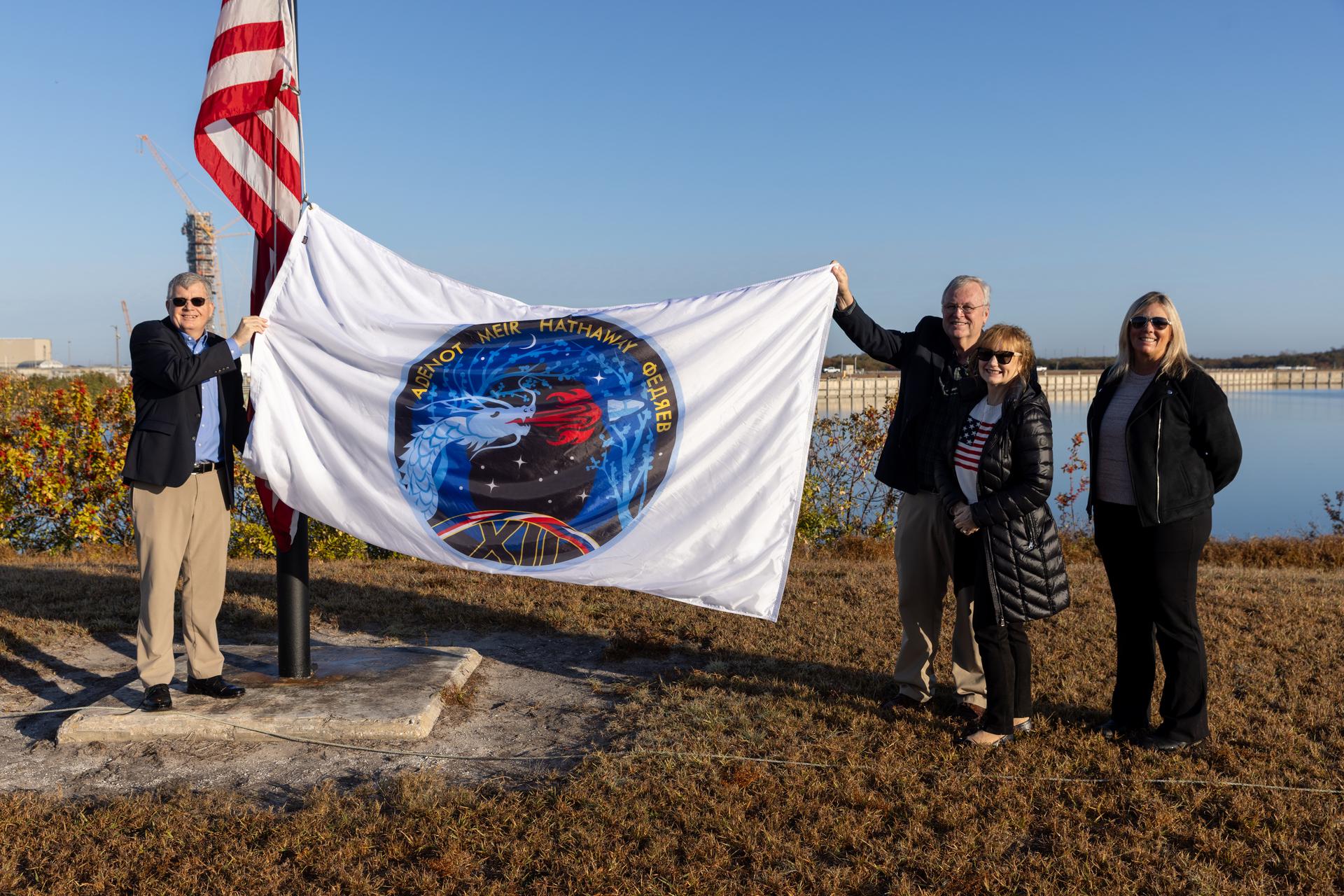
From left, Steve Stich, manager, NASA’s Commercial Crew Program; Steve Sullivan, chief engineer to NASA’s Commercial Crew Program; Jackie Sullivan; and Dana Hutcherson, deputy program manager, NASA’s Commercial Crew Program, participate in raising the agency’s SpaceX Crew-12 mission flag near the countdown clock at the NASA News Center at the agency’s Kennedy Space Center in Florida on Monday, Feb. 9, 2026. The Crew-12 mission will send NASA astronauts Jessica Meir and Jack Hathaway, ESA (European Space Agency) astronaut Sophie Adenot, and Roscosmos cosmonaut Andrey Fedyaev to the International Space Station aboard SpaceX’s Dragon spacecraft and Falcon 9 rocket no earlier than 5:38 a.m. EST, Thursday, Feb. 12, from Cape Canaveral Space Force Station’s Space Launch Complex 40.

A SpaceX Falcon 9 rocket with a Dragon spacecraft atop carrying NASA astronauts Jessica Meir and Jack Hathaway, ESA (European Space Agency) astronaut Sophie Adenot, and Roscosmos cosmonaut Andrey Fedyaev lifts off at 5:15 a.m. EST Friday, Feb. 13, 2026, from Space Launch Complex 40 at Cape Canaveral Space Force Station in Florida to the International Space Station. NASA’s SpaceX Crew-12 is the 12th crew rotation mission of the SpaceX Dragon spacecraft and Falcon 9 rocket to the space station as part of NASA’s Commercial Crew Program.

A SpaceX Falcon 9 rocket with a Dragon spacecraft atop carrying NASA astronauts Jessica Meir and Jack Hathaway, ESA (European Space Agency) astronaut Sophie Adenot, and Roscosmos cosmonaut Andrey Fedyaev lifts off at 5:15 a.m. EST Friday, Feb. 13, 2026, from Space Launch Complex 40 at Cape Canaveral Space Force Station in Florida to the International Space Station. NASA’s SpaceX Crew-12 is the 12th crew rotation mission of the SpaceX Dragon spacecraft and Falcon 9 rocket to the space station as part of NASA’s Commercial Crew Program.
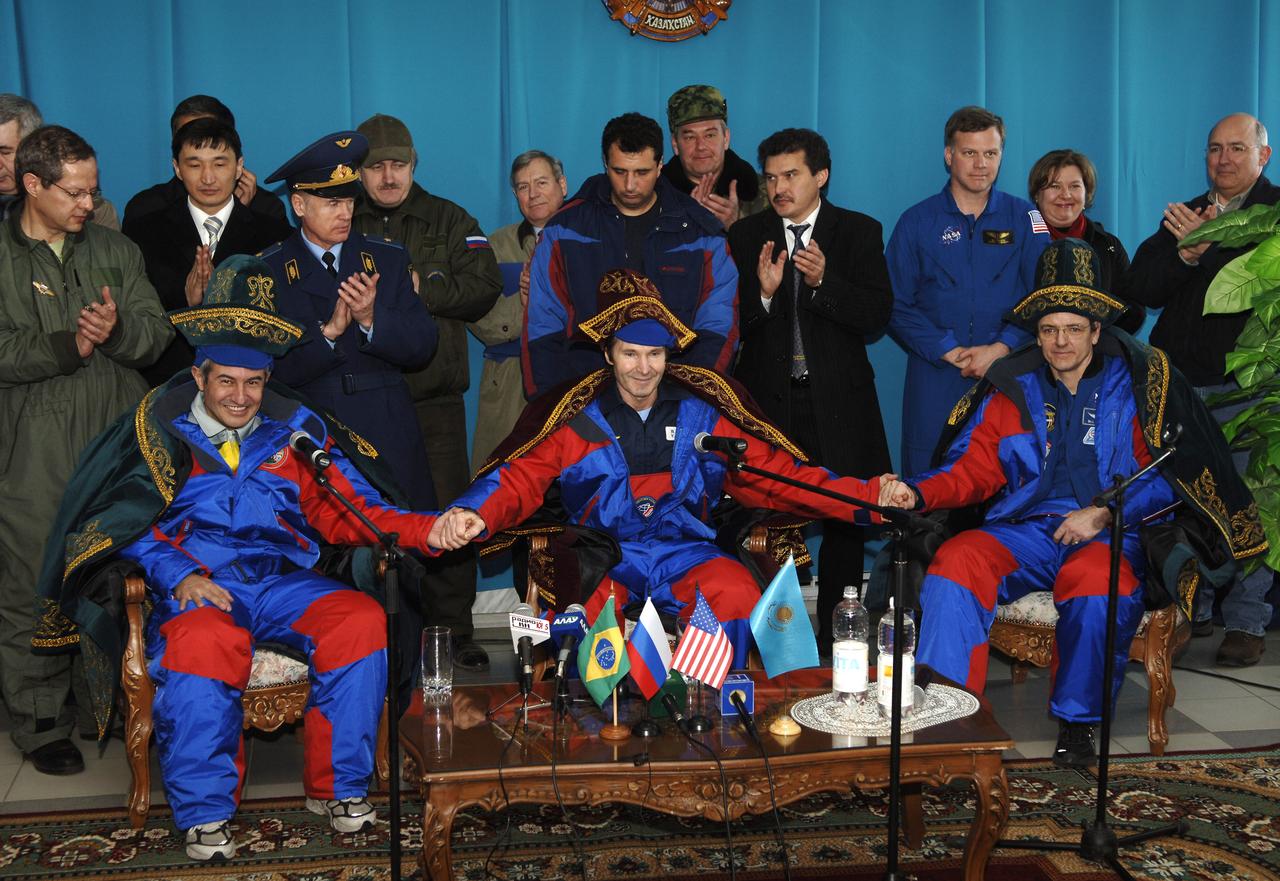
Brazilian astronaut Marcos C. Pontes, left, Expedition 12 crew members, Valery I. Tokarev, Flight Engineer and Soyuz Commander, and William S. (Bill) McArthur, Jr., right, Expedition 12 commander and space station Science Officer. Expedition 12 returned to Earth and landed in the steppes of Kazakhstan. The Soyuz TMA-7 spacecraft touched down at 7:48 p.m. EDT, Sunday, April 9, 2006. Photo Credit: (NASA/Bill Ingalls)
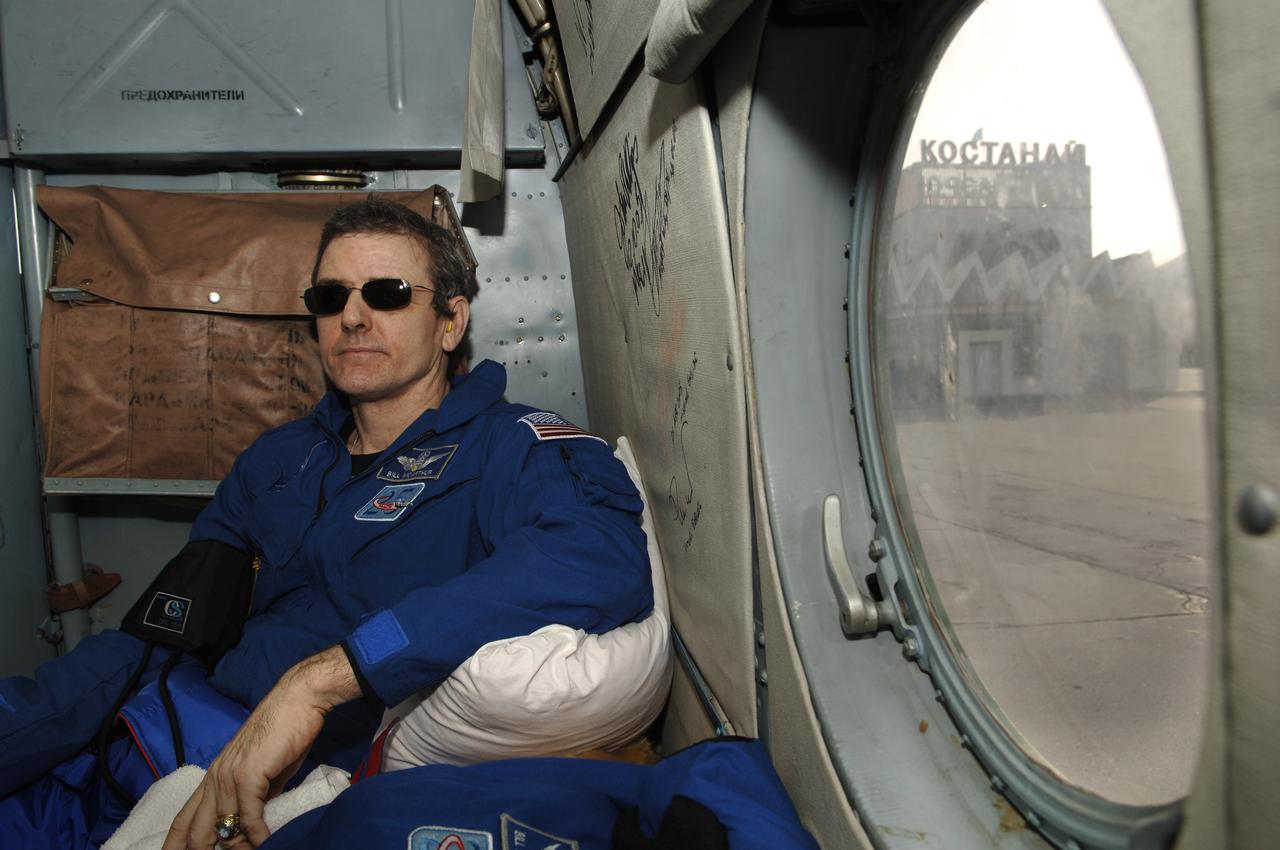
Expedition 12 Commander and International Space Station Science Officer, Bill McArthur waits onboard a helicopter before transferring to an airplane and a flight back to Moscow from Kustanay, Kazakhstan. Expedition 12 returned to Earth and landed in the steppes of Kazakhstan. The Soyuz TMA-7 spacecraft touched down at 7:48 p.m. EDT, Sunday, April 9, 2006. Returning with Commander Bill McArthur were Flight Engineer Valery Tokarev and Brazil’s first astronaut, Marcos Pontes, who arrived at the station with Expedition 13 on April 1. Photo Credit: (NASA/Bill Ingalls)
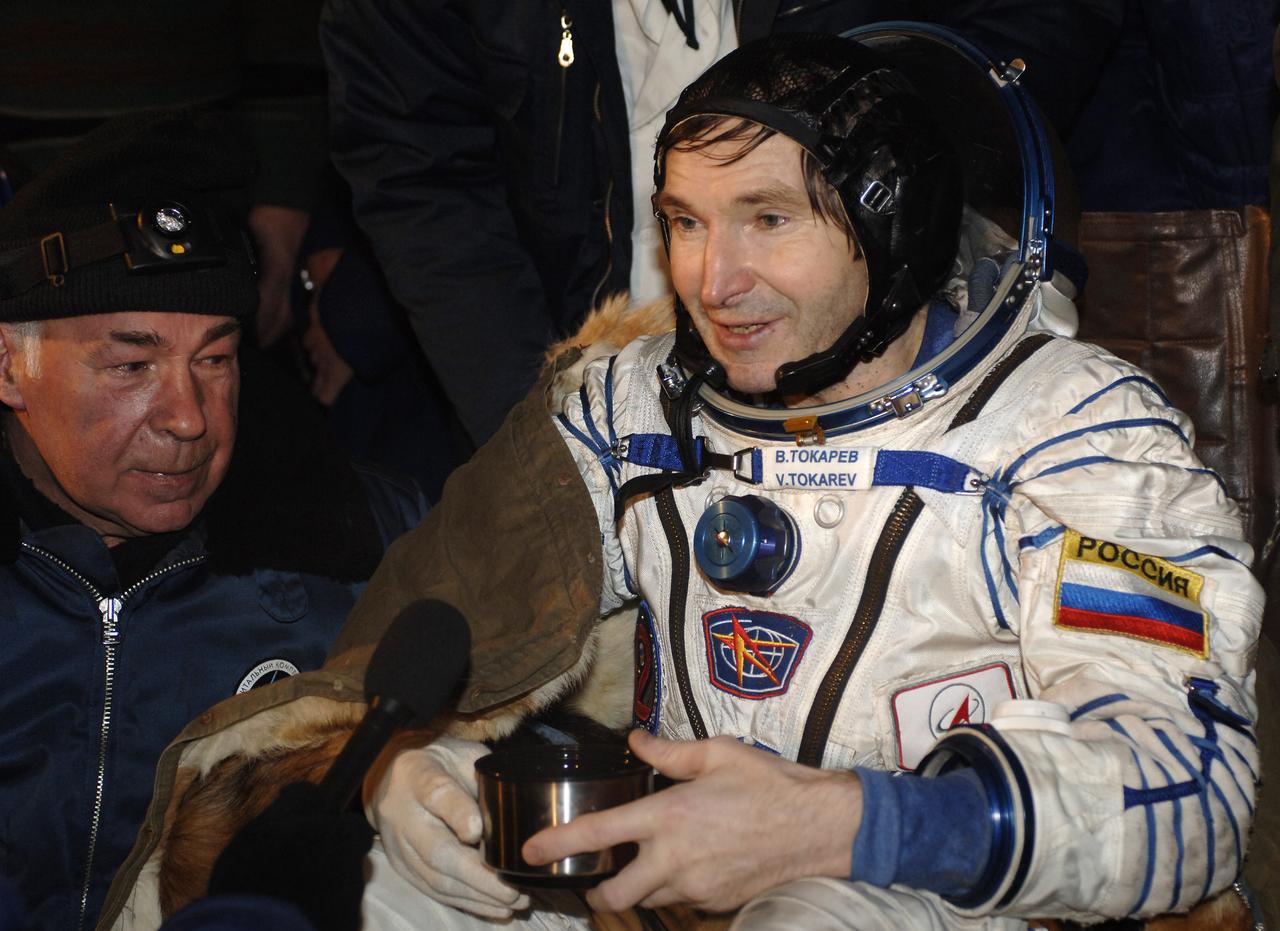
Valery I. Tokarev, Soyuz Commander and Expedition 12 Flight Engineer, exchanges greetings with some of the crowd on hand in the steppes of Kazakhstan to meet the three crewmembers returning to Earth from the International Space Station in the Soyuz TMA-7 spacecraft on Sunday, April 9, 2006. Returning with Tokarev were Expedition 12 Commander Space Station Science Officer Bill McArthur and Brazil’s first astronaut, Marcos Pontes representing the Braizil Space Agency, who arrived at the station with Expedition 13 on April 1. Photo Credit: (NASA/Bill Ingalls)
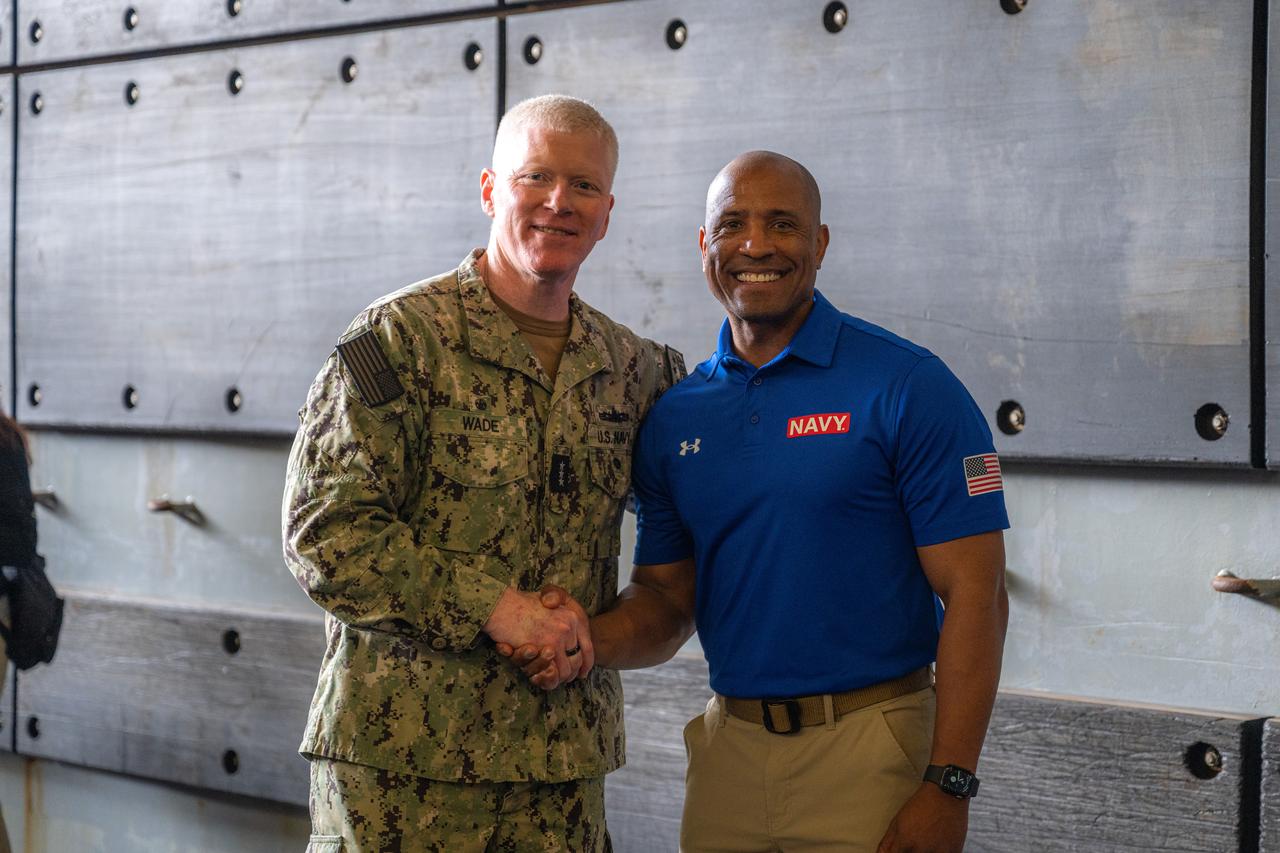
Vice Adm. John F. G. Wade, commander, U.S. 3rd Fleet, left, and NASA Artemis II Mission Pilot, Victor Glover, pose for a photo in the well deck of amphibious transport dock USS Somerset (LPD 25) ahead of NASA Underway Recovery Test 12 on Naval Base San Diego, March 25, 2025. In preparation for NASA's Artemis II crewed mission, which will send four astronauts around the moon and beyond in the Orion spacecraft, NASA and the Department of Defense will conduct a series of tests to demonstrate and evaluate the processes, procedures, and hardware used in recovery operations for crewed lunar missions.
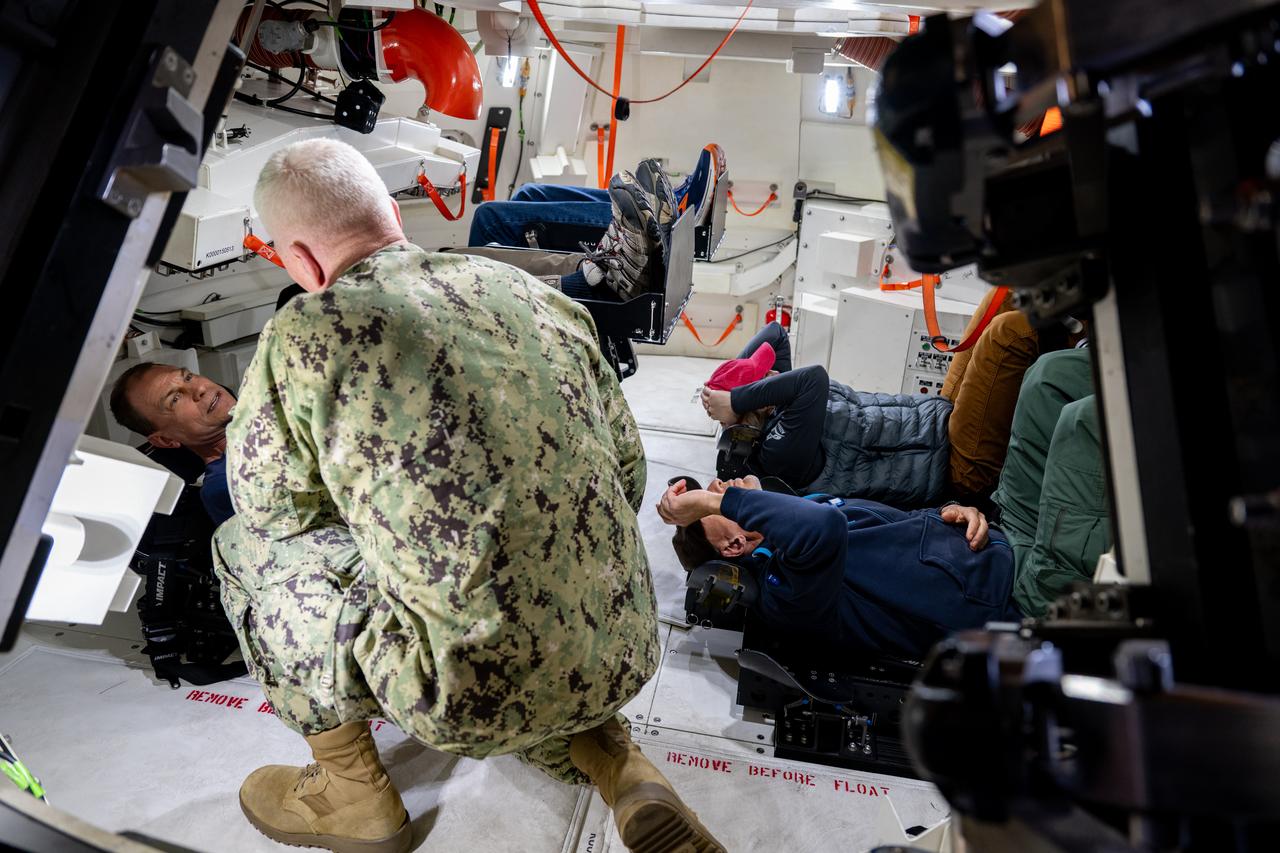
Vice Adm. John F. G. Wade, commander of U.S. 3rd Fleet, speaks with NASA astronaut Stan Love inside an Orion crew module test article in the well deck of amphibious transport dock USS Somerset (LPD 25) ahead of NASA Underway Recovery Test 12 on Naval Base San Diego, March 25, 2025. In preparation for NASA's Artemis II crewed mission, which will send four astronauts around the Moon and beyond in the Orion spacecraft, NASA and the Department of Defense will conduct a series of tests to demonstrate and evaluate the processes, procedures, and hardware used in recovery operations for crewed lunar missions.
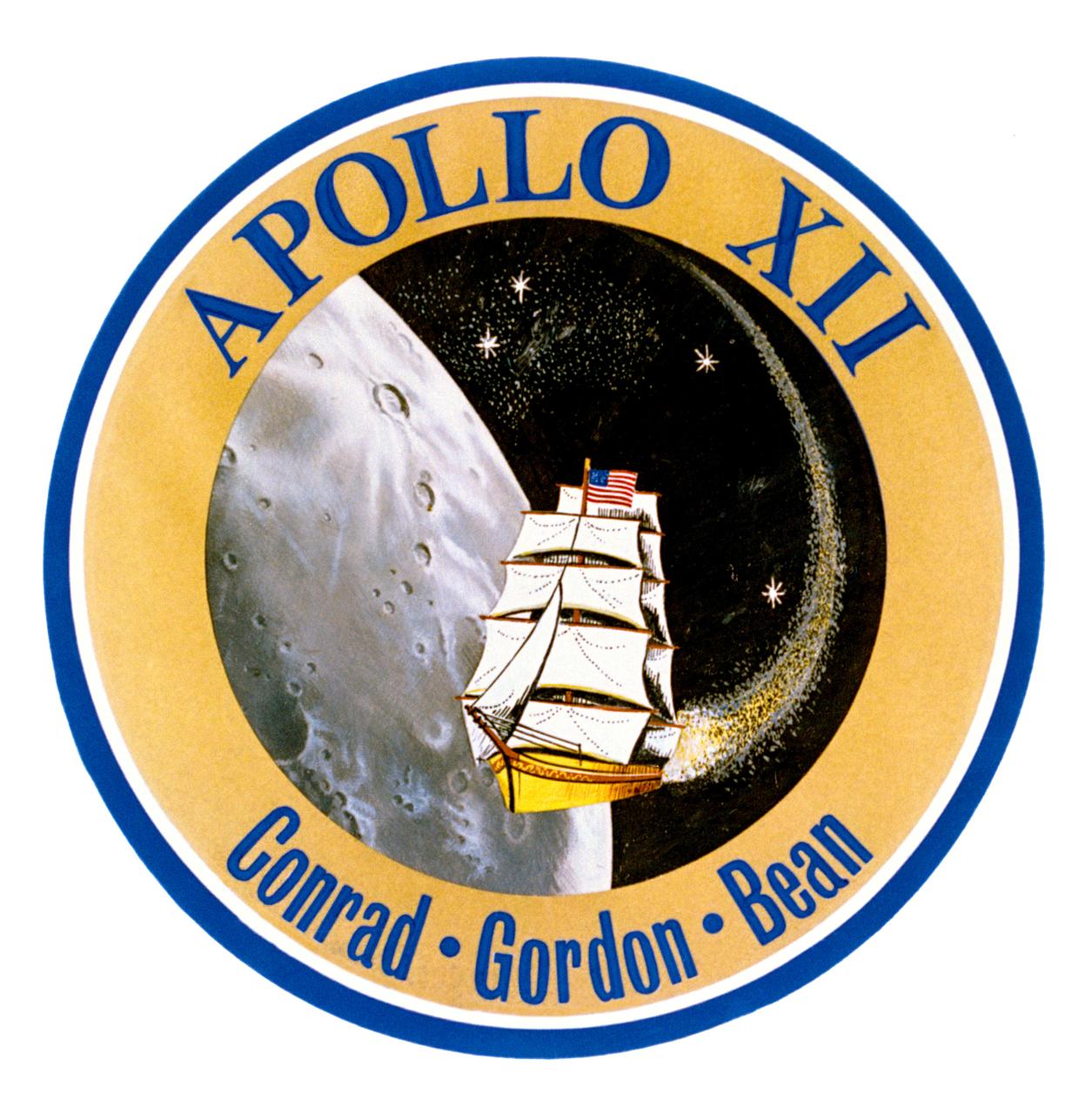
S69-52336 (September 1969) --- This is the official crew insignia for Apollo 12, the United States? second lunar landing mission. Crew members are astronauts Charles Conrad Jr., commander; Richard F. Gordon Jr., command module pilot; and Alan L. Bean, lunar module pilot. The clipper ship signifies that the crew is all Navy and symbolically relates the era of the clipper ship to the era of space flight. As the clipper ship brought foreign shores closer to the United States and marked the increased utilization of the seas by this nation, spacecraft have opened the way to the other planets and Apollo 12 marks the increased utilization of space-based on knowledge gained in earlier missions. The portion of the moon shown is representative of the Ocean of Storms area in which Apollo 12 will land. The NASA insignia design for Apollo flights is reserved for use by the astronauts and for other official use as the NASA Administrator may authorize. Public availability has been approved only in the form of illustrations by the various news media. When and if there is any change in this policy, which we do not anticipate, it will be publicly announced.
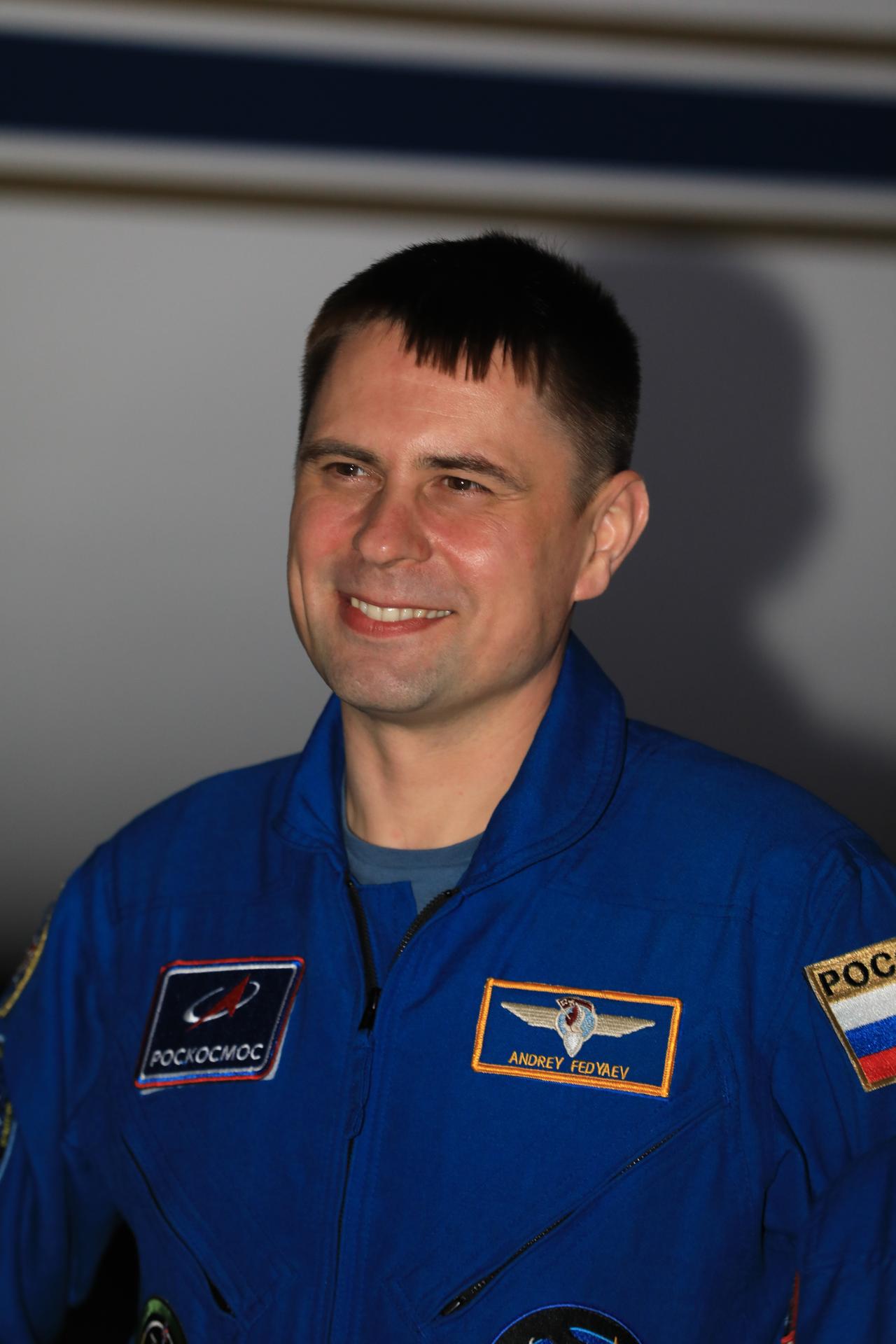
Roscosmos cosmonaut Andrey Fedyaev, mission specialist, arrives Friday, Feb. 6, 2026, at the Launch and Landing Facility at the agency’s Kennedy Space Center in Florida. NASA astronauts Jessica Meir and Jack Hathaway, and ESA (European Space Agency) astronaut Sophie Adenot will launch along with Fedyaev to the International Space Station aboard SpaceX’s Dragon spacecraft and Falcon 9 rocket at 6:01 a.m. EST on Wednesday, Feb. 11, from Cape Canaveral Space Force Station’s Space Launch Complex 40. Crew-12 is the 12th crew rotation mission with SpaceX to the space station as part of NASA’s Commercial Crew Program.
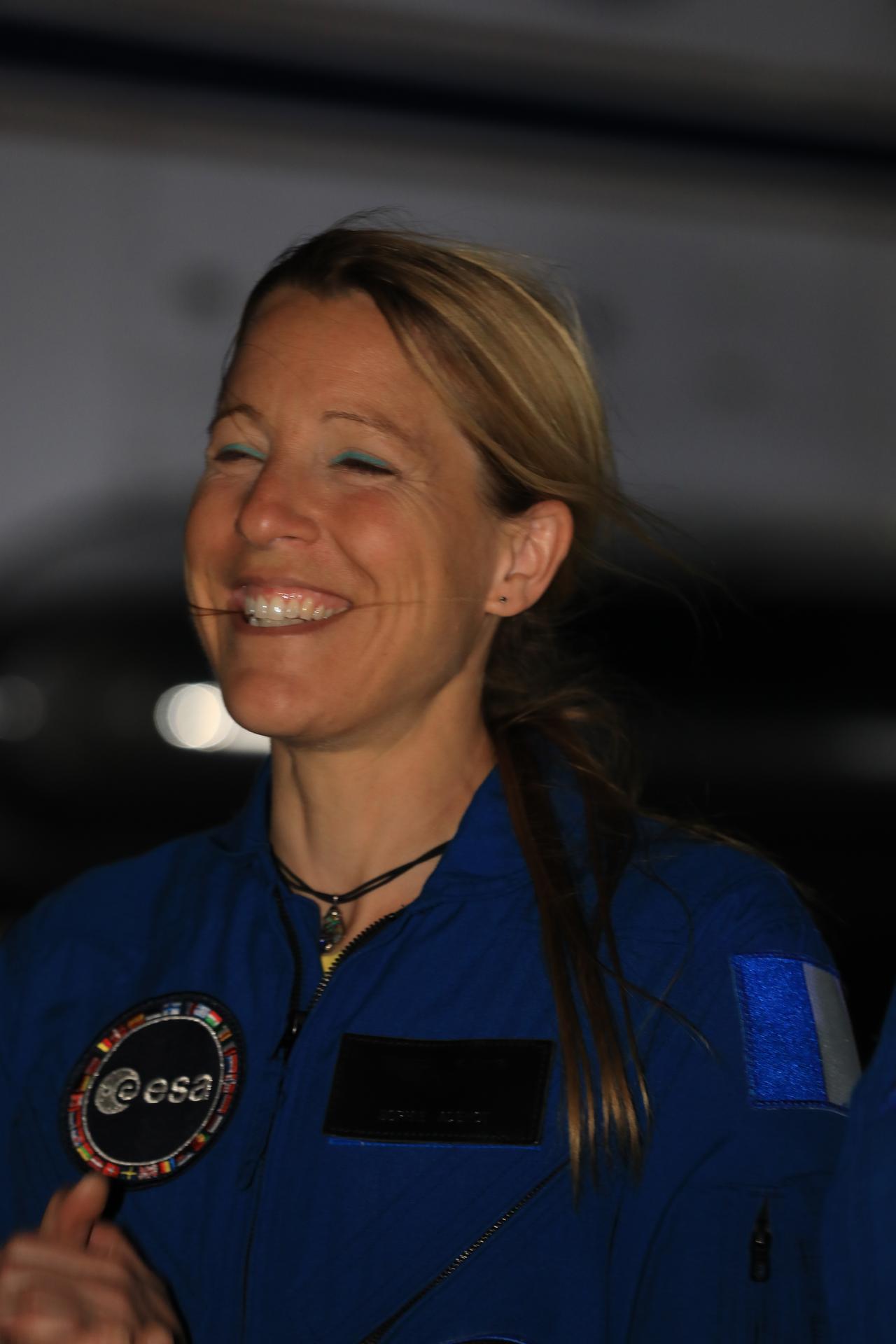
ESA (European Space Agency) astronaut Sophie Adenot, mission specialist, arrives Friday, Feb. 6, 2026, at the Launch and Landing Facility at the agency’s Kennedy Space Center in Florida. NASA astronauts Jessica Meir and Jack Hathaway, and Roscosmos cosmonaut Andrey Fedyaev will launch along with Adenot to the International Space Station aboard SpaceX’s Dragon spacecraft and Falcon 9 rocket at 6:01 a.m. EST on Wednesday, Feb. 11, from Cape Canaveral Space Force Station’s Space Launch Complex 40. Crew-12 is the 12th crew rotation mission with SpaceX to the space station as part of NASA’s Commercial Crew Program.
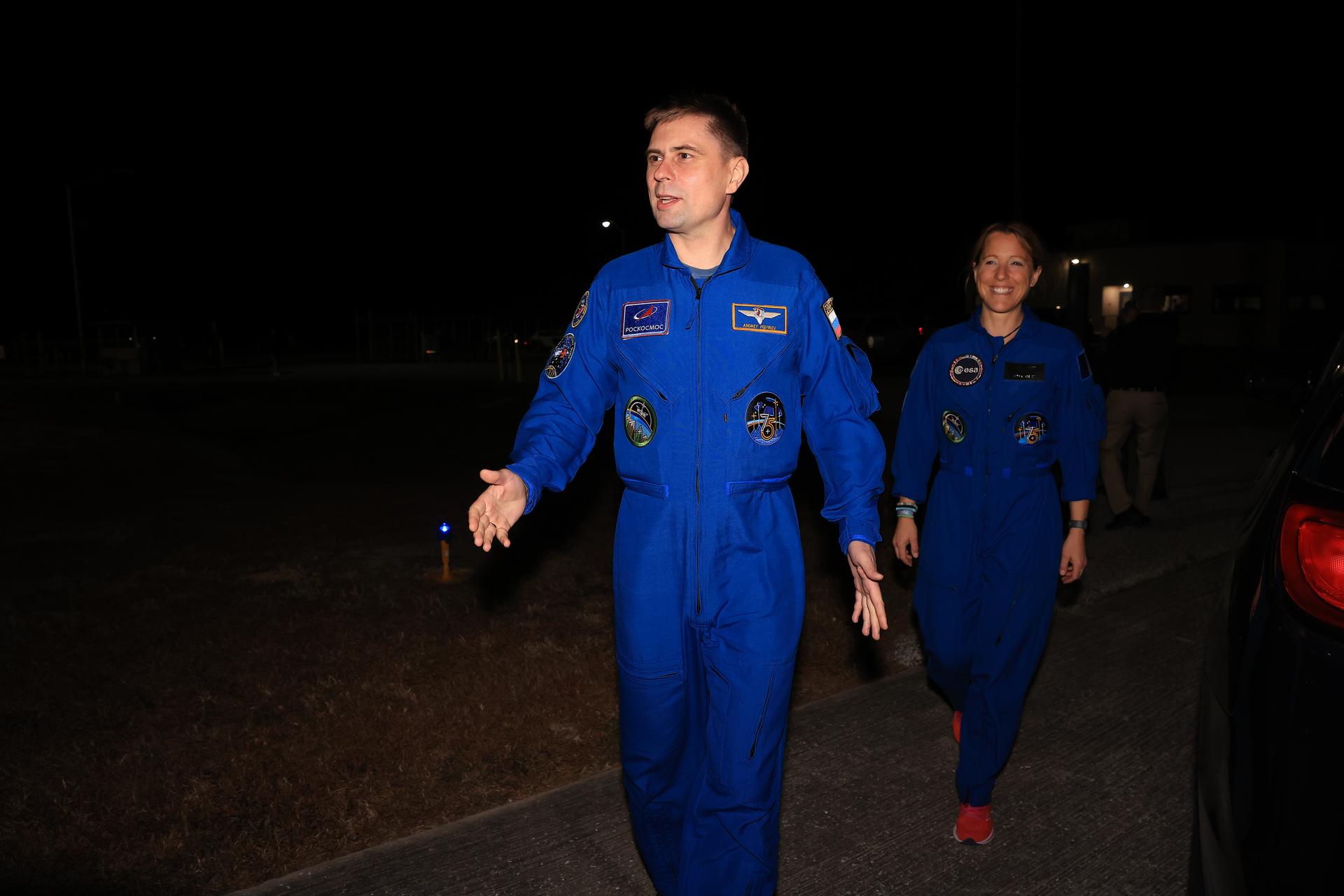
Roscosmos cosmonaut Andrey Fedyaev, mission specialist, arrives Friday, Feb. 6, 2026, at the Launch and Landing Facility at the agency’s Kennedy Space Center in Florida. NASA astronauts Jessica Meir and Jack Hathaway, and ESA (European Space Agency) astronaut Sophie Adenot will launch along with Fedyaev to the International Space Station aboard SpaceX’s Dragon spacecraft and Falcon 9 rocket at 6:01 a.m. EST on Wednesday, Feb. 11, from Cape Canaveral Space Force Station’s Space Launch Complex 40. Crew-12 is the 12th crew rotation mission with SpaceX to the space station as part of NASA’s Commercial Crew Program.

Mars at Ls 12°: Syrtis Major
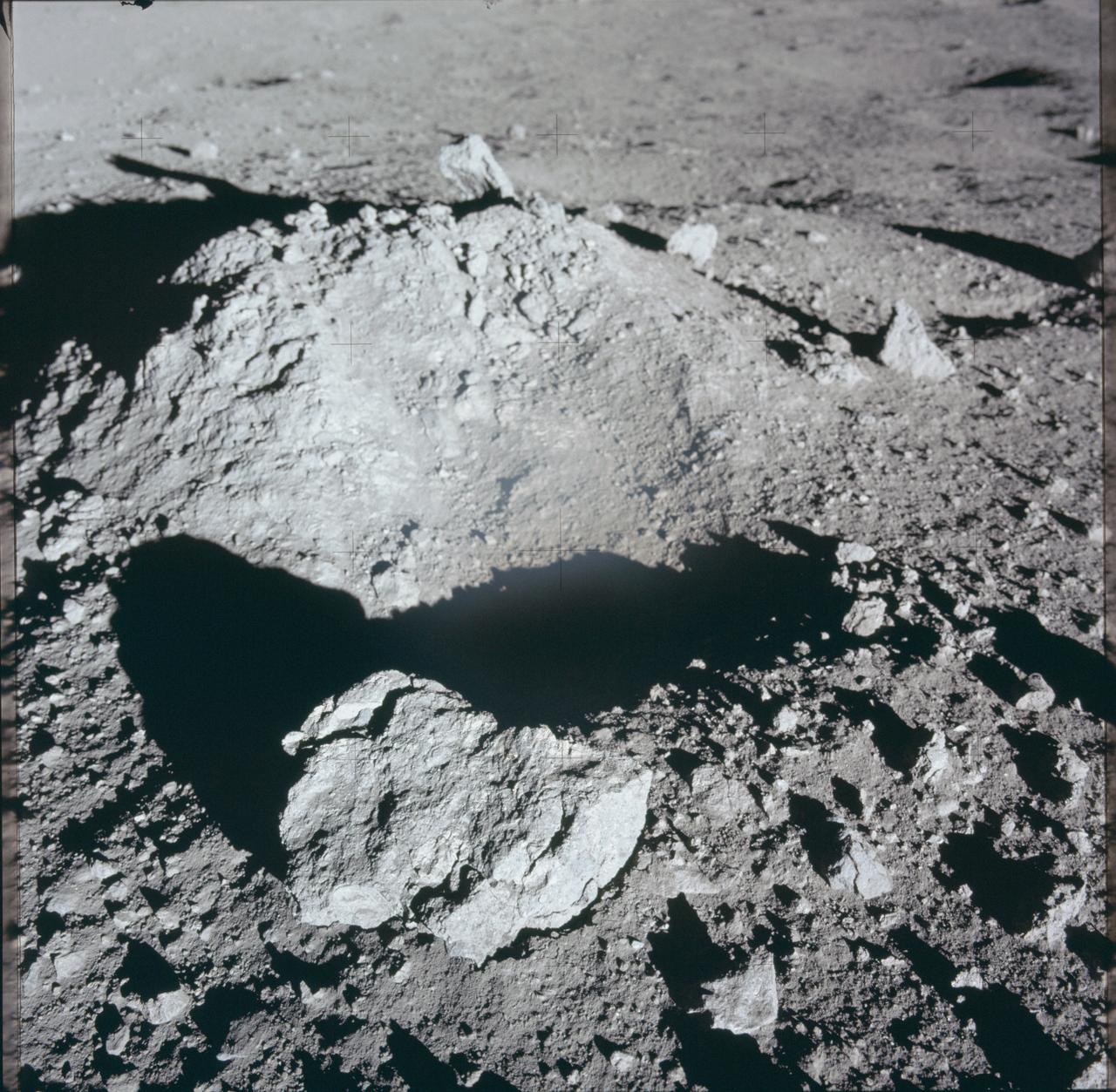
AS12-46-6825 (19 Nov. 1969) --- Close-up view of a lunar rock, small crater, and lunar mound as photographed during the Apollo 12 extravehicular activity (EVA). Astronaut Richard F. Gordon Jr., command module pilot, remained with the Apollo 12 Command and Service Modules (CSM) in lunar orbit while astronauts Charles Conrad Jr., commander, and Alan L. Bean, lunar module pilot, descended in the Lunar Module (LM) to explore the moon.
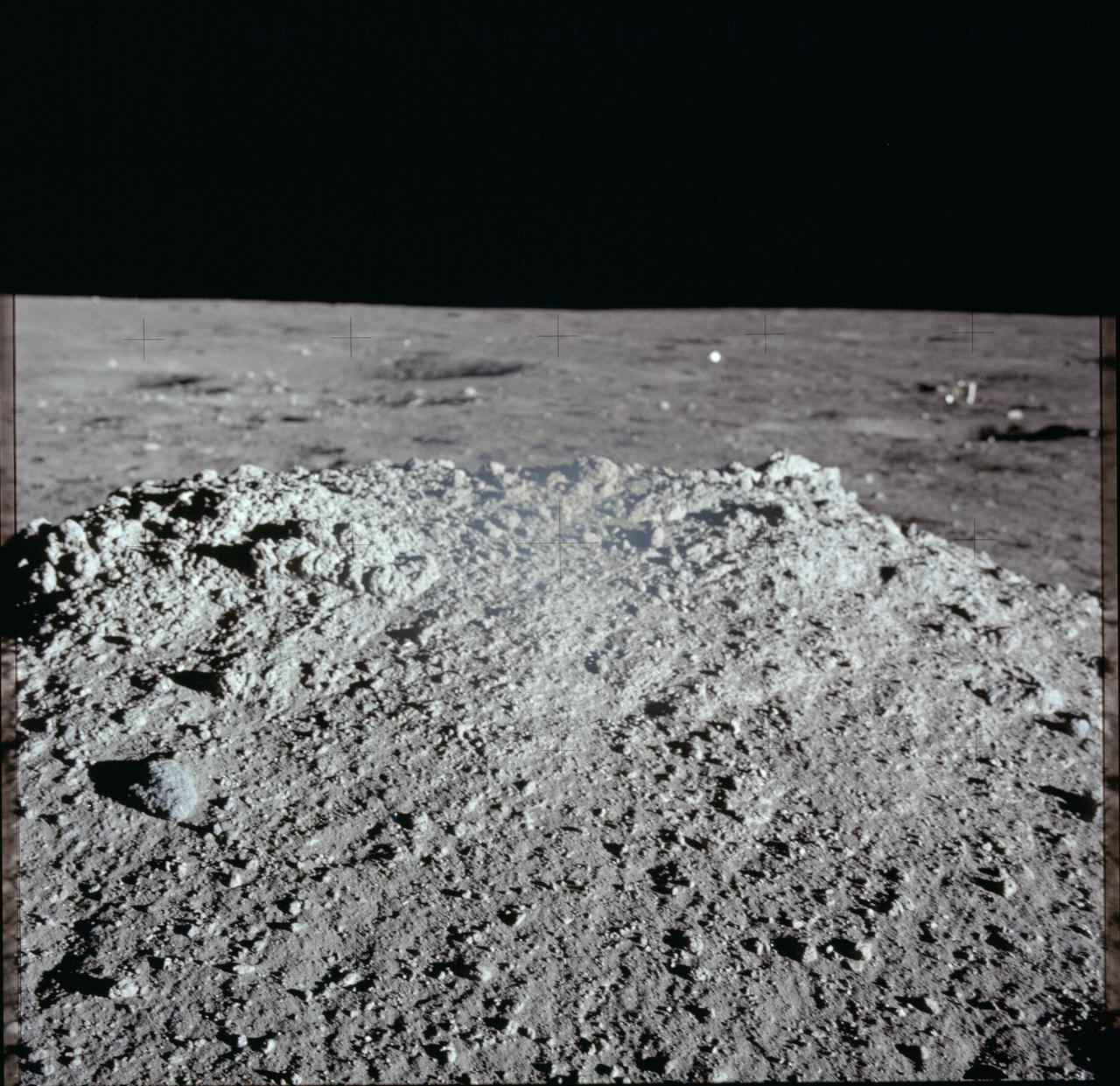
AS12-46-6832 (19 Nov. 1969) --- A close-up view of a lunar mound as photographed during the Apollo 12 extravehicular activity (EVA) on the lunar surface. Astronaut Richard F. Gordon Jr., command module pilot, remained with the Apollo 12 Command and Service Modules (CSM) in lunar orbit while astronauts Charles Conrad Jr., commander, and Alan L. Bean, lunar module pilot, descended in the Lunar Module (LM) to explore the moon.
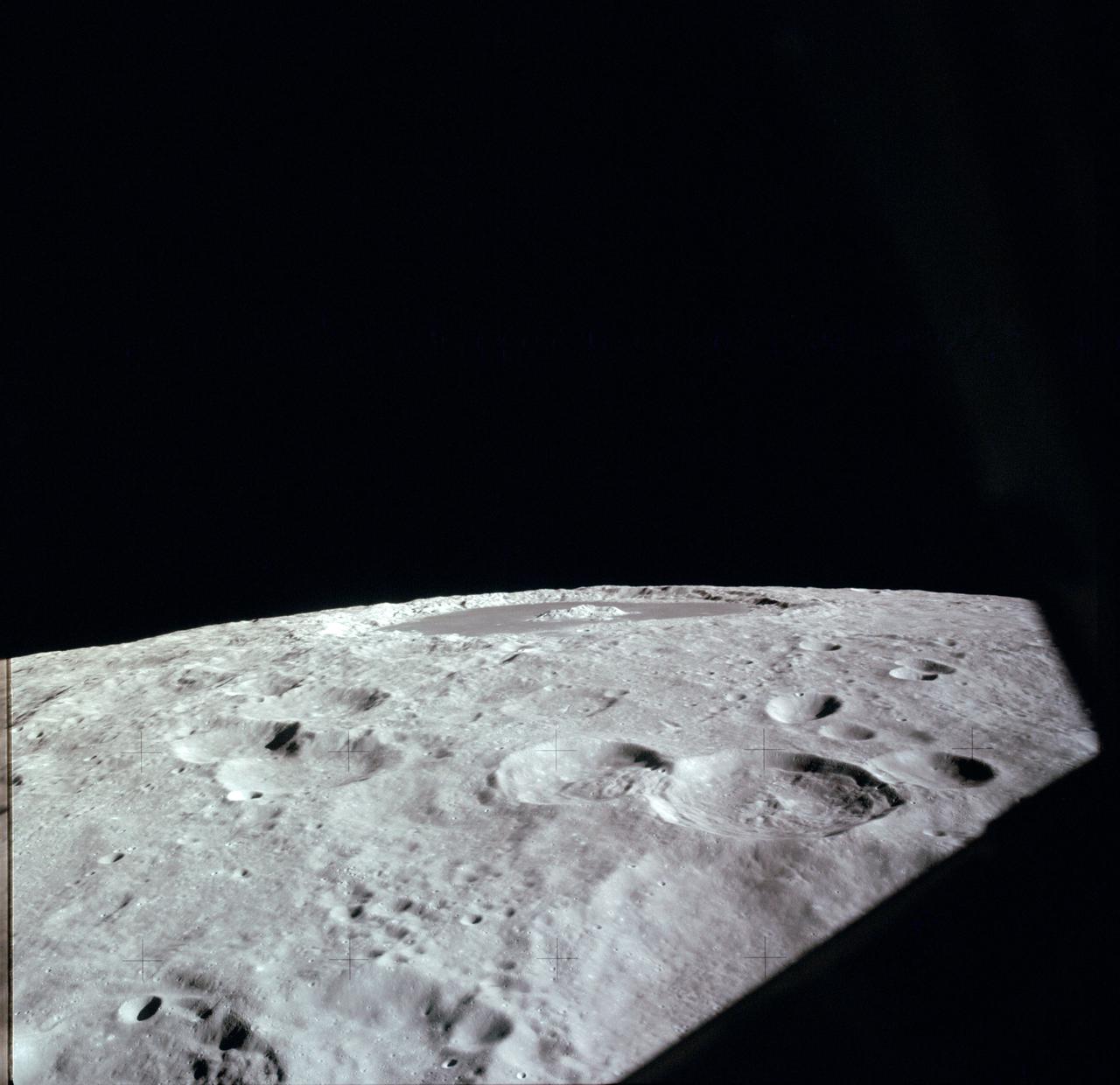
AS12-47-6870 (November 1969) --- An Apollo 12 high-oblique view of the crater Tsiolkovsky (in center of horizon) on the lunar farside, as photographed from lunar orbit. The crew men of the Apollo 12 lunar landing mission were astronauts Charles Conrad Jr., commander; Richard F. Gordon Jr., command module pilot; and Alan L. Bean, lunar module pilot. Tsiolkovsky is centered at 128.5 degrees east longitude and 20.5 degrees south latitude. This view is looking south.
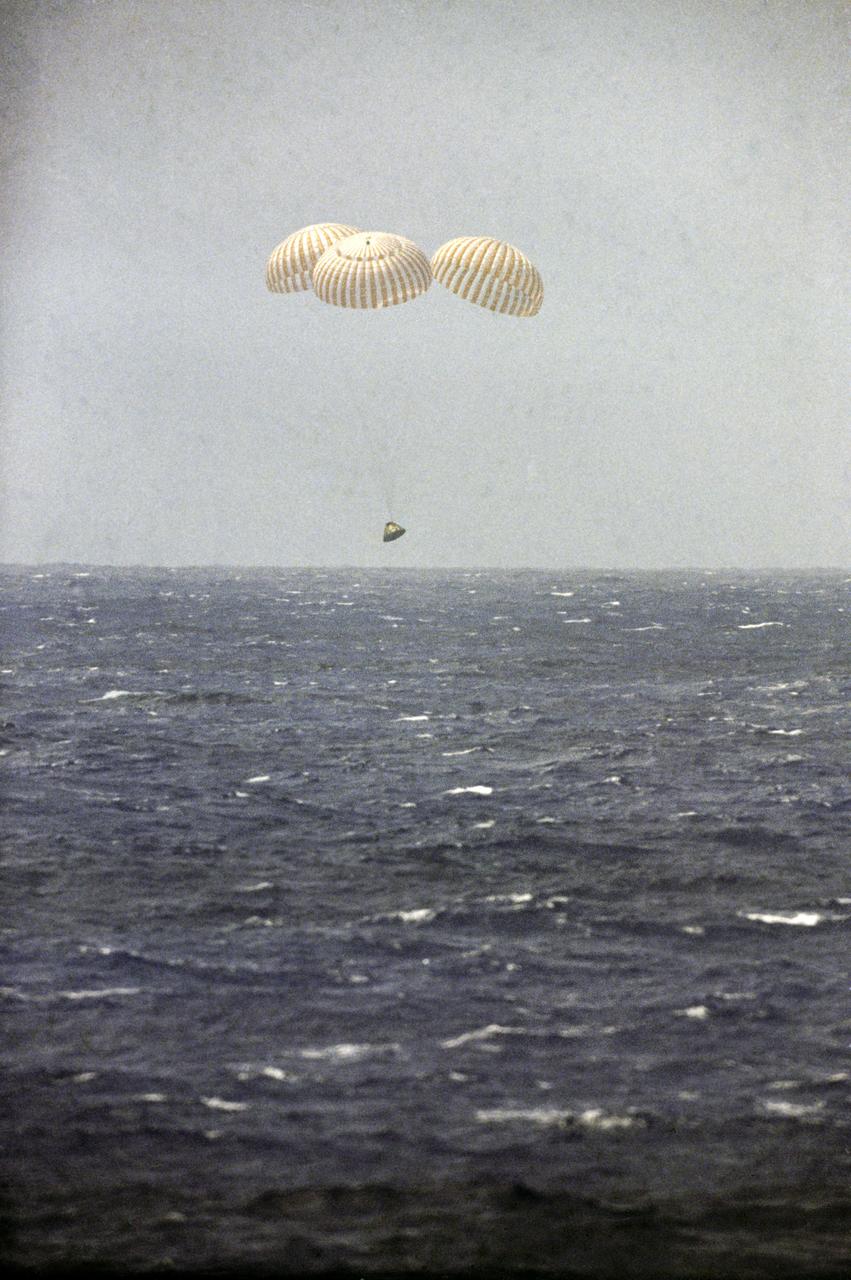
S69-22728 (24 Nov. 1969) --- The Apollo 12 Command Module, with astronauts Charles Conrad Jr., Richard F. Gordon Jr., and Alan L. Bean aboard, nears splashdown in the Pacific Ocean to conclude the second lunar landing mission. The Apollo 12 splashdown occurred at 2:58 p.m., Nov. 24, 1969, near American Samoa.
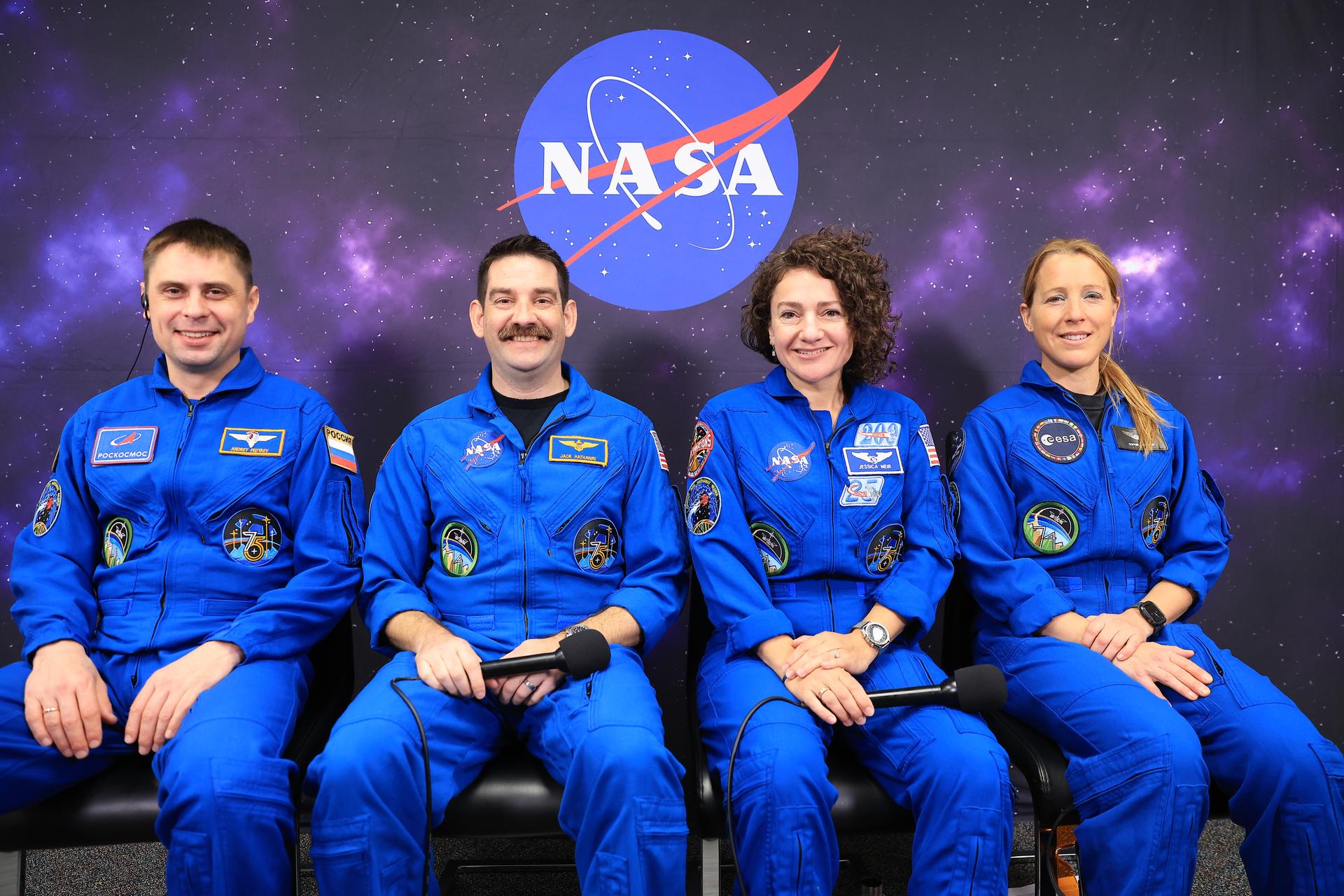
Crew members of NASA’s SpaceX Crew-12 mission, from left to right, Roscosmos cosmonaut Andrey Fedyaev, NASA astronauts Jack Hathaway and Jessica Meir, and ESA (European Space Agency) astronaut Sophie Adenot, participate in a news conference from Astronaut Crew Quarters inside the Neil A. Armstrong Operations and Checkout Building at the agency’s Kennedy Space Center in Florida on Sunday, Feb. 8, 2026. The Crew-12 mission is slated to launch to the International Space Station aboard SpaceX’s Dragon spacecraft atop company’s Falcon 9 rocket from Cape Canaveral Space Force Station’s Space Launch Complex 40 at 6:01 a.m. EST on Wednesday, Feb. 11.
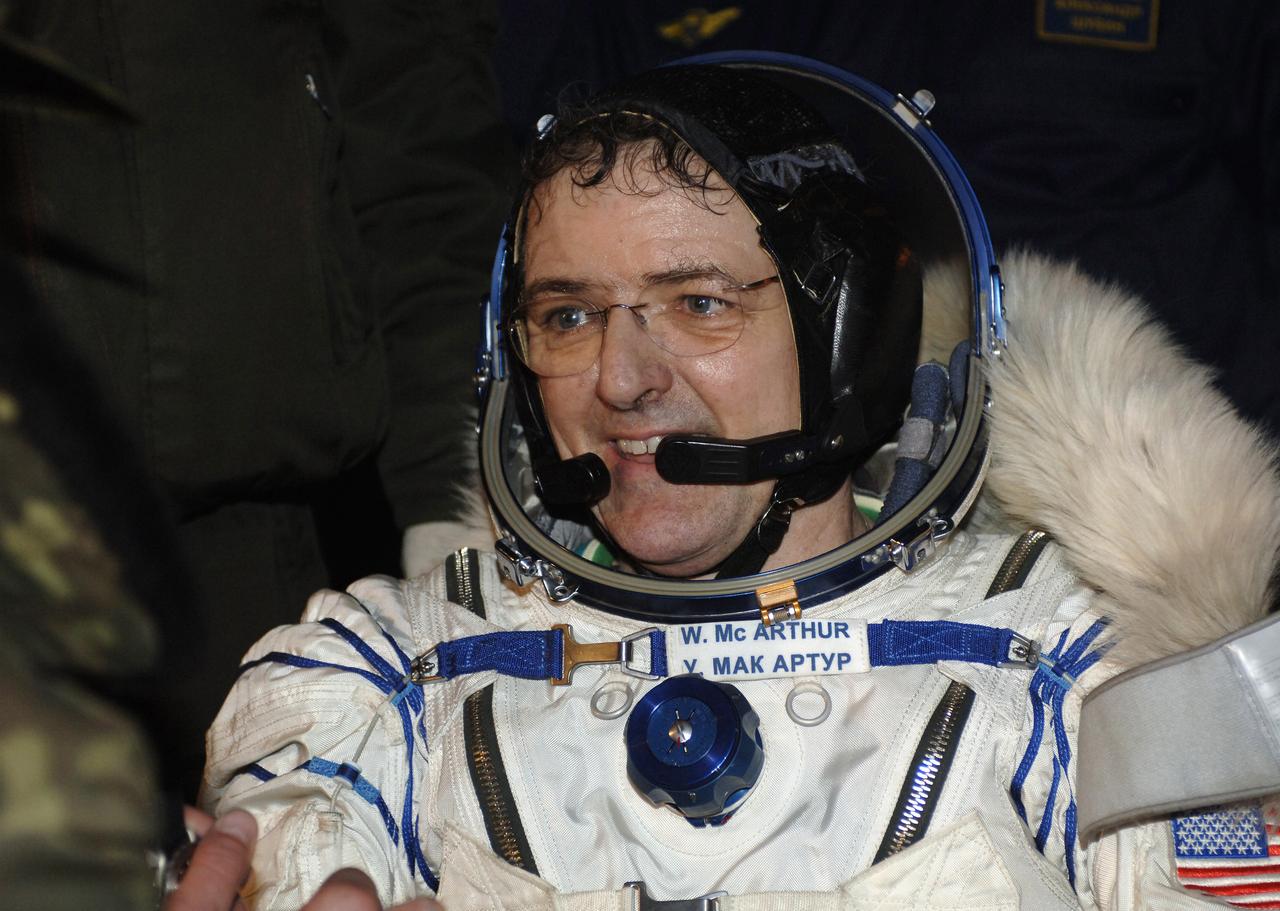
Astronaut William S. McArthur Jr., Expedition 12 commander and space station science officer, smiles as he experiences terra firma for the first time in six months following the touchdown of the Soyuz TMA-7 spacecraft in the steppes of Kazakhstan, Sunday, April 9, 2006. Brazilian astronaut Marcos Pontes and cosmonaut Valery I. Tokarev, Russias Federal Space Agency flight engineer and Soyuz commander joined McArthur for the return trip from the orbital outpost. Photo Credit: (NASA/Bill Ingalls)
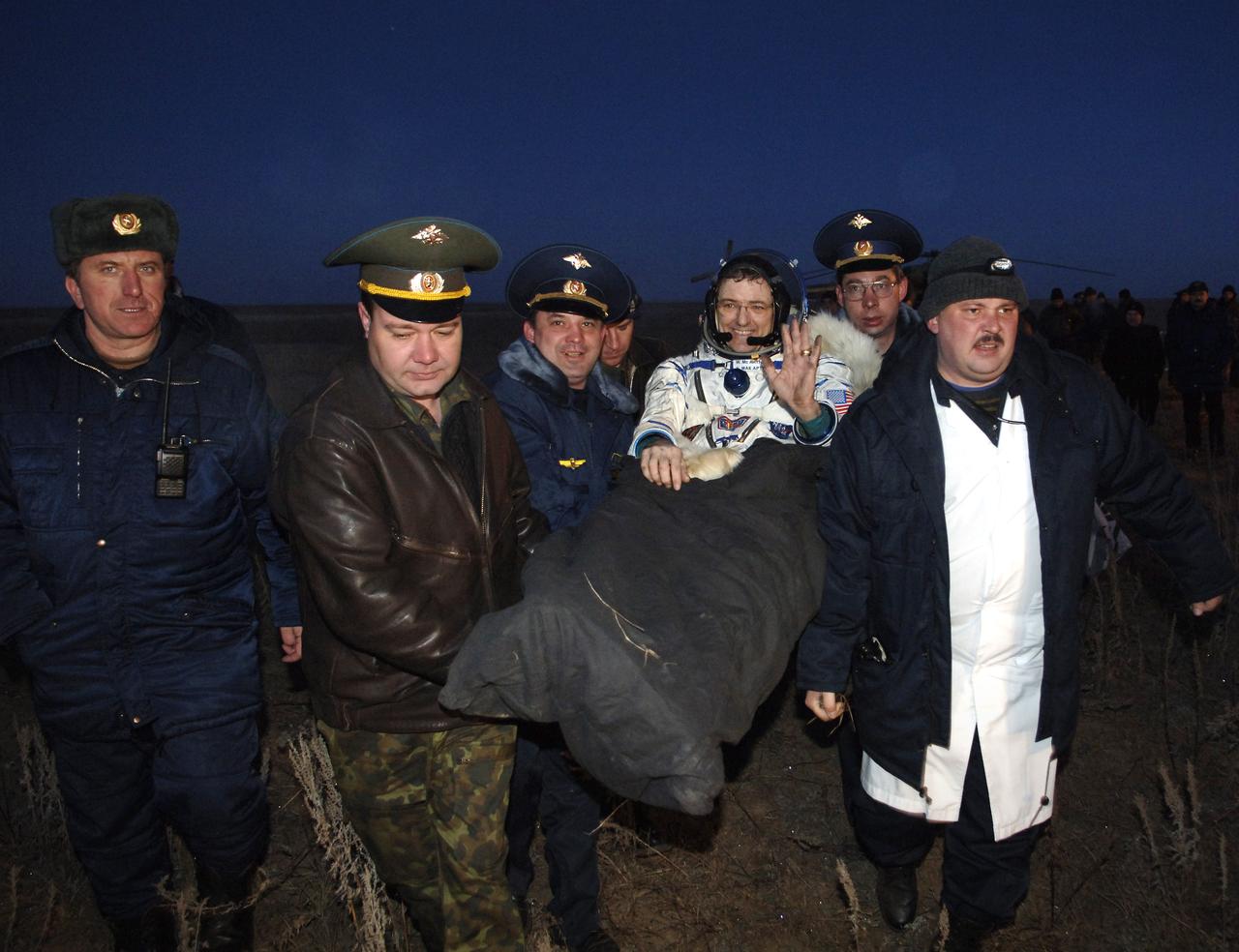
William S. McArthur Jr., Expedition 12 Commander and Space Station Science Officer, waves to some of the crowd on hand in the steppes of Kazakhstan to greet the three crewmembers returning to Earth from the International Space Station in the Soyuz TMA-7 spacecraft on Sunday, April 9, 2006. Returning with McArthur, Flight Engineer Valery Tokarev and Brazil’s first astronaut, Marcos Pontes, who arrived at the station with Expedition 13 on April 1. Photo Credit: (NASA/Bill Ingalls)
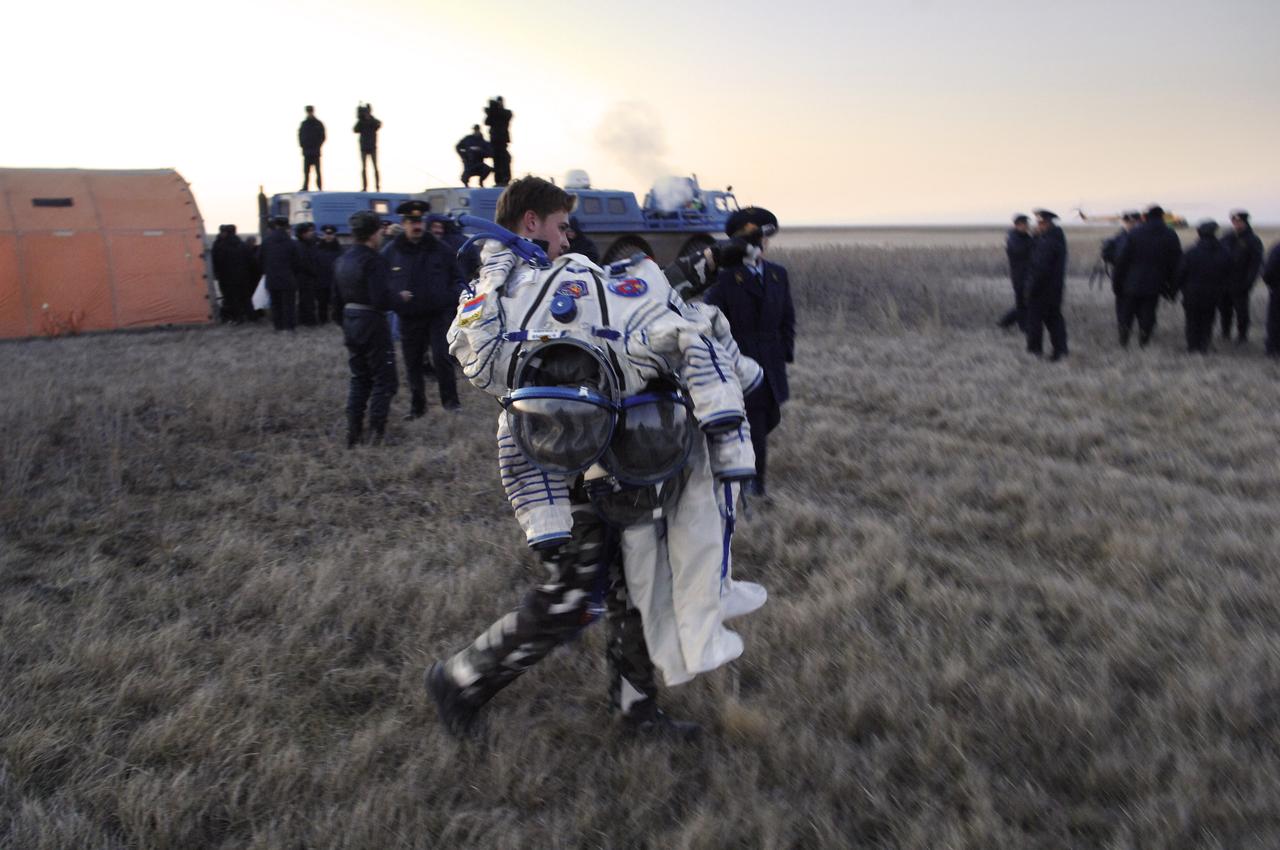
The Russian Sokol Suits are carried from the medical tent after the landing of the Soyuz TMA-7 spacecraft in the steppes of Kazakhstan. The Soyuz TMA-7 spacecraft touched down at 7:48 p.m. EDT on Saturday, April 9, 2006. Returning with Expedition 12 Commander Bill McArthur and Flight Engineer Valery Tokarev was Brazil’s first astronaut, Marcos Pontes, who arrived at the station with Expedition 13 on Sunday, April 1, 2006. Photo Credit: (NASA/Bill Ingalls)
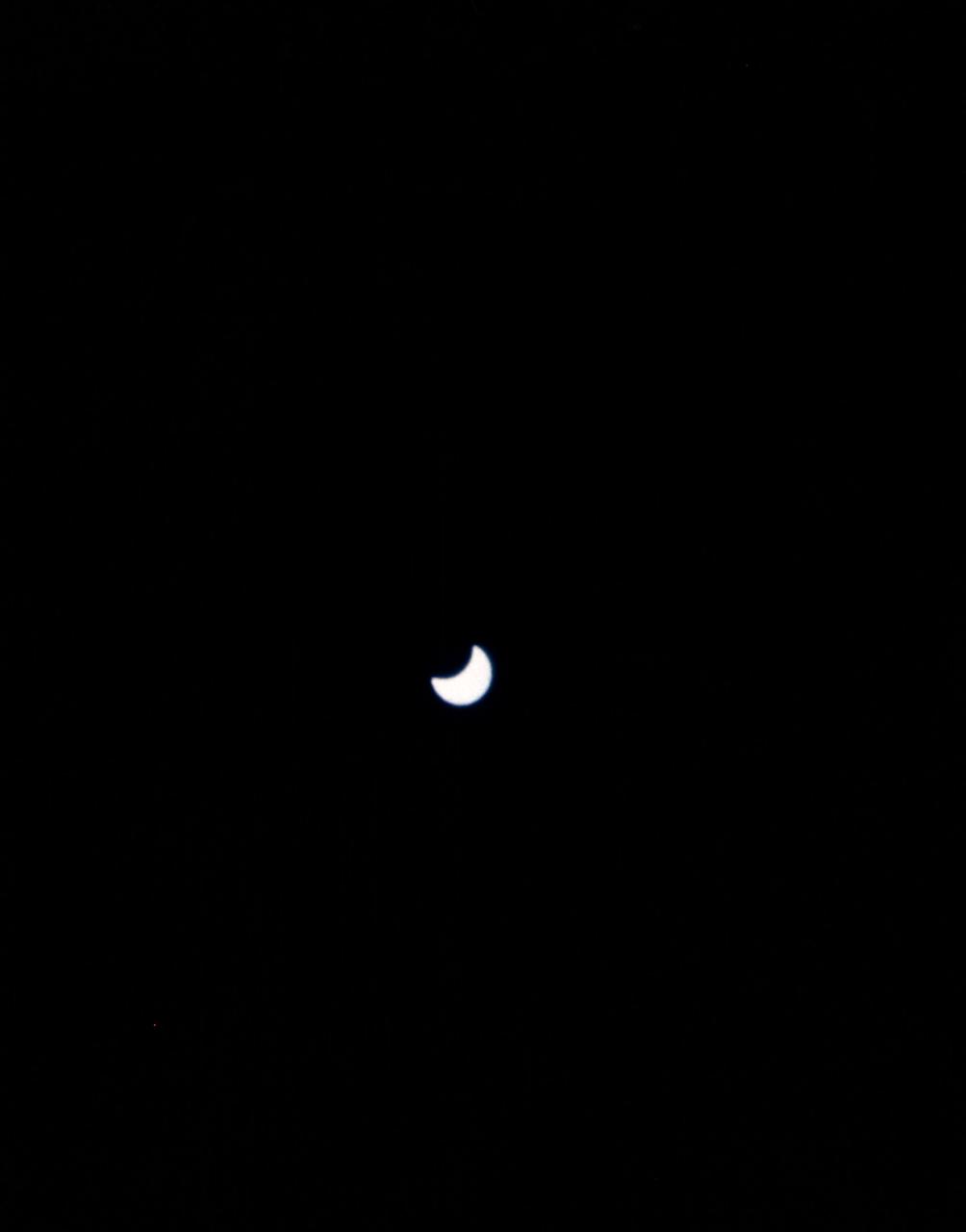
S66-63414 (12 Nov. 1966) --- Partial solar eclipse as seen from the Gemini-12 spacecraft during it 12th revolution of Earth. Crew members for the flight were astronauts James A. Lovell Jr., command pilot, and Edwin E. Aldrin Jr., pilot. Photo credit: NASA

The two-stage SpaceX Falcon 9 launch vehicle lifts off Launch Complex 39A at NASA's Kennedy Space Center carrying the Dragon resupply spacecraft to the International Space Station. Liftoff was at 12:31 p.m. EDT. On its 12th commercial resupply services mission to the International Space Station, Dragon will bring up more than 6,400 pounds of supplies and new science experiments and equipment for technology research.
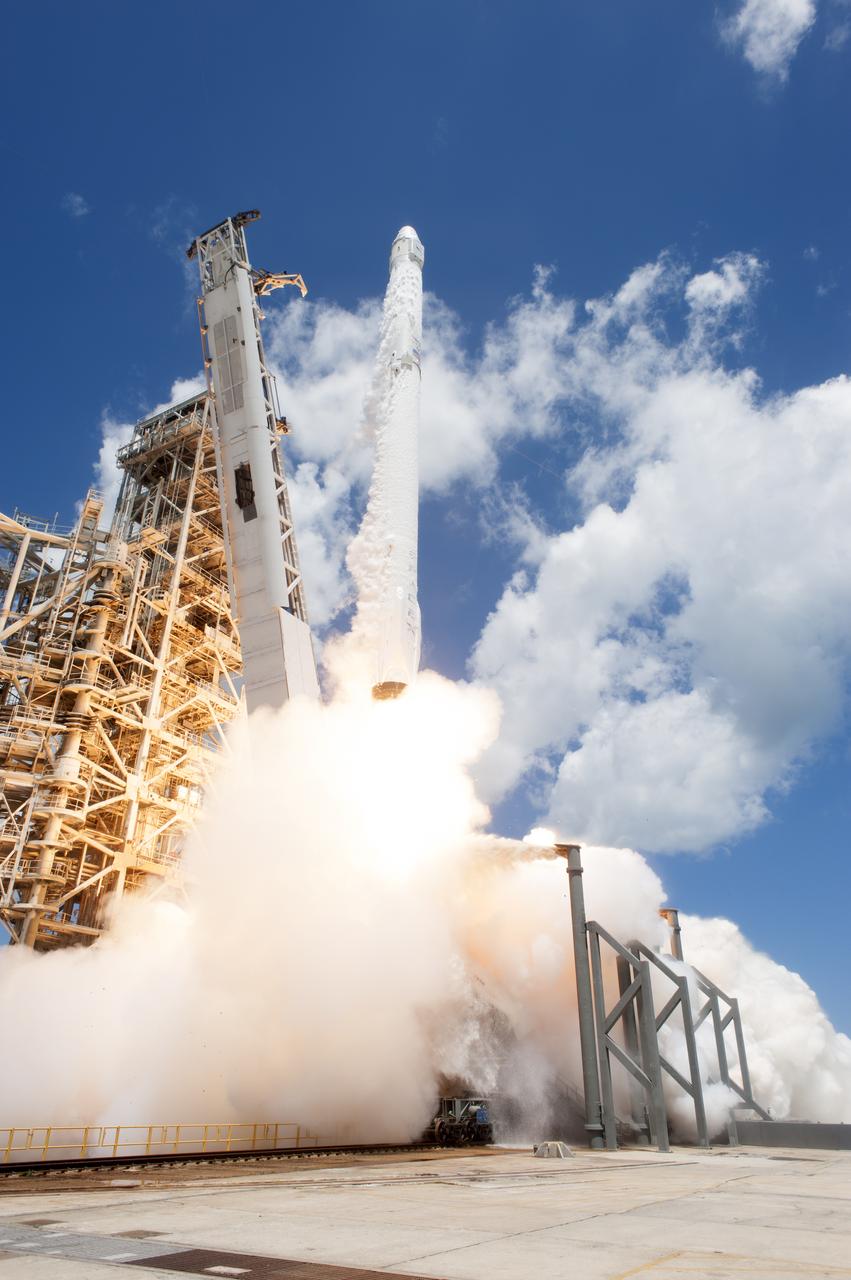
The two-stage SpaceX Falcon 9 launch vehicle lifts off Launch Complex 39A at NASA's Kenney Space Center carrying the Dragon resupply spacecraft to the International Space Station. Liftoff was at 12:31 p.m. EDT. On its 12th commercial resupply services mission to the International Space Station, Dragon will bring up more than 6,400 pounds of supplies and new science experiments and equipment for technology research.
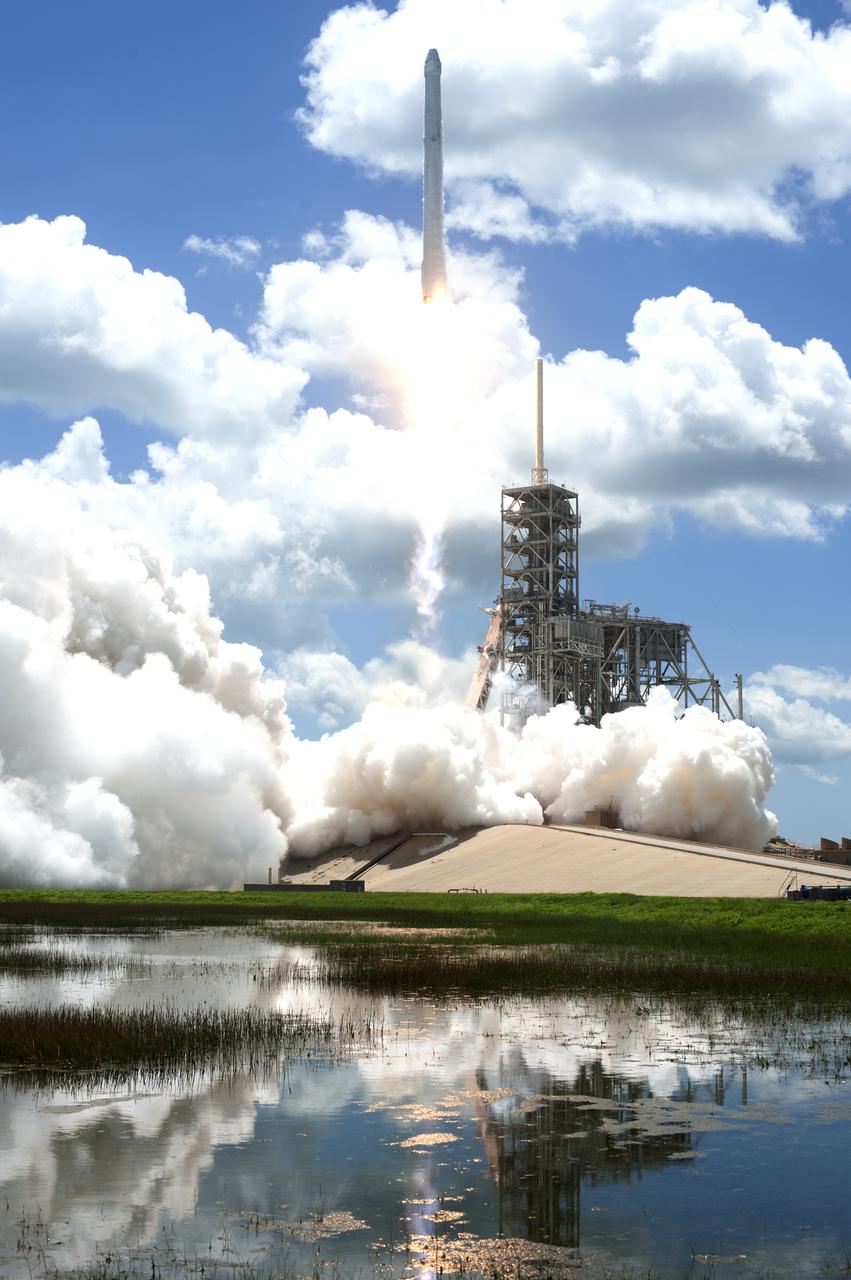
The two-stage SpaceX Falcon 9 launch vehicle lifts off Launch Complex 39A at NASA's Kennedy Space Center carrying the Dragon resupply spacecraft to the International Space Station. Liftoff was at 12:31 p.m. EDT. On its 12th commercial resupply services mission to the International Space Station, Dragon will bring up more than 6,400 pounds of supplies and new science experiments and equipment for technology research.
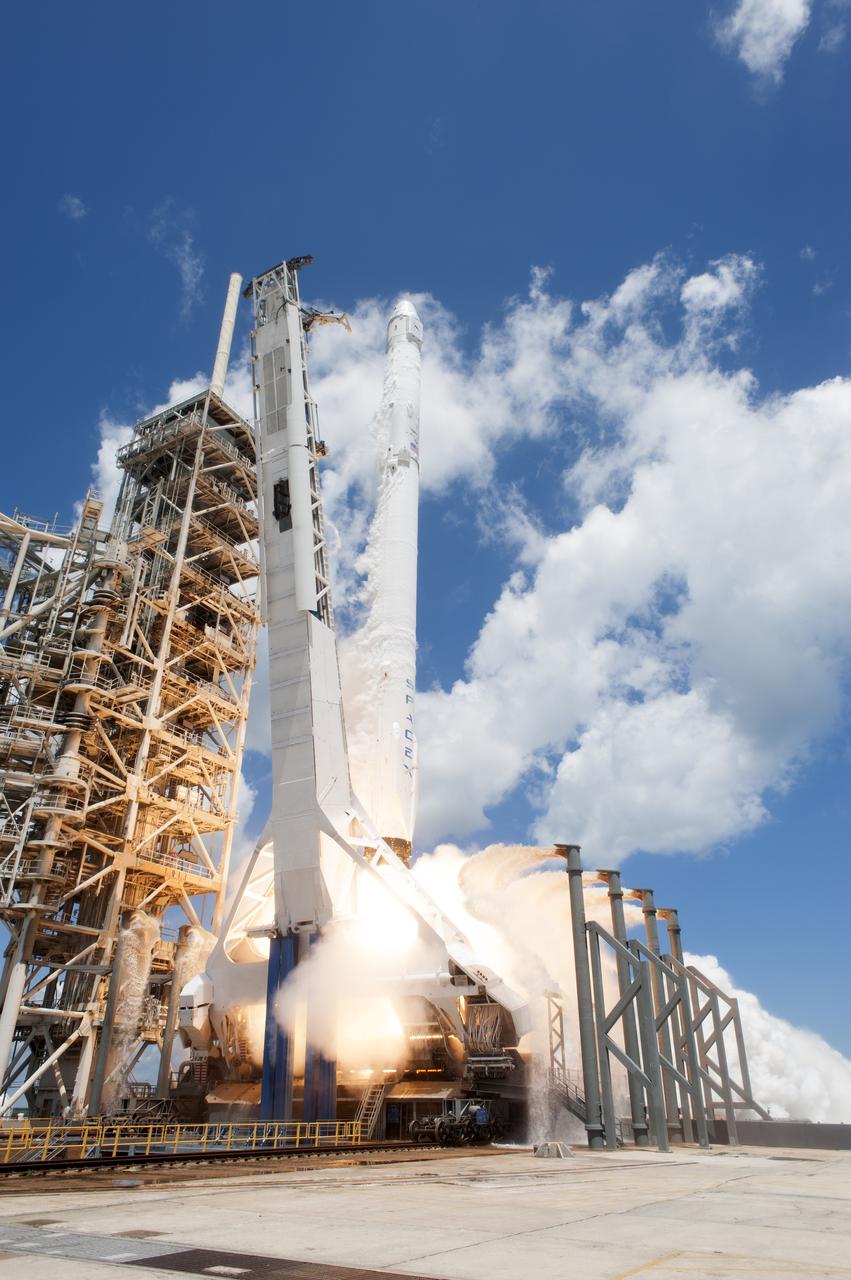
The two-stage SpaceX Falcon 9 launch vehicle lifts off Launch Complex 39A at NASA's Kenney Space Center carrying the Dragon resupply spacecraft to the International Space Station. Liftoff was at 12:31 p.m. EDT. On its 12th commercial resupply services mission to the International Space Station, Dragon will bring up more than 6,400 pounds of supplies and new science experiments and equipment for technology research.
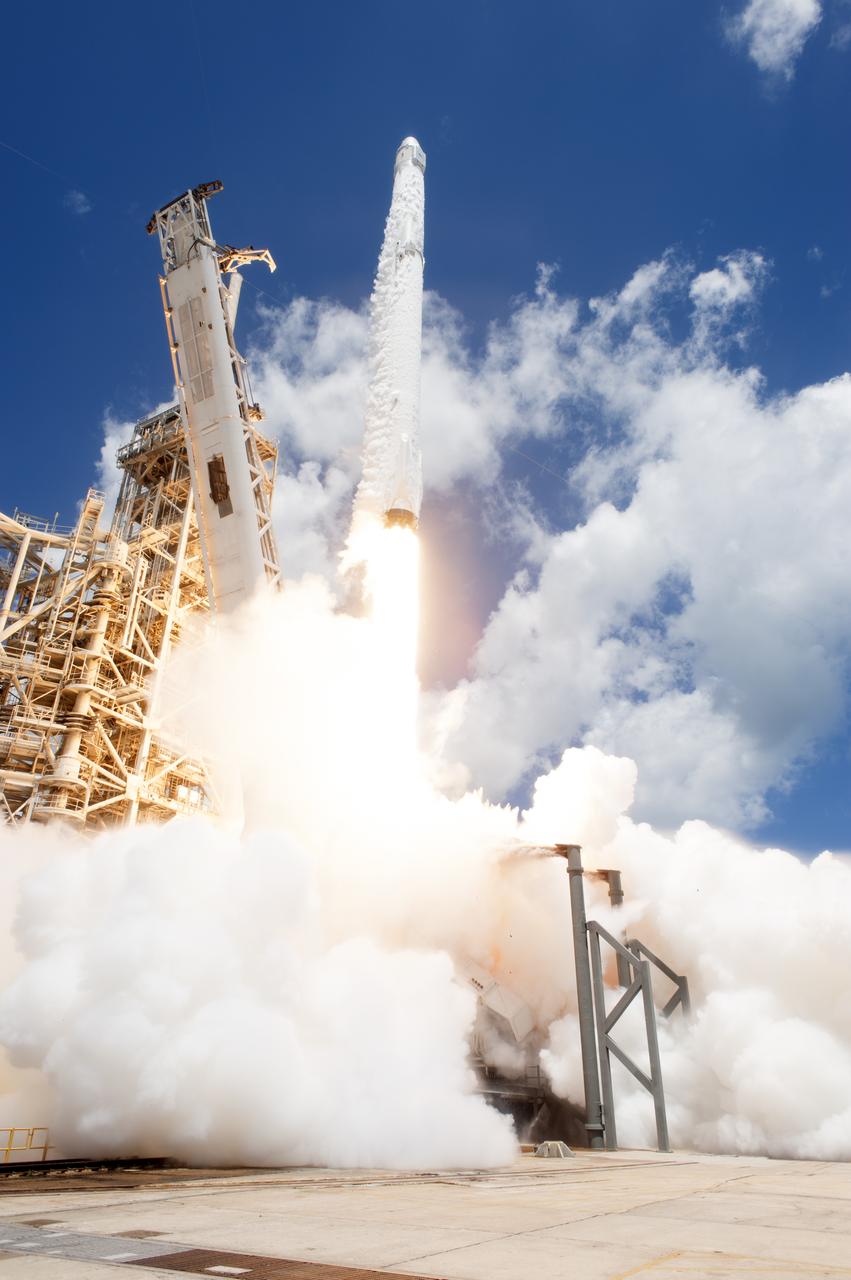
The two-stage SpaceX Falcon 9 launch vehicle lifts off Launch Complex 39A at NASA's Kenney Space Center carrying the Dragon resupply spacecraft to the International Space Station. Liftoff was at 12:31 p.m. EDT. On its 12th commercial resupply services mission to the International Space Station, Dragon will bring up more than 6,400 pounds of supplies and new science experiments and equipment for technology research.
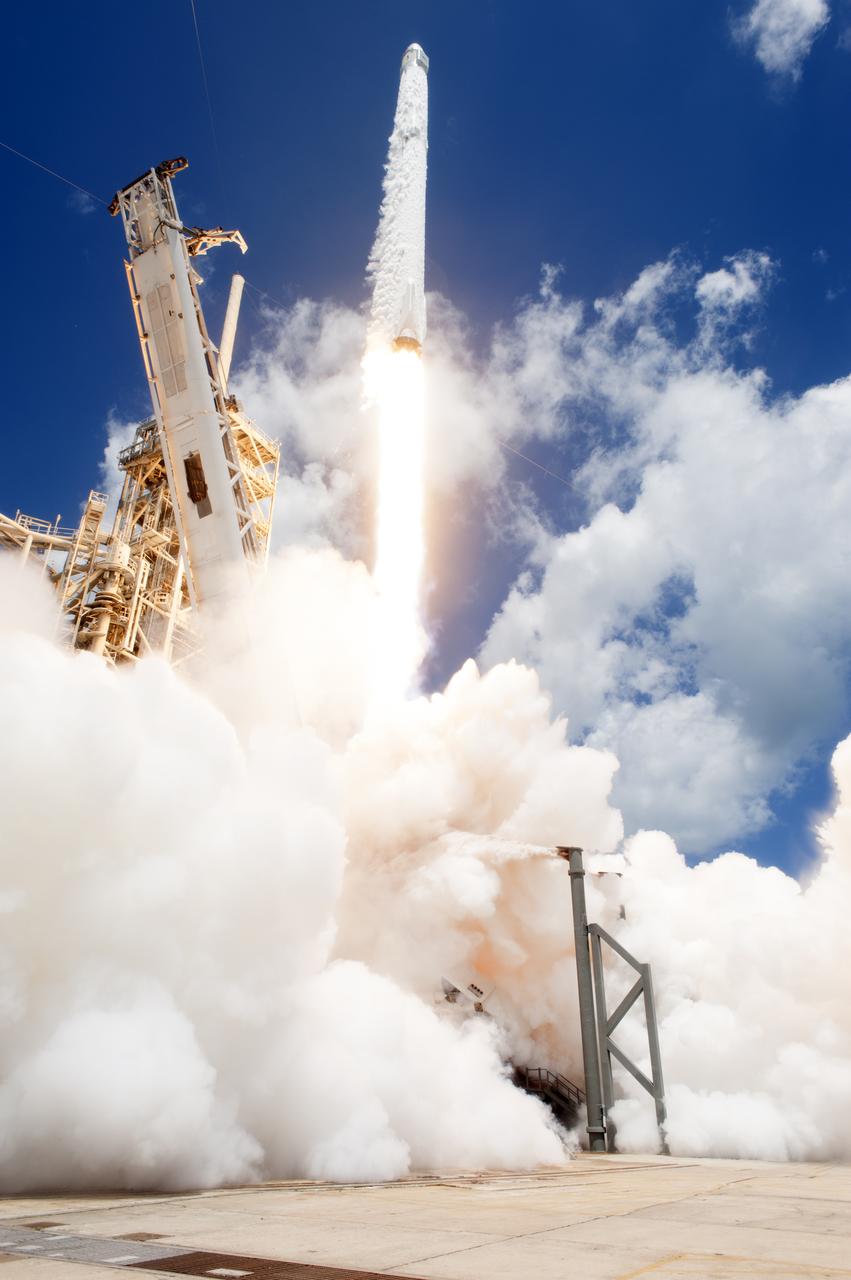
The two-stage SpaceX Falcon 9 launch vehicle lifts off Launch Complex 39A at NASA's Kenney Space Center carrying the Dragon resupply spacecraft to the International Space Station. Liftoff was at 12:31 p.m. EDT. On its 12th commercial resupply services mission to the International Space Station, Dragon will bring up more than 6,400 pounds of supplies and new science experiments and equipment for technology research.
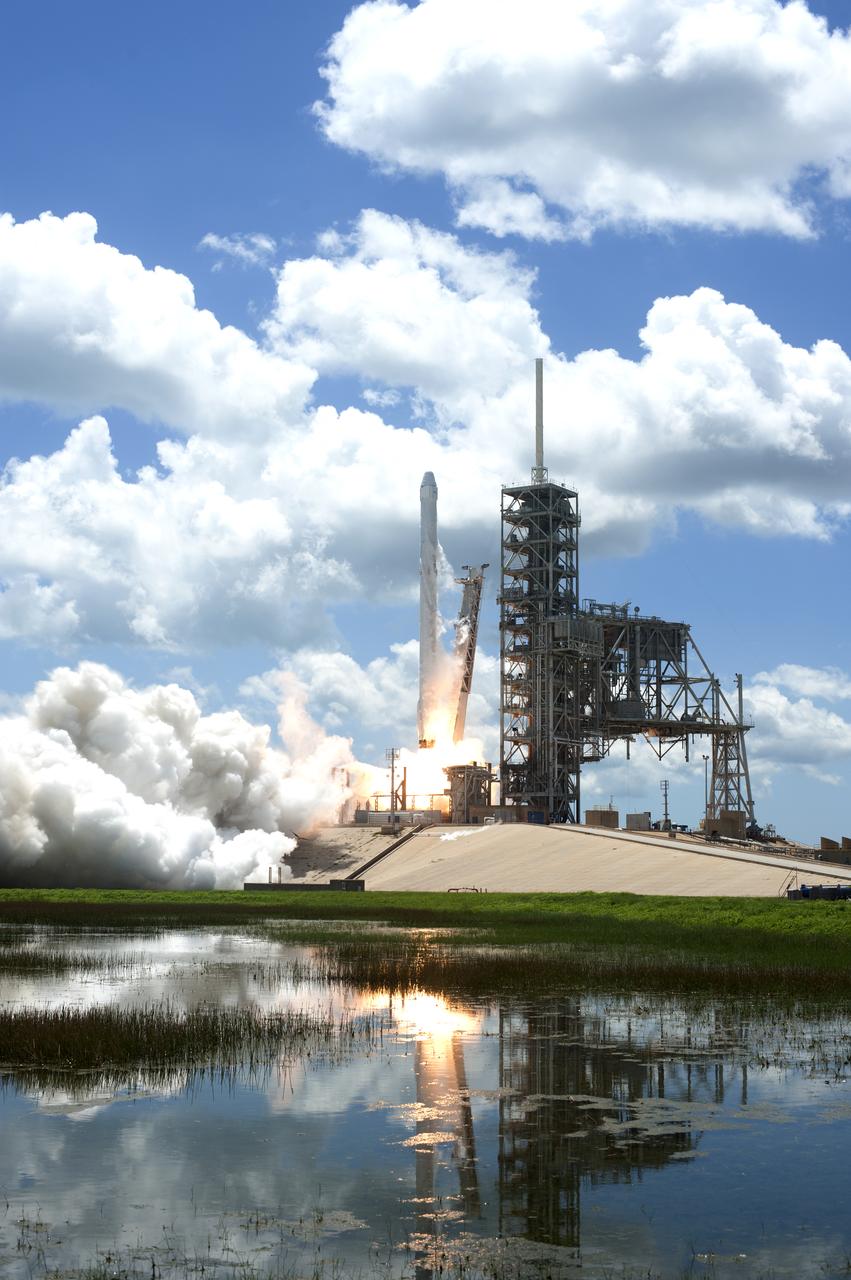
The two-stage SpaceX Falcon 9 launch vehicle lifts off Launch Complex 39A at NASA's Kennedy Space Center carrying the Dragon resupply spacecraft to the International Space Station. Liftoff was at 12:31 p.m. EDT. On its 12th commercial resupply services mission to the International Space Station, Dragon will bring up more than 6,400 pounds of supplies and new science experiments and equipment for technology research.
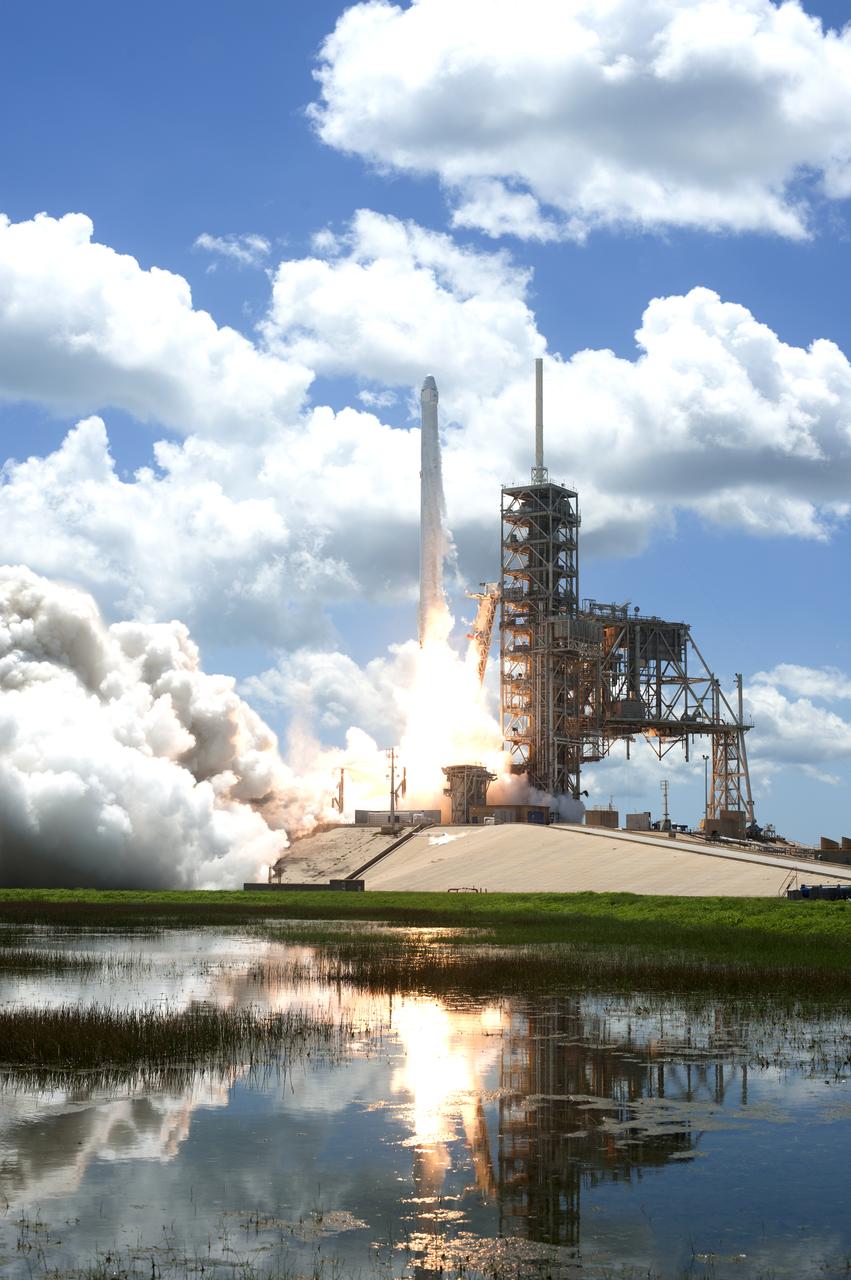
The two-stage SpaceX Falcon 9 launch vehicle lifts off Launch Complex 39A at NASA's Kennedy Space Center carrying the Dragon resupply spacecraft to the International Space Station. Liftoff was at 12:31 p.m. EDT. On its 12th commercial resupply services mission to the International Space Station, Dragon will bring up more than 6,400 pounds of supplies and new science experiments and equipment for technology research.
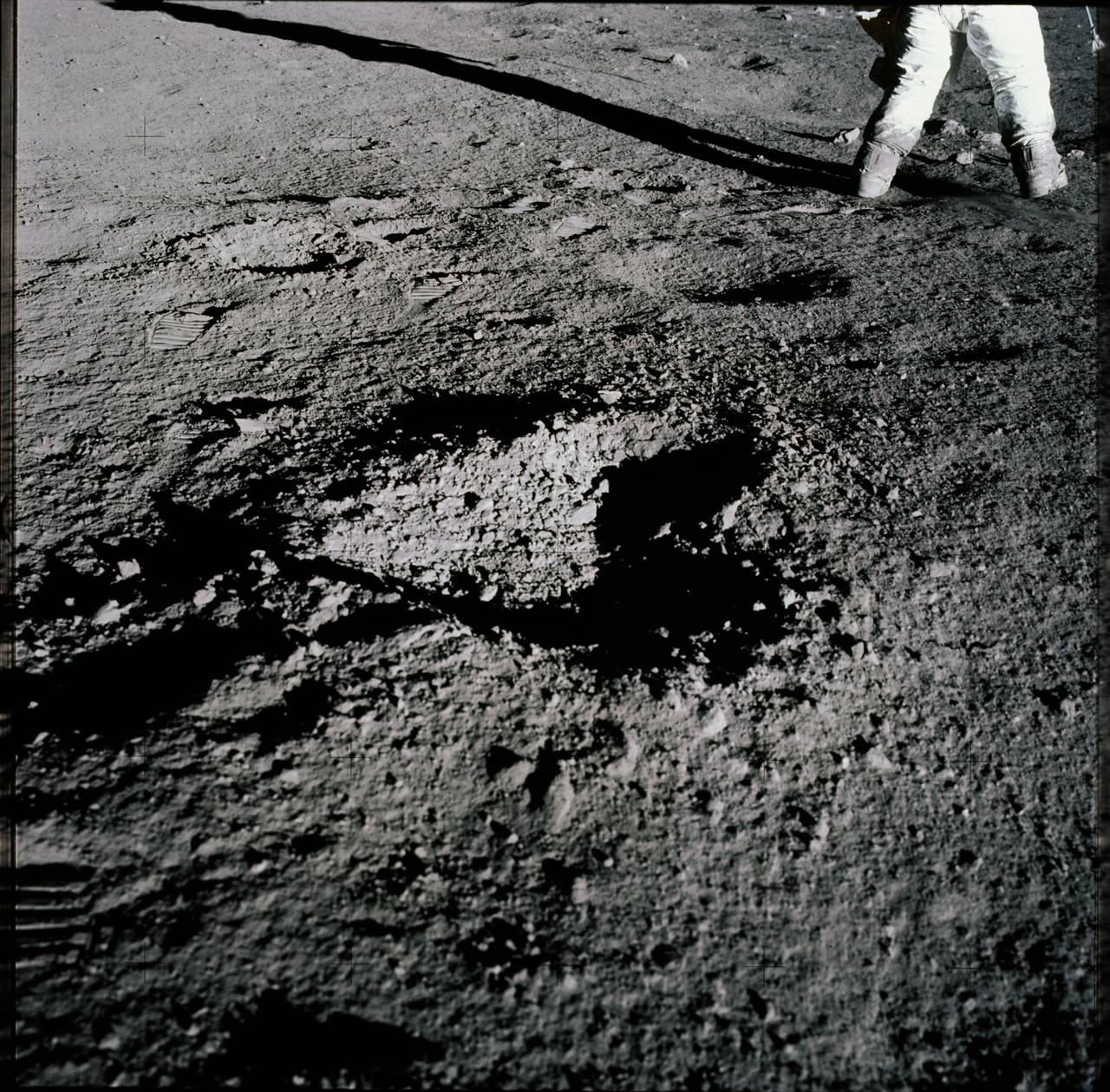
AS12-47-6938 (19 Nov. 1969) --- A close-up view of a heart-shaped depression (crater) in the lunar surface, as photographed during the Apollo 12 extravehicular activity (EVA). The legs of astronaut Charles Conrad Jr., commander, can be seen in the background. Astronaut Richard F. Gordon Jr., command module pilot, remained with the Command and Service Modules (CSM) in lunar orbit while astronauts Conrad and Alan L. Bean, lunar module pilot, descended in the Lunar Module (LM) to explore the moon.
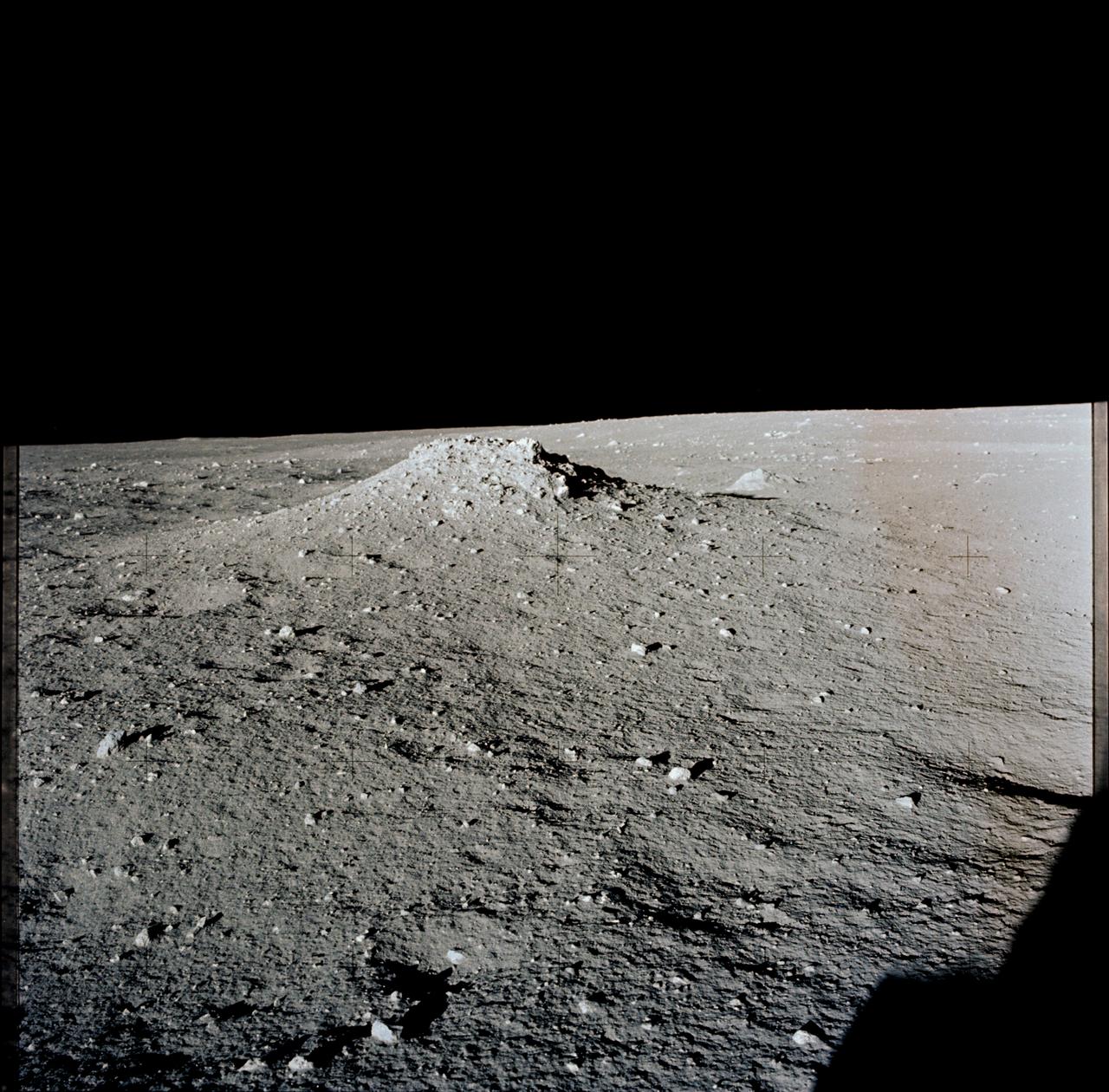
AS12-46-6795 (19-20 Nov. 1969) --- A view of the lunar surface in the vicinity of the Apollo 12 lunar landing site, photographed during the extravehicular activity (EVA) of astronauts Charles Conrad Jr., commander, and Alan L. Bean, lunar module pilot. Conrad and Bean encountered the odd, anthill-shaped mound during their lunar traverse. The two descended in the Apollo 12 Lunar Module (LM) to explore the moon, while astronaut Richard F. Gordon Jr., command module pilot, remained with the Command and Service Modules (CSM) in lunar orbit.
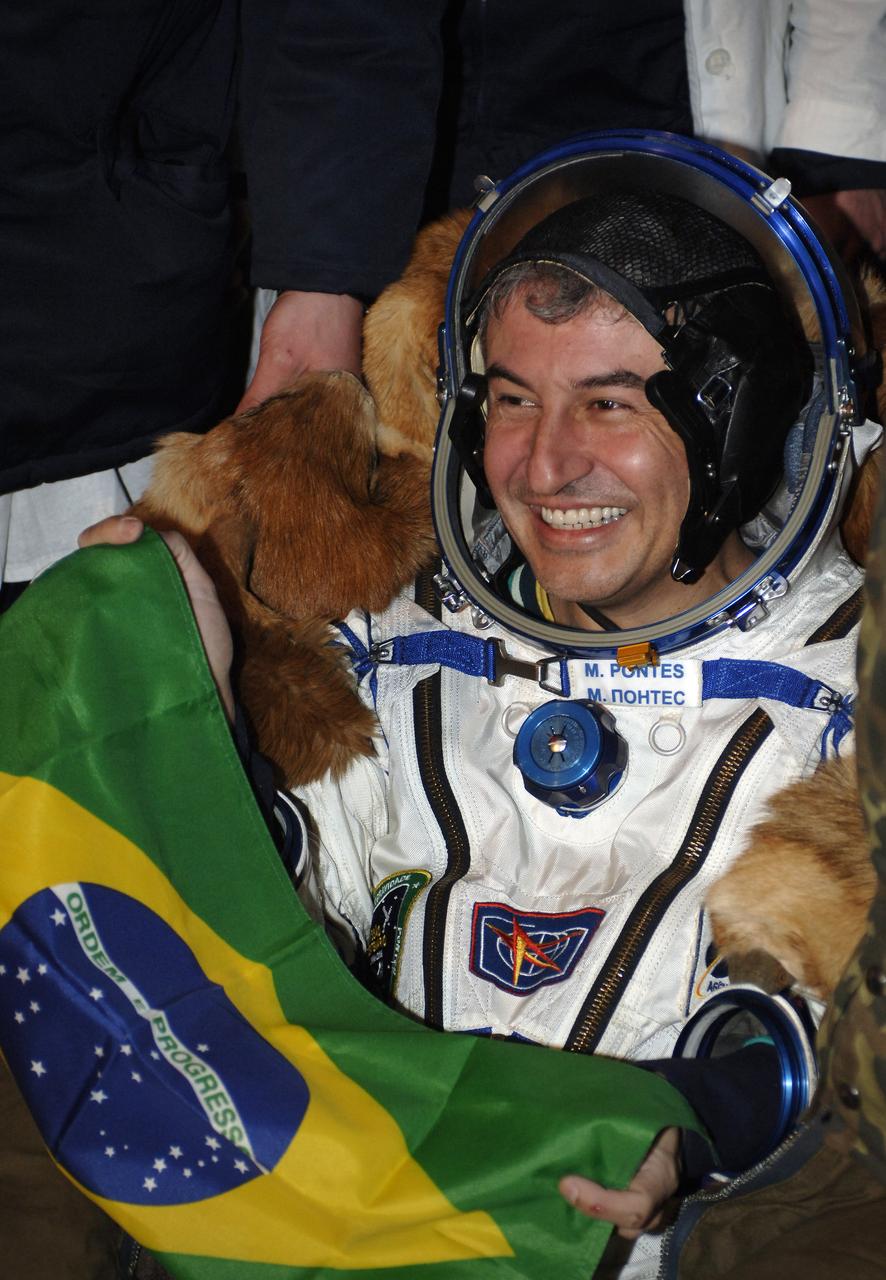
Brazil’s first astronaut in space, Marcos C. Pontes smiles as he exchanges greetings with some of the crowd on hand in the steppes of Kazakhstan to meet him and the two Expedition 12 crewmembers returning to Earth from the International Space Station in the Soyuz TMA-7 spacecraft on Saturday, April 9, 2006. The Soyuz TMA-7 spacecraft touched down at 7:48 p.m. EDT. Pontes spent a little over a week onboard the orbital outpost. He arrived at the station with Expedition 13 on Sunday, April 1, 2008. He represented the Brazil Space Agency. Photo Credit: (NASA/Bill Ingalls)
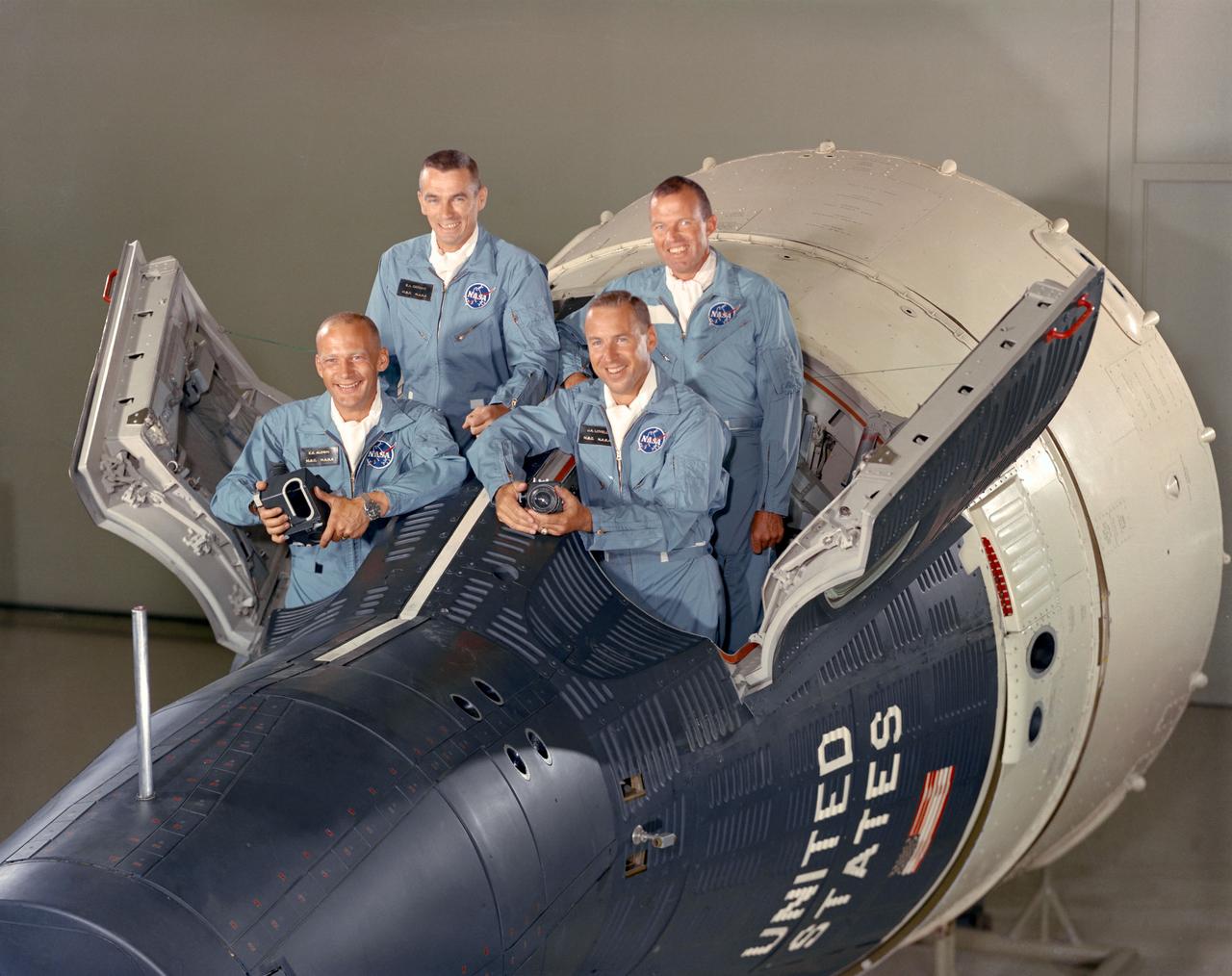
S66-46955 (September 1966) --- The Gemini-12 prime crew (in front) is astronauts James A. Lovell Jr. (right), command pilot, and Edwin E. Aldrin Jr. (left), pilot. In the rear is the Gemini-12 backup crew, astronauts L. Gordon Cooper Jr., (right), command pilot, and Eugene A. Cernan, pilot. Photo credit: NASA
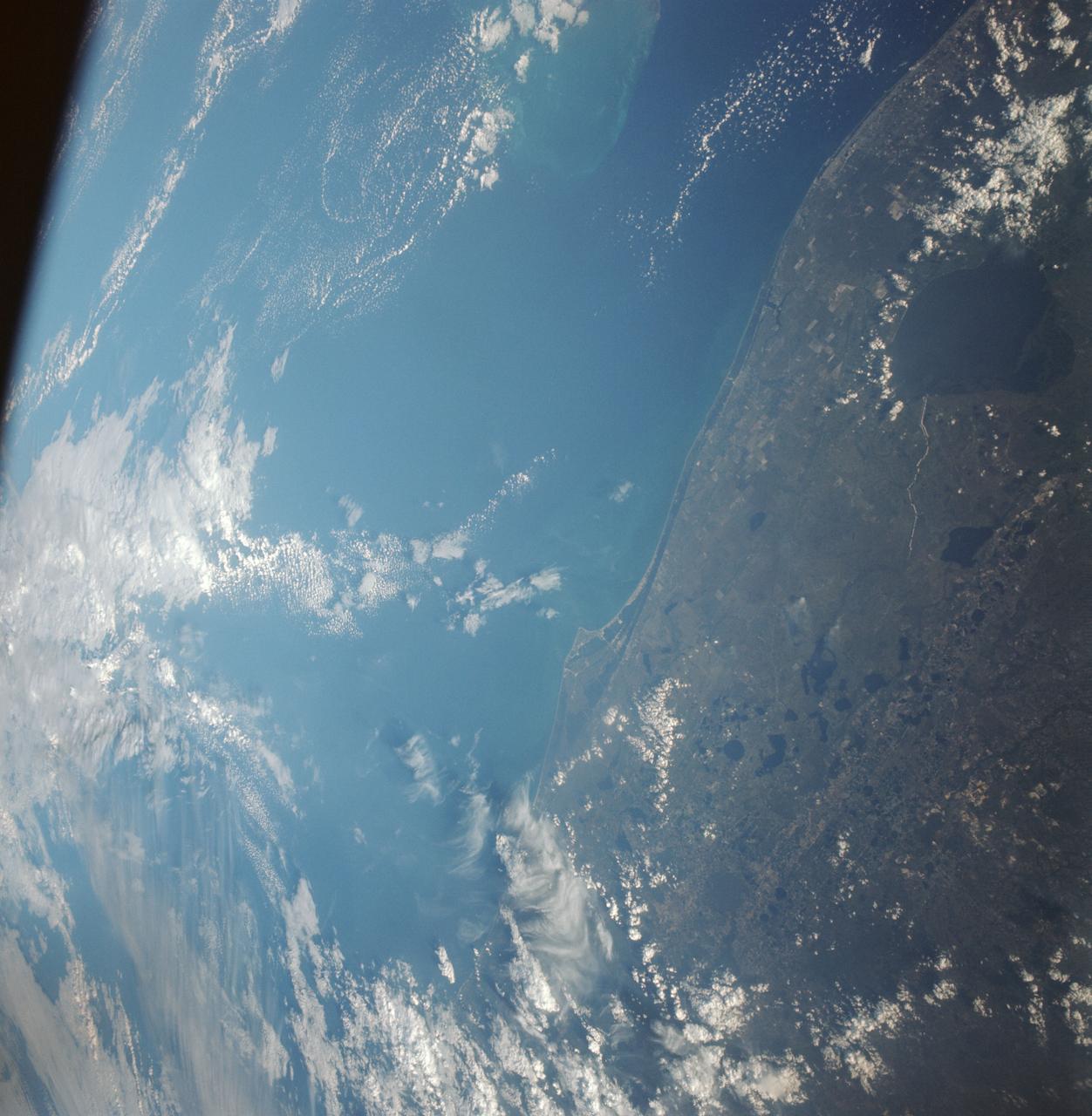
S66-63433 (12 Nov. 1966) --- Cape Kennedy, Palm Beach, Orlando area of Florida as seen from the Gemini-12 spacecraft during it 15th revolution of Earth. Photo credit: NASA
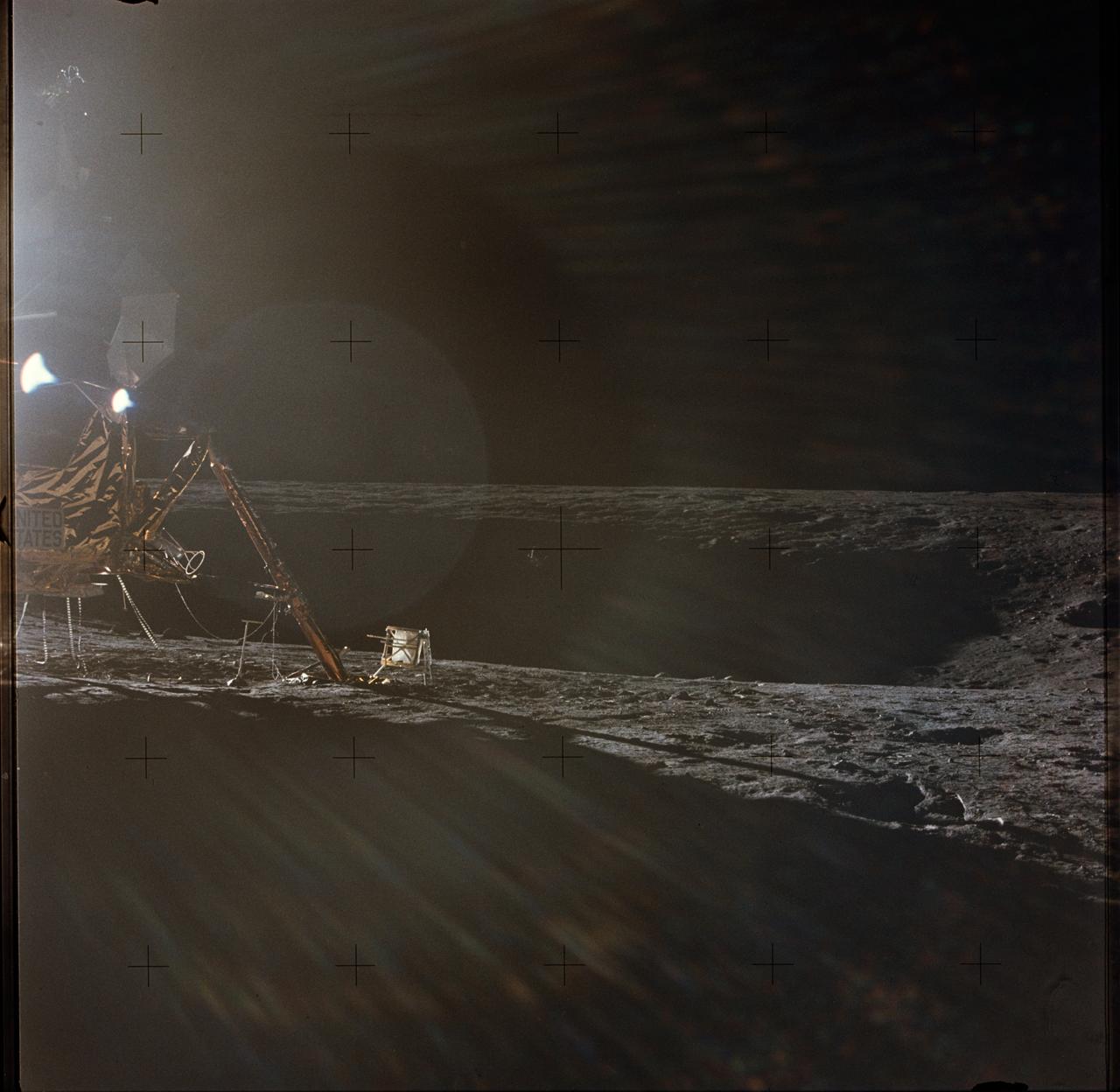
AS12-47-6949 (19-20 Nov. 1969) --- A photograph of the Apollo 12 lunar landing site taken during the extravehicular activity (EVA) of astronauts Charles Conrad Jr., commander; and Alan L. Bean, lunar module pilot. The Apollo 12 Lunar Module (LM) is on the left. Barely visible in the center of the picture, in the shadows on the farside of the crater, is the Surveyor 3 spacecraft. The two spacecraft are about 600 feet apart. Conrad and Bean walked over to Surveyor 3 during their second EVA. The television camera and several other pieces were taken from Surveyor 3 and brought back to Earth for scientific examination. Astronaut Richard F. Gordon Jr., command module pilot, remained with the Command and Service Modules (CSM) in lunar orbit, while astronauts Conrad and Bean descended in the LM to explore the moon. The considerable glare in the picture is caused by the position of the sun. The Apollo tool carrier is the object next to the LM footpad.
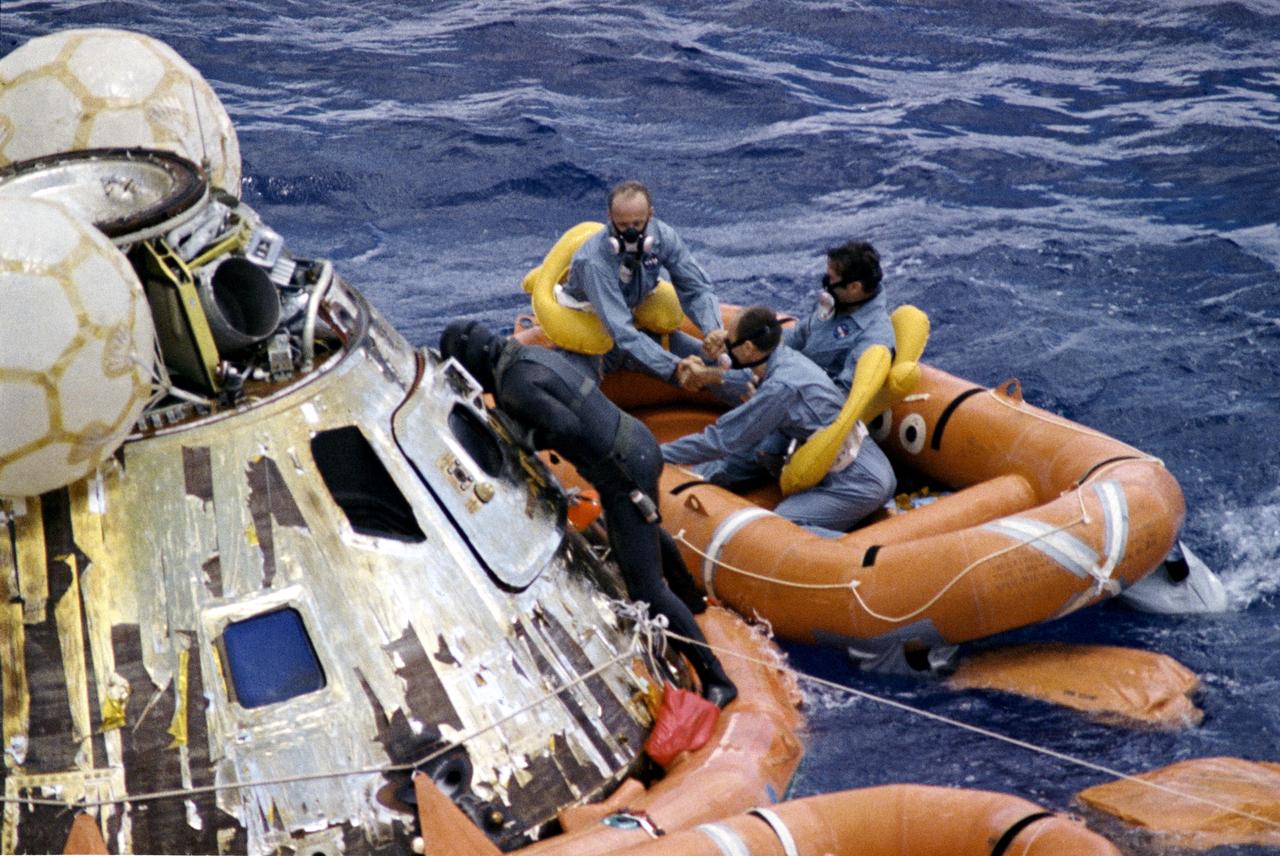
S69-22271 (24 Nov. 1969) --- A United States Navy Underwater Demolition Team swimmer assists the Apollo 12 crew during recovery operations in the Pacific Ocean. In the life raft are astronauts Charles Conrad Jr. (facing camera), commander; Richard F. Gordon Jr. (middle), command module pilot; and Alan L. Bean (nearest camera), lunar module pilot. The three crew men of the second lunar landing mission were picked up by helicopter and flown to the prime recovery ship, USS Hornet. Apollo 12 splashed down at 2:58 p.m. (CST), Nov. 24, 1969, near American Samoa. While astronauts Conrad and Bean descended in the Lunar Module (LM) "Intrepid" to explore the Ocean of Storms region of the moon, astronaut Gordon remained with the Command and Service Modules (CSM) "Yankee Clipper" in lunar orbit.
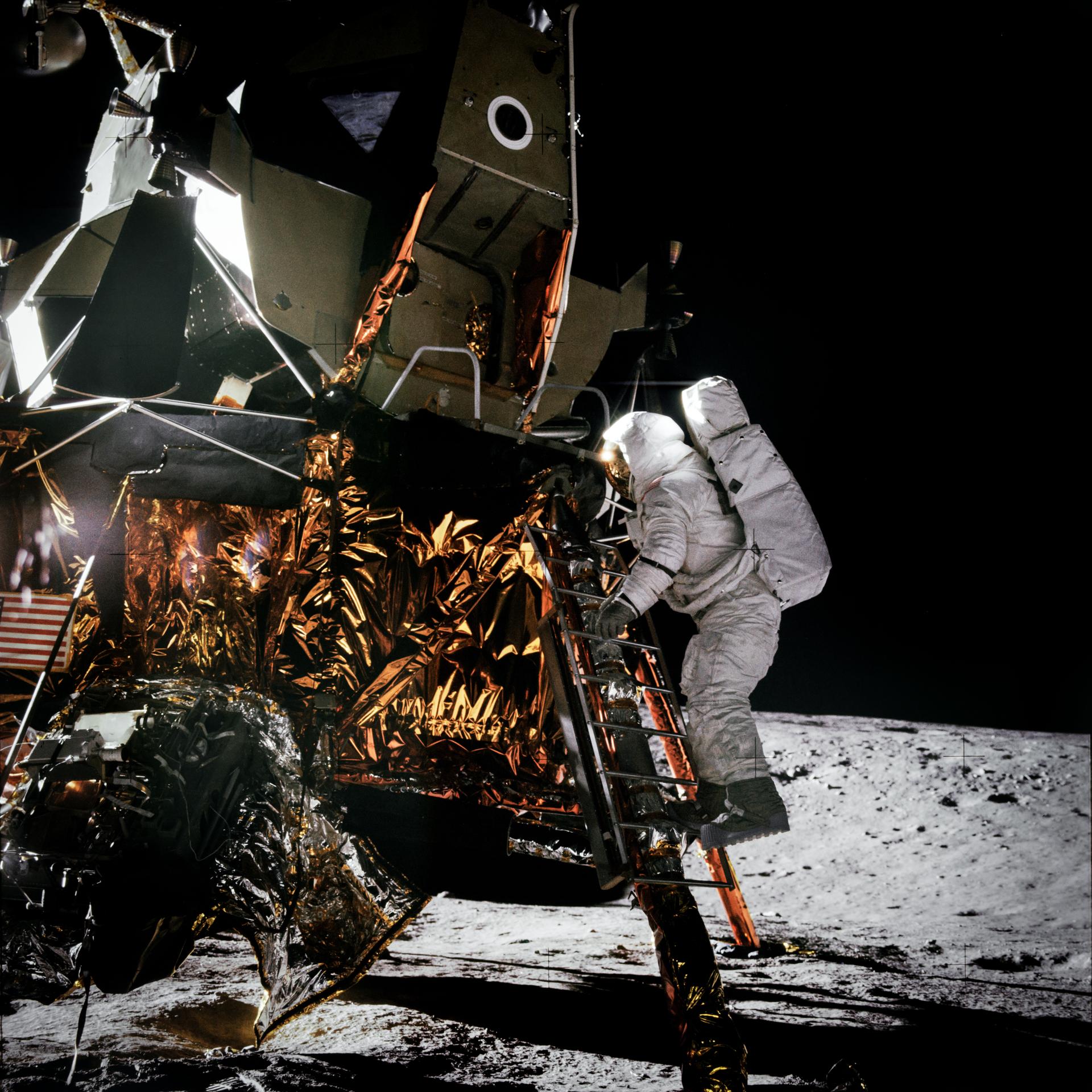
AS12-46-6728 (19 Nov. 1969) --- Astronaut Alan L. Bean, lunar module pilot for the Apollo 12 mission, is about to step off the ladder of the Lunar Module to join astronaut Charles Conrad Jr., mission commander, in extravehicular activity (EVA). Conrad and Bean descended in the Apollo 12 LM to explore the moon while astronaut Richard F. Gordon Jr., command module pilot, remained with the Command and Service Modules in lunar orbit.
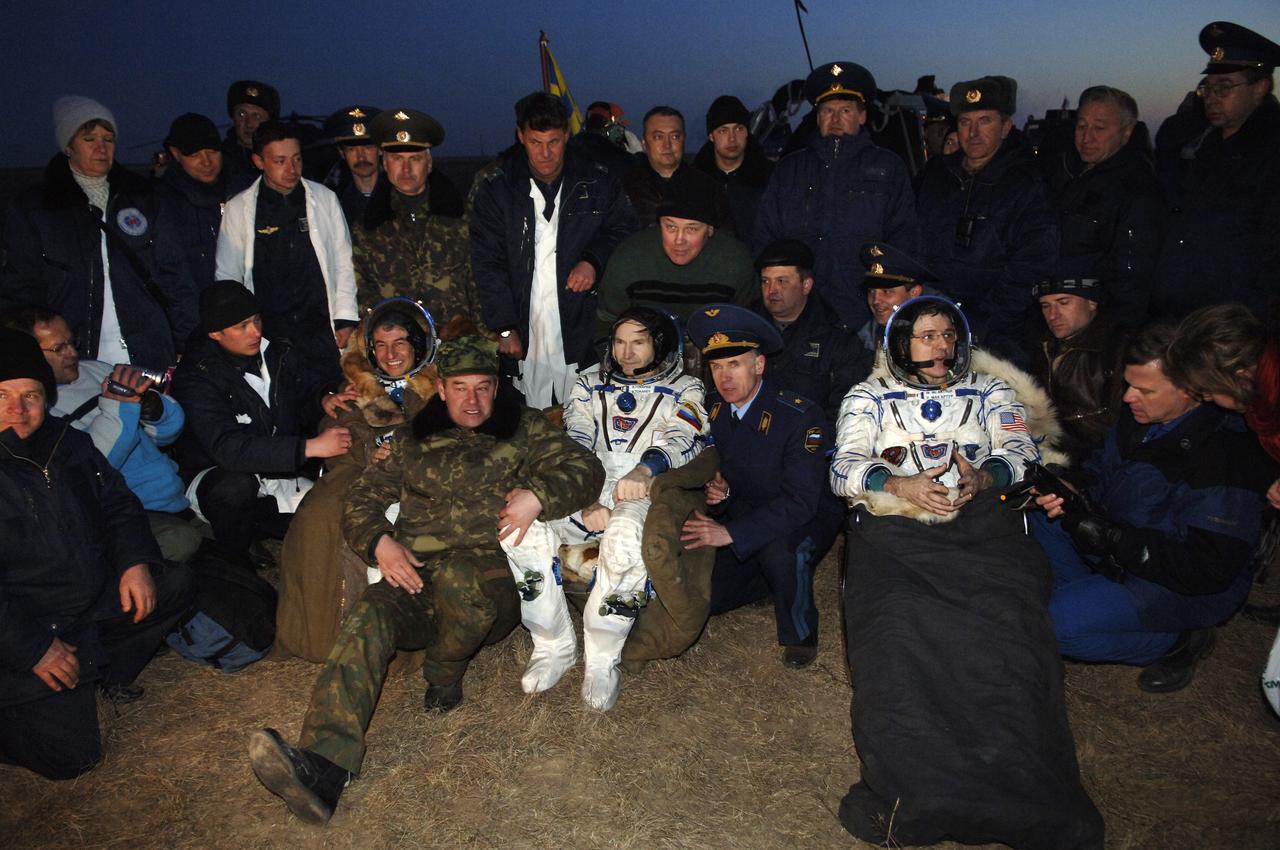
The two Expedition 12 crew members and a Brazilian astronaut are met by a couple of dozen greeters on hand at the landing site of the Soyuz TMA-7 spacecraft in the steppes of Kazakhstan on Sunday, April 9, 2006. Still wearing their spacesuits (in the foreground, left to right) are Marcos C. Pontes of Brazil, Valery I. Tokarev of Russia's Federal Space Agency and William S. McArthur Jr. Photo Credit: (NASA/Bill Ingalls)
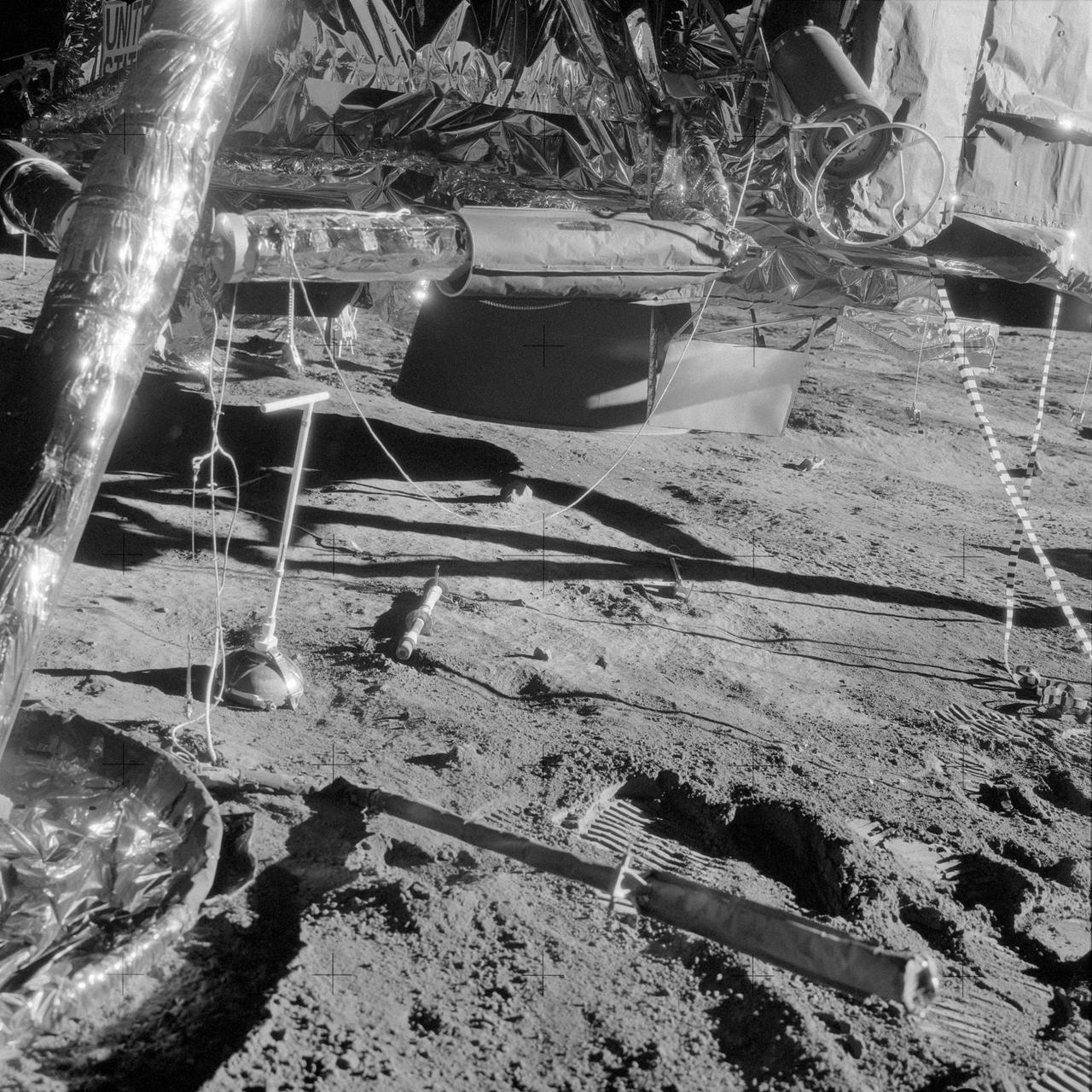
AS12-48-7034 (19 Nov. 1969) --- A close-up view of a portion of quadrant II of the descent stage of the Apollo 12 Lunar Module (LM), photographed during the Apollo 12 extravehicular activity (EVA). At lower left is the LM's Y footpad. The empty Radioisotope Thermoelectric Generator (RTG) fuel cask is at upper right. The fuel capsule has already been removed and placed in the RTG. The RTG furnishes power for the Apollo Lunar Surface Experiments Package (ALSEP) which the Apollo 12 astronauts deployed on the moon. The LM's descent engine skirt is in the center background. The rod-like object protruding out from under the footpad is a lunar surface sensing probe. Astronaut Richard F. Gordon Jr., command module pilot, remained with the Command and Service Modules (CSM) in lunar orbit while astronauts Charles Conrad Jr., commander; and Alan L. Bean, lunar module pilot, descended in the LM to explore the moon.
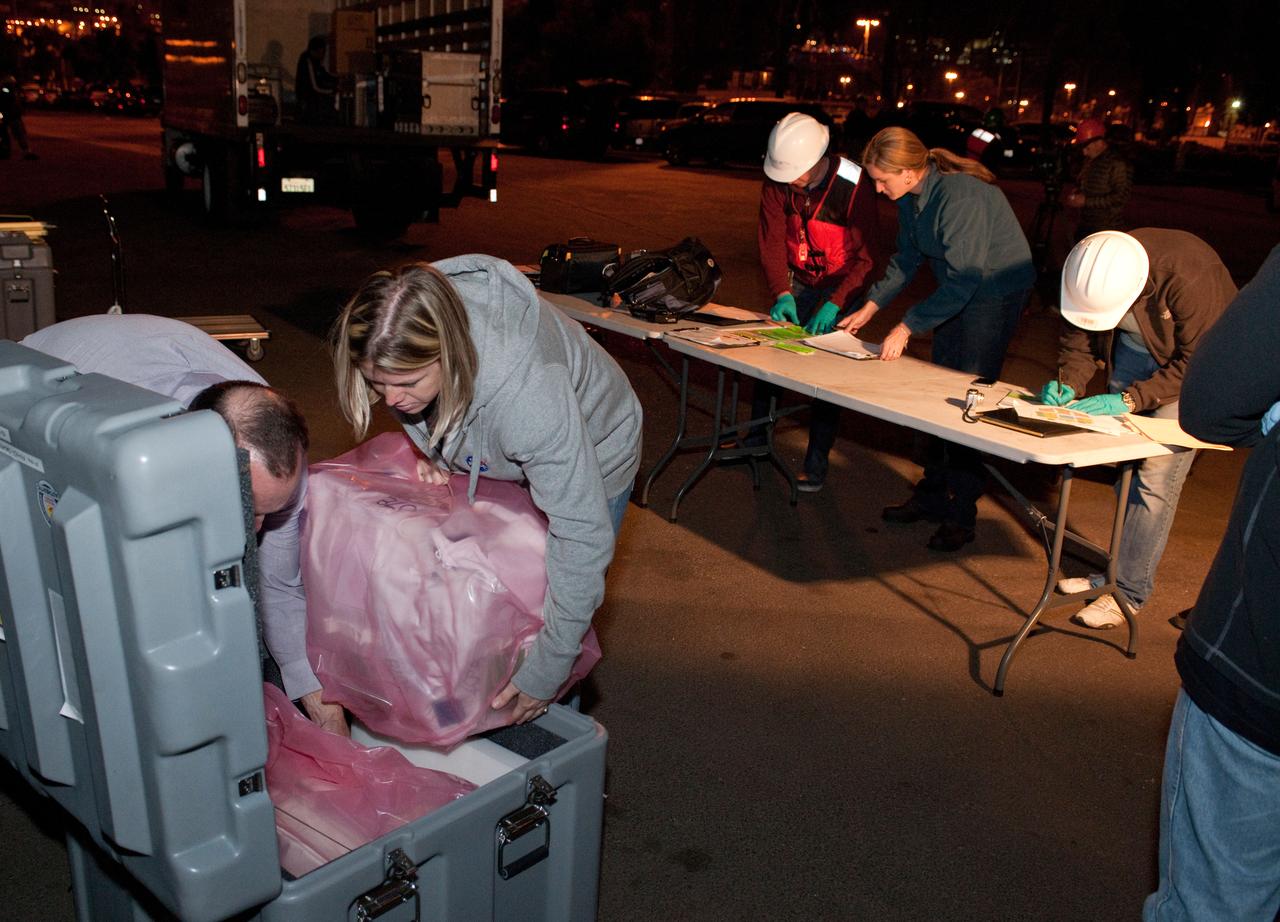
ED13-0079-12 (26 March 2013) ---- SpaceX Dragon's second operational mission ended on March 26 after three weeks attached to the International Space Station. The unmanned spacecraft splashed down in the Pacific Ocean about 214 miles off the coast of Baja California to successfully return about 2,670 pounds of science materials from the orbital outpost. Photo credit: NASA
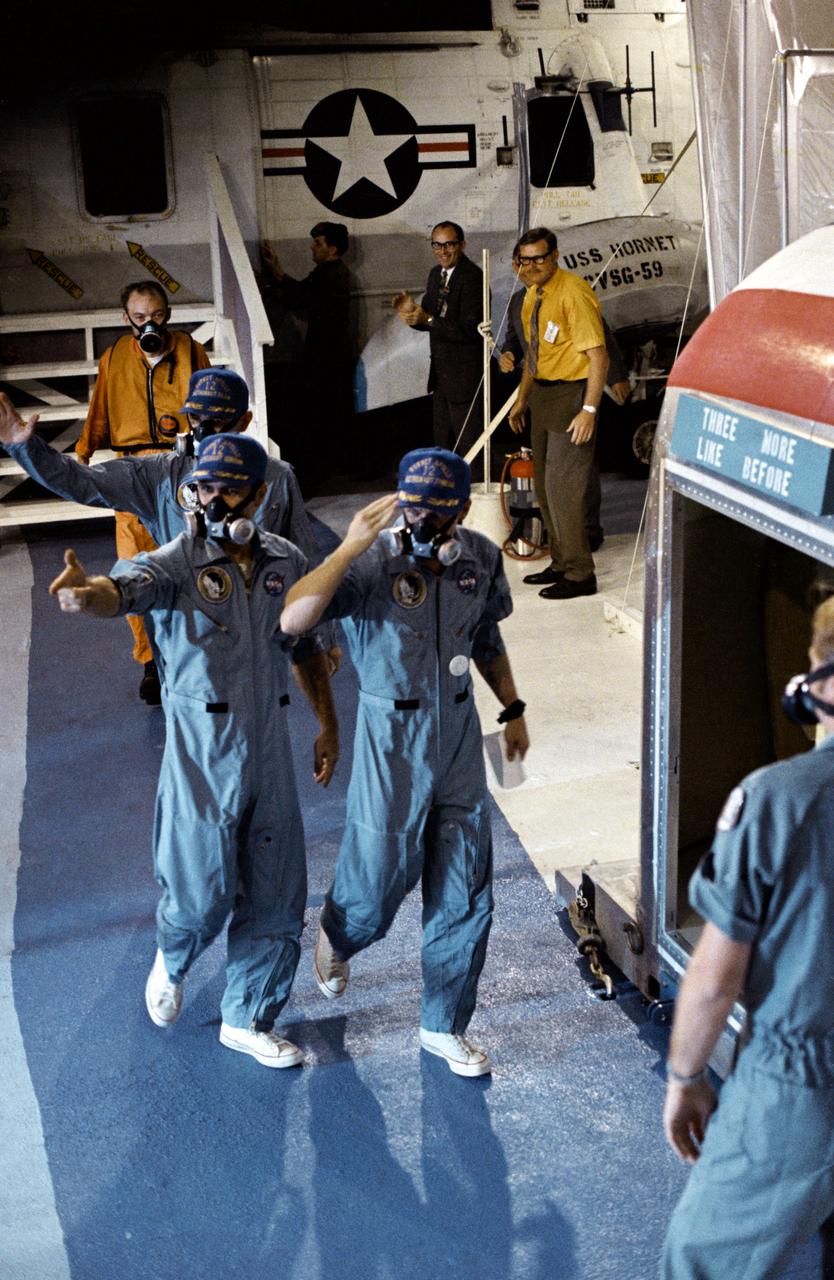
S69-22849 (24 Nov. 1969) --- USS Hornet crewmen are greeted by the crew of the Apollo 12 lunar landing mission as the three astronauts are transferred from a U.S. Navy helicopter to a Mobile Quarantine Facility (MQF) aboard the prime recovery vessel. Charles Conrad Jr., right, commander; Richard F. Gordon Jr., command module pilot, left front; and Alan L. Bean, lunar module pilot, splashed down safely at 2:58 p.m., Nov. 24, 1969.
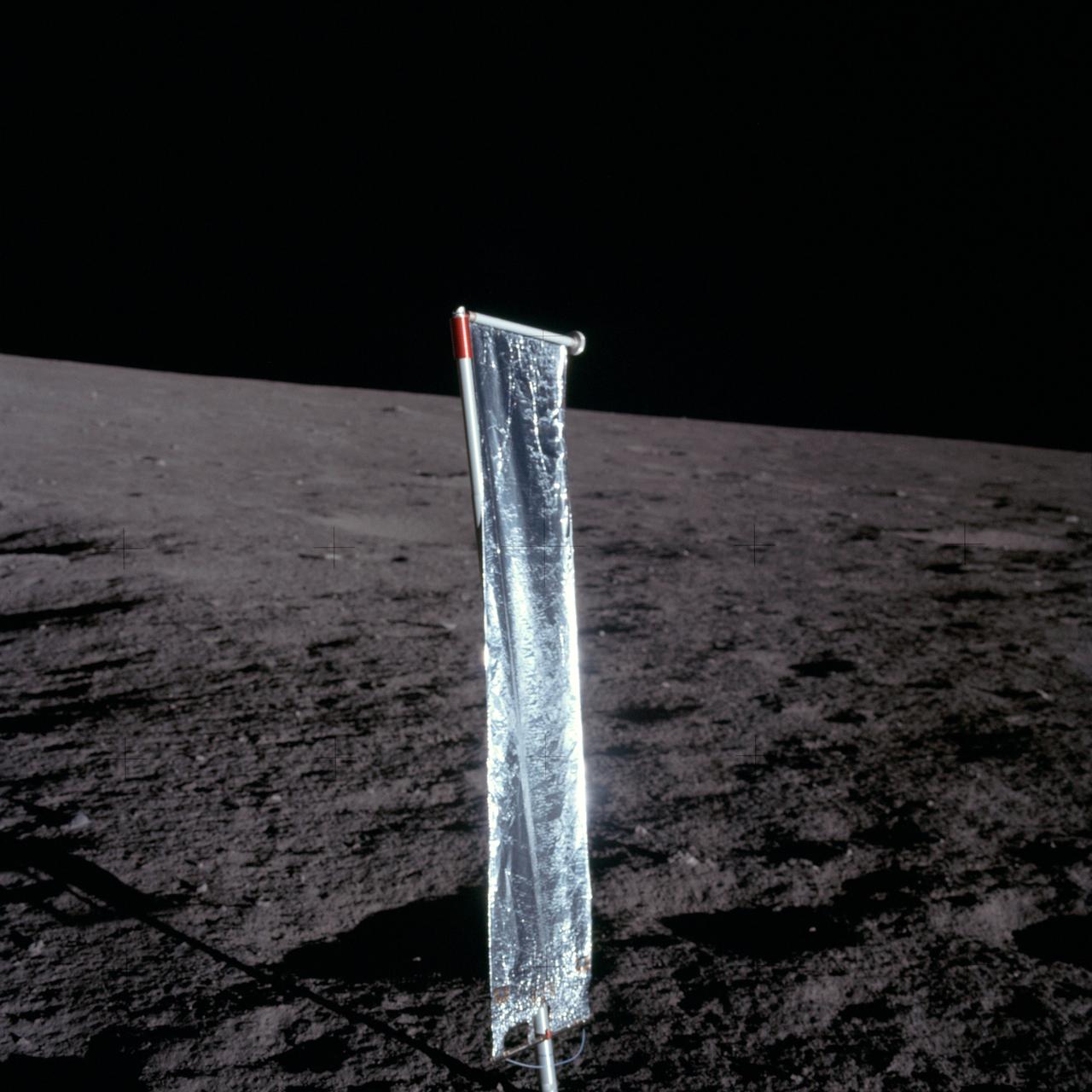
AS12-47-6898 (19 Nov. 1969) --- A close-up view of the Solar Wind Composition device. Astronaut Alan L. Bean, lunar module pilot, took this photograph, after having deployed the device. Astronauts Charles Conrad Jr., commander, and Bean descended in the Apollo 12 Lunar Module (LM) to explore the moon, while astronaut Richard F. Gordon Jr., command module pilot, remained in lunar orbit with the Command and Service Modules (CSM).
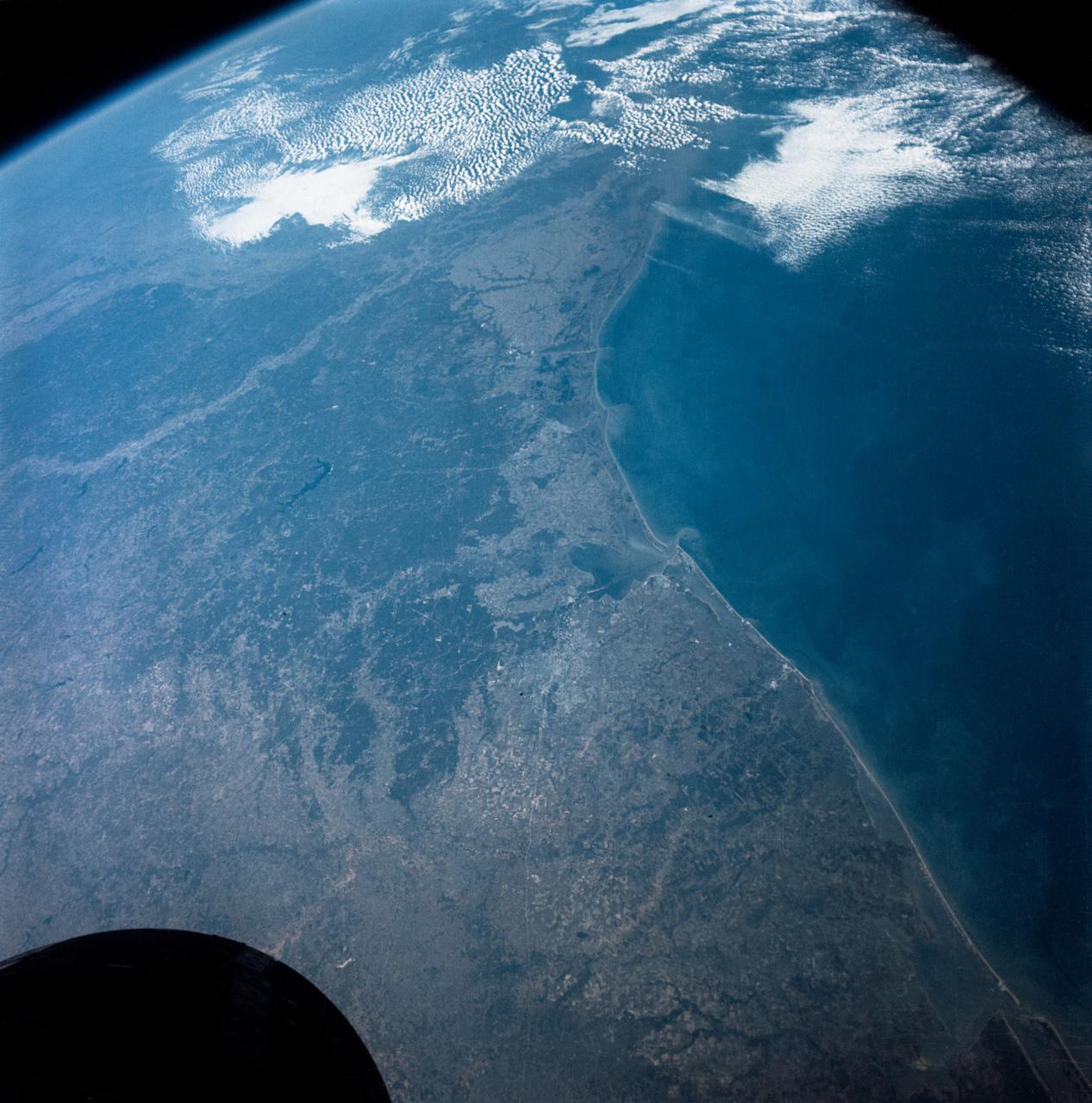
S66-63030 (14 Nov. 1966) --- Gulf Coast area from Matagorda Bay, Texas, to Vermillion Bay, Louisiana, looking east, as seen from the Gemini-12 spacecraft during its 44th revolution of Earth. Galveston Bay is in center of picture. Houston and its environs are clearly visible. Note network of freeways and superhighways. Large lake near left center of picture is the Sam Rayburn Reservoir. Photo credit: NASA
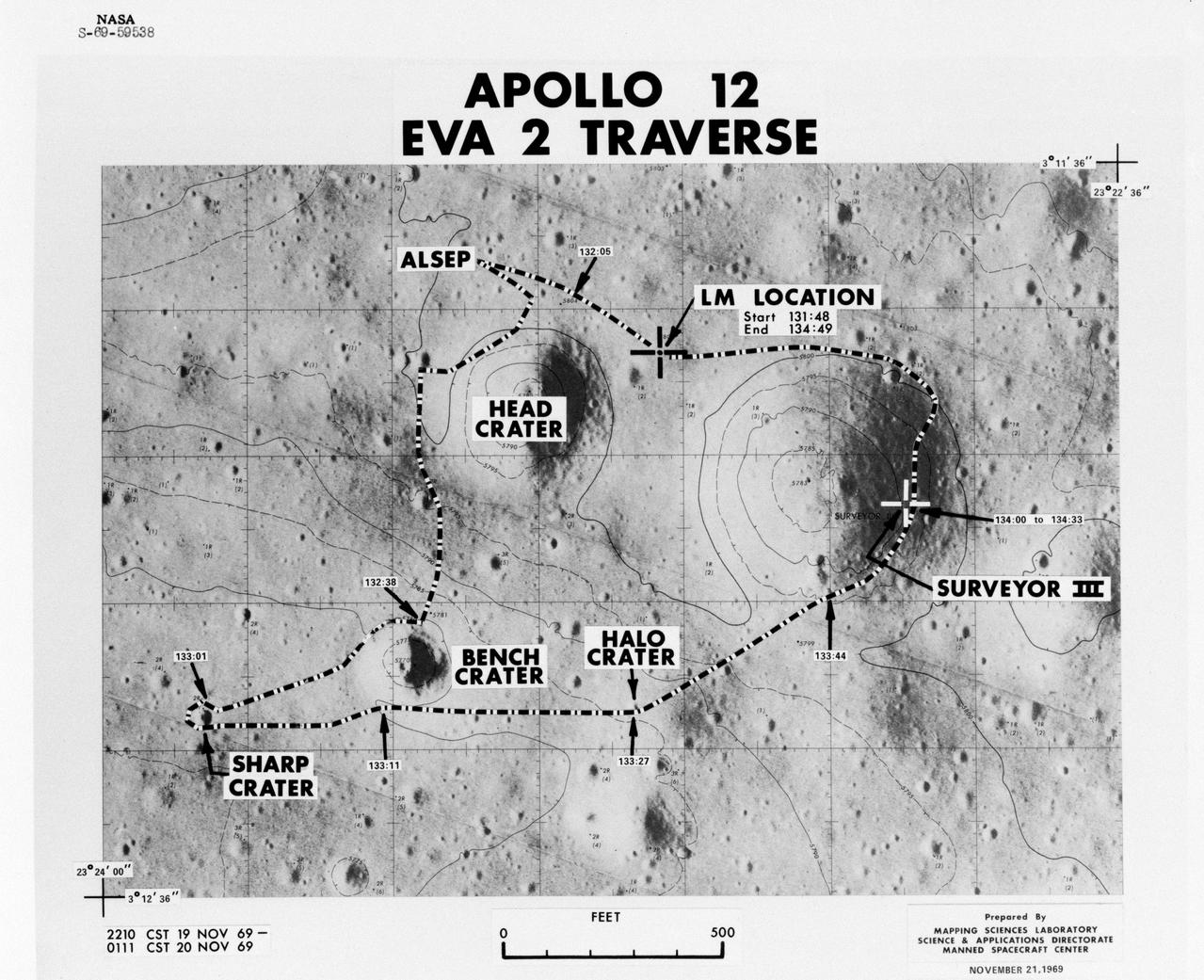
S69-59538 (November 1969) --- Apollo 12 extravehicular activity (EVA-2) Traverse Overlay.
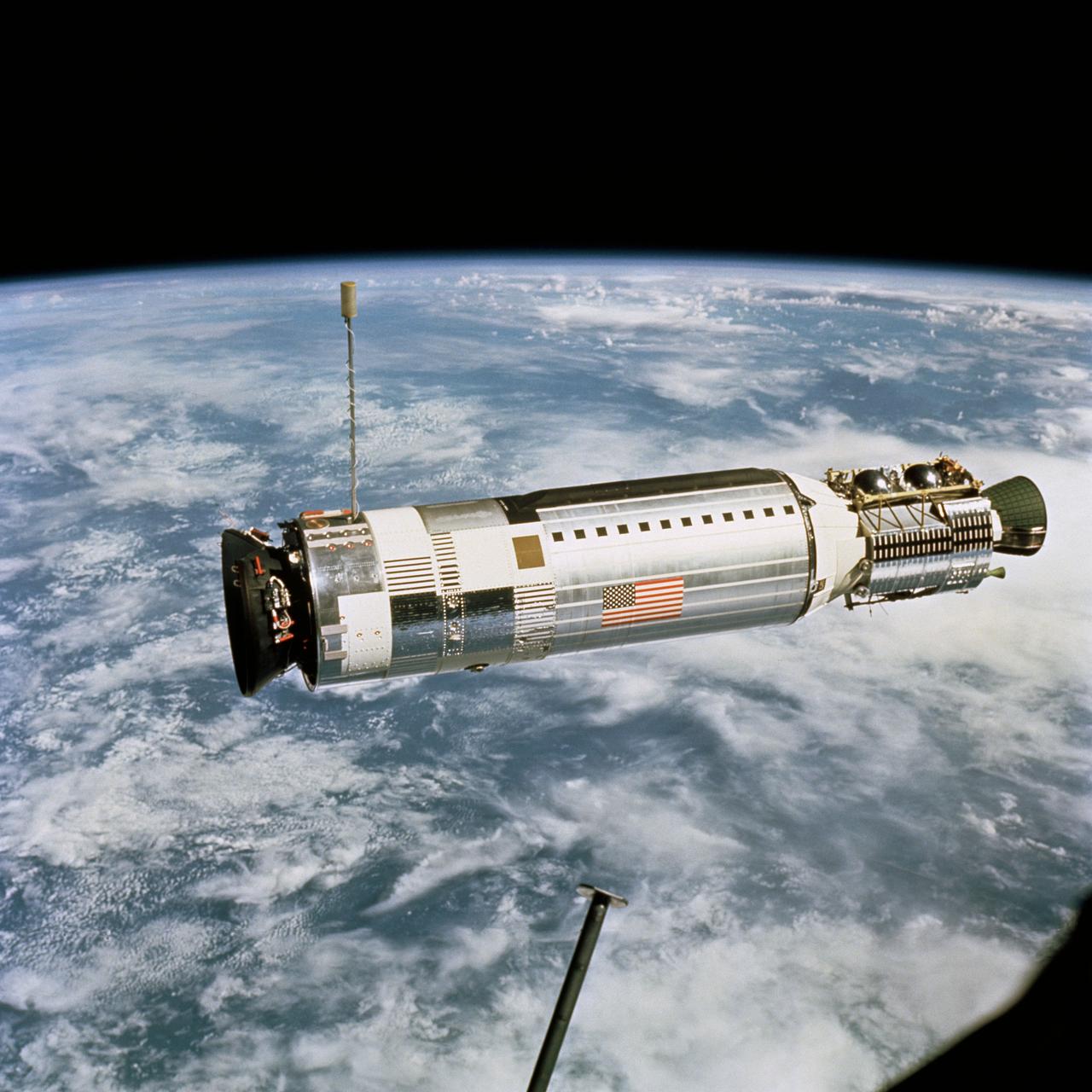
S66-62755 (11 Nov. 1966) --- Excellent stereo and side view of the Agena Target Docking Vehicle as seen from the Gemini-12 spacecraft during rendezvous and docking mission in space. The two spacecraft are 50 feet apart. Photo credit: NASA
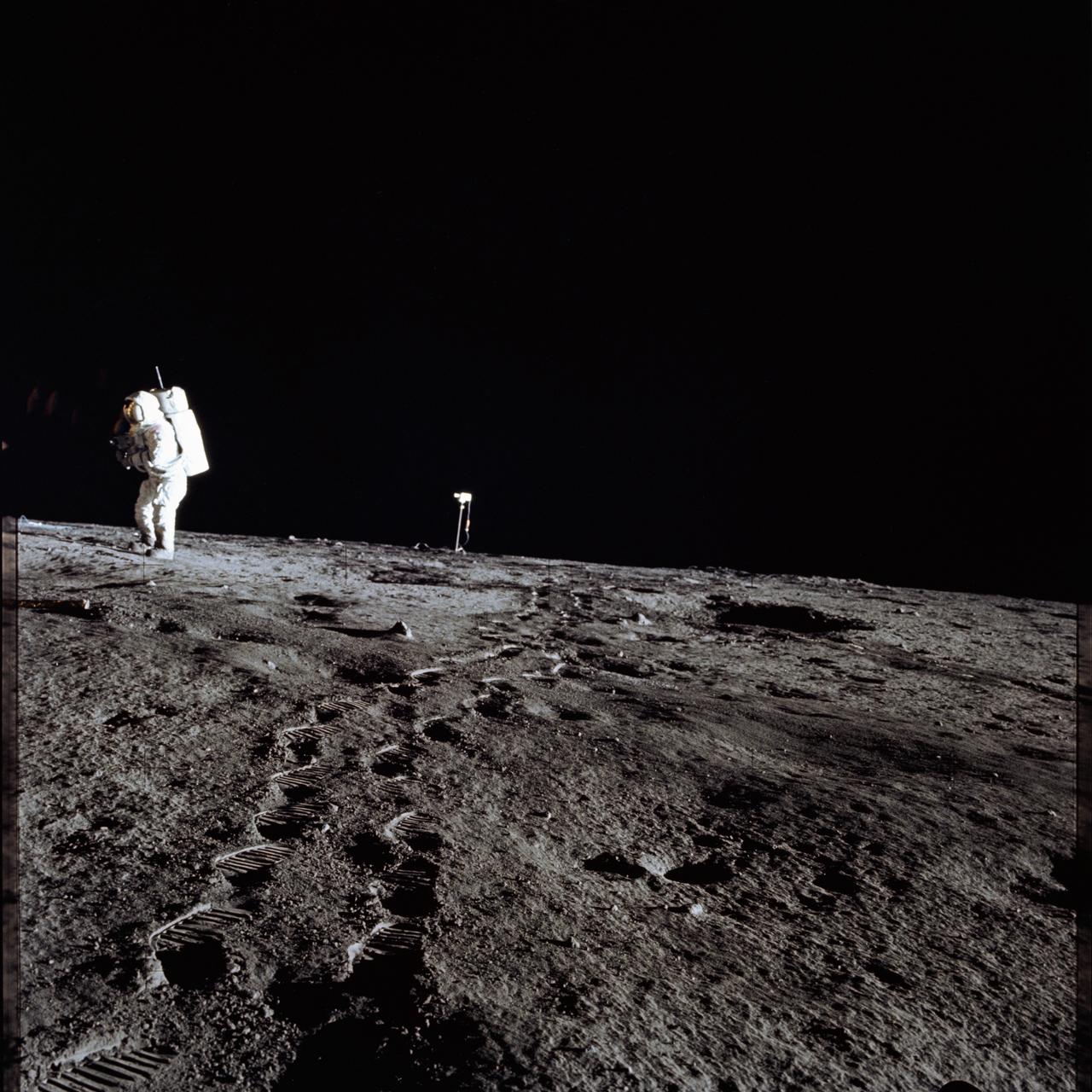
AS12-46-6780 (19 Nov. 1969) --- Astronaut Alan L. Bean, lunar module pilot for the Apollo 12 lunar landing mission, walks from the color lunar surface television camera (center) toward the Apollo 12 Lunar Module (LM - out of frame). The photograph was taken by astronaut Charles Conrad Jr., commander, during the first extravehicular activity (EVA) of the mission. While astronauts Conrad and Bean descended in the LM "Intrepid" to explore the Ocean of Storms region of the moon, astronaut Richard F. Gordon Jr., command module pilot, remained with the Command and Service Modules (CSM) "Yankee Clipper" in lunar orbit.
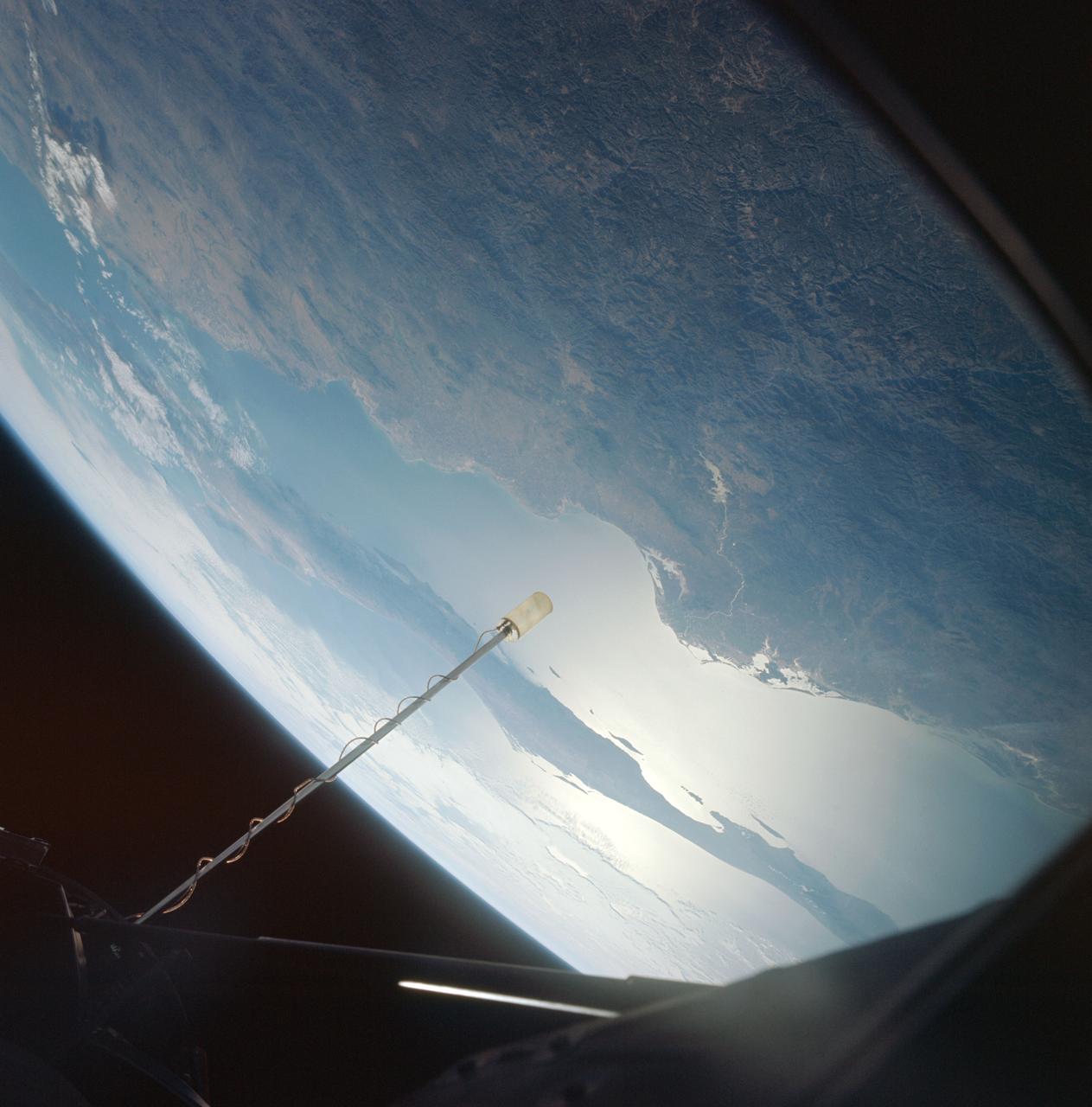
S66-63440 (12 Nov. 1966) --- Area of northwestern Mexico as seen from the Gemini-12 spacecraft during its 16th revolution of Earth. View is looking northwest. Body of water in the foreground is the Gulf of California. Pacific Ocean is in the background. Peninsula in center of picture is Baja California. States of Sonora (upper right) and Sinaloa (lower center) of Mexican mainland is in right foreground. City of Guaymas, Sonora, is near the center of the picture. Photo credit: NASA
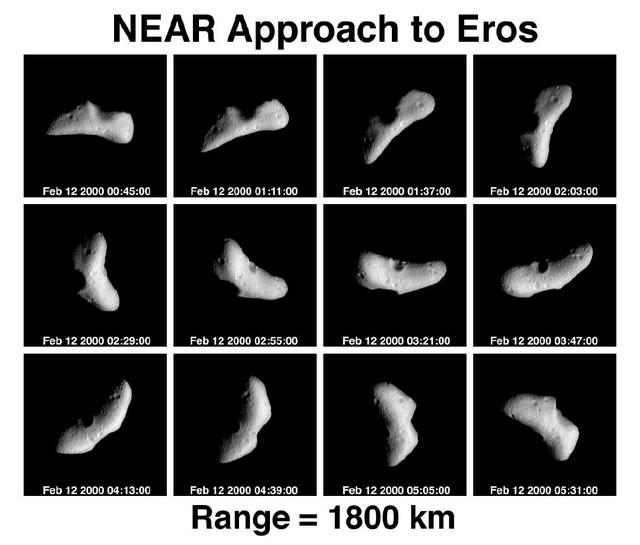
NEAR Approach to Eros - 12 Panel Rotation Sequence
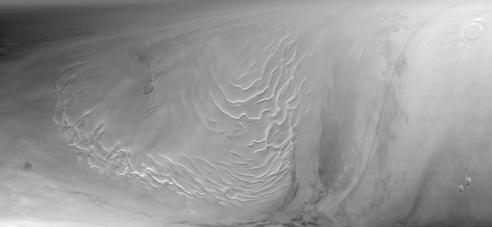
Martian North Polar Cap on September 12, 1998
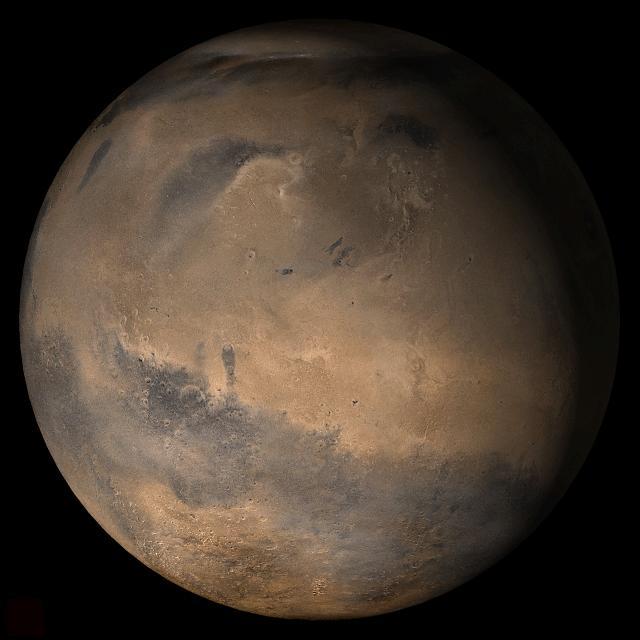
Mars at Ls 12°: Elysium/Mare Cimmerium
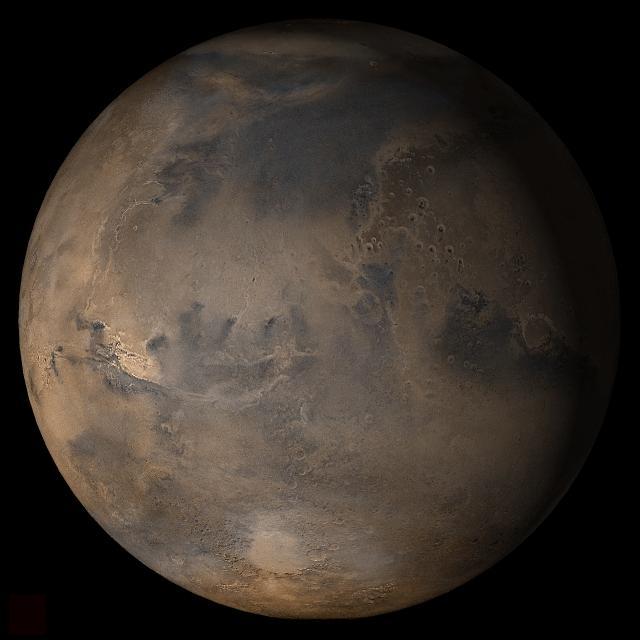
Mars at Ls 12°: Acidalia/Mare Erythraeum
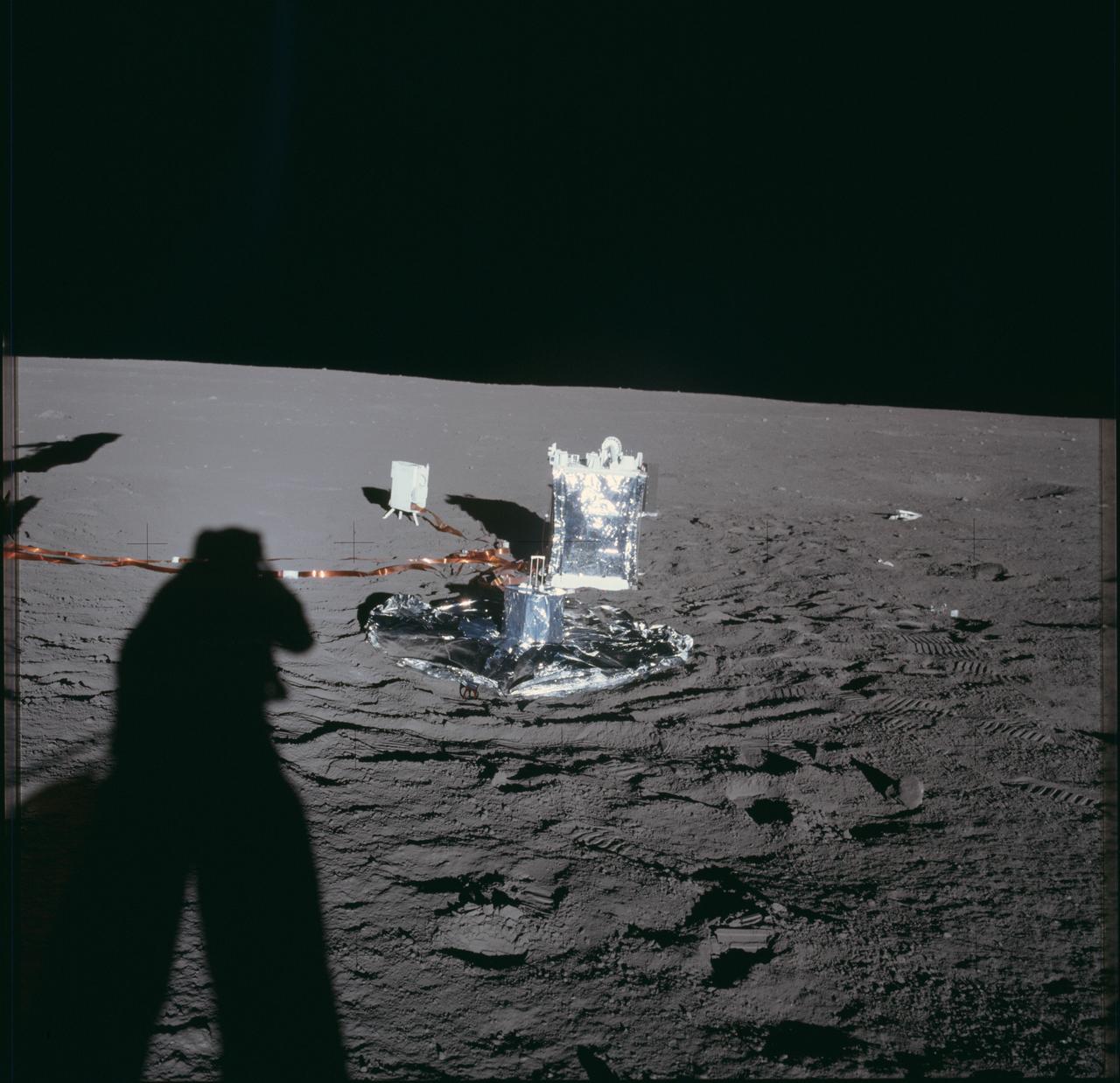
AS12-47-6918 (19 Nov. 1969) --- Astronaut Alan L. Bean, lunar module pilot, took this photograph of three of the components of the Apollo Lunar Surface Experiments Package (ALSEP) which was deployed on the moon during the first Apollo 12 extravehicular activity (EVA). The Passive Seismic Experiment (PSE) is in the center foreground. The largest object is the Central Station; and the white object on legs is the Suprathermal Ion Detector Experiment (SIDE). A portion of the shadow of astronaut Charles Conrad Jr., commander, can be seen at the left center edge of the picture. Astronaut Richard F. Gordon Jr., command module pilot, remained with the Apollo 12 Command and Service Modules (CSM) in lunar orbit while Conrad and Bean descended in the Lunar Module (LM) to explore the moon.
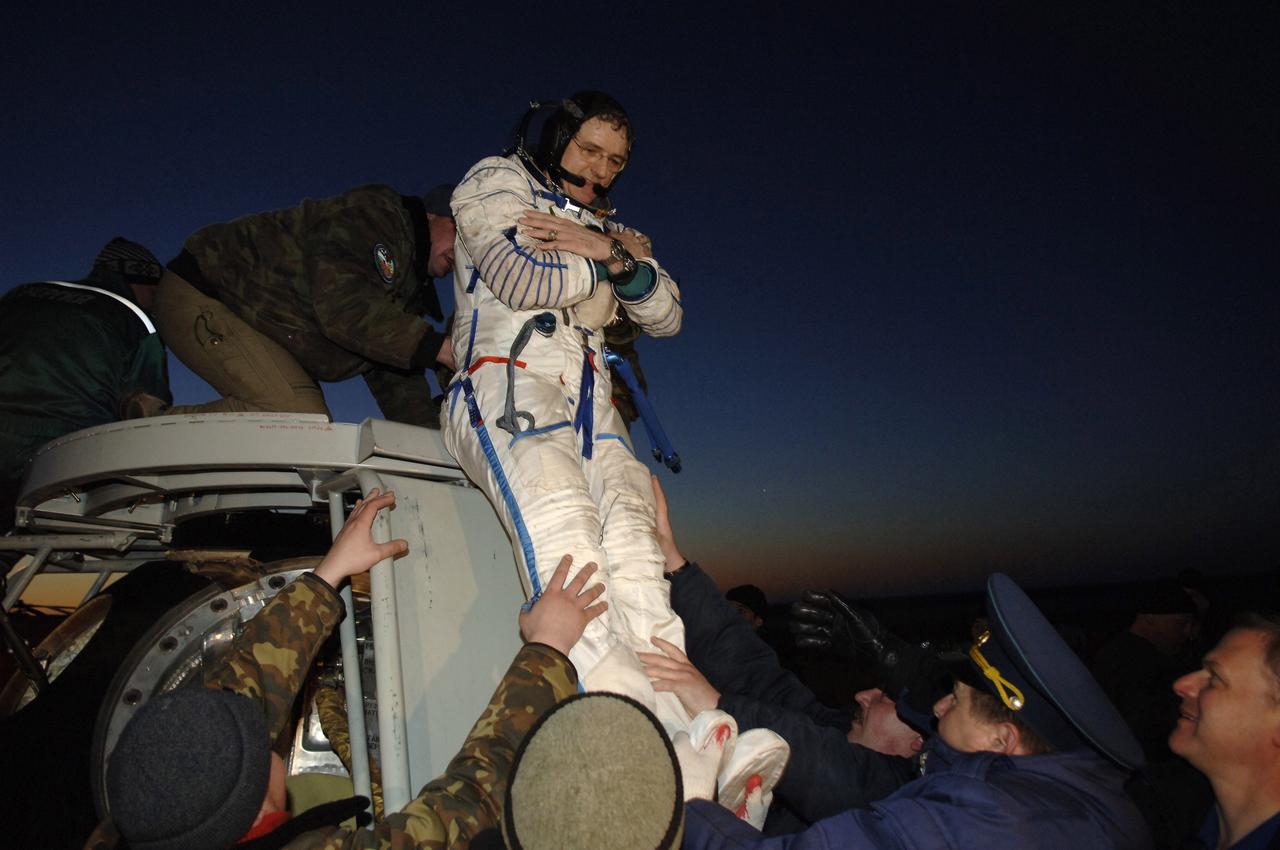
Expedition 12 Commander Bill McArthur is being helped down from the Soyuz TMA-7 spacecraft after it landed in the steppes of Kazakhstan at 7:48 p.m. EDT on Sunday, April 9, 2006. Returning with him was Flight Engineer Valery Tokarev and Brazil's first astronaut, Marcos Pontes, who arrived at the space station with Expedition 13 on April 1. Photo Credit: (NASA/Bill Ingalls)
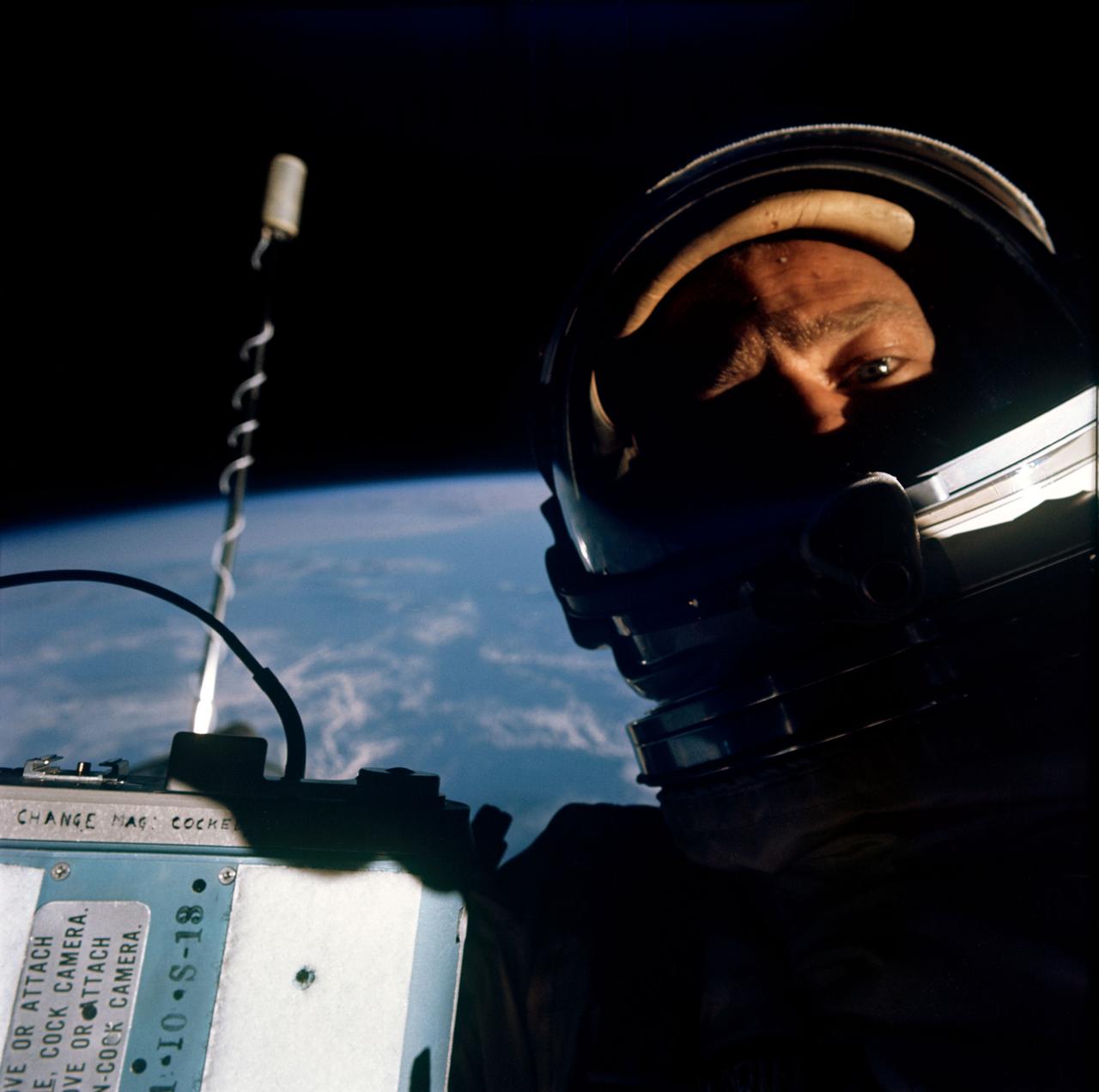
S66-62926 (12 Nov. 1966) --- Astronaut Edwin E. Aldrin Jr., pilot of the Gemini-12 spaceflight, is photographed with pilot's hatch of the spacecraft open. Note: J.A. Maurer camera which was used to photograph some of his extravehicular activity (EVA). Astronaut James A. Lovell Jr. was the command pilot. Photo credit: NASA
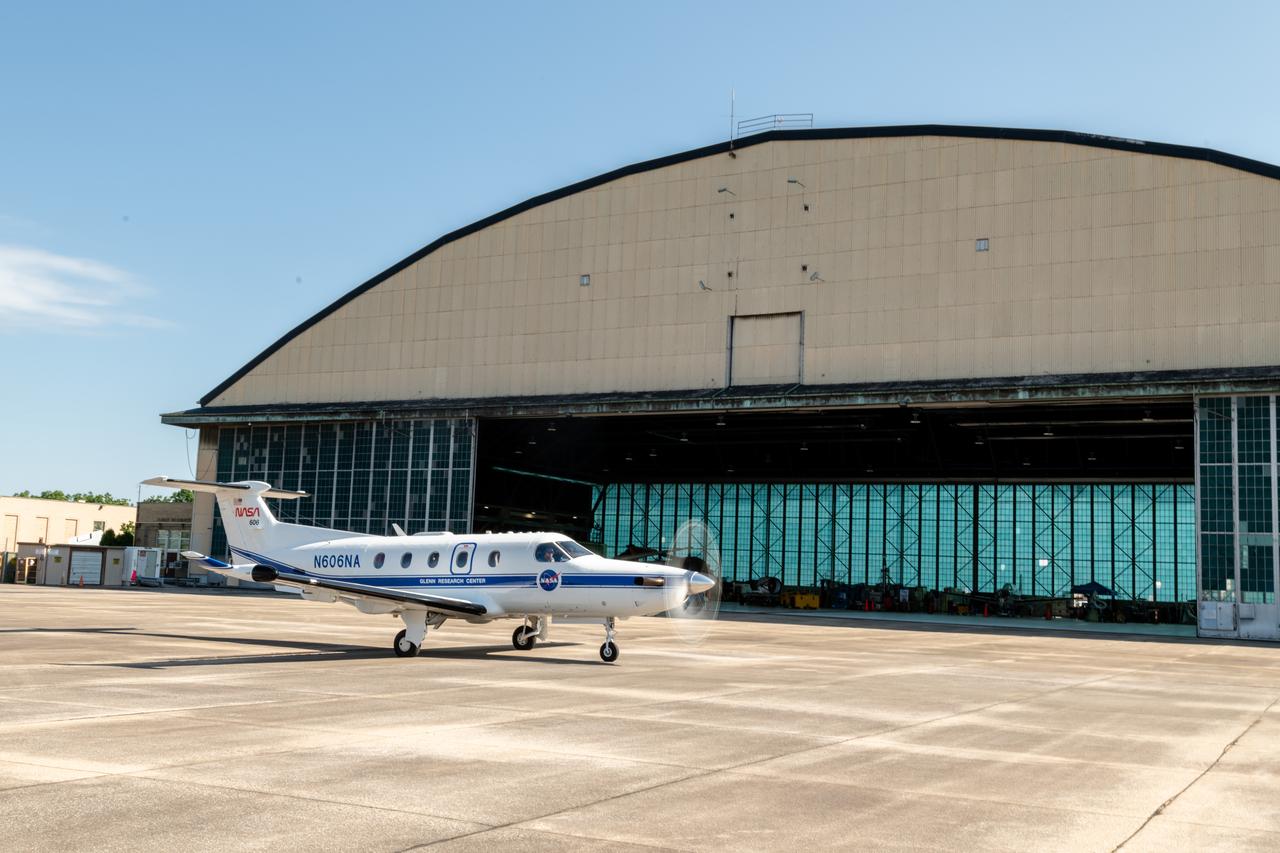
At Glenn Research Center, the PC-12 is Prepped for a flight and ready to takeoff on June 12, 2024. A team at NASA’s Glenn Research Center in Cleveland streamed 4K video footage from an aircraft to the International Space Station and back for the first time using optical, or laser, communications. The feat was part of a series of tests on new technology that could provide live video coverage of astronauts on the Moon during the Artemis missions. Working with the Air Force Research Laboratory and NASA’s Small Business Innovation Research program, Glenn engineers temporarily installed a portable laser terminal on the belly of a Pilatus PC-12 aircraft. They then flew over Lake Erie sending data from the aircraft to an optical ground station in Cleveland. From there, it was sent over an Earth-based network to NASA’s White Sands Test Facility in Las Cruces, New Mexico, where scientists used infrared light signals to send the data. Photo Credit: (NASA/Sara Lowthian-Hanna)
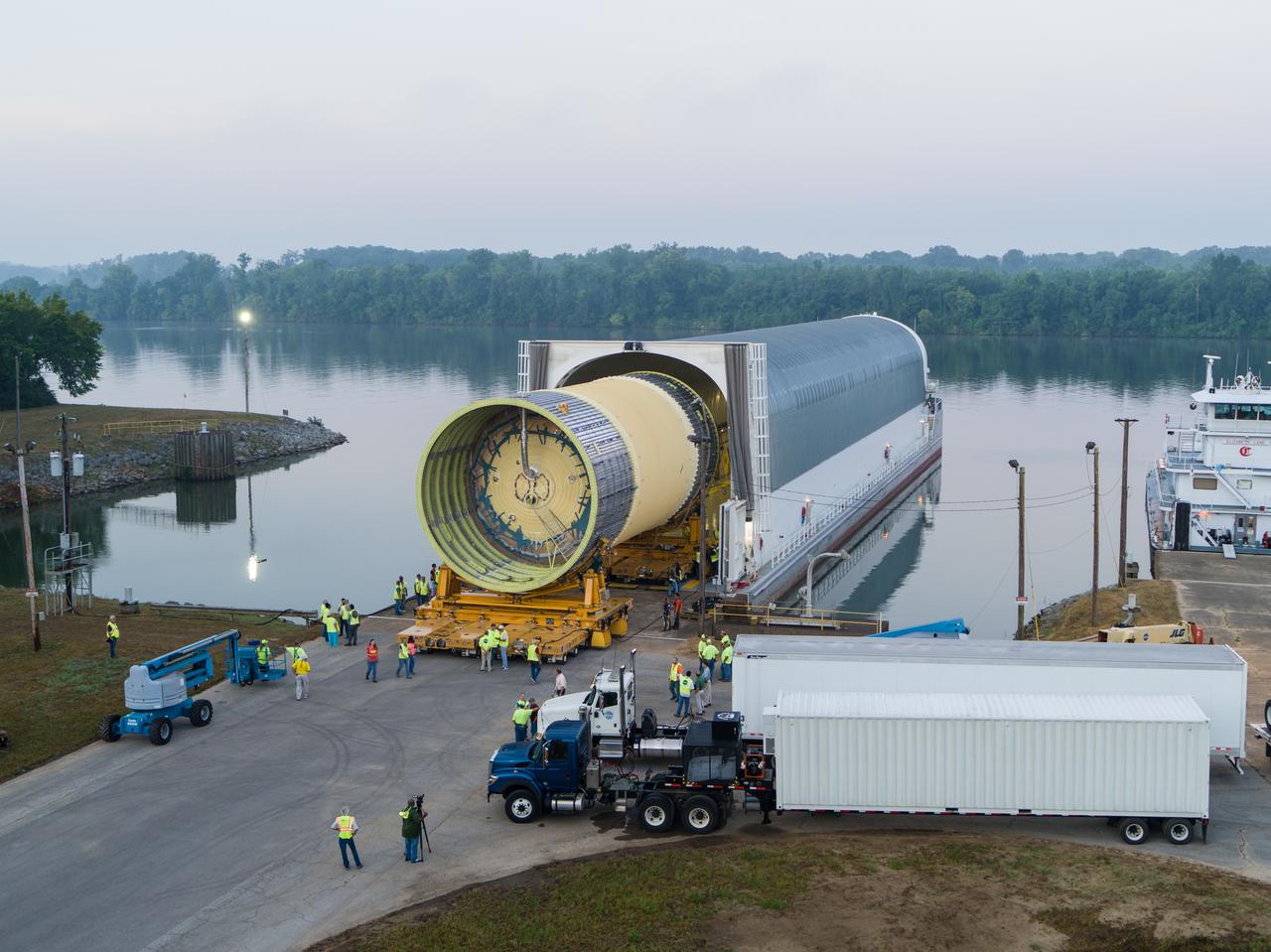
LOX STA unload from Pegasus at NASA Marshall Space Flight Center
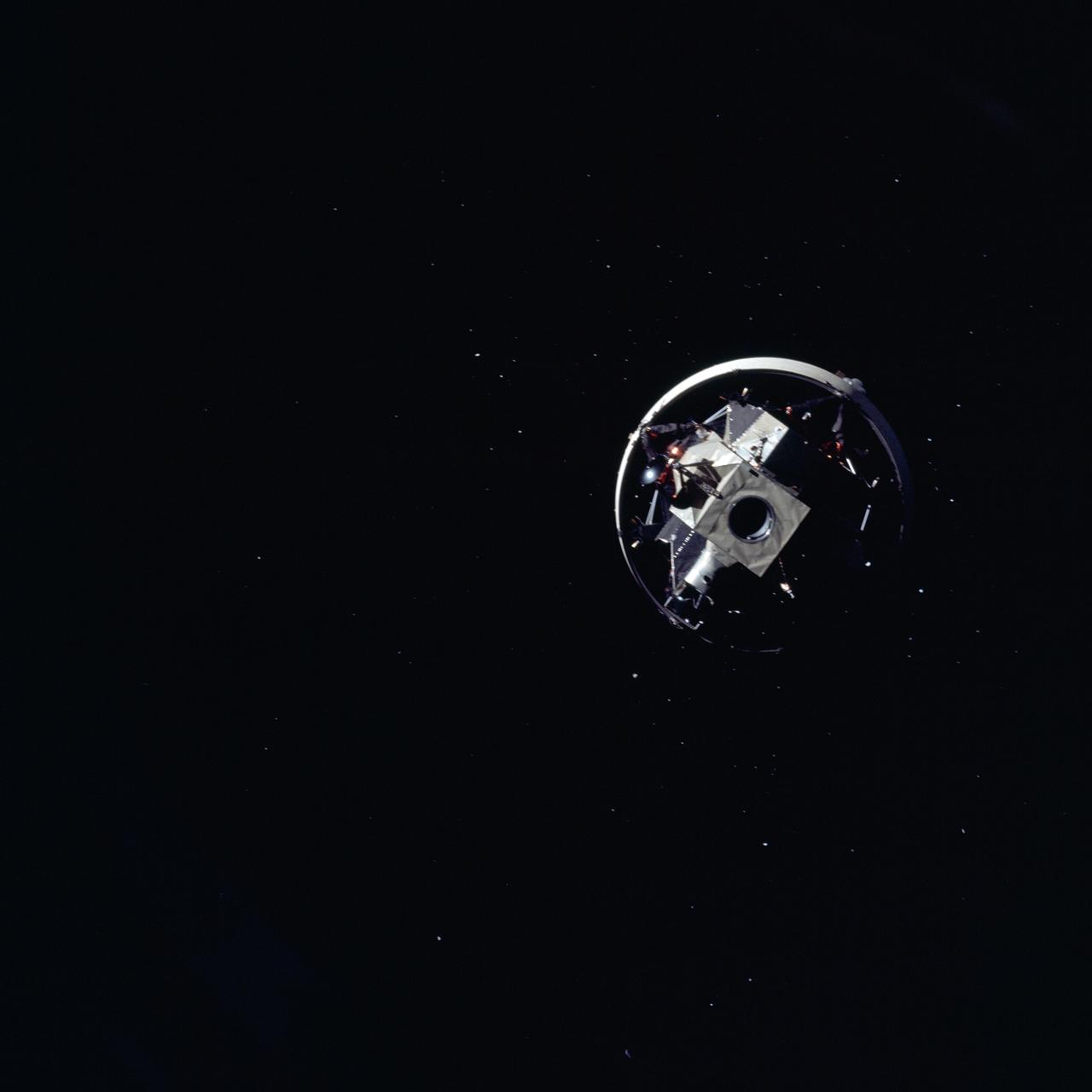
AS12-50-7328 (14 Nov. 1969) --- Apollo 12 Lunar Module (LM), still attached to the Saturn V third (S-IVB) stage, is pictured as seen from Apollo 12 Command and Service Modules (CSM) on the first day of the Apollo 12 lunar landing mission. This photograph was taken following CSM separation from LM/S-IVB and prior to Lunar Module extraction from the S-IVB stage. The Spacecraft Lunar Module Adapter (SLA) panels have already been jettisoned.
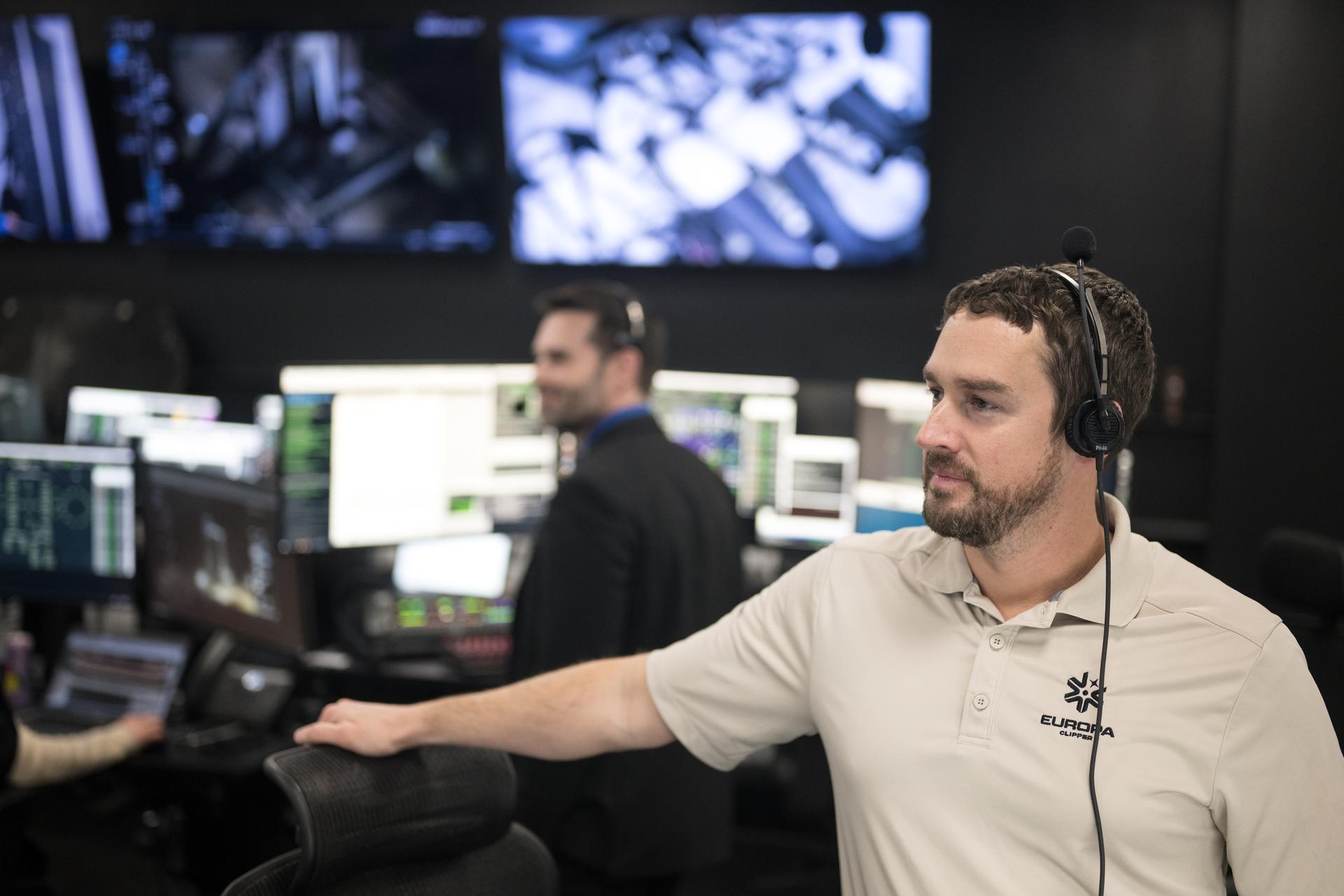
Mission teams monitor the countdown of the launch of a SpaceX Falcon 9 rocket carrying the company's Dragon spacecraft on NASA’s SpaceX Crew-12 mission with NASA astronauts Jessica Meir, Jack Hathaway, ESA (European Space Agency) astronaut Sophie Adenot, and Roscosmos cosmonaut Andrey Fedyaev onboard, Friday, Feb. 13, 2026, in the control center of SpaceX’s HangarX at NASA’s Kennedy Space Center in Florida. NASA’s SpaceX Crew-12 mission is the twelfth crew rotation mission of the SpaceX Dragon spacecraft and Falcon 9 rocket to the International Space Station as part of the agency’s Commercial Crew Program. Meir, Hathaway, Adenot, and Fedyaev are scheduled to launch at 5:15 a.m. EST, from Space Launch Complex 40 at the Cape Canaveral Space Force Station. Photo Credit: (NASA/Aubrey Gemignani)
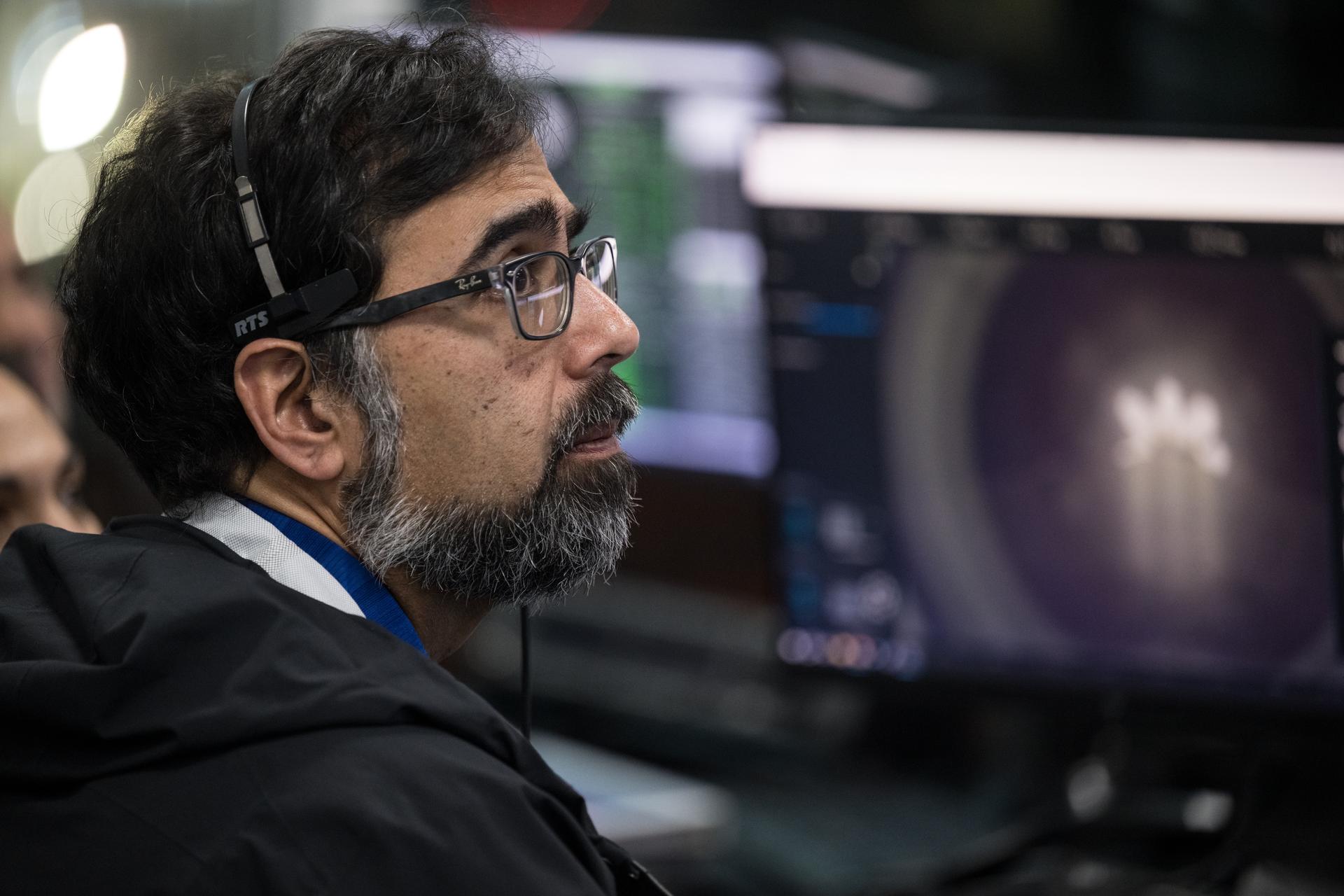
Amit Kshatriya, NASA Associate Administrator, monitors the countdown of the launch of a SpaceX Falcon 9 rocket carrying the company's Dragon spacecraft on NASA’s SpaceX Crew-12 mission with NASA astronauts Jessica Meir, Jack Hathaway, ESA (European Space Agency) astronaut Sophie Adenot, and Roscosmos cosmonaut Andrey Fedyaev onboard, Friday, Feb. 13, 2026, in the control center of SpaceX’s HangarX at NASA’s Kennedy Space Center in Florida. NASA’s SpaceX Crew-12 mission is the twelfth crew rotation mission of the SpaceX Dragon spacecraft and Falcon 9 rocket to the International Space Station as part of the agency’s Commercial Crew Program. Meir, Hathaway, Adenot, and Fedyaev are scheduled to launch at 5:15 a.m. EST, from Space Launch Complex 40 at the Cape Canaveral Space Force Station. Photo Credit: (NASA/Aubrey Gemignani)
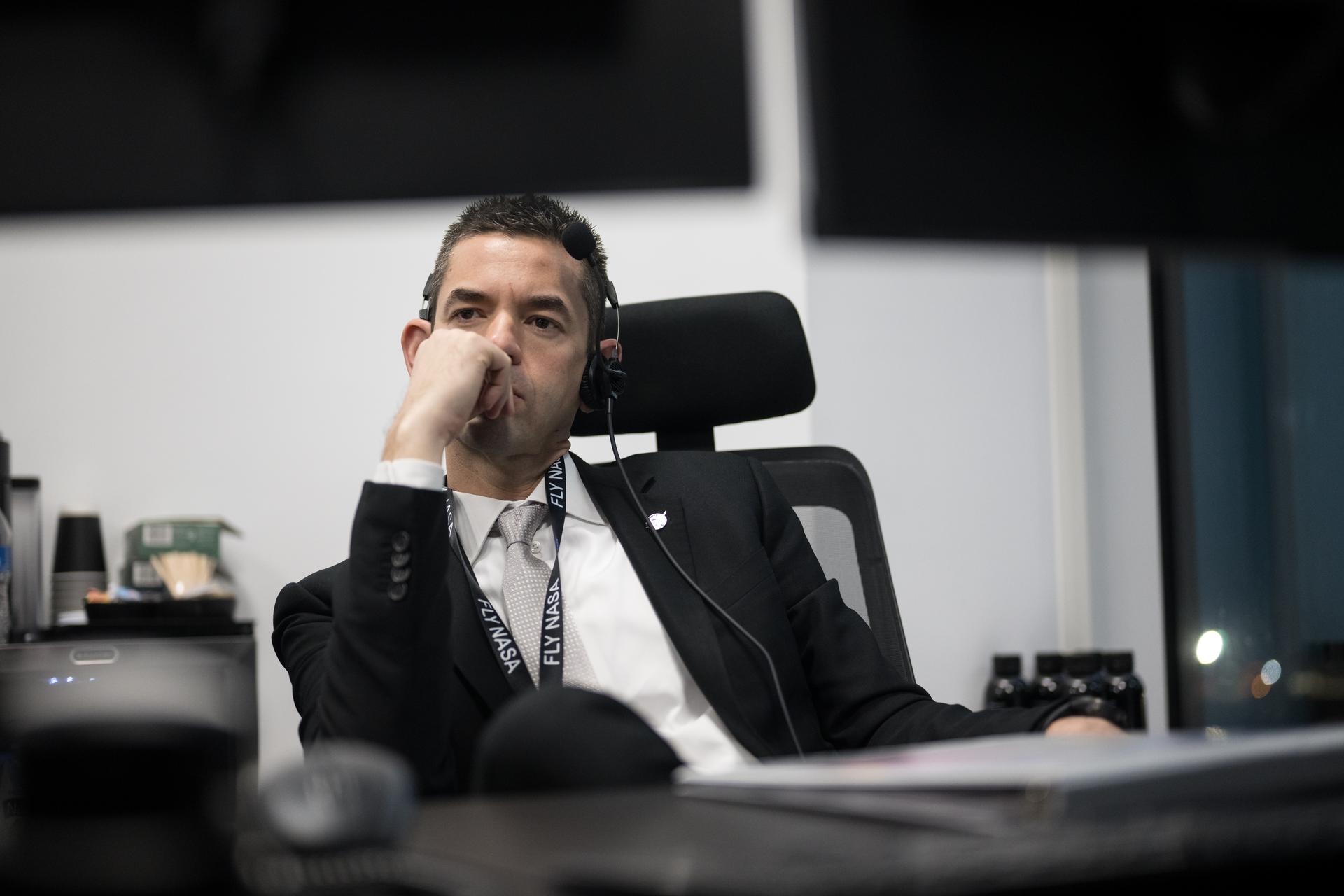
NASA Administrator Jared Isaacman monitors the countdown of the launch of a SpaceX Falcon 9 rocket carrying the company's Dragon spacecraft on NASA’s SpaceX Crew-12 mission with NASA astronauts Jessica Meir, Jack Hathaway, ESA (European Space Agency) astronaut Sophie Adenot, and Roscosmos cosmonaut Andrey Fedyaev onboard, Friday, Feb. 13, 2026, in the control center of SpaceX’s HangarX at NASA’s Kennedy Space Center in Florida. NASA’s SpaceX Crew-12 mission is the twelfth crew rotation mission of the SpaceX Dragon spacecraft and Falcon 9 rocket to the International Space Station as part of the agency’s Commercial Crew Program. Meir, Hathaway, Adenot, and Fedyaev are scheduled to launch at 5:15 a.m. EST, from Space Launch Complex 40 at the Cape Canaveral Space Force Station. Photo Credit: (NASA/Aubrey Gemignani)
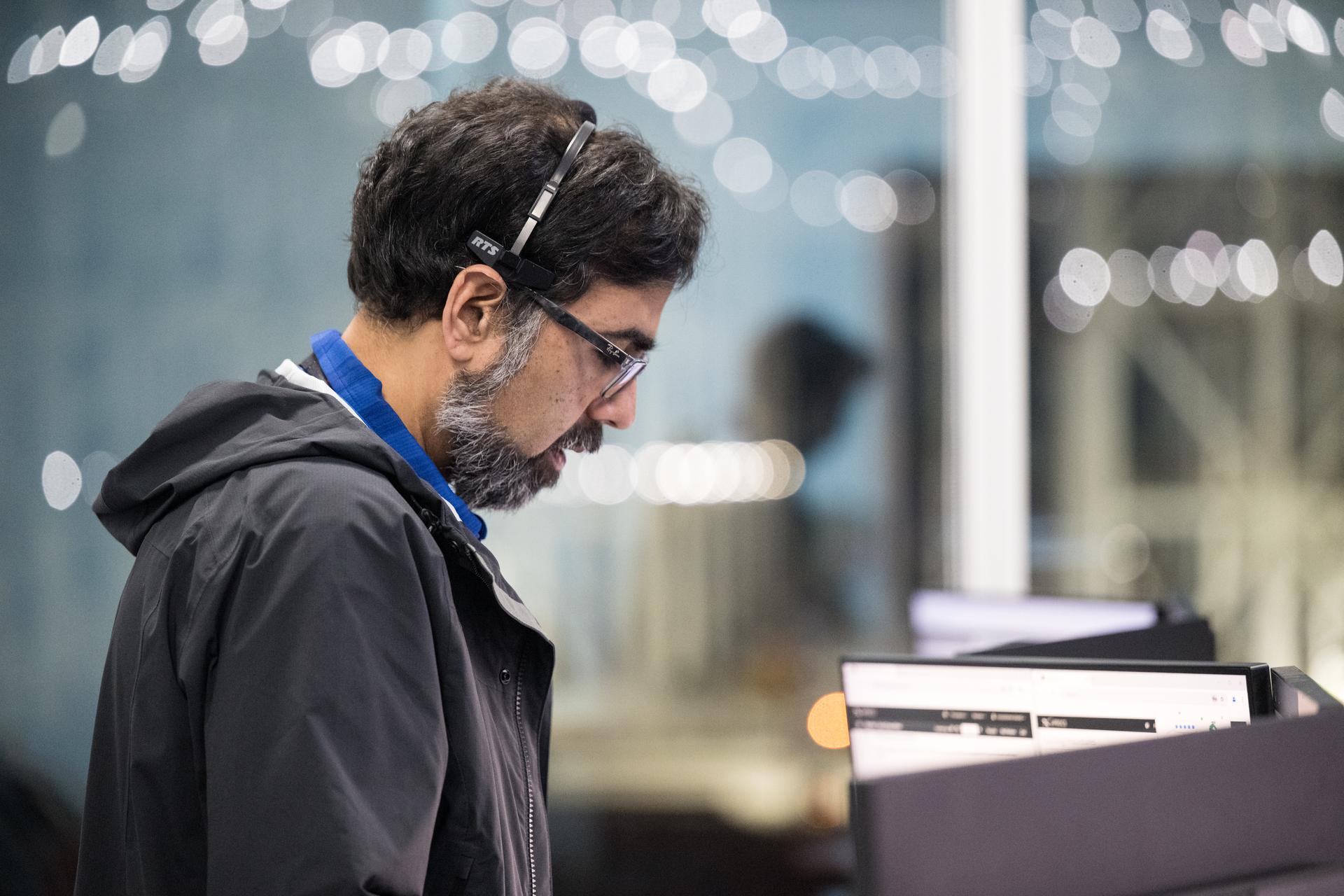
Amit Kshatriya, NASA Associate Administrator, monitors the countdown of the launch of a SpaceX Falcon 9 rocket carrying the company's Dragon spacecraft on NASA’s SpaceX Crew-12 mission with NASA astronauts Jessica Meir, Jack Hathaway, ESA (European Space Agency) astronaut Sophie Adenot, and Roscosmos cosmonaut Andrey Fedyaev onboard, Friday, Feb. 13, 2026, in the control center of SpaceX’s HangarX at NASA’s Kennedy Space Center in Florida. NASA’s SpaceX Crew-12 mission is the twelfth crew rotation mission of the SpaceX Dragon spacecraft and Falcon 9 rocket to the International Space Station as part of the agency’s Commercial Crew Program. Meir, Hathaway, Adenot, and Fedyaev are scheduled to launch at 5:15 a.m. EST, from Space Launch Complex 40 at the Cape Canaveral Space Force Station. Photo Credit: (NASA/Aubrey Gemignani)
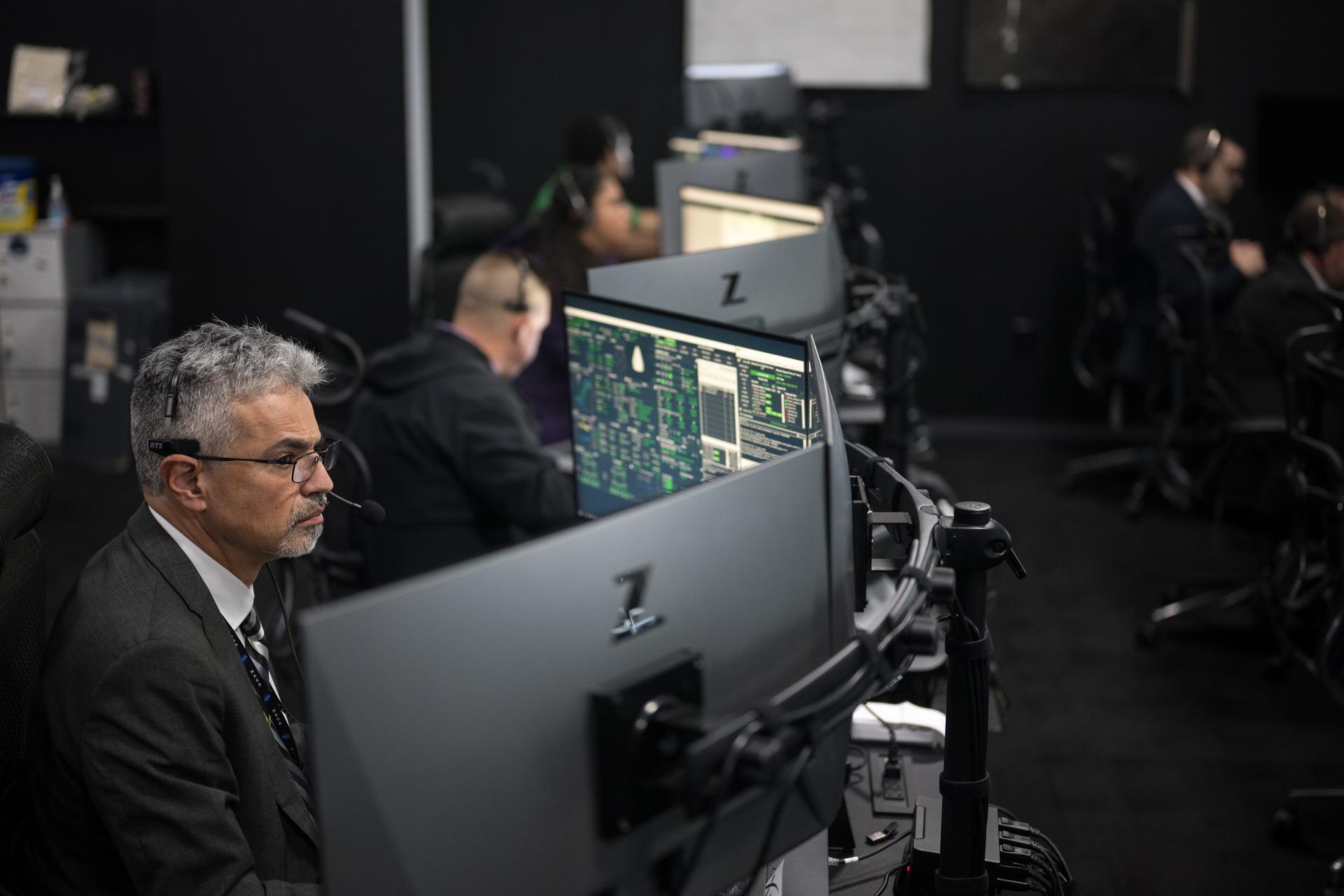
Mission teams monitor the countdown of the launch of a SpaceX Falcon 9 rocket carrying the company's Dragon spacecraft on NASA’s SpaceX Crew-12 mission with NASA astronauts Jessica Meir, Jack Hathaway, ESA (European Space Agency) astronaut Sophie Adenot, and Roscosmos cosmonaut Andrey Fedyaev onboard, Friday, Feb. 13, 2026, in the control center of SpaceX’s HangarX at NASA’s Kennedy Space Center in Florida. NASA’s SpaceX Crew-12 mission is the twelfth crew rotation mission of the SpaceX Dragon spacecraft and Falcon 9 rocket to the International Space Station as part of the agency’s Commercial Crew Program. Meir, Hathaway, Adenot, and Fedyaev are scheduled to launch at 5:15 a.m. EST, from Space Launch Complex 40 at the Cape Canaveral Space Force Station. Photo Credit: (NASA/Aubrey Gemignani)
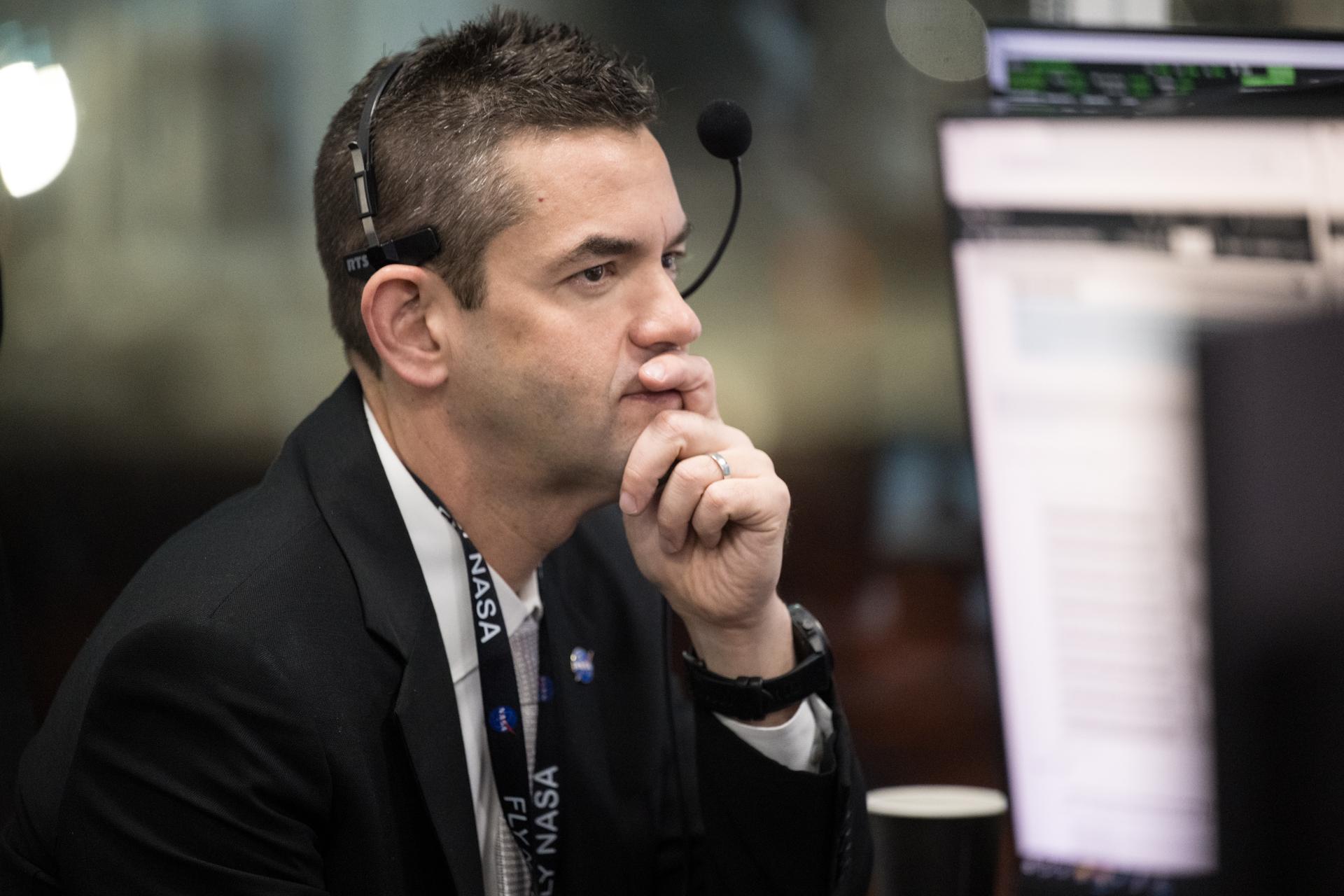
NASA Administrator Jared Isaacman monitors the countdown of the launch of a SpaceX Falcon 9 rocket carrying the company's Dragon spacecraft on NASA’s SpaceX Crew-12 mission with NASA astronauts Jessica Meir, Jack Hathaway, ESA (European Space Agency) astronaut Sophie Adenot, and Roscosmos cosmonaut Andrey Fedyaev onboard, Friday, Feb. 13, 2026, in the control center of SpaceX’s HangarX at NASA’s Kennedy Space Center in Florida. NASA’s SpaceX Crew-12 mission is the twelfth crew rotation mission of the SpaceX Dragon spacecraft and Falcon 9 rocket to the International Space Station as part of the agency’s Commercial Crew Program. Meir, Hathaway, Adenot, and Fedyaev are scheduled to launch at 5:15 a.m. EST, from Space Launch Complex 40 at the Cape Canaveral Space Force Station. Photo Credit: (NASA/Aubrey Gemignani)
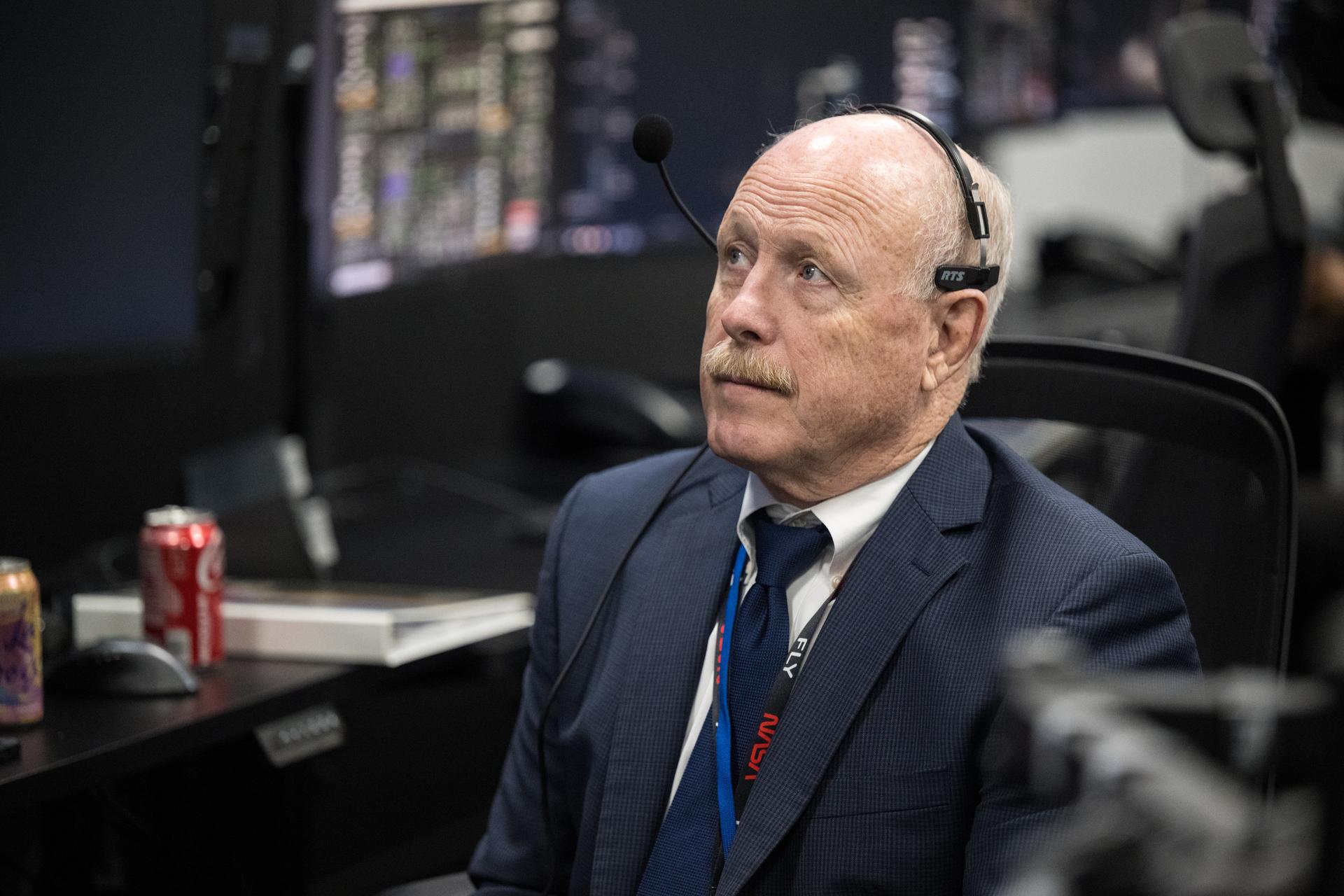
Ken Bowersox, associate administrator for NASA's Space Operations Mission Directorate, monitors the countdown of the launch of a SpaceX Falcon 9 rocket carrying the company's Dragon spacecraft on NASA’s SpaceX Crew-12 mission with NASA astronauts Jessica Meir, Jack Hathaway, ESA (European Space Agency) astronaut Sophie Adenot, and Roscosmos cosmonaut Andrey Fedyaev onboard, Friday, Feb. 13, 2026, in the control center of SpaceX’s HangarX at NASA’s Kennedy Space Center in Florida. NASA’s SpaceX Crew-12 mission is the twelfth crew rotation mission of the SpaceX Dragon spacecraft and Falcon 9 rocket to the International Space Station as part of the agency’s Commercial Crew Program. Meir, Hathaway, Adenot, and Fedyaev are scheduled to launch at 5:15 a.m. EST, from Space Launch Complex 40 at the Cape Canaveral Space Force Station. Photo Credit: (NASA/Aubrey Gemignani)
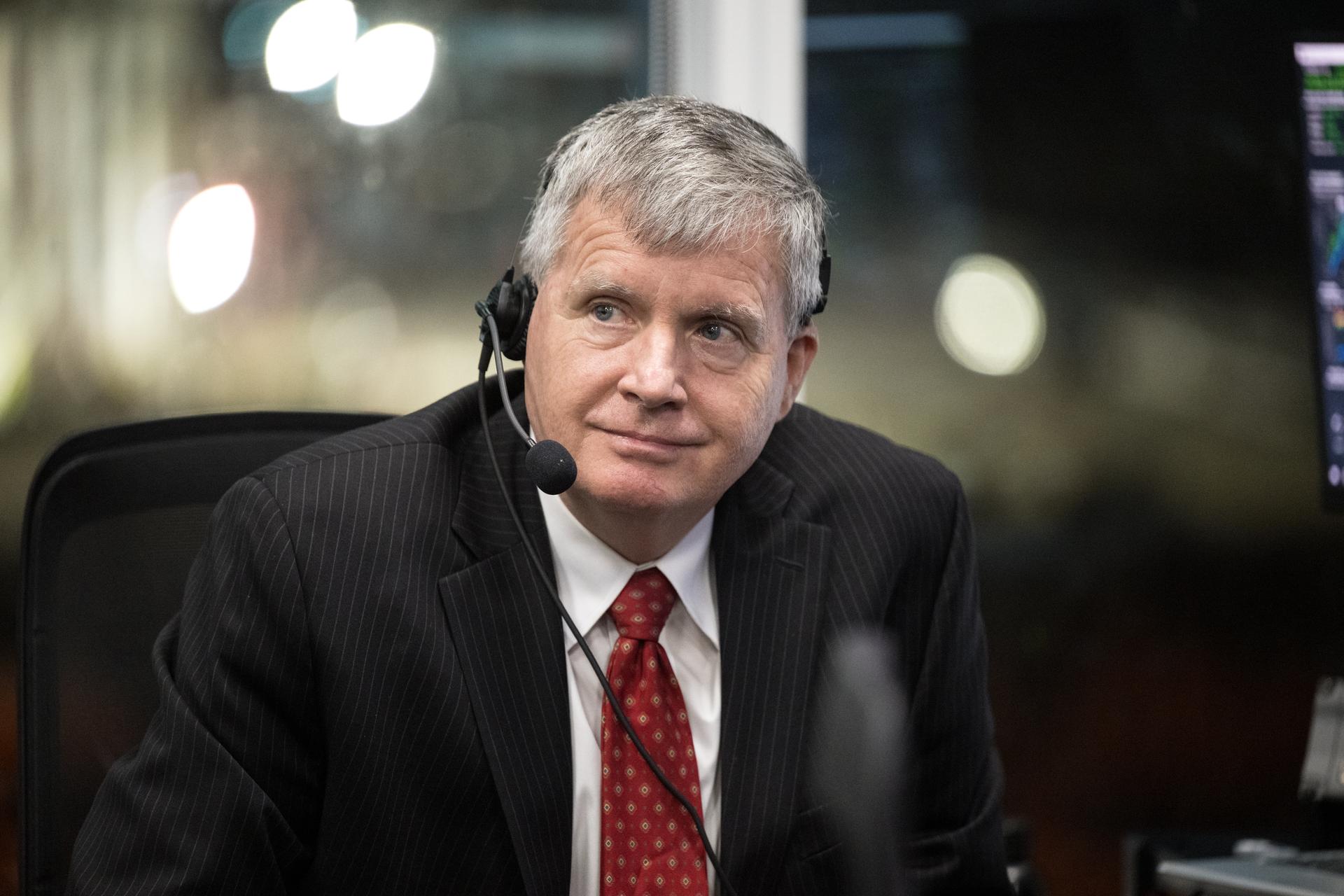
Steve Stich, manager of NASA’s Commercial Crew Program, monitors the countdown of the launch of a SpaceX Falcon 9 rocket carrying the company's Dragon spacecraft on NASA’s SpaceX Crew-12 mission with NASA astronauts Jessica Meir, Jack Hathaway, ESA (European Space Agency) astronaut Sophie Adenot, and Roscosmos cosmonaut Andrey Fedyaev onboard, Friday, Feb. 13, 2026, in the control center of SpaceX’s HangarX at NASA’s Kennedy Space Center in Florida. NASA’s SpaceX Crew-12 mission is the twelfth crew rotation mission of the SpaceX Dragon spacecraft and Falcon 9 rocket to the International Space Station as part of the agency’s Commercial Crew Program. Meir, Hathaway, Adenot, and Fedyaev are scheduled to launch at 5:15 a.m. EST, from Space Launch Complex 40 at the Cape Canaveral Space Force Station. Photo Credit: (NASA/Aubrey Gemignani)
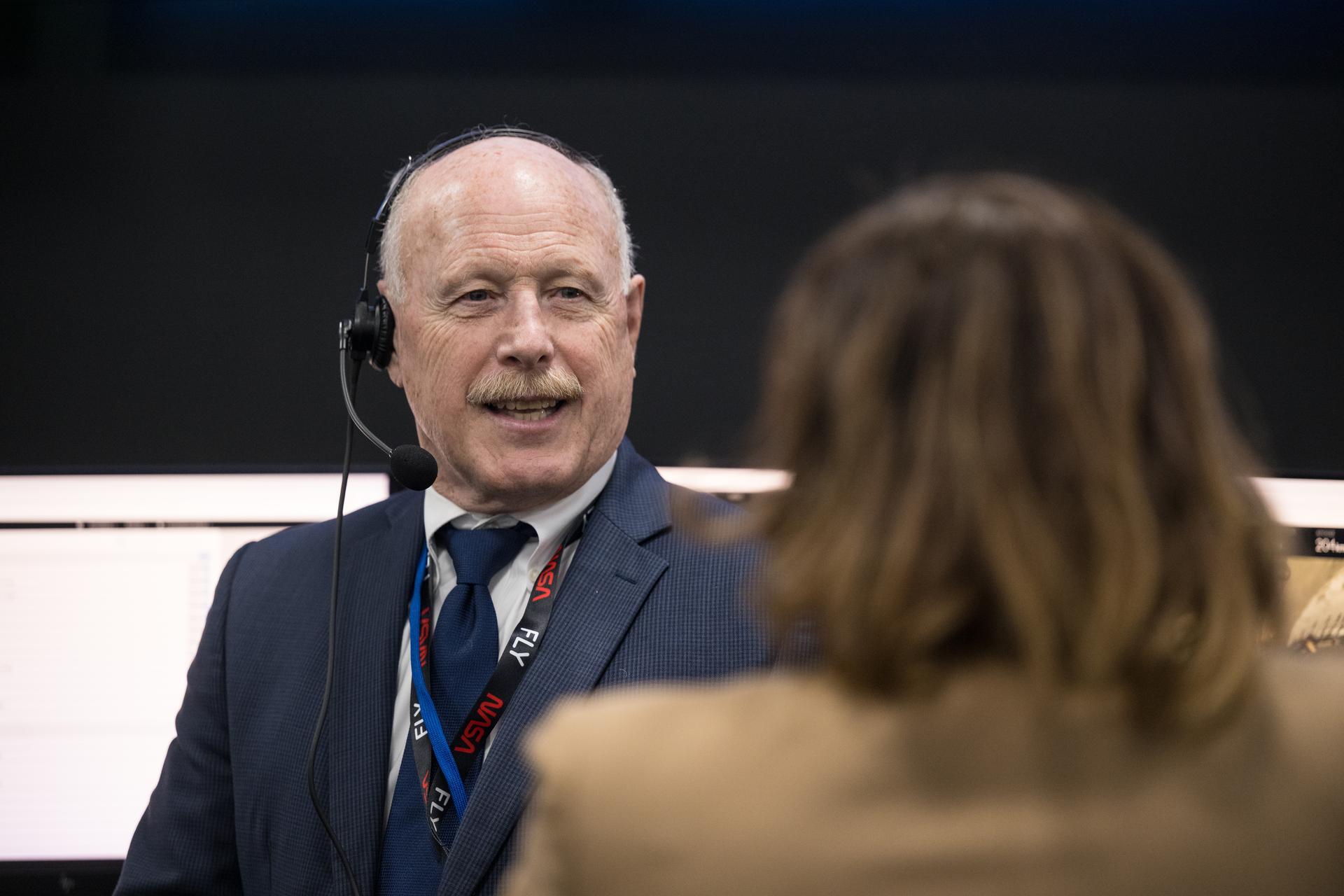
Ken Bowersox, associate administrator for NASA's Space Operations Mission Directorate speaks with Vanessa Wyche, director of NASA's Johnson Space Center, during the countdown of the launch of a SpaceX Falcon 9 rocket carrying the company's Dragon spacecraft on NASA’s SpaceX Crew-12 mission with NASA astronauts Jessica Meir, Jack Hathaway, ESA (European Space Agency) astronaut Sophie Adenot, and Roscosmos cosmonaut Andrey Fedyaev onboard, Friday, Feb. 13, 2026, in the control center of SpaceX’s HangarX at NASA’s Kennedy Space Center in Florida. NASA’s SpaceX Crew-12 mission is the twelfth crew rotation mission of the SpaceX Dragon spacecraft and Falcon 9 rocket to the International Space Station as part of the agency’s Commercial Crew Program. Meir, Hathaway, Adenot, and Fedyaev are scheduled to launch at 5:15 a.m. EST, from Space Launch Complex 40 at the Cape Canaveral Space Force Station. Photo Credit: (NASA/Aubrey Gemignani)

Amit Kshatriya, NASA Associate Administrator, monitors the countdown of the launch of a SpaceX Falcon 9 rocket carrying the company's Dragon spacecraft on NASA’s SpaceX Crew-12 mission with NASA astronauts Jessica Meir, Jack Hathaway, ESA (European Space Agency) astronaut Sophie Adenot, and Roscosmos cosmonaut Andrey Fedyaev onboard, Friday, Feb. 13, 2026, in the control center of SpaceX’s HangarX at NASA’s Kennedy Space Center in Florida. NASA’s SpaceX Crew-12 mission is the twelfth crew rotation mission of the SpaceX Dragon spacecraft and Falcon 9 rocket to the International Space Station as part of the agency’s Commercial Crew Program. Meir, Hathaway, Adenot, and Fedyaev are scheduled to launch at 5:15 a.m. EST, from Space Launch Complex 40 at the Cape Canaveral Space Force Station. Photo Credit: (NASA/Aubrey Gemignani)
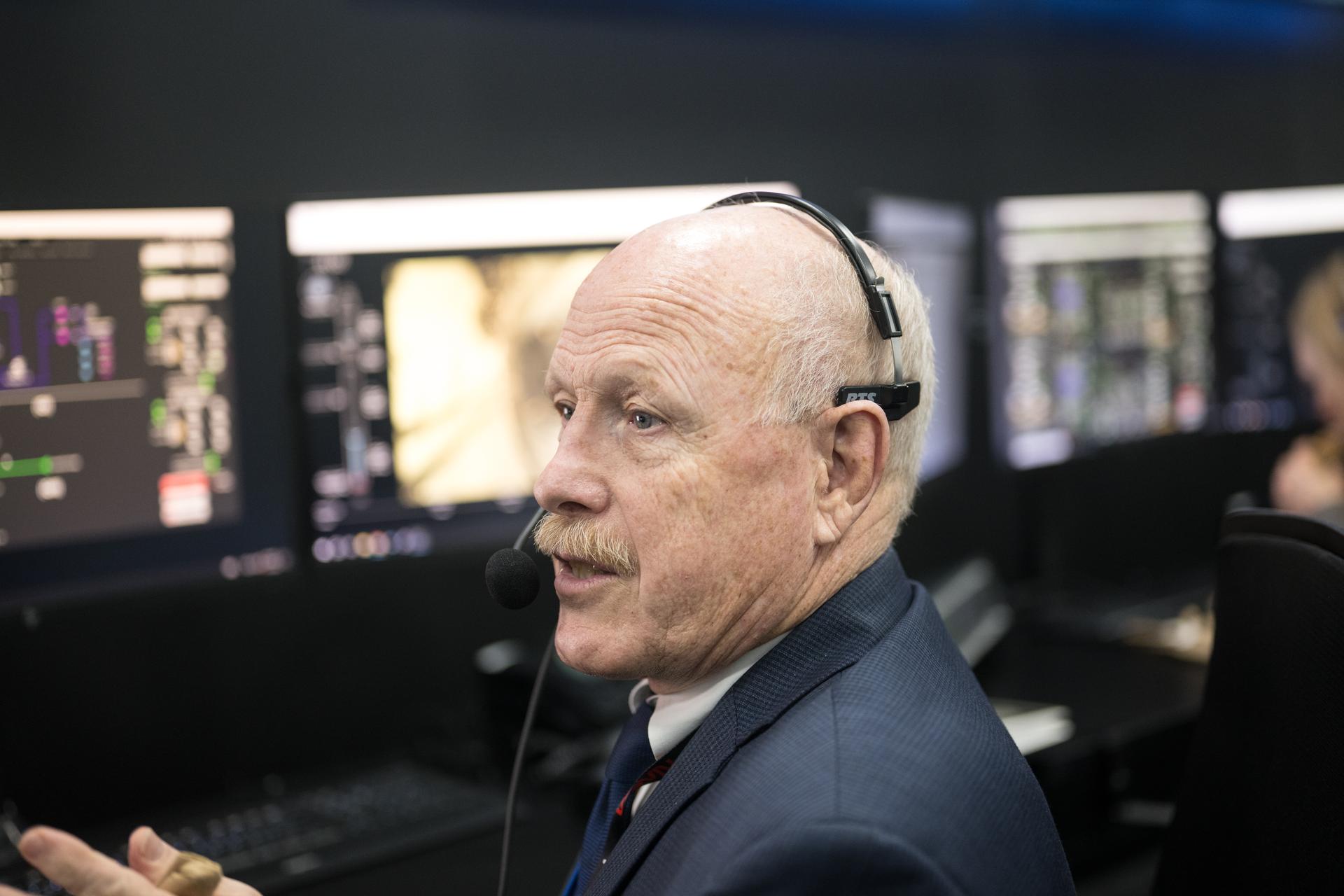
Ken Bowersox, associate administrator for NASA's Space Operations Mission Directorate, monitors the countdown of the launch of a SpaceX Falcon 9 rocket carrying the company's Dragon spacecraft on NASA’s SpaceX Crew-12 mission with NASA astronauts Jessica Meir, Jack Hathaway, ESA (European Space Agency) astronaut Sophie Adenot, and Roscosmos cosmonaut Andrey Fedyaev onboard, Friday, Feb. 13, 2026, in the control center of SpaceX’s HangarX at NASA’s Kennedy Space Center in Florida. NASA’s SpaceX Crew-12 mission is the twelfth crew rotation mission of the SpaceX Dragon spacecraft and Falcon 9 rocket to the International Space Station as part of the agency’s Commercial Crew Program. Meir, Hathaway, Adenot, and Fedyaev are scheduled to launch at 5:15 a.m. EST, from Space Launch Complex 40 at the Cape Canaveral Space Force Station. Photo Credit: (NASA/Aubrey Gemignani)
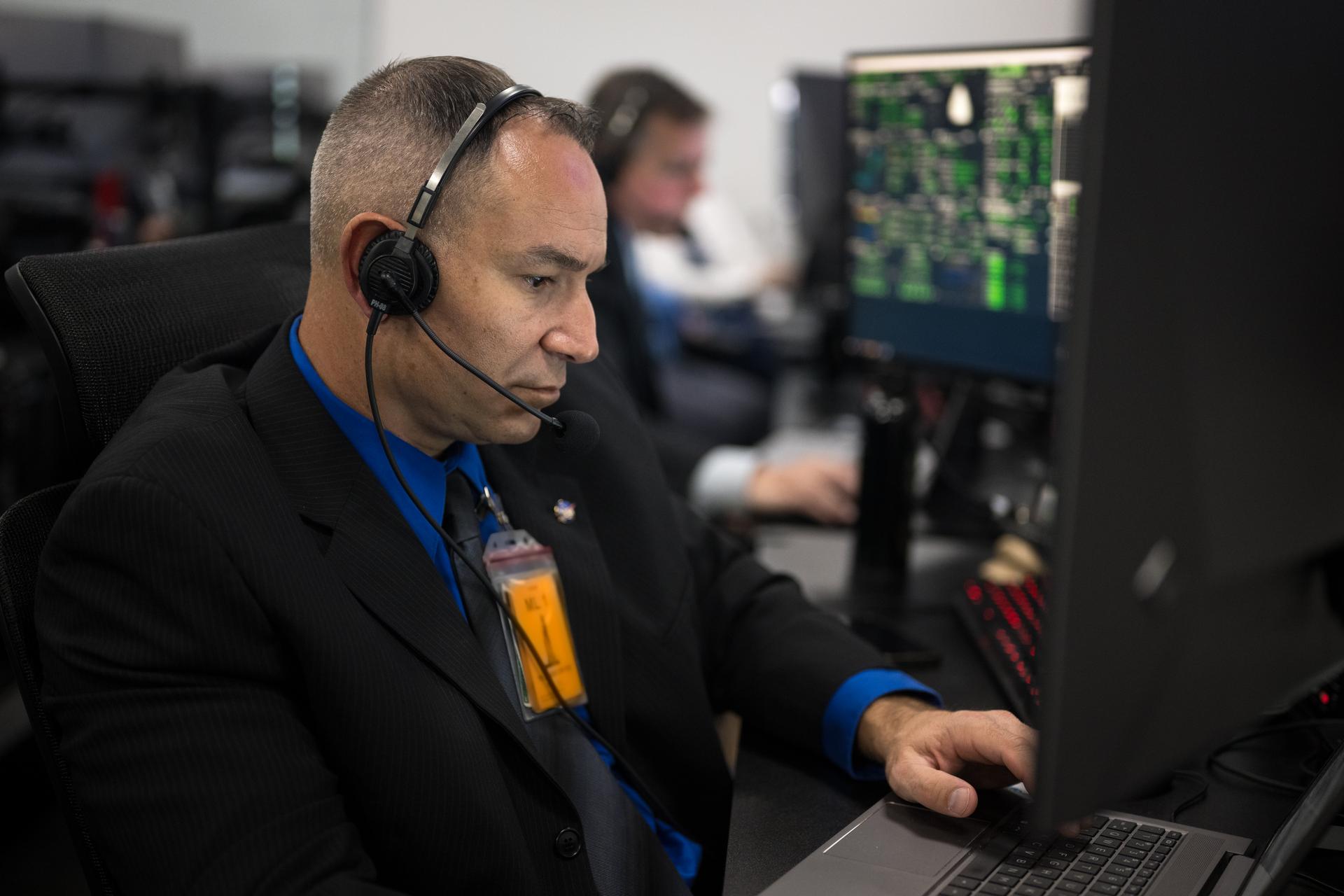
Mission teams monitor the countdown of the launch of a SpaceX Falcon 9 rocket carrying the company's Dragon spacecraft on NASA’s SpaceX Crew-12 mission with NASA astronauts Jessica Meir, Jack Hathaway, ESA (European Space Agency) astronaut Sophie Adenot, and Roscosmos cosmonaut Andrey Fedyaev onboard, Friday, Feb. 13, 2026, in the control center of SpaceX’s HangarX at NASA’s Kennedy Space Center in Florida. NASA’s SpaceX Crew-12 mission is the twelfth crew rotation mission of the SpaceX Dragon spacecraft and Falcon 9 rocket to the International Space Station as part of the agency’s Commercial Crew Program. Meir, Hathaway, Adenot, and Fedyaev are scheduled to launch at 5:15 a.m. EST, from Space Launch Complex 40 at the Cape Canaveral Space Force Station. Photo Credit: (NASA/Aubrey Gemignani)
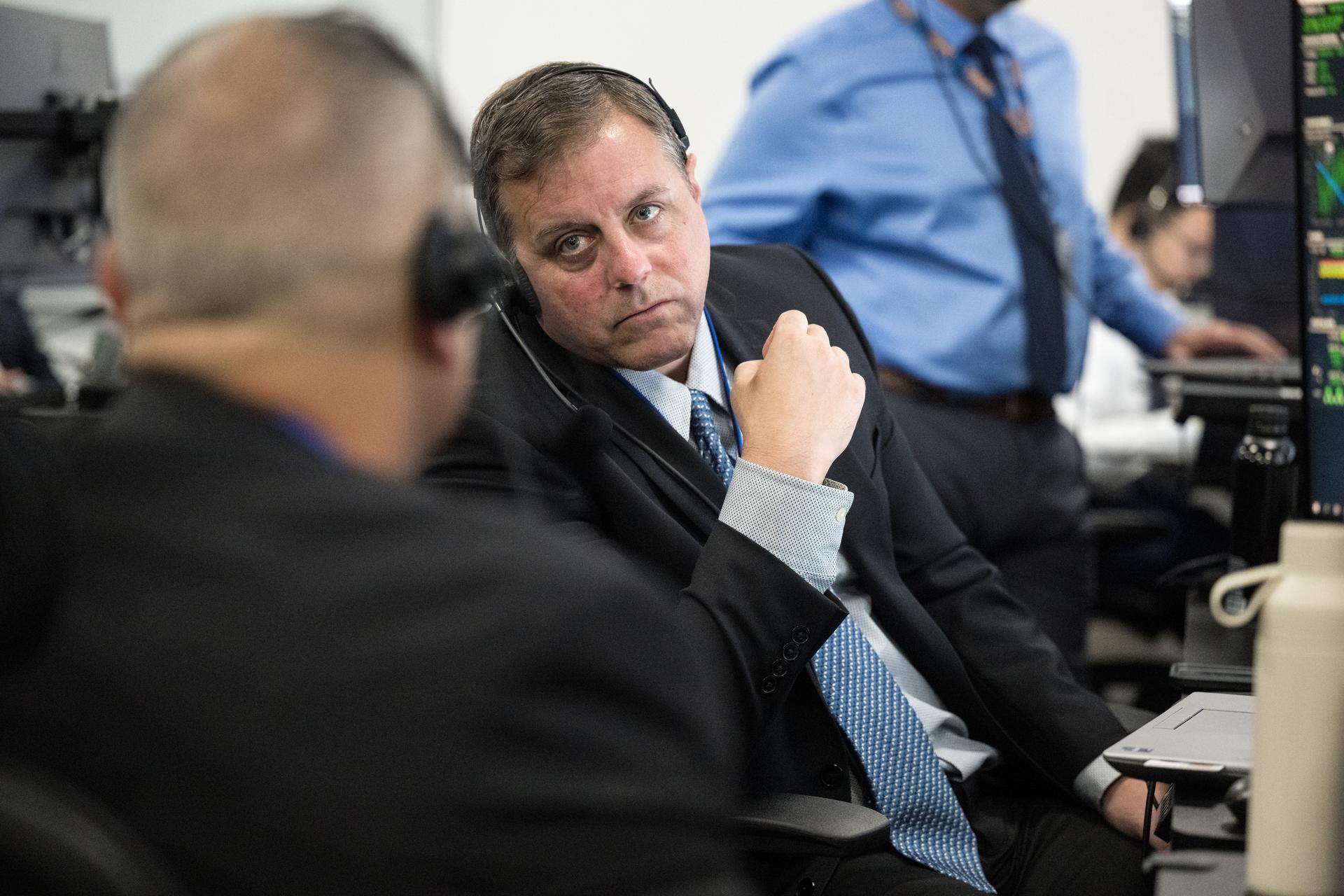
Mission teams monitor the countdown of the launch of a SpaceX Falcon 9 rocket carrying the company's Dragon spacecraft on NASA’s SpaceX Crew-12 mission with NASA astronauts Jessica Meir, Jack Hathaway, ESA (European Space Agency) astronaut Sophie Adenot, and Roscosmos cosmonaut Andrey Fedyaev onboard, Friday, Feb. 13, 2026, in the control center of SpaceX’s HangarX at NASA’s Kennedy Space Center in Florida. NASA’s SpaceX Crew-12 mission is the twelfth crew rotation mission of the SpaceX Dragon spacecraft and Falcon 9 rocket to the International Space Station as part of the agency’s Commercial Crew Program. Meir, Hathaway, Adenot, and Fedyaev are scheduled to launch at 5:15 a.m. EST, from Space Launch Complex 40 at the Cape Canaveral Space Force Station. Photo Credit: (NASA/Aubrey Gemignani)

A mission team member's space themed socks are seen as he monitors the countdown of the launch of a SpaceX Falcon 9 rocket carrying the company's Dragon spacecraft on NASA’s SpaceX Crew-12 mission with NASA astronauts Jessica Meir, Jack Hathaway, ESA (European Space Agency) astronaut Sophie Adenot, and Roscosmos cosmonaut Andrey Fedyaev onboard, Friday, Feb. 13, 2026, in the control center of SpaceX’s HangarX at NASA’s Kennedy Space Center in Florida. NASA’s SpaceX Crew-12 mission is the twelfth crew rotation mission of the SpaceX Dragon spacecraft and Falcon 9 rocket to the International Space Station as part of the agency’s Commercial Crew Program. Meir, Hathaway, Adenot, and Fedyaev are scheduled to launch at 5:15 a.m. EST, from Space Launch Complex 40 at the Cape Canaveral Space Force Station. Photo Credit: (NASA/Aubrey Gemignani)
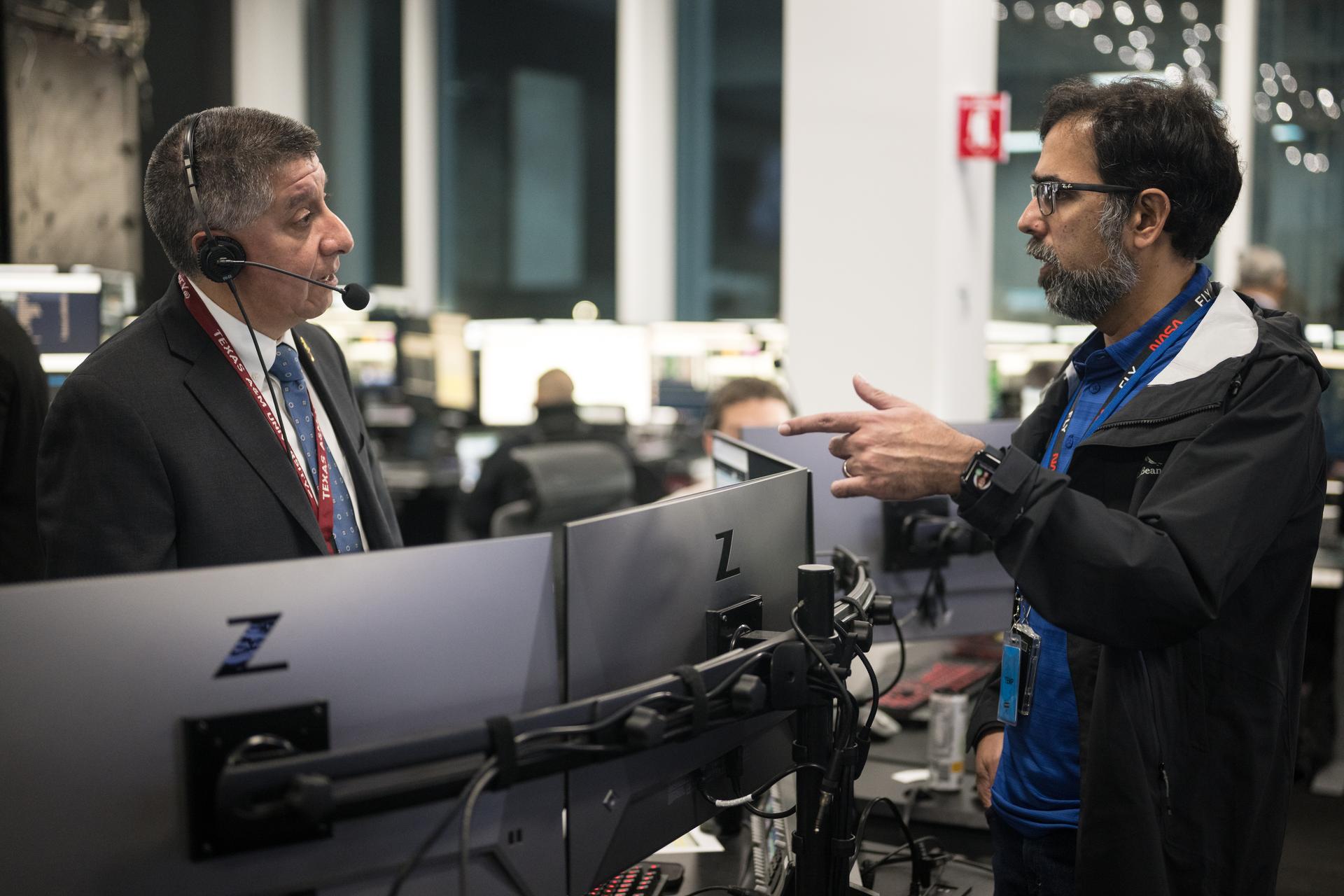
Richard Jones, manager of the Mission Management and Integration Office for NASA's Commercial Crew Program, left, speaks with Amit Kshatriya, NASA Associate Administrator during the countdown of the launch of a SpaceX Falcon 9 rocket carrying the company's Dragon spacecraft on NASA’s SpaceX Crew-12 mission with NASA astronauts Jessica Meir, Jack Hathaway, ESA (European Space Agency) astronaut Sophie Adenot, and Roscosmos cosmonaut Andrey Fedyaev onboard, Friday, Feb. 13, 2026, in the control center of SpaceX’s HangarX at NASA’s Kennedy Space Center in Florida. NASA’s SpaceX Crew-12 mission is the twelfth crew rotation mission of the SpaceX Dragon spacecraft and Falcon 9 rocket to the International Space Station as part of the agency’s Commercial Crew Program. Meir, Hathaway, Adenot, and Fedyaev are scheduled to launch at 5:15 a.m. EST, from Space Launch Complex 40 at the Cape Canaveral Space Force Station. Photo Credit: (NASA/Aubrey Gemignani)
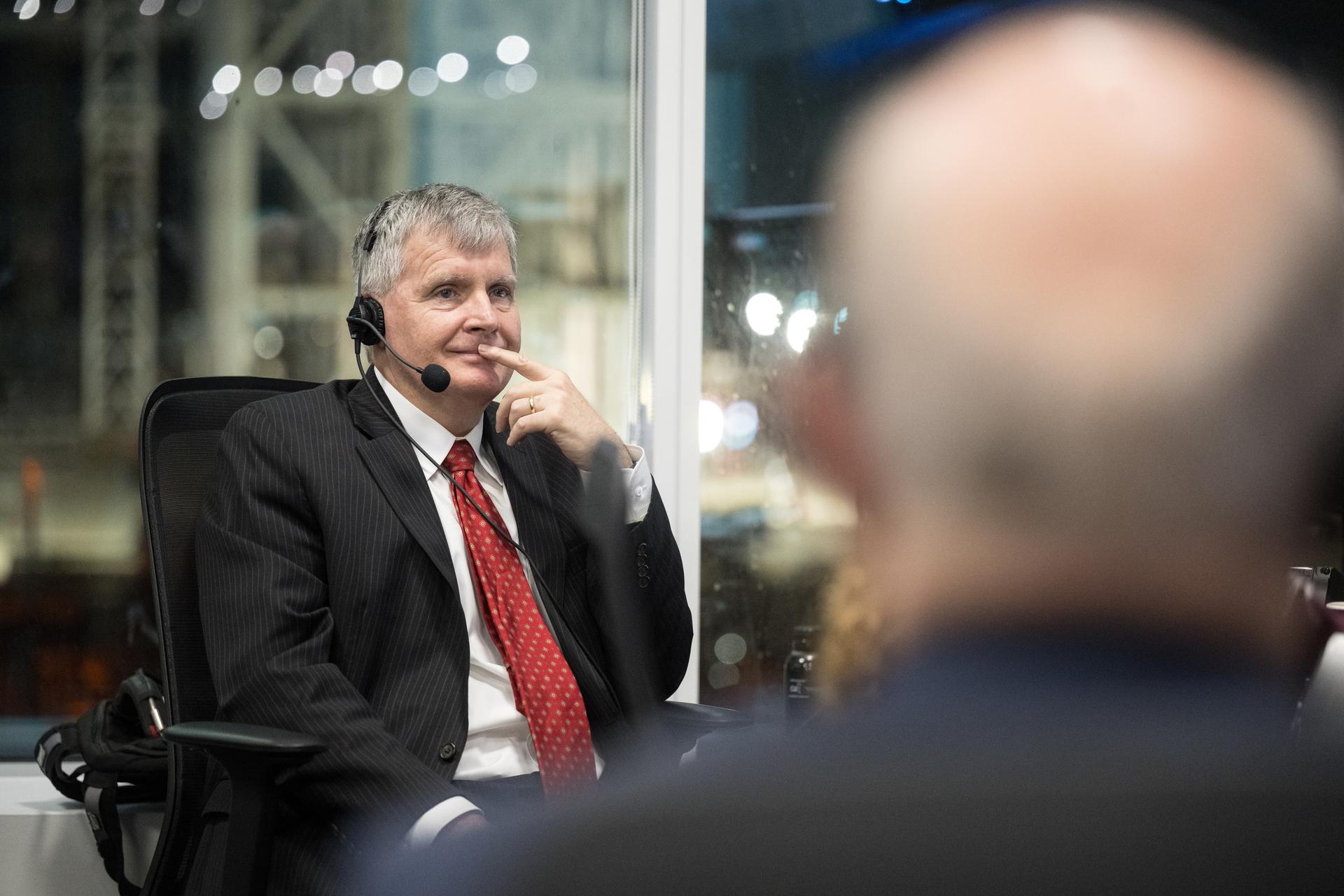
Steve Stich, manager of NASA’s Commercial Crew Program speaks with Ken Bowersox, associate administrator for NASA's Space Operations Mission Directorate during the countdown of the launch of a SpaceX Falcon 9 rocket carrying the company's Dragon spacecraft on NASA’s SpaceX Crew-12 mission with NASA astronauts Jessica Meir, Jack Hathaway, ESA (European Space Agency) astronaut Sophie Adenot, and Roscosmos cosmonaut Andrey Fedyaev onboard, Friday, Feb. 13, 2026, in the control center of SpaceX’s HangarX at NASA’s Kennedy Space Center in Florida. NASA’s SpaceX Crew-12 mission is the twelfth crew rotation mission of the SpaceX Dragon spacecraft and Falcon 9 rocket to the International Space Station as part of the agency’s Commercial Crew Program. Meir, Hathaway, Adenot, and Fedyaev are scheduled to launch at 5:15 a.m. EST, from Space Launch Complex 40 at the Cape Canaveral Space Force Station. Photo Credit: (NASA/Aubrey Gemignani)
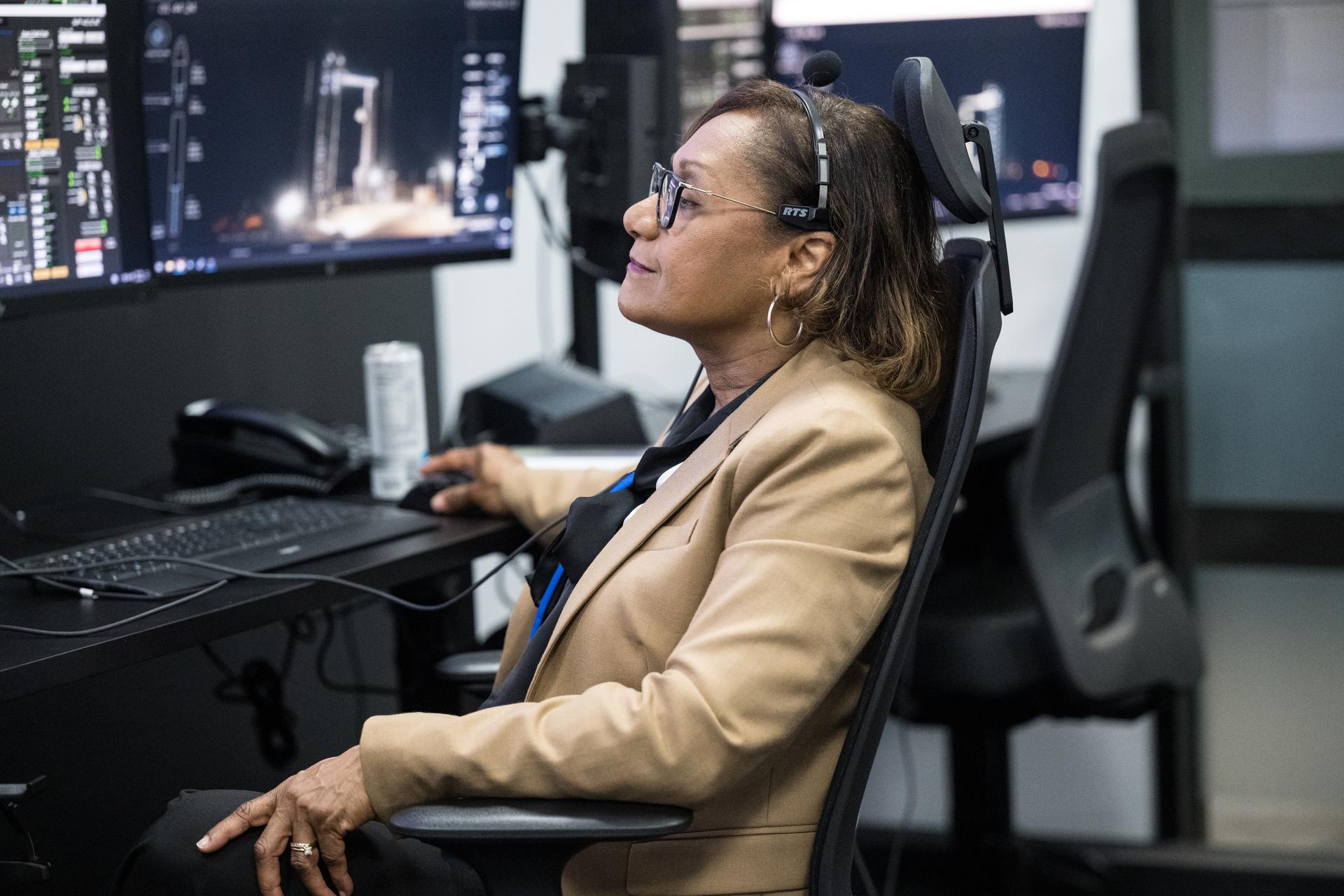
Vanessa Wyche, director of NASA's Johnson Space Center, monitors the countdown of the launch of a SpaceX Falcon 9 rocket carrying the company's Dragon spacecraft on NASA’s SpaceX Crew-12 mission with NASA astronauts Jessica Meir, Jack Hathaway, ESA (European Space Agency) astronaut Sophie Adenot, and Roscosmos cosmonaut Andrey Fedyaev onboard, Friday, Feb. 13, 2026, in the control center of SpaceX’s HangarX at NASA’s Kennedy Space Center in Florida. NASA’s SpaceX Crew-12 mission is the twelfth crew rotation mission of the SpaceX Dragon spacecraft and Falcon 9 rocket to the International Space Station as part of the agency’s Commercial Crew Program. Meir, Hathaway, Adenot, and Fedyaev are scheduled to launch at 5:15 a.m. EST, from Space Launch Complex 40 at the Cape Canaveral Space Force Station. Photo Credit: (NASA/Aubrey Gemignani)
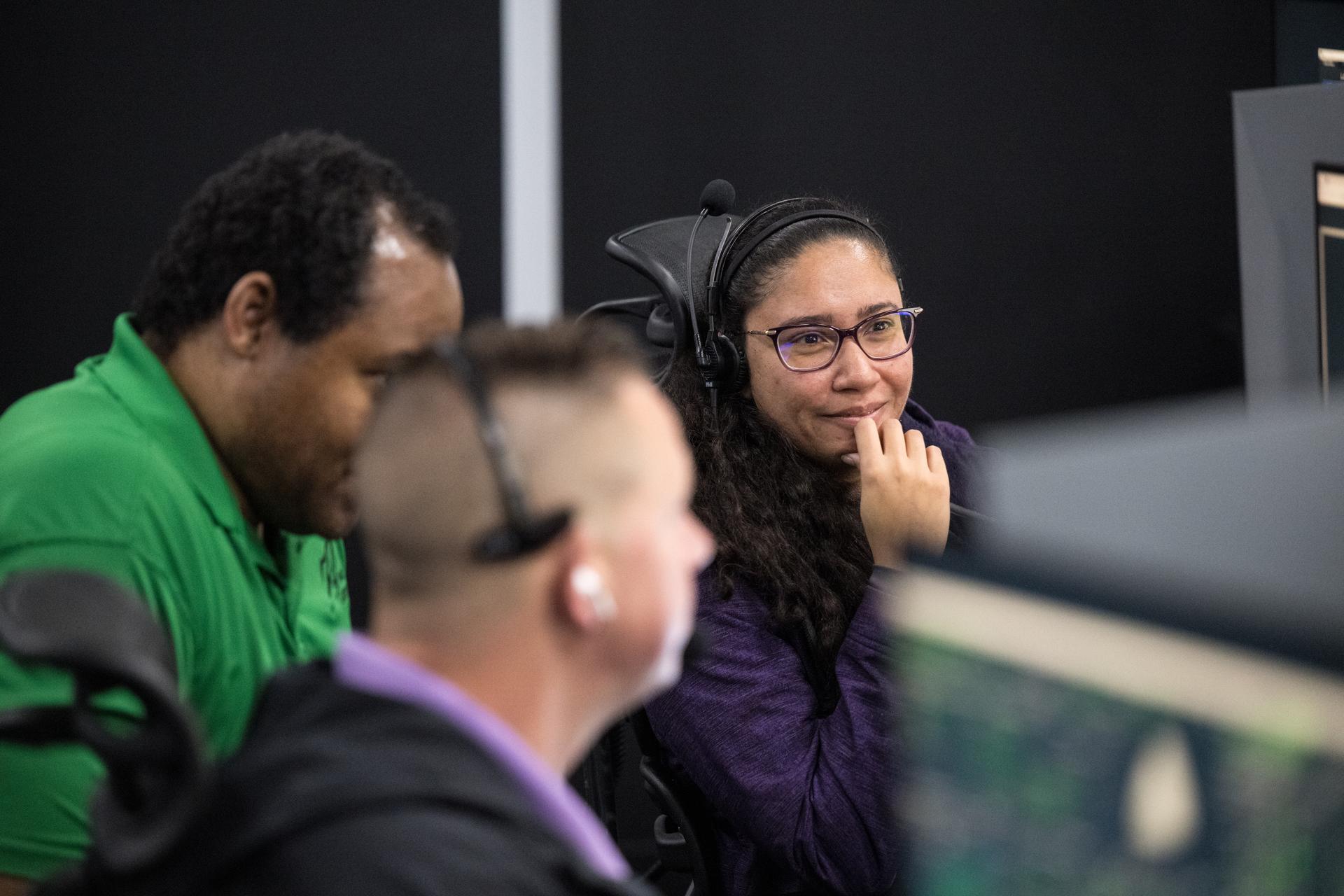
Mission teams monitor the countdown of the launch of a SpaceX Falcon 9 rocket carrying the company's Dragon spacecraft on NASA’s SpaceX Crew-12 mission with NASA astronauts Jessica Meir, Jack Hathaway, ESA (European Space Agency) astronaut Sophie Adenot, and Roscosmos cosmonaut Andrey Fedyaev onboard, Friday, Feb. 13, 2026, in the control center of SpaceX’s HangarX at NASA’s Kennedy Space Center in Florida. NASA’s SpaceX Crew-12 mission is the twelfth crew rotation mission of the SpaceX Dragon spacecraft and Falcon 9 rocket to the International Space Station as part of the agency’s Commercial Crew Program. Meir, Hathaway, Adenot, and Fedyaev are scheduled to launch at 5:15 a.m. EST, from Space Launch Complex 40 at the Cape Canaveral Space Force Station. Photo Credit: (NASA/Aubrey Gemignani)
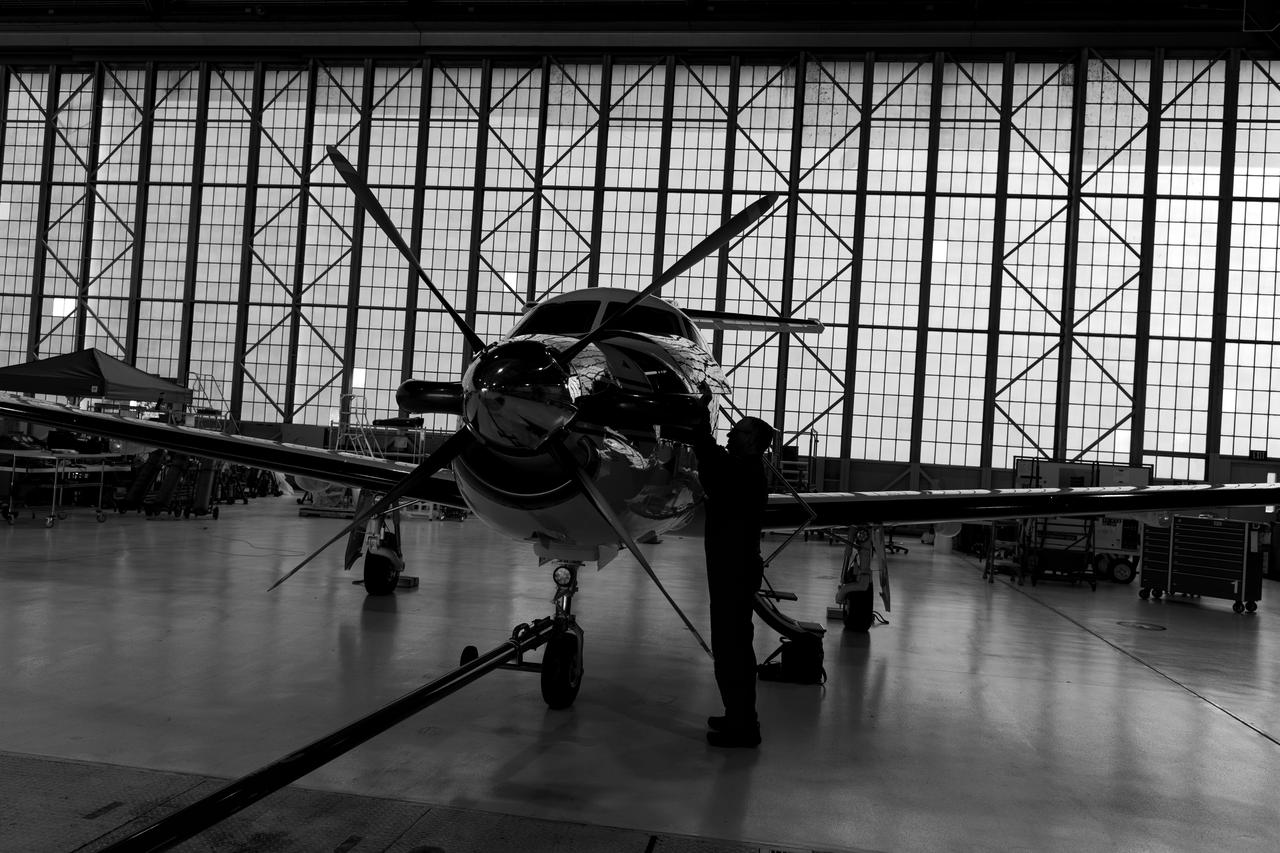
Pilatus PC-12 Aircraft Being Prepped for Takeoff on June 12, 2024. A team at NASA’s Glenn Research Center in Cleveland streamed 4K video footage from an aircraft to the International Space Station and back for the first time using optical, or laser, communications. The feat was part of a series of tests on new technology that could provide live video coverage of astronauts on the Moon during the Artemis missions. Working with the Air Force Research Laboratory and NASA’s Small Business Innovation Research program, Glenn engineers temporarily installed a portable laser terminal on the belly of a Pilatus PC-12 aircraft. They then flew over Lake Erie sending data from the aircraft to an optical ground station in Cleveland. From there, it was sent over an Earth-based network to NASA’s White Sands Test Facility in Las Cruces, New Mexico, where scientists used infrared light signals to send the data. Photo Credit: (NASA/Sara Lowthian-Hanna)