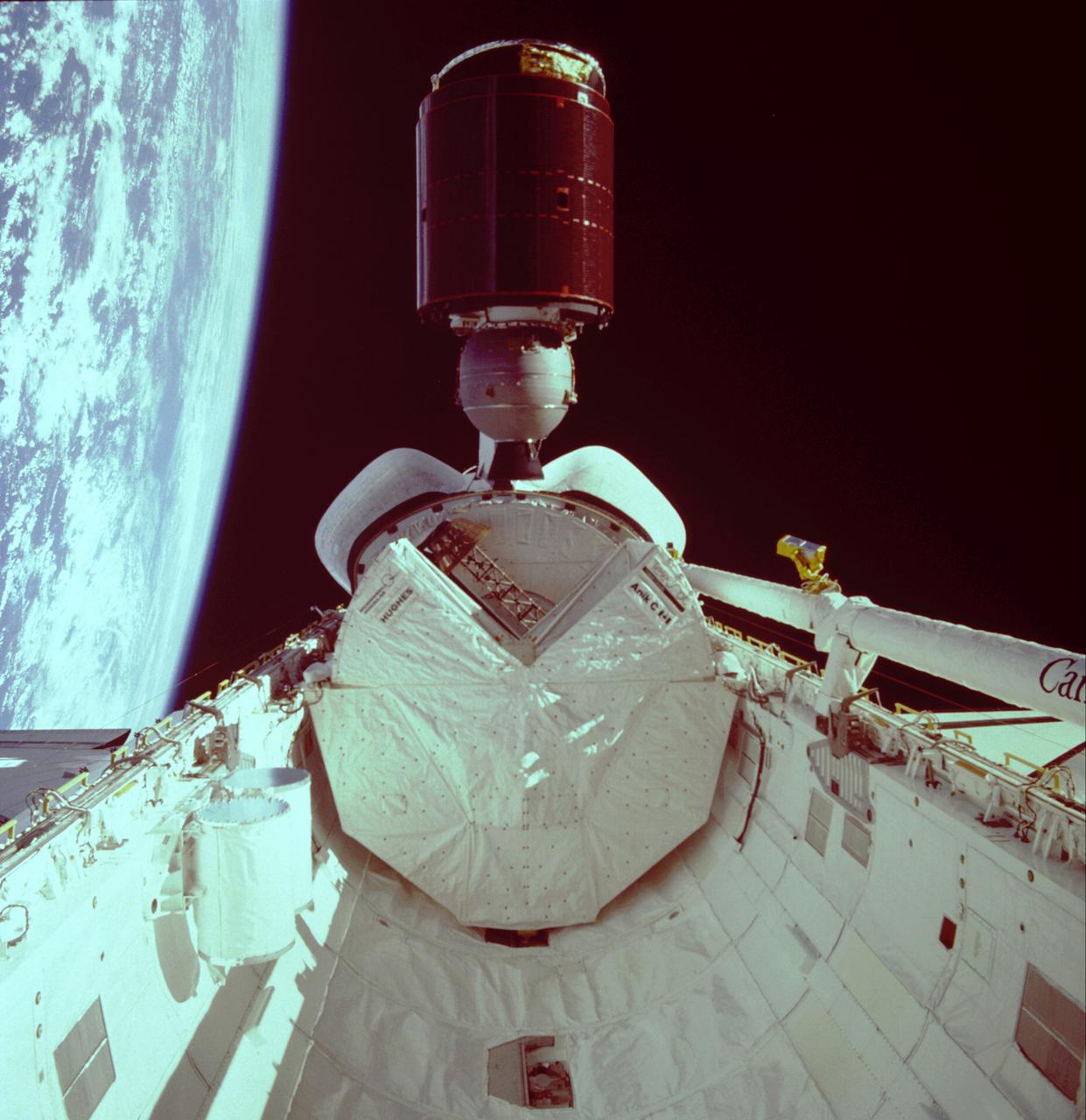
The TELESAT-1, also known as ANIK C-1, satellite is being released from the cargo bay of the Space Shuttle Orbiter Discovery during STS-51D, the 16th Shuttle mission. TELESAT-1 is a communication satellite built for Telesat Canada to provide voice and TV coverage of the Earth stations to trans-Canada network. Also shows in this photograph is an anterna for SYNCOM IV-3, also known as LEASAT-3, folded in a stowage. The SYNCOM is the Hughes Geosynchronous Communication Satellite and provides communication services from geosynchronous orbits principally to the U.S. Government. Both satellites were launched on April 12, 1985, aboard the Space Shuttle Orbiter Discovery.
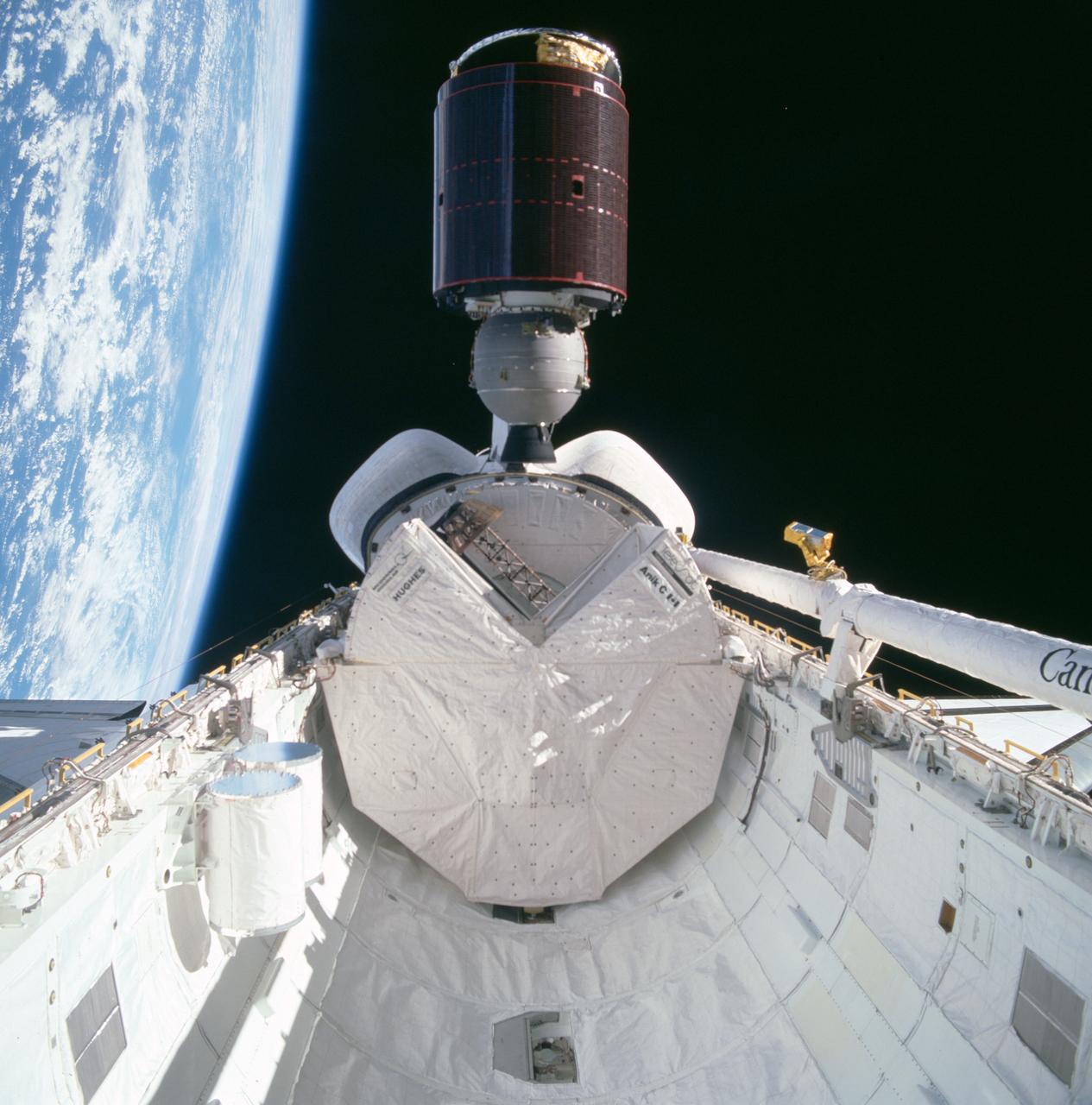
51D-31-050 (12 April 1985) --- Among 51-D's first day activities was the deployment of the Telesat-I (Anik C-1) communications satellite. Earth and blackness of space share the background in the 70mm frame.

Canister open in VPF. Payload for STS-5, SBS-3, & Anik C-3, being loaded into the canister
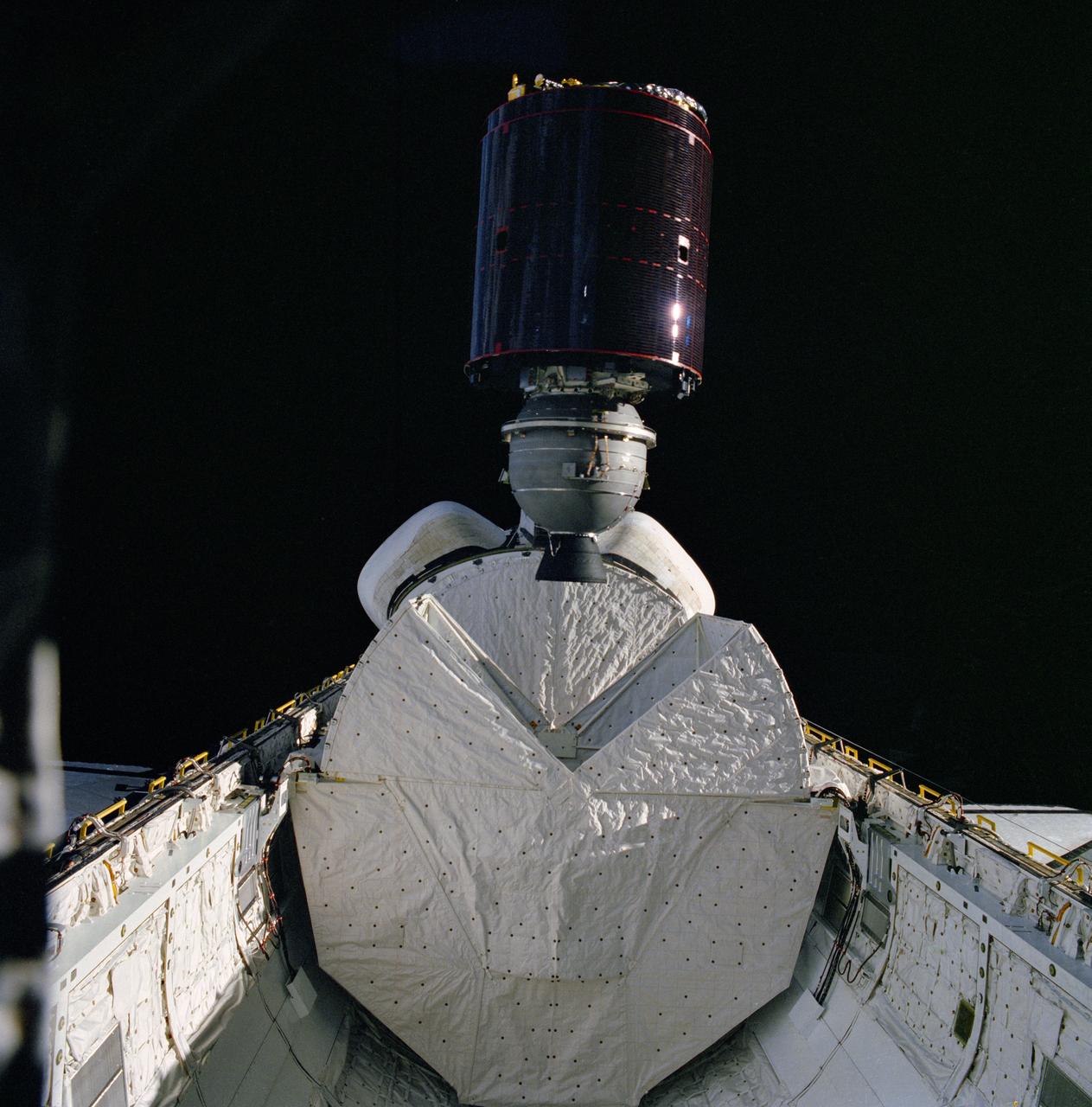
S82-39793 (11 Nov. 1982) --- The Satellite Business Systems (SBS-3) spacecraft springs from its protective ?cradle? in the cargo bay of the Earth-orbiting space shuttle Columbia and head toward a series of maneuvers that will eventually place it in a geosynchronous orbit. This moment marks a milestone for the Space Transportation System (STS) program, as the placement of the communications satellites represents the first deployment of a commercial satellite from an orbiting space vehicle. Part of Columbia?s wings can be seen on both the port and starboard sides. Also both orbital maneuvering system (OMS) pods are seen at center. The vertical stabilizer is obscured by the satellite. The closed protective cradle device shielding Telesat Canada?s ANIK C-3 spacecraft is seen between the other shield and the OMS pod. ANIK is to be launched on the mission?s second day. This photograph was exposed through the aft windows of the flight deck. Photo credit: NASA
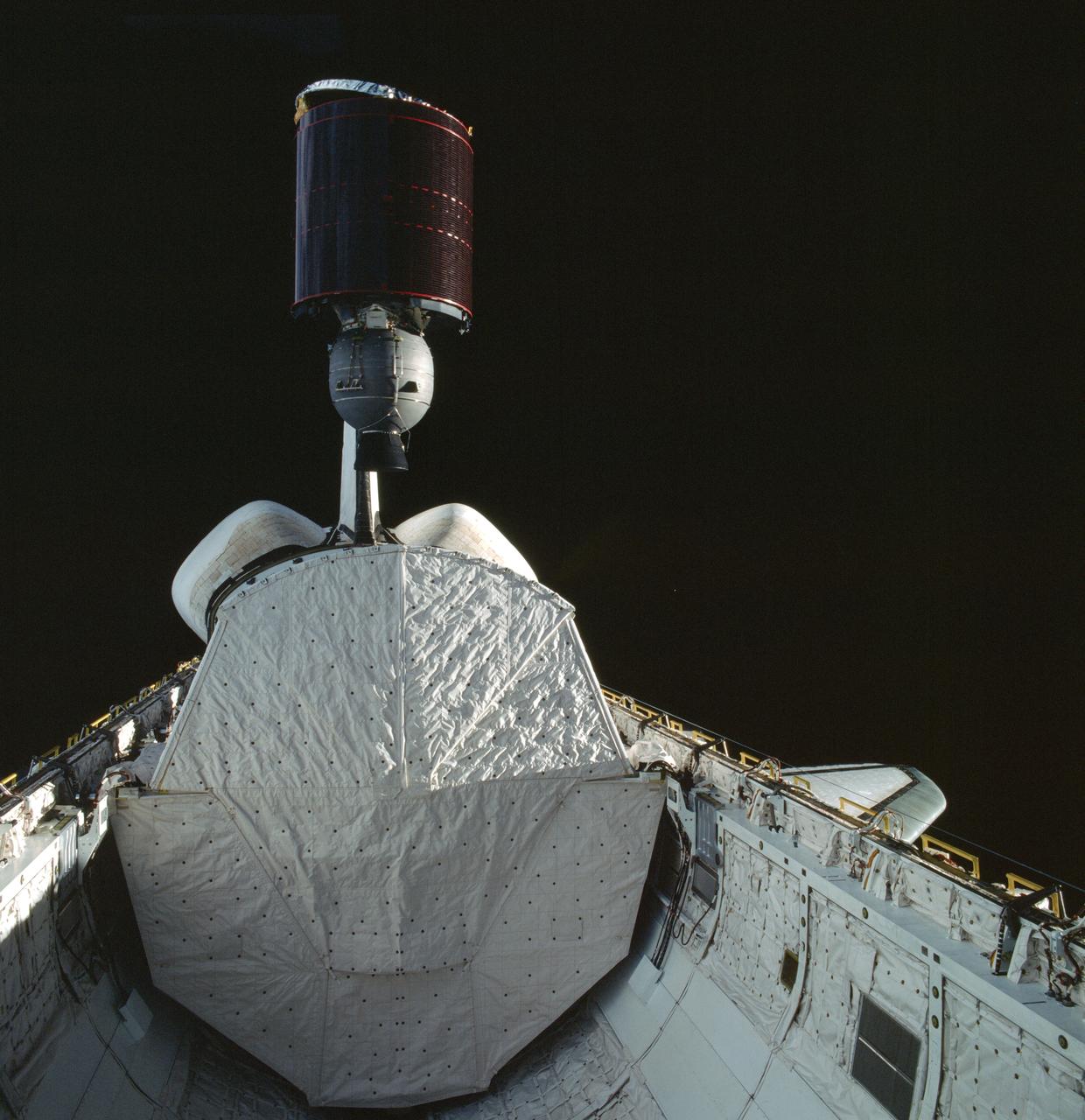
STS005-41-1311 (17 Nov. 1982) --- The Telesat Canada's ANIK C-3 satellite is deployed from its protective cradle in the cargo bay of the space shuttle Columbia. Part of Columbia's wings can be seen on both the port and starboard sides. Part of both orbital maneuvering system (OMS) pods are seen at center. The vertical stabilizer is obscured by the satellite. Photo credit: NASA

The crew assigned to the STS-51D mission included (front left to right) Karol J. Bobko, commander; Donald E. Williams, pilot; M. Rhea Seddon, mission specialist; and Jeffrey A. Hoffman, mission specialist. On the back row, left to right, are S. David Griggs, mission specialist; and payload specialists Charles D. Walker, and E. Jake Garn (Republican Utah Senator). Launched aboard the Space Shuttle Discovery on April 12, 1985 at 8:59:05 am (EST), the STS-51D mission’s primary payloads were the TELESAT-1 (ANIK-C) communications satellite and the SYNCOM IV-3 (also known as LEASAT-3).
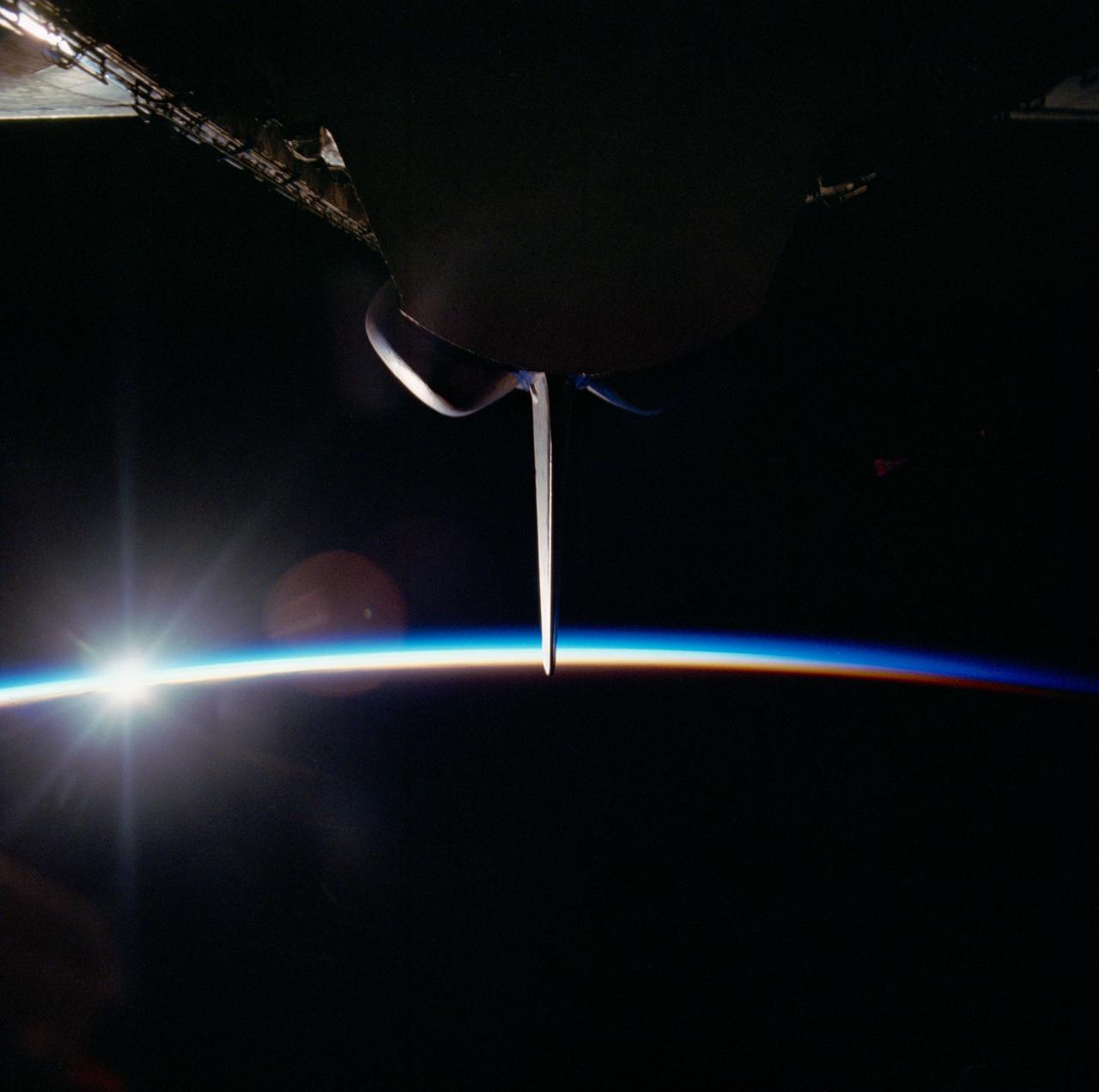
S82-39796 (11-16 Nov. 1982) --- A ?night? scene of the STS-5 space shuttle Columbia in orbit over Earth?s glowing horizon was captured by an astronaut crew member aiming a 70mm handheld camera through the aft windows of the flight deck. The aft section of the cargo bay contains two closed protective shields for satellites which were deployed on the flight. The nearest ?cradle? or shield houses the Satellite Business System?s (SBS-3) spacecraft and is visible in this frame while the Telesta Canada ANIK C-3 shield is out of view. The vertical stabilizer, illuminated by the sun, is flanked by two orbital maneuvering system (OMS) pods. Photo credit: NASA
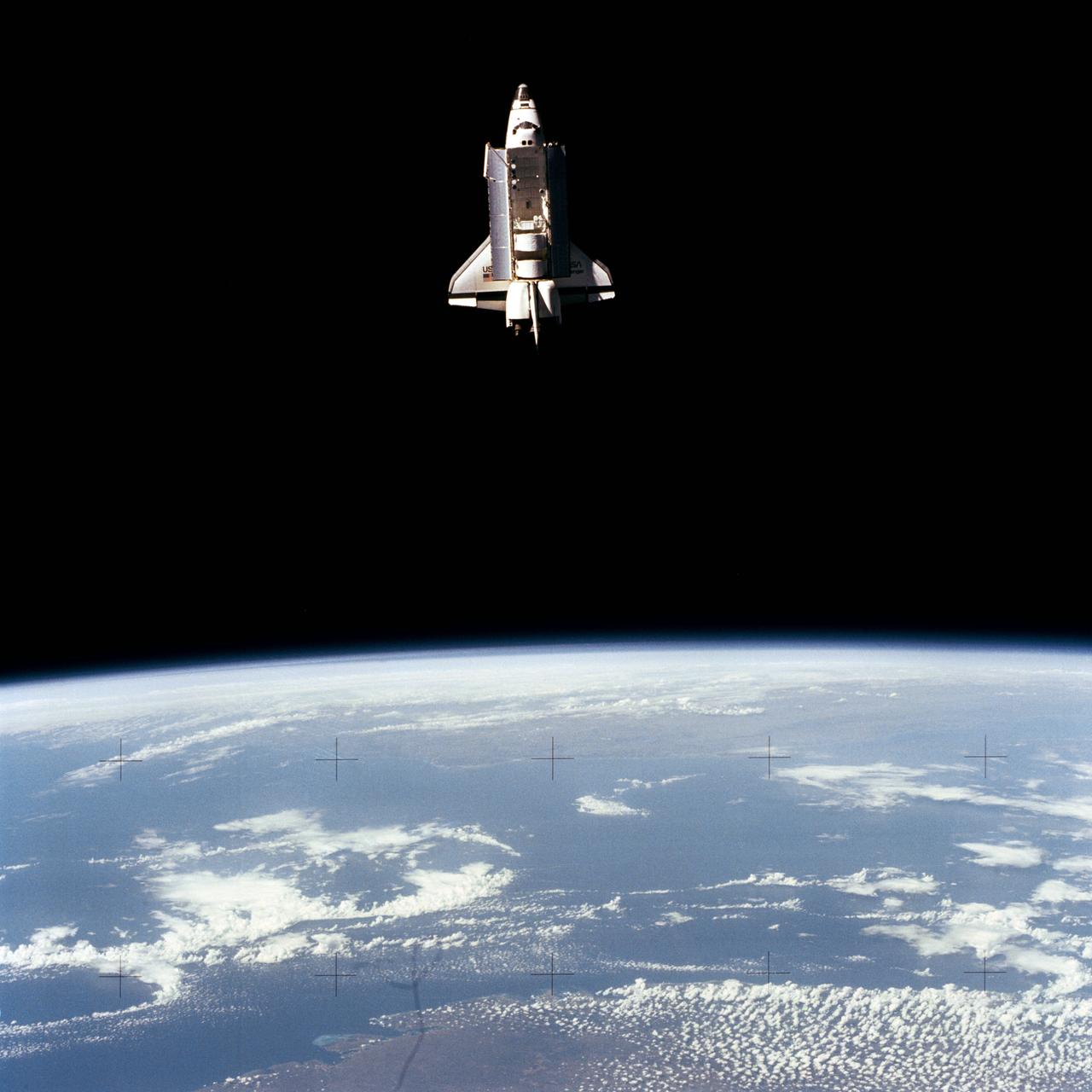
STS007-32-1702 (22 June 1983) --- The Earth-orbiting space shuttle Challenger beyond the Earth's horizon was captured by a 70mm camera onboard the unmanned, free-flying Shuttle Pallet Satellite (SPAS-01) during the busy flight day 5 of the STS-7 mission. Visible in the cargo bay are the protective cradles for the now-vacated Telesat Anik C-2 and Palapa B communications satellites, the pallet for the NASA Office of Space and Terrestrial Applications (OSTA-02), the Remote Manipulator System (RMS) and the KU-Band antenna. The STS-7 crew with the RMS later retrieved the SPAS and returned it to a stowed position in the cargo bay for return to Earth. Photo credit: NASA or National Aeronautics and Space Administration
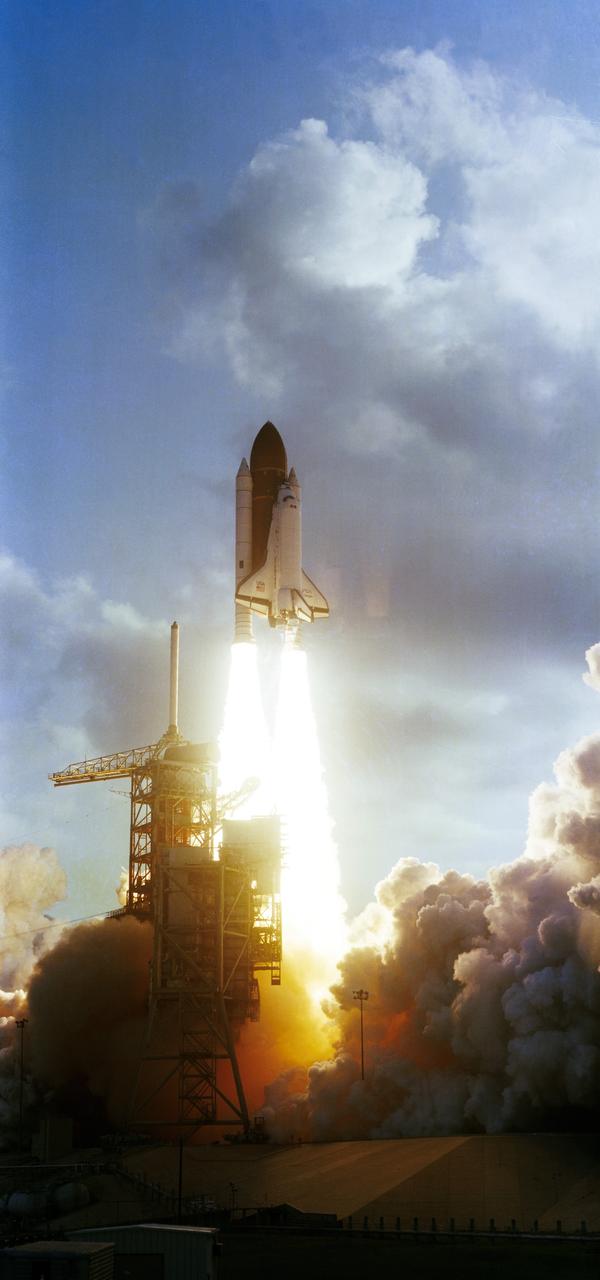
S83-35702 (18 June 1983) --- The seventh launch of the NASA Space Transportation System and the second lift-off of the space shuttle Challenger occurred at 7:33 a.m. (EDT) today from the Pad 39A launch site, at the Kennedy Space Center (KSC). The six-day mission will be highlighted by the first direct landing from space by an orbiter to the Shuttle Landing Facility (SLF). The crew consists of astronauts Robert Crippen, commander, the first two-time space shuttle astronaut; Frederick H. Hauck, pilot; and three mission specialists -- Sally K. Ride, John M. Fabian and Norman E. Thagard. During the mission the crew will deploy the Indonesian PALAPA-B and the Canadian ANIK-C communications satellites. They will also use the Remote Manipulator System (RMS) arm to deploy and retrieve a platform for space experiments called the Shuttle Pallet Satellite (SPAS), and serve as a spaceborne laboratory for OSTA-2, a scientific payload. Getaway Special canisters and materials processing experiments will fill out the complement of payloads on the mission. Photo credit: NASA